Elijah Samaan, 5, shows off his basket filled with eggs during the Plainfield Park District Easter Egg Hunt at Gregory B. Bott Community Park. Photo by Andrew Samaan
many, it marked a first-time experience, captured on phones and cameras by smiling family members.
The pace quickened at 10:30 a.m. when children ages 4 to 6 were released onto the field. With more independence and energy, participants dashed across the park, quickly scooping up eggs and comparing
photos throughout the event.
A steady line of families formed as children waited patiently for their turn, many proudly holding up their overflowing baskets for pictures. The photo opportunity created lasting memories and added to the festive
Park district staff and volunteers played a key role in the event’s success, coordinating check-in, guiding families, and ensuring each hunt started on time.
Their efforts helped maintain a safe and welcoming environment for the large crowd.
while ensuring that each age group had ample space and eggs to collect. All children participated under the supervision of a parent or guardian, adding to the event’s family-focused feel.
For many attendees, the Easter Egg Hunt was about more than just gath ering candy.
It provided an opportunity for fami lies to reconnect with neighbors, for children to enjoy the outdoors after a long winter, and for the community to come together in celebration of spring. The smiles, laughter, and shared excitement throughout the morning reflected the strong sense of community that continues to define
As the final eggs were collected and families began to leave the park,
pleted, the Plainfield Park District’s Easter Egg Hunt once again proved to be a highlight of the season and lies—one that continues to grow each year while bringing the community together in a simple but meaningful
Elijah Samaan, 5, and his sister Layla Samaan, 9, smile as they hold up their eggs during the Plainfield Park District Easter Egg Hunt at Gregory B. Bott Community Park. Photo by Andrew Samaan
Illinois State Representative Nicole La Ha Announces Spring Photo Contest
State Representative Nicole La Ha is inviting residents from across the district to take part in her Spring Photo Contest, an opportunity for community members of all ages to capture and celebrate the everyday moments that make their neighborhoods unique and meaningful.
The contest aims to highlight the pride, beauty, and sense of connection that define the area, while giving residents a creative way to share their perspectives.
“Every day, there are small, meaningful moments happening all around us,” said Rep. La Ha. “Whether it’s a scenic sunset, a family gathering, a local landmark, or a simple moment in nature, this contest is a way to pause, notice those experiences, and share what makes
our communities such a great place to call home. I’m excited to see the district through the eyes of the people who live here.”
Participants are encouraged to submit original photographs that reflect the beauty, character, and spirit of the district.
Submissions may include landscapes, local events, architecture, seasonal scenes, or candid moments that capture the essence of community life.
Photographers of all skill levels are welcome to participate.
The winning photo will receive special recognition, including being featured on Rep. La Ha’s official website, highlighted across her so -
cial media platforms, and proudly displayed at her District Office.
Selected entries may also be shared to showcase the diverse perspectives and talent within the community.
All submissions must be received by June 19. Photos can be submitted via email to RepNicoleLaHa@gmail. com.
Participants are encouraged to include their name, contact information, and a brief description of their photo.
For more information about the contest, submission guidelines, or eligibility requirements, please contact Rep. La Ha’s office at 630–7554296.
State Rep. Nicole La Ha is encouraging residents to take part in her Spring Photo Contest, inviting community members to capture and share the moments that highlight the beauty and spirit of the district.
With breast cancer, early detection saves lives. A mammogram is the most effective way to prevent, detect and diagnose breast cancer. Our convenient Plainfield imaging office offers 3D technology and same-day availability. Schedule today! 630-856-7070
UChicago Medicine AdventHealth Imaging 15720 S. Rt. 59 Plainfield, IL 60544
UChicagoMedicineAdventHealth.org
The Rundown on Countertops: Durability, Maintenance, and Style
Kitchen renovations continue to top the list of improvements that offer a high rate of return on investment. Buyers pay attention to kitchens, which undoubtedly affects the ROI of kitchen renovations.
According to the Journal of Light Construction’s “Cost vs. Value Report 2025,” a minor kitchen remodel offers an ROI of 113 percent, while a midrange remodel offers an ROI of 51 percent.
Replacing a kitchen countertop can help homeowners see improvements to the functionality of their spaces and improve the value of their homes.
According to data from Grand View Research, the U.S. countertops market is projected to reach $35.57 billion in 2026, driven by homeowners who desire high-value renovations over relocating. Those thinking about overhauling their spaces with new countertops can consider the leading materials and how they rank in cost, maintenance and durability.
Engineered quartz
The National Kitchen & Bath Associ-
ation reports that 78 percent of design professionals expect quartz to be the preferred countertop material over the next several years. Quartz is non-porous, so it will resist stains, scratches and bacteria infiltration without having to be sealed. Unlike natural stone, quartz offers pattern uniformity, which makes it easier to map out seamless transitions. Quartz costs between $50 and $150 per square foot installed.
Granite
Granite still holds a considerable chunk of the countertops market and remains a solid standard for those who value a one-of-a-kind look of natural stone. Granite has exceptional heat resistance and adds significant resale value. However, it requires periodic sealing to maintain its good looks. Costs range from $40 to $190 per square foot.
Porcelain
Porcelain tiles and slabs are projected to become the fastest-growing segment in the ceramic tiles market, according to reports from Yahoo Finance. High-precision printing technology enables porcelain to mimic rare marble and other stone with superior accuracy. Porcelain
is even harder than granite and effectively impervious to UV rays. This makes the material a solid choice for outdoor kitchens. Plus, at a cost of $60 to $120 per square foot, it is competitive with other similar materials.
Butcher block
Those who appreciate a soft, organic texture and “warmth” in their spaces can look to butcher block. Wood is making a comeback, as many homeowners are moving away from stark, white designs. Butcher block is self-healing, meaning scratches can be sanded out. Butcher block costs between $50 and $150 per square foot.
Laminate
Laminate is a budget-friendly option for homeowners at $20 to $80 per square foot, but is not as durable as other materials. Some laminates mimic the look of high-end materials, and they don’t require much maintenance.
Countertops affect the look and feel of kitchens and other interior and exterior spaces. Choosing materials comes down to cost, durability and maintenance.
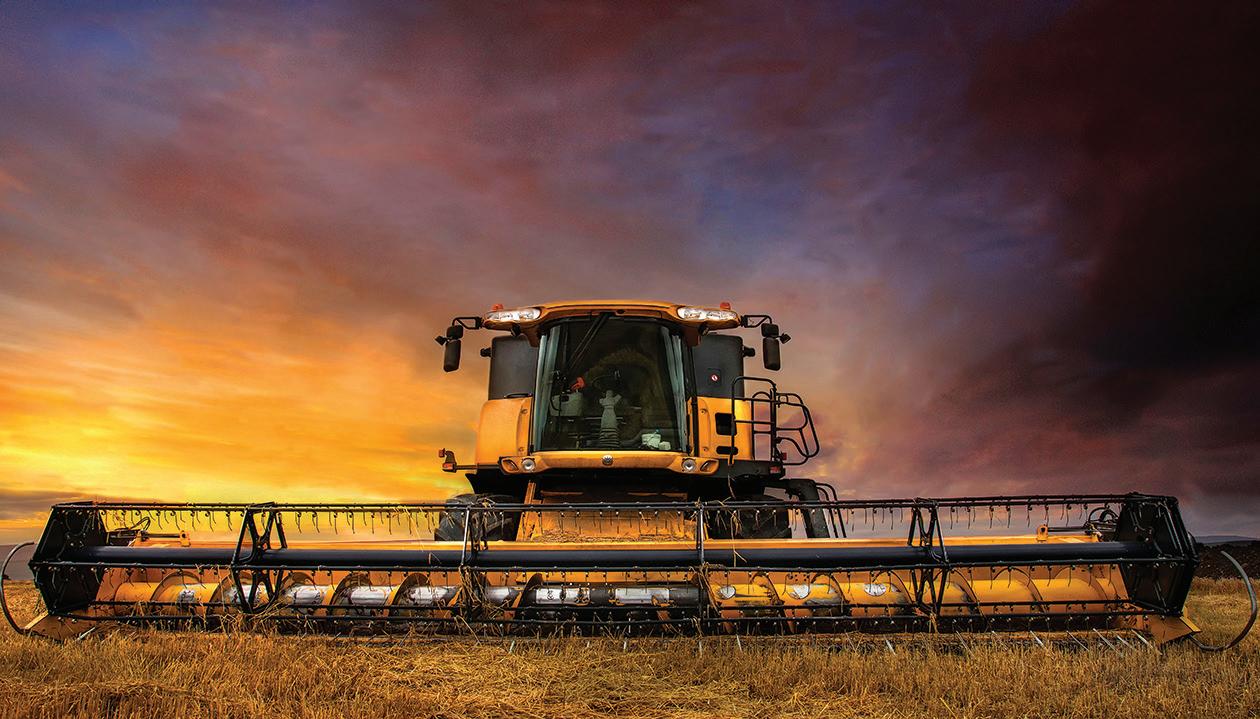
5 Challenges Facing Modern Farmers in a Changing World
Agriculture is a building block of nations. The United States Department of Agriculture reports 22.1 million fulland part-time jobs were related to the agricultural and food sectors in 2022, representing 10.4 percent of total U.S. employment.
Statistics Canada reports agriculture in Canada employed around 280,000 people as of 2023.
Today’s farmers face a convergence of environmental, social and economic pressures. Each of these pressures has the potential to threaten the stability of the global food supply. The following are five notable challenges facing modern farmers.
1. Extreme weather: Climate changed has moved from a theory to a current reality for many farmers. Growing seasons have become much less predictable as frost dates and heat waves have shifted when plants can be sowed and harvested. Farmers also are increasingly dealing with too much or too little water, each of which can destroy crops.
2. Financial squeeze: Farmers are in-
creasingly facing economic pressures. The price of fuel, seeds and fertilizers has become highly volatile. The American Farm Bureau Foundation says fertilizer prices in 2025 climbed high again as global trade shifted, energy costs rose and geopolitical risks reshaped supply.
Farming requires massive capital investments tied to machinery and land. High interest rates can make it difficult for farmers to pay the debt required to stay operational. In addition, farmers typically have little control over the market price of their products, leaving them vulnera-
ble to global trade wars.
3. Labor shortages: Finding and retaining agricultural labor is a big crisis. The average age of farmers globally is rising, says the International Labour Organisation and the American Farm Bureau Foundation. In the U.S. and the European Union, the average farmer is nearly 60 years old.
The AFBF reports that, despite increased wages, nearly 50 percent of farmers struggle to find enough workers to har-
(Continued on page 7, see ‘FARMERS’)
Those thinking about overhauling their spaces with new countertops can consider the leading materials and how they rank in cost, maintenance and durability.
Today’s farmers face a convergence of environmental, social and economic pressures.
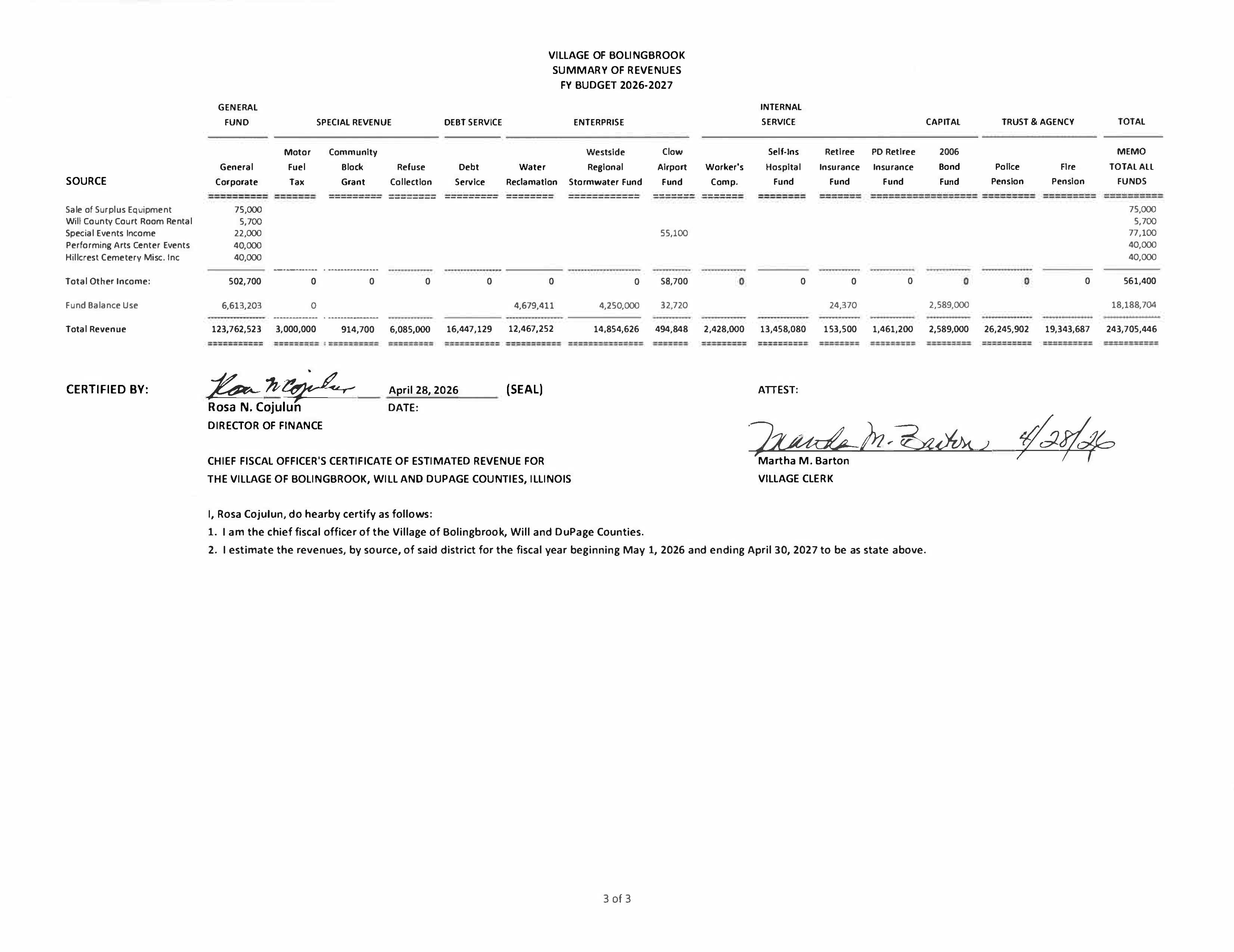
VILLAGE
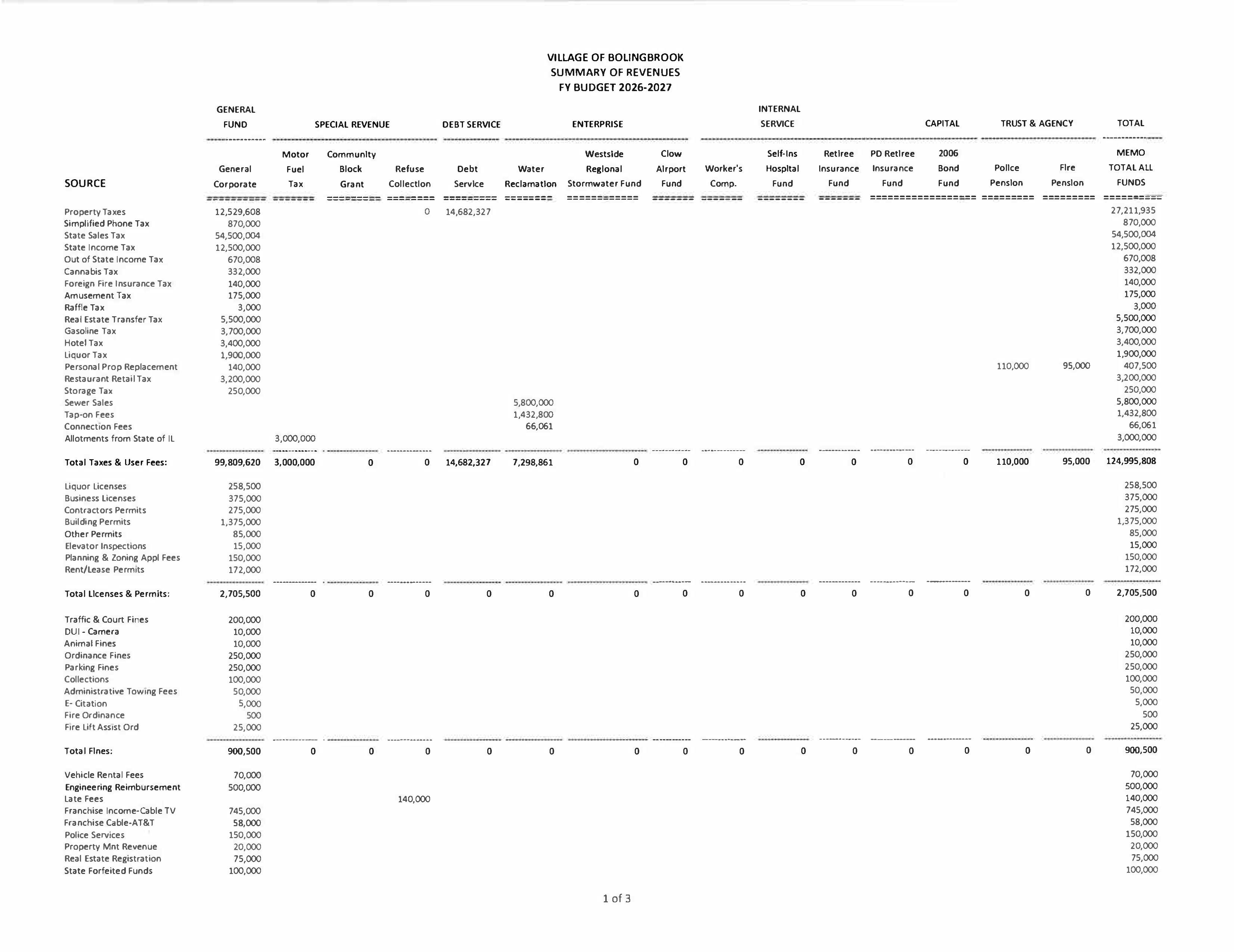
VILLAGE OF BOLINGBROOK
SUMMARY OF REVENUES
LEGAL NOTICE
FY BUDGET 2026-2027
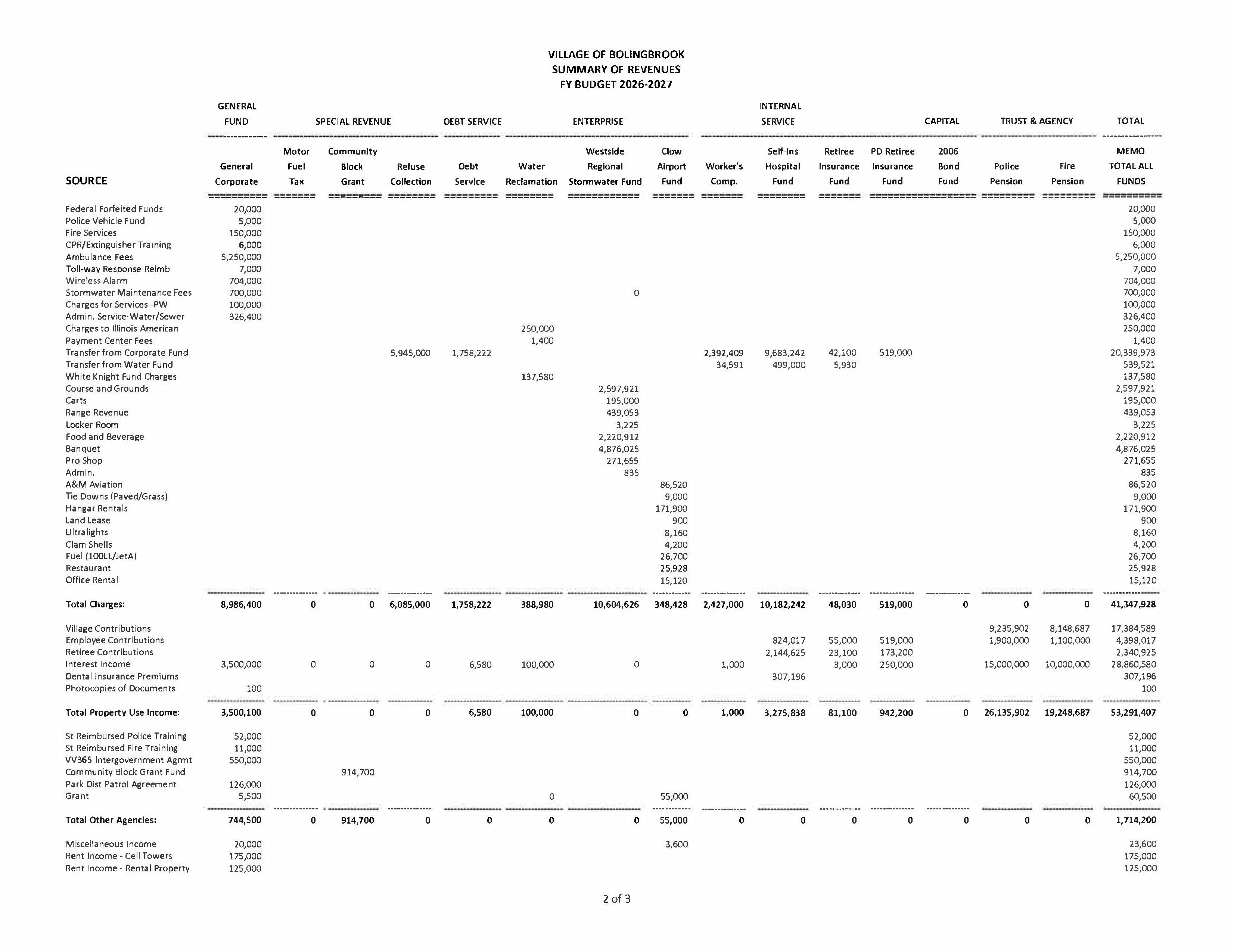
VILLAGE OF BOLINGBROOK
SUMMARY OF REVENUES
FY BUDGET 2026-2027
LEGAL NOTICE
PUBLIC NOTICE
Notice is hereby given that a public hearing on the Village of Bolingbrook’s 2026-2027 proposed budget for all funds will be conducted on Tuesday, April 28, 2026, at the Town Center, 375 West Briarcliff Road, Bolingbrook, Illinois, at 7:30 p.m. A summary is as follows:
GENERAL CORPORATE FUND
REVENUE:
$117,149,320 FUND BALANCE: $ 6,613,203 TOTAL REVENUE:
$123,762,523 EXPENDITURES:
WATER & SEWER FUND
REVENUE:
$7,787,841 FUND BALANCE: $4,679,411
$123,762,523
$12,467,252 EXPENDITURES: $12,467,252
MOTOR FUEL TAX FUND
REVENUE: $3,000,000 FUND BALANCE: $3,000,000
REFUSE COLLECTION FUND
$5,945,000 EXPENDITURES: $5,945,000
COMMUNITY DEVELOPMENT BLOCK GRANT
DEBT SERVICE FUND
WESTSIDE REGIONAL STORMWATER FUND
$ 4,250,000
$16,447,129
$16,447,129
MARY S. ALEXANDER-BASTA MAYOR
vest seasonal crops.
4. Sustainability transitions: Compliance costs are high for the farmers who have opted to transition to more sustainable farming practices.
Transitioning to Net Zero agriculture requires significant capital, according to the World Economic Forum. The WEF estimates there is a multi-trillion dollar investment gap to move global agriculture toward sustainable practices. And while regenerative farming improves soil health, the initial transition period can produce yield variations that threaten the livelihoods of small farmers.
5. Digital divide: The Organisation for Economic Co-operation and Development has raised concerns that small-scale farmers lack the infrastructure like highspeed internet necessary to use tools designed to increase efficiency. Plus, groups like the National Farmers Union have testified that software locks on farming equipment create dependency on manufacturers that can strip farmers of their independence.
Modern farmers face various challenges that have persisted for ages and also newer problems tied to the modern, increasingly technology-based world.