









Mahwesh Javed, MDVipuli Jayesinghe, MD Yousuf Mohammed, MD Muneeb Qadri, MDGhassan Rahhal, MD
From unsung heroes and groundbreaking firsts to remarkable acts of justice, these lesser-known stories offer a deeper look at the people and events that influenced the USA
This week marks a historic milestone in the United States: the 250th anniversary of the nation’s founding. The celebration, which takes place during Independence Day week, is formally known as the “semiquincentennial.” While the word has appeared more frequently in public discourse, official programs, and news coverage, it remains unfamiliar to many people hearing it for the first time.
While “semiquincentennial” is the official and most widely used term, it is not the only way to describe a 250-year anniversary. Several alternative words exist, each drawn from different linguistic traditions. These include “sestercentennial,” which is derived from Latin numerical prefixes; “bisequicentennial,” which emphasizes the idea of two 125year periods; and “quartermillennial,”
debates about identity and governance. It is a moment that connects the present day with the long arc of American
As celebrations continue throughout the week, the term “semiquincentennial” is likely to remain in circulation, even as many people continue to prefer simpler phrases like “250th anniversary.” Regardless of the wording, the meaning is the same: a landmark moment marking two and a half centuries since the birth


July 4, 1776, is an important date in American history that is widely considered the birthday of the United States of America. But some people argue that August 2 should actually be America’s birthday, since that was when the Declaration of Independence was signed.
The National Archives says that the Second Continental Congress adopted the United States Declaration of independence on July 4, 1776, formally severing ties with Britain.
The approved Declaration was printed on July 5. On July 19, Congress ordered that the document be engrossed on parchment, which is a process of copying an official document in large hand. It is surmised that the engrosser was Timothy Matlock, an assistant to Charles Thomson, secretary to the
Congress. It was nearly a month after the Declaration was adopted before the document began to be signed by delegates. The signing of the Declaration of Independence occurred primarily on August 2, 1776, at the Pennsylvania State House in Philadelphia, a building later renamed Independence Hall.
John Hancock, who was the President of the Congress, was the first to sign the engrossed copy. Signatures were arranged by states from northernmost to southernmost.
Fifty-six delegates eventually signed the document, although not all were present to sign on August 2. Some delegates never managed to sign the Declaration, including Robert R. Livingston of New York, who was a member of the Declaration’s drafting committee.

festive accents and community spirit can help make
nation’s 250th birthday a celebration to remember
Each year on July 4, Americans celebrate the nation’s independence with parades, fireworks, backyard barbecues and community gatherings. Families proudly display the Stars and Stripes, neighborhoods come alive with patriotic decorations, and towns across the country host events that bring people together in celebration. While Independence Day is always one of the most anticipated holidays of the year, the celebration in 2026 promises to be unlike any other.
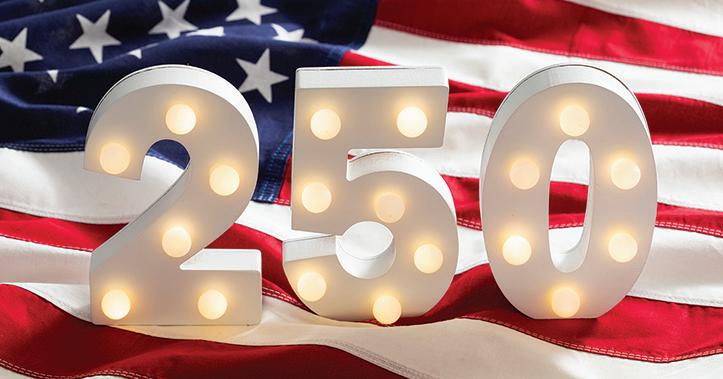
July 4, 2026, marks the 250th anniversary of the signing of the Declaration of Independence, a milestone known as America’s Semiquincentennial. Communities from coast to coast are planning special commemorations to honor the nation’s rich history, recognize its achievements and look toward the future. Large cities and small towns alike are expected to host expanded festivals, concerts, historical reenactments and fireworks displays that reflect the significance of this once-in-a-generation occasion.
One of the simplest and most traditional decorating choices is patriotic bunting and banners. Red, white and blue bunting has long been associated with Independence Day celebrations and can instantly give porches, fences, railings and gazebos a classic Americana appearance. Large banners celebrating America’s 250th birthday can be displayed on homes, garages, businesses or community buildings. Layering bunting with garlands or patriotic wreaths can create an eye-catching display that welcomes visitors and neighbors alike.
Displaying the American flag is another timeless way to commemorate the occasion. Many homes and businesses proudly fly the flag year-round, but America’s 250th birthday offers an opportunity for even more people to do so. Whether mounted on a front porch, displayed in a garden or flown from a flagpole, the flag serves as a symbol of unity and national pride. Anyone displaying the flag should familiarize themselves with the United States Flag Code. The flag should never touch the ground, should be properly illuminated if flown at night, and when hung against a wall or window, the blue union should always appear in the upper left from the viewer’s perspective. Communities across the country are also creating official America 250 logos, signs and promotional materials. Residents can check with local government offices, chambers of commerce or community organizations to learn whether commemorative lawn signs, banners or window decals will be available. Display-
ing these items can help create a unified look throughout neighborhoods and business districts while promoting local celebrations.
Outdoor entertaining will undoubtedly be a highlight of the anniversary festivities, making patriotic tablescapes another fun decorating option. Red, white and blue tablecloths paired with coordinating plates, napkins and serving pieces can transform picnic tables into festive gathering spaces. Centerpieces featuring mason jars filled with miniature American flags, fresh flowers in patriotic colors or candles arranged to spell out “250” provide simple but memorable finishing touches. Vintage-inspired decorations, such as antique lanterns or galvanized metal buckets filled with flowers, can add nostalgic charm to backyard celebrations.
Homeowners and retailers can also incorporate cozy Americana accents throughout their spaces. Decorative wooden signs featuring inspirational patriotic sayings, throw pillows embroidered with stars and stripes, quilts in classic red, white and blue patterns and table runners displaying the years 1776–2026 can all help celebrate the historic milestone. An antique rocking chair draped with a patriotic blanket, paired with potted flowers and lanterns on a front porch, creates a welcoming scene that reflects both history and hospitality.
Landscaping offers another opportunity to celebrate America’s birthday. Hanging flower baskets filled with red geraniums, white petunias and blue lobelia create colorful displays, while flower beds planted in patriotic color schemes can provide seasonal beauty throughout the summer. Decorative planters featuring small flags or America 250 emblems can further enhance front entrances and public gathering areas.
Families may even choose to involve children in creating handmade decorations. Painted wooden stars, paper lanterns, patriotic pinwheels and homemade banners can add a personal touch while helping younger generations appreciate the importance of the historic anniversary. Schools, scout groups and community organizations may also organize craft projects that can be displayed throughout neighborhoods.
Entire communities may decide to coordinate decorating efforts leading up to the celebration. Neighborhood associations might encourage residents to decorate porches, while downtown business districts could display matching banners,
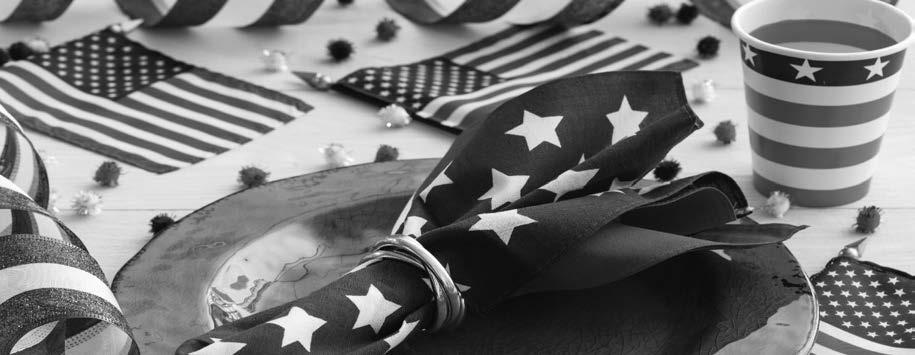
flower baskets or America 250 flags along sidewalks and telephone poles. Streets lined with patriotic decorations can foster a sense of unity and civic pride while creating memorable backdrops for parades, concerts and community gatherings.
Because the nation’s 250th birthday is expected to attract visitors from around the world, communities may also incor-
porate historical exhibits, murals and public art celebrating local contributions to American history. Businesses can decorate storefront windows with historical themes, while museums and libraries may feature exhibits highlighting significant events and people from their regions. America’s 250th birthday represents a rare opportunity to celebrate the nation’s past while looking toward its
future. Whether decorations are simple or elaborate, every patriotic display contributes to the spirit of the occasion.
From flags and bunting to lights, flowers and handcrafted decorations, thoughtful displays can help make Independence Day 2026 a memorable celebration for families, neighborhoods and communities across the country.






United States District Court for the Northern District of Alabama, Southern Division
Published Summons
Case No: 2:26-cv-00637-AMM
Tanya Walker, Plaintiff v. SABR Express, Inc., and Omarov Islamiddin, Defendants.
To: Omarov Islamiddin, whose whereabouts are unknown, but whose last known address is 13203 Skyline Drive, Plainfield, IL 60585.
You are hereby notified that the plaintiff referenced above has filed a lawsuit or other legal action against you. This lawsuit concerns a motor vehicle accident in Birmingham, Alabama on October 27, 2024. The plaintiff seeks recovery of monetary damages. This notice shall be published once a week for four consecutive weeks. If you wish to dispute this matter, you must file a written answer within 21 days of service. The answer should be mailed or delivered to the District Court Clerk, Hugo L. Black United States Courthouse, 1729 5th Avenue North, Birmingham, Alabama 35203, with a copy to the undersigned. If you do not file a written answer within 21 days, a judgment may be given to the plaintiff. A copy of the summons and complaint has been previously mailed to you at the address above.
Friday, June 12, 2026
Date
Christopher J. Zulanas
Jess S. Boone
Attorneys for Plaintiff
Friedman, Dazzio & Zulanas, P.C. 3800 Corporate Woods Drive Birmingham, AL 35242
Published June 18, 2026, June 25, 2026, July 2, 2026 & July 9, 2026








Though unfamiliar to many, the official name for the nation’s 250th anniversary has become a prominent part of Independence Day celebrations
This week marks a historic milestone in the United States: the 250th anniversary of the nation’s founding. The celebration, which takes place during Independence Day week, is formally known as the “semiquincentennial.” While the word has appeared more frequently in public discourse, official programs, and news coverage, it remains unfamiliar to many people hearing it for the first time.
While “semiquincentennial” is the official and most widely used term, it is not the only way to describe a 250-year anniversary. Several alternative words exist, each drawn from different linguistic traditions. These include “sestercentennial,” which is derived from Latin numerical prefixes; “bisequicentennial,” which emphasizes the idea of two 125-year periods; and “quartermillennial,” which frames the span as one-quarter of a thousand years. All of these terms refer to the same length of time, though they are used less frequently in public conversation.
In recent days, the word has appeared in speeches by public officials, historical commentary, educational materials, and media coverage of national events. For many Americans, it is a new term that stands out due to its length and complexity. Yet its meaning is simple, and its use reflects the desire for a precise, formal way to describe a rare historical milestone.
The semiquincentennial is more than just a linguistic curiosity. It represents a
At its core, “semiquincentennial” simply means a 250-year anniversary. The term is constructed from Latin roots: “semi,” meaning half, and “quincentennial,” which refers to 500 years. When combined, the word describes half of a 500-year span—25 decades, or 250 years. Though it may sound complex, it is simply a precise label for a major historical anniversary. The United States reaches this milestone in 2026, 250 years after the signing of the Declaration of Independence in 1776. Across the country, commemorations are taking place throughout the week, including public ceremonies, educational programs, museum exhibits, historical reenactments, and community events. Many of these celebrations reference the semiquincentennial directly, helping bring attention to both the word and the significance of the moment.



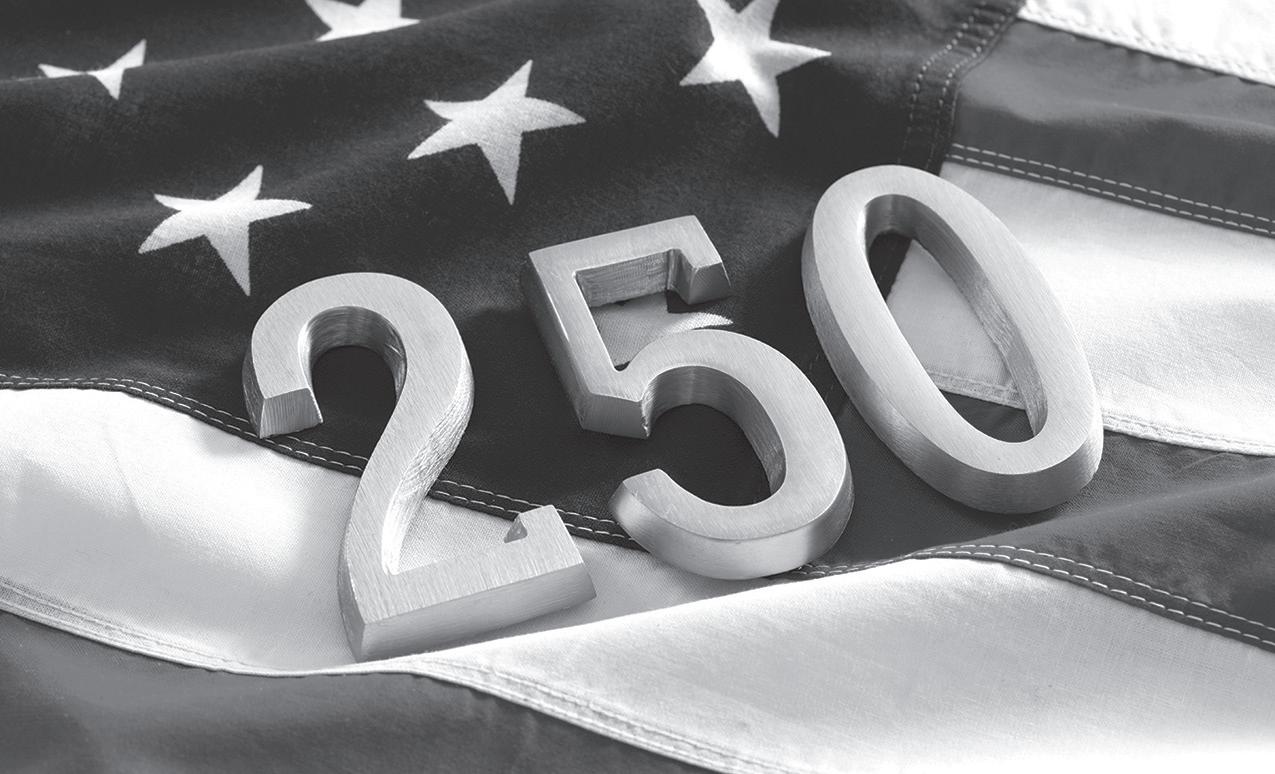
moment of national reflection, inviting people to consider 250 years of history since the founding of the United States. This includes the country’s political evolution, cultural development, technological advancements, and ongoing
debates about identity and governance. It is a moment that connects the present day with the long arc of American history. As celebrations continue throughout the week, the term “semiquincentennial” is likely to remain in circulation,
even as many people continue to prefer simpler phrases like “250th anniversary.” Regardless of the wording, the meaning is the same: a landmark moment marking two and a half centuries since the birth of a nation.