
Celebrating our culture, sharing our stories. That’s the theme of Federation’s Jewish Buffalo History Center, located on the Buffalo Jewish Federation’s website. Jewish American Heritage Month is the perfect time to explore our culture and heritage.
In my conversations, it seems that through assimilation, many of us have lost connection to our families’ and community’s history.
Our ancestors founded Temple Beth El (now part of Temple Beth Tzedek and the oldest continuing Jewish congregational lineage in Buffalo still active today) in 1847, Temple Beth Zion around 1850, and Congregation Anshe Lubavitz (which ultimately became part of Congregation B’nai Shalom) in 1890. Other synagogues followed as Buffalo’s Jewish population grew rapidly between the 1880s and 1920s.
We sometimes forget that our ancestors came from places like Slovakia (now in modern-day Ukraine), Germany, and Poland to escape persecution and practice Judaism freely. From the earliest waves of Jewish immigrants to today’s diverse community, Buffalo has long been a place of opportunity and transformation. Now as communities ask how to preserve their stories while embracing the future, I invite you to explore the Jewish Buffalo History Center at jewishbuffalohistory. org. History is not only about preservation; it also connects generations and people with shared roots and values. For younger generations, it offers identity; for those new to the community, it provides a welcoming entry point into Jewish life in Buffalo.
I also invite you to explore artifacts at the Jewish Museum of Buffalo, co-located at Temple Beth Zion, as well as collections housed in local synagogues and at the University at Buffalo.
The story of Jewish Buffalo is still being written. Whether your roots trace back generations or your connection is recent, we invite you to help shape what comes next.
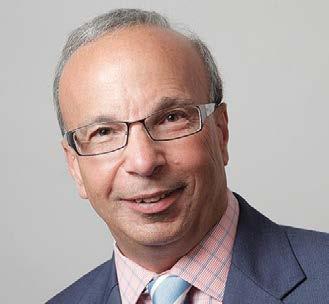
Blaine Schwartz President,
Published by Buffalo Jewish Federation
338 Harris Hill Rd., Suite 108B
Williamsville, NY 14221
716-463-5050
www.buffalojewishfederation.org

President Blaine Schwartz
Chief Executive Officer Miriam Abramovich
Chief of Administration Jill Komm
Senior Director of Communications.... Erica Brecher
Senior Advisor Rob Goldberg
Assistant Director of Operations Mandy Weiss


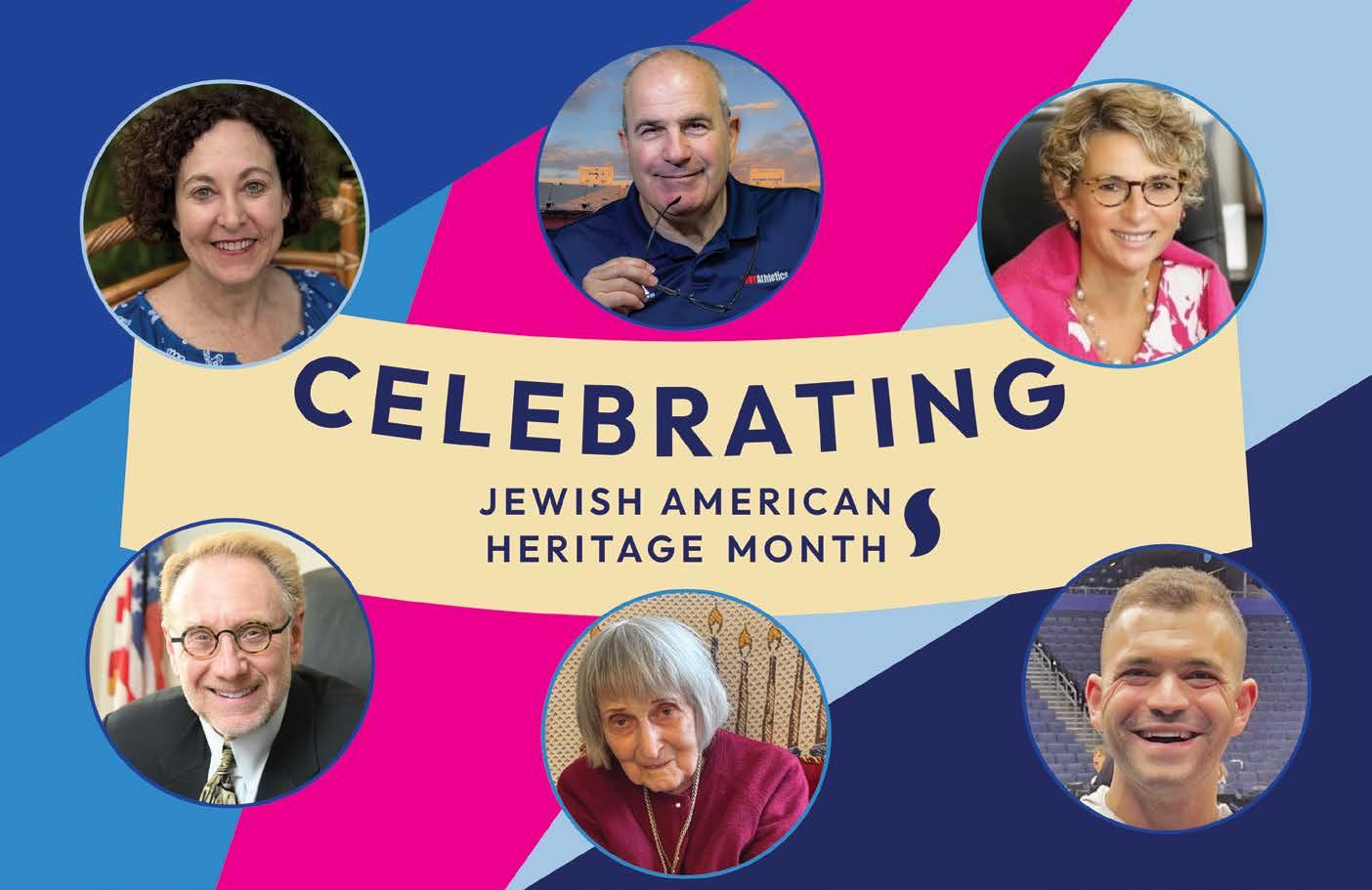
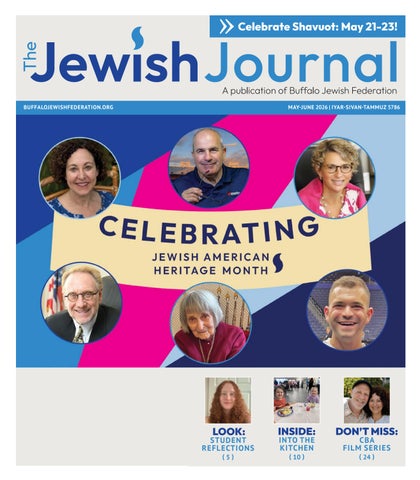
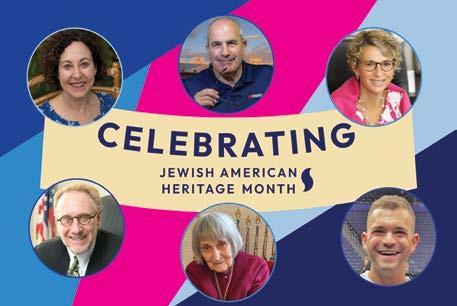
In recognition of Jewish American Heritage Month, this month we highlight several extraordinary Buffalonians whose leadership, creativity, and Jewish values have enriched American life and culture. From science and sports to music and law, their stories reflect a living legacy of identity, impact, and connection shaping today’s American Jewish experience.
President Sharon C. Levite
Vice President/Chief Revenue Officer Barbara E. Macks
Publisher.. Barbara E. Macks
ART, EDITORIAL, & PRODUCTION
Executive
If you would like to submit content to be published in a future issue of the Jewish Journal, please email jjwny@buffalojewishfederation.org
Upcoming Submission Deadlines:
July/August 2026 – material due on May 28, 2026
September/October 2026 – material due on July 30, 2026
November 2026 – material due on October 1, 2026
December 2026 – material due on October 29, 2026
January/February 2027 - material due on November 24, 2026
TO ADVERTISE:
Please contact
Rachel Wasserman at rwasserman@buffalospree.com, 716-725-1173, or Keren Green at kgreen@buffalospree.com, 347-400-9939.
Ad space & materials are due by the 10th of each month prior to publication. For a rate card and any additional information, please email Barbara Macks at bmacks@buffalospree.com.
TO SUBSCRIBE:
To subscribe to The Jewish Journal , please email info@ buffalojewishfederation.org. Free for Western New York area residents and donors to the Campaign.
The Jewish Journal reserves the right to cancel any advertisement at any time. The Buffalo Jewish Federation and Buffalo Spree Publishing, Inc. are not liable for the content or errors appearing in the advertisements beyond the cost of the space occupied. The Jewish Journal does not assume responsibility for the kashrut of any product or service advertised in this paper. Editorials, columns, advertisements, agency reports and other outside articles do not necessarily represent the views of the newspaper or the Buffalo Jewish Federation, but rather express the view of the writer.
All real estate advertising in this newspaper is subject to the Federal Fair Housing Act of 1968, which makes it “illegal to advertise “based on race, color, religion, sex, handicap, familial status, national origin, or an intention to make any such preference, limitation or discrimination.” This newspaper will not knowingly accept any advertising for real estate that is in violation of the law. Our readers are hereby informed that all dwellings advertised in this newspaper are available on an equal opportunity basis.
May is Jewish American Heritage Month, a designation established in 2006 to recognize and celebrate more than 350 years of Jewish contributions to American life, and to ensure those stories are seen, understood, and part of how the greater American story is told.
Like other similar heritage months observed throughout the year, it offers a moment to recognize the role our community has played in shaping this country. It is both a tribute to the generations of Jewish Americans who helped form the fabric of American history, culture, and society, and an opportunity to better understand the evolution of the American Jewish experience.
Jewish tradition teaches that every Jewish soul was present at Sinai at the very moment the Torah was given, a story we revisit each year on Shavuot, which will be observed this year beginning Thursday evening, May 21. It is a reminder that across time and place, we are part of a shared and enduring story.
From the first Jewish settlers arriving
in New Amsterdam in 1654 to today, Jewish Americans have helped shape American society across every field, including science and medicine, the arts, business, culture, and public life. That influence is not confined to the past; it is all around us today. Across the country, Jewish individuals are leading, creating, building, and influencing in ways that are both extraordinary and deeply embedded in American life.
Do you know Deni Avdija, Sarah Hurwitz, or Liz Rose? On the
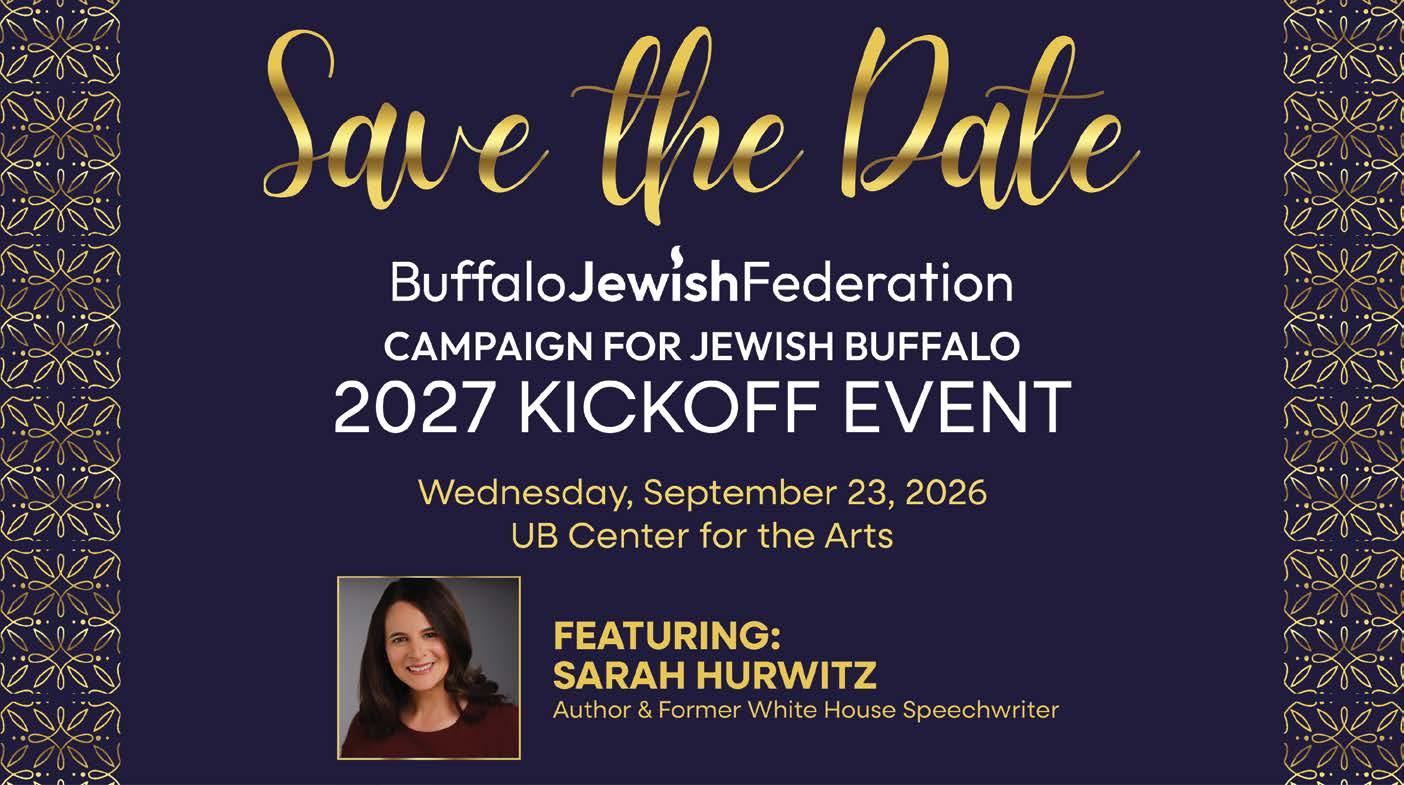
hardwood, Avdija, a forward for the Portland Trail Blazers, is emerging as a high-impact, versatile player, competing at the highest level while bringing his Jewish and Israeli identity into the center of American sports culture. In the world of ideas, Sarah Hurwitz, a former White House speechwriter, is shaping contemporary conversations about identity, meaning, and belonging. Through her New York Times bestselling book As a Jew, she is bringing Jewish thought into broader American cultural discourse. P.S. Sarah will be here in Buffalo, speaking at the Federation’s annual Campaign for Jewish Buffalo Kickoff Event on September 23 at UB Center for the Arts. And in digital spaces, creators like Liz Rose, aka Jewishly Liz, are building large, engaged audiences by sharing authentic, everyday Jewish life, using humor, ritual, and storytelling to shape how Jewish identity is understood in today’s cultural landscape.
And here in Buffalo, we see this same spirit reflected in Jewish leaders, creators, and community members who are shaping the cultural and civic ecosystem of our region. In the pages that follow, you will meet some of those individuals.
Different arenas, different parts of the country, yet one common thread: Jewish identity expressed openly and actively shaping American culture in real time. That is the purpose of Jewish American Heritage Month: to ensure that this influence is recognized as part of the American story. And that visibility carries real weight. In recent months, many in the Jewish community have felt an increased concern for safety and security at Jewish institutions, communal gatherings, and in public spaces. For many, being visibly Jewish now comes with a heightened awareness, making the act of showing up, of being seen, and of living openly as a Jew even more meaningful.
If we were all present at Sinai, then we are all part of this story. Jewish American Heritage Month is not only about honoring the past. It is an invitation: to be visible, to be present, and to contribute. And to recognize that each of us, in our own way, helps shape what Jewish American life looks like today, and that our presence, our voice, and our contributions matter.

BY MIKE STEKLOF, ED.D.
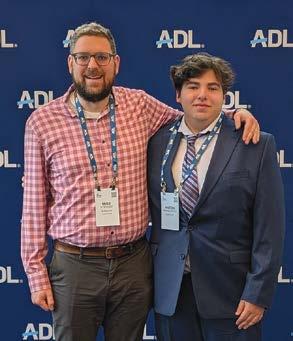
Back in March, I attended the AntiDefamation League Never Is Now conference alongside University at Buffalo student and Students Supporting Israel president Anton Danilovich. We joined Jewish leaders, students, and allies from across the country to confront one of the most urgent challenges facing our community today: the alarming rise of antisemitism.
The data shared at the conference was sobering. Antisemitic incidents have increased by 893% over the past decade. In 2024, there was an 84% increase in antisemitism on college campuses. One in five antisemitic incidents now takes place on campus. Forty percent of Jewish students report being directly affected by antisemitism, and threequarters say they feel uncomfortable sharing their views on Israel.
These numbers are not abstract. They represent real fear, isolation, and harm. This
year alone, 20 Jews were killed in antisemitic attacks, making it one of the deadliest years in recent memory. Meanwhile, 55% of Jewish Americans report experiencing antisemitism in just the past year.
At the conference, one message was repeated: antisemitism is not just a Jewish problem, it is a threat to

democracy itself. When hatred against Jews is normalized, the fabric of an open and pluralistic society begins to unravel. So what can we do?
The ADL frames its work around three pillars: protect, advocate, and educate. But beyond these guiding principles, the conference offered something equally valuable, practical, research-backed strategies for changing hearts and minds.
Through randomized experiments involving thousands of participants, researchers have identified what works in conversations about antisemitism. One of the most striking findings: those who fight antisemitism often spend most of their time talking only to people who already agree with them. If we want real change, we must engage those who may hold misconceptions or even antisemitic views.
Here are several key approaches from the research:
• Highlight the personal impact of antisemitism. Focus on personal, specific, everyday impacts of antisemitism on Jewish individuals. Avoid talking about collective Jewish suffering.
• Underscore Jewish people’s warmth. Highlight warmth, social values and everyday experiences of Jewish individuals such as community involvement or family dinners. Avoid overemphasizing achievements or influence which can reinforce stereotypes.
• Feature the voices of allies and supporters. Feature non-Jewish voices speaking about antisemitism and validating Jewish experiences, they can serve as a proxy for the audience to understand and empathize with the issue. Use everyday people in contemporary scenarios.
• Use the term “antisemitism” thoughtfully. Use the words “hatred of the Jewish people,” as most people understand what this means. In some cases, people may recognize that a scenario is “hurtful” or “problematic” but may not feel comfortable labeling it as “antisemetic.” Only label the most hateful things “antisemitic.”
• Avoid comparisons. Address antisemitism without comparing it to other forms of bias. Avoid implying that antisemitism is more important or worse than other forms of discrimination.
• Talk about personal importance and connection to Israel. Share what Israel means to you. Describe Israel as a safe haven for Jews. Education about Israel is important, but education alone will not necessarily change hearts and minds. Pair education with a personal connection to Israel.
• Use phrases like “elimination of Israel,” and define it as extreme and unpopular. Use clear language like “elimination of Israel” or “right for Israel to exist” rather than “anti-zionism” or “Zionism.”
• Highlight that 80% of Americans support Israel’s right to exist and that those who don’t believe this hold a fringe opinion.
For those of us working on college campuses, these lessons are urgent. Jewish students are navigating an increasingly hostile environment, where expressing identity or support for Israel can come at a social or academic cost.
University administrators must continue to do more. They must stand up, show up, and do the right thing, ensuring that Jewish students feel safe, supported, and able to participate fully in campus life. Silence or neutrality in the face of antisemitism is not an option.
At Hillel of Buffalo, we are committed not only to confronting antisemitism, but also to building vibrant, joyful Jewish life. The two go hand in hand. When Jewish students feel proud, connected, and supported, they are better equipped to face the challenges around them.
The title of the conference, Never Is Now, is both a warning and a call to action. The rise in antisemitism demands urgency, courage, and clarity. But it also demands something else: a willingness to reach beyond our comfort zones, to engage in difficult conversations, and to build a broader coalition of allies.
Because the fight against antisemitism is not just about protecting Jews. It is about protecting the kind of society we all want to live in.
The Holocaust Education Resource Organization (HERO) will once again honor outstanding contributions to Holocaust education with the presentation of the Toby Ticktin Back Educator Award at its annual ceremony on May 18. The evening will also celebrate student voices and community leadership through awards for the arts and writing contest, the Sophia Veffer Upstander Award, and the Abek Student Upstander Award.
Named in memory of visionary educator Toby Ticktin Back, the award recognizes an educator who exemplifies her enduring commitment to education, remembrance, and moral courage. As a teacher at Kadimah in the 1970s and 1980s, Back was ahead of her time, inviting Holocaust survivors into her classroom to share their stories directly with students. These powerful encounters left a lasting impression, both on her students and on Back herself, shaping her belief in the importance of firsthand testimony.
Motivated by these experiences, Back founded the former Holocaust Resource Center of Buffalo, known today as HERO. She built more than an organization; she created a space dedicated to truth, empathy, and courageous dialogue. Back personally conducted over 120 interviews with local survivors, witnesses, and liberators, many of which are preserved in the archives of the United States Holocaust Memorial
Museum. Her innovative curricula and leadership helped establish Holocaust education as a vital part of learning in Western New York and earned national recognition.
Last year’s recipient of the Toby Ticktin Back Educator Award was Dr. Matthew Frahm, superintendent of the Clarence Central School District. A dedicated educator and leader, Frahm was recognized for his commitment to fostering meaningful learning experiences and supporting both students and educators in his district through partnership with the Buffalo Jewish Federation.
As HERO prepares to announce this year’s honoree, the Toby Ticktin Back Educator Award remains a powerful tribute to a legacy that continues to inspire, ensuring that the lessons of the Holocaust are taught with depth, compassion, and purpose for generations to come.
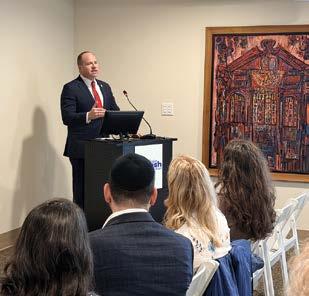
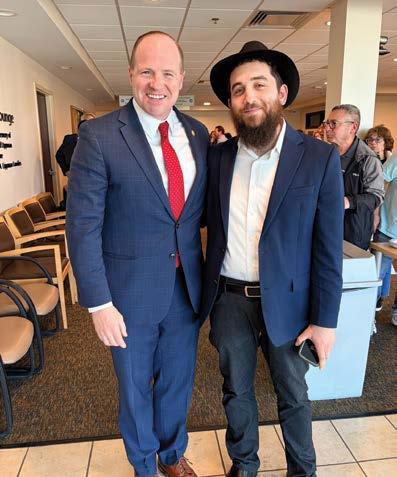
On April 13, the Buffalo Jewish Federation convened an intimate conversation with Congressman Tim Kennedy about the antisemitic terrorist attack last Hanukkah at Bondi Beach, Australia. The Congressman shared stories of survivors of the attack and spoke at length about meeting the man responsible for tackling and disarming one of the gunmen. In addition, Rabbi Yehuda Lorber shared the harrowing firsthand experience of his bother-in-law and nephews who were present during the attack. Following their reflections from the Bondi Beach attack, Rep. Kennedy spoke to his leadership in confronting rising antisemitism and his efforts to secure additional funding for the Non Profit Security Grant Program (NSGP).
The town hall-style event came on the heels of Congressional action on the Nonprofit Security Grant Program, which provides security funding for faith-based institutions and at-risk nonprofits. Of Western New York’s three Congressional districts, Kennedy (NY-26) and Rep. Claudia Tenney (NY-24) were among 148 U.S. representatives requesting $1 billion in federal funding for the NSGP. Among other relevant appropriations, Kennedy, Tenney, and Rep. Nick Langworthy (NY-23), all signed letters in support of the Office
of the Special Envoy to Monitor and Combat Antisemitism and U.S.-Israel Missile Defense Cooperation Funding. Kennedy and Tenney additionally signed in support of the Holocaust Survivor Assistance Program, and Kennedy alone signed in support of the Middle East Partnership for Peace Act.
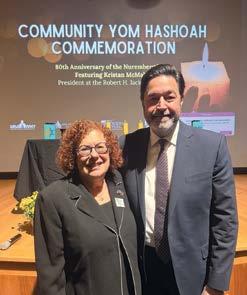
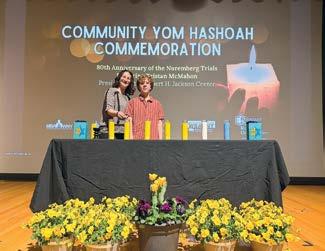
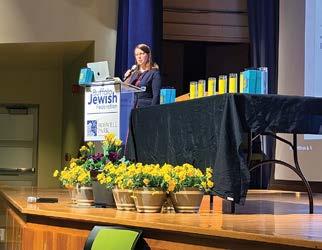
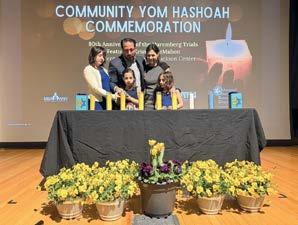
The Holocaust Education Resource Organization’s (HERO) and Buffalo Jewish Federation’s annual Yom HaShoah commemoration on April 12 recognized not only the 6 million Jewish lives lost in the Holocaust, but also the enduring legacy of Robert H. Jackson, 80 years after the Nuremberg Trials created international precedent for war crimes prosecution. The event bridged justice ideals born of WWII with today’s Western New York legal community. Kristan McMahon, President of the Robert H. Jackson Center, shared how Jackson defined global responsibility and individual morality. And new this year, HERO and Federation partnered with the Erie County Bar Association, the Minority Bar Association of Western New York, and the Western New York Chapter of the Women’s Bar Association of New York State, thanks to the leadership of The Honorable Lisa Bloch Rodwin and HERO Council Chair Armard Morrison.
The Buffalo Jewish Federation’s Student to Student program recognizes four outstanding seniors from its 2025–2026 cohort. In Student to Student, Jewish teenagers visit local schools to share personal experiences and educate peers about Judaism, helping reduce prejudice through real stories and accurate information. Federation proudly spotlights these young leaders.
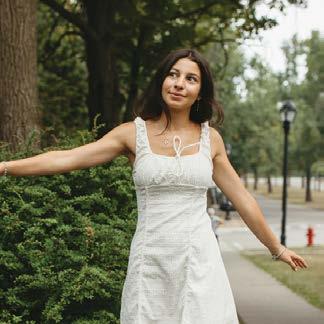
Talula Enis has been a Student to Student presenter for three years. “I signed up to participate because Judaism is something I’m really passionate about,” she said. “I love talking to people about Judaism and how I practice Judaism, and Student to Student is a great way to do that while also having an impact on other people.”
For Talula, “Being a part of Student to Student has meant being able to share and teach...a part of my identity that is a super significant part of my life. And that is so meaningful to me because, first, I really love talking about Judaism and how I practice Judaism, and, second, because I know that it helps limit antisemitism by addressing the problem of ignorance, and the fact that I can make an impact in that way is very fulfilling for me.”
She says Student to Student revealed how little many people know about Judaism and how powerful education is. She encourages other teens to join.
“Go for it because it’s a rewarding way to share aspects of your life with your peers that you normally might not share, and you’d really be making an impact on the people you talk to,” she said.
A standout moment was a Kids Escaping Drugs assembly. Talula reflects, “I loved doing that
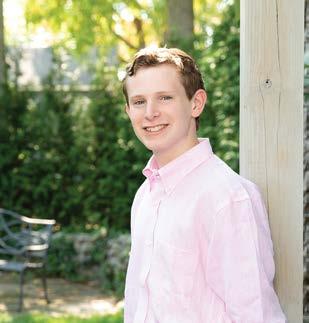
Noah Garson is also a three-year Student to Student presenter, inspired by his brother Joshua’s experience. Through his own experience now, he values “sharing my culture and identity with others.”
Noah says Student to Student felt like family. “I have met a lot of new people who I wouldn’t have met otherwise. The STS program has also helped me develop my public speaking and communication skills,” he said. “I learned how to tailor our presentations and think about each audience...I also know that it’s important for our audiences to hear from different kinds of Jewish kids with different experiences.”
Advising others, Noah says, “I would tell them to sign up immediately! You never regret the things you do, just the things you don’t do. At first, I was scared about doing it and having to talk in front of other students, but once I did it, I never regretted it. I always enjoyed doing it. I always looked forward to the presentations.”
His first presentation stands out.

presentation because, when we were done, the kids we talked to had so many questions, and their questions showed that they’d really thought about the things we said in the presentation and were genuinely curious. That’s what makes Student to Student so important; it’s able to reach students who are ignorant about Judaism and answer their questions and, in the end, it can show them that Jews are just like everyone else.”
“I feel like what made it so special was how curious the kids were to learn. The questions took longer than the actual presentation!” he recalls. “I think a lot of antisemitism stems from ignorance, so doing presentations like that can make such a difference because people learn so much about Jewish culture and religion from our presentations.”
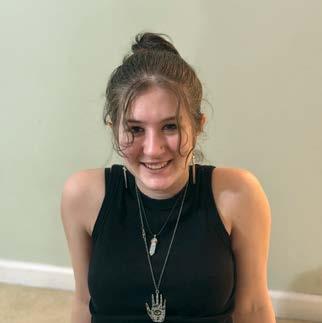
Sarah Lewis
Sarah Lewis has participated in Student to Student for two years, motivated in part to combat antisemitism.
“It means that I am making a difference in my community and [for Jews everywhere],” she said.
Sarah says the program strengthened her confidence and communication skills.
For others thinking about joining, she shared, “I would encourage other Jewish teens to take part in the program, to embrace their religion, and not to be scared to be who they are. I will also tell them that STS is a great way to build self-confidence.”
Reflecting on one
Jarah Lazarus-Klein
Joining Tulula and Noah, is Jarah Lazarus-Klein, who has also participated for three years, drawn by Student to Student’s mission and leadership opportunities. She says she now “feels closer to my Jewish identity and family history.”
“One person’s story can inspire and change a person’s point of view and knowledge of a topic,” she said, emphasizing the power of personal narratives.
Jarah connected with audiences by sharing her family’s story and the book “Love with No Tomorrow,” written by her grandmother,
experience, Sarah said, “In one of my presentations I had a student tell me that they did not know how similar Judaism was to their religion and that they are grateful that they knew more about it. This experience made me value STS even more. It emphasized the importance of teaching others about Judaism.”
She encourages others to join. “You will foster a stronger connection with your Jewish identity and an opportunity to meet new Jewish teens your age and make a positive impact with students in and around your community” she said.
If you know a high schooler entering their sophomore through senior year who would like to join the 2026-2027 cohort, please email Rachel Beerman, Manager of Community Relations, at rachel@ buffalojewishfederation.org.
Buffalo’s commitment to meaningful Holocaust education was on full display as more than 80 educators convened for the Holocaust Education Resource Organization (HERO)’s annual educator conference last month. The day brought together teachers from across the region for a powerful experience of learning, reflection, and professional growth.
The conference was expertly facilitated by Echoes & Reflections educators Jen Goss and Todd Hennessy, whose guidance helped create an engaging and thoughtful environment. One of their new lessons focused on the Holocaust experiences of Gerda Weissmann and Kurt Klein - local Holocaust survivors with a unique story as Kurt was also Gerda’s liberator. The addition of this lesson to the Echoes & Reflections curriculum marks a significant and meaningful moment for the Buffalo community, deepening local connections to Holocaust history through personal narratives. Adding a deep personal dimension to the program, Kevin Starr, a retired
educator and longtime family friend of the Kleins for more than 60 years, shared heartfelt memories and reflections. His stories offered educators a rare and intimate perspective, bringing history to life in a way that resonated throughout the room.
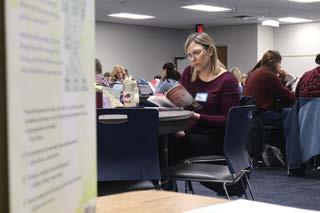
Later, the conference shifted focus to media literacy, equipping educators with essential tools to help students critically evaluate information in today’s complex digital landscape. This session underscored
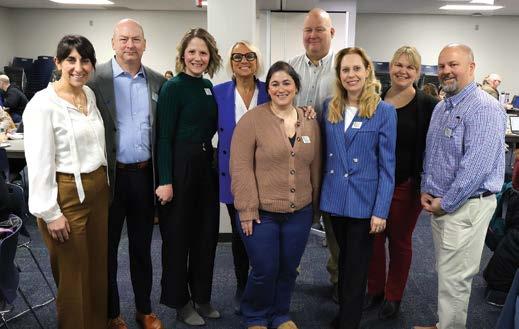
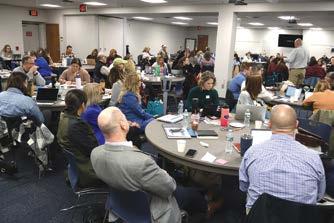
the ongoing importance of teaching not only history, but also the skills needed
to navigate and interpret modern media responsibly.
Educators left the conference with a sense of renewed purpose to carry on the lessons of the Holocaust, inspiring hope that today’s students will grow into tomorrow’s leaders who stand up to hate and build a more just and understanding world.
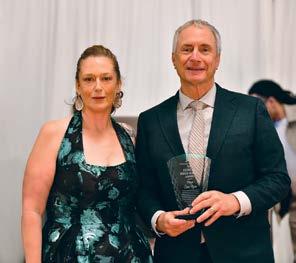
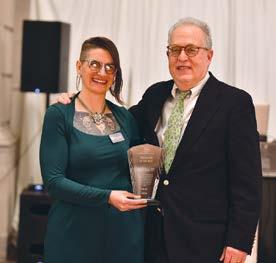
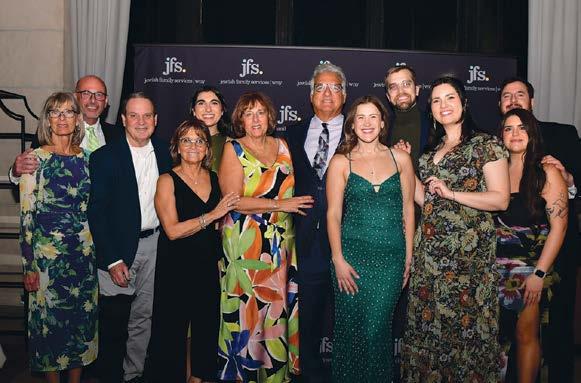
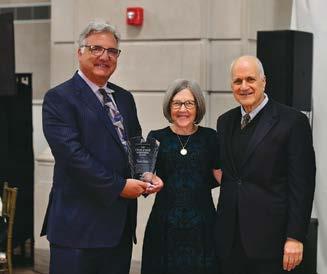
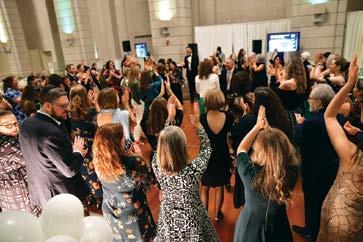
Jewish Family Services of Western New York is still kvelling after the tremendous community support shown at this year’s annual Matzah Ball. The evening celebrated the vital work JFS provides to individuals and families across Buffalo and Western New York, while honoring outstanding leaders whose commitment strengthens our entire community. This year’s honorees included Sean Ryan, recipient of the Kehilla Bridge Builder Award; David Schlein, honored with the L’Dor V’Dor Award; and Robert E. Kaplan, recognized as Mensch of the Year.


The story of the American Jew is often told through Ellis Island and the crowded tenements of the Lower East Side. Yet to fully understand Jewish contributions to American life, one must also look to the “Queen City” of the Great Lakes. In Buffalo, a distinctive Jewish community flourished, one marked by a commitment to Tikkun Olam (repairing the world), a melodic soul that bridged the synagogue and the stage, and a mathematical brilliance that unlocked the secrets of the molecular world.
Through the lives of Cecil B. Wiener, Harold Arlen, and Herbert Hauptman, we see how Jewish values helped shape American society. These leaders were not merely participants in American life; they helped build its social, cultural, and scientific foundations.
Inspired by the founding vision of the National Council of Jewish Women, the Buffalo chapter of NCJW became a hub for Jewish learning and civic responsibility beginning in 1895. As social challenges grew during the Great Depression and World War II, its focus expanded from study to direct service. Originally, the group focused on the intellectual: Bible study, history, and the preservation of Jewish culture in a rapidly secularizing world. But as the 20th century groaned under the the Great Depression and the horrors of World War II, the NCJW’s mission shifted.
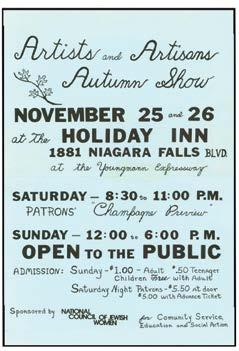
Artists & Artisans Autumn Show, November 25-26, c. 1960s-1970s
Presented by the National Council of Jewish Women, continuing a greaditon of weomen-led community initiatives in Buffalo.
At the heart of this transformation was Cecil B. Wiener. One of the first women admitted to the University at Buffalo School of Law, she used her legal training to advocate for vulnerable children and families. Wiener helped lead the Erie County Child Welfare Board, and her crowning achievement came when she was appointed Judge of the Erie County Children’s Court. In this role, she became a matriarch for the city’s most vulnerable, bridging the gap between Jewish and non-Jewish communities with a universal brand of compassion. She also became the first female leader of what would become the Jewish Federation of Buffalo.
Her work reflected a distinctly Jewish understanding that faith is expressed through responsibility for others.

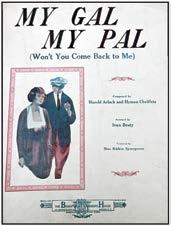
Born Hyman Arluck in Buffalo, Harold Arlen absorbed the emotional depth of synagogue music alongside the rhythms of American jazz. The son of a cantor, his early exposure to the soulful, improvisational wails of cantorial music, the chazzanut, shaped the melodic sensibility that later defined his compositions.
Now, mingling with jazz, he began performing with “The Snappy Trio” and “The Buffalodians.”
In 1924, at the age of 19, Arlen published his first song, “My Gal, My Pal.” It was a modest start, but his musical ambition was vast, and he eventually made the pilgrimage to California.
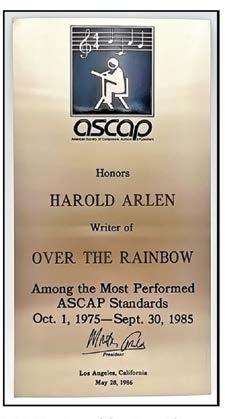
Together with lyricist Yip Harburg, Arlen composed “Over the Rainbow,” one of the most enduring songs of the twentieth century. Its message of longing and hope resonated deeply with Jewish immigrants seeking security and belonging.
Arlen, who won an Academy Award in 1939, transformed the musical language of the synagogue into part of the American cultural canon, demonstrating how Jewish tradition could enrich national culture.
If Wiener represented communal responsibility and Arlen artistic creativity, Herbert Hauptman embodied the Jewish reverence for learning. Educated at the City College of New York, he pursued a bold scientific challenge: determining molecular structure through mathematical analysis of X-ray diffraction.
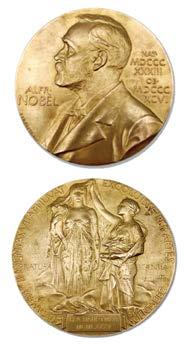
After joining the Medical Foundation of Buffalo in 1970, Hauptman’s decades of research and labor bore fruit there. In 1985, the world watched as a boy from a Jewish family in the Bronx stood on a stage in Stockholm to receive the Nobel Prize in Chemistry.
His work revolutionized the development of medicines by enabling scientists to identify molecular structures with precision. Today, his legacy continues at the HauptmanWoodward Medical Research Institute. In his later years, Hauptman remained a Buffalo fixture, a quietly walking the streets until his passing in 2011. His Nobel Prize medal, now housed in the Cofeld Judaic Collection, serves as a reminder that the Jewish commitment to inquiry can literally change the way we see the world.
The stories of Wiener, Arlen, and Hauptman illustrate how Jewish values helped shape Buffalo and American life. Their achievements reflect a blend of Great Lakes determination and enduring intellectual tradition.
Together, they remind us that Jewish contributions are found not only in history books, but also in the laws that protect society, the music that inspires hope, and the scientific discoveries that improve human life.

BY JONATHAN SAFIR
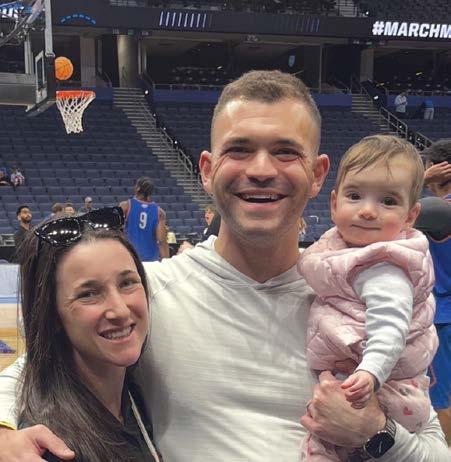
Being Jewish has long played an instrumental role in both my life and my career. I knew from around the time of my Bar Mitzvah that playing in the NBA was unlikely to be a realistic goal for me. Rather, I wanted to turn to the next best thing - which, to me, meant coaching. Being around and involved in the game of basketball, ideally at the highest levels, has driven me.
There is a strong connection between how I approach coaching, teaching, and my career and the concept of rachmones, a Yiddish word derived from Hebrew meaning compassion or empathy. I try to instill those values in everything that I do. Being Jewish also adds a layer of perseverance - some built-in mental toughness, if you will. Our history and upbringing as Jews carry a deep thread of that perseverance. Along the same lines, basketball does not necessarily have the most robust Jewish presence, so being visible, accessible, available, and successful can help change or evolve stereotypes and narratives and can serve as a role model.
All in all, especially now, as a husband and father (daughter, Ryan 9 months old), helping others with my background and story can hopefully inspire others. I take great pride in being Jewish and a basketball coach. It is part of who I am, and it helps to drive, motivate, and inspire me – and hopefully also inspire future generations of those who want to get into coaching that are Jewish as well.
Jonathan Safir grew up in Buffalo and currently serves as an assistant coach for the Men’s Basketball team at the University of Florida.
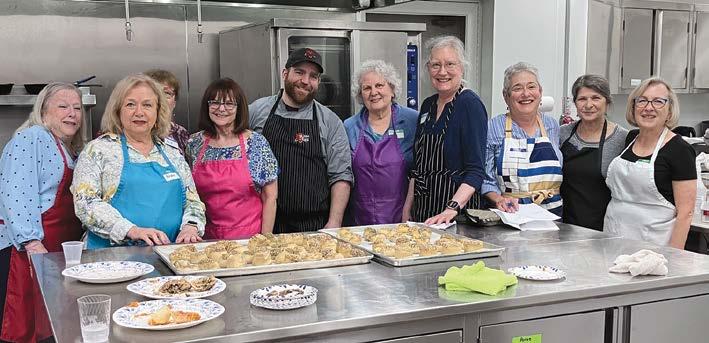
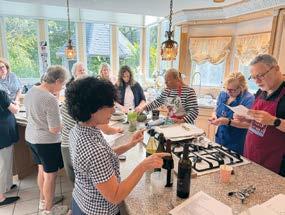
“Into the Kitchen” is more than a cooking class, it’s a gathering place for memory, discovery and connection. Held bimonthly, this LiNK Jewish Buffalo hands-on experience invites participants to explore Jewish recipes that span the generations: from cherished family dishes lovingly recreated, to new interpretations that keep our culinary traditions vibrant and evolving.
Each session is built around a theme offering a meaningful lens through which food becomes storytelling. For some, these themes unlock nostalgia…the aroma of a grandmother’s kugel, the familiar shaping of challah, or the taste of a holiday dish that once was the centerpiece of our family dinner tables. For others, especially those newer to Jewish cooking, the themes provide an accessible and welcoming entry point to begin creating traditions of their own.
What makes “Into the Kitchen” special is not just what’s on the table, but also what is shared around it. Participants bring their stories, memories and curiosity, transforming
recipes into our living history. A simple dish can become a conversation about our Jewish American heritage and identity – even when those recipes predate our families’ arrival to the United States. Our world moves so quickly that taking the time to cook together offers a special opportunity to slow down. It reminds us that cooking, sharing, and eating food is one of the most powerful ways that we can transmit culture and values across generations. Whether we are preserving the past or experimenting with making memories for the future, our time together helps to ensure that Jewish food traditions continue to nourish not just our bodies, but our sense of belonging, family and community. We hope that you will join us! Register for upcoming classes at buffalojewishfederation.org/ link-gatherings.
For more information, please contact Robin Kurss at robin@buffalojewishfederation.org
BY ELLEN GOLDSTEIN
This is the sound of
Six million songs and dreams
Six million questions
Six million answers
And six million reasons for being a Jew
– Gloria Parnas Tetewsky
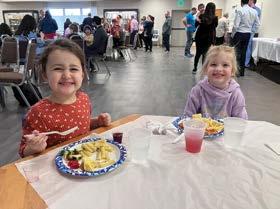
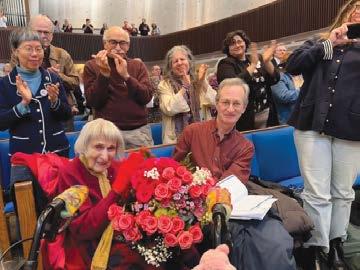
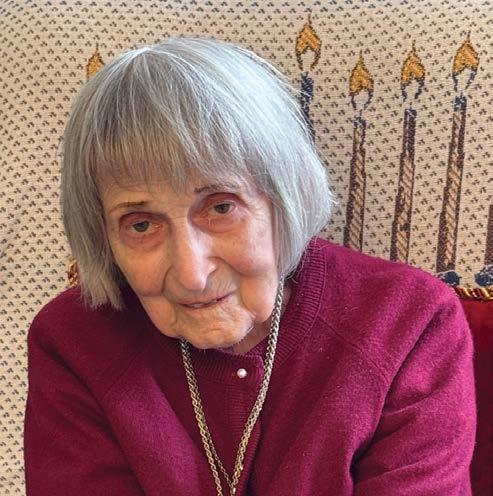
When Gloria Parnas was a child in 1930s St. Louis, she was the only Jew in the school. And when she started kindergarten, she was accused of killing Jesus. That is something she never forgot, especially now, nearly a century later in Buffalo, where she, now Gloria Parnas Tetewsky, recently prepared for the performance of the cantata she wrote decades ago about the Holocaust for the Sisterhood of then Temple Beth El. It premiered March 29, newly orchestrated and arranged, at Temple Beth Zion’s Stained Glass Concert Series.
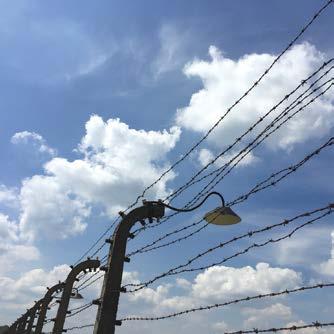
Holocaust. It was played at the Buffalo concert by Buffalo Philharmonic Orchestra violinist Antoine Lefebvre. By doing this, Cantor Stoehr enabled the presentation of the music ABOUT what happened, with an instrument which was right there WHERE and WHEN it happened—The Holocaust in 1930s and 40s Europe.
The Valley of Silence: Search for Six Million is the cantata that Mrs. Tetewsky wrote in the 1970s, both the words and music for piano, as a response to the cruelty and inhumanity of the Holocaust.
“When I read Elie Weisel’s book Night many years ago, I felt that I had to write something
because of the immense sadness of the story. But it was also important that we learn something from it. We must value our humanity and frame this knowledge around freedom to live our lives as decent human beings,” she said. “In certain sections of the work, I took phrases from the liturgy and set them to music to bring out the fact that life is a very precious gift. We must recognize the sacredness of our life and the sacredness of time.”
Rebecca Bernstein in music at the Chicago Music College and also attended Washington University Art School. She moved to Buffalo in 1953 after meeting Hyman Tetewsky, MD. They affiliated first with Temple Beth El, and as congregations have closed and merged over the years, she is now a member of Congregation Shir Shalom. She still plays piano and even has a baby grand piano in her senior living apartment.
Gloria earned a bachelor’s degree
“In the 1970s, no one was talking about the Holocaust that much. In
1973, the Sisterhood at Temple Beth El put me in charge of its Jewish Music Month. I decided to write this cantata for Holocaust commemoration,” Gloria said. “What’s new now is that Moshe Shulman has fully orchestrated it because it was originally written for piano and two voices – baritone, and soprano, plus a narrator.”
Russian-born Israeli American composer and multi-instrumentalist Dr. Moshe Shulman is a 2015 Fromm Music Foundation Commission recipient from Harvard University and winner of the 2018 American Prize in Composition, with international honors including the International Jurgenson Competition in Moscow. A violinist, violist, bandoneon player, and leader of the Buffalo Tango Orkestra, his music has been performed worldwide by ensembles such as the Arditti Quartet and the Brasilia National Symphony, bringing a global artistic voice to Western New York.
One of the many extraordinary elements of the March 29 Stained Glass Concert was that Chicago-based Cantor Steven Stoehr, whose father was a Holocaust Survivor, sang, and brought a special musical instrument, known as a Violin of Hope, which was given to him by a descendant of Romani victims of the
This Stained Glass concert also featured a full 22+ piece orchestra. Vocals were sung by Temple Beth Zion’s Cantor Susan LewisFriedman alongside the Jewish Community Center’s Cantor Mark Horowitz, and Cantor Stoehr, all performing beneath Temple Beth Zion’s renowned stained-glass masterpiece at 805 Delaware Avenue, created by internationally celebrated artist Ben Shahn.
Mrs. Tetewsky expressed her gratitude to all the people who made this event possible. “As Jews, we want to assert our humanity. They took everything away from us, but they couldn’t take our humanity, which gives us freedom to be an ethical moral person, using our freedom in the right way.”
May we all continue to hold onto this humanitarian vision and hope.
Funding for this concert was made possible through Arts Services Inc.’s Creative Impact Fund thanks to a New York State Senate Initiative supported by the NYS Legislature and the Office of the Governor and administered by the New York State Council on the Arts.
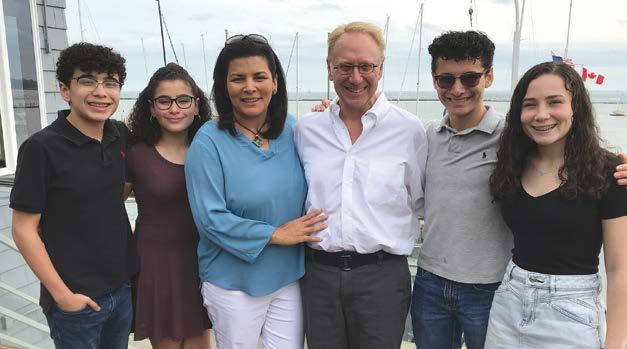
Judge Peter Allen Weinmann is a firstgeneration American, the son of German Jewish refugees who fled Nazi Germany in search of safety and freedom. That family history has profoundly shaped his lifelong commitment to justice. Being born in the shadow of the Holocaust symbolizes both the continuity and resilience of the Jewish people: “My parents could easily have perished in the death camps,” he reflects “Instead, they were able to escape with their own parents and build a new life in America, instilling in me a deep sense of gratitude and responsibility.”
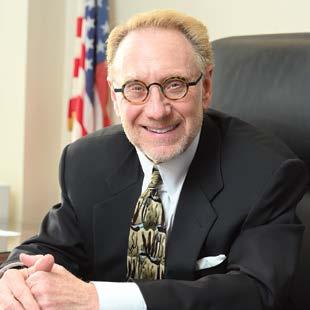
After a distinguished 35-year career practicing both civil and criminal law, Governor Kathy Hochul nominated Judge Weinmann to the New York State Court of Claims. Following confirmation by the New York State Senate, he was assigned to serve on the New York State Supreme Court. He earned his BA from Case Western Reserve University, his JD from Cardozo Law School, Yeshiva University, and his MPA from Harvard University. Throughout his career, first as an attorney and now as a judge, he has been guided by enduring Jewish values in the pursuit and dispensing of justice.
Three core Jewish teachings have consistently shaped his approach to both law and life: Tikkun Olam, the responsibility to repair and improve the world; the ethical framework embodied in the Ten Commandments; and the Biblical concept of B’tzelem Elohim - the belief that every human being is created in the Divine image and therefore possesses inherent dignity and infinite worth. “Those core tenets power me from behind the bench,” he notes.
Judge Weinmann and his wife, Amelida, have raised their four children with the same deep commitment to Jewish life and learning that has guided his own path, including active engagement with synagogue life at Temple Beth Zion, Jewish education through the Kadimah School, participation in Jewish summer camp, and opportunities for travel to Israel. Through both his professional service and family life, Judge Weinmann demonstrates how Jewish heritage can serve as a foundation for ethical leadership, civic responsibility, and a lifelong commitment to justice.
For Jewish American Heritage Month, the story of Dr. Gale Burstein stands as a powerful example of leadership, service, and the enduring influence of Jewish values in public life. A pediatrician specializing in adolescent medicine, Dr. Burstein serves as the Erie County Commissioner of Health, overseeing public health initiatives that impact nearly one million residents across Erie County, and as Clinical Professor of Pediatrics at the UB Jacobs School of Medicine.
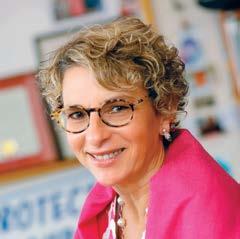
Commitment to addressing some of the most urgent public health challenges of our time shaped Dr. Burstein’s career. From combating vaccine hesitancy to confronting gun violence, fatal overdoses, and lead poisoning, her leadership reflects both scientific rigor and deep compassion. She also prioritizes expanding access to sexual health and family planning care through a health equity lens, ensuring underserved communities receive the care they need.
Among her most defining professional moments are three experiences that illustrate the breadth of her impact. Early in her career, she conducted groundbreaking research on chlamydia infection rates among adolescents and young adults. Her findings helped inform Centers for Disease Control and Prevention (CDC) national screening guidelines. In a moment that beautifully intertwined her personal and professional identities, her landmark paper was published in the Journal of the American Medical Association (JAMA) on the same evening as her oldest son’s bris, marking her simultaneous entry into Jewish motherhood and scientific recognition.
Years later, as Erie County faced a devastating opioid crisis, Dr. Burstein led a multidisciplinary task force that helped redefine treatment approaches. Working alongside community partners, she helped establish the first clinic in the region to prescribe buprenorphine for youth. Her efforts contributed to a measurable decline in overdose deaths, positioning Erie County as a national leader in addressing the epidemic.
Perhaps most visible was her leadership during the COVID-19 pandemic. Beginning in March 2020, Dr. Burstein directed a comprehensive response that included largescale testing, contact tracing, public communication, and mass vaccination efforts. Under her guidance, Erie County built systems that not only responded to the crisis but helped save lives and keep the community informed and protected.
Dr. Burstein credits several Jewish mentors for inspiring her journey, including Dr. Robert Ehrenreich, Dr. Evelyn Hurvitz, and Dr. Jonathan Zenilman. These role models not only shaped her medical expertise but also reinforced the ability to balance a meaningful career with a rich Jewish family life. At the core of her work is the Jewish value of tikkun olam, the responsibility to repair and improve the world. This principle guides her approach to public health, driving her to create systems that promote dignity, safety, and well-being for all.
Reflecting on her legacy, Dr. Burstein hopes she contributed to advancements in adolescent health, substance use disorder treatment, and pandemic response, while helping WNY residents feel safe, respected, and empowered. She emphasizes that none of her accomplishments would be possible with the support of her parents, Irwin & Marna Burstein, her husband, Peter Bloom, and her sons, Zachary and Joshua Bloom, who are a source of strength throughout her journey.
In celebrating Jewish American Heritage Month, Dr. Gale Burstein’s story reminds us that leadership rooted in compassion, science, and cultural values can truly transform communities.
Jewish values have long shaped how Stu Boyar approaches both his life and career. “Judaism impacts every aspect of your life, no matter how religious or non-religious you are,” Stu reflects. “If you are brought up in a Jewish home, you are given a set of values that come directly from one place – the Torah. You value humanity, ethics, dignity, family, children, education and
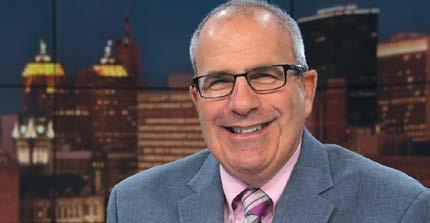
more. I think it has a direct impact on every decision you make, whether you realize it or not. And I thank my mother and father for that.”
Those values accompanied Stu when he first arrived in Buffalo in February 1985. While most Western New Yorkers recognize him from his many years at WGRZ-TV, his career in broadcasting began more than a decade earlier.
At just 16 years old, Stu took a job as a “gofer” at WAXC-AM radio in Rochester. A gofer was someone responsible for running errands, whether fetching coffee or picking up supplies.
“A wonderful man named Rich Funke was the news director at WAXC, and I asked him if he would work with me because I thought I might have some sort of future in broadcasting,” Stu said.
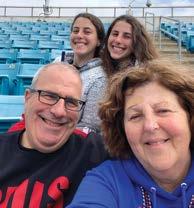
Stu Boyar and his family cheer on the Bills at a Jacksonville game.
Funke asked him to read Associated Press wire copy and offered feedback that Stu read well but should sound more authoritative. Stu took the advice seriously, and through hard work and persistence earned his first on-air opportunity on the station’s overnight shift.
“Outside of my dad, he had the most impact on my life out of anyone,” Stu recalls of Funke.
While working overnights, Stu also took on part-time roles, including his first television opportunity covering weekend sports at Rochester’s WHEC-TV. He later moved to WSEE-TV in Erie, Pennsylvania, where he did “a little bit of everything” from 1978 through 1984.
His next stop was Buffalo’s WGRZ-TV Channel 2, where he became a familiar and trusted presence as a longtime sports anchor and reporter.
Despite a storied career in sports, one of Stu’s most memorable experiences involved a major news story. When the manhunt for Ralph Phillips came to an end, news managers asked Stu to record video of Phillips’ arrival following the murderer’s apprehension. The media had nicknamed Phillips “Bucky,” but fellow broadcaster Ed Kilgore advised that journalists should avoid giving criminals nicknames, suggesting that doing so can humanize them and unintentionally imply sympathy. The moment left a lasting impression on Stu.
“I had a great time,” Stu said of his years in television. “I have many memorable moments covering Bills games and getting interviews, and that goes for the Sabres, too.”
Throughout his career, Stu also drew inspiration from Jewish figures in broadcasting, including Marv Albert, the iconic voice of the New York Rangers for decades. Closer to home, Don Fischer of WROC-TV in Rochester offered advice Stu still carries with him: “Just remember, have fun.”
Today, Stu continues to call high school games for WNY Athletics, which livestreams local matchups across Western New York.
Ever humble, Stu does not consider himself a Buffalo broadcasting icon. He does hope, however, that his work has left a meaningful impression.
“I’m just a guy who had a good long run,” he said. “I’d like to think in all the things I’ve done, that a young person will remember something I said and carry that with them.”
For Dr. Sandra Block, writing has always been a part of her life. She jokes, “I always wanted to be a writer, so I became a neurologist.” Her first memories of writing date back to childhood, when even her elementary school poetry hinted at a natural storyteller’s instinct. During her medical residency in Buffalo, she completed her first novel, Scalpel. Looking back, she’s candid about its flaws, but she recognizes it now as an essential beginning. Her focus on career and family took precedence for a while, but the pull of storytelling never disappeared. Around age forty, Sandra recommitted herself to writing, producing stronger work that quickly found an agent and a publishing deal. “The rest, as they say, is history,” she notes.
In many ways, her writing life grew alongside her life in Buffalo.
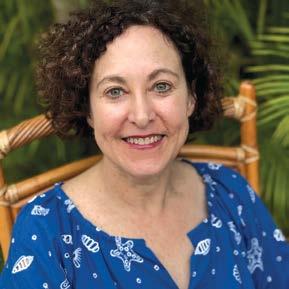
When asked about her favorite novel, Sandra compares it to asking who your favorite child is. She singles out Little Black Lies as especially meaningful. The book introduced Zoe Goldman, a character who would earn Sandra a publishing deal, a New York Times review and the book was a finalist for an International Thrillers Award. Zoe was an influential character that opened doors for Sandra in the publishing world.
Sandra draws inspiration from fellow Jewish writers Pam Jenoff and Lisa Barr. “They are both proudly Jewish, and write proudly Jewish fiction, when that is not always easy in a post-October 7th world.” Both Jenoff and Barr were in a women’s writers’ group that Sandra still belongs to. “They showed me that if you keep writing, you can have great success, even if it takes a while. You may still be able to reach a lot of people, and touch a lot of lives.”
Her Jewish heritage informs both her career path and her writing. A drive to achieve led her into medicine, while a fascination with the brain shapes her fiction, where neurological and mental health themes often play central roles. Characters in Sandra’s books are frequently Jewish by default, an intentional act of representation in a literary landscape where Jewish voices are still underrepresented.
Ultimately, Sandra hopes her story and her work inspire others “to take a chance and not given up on your dream, whatever that is. I hope that Jews, as well as people with mental challenges, see themselves in my books,” she says, “and feel helped, even just a little.”
Sandra A. Block is a practicing neurologist, proud Sabres fan, and award-recognized author based in Western New York. Balancing medicine and writing, she crafts psychologically rich thrillers that explore identity, mental health and resilience. Her newest novel, The Bachelorette Party, is out now.
Kadimah Scholars at


The halls of Kadimah were filled with the sights, smells, and spirit of Passover this spring as students took part in hands-on learning that brought ancient tradition vividly to life.
Their journey began with matzah, the most elemental food of the holiday. Guided by Rabbi Laizer and Chani Labkovski, students separated wheat from chaff, examined individual grains, and learned the careful halachic distinctions between matzah and everyday bread. Central to the lesson was the well-known 18-minute limit from the
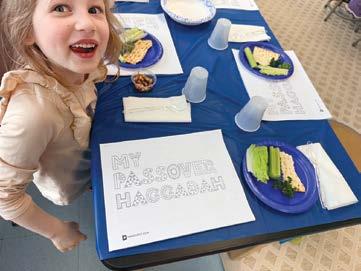
moment flour meets water until baking is complete.
Creativity enhanced the experience. Using recycled paper towel holders as rolling pins, students transformed simple materials into tools of tradition, connecting resourcefulness with Jewish values such as tikkun olam Their enthusiasm made each step feel meaningful and personal.
The learning continued with a lively pre-Passover Seder. Tables were set with “My Passover Haggadah” activity sheets to guide students through the story of the Exodus. Each child sampled traditional matzah along with greens of lettuce, celery, and parsley. A highlight was the homemade

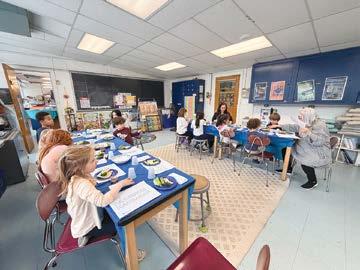
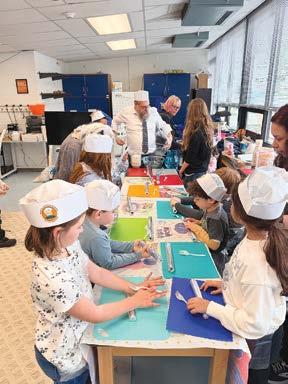
charoset, prepared by the students themselves with apples and cinnamon. Students actively participated in prayers and discussion, sharing reflections on themes that resonated with them. A conversation about the burning bush sparked curiosity about how holiness can appear in everyday life. Equally powerful was the way older students naturally helped younger classmates, modeling kindness, responsibility, and community in action. By making ritual interactive and
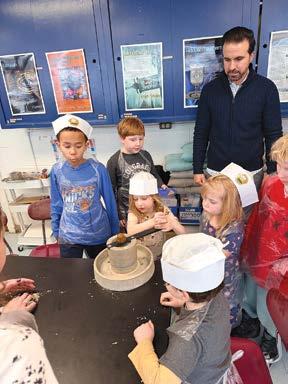
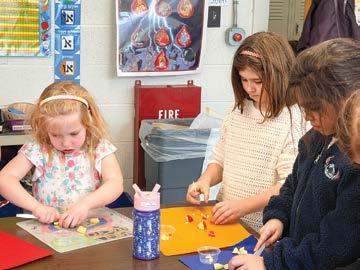
experiential, Kadimah helps students move beyond learning about Jewish tradition to actively living it. These moments—preparing food, asking questions, and supporting one another— help shape memory, identity, and lasting connection to the story of the Exodus.
A bold, hilarious, and deeply human exploration of identity, empathy, and modern life
The Jewish Repertory Theatre of Western New York (JRT) continues its tradition of presenting timely, thoughtprovoking work with its upcoming production of Just for Us, the acclaimed solo show by comedian Alex Edelman. In a premise that is as provocative as it is compelling, Edelman attends a meeting of White Nationalists in a Queens apartment. What begins as an act of curiosity unfolds into something far more layered: a sharply funny and deeply personal exploration of identity, religion, assimilation, and the contradictions of contemporary life. With disarming honesty and razorsharp wit, Just for Us navigates questions of belonging—what it means to be Jewish in today’s world, how we relate to those who see us as “other,” and whether empathy has limits. The result is a piece that is as entertaining as it

is thought-provoking, balancing humor with moments of genuine introspection. Originally developed in intimate London venues, Just for Us went on to become a critically acclaimed Broadway hit. Edelman’s performance earned him a Special Tony Award®, recognizing not only the show’s comedic brilliance but also its cultural relevance and emotional depth.
In this new staging at the Jewish Repertory Theatre, directed by acclaimed Buffalo actor and comedienne Charmagne Chi, Jordan Levin steps into Edelman’s role, bringing a fresh perspective and voice to a work that feels especially urgent in today’s divided world.
Just for Us will run May 7 through June 7, 2026, in the Maxine and Robert Seller Theatre at the Jewish Community Center of Greater Buffalo. Performances take place Thursdays at 7:30 pm, Saturdays at 3:30 pm and 7:30 pm, and Sundays at 2 pm. Please note there will be no performances May 20–24.
This fascinating play sits at the intersection of Jewish identity and the broader human experience, challenging audiences to confront difficult ideas while still finding humor, connection, and unexpected moments of grace.
Tickets are available at JewishRepertoryTheatre.org.
As you are called to the Torah as a Bat Mitzvah, May you continue to use your voice to uplift those around you with the joy of your spirit, your perspective, and your style.
“And Miriam led them in song: Sing to God, Who has triumphed gloriously!”
–Shirat HaYam Encore, Exodus ������������������
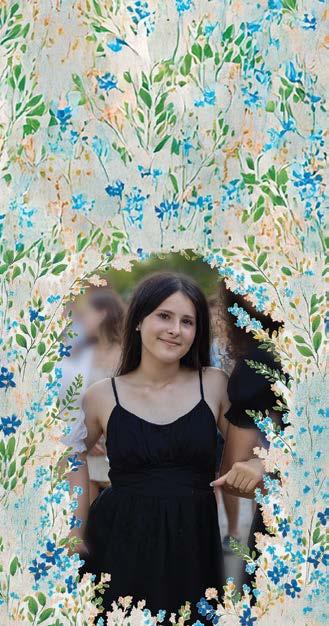
Mazel Tov, Miriam!
We love you and are so proud of you, Love,Mom, Dad, Sivan, & Naomi
On March 23, 1911, a small group gathered in a room at Zion House forming what would later become the Foundation for Jewish Philanthropies. These 10 founders had a simple but powerful idea that generosity, when
organized with purpose, can shape the future. They may not have known exactly what the community would look like generations later, but they understood something fundamental. Community does not simply sustain itself; it is created, nurtured, and carried forward by people who care enough to take responsibility for it.
That spirit is alive all around us today. When we look at our community, there is much to be proud of. We see vibrant institutions, dedicated leadership, and people who continue to help one another, especially in moments of need. We see generosity expressed not only in dollars, but in time, in wisdom, and in a shared commitment to something larger than ourselves.
All of this exists because those who came before us made intentional choices. They built the institutions we rely on. They invested in buildings, programs, and organizations that would endure. They thought not only about their own needs, but about ours. Many of the agencies that serve our
community today reflect that foresight and care.
The impact of those decisions is still felt. The Waterman Fund, created in 1911, continues to support community needs today. It is a powerful reminder that a single act of generosity can carry meaning and impact far beyond its moment. Which invites a natural question: what will our impact be?
Not just individually, but together. How will we care for what has been entrusted to us? What will we choose to strengthen, expand, or reimagine? And what kind of community do we hope our children and grandchildren will experience?
At the Foundation for Jewish Philanthropies, we have the privilege of exploring these questions every day with members of our community. We do not define the future. Our donors do.
We listen and learn what matters most to individuals and families, and we help translate values into action through endowment funds and legacy commitments that ensure their vision continues to shape the community for years to come.
One meaningful example is the recently announced Stuart and Caren Shapiro Jewish Genealogy Center of Buffalo. Their vision is to create a space where people can discover their roots, connect with their history, and strengthen their sense of identity. It is a reminder that understanding where we come from helps guide where we are going.
Through initiatives such as Life & Legacy, in collaboration with the Buffalo Jewish Federation, our community has already made significant commitments to the future. These are not just financial decisions. They are deeply personal ones, grounded in values and a shared belief in the importance of sustaining Jewish life in Buffalo.
Over 115 years, much has changed, but one thing remains constant: we show up for one another. We take responsibility for the future we share. What began with 10 founders now lives through each of us. Every act of generosity, every commitment, every conversation about the future becomes part of a larger story of care, resilience, and belonging.
Twenty years from now, our community will reflect the choices we make today. We would be honored to work with you and your family to carry out your philanthropic mission and help bring your vision for the future of Jewish Buffalo to life.
When Kehillat Ohr Tzion opened its doors in 2003, Barb Chazen was there, helping to build not just a synagogue, but a community.
Over the past two decades, Barb has remained a constant and committed presence at KOT, a Modern Orthodox congregation in Buffalo. She has served in many leadership roles, including treasurer and multiple terms on the board, while also contributing behind the scenes. From organizing logistics and supporting membership efforts to setting up and cleaning for community meals, her dedication reflects an ongoing investment in synagogue life.
Barb is also a regular participant in the congregation’s religious and educational offerings, attending weekly Talmud study, Sunday classes on the Prophets, and Shabbat services. Her steady involvement has made her an integral part of KOT’s fabric.
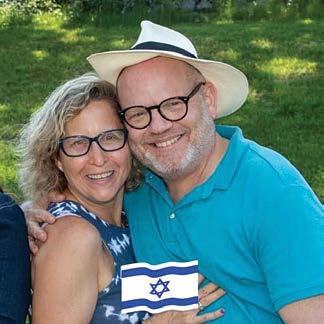
Originally from New York City’s Upper East Side, Barb came to Western New York to attend the University of Rochester, where she studied optical engineering. It was there that she met her future husband, Mark, then a first-year medical student. The two met at a Chabad Purim celebration—a
fitting beginning for a life rooted in Jewish community.
After their marriage, Barb worked in Rochester developing optical technologies, commuting to Buffalo while her husband completed his medical residency. The couple eventually settled in Buffalo, where they raised their three children, Alana, Zach, and Shoshana. Today, their family spans from Boston to Buffalo to Sharon, Massachusetts, and includes a grandchild, one-year-old Isaac.

Professionally, Barb has spent many years at the Jewish Community Center of Greater Buffalo, beginning in its Early Childhood Department when her son was very young and continuing in other roles. She teaches swimming and coaches athletes for the Special Olympics; this year, she helped bring eight local participants to the Regional Games.
Outside of work and community commitments, Barb and Mark share a passion for travel and adventure. Their journeys have taken them to destinations such as the Galápagos Islands, Thailand, Malta, and the Amazon. They love scuba. In the past year, Barb faced significant health challenges, which she met with resilience, optimism, and faith. Supported by her family, friends, and the broader Jewish Buffalo community, she continues to show strength and spirit. For many at Kehillat Ohr Tzion and beyond, Barb is more than a founding member; she is a cornerstone of the community she helped create.



Temple Beth Tzedek’s (TBT) annual Rabbi Isaac Klein Memorial Scholar in Residence Weekend honors the legacy of one of Jewish Buffalo’s greatest rabbis, whose impact continues to inspire the congregation, the Conservative Movement, and the Jewish world.
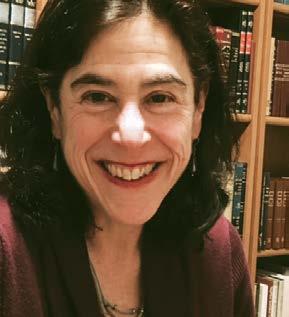
This June 26-28, TBT is honored to welcome Alyssa M. Gray, J.D., Ph.D., Professor of Codes and Responsa Literature and the Mehlman Chair of Rabbinics at Hebrew Union College in New York City. Dr. Gray’s academic interests include the development of Talmudic literature and the history of Jewish law. One dynamic aspect of her scholarship is recasting the Jewish legal tradition as literature and spirituality.
A member of the HUC faculty since 2000, Dr. Gray received her Ph.D. with distinction in Talmud and Rabbinics from the Jewish Theological Seminary. She also holds an LLM in Mishpat Ivri (Jewish law) from the Hebrew
University Faculty of Law and a J.D. from the Columbia University School of Law.
On Friday night, there will be a delicious Shabbat dinner by the Bloom & Rose
beginning at 5:45 pm followed by services at 7:15 pm.
Dr. Gray will share a Dvar Torah on that week’s double Torah portions, Chukat-Balak. Reservations are required for the dinner. Please visit btzbuffalo.org for cost and registration.

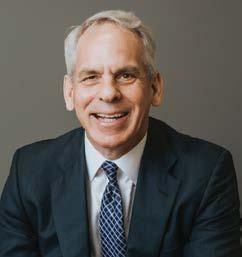

On Shabbat morning, with services beginning at 9:15 am, Dr. Gray will discuss some of the history and theological messaging in the Torah study blessings, including their ties to Tzedakah. The service will be followed by a special kiddush.
Following Mincha (afternoon service) at 5 pm, there will be Seudat Shlishit (the third Sabbath meal) at 5:45, and at 6:30 Dr. Gray will present on “Tzedakah: Judaism’s Social Ethic” with the study of texts that illuminate how traditional Jewish legal and non-legal texts envision a just society.
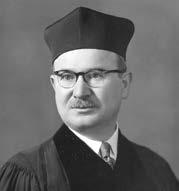
The weekend will conclude on Sunday morning, beginning with Shacharit services at 8:30 am, followed by brunch. During brunch, Dr. Gray will discuss classical Jewish texts that bring together tzedakah and the synagogue as core elements of Jewish life from the Talmudic period that continue to reverberate today.
All members of Jewish Buffalo are welcomed to enjoy this special Klein weekend with Dr. Gray at TBT. Reservations are required for the Friday night and Sunday morning meals, by visiting btzbuffalo.org or calling (716) 838-3232.
BY miriam treger
Jewish American Heritage Month invites communities to reflect on how Jewish values, traditions, and institutions have shaped the American story. In Western New York, one of the clearest expressions of that heritage is Kadimah Academy, the region’s longstanding Jewish day school and a quiet engine of continuity, identity, and learning.
Buffalo’s Jewish community has long been defined by resilience, optimism, and a deep commitment to education. From the German Jewish immigrants of the mid1800s to the Eastern European families who built vibrant East Side neighborhoods in the early 20th century, Jewish life centered around synagogues, Hebrew schools, charitable societies, and cultural institutions. Torah study, Hebrew literacy, and reverence for learning were central to communal life.
From this legacy, Kadimah Academy emerged in 1959. Its founders understood that Jewish life in America would flourish only if the next generation received a strong foundation not only in general academics, but in the language, heritage,
and traditions that have sustained the Jewish people for millennia. The school’s name—Kadimah, meaning forward or progress—captures both its mission and the spirit of American Jewish life: honoring the past while preparing children for the future.
Over time, Kadimah has been more than a school; it has served as a communal anchor and cultural touchstone, instilling values such as civic responsibility, compassion, perseverance, and pride in Jewish identity. Its graduates have gone on to contribute to law, medicine, business, the arts, public service, and Jewish communal life—locally and beyond—carrying the school’s influence wherever they live.
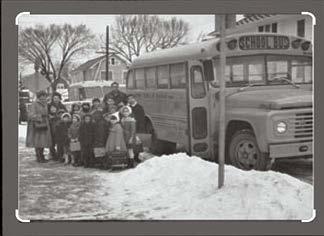
As Buffalo’s Jewish population moved from the East Side to North Buffalo and later to Amherst and Williamsville, Kadimah evolved alongside it. Through relocation, program innovation, and partnerships, the school has remained committed to its core mission: nurturing knowledgeable, confident Jewish American children guided by ethical purpose and empathy. Today, located on the Park School campus while maintaining its independent identity, Kadimah continues to embody Jewish American heritage. Students learn Hebrew alongside English, study Torah alongside American history, and celebrate
both Jewish holidays and civic traditions. They come to understand that Jewish and American identities are not in tension, but mutually enriching.
In classrooms, students explore prophets and presidents, mitzvot and constitutional ideals, ancient traditions and contemporary responsibilities. Through acts of chesed and community engagement, they learn that heritage is not only remembered—it is lived.
Jewish American Heritage Month reminds us that the Jewish experience in America is a story of both contribution and continuity. In Buffalo, that story is expressed daily through Kadimah Academy: in the voices of children reading Hebrew, in celebrations of Shabbat and holidays, and in lessons that integrate Jewish values with American ideals.
More than an institution, Kadimah is a living bridge—linking generations, honoring history, and shaping the Jewish American future of Western New York, one student at a time.
A new speaker series is coming to Congregation Shir Shalom (CSS). Following its inaugural program this June 19–20, the Bunis Family Lecture Series will become an annual offering, generously sponsored by David Bunis and family. David’s father, Lou Bunis, was deeply influenced by the Reconstructionist movement and helped found Temple Sinai, one of the first Reconstructionist congregations in Western New York and among the early Reconstructionist communities in the United States. During Rabbi Mordecai Kaplan’s visit to Temple Sinai, Lou had the opportunity to meet the founder of the movement. In that spirit, David Bunis has established this annual lecture series featuring scholars and leaders from the Reconstructionist Rabbinical College.
Congregation Shir Shalom, formed through the merger of Temples Beth Am and Sinai, is the first intentionally merged Reform and Reconstructionist congregation to maintain both identities and affiliations. While many are familiar with the larger Reform Judaism movement, Reconstructionist Judaism is less widely understood. Though small in size, Reconstructionism has had an outsized influence on contemporary Jewish life, advancing innovations that are now commonplace, including the bat mitzvah and the egalitarian inclusion of
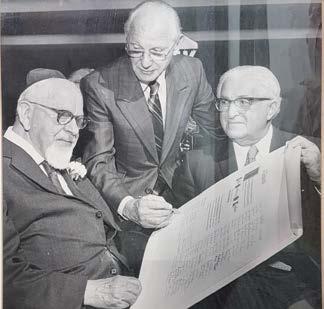
women, BIPOC, and LGBTQ+ individuals in congregational leadership and decision-making.
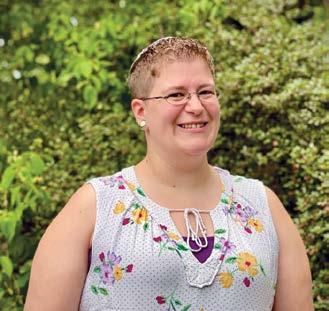
The inaugural speaker in this annual series will be Rabbi Rayna Grossman (they/them), the Director of Field Education at the Reconstructionist Rabbinical College. They oversee student training, ensuring that future rabbis are

prepared to serve in a variety of settings and communities. The College’s new Advanced Field Education Program further centers immersive fieldwork opportunities as a core component of students’ learning and development. Supervision is central to the deep learning students do in the field, and as part of their role, Rabbi Grossman teaches supervision groups and helps coordinate all aspects of student supervision. They bring to the role substantial experience in supervising rabbinical students and, thanks to a background in social work, possess a rich understanding of what supervision can look like and how powerful it can be.
Rabbi Grossman grew up at Temple Sinai and attended the Kadimah School. They earned a Master of Social Work from the University at Buffalo and worked for nonprofits dedicated to civil rights and fair housing. They graduated from the Reconstructionist Rabbinical College in 2017 and spent five years as Director of Religious Services at Lion’s Gate, a continuing-care retirement community in Voorhees, N.J., where they had previously served as rabbinic intern. While in this position, they also had the pleasure of supervising rabbinic interns who helped serve the Lions Gate community.
Rabbi Grossman will speak about their journey at Erev Shabbat services at Congregation Shir Shalom on June 19. Services begin at 7pm. They will co-lead Shabbat Morning Services on June 20 and give a short talk at the Kiddush Luncheon afterward.
If you would like to attend, please RSVP to Joanne Marquisee at joanne.marquisee@gmail.com.
What defines the Jewish story? Is it a land? A covenant? A calling? A set of eternal truths?
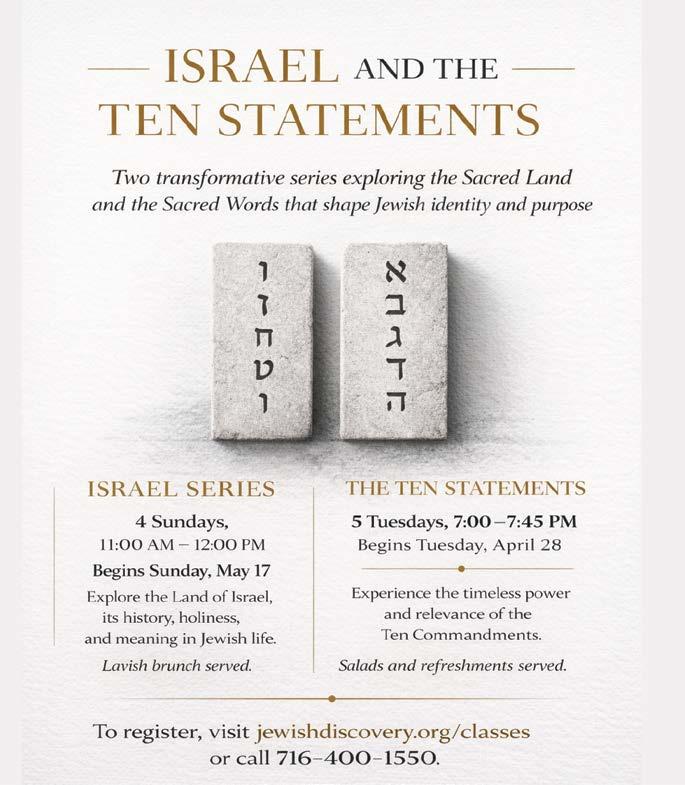
This spring, the Jewish Discovery Center (JDC) invites the community to explore two of the most powerful foundations of Jewish life through two thought-provoking new series: one on the Land of Israel, and one on the Ten Commandments (see details below).
The Israel series is a 4-week program on Sunday mornings from 11 am12 pm beginning Sunday, May 17. It will explore the deep and enduring bond between the Jewish people and the Land of Israel; its history, holiness, unique mitzvot, spiritual pull, and central place in Jewish memory and destiny. At a time when Israel is so often discussed only in political terms, this course offers the chance to step back and rediscover the
deeper story of the land that has shaped Jewish identity for thousands of years. Brunch will be served.
The Ten Commandments series, The Ten Statements, is a 5-week program on Tuesday evenings from 7–7:45 pm beginning Tuesday, April 28. It will examine the timeless relevance of the words spoken at Sinai. More than laws alone, the Ten Commandments are the moral and spiritual foundations of a meaningful life, speaking to faith, freedom, responsibility, family, integrity, and the dignity of the human being. Salads and refreshments will be served. Both courses are designed to be welcoming, engaging, and relevant for thoughtful adults of all backgrounds. To register, visit jewishdiscovery.org/ classes or call (716) 400-1550.

Frima Ackerhalt is an integral part of the Buffalo Hadassah Leadership team, but that understatement hardly encompasses all that she does for the organization. Serving as treasurer, she is also a past president. Anyone who comes to the Benderson JCC will remember seeing Frima at the Hadassah Jewelry Sales. Frima collects, organizes, and sells donated pieces of jewelry to anyone and everyone who walks through the JCC doors. The money collected is donated to the Hadassah Hospital in Israel, and a contribution from the proceeds is also made to the Early Childhood Program at the JCC. Frima oversees Hadassah’s office at the JCC. She is an active participant in the Buffalo Hadassah book club and in regional Hadassah meetings. For years, she has coordinated the annual
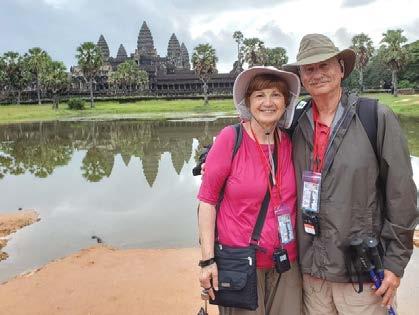
fundraising campaign for the Hadassah Medical Organization and takes careful responsibility for all the donations that the Buffalo chapter makes regularly to National and International Hadassah. She is always working on recruiting new members.
Frima’s heartfelt devotion to Hadassah stems from her childhood. Her mother was a member of the Ima Buffalo Hadassah Chapter, and Frima was in Junior Hadassah in high school before becoming a life member.
Despite Frima’s privy to the many people of Jewish Buffalo, she is not a native Buffalonian. Born in Mareno, Italy, she spent her first three and a half years in the Cinecitta DP Camp in Rome. With the help of HIAS, an international Jewish humanitarian organization, her family moved to Buffalo where her father worked as an auto mechanic. She attended school in the Kenmore-Tonawanda Union Free School District. After graduation, she attended the University at Buffalo, where she majored in Social Welfare, and Buffalo State, where she majored in Nutrition. A licensed dietitian, she became a lecturer at both UB and Buff State. She also served as a consultant for Autism Services. Frima and her husband Bob are the proud parents of a son
Alex, who lives in Philadelphia and works as a financial planner, and a daughter, Rachel, who lives in Buffalo and is a small business owner. They “kvell” over their grandchildren Stefan and Julia in Philly and twins Scarlet and Deliah in Buffalo. Frima is also quite proud of Bob, who is a retired nuclear chemist and was a professor in the Nuclear Medical Department at UB.
Frima and Bob are members of Shir Shalom and supporters of many non-profit organizations in the area, including AKG, JRT, The Buffalo Philharmonic, and the Buffalo Zoo. Frima also enjoys traveling. She and Bob have been to China, Israel, Russia, Africa, and many places in Europe. Buffalo Hadassah is grateful to have Frima as a devoted team member.

For thousands of years Jews have gone to the Book of Tehillim (Psalms) as a source of appeals and expressions of thanks, joy and faith directed to G-d. These 150 beautiful chapters, or perakim, are attributed to a number of authors. Some of them are anonymous, but others are well known, such as Moses, Solomon, and most notably King David.
Besides serving to express the spiritual feelings of people in their daily life, the Tehillim were an important part of the Temple rituals. There was a psalm prescribed for the Levites to sing each day of the week. In fact, 12 were composed by Asaph, the leading Levite musician of King David’s time. Today, the Tehillim remain an inextricable part of Jewish religious practice.
For some 25 years, women of the community, coordinated by Young Israel members, have come together during the first week following Rosh Chodesh (the head of each Hebrew month) to recite Tehillim. While they gathered physically in earlier years, they currently meet remotely by phone. In doing so, the group includes some women who have moved away but wish to continue participating. Their purpose is to entreat G-d for help in matters ranging from healing the sick to finding a suitable mate for an individual. The leaders divide the psalms evenly among the participants, so that all 150 will be completed during each session.
A special feature is a D’var Torah, a brief spiritual talk on a topic usually related to an occasion at that time of year. These are presented by knowledgeable members of the community and are always anticipated by the group.

It is deeply gratifying when participants hear that someone they have been praying for has recovered from illness, or that a long-awaited engagement has been celebrated.
All women of the Jewish community are welcome to participate in this holy and fulfilling project. For more information, please call (716) 634-0212 or (716) 688-6566.

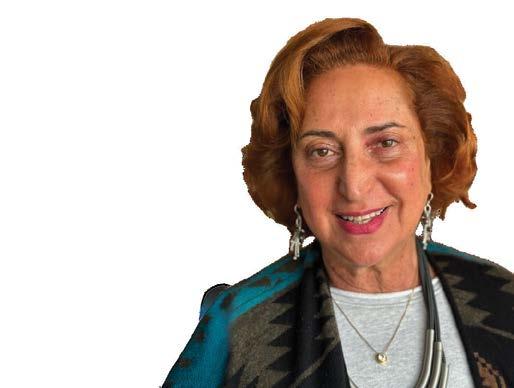


For the past 10 years, the Buffalo Jewish Movie Group has convened in the social hall at Congregation Beth Abraham (CBA), 1073 Elmwood Avenue, to watch films (mostly under the radar) with strong Jewish flavor and content. The group was formed and has been led since its inception by Marty Kerker. But with Marty and his wife, Shelly, moving to the NY metro area later this month, the reins have been turned over to Harvey Stein and Vered Post, a husband-and-wife filmmaker team.
Join Rabbi Yonina for Jewish Renewal mindfulness-based Shabbat morning services on Saturdays, May 16 and June 13, in Tonawanda at 10 am. Bring your willingness to participate in chant, silences, reflection, and Torah.
Services will include gathering in a circle to waken bodies, minds, and spirits through prayer. Be open to the gentle wonder of Shabbat morning joy through song. Look for future
“For me, the Movie Group has been a labor of love. I enjoy watching good, quality films, but I get even more pleasure by sharing those films with others,” said Marty. Marty says that over the years, they have screened approximately 70 films. For Harvey and Vered, they are excited about moving the group forward. They are relatively new to Buffalo, having previously lived in Israel (although Harvey is a native New Yorker). Harvey and Vered established Jerusalem New York Productions, which specializes in documentaries about Israeli-American relations, solar energy, and social issues, including the film, Green Rebels, mindfulness, Torah study, and life cycle ritual opportunities.
which was screened at CBA in April and is available to be shown at local congregations, places of worship or community centers. Visit jerusalemny.com for details.
“We are so excited to have a community where we can share our passion for great Jewish films that tell unforgettable Jewish stories,” said Harvey about the couple’s forthcoming leadership of the Jewish Movie Group.
For additional information about the Jewish Movie Group, please email the synagogue at info@congregationbethabraham.net.
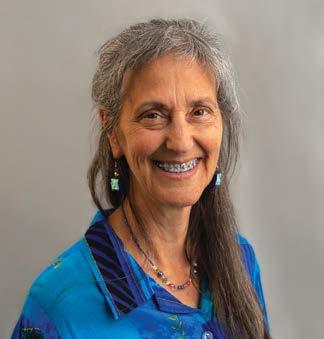
Rabbi Yonina began her studies in Aleph, the Alliance for Jewish Renewal, mentored in Rockville, Maryland, by Rabbi David Shneyer. She serves as a community rabbi in Greater Buffalo and for Jewish Family Services of Western New York. Foster returned to Buffalo in 2017 and received Smicha through Rabbinical Seminary International in 2023.
Contact Rabbi Yonina at rabbiyoninafosterphd@gmail.com or (301) 452-7847 for more information.
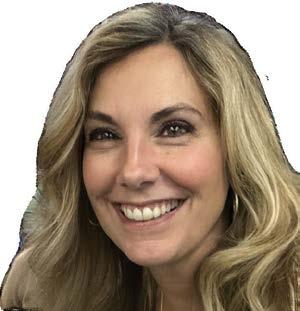
During the week of March 2, Temple Beth Zion (TBZ) hosted three workshops inviting caregivers from all ages and life stages. Around 75 caregivers discussed a range of circumstances and pressures facing them as they care for family and friends. Teresa Lawrence of International Deliverables helped attendees explore and understand, insurance, long-term care and legal systems, estate planning, transportation, respite and personal self-care.
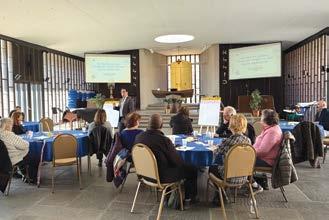
“It was a terrific honor to facilitate this experience for the TBZ community. The goal was to ensure that stakeholders’ voices, opinions and insights were captured, and I am confident we did just that,” Lawrence said. “Temple Beth Zion now knows more about the activities caregivers would enjoy if they could take a respite, and what support is needed to be successful in their role as a caregiver.”
TBZ’s next steps will include compiling a report of the findings and then discussing potential partnerships with WNY organizations.
“This could have very far-reaching benefits for our congregants and Jews across WNY,” explains Senior Rabbi Gutmann. “Working together with our Jewish and non-Jewish partners can make a real difference.”


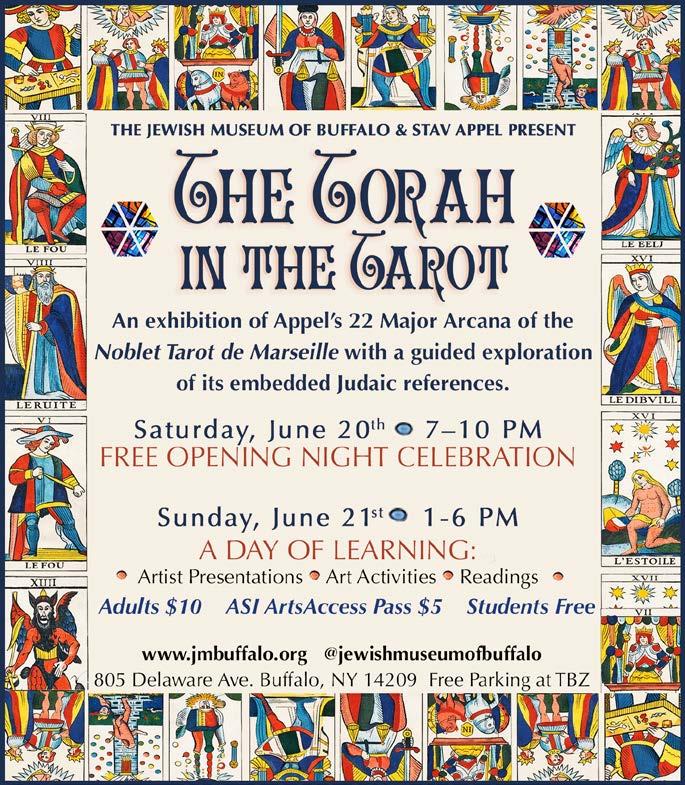
The Center for Jewish Life (CJL) invites the community to two uplifting and joy-filled events, Lag BaOmer and Shavuot.
Lag B’Omer is a festive day on the Jewish calendar, marking the anniversary of the passing of the great sage and mystic Rabbi Shimon bar Yochai, author of the Zohar. CJL will celebrate with a lively BBQ & Celebration on Monday, May 4, from 5–6:30 pm at 757 Hopkins Road. This community event features a full BBQ, engaging entertainment, and kids attractions, including a huge slide, bounce house, and petting zoo. The event highlights the spirit of Jewish unity and pride in a warm and welcoming atmosphere where families and friends can connect and celebrate. A CTeen bonfire will follow at 8pm.
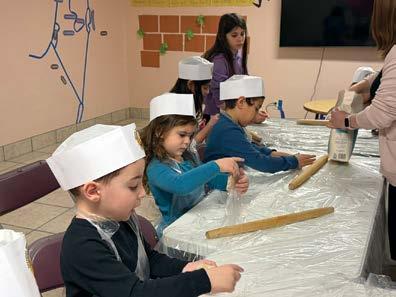
Shavuot, which commemorates the giving of the Torah at Mount Sinai, will be celebrated with a delicious and meaningful Shavuot Party on Friday, May 22, from 5–6:30 pm. The community will gather for the Reading of the Ten Commandments, followed by an incredible spread of dairy favorites including cheesecake, blintzes, pizza, ice cream and more, bringing the holiday to life in a flavorful way.
The Center also offers a variety of enriching Shavuot programs leading up to the holiday. A Jewish Women’s Circle event takes place on Tuesday, May 12 at 7 pm, followed by a fun and interactive Kosher Mini Chefs program for children on Sunday, May 17 at 4 pm and a CTeen event on Wednesday, May 20. The learning continues with a Tikun Leil Shavuot lecture series on May 21 at 11 pm, offering inspiration and insight into the deeper meaning of the holiday.
For more information, call (716) 639-7600 or visit JewishBuffalo.com
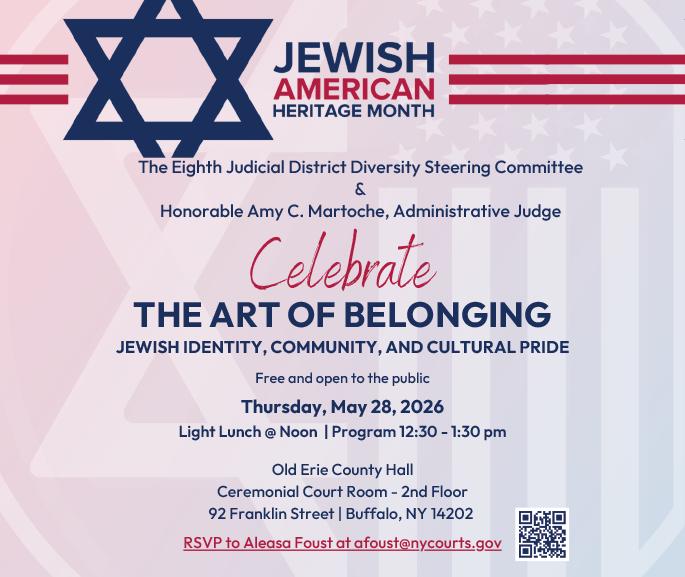
This past year at the Buffalo Community of Learners (B’COL) reflected meaningful learning, joyful celebration, and a strong sense of community. Students, families, and educators together fostered an environment where curiosity thrives; traditions are honored, and every learner is valued.
Across grade levels, students engaged in dynamic Torah study, exploring weekly parshiot (portions) and drawing connections between ancient texts and contemporary life. Themes such as kindness, responsibility, forgiveness, and community guided discussion and supported both academic growth and character development.
The Hebrew one-on-one program continued to flourish, building student confidence in reading and chanting prayers. From introducing themselves in Hebrew to proudly reciting prayers and the Four Questions at Passover, students demonstrated both progress and pride.
Beyond the classroom, students participated in creative and experiential learning. Younger learners celebrated Purim and Passover through baking, carnivals, and hands-on exploration of tradition. Older students deepened their understanding through electives such as Comparative Religion, Torah Tweets, and Israel studies, broadening their perspectives on Jewish life and the wider world.
A highlight of the year was B’COL’s continued commitment to inclusion and
partnership. Programs such as “Outstretched Arm,” in collaboration with Temple Beth Tzedek, emphasized welcoming individuals of all abilities, reinforcing the Passover message of empathy, dignity, and belonging.
B’COL’s warm and nurturing environment supports friendship, leadership development, and meaningful connection. Educators create engaging lessons, while families remain active partners in sustaining vibrant Jewish learning.
With gratitude to parents, clergy, staff, Temple Boards, teachers, and Madrichim for their dedication, the community is reminded of Pirkei Avot’s teaching: “Who is wise? One who learns from every person.” יתלכשה ידמלמ לכמ—“From all my teachers I have learned.” Students themselves are among the community’s greatest teachers, offering insight and inspiration each week.
B’COL looks forward to continuing this journey of learning, growth, and connection in the year ahead.
For registration information, visit the website, email Buffalocommunityoflearners@gmail.com, or contact Rabbi Einav Symons at (716) 574-6016.





Did you know Buffalo Spree
* Shea’s Performing Arts Center
* Shea’s 710 Theatre * Buffalo Philharmonic Orchestra * Irish Classical Theatre Company * Lancaster Opera House
* Allentown Art Festival
* D’Youville Kavinoky Theatre
* MusicalFare Theatre * Road Less Traveled Productions
* Theatre of Youth
* Rochester Broadway Theatre League (RBTL)
* Geva Theatre Center
* Rochester Philharmonic Orchestra (RPO)

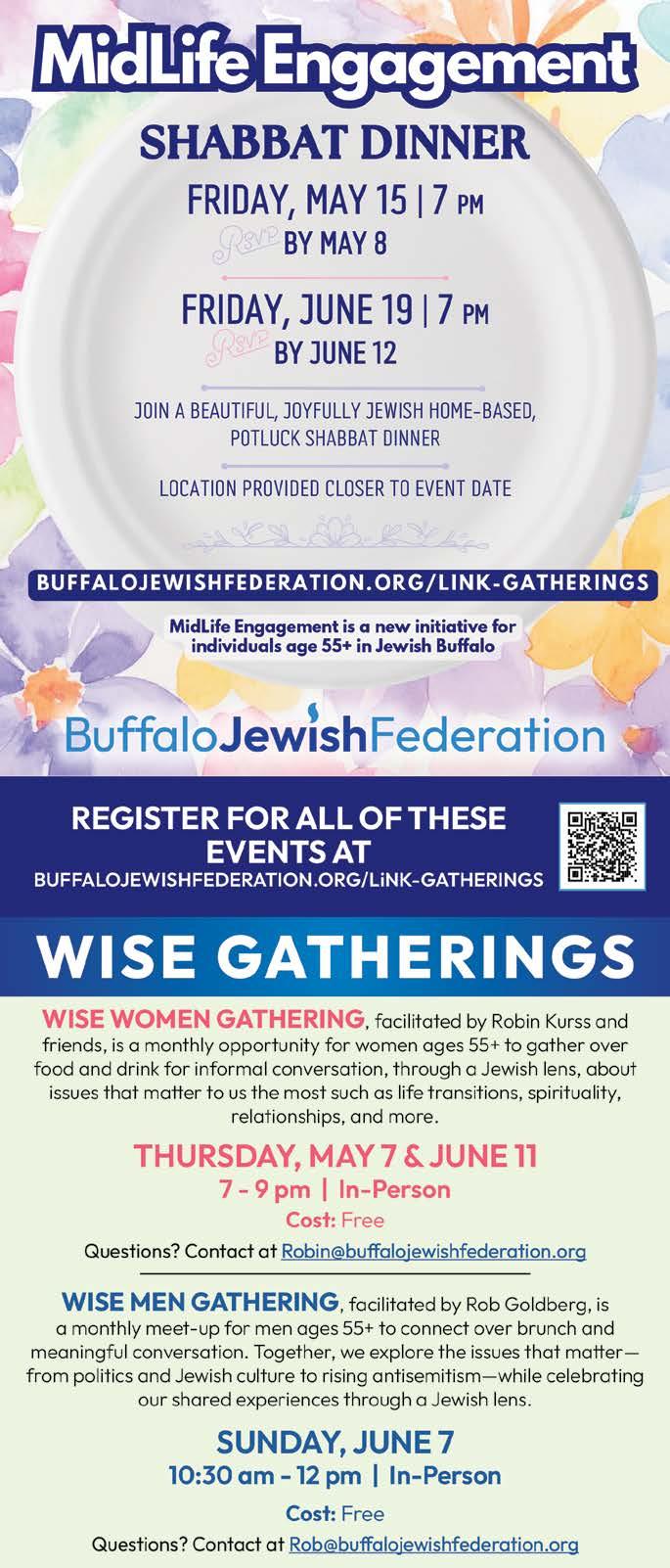
Chai Hebrew School offers an engaging approach to Jewish education, creating an environment where children feel inspired, connected, and proud of their heritage. Rather than emphasizing rote memorization, Chai focuses on understanding, creativity, and the real-life application of Jewish values.
Rooted in the belief that every child deserves a meaningful Jewish experience, lessons are interactive and hands-on, incorporating art, music, storytelling, and group activities. Students don’t just learn about Judaism- they experience it. From baking matzah before Passover to reenacting historical moments, each session is designed to make learning memorable and enjoyable.
Hebrew reading is taught through the structured and engaging Aleph Champ program, allowing students to progress at their own pace while building confidence and motivation. Alongside language skills, children explore Jewish holidays, traditions, and values, strengthening their connection to Jewish identity.
Chai fosters a warm and supportive environment where teachers are dedicated to each child’s academic and personal growth. Strong relationships help create classrooms where students feel comfortable asking questions and expressing themselves.
Families are encouraged to participate in holiday programs and special events, reinforcing the connection between home and school and helping bring Jewish traditions to life beyond the classroom.
Chai Hebrew School nurtures a lifelong love of Judaism, meaningful friendships, and a strong foundation for the future.
For more information, call (716) 639-7600 or visit JewishBuffalo.com.
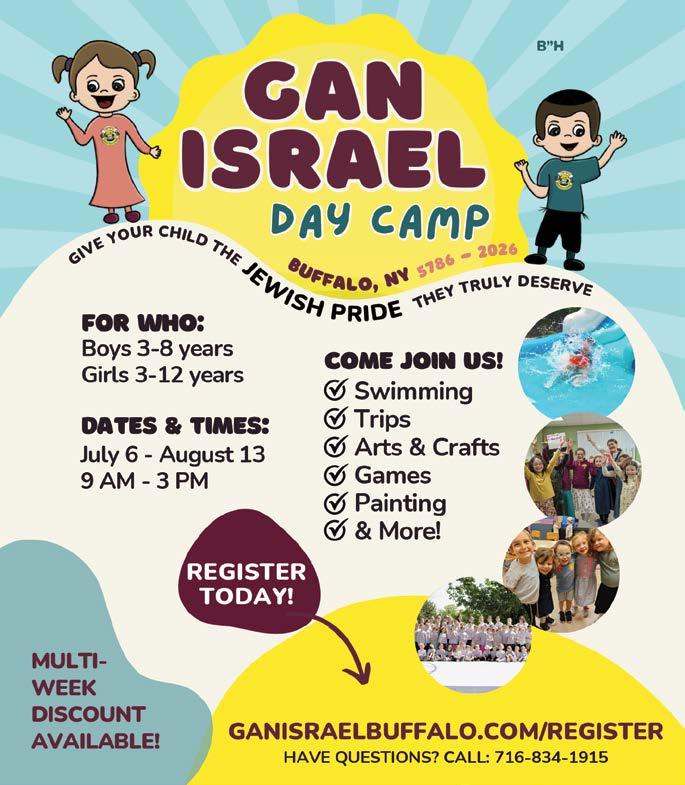
As spring turns warmer, two joyful Jewish holidays invite families to celebrate outdoors, learn together, and create lasting memories. Shavuot and Lag B’Omer both fall during the seven-week period known as the Counting of the Omer, which begins on the second night of Passover and culminates 50 days later with Shavuot, the celebration of receiving the Torah at Mount Sinai.
The Omer marks the journey from freedom to responsibility - from the Exodus from Egypt to the moment the Jewish people gathered at Sinai. Along the way, Jewish tradition views each week as an opportunity to reflect on personal growth and character, emphasizing qualities such as wisdom, compassion, and resilience.
Lag B’Omer, the 33rd day of the Omer, introduces a pause in this reflective period and is traditionally marked with outdoor celebrations and joyful gatherings. The Talmud recounts that a devastating plague affecting the students of Rabbi Akiva ended on this day, giving rise to customs of celebration, including bonfires, music, and haircuts.
Here are five meaningful and fun ways to celebrate together:

Lag B’Omer is the perfect excuse to gather outside. Light a fire pit, roast marshmallows or hot dogs, and enjoy time together under the spring sky.
A beloved Shavuot custom is late-night learning. Create a cozy family tradition by building a blanket fort and reading favorite PJ Library books. Learning can happen anywhere - even under the stars.
While you’re staying up late, enjoy dairy treats like ice cream or cheesecake. Eating ice cream on Shavuot is a popular modern extension of the traditional custom to consume dairy foods, celebrating the giving of the Torah while symbolizing the “land of milk and honey”.
Because the Omer period carries elements of quiet reflection, some families wait until Lag B’Omer for a child’s first haircut. The day symbolizes renewal and growth, making it a meaningful milestone moment.
These delicious, flaky pastries are a favorite Israeli snack and perfect for Shavuot’s dairy theme. Making bourekas together is a hands-on way to explore Jewish food traditions and spend time together in the kitchen.
These simple activities help transform ancient traditions into lived family experiences. By celebrating together — around the table, by the fire, or with a favorite story—families create memories that deepen connection to Jewish life and learning.

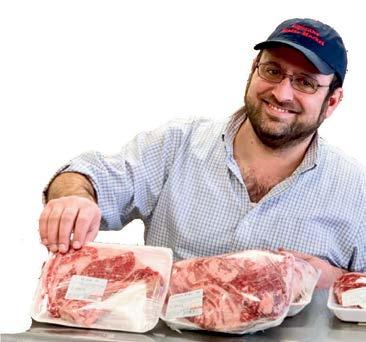




BY ROBIN KURSS
Every once and a while, I have a hankering for a piece of cream pie.” Maybe it’s because I get nostalgic for Earl’s, the roadside palace of country food gastronomy near Camp Lakeland’s home in Bear Creek…the billboard nearby stated: “All of NY’s eyes are on Earl’s pies.” IYKYK. It was the place so many parents would go to for comfort food after leaving visiting day at camp with our kids. It was hard to leave them behind, but Earl’s Sunday dinners and a piece of homemade pie to go with them got us the rest of the way home. This one is perfect for Shavuot!!

Ingredients:
12 oz cream cheese, softened
1 ½ c peanut butter
1 c sugar
1 c heavy cream
1 9” graham cracker piecrust, baked
Mix the cream cheese, peanut butter and sugar in the bowl of a mixer fit with the paddle attachment. In another bowl, beat the cream until stiff. Fold whipped cream into cram cheese mixture. Place in the cooled crust and refrigerate for 4 hours.
Fudge Sauce
½ c sugar
½ c heavy cream
4 oz chocolate, chopped
1 t butter
1 t vanilla

Whipped Cream Topping:
1 c heavy cream
2 T confectioners’ sugar
1 t vanilla
To make Fudge Sauce: Place sugar and cream in a saucepan. Boil and then turn down a simmer and cook for 6 minutes. Remove from heat and add chocolate and butter. Stir till melted. Add vanilla. Serve on the side with a piece of pie!
To make Whipped Cream: Beat cream and sugar till stiff peaks form. Add vanilla. Decorate top of pie with whipped cream.



Buffalo Jewish Federation
338 Harris Hill Road – Suite 108B
Williamsville, NY 14221
716-463-5050
buffalojewishfederation.org
Miriam Abramovich - CEO
Blaine Schwartz - President
Buffalo Vaad of Kashrus
716-634-0212
buffalovaad.com
Rabbi Avi Okin - Rabbinic Administrator
Mike Steklof, Ed.D. – President
Center for Jewish Life
Suburbs: 757 Hopkins Road Williamsville, NY 14221
716-639-7600
jewishbuffalo.com
Rabbi Laizer & Chani Labkovski Downtown: 1016 Lafayette Avenue Buffalo, NY 14209
716-545-6806
Rabbi Mendy & Chaya Mushka Labkovski
Chabad House of Buffalo
2450 North Forest Road Getzville, NY 14068
716-688-1642
chabadofbuffalo.com
Rabbi Moshe Gurary
Rabbi Avrohom Gurary
Chabad of Niagara Falls USA
716-703-8770
ChabadNiagaraFallsUSA.org
Rabbi Yehuda Lorber
Mrs. Yehudis Lorber
Chai Early Childhood Center 757 Hopkins Road Williamsville, NY 14221
716-580-4600
chainursery.com
Chani Labkovski - Director
Community Relations
338 Harris Hill Road – Suite 108B Williamsville, NY 14221
buffalojewishfederation.org
Rob Goldberg - Senior Advisor
Harvey Sanders - Chair
Department of Jewish Thought
712 Clemens Hall – University at Buffalo Buffalo, NY 14260
716-645-3695
jewish-studies@buffalo.edu
jewishstudies.buffalo.edu
Dr. Noam Pines - Chair
Foundation for Jewish Philanthropies
2640 North Forest Road
Getzville, NY 14068
716-204-1133
jewishphilanthropies.org
Irv Levy - Executive Director
Craig Small - President
Hadassah
2640 North Forest Road
Getzville, NY 14068
716-929-6504
buffalohadassah@gmail.com
Frima Ackerhalt and Phyllis Steinberg - Co-Presidents
Hebrew Benevolent Loan Association
2640 North Forest Road in FJP offices
Getzville, NY 14068
716-463-5065
wnyhbla.org
Judith Katzenelson Brownstein - President
Hillel of Buffalo
Campus Center of Jewish Life
520 Lee Entrance/UB Commons Suite #101B
Amherst, NY 14228
716-616-0083
hillelofbuffalo.org
Mike Steklof, Ed.D., Executive Director
Laura Hemlock-Schaeffer - President
Holocaust Education Resource Organization
338 Harris Hill Road – Suite 108B Williamsville, NY 14221
buffalojewishfederation.org/herobuffalo
Lauren Bloomberg - Director Armand Morrison - Chair
Jewish Community Center of Greater Buffalo
Benderson Family Building 2640 North Forest Road
Getzville, NY 14068
716-688-4033
jccbuffalo.org
Patty Simonson - CEO
Sheryl Schechter - President
Holland Family Building 787 Delaware Avenue Buffalo, NY 14209
716-886-3145
Jewish Discovery Center
831 Maple Road
Williamsville, NY 14221
716-632-0467
jewishdiscovery.org
Rabbi Heschel Greenberg
Jewish Family Services of Western New York
70 Barker Street Buffalo, NY 14209
716-883-1914
jfswny.org
Molly Short Carr - CEO
Harold Star - Chair
Jewish Federation Apartments
275 Essjay Road Williamsville, NY 14221
716-631-8471
jewishfederationapartments.org
Krista Bryk - Property Manager
Jewish Federation Cemetery Corporation, Inc.
P.O. Box 440 West Seneca, NY 14224
buffalojewishfederation.org
716-548-7676
Debbie Pivarsi - Manager
Jonathan Schechter - President
Jewish Museum of Buffalo
Cofeld Judaic Collection
Co-located within Temple Beth Zion 805 Delaware Avenue Buffalo, NY 14209
Jewishmuseumofbuffalo.org
Jill Abromowitz Gutmann - Director
Robert Hirsch - President
Kadimah Scholars at Park kadimah.org
miriam treger - President
Kosher Meals on Wheels 757 Hopkins Road Williamsville, NY 14221 716-639-7600
koshermow.com
Rabbi Laizer Labkovski - Director
Jeffery Pasler - President
LiNK Jewish Buffalo
338 Harris Hill Road – Suite 108B buffalojewishfederation.org/link Williamsville, NY 14221
Kirstie Henry - Chair
Ohr Temimim School
411 John James Audubon Parkway W. Amherst, NY 14228
716-568-0226
ohrtemimimschool.com
Rabbi Shmuel Shanowitz - Principal
Sonia Gellman Young - President
New York
Chabad House of Buffalo (unaffiliated) 2450 North Forest Road Getzville, NY 14068 716-688-1642
chabadofbuffalo.com
Rabbi Moshe Gurary
Rabbi Avrohom Gurary
Chabad of Niagara Falls USA 716-703-8770
ChabadNiagaraFallsUSA.org
Rabbi Yehuda Lorber
Mrs. Yehudis Lorber
Congregation Beth Abraham (Conservative) 1073 Elmwood Avenue Buffalo, NY 14222
congregationbethabraham.net
Cantor Irwin Gelman
Nancy Atkinson - President
Congregation Havurah (Reform) 6320 Main Street, Williamsville, NY 14221 716-833-3165 congregationhavurah.org president.havurah@gmail.com
Daniel Mink - President
Congregation Shir Shalom (Reform/Reconstructionist) 4660 Sheridan Drive Williamsville, NY 14221 716-633-8877 shirshalombuffalo.org
Rabbi Alexander Lazarus-Klein
Cantor Arlene Frank
Joanne Marquisee - Executive Director
Joe Glickman - President
JDC Shul (Unafilliated) 831 Maple Road Williamsville, NY 14221
716-245-9520
jewishdiscovery.org
Rabbi Heschel Greenberg
Rabbi Levi Greenberg
Rabbi Yehoshua Greenberg
Kehillat Ohr Tzion (Modern Orthodox) 879 Hopkins Road
Williamsville, NY 14221
ohrtzion.org/kot
Rabbi Shlomo Schachter
Jeff Schapiro - President
Knesset Center (Orthodox)
500 Starin Avenue Buffalo, NY 14214
716-832-5063
chabadofbuffalo.com
Rabbi Shmaryahu Charitonow
Saranac Synagogue (Orthodox) 85 Saranac Avenue Buffalo New York 14216 saranacsynagogue.org
President - Shmuel Rashkin
Vice President - Reuven Alt Gabbai David Kunkel
Temple Beth Tzedek (Conservative) 1641 North Forest Road Williamsville, NY 14221
716-838-3232
btzbuffalo.org
Rabbi Sara Rich
Cantor Mark Spindler Cantorial Soloist Zahava Fried
Beth Kassirer - President
Kim Jones - Administrator
Temple Beth Zion (Reform) Sanctuary & Offices 805 Delaware Avenue Buffalo, NY 14209
Religious School 700 Sweet Home Road Amherst, NY 14226 716-836-6565
tbz.org
Rabbi Brent Gutmann
Cantor Susan Lewis-Friedman
Ken Graber - President
The Family Shul (Unaffiliated) 757 Hopkins Road
Williamsville, NY 14221
Rabbi Laizer Labkovski 716-639-7600
Young Israel of Greater Buffalo (Orthodox) 105 Maple Road Williamsville, NY 14221
716-634-0212
yibuffalo.org
Rabbi Avi Okin
Richard Berger and Michael PaskowitzCo-Presidents

Today we remember and honor Larry Levin—our Dad—a devoted husband, father, grandfather, friend, and a man whose life was defined by love, devotion, and community.
Dad was born in 1939 to Manny and Bess Levin, the oldest of five Levin children. Despite wildly different personalities—and, in some cases, even feeling like different generations—he forged close, lasting relationships with each of his siblings. Through all of life’s travails and unimaginable loss, he stood by his family, unwavering.
Dad’s sense of responsibility began early. When his father passed away when he was just 17, he was thrust into a role of leadership before he was even an adult. That experience shaped him—teaching him to show up, to carry more than his share, and to prioritize family above all. He was predeceased by his siblings Ronnie, Marcia, Peter, and Paul—a family that shaped him, and whose memory stayed with him always.
Dad’s true world—the center of everything—was his family.
His beloved wife, our Mom—his partner for 67 years, married for 62— with whom he built a life that had everything they ever wanted…his children, me and my sisters, Marcy and Randi…and his grandchildren Alyssa, Alex, Josh, Matthew, Parker, Charlie, and Archie.
All of his grandsons are wearing his ties today—ties all stained from a life well-lived.
He deeply appreciated his childrenin-law, Rich, Jon, and Merredith, and took genuine joy in seeing the happiness and strength they brought into our family. He noticed those things. He valued them.
He had special relationships with his nieces and nephews, some so close that there isn’t really a word to describe it. What he was to Nancy and Jamie and Stephanie went beyond the realm of Uncle, and he relished being the extra Grandpa to Beni. There was no distinction when it came to love.
Dad’s life was also enriched by his unique place as the honorary youngest brother of the Sterman family—a role he cherished, and one that reflects how easily he created lifelong bonds and
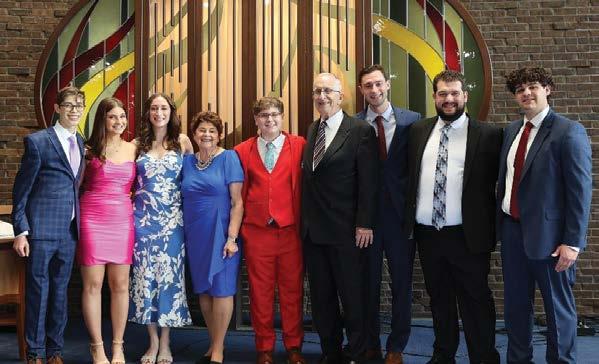
how much he learned from that role.
In caring for family, Dad and Mom set a powerful example. In the way they cared for Grandma Bess and Grandma Maidy, they helped them maintain independence and dignity, while quietly making sure they never wanted for anything. It wasn’t done for recognition — it was simply how they lived.
Professionally, Dad was one of a kind.
He loved his work—truly loved it—which is something not many people can say, especially in public accounting. For him, it was never just about numbers. It was about people. His clients weren’t just clients—they were relationships built on trust, care, and a genuine desire to help. His clients were family. That was his gift.
And his commitment didn’t stop there.
Dad was deeply devoted to his community. His connection to Temple Shaarey Zedek, and later Temple Beth Tzedek, was a cornerstone of his life. He gave his time generously, serving on boards, committees, and organizations with enthusiasm that never faded. Whether it was the temple, Bennett High School Alumni, the cemetery committee, or even his longtime stewardship of the Williamsville Football League, a fantasy football league that predates the phrase fantasy football…Dad showed up.
He also devoted himself to the First Warsawer Credit Union,
helping provide access to loans for people who otherwise might not have had the opportunity— another reflection of his belief that everyone deserves a chance and a helping hand. His work was truly a bridge to the American dream for countless immigrants coming here to build a better life.
Dad did not just participate in these organizations—he showed up to contribute, to lead, and, somehow he actually enjoyed the meetings.
More than anything, Dad showed us what truly matters.
He showed us what it means to love your family completely and without hesitation.
As a parent, he created the space for us to make mistakes and learn our own lessons — always there to help pick us up if needed, never before we had learned what we needed to learn.
He showed us the importance of responsibility—to each other and to the community around us.
He showed us how to give—your time, your energy, your resources — not because you have to, because it’s who he was.
And he showed us what truly matters: love, family, and his deep connection to Judaism.
That is the legacy he leaves behind.
Not just in what he built—in how he lived.
And in all of us who were lucky enough to learn from him.
By Josh Cohn
I didn’t realize you were my role model until I began to see myself in the things you taught me not in words but in the way you moved through the world in patience when things were difficult in compassion when people needed it in humor that made everyone feel lighter in empathy that made people feel seen the older I get the more I recognize the resemblance not just in our lives but in the quiet choices that shape them in the morals you stuck to in the standards you set you lived a long and good life filled with joy and love the kind of life people remember because they felt better having known you that kind of impact is a rare gift one you carried with you each and every day one you passed down without ever saying so I see it now in the way people respond to me and I promise I will keep using it the way you did I hope I live a life that would make you proud and when my work here is done I will see you again.
Ruth Wiseman Spivack passed away on March 12, 2026, after a long battle with cancer. The following are excerpts from the eulogy shared by her husband Randy at her funeral. May Ruth’s memory always be for blessing.
I am absolutely overwhelmed by the turnout to celebrate the life of my wife, Ruth. In front of you all, I can now officially blame my cousin Sam Bronsky for all of this. It is because of Sam that I met her.
Sam and I were both working at Freed Maxick in March 1983, when he hassled me into coming out to have drinks with some of my colleagues on a Friday night. Little did I know that night that Sam had brought Ruth there to meet someone other than me.
Grudgingly I came and was standing around with some of my colleagues, when Ruth walked up to the group of us and asked would someone like to dance with me. I was looking right at her with my back turned to the group. I don’t know for sure, but suspect Alan
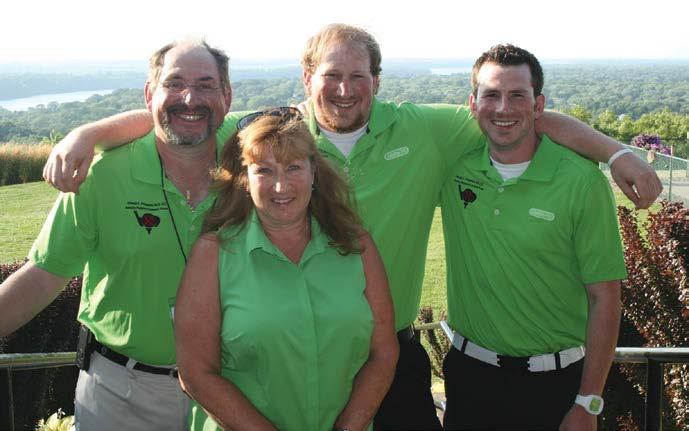
Goldstein pushed me from behind and said Randy will dance with you. That is how I met her at Crawdaddy’s an old bar/restaurant on the Waterfront. We got to talking, and I asked her out the next night and we were out until 5:30 in the morning. That was March 9, 1983 and we




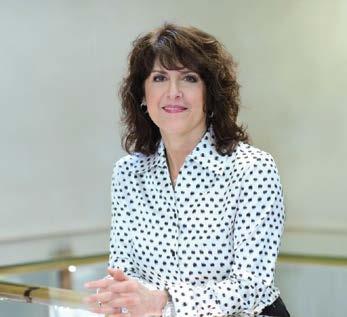
had been together ever since. Early on, even while she was just my girlfriend, Ruth started to change my life forever. When I was younger, I was raised to believe the path to success was money, power, status…as many initials as you could get after your name. Well, Ruth changed all that over time. I learned from being around her and meeting her family that none of that mattered to her. What mattered most to her in the world was family (however you define that word, which in our case included friends). As time went on, she showed me the true measure of a person was what’s in their heart. She taught me that life was only as good as the people with whom you shared it, whether it was family, friends, professional colleagues, the people you played sports with and anyone else. She didn’t care where you came from, what your nationality was, what house you lived in, car you drove or whether you had money or were dirt
poor…. She may not have always agreed with you about things, but she always lived her life trying to find the best in a person. She lived her entire life that way and got me to start looking at the people I knew, met, and who were closest to me in this way. It may have been the greatest lesson I ever learned as I began to realize all those things I was chasing were shallow and meaningless. I now live my life the way she taught me which taking care of those that matter to me, whether it be family or friends, and giving back to a community that has so enriched my life in numerous ways. I am and will always be very grateful to her as my life has been so enriched because of her. I will thank her every day for the relationships I have with so many of you.
She gave everything to our marriage...and made sure that I was taken care of and that I was always ok. She never seemed to worry about herself, just me and our boys. Along the way, one night, she told me, six weeks after our wedding that she was pregnant. I literally sat up in bed in the middle of one night soaked in sweat and thought, emotionally, I’m still 12 years old, how am I going to raise a child when I was still one myself. I guess we figured it out as she gave me the two greatest gifts any husband could ever ask for, the two young men standing here with me, Mitch and Danny. This is something I will never be able to repay. They are obviously everything in the world to me, especially now, and there is nothing for them that I wouldn’t do. For the rest of my life, every time I am around them, see them or talk to them, I will see her.
As many of you know our lives








changed forever on June 7, 2017, when she was told she had cancer. Her immediate response was what do we do about it and how fast? That was because she didn’t believe in wasting precious time and we had to go to Roblin Ontario, near Ottawa, to pick up Teddy, one of our two precious poodles.
With 30 trips to Cleveland Clinic and another 30 to Thomas Jefferson Hospital in Philadelphia, she fought with every ounce of her being and endured treatment after treatment after treatment until her body could no longer absorb the assaults. She was going to be one to live and beat this horrific and unforgiving disease. And she did it with a smile on her face, never ever complained to anyone (other than me sometimes) and was determined that this was not going to get in her way. She fought for close to 9 years, far outliving the normal life expectancy of this disease until the past January when she was told there was nothing more to be done and her body could no longer battle. To the end, she willed herself every moment to be as normal as she could and pushed me that we were going to get on with our lives. In those final days I saw the fight start to wane from her and she, on Wednesday night, the last thing she said to me was that she was going to die that night. She gave it every last ounce of strength she could muster until the cancer won, as it usually does. She went surrounded by the family that mattered so much to her, on her own terms, her own way and with her dignity intact.
…Rest in peace my sweetheart. You are already so sorely missed.
The following individuals in our community passed away during the period from March 17, 2026April 20, 2026. May their memories forever be a blessing, and may their loved ones be comforted among the mourners of Zion.
David Bondrow
Milton A. Ehrenberg
Sydonie Gelman
Gary Grelick
Sonia Klein
Lawrence Levin
Ethel Lipson
Harvey Podolsky
Phillip Recoon
Marilynn Rosen
Leo Steinberg
Wende Tragash
Evelyn Wakshull

If we inadvertently missed printing the listing of your loved one, please email jjwny@buffalojewishfederation.org and we will include the name in the next issue.

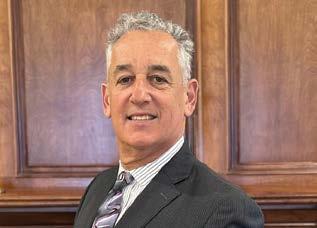
PROVIDING ALL JEWISH CUSTOMS



BY ZAHAVA FRIED
When I was a sophomore in college, I was cast as Dorothy in my all-women’s college production of The Wizard of Oz. Every night when I sang “Somewhere Over the Rainbow,” I had no frame of reference for the song’s creation. Later, I learned that the piece was written by Harold Arlen, the son of a cantor born right here in Buffalo, who later went on to write one of the most beloved songs in American history. I certainly had no idea that I would one day spend ten years living in the very city that formed him. “Somewhere over the Rainbow” did not emerge from nowhere. I like to think it emerged from Harold’s childhood experiences of being in a synagogue and being exposed to a tradition of reaching toward something beyond the ordinary world, and within that reaching, trusting that music could carry what words alone cannot. This is what music does; it plants an understanding of something profound and meaningful in you long before you understand what it is.
Jewish music did that for me from the beginning. I grew up in a small Reconstructionist synagogue in Pittsburgh where our rabbi led us in prayer with her guitar. Something about that image, the sacred and the melodic intertwined so naturally, never left me.
Long before I had the language for it, I understood that music was not decoration for worship. It was the worship itself. Music creates a container for our prayers, a vessel large enough to hold grief, gratitude, longing and joy, sometimes all at once. A nigun needs no words because the soul already knows what it means. The opening notes of Unetaneh Tokef on Rosh Hashanah can frame the entire sweep of a year,
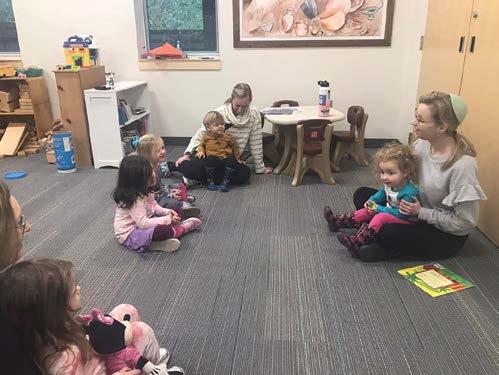
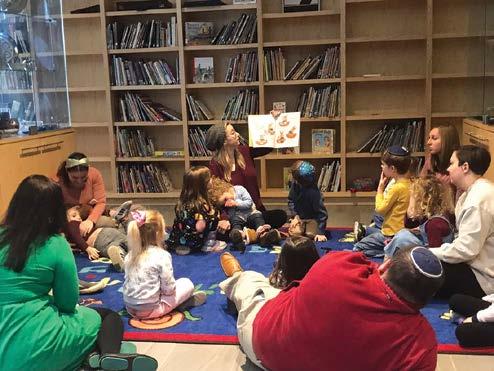
pushing us within seconds into a place of reflection and understanding that a thousand words of prose could not reach. A child singing Sulzer’s setting of the Shema for the very first time teaches us more about the meaning of L’dor Vador than any textbook ever could, because the melody itself is the inheritance being passed down in real time.
I spent years teaching young children in Jewish early childhood programs here in Buffalo, first at Kadimah Academy and later at the PALS Preschool, and what I witnessed daily was this truth made visible. Children who could not yet read, who had no theological framework, who were simply alive and present, were transformed by music. Morning blessings could settle the most restless room into something that felt, genuinely, like prayer. Circle Time became sacred space. Music met them exactly where they were and brought them somewhere deeper. That experience led me to the pulpit. After years in the classroom, I found myself drawn to the cantorate in a way I could no longer ignore. I enrolled in cantorial school at AJR and began serving Temple Beth Tzedek here in Buffalo, first as Cantorial Intern and later as Cantorial Soloist. What I discovered at the bima confirmed what the classroom
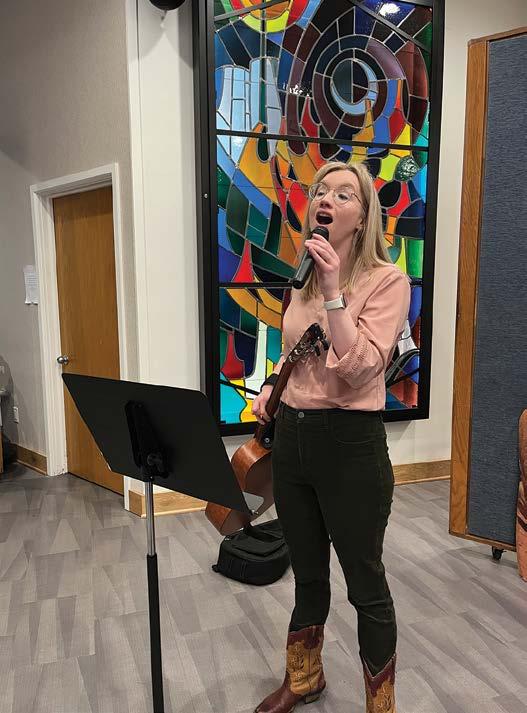
had already taught me: music is not a warm-up for the spiritual work. It is the spiritual work. It is how we find each other across differences, how we remember who we are when life has made us forget, and how we reach, together, toward something we cannot quite name but can somehow feel.
Now I carry all of this forward as I step into a new role as Cantor at Congregation Beth El in Voorhees, New Jersey. Buffalo has been my teacher in ways I am still understanding. This city shaped a cantor’s son into a songwriter who made the whole world reach toward the horizon. It shaped me too. I leave with a full heart and more gratitude than words can hold. Jewish Buffalo showed me that music is not something we make alone. It is something we make together, and what begins as a shared song has a way of becoming something much more: dearest friends, chosen family, and a community that holds you. I never dared to dream that I would find my true voice in Buffalo, New York. But that dream came true, and I carry this city, and the people in it, with me always.
Zahava Fried is currently Cantorial Soloist at Temple Beth Tzedek. She will be leaving the community at the end of June to be the Cantor at Congregation Beth El in Voorhees, NJ. She is grateful for this new journey and the foundation that Buffalo has given her. She will never stop rooting for the Bills!