




























Photo by Mangus Photography


By Martin Angus (Editor)
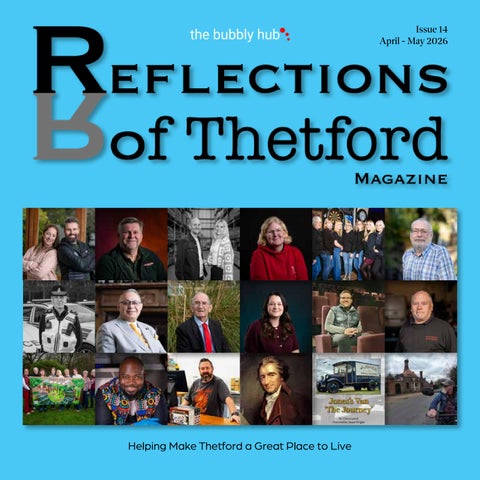
Welcome to Issue 14 of ‘Reflections of Thetford’ magazine. Celebrating over 2 years of helping make Thetford a Great Place to Live!
The team have worked so hard to bring you this latest edition, and we hope you enjoy reading it as much as we have creating it.
April arrives in Thetford with a quiet sense of renewal. As the days stretch longer and the first real warmth returns to our streets, parks, and surrounding forest, the town begins to shift, subtly at first, then all at once, into one of the most vibrant time of the year.
Recently, aching backs were the most common ailment I have heard of from friends and colleagues, as the gardens of Thetford are springing back to life, and are requiring their annual preparation.
This April and May edition celebrates everything that makes Thetford special in springtime. From walks beneath fresh green canopies in Thetford Forest to the reawakening of our local markets, cafés, and independent shops, there is a renewed energy that
invites us all to step outside and reconnect, with nature, with our neighbours, and with the town itself.
Inside this issue, you’ll find a curated mix of local stories, memories, and community voices. We hope the magazine is a reminder of the richness of life here in Thetford, we hope these pages offer something to enjoy.
As always, this magazine is shaped by the people who live and work here. It’s a reflection of our shared pride in the town, its heritage, its creativity, and its future.
Here’s to a bright and lively spring in Thetford.
As always we couldn’t do it without you, the advertisers, contributors, featured residents, writers, and most importantly you, the reader.
I can’t thank everyone enough for making Thetford a great place to live.
Please enjoy our 14th edition of ‘Reflections of Thetford’ magazine.
©Reflections of Thetford is published by The Bubbly Hub. All rights reserved 2026. Whilst every care is taken, the publisher accepts no responsibility for loss or damage resulting from the contents of this publication, as well as being unable to guarantee the accuracy of contributions supplied as editorial, images or advertisements. No part of this publication may be reproduced, copied or transmitted in any form or by any means or stored in any information storage or retrieval system without the publishers written permission.


Through the Curved Doors
The Story Behind Jones’s Butcher’s Van
The Thetford family business quietly warming homes across Britain
Thetford’s Queen of the Little Wins
Arrows, Laughter and a Winning Night at The Black Horse
Still Me, Just on Wheels
From Response to Neighbourhood Policing
The Hotelier Who Reimagined a Town’s Story
Mr D of Thetford Market
One Thetford Mum Changing the SEND Conversation
Why Thetford’s Silver Screen Still Shines Bright
A Marriage of the Old and New
Stitching Thetford together with the Riversdale Crafters Making Friends with Food Cats and their Stats Report
Undercover Geek Forever 250 Years On Bob and Adrian Ride Again
Letters to the Editor

Written by Martin Angus
The little curved doors on Cage Lane have always felt like a promise.
Not the grand sort of promise you get from chandeliers and velvet ropes, but the better kind: warmth, proper food, and the sense that someone inside already knows how you like your water (no lemon, thank you) and that you’ll want the sauce on the side. Step over the threshold at The Mulberry and you weren’t entering “a restaurant” so much as joining a roomful of stories: engagements and anniversaries, birthdays and retirements, the quiet “just the two of us tonight” meals that somehow matter as much as the big toasts.
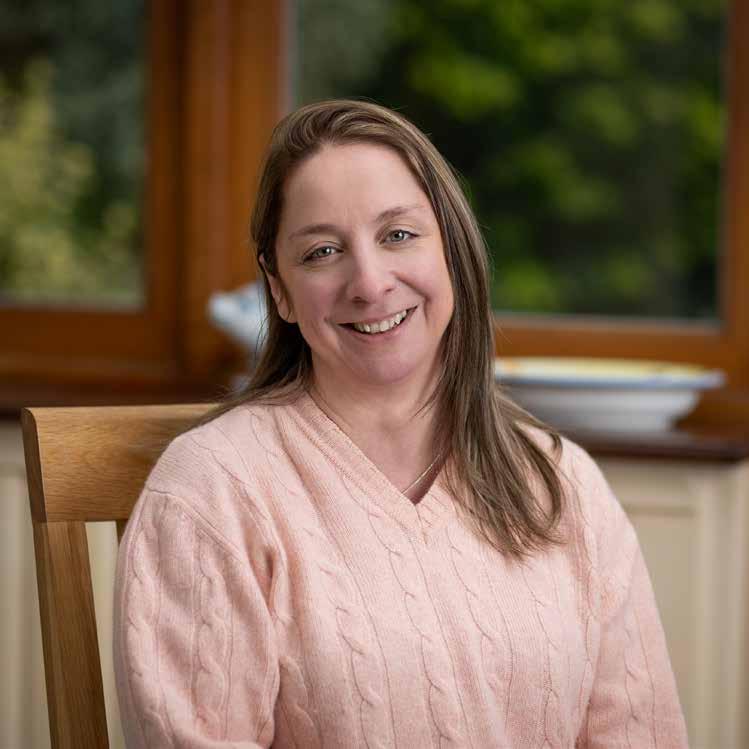
For more than fifteen years, that promise was kept, night after night, by Karen Connor, the woman who could glide between tables with the poise of someone born to host, and the practicality of someone who has, in her own words, cleaned “four toilets a day” and still managed to make it feel glamorous.
Now, with The Mulberry’s final service having taken place on 28 February, Karen has closed the chapter

on one of Thetford’s best-loved addresses. There’s no way to pretend that doesn’t sting. But spend an hour with Karen and the sadness never quite gets the last word—because her story, and the restaurant’s story, is one of bold beginnings, stubborn standards, occasional absurdity, and an enormous amount of heart.
Before The Mulberry, there was… a dancer
Ask Karen what inspired her to open a restaurant in 2010, and she will gently correct you: “For me, it starts before that.”
Before The Mulberry, there were cruise ships and overseas contracts; a life in entertainment and dance until, as she puts it with disarming matter-of-factness, “my knees gave up.” The stage left its mark, though, not in sequins, but in instinct. She’s still an entertainer, only the applause comes in the form of empty plates, repeat bookings, and the kind of review that simply says, “We’ll be back.”
After the cruise ships came an opportunity that

shaped everything that followed.
Karen and her partner were recruited to open, design and run a restaurant in the Bahamas, in the capital Nassau. The venue seated more than 100 guests and sat close to some of the island’s most prestigious residential areas. It was a serious operation, with a large team and a clientele that included international visitors and well-known names.
Among those who dined there were Shakira and Sean Connery, while during the filming of the James Bond movies nearby, members of the production, including people connected with the Bond producers, the Broccoli family, also became customers.
For seven years, Karen helped run the restaurant there, learning the realities of managing a busy, highend dining operation with a full team and demanding guests. In many ways, that experience formed the blueprint for what she would eventually build in Thetford.
Running somewhere for someone else eventually turned into the desire to run somewhere of her own.
Even the geography was nearly different. At one point Karen and her then-partner were on the brink of buying a place in Cornwall. Cornwall! A long way from Breckland. But the deal collapsed when it emerged that two extensions didn’t have planning permission. Then the market went wild, mortgages got painful, and the search began again, this time with a sharper sense of what they needed: not just a restaurant, but a home; not just a business, but somewhere for Karen’s son Nathan to grow roots.
And then they found it: a quirky, practical building on the corner of Cage Lane and Raymond Street. The kind of place with a history you can feel in the walls.
The building that became The Mulberry has lived many lives.
Long before it was a restaurant, it was a bakery. Later, it became a liquor dispensary serving nearby pubs, followed by a variety of other uses over the decades, including an antique shop, a video game shop, and even a Museum of Childhood at one point.
Karen learned much of this history through conversations with local residents, including local historian David Osborne and his wife Joy, who shared photographs and stories of the building’s past.
What struck Karen most was how the place had always evolved with the town itself.
People often think of the building only as a restaurant now, but in truth, it has always adapted to the times, serving the community in different ways through the decades.
Karen moved in during July. By October 2010, the doors were open.
Nathan was six. And in a detail that feels perfectly Mulberry, mother and son did much of the early decorating together. “We had a great time painting… he was thinking he was helping, painting his name on the wall and stuff instead.”
If you ever wondered why the place felt lived-in rather than “done,” you’ve got your answer.
A town that “didn’t really have a pure restaurant” Karen’s decision to build in Thetford wasn’t driven by market research spreadsheets and footfall charts. It was something simpler: a sense of “why not?”



t. 07891 294639 thegardenshedflorist.co.uk thegardenshed22@gmail.com

At the time, she says, Thetford “didn’t really have a pure restaurant… and didn’t really see any reason why it shouldn’t have.” Thetford is surrounded by beauty and possibility. “There’s no reason Thetford can’t support [it], and 15 and a half years later, it can support a restaurant.”
She’s also quick to defend the town’s reputation. Thetford, she insists, “needs to believe in itself.” Town centres everywhere are under pressure; it isn’t uniquely our problem. And really, how many towns have a river walk that runs from the Priory all the way to the Ornithological Trust? How many have that much nature right on the doorstep?
Nathan, for one, took that doorstep and ran with it, quite literally, into a Masters in Archaeology. Karen suspects the landscape helped shape him.
“Having nature on your doorstep… pays into lots of things.”
In other words, The Mulberry didn’t succeed despite being in Thetford. It succeeded because it was of Thetford, rooted, proud, and built for real people.
The art of “put the face on”
The first week was quiet. Karen admits she was “very nervous.” But the kind of regulars every restaurant dreams of appeared almost immediately.
Jo and Mandy, Mulberry customers from the very beginning, were among the first through the doors. They pulled up a chair, poured her a glass of wine and said, essentially: tell us about yourself.
They were there on the last night too.
Karen talks about “regulars” in a way that makes you rethink the word. A regular isn’t just someone who
comes once a week. It’s also the couple who return once a year, faithfully, for sixteen years, sixteen dinners that become a quiet tradition.
“When you’ve been open 15, 16 years, once a year is 16 times.”
She learned the mechanics of service, some from experience, some from a mentor. In the early days, a family friend called Stephen taught her a line that probably belongs embroidered on the wall behind every front-of-house station:
“Just put the face on. And the rest follows.”
Hospitality is work. It’s also performance. Karen’s version of the performance, though, never felt fake. It felt reassuring, like someone at the party who seems to know where the spare candles are kept, and also happens to remember that you don’t like lemon.
Food with standards (and a steak you can’t remove)
The Mulberry’s menu “evolved.” It started with dreams of Italian influence, then shifted toward local produce, and then grew into a confident blend of Mediterranean and English styles.
It didn’t become popular by chasing trends. It became popular through listening.
Karen speaks about learning what the local clientele wanted, and how The Mulberry became “the celebration place”: smaller weddings, birthdays, anniversaries, engagement dinners, even the “we’reselling-the-business” gatherings that carry equal parts nerves and champagne.
And yes, the steak. There’s “a steak on the menu that we can’t take off.” The perennial favourite.
But the menu also held the niche things that made food lovers devoted: calves’ liver, beautifully handled fish, sauces and stocks made properly, and dishes prepared from carefully sourced ingredients.
Karen laughs about watching customers grow in confidence too. Young diners arrive asking for steak well done; over the years that well-done gradually slides to medium, then medium-rare, then, if you’re really committed, blue.
“I’ve got one that’s got to blue,” she says with pride.
And then there’s the wine.
The Mulberry wasn’t just about what was on the plate; it was also about what was in the glass, poured by someone who wanted you to enjoy it. Karen would guide people gently: you might like this, you might not like that, try this one next time.
Over time, she learned people’s preferences until the service became quietly bespoke.
“This is the shame really,” she says, “with the big chains, you don’t get that personal service.”
Chains can feed you. They can’t remember you.
For a small independent restaurant in a market town, The Mulberry quietly built an impressive record of recognition.
It was included in the Michelin Guide within a few years of opening, an achievement that placed it alongside well-known restaurants on the Norfolk coast.
Later came inclusion in the AA Restaurant Guide, where it remained until the restaurant closed its


doors. The story unfolds as a wonderfully ordinary coincidence: a young man from CEX brought his parents for dinner, because he’d eaten there with his work crowd. As he left, his father casually mentioned he worked for the AA Guide. Karen’s response was the same as any small business owner’s: “Could you not have told me before?”









Online reviews told a similar story. For much of its life, The Mulberry consistently ranked within the top 10–20 restaurants in Norfolk on TripAdvisor, an impressive position considering the county’s strong food scene.
Karen is quick to acknowledge how important that recognition was, not just for the restaurant itself but for demonstrating what a town-centre independent restaurant in Thetford could achieve.
Then there are personal online reviews, those modernday report cards with an outsized impact. Karen’s feelings are complicated. Good reviews are “amazing,” she says, but the mind worries about the less good ones. People write things “through a keyboard” they’d never say in person. The consequences can be brutal, and the standards can be strangely skewed; one “four” instead of a “five” quietly drags the average down.
Her plea is simple: be kind. Words land. They linger.
A Michelin visitor, a crossword, and the fear of being quoted
Every restaurant has a moment when the outside world taps the window and says, we see you.

For The Mulberry, one of those moments came with the Michelin Guide, around 2015/16. Karen describes the strange dance of it: you can’t invite Michelin; you can only do good work and hope the right person happens to walk in.
In this case, the right person was a gentleman dining
alone with an iPad. Karen, ever the people-reader, tried to judge whether he wanted conversation or quiet. He asked for a couple of recommendations; service carried on; and then she noticed something on his screen.
A crossword.
“I told him he got one of the answers wrong,” she says, still half-horrified, half-delighted. She gave him the right answer, walked away, and carried on her evening “completely oblivious” to the fact that the crossword may have been a clever cover for note-taking.
At the end of the meal, after paying, the man handed over his card and revealed he was from Michelin.
Karen’s immediate thought? “Oh no… please don’t say about the crossword.” (If you’ve ever loved a place like The Mulberry, you’ll know exactly why that moment feels so perfectly Thetford: earnest, funny, slightly cheeky, and absolutely human.)
The review, she says, was lovely. The Mulberry made it into the guide at a time when local entries were mostly clustered up on the North Norfolk coast. For a discreet little oasis in Thetford to be recognised nationally was, in Karen’s words, “amazing.”
Over the years, the restaurant also attracted attention from television and radio producers looking for interesting locations.
Segments connected with shows such as Location, Location, Location were filmed there, while Come Dine With Me used the restaurant for filming introductions to contestants.
Radio programme Any Questions? recorded



nearby, and the panel came to dine at The Mulberry beforehand, while the building also appeared in connection with Long Lost Family filming.
For a small independent restaurant, it was an unexpected brush with the world of television production, and proof that the character of the building translated beautifully on screen.
The hard bits: COVID, balance, and the era of the keyboard warrior
Like everyone, Karen felt the shockwave of COVID. It was “huge.” But she’s relentlessly a “glass half full” person, and she found unexpected good: time with Nathan (who missed sitting GCSEs), and deep support from regulars. Deliveries and orders became a strange sort of lifeline. “It wasn’t all bad,” she says, even while acknowledging how hard it was.
The bigger long-term challenge, though, was balance. The myth of hospitality, “you only work evenings” and “it’s so glamorous, you get to dress up”, is one Karen dismantles with a tired laugh. Behind the four hours of service are the hours of ordering, prepping, cleaning, accounts, bookings, and payroll. Holidays are interrupted. Phones are answered. Emails are checked. Life is lived around the restaurant.
Now, for the first time in years, she’s looking forward to a holiday where she “doesn’t have to look at her phone.” Anyone who has run a small business will feel the weight lifting just reading that sentence.
The Mulberry as a training ground
If you measure a business by what it leaves behind, The Mulberry’s legacy is more than customers; it’s people.
Karen speaks warmly about staff who stayed for
years: Gemma, with a decade behind her; apprentices like Luca, who trained in the kitchen and went on to a professional career; young team members who arrived at 16, unable to meet a guest’s eye and left with confidence.
“The Mulberry wouldn’t be what it is to our customers over the years without all of our staff contributing to their experience”, says Karen. Karen wanted to include a sincere thanks to every one of them in this editorial.
“I never make them do anything I wouldn’t do myself,” she says. (Though, she adds, “nine times out of ten they’ll make me do all the things they don’t want to do”.)
Her approach was to teach service as a human skill: if customers ask you questions, give them something of you. They’ll remember. They’ll come back. Hospitality is connection, not transaction.
Why she chose to close—on her own terms
For Karen, closure wasn’t a sudden collapse; it was a decision, painful but deliberate.
From the beginning, she says, The Mulberry was intended to have a finite life: build it up, then pass it on for the next stage. She tried to sell it as a restaurant for years, genuinely hoping the town would continue to be served in the same way, in the same room, at the same tables.
But the sector is hard. Buyers are scarce. And Karen didn’t want to reach a point where she had no choice, where the decision was forced by exhaustion, or economics, or dwindling trade. She wanted to “call time” while the room was still full, the standards still high, the place still loved.
Judging by the response to the closure
announcement, she succeeded. Her phone “blew up.” Tables vanished. The Mulberry was fully booked to the end. Karen jokes they should have “closed six times a year.”
There is a tenderness, though, in what she says next: her “once a month” people were already being silently farewelled before the announcement, because she knew what was coming. She was watching her regulars leave, knowing the rhythm would end.
And yet, she isn’t sad in the way you might expect. She’s ready. She’s grateful. She’s proud. “I came to Thetford as a stranger,” she says, “and now I’m just strange.” Then, softer: “Now it’s home.”
Dessert first, mussels for afters, and nothing green
No proper farewell to Karen would be complete without a few of the Mulberry’s greatest hits in customer quirks.
There was the woman who demanded dessert first, then worked backwards through the meal, just to “see if you would do it.”
There was the gentleman who loved the moules mariniere so much he ordered them again… for dessert.
There was the request that deserves its own plaque: “Can I have the steak and chips but without steak, with extra chicken?” (One imagines the chef pausing for a full beat, then shrugging: if the customer is happy, the customer is happy.)
There are the anti-vegetable loyalists: the man who nearly didn’t come because he feared “what would be on his plate,” now upgraded, after careful negotiation, to accepting sauce on the side. Progress is progress.
And one client with a firm boundary: “Nothing green on her plate.” Nothing. Green.
Karen tells these stories with the affection of someone who understands that people are funny, fragile, particular creatures, and that feeding them is never only about hunger.
The last detail (and the new chapter for the building)
So what happens now to that building with the curved doors, the walled garden, the famous tree, the corners where memories seem to cling?
Karen hints early in our conversation that what it becomes next will be “a good thing,” with “a new lease of life.” She also admits that, unusually, she’s been allowed an insight into what’s coming, meetings, plans, a sense of continuity rather than abrupt replacement. “That’s lovely,” she says, “because you don’t normally get that.”
And now the reveal.
The Mulberry is not being replaced by another restaurant, nor left empty. Instead, it is being bought by Traquina Child Care, which will make this their third site in Thetford. The handover is due on 13 March, when Karen will hand over the keys.
It’s a plot twist you don’t see coming, yet it somehow fits. From a restaurant, to something that will again be busy, purposeful, and full of people: a place of nourishment in a different form.
The new site will be called Traquina’s Mulberry, and there are plans to incorporate the mulberry tree into the nursery’s branding, because some features are simply non-negotiable. “You can’t take down the mulberry tree,” Karen says, with the protective
certainty of someone guarding a local landmark.
Traquina’s team has been clear: they don’t want “another childcare space.” They want something special, textured, characterful, a place children can touch, explore, and belong to. The building’s history will be respected, not erased.
For Karen, that matters. She knows there are no guarantees in any sale; even if she’d sold to a restaurant buyer, the business could have changed hands again in two years. What brings her peace is knowing the space will continue to serve the community, vibrant, full of life, benefiting families across the town.
And if you’re wondering whether any Mulberry secrets are being smuggled into the next era, there is, apparently, one delicious clause in the deal: the recipe for the crème brûlée. Obtained, we’re told, under “conditions”… involving a bottle of wine or two.
Some traditions, it seems, are too important to leave behind.
As Thetford says goodbye to a restaurant and hello to a new kind of community space, Karen Connor walks away with what she spent fifteen years creating: not just a business, but a network of relationships, people who will still wave at her in the street, still stop her for a chat, still feel, when they meet her, “like I know you.”
The doors may close on the last service, but Karen’s real achievement, the thing that made The Mulberry a gem, was never just the menu. It was the way she made people feel.
And that, even in a town that sometimes doubts itself, is something worth believing in.
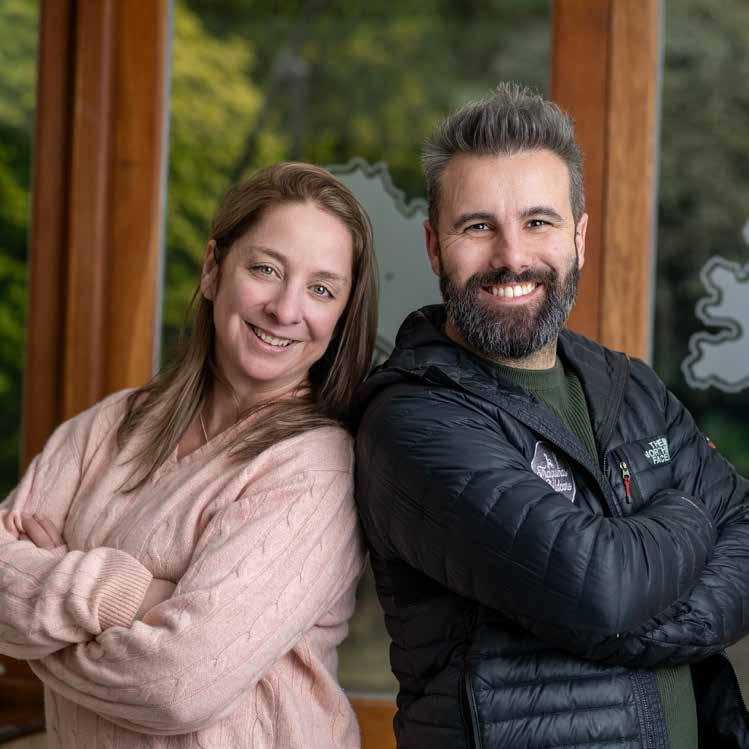
‘You can’t take down the mulberry tree, Karen and Paulo’

Written by Liz Gibbons
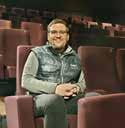
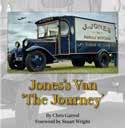
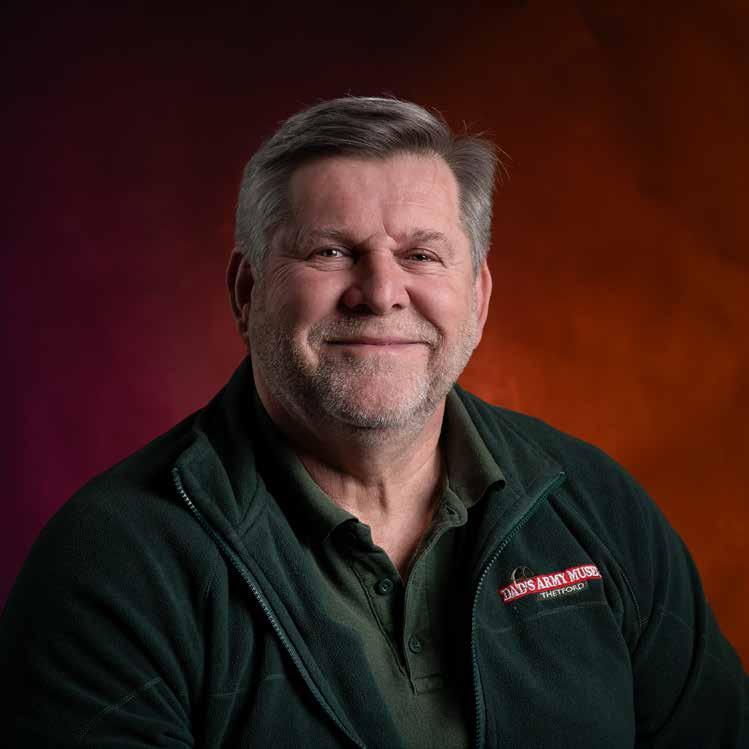
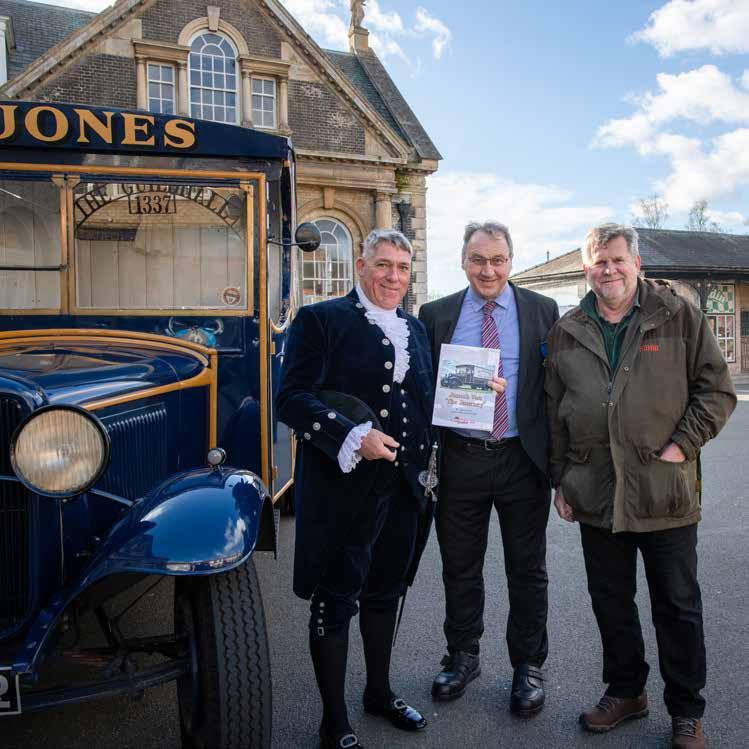
It is a March Monday morning and, for a change, the grey clouds have decided to take a day off, revealing a bright blue sky and warm sunshine. I am heading to Martin Angus’ photography studio to interview Dad’s Army Museum volunteer Chris Garrod, the man who has become something of an expert on Jones’s butcher’s van. Chris has turned that knowledge and research into a book called: Jones’s Van ‘The Journey,’ which is the reason I am speaking to him this morning.
Making my way up the stairs, I can already hear Martin and Chris chatting. We have a brief catch-up, and Martin kindly brings us steaming mugs of tea. Chris remains seated on the chair in front of the photoshoot backdrop while Martin fetches another for me. Once settled, we begin.
For many fans of the classic BBC comedy ‘Dad’s Army,’ few images are as memorable as Captain Mainwaring’s platoon rattling around in Jones’s butcher’s van, but the story behind that beloved
vehicle stretches far beyond the television screen. Chris, about to release his debut book on Jones’s van’s history, tells me all about his journey as he reveals what he uncovered about this iconic vehicle.
It is a journey that began with Chris’s childhood, his memories of watching the series being filmed in town. “I was at Thetford Grammar School from 1969 to 1976,” he begins, “which meant I saw the film crews and cast in town filming ‘Dad’s Army’.” At the time, Chris and his classmates had little idea that the programme they were watching come to life would one day become one of Britain’s most cherished sitcoms. “I can recall doing a double biology lesson in 1975 on the girl’s school side and watching the filming of ‘The Face on the Poster’ on Old Bury Road, using ‘The Planes’ as the ‘Polish Club’.”
His first encounter with the van itself came a couple of years earlier. “I first saw the van in 1973, I think, outside Mitchells the butchers in Earls Street. I was walking to school and just laughed, it was something I had seen

During filming periods, the town would buzz with activity. The cast often stayed locally, and residents regularly caught glimpses of them between takes. “They’d come up for two weeks every summer and stay at ‘The Bell Hotel’. Sometimes we would see costumes in the window that faces towards Minstergate. They were out and about in town, and I think they enjoyed it as much as we enjoyed seeing them.”
Watching the filming process itself was fascinating. “I always thought filming was done very quickly,” Chris says with a chuckle. “But over two hours, I must have seen the same clip run again and again. They always said the producer, David Croft, was called the ‘one-take wonder’. Well, I can assure you from my experience he wasn’t,” he laughs again, “they filmed scenes several times.”
After retiring at 61, Chris returned to those memories in an unexpected way. Just prior to leaving work, Chris had promised Stuart Wright that he would volunteer at the Dad’s Army Museum. “I was kindly made a driver of the van,” he says with delight. “It was a proud moment, and I was asked to take care of her.”
Meeting visitors at events soon opened the door to new discoveries about the van’s past. “People would tell me snippets of stories about their own experiences with the van.” One conversation in particular set the research in motion. “In my village of Great Hockham, in ‘The Eagle’ pub, I met a guy called Rob who said he had seen the van being renovated in Southend in 1990. That wasn’t a part of the story anyone seemed to know about, so I started to investigate. From there the story grew and became infectious.”
The deeper Chris looked, the more surprising the van’s history became. “Perhaps the biggest shock was
discovering that the van had actually been stolen.” Chris hastily adds to reassure me, “albeit its current ownership isn’t in dispute.” The vehicle had apparently been taken in London in the early 1960s before being abandoned by the roadside. “People often dumped vehicles back then and the police were called in to dispose of them.” In the case of the van, “they officially registered it in someone else’s name because the original owner had never registered it.”
This was but one example of the stories behind the van’s incredible past. Chris’s research soon revealed that the van had appeared in far more films than anyone realised. “The more I looked, the more I found,” he says. One discovery left him astonished: “One Saturday morning I realised that the man getting out of the passenger seat in a film was David Soul (American-British actor from the 1970s, including ‘Starsky and Hutch’). I was somewhat flabbergasted.”
Another unexpected appearance came in the controversial 1960s film ‘It Happened Here’, which imagined a Nazi occupation of Britain. “The whole film centred around the idea that Germany had invaded. They filmed German soldiers marching across Westminster Bridge, which caused a riot because the war was still fresh in people’s minds. The van was used as an ambulance in the film.” Chris went on to say that, “once you know what to look for, it’s easy to recognise and particularly the number plate, of course.”
Chris’s research also uncovered clues about the van’s early working life. Markings that had been covered up with paint on its sides hinted at an earlier and somewhat different role. “When you stand far enough away, you can make out what the old sign writing says underneath,” he explains. That led him to a breakthrough while browsing archival trade publications. “I was searching old issues of ‘Commercial Motor’ magazine and suddenly found a 1953 article with the van pictured. It was working for







a confectionery company connected to Barker’s of Kensington, loaded with bread on the side of the road. That was an unreal moment.”
For fans, though, the van’s fame will always be tied to its role in ‘Dad’s Army.’ “It’s become a comedy legend,” he says. “It’s right up there with Del Boy’s threewheeler as one of the most iconic comedy vehicles in British television. The cream of the crop,” Chris says with a big smile.
While the van only appeared in 19 of the show’s 80 episodes, its impact was unforgettable. “It’s listed just after the main cast in terms of appearances.” The most memorable moment came when the Home Guard had the van converted into a military vehicle. “They put rifle ports in the sides and roof,” Chris explains. In the storyline, Private Walker suggests donating the van to the platoon to obtain fuel coupons. This will help Jones keep his butcher shop going, and Walker, as he plans to use the van for his black-market business. However, upon the van’s return, it has been converted to gas, scuppering Walker’s plans.
The episode proved so popular that it was recently recreated at a public event. “We re-enacted it at the Old Buckenham Airshow in 2024 with dummy rifles,” Chris recounts with enthusiasm. “We had four people in the back, putting the rifles out through the gun ports.” Meanwhile, overhead, a plane swept low, and the van rifles were meant to pretend to shoot it down. “We couldn’t hear what the announcer was saying, but whatever we were doing got a massive cheer.” Chris laughs before continuing, “Whatever we did must have been good because we were invited back the next year.”
This is not the only van’s appearance at a show, though. Chris has uncovered lots of photographs from events that truly demonstrate just how far the van
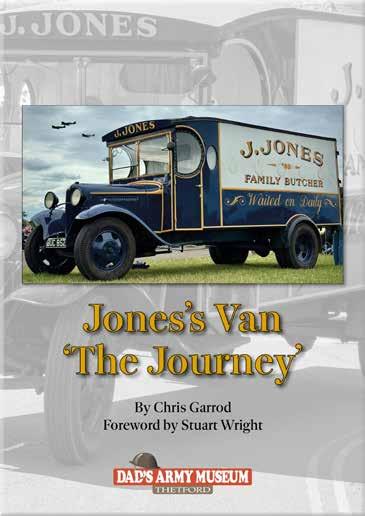
has travelled. “There’s a lovely photo of it by St Paul’s Cathedral, another near the Monument in London, and others with aircraft overhead, three Spitfires by the windscreen, another with a Lancaster above it, and a different one featuring the Red Arrows.”
Even today, new stories continue to surface. “At a steam rally, a woman told me her father had renovated the van in 1990, which nobody had recorded before.” The next lead connecting to this story was thanks to social media. “My sister-in-law found the paint sprayer on Facebook, who had spraypainted the van in the 1990s. He now lives in Canada, but when he visited the UK, I took him to the museum, and he sat in the van.” It is amazing to hear how all these connections materialise and how passionate Chris is about his project and research.
Now, at 91 years old, the van has achieved something even rarer: a second life as a cultural icon. “It went through a short stage out of the public eye, but it’s made a marvellous comeback.”
For Chris himself, the connection is deeply personal. “Driving the van is a huge honour and pleasure,” he says. “I get waves, toots of horns and huge smiles. I’ve even had someone lean out of a car on the A11 to film me driving.” Chris goes on to reveal that he has another vehicle he would love to drive that is on his bucket list. “The next one has to be driving an original Trotter’s three-wheeler from ‘Only Fools and Horses’. Then I can say I’ve driven the two most iconic BBC comedy vehicles in history.” Chris reveals that he is already exploring possibilities with Beaulieu National Motor Museum and goes on to say, “If anyone has any contacts, please let me know, there was more than one used you see.” I really hope one of our magazine readers may know someone out there and make this happen for Chris.
When I ask what the future holds in terms of writing,
Chris is pleased to announce that there will be a book launch for his Jones’s Van book at Thetford Library. Copies will be available to purchase and all proceeds will go to the Dad’s Army Museum. After the book launch, Chris’s next project will turn closer to home, a picture history of his village, Great Hockham.
Meanwhile, the van research continues. “One lady we’re in touch with believes she has a photo of Jones’s Van in a row with other famous vehicles.” These include Ernie’s milk float from Benny Hill, Bessie, the car in ‘Doctor Who,’ John Steed’s Bentley from ‘The Avengers,’ the cars from ‘The Prisoner,’ and ‘Live and Let Die,’ a James Bond film. Chris guarantees, “If she finds the photo that will go in the next book, pride of place.” There will be more photographs out there and more stories. “If and when they appear,” Chris says, “I’ll put them together in another book.”
As our interview about Thetford’s famous van reaches the end of the road, one thing is clear: despite its age, Jones’s butcher’s van still has plenty of miles left in her, and with Chris very much behind the wheel (both in the literal and literary sense of the phrase), she is in very capable hands.
Official book launch at Thetford Library, Wednesday 1st April 12pm
Book talk event at Thetford Library, Wednesday 22nd April 2026, 1-2 pm. Tickets are free, but booking is essential as we have limited seating https://www.norfolk.gov.uk/article/40099/Whats-onin-Norfolk-Libraries or call (01842) 752048
Want to see Jones’s Butcher’s Van? You can visit her at The Charles Burrell Museum (Please check the van is in residence before travelling).
Written by Martin Angus
There are some businesses that begin with fanfare, polished launch plans and glossy ambition. And then there are the ones that begin the old-fashioned way: with family, graft, uncertainty, a bit of necessity, and somebody simply deciding to get on with it.
DQ Heating belongs very much to the second camp.
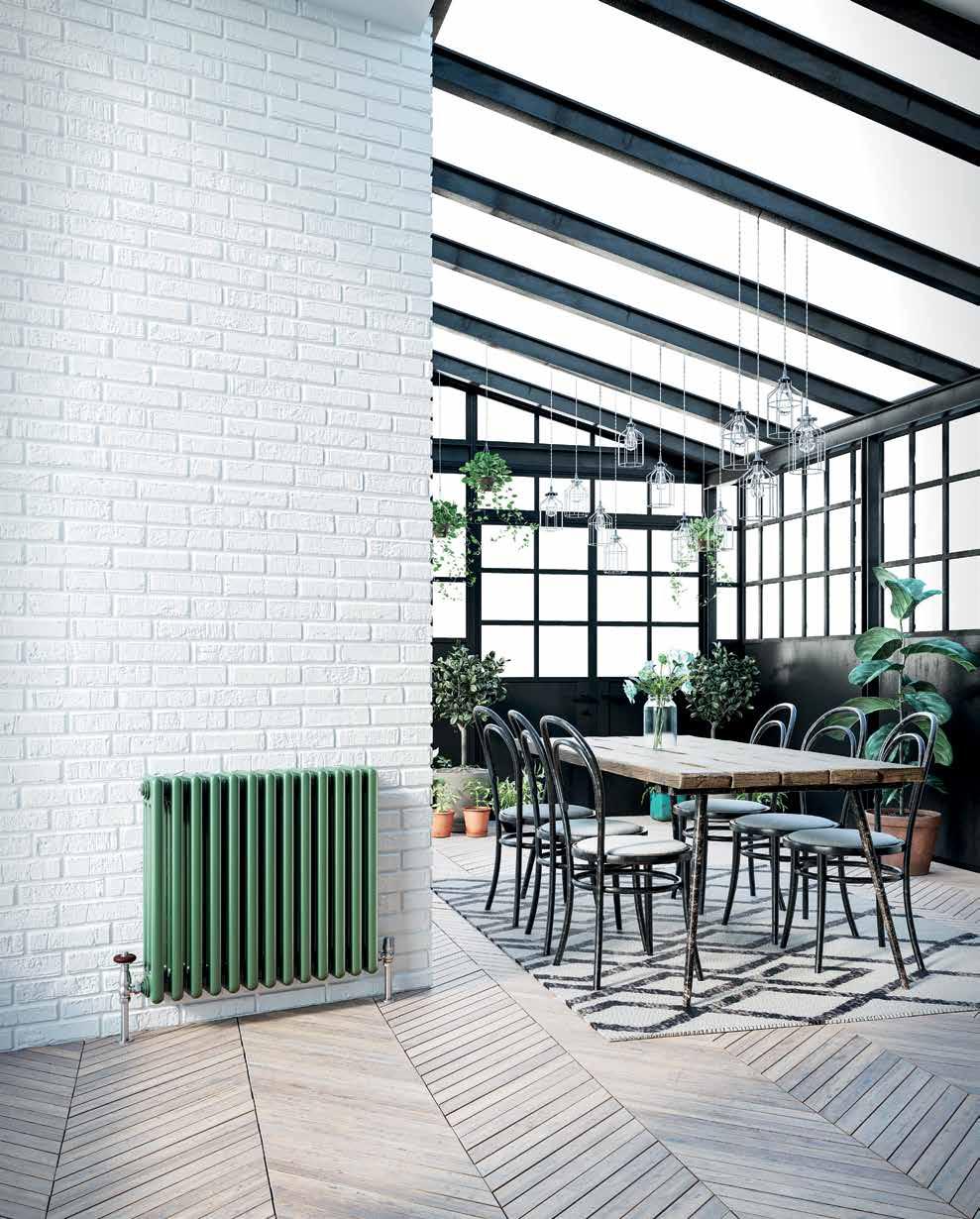
Tucked away on its Thetford site, this family-run company has grown into a nationally respected name in designer radiators, towel rails and heating products, but its story is not one of overnight success or grand corporate theatre. It is a story of slow momentum, long days, learning on the hoof, and building something steady from the ground up. It is also, crucially, a Thetford story, not because the company was born here, but because the town became the place where DQ Heating found room to grow.
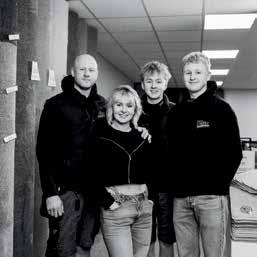
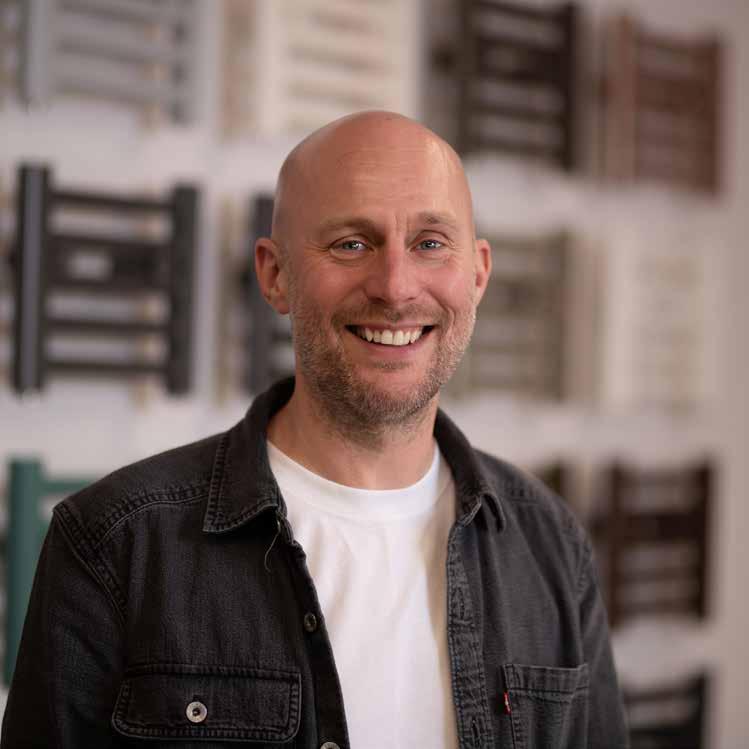
When I sat down with Stewart and Emily Double, along with Barney the office dog, who apparently holds the weighty title of “Dog-rector”, what emerged was not a rehearsed company pitch. It was something much more interesting: a candid account of how a modest family enterprise evolved into a business with national reach, all while trying to hold on to the values that made it work in the first place.
And yes, for the record, it is DQ Heating, not DQ Radiators, although, as they cheerfully pointed out, they do sell plenty of those too.
The company’s roots stretch back to the 1990s, and, like many good British business stories, it started with one turning point that unexpectedly led to another. Stewart’s father had been working for a radiator manufacturer in Bury St Edmunds. When that business was sold, he took voluntary redundancy and started a plumbers’ merchants in Brandon. Through

the contacts he had built in the trade, another opportunity came along: selling towel rails for an Italian manufacturer.
That was the beginning of what was then called Double Quick Heating, the name still lives on in the company’s official title, Double Quick Heating Ltd, though today the business trades more simply as DQ Heating. The “Double” came from the family name; the “Quick” was inherited from the wider family business history. It is one of those names that makes perfect sense once someone tells you, and for years, as Emily admitted, people have wondered what on earth “DQ” actually stands for.
Yet if the company’s origins were rooted in the family, Stewart’s own arrival into the business was, by his own account, almost accidental. He had been doing an engineering apprenticeship and then working as a production planner. He enjoyed what he was doing. At 20 years old, he was not dreaming of a life in radiators. In fact, as he put it with refreshing honesty, very few people ever sit in a classroom thinking, I know, I want a career in radiators.
But when circumstances changed, and with his father going through a difficult period, Stewart was asked to step in. What followed sounds less like a textbook management buy-in and more like being thrown into the deep end and asked to discover where the shallow end might be later.
In the early days, he was effectively doing everything. Taking orders. Processing them. Packing them. Shipping them. Making telesales calls. Handling accounts with Sage. Learning the mechanics of running a business while also trying to work out what sort of business it might actually become. At one stage, the turnover in that first year sat at around £40,000 to £50,000. The operation was small, basic
and entirely unglamorous.
Or, to put it another way: very real.
There is something wonderfully unvarnished about Stewart’s account of those years. He did not dress them up as “exciting entrepreneurial times”. He described them as slow. At times isolating. At times difficult to stay motivated. Working alone, trying not to go stir-crazy, trying to push on when the sensible and emotionally easier thing might have been to stop.
That, perhaps, is the first thing that makes the DQ Heating story compelling. It is not a tale of a meteoric rise. It is the story of a company that survived its infancy because someone kept turning up on Monday morning.
Emily’s route into the company was equally organic. She and Stewart have been together for nearly 20 years, so DQ was already a major part of life long before she officially joined the business. At first, her involvement was more occasional, helping with brochure layouts and design here and there, but when their daughter started primary school, and Emily wanted to work more hours, her role began to grow.
She had been helping with accounts in the old family plumbing business, and when new systems came in around the time DQ moved to Thetford in 2014, she joined DQ more directly. From there, the role expanded steadily. Part-time became full-time. Finance became only one strand of a much broader contribution, including design, marketing, brochures and brand presentation.
And it is worth saying: if you have ever picked up DQ’s marketing material, you will know it does not look
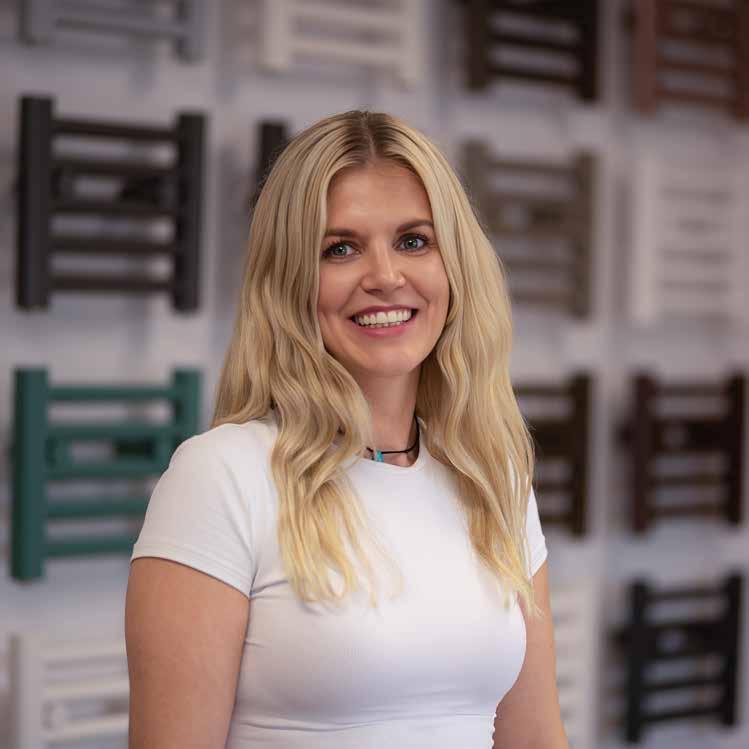
like something thrown together in a back office with a printer on its last legs. The brochures are polished, stylish and carefully considered. Emily explained that much of the imagery is CGI rather than traditional photography, something that came as a surprise, because it is so convincingly done. That attention to detail matters. DQ may deal in heating products, but it understands presentation, and it understands that how a company appears tells customers something about how it operates.
If the business began in Brandon, why Thetford?
The answer, interestingly, is not romantic. It was not because of some deep ancestral pull or lifelong attachment to the town. It was because DQ needed the right industrial space, and there was nothing suitable in Brandon. So the search widened. Thetford offered the buildings they needed, and just as importantly, a better catchment for staffing. For a growing business in this part of the world, that matters enormously.
Norfolk, as Stewart observed, can feel “out on a bit of a limb”, and business logistics are not always straightforward. Being in Thetford helped with access, staffing and connections, including long-established courier relationships, such as Team C Express Logistics. Over time, it became clear that the move had given DQ not just more square footage, but a stronger platform.
And the company certainly used it.
The current site did not happen all at once. First came part of the building. Then more of it. Then, in 2018, the addition of a powder-coating plant, allowing DQ to finish products in-house. That was a major step, and it remains one of the company’s distinguishing features. While many firms are purely distributors
and others are manufacturers based overseas, DQ sits in an intriguing middle ground: sourcing products globally, refinishing and adapting them in-house, and creating something that is part distribution, part manufacturing, part specialist craft.
That crossover is part of what makes DQ different. Stewart describes the company as not quite a manufacturer and not quite just a distributor. It buys in products, refinishes them, builds variations and develops ranges with a flexibility that a more rigid business model would not allow. The result is a company that feels nimble, but not makeshift; established, but not complacent.
Thetford, then, has played a quietly significant role in the firm’s journey. It gave DQ room to breathe and to expand. It gave it access to staff. It gave it a workable location for the national business it had become. Yet Stewart and Emily are also candid that, because so much of their energy has gone into building DQ’s national presence, they have perhaps not connected with the local business community as much as they might have done. In a way, that honesty is refreshing too. Not every company wraps itself in instant “community” language. DQ’s local commitment seems to come more through practice than proclamation: using local trades, local service providers, supporting local businesses where it can, and, every Friday, ordering lunch for the team from Mr Pat’s.
That weekly ritual, “Fat Friday”, as they call it, feels telling. A company can talk all it likes about culture, but the real measure is in how people actually work together. And at DQ, team culture clearly matters.
Both Stewart and Emily repeatedly returned to the importance of the wider team, from fellow directors James Gorniak and Jody Loram to the staff across
the offices, production, and warehouse. Getting the right people, they said, has not always been easy. There have been periods of high turnover and frustration. That, too, was spoken about without varnish. When things do not work out with staff, Stewart pointed out, employers are often as disappointed as the employee because they genuinely want it to succeed.
At present, though, they feel they have the strongest team they have ever had. There is mutual trust, shared work ethic and, just as importantly, a sense that people genuinely want the best for the company. They even socialise together occasionally, which in office terms is usually a strong sign that things are going rather well.
And then, of course, there is Barney.
Every good magazine feature deserves at least one scene-stealer, and Barney the dog fulfils the role beautifully. He contributes, according to Emily, “a noise”, and, she added with admirable precision, “a lot of bloody noise.” He also contributes stress relief, affection, office visits and a lunchtime walking routine for Stewart, which may or may not be as beneficial for Stewart as it is for Barney. In any business profile, a dog can sometimes feel like a decorative add-on. Here, Barney sounds less like a mascot and more like a genuine member of the furniture, albeit one that barks.
For all the warmth and humour, though, DQ’s success still rests on something harder-edged: customer service.
This is a phrase abused by almost every company in Britain, but Stewart and Emily give it substance. In practice, for DQ, it means being available. It means answering queries properly. It means resolving problems instead of hiding from them. It means not
fobbing people off, not burying them under layers of automated responses, and not vanishing when something goes wrong. Their customers are account holders and repeat buyers, so relationships are everything. In that kind of business, service is not a slogan; it is survival.
As for the future, DQ’s ambitions are measured but clear. The company wants a bigger market share, stronger brand awareness and continued growth. But, and this is the important part, not at the expense of its values. They do not want to be the cheapest in the market if being the cheapest means compromising service or product quality. They are comfortable occupying that middle ground: not bargain basement, not eye-wateringly premium, but solid, ethical, reliable and personal.
By the end of the conversation, Stewart and Emily landed on three words that best describe DQ Heating: relationships, quality, service.
It is hard to improve on that.
Because in the end, DQ Heating is not really just a company that sells radiators, towel rails and heating products. It is a company built on relationships: between husband and wife, family and business, directors and staff, supplier and customer. It is a company that grew patiently rather than noisily. And from its base in Thetford, it is proving that even an industry most people never dream of joining can still produce a story full of character, resilience and the occasional office dog.
In a world rather too fond of instant success, DQ Heating is something more substantial: a business that took its time, found its shape, and kept going. For readers in Thetford, that may be the warmest story of all.
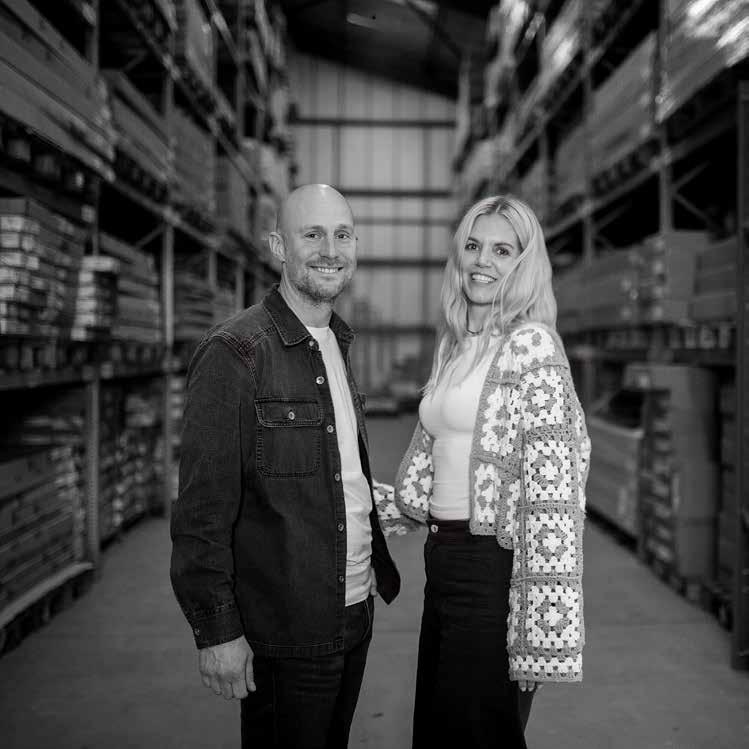
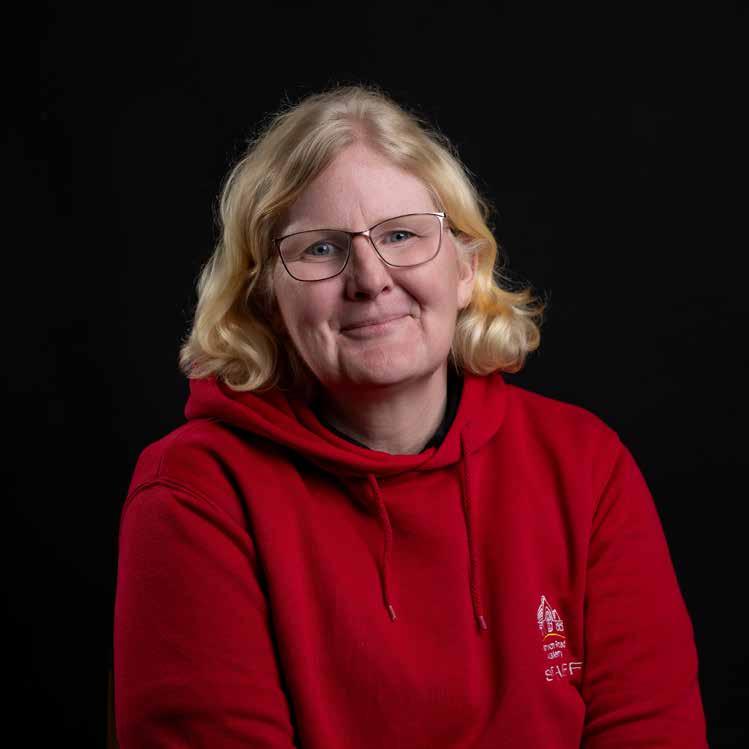
How Melanie Jeanes is quietly rewiring PE, one lap, one laugh, and one borrowed hockey stick at a time.
Written by Martin Angus
There’s a particular kind of honesty you only get when someone is mid-sentence and realises they’ve accidentally told you the truth.
“I never really wanted to be in education,” Melanie Jeanes says, with the calm candour of a person who isn’t trying to polish the story for anyone. No heroic childhood vision. No, “I always knew I’d be a teacher.” Just a bus ride, a hospital job in Bury St Edmunds, and a creeping sadness that other parents seemed to be doing the holidays better.
On the bus, she’d listen to conversations about family plans while her own two boys were parked in holiday clubs. It wasn’t dramatic. It wasn’t tragic. It was just… not the life she wanted.
“So I thought, well, the only way I’m going to get every holiday off with my boys is going to education.”
And like that, a decision made for family logistics
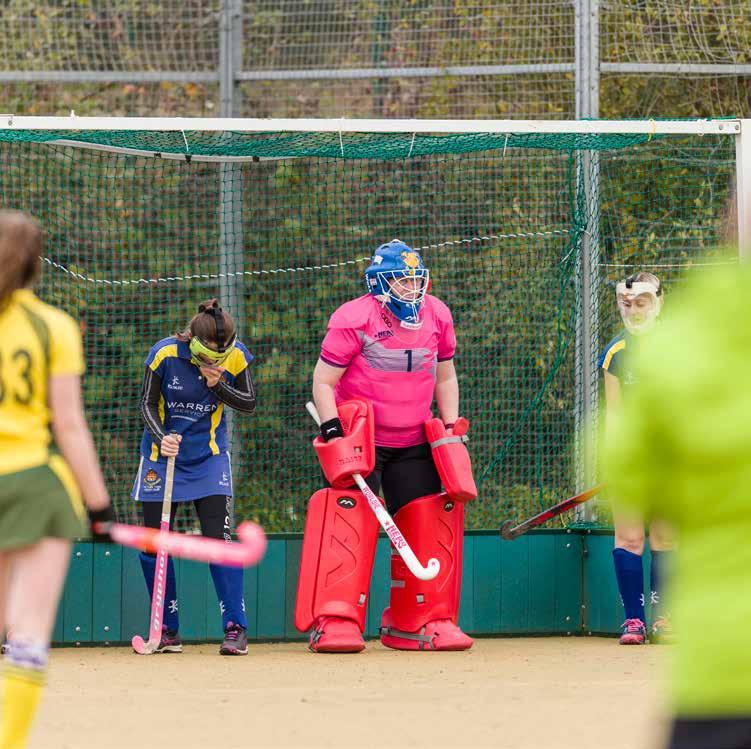
became the spark for something that now touches hundreds of children across Thetford, at Norwich Road Academy School, in after-school clubs, at junior parkrun on a Sunday morning, and on the hockey pitch where Melanie, at 47, still straps on the kit and stands between the posts for Thetford Town Hockey Club.
If you’re looking for the moral of the story, it might be this: sometimes community champions don’t start out chasing purpose. Sometimes they start out chasing the school holidays.
The accidental PE teacher
Mel’s route into school life wasn’t via a teaching degree and a neat career ladder. She got a role as a teaching assistant, eleven years ago now, and learned “lots of different things” the way you do when you’re thrown in at the deep end and realise there’s no ladder after all, just a lot of climbing.
When the school’s PE Coach left, Melanie was

offered the opportunity to take it on. The offer came with a chance to gain a qualification that would allow her to teach PE across the school. The principal who gave her that chance, Mrs Miles, is a name that returns later in the interview like a small but significant drumbeat: someone saw something in Melanie, and said, Go on then. Have a go.
If there’s one phrase that sits at the heart of Melanie Jeanes’s worldview, the thing she repeats in different forms, across different topics, without even noticing she’s doing it, it’s exactly that: have a go. Not “be the best.” Not “win.” Not “prove yourself.” Just have a go.
PE, without the Trunchbull energy
Ask any adult in Thetford about PE at school, and you’ll get a wide range of reactions, but they’ll mostly land in one of two camps: the ones who loved it, and the ones who still tense up at the memory of standing in a freezing playground while someone with a whistle judged their worth by the speed of their sprint.
Melanie knows that version of PE. She grew up with it too, the kind where if you weren’t good, you weren’t acknowledged. You were “put to one side.”
“I wouldn’t want to be the Mrs Trunchbull type character,” she says, and you can hear the conviction behind the joke.
That’s not to say she’s anti-competition. In fact, she’s cheerfully honest about being competitive. When Norwich Road go to competitions, she wants them to do well. She’ll guide them. She’ll cheer them on. But her metric of success isn’t a trophy photo. It’s a child returning to school “buzzing” because they did something they hadn’t done before, met children from other schools, and actually enjoyed
themselves.
“It’s what it gives to you,” she says, and she uses the same logic to describe her own hockey. If she comes off the pitch smiling, she’s happy, win or lose.
This is the Melanie doctrine in a sentence: joy first, outcome second.
The dopamine hit of a ten-lap victory
Melanie talks a lot about what she calls “the little wins.” Not the headline moments, the “big wins”, but the small personal victories that, to a child, can feel like moving a mountain.
She tells a story about a child in her after-school running club, who managed five laps on her first attempt. Melanie admits she felt upset, not with the child, but with the situation, because the child hadn’t hit the “ten laps needed for the time.” It’s the kind of detail that matters, because it shows how easy it is, even with the best intentions, to slip into a numbersand-targets mindset.
Then, five weeks later, the same child ran the full ten laps.
“And I said to her… it wasn’t about getting a personal best in a time,” Melanie explains. “It’s about building up those laps.”
That’s the learning. Not just for the child, for the adult too. The point isn’t to be fast. The point is to keep going. To improve at your own pace. To understand that progress is still progress, even if it doesn’t come with a medal.
And it works. Melanie mentions the “daily mile,” and you can almost picture it: children who once hesitated now moving more freely, because the fear

Discover beautifully crafted plant-powered skincare, handmade in small batches and available throughout Norfolk
Thetford Saturday Market 08:30 - 14:30

of being “bad at PE” has been quietly removed from the room.
Thetford: football town, but not only football
Thetford is, as Melanie puts it (with a small laugh and total accuracy), a “huge football town.” We’ve got teams, leagues, loyalties, and enough post-match analysis in the local supermarkets to rival Match of the Day.
But Melanie’s mission is bigger than football. She wants children to see that sport isn’t a single narrow track. It’s a field. A whole landscape. Something for every kind of body and every kind of brain.
That’s why she gets so much satisfaction from unexpected crossovers: boys trying netball, expecting it to be “girly,” then realising they enjoy it and want more. Children discovering they like something they’d never even heard of before. A child who wouldn’t normally shine in the classroom suddenly finding their moment in movement.
Because for Melanie, PE isn’t simply exercise. It’s identity building. It’s confidence. It’s belonging. It’s resilience. It’s the feeling that you can be part of something without being the star of it.
“I don’t want to see heroes,” she says. “I want to see team players.”
And she’s clear-eyed about why. Teamwork “goes into everything.” It’s the stuff of adult life: friendships, work, family, mental health, the ability to show up for other people and to let other people show up for you.
Sunday mornings at Breckland Sports Centre
If you want to see Melanie’s philosophy in its purest
form, you go to junior parkrun.
On Sundays at Breckland Sports Centre (on the field behind), there’s a warm-up and welcome at 8:50 am, and at 9:00 am “it’s all go.” The course is two and three-quarters laps of the fields. Children can run it. They can walk it. They can even skip it, Melanie says, and you can hear her shrug through the words: we don’t mind.
The age range is four to fourteen, and Melanie is careful to repeat the key message: it’s not a race in the traditional sense. The children are “racing against themselves,” if anything.
Of course, personal bests matter. Melanie is delighted when children get PBs. But she’s equally pleased for the child who turns up every week and chips a second off, or manages to finish without stopping. The atmosphere, volunteers cheering, parents chatting, children laughing, is the point.
And then she says something that feels deceptively small but is actually enormous: she admires the parents for getting up early on a Sunday and bringing their children.
Because that, she points out, is often the barrier. Not ability. Not interest. Just whether a grown-up can face the morning and make it happen.
At junior parkrun, you see it all: sporty parents in running gear, and parents in walking boots and jeans doing it anyway, cheering their child on, being involved, showing up. Melanie’s voice lifts as she describes the children finishing full of energy, while the adults arrive at the line like they’ve just crawled out of a swamp.
It’s funny. It’s real. And it’s exactly what community health looks like: not perfection, just participation.
“It gives me a reason to get up on Sunday,” she adds, and there’s a warmth behind it. You get the sense that this isn’t just “a nice thing to do.” It’s part of Melanie’s own structure. Her own anchor.
The child who changed everything
In the middle of all the sports talk, Melanie tells a story that isn’t about PE at all, and it lands like a quiet punch.
It’s about a child who found school “really, really tricky.” Home life wasn’t great. Behaviour was hard. Attendance was going the wrong way. The school tried “an awful lot of things,” and then something unexpected happened: the child bonded with Melanie.
At the time, Melanie worked in Key Stage Two, but the Senior Leadership Team moved her down to Year One to see whether the relationship could help. For two years, she says, it was “really tricky… emotionally, physically… really hard.” But they didn’t give up. She and another teacher kept working. The barriers started to come down. The child began to change. Mum began to get support too, and as Mum’s situation improved, it fed into him.
By Year Six, he was a different child. He moved on to Thetford Academy. Now, Melanie says, he goes to the gym, joined the army cadets, and is getting on with his work. She still keeps in touch with his mum.
“I couldn’t be prouder of him,” she says. “If he reads this, he’ll probably know it’s him I’m talking about.”
She doesn’t name him, and she shouldn’t. But she doesn’t need to. Every teacher, every parent, knows a version of that story. A child who needs one consistent adult. One person who sees them. One person who sticks.



At NMV Sweet & Savoury, we create stunning wedding cakes, birthday cakes, and custom cakes for any occasion. Our menu also includes French mousse mini cakes, desserts, and appetizers, perfect for adding a touch of elegance to your celebration. Delivery available.
Visit us online: www.nmvsweetandsavoury.co.uk
Follow us on social media: Facebook @nmvsweetandsavoury
Instagram @nmv_sweetandsavoury 07936 612846

And you realise something important: Melanie’s commitment to “the little wins” isn’t just about sport. It’s about life.
The art of making success fit the child
So how does she bring nervous, unconfident pupils into PE?
“Adapting what you’re doing and being flexible,” she says.
That might mean swapping a hard netball for a softball because catching hurts. It might mean redefining what success looks like for a child whose lesson needs to look “very different.” It might mean celebrating the child who joins in the warm-up for the first time, or who finally plays “Farmers and Foxes” instead of standing on the sidelines.
(For the uninitiated: Farmers and Foxes involves “tails”, bibs tucked into trousers, and farmers trying to nick them. It is, in other words, schoolyard chaos with a purpose.)
Sometimes, Melanie says, it’s recognising that sport has many roles. A child might not want to be chased in tag rugby, but they might love counting and calling who’s out. Another child might be terrified of taking part in dance, but could be the judge who chooses “star of the week” and gives feedback on routines.
“That piece of paper says you have to achieve [something],” she says, “isn’t going to be the same for everybody.”
In an age of targets and attainment charts, that is quietly radical.
After-school clubs: free, and for everyone
Norwich Road’s after-school clubs, free to attend, are where Melanie’s approach blossoms into a wider net.
Mrs Miles, the principal, aims to provide a wide range of extracurricular opportunities. Melanie’s skills are integral to this offer.
Clubs are smaller (around 20 children rather than 30-plus), and Melanie says they’re less about “teaching” and more about opportunity. They’re a taster. A chance to try things children may not otherwise access due to finances, lack of awareness, or parents’ shift patterns.
There’s after-school hockey. A running/walking club inspired by junior parkrun (Norwich Road is now a “parkrun primary school,” something Melanie’s been helping to roll out). There’s gymnastics in the warmer months, hockey, tennis, and yes, dodgeball, which she says is wildly popular, often with a waiting list.
It’s also not just sport. If a child seems interested in drama, staff point families towards groups like Magic Floor Productions or Thetford Players. The principle is the same: try things. Find your place. Join in.
“All free,” she repeats, and it matters. It’s one of those simple facts that, in a town like ours, carries a lot of weight.
The goalkeeper who wasn’t supposed to be a goalkeeper
And then there’s hockey, the other arena where Melanie lives what she teaches.
She didn’t grow up as a seasoned club player. She
started about ten years ago, a year after getting involved with the juniors. At first, she was one of those parents on the sideline, listening to the call for other parents to join and thinking, No chance.
Then one day she said, “If you ever need a goalkeeper, I’ll have a go.”
They needed a goalkeeper.
A week later, she was on the pitch at Wednesday training in full kit, thinking, “What am I doing?”
She hasn’t looked back.
There’s something wonderfully Thetford about that story: a volunteer shortage, a casual offer, and someone stepping into the gap and realising it’s changed their life.
Melanie is frank that she’s not much of an outfield player now, the modern game is quicker than the grass-based school hockey she remembers, but goalkeeping has given her confidence, resilience, organisation (you can’t forget your kit), and a positive mental attitude. It’s also been part of her mental health support, a release, a reason to show up because there’s a team counting on her.
That might be the most powerful argument for community sport you’ll ever hear: it keeps you coming back to yourself.
sport
Towards the end of the interview, Melanie talks about the pressures schools face, the “full” curriculum, the weight of targets, and the risk that PE, music and art become the first things squeezed when time and money are tight. She’s realistic: maths and English won’t go anywhere. Geography
and history will stay. But the so-called “non-core” subjects can start to feel optional, even when they’re anything but.
Her answer is simple: you need passion in a school. You need people who care enough to make it work.
And then she circles back, as she always does, to community. To volunteering. To do it because it’s in your blood. To staying grounded. To giving something back.
She even jokes that one of her hopes for Thetford’s sporting future is that Thetford Town Hockey Club gets back into town. The club has been without a local pitch, training and playing further afield, and Melanie describes how gutting that felt, how close it came to ending her playing days before she was ready. There are “plans afoot,” she says, and you can hear the hope under the careful phrasing.
Alongside that, she wants junior parkrun to grow, more children, more volunteers, more families discovering that “free” doesn’t mean “less than,” it means accessible.
And for Norwich Road? She wants as many children as possible to love being active, or at least like being active, and understand why it matters, in whatever form suits them.
She mentions, with clear pride, four children who picked up a hockey stick for the first time at an after-school club. She encouraged them to come to the junior section.
They did. Now they’re playing for the senior team at fourteen, “standing up against the big boys” and scoring goals.
That’s Thetford at its best: a child tries something,
an adult notices, a door opens, a community catches them, and suddenly the possible expands.
The final instruction
Melanie’s advice to young people who want to stay active for life is disarmingly blunt.
“Just do it,” she says. “And just enjoy it. And if you’re not enjoying it, change it. Do something else.”
Not everyone will join a club. Not everyone will love PE. Not everyone will find their sport.
But Melanie’s point is that movement doesn’t have to look like a medal ceremony. It can look like a walk. It can look like a jog around the field. It can look like turning up, out of breath, in jeans, because your child wants you there. It can look like being the kid who counts who’s out because you’re not ready to play yet. It can look like a goalkeeper at 47 shouting instructions that may or may not be helpful, but definitely are enthusiastic.
It can look like Thetford, messy, generous, determined, and full of people quietly doing their best.
And if you happen to be at Breckland Sports Centre on a Sunday morning, listening to laughter, watching little legs fly and grown-ups gasp for air, you might spot the whole philosophy in action.
It’s not about winning.
It’s about getting out there.
It’s about the little wins.
And, in Melanie Jeanes’s world, those little wins add up to something rather big.
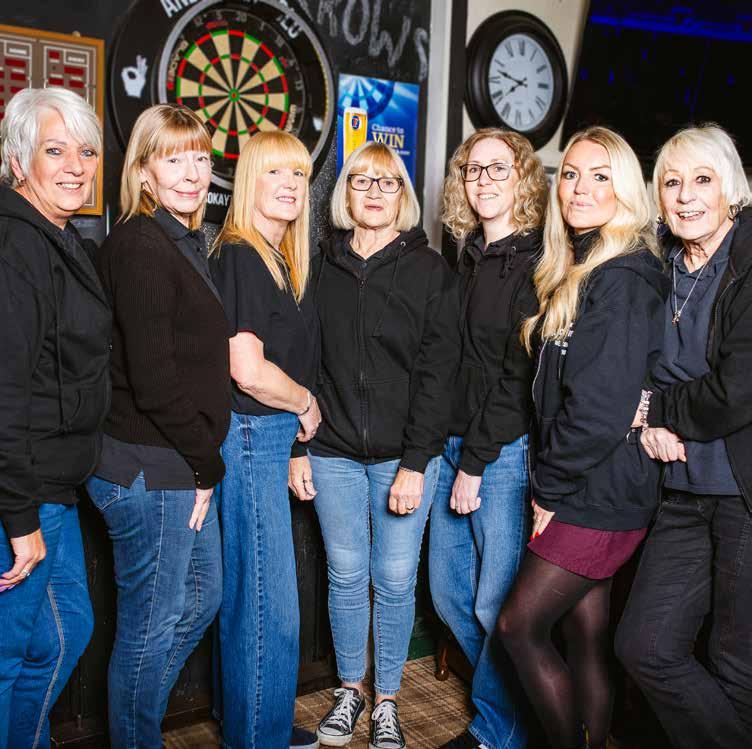
Written by Martin Angus
On an ordinary evening in Thetford, the low hum of conversation inside The Black Horse Pub might sound like any other local pub winding down after work. Glasses clink, laughter travels across the bar, and someone inevitably debates whether the jukebox should be left alone.
But on a darts night, particularly a decisive one, the Black Horse becomes something entirely different.
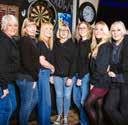
It becomes the home ground of one of the most entertaining, noisy, and unexpectedly formidable teams in the Thetford & District Ladies Charity Darts League.
Seven women. Seven personalities. One dartboard.
And on this particular evening, a league title was hanging in the balance.
The team itself is a collection of characters you might expect from a British comedy, each bringing their own style, humour and competitive spirit to the oche.
There’s Jan, the captain who keeps order, at least theoretically.
Sue, who proudly admits her motivation includes both the pub and the gossip.
Evie, whose darts have been known to hit… well… occasionally the wall and occasionally something even more surprising.
Pam, the landlady of the Black Horse, who somehow manages to run the pub and still find time to play. Nicnox and Nic are both part of the lively backbone
For over 100 years we have provided care, reassurance and professional support to local families when they need it most.
Our friendly and experienced funeral arrangers are here to guide you through each step of your journey.
Our services include:
• Personalised funerals
• Pre-paid funeral plans
• Direct cremation
• Flowers, transport and stationery
• Expert guidance
• Multi-faith services
• Masonry
• In-home consultations
Your local Funeral Arranger, Lisa
Thetford
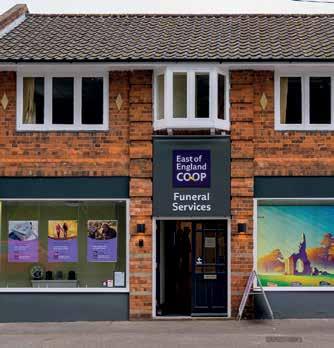
33-35 Bury Road, Thetford, Norfolk IP24 3DD
01842 845874
We’re open
Monday to Friday 10am–3pm Saturday Closed Sunday Closed
Find out more about all our services at: eastofengland.coop/funerals
And finally, Christine, affectionately referred to by the rest as the secret weapon.
They are, as one member describes them with a grin, “like a Carry On film, only with darts.”
And after spending just half an hour with them, you begin to see exactly what she means.
Trying to establish exactly how the Black Horse Ladies team (The Black Horse Fillies) first formed is a bit like asking who started the Mexican wave at a football match. Everyone has a theory, no one quite agrees, and several people talk at once.
Some credit Pam. Others Sue. There are mentions of previous players, old teams, and various people who joined, left, or were persuaded somewhere along the way.
Eventually, the consensus settles on something resembling this: someone suggested it, someone else agreed, and before long, a darts team appeared.
“That’s basically how it happened,” laughs one of them.
It wasn’t necessarily about sporting ambition in the beginning.
It was about the pub. The people. And, if we’re being honest, the gossip.
When asked whether they joined for the love of darts, the love of the pub, or the love of the chat, the answers come quickly.
“Pub and gossip,” says Sue without hesitation.
“Pub and darts,” adds another.
Pam, meanwhile, reveals that when she first joined she had never played darts at all.
“I was throwing them like a javelin,” she admits, to general laughter around the table.
If you imagine a quiet, polite evening of darts played in respectful silence, the Black Horse Ladies are here to gently, or loudly, correct that idea.
A typical league night begins with arrivals at the pub, a bit of catching up, and the slow build-up of competitive tension.
And then the darts begin.
There are smoke breaks. Cheers. Groans. And a healthy amount of what the team lovingly refers to as “encouragement”.
Sometimes the encouragement takes the form of shouting.
“If someone gets stuck on a double,” one player explains, “we start shouting abuse at them.”
Strangely enough, it works.
“This time, Pam!” someone will shout.
And when the dart finally lands, the room erupts.
What becomes clear very quickly is that darts is only


•
•
• Rates include VAT and Insurance
• Other vehicles available

• Customer pick-up and drop-off available
Ford Fiesta or similar from £30/day
Ford Puma or similar from £40/day
Hyundai Tucson or similar from £65/day








part of what keeps these women coming back week after week.
Friendship is the real engine behind the team.
“We just enjoy each other’s company,” one of them says.
“And it’s a good night out.”
There’s also a practical benefit.
“It gets you away from the men,” someone jokes.
Though, as another quickly adds, “Mine follows me anyway.”
The camaraderie goes well beyond the pub. The team regularly take holidays together — though notably without bringing the darts along.
Santa Ponsa, Benidorm and Lloret de Mar have all hosted Black Horse darts team adventures.
“They’re proper girly holidays,” they insist.
Although knowing this group, it’s probably safe to assume they’re not especially quiet ones.
When the team first started, winning wasn’t necessarily the main objective.
But something changed over time.
As their skill improved, so did their competitiveness.
“We never used to play to win,” one member admits. “But now we do.”
And this season, that growing competitive edge has brought them right to the brink of the league title.
They knew going into the evening that the final result could decide everything.
Every sports team has its standout performers and its… more unpredictable players.
The Black Horse Ladies are no different.
Christine, the team’s “secret weapon”, receives several approving nods when the subject comes up.
But the team is also refreshingly honest about their occasional mishaps.
Evie, for instance, is known for a certain adventurous approach to throwing darts.
“Evie’s the one most likely to hit the wall,” someone says.
“And people,” another adds helpfully.
Jan, meanwhile, has apparently achieved the impressive feat of hitting a light fitting in the ceiling during a throw.
“Which is why we don’t use that light anymore,” someone explains.
Despite their lively personalities, the team insists they don’t really have drama.
“It’s all a laugh,” they say.

But the stories they tell suggest their version of “no drama” might differ slightly from the rest of us.
There was the time someone tripped over the oche and fell flat on the floor.
The time a dart ended up stuck in someone’s arm (thankfully without serious injury).
And, perhaps most famously, the mysterious presence of what one player delicately describes as the team’s “phantom farter”.
At this point, the entire group dissolves into laughter.
For the sake of magazine decency, names will remain undisclosed.
While the darts are competitive, the league itself has an important purpose.
The Ladies Charity League raises money each year for local causes.
Teams contribute through sign-on fees, raffles and fundraising events, with the money distributed to charities chosen by the league.
Sometimes the donations support local families facing difficult times., for example the family of Lyn Applegate, who sadly recently passed away on her way to a darts tournament.
Sometimes they go to medical causes or community organisations.
It’s a reminder that beneath the laughter, teasing and flying darts, there’s something genuinely meaningful happening.
“It’s just girls having fun throwing arrows,” someone says.
“But it’s for charity too, which is lovely.”
After the interview ended, the team gathered for a group photo near the dartboard.
Then it was time to play.
The pub filled with the familiar sounds of league night: laughter, clinking glasses, the dull thud of darts striking the board.
The Black Horse Ladies settled into their rhythm.
There were cheers. There were groans. There was probably the occasional comment shouted across

the room.
But there was also determination.
Darts were landing.
Scores were ticking down.
And slowly, steadily, the match turned in their favour.
By the end of the evening, the result was clear. The Black Horse Ladies had done it, the final score 6-1.
They won their decisive match, and with it, the league.
The celebrations were exactly what you would expect.
Loud. Joyful. Slightly chaotic.
Someone suggested music.
Someone else suggested drinks.
And somewhere in the background, someone almost certainly started singing “Midnight Train to Georgia,” a song the team once adopted as their unofficial anthem after a particularly memorable night out.
In a world where local leagues and community groups often struggle to survive, the Black Horse Ladies represent something important.
They prove that grassroots sport isn’t just about competition.
It’s about friendship. Laughter. Community.
And sometimes about shouting encouragement at a teammate stuck on double two.
They are also living proof that you don’t have to be a professional athlete to enjoy sport.
You just need a dartboard, a good group of friends, and the willingness to laugh when things go slightly wrong.
Before the evening ended, the team had one piece of advice for any local women thinking about joining a darts league.
“Just do it,” they said. “But not on our team,” one quickly added.
“We don’t need any more players.”
What the league does need, however, is more teams.
Numbers have dropped in recent years, and the Black Horse Ladies would love to see more players getting involved again.
Because the truth is, dart nights like this aren’t just about winning trophies.
They’re about creating stories.
Stories of laughter, friendship and the occasional dart landing somewhere unexpected.
And judging by the celebrations at The Black Horse, this particular story, one of seven women, one dartboard, and one winning night, is going to be told in Thetford pubs for quite some time yet.
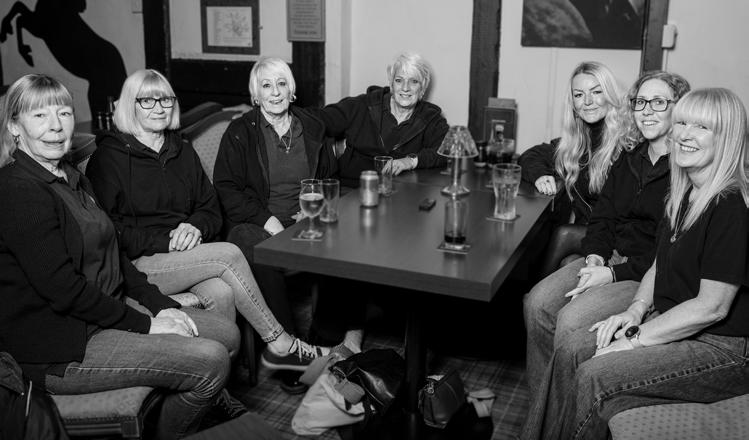
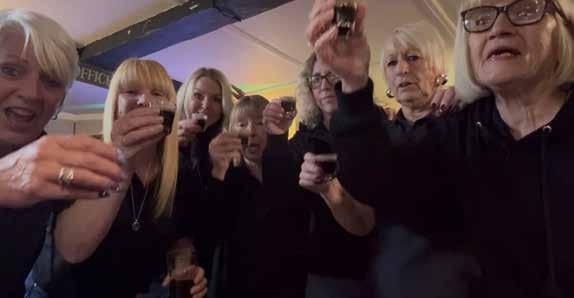
‘Stories of laughter, friendship and the occasional dart landing somewhere unexpected.’
(‘6 -1 Celebrations’Photograph courtesy Pam Gillman)

Written by Martin Angus
On most days in Thetford, you can set your watch by the usual rhythms: a steady shuffle along King Street, a purposeful dash into the market, the gentle hum of traffic threading the town’s well-worn routes. But if you listen carefully, there’s another sound that’s become part of the local soundtrack in recent years, a faint electric whirr, a cheery voiceover, and the unmistakable sense that someone is about to discover “what’s around the corner” whether the corner is ready or not.
That someone is Bob Blogg, writer, wanderer, accidental filmmaker, mobility-scooter myth-buster, and the creator of The Medusa Project Thetford, a home-grown adventure series that has quietly become a lifeline (and a laugh line) for people who move through the world on wheels.
If you’ve seen Bob in town, you’ll know the look: the calm concentration of a man calculating angles, kerbs, ramps and human behaviour in real time, with the
easy confidence of someone who has spent a lifetime solving problems. If you’ve read his column in Reflections of Thetford, you’ll know the voice: dry, curious, and cheerfully unimpressed by the kind of “accessibility” that involves three steps and a prayer. And if you’ve dipped into his YouTube channel, now approaching 140 videos and around 85,000 views, you’ll know the mission: to show mobility scooter users that life doesn’t stop when your legs do.
Bob puts it plainly. “I was still me,” he says. “But I was on wheels.”
Before illness redrew the map of his life, Bob’s world was made of code.
“Computing and coding,” he says, as if that explains everything, and in a way, it does. Bob is one of those people who didn’t just use computers; he wanted to

know what they were thinking. He started with an idea many of us have had at some point, I’ve run out of books to read; I’ll write one, and then turned it into the most Bob Blogg origin story possible.
In around 1980, armed with a “good old-fashioned typewriter,” he began typing a fantasy novel set under the sea, full of “seahorses and everything… fishies in the undersea.” It was charmingly ambitious, and it might have ended there, except Bob wanted it transcribed. There was no slick speech-to-text, no copy-and-paste. So he did what any reasonable person would do: he got a computer.
An Amstrad, no less, one of those early green-screen beasts with the charisma of a calculator and the processing power of a nervous hamster. Bob started typing his novel into it… and promptly became more interested in the machine than the manuscript.
“I got more interested in the computer than I did in the actual book,” he admits. The book was finished-ish, never published, carried around for years like a loyal but slightly damp sandwich, and eventually left behind somewhere in the great bed-sit Bermuda Triangle of life. He still has “two thirds of it,” which feels about right for a man who doesn’t so much abandon projects as evolve them into entirely new organisms.
That curiosity, the instinct to look at something and ask ‘but what is it doing?’ didn’t fade. It became his career and his hobby, and for decades he rode the rising wave of computing. He’s the sort of programmer who was “poached all over the place” and barely had to apply for jobs. When he did have to interview after 30 years, he got the role anyway. Bob has always had a knack for finding the logic in chaos and the humour in inconvenience, two skills that turn out to be extremely useful when your mode of transport is a batterypowered chair and the world is built like an obstacle course designed by someone who hates knees.
A French school, a museum habit, and a lifetime of “why?”
Bob’s curiosity has deep roots. As a child, he attended a French school in South Kensington because his parents worked there, his mother as a housekeeper, his father as an electrician. It was, as Bob puts it with characteristic bluntness, “very upstairs, downstairs, and we were definitely downstairs.”
But the location had an upside so perfect it sounds fictional: the school was directly opposite the Natural History Museum.
“There’s nothing better than bunking off school and running over to the National History Museum,” Bob says, cheerfully confessing to what may be the most educational truancy in British history. He spent “more time running around the museum” than in class, soaking up facts and fossils and, one imagines, the early realisation that learning works best when you can roam.
Even now, that museum-minded instinct remains. Bob looks up the origins of words. He tracks meanings back through French and Latin like a man following footprints. He wants to know how things connect, and that is, arguably, the entire DNA of The Medusa Project: connecting people to places, and places to possibility.
When the body changes, the world changes
Bob’s diagnosis is primary progressive multiple sclerosis, a form of MS that tends to worsen steadily over time. But the path to that diagnosis was not tidy.
In the mid-2000s, living in Norwich, he began finding it harder to walk. His legs grew achy; the pain arrived first like an occasional complaint and then like a permanent resident. He went to the doctor.
“They said, ‘Well, you drink too much.’”

It’s the kind of line that lands in the room with a thud, partly because it’s absurd, partly because it’s familiar to anyone who has ever had a real medical issue waved away with a lazy explanation. Later, after the MS diagnosis, the doctor apologised. But for Bob, the period between “it’s probably your fault” and “here is the actual reason” was another stretch of hard ground to cross.
He was working in publishing and web support in Norwich. Then his condition worsened. Eventually, during his time working with the British Trust for Ornithology (BTO), where he managed membership databases, not birds, he reached the moment that still gives you chills to picture.
“One day I just literally fell on the floor… and said, ‘I just can’t walk anymore.’”
The BTO supported him through it, and he stayed with them about ten years, later taking voluntary redundancy around the COVID period, a practical decision timed neatly around retirement age. Bob is 70 now, and he tells you with the satisfied air of a man who has survived both illness and bureaucracy and still has jokes left.
Emotionally, he says, coming to terms with it took “a good few years.” But he also says something that explains a lot about him: mentally, he didn’t spiral.
“I’ve always been laid back,” he shrugs. “I’m still living in my head a lot.”
And there’s the programmer again: problems to solve, routes to plan, variables to consider. The logic of coding became the logic of navigating a town where accessibility is often a rumour.
The reality of wheels: steps, toilets, and the “prison” of roads
Mobility scooters, Bob has learned, don’t just move you, they reveal the world as it really is. The obstacles aren’t
always dramatic. Often they’re small, everyday, quietly humiliating.
“There’s always a step,” Bob says. A step at the shop. A step at the café. A step at the place you didn’t even realise had a step because you’ve never needed to notice it.
Then there’s the practical geography of living: doctors, dentists, pub meet-ups. Before you leave the house, you start playing mental chess.
“First question is, can I get in the pub? Are there steps? Where’s the toilet?”
Toilet access becomes, in Bob’s words, “critical.” You can’t wing it anymore. You can’t just hope. You have to know. And that need to know, that desire to reduce anxiety by replacing it with information, is one of the engines behind his videos.
But Bob’s biggest local frustration has a shape, and he’s named it.
Thetford, on wheels, can feel like a “prison” because of the A-roads that surround it. There are places that are tantalisingly close — the forest, the open space, the sense of “somewhere else”, and yet maddeningly unreachable unless you have a car or a van.
That’s where the Medusa comes in.
Why Medusa?
The Medusa Project is not named after a hairstyle, a myth, or a particularly disastrous haircut. It is named after a map.
Bob noticed that the A11 and the surrounding roads form the shape of a Medusa: a head and tentacles that wrap around Thetford. The A11 is the head. Thetford’s
main routes become the “tentacles.” The old London Road forms a curve below.
Once you see it, you can’t unsee it, and Bob being Bob, he turned that observation into a whole project, complete with the kind of metaphor that makes local readers nod and say, “Yes! That’s exactly what it feels like.”
He originally flirted with calling the ring road something much less mythological, but a tragic accident near the old London Road crossing made the joke feel wrong. So Medusa it became: a clever name, a pointed critique, and a neat visual anchor for what he’s trying to change.
The birth of a project: determination, a van, and a phone camera
Bob’s sense of purpose after work didn’t arrive with a grand announcement. It arrived with a friend.
A friend named Anne, still a great friend, he says, had a van. That van meant freedom. If Bob wanted to go somewhere, Anne could get him there with his scooter. So he started going: North Yorkshire. Penzance. Places with long roads and open views.
And somewhere along the way, he did what modern humans do when something delights them: he filmed it. At first with his phone mounted on the scooter. Then with action cameras. Then with more kit. Then with friends helping, including Adrian, who has become something of a sidekick, the co-adventurer who will, by the sound of it, follow Bob into mud, gravel, and questionable “shortcuts” with a level of loyalty usually reserved for golden retrievers.
By March 2023, after leaving work and finally having time, Bob made himself a promise: he was going to get out of Thetford on his big scooter and reach the forest properly, not just by car-transported cheating. He took
on Brandon Road, crossed the A11, and dealt with the reality of being a road-legal scooter user on roads where not everyone has read the memo.
“I get a lot of abuse because I’m on the road,” he says, and you can hear the weariness beneath the humour. He’s been shouted at. He’s been told to get on the pavement even when there isn’t one. He’s had drivers pull alongside and give him a mouthful, captured on video for posterity like an accidental documentary about manners.
Bob’s response? He replies humorously. He educates. He keeps moving.
Because that’s the point: the project isn’t a complaint. It’s a demonstration.
“Look, I’m doing it.”
Bob believes visibility changes everything. People don’t just need to be told they can do things; they need to see it. They need proof that a train journey is possible, that a museum visit won’t end in panic, that a theatre outing doesn’t have to be a logistical nightmare.
With modern trains, Bob says, “you can literally drive on them and drive off them.” Of course, he then immediately adds the local reality: at Thetford station, if you want to go to Norwich, you need to know the right entrance to access the platform properly. There are details like this everywhere, details that able-bodied people can glide past, and that scooter users need like oxygen.
He has learned the hard way about stations that look accessible until you’re stuck on the wrong side of the tracks. At one point, he ended up relying on “really big builders” to help lug his scooter, while he dragged himself up stairs. It’s the sort of story that would be tragic if Bob didn’t tell it with the practical tone of a man describing a
slightly annoying software update.
And that’s why his channel matters: it turns hidden knowledge into shared knowledge. It reduces fear. It gives routes. It gives options. It gives people back their sense that the world is still theirs.
Ask Bob for his most memorable adventure and he doesn’t pick the scenic one, or the cultural one, or the one where everything went smoothly. He picks the one that came with adrenaline and a lesson.
It was the day he got his Pride Colt Executive, a scooter with the range, he believed, to really “go for it.” He took it all the way up Brandon Road, into Brandon, then entered High Lodge “properly,” drove through, and emerged at the exit feeling triumphant.
Then the battery died.
It was a “range test,” Bob explains. The label promised up to 26 miles. Reality offered something closer to fifteen and a mild existential crisis.
But again: Bob is a problem-solver. He limped the scooter to the High Lodge exit, called a taxi, got home, and then rang his specialist insurance provider the next morning.
Within two hours, the scooter was back, rescued from the forest by a “big load loader.” The moral of the story: don’t believe everything on the label, and do get the insurance.
Bob pays about “£12 a month” for cover that includes breakdown and punctures, punctures he will sometimes simply drive on, because why not, if the world insists on being dramatic. “Until I started having mobility scooter insurance,” he laughs, “I don’t think I’d ever, ever claimed
on any insurance policy. Now I’m doing… oh, yeah.”
Thetford’s Top Gear… but with Gravel Scenic
If you think scooter reviews sound dull, you haven’t met Bob and Adrian.
They have test routes. Not just routes, named routes. There’s Acceleration Avenue, a short straight where scooters are tested for speed, with the gentle caveat that if you don’t stop in time “you will end up in the river.” There’s the Gravel Sea, a gloriously sarcastic name for a gravel-filled path near the new flats opposite the Jailhouse. And there’s the Axe and Triangle Mobility Scooter Test Track, a loop that helps them assess handling.
This is not a man pottering around on a scooter. This is a man running a motorsport franchise for mobility equipment, with a leaderboard and everything.
And now, in a delicious plot twist, manufacturers have started to notice.
A company called T-Sport has sent Bob scooters to review, properly, independently, with the kind of realworld testing you cannot fake in a glossy brochure. Bob’s latest is a Scote model (he cheerfully reels off letters and numbers like they’re the name of a beloved pet). They even filmed an “unboxing,” because naturally they did: welcome to 2026, where local scooter reviews come with production values.
Bob is pleased, not because of ego (though he does joke about being a celebrity), but because it validates what he’s been saying for years: disabled consumers deserve independent reviews, not just manufacturer marketing.
“If you buy anything… there are reviews,” he says. “But if you buy a scooter, there just aren’t any independent reviews anymore.”
So he’s building something bigger: a site called whatmobilityscooter.com, designed to become a searchable database of scooters, specs, manufacturers, and honest verdicts. Think car magazine, but for the kit that many people rely on as their legs.
Bob’s writing, and his whole presence, carries humour not as decoration, but as equipment.
“I think having a sense of humour is one of the most important things,” he says. “It’s a right, really… lighten up… relax and smile. Or giggle.”
It’s the kind of advice that sounds simple until you realise how hard-won it can be. Humour doesn’t erase the barriers, but it gives you leverage against them. It stops the world shrinking to the size of your frustration.
Bob doesn’t pretend disability is easy. He talks about the planning, the steps, the toilets, the ignorance. But he refuses the story where the scooter is a symbol of ending. For him it’s a tool of continuation, and sometimes, a vehicle for mischief.
What Thetford could do better
If Bob could change one thing in Thetford tomorrow, he wouldn’t ask for a statue, a key to the town, or even a dedicated scooter drag-racing strip (though one suspects he’d use it).
He wants access to the forest.
From Sainsbury’s, he points out, it’s “about 50 yards away.” But because of the A11, it “might as well be on the other side of the planet.” He imagines an overpass, an underpass, a ramp — any safe way to cross that doesn’t involve a mile-long detour, an underpass that’s hard to reach, or the grim risk of running out of battery with nowhere to charge.
And he makes an important point: it isn’t only scooter users who are locked out. It’s parents with pushchairs, older pedestrians, cyclists, dog walkers, anyone without a car.
He also has strong feelings about the narrow barriers he calls “Checkpoint Charlies”, those awkward chicanestyle gates meant to deter cyclists but which often end up deterring the people who most need access. “They don’t stop cyclists,” Bob says. “All they do is stop mobility scooters.”
It’s hard to argue with a man who has literally tested the gates with his own wheels.
“Your world hasn’t shrunk.”
If someone has just become dependent on a scooter and feels their world has collapsed inward, Bob’s message is direct.
“Well, it hasn’t, really,” he says. “You’ve just got a different way of getting around.”
He acknowledges the things you can’t do, cliffs, stairs, the occasional badly designed building, but he insists the story is bigger than the limitations. Most places, he says, are doable. And if you can walk a little with a cane, even better. What matters is refusing the idea that life is now “just the supermarket.”
Because Bob has seen too many people looking trapped on their scooters, as if their lives have quietly ended. The Medusa Project is his antidote to that sadness: a steady stream of proof that you can still go out, still explore, still be curious, still be ridiculous, still be you.
And if you need further evidence that he’s serious about never stopping, consider the other project he mentions almost casually: his Gothic House Library, built
from donated books, a local treasure of escapism and stories. When Bob isn’t filming Thetford’s hidden routes or plotting scooter tests, he’s reading, because a good book, he says, is “perfect escapism.”
When I ask what he’s most proud of since 2023, Bob doesn’t talk about view counts or gadgets or brand partnerships. He talks about range, not battery range, but human range.
“I’ve proved it,” he says. “If you’re on wheels, you’re not limited… you can literally get on a scooter and go anywhere.”
That statement is both hopeful and quietly radical. It challenges the town to think differently. It challenges the rest of us to notice the steps we never see. It challenges scooter users who feel stuck to try one more outing, one more route, one more train platform entrance.
In a place like Thetford, where community still matters and local stories still travel faster than Wi-Fi, Bob Blogg has built something rare: a project that is practical, funny, stubborn, and genuinely generous. He’s not asking for sympathy. He’s offering a map.
Or, more accurately, he’s offering an alternative to the map, a way to slip past the Medusa’s tentacles, even if it means taking the long way round, filming the whole thing, and laughing when the battery lies.
So next time you hear that electric whirr and spot a camera mounted like a tiny helmet-cam for the modern age, give Bob a wave. He’s probably off to see what’s around the corner.
And if history is any guide, he’ll bring the rest of us with him, one giggle at a time.
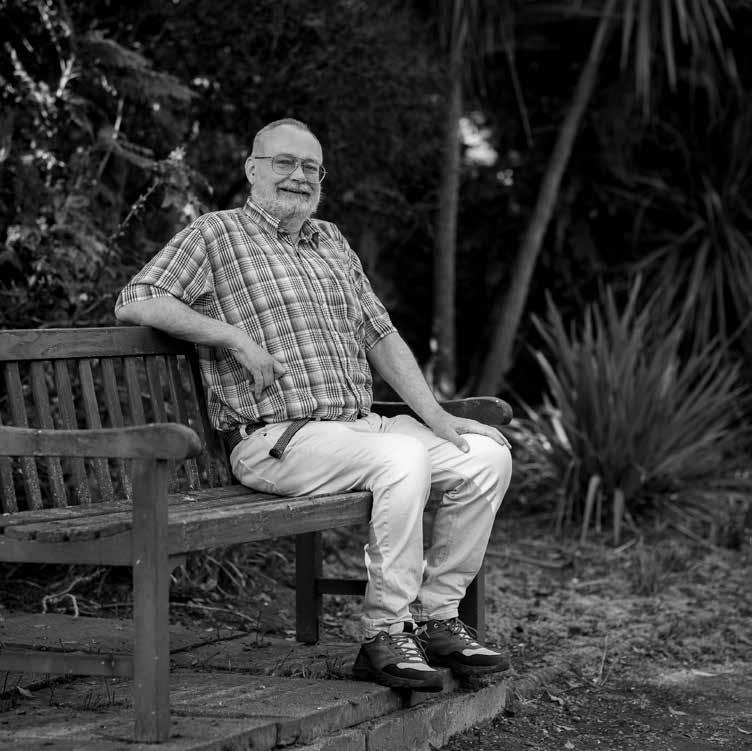
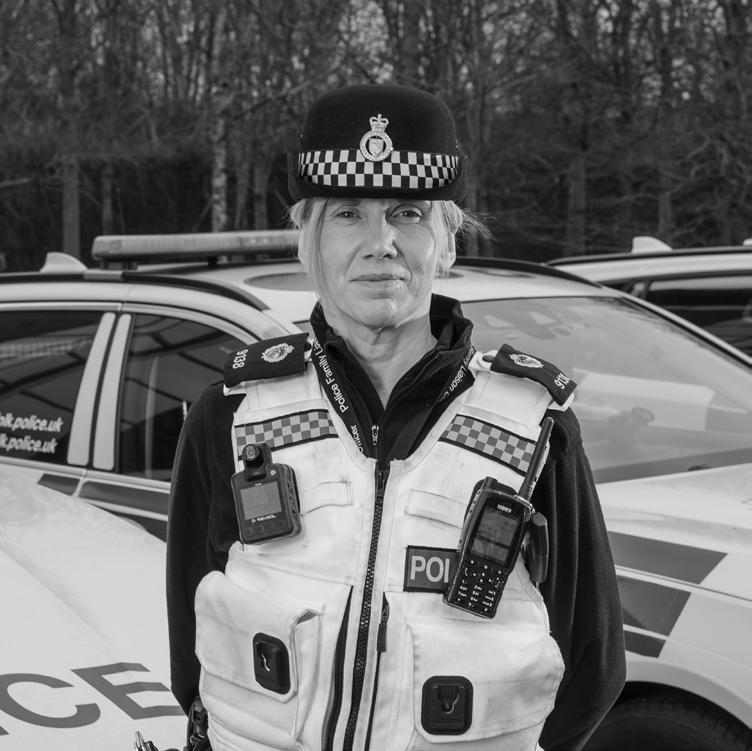

Written by Breckland Police
‘Thetford is Norfolk’s best kept secret’ – that’s what one of your local neighbourhood police officers was told when she first started in the town and what she still believes today. PC Leah Norton has policed in the town for over 28 years and still says there is nowhere else she’d like to work.
PC Norton started her career on response in Thetford and has never looked back. The response teams are the ones who go out to deal with the 999 and 101 calls, they are called from job to job and can find themselves covering domestic incidents one minute and serious road collisions the next. They are more often than not the first officers on the scene at any incident, and it’s certainly a job where no two days are the same.
For the past ten years, however, PC Norton has been a neighbourhood officer. Her current role as a beat manager is the modern take on a traditional ‘bobby on the beat,’ as she says: “We know the public would
love to see us out on foot all the time, but that’s just not how the world works anymore. We have to be able to get to jobs quickly, and often that means patrolling in a car or at least parking nearby! We do work out of Thetford police station, and we spend as much time as we can out and about across the whole area. We don’t just cover the town, we also go out to the local villages and more rural communities”.
The police station on London Road is a fully functioning police station and is home to many officers 24 hours a day; it doesn’t, however, have a front office facility for the public. If you do ever need to speak to an officer and are outside the station, there is a yellow phone by the front door that connects directly into our control room in Wymondham.
The beat manager role is slightly different to a response officer as PC Norton explains: “With response it’s going from job to job, but here in


neighbourhood policing it’s more in depth. You get the chance to work with people and organisations over a longer period of time and make a real longterm difference. It’s about building community relationships and seeing stuff through from start to finish.”
One of the really key parts of the beat manager role is working with young people across Thetford. PC Norton is often found in local schools giving educational inputs on everything from drugs and knife crime to stranger danger and antisocial behaviour. PC Norton continues: “By building those relationships earlier, we can open the doors and help those young people to make the right choices. We know that some of the families living in and around Thetford are really struggling, and for some of those kids, they just don’t see an alternative life, but the more opportunities we can show them, the more chances they have. We work closely with lots of different agencies, including the youth support services, to do what we can to just simply provide options for these kids”.
Often, that relationship with young people starts at nursery and primary school, covering the topics the kids really want to know about – regular questions include what kind of cakes the officers like and how fast the police car can go. Without fail, they always want to see the vehicle’s blue lights and sirens! That interaction happens out and about on the street, too, and one thing PC Norton would really like to see stop is when parents spot an officer and immediately say to their child, “If you don’t behave, then that police officer will take you away.” She explains why this is unhelpful to everyone: “We really need kids to know that we are trusted adults. If your child gets separated from you, we want them to know that they can come up to any police officer they see and ask for help. If they’re told that they’ll get taken away,
then that trust is lost. It gets so hard to try and turn that around when the kids grow up a bit, and we need teenagers to understand that they can tell police about inappropriate images they’ve been sent or behaviour that concerns them in the community.”
Working in a town like Thetford for so long does have its advantages, according to PC Norton: “I love just knowing so many people and watching the generations grow up. It makes my life easier, as often when you’re dealing with parents of a kid that is causing issues, there’s quite a chance you already know them from when they were doing similar things 25 years ago!”
One of the recent projects PC Norton has been working on is the town’s Shopwatch scheme, which is having a significant impact on shop theft here. Prevention is a big part of a beat manager’s role, and PC Norton says they really wanted to empower the local shops: “There was a time when people working in the shops felt like there was nothing they could do to prevent these thefts. We got them all working together and talking to each other, sharing information and hopefully making a difference. They have a direct line through to us to chat through what they can do and how they can make small changes to have a big impact. We can’t be everywhere and the shops understand that, but by helping them to communicate, it is helping. Obviously, each store has its own rules around what they can do and what they can share, but we can explain what the law is.”
Alongside her neighbourhood role, PC Norton does have specialist training, much like many of her other colleagues. Her additional speciality is as a Family Liaison Officer (FLO), which she has done on and off for 15 years. Hopefully, most people won’t have ever had to work with an FLO, but they are the officers deployed to support families in traumatic incidents

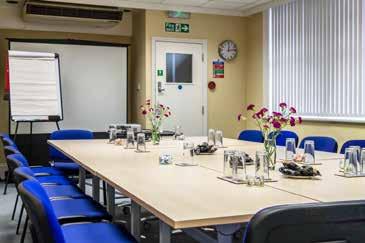

enquiries@angliahousebusinesscentre.co.uk www.angliahousebusinesscentre.co.uk
such as murder or fatal road traffic collisions.
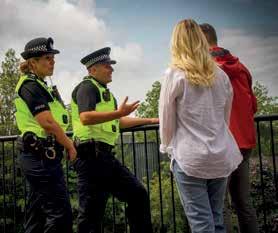
PC Norton says, “You are with them at their most intimate time, and you have such a crucial role to support them. They are trying to say goodbye to a loved one while all of these police processes are happening around them, and that can be so challenging for them. We are with them from the start of the journey through so many difficult moments, including often identifying their loved one, sitting through a trial and/or inquest and even returning property to them years down the line, at their most vulnerable time. It covers so much – from making cups of tea to sorting logistics for them to attend a trial that lasts many months. I do genuinely love this role, though and feel that it makes such a difference to those families. It feels like the most rewarding part of such a long career.”
When she’s not carrying out FLO work, which does take her across the county, PC Norton is normally back on the beat in Thetford working on the team’s local priorities. These are decided every quarter with input and ideas from the local community, and at the moment, they are working on tackling street drinking and drug dealing as well as the perennial issue of speeding. There is a particular focus this summer on the recent changes to livestock worrying laws and making sure that the rural community are supported.
If you have anything you want to chat to the team about, you will often find them at local engagement surgeries in the town, or you can email them at SNTBreckland@norfolk.police.uk
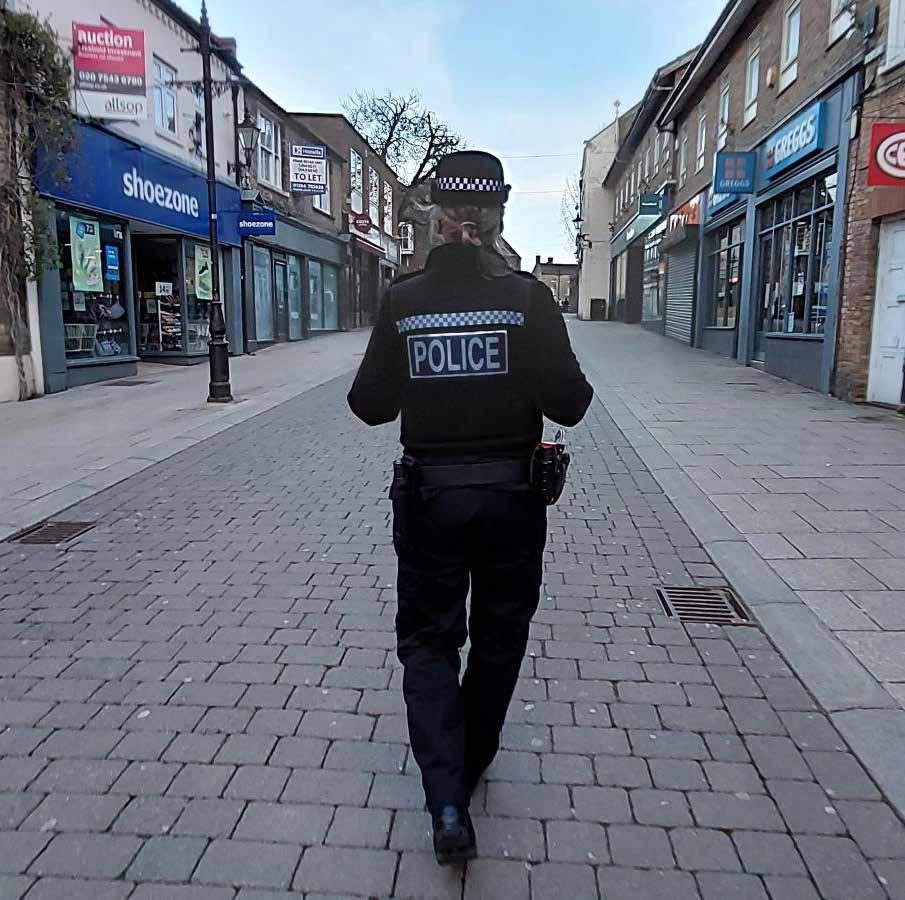
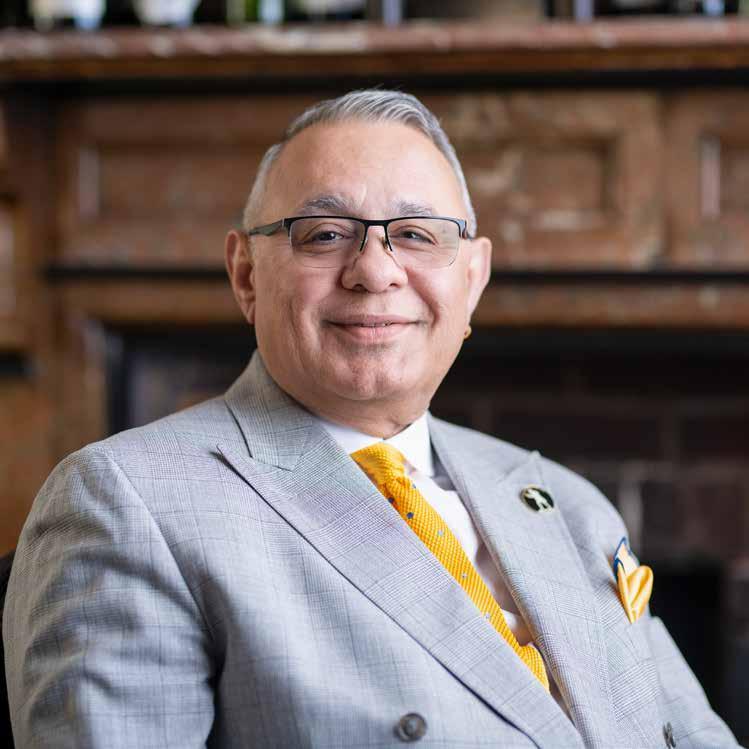
Written by Martin Angus
At The Thomas Paine Hotel in Thetford, Gez Chetal has turned hospitality into heritage, and a local landmark into a stage for global history.
There are some hoteliers who run buildings, and some who build businesses. Then there are the rare few who do something more ambitious: they create a place with a pulse, a story and a sense of occasion. Gez Chetal belongs firmly in that last category.
To step into The Thomas Paine Hotel in Thetford today is to enter a space shaped not only by design and determination, but by conviction. It is stylish without being sterile, steeped in history without becoming dusty, and unmistakably personal in its sense of welcome. Yet none of
that happened by accident. Behind the polished interiors, themed rooms, museum displays and community events lies a journey forged in risk, resilience and an almost stubborn refusal to think small.
Gez’s path to Thetford did not begin with romance or nostalgia. It began with upheaval.
In 2012, after a deeply difficult period in business, he made the kind of decision that can alter the course of a life. Advised in the strongest possible terms to leave an unhealthy business situation, he walked away. That choice came at a cost. For two and a half months, there was no income, only outgoings and the sobering reality of starting again. To raise capital, he sold two properties in India. Then he went looking for a hotel.

What he found was the Thomas Paine Hotel, which he completed in May 2013.
It was not, by his account, a glamorous rescue. The building was not beyond saving, but the business was weak. Occupancy was low. Functions were scarce. The food offer lacked identity. The customer base was not right for the future he had in mind. In practical terms, he inherited a property with potential but little momentum. In commercial terms, it was a daunting proposition. He had paid £300,000 for it, and whatever came next had to work.
What did he bring with him? Experience, certainly. A willingness to make difficult decisions, absolutely. But above all, he brought resilience. It is a word people often use lightly, yet in Gez’s case it seems central to everything he has done since. He rebuilt the business from the ground up, reshaping staff, standards, menus and clientele, and doing so in a town where, as he discovered, change is not always immediately welcomed.
That was one of the great challenges of becoming a hotel owner in Thetford: not simply running a business, but arriving as a newcomer in a small town where opinions travel fast and loyalties often run deep. For a time, progress was slow. Gez speaks candidly about the years when the hotel made little money and felt more like a money pit than a success story. Banks were not queuing up to support a venture that seemed to absorb everything and return very little. Yet the long view mattered. He believed the hotel could thrive, and kept investing accordingly.
Today, looking around the property, it is clear that this patience has been rewarded.
Ask Gez what achievement makes him most proud and he does not isolate one room, one dinner, one award or one event. He points to the whole place. The hotel, as it stands now, is the achievement: the building, the atmosphere, the team around him, and the role played by his wife Rosy and daughter in shaping what it has become. This is, in every sense, a family enterprise as well as a hospitality business.
Its proudest chapters are not only commercial ones. During Covid, when doors were closing across the sector and uncertainty reigned, The Thomas Paine Hotel adapted quickly. Approached by the local council about housing homeless people and ex-offenders, Gez did what many others would not: he said yes. He opened rooms, initially without charge, and then on a longer-term basis when the arrangement became formalised. More importantly, he treated those residents not as a problem to be managed, but as people worth believing in.
Several, he says, had never worked before. Some had never been trusted. He offered both trust and opportunity. Some found employment. Some rebuilt confidence. Some still return now and then to see him. In an industry often judged on polish and presentation, this may be one of the hotel’s most meaningful legacies: not merely offering service, but offering dignity.
And yet for all this, there is another transformation that has made the hotel distinctive far beyond Thetford: its relationship with history.
When Gez first acquired the property, he admits he knew little about Thomas Paine. That changed quickly. As American visitors began appearing, drawn by Paine’s legacy as one of the great


political thinkers linked to the founding of the United States, the significance of the hotel’s identity became impossible to ignore. Here was a place associated with the man who wrote Common Sense, the pamphlet that helped ignite a revolution and still resonates 250 years after publication.
What followed was not a token nod to heritage, but a sustained act of revival.
Gez embraced Paine’s story with imagination and energy. Bedrooms were renamed after figures including Thomas Paine, George Washington, Ronald Reagan and Walt Whitman. Thomas Paine dinners were introduced. A microbrewery appeared under the banner of Common Sense Brewery. He began speaking to visitors, especially Americans, not simply as guests but as people encountering a living link to one of their founding narratives.
Most significantly, the hotel became home to what he describes as the only hotel in Britain with a museum, and the only museum in the world dedicated entirely to Thomas Paine. Supported by the National Lottery Heritage Fund, and created with strong narrative input from local Paine advocate Stuart Wright, the museum transformed the hotel from a place to stay into a place to discover. Guests can now dine, sleep, celebrate and learn under one roof.
This matters not only because it is unusual, but because it repositions Thetford itself. Gez sees the town not as a place people pass through, but as a place whose assets have too often stood disconnected from one another. Within a short walk, visitors can encounter the hotel and museum, the Ancient House Museum, Dad’s Army
connections, Castle Hill and the Charles Burrell Museum. For him, the challenge has always been to encourage collaboration, to turn separate attractions into a stronger collective identity.
That instinct has shaped his work far beyond the hotel walls. Through the local business awards he founded and continues to champion, he has tried to bring businesses together, create dialogue and foster civic pride. He speaks with obvious satisfaction about helping people collaborate who had barely spoken for years. There is humour in the stories he tells, but also a serious point beneath them: towns prosper when people stop guarding their corners and start working together.
If Thomas Paine gave the hotel one great historical narrative, Maharaja Duleep Singh has given it another.
Gez’s latest and perhaps most visually ambitious project is a themed room dedicated to Maharaja Duleep Singh, whose family history is closely tied to Elveden and to the wider region. The inspiration emerged gradually, through conversations with members of the Sikh community, organisers of Thetford’s Indian Festival, local historians and cultural figures, including Indi Sandhu and Peter Bance. Gez and Rosy, both Punjabi Hindus, found themselves increasingly connected to this strand of local history and to the people keen to keep it alive.
The result is not simply a commemorative plaque or decorative flourish. It is an immersive room, designed to offer guests an experience shaped by the visual language and atmosphere associated with Duleep Singh’s world. Gez drew inspiration from Elveden Hall, Indian architecture, and his own travels, including the Taj Mahal. He researched


extensively, adjusted ideas when better-informed voices advised him, and worked with independent local makers and artists to bring the vision to life.
That approach is characteristic. For all his confidence, Gez is quick to say he listens. He knows what he knows and is pragmatic enough to seek expertise where needed. The room, he believes, will offer something genuinely rare: not just history on display, but history inhabited.
Its opening is planned to coincide with Baisakhi, making the launch not only a hotel event, but a cultural celebration. Dignitaries have been invited, alongside Sikh and Punjabi television channels. An Indian folk singer is due to perform. Vegetarian food will reflect the religious context of the festival. The occasion promises to be festive, generous, and carefully curated, in keeping with Gez’s belief that when something is worth doing, it is worth doing properly.
Importantly, the project also brings economic benefits to the local area. Independent artists, decorators and furniture makers have all been involved. This is not heritage as abstraction; it is heritage generating work, pride and visibility in the present.
Looking ahead, Gez does not see the Duleep Singh room as an isolated flourish. He sees it as a beginning. His ambition is for all eleven bedrooms eventually to become themed rooms, each with its own identity and story. That vision is informed by a lifetime in hospitality and by travels through some of the world’s great hotels, from India to Dubai to London. He observes everything: decor, furniture, detail, atmosphere. Inspiration, for him, is not theoretical. It is something collected, remembered and reworked.
And so The Thomas Paine Hotel continues to evolve. It is a venue for weddings, functions and wakes; a museum; a community hub; a heritage destination; and, not least, a family-run hotel that still believes guests should leave as friends. In a time when so much hospitality can feel standardised and placeless, that matters.
For local readers, Gez’s story is a reminder that Thetford’s history is richer, broader and more internationally resonant than many may realise. For readers further afield, it offers an example of how heritage can be made active rather than inert, woven into the life of a business rather than sealed behind glass.
Gez Chetal has not merely restored a hotel. He has given it narrative force. He has taken a building linked to Thomas Paine, opened it to the world, and used it to tell stories that connect Norfolk to America, Punjab to Thetford, and local enterprise to international curiosity. In doing so, he has also issued a quiet challenge to the town around him: to recognise what it has, to work together, and to think a little bigger.
That may be the deepest thread running through everything he says. He believes in footfall, in collaboration, in standards, in spectacle, in history, in community and in possibility. He believes Thetford deserves attention. He believes visitors should see beyond the cliches. And he believes a hotel can be more than a place to sleep.
At The Thomas Paine Hotel, he is proving exactly that.
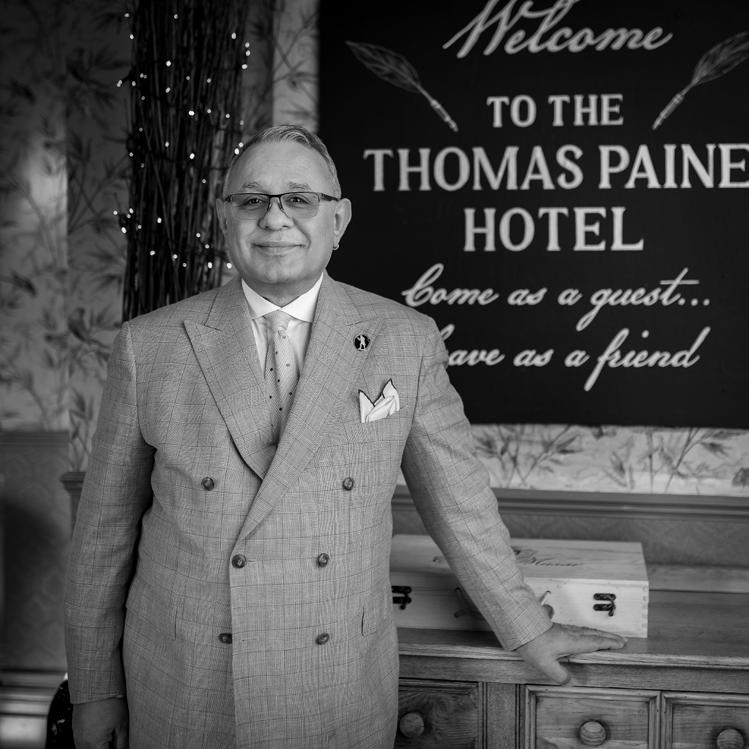

Written by Martin Angus
Barry Dexter spent half a century selling fruit, veg, plants and flowers, and he still measures life by the weather.
If you want to understand Thetford, you could do worse than stand at the market on a Tuesday or Saturday morning and listen. Proper listen. Not just to the clink of coins and the rustle of carrier bags, but to the talk: the greetings, the gentle moans about prices, the “go on then” bargains, the familiar voices that turn shopping into a sort of weekly reunion.
Barry Dexter knows that sound, like he knows the feel of a cauliflower in winter.
Barry is 87 now. He’s been retired for 22 years. But spend ten minutes with him, and it becomes clear: you don’t really retire from a life like the market. Not properly. It gets into your bones. You stop trading, sure. You stop loading at midnight, sure. But the market stays with you, in the way you judge a day by the sky, in
the way you talk to people, in the way you remember faces even when names slip away.
Barry’s journey on Thetford Market began the way many working lives used to: straight from school, young, full of ambition, and already half-trained by watching the grown-ups. His dad was a market trader, though Barry says it with a frankness that makes you laugh and wince at the same time.
“He was… rubbish at the job,” Barry says, not cruelly, just honestly, as a man who learned early that business isn’t sentimental. “If it’s hot and sunny today, you want loads of lettuces. But he’d go and buy exactly the same next week, even if the weather changed. People don’t buy the same when the weather changes.”
That line could be Barry’s whole philosophy in one breath: watch, learn, adapt. The market isn’t just buying and selling. It’s reading people, reading seasons, reading clouds.
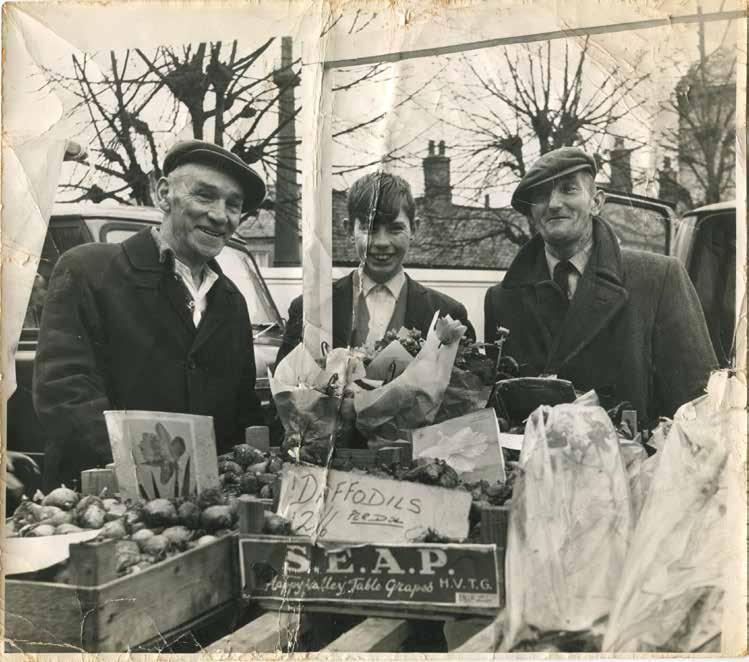
(Photograph courtesy Barry Dexter)
Barry left school at 16. He remembers the moment clearly, not as some misty-eyed milestone, but as a comedy sketch. “First thing I did when I walked out of school,” he says, “I walked into a lamppost.”
He laughs at that. The sort of laugh that says life has always been half hard work, half ridiculous luck, and you may as well get on with it.
Flowers first, then the “every day of the year” trade
Barry’s first love in the trade wasn’t carrots or potatoes. It was flowers, plants and blooms, the bright side of the stall. But there was a practical mind behind the petals.
“Flowers were the first thing,” he says. “But you can’t sell flowers every day of the year. You can sell green groceries every day of the year.”
He doesn’t pretend he was philosophical about it at the time. He was young. He wanted to earn. “All I was interested in was making more money.”
That’s not greed, exactly. It’s the honest hunger of someone who understood early that money meant security, independence, a chance to do better than the week before. And Barry did do better, not by luck, but by graft.
He worked with his dad on Saturdays and got used to the rhythm: unload, set up, sell, pack down, do it all again. His first job was the physical part — “unloading the van and setting the stall up”, and he was good at it. He had to be. Market work is not delicate, and it’s not forgiving.
Barry remembers the vehicles too, like old mates. Bedford vans, then bigger and better as the years rolled on. He bought new lorries, proper new, from Edmondson’s of Fakenham… and then watched
the world change when the garage site became something else entirely.
“Do you know what it is now?” he says, and there’s a pause you can feel. “Tesco’s.”
That one detail lands like a whole social history. A local business replaced by a national giant. A place that once sold lorries, vans and tractors turned into a supermarket that would later reshape the way people shopped, and, in Barry’s view, reshape the heart of towns.
Auctions, barrows, and becoming “Mr D”
Barry didn’t learn the trade from a handbook. He taught himself by doing, and by going where the real action was: the fruit and veg auctions.
He talks about the auction halls with the familiarity of someone describing an old workplace, the rhythm of bidding, the characters behind the counters, the split-second decisions. In one place he was “Mr. D.” In another place he was also “Mr. D.” (When you’ve got that kind of reputation, you don’t need a full surname.)
He remembers the cashier too, “Mae West”, greeting him like a regular at the bar. Barry didn’t always have cash; he had a cheque book and a name people trusted. “I’ve never ever been caught once,” he says with pride. Not caught out, not short, not failing to pay. Trust mattered. Reputation mattered. Your word mattered.
And of course there were the physical mishaps that come with a working life. Pulling a heavy barrow, the handle coming out, Barry hitting the floor. “Things you won’t forget,” he says, and then, just as quickly, dismisses it the way his generation often does. You get up. You carry on. You load. You sell. You don’t make a song and dance about it.


The market day: dawn starts and midnight loading
Ask Barry about a “typical” market day and he’ll tell you there was no such thing. The work was long. The start times depended on where you had to go. But for Thetford, he remembers setting up early, around seven, and being on the move from six.
Then there were the nights.
“One night about 12 o’clock,” he recalls, he phoned his second wife while she was working in a nursing home. She asked what he was doing at that hour. Barry’s answer was matter-of-fact: “Just finish loading the lorry up for tomorrow.”
It’s said like nothing. Like brushing your teeth. Like making a cup of tea. But it’s the sort of detail that reveals how much of market life happens when customers are asleep. The market is built on hours nobody sees.
And all of it, all of it, comes down to perishability. Market traders live with the knowledge that what you don’t sell today might not be worth anything tomorrow. Barry puts it plainly: some stallholders can take stock home and sell it next time; perishables don’t give you that luxury.
That’s why he remembers the day it snowed so hard that most traders didn’t turn up, and Barry sold out.
“Because all the others didn’t turn up,” he says, as if the logic is obvious. And it is. But it’s also a reminder: the market rewards the stubborn, the prepared, and the ones who show up.
He remembers another day, too: “I was the only stall on the market. The only single one.” And it became one of his best days ever.
“No opposition,” he says. Then he laughs, because that’s the market in a nutshell, ruthless and funny in the same breath.
Quality, pride, and the cauliflower truth
Barry’s stall was known for quality. He makes a distinction that any regular shopper will understand immediately: some traders sell cheaper grade stock; Barry sold Grade 1.
“There were only two [greengrocers],” he says of one period. “Me and Pinky White… Pinky had all the Grade 2 stuff. Barry always had Grade 1.”
That’s not snobbery, it’s pride. It’s also a business model. Customers come back when you “always pick them the best out,” as Barry did for his regulars. He remembers a woman and her daughter who came every Saturday, and he made sure they got the best produce. Then Tesco came along, and he never saw them again.
That moment isn’t bitterness. It’s sadness, and it’s a story repeated in towns all over the country. Barry doesn’t pretend life stands still. He just notices what gets lost when the habits change.
As for best-sellers, he refuses to oversimplify. “There’s no one good product,” he says, because the market is a moving target. But he does name one champion: cauliflower.
And then he gives you the truth that only a trader would say so confidently: cauliflower won’t shift in heat. “You couldn’t sell them above 30 degrees outside,” he says (he means when the weather is properly warm). In hot weather, people want salad: cucumbers, lettuces, crisp, light, summer food. In cold weather, they turn to veg that fills you up.
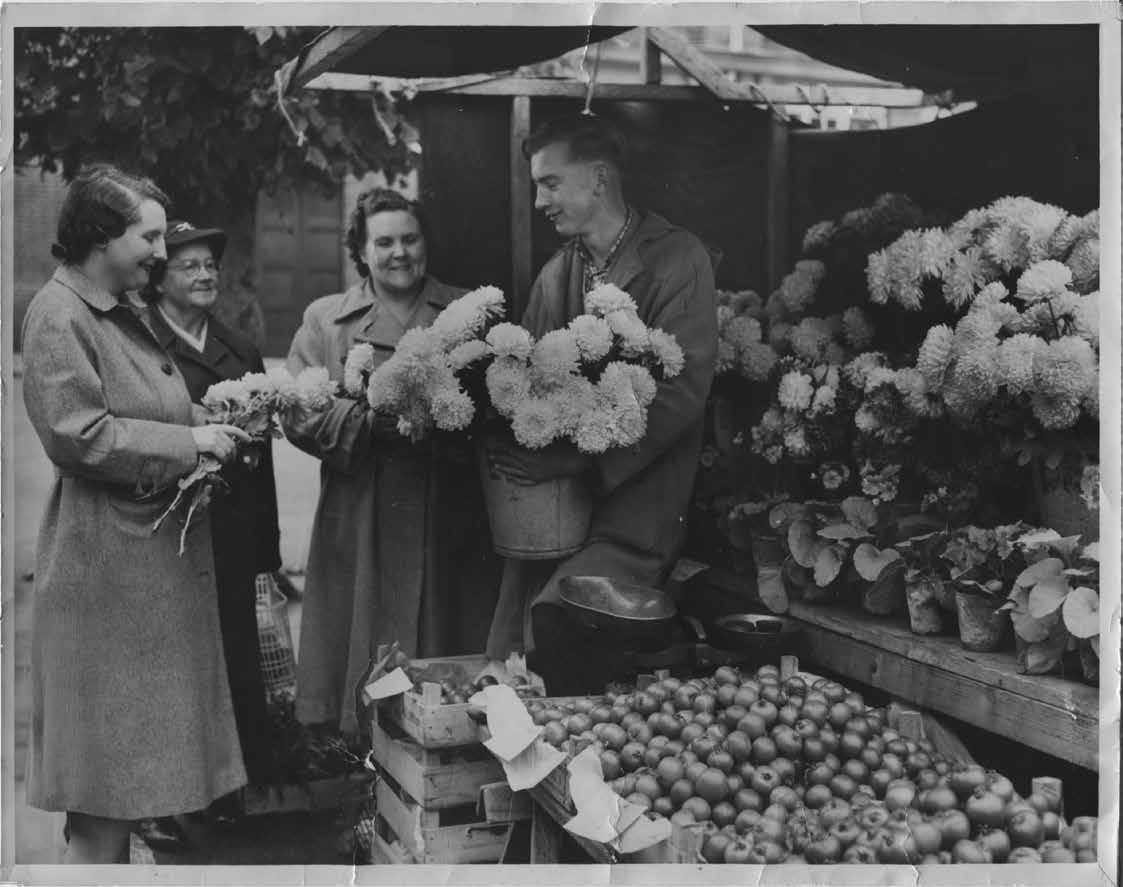
‘Barry
Barry speaks like a man who can smell a weather change in his knees.
A market of characters — and the ones you don’t see now
There’s a moment in the interview when the conversation turns from produce to people, and Barry brightens. That’s where the heart of it is.
“What did you enjoy most?” he’s asked.
“The people, I think,” Barry says.
Not the haggling, not really. “You either pay the money or you go and get it,” he shrugs. And while money mattered, he understood that markets were also communities. Traders saw each other across towns. “If we don’t meet them in one town, we’d meet them in another town.”
He remembers going down the pub with fellow traders. He remembers how everyone used to talk, really talk, and how different it feels now.
Two great loves — and the teddy bear that stayed
No story about a life is complete without the parts that aren’t about work.
Barry had two wives, both of whom have sadly passed away. He speaks about it plainly, without drama, which somehow makes it more affecting. Loss, he explains, isn’t something you “get over”, it’s something you live alongside.
“I’ve lost what I want,” he says quietly. “Two roads. That affects your life, actually.”
He describes the loneliness in small details: not changing things in the house, not buying new things, the way every decision used to be shared, even where the forks go in the drawer. “I ain’t changed nothing,” he says.

“It’s completely changed now,” he says. “Everybody now is independent.” The old social fabric, the shared life of it, has thinned. The market still exists, but something about the closeness has gone.
He remembers “the swag man” too, the entertainers who could sell anything with patter and performance, getting the crowd laughing and waving hands in the air for a bargain. “You don’t see anything like that now,” Barry says. And you can hear the loss in it — not just of a sales style, but of a type of public fun.
“I think they were more fun in the old days,” he says. “A lot more fun.”
And then there’s the teddy bear.
One of his wives spotted it on a stall years ago. Barry bought it. He still has it. He won’t part with it. Grandchildren may beg, “Can I have that teddy, granddaddy?”, but the teddy stays.
It isn’t just a toy. It’s a memory you can hold in your hands. A piece of the market that followed him home and never left.
What’s changed — and what Barry hopes never does
Barry is clear-eyed about change. In his early days, there was no Tesco, no supermarket culture on the scale we know now. People shopped around in small local shops, and the market was a core part of the town’s weekly life.
Now he looks at high streets closing down and sees a national story playing out locally. Banks gone. Shops gone. People are buying online. Barry himself has never bought anything online, partly habit, partly principle, partly because of the way he and his wife lived. It’s not judgment; it’s just the world he came from.
So has the market changed?
“Yes,” Barry says. “Changed, but it had to, as society has changed.”
But he doesn’t stay there. He also says you have to change with the times. And in that sentence is the optimism that carried him through fifty years of early starts, long days, and weather-led risk.
Because despite everything, despite supermarkets and shrinking high streets and the loss of old characters, Barry still believes in what a market is at its best: fresh produce, fair prices, familiar faces, and the sense that shopping can be human.
Even now, he still prefers to buy from the market “mostly.” He talks about trader-to-trader respect too, the way they’d give each other discounts because “we’d never make money out of one another.”
That’s a kind of quiet solidarity you don’t find in a selfcheckout queue.
Advice for the young — and a legacy for Thetford
At the end of the interview, Barry is asked what he’d say to a young person thinking of becoming a market trader.
“Don’t do it,” he says, and he means it, in the way older people sometimes do when they know how hard something is and don’t want youngsters to suffer. He
talks about how people want convenience now: one supermarket, one trip, everything in one go.
And yet… he did it for 50 years. He did well. He loved the people. He misses it.
So perhaps the real advice is hidden between his words: if you do it, do it with your whole self. Learn the weather. Learn your customers. Pick the best out for the regulars. Turn up when it snows. Make a name people trust. Be the kind of trader someone remembers decades later, even if they can’t recall your stall number or your exact prices.
Barry Dexter’s story is not just a personal journey. It’s a piece of Thetford’s living history, from a time when the market square was fuller, when the high street had more lights on, and when entertainment came from a man selling socks (or crockery sets) at the top of his voice rather than a screen in your pocket.
And yet, in Barry’s life, there’s also something sturdier than nostalgia: resilience. He adapted. He worked. He built a reputation. He made a living. He loved deeply, twice, and carries those loves with him still, in memory and in a teddy bear he refuses to give away.
In a town that’s changing, that kind of steadiness is worth celebrating.
Because markets may evolve, and shops may come and go, but the best of Thetford has always been the people who show up, talk to strangers like neighbours, and keep the place feeling like a community.
Barry did that for fifty years.
And if you listen carefully on a market morning, you can still hear the echo of “Mr D” in the background, in the banter, in the bustle, and in the stubborn little belief that a town is better when it still has a place to meet.
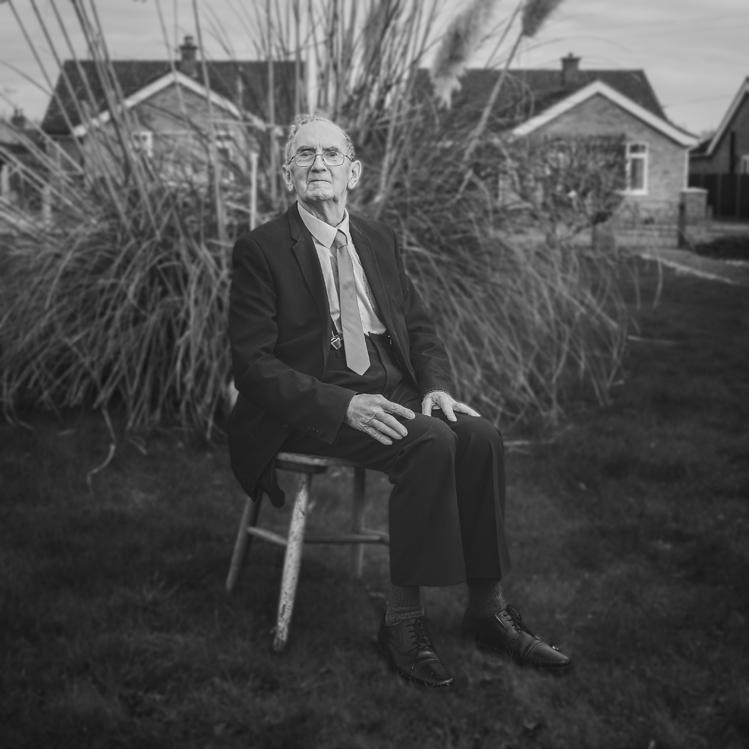

Written by Martin Angus
On a drizzly Thetford afternoon, the kind that makes you briefly consider setting up camp somewhere warm and well-lit, I found myself talking acronyms over a cup of tea with Bryony Marketis, founder of SEND Meadow.
Acronyms are the unofficial second language of the modern British parent. We speak them while packing lunchboxes, chasing PE kits, and trying to remember which day “dress-down” is, only to realise it was yesterday and the child is already wearing a jumper that looks like it’s survived three playground seasons and a hard spin cycle. But in Bryony’s world, acronyms aren’t a quirky side dish. They’re the main course. And they can decide whether a child gets the support they need or falls through the cracks.
So let’s translate, shall we? SEND, in plain English, is Special Educational Needs and Disabilities. It includes physical disabilities, learning difficulties, and neurodiversity — the brains that run on a slightly different operating system. And if you’re not already
steeped in the world of meetings, forms, and long waits, here’s the important bit: SEND isn’t rare, and it isn’t “someone else’s issue.” It’s woven into our schools, our families, and our community life. It’s at the school gates. It’s in the playground. It’s quietly sitting on a library chair, trying to work out how to join in.
Bryony set up SEND Meadow because she knows that world from the inside. Not from a distant, policy-led perspective, but from the lived, sometimes messy, always human side.
When the system becomes the homework
Before SEND Meadow, Bryony was an English teacher. The job came with the usual delights: teenagers discovering sarcasm, the joy of books, the magic moment when a child suddenly gets how to structure an argument. It also came with the less magical bits: endless paperwork, pressure to prove progress in measurable chunks, and the creeping sense that education sometimes forgets children are
people, not spreadsheets.
Then life did what it does: family arrived. Bryony has three children, eight, six, and three, and two are neurodivergent. Like many families, they found themselves trying to navigate a system that can feel like a maze designed by someone who hates maps.
One of Bryony’s children had an especially difficult experience in school and ended up without full-time education for a period. Bryony started learning how to navigate the EHCP process, and here’s another acronym worth knowing because it’s central to the entire story.
An EHCP is an Education, Health and Care Plan. It’s a legal document. If you’re a parent who has fought for one, you know that phrase “legal document” can be oddly comforting and deeply exhausting at the same time. It suggests a right, a promise, a guarantee. But Bryony’s experience, first as a parent and later professionally, showed her how often the reality doesn’t match the promise.
In her later role as an inclusive learning coordinator at West Suffolk College, Bryony spent her days immersed in EHCPs: reviewing them, attending annual reviews with young people and their parents, and reading what are known as consultation bundles, the paperwork that helps decide whether an educational setting can meet a student’s needs.
This is where Bryony’s “English teacher brain” comes in handy. Because in SEND, wording isn’t cosmetic. Wording is destiny.
The problem with “access to an adult”
Bryony describes seeing EHCPs that looked fine at first glance, the kind of document that might make a parent think, “Finally. This is it. We’ve got it on paper.”
But the details often weren’t robust enough to actually secure support.
For example, an EHCP might say a child needs a “high level of adult support.” Sounds good, doesn’t it? Comforting. Solid. Except: what does “high level” actually mean?
Or a plan might promise “constant access to an adult.” Which, as Bryony points out, technically applies to almost anyone in a school. You can always access an adult. There are adults everywhere. But is that adult free to support the child? Trained to support them? Assigned to them? Able to intervene before a crisis? The phrase can be so vague that it becomes meaningless, and when a document is vague, it can be interpreted in the cheapest, easiest way possible.
This is the SEND version of ordering “a nice sandwich” and being served a single cucumber between two slices of regret.
So Bryony did what good English teachers do: she got obsessed with the exact meaning of words. And she learned how to translate families’ experiences into language that the system has to take seriously.
A meadow, not a megaphone
SEND Meadow launched around late May/early June 2025, nudged into reality by a person who often plays a decisive role in small-business origin stories: a supportive spouse with a pragmatic streak. (“Just do it,” her husband Scott told her, in essence. “You know your stuff.”)
The name itself is a gentle clue to Bryony’s approach. She wanted “SEND” in the title so people in that world would immediately recognise it, but she didn’t want the brand to shout. No bright, frantic, sensoryoverload aesthetic. The families she works with are

already dealing with enough “in your face.” Bryony wanted calm.
And then there’s the meadow image: children as flowers, needing the right conditions to grow. Not a bad metaphor for a town like Thetford, where nature isn’t a luxury backdrop, it’s part of daily life. A meadow isn’t a factory line. It’s diverse. Wild in places. Beautiful precisely because not everything grows the same way.
One of the most powerful moments in the conversation comes when Bryony talks about “masking”, particularly in autism. It’s when a child appears to be coping in school, following rules, staying quiet, doing what’s expected… and then comes home and falls apart.
Many parents will recognise the whiplash: the school reports “a great day” while the evening involves tears, anger, shutdown, or exhaustion. It can make parents feel like they’re going mad. If everything’s fine at school, why is home so hard? Or worse: Is this somehow my fault?
Bryony has lived that reality. It’s one of the reasons families feel reassured by her. She isn’t just reading the paperwork. She knows the invisible bit, the emotional labour, the constant preparation, the social “stage management” families can end up doing.
She gives a beautifully ordinary example: a birthday party. For some children, it’s fun and cake and a chaotic photo that will appear on Facebook later. For many SEND families, it’s an operation. The leadup can involve “visuals” (pictures explaining what will happen), “social stories” (guides to help a child anticipate the social rules of a situation), and a careful effort to keep a child regulated enough to cope.
Then comes the aftershock: the meltdown later, the exhaustion, the knowledge that something joyful can also be intensely overwhelming.
SEND is never just about the child. It’s about the family ecosystem.
“It’s not just a piece of paper. It’s someone’s life.”
If you want Bryony’s core philosophy in one line, it’s this: the paperwork is crazy, but it’s not just paperwork. There’s a child and a family behind every form.
That belief is part of how she balances the emotional and practical sides of her work. She admits she can feel angry on families’ behalf, who wouldn’t? but she also has to stay professional. Families message and email with fresh developments, sometimes at all hours, because when your child is struggling, time doesn’t feel like it belongs to you anymore. But Bryony can’t get dragged into a long back-and-forth spiral of outrage (even when the outrage is justified). She has to keep steering toward action.
Her own “switching off” method is wonderfully relatable: her children are her reset button. With three kids, and a three-year-old currently enjoying what she calls an “attitude-y” phase, there isn’t much room for brooding. Add in a love of sitcoms and reading, and you’ve got the essential survival kit of modern parenting.
Also, Bryony is doing a Master’s degree. Because if you’re going to live and breathe SEND all day, you might as well add postgraduate deadlines into the mix. (This is either extremely impressive or a cautionary tale. Possibly both.)
Her academic focus? Big-picture questions: the politics of SEND, global approaches, and the impact



of testing, including whether tests are fair for SEND students. It’s SEND, but zoomed out: less about individual crises, more about the structures creating them.
A child out of school, and what happens when someone steps in
Bryony describes a case that still stands out: an 11-year-old with no education provision at all. No school place. No alternative provision. Nothing. The parents were being passed from person to person, stuck in a bureaucratic relay race where nobody seems to actually hold the baton.
It’s a detail that should make all of us pause: many of the people managing these processes rarely see the child. Decisions can be made “on paper,” sometimes through email chains. Even assessments that once required in-person contact can happen online, which doesn’t always work for children who struggle to communicate in conventional ways.
In this case, the turnaround was startling. The parents came to Bryony at the beginning of September; by the end of the month, the child had a specialist school place, transport arranged, and the EHCP work underway to strengthen what needed strengthening. The child began settling, and later made friends.
There’s a quiet kind of heroism in that story, but it’s also sobering. Because it suggests the obstacle wasn’t impossibility. It was navigation. It was having someone who knew what to write, who to contact, how to push, and how to translate distress into the right language.
Bryony says it plainly: there shouldn’t even be a job for her. The system should work smoothly. But until it does, families need someone who can take the mountain off their plate, at least for a while.
Bryony is frank about one of the ugliest misconceptions around SEND: the idea that parents are “trying to get more” for their child, or “trying to get benefits,” or “working the system.”
Her response is as simple as it is important: most families aren’t trying to get an advantage. They’re trying to get access.
If a child can’t learn in a crowded classroom without certain supports, those supports aren’t a luxury addon. They’re the ramp, not the red carpet. They’re what allows a child to stand at the same starting line as everyone else.
There’s also misunderstanding about how hard it is to get support. Diagnoses like autism or ADHD can take years. EHCP processes can drag on. Even when parents finally get the document, weak wording can mean the support isn’t enforceable in practice.
And about labels? Bryony makes a nuanced point: labels aren’t about sticking something on a child for the sake of it. They’re about understanding needs so you can meet them properly.
From blazers to PE kits: the uniform debate
If you’ve ever watched a child in a stiff blazer trying to sit, learn, and exist all day, you’ll understand why Bryony cares about school uniform reform.
She supports the idea behind the Active Uniform Alliance: schools adopting a PE-style uniform that can still look smart, include a logo, and maintain school identity, but is physically comfortable, practical, and sensory-friendly.
This matters for SEND children with sensory
sensitivities: the feel of a tie, a rough fabric seam, a tight waistband, shoes that “feel wrong.” These can become all-consuming, stopping a child from focusing on learning. Schools can make reasonable adjustments, but Bryony highlights a social reality: children often don’t want to stand out by wearing something obviously different. A whole-school shift removes that spotlight.
Also, let’s be honest: primary school playtimes look like a mix between a sprint training session and a wildlife documentary. If we’re going to insist children run, climb and tumble, dressing them like miniature office workers is a strange hill to die on.
Thetford, quietly building its own support
One of the loveliest local details in Bryony’s story is her involvement at Thetford Library, where she facilitates an adult autistic meet-up every other Monday. It’s small, informal, and gently structured: arrive early if you like, come late if you need, stay 20 minutes or two hours. No pressure, no perfect attendance record required.
In a town, these kinds of spaces matter. They’re not headline-grabbing, but they’re life-changing. They offer connection without performance, which might be the most radical thing you can offer in 2026.
And Bryony admits she learns from it too. Adults reflecting on their childhood experiences can help her better understand her own children, not in a clinical way, but in a human one.
A business built on honesty (and limits)
SEND Meadow has grown quickly, but not recklessly. Bryony is careful not to take on more than she can handle. In SEND work, deadlines can be tight and consequences serious. Overpromising isn’t just bad
business; it’s cruel.
Her values are consistent: empathy, organisation, calm, and honesty. If a parent wants something unrealistic, Bryony won’t sell them a fantasy. She’ll explain what’s possible, what’s likely, and what the best strategy is.
She’s also tried to widen access. Alongside direct client work, she’s created online resources, including a workbook parents can buy to help them review a draft EHCP. It’s a “self-help with backup” approach: some families don’t need full support, just clarity, reassurance, and examples of strong wording versus woolly wording. They want to feel less alone, less lost in jargon, less like they need a law degree to be heard.
Where next?
Bryony’s dream is disarmingly simple: that families won’t need her services as much, because the system will work better. (The kind of dream that reveals both optimism and a wicked sense of irony.)
More realistically, she wants to help more families and work more closely with schools, not to attack them, but to support earlier solutions before situations become crises. She’s careful here. She has taught. She knows schools are under enormous pressure. She worries that new reforms could put even more responsibility onto mainstream settings and staff already stretched thin.
So perhaps the future, in Bryony’s vision, is less about battling and more about bridging: families, schools, and systems learning to speak a shared language, one where “support” means something tangible and enforceable, and where children don’t have to reach breaking point before anyone pays attention.
The editorial bit (where I make my point)
Thetford is a town that prides itself on community, on looking out for one another, on quiet resilience, on the practical kindness of “leave it with me, I’ll sort it.”
SEND Meadow feels like an extension of that local spirit, but applied to one of the most complex landscapes families can face. Bryony isn’t selling magic solutions. She’s doing something less glamorous and more valuable: making the maze readable, translating emotion into action, and reminding people that the paperwork is not the point.
The point is a child sitting at a desk, or unable to sit at a desk, wanting to learn, wanting to belong, wanting the world to make sense.
In the end, that’s why Bryony’s meadow metaphor works. Meadows don’t succeed because every flower is identical. They succeed because the conditions are right: enough light, enough water, enough space, the right protection when the weather turns.
And if you ask me, Thetford could do with more of that, in schools, in systems, and in how we talk about SEND at the bus stop, online, and over the school gate.
Because the truth is: most families aren’t asking for “more.” They’re asking for fair. They’re asking for possible.
And, sometimes, they’re asking for someone like Bryony to take the paperwork off the kitchen table for a moment, so they can get on with the far harder job of being a family.
To find out more, please visit www.sendmeadow.co.uk
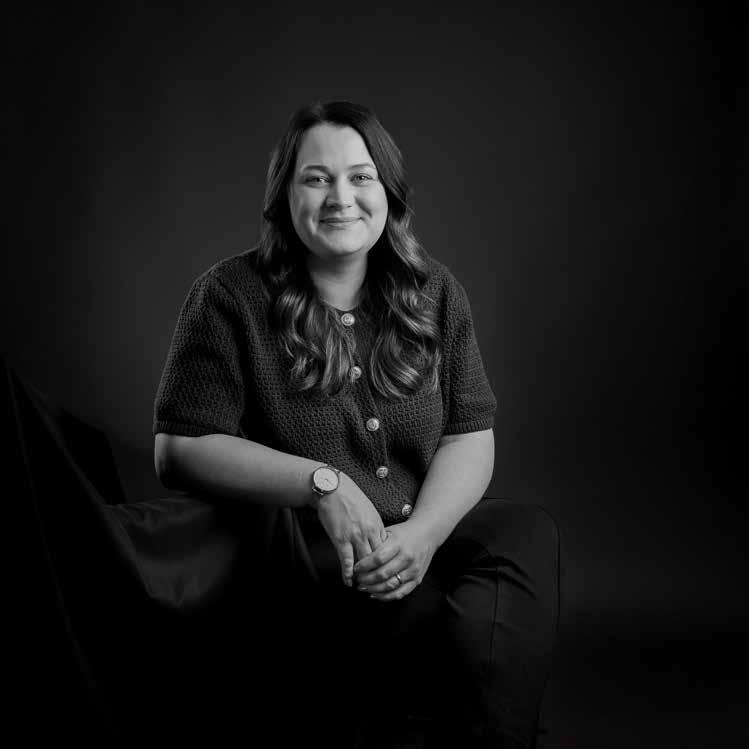
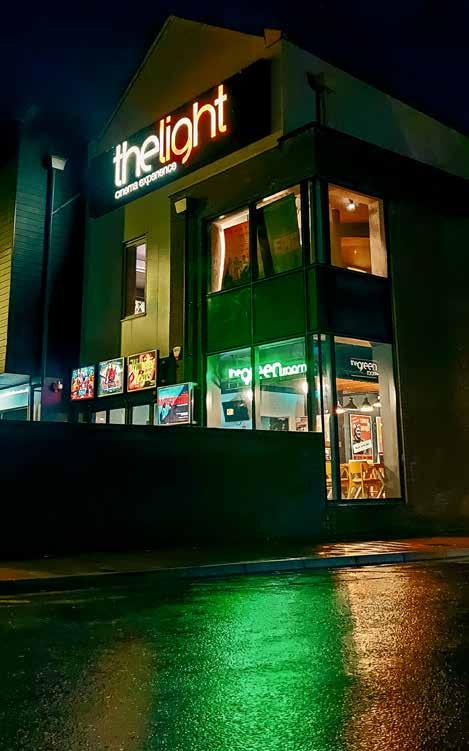

Written and Photography by Brandan Cutts
There’s a moment, quiet, almost unspoken, that happens in every cinema. The lights dim, conversations soften into murmurs, and for a brief second before the film begins, you might glance around the room. Strangers sit beside you: couples sharing popcorn, families settling restless children, friends exchanging last-minute whispers. You don’t know them. You may never see them again. And yet, in that space, you belong together.
That shared stillness, that collective anticipation, is the magic of the cinema.
In an age where entertainment is increasingly solitary, streamed on personal devices, paused at will, and consumed in fragments, the cinema remains one of the last places where people gather simply to feel something together. And here in Thetford, that magic is not only alive but evolving, thanks in no small part to The Light Cinema and the people behind it.
Cinema, as we know it, began in 1895 with a public screening by the Lumière brothers in Paris, just a few seconds of black-and-white footage showing workers leaving a factory. From that modest beginning grew a global art form, a cultural cornerstone, and a beloved pastime that would shape generations.
Thetford embraced cinema early. The People’s Palace opened its doors in 1913, later becoming the fondly remembered (and affectionately nicknamed) “flea pit,” the Palace Cinema. For decades, it served as a social hub, part picture house, part community gathering place, before closing in 1985.
For a time, the town’s cinematic lights dimmed. But in December 2016, they flickered back to life with the arrival of The Light Cinema, built on the site of the old Anchor Hotel. Nearly a decade on, it stands not just as a venue, but as a modern continuation of a longstanding tradition: bringing people together through
film.
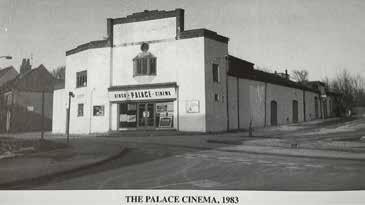
The Palace Cinema, 1983, affectionately nicknamed “flea pit.” (Image courtesy David Osborne Collection)
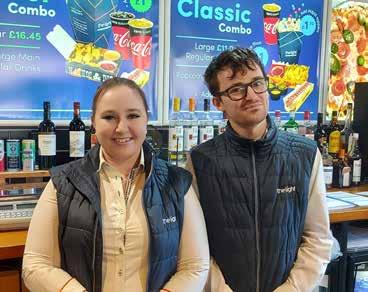
and Cam - The Light - Staff Members (Photograph Brandan Cutts)
Step into The Light Cinema on any given day, and you’ll notice something unusual. Yes, there are films playing, but there’s also something else. People linger. Conversations flow. Laughter carries from the café area. Board games are spread across tables. It’s not just a cinema, it’s a space.
Brad, one of the staff members, describes it simply: people come not only to watch films, but to spend time together. Families pop in for a chat and a coffee. Friends meet to catch up. Groups gather for games like Dungeons & Dragons or Magic: The Gathering. Sometimes, no one even buys a ticket.
And that’s the point.
The Light Cinema has quietly become a community hub, a place where entertainment is only part of the experience. It’s somewhere you can go without expectation, without pressure, and simply exist among others.
That sense of openness doesn’t happen by accident. It’s the result of a deliberate philosophy, one that places people, not just profit, at the centre of everything.
At the heart of this philosophy is George, the cinema’s manager, who has been there since the building was little more than a construction site. Nearly ten years on, his vision remains clear: create a space where everyone feels welcome.
“It’s all about the guest experience,” he explains. “From day one, we wanted this to be a hub for Thetford.”
That ethos is perhaps most evident in the cinema’s Accessible Screenings, a series of thoughtfully
designed events that ensure cinema-going is open to all, regardless of age, ability, or circumstance. These include relaxed screenings for those with sensory sensitivities, baby-friendly showings for parents with infants, and dementia-friendly screenings that prioritise comfort, familiarity, and ease.
It’s a simple idea, but a powerful one: the cinema should adapt to its audience, not the other way around.
On a grey, rain-soaked morning, I attended one of these dementia-friendly screenings. Inside, the atmosphere was anything but gloomy. Staff members Brad and Avery were busy preparing for the day, setting out refreshments and ensuring everything was just right.
George soon returned, drenched from the weather but smiling, arms full of food generously donated by Iceland for the attendees. It was a small gesture, perhaps, but one that spoke volumes.
These screenings, I learned, often draw between 50 and 100 people. They are carefully structured: no adverts or trailers, slightly raised lighting, and films chosen for their familiarity and emotional resonance. The aim is simple: to create an environment where everyone feels safe, comfortable, and included.
As George put it, “They can just go straight into the magic of the film.”
That morning, despite the rain, a handful of attendees had made the journey, including Jackie and Heidi, who had travelled from East Harling.
Cinema Manager George’ by Brandan Cutts
Jackie, a lifelong film enthusiast, spoke fondly of her first cinema experience as a child in London. She couldn’t recall the film itself, but she remembered the ‘
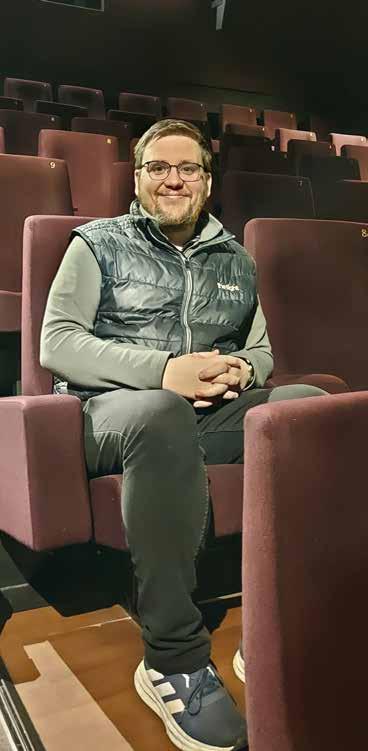


feeling, and that was enough. Since then, she’s never needed an excuse to go to “the pictures.”
For her, the dementia screenings offer something special. “It’s more accessible,” she explained. “The lighting, the timing, it’s all designed to make people feel comfortable. And it’s very positive. People can come out and feel part of the community.”
Heidi agreed, adding that the screenings also help raise awareness, creating a space where understanding and empathy can grow.
Together, we watched Sense and Sensibility, its timeless story unfolding on screen. But what stayed with me wasn’t just the film; it was the atmosphere. The quiet enjoyment. The shared experience. The sense that everyone in the room was exactly where they needed to be.
My second visit could not have been more different. The sun was shining, and the foyer buzzed with life. A group from Redgate House care home had arrived, filling the space with colour, conversation, and laughter.
Staff members Cam and Kylie, both long-time fixtures at the cinema, spoke warmly about the joy these events bring. “It puts a positive spin on what we do,” they said. “It’s wonderful to see people from all walks of life enjoying it together.”
Among the group was Rachael, the care home’s manager, attending her fourth screening. She spoke of the benefits these outings provide, not just entertainment, but connection, stimulation, and a break from routine.
Then there was Harry, “H” to his friends, a spirited 92-year-old attending for the first time. With a grin, he described the experience as “being on holiday, good
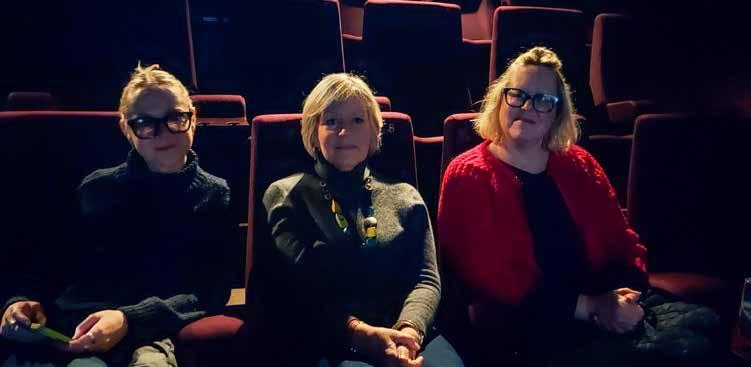
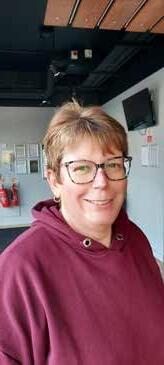
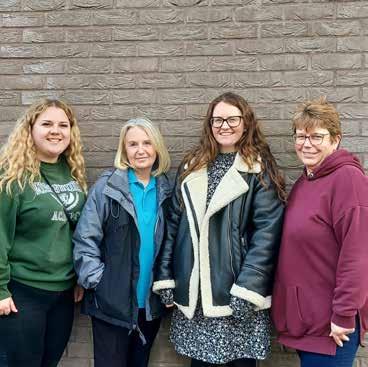
food, good company, and very good entertainment.”
Nearby, Diane shared her own story. She had never been particularly fond of the cinema in the past, but something about these screenings had changed that. “It’s relaxed,” she said. “They meet your needs. I love it.”
And love it they did. As Mamma Mia! began, the room came alive, feet tapping, voices singing along, laughter echoing through the space. It was joyful, uninhibited, and utterly infectious.
What becomes clear, after witnessing these moments, is that the magic of the cinema isn’t just on the screen. It’s in the people. In the shared laughter. In the quiet companionship of sitting side by side. In the simple act of being together.
The Light Cinema understands this. It recognises that a cinema is not just a place to watch films, it’s a place to create memories.
It’s where grandparents take grandchildren for a treat, slipping them sweets when they think no one is looking. It’s where teenagers go on nervous first dates, hearts racing faster than the opening credits. It’s where families gather on a Friday night, escaping the routine of everyday life for a couple of hours.
And sometimes, it’s where someone who has never quite felt comfortable in a cinema before discovers that they can belong there too.
The Accessible Cinema initiative is a testament to this inclusive vision. Whether it’s a relaxed screening with softer sound and gentle lighting, a baby-friendly showing that welcomes parents without judgment, or a dementia-friendly event that prioritises comfort and familiarity, each one is designed with care. These are not afterthoughts or add-ons; they are
central to what The Light Cinema stands for.
And perhaps that’s what sets it apart.
In a world where larger cinema chains often prioritise efficiency, getting audiences in and out as quickly as possible, The Light Cinema takes a different approach. It slows things down. It listens. It adapts.
As George puts it, “Come to a warm, welcoming environment… and just have some fun. That’s what we’re all about.”
As The Light Cinema approaches its 10th anniversary this December, it’s worth reflecting on what it has become, not just a venue, but a vital part of Thetford’s social fabric.
It carries forward a legacy that began over a century ago with the People’s Palace, honouring the past while embracing the future. It reminds us that, even in a rapidly changing world, some things remain timeless.
The cinema endures because it offers something we all need: connection.
So the next time you find yourself settling into your seat, waiting for the lights to dim, take a moment to look around. Notice the people beside you. The strangers who, for a couple of hours, will share in the same story.
You may not know their names. But in that moment, you are part of something together.
And that, quiet, simple, profound, is the real magic of the cinema.
https://thetford.thelight.co.uk/dementia-friendly
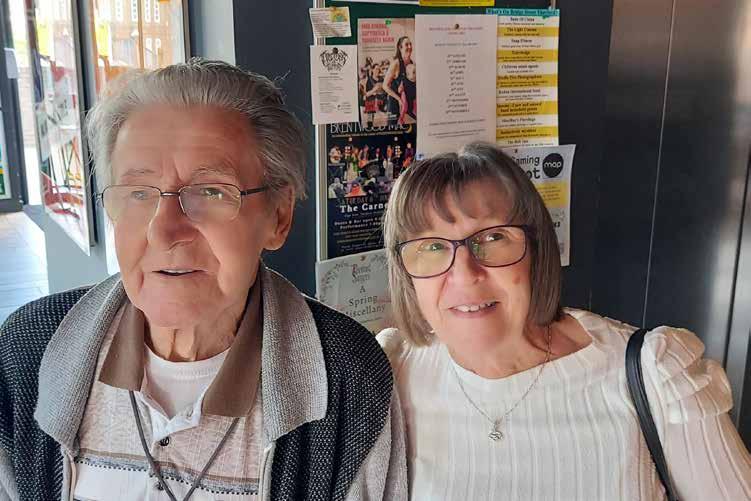
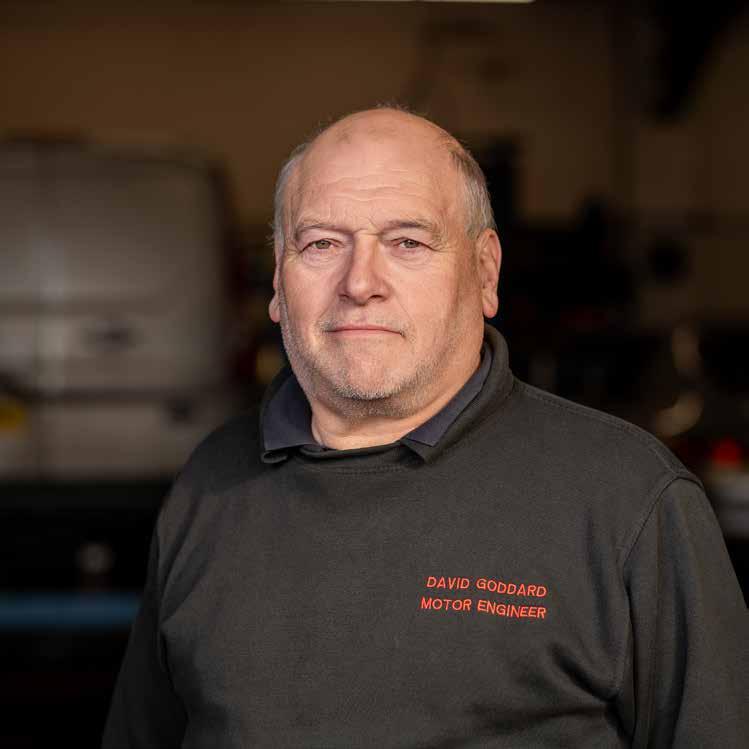

Written by Andy Eden
In the corner of Hill Fort Close, just off Howlett Way in Fison Way industrial estate, you will find Goddard Motoring Engineers. So, you might say, nothing unusual there, a garage on an industrial estate. This garage, however, does have a claim that makes it unique. It is the longestrunning garage in Thetford, owned by the same family. I visited David to find out a little more and discovered a family business.
Obviously very busy, and in many ways exactly what you would expect to find: cars outside waiting to go in or be collected, a workshop with ramps and engineers in overalls working, and of course a full, very busy office. In the office were David, Sally, their son Matthew and three dogs.
Armed with a cup of tea, David explained how it had all begun. The idea to start the business came
from a suggestion made by someone that David was doing some work for. Back in 1991, David was an agricultural engineer by trade and happened to be working on a car belonging to David Turner. Like a true car mechanic, he can even remember the car, which was a Ford Cosworth, he remembered with a smile.
Obviously pleased with the work, David Turner said that David Goddard should start his own business. The seed of the idea had been planted, and David and Sally thought long and hard about it. After all, it is no small thing to leave employment and start up on your own, especially when there is a significant investment for tools, etc.
They decided to go for it and rented a unit in David Turner’s yard. “He had a big heart” remembers David. Quite quickly, they got a contract to service

and maintain the vehicles of R. G. Carter’s Builders, which gave them some regular work. Largely by word of mouth, their reputation grew, and the business developed, providing them with plenty of work. It wasn’t always plain sailing, of course, but they have managed to weather the harder times and grow the business.
After 15 years in David Turner’s property, they decided to move and took on their present workshop in Fison Way Industrial Estate, where they have been for about 21 years.
They have always managed to make investments into the business, growing from one hydraulic ramp to the four they have now. There is also a myriad of testing equipment, much of it specific to certain makes of car. They have also taken on staff, so now, apart from David, Sally and Matthew, they have Andy and Gary working for them.
At 14 years old, Matthew started working in the garage while he was still at school, learning the business from the bottom up. He attended Open Road vocational training and passed his City & Guilds. Armed with this qualification, Matthew went on to be the youngest person in the country to be a certified MOT tester. Now he is the younger element of the business, helping not just to keep up with, but to embrace change. Not an easy thing with the present growth of technology.
Al is the latest in a long line of innovations and new technologies that we are having to come to terms with, and it is no different in the motor trade. When David started working on cars, regular maintenance before a long journey was all about checking the spark plugs, cleaning them up and making sure the gap was correct, making sure the coolant, washer bottle and oil levels were right


and checking the tyre pressure. Now the car does most of that for us. Type pressure is reported on the dashboard, and a warning will alert us if the coolant or oil needs looking at. As for the idea of looking at the distributor cap or points….well, you have to be of a certain age to remember that. If the advancement of car technology is bewildering for us as drivers, it is far more involved for those who keep our vehicles on the road.
Electric and hybrid cars, despite their advantages, also have challenges for those who maintain and repair them. It involves whole new technologies, and they require new tooling and diagnostic equipment, to say nothing of the amount of time spent learning about them. Even petrol and diesel vehicles have advanced to a point where they would be almost unrecognisable to mechanics of the 1960s or 70s. The first thing you notice when you open the bonnet is what little space there is. In my first car, an Austin Mini, there was so much room that you could have kept your toolbox and a spare can of oil in there!
If you take your vehicle to a garage now, the first thing that happens is that a diagnostic tool, basically a computer, is connected, and it reviews all the data the car has stored. Hopefully, somewhere in all that information will be the description of the problem you have and the resolution. Of course, diagnostic equipment may not work on all cars. Much of it is specific to a particular make. Even new car keys are no longer cut; they have to be programmed.
With cars developing so much, the MOT has also changed quite dramatically over time. Greater checks for Advanced Driver Assistance Systems like lane assist and running onboard diagnostic scans have all become part of the test. Obviously,
tests specific to electric and hybrid vehicles have also been included and much greater checks on emissions. While all these checks may be sensible and help to keep up the standard of vehicles on our roads, they also require more expertise and work from the testers.
While all this new technology brings with it undoubted advantages, it is all a far cry from the garages of the 1980s and early 90s. David has seen all these developments and embraced them. He and his family have kept pace with the advancements and put in the time and effort to learn how to get the best from them. The story of Goddard’s garage is one of a family business that has developed and grown over the years, but it is also a story of the development of our cars and vans.
These two stories have run side by side so that while the services offered by David and the knowledge he has have increased, he and his family can still look after all the needs of today’s car owners. It is the coming together of advanced technology and a family business, bringing with it traditional ideas of value and service for the customer. It is a marriage of the old and new, and long may Goddard’s continue to keep that balance and be there for the motorists of Thetford.
https://goddard-motoring.com
Tel: 01842 752233.
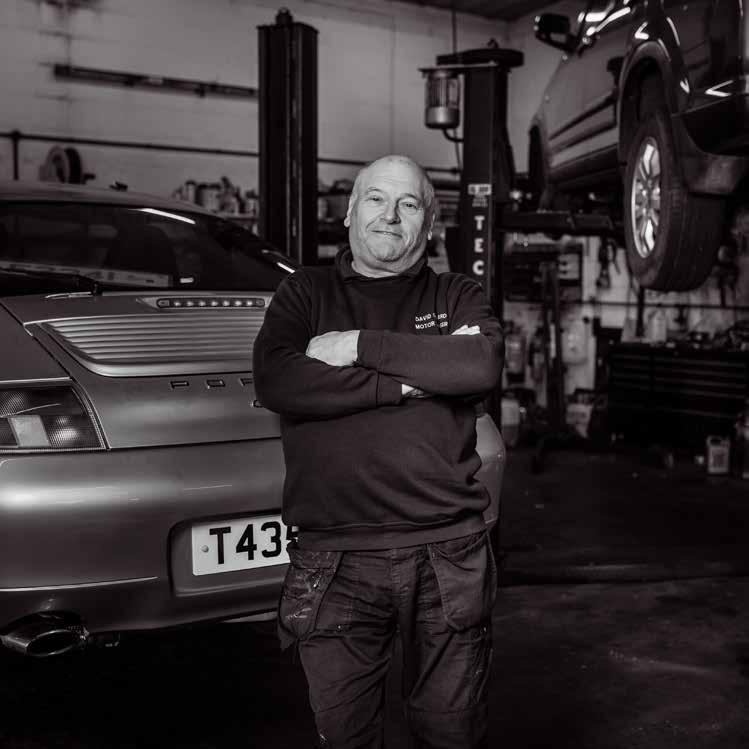
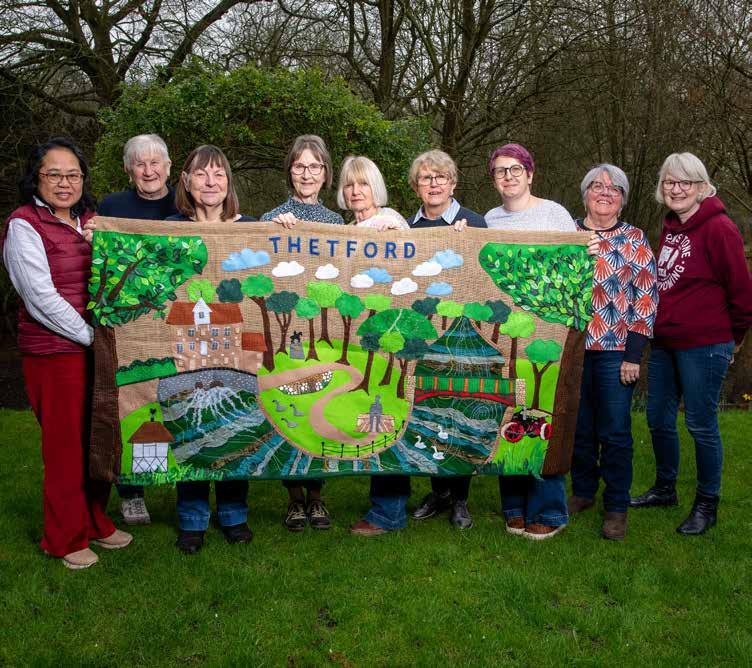

Written by Jude Clay
The first to arrive is Lynn. She unpacks her bag onto the long table, scraps of material all in shades of grey, thread, pins, needles, and a patch of cloth covered in ornate church windows. A tiny piece of Thetford, formed out of cloth and stitches.
She’s stitched and unstitched those windows three times now, she tells me, getting the depth of them and making them look real was tricky. In fact, the real windows her stitches are modelled on have been replaced, refurbished and restored a number of times over the centuries, sitting as they do in the ancient flint walls of St Peter’s Church.
Recreating flint has been hard too, Lynn says. The demand for grey cloth in the group has been high, and getting some with the right textured look has

been a challenge. She points to a thick, flecked piece of grey material that looks remarkably like the stone, “that was my laptop bag before I decided to repurpose it,” she says, “I’m sure my laptop will be fine without it.”
Barbara picks up Lynn’s thread as she tells me about the material she’s using to recreate the back of Riversdale House, garden and all. Her husband used to be in the army and, at some point, she accrued some brilliant green army baize. This is now forming the grass of the garden, and the quilted walls of the building, red brick for a change, have been created from a hood that she’s cut off a jacket. “I might still wear the jacket,” she says, “once I’ve stitched it up again. That’s the thing about this group: you’re constantly scavenging for fabric. It makes you look at everyday objects

differently, they suddenly take on a new life in your mind and give you ideas.”
Barbara isn’t the only one to have accrued a hefty scrap-bag over the years.
When Hilary joined the group a couple of years ago, she hoped it would use up her fabric stash. Now, she finds the main benefit of the group is that it gives her a reason to sew. At home, her time is used up on other demands, but every Wednesday morning she can sit in this small, sunlit room in Riversdale House, and create something through sewing, knitting or crochet.
She is piecing together the ancient, domed Guildhall, a former courthouse when Thetford was capital of East Anglia, but she has created a wide variety of Thetford scenes with her needle and thread in the last few years. She talks to me about quilting a swan in the river wildlife tapestry, felting Dad’s Army’s Captain Mainwaring as he sits beside the river Thet and, most recently, creating a portrait of the first person of colour to become mayor in Britain, Dr Allan Minns. She says making his chain of office was the most fun. The sewing also allows her to use her other creative skills, using her abilities as an illustrator to sketch out the initial designs for each of their projects before the sewing begins.
As you can probably tell, the Riversdale Crafters aren’t your regular sewing group. They started out creating tapestry-like scenes inspired by the town and are still finding Thetford a rich source of inspiration. So far, they have created a knitted river, a felt depiction of the flowerbeds, statues and buildings on Thetford’s riverside, a quilt featuring different river species, a collection of famous residents through history and are currently working
on an arrangement of heritage buildings around a large Thetford sign.
The members of the group learn a lot through their projects. When Denise Wright arrives, she lays out a large, colourful expanse of the town sign that will form the centre of their current project and announces that she is stuck. She explains the problem she’s having and the decision she doesn’t know how to make, and the group pitches in with ideas and solutions. She has sewn a lot in her spare time, but hasn’t been in the group long, having joined as soon as she retired. She loves the challenge the projects give her, even when she’s taken on something much bigger than she imagined, like the town sign! Last year she sewed a portrait of one of Thetford’s most famous sons, Thomas Payne.
The group don’t just work alone on pieces; they often team up and create images through joint effort. Last year, Tricia and Marion jointly created Susannah Holmes, a woman tried and found guilty in Thetford in 1784 and, later, transported to Australia with her lover and child. Marion tells me they not only learn about sewing techniques and problem-solving through these projects but, unsurprisingly, gain a much more intimate sense of connection with the town too. She has been a part of the group since it began in 2021, even taking part in a pilot crafting project in 2018, where local people created and stitched together over 7000 poppies for the centenary of the end of the First World War. In that time, she has felted frogs, knitted flowerbeds and paths, quilted a dragonfly and is currently sewing the striking black and cream beams of The Bell. I ask her if she will stitch the ghost of murdered landlady, Betty Radcliffe, into the top window, and she says she’s considering it.
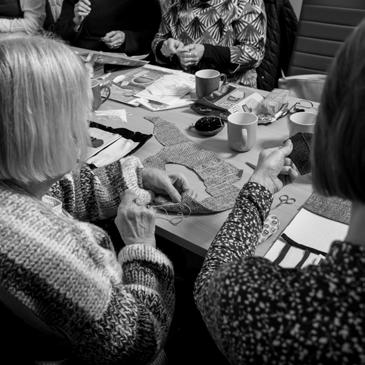
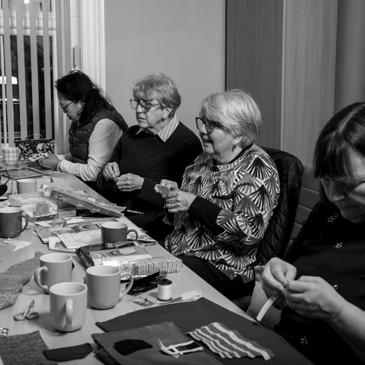
Denise Jones and Wendy always pair up for their part of each project, previously creating an image of former Maharaja of the Sikh Empire, Duleep Singh, who had his family home here in 1863. At the moment, they are creating a collective Gaol House and stocks. They show me the experimentation they have been doing with different fabrics, starting with linen with backing, but finding that it frays when they stitch the lines of brickwork to it. They have been a part of the group since the pandemic, with Denise asked to help organise six crafting days to aid the mental health of the people in the town when the lockdown restrictions eased.
Many of the group talk about the well-being and social benefits of being part of the group. Tricia has taken on smaller projects ever since she discovered the range of gym classes available in town, taking around 7 classes a week. She shows me the ruins of the Priory, which she is shaping from fabric and tells me about creating the roof of the coffee mill out of felt in a previous project. As much as she loves the gym, she still appreciates being able to take part in the group, using the Wednesday meetings to give herself a rest day, and to enjoy the social side too.
Barbara tells me how she moved to Thetford the week before the country went into the first lockdown in the Covid pandemic. She explains the isolation of being in a new place with no ability to connect and how, when restrictions eased, the craft group gave her the chance to meet others and get to know the community better.
As the group sit around the table each week and creates the town out of bits of cloth and thread, they also discuss their places in it, and the things going on in their lives. There’s an update on a local business, a bit of political gossip and a funny story
shared. They talk about the earliest project the group took on: creating hundreds of crocheted flowers to decorate the buildings for Thetford in Bloom 2021, and laugh about a recent trip they took together. Every time they start a new project, they go fabric shopping – usually to The Big C Furniture & Craft Emporium in Wymondham – and, this time, they used it as an excuse to visit a variety of cafés in the town too.
Cake and biscuits fuel a lot of their meet-ups. Denise Jones brings home-made cakes in regularly and talk turns to what she will make next. Unexpectedly, she’s been wanting to try a recipe for a champagne cheesecake for a while, and I wonder about popping by for their next meeting on the off-chance I can sneak a slice. I am struck by the array of skills, imagination and daring this group bring to their projects and, in turn, gives back to the town. Not only do they create work inspired by our community, heritage and environment, but they give it back to us too, displaying it wherever they can for local people to enjoy.
At the time of writing, you can see their work in St Cuthbert’s, the Methodist Church and Riversdale House. Most of these pieces have also been on show in Thetford Library, The Carnegie and in the Leisure Centre. There is even talk of sending one of their pieces to be shown in the Cathedral in Norwich for a spell.
Mei Ling was so inspired by seeing Thetford’s felted riverside on display that she joined the group as a result. She has been at the table on Wednesdays for around a year now and, in the previous piece, was excited to work with Barbara on the legendary local warrior, Boudicca. She tells me she is a bit behind on her current piece of work, as she has just got back from a long trip to see her family for the New Year in Hong Kong, but then she shows me the
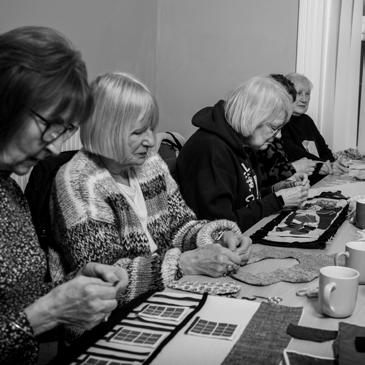
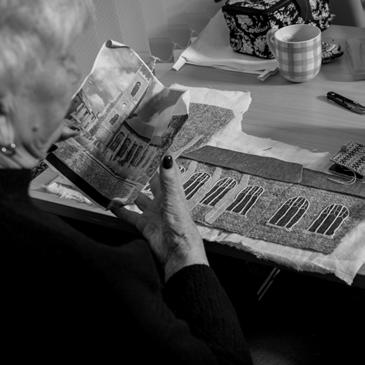
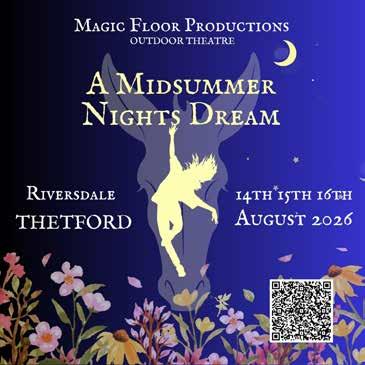
windows she has created for the Grammar School, and they are as intricately latticed as lace.
I ask the group about the stitches they use, and they tell me, as one, about backstitch. This is a good outlining or lettering stitch usually formed in a two-stitches-forward-one-stitch-back method. Variants of backstitch have been used to create numerous famous tapestries throughout history, including the Bayeux Tapestry depicting the Norman conquest of England in 1066. If backstitch holds the Riversdale Crafters’ work together, what is it that holds them together? This group of people from many places and a variety of backgrounds, with different stories to tell and different skills to bring. It strikes me that it is the need to connect with each other and with their home. The group look to the town and its surrounding area for details and stories, gathers their skills and scraps of cloth from their daily lives, and brings their creativity, problem-solving, and inspirations to piece together a demonstration of Thetford for us all. Their work illustrates the diversity, richness and wonder of our home.
Just as English school children still learn about the Battle of Hastings through the needlework of a group of Anglo-Saxon women who gathered 900 years ago, the Riversdale Crafters are taking their place in the long, worldwide tradition of storytelling and place-making through thread.
The Riversdale Crafters are hosted by the Keystone Trust in the Riversdale Centre on Tanner Street, IP24 2BQ. They meet every Wednesday from 10 – 11.30 am and always welcome new members, whatever your crafting experience.
You can find out more through riversdale.reception@ keystonetrust.org.uk or by calling 01842 764647.
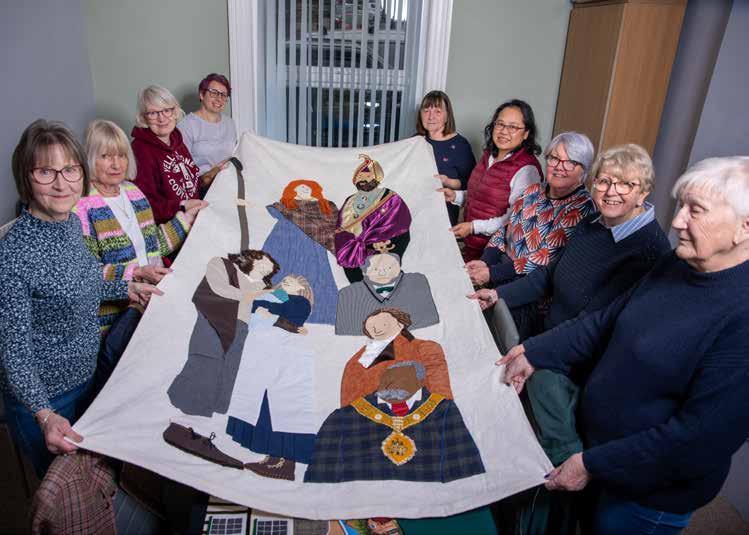

Naama African
Written by Brandan Cutts
Have you ever met someone who just embodies determination, who, no matter the struggle, will always find a way to make their dream happen, and no matter how many times they get knocked down, they always get back up? Well, none could be truer than Felix, the owner and vendor of the Naama African food van on Thetford market square.
Felix certainly had a few setbacks in his journey, whether it be something as simple as a sink issue, all the way to having a previous attempt fail, but throughout all that, he never gave up hope and is currently living his dream of selling African cuisine to the locals of Thetford and bringing a little bit of his home in Ghana to our hearts.
Felix grew up in Ghana, a country in West Africa, which is situated on the Gulf of Guinea and the Atlantic Ocean. As a small boy, Felix would cook with his mom despite his father’s disapproval, as at that time, it was
very much the men who did manual work, and the women cooked and cleaned, but Felix’s mom would say, “Come here, let me teach you how to cook so one day you can support your wife”.
But it wasn’t just the thought of cooking his future wife tasty meals when he grew up that drew him to cooking; it was the thought of everyone enjoying his meals, thinking about strangers enjoying something he had created, that filled him with joy and determination. So cooking became a therapy for Felix, a time when he would shut the world out and play around with recipes with his mom, hoping that one day everyone would enjoy his food. This passion followed him into manhood, where, at work one day, he noticed what his vegetarian friends were eating for lunch and realised they were eating the same thing practically every day, with little variety.
So one day he sat at work and thought about all

the traditional African meals he grew up with, that were vegetarian, and especially the ones he learned to cook with his mom, even though he was not a vegetarian himself. He knew how tasty these meals were, so he wondered if those friends would like to learn how to cook some of these meals because not only would it give them a wider range of meals, but also the meals would be exploding with flavour. They adored the food. Felix was overjoyed that they really liked his food. Suddenly, a light bulb went off, and this menu appeared in his head, full of vegetarian and vegan-friendly meals that are also traditional African meals, so a plan formed in his mind to bring African cuisine to Thetford that was both vegetarian and vegan-friendly.
Felix’s first attempt at a food truck unfortunately didn’t go to plan and work out as he hoped, not due to having no customers, but not being able to keep up with demand as a result of his menu being so big. He was forced to shut down the dream. He never gave up hope, even after being scammed out of 300 pounds when trying to buy a trailer; he still persevered. After some time, he went back to the drawing board and saw a van that was up for sale within his budget, all the way in Swanage. Even though this was a long drive and the fear of another scammer looming, this drive would turn out to be the one that turned his business around, because not only did he pick up a van, he met Razvan Cornea.
Razvan would become Felix’s business mentor and train him in how to run a successful company, in learning how to network, advertise, and all the tools he would need to help his African food truck stand out. As Felix stated, “He didn’t just sell me a van, he sold me my entire business, he sold me knowledge”. So now armed with all this new knowledge and a fresh lick of paint on the van, all he needed was a name. During the process of starting up a second time around, Felix had been fortunate enough to have a little baby girl.
When he stood looking at his new truck and plans on the drawing board, only one name came to mind: Naama, the name of his little girl.
“I don’t want to let myself down. This is the second time I’m coming back to this business; if I’ve got my daughter’s name on my van, it inspires me to ensure I succeed”
Felix didn’t just jump straight into selling on the Thetford market; he had to first secure a five-star rating and have all of his paperwork in order. His mentor also advised him to call the environmental officers before he started trading, just on the off chance they came down unannounced and picked up on something he was unaware of, and luckily, he did because there was one thing missing from his van, a second sink.
The environmental officers told him he needed two sinks inside of his van, one for washing hands and the other for washing food. The van already came with a sink, but now somehow he had to find and fit a second one. After doing some research, Felix was able to find a double sink that would fit perfectly into the space where the existing sink already is. Felix didn’t actually know how to plumb a sink into his van, so he made some calls to local plumbers and some friends who might be able to help, but to no avail. The plumbers were charging too much, and his friends were all unable to help. So one day Felix sat outside looking into his tuck and thought “why not?” he carefully removed the original sink, making sure not to damage anything once the sink was removed, he just sat there looking at the pipes and tubes and after a bit of trial and error, Felix was able to teach himself how to fit this new dual sink by himself.
After making sure his van was up to code and receiving his 5-star rating, Felix was all ready to start trading. There was just one more thing he wanted… a


DJ. On Felix’s launch day, he didn’t just want to wave at people and hope they take a look; he wanted to create an experience with music from his country and dance to let people know African cuisine has arrived. He was told very quickly he wouldn’t be allowed to do that as it might disturb his neighbouring traders, but once again he wasn’t going to give up that easy and after some back and fourth they all agreed he was allowed to bring a DJ, as long as he kept it at an agreeable level to which Felix happily agreed, Naama African was all ready to go.
The people of Thetford market square welcomed Naama African with welcoming arms, and the public loved it. Before he knew it, he was on Facebook, Google, and even catering parties, all with glowing reviews and many more opportunities on the way for catering events. But people don’t just come for his combo meals and spicy sauce, but to come and see Felix himself, especially on the days he and his business partner, Liam, are dancing outside trying to put a smile on people’s faces. Felix loves his customers, seeing them enjoying his food brings him more joy than he could have ever imagined when he was a small boy cooking in the kitchen with his mom. He befriends his regulars on social media so he can keep in touch and see how they are getting on in life, but also to hear feedback about his food to see if there is anything they would like him to change, because to Felix, his customers’ opinions really matter the most to him.
Felix plans to keep his truck on the Market Square, but has big dreams of one day opening his own restaurant in Thetford, or even the possibility of a moving restaurant so he can bring African food all over Norfolk. Allowing as many people as possible to enjoy his food because to him it’s not about the amount he gets in one day, it’s about that one person who’s never tried it before and is willing to give it ago that is enough to make his whole day.
I had the joy of trying out one of Felix’s supreme combo meals that consist of plantains, rice and puff puffs. I went for the non-vegetarian option, which included chicken, and I have to say every mouthful was an explosion of flavour. The rice was perfectly seasoned with a little hint of spice, but when mixed with the spicy black sauce, it went to another level, and even though the sauce was very spicy, it never overwhelmed the flavour. I was curious how plantains would taste with savoury rice, and surprisingly, it went together beautifully, sweet and Savory. Finally, the puff puffs were my favourite part. The outside was like a fried doughnut you get at the seaside, but the inside was thick and full of flavour, one that can’t be described but must be experienced. Even my two kids enjoyed the meal and would happily have it again.
Food has always played a vital role in Felix’s life, from when he was a small boy, learning how to cook from his mom and making sure he knew how to cook for his future wife, to when he was just trying to help out some friends by giving them some more options for food. Now selling to the people of Thetford and making more friends on the way, food really helped him learn how to create bonds with people, and also gave them a little insight into his culture.
Felix has worked in many places over the years. He was a journalist in Ghana, which was the equivalent of working for the BBC. He helped out during COVID at vaccine centres, but through all of his journeys, he never forgot his dream of making people happy with food. After many hurdles, he’s still smiling and getting to live out his dream on the Thetford market.
“If you are someone who has a desire to explore and try new things, Naama African is the best place to be if you’re vegetarian or vegan. And if you’re tired of what you’ve always been eating. Naama African is the place to be”
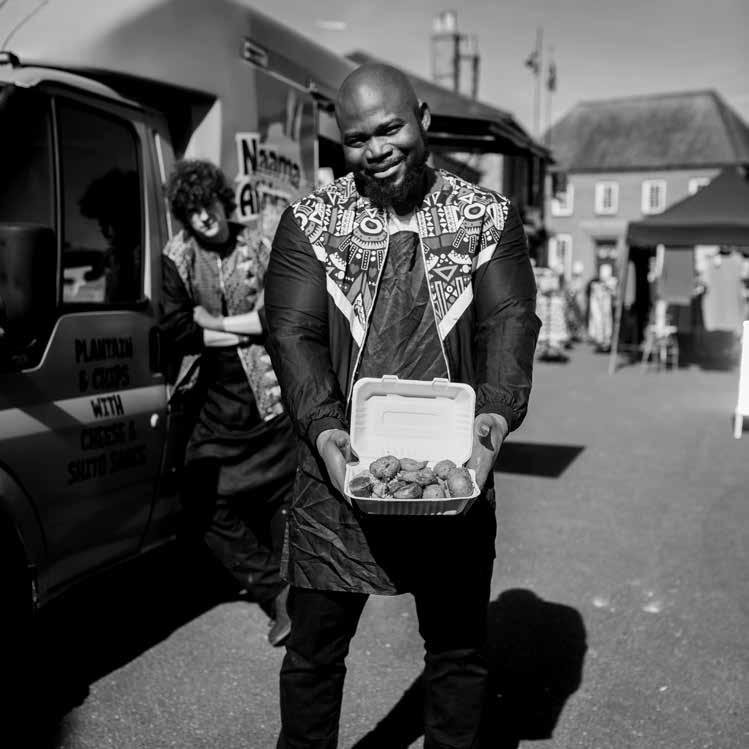


Written by Rita Thompson
The 2025 Cats and their Stats report is out now. There are 10.2 million owned cats across the UK with 66 percent of households own one cat and 34 per cent own two or more cats (including me!)
82% of cats are neutered (8.4 million) leaving an estimated 15% or 1.5 million are not neutered. Reasons for not neutering a cat are various – 19% say I want my cat to have kittens, 17% say their cat doesn’t go outside, 12% don’t agree with neutering and 11% worry about health risk to their cat.
I can’t imagine anyone living with an unneutered cat – females will be constantly calling for a mate, and male cat’s urine has a very unpleasant smell which will permeate throughout their home. Even if you cat doesn’t go outside, the benefits of neutering are numerous. Male cats can get testicular cancer, and
female cat’s uterus can fill up with puss – pyometra – which is life threatening. Neutering is a very safe procedure and there are no health risks to your cat –in fact you are doing them a kindness.
Microchipping has been a legal requirement since June 2024, and it appears that 37% of the general population are not aware of this. Which means that 2.6 million cats across the UK are still without a microchip. Some cats are fitted with GPS trackers but this does not replace having a microchip. However it is important to keep your microchip details up to date on the database. There are 700,000 cats who are microchipped with details that are out of date, rendering the microchip useless. Check with your database that your cat is registered with to make sure contact details are up to date. The fine for not having your cat microchipped is £500.

53% of cats are now insured, which is very good news and also means that owners are more likely to take their cat to the vet for regular annual health checks, in addition to when there are health concerns. Owners still turn to their vet first as a primary source of information about cats – 58%. Other owners either google their cat problems, contact an animal charity or a pet shop, or even contact pet insurance companies..
Pet insurance is a must these days, with the rising cost of vet fees. Vet bills can run up very quickly so its best to have insurance so that you can take your cat to see a vet when it is unwell. Shop around as policies vary greatly. Another tip is to join the Healthy Pet Club at your vets, where you pay an monthly fee and for that you receive 2 health check ups a year, regular flea and worm treatment, annual booster vaccines and money off if your cat does need treatment at your vets.
Our own small group of around 15 volunteers have managed to home 156 cats and kittens in the past year, another 13 were transferred to different branches of Cats Protection, one cat sadly died and 6 were euthanised. We also neutered 314 cats. Not bad for a small band of cat lovers.
We can help with the cost of neutering as we offer vouchers for £80 for a female cat and £50 for a male cat. Be a responsible cat owner and get your cat neutered. Contact us if you need help on the number below.
Rita Thompson, Breckland Cats Protection, 01842
810018.

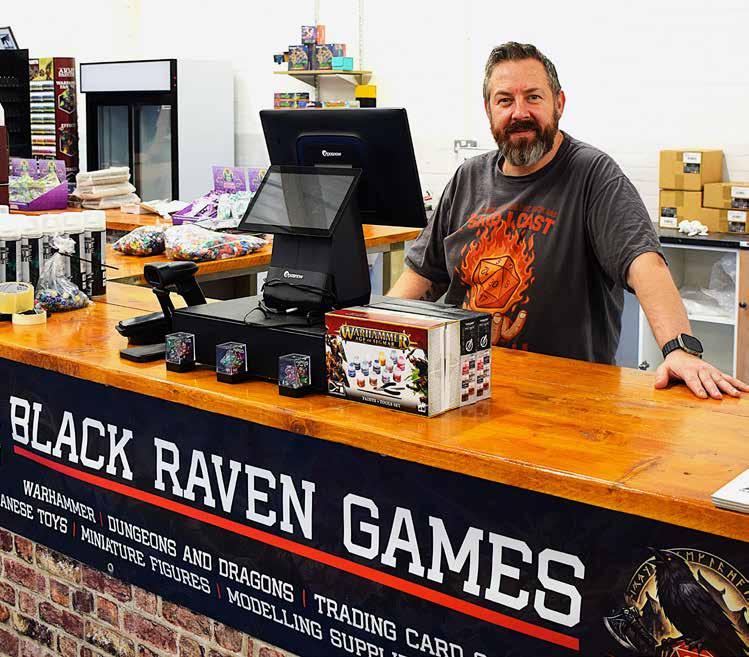

Written and
Photography
by Andy Greenhouse
Karl Ward’s interest in all things fantasy started when he was 8 years old, which was around the time that his family came to Thetford and settled. It’s here that Karl grew up, spending much of his teenage years out and about in Thetford and attending what was then known as Rosemary Musker High School.
At age 16/17 he was working at Nichol Beauty Products and remembers standing outside the factory in his breaks when he would look over the road at this very building, and finds it weird that now, 32 years later, he can stand outside that building and look over the road at where he used to work. These days, though, it’s Warburtons, Nichols having long since sunk into the annals of Thetford Past.
But it wasn’t until he was about 10, when he went to the Model Junction shop in Bury St. Edmunds, that he bought his very first Warhammer figures. He vividly
recalls then sitting in the stairwell of his cousin’s house, in the freezing cold, playing with the models and trying to work out the rules.
This was around forty years ago, so you can imagine the scene… players, models, rules book… but no internet! It must be said that Warhammer rules (while being straightforward (to experienced players!), are very in-depth and to a couple of ten-year-olds, it must have been quite overwhelming to try and make head or tail of them in the old-skool way… without the aid of Google, Warhammer help forums or YouTube tutorials!
But perseverance paid off, the game was played to conclusion, and the foundation was laid because, in Karl’s words, he’s been an avid fantasy gamer ever since. He’s actually on record as saying that in alternative universes he would be either a Waaaghdriven Ork of Warhammer 40k, or a fully bearded
gnarly old Wizard, complete with crooked hat creeping round a dank and dusty dungeon!
Fast forward to today, and Karl’s life has come full circle.
Although he now lives out of town, it’s in Thetford that he’s decided to make his mark. And that mark is Black Raven Games, a shop and gaming hub with the community in mind, soon to open in Brunel Way, directly opposite Warburtons!
But before delving into the vision and legacy that is Black Raven and what it’s going to be all about, it’s important to look behind the Game-Master’s Screen to see the cards that Karl has been dealt; to understand how and why this has all come to pass.
When I first suggested to Karl that I’d like to come along to say hello and get the low down on what he was doing, in order to write it up for the magazine, he was more than eager for it and was keen to say that he had a personal journey to tell me about too.
The majority of his adult life has been spent in the military. Originally with the Royal Anglian Regiment, Karl then transferred to the Small Arms School Corps and travelled the world, or as he puts it, he started in a local regiment, then joined another one to teach people how to use all the stuff the army uses!
He did tell me all the places he has been to in his line of work; suffice to say, it’s a lot! The Middle East, Asia, Canada and much of Europe should give you a good idea. But all the talk of travel sent him off on a slight tangent and brought to mind a future travel wish for when he’s got the time, when he’s retired… he told me of his dream to visit somewhere he hasn’t actually been to before – Australia. He would love to go there for at least four or five weeks and just chill out. Personally, I think by the time that happens, he’ll
deserve it.
Of course, in the greater schism of things, there will always be natural progression, such as growing up, getting a job and realising a career. The thing about fate and destiny that really grabs people’s attention, though, is that of love and devotion to family. And Karl was well and truly grabbed.
Marie was the bright beacon of light to which he was drawn to, over twenty years ago, and in the course of time, they have been blessed with three beautiful daughters who are each about to face their own trials and tribulations of life, as, with their father, they must confront the worst nightmare that any family should not have to endure.
It is said that “the flame that burns twice as bright burns half as long”, and about five years ago, Marie’s flame started to flicker when she was diagnosed with stage 4 breast cancer.
Sadly, despite a brave and valiant battle against it, she has been unable to overcome her illness and recently discovered that it has progressed to stage 5 and is now in her brain too. Marie is now on palliative end-of-life care at the Priscilla Bacon Lodge in Norwich. That her condition has been deemed terminal is something that Karl is handling with great composure and a remarkable inner strength.
Karl is full of praise for the outstanding care the staff are providing for her. It is obviously something that is, and will remain, very close to his heart, and it’s his intention that, as and when Black Raven is fully up and running, he will organise charity events by way of thanks, such as 24-hour gaming events. He suggested that he might even do some sponsored running for them as well as he needs to get a bit of fitness in… he patted his stomach and claimed, “I’m doing the middle age spread!”

Karl’s dream of opening a games shop was conceived about 10 years ago, but for the most part, it was always pie in the sky as he was fully invested in military life. But it remained always on the back burner, gently simmering away with Karl ‘umming’ and ‘ahhhing’ over the pros and cons of actually doing it, and usually Marie, with the voice of reason resonating in his ear, gently reminding him that they weren’t really in the right place at the right moment to actually go ahead with it.
And then came the cancer. And with it came moments of clarity and profound pragmatism. Karl told me of a moment with Marie. Again, in his words, it went something like this: “She basically turned to me and said, ‘You know that shop you’ve been going on about for the last 10 years? It’s time to do it now because you will be a single dad, a widower dad, and you can’t be going off in the military, so now’s the time to follow your dream.”
It was such a bitter-sweet moment for him… his wife finally telling him to live the dream he’d long dreamt of, but the reasons behind it being so sad. It became a huge emotional investment for him to accept that his rationale for jumping in both feet first into this venture was because of his wife’s blessing.
That was the moment I could really tell how much this meant to him. There was the briefest pause, where I could sense the inner struggle... words almost catching in his throat. But he recovered well, quickly going on to tell me that he travels back and forth to the hospice every day to visit Marie for most of the day, then returns to the shop to work on the preparation.
This was the pivotal moment of our meeting. We moved from the dark into the light, yet with an understanding that there cannot be one without the other.
And the floodgates opened.
Up until now, we’d just heard about Black Raven Games – the pipe dream. A fantasy borne of a lifetime of memories of a game of Warhammer… but now, we’re talking about Black Raven Games - the brand. The community. The home.
The name itself was chosen by a process of elimination of other contenders and settled upon because of the ‘flock’ connotations.
This was Karl’s opening statement when I asked him what was going on here:
“I’m building a community, really. I know that the community is already out there, but I’m just building a home for them to come to. There are plenty of people who love D&D, plenty of people who love Warhammer, and plenty of people who love painting models, you know, all that side of life. So, hobbyists, fantasy role players, anime, cosplay… I’m just trying to create something with the space that I’ve got, trying to create something where it’s not just a plastic shop that you walk in and see wall-to-wall plastic kits, where all they want is your money. Hence the reason we’re not charging for our tables.”
And that’s how we went from there… in his desperation to tell me everything, Karl couldn’t get his words out quick enough, and if it wasn’t for this wonderful iPhone app that records the spoken word, I wouldn’t have been able to write them down quick enough!
He started by reiterating how much of a legacy this would be, not just for him but for the community of Thetford. He recounted the love of his three daughters and of their absolute support, namely 22-year-old Brooke, 12-year-old Grace and 9-year-
old Addison. He also mentioned his recent joy of becoming a grandfather to Hudsyn, courtesy of Brooke and her partner, Adam. They’re now starting their life, but Grace and Addison are fully invested in Black Raven, although Brooke, while she is enjoying motherhood, will also look after the social media aspect for Black Raven. Grace and Addison, however, are taking a more hands-on approach in their roles… They’ve started spending their evenings down at the shop, helping where they can.
Addison has started to learn the Disney Locarna trading card game because she wants to become the resident expert. It’s a trading card game very similar to Magic: The Gathering inasmuch as players battle each other by taking on the role of Disney characters. But she is also a lover of ‘Squishies’ and Japanese toys, so there will be a section selling those, while Grace, on the other hand, will be head of the cosplay and anime department. But Karl was keen to point out that they would both take care of the supply and demand for their particular departments, as it would teach them a lot of what would become important in later life. Though I did get the impression that he would rather be hoping that they’ll be capable of running the shop while he has a quick game of Warhammer or something!
He believes that the proximity to the A11 will be their lifeline, enabling them to not only serve Thetford but also the wider area. Brunel Way is also walkable from most of the estates… spoken from experience, as Karl used to walk to work (at Nichol) from where he lived. The aim is to open to the public on the 4th of April. There are plans for a ‘friends and family’ session a few days before this to forestall any potential teething problems, but Karl is confident that, with the amazing assistance he’s received from his wonderful team of helpers, everything will be very smooth and on schedule.

It will probably only open for the community gaming side of things first, as it’s doubtful the actual shopfront will be ready by then, although that’s not to say that stuff won’t be available to buy.
The plan is to have eight tables, which are all about 13 feet long by up to 5 feet wide. Constructed from scaffolding frames and wooden plank tops, they are massive and very robust!
Four of these tables are designed to be stood at… they’ll be too big to be able to sit down and play. These will be where the mainstream table-top wargaming will be played, such as Warhammer or Bolt Action, plus any other of the countless wargames played with miniature figures and scenery. Karl was pretty excited at this point to mention ‘Blood and Plunder’, which is where the playing area is designated as ocean, and the pieces are pirate ships! And after having seen one of the ships, on a desk in the office, I can say that this promises to be quite the spectacle. The ships are huge! The one I saw was almost as big as the desk and apparently took three months to print, bit by bit, on a 3D printer.
There will be two tables for sitting at, to play smaller Warhammer games, some Dungeons and Dragons and those kinds of games, then two more long tables that are not quite as wide, which will be ideally suited to trading card or board games.
It’s intended that one of the larger tables will likely be set up as a demo table and will always have a feature army deployed so that when Joe or Jane Bloggs walks in one day, saying they don’t have any kit, or don’t actually know how to play then Karl or one of the team will show them the ropes at this table by talking them through the first couple of turns then letting them carry on.
To begin with, he envisages that it would be just a
case of walking in and using a free table, but as with everything, it will be advisable to book your space, either online or at the shop.
He’s also toying with the idea of making armies available for ‘hire’ for the day or game.
There will be a large screen up on the wall that will show YouTube videos of things like Warhammer battles or ‘Critical Role’ D&D sessions, or it may occasionally focus on events or news to do with the shop.
Also under consideration is a lounge area, where people can sit on sofas to enjoy a coffee, read, or have a chat. There will be a ‘refreshments bar’ where all the usual snacks, maybe some haute cuisine pizza and bacon rolls, and drinks (non-alcoholic) can be purchased, and the lounge area would ideally be placed next to that.
In providing a community-based experience, Karl is also keen to promote a ‘safe’ place for people to come and not only enjoy the gaming or retail side of things, but also for the emotional sanctuary of being with like-minded people. He himself is going through a lot, mentally and emotionally, right now and said that without a shadow of a doubt the reason he’s not falling apart is his daughters, and this place… being able to come here, to work, to paint, to play and to talk because just talking… doing something really cool… doing something that you love… those are the things that make you feel better.
His philosophy is that laughter makes the world go round and laughter cures everything. If you laugh for just two minutes, then for those two minutes you forget about all the rubbish things that are going on in your life. So, whether you’ve got cancer or whether you’ve got a mental illness or a mental health problem, then if you laugh for two minutes, nothing
else matters. Laughter is the best medicine, and he is fervently hoping that that’s what it’s going to be like here.
When people start playing games together, they start talking together about themselves and their lives, and it branches from there and becomes a kind of therapy… Gaming Therapy.
Another issue close to Karl’s heart is the importance of making the venue child-friendly and inclusive. Anyone under the age of 16 would have to be with an adult anyway, but all the staff will be DBS certified. The inclusivity of youngsters is important because Karl is fully aware that in the very near future, he’s going to be a single parent, and perhaps one of the hardest things any parent faces in those situations is wondering what they could do with the kids today… Black Raven Games would certainly be an option for a family day out to come and play anything from Warhammer to Monopoly and a million games in between, though he did stress that it’s intended to be an argument-free zone!
But what Karl was trying to stress was that the kids are important. Everything he’s done and strives to do about Black Raven has helped him ‘keep it together’ for the sake of his children. I simply could not fault his admirable mindset and rationale.
When Karl started to look seriously at getting this off the ground, he felt it was important from the outset to look at it with the philosophy that it wouldn’t be about making money. He wanted it to be more about making a family, making a community… making it somewhere where people who might be struggling with things in life, or just having a bad day, can go to sit and play, or chat in a safe and inclusive environment.
There are also measures being put in place that 139
will enable him to work with Breckland Council in providing an environment that might help troubled kids. He cited that children with ADHD, for example, tend to respond really well to this type of game because of the meticulousness and maths that are involved.
Opening hours are intended to be 10 am until 10 pm, every day, and until such time that the company grows within the community, Karl will be the only employee. But the intention is there, to take on new staff as and when the time is right, and if the person is right.
I sort of kind of hinted that this would be something right up my street now that I’m retired from full-time work, and that I hoped to be down here regularly when the doors open. In response, Karl more or less gave me an open invitation to pop in whenever I’ve got some spare time, for a brew and a chat, to play a game, or to sit and paint one of their demo models. I think that’s the closest I’ll get to gainful employment, so I’m fully on board with his generous offer!
In getting this venture up and running and off the ground, he remains eternally grateful to his friends who are helping him out with the mammoth task, Laurie, Sam and Steve, amongst many others. They have really kept things together for him, especially while he is visiting Marie virtually every day.
There are other things that are in the melting pot of Karl’s mind. Things for the future, things he’s trying to put into place now, such as an online shop where there’ll be something affordable for everybody, or the idea of doing a real-time podcast whilst playing games. There are also plans down the line for introducing BRG ‘merch’ such as mugs, t-shirts, etc., and to create and run tournaments and competitions… all things he’s never done before,
but all things that are providing the distraction from what’s happening in his personal life.
These are the cards that Karl has been dealt, and the ones he is playing, and he is the first to admit that the important thing is how you play those cards. With Marie obviously uppermost in his mind all of the time, he is coming to terms with what will happen, but now doing something that he knows is something she wanted him to do might give her the peace of mind to know that he will have purpose in doing it. Karl loved his time in the army, but this will be his next big adventure, doing something he absolutely loves, and doing it with the type of people that he likes… people that do role-play, fantasy or sci-fi… people like him, for he is the undercover geek forever.
Come along to Black Raven Games and embrace your inner geekiness.
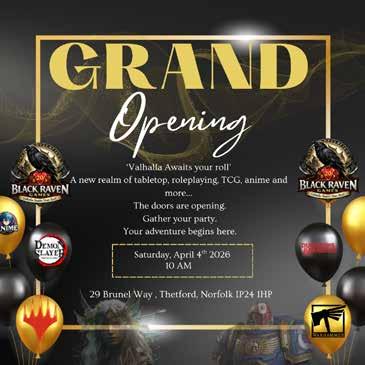
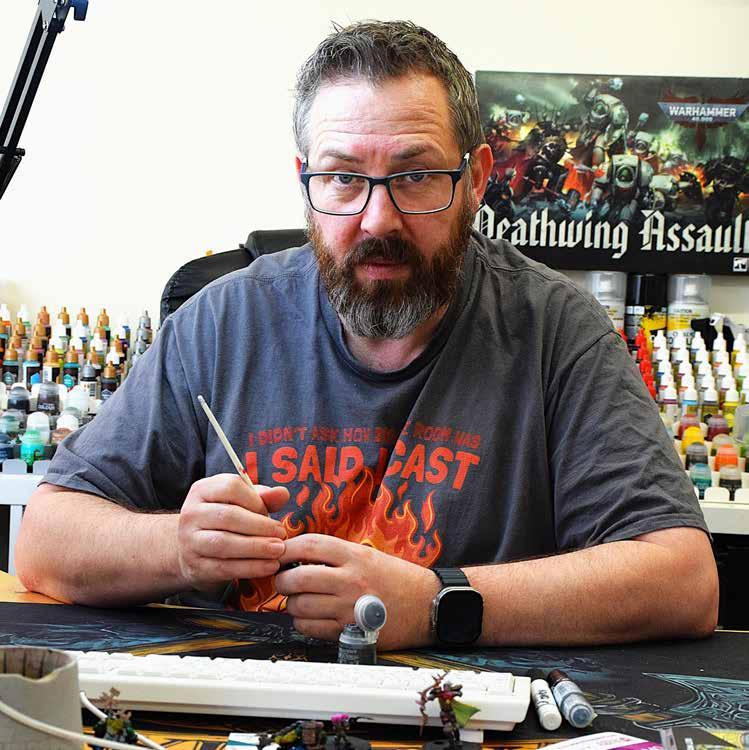
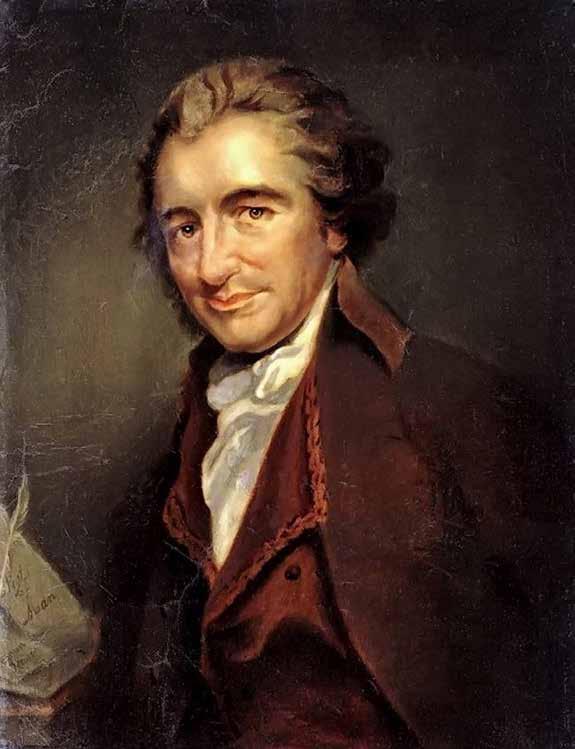

Written by Dave Griffiths
‘My Country is the World; My Religion is to Do Good’
Thomas Paine’s motto, seen on his fabulous statue in front of (somewhat ironically) King’s House in Thetford, is a brilliantly succinct expression of what the man was all about. And that is no surprise, as he had a brilliant mind, a gift for making complex ideas accessible and compelling in a succinct way. It also betrays in one sentence the underlying reasons why large swathes of society viewed him, and may still view him, as a traitor. But I am not one of those. He was a brilliant, visionary man on a global scale. Not only the architect of the philosophy of the “New World” but the designer of mechanisms and approaches to be adopted in it, some of which only came to fruition nearly 2 centuries later. Add to that a writing style to stir the coldest of hearts, and you have a hugely influential character, committed to equality and fairness. He was, in my humble opinion, nothing less than the Founding Grandfather of the United States of America; he even invented its name! And all from
humble beginnings as the son of a stay/corset maker on the site of the Thomas Paine Hotel. But his huge ability was accompanied by a remarkably low level of emotional intelligence and a dogmatic adherence to his immovably held principles. And that led him into a lot of trouble! Read on to see how I arrive at my conclusion. He’s a man who will doubtless continue to spawn heated and polarised debate.
On the morning of 8th June 1809, Thomas Paine died at home in Greenwich Village, a lonely, bitter, heavy drinker. His body was taken 22 miles north of New York to the New Rochelle property presented to him by New York State in recognition of his political services. The Quakers would not allow his body to be buried in their graveyard, given his conversion to Deism and renouncement of Christianity. His remains were laid to rest under a Walnut Tree on his farm. There they stayed until
shortly before daybreak on a September morning in 1819….
“Come here and keep your head down!” I say to my son James as we carry a box with a pic and shovel around the perimeter of a copse. It’s nearly 4.00 am, but lights still shine out of a tavern window 100 yards away. James trips and drops the end of the box with a crash. “For God’s sake, be careful”, I bark as he chunters and picks it back up. A door opens in the tavern, and voices can be heard, “Did you hear that? It came from the woods.” We scuttle off in the other direction, taking the long route around to the burial site. I stand looking down at the headstone of my once adversary, Thomas Paine, feeling sadness and remorse at our conflict, a conflict driven by my self-interest and lack of insight. We dig up his remains and place them carefully in the box, leaving our tools behind. “Come on, help me with the headstone, James”, I say, meeting an incredulous look from him. “We can’t lift it, let alone carry it!” I pause for a moment, making a silent apology to the great man, and we head off into the early dawn gloom.
On the 29th of November, I sail into Liverpool with the intention of returning Thomas to his native country, raising money for a grand mausoleum and laying him to rest in a setting befitting his status. But everywhere I turn, I meet closed doors. Even in death, his bones hold a threat, a revolutionary rallying point that no one is willing to risk. Not in a country where all the wealth and prosperity are held by a tiny proportion of the people, the establishment wasn’t going to let that happen. I keep the remains, which then form part of my estate 15 years on. Later, they are dispersed and lost. I, William Cobbet, proclaim that Thomas Paine was right all along; I was just too blind to see it.
But how did it come to this? How did such a great
man end up with this fate? To understand, you must go back to the beginning.
Thomas was born on 9th February 1737 in Thetford. His father, Joseph, a stay/corset maker and tenant farmer, followed the Quaker faith. His mother was an Anglican and the daughter of a Thetford attorney. As Joseph was a freeman of the town, Thomas was able to attend Thetford Grammar school between the ages of 7 and 13, proving bright with a voracious appetite for reading on all subjects. Passages in his later writings showed he’d read Shakespeare extensively. At 13, he began a 6-year apprenticeship with his father. But he obviously felt confined in Thetford and at 19 years old attempted to join the privateer ship, “The Terrible” commanded by Captain De’ath. He must have really wanted to get away! His father managed to stop him, but later that year, he joined the more pleasant-sounding King of Prussia, heading to sea and returning in 1759. The Terrible was lost at sea with most of the crew, so he had a lucky escape. One of the few pieces of luck he had over the next period of his life.
Even the most generous soul could not describe the next 15 years of his life as anything more than thoroughly average. In 1759, he became a master staymaker and opened a shop in Sandwich in Kent, and on September 17th that year, he married Mary Lambert. All seemed rosy in his garden, but ill fate and tragedy were to strike. His business soon collapsed, and Mary became pregnant. They moved to Margate, but Mary went into early labour and died in childbirth. Shortly after the child died, his world had fallen apart. He returned to Thetford, trained as a supernumerary officer, then became an Excise Officer in Grantham, and then in Alford. But he cuts a disinterested, impatient character and gets dismissed in 1765 for signing off goods he hadn’t inspected. He appealed for dismissal

successfully, but whilst waiting for a new role, he became a schoolteacher in London. In 1768, he was appointed to an Excise role in Lewes in Sussex, a town with a tradition of opposition to the monarchy and pro-republican sentiments. He moved in above the tobacco shop owned by Samuel and Esther Ollive. He later married their daughter Elizabeth shortly after Samuel’s death, presumably to allow the family to retain the shop. But in 1774, the business went bust, and he had to sell his household possessions to avoid debtor’s prison. His marriage of convenience was dissolved on 4th June, and he returned to London.
It was in Lewes that Thomas’ political juices really started flowing. In 1771, he wrote a 95-page essay called The Journeyman’s Touchstone in support of a publisher who had printed some anti-government material. In 1772-3, he joined the excise officers in asking Parliament for better pay and working conditions. This was considered to be the first unionisation of workers in Britain. He wrote a 12page article, The Case of the Officers of Excise, his first political work, which 4,000 copies were distributed to parliament and others. He lost his job for his pains. One suspects he was somewhat stitched up in being invited to spearhead the campaign with inevitability.
In London in September 1774, a mathematician, Fellow of the Royal Society, and Commissioner of the Excise, George Lewis Scott, introduced him to Benjamin Franklin. He was in London as a voice for colonial opposition to British colonial rule, especially as it related to the Stamp and the Townshend Acts. Franklin gave a letter of recommendation to Paine, who emigrated that October to the American colonies, arriving in Philadelphia on November 30, 1774.
It’s worth pausing to reflect on the man who left
these shores and how his experiences had affected him. Raised as a Quaker, Thomas fundamentally believed in equality and fairness. Britain at that time was ruled by the aristocracy and landowners who accumulated all the wealth. They employed the commoners and so governed their well-being. Before the 1832 Reform Act, only around 1% of people had the vote, voting in their own kind and passing laws that maintained wealth in their circles. The amalgamation of land to large landowners stripped the common man of their stake in the country, becoming merely a tenant farmer and pawn of the rich. The fate of 99% of people was wholly in the hands of the few. Whilst the civil war had cut the King’s power significantly, he still held considerable sway in the affairs of state. George III was the latest in a long line of severely inbred aristocracy who started his life troubled and ended it totally insane. He was the figurehead pushing British expansion abroad, taxing the colonies and sending their inhabitants to war in the quest for Britain’s further expansion. In his role as an Excise Officer, Thomas saw firsthand the extreme corruption endemic in raising these funds at home and their effect on the population. And this extremely lacking king also inherited the Head of the Church of England, God’s representative on earth! Any impartial observer must view this state of affairs as profoundly unfair, irrational, and in desperate need of radical change (apart from the 1% who benefited from it). His humble beginnings and challenges along the way fuelled a focused and unwavering passion for change.
Thomas Paine barely survived the journey to America, contracting typhus, having to be carried ashore and taking 6 weeks to recover. It was late January 1775 when he wrote 2 articles for the first edition of the Pennsylvania Magazine, a publication conceived by its owner as non-political. The next month, he was made editor, growing circulation to


eclipse any preceding publication in the colonies. He contributed many articles, often under aliases. A most notable early article was African Slavery in America, an argument for the abolition of slavery. Paine brought a strong political perspective to the magazine’s content, claiming that it should become a “nursery of genius for a nation that had now outgrown the state of infancy, exercising and educating American minds, and shaping American morality.”
In January 1776, Paine wrote the 45-page pamphlet Common Sense, articulating in plain speech that the time was right for America to seek independence from Britain. The independence movement was well established but led by rich American landowners wanting to shake off the yoke of Britain’s oppression. Paine’s humble beginnings and passionate belief in equality allowed him to argue the case from the commoners’ perspective. In doing so, he took aim at the British government and aristocracy, but most specifically at the king himself. He argued vehemently against the irrational concept of hereditary monarchy, the way George III taxed the colonies and used the proceeds to expand his dominion. He was clearly right but made few friends amongst those in power back home with his compelling arguments. The pamphlet is estimated to have reached a circulation of ~500,000 amongst the colonies’ 2 million inhabitants and built a ground-up momentum for change.
Paine is not a credited author of the Declaration of Independence, published later that year, but there is clear evidence in the notes of the early Sherman Draft that sections were “copied with T.P’s permission”. He was definitely “in the room” where it all happened and was the philosophical foundation of the document. Paine’s brilliance at stirring prose was brought to bear during the war,
where he published a set of morale-boosting Crisis Papers. The first of these, George Washington, had read aloud to the troops before the pivotal battle of Trenton in December 1776. The battle was a crushing victory for Washington, which had a huge effect both on morale and on enlistment to the army.
In a June 1776 paper, Paine urged Congress to embrace the new name for the 13 colonies to promote togetherness and one purpose, the “United States of America”. In future publications, Paine fleshed out much of the design for key elements of an independent republic he promoted. This centred around equality and the provision for the old and poor, paid for by the wealthy landowners. But in the process of doing this, his direct and less-than-sensitive approach started making enemies.
The Treaty of Paris in 1783 effectively ended the war of independence, and Paine turned his attention to a revolutionary bridge design. After failing to get funding in America, he returned to Paris and then London in 1787/88. In 1791, politics got him back into trouble when he wrote a response to Edmund Burke’s attack on the French Revolution, “Reflections on the Revolution in France”. His publication The Rights of Man argued, amongst other things, for the right of a people to revolt against an oppressive government. This was incendiary to the British government and aristocracy, who were viewing events in France nervously. He was advised to leave the country and convicted of seditious libel in his absence. He fled to France, was made an honorary citizen and elected to the National Assembly. But in 1793, having voted for the Republic but against the execution of the king on moral grounds, he fell out with the dominant Montagnards and was thrown into prison. After a year in prison, he avoided the

guillotine by pure luck. After his release, he wrote a withering article about George Washington and how he did little to secure his release, angering many Americans. He wrote an article on how to invade Britain if you wanted to overthrow the oppressive monarchy. Whilst clearly with the good of the people in mind, this was probably the final nail in the coffin of his ever returning to live there. His principles, dogmatism and inability to filter what came through mouth or pen had now lost him most of his allies and friends in Britain, America and France.
Whilst in captivity in Paris in 1794, Paine started writing The Age of Reason, in which he argues against traditional religions and for Deism. Basically, Deism is the belief that there is a God who created the world, but that didn’t intervene in it thereafter. Science and nature took over from there. This directly opposed all branches of Christianity and so alienated the church. Today, this would be a totally reasonable position to take; in fact, it largely reflects my personal beliefs, and I’ve never been persecuted for it. But to the Americans and their fiercely religious roots, this was unacceptable. He returned to America in 1802 to a hostile reception, was denied voting rights and attacked in the streets. Jefferson remained a friend, inviting him to the White House, but pretty much everyone else deserted him. And so, you return to where I started this article, with him dying alone, having a funeral with 6 attendees and being buried in un-consecrated ground away from any family.
So, what are we to make of the man? Up to the age of 37, he had a less-than-noteworthy life. But in his 13 years in America, his writings during this period and after, he became one of the most influential people of his generation. He architected the new world and designed some of its key elements. But
his unwavering, possibly blinkered adherence to his principles and a lack of sensitivity lost him all his friends and his standing. “My Country is the World” shows that he had no binding allegiance to a country but rather a passion for equality in all countries, for the many and not the few. He never sought great wealth like many of his peers, as his motives were always for the common good; “My Religion is to Do Good”. I choose, therefore to remember him as a truly great man, the greatest ever to hail from Thetford, who changed the world but due to his dogmatism upset a lot, perhaps most, people. I doubt Thetford will ever spawn such greatness again, so his memory, warts and all, should be cherished.
If you want to know more about Thomas Paine, there is a fabulous display in the Thomas Paine Hotel, which is well worth a visit and tells you more about this amazing man and his exploits.
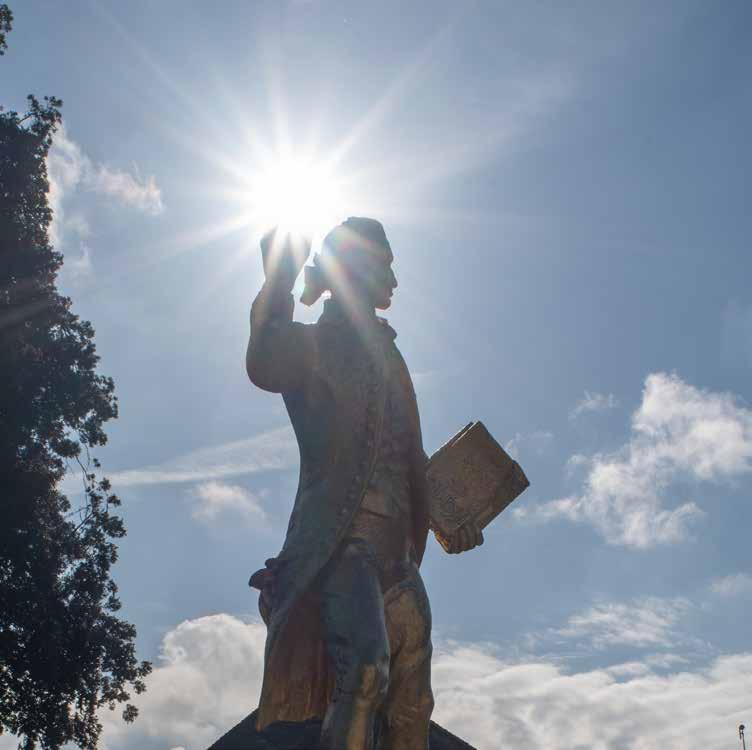
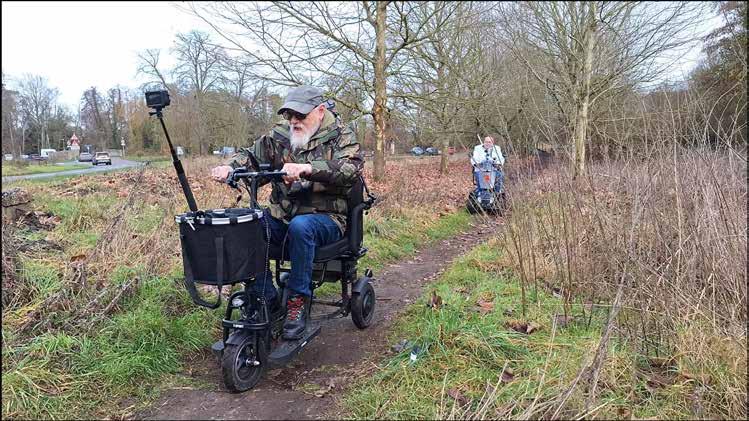


Photography, high jinks and words by Bob Blogg
The Scote 48350 was out of the box, so what could we do?
It was a little folding boot scooter, a bit tricky to assemble, and it had good tyres.
The following day I took it for a drive down Guildhall Street just to see what it was like, happily pressing the mode button.
The next thing I know, I am whizzing down the road at almost 20kph without a care in the world.
I had hit the magic button!
We regrouped and looked at its stats and specs, and to our great joy we found that it was a road scooter
with an optional setting for driving on private roads at a more sensible maximum speed of about 12 miles an hour – unlike the 8mph imposed by our nanny state.
It had the lights, the indicators, the modes and a horn.
“It’s a legal road scooter”, we declared giddily, “so, let’s treat it like one.”
How does it compare to the big boys like TGA and Pride at a good few grand a pop each?
This baby costs less than £900 and can fit in your boot (I explained I wasn’t talking about footwear) and go around diddy shops.
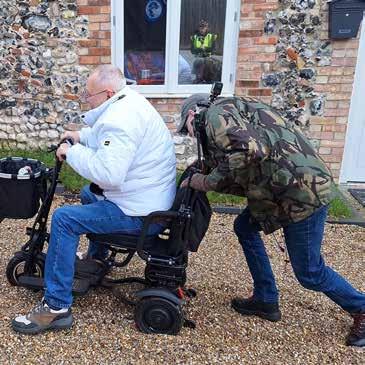
The first test is the Gravel Sea of course.
This is the recently rebuilt area near the Goal House in old Market Street that has been filled with pea gravel as a low-cost landscaping option to approximately the depth of the Mariana Trench (maybe it’s not 36,000 feet deep but it’s giving it a good go!).
We got our friend Steve to help us film around there, and then set off.
Adrian did the first lap.
He did a very good lap, getting over the gravel remarkably well, although struggling in a few spots.
Right! It was my turn and I wasn’t going to take any prisoners.
I managed to wrestle Adrian off of the Scote and jump on. I then charged towards the gravel sea from the Old Market Street end at top speed (the legal 8mph that is). In an instant I was buried axle deep in gravel.
Oops – perhaps I shouldn’t have done that!
Fortunately, Adrian was forgiving enough to push me out – twice! Steve just shrugged and thought (I will be in St. Ives soon when the contracts are exchanged!) and smiled.
Next up was Acceleration Avenue.
I wasn’t allowed to drive anymore, they said! Adrian took this scooter at full speed down the avenue, while Steve was marking and filming the results of each run.
Apart from Adrian nearly killing the geese, the
Scote’s acceleration and braking is pretty impressive.
So, what do we think? We think this little scooter is quite awesome, powerful, comfortable and affordable.
We haven’t come up with any cons, really, so far. Adrian thinks the Velcro on the back bag can be a bit annoying!
The final test is now. How fast can it go around our test track and where does it come on our leaderboard?
This is proper David and Goliath stuff, 28kg versus 148 kg.
Who will win?
Scan the QR code below to find out...

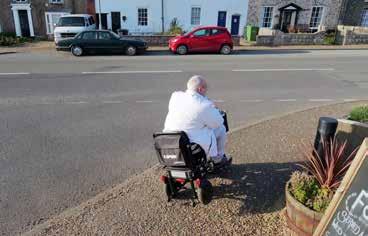
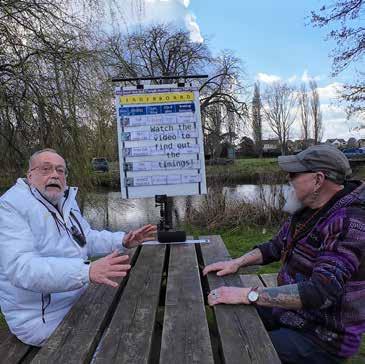


I nearly lost it trying to outrun our new drone racing around the Black Horse garden the other week! Wait a moment; I’m getting a bit ahead of myself here.
A couple of months ago, just after we got the scote, we went for a road trip up Joe Blunt’s lane; mainly to test the scooter’s off-roading but also in search of the ghost of Joe Blunt.
Joe Blunt allegedly hung himself from the railway bridge about 100 years ago because his sweetheart’s mother falsely and publicly accused him of attacking her daughter.
His ghost is now said to haunt the area. You can believe it or not – but I think this ghost got my poor drone!
Whilst I was trying to film Adrian driving underneath the bridge, my drone was forced into the trees by an invisible force, his collision sensors useless, and smashed into a tree yards away from the railway line. You can see the last frame from his video below, a split second before his fatal crash.
His casing cracked apart in several places and his gimbal broke as he tumbled through the branches and smashed into the ground.
I didn’t realise the full extent of his injuries at first, but when I got him home I realised he was beyond help.
Still, ‘Never say die’ as they say.
I raid my money box and plunder my bank account and go shopping.
I figure I deserve a
bit of retail therapy after the trauma of losing a loved one, so I dive right in and start researching what’s new and affordable in the drone world.
Before long I am looking at the DJI Neo2.
It’s ticking all the boxes. It starts at about £200 and you can add batteries and chargers and controllers bit by bit. Most importantly, the starter model doesn’t need any extras.
It has a little screen and setting buttons on the drone itself; it can take off and land from the palm of your hand; you can control it by gestures; it has lots of automated quickshots; and it has a follow me mode that makes it almost impossible to shake off!
Well, the drone was dead, long live the drone. I bought one.
Shortly after that, I was meeting Martin in the Bell Inn for a catch up so I thought it was a good opportunity to take it for its maiden flight in the nearby King’s Gardens.
Soon, it was time for takeoff. Martin had his camera ready; I had the drone in my hand; it was turned on and set to follow me mode. I could delay no longer.
Like a nervous mother hen, I pressed the go button and held the drone between my fingers as if it was an unexploded bomb!
A calm voice said ‘Taking off; 3 2 1’, the engine fired and the propellers whirled, and up it went (the picture below is the actually first launch).
Anyway, it didn’t take it long to track me. I started running around the garden on my Colt scooter, twisting my head left and right like a drunken giraffe trying to see if the drone was following me.
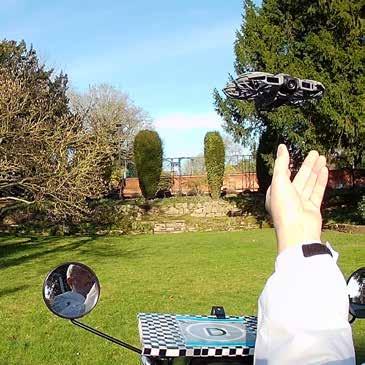
It was. I drove a crazy, zigzag course and it followed me easily.
Martin had to duck though – it wasn’t following him. In fairness, I don’t think it would have hit him.
All too soon, the flight was over. I offered my open palm, not in peace but more in prayer, hoping that it would land there.
It touched down lightly, didn’t even nip my fingers, and switched off.
What a really impressive little machine.
This brings me back neatly to where I started. The main picture above shows me racing around the garden and pavement outside the front of the Black Horse pub in Magdalen Street, up on two wheels and trying desperately to shake off the new Neo 2 drone; I couldn’t!
With the other drone, we had terrible trouble trying to get it to follow us. This one does it without thinking, and when it has got you in its sights, it won’t let go.
Scan the QR code below to watch...

In the last issue we showed you the unboxing of the Scote 48350 mobility scooter.
Anyway, when it came out of the box Adrian fell in love with it and had a Victor Kiam moment!
He didn’t quite ‘Like the scooter so much and buy the company that made it!’ because he couldn’t afford it. But he did beg, steal and borrow, gather every penny he could find and buy the scooter.
Thanks to T-Sport he got a very good deal and a few, interest free months to pay.
Well, actually these/those months are going to be very interesting.
He has now nicknamed his Scote mobility scooter ‘The Stoat’ because it is small and fast, and probably cuddly too!
I said to him that now he has got the scooter he can write his own articles for the magazine! I was going on strike and sulking – in fact I think I was a bit jealous. Because he’s shaky, there is no way he can hold a pen stable enough to write anything legible and, if we gave him a keyboard, it would need to be armour plated, so we gave him a Dictaphone.
Martin kindly used his software to transcribe Adrian’s voice to text.
As a result, Adrian sounds even crazier than usual but the words are his.
Nevertheless, if you catch him at the right moment, he comes out with some wonderful reminiscences and fascinating comments about the history of Thetford.

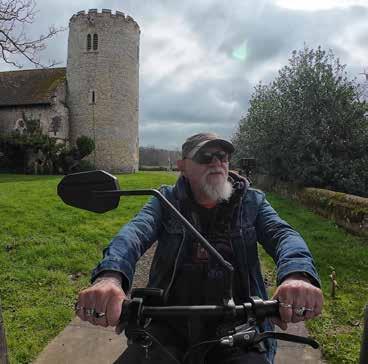
‘Adrian
Holden - The Stoat Chronicles’


Just to set the scene, he starts off outside a certain well know supermarket and is going to revisit his childhood and family by heading along Kilverstone Road to St. Andrews Church.
** Right, now here we go. We’re down here at the big Tesco. We’re going to go from here down to Kilverstone. Look, there’s traffic everywhere.
Now that over there is where I grew up.
I was only there for a little while, but I grew up. It was lovely. I don’t know, a little while, 12 years.
No, no. When I lived down here, it was 1962. I was born 9th of December.
There was no Tesco, no garden centre. There was nothing, just those two little houses. All the way up until you get into Kilverstone.
**
You can still see these two little houses on the right of Kilverstone Road, sandwiched between Charlock Road, where Tesco’s is, and the Thetford Garden Centre. It must have been right out in the wilds before any of these were built.
The pond he describes next was visible from his bedroom window.
**
There was quite a big pond over there. They had newts and toads and all sorts in it. They filled it in and stuck a little garden centre in the way.
How that is supposed to be good for the environment, I can’t really say.
Well, over there you’ve got Kilverstone Farm. This first house up here on the left, that’s where my god parents lived.
All along it has all changed so much, all overgrown and terrible. The old boys would have a hissy fit if they could see that now.
**
The area he is describing above is just as you arrive in Kilverstone and then shortly after that you reach Kilverstone Hall.
**
Kilverstone Hall. We used to play round here, me and my brother. We used to go to the old dump and get old pushbikes out.
You’ve got no tyres, no tubes, no seats, and no brakes. And we’d get on them and ride them round here. And you can well believe it was very painful. Just metal rims, no grip on the whole tyre mount. I wouldn’t dream of doing it now, but those days I did.
Now there you are that’s the old water trough where they used to come and water their horses.
I see someone’s tidied up around that.
** He has now reached the old water trough right in the middle of Kilverstone with is now a WWI war memorial.
The wellhead was built circa 1902 in the Art Nouveau
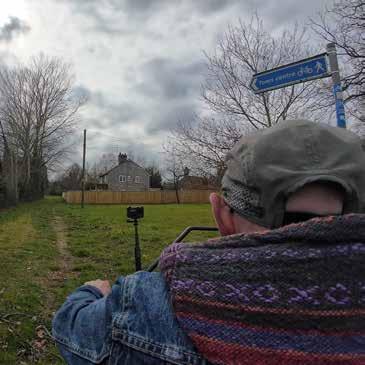

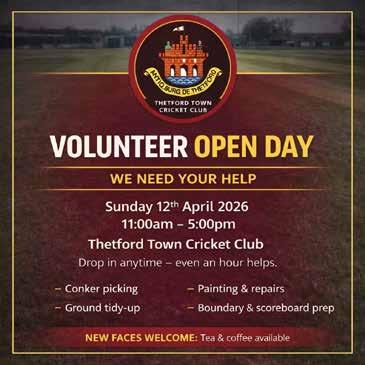
style by Edward Thomas Boardman
**
And we’ll go down here to the churchyard, St Andrew’s Church. We go and see Mother and Father and me brother, Tim.
They’re all tucked up down here, bless them.
**
I think it’s really nice of Adrian to share these personal moments with us, not only in this article but of course in the accompanying video.
I believe Sarah was an old flame.
**
Old Sarah used to live here, Sarah Chasney. She was a rum old girl; she was very, very Norfolk.
What’s that there? 1709. I believe that church was born, err, born, built.
Over there’s a lot of deer.
We were christened here. My brother was christened here, we were married here.
**
He means his brother was married there, not him!
**
And we had the poor sod buried here. We’ll have a better look at them in a minute.
There we are there’s the graveyard. Look at all that lovely open ground. There we are, look.
There’s mother and father, bless them, and Tim.
There, let’s have a look, see if you can see this; Age 59, 71 and 75.
How lovely and quiet. How beautiful. That was that little trip.
**
This might not be the most coherent article we have ever put together but it is nice to get Adrian’s view for a change and a lot of his memories and reminiscences of old Thetford are absolutely fascinating.
I have only transcribed a tiny section of his video so I highly recommend you give it a watch. As well as history, it has some absolutely beautiful scenery in it. It will also help you understand all his nutty dialogue!
**
Scan the QR code below to journey into the past.

Happy scootering.
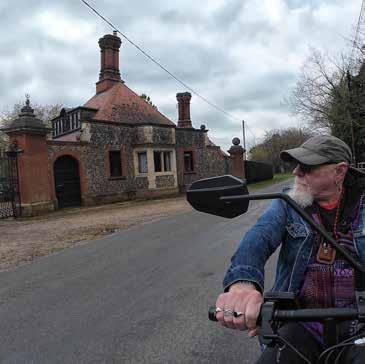
Back by popular demand, we are publishing a few of the letters and correspondence we have received from some of our avid local readers.
Dear Editor,
I have lived on my street for 14 years, yet I am still not entirely certain which cats belong to which houses. One entered my home, inspected the sofa, and left with a look that suggested I had disappointed it personally. I now feel obliged to improve the place, though I don’t know for whom.
Respectfully judged, L. Fenwick
Dear Editor,
Sunday in Thetford has a distinct soundscape: distant church bells, someone testing a lawnmower, and a single, persistent tapping that no one can quite locate. I spent most of last Sunday attempting to identify it, only to realise, late in the afternoon, that it was my own shoe. I have since apologised to my neighbour.
Yours acoustically, Dave R
Dear Editor,
There exists an unspoken choreography on our pavements: the slight sidestep, the polite half-smile, the mutual agreement on who yields. Yesterday, however, I encountered a man who committed fully to the centre line and did not deviate.
We approached, paused, adjusted, and then mirrored each other repeatedly like confused ballroom dancers. We eventually resolved it by laughing, though I suspect neither of us won.
Yours diplomatically, Emma B.
Dear Editor,
There is a precise moment between switching on the kettle and it boiling where one believes they have time to do something useful.
I used this interval to tidy the kitchen, reply to a message, and briefly consider my life choices. I returned to find the kettle had boiled, cooled, and entered what I can only describe as quiet disappointment.
Yours inefficiently, Lewis
Dear Editor,
A delivery driver asked if I would take in a parcel for a neighbour. I agreed, and now possess an object of unknown origin and increasing significance. The neighbour has not returned. The parcel sits in my hallway, radiating quiet expectation. I greet it when I pass.
If unclaimed by Thursday, I may have to name it.
Yours custodially,
A. Larkin
Dear Editor,
I placed two socks into the wash and retrieved one. This is not a new phenomenon, but it remains deeply suspicious.
I have checked the machine thoroughly. Nothing. I have checked the house. Nothing. I am left to conclude that somewhere in Thetford there is a growing, unseen accumulation of single socks, waiting. For what, I cannot say.
Yours incompletely,
Grace P.
Dear Editor,
I held a door open for someone, who then insisted I go first. I insisted they go first. We repeated this exchange four times before another person walked straight through both of us without comment.
I admire their efficiency, though I question their method. Yours courteously,
Sean H.
Dear Editor,
The self-checkout machine thanked me for my patience yesterday in a tone that suggested I had tested it severely. I apologised.
I do not know why. Yours obediently, Dave H.
Dear Editor,
There are certain routes in Thetford one can walk without thinking, past the same shop windows, the same corners, the same small details that quietly mark time passing.
Yesterday I took a different turn and found myself momentarily lost, despite being only streets away from home. It was oddly refreshing.
I may try it again, though perhaps not too often. One shouldn’t alarm oneself unnecessarily.
Yours tentatively,
Colin S.
Dear Editor,
I regret to report that I saw the same man twice on King Street yesterday, five minutes apart, wearing the same coat, carrying the same baguette, and giving me the same nod of recognition.
At first I assumed coincidence. By the third sighting, I began to suspect either duplication or an extremely efficient loop system.
If there are now multiple versions of him circulating, I would ask that they coordinate more clearly. It is unsettling to be acknowledged repeatedly by what may be a baguette-based phenomenon.
Yours uncertainly, K. M. (Brandon)
Dear Editor,
Over the past month, my teaspoons have begun to rotate. Not disappear, rotate. Ones I distinctly remember placing at the back of the drawer now appear at the front, as if eager to be selected.
Yesterday I conducted a test by marking one with a small dot. This morning, it had moved three places to the left and was, I felt, watching me.
I do not wish to alarm readers, but I suspect the teaspoons are organising themselves. To what end remains unclear, though I have begun stirring my tea more respectfully, just in case.
Yours cautiously, S. Pottle