Senior Thesis | 2026

EqualizerorEnabler: InvestigatingGenerativeAIinProfessionalNetworking
ByReeyaWadhwani
ContentExperts:Dr.EvanAphelbaum&RayeZhu
Advisor:Mr.Seth
Introduction/Motivation:
GenerativeArtificialIntelligence(AI)hasquicklybecome atransformativetoolinprofessionalcommunicationsand networking.AsAI-poweredwritingassistancebecomesmore accessible,thesetoolsarereshapinghowindividualscanpresent themselvesprofessionally.Differencesinhumancapitalandaccess tothesetoolsarefrequentlyconnectedtobroadersocialfactors suchassocioeconomicbackgroundandgender.Thisproliferation raisesthequestionofwhetherAIcanhelpreducetheeffectof thesesocialdisparitiesorwhetheritsimplyshiftshowthose disparitiesareexpressedandperceived.Inthiscontext, professionalismactsasasocialsignalthatcanaffecthowseriously apersonistaken.Smalldifferencesintone,structure,orphrasing canchangewhetheranemailisreadascredibleandworthyofa response.Professionalnetworkingthroughcoldemailing–voluntaryprofessionaloutreachemailssenttoindividualswith whomthesenderhasnopriorconnectionsto–playsakeyrole whenitcomestoearlycareeropportunities.Coldoutreachemails, interviewrequests,andotherinitialprofessionalcommunications canoftenserveasimportantmomentsthatinfluenceaccessto mentorship,internships,andemploymentopportunities.Thesefirst interactionsoftendeterminewhetheranindividualreceivesa response,aninformationalconversation,oranopportunityto advancefurtherinahiringpipeline.However,theabilityto produceemailsthatsound“professional”isnotevenlydistributed. Individualsfromhighersocioeconomicstatus(SES)backgrounds typicallybenefitfromhavingearlierexposuretoprofessional norms,formalwritinginstruction,andinstitutionalguidance throughschools,familynetworks,orinternships.Theseadvantages cantranslatetomorepolishedcommunicationstyles,whichcan directlyleadtoimprovednetworkingoutcomesandgreateraccess tocareeropportunities.Incontrast,individualsfromlowerSES andlessformallyeducatedbackgroundsoftenlackconsistent
exposuretotheseconventions.Asaresult,theymayenter professionalsettingsatadisadvantagebeforetheirqualifications, motivation,orpotentialarefullyevaluated.Evenwhencredentials arecomparable,differencesintone,structure,andfamiliaritywith professionalnormscanshapehowearlyimpressionsareperceived. Thismakesprofessionalemailingausefulvariableforstudying inequalities;theoutputvariableisvisibleandcomprehensible. RecentdevelopmentsingenerativeAIhavethereforebeenframed asapotentialequalizerinprofessionalnetworkingand communication.Byofferingstructuralguidance,refinedlanguage, andstandardizedtone,AItoolshavethepotentialtocompensate fordisparitiesinpriorexposuretoprofessionalconventionand lowerthebarrierstoproducinghigh-qualityprofessional correspondence.Atthesametime,emergingresearchcautions againstviewingAIasauniformlyegalitariantechnology.Prior researchongenerativeAIlargelyfocusesonproductivityand workplaceefficiency.NoyandZhang(2023)demonstratethat generativeAIsignificantlyimproveswritingproductivityacross professionaltasks.Simultaneouslyotherscholarsshowconcerns thatAImaybuilduponexistinginequalitiesratherthaneliminating themthroughembeddedalgorithmicbiases,particularlyacross socioeconomicandgenderlines(Ferrara,2023;OECD2024). FewerstudiesexaminehowAIaffectsthequalityoffirst-contact professionalcommunicationwhenaccessandusageareheld constant.Thepresentresearchaddressesthisgapbyinvestigating whethergenerativeAIcanreduceSES-andgender-based disparitiesinprofessionalnetworkingcommunications.Through twodifferentexperimentalstudiesthatcompareAI-assistedand independentlywrittenemails,thisresearchevaluateswhetherAI moderatestherelationshipbetweeneducation,gender,and perceivedqualityofwriting.Byfocusingonfirstinteraction emails,evaluatedbyhumanraters,thestudywillprovideinsight intowhethergenerativeAIcanmeaningfullyleveltheplayingfield
atearlystagesofprofessionalinteractionsorwhetheritsequaling effectsarelimitedtosurfaceleveloutcomes.
Procedure/Methods:
ThefollowinginvestigatedwhethergenerativeAItoolscan reducesocioeconomicdisparitiesinprofessionalnetworking communications.910participantsfromawiderangeof socioeconomicbackgroundswereaskedtoidentifyaprofessional theyhopedtoconnectwithandtowriteanetworkingemailtothat individual.Thetaskwasmadetomirrorrealisticformsof professionaloutreachscenarios,suchasrequestinganinformal interview,coffeechat,orseekingcareeradvice.Additionally,it wasstructuredsothatparticipantscouldchoosetheirtarget professionthatalignedwiththeirowninterests.Study1examined whetherAImoderatestherelationshipbetweensocioeconomic statusandtheperceivedprofessionalismofnetworkingemails. ParticipantswerechosenviatheProlificdemographicscreenerand werecheckedforeligibilitybasedonsocioeconomicstatus(SES). Inphase1ofdatacollection,theeligibilitywasdeterminedby usingtheparticipants'self-reportsofthehighestlevelofeducation completedbytheirparents;thiswasusedasaninitial representationforSES.Participantswhoseparents'highestlevelof educationwasreportedas“Noformalqualifications,”“Secondary education(e.g.GED/GCSE),”or“Highschool diploma/A-Levels/Communitycollege,”weretheneligibleforthe lowerSESgroup.ParticipantswereeligibleforthehigherSES groupiftheirparents'highestlevelofeducationwasreportedas “Graduatedegree(MA,MSc/MPhil/Other),”or“Doctoraldegree (PhD/other).”
Tokeepaclearcomparisonbetweenrelativelyhigherand lowerSESgroups,participantswhoseparents’highestlevelof educationwasanundergraduatedegree(anysortofBachelor’s degree:BA,BS,BBA)wereinitiallyexcludedfromthestudy.This decisionwasmadetomaximizethecontrastbetweentheSES
groupsattheearlyrecruitmentstage.However,uponconclusionof datacollectionandapplicationofexclusioncriteria,139 participantsreportedtheirparents'highestlevelofeducationasa Bachelor'sdegreeinresponsetotheparents’educationlevel question,whichwasaskedagainduringthestudy.These participantswereretainedinthedatasettoavoiddataloss.The resultsfromtheseparticipantswereincludedinthefinalstudyand werecategorizedas“HigherSES.”
Aftereligibilityscreening,theparticipantscompletedan email-writingtaskdesignedtoreplicatearealisticprofessional networkingscenario.Allparticipantsweregiventhesamebase instructions:
Nowimaginebeginningyourjourneytogetyourdream job.Oneimportantinitialstepistoreachouttosomeone whocurrentlyhasyourdreamjob(orsomethingsimilar). Youcanwriteanemailtothispersonandaskthemifthey wouldbewillingtohaveaninformalconversationabout theirjob,howtheygotthere,andwhatadvicetheymay haveforyou.Pleasetakecaretodraftthisemailseriously asyouactuallywouldinthisscenario.Thesubmitbutton willappearafter3minutes,butwerecommendspendingat least5minutesdraftingtheemail. Participantswerethenrandomlyassignedtooneoftwoconditions: Onebeingtheno-AIcondition:participantswrotetheemail withoutanyassistance.ThesecondscenariobeingtheAI condition:participantswereinstructedtowritetheiremailwiththe helpofagenerativeAItool.Theseparticipantsgotanadditional paragraphattachedtotheiremailsaying:
Pleasetakeafewminutestowritetheemailthatyouwould writetothispersonwiththehelpofagenerativeAItool. Usethislink(https://copilot.microsoft.com/)toaccessthe generativeAItool.TousetheAItool,simplyclickthelink aboveandtypeanypromptyouwantintothetextbox.For example,youcanasktheAItooltocreateatemplatefor
theemailyouneedtowrite.Youcanadjustthistemplateas youpleasebyeither(1)typinghowyouwanttheAItoolto altertheemailintothechator(2)manuallyeditingthe emailyourself.
Therandomassignmentensuredcomparabilityacross socioeconomicstatusandgender.Therewerenorestrictionsplaced onthenumberofpromptsortheextentofAIuse.Allowing unrestrictedAIusewasintendedtomirrorreal-worldconditions whilestillbeinginahighlycontrolledexperiment.Initialanalyses examinedwhetherparticipants’parents’highestlevelofeducation predictedperceivedemailquality;however,thisrelationshipwas notstatisticallysignificant.Asaresultofthis,subsequentanalyses weredoneontheparticipants’ownlevelofeducationinregardsto predictedemailquality.Participants’ownlevelofeducation showedstatisticallysignificantassociationwithperceivedemail quality.Participants’owneducationwasthenusedastheprimary SESvariableintheanalysesreportedinthisstudy.Educationlevel waschosenasaproxyforsocioeconomicstatusbecauseitreflects formsofculturalcapital,includingfamiliaritywithprofessional normsandinstitutionalexpectations.
Thereareatotalof910participantswhoseemailsare includedinthefinaldataset.Approximatelyhalfoftheparticipants wroteemailswithoutanyassistance,andhalfusedMicrosoft CoPilottohelpwritetheiremails.Eachemailwasreadand evaluatedbyhumanswhowerenotinformedofwhichparticipants usedAIandwhichonesdidnot.Thehumanraterswerealsoblind totheparticipants’SES,gender,andrace.Raterblindnesswasa maindesignbecauseitreducesthechancethattheevaluations reflectdemographicstereotypesratherthanthewritingitself.By ensuringthatratersevaluatedonlytheemailtext,theratingsmore accuratelyreflectperceivedcommunicationquality.Emailswere ratedona7-pointscaleacrossmultipledimensions,including professionalism,persuasiveness,diligence,enthusiasm, greeting/signoff,andoverallquality.Becausethissetofcriteria
canbesubjectivebasedonthepersonratingeachemail,therewere guidelinesputintoplace.Foreachcategorythisiswhatwas considered:
1. Professional:
a. Towhatextentdoesthisemailseemprofessional?
b. Thingsyoumayconsider:language,norms,tone, phrasing,amongotherfactors
c. Fullstructure(signoff,greeting,etc.),Rude/Swear words,punctuation
2. Respectful:
a. Towhatextentdoesthisemailcomeacrossas respectful?
b. Thingsyoumayconsider:humility,avoids presumption,andacknowledgesrecipient’s status/autonomy,amongotherfactors
c. Mindfuloftherecipient’stime
d. Don’tunderminetherecipient(pointoutissuesin theirworketc.)
e. Counttheinstancesofrespectful/notrespectful language
3. Persuasive:
a. Towhatextentdoyouthinkthisemailisa convincingandcompellingintroductorymessage?
b. Howmuchdoyoufeeltheywant/areseriousabout thejob?
c. Ifyouaretherecipient,howwillingareyouto respondtothem?
4. Enthusiastic:
a. Towhatextentdoesthisemailconvey enthusiasm/engagement/passion?
b. Exclamations
c. Passionaboutjob/therecipient,orjusttheenergy levelofthepersonoverall
5. Diligent:
a. Towhatextentdoesthisemaildemonstratecareful thought/insightandprecisethinking/questions? Doesitgivetheimpressionof preparation/knowledgegatheringthatwentinto draftingthismessage?
b. Knowingwhattherecipient'sworkis(specifically)
c. Knowingwhattheywantfromtherecipient
Statedearlier,thesefactorsareratedona7pointscale:1-Notat all,2-Slightly,3-Somewhat,4-Average,5-Considerably,6Very,7-Absolutely.
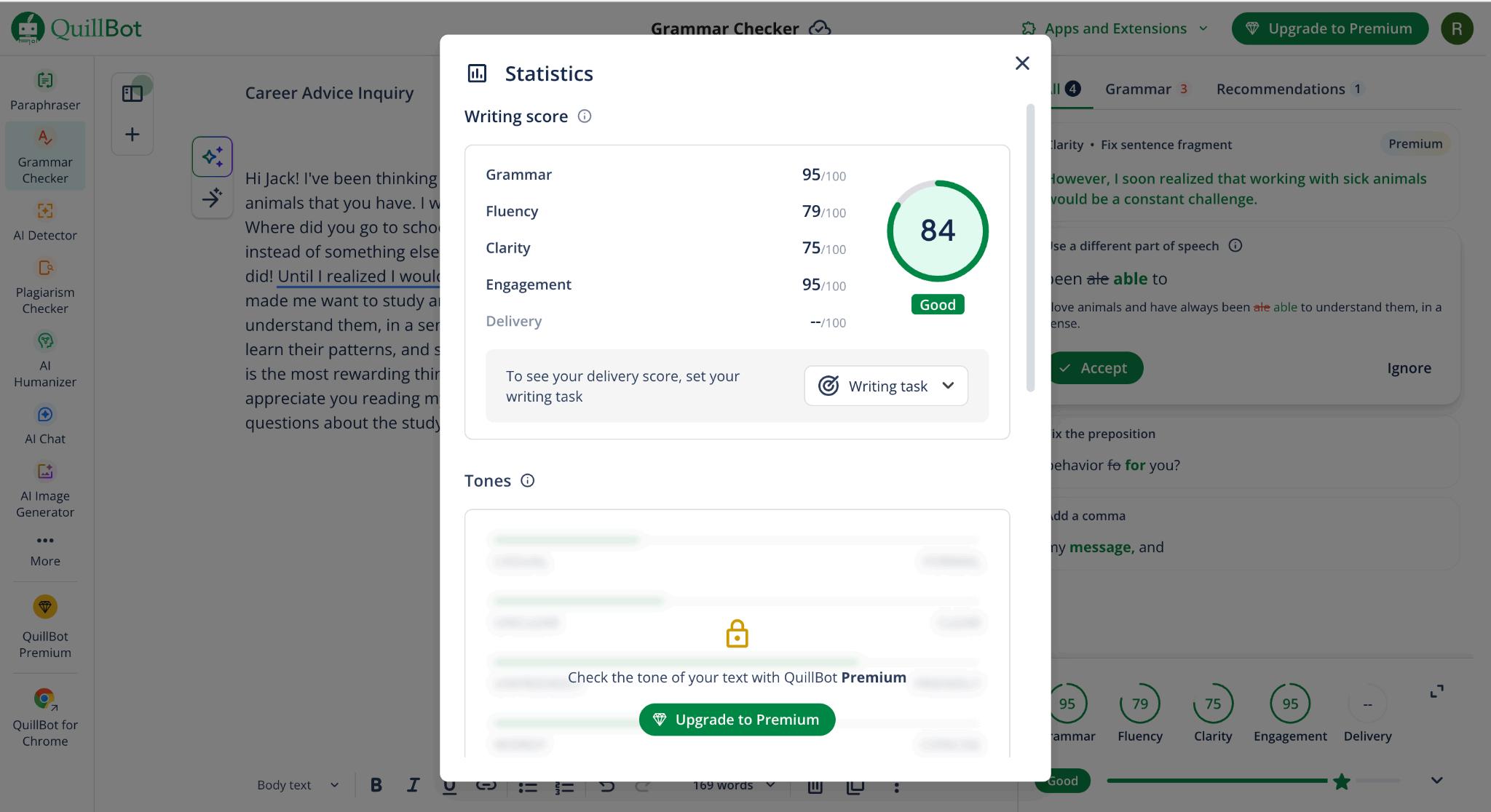
Inadditiontothesesubjectiveratings,severalobjective linguisticfeatureswererecorded,includinggrammarscore,word count,paragraphcount,andsentencecount.Tocalculatethese factors,theratersusedQuilbot,anAI-poweredwritingassistant designedtoeditandsummarizetext.Figure#0.5showsan exampleofhowQuilbotwasusedbytheraterstoidentifyand recordthelinguisticfeatureslistedpreviously.
Study2extendedthesamedesigntoexaminewhetherthe effectsofgenerativeAIonperceivedemailqualitydifferedby gender.Theexperimentalstructure,email-writingtask,AI manipulation,andevaluationcriteriawereidenticaltoStudy1. Theprimarygoalwasexaminingwhethertheeffectsofgenerative AIonperceivedemailqualityvariedbygender.Genderwas measuredthroughparticipants’selfreportsusingthedemographic questionnaire.Theywereallowedtoselectfrommultiplegender categories,including,“Female,”“Male,”and“Ipreferanother term.”Bykeepingthesameemailtask,AImanipulation,rating criteria,andraterblindnessconstantacrossbothstudies,Study2 isolatedgenderastheprimaryvariableofinterest.
Results:
Study1examinedwhethergenerativeAImoderatesthe relationshipbetweenSESandtheperceivedqualityofprofessional networkingemails.Acrossallmodels,participants’educationlevel (ed.x),AIuse(AInumeric),andtheinteractionbetweenthetwo wereusedaspredictorsofmultipleoutcomevariableslisted previously.Acrossalloftheoutcomemeasures,AIuseshoweda largestatisticallysignificanteffect,showninFigures1-6.For professionalism,AIuseincreasedtheratingsbyanaverageof1.32 ona7pointscale.SimilareffectsofAIareseenforpersuasiveness (raisedbyanaverageof1.10),respectfulness(raisedbyanaverage of0.966),enthusiasm(raisedbyanaverageof0.8240),diligence (raisedbyanaverageof1.106),andoverallquality(raisedbyan averageof1.06).Theseconsistenteffectsrepresentasubstantial shiftintheperceivedwritingqualitywhenassistedwithAIacross alldimensions.Highereducationlevelswereassociatedwith higherprofessionalismratingswithandwithoutAI,aswellas persuasiveness,respectfulness,enthusiasm,anddiligence.This patternshowsthatwhenwritingwithoutAIassistance,participants
withhighereducationlevelsconsistentlyproducedemailsthat wereperceivedasmoreprofessionalandhigherquality.Onthe otherhand,themodelsrevealedanegativeinteractionbetween educationlevelandAIuse,suggestingthatthebenefitofAIis greaterforparticipantswithlowereducationlevels.Theresults fromthegraphsprovidedaclearvisualizationofthispattern.Inthe noAIcondition,thesloperelatingeducationleveltoperceived qualityissteepshowingthatthereismorevarietyintheresponses. Forexample,intheprofessionalismplot,emailswrittenwithoutAI showastrongupwardtrajectory.Participantswithlowereducation levelsreceivedprofessionalismratingscloserto3.5,whereas participantswithhighereducationlevelsapproachedratingscloser to4.3orabove.Thisfindingshowsthatperceivedprofessionalism variessystematicallybySESwhenparticipantswritetheemails independently.IntheAIassistedcondition,theslopeof education/SESlevelissignificantlyflatter.Acrossthesame professionalismplot,participantsusingAItendtoclustertightly aroundscoresbetween5.1and5.4,regardlessoftheeducation level.Thesameflatteningpatternappearsconsistentlyacrossall outcomeplots.Graphically(Figures#1-6),theverticaldistance betweenlowerandhighereducationparticipantsissubstantially reducedwhenAIisused,showingthatAIlimitsthedifferences associatedwitheducationlevel.
Theseresultssuggestedthatwhilehighereducationshowed strongerperformancewithintheunaidedwriting,AIassistance substantiallyreducesSESbaseddisparitiesinperceivedemail quality.LowerSESparticipantsexperiencedalargergainfromAI use,takingtheAIasanequalizingeffectacrossdifferenteducation levels.
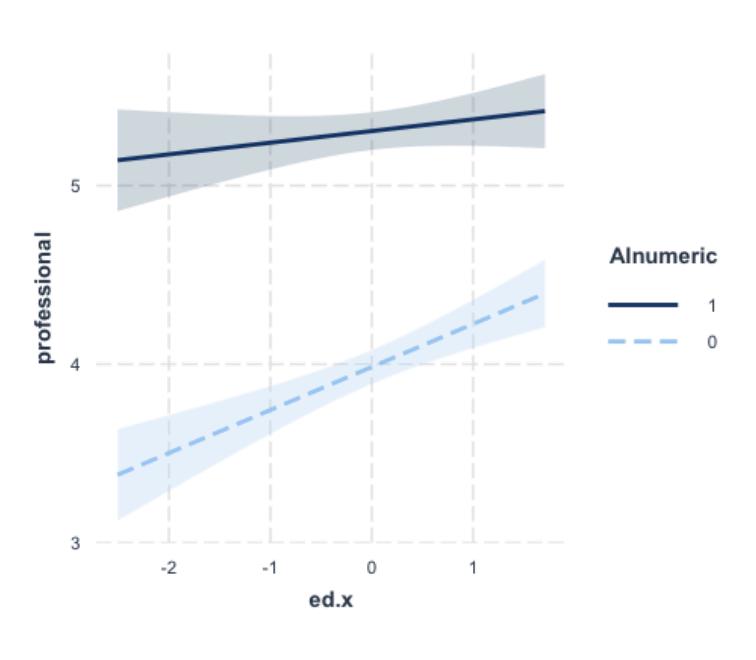
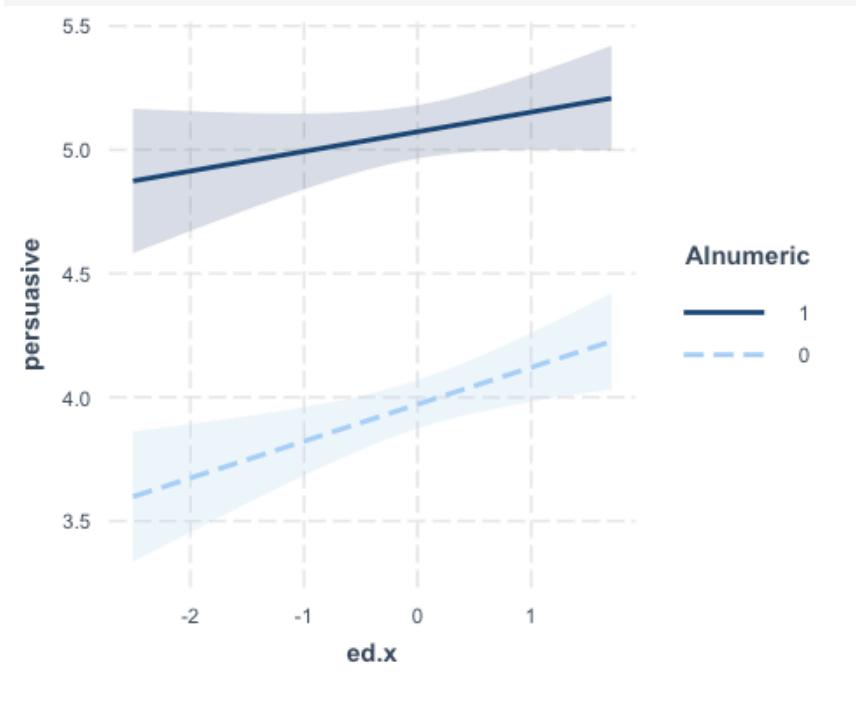
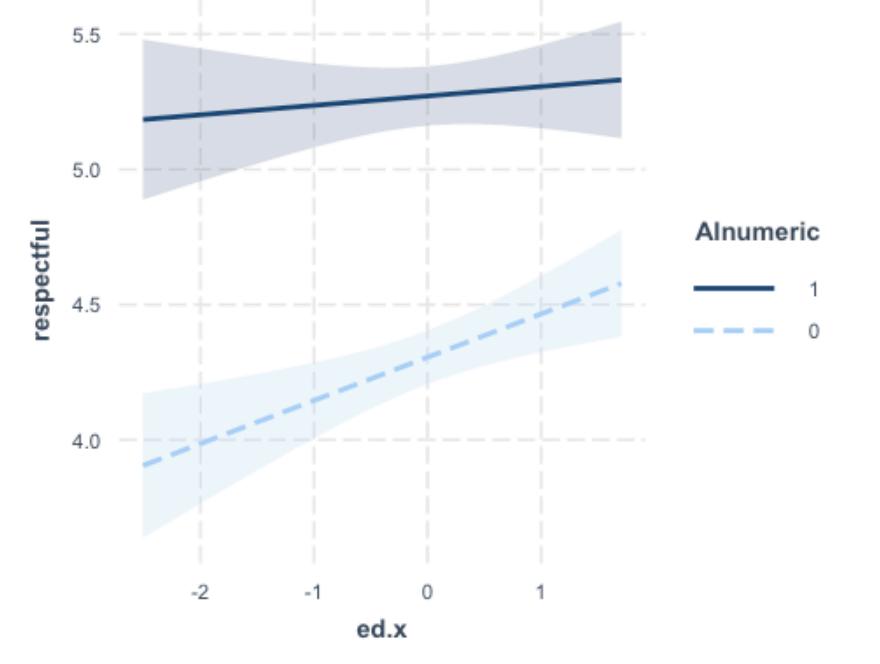
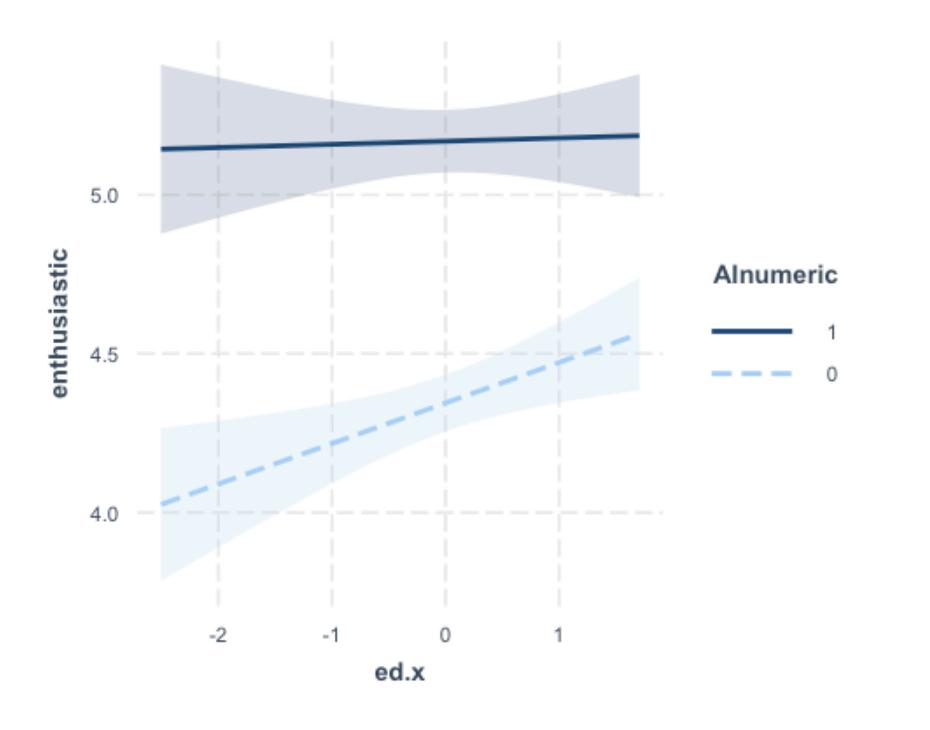
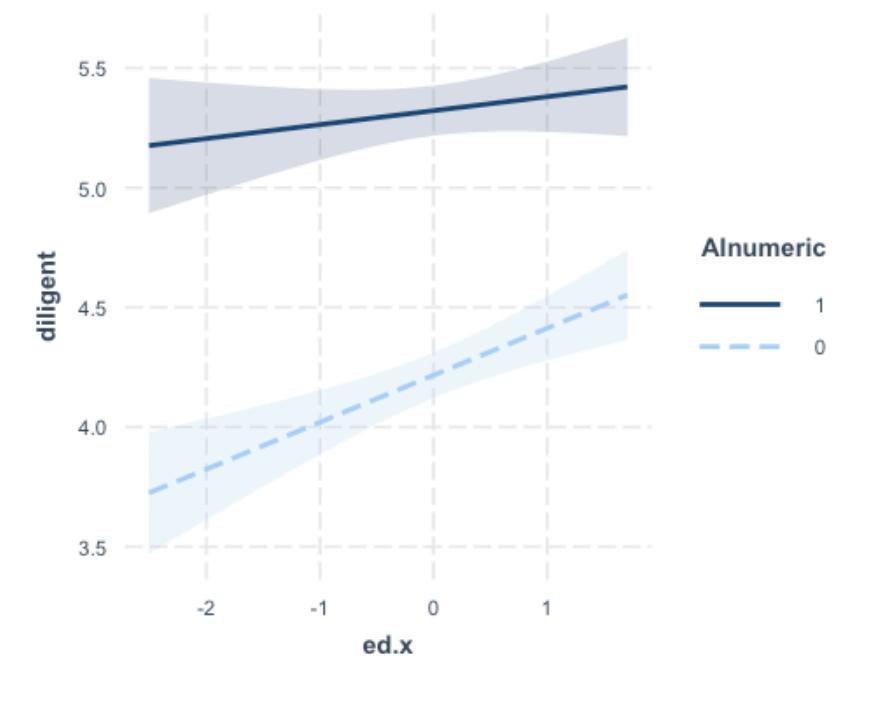
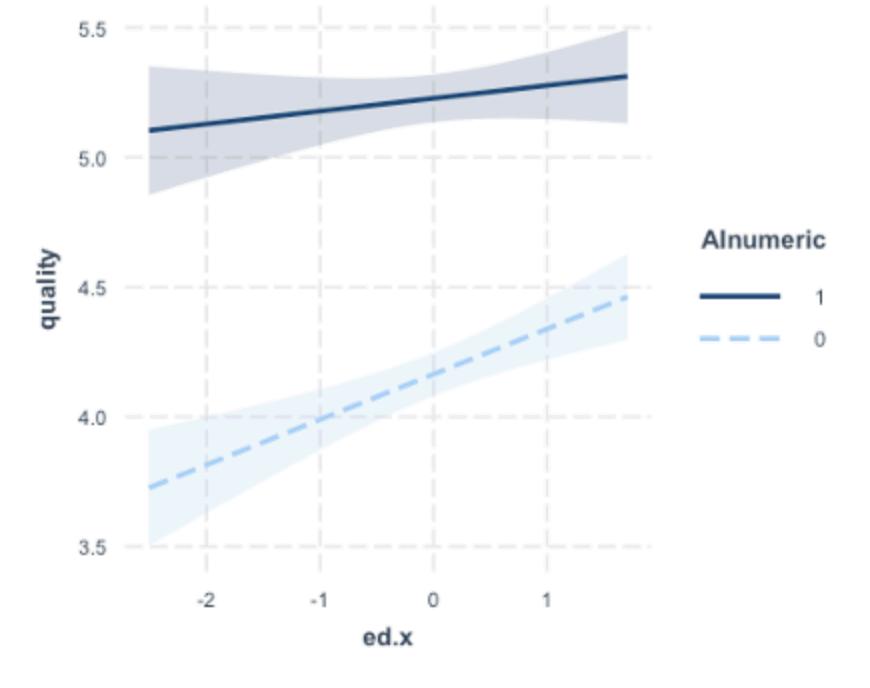
Figure#2illustratestheinteractionbetweenthe participants'educationlevelandAIuseonperceived professionalismratings.Thehorizontalaxisrepresentsthe
educationlevel,standardizedaroundthesamplemean:ed.x= (education–mean)/standarddeviation.The-2representsthe participantswhohavealoweducationlevelrelativetothesample: ed.x=-2(lowSESparticipants,ed.x=0(averageSES participants),ed.x=+1(higherSESparticipants). Theverticalaxisrepresentstheaverageprofessionalismratingona 7pointscale.Thesoliddarklinecorrespondstotheemailswritten withAIassistance,showingaflatterslope.Thedashedline indicatestheemailswrittenwithoutAIassistance,showinga steeperslope.Theshadedregionsindicate95percentconfidence intervals,meaningthatthewidershadedareasindicatemore uncertaintyintheestimateandnarrowershadedregionsindicate moreprecisionintheestimate.
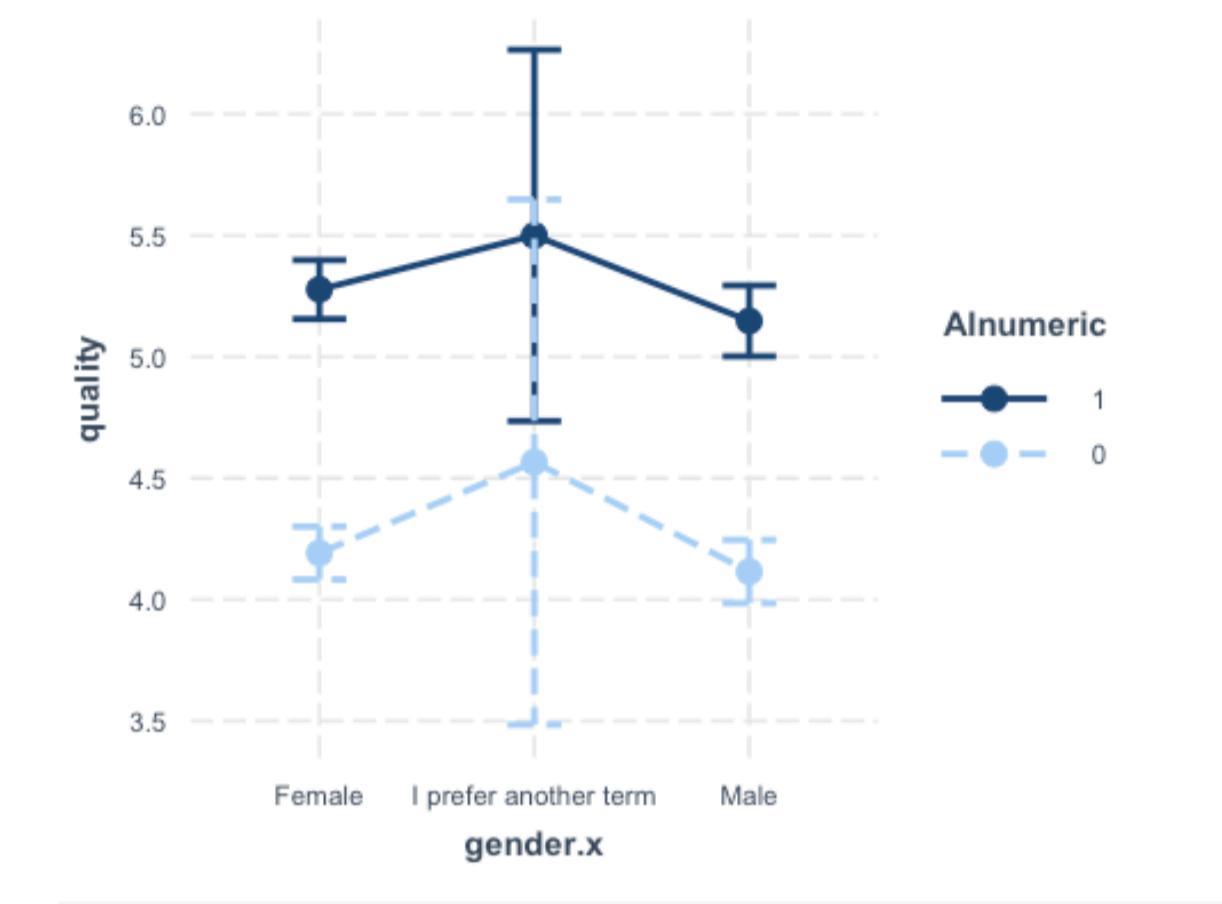
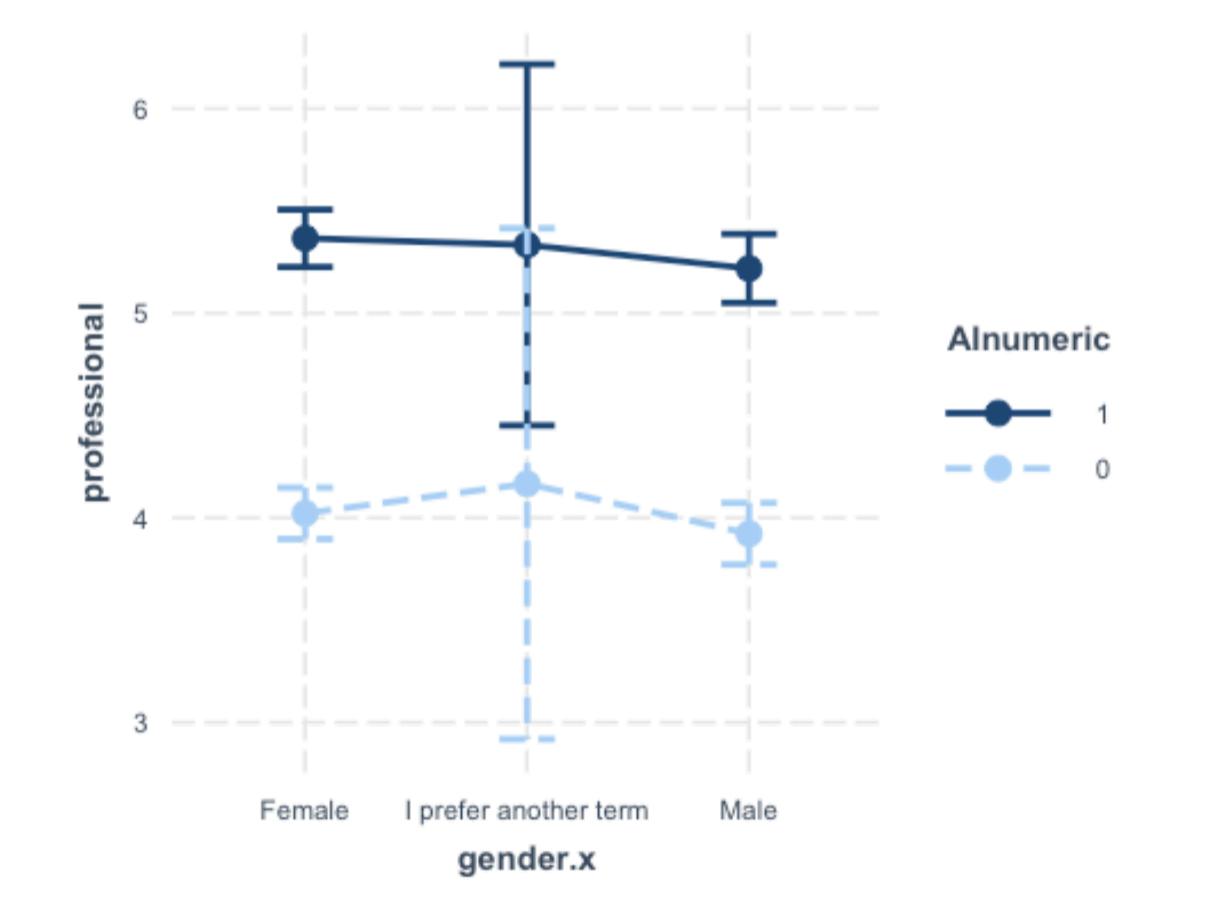
Study2extendedtheanalysistoexaminewhetherthe effectsofAIonemailqualitydifferedbygender.Consistentwith Study1,AIuseshowedasignificanteffectacrossalloutcomes. Foroverallquality(showninFigure#7),AIusageincreased ratingsbyapproximately1.09points.Forprofessionalism(shown inFigure#8),theratingswereraisedby1.343points.Similarly, persuasiveness,enthusiasm,anddiligencefollowedthesame pattern.IncontrasttoStudy1,genderdidnothaveasignificant impactonpredictedperceivedemailquality.Italsodidnot significantlyinteractwithAIuse.Acrossallmodels,theregression coefficientsformale,relativetothefemalereferencegroup,were smallandinsignificant.ThecombinedeffectofgenderandAIuse wereconsistentlynon-significant,meaningthattheeffectofAIon emailqualitydidnotdifferbetweengenders.Theresultsmirrored thispattern:withoutAI,themeanqualityscoresweresimilar acrossgendergroupswithfemaleat4.19andmaleat4.12.With AI,themeanscoresincreasedsubstantiallyforallgroupswith femaleat5.28andmaleat5.15.Thisshowsonlyminordifferences betweengenders,women’semailswereonaverageratedslightly higherbutthedifferenceswerenegligible.Frombothofthese
studies,theresultssuggestthatAIeliminatesvisibledemographic gaps.
Discussion:
Whencombiningthesefindingswithbroaderliterature sources,theoutcomesvary.Recentarticleshavequestionedthe assumptionthatgenerativeAIwillfunctionasanautomatic equalizerinprofessionalandeducationalcontexts.Whilethereare clearstudieshighlightingAI’sabilitytoimproveproductivityand performance,AIsystemsoftencreatemoreorintensifyexisting socialinequalities.Thefollowingliteraturesuggeststhatthe benefitsofAIareunevenlydistributed,shapedbyvaryingfactors suchasaccess,adoption,confidence,anddifferentstructuralbiases thatareembeddedinAIsystems.Ratherthanequalizingand levelingtheplayingfield,AImayamplifytheadvantageforthose alreadypositionedtobenefit.
Drydakis’s(2025)conceptofAICapitalprovidesa frameworkforunderstandingwhyAIadoptiondoesnotyield equaloutcomesacrossindividuals.DrykakisdefinesAICapitalas aresourcemadeupofAIknowledge,AIskills,AIcapabilities,and theabilitytostrategicallyapplyAItoolsintorealworldcontexts. Usinghumancapitaltheory,whichistheframeworkfor understandingwhyaccesstotechnologyalonedoesnotnecessarily produceequaloutcomes,hearguesthataccesstoAIaloneis insufficienttoproduceequitableoutcomes,instead,individuals musthaveskillsandconfidencenecessarytoconvertAIusageinto meaningfulbenefits.
UsinganevaluationofanAIeducationmoduledeliveredto non-STEMuniversitystudents,DrydakisfindsthatwhileAI ‘training’significantlyincreasesAICapitalandimproves professionalemployabilityandacademicperformanceoverall, thesegainsarenotequallydistributed.Studentswithpreexisting advantagesperformeddifferently:malestudents,whitestudents, andthosewithstrongereducationalbackgroundsgathered significantlymoreAICapitalthantheirpeers.Crucially,these disparitiesstillpersistevenafterallparticipantsreceivethesame training.Inthisexperiment,theresultschallengethenarrativethat AIprovidesopportunityforeveryoneandinsteadfunctionsasan
amplifierofprecedentedinequality.Drydakis’sworkisespecially relevantinprofessionalcommunicationsettingsasitillustratesthat AIbenefitsdependonprioreducationalbackgroundsand institutionalsupport.ThesefindingsshowthatAIisnotactually eliminatingdisparitiesbutinsteadchangingwhattypeofadvantage matters,shiftingthelocusofadvantagefromtraditionalskillsto thecapacityofAICapital.Forexample,beforemainstreamAI, advantagescamefromthingssuchasaformaleducation,writing ability,andfamiliaritywithprofessionalnormsandmanners. Theseskillsthereforebecomelessimportantindependently, shiftingtheprimaryadvantagetowardthosewhoknowhowto effectivelyuseAItools.Alargeamountofresearchhighlights genderdifferenceswithinAIadoption.Koningetal.showthat womenintheworkplacearesignificantlylesslikelythanmento usegenerativeAItools,evenwhentheaccessibilitylevelisthe same.ResearchreportedbyHarvardBusinessSchoolindicatesthat women’sloweradoptionratestowardsAIaredrivenbyhigher levelsofperceivedriskandlowertrustinAIsystems,includinga greaterconcernaboutethicalimplicationsandsocialjudgment (Koningetal.,2025).Evidencefromworkforceandacademic settingsreinforcesthispattern.Tangetal.(2025)showthatmale researchersreceivesignificantlyhigherproductivitygainsfrom generativeAIthanfemaleresearchersinspiteofcomparable access.Theauthorsofthisstudyattributethisdisparitytovariation inusagepatternsandconfidence.Thesefindingsprovethat adoptionandengagementdeterminewhobenefitsfromAI.The OECD’s“AlgorithmandEve”(2024)reportindicatesthatwomen arelesslikelytobefrequentoradvancedusersofAItechnologies, particularlyinprofessionalandtechnologicalcontexts.Similarly, UNWomen(2024)reportsthatgendergapsinAIuseareshaped bystructural,cultural,andinstitutionalbarriers.Thesesources suggestthatAIhastheabilitytopotentiallyexacerbategender inequalityovertime.Beyondadoptionandusagepatterns,there havebeenconcernsaboutthebiasembeddedwithinAIsystems
themselves.Ferrara(2024)showsthatgenerativelanguagemodels oftenhaveencodedbiasespresentintheirtrainingdata.The researchexaminingalgorithmicbiasdemonstratesthatAImodels aretrainedonlargescaletextdataandoftenreplicatedominant culturalnorms,includinggenderedandracializedpatternsof language.Thisdisproportionatelyreflectsthevoicesofwestern, male,andhighlyeducatedindividuals.UNWomen(2024) highlightsthatthesebiaseshavedirectlyimpactedprofessional communication.AIsystemsoftenassociate‘professional’ languagewithmale-dominantstylesofcommunication,suchas assertiveness,directness,andspecificrhetoricalstructuresthatare lesscommonamongwomenandmarginalizedgroups.Individuals whouseAItoimprovetheirwritingmaybeencouragedto conformtothenormsshapedbyunequalrepresentation,limiting diversecommunicationstylesandcreativity.Chen(2023)further arguesthatAIsystemscanamplifydiscriminationbypresentinga singlebiasedviewpointasneutralorobjective.Inprofessional contexts,AIassistedcommunicationcanbeperceivedasfair,even whenitreflectsanunderlyingstructuralbias.Thisillusionof neutralitycanobscuretheprocessesofwhichinequalityis produced,makingdiscriminatoryoutcomesmoresubtleandharder tochallenge.ThisliteraturesuggeststhatAI’sbiggestriskisthe abilitytomaskorreproduceinequalityratherthaneliminateit.By improvingsurfacelevelindicatorssuchasgrammar,tone,and structure,AIcanhelpproduceoutcomesthatappearequitable acrossdifferentdemographicgroups.However,ifaccess,adoption, andAICapitalformationremainunequallydistributed,these surfacelevelimprovementsmayjustconcealdeeperdisparitiesof powerandreinforceexistinghierarchies.
Conclusion:
ThepresentresearchexamineswhethergenerativeAItools canreducesocioeconomicandgenderbaseddisparitieswithin professionalnetworkingcommunications.Acrossthetwostudies,
thefindingsprovideevidencethatAIsubstantiallyimprovesthe perceivedqualityofnetworkingemailsandreducesvisibleSES baseddisparitiesinprofessionalism,persuasiveness, respectfulness,diligence,enthusiasm,andoverallwritingquality. Atthesametime,thesefindingscontradictbroaderliterature highlightingthetensionbetweenAI’sshorttermequalizingeffect anditslongtermpotentialtocreateinequality.Study1provides clearevidencethatgenerativeAImoderatestherelationship betweeneducationlevelandperceivedemailquality.Thispattern alignswithpriorresearchsuggestingthathigherSESindividuals benefitfromearlyexposuretoprofessionalnormsandformal writingconventions,whichthentranslatesintostronger networkingoutcomes.AIassistedemailsclusteredtightlyaround thehigherprofessionalismratingsregardlessoftheeducation level.Thisshowsasubstantialreductioninsocioeconomicstatus baseddifferences.Study2extendedthissameanalysistogender andfoundsimilarresults.AIusesignificantlyincreasedacrossall dimensions.Genderdidnotsubstantiallypredictemailquality,nor diditinteractwithAIuse.Thisdirectlycontradictsthediscussed literature.However,thepresentstudyisolatestheeffectofAI conditionalonadoption,takingaccesstaskstructure,and evaluationcriteriaconstant.Undertheseconditions,gender differencesinoutcomesmostlydisappear.Thisprovesthatthe genderdisparitiesobservedintherealworldstemfromother factorssuchasunequaladoption,engagement,accessibility,and culturaldifferencesinwomen.Onthepositiveside,AI demonstrablyimproveswritingqualityandreducesSESbased disparitieswithinprofessionalnetworking.Onthenegativeside, theliteratureraisesimportantconcerns.AIsystemsaretrainedon datathatreflectdominantculturalandgenderednormswhichmay standardizeprofessionalcommunicationandreinforceexisting powerstructures.Moreover,ifadoptionandAICapitalremain unequal,AImaymaskinequalityratherthaneliminatingit. Surfacelevelimprovementsinemailqualitycancoverinequalities
inwhoadoptsAI,howstrategicallyitisused,andhowAI performanceisevaluatedinarealworldsetting.
OurresearchshowedthatgenerativeAIcanreducevisible SESbaseddisparitiesanddoesnotdifferentiallydisadvantage womenattheoutputlevel.However,theseresultsshouldbe interpretedasevidenceofshorttermequalizationandnota definitivesolutiontolargedisparities.Futureresearchshould examinewhetherrepeatedAIuseleadstodifferentoutcomesover timeandhowAIaffectsactualsuccessintheworkforceratherthan justperceivedquality.Itisalsoimportanttoseewhetherthepros outweighthepossibleconsoftheenvironmentalimpact,reinforced inequality,overrelianceonAI,andpotentialjobdisplacement.In conclusion,generativeAIholdspotentialasanequalizingtoolin professionalcommunication,butitsbroadersocialimpactdepends onhowaccess,adoption,andskilldevelopmentarestructured. Withoutattentiontothesefactors,AIrisksreshapingsocietyinthe wrongdirection.
Bibliography:
1. Aldasoro,I.,Armantier,O.,Doerr,S.,Gambacorta,L.,& Oliviero,T.(2024). The gen AI gender gap. Bank for International Settlements Working Paper No. 1197 https://www.bis.org/publ/work1197.pdf
2. Capraro,V.,Lentsch,A.,Acemoglu,D.,Akgun,S., Akhmedova,A.,Bilancini,E.,Bonnefon,J.F., Brañas-Garza,P.,Butera,L.,Douglas,K.M.,Everett,J.A. C.,Gigerenzer,G.,Greenhow,C.,Hashimoto,D.A., Holt-Lunstad,J.,Jetten,J.,Johnson,S.,Kunz,W.H., Longoni,C.,Lunn,P.,…Viale,R.(2024).Theimpactof generativeartificialintelligenceonsocioeconomic inequalitiesandpolicymaking. PNAS nexus, 3(6), pgae191.https://doi.org/10.1093/pnasnexus/pgae191
3. Chen,Ying-Ying.“EthicsandDiscriminationin Artificial-IntelligenceEnabledDecisionMaking.” Humanities and Social Sciences Communications,vol.10, no.1,2023,NatureResearch, https://www.nature.com/articles/s41599-023-02079-x
4. Ferrara,Emilio.“FairnessandBiasinArtificial Intelligence:ABriefSurveyofSources,Impacts,and MitigationStrategies.” AI,vol.6,no.1,2023,pp.1–26. MDPI,https://www.mdpi.com/2413-4155/6/1/3
5. Kalim,U.,Kanwar,A.,Sha,J.,Huang,R.,etal.(2025, June5).BarrierstoAIadoptionforwomeninhigher education:asystematicreviewoftheAsiancontext.Smart LearningEnvironments,12(38).SpringerOpen. https://slejournal.springeropen.com/articles/10.1186/s40561 -025-00390-5
6. Koning,R.,Otis,N.G.,Delecourt,S.,&Cranney,K. (2025,February20).WomenAreAvoidingAI.WillTheir CareersSuffer?HarvardBusinessSchoolWorking Knowledge. https://www.library.hbs.edu/working-knowledge/women-ar e-avoiding-using-artificial-intelligence-can-that-hurt-their-c areers
7. Majrashi,K.(2025).Employees’perceptionsofthefairness ofAI-basedperformancepredictionfeatures. Cogent Business & Management, 12(1). https://doi.org/10.1080/23311975.2025.2456111
8. Noy,Shakked,&Zhang,Whitney,Experimentalevidence ontheproductivityeffectsofgenerativeartificial intelligence.Science381,187-192(2023).DOI:10.1126/scien ce.adh2586
9. OECD(2023),OECDEmploymentOutlook2023: ArtificialIntelligenceandtheLabourMarket,OECD Publishing,Paris,https://doi.org/10.1787/08785bba-en.
10.OECD.(2024).AlgorithmandEve:Howtechnologycan enhancegenderequalityorimpedeit.OECD.
https://www.oecd.org/content/dam/oecd/en/publications/rep orts/2024/12/algorithm-and-eve_0e889c45/a1603510-en.pd
11. Tang,C.,Li,S.K.,Hu,S.,Zeng,F.,&Du,Q.(2025).
Gender disparities in the impact of generative artificial intelligence: Evidence from academia. PNAS Nexus, 4(2), pgae591.
https://academic.oup.com/pnasnexus/article/4/2/pgae591/79 96465?
12.UNWomen.ArtificialIntelligenceandGenderEquality: UNWomenExplainer.
https://www.unwomen.org/en/articles/explainer/artificial-in telligence-and-gender-equality