Senior Thesis | 2026

Senior Thesis | 2026
BenjaminTaycher
2026
Mathematicalbraidshavewide-reachingapplicationsfromfluiddynamicstocryptographyandaredefinedthesamewayasreal-life braidsfoundinhairandchallah,justwithinfinitelythinstrands. Inparticular,abraidiscomposedofseveralcurvesembeddedinto threedimensionalspacesuchthattheydonotintersectandhave fixedpoints.Theseareoftenrepresentedintwodimensionsbyprojectingandthenmarkingonestrandgoingaboveanotherwiththe topstrandbeingsolidwhilethebottomisbroken,asshown:
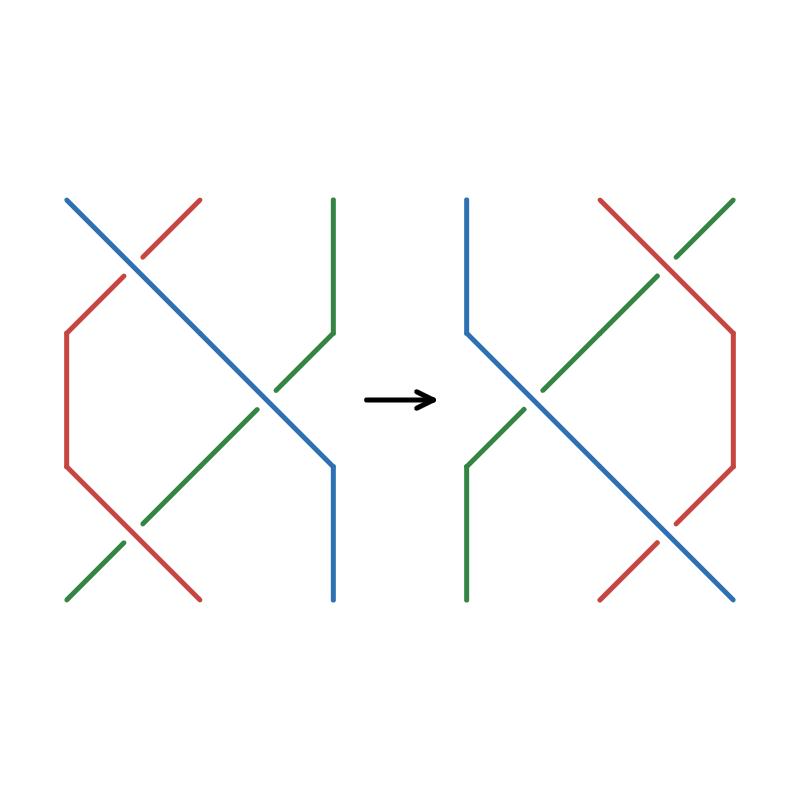
Braidsareconsideredequivalentifonecanbeturnedintothe otherbymovingstrandswhileleavingendpointsfixedandnotlettingstrandsintersect,sothetwoabovebraidsareinfactequivalent. Oneofthemainproblemsinbraidtheoryistellingthemapart,since braidsthatlookdifferentcaninfactbeequivalentthroughaseries
ofstrandmovements.Ingeneral,tellingbraidsapartisdifficult,and soweusebraidinvariantstoaccomplishthetask.Thesearecertain valuesweassignbraidsthatarethesameforequivalentbraids,so iftwobraidshaveadifferentvalueforaninvariant,theymustbe different.Thecontributionofthisprojectistoapplytheconnection betweentheholomorphofagroupandtheset-theoreticYang-Baxter equationtoproducenewbraidinvariants.Theconcreteexamplesof thisgeneralapproachthatareinvestigatedaretheinvariantsarising fromleft-andright-regularsubgroupsofarbitrarygroupsandfrom anysubgroupsofabeliangroups.
Amathematicalbraidgeneralizesthegeneralconceptofabraidwith n strandswhichareattachedatbothendsandmoveoverandunder eachotherbetweenthoseends.Forthispaper,eachstrandwillbe consideredtostartatthe“top”andendatthe“bottom”.Todefine thisformally,letabraidbeacollectionofstrandslabeledby i,for i ∈ {1,..., n},whereeachstrandistheimageofacontinuousfunction fi : [0, 1] → R3 satisfyingthefollowingfourproperties:
1. fi(a)= f j(b)=⇒ i = j, a = b
2. fi(0)=(i, 0, 0)
3. fi(1)=( j, 1, 0) with j ∈{1,... n}
4. a < b =⇒ π2( fi(a)) > π2( fi(y)),where π2 istheprojection functiontothesecondelementoftheoutput
Property1requiresthatnoneofthestrandsoccupythesamelocationin R3.Properties2and3fixtheendpointsofeachofthe strands,fixingthestartsofeachofthestrandsonthe x-axisatthe x-coordinatematchingthenumberofthestrandandtheendsofeach strandattheline y = 1with x-coordinatesapermutationofthestartingcoordinates.Property4thenimpliesthateachstrandisconstantlymovingdowninthe y direction.
Wewanttoconsiderbraidsthesameiftheycanbecontinuously deformedintoeachotherwhilekeepingtheendsfixedandnotmovingstrandsthrougheachother,whichisformallytermedconsidering themunder“ambientisotopy”.Whenabraidismentionedforthe restofthispaper,whatisbeingreferredtoareequivalenceclasses ofbraids.
Braidshavemanyapplications,startingwiththeiruseindescribingtheirsisterobjects,knots,andreachingasfarasfluiddynamics consideringthechaoticbehavioroffluidwithmultiplestirrers[21].
Forknotsinparticular,Alexander’stheoremstatesthatanynon-wild knot(onewhichcanberepresentedwithafinitenumberofstraightedgepieces)isequivalenttoaknotsuchthatiftheknotisassigned adirection,thenallpartsoftheknotaremovinginthesamedirectionrelativetosomefixedaxis[1].Letthisaxisbethe z-axis.Then takethehalf-planewithpositive x-coordinateand y-coordinate0and splittheknotalongthatplane.Thenthisknotcanberepresentedas abraidwhereeachstrandisgivenbyanintersectionpointofthe knotwiththehalf-plane,inadditiontostrandsthatjointhetopsand bottomsofcertainstrands.Hencestudyingbraidsgivessignificant insightintotheworldofknots.
Foranyoftheseapplications,andforbraidtheoryitself,wemust beabletotelliftwobraidsareequivalentanddistinguishthemif not.Forthisweusetwokeysimplificationswhichkeepallofthe informationoftheunderlyingbraids.Firstwerepresentbraidsin R2 ratherthan R3.Secondwereducetheambientisotopiestoconsider fromuncountablyinfinitelymanytotwo.
Beforereducingtotwodimensions,notethatallofthestrands mustliefrom y = 0to y = 1.Thoughthe x-coordinatescanbearbitrarilylargeforallpointsonthestrandsotherthantheendpoints,we canpreformanambientisotopytobringallofthestrandstohave xcoordinatesfrom1to n atallpointsbylinearlycontractingthebraid inthe x directionandthenrealigningtheendpointstomatchtheir originallocations.Theresultingbraidthenhasallpointsbetween y = 0and y = 1andbetween x = 1and x = n.Thentoreducethe problemtotwodimensions,projecteachbraiddownto R2,specificallythe xy-plane.
Itispossibletomovethestrandssuchthatatmosttwosharethe
same xy-coordinateandthatsharedcoordinatesarepointsandnot entiresegments.Thesepointsintheplanetowhichtwostrandsare projectedarecalledintersections,sincethatiswhattheylooklike, eventhoughthestrandsthemselvesdonotintersect,asontheleft ofFigure1.Ateachsuchintersection,oneofthestrandsmusthave beengoingovertheotherbeforeprojectionwiththeothergoingunder,whichisdistinguishedbydrawingtheoverstrandasasolidline whileaddingabreaktotheunderstrand.Theresultingprojectionis calleda braiddiagram,asisshownontherightofFigure1
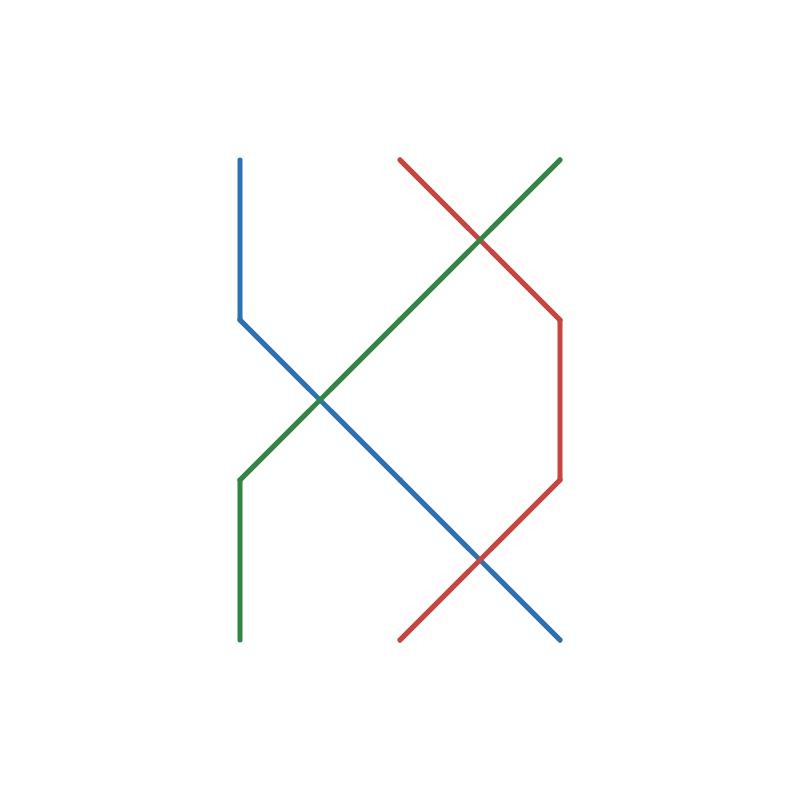
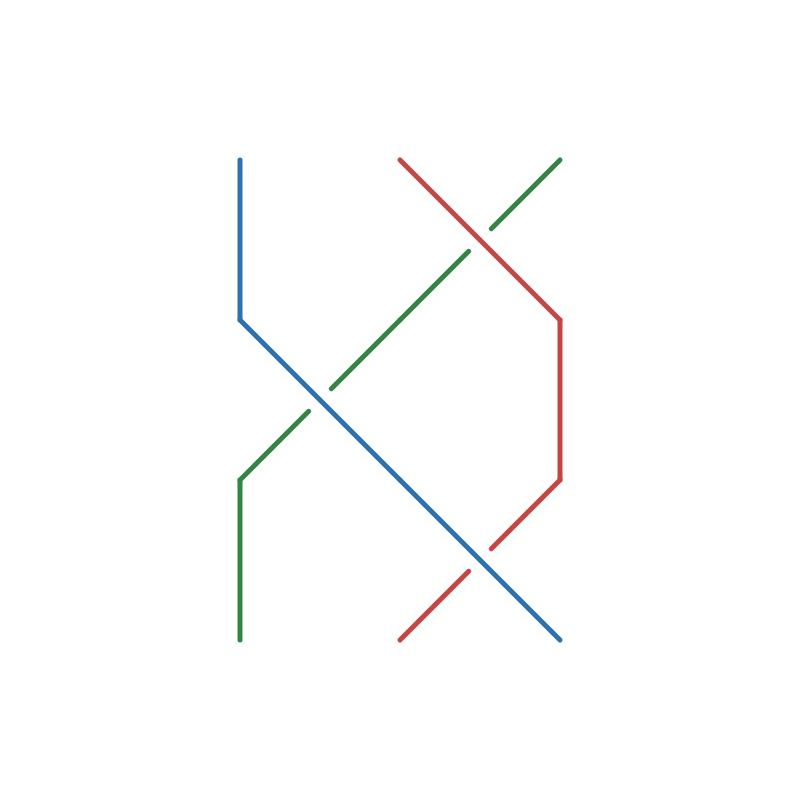
Figure1:Braidswithoutandwithover-underdistinction.
ThesecondsimplificationisascribedtoKurtReidemeister,who in1927provedthatanyambientisotopyofknotdiagrams(defined thesamewayasbraiddiagrams,butwithoutendpoints)canbedescribedasasequenceofthethreeReidemeistermoves,asshownin Figure1[22].
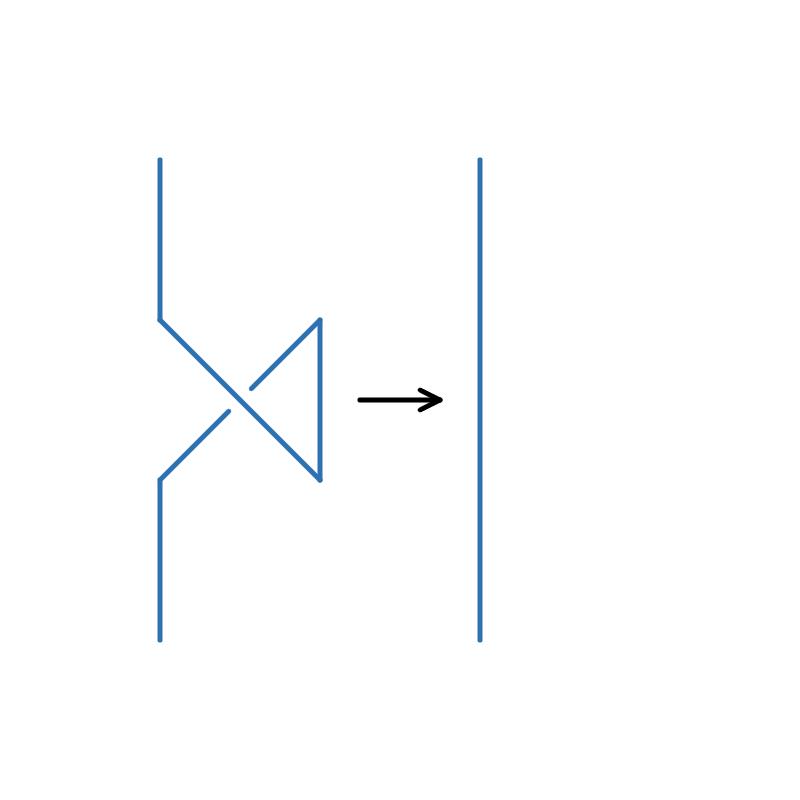
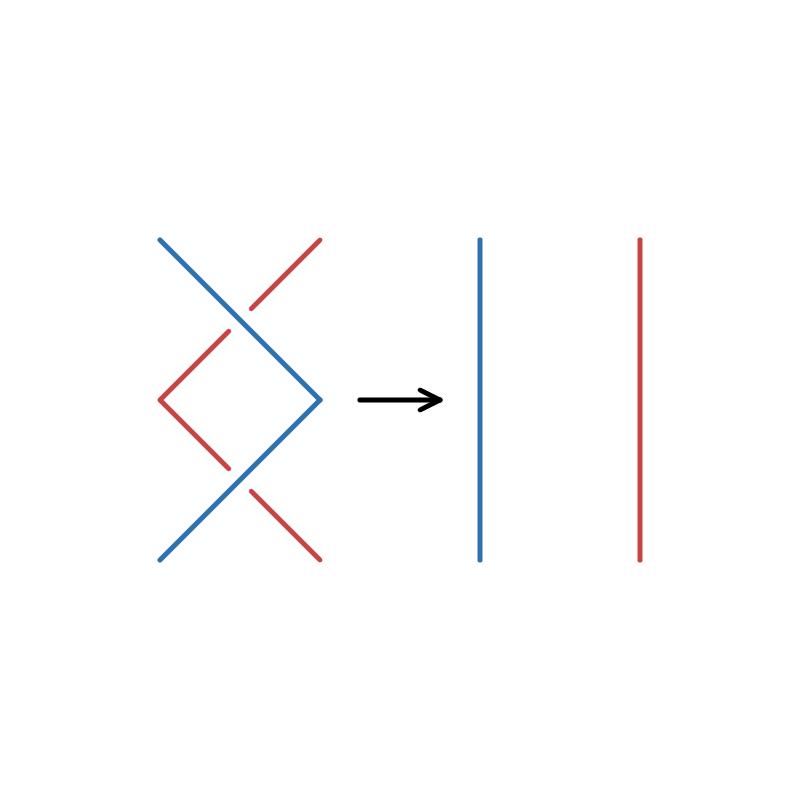
Figure2:Reidemeistermoves,fromlefttoright,numbers1,2,and 3.
Thefirstofthesemovescanneverhappeninabraiddiagram sinceeachstrandhasmonotonicallyincreasing y-coordinate,andso cannevercrossoveritself,butthesecondandthirdmovesarestill possible.Hencethetheoremcanbetransferredtoapplytobraids simplybyremovingthefirstmoveandonlyconsideringthesecond andthird.
Thesetwosimplificationsreducetheproblemoftellingwhether twobraidsareequivalenttofindingasequenceofReidemeistermoves thattransformonetotheotherorprovingthatsuchasequencedoes notexist.Still,thisleavesaninfinitenumberofsequencestoconsider,andtoprovethattwobraidsarenotequivalentwemustprove thatnoneofthepossiblesequencestakeonetotheother.Toavoid comparingallinfinitepermutationsofmoves,mathematicianshave resortedto braidinvariants,propertiesofbraidsthatareunchanged byambientisotopy,sincetheniftwobraidshavedifferentvalues foraninvariantproperty,theymustbedifferent.SinceallambientisotopiescanbeexpressedassequencesofReidemeistermoves, though,thetaskisalreadysignificantlysimplified,sincenotallambientisotopiesmustbeconsidered,butallthatneedstobedoneisto provethatbothReidemeistermovesapplicabletobraidsdoinfact leavethepropertyunchanged.Asimpleinvariantisjustconsidering thefinalpositionsofeachstrand,sincebothReidemeistermoves leavetheendpointsfixed,buttherearestillmanybraidsthataredifferentandyethavethesameendpoints,soitisimportanttolookfor moreinvariantstobeabletosplitbraidsintoasmanyequivalence classesaspossible.Therestofthispaperwillthusbededicated togeneratinginvariantsthroughaprocessthatstartsataseemingly completelyunrelatedconstructofgroupsandtheirholomorphsbut endswiththegenerationofafamilyofpowerfulbraidinvariants.
Thepurposeofthispaperistogiveamethodforgeneratingbraid invariants.Wewillproceedbystartingwithagroup,extractinginformationaboutitsrelationwithitsautomorphismstogeneratea solutiontotheset-theoreticYang-Baxterequation,andthenusing thatsolutiontogenerateabraidinvariant.Whiletheindividual stepshavebeendescribedinpreviouspapers,thecontributionof thismanuscriptistocombineallofthestepstocreatearoutefrom groupsallthewaytobraidinvariants.
Thefirststepoftheprocessistotaketheholomorphofagroup,but whatistheholomorph?Itis,inessence,awayofgeneralizingthe conceptofaffinetransformationsfromvectorspacestogroupsand givingthesetransformationsagroupstructure.Recallthatanaffine transformationisalineartransformationfollowedbyatranslationby avector.Thetranslationtransformsintoagroupcontextsimplyby addinganelementofthegroup.Thenthelineartransformationsare thosethatalterthevectorspacebutkeepitfundamentallythesame sincetheypreservevectorsums(thetransformedsumoftwovectors beforethetransformationandthesumofthetwotransformedvectorsarealwaysequal).Whenmovingintothecontextofgroups,preservingsumstranslatestopreservingthegroupoperation.Hencethe equivalentofalineartransformationisafunction A : G → G,with G agroup,suchthat A(gh)= A(g)A(h),whichissimplyagrouphomomorphismfrom G toitself.Ifthelineartransformationsarethen restrictedtobeinvertible,thentheymustbebijective,sothegroup homomorphismthenbecomesanisomorphism.
Definition1. Let G beagroup.Thenan automorphism of G isan isomorphismfrom G toitself.
Furthermore,sincethegoalistoturntheseaffinetransformations intoagroup,letusfirstcheckthattheinvertiblelineartransformations,theautomorphisms,formagroupthemselves.
Proposition1. LetGbeagroupandlet Aut(G) bethesetofautomorphismsofG.Then Aut(G) undercompositionformsagroup, alsodenoted Aut(G).
Proof. Aut(G) isclosedsincecomposingtwoisomorphismsgives anisomorphism,andthedomainandcodomainarestillboth G as theyareforeveryautomorphisminAut(G).Theidentity I ∈ Aut(G) isthensimplygivenbytheidentityisomorphismof G,whichalways exists,andinversesofisomorphismsaregivenbytheirinversesas functions,whichmustexistandbeisomorphismsbythedefinition
ofanisomorphism.Lastly,Aut(G) isassociativebytheassociativity offunctioncomposition,andsoAut(G) formsagroup.
Theholomorphcombinestheseautomorphismswiththeadditionofanelementof G,correspondingtovectoraddition.Theneach elementoftheholomorph,denotedHol(G),canberepresentedasa pair (g, A),where g ∈ G and A ∈ Aut(G).Thentocomposetheseelements,followthecompositionofaffinetransformations: (h, B)(g, A) meansthat A isappliedfirst,then g isadded,then B isapplied,and finally h isadded.Notethatsince B isappliedafter A,thecombined transformationcomposes,andsince B isappliedafter g,theresultingaddedelementis B(g),whichgivesthefollowingdefinitionfor composition:
(h, B)(g, A)=(hB(g), BA)
Thisnotioncanbeformalizedwiththesemidirectproductof groups:
Definition2. Let G and H begroupsandlet φ : H → Aut(G) be ahomomorphism.Thenthe(external) semidirectproduct of G and H (withthehomomorphism φ ), G ⋊φ H isdefinedtobetheset {(g, h)|g ∈ G, h ∈ H},withmultiplicationdefinedby (g1, h1)(g2, h2)= (g1φ (h1)(g2), h1h2),where φ (h1) maybewrittenas φh1 toavoid confusion,giving (g1φh1 (g2), h1h2).
Proposition2. ForanygroupsGandHwithhomomorphism φ : H → Aut(G),thegroupG ⋊φ Hisagroupundertheabovedefined multiplicationrule.
Theholomorphfollowsthesamemultiplicationruleasthesemidirectproductof G andAut(G),andthehomomorphism φ issimply theidentitysinceAut(G) isalreadythegroupofautomorphismsof G,sowehavethefollowing:
Definition3. Let G beagroup.Thenthe holomorph of G isHol(G) := G ⋊I Aut(G),where I :Aut(G) → Aut(G) istheidentityhomomorphismandisaccordinglyoftenomitted.
Example1. Consider D3 = {e, r, r2 , s, sr, sr2} tobethegroupof symmetriesofatriangleundercomposition,where r representsa rotationand s representsareflectionoverasetlineofsymmetry, whichcanbepresentedas {r, s|r3 = s2 = e, rs = sr 1}. D3 hastwo generators,namely r and s,andanyautomorphismmustmapthem toelementswithmatchingorder,so r ismappedeitherto r or r2 and s ismappedto s, sr,or sr2.Thenallautomorphismsareobtained byextendingthesemappingsbyusingthecompositionpreservation ofautomorphisms.HenceAut(D3)= {I, (r → r2), (s → sr), (r → r2 , s → sr), (s → sr2), (r → r2 , s → sr2)},andsoHol(D3) contains allpairsofelementsof D3 andAut(D3),andsoisa36element group.
Theholomorphisanobjectusedinitsownright,butmanyofitsapplications,includingusingitasasolutiontotheset-theoreticYangBaxterequationrequirewhatiscalledaregularsubgroupofthe holomorph.Ifagroupistakentoacton G,permutingitselements, thenaregularsubgroupisonewhereeachmapping p(x)= y correspondstoauniquepermutation p,buttoconsidersuchsubgroups, wemustfirstrephrasethenotionoftheholomorphinthelanguage ofpermutations.
Letusfirstbeginbydefiningapermutationgroup:
Definition4. Apermutationgrouponaset X ,denotedPerm(X ) is thesetofpermutationsofelementsof X (bijectivefunctionsfrom X toitself),whichisagroupundercomposition.When X = {1,..., n} forsome n ∈ N,thisgroupiscalledthesymmetricgroupon n elementsandisdenoted Sn.
Notethatthestructureofthepermutationgroupisonlydependenton |X |,notontheelementsthemselves,soallpermutations groupsonthesamenumberofelementsareisomorphictoeach other,andinparticularisomorphicto Sn for |X | finite.Then |Sn| = n!,simplybecauseforeachof n elementsadistinctchoicefrom n elementsmustbemade.
Let H ≤ Perm(X ),sothefollowingdefinitionsdescribehow H actson X bypermutation.
Definition5. H is transitive ifforall x, y ∈ X ,thereexists h ∈ H suchthat h(x)= y,soforeverypair x, y ∈ X ,onecanbebroughtto theotherbyapermutationin H.
Definition6. H isfixed-pointfreeifforall h ∈ H, x ∈ X , h(x)= x =⇒ h = I,where I istheidentitypermutation,sodistinctelements of H mustactdifferentlyoneveryelementof X .
Thesetwoproperties,aswellastheeasy-to-checkpropertythat |H| = |X | arerelatedtoeachotherbythefollowingtheorem.
Proposition3. [5]LetH ≤ Perm(X ).Thenanytwoofthefollowing implythethird:
• Histransitive
• Hisfixed-pointfree
• |H| = |X |
Definition7. Let H ≤ Perm(X ).Then H is regular ifitistransitive andfixed-pointfree.
Regularsubgroupsgiveanaturalwaytoembedagroupina permutationgroup,whichgivesthebasisforanotherdefinitionof theholomorph.
Definition8. Let G beagroupandPerm(G) bethegroupofpermutationsof G asaset.Then λ : G → Perm(G) isdefinedwith g → λg,where λg isthepermutationwith h → gh.Essentially,each λg multiplieseachelementof G bythegivenelement g,whichis alwaysbijectiveandsoalwaysapermutation,andthisiscalledthe left-regularrepresentation.
Furthermore, λ isaninjectivehomomorphismfrom G toPerm(G). Wehavethat |λ (G)| = |G| whichisthesizeofthepermutedset, G, andthatelementmultiplicationingroupsistransitivesoby3, λ (G) isinfactaregularsubgroupofPerm(G) fittingitsnameastheleftregularrepresentation.
Thenrecallthattheholomorphessentiallyextendedtheconcept ofanaffinetransformationtoagroupcontext.Whiledefiningthe
holomorphthroughthesemi-directproduct,anaffinetransformationwasthoughtofasanautomorphismfollowedbyatranslation. Alternatively,onemaythinkofaffinetransformationsasthosethat transformelementadditiontootherelementaddition.Thisfollows fromthesemi-directproductdefinitionas (g, A)(x)= gA(x) and (g, A)(x + y)= gA(xy)= gA(x)A(y),since A isahomomorphism, sotheadditionof y to x simplyshiftstheoutputby A(y),whichis afixedelement.Sinceallaffinetransformationsweareconcerned witharebijective,theycanallbeviewedelementsofPerm(G) acting onelementsof G embeddedinthatsamepermutationgroupthrough λ .Thentheelementsoftheholomorphmustbepreciselythose elements σ ∈ Perm(G) suchthat σλg = λhσ :adding g andthen applying σ isthesameasapplying σ andthenadding h,forsome g, h ∈ G.Thenmultiplyingby σ 1 ontheright,wehave σλgσ 1 = λhσσ 1 = λh,whichreducestherequirementtobethatforany g ∈ G, σλgσ 1 ∈ λ (G),ormoresuccinctly, σλ (G)σ 1 ⊆ λ (G). OnemaynoticethatthisstatesthattheholomorphcontainsallelementsofPerm(G) suchthat λ (G) isanormalsubgroupofit.
Definition9. The normalizer ofasubgroup H ≤ G,denotedNormG(H) isthelargestsubgroupof G suchthat H remainsfixedunderconjugationofallofitselements,andsoitisthelargestsubgroupof G thathas H asanormalsubgroup.Thissubgroupcanbeexpressedas set {g ∈ G|∀h ∈ H, ghg 1 ∈ H}
Thenaseconddefinitionoftheholomorphfollows:
Definition10. Thepermutationdefinitionoftheholomorph,also denotedHol(G),isgivenbyNormPerm(G)(λ (G)).
Theorem4. [13]LetGbeagroup.Then Norm(λ (G)) ∼ = Hol(G)= G ⋊ Aut(G) andsothetwodefinitionsoftheholomorphcoincide.
Proof. Takesome n ∈ Norm(λ (G)).Thenbythedefinitionofthe normalizer,wehavethat nλgn 1 = λh andso nλg = λhn.Thenlet usfirstconsiderthecasewhere n stabilizestheidentityof G,sothen n(g)= nλg(eG)= λhn(eG)= λh(eG)= h.Hence
andsimilarly, λn(gh)n = n
n(g)λn(h)n = λn(g)n(h)n,sowehave n(gh)= n(g)n(h),so n isapermutationof G thatpreservesthepreservesthegroupoperation,so n mustbe anautomorphism.Furthermore,allautomorphismsof G normalize λ (G),sothesubgroupofHol(G) thatfixestheidentityisinfact equal(notjustisomorphic)toAut(G).Thensince λ (G) isatransitivesubgroupofHol(G) andtheonlyoneofitselementsthatfixes theidentityis λe,wehave λ (G) ◁ Norm(λ (G))= Hol(G) bydefinition, λ (G) transitive,and λ (G) ∩ Aut(G)= {e},soHol(G) ∼ = λ (G) ⋊ Aut(G).
Inthissection,wewillfirstdefineskewleftbracesandcreatethem fromtheregularsubgroupsofholomorphsdescribedintheprevious section.Thentheseskewleftbraceswillbeappliedtogiveasolution totheset-theoreticYang-Baxterequation(whichwillbereferredto simplyastheYang-Baxterequation).
Definition11. A skewleftbrace isanalgebraicstructurecombiningtwogroupstructuresonaset.Askewleftbrace (G, · , ◦) has operations · and ◦,bothofwhichgiveagroupstructureontheunderlyingsetandinteractviathefollowingequation: a ◦ (bc)=(a ◦ b)a 1(a ◦ c) (1)
Let G beagroupand H ≤ Hol(G) bearegularsubgroupofthe holomorphwithelementswrittenintheform (g, A),where g ∈ G and A ∈ Aut(G).Since H isregular,itmustbetransitive,sofor every x, y ∈ G,theremustbeanelement (g, A) ∈ Hol(G) suchthat (g, A)(x)= y.Setting x = e,wehave (g, A)(e)= gA(e)= g,sofor every y ∈ G,theremustbeanelementof H oftheform (y, A).This givesatleast |G| elementsalreadysincethereare |G| uniquefirst entries,andsincearegularsubgroupmusthaveexactly |G| elements, thesearealltheelementsof H,so H hasexactlyoneelementwith
eachfirstentryin G.Assuch,everyelement g ∈ G canbeassociated uniquelywithanautomorphism fg bytakingtheautomorphisminits elementof H.
Theorem5. Let · bethegroupoperationofGanddefine ◦ bya ◦ b = afa(b).Then (G, · , ◦) isaskewleftbracewith (G, ◦) ∼ = H,whichis well-definedsincefa isuniqueaseachaappearsexactlyonceinthe firstentryofthesemi-directproductduetoregularity.
Proof. Clearly, · givesagroupstructureon G since · isthebinary operationof G asagroup.Thensince fa isuniqueasprovenearlier, fa(b) iswell-defined,so afa(b) ∈ G,so G isclosedunder ◦. Thentake (a, fa)(b, fb) asaproductin H.Then (a, fa)(b, fb)= (afa(b) fa fb),sotakingthefirstentryofboththeinputandoutput gives a ◦ b = afa(b) tobeagroupisomorphicto H,sincetheassociationof a and fa isuniquebyregularity.
Lastly, a ◦ (bc)= afa(bc),which,since fa isanautomorphism andsoahomomorphism,isequalto afa(b) fa(c)= afa(b)a 1afa(c)= (a ◦ b)a 1(a ◦ c),provingthat · and ◦ interactasneededtoforma brace,completingtheproof.
Example2. FollowingtheearlierexampleofHol(D3),taketheregularsubgroup H = {(e, I), (r, s → sr2), (r2 , s → sr), (s, r → r2), (sr, [r → r2 , s → sr2]), (sr2 , [r → r2 , s → sr])},whichgivesthefollowingmultiplicationtablefor ◦:
◦ err2 ssrsr2
e err2 ssrsr2
r rr2 esrsr2 s
r2 r2 ersr2 ssr s ssr2 srer2 r
sr srssr2 rer2
sr2 sr2 srsr2 re
Asseen, (G, ◦) isalsoisomorphicto D3,thoughitisnotequalto (G, ·).Inthiscasespecifically, a ◦ b = ba,thoughthisisnotalways thecase.
TheYang-Baxterequationoriginatesfromstatisticalmechanics,describinghowparticleschangestatesastheyswitchpositionsalong aline,butithassincebeengeneralizedtoavarietyofapplications, notablyincludingknotandbraidtheory.The(settheoretic)equation isassuch:
Here, S isafunction S : X × X → X × X forsomeset X , I is theidentityfunctionon X ,andthe × operationbetweenthemsignifiesthat S or I actsonthefirstoneortwoelementsoftheinput, andthentheotheractsonthelastoneortwoelementsoftheinput. Henceeachfunction S × I or I × S isafunctionfrom X 3 toitself. Theset-theoreticaspectoftheequationreferstothefactthat X is asetandthefunctionsallacton X anditsdirectproducts,whereas thenon-set-theoreticversiontypicallyusesvectorspacesandtheir tensorproductsasthedomainsandcodomains.Inthiscontext, S is asolutiontotheYang-Baxterequationandwecallita switch. Thisequationcanbeimaginedpictoriallywithbraids,where strand i goingoverstrand i + 1correspondstoapplying S tothe
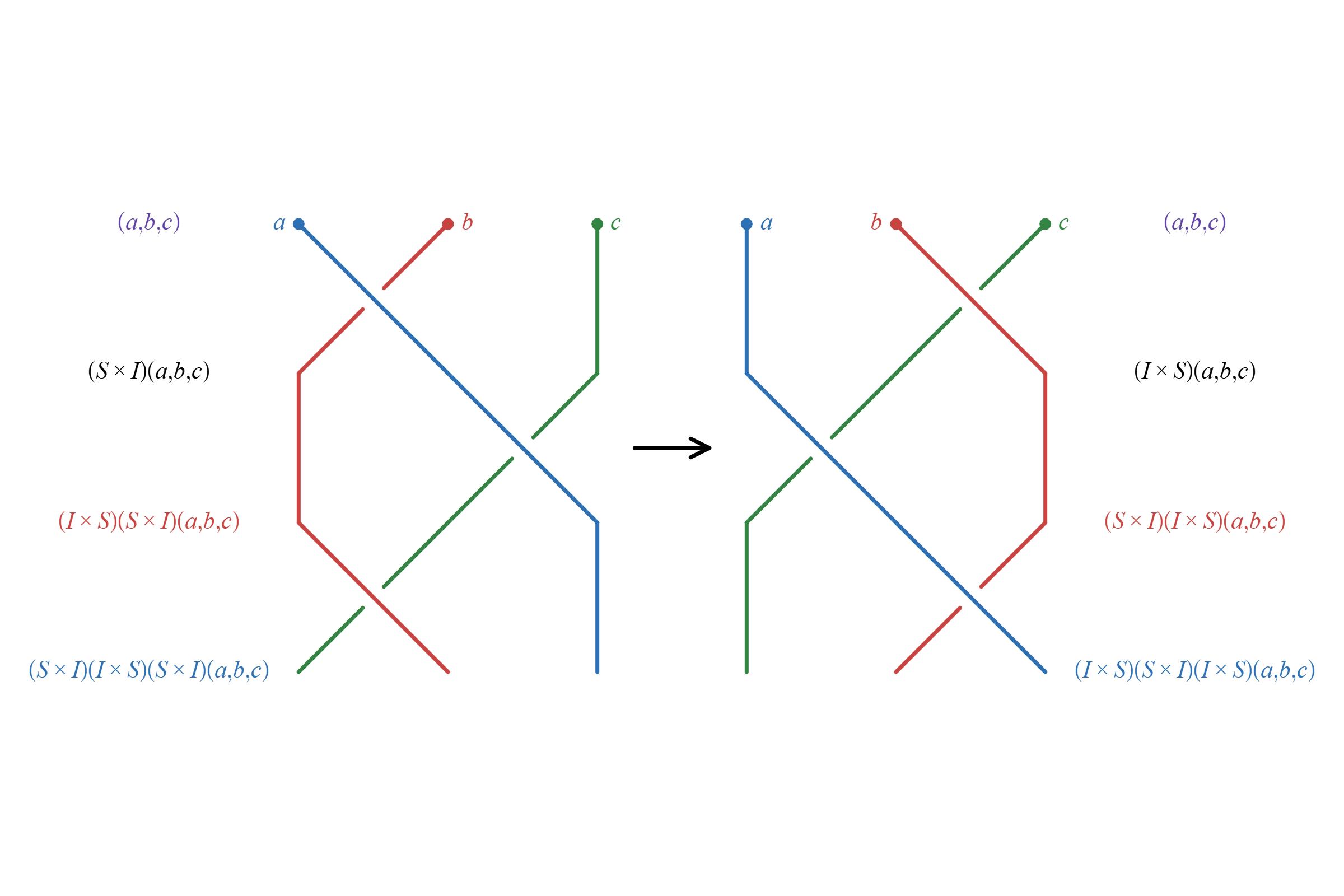
Figure3:TheYang-BaxterequationpicturedasthethirdReidemeistermoveforabraid.
Ateachlevelwherethereisacrossing, S isappliedtothetwo crossingstrandsand I isappliedtotheuntouchedstrand.Hencethe
Yang-Baxterequationrequiresthattheresultsofeitherofthebraidequivalentpathwaysareequal,givingthethirdReidemeistermove.
Forexample,onecanlet S(a, b)=(b, a),simplyswitchingthe orderofthetwoinputs,whichgives (S × I)(I × S)(S × I)(a, b, c)= (S × I)(I × S)(b, a, c)=(S × I)(b, c, a)=(c, b, a)=(I × S)(c, a, b)= (I × S)(S × I)(a, c, b)=(I × S)(S × I)(I × S)(a, b, c).Thisswitch correspondstokeepingtrackoftheorderoftheelements,sincethe switchpermutesthetwoelementsitactson,andsoifitisusedas abraidinvariant,itonlykeepstrackofthefinalpositionsofthe strands.Skewleftbracesandswitchesderivedfromthemcanbe usedtogenerateotherinvariants.
Theorem6. [12]Given (G, · , ◦),let λa(b)= a 1(a ◦ b).Then S(a, b)=(λa(b), λ 1
)((a ◦ b) 1a(a ◦ b))) isaswitchwheretheset XistheunderlyingsetofG.Furthermore,Sisinvolutive(itsown inverse)ifandonlyifab = baforalla, b ∈ G.
Thiscentraltheoremallowsustotranslatetheknowledgeof holomorphsandtheirregularsubgroupsintoswitchestoshiftinto theperspectiveofbraidsandknots.
Example3. Letuscontinuetheexampleof D3 with H ≤ Hol(D3) a regularsubgroupoftheholomorphasinexample2.Thenwehave thefollowingtablefor S(a, b),whichshallbecalledthedihedral switch:
S(a, b) err2 ssrsr2
e (e, e)(r, e)(r2 , e)(s, e)(sr, e)(sr2 , e)
r (e, r)(r, r)(r2 , r)(sr2 , r)(s, r)(sr, r) r2 (e, r2)(r, r2)(r2 , r2)(sr, r2)(sr2 , r2)(s, r2)
s (e, s)(r2 , s)(r, s)(s, s)(sr2 , s)(sr, s)
sr (e, sr)(r2 , sr)(r, sr)(sr2 , sr)(sr, sr)(s, sr)
sr2 (e, sr2)(r2 , sr2)(r, sr2)(sr, sr2)(s, sr2)(sr2 , sr2)
Movingontobraids,thegoalistoapplytheabovegeneratedswitches tocreateinvariants.Todoso,firststartbyrepresentingbraidsinthe contextofgroupstoturnbraids,fundamentallygeometricobjects, intoonesthatcanbeclassifiedbyanequationconcerningfunctions onsets.
Onewaytotodosoisbyconsideringthebraidgroup,written asapresentationgeneratedbytheovercrossings.Let σi represent strand i crossingoverstrand i + 1. σ 1 i naturallyrepresentsstrand i crossingunderstrand i + 1sincecrossingoverandthenunderare inverseoperationsintermsofbraids,asshown:
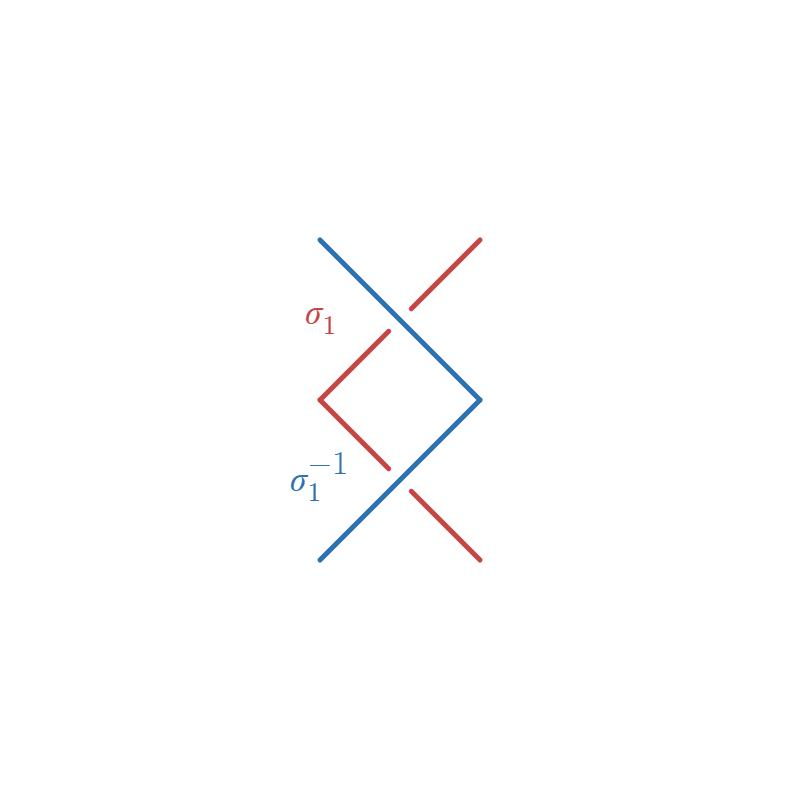
Thebraidgroupisgeneratedby {σ1,..., σn 1} asallbraidsare composedofasequenceofstrandscrossingoverandundereach other.ThispresentationnaturallycoversthesecondReidemeister move,since σi
1 i
i aretheonlywaysthatthesecondReidemeistermovepositioncanbeformed.Notealsothatsincestrands canonlyexchangeplaceswiththestrandsnexttothem,thefirst Reidemeistermove,whichrequiresastrandtopassoveritself,is impossible.Hencetheonlyremainingmovetobeconcernedwithis thethird:
Thismovecanberepresentedinthebraidgrouppresentationas
,correspondingtotheswitchesseenabove.
Lastly,iftwocrossingsaremadefarfromeachother,thentheycannotaffecteachotherandsomustcommute.Specifically,theonly crossingsthatcaninteractwitheachotherarethose σi and σ j with |i j| = 1(alsowhen |i j| = 0,butinthatcase σi = σ j sotheystill commute).Hencewehavethefollowingpresentationforthebraid groupon n strands:
Ononehand,thisgivesasuccinctdefinitionforallbraidswith theoperationofconcatenationofbraids:takingoneandthenputting anotherrightbelowitusingthestrandsfromabove.Theproblem isthattheproblemoftellingwhetherornottwowordsinsucha presentationareequivalentiscalledthegroupwordproblemandis unsolvable,asprovenbyBoonein1957[2].Henceweturntoinvariantsofbraids,nowarmedwiththeknowledgethatallthatneeds tobecheckedisthat
Themethodweusetogenerateinvariantsistoassignsomevalueto eachstrandandthengiverulesforhowthosevalueschangewhen strandsinteract.Formally,letthestateof n strandsbeforestrands i and i + 1crossberepresentedbythe n-tuple (x1,..., xn).Thenafter theswitch,letallstrandvaluesbut i and i + 1remainunchanged, sincethosestrandsdonotinteractwithanyothers,andlet xi and xi+1 bechangedaccordingtosomefunction S : X × X → X × X , where X isthesetofpossiblevaluesforeach xi.
Notallfunctions S givebraidinvariants,sincesomeofthemdo notfollowthethirdReidemeistermove,suchas S(a, b)=(a2 , b). Withthatfunction S,taketheinputtuple (1, 2, 3) ∈ (Z3 4, +),which givesthefollowingtwobraids:
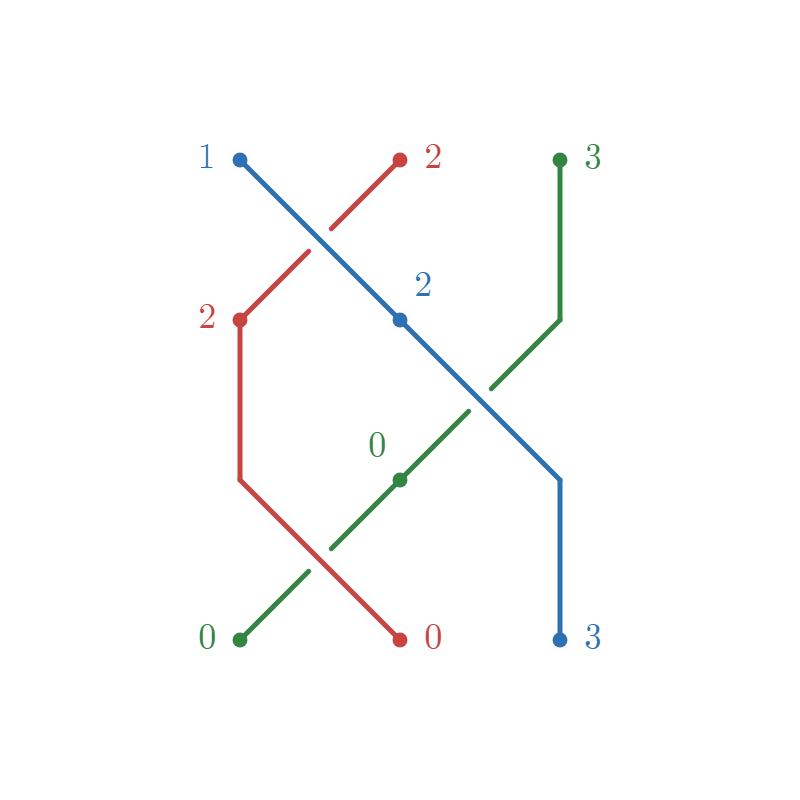
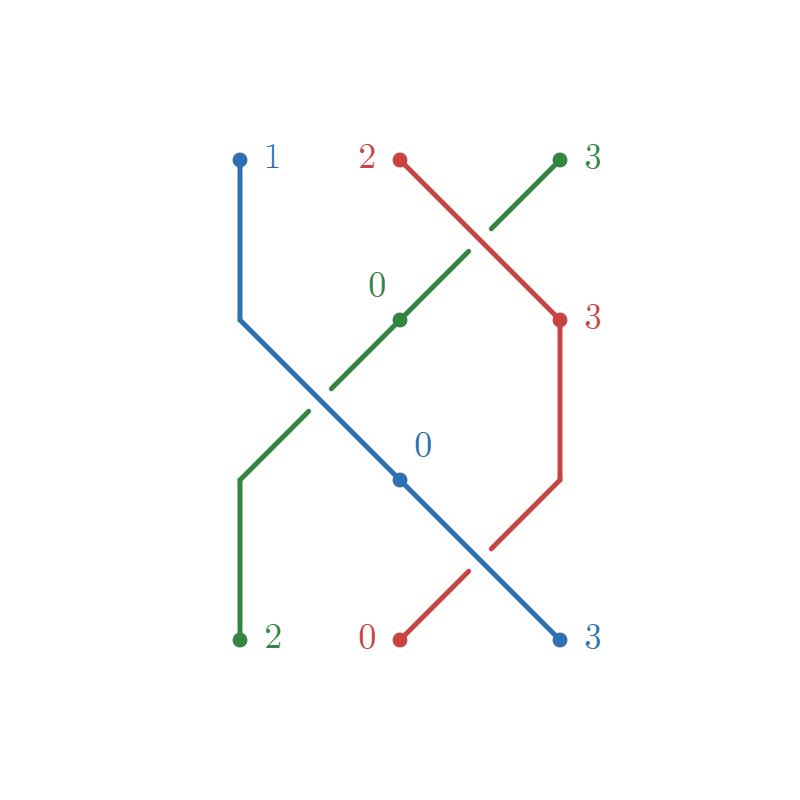
ThesetwobraidsareequivalentviathethirdReidemeistermove, andsofor S togiveavalidinvariant,thebottomvaluesshouldbethe sameforbothcases,butwith S(a, b)=(a2 , b),andinput (1, 2, 3), theyarenot,providingacounterexampleandshowingthatthis S doesnotinfactproduceabraidinvariant.
Whatfunctions S doworkthen?Wehavethatif S isappliedto twopairsofstrandsswitchingplacesthathaveanindexdifferingby morethan1,thenthestrandswitchescommutesinceneitherfunctionisappliedtotheoutputsoftheotherbutinsteadtocompletely separatestrandentries.Thenlet σi givetheswitch S(xi, xi+1).Then since σ 1 i σi = e,theremustbeawaytoreturnfrom S(xi, xi+1) to (xi, xi+1),so S mustbeinvertibleandsobijective.Lastly,wehave therelation σiσi
i+1.Considerthetriple (
). Applyingthelefthandsidetothesevaluesgivesequation4,while applyingtherighthandsidegivesequation5.
Thensince xi, xi+1, xi+2 canbeanyelementsof X ,thesearepreciselytheswitchesarisingfromtheYang-Baxterequation.
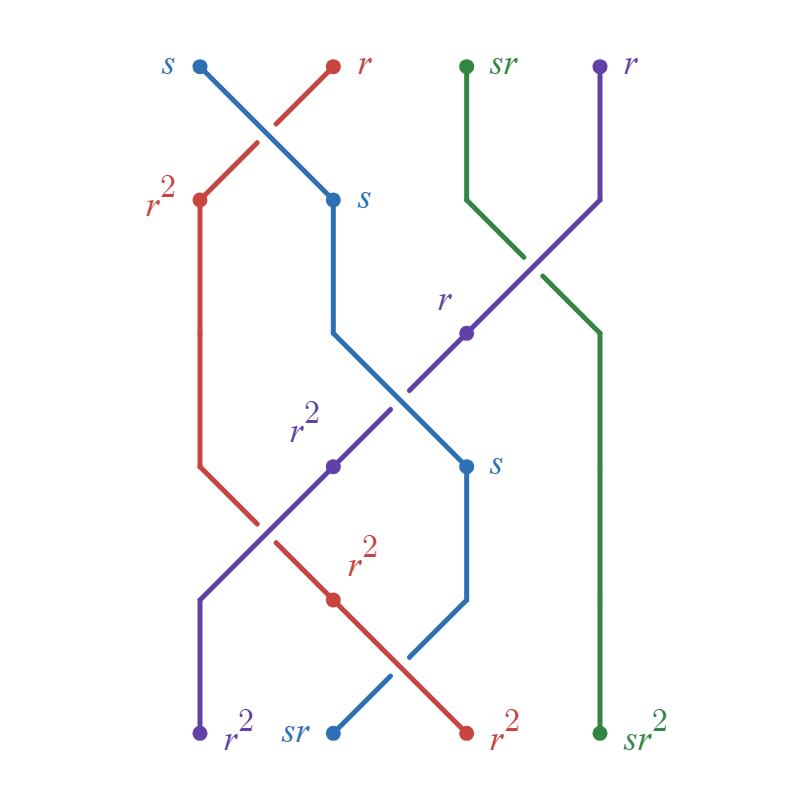
Example4. Followingexample3,takethedihedralswitch S to applyfor σi and S 1 toapplyfor σ 1 i ,whichgivesthefollowingvaluesfortheendpointsofthestrandsofthisbraid,notingthat S(a, b)=(a 1ba, b) and S 1(a, b)=(b, bab 1):
Abeliangroupsaretypicalgroupstoconsiderasageneralexample ofagroupforthemethoddescribed,sincetheyarewellunderstood andtheirholomorphshavebeenthecentersofnumerouspapers[18, 19].From[12]wehavethefollowingtheoremabouttheswitches resultingfromabeliangroups:
Theorem7. TheswitchS(a,
givenbyaskewleftbrace (G, · , ◦) isinvolutive(itsowninverse)if andonlyifab = baforalla, b ∈ G.
Proof. Herewewillproveonlyonedirection:thatif ab = ba forall a, b ∈ G,thattheswitchisinvolutive.Thiscansimplybechecked algebraically,aswehavethefollowing:
Thensince S2 istheidentityfunction,wehave S = S 1,which givesthefollowingtwobraiddiagrams:
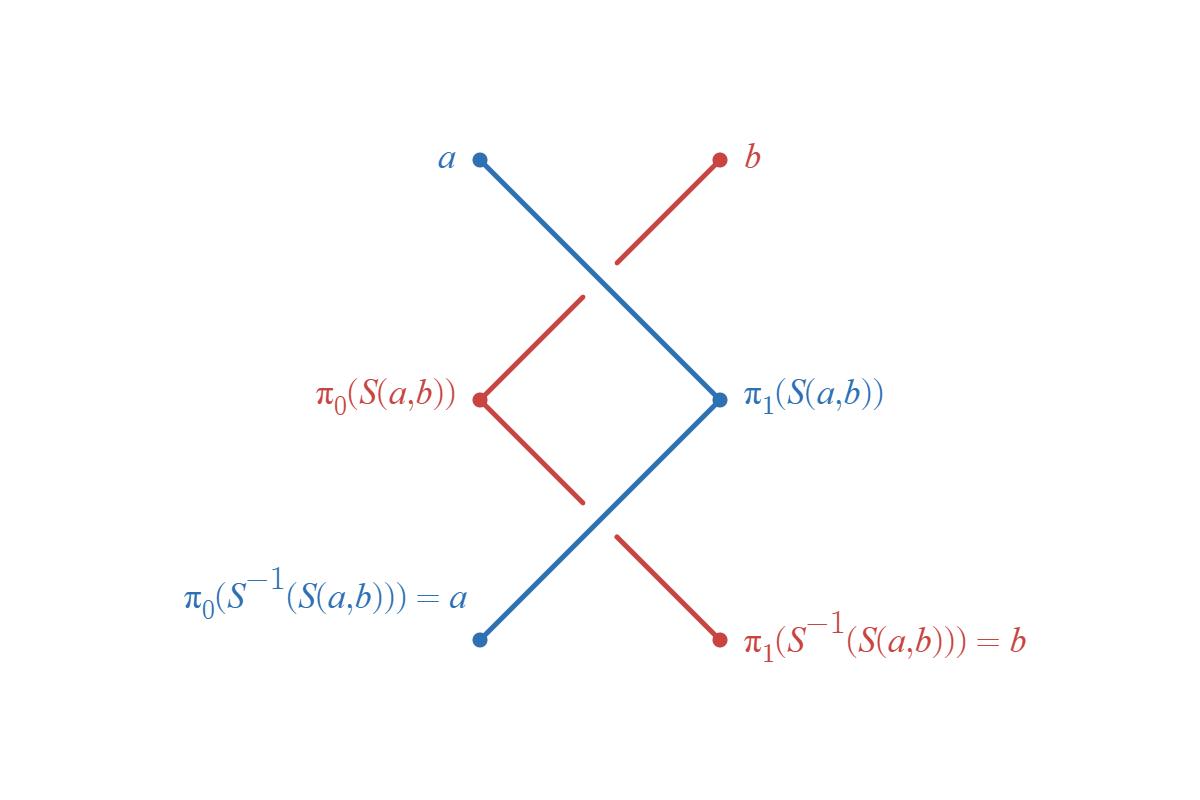
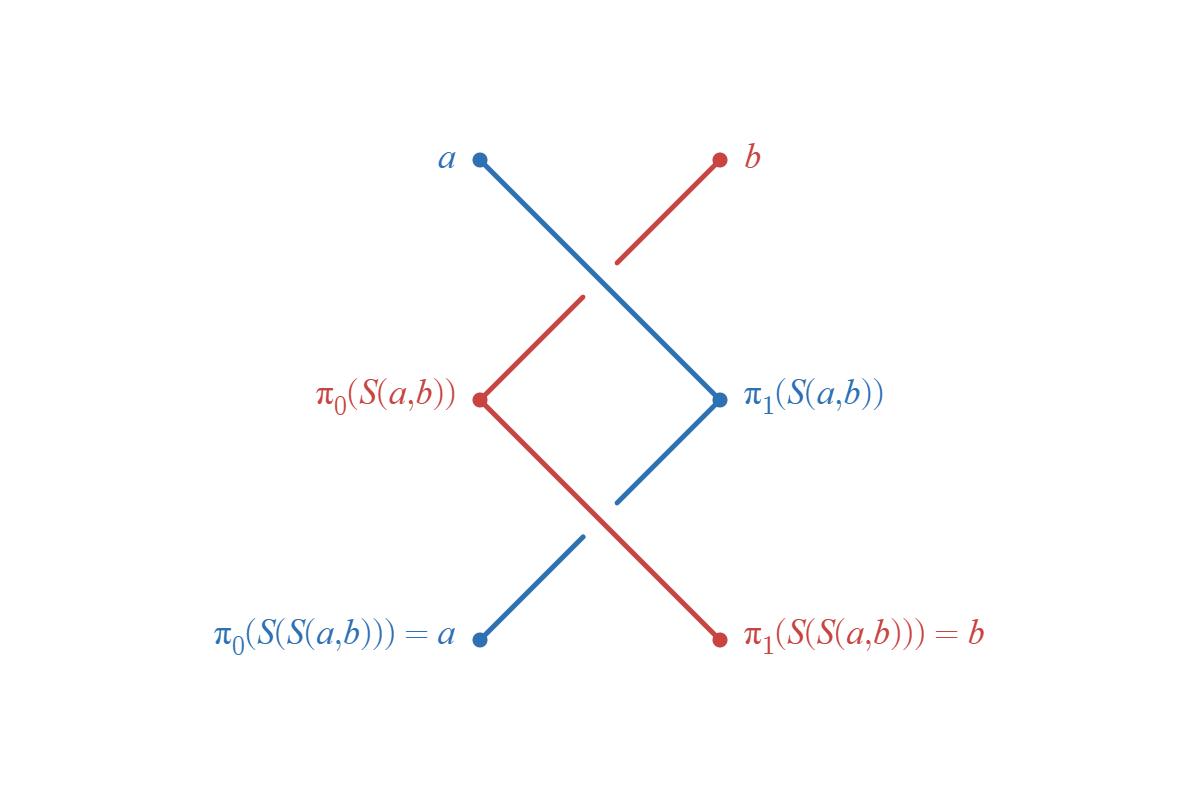
Becauseofthis,regardlessofthespecificabeliangroupthat S is derivedfrom,theresultinginvariantcannotdifferentiatebetween σi and σ 1 i ,andsothemaximumamountofinformationitcanholdis thatofthebraidgroupwiththeadditionalrelationthat σi = σ 1 i or alternatively σ 2 i = e forall i from1to n 1.Thispresentationsimplygivesthesymmetricgroup, Sn asin[23].Thoughthisresultfollowsfromtheviewofthepresentationasanalgebraicobjectalone, itcanalsobeobtainedintuitivelyfromthebraidinvariantsthemselves,sinceifswitchingtwostrandsoverandunderareconsidered identical,thenthepathofanygivenstrandisforgotten,whichonly leavesitsfinalposition,whichissimplyapermutation,sinceany strandcanendupinanyfinalposition.Unfortunately,thismeans thatthisclassofinvariantsareoflittleusewhendistinguishingbetweenbraids.
Hol(G) canhavemanydifferentregularsubgroups,andcounting andclassifyingthemisanactiveareaofresearch.Thecommonapproachtoisbyanalyzingaconstructcalledthemultipleholomorph, asin[16,17].Everyholomorphhasatleastthesubgroupsgivenby theleft-andright-regularrepresentationof G,andfornon-abelian G,thesetwosubgroupsarenon-isomorphic.
RecallfromDefinition8thattheleft-regularrepresentationof G,denoted λ (G) isanembeddingof G intoPerm(G) with g → λg, with λg(h)= gh.Theright-regularrepresentationisdefinedanalogously,denoted ρ (G),with g → ρg and ρg(h)= hg 1.Sincethis isaright-regularrepresentation,the g isputontheright,butnotablytheelementthatismultipliedis g 1 andnot g itself,sincewe
)
= ρg1g2 (h) forcompositiontoholdfortheright-regularrepresentationtogive agroup.Similarto λ (G), ρ (G) alsogivesaregularsubgroupsince multiplyingontherightbytheinverseofeveryelementgivesabijectivefunctionfrom G toitself.
Example5. Consider λ (G).TheneveryelementofHol(G) must actasaleft-multiplicationbysomeelement,whichisrepresented inthesemidirectproductdefinitionas (g, I).Hencewhenbuildingtheskewleftbracefrom λ (G),wehave fa = I forall a ∈ G, andso a ◦ b = afa(b)= ab.Therefore,wehave λa(b)= a 1(a ◦ b)= a 1ab =
G.Thenwehave S(a, b)=(λa(b), λ
a(b)((
b) 1a(a ◦ b)))=(b, (a ◦ b) 1a(a ◦ b))= (b, (ab) 1aab)=(b, b 1a 1aab)=(b, b 1ab),soregardlessofthe group G,theswitch S returnsthesecondelementfollowedbythe conjugationofthefirstelementbythesecond.Thisstillproduces differentinvariantsfordifferentgroups,andinfactgivesaninfinite familyofinvariants,sinceconjugationactsdifferentlyindifferent groups.
Example6. Similarly,considerthecaseof ρ (G).Theelements ofthecorrespondingsubgroupofthesemidirectproductversionof Hol(G) arevaried,sincetheymusthaveanautomorphismthat,composedwithmultiplicationbyanelementgivestheequivalentofmultiplyingbytheinverseofadifferentelementontheright.Wehave thatforanelement a,theremustbesomeelement (a′ , fa′ ) suchthat a′ fa′ (b)= ba 1 forall b ∈ G.Thenlet b = e,sothen a′ = a′ fa′ (e)= ea 1 = a 1,so a′ = a 1.Hencewehave a 1 fa 1 (b)= ba 1,and sinceeveryelementhasauniqueinverse,wecanreplaceallinstancesof a with a 1 andviceversa,giving afa(b)= ba,so a ◦ b = afa(b)= ba.Then λa(b)= a 1(a ◦ b)= a 1ba and λ 1 a (b)= aba 1 , andso S(a, b)=(λa(b), λ 1 λa(b)((a ◦ b) 1 a(a ◦ b))) =(a 1ba, λ 1 a 1ba(a 1b 1aba)) =(a 1ba, a 1ba(a 1b 1aba)a 1b 1 a) =(a 1ba, a) (8)
Asexpected,thisissimilartotheleft-regularrepresentationversionbutreversed,sinceboththeleft-andright-regularrepresentationsarejustshiftsofthegroupbyitselementsandtheirinverses withnootherautomorphisms.
Notealsothat,followingthestatesof λ (G) and ρ (G) as“inverses”inaway,subgroupsactinginoppositeways,theswitches thattheygenerateareinversesofeachother.
Inthispaper,severalexistingresultshavebeencombinedtoproduceapathwaythattakesanygroupandaregularsubgroupofits holomorphandturnsthatintoaninvariantonbraids.Somespecific choicesofgroupsandregularsubgroupsarethendiscussedtoprovidegeneralresultsforsomespecificcases.
Therearetwomainareasforfutureworkrelatingtotheseresults.First,thispathwayrequiresthataregularsubgroupofthe holomorphbefound,andthoughtherearemanyexistingfamilies ofexamples,moreresearchintofindingregularsubgroupsofthe holomorphwouldbeusefultobroadentheinvariantsobtainablevia thismethod.Astheholomorph’sregularsubgroupsarealsousefulformanyotherapplicationssuchasHopf-Galoistheory,there hasalreadybeensomeresearchinthisarea,suchasKohl’spapers onthecaseforgroupsoforder4p for p primeandonthedihedralandquaternionicgroupsandTsang’spaperoncenterlessgroups [16,17,24].Onespecificconstructionusefulinthisareaisthemultipleholomorph,whichisdefinedNHol(G) := NormPerm(G)(Hol(G)), wherethequotientNHol(G)/ Hol(G) givesinsightintothoseregular subgroupsoftheholomorphof G whichareisomorphicto G itself, thoughthisrestrictionisnotrequiredfortheYang-Baxterequation.
Thesecondistheapplicationofthesebraidinvariantstothe constructionofknotinvariants.AlthoughAlexander’sTheoremallowsonetoturnaknotintoabraid,thisremovessomeinformationabouttheknotandsotheinvariantsdonotconvertcompletely. Still,Fennin[7]usestheswitchesaspresentinthispapertoconstructbiquandleswhichnaturallyturnintoknotinvariants.Only
someswitchesgivevalidbiquandles,though,andtherestrictions ontheswitchesneededtoguaranteeabiquandleareunspecified,but solvingthatproblemwouldgeneralizethebraidinvariantsgenerated heretobroadlyapplicableknotinvariants.
[1] J.W.Alexander.Alemmaonsystemsofknottedcurves. ProceedingsoftheNationalAcademyofSciencesoftheUnited StatesofAmerica,9(3):93–95,1923.
[2] WilliamW.Boone.Certainsimple,unsolvableproblemsof grouptheory.vi. IndagationesMathematicae(Proceedings), 60:227–232,1957.
[3] WilliamBurnside. Theoryofgroupsoffiniteorder.The MacmillanCompany,NewYork,1911.
[4] A.CarantiandF.DallaVolta.Themultipleholomorphofa finitelygeneratedabeliangroup. JournalofAlgebra,481:327–347,2017.
[5] JohnD.DixonandBrianMortimer. Permutationgroups.Graduatetextsinmathematics;163.Springer,NewYork,19961996.
[6] PavelEtingof,TravisSchedler,andAlexandreSoloviev.Settheoreticalsolutionstothequantumyang-baxterequation. DukeMathematicalJournal,100(2),1999.
[7] RogerFenn,MercedesJordan-Santana,andLouisKauffman. Biquandlesandvirtuallinks. TopologyanditsApplications, 145(1):157–175,2004.
[8] RogerFennandColinRourke.Racksandlinksincodimension 2. JournalofKnotTheoryanditsRamifications,01,121992.
[9] Franc¸oisLeGallandDavidJRosenbaum.Onthe groupandcolorisomorphismproblems. arXivpreprint arXiv:1609.08253,2016.
[10] LeondardDicksonGeorgeMiller,HansBlichfeldt. Theoryand applicationsoffinitegroups.JohnWiley&Sons,Incorporated, NewYork,1916.
[11] NacerGhadbane.Holomorphsofgroupsandtheiruseinthe diffie-hellmankey-exchangeprotocol. AnnalsofMathematics andComputerScience,13:53–59,2023.
[12] LeandroGuarnieriandLeandroVendramin.Skewbraces andtheyang–baxterequation. MathematicsofComputation, 86(307):2519–2534,2017.
[13] MarshallHall. TheTheoryofGroups.Macmillan,NewYork, 1959.
[14] Nai-chaoHsu.Thegroupofautomorphismsoftheholomorph ofagroup. PacificJournalofMathematics,11(3),1961.
[15] DavidJonahandBertramSchreiber.Transitiveaffinetransformationsongroups. PacificJournalofMathematics,58(2):483–509,1975.
[16] TimothyKohl.Groupsoforder4p,twistedwreathproducts andhopf–galoistheory. JournalofAlgebra,314(1):42–74, 2007.
[17] TimothyKohl.Multipleholomorphsofdihedralandquaternionicgroups. CommunicationsinAlgebra,43(10):4290–4304,2015.
[18] G.A.Miller.Onthemultipleholomorphsofagroup. MathematischeAnnalen,66:133–142,1908.
[19] W.H.Mills.Multipleholomorphsoffinitelygeneratedabelian groups. TransactionsoftheAmericanMathematicalSociety, 71(3):379–392,1951.
[20] SamNelson.Thecombinatorialrevolutioninknottheory. NoticesoftheAmericanMathematicalSociety,58,2011.
[21] MarkStremlerPhilipBoyland,HassanAref.Topological fluidmechanicsofstirring. JournalofFluidMechanics, 403:277–304,2000.
[22] KurtReidemeister.Elementarebegr¨undungderknotentheorie. AbhandlungenausdemMathematischenSeminarderUniversit¨atHamburg,5:24–32,1927.
[23] BruceSagan. TheSymmetricGroup:Representations,CombinatorialAlgorithms,andSymmetricFunctions.Springer,New York,2001.
[24] Cindy(SinYi)Tsang.Themultipleholomorphofcenterless groups. JournalofPureandAppliedAlgebra,229(1):107843, 2025.
[25] LeandroVendramin.Skewbraces:abriefsurvey.In Workshop onGeometricMethodsinPhysics,pages153–175.Springer, 2022.
[26] CharlesWells.Someapplicationsofthewreathproductconstruction. TheAmericanMathematicalMonthly,83(5):317–338,1976.