
Predicting Cell Fate: Analyzing p53 Dynamics in Ovarian Cancer Cells, Paving the Way for Future Therapies
Daniel Shaer
Senior Thesis | 2026

PredictingCellFate:Analyzingp53DynamicsinOvarian CancerCells,PavingtheWayforFutureTherapies
DanielShaer
Advisor:Prof.GalitLahav,SystemsBiology,HarvardMedical
School
Introduction
Thetumorsuppressorproteinp53haslongbeendescribed asthe“guardianofthegenome,”atitlethatreflectsitscentralrole incoordinatingcellularresponsestostress,assistinginDNA repair,andinitiatingapoptosiswhenDNAdamagebecomes irreparableordangeroustothehostorganism(Lane1992).
Disruptionofthisregulatorysystemisamongthemostcommon eventsacrosshumancancer,withapproximately50%ofalltumors harboringamutationinTP53,thegenethatcodesforp53(Baugh etal.,2018).Incertaincancers,thisproportionisevenhigher.As seeninFigure1,ovariancancer,forexample,generallyhas approximately80%TP53mutationrates(Suetal.,2022)(Figure 1).
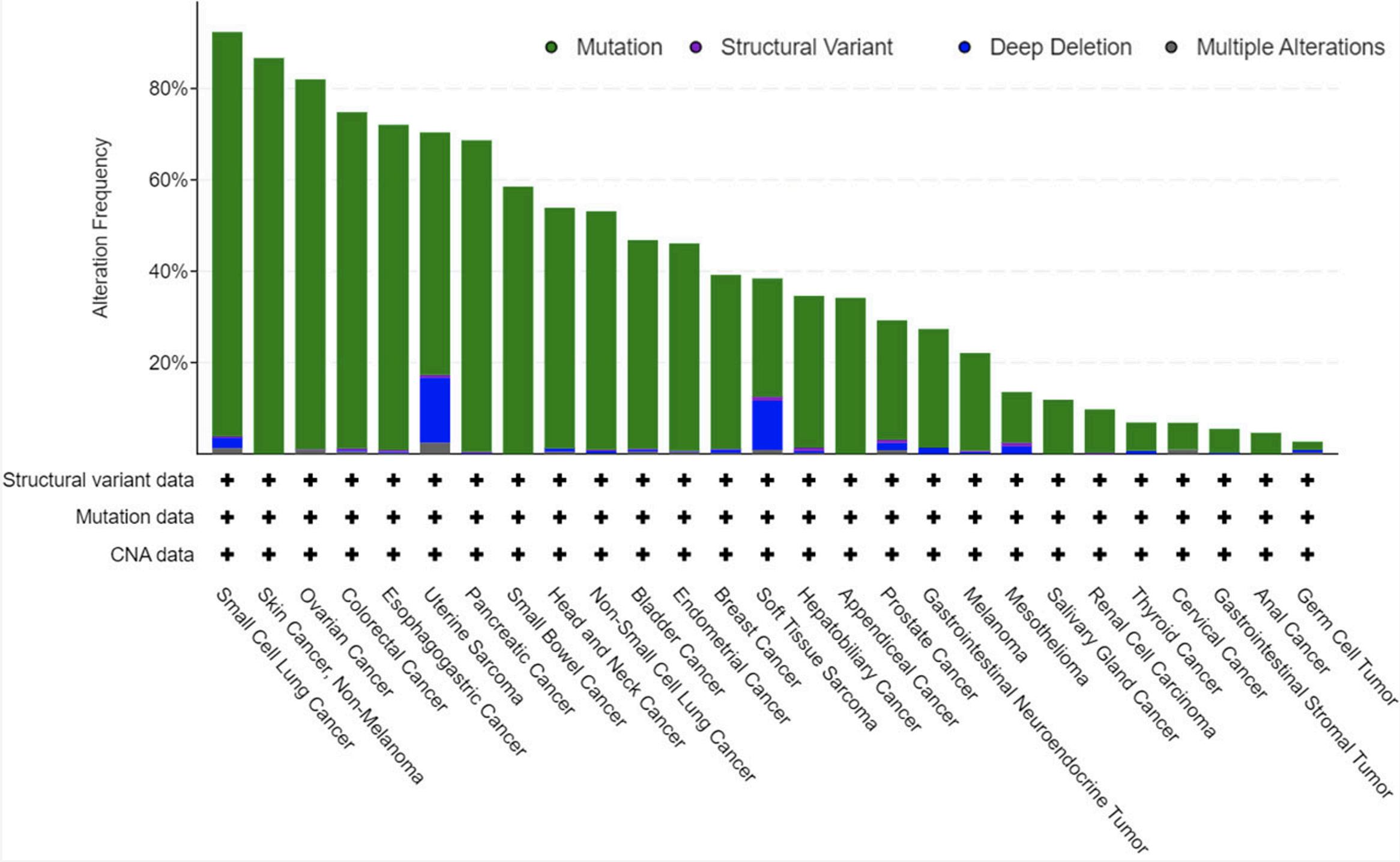
Figure1. FrequencyofTP53alterationsacrossmajorcancer types.(Suetal.,2022).
Amongovariancancerdiagnoses,approximately90%are diagnosedasserousovariancarcinomas—themostlethal gynecologiccancer(AmericanCancerSociety,n.d.).SKOV-3,a morphologicallyepithelialovarianadenocarcinomasample
isolatedfromtheovaryofa64-year-old whitefemale,hasa completehomozygousdeletionoftheTP53genecausingtheline tobeconsidered p53-null—carryingnofunctionalcopiesofthe gene(Yaginuma&Westphal,1992).Theabsenceofp53 fundamentallyunderminesthesignalingprocessesofthesecells, causingsuchbehaviorsasunregulatedproliferation,instabilityof thegenome,andresistancetostress-inducedarrestorapoptosis (Wallisetal.,2023).Understandinghowtoreestablishp53inthese situationshasthusbecomeamajorpriorityincancerbiologyand therapeuticdevelopment(Lozano,2019).
Theconceptofrestoringp53hasgainedconsiderable momentumoverrecentyears.Earlygenetherapystudiesattempted todeliverwildtypep53backintotumors,butwithmixedresults. Factorssuchaspreliminaryunderstandingsofcross-talkbetween genesandagenerallyoverlypreliminaryunderstandingofsystems ledtounexpectedlycomplexbiologicalbarriers(Zeimet&Marth, 2003).Inmousemodels,forinstance,restoringwild-typep53 slowedtumorgrowthbutoftenfailedtocauseregression, suggestingthatrestorationaloneisnotauniversalcureandmay interactwithtumorenvironmentsandmutationlandscapesin highlysubtleways(Wangetal.,2011).Morerecentworkhas beguntorefinetheseapproaches,utilizingmethodssuchas targeteddeliverysystemslikegoldnanoparticle-basedconstructs (Kotcherlakotaetal.,2019),syntheticmRNAdelivery(Raabetal., 2021),andintracellularproteintransporttechnologies(Yangetal., 2022),demonstratingthatfullorpartialrestorationofp53function isrealisticallyfeasibleinhumancells.Theseinnovations underscoreboththepromiseandthechallengeofp53restoration therapies.Thefieldnowrestsattheintersectionofdecadesof evolvingknowledgeandinsight,andrapidlyevolvingtherapeutic strategies(Valenteetal.,2018).Yetoneareaofinquiryremains largelyunanswered:oncep53isrestored,whatitisthatdetermines
acell’sultimatebehavior,whetheritcontinuesproliferating, arrests,orapoptoses.
Answeringthisquestionhasproventobeincredibly complex,farbeyondthesimplemeasurementsofp53abundance. Rather,previousresearchsuggeststhatthekeyliesinthe examinationofthetemporaldynamicsofp53signaling,thatis, howtheproteinbehavesovertimeinbothabundanceand“shape.” FoundationalsinglecellworkfromtheLahavLabrevealedthat p53activationisinherentlydynamicinandofitself,displaying oscillatorybehaviorsthatcorrespondtodistinctcellularoutcomes (Lahavetal.,2004).Thisworkreframedp53signalingasasystem withthecapacitytobepredicted.Cellsdonotsimply“have”or “nothave”p53;rather,thetemporalpatternsofp53activityin somewayleadtotheirultimatefatedecisions.Subsequentstudies extendedthisframeworktocellsthatunderwentDNAdamage,and foundthatspecificdynamicalmotifs,suchasthenumberor amplitudeofp53pulses,predictwhetheracellrepairs,arrests,or undergoesapoptosis(Purvisetal.,2012).However,thesestudies allsharethecriticalfactorthatp53isundergoingactivationincells whereitalreadyexistsfunctionally.
Incontrast,verylittleisknownaboutthedynamicbehavior ofp53followingrestorationincellsthatwerepreviouslyp53-null, suchasSKOV-3ovariancancercells.Restorationthusrepresentsa fundamentallydifferentbiologicalscenario.Insteadofactivatinga preexistingsignalingnetwork,thesystemmustberebuiltinorder tofunction,withtranscriptionaltargetsreestablished,feedback loopsreengaged,andthecellinterpretingincomingsignalsthrough ameansforeigntoit.Thisuniquebiologicalstateremainspoorly understood.Giventheacceleratingtherapeuticinterestinp53 restorationtechnologies,thisgapinunderstandingmustbe addressed.
Ifp53restorationistobecomeaneffectiveandrealistic meansoftherapeutictreatment,cliniciansandresearchersmust
firstunderstandthep53dynamicalbehaviorthatleadsto regressionandsenescence.Thisknowledgewouldpotentially enablesuccessfultherapiesthroughoptimizeddosingstrategies, forexample.
Toinvestigatethesequestions,theprojectanalyzesa large-scale,single-celltimeseriesdatasetgeneratedintheLahav LabatHarvardMedicalSchool,inwhichp53-nullSKOV-3 ovariancancercellswereengineeredwithadoxycycline-inducible p53-Venusconstructtoenablecontrolledrestorationofp53 expression.BycapturingtheVenusfluorescenceandthereforethe p53expressionlevelsoveranextendedtimeperiod,thisdataset makesitpossibletoquantifythesignalingpatternsthatemerge uponrestoration.Whenpairedwithultimatecellfateoutcome labels,thesetrajectoriesformanidealsystemforapplying computationalmethodstouncoverrelationshipsbetween restored-p53dynamicsandlongtermcellularfatethatmaynotbe visuallyapparent.
Thecentralaimofthisstudyisthereforetodetermine whethertemporalfeaturesanddynamicsofrestored-p53signaling canpredicteventualcellfate,andtoidentifywhichaspectsof thesedynamicsaremosthighlycorrelatedwithcellularfates. Addressingthisquestionrequiresanapproachcapableofdetecting subtle,multivariatetemporalpatternsthataredifficultor impossibletocapturethroughnon-computationally-assisted measures.Tothisend,thestudyemploysinterpretablemachine learningtechniques,chosendeliberatelytoavoid“blackbox” models—modelswithunclearorhiddendecisionmaking processes—inordertoextractbiologicallymeaningfulfeatures fromsinglecellp53timeseriesandevaluatetheirpredictive performance.Byutilizinginsightsfromyearsofp53dynamical researchwithmoderncomputationalanalysis,thisworkseeksto uncoverthedecisionmakingprocessesgoverninghowcells interpretrestoredp53signalingandmakefatedecisions.This
studythusaimstoprovideaframeworkforidentifying mechanisticallyinformativebiomarkersthatcouldultimatelyguide thedesign,timing,andoptimizationoffuturep53-basedcancer therapies.
MaterialsandMethods
Thisprojectfollowedamulti-phasemethodology beginningwiththeacquisitionandpreprocessingofsingle-cell YellowFluorescentProtein(YFP)time-seriesdataderivedfrom live-cellimagingandautomatedcelltrackingalgorithms.After fatelabelswereassigned,eachcell’sYFPtrajectorywasorganized intoatwodimensionaltimeseriesformatsuitablefor computationalanalysis.Acollectionofquantitativefeatureswas thenengineered,bothmanuallydefinedandalgorithmically extracted,fromtheseYFPtrajectoriesinordertorepresentdistinct aspectsofp53-relateddynamics.Finally,usingthelabeleddataset, avarietyofclassifiers,namelydecisiontreesandrandomforests, weretrainedandevaluatedtoidentifywhichengineeredfeatures moststronglycontributedtoaccuratefateprediction.The subsequentsubsectionsdescribeeachphaseindetail.
DataAcquisitionandPreprocessing
Thefirstphaseofthisprojectinvolvedgeneratingand collectingsinglecellp53timeseriesdatafromacontrolledlive cellimagingexperimentalsetup.Allexperimentswereperformed usingaSKOV-3ovariancancercellline,specificallyap53null serouscystadenocarcinomalinethatprovidesacleanbackground withwhichtostudyp53dynamicsinnearcompleteisolation.To reintroducep53backintothecellsandtrackthem,cellswere engineeredwithadoxycyclineinduciblep53Venusconstruct, allowingthetrackingofp53levelsanddynamicsthrougha fluorescentmedium,andalsoallowingtighttemporalmanagement
ofp53expression.Inthissystem,theadditionofdoxycycline (dox)initiatestranscriptionofp53bondedwiththeVenus fluorescentprotein,thuspermittingrealtimevisualizationofp53 levelsthroughaYFPimagingchannel.
Atthebeginningoftheexperiment(0hours),cellswere treatedwith62.5ng/mlofdoxycycline,thusactivatingp53-venus expression.Cellsweremaintainedthroughcontinuousdoxycycline additionsfor48hours,allowingthecellstoreachstrongp53 expressionlevels.After48hours,thedoxycyclinewaswashedout tothebestofpossibleability,terminatingfurthertranscriptionof p53orvenus.Followingtheremovalofdox,cellscontinuedtobe imagedforanadditional48hours,resultingina96hourtimelapse movie,asseeninFigure2,withimagestakenevery20minutes, leadingtoa289framemovie,duringwhichthefullriseand subsequentdecayorstabilizationofp53levelsacrosshundredsof individualcellswascaptured(Figure2).
Livecellimagingwasconductedonanautomated microscopeusingbothphasecontrastmicroscopy(PCM)anda YFPfluorescencechannel.Further,adigitalcelltracking algorithmdevelopedinthelabinapreviousexperimentwasused toidentifyandfollowindividualcellssoastomaintainconsistent cellIDsthroughoutthedurationofthemovieandquantifyeach cell'sYFPfluorescenceintensityateverytimepoint.Thisinterface wasalsoutilizedtomarkanytimeatwhichtherewasacellular divisionoracelldeathevent.Thispipelineledtotheproductionof arawfluorescencetimeseriesforeachtrackedcellinarbitrary units,representingdynamicchangesinp53expressionoverthe96 hourexperimentalperiod,aswellasaone-hotdataset—adataset filledwith0sexceptfor1sateventpoints—forcelldeathandcell divisions.
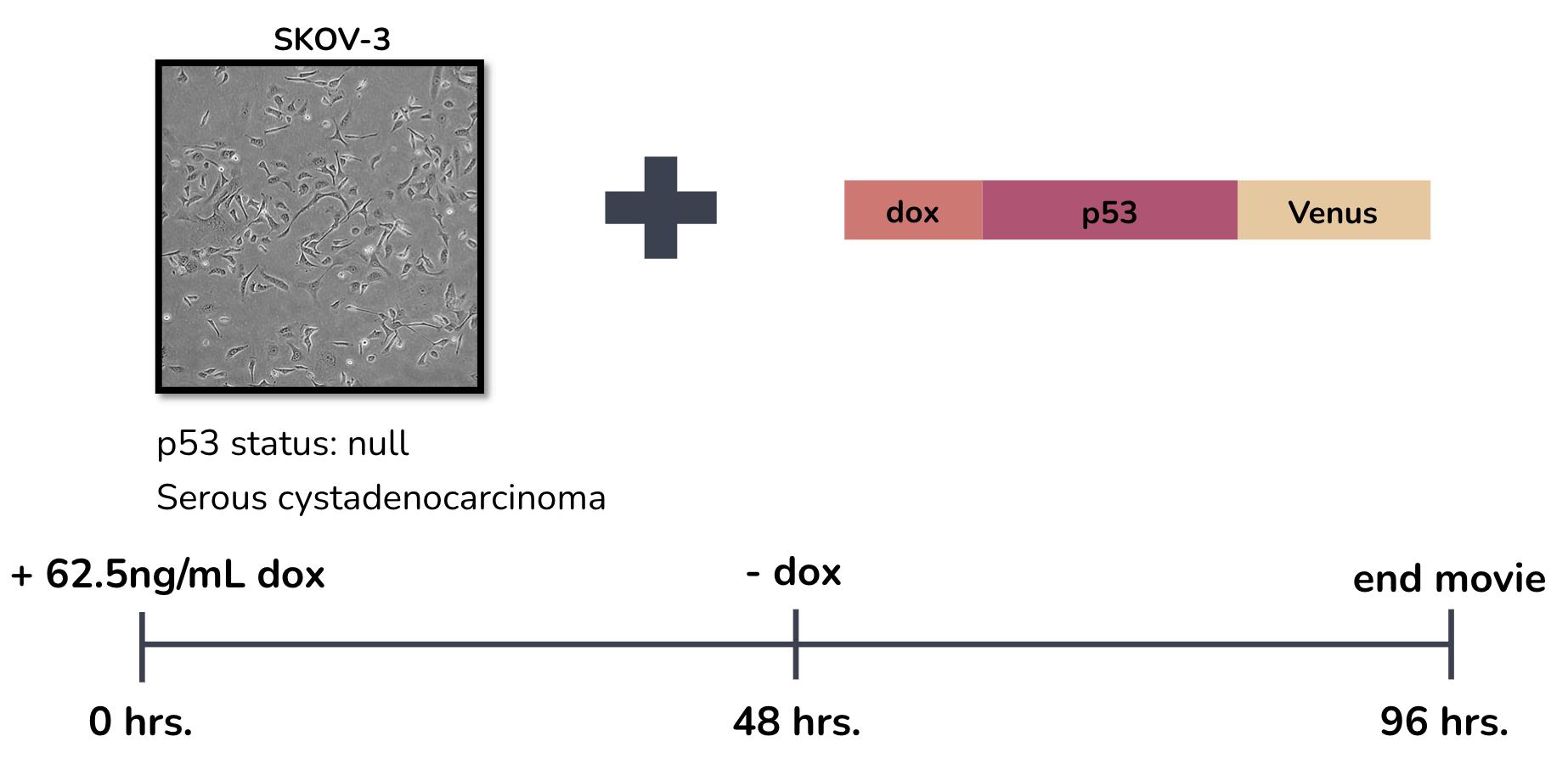
Figure2.Experimentaldesignforp53restorationinSKOV-3cells usingadoxycycline-induciblep53-Venusconstruct.
Togenerateafateclassifieddatasetsuitableforlater machinelearninganalyses,eachtrackedcellwaslabeledaccording toitsproliferatoryandapoptoticbehavior.Becausethe experimentalobjectiveat62.5ng/mlofdoxycyclinewasto distinguishbetweencellsthedifferencesinp53dynamicbehavior betweencellsthatcontinuedproliferatingandthosethatentered arrest,andbecauseonlyasmallnumberofcellsunderwentdeath, allcellsthatapoptosedwereexcludedfromthefinaldataset.In addition,onlycellsthatremainedcontinuouslytrackable throughoutthefulldurationofthe96hourmoviewereretainedto avoidartifactsfrompartialcelltrackings(traces).
Accuratelylabelingtheproliferatingversusarrestedcells requiredfirstestablishingthedistributionofSKOV-3division cyclelengthsamongstthe62.5ng/mldoxycyclinegroup.Foreach cell,alltimeintervalsbetweensuccessivedivisions—forexample betweenthefirstandseconddivisionofacell,andthesecondand third,etc—werecollectedandplotted,leadingtotheformationofa skeweddistributedarrayofinterdivisiontimes,favorableforthe minimallossofdatainlatersteps.Importantly,intervalsbetween thestartofthemovieandthefirstdivision,andbetweenthelast
observeddivisionandtheendofthemoviewereexcluded,asthese truncatedintervalswouldbiasthedistributionduetotheirpotential inaccuracy.
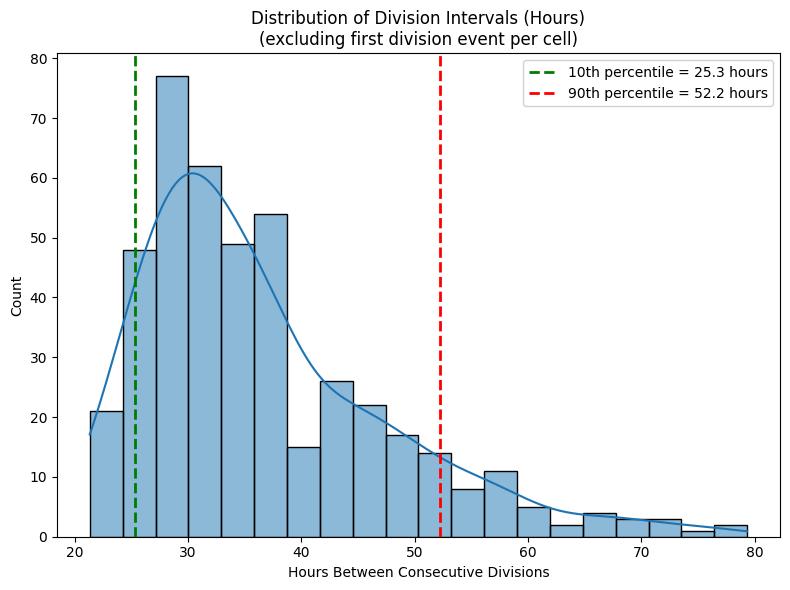
Figure3.Distributionoftimeintervalsinhoursbetween consecutivecelldivisions,excludingthefirstdivisioneventper cell.10thand90thpercentilevaluesmarkedwithverticaldotted greenandredlines,respectively.
Usingthisdistribution,fatelabelswereassignedthrough theutilizationofpercentilethresholdsofthecellcycledistribution, toensuremaximumconfidenceincelltracefatelabeling.Cells thatunderwentadivisionwithinthe10thpercentilecutofffor interdivisionlength(25hours)priortheendofimagingwere labeledasproliferating,sincefewerthan10%ofcellswere overservedtodividemorequicklythanthisthreshold.Therefore, theprobabilityofoneoftheseproliferatinglabeledcellsinreality beingarrestedwouldbehighlyunlikely.Ontheotherhand,cells thatdidnotdividewithinthe90thpercentilevalueofinterdivision
times(52hours)fromtheendofthemoviewerelabeledas arrested,sincefewerthan10%ofcellswereobservedtohave dividedfasterthanthisthreshold(Figure3).Therefore,incorrectly labelingoneofthesecellsasarrestedwheninrealityitwassimply dividingatanincrediblylowratewouldbehighlyunlikely.Cells whoselastobserveddivisionfellinbetweenthesebounds, approximately25%ofthepopulation,wereconsideredambiguous andremovedfromthefinaldatasettoensurethatonlyconfidently labeledtraceswereusedformachinelearningmodeltrainingand evaluation.
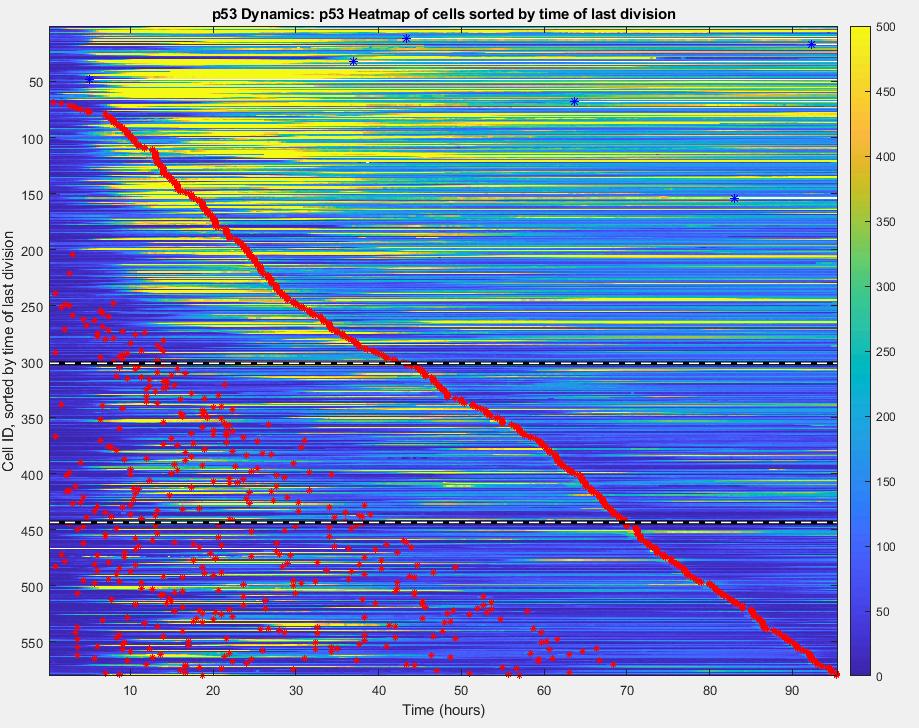
Figure4.Heatmapofmultiplesingle-cellp53dynamicsovertime (thinhorizontalstrips),withcellssortedbytimeoflastdivision.
InFigure4,Reddotsdenotedivisionevents,bluedots denotedeathevents.Bluedenoteslowp53intensity,yellow denoteshighp53intensity.Upperhorizontaldottedlinesdenote the90thpercentilevaluefromFigure3(52.2hours)beforethe movieends.Alltracesabovethislinearelabeledasarrested.The bottomhorizontallinedenotesthe10thpercentilevaluefrom Figure3(25.3hours)beforethemovieends.Alltracesbelowthis linearelabeledasproliferating.Alltracesinbetweentwolinesare labeledasambiguous.
FeatureEngineering
Followingthecreationofaconfidentlylabeleddatasetof p53-leveltracesandtheircorrespondingfates,thenextstageinthe methodologyinvolvedconvertingeachrawYFPtime-seriestrace intoaseriesofnumericalrepresentationsthatcouldbepassedinto andinterpretedbymachinelearningalgorithms.This transformationprocess,knownasfeatureengineering,isessential intime-seriesclassificationproblemsbecausemachinelearning modelscannotmeaningfullydirectlyinterprettherawYFP trajectories,sincethemeansbywhichthosemodelsofinterestin thisexperimentoperate,namelydecisiontreeclassifiers(DTCs) andRandomForestclassifiers(RFCs)usebooleancutoffs,and havingcontinuousdataoftwodimensionsisnoteasilypassable. Additionally,havingonlyonefeaturewouldleadtosignificantly loweraccuraciesasthedataisfarmorecomplexthan single-dimensionalclassification.Thesemodelsinsteadrequire distinctandquantitativedescriptors,orfeatures,thatconvey potentiallymeaningfulaspectsoftheunderlyingsignal.Afeature, inthiscontext,isasinglemeasurablepropertyextractedfroma cell'sp53tracethatcapturesabiologicalormathematical characteristicofitsbehavior.Theremainderofthissection
elaboratesonthereasoningandmethodologyofhowthe accuratelylabeledp53datasetwasconvertedintoamatrixwiththe firstcolumnremainingthecellularidentifiers,butthefollowing manyhundredcolumnsbeingsinglevaluecalculatedfeaturesfor eachgiventrace,thesamefeaturesacrossalltracesbutdistinct values.
Featureengineeringisprocessedalongtwosimultaneous andcomplementarypaths:onebasedonmanual,biologically informeddecisionmakinganddesignforeachfeature,andthe otherbasedonautomated,largescale,algorithmicextractionof featuresthroughtheutilizationofapreexistingalgorithmic softwareimportedintothecodespace.Themanuallyderived features,numberingapproximately50,wereinformedbyprior studiesandbyanalysesperformedearlierintheproject.These featuresquantifiedpropertiessuchastheoveralldirectionand shapeofthetrajectory,throughlinearregressionslopes,maximum slopevalues,andaccelerationmetrics,localvariability(for examplerollingstandarddeviationscapturingfluctuationsinthe trace),andtiming-relatedcharacteristicssuchastherisetimeor areaunderthecurveabovespecifiedthresholds.Eachofthese featureswasinformedbypreviousresearchconductedinthelab andtoanextentalsocorrespondedtoabiologicallyinterpretable hypothesisinthesituationthatdownstreamintheresearch,agiven featurewasshowntohaveastrongcorrelationwithcellfate.
Inparallelwiththisbiologicallyinformedapproachof featureengineering,automatedfeatureextractionwasperformed usingcomputationalalgorithms,specificallytsfresh,apython importablepackagethatcalculateshundredsoffeaturesbasedon theprovidedtimeseriesdata.Thesefeaturesincludemany arbitrarymathematicaltransformationsandcalculations,including distributional,autocorrelationcoefficients,andother mathematicallydefinedquantitiesthatdonotrelyonprior biologicalintuitionornecessarilycorrespondwithabiological
interpretation.Althoughmanyofthesefeatureslackimmediate interpretability,theirinclusionallowedtheclassifierstopotentially revealthesignificanceofsubtleorunexpectedrelationships embeddedinthetime-seriesdata.
Featureswerecomputedfromthecomplete96hourtraces foreachcell.Thisisduetothefactthatapproximately1%ofcells apoptosedpriortheendofthemovieandthosethatdidwere removedfromthedataset,aswellasthosethatwentoutofframe duringthetrackingprocess.Thusallthecellsinthedatasethad completetracestoutilizeinthefeaturecalculations.However, manyfeatureswerenonethelessdesignedtoemphasizeortake noteofearlybehavior,forexample,statisticsoverlower percentilesofthetrace,whichoccurredatthebeginningofthe movie,ormeasuresofinitialslopes.Thisapproachallowedthe analysistofocusbothonoveralltracebehaviorsandpotential giveawaysaswellasonspecificallyearly-timeframepatternsthat couldbemorelikelytocontainthe“decisionpoint”foracell’s fate.Thefinaloutputofthisfeature-engineeringprocesswasa comprehensivefeaturematrix,inwhicheachrowrepresenteda singlecellandeachcolumnrepresentedanengineeredfeature, eachboxcontainingthefeature’scalculatedvalueforthatcell. Thismatrixservedastheinputtotheclassificationmodels describedinthefollowingsection.
ModelTrainingandEvaluation
Oncethefeaturematrixwasconstructed,thenextphaseof themethodologyinvolvedtrainingmachinelearningmodelsto determinewhichquantitativeaspectsofp53dynamicsmost accuratelypredictedcellularfate.Becausethecentralobjectiveof theanalysiswasnotsolelytoachievehighpredictiveaccuracybut toidentifyspecificpropertiesandbehaviorsofp53dynamicsthat distinguishproliferatingfromarrestedcells,itwasessentialthat
themachinelearningmodelsutilizedwerebothinterpretablein theirdecisionmakingprocessesandsuitedforarangeofbiological data.Forthisreason,twosupervisedlearningalgorithmswere selected:theDecisionTreeClassifier(DTC)andtheRandom ForestClassifier(RFC).
Beforetheclassifierswerecreated,thefulldatasetwas dividedintotwonon-overlappingsubsets:atrainingset,usedto constructtheclassifiersandatestset,usedonlytoevaluatethe abilityofthemodeltopredictpreviouslyunseendata.A70/30 splitwasemployedtocreateatrainingsetandtestset, respectively.Becausethenumberofarrestedcellsexceededthe numberofproliferatingcellsintheoriginaldataset,thetrainingset wasbalancedbyoversamplingtheproliferatingclassuntilthetwo fateswererepresentedinequalornear-equalproportion.This ensuredthattheclassifiersdidnotbecomebiasedtowardthemore abundantfateandthatbothclasseswereweighedequallyduring modelconstruction.
Adecisiontreeclassifiesdatabyrecursivelydividingthe datasetaccordingtothresholdbasedBooleanlogicappliedto individualfeatures.Ateachpotentialsplit(node),thealgorithm evaluatesallpossiblethresholdsacrossallavailablefeaturesand selectstheonethatmosteffectivelyseparatesthetwofateclasses. ThemetricusedtoquantifythequalityofasplitisGiniImpurity,a measureofhowmixedclassesarewithinagivennode.Anode containinganequalmixtureofbothclasseshasthemaximum impurityof0.5,whileanodecontainingonlyoneclasshasa minimumimpurityof0.TheGiniimpurityatanodeisrepresented in(1):
Where representstheproportionofsamplesbelongingtoclass ���� �� withinthatnode,and isthenumberofclasses.Duringthe�� trainingstage,thedecisiontreeevaluatesallcandidatesplitsand selectstheonethatcausesthelowestoverallginiimpurity,thus iterativelycreatingastructureofdecisionrulesthatmapthe featuresintodistinctfateoutcomes.
Whiledecisiontreesarehighlyinterpretable,theymayalso overfitbyfindingnon-generalizablepatternsinthedata, particularlywhenthenumberoffeaturesislargeorwhenthe datasetcontainssomenoise,asisoftenthecaseintracking biologicalsystems.Toaddressthispotentialoverfitting,all decisiontreemodelsweregivenamaxdepthof3,meaningthat theycouldonlymakethreelevelsofdecisionsbeforeassigninga fate,andadditionallyiswhyaRandomForestClassifierwasalso employed.Arandomforestconstructsa“forest,”oralarge collection,ofdecisiontrees,eachtrainedonadifferentsubsetof thedataset.Thisvariabilityinthedataleadstoawidevarietyof decisiontreestructures,whichinturnimprovesgeneralizationand yieldsamorestablemodelatlowerriskofoverfitting.Each individualtreeoutputsaclasspredictionforagiventrace,andthe classifier’soverallfinalpredictionisdeterminedbyamajorityvote ofallthetrees.
Toquantifymodelperformance,predictionsontheheld-out testsetwereevaluatedusingaccuracy,precision,recall,andF1 scores,computedfromtheconfusionmatrixoftruepositives (TPs),truenegatives(TNs),falsepositives(FPs),andfalse negatives(FNs).
Theaccuracyscoremeasuredtheproportionofallpredictionsthat werecorrect,representedin(2):
Precisionquantifiedthefractionofpredictedpositivecasesthat wereactuallypositive,representedin(3):
Recallontheotherhandmeasuredthefractionoftotalactual positivecasesthatthemodelsuccessfullyidentified,representedin (4):
Finally,theF1score,definedastheharmonicmeanofprecision andrecall,representedin(5):
providedasinglesummarymetricbalancingbothtypesof classificationperformance.
AkeyelementofbothDTCsandRFCsistheirabilitytogenerate feature-importancescores.Thesescoresquantifythecontribution ofeachinputtedfeaturetothetotalreductioninginiimpurity acrossthemodel.Fordecisiontrees,importanceisbasedonhow frequentlyandhoweffectivelyafeaturecontributestoimpurity reductionwithintheoverallconstructofsplits.Forrandomforests, importancescoresareaveragedacrossalltrees,producingan averageestimateofafeature'simportance.Theseimportance valuesfunctionedasthecoreanalyticaloutputofthisresearchdue tothefactthattheyallowedfortheidentificationofspecificp53
dynamicalbehaviorsthatdifferentiatedproliferatingcellsfrom arrestedcells.
Results
Initialexploratoryanalysisrevealedastronginverse relationshipbetweenoverallp53abundanceanddivisioncount followingp53restoration.Visualizationofsingle-cellp53traces, sortedbytotalnumberofdivisionsappearedtoshowsomelevelof correlationbetweentheamountoftimesacellhasdivided,andits overalllevelsofp53expression,withacelldividingfewertimes, andthusmorelikelytobelabeledasarrested,tendingtohave higherp53levels(Figure5).Ontheotherhand,cellswithlower p53levelstendedtocontinueproliferatingandhavehigher divisioncounts.
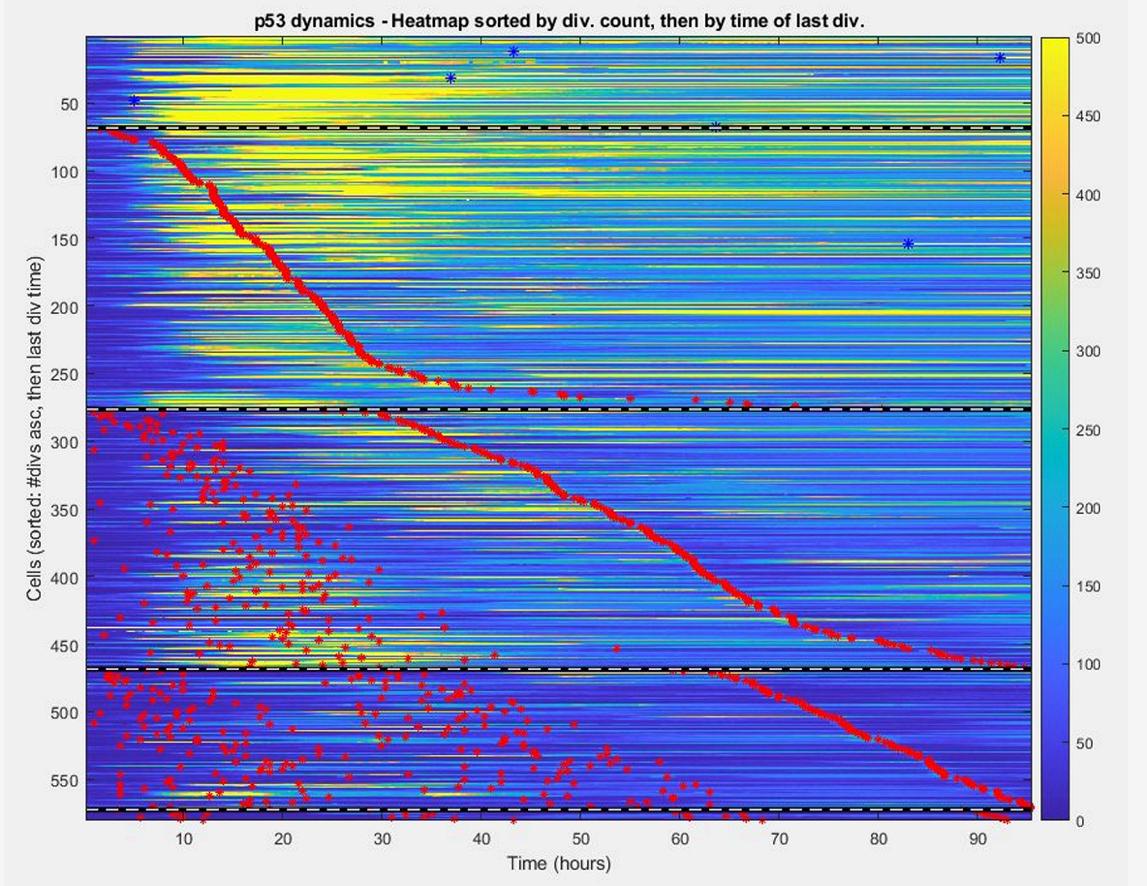
Figure5.Heatmapofmultiplesingle-cellp53dynamicsovertime (thinhorizontalstrips),withcellssortedbydivisioncountandthen
bytimeoflastdivision.Reddotsdenotedivisionevent,bluedots denotedeathevent,bluedenoteslowp53intensity,yellowdenotes highp53intensity.Horizontaldottedlinesseparateddivision count.
Toquantifythistrend,themeanp53levelofeachcelltrace wascalculatedandthengroupedbythetotalnumberofdivisions observedinthattraceduringthe96-hourimagingwindow.These groupings,separatedbydivisioncount,weretheneachaveraged foranall-encompassingaveragep53levelforcellsthatdivideda givennumberoftimes(Figure6).
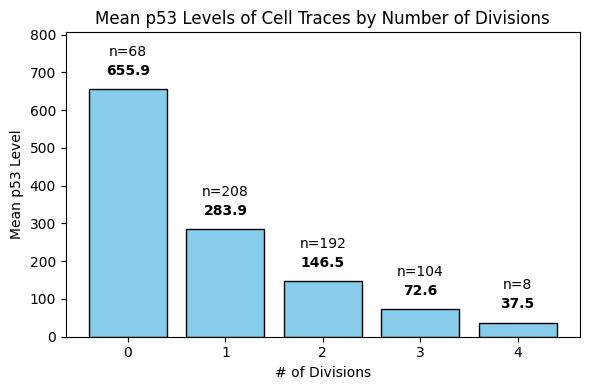
Figure6.Bargraphofmeanp53leveloftracessortedbydivision count,increasingfromlefttoright.Samplequantityincluded abovemeanp53value.
Thehypothesisproposedfrominitialobservationthatthere appearedtobearelationshipbetweendivisioncountandp53 levelswasshowntobetrue,withmeanp53levelsshownto decreaseconsistentlyastheamountofdivisionsincreased,with non-dividingcellsexhibitingthehighestaveragep53levels,and cellsundergoingfourdivisions—themostobserved—exhibiting thelowest.Todeterminethestatisticalsignificanceofthese findingsandtheextenttowhichthisrelationshipheldtruth,a one-wayANOVAtestwasrun.Itconfirmedthatmeanp53levels differedsignificantlyacrossdivisionsgroups(F=24.13,p=1.8· 10-18),indicatingthattheobservedtrendwasstatistically significant.Theseresultsestablishaclearassociationbetween elevatedp53levelsandreducedproliferativecapabilitiesfollowing restoration.
Basedonthepreviousfindings,itseemedthattheremight besomerelationshipbetweencell-fatesandp53levels.Tofurther investigatehowp53dynamicsrelatetolong-termcellfate,p53 traceswerefirstgroupedbytheircellfatelabels(arrestedvs. proliferating)andthenplottedbytheiraveragep53levelsateach timepoint.Arrestedcellsexhibitednoticeablyhigherp53 expressionlevelsacrossthedurationoftheexperimentcompared toproliferatingcells,particularlyasthemovielengthenedin duration,withthesecondhalfhavingnearnon-existentoverlapin interquartileranges(IQRs) (Figure7).However,eveninthefirst 48hours,therewasevidentseparationbetweenthetwofate categories,with,atthearrestedcategory’ssignaturepeakat approximately20hours,aseparationintheaveragep53expression levelsofoverthreefold.
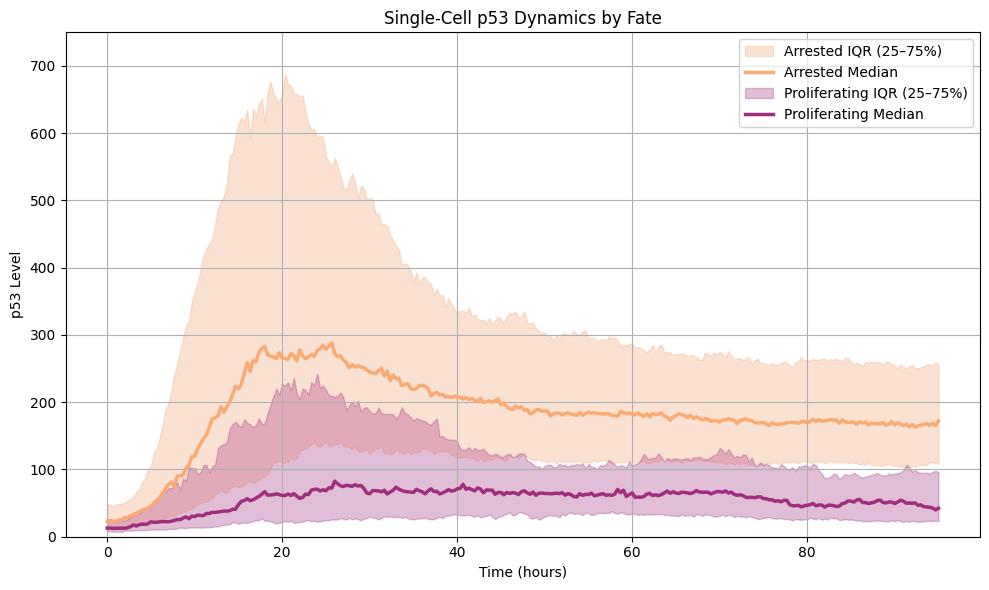
Figure7.Mediansingle-cellp53trajectoriesovertimeforarrested andproliferatingcells,withshadedregionsindicatingthe interquartilerange(25-75%).
Toassesswhetherdifferencesinp53dynamicsandshape drivefatedecisions,p53trajectorieswerenormalizedbyeach cell’smaximumobservedp53level.Thismeansthatanewdataset wascreatedinwhicheverytracewasrecalculatedtohavevalues between0and1,with1representingthemaximumobservedp53 levelinthattrace.Thisnormalizationenabledthecomparisonof differenttracessimplybytheir“shape,”andremovingthevariable ofp53levels.Afternormalization,thedistinctionbetweenarrested andproliferatingcellslargelydisappeared(Figure8).Median trajectoriesandIQRrangesoverlappedsubstantiallyacrossthetwo fategroups,suggestingthatnormalizedmacro-temporalpatterns donotrobustlyseparatefateoutcomes.However,itshouldbe notedthatthereisthepossibilityofmacro-temporalpatternslosing someseparativecapabilitiesduetothepotentiallossofbehaviors observableinthedatawhenitwasaveraged.
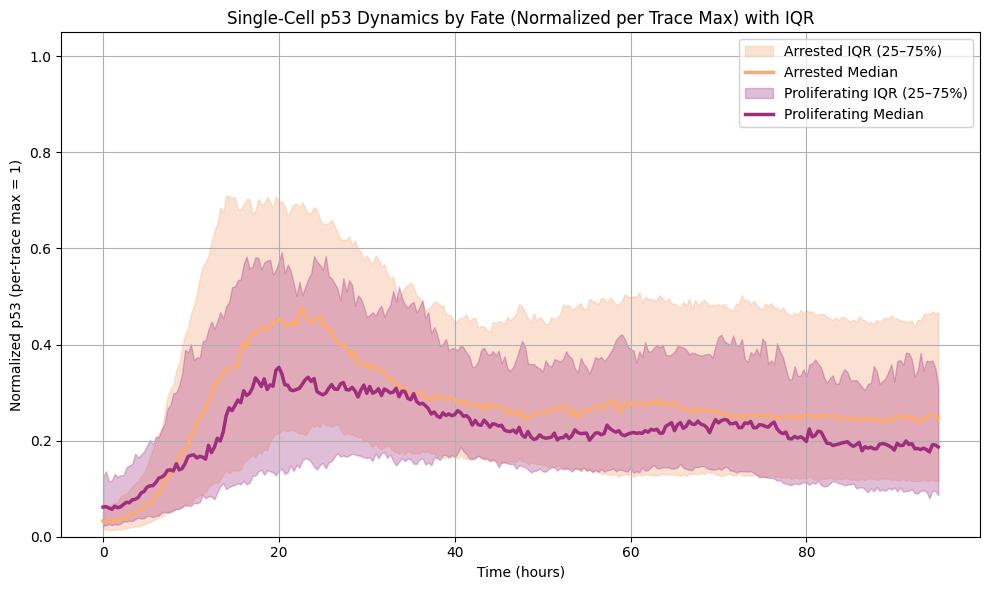
Figure8.Normalized(outof1)single-cellp53trajectoriesover timeforarrestedandproliferatingcells,withshadedregions indicatingtheinterquartilerange(25-75%).
MachineLearningFindings
Applicationofsupervisedmachinelearningmodelstothe engineeredfeaturesetidentifiedasmallsubsetoffeaturesthat exhibitedhighimportanceandstrongdiscriminatorypower betweenarrestedandproliferatingcells.Particularly,threefeatures emergedasdominantcontributorstofateclassification,together accountingforthemajorityofimpurityreductionwithinthe trainedmodels.
40thPercentilep53Feature
Thefirstofthesemostinfluentialfeatures,derivedfrom automatedfeatureextractionusingtsfresh,wasthe40thpercentile p53valueofeachsingle-celltrace(Figure9).Thisfeaturealone accountedfor61.5%ofthetotalfeatureimportanceinthedecision treeclassifiertrainedonadatasetinwhichthesmallerproliferating categorywasoverrepresentedsuchthattherewasa1:1ratioof arrestedandproliferatingdatapointsthatthemodeltrainedon. Whendistributionswerecomparedacrossfategroups,arrested cellsexhibitedsubstantiallyhigher40thpercentilep53levelsthan proliferationcells,withtheIQRsentirelyseparatedfromone another,andarrestedcells,asobservedearlier,exhibited significantlyhighervaluesthanproliferatingcells.Thisseparation translatedintostrongclassificationperformance,contributingtoan overallmodelaccuracyof0.82andanF1scoreof0.87forarrested cells.
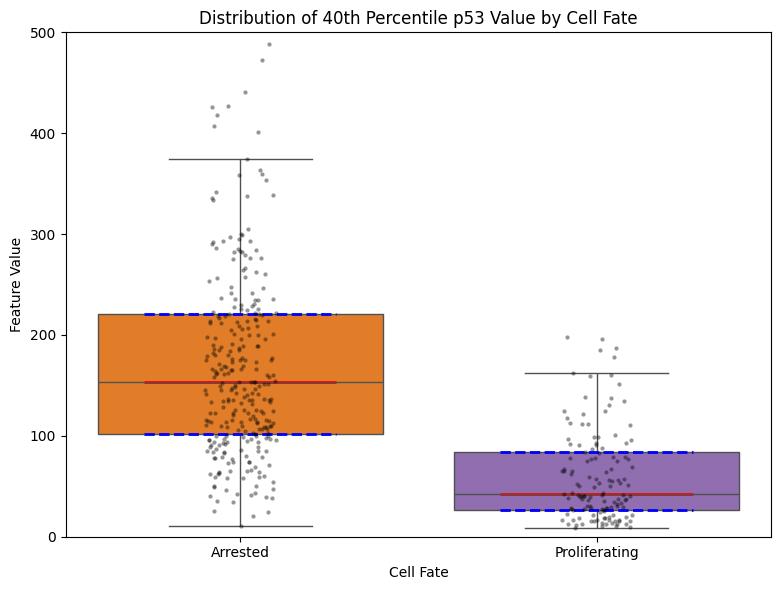
Figure9.Featurevaluedistributionseparatedbyclassof40th percentilep53value,includingmedianvalue,denotedbyredline, andIQR.
Δp53inlower20thPercentileFeature
Thesecondmostimportantfeature,alsooriginatingfrom theutilizationoftsfreshengineering,wasderivedthroughthe tweakingofthesamplingratiosofthetwofategroups,suchthat theproliferatingtraininggroupwasoversampledwitha4:3ratio. Thiswasdoneinanattempttomaximizepredictiveaccuracy, sincealteringsamplesizescouldemphasizecertainpatternsover otherswhichinturncouldleadtolessormoreoverallpredictive accuracy.Withafeatureimportanceof54.2%,thefeature quantifiedtheaveragerateofchangeofp53inthelowesttwenty percentofatrace(Figure10).
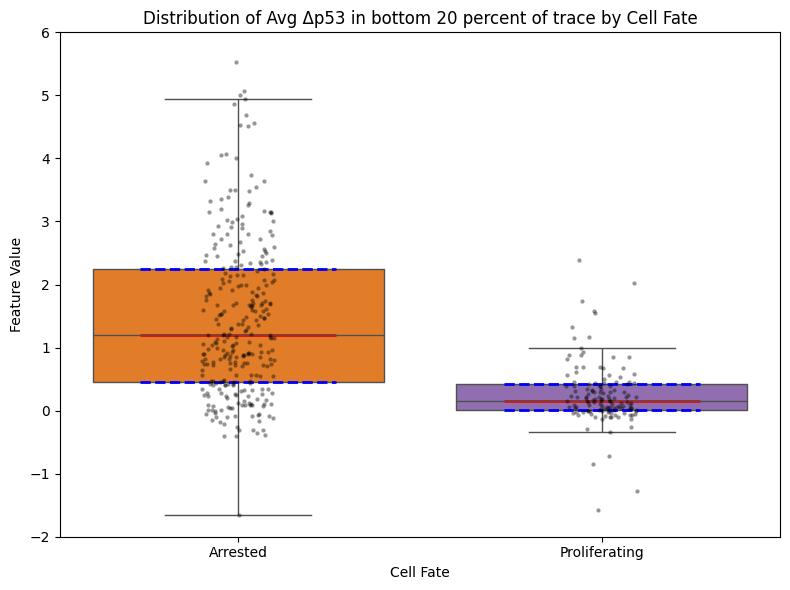
Figure10.Featurevaluedistributionseparatedbyclassof20th percentilep53value,includingmedianvalue,denotedbyredline, andIQR.
Inotherwords,sincebothproliferatingandarrestedcells beganthemoviewith0arbitraryunitsofp53expression,andat the96-hourpointwerebothgenerallysignificantlyabovetheir 20thpercentilevalues,whatthisfeaturesignalsishowquicklya traceshotupwardsinmagnitudetowardsthebeginningofthe movierelativetoitsnormalizedvalues,withproliferatingcells generallyleavingtheirlowvaluesoveralongerperiodoftimethan theirarrestedcounterparts.Again,theIQRsofthefeaturebetween thetwodistinctfateswereentirelyseparated(Figure10). This featureachievedanoverallaccuracyof87%andaF1-arrestscore of0.90.
Thethirdkeyfeatureidentifiedwasderivedthrough manualfeatureengineering,andwhentherewasnooversampling proceduretocreateanequalsamplingquantitybetweenthetwo fatesforthetrainingdataset.Thismeantthattherewere approximatelythreetimesmorearrestedcelltracesforthedecision treetotrainonthanproliferatingcells.Thisfeaturewassimilarin somewaystothefirstidentifiedsignificantfeature,inthatit measuredthe20thpercentileaveragevalueforeachtrace,with 65.3%featureimportance(Figure11).Yetagain,theIQRs betweenthetwofatecategorieswerecompletelyseparated, signalingastrongdegreeofpredictivecapability.Indeedthiswas foundtobethecase,withanoverallaccuracyof83%,aswellas anF1arrestscoreof0.87.
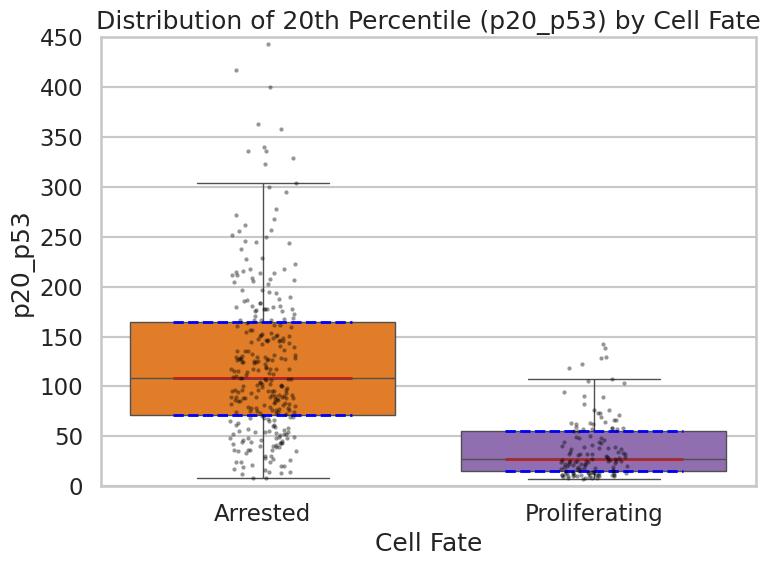
Figure11.Featurevaluedistributionseparatedbyclassof20th percentilep53value,includingmedianvalue,denotedbyredline, andIQR. Together,theseresultsdemonstratethatfateclassification followingp53restorationisdrivensignificantlybyquantitative
propertiesoflow-to-nearaveragep53dynamics,particularlywith somesuggestionsregardingearly-stagebehavior.Theconvergence ofimportanceacrossindependentlyderivedfeaturesunderscores thesignificanceofthesefindingsandmotivatedfurtherbiological interpretation,addressedintheDiscussionSection.
Discussion
Thisstudysetouttoinvestigatewhetherthetemporal dynamicsofp53signalingfollowingrestorationinap53-null cancercellline,SKOV-3,couldpredictlongtermcellularfate,and toidentifywhichaspectsofthosedynamicsaremoststrongly associatedwitharrestversuscontinuedproliferation.By combiningsinglecelllive-imagingdatawithinterpretablemachine learningapproaches,theanalysisrevealsthatfatedecisions followingp53restorationhaveastrongcorrelativerelationship withbothcertaindynamicalfeaturesandmagnitudeoriented featuresofthetraces.Itwasalsodeterminedthatgeneral normalizeddynamicsdonothaveanapparentcorrelationwithcell fate.Thethreemostsignificantfeaturesdeterminedcould generallybeclassifiedasquantitativepropertiesofp53abundance atlowtonearaveragelevelsandearlydynamicbehavior.Together, thesefindingsprovideinsightintohowrestoredp53signaling dynamicsrelatetocellfateandformthefundamentalinsightinto whatconstitutesan“effective”p53responseforeventualtherapies.
BiologicalInterpretationofKeyFeatures
Acrossmultipleindependentfeature-engineeringstrategies andmodelconfigurations,featurescapturingbehaviorsrelatedto low-percentilep53levelsconsistentlyemergedasthestrongest predictorsoffate(Figures9,10,11)Cellsthatcontinued
proliferatingwerecharacterizedbypersistentlylowerp53values throughoutthetrace,whilecellsthatenteredarrestexhibited elevatedp53levelsevenatrelativelyearlytimepoints,finally stabilizingataveragelevelssignificantlyaboveproliferatingcells (Figure7).Importantly,theseresultssuggestthatitmightbethe abilityofthecelltosustainaveragep53expressionabovea minimumeffectivethresholdinthelong-termthatappearstobe decisive.
Thisinterpretationiswellsupportedbythedominanceof the20thand40thpercentilep53features.Unlikemeasuresofpeak intensityorhighpercentilefeatures,thesetwofeaturesquantifythe lowerboundofacell'sp53signalacrossthefulltrajectory.In arrestedcells,theselower-percentilevaluesareconsistently elevated—particularlyoncetheystabilizeandflattenatarelatively highmagnitudeafterthefirstpeak—indicatingthateventhelower sustainedp53levelsremainabovethoseobservedinproliferation cells.Incontrast,proliferatingcellsexhibitlowpercentilevalues thatremainnearbaseline,evenwhenoccasionalincreasesinp53 mayoccur.Asaresult,thelowerendofthearrestedcell distributionrarelyoverlapswitheventheupperendofthe proliferatingcelldistributiononcethep53levelsineachcategory stabilizeapproximately48hoursintothemovie,producingthe near-completeseparationobservedfromthesefeatures.
Biologically,thispatternsupportsathreshold-based interpretationofrestoredp53signaling.Ratherthanrespondingto abriefincreaseinp53,cellsappeartocommittoarrestonlyonce p53ismaintainedaboveacriticalquantitativelevelforan undeterminedsufficientduration(Figure7).Thisideaissupported bythefactthatthereissignificantIQRoverlapofrawp53values betweentheproliferatingandarrestedgroupstowardthebeginning ofthemoviewhenthepeakisobserved,butonlylaterastabilized separationisobserved.Cellsthatfailtoreachorsustainthis threshold,despiteexpressingp53,remainvulnerabletocontinued
cell-cycleprogression.Thestabilizationofp53atdistinctplateau levelsfurtherreinforcesthisview:oncetrajectoriessettle,arrest andproliferatingcellsoccupyclearlyseparatedquantitativeareas, suggestingthatfatecommitmentreflectslong-termsignal maintenance.
Thenormalizationanalysisreinforcesthisconclusion. Whenp53trajectorieswerenormalizedbytheirrespective maxima,therebyisolatingtemporaldynamicsindependentofany absolutemagnitude,thedistinctionbetweenarrestedand proliferatingcellslargelydisappeared(Figure8).Thisconvergence occursbecausebothfategroupsstabilizeatsimilarrelative proportionsoftheirmaximump53levels,eventhoughtheir absoluteplateauvaluesdiffersignificantly.Thisindicatedthat normalizedmacro-dynamicsobscurethequantitativedifferences thatappeartobebiologicallydecisive.
Takentogether,theconceptualconvergenceofallthree high-importancefeaturesreinforcesaunifiedinterpretationof restoredp53signalingasathreshold-regulatedprocess.The20th and40thpercentilep53featuresappeartocapturetheabilityofa celltomaintainitslowerboundofp53expressionabovesome criticalleveloncetrajectoriesstabilize,whiletheearlylow percentileslopefeaturecaptureshowrapidlyacellescapesits lowestquintileofp53levelsfollowingrestoration.Thesefeatures alldescribecomplementaryaspectsofthesameproposed regulatorybehavior:whetheracellcanbothestablishandsustain p53aboveafunctionalthresholdwithinanundeterminedtemporal window.Cellsthatfaileithercomponent,byremainingnear baselinefortoolongearlyon,denotedbytheearlyslopefeature, orbystabilizingatinsufficientp53levelslater,denotedbythe20th and40thpercentilefeatures,tendtocontinueproliferating.Cells thatrapidlyexitlow-p53statesandmaintainelevatedbaseline levelscommitteetoarrestontheotherhand.Inthisframework, fatedeterminationreflectednotjustthepresenceofp53,butthe
cell’scapacitytoregulaterestoredp53signalingto quantitatively stableandfunctionallyeffectivelevels.
ImplicationsforTherapeuticDesign
Thethreshold-regulatedinterpretationofrestoredp53 signalinghasdirectimplicationsforthedevelopmentand evaluationofp53-restoringtherapies.Thesefindingssuggestthat therapeuticsuccessshouldnotbeassessedsolelybythepresence ofrestoredp53orbypeakexpressionlevels,butratherbywhether p53signalingisregulatedinamannerconsistentwiththatof stabilized,self-maintainingcells. Cellsthatexpressp53butfailto establishormaintainsufficientbaselinelevelsmayremain vulnerabletoproliferation,offeringapotentialexplanationforthe heterogeneousresponsesobservedinp53restoration.
MethodologicalContributions
Inadditiontoitsbiologicalimplications,thisstudy demonstratesthevalueofintegratinginterpretablemachine learningwithsingle-celltime-seriesanalysistoanalyzedynamic signalingsystems.Ratherthanrelyonbasicstatisticsorqualitative inspectionoftraces,thisapproachenabledthesystematic identificationofspecificquantitativefeaturesthatcorrelatewith fateoutcomes.Thedeliberateuseofinterpretableclassifiers ensuredthatpredictivefeaturescouldbedirectlylinkedbackto biologicallymeaningfulaspectsofp53andcellularbehavior.
Thedualfeatureengineeringstrategyemployedhere provedparticularlyeffective.Bycombiningbiologicallyinformed, manuallydesignedfeatureswithautomatedengineeringmethods, theanalysiscapturedbothintuitiveandnon-obviouspropertiesof p53dynamics.Theconvergenceofimportanceacross independentlyderivedfeaturesstronglysuggeststhattheidentified
predictorsreflectgenuinestructureinthedataratherthanthe resultsofacertainmodelingchoice.Thisframeworkisbroadly applicabletoothersignalingpathwaysinwhichfatedecisions emergefromcomplextemporaldynamicsandwhere interpretabilityisessentialforbiologicalinsight.
LimitationsandFutureDirections
Severallimitationsshouldbeconsideredwheninterpreting theseresults.Firstandmostsignificantly,theanalysisfocused exclusivelyonarrestversusproliferation,excludingapoptoticcells duetotheirlowrepresentationinthedataset.Whilethisensured confidentlabelingandsimplifiedmodelcomplexity,inclusionof celldeathasathirdfateclassinotherexperimentalsetupsinwhich it’smoreabundantisessential,sinceinprovidingamorecomplete understandingofhowp53dynamicsleadtodeath,therapiescan aimtocausecancerregressionasopposedtosenescence.
Secondly,thisstudyexaminedasinglep53-nullovarian cancercelllineandaspecificrestorationstrategy.Although SKOV-3cellsprovideacleansystemforisolatingrestoredp53 behavior,itremainsunclearhowgeneralizablethesedynamicsare acrossothercancertypes,geneticbackgrounds,orp53restoration methods.Extendingthisanalysistoadditionalsystemswillbe necessarytodeterminewhethertheproposedthresholdregulation modelrepresentsageneralprincipleofp53restorationorisa context-dependentoccurrence.
Finally,whilethecomputationalfindingsstronglysupporta threshold-basedinterpretation,experimentalvalidationwillbe essentialtoestablishcausality.Experimentsthatsystematically alterthetiming,rate,ormagnitudeofrestoredp53expression coulddirectlytestwhetherthresholdestablishmentandsustained baselineregulationarerequiredforfatecommitment.
Conclusion
Thisstudydemonstratesthatp53restorationdynamicscan bequantitativelylinkedtolong-termcellfatedecisionsina p53-nullovariancancercellline,SKOV-3.Bycombining single-cellliveimagingwithinterpretablemachinelearning,the analysisshowsthatfatedeterminationfollowingp53restorationis drivenbyquantitativepropertiesofp53abundanceandearly— likelyregulatory—behavior.Togetherthesefindingssupporta threshold-basedmodelofrestoredp53signaling.Cellsthatrapidly establishp53aboveacriticalthresholdandmaintainthatbaseline appeartocommittoarrest,whereascellsthatfailtodosoremain vulnerabletocontinuedproliferation.
Byextendingp53dynamicanalysisintoarestoration context,thisworkhelpsexplaintheheterogeneousoutcomes observedinp53-targetedeffortsandprovidesacomputational foundationforidentifyingpredictivebiomarkers.Understanding howrestoredp53couldberegulatedovertimeinthese p53-restoredcellsmaybeessentialfortranslatingrestoration strategiesintoeffectiveandreliablecancertherapies.
References
AmericanCancerSociety.(n.d.). A new gene is linked with the deadliest type of ovarian cancer. https://www.cancer.org/research/acs-research-highlights/ov arian-cancer-research-highlights/a-new-gene-is-linked-with -the-deadliest-type-of-ovarian-cancer.html
Baugh,E.H.,Ke,H.,Levine,A.J.,Bonneau,R.A.,& Chan,C.S.(2018).Whyaretherehotspotmutationsinthe TP53 geneinhumancancers? Cell Death & Differentiation, 25(1),154–160.
https://doi.org/10.1038/cdd.2017.180 Hassin,O.,&Oren,M.(2023).Druggingp53incancer: Oneprotein,manytargets. Nature Reviews Drug Discovery, 22(2),127–144.
https://doi.org/10.1038/s41573-022-00571-8 Kotcherlakota,R.,Vydiam,K.,Srinivasan,D.J., Mukherjee,S.,Roy,A.,Kuncha,M.,Rao,T.N.,Sistla,R., Gopal,V.,&Patra,C.R.(2019).Restorationofp53 functioninovariancancermediatedbygold nanoparticle-basedEGFRtargetedgenedeliverysystem.
ACS Biomaterials Science & Engineering, 5(7), 3631–3644.
https://doi.org/10.1021/acsbiomaterials.9b00006
Lahav,G.,Rosenfeld,N.,Sigal,A.,Geva-Zatorsky,N., Levine,A.J.,Elowitz,M.B.,&Alon,U.(2004). Dynamicsofthep53–Mdm2feedbackloopinindividual cells. Nature Genetics, 36(2),147–150.
https://doi.org/10.1038/ng1293 Lane,D.P.(1992).p53,guardianofthegenome. Nature, 358(6381),15–16.https://doi.org/10.1038/358015a0 Li,Y.,Guo,W.,Li,X.,Zhang,J.,Sun,M.,Tang,Z., Ran,W.,Yang,K.,Huang,G.,&Li,L.(2021). Expertconsensusontheclinicalapplicationof
recombinantadenovirushumanp53forheadand neckcancers. International Journal of Oral Science, 13(1),38.
https://doi.org/10.1038/s41368-021-00145-1
Lozano,G.(2019).Restoringp53incancer:Thepromises andthechallenges. Journal of Molecular Cell Biology, 11(7),615–619.https://doi.org/10.1093/jmcb/mjz063
Millau,J.F.,Mai,S.,Bastien,N.,&Drouin,R.(2010).p53 functionsandcelllines:Havewelearnedthelessonsfrom thepast? BioEssays, 32(5),392–400. https://doi.org/10.1002/bies.200900160
Purvis,J.E.,Karhohs,K.W.,Mock,C.,Batchelor,E., Loewer,A.,&Lahav,G.(2012).p53dynamicscontrolcell fate. Science, 336(6087),1440–1444. https://doi.org/10.1126/science.1218351
Raab,M.,Kostova,I.,Peña-Llopis,S.,Fietz,D., Kressin,M.,Aberoumandi,S.M.,Ullrich,E., Becker,S.,Sanhaji,M.,&Strebhardt,K.(2024). Rescueofp53functionsbyinvitro-transcribed mRNAimpedesthegrowthofhigh-gradeserous ovariancancer. Cancer Communications, 44(1), 101–126.https://doi.org/10.1002/cac2.12511
Su,Y.,Guo,W.,Li,X.,Zhang,J.,Sun,M.,Tang,Z.,Ran, W.,Yang,K.,Huang,G.,&Li,L.(2022).Currentinsights intotheregulationofprogrammedcelldeathby TP53 mutationincancer. Frontiers in Oncology, 12,1023427. https://doi.org/10.3389/fonc.2022.1023427
Valente,J.F.A.,Queiroz,J.A.,&Sousa,F.(2018).p53as thefocusofgenetherapy:Past,presentandfuture. Current Drug Targets, 19(15),1801–1817.
https://doi.org/10.2174/1389450119666180115165447
Wallis,B.,Bowman,K.R.,Lu,P.,&Lim,C.S.(2023). Thechallengesandprospectsofp53-basedtherapiesin
ovariancancer. Biomolecules, 13(1),159. https://doi.org/10.3390/biom13010159
Wang,Y.,Suh,Y.A.,Fuller,M.Y.,Jackson,J.G.,Xiong, S.,Terzian,T.,Quintás-Cardama,A.,Bankson,J.A., El-Naggar,A.K.,&Lozano,G.(2011).Restoring expressionofwild-typep53suppressestumorgrowthbut doesnotcausetumorregressioninmicewithap53 missensemutation. Journal of Clinical Investigation, 121(3),893–904.https://doi.org/10.1172/JCI44504
Yaginuma,Y.,&Westphal,H.(1992).Abnormalstructure andexpressionofthep53geneinhumanovarian carcinomacelllines. Cancer Research, 52(15),4196–4199. Yang,Z.,Sun,J.K.,Lee,M.M.,&Chan,M.K.(2022). Restorationofp53activityviaintracellularproteindelivery sensitizestriple-negativebreastcancertoanti-PD-1 immunotherapy. Journal for Immunotherapy of Cancer, 10(9),e005068.https://doi.org/10.1136/jitc-2022-005068 Zeimet,A.G.,&Marth,C.(2003).Whydidp53gene therapyfailinovariancancer? The Lancet Oncology, 4(7), 415–422.https://doi.org/10.1016/S1470-2045(03)01139-2