Zamira Marra
Senior Thesis | 2026

TheEmotionalImpactofDigitalArt
ZamiraMarra
BostonUniversityAcademy:SeniorThesis
Dr.ElizabethKarnaukh
ContentExpert:Dr.ChloeJordan
March16th,2026
Abstract
Thisstudyexamineshowtheactofviewingdigitalartworkmay influenceone’semotionalstate.Previousresearchhasshownthat exposuretoothertypesofvisualartcanreducestressand influencemood,butfewerstudieshaveinvestigatedhowdigitalart mayaffectviewers.Thisstudyexploreswhetherviewingdigital art,whichisnowwidelyencounteredthroughonlineplatforms, canproducechangesinmoodwhenviewedindependently.275 participantswererecruitedthroughconveniencesampling, primarilyfromtheBostonUniversitycollegeandhighschool community.UsingaQualtricsonlinesurvey,participants self-reportedtheiremotionalstatesusingthePick-A-Moodscale, bothatthebeginningofthesurveyandafterviewingeachofthe8 artpieces.Demographicinformationwasalsocollected.Survey datawasexportedtoSPSSandanalyzedusingpaired-sample t-teststodeterminewhethersignificantdifferencesinmood occurredafterexposuretodifferentartworks.Theresultsfrom thesetestsindicatethatviewingdigitalartcaninfluencemoodboth positivelyandnegatively. Severalstatisticallysignificantchanges wereobservedbetweenoriginalmoodandbetweensequential pieces.Overall,thefindingsofthisstudysuggestthatviewing digitalartmaymeaningfullyaffectviewers’moods,indicatingthat theconsumptionofdigitalmediamayhavesignificantinfluence overone’semotionalstate.
TheEmotionalImpactofDigitalArt
Fordecades,visualarthasbeenrecognizedasapowerful toolforexpressingemotionsandinfluencingone’spsychological states.Visualart,rangingfromtraditionalpaintingstodigital artworks,hasbeenshowntopotentiallyinfluencemood,reduce stress,andshapeemotionalstates.Asdigitalmediabecomeamore commonpartofdailylife,understandinghowdigitalartimpacts moodisespeciallyimportant.Previousresearchhasshownthat viewingvisualartworkscanreducestresslevelsandanxiety,and positivelyinfluencemood(Lawetal.(2021),Karniketal.(2014)). Inadditiontothis,neurologicalstudiessuggestthatinteracting withdifferenttypesofartactivatesregionsofthebrainassociated withemotionregulationandrewardprocessing(Barnettetal. (2024)).
Muchofthe previousresearchonthistopicfocuseson interactionswithartinphysicalspaces,yetfewstudiesexplore howdigitalartaffectsmood.Thiscurrentstudyaimstoexamine thefollowingresearchquestion: What impact does the action of viewing digital art have on one’s mood? Byusinganonlinesurvey format,whereparticipantsmayviewdigitalartindependently online,thisstudyreflectshowdigitalartconsumptionmayaffect emotionalstatesintherealworld.
LiteratureReview
Researchhasshownthatvisualartcanbeusedto communicateandinfluenceemotionalstates.Damianoetal. (2023)foundthatvisualartisabletocommunicatedifferent emotionsthroughspecificfeaturessuchascolorandline orientations.Forexample,thecolorredandverticallines correlatedwiththeperceptionofanger,whilecoolertonesandsoft linescorrelatedwithsadness.Thesefindingssupporttheideathat participantsrespondtovisualartemotionally.
Visualarthasalsobeenshowntoinfluenceemotional wellbeing.Lawetal.(2021)conductedareviewofstudiesthat examinedthestressoutcomesthatwererelatedtoviewingvisual art.Theviewingtookplaceinmultiplesettingsincluding, hospitals,museumsandlaboratories. Participantsgenerally self-reportedreducedstresslevelsartviewingtheartwork,which indicatesthatexposuretoartcanpositivelyinfluenceemotional states.
Clinicalandhospitalstudiesfurthersupportthesefindings. Sawetal.(2018)hasshownthatavisualartinterventionwasable tosignificantlyreduceanxietyandimprovemoodinpatientswith hematologicmalignancies.Similarly,Karniketal.(2014)found thatexposuretoahospital'svisualartcollectionwasableto improvepatientmood,comfortandstresslevels.
Barnettetal.(2024)reviewedneurologicalevidencethat showedengagementwithdifferenttypesofartactivatedregionsin thebrain,suchastheamygdalaandmedialprefrontalcortex,that areinvolvedinemotionregulation.Thesestudiessuggestthat visualarthasmeasurableeffectsonemotionalandpsychological states.
MaterialsandMethods
Participants
Participantswererecruitedusingaconveniencesampling method,whichistheselectionofparticipantsbasedontheireasy accessibilityandwillingnesstoparticipate.Thissamplewas collectedthroughbothonlinedistributionandoutreachtothe BostonUniversitycollegeandhighschoolcommunities. Demographicinformationincludingage,gender,raceandethnicity wascollected.Forincentive,participantshadtheoptiontoenterin araffleforatwentydollargiftcard,andthoseintheGeneral PsychologycourseatBUwereabletoreceiveextracreditfor
completingthesurvey.Duetothesamplingmethod,themajority ofparticipantswerewithinalimitedagerange.
Materials
Thestudywasconductedusinganonlinesurveyplatform calledQualtrics.Participantsself-reportedtheirmoodsusingthe Pick-A-Moodassessment,inwhichparticipantsselectedthe emotionalstatethatbestrepresentedhowtheyfeltatthebeginning ofthesurveyandafterviewingeachoftheeightartworks.
Data Analysis
SurveydatawasexportedfromtheQualtricsplatforminto SPSSforanalysis.Descriptivestatisticswereusedtosummarize themoodresponsesandchangesbetweenviewingeachimage.A pairedsamplet-testwasusedtoevaluatestatisticalsignificancein moodsbetweenoriginalmoodandeachsubsequentimage.The datawassummarizedintablesandgraphicalrepresentations. Visualrepresentationssuchasbargraphsandpiechartswereused toportraydifferencesinmoodafterexposuretotheartpieces.
Procedure
Patientsfirstprovidedinformedconsentandcompleted basicquestionsregardingdemographicinformation.Theywere thenshowneightseparatepiecesofdigitalartworkandaskedto selecttheoptiononthePick-a-Moodscalethatbestreflectedtheir emotionalstatesaftereachpiece.Responseswerecollected anonymouslyandeachquestionwasoptional.
Results
Table 1: Age
Table 2: Sex Identity
Table 3: Hispanic Descent
Table 4: Race
Table 5: Paired Sample t-test:
Belowisatableshowingallstatisticallysignificantpair samplet-tests.
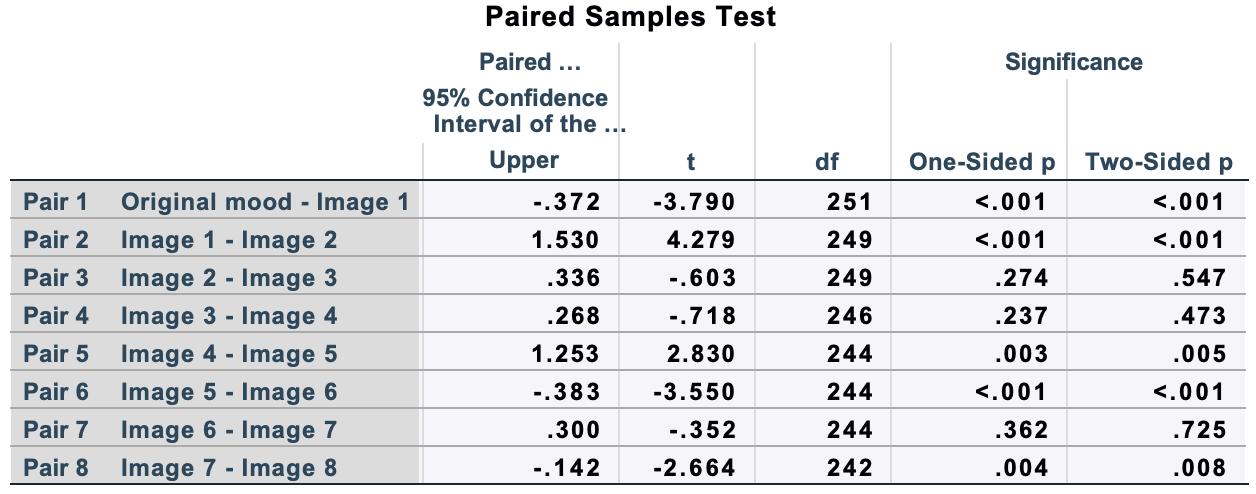
Allotherpairedsamplet-testsdemonstratednostatistically significantchangesinmood.Analysisofthedatafromthistable comparedtoeachimageindicatesthatviewingvisualartisableto influencemoodbothpositivelyandnegatively.
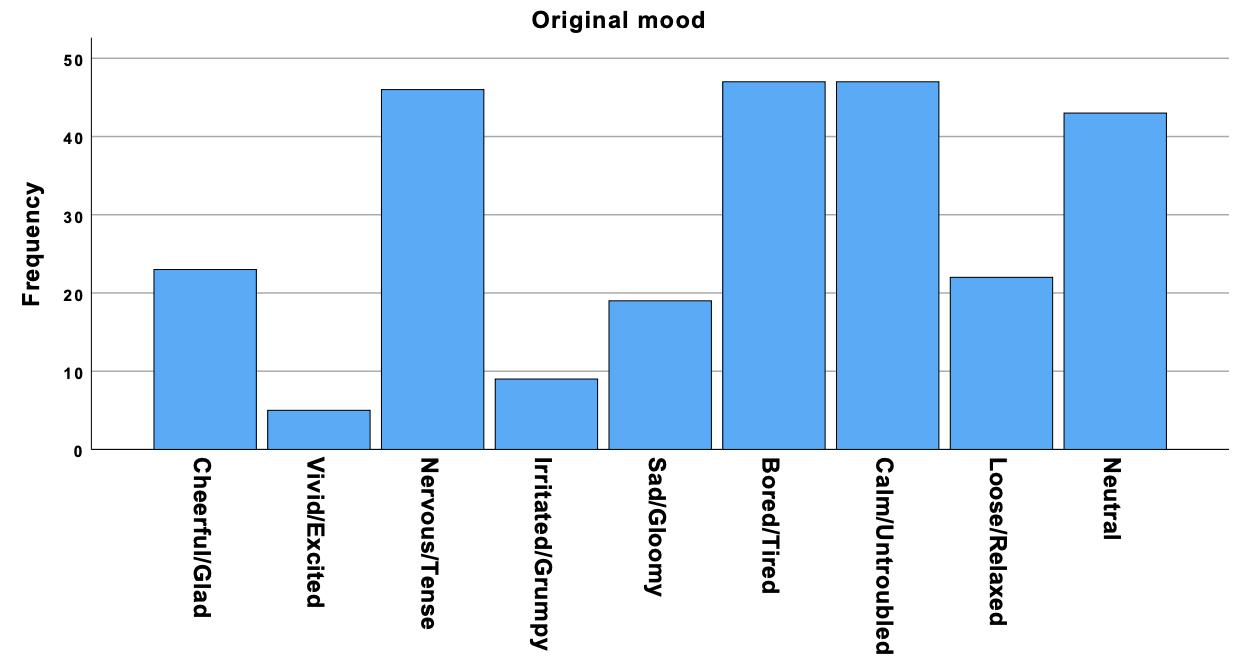
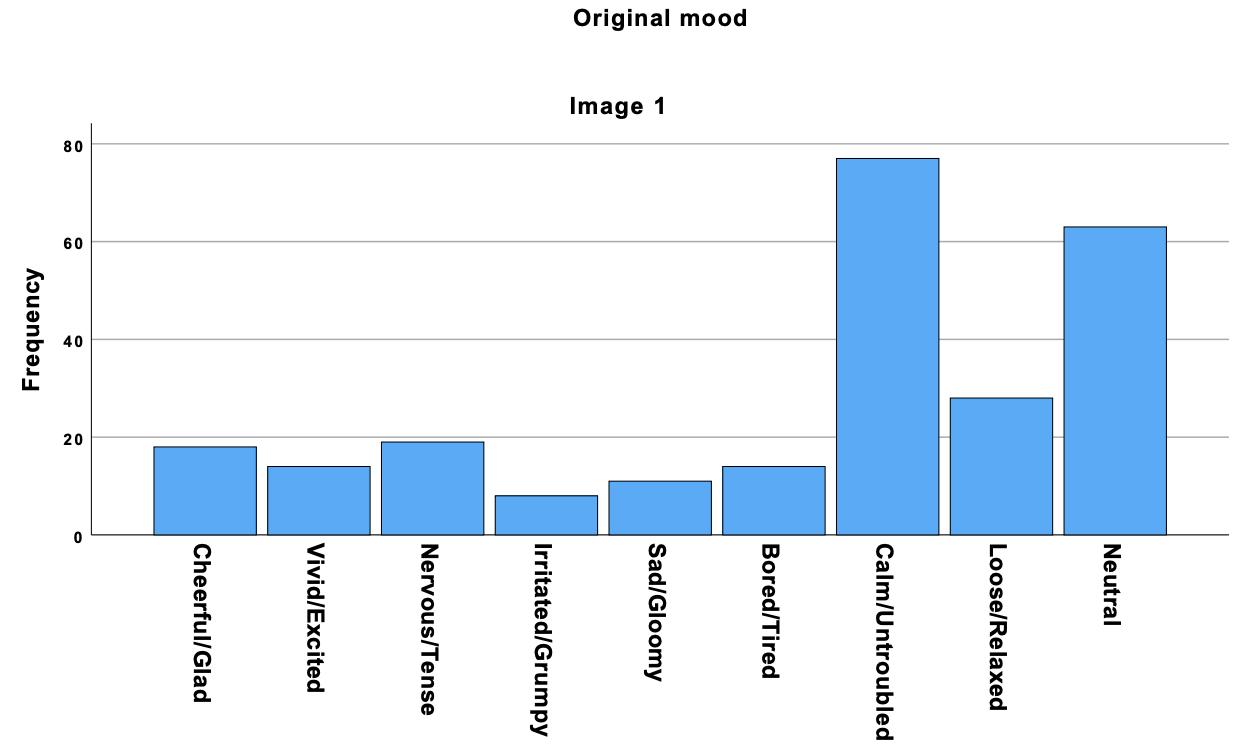
Self-reportedmoodsfromtheverybeginningofthestudy andafterviewingImage1significantlychanged.Participants
initiallyreportedfeelingneutral,calm/untroubled,bored/tired,and nervous/tensethemost.Afterviewingthefirstartpiece,themost frequentlyreportedmoodschangedtobeingcalm/untroubled, neutral,andloose/relaxed.Pairedsamplet-testshoweda significantdifferencebetweenoriginalmoodandArtPiece1 (t(251)=-3.790, p<.001).
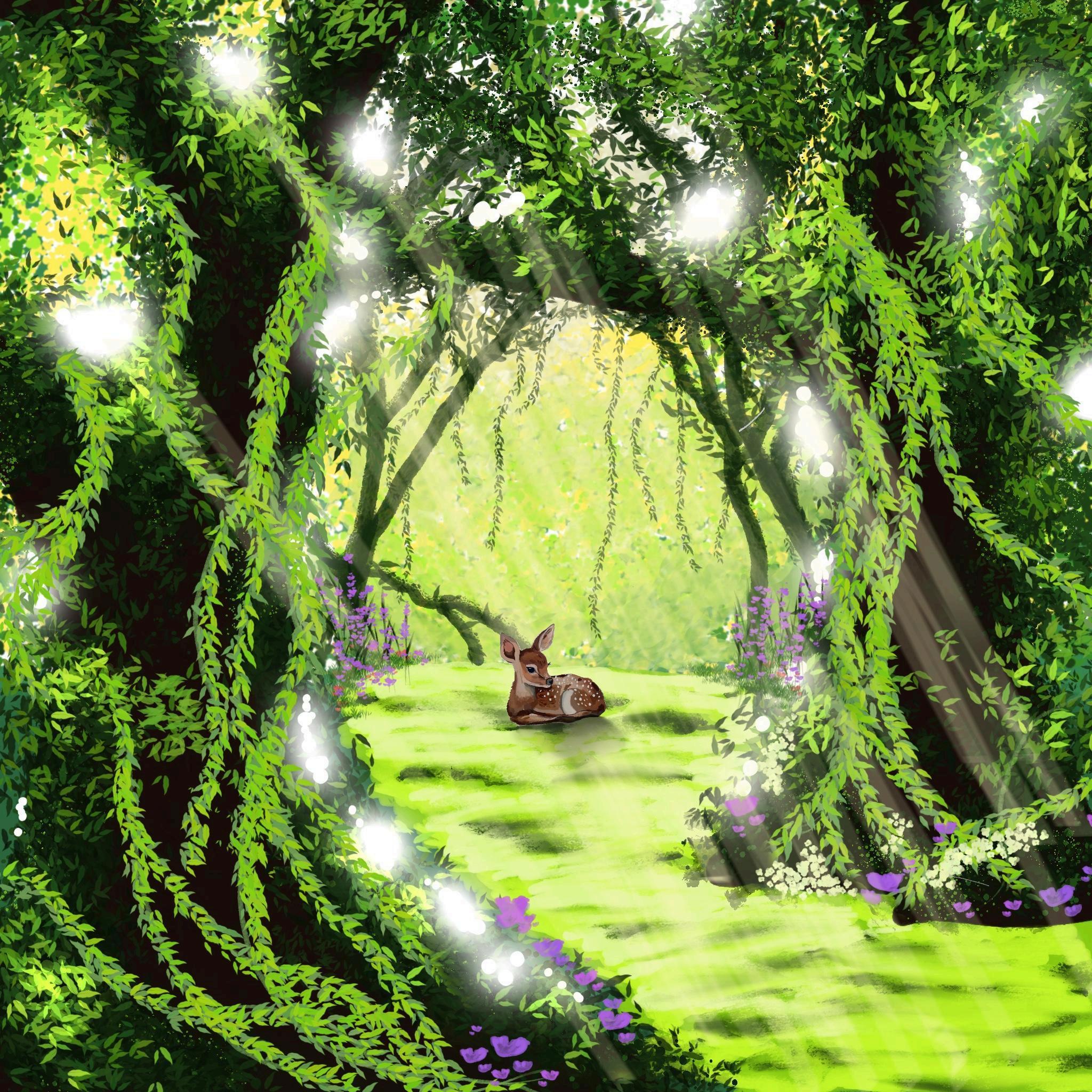
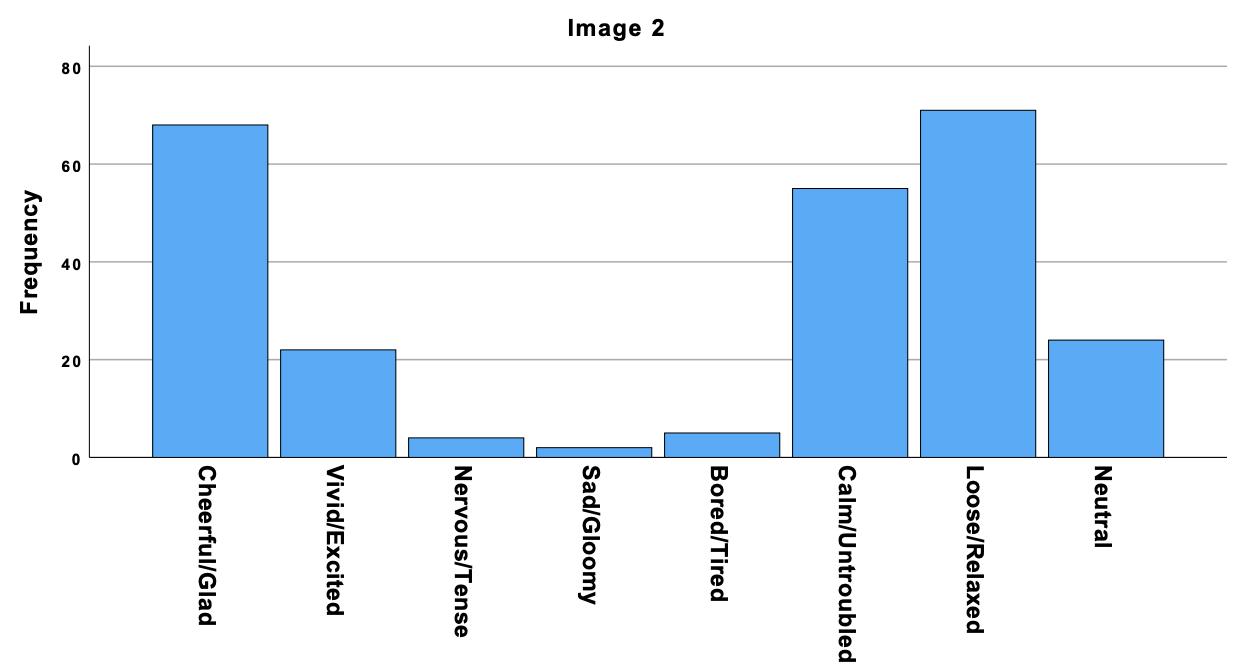
Pairedsamplet-testshowedasignificantdifference betweenArtPiece1andArtPiece2(t(249)=4.279, p<.001).
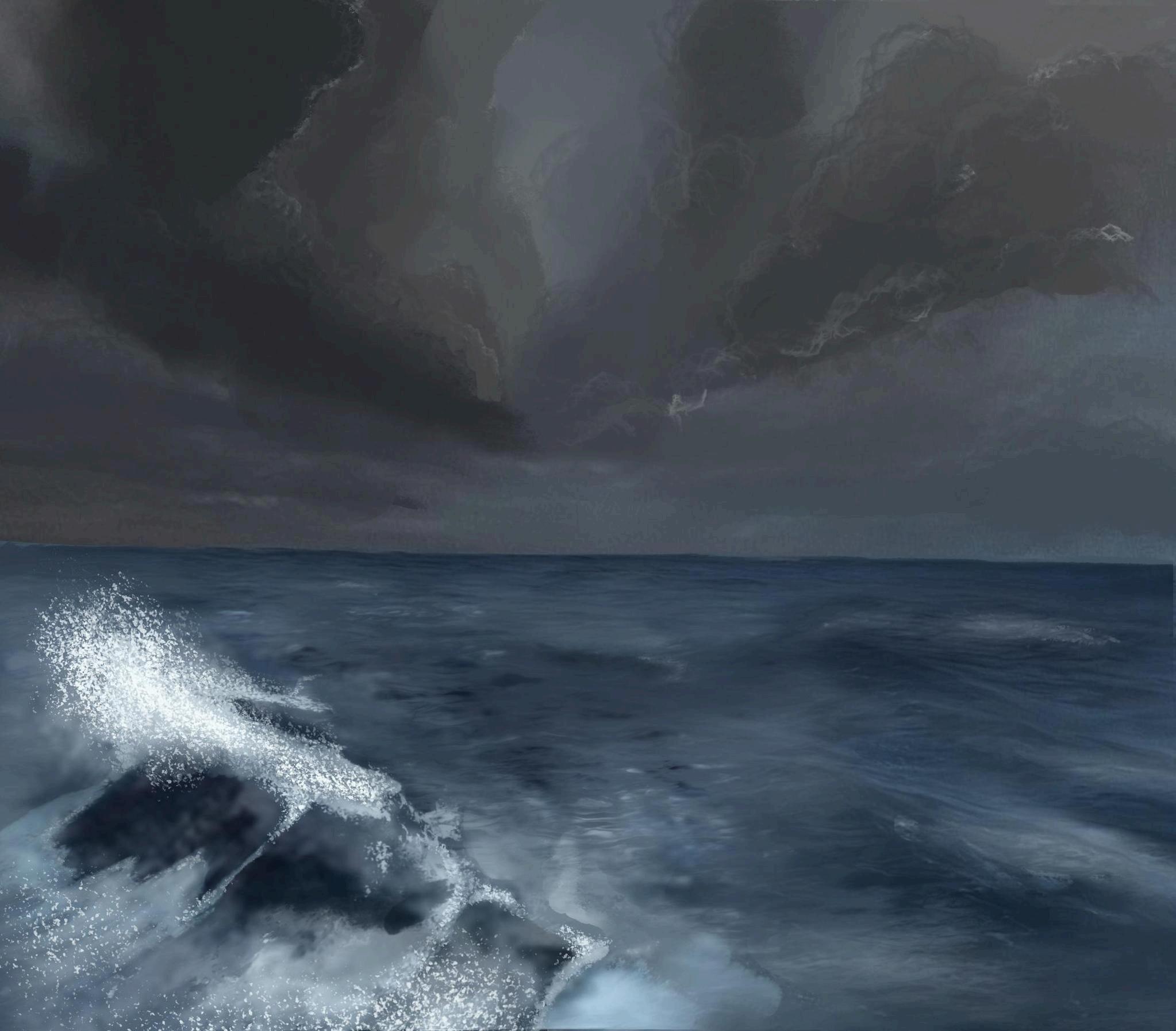
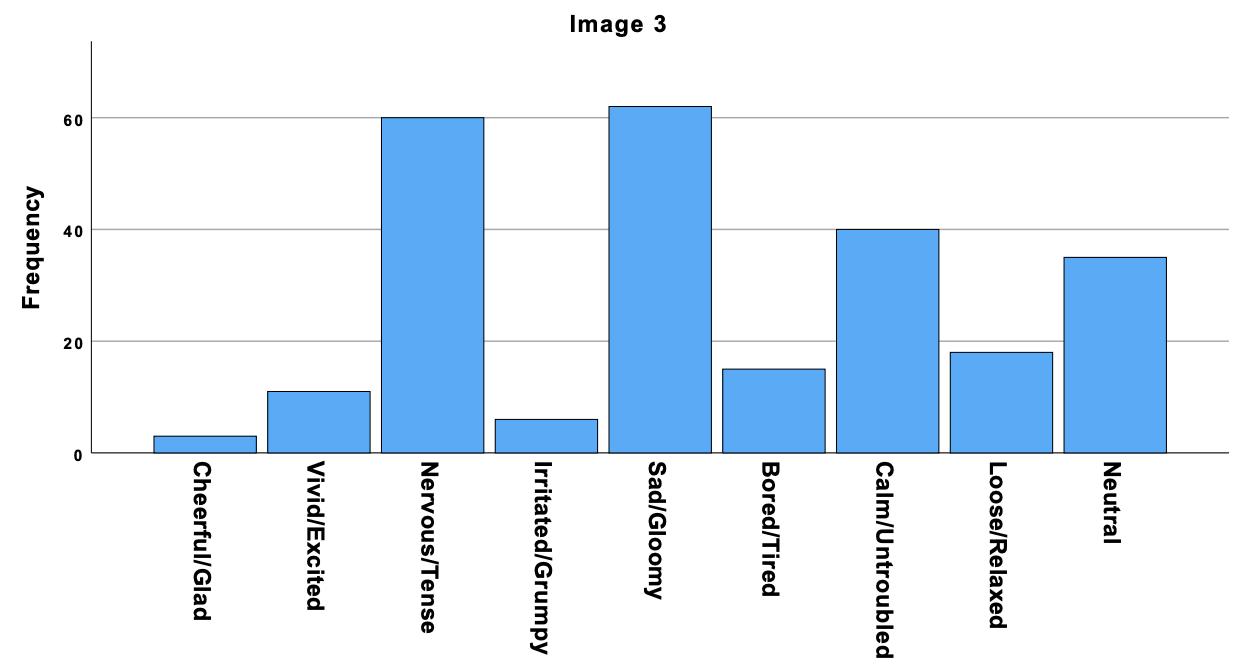
Pairedsamplet-testdidnotshowastatisticallysignificant change,however,themostfrequentlyselectedmoodschanged fromloose/relaxedandcheerful/glad,tosad/gloomyand nervous/test.Thisindicatesthatviewingtheartpairmayhave influencedparticipants’moodnegatively.
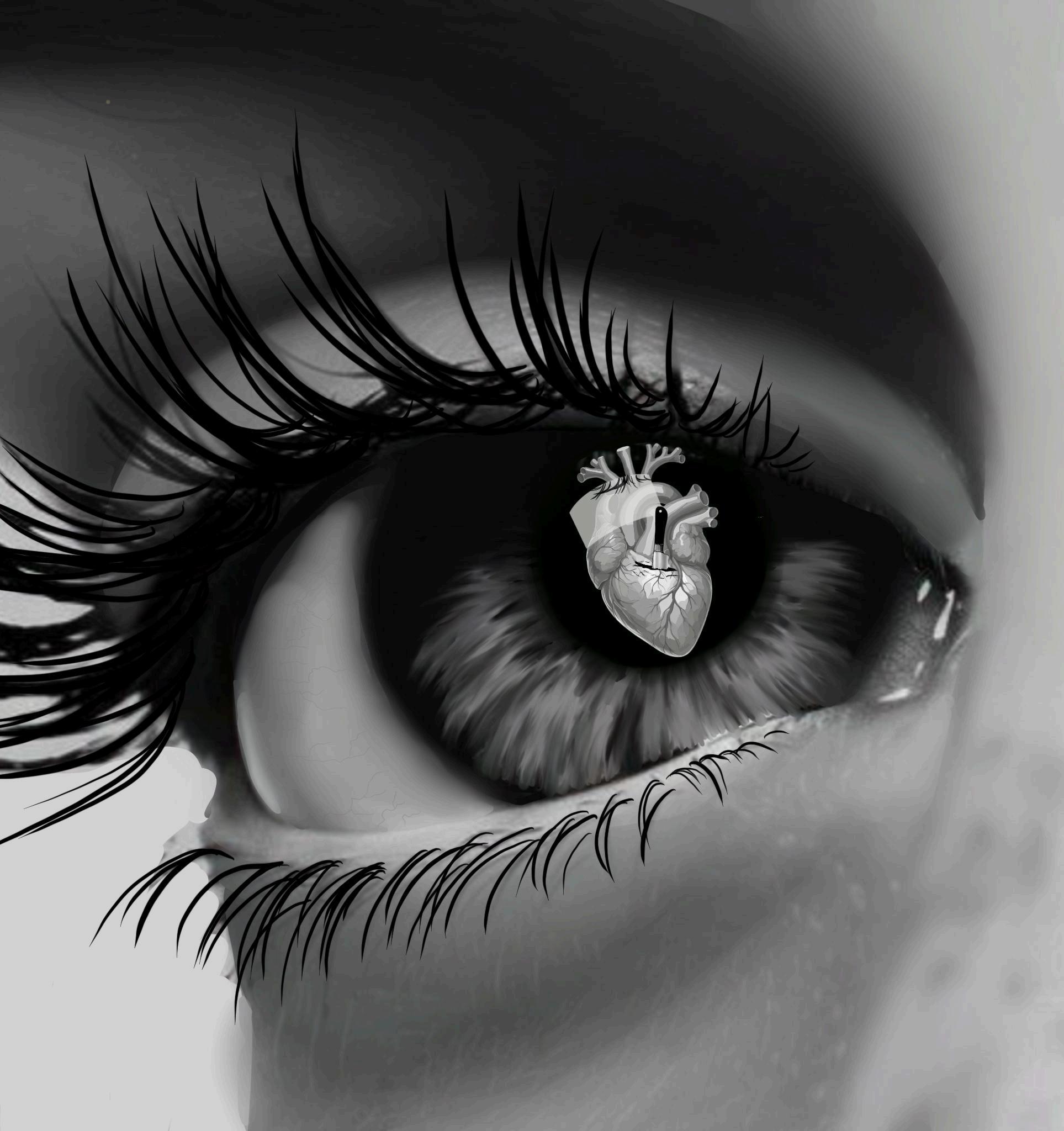
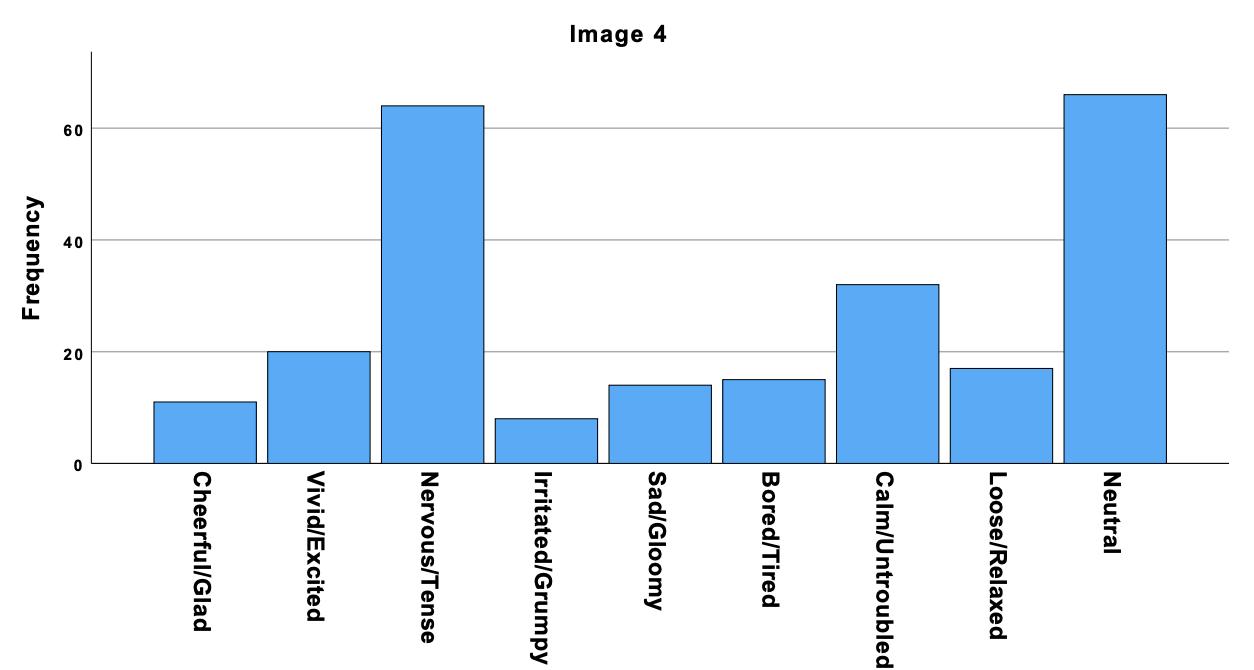
Pairedsamplet-testdidnotshowastatisticallysignificant change,however,themostfrequentlyselectedmoodschanged fromsad/gloomyandnervous/tensetoneutralandnervous/tense. Thismayindicatethatthecontextswithineachartpiecechanged moodpositivelyafterviewingthispair.
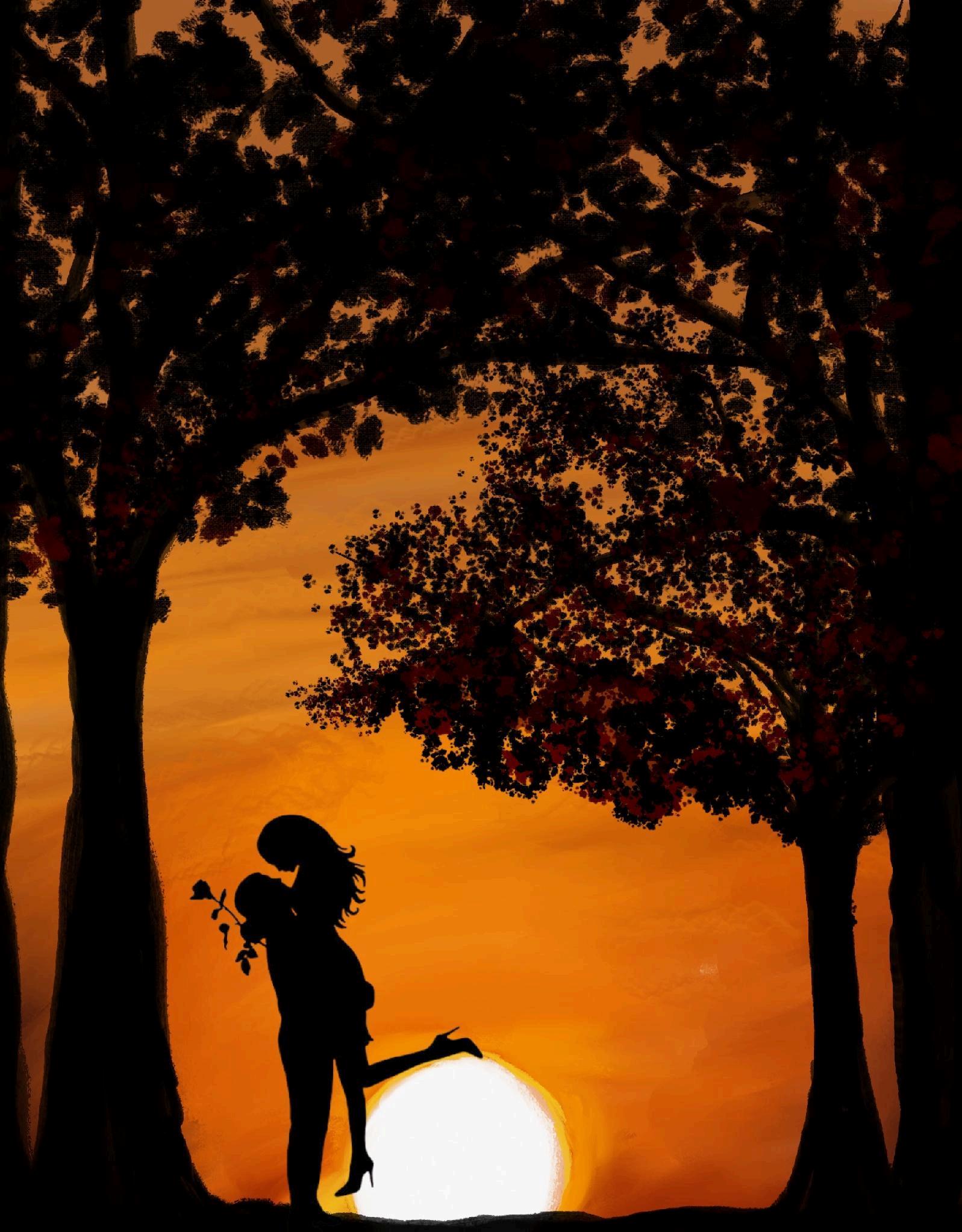
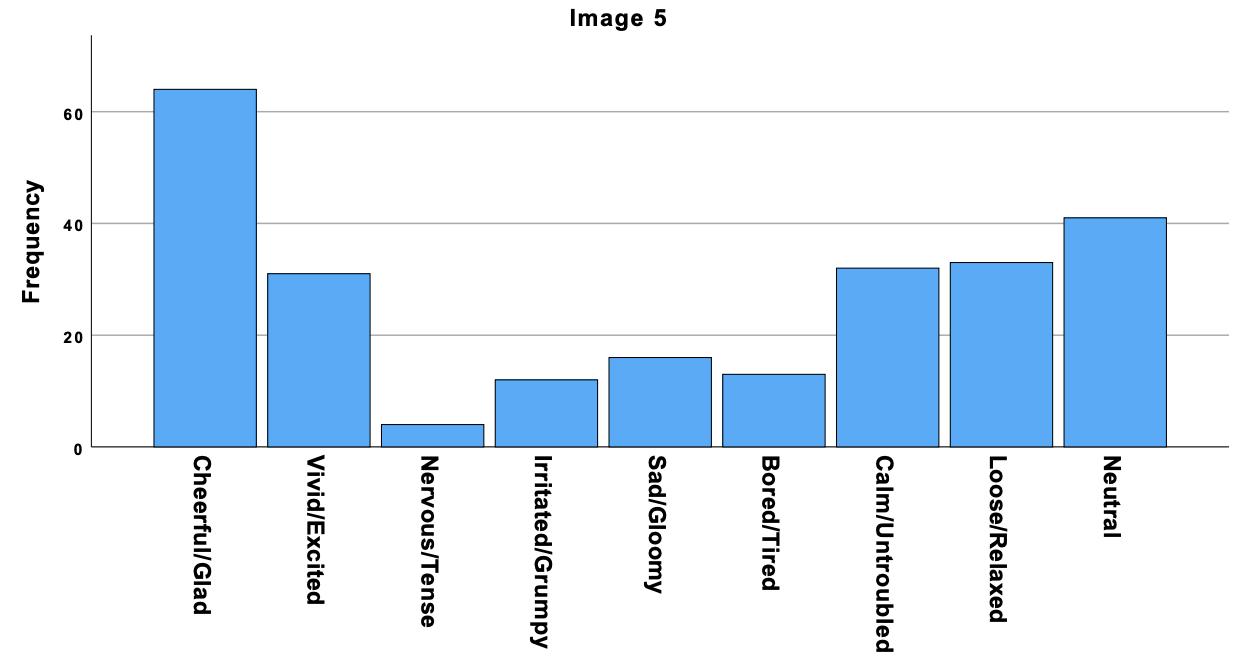
Pairedsamplet-testshowedasignificantdifference betweenArtPiece4andArtPiece5(t(244)=2.830, p =.005).
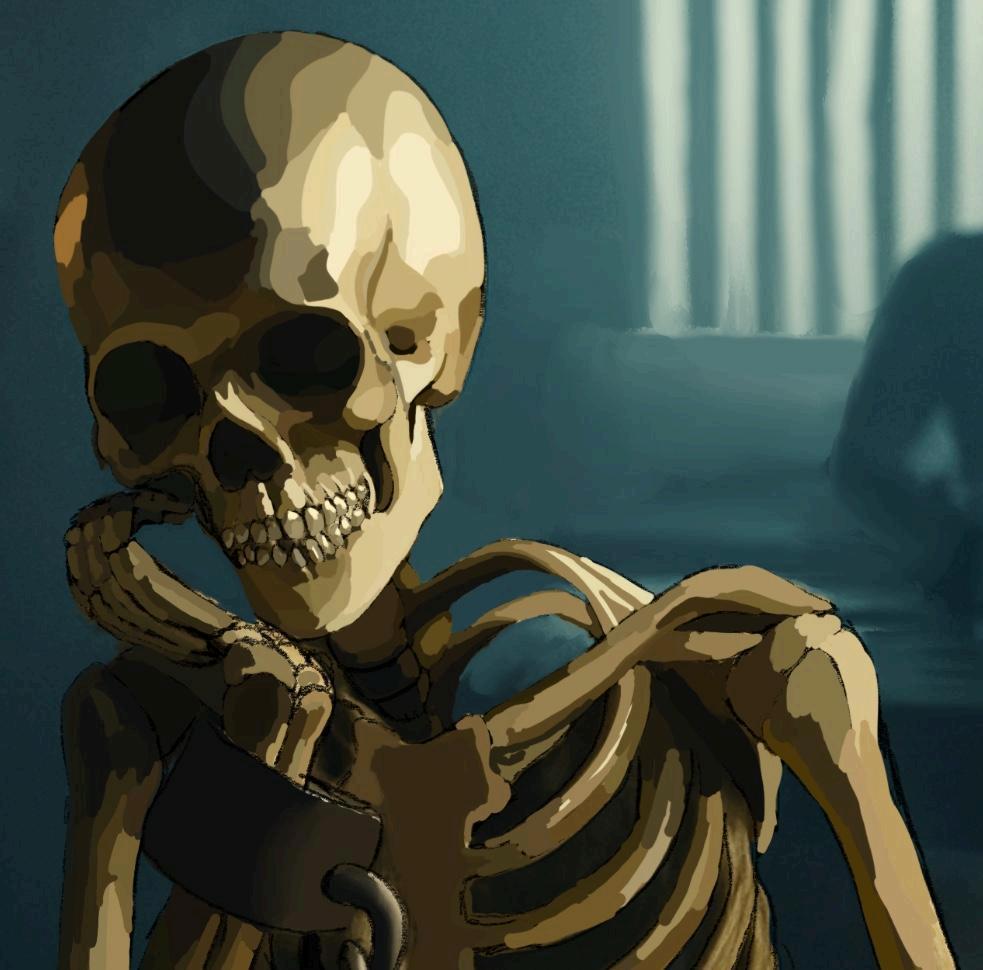
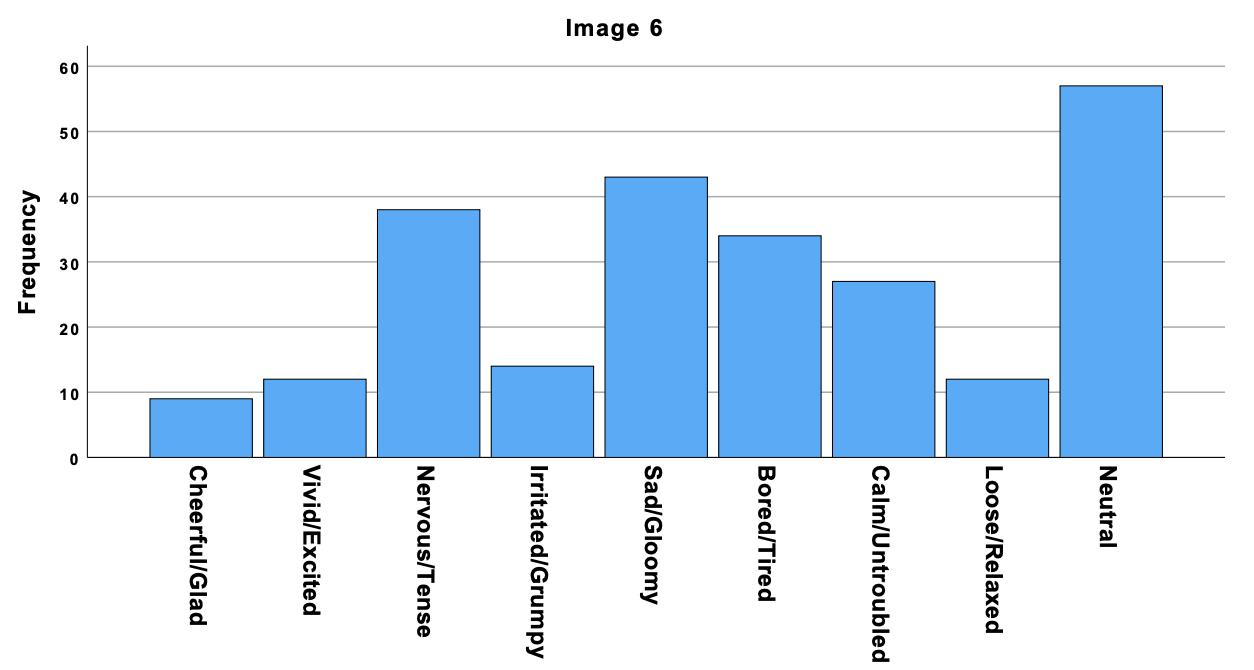
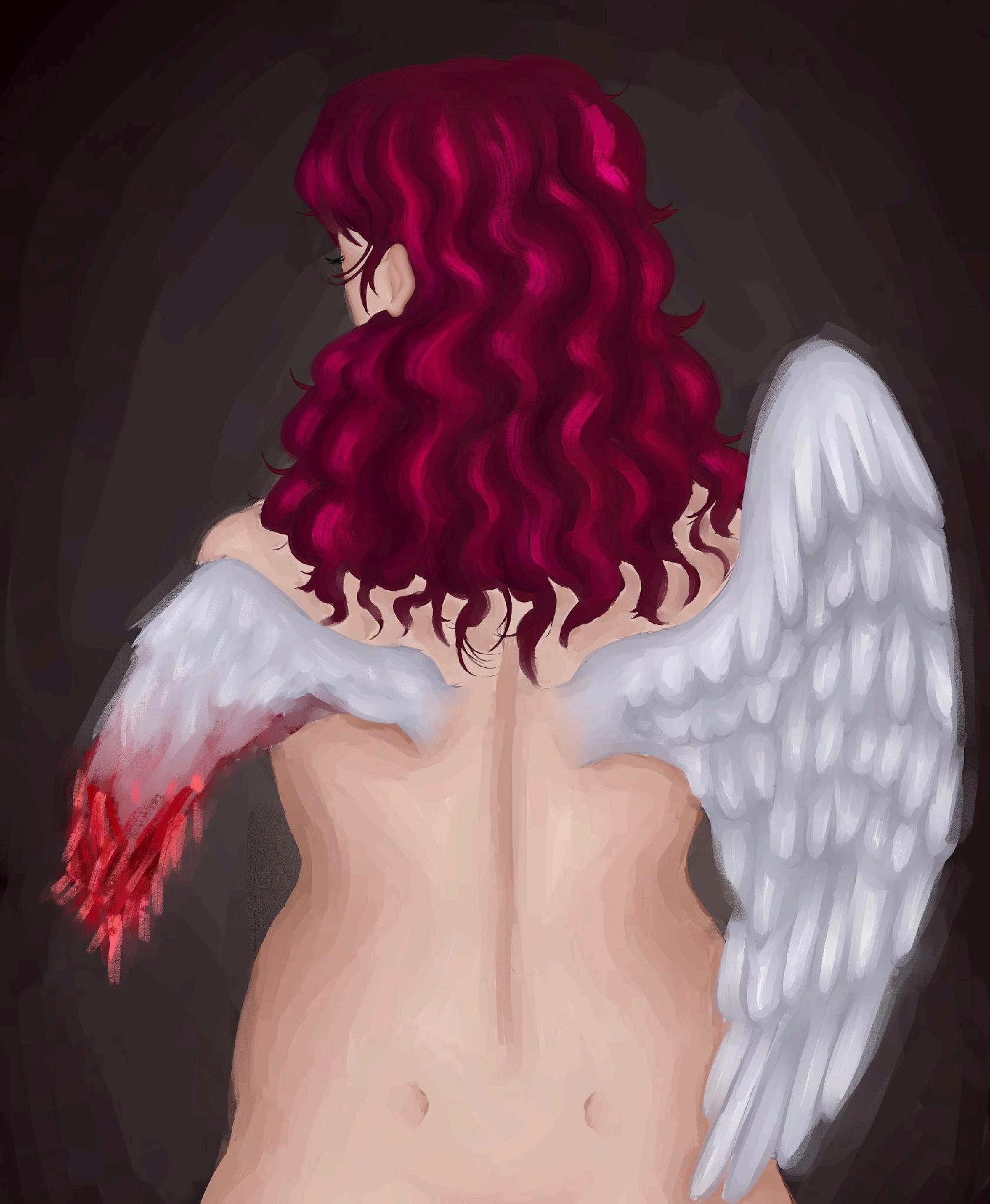
Pairedsamplet-testshowedasignificantdifference betweenArtPiece5andArtPiece6(t(244)=-3.550, p <.001)
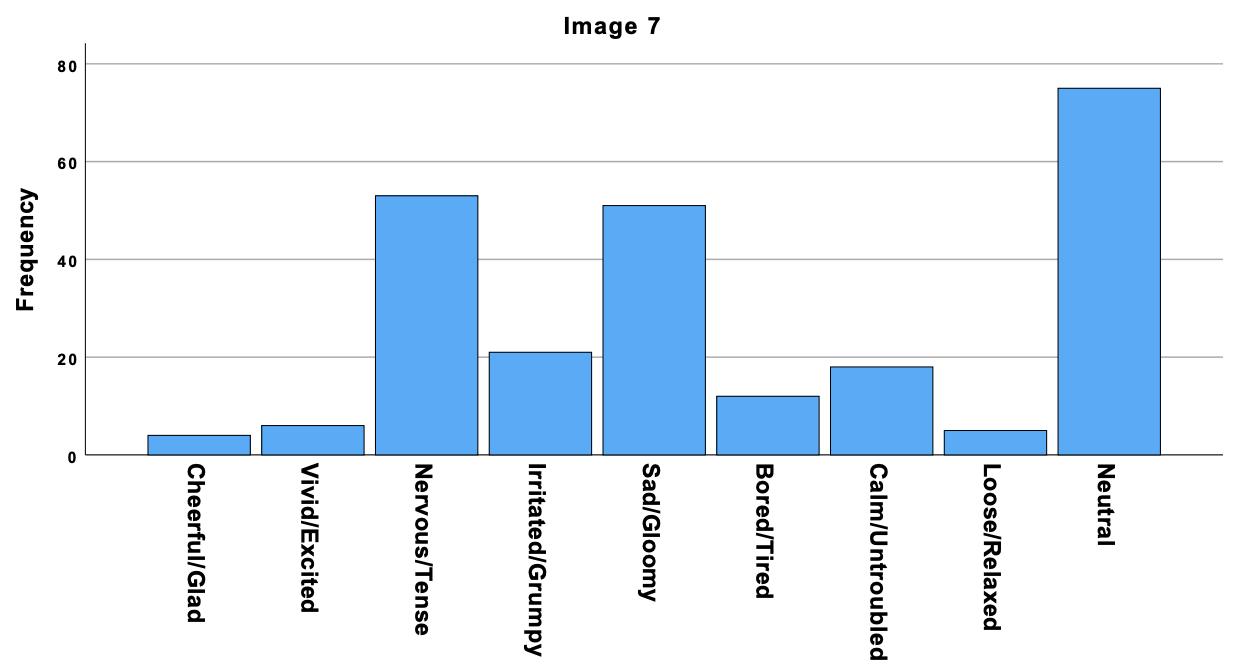
Pairedsamplet-testdidnotshowastatisticallysignificant change.Themostfrequentlyselectedmoodsremainedrelatively thesamewhilethelessfrequentlyreportedmoods,suchas calm/untroubled,diddecreaseslightlywhenviewingImage7.
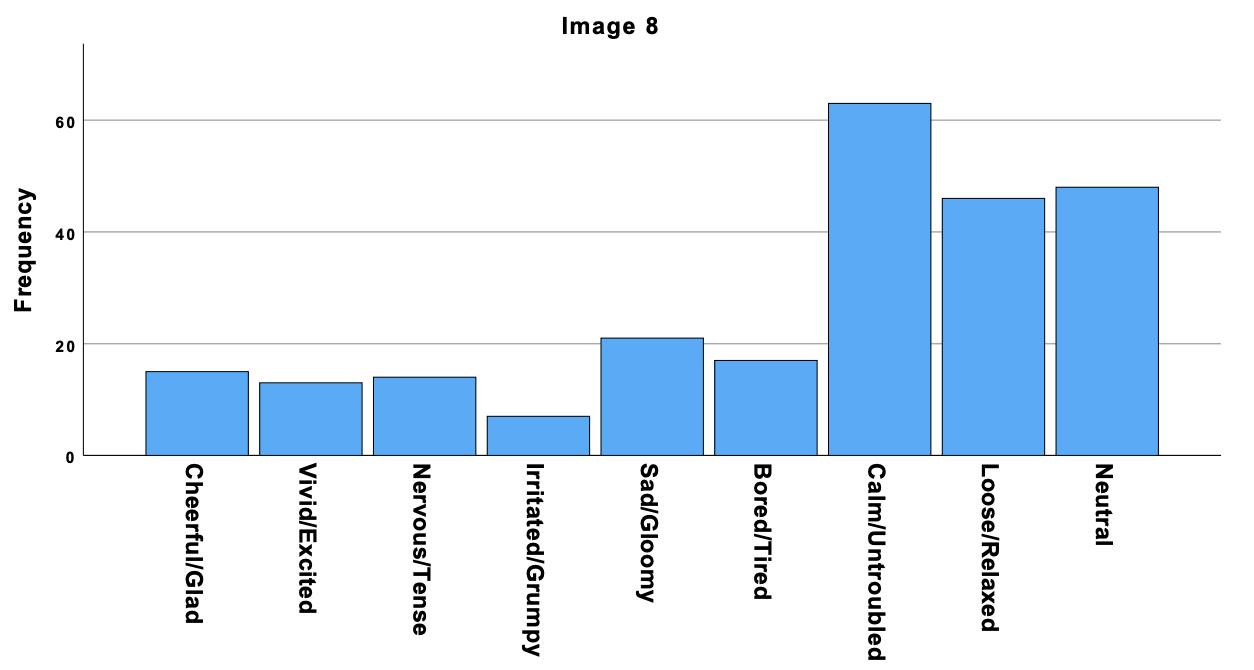
Pairedsamplet-testshowedasignificantdifference betweenArtPiece7andArtPiece8(t(242)=-2.664, p =.008).
Discussion
Thepurposeofthisstudywastoexaminehowviewingart impactsmood.Morespecifically,howdigitalartviewed independentlyonlineaffectsone’semotionalstate.Overall,the findingsofthisstudysuggestthatviewingvisualarthasthe capabilitytoinfluenceone’semotions.However,theeffectsmay varydependingontheartworkitselfandthesequenceinwhich oneisexposedtothepieces.Whilemanyofthepairedsample t-testsdidnotpresentanystatisticallysignificantchangesin self-reportedmoods,Images2to3, 3to4,and6to7,severalof themostcommonlyreportedmoodsandthemoodstheartpieces attemptedtoportraydid.Thisindicatesthatmoodresponsesare dependentoncontext.
Oneofthefindingsworthnotingisthesignificantchange intheparticipants’originalself-reportedmoodandtheirmood afterviewingthefirstartpiece.Atfirst,participantsresponded
withfeelingneutral,calm/untroubled,bored/tired,or nervous/tense.Afterviewingthefirstpiece,thenumberof participantswhoreportedfeelingnervous/tensesignificantly decreasedandthenumberofparticipantsfeelingcalm/untroubled, andloose/relaxedincreased.Thisalignswithpreviousresearch findingsthatsuggestthatbeingexposedtovisualartcanreduce stressandothernegativeemotions(Lawetal.(2021),Karniketal. (2014)).Inadditiontothis,thefactthatthisshiftinmood happenedimmediatelyafterbeingexposedtothefirstpiece, suggeststhatnotonlydoesartinfluencemood,butitalsohasa strongimpactonone’semotions.
Otherstatisticallysignificantchangesinmoodwereseenin pairsfourandfive,fiveandsix,andsevenandeight.These changessuggestthatdifferenttypesofemotionsportrayedthrough art,andmorespecificallydifferentcharacteristicslikecoloror composition,mayhavecreatedthedifferentchangesinemotional states.Thisinterpretationoftheresultsissupportedbyprior researchthatdemonstratedfeatureslikecoloranddifferentline orientationsareassociatedwiththecommunicationofdistinct emotionsinvisualart(Damianoetal.(2023)).Inthisstudy,the factthatchangesinmoodinbothpositiveandnegativewayswas observed,showshowartisabletocreatedifferentemotional reactionswithinobservers.
Despitethesefindings,thestudyhasmanylimitations.The useofaconveniencesampleresultedinaheavilyskewedsample withyoungerparticipants,especiallyforthose24andyounger. Thislimitsthegeneralizabilityoftheresultstowardsolderage groups.Inadditiontothis,mostparticipantsidentifiedasfemale, limitingthegeneralizabilityofthefindingstoothergender identities.Thefactthatthisstudytookplaceonlinealsolimited controlovertheexperimentduetolackofknowingwhathappened inparticipants’environments.Finally,moodwasalsoassessed
throughself-reportedscales,whichcancreatebiasandalsoleaves theresponsesuptotheindividual’sdefinitionofhowtheyfeel.
Futureresearchcouldaddresstheselimitationsbyusinga morediverseandrepresentativesample,usingapsychological measureofemotionalresponseinadditiontothePick-A-Mood scale,andawiderrangeofdigitalmedia.Furtherstudiescould alsocomparedigitalarttophysicalart,suchaspaintingsor sculptures,andseeifthemediumthatisusedtocreatethearthas animpactontheemotionalresponseevoked.
Inconclusion,thisstudycontributestopriorresearchby demonstratingthatdigitalartisabletohaveanimpactonone’s emotion’s,evenwhenviewedindependentlyonline.Thissuggests thatdigitalmedia,includingsocialmedia, mayinfluenceone’s emotionsonadaytodaybasisandtheiroverallwellbeing.As digitalandsocialmediacontinuetoplayanimportantpartoflife, understandingtheemotionalimpactitmayhaveisincredibly importantformentalhealthandapplicationstherapeutic treatments.
Artist’sStatement
Whencreatingthisseriesofartworks,Iwantedtomake suretheyhadaclearconnectiontomypassionforpsychology. Goingintoeachpiece,Itookadifferentapproachandtriedto createvisualsthathadclearemotionstothem.Formyseniorthesis project,Iwantedtolearnmoreaboutandultimatelyrunmyown studyexploringhowviewingvisualartcouldimpactaperson’s mood.Afterlotsofresearch,Ilearnedthatthereareproveneffects thatartcanhelpreduceanxietyandstressandimproveoverall comfortlevels.Butwiththisinformation,Iwonderediftherewere otherwaysartcouldimpactmoodandwantedtoseeifIcould createworksthatcouldcreate both positiveandnegativeemotional responses.
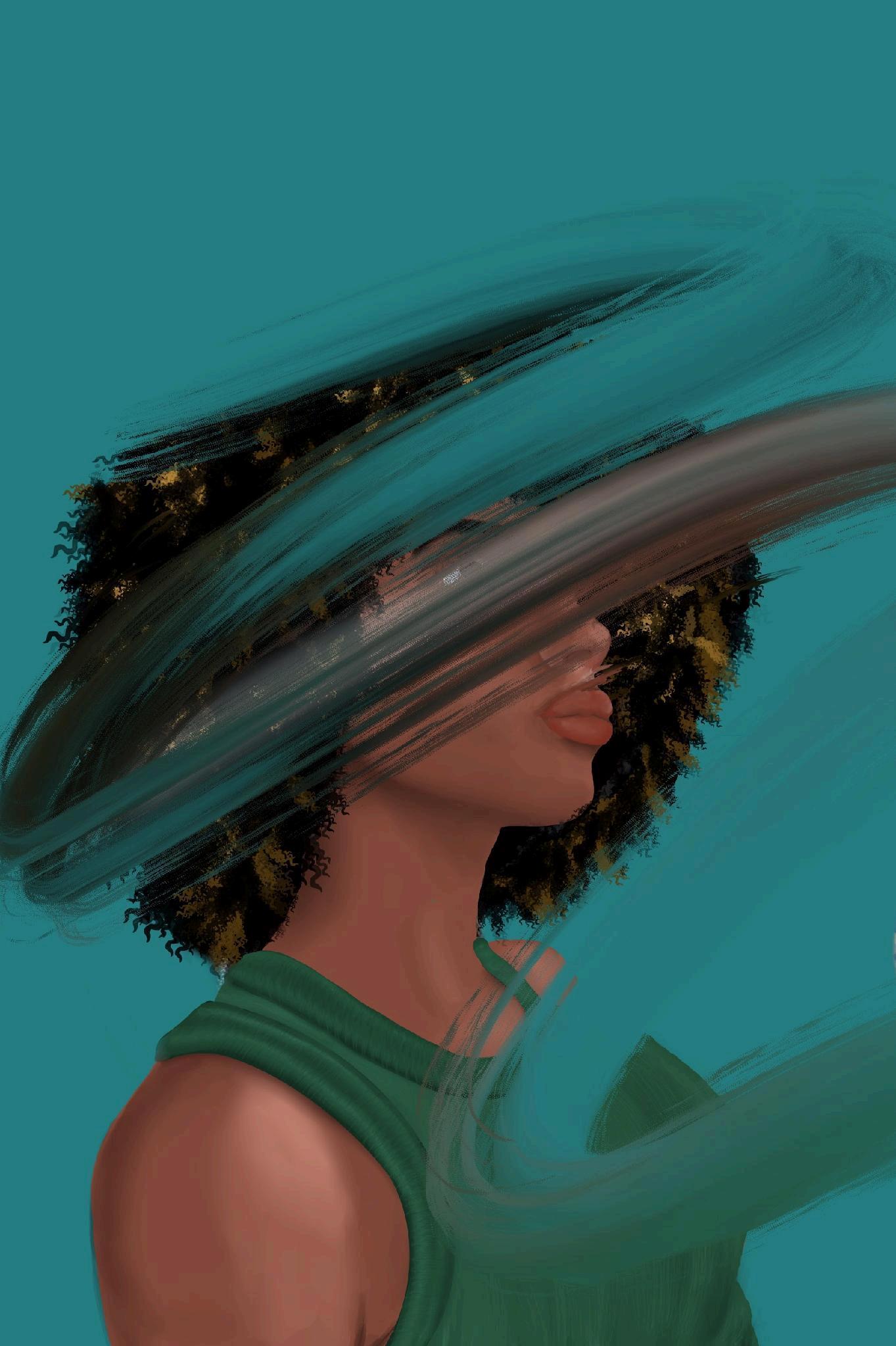
Unknown ismeanttorepresentfeelingsofbeing overlookedandforgotten.I’msuremanypeoplegothrough periodsintheirliveswheretheyfeelinvisibleoruncaredfor,even whentheyaresurroundedbypeopleandespeciallywhengoing throughbigtransitions.Theblurringaroundthefaceismeantto representhowone’sidentitycanstarttofeelignoredand,attimes, uncleartothemselveswhennooneseemstonoticethem.Iwanted thispiecetoportrayfeelingsofsocialisolation,asituationwhere someonefeelsdetachedfromtheworldaroundthem.
The Forest’s Sanctuary ismeanttobetheemotional oppositeof Unknown.Itrepresentsasenseofserenity.Even thoughthebabydeerisalone,itdoesnotfeellonely.Itis surroundedbylifeandfreeofworry;patientlywaitingforit'sina safeplacewhereitsinnocencecanremainunharmed.Iwantedto includethispiecebecauseitshowsaparallel,portraysamoment wherebeingaloneisnotanegativething.Thispiecedisplaysa momentwherebeingaloneispeacefulandthroughit,Iwantedto tryandrecreatethosepositiveemotionsintheparticipantsofmy study.
Endless Blue isalandscapeofastormyocean.Thereisno shoreinsightandthesceneissurroundedbydarkwavesandgrey clouds.Thereisnolightningpresentbutthewatersstillcarrya senseofeeriedanger.Theendlesswavesaremeanttorepresent howanxietyandsadnessmayfeeltothosewhoexperienceit. Especiallyincasessuchasseveredepression.Onemayfeel completelytrappedandisolated,notbeingabletoseetheendor anyonewhomaybeabletohelp.Sadnessandanxietyarenot alwaysexplosiveorintense,sometimesthere’sacalmonthe surfacethathidesalltheturmoil.Itfeelsheavyandasifitwill neverend.
You Broke My Heart ismeanttoshowhowourperception canbeshapedbyouremotions.Especiallypainfulones.Whatwe seeiseasilyinfluencedbyhowwefeelandwhatwethink.Our actionscanbeeasilycontrolledbyfeelingsoflove,heartbreakand betrayal.Iwantedtocreatethispieceinawaythatcouldcapture thosenegativeemotions.WhileIdidnotaddanytears,Ididwant tocapturethelookofwhattheaftermathofbetrayalcouldlook like.Openingupone’shearttosomeoneone caresfordeeply,in someways,canbetheriskiestthingonedoes.Relationships, romanticorplatonic,sometimesendupwithsomeonefeeling betrayedorliketheywere“stabbedintheback”.Theeyewithan impaledheartinitspupilismeanttoportraytheheartbreakthat comeswithbeingvulnerableandemotionallyexposedaperson becomeswhentheycaredeeply,andtheeffectsthatviolatingthat connectionhave.
Love At Last depictsasilhouetteoftwopeoplecaughtinan embrace.Itrepresentsaunionordeepconnectionthatmany peopleyearnfor.Thekindoflovethatcannotbefoundinfriends orfamily,onethatgivesmanyasenseofpeace,orapartnership thatbringsjoy,longingandeverythinginbetween.
The Good Old “9-5” portraysaskeletonwhoisunableto trulyrest,evenafterdeath.Ihavealwaysloathedtheideaof
workingatanofficejoboranyothertypical9-5jobfor5daysa weekandIknowmanyotherpeoplemyagearenotveryfondof theidea.Evengoingtoschoolfrom8-3hastakenatollonmethat makesmedreadworkingajobwiththosehours.Ihatethefeeling ofbeingboredtodeathbydoingthesamethingoverandoverand overagainonadaytodaybasis.Goingintothispiece,Iwantedto trytocreateanimagethatreflectedthosesamefeelings.This skeletonhasalsobeenassignedtoworka9-5thatmakeshimdo thesamethingsoverandoveragain.Butunlikeme,hecannot escape.Heischaineddowntowhatsocietyhasrecommended;a good9-5job.Thewindowshadesthatlooklikeprisonbarsare meanttofurtherportraythisentrapment.Inaway,Iwantedthis imagetoserveasaremindertobothmyselfandothersthatone doesnot need tolistentowhatotherssayis“good”forthem. Instead,theyshouldfindsomethingthattheyenjoyandtryto preventthemselvesfromgettingtrappedinajobthatbringsno fulfillment.
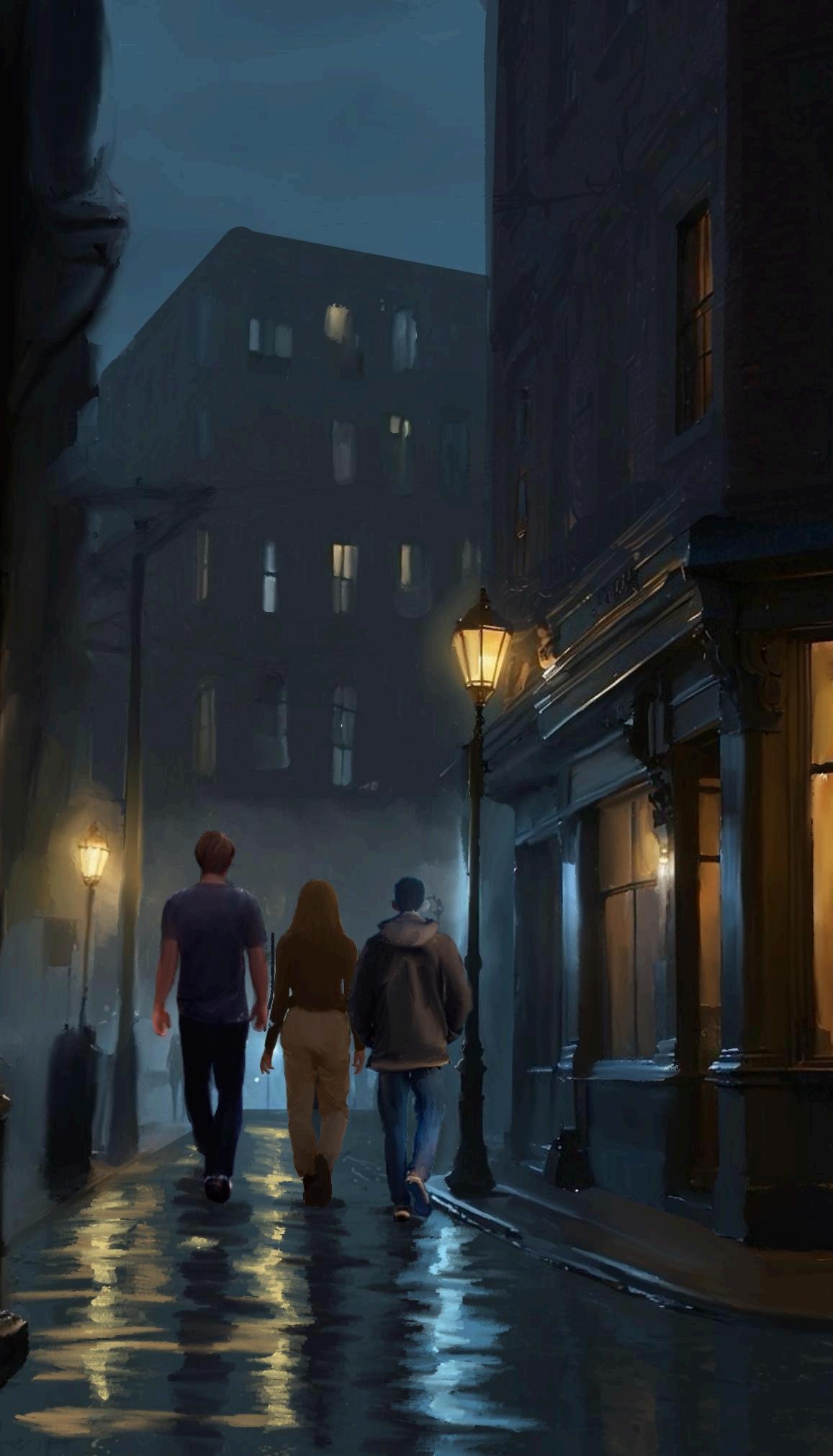
The Midnight Stroll depictsthreepeoplewalkingtogether onafoggyanddarkcitynight.Thisonemayhaveameaningthat isalittlelessobvious,butIwantedtoincludeapiecethathadthe themeofcompanionshipinadifferentcontext.Growingup,kids arealwaystoldthatitisdangeroustobeoutatnight.Forsome,the fearofthedarkandthedangersthatcomewithit, nevergoaway. However,thesepeoplearestilloutinthisdarkness,andtheydo notfeelafraidbecausetheyhaveeachother.Companionship,and notjusttheromantickind,canbringasenseofsafetythatno weaponcould.
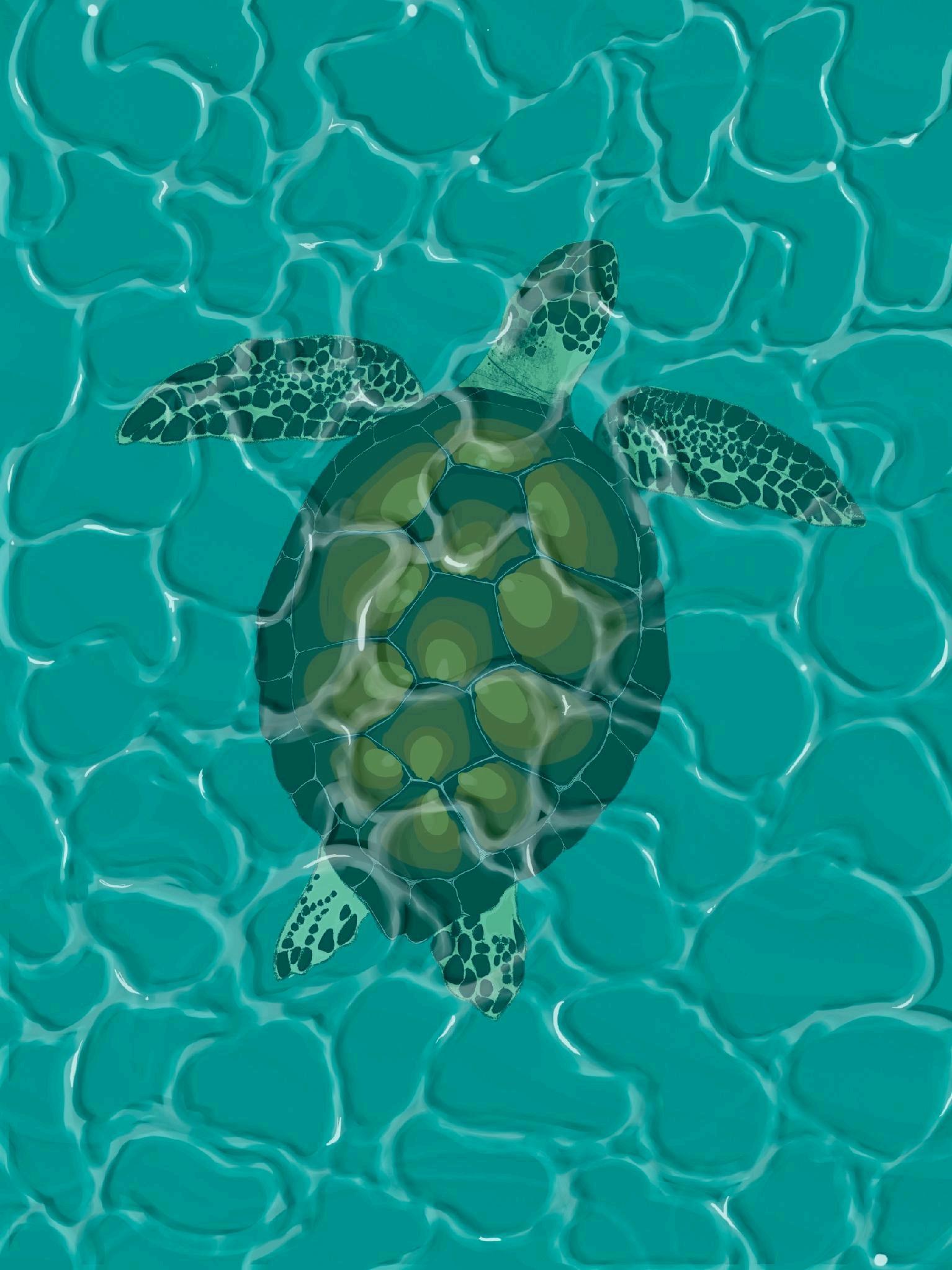
Image9: Under the Sea
In Under the Sea,whilethisimageoftheturtleunderthe wavesnevermadeitintothestudy,Istillwantedtoincludeits message.GoingintothepieceIthoughtofthefirstplacethat makesmehappy,thebeach.Ihavealwaysfeltatpeacebythe waterandlovemarinelife.Iwantedtocreateacombinationofthe twoinmydrawing.Calmclearwaters,andalovelyanimalthatis abletoswimpeacefully.
Thereisanoverarchingthemeinthisseriesofartworks relatingtohowpeoplefeelindifferentwaysandsituations–I wantedtocreatedigitalartinthehopesthatitcouldhelp demonstratehowmoodscanbecommunicatedandinfluenced throughimagery,withouthavingtousewords.
Acknowledgements
IwouldliketothankSofiaStroe,theartistwhovery generouslyprovidedmewiththedrawing Flightless Angel forthis project.Theirwillingnesstosharetheirworkwithmeadded anotherperspectiveandhelpedmebroadentherangeofmoods depictedintheseries.Iamincrediblygratefulfortheworkand trustshewaswillingtosharewithmeandforallowingtheirwork tobepartofmystudyonhowdigitalartimpactsmood.Below,she haskindlysharedherartiststatement:
‘“FlightlessAngel”depictsawomanwithangelwings,one torn.Sheisturnedawayfromtheviewer,leavingherback vulnerable.Itwasinspiredbylyricsfromtwosongs.Oneis from“homesick”bywavetoearth,inwhichthevocalistsings“All Iwantedwastoflyhigh,Ican’tbelievemywingsarebroken.” ThesecondisfromRadiohead’s“LetDown,”whereThomYorke sings“Andoneday,Iamgonnagrowwings.”Thewomaninthe paintingwantedtobegreat;shewantedtosoarandflourishinlife. However,herwingandherdreamswerecutshort,outofher control.Iwantedtoportraythefeelingofhopelessness,of someone’sdreamsdyingduetoexternalcircumstances.”
~SofiaStroe