Talas Jaeger
Senior Thesis | 2026

AccesstoMenstrualHealthinBangladesh TalasJaeger
Abstract
Thisresearchpaperexaminesaccesstoanessentialhuman right,menstrualhealthcare,inBangladesh.Specifically,it investigatesseveralreasonswhywomenaredeniedaccessto menstrualhealth.Itutilizesbothpreviousquantitativeresearchin globalhealthandindividualqualitativeaccountsfromtheaffected population.Thefactorsevaluatedincludesocioeconomicbarriers, geographicalbarriers,andculturalstigma.First,thepaperbegins byprovidingbackgroundstatisticsabouteachofthesefactors. Then,itanalyzespersonalnarrativestoexaminethestigmatization ofandthelackofknowledgeaboutmenstruation.Subsequently,it exploresexistinginitiativesandproposesfurthersolutionstoend periodpoverty.
Introduction
Ithasbeenlongheldthatwealldeservetobehealthy.The UnitedNationsfirstdeclaredtherighttohealthin1948,andthe WHOconstitution,effectivethesameyear,statesthemostclearly that“healthisastateofcompletephysical,mentalandsocial well-beingandnotmerelytheabsenceofdiseaseorinfirmity”,and everyoneisentitledto“thehighestattainablestandardofhealth” (WorldHealthOrganization,1948).However,globally,not everyonehasaccesstothisright.
Onesignificantcaseofsuchafailureisthatmanywomen inBangladesharedeniedthisrightwhenitcomestotheir menstrualhealth.Thisdoesnotnecessarilymeanthatthesewomen arediseased,butitdoesmeantheyaredeniedessentialmenstrual carenecessaryfortheirwell-being.Menstrualcareincludessafe andeffectivesanitaryproducts,goodhygienewhichrequires accesstocleanwater,andtheabilitytodisposeofusedproducts. Excludinginstancesofintensemenstrualpain,theseessential healthaidsmakeitpossibletogotoschoolandworkandtobeina generalstateofmentalandphysicalwellbeing,freeofstressand intheleastpossibleamountofdiscomfort.
WomeninBangladesharedeniedmenstrualcareinseveral ways.First,menstrualproductslikesanitarypadsandtamponsare notaffordableformanylow-incomewomen,andcertaindistricts provideless accesstotheseproducts.Womenmustalsooften reusepiecesofclothfortheirperiods,butarethenunabletowash anddrythemproperlyduetoalackofcleanwaterandlackof cleanspacefordrying.Manywomenandgirlsalsolackspaces wheretheyfeelcomfortabledisposingofproducts,forexample,as thereoftenarenotdesignatedareasfordisposalofmenstrual productsinpublicbathrooms.Lastly,thereispervadingsocial stigmasurroundingperiods.Thisleadswomentofeelashamedto buymenstrualproducts,especiallyinfrontofmen,todisposeof products,andtotalkabouttheirperiodsopenly.Thiscultureof
stigmaandresultingsilencecanleadtoadversehealthoutcomes,a lackofeducationaboutperiodsinschools,alackofknowledge aboutmenstruationinthepopulation,andageneralfeelingof stressforthosemenstruating.Thispaperwilldiscussallofthese issues,theinequalitiesthatcaninfluencetheamountofaccess womeninBangladeshhavetomenstrualhealth,initiativesthat havebeenimplementedtosolvetheseissues,andfurtherpossible solutions.
BackgroundInformation
AnoverwhelmingmajorityofwomeninBangladeshreport havingunmetmenstrualneeds.Thiswasobservedinastudydone in2024surveyingfemaleuniversitystudents,whichfoundthat 99%ofthemreportnothavingtheirmenstrualneedsmet(Hassan etal.,2025).Specificcategoriesinthestudyincludedmaterials andhomeenvironmentneeds,transportanduniversity environmentneeds,materialreliabilityconcern,changeand disposalinsecurity,reuseneeds,andreuseinsecurity.93%of womenreportedhavingunmetneedsformenstrualmaterialsand thehomefacilitiestoproperlyusethem.94%reportedunmet needsregardingtransportandtheuniversity’senvironment.For example,manywomendidnotfeelcomfortablecarryingmenstrual materialsoutsideoftheirhomesanddidnotfeelcomfortablewith theuniversities’facilitieswheretheycouldchangetheirmenstrual materials.91%ofwomenfelttheirmenstrualmaterialswere unreliable,and98%ofwomenreportedfeelinginsecureabout changinganddisposingoftheirmenstrualproducts.Forexample, somewomenwereworriedtheywouldnotbeabletochangeand disposeoftheirmaterialsatuniversitywhentheyneededto,and somewomenwereworriedsomeonewouldseethemchangingand disposingofthem.Ofthewomenwhoreusetheirmaterials,78% reportedhavingphysicallyunmetneedsregardingreuseof materials,suchaswater,soap,andtheabilitytodrythematerials. 91%ofwomenwhoreusetheirmaterialsfeltinsecureabout
reusingthem.Forexample,somewomenwereworriedthat someonewouldseethemwashingordryingtheirproducts.Thisis likelyduetosocialstigmaaboutmenstruation.Thus,thestudy makesclearthatthemostpressingissueforfemaleuniversity studentswasunmetneedsregardingchanginganddisposingof menstrualmaterials,asthegreatestmajorityofwomenreported feelingsomekindofunmetneedinthiscategory(Hassanetal., 2025).Thisiscausedbothbyalackofdisposalareasand pervadingsocialstigmaassociatedwithmenstrualmaterials,which arebothpersistingproblemsthatneedtobeaddressed.
Manygirlsandwomenusealternativemenstrualproducts, likepiecesofcloth,ratherthanthosetypicallyconsidered hygienic,likesanitarypads,tampons,andmenstrualcups.Astudy wasdonein2005inthepoorerpartsofDhakacity,thecountry’s capital,whichfoundthat95%ofwomenand90%ofadolescent girlsuseragsduringmenstruation,whicharepotentially unhygienicifnotutilizedproperly(Ahmed&Yesmin,2008).The studyshowedthat40%ofwomeninthisareachangetheircloth onceaday,75%ofadolescentgirlschangetheircloththreetimes throughouttheday,and95%ofwomenand80%ofadolescents reusecloth.Manywomenandgirlsinthisregionalsoonlyuse watertowashcloth,andsometimesthewatercancarrybacteria. Themajorityofwomenandgirlstherealsodryragsindirtyand darkplaces.Asaresultoftheseunsafepracticeswhenutilizing cloth,womenandadolescentscanexperiencehealthproblemslike scabiesinthevaginalarea,urinalinfections,andcomplications duringpregnancy.Somereasonsforunhygienicpracticesinclude, amongothers:alackofawarenessofsafepractices,alackofclean waterandsanitationfacilities,alackofdryingareasduetosocial stigma,andsanitarypadsbeingunaffordabletomostwomen (Ahmed&Yesmin,2008).Additionally,thereisanabsenceof disposalfacilitiesformaterialslikepadsandcloths.So,these productsareoftendisposedofintoilets,latrines,ponds,andopen areas,whichincreasesriskofdiseasetransmissionthroughbodily
fluids,includingHIV,hepatitisB,andhepatitisC.Theabsenceof disposalfacilitiespreventswomenfromchangingtheirmenstrual products,andthisalsoincreasesriskofdiseaseslikereproductive tractinfections(RTIs)andurinarytractinfections(UTIs)(Tomaret al.,2025).
Thelackofawarenessaboutperiodsisaprevalentissue amongbothwomenandmeninBangladesh.Only30-36%ofgirls knowaboutmenstruationbeforetheyhavetheirfirstperiod (Rizwanetal.,2025).Additionally,arecentstudydonein2025 showedthat94%ofwomenandgirlsinBangladeshhaveweak menstrualknowledge(Stop the Stigma: Empowering Menstruating Girls in Bangladesh,2025).Thislackofawarenesscancontribute tounsafepractices.Anotherstudyshowedthataround25%of womenwhousemenstrualclothareunawareoftherecommended waytocleananddryit.Thisincreasesriskofinfectiondueto waterretentionthatcanoccurinthecloth(Castro&Czura,2025). Poormenstrualhealthmanagementpracticesthatlackof awarenesscreatescanresultinanabsenceofgirlsfromschool, evencausinga40%increaseinabsenteeismandadeclinein academicperformance(Stop the Stigma: Empowering Menstruating Girls in Bangladesh,2025).Manygirls’onlysources ofinformationregardingmenstruationareotherfemalefamily members,butthesesourcesofadvicemightsimplyperpetuate misconceptionsduetotheprevalentlackofknowledgeorcultural taboos.Thisleadstoacontinuingcycleofmisinformation,where misconceptionscanspreadfurther.Mostgirlsandwomenarenot taughtaboutmenstruationinschoolorcollegeandasaresultare forcedtorelyonsourcesthatmightnotbewelleducated,leaving themwithlittleinformationorharmfulmisinformationabouttheir periods.Astudyfrom2023onurbanpopulationsevenshowedthat almost70%ofeducatedwomenlackguidanceonmenstruation.In addition,thesamestudyshowedthatmenknowsignificantlyless aboutperiodsthanwomendo(Rizwanetal.,2025).Therefore, widespreadandinclusiveeducation,forexampleinschoolsorin
colleges,isnecessarytoimproveknowledgeaboutmenstruation andwouldconsequentlyimprovewomen’ssafetyinmenstrual practices.
Socioeconomicdifferencescansignificantlyimpactwomen andgirls'menstrualhealthaccess.Thebroadissueoflimited accesstomenstrualhealthduetostructuralbarrierssuchas economicclassandsocialstigmaisknownas“periodpoverty”.In Bangladesh,periodpovertymoststronglyaffectspeopleinlower socioeconomicclasses.Thislackofaccessincludespooraccessto sanitation,limitedaccesstomenstrualhygieneproductsandlow educationaboutreproductiveandsexualhealthgenerally(Tomaret al.,2025).Mostwomenandgirlsaremorelikelytopreferpads overclothstomanagetheirmenstruation,asreportedbywomen whousebothregularlyinastudyconductedbytheUNFPA (UnitedNationsPopulationFund)inpoorerurbanareas.Thisis becausetheyarewidelyperceivedasmoreconvenient,hygienic, andclean.However,thepriceofmenstrualproductsisasignificant factorinlimitingaccesstothem.Soinmanycases,womenin lowersocialclassescannotaccesstheproductstheywouldmost likelyprefertouse(Lopez,2023).Astudywithdatafrom2019 showedthattheprevalenceofusingpadsisthehighest,58.36%, amongwomenfromtherichestwealthquintile,whencomparedto womenfromotherwealthbrackets.Itisimportanttonotethat nationally,onlyabout26.22%ofwomenusepads.Additionally, two-thirdsofwomenwithsecondaryorhighereducationusepads. About60%ofwomenfromhouseholdswithhighereducatedheads usepads.Thesestatisticsindicatethatthehigherwomenare positionedinthesocioeconomicgradient,themorelikelytheyare touseproductsthatareconsideredhygienicandsafe,andthat manywomenprefer(Hasanetal.,2025).Asmentionedabove,in thepoorestpartsofDhakacity,95%ofwomenand90%of adolescentgirlsuseragsduringtheirperiods,incontrasttothe womenintherichestwealthquintileinBangladesh,whomostly usepads.Manyofthewomenandadolescentsinthepoorestparts
ofDhakaalsounsafelyreusetheseragsforvariousreasons, resultinginhealthcomplications(Ahmed&Yesmin,2008).
Ruralversusurbandifferencesandotherdifferencesin locationcanalsoinfluencewomenandgirls’menstrualhealth. Likeinequalityresultingfromsocialclass,inequalityresulting fromlocationcanbeobservedwithmenstrualpaduse.Asnoted above,padsareoftenseenasmorehygienicandcleaner,and thereforesaferthansomeothermaterialslikecloths.Ahigherrate ofmenstrualpadusecanbeseeninthecapitalcityofthecountry, notablyurbanDhakaandthesurroundingarea.Interestingly,the Khagracharidistrict,amostlyruralareawithgrowing urbanization,andtheRangamatidistrict,aruralareawithan urbanizedcenter,haveahigherrateofmenstrualpadusethanthe adjacentChattogramdistrict,whichisthecommercialcapitalof Bangladesh(Hasanetal.,2025).ItcanbeobservedinFigure2that northerndistrictsgenerallyhavealowerprevalenceofsanitary napkinuse.However,itisunclearwhetherthisdifference correlateswithsocioeconomicstatusorculturalconsiderations. Nationally,ithasbeenshownthatwomenfromurbandistrictsare 3.19%morelikelytousepadswhencomparedtowomenfrom ruraldistricts.Thisoverlapswithsocioeconomicdifferencesin menstrualpaduse,sincewomenfromruralhouseholdsoften cannotaffordhygienicmenstrualproductswhencomparedto womenfromurbanhouseholds.Thisisbecausetheaverage monthlyincomeforanurbanhouseholdis175%morethanarural household(Hasanetal.,2025).Anotherrecentstudystatesthatan estimated86%ofschoolgirlsinruralBangladeshlackaccessto menstrualpadsbecausetheycannotaffordthem(Rizwanetal., 2025).
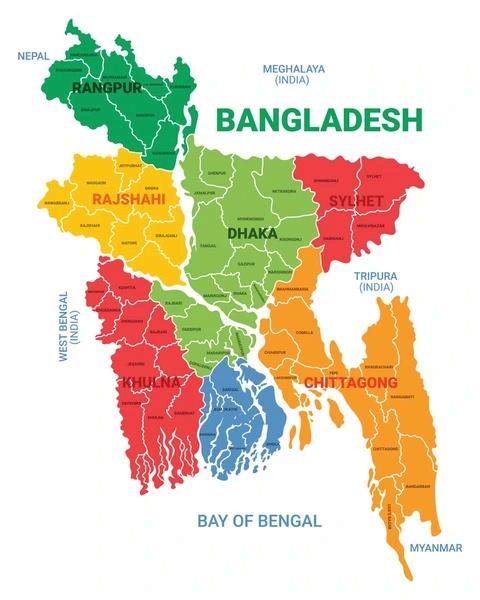
Figure1:MapofBangladesh.Divisionsanddistrictslabeled. From Bangladesh Map with All Divisions and Districts by Shutterstock,Inc.,2022, https://www.shutterstock.com/search/bangladesh-district-map
CopyrightbyShutterstock,Inc.
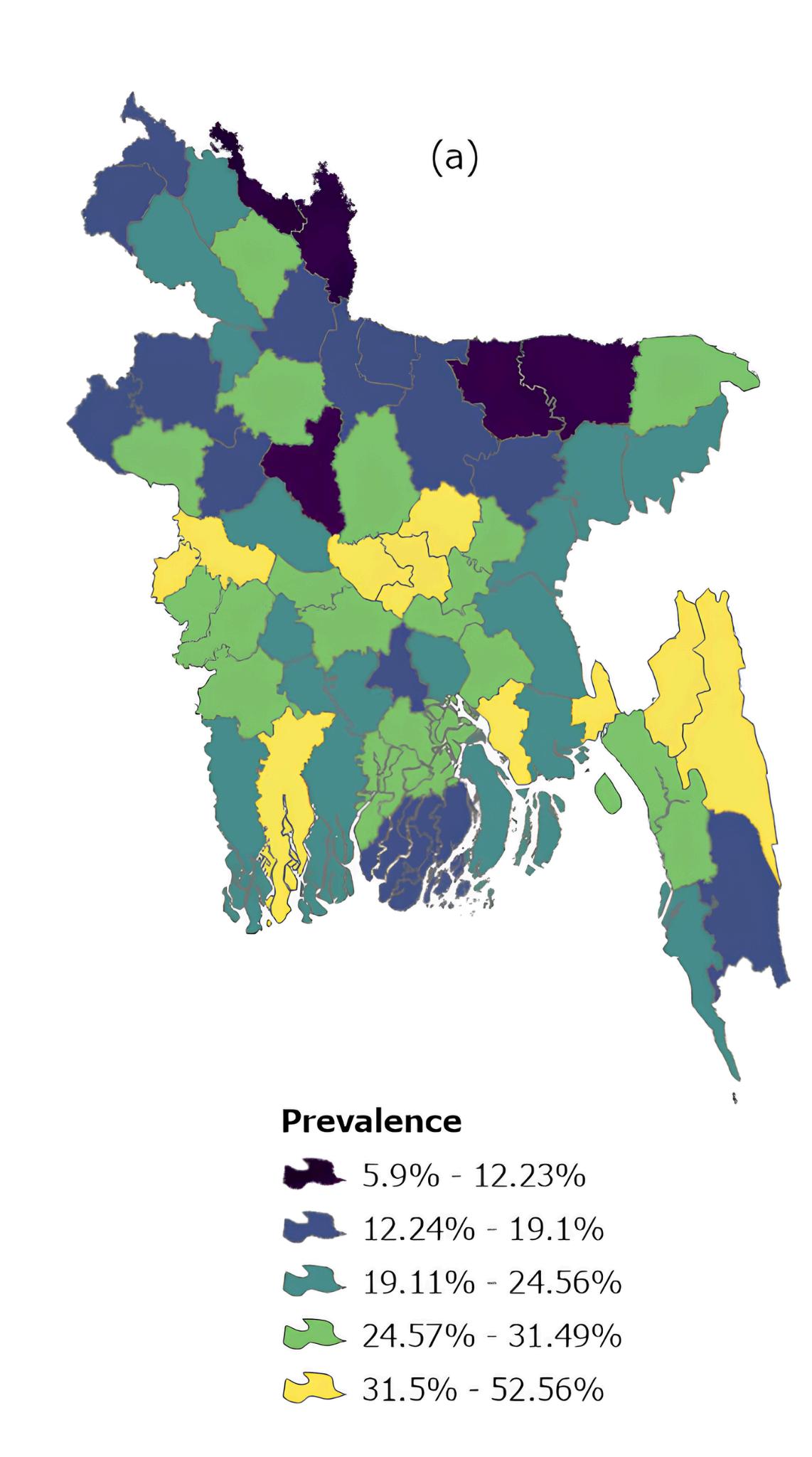
Figure2:PrevalenceofSanitaryPadUsebyDistrict.Prevalence islabeledwithagradientofcolors,withyellowrepresentingthe mostprevalentandpurplerepresentingtheleastprevalent.(Hasan etal.,2025)
CulturalConsiderations:TheImpactofStigma
Therearesignificantculturalconsiderationsthatfactorinto women’saccesstomenstrualhealthinBangladesh.Stigmatization ofperiodsisaprevalentissuewhichprohibitsmanywomenfrom managingtheirmenstrualhealth.Zamanetal.(2025)performeda studyonfemalenursingstudentsinBangladesh,whichfoundthat somewomenwereembarrassedtoevenpurchasepadsinfrontof men,whichwastheirpreferredmenstrualproduct,leadingthemto useoldclothinstead.CastroandCzura(2025)performedanother studyinruralBangladeshonthistopic,whichfoundthat67%of womenwhoparticipatedsaidthattheircommunityviewedthe recommendeddryingmethodformenstrualcloth,whichistodryit outsideinthesun,asshameful.SinceBangladeshhasahumid climate,dryingofclothinsideandwithoutsunlightcanfoster bacteriaandthusleadtoinfection.Inthisway,shameandsocial stigmaaboutmenstruationcancausehealthissues.Inaddition, manywomenexperiencegeneralstressandshameduringtheir periodbecausetheyareafraidpeoplewillnoticetheyare menstruating.So,notonlycanstigmaphysicallyharmwomen,but itcanalsocausestress.Asmentionedpreviously,manywomenare nevertaughtaboutwhatissafesttodowhentheygettheirperiod. Thisisduetostigma,asperiodscanbeseenasshamefulandare rarelytalkedabout,especiallyinareaswheretherearen’tasmany resourcesforwomentomanagemenstruation.Thiscyclecanbe repeatedthroughgenerations.Forexample,whenRina,athirteen yearoldgirlfromKalyanpur,apoorareainDhaka,gotherperiod forthefirsttime,shedidnothaveanypads,sosheusedtwosheets ofnewspaperinstead,whichdidnotstopherfrombleeding throughherclothes.ThisissomethinghermotherShahidataught heroutofnecessity,andmayhavebeenheronlyoption.Shahida alsowasn’ttaughthowtosafelymanageherperiod:"Thetruthis,I didn'tknowhowtohelp,nooneeverhelpedmeeither."She resortedtousingtheclothofanoldSari,whichshewashedin
secret:"Wedidn'ttalkaboutit.Wejustenduredit,"Shahida explains.Now,Rinasimilarlyreliesoncloth,sincetheycanonly rarelyaffordpads.Thisstoryhighlightsboththelimitedresources inlow-incomeareasinBangladesh,andthelimitededucationthat womenreceiveaboutperiodsduetothestigmathatstillexists (Jahan&Utsa,2025).
Theprevalenceofthebeliefthatperiodsaredirtymakesit embarrassingtobeseendisposingofmenstrualmaterials.Aseries ofinterviewsaboutmenstrualstigmawasdonewith tenwomenin total,bothinthecityofRajshahiandthevillageofNoagoan.The followingwasfoundinthevillage:
“Becauseusedmenstrualclothswouldemitanodorand cannotbeseenbyothers,theyarethrownawayinthepondnear thevillageorburiedsomewherediscreet.[...]Itisclearthatifthere waspropergarbagedisposal,thereisstillachancethatwomen wouldnotfeelcomfortableusingtrashcansintheirhomesto throwawaytheirclothsandpads”.
Whenaskedabouttheirexperienceswithmenstrualstigma, oneofthewomenwhowasinterviewed,theoldestwoman,Shumi, said:“Mymother-in-lawsaidIcouldn’ttouchthecookingpotsnor couldIcook.Mymotherinlawcookedforme.Icouldgotothe otherpartsofthehouse”.Beingtheoldestparticipantinterviewed, above70yearsofage,itmakessensethatthestigmawasmost obviousinhercase,asshewasdirectlytoldthatshecouldnotdo certaintasksbecauseshewasonherperiod.Thismayindicatethat stigmaismoreofanissueinoldergenerationsthaninyounger generations.Anotherwomanmentionedthat“Ifayoungchildhad thepox,thenmenstruatingwomenweretoldnottogonearthe child.”Here,itisclearthatmenstruationisseenasuncleanand evendangeroustopeoplewithillnesses.Duetopervadingbeliefs thatmenstruationisdirty,itiseitherkeptbetweenwomenornot talkedaboutatall(Mostafa,2019).
ExistingInitiatives
Therehavebeengovernmentalinterventionstoimprove accesstomenstrualhealth.OneexampleistheNationalMenstrual HygieneManagementStrategyimplementedin2021.Ithadmany goals:toimproveeducationaboutmenstrualhygienemanagement inschools,andtooffernon-formaleducationtothosenotin school,toworkwithbusinessestocreatemoreaffordable menstrualproducts,toensurethattherearegender-friendlyWASH (Water,Sanitation,andHygiene)facilitieswithenoughwater,to promotesafeandenvironmentallyfriendlydisposalofused menstrualproducts,toeliminatetaboosbylaunchingsocialand behavioralchangecampaigns,tomakesurethathealth professionals,communityhealthworkers,andteachersarebetter educatedonmenstruation,tomakesurehealthfacilitiescan providespecificservicestowomenandgirlswhoaremenstruating, and,finally,tomakesurethatboysandmenarealsoeducatedon menstruation(BangladeshMinistryofLocalGovernment,Rural DevelopmentandCo-operatives,2021).Implementationofthis strategyhassincebegun,butitisstilllimited.Forexample, vendingmachinesforpadshavebeenintroducedinsomepublic placesandschools,andgenderinclusivetoiletsarecurrentlybeing implementedacrossthecountry.However,usageofmenstrualpads remainslow,becausethestrategyisnotbeingimplementedequally everywhere.Womenandgirlswithdisabilitiescontinuetobe excludedfromaccesstomenstrualhygienetoday,especiallyin schoolfacilities.Inaddition,taboosaboutmenstruationstillarenot activelybeingchallenged,whichcanonlybedonewithmore educationandconversationswithincommunities.Itisstillnot clearhowexactlysomeoftheobjectivesinthestrategycanbe implemented,forexample,investmentinWASHfacilitiesisalso stilllimited,especiallyinhardtoreachplaces(TheDailyStar, 2025).
Therearealsolargescale,nongovernmentalinitiativesin Bangladeshthatareworkingtoimproveaccesstomenstrual
health.OneoftheseistheMenstrualHealthandHygiene(MHM) Platform,whichisfundedbytheEmbassyoftheKingdomofthe Netherlands.Itiscomposedofover70organisationsand individualexpertsworkinginWASH(Water,Sanitation,and Hygiene),SRHR(SexualandReproductiveHealthandRights), andtheprivatesector.Theyareworkingtoadvocatetothe governmenttoprovidefreesanitarynapkinsandhavesafedisposal systemsinschools,campaignforeliminationoftaxesonmenstrual products(ValueAddedTaxandSalesTax),combineusedsanitary materialsmanagementwithmedicalwastemanagement,ensure accesstomenstrualproductsandgender-friendlyWASHin educationalinstitutesandworkplaces,andmakecost-effective sanitarymaterialsavailabletothegeneralpopulation.Forexample, theyhavelaunchedanappwhichkeepstrackofperiodsandgives informationabouthowtomanagemenstruation.Theyhavealso organizedeventslikeMenstrualHealthDay2024,whichfocused onpolicyandeducationtofightmenstrualstigma,andheldthe nationalworkshoponmonitoringMenstrualHealthandHygiene withWaterAidSouthAsia(MHMPlatform,n.d.).
Onefurther,importantinitiativethathasbeenimplemented istheStrengtheningWomen’sAbilityforProductiveNew Opportunities(SWAPNO)project.Thisinitiativewaslaunchedby theUnitedNationsDevelopmentProgramme,andissupported financiallybytheGovernmentofSwedenandtheGovernmentof Bangladesh.Itgivespoorwidowed,divorced,orabandoned womenlivinginruralareasanopportunitytoearnanincomeby makingandsellingsanitarypadsinthelocalmarket.Originally createdin2014,thisprojecthasgrowntoateamof120women whonowalsosellhandmadeclothingandquilts.Additionally, theirsanitarypadsaresoldatschoolsattheproductionpricewhich isaffordabletoadolescentgirls.Theyalsoraiseawarenessabout periodsattheseschools,andareworkingtoendthetaboosthat stillexist.Now,girlsintheschoolsaremorewillingtotalkabout periods,andasktheirparentsformoneytobuysanitarypads.“One
shouldnotbeashamed.Initially,theywerehesitant,butwecan nowseethatthegirlsarebreakingtheicewiththeirparentsand arefeelinglessashamedabouttheirperiod,”saysMrs.Kushi,the headofthecooperative.Thewomenwhoworktherearenowno longerinneedoffinancialsupport,andtheyaremakingplans abouthowtoexpandthebusinessandspreadfurtherawareness aboutmenstruation.Overtheyears,theprojecthasemployed about65,000womenintotal,andhasthushelpedthemoutof extremepoverty.Notonlyhavethesewomengottenthemselves outofpoverty,buttheyhaveworkedtoeducateyounggirlsand allowthemaccesstoessentialmenstrualproducts(Nguyen,2022).
FurtherSolutions
Theseinterventionshavelaidessentialgroundworkto allowallwomeninBangladeshaccesstomenstrualhealth. However,thereisstillmoreworktobedone.Clearly,thereare manyinterconnectedchallengestoovercome:socialstigma,the lackofaffordabilityofmenstrualproducts,lackofknowledge aboutmenstruation,lackofproperWASHfacilitiesinschoolsand otherinstitutions,andunsafedisposalofmenstrualproducts.
First,cleanwaterneedstobemadeavailableeverywhere, andWASHfacilitiesshouldbeaccessibletoeveryone.Thisis essentialtogeneralhealth,butalsotomenstrualhealth.Women shouldbeabletowashreusableclothwithouthavingtoworry aboutcontractingdisease.Focusingespeciallyonrural communitieswherethereisnotasmuchinfrastructureiscrucial. Additionally,sincepoorerwomenaremorelikelytousereusable cloth,makingsurefacilitieswithcleanwaterareavailableinpoor communitiesisessential.
Regardingeducationandsuppliesinschools,apilotstudy wasconductedin2022whereaninterventionwasdoneintwo ruralandtwourbanschoolsinDhaka.Itinvolvedgivingout MenstrualHygieneManagementpackswithreusableclothpads, underwear,bagstocarrysuppliesin,andcycletrackingcalendars.
Inaddition,itinvolvededucationusingpictorialflipcharts, puberty-relatedbooklets,andtrainingofteacherstogivelessons onpubertyandmenstrualhealthmanagement.Theintervention alsoinvolvedmaintenanceimprovementstotheschools’ sanitation,makingpadsreadilyavailableattheschoolsoffice, implementingchutedisposalsystemsforpads,andstarting “gendercommittees”whichhelpmaketheschoolenvironment gender-equalandmaintainimplementedfacilities.Unsurprisingly, theinterventionmadenotableimprovements.First,girlschanged theirmenstrualmaterialsmoreoften.Therewasincreaseduseof therecommendeddisposalmethods.Girlsalsoreportedless stainingincidents.Theyalsofeltmoresatisfiedwiththeir menstrualmaterialsandfeltlessanxiousatschoolwhenthey menstruated.Additionally,theyfeltlessdistractedinclass,and absencesreducedslightly(Alametal.,2022).Fromthisstudy,we canconcludethatinterventionslikethesearehelpfulandeven necessaryinschoolswheretherearen’tenoughsanitarysupplies, therearenotproperdisposalsystemsformenstrualproducts,and thereisn’tenougheducationregardingmenstruation.Givinggirls theeducationtheyneedaboutpubertyandmenstrualhygiene managementandthesuppliestoimprovetheirmenstrualhealth startingfromayoungageisimportant.Theycancarrythis knowledgefortherestoftheirlives,andpotentiallyshareitwith otherwomenwhoneedit.
Menstrualproductsshouldbecomemoreaffordabletoall womeninBangladesh.Havingmoreinterventionssimilartothe SWAPNOprojectwouldbothimprovemanywomen'sliveswho wouldbeworkingontheprojectbygivingthemasteadyincome, andprovidelow-costmenstrualmaterialstovulnerable populations.Emphasizingavailabilityofmenstrualproductsto poorpopulationsisnecessary.Makingsuretofocusonthemost disadvantageddistricts,whichtendtobethenortherndistrictsand ruraldistricts,iscrucial.Thiswouldalsoprovideanincometothe mostdisadvantagedwomen.
Communitydialogueisvitalinovercomingculturalstigma aboutmenstruation.Women'ssupportgroupscouldhelpwiththis issue.Itisimportanttorememberthatculturalchangeshouldcome fromwithincommunities,notfromoutsideorganizationswho mightnotunderstandthelivedexperienceoftheindividualswho areaffectedbysocialstigma.Withoutactivelydismantling stigmatizingbeliefsaboutmenstruation,lackofeducationwill continuetobeanissueinthemostvulnerablecommunities,and misinformationwillcontinuetospread.
Conclusion
Ensuringuniversalaccesstomenstrualhealthcareis essentialtorealizingthisfundamentalhumanright.Menstrual healthaffectswomen’seducation,employment,andgeneral well-being.IfwomeninBangladeshcontinuetobedenied menstrualhealthcare,thiswillwidenexistinggapsingender equity:girlswillcontinuetomissschoolandlearnlessduetotheir inabilitytomanagemenstrualsymptoms,keepingtheminan unfairposition.Lackofknowledgeaboutmenstruationalsokeeps womeninapositionwheretheyhavelittledecisionmaking autonomyabouttheirownhealth(Tomaretal.,2025).But,this issueisnotconfinedtoBangladesh;itexistsinmanyotherlowandmiddle-incomecountries.TheDemocraticRepublicofCongo, Ethiopia,Ghana,India,Indonesia,Nigeria,andUgandaarejusta fewmoreofthecountrieswheremanywomenaredeniedaccessto menstrualhealthcare(Rossouw&Ross,2021).Thisproblemisn’t foreigntotheUnitedStates,either.Thoughitisawealthynation, periodpoverty,referringtothesocial,economic,political,and culturalbarrierstomenstrualproducts,education,andsanitation, affectsmanywomenhereaswell.Itisestimatedthattwooutof fivemenstruatingpeopleintheUnitedStatesstruggletoafford menstrualproducts,andasaresultresorttoalternativesthatare lesssafe.Periodpovertydisproportionatelyaffectslowerincome andhomelesswomen.Historically,ithasbeenunder-recognizedin
theUnitedStates,thoughitisapressingpublichealthandpolicy issue(Aka,2025).Thereneedstobebothstrongerpolitical engagementandengagementofpublichealthprofessionalswith theissueofperiodpoverty,bothgloballyandhereintheUnited States.
References
Ahmed,R.,&Yesmin,K.(2008). Menstrual hygiene: Breaking the silence.IRCInternationalWaterandSanitationCentre. https://fr.ircwash.org/sites/default/files/Ahmed-2008-Menst rual.pdf
Alam,M.-U.,Sultana,F.,Hunter,E.C.,Winch,P.J.,Unicomb,L., Sarker,S.,Mahfuz,M.T.,Al-Masud,A.,Rahman,M.,& Luby,S.P.(2022).Evaluationofamenstrualhygiene interventioninurbanandruralschoolsinBangladesh:A pilotstudy. BMC Public Health, 22,Article1100. https://doi.org/10.1186/s12889-022-13478-1
Aka,B.G.(2025).PeriodpovertyintheUnitedStatesofAmerica: Asocio-economicpolicyanalysis. Journal of Global Health Economics and Policy, 5. https://doi.org/10.52872/001c.137889
Bangladesh.MinistryofLocalGovernment,RuralDevelopment andCo-operatives,LocalGovernmentDivision.(2021). National menstrual hygiene management strategy 2021. PolicySupportBranch. https://www.ircwash.org/sites/default/files/bangladesh-nati onal-menstrual-hygiebe-management-strategy-2021.pdf
Castro,S.,&Czura,K.(2025).Culturaltaboosandmisinformation aboutmenstrualhealthmanagementinruralBangladesh. World Development, 188,106871. https://doi.org/10.1016/j.worlddev.2024.106871
Hasan,E.,Chakma,S.,Khanam,M.,&Hajizadeh,M.(2025). Socioeconomicinequalitiesanditsspatialpatternin sanitarynapkinuseinBangladesh:Evidencefromthe2019 MultipleIndicatorClusterSurvey. Population Health
Metrics, 23(1),37.
https://doi.org/10.1186/s12963-025-00401-0
Hassan,M.M.,Nohor,N.,Hossen,I.,Yasmin,S.,Chowdhury,T. B.K.,Juma,J.J.,Trisha,M.K.,Jahan,N.,Momo,K.N., Mostofa,N.B.,Jamila,M.M.,&Boitchi,A.B.(2025). UnmetmenstrualneedsamongBangladeshifemale universitystudents:Anationwidecross-sectionalstudy usingtheMPNS-36scale. Health Science Reports, 8(7).
https://doi.org/10.1002/hsr2.71063
Jahan,N.,&Utsa,T.S.(2025,May27).Amonthlystruggle foughtinsilence. The Daily Star. https://www.thedailystar.net/news/bangladesh/news/monthl y-struggle-fought-silence-3904976
Lopez,M.(2023). Menstrual hygiene management among women and adolescent girls in urban slums in Bangladesh.UNFPA Bangladesh.
https://bangladesh.unfpa.org/sites/default/files/pub-pdf/mh m_urban_slum_in_bangladesh_final_feb_2023.pdf
Mostafa,I.(2019). The real period stain: Menstrual stigma and its pressures in South Asia.AugustanaDigitalCommons. https://digitalcommons.augustana.edu/cgi/viewcontent.cgi? article=1596&context=celebrationoflearning
MHMPlatform.(n.d.). Home.https://www.mhmplatform.org
NahidUzZaman,M.,Takashima,R.,Sai,A.,&Yamauchi,T. (2025).Periodpoverty:Menstrualinformation,product selection,anddisposalamongurbanfemalenursing studentsinBangladesh. Health & Place, 93,103467. https://doi.org/10.1016/j.healthplace.2025.103467
Nguyen,V.(2022,June8). Meet the women fighting to end period stigma in rural Bangladesh.UnitedNationsDevelopment ProgrammeBangladesh.
https://www.undp.org/bangladesh/blog/meet-women-fighti ng-end-period-stigma-rural-bangladesh
Rizwan,F.,Khatun,F.,Rahman,M.,Sadia,H.T.,&Monjur,F. (2025).UnderstandingurbanBangladeshiwomen’s perspectivesonmenstruationandmenstrualproducts:A cross-sectionalsurvey. Cureus. https://doi.org/10.7759/cureus.93152
Rossouw,L.,&Ross,H.(2021).Understandingperiodpoverty: Socio-economicinequalitiesinmenstrualhygiene managementineightlow-andmiddle-incomecountries. International Journal of Environmental Research and Public Health, 18(5),2571. https://doi.org/10.3390/ijerph18052571
Stopthestigma:EmpoweringmenstruatinggirlsinBangladesh. (2025).WaterAidBangladesh.
https://www.wateraid.org/bd/sites/g/files/jkxoof236/files/20 25-03/20250227_Project%20brief_SPL_Stop%20the%20st igma_update.pdf
Tomar,A.,Mazumder,H.,&Hossain,M.M.(2025,January13). PeriodpovertyinBangladesh:Examininglow-costand sustainablesolutions. Indian Journal of Medical Ethics. https://ijme.in/articles/period-poverty-in-bangladesh-exami ning-low-cost-and-sustainable-solutions/
TheDailyStar.(2025,June20). Accelerating menstrual health initiatives in Bangladesh. https://www.thedailystar.net/roundtables/news/acceleratingmenstrual-health-initiatives-bangladesh-3921311
WorldHealthOrganization.(1948). Constitution of the World Health Organization.WorldHealthOrganization. https://www.who.int/about/governance/constitution