The Venetian Solo Sonata in 1620s Venice: Sonata detta
“La Campana”
“La Campana”

The Venetian Solo Sonata in 1620s Venice: Sonata detta
“La Campana”
Dr.ElizabethKarnaukh 03/20/26
With thanks to Dr. Brett Abigaña, content advisor.
Ihavealwayslovedmusic;beingraisedaroundEarly music(anumbrella-termforEuropeanmusicfrombefore1750, butespeciallyreferringtotheRenaissanceandBaroqueperiodsin music),IgrewupadmiringthegreatBaroquecomposers,suchas J.S.Bach,A.Vivaldi,andG.F.Händel.Myappreciationforthe musicofthisperiodhasgrownsinceIbeganstudyingtherecorder, aninstrumentwhichwasoncemorepopularthantheviolin,and which,throughouttheBaroque,continuedtoplayaroleinthe innovativeandvirtuosicnewmusicbeingcomposed.Whilethe Baroqueissaidtohavebegunca.1600andlastedapproximately until1750,itisgenerallythecasethatmostoftheinstrumental repertoirefromtheBaroquewhichisnowwell-knowncomesfrom thelaterpartofthe150-yearperiod,withsomeoftheearliest notablecomposersofBaroqueinstrumentalmusicbeing Jean-BaptisteLullyandArcangeloCorelli,bothofwhomwere activeafterthesecondhalfoftheseventeenthcentury.Afewyears ago,however,IwasintroducedtoapairofsonatasbyDario Castello,publishedinVeniceintheearlierhalfoftheseventeenth century.ThesesonataswerefarremovedfromthelaterBaroque formcommonlyassociatedwiththeterm,inwhichasolo instrumentorsmallensembleperformsaseriesofseparatefastand slowmovements.Castello’ssonataswereeachcomposedinone continuousstreamwhich,ratherthandisconnectedmovements, hadconnectedsectionsmarkedeitheras“lively”(allegro)or“at ease”(ad asio).Particularlyintriguingwerethefloridmelodic style,written-outdiminutionsandunfamiliarornaments,aswellas thefactthatthesepieceswerenotcomposedforaparticular instrument,butratherforanunspecifiedinstrumentinthesoprano range.Asitturnsout,thereasonforallofthesesurprisingfeatures isthatthismusicwascomposedatatimebeforethelater instrumentalformswereestablished:theyrepresentan
intermediatepointbetweenRenaissancepolychoralmusicand Baroquemulti-movementsonatas.Forthesakeofexploringanew andexcitinggenre,Idecidedtodedicatethisprojecttothe compositionofanoriginalsonatainthestyleofCastelloandhis Venetiancontemporaries,informedbybibliographicresearch.
TheRenaissancewasaperiodinEuropeanhistorywhich followedtheMiddleAgesandwascharacterizedbysignificant developmentsinartandphilosophyandtheidealizationof ClassicalGreekandRomancultures.TheRenaissanceinmusic beganaroundthe15thcenturyandlasteduntiltheturnofthe17th. Vocalmusicdominatedduringthisperiod,frommusicalsettingsof religioustextstosecularmadrigalsandchansons;meanwhile, secularinstrumentalmusicexistedprimarilyintheformofconsort arrangementsofsecularvocalmusic,whileChurch-employed musiciansalsocomposedpolyphonicworksfororganor instrumentalensembles.1 TheRenaissancewascharacterized stylisticallybyafocusonvocalpolyphony(amusicaltexturewith severalvoices)andcounterpoint(theinteractionofmultiple simultaneous,independentmelodies),andtheoreticallybyits relianceonmodesratherthankeys.TheRenaissancemodes,which developedfromCatholicmusicaltraditions,wereasetofscales withassociatedmusicalcharacteristics,suchaspartrangesand structurallyimportantnotes.Acomprehensivedescriptionofthe modesisdifficultbecausetheychangedinnumber,natureand functionovertime,aswellasvariedsynchronicallybetween differenttheoreticiansandcomposers.
InItaly,musictheoreticiansoftheLateRenaissanceand earlyBaroqueinthe16thand17thcenturiesoccupiedthemselves largelywith,amongotherissuessuchastemperaments,describing
1 Selfridge-Field1994.
andattemptingtostandardizecontrapuntalandmodalpractices, seekingtojustifytheirpropositionsthroughtheauthorityand existingtraditionsoftheCatholicChurchtogetherwithsources fromClassicalAntiquity.Adistinctionarosebetweenasetof modesoriginatingfromGregorianchantandanotherset originatingfromthepsalmtradition(namely,thepsalm-tones), leadingtoadualsystemofmodes.2 WhiletheGregorianmodes continuedtodominate,musicbuiltuponthepsalm-tones developeditsownformoftonality,exhibitedinMonteverdi’s music,whichparalleledandperhapsinfluencedthedevelopment ofthemodernsystemoftonality.3
2 Campbell2019.
3 Campbell2019.
IntheLateRenaissance,arrangementsofpolyphonicmusic forsolovoiceandaccompanimentgainedpopularity,leadingtothe compositionofworksconceivedoriginallyforsolovoicewitha multi-voiceorchordalaccompanimentrealizedbyinstrumentalists fromasinglecomposedvoiceinthebasspart.Thisdevelopment wasfurtherfueledbytheriseofearlyoperaattheturnofthe century,wherethemonodictexturewasemployedextensively togetherwitharelatednewvocalperformancestyle(the“stile rappresentativo”)characterizedbyimitatingtheflexibilityand rhythmofnormalspeech.4 Thischangewasamajorfactorbehind theshiftfromhorizontally-conceivedmelodicpolyphonyto vertically-conceivedchordalharmony.Thisisbecause accompanistswereexpectedtorealizemultiplevoicesof counterpointabovetheirwrittenbasspart,andthiswasmade possiblebywritingandrealizingthesebasspartsverticallyrather thanhorizontally,withachordovereachnoteinthebass,sothat counterpointwasnowaresultofharmonyratherthanthereverse beingtrue.Thechangewhicheventuallycameaboutasaresultof 4 Abadie2023,21.
thiswasthatchordscametopossesscertainfunctionsinrelationto anewharmonictonalcenter.Ratherthantheharmoniesofmusic arisingasaconsequenceofinteractingmelodiesdrivenby movementbetweenperfectandimperfectconsonances,certain chordsnowledtocertainotherchordsincyclesofharmonic tensionandresolutioncalledprogressions.
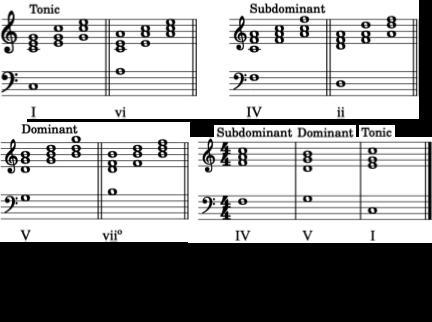
Theessentialfeatureofthisnewtonalharmonywasthe cadentialmovementfromdominanttotonic.Thedominantchord ofakey(atonalcenter)isthemajorchordbuiltonthefifthscale degree,anditcreatesastrongpulltowardsthetonic(astablechord whichresolvesharmonictension)duetotheraisedseventhscale degreeofthekey,calledaleadingtone,whichmustascend stepwisebyasemitonetothefirstscaledegreeandrootofthe tonicchord.Anychordwhichcreatestensionandcallsfora resolutiontothetoniccanbesaidtohaveadominantfunction, regardlessofwhetherornotitisexactlythedominantchord. Similarly,anychordwhichhastheeffectofresolvingtensionis
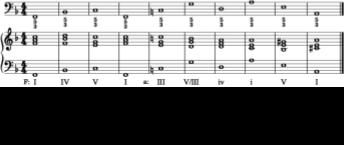
saidtohaveatonicfunction.Justasdominant-functionchordslead totonic-functionchords,athirdclassofchords,saidtohavea subdominantfunction,leadstoadominant-functionchord.This classtakesitsnamefromthesubdominantchord,builtonthe fourthscaledegree.Figure1containsachartofthescaledegrees (thatis,degrees1-7,withtheexceptionof3,sincethechordonthe thirdscaledegreeisdifficulttocharacterizeinthisway)whose correspondingchordsuniversallybelongtoeachofthethree classes,regardlessofkey.Theprogressionfromtonicto subdominant,subdominanttodominant,anddominanttotonicis principallywhatdefinesfunctionaltonalharmony,evenasit developedtogetherwith basso continuo inthe16thand17th centuries.
Anotherkeyfeatureofthenewtonalstructureofmusicwas theabilitytomodulate.Modulationreferstotheactofchanging keysbyswitchingtotheuseoffunctionalchordsfromthenew key.Theoretically,nothingshouldpreventtonalmusicfrom modulatingtoanyofthetwenty-fourmajorandminorkeys. However,intheearlyyearsoftonalharmony,instrumentswere tunedusingtemperamentsdesignedtofavorthediatonicmodesof theRenaissance,inwhichaccidentalsseldomexceededtwoflats. Asaresult,keysfarremovedfromCMajor/Aminorsoundedout oftuneattheturnofthe17thcentury,andcomposerstendedto remaininkeyswithfewaccidentals.
Theotherwayofmovingbetweenchordswithinfunctional
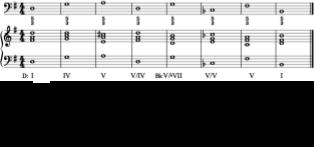
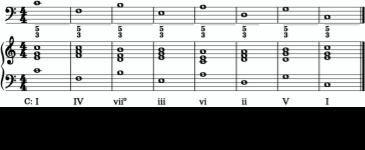
harmonyisbywayofthecircleoffifths.Thebasicdominant-totonicprogressionisachordaldescentbyafifth;ifthetonicis majorandre-analyzedasthedominantchordofanotherkey,and soon,thenatonallyconceivedprogressionofmodulating cadencesiscreatedwhichdescendsbyperfectfifths(figure2).If thesamedownwardsmovementbyfifthsisreplicateddiatonically (figure3),however,theresultisastrongprogressionwhichmoves throughallofthechordsinakeyandbeginswithmotionfrom tonictosubdominant,thentodominant-function,aswellasends withmotionfromsubdominant-functiontodominant,thentotonic. Thisprogressiondoesnotmodulate,butratherreinforcesthekey inwhichitoccurs.This‘circleoffifths’progressioncanalsobe employedinreverse(figure4),inwhichcaseitcanbeanalyzed eitherasachainofunresolvedtonic-to-dominantmovementsor plagalcadences(movingfromsubdominanttotonic).
EarlyVenetianSoloSonatas
Thenewstyleofcompositionwhicharosealongside functionalharmonyandthenewtraditionof basso continuo was
theoperaticmonody.Operawasinventedattheturnofthe seventeenthcenturybymembersofanintellectualgroupin Florence,calledtheFlorentinecamerata,whobelievedtheywere revivingAncientGreekmusic-basedtheatre.5,6 Thenewstyle whichcomposerssuchasGiulioCaccini,JacopoPeriandClaudio Monteverdiinnovatedwasintendedtoimitatespeechinitsrhythm andtoevokestrongemotionalaffectsbypaintingwordsand emotions,aswellasthroughcontrapuntalrule-breakingand virtuosicornamentation;insum,thesecomposersprioritizedthe conveyingoftextualmeaningintheirvocalwriting.7,8 Thesetraits characterizedthefirstoperas,suchasPeri’s Euridice and Monteverdi’s L’Orfeo,andinstrumentalmusicfollowedallof thesestylisticdevelopments,drawingonvocalpracticetodevelop anewinstrumentalstyle.Oftheaforementionedcomposers, Monteverdiinventedatermforthisnewstylewhichcouldapplyto vocalaswellasinstrumentalmusic:hecalledthismannerof compositionwhichprioritizedaffectthe seconda prattica (second practice),asopposedtoanolder prima prattica (firstpractice).9 TheprimaryaffectswhichMonteverdiconsideredimportantto paintinmusicwerethe stile concitato and stile molle,aswellas theintermediate stile temperato. 10 Accordingtothisscheme,the stile concitato correspondstomomentsofagitation,whilethe stile molle mightbedescribedas“placid;”anintermediatepoint betweentheseisthe stile temperato. 11
Thetraditionofantiphonalchurchmusic(apolyphonic formatwithmultiplechoirsofvoicesandinstrumentsplayingin
5 Abadie2023.
6 Carter1991,45-47.
7 Abadie2023
8 Carter1991,45-47.
9 Selfridge-Field119-121.
10 Selfridge-Field119-121.
11 Selfridge-Field121.
alternation)gavewaytosmallensembleswith basso continuo accompanimentaswellaswrittendiminutionsanddynamics servingtocreateinterest,sometimesbyimitatingpolychoral effects.Thisdecreaseinthenumberofequalvoicesalsomeant thattherewassimplymoreroomfordiminutions,embellishments andvirtuosicsoloisticeffects.Theepitomeofthistransformation isthesolosonata,whereasingleaccompaniedinstrumenthas availabletoittheaffectsfacilitatedbyaminimal solo-contino texture,yetmayalsoimitatetheeffectsofmusicalcontrastand polyphonyeasilyavailabletomulti-instrumentalensembles throughdevicessuchasdynamicchangesorjumpingbetween contrapuntallines.12
Inherbook, Venetian Instrumental Music from Gabrieli to Vivaldi,EleanorSelfridge-Fielddistinguishesbetweenmultiple genresofworksforsolo obligato instrument:ontheonehand, manycomposerspublishedcollectionsofdancemusic;onthe otherhand,manypiecesweredescendedinsteadfromRenaissance instrumentalformsintendedforusebetweensectionsofaCatholic religiousservice,suchasthe canzona. 13 Thesecloselyrelated formsarecharacterizedbycontrastingsectionsvariouslyinduple andtriplemeteraswellasvariousdegreesofimitation.This projectdealsprimarilywiththepiecescalledsonatas—thisbeinga free,multi-sectionformwhichdevelopedtogetherwith canzone. Specifically,thisprojectisconcernedwithsonatascomposedfora single obligato instrumentwithcontinuo,publishedbetween1617 (thedateofthefirstpublicationinVenicefeaturingsuchasolo sonata,BiagioMarini’sOp.1)andca.1630.
12 Foraclearexampleofleapingbetweenvoicestoemulatepolyphony,seethe fourth allegro sectionofDarioCastello’sfirstsolosonata.Here,thesolo instrumentrestatesasubjectstartingondifferentnotes,creatingtheeffectof imitativecounterpoint.Castello, Libro II, sonata I.
13 Selfridge-Field,121.
Becausetheturnoftheseventeenthcenturywasa transitionalperiodbetweentheRenaissanceandBaroqueperiods ofEuropeanmusichistory,inordertounderstandthestructureand aestheticofthestyleinquestion,itwasfirstnecessarytodetermine whether,andtowhatextent,progressiveVenetiancomposerswere workingwithinamodalortonalframeworkbetween1600-1630. Inordertodothis,itisinturnnecessaryfirsttounderstandthe differencesbetweenmodalityandtonalityandtocondensethis understandingintoasetofcriteria,thenfinallytoapplythese criteriatomusicofthestyleIwishedtoimitate.
Ifthemovementofthemusicisdrivenbyvertically conceivedfunctionalchords;andchordprogressionscreatealocal senseoftonalcenter;andthemusicusessystematicchord progressions,meaningprogressionsinwhichchordsdemonstrate definitefunctionsbyleadingtothesamechordorchords;thenthe musiccanbesaidtobetonal.Tohelpdeterminewhetherthisisthe case,itisnecessarytoattempttogroupchordslocallysuchthat theyfitwithinafunctionalharmonicframework.Ifthiscanbe done,allowingforchord-borrowing,tonicization,andmodulation, thenthemusichasalocalsenseoftonalcentercreatedby systematicprogressionsoffunctional,vertically-conceivedchords, meaningthatthemusicistonal.
Renaissancemodalitywasnotclearlydefined,butrather differedbetweenregions,styles,timeperiodsandcomposers.In general,however,duetoitsorigininCatholicliturgicalmusic, therewerevariousattemptsbytheoreticianstocodifyaconsistent modalsystemtodescribemusic—especiallysecularmusic—ina Church-approvedCatholiccontext.Generally,itcanbesaidthat thereweretwomodalsystemsthatcoexisted,namelyasetof modes(namedaftertheAncientGreekmodes)andasetof
psalm-tones.Theregularmodeswereusedforawiderangeof secularandliturgical,vocalandmusicalgenres,whilethe psalm-toneswereintendedforsettingpsalmsandusedonlyfor liturgicalmusic.
Ifapieceofmusicisinoneoftheregularmodes,its specificmodecanbedeterminedbyexaminingtheranges(and accidentals)usedbythevoicesaswellastheimportantcadence notes.Eachmodehadarangeofapproximatelyoneoctavespecific toeachofthevoices(SATB),aswellasprimaryandsecondary cadencenotes.AdrianoBanchieriprovideshelpfuldescriptionsof thechurchmodes,includinghisownopinionontheimportant cadencepointsofeach,astherewasnouniversallyaccepted standardforthis.14 Thepsalm-tonesaresimilarlydefined,withthe differencethateachpsalm-toneisaccompaniedbyadesignated psalm-tonemelodyusedtorecitepsalms.Psalm-tonemelodies wereoftenquotedinsettingswhichemployedoneofthesemodes, thoughsuchquotationwasnotstrictlyrequired.Ifimitative entrancesfeaturedanswerswhichwereadjustedtoadhereto psalm-tone-dependentrequirementssuchasthosegivenby Banchieri,thenthepieceislikelyinapsalm-tonetonality.15
Applyingthesecriteriatotheearlysonatasofcomposers suchasDarioCastello,BiagioMarini,andGiovanniBattista Fontanarevealsthattheirmusicwasalreadyhighlytonalinthe earlyseventeenthcentury.Marini’smusicfeaturestonic-dominant andtonic-subdominantmodulations(amongotherkeyrelations), andCastellomakesadditionaluseofparallelmajorandminorkeys inhismusic.WhileFontana’spublishedsolosonatastendnotto modulate,theydocontainsecondarydominantchords(the dominantofthedominant)aswellasborrowedchordsfromother
14 Banchieri/Cranna.
15 Banchieri/Cranna.
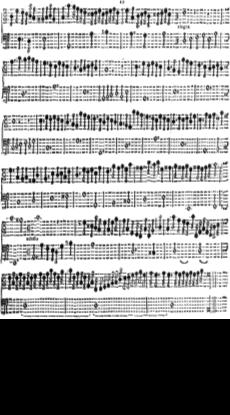
keys.16 Allofthese composersemploy chordswithdefinite tonic,subdominantand dominantfunctions,as wellasmakeextantuse ofthecircleoffifthsin theirharmonic progressions. Forexample, applyingthesecriteriato Castello’sfirstpublished sonataforsolohigh instrumentandcontinuo revealsthefollowing structure:thesonata beginsinAminorand modulatestotheparallel majorkeyonCatthe endofitssecond substantialsection.Followinganextendedpassagemoving diatonicallythroughacircleoffifths,themusicmodulatestothe subdominantkeyofDminor,whenceitmodulatestoAminorand back.Inthefinalstretch(seefigure5),extendedsequencesof fifthsinthebasstonicizeCMajorandDminor,settleonAminor, andfinallytonicizeDminorattheendinanticipationofaplagal cadencebacktoAminor.17
Anotherimportantfeatureoftheinnovativeinstrumental styleofthesecomposerswhichbecameevidentthroughthis processofanalysiswasthecomposers’inventiveness.Castello’s
16 Fontana, sonatas 2, 3 and 6
17 Castello, Libro II, sonata I.
twosolosonatasemployfast,virtuosicrunsandarpeggiosaswell aslanguidmomentstoprovokestrongemotionaleffects;bothhe andFontanaalsousedrepeatednotesandarpeggiosinnumerous sonatastoconveysomethinglikeMonteverdi’s stile concitato. Meanwhile,Marini’smusicexploresideasbothconcreteand abstract,suchasdouble-andtriple-stops, scordatura tuning,and composingwithoutcadences,forextravagantmusicaland technicaleffects.Bothcomposersexhibitthethen-newtendencyto
prescribenumerousornamentsandspecialeffects—suchas tremoli,whichimitatedthetremblingofthehumanvoiceorof certainorganstops,orjuxtaposingloudandquietpassagesto createechoeffects.18,19
Instrumentalmusicwasinfluencedbythevocaltraditionof theRenaissance,andthereforetheearlyBaroqueinstrumental ornamentsgenerallymirroredvocalones.Vocalistsand instrumentalistsalikewereexpectedtoperformwrittenmusicwith improviseddiminutions,or passaggi,whichincludedsmall ornamentsandmelodicformulas.Thelate16th-centurysinger GiovanniLucaConfortoprovidesseveralexamplesofsuch passaggi inapublicationtitled The Joy or Ornamentation.He providesseveralalternativediminutionstobeperformedona
18 Castello, Libro II, sonatas I-II.
19 Marini,Op.2, Sonata senza Cadenza, Sonata per Sonar con due corde.
numberofdifferentcomposedmelodicintervalsandcadential formulas;hisexamplediminutionsbeargreatresemblancetothe floridrunsfoundininstrumentalcompositionsfromtheearly17th century.20
Thevocalornamentswhichshapedinstrumental performanceattheturnoftheseventeenthcenturyincludethe trillo, tremolo,and gruppo,aswellasthe accento, esclamazione and intonazione.Manyoftheornamentsthatwerepopulararound theturnoftheseventeenthcenturybearsimilarnamestomodern ornaments,butareotherwisequitedifferent.Originaltextsfrom theearlyseventeenthcenturyoftenusesubjectiveorrelative descriptionswhendiscussingornamentation,andaretherefore difficulttointerpret.21 However,studyingtextsinconnectionwith musicalexamplesprovidessomeinsightsintotherealizationofthe variousearlyseventeenth-centuryornaments.
Forexample,the tremolo,asopposedtothemodern ornamentbythesamename,originatedasavocalornament similartomodern vibrato.Thiseffectwasoriginallyimitatedon organsthroughtheintroductionofvariousstopscalledtremulants, whichwouldproduceatremblingeffectimitatingthatofthe
20 Conforto/Stevens1989.
21 Abadie2023.
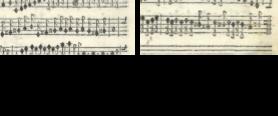
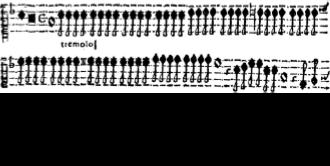
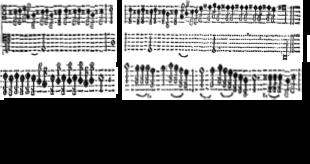
voice.22 Thisorgantremulantiswhatcomposerslatersoughtto imitatewiththe tremolo effect:whenrequiredbythemusic, accompanistscouldactuatetherelevantstopsandother instrumentalistscouldmatchtheorgan’s tremolo withtheirown effects.23 Infact,itseemsthatanorganwiththiscapabilitywasin useinSt.Mark’scathedralinVenice,wherebothCastelloand Mariniwereemployed.24 Earlyinstancesofpassagesmarked tremolo occurina canzona forrecorderbyGiovanniBattista Riccio,publishedin1620(figure6),aswellasinthesecondof DarioCastello’ssonatasforsolohighinstrumentandatriosonata inBiagioMarini’s Op.1.25,26,27 RiccioandCastellobothnotate their tremolo passageswitheighthnotes,whileMariniuseshalf noteswhichshouldpresumablybesubdividedbytheplayer.
22 Carter1991,45-47.
23 Carter1991,45-47
24 Carter1991,45-47.
25 Riccio, La Grimaneta.
26 Castello, Libro II, Sonata II.
27 Marini,Op.1, La Foscarina.
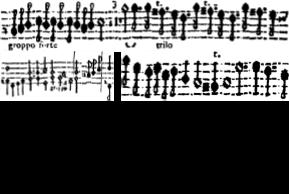
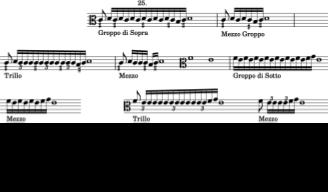
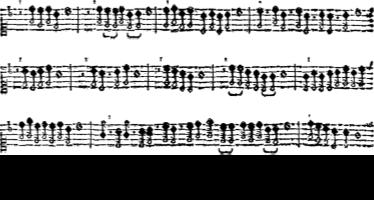
Aswiththe tremolo,theword trillo existedasthenameof anornament,butthis trillo wasdistinctfromthemoderntrill. Somethinglikethemoderntrill,however,alsoexisted.This ornamentwasapatternofrapidlyalternatingnotes(asinfigure7), calleda gruppo.Thisformulawasnotdenotedbyasymbolabove thestaff,butratherexplicitlynotatedinRenaissancemusic,and theornamentremainedlargelyunchangedinnotationintheearly Baroque(compareinstancesfromtheRenaissance,asinfigures 7-8,tothelateronesinfigures9-11).
28
Variousauthorsprovidehelpfuldescriptionsofthe trillo, includingtheFlorentinecomposerGiulioCacciniandthe Rome-basedsingerGiovanniLucaConforto.The trillo seemsto havebeenasinglenoterepeatedinrapidandaccelerating succession,typicallybutnotexclusivelyemployedonthe penultimatenoteofacadentialformula.Thereareinstancesacross musicbyvariouscomposersofwhatisrecognizablyafullynotated trillo,resemblingtheexamplesprovidedbyConfortoandCaccini, beingmarkedwithasymbol t. above(orbelow)thestaff(fig. 9-11);itisnaturaltoassumethatthe t. standsfor trillo,an assumptionwhichmaybeextrapolatedtoinstancesofthe t. symbolwhicharenotaccompaniedbywritten-outsixteenthnotes.
28 GiovanniBassano, Ricercate Passaggi et Cadentie, Ricercata I,1585.
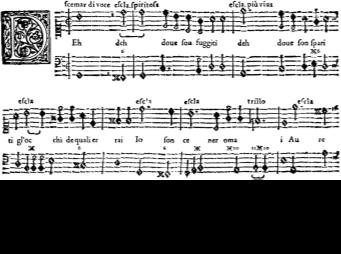
Thisgeneralizationissupportedbythefactthatthesymboloften appearsoveranoteofextendedrhythmicvalue,inslowor expressivemoments,orincadences(fig.9-11).However,one questionabouttherealizationofthe trillo iswhetherittrulyonly involvedonepitch,asmanyexamplesof trilli fromwrittensources beargreatersimilaritytothe gruppo.Perhapsthereweremultiple stylesof trilli,variouslywithandwithoutaneighbortone.Thisis supportedbyexamplesprovidedbyGirolamoDirutainthesecond partof Il Transilvano (histreatiseonorgan-playing,publishedin Venice),inwhichaso-called“half-note trillo”isnotatedasa
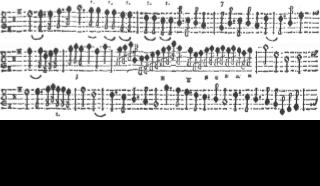
gruppo beginningfrombelowonthewrittenpitchandlastinghalf oftheoriginalnote’sdurationbeforesettlingonthewritten pitch—inotherwords,itismuchlikeashortmoderntrill(fig. 12).29 Forthepurposesofthiscomposition,however,the trillo is assumedtobeasinglerapidlyrepeatednote,asitisnotatedby Caccini,Conforto,andCastello.
Caccinidescribesanadditionalvocalornamentwhichhe callsthe esclamazione.Thisornament,hesays,shouldbeplaced ondottednotesofintermediateduration—suchasquarternotes andhalfnotes—andthenonlywhenthefollowingnoteisofa shorterdurationandatalowerpitch(figure15).Theessenceofthe 29 Diruta,253,263.
ornamentisapparentlya“softening”ofthevoiceduringthedotted note,whichmaybeunderstoodtomeanadecreaseinvolume, whilethefollowingnoteissungwith“liveliness”toproducewhat Caccinibelievesisaparticularlyvitalmusicaleffect.30 Hefurther distinguishesbetween esclamazioni whichdescendbystepand thosewhichleapdownwards,describingthelatterasconveying greateremotionalaffect.31 ThecontemporaneousauthorGiovanni BattistaDoni,however,clearlydescribesthe esclamazione as featuringacontinuouspitchslide:discussingCaccini’sdescription, headdsthattheornamentrequires“alittlebitofthatverybrief bendingofthevoice,whichismostlyheardonthefinaldesinences ofthesyllablesbythosewhosingwithgraceandtenderness,and evenoninstrumentalstrings,andontheholesofflutes,whenthe fingersareliftedlittlebylittle,whichisnothingotherthanthe Plasma oftheAncients.”32,33 Thus,Doniclearlyexpectssingersto performaslidewhensinging esclamazioni,aneffectwhichis apparentlyalsousedbyinstrumentalists.
Theslideisalsomentionedbysomeauthorsinacontext independentofthe esclamazione.OttavioDurantewritesthat,“For theincreasingofthenotefromthetonetothesemitone,asharp signwillbeaddedtothetiednote,toindicatethatonemustbegin toraisethepitch[crescere]littlebylittle,countingfourcommas, untiltheperfectincrease[crescimento]isreached,which,whenit iswelldone,isverymoving.”34,35 WhileDurantedescribesthis effectusingtheword crescere (togrow),thereferencetothe intervaloffourcommasmakesitclearthathemeansnotonly ‘growing’indynamicbutalsoinpitch.G.B.Donigivesthis
30 Caccini/Abadie,35.
31 Caccini/Abadie,35
32 Abadie,11.
33 Doni,71.
34 Durante/Sanders,74.
35 Abadie,12.
pitch-bending(orsliding)effectanameofitsown,callingitthe stráscino andrecommendingitbeusedonlybysingerswithhigh vocalranges.36,37 Donidoes,however,mentionthat“thosecalled ‘accents’bysome,and‘graces’byothers(whichwhenincreasing asinglenoteareequivalentto plasma),termsusedbymanyto designatebriefunwritten passaggi [...]arenecessaryforsinging well;[...]andtheyarespontaneouslyknownbysingers,without beingnotated,aswellasbyexpertviolandviolinplayers,andare wonderfultohear.”38,39 Theconflationofthe plasma/stráscino with brief passaggi seemstoraiseseveralquestionsaboutbothofthese, butperhapsitcanbeunderstoodonlytomeanthatDoniconsiders this plasma tobeanornamentequivalenttootherbrief passaggi, regardlessofitsnature.
Caccinidescribestwowaysofbeginning(“intoning”)the firstnoteofphrase:“Thustherearesomewhobeginathirdbelow intheintonationofthefirstnote,”ofwhichornamenthewrites that“itdoesnotfitinmanychords,although,inthoseinstances whereitmightbeused,ithasbecomesuchafrequentmannerthat, insteadofbeinggraceful(duetothefactthatmanylingertoolong onthethirdbelowwhenitwouldbebettertojustsuggestit),Ifind itratherirritatingtotheear,andbeginnersinparticularshoulduse itsparingly.”40 Caccinipreferredforsingerstobeginphrases simplywithanincreaseor,betterstill,adecreaseinvolume.41 However,wecanassumefromCaccini’sevidentfrustrationthat themannerinquestionofintoningamusicalnotewascommon
36 CambridgeDictionary.“Crescere.”@CambridgeWords,11Mar.2026, dictionary.cambridge.org/us/dictionary/italian-english/crescere.Accessed14 Mar.2026.
37 Doni,25
38 Abadie,13.
39 Doni,25.
40 Caccini/Abadie,33.
41 Caccini/Abadie,33-34.
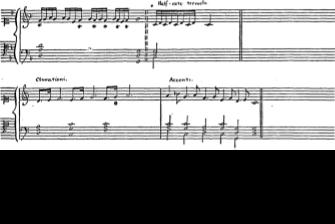
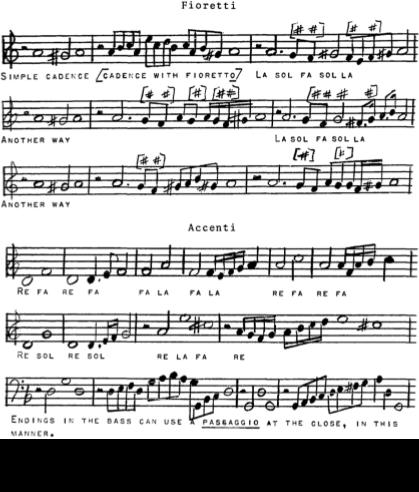
amongvocalperformersofthemodern stile rappresentativo.In fact,inthesecondpartof Il Transilvano,Dirutademonstratesthat thisornament,too,wasimitatedbyinstrumentalistswhenhe providesexamplesofthisexactornamentinanorganintabulation, callingthem clamationi (fig.12).42 Similarly,Banchieriprovides examplesofthesameornament,althoughhenameshisversionthe accento. 43 Notably,Banchieri’sexamplesaremorenumerousand togetherprovidealessstrictviewthandotheexampleswhich Dirutaprovides,astheysometimesbeginafourthratherthana thirdbelowthewrittennote,andmanyofhisexamplesalsofeature runsoffastnoteswhichbearsimilaritytohis fioretti (brief,free musicalflourishes),asinfigure13.44
Dirutaalsoprovidesexamplesofanornamentwhich Caccinidoesnotname,confusinglycalledbyDiruta accenti despitebeingunrelatedtoBanchieri’s accenti.Diruta’s accento seemstoapplytoanotethatdescendsbystep,addingashort escapetonebeforeleapingdowntothenextwrittennote(fig. 12).45
42 Diruta,253.
43 Banchieri/Cranna,159-162.
44 Banchieri/Cranna,162.
45 Diruta,253.
Caccini’sexamplesofmusicalideasre-notatedwith diminutionsnotablyalsofeaturemuchrhythmicflexibility.46 With thesamecarethatheseekstonotate trilli and tremoli,Caccini notatespassagesoriginallycontainingeighthnotesusingdotted rhythms,aswellasdiminishesthenotevaluesofdescendinglines ofeighthnotes,extendingthefirstandlastnotestocompensate (fig.14).Inotherplaceswheretheoriginalexamplescontain
46 Caccini/Abadie,38.
writtenrunsofsmallnotevalues,Caccininotateshisrealised versionsalmostexclusivelywithdottedorotherwiseuneven rhythms.
Besidesallofthesmall,contextualornamentswhichhave beendiscussedabove,therearealsofreerdiminutionswhichall threeauthorsdescribe.Banchieridistinguishesamongtwo categoriesofsuchfreediminutions: fioretti and passaggi.The distinctionappearstobethattheformerarebriefandoftenprovide onlyameansofarrivingatagivennotefromtheonebefore,while passaggi arecharacterizedbylengthierrunsoffastnotes,primarily
movingstepwise(figure13).NeitherDirutanorCaccinimention bothofthesetypesofornaments.Dirutaonlydescribes minuta, whichappearcomparabletoBanchieri’s fioretti,whileCaccini complainsoflong passaggi thattheyareoftenperformedwithill tastebysingers,obscuringtheoriginalwrittennoteswithtoomany passaggi andfailingtoconsiderwhen passaggi areorarenot appropriate;itseemsthathefavorsshort fioretti aswell.47,48 Confortomakesnodistinctioninhistreatisebetweenshortand longdiminutions;foreachcomposedinterval(giveninwhole-and half-notes)heprovidesexamplediminutionsshowingacontinuous progressionfromquarter-tosixteenth-notes.
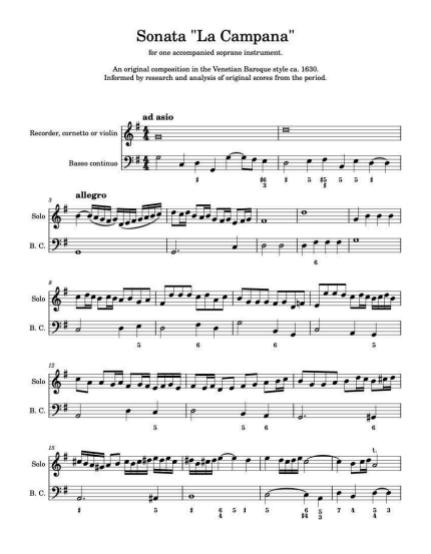
Thegoalofthisprojectwastousetheresearchportionto informanoriginalcompositioninthestyleoftheearliestVenetian soloinstrumentalsonatas—thatis,between1615and approximately1630.Havinggainedanunderstandingofthetonal, structuralandinterpretivestylisticfeaturesofthistime,placeand genre,Isetaboutcomposingasonataforanunspecifiedsolohigh instrumentand basso continuo.Theaimwasforthissonatato synthesizestylisticfeaturesofmultipleworksandcomposers representativeofthenascentmusicalstyleofthetime,with inspirationprimarilycomingfromtheworksoftwocomposers:the VenetiancomposerDarioCastelloandaBresciancomposerwho workedandpublishedmusicinVeniceduringthisperiod,namely BiagioMarini.
Bydesign,thepiecehasnoobviousunifyingmaterialsuch asarecurringchordprogressionora ritornello theme,aseach contrastingsectionoftheseearlysonatastypicallyintroducednew material.Thatisnottosay,however,thatmaterialwasnever repeatedonascalesmallerthantheentiretyofapiece,suchas
47 Diruta,253.
48 Caccini/Abadie,25-27.
whenasectionrepeatsinanewmeterinthesecondofCastello’s twopublishedsonatasforsolohighinstrumentand basso continuo. 49 However,theneedtocreateemotionaleffectsalong withasenseofnoveltyandvirtuositycouldalsoleadtheearly sonatacomposerstocomposeapieceasameansofexploringthe possibilitiesofacertainidea,musicalortechnical—suchas Marini’ssonatasin scordatura,orhissonatawithnocadences (Sonata senza Cadenza).50,51 Inanefforttoemulatethiscreativity, thecurrentsonatacontainsasimplerecurringmelodicmotive amongitscontrastingsections,andmuchofthemusicalcontent throughoutthesonata,despitethecontrastingcharacters,isderived fromthisone.ThisthemeisderivedfromtheBostonUniversity Academy(BUA)classbellwhichplaysatthestartandendof everyclassblock.ThisbellconsistsofthenotesG-D-B,outlining aleapofafifthfollowedbyarecoverybyathirdintheopposite direction.
Inthehexachord-basedsystemofsolmization,aswasused intheearlyseventeenthcentury,thenotesofthismotifare
49 Castello, Libro II, Sonata I.
50 Marini,Op.8, Capriccio Per Sonare il violino con tre corde a modo di Lira.
51 Marini,Op.8, Sonata senza Cadenza.
Gutiérrez-Lara24 equivalentto ut-sol-mi inthehardhexachordonG.52 Thiscanbe movedtothenaturalhexachordonC,givingC-G-E,ortothesoft hexachordonF,givingF-C-A.Themotifisquotedrepeatedly throughoutthepiece,variouslyasafifthrecoveringbyathird,or asthesequence ut-sol-mi.Asimplevariationofthe ut-sol-mi form ofthisschoolbellmotifcanbecreatedbyaddinga fa asastepwise passingnotetofilltheleapbetweenthenotes sol and mi,yielding ut-sol-fa-mi.Thisgivesrisetoanumberofpotentialpartial quotationsandre-interpretationsofthesolfègethroughoutthe piece,especiallyifE♭ isassignedthesyllable fa,aswasthe practiceatthetime.53
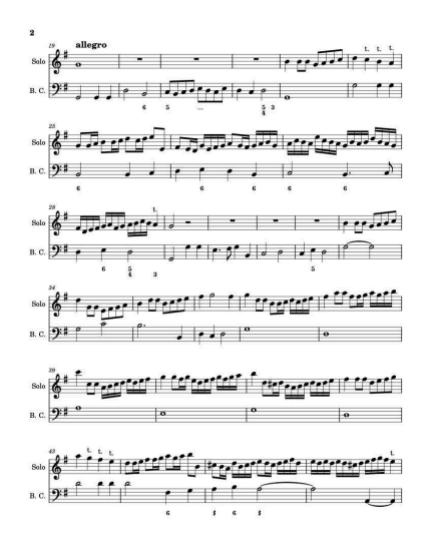
ThesonatabeginswithaquotationoftheBUAbellmotif bywayofcadencestoG,D,andBinmm.1-2.Abovethis,the sopranolinequotestheoriginalmotifinlongnotevalues ad asio, allowingfordiminutionsinaccordwiththebassastheplayer shouldwish.
Thisopeningisfollowedbythefirst“allegro”section,in
52 Thesystemofsolmizationreferredtohereisthatbasedonthreehexachords, orsetsofsixconsecutivediatonicnotes,assignedthesyllables ut (later do), re, mi, fa, sol,and la inascendingorder,andallascendingbywholetonesexcept for fa,whichisasemitoneabove mi.Thethreehexachordswerebasedonthe (theoretically)fixedpitchesC ut,F ut,andG ut,calledthenatural,soft,andhard hexachords,respectively.Thismeansthatthenaturalhexachordcontainedthe notesC-A,thesofthexachordcontainedthenotesF-DwithB ♭,andthehard hexachordcontainedthenotesG-EwithBnatural.Musicianswould mutate (i.e. switch)betweenhexachordswhentheyneededtoassignsyllablestonotes outsideofthehexachordtheywerecurrentlyusing.Importantaccidentalson notesotherthanBwereuncommonthroughouttheRenaissanceandtherefore specialruleswerenotcodifiedfortheirsolmization,althoughBanchierigives someattentiontoE ♭,describingitasE fa duetoitsoccurrencein transpositionsofmodeswithaflatalreadyintheirkeysignature. Banchieri/Cranna,69.
53 Banchieri/Cranna,69.
whichthesopranolineagainbeginsbycenteringthenotes G-D-B,butcontinuesbyextendingthechainofdescending thirdswithadactylicrhythm(long,short,short: ⏑⏑) borrowedfromthe stile concitato,untilthemusicreachesthe dominantchordofGMajor.
Inmm.6-7,adownwardfifthinthesopranoisrecovered byanupwardsthird,completinganinversionofthebellmotif. Thisisansweredinthebassbyaninversionofthepassing-note versionofthemotifinmm.7-8,leadingintoasequenceof downwardsthirdsinthesopranoaccompaniedbythemotif diminishedinthebass.ThisleadstoabassmovementfromDtoG inmm.13-14,thenachromaticascentthroughathirdtoB(the dominantoftherelativeminorofGMajor)inthefirstbeatsof mm.13-16.Thestepwisemotioncontinueswithadeceptive cadence,leadingtoDandanornamentalretrogradequote(B-D-G) ofthebellmotifasthesectionends.
Thepassageinthesopranolineinmm.9-18wasconceived aroundtheBUAbellmotif.Thesopranoinstrumentrepeatsa bar-longpatternbeginningonanewnoteeverytime,asifthere wereinfacttwovoicesstatingthispatternoneafteranother.
Ignoringthewrittendiminutionsrevealssomethingwhich resemblesthetwo-voicestructureinExample1.Here,bothvoices areplayingsomethingwhichresemblesthebellmotif(aleap followedbydownwardstepwiserecovery)atfirst,thenswitching toaninversionofthebellmotiffortheupwardsascentattheend ofthepassage.
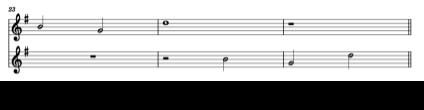
Thefollowingsectionisamodularlyconceived“allegro,” introducedbyashortbassphrasewhichinmm.19-20references theBUAbellusingthedactyl-spondeerhythm (—⏑⏑ —) whichiscommoninperiodcanzonasand concitato momentsin sonatas.Thesopranoenterswithanewtheme,beginningwitha dactylandcontinuingthestreamofdiminishednotevaluesuntil thebassagaincadencesusingtheB-D-Gformulainmm.27-29. Thenewthemeinthesopranoisagainderivedfromthebellmotif: itsfirsttwomeasuresareathoroughembellishmentoftheskeletal structureinExample2,wherethemotifisstatedtwicein retrogradeinversion.
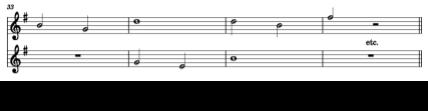
Thebassthenrepeatsthesolofrommm.19-22,nowwith
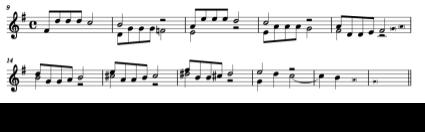
differentdiminutions,afterwhichthesopranoenterswithan extendedseriesofinvertedquotationsofthemotif,descendingby thirdsandascendingbyfifths,asinExample3.Inthisway,a circleoffifthsinthebassleadstoanalteredrestatementofthe localthemefrommm.23-28inthedominantkey,tonicizingD major.
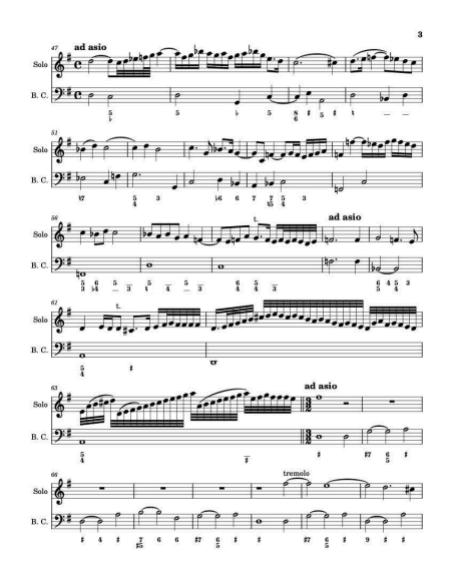
Nextcomesacontrastingslowsection.Labeled“adasio,” thissectionbeginswithaheldnoteinbothvoiceswhichforcesa pauseinthemusic.ThebassmovestoaCchord,suggestingan ornamentalmovementfromdominanttosubdominantandback, thentoG,reestablishingtheoriginalkeyofGMajor.However,the chordinthebassisCminorratherthanCMajor,andtheharmony thusleadsunexpectedlytotheparallelminor.Inreferencetothe
modalRenaissanceideathatflatsevoked“soft”affectswhile sharpsevoked“harsh”affectssuchasanger,thischangeofkey introducestwoflats,andadditionalflatsareusedthroughoutthe movementtocreateanemotionallydarkpassage.
54,55
TheCminorchordinthebasscreatesadissonant suspensioninthesoprano.Likeinthesecond ad asio sectionofthe
54 Itisimportanttonotethat,intheearlyBaroque,thenaturalsinthispassage (andalltherest)wouldhavebeennotatedandconceivedasflatswhenthey
firstofCastello’stwopublishedsolosonatas,however,this dissonanceresolves“incorrectly”upwards.Asinthepassageby Castello,thiscontrapuntal“error”issmoothedoverbyan ornamentbeginningwithalowerneighbornote.Thiscreatesan impressionofresolutionwhichisthwartedwhenthesoprano movesquicklystepwisetoahighA,followedbyanF♯which seemstocompletearestatementoftheBUAbellmotifbeginning onD,butquicklymovesawaytoG.
Next,inm.49,aretrogradebellmotifstatementinthebass (C-E-A)isaccompaniedbyaheldCinthesopranopart,which createsafalserelationwiththesharpthirdinthebassinthethird beatofthemeasure—thisdissonancealsoresolvesupward,toaC♯ leadingtone.Thismeasureisintendedtomatchtheenvironmentin whichGiovanniBattistaDonidescribesaGreek-inspired “plasma,”ormicrotonalglissando,tothealterednotepitch,aiming tocreateaparticularlydissonantandexpressiveeffect.Thereare alsoplacesinthissectioninwhichCacciniwouldlikelyapprove ofperformingan esclamazione,anddiminutionsarealready written.
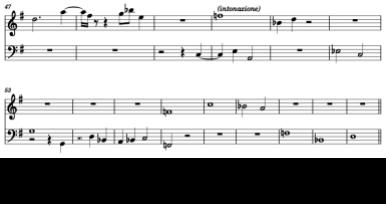
AninvertedBUAbelloccursinthepatternF-B♭-Din measure50,anditisansweredwitharetrogradeinversioninthe bass(E♭-C-G).Example4illustratestheinstancesofthebell
motifinthispassage.Notethatthelongnoteinmm.50begins withanotated intonazione,soitisrepresentedasanunderlying wholenoteintheexample.Asubsequentseriesofsuspensions, deceptivecadencesandflatsaccidentalsleadthisslowsectiontoF Major,thentoitsrelativeminoronD.Thesopranoplaysarapid cadenzaoverheldchordsinthebass,featuringdynamiccontrasts distinguishedbythepresenceorabsenceofslurs,untilthemusic finallyarrivesagainatthedominantkeyofG,namelyabrightD Major.
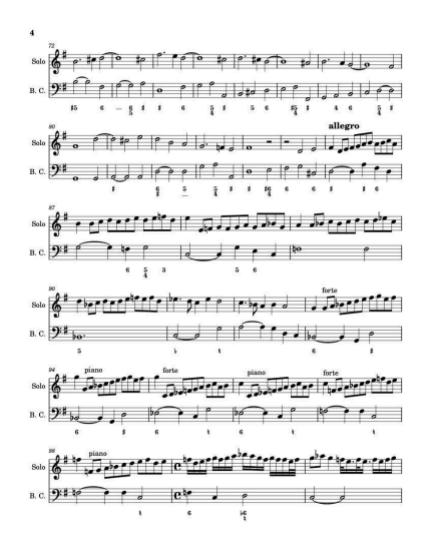
Thetimechangestotriplemetergoingintothefifthsection ofthesonata,whichimitatesapopulardancethroughitsrepeated basspattern.ThisbasspatterncombinestwocommonBaroque basso ostinato (repeatingbass)patterns:theI-I-IV-Vprogression andtheI-V-vi-IV-Vchaconneprogression.56 Together,thesetwo progressionscreateanirregularfive-measurepattern,andthe sopranopartthereforeenterswithapickuptothesixthmeasureof thissection,creatingtheillusionofmoreregular6-and4-measure phraselengths.Thesopranolineismarked tremolo inthissection; inaccordancewiththemusicalpassagesfrom1615-30whichare marked tremolo,thissectionhaslongnotevalues.
Thebellmotifreturnsinthissectionbytakingoverthe bass,leadingintoapatternofstepwiseascendingthirdsfollowed bydownwardleapsbyafifthasinExample5,alternatingbetween twovoicestoyieldsmoothscales.
56 TheI-I-IV-VostinatoprogressionappearsinsuchworksasClaudio Monteverdi’s Chiome d'oro, bel thesoro,SV143,AntonioVivaldi’s La Cetra, RV198a,and Canario fromGiovanniGirolamoKapsberger’sfourthbookof guitarintabulations,toprovideadiversesample.
Followingthe tremolo dancesectionisafastsection,stillin triplemeter.Thissectioniscomposedentirelyofmodulating sequenceswhichmovebyfifths.Thefirstsequentialunitisa diminutionoftheBUAbellmotif:anascentbyafifthfollowedby adescentofaminorthird,outliningamajortriadwhichleadsto thenextcellaperfectfourthabovethepreviousone.Thissequence
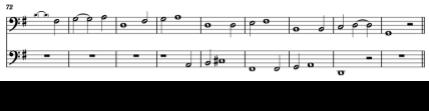
leadsfromGtoD,atwhichpointthereisadeceptivecadencetoC minorinsteadofE♭ Major.TheparallelmajorofCminorleadsto Gmajor,whereanewsequenceof forte statementsand piano responsesleadsagainthroughthecircleoffifths,nowstoppingat F.Thesonatareturnstoduplemeterinmeasure99,andthe sixteenth-notes(semiquavers)whichcontinuethemelodyofthe fasttriple-meterquarter-notes(quavers)suggestthatthenew temposhouldbechosensuchthatnewsixteenth-notesandold quarter-notesareapproximatelyequivalentinlength.
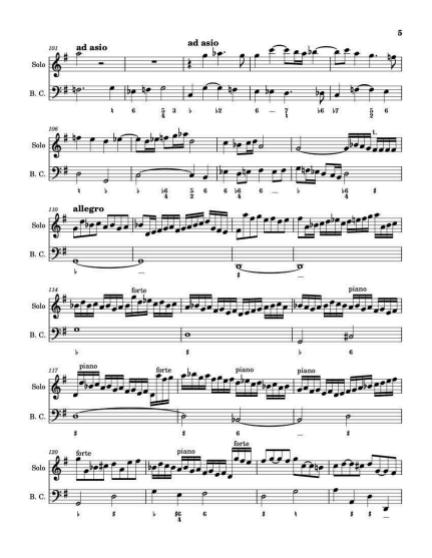
AfterabriefcadencetoFMajor,thenextslowsectionof thesonatabeginsinCminor.Thissectionconsistsoffree,loosely imitativecounterpointbetweenthesopranoandbassvoices.Its skeletalstructureisbasedinitiallyonstatementsofasubjectwhich consistsofanupwardleapfollowedbya2-3suspensionanda stepwiserecoveryoftheleap;thisthemecomesfromthehistorical solfègesyllables ut, sol, fa,and mi. 57 Thissubjectappearsoncein
57 Ut isthehistoricalsolfègesyllableequivalentto do.
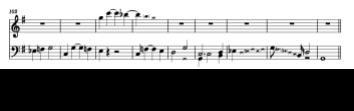
thesopranoandthriceinthebassinmm103-107,includingonce inaugmentationinmm.106-107.ThisisvisibleinExample6, whichalsorevealsadditionalinstancesof(transformationsof)the bellmotifinthispassage.Onpurpose,thissectionofthesonata hasampleroomfor esclamationi,aswellaspotentialspotstoadd gruppi or trilli.
Notably,themeasures106-107outlinethehistorical solfègesyllables sol-ut-fa-mi inthehardhexachord.Through imitationofbothmelodyandrhythm,aswellaschromatic descents,thissubjectleadsthemusictothesubdominantofC minor,namelyFminor,inmm105-106.Inmm104-105,the sopranolinealsoimitatestherhythmanddirectionofthebass voiceatonemeasureofdelay.Theimitationcontinuesmore looselyinmm107-109,withanewmotifbeingarisinglineoftwo dactyls.Thissecondsubjectarisesfromaplayonhistorical moveable-do solfègeinthebass:the fa-mi sequencewhichends thebellmotifaswellasbeginsmm106isrepeatedinthebassin measure108withaflattenedE la fa,bearingthesyllable fa, followedbyanaturalE la mi,bearingthesyllable mi andleading toF fa ut,ormodernfixed-do fa. 58 Throughoutthisslowsection,
58 Thesenotenamescomefromcommonpracticeinheritedfromthe Renaissancesystemofsolmization,andaretakendirectlyfromA.Banchieri’s Cartella Musicale,pp 69-70inC A CrannaJr’stranslation Inpage99ofthe translation,Banchieriprovidesanexampleofasolmizationusinghisown proposedsystemofsolmization,whichismoresimilartofixed-do withthe seventhsyllablebeinglabelledeither ba (soft)or bi (hard).Here,aflattenedEis giventhesyllable fa.Banchieri/Cranna,69-99
thesopranolinefeaturesseveralornamentalchangeswhichaimto createinterestwithoutlosingtheeffectofimitation,suchas diminutions,anticipationsandsuspensions.
ThissectionbeginsinGminor,theparallelminorofthe keyofthepiece.ThesopranobeginswithastatementoftheBUA bellmotifinminor(i.e. sol-re-si♭)leadingintoadescending passageofcontinuoussixteenth-notes—alloveraheldnoteinthe bass.Measures110-111arerepeatedafifthabove,outliningthe dominantchordofGminor.Thebasscontinuestoalternate betweenGandDwithdiminishingnotelengths,occasionally touchingonthesecondarydominantofG(AMajor)toprovide greaterrhythmicandharmonicvariety(cf.mm116,121).
Meanwhile,themelodycontinuesinmeasure114withadescent fromB♭ toGwhichisimmediatelyimitatedadiatonicthird above,thistimecontinuingbackdowntoD,withthesequenceof B♭-G-Doutliningthebellmotifinitsretrogradeinversion.The descentfromAtoDisrepeatedinthefollowingmeasure,and againinmeasure117,althoughthereitisextended,beginningon Danoctaveabove.ThedescentcontinuesfromahighAtolowD againandbacktoahighG,afterwhichtherhythmicregularityof thesemiquavers(sixteenth-notes)isbrokenbyaseriesof eighth-noteswhichoutlinecadencestoDandGandincludean augmentedsecondbetweenB♭ andC♯.Afterrestatingthe descendinglinefromAtoDonceagain,thesopranomelody returnstotheeightnotes,nowbuildingonthepreviousorderof cadences(DandG)byaddingacadencetoCbeforethattoD.The resultisthatmm.122-123featureaseriesofcadencestothetonic, subdominant,dominant,andtonicofGminor.Afterafinal flourishofsixteenths,themelodysettlesagainonextendednote values,beginningtheantepenultimatesection.
SectionIX: Ad asio
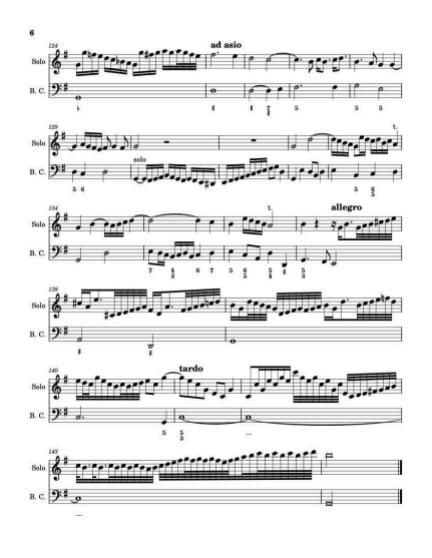
Thepurposeofthissectionistohaltthemomentumcreated duringthepreceding allegro,slowingtherhythmstoquarterand halfnoteswhiletemporarilydecreasingtheharmonicrhythm.A fastruninthebassintroducesanewphrasecontainingseveral transformationsoftheBUAbelltheme,whichthesopranobegins inturnbyreturningtotheoriginalG-D-Bthemefromthe beginningofthepiece,statingthethemetwicewithoutpauseand withcomposeddiminutions.Example7showstheoccurrencesof thebellmotifinthispassage.
Aparticularlyslowmomentoccursinmeasure135,where thesopranosuspendsadissonantDforfourbeatsabovechanging chordsinthebass,finallyresolvingdowntoC—onlyforthebass tomovetoaD,sothattheresolutionnoteofthesopranoformsa dissonantseventhwiththebass.Thisuseofdissonancecreates harmonictensiontosubstituterhythmicmomentumasadriver whichleadsthemusicintothefinaltwosections.Thedissonance isinturnenhancedbyseveraltiedanddottednotes,onceagain providingappropriateplacesfortheexpressive esclamazione. SectionX: Allegro
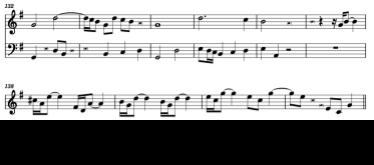
Thisshortsectionprovidesafinalflourishofvirtuosicfast notesmovingthroughthecircleoffifths.Thepatternwhichis repeatedatnewintervalsnotablybeginswiththeBUAbellmotif initsretrogradeinversion,asismadeclearinExample7.
Thisfinalsectionbearsanewmarking:neither ad asio nor allegro,butrather tardo.Thistempomarkingfelloutofuselater intheBaroque,butca.1620itwasnotuncommoninmodern-style sonatas.59 Togetherwith presto,the tardo markingformsapairof markingswhichmean“fast”and“slow,”respectively,indicating moreextrememusicalspeeds,asopposedtotheaffectsindicated by allegro and ad asio.Thissectioncontinuestheflourishofthe preceding allegro section,exceptthatitaimstogrindany allegro momentumtoasuddenhaltandproceedwithasenseofslowness despitefastnotevalues.Thiseffectisaidedbytheuseofanending formulaborrowedfromCastello,whichhasthesoloistperforma finalvirtuosic cadenza overaheldsubdominantchord.60 Thus,this sectionbeginswitharpeggiosoveraheldCinthebass,andends withaseriesof gruppi which,ratherthanresolvingtotheir expectedgoals,continuerising,thusbuildingtensionwhichis releasedwiththeresolutionofthefinalplagalcadencetoG.
TheprimaryfunctionofemployedmusiciansinVeniceca. 1620wastocreatemusicforeventsratherthanforposterityby publication.Publicationswerecompilationsofworkswritten previously,typicallyforprivatecommissions,andassembledto produceaprofitforthecomposerbeyondtheirnormalsalary. Publicationsweregenerallydedicatedtoaristocraticpatrons,likely withthreegoals:toaffirmthesocialstatusofthecomposer’s patronasahumanistandgenerousphilanthropist;toprovideaseal ofapprovalencouragingpublisherstoaccepttheworkscontained
59 Forexamplesofthe tardo and presto markings,seeMarini,op.8, Sonata senza Cadenza, Sonata Terza Variata, Sonata Quarta per Sonar con due corde, aswellasCastello, Libro I, sonatas I, II, IV.
60 ThisendingformulaoccursinanumberofCastello’spublishedsonatas, includinghis Libro I, sonatas III, IV, VI,aswellasthetwosolosonatas containedin Libro II.
inacollectionforpublication;andtoprovideproofofaristocratic approvalencouragingthe“musicallyliteratepublic”topurchase thecollectionofnewmusic.61 InBiagioMarini’scase,publication andpiecededicationscouldalsobededicatednotonlyto high-rankingaristocrats,butrathertonamesfromthemore numerousranksofthemusic-consumingpublic,withthegoalof encouragingagreaternumberofpeopletoapproachhismusicasa virtuethatwaswithinreachoftheirownranks.62 Inthecaseofthe present,newlycomposedsonata,however,thereisnoneedto invokethenameofawealthypatron.Whileitisstillthecaseinthe currentcenturythatsomemusicisfundedlargelybythedonations ofwealthypatrons,Iunfortunatelyhavenoconnectionsto music-lovingaristocratstoexploit.Moreimportantly,itisworth acknowledgingthatthegoalofmycompositionisfundamentally distinctfromthatofearlyBaroquecomposers:itisnottocraftand marketaproductforprofit,butrathertostudyandcreateartforits ownsake.Therefore,Ichosenottoassignapotentialpatron’s nametothissonata,butoptedinsteadtonameitafteritscentral motif:theBostonUniversityAcademyclassbell.Thus,the compositionistitled La Campana (“TheBell”)inItalian.
Thepurposeofthisprojectwastoinvestigatetheidiom, style,andaestheticgoalsofearlyseventeenth-centuryVenetian sonatassuchasthosepublishedbyBiagioMariniandDario Castello,and,ofcourse,tolearntoreplicatethismusicalstyle. Readingtheworkofnumerousmusicologistsalongsidehistorical authorsandtheoreticians,andinparticularapplyingthesesources totheVenetianmusicofthetimeperiodinquestion,revealeda wealthofinformationwhichIcouldnothaveanticipatedbefore beginningthisproject.Theearly17thcenturywasatimeof
61 Cypress2008.
62 Cypress2008.
transitionawayfromtheRenaissancemodalandpolyphonic aestheticandrathertowardsastill-developingBaroqueidiom; understandingmoreaboutthemusicofthistimehasnotonly grownmyappreciationfortheearlyBaroque,butalsoalloweda newandbetterunderstandingofthelaterBaroquestyles,aswellas themusicalerawhichprecededtheBaroque.Hopefullythispaper hasconveyedsomeofthewondersthatthismusiccancontain.
WorksCited
Abadie,Lisandro.“GiulioCaccini’sPublishedWritings BilingualEdition.”Scribd,2023.
www.scribd.com/document/640492250/Giulio-Caccini-s-P ublished-Writings-bilingual-edition-by-Lisandro-Abadie. Accessed25Sept.2025.
Bassano,Giovanni. Ricercate, passaggi et cadentie. GiacomoVincenzi&RicciardoAndimo,Venice1585. Bianciardi,Francesco.(1607).“BREVEREGOLAPER IMPERAR’ASONARESOPRAILBASSOCONOGNI SORTED’ISTRUMENTO.”Trans.AidanO'Donnell. ConservatoryofGeneva,2004.
Caccini,Giulio. Le Nuove Musiche.EredidiGiorgio Marescotti,Florence1602.
Campbell,EvanLorne."Psalm-ToneTonality,System,and TranspositioninMonteverdi'sPsalmandCanticleSettings, 1610-1650."OrderNo.28244890McGillUniversity (Canada),2019.Quebec,Canada:ProQuest.Web.25Oct. 2025.
Carter,Stewart.“TheStringTremolointhe17thCentury.” EarlyMusic,vol.19,no.1,1991,pp.43–59.JSTOR, http://www.jstor.org/stable/3127952.Accessed11Mar. 2026.
Castello,Dario.(1629). Sonate concertate in stil moderno, libro secondo.BartolomeoMagni,Venice.Reprinted1644. Conforto,GiovanniLuca.(1593). The Joy of Ornamentation.Trans.Stevens,Denis.Pro/AmMusic Resources,1989.
Cranna,CliffordAlanJr."ADRIANOBANCHIERI'S "CARTELLAMUSICALE"(1614):TRANSLATION ANDCOMMENTARY."StanfordUniversity,1981. California,UnitedStates:ProQuest.Web.25Sept.2025.
Cypess,RebeccaSchaefer."BiagioMariniandthe MeaningsofViolinMusicintheEarlySeicento."Yale University,2008.Connecticut,UnitedStates:ProQuest. Web.20Jan.2026.
Doni,GiovanniBattista.(ca.1635). Trattato della Musica Scenica.InGiovanniBattistaDoni, De’ Trattati di Musica di Gio. Batista Doni.Caesar,Florence.Printed posthumously1763.
Fontana,GiovanniBattista.(ca.1630). 18 Sonate à 1, 2, 3. BartolomeoMagni,Venice.Printedposthumously1641.
Marini,Biagio. Affetti musicali,Op.1.BartolomeoMagni, Venice1617.
Marini,Biagio. Sonate, symphonie, canzoni, passe'mezzi, baletti, corenti, gagliarde e retornelli,Op.8.Bartolomeo Magni,Venice1626.
Riccio,GiovanniBattista. Divine lodi musicali, Libro 3. BartolomeoMagni,Venice1620.
Sanders,DonaldClyde.“VocalOrnamentsinDurante’s “ArieDevote”(1608).”Scholarship@Claremont,2026, scholarship.claremont.edu/ppr/vol6/iss1/3/.Accessed12 Mar.2026.
Selfridge-Field,E. Venetian instrumental music from Gabrieli to Vivaldi (3rdrev.ed.).Dover,1994.