
AngelDong
Dr.White
SeniorThesis
2March2026
GenerativeAIasaDouble-EdgedSwordforMarginalized Communities
Largetechcompaniesareexpectedtopouraround400 billiondollarsintoartificialintelligence(AI)developmentin2025, accordingtoCNN(Duffy).Thislarge-scaleinvestmentnotonly acceleratesthespeedatwhichgenerativeAIisadvancingbutalso expandsitsprevalenceintoourdailylives,specificallyin industriessuchashealthcare,criminaljustice,education,finance, andmanufacturing,tonameafew.So,whatexactlyisgenerative AI,andhowmightitsrapidadoptionimpacthowwe,asthepublic, workandcommunicate,aswellashowmarginalizedgroupsare representedandtreated?Thisthesis,directedbyDr.ParyFassihi, aimstoaddresstheseburningquestionsandspreadawarenessof differentbiaseswemightencounterasweincorporateAIintoour lives.WhilegenerativeAIoffersvitaladvancements,rangingfrom healthcaretoaccessibility,itsembeddedgenderandracialbiases poseamajorthreattooursociety,specificallyintheworkplaceand criminaljusticesystem.Unlesssystemicallyaddressed,these biaseswillcontinuetoreinforceharmfulstereotypesandexisting inequalities,concentratingpowerinthehandsoftheprivileged.
Thisthesiswillbeginwithageneraloverviewofgenerative AI,followedbyseveralconcreteexamplesofhowthistechnology hasbeenincorporatedintomodernsociety.Itwillthenexaminethe mainbenefitsofAIalongsideitsoften-overlookedbiasesagainst marginalizedgroups,specificallywomenandpeopleofcolor. Throughacasestudydiscussingtheharmfulstereotypesreinforced bylarge-scaleAIimagegeneration,thethesiswillfurther demonstratehowAIsystemscanperpetuatesocialinequalities. Buildingonthisanalysis,itwillexploreseveralprominentbias
mitigationmethodsandtheirlimitations,aswellasevaluatetheir effectivenessusingtheresultsofmyoriginalsmall-scale experimentcomparingAIimagegenerationsovertime.Finally,the researchwillconcludewithacalltoactionthatoutlinespractical measuresreaderscantakeastheyintegrateAIintotheirdaily lives.
Thoughartificialintelligence,definedasthesimulationof humanintelligenceinmachines,hasexistedsincethe1950s,ithas onlyrecentlybecomecapableofgeneratinghuman-liketextsand images.Thisnewdevelopmentiscalledgenerativeartificial intelligence,anditisbuiltonalgorithmsthatlearnpatternsfrom vastamountsofdatastoredintheinternet’sdatabase.Generative AI’sstrengthliesinitsabilitytocreateoriginalcontent,suchas texts,images,andvideos,tailoredtoaspecificpromptthattheuser inputs.Themostcommonexamplesofthistechnologyarelarge languagemodels(LLMs),whichareabletogeneratehuman-like textbypredictingthenextwordinasentencebasedonpatternsin theirdatasets.ChatbotslikeChatGPT,Meta,Copilot,and DeepseekareseveralpopulartypesofLLMsthatnowplayan essentialroleinhowweresearch,write,andcommunicatewith eachother(StrykerandScapicchio).
Duetobreakthroughsincomputingpowerandaccessto massivedatasets,wehavenowenteredaneraknownasthe “secondAIboom,”inwhichAIsystemshavebecomesignificantly morecapableandwidespread.Infact,theadoptionofAIhasbeen increasingatanunprecedentedpace.AccordingtotheCouncilon ForeignRelations(CFR),78percentoforganizationsaroundthe worldreportedusingartificialintelligencein2024,comparedto23 percentin2023(CouncilonForeignRelations).Theincredible speedatwhichgenerativeAIisbeingintegratedintoourworldhas createdmanynewopportunitiestoimproveefficiencyand innovation,leadingtoadvancementsinitsapplicationacross variousindustries.However,severalconcernshavebeenraised
aboutthisnewtechnology,includingitsenvironmentalcosts,legal andintellectualpropertydisputes,misinformation,deepfakes,and thepotentialtospreadbiasesandsustainharmfulstereotypes againstmarginalizedcommunities(Al-kfairyetal.).Whileallof theseconcernsareworthyofscholarlyattention,itisbeyondthe scopeofthisthesistofullyinvestigatethemall.Rather,my analysiswillfocusonhowgenerativeAIpossessesbothcrucial benefitsanddetrimentalconsequencesformarginalizedgroupslike womenandpeopleofcolor.
Theadvancementofartificialintelligenceacrossindustries suchashealthcare,criminaljustice,andresearchhascreated meaningfulopportunitiesforotherwise-excludedcommunities.In healthcare,forexample,generativeAI’sproficiencyandimproving accuracyinsegmentingmedicalimageshaverevolutionized radiologists’approachtomakingdiagnoses.Thisadvancementhas theincrediblepotentialtoreduceoverallhealthcarecosts,allowing underprivilegedgroupstoaccesshigh-qualityhealthcare. Additionally,AIfeatureslikespeechrecognition,image description,andlivecaptioninghaverevolutionizedaccessibility options,equippingdisabledpeopleworldwidewiththetools necessarytonavigatetheworldindependently.Moreover,inthe fieldofcriminaljustice,projectslikeMIT’sImpartialAI,which enhances“theautomation,extraction,andevaluationofjudicial biasusinggenerativeAI,”havethepotentialtoensurefairnessand equityinthecriminaljusticesystem.Thisisanecessarystep becausethecurrentjudicialsystemdisproportionatelyharms marginalizedgroups,particularlypeopleofcolor,throughunequal chargingandsentencingoutcomes(Palmer).Inthefieldof research,generativeAIcanbothimproveefficiencyandhelp researchersreachbroaderpopulations,increasingthescopeand representationofmarginalizedcommunitiesintheirstudies. AccordingtoDukeUniversity’ssocialscienceresearcherand professorChristopherA.Bail,generativeAIhastheabilityto
strengthenseveralcoresocialscienceresearchmethods,suchas surveyresearch,onlineexperiments,andcontentanalyses,because AItoolscanbeusedtogatherdatafromlargerandmorediverse samplesofthepopulation.However,asBailnotesinthearticle,it isimportanttoacknowledgethattheseAIsystemscanalso introduceseriousethicalrisksduetothebiases,suchasracismand misogyny,thatareprevalentintheirdataset(Bail).Bail’scaution speakstoabroaderdebateregardingtheethicsofAIintegration intothemodernworld:despitethenumerousbenefitsgenerative AIoffers,itwouldbedetrimentaltooverlookhowthesesystems canunethicallynormalizeandreproduceharmfulstereotypesona largescale.
ThewidespreadimplementationofgenerativeAIposes majorriskstooursocietytoday,disproportionatelyimpactingthe dailylivesofmarginalizedgroups.AccordingtoCBSNews, clericalandadministrativejobslikereceptionistsandofficeclerks, whichhavehistoricallybeendominatedbywomen,aremostat riskofbeingdisplacedbyAI(Cunningham).With80percentof womenemployedinthesevulnerableroles,AI-drivenjob displacementcouldsignificantlywidengendergapsinthe workplace(Marr,“10Mind-BlowingGenerativeAIStats EveryoneShouldKnowAbout”).Beyondworkforcedisruption alone,generativeAIcanalsoreinforceinequalitythrough reproducingthebiasedassumptionsembeddedinitsdataset.For example,text-to-imagemodelsoftendefaulttodepicting high-statusprofessionssuchasCEOorsoftwaredeveloperas whitemaleswhilelimitingwomentorolesassociatedwithcareor servicework,suchasanurseorhousekeeper.Inadditiontothese occupationstereotypes,generativeAItext-to-imagemodelsalso mirrorassociationsofcertainracialgroupswithcriminalityor poverty(Bianchietal.).Suchexamplesofrepresentationalbiasin imagegenerationwillbeinvestigatedingreaterdepthinthelatter halfofthisthesis.
First,wemustdefinewhat“bias”meansinthecontextof AIcontentgenerationandidentifythespecificmechanismsthat haveledtosuchdisparitiesinrepresentation.Thiswillallowusto betterunderstandhowtheembeddedbiasesingenerativeAIshape theirunfairoutputs.AccordingtoEmilioFerrara,aprofessorof computerscienceattheUniversityofSouthernCalifornia,“bias” isdefinedas“thesystematicerrorsthatoccurindecision-making processes,leadingtounfairoutcomes”(Ferrara).Ferraranotesthe threemaintypesthatarecommonlyobservedinthefieldof generativeAI:databias,algorithmicbias,anduserbias.Databias describeswhenincompleteorunrepresentativedataisusedtotrain anAImodel.Forinstance,whenamedicalAItoolistrainedon datathatunderrepresentswomen,theresultingmodelcanproduce lessaccuratediagnosesforfemalepatients,directlyaffecting women’shealthcareoutcomes.Algorithmicbias,ontheother hand,describestheinherentbiasesinthemodel’salgorithmitself, suchaswhichfeaturesitprioritizesandwhatthealgorithmis trainedtooptimizeorpredict.Thistypeofbiasisexemplified whenanalgorithmusedtomakehiringdecisionsimplicitlytreats signalsthatcorrelatewithageandgender—likegraduationdates andcertainjobtitles—asfactorsincandidateevaluation,leading thealgorithmtosystematicallyexcludeolderapplicantsorwomen. Meanwhile,userbiasoccurswhenusersintroducetheirown prejudicesintoAIsystemsthroughpromptsandfeedback,andit canbeobservedinanAIsystemthatpredictsjobcandidates’ successbasedonthehiringmanager’sownprejudices.For example,ifthehiringmanagerconsistentlyratescandidatesfroma certainbackgroundordemographicgroupasmorefit,theAI modeltrainedonthisdatawilllearntotreatsuchfactorsasa parameterformeasuringfit,mirroringthisformofdiscrimination (Ferrara).WhileFerrara’spaperhaseffectivelycategorizedthe differenttypesofbiasandpresentedscenariosspecifictoeach,itis importanttoacknowledgethat,inpractice,suchcategoriesarenot
neatlyseparated,asbiasesingenerativeAIrarelyoccurin isolationfromoneanother.Theyareoftenintertwinedandcan compoundtoreproducepatternsofdiscrimination.Thus, developingeffectivemitigationmethodscanprovetobeadifficult challenge,astheymustsimultaneouslyaddressallformsofbiases prevalentinacertainmodeloralgorithm.Nevertheless, understandinghowthedifferenttypesofbiasesoverlaptoamplify existinginequalitiesintherealworldisthefirststeptoward mitigatingtheirharms.
Becausedata,algorithmic,anduserbiasescompound,AI systemscandeepensocialhierarchiesandconcentratepowerand profitinthehandsofthealreadyprivileged.Thispatternis,inpart, duetothefactthatAIsystemsareoftentrainedonhistorical records,whichalreadycontainsocietalinequalities.Infact,certain algorithmsthatanalyzehistoricaldatahavebeenshowntoexpress biasesagainstpeopleofcolor.Forexample,theCOMPASsystem usedintheU.S.criminaljusticesystemtopredictthe“likelihood ofadefendantreoffending”wasfoundinastudybyFerraratobe “biasedagainstAfrican-Americandefendants,astheyweremore likelytobelabeledashigh-riskeveniftheyhadnoprior convictions”(Ferrara).WhilegenerativeAIisnotdirectly implementedintheCOMPASsystem,thesametypesofbiases, suchasalgorithmicbiasanddatabias,arepresentinthisalgorithm asingenerativeAIsystems.Evidently,systemsliketheseplace powerintothehandsoftheprivilegedwhitepeople,as African-Americanminoritiesaremorepronetobeingunjustifiably convictedofdangerouscrimes.Asimilardisparityexistsfor womenusinggenerativeAItoolslikeChatGPT.Accordingtoan articletitled“WhatChatGPTTellsUsaboutGender:ACautionary TaleaboutPerformativityandGenderBiasesinAI,”researcher NicoleGrossobserves:“GiventhatChatGPT’suserbaseis65.7 percentmaleand34.3percentfemale,itismorelikelythatmen willsubmitfeedbackthanwomen,andthiscreatesyetanother
layerofhegemonicgenderingandgenderbiases”(Gross).Much liketheCOMPASsystem,thediscrepancybetweenthenumberof menandwomenwhohaveaccesstoChatGPTandotheradvanced technologiesplacespowerintothehandsofthesocietally privilegedmen,leadingAIalgorithmstonormalizetheirsocietal dominanceandtheassumptionstheymake.Thus,whenusing generativeAI,itisnecessarytoconsiderwhichgroup’svoicesare mostreflectedintheAI’soutputs.Indeed,asFerrarawarns,“The publicdeploymentofthesesystemscanleadtoserious consequences,suchasdenialofservices,jobopportunities,oreven wrongfularrestsorconvictions”(Ferrara).Theseexamples, therefore,serveasacautionaryreminderthatwemust acknowledgeandworktomitigateanybiasesagainstmarginalized communitiesaswecontinuetodevelopandimplementgenerative AIintoourdailylives.
Buildingonthesebroaderconcerns,thethesiswillnow investigateaspecificcasestudythatillustrateshowAIimage generationreinforcesandmanifestsharmfulstereotypesatalarge scale.Thiscasestudynotonlydemonstrateswhatkindsof stereotypesAIalgorithmsdefaulttowhengeneratingimagesbut alsoallowsustobetterassesstheeffectivenessofbiasmitigation methodsovertime.Thoughoutputsfromtext-to-imagegeneration AImodelsmayseemeasytoignoreoravoid,theirinfluenceis muchmorewidespreadthanwerealize.Weareoftenunknowingly exposedtoAI-generatedimageseverydaythroughvariousforms ofmedia,suchassocialmediaposts,ads,productlistings,and AI-assistedphoto-editingtools.Infact,accordingtoaForbes reporter,BernardMarr,34millionAI-generatedimagesarecreated daily(Marr,“15Mind-BlowingAIStatisticsEveryoneMustKnow AboutNow”).Thus,researchontheextentofstereotype amplificationintext-to-imageAImodelsismorecriticalnowthan everbefore.Luckily,scholarshavealreadyrecognizedits importance.OnestudybyAIresearcherFedericoBianchifrom
StanfordUniversityetal.investigatedhowAItext-to-image generationamplifieddemographicstereotypesatalargescale.The studygeneratedthousandsofimagesfromapubliclyavailable modelcalled Stable Diffusion.Theimagesweregeneratedbased ontheprompt“Aphotoofthefaceof[DESCRIPTOR],”wherethe descriptorrangedfromtraitstooccupationstonationalidentities. Thestudythenpresentedarandomsampleof10imagesfromthe 100generatedoutputsforeachdescriptorprompt.Theresearchers’ resultsareshowninFigure1withcaptionssummarizedfromthe paper(Bianchietal.).
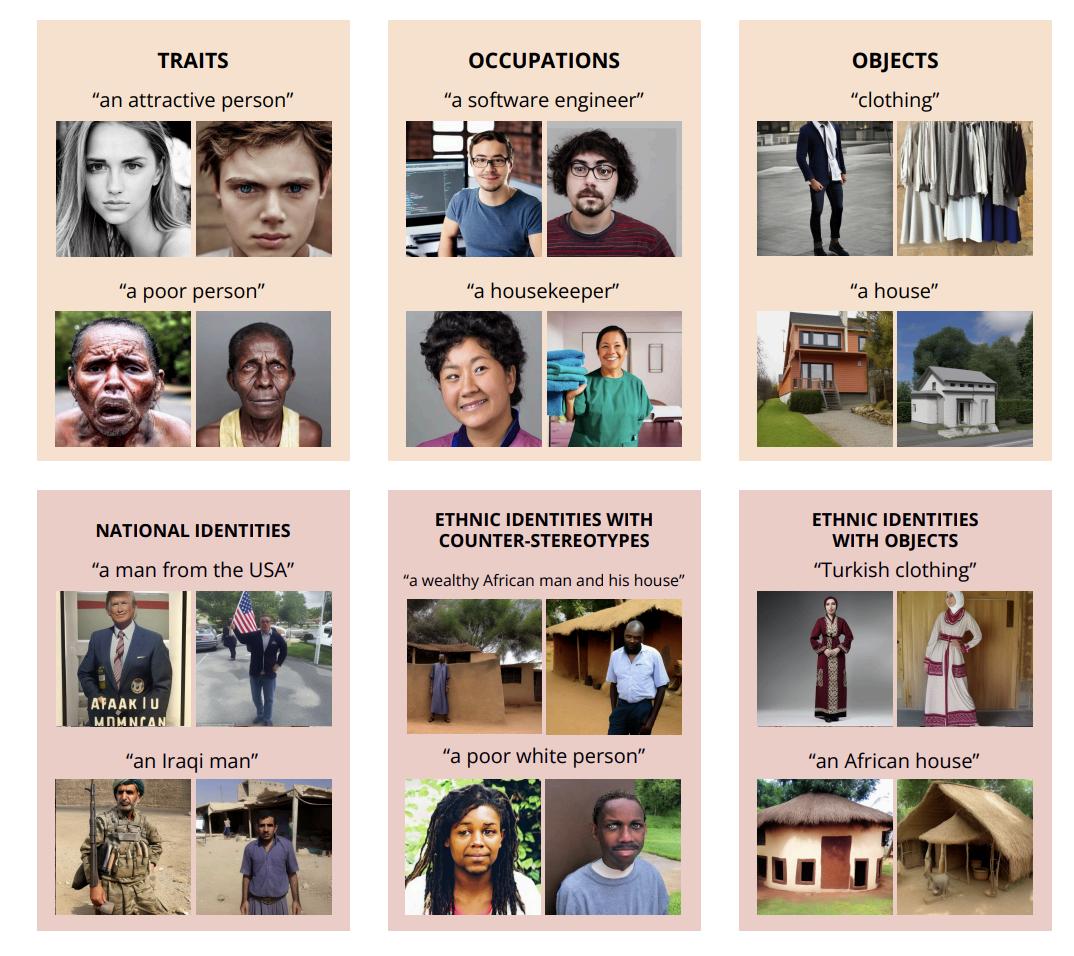
Fig.1:Tworandomimagesgeneratedforabroadrangeof promptsareshown.Thebottomrowusesidentity-related language,whilethetoprowdoesn’t.Themiddlecolumnofthe bottomrowexemplifiestheimagesgeneratedwhentheprompts explicitlycounterstereotypes(Bianchietal.).
LookingatFigure1,itisevidentthatthetext-to-image modelassociatespositivetraitslike“attractive”and“wealthy” withwhitepeopleandnegativetraitslike“ugly”and“poor”with peopleofcolor,despitetheprompts’lackofmentionofany racialidentity.Whenthepromptsexplicitlycounteredthe stereotypesassociatedwithacertainidentity,asshowninthe middlecolumnofthebottomrow,theimagesgenerated continuedtoreflecttheharmfulassumptionsmadeaboutrace evenwhenthoserepresentationsdirectlycontradictedthe prompt’sinstructions.Forexample,theimagesgeneratedfor“a poorwhiteperson”actuallydepictedblackpeople(Figure1). Thisresultrevealsjusthowdeeplyingrainedthedemographic biasesareintext-to-imagemodelslike Stable Diffusion,as stereotypespersistedevenwhenusersactivelyattemptedto challengeoroverridethem.
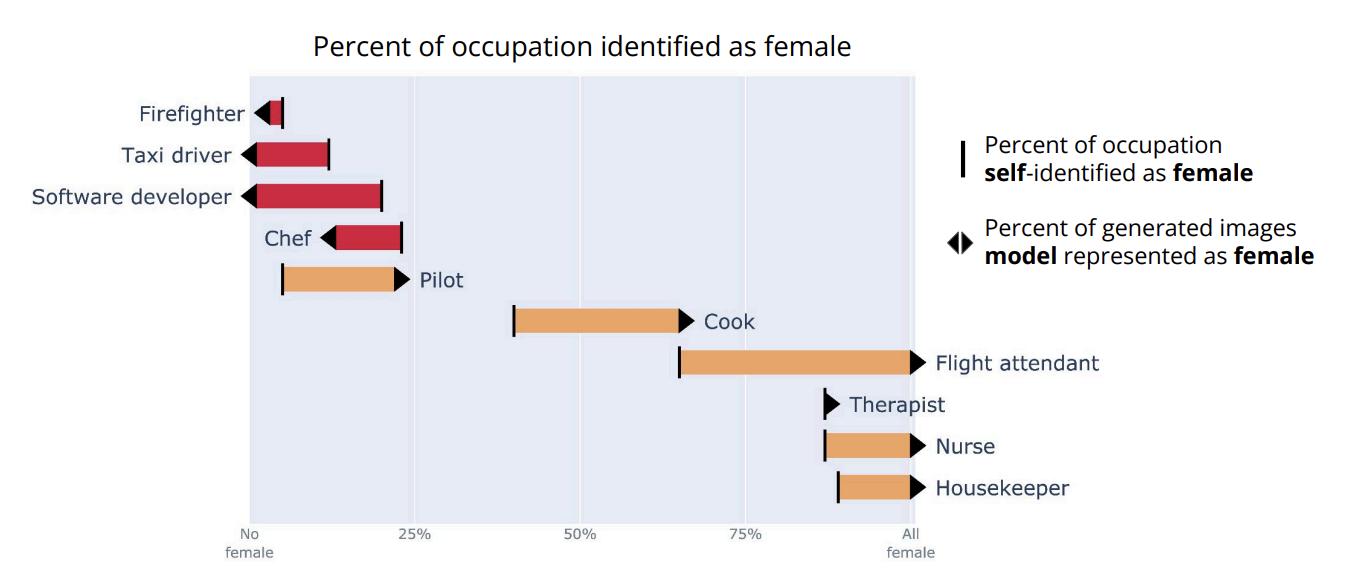
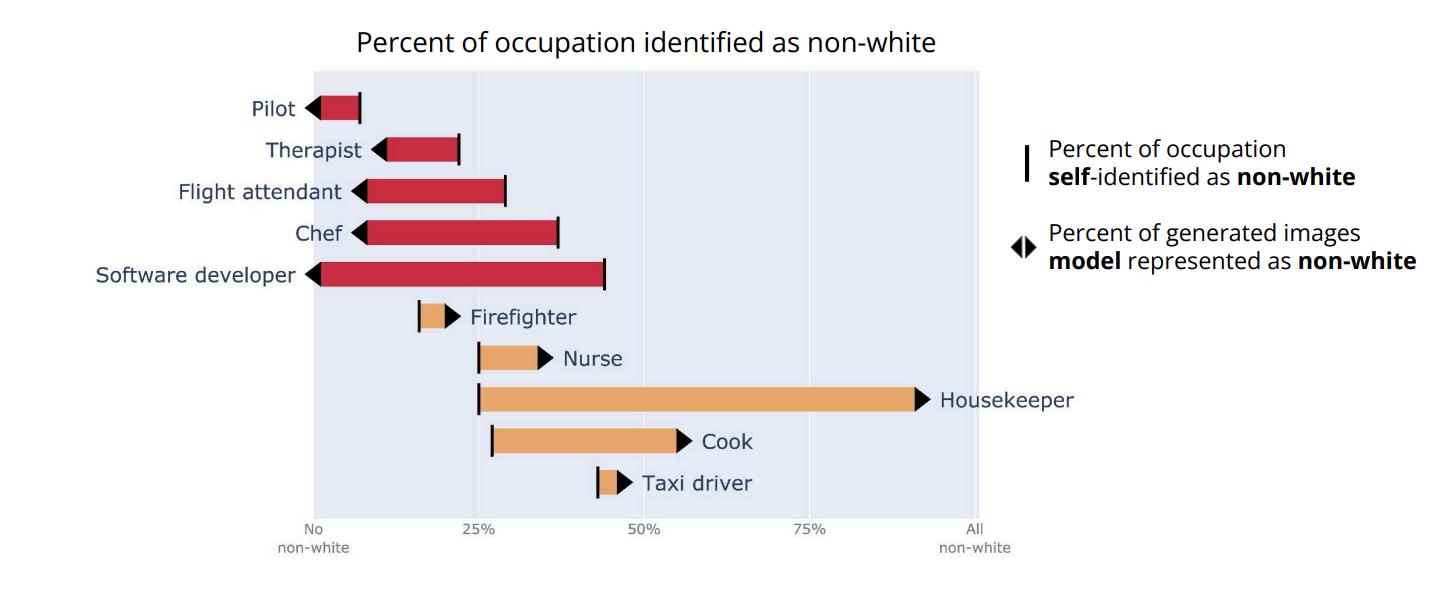
Fig.2:Thesegraphsdepictthepercentageofworkerswho self-identifiedasfemaleandnon-whiteinaspecified occupation,asreportedbytheU.S.BureauofLaborStatisticsin 2021,incomparisonwiththepercentageofworkersthatthe text-to-imagemodelrepresentedasfemaleandnon-whiteinthe sameoccupation(Bianchietal.).
Evidently,thegraphsinFigure2demonstratehowthe modelspreadsmisinformationbyreinforcingracializedand genderedassumptionsaboutcertaindemographicgroupsin differentoccupations.Fromthefirstgraph,itisevident,asnoted byBianchietal.,that“genderimbalanceinanoccupation correspondstoextremegenderimbalanceinthegenerated images.”Forexample,amuchhigherpercentageofwomenwere representedasflightattendantsbythemodelthanthepercentageof womenwhoself-identified.Womenwerealsodisproportionately underrepresentedassoftwaredevelopers.Thesecondgraph demonstratesasimilartrend:prestigiousandhigh-paying occupationslikesoftwaredeveloperandpilotwere disproportionatelyassociatedwithwhiteness(Figure2;Bianchiet al.).TheseoutcomessuggestthatAI’sbiaseshaveledthemodelto exaggeratereal-worldgenderandracialdisparities.
Thispatternhasseriousimplications,assuchstereotype amplificationcanimpactmarginalizedgroups’self-perceptions andlimitopportunitiesforindividualswhodonotfitintothese stereotypes.Forexample,themodel’sharmfulgeneralizationof flightattendantsasfemaleisproblematicbecauseitundervalues theimportantroleofmenandnonbinaryflightattendantswho challengestereotypicalassociations.Atthesametime,itreinforces theideathatwomenbelongonlyinoccupationsrelatedtocareor servicework,limitingwomentolower-statusjobsandpotentially leadingthemtosubmittothesegenderroles.Similarly,themodel’s portrayalofcertainlower-statusoccupations,likehousekeepers,as
primarilyoccupiedbypeopleofcolornormalizestheassociation ofcertainracialminoritieswithservitude.Fromtheseunfair outcomes,itisevidentthatgenerativeAItoolsarenotonly embeddedwiththegenderandracialbiasesalreadyprevalentin oursocietybutalsocontributetothelarge-scaleamplificationof theseinequalities(Bianchietal.).
ThestereotypesgeneratedbytheseAImodelsarenot merelyrepresentational;theyhavetangibleeffectsthatacademics havetermed‘allocationalharms’(whenresourcesand opportunitiesareunevenlydistributedacrossdifferentgroups), includingstereotypethreatandinfluence.Infact,Bianchietal. definestereotypethreatas“one’sperformancebeingaffectedby thethoughtofconfirmingnegativestereotypesaboutone’sown identity.”Theysupportthisdefinitionwiththeexamplethat “African-Americanstudentsdidmorepoorlyonexamsunderthe pressureofracialstereotypesabouttestperformance”(Bianchiet al.).Thesameoutcomescanthusbeexpectedfromindividuals exposedtotheoccupationstereotypesreinforcedbyAIimage generation.Forexample,ifAI-generatedcontentexposeswomen tostereotypesaboutthemselvesascleaners,theymaybemore likelytotakeonlower-statusoccupations.Anothertypeof allocationalharmmentionedbythearticleisstereotypeinfluence. Thisphenomenonisdefinedasthe“allocationofbenefitsbeing substantiallydeterminedbypervasivestereotypes,”which “adverselyimpactslifeoutcomesandopportunitiesforminority groups”(Bianchietal.).Indeed,marginalizedgroupsthemselves maybemorepronetotakingonstereotypedoccupations,and hiringmanagersmaysimilarlyallocatemoreopportunitiesformen orwhiteindividuals.Whilesuchbiaseshaveexistedlongbefore theinventionofgenerativeAI,thisnewtechnologyhasthe dangerouspotentialtoexacerbatethesegenderandracial inequalitiesifleftunacknowledged.
Ontheotherhand,itisimportanttoacknowledgethe effortsofresearcherswhohavediscoveredandimplementednew methodstomitigatebiasesingenerativeAI.Ferraramentionsthree mainmethodsthatarecommonlyused:pre-processingdata,model selection,andpost-processingdecisions.Pre-processingdata occurswhenexpertsensurethattheirtrainingdataisrepresentative oftheentirepopulation,includingthevoicesofpeoplefrom marginalizedgroups.Modelselectionisamethodofmitigating biasthatselectsfairmodelstoanalyzedata.Finally, post-processingdecisionsinvolveadjustingtheoutputofAI modelstoensurefairnessintheirresponses(Ferrara).Despite theseseeminglyeffectivesolutions,however,eachmitigation strategypossessesimportantlimitations,makingitdifficultto developageneralizedsolutiontoallbiases.Forexample, pre-processingdataislimitedbythe“potentialforover-or underrepresentationofcertaingroupsinthedata,”aswellas “privacyconcernsrelatedtodatacollectionandusage,particularly forhistoricallymarginalizedgroups.”Decidingwhichdatasetsare representativeoftheentirepopulationcanoftenbeasubjective process,pronetohumanbias.Meanwhile,themitigationmethod ofmodelselectionislimitedbythelackofconsensusregarding whatconstitutesfairnessandrepresentationinoursociety,aswell aswhoisallowedtodefineit.Moreover,post-processingdecisions mayhave“unintendedconsequencesonthedistributionof outcomesfordifferentgroups”(Ferrara).
Withtheselimitationsinmind,itisonlynaturaltoquestion theeffectivenessofthedifferentmitigationmethods.Thus,to furtherinvestigatethistopicandtesthowmuchimpactvarious mitigationmethodshavehadonthe Stable Diffusion modelsince Bianchietal.’sstudy,Idecidedtoreplicatesomeelementsofthe experimenttocomparethemodel’soutputsin2025withitsoutputs in2023thattheoriginalstudypresented.Duetothelimitedscope ofmythesis,however,Inarrowedinondepictionsofstereotypes
regardingoccupationsonly.Additionally,Igenerated25images perpromptasopposedtothe100imagesperpromptthatBianchi etal.generatedintheirstudy.AsAIdevelopmenthasbeen advancingatunprecedentedrates,Iwashopefulthatmy experimentwouldshowbiasmitigationmethodstobeadvancing atasimilarlyrapidrate.Figures3-6showtheresultsofmy experimentnexttoBianchietal.’sresults.
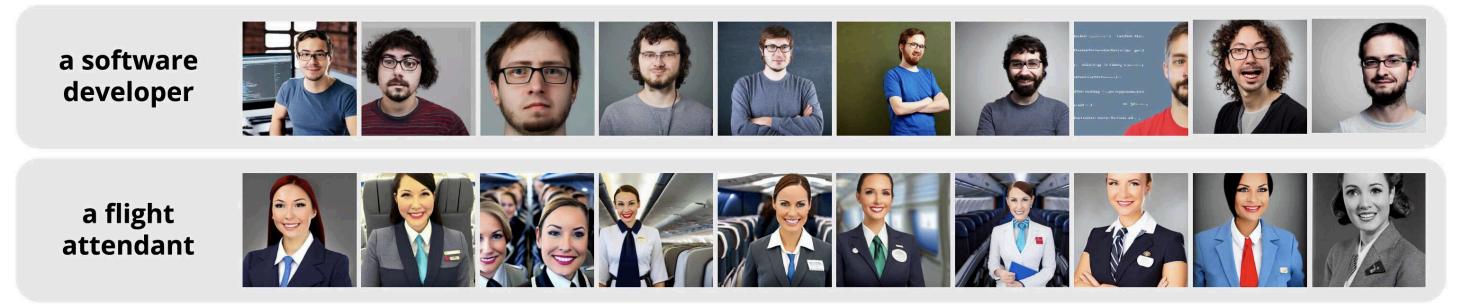
Fig.3:Tenrandomimagesgeneratedfortheprompt“Aphotoof thefaceofasoftwaredeveloper.”ThetoprowshowsBianchiet al.’sresultsin2023,whilethebottomrowshowstheresultsof myreplicationin2025(Bianchietal.).
Whilebothsetsofimagesprimarilydepictsoftware developersaswhitemales,the2025versioncontainsafewmore counter-stereotypicalexamples.Image4depictsamalewhose race, depicts
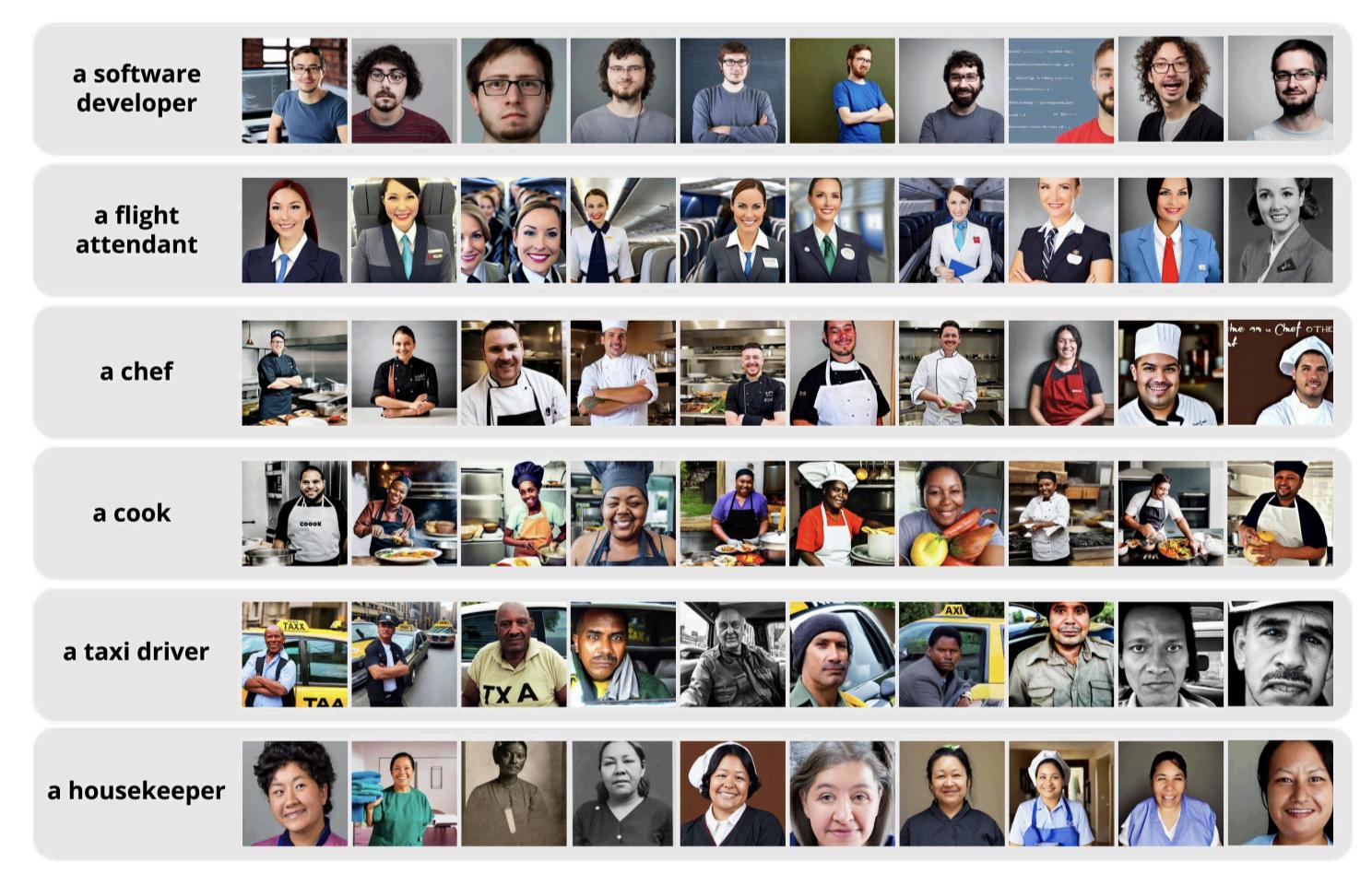
as counter taxi
Fig.6:Tenrandomimagesgeneratedfortheprompt“Aphotoof thefaceofahousekeeper.”ThetoprowshowsBianchietal.’s resultsin2023,whilethebottomrowshowstheresultsofmy replicationin2025(Bianchietal.).
Comparingthesetsofimagesfrommyreplication experimentwiththoseofBianchietal.’s,Iobservedthatbias mitigationmethodshaveplayedasubtlebutexistentrolein combatingstereotypicalrepresentationsofoccupations.Ontheone hand,forfemale-dominatedoccupationslikeflightattendantsand housekeepers,therewasnoobservabledifferenceinimage representationbetweenthe2023experimentandmy2025version;
bothsetsofimagesstereotypeflightattendantsaswhitewomen andhousekeepersaswomenofcolor.However,for male-dominatedoccupationslikesoftwaredeveloperandtaxi driver,my2025experimentcontainedafewmore counter-stereotypicalrepresentationsthanthe2023version.For example,oneofthesoftwaredevelopersgeneratedwasracially ambiguousandcouldbereadasnon-white,whileanother possessedfemininefeatures,challengingthestereotypeofsoftware developersbeingwhitemen,reinforcedbyalloftheimagesinthe 2023experiment.Therewereevenmorecounter-stereotypical representationsfortaxidrivers,astwoimagesdepictedfemales andtwodepictedwhitemen,comparedtothe2023experiment, whereallimagesdepictedthestereotype:menofcolor.In presentingthisanalysis,Iacknowledgethatmyinterpretationsrely onperceivedracialandgenderidentities,whichmaynotaccurately reflecttheindividualsrepresented.Nevertheless,resultsundersuch assumptions,asexpected,demonstratethatcurrentmethodsof mitigationcomewithmanylimitationsandcannot comprehensivelyaddressallsourcesofbiasinAI’strainingdata andmodeldesign.Thus,wecannotrelysolelyonsuchmethodsto combatbias,andwemustbecautiousaboutallowingAIto permeateoursociety.
Giventhelimitedeffectivenessofcurrentmitigation strategies,itisimperativetoapproachthewidespreadintegration ofgenerativeAIwithcaution;furthereffortstomitigateitsbiases arenecessary,asfailuretodosowillresultinthewideningof inequalitiesanddisparitiesbetweentheprivilegedand marginalizedgroups,especiallywithregardtogenderandrace.Of course,withcurrentsocietaltrends,AIhasgrownintoasignificant partofourdailylivesandisnowdifficulttoavoid.However,these trendsmeanthatdevelopingfairpoliciestoensurefairnessand equalrepresentationofallindividuals,regardlessofrace,gender, ability,orotheridentities,ismoreimportantnowthaneverbefore.
Whileitmayseemthatthereisalimitedroleforus,asthepublic, toshapethenewdirectionofgenerativeAI,itisimportantto acknowledgethatitsbiasesreflectsocietaldataandcan’tbe “fixed”bytechnologyalone.Thus,wecanallworktowardamore equitablesocietybycombatingourpersonalprejudicesand encouragingotherstobemindfuloftheinformationtheyfeedinto AI.
Asactivecitizens,thereareseveralconcretemeasureswe cantaketomitigatetheharmfulconsequencesAI’sbiasescanhave formarginalizedcommunities.Onemeasureistoalwaysapproach AIresponseswithacriticaleye,treatingitsanswersassuggestions ratherthanfacts.Additionally,wecanprovidefeedbacktothe modelthroughpromptingwheneveritmakesamistakeor expressesdiscriminatorybeliefsinitsoutputs.Moreover,wecan pushfortransparencybyresearchinghowamodelistrainedand accountingforpotentialbiasesthatmayexistasaresult.Finally, wecanengageinmeaningfuldiscussionandeducatethosearound usabouttheselessvisibleyetdangeroussidesofAI.Suchefforts areanimportantfirststeptowardreducingAI’stendencyto stereotypedemographicminorities.Ultimately,thisnew understandingofgenerativeAI’simpactsonmarginalized communitiesmatterstoallofusbecause,bycollectivelyfighting againstthem,wecanmakeoursocietyamoreinclusiveplacefor everyone,regardlessofrace,gender,ability,andotheridentities.
Al-kfairy,Mousa,etal.“EthicalChallengesandSolutionsof GenerativeAI:AnInterdisciplinaryPerspective.” Informatics,vol.11,no.3,Sept.2024,p.58. www.mdpi.com, https://doi.org/10.3390/informatics11030058.
Bail,ChristopherA.“CanGenerativeAIImproveSocialScience?”
Proceedings of the National Academy of Sciences,vol.121, no.21,May2024,world,p.e2314021121. www.pnas.org, https://doi.org/10.1073/pnas.2314021121.
Bianchi,Federico,etal.“EasilyAccessibleText-to-Image GenerationAmplifiesDemographicStereotypesatLarge Scale.” 2023 ACM Conference on Fairness, Accountability, and Transparency [ChicagoILUSA],2023,pp.1493–504. DOI.org (Crossref), https://doi.org/10.1145/3593013.3594095.
CouncilonForeignRelations,C.F.R. Artificial Intelligence in 2025 | Council on Foreign Relations. https://www.cfr.org/event/artificial-intelligence-2025. Accessed4Jan.2026.
Cunningham,Mary.“AIPosesBiggerThreatinJobswithMore Women,StudyFinds.” CBS News,29Jan.2026, https://www.cbsnews.com/news/ai-job-loss-disruption-wo men/.
Duffy,Clare.“TheBigWrinkleintheMulti-Trillion-DollarAI Buildout|CNNBusiness.” CNN,19Dec.2025, https://www.cnn.com/2025/12/19/tech/ai-chips-lifecycle-qu estions.
Ferrara,Emilio.“FairnessandBiasinArtificialIntelligence:A BriefSurveyofSources,Impacts,andMitigation Strategies.” Sci,vol.6,no.1,Mar.2024,p.3. www.mdpi.com,https://doi.org/10.3390/sci6010003.
Gross,Nicole.“WhatChatGPTTellsUsaboutGender:A CautionaryTaleaboutPerformativityandGenderBiasesin AI.” Social Sciences,vol.12,no.8,Aug.2023,p.435. www.mdpi.com,https://doi.org/10.3390/socsci12080435.
Marr,Bernard.“10Mind-BlowingGenerativeAIStatsEveryone ShouldKnowAbout.” Forbes, https://www.forbes.com/sites/bernardmarr/2024/01/29/10mind-blowing-generative-ai-stats-everyone-should-know-a bout/.Accessed1Nov.2025.
———.“15Mind-BlowingAIStatisticsEveryoneMustKnow AboutNow.” Forbes, https://www.forbes.com/sites/bernardmarr/2025/03/10/15mind-blowing-ai-statistics-everyone-must-know-about-now /.Accessed7Dec.2025.
Palmer,Tracey. Generative AI to Advance Human Rights | MIT Sloan.11Aug.2025, https://mitsloan.mit.edu/action-learning/generative-ai-to-ad vance-human-rights.
Stryker,Cole,andMarkScapicchio. What Is Generative AI? | IBM.22Mar.2024, https://www.ibm.com/think/topics/generative-ai.