Yejin Choe Using Phylogenetic and Genomic Characterization to Discover an Enzyme That Produces Selenoneine: A Natural Product Promoting Lifespan and Healthy Aging
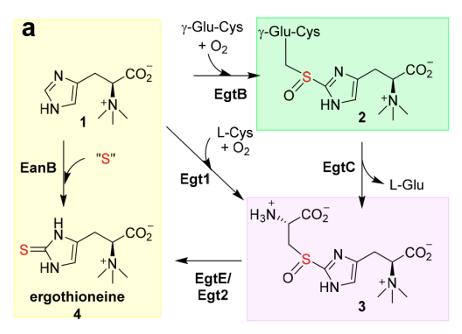
Selenoneine, a selenium-containing analog of ergothioneine, is a potent antioxidant with potential therapeutic relevance to healthy aging and mitigating chronic disease. However, its biosynthesis is not well understood beyond the inefficient, multi-enzyme SEN pathway This study aimed to identify naturally-occurring homologs of EanB—an anaerobic sulfurtransferase—that may serve as a simpler, alternative route to selenoneine. Using the EanB protein from Chlorobium limicola as a query, we performed a BLASTp search and filtered the results for organisms native to selenium-rich environments. Phylogenetic and gene neighborhood analyses of 36 candidates led to the prioritization of four promising homologs from Methanolobus sp., Acetohalobium arabaticum, Cedecea lapagei, and Citrobacter enshiensis, based on phylogenetic divergence and co-localized selenium-related genes like selD. To validate this strategy, the candidate from Cedecea lapagei (EanB_Ced) was purified and tested for activity. In an anaerobic, EGTase coupled assay, EanB_Ced catalyzed a rapid, concentration-dependent reaction consistent with the synthesisofselenoneinefromhercynineandaselenium source. The estimated catalytic rate was comparable to the original sulfur-incorporating EanB,suggestingthisisanevolved,specialized function.These results provide strong experimental evidence for a novel, anaerobic pathway for selenoneinebiosynthesis,validatingourgenomicapproachtoenzymediscovery
1Introduction
11BiologicalAgingandChronicDisease
Biological aging is the biggestriskfactorinthedevelopmentofvarious chronic diseases such as heart disease, cancer, dementia, and diabetes. These conditions arise largely from the accumulation of cellular damage over time, including oxidative stress and DNA mutations. From 2020 to 2024, the U.S. population aged65andoldergrewby13%,witholderadults now outnumbering those under age 18 in 11 states.1 Over 90% of adultsin this age group haveatleast onechroniccondition 2Thismajordemographic shift poses a challenge to the current healthcare systemwhichtargetsthese diseases in isolation To address this effectively, it is crucial to target the biological mechanisms linking aging and disease, with the goal of preventing the onset of chronic illness and slowing biological aging, thus promotinglifespanandhealthyaging.
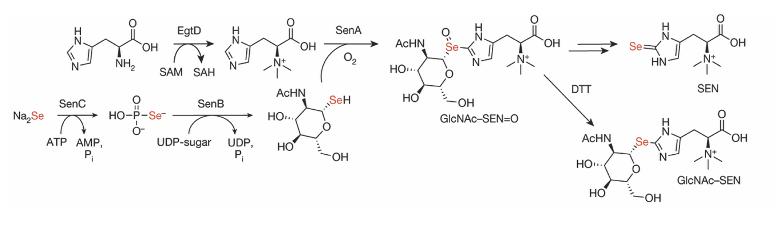
Figure2.SENgeneclusterpathwayforselenoneinebiosynthesis.Thisselenium-specificbiosynthetic routeusestheSenA, SenB,andSenCenzymes SenCconvertsseleniumtoselenophosphate(SeP),which servesasaseleniumdonor SenBusesSePto createaselenosugar SenAthencatalyzesthebondbetween theselenosugarandtrimethyl-histidine(TMH)toproduceselenoneine FromKayrouz,C M;Huang,J; Hauser,N;Seyedsayamdost,M R BiosynthesisofSelenium-ContainingSmallMoleculesin Diverse Microorganisms Nature2022,610(7930),199–204 https://doiorg/101038/s41586-022-05174-2
1.4HypothesisandObjectives
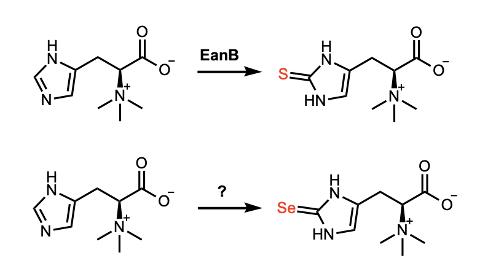
Given that ergothioneine andselenoneinedifferchemicallyonlyby asingleatom substitution sulfurinsteadofselenium wehypothesizethat natural EanB homologs, particularlythosefromorganismsinselenium-rich environments, may exist that naturally catalyze the formation of selenoneine(Figure3).
Figure 3. Conceptual parallel between ergothioneine and selenoneine biosynthesis. On the top, EanB catalyzes incorporation of sulfur into hercynine to form ergothioneine On the bottom, a hypothetical analogous enzyme represented by thestarreplaces sulfurandincorporatesseleniumtoproduceselenoneine (FigurecreatedbyauthorinChemDraw)
In this study, weseektouncoversuchselenoneine-producingEanB homologs by combining bioinformatic and phylogenetic approaches. First, weperformedaBLASTsearchto identifyhomologsofEanBacrossdiverse microbial genomes. The resulting sequences were then filtered for organisms known to inhabit selenium-rich environments, based on the premise that selective pressure in these nichesmayfavorselenium-specific catalytic activity. These candidate enzymes were mapped onto a phylogenetic tree with EanB and assessed for evolutionary divergence. Furthermore, we examined the gene neighborhoods surrounding each candidate to identify co-localized genes potentially involved in selenium metabolism Finally, we tested the candidate enzymes for their ability to synthesize selenoneine in vitro, representing a step toward expanding the known biosynthetic landscape of selenium-containing natural products and improvingbiocatalyticstrategiesforantioxidantproduction.
1.5ApplicationsandSignificance
A streamlined, selenium-specific enzyme could enable efficient production of selenoneine, with potential applications in antioxidant therapeutics and aging research The ability to biosynthetically produce selenoneine at scale has broad implications in both medicine and biotechnology. Due to its potent antioxidant properties and role in detoxifying neurotoxic species, selenoneine is a promising candidate for therapies targeting oxidative stress, neurodegenerative diseases, and age-related conditions. In addition to its therapeutic potential, this work contributes to a broader understanding of selenium enzymology and small-molecule biosynthesis. While most known selenium-utilizing enzymes are involved in selenoprotein formation, the discovery of selenium-specific enzymes in natural product biosynthesis may reveal new biochemical strategies for selenium incorporation,extendingourknowledge ofenzymeevolution.
To analyze the evolutionary relationships of EanB (PDB ID: 6KTX) from Chlorobium limicola, a phylogenetic tree was constructed using MEGA software.18 First, a BLASTp search from the NCBI database was made toidentifyhomologousproteinsequences.Amaximumof1,000target sequences was retrieved, and default algorithm parameters were used. The resulting sequences were imported into MEGA’s Alignment Explorer The BLASTpalgorithmwasutilizedto maximizethenumberofhitsfromthedatabase.Thealignedsequenceswere exportedfortree estimation.
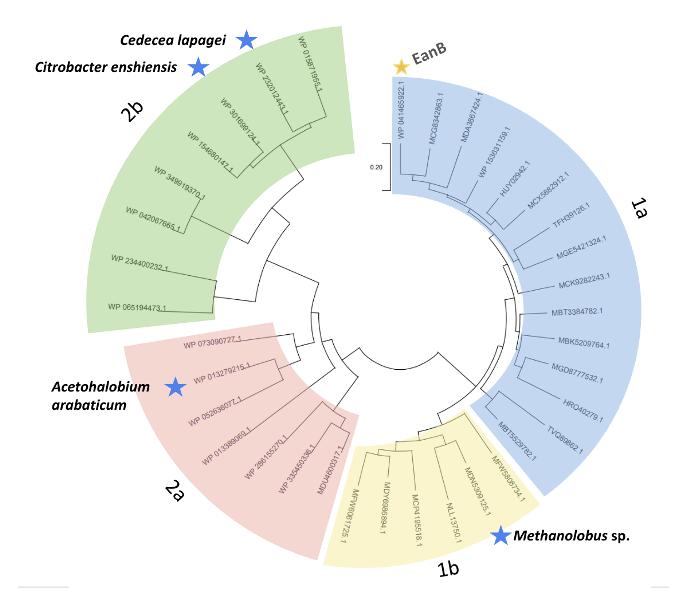
The phylogenetic tree was constructed using the maximum-likelihood (ML) method. To estimate the reliability of the tree, the bootstrap method was implemented under the Phylogeny Test. The bootstrap percentages were displayed on the nodes of the tree, indicating the reliability of the cluster Nodes with bootstrap values below 70% were generally deemed insignificant The phylogenetic tree was then reformatted into a circular format to facilitate visualization. Based on visual divergence, the tree was divided into four major clades (1a, 1b, 2a, and 2b) to guide functionaland geneneighborhoodanalysis.
2.4GeneNeighborhoodAnalysis
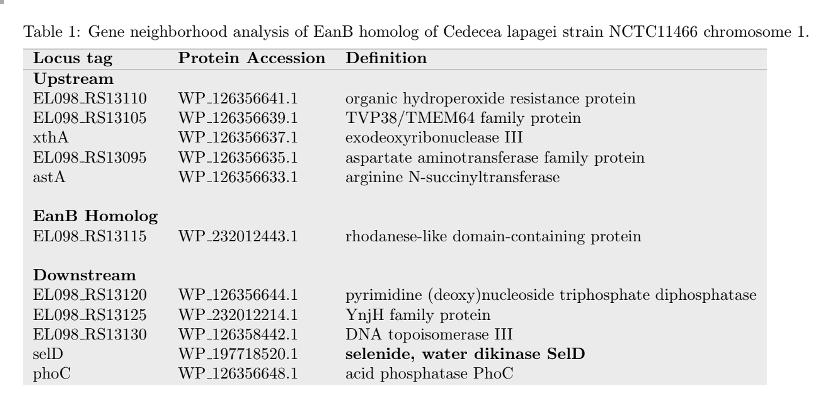
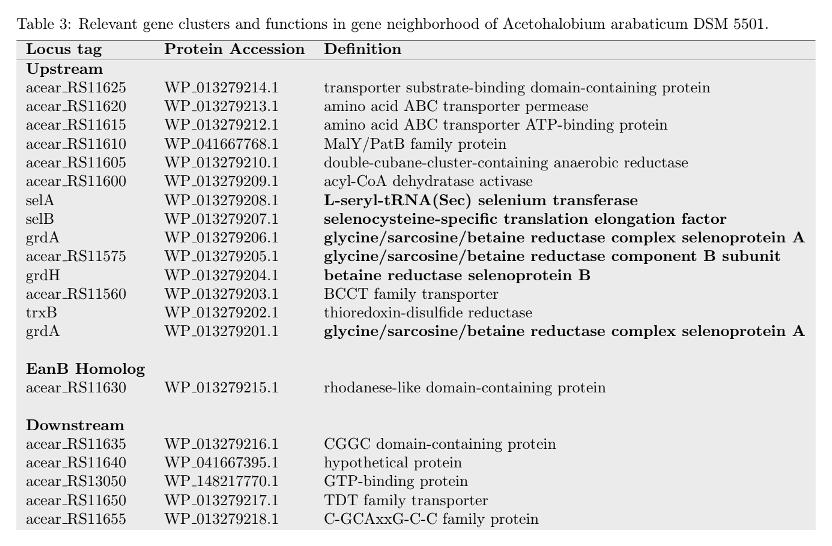
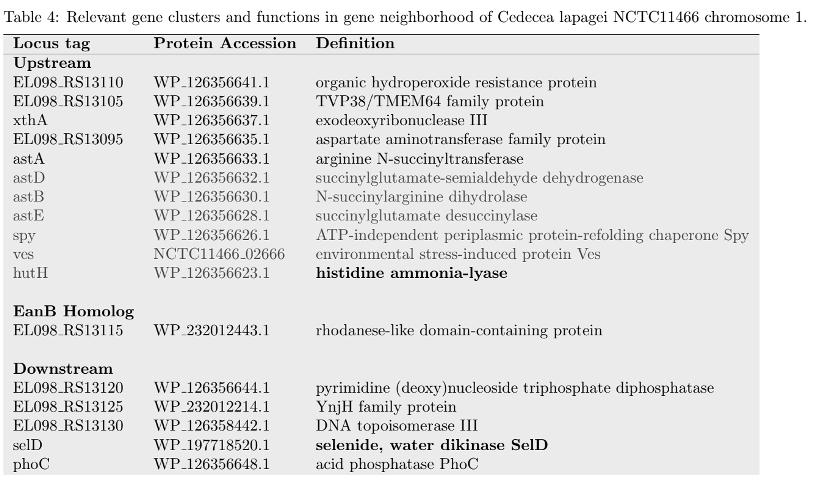
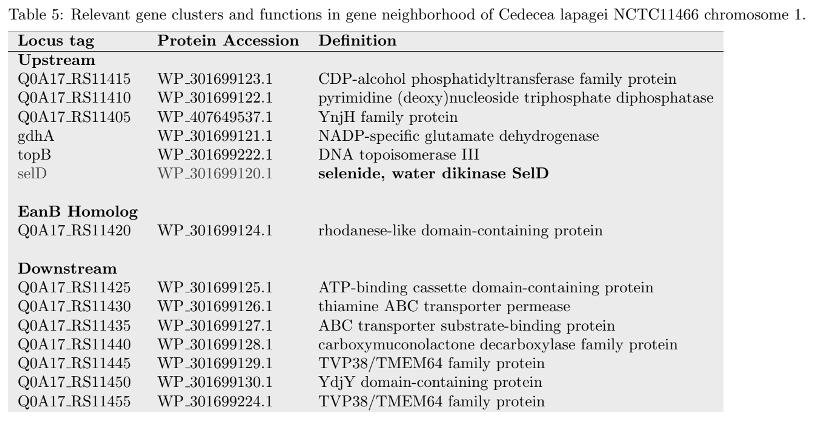
Gene neighborhood analysis was conducted for all candidate proteins identified in the phylogenetic tree. Using the NCBI sequence viewer19 , the genomic context of each protein was examined bylocatingthegenewithin its source organism’s genome. For each homolog, the five genes upstream and five genes downstream were recorded and organized into tables for comparative analysis (Table 1). These tables were reviewed to identify patterns and notablegenes. Particularattentionwaspaidtoselenium-related genes, including selD, selA, selB, and components of the SEN pathway (senA, senB, and senC).
Table1.MadebyauthorinLaTeX.
For homologs with nearby selenium-associated genes, gene neighborhoodanalysiswas extendedtoincludeupto15genesupstreamand downstream. This extended view allowed for more comprehensive evaluation of operonstructure,geneclusters,andpotentialbiosyntheticgene associations. This analysis guided the final selection of four promising candidate enzymes, each highlighted for distinct genomic features and potential involvement in selenium metabolism These candidates were mapped back onto the initial phylogenetic tree and further prioritized for their phylogeneticdistanceanddivergencefromEanB
2.5EnzymeSimilarityNetwork(EFI-SSN)
To visualize the broader sequence similarity and relationships of the EanBhomologs,a SequenceSimilarityNetwork(SSN)wasgeneratedusing the Enzyme Function Initiative-Enzyme Similarity Tool (EFI-EST).16 The amino acid sequence of EanB (WP 041465922.1) was used to initiate a BLAST search of 10,000 homologs. To create the SSN, the following parameters were used: E-value threshold of 10, 40% sequence identity, alignment scorecutoffof50,andno taxonomyfilter.Fragmentedsequences were excluded,andredundantsequenceswith>80% identitywerecollapsed intosinglenodestoreducecomplexity.
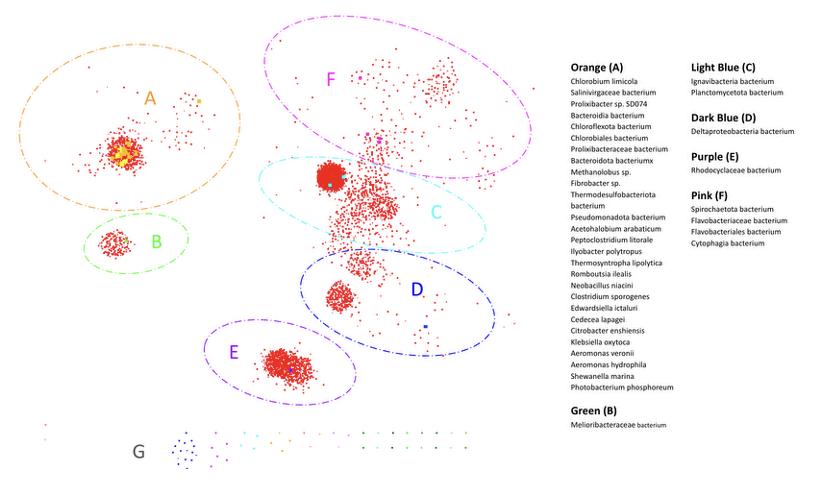
Forvisualizationandannotation,theSSNwasorganizedintoseven distinctclusters(labeled A-G)basedonnodeconnectivityandnetwork structure.Candidatesfromeachclusterwerecolorcodedconsistently for example,allcandidatenodesinClusterAwerecoloredorange,ClusterB in green,andsoon.ThefourfinalcandidatesandEanBwerehighlightedin yellowtodistinguish themfromothernodes.
Figure4 SequenceSimilarityNetwork(SSN)ofEanBhomologsgeneratedusingEFI-EST A 10,000-sequenceBLAST searchwasperformedusingtheEanBFASTA,andtheresultingSSNwas visualizedinCytoscape Thenetworkwasdividedinto sevenclusters(A-G)basedonconnectivity,with eachclusterassignedadistinctnodecolor The36candidatehomologswere identifiedandannotatedwithin thenetwork Nodesrepresentingthesecandidatesarecolor-codedbycluster:clusterAcandidates are orange,clusterBgreen,clusterClightblue,clusterDdarkblue,clusterEpurple,clusterFpink,andcluster Gbrown The fourfinalcandidatesandEanBarehighlightedinyellow (Figurecreatedbyauthorin EFI-EST)
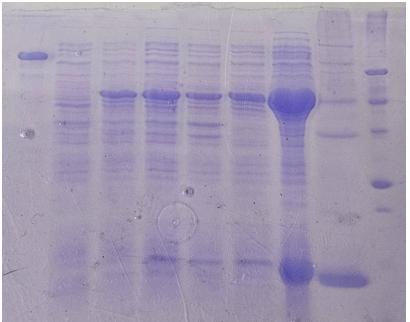
To confirm expression and resin binding, 1.014 g of cell paste was resuspended in lysis buffer (100 mM Tris-Cl, 50 mM NaCl, pH 80) with lysozyme and lysed by sonication The lysate was clarified by centrifugation The resulting supernatant ([SP]) was incubated with Strep-Tactin resin in a batch-binding format. Proteinpurityandenrichment were evaluated via SDS-PAGE (Figure 5) by loading and comparing the crudelysate([CL]),supernatant([SP]),andresin-bound([RT]) fractions.
Figure 5. SDS-PAGE of EanBCed small scale purification. ResinTreatment([RT])laneshowsveryhigh resin enrichment. Lane assignments: Std,molecularweightstandard; Pre,whole-celllysatebeforeinduction; Post, whole-cell lysate after induction; CL, cell lysate; CP,cellpellet; SP,supernatant; RT,resintreatment; RB, resin blank A prominent band at 48 kDainthe Post and RT lanescorrespondstoEanB Ced,consistent withitspredictedmolecularweight(4553kDa),indicatingsuccessfulinductionand enrichment
2.8Large-ScaleProteinPurification
Large-scale purification of the EanB-Ced protein was performed under strict anaerobic conditions in a COY chamber. A 10.09 cell paste was resuspended in anaerobic lysis buffer (100 mM Tris, 200 mM NaCl) with lysozyme and lysed by sonication. The lysate was clarified by centrifugation(19,500RPM,4ºC).
The pooled elution fractions were concentrated to ~2-3 mL using a 10 kDa ultrafiltration membrane,aliquoted,flash-frozeninliquidnitrogen,and stored at -80 ºC The final protein concentration was determined by Bradfordassaytobe526894µg/mL
29InVitroSelenoneineAssay
To functionally validate EanB Ced, an anaerobic ergothionase (EGTase)-coupled assay was developed. This assay links the EanB Ced-catalyzed formation of selenoneine to its subsequent cleavage by EGTase, which produces a product with a characteristic absorbance at 311nm.
AllreactionswereperformedinananaerobicCOYchamber.A100mM selenium solution was preparedbydissolvingseleniummetal(7.9mg)with DTT (15.4 mg) and NaOH (10 mg) in anoxic water and ammonium bicarbonatebuffer.
A BLASTp search using EanB from Chlorobium limicola as the query returned several hundred homologous sequences. Afterfilteringforproteins whose source organisms were isolated from selenium-rich environments, a total of 36 candidate proteins were selected for further analysis. These sequences were aligned and used to construct a maximum likelihood phylogenetic tree in MEGA(Figure6).Thetreerevealedfourdistinctclades of EanB-like enzymes, including several that were phylogenetically distant fromEanB,suggestingpotentialfunctionaldivergence
Figure 6.
Maximum-likelihood phylogenetic tree of 36 EanB homologs constructed using MEGA. The tree is divided into four major clades (1a, 1b, 2a, and 2b). The EanB from Chlorobium limicolaindicatedbytheyellowstarisusedasthereference sequence.Thefourfinalcandidate proteins selected for further analysis (Methanolobus sp, Acetohalobium arabaticum, Citrobacter enshiensis, and Cedecea lapagei)arestarredinblueonthetree.(Figurecreatedby authorinMEGA)
3.2GeneNeighborhoodCharacterization
Gene neighborhoods of all 36 phylogenetic candidates were examined using the NCBI Sequence Viewer. For each candidate,fivegenesupstream and downstream were annotated and assessed for potential functional associations Selenium-related genes such as selD, selA, selB, selO, selenocysteine lyases, and enzymes involved in histidine modification were noted and highlighted Four final candidate proteins wereselectedbasedonthepresenceofsuchselenium associated genes. These candidates came from the following organisms: Methanolobus sp., Acetohalobium arabaticum DSM5501, Cedecea lapagei NCTC11466chromosome1, and Citrobacter enshiensis strainS2-94
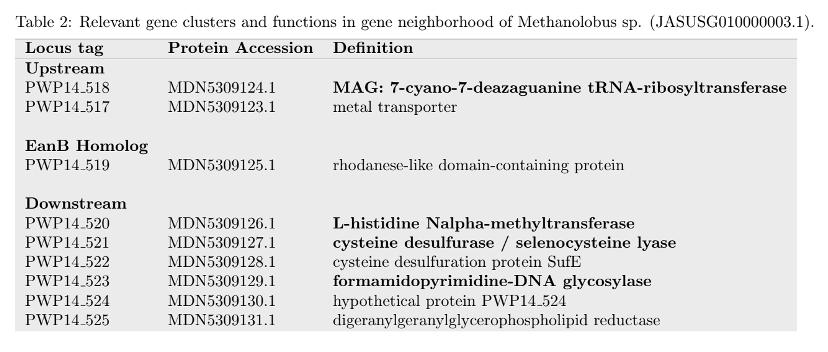
The EanB homolog in Methanolobus sp. is surrounded by genes with strong selenium relevance, including cysteine sulfurase/selenocysteine lyase, MAG: 7-cyano-7-deazaguanine tRNA-ribosyltransferase, and L-histidine Nα-methyltransferase (Table 2) These enzymes are involvedin sulfur-selenium mobilization and histidine modification, pointing to potential selenium incorporation mechanisms independent of the SEN pathway This homolog is located proximal to EanB in branch 1b of the phylogenetictree.
The candidate protein in Cedecea lapagei is located downstream of a histidine ammonia-lyase Notably, selD, encoding selenophosphate synthetase, is located four genes downstream of the candidate enzyme (Table 4). Additionally, selO is located close upstream while selA and selB are present far upstream. This homolog is in branch 2b, which diverges significantlyfromtheEanB clade.
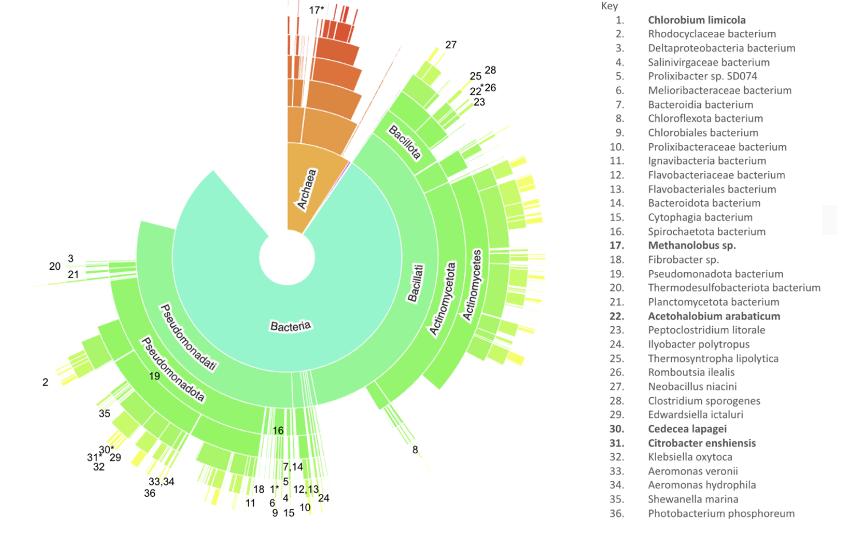
The taxonomy sunburst of the EanB FASTA using a 10,000 sequence BLAST search(Figure 7)showsawidedistributionofEanB-likesequences across mostly bacteria but also archaea The majority of sequences are concentrated in phyla such as Pseudomonadota, Bacillota, Actinomycetota, Chlorobiota, and Methanobacteriota. The final four candidate enzymes selected for further study Methanolobus sp. (17), Acetohalobium arabaticum (22), Cedecea lapagei (30), and Citrobacter enshiensis (31) are taxonomically diverse, originating from both bacterial and archaeal lineages. Notably, Methanolobus sp. is found in the archaea domain.
Figure 7. Taxonomy sunburst of EanB homologs generated from EFI-EST. This diagram revealsthebroadphylogeneticspread ofthehomologoussequencesoftheproteinEanBfroma 10,000-sequence BLAST search. The 36 selected proteins are numbered from1-36inthekey on the right and labelled in their positionsonthetaxonomysunburst Thefourchosenproteins areboldedon thekeyandstarredinthesunburst.(FigurecreatedbyauthorinEFI-EST)
3.4SequenceSimilarityNetworkAnalysis
The EFI-SSN revealed that EanB homologs are distributed across several major clusters (Figure 5). The 36 selected candidate proteins mapped to distinct clusters labeled A G, indicating their sequence divergence from one another and EanBitself However,mostcandidates,28 in total out of the 36, were located in cluster A The rest were dispersed throughout clusters B-F All four candidates were in cluster A, alongside EanB.
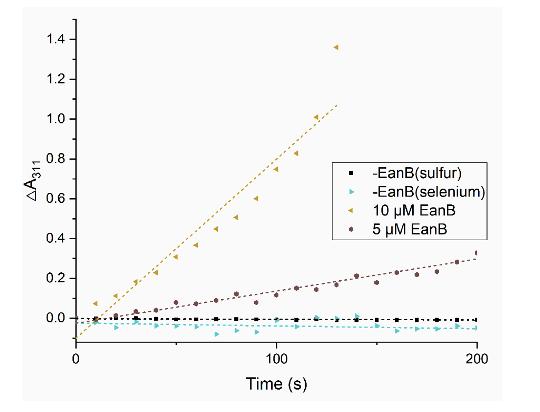
In contrast, the addition of purified EanB Ced at 5 µM or 10 µM concentrations resulted in a rapid,time-dependentincreaseinabsorbanceat 311 nm (Figure 8, brown and goldtraces).The reactionratewasdependent on the EanB Ced concentration. From this activity, the catalytic rate (kcat) was estimated to be approximately 0.864 min-1 . This rate is notably on the same order of magnitude as the original sulfur-incorporating EanB, suggesting comparable catalytic efficiency.10 This result confirms that EanB Ced homolog is an active enzyme and may potentially catalyze the formationofselenoneinefromhercynineandaseleniumsource.
The broad taxonomic distribution of homologs across Bacteria and Archaea (Methanolobus sp ) suggests EanB-like enzymes are a widespread and ancient family The independent appearance of selenium-related genes (like selD) near divergent homologs in different cladespointstoconvergent evolution, where this enzyme family was repeatedly adapted for selenium-specificfunctions.
This is partially contrasted by the Sequence Similarity Network (SSN) analysis, where all four candidates grouped into the largest cluster A with EanB. This indicates that all homologs share a high degree of sequence similarity, likelyinthecorerhodanese-likecatalyticdomain.Taken together with the phylogenetic divergence, this suggests that the critical function shifts toward selenium specificity may be driven by a few key amino acid substitutions rather than large-scale sequence changes, allowing them to retainthesamegeneralSSNclassification.
(1)Bureau,U C Older Adults Outnumber Children in 11 States and Nearly Half of U S Counties Censusgov https://wwwcensusgov/newsroom/press-releases/2025/older-adults-out numberchildren.html(accessed2025-07-10).
(2) Get the Facts on Healthy Aging. https://www.ncoa.org/article/get-the-facts-on-healthy-aging/ (accessed 2025-07-10).
(3)Tinggi,U.Selenium:ItsRoleasAntioxidantinHumanHealth. Environ Health Prev Med 2008, 13 (2),102–108. https://doiorg/101007/s12199-007-0019-4
(5) Yamashita, Y.; Yabu, T.; Yamashita, M. Discovery of the Strong Antioxidant Selenoneine in Tuna and Selenium Redox Metabolism. World J Biol Chem 2010, 1 (5), 144–150. https://doi.org/10.4331/wjbc.v1.i5.144.
(6) Yamashita, M.; Yamashita, Y.; Suzuki, T.; Kani, Y.; Mizusawa, N.; Imamura, S.; Takemoto, K.; Hara, T.; Hossain, Md. A.; Yabu, T.; Touhata, K. Selenoneine, a Novel Selenium-Containing Compound, Mediates Detoxification Mechanisms against Methylmercury Accumulation and Toxicity in Zebrafish Embryo. Mar. Biotechnol. 2013, 15 (5),559–570. https://doi.org/10.1007/s10126-013-9508-1.
(7) Wang, X.; Hu, S.; Wang, J.; Zhang,T.;Ye,K.;Wen,A.;Zhu,G.;Vegas, A.; Zhang, L.; Yan, W.; Liu, X.; Liu, P. Biochemical and Structural Characterization of OvoATh2: A Mononuclear NonhemeIronEnzyme from Hydrogenimonas Thermophila for Ovothiol Biosynthesis ACS Catal 2023, 13 (23), 15417–15426 https://doiorg/101021/acscatal3c04026
(8) Paul, B. D. Ergothioneine: A Stress Vitamin with Antiaging, Vascular, and Neuroprotective Roles? Antioxid. Redox Signal. 2022, 36 (16–18), 1306–1317. https://doi.org/10.1089/ars.2021.0043.
(9)Goncharenko,K.V.;Vit,A.;Blankenfeldt,W.;Seebeck,F.P.Structure oftheSulfoxide SynthaseEgtBfromtheErgothioneineBiosynthetic Pathway. Angew Chem Int Ed Engl 2015, 54 (9),2821–2824. https://doi.org/10.1002/anie.201410045.
(10) Single-Step Replacement of an Unreactive C–H Bond by a C–S Bond Using Polysulfide as the Direct Sulfur Source in the Anaerobic Ergothioneine Biosynthesis | ACS Catalysis. https://pubs.acs.org/doi/10.1021/acscatal.0c01809 (accessed 2025-08-04).
(14) Huang, W.; Song, J.; Sun, T.; He, Y.; Li, X.; Deng, Z.; Long, F. Substrate Binding and Catalytic Mechanism of the Se-Glycosyltransferase SenB in the Biosynthesis of Selenoneine. Nat Commun 2024, 15,1659.https://doi.org/10.1038/s41467-024-46065-6. 23
(15) Protein BLAST: search protein databases using a protein query. https://blast.ncbi.nlm.nih.gov/Blast.cgi?PROGRAM=blastp&PAGE T YPE=BlastSearch&LINK LOC=blasthome(accessed2025-07-18).
(16) Oberg, N.; Zallot, R.; Gerlt, J. A. EFI-EST, EFI-GNT, andEFI-CGFP: Enzyme Function Initiative (EFI) Web Resource for Genomic Enzymology Tools. J. Mol. Biol. 2023, 435 (14), 168018. https://doi.org/10.1016/j.jmb.2023.168018.
(17) Mehdi, Y; Hornick, J-L; Istasse, L; Dufrasne, I Selenium in the Environment, Metabolism and Involvement in Body Functions. Molecules 2013, 18 (3), 3292–3311. https://doi.org/10.3390/molecules18033292.
(18)Hall,B.G.BuildingPhylogeneticTreesfromMolecularDatawith MEGA Mol Biol Evol 2013, 30 (5),1229–1235 https://doi.org/10.1093/molbev/mst012.