

I am often asked what I enjoy most about working at Berkhamsted. My answer invariably includes reference both to the strong sense of community and to the school’s strikingly strong collective growth mindset. This is a place where strengths and areas of excellence are genuinely celebrated, while there remains an unwavering commitment to continual improvement. As a result, curiosity and a love of learning are woven into the very DNA of the school, both by pupils and staff.
I appreciate that we are a school in which all are consistently committed to living out our shared values: aiming high with integrity, being adventurous, and serving others. These values align naturally with pedagogical research, enabling us to reflect thoughtfully on our practice and to continue to develop our professional skills. In doing so, we are striving to be as effective as possible in unlocking the potential of every individual pupil.
In this edition of the journal, it is particularly pleasing to see such a strong emphasis on pupil-led, as well as staff research. I am confident that you will be both inspired and impressed by the pupils’ research skills.
Coming to school and learning should be a joy, and I am proud to work in an organisation with such a deep commitment to ensuring that pupils experience both enjoyment and a strong sense of progress in their learning – you will find evidence of this in here! My thanks go to all who have contributed to this journal. Your research will provide valuable food for thought for many professionals and, most importantly, help to make pupils’ experiences even richer.
Martin Walker Principal, Berkhamsted Schools Group
Welcome to Issue 7 of Research at Berkhamsted. In this issue we celebrate creativity and a love of learning – character traits exemplified by both pupils and staff at Berkhamsted. This issue places increased emphasis on outstanding research from pupils, alongside staff.
Doug Foster’s introduction considers why encouraging curiosity to flourish is so important. You can see examples of the unique Curiosity Journals kept by Year 7 and 8 pupils to record what inspires them. The thread of curiosity continues in The Davies Society, where senior school pupils research and present to peers on their areas of academic interest – in this issue we showcase two investigations by Year 9 pupils. During their time in the Sixth Form, pupils have the opportunity to refine their skills of analysis in the prestigious Berkhamsted Prize for Argument and you can read staff and pupils reflections on this year’s competition. At Berkhamsted we are proud to host a range of student blogs: some examples featured in this issue include Cliffhangers - part of the Learning Edge programme, where the articles are inspired by what Year 9 students have been reading independently; The Crossbencher, a student-led current-affairs blog and Brainfeed, led by Sixth Form students as an opportunity to investigate all things psychology related.
As always, our staff body have been busy carrying out some high quality and thoughtprovoking research projects, all with improved pupil outcomes in mind: Martin Barr considers the importance of outdoor spaces on pupils’ cognition and behaviour, Jo Hughes investigates how technology for teaching and learning can best be utilised, Daisy Hardman looks into how different typefaces can affect early reading development, Alastair Harrison reflects on how Sixth tutors can make the most of one to one coaching conversations with tutees and I research how best to prepare pupils for the next stage of their learning journey as they move from GCSE to higher education. Finally, over 30 staff members (and some pupils!) have taken part in our Berkhamsted BITES initiative, where they introduce an academic or pastoral intervention and report on their findings in an easy to digest way – this issue includes summaries of four of these fascinating projects.
I hope you are as impressed and inspired by the work showcased here as I am. A wholehearted thank you to all pupil and staff contributors for sharing their insights, to Anna Chatwin, Deputy Head: Teaching, Learning and Innovation, for her inspiration and guidance, and to Jen Hallesy for designing this issue.
Kate Craigen Head of Research
Douglas Foster
The impact of green spaces on a child’s
Martin Barr
do we maximise the opportunity to coach in our Sixth Form pastoral 1:1s?
Daisy Hardman

Dorothy Parker quipped that, “The cure for boredom is curiosity. There is no cure for curiosity.” The quote captures an important tension about learning. Curiosity overcomes boredom because it generates interest and enquiry, yet it also resists closure. The more we understand, the more aware we become of what we do not yet know. In this sense, curiosity removes any natural stopping point to learning.
This feels particularly relevant in a world of constant stimulation. Moments of boredom are quickly filled by phones, notifications and distraction. Yet such stimulation often captures attention only temporarily rather than sustaining enquiry. Genuine curiosity increasingly competes with forms of engagement that are easier, faster and more immediately rewarding. Education therefore faces a significant challenge: not simply capturing attention in the moment, but cultivating forms of curiosity that persist beyond the lesson or the test.
Curiosity is therefore more than momentary interest. Research in character education increasingly describes curiosity as an intellectual virtue: a relatively enduring disposition that shapes how individuals relate to knowledge, understanding and learning itself. The Jubilee Centre for Character and Virtues identifies curiosity and love of learning as intellectual virtues - qualities that shape not simply what pupils know, but how they approach knowledge. From this perspective, curiosity is not something pupils simply possess or lack; it develops gradually through habits, relationships and repeated practice.
This distinction matters educationally. Questions such as, “Is this in the test?” or “What’s the answer?” often reflect a legitimate desire for certainty and completion. Yet in many subjects, understanding deepens and evolves over time. Deeper learning frequently involves nuance, judgement and the willingness to refine earlier thinking. Curious learners do not simply seek answers; they continue to
‘The cure for boredom is curiosity. There is no cure for curiosity.’
Research from the Jubilee Centre also suggests that virtues rarely operate in isolation. Curiosity may initiate enquiry, but sustained learning often depends on other qualities — such as perseverance, self-regulation and intellectual courage — if pupils are to persist through uncertainty and difficulty. In this sense, curiosity often makes learning more demanding rather than easier, because greater understanding brings greater awareness of complexity and of what remains unknown.
Character research increasingly emphasises that curiosity is “caught, taught and sought.” Pupils develop curiosity partly through cultures in which questioning and reflection are genuinely valued, partly through explicit modelling and teaching, and partly through opportunities to explore independently and encounter challenge. Research therefore points away from attempts to “deliver” curiosity and towards the creation of environments and habits in which it can gradually take root and flourish.
“education is ultimately connected to freedom and autonomy”
This perspective also helps illuminate contemporary emphasis on metacognition. Metacognition is often described as the process of planning, monitoring and evaluating one’s thinking, and many schools explicitly teach these strategies to help pupils become more reflective learners. Yet metacognition does not operate through technique alone. Reflection requires a disposition to question, refine and improve understanding. In this sense, character provides the impetus that drives the engine of learning.
Curiosity plays a central role within this process. It encourages pupils not simply to complete tasks, but to attend to the quality of their understanding. Curious learners are more likely to engage productively with feedback, revisit earlier thinking and tolerate the discomfort of incomplete understanding. Without curiosity, metacognitive routines can easily become procedural and mechanical; with curiosity, reflection becomes purposeful and self-directed, sustaining learning beyond the search for easy answers or quick closure.
These ideas have increasingly shaped our thinking about character and learning at Berkhamsted. In particular, they have prompted greater attention to the dispositions that underpin sustained learning over time, alongside academic outcomes. An emerging focus has been the development of a shared language through which pupils and staff can discuss learning, reflection and character more explicitly.

Part of this work has involved simple frameworks designed to help pupils connect character, behaviour and outcomes. For example, the “Roots–Shoots–Fruits” model encourages pupils to consider the relationship between underlying dispositions such as curiosity, perseverance or self-regulation (roots), the behaviours these produce (shoots), and the outcomes that may follow (fruits). Reflection routines, coaching conversations and the use of shared character vocabulary have similarly aimed to support pupils in thinking more carefully about how they learn, not simply what they achieve.
Teacher modelling plays an important role within this process. Curiosity is often shaped less through isolated activities than through everyday habits and relationships: how adults respond to questions, acknowledge uncertainty, reflect aloud or demonstrate continued interest in learning themselves. In this sense, character education is not an additional programme sitting alongside learning, but part of the wider culture through which pupils experience education each day.
Why does this matter? One reason is that education is ultimately connected to freedom and autonomy. Schools help young people develop knowledge and qualifications, but they also shape the choices pupils are later able to make: the work they pursue, the communities they contribute to and the lives they are able to lead. This freedom depends not only on what pupils currently know, but on their capacity to continue learning when circumstances and challenges change.
Curiosity matters because it sustains that capacity. In a world where knowledge evolves rapidly and future problems cannot yet be predicted, education cannot simply prepare pupils for a fixed body of answers. It must also cultivate learners who can question, adapt and continue learning independently beyond formal schooling. Character therefore supports not only academic success, but the intellectual independence and agency needed to navigate uncertainty thoughtfully.
Dorothy Parker’s observation captures something essential about education. Curiosity does more than generate interest in the moment; it sustains learning by encouraging pupils to continue questioning, reflecting and refining their understanding over time. In this sense, curiosity cannot truly be “cured”. The more we learn, the more we encounter new questions, possibilities and challenges worth exploring.
Schools cannot prepare pupils for every challenge they will face. They can, however, help cultivate the dispositions that enable continued learning beyond formal schooling. Our task is therefore not to “cure” curiosity through quick answers or constant stimulation, but to create the conditions in which it can continue to flourish.
self-regulation forgiveness forethought humility
appreciation of beauty
spirituality gratitude humour hope
Courage perseverance honesty bravery enthusiasm
Humanity social intelligence kindness love
Wisdom open-mindedness love of learning perspective creativity curiosity
Justice leadership teamwork fairness
Douglas Foster Head of Character Formation & Teacher of Economics & Business
by Martin Barr
Access to green environments is strongly linked to improved health and wellbeing, including reduced stress, better physical fitness, lower BMI, and longer life expectancy. Beyond these established benefits, recent research has increasingly highlighted the cognitive and behavioural advantages of outdoor learning. These include improvements in working memory, attention, executive functioning, non-verbal reasoning, self-regulation, leadership skills, and motor coordination. Such gains collectively support better academic outcomes, as reflected in IQ and exam performance. Recent reporting by The Guardian shows that private school pupils typically have access to around ten times more green space per pupil than those in state schools.
Literature Review
UNICEF emphasises that access to diverse green spaces is essential for children’s social, emotional, and cognitive development, defining such spaces broadly to include both structured activities and imaginative outdoor play. Grounded in the principle of non-discrimination from the UN Convention on the Rights of the Child, equitable access to green environments is seen as a means of reducing socio-economic disparities and providing all children with opportunities for healthy development.
The importance of nature in education has deep historical roots. Jean-Jacques Rousseau advocated for children’s learning through engagement with the natural world, an idea later reflected in the 19th-century Kindergarten movement. Today, this philosophy is evident in Scandinavian approaches, particularly in Norway, where “forest school” models embed daily outdoor learning. A key concept underpinning this is the restorative effect of nature: time spent outdoors replenishes depleted attentional resources, allowing the brain’s inhibitory mechanisms to recover from the overstimulation of modern environments dominated by noise, screens, and technology.
Empirical research supports these claims. Longitudinal studies in Barcelona, including work by Payam Dadvand, demonstrate that increased exposure to green space correlates with improvements in working memory, spatial memory, and attentiveness, even when controlling for socio-economic factors. Similarly, research in Belgium links greater access to green environments with higher IQ in children. Eirini Flouri further shows that green space exposure enhances spatial working memory and reduces impulsivity, possibly by altering time perception and allowing top-down attention processes to rest while bottom-up attention is engaged.
In addition to cognitive benefits, green spaces foster creativity and protect against the negative cognitive impacts of excessive technology use. Ruth Ann Atchley’s study found a 50% improvement in creative problem-solving after participants spent several days immersed in nature without digital devices. This suggests that natural environments enable the brain to shift away from constant goal-directed thinking, supporting reflection, imagination, and innovation.
Overall, the research demonstrates that green spaces play a vital role in enhancing children’s cognition, wellbeing, and creativity, while also mitigating stress and environmental disadvantages, making them a crucial component of equitable and effective education systems.
Procedure
Interviews with Estates Director and Director of Outdoor Education department at Berkhamsted Schools
survey sent to a sample of 86 KS3 pupils from the girls (p=35) and boys (p=51) schools in Y7, 8 and 9 (age range 11-14 yrs).
Questions asked for estimated time spent on a variety of outdoor tasks, both at home and at school. Options included: individual & team sports in green environments, walking in parks, countryside or other green space and time spent in the garden. This average weekly time spent doing different outdoors tasks was then correlated against specific metrics in each pupil’s MiDYis score – namely their non-verbal reasoning (NVR) and maths component scores (in line with the expectations of previous research).
62 pupils (f=39; m=23) from the Sixth (Y12 & 13; age range 17-18) were assigned a battery of cognitive tests to complete on computers, including accuracy of short-term memory (STM) test; an impulsivity score based on attention and self-control scores using the Barratt Impulsiveness Scale, BIS-11; self-reported impact of green space on well-being; spatial working memory (SWM) measured looking at maximum span of remembered locations in a forwards and backwards direction. All of this data was then correlated against the estimated time pupils spent on a variety of outdoor tasks, both at home and at school, based on questionnaire response. Options included: individual & team sports in green environments, walking in parks, countryside or other green space and time spent in the garden.
There were three notable findings in this research:
It was found that the more time that Y7, 8 and 9 pupils spent walking in green spaces (both at weekends in families and as part of DofE) the better their non-verbal reasoning score was. This score for NVR indicates a stronger ability to problemsolve using abstract pictures and diagrams to visually reason and solve problems creatively (Fig.1).
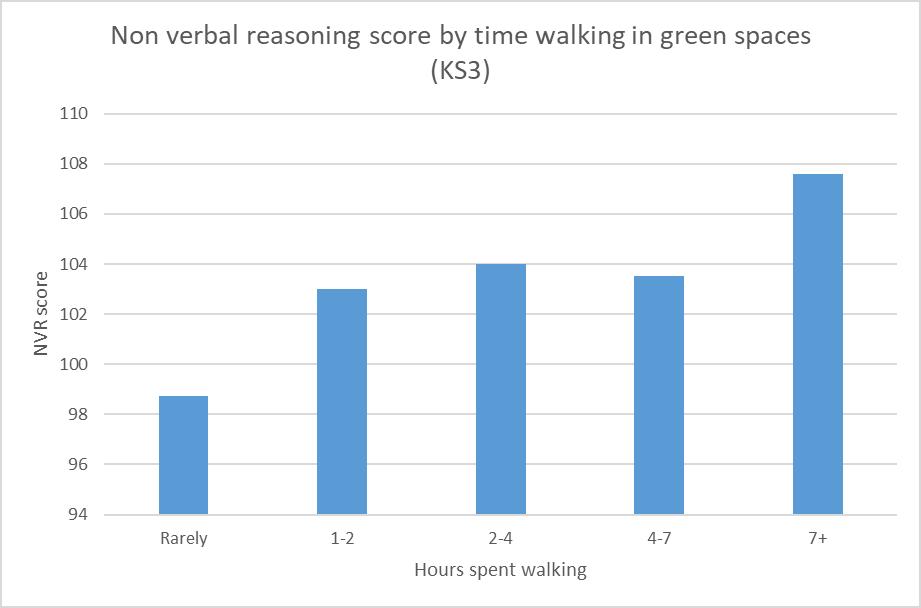
1: Non-verbal reasoning score by average weekly hours spent walking in green spaces (11–14-year-old girls & boys)
Moreover, this same effect was also evident in Y7, 8 and 9 pupils when their average weekly hours spent engaged in individual sports in green spaces was correlated against their NVR scores. Interestingly, this same effect was not found with team sports and may indicate that team sports, with a social dimension, do not involve the same level of ‘switching off’ as individual sports in which there is less of a social dimension. This may mean that the full beneficial impact of green spaces might best be felt without social distractions, however this is currently mere speculation (Fig. 2).
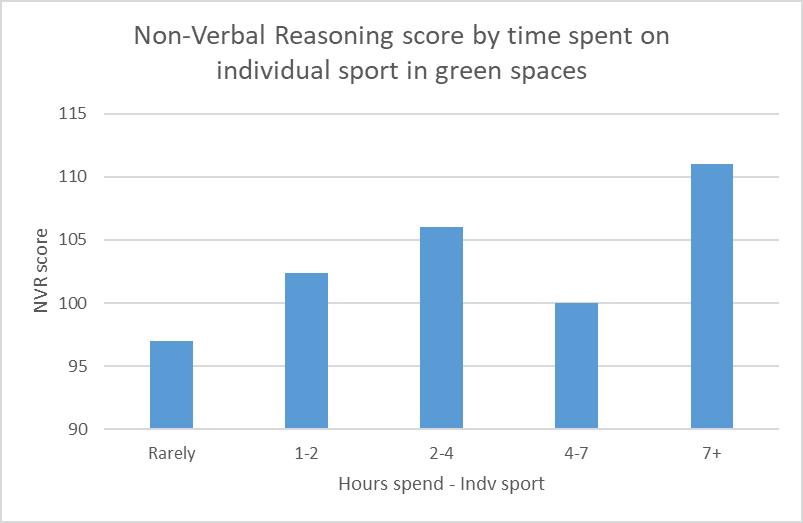
2: Non-verbal reasoning score by average weekly hours spent playing individual sports in green spaces (11–14-year-old girls & boys)
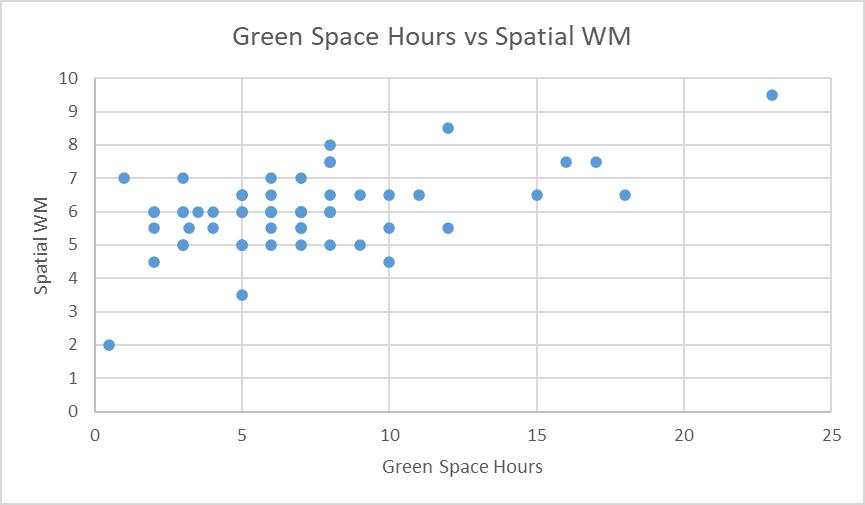
Among pupils in the Sixth (Y12 & 13) it was found that there is a positive correlation (r = 0.53) between the overall number of hours that KS5 pupils spend in green spaces and scores on their spatial working memory (SWM) task (Fig. 3). This highlights the cognitive benefits derived from time spent in nature and how these can have a real and lasting effect on pupils’ ability to understand and manipulate their spatial environment. Among pupils in the Sixth (Y12 & 13) it was found that there is a positive correlation (r = 0.53) between the overall number of hours that KS5 pupils spend in green spaces and scores on their spatial working memory (SWM) task (Fig 3). This highlights the cognitive benefits derived from time spent in nature and how these can have a real and lasting effect on pupils’ ability to understand and manipulate their spatial environment.
Discussion
The data about green space usage by pupils surveyed in Years 7, 8 and 9 and in the Sixth, once correlated with their cognitive abilities including NVR and SWM, indicates that the greater amount of time that young people spend in green spaces, the more proficient they become in these cognitive domains. There was no obvious relationship found between time spent in green spaces and mathematical abilities, though a larger scale trial might be required to investigate this further.
Pupils (p=62) in the Sixth (17 &18 yrs old) also self-reported that time spent in green spaces was important to their overall wellbeing and happiness (mean score 4/5). This indicates that for older pupils in our care, who face an array of busy, challenging and sometimes stressful obstacles in their lives, time in nature provides them with valuable respite. This time to reboot can only have positive consequences in terms of attitude and behaviours in school and in terms of study habits. However, there was no strong relationship found in this research between a pupil’s level of impulsiveness (especially attentional resources and ability to self-regulate) and the time they spent in green spaces. This deviates from what previous research had predicted.
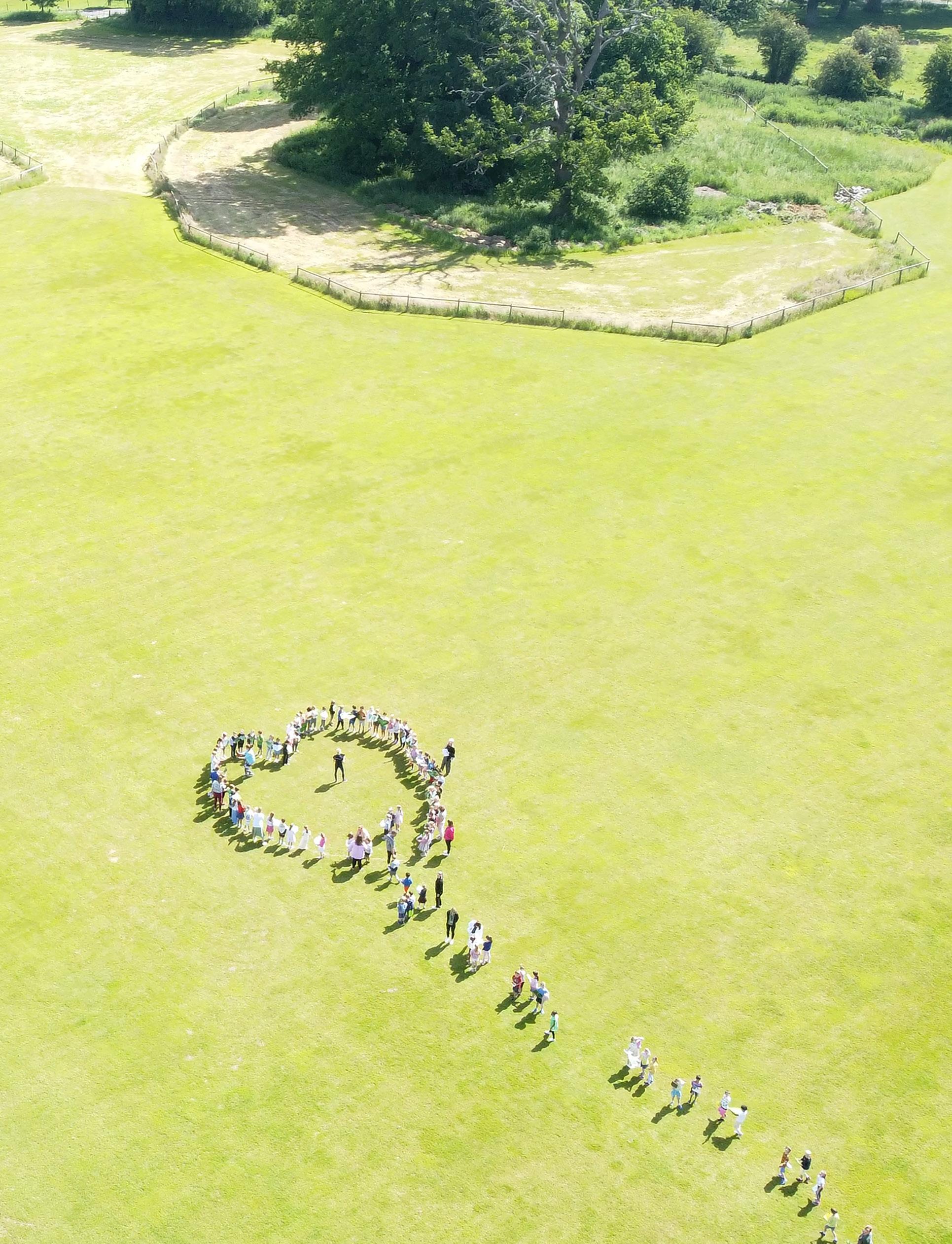
“Boredom is the key to creativity… time in green spaces, free from technology and constant stimulation, enables young people to imagine, reflect, and think creatively.”
There were a number of limiting factors in this research study that could have impacted on the validity of these results. Firstly, much of the primary research conducted on this topic, both my own and previous research, is correlational in nature and it would be wrong to assume a clear causational relationship between green space and improved cognitive abilities and behaviours. There were simply too many other third variables in this research that were unable to be controlled, that could be determining factors in ‘causing’ a child to have better NVR and SWM scores, these include socio-economic status, parental levels of education or a host of other factors. Secondly, this research lacked a representative sample, or at the very least a comparative group that would give the findings clearer context. Most pupils and their families in the Berkhamsted community already live and work in areas with higher density of green spaces than the national average.
Implications and applications
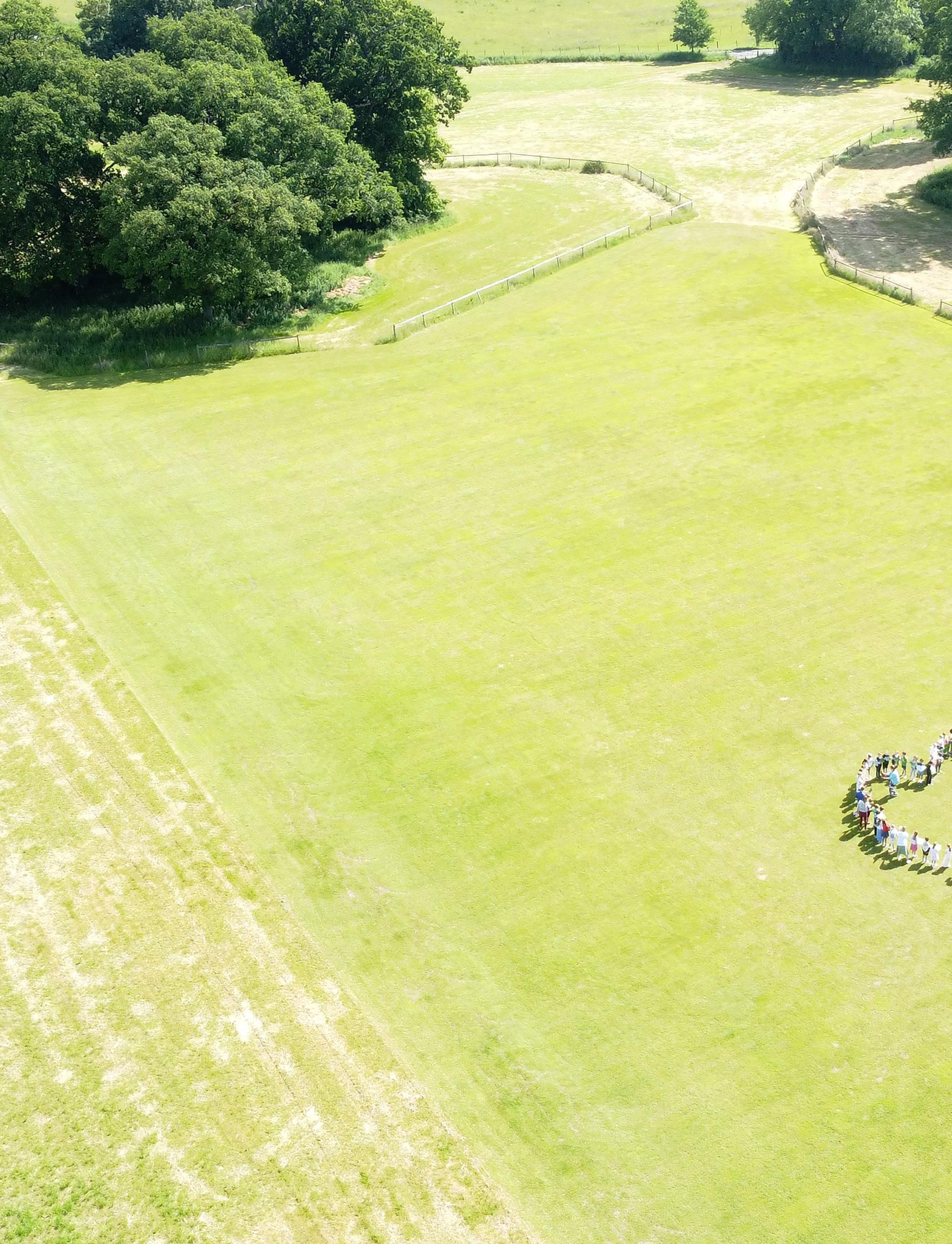
“Boredom is the key to creativity,” argues Beth Smith (Director of Outdoor Education), emphasising that time in green spaces, free from technology and constant stimulation, enables young people to imagine, reflect, and think creatively. For Berkhamsted School, this provides a compelling rationale to sustain and expand investment in green spaces, given their impact not only on wellbeing but also on creativity, spatial awareness, and behavioural self-regulation. Such environments allow pupils to experience the world more fully and develop important cognitive and emotional skills beyond the classroom.
However, the implications extend beyond individual development to wider social outcomes. Michael Marmot’s review of health inequalities highlights the importance of education and community conditions in addressing disparities, while Robert D. Putnam distinguishes between “bonding” and “bridging” social capital, advocating for greater interaction across diverse groups.
This suggests an opportunity for Berkhamsted to “burst the bubble” by using its green spaces as a platform for partnership with inner-city state schools. Shared outdoor education programmes or activities such as sport could foster inclusion, mutual understanding, and social connection. In doing so, green spaces become not only a tool for personal development, but also a means of promoting equity and strengthening community cohesion.
Regular access to green spaces allows a child to step off the treadmill of a top-down, goal-oriented education system, reinforced by a technological culture that demands their attention and that encourages them to switch tasks regularly. Time in green spaces bolsters our young people’s cognitive reserve by giving their medial pre-frontal cortex and executive systems a break. Creativity is boosted and it may lengthen that child’s perception of time, meaning that pursuing instant and impulsive stimuli is less attractive. Spatial awareness and wayfinding and associated spatial skills are improved and these are abilities that should directly improve that child’s mathematical ability too.
“Time in green spaces bolsters our young people’s cognitive reserve”
This paper also presents a compelling case for behavioural interventions being delivered through outdoor education, for example encouraging those who are socially anxious to improve oracy skills or supporting those pupils with poor attention or impulse control. Berkhamsted’s portfolio of beautiful green spaces could also be utilised as a vehicle to help enable the school’s diversity drive, by promoting more bridging social capital, by inviting school communities with less of the green stuff to join our young people on a safe and level playing field. The benefits could be huge for everyone. At the very least this paper has hopefully reaffirmed our shared commitment at Berkhamsted to continue to invest in the future of our green spaces at the school, from which all our pupils thrive.
Martin Barr Head of Psychology. A proud Glaswegian, he likes nothing better than walking in the Scottish Highlands. He is passionate about making access to nature and the outdoors fairer for all young people, regardless of background and education. He is a firm believer in the beneficial effects of green spaces on all of humanity.
Alastair Harrison, Head of Academic Enrichment
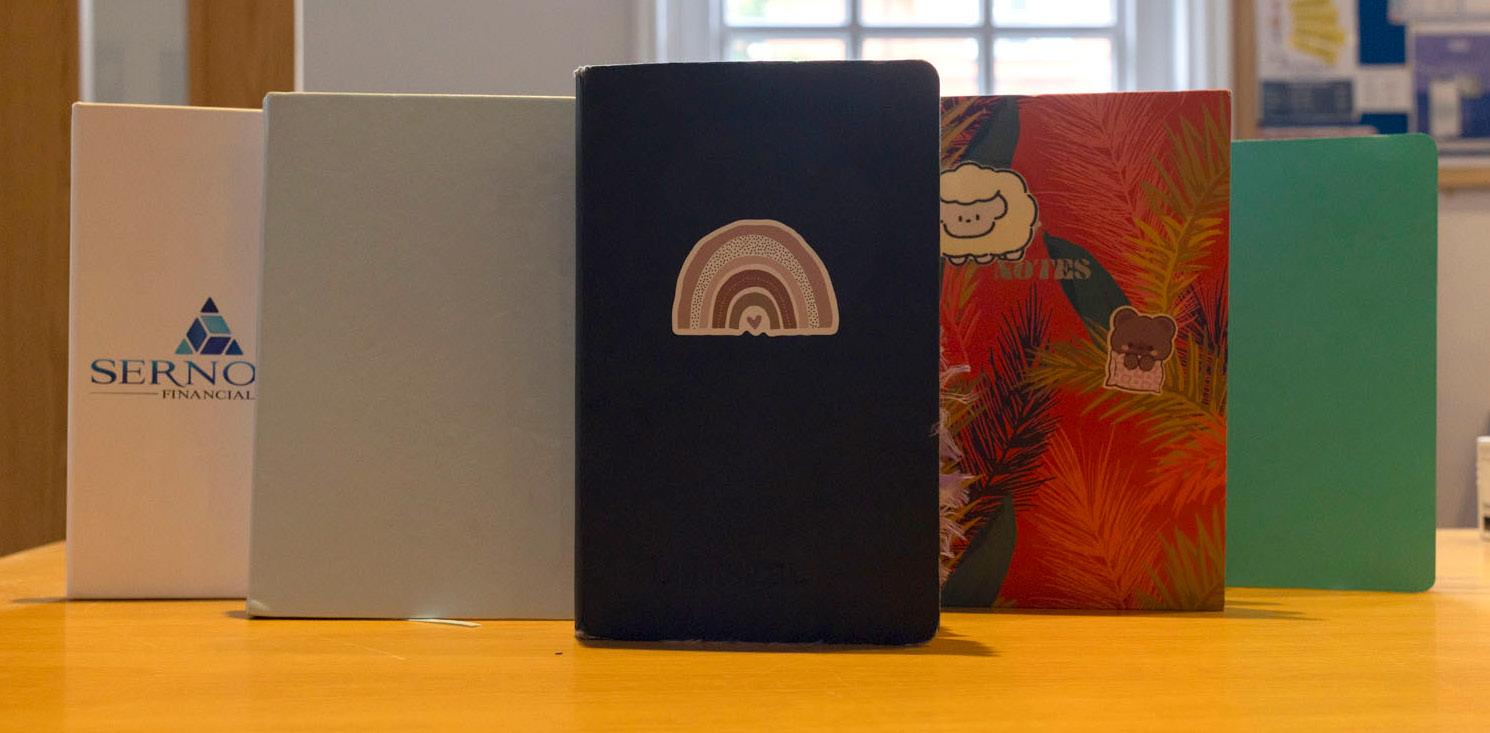
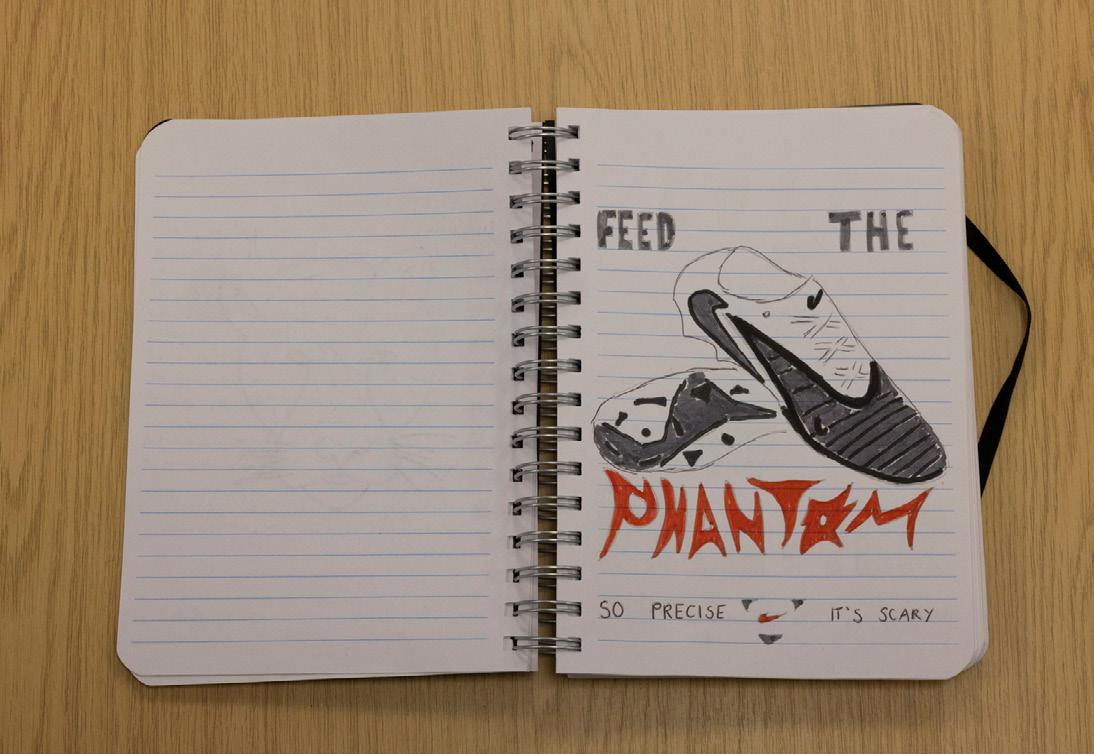
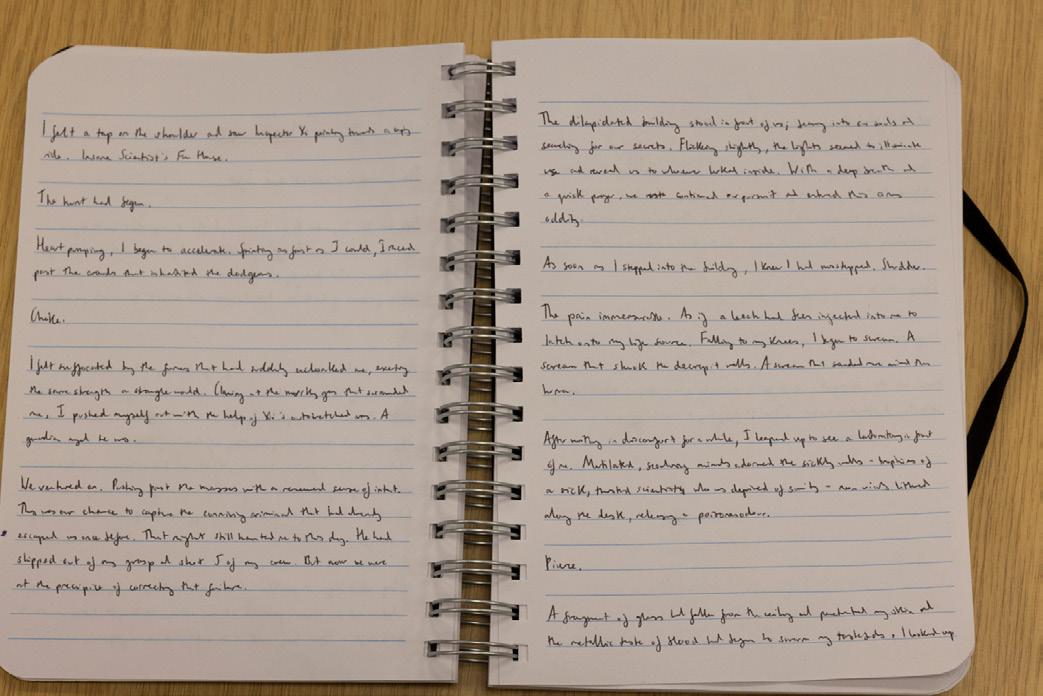
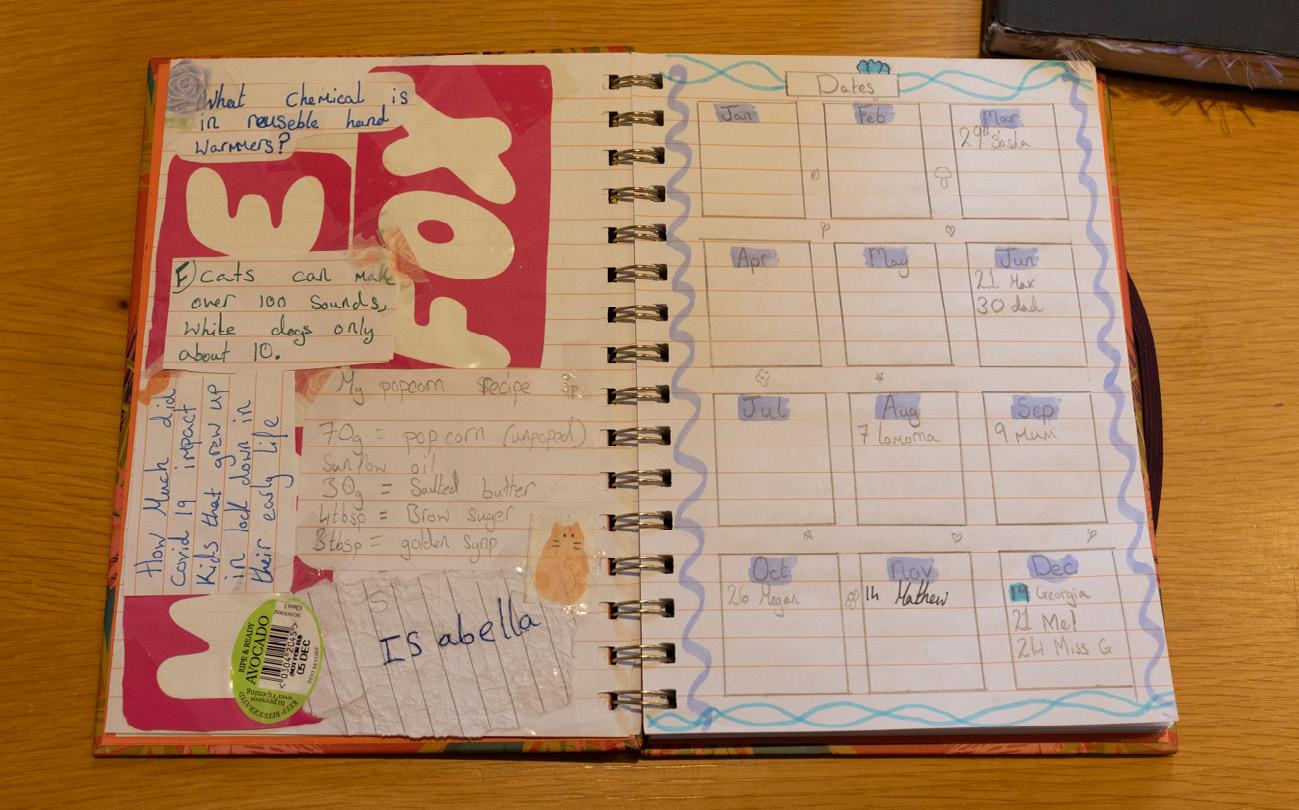
Curiosity is powerful. It is the start of every discovery, invention, story and change in the world. By keeping a Curiosity Journal, students are training their minds and souls to notice what matters to them – they may be the first step in becoming an independent thinker.
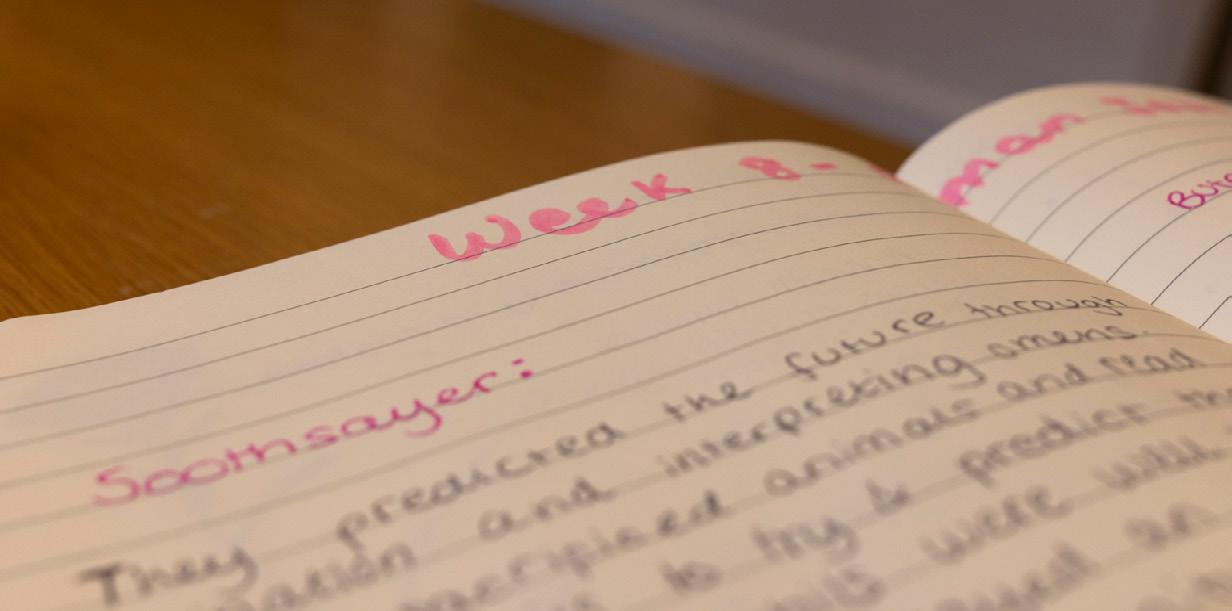
The journal is a place to capture the thoughts, questions and ideas which spark their interest; it is a space to record what intrigues them and reflect what they are thinking. They are a catalogue of whatever piques an individual’s interest – so each is unique. Some have questions the scholars cannot stop thinking about, some are collages of quotations, sketches and maps, some are full of facts…

How do we maximise the opportunity to coach in our Sixth Form pastoral 1:1s?
by Alastair Harrison, Sixth Tutor
Abstract
This action research project explores how Graydin coaching techniques can enhance the effectiveness of pastoral 1:1 meetings in Berkhamsted Sixth. Following the 2023 transition from a house system to a tutor group model, 37 tutors now deliver personalised support through regular meetings. Surveys of 21 tutors and 113 students were used to evaluate communication, engagement, goal-setting and wellbeing. Findings show that trust-based relationships, open questioning and personalised goal-setting underpin successful sessions. However time constraints, administrative demands and inconsistent application of coaching methods limit effectiveness. Recommendations include increased training, embedding coaching across the Sixth Form strategy and prioritising coaching over administrative tasks.
Pastoral care in the Sixth Form plays a vital role in supporting students’ academic achievement, emotional wellbeing and personal development. In September 2023, Berkhamsted Sixth restructured its pastoral system, moving from a house model to a tutor group structure designed to foster independence and mirror universitystyle support.
This change coincided with the introduction of specialist roles and Graydin coaching techniques, which emphasise student-led dialogue, active listening and goal-setting. This project evaluates how these approaches can be embedded into 1:1 tutor meetings to improve their impact. It examines what makes meetings effective, identifies barriers and proposes strategies for improvement.
The new tutor system consists of 37 groups overseen by senior staff, replacing the shared responsibility of Heads of House. The aim is to create a more personalised and autonomous student experience while maintaining strong pastoral support.
Additional specialist roles - including a School Psychologist, Head of UCAS and Sixth Pastoral Coach - support targeted intervention. Within this framework, 1:1 meetings are central. This project assesses how Graydin coaching techniques can improve communication, engagement, goal-setting and wellbeing in these sessions.
Research highlights coaching as a powerful tool for improving engagement, motivation and self-regulation. Whitmore (2017) defines coaching as unlocking potential through questioning and listening while Van Nieuwerburgh (2017) emphasises its role in fostering autonomy and resilience. Best (2019) and Allen and Gordon (2017) stress the importance of addressing both academic and emotional needs in post16 education.
Graydin’s “Start with Heart” model aligns with these ideas, prioritising emotional connection before goalsetting and embedding a shared coaching language. Practical tools such as the Fulfilment Wheel and scaling questions support reflection and progress tracking (Rogers, 2021).
Relational trust is critical. Kraft et al. (2018) identify rapport as a key factor in coaching effectiveness while Cavanagh and Lane (2012) emphasise psychological safety. Coaching is most effective when students feel able to express challenges without judgement.
Metacognition is also central. Dignath and Veenman (2021) highlight the importance of planning, monitoring and evaluating learning while the EEF (2021) links structured reflection to improved self-regulation. Graydin tools support this by encouraging students to assess multiple areas of development.
Coaching also supports transition readiness. Robson and Bailey (2009) and Passmore and Brown (2009) show that coaching improves independence, time management and long-term planning.
However challenges remain. Downey (2014) and Robertson (2005) note that limited training and administrative pressures can weaken coaching impact. Campbell (2024) highlights the need for consistency while Aydan (2025) emphasises the importance of self-regulated learning and rapport.
This study builds on these insights, focusing on how coaching can be effectively integrated into Sixth Form 1:1 meetings.
Methodology
A mixed-methods approach was used, with surveys distributed to 21 tutors and 113 students. Both quantitative and qualitative data were collected and coded into themes such as relationship-building, goal-setting and coaching versus administration. Comparative analysis identified key similarities and differences in perspectives.
Effective 1:1 Meetings
• Tutors emphasised the importance of of trust and personal connection. Strong relationships enable open, meaningful discussion.
• Student-led conversations are crucial, with open questioning encouraging reflection and autonomy.
• A balanced approach - combining academic tracking, wellbeing and future planning - was seen as most effective.
• Preparation and continuity were also key, with effective tutors reviewing notes and tracking progress.
• Finally, personalisation allows sessions to respond to individual needs.
• Time constraints were a major issue, with short sessions limiting depth.
• A transactional focus on administration reduced engagement.
• Tutor-dominated conversations and lack of of preparation also undermined effectiveness.
Barriers
Common challenges included:
• Student reluctance and limited engagement
• Difficulty building trust
• External factors such as timing and interruptions
• Students giving expected rather than honest responses
Graydin techniques - particularly “Start with Heart” and the Fulfilment Wheel - were seen as effective in improving engagement and reflection.
Tutors reported improved relationships, deeper conversations and positive academic and pastoral outcomes.
Development Needs
There is inconsistent application of coaching techniques, with some tutors lacking confidence or training.
Tutors also struggle to balance coaching with advice-giving and to adapt approaches for different students.
Suggested Improvements
• Practical CPD (role-play, peer observation)
• Clear resources and prompts
• Greater integration of coaching into wider school strategy
• Application beyond 1:1s
Effective Meetings
Students value:
• Open, honest conversations
• Clear goals and action points
• Active listening and meaningful feedback
• A balance between academic and personal discussion
• Regular progress reviews
Preparation enhances effectiveness, with students benefiting when they bring topics to discuss.
Ineffective Meetings
Students reported issues with:
• Lack of focus or structure
• Repetition without progress
• Overly formal or administrative sessions
• Absence of clear outcomes
Short or rushed meetings were also seen as ineffective.
Key Themes
• Goal-setting is central
• Wellbeing is a major focus
• UCAS preparation dominates many sessions
Coaching vs Administration
Many meetings are heavily administrative (60% - 80%), limiting coaching opportunities. Students expressed a desire for more personal development focus.
Practical Considerations
Students prefer private, quiet spaces though some favour more informal settings such as walking meetings.
Convenience and timing are important to avoid disruption.
Comparison to Earlier Schooling
Students view Sixth Form 1:1s as:
• More structured and frequent
• More focused on personal development
• More relational and supportive
Suggestions
• More time for meetings
• Less formality for wellbeing
• Better balance between academic and personal focus
• Clearer preparation guidance
Conclusion
The research demonstrates that 1:1 coaching is highly valued and has a significant positive impact on students’ academic and personal development. Its strength lies in providing personalised, holistic support that fosters selfawareness, resilience and independence.
However several challenges limit its effectiveness. Time constraints, administrative demands and inconsistent coaching practice reduce the quality of sessions. Engagement also varies depending on the strength of the tutor-student relationship.
To maximise impact, improvements should focus on:
• Strengthening coaching skills through training
• Reducing administrative burden
• Increasing flexibility in structure and timing
• Ensuring consistency across tutors
“1:1 coaching is highly valued and has a significant positive impact on students’ academic and personal development.”
When delivered effectively, 1:1 coaching has the potential to be a cornerstone of Sixth Form pastoral care, supporting both immediate outcomes and long-term development.
Recommendations
Training and Development
• Provide practical, interactive CPD (e.g. role-play, coaching practice)
• Develop shared resources and prompts
• Build confidence in adapting coaching techniques
Structural Improvements
• Rebalance sessions to prioritise coaching over administration
• Extend or adapt meeting times where possible
• Provide protected time for meaningful conversations
Student Engagement
• Encourage student preparation and ownership
• Promote student-led discussion
• Maintain focus on trust and rapport
Strategic Integration
• Embed coaching across the Sixth Form culture
• Extend coaching approaches into UCAS and co-curricular contexts
• Align coaching with wider pastoral and academic strategies
Future Development
Since this research was carried out, the opening of the new Sixth Form centre has improved the environment for 1:1 meetings. Flexible spaces including café areas and private booths allow for more varied and accessible sessions throughout the day.
Final Reflection
Effective coaching depends on:
• Strong relationships
• Student-led dialogue
• Flexibility and responsiveness
• A balance between structure and personalisation
By embedding these principles and refining current practices Berkhamsted Sixth can ensure that 1:1 coaching fully supports students as they transition to adulthood.
Alastair Harrison has taught English at Berkhamsted since 2012. He is Head of Academic Enrichment and a Sixth tutor; he has been a tutor in a boys’ boarding house at Taunton School and has tutored in boys’ and girls’ day houses in Berkhamsted. This is his fourth Action Research Project.
by Mo Tanweer, Oxbridge Consultant
The Berkhamsted for Prize Argument is a competition for Y12 students that rewards the ability to think not only clearly, with precision and clarity, but also with a creative spark of originality. Refreshingly, and crucially, there is no syllabus, no revision, but armed with just a spark for intellectual curiosity students write about topics they are passionate about, from whatever angle they wish to explore. From open-ended quotes to puzzles and riddles to explore, how liberating, to be free of any mark-scheme or set framework to answer questions: no textbook, but instead carte blanche to take answers wherever they wish to take them… Every year entries from students get more ambitious and more interesting, with a genuine buzz amongst students after the paper has been sat.
This year the first stage involved students doing a written paper, the second stage involved students exploring and defending their ideas in a viva, and the final stage involved the students having a Balloon Debate with each other – defending whether Love is more important to society than Justice, whether Iron Man is more important than Hermione Granger, whether an Artist is more important than a Farmer.
The Berkhamsted Prize for Argument was a unique experience that enabled me to develop critical thinking skills, have my ideas tested and engage in intellectual debates. It began with an exam paper designed by Mr Tanweer, full of thought puzzles and ending with an essay of our choosing. What I enjoyed most about this part of the process was being able to go into a written exam with no rules or boundaries – it was unlike anything I had done before!
In the last question at the end of the paper, I selected a question that asked me to choose a topic I was interested in and try to convince the reader that it was an interesting subject. I personally chose to write about how fascinating Communism is as a political system, due to the different interpretations it can have and the impacts it can have on different societies. I also mentioned how it raises complex questions about human nature, and the essay on a whole allowed me to talk about something I was immensely passionate about without rules. In the next stage of the competition, I discussed my paper with Mr Tanweer, and he challenged my arguments. What I found really valuable from this experience was how important it is to remain logical and consistent in your argument whilst someone is breaking your argument down.
In the last stage of the Prize for Argument, some other finalists and I engaged in a balloon debate together. We were all given different topics to defend, and this was really valuable in improving my personal debate skills.
Overall, the Berkhamsted Prize for Argument was a wholly enjoyable and intellectual experience. It allowed me both challenge ideas and be challenged without traditional boundaries of a usual essay or debate. Not only that, but it allowed me to foster and extend my genuine curiosity in different ideas from different perspectives.

The Crossbencher is Berkhamsted School’s student-led Politics and Current Affairs blog. Founded in 2019 and led by a team of Year 12s, it provides a platform for students to engage critically with contemporary global issues and to develop their analytical and writing skills.
The blog features the Weekly Bluffer’s Guide, which offers accessible and concise summaries of the most significant current affairs stories. In addition, the blog showcases original articles written by A-level and senior school students, reflecting a wide range of perspectives and interests. The Crossbencher includes book and television recommendations to support and enrich students’ understanding of Politics. The student editorial team also organises regular essay competitions, encouraging broad participation and fostering intellectual curiosity across the school community.

Here is an example of a recent article published on The Crossbencher
by Ellie H
The Conservative Party is the oldest political party in the UK, established by Robert Peel in 1834. Throughout the decades, it has consistently been one of the most prominent and powerful parties, boasting key figures like Winston Churchill, Benjamin Disraeli and Margaret Thatcher, all of which have shaped our country’s history. However, they experienced a devastating loss in the most recent general election, losing 251 seats and only achieving 23.7% of the vote, raising doubts about their prospects in future elections despite their history of success. After 13 consecutive years in power and 5 Prime Ministers, countless scandals have left their once prestigious reputation in tatters, with the public paying for their economic mistakes. However, it is not entirely the fault of the 21st century leaders. The downfall of the Conservatives became inevitable when Margaret Thatcher divided her party by introducing euro-scepticism into the debate.
One of the main reasons that the Conservative Party have suffered repetitively over the years is their continued obsession with the EU and the power Europe holds over us. Margaret Thatcher’s fears that Brussels would restrict her free-market economic plans completely isolated members of her party. Her own Deputy Prime Minister, Geoffrey Howe, resigned 2 days after her famous speech in October 1990 ending in “No. No. No,” which was towards the President of the European Commission calling for the European Parliament to be the democratic body of the community, the commission to be the executive and the Council of Ministers to be the senate. Within a few weeks of this speech, she was leaving office after calls for her resignation.

And this was the start of the end for the Conservatives.
From there, future Conservative leaders would be destroyed by the questions of leaving the EU. In 2006, Cameron urged his party to “stop banging on about Europe,” leading them to a more centrist view in a vain attempt to move away from euro-scepticism. However, the damage was already done. By distancing themselves from their own Eurosceptic base, the Tories created a vacuum on the right. The Tories were being overshadowed by populist nationalism, embodied by emerging rightwing party: UKIP. They called for Britain to leave the EU, and they were gaining traction amongst the electorate. In 2014, they won the European Elections, gaining 22 MEPs with 28% of the vote. The Conservatives placed 3rd, with only 24.5% of the vote. This was huge. A party calling for the exit of Britain from the EU had become the first party outside Labour and the Conservatives to win a national election in modern British history. From there, Cameron was forced to concede to a referendum on the EU against the advice of many Conservative politicians. He resigned in disgrace when the UK voted to leave.
Brexit then became the defining factor for at least the next 4 years, coming in a close second only to COVID. Theresa May was forced to resign in disgrace when she spent the 3 years struggling to come to a deal that satisfied everyone, before realising that it was in fact impossible. People began to blame the Conservatives for misleading them when it came to the referendum, stating they didn’t know what they were voting for.
Boris Johnson marked the intense desperation of the Conservative party to attempt to find a deal for a Brexit they didn’t even want in the first place. In August 2019, he advised the Queen to prorogue parliament to attempt to force his Brexit deal through, an act that was later found by courts to be an illegal act. To make matters worse, he did not resign over the matter, stubbornly sticking out another 3 years and claiming a victory when Britain left the EU on January 31st, 2020. During the pandemic, he

watched as people suffered exponentially from COVID restrictions, both mentally and physically, whilst he abused his power to have parties in the workplace, which he then vehemently denied in parliament. His actions caused people to view the party as untrustworthy, and the Conservatives were consequently blamed as the country entered the worst recession since records began.
Another notable mention in the downfall of the Conservatives is the shortest serving PM in British History: Liz Truss. In her Thatcherite-style economics, she successfully managed to further the damage done by COVID in such a short term, with the public mocking her by pitting her against a lettuce. The image of the wilted vegetable outlasting the pitiful Conservative leader will forever haunt her tainted years, and she will be remembered as the shortest serving PM that managed to crash the economy in only two weeks.
What the public has really felt about the Conservatives has come to light in the recent 2024 election. By only gaining 23.7% of the vote and losing in a landslide to Labour, it is clear that the public has lost faith in the prestigious party. Kemi Badenoch is viewed as stand-in leader whilst Nigel Farage once again takes the right-wing vote out from under them. Most right-wing voters believe that a coalition agreement will be one of the only ways to save the Conservatives, as they are struggling to stay afloat, falling to a damming 14% in the polls. Unfortunately, the view of most is that they have become “irrelevant”, with Reform being seen as the next big party in opposition to Labour.
The ramifications from Brexit have torn the Conservative party apart. It has led to the gradual decline in popularity, ending in countless disgraced resignations. People that were once die-hard Conservative voters have turned to Reform or Liberal Democrat in a vain attempt to avoid economic hardship seen in the last 13 years. Although the next election will be impossible to predict currently, the Conservatives have suffered significantly from blow after blow, and will struggle to gain back the public’s trust.
by Daisy Hardman
Font choice permeates everyday life, from road signs and advertising to digital texts and children’s books. Fonts carry meaning beyond the words themselves: some convey authority or formality, while others appear playful or informal. As screenbased reading continues to increase for both adults and children, questions arise regarding not only aesthetic preference but also readability. Specifically, does font choice influence reading accuracy, comprehension, and early literacy development, or is it merely a cosmetic design feature?
Within the school context, intentional changes have been made to classroom environments based on research-informed principles. Displays have been simplified, colour palettes limited, and visual clutter reduced to support cognitive processing. However, far less guidance has been given regarding the fonts used in classroom resources, displays, and digital texts. This gap prompted the present action research project, which aims to explore whether font choice has a measurable impact on early reading and learning.
“Fonts carry meaning beyond the words themselves…”
Early reading was selected as the focus of this study because it represents children’s first sustained interaction with written language. Prior to writing independently, children engage in letter recognition, blending, and wholeword reading. Strong early reading skills are a reliable predictor of later academic success; therefore, the way text is first presented to young learners warrants careful consideration. This research investigates whether different typefaces support or hinder letter recognition, word recognition, decoding accuracy, and comprehension in children during the early stages of reading development.
Reading pedagogy in England is underpinned by the Simple View of Reading model (Gough & Tunmer, 1986), which conceptualises reading as the product of decoding and language comprehension. The National Curriculum (DfE, 2014) reflects this framework by emphasising systematic synthetic phonics as the primary approach to early reading instruction, focusing on decoding and encoding skills.
While robust evidence supports systematic phonics instruction, researchers highlight its limitations when applied in isolation. Glazzard and Stones (2020) argue that the irregular nature of English orthography necessitates complementary strategies, including whole-word recognition, to support fluent reading. Developing automaticity is therefore essential. Automaticity refers to a reader’s ability to decode text accurately and effortlessly while simultaneously comprehending meaning (Topping et al., 2007). When decoding becomes automatic, cognitive load is reduced, allowing greater attention to be directed towards comprehension.
Repetition plays a crucial role in developing automaticity (Tavakoli, 2019). However, if the visual presentation of text varies significantly, this repetition may become less effective. Fonts that impede quick and accurate recognition of letters or words may increase cognitive load and slow the development of fluent reading. This suggests that font choice could have a meaningful impact on early literacy acquisition.
Visual perception is a fundamental component of reading, involving the discrimination of letters, word shapes, and punctuation. Sanocki (1987) found that regular and consistent fonts are easier to process because the visual system adapts to repeated patterns. While readers can adjust to unfamiliar fonts over time, this process requires additional cognitive effort.
Crompton (2014) explains that when a font is visually complex or unfamiliar, proficient readers rely more on contextual cues and whole-word recognition rather than letterby-letter decoding. However, early readers have not yet developed the automaticity or contextual awareness necessary to compensate for visual complexity. As a result, fonts with unusual shapes, excessive embellishments, or inconsistent letterforms may present additional barriers to reading accuracy.
Although research into typeface and early reading remains limited, existing literature suggests that clarity, consistency, and simplicity are important factors in reducing cognitive load and supporting efficient decoding.
Typefaces are commonly categorised into serif and sans serif fonts. Serif fonts include decorative strokes at the ends of letters and have historically been associated with formality and authority (Broadbent, 2023). Sans serif fonts, by contrast, feature simpler letterforms and are widely considered more suitable for beginner readers (Sassoon, 2001).
Nakilcioğlu (2013) distinguishes between legibility, the ease with which individual characters are distinguished, and readability, which refers to reading speed and comprehension. Typeface influences both, as visual characteristics shape how readers perceive and process text. Fonts also convey implicit messages and emotional associations, which may affect engagement and motivation.
Some researchers suggest that cursive scripts may support reading by encouraging smoother eye movements and reducing mirror-letter confusion (Danna et al., 2018). Conversely, others argue that cursive fonts add unnecessary complexity for early readers who are still mastering basic letterforms. Adapted fonts, such as OpenDyslexic, have been developed to support readers with dyslexia by emphasising distinct letter shapes and heavier bases to reduce letter reversal. Given these varied perspectives, further research into the impact of different typefaces on early reading is warranted.
This small-scale action research project involved six children selected from a cohort of sixty across three classes. Two children were chosen from each class to reflect a range of reading abilities. All activities were conducted in a familiar classroom setting using resources familiar to the children. Ethical considerations were observed throughout, and children were praised and encouraged regardless of performance.
The study examined the impact of different typefaces across four tasks: single-letter recognition, whole-word recognition, reading accuracy and comprehension, and pupil voice. Tasks were spread over several weeks to minimise fatigue, and sessions were kept short to reflect the children’s age and attention span.
Typeface Selection
Four fonts were selected for analysis due to their contrasting design features:
• Times New Roman (serif): A widely used, traditional font with high familiarity.
• Sassoon Primary (sans serif): Designed specifically for children’s literacy, with researchinformed letter shapes.
• XCCW (cursive): A continuous cursive font commonly used to support joined handwriting.
• OpenDyslexic (adapted): Designed to aid reading by emphasising distinct letterforms and reducing mirroring.


For the reading comprehension task, only Sassoon and XCCW were used, as these fonts are most commonly used within the school environment.
Unexpectedly, OpenDyslexic was the most frequently selected font for single-letter recognition, accounting for over one-third of selections. This was notable given the children’s lack of prior exposure to the typeface. Times New Roman ranked second, likely reflecting its familiarity from environmental print. Sassoon ranked lower than anticipated, while XCCW was selected least often.
These findings suggest that highly distinctive letterforms may support letter recognition, even without familiarity. Conversely, cursive scripts with entry and exit strokes appear to make isolated letters more difficult to identify.
Figure 2
3
In contrast to the letter recognition task, Sassoon Primary was the most frequently selected font for whole-word recognition. This aligns with its extensive use in phonics resources and early reading books. Familiarity likely contributed to faster recognition of word shapes. Times New Roman ranked second, followed by OpenDyslexic. XCCW again ranked lowest.
These results support the argument that consistency and repeated exposure are key factors in whole-word recognition. While OpenDyslexic supported letter recognition, this advantage did not fully transfer to rapid word recognition.
Across all reading levels, texts presented in Sassoon consistently produced higher reading accuracy and fewer errors than those presented in XCCW. Errors made while reading XCCW texts were primarily visual decoding errors, particularly with vowel recognition. In contrast, errors in Sassoon texts were more often contextual.
As reading levels increased, comprehension improved in both fonts, indicating that once decoding becomes secure, typeface has less influence on understanding. However, at earlier stages, font clarity appears to play a significant role in reducing decoding errors.
Percentage of word selections by typeface
rate
6
Pupil voice responses revealed an interesting tension between preference and performance. Despite Sassoon producing the highest accuracy, OpenDyslexic was the most preferred font. Children described it as visually appealing and distinctive. Times New Roman was frequently identified as most similar to their handwriting, suggesting that familiarity shapes perception.
All children ranked XCCW as the hardest font to read. A particularly revealing moment occurred when a child described the letter f in XCCW as resembling a musical note, highlighting how stylised features can disrupt expected letter structures and confuse early readers.
7
This research demonstrates that font choice can meaningfully influence early reading development, particularly during the decoding stage. Sassoon Primary emerged as the most consistently supportive font for early readers, producing higher accuracy and fewer decoding errors. Its clear, simple letterforms and consistency appear to facilitate the development of automaticity.
XCCW, while beneficial for handwriting instruction, appears less suitable for early reading tasks due to its visual complexity. The cursive features that support joined writing may instead increase cognitive load when children are still mastering basic letter recognition and decoding.
OpenDyslexic showed unexpected potential, particularly in letter recognition and pupil preference. Although originally designed to support readers with dyslexia, its distinctive design may benefit a wider range of learners. This warrants further exploration.
The study’s limitations include its small sample size and short timescale. A larger, longitudinal study would improve the reliability and generalisability of findings. Future research could also examine reading speed and cognitive load using assessments such as the York Assessment of Reading for Comprehension (YARC).
Font choice is not merely a cosmetic consideration; it plays a substantive role in shaping early reading experiences. For beginner readers, clarity, consistency, and familiarity are essential. This research supports the adoption of Sassoon Primary for early reading materials and classroom displays, while recommending a cautious approach to the use of cursive fonts for reading instruction. By making informed typographic choices, schools can further optimise learning environments to support all early readers.
Daisy Hardman
Daisy Hardman joined Berkhamsted in 2018 after completing her undergraduate degree in Education and Geography, alongside a PGCE from Durham University. She began her teaching career in the Prep School, where she spent four years teaching Year 4 before moving to Year 3. Alongside her teaching, she has undertaken various research projects. In 2018/19, she completed a Master’s in Education Studies, deepening her understanding of pedagogy and curriculum design. In 2021/22, she carried out her first action research project at Berkhamsted, exploring the impact of mark making on handwriting and spelling. In 2023, she moved to the Pre-Prep department to take on the role of Head of Year 1.
by Jo Hughes
This action research project explores how Pedagogical Technology (PedTech) can be used to support a Pygmalion approach in the classroom, with a focus on improving student progress, confidence, and engagement. Conducted with a Year 10 GCSE Religious Studies class in a 1:1 device environment, the study examines how carefully selected digital tools can reinforce high expectations, enable adaptive teaching, and create a more inclusive and aspirational learning culture.
At its core, the project is grounded in the principle of the Pygmalion Effect, which suggests that students perform better when teachers hold high expectations of them. This is contrasted with the Golem Effect, where low expectations can negatively impact outcomes. Alongside this, the study draws on growth mindset theory and adaptive teaching principles, both of which emphasise the importance of challenge, feedback, and belief in students’ ability to improve. Rather than positioning technology as a standalone solution, this research frames PedTech as a tool that can amplify these pedagogical principles when used deliberately and thoughtfully.
The role of PedTech in this study centres on its ability to make learning visible, provide immediate feedback, and personalise student experiences. Tools that allow for real-time assessment, adaptive questioning, and independent practice offer opportunities to reinforce high expectations consistently. Importantly, the project also considers how technology can reduce bias and labelling, for example through anonymised responses, and how it can support both independent learning and collaborative dialogue.
The research was conducted over a half-term during a unit on Christian Beliefs and Practices. A mixed-ability Year 10 class engaged with a structured programme that integrated several PedTech tools into both homework and classroom practice. Data was collected through pre- and post-intervention student voice surveys, alongside assessment data comparing performance in this unit with a previous unit taught without the same technological integration.
The intervention consisted of four main strands. First, flipped learning was introduced through EdPuzzle, where students watched videos and completed prelesson tasks. This was designed to free up lesson time for higher-order thinking and reduce the likelihood of AI misuse in assessed work. Second, Parlay Ideas AI was used to facilitate structured, asynchronous debates, allowing all students to contribute thoughtfully before engaging in in-class discussion and extended
The findings from the study indicate a broadly positive impact of PedTech on student outcomes, particularly in terms of progress and engagement.
Assessment data showed that all students met or exceeded their predicted grades in the unit, with an average improvement of 1.32 grades compared to a previous unit taught without the same PedTech integration. The most significant gains were observed among students who had previously been working below their projected level. This suggests that the combination of high expectations and adaptive support was particularly effective for these learners.
This improvement aligns closely with the principles of the Pygmalion Effect. The use of technology made expectations more explicit and consistent, particularly through tools like Formative, where students could see their progress and receive immediate feedback. This visibility appeared to reinforce the message that all students were capable of success, contributing to increased effort and improved outcomes.
Student voice data also highlighted increased confidence and engagement. Most students reported confidence
writing tasks. Third, Curipod was used to deliver interactive lessons, including hinge questions to assess understanding in real time. Finally, Formative was used regularly for low-stakes quizzing and retrieval practice, providing immediate feedback and allowing both students and the teacher to track progress.
In addition, ChatGPT was introduced as a tool for students to self-assess their extended writing. Students were provided with a structured prompt to generate feedback on 10- and 12-mark exam questions, with the aim of increasing feedback frequency and encouraging reflection.
The combination of these tools was intended to create a learning environment where expectations were consistently high, progress was visible, and students were supported to work at an appropriate level of challenge.
levels of 3 or 4 out of 5 both before and after the intervention, with many noting improvements in their understanding of content. Formative was consistently identified as the most effective tool, particularly for revising key quotes and practising exam questions. Students valued its clarity, immediacy, and focus on retrieval practice.
In contrast, feedback on EdPuzzle and Parlay Ideas AI was more mixed. While some students appreciated the opportunity to prepare in advance and engage in structured debate, others found these approaches less accessible or less engaging. This variation highlights the importance of recognising individual learning preferences and ensuring that technology does not become a barrier for some students.
The use of ChatGPT for self-assessment also produced mixed responses. While some students found it useful for generating quick feedback and developing prompts that could be used across subjects, others expressed a lack of trust in the accuracy of the feedback and preferred teacher input. This suggests that while AI tools have potential, their effectiveness depends on careful scaffolding and clear guidance.
A key strength of the intervention was its support for adaptive teaching. Tools such as Curipod and Formative allowed the teacher to assess understanding in real time and adjust instruction accordingly. This ensured that all students could access the learning while still being challenged appropriately.
Lower-attaining students benefited from scaffolded tasks and repeated practice, while higher-attaining students were able to engage with more complex questions and deeper analysis. This aligns with the principle that high expectations should be maintained for all students, but with support tailored to individual needs.
The use of anonymised responses in tools like Curipod also helped to reduce the impact of labelling and bias. By focusing on responses rather than individuals, the teacher was able to address misconceptions without reinforcing negative labels. This contributed to a more inclusive classroom environment where all students felt able to participate.
However, some limitations were identified. A small number of students reported that the pace of interactive tools could be challenging, particularly where device performance was an issue. This highlights the need to ensure that technology enhances, rather than hinders, accessibility.
Student feedback emphasised the value of variety and interactivity, but also the importance of balance. While many students appreciated the use of technology, several expressed a preference for a combination of digital and traditional approaches.
Common themes included improved recall of key content, particularly through repeated quizzing, and a better understanding of complex ideas through visual and interactive elements. At the same time, students noted practical challenges such as device lag and differing preferences for learning formats.
The mixed responses to certain tools reinforce the importance of adaptive implementation. PedTech is most effective when it is responsive to student needs and preferences, rather than applied uniformly.
Overall, the research demonstrates that PedTech can have a significant positive impact when aligned with a Pygmalion approach. The combination of high expectations, immediate feedback, and adaptive support created an environment in which students were able to succeed and build confidence.
The most effective tools were those that made learning and progress explicit, particularly Formative. These tools supported retrieval practice, reinforced key knowledge, and provided clear indicators of success. In contrast, tools that required greater independence or introduced additional complexity were less consistently effective, particularly for some learners.
A key insight from the study is that technology should not be used for its own sake. Its value lies in how it supports core pedagogical principles, particularly high expectations, adaptive teaching, and meaningful feedback. Where these principles were strongest, the impact on student outcomes was most evident.
The research also highlights the importance of student voice in shaping implementation. Understanding how students experience different tools allows for more effective adaptation and ensures that technology remains a support rather than a barrier.
This project concludes that PedTech, when used deliberately and in alignment with the Pygmalion principle, can play a powerful role in improving student outcomes and fostering a culture of high expectations. The most effective approaches were those that made progress visible, provided immediate and actionable feedback, and supported all students to work at an appropriate level of challenge.
However, the findings also emphasise the need for balance. Technology should complement, not replace, highquality teaching. Its use must remain purposeful, responsive, and grounded in strong pedagogical principles.
Ultimately, the success of PedTech lies not in the tools themselves, but in how they are used to reinforce belief in students’ potential. By embedding high expectations into both teaching and technology, educators can create inclusive and aspirational learning environments that support both academic achievement and student confidence.
This summary was written by Jo Hughes, Group Director of EdTech with support from ChatGPT. AI was used to assist with summarising previous Action Research. All content was reviewed, edited, and shaped by the author to ensure accuracy and relevance. This report reflects a balanced use of AI as a tool to support expert led educational research.
Jo Hughes
Group Director of EdTech at Berkhamsted Schools Group, where she leads on digital strategy and innovation across the schools. Previously, she worked at Northwood College for Girls GDST, specialising in educational technology and digital learning. Jo is particularly interested in the ethical and meaningful use of AI in education, adaptive teaching, and promoting healthy digital habits for young people. She regularly speaks at national education and EdTech events and is actively involved in research exploring the impact of technology on teaching and learning.

The Davies Society is an academic colloquium for Senior School students to celebrate their curiosity, share their academic interests and refine their research skills. Students research an academic topic of their choice and many present their findings to their peers. Students also have the opportunity to meet Sixth Formers who share their academic passions.
Alastair Harrison, Head of Academic Enrichment
“I researched my topic on the NASA website and Brittanica. I found it surprising that even with modern technology and scientific advancements, we still cannot be sure about how our Moon was formed. I was expecting one solid theory. I really enjoyed my Davies society talk because it was great to research and speak out about a topic which I found very interesting. I also liked the fact that some people told me things I did not know about the moon, helping me to expand my knowledge.”
By Stefan F, Year 9
The most commonly known theory is the giant-impact hypothesis. I personally agree with this one as it seems the most plausible. It claims that around four-and-a-half billion years ago, an asteroid, which was about the same size as Mars, called Theia (which means goddess in ancient Greek) collided with the ancient earth. The impact was so violent that it caused piles of debris to enter Earth’s orbit, which then clumped together. This could mean that for a couple of years Earth had rings like Saturn’s.
This hypothesis is supported by studying lunar rocks, which show similarities to the geography of the earth. The impact could of also caused the tilt in Earth’s axis, causing all of the seasons to happen.
A less likely theory is the Fission theory. The young Earth must have had a very high rotational speed, about one rotation every 2-and-a-half hours, which is 20x faster than our current rotational speed. Because of this rapid movement, part of the earth broke away and formed the moon. While it could explain the similar geographies between the earth and moon, it leaves us to question why the earth stopped rotating so fast, and how it slowed down.
Another possibility is the capture theory. It states that an asteroid had entered our solar system and passed very closely to the earth, where it became captured by our gravitational field, therefore holding it in place. While it is possible, it doesn’t explain why the rocks on the moon are so similar to the ones on the earth.
The final theory which I will be discussing is the multiple-impact theory. This one is very similar to the giant-impact hypothesis, but rather than there being one big impact, there were multiple hits on one point of the planet. Similarly to the giant-impact hypothesis, all the dust and debris came together due to their own gravity, which then ended up forming the moon. While it can be possible due to the discovery and study of rocks, it is less likely that one point on the planet took so many hits in its lifetime.
In conclusion, there are many theories on how the moon was formed, but we still aren’t sure on which one is the truth.
By Henry R, Year 9

“For my research I used many websites, documentaries, YouTube videos and some of my own experiences. The thing I found most interesting was the science behind Deja vu, and the way that some dreams can feel like lifetimes where in actual fact only last a couple of seconds. I really enjoyed the research because I found out things that I would never have known.”
There are some moments, when the mind produces something so real and so precise, that it almost becomes indistinguishable from reality.
I remember waking up abruptly one night with that exact feeling. Not fear or confusion, but a certainty that what I had just experienced had been real in some way. It was as though I had crossed the boundary from one reality into another without noticing the moment of transition.
And that raises a bigger question: what exactly are dreams?
Despite centuries of inquiry, we still don’t fully understand them. Neuroscience can describe the conditions under which dreams occur—most commonly during REM sleep, when brain activity is high and the mind generates vivid sensory experiences. We know that areas linked to emotion and memory are particularly active, while those responsible for logic and decision-making are less so.
There are theories, of course. Some suggest dreams help consolidate memory, or process emotion. Others argue they are simply the brain imposing structure on random neural activity. But none of these explanations actually capture the subjective experience and the realism and that dreams can sometimes feel indistinguishable from our waking lives.
And this becomes even more interesting when we consider a familiar phenomenon: déjà vu.
Most of us have experienced it. It’s the sudden, almost unsettling sense that a moment has already happened. The standard explanation is neurological: a brief delay in the brain’s processing makes the present feel like a memory.
But that may not be the whole story.
If the brain is capable of constructing detailed, immersive scenarios during sleep, it raises the possibility that it is constantly simulating versions of reality. In that context, déjà vu might occur when a real moment closely resembles one of those internal simulations.
This suggests something deeper, that our minds are not simply reacting to reality, but actively shaping and anticipating it, often without our awareness.
Dreams, then, may not be random or meaningless. They may represent a form of internal dialogue—a way for different layers of consciousness to process experience, project possibilities, and, occasionally, surface in ways we can almost recognise.
And perhaps that is the most unsettling idea of all.
That somewhere within us, beyond conscious control, the mind is constantly generating realities, sometimes so convincingly that, when they overlap with our waking lives, we pause and wonder whether we have been there before.
Not because we have seen the future, but because, in a way, our minds have already been there.
by Kate Craigen
The purpose of this project was to find out more about the skills journey of an A level Psychology student - from the entry point after GSCE to higher education. The intended outcome was to tailor teaching and learning to best support students at both entry and exit points of the course, more effectively preparing them for their next steps at each stage.
Most students begin A level Psychology with little or no prior knowledge of the subject. At Berkhamsted, for example, only 1 out of 48 students in the 2024/25 cohort had studied Psychology at GCSE, reflecting the national trend. This contrasts with subjects such as Biology, where knowledge is built progressively over many years (Cline & Hobbiss, 2025).
Research suggests that prior knowledge plays a significant role in learning outcomes (Witherby & Carpenter, 2021). The “rich get richer” effect highlights how students with existing knowledge frameworks (schemas) are better able to absorb new information. Schemas help organise and interpret incoming material, meaning that learning is easier when new content connects to what students already know (Kurashige et al., 2018). In Psychology, when students lack existing schemes, this makes initial learning more challenging.
To address this, teaching strategies should focus on explicitly building and connecting knowledge. Techniques such as graphic organisers and retrieval practice can help situate new information within broader frameworks (Cline & Hobbiss, 2024). Alongside this, there is a growing recognition that the development of independent study skills is crucial, yet not always explicitly taught (Powell, 2024).
Although Psychology is the second most popular A level subject (JCQ, 2024), it is not usually required for a psychology degree; around 59% of undergraduates have studied it previously (BPS, 2022). Degree programmes typically begin with an introduction to the core topics and include substantial training in research methods and independent research projects.
There are, however, concerns about alignment between Psychology A level and the subject at degree level (BPS, 2017; Sutton, 2023). While prior study may provide an initial advantage, this tends to diminish after the first year exams (Betts et al., 2008). The transition to university involves significant changes in teaching methods, assessment, and expectations, particularly regarding independent learning and critical engagement with research. As with the GCSE-to-A level transition, university study demands greater independence in learning.
Overall, the literature suggests that while prior knowledge has some importance, the development of academic skills—especially independence, research, and critical analysis—is the key challenge in progressing to degree-level study.
• A survey of Year 12 Psychology A level students about their experiences of studying Psychology.
• Interviews with Year 12 students who had studying Psychology at GCSE at their previous school.
• Survey of previous Berkhamsted students now studying Psychology at university, about their experiences beyond A Level.
• In order to research how Psychology is taught at degree level, I attended lectures at the British Psychological Society’s conference for psychology educators (DART-P) at Royal Holloway University (June 2025). I also attended an online meeting with the Psychology admissions team at UAE.
GCSE to A Level
Student Surveys and interviews
As expected, most students began A level Psychology with little subject knowledge (82% little or none), though they generally felt well prepared. Biology, Maths, and English (all required at grade 6) were seen as the most useful GCSEs, with RS, History, and Geography offering transferable skills like essay writing, critical thinking, and understanding research methods.
Students reported that Psychology helped develop both evaluation-based and content-based skills (see graph 1)
Using key terms in your answers
Remembering facts
Evidencing your written arguments
Analysing different points of view
Writing clearly Summarising Information
Working independently
Reading large amounts of information
The transition from GCSE to A level was largely smooth, with any advantage from GCSE Psychology appearing short-lived.
“…it’s mostly new learning so you’re in the same boat as everyone else”
(year 12 student)

A Level to Degree
Student surveys
University students felt that prior knowledge of some content helped initially, but this benefit faded after the first year (in line with Betts, 2008).
Degree content varied between institutions.
“...my particular course is very neuroscienceheavy compared to A-level. Moreover, there is a much greater emphasis on statistics, where you are expected to be able to conduct statistical tests.”
(ex Berkhamsted student)
University study also required more in depth research methods knowledge, independent source selection, and practical application of psychological knowledge.
“When writing essays, you rely very little on textbooks but instead select your own sources, which inform your own arguments and position. In that sense, you are less constrained, however, this requires you to be more selective, critical and evaluative than was necessary at A-level”
(ex Berkhamsted student)

Advice for prospective Psychology undergraduates included reading beyond the syllabus, keeping up with current research, and gaining work experience. Preparation in skills like skim reading journal articles, referencing, and independent research tasks was also recommended. Students felt that there was not much of a focus on careers at A level, but this could be useful.
Teaching and assessment at degree level increasingly focus on real-world applications. Practical skills are emphasised, with coursework sometimes replacing exams. Assessments may involve group work, infographics, podcasts, or applied projects, reflecting a shift toward preparing students for the workplace and addressing challenges such as AI in essaybased assessments.
• Most common assessment methods include multiple choice tests, essays and research reports (UEA)
• Essays are generally a test of depth of thinking and considerations rather than testing memory (UEA)
• Some unis are moving away from exams, for example Manchester Met reported that they do not assess psychology students through exams.
• Issues with AI use – it can “write an essay in seconds” - this means that unis are developing more formative assessments
Formative assessments may assess if students are able to work like a psychologist –for example, can they apply theory to a case study. This may be done in groups or individually. For example, Glasgow University are using ‘Problem-based assessments’ that involve responding to a case study. The aim is to be able to apply theory to practical situations. The topic may be developmental psychology – the case study could be related to an issue at various lifestages (i.e. adolescence – teenage pregnancy, mid/older life – loneliness). Students have to give an individual and team/ group answer (like in the workplace). Students have to produce an infographic of their answers.
What does the skills journey in Psychology education look like?
From GCSE A level
Students enter A level Psych with very limited knowledge, although they do have some useful skills from other subjects
Needs a focus on adding meaning to topics –particularly as it’s so content heavy.
Degree and beyond
Focus is on skills needed – academic such as reading, independent study, but also workplace skills – applying knowledge to real world
How can we best support students transitioning from GCSE?
The first challenge for Year 12 psychology students is the huge amount of content that the new subject brings. It is important to add meaning as we teach, by linking to previous learning (regularly retrieval practise, providing knowledge organisers etc). They also need support in how to manage their independent learning - consolidating notes, making revision materials etc.
How can we best prepare students for higher education? As students move into Year 13 and become more skilled and managing the content and their independent learning, they need more support in the academic skills required for higher-level study – summarising, skimreading articles, selecting source material and practical research. However, they also need to move beyond the textbook – moving from learning large amounts of content, to applying their knowledge and ‘thinking like a psychologist’.
The skills journey in Psychology essentially begins with knowledge acquisition and moves through to applying this knowledge to the real world. This mirrors the focus at Berkhamsted on preparing Sixth form students for university and the workplace. For example, the Harkness style teaching in the Sixth form building uses the idea of group collaboration and sharing ideas. This is a key skill for a professional psychologist, for example when working with other professionals to diagnose a patient. However, it is also more widely useful in preparing students for any career in which they need to collaborate with others.
Recommendations
• Develop clearer knowledge organisers to scaffold early learning
• Continue retrieval practice to manage contentheavy topics
• Expand opportunities for independent research and wider reading
• Encourage more student participation in activities off-specification research opportunities like writing for the “Brainfeed” blog and entering essay competitions
• Introduce more applied tasks linking psychology to real-world problems
• Explore adopting university-style teaching methods (e.g., seminars, group projects)
Finally, it should be noted that the findings of this project extend beyond the skills journey that is unique to psychology, but also to other A level subjects. The lack of previous knowledge particularly links to subjects such as politics, economics and sociology, where students have rarely studied the subject at GCSE. Preparing students for higher level academic skills and the workplace also extends to all subjects
Kate Craigen has taught Psychology at Berkhamsted since 2018. She is also Head of Research, having worked for several years in the field of research prior to joining Berkhamsted. This is her second Action Research Project.

Brainfeed is Berkhamsted’s Psychology blog, led by a dedicated team of Year 12 students. It provides an engaging platform for students to explore psychology beyond the classroom – whether by discovering new ideas or researching their own areas of interest.
The blog includes book and documentary reviews, along with regular articles on topics such as the psychology of twins, why dreams are so weird and the featured article “Why do we want to squeeze adorable things?” Brainfeed also includes a podcast, where students interview guests – most recently England Rugby player Charlie Hodgson.
In addition, Brainfeed supports the wider school community by offering information about A Level Psychology, including FAQs, career pathways, project work, and trips. The team also runs essay competitions for both Sixth Form and senior school students, fostering curiosity and enthusiasm.
Eisa B, Year 12
Have you ever had the intense desire to squeeze, squish or teeth clench when you see a puppy, kitten or even a baby? If so, you’ve encountered what psychologists refer to as ‘cuteness aggression’ – an incredibly prevalent and entirely harmless emotional reaction. It is a psychological phenomenon that researchers have been studying for decades.
Cuteness aggression: What is it?
‘Cuteness aggression’ is known as the odd combination of positive and seemingly aggressive emotions brought on by something incredibly cute. People may grit their teeth, clench their fists or use dramatic expressions when experiencing it.
Crucially, these responses do not indicate actual aggression or malicious intent. Rather, they are an illustration of what psychologists refer to as ‘dimorphous expression’, which occurs when an emotion’s external manifestation differs from its internal manifestation. Another well-known example is weeping when you’re extremely happy.


According to researchers, the brain uses ‘cuteness aggression’ as a coping mechanism for emotional overload.
Strong caregiving instincts are triggered by extremely adorable stimuli, such as small bodies, round faces, and large eyes. These characteristics stimulate the brain’s reward and emotion-controlling systems, particularly those related to nurture and motivation. It is possible for the emotional reaction to become so strong that the brain appears to reach an internal ‘too much’ threshold.
Reactions that sound aggressive seem to serve as a balancing mechanism. The brain assists in reducing emotional arousal to a controllable level by incorporating an ‘opposite-valence response’, which is aggression combined with a positive emotion. In other words, rather than feeling overtaken by love, the impulse to squeeze something adorable might help you maintain control.
Is there a reason for it?
According to several psychologists, there may be an evolutionary advantage to ‘cuteness aggression’. Infants need constant care, and humans are hardwired to provide it. An intense emotional
response guarantees that adults remain involved and inspired to care for and defend.
In fact, the ‘aggressive’ expression might be a protective measure against emotional exhaustion. The brain keeps us energised and prepared to act, rather than paralysed by overwhelming tenderness.
Is this normal?
Yes. According to studies, a lot of people exhibit some degree of ‘cuteness aggression’, particularly when they are around newborns or baby animals. It doesn’t indicate that you’re secretly aggressive, nor does it forecast violent behaviour. If anything, it shows a strong caregiving response.
What have we concluded?
‘Cuteness aggression’ serves as a reminder that human emotions are complicated and occasionally contradictory. The urge to pinch a baby’s cheeks or squeeze a kitten isn’t sinister or harmful. Rather, it’s your brain’s ingenious method of controlling strong emotions of happiness.
Therefore, you might be more correct than you think the next time you say: “I can’t handle how cute this is”.

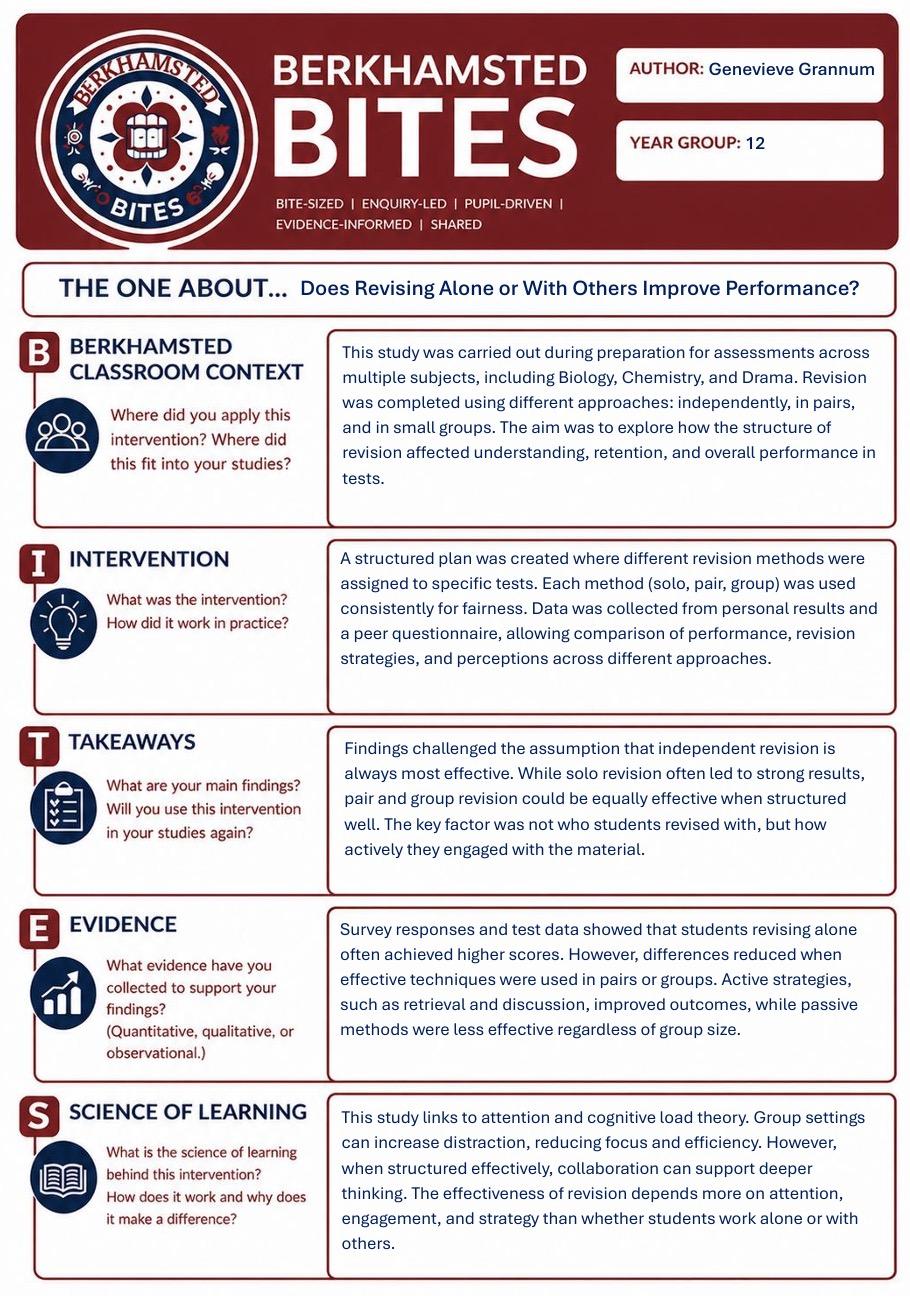
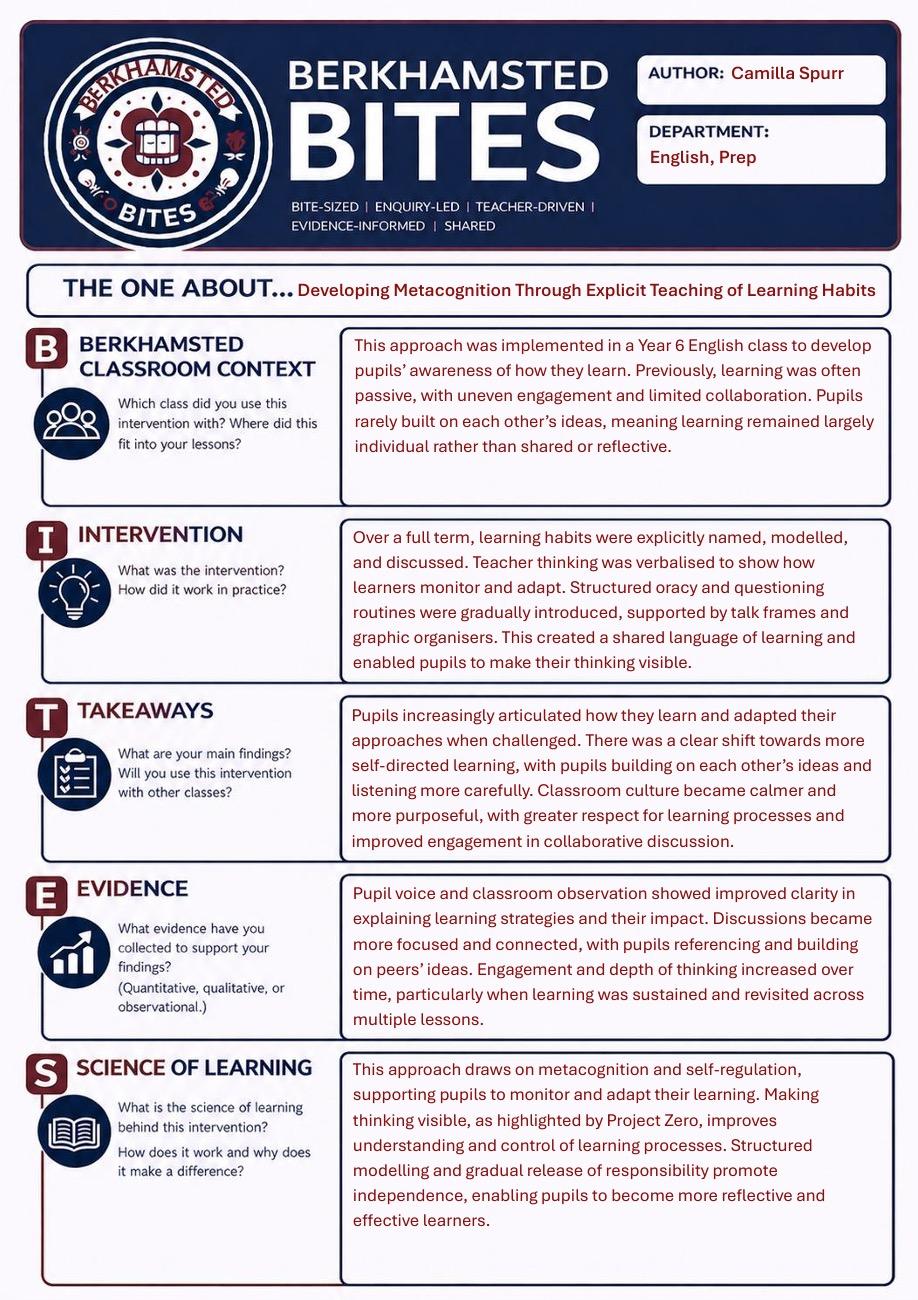
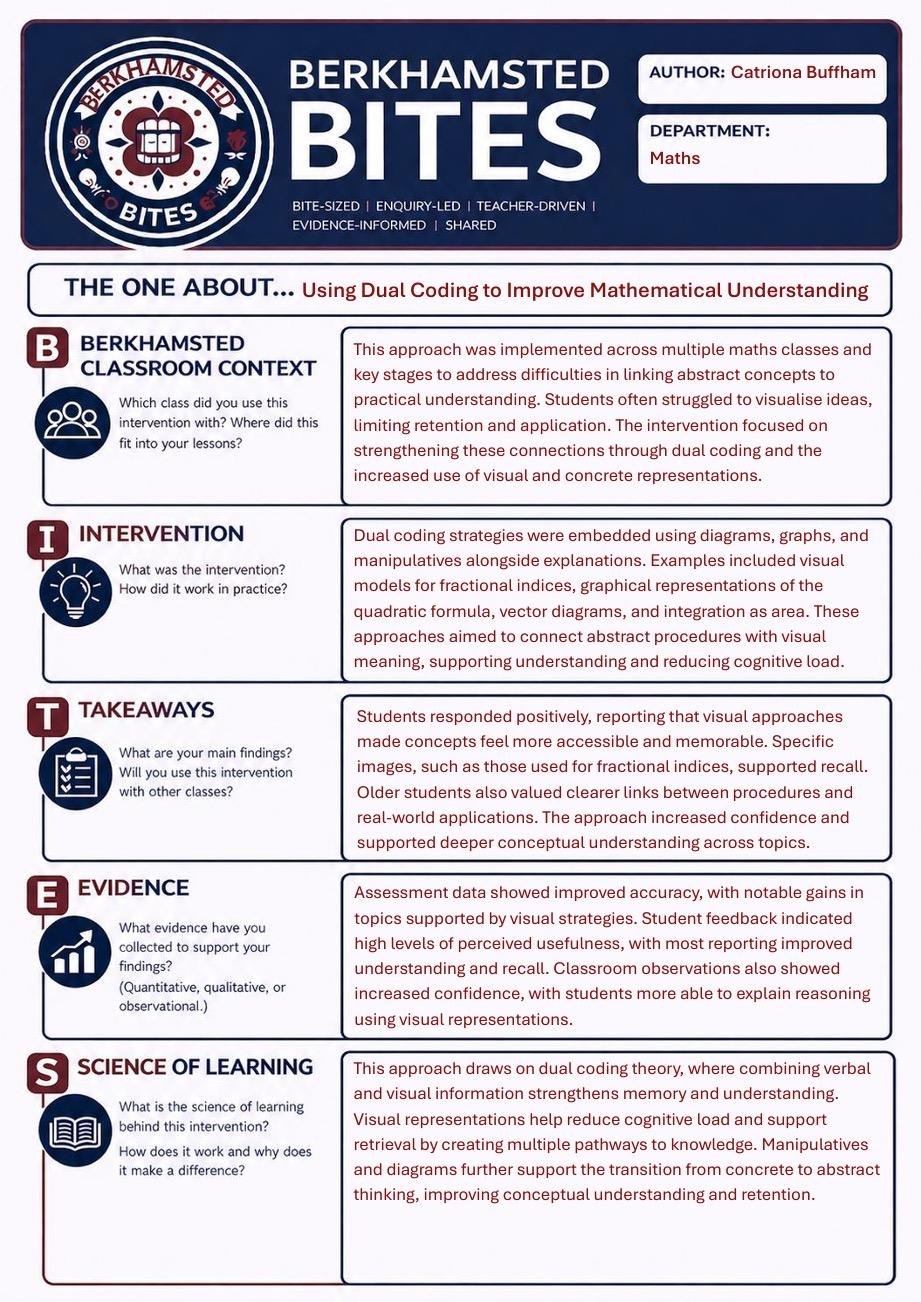
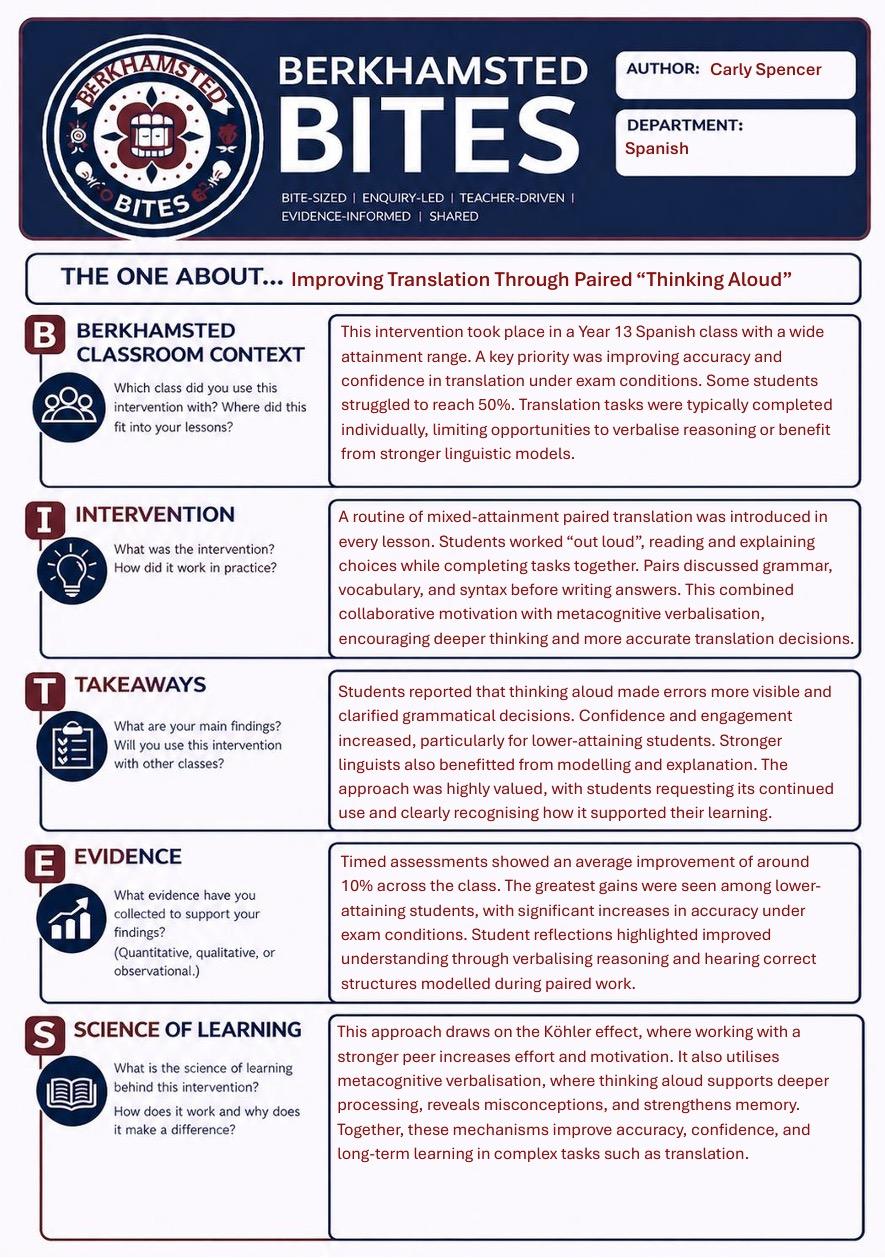
Year 9 Learning Edge students have been committing one lesson a week, as a central part of our curriculum, to reading independently and seeing where their interests and curiosity take them. The reviews below are just some of the superb examples of the book reviews submitted for our online subject blog, Cliffhangers.
Jacob Savill, Head of Learning Edge
by Year 9 Learning Edge student Christian M
by Randall Munroe
Randall Munroe’s Thing Explainer is a book that sparked my curiosity by putting complicated things and ideas into simple explanations. I really enjoyed the way it was written and how accessible it was. An example of this is how he had managed to explain the International Space Station (ISS) in new and different ways. He had called the space shuttle a ‘space boat’ and the solar panels ‘power wings’ making it engaging and fun for younger readers.
Munroe also includes a great number of illustrations of diagrams, buildings and spaceships. This helps build your perspective of different things, particularly if the reader would originally find them difficult to imagine or to spark their curiosity.
The physical copy of the book is quite large. This gives it more room for larger illustrations and text. As well as this, the author has also included many pages that are A3 which can really increase the level of information. This works particularly well in the section on the car
engine, where the larger page lets the reader clearly see the different components and understand how they fit together to make the machine work.
There is also a really interesting section on the smartphone, where Munroe specifically calls the smartphone a “hand computer,” and notes that Munroe labels parts of it as a “face checker,” the battery as a “power box,” and the volume buttons as “loud controls.” It is cool how he speaks about these technological items in every day language.
I personally recommend this book, as I think that the Thing Explainer is a great read aimed specifically for younger minds with a sparking curiosity and for people to have a different perspective on day-to-day objects which might normally just pass us by. Randall Munroe has succeeded in making science and technology fun, accessible and memorable, which is why I enjoyed reading it so much.

BOOK REVIEW
by Year 9 Learning Edge student Leo K
an analysis from the Hunger Games by Suzanne Collins
I recently read a book called The Hunger Games by Suzanne Collins. This book was particularly interesting because it is told from the perspective of a teenage girl named Katniss Everdeen.
This review is going to explain my opinion on what Katniss is like as a person, her strengths, and why I think the book is written in such an extraordinary way. I will use quotes and examples from the book to support my views and show why Katniss is such a strong teenage girl.
Katniss is an extremely good hunter. She learned these skills from her dad, who taught her how to use a bow and arrow very well. She is often seen in the woods with her friend Gale, trying to get food for her poor family or to sell at the market. She does not always follow the rules, and this shows how independent she is. An example of this is when she says, “I’m not allowed to kill animals in the woods. But I do it anyway. To feed my family.” This is a great example of short sentences creating a powerful, punchy effect on the reader. I think this quotation clearly shows Katniss’s character. Her hunting skills make her a strong person to enter the Hunger Games, and these skills prove useful later in the book.
As well as her hunting skills, Katniss shows great intelligence throughout the book. This can be seen when she first enters the Hunger Games arena and carefully plans how to find food and water, in order to stay alive. A quotation that proves her natural survival instinct is, “I’m not just trying to survive; I’m trying to win.” I think this shows that she has a very strong mindset, which is important if you are going to take part in the Hunger Games.
Katniss was forced to become a parent-like figure from a young age because she grew up in District 12, the poorest of the twelve districts, and had to take care of her mother and sister. She had a difficult childhood because her dad died in a mine explosion, which was common in District 12. Without him, her family struggled for money. Her mother earned some money by making medicines and working as a nurse, while Katniss sold what she hunted on the black market.
Overall, Katniss is a great character in this book and she shows what it is like to be a strong teenager who overcomes challenges.

Having finished Booked, I would love to recommend it to some new readers. It is around 300 pages long, and I know that might sound like a lot to some people, especially if you are not a very confident reader – like me. However, if you find it hard to get into books and struggle to find one you can stick with, then you should give Booked a try. I loved the story.
The graphic novel style really helps because there are only a few sentences on each page, which makes it much easier to keep reading. It flows really well, and the story makes you want to read more. Instead of having long, demanding chapters, it uses headings, which makes it easy to stop and start again whenever you want. It’s a great book to pick up and read for a short time before doing something else.
I enjoyed this book because I also really liked the story. The book is about a young teenager who is around the same age as me, and it is written from his perspective. I think this was a really good idea because it made the story easier to relate to. The plot is about his life, the difficult stages he goes through, and everything building up to a football game. He is a brilliant footballer, and his best friend plays for their rival team. His parents split up, he goes through tough times, gets injured, has his appendix taken out, and there is also a girl he likes who he finally gets the courage to ask out.
In the end, things work out well for him, and the book is very energetic, with plenty of ups and downs. It made me want to keep reading to find out whether he would overcome his challenges and what would happen next.
I think Booked is a great book for readers who want something easy to pick up and put down. It is also a good choice for people who like football or for readers who are not as confident, because the graphic novel style makes it much more approachable.
Martin Barr
Blakemore, Sarah-Jayne, (2018), Inventing Ourselves, Black Swan
Bijnens et. al (2020), Residential greenspace and child intelligence and behaviour across urban, suburban , and rural areas in Belgium: A longitudinal birth cohort study of twins, Journal pPLoS Med 17 (8): e1003213
Chawla, Louis et al. (2015), Benefits of Nature Contact for Children, Journal of Planning Literature, Vol. 30, Issue 4 https:// journals.sagepub.com/doi/abs/10.1177/0885412215595441
Dadvand, 2015, Greenspaces and cognitive development in primary school children, Published in the journal of the PNAS (Proceedings of the National Academy of the sciences of the USA), 112 (26) 7937-7942
Flouri, Erini (31/01/22), Green neighbourhoods and their children: does it make a difference, Blog Editor, IOE Digital https:// blogs.ucl.ac.uk/ioe/2022/01/31/green-neighbourhoods-and-their-children-does-it-make-a-difference/
Frankel, Miriam, 29.12.24 The Observer, Science & Tech Supplement, Stop the clock! How having fun makes time pass more slowly
Juntti, M. et. al. (2023), Factors influencing the realisation of the social impact of urban nature in inner-city environments: A systematic review of complex evidence, Ecological Economics 211(2023) 107872
The Guardian June 2024
https://www.theguardian.com/environment/2024/sep/17/private-schools-urged-share-grounds-uk-children-access-green-spaces Green space could be even better for young brains than we realised | Access to green space | The Guardian https://www.theguardian.com/environment/article/2024/jun/16/revealed-private-schools-have-10-times-more-greenspace-than-state-schools
Li, D., Sullivan, W.C., (2016). Impact of views to school landscapes on recovery from stress and mental fatigue. Landscape and Urban Planning, 148, 149-158.
Marmot, Michael, Strategic Review of Health Inequalities in England – post-2010, Chair’s Executive Summary https://www. instituteofhealthequity.org/resources-reports/fair-society-healthy-lives-the-marmot-review/fair-society-healthy-lives-fullreport-pdf.pdf
Morrison, Nick, Forbes website – Private Schools Are Good for Your Health, Study Finds (forbes.com) , 18/06/24
Putnum, Robert. D, Bowling Alone, Simons and Schuster, 2000, New York, NY
Strayer, David L, Atchley, Ruth Ann, Atchley, Paul, Creativity in the Wild: Improving Creative Reasoning through Immersion in Natural Settings, PLoS ONE (12), Published: December 12, 2012, https://doi.org/10.1371/journal. pone.0051474
Sugar, Suchitra, The Necessity of Urban Greenspace for Children’s Optimal Development, UNICEF, https://www.unicef.org/ media/102391/file/Necessity%20of%20Urban%20Green%20Space%20for%20Children%E2%80%99s%20Optimal%20 Development.pdf
Ulset, Vitario et. al., Time spent outdoors during pre-school: Links with children’s cognitive and behavioural development (2017), Journal of Environmental Psychology, 52, pp. 69-80. Williams, Florence , Uncommon Path, The Nature Fix: The Three-Day Effect: https://www.rei.com/blog/camp/the-nature-fixthe-three-day-effect, May 2017
Alastair Harrison
Allen, K., & Gordon, R. (2017). Supporting adolescents in school: Pastoral care for 11–18-year-olds. Routledge. Aydan, C., 2025. Effective practices for enhancing students’ self-regulated learning: The role of rapport, engagement, and academic interest. Acta Psychologica, 246, p.104073.
Best, R. (2019). Pastoral care and personal-social education: Entitlement and provision. Bloomsbury Academic. Campbell, J., 2024. Coaching in Education: A Systematic Review of Theory and Practice. Educational Review, 76(2), pp.237–258. Cavanagh, M. & Lane, D., 2012. Coaching psychology coming of age: The challenges we face in the messy world of complexity. International Coaching Psychology Review, 7(1), pp.75–90.
Cox, E., Bachkirova, T., & Clutterbuck, D. (Eds.). (2018). The complete handbook of coaching (4th ed.). Sage. Department for Education. (2022). Mental health and wellbeing provision in schools. London: DfE.
Dignath, C. & Veenman, M., 2021. The role of direct strategy instruction and indirect activation of self-regulated learning— Evidence from classroom intervention studies. Educational Psychology Review, 33, pp.489–533.
Downey, M. (2014). Effective coaching: Lessons from the coach’s coach. Cengage Learning. Education Endowment Foundation (EEF), 2021. Metacognition and Self-Regulated Learning. London: EEF. Graydin. (n.d.). Start with heart: Transforming conversations in education. Graydin Coaching. Higgins, S., & Leat, D. (2014). Coaching in education: Getting better results for students, educators, and parents. Routledge. Knight, J. (2016). Better conversations: Coaching ourselves and each other to be more credible, caring, and connected. Corwin Press. Kraft, M.A., Blazar, D. & Hogan, D., 2018. The Effect of Teacher Coaching on Instruction and Achievement: A Meta-Analysis of the Causal Evidence. Review of Educational Research, 88(4), pp.547–588.
Lang, P. (2007). Coaching in schools: Unlocking potential in learners. Paul Chapman Publishing. Lerew, A. (2016). Pastoral care in schools: Theory and practice for teachers. Routledge. Nelson-Jones, R. (2014). Practical counselling and helping skills. Sage. Nuttall, J. (2019). The effective sixth form tutor. Crown House Publishing. Passmore, J. & Brown, A., 2009. Coaching non-adult students for enhanced performance: A review of the literature. Education + Training, 51(5/6), pp.368–380.
Robertson, J. (2005). Coaching leadership. NZCER Press. Rogers, J. (2021). Coaching skills: A handbook (5th ed.). Open University Press. Thomas, G., & Smith, R. (2004). Developing coaching skills: A practical guide for school leaders. Routledge. van Nieuwerburgh, C. (2017). An introduction to coaching skills: A practical guide. Sage. West-Burnham, J., & Ireson, J. (2018). Leadership development: Pastoral leadership in education. Crown House Publishing. Whitmore, J. (2017). Coaching for performance (5th ed.). Nicholas Brealey Publishing. Williams, P., & Palmer, S. (2008). Coaching in schools: Unlocking potential. Routledge. Zimmerman, B.J., 2002. Becoming a self-regulated learner: An overview. Theory Into Practice, 41(2), pp.64–70.
Daisy Hardman
Broadbent, L., 2023. Comparing the impact of OpenDyslexic and Arial fonts on the reading performance of Key Stage 2 readers with dyslexia (Doctoral dissertation, UCL (University College London)).
Crompton, A., 2014. How to look at a reading font. Word & Image, 30(2), pp.79-89.
Danna, J., Massendari, D., Furnari, B. and Ducrot, S., 2018. The optimal viewing position effect in printed versus cursive words: Evidence of a reading cost for the cursive font. Acta psychologica, 188, pp.110-121.
Department for Education (2013) The national curriculum in England: key stages 1 and 2 framework document. Available at: https://www.gov.uk/government/publications/national-curriculum-in-england-primary-curriculum (Accessed: December 2024).
Glazzard, J. and Stones, S., 2020, September. A rigorous approach to the teaching of reading? Systematic synthetic phonics in initial teacher education. In Frontiers in education (Vol. 5, p. 587155). Frontiers Media SA.
Gough, P.B. and Tunmer, W.E., 1986. Decoding, reading, and reading disability. Remedial and special education, 7(1), pp.6-10. Nakilcioğlu, İ.H., 2013. The effects of font type choosing on visual perception and visual communication. Online Journal of Art and Design, 1(3), pp.35-53.
Samuels, S.J. and Flor, R.F., 1997. The importance of automaticity for developing expertise in reading. Reading & Writing Quarterly: Overcoming Learning Difficulties, 13(2), pp.107-121.
Sanocki, T., 1987. Visual knowledge underlying letter perception: font-specific, schematic tuning. Journal of Experimental Psychology: Human Perception and Performance, 13(2), p.267.
Sassoon, R., 2001. Computers and typography. Intellect Books.
Tavakoli, P., 2019. Automaticity, fluency and second language task performance. Researching L2 task performance and pedagogy, pp.39-52.
Topping, K.J., Samuels, J. and Paul, T., 2007. Does practice make perfect? Independent reading quantity, quality and student achievement. Learning and instruction, 17(3), pp.253-264.
Young, C. and Rasinski, T., 2018. Readers theatre: Effects on word recognition automaticity and reading prosody. Journal of Research in Reading, 41(3), pp.475-485.
Bergmann, J., & Sams, A. (2012). Flip your classroom: Reach every student in every class every day. International Society for Technology in Education.
Dicheva, D., Dichev, C., Agre, G., & Angelova, G. (2015). Gamification in education: A systematic mapping study. Educational Technology & Society, 18(3), 75-88.
Dweck, C. S. (2006). Mindset: The new psychology of success. Random House. Essa, A., & Ayad, H. (2012). Improving student success using predictive models and data visualisations. Research in Learning Technology, 20 Hattie, J. (2008). Visible learning: A synthesis of over 800 meta-analyses relating to achievement. Routledge.
Higgins, S., Xiao, Z., & Katsipataki, M. (2013). The impact of digital technology on learning: A summary for the education endowment foundation. Education Endowment Foundation
Holmes, W., Bialik, M., & Fadel, C. (2019). Artificial intelligence in education: Promises and implications for teaching and learning. Center for Curriculum Redesign.
Noon, M. (2024, August 2). Adaptive teaching: A practical step-by-step guide. Third Space Learning. Retrieved November 21, 2024, from https://thirdspacelearning.com/blog/adaptive-teaching/ Rhem, J. (1999). Pygmalion in the classroom. The National Teaching & Learning Forum, 8(2), 1-4. Rosenthal, R., & Jacobson, L. (1968). Pygmalion in the classroom. The Urban Review, 3(1), 16-20.
Tanes, Z., Arnold, K. E., King, A. S., & Remnet, M. A. (2011). Using Signals for appropriate feedback: Perceptions and practices. Computers & Education, 57(4), 2414-2422.
BPS. (2017). Unprepared undergraduates? [online] Available at: https://www.bps.org.uk/psychologist/unpreparedundergraduates [Accessed 2 Feb. 2025].
Betts, L.R., Elder, T.J., Hartley, J. & Blurton, A. (2008). Predicting university performance in Psychology: the role of previous performance and discipline-specific knowledge. Educational Studies, 34(5), 543-556.
Cline & Hobbiss (2025) How to Teach Psychology: An evidence-based approach, John Catt Kurashige, H., Yamashita, Y., Hanakawa, T., & Honda, M. (2018). A knowledge-based arrangement of prototypical neural representation prior to experience contributes to selectivity in upcoming knowledge acquisition. Frontiers in human neuroscience, 12, 111.
Ofqual (2024). Provisional entries for GCSE, AS and A level: summer 2024 exam series. [online] GOV.UK. Available at: https:// www.gov.uk/government/statistics/provisional-entries-for-gcse-as-and-a-level-summer-2024-exam-series/provisional-entriesfor-gcse-as-and-a-level-summer-2024-exam-series.
Powell, L. (2024). Study skills needs to be more than mindmaps and flashcards. Psychology Teaching Review, [online] 30(2), pp.76–80. doi: https://doi.org/10.53841/bpsptr.2024.30.2.76
Sutton, J. (2023). ‘It’s about time we broke down the barriers between university and pre-university’. [online] BPS. Available at: https://www.bps.org.uk/psychologist/its-about-time-we-broke-down-barriers-between-university-and-pre-university BPS: Teaching and Learning Issues in the Disciplines: Psychology. (n.d.). Available at: https://cms.bps.org.uk/sites/default/ files/2022-07/Teaching%20and%20Learning%20Issues%20in%20the%20Disciplines%20Psychology.pdf [Accessed 2 Feb. 2025]. Witherby & Carpenter (2021). The Rich Get Richer Effect: Prior knowledge predicts new learning of domain relevant information. Journal of Experimental Psychology: Learning, Memory and Cognition 48 (4) 483-498
If you have an idea for a contribution for Issue 8 or would like to be added to our Research mailing list, please express your interest at KCraigen@berkhamsted.com