MAGAZINE No 61
September/October 2025
Under Brussels: What the archaeologists found
Tour de Tournai: Trip to the town with the towers
Movie mourning: The Belgian films portraying grief
MAGAZINE No 61
September/October 2025
Under Brussels: What the archaeologists found
Tour de Tournai: Trip to the town with the towers
Movie mourning: The Belgian films portraying grief
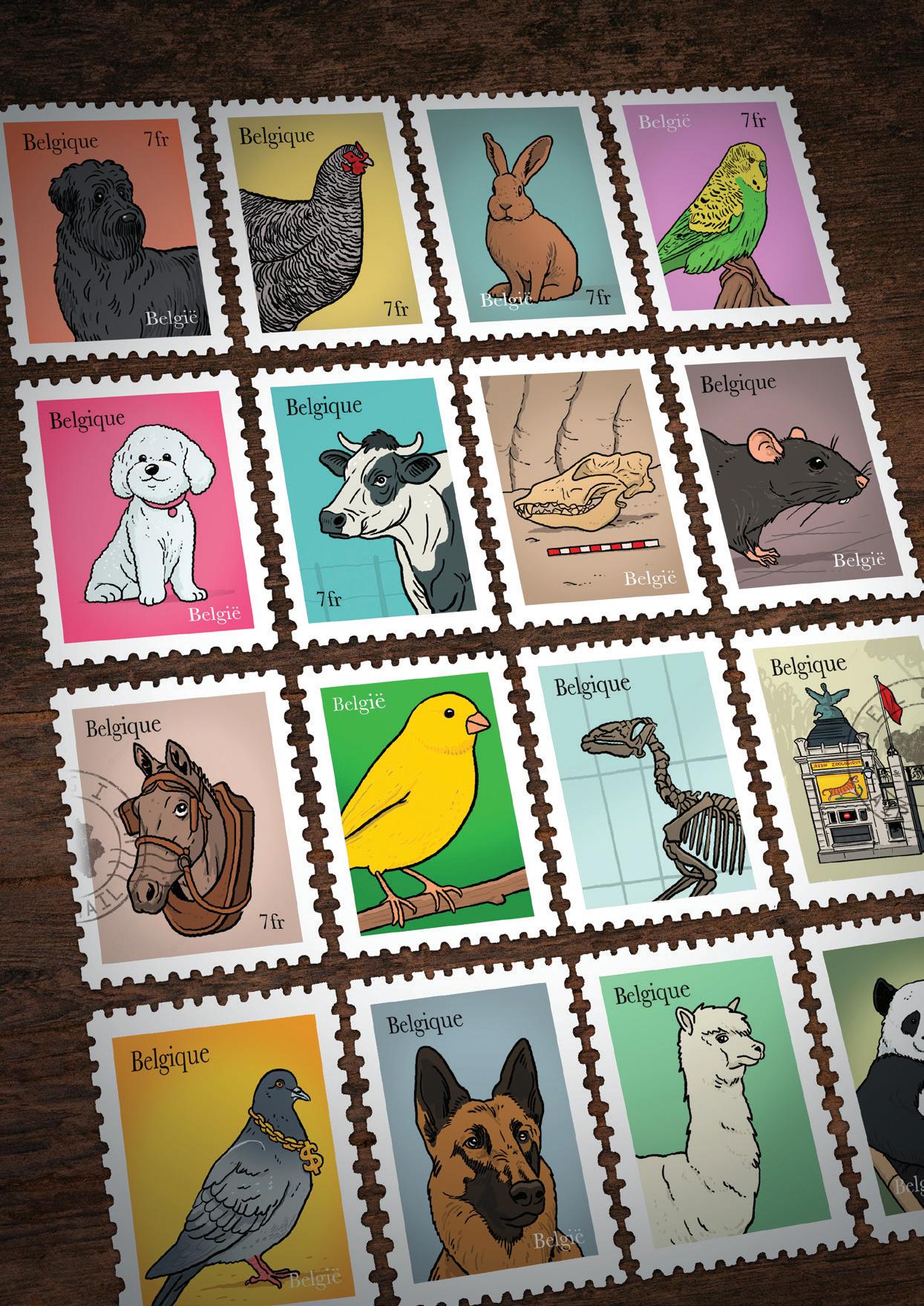
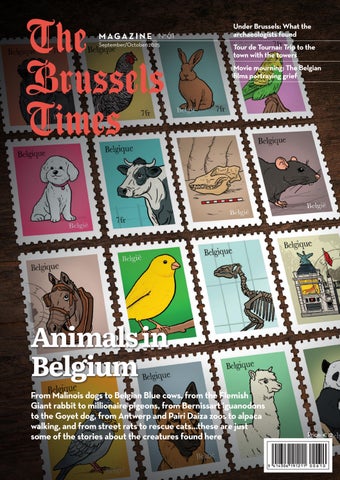
From Malinois dogs to Belgian Blue cows, from the Flemish Giant rabbit to millionaire pigeons, from Bernissart iguanodons to the Goyet dog, from Antwerp and Pairi Daiza zoos to alpaca walking, and from street rats to rescue cats…these are just some of the stories about the creatures found here












BOOK A TOUR TODAY




FITNESS FAMILY TENNIS WELLNESS POOLS

Belgium is not the first place that springs to mind when you think of wildlife. Our national imagination leans more towards abbeys and breweries, treaties and trams, comics and chocolate than it does to whiskers, tails, paws and fangs. Yet, animals –domestic, farmed, wild, mythical, even cartoon – have long hopped, trotted and waddled through the country’s culture and history. They deserve their moment in the spotlight.
This issue is dedicated to animals in Belgium not because they are exotic, but because they are deeply woven into who we are. From the draft horses that once powered our fields and cities, to the pigeons that still command Brussels rooftops, to the fantastical rabbits of medieval manuscripts, Belgium’s fauna carries stories of work, companionship, art and survival.
We also want to challenge a misconception: that Belgian animals are either marginal or mundane. Look closer and you’ll see they are anything but. Our dogs have been bred to herd, protect and sniff out fugitives. Our cows and chickens tell tales of heritage, resilience and delicious dinners. In a globalised world, they remain stubbornly local and wonderfully ours.
As you leaf through these pages, expect a menagerie. Expect the heroic, the humble, the humorous. Expect to see how animals mirror us – our pride, our contradictions, our creativity. Belgium’s animals may not roar the loudest, but they remind us that sometimes the most revealing stories have been right under our noses – or nibbling at our cabbages – all along.
Paul Meller kicks it off in the Museum of Natural Sciences in Brussels where, amid the iguanodon skeletons, he looks at how researchers are cataloguing countless specimens –and discovering that the world’s first dog was Belgian. Paul also looks at the Malinois superdog, as well as three other Belgian shepherd breeds. For Kurt Karlsson, however, there is no dog more Belgian than the Bouvier de Flanders, once used to herd cattle.
Dennis Abbott looks at three solid farm animals: the indefatigable Brabant draft horse, with enough horsepower to drag the Atomium; the muscular Belgian Blue cow, which gives a new meaning to high steaks; and crosses the road to see some Mechelse koekoek, or coucou de Malines chickens. Helen Lyons meets the Flemish Giant rabbits, which are as fluffy as the regular kind, but as big as pigs. Richard Harris surveys birds in Belgium, from the million-euro racing pigeons to the canaries, the ’invasive’ parakeets and the singing finches.
Strictly speaking, this is not just about Belgian animals, but animals in Belgium. I visit Pairi Daiza, which has acquired creatures from across the planet – including rarities like the giant panda – settling them in the grounds of a former abbey, where it is now one of the most exciting zoos in the world. Jon Eldridge treks to Antwerp Zoo, with its august heritage, as it adapts to modern needs – and spreads its own collection to nearby Planckendael.
Jon also meets the animals left behind in shelters and asks what makes a good rescue pet. Lisa Bradshaw, meanwhille, gets hands-on with her assignments of walking with alpacas and cow cuddling. And Simon Taylor looks at how Brussels is dealing with rats, pigeons and other animals considered vermin.
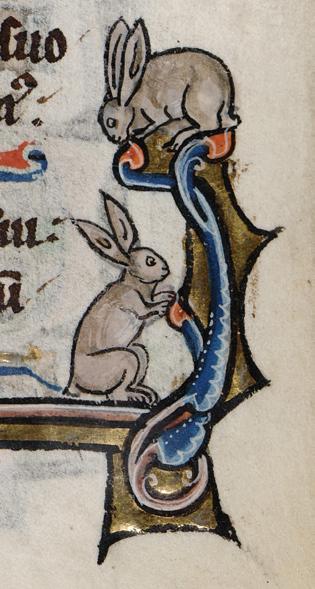
Elsewhere, we take a closer look at magnificent medieval manuscripts, firstly in the Book of Hours, a lavishly illustrated personalized prayer book; and secondly, in the margins of sacred texts, where mischievous rabbits could often be found running amok.
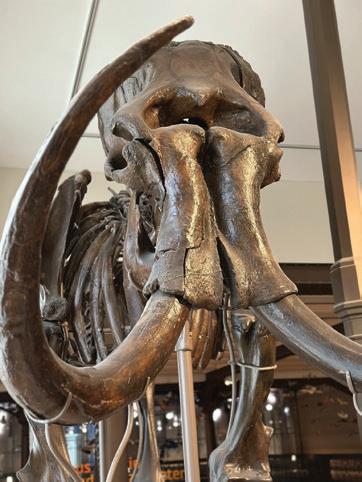
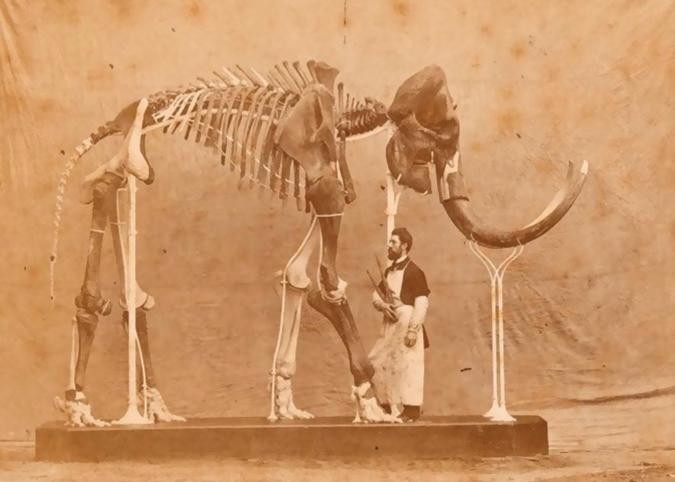
Frédéric Moreau finds out what recent archaeological excavations in Brussels tell us about the city (more animal antics: mammoth bones were found in the digs). Simon Taylor meets influential DJ Lefto. Colin Delfosse shows us what muscle building is really like in Belgian gyms.
Angela Dansby takes a weekend trip to Tournai, the many-towered town close to the French border, oozing with history. Hugh Dow visits Ixelles cemetery next to the university area, which boasts the tombs of some remarkable characters. Lisa Bradshaw talks to first-time director Maja-Ajmia Yde Zellama about her movie Têtes Brûlées, and Fleur Pierets, writer of Julian, which opens Film Fest Gent in October.
Breandán Kearney looks at some of the more obscure beers that deserve more recognition; Hughes Belin tries out the Le 203 restaurant, Spa mocktails, the Kalypso bar and Berloumi cheese; while Kurt Karlsson highlights current and upcoming events worth checking out.
And finally, Geoff Meade grapples with post-Brexit pet bureaucracy.
Leo Cendrowicz
September/October 2025
The Brussels Times
Avenue Louise 54
1050 Brussels
+32 (0)2 893 00 67
info@brusselstimes.com
ISSN Number: 0772-1633
On the Cover Illustration by Lectrr
Editor
Leo Cendrowicz
Publishers
Jonadav Apelblat
Omry Apelblat
Graphic Designer
Marija Hajster
Contributors
Dennis Abbott, Hughes Belin, Lisa Bradshaw, Angela Dansby, Colin Delfosse, Hugh Dow, Jon Eldridge, Richard Harris, Kurt Karlsson, Breandán Kearney, Lectrr, Helen Lyons, Geoff Meade, Paul Meller, Frédéric Moreau, Simon Taylor
Commercial Partnerships Director
David Young
Advertising
Caroline Dierckx
Nataliya Moroz
Klaas Olbrechts
Ilham Rzayev
Arnaud Sonnet
Gidon Tannenbaum
Please contact us on
advertise@brusselstimes.com or +32 (0)2 893 00 67 for information about advertising opportunities.
Photo Credits
Lectrr: Cover, 144
Belga: 9-10, 38, 45, 56-59, 64, 68-72, 86, 92-95, 116, 145
Nicolas Dalaidenne: 11-12
Waste Warriors: 13-14
Royal Belgian institute of Natural Sciences: 16-20
Paul Meller: 22, 24, Vanessa Grossemy: 30
Frans and Anja Van Laerhoven: 42, 45
Dennis Abbott: 44
Michelle Van de Poel: 50, 52, 53
©KBR, Petersborough Psalter: 54-55
Pairi Daiza: 60-66
ZOO Antwerpen/Jonas Verhulst: 72
GAIA: 74
Lisa Bradshaw: 76, 79
Editor,
The Brussels Times Magazine
Els Debbaut: 78-79
123RF: 80
Help Animals: 85
Jon Eldridge: 85
© Dominique Provost for Musea Brugge: 102
© Hugo Maertens for Musea Brugge: 102
© Public Library of Bruges: 100-103
Colin Delfosse: 106-107
Yakine Raw: 113
Angela Dansby: 112-120
Leo Cendrowicz: 124-129
From your very first preparations until the end of your stay, ING Bank will help you every step of the way.
17 The infinite library of nature
Paul Meller
25 Dogland: How Belgians turned shepherds into soldiers, stars and soulmates
Paul Meller
31 The working dog with a noble heart
Kurt Karlsson
34 The fluffy aristocrat
Simon Taylor
39 Why the Belgian Blue is a heavyweight champ
Dennis Abbott
43 The mane attraction of the Brabant draft horse
Dennis Abbott
46 The rise of Mechelen’s mighty chicken
Dennis Abbott
51 How the Flemish Giant rabbit went from food to family
Helen Lyons
54 The original bad bunnies: When rabbits ruled the margins
56 Belgium’s beautiful, busy birds
Richard Harris
61 The enchanted Eden
Leo Cendrowicz
69 Flamingos at the gate: The past and future of Antwerp Zoo
Jon Eldridge
74 The zoo without bars
Leo Cendrowicz
77 Party animals
Lisa Bradshaw
80 Tails of the city: Why Brussels can’t outrun its rats
Simon Taylor
84 Take me home!
Jon Eldridge
93 Layers of time: How a dig under a carpark revealed the soul of Brussels
Frédéric Moreau
100 When Bruges put colour and drama into prayer
106 The resurrection of muscle
Colin Delfosse’s
109 Charting a path to grief
Lisa Bradshaw
112 The early bird who changed the beat: Lefto’s three decades on the edge
Simon Taylor
115 Tour de Tournai
Angela Dansby
125 The lives still stirring in Ixelles cemetery
Hugh Dow
130 The revival of the obscure
Breandán Kearney
134 Food & Drink
Hughes Belin
138 Art and events
Kurt Karlsson
144 It’s reigning cats and dogs…
Geoff Meade
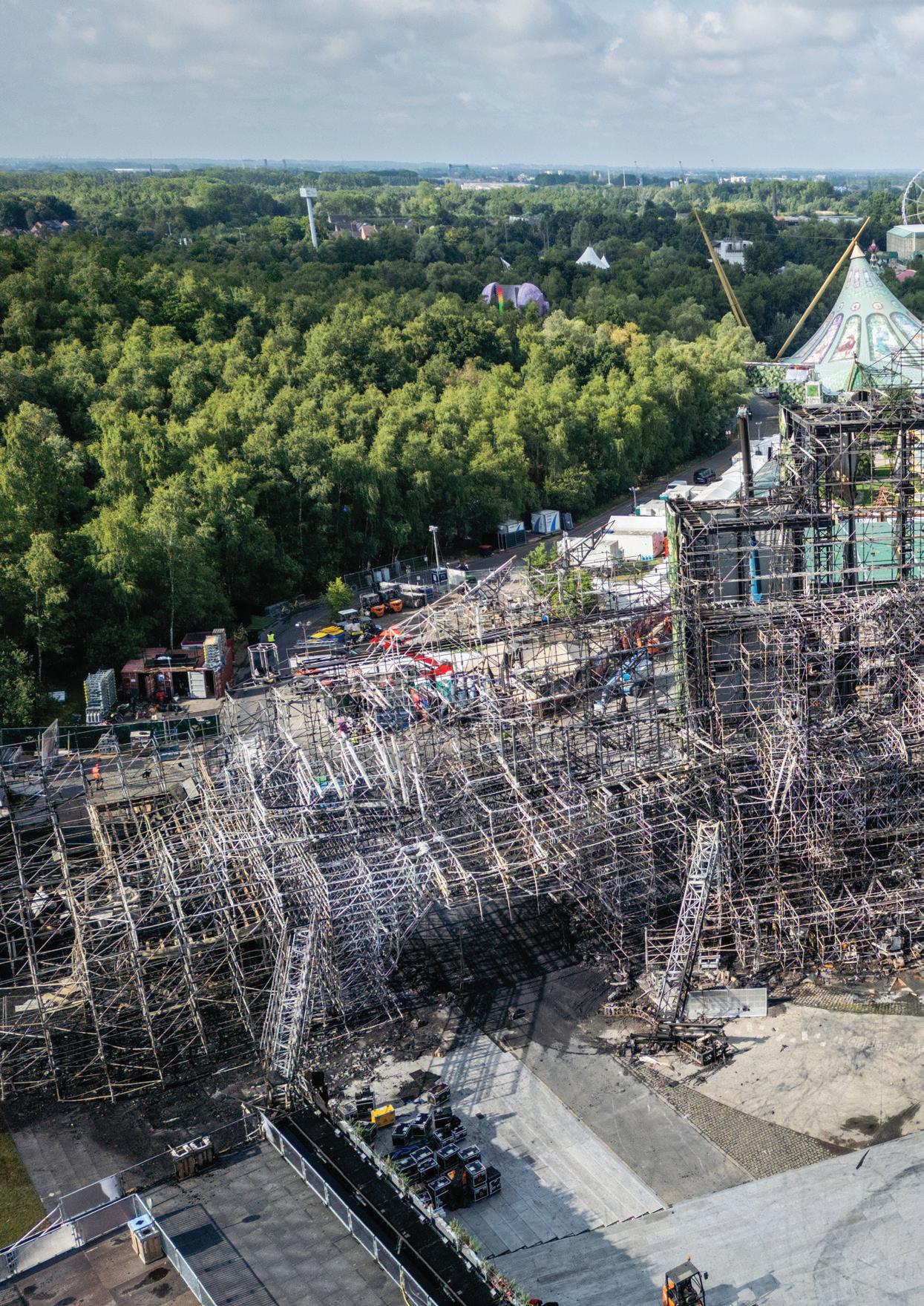
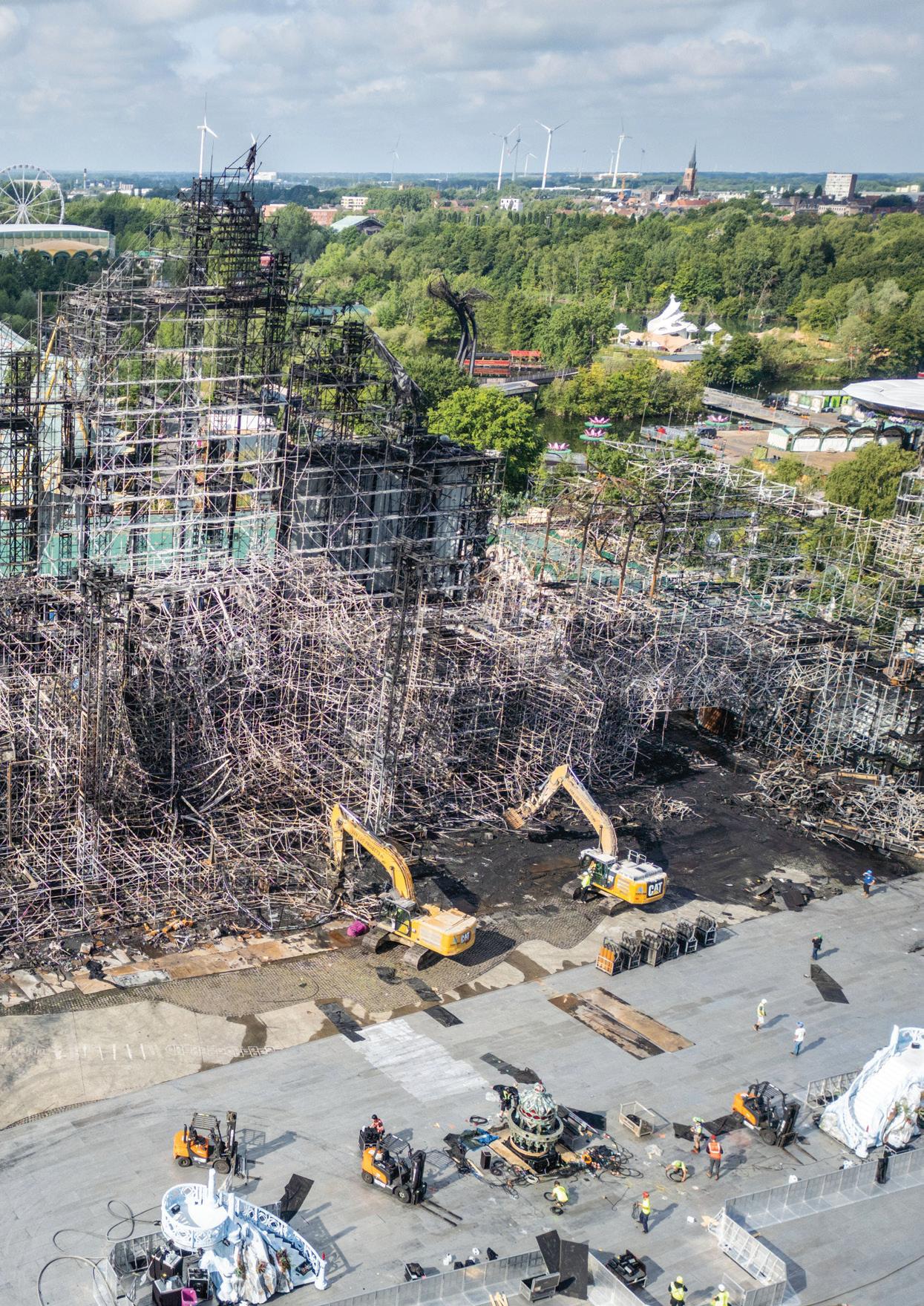
A cathedral for electronic dance music, Tomorrowland's main stage was reduced to a smouldering husk after July’s fire, just a day before the extravaganza was due to start. The Boom-based festival that promises to unite the “People of Tomorrow” was briefly humbled. The show, however, went ahead, with a new, smaller main stage built in front of the wreck. As for the cause of the fire, it is still under investigation.
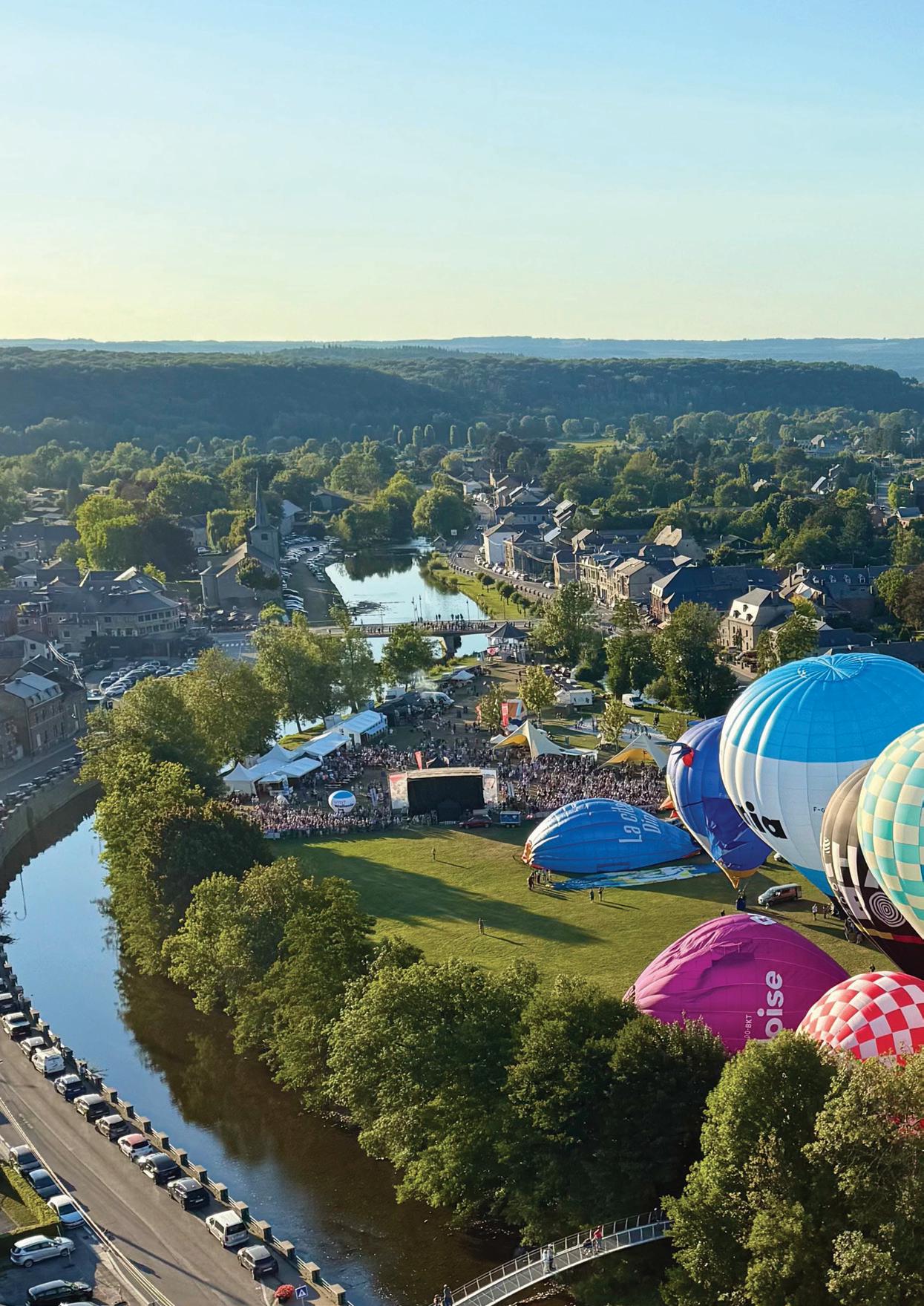
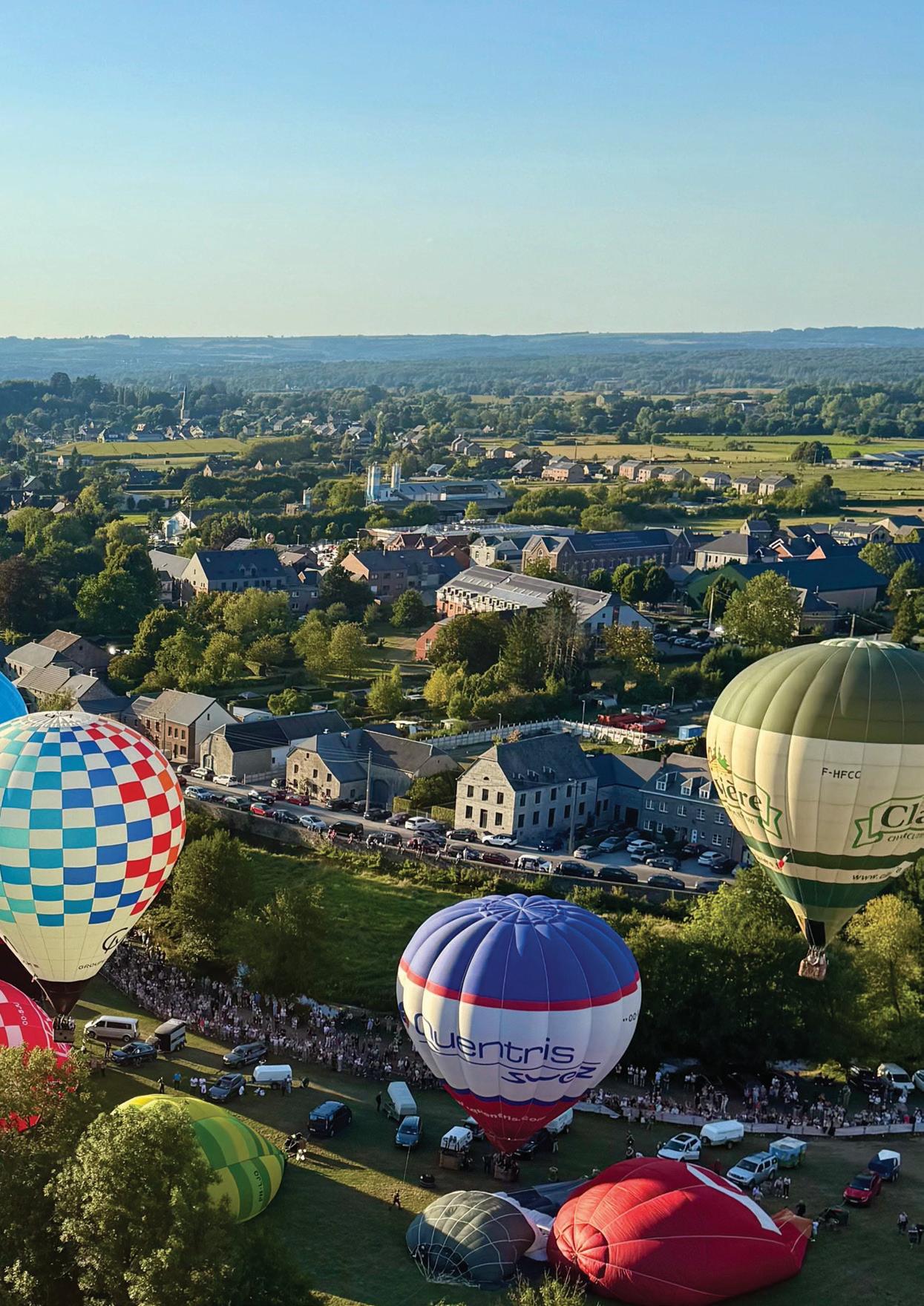
A scene of colour over the Ardennes: more than 40 hot air balloons lifted off above the Île de l’Oneux for the 25th Hottolfiades Party, Hotton’s International Hot Air Balloon Festival, with 15,000 visitors attending the three-day event.
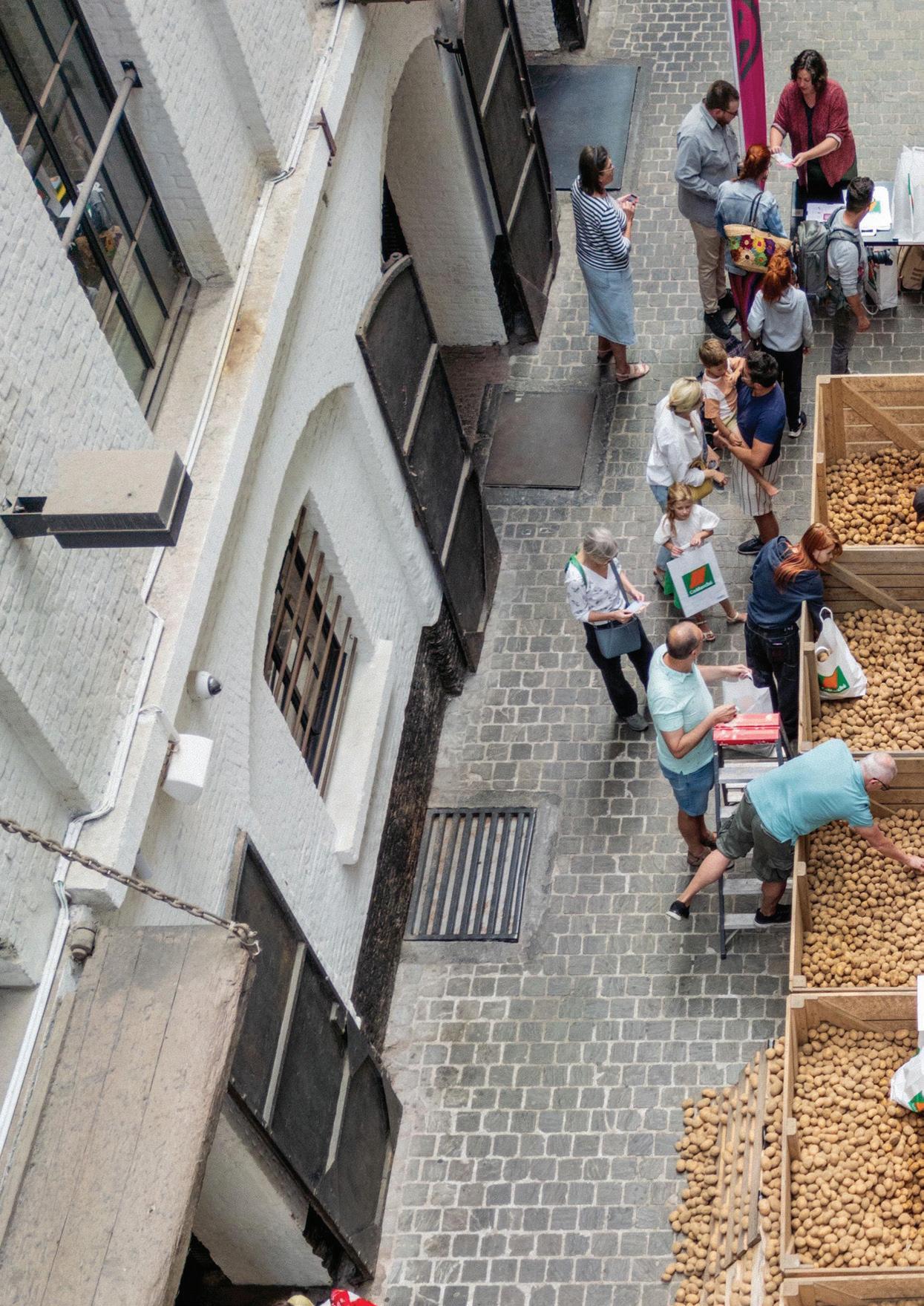
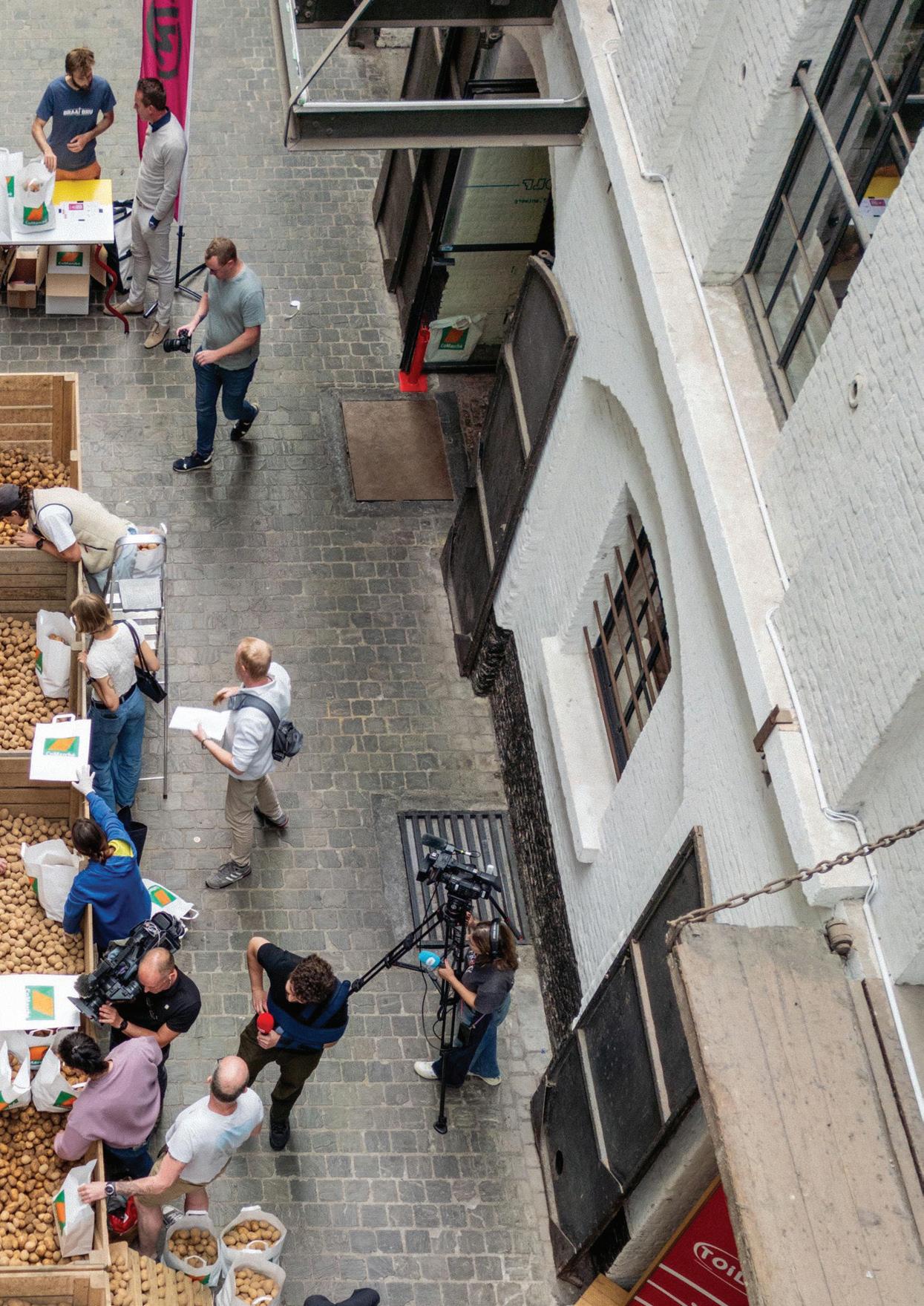
From surplus to sustenance: 26,330kg of Belgian potatoes, stacked in vast containers, tell the story of Waste Warriors’ first National Potato Mountain. Faced with nearly a 1,000 tonnes at risk of being wasted after an early harvest, farmers and citizens joined forces to rescue the crop. The result? Thousands of meals for food banks, fair payments for farmers, and a reminder that ugly or surplus food deserves a place on our plates.
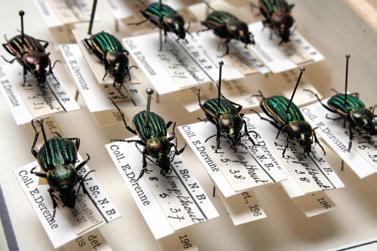
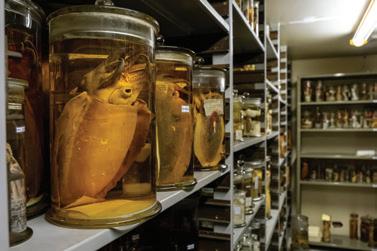
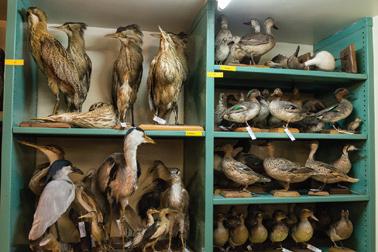
In the Brussels Museum of Natural Sciences, generations of schoolchildren have marvelled at the dinosaurs and other creatures on display in glass cases. But as Paul Meller reports, the real wonder hides in back rooms and towers: 38 million specimens, catalogued from beetles to Neanderthals. Here, taxidermists strip kangaroos, curators name new geckos and drawers brim with undiscovered species – a vast archive where the planet’s fragile biodiversity is preserved and understood
Paul Meller
The real goal isn’t just to slap a name on something – it’s to accurately record and understand biodiversity.
If stripping the flesh from a kangaroo carcass is the price of admission to Brussels’ labyrinthine Museum of Natural Sciences, then so be it. Science is not always for the squeamish.
That kangaroo, it turns out, once bounded around Antwerp Zoo, and its bones are now destined to live on, meticulously cleaned and catalogued, as part of one of Europe’s great collections of natural life. The stench is terrible – pungent enough that the taxidermy department has been banished to a separate building. But for Olivier Pauwels, the museum’s curator of recent vertebrates, this is all part of the daily rhythm of research. “Think you can cope with the smell?” he teases.
Pauwels is a man enjoys unsettling his visitors. Ask him about dogs, and he’ll claim to despise them. Then he’ll casually mention he’s eaten one, along with porcupine and other exotic meats encountered in the field. He delights in these small provocations, perhaps because he spends much of his working life with creatures that cannot answer back.
His office is high in one of the museum’s towers, overlooking Brussels, though he spends more time looking down the eyepiece of a microscope than out across the city.
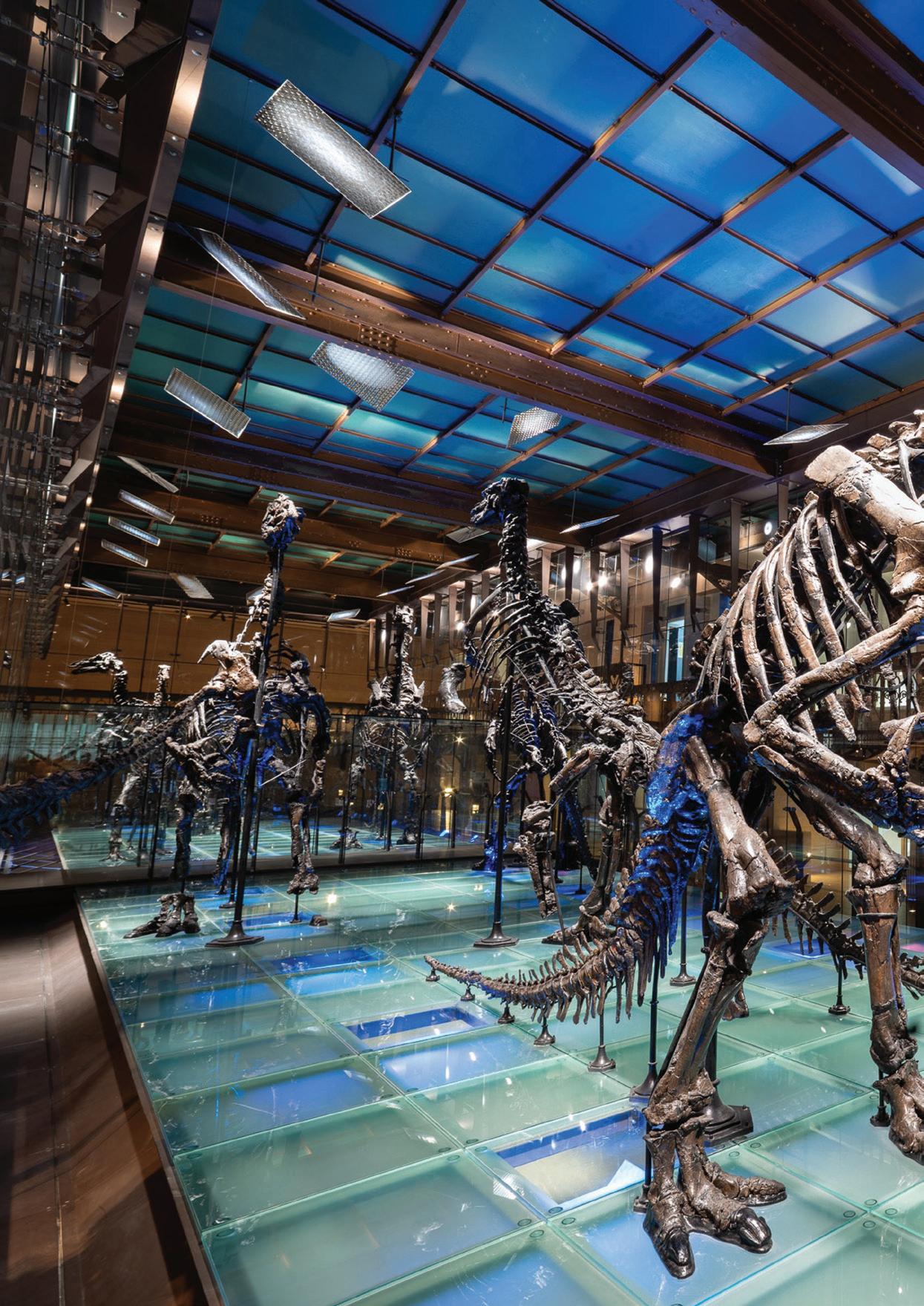
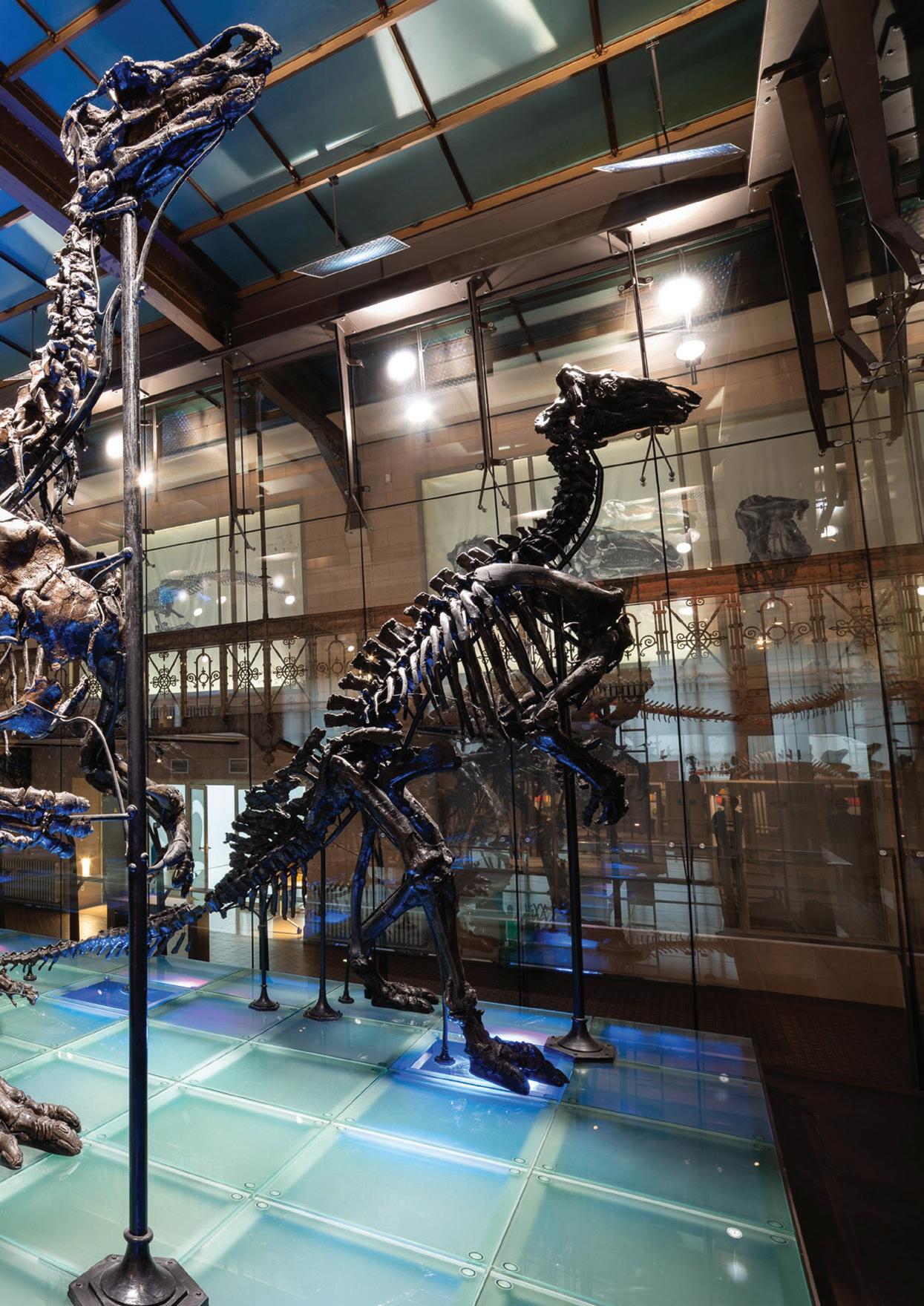
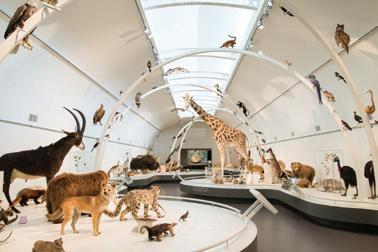
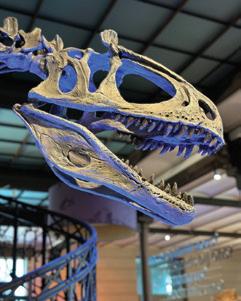
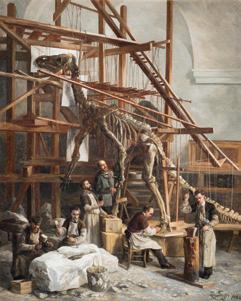
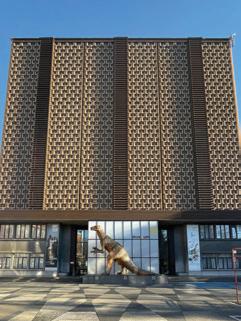
The museum is part of the Royal Belgian Institute of Natural Sciences (KBIN-IRSNB). It’s a scientific nerve centre. To the public, it’s perhaps best known for its dinosaur gallery – Europe’s largest – where 30 iguanodons discovered in a 19th century Belgian coal mine charge forever in the same direction, frozen mid-stride. But beyond the glass cases and reconstructed Neanderthals lies something more important: a working institution quietly cataloguing life on Earth.
“Why is it so important to classify all these animals?” I ask. It’s an obvious question, but one that Pauwels answers with patience.
“The real goal isn’t just to slap a name on something – it’s to accurately record and understand biodiversity,” he explains. Every organism pinned, bottled, or mounted in the Institute is a data point in an immense story: the planet’s living archive.
Here, time feels stretched. New species don’t evolve in a decade; they take hundreds of thousands, even millions, of years to appear. Yet extinction can happen overnight –and often does. “Many species go extinct before we ever even discover them,” Pauwels says. “Every species we describe is a small victory.”
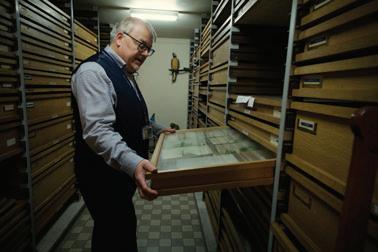
There is, tucked away in the institute’s north-facing tower, a section of nameless beings – specimens preserved but not yet classified. They wait in their drawers, somewhere between discovery and oblivion, dependent on whether someone has the time and expertise to study them. The metaphor is irresistible: shelves of creatures hovering between existence and non-existence, their fate decided by the stroke of a pen.
When a species is on the brink, urgency sharpens the work. “If a limestone cave gecko is at risk from cement quarrying, we prioritise describing it,” says Pauwels. Only once a creature has a name can it truly enter the legal and conservationist machinery that might protect it.
Pauwels has classified hundreds of creatures. Identifying the genus (‘homo’ in homo sapiens, for example) is the easy part and doesn’t take long. “You can’t just write ‘fish’ in a register. Nobody would come see it. But if you specify a genus, it becomes relevant. That’s my speciality: genus-level morphological identification. I work with a microscope, then log them into the online register.”
But the fun starts when identifying species (‘sapiens’ in homo sapiens). It can take months, sometimes years. It may involve comparing specimens across the world – London, Stuttgart, Washington – and deciphering century-old descriptions that amount to little more than: it’s brown, 30cm long.
Species naming comes with rules, rituals, and flashes of poetry. You can’t name a species after yourself, which has forced Pauwels into acts of generosity. He has named creatures after colleagues and conservationists: Gecko nutae, for instance, honours a pioneering Thai herpetologist, Professor Nuta Pandananda. Sometimes the names nod to mythology or metaphor. A black gecko speckled with white was christened Gecko pradapdao – Milky Way in Thai.
The labour is meticulous, yet it holds a peculiar thrill: the possibility of being the first human to recognise, truly, that this creature is new to science.
The thrill, too, comes with a certain melancholy. To name a species is to acknowledge it – but also to confront the fact that it might already be vanishing.
The Institute’s grandeur hides a long, eccentric history. Its origins lie in the 19th century, in the private collection of Prince Charles Alexander of Lorraine, who delighted in bones, minerals, and stuffed beasts. Housed first in the Palace of Nassau near the Mont des Arts, the growing collection soon spilled out. By the 1880s, it had moved into the Convent of the Redemptoristines in Ixelles, though the nuns never actually moved in. Perhaps they, too, were repelled by the taxidermy fumes.
Later, the modernist architect Lucien De Vestel – who would go on to design the European Commission’s Berlaymont headquarters – reshaped the institute between the wars. His two soaring towers, connected by a sweeping red marble staircase, are where
today’s researchers scurry between labs and storage rooms. De Vestel even designed the drawers themselves: bespoke cabinetry for millions of specimens.
The institute’s royal patrons added glamour and, occasionally, eccentricity. Leopold III, Belgium’s controversial wartime king, was an enthusiastic amateur naturalist. “He made many field trips and discovered a lot of species,” Pauwels notes, with a touch of pride. For a monarch more often remembered for political scandal, it is a reminder that science and power have long intersected in unexpected ways.
During the Second World War, the Germans occupied the institute – it stood then as one of Brussels’ highest vantage points – but its collections survived intact. Today, the building is both fortress and ark, sheltering 38 million specimens. That makes it Europe’s third-largest collection, trailing only London’s Natural History Museum and Paris’s Institute of Ecology and Environmental Sciences.
Of course, the public comes for the dinosaurs. The Bernissart iguanodons, discovered in 1878 deep in a Walloon coal mine, remain the centrepiece. Unusually, the skeletons were found in lifelike positions, enabling scientists to mount them as if caught mid-charge. They stand today as a herd, their bones arranged with almost balletic drama.
But there are subtler treasures. The socalled Spy Man fossils – remains of Neanderthals excavated in the Spy cave near Namur in the 1880s – still anchor the museum’s exploration of human origins. For schoolchildren wandering the galleries, the leap from dinosaurs to Neanderthals to a hall of preserved aphids and zebras is dizzying. Yet it mirrors the strange continuity of natural history itself: everything, from insects to kangaroos, is part of the same ledger.
Behind the glass, in those north-facing towers, the museum’s true wonder unfolds. There, millions of jars, skeletons, and skins
You can’t just write ‘fish’ in a register. Nobody would come see it. But if you specify a genus, it becomes relevant.
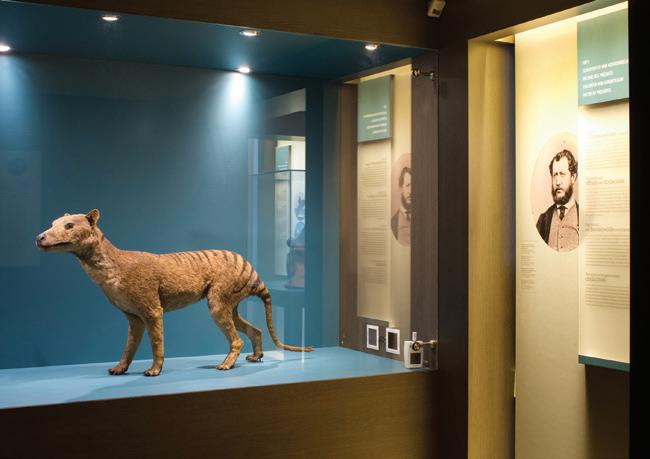
Today, the building is both fortress and ark, sheltering 38 million specimens. That makes it Europe’s third-largest collection, trailing only London’s Natural History Museum and Paris’s Institute of Ecology and Environmental Sciences.
rest in carefully controlled darkness. Each one is a story awaiting a reader. To walk the aisles is to step into the dream of an infinite library – only here the volumes are biological, the words written in bone and feather and fur.
While the institute is a shrine to biodiversity, curator Olivier Pauwels says there are downsides, especially when humans interfere.
Blackbirds in Brussels must now compete with exotic-looking, but aggressive green rose-ringed parakeets (see separate article). Similarly, someone thought it would be a smart idea to introduce the African clawed frog to ponds near Westhoek on French border. “They are nasty little creatures,” Pauwels says. “They can empty a pond. They eat everything.” As a result, they are threatening the existence of crested newts, a protected species in Europe.
In 2006, Chinese beauty snakes (also called Chinese rat snakes) were discovered in Hasselt. They are believed to have escaped from a pet shop. Hundreds have been seen since then. They are gold with black stripes and can grow up to 1.7m long.
They are harmless to humans - not to rats of course - but as an invasive species they pose a threat to local ecosystems, so when captured they are sterilized and relocated to the Netherlands, where exotic pet rules are laxer.
The museum closes at dusk. The security guards usher out the last of the school groups and selfie-takers. Yet somewhere, in a side building, the kangaroo is still being stripped for bones. Pauwels jokes about being locked in, about my Night at the Museum fantasy of wandering among iguanodons and Neanderthals. But there is truth in the joke. To remain inside after dark would be to sense the weight of all that biodiversity – 38 million preserved lives – pressing in.
When I leave, the stench of kangaroo clings faintly to my clothes. “Wait till you get home,” Pauwels had warned. “Anyone you meet this evening will smell it immediately.” But the odour seems fitting. Museums are not meant to be sterile, lifeless mausoleums. They are places where flesh becomes bone, bone becomes data, and data becomes knowledge –sometimes with a whiff of decay in the air.
And that is the paradox of Brussels’ great museum: it is both archive and laboratory, past and present, shrine and workshop. It preserves death so that life – in all its variety, fragility, and strangeness – can be better understood.

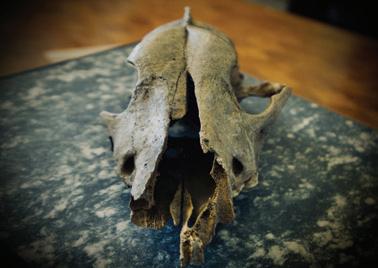
wolfish skull in a Belgian cave may be the earliest evidence of humanity’s bond with dogs
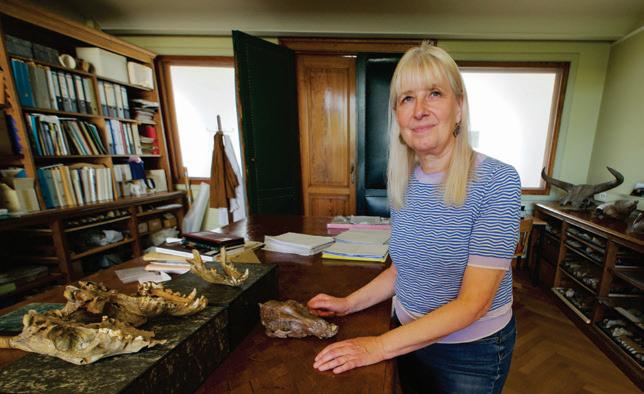
in her office
It is truly outside the normal wolf variation. Of course, it’s not a modern dog – it’s something in between.
In a quiet basement beneath the Dinosaur Gallery in the Museum of Natural Sciences is a fossil that could rewrite the story of humankind’s oldest companion. For more than a century, the battered skull sat unnoticed, mislabelled as just another Ice Age wolf. But when palaeontologist Mietje Germonpré re-examined it in the early 2000s, she realised she was staring at something extraordinary: not quite wolf, not quite dog, but possibly the very first sign of domestication anywhere on Earth.
The skull was originally unearthed in the 1860s by geologist Edouard Dupont in a cave near the village of Goyet, not far from Namur. Dupont’s digs produced a jumble of Neanderthal bones, mammoth remains – and this peculiar canine skull. For decades, it languished in storage until Germonpré took a second look.
“It was relatively small compared to typical wolves, and the snout was shorter and wider,” she recalls. The proportions reminded her less of a wild predator and more of the prehistoric dogs known from sites thousands of years younger. Curious, she ran radiocarbon tests. The result: 35,000 years old. “That was a huge surprise,” she says.
That date set the scientific world buzzing. If correct, the Goyet specimen represents the oldest evidence of humans taming wolves – far earlier than the accepted timeframe of 15,000 to 17,000 years ago. Published in the Journal of Archaeological Science in 2009, Germonpré’s claim challenged orthodoxies and sparked fierce debate.
Sceptics argue it is simply an unusually shaped wolf skull, an anomaly or evolutionary dead-end with no link to the dogs that later padded into our homes. Germonpré disagrees. “It is truly outside the normal wolf variation. Of course, it’s not a modern dog – it’s something in between,” she says.
This “something in between” hints at a fascinatingly messy prehistory. Far from being a single Eureka moment, dog domestication now looks like a series of experiments. Across the Ice Age, humans may have repeatedly scooped up wolf pups – sometimes to raise for their pelts, sometimes simply out of curiosity. Most of these early proto-dogs, including the Goyet specimen, probably went extinct before leaving descendants. But somewhere, in one of these human-wolf entanglements, the seeds of companionship took root.
“We think people took wolf pups into captivity for various reasons – possibly for their fur, which is highly insulating,” Germonpré says. “They may have raised them until winter, then harvested the fur. Sometimes, perhaps, a less aggressive pup wasn’t killed. And over generations, these wolves may have bred and gradually become more dog-like.”
Today, scientists use genetics, isotopes, and behavioural studies to tease apart the tangled story. What is increasingly clear is that dogs were not an agricultural afterthought, bred like cows or sheep once farming began. They were with us much earlier – shaping, and shaped by, our Ice Age ancestors.
The Belgian skull may never yield absolute certainty. Perhaps it is the oldest dog; perhaps just an odd wolf. Either way, its discovery underscores something profound: long before villages, long before writing, long before beer or bread, people and wolves were already circling one another – sniffing at the possibility of friendship.
And if Germonpré is right, that circle began 35,000 years ago in a cave in Goyet – making Belgium the cradle of the oldest bond of all.

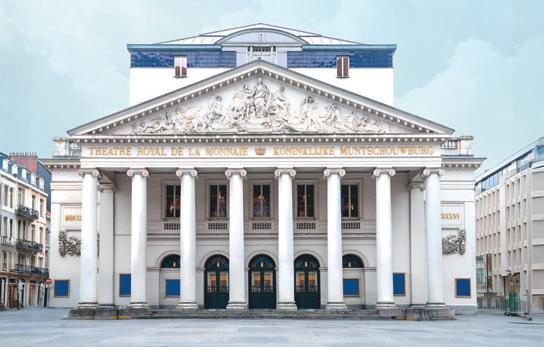
La Monnaie / De Munt is Belgium’s iconic federal opera house in the heart of Brussels, bringing people together for world-class performances and vibrant cultural experiences since 1700. More.



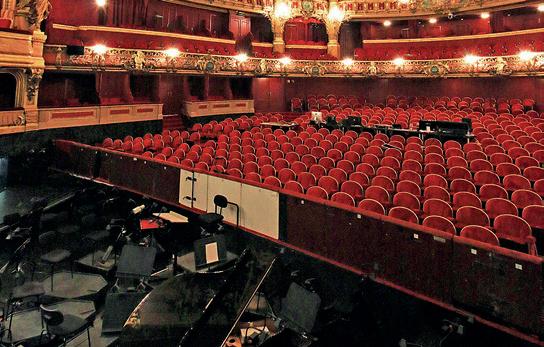


Tickets starting from €12
Scan for your first opera visit

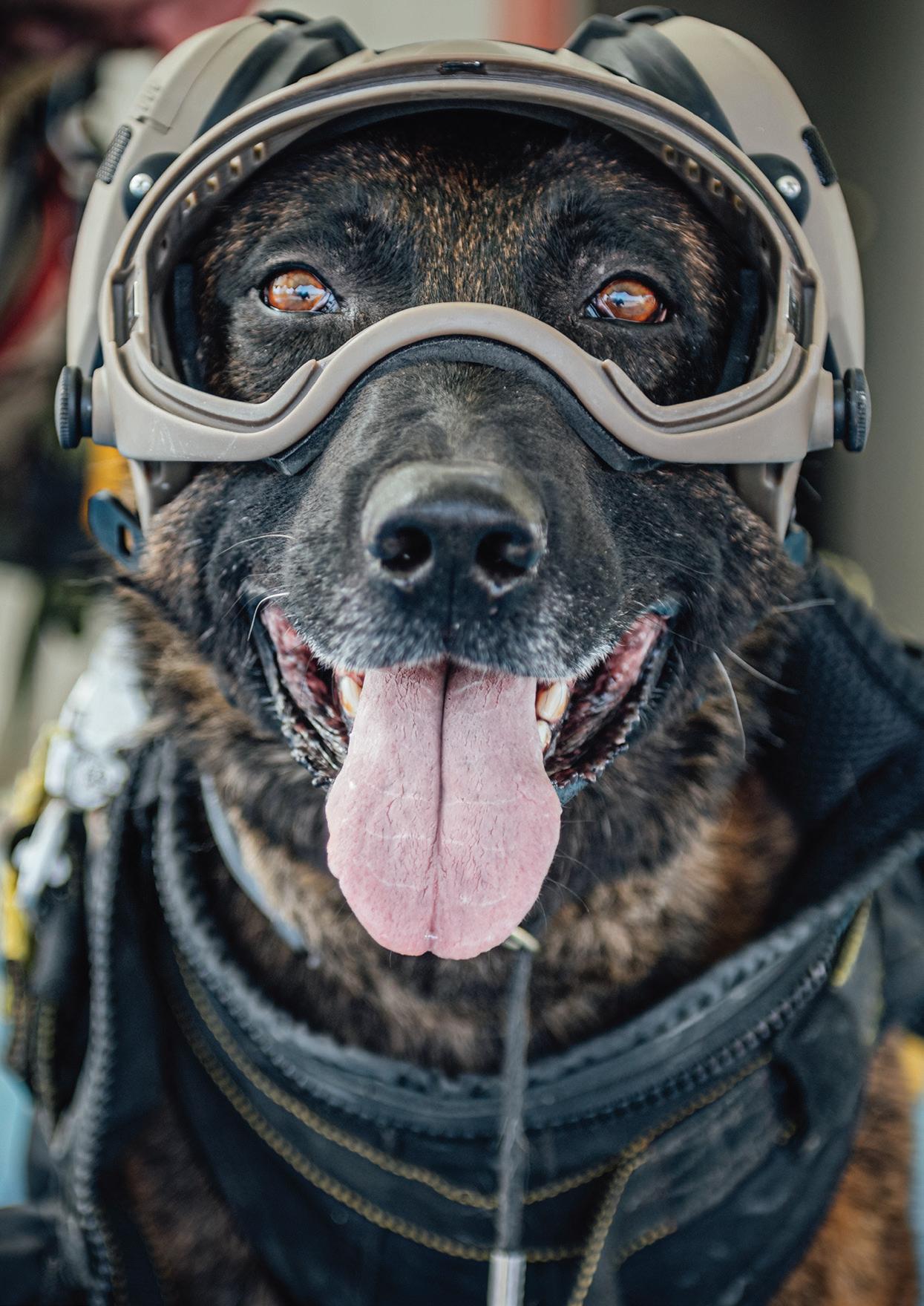
Belgium’s passion for dogs runs from pampered pets in Brussels cafés to Malinois leaping from planes with Special Forces. And it has created four distinct shepherd breeds, turning the canines into companions, colleagues and national icons, as Paul Meller writes
Belgium may be small, but it thinks big when it comes to dogs. Few countries roll out the welcome mat for fourlegged companions quite like this one. In Brussels cafés, the waiter will often bring water for your dog before taking your own order. Trains and trams are canine friendly. Even the army is obsessed: its elite units are more likely to boast about their Malinois dogs than their machine guns.
From pampered pets in city apartments to parachute-jumping shepherds strapped to Special Forces handlers, dogs are stitched into the fabric of Belgian life. They are not just companions – they are colleagues, athletes, guardians and, occasionally, national celebrities.
Take the Belgian shepherds. While other countries may content themselves with perfecting a single breed, the Belgians went for four (not including the Bouvier de Flanders, a more ancient herding dog – see separate article page 31).
In 1891, the Royal School of Veterinary Medicine in Anderlecht decided to outdo their German and British peers by engineering a quartet of shepherd dogs, differentiated mainly by coat length and colour but united by their brainpower and athleticism.
The Malinois quickly became the star pupil — a sleek, short-haired dynamo with the fawn coat and black mask that have since become synonymous with intelligence, stamina and, occasionally, danger. If James Bond were reincarnated as a dog, he’d probably be a Malinois.
His siblings are no less distinguished. The luxuriant black Groenendael was bred in aristocratic surroundings by Nicolas Rose, owner of the Groenendael chateau, a former abbey. He began selectively breeding this beautiful black-coated, long-haired variety of Belgian shepherd using two foundation dogs – a male called Picard d’Uccle and, ironically for such a large breed, a female called Petite.
The proud fawn-and-black Tervuren was born of a cross-forest romance by a Mr Corbeel from the Brussels suburb. He owned a fawn-coloured dog named Tom, who he bred with a black shepherd named Poes, producing puppies
with the now-iconic long fawn coat and black mane.
And the scruffier Laekenois, the rebel cousin with the wiry coat, more often seen patrolling royal estates than red carpets. The fourth and rarest of the Belgian shepherds, its shaggy, rough, fawn-coloured coat sets it apart from its cousins, and is used by actual human shepherds and gamekeepers, including those working on the royal estates of Laeken.
Of course, Belgian shepherds were originally bred to boss sheep. But as sheep herding dwindled, these versatile hounds found new careers: guarding, sniffing out contraband and generally making life difficult for wrongdoers. By the early 20th century, most shepherds were re-purposed to serve as guard dogs as well as police and army detection dogs.
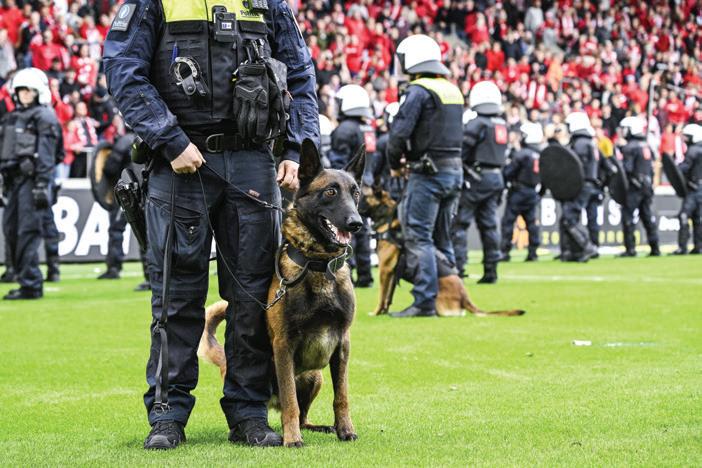
The Malinois, in particular, has become a global export — a canine super-soldier coveted by armies, customs officers and police forces everywhere from Kabul to California. The US Navy SEALs had one at their side on the 2011 mission that killed Osama bin Laden (he was called Cairo). Belgium, it turns out, produces not just the world’s best chocolate and beer but also the hardest-working dogs on the planet. Shepherd dogs guard sheep or drive sheep – and some can even do both. “They are brave, obedient, easy to train and strong physically. They make excellent guard and detection dogs,” says the commanding officer of the Belgian military working dog unit, Yves Mommens.
That’s why they are the first-choice breed across all branches of the Belgian military. “We have springer spaniels and Labradors working as detection dogs. And German shepherds are used as guard dogs. But 90% of our dogs are Malinois,” Mommens says.
The army buys dogs at age two from trusted breeders from around Europe for between €2,000 and €5,000. Once the dog has passed its physical and character tests, it goes on a twoweek quarantine, as a further precaution.
Paul Meller
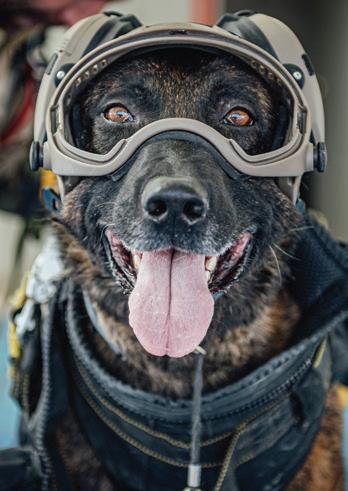
Dogs selected for the Special Forces branch of the Belgian military receive extra training for parachute jumping. Incredibly, these dogs willingly jump out of aeroplanes, strapped to the chest of their handler.
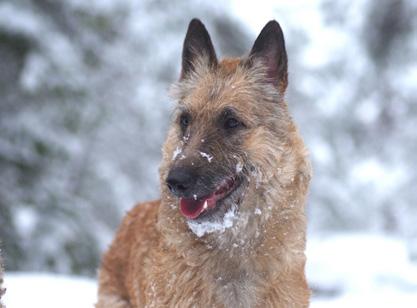
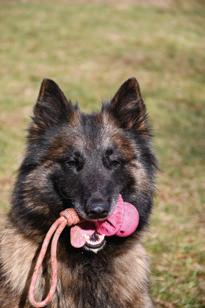
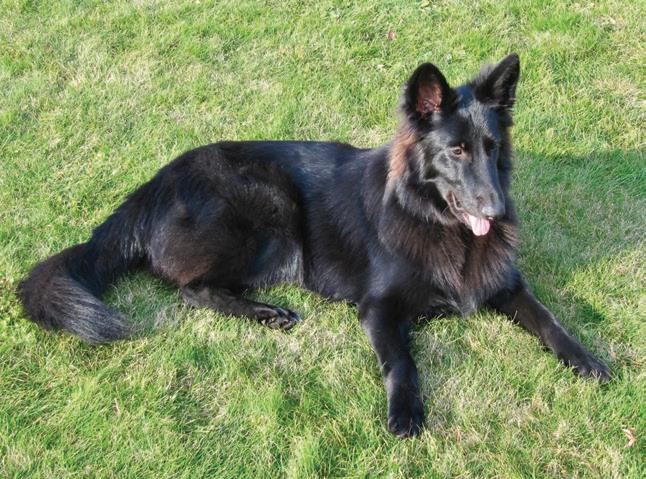
The Groenendael has a much softer expression on its face. They are super intuitive and they are easier family pets than Malinois.
Then, once it has the all-clear, the dog is paired with a handler. The two train together: three months for a guard dog, six for a detection dog. Then they - handler and dog - are ready for work and a one-on-one relationship that will last for the rest of the dog’s life.
Dogs selected for the Special Forces branch of the Belgian military receive extra training for parachute jumping. Incredibly, these dogs willingly jump out of aeroplanes, strapped to the chest of their handler.
Malinois were used by the Belgian military as guard dogs in Afghanistan between 2004 and 2016 when the army oversaw security at Kabul airport – although none are on active duty overseas with the Belgian military at the moment. “We do have a star, a detection dog called Flaco,” Mommens says. In March 2016, he was one of two dogs sent to Zaventem airport in the wake of the terrorist attack there, to check for further explosive devices.
“He did a sweep of the airport,” Mommens says. “He suffered from what he inhaled that day and died some months later. We have a memorial for the dogs like Flaco that died in service.” However, the army doesn’t hand out medals to its four-legged comrades.
Military dogs get a day off each week, and
they go home with the handler and live as a pet with his or her family. “Working dogs retire at age eight – so that’s six years active service,” Mommens says. The average life of a Malinois is between 12 and 15 years.
“They live with their handler’s family after retirement for the rest of their lives, so most handlers have more than one dog at home at once,” he says. The army pays for all food and vet costs until the dog passes away.
The issue of inbreeding divides breeders. Some say it is the only way to be sure of what you’re getting, while others will travel great distances precisely to avoid the risk of there being a family link between dog and bitch.
Johan Weckhuyzen, a trainer, breeder and the founder and chairman of the World Federation of Belgian Shepherds (Féderation Mondial des Bergers Belges), distinguishes between in- and line breeding. Inbreeding is the mating of individuals that are closely related — brother, sister, parent or grandparent. Line breeding is a milder form of inbreeding, where breeders deliberately mate animals that share a common ancestor — often a well-regarded prize-winning animal — but avoid the very closest relations.
“There are two motives – money and perfection,” Weckhuyzen says. “Line breeding is important, especially with working dogs because you want to know what the dog will be like. The biggest challenge with breeding dogs is knowing what’s going on in their heads. You can’t take chances. If you know the genetics of the bloodline, you are more sure what the dog will be like,” he argues.
And to create one of the four Belgian shepherd dogs, you have to inbreed. The Malinois breed, for example, can trace its origins back to two males, Dewet and Tjop, who were paired with both their daughters and their granddaughters. “It’s how the breed emerged,” Weckhuyzen says.
Belgium legislates against excessive inbreeding, and breed clubs also play a key role in setting and maintaining standards that discourage harmful inbreeding. “I travelled to Germany for a mate in order to avoid a related line,” says Maja Zaluska, a breeder of the rarer wiry-haired Laekenois breed. She lives outside Stockholm, Sweden. Being rarer, the breed is potentially more at risk of accidental inbreeding.
She agrees that inbreeding was needed to create the breeds in the first place. “But you can’t keep doing it all the time because you’ll get punished for that,” she says, adding: “You can do DNA tests for a lot of hereditary conditions, but you can’t screen for all potential problems.”
Genetics can throw up surprises. Kerstin Heinen-Kunath from near Malmedy has bred Tervurens for many years with her husband. They had a bitch called Katja who looked like a Tervuren but whose parents were both short-
Aggressiveness is not a good thing because it means a loss of control. You need a controllable dog, one you train to bite, not one that will bite of its own will.
haired Malinois. “We registered her as a Tervuren with Malinois ancestry and bred her with Tervurens,” she says.
The Belgian shepherds have a lot in common because they were one breed 150 years ago, but there are character differences. Heinen-Kunath says she fell in love with the Tervuren breed partly because they are calmer and easier pets than the dynamic Malinois.
Caroline Thonnon, a breeder of prize-winning Groenendaels from near Hasselt, also distinguishes her preferred breed from the more popular Malinois. “Many people just think Malinois when they talk about Belgian shepherds. It’s a pity, the Groenendael has a much softer expression on its face. They are super intuitive and they are easier family pets than Malinois,” she says.
Until about 30 years ago, Groenendaels were common in Belgium, often seen on farms. But that’s changing. “Groenendaels need space,” Thonnon says. “People are choosing smaller breeds better suited to urban settings; the hybrids like labradoodles are an easier pick. It’s a pity. Groenendaels are part of Belgian heritage – they are its forgotten treasure.”
“The Malinois is the cleverest breed of all, even smarter than border collies,” says the World Federation’s Weckhuyzen. But if you are tempted to get a Belgian shepherd, then he has some valuable tips on how to pick a pup and how to train it.
First, be aware that in every litter, regardless how close the parents are related, you will get puppies with different personalities.
“It is quite easy to see which puppies are dominant and which are submissive. Dominant dogs are much harder to train and manage. Sometimes I advise people against their first choice of
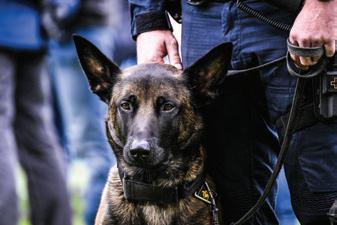
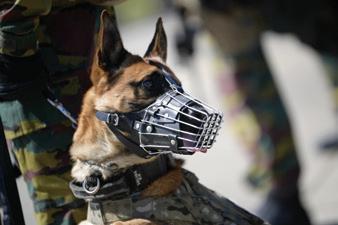
puppy when they meet a litter because I know they won’t be able to cope,” Weckhuyzen says. Picking the right pup is especially important if you are looking for a working dog. Perhaps surprisingly, the army, customs and police will never take a dominant animal. “Aggressiveness is not a good thing because it means a loss of control. You need a controllable dog, one you train to bite, not one that will bite of its own will,” he explains.
Belgian shepherds are big. They weigh between 30kg and 45kg. Worth bearing in mind, especially as the dog gets old and needs assistance getting into a car, for example.
When it comes to training, Weckhuyzen says you have to start early. Puppies should stay with their mothers for two months, but then they should go to their new owner and they should begin training together.
He believes in positive reinforcement, using treats as rewards. He follows a technique used to train dolphins. In the 1960s, dolphin trainers began using operant conditioning, a learning process in which voluntary behaviours are modified by association with the addition of reward.
“We do the same thing, using a clicker and treats with dogs,” Weckhuyzen says. He has a working dog training company called K-9 Detection based in Bredene on the Belgian coast.
Some trainers still use punishment to teach young dogs, including using collars that give the animal an electric shock. “I don’t support these methods, not just because they are cruel but also because they are not as effective,” he says.
Belgium’s love affair with dogs shows no sign of waning, from the Malinois patrolling airports to terriers trotting through my street in Ixelles. The real challenge lies not in training the animals, but in training ourselves – to pick wisely, to treat kindly, and, at the very least, to carry a poo bag. After all, it’s never the dogs that let us down.














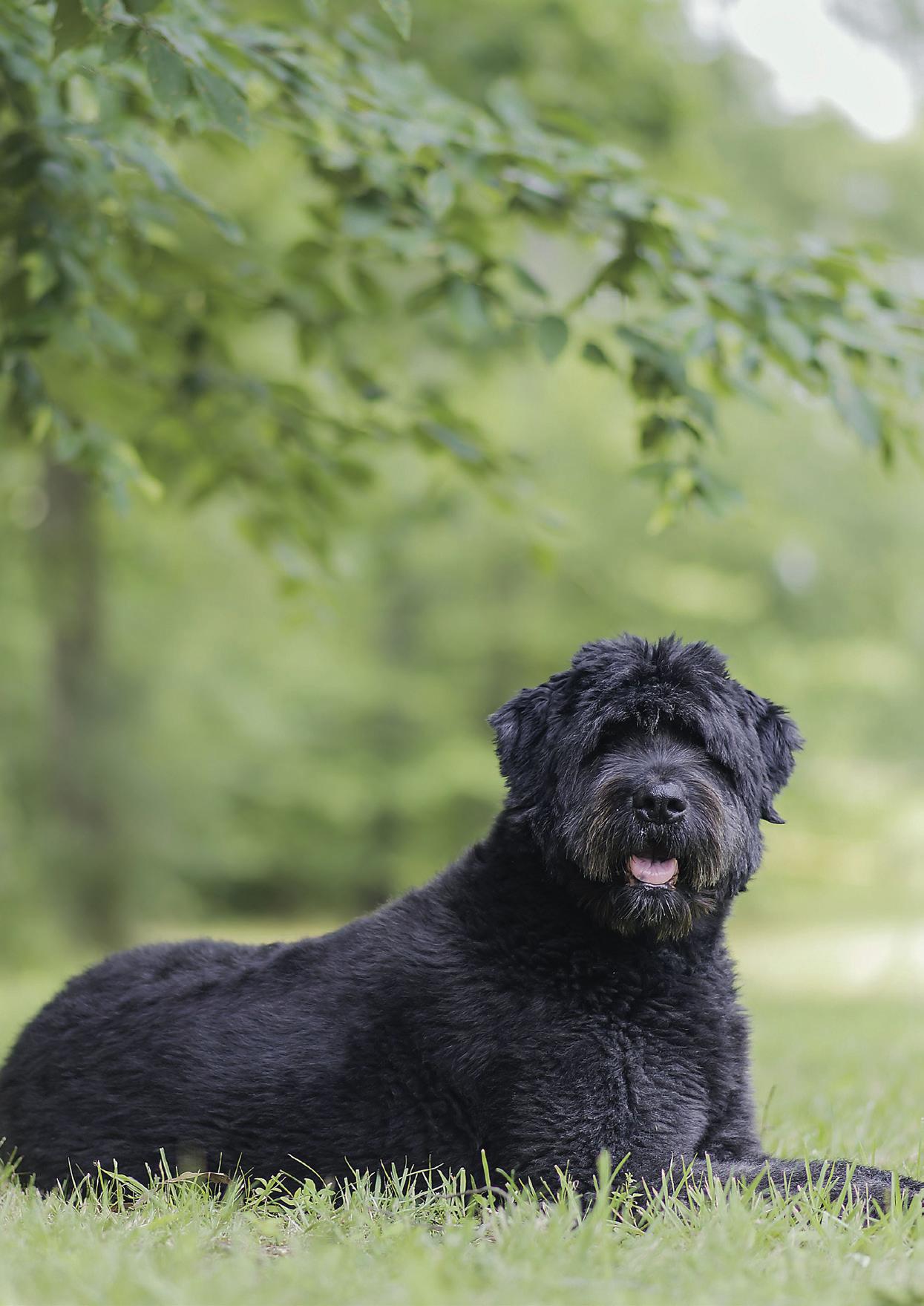
Stocky, shaggy and stubborn, the Bouvier des Flandres is Belgium’s unsung canine hero. Once a farmhand, cart-puller and war dog, today it is a loyal guardian and family companion, writes Kurt Karlsson
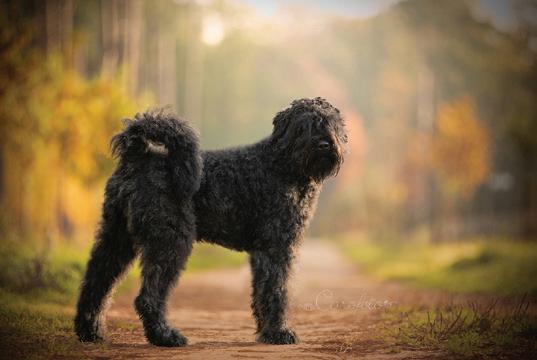
Few breeds embody Flemish and Belgian character as much as the Bouvier des Flandres. Independent, resilient and stubborn. Stocky yet graceful. Shaggy yet dignified. The Bouvier was bred not for show but for work – and work it did.
Weighing up to 50kg and standing as tall as 70cm, the Bouvier is a block of power wrapped in a thick, dark coat. Its heavy beard soaks up mud and water, giving rise to one of its Flemish nicknames, Vuilbaard – “dirty beard.”
Its working-class roots echo Belgium’s agricultural past, while its adaptability mirrors the country’s pragmatic spirit. The dog is neither flashy nor delicate; it is practical, strong, and quietly dignified. Bouviers also reflect Belgium’s contradictions. They are internationally admired yet relatively rare at home.
For centuries, the great cattle dog of Flanders drove herds across flat fields, guarded farms through misty mornings, and stood sentinel at barn doors. If the Belgian Blue cow is a monument to selective breeding and the Brabant draft horse to raw muscle, then the Bouvier is the farmer’s faithful shadow: intelligent, strong, stubborn and unwaveringly loyal.
The name says it all: Bouvier derives from the French “bouvier” – “herdsman” or “cowherd.” The dog’s origins lie in the countryside of medieval Flanders that straddles today’s Belgium and northern France.
Monks at the Ter Duinen abbey are thought to be the first Bouvier breeders, mixing local dogs with imports like deerhounds and Irish wolfhounds. At that time, life revolved around cattle, milk and butter.
The monks were looking for a single dog to herd, act as a stock dog or drover, a guard dog, watch dog, churn butter, pull a cart, kill vermin and be the family friend. What emerged was a rugged all-rounder, a thick-coated dog with the muscle of a draught horse and the sensitivity of a family companion. Although the monks tended to name their breeds after saints, the Bouvier was considered too rustic
and unrefined to merit such an honour. By the late 19th century, as the Industrial Revolution spread and the countryside modernised, the Bouvier was still largely unknown outside rural Flanders. That changed thanks to dog-fancying priests and farmers who began standardising the breed. By 1910, it was being shown at dog exhibitions, though it never shed its working-class roots. A Belgian vet described the Bouvier that year as “un chien de ferme avant tout” – above all, a farm dog.
The First World War nearly destroyed the breed but also cemented its legend. Bouviers served as ambulance dogs, messengers, and haulers on the Western Front. Their bravery earned them the nickname “soldiers in fur,” and stories abound of Bouviers saving lives under fire. One, Nic de Sottegem, became so famous for his wartime service that he was later used as a model for the breed standard. The war almost wiped Bouviers out, but a handful of breeders kept them alive, and postwar Belgium reclaimed them as a national emblem.
The Second World War proved a different challenge. Hearing of the Bouvier’s strength and versatility, Adolf Hitler briefly considered it as the Third Reich’s guard dog. But the Führer’s first meeting with a Bouvier went badly: when he reached out to pet the dog, the Bouvier snapped, biting his hand. Chastened, Hitler decreed that all Bouviers were to be killed on sight, and it was again only thanks to assiduous breeding that the breed revived after the war.
By then, the Bouvier had gained world renown. It was still used by the military: the Bouvier's keen scenting ability was put to use by the Allies sniffing out land mines and ammunition dumps. Even today, the US military has more Bouviers serving as sentries than any other breed.
Today, the Bouvier retains its aura of resilience. Its shaggy beard and piercing eyes give
Kurt Karlsson
The name says it all: Bouvier derives from the French “bouvier” – “herdsman” or “cowherd.” The dog’s origins lie in the countryside of medieval Flanders that straddles today’s Belgium and northern France.
Hearing of the Bouvier’s strength and versatility, Adolf Hitler briefly considered it as the Third Reich’s guard dog. But the Führer’s first meeting with a Bouvier went badly: when he reached out to pet the dog, the Bouvier snapped, biting his hand.
it a sage-like presence; its sturdy body and deep bark make it a reassuring guard. Yet beyond appearances, the breed holds a paradox. It is at once protective and gentle, imposing and affectionate, stubborn and deeply loyal.
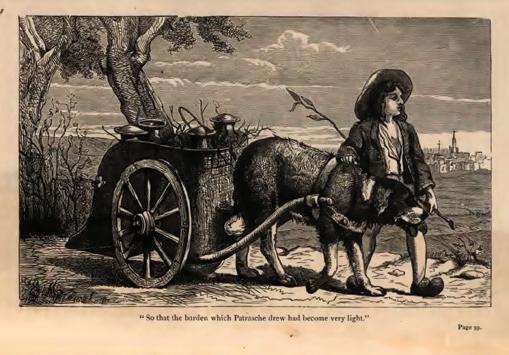
This complexity explains why the Bouvier has won admirers far beyond Flanders – from French presidents to American celebrities. Most curiously, it has been beloved by Japanese readers, thanks to a 1970s television adaptation of the novel, A Dog of Flanders, about an orphan boy named Nello and his loyal Bouvier, Patrasche. The novel, written by English author Marie Louise de la Ramée published under her pseudonym Ouida, was barely noticed in Belgium when it was published in 1872, but has since been adopted by Antwerp, where there are now two monuments to Nello and Pastrasche.
Few people know the hirsute hound better than Didier Ivens, who has spent four decades breeding Bouviers, including many
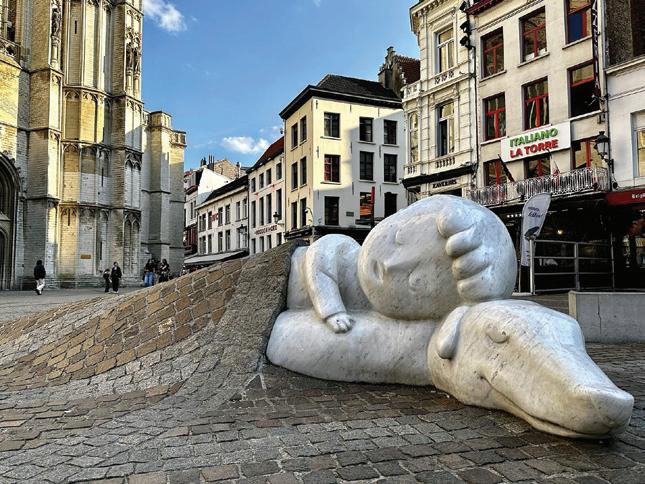
dog prize winners. At the height of their popularity in the 1990s and early 2000s, he recalls keeping as many as 15 breeding females to meet global demand. “That gave me the opportunity to improve my bloodlines again and again,” he says. “The dogs I have now still trace back to that period.”
For Ivens, the Bouvier’s character sets it apart. “It’s a unique breed,” he insists. “Unlike the Malinois, which is easy to train and eager to please, the Bouvier is stubborn. He has a mind of his own. At our dog school, we tested it once – we left a Bouvier alone in the middle of the field, and he ignored passers-by until someone in a protective suit pretended to attack the fence. Then he immediately reacted. He could distinguish good from bad without any command. That capacity to make his own decisions – it’s rare.”
Bouviers thrive on companionship. Although they seldom live more than a decade - their deep chest making them vulnerable to the volvulus and bloat syndrome –owners will testify to their lifetime of resolute service, energy, and camaraderie. But their independent streak explains both the breed’s charm and its challenges. Bouviers excel as loyal family dogs but require consistent training. “He will protect his family with his life, if necessary,” says Ivens.
Bathing and grooming are also regular chores, as the dog is a mud magnet. The Bouvier considers it a point of pride to wallow in ponds, ensuring that dirt and weeds cling to his thick, double coat. Additionally, the beard is likely to retain particles of food. Bouviers are also among the more flatulent breeds of dog, and a swampy, after-dinner aroma tends to hover on the fur. It means that almost all other breeds of dog - except the Old English Sheepdog - are less troublesome than the Bouvier in matters of cleanliness. “You must give him attention and structure,” says Ivens. “People forget the coat – it only needs about half an hour of grooming a week, but if you neglect it for months, it becomes impossible.
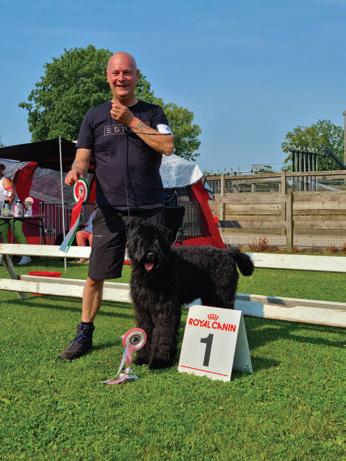
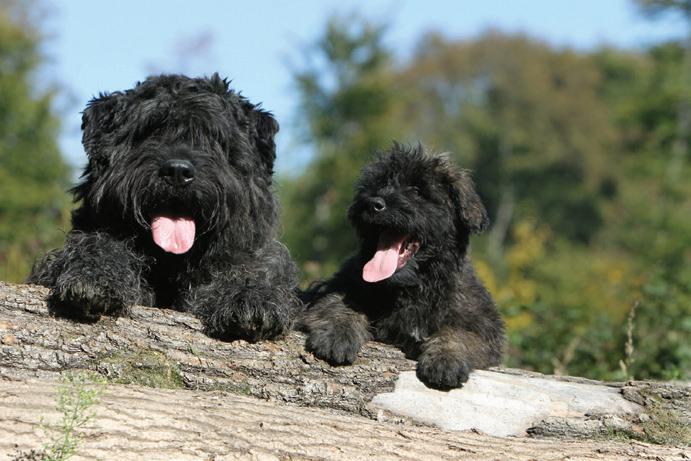
Many call me in a panic because their dog’s coat is totally matted.”
Modern Bouviers are no longer herding cows or pulling carts. Instead, they serve as guardians, therapy dogs and faithful companions. They are affectionate with their families, yet always watchful. Their instincts can still surface on city streets: cyclists, jog-
gers, even cars may trigger the old herding urge. And their fondness for water and mud ensures that the “dirty beard” nickname remains apt. He may drool, dig, and carry the lingering aroma of last night’s dinner in his beard, but the Bouvier is scruffy proof that loyalty, resilience and a touch of obstinacy never go out of style.
Belgium’s monks may have brewed beer and copied manuscripts, but their most enduring creation could be the droopyfaced, nose-obsessed bloodhound.
The bloodhound looks as if it was designed by committee: ears long enough to sweep the kitchen floor, eyes drooping with existential melancholy, and wrinkles deep enough to store a week’s shopping. Yet beneath the lugubrious façade lies one of Belgium’s greatest gifts to the canine world. Yes, the bloodhound — often mistaken as a British breed — was first honed in the Ardennes by monks devoted not to aesthetics, but to the art of the nose.
The story begins with St Hubert, the patron saint of hunters, whose followers at the abbey near Liège began breeding scent hounds as early as the 7th century. They wanted dogs that could track deer across forests and fields, tirelessly and with unerring accuracy. The monks succeeded, producing hounds with such olfactory talents that they became known as chiens de Saint-Hubert. Pilgrims took them across Europe, presenting them as gifts to kings and noble houses, and soon their reputation spread far beyond the cloisters.
The “blood” in bloodhound refers not to gore, but to sangréal — pure blood. These were hounds of impeccable lineage, bred with care and reverence. The French nobility paraded them on hunts, while in England they became the chosen trackers of poachers. Closer to home, they remained a symbol of devotion and diligence.
What sets the bloodhound apart is not brute force but sensory genius. With around 300 million scent receptors, they can follow a trail more than a week old, through towns, fields,
Bathing and grooming are also regular chores, as the dog is a mud magnet.
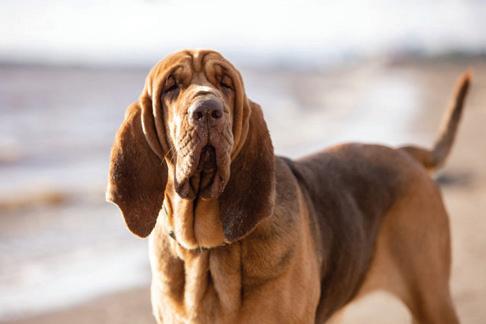
and even water. Their mournful faces belie a dog constantly engaged in invisible detective work, deciphering odour molecules as if reading a novel. In truth, they are less gloomy philosophers than stubborn sleuths, determined to pursue a scent wherever it leads, regardless of whether their owner wishes to follow.
Keeping one is not for the faint-hearted. Their legendary drool redecorates walls and trousers alike. Their long ears require vigilant cleaning. And their independence means obedience training often feels like a polite suggestion rather than a command. Yet those who live with bloodhounds speak of extraordinary affection: a dog as loyal as it is eccentric, as comical as it is noble.
The bichon frisé may be pint-sized, but Simon Taylor says this snowball with eyes has centuries of high-society pedigree – and still melts hearts today
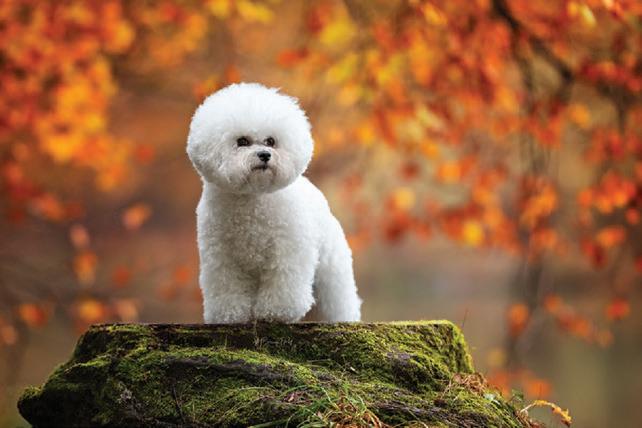
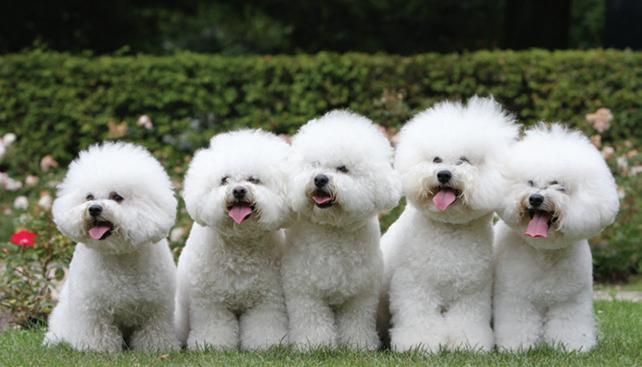
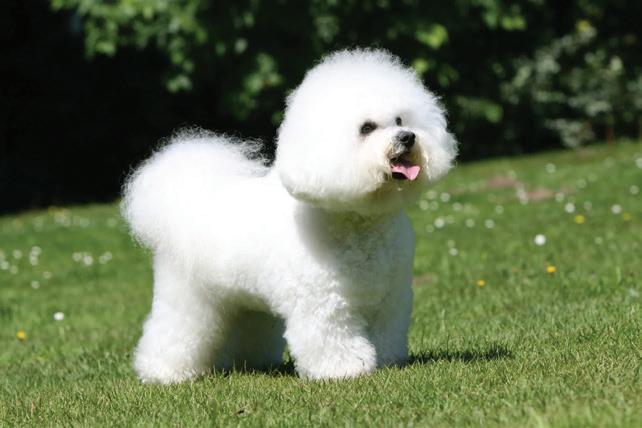
Think of a walking cloud with button eyes and you’re halfway to picturing the bichon frisé. This little toy breed, with its famously snow-white curls, has been padding through Europe’s salons since the 14th century. The court of French King Louis XIV adored them, parading their bichons in dainty baskets; centuries later, Barbra Streisand proudly posed with hers, cementing the breed’s Hollywood status.
Their name comes from an old French word for small dog (biche, related to the English word bitch), while frisé is short for à poil frisé, or curly coat.
The first pedigree dogs were registered in Belgium in 1926. Rita Douwen, a breeder of bichons, from Onze-Lieve-Vrouw-Waver, a Flemish village near Mechelen, explains that the breed was given the name “bichon à poil frisé” in 1976, having been recognised as a Franco-Belgian breed to thank the Gallic breeders who helped their Belgian counterparts during the Second World War by taking the animals to the south of France for safekeeping.
Douwen, who has had bichons since the 1990s, puts their popularity down to their adorable features and gentle personalities. A bichon is like a “white fluffy living teddy bear,” she says, while their “cheerful and playful character makes a lot of people stop to talk to you when you walk by.”
Douwen explains that their gentle personalities make them suitable as therapy dogs. “They love to be cuddle dogs in retirement homes”, she says. They are also very agile and intelligent which makes them easy to train, which is why they have been popular in circuses for generations.
At the same time, they are fiercely loyal and defend their owners and their families aggressively, even if their diminutive size is unlikely to deter burglars and other assailants.
Another advantage is that they don’t shed their fluffy white coats, making them suitable for people with allergies. But like all breeds, their coats need attention to keep in pristine condition. When young, they need brushing every day but once an adult, every two or three days is enough. Douwen says they need a bath every two weeks and a professional trim every six or seven weeks.
Douwen says that people often hesitate over whether to choose a miniature poodle or a bichon as the two are similar in size (between 23 and 28 centimetres in height). But, as an owner of ten bichons, she says she hasn’t regretted a moment with her dogs since falling in love with them over three decades ago.
Simon Taylor
EXPERT SUPPORT FOR YOUR GLOBAL MOBILITY PROGRAMME
Its one thing attracting the talent you seek. Keeping them on board however, is another matter altogether. Get the professional support you need.
From advising companies on their international mobility programmes to finding the perfect home for your expat and their family, ABRA members are here to help you along every step of the way.

Discover our network of expert destination service professionals at www.abra-relocation.com


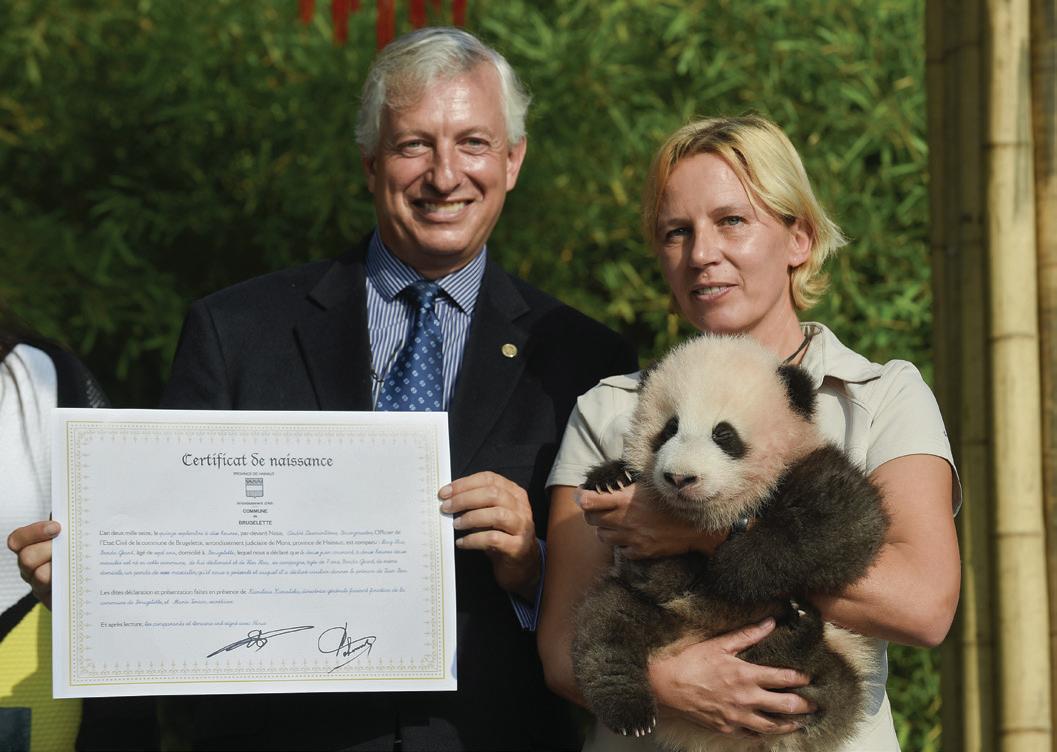
Nestled in the heart of Belgium lies a 4.5-hectare classical Chinese garden, which is the largest of its kind in Europe.
To commemorate the 50th anniversary of the establishment of China-EU diplomatic relations, CGTN released “Bridge Builders”, a documentary spotlighting the ordinary people who help foster stronger bilateral ties and deepen cross-cultural understanding.
Among them are Eric Domb, a Belgian entrepreneur determined to create a classical Chinese garden in Europe; Professor Thomas Hildebrandt, a panda researcher who made history by delivering Germany’s first panda twins; and the legendary Swedish ping-pong champion “Lao Wa”.
Nestled in the heart of Belgium lies a 4.5-hectare classical Chinese garden. This picturesque landscape, largest of its kind in Europe, is the
masterpiece of Eric Domb, a Belgian entrepreneur who founded Pairi Daiza, and who has loved the Chinese culture since childhood. His mother, an admirer of Chinese poetry and literature, introduced to him the beauty of Tang dynasty poems and the adventures of Journey to the West. These early influences planted a seed that would later blossom into a grand cultural project.
Domb’s vision took shape after a visit to China, where he was mesmerised by the harmony and artistry of traditional Chinese gardens. Determined to recreate the beautiful views in his homeland, he collaborated with Chinese architects, artisans, and gardeners. The result was a masterpiece featuring pavilions, koi ponds, rockeries, and winding pathways—all meticulously designed to reflect the philosophy of balance between human and nature. Today, the garden is not only an oasis for homesick
Chinese students in Belgium but also a home to giant pandas and golden snub-nosed monkeys from China.
For Domb, the garden is more than a tourist attraction. “When people walk through the garden, they don’t just see trees and water; they feel the soul of China,” he says. His project stands as a symbol of perfect integration of philosophy, art and nature.
In China, few animals symbolise international friendship as vividly as giant pandas. For Professor Thomas Hildebrandt, a renowned German zoologist, these black-andwhite bears have become his life’s work— and a bridge between China and Europe. As the only European member of the academic board at Chengdu Research Base of Giant Panda Breeding, Hildebrandt has spent three decades advancing panda reproduction science, a field fraught with challenges due to the species’ low fertility rates.
His breakthrough came in 2019 when he and his Chinese colleagues successfully delivered Germany’s first pair of panda twins, a milestone that made him the first non-Chinese winner of the prestigious annual panda award for research and reservation. Hildebrandt’s expertise in ultrasound monitoring and artificial insemination has been instrumental in improving the success rates of panda breeding worldwide. But beyond the scientific achievements, what drives him is deep respect for these fluffy creatures as envoys of friendship.
“Pandas are more than just animals; they are messengers of peace,” he said. His collaboration with Chinese scientists exemplifies how shared goals can transcend borders. Through his work, Hildebrandt has not only contributed to wildlife conservation but also strengthened the bonds of China-Europe friendship.
“Lao
In the world of table tennis, few foreign players have left the Chinese with an impression as profound as Jan-Ove Waldner, affectionately known as “Lao Wa” (Uncle Waldner). Rising to fame in the 1980s and 1990s, the Swedish player amazed Chinese audiences with his innovative playing style—a fusion of European power and Chinese finesse. His epic duels with Chinese champions like Liu Guoliang and Ma Lin made him a beloved rival, earning both admiration and friendly exasperation from Chinese fans.
What sets Waldner apart was not just his
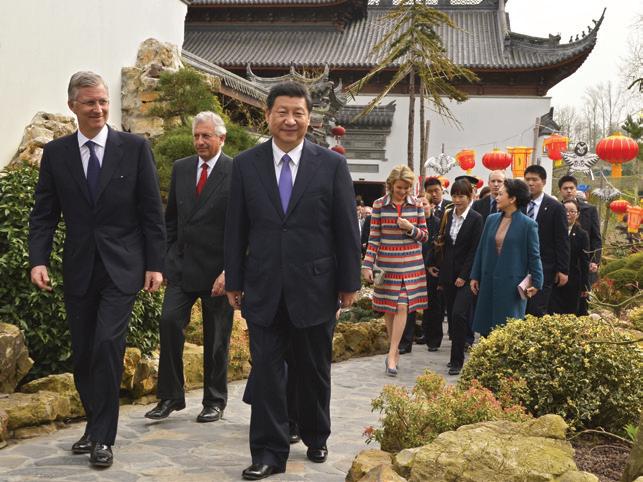
skill but his deep love for China and the Chinese culture. During his training in China, he learned the language and embraced the sport’s philosophy. Even when defeated, his sportsmanship and humility won the hearts of spectators. “Ping-pong is not just a game; it’s a way to connect people,” he once said. True to his words, Waldner is committed to promoting of China-Europe exchanges, for which he organised exhibitions, coached young players, and even opened an authentic Swedish restaurant in the center of Beijing. His legacy serves as a reminder that competition, when rooted in mutual respect, can foster lasting friendship. There were days when ping-pong diplomacy thawed Cold War tensions between two major countries. Today, Waldner’s story shows how sports continue to bring nations closer.
The year of 2025 marks the 50th anniversary of diplomatic relations between China and the European Union. Over the past five decades, cooperation between China and EU members flourished in culture, technology, sports, environmental protection, and beyond. People-to-people exchanges were strengthened, and grassroots friendship continued to deepen. As we celebrate the semi-centennial milestone, we look forward to more “bridge builders” who will further connect the East and the West. Together, we can write an even more brilliant chapter of the story of human civilization—one defined by mutual understanding, shared progress, and collective flourishing.
Eric Domb’s vision took shape after a visit to China, where he was mesmerised by the harmony and artistry of traditional Chinese gardens.
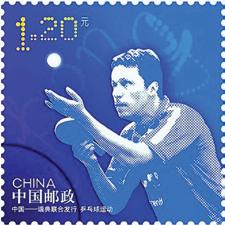
Swedish table tennis legend Jan-Ove Waldner, also affectionately known as “Lao Wa” (Uncle Waldner) was even selected to feature on a stamp in China
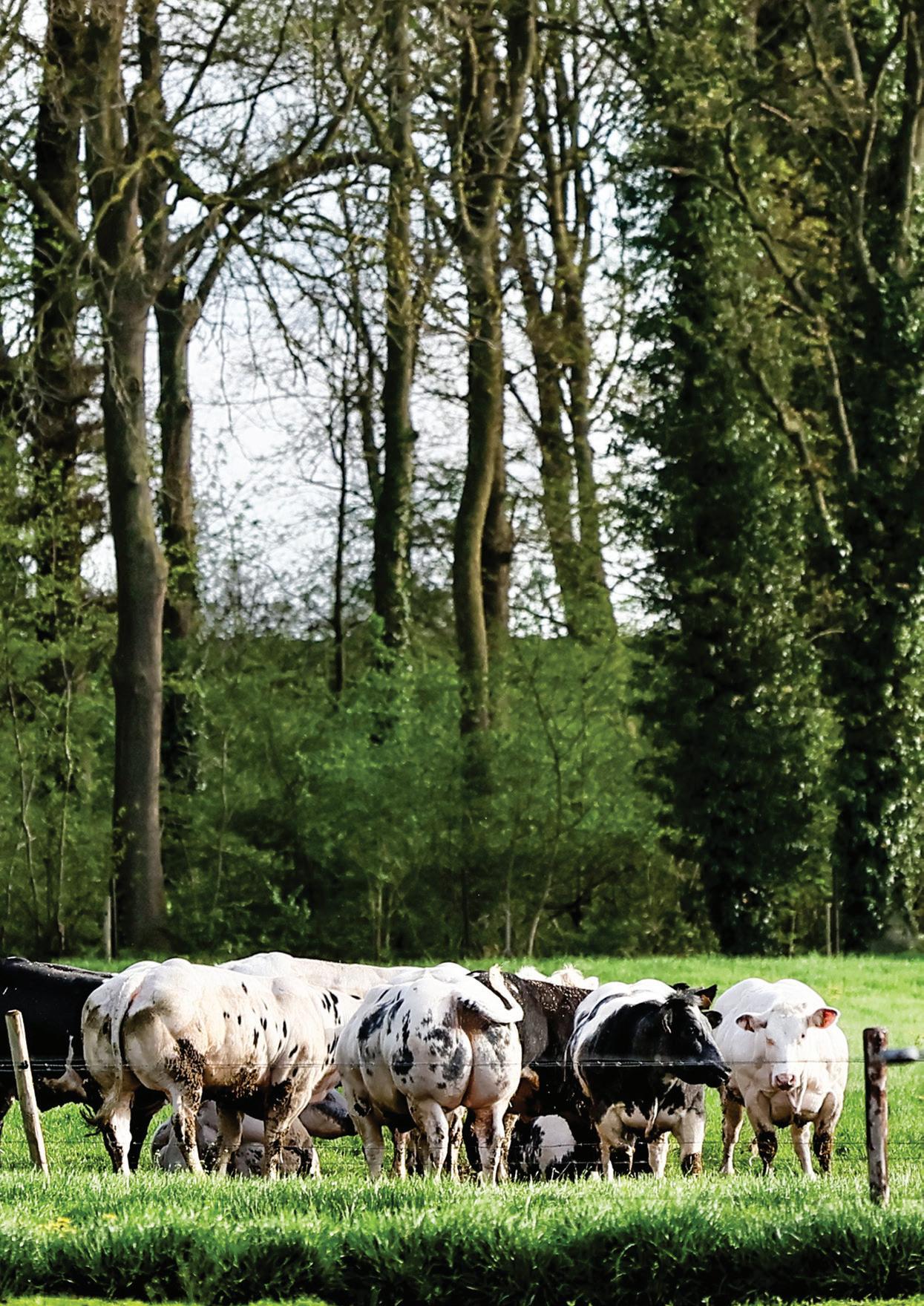
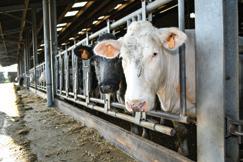
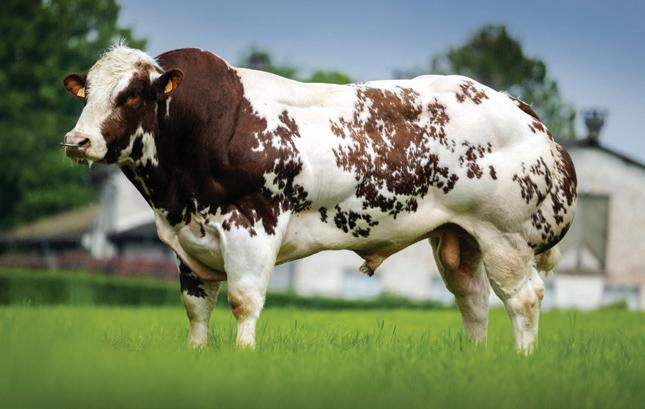
The Belgian Blue cow is a double-muscled colossus tipping the scales at over a tonne, with hindquarters so vast the Flemish nickname is simply dikbil—fat buttocks. Bred for yield yet admired for beauty, it straddles farm and showground, plate and pride, as Dennis Abbott finds out
The Flemish call them ‘dikbil’, which literally means fat buttocks.
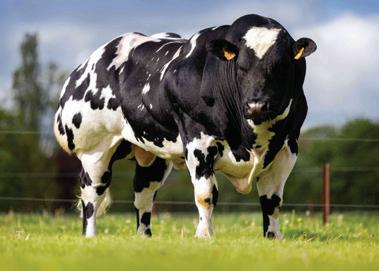
It’s hardly the most charming name but you can see why. The Belgian Blue has a massive, muscular rear and an equally humongous body, albeit with a relatively small head in comparison.
An adult bull typically weighs around 1,200kg – that’s heavier than a Fiat 500 and double that of a grand piano. The adult female is a big beast too, often reaching 900kg.
The breed is prized for its tender meat and, for research purposes, I visited the Brasserie Brouwershof in Haacht to try their speciality Belgian Blue steak, best eaten ‘saignant’ (medium rare, anything more is a crime). It was excellent, as was the accompanying Tongerlo blond from the brewery opposite. Other beers are available (see recipe below).
Before going further, apologies to any veggies who might be offended by what follows. The Belgian Blue is a wondrous sight in the field but there’s no getting away from the fact that it is primarily bred for the plate.
So why are they so enormous, and are they all really blue?
Their thick coats actually come in a variety of colours, including solid white, solid blue and, frequently, a mottled white-blue pattern, which is why, in more polite Flemish circles, they are known as Belgisch Witblauw and as Blanc-Bleu Belge, or BB for short, by Francophones. The Belgian Blue can also have a black and white or completely black coat.
The breed originated in central and upper Belgium in the 19th century, from crossing local breeds with Durham Shorthorn cattle from Britain. But the muscle-bound version of the animal we see today only began to take off about 70 years ago.
I spoke to Pierre Mallieu, former secretary general of the ‘BB Herd Book’, a register for breeders to track lineage and maintain standards, to discover how the big Blue became the Dwayne Johnson of the bovine world.
“It’s a very special breed and has proved an
amazing success,” he says.
“The breed we know today was developed by farmers when there was a lack of beef meat in Belgium after the Second World War. They increased the quality and quantity of the herd through genetic improvements.”
In layman’s terms, the farms used a form of natural selection, mating their biggest, baddest bulls with similarly well-developed cows to produce bigger and better calves. With each generation, thanks also in part to a natural mutation in the myostatin gene which gives the Blue its characteristic double-muscled look, the breed became even larger and heavier.
“The aim was simply to produce more meat and respond to market needs. The breed wasn’t developed in labs,” adds Mallieu.
In 1948 a royal decree led to the creation of artificial insemination centres to boost livestock quality. A high-performance bull, the magnificently named Gédéon du Vieux Château de Maurenne, was the Big Daddy of the breed from the late 1950s.
Today, many farmers use AI (that’s artificial insemination rather than intelligence) to maintain their herds. AI has several advantages compared with natural breeding: a high success rate, reduced risk of disease and sire selection based on genetic potential and profitability. A ‘straw’ of frozen Belgian Blue semen costs €15-25.
Proper training is essential to do the necessary.
Briefly, the farmer – or certified technician – dons a shoulder-length soft plastic sleeve on their favoured arm and gently inserts an insemination gun – it looks like a large hypodermic needle – via the cow’s rectal passage and cervix before injecting up to 0.5ml of thawedout semen in the uterus. For those who want to know more, there are videos online. They are not for the faint-hearted.
Female Belgian Blues reach puberty earlier than other beef breeds. Their average age at first calving is 29-30 months and the gestation period is typically up to 286 days – slightly lon-
Dennis Abbott
Before going further, apologies to any veggies who might be offended by what follows. The Belgian Blue is a wondrous sight in the field but there’s no getting away from the fact that it is primarily bred for the plate.
For those who want to know more, there are videos online. They are not for the fainthearted.
ger than a human mum. Male calves take a tad longer to arrive and weigh 47kg on average at birth, while females typically tip the scales at around 44kg.
Heifers, as young females are known, are fed intensively until their first calving. Their muscle mass often results in challenging births; calves are commonly born by caesarean section.
“It is more expensive to keep a Belgian Blue than standard cattle, especially during the early growing months,” continues Mallieu. “While they eat grass during the summer months, in the winter they are in barns and are fed silage [compacted grass and fodder], hay and cereal.”
The breed is known for its growth efficiency –the so-called ‘feed conversion ratio’. A Belgian Blue typically consumes only 4.5kg of feed to gain 1kg of weight, compared with 6-7kg for other cattle. It also has a lower carbon footprint. A study cited by Flemish farming association Boerenbond estimates the Belgian Blue produces greenhouse gas emissions (primarily through belching rather than farting) of 21kg of CO2 per kg of meat, compared with around 28kg for other breeds.
In the 1970s, the breed was split into two distinct types: those bred solely for meat and others intended for combined milk and meat production, known as ‘dual purpose’ herds.
The females can produce up to 6,000 litres of milk annually. They are culled when their milk production declines or when they are no longer suitable for breeding.
There are around 2,000 Belgian Blue breeders in Belgium, with around three-fifths of the herd in Wallonia and two-fifths in the Flemish part of the country. The highest numbers are concentrated in the provinces of Luxembourg, Hainaut and Western Flanders.
The official BB Herd Book contains the records of 90,000 cows and 2,500 bulls, although actual total numbers are nearer 500,000 because most livestock are not registered.
One of the leading breeders in the country is Gert De Coninck who has around 130 cattle at his farm in Wolvertem, near Meise.
The third generation in his family to raise the Belgian Blue, the 57-year-old took over the concern in 1992. His wife Kaat, 55, and children Louis, 26, Nette, 21, and Seppe, 19, are also all closely involved in the operation at Van de Breehoeve farm.
Gert does not work with any other breeds of cattle. “The Belgian Blue is and remains our first love,” he says. “We focus on breeding and sales rather than meat production. Our main goal is to breed an animal that is as close to its ideal as possible.”
The De Conincks are successful at this, judging from the regular podium finishes their finest specimens achieve at agri-
“The figures are decreasing overall because many young farmers are quitting,” says Mallieu, whose role as secretary general required impartiality and meant he was prevented from keeping cattle himself, so he grows apples for cider instead. “A few less rules would help,” he ventures.
A non-profit national association called Belgisch witblauw fokkers also supports the promotion and evolution of the breed. (Fokkers, no wisecracks please, is the Flemish word for breeders).
The Belgian Blue is regularly shown in competition at agricultural shows. Specialist websites list a busy calendar of ‘concours’ in
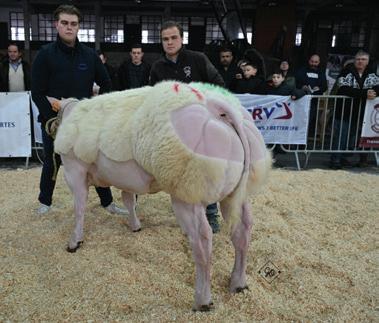
cultural shows. The cattle are carefully shaved before such contests to highlight their meat and muscle quality.
As with many medium-scale farmers, the family has to combine running the business with other jobs. Gert and Seppe work as sales reps for BBCI (Belgian Blue Cattle International), a world-renowned bull stud and artificial insemination centre headquartered near Mons. Kaat is a trained nurse and teaches healthcare in secondary schools, Louis is a vet specialising in cows, while Nette is studying law in Ghent.
But for all the challenges, he still relishes the work. “If you do something with a lot of passion and love, there's nothing not to enjoy,” he says
Wallonia (blanc-bleu-belge.com) and similar events in Flanders (veeteeltvlees.nl), as well as describing the desired physical attributes in a Belgian Blue beauty contest. These include a thick neck, well-muscled shoulder, plump hindquarters and well-detached tail. “The legs need to be strong enough to bear the weight with ease,” states Mallieu.
The animals need to enjoy all this while they can for it is, alas, a rather short life for most.
“Bulls are normally fattened until they’re around two years old. Females are kept longer for reproduction and milk production,” adds Millieu.
Most farmers sell their livestock via cattle dealers before they are sent to abattoirs.
600 g of Belgian Blue fillet
4 slices of trimmed white celery
8 thin slices of smoked bacon
100 g spinach
275 g purple shallots
Butter
Sugar
Salt and pepper
½ L of Saint-Feuillien Triple
Clean the celery.
Boil the water and blanch the spinach and bacon.
Drain off the excess water. Blanch the shallots and celery (5 to 10 minutes). Drain carefully.
Add salt and pepper to the shallots and brown them in a pan. Sprinkle with sugar, leave to caramelise, then add the Saint-Feuillien Triple. Simmer until almost completely reduced.
Sear the beef tenderloins on each side.
Cut the beef fillets into 3 slices. Arrange pieces of celery between the slices, cover with bacon, and wrap in spinach leaves. Place into a covered oven-safe pot or on a baking sheet and reheat in the oven for 5 to 6 minutes.
Deglaze the meat in the pot with a little bit of water from the blanched vegetables. Add the shallots.
Arrange the fillets on the plate and garnish them with shallots.
Serve with the sauce, either around the fillet or to the side.
Prices fluctuate but according to analysts Coevia, a live, fattened bull was fetching between €5.5 and €7 per kg at the time of writing, or around €9.5 per kg at slaughter weight. Fattened cows cost slightly less, while the price of calves is around €1,300.
The Belgian Blue’s meat attracts a premium because of its yield and quality. In the brutal-sounding terminology of the trade, according to Mallieu it boasts a “killing-out percentage of 70%,” significantly higher than other breeds. The percentage refers to the proportion of an animal's live weight that is the saleable carcass after slaughter. It is a key factor in determining profitability for the farmers.
The Blue also boasts a higher proportion of so-called noble cuts from the top and hindquarters, as well as, surprisingly perhaps, less cholesterol than skinless chicken. “The meat is tender because of its small muscle fibres. The bulls produce the leanest meat. The meat from cows is more marbled because it contains more fat,” explains Mallieu.
Changing eating habits, however, are a concern for the farming community.
According to Statbel, the Belgian statistical office, meat consumption is falling. The quantity available on the market indicates that the average Belgian ate just shy of 80kg of meat in 2023, a 1.5% decrease from 2022. However, bovine meat consumption has remained relatively stable compared with pork, lamb, horse, poultry, rabbit and game.
The Belgian Blue isn’t just big in Belgium. It was introduced in the US in the 1970s and is now found worldwide and often cross-bred.
But for Belgian breeders, the native variety are, in the words of one farmer I spoke to, “the best of the best” and a source of “immense national pride”.
This scribe, for one, has absolutely no beef with that.
In the brutal-sounding terminology of the trade, according to Mallieu it boasts a “killing-out percentage of 70%,” significantly higher than other breeds. The percentage refers to the proportion of an animal's live weight that is the saleable carcass after slaughter.
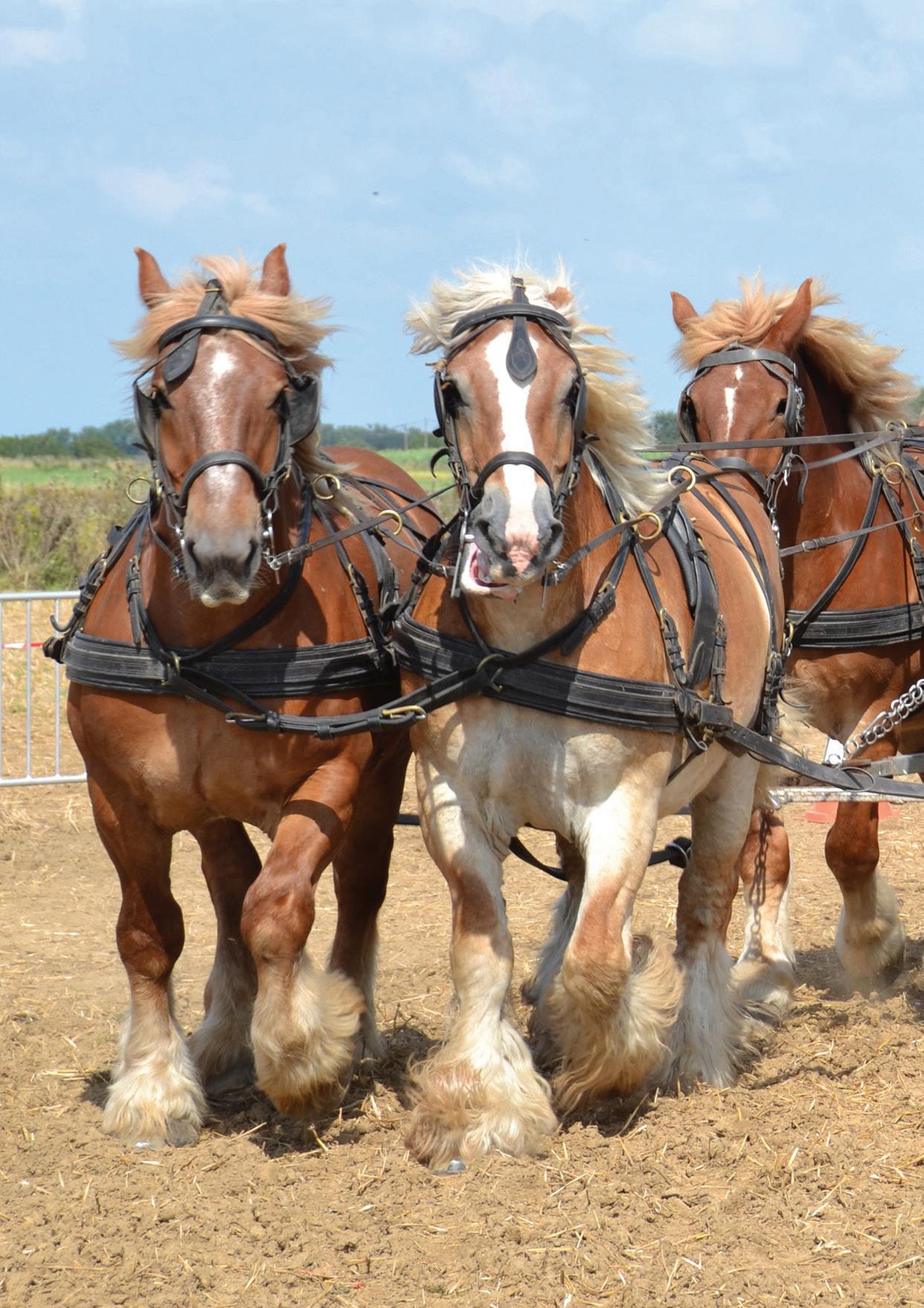
Massive yet mild-mannered, the Brabant draft horse is Belgium’s living monument to muscle and memory. Once the engine of farms, breweries and battlefields, today it parades at fairs, pulls carriages and inspires filmmakers. As Dennis Abbott finds out, they are proof that even in a mechanised age, horsepower can still mean four hooves and a flowing mane
That’s me,” smiles Frans Van Laerhoven, pointing to a photo in a book of a young boy steering a plough pulled by a massive Brabant draft horse. “The picture was taken on my parents’ witloof farm,” he says.
I’ve come to visit Frans and his partner Anja in Nederokkerzeel, a Flemish green-belt village 25km north-east of Brussels, to learn more about the gentle giant of the Belgian equine scene.
They invite me to join them over a drink, together with Frans’s brother Louis and his wife Ingrid, at a table in the barn-cum-bar that stands next to their attractive L-shaped farmhouse.
The couple, who have seven draft horses and an eighth on the way (one of their mares is expecting), are busy preparing for an open day at their base, where visitors can see the powerful horses up close and learn about the history of the breed.
Their love of the draft horse is immediately obvious. “Come with me,” says Anja, leading the way into their kitchen and lounge. The rooms are a veritable shrine to the breed. Practically every wall, nook and cranny is adorned with paintings, photographs and drawings of their horses. There’s even a handwritten poem dedicated to the mighty steed, and the weathervane on their rooftop depicts...well, you can guess.
Returning to the barn, I can’t but notice that half the space is taken up by a jumble of various horse carriages. “Tell him how many you have,” says Anja. Frans starts counting on one hand. Anja shakes her head, giving him a withering look. “Er, it’s 10,” he confesses. A line of rosettes on one of the walls attests to Frans’s success in equestrian competitions, both as a solo rider or carriage team driver.
While his ever-expanding carriage collection might be a sore point, the draft horses are most definitely a shared passion.
“We see it as our duty to share our knowledge about the breed,” says Anja. “We want to inspire new generations to continue what we’re doing in the future.”
But, before we go on, a quick word on terminology.
The Brabant and Belgian draft horse are essentially the same animal – the Brabant was selectively bred after the Second World War to be thicker bodied and heavier. Both strains are known as ‘Brabander’.
Draft is sometimes spelt draught and some refer to them as dray horses, especially in the brewing trade. In Flemish, the breed is known as the Brabants (or Belgische) Trekpaard and, in French, Cheval de Trait belge.
Renowned for their strength and placid nature, the horses can weigh 1,000kg or more and reach up to 1.7 metres at the ‘withers’, the top of the back.
While tractors and trucks gradually began to displace the working horse on Belgian farms from the 1950s, Frans’s parents continued using them until the end of the 1970s on their farm in the nearby, improbably named village of Erps-Kwerps.
One of six children, Frans opted to leave farming and instead trained as a pilot. He flew long-haul for Belgium’s former national carrier Sabena and later for supply chain company DHL. But he never lost his enthusiasm for the horses he’s loved since he was a child. Now retired, 66-yearold Frans has more time to dedicate to his Brabander.
Anja, 53, a relative novice by comparison, has a mere 15 years’ experience with the breed, although she is not surprised her life took an equine direction. “I was born among horses in Vilvoorde,” she explains, the town famed for its horse fair and Rik Poot’s magnificent farmhorse bronze (‘Het Boerenpaard’) which stands in front of the gothic Church of Our Lady and Good Hope (Onze-Lieve-Vrouw van Goede Hoopker) in the town centre.
The locals in Vilvoorde are known in Belgium as the ‘Pjeirefretters’ (horse-eaters) due to their keen taste for the meat delicacy. While it is taboo in the US and many other countries, horse meat is much leaner than beef and my hosts are regulars at the town’s renowned De Kuiper restaurant, which specialises in ‘chevaline’.
Dennis Abbott
We see it as our duty to share our knowledge about the breed.
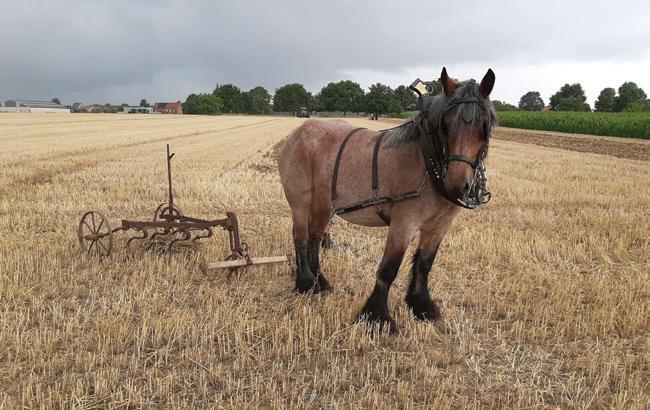
Renowned for their strength and placid nature, the horses can weigh 1,000kg or more and reach up to 1.7 metres at the ‘withers’, the top of the back.
Despite a full-time job working for an association that supports people with chronic illnesses and mental disabilities, Anja puts in endless hours helping Frans to look after their horses, which are kept in fields up the road, as well as a menagerie of other animals at their farm including chickens (see article on Mechelse koekoek), geese and two Jack Russell terriers.
The horses, in particular, seem like exhausting work – and none too cheap to look after. “It is a hobby and, let's say, quite an expensive hobby,” she says. “It's not a business: our drive stems from our love for the horses.”
Their horses all have names. “The oldest is Isa, who is 13, then it’s Elske, who’s expecting, Gust, Youri, Jean, Nestor and Nieke. They all have their own unique character and they’re super intelligent,” Anja says. “Isa is our alpha-mare. With her, it’s ‘get out of my way, I'm the boss here’. Elske can come across as a bit stupid, but she’s not. She pretends not to under-
Descendant of the medieval ‘Great Horse’, the Belgian draft horse was a frequent sight in towns and villages in the 19th century after the industrial revolution drove demand for horses capable of pulling heavy machinery.
The first studbook, a genealogical register, was created with the founding of the Société Nationale du Cheval de trait Belge in 1866.
In 1878, a stallion called Brillant from the Haras de Vollezele – his statue stands outside a museum dedicated to the draft horse – won a top prize at the Exposition Universelle (World's Fair) in Paris, followed by a string of championship victories across Europe. Brillant’s success made Vollezele a global hub for the trade in heavy horses. In the early 20th century, Belgian draft horses were exported throughout Europe, Asia and the United States.
In the First World War, the horses were often used to haul heavy artillery guns or pull supply wagons on the battlefields of Flanders and northern France. In 1919, the national association became the Société Royale Le Cheval de Trait Belge (Konin-
stand what you’re asking her to do, then does it. Gust is very easy-going and unstressed. His attitude is ‘if it’s not happening today then it will tomorrow’. Youri is the opposite. It’s ‘yes, where and when’?”
And the others? “Jean is very affectionate, but also impatient. He was a very big foal and I had to sleep next to him for two weeks, making sure he put his head under his mother to feed. Nestor and Nieke are our youngest, both two years old. While Nestor is very friendly, Nieke has a character which is more like Isa’s.”
Every Brabant draft horse has a kind of birth certificate, which provides their breeding details and full name, which includes the place and region where they were born. For Nestor, his full name is Nestor van den Mussenhoek (the name of their farm) van Vlaams Brabant. “Each horse has an identification chip in the left shoulder and, when they are born, you must declare if they are intended for pleasure or for eating,” explains Frans.
The region pays a premium for every foal, but this barely makes a dent in the cost of feed or vet’s bills.
In theory, the horses eat grass in the summer and hay in the winter, supplemented with pellets, carrots and beets. But the hot weeks during the summer left the horses’ pastures with barely a blade of grass so the couple had to provide replacement feed.
Draft horses are generally very approachable and calm – unless they have recently foaled. “If we go into the field, there’s no problem in that situation because they know us,” Frans says. “The relationship is based on trust. But they’re very protective. If you went into the field, you’d probably get chased.”
klijke Maatschappij het Belgisch Trekpaard in Flemish).
While the Belgian/Brabant is still used as a traditional working horse, notably in forest management and by coastal shrimp fishers at Oostduinkerke (my colleague Angela Dansby wrote about them in the previous issue), the breed is more often seen today in recreational roles.
Covered wagon rides are a popular attraction in the green belt around Brussels and draft horses are also used as a form of therapy to help adults and children improve their physical and mental abilities.
Today, the draft horse is regarded as a Belgian cultural icon: in 2018, the horse was added to the Flanders Inventory of Intangible Cultural Heritage. Projects linked to the breed have received funding via the EU Rural Development Programme, aimed at translating agricultural techniques from the past into new uses. For example, the Hof Ten Dormaal brewery in Tildonk used draft horses to help in the cultivation of hops for its excellent beers.
Elske was mated with a stallion at a stud farm at Vollezele in the Pajottenland, southwest of Brussels. She is due to produce her foal next spring. “Genetic diversity is very important for the future of the breed,” Frans continues.
“You have to be careful to avoid, ahem, incest,” his other half adds helpfully.
A few days later, I return for the open day at their farm. As well as their own herd, other enthusiasts have brought horses, too. There are around 20 and they make a magnificent sight.
Belgian filmmaker Hilse De Groote has spent the past five months criss-crossing the country with her Brabant draft horse, Elixir, for a documentary she plans to make about the breed.
Her trek, backed by crowdfunding and volunteers, was also a tribute to her late grandfather, Philippe van Dixhoorn, who owned a stud farm in Vollezelle and founded the Belgian Draft Horse Museum 25 years ago.
“The draft horse has been incredibly important in our history – it put us on the world map,” she says. “My grandfather is no longer here, but he’s the reason I had the idea to make the journey. I wanted to learn more about what fascinated him and filled his heart.”
De Groote, 38, and Elixir covered 10 to 15km a day and received a VIP welcome in the towns and villages they passed through. “The reactions have been fantastic,” she adds. Elixir, who started the trip weighing 850kg, has also benefited from receiving extra treats. “I think she’s even put on a little weight,” she laughs.
The Belgian Draft Horse Museum, located in the former town hall of Vollezele, will be the focus of activities during the Brabant Draft Horse Day (Dag van het Brabants trekpaard), which is on October 19.
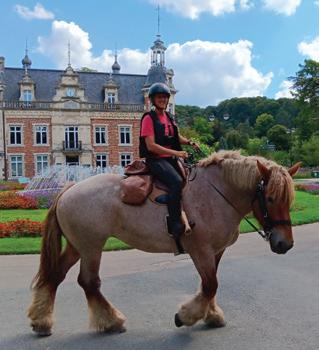
Several are pulling ploughs in the field behind their farm (the horses move more briskly than you might think), while others are giving rides or taking groups in covered carriages.
A popular attraction is the “flying carpet” with a pair of horses pulling excited little ones on a rug behind them. Unfortunately, the weather suddenly turns and we are caught in a torrential storm. Nearly everyone makes a dash for cover, including a few of the handlers.
One finds space next to me and gently tries to coax her horse towards us. He’s having none of it and pulls her back into the teeming rain He must be a good 900kg, so it’s no contest.
They say you can lead a horse to water but shouldn’t expect him to drink. This one could be an exception. He is thoroughly enjoying himself as he splashes his hooves up and down in the water gathering on the surface of the field.
As we huddle for shelter from the downpour, the friendly giant looks at us and shakes his head. It’s as if he’s trying to tell us something.
I don’t know horse-speak but I’ve an idea that it could be “you lightweights”.
They say you can lead a horse to water but shouldn’t expect him to drink. This one could be an exception. He is thoroughly enjoying himself as he splashes his hooves up and down in the water.
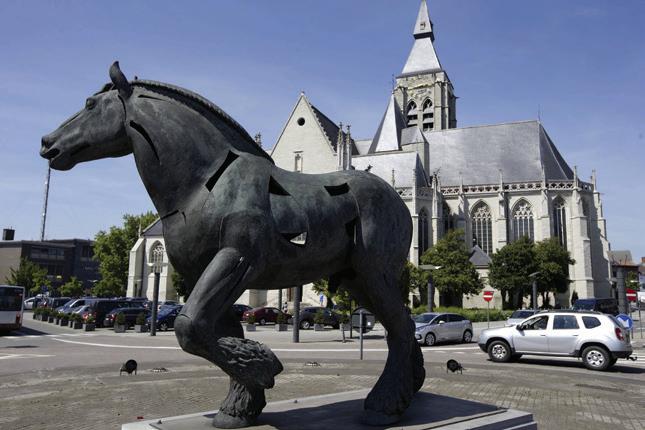
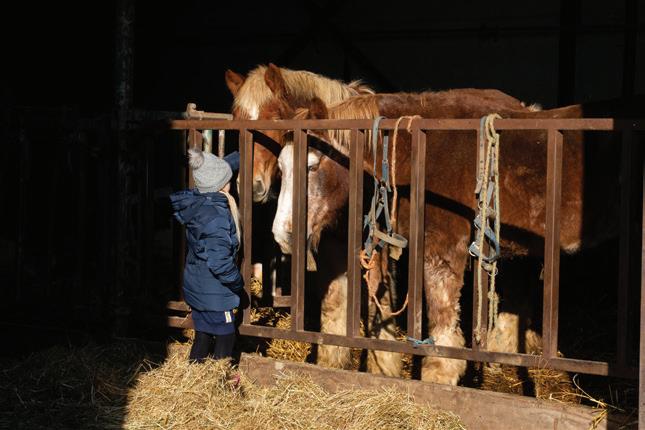
The Mechelse koekoek, or coucou de Malines, is neither cuckoo nor ordinary chicken. Bred in 19th-century Mechelen for size and flavour, this striped bird nearly vanished but, as Dennis Abbott finds out, it is now making a comeback on organic farms and restaurant menus, prized for its taste, history and character
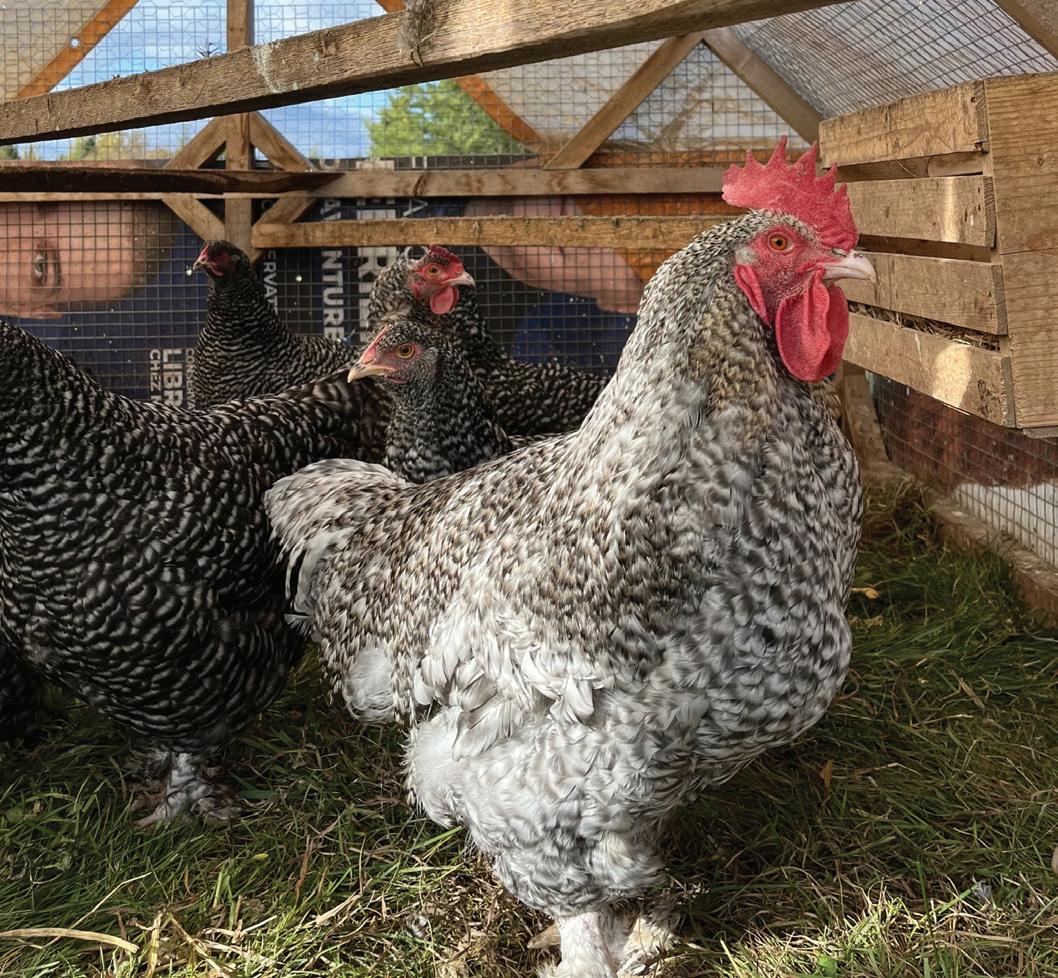
Descriptions can be deceptive. The Mechelse koekoek or coucou de Malines is not a cuckoo, as its name suggests, but rather a large chicken. It does, however, have strong links with the affluent Flemish town of Mechelen, known by French speakers as Malines.
The cuckoo reference is down to the colour
of the chicken’s plumage, which is most often a striking black and white pattern, reminiscent of the much smaller and unrelated species, best known for invading other birds’ nests.
The Mechelse koekoek is also found in white, blue, gold and ‘colombian’ – that’s a predominantly white body with black markings on the neck, tail and wing. This colouring is often as-
Dennis Abbott
sociated with its US cousin, the Wyandotte, first exhibited in Bogotá in 1893.
The Mechelen variety’s origins go back further, to the 1850s, when local poultry farmers mated their chickens with larger birds, which Antwerp Zoo brought over from Shanghai. Later, Brahma, Langshan and Cochin varieties were imported from China and cross-bred to create a robust breed, combining the typical large build of the Asian birds and the finely textured, tender meat of the Belgian stock.
In the early 1900s, Florent Vermylen, from a wealthy family of beer brewers in Schriek, near Mechelen, diversified into breeding the new super-chicken. His birds were much sought-after at the poultry market in Mechelen.
Before long, the variety took off across the country. The koekoek/coucou was especially popular in the capital where it was also known as ‘Poulet de Bruxelles’.
After the Second World War, the breed was almost wiped out by a salmonella outbreak and then faced increasing competition from cheaper, intensively farmed varieties, capable of producing more eggs and higher profit margins due to their rapid farm-to-fork turnaround.
However, the bird remained popular with small-scale farmers and enthusiasts. In recent years, it has seen a resurgence thanks to the growth of organic farming and consumers keen to opt for more sustainable and ethical food choices.
One of the best-known organic breeders in Belgium is 30-year-old Julian Kinard, who is based at the Ferme de Froidefontaine near Havelange in Wallonia, which brings together producers committed to diversified and ecological practices.
“When I heard the farm was looking for new projects, I immediately put my hat in the ring and they invited me to join the group. I tried three different types of chicken: the coucou was definitely the winner when it came to taste,” he says.
“I’d been working in the agricultural sector for a while and had seen a lot of different farms and different ways of doing things. My objective was to combine respect for the animals and provide quality food.“
In May 2018, Kinard created his own company, La Poule Qui Roule (literally ‘the chicken that rolls’ but also a play on an affectionate French greeting, ‘ça roule ma poule?’)
His 1.5-hectare plot at the Ferme de Froidefontaine consists of six chick pens and eight self-built mobile chicken coops which can each hold a maximum of 240 chickens. He currently has a flock of nearly 1,700. “We’ve sold a lot recently,” he says.
Kinard stresses that his operation maintains the highest welfare standards.
“Our chickens are carefully raised from the start. I chose mobile coops so I can move them around and ensure the poultry have an outdoor run that is always grassy and of high nutritional quality,” he explains. “The mobility factor also helps prevent soil degradation and preserves ecosystems.”
Kinard’s chickens are ‘dual purpose’, bred for their eggs but mainly for meat. “The coucou is not a ‘race pondeuse’. It lays only around 180-200 eggs a year compared with 350 for other breeds,” he says.
The birds are slow-growing and therefore more expensive to maintain.
“A cheap industrial chicken is grown for 35
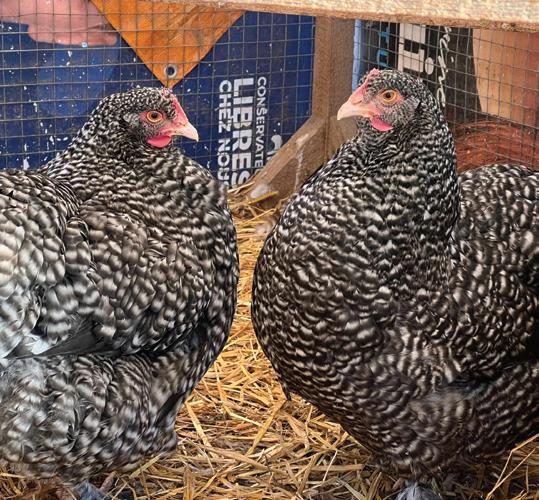
Kinard’s chickens are ‘dual purpose’, bred for their eggs but mainly for meat. “The coucou is not a ‘race pondeuse’. It lays only around 180200 eggs a year compared with 350 for other breeds,” he says.
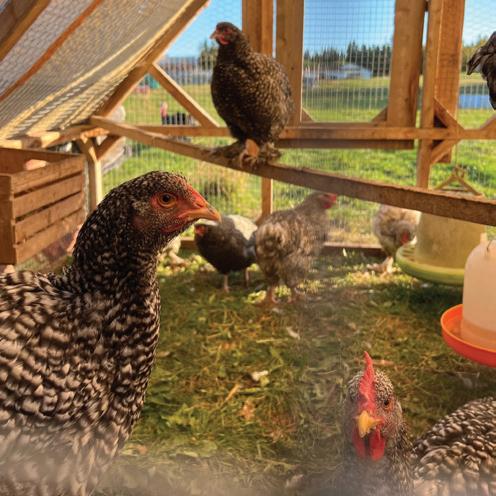
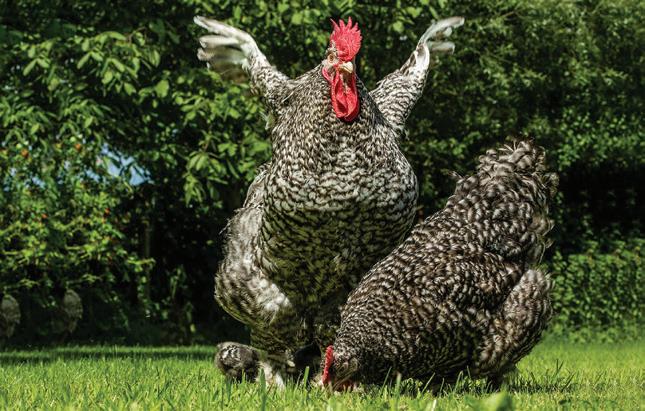
Kinard slaughters the chickens himself or sends them to a small cooperative abattoir at Suarlée near Namur. “They can deal with 600 to 700 in one day,” he states matterof-factly.
days from birth until it’s slaughtered. It’s 40 days for a slightly higher-end chicken and 56 days for those sold with a ‘bien être’ label. That compares with 70-75 days for an organic chicken and 85-90 days for a coucou de Malines.”
With its deep, muscular chest and a long horizontal back, a fully grown rooster can weigh more than 5 kg, while the hen is typically 3.5 to 4.5kg.
Kinard slaughters the chickens himself or sends them to a small cooperative abattoir at Suarlée near Namur. “They can deal with 600 to 700 in one day,” he states matter-of-factly.
His chickens are in demand from restaurant owners across the country – but especially in and around Brussels. “We supply various places including La Bonne Chèr in the city centre, Ivresse in Uccle, Brut in Ixelles, Les Éleveurs at Halle and Monsieur V in Linkebeek, as well as small butchers, grocery stores and caterers. I don’t often sell direct to individual customers,”
he continues.
Kinard admits that it’s a tough business. “We only became profitable recently and I still have a second job. There's a lot of manual work involved and my dad, who’s retired, sometimes comes to help me out. Inflation has driven up costs but we can’t increase the price of the chicken by the same amount,” he says.
Frans Van Laerhoven and his wife Anja (who also have draught horses, see separate article) are typical of the smaller farm owners who keep chickens.
They normally have around 15 Mechelse koekoek at their home in Nederokkerzeel but a fox recently diminished their stock. “It was my fault really. Our coop has an automatic door and I forgot to close it,” Frans confesses.
The couple mostly keep their mini-flock of Mechelse koekoek for their eggs – but also for eating. “It’s very easy to pluck their feathers compared with other breeds. The meat is slightly darker and very tasty,” says Frans.
He feeds the chickens with maize and fruit from the orchard. “That’s one of the reasons they have such a great flavour,” he says.
Frans adds that the breed has remained popular around Brussels since it first became fashionable and farms in the city’s green belt were the main source of supply. He reveals the local nickname for people in Brussels is ‘kiekenfretters’, which translates as chicken feeders.
He and Anja also keep Boerenhoenders, also known as Brabanconne, which are much better layers than the Mechelse koekoek. The hens produce smaller white eggs and Frans kindly offers me a box to take home.
The couple plan to replace their lost Mechelse koekoek soon. And, who knows, by the time you read this, I might have a little coop of my own.
250g butter
4 firm-fleshed 'Mechelse koekoek' fillets
12 firm potatoes for boiling
1 bundle of white asparagus
1 bundle of green asparagus
500g spinach
4 eggs
1 bunch of parsley
200ml meat stock
200ml Gouden Carolus Classic
Pepper, salt, nutmeg
Instructions:
Peel the asparagus and potatoes, wash the spinach. Boil the vegetables in salted water.
Hard-boil the eggs, crush them and mix with melted butter. Season with pepper, salt and nutmeg and add the chopped parsley.
Season the koekoek fillets.
Melt some butter in a pan, add the fillets and brown on all sides. Then place in the oven for 15 minutes at 160°C to cook through.
Reduce the Gouden Carolus Classic to 2/3. Add the stock and then let it boil down to half. Finish with a knob of butter.
Cut the Mechelse koekoek into nice pieces.
Arrange the asparagus, eggs, spinach and potatoes on a large plate. Pour the Gouden Carolus sauce over part of the Mechelse koekoek.




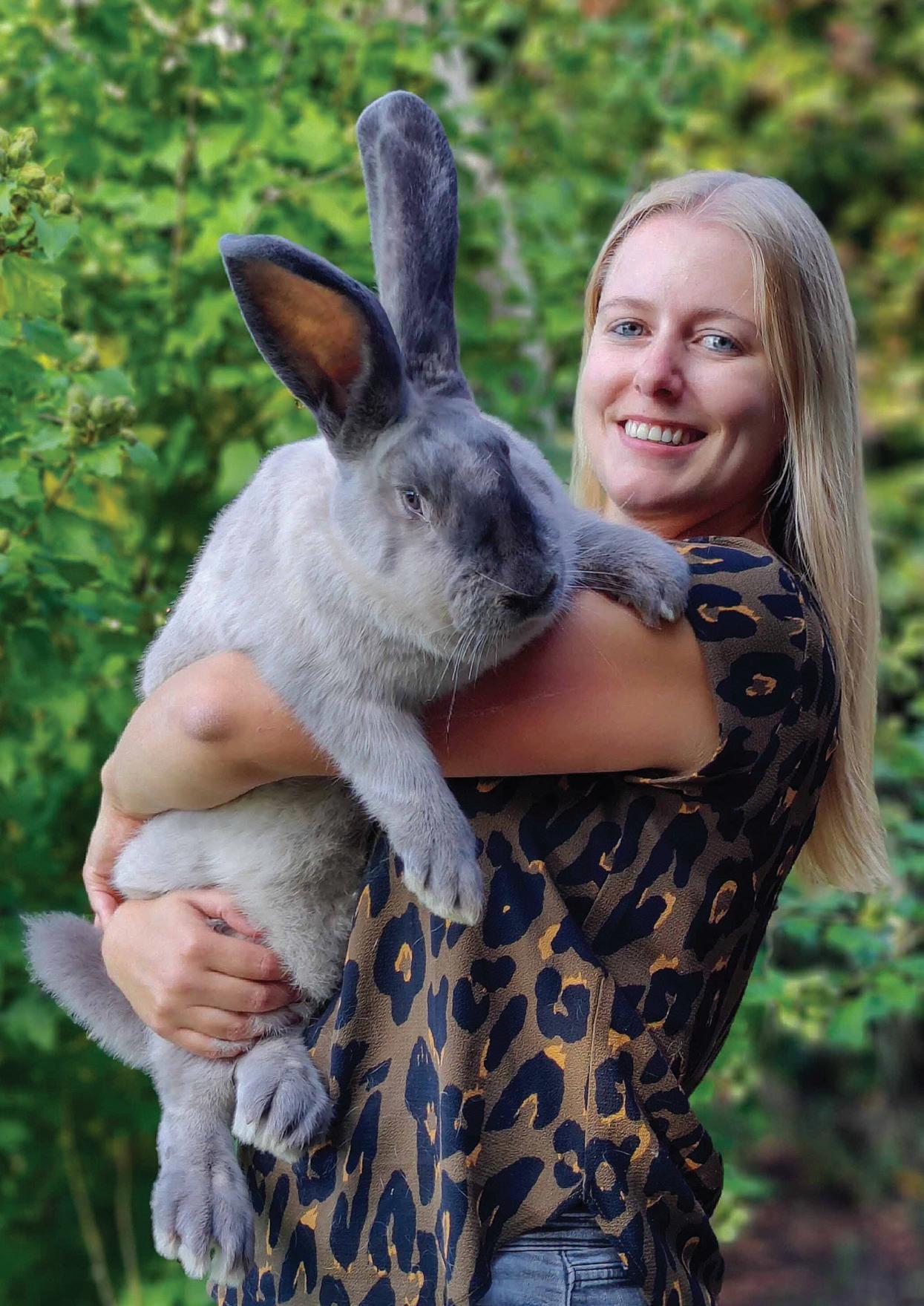
The Vlaamse Reus, or Flemish Giant rabbit, was once bred for its tasty meat. Today, it’s a cherished family pet for people all over the world, with a cult following and a showcase scene. Helen Lyons talks to a fancier who’s gathered fans in the thousands for depicting life with these colossal companions.
Their ears can grow the length of your forearm, their bodies stretch nearly a metre from snout to fluffy tail. With big round eyes, long twitching whiskers and the temperament of a particularly affectionate Ragdoll cat, it’s hard to imagine how anyone ever looked at the Vlaamse Reus – or Flemish Giant - and came up with the beer-soaked dish lapin à la Gueuze.
The origins of the Flemish Giant rabbit are somewhat murky, but most people place its beginnings in 16th-century Ghent, where it was prized for its ample meat and warm, soft fur. Farmers bred them for size and hardiness, producing rabbits that could feed working families and also tolerate the damp, Flemish climate.
By the 19th century, the breed had spread across Europe – braised, stewed, roasted or turned into terrines, pâtés and rillettes. But somewhere along the line, as industrial farming reduced the need for backyard livestock, the Vlaamse Reus moved from the menu to maison.
It isn’t difficult to see why. With an average weight of six to nine kilograms and a calm, social personality often compared to that of cats (these giants can be litterbox trained) or dogs (without the barking), Flemish Giant rabbits tick all the boxes for the ideal family pet: cute and cuddly, with a sparkle of personality.
Michelle Van de Poel has been keeping Flemish giants since she was a teenager, and now has space for up to 20 of them at a time in her home. She boards them, breeds them and shares them with the world via her Instagram page, michellesvlaamsereuzen, where she’s racked up over 11,000 followers.
“Flemish Giant rabbits are really big rabbits, but also have an incredibly gentle character,” she says, attempting to succinctly summarise, in just a few sentences, the magic that makes these unique rabbits so special to so many people.
“I’ve kept other rabbits as house pets,
and those are much more timid and less pettable than Flemish rabbits. The Flemish rabbits enjoy affection. And having such an eye-catcher, such a large rabbit in your house – I’ve always found that just so fun.”
The breed’s Belgian-ness runs deeper than the name.
“Giant rabbits have been around for a long time, before the term Vlaamse Reus was officially coined somewhere in the 19th century,” Van de Poel explains.
“From there and since then, they’ve been exported all over the world and there are small differences between the ones bred in America, or in the UK, compared to Belgium. And the points on which they’re graded during exhibitions are different.”
In other words, there are measurable criteria for how Belgian a Flemish Giant rabbit can officially be. International groups abound on social media, where the Flemish Giant rabbit or similar oversized breeds (for example, the Continental Giant) have generated both hype and adoration.
The nuances between the types are well understood by professional fanciers like Van de Poel, who know which colours and traits are official breed standards and which, while hallmarks of the species (dark nose, dark eyes, dark paws) aren’t necessarily part of the official description, even if they’re what garner oohs, aahs and Instagram likes.
“The truly official colours are black, blue, fawn, chinchilla, white, blue-grey, konijngrijs (grey) and ijzergrauw,” Van de Poel says, listing off the colours the way a sommelier recites grapes. The last one, ijzergrauw, is tricky to translate – think a sallow, irongrey.
With hobby breeding on the rise, new and off-standard shades cropped up online. Older breeders coach younger ones to keep the record straight and the tradition thriving, separating facts from fads.
Helen Lyons
With an average weight of six to nine kilograms and a calm, social personality often compared to that of cats (these giants can be litterbox trained) or dogs (without the barking), Flemish Giant rabbits tick all the boxes for the ideal family pet: cute and cuddly.
If a child becomes too rambunctious, or a behaviour too intolerable, the rabbit will simply hop away.
Seasonality seems to play a role in public interest, which spikes in spring (Easter’s long cultural shadow, undoubtedly) and then fades in high summer and midwinter. Autumn is when most exhibitions take place, and Van de Poel acts accordingly: she breeds her prize rabbits in spring so that they’re heavy enough by autumn to qualify for contests and competitions. That range is about frame and bone – extra kilos aren’t bragworthy, though this misconception persists and is most clearly evidenced by people posting high weights on social media as ‘proof’ of the giantness of their rabbit.
“A healthy weight is between six and nine kilograms,” Van de Poel emphasises. “Bigger isn’t automatically better; it’s often unhealthier.”
She chooses her stars when they’re between five and ten weeks old. The studs with the best scores are bred, the others find homes as pets.
The family-friendly aspect is not to be undersold: the Flemish giant tolerates (perhaps thanks to its size) the affections and snuggles of infants and toddlers, and will not bite or scratch or nip.
“If a child becomes too rambunctious, or a behaviour too intolerable, the rabbit
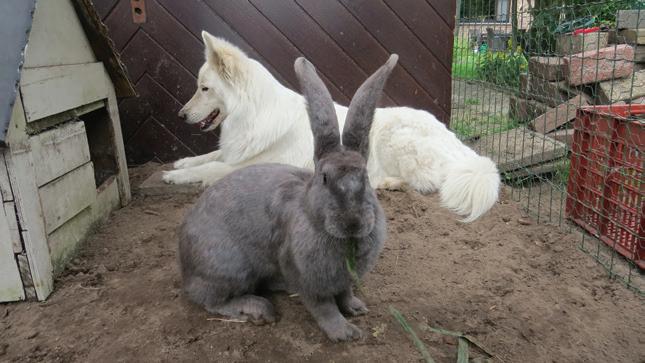
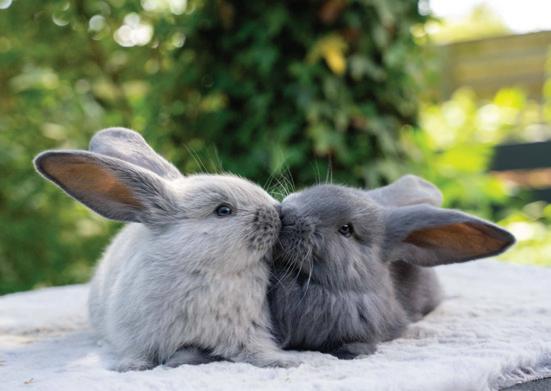
will simply hop away,” says Van de Poel. She knows this first-hand, having introduced her daughter to their giant, cuddly pets when she was just four months old.
Caring for the rabbits is relatively straightforward (prepare to shop in the dog section of a pet supply store for equipment like carriers), although would-be owners should know that Flemish rabbits can be talented escape artists. Instead of using their enormous hind legs to clear fences, Van de Poel’s rabbits love a good dig. They’ve burrowed their way out of the yard and into the gardens of neighbours, who occasionally ring Van de Poel to let her know that they’ve got a cuddly, if unexpected, convict visiting.
“One of the neighbours called the other morning and said, ‘There’s a rabbit in my driveway, is this one yours?’ When I said yes, he then plopped him in the boot of his car and drove him back over.”
What the Flemish Giant rabbit is not is a high-maintenance plush. In the shift from hoofdgerecht to huisdieren, hardiness won out. The rabbits, particularly when paired with another rabbit companion, are highly independent.
“For young people without children who want a pet, but travel a lot, or have to be out of the house often and don’t have a lot of time for a cat or dog at home, Flemish rabbits are seen as a great pet,” Van de Poel says.
“It’s best to have more than one – they don’t like to be alone – ideally a castrated male and a female. They love to spend time together. They bathe each other, they take turns keeping watch over one another. They do need people, but way, way less than a cat or a dog does. And you don’t have to walk them. Just keep their house clean, and give them food, water and toys.”
Van de Poel’s rabbits live outside, where
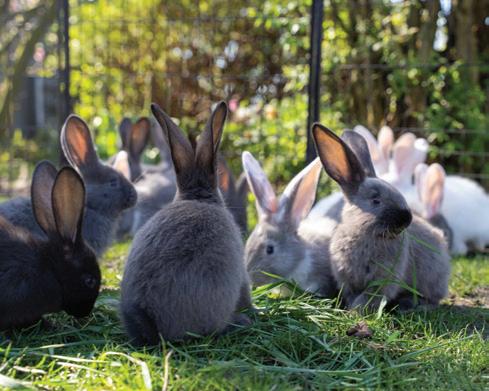
they bask in the sunshine and nestle in the grass. But many choose to give their rabbits the life of a truly domesticated pet – one that eats and sleeps indoors with the family. This isn’t without its risks, Van de Poel notes.
“I often hear from people with rabbits in their teenage years that they wage war against furniture, rugs, sofas. The teenage years for a rabbit are a period that can sometimes be a little intense,” she says.
Van de Poel’s teenage years were when she first began keeping rabbits. “I lived with my parents and my aunt got me my first Flemish Giant rabbit as a gift. Then, I got another. And another. Soon, I went from a cage in the garden, to a bigger cage, to a hutch that my father built. At one point, half the yard was dedicated to homes for the rabbits. When I eventually moved out into a house of my own as an adult, my father said: alright, it’s time for the rabbits to move out, too.”
She laughs at the memory, adding, “But my parents have always supported the hobby and taken part in the caregiving. I grew up with it. We’ve always been animal lovers.”
A rare first edition of The Practical Rabbit Keeper from the 1870s depicts Dutch, lopeared, Himalayan and Angora rabbits printed on foxed pages. Published not too long before Peter Rabbit made his cultural debut in 1902, the black and white pencil sketches capture creatures long beloved – by fanciers, fans, and yes, chefs.
On Van de Poel’s Instagram page, a more colourful and modern catalogue can be found: Hyacinth poses before purple loosestrife in full bloom; Villanelle is a ball of white fluff at just 16 days old (by 14 weeks, she’ll be pushing five kilograms and her ears will already clear 20cm); Muffin and Cosmo blink open their eyes for the first time and nose through yellow hay beside their mother. Pip, whose ears seem improbably bigger than his growing body, delights in a pile of fresh green grass.
Van de Poel has found a new way of sharing, a new way of showing, but it’s the same tradition, the same love, the same blend of expertise braided with affection that began in Flanders and has spread around the world.
What does it mean to carry on this Flemish tradition? Like most Belgians, she’s averse to grandiosity. Humility, like beer, chocolate, bicycles and enormous bunnies, is deeply cultural.
“For me, it’s a little bit like a hobby that’s gotten out of hand,” she says, grinning. “I’ve been keeping rabbits since I was 15, so for almost 15 years now. It’s become a passion. I’m a nurse by profession, and so every hour I can spend with the rabbits is a moment
where I can relax.”
In some Brussels brasseries, lapin à la Gueuze lingers on the menu. But after a scroll through photos, reels and stories featuring fuzzy faces and oversized ears, it feels like an anachronism. The Flemish Giant may have started in the larder, but these days, it’s in the living room.
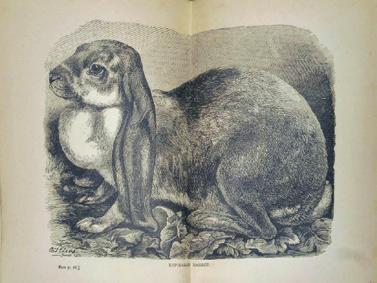
For me, it’s a little bit like a hobby that’s gotten out of hand,” she says, grinning. “I’ve been keeping rabbits since I was 15.
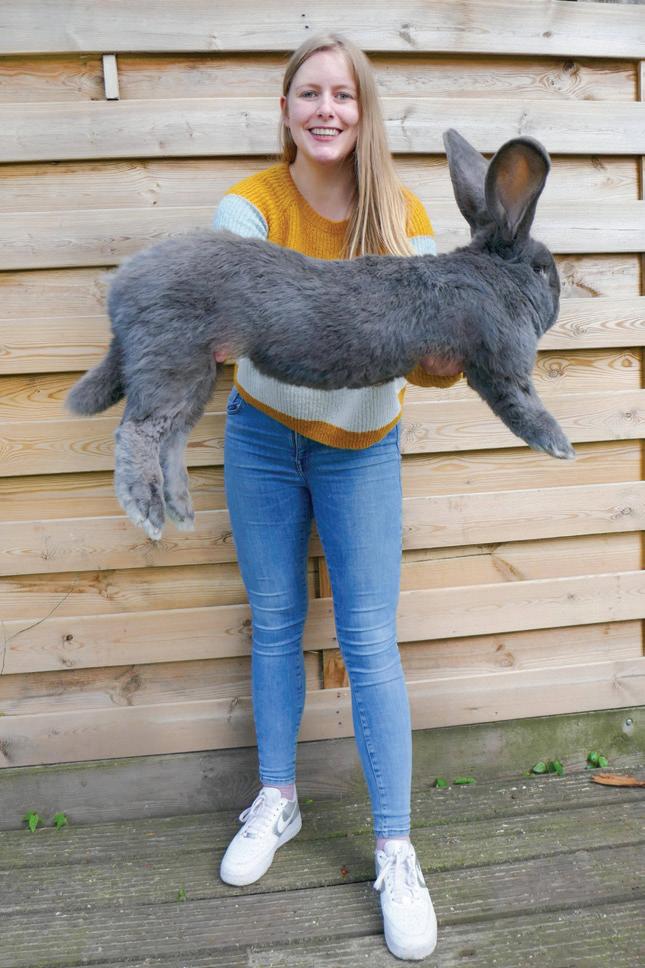
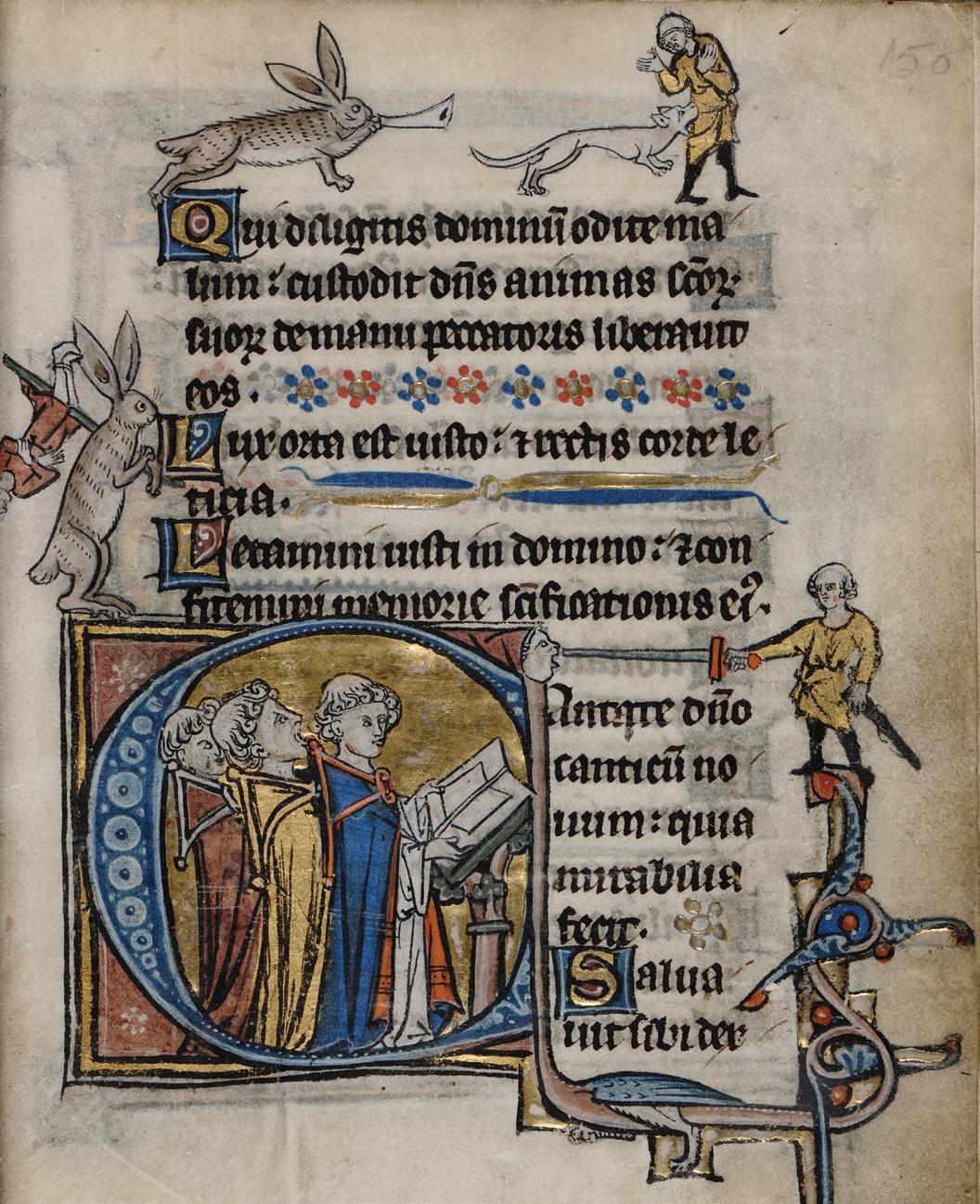
In the margins of medieval manuscripts, rabbits misbehave with glorious abandon. These are not the meek creatures of Easter. They’re pranksters and avengers in the “world turned upside down”: the mundus inversus of the Middle Ages, where natural and social order was symbolically reversed. Hunters are hunted, clerics are mocked, and propriety is gleefully skewered.
These images are from the Peterborough Psalter and the Psalterium of Guy de Dampierre in the Royal Belgian Library, KBR. Usually found in books made for the clergy, these border illustrations – known as marginalia – could become X-rated medieval doodles. The pages become a stage for satire, not piety.
Why rabbits? In medieval symbolism, they could stand for purity or timidity, but marginal artists loved flipping expectations. In the drolleries that snake around the text, rabbits seize the upper paw –wielding axes, stringing bows, roasting hunters, even boiling their hounds. It’s a merry role-reversal, a visual quip that readers of the day would have read as comic relief and social commentary rolled into one.
In Monty Python and the Holy Grail, King Arthur and his knights fall afoul of the Killer Rabbit of Caerbannog. This was not just Pythonesque whimsy: the movie’s director, Terry Jones, had studied medieval literature at university and knew about the “bas-de-page” tradition of adding killer rabbits to manuscripts.
KBR leans into this humour. The museum’s interpretive texts invite visitors to “die of laughter,” pointing out how 15th-century borders teem with satirical scenes and animal caricatures. In this carnival zone of the page, nearly every social type is fair game, and the jokes can be as bawdy as they are sharp. The rabbiting mischief fits perfectly: a soft, familiar form used to lampoon fear, violence, or hypocrisy – a reminder that appearances deceive and hierarchies wobble.
There’s also a bookish wink. Manuscripts were costly objects – parchment devoured herds; pigments and labour cost a fortune – yet their makers still tucked in visual sniggers on the edges. That tension heightens the gag: amid sacred text and princely coats of arms, a rabbit takes aim at decorum itself. These images, from the KBR’s library of the Burgundian dukes, preserve this double register: solemn devotion centre-stage, subversive comedy in the wings.
Page after page, the rabbits keep misbehaving – not to terrify, but to remind us that even the most serious books made room for sheer, unruly fun.
Leo Cendrowicz
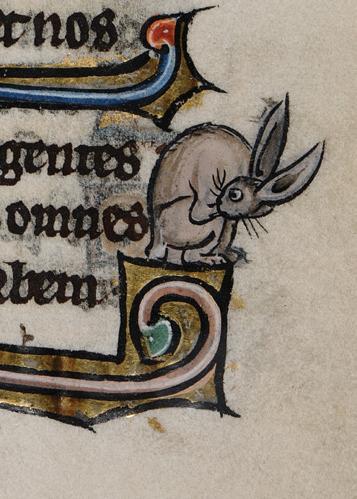
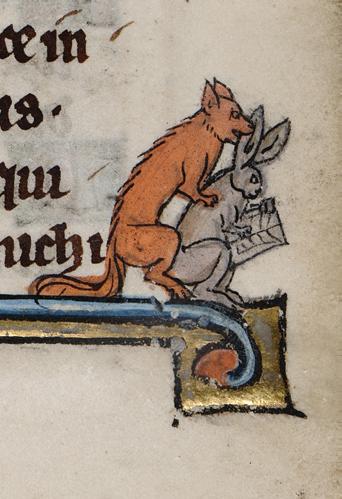
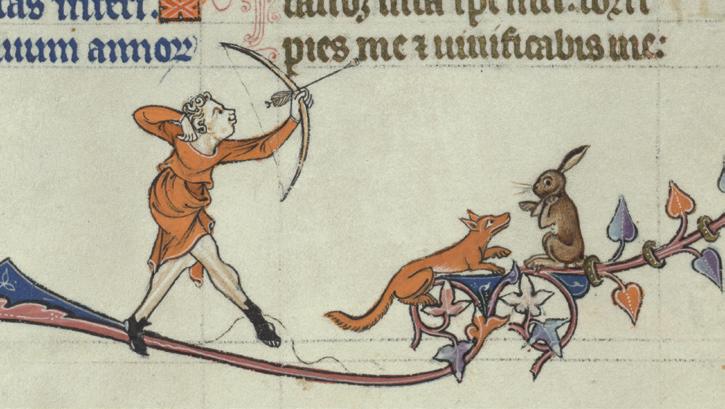
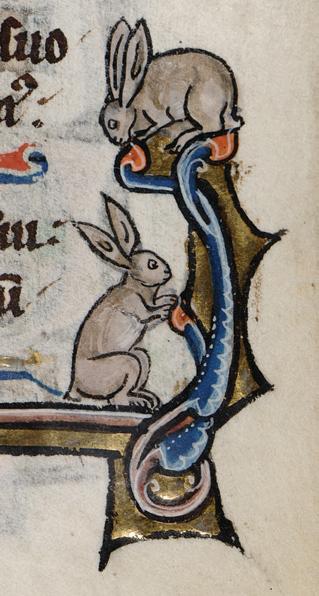
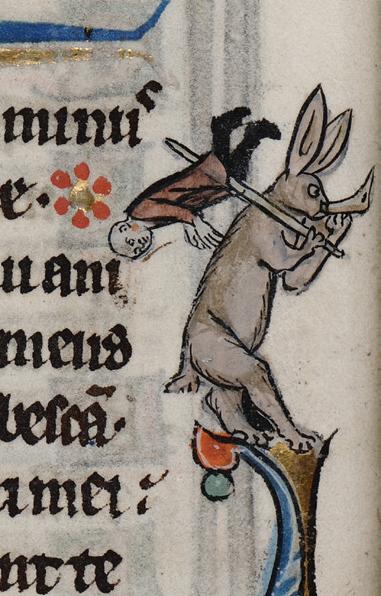
Belgium is not the Serengeti, nor the Amazon rainforest, and yet few countries of its size can boast such a deep and curious relationship with birds. From the trilling canaries bred to sing like virtuoso musicians, to the exorbitant pigeons, to the green squadrons of parakeets that now streak across Brussels skies, it has long been in thrall to feathered companions both wild and domesticated. As Richard Harris writes, they reveal how Belgians live alongside birds in ways that are practical, passionate, and sometimes paradoxical
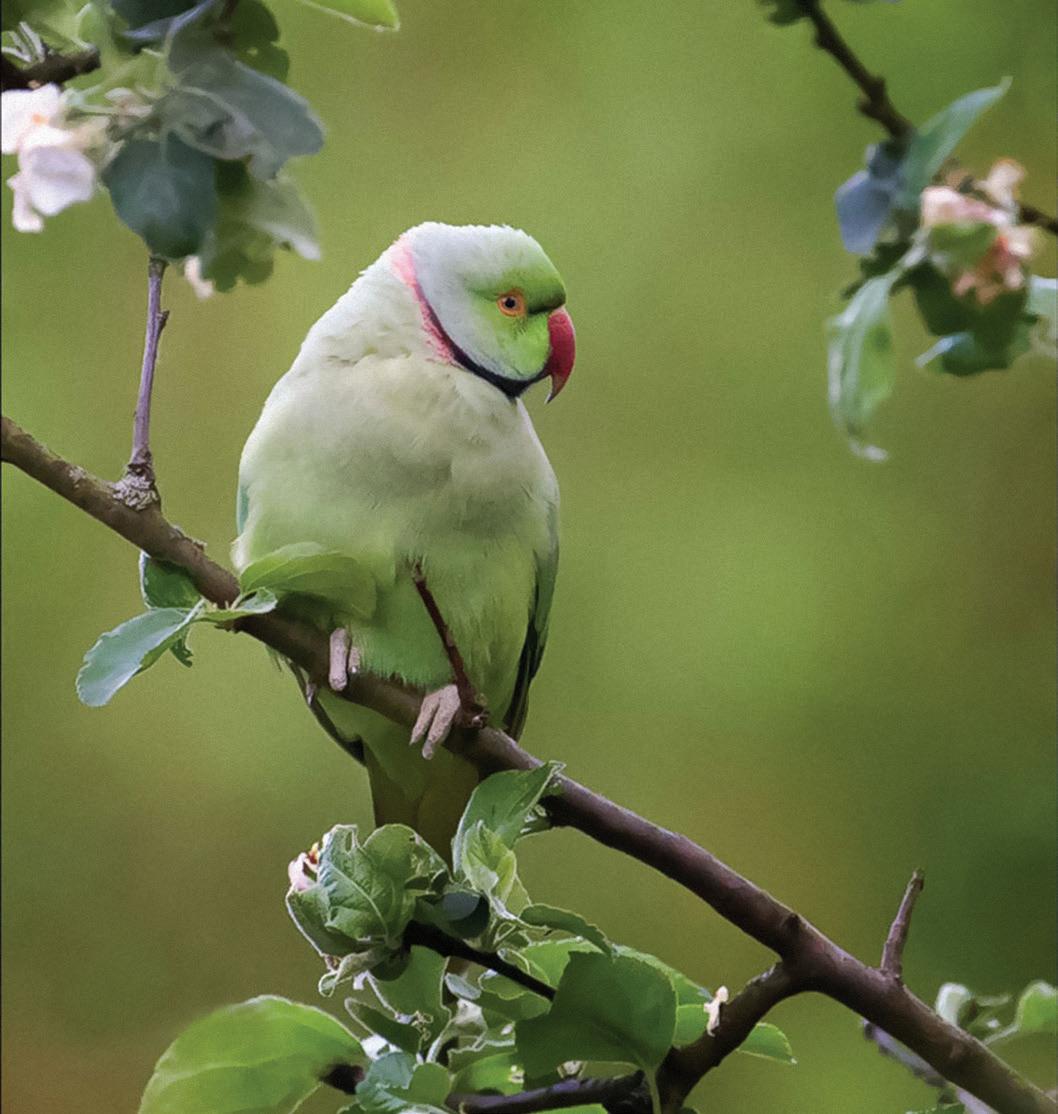
When 16th-century Spanish explorers arrived in the Canary Islands, they encountered a finch whose song was so melodious that its fame spread across Europe. Canaries soon were the must-have pet of aristocrats and royalty. By the 17th century, they had filtered into humbler households, cherished for their colour and song.
In Belgium, canaries became more than household pets: they became competitive performers. Here, their songs are dissected with the same seriousness usually reserved for symphonies. The canary is the only pet whose voice has been deliberately sculpted by humans. Through careful breeding and training, Belgians have shaped their repertoire, establishing singing schools where young males are tutored by a master singer, an adult male bird who is in a cage bathed with light.
These schools once kept the students in darkness so they could hear nothing but their teacher, avoiding “incorrect” notes picked up from radios or household clatter. In some cases, canaries even picked up human songs. Russian breeders once taught theirs to trill the national anthem, God Save the Tsar.
Among the most celebrated Belgian breeds is the Waterslager (water butcher), first developed in Antwerp and Mechelen. It produces a rolling, liquid trill called tone syllables that mimics the babbling of a brook. Its stance –leaning slightly forward, head small, legs long – sets it apart visually as well as vocally.
Other varieties are celebrated for their flamboyant plumage. The Gloster Fancy, with its Beatles-style crest, became a pop-cultural hit in the 1960s. Frilled canaries, with feathers twisted like curled ribbons, are avian showpieces. And then there is the Belgian Fancy, also known as the Belgian Hunchback, with its arched silhouette and tucked shoulders, a bird on the brink of extinction by the First World War but revived by enthusiasts in the late 20th century.
From aristocratic parlours to village contests, canaries have long been part of Belgian domestic soundscapes. Their songs are intricate and improvised, blending discipline, heritage and playful invention.
Step onto any Brussels square and pigeons are impossible to ignore: strutting, swooping, scavenging for dropped fries. But in Belgium, the pigeon is more than a street-corner nuisance. It is also a national treasure.
Pigeons are astonishing athletes, capable of flying 600 miles in a day at speeds approaching 100 km/h. During the First World War, they
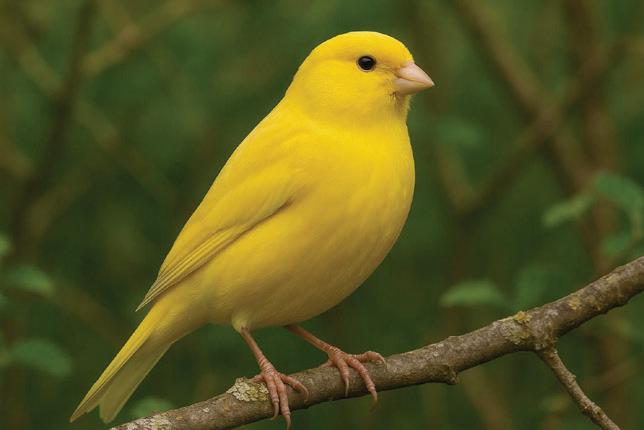
carried vital messages across enemy lines; the Soldier Pigeon monument near Sainte-Catherine honours their service. Out of that wartime role grew a passion for pigeon racing, which became a working-class obsession in the 19th century.
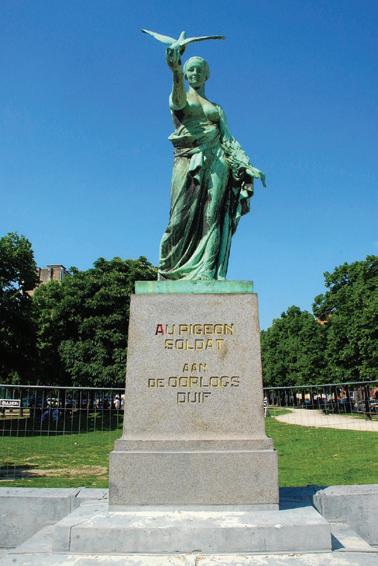
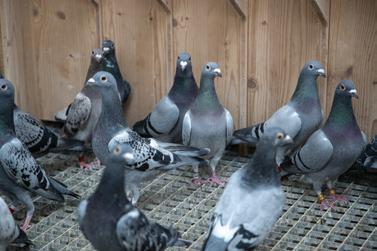
Through careful breeding and training, Belgians have shaped their repertoire, establishing singing schools where young males are tutored by a master singer.
By 1900, nearly every Belgian village had its own pigeon club. Races from Toulouse to Brussels drew crowds as fervent as cycling classics. Today, Belgian birds are the most prized racers on Earth.
By 1900, nearly every Belgian village had its own pigeon club. Races from Toulouse to Brussels drew crowds as fervent as cycling classics. Today, Belgian birds are the most prized racers on Earth. Champions change hands for over a million euros, snapped up by Chinese investors who see them as living bluechip stock.
But such riches attract crime. In Limburg, police recently dismantled a network stealing high-value pigeons for resale abroad. One haul recovered 170 birds, including 71 hidden in a Romanian farmhouse. Breeders now guard their lofts like Fort Knox.
Meanwhile, Brussels grapples with the pigeon’s scruffier cousins: feral flocks that foul monuments and cost the city millions in clean-up bills. With fines against street feeders proving unenforceable, officials turned to science, releasing corn coated with nicarbazin, a contraceptive that halves reproduction
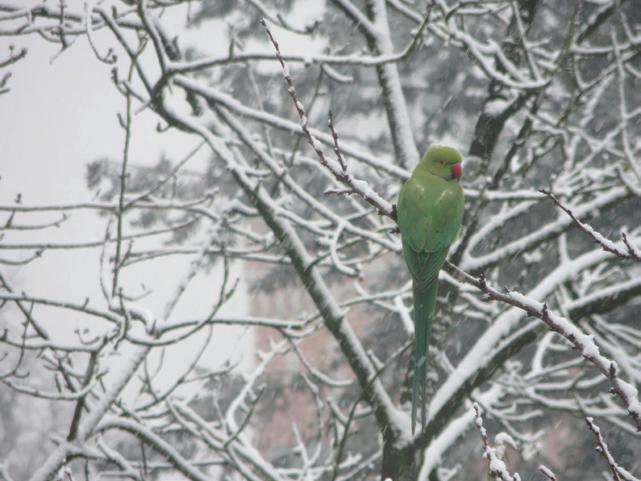
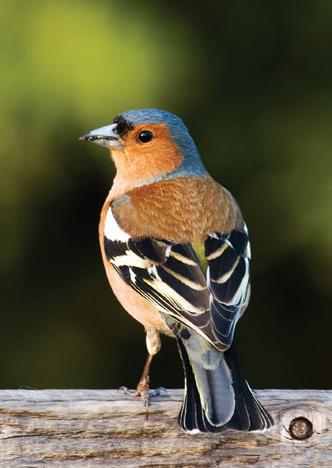
rates. Within a year, pigeon numbers in Ixelles dropped by half.
Thus, Belgium’s pigeon paradox: national heroes in the loft, urban villains on the square. A symbol both of national pride and municipal headache.
On a winter morning in Brussels, the squawk of bright green parakeets can seem surreal. Flocks wheel overhead in their thousands, chattering in tree roosts. Parakeet aficionados enjoy them for the colour, joy, vivacity and exoticism they bring to the urban landscape. Others complain of the noise.
Their origin is shrouded in myth. In London, legend has it that Jimi Hendrix released two from a Carnaby Street window; another tale blames a movie set. In Brussels, the story centres on Meli Heysel, a theme park built near the Atomium by the honey company Meli. In the 1970s, its founder, Guy Florizoone, released some 50 parakeets in a stunt he named ‘Birds in Freedom’. Some returned to cages, others stayed, nesting in an abandoned Uccle chimney.
From that modest flock, numbers exploded. Mild winters, plentiful food, and mature trees with cavities created perfect breeding conditions. Parakeets are now the third most common birds in Brussels after pigeons and sparrows. Today, the region counts around 12,000 parakeets across three species: the ring-necked, the Alexandrine, and the monk parakeet.
Despite fears they might threaten native species, environmental groups such as Natagora and the Royal Belgian League for the Protection of Birds insist their impact is min-
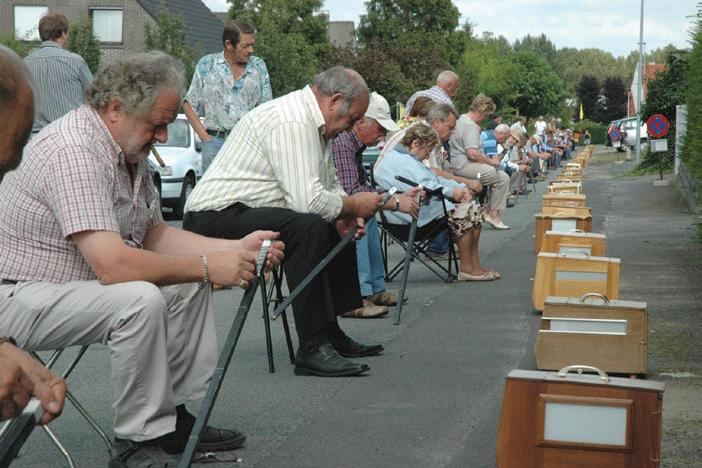
imal. “There is enough space for everybody,” says Natagora director Yves Paquet. Love them or loathe them, parakeets have become a fixture of the city – a glamorous flourish in the grey Belgian winter.
If pigeon racing is about speed, vinkenzetting is about stamina – and song. This Flemish folk sport, first recorded in the 1590s, pits male chaffinches (vinke in Dutch) against each other to see which can sing the most in an hour.
Competitions line up dozens of birds in wooden boxes along a quiet street. A timekeeper begins and ends the contest with the wave of a red flag. The boxes are set close to each other since proximity increases the number of calls; the birds sing to attract mates and to establish territory. Every time a bird sings a valid song, a tally mark in chalk is made on a long wooden stick. It must include an intro (voorzang), written phonetically as “krerrrrrr”, and an outro (slotzang) written phonetically as “suskeweit”. This is truly an endurance sport; the record is 1,278 songs in 60 minutes.
To encourage birds, vinkeniers use tricks from selective breeding to high-protein diets and, since finches start singing during the spring mating season, they even use artificial lights in their aviaries to fool them into think-
ing that winter is over.
Some methods have been controversial. In the past, birds were blinded with hot needles to keep them focused on song – a cruelty banned after protests by blind First World War veterans. More recently, cheaters have been caught playing recordings or doping birds with testosterone.
Though numbers have declined – 13,000 breeders were still active in 2007 – the sport clings on in pockets of Flanders. Animal rights groups denounce it as outdated, but defenders call it heritage, as integral to Flemish culture as kermis fairs or carnival giants.
Belgium’s birds are more than background noise. They are symbols, athletes, pests, and performers; they embody both tradition and change.
Canaries sing symphonies in living rooms. Pigeons carry both glory and grime. Parakeets turn the skies tropical. Chaffinches keep score in Flemish villages. Bird markets vanish, leaving only memories and photographs.
Together they reflect Belgium itself: quirky, inventive, sometimes contradictory, yet deeply attached to its living heritage. In a small country, birds continue to offer a big story – one that, like the canary’s song, never quite repeats the same way twice.
For centuries, Brussels bustled with animal hawkers. A horse market was set up in 1320 in the Place du Grand Sablon (at the time known as the Forum Equorum), while others followed in the Place de la Duchesse de Brabant in Molenbeek, at the Putterie (where the Central Station is now) and near the abattoir in Anderlecht until the mid1970’s. Throughout the 19th-century there was a dog and cat market on the Grand Place and the Place Saint-Jean, which moved to the abattoir area in 1935 to eventually cease operations in the 1970s. The ban on cat and dog sales at markets did not become law until 1995.
But most of the animals sold in the Grand Place were birds. And they were intended as pets: canaries, parrots, pigeons, parakeets and other cage birds. With guildhouses as a backdrop, it was a picturesque tableau – until welfare concerns mounted.
By the 1990s, undercover raids revealed protected species sold in cramped cages. After an 80-year campaign by the Belgian Royal League for the Protection of Birds, the city council banned the market in 2001. In 2024, the prohibition extended further, outlawing all vertebrate sales at fairs or storefronts.
That left Antwerp’s Vogelenmarkt, a 400-year-old institution, as the last of its kind. Today it is winding down: bird stalls shuttered, food trucks and trinkets moving in. At the end of this year, it too will close, ending a centuries-long chapter in Belgium’s commercial and cultural life.
The demise of these markets marks a shift in Belgian attitudes. Where once birds were commodities, today they are increasingly seen as companions, competitors – or wild creatures to be admired on their own terms.
From that modest flock, numbers exploded. Mild winters, plentiful food, and mature trees with cavities created perfect breeding conditions. Parakeets are now the third most common birds in Brussels.
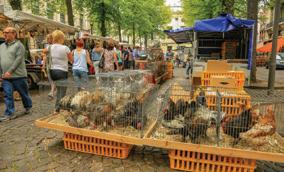
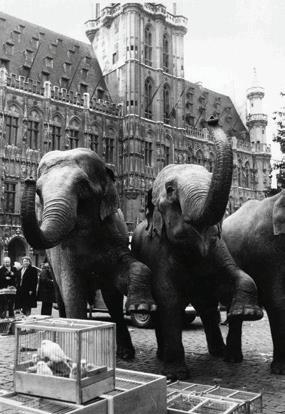
Built on the ruins of a medieval abbey, Pairi Daiza has grown into one of the world’s most imaginative zoos — a garden of worlds where animals, architecture, and conservation meet. Leo Cendrowicz visits the unlikely enclosed paradise
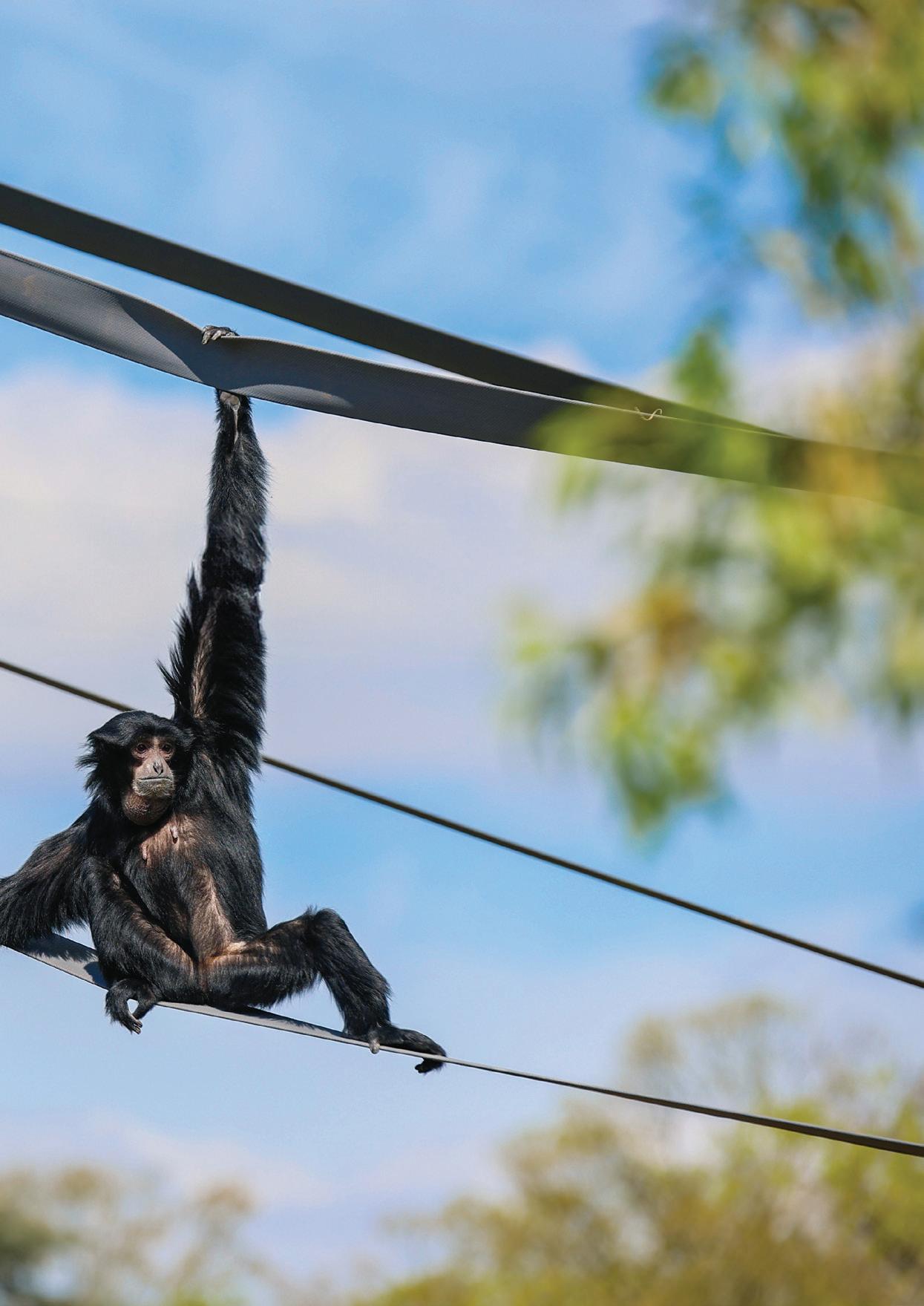
Leo Cendrowicz
Chinese President Xi Jinping even turned up at the zoo in 2014 for the opening ceremony of the giant panda hall, and many panda cubs have since been born there – a rarity in any zoo.
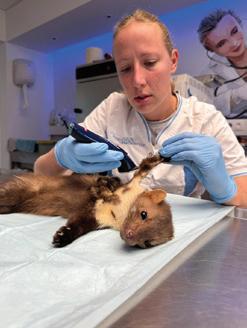
The call of the wild is heard upon arrival at Pairi Daiza’s monumental gates, with the soft strains from the soundtrack of the romantic safari movie Out of Africa. In the long, colonnade from the gate, there is Belgium’s biggest dinosaur skeleton on display (a small section of the tail is missing: researchers are studying why it became fused and gnarled). As part of Pairi Daiza’s all-nature approach, there are massive geodes and other crystals and minerals lining the route. And then, at the end of the colonnade, visitors can peer into Géraldine’s Heaven, a hospital for native Belgian wild animals: currently in treatment are Arnold, a cormorant; Houdini, a weasel; and Chanel, a falcon.
All this before the main attraction for most visitors: the extraordinary exotic animals that Pairi Daiza boasts, from giraffes to gorillas, from elephants to walruses, from kangaroos to snow leopards. It is a vast menagerie that, since its creation more than three decades ago, has made it one of the world’s top zoos.
Pairi Daiza is nestled among the gently rolling fields of Hainaut, at the former site of the Cistercian Cambron Abbey. Spread over 75 hectares – two-and-a-half times the size of the Cinquantenaire Park – it feels like stepping into an alternate universe. A “walled garden” turned botanical zoo, a place where history, art, culture, and conservation converge under one skyline. Its story begins not with pandas or polar bears, but with monks. Long before it became a zoological wonderland, the site was home to the Cistercian Cambron Abbey, founded in the 12th century. The abbey flourished for centuries, its cloisters echoing with prayer, brewing, and manuscript-copying, until the French Revolution brought dissolution and ruin. Fragments of this past remain scattered through the park: Gothic arches, crumbling walls, and vaulted cellars that once stored wine and grain.
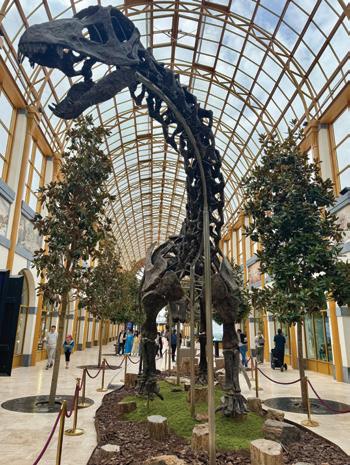
Rather than erase them, Pairi Daiza has woven the abbey’s relics into its fabric, so that storks nest above ruins and owls glide through cloisters, and the crypt of the Cambron Abbey tower is now home to a colony of bats. The effect is less “zoo” than palimpsest: a medieval monastery reborn as a sanctuary where past and present entwine. In many ways, the abbey’s contemplative aura still lingers – Pairi Daiza may teem with visitors, but its foundations were laid by men who also sought paradise enclosed.
The zoo itself was founded by lawyer Eric Domb (see separate box) in 1993 as Paradisio, it began as a modest bird garden before being reborn and rebranded in 2010 as Pairi Daiza, borrowing its name from the Avestan term for “paradise enclosed.” Since then, what began as a sanctuary for avian life has blossomed into a sprawling realm that is home to more than 7,000 animals and 800 species, housed within carefully themed “worlds” that echo the continents. It is one of the few European zoos to boast giant pandas, having set up an elaborate Chinese garden, along with Chinese-themed buildings, waterfalls, rocks, and plants to attract the creatures. Chinese President Xi Jinping even turned up at the zoo in 2014 for the opening ceremony of the giant panda hall, and many panda cubs have since been born there – a rarity in any zoo. One of the newest animals is also Chinese: the rare and adorable snub-nosed monkey, reduced to below 500 in the wild.
On the far side of Pairi Daiza, dominated by a shrine on a hill, is the Kingdom of Ganesha, inspired by southeast Asia, which includes an Indonesian garden and an artificial temple with orangutans (recalling King Louie’s ancient palace in Disney’s The Jungle Book movies). It also
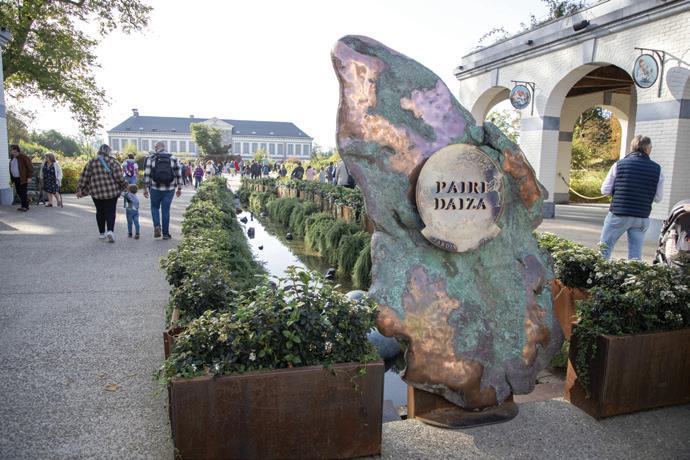
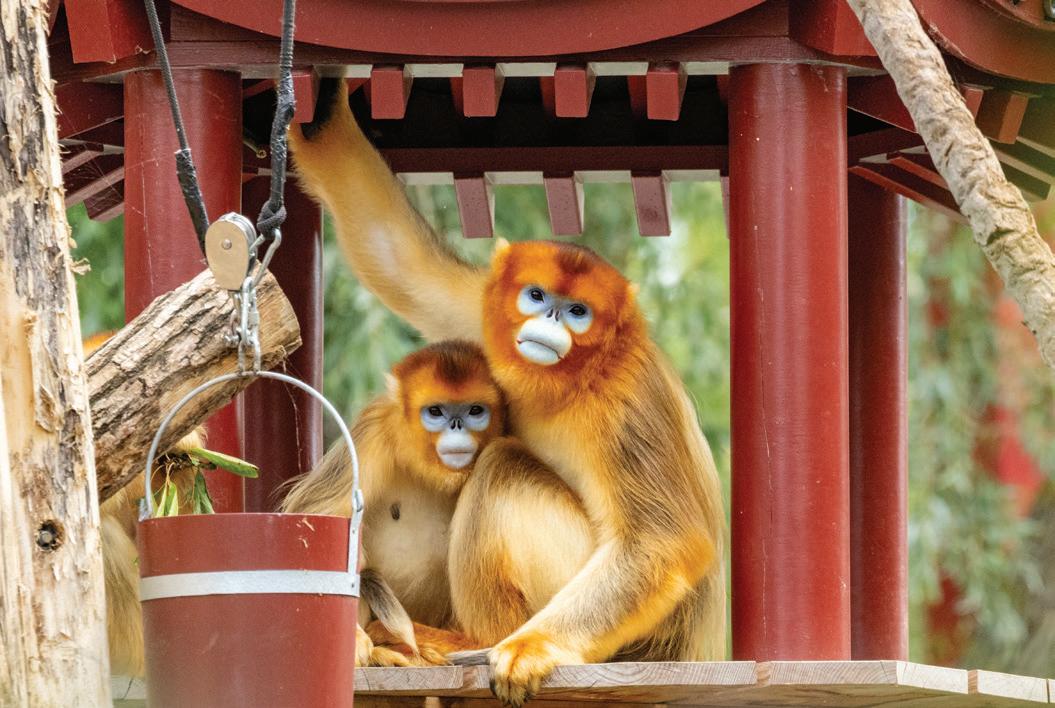
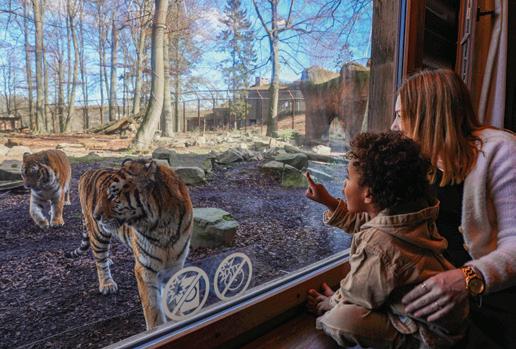
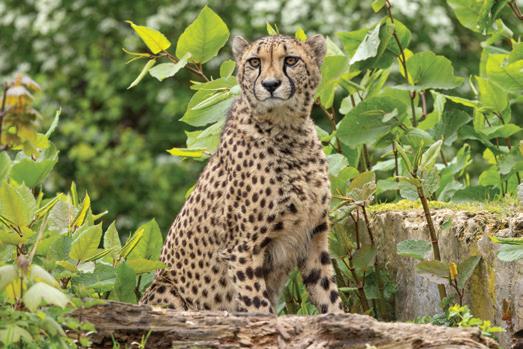
boasts 16 Asian elephants, crested macaques, Bengal tigers, capuchin monkeys, and a Komodo dragon. Other parts of Pairi Daiza cater for flora and fauna from the Americas, Africa, Australia, the oceans and the polar icecaps – all seen when visitors take the 20-minute steam-powered train ride around the park.
You might expect a zoo to feel like one – or even two – cities' worth of exhibits crammed together. But strolling through Pairi Daiza is instead a modular meditation in landscape, architecture, and fauna, from temple reliefs to tropical flora, pagodas to bamboo groves.
Beyond its theatrical designs, it stands firm in its stated mission to protect the wild. A longstanding member of the European Association of Zoos and Aquariums (EAZA), the park partic-
ipates in about 40 European Endangered Species Programmes (EEP), even coordinating one for the Spix’s macaw. The Pairi Daiza Foundation goes further, funding global biodiversity projects, absorbing rescued reptiles and amphibians, and working closely with partners like WWF.
Some 700 people work at the zoo (including its dozen restaurants and its brewery), but Pairi Daiza says it supports a further 2,500 indirect jobs. Pairi Daiza’s annual figures, released in a July report, show it invested more than €126 million in 2024, “in the service of hospitality, cultural transmission, and the relationship between hu-
The Pairi Daiza Foundation goes further, funding global biodiversity projects, absorbing rescued reptiles and amphibians, and working closely with partners like WWF.
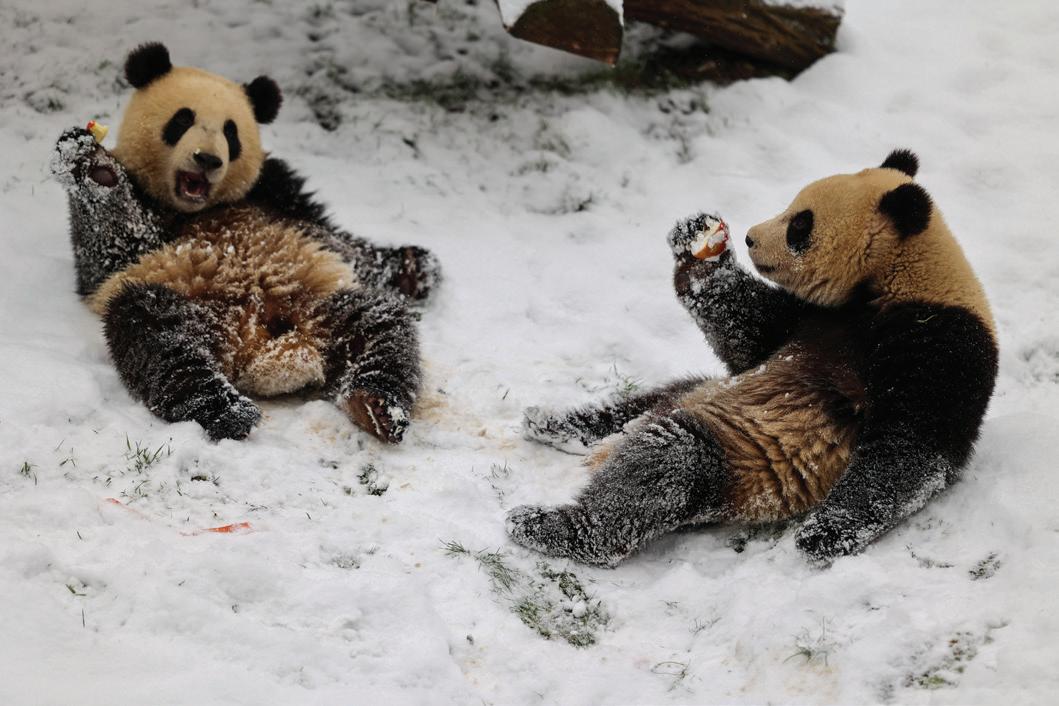
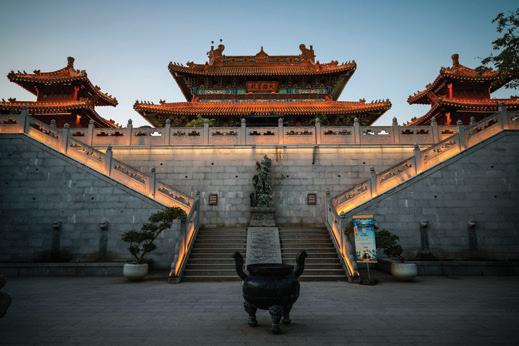
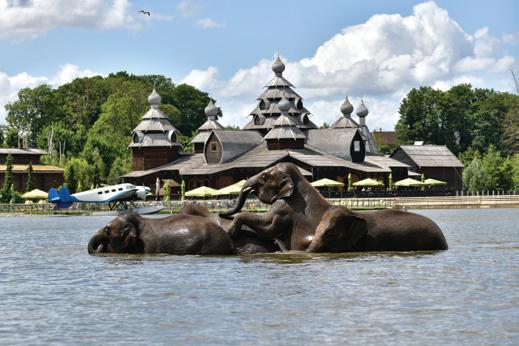
Over the years, the park has added Buddhist shrines, Taoist pagodas, a Chinese garden and Balinese sculptures, each carefully sourced with craftspeople and artists from their regions.
mans, nature, and the living….to improve infrastructure, enhance the visitor experience, and seek sustainable solutions for the future.”
Visitor numbers are impressive: almost 2.7 million people passed through its gates last year (up 16.3% from 2023), boosting turnover to €138.9 million (up 18.7%).
And it keeps growing, with new features and attractions. A few years ago, it began offering visitors the chance to sleep in a room just a (very thick) window away from polar bears, penguins and tigers. Recent launches include the new Prehi Daiza, where 60 animatronic dinosaurs and Ice Age creatures stomp and roar (they play the music from Jurassic Park there). More zen is The Islands of the Rising Sun, inspired by Japanese landscapes, which includes a deer petting zone.
It is set to unveil a new section next year, called Sanctuary, in what will be the world's largest tropical greenhouse, aiming to immerse visitors in a steamy oasis surrounded by rare animals and exotic plants. Spread over four hectares, it promises a “journey through three ecosystems”: jungle, desert and ocean, with water basins linked together by canals and an underground network of caves more than 120 metres long, and yet more animals, including sharks, manatees and monkeys.
For zoologist Steffen Patzwahl, who has been part of the park since its earliest days, the enclosures themselves should tell a story. “It’s not re-
ally what you’d call a traditional zoo enclosure,” he says, gesturing towards the vast orangutan habitat. “We’ve mixed Asian small-clawed otters with orangutans, which is a fantastic enrichment for both species. From the outside, it looks like a simple structure, but step inside and you find yourself in a giant temple.”
That temple is modelled on Jain architecture, one of the world’s oldest religions, rooted in non-violence. “We thought it was interesting to combine those ideas with the presence of animals,” Patzwahl explains. “Usually, enclosures are cold and functional. We wanted to create something different – a space that tells a story.”
This blending of nature, culture and spirituality has become Pairi Daiza’s hallmark. Over the years, the park has added Buddhist shrines, Taoist pagodas, a Chinese garden and Balinese sculptures, each carefully sourced with craftspeople and artists from their regions. The aim, says Patzwahl, is to transport visitors. “It’s a little like recreating a dream – we want people to feel as if they’ve stepped into another part of the world. Even those who don’t know the details of these cultures sense the authenticity.”
The animals, meanwhile, get as much attention as the architecture. Orangutans are given objects and fabrics to build nightly nests, echoing their wild behaviour of gathering leaves. “They prepare their beds differently every evening, which is fascinating for visitors to watch,” Patzwahl says. “It’s enrichment for them, but also a way to connect people to their natural instincts.”
Patzwahl’s own path to Pairi Daiza began far from Belgium. Born in Germany, he studied zoology, palaeontology and botany, later working in Spain and New Zealand before being invited to advise on the site in the early 1990s. At the time, the grounds of the former Cistercian abbey were for sale. “I said to the future owner, Eric Domb, this place has huge potential,” he recalls. “The lakes, the landscape, the history – it was a challenge, but also a dream. We started in 1993 and opened the park in May 1994. In the beginning, it was just a bird garden, but the vision was always bigger.”
That vision has since expanded to include a revalidation centre for reptiles – where police and firemen are trained to catch escaped exotics like snakes or crocodiles – and ever more ambitious developments, like the upcoming Sanctuary, a four-hectare tropical glasshouse. “It’s like building four football fields under glass,” Patzwahl says with a smile.
What unites these projects is a belief that animals should be experienced in context –cultural, spiritual and natural. “We don’t really consider ourselves a zoo,” he reflects. “It’s closer to a living cabinet of curiosities. A place where nature, art, and human imagination come together.”
And perhaps most importantly, the park has become a place of inspiration. Patzwahl remembers meeting a young veterinarian who had
once been a child at a Pairi Daiza holiday camp. “He told me it was here that he decided to become a vet,” Patzwahl recalls. “That was the first time I realised this place could shape lives.”
How about the animals themselves? Lee Sambrook, Pairi Daiza’s head elephant specialist, spends much of his time ensuring that they are healthy and happy. “I’m not just responsible for enrichment – I’m involved in every aspect of the animals’ care.”
That means working hand in hand with keepers, overseeing animal transfers, and above all, ensuring that the zoo’s animals can be trained to cooperate positively with their carers. “It’s not about teaching them tricks for visitors,” Sambrook stresses. “If an elephant allows us to take blood or administer an injection without sedation, that’s a huge welfare benefit. It means less stress, no drugs, and a better outcome for the animal.”
At Pairi Daiza, the 16 Asian elephants Sambrook oversees are the largest herd in Europe, with new calves recently born and more expected. As part of the European breeding programme, the herd is crucial for conservation. “These animals are endangered,” he explains. “Breeding them successfully is vital for their future, but it’s also about education. Visitors can see how intelligent and social elephants are, and they learn about the challenges they face in the wild.”
That social element runs deep. Sambrook has known some elephants for 25 years and insists they never forget. “I’ve come back after five or six years away and called them – they recognise me immediately. They’ll rumble with excitement, like cats purring, and rush over. Sometimes they even protect you, standing over you as they would a calf. It’s an extraordinary bond.”
His job, however, is not all affection. Elephants need their feet trimmed monthly, are bathed daily and require constant stimulation to prevent boredom. Sambrook dismisses the idea that space alone is what matters. “You can give them 20 hectares, but if there’s nothing in it, they’ll just stand waiting for a keeper. What matters is what you do with the space – how you enrich it, how you arrange it, how you challenge them.”
Conservation science is part of his remit too.
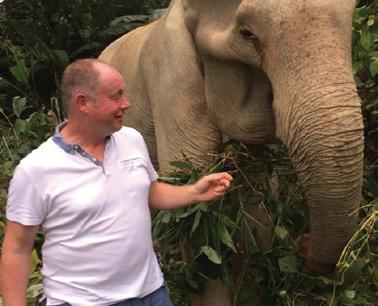
We don’t really consider ourselves a zoo, it’s closer to a living cabinet of curiosities. A place where nature, art, and human imagination come together.
I’ve come back after five or six years away and called them – they recognise me immediately. They’ll rumble with excitement, like cats purring, and rush over.
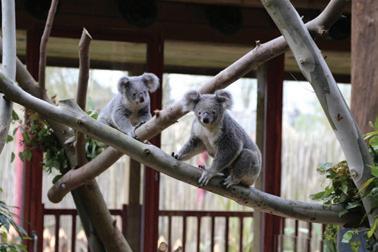
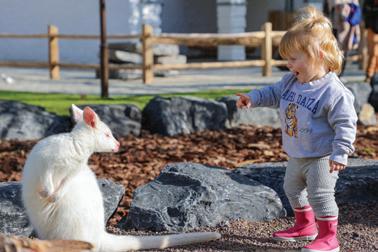
Pairi Daiza is involved in research on elephant herpes virus, a deadly disease that has killed calves both in captivity and the wild. “I’ve lost animals to it in the past – two in two weeks. It’s devastating. But thanks to our close contact, we can contribute to developing treatments. In the US, new therapies are showing promise. If we can help calves survive, that’s a breakthrough for the species.”
For Sambrook, the job is a vocation. Born in North London and seasoned by decades in zoos worldwide – from London to Perth, from Thailand to Belgium – he has made elephants his
Eric Domb abandoned law for lemurs and lions to create his unlikely Eden
When Eric Domb discovered the ruins of Brugelette’s Cistercian abbey in more than 30 years ago, he didn’t plan to create a zoo.
A lawyer by training, he admits he had “no passion for law” and no clear professional calling. What he did have was an enduring search for meaning, shaped by a difficult family history. “I was born 15 years after the Second World War, and most of my family disappeared in the gas chambers,” he recalls. “When you grow up with that weight, you learn to either fight or to share beauty. For me, the only answer was beauty.”
Pairi Daiza grew from that conviction. “It was never meant to be a zoo,” Domb insists. “It is a garden where you find four wonders. The animals, of course, but also the plants and gardens, the hidden beauty of minerals, and the creations of humankind.”
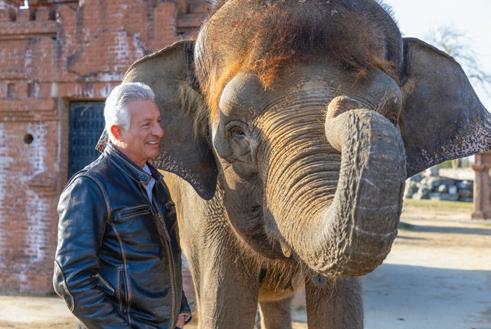
life. “I lived and breathed them,” he admits. “If one was sick, I would sleep beside it. If a calf was about to be born, I would stay through the night. You don’t do this job for money. You do it because it’s a calling.”
That passion, he believes, is shared across Pairi Daiza. “The teams here are constantly learning, exchanging ideas, and looking for ways to do better,” he says. “Visitors see the elephants and think about conservation. But behind the scenes, we’re also contributing knowledge that could help protect them in the wild. That’s why places like this matter.”
He says each wonder carries a message: animals embody the fragility of life, trees the promise of rebirth, gemstones the hidden value within people, and architecture the best of human creativity. The fifth wonder, he says, is the visitor themselves – transformed when they leave with greater love for life and a desire to protect it.
Domb speaks of elephants with particular affection. He describes the birth of a calf as “a love story” shared between the keepers, the animals, and himself. “You don’t need to be an ecologist to see the bond,” he says. “The reconnection between wildlife and humans is the first step towards compassion. And from compassion comes the energy to protect nature.”
Critics of zoos do not sway him. “Freedom is not the main priority of an animal. To eat and not to be eaten – that is what matters,” he argues. In the wild, fear is constant; in poor zoos, boredom dominates. The challenge for Pairi Daiza, he says, is to replace fear with stimulation, care, and respect. “If you truly love your animals, you want them to be happy. It is a question of philosophy and of management.”
Sustainability, he adds, means financial strength. “Conservation desperately needs money. Every year, zoos give more than €300 million to wildlife projects. Popularity is not a compromise – it is a condition of being useful. Success is not the goal, but the means to act.”
The future is expansive. A tropical house, the size of four football fields, is rising on the site, designed to immerse visitors in the equatorial belt with palm trees, orchids, and rare species. Later plans will bring a Mediterranean world, telling the story of the Silk Road.
Beyond the architecture, Domb says his mission is to collect and share the world’s beauty. “We are only passing through this life,” he reflects. “Our duty is to make that passage as beautiful and as useful as possible.”
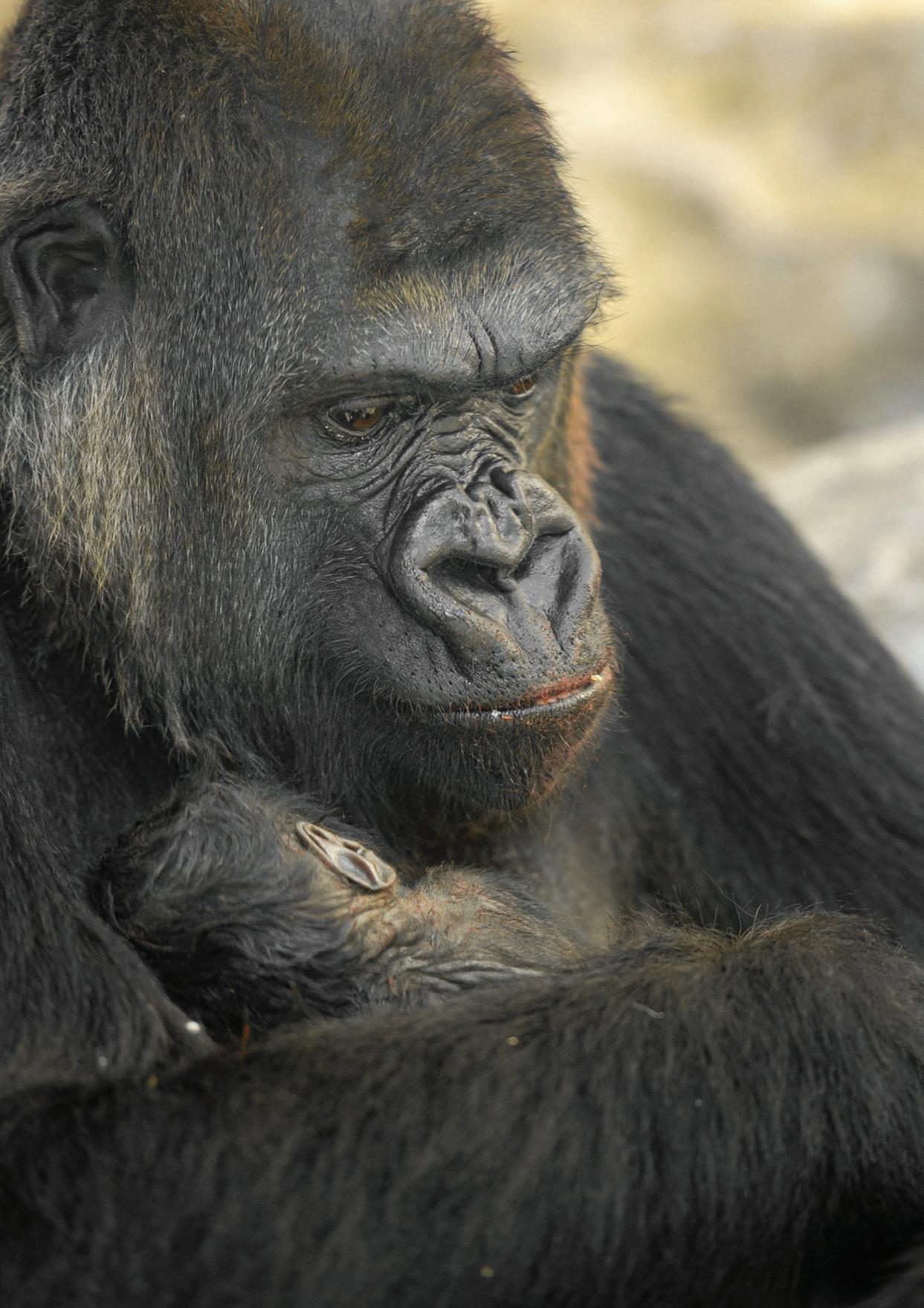
Jon Eldridge visits Antwerp Zoo and its sister attraction in Planckendael to discover the modern-day practices and purposes of this venerable institution
On a bright late summer morning, Nimba is feeling frisky. She gambols across her enclosure and plunges into a pool of murky water, where she will trudge along the bottom for a good minute or so before reemerging in the sunlight. Walking, not swimming, take note, because Nimba is a hippopotamus – in fact, a pygmy hippo, and one of Antwerp Zoo’s latest arrivals. She will be joined this autumn by a male companion, Dabou from France, as the Swamp Biotype zone continues to undergo major renovation ahead of his arrival. Pygmy hippos, unlike their larger cousins, are solitary in nature and will only come together to mate, Patrick Immens, one of four head keepers (or “animal care coordinators”) at the zoo, tells me. The enclosure, which was formerly home to the larger animals, is being divided into two in preparation.
Undeniably cute, a fully grown pygmy hippo nevertheless weighs between 180kg and 275kg. Nimba has the makings of a star but has big hooves to fill: the zoo’s beloved last full-size hippo, Hermien, was put to sleep last autumn, and her daughter relocated to a new home in Ireland. Hermien was nearly 44 years old and suffered from many age-related ailments, having already lived around 10 years longer than the average hippo in the wild. Immens assures me that animals in captivity nowadays commonly live longer due to access to veterinary care. Four vets work at the zoo, ensuring that supervision is around the clock.
Although enlarged in recent years, Patrick says that the zoo’s historic Hippo House, which dates from 1885, is no longer able to accommodate the large species under today’s strict Flemish regulations. Indeed, Immens, who joined the zoo in the late 1980s after completing a biology degree, has seen many changes during his
working life. At the start, the zoo would train new recruits in-house, but today many of the new additions to his team of 25 people – half of whom are part-time – arrive already qualified to assist vets in administering required injections or the taking of blood samples. In fact, due to the improved knowledge of staff, animals are far less likely to require sedation for this kind of activity.
He also says that 95% of his job at the beginning entailed hygiene-related tasks, a proportion that has lowered to around 60% as staff members have increased their engagement with the animals. The watchword is ‘enrichment’. Where possible, animals are presented with challenges to finding food – I observe elephants scooping up grass from under tyres – a practice that extends feeding periods, keeping animals occupied and “improving their mental well-being”.
“It also creates a greater bond with the animals,” he says, admitting that keepers can develop attachments to certain individuals. Are tears shed when they pass away, I ask. “Yes. Some say that they don’t want to be around on the day that something must happen, and they take the day off.”
Another key aspect of the enrichment policy is to house certain animals together with species that they might encounter in their native habitat. For instance, our pygmy hippo Nimba, a native of West Africa, is sharing her enclosure with African straw-faced fruit bats, a new addition to a zoo in Belgium. The zoo’s rhinos can be seen in close proximity with zebras, a cohabitation that was met initially with a degree of uncertainty by the latter, according to guide Danny Braem. However, he says the zebra quickly adapted and can always pass through a narrow gate to spend some time away from the large pachyderms if they feel the need.
Greater engagement and observation of the animals is also informing adjustments to their living spaces and diets. For example, research
Jon Eldridge
Are tears shed when they pass away, I ask. “Yes. Some say that they don’t want to be around on the day that something must happen, and they take the day off.
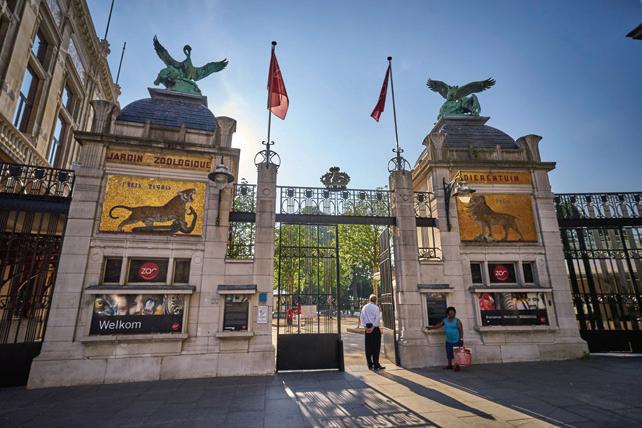
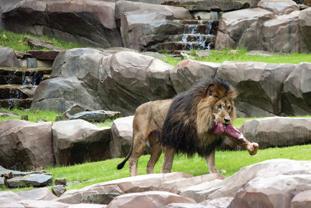
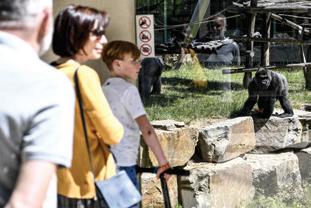
The zoo is now heavily involved in conservation of the okapi’s denselyvegetated, native, forestry habitat in the north of the country. The Antwerp Zoo Foundation’s Back to Buta project helps track populations in the wild and supports local farmers with sustainable land use and management.
into apes’ dietary requirements led to a radical mealtime reform: out went sugar-rich bananas and pineapples, and in came a diet of around 28 different vegetables a week.
Immens began his career working with okapi, one of Antwerp’s ‘ambassador animals’ and a good illustration of the extensive conservation
work being carried out by the zoo. The species has been emblematic for the zoo since the first individual, a nine-month calf from Congo, arrived in 1919. Named Buta after the capital of the Province of Bas-Uélé in the now Democratic Republic of Congo, the herbivore, whose closest living relative is the giraffe, was the first to be displayed to the world.
Sadly, the curious-looking creature with striped legs died after several weeks due in part to a poor understanding of its nutritional requirements. But the zoo is now heavily involved in conservation of the okapi’s densely-vegetated, native, forestry habitat in the north of the country. The Antwerp Zoo Foundation’s Back to Buta project helps track populations in the wild and supports local farmers with sustainable land use and management.
Since the 1970s, the zoo has moreover been responsible for maintaining an international genetic record of every okapi that has lived in a zoo, including Buta. Such a record helps optimise breeding; the zoo provides individuals to other parks and, of course, no longer exports animals from Africa. Nevertheless, the population of the species in Congo has declined by two-thirds over the past decade, and the zoo’s breeding programme aims to maintain genetic diversity ahead of any potential reintroductions.
Antwerp performs the same recordkeeping role for the Eurasian black vulture, the bonobo and the golden-headed lion tamarin, among other ambassador species. In August, the Antwerp Zoo Foundation and Planckendael Zoo announced a 15-year agreement with the Institut Congolais pour la Conservation de la Nature to jointly manage 3,600 square metres of Congolese rainforest inside the Lomako Yokokala Reserve to the benefit of the area’s estimated
Antwerp’s sister zoo at Planckendael can easily be reached by car from Brussels or via a shuttle bus that ferries visitors from behind Mechelen train station to the zoo’s entrance every quarter of an hour. The shuttle service is a 10-minute hop on a bus bedecked with cuddly toy versions of animals that visitors may be expecting to encounter. The decoration is illustrative of the zoo’s super kid-friendly approach.
While certain adults and pram-pushers may wish to stick to the level paths through the park’s thematic sections, the more adventurous can wobble on rope bridges, climb up to platforms and even shimmy through tunnels to get a better view of the attractions.
Planckendael is really the daughter zoo of Antwerp since it was opened in 1956 to provide a home for the animals that the parent institution could no longer accommodate. Located on the grounds of Planckendael castle, the zoo extends over an area of 40 hectares, giving it a footprint that is four times Antwerp Zoo’s. Wooded areas, streams and ponds abound, and the enclosures, unlike in a city zoo, feel very much integrated into the landscape. It is home not just to Antwerp Zoo’s overflows, but those that need more space or specialist care (a rare Indian rhinoceros was born at Planckendael in August following a 16-month pregnancy).
Navigation is relatively straightforward
4,000 bonobos (or pygmy chimpanzees). The foundation, together with the ICCN, will deploy rangers to combat poaching, illegal logging and other threats to the critically endangered ape species.
Communication manager Ilse Segers proudly refers to Antwerp as a science and conservation zoo, but she also calls it the best-kept 19th-century zoo internationally on account of its extraordinary heritage dating from 1843. Indeed, many of its buildings, including its Egyptian Temple and Winter Garden containing giant butterflies, are protected. And while the Schönbrunn Zoo in Vienna, which was established in 1752, can claim to be the world’s oldest, there is no denying the historic grandeur of the Antwerp attraction located in the shadow of the palatial Neo-Renaissance train station.
Segers says the inspiration for its founding was the opening a couple of years earlier of a zoo in Amsterdam, which was visited by the family of Jan Frans Loos, who would later become the city’s mayor. He established the Antwerp Royal Society for Zoology, which acquired a 2.5-acre plot of land next to the-then wooden station and persuaded Jacques Kets, a zoologist and botanist, to become the zoo's first director.
An initial entrance fee of one franc – the average manual worker’s daily wage – ensured the zoo would flourish as a place where only the well-heeled would mingle and desirable matches could be encouraged. And while the zoo has preserved this social tradition – its beautifully kept gardens provide little oases of calm in the heart of the city – entry had been extended beyond the bourgeoisie by the turn
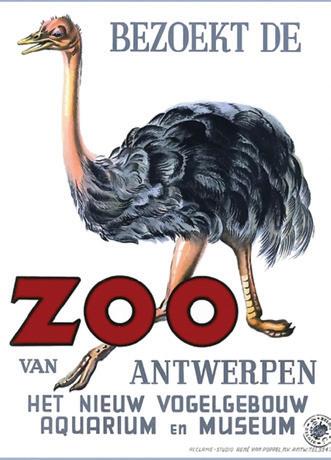
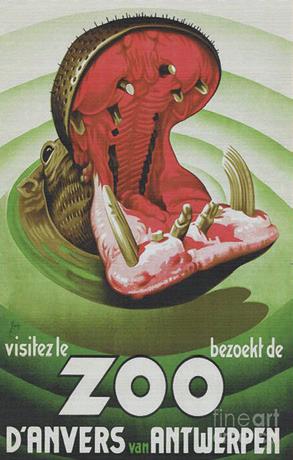
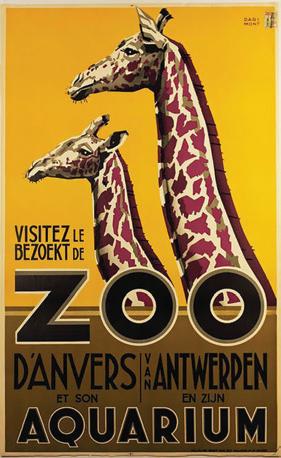
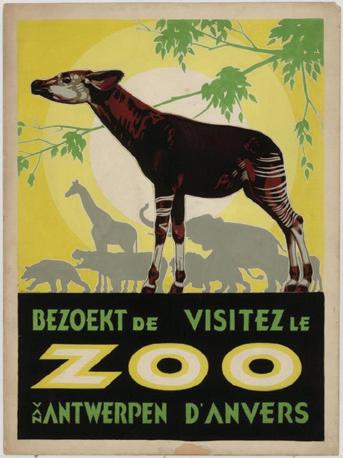
and not overly prescribed. One senses a general clockwise flow around the zoo’s five continental zones, beginning with Europe and ending with Asia, and although it’s easy to cut off a corner, map stress is not part of the deal. We know when we’ve arrived in the Asian section, for example, since a tuk-tuk and a metal sign advertising Kingfisher beer provide visual clues, and, frankly, what else better says Asia? It's not subtle, and I would have been happier without the periodically audible piped stringed music striving to evoke India or is it China? Or a dodgy takeaway shop?
That said, the café, shop and play
areas are nicely blended into the theme of the continent, and those in need of a regular caffeine fix can be reassured that these areas pop up regularly on a tour through the park. The site is large enough to home a pair of hippos, and whatever your views on keeping animals in captivity, the enclosures here do not appear cramped. My own observations: hyenas are bigger than I thought; capybaras are smaller… whether this adds up to a first-class educational experience, I don’t know. I did discover that such a thing as a bush dog exists, and, despite its formidable teeth, it is adorable.
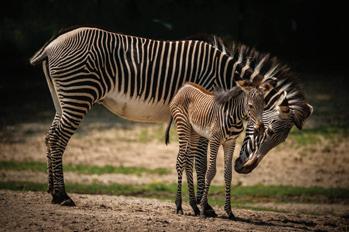
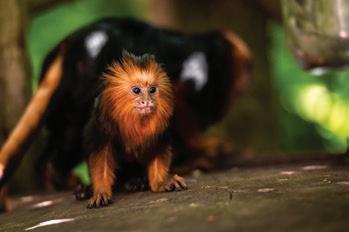
She also calls it the best-kept 19th-century zoo internationally on account of its extraordinary heritage dating from 1843.
of the century. In fact, Segers says that members of the zoo pleaded with the Antwerp mayor during pandemic lockdowns to open the site as a place for desperately needed social interaction.
The around 250,000 members, who pay an annual subscription for unlimited access, make up a quarter of all visitors. For non-members, the cost of a day visit can add up for a single family, but Segers points out that the organisation that runs the zoo is non-profit and proceeds are ploughed back into its activities. She also says that the Covid-19 pandemic represented a big hit to the finances of the zoo, delaying planned extensions.
I ask about the future of the zoo and such institutes in general, and she acknowledges the criticism from groups including Brussels-based Global Action in the Interest of Animals (GAIA). However, she says that both parties recognise that the existing animals cannot be reintegrated into the wild and that they both share a passion for conservation. “We will grow more towards those animals which are
very endangered and give the space we have to them,” she says. “We are trying to plant that seed [of conservation] among visitors”.
A visit to the zoo begins and ends at Flamingo Square, an attractive open space that is free to access for the public – although it is inside the grand former entrance from Koningin Astridplein. A casual visitor can grab a coffee, take a seat and even enjoy the alluring sight of the exotic pink birds emerging from the adjacent Rotunda building. In the summer, a free programme of live music is organised from 5pm, and cocktails are available, perhaps to be sipped on the marble steps leading up to the adjoining complex of banqueting and conference rooms. Zoos would often position flamingos at their entrances as a way of enticing the public inside. The flamingos are one of the constants in the ever-evolving life of the zoo, which – as the statue of Darwin close to the Flemish Garden seems to underscore – has had to adapt to survive.
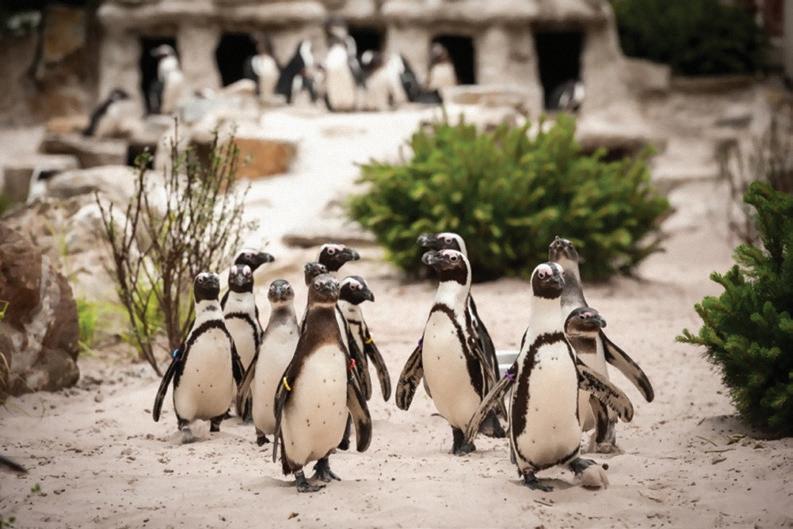
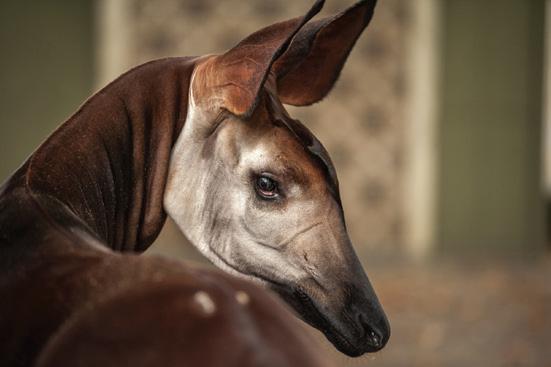



At Tour & Taxis, a new Zoo of the Future swaps cages for headsets, letting visitors wander virtual savannas and jungles alongside animals that remain free in the wild. Leo Cendrowicz finds out more
What’s the use of keeping giraffes or elephants in captivity while their natural habitats are being destroyed? It’s like collecting rare books while burning libraries. The real solution is protecting habitats, not displaying animals like exhibits.
At Tour & Taxis in Brussels, elephants are roaming, penguins are waddling, and monkeys are swinging through the trees – yet not a single animal is really there. Instead, visitors find themselves inside vast digital landscapes, wandering alongside creatures recreated in stunning virtual detail.
This is the Zoo of the Future, a bold experiment by Brussels-based animal welfare group Global Action in the Interest of Animals (GAIA), which uses technology to rethink the very idea of a zoo. Opened in early September until the end of the year, the project invites people to step into immersive VR, AR and 360° environments, offering close encounters with animals in their natural habitats – without cages, fences or captivity.
For GAIA CEO Ann De Greef, the initiative is more than a spectacle. It is a statement about what zoos should – and should not – be. “Even if zoos do their best, it is never enough,” she says. “Keeping wild animals in captivity is mainly for entertainment. They claim it is for education or conservation, but how much do people really learn when they walk through a zoo?”
She argues that documentaries or immersive experiences provide far more insight. “Ask people leaving Antwerp Zoo about a chimpanzee’s needs, and maybe ten in a hundred could tell you something beyond its colour. Yet if they watched a film like My Octopus Teacher or a National Geographic special, they would learn about intelligence, habitats, and behaviours –things a zoo cannot show.”
The conservation case, she insists, is equally shaky. “Zoos say they protect endangered spe-
cies, but how many animals have they actually returned to the wild? Very few. What’s the use of keeping giraffes or elephants in captivity while their natural habitats are being destroyed? It’s like collecting rare books while burning libraries. The real solution is protecting habitats, not displaying animals like exhibits.”
De Greef does not doubt the good intentions of zookeepers but says the model itself is flawed. “You can give animals food, toys, even lessons, but they will never have a full life. The same goes for elephants in small groups or predators in confined spaces. Happiness is not just the absence of suffering – it’s the presence of freedom, enrichment, and natural social bonds.”
That conviction underpins GAIA’s virtual zoo, where three immersive zones – the Arctic, the jungle and the savanna – allow visitors to encounter animals behaving as they would in the wild, close enough to feel their presence without ever disturbing them.
For GAIA, the project is a glimpse of a different future. “Our dream is that virtual zoos replace those species hardest to keep in captivity – elephants, giraffes, chimpanzees,” says De Greef. “In the long term, traditional zoos could transform into sanctuaries, caring for confiscated animals or those rescued from circuses and private collections. The infrastructure and expertise are there. Why not use them for animals in need rather than new displays?”
With Belgium’s own action star Jean-Claude Van Damme as GAIA’s ambassador, the campaign has no shortage of attention. But at Tour & Taxis, the real stars will be the virtual animals – roaming free and running wild.
Leo Cendrowicz



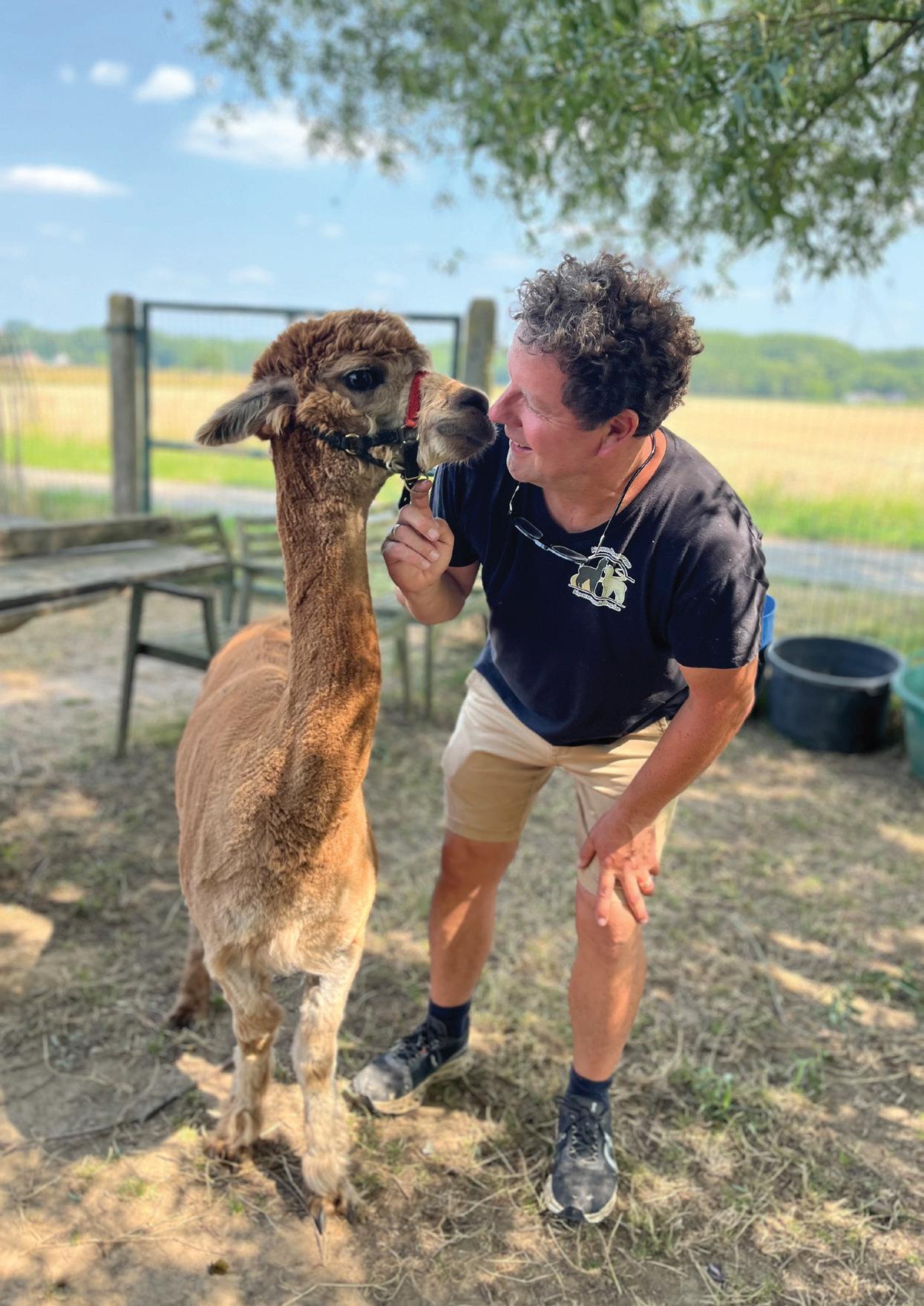
Leashing an alpaca and taking it on a walk has become all the rage in Belgium – along with photo shoots, birthday party appearances and even alpaca-led therapy sessions. Lisa Bradshaw takes a trot with an alpaca to see what all the fuss is about
Don’t touch their heads, that scares them. Don’t touch their bodies, that tickles. Touch the neck. Only the neck.” Following these simple rules will get you far when it comes to an activity that has taken Belgium by storm: alpaca walking.
Alpaca-related activities – from birthday party appearances to wedding photos to therapy sessions – have exploded in Belgium in recent years. At least 40 businesses offer activities, but walking an alpaca on a lead along country roads or through a forest is by far the most popular. It is billed as fun for families, romantic for couples, zen for individuals and teambuilding for office workers.
The words of wisdom above came from Kris De Groot, owner of Alpaca Bambrugge in Erpe-Mere, East Flanders, to whom I turned to find out for myself what all the fuss is about. “It’s very calming, very relaxing,” says De Groot when asked why alpaca walking has become a craze. “You are forced to keep a certain pace with an alpaca. You cannot hurry them.”
This soon becomes apparent. During our walk, De Groot’s border collie darts this way and that, a bark here and a lunge there, but the alpacas remain steady on. “Alpacas are calm and quiet,” he continues. “They are just such nice animals to have around.”
I have joined a team-building group, and the first task is to choose and leash an alpaca. This is where the neck advice comes in very handy. Taking a tame alpaca by the neck to attach the leash to the harness is quite easy - but touch one on the head, and it will dodge you. There are three babies in the group. All the alpacas have names, and De Groot rattles them off – Posh, Flor, Ariel, Bounty, Caramel and her baby Heddy.
Once everyone has their alpaca, we head out on a walk of about three kilometres, which leaves from De Groot’s house, winds along grassy trails and through a little residential area, then along a creek and into a monumental garden that belongs to a welcoming pub. The alpacas are loosely tied to a fence while everyone grabs a drink.
De Groot proceeds to fill me with entertaining tales and interesting facts about alpacas. Like their cousin, the llama, they can spit. Unlike
the llama, they give you a warning first in the form of snorts. Heed the snort, and you’ll be in the clear. Alpacas also create toilets in any field or corral. They only poop in the spot they themselves have designated.
Alpacas don’t smell, which is why they don’t attract flies. Two bonuses! “Children often tell me they smell like popcorn,” De Groot shares. The wool is hypoallergenic and lightweight, providing protection from the heat as well as the cold. It’s like insulation. You can even make an ice bucket with alpaca wool, says De Groot – though it’s more of a bag.
De Groot rotates his 16 alpacas between several fields near his rural home. While some alpaca businesses are full-on farms, with 50plus animals, De Groot is more of a keeper. He first fell in love with the creatures about 10 years ago when he came across a farm in the Netherlands. He had the 800 square metres required to keep a pair of alpacas, so he bought two. “You always have to get two because they are very social herd animals,” he explains.
While a short walk doesn’t allow you to get to know an alpaca in the same way it would a dog, living with them does. “At one point when I was lying in my hammock, one of them came to lay his head on me. That’s also part of the appeal. When you are calm, they see you as part of the group.”
De Groot also takes the alpacas most suited for it to off-site events, like parties and photo shoots. Caramel is his most serene alpaca and has made trips to nursing homes. “We take the elevator to the third floor. It doesn’t bother her at all.” During one such trip, a woman started talking to the alpaca. “Her therapist said to me that she doesn’t normally speak anymore. She doesn’t talk to the staff at all.”
Which brings up another Alpaca Bambrugge activity: non-violent communication sessions. It’s a popular team-building exercise at several alpaca businesses. According to alpaca therapists, they are calm when people are and so act as “mirrors” of a person’s emotional state.
All of this brings up questions about animal welfare and exploitation. There are no specific policies regarding these kinds of activ-
Lisa Bradshaw
All the alpacas have names, and De Groot rattles them off – Posh, Flor, Ariel, Bounty, Caramel and her baby Heddy.
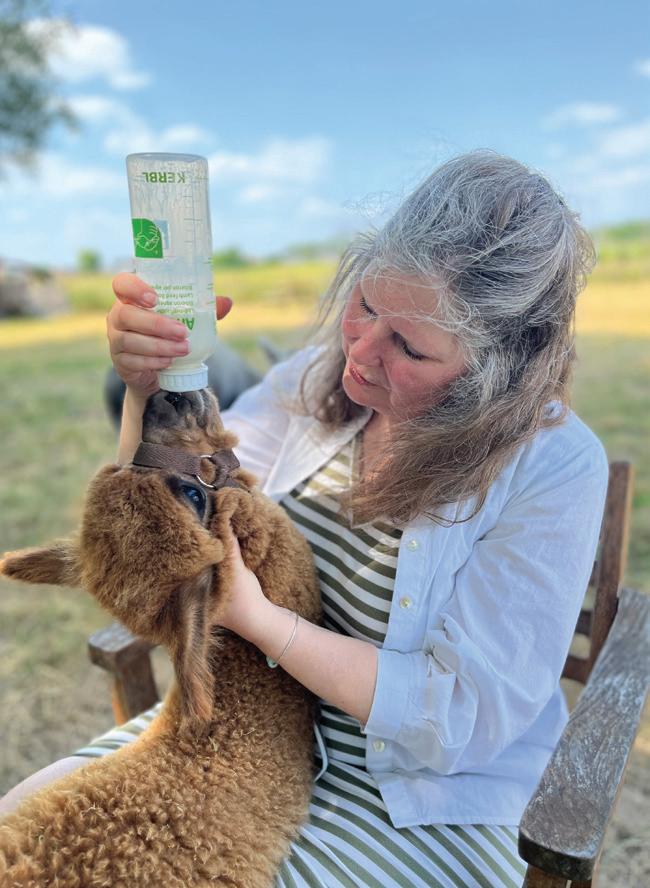
Alpacas don’t smell, which is why they don’t attract flies. Two bonuses!
“Children often tell me they smell like popcorn,” De Groot shares.
ities, “as long as animal welfare regulations are followed,” according to Ann Heylens of the Flemish Department of the Environment. “That means that the welfare of the animal must always be guaranteed, regard-
Walk an alpaca, hug a cow and – embrace an ostrich? It was possible for several years running, until Wendy Adriaens’ ostrich hugging practice got shut down by the Flemish government. The Kalmthout woman had become famous on social media – dubbed “the ostrich whisperer” by the international press – for her loving interactions with the feathered beasts she saved from the slaughter.
Both alpacas and ostriches originate from other continents (the former South America, the latter Africa) and both are farmed in Europe for their products. So why can we pet an
less of the nature of the activity.”
Belgium’s animal rights group, GAIA, however, is sceptical. “We have serious concerns about the impact of this activity on animal welfare,” says GAIA CEO Ann De Greef. “Alpacas are prey animals. Their natural defence mechanism is to avoid confrontation by creating distance. Being led on walks, especially in the presence of noisy or unpredictable groups, can cause significant stress to the animals.”
While the walking is bad enough, she says, using them “as entertainment tools” might be worse. “These are sentient beings with complex needs and sensitivities. Using them in coaching sessions, team-building exercises or festive events often fails to respect their ethnological characteristics and can lead to serious welfare compromises.”
John Peeters agrees. Belgium’s first alpaca farmer, he began breeding them more than 25 years ago. Now with a wealth of activities, including walking, parties, weekend excursions, summer camps for kids and even an alpaca obstacle course, his Alpacaboerderij in Limburg welcomes some 30,000 visitors a year.
Keepers know their alpacas, he says. “It’s very important to use the right alpaca for the right group of people or the right activity. For example, of the 20 alpacas we use for activities, only two like larger groups of small children.”
One might consider this “tolerating” more than “liking”. But alpacas, says Peeters, “have been bred for thousands of years and are very similar to horses, behaviour-wise. That is why they are very suitable for these activities. I try to have the perfect match between the alpaca and the people or activity to make sure the alpacas enjoy this.”
In Belgium, West Flanders is home to at least 42% of such alpaca businesses. There’s definitely a difference between Flanders and Wallonia, with only a smattering in the
alpaca but not an ostrich? “In the Flemish government’s zoo regulation, there is a list of commonly kept animals,” says Ann Heylens of the department responsible for animal welfare.
“Any species that is not on this list cannot be exhibited to the public outside of a recognised zoo. Alpacas are on the list, ostriches are not.”
The regulation meant that Adriaens’ rescue farm, De Passiehoeve, lost its greatest source of income. But ultimately, it didn’t matter because the serious lung problems she had developed finally got diagnosed – an allergy to ostrich dander.
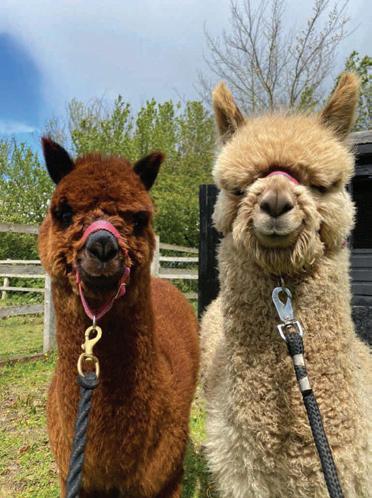
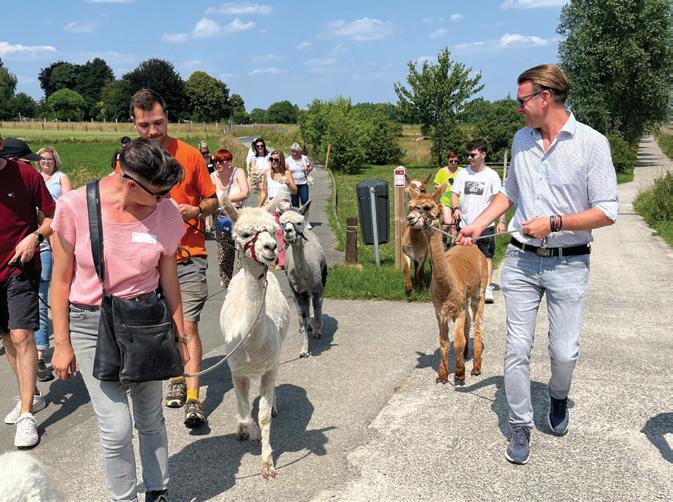
latter. But the French-speaking part of the country goes all out: At La Ferme Des Capucines in Braives, Liège province, you can also walk with llamas. And at Domaine Des Hautes Fagnes, you can do yoga surrounded by alpacas.
Alpacas are prey animals. Their natural defence mechanism is to avoid confrontation by creating distance.
When I was three years old, my father took me to a farm, where I encountered a cow up close for the first time. In my enthusiasm, I ran over to pet her, and she responded with a defensive swing of her substantial head, sending me flying. I was uninjured but hysterical – and have never trusted a cow since.
So you can imagine my reaction when the editor of this very magazine asked me to check out “cow cuddling”, where you not only approach the cow but give it a big hug. A suicide mission, obviously.
Yet there I was driving to Ravels in the Campine region on the border with the Netherlands (which, it must be said, is incredibly beautiful) to visit the dairy farm Boeren Beleven. Many farms in Belgium offer the chance to milk cows, but only two identify cow cuddling as an experience (the other is La Ferme de Baptiste in the Ardennes).
Boeren Beleven has some 250 head of cattle run by husband-and-wife team Ben Versteynen and Marianne Keirens. At weekends, they open up the farm to tours “so people can learn what life is like for the cows, the calves and the farmers,” explains Keirens. “We answer all their questions very honestly, like about what happens to a cow once it no longer gives milk. It’s a farm, and we don’t sugarcoat it.”
Still, the farmers are very fond of those they call “the ladies”. Every cow has a name. “My husband knows them all by name!” Keirens exclaims. “I absolutely do not.” The tours also include koeknuffelen, cow cuddling. On the day of my visit, I’m lucky enough to be able to do this outside in the field. Very sensitive to heat and rain, the cows are usually inside the stall. And they are not forced to go in and out at the whims of visitors. You
cuddle the cow where it stands – or lies.
It took me a while to get the nerve to cow cuddle, but bit by bit, I got there. I wouldn’t do this with just any cow, you understand, but Boeren Beleven offers a safe space for this to happen.
What I appreciated most about cow cuddling is that – somewhat unlike alpaca walking – the experience really is up to the cow. Most cows walked away when approached. But some of them came right up to me. (This led to one disturbing moment where I found myself entirely surrounded by curious cows. But I digress.) The reclining cow who did not get up and leave when I settled down next to her wasn’t the least bit bothered. And even enjoyed being stroked under the chin. As do the calves, by the way – a lot.
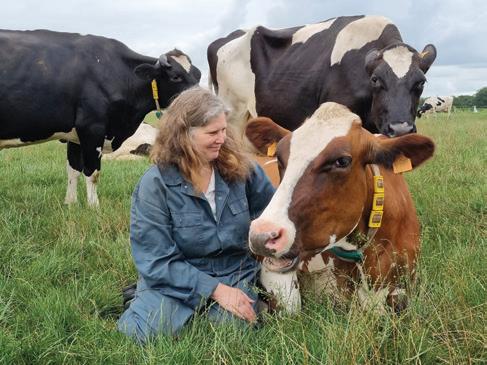
From the park lawns to the bins behind the friterie, rats are part of the hidden life of Brussels. While the city hires exterminators and even ferrets, Simon Taylor says the real issue is not rodents themselves, but how residents treat their city
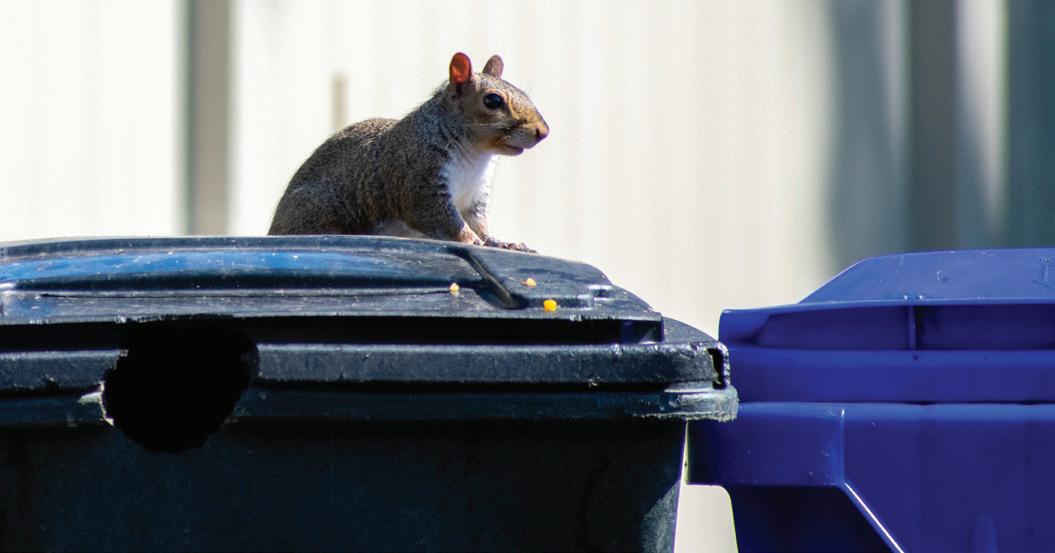
A
rat is a very sensitive animal. It can carry diseases, but the risk that you get a disease from opening the door of the toilets in your local pub is much higher.
Have you seen a rat on the streets of Brussels? Perhaps snuffling around a ripped plastic bin bag, or darting out of an abandoned building? Sleek and unnervingly fast, their sudden appearances often trigger alarm – and the fear that they may be carrying disease.
If so, help is at hand. In just the first six months of this year, the City of Brussels mounted nearly 600 pest-control interventions. Budgets have been boosted, specialist contractors hired, and campaigns launched against what some estimate to be as many as two million rats in the region.
Contrary to popular belief, rats are not drawn in by the city’s restaurants, cafés and fast-food outlets. These businesses have every incentive to dispose of food waste safely, with daily refuse collections in many areas – no restaurant wants rats rummaging near its doors.
Instead, the real causes are closer to home — and often in plain sight: poorly managed food waste.
At the Gare Centrale, commuters tear open baguette sandwiches, eat on the go, and toss the leftovers under benches. In playgrounds in Woluwe, children drop sweets and chips that go lie around for days. At the city’s open-air festivals, from Couleur Café to the Fête de la Musique, food scraps can linger overnight.
Parks and green spaces are particularly vulnerable, especially when picnickers leave scraps behind. Bans on feeding pigeons have helped, since rats thrive on leftovers that birds ignore. Illegal dumping sites and abandoned buildings also provide rats with food and shelter, allowing them to breed undisturbed. Once a nest is established, litters can range from seven to 12 pups, making population growth rapid.
And what about the plastic bin bags most Brussels communes still use – prone to tearing and spilling waste? These are less of a problem than people assume, but households are encouraged to switch to sturdier alternatives. Many communes now provide rigid plastic bins, and property de-
Simon Taylor
velopers are urged to install underground waste collection points beneath pavements.
Climate change also plays a role. Rats are sensitive to the cold: harsh winters once kept numbers down, but with milder weather, more rats survive through the year, making them more visible on the streets.
When infestations occur, the most common methods remain traps and poison. Ratcatchers have had to adapt to their prey’s intelligence. Because rats observe one another, fast-acting poisons fail: if one dies immediately, the others learn to avoid the bait. Instead, professionals use slow-acting anti-coagulants that kill days later, giving time for other rats to consume the same food.
Some communes have experimented with more unusual tactics. Etterbeek, for instance, has long employed ferrets, handled by specialist Jean de Marcken, to flush rats out of sewers and into nets, where they are humanely destroyed. Although retired, de Marcken still brings his ferrets when needed.
Despite the common image of rats living in sewers, they do not actually thrive there – there is no food. Instead, they use the underground pipes as a transport network, surfacing wherever they smell something edible. The water company Vivaqua conducts two large-scale anti-rat operations in the sewers each year, with additional interventions if requested by the communes.
The idea of a city overrun with rats is a journalistic staple, yet reliable figures are scarce. Populations fluctuate seasonally, numbers are almost impossible to count, and what residents notice most is visibility. Simcha Nyssen of the Brussels-based Global Action in the Interest of Animals (GAIA) urges people to look past the hysteria.
“Rat populations are said to be increasing in many European cities, with more urbanisation being an important cause. Where people are, rats find more food,” she says. “But it is important not to overdramatise the presence of rats. More sightings do not necessarily mean the problem itself is larger; it may just be more noticeable to people. We need to control the population in an animal-friendly, sustainable, and effective way.”
That perception gap has consequences. For centuries, rats have carried the stigma of plague, filth and fear. They are still saddled with the legacy of the Black Death – although it was actually fleas, mostly living on humans, that spread the disease. But Nyssen stresses the risks are often exaggerated. “It’s quite sad, because a rat is a very sensitive animal. It can carry diseases, but the risk that you get a disease from opening the door of the toilets in your local pub is much higher,” says Nyssen.
She also stresses prevention as the best response, which means not just better waste dis-
posal but also routine maintenance of sewers and more thoughtful urban planning. “In many cities and municipalities, there is still far too little focus on this, which means the problem of rodent overpopulation continues to persist. Preventive measures are both humane and sustainable, as they address the root cause rather than merely treating the symptoms,” she says.
Rats are not the only animals to test urban tolerance. Pigeons, too, are a Brussels constant – nesting in the Palais de Justice or strutting across Place Flagey in search of dropped fries. Brussels has long struggled with droppings on monuments and the costs of constant cleaning, while some residents continue to feed the birds despite bans.
Brussels authorities are now moving on from methods such as trapping, gassing or even surgical sterilisation: seen as both cruel and ineffective, they remove some pigeons but the remainder simply breed faster, creating a cycle of capture and death. Instead, it promotes a more humane approach with sterility feed: corn treated with nicarbazin, designed to reduce fertility.
As with rats, the solution lies in prevention and coexistence, not eradication. “We need to find a way we can live together without citizens being inconvenienced, but with respect for the animals,” she insists.
Ultimately, rats and pigeons are symptoms of a larger truth: the city is a shared habitat, not a purely human one. The real question is whether Brussels is willing to change its own habits – to curb waste, redesign spaces, and recognise that coexistence is not only possible but inevitable. “Rats play a valuable role in the ecosystem, which makes coexistence not only necessary but also beneficial,” Nyssen says. “We need to learn to coexist with them in a balanced and respectful way.”
Brussels authorities are now moving on from methods such as trapping, gassing or even surgical sterilisation: seen as both cruel and ineffective, they remove some pigeons but the remainder simply breed faster, creating a cycle of capture and death.
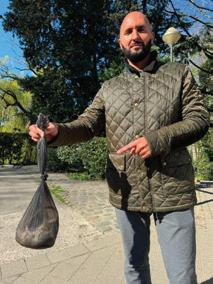
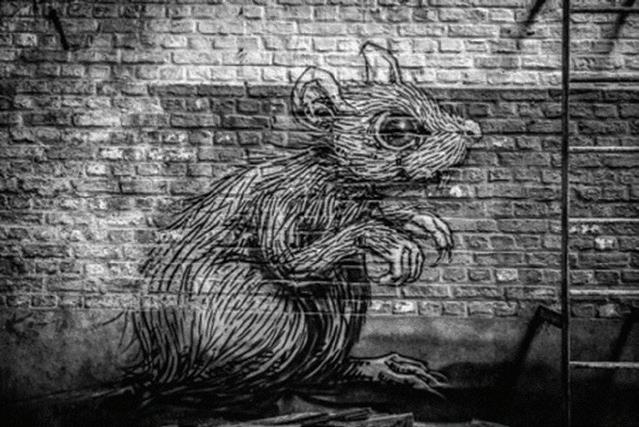
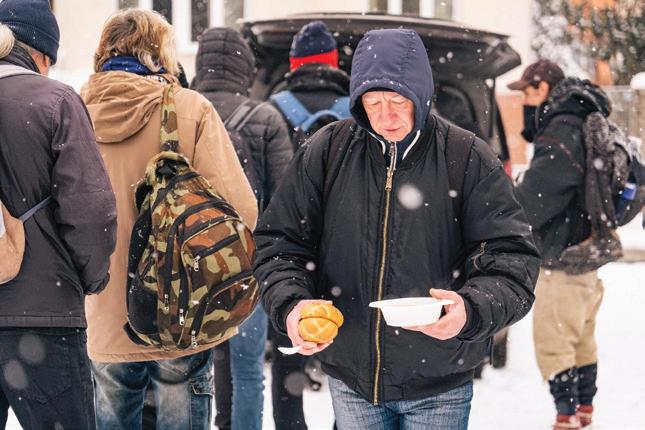
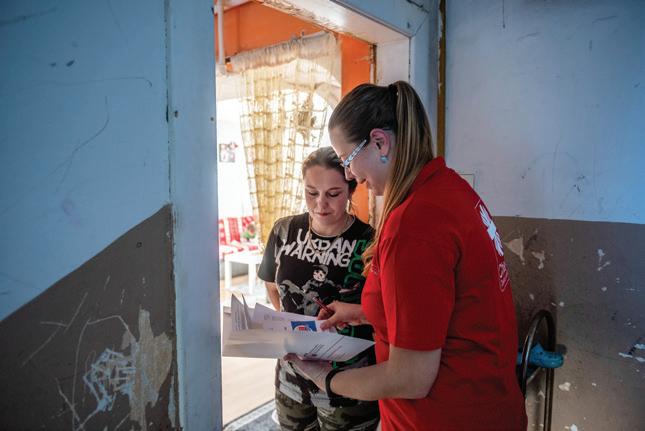
Across the EU, one in five people is at risk of poverty or social exclusion.
In a continent often celebrated for its commitment to social justice and human rights, it is alarming that millions of Europeans still live in poverty. The announced first-ever EU anti-poverty strategy is a historic chance to deliver real, lasting pathways out of poverty for all.
Across the EU, one in five people is at risk of poverty or social exclusion. This is not just a statistic - it represents the daily struggles of individuals and families trying to live with dignity in societies that do not fulfil their promise of equal opportunities.
Caritas Europa’s member organisations, present in local communities across Europe, see the reality behind these numbers. They see
the consequences of policies that fail to protect people living in the most vulnerable situations: despair, isolation, exclusion and the obligation to make impossible life choices to survive.
Despite multiple initiatives and well-meaning commitments, poverty in Europe remains stubbornly high. In 2024, 93.3 million people in the EU (21% of the population) were at risk of poverty or social exclusion - a figure that has barely shifted over the past five years. The EU’s 2021 pledge to reduce this number by at least 15 million by 2030 now looks increasingly out of reach. If we are to change course, it is not enough to try harder. We must try differently.
The European Commission’s planned 2026 anti-poverty strategy has the potential to be a game-changer, but only if it builds on real evidence, breaks with short-term solutions and is adequately funded. It must be coherent, rightsbased and rooted in the EU’s founding values: human dignity, equality, freedom and social justice. Poverty is not only about low income or lack of basic services. It is a multi-dimensional reality shaped by inequality, marginalisation, discrimination and the erosion of human agency. Someone might have a place to live and a job, but still struggle to access education and stable work, or to be heard in their community. Even when basic needs appear met, people can still experience poverty, especially when social expectations grow but real opportunities remain out of reach. An effective strategy must therefore tackle all these dimensions. It needs to provide a comprehensive policy framework, strong governance and adequate, predictable funding.
It must embed anti-poverty objectives across all other policy areas — from fiscal rules and free movement to energy, climate and digital transitions to ensure coherence and prevent unintended harm to those already in vulnerable situations.
Robust minimum income schemes are central to this vision. When properly designed and resourced, they are not just safety nets but enablers of inclusion and participation. They ensure everyone can access the resources and services necessary for a life in dignity, while supporting pathways to employment, education, housing and healthcare.
However, Caritas Europa’s 2025 CARES poverty report “Thriving, not just surviving” reveals that most minimum income schemes across Europe fall short. Nearly 90% of the 20 Caritas Europa member organisations surveyed indicated that existing benefits in their countries fail to cover even basic needs. Only five countries provide minimum income support reaching 75% of the poverty threshold for individuals and families.
Access barriers are another major concern. Over a third of the systems analysed exclude young adults aged 18 to 25 unless they meet additional, often arbitrary, conditions. Migrants or people without stable housing are frequently left unsupported. Bureaucratic complexity and stigma further discourage many from even applying.
Complex procedures and lack of information also fuel widespread non-take-up, leaving countless individuals and families without the help they need and are entitled to.
The EU must close these gaps by setting binding basic standards to ensure minimum income schemes are adequate, accessible, connected to other services and properly monitored.
No strategy can succeed without proper resources. Adequate and predictable funding must back the strategy at EU and national levels. Clear governance is equally vital: tackling poverty requires coordination across EU institutions, national governments and local authorities. That’s why appointing an EU Anti-Poverty Coordinator could play a key role in driving implementation and ensuring accountability.
Just as importantly, people living in poverty must be included in shaping the policies that affect their lives. A formal EU Civil Society Monitoring Mechanism should be established to ensure meaningful involvement of civil society, social partners and, critically, people experiencing poverty.
The EU claims to be a global model of democracy and fairness. But a society that tolerates such widespread hardship cannot lay
claim to true progress. The strength of the European project will not be judged by GDP growth, but by whether it creates a cohesive society in which no one is left behind. Looking ahead, the post-2027 Multiannual Financial Framework represents a crucial opportunity for the EU to reaffirm and strengthen its commitment to social Europe and the fight against poverty. Yet, the current proposal leaves uncertainty about the priority these objectives will be given and the role of social and cohesion funds in the future EU budget. Much remains unclear regarding the scope and impact of the announced 14% reserved for social objectives, raising legitimate concerns that social Europe could be sidelined at a time when reinforcement is most needed.
Let 2026 be remembered not just as the year another EU strategy was published, but as the year we chose courage over complacency. A Europe that turns the tide on poverty will not only meet its targets, but it will also redefine what kind of a Union it wants to be. Because fighting poverty is not just a matter of policy. It is the moral test of our time.
Find out more in our latest Caritas CARES report: https://www.caritas.eu/caritas-cares-minimum-income/
The Catholic Caritas confederation, with over 160 national members, is the second-largest humanitarian actor in the world.
Caritas Europa is the European arm, representing a network of 49 member organisations in 46 countries. Our members assist and provide services to millions of people in need.
We work with people of all faiths to end poverty and to promote the dignity of all. We believe that people and the environment, not profits, should be at the heart of all policies.
www.caritas.eu
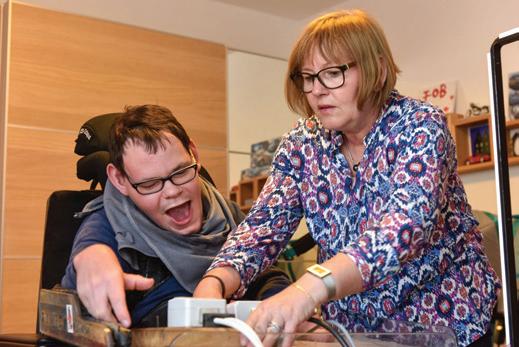
Nearly 90% of the 20 Caritas Europa member organisations surveyed indicated that existing benefits in their countries fail to cover even basic needs.
Le Clézio/Secours Catholique-Caritas France
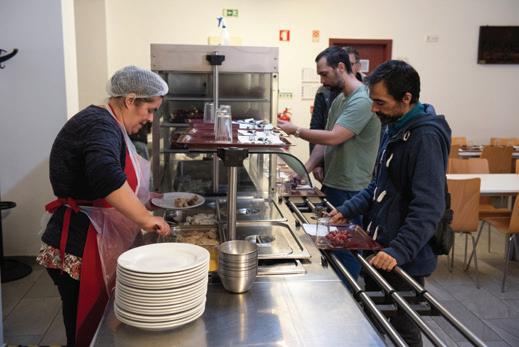
From hamsters to horses, rescue shelters offer an excellent way of acquiring a new animal friend. Jon Eldridge visits two centres in Anderlecht
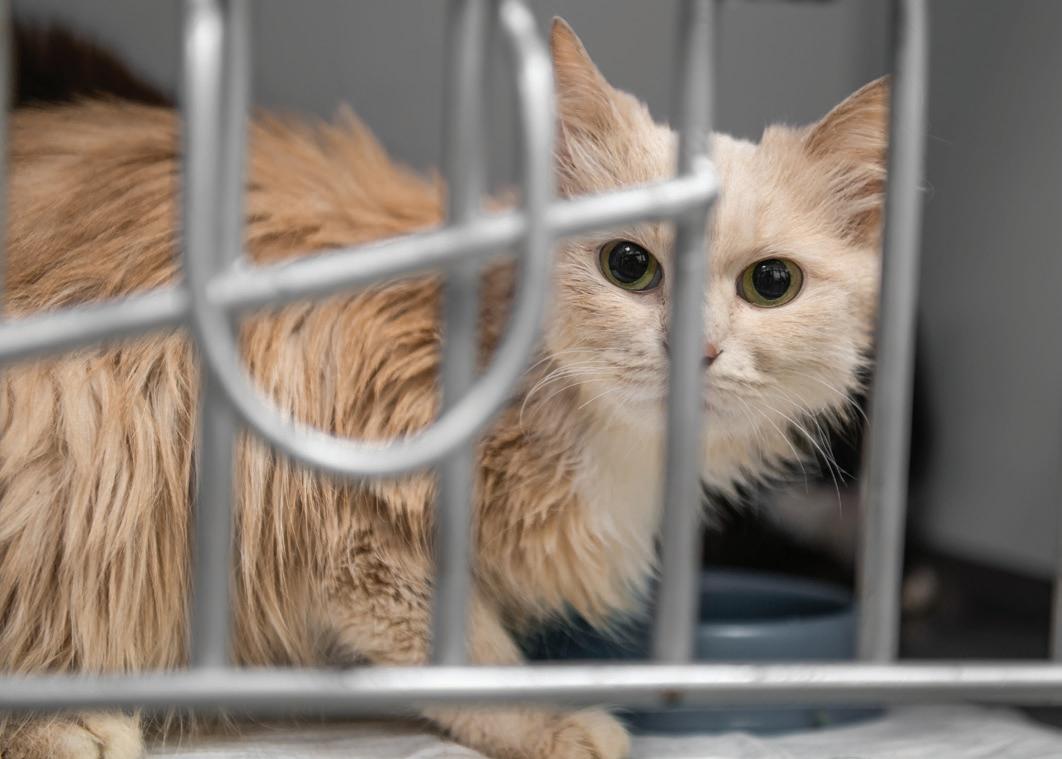
All the animals that the centre accepts have names, even the stray cats that might require some
on-the-spot invention.
One could hazard a guess that Pistache was named after the nut given that her fur has a soft brown colouring, although darker patches leave room for doubt. The lop rabbit’s former owners brought her into the Veeweyde animal shelter in Anderlecht due to allergies to said fur, and she’s now been at the facility for five months. This, I’m told, is a long time for a rabbit to be housed in the shelter and reflects her size.
This floppy-eared bunny is big, and a prospective new owner must be able to offer more space than that which would be acceptable for her smaller lapine cousins with whom she shares a room. It’s clear that finding the right match –adoptee and adopter – is an aspect of the shelter’s work that is taken very seriously.
All the animals that the centre accepts have names, even the stray cats that might require some on-the-spot invention. Veeweyde mostly advises callers concerned about strays to contact
a specialist organisation that carries out sterilisations and notes that such feral animals commonly don’t make suitable domestic pets.
In fact, all the animals available for adoption have their own online profile, and visitors will often inquire about a specific animal. Instagram stories can also help find owners for difficult-to-rehouse animals, such as older dogs and cats. Pistache is described online as “kind but very independent” – i.e. not really wanting cuddles, even if you have a lap big enough!
The stories of a couple of her furry companions indicate that arriving at Veeweyde can be considered good fortune. Cracotte (‘Cracker’ in English), a seven-year-old Angora rabbit, was discovered in his cage on a random street with a note attached, while another exotic-looking rabbit was found in Brussels, alas, in a less fluffy state. However, most animals are handed in to the centre by owners whose circumstances have changed (maternity, home move or a new job,
Jon Eldridge
etc). Veeweyde and Help Animals, a smaller shelter also in Anderlecht, also develop contacts with the police, and will occasionally receive calls asking whether they have space to receive a seized dog who has been badly treated.
Places at shelters in Brussels are limited. At Help Animals, they are wary of passing on callers to other centres when there is no space for receiving an animal, as these too will be struggling. The problem is particularly pronounced in the summer when the steady pace of adoptions is interrupted by holidays, according to Leisha Koderitz, a volunteer at Veeweyde.
However, both these centres are currently undergoing renovations to comply with new Belgian regulations requiring the provision of larger cages. Extensions at Veeweyde will more than double the number of dog places from 35 to 71 by October, while five separate catteries will be able to accommodate up to 80 cats.
Typically, a cat or a dog will need to be quarantined for 10 to 14 days upon arrival after receiving the required injections, Koderitz explains. Several cat rooms are therefore needed to isolate new arrivals, kittens or, as at present, a cat with a urinary infection. She points out that the rooms are equipped with all the toys, high places and scratching mats that a mog could desire, and while most appear to be hiding in their beds, one top cat seems to be enjoying the run of the place. “It’s usually the most confident that are the first to be taken,” she says, although most arrivals find a new home within a few weeks.
The dog enclosures contain information about the animal pinned to the front and have a semi-outside section backing onto a courtyard. The centre also features several small green park areas, and the dogs are regularly walked farther afield. Dogs of known breeds tend to be more in demand than mongrels.
Veeweyde grew out of the Society Against Cruelty to Animals, which was founded by Jules Ruh in 1908. Along with the facility of La Croix Bleu, it is one of the largest centres in the capital and was known to euthanise animals for which it no longer had space. Communications manager Ludivine Nolf tells me the centre’s policies have changed since new management took over at the end of 2018, and the facility employs specialist trainers to help correct behavioural problems. Both Help Animals and Veeweyde say they will only put down an animal under exceptional circumstances, usually due to illness.
Help Animals has started employing an osteopath to treat difficult pets since anti-social behaviour can often stem from physical problems. However, Help Animals secretary Deborah Folye acknowledges that for a “handful of dogs, the ideal situation is to be adopted by a sort of ‘man
of the woods’ who lives alone without family and children.”
While even a chihuahua can bite, larger breeds, including American Staffordshire terriers and Belgian shepherd dogs, which have acquired popularity as status dogs, pose the biggest adoption challenge. Such dogs may be deemed unsuitable for an urban dweller and are more-
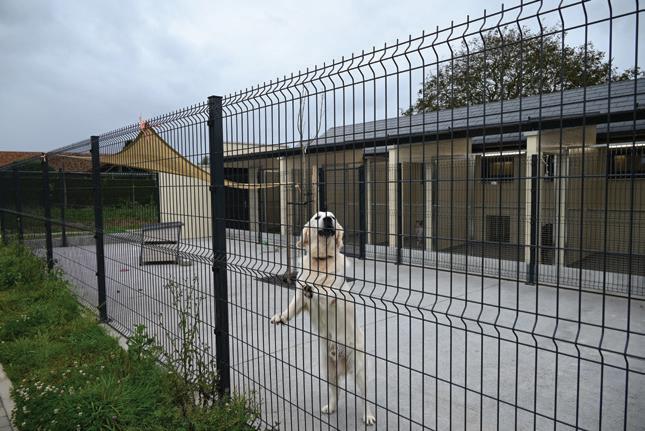
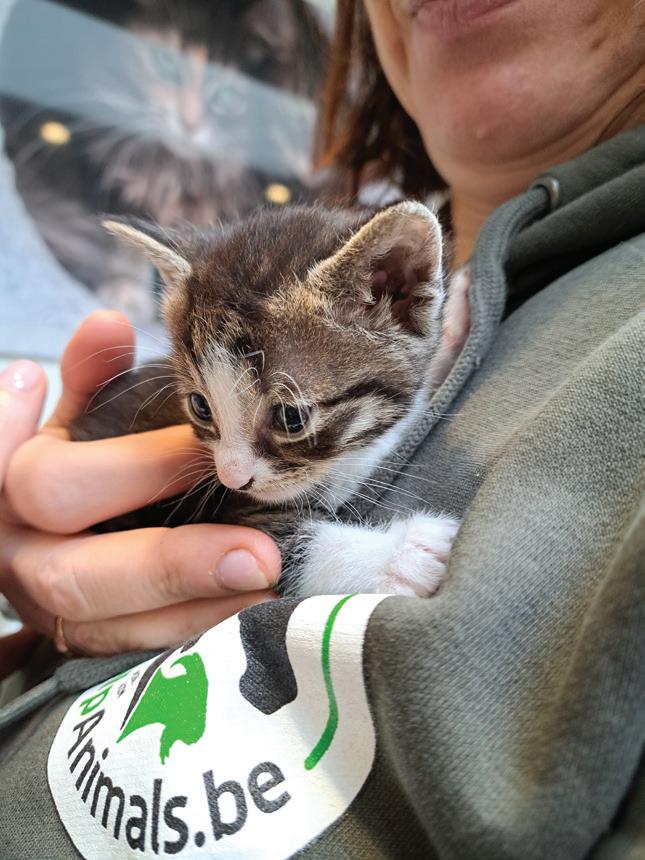
Places at shelters in Brussels are limited. At Help Animals, they are wary of passing on callers to other centres when there is no space for receiving an animal, as these too will be struggling.
over, likely to be accepted only by larger shelters outside the city. Indeed, the shelters will assess a prospective owner’s living situation before the signing of any agreement contract, which includes a follow-up visit several months to a year after the adoption.
However, both shelters give the impression that their processes and safeguards are working well, with Help Animals telling me that it’s extremely rare that an adoption doesn’t work out and the animal is returned, while Veeweyde says that fewer than a dozen of its around 400 adoptions a year are unsuccessful.
Several years ago, some friends adopted a dog from Help Animals. They tell me that their visit to the shelter was initially unpromising, with their ‘intrusion’ setting off a chain of mad barking. “There was none of, ‘Oh, I've fallen in love with this dog, and I'm going to take it home with me’. And we were on the verge of leaving when this bloke arrived with Ziggy.”
Ziggy, it should be explained, was a large, loyal and slightly loopy five-year-old Labrador cross and was being taken to the shelter due to the owners’ space and time limitations.
Knowing first-hand the dog’s history was reassuring to his new owners, and Ziggy became a beloved family member who lived to age 11. A match made in the stardust? As his designated ‘dogfather’, I should know: I looked after him on numerous occasions, even after he tried to get
into bed with me! The family have recently adopted two dogs, which came as an inseparable pair from Sans Collier near Perwez. Rearing a puppy would not have been appropriate as elderly parents are now part of the household.
Help Animals has planned a launch weekend for its new facility dedicated to horses in Waterloo in September. The event, which promises a tombola, food and refreshments, is a way of generating funding for the organisation’s activities. While a small proportion of the facilities’ several million-a-year budget is covered by adoption fees (around €165 for a dog or a cat), the centre – along with other such private shelters – depends on bequests, donations, sponsoring of animals and fund-raising initiatives. Along with Veeweyde, the centre will also occasionally receive state funding for specific educational projects.
Veeweyde also has several other sites outside Brussels catering for larger animals, including farm animals, which I’m told are the most likely animal category to have suffered from neglect – often driven by economic factors. In fact, the centre says the number of incidents requiring intervention has increased over the past couple of years. As I watch several rescued goats munch happily in a small field at the Anderlecht site I’m reminded of my own first family pet growing up in suburban England in the less enlightened 1970s. These goats can also be adopted, but will most likely live out their lives at the centre.
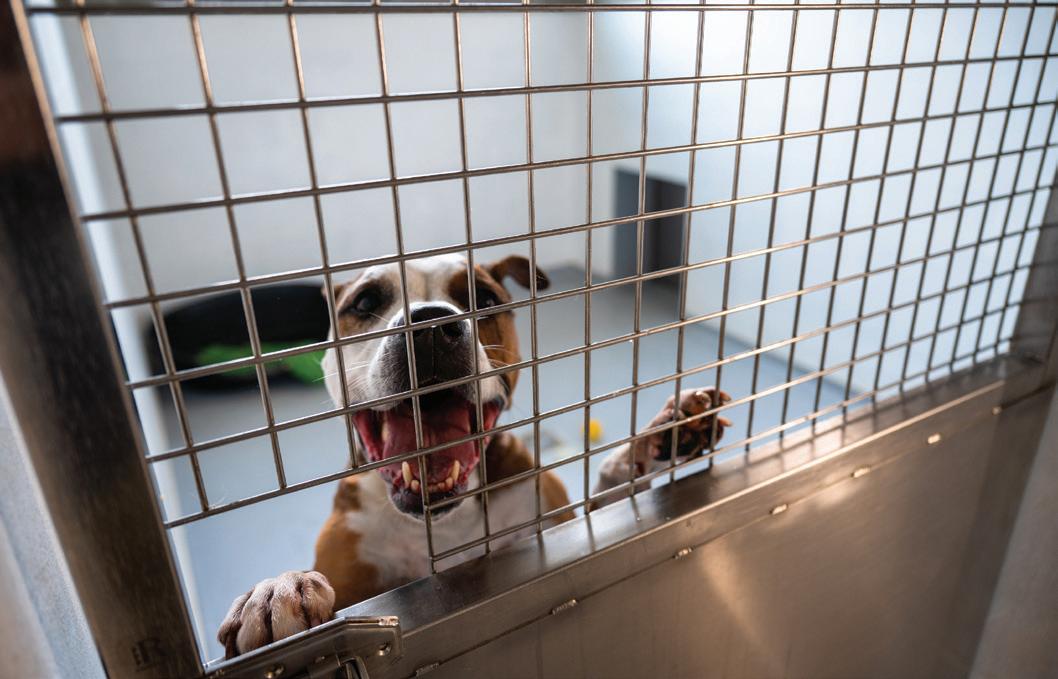

Embassy of the Republic of Azerbaijan to the Kingdom of Belgium and the Grand Duchy of Luxembourg, Mission to the European Union
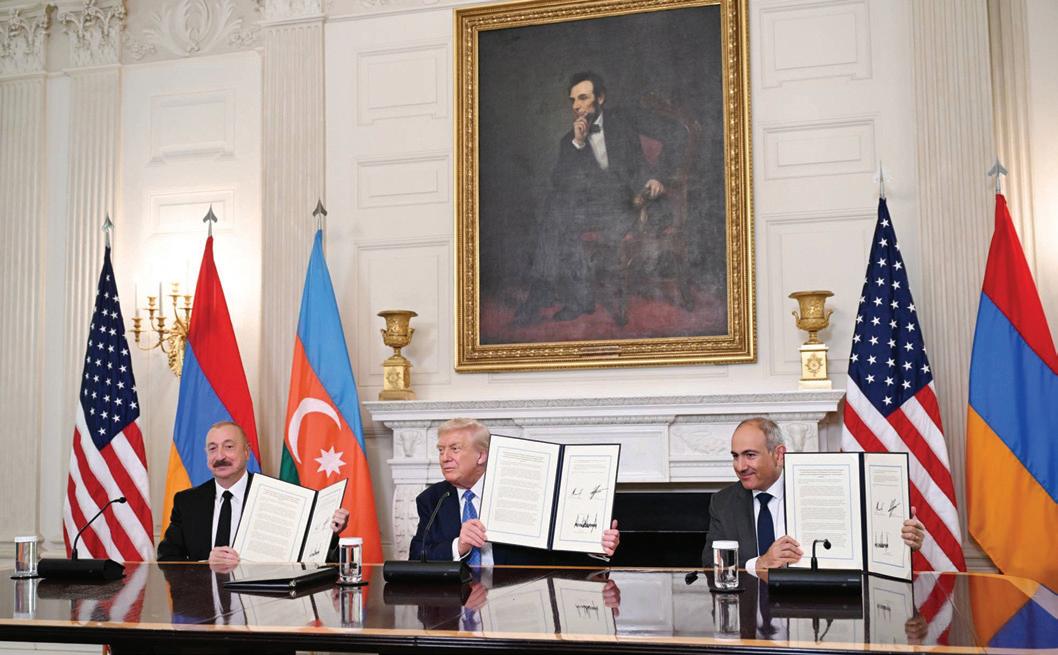
The Washington Summit of August 2025 between Azerbaijan, Armenia, and the United States marked a breakthrough in peace efforts, securing a framework for stability and regional connectivity.
Azerbaijan is entering a pivotal phase in its economic transformation. Long recognised as a hydrocarbon powerhouse, the country is now deliberately repositioning itself as a regional hub for green energy production, connectivity, and cross-border electricity export.
For European businesses and policymakers, this shift offers opportunities that extend far beyond oil and gas.
The Washington Summit of August 2025 between Azerbaijan, Armenia, and the United States marked a breakthrough in peace efforts, securing a framework for stability and regional connectivity.
This historic agreement opened the door for new infrastructure and energy corridors, linking Azerbaijan to Türkiye and ultimately to Europe through Armenia. Earlier, in late 2024, hosting COP29 in Baku showcased Azerbaijan’s renewable energy ambitions on the global stage.
The alignment of peace diplomacy with climate leadership has since accelerated flagship projects across the region, ranging from solar power plants to smart villages. Together, these developments have created a more predictable environment and expanded opportunities for European investors in green energy and logistics.
In the Agenda 2030 of the state of Azerbaijan, “Green Growth Country” has been identified as a National Priority.
On this strategic goal, in order to achieve the goal of a Green Energy Space, the feasible policy measures complementary to each other are being realised.
This Strategic Vision is valued as a real catalyst for SDG 7. “Affordable and Clean Energy”, SDG 13. “Climate Action” as well as SDG 17. “Partnerships for the Goals” within the framework of the United Nations Sustainable Development Goals.
Azerbaijan has pledged that by 2030, around 35.5% of its installed electricity capacity will be sourced from solar and wind power—an ambitious leap underpinned by plans for 2,250 MW of new renewable installations and the creation of 5 GW of export capacity via envisioned Caspian-Black Sea-Europe and Azerbaijan-Turkey-Europe corridors.
Parallel to this, the World Bank’s AZURE project will inject $173.5 million into strengthening Azerbaijan’s transmission infrastructure, enabling up to 1 GW of privately developed renewable power to be integrated into the national grid and paving the way for unlocking $384 million in private sector investment.
Looking further ahead to 2035, the government intends to raise the share of renewables in installed capacity to approximately 43%, driven by expanded wind and solar deployment and supported by emerging Green Energy Corridors linking Central Asia through Azerbaijan to Europe.
By 2040–2050, as these Green Corridors—including subsea interconnectors to Europe—materialise, Azerbaijan is poised to become a stable supplier of green electricity to EU markets.
This phased transition—from domestic build-out by 2030, through export corridor development by 2035-2040, to full green electricity integration with European grids by mid-century—provides a clear blueprint for European investors in renewable generation, grid infrastructure, and green-zone development.
Azerbaijan’s geography gives it a unique role as a land bridge between Europe and Asia, and its infrastructure projects are increasingly shaping regional supply chains. According to the Asian Development Bank, the South Caucasus is “a vital transit link for the Belt and Road Initiative and for EU connectivity strategies,” and Azerbaijan has placed itself
at the center of this geography.
The proposed Zangezur Corridor—a direct land route linking mainland Azerbaijan with its Nakhchivan exclave—would bypass traditional bottlenecks and create a seamless east–west connection, significantly reducing transit times for cargo moving between the Caspian, Turkey, and Europe.
The Baku–Tbilisi–Kars Railway, launched in 2017 and now undergoing capacity upgrades, strengthens Azerbaijan’s role as a transit hub by linking the Caspian to Turkey’s rail system and, from there, into the European network.
In parallel, modernisation of Caspian Sea ports, particularly the Port of Baku at Alat, alongside new logistics centers, has improved the efficiency of maritime trade, with capacity now exceeding 15 million tons annually, according to port authorities.
These projects create clear opportunities for businesses in logistics, warehousing, and multimodal transport services, as well as for investors in construction, engineering, and smart supply chain technologies. As the World Bank noted in its recent transport assessment, “investments in Azerbaijan’s transit infrastructure are critical for strengthening Eurasian trade integration.”
Solar Energy: Azerbaijan’s extensive sunny regions offer ideal conditions for large-scale solar projects. Investors have opportunities in photovoltaic installations and utility-scale solar farms, with several government-backed projects already under development. Wind Energy: Coastal zones along the Caspian Sea, such as Absheron and Shabran, have high wind potential, suitable for onshore wind farms and turbine installations. According to the Ministry of Energy, wind projects in Azerbaijan could reach 1,500 MW by 2030, creating significant opportunities for both engineering services and renewable energy equipment suppliers.
Hydropower: Azerbaijan’s river systems, including the Tartar, Aras, and Kur, provide viable sites for small- and medium-scale hydropower plants, supporting grid diversification and local electricity generation in newly developed areas.
Policy Support: The Azerbaijani government has introduced tax incentives, simplified permitting procedures, and preferential tariffs for renewable energy producers, enhancing the sector’s attractiveness to foreign investors. As the International Finance Corporation (IFC) has noted, “Azerbaijan’s renewable energy framework combines strong natural potential with a supportive regulatory environment, making it a compelling destination for European and global investors.”
Azerbaijan’s geography gives it a unique role as a land bridge between Europe and Asia, and its infrastructure projects are increasingly shaping regional supply chains.

Azerbaijan has pledged that by 2030, around 35.5% of its installed electricity capacity will be sourced from solar and wind power.
Wide-ranging stimuli are being provided to entrepreneurs who will operate in post-conflict economic regions becoming a new economic center of attraction in the renewable energy sector, such as tax and customs exemptions, wide application of preferential financing instruments, opportunities to benefit from loan and investment insurance mechanisms can be assessed as real policy incentives.
Several high-profile foreign companies have committed to renewable energy projects in areas which are central to Azerbaijan’s post-con-
flict reconstruction and energy expansion. BP (UK) is developing a 240 MW solar power plant in Jabrayil, Karabakh, representing an estimated $200 million investment. Masdar (UAE) is involved in solar projects in Fuzuli and Zangilan, leveraging its global renewable energy expertise to transform these regions into energy production hubs.
ACWA Power (Saudi Arabia) is developing wind projects along the Caspian coastline near Neftchala and Bilasuvar, while the Asian Infrastructure Investment Bank (AIIB) has financed $160 million for private-sector solar ventures in Aghdam and Khojavand. These projects highlight Azerbaijan’s potential to export green electricity to Europe while rebuilding critical regional infrastructure.

Azerbaijan, considering the existence of creative entrepreneurs, productive investments, development of innovation-supporting intellectual property and competitive markets at the core of the New Development Model, is openly expressing its interest in developing circular economy-based "smart" business models in the region. This open economic policy intention of Azerbaijan, which has already confirmed itself as a reliable energy partner, can be evaluated as
a decisive factor in rational decision-making for businesses.
Several high-profile foreign companies are playing a pivotal role in Azerbaijan’s green energy and reconstruction efforts. China Datang Overseas Investment and PowerChina Resources are developing a 2 GW offshore wind project in the Caspian Sea, while the European Bank for Reconstruction and Development (EBRD) and the European Investment Bank (EIB) have invested billions of euros across energy, transport, and digital infrastructure projects.
Connectivity projects are also regionally targeted to maximize trade efficiency. The Zangezur Corridor, linking Azerbaijan proper to its Nakhchivan exclave, is being developed as a direct land-based transit route, bypassing traditional routes through Armenia. The Baku-Tbilisi-Kars railway enhances trade and passenger movement across Azerbaijan, Georgia, and Turkey, while Caspian Sea port modernizations in Baku and Alat create efficient maritime gateways for Europe-Asia commerce.
Foreign investors are heavily involved: the European Bank for Reconstruction and Development (EBRD) has invested over €3.6 billion in 185 projects across energy, transport, and private enterprise. The European Investment Bank (EIB) lent €43 million to develop digital infrastructure in Baku and Sumgait, including the construction of new data centers. Chinese firms China Datang Overseas Investment and PowerChina Resources are developing a 2 GW offshore wind project in the Caspian Sea, further cementing Azerbaijan’s role as a regional energy hub.
These targeted investments create concrete opportunities for European companies in construction, logistics, renewable technology, and industrial development. According to the International Finance Corporation (IFC), “Azerbaijan’s renewable energy framework combines strong regional potential with a supportive regulatory environment, making it a compelling destination for European and global investors.” Focusing on coastal areas, key transit corridors, and post-conflict reconstruction, Azerbaijan is demonstrating that strategic location, green energy, and infrastructure development can drive sustainable economic growth.
By Seymur Aliyev Social Research Center Head of Socio-Economic Analysis Department
Foreign investors are heavily involved: the European Bank for Reconstruction and Development (EBRD) has invested over €3.6 billion in 185 projects across energy, transport, and private enterprise.
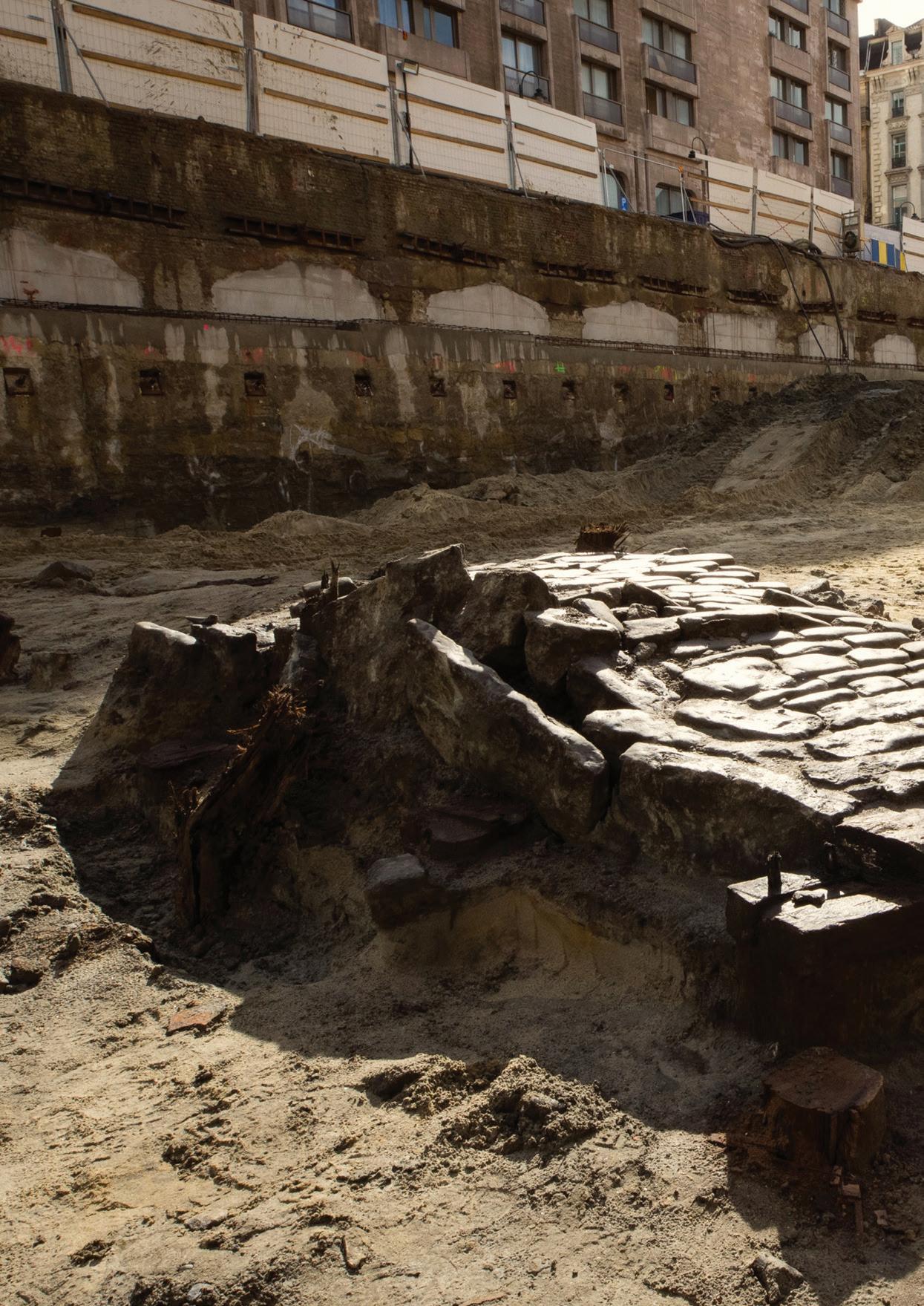
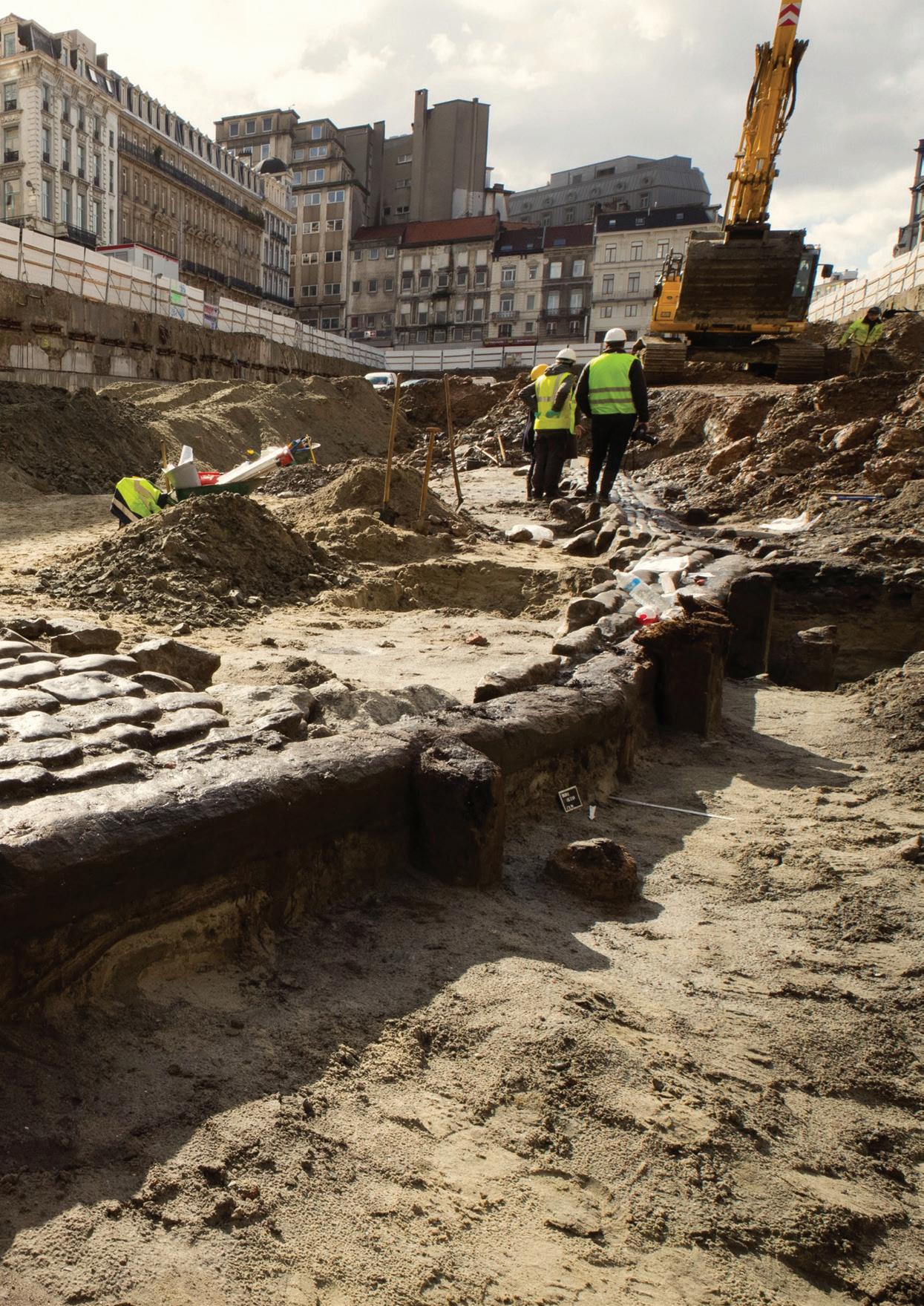
When Brussels broke ground for a sleek new city hall, it stumbled into its own origins: the buried remains of a medieval port, complete with phallic pottery, eel traps and a mammoth surprise. This layered excavation unearthed not just artefacts, but a city built on forgotten quays, vanished rivers and risky ambitions. As Frédéric Moreau writes, it offers a rare glimpse into the tangled, often chaotic story of what lies beneath the capital’s polished surface
Frédéric Moreau
The archaeologists found cannon balls used as ballast to stabilise boats, and bomb fragments from the 1695 French attack on Brussels that destroyed thousands of houses, including almost all of the Grand Place.
In February 2019, the largest ever preventive or rescue archaeological dig in the Brussels region began at the site of the demolished Parking 58 car park between the northern end of Boulevard Anspach and the church of Sainte Catherine.
Ancient documents showed archaeologists that this was the location of the original port of Brussels, arguably the birthplace of the city itself. The 1950s car park had replaced a vast covered market completed in 1874 as part of the scheme that buried the river Senne in the city centre. The market in turn had replaced the river and a fish market from 1825 – and photographs of both exist. But whatever was underneath them had not been seen since 1604 when a first version of the fish market replaced the river port, rendered obsolete by the recently-opened canal. A very busy site then, but one for which definitive records did not exist.
The 6,000 square metre site in question was to be a new headquarters for the City of Brussels, the first time it had moved home since the construction of the historic Hôtel de Ville on the nearby Grand Place in the
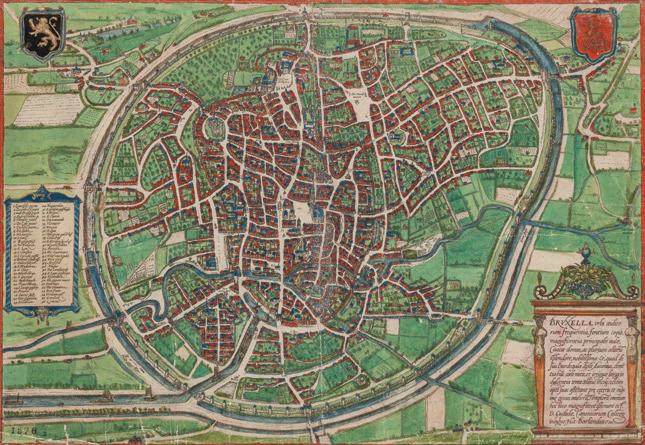
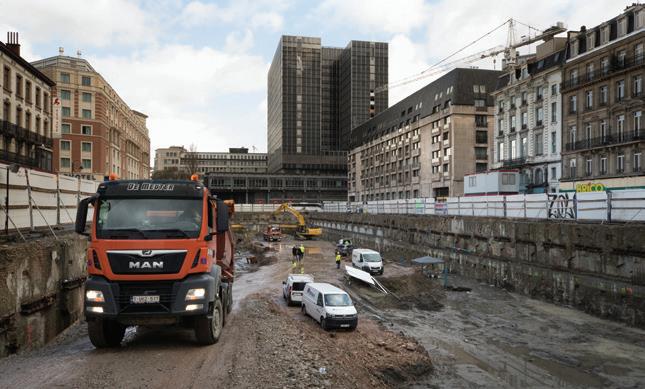
early 1400s. Plans for the glassy and gigantic Brucity, completed in 2023, included an inversion of the previous situation, with even more parking but this time buried underground over four levels. As 20,000 tonnes of debris were cleared from the Parking 58 site, the foundations of the covered market emerged, brick vaults and thick cast-iron columns.
But that building descended just six metres, sufficient to erase its immediate predecessors. The car park for Brucity required an additional nine metres of excavation. The 50,000 cubic metres of material displaced yielded finds of such richness that the archaeologists won an additional two months of exclusive occupation of the site, making six in all. They found not only the medieval quay but were able to sift through and analyse centuries’ worth of mud and sand layers coating the riverbed. From these, they extracted not only hundreds of once-cherished artefacts evoking everyday life in medieval Brussels but organic relics casting new light on how its citizens afforded these possessions.
The preliminary results of the dig were presented by one of the lead archaeologists in April 2025 at The Secrets of Underground Brussels, an event hosted by Urban, the regional agency responsible for urbanism, cultural heritage and urban renewal. As expected from a period when people routinely threw their trash in the river, finds included broken pots and worn-out poulaines (pointy medieval shoes) as well as valuables such as coins, perhaps lost when boarding or alighting from one of the boats also found broken up in the mud. Highlights included a valuable and unused 10th century millstone from the Eifel region of Germany, demonstrating the early reach of Brussels trade.
The team found seven wicker traps for catching eels and carp, two of them complete and unique in Belgium, and a collection of 14th and 15th century pilgrimage badges, used by religious travellers to access hospitality and as proof of a penance purged. Of extreme rarity, two depict a local shrine (Notre-Dame de Grâce de Scheut in Anderlecht), perhaps evidence of passenger traffic on the Senne at a time when mills just upstream at present-day Saint-Géry were putting an end to navigation beyond the ever-expanding port. The novelty knick-knacks and cheeky humour Brussels is known for to this day emerged from the mud in the form of a little red cooking pot decorated with a phallus.
The logistics trade can be dull, especially when your cargo arrives on a sluggish, meandering river and people appear to have diverted themselves with dice and chess pieces made from bone, also pulled from the
silt. Channels, weirs and diversions of the river upstream to harness its power for early industry slowed the flow further over the medieval period. This encouraged deposits of lighter material to accumulate at the port alongside heavier relics. The archaeologists found cannon balls used as ballast to stabilise boats, and bomb fragments from the 1695 French attack on Brussels that destroyed thousands of houses, including almost all of the Grand Place.
The multi-disciplinary team has years of data and samples to sift through yet (they carried away 567 buckets of mud), but one intriguing find is a particularly high concentration of vine pollen detected in the mud, suggesting the possible presence of vineyards either nearby or just upstream. Brussels may need to revisit its image of an unbroken history as a beer city.
The most tangible discovery at the Brucity dig was the impressive stone quay laid bare in the middle of the site and visible to passers-by over the summer of 2019. This finally gave the archaeologists the chance to compare reality with the (not always reliable) historic maps, drawings and descriptions their trade had been obliged to rely on since the extinction of the final living memories of the ancient werf
It appears to have been built in 12 phases between two bridges at the intersections of present-day Rue de la Vierge Noire with Rue de l’Évêque to the north and Rue du Marché aux Poulets to the south. No trace of the bridges was discovered (part of another bridge over the Senne further upstream is preserved in the basement of a hotel in Boulevard Anspach). However, stairs and the impressive remains of a 23-metre-long loading ramp survived for analysis. We now know that masonry was held up with wooden piles driven into the soft riverbank and built in stages over increasingly sophisticated timber frames. As technology progressed, the structure was repeatedly improved and extended with patches and alterations over the operating lifetime of the werf (mid-13th to 16th centuries).
This make-do-and-mend approach is written into the city’s history as many much-altered structures can attest. Looking down, the stroller in Brussels can see 19th century cobbles and even tramlines peeping through worn layers of tarmac coating. Piled up high, these often raise the roadway above the neglected pavements, which can receive as much rainwater as the drains.
The region has adopted a new practice in recent years, which it calls the facade à facade renovation, sweeping away the lasagne of layers along with obsolete street furniture across the entire width of the street and starting anew (often with a reduction in or elimination of parking spaces and with ad-
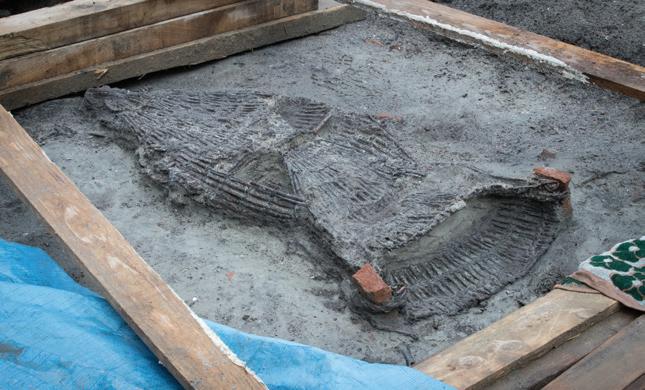
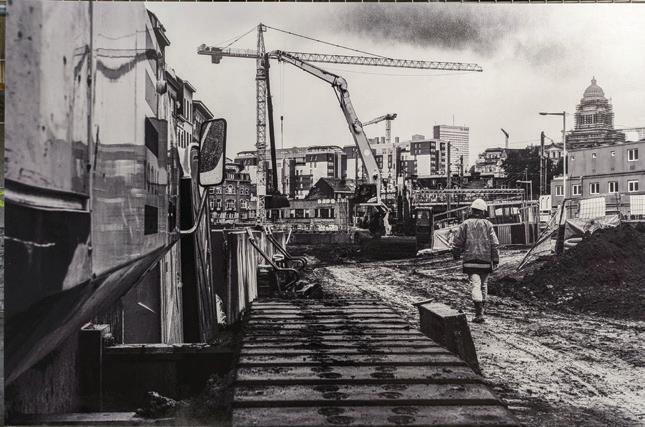
ditional vegetation to cool the environs and encourage rainwater run-off). A tabula-rasa approach was also adopted at Brucity, where the authorities opted not to retain the quay, the cradle of the city, in place as a carpark feature, as has happened with key archaeological remains in other European cities. Seven large blocks of masonry were sawn off and carried away for further study but the archaeologists who excavated the port were the first to do so and will also be the last. At least now we have the photographs.
Speaking at The Secrets of Underground Brussels, Ans Persoons, the region’s acting Secretary of State for Urban Planning and Heritage, observed that the city’s hidden depths hold more surprises to follow the Brucity discoveries. “Archaeology is a very accessible approach to Brussels history, very physical and every time we open the ground people come to peer in the hole,” she said. The authorities also know that the media are drawn to underground Brussels. New sinkholes in the capital pepper newspaper
Archaeology is a very accessible approach to Brussels history, very physical and every time we open the ground people come to peer in the hole.
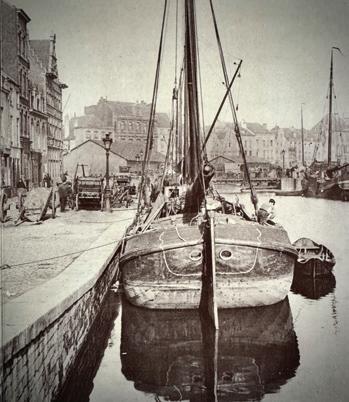
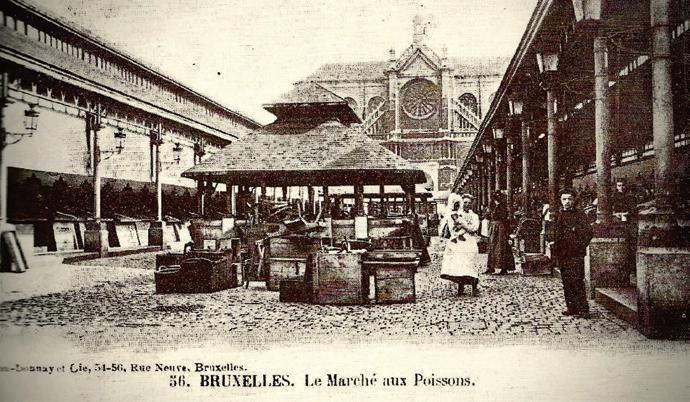
New sinkholes in the capital pepper newspaper archives like costume changes for the Manneken Pis.
archives like costume changes for the Manneken Pis, and major infrastructure works bring the prospect of a private visit to the city’s hidden entrails, a delight to journalists through the ages.
In 1909, national daily Le Soir toured vast, forgotten galleries uncovered by works on the city’s second infrastructure priority in the 19th century after the Senne-covering scheme: taming the fearsome climb between the lower and upper towns. A vast and ancient quarter just below and to the west of the Park of Brussels was razed in preparation for the wide and car-friendly new curved street, Rue Courbe, which is now Rue Ravenstein. A ramp propped up on concrete piles, it traced an arabesque between the future Central Station site and Place Royale to deliver a gentler connection between the traffic networks of the downtown and the wealthy eastern suburbs.
The new road spanned the valley of a buried tributary of the Senne, the Coperbeek, and workers reportedly “floundered in filthy, liquid mud,” which had to be scooped out. At the bottom of the site, the project created cavernous new concrete spaces 6.5 metres tall under the roadway and a deep-set plot for the future Bozar cultural centre. At its summit, the destruction of rue Isabelle, a 17th century access road between the ducal residence and the Collegiate church of Sainte Gudule, uncovered entrances to forgotten passages that had once led to the palace (destroyed by fire in 1731 and built over by Place Royale).
This was a homecoming gig of sorts for Le Soir, which was founded as a freesheet in Rue Isabelle in 1887. Its reporter was ushered, entranced, through a gallery preserving finely carved architectural details that led under Rue Royale to a spiral staircase beneath a grating in the pavement by the Hôtel de Belle-Vue (now BELvue museum). A scoop of sorts, as this route would form the backbone of the subterranean Coudenberg attrac-
tion, opened 91 years later in 2000. Today’s intriguing hole in the ground can be tomorrow’s top-flight tourist draw - but usually they are just resealed.
In 1996, urban explorer (subtérranologue not speleologist, he insisted) Guy Deblock, President of the Société de recherche et d'étude des souterrains (Soberes) received the keys to the basement of the 1924 Justice Ministry on Boulevard de Waterloo next to the medieval gate Porte de Halle. From there he accessed a passageway and shuffle, Shawshank-like, through the mud along a well-preserved stone gallery an astonishing 150 metres long. Professor Pierre-Paul Bonenfant, then lead archaeologist at the Coudenberg site, believed it served to prevent mines being placed beneath the long-vanished city ramparts above. It is yet to be included in the city's annual Heritage Days festival of unusual visits.
Fired up by the discovery, Bonenfant also speculated over the possibility of excavating major traces of the Monterrey Fort in SaintGilles, a Spanish-era (17th century) addition to the defences of Brussels which, like those of the city’s port until 2019, remain to this day in the realm of speculation and ancient documents. Only local street names recall its presence (Rue du Fort, Rue des Fortifications).
As Persoons said, underground Brussels may have more secrets in store. Le Soir’s 1909 report on the proto-Coudenberg attraction concluded with an enticing list of locations suspected of harbouring mysterious traces of the second city. Notable was an underground passage linking Rue des Alexiens with the ruins of the 11th to 12th century city Steenport Gate or Anneessens Tower, once much visited by the curious but whose entrance was walled up in the 1850s by a homeowner sick of urban explorers. Deblock tried to access it a century later. Whether he succeeded is a mystery perhaps resolved by a visit to the
Bibliothèque du Patrimoine Souterrain, the library of underground heritage in Namur, which specialises in archiving these esoteric spaces as yet untapped for tourist potential.
Whether of human or natural origin, much of the complex landscape (and cityscape) met by visitors to the Brussels region two centuries ago has been filled in or papered over amid the process of creating the modern city and with it the secret spaces beneath. The 1820 guide, A New Picture of Brussels and its Environs by JB Romberg painted a picture of the city on the cusp of the Industrial Revolution, shortly before the process accelerated:
"Brussels is situated in a delightful valley, watered by the river Senne which crosses the city; it is surrounded by fertile heights which gently slope towards the river, and dividing themselves into small and irregular branches, form a romantic scene of hill and dale"
While that romantic scene may have been almost entirely eclipsed, its natural elements have been tamed rather than eliminated. The precipitous slope downtown from the park, which in 1820 was “very irregular and intersected with ravines,” has been disguised by the buildings and roads whose basements and foundations plunge many metres into the medieval street level but whose street-level avatars were scaled to give the illusion of an ordered succession of facades, demonstrating modernity’s capacity for the effortless domination of nature. Likewise Ave Louise, where two kilometres of rolling countryside was levelled, infilled and bricked over to conjure up an ornate planted corridor of bourgeois order but where side streets straddle hidden gullies into which cellars can descend over three storeys.
As well as natural heritage, A New Picture of Brussels evokes a largely-forgotten past of human intervention, where in future suburbs quarries 20-30 metres deep fed the expanding downtown’s hunger for building material. In 2023 a resident in the south of Schaerbeek noticed a hole the size of a basketball hoop in his garden towards which the patio of the house next door was beginning to slide. With the insurance company, the local commune and the region unable to help, Xavier Devleeschouwer, an expert from the Geological Survey of Belgium, was called in and warned the hole could sit above a vast cavity.
Devleeschouwer knew this because exactly a century ago, engineers digging a railway tunnel here for the new line connecting Schaerbeek with Halle had to pause work after encountering a network of subterranean galleries. After penetrating a primaeval layer of marine silt containing oyster shells and shark teeth, they discovered an empty bottle and a bucket handle 21 metres below the surface and realised they weren’t the first humans down there.
The line had been routed through a workedout quarry (for Lede stone, prized for its sculptability and used notably in the building of Brussels cathedral, three km away) of uncertain date and unmarked on any map. Le Soir was invited to visit the tunnel in December 1925 and dedicated two columns above the fold on the front page to assure the public that a new method using poured concrete instead of bricks would solve the challenge. Construction of the railway resumed without preserving records of the location of the quarries and, as Devleeschouwer put it: “We have no idea about their size, the direction they take or the height of these galleries.”
Surprise quarries aside, the surface of the Brussels region is first and foremost a hydrographical puzzle traced by nature. It was waterways, now largely buried, not least the Senne itself, that first attracted humans to this zone. They irrigat-
Today’s intriguing hole in the ground can be tomorrow’s top-flight tourist draw - but usually they are just resealed.
ed crops (perhaps grapevines) and enabled their export in exchange for other goods, creating the need for a port. Later, they would be harnessed to drive mills, notably along the Senne at SaintGéry, where the river was dammed, diverted and manipulated to produce flour to feed the growing population and later to press cloth, an early value-added export.
Such interventions marked the beginning of urbanism in the region and the process of the city eating its own landscape, covering it in houses and streets. An expansion largely financed by demand for luxury goods sparked by the ancien régime court at Coudenberg.
By the late 18th century, the no longer navigable part of the Senne upstream of Saint-Géry along present-day Boulevard Lemonnier and Ave de Stalingrad was given over to laundry… and leisure. The city’s first public baths opened in 1768 on Rue du Terre Neuve. Here, large gardens dotted with private bathing huts offered shaded walks along the Senne amid the wash
houses. The acceleration of technology soon brought factories (and pollution) to this quieter end of the city. A textile-dyeing plant opened on a riverside site near the present-day South Station/Gare de Midi. The arrival of steam power led to the creation of riverside indienneries (manufacturing printed cotton fabrics for export) along the future Ave de Stalingrad and then their replacement by the first Gare de Midi. It was located at present-day Place Rouppe until the 1860s and the unusually-wide avenue recalls its trackbed.
Buried watercourses, hidden quarries and past uses such as those leaving polluted soil: these are ingredients for the complete data set developers need to attack a project with minimal risk. No such systematic, multi-layered, four-dimensional record exists as yet but one is under preparation.
The Secrets of Underground Brussels event continued with a presentation of the Archisols project (for Archives des Sols or ground archives). Funded by the region and working in partnership with academia and local authorities, the scheme brings together experts from pedologists to genealogists. The aim is to build an online platform assembling data scattered across state and local archives across the centuries, matching them up with resources such as old maps, historic building permits, family records and even human memory to create a plot-by-plot guide to constructability across the region.
As industry retreated from the Brussels region, to be replaced by roads, houses, offices and commerce, the process of smoothing out the cityscape accelerated. The ravines of 1820 have long since vanished but even in the postwar period, so too for example have the remaining inner-city branches of the Senne, disappearing under the expanding stone and concrete carapace of the modern city. This process saw the impermeable surface of the region go from 26% of the total in 1955 to 53% by 2022, adding rainwater accumulation to any existing issues with low-lying sites. As Archisols’ coordinator Julie Goffaux explained, developers "often turn up with their permit in place, start digging and find something that delays work, bringing exorbitant costs.”
In February 2022, the first alarms were sounded over the region’s flagship infrastructure project, the conversion of the subsurface tram line under the 19th century central boulevards into a full metro service. A notoriously tangled junction at the southern end meant the return of trains to Ave de Stalingrad but this time underneath, bypassing the bottleneck to create a wide straight tunnel for fast services. The Brussels Times was invited underground to tour the works, where excavations had uncovered the spectacular remains of a mammoth which expired on the banks of the Senne at least
11,000 years ago (This is not the first time that mammoth bones were dug up during metro work: in the 1980s, 30,000-year-old fossils were found, which are now on display in a glass showcase in South Station’s lower level).
To connect this section to the existing route under the boulevard, an additional tunnel was planned under the historic Palais du Midi, built in the 1870s at the same time as the covered markets whose foundations emerged at the Brucity dig.
As at Schaerbeek a century earlier, the rail engineers hit an unexpected obstacle and had to rethink their technology. The elephant (or mammoth) in the room was the soil under the southern section of the Palais du Sud, built on a former bend of the Senne. It was far wetter than test probes had appeared to suggest, too wet to sustain a conventional tunnelling technique. Instead, the Palais du Midi would be demolished leaving just the walls as a gesture to heritage and the tunnel’s structure would be inserted from above. The €700m budget for the central section of Metro Line 3 swelled to over €1.3bn.
With the planned northern extension of Line 3 to Bordet already mothballed, at the time of writing completion of the central section also appeared to be in doubt. A €477m loan for the project from the European Investment Bank was insufficient, given the state of the region’s finances, it was argued. The outgoing Brussels Environment Minister Alain Maron called in May 2025 for a halt to work and to develop cheaper surface transport instead. The Federal Minister of the Interior Bernard Quintin (in charge of Beliris, the state agency for infrastructure improvements in Brussels) suggested a pause in the work lasting 5-10 years.
We have been here before. Work on the north-south metro line under the central boulevard of Brussels was already “paused” in the 1970s. As is obvious at the vast Bourse station, very long platforms were designed for full-scale metro services and “temporarily” shortened and lowered for pre-metro (tram) use to save costs. A century ago, the forthcoming Schaerbeek line was designed to carry freight only, boosting passenger capacity on the western and eastern lines around the city. There were calls to scrap work on the useless indulgence of a northsouth rail junction passing through the centre amid the crisis in public finances.
While budget overruns are endemic in large urban infrastructure projects, arguments will persist over who is to blame for the miscalculation at the Palais du Midi. It is also clear that the Archisols project could grow into a powerful tool, lowering the risk and cost of development in Brussels, but not all of the risk. Asked to comment on the fiasco of Line 3, Professor Devleeschouwer said: “We have data from 10,000 drillings throughout the Brussels region. That
seems a lot, but in such a riverbed, with unpredictable deposits, that is actually very little. You often cannot really say what is between those drillings.”
At present, there is no mood to take risks in Brussels. In the absence of a functioning regional government to negotiate the fate of Line 3 with the Belgian state, economic life is paralysed and everyday life remains blighted in one of the poorest zones of the downtown, where traders on Ave de Stalingrad have operated out of stacked portacabins since the beginning of the decade.
The transformations of central Brussels in the 1870s were also a great risk. Mired in corruption, plagued by indecision and marred by both overreach and under-ambition, they left a distinctly mixed legacy. While the modern sewer system was a triumph, the grand Paris-aping buildings were a failure, above all those of the covered markets. Their demolition and replacement by the unloved Parking 58 and its subsequent demolition at least gave us a brief glimpse of the birthplace of the city. The success of the pedestrian zone however appears to offer the boulevards a second chance, encouraging suburbanites, day-trippers and visitors from abroad to re-engage with a previously blighted stretch of the centre. Meanwhile, a quick decision is needed at the other end of the boulevard. Wags have suggested converting the orphaned tunnel at Stalingrad into a huge swimming pool. Perhaps it's time to take the risk, complete the planned Toots Thielemans station, spreading that renewed footfall to the south of the centre and move on to the glaring shortcomings of the South Station. The fascinating discoveries at the excavations of the medieval port are a reminder that Brussels owes its origin and prosperity to activity driven by commerce and communications with its region and further afield and that perhaps its prospects also lie partly underground.
Wags have suggested converting the orphaned tunnel at Stalingrad into a huge swimming pool.
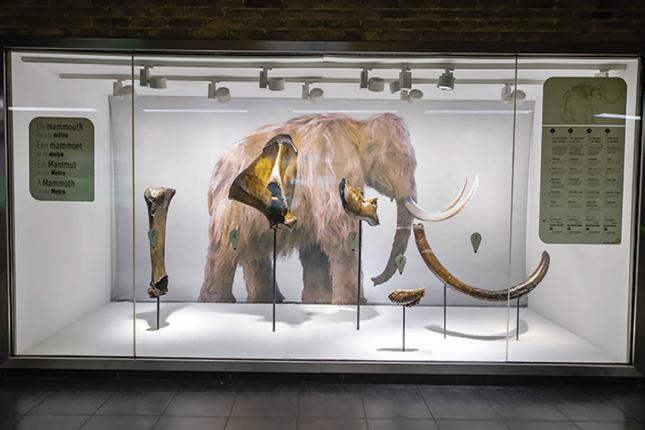
Mammoth remains found underground, now on display in Gare du Midi
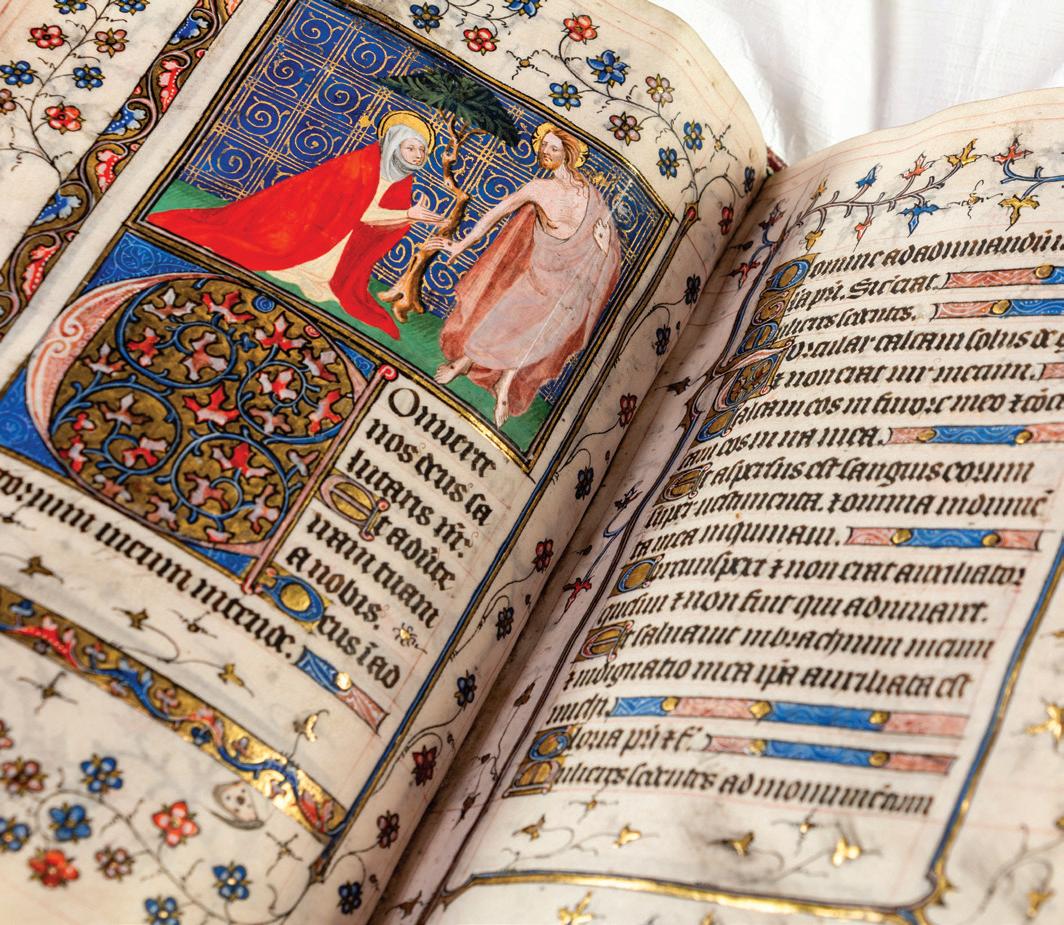
Amid the opulence of 15th century Bruges – a city alive with trade, textiles and the patronage of dukes – the Book of Hours became an unlikely literary sensation. Compact and portable, yet often richly adorned, these devotional manuals bridged private piety and public prestige. A new publication, Books of Hours, Books of Hope, curated by the Public Library of Bruges, explores these artefacts not just through scholarship, but through sight.
Originally designed as simplified versions of monastic liturgy, Books of Hours offered
a daily rhythm of prayer to the Virgin Mary and other sacred figures. They sanctified the hours from Matins before dawn to Compline at nightfall. But as the images on these pages show – from intimate miniatures of Christ’s Passion to the elaborate trompe-l’oeil rosary beads inked into margins – their purpose extended beyond devotion. The illuminations would have guided prayer and reflected pride. These books were expressions of personal identity, talismans of protection, and, for the wealthy, status symbols as finely crafted as jewellery.
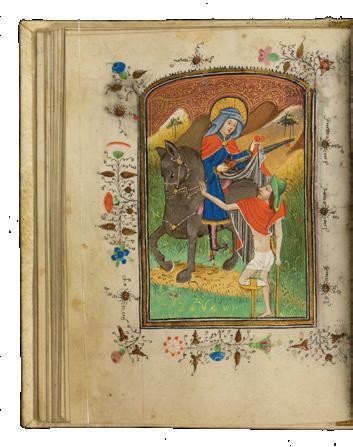
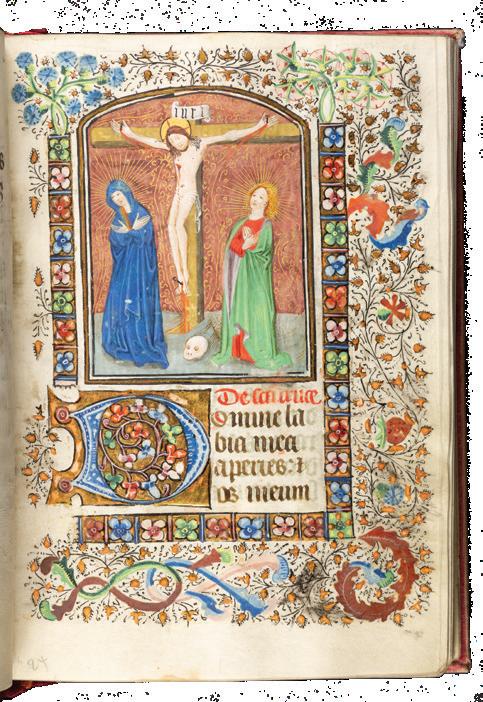
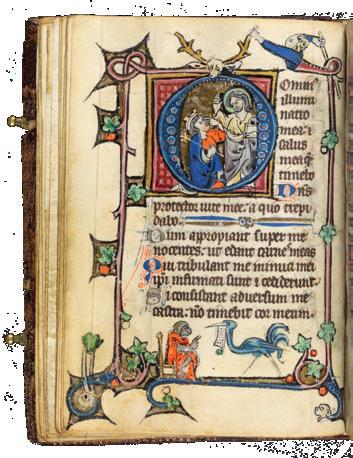
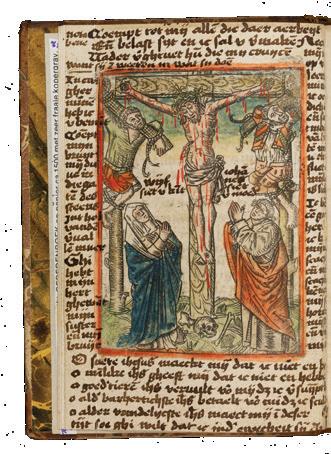
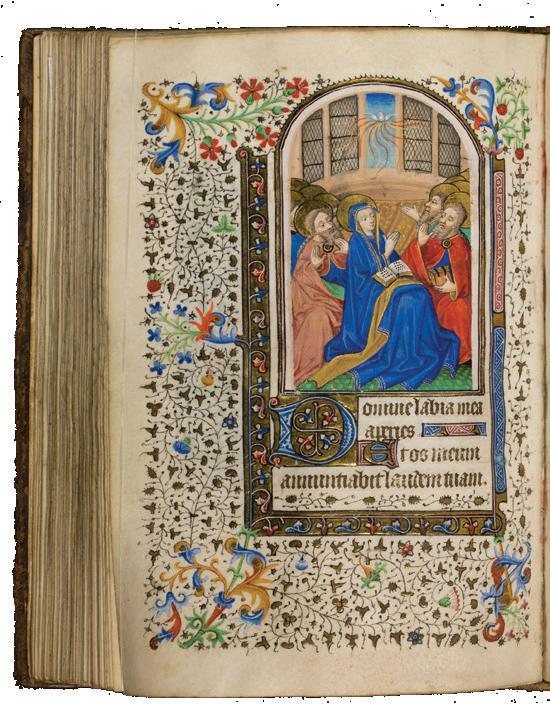
Bruges was a powerhouse in this trade. Its Guild of St John the Evangelist brought together scribes, illuminators, binders, and stationers into a bustling manuscript industry. The modular production methods illustrated in the accompanying photos – with miniatures, text blocks and decorative borders created separately and later assembled – reveal a surprisingly modern efficiency. Among the most touching details in the book are signs of use: wax stains, thumbed corners, and inked marginalia that turn each copy into a lived artefact.
One manuscript, shown here with haunting clarity, records the deaths of seven children in one family – stark reminders of medieval mortality. A note from a mother, Dorothea, mourning her infant daughter, brings a human voice across six centuries. This visual evidence complements the text, showing how Books of Hours functioned not only as guides to salvation but also as registers of sorrow and hope.
Importantly, these images also illuminate the roles of women – as readers, scribes, and even illuminators. Women made up nearly a
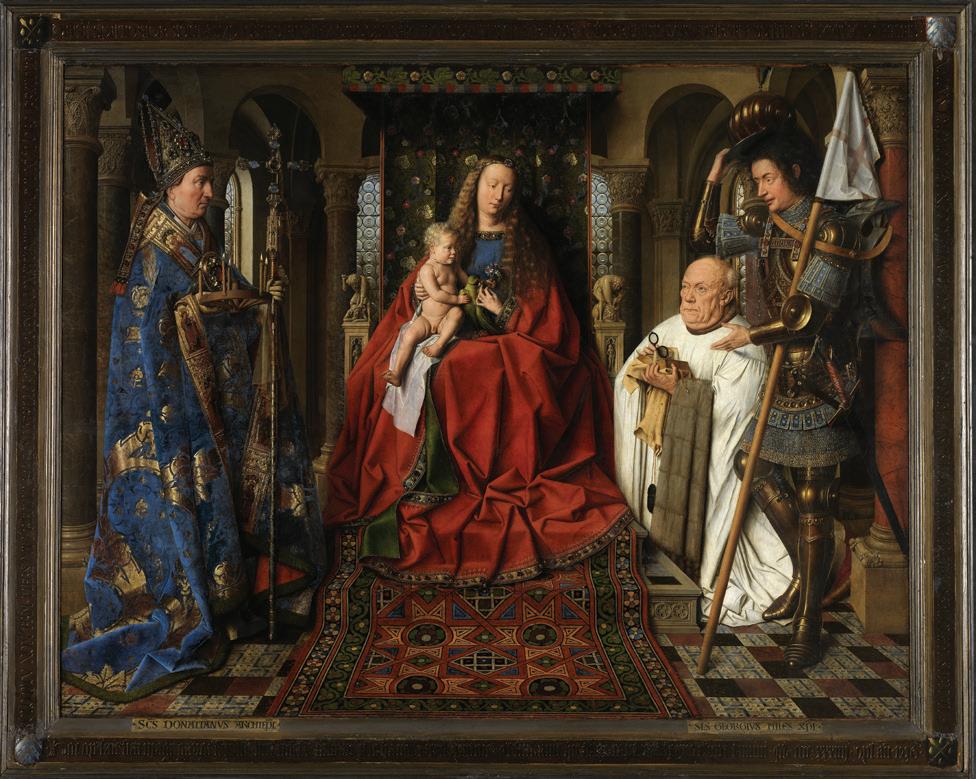
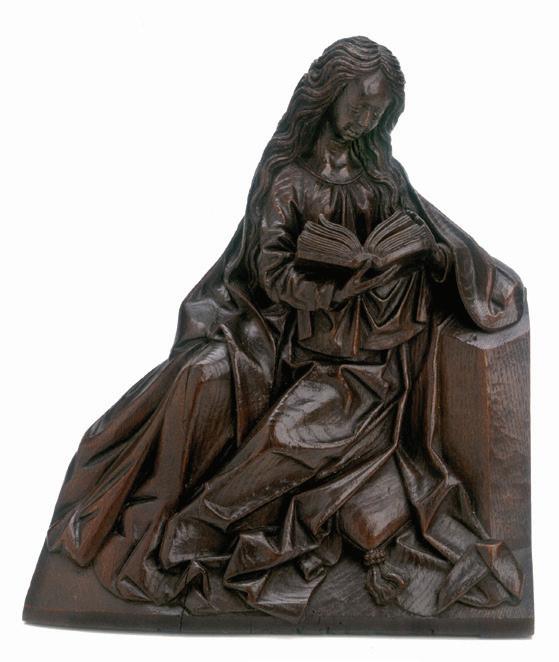
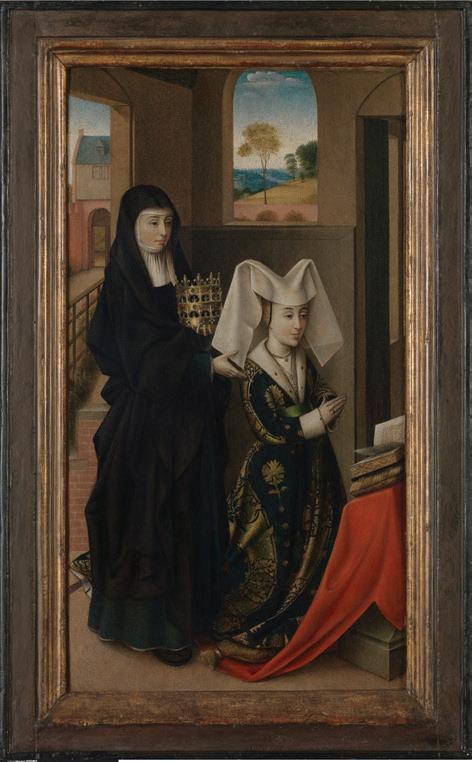
quarter of the Bruges guild’s members, and in several images, we glimpse the handiwork of female artisans, including the illuminator Kerstinekin Yweins, who ran her own workshop. Other folios show the devotional choices of female readers: saints associated with childbirth, intercessory prayers to Mary, and notes written in a woman’s hand.
Even the margins tell stories. Drolleries – comic and sometimes irreverent images of monkeys, snails or peasants – play along the edges of sacred texts, revealing a culture that embraced both solemnity and satire (see pages XX on the rabbits in medieval marginalia). These juxtapositions, visible in the pages accompanying this article, reflect a worldview in which joy and faith were not contradictions, but complements.
In a world flooded with digital content, the Books of Hours offer something defiantly tactile. Their illuminations, so vividly reproduced here, invite not just reading but looking, feeling – remembering. They are, in every sense, books to be held.
Leo Cendrowicz
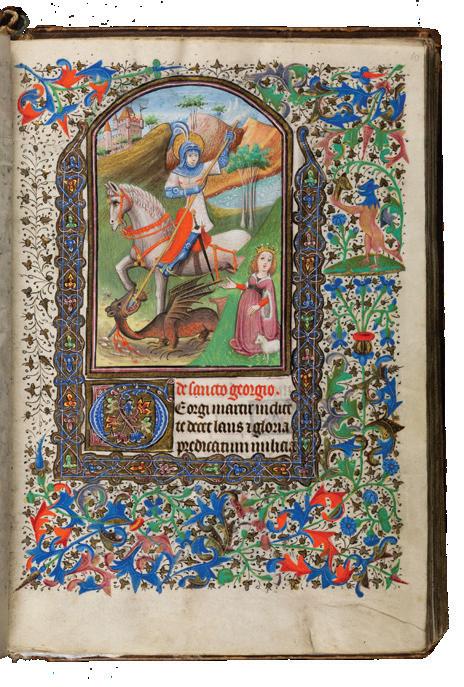
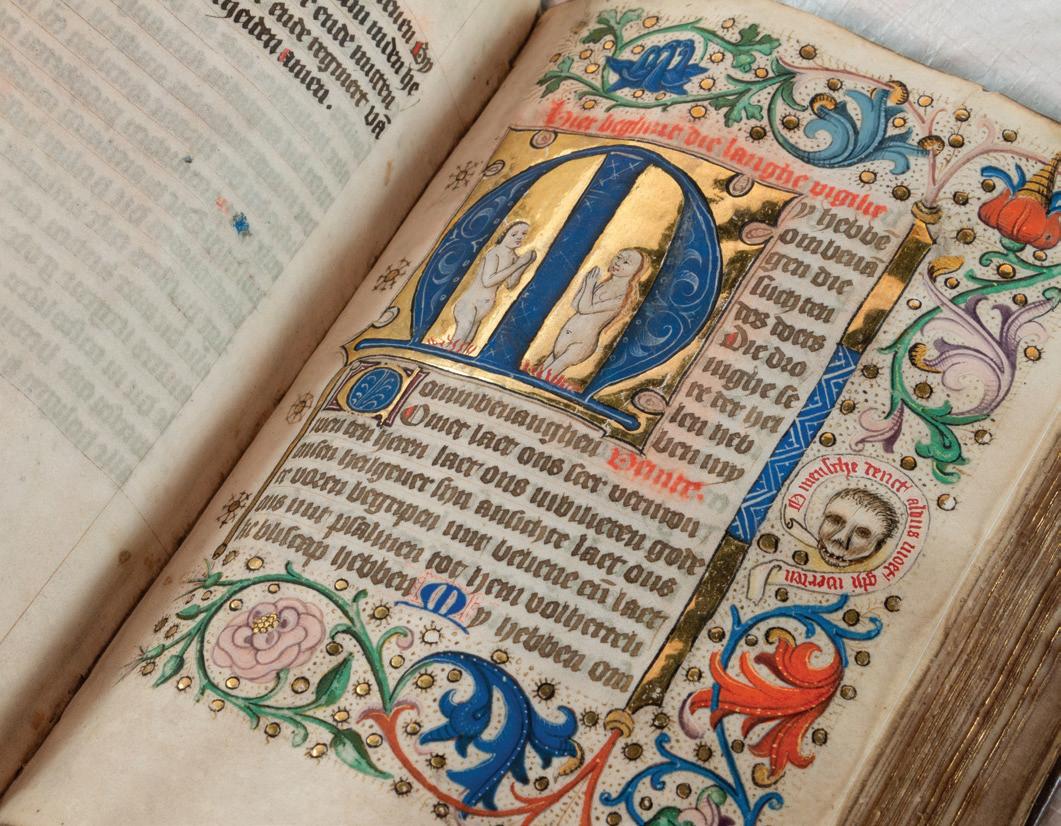
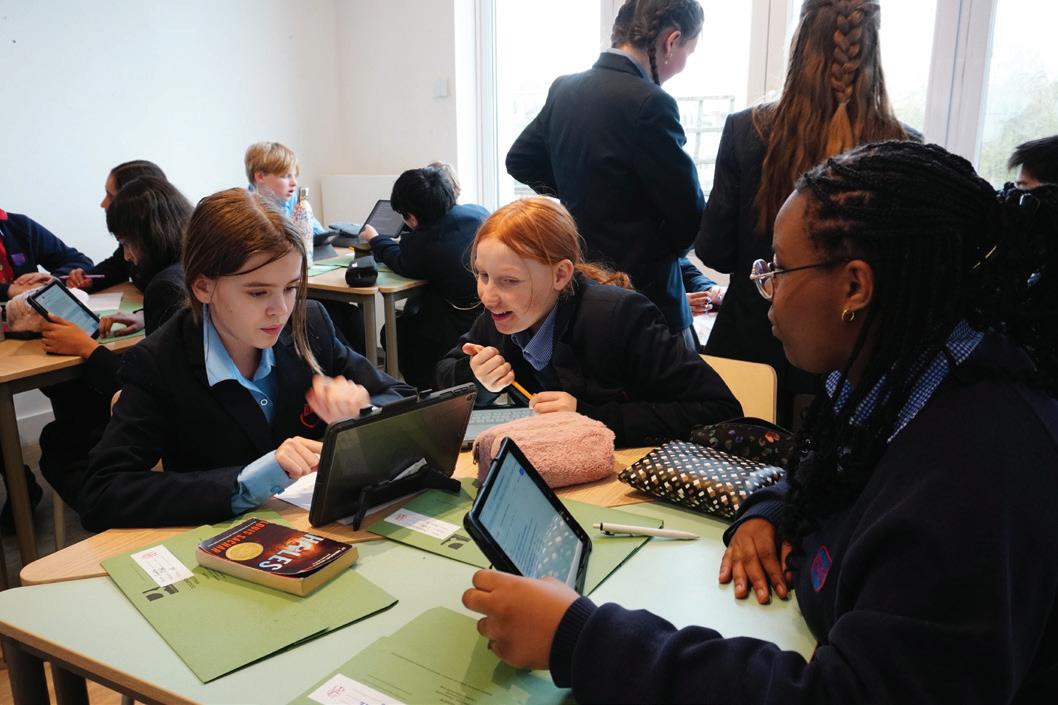
Three years ago we embarked on the ambitious plan of adding five additional year groups to our 3-13 school, this plan in itself following the introduction of Year 7 and 8 cohorts back in 2019. Now in Autumn 2025, we are already at the half-way stage of our development to being a true 3-18 all-through school, albeit one in a vastly different mould, with our secondary classes benefitting from a true sense of continuity from the year group before.
In so many ways this evolution has been a very different one to many schools - by adding a single year group at a time we have enjoyed the luxury of steadying continuity between year groups, eschewing the somewhat anachronistic polarity of 'primary' and 'secondary', sadly so often the case in other schools. We have truly been able to build on the 30-year ongoing success of our junior school provision, adding extra layers of academic rigour, challenge and adventure to the traditional broad and balanced, holistic BJAB diet of educating ‘the whole child’.
And now we approach the most exciting stage yet - in a year's time we plan to offer the Inter-
national Baccalaureate Diploma, as a current IB candidate school. As an experienced IB teacher and examiner I sensed that the IBDP would be the perfect fit for BJAB’s curriculum, based on the National Curriculum of England and Wales. Following extensive discussion with school stakeholders, the process continued with an initial 3-day course in Berlin with other school leaders, instigating a school journey involving extra resourcing, staff professional development and curriculum provision.
The ultra-committed and inspired owners of the school, the De Maertelaere family, have backed the school vision most fully, adding experienced international teachers from all around the world, to complement the existing staff, many of whom have taken on additional responsibilities and training to supplement their outstanding academic qualifications. Resisting the lure and repeated interest of many an educational group, BJAB stands proudly independent, offering a unique experience in Brussels, blending successfully the best of the National Curriculum of England & Wales, alongside Cambridge Checkpoint tests in Year 9, the IGCSE in Years 10
& 11 and from 2026 onwards the IBDP.
We take with us too a hugely successful Independent Schools Inspectorate/British Schools Overseas inspection in May, as one of only three schools to subject themselves to such scrutiny and validation in the whole of Belgium, a standard of inspection which equates us to all independent day and boarding schools in the UK. Buoyed on by this and by our successful application to become a Global member of Round Square, with its focus on character education, following a successful two-year candidacy period, we are confident, yet not complacent, about the remaining steps to be included before our IBDP accreditation visit, early in 2026.
Six of our lucky Year 11 students are about to head to Dubai, along with me and our Round Square rep, Lauren Payne, where they will meet with 1400 students and teachers from the other 264 Round Square schools from all around the world, discussing a whole host of topics linked to the Round Square Ideals of Internationalism, Democracy, Environment, Adventure, Leadership & Service, making life-long friendships and committing to positive action in the future.
We are launching a Sixth Form experience unique in Brussels - an excellent value, academically rigorous school programme for years 12 and 13, in which we will strive to prepare fully our students for the uncertain world of the future. We will be offering an unusually broad range of subject options, taught by well-qualified and experienced IB teachers from Europe and around the world. In addition, BJAB Sixth-formers will have the opportunity to benefit from the Gold Duke of Edinburgh award programme, myriad Round Square activities as well as the traditional elements of the BJAB diet of trips, sports fixtures and enrichment activities, all backed up with outstanding levels of pastoral care and tutorial support.
At this stage we are delighted to be able to launch our Sixth Form assistance programme, with scholarships and bursaries available for strong candidates who would benefit from a BJAB education. If you are keen to challenge yourself to gain a strong IB Diploma result, contribute to a Sixth Form community based on fairness and equality and to challenge yourself in so many new areas, get in touch with us at admissions@bjab.org.
We would be delighted to go through our bespoke range of Personalized IB DP Options with you. Particularly exciting is the opportunity for bilingual students to complete a hugely respected Bilingual Diploma – quite an accolade and highly regarded by the world’s leading universities. In this way our graduates of 2028 are likely to espouse the true virtues of our tagline of ‘Education For Life’, preparing young people for enriching, challenging and ultimately successful lives in the future.
Our aim is to develop learners who have a true sense of values, engendered by our own set of BJAB values, enhanced by the IB Diploma Learn-
er Profile. Join us where well-being, self-expression and academic success go hand in hand. We are truly excited at what our first Sixth Form cohort is going to achieve and invite you to join us. Whilst developing upwards to be a true 3-18 all-through school, BJAB remains faithful to its traditional elements of offering a bespoke education, tailored to the needs of the individual child. We look forward to welcoming you to our exciting school and to discuss with you your potential. With over 300 students and 41 nationalities BJAB is the place for your child to find their place in an increasingly complicated world as a truly global citizen.
Our next Open Day is on Wednesday, 8th October - do come and see what a BJAB education has to offer and see for yourself the tremendous hunger, enthusiasm and mutual support between staff and students that exists at BJAB.
Come and speak with your peers, teachers, adults or other parents: www.bjab.org/openday
Francis Retter, Headteacher, BJAB
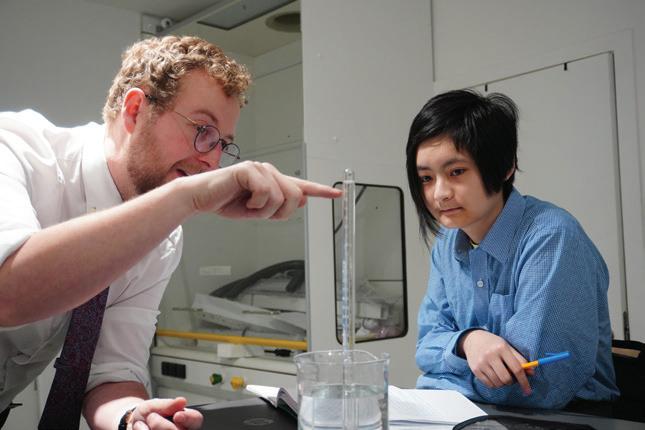
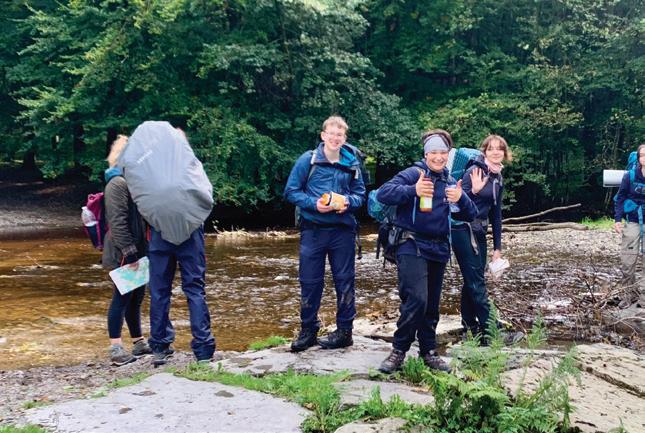
From provincial gyms to Instagram feeds, Colin Delfosse’s lens captures Belgium’s bodybuilding revival—where muscles, image culture and ambition collide in a new era of sweat and spectacle
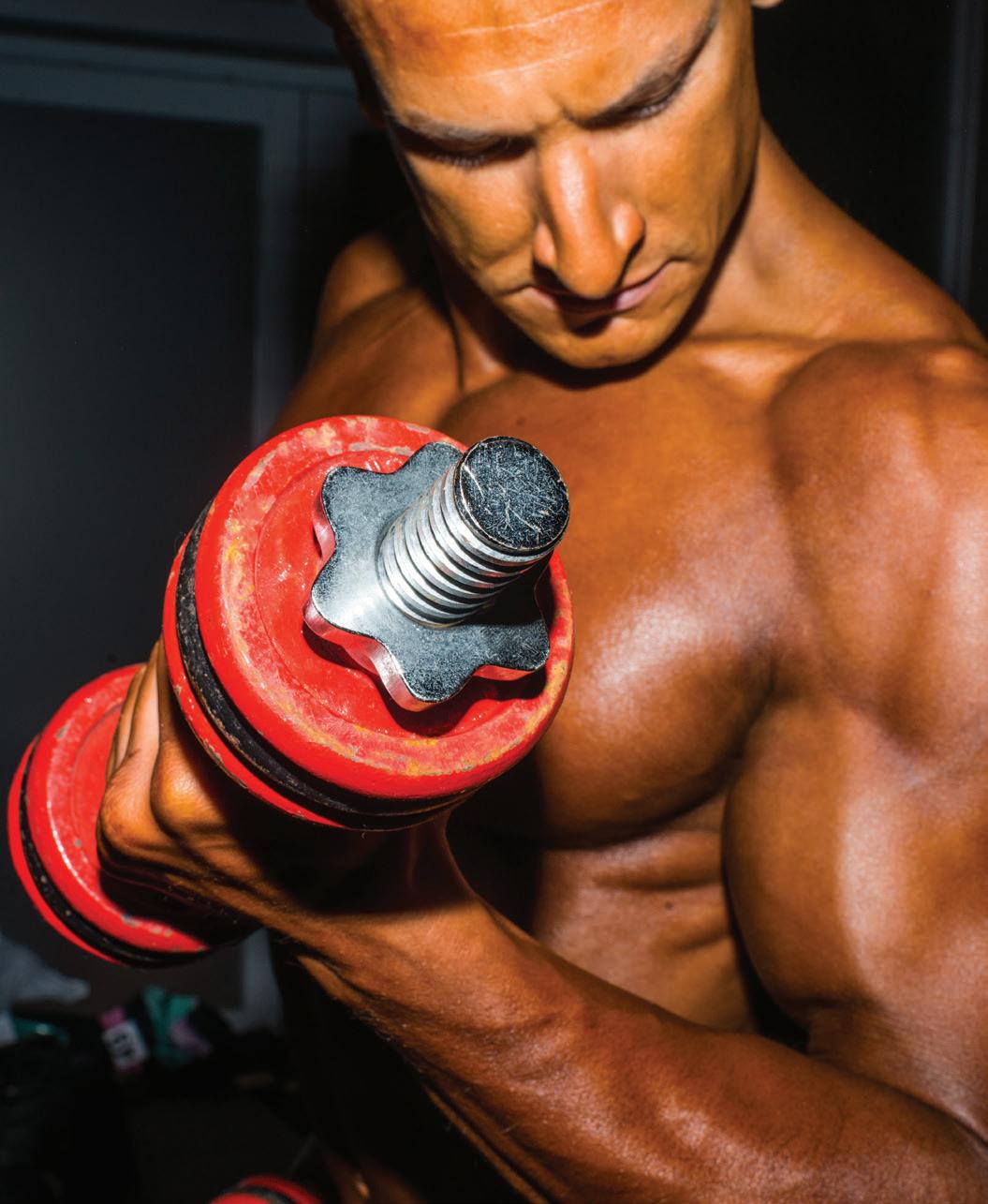
Once relegated to the confines of provincial gyms, bodybuilding is making a comeback in Belgium. Buoyed by the image culture on social media platforms, muscles gain influence. The hashtags #muscu have accumulated 5.53 billion views on TikTok. Fitness influencers like Tibo InShape rack up millions of views by sharing their routines, protein meals and squat sessions. And it's no longer just for guys in tank tops: muscle-building now attracts teenagers seeking physical transformation, as well as women and 50-somethings looking to regain their vitality.
Originally, this new wave was all about “natural bodybuilding”, meaning “being muscular, without excess and without products”. But at the gym, breaking your own limits isn't an event; it's a reflex. Each level reached becomes the starting point for the next. Jason, 21, says he started weight training for aesthetic reasons: "Three years ago, I weighed 78kg for 1m68. I just wanted to lose weight." While attending the gym, he became interested in powerlifting, a rawer, more performance-oriented discipline that requires...more training.
On Instagram, Steven El Harchi, Belgium’s +80kg bodybuilding champion, lines up the classic poses: bulging biceps, visible veins. For the past 12 years, this veteran has claimed to be “natural”, while promoting brands of protein supplements. The line between “healthy” and “influenced” bodybuilding is becoming increasingly blurred. Steroids are the big taboo in this equation: Increasingly frequent, especially among young people, doping practices are infiltrating the locker room. In search of quick results, some cross the red line without measuring the consequences.
French sociologist Guillaume Vallée says this “muscle factory” is part of a logic linked to contemporary capitalism. The gym becomes the place where we transform our bodies as we optimise our LinkedIn profile: through effort, repetition and productivity. We beef up our bodies to be seen, validated and liked. And in the business as in the gym, everyone pretends to play by the rules. Until it's time to really win.
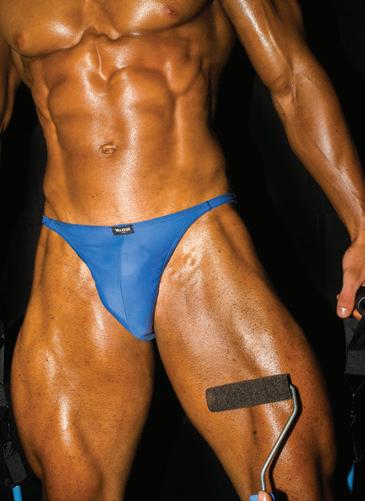
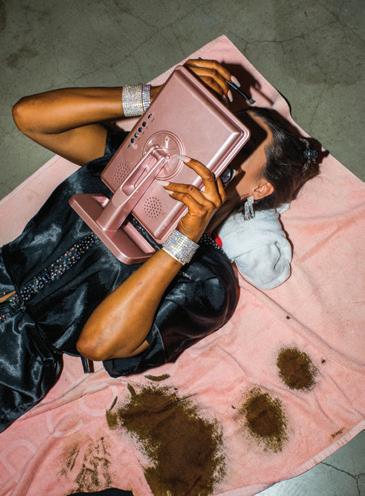
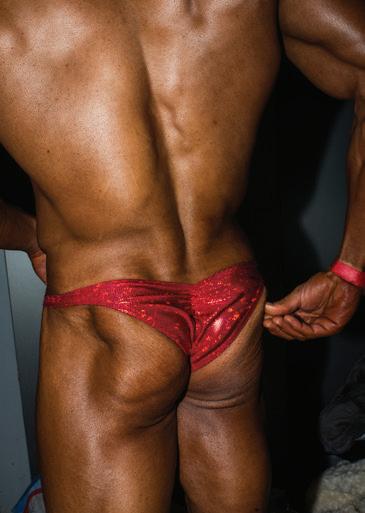

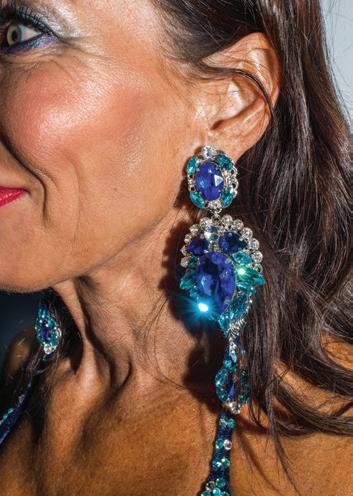
Two new Belgian films are based on true stories of unspeakable loss. First-time director Maja-Ajmia Yde Zellama’s deeply personal Têtes Brûlées looks at a child’s place in a traditional mourning process. Lisa Bradshaw talks to her about growing up Danish and Muslim in Brussels and losing her dearest comrade
Maja-Ajmia Yde Zellama has a mixture of names, a signboard for her dual identities. She has lived her life between Danish and Arabic, Protestant and Muslim, white and brown. And now she has made a film about a girl between childhood and adolescence, who must find a balance between the two when suddenly faced with unfathomable trauma.
“It is our family’s story,” says Zellama, 31, who shot the film in Brussels, where she lives. “My three cousins were really like my older brothers. The eldest of them died when I was 11. I had such a close bond with him –just like in the film.”
Têtes Brûlées had its world premiere at the Berlin International Film Festival last February, where it received a special mention by the Generation 14plus jury. It is the story of Eya (Safa Gharbaoui), a typical 12-year-old girl who practices dance routines, sleeps over at friends and runs for class rep. She also worships her brother Younès (Mehdi Bouziane), who, at seven or eight years her senior, is cool in every way she can conceive. In one beautiful scene over the breakfast table, he catches her wearing his shirt before they secretly concoct a plan for him to drive her to school on his motorbike rather than her taking the boring old bus. Shhh, don’t let mum find out.
“I was the only girl in the family, and I really grew up that way – kind of the princess,” Zellama laughs. “I had a younger brother, but I was still somehow always seen as the littlest. I feel so privileged to have these kinds of relationships. I don’t know exactly how it happened, but I didn’t romanticise it for the film. I really had that kind of relationship with my cousin.”
In the film, Eya loses her brother, and in real life Zellama lost her cousin. It was a
turning point in her life – the moment where she learned that adults don’t have all the answers.
The director was born in Brussels to a Danish mother and a Tunisian father. They had both come to the capital to study, and her father’s brother lived there, too, with his own family – providing all those cousins. “My mother is blonde and Protestant, like such a typical Dane. And my dad is super Tunisian.” She laughs again, and she will repeat this “I know, right?” laugh several times during our talk. “My parents chose to stay in Brussels to find a kind of middle ground between Denmark and Tunisia. It’s not her country, it’s not his. It’s neutral.”
Zellama is in fact in Tunisia when we speak, looking impeccable even as she fights a cold. Her long black hair tangles around her big, hoop earrings. She has somewhat abandoned the street gear of her younger years for a stylish sophistication. She’s visiting extended family, something she has done her entire life.
“We went to Denmark twice a year and to Tunisia twice a year. I went to church and to the mosque. I spoke Danish and Arabic. This is how I grew up. It’s the story of my life. Since I’ve been old enough to talk, people have been asking me – children and adults – ‘Oh, were you adopted?’ ‘Oh, is that your real mum?’ So identity has been a very big thing for me.”
Eya in Têtes Brûlées has no such concerns. While Zellama based the film on her family’s experience of loss, she changed several key elements, including a bicultural family. “Our situation is super unique, and I didn’t want to just recreate it.” Though one thing from her life is exactly the same in the film. The cast is made up
Lisa Bradshaw
In
one beautiful scene over the breakfast table, he catches her wearing his shirt before they secretly concoct a plan for him to drive her to school on his motorbike.
I went to church and to the mosque. I spoke Danish and Arabic. This is how I grew up. It’s the story of my life.
almost entirely of non-professional actors – including her own father, who plays Eya’s father. Oh, and her mother worked on the film’s décor, having studied scenography and textile arts.
But Zellama has a point. Recreating specifics might have distracted viewers from the core story – the experience of grief through the eyes of a girl who’s not quite a child and not yet a teenager, as the community gathers in her family’s home to collectively mourn their loss.
“It’s difficult for Eya to find her place in the anguish amid all these adults,” Zellama explains. “What is she supposed to do? Is she a child who is just expected to play on her own because she doesn’t understand what is going on? In fact, she understands everything. But
she’s also not an adult. So it’s complex for her, and also for the adults around her. Communication is so important at times like this, to ask her, ‘What do you need?’”
But no one does this, instead delivering platitudes like “It’s God’s will” and “You need to be strong for your mother and father”. Normal things that people say, but nothing she really wants to hear. What she really wants to hear is how her brother died – which she hasn’t dared to ask and which no one has bothered to tell her. Finally, she turns to her brother’s closest friend for the answer. Her brother’s friends have always seen her as a sort of collective little sister, and it is them she clings to for comfort.
“What I wanted to say – and what I experienced myself – is that this situation is so, so bleak for the adults that they forget to actually be adults. I saw the most trusted people in my life have no idea what to do. It’s like they’re not people anymore; they’re sort of like zombies.”
Têtes Brûlées, which screens at Film Fest Ghent in October, delivers a rare perspective for many Europeans – the chance to see what the mourning process looks like in the Muslim community. “My family is Tunisian, and this is what I know,” says Zellama. “I don’t know if, say, Moroccans would have exactly the same traditions, but I think in the end there are many similarities.”
The director is keen to open up this world and use aspects of it to illustrate Eya’s evolution. Towards the end of the film, a burial scene shows the women in a group, standing at a distance from the men, who are gathered around the grave. “This has nothing to do with religion,” explains Zellama. “It’s cultural. Women can approach the grave if they want, but only Eya chooses to do this. I wanted to show that, while she’s a child to her family, she’s more adult than the adults.”
Besides completing film school at the LUCA School of Arts in Brussels, Zellama has spent a lot of time on creative and activist pursuits. In 2017, she co-founded Bledarte, a cultural/
artistic space for youth with immigrant backgrounds. She is also a DJ, studied dance in Denmark and has staged multimedia exhibitions.
She also studied communications at the behest of her parents, concerned that filmmaking would not provide steady employment. They have changed their tune now. Ironically, it was also her parents who made her a filmmaker. “I grew up in a family where I always heard that anything is possible,” she says. “Also, I just don’t take no for an answer.”
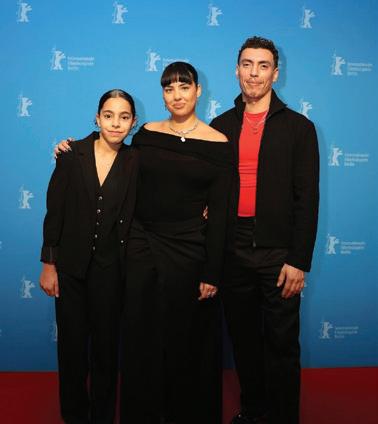
Maja-Ajmia Yde Zellama with Têtes Brûlées stars
Maja-Ajmia Yde Zellama and Safa Gharbaoui
In 2017, Belgian Fleur Pierets and her Dutch partner Julian Boom – both artists – made headlines around the world when they announced their plan to get married in every country that would allow it. As they were both women, that meant 22 ceremonies. It was activism, but also celebration: The number of countries grew, and they added them to their list.
There were plans for a documentary, a book and an exhibition. But it was all not to be. After four weddings – in Antwerp, Amsterdam, Paris and New York – Julian was diagnosed with brain cancer. She died six weeks later at the age of 40.
The film of her story, Julian, premieres at Film Fest Gent, where it is the opening movie, before its release in cinemas on October 29. It is based on Pierets’ 2019 book of the same name, written when her world was coloured by grief. “I’ve had a lot of requests to adapt it – to theatre, to the screen,” says Pierets. “But it always just felt wrong. It felt like it would become a movie about grief. That’s not what I wanted. Of course, it’s a story about loss, but it’s also about love and fighting for what you want.”
Her friend, author and screenwriter Angelo Tijssens, suggested she meet with producer brothers Lukas and Michiel Dhont (Lukas is the director of the Cannes-award-winning Girl and the Oscar-nominated Close). “There was instant trust,” says Pierets. “Thirty minutes into the conversation, I said yes.”
She was invited to help select the director – first-time feature filmmaker Cato Kusters – and look at drafts of the script, co-writ-
I wanted to show that, while she’s a child to her family, she’s more adult than the adults.
ten by Kusters and Tijssens. She’s delighted with the final product. Still, doesn’t it force her to relive this traumatic experience? “Over and over,” she replies. “My book is also being translated right now, into French and English. I’m doing tours, I’m on the BBC. The questions I get are framed from a perspective that it happened yesterday. And now there’s the movie on top of it. I do feel very wobbly at times.”
What keeps her grounded, she says, is working on a documentary film, the story of her current partner’s journey from pro volleyball player to potential Olympic swimmer. “It’s about ageism and sports and how it’s never too late. You can dream big,” she says.
He’s never played Fuse, finds techno soulless, and still ended up defining Belgium’s sound. Simon Taylor meets Lefto, the DJ who outlasted the trends
The switch was an organic one as the hiphop artists that he loved had been sampling jazz licks for their records.
Few DJs stay on the cutting edge for 30 years, but this September, Brussels’ Lefto Early Bird will be celebrating three decades as one of the country’s leading DJs with a special evening at Ancienne Belgique.
He may not have the name recognition of Belgium’s techno exports Amelie Lens or Charlotte de Witte, but if there were a prize for the country’s most influential spinner, the loquacious 49-yearold would be a frontrunner.
Cult music magazine FACT! has called him “your favourite DJ’s favourite DJ”, a nod to his global reputation. He has played with the likes of J Dilla, Floating Points, US pianist Robert Glasper and Canada’s BadBadNotGood. He appears around the world with regular gigs as far afield as the US, Japan and Korea.
Born Stéphane Lallemand in Anderlecht to French- and Dutch-speaking parents, his DJ
name Lefto comes from a tag he used as a graffiti artist. It’s a pun on the French for early riser (“lève tôt”). He sometimes styles himself as LeFTO or LeFtO.
He arrives for the interview on an expensive bike at the Kiosk, a wooden shed in the Parc Royal, where he has a regular DJing slot. Speaking excellent English with a slight American lilt, Lefto calls himself an “underground DJ.” He has never held a regular club night, nor spun at Fuse, the Brussels techno temple. Yet that label undersells him.
He has been one of Belgium’s most influential tastemakers, helping to establish hip-hop in a country where it barely existed. He had the longest-running show on hipster Flemish music station Studio Brussel, and his regular sets at Dour festival and Kiosk Radio in the Parc Royal draw fans from across Brussels and Europe.
Simon Taylor
To understand why he matters, listen to his three-hour set from this year’s Horst festival. Where other DJs might stick to one genre, Lefto roams: soul, R&B and jazz segue into dancehall reggae, grime, samba, and Middle Eastern funk. Techno – Belgium’s dominant export – is conspicuously absent. “I’ve never been a techno fan,” he says. “It was kind of never my thing because it’s a bit soulless.” His sets, by contrast, are brimming with warmth and surprise, the work of a DJ who refuses to be boxed in.
Lefto says he fell in love with hip-hop in his early teens and started DJing a few years later. “I would practice at my friend's place after school, learning to DJ because he had the turntables”, he says. He started at end-of-term school parties before getting behind the decks at places like VK in Molenbeek and Botanique’s Witloof bar.
His reputation as the go-to guy for hip-hop grew, and he began working for the Music Mania record shop in Ghent in 1997, managing their hip-hop selection, as well as playing gigs in the city. Two years later, he started his award-winning show on Studio Brussel, which ran for more than two decades.
The show helped bring about his friendship with fellow DJ Giles Peterson, a music maven and inventor of the term “acid jazz”. The two met in 2007 when Lefto was putting on regular student nights in Ghent. Peterson, in town to play a set, heard his show and when he found out that Lefto was playing that night, he came along. The two have been friends and collaborators ever since: Peterson invited Lefto to play at his Worldwide music festival, held in the southern French city of Sete, and he has been a regular feature there ever since.
Around the early 2000s, sensing the hip-hop scene becoming less creative and dominated by big-name acts on major labels, Lefto shifted his focus to pursue his long-standing interest in jazz.
He explains that his father listened to jazz classics like Stan Getz when he was young. The switch was an organic one as the hip-hop artists that he loved had been sampling jazz licks for their records, especially creators such as Madlib and J Dilla.
Record companies with huge back catalogues saw the potential to introduce a younger record-buying public to their artists. California’s Madlib, seen by many as one of the greatest hip-hop producers, made an album, Shades of Blue, for fabled US jazz label Blue Note in 2004, remixing some of the record company’s greatest music.
The success of the project led Blue Note to look for other DJs to produce similar albums. They contacted Lefto and his radio station mate, Belgian DJ Krewcial, and they produced a re-
mix album in 2005 called Out of the Blue. Lefto explains that his father died shortly before the album came out, and regrets that he never saw his son’s first album come out on the jazz label.
After quitting Studio Brussel in 2020, Lefto began a regular slot at Kiosk Radio, a station that broadcasts from a hut in the Parc Royal and has won listeners from around the world with its mix of local and international DJs and a panoply of different styles. Lefto says his Kiosk sets “allow me to see my audience”. On a good day, hundreds flock to hear his selections.
Looking back, he cites his 2016 Boiler Room set as a career highlight — a cathartic night just one week after the Brussels terror attacks. Now, as he prepares for his 30-hour marathon at Ancienne Belgique on September 27, Lefto seems more reflective than nostalgic. The celebration, he says, is not just about marking his career but about paying tribute to the culture he has championed: music that began in the streets of New York, found a home in Brussels, and continues to ripple out across the world with his unmistakable touch.
Lefto says his Kiosk sets “allow me to see my audience”. On a good day, hundreds flock to hear his selections.
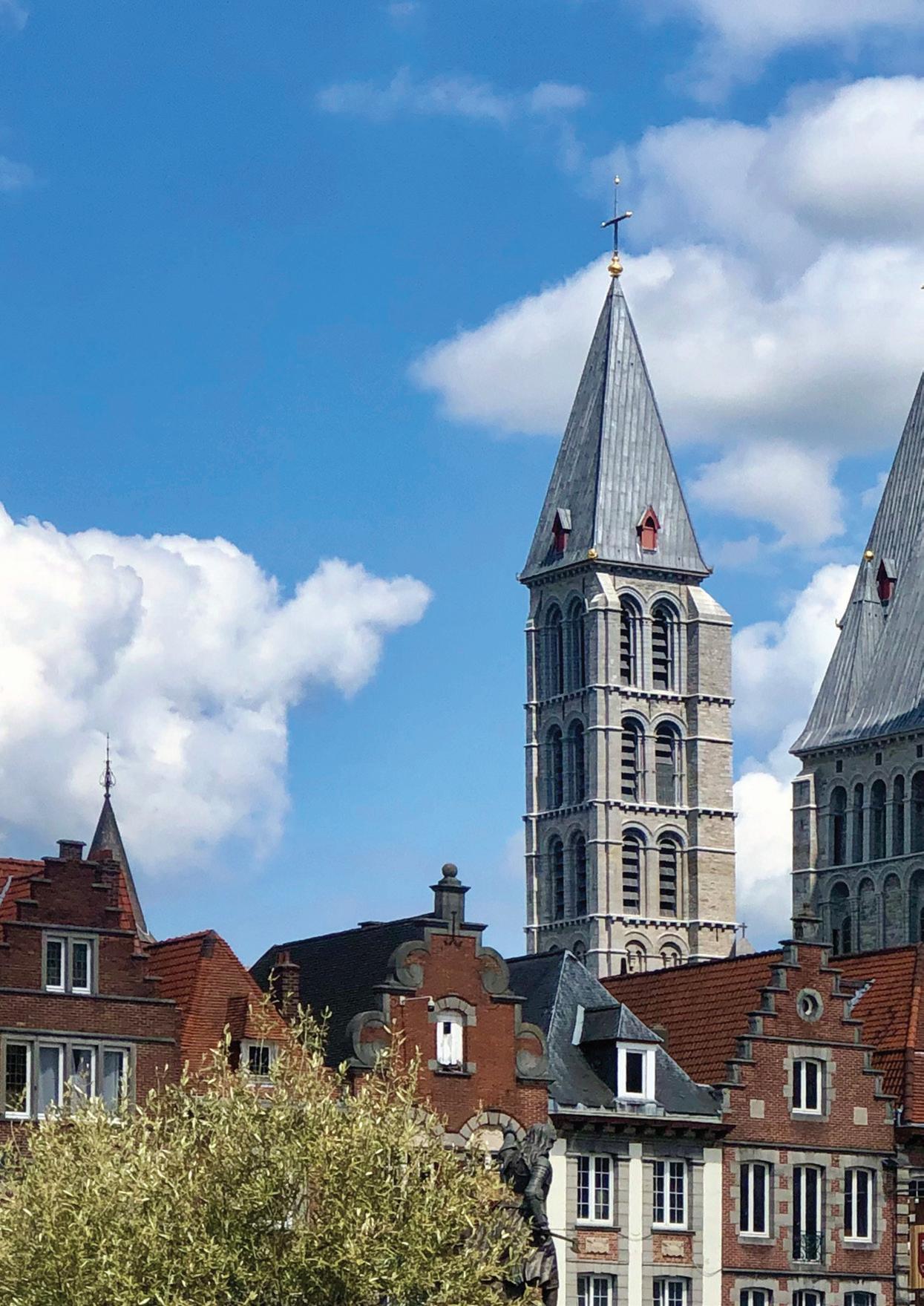
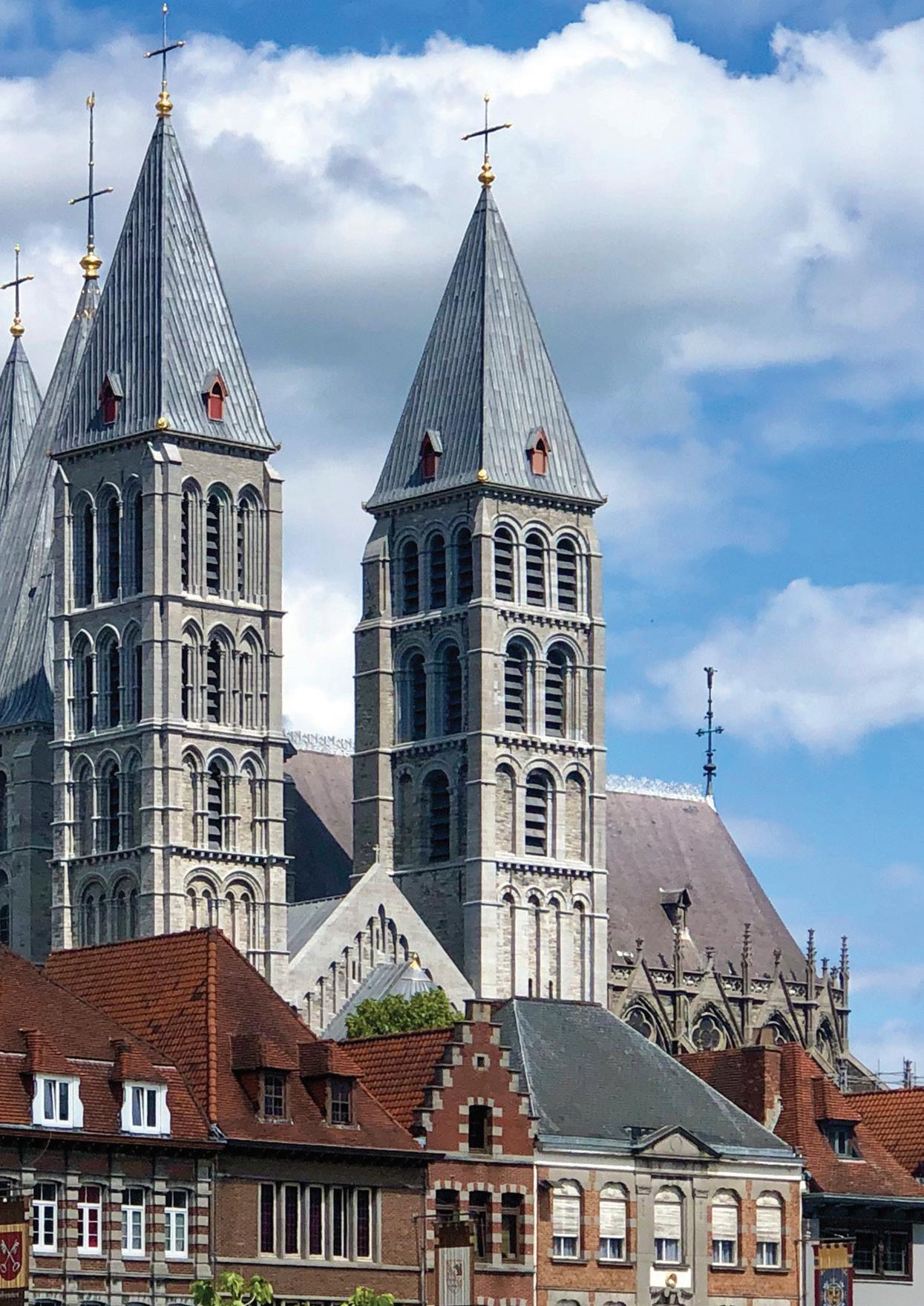
Tournai may sit quietly on the Scheldt, yet its past is anything but tranquil. Once a Roman outpost, then France’s first capital, briefly English, later Spanish, Austrian and Dutch – this small Belgian city today serves up spires, tapestries, beer and brioches with disarming nonchalance. Angela Dansby spends a weekend there
Angela Dansby
The result is a city shaped by a cast of unlikely landlords: English monarchs, Spanish Habsburgs, Austrian archdukes, Dutch royals — not forgetting several French kings.
Tournai whispers its ancient secrets through stone towers, cobbled lanes and a skyline bristling with spires. Just an hour by train from Brussels — and five minutes from France — it rewards the curious with a mix of grandeur and intimacy: cathedrals that scrape the clouds, market squares full of chatter and riverside strolls that feel timeless.
Few places in Belgium can rival its pedigree. Tournai’s story begins more than two millennia ago, when Roman settlers laid down roots in what was then called Tournacum. In the fifth century, it became the first capital of the Frankish kingdom, cradle of a dynasty that would one day give birth to France. Since then, its strategic perch has ensured that kings, emperors and generals all left their mark.
The result is a city shaped by a cast of unlikely landlords: English monarchs, Spanish Habsburgs, Austrian archdukes, Dutch royals —
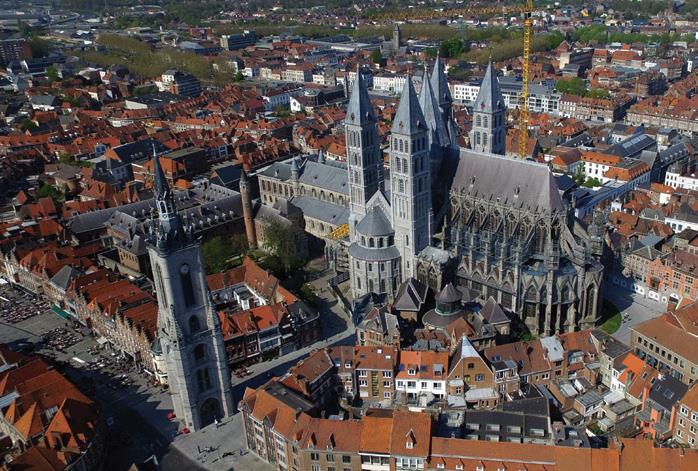
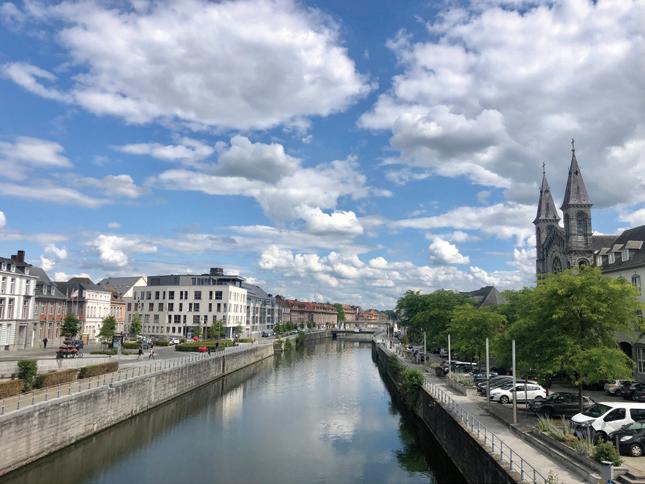
not forgetting several French kings. Each left behind an imprint, whether in stout fortifications, elegant townhouses or the shifting symbols on the city’s coat of arms.
Yet for all its layers of history, Tournai is no dusty relic. Restored façades glow in the afternoon light, festivals spill across the cobbles, and the convivial rhythm of café terraces reminds visitors that this is a city that has survived, adapted and carried on living with gusto.
For those driving there, parking is free in the city centre every Saturday from 12:30pm to Monday at 9am. Otherwise, three car parks (Esplanade de l’Europe, Hall des Sports and Maison de la Culture) offer free spaces just a five-minute walk from the centre.
Beginning as the Roman town of Tournacum, Tournai was taken over by the Franks for nearly three centuries, with Clovis I entrusting its government to a bishop, making the city an episcopal seat. It then changed hands with dizzying frequency. From the 12th to 16th centuries, it was French, its belfry a gift from Philippe Auguste. The fleur-de-lys still lingers on its coat of arms, proof of how French this Belgian city once was.
England tried twice to take it: Edward III failed, but Henry VIII succeeded in 1513 – a teenager then, he installed his own bishop and even gave Tournai a seat in the House of Lords — before selling it back to France.
The Habsburgs arrived in 1521: Charles V took the city, and his son Philip II folded it into the Spanish Netherlands. For nearly 150 years, it was Spanish, until Louis XIV claimed it once more. The Treaty of Utrecht soon swapped it to Austria.
The French Revolution brought the Robespierre sisters to hide in Tournai; Louis XVI retaliated in 1794 by annexing it again to France. After Napoleon fell, the Dutch moved in until Belgian independence in 1830. Architect Bruno Renard tried to restore pride in the 19th century, but two world wars — and especially German firebombs in 1940 — destroyed most of his work. Sixty percent of Tournai lay in ashes.
Yet the city rebuilt. Landmarks rose again, façades were stitched back together, and the skyline of spires re-emerged.
Notre-Dame de Tournai is the city’s showpiece cathedral with five bell towers reaching up to 83 metres high like giant stalagmites. The Romanesque nave and transept were built in the 12th century, while the Gothic choir came about in the 13th century. The octagonal baptistery has striking, green-patinated copper cladding and opalescent, stained-glass windows. Near the entrance, like official greeters, are medieval polychrome and modern bronze statues of the Virgin Mary and
Saint Eleutherius, the first bishop of Tournai, respectively.
Inside is the Châsse de Notre-Dame, a magnificent reliquary shrine from 1205 made of gold and silver, adorned with gems; a large rose window; and an impressive treasury. The latter includes 13th-century Mosan silver works, a 14th-century tapestry, precious ivory and a coat worn by Charles V.
The cathedral has been UNESCO recognised since 2000, shortly after a tornado did extensive damage – ongoing restorations have left only half the cathedral accessible. Visit Tournai offers a guided tour the first Sunday of each month May to September at 3pm.
La Grande Procession, a religious walk the second Sunday of each September, honours the Virgin Mary, carrying her shrine from the cathedral around Tournai. This tradition started in 1092 to protect the local population from a plague and ward off evil. The procession, with giant puppets and people in period clothes, is part of a larger celebration called La Kermesse, which includes Quatre Cortèges (four parades), a large street market, traditional dances, concerts and more around the city.
The Belfry of Tournai is the oldest in Belgium dating to 1188. It dominates the city’s Grand Place at a height of 72 metres and was previously a watchtower, prison and town hall. Today, its 256 steps lead to a breathtaking panorama of the city, and while the top level with the Bancloque, the belfry's biggest bell, is temporarily closed for renovation, climbers can still access the first level 1-5pm every day except Monday.
Every Sunday from Easter until October at 3:30pm, the belfry’s carillon of 55 bells rings throughout Tournai. The garden of the Musée de Folklore et des Imaginaires (Museum of Folklore and Imagination) overlooking the belfry is a nice place to hear the music.
The Grand Place has many striking buildings in the Dutch style with flags honouring professional trades. A focal point is the Halle aux Draps (Cloth Hall), built in the 13th century as a trading centre during Tournai’s then-booming textiles industry, and now an exhibition and event space.
Similarly, the stately Évêché de Tournai, next to the cathedral, originally built in the 12th century as the bishop's palace, is the headquarters of the Diocese of Tournai. A covered walkway known as the Fausses Portes (False Gate) was used by the bishop to cross between his palace and the cathedral without getting wet during rain. The city’s coat of arms is brightly painted above a door on the palace’s side on Rue des Orfèvres.
Tournai retains many remnants of its once extensive medieval fortifications, including the Tour Saint-Georges, Tour du Fort Rouge (Red Fort), and Tour Henri VIII (also called the English or Big Tower, the last trace of a citadel built in 1515 by Henry VIII).
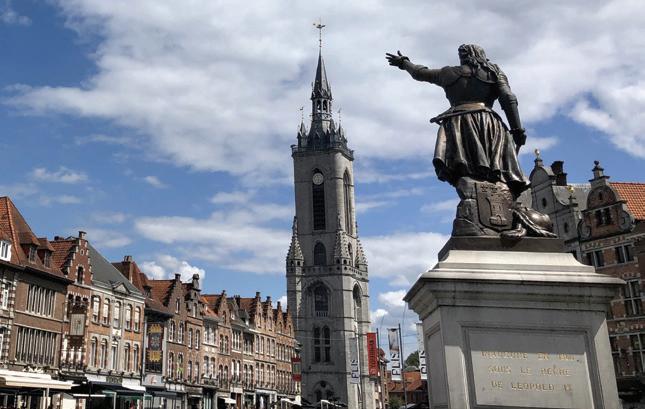
The thick Pont des Trous (Bridge of Holes) military bridge from the 13th century is named after a nearby lock for boats, not its three arches. One of Belgium’s most prestigious vestiges of medieval military architecture, its construction took 75 years. It has been rebuilt thrice, most recently in 2023. Tours are available in French every Sunday from May to August at 10:30 am via Visit Tournai.
The elegant Hôtel de Ville (City Hall) stands on the former site of the 11th-century Benedictine Abbey of Saint-Martin. The last trace of the abbey is a cellar that houses an exquisite 18th-century Tournai porcelain collection (Britain’s King Charles III has about 600 pieces of Tournai porcelain in Windsor Castle).
The Musée des Beaux-Arts (Museum of Fine Arts) near City Hall, designed by Victor Horta (his only building in Wallonia), houses a vast art collection bequeathed to the city by Henri Van Cutsem. It boasts the only two Édouard Manet paintings in Belgium, as well as works by Claude Monet, Vincent Van Gogh, Georges Seurat, Henri de Toulouse-Lautrec, James Ensor, Rik Wouters, Felician Rops and Rogier Van der Weyden. The latter – along with his art mentor Robert Campin and fellow student Jacques Daret – was born in Tournai.
The city has striking Art Nouveau architecture in private buildings, including several around the train station, on Boulevard Roi Albert and near the Palais de Justice. Visit Tournai offers an Art Nouveau vs Art Deco guided tour the first Sunday of each month May to September at 3pm, starting at the Museum of Fine Arts.
The Église Saint-Jacques from the 12th-13th centuries, a historic stop on the pilgrimage route to Santiago de Compostela, has a colourful vaulted ceiling with angel musicians, a rare brass eagle lectern and stunning altarpiece paintings.
The red-roofed Église Saint-Quentin on the Grand Place houses two exceptional coloured sculptures of the Angel Gabriel and Virgin Mary from 1428, painted by Flemish Primitive master Robert Campin of Tournai.
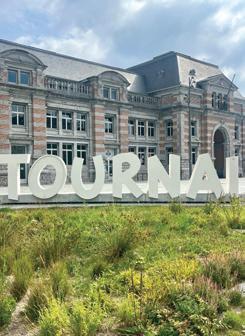
the city rebuilt. Landmarks rose again, façades were stitched back together, and the skyline of spires re-emerged.
From the 15th to the 18th centuries, Tournai’s tapestries won global renown and many are displayed in museums around the world. The local Musée de la Tapisserie (TAMAT) in a neoclassical mansion has prestigious collections from the 15th and 16th centuries as well as modern and contemporary times.
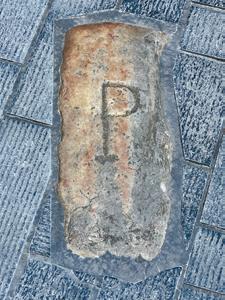
Some of Tournai’s historical buildings have been repurposed. Saint-Jean Barracks, built by Louis XIV’s military architect Vauban, now provide social housing and community spaces. The Académie Beaux-Arts (Fine Arts School) is in a former hospital and the Conservatoire de la Ville (Music Conservatory) in a 19th century rotunda that used to be a concert hall. Nearby is a reconstructed part of a 12th century wall that was a tiny prison.
There are also little pieces of history strewn about Tournai like a treasure hunt. A stone engraved with the letter P on Place du Vieux Quartier, thought to date to the third century, stands for Pax Romana. A false door on a house intersecting with Rue As-Pois has a Latin inscription for "no urinating." Former fish market houses along the river still have wooden fish carved into the frames of single rooftop windows. Gold lines on some streets in the city centre note the historic district (they are supposed to be pedestrian only, but beware, cars drive on them anyway).
The Visit Tournai office, itself architecturally interesting, shows films about the town’s 2000 years of history (“The Passage of Time”) and cathedral (“Heaven Carved from Stone”). It also has a medieval cellar where cannons were once stored.
From the 15th to the 18th centuries, Tournai’s tapestries won global renown and many are displayed in museums around the world. The local Musée de la Tapisserie (TAMAT) in a neoclassical mansion has prestigious collections from the 15th and 16th centuries as well as modern and contemporary times. Pasquier Grenier was the most celebrated Tournaisien tapestry maker of 15th century and Piat Lefèvre of the 19th century. In the 17th century, tapestries were created to look like paintings, a style that revived in the 1940s
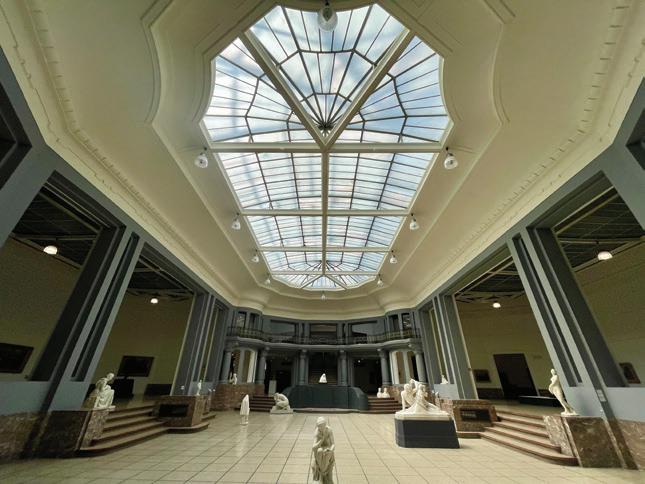
with local talents like Edmond Dubrunfaut, Roger Somville and Louis Deltour. These men were members of the Force Murales group, a collective that inspired a renaissance in tapestry. The museum also showcases tapestries by contemporary artists and a restoration workshop.
Tournai’s Centre de Recherches, d’Essais et de Contrôles scientifiques et techniques pour l’Industrie Textile (CRECIT), a working tapestry atelier and cultural institution, offers guided tours, workshops and special events.
Georges Grard, a Tournaisien figurative sculptor, made the bronze La Naïade, a large naked woman, displayed on the south side of the Pont-à-Ponts. More Grard sculptures are in the red roof-tiled Église Saint-Brice.
Behind the church is a sculpture of Gabrielle Petit, a Belgian spy and First World War resistance heroine, with her final words before execution at age 23: “I will show them that a Belgian woman knows how to die!” Nearby is a plaque marking the original location of the tomb of Frankish King Childeric – it was accidentally uncovered in 1653 by a mason carrying out repairs.
Another Tournai sculptor was Guillaume Charlier, who studied with Auguste Rodin in Brussels in the early 20th century. He has works atop and within the Museum of Fine Arts, near the belfry (Les Aveugles, of a boy leading blind men), in Square Bonduelle (Monument à Louis Gallait, of a Tournai painter) and near the train station (Monument à Jules Bara, of a local statesman). In Brussels, Musée Charlier houses most of the sculptor’s works.
Christine de Lalaing, married to the Prince of Epinoy, fought Spanish troops during the Siege of Tournai in 1581. Her bravery is honoured by a bronze statue in the Grand Place, showing her in combat armour wielding an axe with her hair flowing in the wind.
A sculpture of another war heroine, Louise de Bettignies, a spy during World War I with the pseudonym Alice Dubois, is in a suburb of Tournai called Froyennes.
A fictitious woman and her dog are represented in the sculpture Martine & Patapouf at the foot of the Red Fort – they were the stars of the children’s books illustrated by Tournai-born Marcel Marlier.
Near the train station is a moving Monument aux Morts commemorating locals who died in the world wars and Elleiba – "abeille" ("bee" in French) spelled backwards – a golden-hued organic form representing the inside of a beehive. It pays tribute to the bee as a symbol of Tournai: the grave of Childeric contained more than 300 tiny golden bees upon discovery. Across from the station are two giant yellow rabbits in honour of Lundi Perdu (Lost Monday), a local feast of medieval origin featuring rabbit slow-cooked in beer.
The Monument aux Français – La Déesse at Place de Lille, commemorates French soldiers who helped Belgium during the Siege of Antwerp in 1832.
Fontaine L'Pichou Saint-Piat, a sculpture fountain in front of Église Saint-Piat, with a bronze statue of a mischievous boy, known as a pichou. It represents the free-spirited and slightly irreverent character of the people of Tournai, humorously spraying water at passersby.
In the same playful spirit, Rue Gallait and Rue de la Cordonnerie have flower “ceilings” in the open air. At night, Tournai train station, the riverbank and other tourist spots are illuminated in various colours.
The Military History Museum off the Grand Place includes collections of artillery, weapons, uniforms, equipment and documents detailing Tournai’s fortifications and many sieges over the centuries.
The Maison de la Marionette (Puppetry Arts Museum) in a former residence displays 3,000 pieces of puppetry from around the world. It also has temporary exhibitions, puppet shows and workshops.
The Museum of Folklore and Imagination cover all aspects of Tournai life from 1800 to date, including crafts, games and fashion. Curiosities include the oldest mobile fry shop in Belgium.
Founded in 1828, the Musée d'Histoire Naturelle et Vivarium de Tournai (Natural History Museum and Vivarium), in the former brewery of Saint-Martin Abbey, has a living butterfly house, taxidermy of the first elephant to arrive in Belgium in 1839, other naturalised animals and a cabinet of curiosities (closed for renovation until September 30, 2025).
The first Sunday of each month, museums, the belfry and cathedral treasury are free. From May to October, these Sundays also feature concerts, entertainment and a CréARTeurs market by local craftspeople in alleyways around the cathedral.
Parc Georges Brassens municipal park behind City Hall occupies the former gardens of Saint Martin Abbey, including French-style gardens, water basins and rare trees, and is adjoined by Parc Reine Astrid.
Aqua Tournai, a large recreational complex on a former quarry, includes indoor and outdoor swimming pools, pedal boats, a spa, café, camping and Ecopark Adventures (which features the longest zipline in Belgium, 12 treetop adventure courses and giant trampolines).
The Tournaisis region also has 1,600km of cycling paths connected to Walloon greenways (RAVeL), two nature parks, waterways and rural roads.
The Tournaisis is known for craft beers thanks to several microbreweries, including: La Pichou, Brasserie de Cazeau (in Templeuve), Brunehaut
(Rongy-Brunehaut), Brasserie Dubuisson (Pipaix), Brasserie Dupont (Tourpes), Brasserie Caulier (Péruwelz), Brasserie des Carrières (Basècles), De Ranke (Dottignies) and Grand Mir (Lesdain).
Cave à Tertous allows people to make their own beer and Terre des Fours à Chaux produces wine from its own vineyards. Maison Léger is a chocolatier offering craft chocolate workshops. Other local, tasty creations are:
Ballons Noirs (Black Balloons): Hard, black candies made from three different types of sugar in a unique shape
Couque Abeille (Bee Brioche): A bee-shaped brioche cake with raspberry jam on its “wings” in honour of Childeric’s bees
Gâteau Clovis: A heritage cake filled with frangipane (almond-flavoured pastry cream) and apricot jam
Pichou: A brioche-type bread shaped like a little man filled with candied fruits, baked for carnival and thrown from atop the belfry Gaufrettes fourrées: Waffles filled with vanilla, brown cassonade sugar or speculoos cream,
A fictitious woman and her dog are represented in the sculpture Martine & Patapouf at the foot of the Red Fort – they were the stars of the children’s books illustrated by Tournai-born Marcel Marlier.
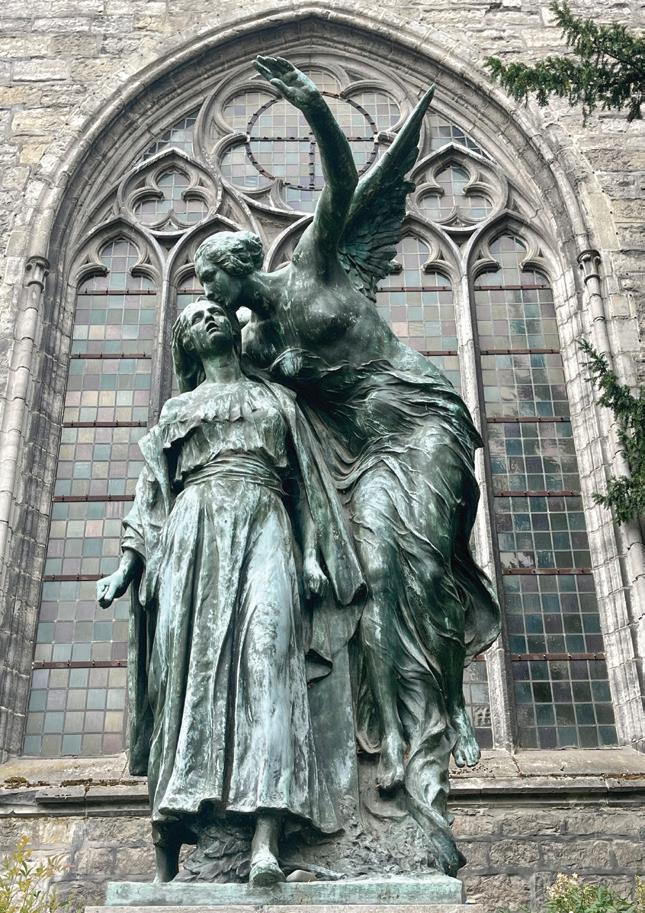
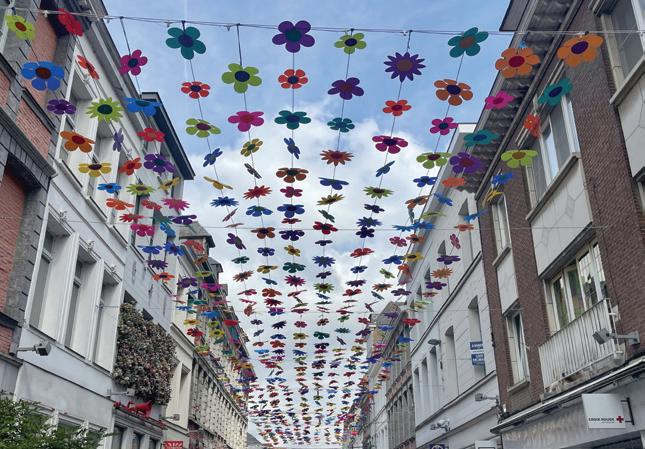
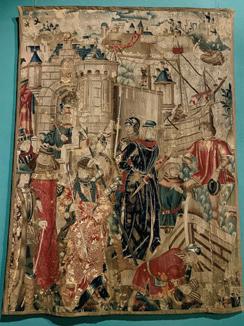
The Musée d'Histoire Naturelle et Vivarium de Tournai (Natural History Museum and Vivarium), in the former brewery of SaintMartin Abbey, has a living butterfly house, taxidermy of the first elephant to arrive in Belgium in 1839, other naturalised animals and a cabinet of curiosities.
sometimes with Grand Marnier or rum
Palet de Dames: Soft, round cookies topped with a fruity glaze, often filled with jam or cream
Faluche: A small, flat, slightly chewy white bread eaten for breakfast
Ficelle picarde: A savoury crêpe filled with ham, mushrooms and creamy sauce
Mutiau: A pressed terrine made from pork jowl and beef tongue, flavoured with spices, garlic and parsley, associated with Lundi Perdu
Visit Tournai offers online and on-site a free Time 4 Beer guide, Gourmet Walking Tour and gastronomic map. It also offers a Tournai Insolite walking tour to unusual city artefacts and a new audio tour in French, L'Escaut vous raconte... (The Schedlt tells you about it …) with QR codes along the river.
The City Strip app features a pichou narrating three walking routes animated with games at each touristic stop. Tripster-local.eu is a pilot meet-a-local platform for Tournai (plus Kortrijk and Roubaix), featuring 11 ambassadors who share tips for discovering their town via a chatbot.
Carnival of Tournai: A weekend festival in March with masquerades, parades, processions, burning of the Carnival King and “lancer de pichous” (throwing of brioches from atop the city's belfry)
La Kermesse: A festival the second Sunday of September including La Grande Procession with giant puppets, parades, medieval characters, a large street market, dances, concerts and more Lundi Perdu: Known as Lost Monday, a medieval feast in January on the Monday after Epiphany featuring mutiau, a 13-ingredient salad and beer-soaked rabbit
Marché aux Fleurs: A huge flower market in the city centre on Good Friday
Tournai Jazz Festival: A late June weekend festival with jazz, soul and blues artists
Burger Queen: Offers a range of burgers with locally sourced ingredients, including foie gras and camembert, plus a terrace
Comptoir 17: Brasserie on the Grand Place offering French and Belgian specialities, including Lost Monday rabbit and local beers
Les Enfants Terribles: An upscale French restaurant with seasonal dishes in an artsy, sleek atmosphere
NOU: A multi-course, farm-to-table restaurant sourcing regional products for seasonal dishes
Rive Gauche: A grill restaurant along the Scheldt with a terrace
Arthur's Bar: A cosy bar serving creative cocktails
Au Dé Botté: A medieval-looking bar with regional drinks, cheese and traditional games
Chez Eléonore: A cheese bar featuring local specialities and beers
La Botte de Lin: A Grand Place café offering local beers and a terrace
Pâtisserie Quenoy: Last maker of Ballon Noir candies and baker of Clovis and carnival cakes, bee-shaped brioches, Palet de Dames and more with a tasting room
Floréal Le Panoramique: In Mont Saint-Aubert close to Tournai, a 45-room modern domain, including a brasserie, with magnificent panoramic views
Hôtel Alcantara: Near the Grand Place, a stately address with 32 stylish rooms and four apart-hotels, a breakfast buffet and bike rental
Hôtel Hemera: A new hotel near the cathedral with 57 modern rooms
Marie Pontoise and Don Basco Duplexes: Rented by BGES, two modern family units for up to six people
Villa Tournesol: A renovated Art Nouveau house with a decorative room for two people
Biscuiterie Marquette & Fils: Family-run biscuit factory producing Succès du Jour filled waffles (gaufrettes fourrées) for over a century
Boucherie Rue des Maux: Butcher known for authentic, high-quality mutiau terrine
Desobry: Maker of 45 different high-quality biscuits with Belgian chocolate, sold in decorated metal boxes
Le Moine Austère: Beer store selling local and regional brands
Maison Favot: Historic tea and coffee shop in a heritage building known for exterior cartouches, on-site coffee roasting and a wide selection of tea
Create new memories

Elevate your concert experience at Forest National
Visit our venue as a VIP and create new memories.
• Parking nearby
• Access to the VIP lounge
• Best seats in the venue
• Delicious food
• Open bar with wines, beers and soft drinks
Which artist or band would you like to see? Book now via forest-national.be/vip
Plus, great places to stay...
Looking for that summer holiday vibe close to home? The Hageland vineyards are beckoning. Drink in the generous views of lush grapevines on stately hillside rows. The region is bursting with great stuff to see and do. Reasons aplenty for a long weekend, right? Here are our five walking tips.
The walk
Head out from the heart of the wine village of Wezemaal for a 7.4 km tour of the Wijngaardberg, an enchantingly beautiful vineyard landscape and a nature reserve with singular views.
Highlights
Discover all the colours, scents, and flavours of the wine region at the Hageland Wine Visitor Centre. The De Hagelander statue invites you to climb the Wijngaardberg, where
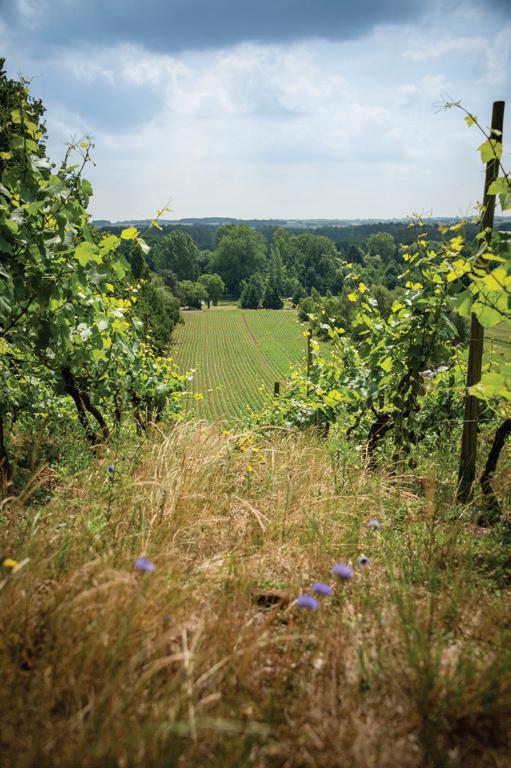
the tough ironstone vineyard wall shields the grapes from chilly northerly winds. Back in the valley, the stately old Norbertine presbytery awaits. Did you spot the graft from the world’s oldest vine in the vineyard?
Your stay
The ’t Kareelbos holiday home is a ten-minute jaunt from Wezemaal centre and the Wijngaardberg. It can accommodate up to sixteen, so why not bring the whole family along? www.kareelbos.be
Out and about
This walk begins and ends at the Hageland Wine Visitor Centre on Kerkstraat 16 in Wezemaal. Follow the nodes 6 - 604 - 62 – 63 – 65 – 74 – 64 – 61 – 605 - 6.
The walk
Houwaart church is where your climb up the Houwaartseberg starts. The ‘mountain’ is crowded with vineyards soaking up the sun. What does crowded mean? De Houwaartse Vineyard, Den Eeckhout Vineyard, Het Eiken Vat Vineyard, Steenkuyl-Wijnfaktorij Vineyard, Hagelander Vineyard, Sint-Denijs Vineyard, Ten Gaerde Vineyard are all there… but we may have missed a few. The walk is 9.2 km long.
Highlights
Clamber onto the Wijnbank for a majestic view of the sprawling vineyard tapestry below. A few kilometres further along your walk, you'll spot the keep of Horst Castle peeking through the trees.. This cross-shaped keep, has stalwartly kept watch over Wingebeek Valley since the 15th century.
Your stay
Stay overnight in a cosy, beautifully decorated cottage set in a spacious garden. Vossendries sleeps up to four guests and offers the perfect escape into nature, with peaceful surroundings that invite you to fully unwind. www.vossendries.com
Out and about
Begin and end your walk at Sint-Denijskerk, Haldertstraat, in Houwaart. Just follow the nodes. Start - 246 - 228 - 227 - 226 - 225 - 155 - 154 - 153 - 152 - 151 - 144 - 228 - 246.
The walk
A 10.7 km journey takes you over the Houwaartse Berg and through the beautiful Walen Forest. Artisan pride has been passed down from father to daughter at Liemau Vineyard, and Danouise Vineyard has been a reference since 1994.
Highlights
Enjoy a bit of forest bathing in the Walen Forest, a marshland treasure scattered with peat mosses and orchids. Just don’t forget your wellies!
Your stay
Provençal, contemporary, or country? At B&B Silentium, it’s up to you! It’s always blissfully quiet on the edge of the Walen Forest. www.silentium.be
Out and about
Start and end your journey at the Church of Our Lady car park on Bergstraat in Tielt-Winge. Follow the nodes 2 - 22 - 23 - 243 - 241 - 242 - 231 -
The walk
This walk (7 km) takes you through the dreamy sunken roads of the Chartreuzen Forest and up the slopes of the Chartreuzenberg. These slopes nourish the ripening grapes of the Chartreuzenberg Vineyard, which is 60 acres large with 1,200 vines.
Highlights
A huge sun gate welcomes you to the natural oasis Chartreu-ZEN Forest, where you can leave your worries behind. There’s a yoga platform and a labyrinth with large chunks of ironstone for walls... There’s even a wooden bed with a pillow and all.
Your stay
Fun, hands-on kits, an extendible table, and astonishing stories! The Hageland Holiday Home farmhouse is family and kid friendly. www.vakantiehageland.be
Out and about
Begin and end your walk at Sint-Mauruskerk, Gebroeders Van Tiltstraat in Holsbeek. Follow the nodes 1 - 12 - 19 - 18 - 111 - 112 - 171 - 17 - 11 – 1 or the red-print rectangular signs.
The walk
12 km of adventure await with an eclectic landscape and fantastic vistas of the Linden Forest, Chartreuzen Forest, and their surroundings. But the prettiest spot of all? That’s the Vandeurzen Wine Estate of Linden Castle.
Highlights
Hmm... The Linden Forest play areas or the Chartreuzen Forest’s green oasis? You get the best of both worlds on this walk.
Your stay
At Villa Krat, you stay in stylish comfort with the luxury of a natural swimming pond, a garden perfect for barbecues, and a farm-to-table dining experience just around the corner. https://www.jostheys.be/en/logeren
Out and about
Your journey begins and ends at Sint-Kwintenkerk, Martelarenplaats 1 in Linden. Follow the nodes: 5 - 51 - 53 - 5556 - 47 - 19 - 18 - 111 - 112 - 113 - 114 - 57 - 52 – 5 or the red-print rectangular signs.
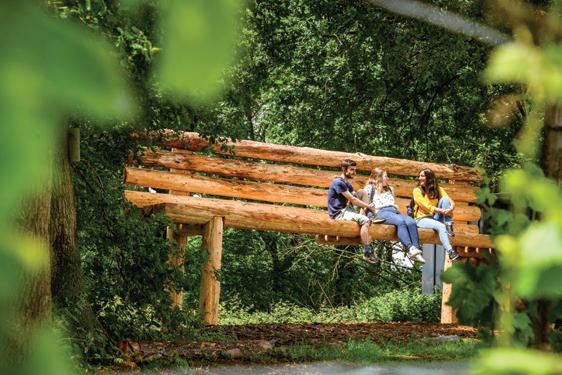
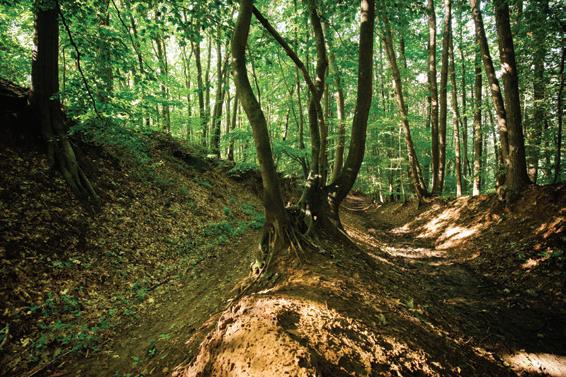
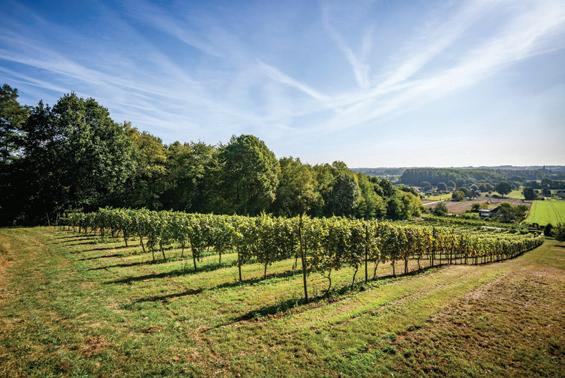
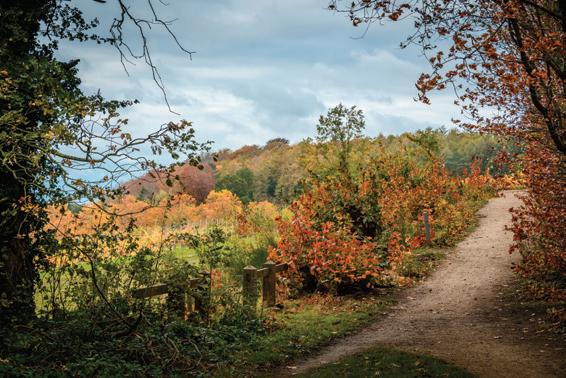
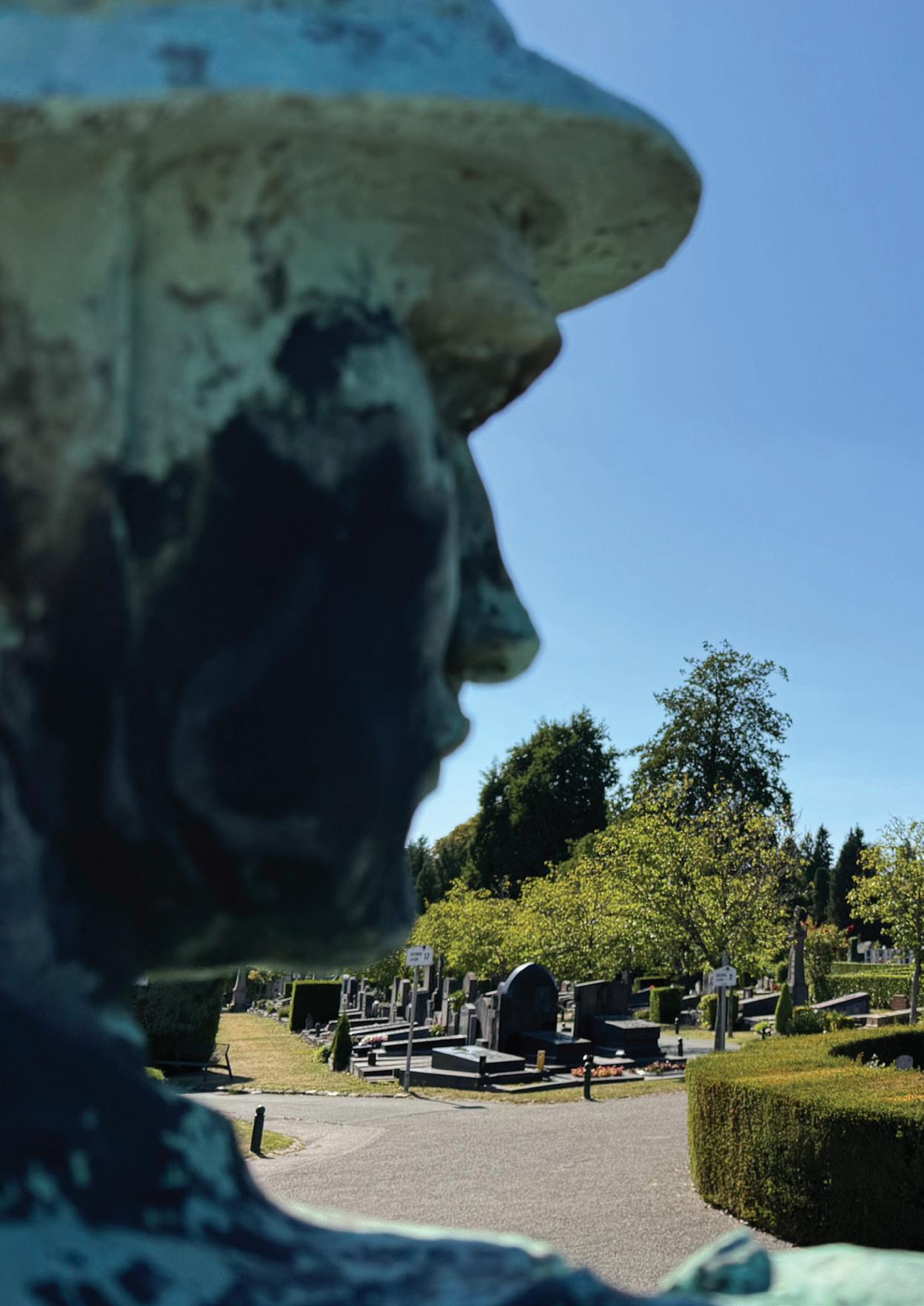
Halfway between buzzing student bars and the solemnity of eternity lies Ixelles Cemetery, where tycoons, generals, artists and football founders share space with paupers and poets. Behind the forbidding walls are stories of scandal, science, music and misplaced grandeur – proof, as Hugh Dow says, that in Brussels, even the dead refuse to be dull
I was touched by the small, well-manicured First World War military graveyard with rows of headstones, some with names, some simply blank. Each has a small flag of nationality. Mostly Belgian, many French. It is seemingly guarded by four bronze sentinels.
Ixelles Cemetery lies almost halfway between the capital’s two big universities: Université Libre de Bruxelles (ULB) at the Solbosch campus near Franklin Roosevelt, and the Vrije Universiteit Brussel (VUB) situated on the old gunnery practice field Het Plein. This leads to the mildly jarring conjoining of a buzzy, bar-filled area where students of the city’s two linguistic groups meet amicably enough for libations and sustenance, and a sizeable graveyard surrounded by high walls, forbidding entrances, and manned gatehouses. In 50-odd years of walking past it, I have never gone in. Perhaps the lure of the studenty drinking places was simply too strong.
If it is cheap chicken joints, beer in frosted glasses, Thai restaurants serving exotic cocktails, ever-changing spaghetti houses, and the odd second-hand computer shop you’re after, then the top of Chaussée de Boondael is for you. I, on the other hand, must enter those forbidding portals and take a stroll around Ixelles cemetery.
”Ixelles Cemetery - An Open Air Museum” it dubs itself, if not exactly in neon lights, then in the little pamphlet they hand me at the office. “I’ve only got it in Dutch” says the man looking at me with bilingual suspicion. “Geen probleem,” say I with more confidence than veracity.
The pamphlet still features a message from Dominique Dufourny, Ixelles mayor from 2016 to 2018. “The cemetery opened in 1877. This green space covers some 15 hectares and here rest some 170,000 of our departed. Many famous people have been buried here. So much so that it has been called ‘the little Père Lachaise’.”
Since Lachaise in Paris is the largest cemetery in France and contains the graves, just that I know about, of Oscar Wilde, Jim Morrison and Edith Piaf, that is some boast. But not without substance as we shall see.
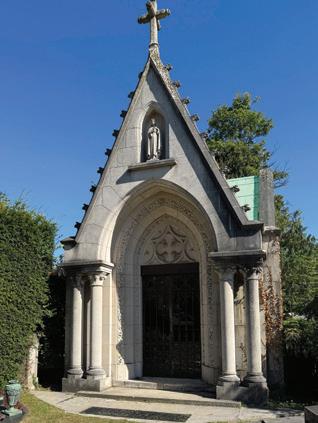
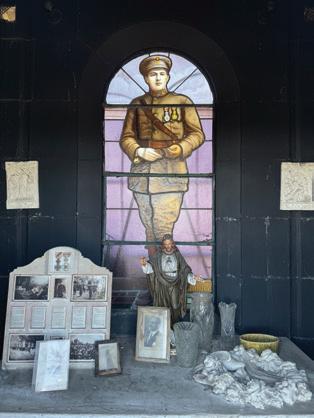
It was designed by architects Louis Coenraets and Edmond Le Graive in a radiant plan from a rotunda to a monumental entrance flanked by two neoclassical pavilions. A second rotunda was later built, along with a military section.
Ex-mayor Dufourney vaunts it as not just a last resting place, but a haven of quiet in the busy city. It is most certainly that. In my walk around the cemetery, I saw the gardener strimming the buttercups (why?) and one visitor who drove into the central roundabout, got a watering can out of the boot, and hobbled painfully towards a grave - presumably to tend it. I found that oddly touching. I sat on one of the astonishingly comfortable park benches and was still. I had thought how much more open the city would feel if the surrounding walls were gone. Be that as it may, they make great soundproofing. I could hear birdsong at last.
I strolled around the perimeter to get a feel for the place. I was surprised at how many longstanding couples died within a short time of each other. I noted graves in Chinese, Dutch and French.
I was touched by the small, well-manicured First World War military graveyard with rows of headstones, some with names, some simply blank. Each has a small flag of nationality. Mostly Belgian, many French. It is seemingly guarded by four bronze sentinels made by Charles Samuel, Marcel Rau, Isidore De Rudder and Jules Herbays. The Second World War section has graves of Belgian, French, British, Italian, and Soviet soldiers lying side by side, as well as a ‘Repository of the Martyrs’ for the victims of Nazi terror.
I noted that, near the entrance, were clustered together quite a few local politicians. I saw some Jewish graves, but only one had white stones around and on it. I picked one up and put it on assuming I was doing the right thing.
In unchurchy little Belgium I was surprised how many gravestones had symbols of religion. The children’s graveyard, calling itself Star Meadow, was as mournful as you could wish.
There was a small area of crosses of flimsy wood, some without names. Paupers? Homeless people? The gardener could not enlighten me. I saw the masonic symbol at least twice.
One particularly grand mausoleum had these words written on it “When you receive this I will be gone. But do not cry. Death in a noble cause is better than a life of uselessness and egotism”. Better neither, I thought and then felt vaguely churlish. I searched in vain for the 12 British soldiers
whose graves are maintained by the Commonwealth Graves Commission. According to its website they are mostly from Scottish regiments.
And I was startled by one large white gravestone, its long inscription in flowery Italian. It was the grave of Luigi Bigiarello, described as ‘Ideatore e fondatore della S.S. Lazio’. The founder in Rome in 1900 of what is one of Italy’s most consistent football clubs, was an athlete of distinction. He and his brother later emigrated to Belgium, and he died of pneumonia here at 34.
Many other famous people are buried there.
I will leave out Victor Horta, the main creative force behind Art Nouveau, who designed quite a few of the mausoleums and many of Brussels’ greatest buildings. He is simply too well-known, too well-written up for me to contribute meaningfully.
Also, Ernest Solvay, the tycoon and industrials, who, with his brother Alfred, developed the ammonia soda process for making glass and cleaning products. He later set up the Solvay Institute of Sociology and the Solvay Business School, respectively been absorbed by the ULB and VUB, the universities that flank his last resting place.
Here then are some other people buried there who have claim to fame.
It might be considered customary –even universal – to be dead before you pass through the gates of the cemetery to your place of final repose. Not so French General Boulanger (1837-1891): whose life was almost as bizarre as his death and his story is, therefore, worth the telling for those not steeped in French political and military history.
Ernest Boulanger was born in deeply conservative and pro-royalist Brittany, well after the French royal family had been sent to the tumbrils. His subsequent extreme, indeed pathological, nationalism and royalism might be attributed by psychobabblers to him being half-Welsh. His mother was from an aristocratic family, the “Griffiths of Burton Agnes”. His eponymous uncle Ernest enlisted across the Atlantic in the Union Army and was killed in the American Civil War.
The other Ernest attended the Saint-Cyr military academy and graduated in 1857. He had a spectacular career fighting in Indo-China, Algeria, Tunisia, Sardinia and putting down the Communards. He was noted for his bravery and had the habit of quarrelling with his military superiors and their political masters. But he still managed to rise to the giddy heights of generalship.
It assumed he was a republican on the
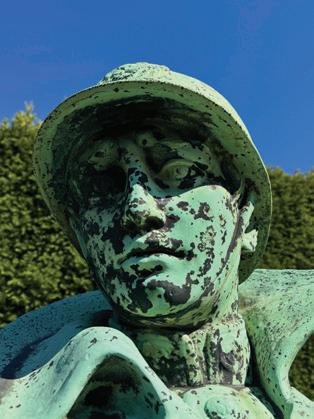
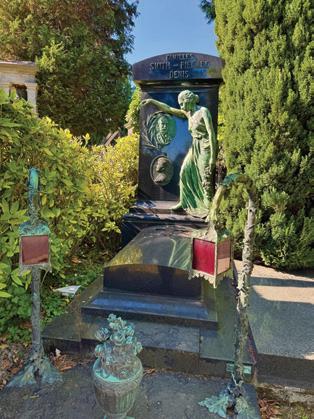
somewhat flimsy grounds that he didn’t go to church, and the Prime Minister appointed him Minister of War. This was an error. Boulanger was a stout royalist and a fine communicator. His philosophy was “revanche, revision et restauration” – revenge on Germany for the Franco-Prussian War, a rewriting of the constitution to eliminate parliament, and restoration of the monarchy. He was enormously popular with the urban working classes and the rural monarchists. His nickname was Général Revanche and he even had a song written about him. On one occasion, he was perceived to have bested Bismarck, at least politically!
At a certain moment, all the stars aligned. The opposition was weak, the army behind him, the urban sans coulottes and the dreamy monarchists awaiting their day of glory and his majority in the senate unassailable. Rich landowners were throwing money at him while urging him to pounce. A coup d'état was in the offing. The trouble was he was a political ditherer. Rather than make a yes or no decision, he rushed off to the home of his mistress, Marguerite Brouzet, Vicomtesse de Bonnemains, and could not be found.
He was charged with “treasonous activity” and fled first to Switzerland and then to London where he hobnobbed with exiled French royalists. This was not well perceived by his supporters. Le Figaro also uncovered a scandal: he was rumoured to have been a client at the infamous male brothel in London’s Cleveland Street. France merely yawned. He was yesterday’s man.
Support was gone and his beloved Madame Bonnemains had died of tuberculosis and was buried in Ixelles cemetery thanks to their itinerant lifestyle. On her grave, at his request, was marked “A bientôt”. Two and a half months later, he walked into the cemetery and shot himself at her graveside. On his gravestone was written, “Did I man -
At a certain moment, all the stars aligned. The opposition was weak, the army behind him, the urban sans coulottes and the dreamy monarchists awaiting their day of glory and his majority in the senate unassailable.
His first million in his pocket, he leveraged this up to owning and running a large oil company which was handling a significant portion of Nigeria’s oil. He was for a while, it is said, the richest man in Africa.
age to stay alive two-and-a-half months without you?”
He is buried beside her.
When I was told ten years ago that I had months to live, it was at the Jules Bordet hospital, then still in the middle of town. I had no idea who the eponymous one was and what he had done. When the hospital hauled me back from the precipice, and had I been a better man than I was, perhaps I would have found out more about him. But stumbling across his tomb in Ixelles Cemetery pushed me into doing a little research.
Jules Bordet achieved significant breakthroughs in the field of immunology, particularly regarding the mechanisms of immunity and the destruction of bacteria. He is best known for discovering the role of antibodies and the complementary system in the body's defence against foreign substances,
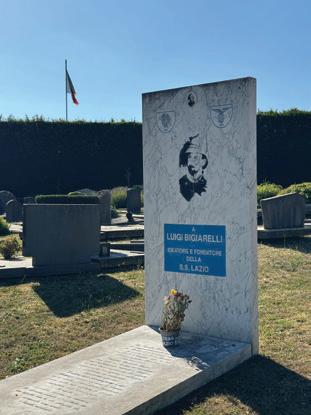
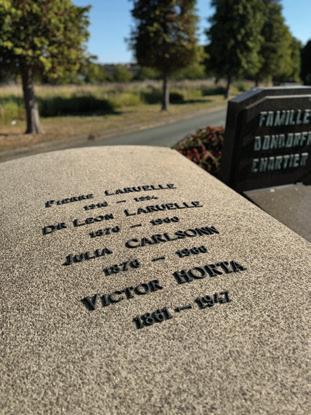
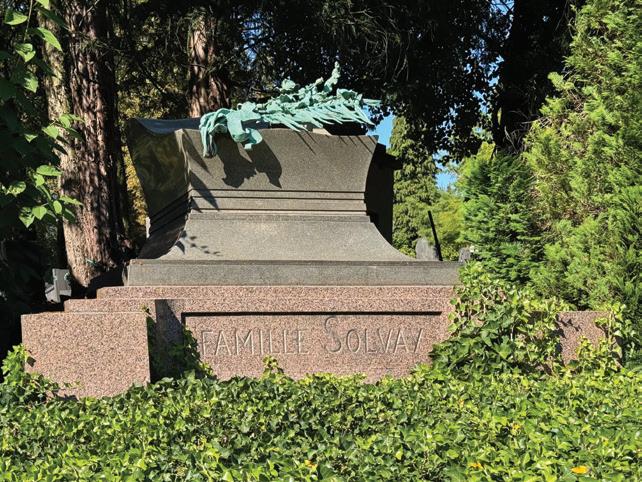
work for which he was awarded the Nobel Prize in Physiology/Medicine in 1919. Bordet's research also led to the development of serums, including the Wasserman test for syphilis, and the identification of the microorganism responsible for whooping cough. Frustratingly, or perhaps refreshingly, his personal life was almost a secret – but he saved millions of lives by his dedication to practical research and that, surely, is enough.
The same cannot be said for the extraordinary Antonio Deinde Fernandez (19292015). Descendant of a Brazilian slave trader who had settled in Lagos Nigeria he dropped out of university there and headed for the US. He brokered a deal which purchased much-needed bauxite at competitive prices from Nigeria. His first million in his pocket, he leveraged this up to owning and running a large oil company which was handling a significant portion of Nigeria’s oil. He was for a while, it is said, the richest man in Africa.
While doing this he represented Angola, Mozambique and the Central African Republic diplomatically, married six women and acknowledged nine children. One of his wives was American and claimed his American house in the divorce. He, in his turn, claimed diplomatic immunity and this ended up in the Connecticut Supreme Court. He lost!
In 2014, he came to Belgium for medical help for an undisclosed ailment. At his funeral, it is discreetly recorded, animosity about his estate broke into the open. Given the size and complexity of his family this is unsurprising. The row spread out into social media.
And one from the classical music world who is quite new to me - Eugene-Auguste Ysaÿe (1858-1931). A violin virtuoso from Liège, largely taught by his father, he quickly reached the heady heights of the Berlin Philharmonic, then known, I write this in all seriousness, as the Bilse Beer Hall Band! This “band” offered food and drink with the music and inspired the Boston Promenade to do likewise.
Ysaÿe was a serious musician, and serious musicians would come to listen specially to him. These included Joseph Joachon, Clara Schumann, Franz Liszt and Anton Rubinstein. Rubinstein asked him to be released from his contract and tour with him. Pablo Casals, no less, said he was the only person who could play the violin in tune!
He was invited to perform at one of the Concerts Colonne in Paris and that was the boost for a lifetime of soloist concerts and teaching at the Brussels Conservatoire. The
list of his pupils comprises the next generation of fine violinists of the so-called Franco-Belgian School. Specifically, this entailed “a sense of drawing a ‘long’ bow with no jerks, precise left-hand techniques, and bowing using the whole forearm while keeping both the wrist and upper arm quiet.”
Cesar Franck’s Violin Sonata in A was written and presented to him on his first wedding day. The story goes that Ysaÿe spent the morning working it up so that he could perform it at the luncheon. Debussy, SaintSaëns and Chausson also wrote especially for him. His illustrious career was blighted by diabetics, which entailed the amputation of his left foot. After the death of his first wife, his much younger second wife nursed him throughout his decline before he was laid to rest in Ixelles.
A chum said to me, “I see you are writing about graveyards now. Don’t you find it a little depressing at our age?” I didn’t reply. But if asked again, I would answer an emphatic “No.” I find it uplifting. The respect, the stillness, the sense of history, the shoulders upon which we stand, all are nourishment for the spirit. Am I going to end up in one sooner or later? Sure. But then I’d worked that out by the time I was three. I’ve had time to get used to the idea!
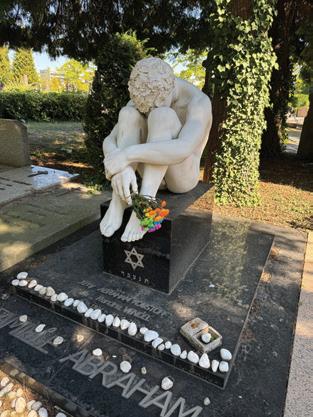
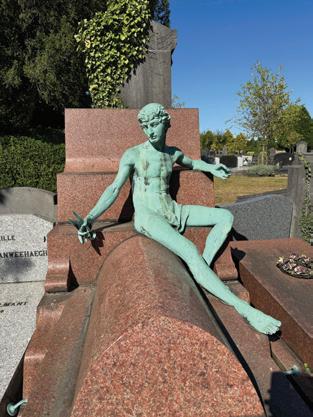
Paul Otlet (1868–1944): lawyer, peace activist, creator of the Universal Decimal Classification, and the Mundaneum, the knowledge catalogue that anticipated the Internet Émile Vandervelde (1866–1938): socialist leader and statesman who was influential in the peace negotiations following World War I
Camille Lemonnier (1844–1913): novelist, short-story writer and art critic, dubbed the Belgian Zola
Victor Horta (1861-1947): the man most associated with Art Nouveau, whose buildings are still seen as the last word in architectural magnificence
Ernest Solvay (1838–1922): mogul and philanthropist; his tomb was designed by Horta
Constantin Meunier (1831–1905): sculptor and painter who specialised in portraying toiling workers
Théo Van Rysselberghe (1862–1926): avant-garde painter and founding member of Les XX, the influential exhibition society
Anna Boch (1848–1936): post-impressionist painter, only woman in Les XX
Victor Bourgeois (1897–1962): modernist architect and urban planner, behind the Cité Moderne of 275 social housing units in Berchem-Sainte-Agathe
Marcel Broodthaers (1924–1976): artist and trenchant critic of ‘Bruxellization’
Charles De Coster (1827–1879): novelist who developed the idea of native Belgian literature
His illustrious career was blighted by diabetics, which entailed the amputation of his left foot.
Luigi Bigiarello (1875-1908): founder of SS Lazio football club
Antonio Deinde Fernandez (1929-2015): Nigerian deal maker, diplomat, multi-millionaire and multi-marrier
Ernest Boulanger (1837-1891): French minister of war and accused traitor who fled to Belgium with his mistress
Eugene-Auguste Ysaÿe (1858-1931): violinist, conductor and composer
Jules Bordet (1870-1961): physician, bacteriologist and immunologist, winner of 1919 Nobel for Physiology/Medicine
Paul Hymans (1865–1941): statesman, politician with the then-unified Liberal Party, twice president of the League of Nations
Sylvain de Jong (1868–1928): Dutch automotive pioneer and creator of the luxury Minerva car
Paul Saintenoy (1862–1952): Art Nouveau architect who notably designed the Old England store
Carl Sternheim (1878 -1942) German Expressionist playwright and short story writer who fled Germany in World War I and did not return
Antoine Wiertz (1806–1865): unfashionable painter with grandiose plans to make Brussels bigger than Paris
Louis Empain (1908–1976): financier, youngest son of industrialist Édouard Empain and man who ordered Art Deco masterpiece Villa Empain
Louis-Napoléon Chaltin (1857–1933): soldier who served in the Belgian Congo and brutally crushed resistance by local tribes.
Belgium’s brewing past is littered with styles thought lost to time – victims of war, industrialisation and shifting tastes. Yet from Antwerp to Hainaut, determined brewers are reviving forgotten ales like Seefbier, grisette and faro, reimagining them for modern palates while keeping one eye on history. Breandán Kearney examines how brewers have tried to resuscitate obscure Belgian beer styles for reasons ranging from regional pride to hopeful marketing
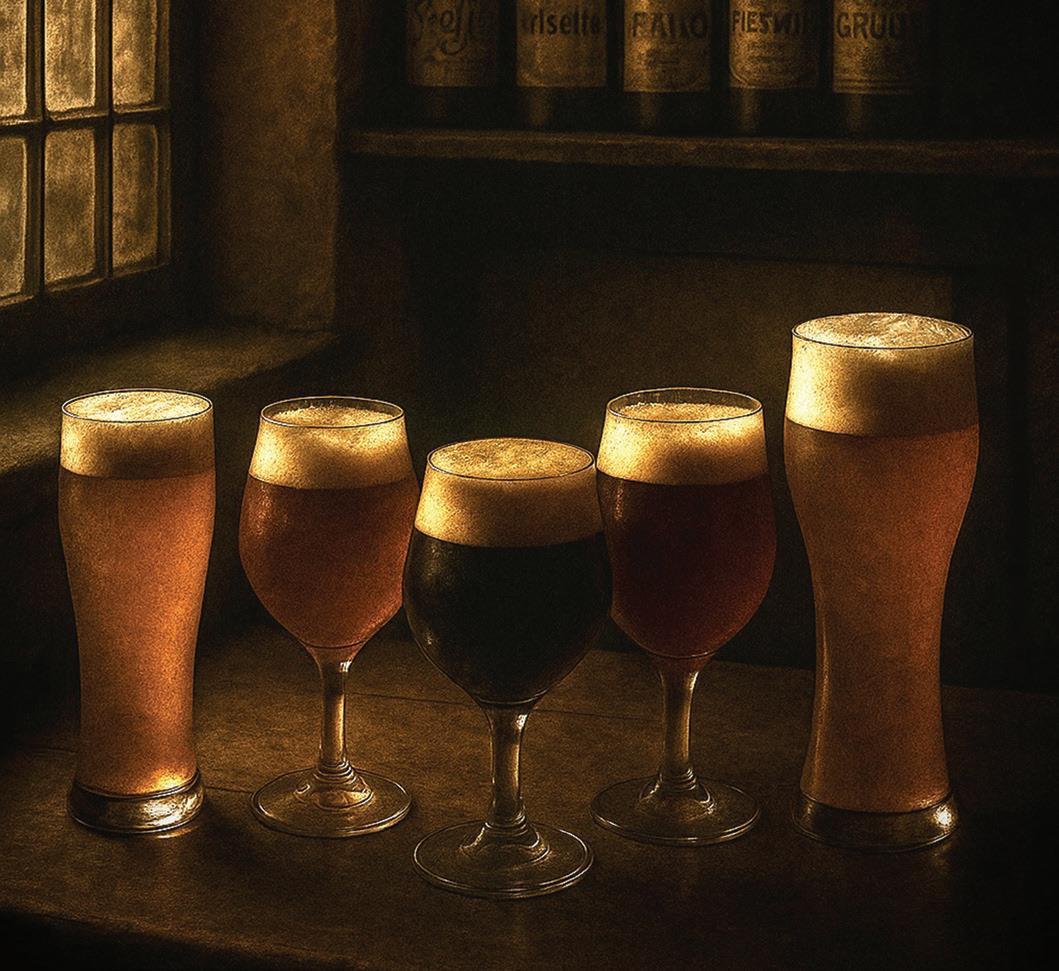
Belgium’s beers of yore
If saison is the farmstead beer, then grisette is the beer of Walloon coal mining.
Not every Belgian beer style has survived the march of time. Some have disappeared as casualties of war, regulation, or changing work patterns; others have succumbed to industrial pressures or consumer shifts. But in recent years, brewers have tried to revisit styles that history nearly erased. Seef or Seefbier, for example, once the
pride of Antwerp, vanished with the collapse of small urban breweries during the First World War. A decade ago, Johan Van Dyck claimed to have uncovered an old recipe for a seef beer which he reincarnated with a barley, wheat, and oat grainbill and a creamy, unfiltered profile. In recreating it, Van Dyck reignited city pride with a new generation of drinkers.
Breandán Kearney
In Lier, the brown-amber ale caves was revived by a local heritage guild, which commissioned it to be recreated from archival recipes (but only for serving in cafés within the town walls). And then there’s uitzet, a mixed fermentation brown ale from East Flanders that local brewers such as DOK Brewing Co, have tried to recreate in Ghent.
Through detective work in old brewing manuals and oral histories – and some creative marketing from those keen to tell stories that will spark consumer interest – modern brewers have sought to revive identities and walk the line between innovation and heritage.
Grisette is a traditional Belgian beer style said to have originated in the Hainaut province during the late 18th century. It is often said to be the industrial cousin of the saison style, another Hainaut beer created for the sustenance of farmworkers during harvest off-seasons. If saison is the farmstead beer, then grisette is the beer of Walloon coal mining. The name grisette references the grey dresses of the women who are said to have served beer to the miners.
Grisette may have been lightly hopped, heavy on wheat, and possibly underwent open fermentation, resulting in beers that may have been dry, highly attenuated, effervescent, and with subtle tartness.
Modern interpretations often remain true to a perceived low alcohol content, typically between 3% and 5% ABV, and try to maintain the use of wheat. Some brewers incorporate spices or fruit, and fermentation is usually carried out with saison yeast strains to rep-
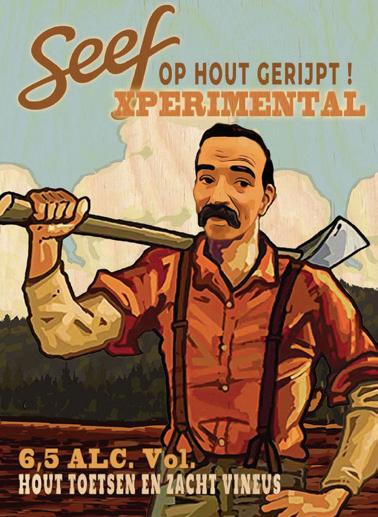
licate the dry, crisp character.
As such, modern grisette is characterised by its light body, high carbonation, and refreshing nature. Flavour profiles typically include a citrus, herbal, or spicy aroma, notes of lemon, wheat, and a mild tartness, with a dry, effervescent mouthfeel.
The most celebrated modern interpretations of grisette come from Brasserie St-Feuillien, a family brewery in Le Rœulx, which produces Grisette Blanche Bio (5.5 % ABV), Grisette Blonde Bio gluten-free (5.5 % ABV), and Grisette Citra Hop Bio gluten free (8% ABV).
Faro emerged as a beer style of the lambic family in 18th century Brussels. It was known for its affordability, lower alcohol content, and suitability as an everyday drink for the working class.
Faro was often sweetened with brown sugar or caramel to balance the acidity inherent in lambic beers. Its popularity declined in the 20th century with the rise of pilsner-style beers, but it has seen a resurgence in recent years due to renewed interest in traditional and regional beer styles.
Sugar was usually added just before serving in the café or home, right before drinking, to prevent the likely refermentation that would have occurred had the sweetener been added in the tank or package (with the inherent risks of over-carbonation).
Today, faro is produced by blending lambic with sugar in production facilities and then pasteurising the beer to prevent further fermentation. Common tasting notes include fruity aromas such as apple and pear, with Peeterman was a hazy, sour beer brewed using winddried barley malt, unmalted wheat, and oats. It was most likely fermented spontaneously or with wild yeasts. It disappeared in the early part of the 20th century, one of the many victims of the rise of lager.
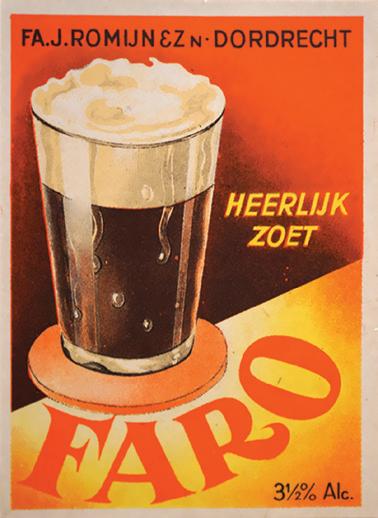
It’s all too easy to get wrapped up in the romance of revived versions of historical styles. But these beers — grisette, faro, gruut, Peeterman, seef, uitzet, and caves — don’t return whole. They come back in fragments.
hints of caramel, and a sweet and sour taste featuring brown sugar, green apple, and wild yeast character.
The most well-known modern faros come from Belgium’s lambic breweries. Brouwerij Boon of Lembeek produces a faro that blends old lambic with Meerts beer (a lighter version of lambic) and candy sugar. Brouwerij Lindemans of Vlezenbeek began producing faro in 1978 as part of their effort to revive traditional lambic styles. Their version is sweetened with sugar syrup. And Brouwerij Timmermans, one of the oldest lambic breweries in Belgium, continues to produce Faro as part of their commitment to traditional beer styles.
Peeterman was a traditional beer style originating from Leuven, Belgium, named after the city's patron saint, Saint Peter (the term Peeterman was also a nickname for the inhabitants of Leuven).
Historically, Leuven was renowned for two primary beer styles: white beer (witbier), famous today globally, and Peeterman, a stronger and slightly darker variant of the white beer, known for its cloudiness and sour taste.
Peeterman was a hazy, sour beer brewed using wind-dried barley malt, unmalted wheat, and oats. It was most likely fermented spontaneously or with wild yeasts. It disappeared in the early part of the 20th century, one of the many victims of the rise of lager. Pierre Celis and his Hoegaarden brand later revived Witbier, but Peeterman quietly exited stage right.
AB InBev, whose headquarters are in Leuven, released a Peeterman Artois in the 2000s, but it was withdrawn in 2008, presumably due to lack of interest. This may have been because they didn’t lean into the style’s history, pro-
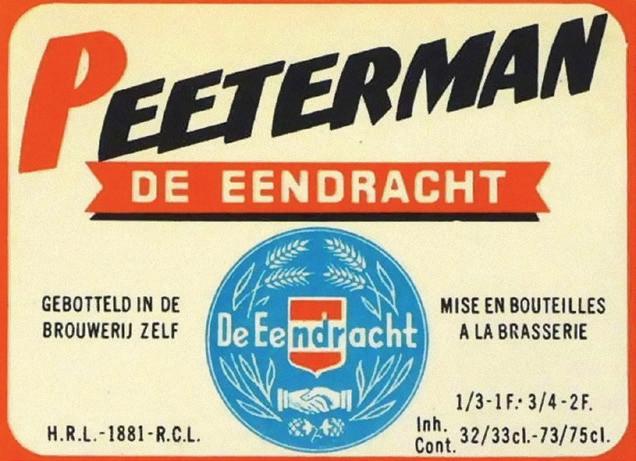
ducing what was essentially a 4% ABV wheat lager rather than the hazy, sour beer featuring unmalted wheats, oat, and wild yeast that was the Peeterman.
Brouwerij Breda, a small Leuven-based contract brewery, released a contemporary Peeterman-esque wheat ale in 2019 (6% ABV, unfiltered), but the style remains a curiosity to this day, fondly remembered, but not yet reborn.
Before hops were the dominant bittering agent in beer, brewers in Belgium relied on a mixture of herbs known as "gruit" ("gruut" in Flemish) to flavour and preserve their beers: bog myrtle, yarrow, and wild rosemary, among others.
When hops arrived in the 14th and 15th centuries, it was clear that they had superior preservative and bittering qualities. International brewing regulations, such as the German Reinheitsgebot, mandated the use of hops. Soon, hops had taken over from gruit herbs in the mainstream production of beer.
In modern times, Brouwerij Gruut — with a brewbar location in Ghent (but brewing larger production volumes in Brouwerij De Brabandere in Bavikhove) — produces a range of beers that deploy a blend of herbs instead of hops, including Gruut Wit, Blond, Amber, Bruin, and Inferno.
Brasserie Dupont of Tourpes has its Posca Rustica, a beer the brewery describes as Cervoise beer, spiced with a gruit herb mixture. Sweet woodruff and bog myrtle are just two of a dozen different spices used.
Bog myrtle is also used as a single herb in the beer Gageleer, produced by a nature conservation cooperative of the same name from the Kempen region but brewed at De Proefbrouwerij in Lochristi. The owners say bog myrtle is a shrub that grows on peaty soils, such as in the nature reserves of the Kempen region, and as such is a fitting herb to define their historically-inspired beer.
It’s all too easy to get wrapped up in the romance of revived versions of historical styles. But these beers — grisette, faro, gruut, Peeterman, seef, uitzet, and caves — don’t return whole. They come back in fragments.
They bear the fingerprints of the modern brewers who have attempted to translate them into the 21st century, the limitations of contemporary equipment, and the compromises of shelf life and sales.
Their return doesn’t restore a lost golden age. But it does suggest that even in a modern brewing culture shaped by fast-moving commercial trends and competitive export markets, there’s still room for beer styles with roots that speak of a particular moment in time, in a particular place, and a particular people.





What are the most delicious foods, refreshing drinks, coolest cafés and intriguing restaurants in Brussels now? Here are some that recently caught the eye of our food and drink expert Hughes Belin
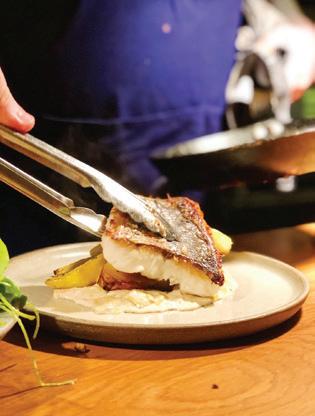
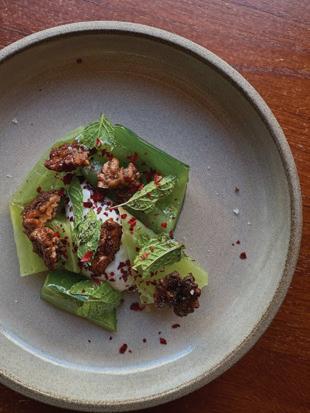
Almost next door to La Pompe café, Le 203 has become a Saint-Gilles favourite for a smart, unfussy business lunch. The menu is short and sweet: two starters, two mains, and a dessert at lunch; one additional main and dessert at dinner. There’s always a vegetarian option alongside meat or fish, and at around €35 for lunch and €45 for dinner (excluding drinks), it’s excellent value.
But speed isn’t the real draw. The charm of this small, eight-year-old restaurant lies in its cuisine: creative, simple, and delicious dishes prepared from fresh, seasonal produce, sourced locally whenever possible and always from quality suppliers. The menu changes every week to reflect what is best and freshest.
The owners, South African chef Richard Schaeffer and his French wife, Mathilde Hatte, are passionate about natural wines, which pair beautifully with their colourful, product-driven cooking. As a bonus, diners can also taste and buy their homemade “Must!” sauces: ketchup, BBQ, a mild mustard (a rarity in Belgium), and a mustard-seed pickle to liven up salads or fish. Schaeffer is a humble craftsman at heart – an artist whose work shines on the plate.
The restaurant’s décor offers three distinct experiences. At the front, larger tables suit groups. In the middle, diners sit within the open kitchen, watching the team at work, as in a Japanese counter-restaurant – although here, half the table doubles as a plating station. At the back, a cosy bistro mood takes over, with small tables tucked close together, recycled chairs, a wooden bench, and a bare brick wall overlooking the garden.
Le 203 is open from Tuesday to Friday for lunch (12–3pm) and dinner (6:30–10pm). Reservations are not accepted, which can be tricky, but it’s worth arriving early, particularly in the evening. A second dinner service offers latecomers a chance, though it’s wise to have a plan B nearby (like La Pompe or Fernand Obb Delicatessen just across the street). For the full experience, you can even stay at the couple’s two-level design apartment, Numéro Cent, located a few blocks away at 100 rue Saint-Bernard.
Le 203, 203 chaussée de Waterloo, 1060 Saint-Gilles
Open Tuesday–Friday, 12–3pm and 6:30–10pm.
Hughes Belin
Innovation sometimes comes from unexpected places. Spa, the flagship brand of Belgian water giant Spadel, is woven into the fabric of everyday life in Belgium. Founded in 1912, Spadel was granted exclusive rights to exploit waters from the town of Spa, which flow from a 130 km² natural reserve in the HautesFagnes National Park, protected since 1889. Every Belgian has tasted Spa—flat or sparkling.
In 2013, the company launched flavoured sparkling waters and lemonades. But the non-alcoholic drinks market was thirsty for more: more complex flavours, more surprising sensations, and more choice beyond the chemical- and sugar-heavy mainstream brands. Spa’s new mocktails deliver exactly that, ticking every box in the trend for healthier drinks: no alcohol, zero sugar, and full flavour.
These aromatised waters, the first of their kind in Belgium, are a paradox in a bottle: 99.9% pure water and 0.1% sophisticated aroma. Simplicity and sophistication together. The naturally sparkling water comes from Spadel’s Marie-Henriette spring, infused with aromas now available in three varieties: Mojito, Passion Fizz, and – since June 2025 –Daiquiri.
It may seem bold to name sparkling water after classic cocktails, yet the taste is genuinely striking. You don’t get the illusion of drinking the real thing, nor even a traditional mocktail, but rather the quintessence of those drinks. I wasn’t swayed by glossy posters of sun-drenched, beach-party youth brandishing bottles of Spa mocktails. But I drank it mindfully, and the flavours surprised me. Complex, layered, and somehow capturing the essence of the originals, they are a triumph of Spadel’s R&D. And at only €1 for a 50cl bottle, they are well worth trying.
The drinks are best enjoyed ice-cold, straight from the fridge. A glass is unnecessary – the handy bottle is ideal. Adding ice only dilutes the flavour and undermines the sparkle. It’s the precise marriage of fizz and aroma that makes them so powerful.
The Mojito is intensely refreshing, with a long mint finish that avoids the wilted, oxidised taste of real leaves. Passion Fizz balances the tartness of passion fruit with peach notes for extra body. The Daiquiri explodes with strawberry aroma and an unexpected creaminess. Interestingly, Passion Fizz carries a subtle “vodka aroma,” while Mojito and Daiquiri are built on “rum aroma.” Perhaps that’s what lifts them beyond simple fruit waters into something more nuanced and evoc-
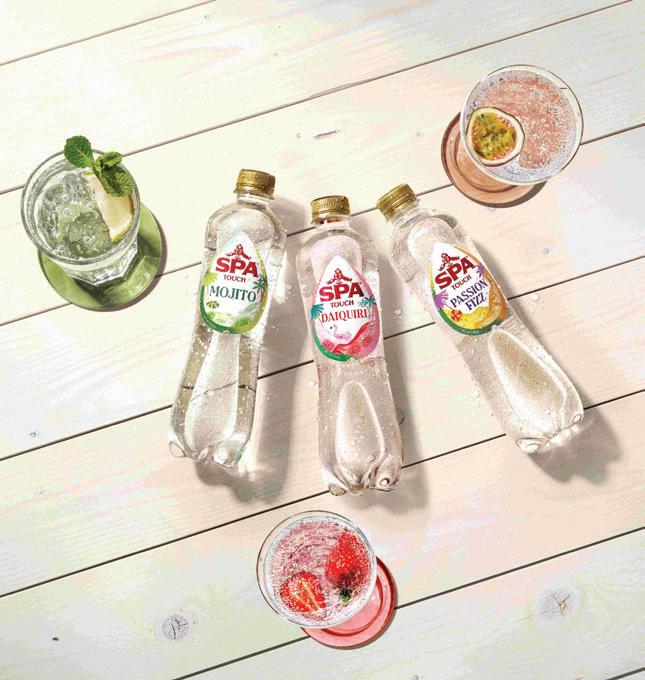

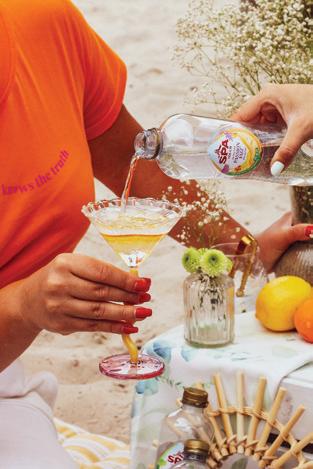
ative of cocktails themselves.
The first two flavours have already found their audience; it’s too soon to know if the strawberry Daiquiri will follow suit. But one thing is certain: everyone will discover a favourite.
Ultimately, these drinks are more than refreshment. They capture a hint of summer, of parties, holidays, and beach bars. And perhaps only a 130-year-old company, present at every Belgian table from cradle to grave, could distil such fleeting joys – the essence of carefree youth – into a single bottle.
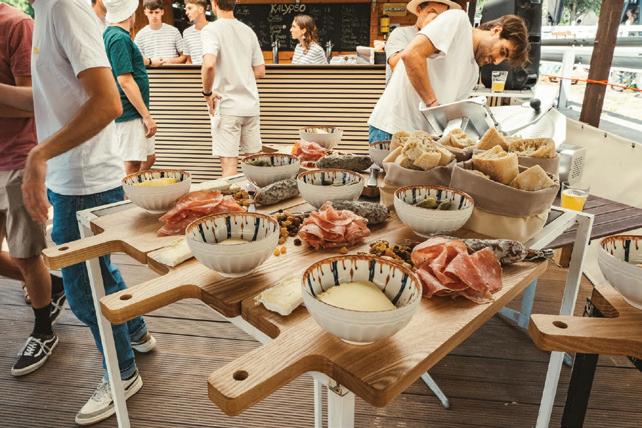
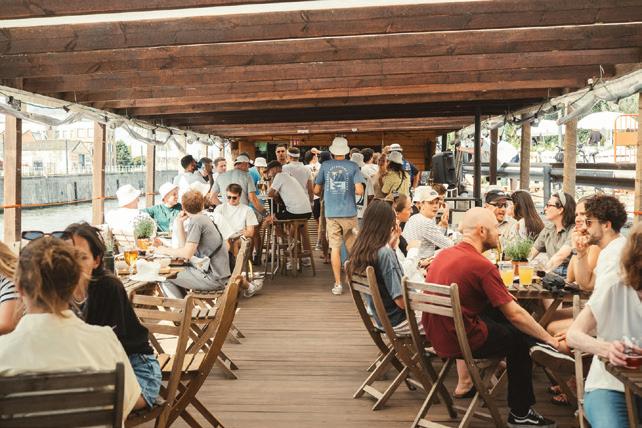
Brussels has no shortage of unusual places to drink, but few rival Kalypso—a bar on a barge. Not just any barge, but the Edouard, the city’s oldest, built in 1913 at the Baasrode shipyards in Dendermonde. For 65 years, it hauled coal through Belgium’s waterways before mooring permanently at the Port of Brussels, opposite Tour & Taxis.
Since then, the barge has led many lives: first as a dwelling, then as an artistic hub in 1992 under the name Fulmar 1913. In 2011, Gwenn Feron took over, retrofitting the vessel from hull to deck and transforming it into a venue for parties, theatre, and concerts, before briefly converting it into an Airbnb.
Last spring, the baton passed to Martin Kaufmann, a young entrepreneur in the events industry. Unlike other barges that serve solely as hired venues, Kaufmann gave the Edouard new energy. After a full refurbishment, he opened Kalypso in July: a permanent bar on the 120 m²
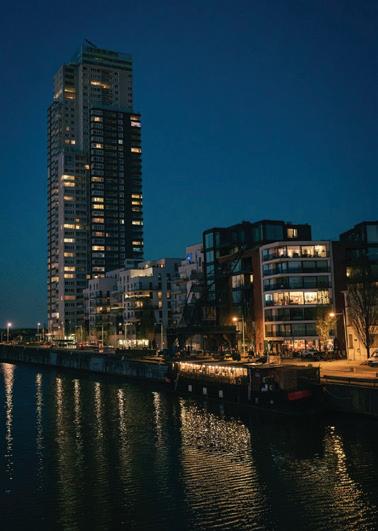
upper deck, complemented by the flexible 80 m² lower deck.
The lower space, aptly named La Cale (“the hold”), now hosts stand-up comedy, improv theatre, concerts, and corporate events throughout the year. Kalypso Events can also tailor weddings, parties, and exhibitions, with pricing that distinguishes between private and corporate clients.
The upper deck bar, open year-round from Wednesday to Friday (4pm–midnight), offers one of the city’s most refreshing experiences: drinks with a view of the water, especially magical at sunset when the sun slips between the canal-side buildings. The drinks menu is still basic but features carefully chosen natural and organic wines from Brussels importer Vineaste. To eat, the options are straightforward but satisfying: homemade smash burgers with fries or a generous board of cold cuts sourced from Ardèche, France.
The name Kalypso, beginning with a K like many businesses along the Brussels Kanaal, anchors the bar in a neighbourhood that is rapidly evolving. Since the opening of the Suzan Daniel footbridge in October 2022, linking the North Station to Tour & Taxis, the area has been buzzing with new hotels, rooftop terraces, restaurants, and galleries. The forthcoming Kanaal Museum, expected in 2026, will only accelerate the momentum.
With its wooden floors, simple tables and chairs, and warm, dimmed evening light, Kalypso exudes cosiness. Add the relaxed, friendly service, and you have a spot that feels at once casual and special – a perfect place for an after-work drink by the water, aboard a vessel with over a century of history.
Kalypso: 22, Quai des Péniches, 1000 Brussels
Eight years ago, one of my first articles for this magazine featured a rosé wine. Half of it, though, was devoted to Belgium’s deep-rooted love of the barbecue. I won’t repeat that BBQ is almost a national religion in this rainy country – but the tradition of scouting camps, where youngsters learn to cook outdoors in any weather, may explain why Belgians are so inventive when it comes to food around the flames.
For vegetarians, the choices at barbecues have long been limited: either high-tech vegan meat substitutes (we have already covered Greenway) or grilled cheese, best known in Belgium as halloumi. The good news is they no longer need to rely on imported halloumi. They can enjoy Berloumi, its 100% Belgian counterpart.
Made in Berlare, near Ghent, Berloumi is produced from the milk of a single local farm. The milk is not fermented but undergoes an enzymatic transformation before being drained, cut, and cooked at 90°C. Ever wondered why this cheese can be grilled without melting? Because its proteins are not broken down by fermentation – they stretch rather than collapse. The result is a firm three-centimetre-thick block that grills beautifully and can even crisp on both sides. Delicious plain, it also comes flavoured with herbs, aromatised oils, or chilli. With a shelf life of nine weeks, it’s an easy fridge staple, now available in supermarkets as well as in organic shops.
Another advantage of this production method is sustainability: the whey left over from the process, still rich in protein, is recycled into ricotta. The dairy behind Berloumi, De Zuivelarij, not only works with local farms but also minimises waste. Over time, it has diversified into other specialities such as labneh (cream cheese), paneer (Indian cooking cheese), cacioricotta (a distinctive goat cheese), and even Sicilian cannoli filled with sweetened ricotta.
The story behind Berloumi is as appealing as the cheese itself. David De Coster, passionate about cheesemaking, taught catering in a Ghent school where students had to learn vegetarian cookery. Spotting a gap in the market for a Belgian-made halloumi, he set out to create one. Ten years on, De Zuivelarij now processes 1.3 million litres of milk annually from nearby farms, with expansion planned to keep pace with the growing appetite for non-meat and Mediterranean-inspired foods.
A genuine Belgian success story – ready for the grill, whatever the weather.
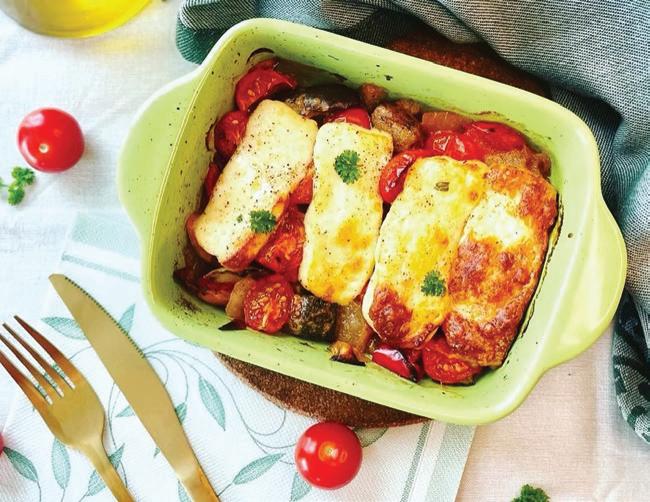
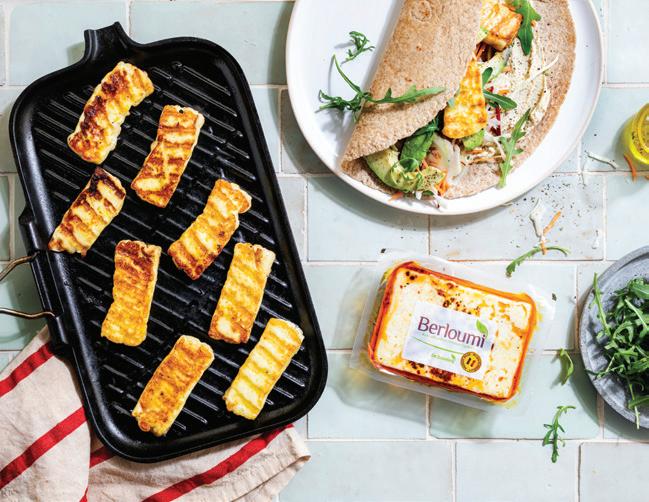

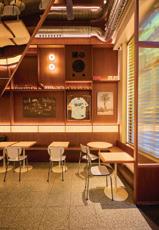
Various venues in Brussels
September 17 to October 2, 2025
The annual festival that brings together over 300 designers, makers and creatives in 100 venues across the capital. It includes exhibitions, installations, open studios, lectures, markets, tours and workshops across themes of technological innovation, sustainability, new aesthetics, and commerce. This year's event will also feature a special focus on Art Deco, aligning with Brussels' year-long celebration of the design movement’s centenary.
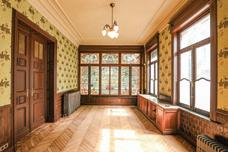
Various venues in Brussels
October 11-12 and 18-19, 2025
A new annual festival that merges two previous biennales, on eclectic and neoclassical architecture, over two weekends across the Brussels region. Brought to you by the people behind the BANAD, the new event will showcase architectural treasures from the so-called “long 19th century” (1780–1920). Through guided visits, tours and lectures, ANTE aims to showcase the abundance of evolving styles, as well as the diversity of the architectural heritage.
Horta Museum, 27, Rue Américaine, 1060 Brussels
Until November 2, 2025
Kurt Karlsson selects the best current and upcoming events and exhibitions
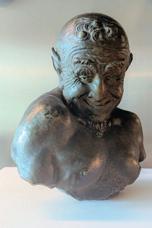
Around Place du Grand Sablon, 1000 Brussels
September 25-26, 2025
Some 70 galleries will open their doors during Brussels Art Square (BAS), in the art district of the Sablon, where galleries are usually open by appointment. It's a chance to admire sculptures, paintings, jewellery and furniture spanning 10,000 years of history and artistic trends.
Various venues in Brussels
October 3-13, 2025

The Artonov festival sneaks contemporary dance, music, workshops and performance art into unlikely venues – from mansions to metro stations – like a cultural squat with better lighting. It’s the only time you’ll see avant-garde choreography unfolding beneath stained glass without anyone calling security.
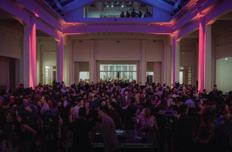
Various venues in Brussels
October 18, 2025
For one night only, museums across Brussels will stay open late for your edification, and many of them will be putting on special events. The event is put together by the organisation Brussels Museums, which aims to make museums more accessible to everyone and promote the city’s cultural scene.
Halles Saint-Géry, 1, Place Saint-Géry, 1000 Brussels
Until November 16, 2025
As part of the Art Deco Year 2025 celebrations, the Horta Museum casts a new light on this period through the lens of design motifs, looking at how patterns, colours, decorations, and ornaments evolved and transformed between 1910 and 1940.
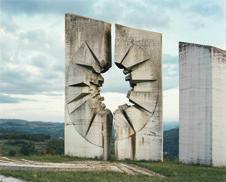
House of European History, Park Leopold, Rue Belliard 135, 1000 Brussels
Until January 11, 2026
How do Europeans engage with the past in their everyday lives? This exhibition of photographs from across Europe looks at the ways history and heritage are integrated into our modern worlds.
Modern fashion designers show their contemporary vision of the codes of the Art Deco movement that were seen in drawings, photographs, movies and magazines.
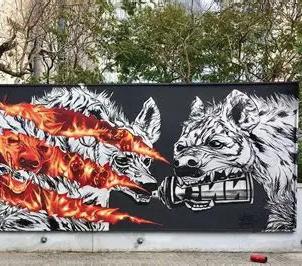
CNN199: 35 YEARS OF ACTIVIST HIPHOP
Espace Vanderborght, Rue de l'Ecuyer 50, 1000 Brussels
October 16 to November 11, 2025
A retrospective look at Brussels graffiti collective CNN199 from its subversive origins, showcasing its diverse forms and techniques: monumental frescoes, works on canvas, digital installations - with original works created especially for Espace Vanderborght.
Maison Hannon, Ave de la Jonction 1, 1060 Saint-Gilles
Until April 19, 2026
The Maison Hannon, itself an Art Nouveau masterpiece, is hosting this exhibition on Belgian and French Symbolism at the turn of the 20th century. Includes works by Victor Rousseau, Fernand Khnopff, Charles van der Stappen, George Minne and Jef Lambeaux.
Design Museum Brussels, Place de la Belgique 1, 1020
Brussels
October 18 to March 1, 2026
A look at design and its relationship to the world of comics. From the emergence of comic strips in the early 20th century, to the likes of Hergé to superheroes, graphic novels and manga, they reflected the design of the period, and influenced it too.

Tour & Taxis, Shed 4b, Avenue du Port 86C, 1000 Brussels
Until November 11, 2025
French-Brazilian Sebastião Salgado is arguably the world’s most celebrated nature photographer, whose black-and-white images of animals in barren landscapes suggest a prehistoric era. This exhibition features over 200 large-format photographs revealing the richness of the Amazon rainforest and the people who live there. It is accompanied by a soundtrack that was specially created by Jean-Michel Jarre.
La Maison des Arts, Chaussée de Haecht 147, 1030 Schaerbeek
September 20 to November 23
Eight contemporary artists are exhibiting under the theme "À table!" as they explore their favourite dishes, what they hate, their morning ritual, their childhood favourites and their guilty pleasures.
Fashion & Lace Museum, Rue de la Violette 12, 1000 Brussels
Until January 11, 2026
Conceived in the Dansaert district of Brussels in the 1980s, a handful of Belgian designers – led by Sonja Noël with her Stijl boutique –began opening stores that set a new tone for fashion wear. This exhibition chronicles their influence through 68 silhouettes created by 46 designers.
Autoworld, Parc du Cinquantenaire 11, 1000 Brussels
Until December 14, 2025
Slick, overpowered and unapologetically brash, German tuner cars of the ’80s and ’90s – think AMG Hammers, Brabus bruisers and Alpina oddities – took respectable saloons and warped them into Autobahn monsters, equal parts menace, badge-snobbery and glorious excess.
PARIS, BRUSSELS AND BACK. THE ART DÉCO PERIOD OF THE BAUCHERFERON COUPLE
Design Museum Brussels, Place de Belgique, 1020 Brussels
Until November 2, 2025
This joint exhibition of Art Deco couple Sylvie Feron and René Baucher, shows how her delicate, dreamlike abstractions paired with his bold, tactile forms in two distinct languages of texture and light.
Square Armand Steurs, 1210 Brussels
Until September 29, 2025
TheArtSquare returns for its 33rd edition, filling the Art Deco square Armand Steurs with monumental sculptures by 30 Belgian and international artists, reshaping Brussels’ greenery into a free, open-air gallery.
Bozar, Rue Ravenstein 23, 1000 Brussels
Until February 1, 2026
The first major European exhibition of John Baldessari since his passing in 2020, it will bring together more than 60 works from public and private collections, alongside an extensive programme of talks, performances and screenings that highlight his lasting influence on contemporary visual culture.
CAP/Beaux-Arts Mons Rue Neuve 8, 7000 Mons
October 4 to January 25, 2026
This exhibition explores the connection between humanity and nature through David Hockney's work, alongside pieces by the likes of Van Gogh and Munch. It features a variety of Hockney’s art, from large-scale paintings to digital works and installations, showcasing landscapes and portraits from his time in California, Normandy, and Yorkshire.
GEORGE MINNE:
THE PRODIGAL SON
Museum Dhondt-Dhaenens, Museumlaan 14, 9831 Deurle
September 21 to December 21, 2025
The quirky Museum Dhondt-Dhaenens is hosting an exhibition featuring work by Belgian sculptor George Minne alongside major loans, including rarely exhibited sculptures and drawings that focus on themes such as mourning, corporeality, and emotional connection.
La Boverie, Parc de la Boverie, 4020 Liège
October 31 to April 19, 2026
The most comprehensive exhibition ever devoted to Robert Doisneau will open at La Boverie in Liège, celebrating one of the 20th century’s greatest photographers. The retrospective will bring together nearly 400 images, from 1934 to 1992, showcasing the richness, poetry and sensitivity of Doisneau’s gaze – including Le Baiser de l'Hôtel de Ville, perhaps the most romantic photo ever taken.
MICHEL COUTURIER:
LA FRICHE DE LA GALAXIE
Centrale for Contemporary Art, Place Sainte-Catherine 45, 1000 Brussels
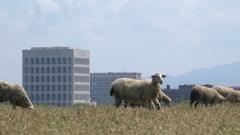
October 10 to February 22, 2026
This will be the first major monographic exhibition in Brussels of the work of artist Michel Couturier, who died last year. Initiated during his lifetime, it focuses on the last ten years of his work, and includes his photography, video work and drawings.
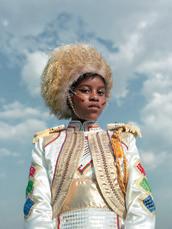
Fondation A, Avenue van Volxem 304, 1190 Brussels
Until December 21, 2025
Johannesburg may be a vibrant, resilient city but it is also one of the most unequal in the world, mainly due to the legacy of apartheid. This exhibition shows it through the eyes of nine young South African photographers who provide a layered narrative that both confronts and redefines Johannesburg’s image.
Musée L, Place des Sciences 3, 1348 Louvain-la-Neuve
Until February 22, 2026
The Musée L is as eclectic a museum as you will find. It showcases items from the archives of the University of Leuven, now UCLouvain in Louvain-la-Neuve, from ancient manuscripts to stuffed animals. This is a special exhibition celebrating 600 years since the university’s founding.
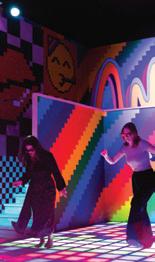
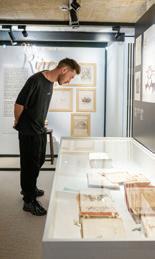
Plein Publiek BXL, Mont des Arts 5, 1000 Brussels
Until November 2, 2025
An immersive exhibition on the evolution of digital technology, the impact of gaming and the possibilities of artificial intelligence. The pixelated hybrid universe lets visitors touch and play, interact with installations and unlock hidden layers through the dedicated app.
Until January 2, 2026
Atomium, Place de l'Atomium 1, 1020 Brussels
The artist collective Visual System is currently occupying the exhibition spaces in the Atomium with its digital and symphonic work that combine to create a unique sensory experience With original music by Thomas Vaquié, “it creates hypnotic immersive environments, with light and sound, that explore the relationship between space and time, nature and science, waking dreams and reality.”
Gare Maritime, Avenue du Port 86c, 1000 Brussels
Until December 30, 2025
A virtual zoo conceived by animal rights group GAIA that aims to immerse visitors amongst creatures in their natural habitat, using AR and VR tech to show what their life is like in the wild.
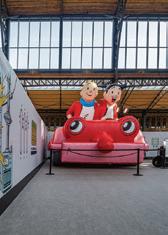
Gare Maritime, Avenue du Port 86c, 1000 Brussels
September 26-28, 2025
Exhibitions, signing sessions, talks and hot air balloons will all be at the festival, which this year will put a special spotlight on Flemish comic strips, while a new space will be dedicated to digital techniques and drawing.
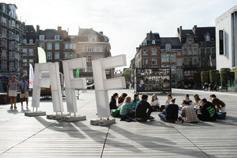
Cinemas in Namur
October 3-10, 2025
The Festival International du Film Francophone (FIFF) in Namur is, of course, dedicated to showcasing French-language cinema, including features, shorts, animations and documentaries. Beyond screenings, FIFF hosts professional workshops, educational programmes for young audiences, and cultural events.
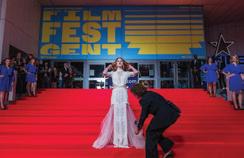
Five different cinemas in Ghent
October 9-20, 2025
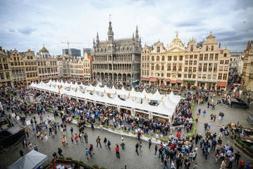
Gare Maritime, Tour & Taxis Tour & Taxis, Rue Picard 11, 1000 Brussels
September 28-29, 2025
Belgium excels in brewing, and this craft beer festival is a celebration of the country’s creations from independent breweries. A chance to sample the lesser-known krieks, gueuzes, witbiers, bruins, saisons, dubbels, tripels and others.
Belgium’s biggest film festival will kick off the 52nd edition with Julian, the feature debut by Belgian director Cato Kusters (see separate article on the movie). For many, the festival’s highlight is the World Soundtrack Awards, which this year celebrates its 25th anniversary with two guests of honour: Debbie Wiseman (Tom & Viv, Wilde, Wolf Hall) and A. R. Rahman (Slumdog Millionaire, 127 Hours), whose music will be performed by the Brussels Philharmonic.
Kortrijk
October 16 to November 2, 2025
Wonder promotes itself as a platform and connector for design, innovation, technology and art. Set up by Designregio Kortrijk, it includes exhibits, installations and events “that show how creativity offers answers to tomorrow's challenges.” Based around the Kortijk’s Budafabriek, its public and private partners host exhibitions, workshops, lectures and events.
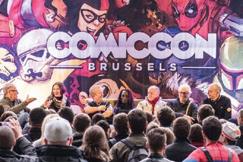
Gare Maritime, Avenue du Port 86c, 1000 Brussels
October 25-26, 2025
See above for more on what to expect, but this one is at Tour & Taxi’s Gare Maritime. Special guests this year include C-3PO actor Anthony Daniels, Back to the Future’s Christopher Lloyd and Tom Wilson, and Stranger Things baddie Jamie Campbell Bower.
Théâtre National Wallonie-Bruxelles, Boulevard Émile Jacqmain 111-115, 1000 Brussels, October 9-18, 2025
A broad festival of ideas that bills itself as a “political and artistic, intercultural and creative, festive and subversive.” It will “mobilise all forms of expression in order to offer an overview of the state of rights and freedoms around the world, to point out lurking dangers, to encourage resistance and to promote solidarity.”
October 14-25, 2025
Cinquantenaire Park. 1000 Brussels
Oktoberfest is indelibly linked to Munich, but Brussels holds its own version, in a large tent in the Cinquantenaire Park, decorated in Bavarian style, offering original Munich beers, Bavarian specialities like Bretzels (Brezn), white sausages (Weißwurst), and roasted pork knuckles (Schweinshaxn), along with traditional brass band music.
Various venues in Namur
October 23-26, 2025
An annual event in Namur, KIKK celebrates digital and creative cultures by exploring the intersections of art, science, and technology. The festival includes conferences, art installations and trails throughout the city, a market for innovative products and workshops.
Flanders Expo, Maaltekouter 1, 9051 Ghent
November 1-2, 2025
The biggest of these geek gatherings takes up the vast Flanders Expo exhibition centre and delivers big-name stars as well as workshops, geek markets, Lego displays and gaming. Confirmed guests include Simon Pegg (Mission Impossible, Shaun of the Dead, Star Trek), Andrew Scott (Ripley, Moriarty in Sherlock, Hot Priest in Fleabag), as well as Cobra Kai’s Tanner Buchanan and Mary Mouser.

Viage, Blvd Anspach 30, 1000 Brussels
September 20, 2025
Fran Lebowitz – author, journalist, social observer and uncrowned empress of sarcasm – takes the stage to prove that misanthropy, when delivered with perfect timing and a cigarette-dry wit, is still the best kind of stand-up comedy.

Brussels Expo, Place de Belgique 1, 1020 Brussels
October 18-19, 2025
The first of three comic fests in quick succession this autumn (see below) Heroes Comic Con is – like the others – a celebration of comics, manga, cosplay, gaming, films, series, sci-fi and fantasy, bringing thousands of fans together every year, many of whom will dress up as their favourite characters. Guests this year include four Beverly Hills 90210 stars. It is held alongside Made in Asia
La Monnaie/De Munt, Place de la Monnaie, 1000 Brussels
September 21 to October 10, 2025
Verdi’s Falstaff fizzes with wit, mischief and melody, as the ageing rogue plots seductions, suffers humiliations, and still manages to charm. A comic masterpiece, sparkling with orchestral brilliance and Shakespearean swagger.
Ancienne Belgique, Blvd Anspach 110, 1000 Brussels
September 29, 2025
Sophie Ellis-Bextor brings her glitterball anthems to the stage: expect disco, eyeliner sharp enough to cut glass, and the odd reminder that Murder on the Dancefloor is still very much alive.
Ancienne Belgique, Blvd Anspach 110, 1000 Brussels
September 30, 2025
The Darkness return in sequined glory, wielding riffs, winks and falsetto so high it threatens glassware – reminding us that glam rock never really died, it just got louder.

Queen Elizabeth Hall, Koningin Astridplein 26, Antwerp
October 12, 2025
Suzanne Vega takes the stage with understated grace, weaving literate, intimate songs that turn whispered observations into quiet anthems. No pyrotechnics here – just wit, clarity, and melodies that sneak into your bloodstream long after the last chord fades.

Queen Elizabeth Hall, Koningin Astridplein 26, Antwerp
September 22, 2025
Award-winning Australian comedian, actor and writer Jim Jefferies brings his new Son of a Carpenter tour to Antwerp, offering wry and brutally honest takes on everything from politics to parenthood,
Bozar, Rue Ravenstein 23, 1000 Brussels
October 26-28, 2025
Bob Dylan takes the stage once more: the voice gravelly, the phrasing unpredictable, the setlist mysterious. Yet fans lean forward, straining for fragments of poetry, convinced each murmur hides some revelation worth the price of eternal ambiguity.
Under The Big Top, Brussels Expo, Place de Belgique 1, 1020 Brussels
Until November 9, 2025
Cirque du Soleil’s Alegría returns with gravity-defying acrobatics, surreal costumes and a storyline about power shifts – because nothing says political commentary quite like clowns in sequins flipping 30 feet through the air.
ING Arena, Ave de Miramar, 1020 Brussels
October 25, 2025
Michael Flatley’s Lord of the Dance shows have proved that stomping in perfect unison can fill arenas, sell millions, and make tights a global power statement. Toe-tapping hubris, Irish-style. Also performing in Ghent, Hasselt, Wex, Liege, Charleroi and Antwerp in October
Across Brussels
September 21, 2025
Car Free Sunday transforms Brussels into a pedestrian’s playground: bikes, skates and wandering feet reclaim the boulevards while engines fall silent. For once, the city’s soundtrack is laughter, chatter and the faint whir of bicycle gears in full chorus.
Starting and ending in the city centre
November 2, 2025
Winding through grand boulevards and cobbled streets, the Brussels Marathon offers runners both scenic beauty and calf-testing climbs – because nothing says endurance like mixing urban charm with the unforgiving Ave de Tervuren.
Forest National, Avenue
Victor Rousseau 208, 1190 Forest
November 17, 2025
Lorde returns to the stage with moody yet catchy pop hymns for the terminally self-aware: adolescence may end, but melodrama is forever.
AFAS Dome (formerly Sportpaleis), Schijnpoortweg 119, 2170 Antwerp
November 11, 2025
Lady Gaga descends in full spectacle: outrageous costumes, powerhouse vocals, and choreographed chaos that feels both otherworldly and oddly intimate – because when subtlety calls, Gaga simply lets it go to voicemail, then answers with fireworks and sequins.
Spa-Francorchamps Circuit, Rte du Circuit 55, 4970 Stavelot September 24-27, 2025, Spa Six Hours roars into life at Belgium’s legendary Spa-Francorchamps circuit, where vintage racing machines battle endurance, weather and nostalgia in a variety of races over four days. Expect roaring engines, petrol-scented romance, and the kind of drama only classic cars at full tilt can deliver.
Kuipke velodrome, Familie van Rysselberghedreef 2, 9000
Gent
November 18-23, 2025
Six Days of Ghent hurtles into action at ’t Kuipke velodrome, where cyclists whirl at dizzying speeds under disco lights. Equal parts sporting endurance and beer-soaked party, it’s a unique blend of pedals, spectacle and unapologetic late-night revelry.
Post-Brexit Britain may be going to the dogs, but at least the dogs are getting a better deal. While their owners wrestle with visas, savvy pooches are quietly swapping nationalities. Geoff Meade ponders the politics of pet passports – and asks whether his dog is racist
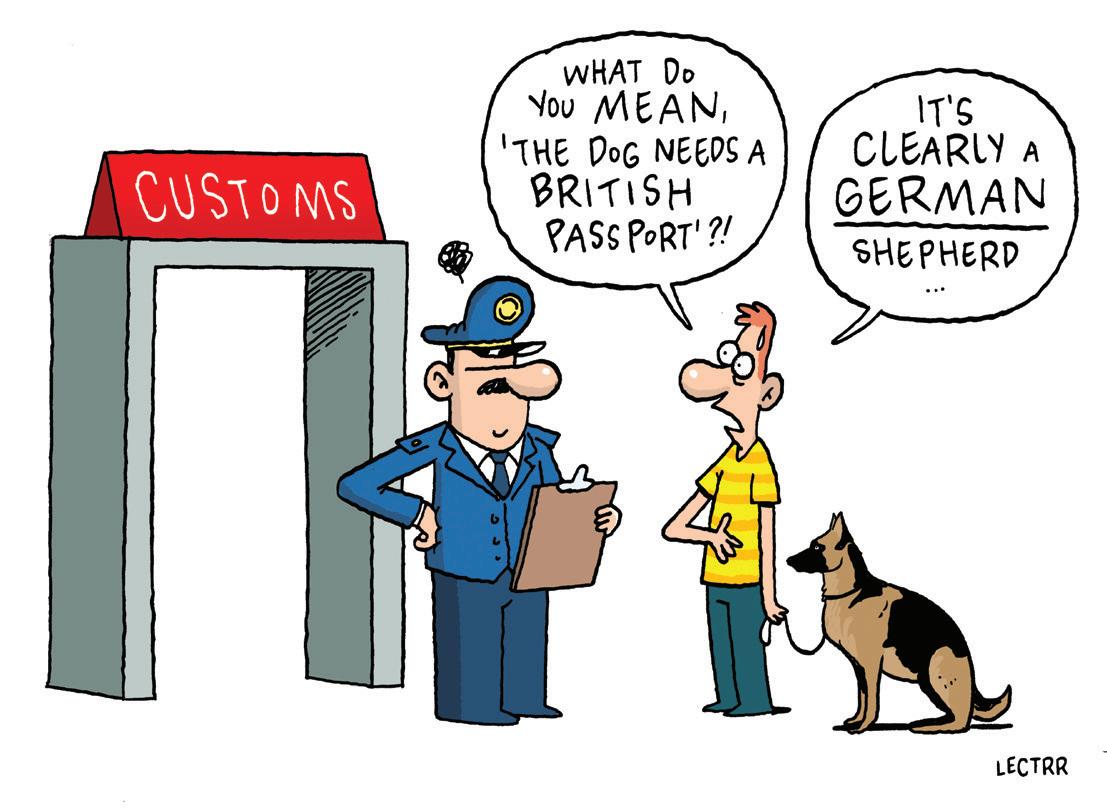
As part of this animal-themed edition of The Brussels Times Magazine, I respectfully call on all readers to paws (sorry) for a few moments and spare a thought for the almost daily turmoil faced by British dog owners wrestling with pooch-related post-Brexit bureaucracy.
You’d think things would have settled down since the UK’s departure from the EU, but I sense doggy-owning British residents are only now preparing to rise up, united by
Geoff Meade
the gradual realisation that their dogs somehow managed to negotiate a better Brexit deal than the Conservative government managed for their owners.
Not many Brits, leavers or remainers, are aware of it yet, but their dogs can avoid the whole Brexit thing – and save their owners useful amounts of money in the process – by changing nationality at the drop of a poobag to join any of the current EU member states.
Also, British-based dogs, even without a
nationality change can, in theory, visit any of Europe’s 29 border-free Schengen Area countries for up to four months, compared with a maximum of three months for their British passport-carrying owners, unless the humans pay up for a longer-term visa than the Brexit visiting rules normally allow.
No wonder lots of British dog owners who continue to holiday in the Schengeny bits of Europe have a chip on their shoulder – not unlike the one they struggle to find under their pet’s fur in those stressful minutes at pet border controls before the electronic gizmo pings confirmation of doggy identity.
I didn’t know any of this because we Schengen-based British doggy people with acquired Belgian nationality haven’t had to study the Brexit terms and conditions governing entry for UK-based dogs, cats and ferrets.
But all was revealed by British-based friends who joined us on holiday with their dog in sunny Schengen territory this summer. They had some news about the Animal Health Certificate, which has replaced the British version of the EU pet passport, and which can be issued by any qualified UK vet.
The Certificate is only valid for one visit to Schengenland, at a cost each time of anything between £170 and £250, making life expensive for Brits who regularly like to Channel-hop with their pooches from the UK.
But the really exciting news is that if their dog changes nationality – an option which apparently few Brits are aware of – the AHC is valid for a whole year.
Our friends discovered this when they took their dog for its first post-Brexit Animal Health Certificate medical update. The vet happened to mention that if they visited a vet in the Schengen area, there was a chance that the dog could switch nationalities, potentially saving thousands of pounds for frequent visitors to Schengenville.
They didn’t think much about it until last year when they needed some routine dog medication while driving in Italy. Vets are not obliged to change a dog’s nationality, but the one they visited was happy to do so.
Other friends have since revealed that, although they have to remain British, their dog is now Belgian, following an unscheduled trip to a random vet for a minor doggy ailment while on a weekend road trip.
As for British dogs being allowed to stay in Schengen sightseeing for one month longer than the owners, that’s true but a bit technical, because the owners are unlikely to leave the dogs to fend for themselves
when the human can stay with them if they pay extra for a temporary visa to boost their basic 90-day rule rights.
Oh, good grief, don’t let’s talk about the 90-day rule! That was one of the heartfelt cries from every dog-owning Brit we encountered this summer, but, of course, we did talk about it.
Or rather, they did, as they are the poor souls who have been forced to grapple with the brain-numbing maths of the European Commission’s 90-out-of-180-days rule, which involves, an online calculator explains, “the application of a ‘moving’ 180day reference period, looking backwards at each day of the stay.”
And even if you understand what that means, customer confidence in working out how many days pets and their owners can remain in the Schengen area based on previous stays is not improved by the Commission’s warning that the calculator result “does not constitute a right to stay for a period resulting from its calculation”.
Of more concern to dogs, cats and ferrets, of course, is the warning that the rules restrict, “the non-commercial movement of pet animals into the Schengen area.”
More concerning to their owners is the following warning on the website: “If you set foot in France a few minutes before midnight, those few minutes will count as an entire day out of your 90 days. Similarly, if you depart in the early hours of the morning, those few hours will also count as a full day out of your 90 days….”
One disgruntled Brit described that as even meaner than hotels where you can’t check in until four in the afternoon, but you have to check out before 10 the next morning. But at least the hotels have the valid excuse of some genuine cleaning up to do.
Some of our casual dog-related encoun-
Friends have since revealed that, although they have to remain British, their dog is now Belgian, following an unscheduled trip to a random vet for a minor doggy ailment while on a weekend road trip.
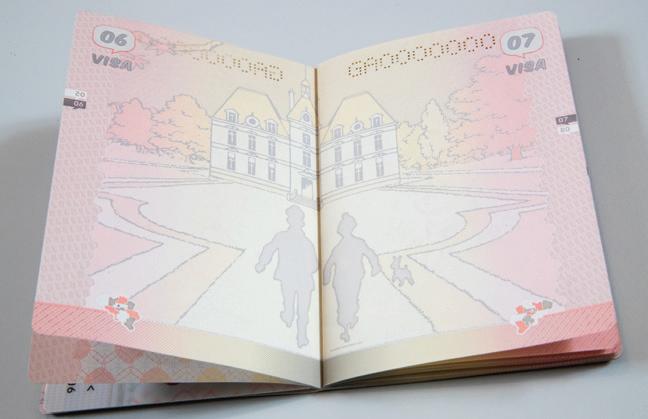
Mikey’s problem is that he doesn’t like black cats. He’ll tolerate tabby cats and white cats but goes crazy when a black one strolls into view.
ters this summer have raised false expectations amongst Brits when we explain that being Belgian, with a Sicilian dog who has now become Belgian, means we only need the normal annual pet updates on his certificate.
A few people, sensing an opportunity, started asking how hard it would be to become Belgian while still living in Britain. Interest fades with the confirmation that, unlike their dog, they would actually have to live and work in the country for quite some time.
But that’s not our concern right now. If we have any dog-related problem at all, it’s racism. Or at least I thought it was.
Mikey’s problem is that he doesn’t like black cats. He’ll tolerate tabby cats and white cats but goes crazy when a black one strolls into view.
When I raised the issue with his (Italian) vet in Brussels, he asked if there were any other indications of racism. I said no, except for the fact that he seems very unsettled around white dogs, especially big ones.
“Ah ha!” exclaimed the vet. That isn’t rac-
ism. It’s more like size-ism. And your dog will probably be reacting to other animals partly on the basis of previous experience, such as being scratched by a black cat or mauled by a large white dog.
So he’s not racist?
No, the vet said. Dogs can sometimes pick up on their owners’ emotional cues, so if a human is tense in the presence of a particular animal, Mikey might pick up on that, whatever the size or colour. But he’s not racist – he probably doesn’t even know the meaning of the word.
I thanked him for his reassurance, although I left feeling that it’s all my fault.
After I mentioned Mikey’s black cat problem to several people, I was sent a link to a satirical website called ‘Cats that Look Like Hitler,’ which shows photos of cats that resemble Adolf - or cats with a large black patch under their noses or black patches on their heads resembling his fringe. The site hasn’t been updated since April 2014, so I suppose there’s nothing more to be said on the matter.
Except that someone I mentioned it to immediately suggested that, if Kitler is the name given to cats looking like a certain dictator, why isn’t there a similar site for Pussolinis?
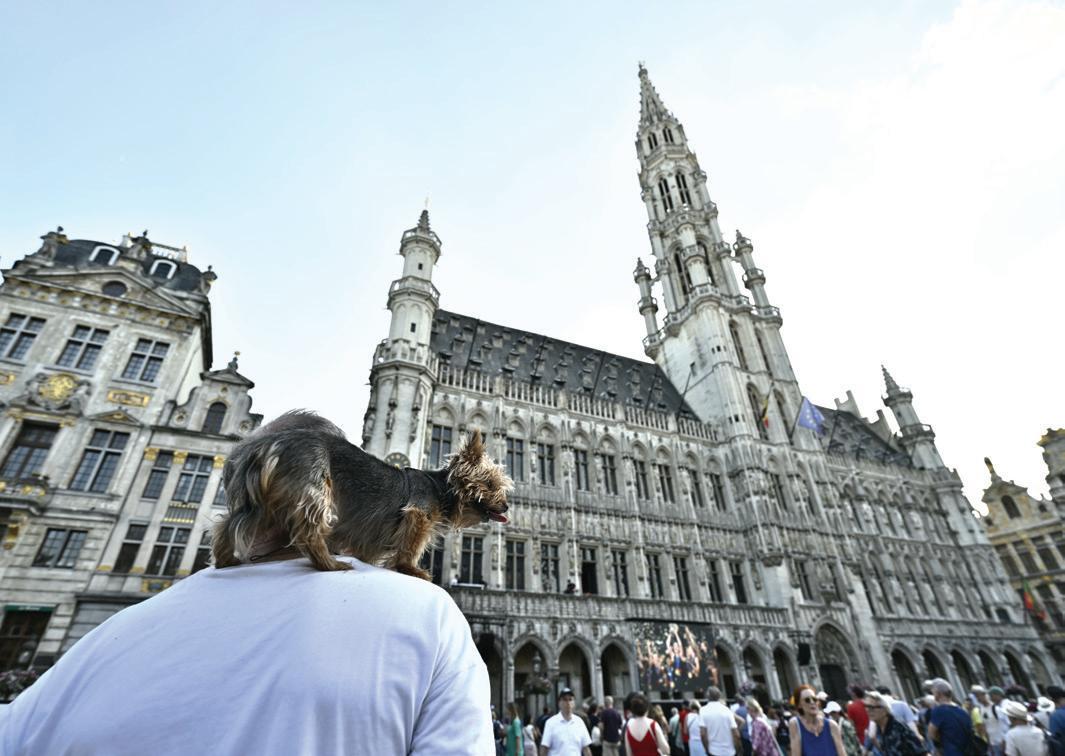
Info Hub