Stargate
Circularity at airports
A practical guide

2
At airports, the application of circular economy has demonstrated great potential for environmental and economic benefits

A practical guide
At airports, the application of circular economy has demonstrated great potential for environmental and economic benefits
In March 2020, the European Commission adopted a new Circular Economy Action Plan (CEAP), one of the main building blocks of the European Green Deal (European Commission, 2021). Applying circular economy concepts has significant potential for the aviation industry for several reasons. First, the industry expects substantial growth, increasing resource use, waste, and emissions in the coming years. Next, passengers are increasingly becoming aware of adverse environmental impacts, providing an opportunity to increase customer satisfaction in the aviation industry. Lastly, governments may impose taxes to regulate emission rates and waste generation.
A circular economy aims to maintain the value of products, materials and resources for as long as possible by returning them into the product cycle at the end of their use while minimising the generation of waste (Eurostat). Food and water waste are explicitly identified as a high potential intervention, as is the overall strategy to decouple waste production from economic growth (i.e., Less Waste, More Value). The transition to a circular economy, promoting the elimination of waste and the continued safe use of natural resources, requires unprecedented collaboration given that today, only 8.6% of the world economy follows these circularity principles.
In its 2019 environmental report, the International Civil Aviation Organisation (ICAO) states that “at airports, the application of circular economy has demonstrated great potential for environmental and economic benefits”. For the aviation sector, the circular economy is an emerging concept. While its application is still not widespread, the utilisation of circular economy concepts could provide valuable learning opportunities for the future. Airports offer a unique opportunity to design, test, and deploy innovative circularity concepts, given their nature as crossroads for people, resources and goods.
The objective of the conceptual framework is to provide a theoretical framework that can guide and support the implementation process, measure relevant actions, and evaluate circularity initiatives at airport terminals. It is built from conceptual analysis and integration of existing frameworks, e.g. i) the circular city implementation framework (UNECE, 2020) and ii) the European Commission’s categorisation system for the circular economy (2020), to provide a step-by-step guideline to successfully measure and evaluate circularity initiatives at airport terminals. The framework suggests some KPIs and is validated whereby circularity actions at the airport are checked for applicability within the framework.
This step-by-step strategy supports the successful implementation of circular strategies at airport terminals, based on the conceptual framework and development of KPIs. Organisational change management is required to successfully implement a transformation process in the organisation towards better resource circularity.
Stargate CIRCULARITY AT AIRPORTS Step 1: making an inventory
As a first step, it is advisable to make an inventory of airport resources and assets to facilitate the identification of potential circularity actions that can be developed, representing a generic overview of the airport terminal assets and products. The figure below illustrates an example of terminal infrastructure inventory at Brussels Airport.

Subsequently, examples of circular actions that have the potential to be applied at the terminal can be collected. To assess the framework’s applicability in a broad context, the list below provides a great variety of circularity actions at Stargate’s lighthouse airport and the partner airports of Athens, Toulouse Blagnac and Budapest.
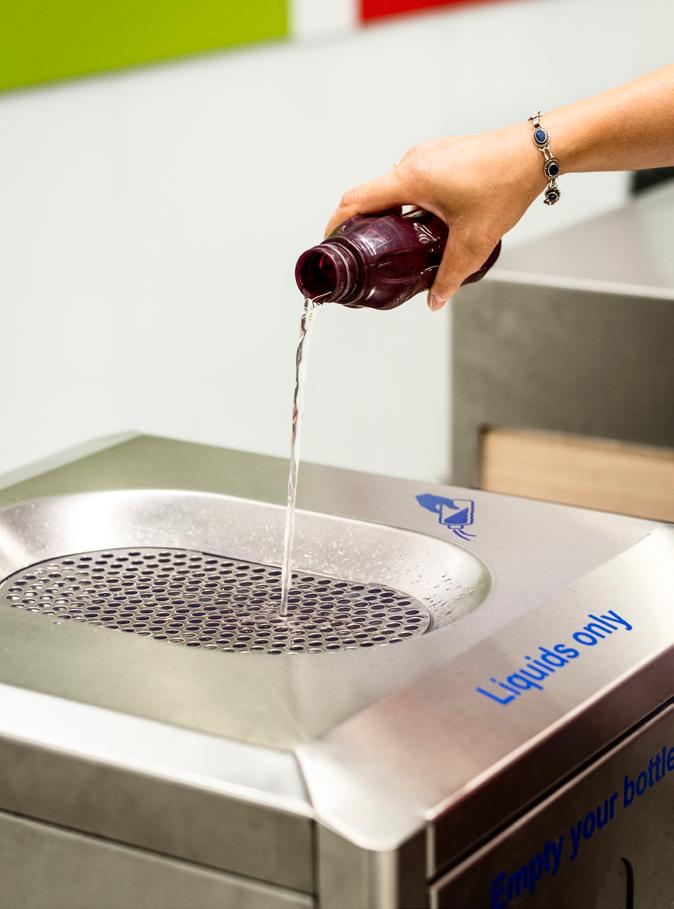
Liquids and gels refused at security screening and unclaimed lost items are given to charity.
Small-scale upcycling projects (e.g. sound insulation panels of demolished buildings are reused in new projects, reuse of the steel framework of a warehouse).
New hotel construction is planned with grey water collection for reuse in toilets.
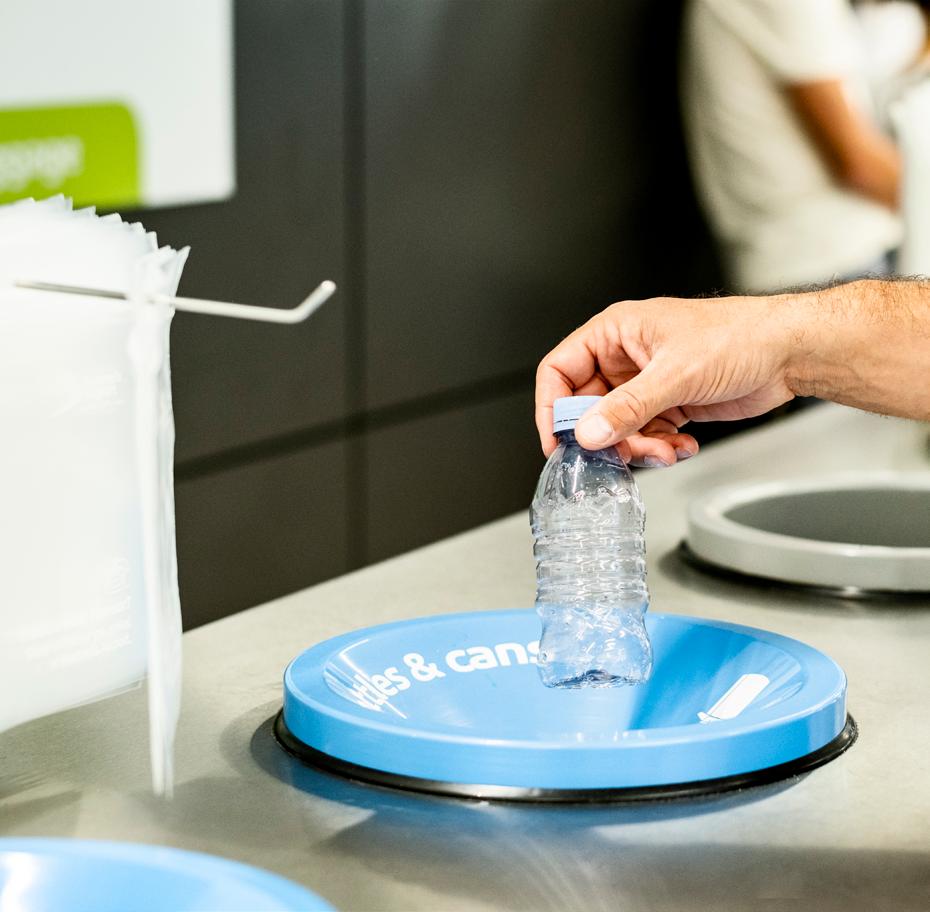
Provision of liquid disposal bins, waste bins and crushers that allow passengers to empty their plastic bottles before security screening and, in doing so, have a cleaner fraction of plastic waste.
Free drinking water refill points and reusable bottle vending machine result in a reduction in plastic bottle usage.
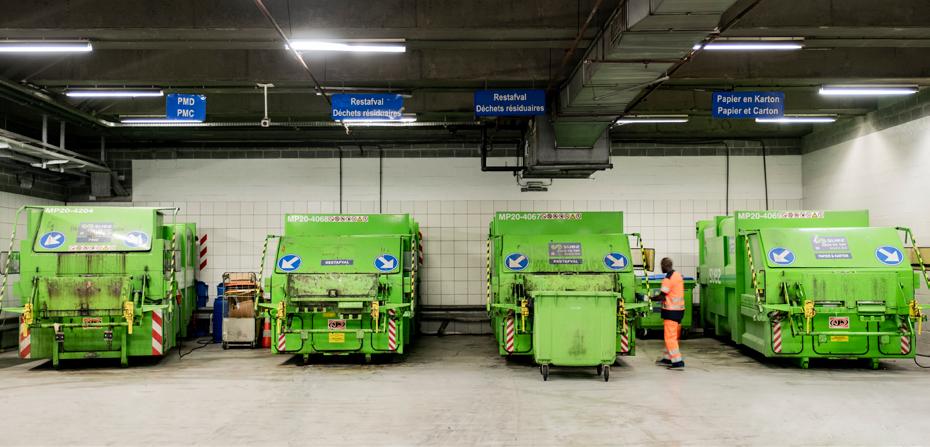
Programme for advanced mechanical separation – in an advanced Materials Recovery Facility (MRF plant) – of waste not separated at source. Depending on the previous waste disposal with or without energy recovery and the final destination of waste materials (repurposed or not), this action could impact respectively:
Certain Construction and Demolition Waste (CDW) including milled asphalt or remains of antiskid inert produced during runway pavement works is not recycled but reused at the airport to pave certain areas.
Certain CDW (mainly doors/windows/ support beams/metallic staircases etc.) is not disposed of but stored and recycled if not used in future construction projects.


Small-scale upcycling projects e.g. construction of fences/recreation tables using wood/metallic items collected by the existing waste contractor, production of souvenirs made of expired life jackets from local air carrier.
Excavated soil is not disposed off-site but rather on-site at certain areas requiring filling in light of future construction projects.
Setting up sorting bins for cans and bottles in the canteens.
Partnerships with organisations that refurbish used computer equipment for charity purposes, recondition office furniture and damaged armchairs for reuse at boarding gates, and donations of uniforms for reuse.


20% of asphalt used comes from recycled materials.
Recycling demolition waste.
Items refused at security screening/lost items: most items cannot be reused due to Hungarian legislation, and smaller items are offered for employee auctions and charity actions: some unused items are provided to Ukrainian airports or children’s playgrounds or nurseries.

Waste pre-sorting facility to maximise the recycling ratio of the whole airport (3rd party partner recycles paper, PET/ plastic, glass, and cardboard).
Refurbishment of office furniture
Waterless car washes to save water, and drinking fountains at the terminal to reduce plastic bottles.
Recycling demolition waste: broken concrete from the runway and taxiway pavements are reused within the airport grounds.
A clear strategy is needed to identify, implement and monitor circular actions, whereby priorities (e.g. food waste reduction), targets and goals for actions are set (e.g. 30% reduction by 2030), and a monitoring process is developed. Development of the monitoring process also involves determining the frequency of measurement, which depends on the type of action and the measuring instruments in place.
Before the circular action is implemented, baseline measurements are performed by selecting and measuring the KPIs developed in this framework. The baseline measurement enables a calculation of selected KPIs for the baseline scenario. It serves as the reference point for measuring action progress to track the impact of a future implementation of identified circular actions.
The indicators are divided into two sets of indicators: primary indicators and secondary indicators. Primary indicators are derived from measurements at the airport. In contrast, secondary indicators can be derived from primary indicators by calculation, e.g. (currencies, % or CO2 equivalents), allowing a considerable degree of individual customisation.
KPIs for measuring and evaluating circularity actions in construction and demolition could consist of total demolition, total upcycling material from demolition, total recycling material from demolition, total non-cyclable waste from demolition, sustainable construction material, etc.
KPIs for measuring and evaluating circularity actions in energy management could consist of total landside energy consumption, total airport company energy consumption, total renewable consumption, total non-renewable consumption, renewable production, etc.
KPIs for measuring and evaluating circularity actions in water management could consist of total water consumption, tap water consumption, rainwater consumption, recycled water consumption, wastewater collection, total volume of water treated, etc.
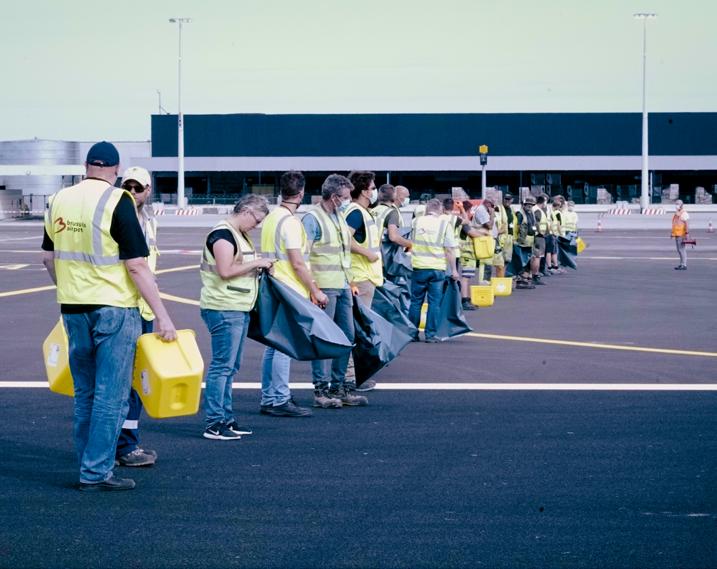
Among others, KPIs for measuring and evaluating circularity actions in material and resources management could consist of the ten R-strategies: Refuse, Rethink, Reduce, Reuse, Repair, Refurbish, Remanufacture, Repurpose, Recycle, and Recover.
KPIs for measuring and evaluating circularity actions in transportation management can be public transport networks, bicycle networks, shared vehicles, zero-emission vehicles, etc.
Secondary KPIs for measuring and evaluating circularity actions in, for example, construction and material management can be recycling %, non-recycling %, sustainable construction material %, CO2 reduction recycling (CO2e ), waste diversion (€), etc.
The conceptual framework sets out guidelines to measure and evaluate circularity initiatives at airport terminals and support their implementation. It consists of five interconnected dedicated frameworks:
Construction and demolition
Energy management
Waste management
Materials and resources
management
Transportation
There are two parts to the framework for evaluating circularity in construction and demolition, as shown on the right. The upper section identifies the flows of demolition material. Here, waste is divided into three categories: reused construction material (upcycling), recyclable waste (selective waste recycling) and non-recyclable waste. Upcycled materials are redeployed at the same or higher quality level, whereas recycled materials are degraded and eventually become waste. Non-recyclable waste is either incinerated or buried. Some materials can be reused on-site in new construction projects, while others can be made externally available through recovery or reuse inventories.
The bottom section of the construction circularity framework evaluates the source of materials used in building construction. Three sources of construction materials are identified: reusing construction materials, environmentally friendly sustainable construction materials, and virgin construction materials with a negative environmental impact. The framework aims to promote component recovery and reuse by utilising materials passports, which contain data describing defined characteristics of materials in products ensuring the correct information is easily accessible, and reducing legal and engineering uncertainty during the construction phase.
The framework developed here will take account of the focus areas in the EC’s circular economy action plan, stressing interlinkages between circularity, climate neutrality and the zero pollution ambition. In this regard, the framework for assessing sustainable energy consumption and production is included here.
According to the framework, the total energy an airport terminal uses includes energy used by partners and the airport operator. This energy can be derived from either renewable or non-renewable sources.
Corporate Power Purchasing Agreements (CPPAs) are a procurement strategy that enables airports to obtain renewable energy with transparent value chains. Combined heat and power (CHP) generation is also included as an intermediate energy source. Solar energy, biogas production, heat generation, and other renewable energy sources can be generated on-site. Excess renewable energy can be stored or supplied into the grid.
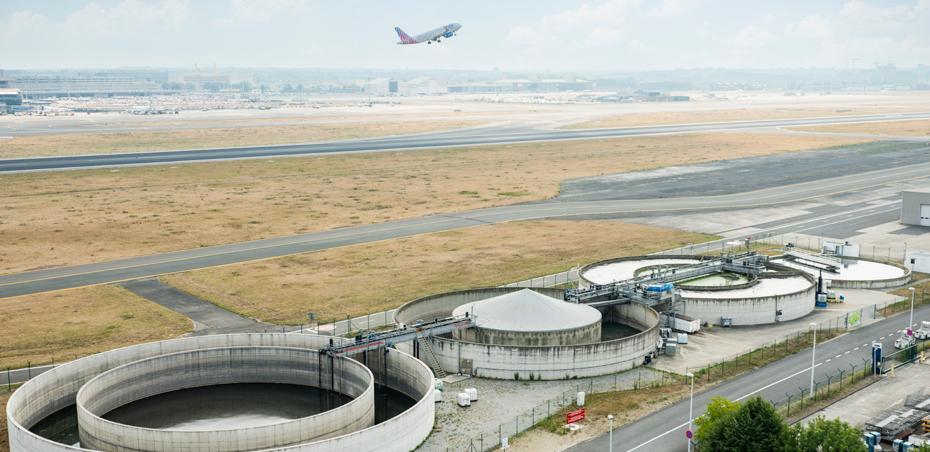
Measuring circular actions in water management entails using and disposing of water, including wastewater. Four water sources are identified: tap water, ground and/ or surface water, rainwater collection, and recycled water that can be reused internally.
The schema on the right shows four methods for disposing of wastewater, including capturing it in on-site treatment facilities to recover energy and nutrients, sending it to external wastewater treatment companies, separating it from rainwater, and discharging it into rivers and streams. In ideal situations, water is first recycled internally and then purified on-site for reuse, including capturing wastewater from outside sources. The schema additionally incorporates sanitary waste disposal from airlines and glycol from de-icing aircraft by terminal infrastructure.

The well-known and established framework by Potting et al. (2017) is adopted to manage materials and resources. It contains a set of ten strategies for product circularity (R-strategies). Usually, they are grouped around three main circularity strategies, namely: (i) smarter product use and manufacture; (ii) extended product and its parts’ lifespan; and (iii) useful application of materials.
For transportation management, only KPIs are identified. No separate visual framework is developed due to the lack of added value and the parallel sustainability initiatives focusing on sustainable transportation: The Strategic Airport Mobility Plan (SAMP), ‘Mobility week’ (campaign and awareness raising), the airport staff bicycle parking facilities and the development of a mobility dashboard.
Last, organisational change management as a transformation process to resource circularity is needed to facilitate the transition to resource circularity. It is an internal process that devotes considerable time, effort and resources to prepare for an organisational structural change.

Stargate - EU Green Deal
@Stargate_EU_gd
www.greendealstargate.eu

Publication: May 2023
This project has received funding from the European Union’s Horizon 2020 research and innovation programme under grant agreement GA101037053.