WORKSHOP 5: WHEN THREAT
OVERWHELMS THE NERVOUS SYSTEM
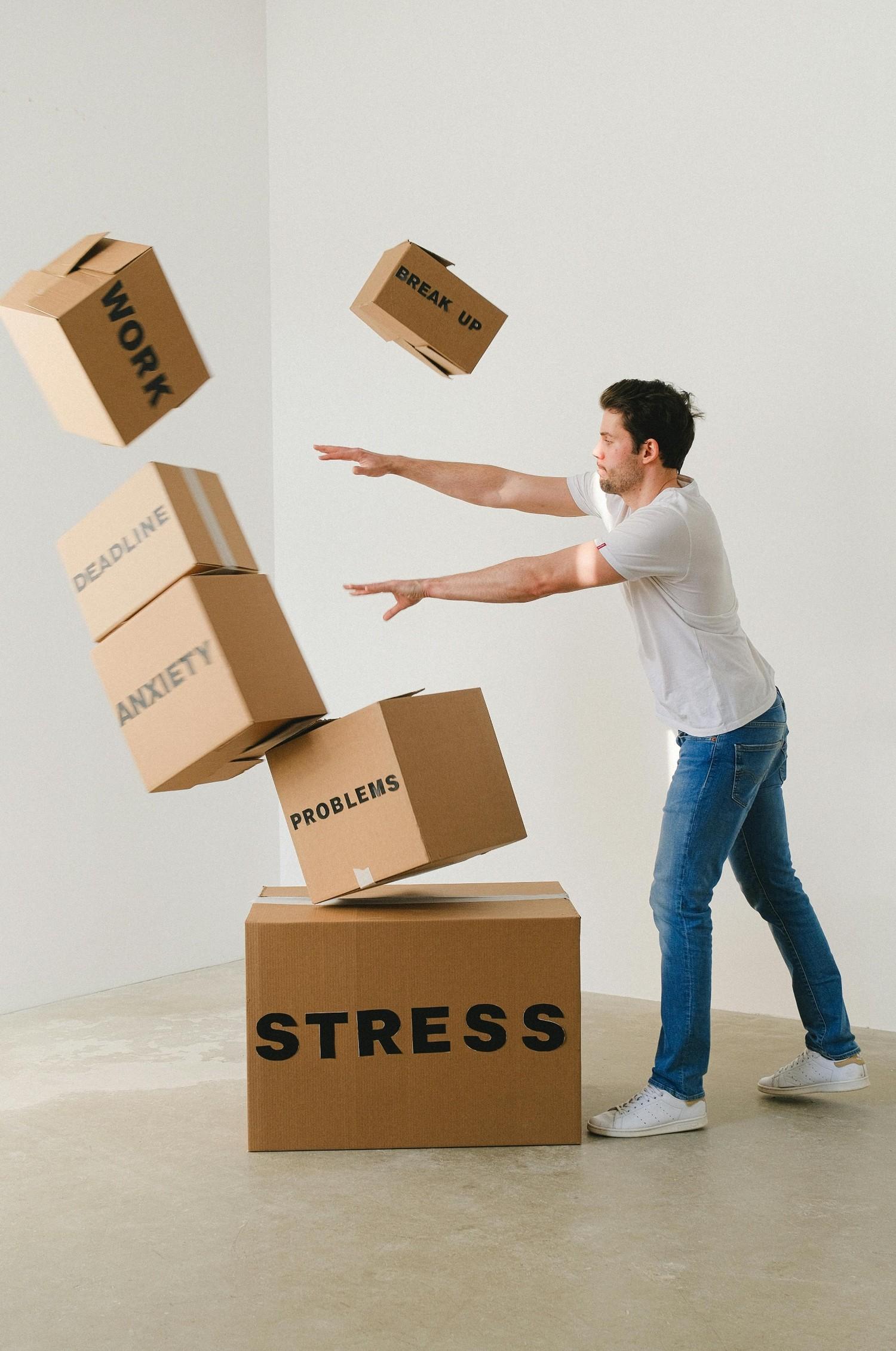

• Threat to our needs can trigger areas of the subcortical brain, particularly the amygdala which is like an alarm system for danger.
• Humans evolved in hostile, wild environments with dangers at every turn. Those who reacted rapidly to perceived threats survived long enough to pass on their genes. The reflex that enabled this response is still very active in our brains and central nervous systems. It is the flight and fight response that enables us to fight or escape the threat.
• Danger signals in the subcortical brain trigger the fight or flight response by getting the sympathetic nervous system to put the body effectively at battle stations. During times of stress the brain sends signals in the form of stress hormones like adrenaline and cortisol, to activate our sympathetic nervous system. This results in things like our pupils being dilated, our heart rate increasing and non essential items like digestion being slowed down or stopped.

• As well as fighting or fleeing, our brains evolved to help us survive by shutting down and freezing in response to threats.
• This involves the nervous system causing bodily changes such as decreased heart rate. Like animals playing dead, the body closes down and feigns death as a survival strategy.

• Now take a few minutes to think about when you or someone close to you have become overwhelmed and have displayed fight, flight and freeze behaviours.
• Write down as many examples of each that you can think of.
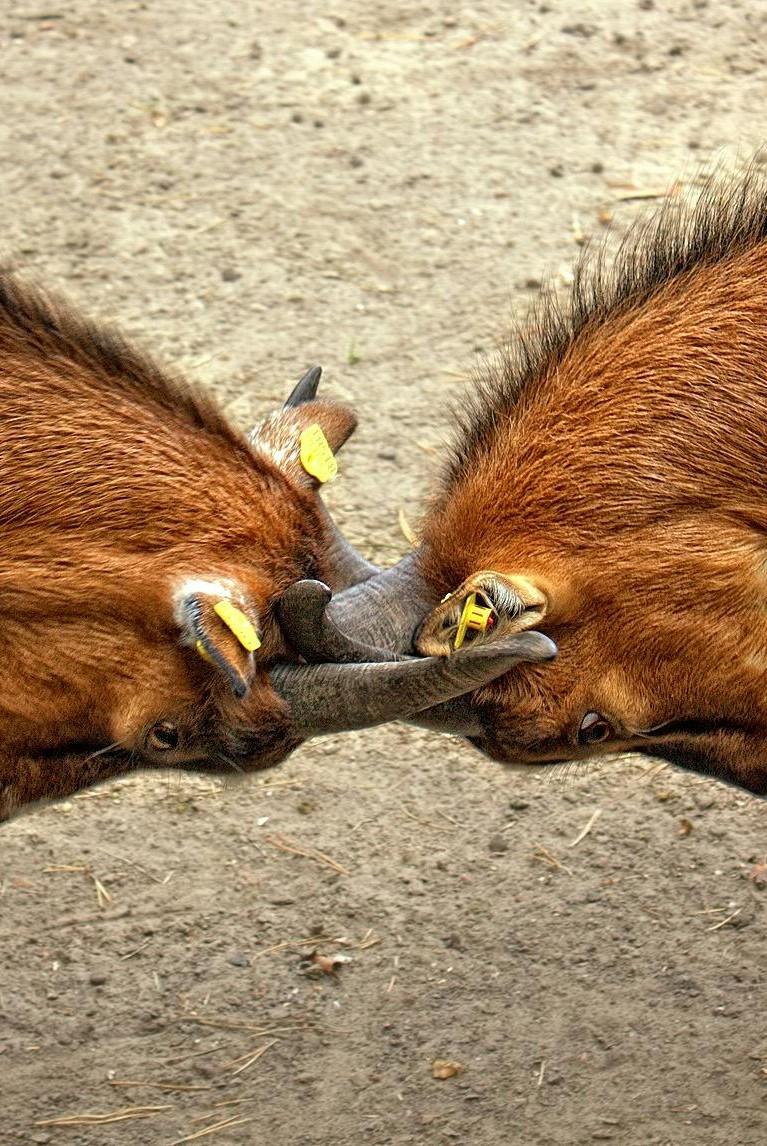
Aggressive, threatening, kicking, hitting, spitting, shouting, screaming, headbutting, pinching, pushing, hair pulling, swearing, argumentative, confrontational, slamming doors, banging things, throwing things, punching, crying, ripping, breaking things, biting, exploding, disrespectful, disregarding of others, pushing people away, oppositional, argumentative, controlling, demanding, inflexible, hot and bothered, easily distracted, can’t follow rules, blaming.

Running away, bolting, disappearing, hiding, super busy, need to get where you’re going first, acting like a baby, restlessness, hyperactive, manic, chaotic, silly voices, loud, disruptive, clumsy, bumping into people, people pleasing, easily distracted, sensitive to criticism and rejection, easily feel guilty, conflict avoidant.

Bored, not interested, not listening, day dreaming, staring into space, confused, forgetful, withdrawn, quiet, hard to reach, emotionless, inactive, unproductive, and unable to learn, relate or engage, numb, dead inside, feel nothing, zone out, feel empty, can’t connect, can’t think, reduced appetite, shake, sweat, hyper vigilant, subject change, talking about something else, easily bullied, quiet and passive, not questioning or asking questions, never drawing unnecessary attention, doing just enough to avoid being noticed.
It’s important to be aware that neurodiversity, and experiences of societal systems and environments can all affect how our nervous systems respond to overwhelm resulting from needs and demands outweighing resources. This can mean that fight, flight and freeze behaviours are displayed more frequently and/or more extremely.
We’re now going to look at nervous system overwhelm for characters in playwriting through reading an extract from a Bruntwood Prize winning play, Yen by Anna Jordan. As you read it, try to notice three things:
1) When Hench is in the rage, fear or grief systems.
2) When Hench’s (and to a lesser extent Jennifer’s) nervous systems appear to become overwhelmed and they display fight, flight or freeze behaviours.
3) When Hench’s needs for certainty, autonomy, competence and relatedness are threatened.
Different interpretations are possible but what follows are some potential ways of interpreting Hench and Jennifer’s feelings and overwhelm in response to threatened needs.

At the beginning of the scene Hench seems to be having a dream in which he feels threatened. He seems to be seeking connection with his mum which earlier in the play we find has been difficult and disrupted. When Jennifer wakes him up and says he’s wet the bed, Hench is threatened and overwhelmed by the realisation that he’s done this. He defends himself against the threat of distressing feelings through denial. At first he freezes momentarily from the shock, sitting on the bed motionless. Then his rage system starts to activate, telling Jennifer to stop talking and to not touch him.
Hench’s need for autonomous self-regulation has been frustrated by wetting himself and literally not being able to regulate his bladder. His need for competence has been frustrated by probable feelings of incompetence and failure at wetting himself. He also displays feelings in the fear system and flight behaviours by turning away quickly and walking towards the other room.
Jennifer trying to repair the connection between them is met with rage and fight behaviours from Hench. He gets ‘aggravated’and lashes out at the idea that someone would wet themselves, defending himself by projecting the feeling and behaviour onto others.
Hench then goes into both fight and flight mode, telling Jennifer to leave him alone and spinning around when she sees the front of his trousers are wet. He refuses to talk to her, tells her to shut up and blocks his ears, telling her to stop speaking. He turns his back on her and his fear system is evident in that ‘inside he is shaking’.
The overwhelm seems to build and his fight system is evoked by growing rage. He severs the connection with Jennifer, throwing her bag out, projecting his feelings of potential self-hatred onto her.
Jennifer responds with grief by crying. Then in response to the overwhelm of rage and threat from Hench, she freezes and then runs. At the separation from Jennifer, Hench appears to become overwhelmed by distress and displays rage fuelled fight behaviours. He breathes heavily in a fury and kicks the dog while he shouts and swears.
Hench also cries, and this, along with severing the connection with Jennifer suggests that at root underlyingly he feels the panic of separation distress and the grief system. This is evoked by his needs for autonomy, competence and relatedness all being threatened. He likely feels intense shame, even if subconsciously, resulting from this and acts this out in rage and grief at the overwhelming feelings of helplessness and vulnerability at the threat of losing Jennifer and ultimately the threat to the certainty of his own survival and thrival. This may also be underlined by separation distress in relation to his mum as his main caregiver.
Having explored nervous system overwhelm for characters, we’re now going to explore nervous system overwhelm for yourselves as playwrights and what can help with this. Writing emotionally difficult scenes and characters like this requires compassion and empathy for yourself as a writer as well as for the characters. To enable the creation of fully rounded, flawed characters there is a need to be aware of our judgements and to be able to tolerate the discomfort of overwhelming emotions without trying to fix or reject them.
Skills in tolerating this uncomfortable middle ground are something we will explore further in our next workshop.

Imagine that your resources and capacity to cope are like a bucket. The demands on you, those everyday things, big and small that challenge you, are like a stream of water from the tap.
This bucket has a valve in the bottom of it, so even though there is water going into it, there is also water being syphoned out. This means that the bucket never gets filled up and never overflows.
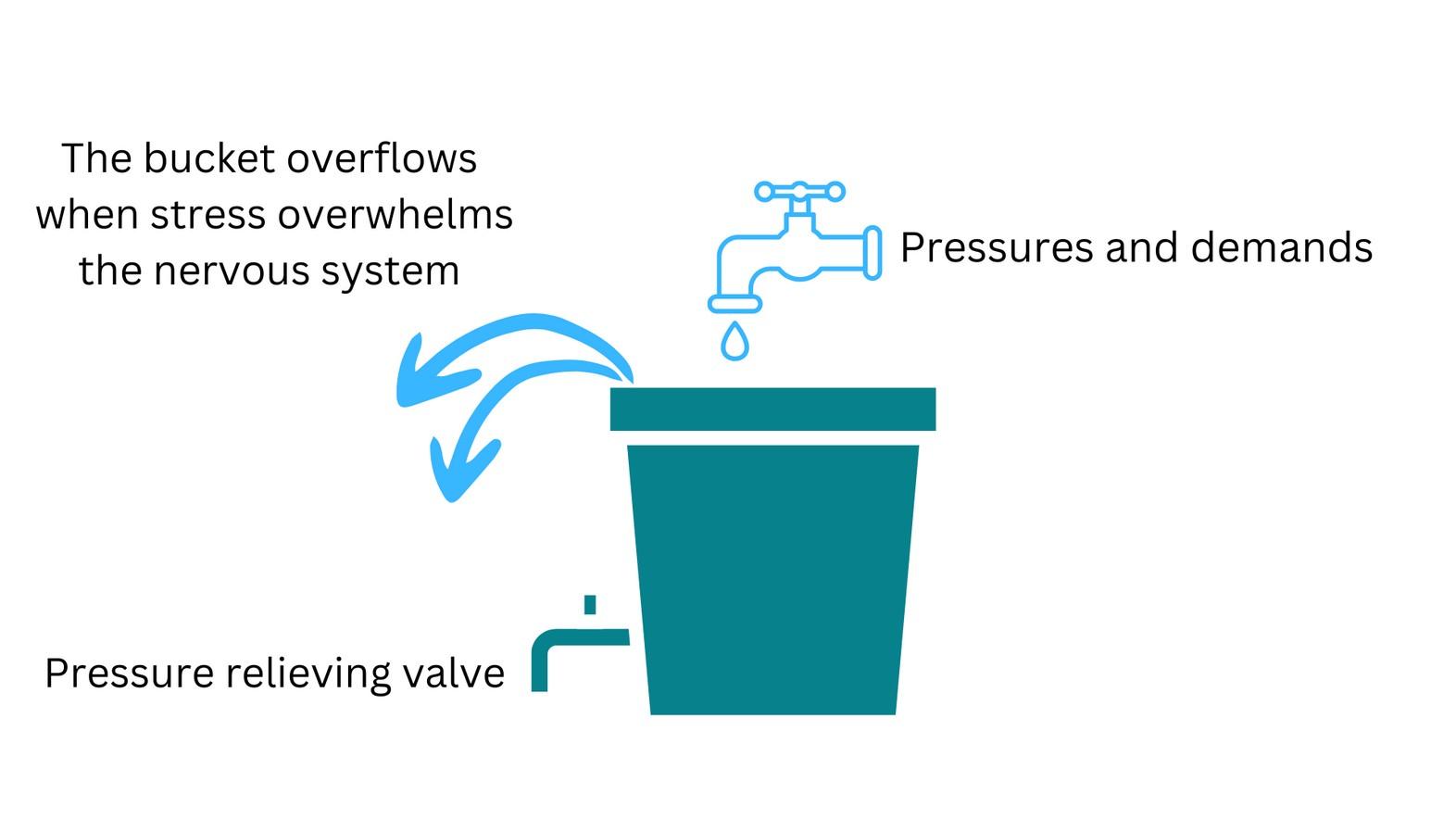
Overwhelm and fight, flight, freeze behaviours can happen when the water coming into the bucket (the demands) is coming in fast, and the release valve isn’t working well or is maybe blocked and can’t always be used. Eventually the bucket overflows.
The point at which the bucket overflows is the point at which the nervous system becomes overwhelmed by the pressure of feelings of rage, fear or grief and you feel uncertain of your survival and thrival.

1) Increase the size of your bucket (increase your resources) by trying to meet your needs for competence, autonomy and relatedness.
For example:
- Working in a bar at a theatre and then getting access to discounted play texts and tickets.
- Seeking support from an online community of playwrights and becoming aware of the amount and type of social contact you need.
- Balancing social relationships with people working in theatre with people who work outside theatre.
2) Reduce the flow of water in the bucket by either using the release valve or reducing the flow of water from the tap (reduce the demands on you).
For example:
- Talking about your feelings with a friend, family member or therapist.
- Understanding that you might need to set boundaries around what you agree to do to maximise your needs for competence, autonomy and relatedness.
- Being aware of shame and self-blame and trying to be kind to yourself by letting go of the pain of perfectionism.
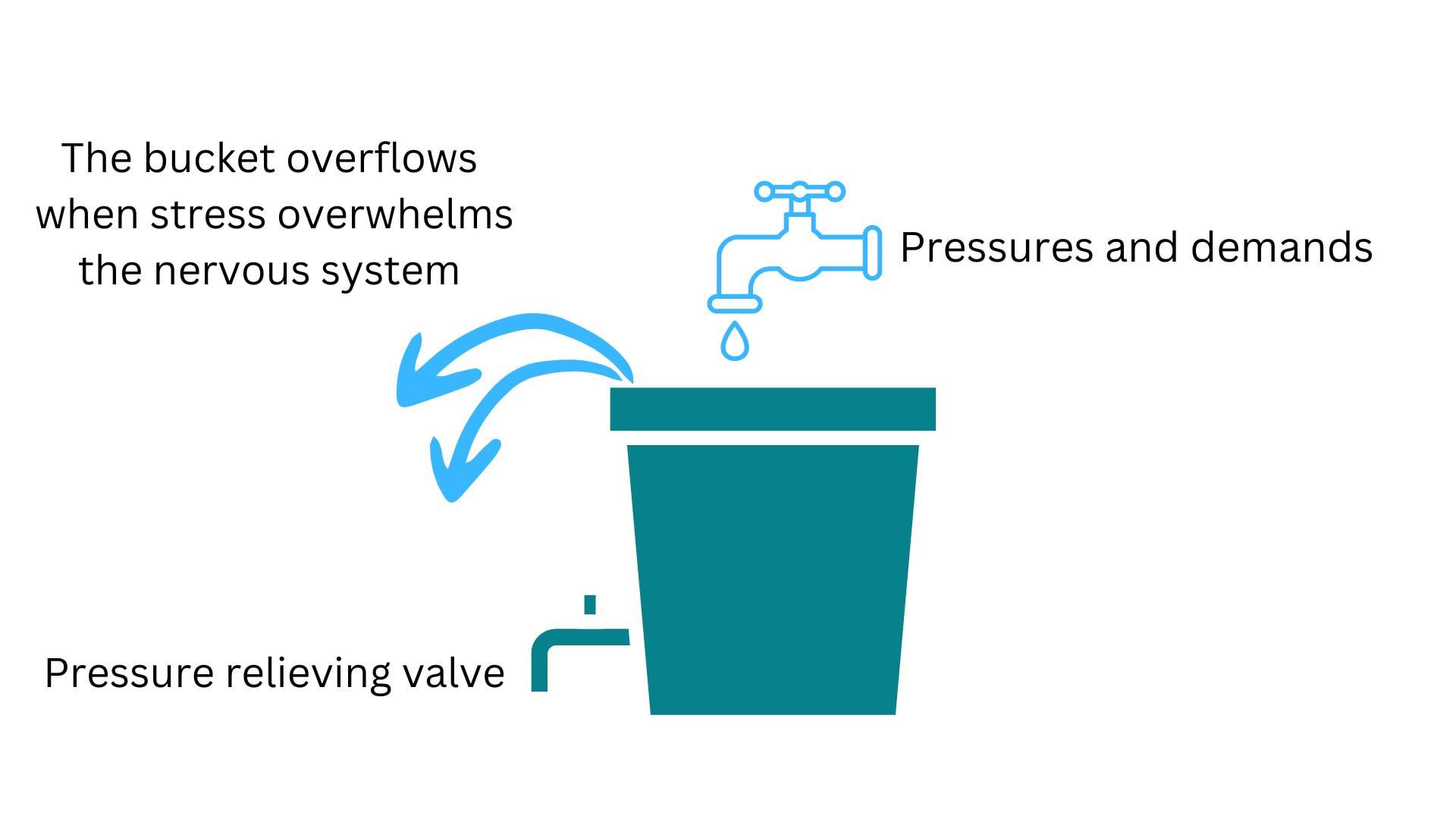
Draw a stress bucket diagram like the one on the previous slide. Next to the flow of water from the tap, jot down any current demands in relation to playwriting that either feel overwhelming or are on the way to feeling overwhelming. For example, you might feel overwhelmed by the thought of attending a press night and speaking to certain people or by having to market yourself online. You might feel overwhelmed by a deadline and anxiety about your play not being good enough. These thoughts and feelings are the water from the tap.
Then inside the bucket, jot down any resources in relation to playwriting that are currently giving you a bigger bucket or that could give you a bigger bucket in the future.
Finally next to the pressure releasing valve jot down any ways you currently release pressure or reduce the flow from the tap by reducing the demands in relation to your playwriting.
This could include anything you would like to do to reduce demands in the future.
• Before the next workshop, try continuing to notice when you or your character’s nervous systems are overwhelmed and how that is expressed in fight, flight and freeze behaviours.
• Also try reviewing and adding to your stress bucket diagram.