
WORKSHOP 1: MINDFULNESS

WHY MINDFULNESS FOR PLAYWRIGHTS?
• Playwrighting involves a lot of internal activity. You are working with your brain and mind, emotions, thoughts, and fantasies, both conscious and subconscious. You are using these internal states and processes to imagine and create characters, stories and worlds which will be transformed into behaviour and action in the external world. You are also affecting the internal worlds of audiences.
• Something that enables this playwrighting process is to increase your self-awareness. More understanding and noticing of your internal world could make a big difference to your process as a playwright. It could mean that you have more awareness of your needs, sensations, feelings, thoughts, fantasies, and behaviour, both conscious and subconscious. This increased awareness could help you to understand and meet your needs and improve your wellbeing. It could also mean that you develop more understanding of other’s internal processes that can be applied to character and story development and audience engagement.
ONE MINUTE OF MINDFULNESS
• Link below on webpage!
YOUR PERSPECTIVES ON MINDFULNESS
• Take a minute to think about what your perceptions and experiences are of mindfulness.
• Jot down any words that come to mind when you think of it.
1. Reducing suffering and increasing wellbeing. Reducing pain, tension, discomfort, stress. Increasing appreciation, satisfaction, compassion for yourself and others and awareness.
GENERAL
GOALS OF MINDFULNESS
2. More choice and being able to decide how you respond rather than living on auto pilot and being reactive.
3. Experiencing reality more than living in virtual reality. Thoughts are just thoughts. They’re not ‘you’ or ‘reality’.
HOW CAN MINDFULNESS BE HELPFUL FOR PLAYWRIGHTS?
Self and other awareness. Building the capacity for interiorization and attunement to needs, sensations, feelings, thoughts and behaviours of the self, of characters and of the audience.
Greater awareness of subconscious feelings, thoughts and experiences. Ability to bring these more consciously into your writing and be aware of how both you and your character’s behaviour can be acting out subconscious feelings, thoughts and fantasies.
The ability to pause and get some distance and perspective on your writing. The ability to be less judgemental and attached or rejecting of your work.
Anxiety and stress management.
Increased compassion for yourself and others.
Improving attention, focus and flow.
WHAT IS MINDFULNESS?
3 DEFINITIONS FROM LEADERS IN THE FIELD:

“Mindfulness is the intentional process of paying attention without judgement to the unfolding of moment by moment experience” Tara Brach – Buddhist Pyschologist
“Mindfulness is the act of consciously focusing the mind in the present moment without judgement and without attachment to the moment. When mindful, we are aware in and of the present moment.” Marsha Linehan – Professor and developer of Dialectical Behaviour Therapy.
“Mindfulness is paying attention in highly specified ways to the entire landscape, inner and outer, of one’s experiences, including intense emotions. This includes intentionally suspending the impulse to characterise, evaluate and judge what one is experiencing.” – Kabat Zinn
MINDFULNESS IS NOT:
Automatic, habitual or rote behaviour
Rigidly clinging to the here and now as if we could keep the present moment from changing if we grasp and cling hard enough.
Trying to escape from the here and now by rejecting, suppressing, blocking or avoiding or trying to change the self and experiences with thoughts, fantasies, behaviours etc.
Tunnel vision, narrow focus, automatic pilot, judgement.
A FURTHER DEFINITION
• Link below on webpage!
REFLECTION ON ANIMATION
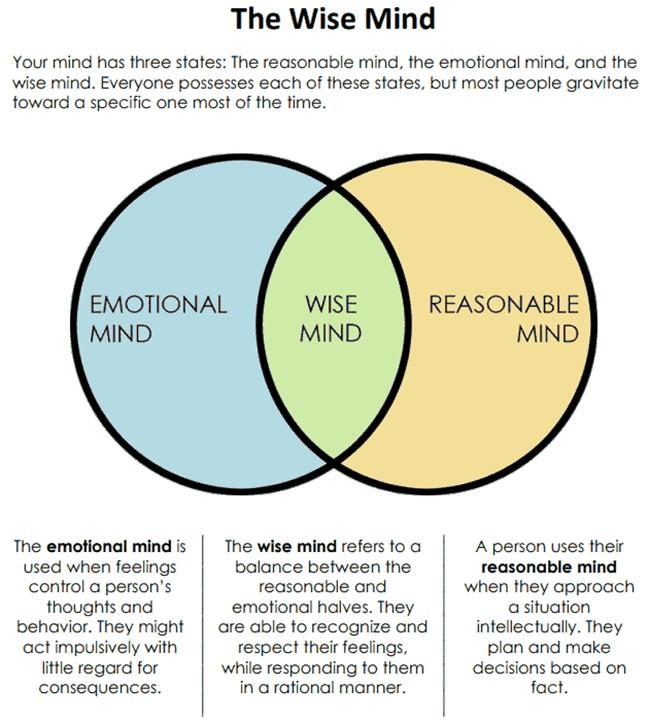
• Did you notice the character in the animation talk about the buffer between the stimulus and reaction? This is key. Mindfulness allows you to stop and pause and have more choice over how you respond to thoughts, emotions and behaviours both your own and those of others. It enables you to respond more effectively, skilfully and consciously and less impulsively, automatically and unskilfully.
• Did you also notice the character talk about responding wisely?
NEURODIVERSITY & TRAUMA
It is also important to be aware that you or the characters you create have different areas of the brain that work in different ways. Mindfulness is affected by differences in sensory processing and awareness of internal senses and feelings which is something we will explore more in our next session.
QUESTIONS ABOUT YOUR WRITING AND STATES OF MIND

What mind state are you in when you’re in the process of writing your play?


What mind state are your characters in at any moment? What mind state are you in when you think about your characters? Do any of the answers to these questions surprise you?
ENOUGH
Whyte
Enough. These few words are enough.
If not these words, this breath.
If not this breath, this sitting here.
This opening to the life
We have refused Again and again Until now Until now.
By David
MEDITATION
• Mindfulness starts with noticing. Noticing is the beginning. Through meditation we can direct our attention to noticing a sensory anchor. One that is there all the time is the breath. Other sensory anchors could be scanning through our body and noticing the feelings or attending to sounds, sights or sensations, internally and externally.

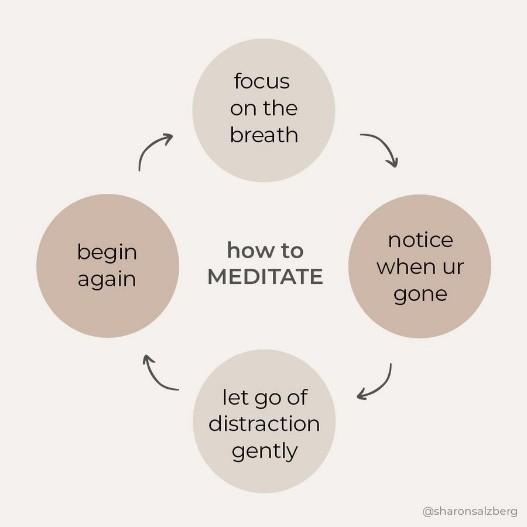
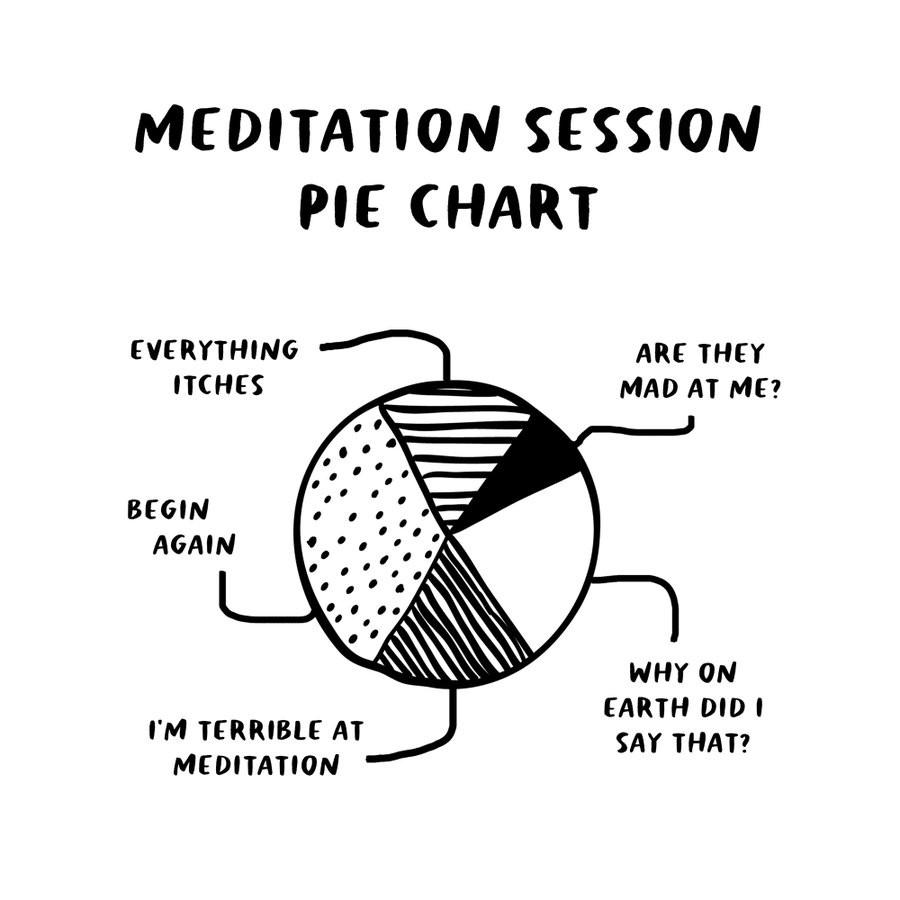
5 MINUTE MEDITATION LEAD BY TARA BRACH
• Link below on webpage!
THE CHALLENGE OF THE CONTROLLING ‘DOING’ MIND
One of the reasons it can be difficult to be mindful is that we are often subconsciously trying to control our experiences in all kinds of sometimes subtle and subconscious ways. This can include being in ‘doing’ mode. The following story illustrates how much more effective it can be to cling less to control.
In the 1950s a few highly trained pilots in the U.S. Air Force were set a life-ordeath task – to fly at altitudes higher than ever before attempted. Going beyond the earth’s denser atmosphere, they found, much to their horror, that the ordinary laws of aerodynamics no longer existed. Planes would start spinning and tumbling through the air. The first pilots to face this challenge responded by frantically trying to stabilize their planes, applying correction after correction. The more furiously they manipulated the controls, the wilder the ride became. Screaming helplessly to ground control, what do I do next? They would plunge to their deaths.
However, one pilot inadvertently struck upon a solution. When his plane began tumbling, he was thrown violently around the cockpit and knocked out. Unconscious, he plummeted toward earth. Seven miles later, the plane reentered the planet’s denser atmosphere where standard navigation strategies could be implemented. The pilot came to, steadied the craft, and landed safely. He had discovered the only lifesaving response that was possible in this desperate situation. Dont do anything. Take your hands off the controls.


“What would happen if in this moment, you didn’t try to do anything to make anything different?”
Tara Brach






Think about the environments that you write in. How could you bring mindfulness skills and practice to them?
READ THROUGH THE FOLLOWING SUGGESTIONS AND PICK ONE TO DO NOW
Scan through your body and notice sensations. It could be the feeling of your bum on where your sitting, the sensations of clothes against your skin, how your tongue feels in your mouth, tension in your back or shoulders, how your feet feel on the floor.
Put words to your thoughts, sensations and feelings. For example, you could acknowledge when a thought arises, saying in your mind, a thought I can’t do this has come into my mind’ or label a feeling –sadness, excitement, frustration.
Bring your attention to your breath. Notice where it starts and how it feels to inhale and exhale.
READ THROUGH THE FOLLOWING SUGGESTIONS AND PICK ONE TO DO NOW
Observe something in your environment. Look outside and notice the sky and any clouds. Look at the detail of any plant or tree in your environment.
Take a sip of a drink and notice the feel of the cup or glass in your hand and the sensation of the drink in your mouth and going down your throat as well as the taste.
Close your eyes and listen to the sounds both close to you and further away. Notice them come and go.
Practice mindful movement. Get up and stretch or walk around the room noticing the movement and sensations of your body.
Now think for a minute about what you do outside of your writing practice.
How could mindful activity enhance your practice?

SOME QUESTIONS:
• How does increased mindfulness affect you?
• What benefits of increased mindfulness can you envisage for you and for your writing practice?
• Are you surprised by this?
HOME PRACTICE IN MINDFULNESS