PROLOGUE
Understanding our collective identity requires a careful examination of the factors that shape us. Identity develops through the convergence of history, memory, culture, language, and lived experience. Traditions, communal affiliations, and transformative events all contribute to shaping who we become.
In this edition of The Orient Express, contributors examine the diverse forces that influence the formation of self. Through reflections on heritage, belonging, adversity, transformation, and personal growth, these wworks demonstrate that becoming is a continuous process of inheritance and self-construction.
Readers are invited to reflect on the forces that shape identity and the experiences through which individuals continually become who they are.
Henry Wise ’26 Editor-in-Chief
ABOUT / This year’s staff consists of 12 students and two faculty advisors from Brunswick School. Each student contributor is tasked with certain parts of the magazine, such as editing literary pieces and formatting. Students and faculty work virtually on editing and modifying The Orient Express literary magazine. The magazine is based at Brunswick School, Greenwich, CT.
COLOPHON / The 2026 staff of The Orient Express literary magazine created Edition 10 using Adobe InDesign on Apple computers. Size-14 Times New Roman font was used for the body of the text. Volumes 1-10 were published in electronic and print format and can be viewed on computers and other devices. The magazine has 36 pages. The theme selected for the magazine is “Becoming Who We Are”. The magazine can be viewed at brunswickschool. org. Front and back cover art, Alberto Ubina ’28, and back cover logo, Henry Wise ’26.
EDITORIAL POLICY / The Orient Express, a Brunswick School literary magazine, presents the works of students from Brunswick’s Upper School. The literary editors reviewed each article to check for accuracy. Articles were then selected based on accuracy and general quality. Art and literature were paired together according to relevance. The content of The Orient Express literary magazine is protected by applicable copyright laws. Images from outside sources are credited where sources can be found or are applicable.
SPECIAL THANKS / The chief faculty advisor, Ms. Mimi Melkonian, wishes to thank first and foremost, Mr. Thomas W. Philip, head of Brunswick School and principal of Brunswick Upper School, for his gracious permission to launch The Orient Express literary magazine. We also give thanks to Mrs. Erin Withstandley, head of modern languages and classics department, for her unwavering encouragement and promotion of the literary magazine.
THEME STATEMENT / Identity is influenced not only by inheritance but also by the challenges, encounters, and experiences individuals face. In this issue of The Orient Express, contributors explore the histories, cultures, relationships, and events that shape the self, presenting identity as both a legacy and an ongoing process.
AWARDS
Columbia Scholastic Press Association
Gold Medal: 2016, 2017, 2018, 2019, 2020, 2023, 2025
Silver Crown: 2018, 2023, 2024
All Columbian: 2016
Silver Medal: 2016
American Scholastic Press Association
First Place Award: 2023
The Socio-Cultural Magazine Award: 2023
Brunswick School
100 Maher Ave., Greenwich, CT 06830
Telephone: (203) 486-3670
Orient Express Web: my.brunswickschool.org/orient-express
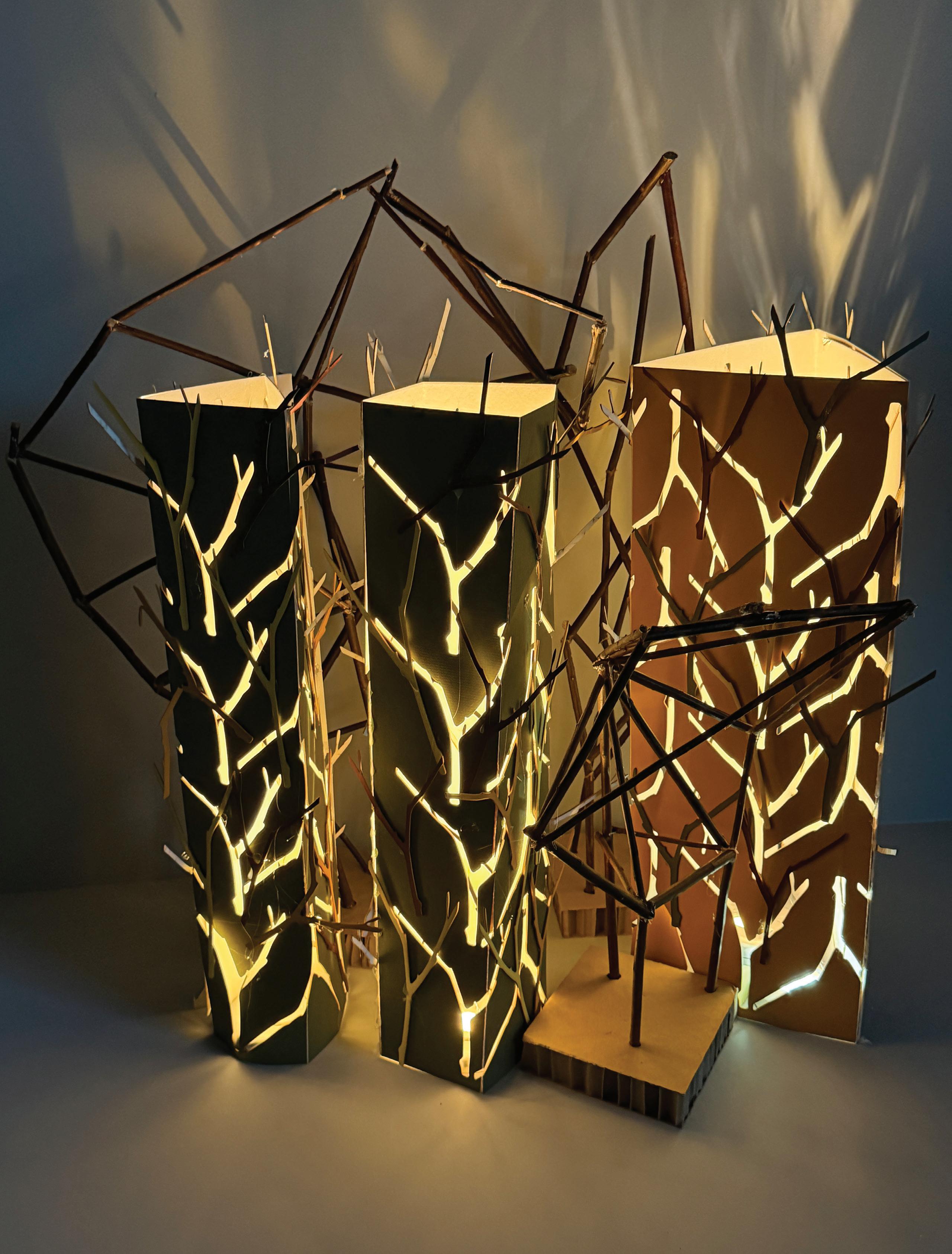
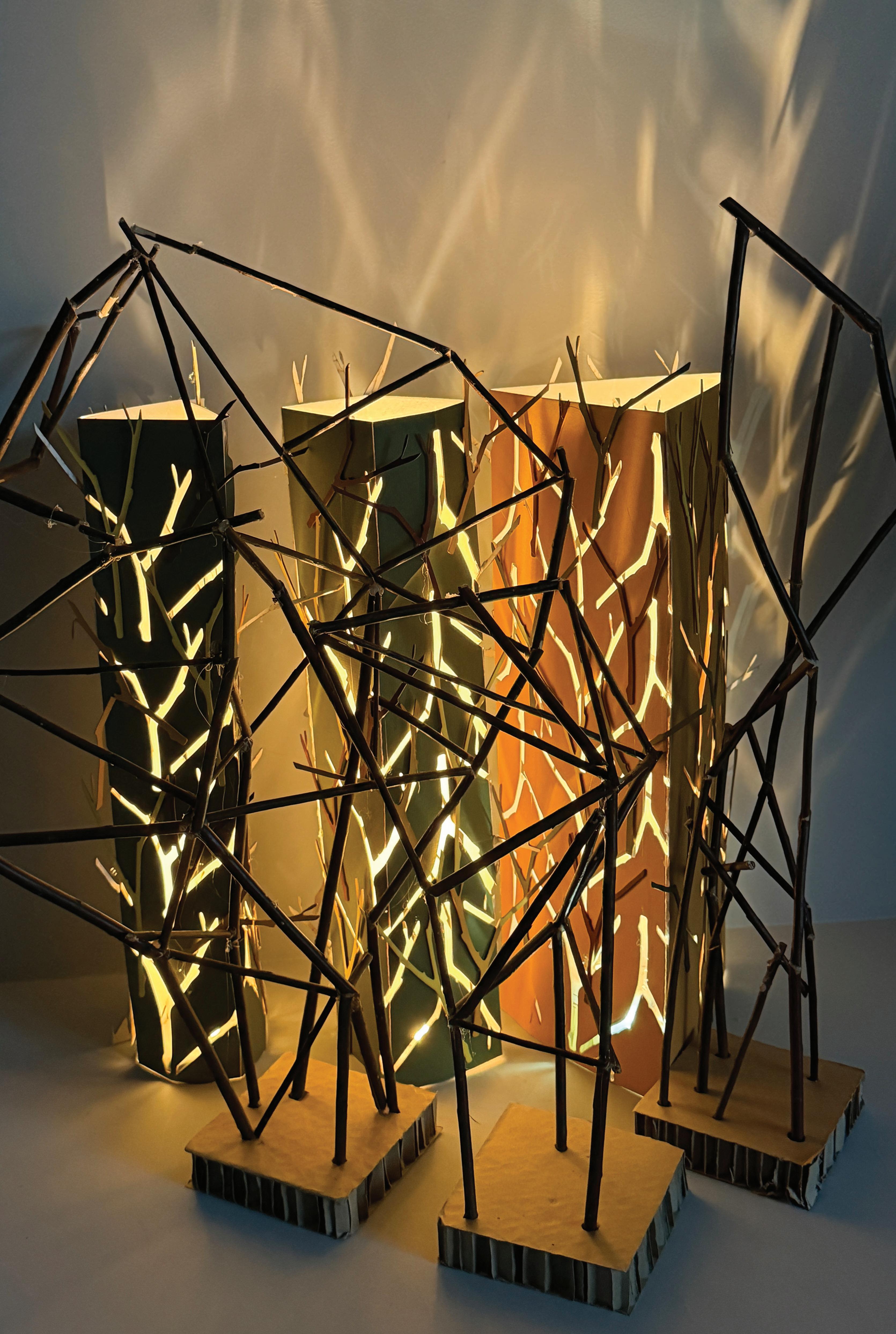
Glimmering Heights — Alberto Ubina ’28, mat board
EDITOR-IN-CHIEF
Henry Wise ’26
ASSISTANT EDITOR
Finn O’Sullivan ’26
LAYOUT EDITOR
Harry Saunders ’27
LITERARY STAFF
Theo Constantini ’28
Reed Keller ’28
Marco Leao ’27
Colin Officer ’26
Landon O’Hara ’27
ART STAFF
Robin Prince ’28
Grant Santosky ’27
Jake Vahabzadeh ’27
STAFF
FACULTY ADVISORS
Ms. Mimi Melkonian
Mr. Andrew Hall
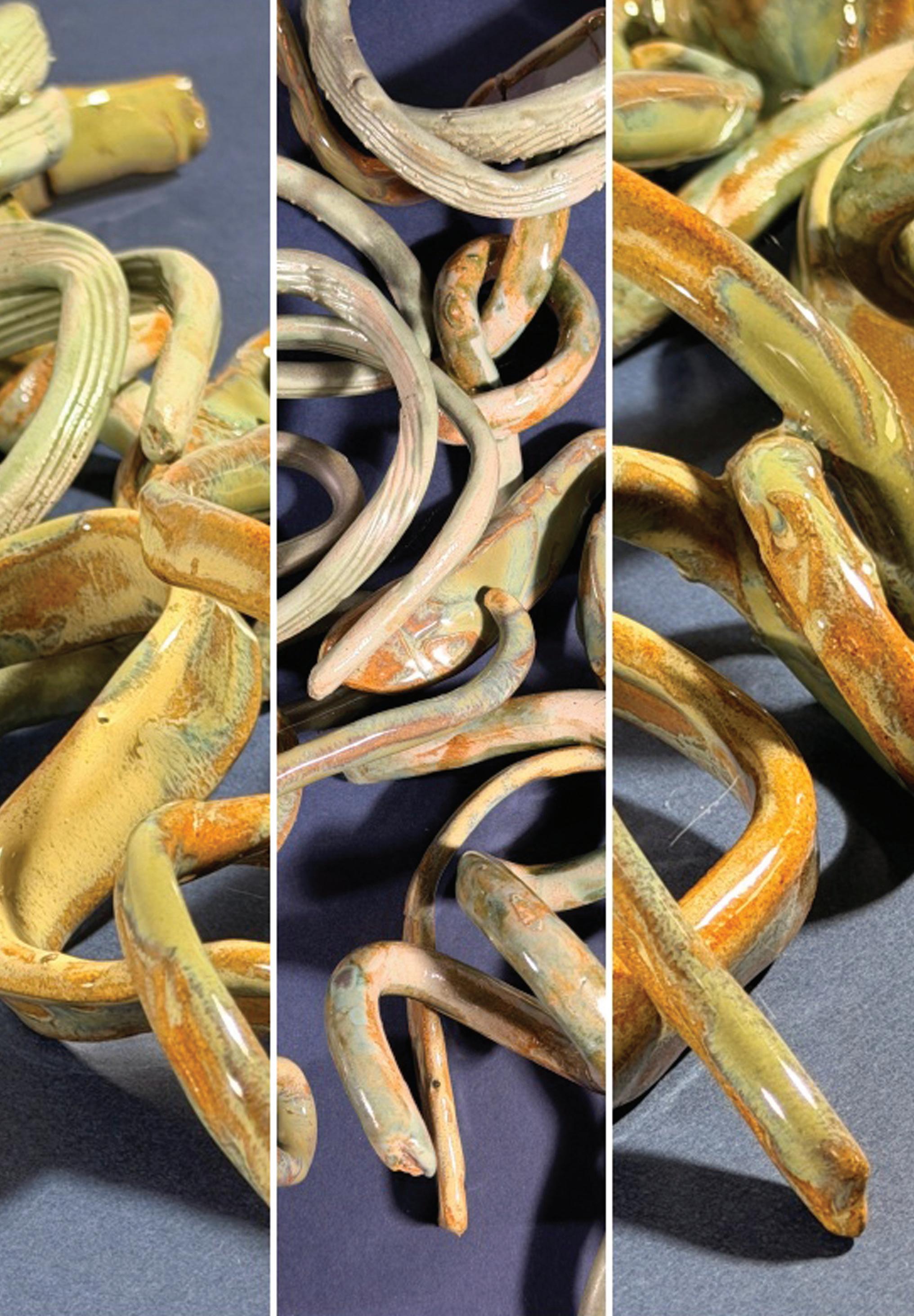
Fragments — Maddy Lane ’28, clay
ROOTS
KEVIN RYAN ’28
SCAFFOLDING
LILY CAPTAIN ’29
SHIFT IN TERRAIN JUDE EVANS ’27
FINDING HOME
RHAKI LUM’27
NEW YORK, NEW YORK HENRY WISE ’26 THE DREAM SHE DREAMT FOR OTHERS
LESSONS
’28 CARRIED
ALBERTO UBINA ’27 HARMONY
ALBERTO UBINA ’27 GLIMMERING HEIGHTS
MADDIE LANE ’28 FRAGMENTS
BURKE WATNER ’26 TIME
BARRETT HANSON ’29 DISSOLVED
ALEX MCCORMACK ’28 TIDAL WAVE
RYAN KASETA ’27 INTERSECTIONS
BOWEN FRY ’28 INTERVALS
ALEX MCCORMACK ’28 SUBTERRANEAN
GRAHAM LEE ’28 GENTLE TRACES FORD
’28 QUIET DRIFT

ROOTS
Kevin Ryan ’28
My roots originate in the Lord's blessing in being created in His image, in being a sheep of His pasture, in being a brother to His son who died for my sins.
But my roots also grow from love my mother, who gave up her profession to raise her family; my father, who provides me with security; my siblings, who steady me through life's struggles.
My roots stretch across the world from Ireland to Italy, to the United States of America, home of freedom, the American way.
But my roots are also grounded in a quiet, working-class suburban town a twenty-four-hour deli, tree-lined streets, and the steady beauty of the Hudson River.
My roots reveal my strengths my athleticism in a winning goal, my intellect in an advanced math test, my morals in a life lived with purpose.
But my roots also expose my flaws sin I struggle to overcome, bitterness when I am overlooked, selfishness in my wanting, jealousy when others receive what I desire.
My roots are the whole of me.
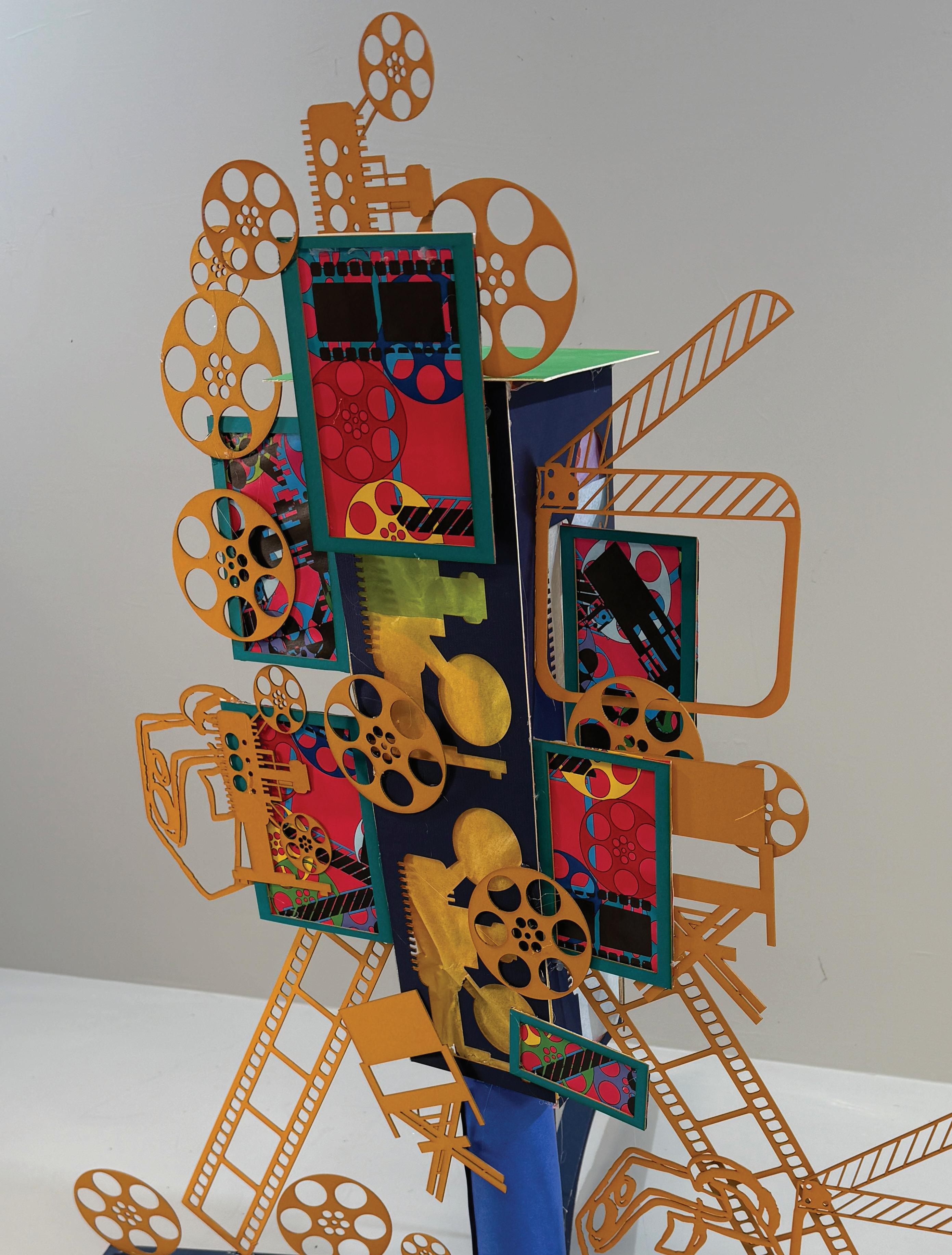
SCAFFOLDING
Lily Captain ’29

Family is the scaffolding that braces you against life’s fiercest storms, a framework built from generations of struggle and resilience. Embracing that support means shouldering the legacy of hardships that forged its strength. I carry the weight of my family’s history, sensing echoes of their battles in every decision I make. Though I have not known the depths of their pain, its ripples shape my every step.
My family’s story begins with my great-grandma Beverly, an American whose path crossed with my great-grandpa Halim Al-Rawi at Berkeley. Halim arrived from Iraq on a government scholarship, which was a beacon of hope for his family, who cherished education and dreamed of a brighter future. Halim and Beverly’s love grew between library shelves and sunlit campus walks, eventually leading them to marry and return to Iraq. The ties of home tugged at Halim, drawing him back across the ocean. He believed his education could transform his struggling village. In the end, he chose to be a big fish in a small pond, rather than lose himself in America’s vast sea.
In Iraq, Beverly found work in the University of Baghdad’s science department while Halim became a civil engineer. The transition was not easy for her; unfamiliar spices and dishes left her hesitant at the table. Yet, amid the gentle scolding of affectionate aunties and the embrace of her new family, she gradually settled in. Her assimilation was slow and tentative, like dipping a toe into a hot tub, cautious at first, until warmth and comfort finally wrapped around her.
Halim and Beverly welcomed my grandma, Susan Al-Rawi, who grew up weaving English and Arabic into her daily life. Her words danced between the lilting tones of English and the melody of Arabic, each language chasing the other in a vibrant duet. The Al-Rawis, a middle-class family, valued education deeply and ensured their daughters attended the best schools. Susan thrived in American girls’ schools until shifting politics dimmed that influence. In those sun-dappled schoolyards, she found her closest friends, gathering beneath the spiky shade of date palms.
Susan’s childhood was filled with journeys across Europe and the U.S., during which she and her parents gathered fragments of the cultures they encountered. Her passion for international chocolate began in the north, savoring silky Finnish treats and German bonbons while marveling at the cool air that was so different from Iraq’s heat. Back home, the family frequented their local club, where Susan swam to escape the blazing summers, watched Western films with friends, and attended coed parties that fluttered her heart with excitement. Her early years in Iraq, shaped by these experiences, left her with a trove of joyful memories.
But the tides in Iraq turned dark when Saddam Hussein seized power in 1979. Halim’s outspoken criticism of the regime led to betrayal by his own colleagues. In a time when dissent meant danger, my great-grandfather was imprisoned, starved, and ultimately executed before the eyes of Susan and Beverly. The trauma shattered them both. Beverly drew strength from the roots she had planted in Baghdad, while Susan coped by fleeing to America, leaving behind a wound that would never fully heal. In the U.S., she met my grandpa, Salah Captain, who had also escaped Iraq’s turmoil as a teenager, though most of his thirteen siblings remained behind. Susan and Salah married just three months after meeting, building a new life in Moraga, California, where the sun and palm trees offered a familiar comfort reminiscent of home
Today, my grandparents nurture Captain Vineyards, transforming their backyard into rows of thriving grapevines. Each summer, they enlist their eight grandchildren to join the harvest, guiding us with warmth and firm resolve. We labor beneath the sun, like young shoots reaching upward, shaped by their steady hands. Every moment spent with them in the fields is a memory I treasure.
Susan and Salah’s journey is far too rich and complex to capture in a handful of paragraphs; it deserves an entire book, perhaps even a series. What matters most is this: fate uprooted their ordinary lives, shattering my grandma’s world. Yet, they endured and built something beautiful in America. My grandma’s eyes still hold the weight of her sorrow, while my grandpa’s face is marked by wisdom earned through hardship. Their resilience and unwavering spirit have shaped a mold I aspire to fill. I am not there yet, but each day brings me closer.
Their stories also remind me never to waste the opportunities they carved out for me. They did not endure so much for their children to settle for mediocrity. I owe it to them to seize the advantages they earned and strive for greatness. My father’s achievements are a testament to this drive, and now it is my turn to carry that purpose forward and pass it to those who come after me.

Dissolved — Barrett Hanson ’29, pastel
SHIFT IN TERRAIN
Jude Evans ’28
When June drew to a close, I prepared for a journey to England, where I would train in the storied Roman city of Bath and the elegant Victorian town of Surbiton. The trip itself was a marathon: six hours waiting at the airport, eight hours in the air, and three more on the road before I finally reached the legendary gates of Bath. My days there were filled with tennis practice for upcoming tournaments, all while I soaked in the grandeur of ancient Roman architecture that framed my stay. We rotated between hard and synthetic clay courts, though the latter never won me over. After just three days, we set off for Surbiton, drawn by its famous grass courts. England, the birthplace of grass-court tennis, offered me my first taste of this historic surface.
I still remember stepping onto a grass court for the first time, feeling the crisp blades beneath my shoes, the gentle give of the earth, and the slickness that made every step a thrill. Playing on grass was exhilarating; the ball zipped across the surface, sometimes leaping unpredictably if struck just right. As much as I wanted to linger, we soon had to move on. The next morning, we rose at three to join the queue for Wimbledon, one of tennis’s legendary Grand Slams. Watching the world’s best players clash for glory felt utterly surreal.
Not long after, we packed our bags and made our way to Gatwick Airport, bound for Milan, Italy. The shorter flight gave me precious time to focus and prepare for my upcoming tournament. While in Milan, we marveled at the breathtaking Duomo di Milano and caught a glimpse of the iconic AC Milan stadium; both experiences left a lasting impression. The cathedral’s soaring architecture and vibrant atmosphere inspired me. On tournament day, I readied myself for the challenge. My match began in the early afternoon, just after a rain shower that left the air thick with fog and sunlight. The battle lasted two hours, and though I lost, facing a local opponent left me grateful for the experience.
Our stay in Milan was brief, and soon we were off, driving into Switzerland to bask in its unspoiled beauty. In Lugano, we had just a few hours to lose ourselves in the lush landscapes and sweeping vistas. Afterward, we hurried back to Milan, gathered our belongings, and set out for Amsterdam.
The flight was nearly empty and wonderfully peaceful, a stark contrast to the bustling chaos of the airport that awaited us. Despite the frenzy, we reached our hotel in Leiden without a hitch, and the journey there was framed by the endless, breathtaking prairies rolling past our windows.
“...The battle lasted two hours, and though I lost, facing a local opponent left me grateful for the experience...”
After settling in, we wasted no time and headed straight to the clay courts to gear up for the final tournament of the trip. Two days of double practice sessions sharpened my game, while breaks were spent savoring delicious meals, wandering the historic city, and unwinding. When the tournament began, I faced a formidable opponent: a former college player in his thirties with a thunderous serve. My own frustration and faltering forehand led to a crushing first set loss, zero to six.
Incredibly, I managed to turn the match around, correcting my mistakes and battling back to tie the score at six-all, forcing a tiebreaker. Even when I was down and facing two match points, I refused to give in, digging deep to break his serve and snatch the win. Riding a wave of newfound confidence, I dominated the final set and claimed victory. This journey was unforgettable, teaching me invaluable lessons in both body and mind, and leaving me stronger than before.
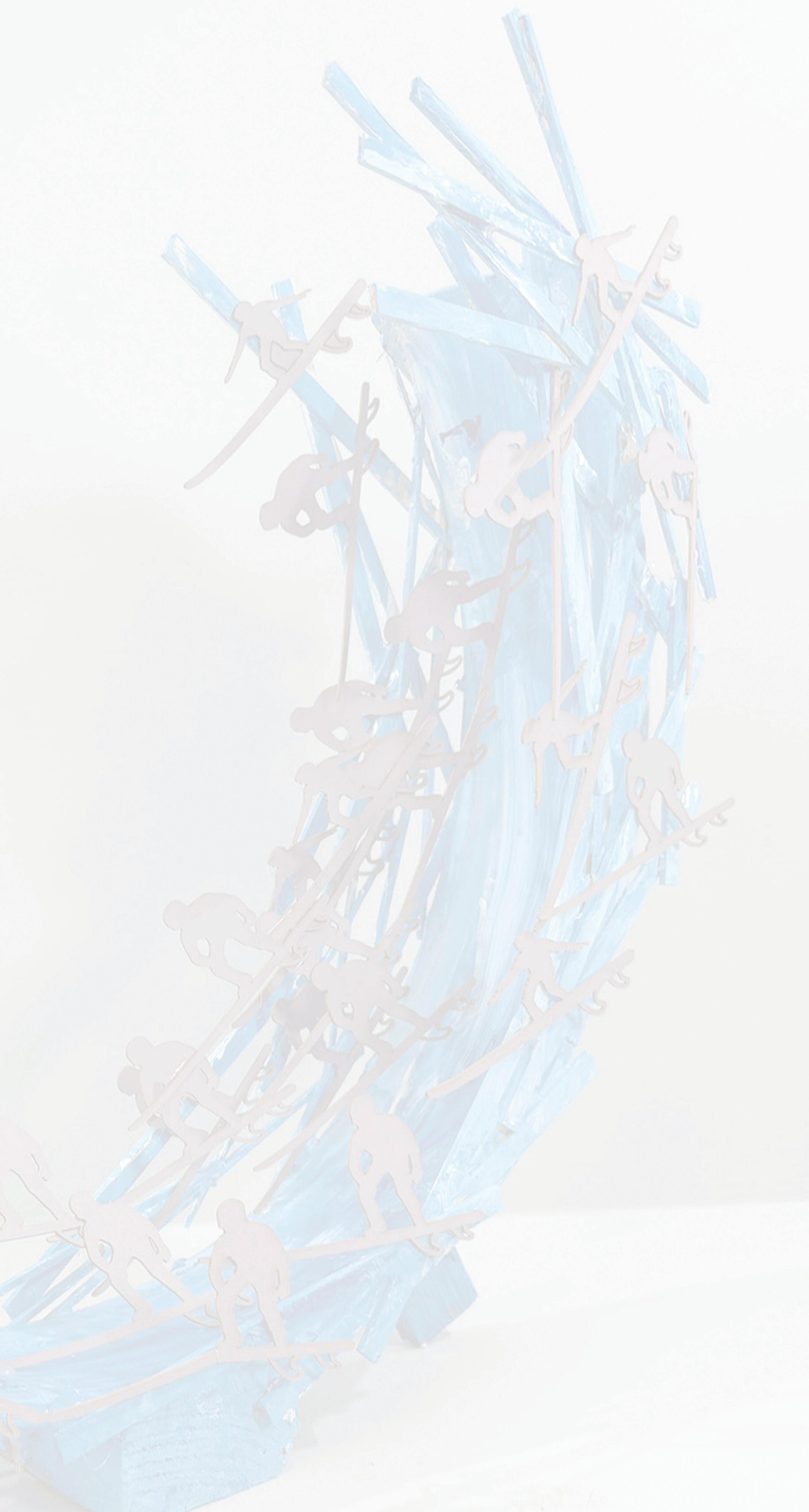
Tidal Wave — Alex McCormack ’28, wood & mat board
FINDING HOME
Rhaki Lum ’26
Since I was fourteen, I have carved out my own path, learning to stand on my own in every place I’ve called home.
My journey began at a boarding school in Delaware, continued through solo stays in Pittsburgh hotels and apartments at sixteen, and now finds me with a host family in Connecticut. Through every move, one thread has woven my story together: learning to chart my own course.
My parents prepared me for independence early. I learned to wash and iron clothes, cook for myself, and own my mistakes instead of relying on others. When I wanted things easier, my dad would say, “Figure it out.” At Saint Andrew’s School, I saw how much those lessons mattered. While others adjusted to being away, I already managed my time and cared for myself. I was ready to live and grow independently.
The years that followed pushed my independence to new limits. In Pittsburgh, as I moved from one hotel room to another, I discovered what it meant to be truly responsible, not just for chores, but for my own dreams and well-being. Without anyone to nudge me awake or steer my choices, I became my own guide. I missed my family fiercely: the warmth of a welcome home, the comfort of familiar meals, the simple joy of a hug. It was lonely, but I searched for connection wherever I landed, and my teammates soon became my chosen family.


At Brunswick, I have discovered a community that truly feels like a second family. Coach Nate, my “pops,” listens and guides me just as my dad would. Teammates like Jayden are brothers in spirit, pushing me to grow while sharing laughter and late-night talks. Across the team and the school, I have found people who support, challenge, and welcome me as one of their own.
Now, I share a home with Sebi Peña and his mom, and together we have built a bond that feels like family. Their kindness makes me feel truly seen and cared for. Since Sebi is not a morning person, Aidan Robinson steps in to drive me to school, while Ms. Laura prepares breakfast and takes me for a haircut. I am endlessly grateful for her warmth. With them, I am reminded that family is found in the people who make any place feel like home.
Living on my own has shaped who I am. I have grown in maturity, learned the meaning of sacrifice, and discovered the true value of connection. Now, I see not just the hardships of adapting, but the opportunities it brings. Independence is my greatest lesson, and with it comes deep gratitude. I know I can stand on my own, but with the kindness of others, I can reach even greater heights. Their support is something I will always treasure.
Intersections — Ryan Kaseta’27, digital

NEW YORK, NEW YORK
Henry Wise ’26
AsI step across the gap, I cross into another universe. The ceiling above is low, stained with the city’s history, worn by generations of commuters, immigrants, and laborers who passed beneath it in pursuit of new beginnings. All around, the crowd surges with restless energy. This is the pulse of New York City, beginning in the station where people rush toward their destinies, just as millions once did when they arrived seeking opportunity in the New World. Stories unravel in every direction, and the walls shimmer with brass and age. Cultures collide in ways I never imagined, blending into the living mosaic of a city built by countless hands and countless languages.
The skyline stuns me. A monument to ambition, industry, and the architects of another era who raised steel toward the heavens. Streets glow, drenched in neon that turns night into day, while beneath them echoes the memory of horse-drawn carriages, immigrant pushcarts, and the relentless machinery of industrial progress. My feet become my compass, carrying me past old brick facades and glass towers alike, through neighborhoods shaped by generations who transformed these streets into homes.
With hands tucked in my pockets, I scan the sidewalk, searching for my next discovery.
“...My feet become my compass, carrying me past old brick facades...”
It could be anything: a family-run café preserving recipes from another continent, a mural honoring those who came before, or the rusted remains of industry hidden between modern storefronts. Nature is scarce here, pressed aside by concrete and steel, yet somehow it survives, in the stubborn tree rooted through pavement, in the small park crowded with life, in the resilience of the city itself.
Everything ends, but in the city they call The Apple, endings feel impossible. New York is a place forever rebuilding itself, forever shaped by those who arrive and those who remain. As I scan the endless sea of faces, I realize I am surrounded not only by the present but by history itself, living, breathing, and moving beside me. Overwhelmed yet accepting, I breathe in the city’s chaos and understand: in New York, the past and present walk together.

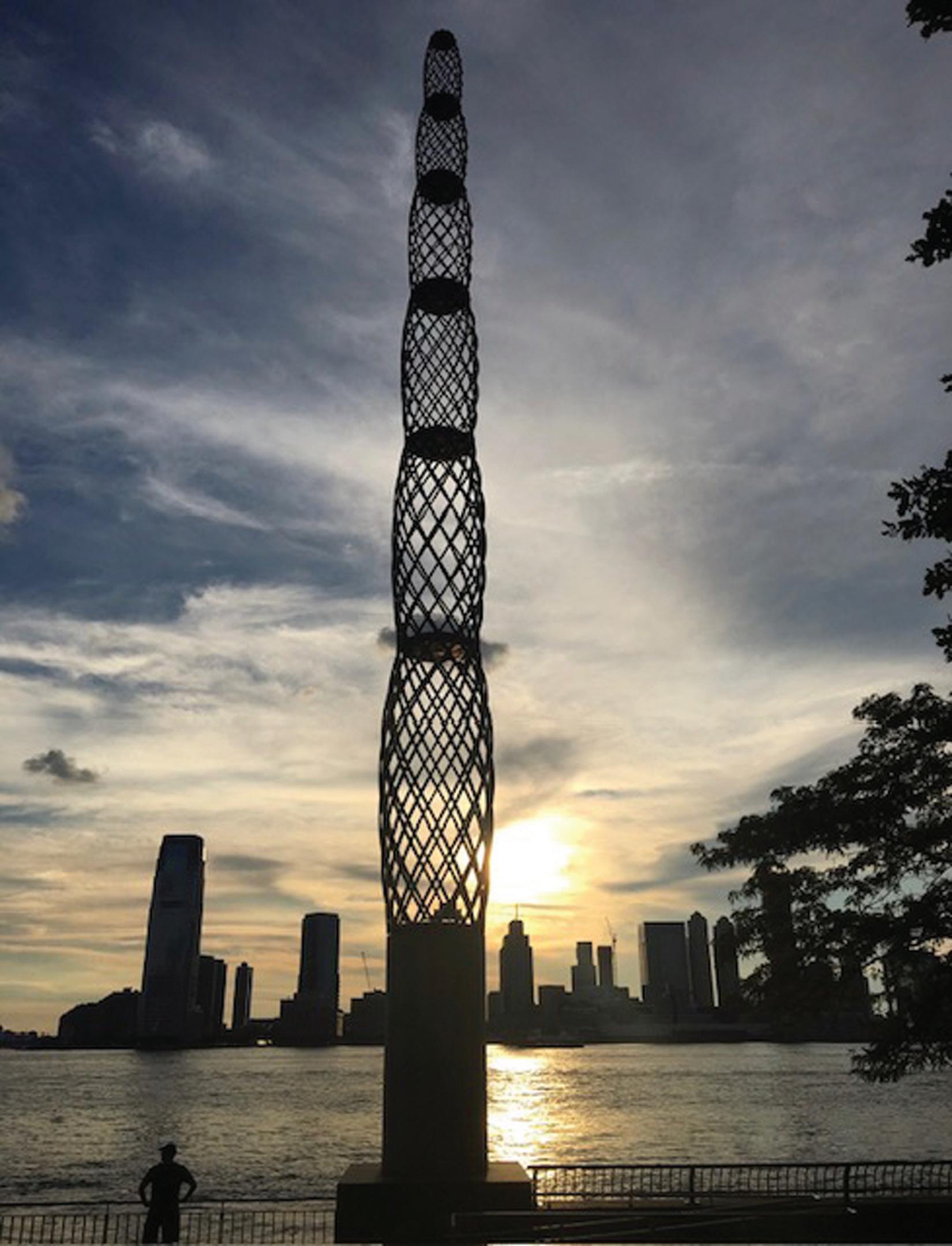
Hoboken, New York — Henry Wise ’26, photography
THE DREAM SHE DREAMT FOR OTHERS
Maxwell Colella ’26
anila, 1941. In a city draped in the uneasy hush of looming war, my Lola, a young girl, wandered the streets she thought would always define her world. With little more than determination, she devoted herself to her studies and earned a coveted spot at the Mapua Institute of Technology.
My grandfather enlisted in the United States Coast Guard in 1966; thus, Lola left behind everything she knew and set out for America, stepping into the unknown. For nearly 30 years, she became the quiet anchor of our family, a devoted military spouse who set aside her own dreams for those she loved. Her relentless efforts not only paved the way for her siblings’ education but also helped them carve out new lives in the United States. Working long days and nights, she made sure her siblings had the same opportunities she had. Though I never saw those early days, Lola’s journey taught me to find wonder in life’s smallest moments.
“Good morning, bunso.” I still hear her gentle, rather subdued voice when I wake up each morning. The empty rice cooker sitting on the counter reminds me of the eggs and rice she would make for us for lunch whenever we could not decide what to eat. It is these gestures that resonate the most with me and define the simple, yet graceful person my Lola was. Her journey revealed that perseverance can unlock doors even when hope feels far away. From the simplest beginnings, she shaped a brighter future for her family, showing me the beauty of chasing dreams and giving without hesitation.
Lola’s influence shaped not only how I think, but how I live. Because of her, I face challenges at school and at home with a spirit of hope and resolve. In moments of stress, I recall her quiet strength and remind myself to meet others with patience. Inspired by her unwavering devotion, I stepped up at home, supporting my parents and younger brother in big and small ways. Following her lead, I reached out to my community, choosing to help wherever I could, whether tutoring a struggling classmate or comforting a friend in need. These moments have woven empathy and resilience into the fabric of who I am, urging me to seek out new ways to grow and serve.
Her steadfast devotion to family inspires me to savor every moment and put others first. In September 2017, both my grandparents were diagnosed with cancer just days apart, a shock that turned our world upside down. The five years Lola spent living with us became the most transformative of my life.
She taught me to find gratitude in each day and to never overlook life’s simple blessings. Lola asked for little. She wore the same shoes everywhere and quietly finished the leftovers my brother and I left behind. Even in hardship, she found solace in small rituals, like sipping morning tea or folding laundry with care. Above all, Lola showed me the true meaning of grace. Despite her pain, she greeted everyone with a gentle smile and boundless compassion, embodying kapwa, the Filipino spirit of empathy and selflessness. She made sure her family flourished until her strength faded.
In May 2022, Lola passed away peacefully after a brave fight with cancer, now resting beside my grandfather at Arlington National Cemetery. From arriving in America with almost nothing to finding eternal peace in a place of honor, Lola’s life stands as a testament to the enduring power of family, sacrifice, and grace in the face of adversity.

Intervals — Bowen Fry ’28, digital
Lessons in a Bowl of Soup
Luca Tichio ’29
When my family travels, we search for genuine connection, not just a change of scenery. In Cape Town, South Africa, we hoped to discover the threads of our shared humanity, the universal longing to be seen and understood. Our service project led us to a township soup kitchen, where Rosie, a woman with a contagious smile and boundless energy, welcomed us. The orange paint flaked from the walls, and the floors beneath the makeshift tables were worn smooth by countless footsteps. Rosie introduced us to the kitchen crew and guided us behind the counter, where steaming pots of soup waited to be served. Cracked bowls lay scattered across the table, but their imperfections faded in the warmth of the moment.
We tied on our aprons and prepared to ladle soup into waiting bowls. Outside, a seemingly endless line of hungry faces stretched before us, people of every age and size, each with their own story. As we served, I noticed the quiet patience of the children, many of them standing in line with mismatched shoes or sniffling through persistent coughs. There was no shoving, no rush, just a steady, hopeful anticipation. For two hours, we worked faster than our thoughts could process, swept up in the rhythm of giving.
Leaving Rosie’s soup kitchen, I felt emotionally drained and profoundly changed. The experience opened my eyes to the daily struggles of children living in poverty. I realized how much small acts of kindness, like a smile or a moment of eye contact, can mean when words fall short. No matter where they are born, kids are kids, full of hope and resilience. Facing the harsh reality of children fighting for a single meal forced me to confront truths I had only imagined. I had never truly considered what it meant to wonder where my next meal would come from. What struck me most was not the sight of children eating their small bowls of soup, nor the parents quietly handing over their own portions. It was the gentle patience that filled the room, the calm acceptance of waiting for something as basic as a single meal, likely their only one that day. That patience lingered with me long after we left, prompting me to reflect on how rarely I have to wait for anything, let alone for something so essential.
I walked away from that township soup kitchen with a new understanding: true character is built not through grand gestures, but through small acts and the humility to recognize my own privilege. The patience I witnessed became a lesson in compassion and empathy, reminding me to truly see and support others every day.
Carried Across Borders
Jake Vahabzadeh ’27
In 1978, as the Iranian Revolution unfolded, my grandparents, my father, and his sister left Iran on a life-altering day.
My grandparents chose to stay in the United Kingdom for a few years while holding on to the hope of returning home someday. Yet as that dream began to fade, they eventually decided to choose Canada as their new home. There, my father grew up and assimilated into Western culture. Knowing the story of my grandparents’ struggle to forge a new life in a new country inspires me.
Thinking about their journey, I feel both grateful and in awe of the momentous upheaval this occasion must have brought to their lives. Being at their home, surrounded by their pictures and memories of the past, serves as a link between the two worlds.
I have also found myself serving as a bridge to their past when I have spoken with friends or teachers about their journeys, or when I have shared the experience of Persian holidays with classmates. These instances help me appreciate diversity and relate to others facing unfamiliar situations. My grandparents’ story is more than a legacy I carry; it is the source of my fortitude, adaptability, and appreciation for cultural differences, values I seek to embody every day.
Thanks to my grandparents holding on dear to their customs and traditions, they have surrounded me with the flavors of Persian food, the joy of celebrations, and the strength of family bonds. During the Persian holidays, I savor my grandmother’s cooking and treasure the stories carried down through generations. Dishes like Tahdig and fragrant stews always grace our get-togethers, holding me to my father’s heritage. The Persian New Year, my favorite holiday, is filled with the promise of spring, new beginnings, and closeness of family. One of my fondest childhood memories is tying blades of grass with my father, the ancient Zoroastrian custom of wishing for good luck.
Once a year, we celebrate the Arabic Language and Culture Day at school by hosting a schoolwide lunch and event. One of my fondest memories of my contribution was bringing in a wide range of Persian sweets, such as Bameih, bite-sized donuts soaked in saffron rosewater, and Zoolbia pastry soaked in sugar syrup. It filled me with pride in my identity and heritage from my father’s family, helping me grow more confident, empathetic, and stronger in the face of new challenges.
Looking back on my grandparents’ journey, I am overcome with gratitude for their traditions and the values they have entrusted to me.
SICILIA & SICILY
Maximus Gabelli ’26
What does Sicily mean to me? Everything. Though my Italian roots stretch from Messina to Parma and Napoli, it is my Sicilian heritage that truly captivates my heart and imagination. Though Sicilians are called Italians, they are unlike any other Italians or even Europeans. Sicily is a living mosaic, shaped by Greeks, Romans, Arabs, Normans, and countless others. The island has weathered the rule of many kingdoms, yet what amazes me most is how its spirit remains so vivid and intact. Today, however, new waves of people and ideas are reshaping not just Sicily, but all of Europe. It is not armies or conquerors, but shifting ideals that are transforming the island. Walking its streets, I feel as if I am treading through centuries, sharing in the emotions of my ancestors. That connection is truly magical.
I was swept away by a beauty that no other place could match. Instead of wandering through these ancient sites on autopilot, I let every detail sink in, knowing that generations of families, including my own, had shaped the masterpieces around me. I have been lucky enough to visit Sicily twice, and each time, I paused to reflect on the wonders I encountered. My first journey began in Palermo and led me to Sciacca, a coastal town where history and daily life are woven together. Its lively port and winding streets pulse with purpose. After a few days, I ventured east to climb Mount Etna, the volcano that breathes life into the island’s fields, and explored the enchanting town of Taormina. Later, I visited small northern villages to glimpse everyday Sicilian life. What struck me most was how the people of Sicily live alongside history, not behind it. In January 2026, I returned to Sicily with my classmates, a journey that deepened my appreciation for my ancestors’ legacy and opened my eyes to the changes sweeping across Europe.

Giardini Naxos, Sicily
This time, we lingered in Palermo, exploring its ancient streets and timeless churches, each one a testament to centuries of resilience. We traveled by bus to Agrigento, where Greek temples have stood for over two thousand years, preserved by being transformed into churches and given new life. In Syracuse, once rivaling Rome in size, I felt the weight of history all around me. Returning to Taormina, I was once again enchanted by its beauty, this time sharing the experience with friends. Our guide, Chiara, brought the past to life as she led us through the sites. Afterward, I spoke with her about the rapid changes I noticed. She and others shared my concern that the island’s rich history is slowly fading from memory. I began to wonder how I could help others see the magic of Sicily and inspire efforts to protect it.
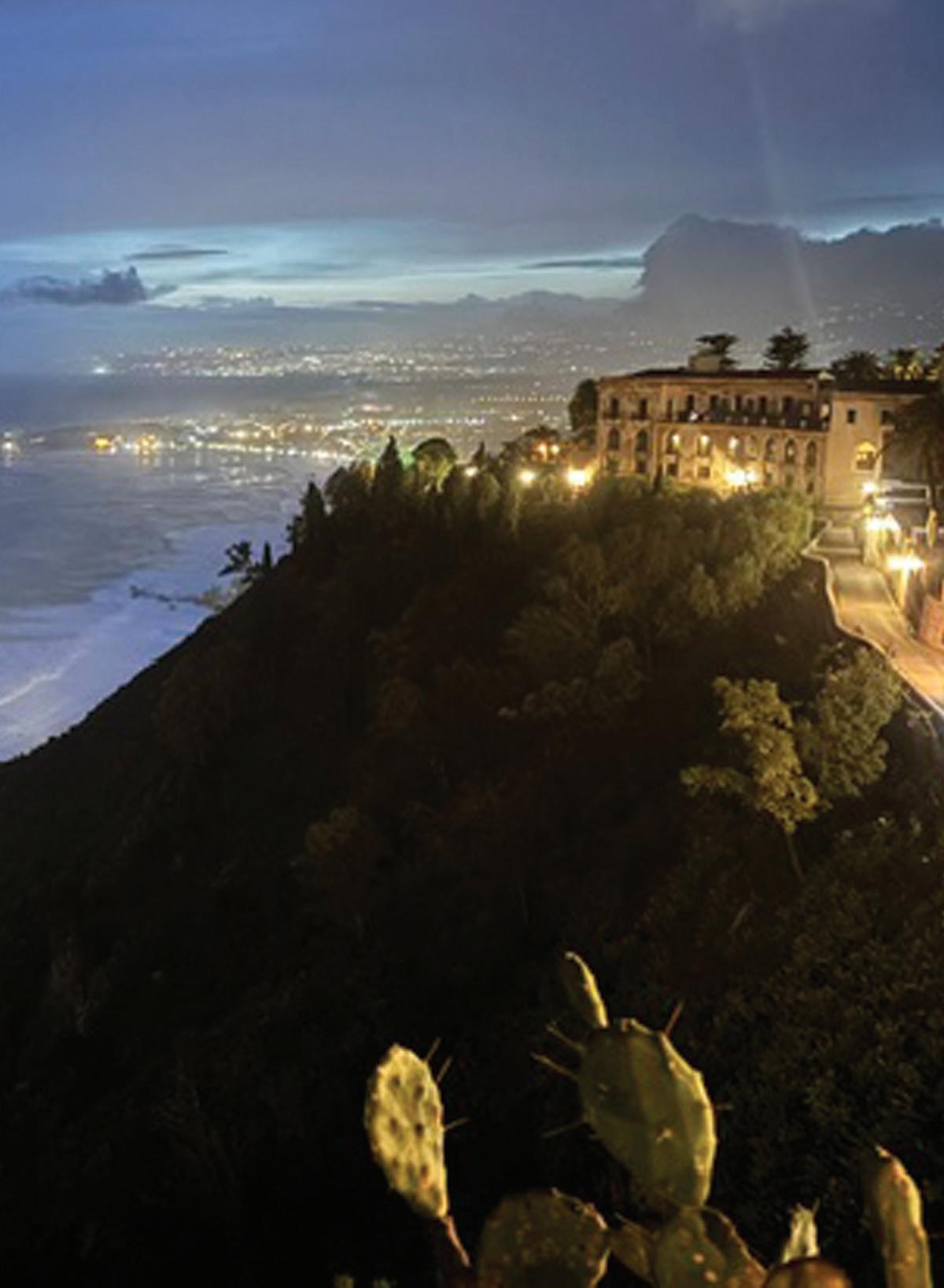
Anthony Sayegh ’26, photography
The sudden change in Sicily and across Europe erodes the past families have built. While the integration of people into a country is not inherently bad, disregarding a region’s long-standing culture is devastating. There is little effort to assimilate into European society, and many choose to live apart from the ways of those who came before. This issue is increasingly apparent across the entire continent. The goal of this article is to highlight the rapid changes sweeping through Sicily and Europe thatthreaten to erase the legacies families have built over generations.
Welcoming newcomers is not wrong, but losing touch with a region’s deep-rooted culture is heartbreaking. Too often, there is little effort to blend into the traditions of those who came before, a trend spreading across the continent. My intention is not to make a political statement, but to urge awareness that cherished cultures are vanishing at an unprecedented pace. Instead of rushing to transform these storied places, we should focus on protecting them and encouraging newcomers to embrace their heritage, just as past empires once did. I hope the legacy my ancestors left behind will endure for centuries to come, and I know many others share this hope for their own families.

Survival and Sacrifice
Armaan Lakhani ’27
As I slid open the back door, the barrier between the cozy warmth inside and the biting cold outside vanished, letting a crisp breeze sweep through me. I stepped past the patio into the wild patch behind my house, where tall trees stood like silent sentinels, stripped bare and hungry for life. In the woods, silence pressed in, so deep it revealed the secret chorus I had always missed: the crickets’ steady hum hidden among the branches, the sparrows’ rhythmic calls as they flitted from limb to limb. I wandered to the creek’s edge, the boundary between my familiar yard and the mysterious forest beyond. Autumn had left its mark everywhere; leaves lay thick and motionless on the water, and the air was heavy with the sharp scent of wet earth and decay.
The trees, all twisted lines and crooked arms, reached skyward, stripped of their vibrant cloaks. I glanced up at the pale sky, then back at the trees, watching them stretch hungrily toward the sun. A sudden rustle caught my attention: a black squirrel burst from the leaves, cheeks bulging with an acorn, and scrambled up a trunk. All around, squirrels darted and dashed, feverishly preparing for winter, yet pausing now and then to investigate their world.
Squirrels first arrived in North America as early as 23 million years ago, when they crossed the Bering Land Bridge from East Asia and from areas west of North America. Like many other species arriving in a new land, they adapted to the environments of the regions they settled in, leading to different mutations among them. The squirrels that settled in the northern regions spent most of their time high up in the trees, whereas those that settled in the south mainly stayed on the ground and in shrubs.
Much like the squirrels, my grandparents embarked on their own migration, leaving South Asia for a new world and learning to adapt to survive. Saris were traded for thick winter coats, Hindi faded into English, and the comfort of rotis and daal gave way to the convenience of burgers and pizza. These changes rippled through the generations: by the third, my family’s branches had split, with some settling in the warm southern plains, others rising high among northeastern skyscrapers. Just as the squirrels lost some of their ancestral traits, I feel my grandparents’ traditions slipping away. My siblings and I, the latest generation, have nearly lost our language, and the foods, clothes, and customs of the old world linger only as distant echoes and treasured relics.

Nature shows little mercy to squirrels. Every day, they dodge predators, battle rivals for food, and weather the harshest storms. Their survival depends on quick wits and nimble bodies. I watch them race up trees to escape danger, sometimes my own dog, zigzagging with lightning speed to find safety. They labor tirelessly, gathering acorns and marking each with a lick, a clever trick to find their hidden treasures when winter arrives.
As immigrants, my grandparents faced their own gauntlet of challenges in America. My grandfather’s electrical engineering credentials meant nothing here, so he relied on his sharp mind to launch an electronics import business. When doors closed, he built his own, channeling the same relentless drive I see in the squirrels. Though I may never fully grasp their hardships, I try to honor their legacy by embracing my own struggles, striving for a better future. Their perseverance echoes in my cross-country races, where I push through exhaustion, refusing to quit even when every muscle begs me to stop. Competition pulses through nature, through the squirrels, through my grandparents, and now through me. This race, against others, against myself, shapes who I am and who I hope to become.
I picture myself at the starting line, the sharp crack of the gun splitting the air. I surge forward, fighting for a spot near the front, determined yet measured. We round the first bend, and I begin my climb just before the looming hill. Time blurs as I glance up, realizing I have barely made progress. My legs throb, my breath grows ragged, but I force myself onward, conquering one obstacle at a time. That hill is just the first of many. I spot the top two runners ahead, leading the pack, but I hold back, knowing I cannot match their pace. The pain only intensifies, growing with every stride.
My watch beeps: three miles down, just 200 meters to go. The finish line glimmers ahead, but my body screams to stop. I think of my family, who always pressed on when life grew hard. Running through the woods, surrounded by creatures fighting their own battles, I draw strength from their perseverance. I shut out the pain, close my eyes, and drive my arms and legs forward, emptying my last reserves of energy. I collapse just past the finish, breathless, and open my eyes to my teammates’ cheers. I finished the race, a victory my grandparents and the squirrels outside might never know
Every time I run through the wild, I am struck by the silent battles every creature faces. Their resilience, and my family’s, fuels me to tackle my own challenges, whether in the classroom or on the field.
Squirrels are masters of preparation, stashing away resources for winter’s lean months. This clever “scatter hoarding” reveals their foresight and survival instinct. My family shares this trait, living simply and working hard, even when money is no longer a worry, to ensure future generations are secure. Like the squirrels, they save for hard times, quietly building a safety net.
“...Knowledge, for me, is the resource that will help me weather whatever storms may come...”

My grandparents and parents still add to my bank account, shielding me from financial worries. I carry on this tradition, but my savings are in knowledge. I strive to learn all I can, gathering an education to face a world transformed by technology and artificial intelligence. Knowledge, for me, is the resource that will help me weather whatever storms may come. There are two perspectives of nature: its beauty and its struggle. In Kimmerer ’s book, Braiding Sweetgrass, specifically in the chapter The Council of Pecans, she writes: “How generously the pecan trees shower us with food, literally giving of themselves so that we can live.”¹ She expresses her appreciation for nature, as the pecans offer her a gift of food. During my walk, I noticed the same duality: the beautiful landscape and the squirrels’ struggles to survive through migration, evasion, and preparation. This duality existed in my family in different forms across generations and continues to this day.

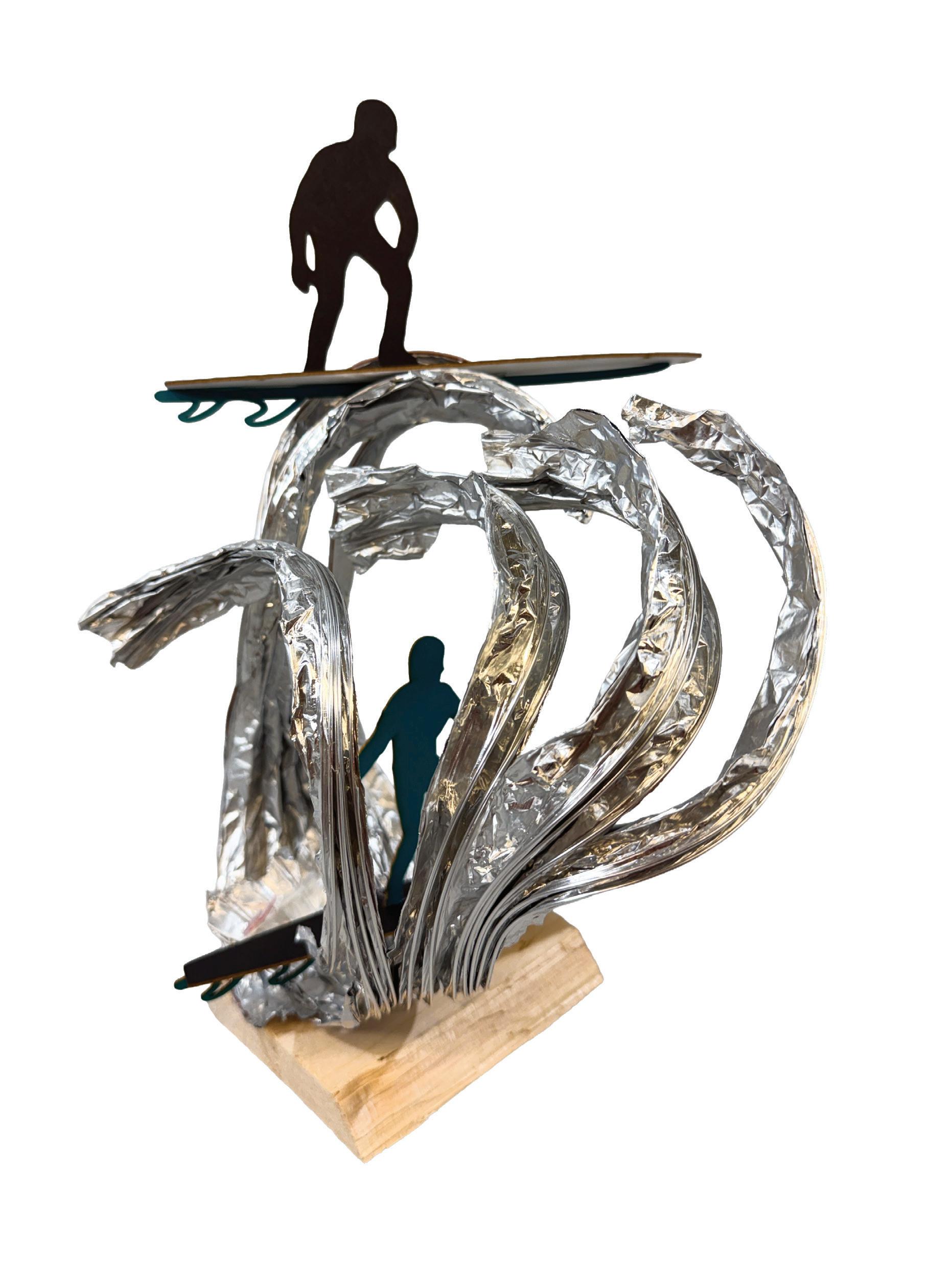
Subterranean — Alex McCormack’28, wood & foil
Perched Between
Henry Mayerfield ’26
Our backs were drenched as the rain fell in sheets, though we were not fully outside. Not entirely inside either. My siblings and I sat along the edge of an openair hospital in Puerto Nariño, Colombia, a small town tucked seventy-five kilometers up the Amazon River from Leticia, the nearest airport, which is accessible only by boat. The roof above us ended abruptly, leaving our shoulders exposed to the storm while our legs remained inside, dangling over the threshold of the hospital floor.
Perched on the half-erected concrete wall, feet inside the hospital and backs turned to the rain, I was unsettled by the scene before me. The floor was stained and uneven. Patients sat barefoot, their soles pressed directly against the dirty floor. There was no hum of machines, no sterile scent of antiseptic, only the humid air and murmur of voices. A single doctor moved in and out of the lone consultation room, empty-handed, no gloves, working with what little equipment was available.
Then a man entered carrying a cardboard box filled with nearly a hundred ham sandwiches. He walked through the waiting room, handing one to each person, offering them freely. I had never witnessed anything like it in the United States, kindness so simple and unwarranted.
Moments later, several men stood and began to sing a prayer in Spanish. Their
“...The room felt unified and bound together...”
voices rose together, harmonizing with the rain. The room felt unified and bound together. Despite the bare walls, I felt surrounded by family, people who would help without question. In that moment, soaked and perched between inside and out, I had never felt safer.
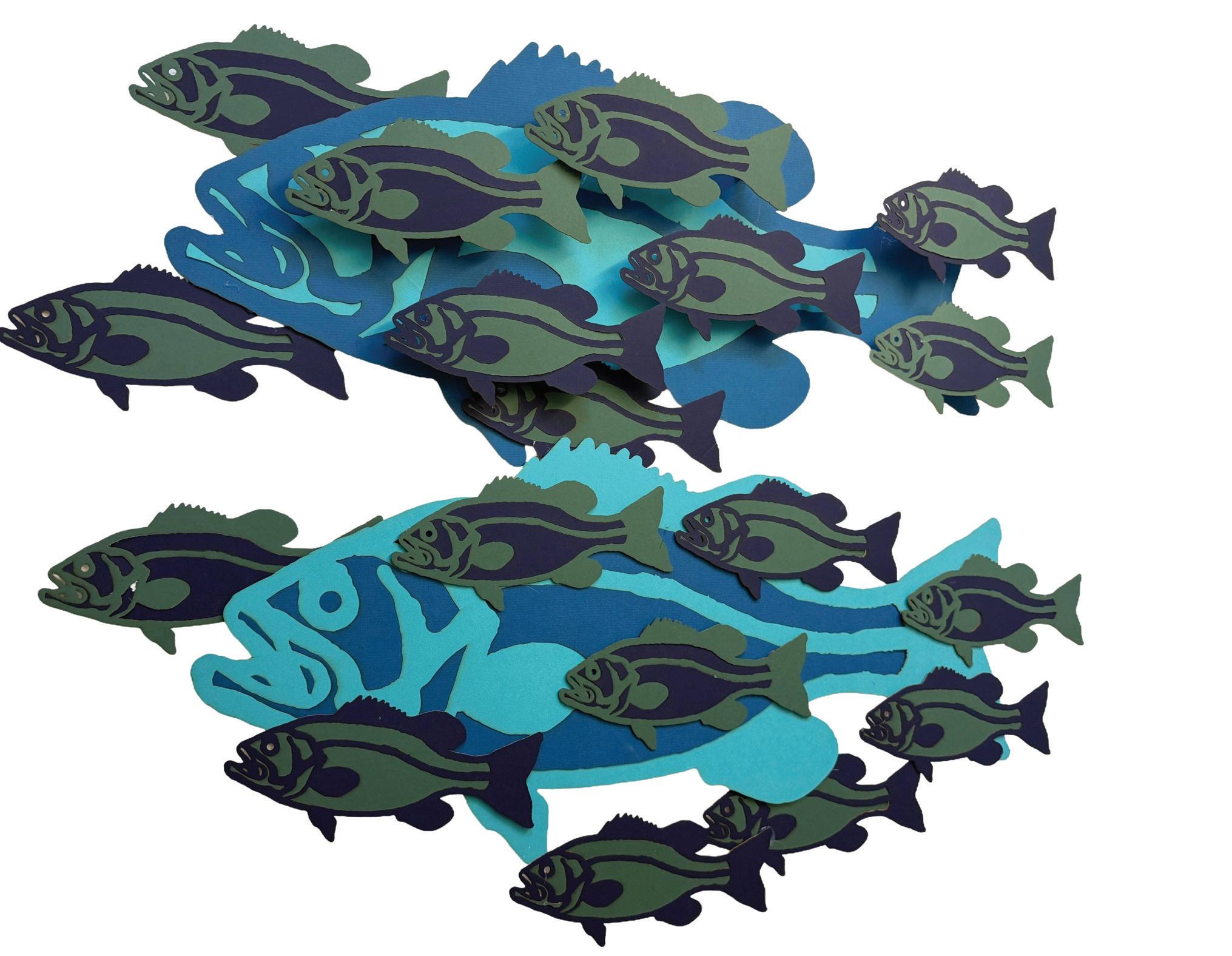
Gentle Traces — Graham Lee’28, mat board
America, Amerika, the States: “American”
Chloe Weldon ’28
I’m American, but I’m amerikanisch and “from the states.” I eat burgers, but also latkes and bangers with mash. I say mom, mutti, and mum.
My grandmother boarded a ship that took her from a black-and-white, communist, East Berlin to the big, bright, U-S-of-A.
My dad boarded a plane that took him from a famous, busy, London to the big, bright, U-S-of-A.
I carry both of their worlds inside me, but I’m labeled, simply, “American.”
“American” symbolizes a melting pot that melts my cultures into one cheesy glob.
As a white, young “American” woman, I hear a siren exclaiming, “Your culture doesn’t exist.” It blares from everywhere, but where?
I define myself as more than the label; I’m all the parts in between. I feel the invisible string attached to that part of me, that golden, special tie to something larger than you.
I feel it when I’m reading German magazines with my grandmere, or when I’m talking and slip a word like “aubergine” into conversation accidentally. I feel it when I’m with my family, sharing stories at dinner, yet I feel it the sharpest when called “American.”
Because when they say “American,” it reminds me of the melting pot that is me, what brought my mom and dad together, my grandma’s place of escape, and my home.
Quiet Drift — Ford O’Sullivan ’28, mat board
EPILOGUE

Becoming is neither linear nor solitary. It unfolds at the intersection of inheritance and experience, through the histories carried, the cultures that shape individuals, the relationships that sustain them, and the trials that refine them. Identity is not bestowed fully formed; it is continually fashioned through the dialogue between past and present, circumstance and choice.
The voices gathered in this volume illuminate the many dimensions of self, revealing identity as both inherited and forged. Across these pages, memory, language, struggle, belonging, and transformation emerge not as isolated themes but as essential forces that shape the self.
Collectively, these works demonstrate that identity is not merely discovered but continually created. Individuals are shaped by what precedes them, transformed by what confronts them, and ultimately defined by who they choose to become.
Henry Wise ’26 Editor-in-Chief

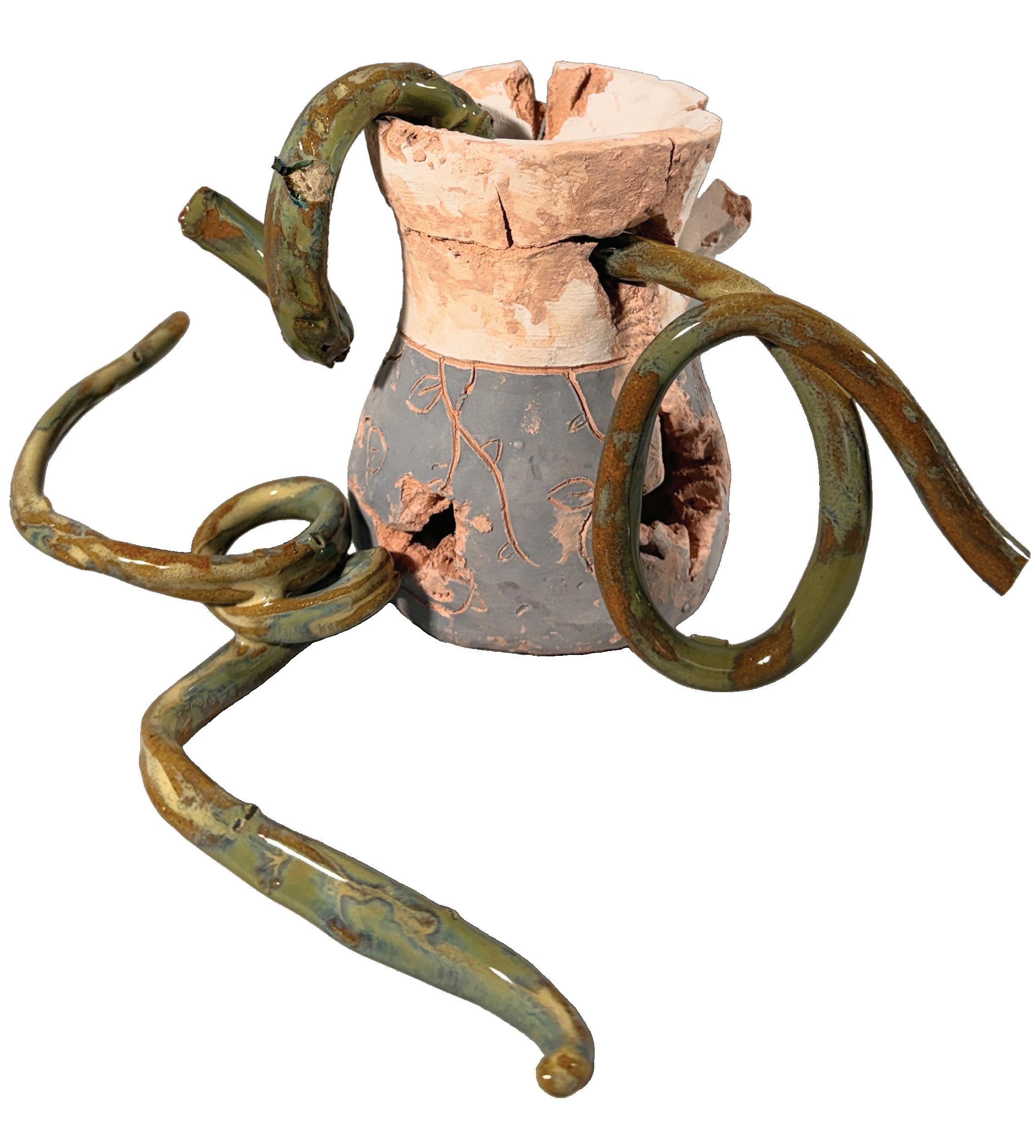
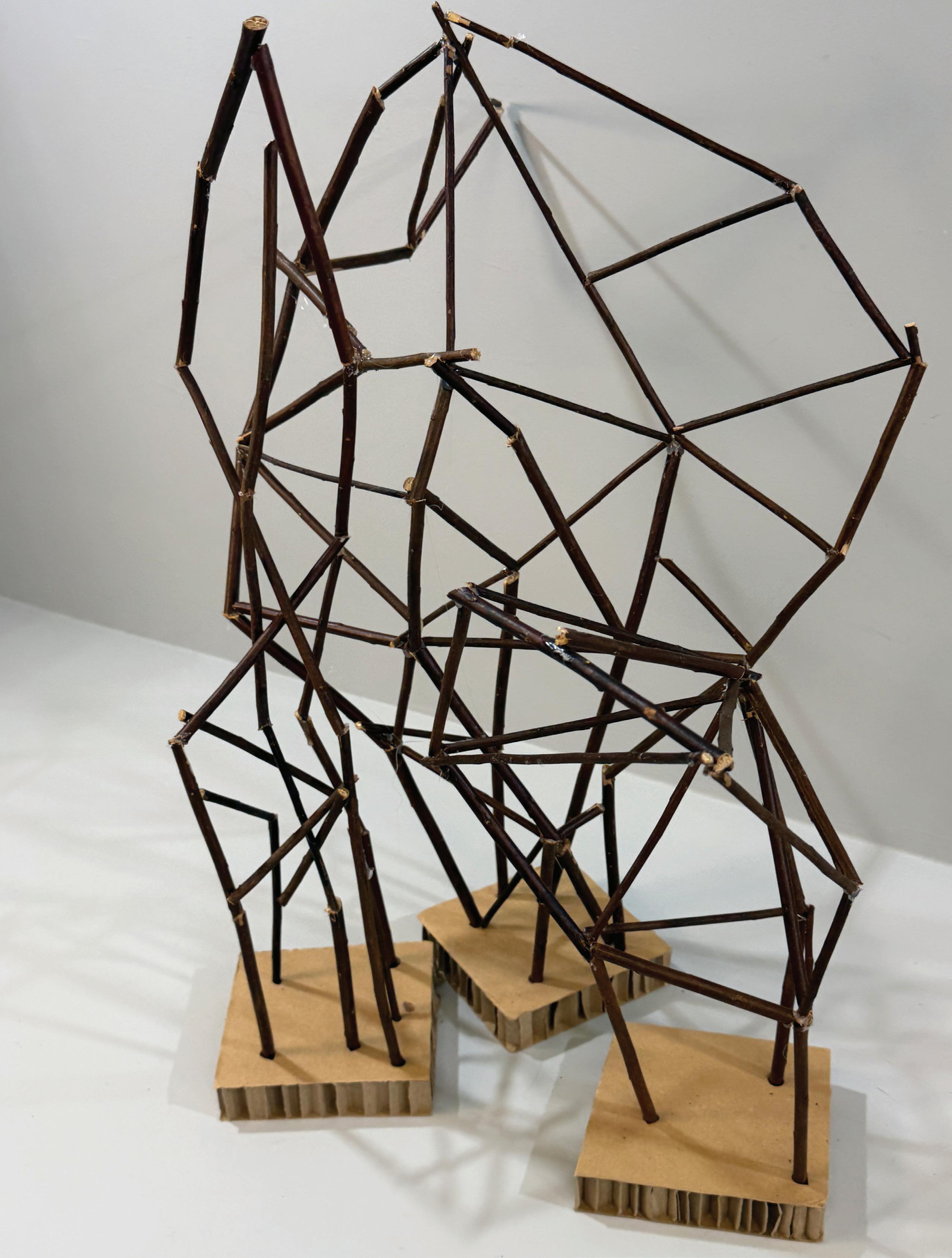
Untethered — Jack Lindberg ’26, ceramics