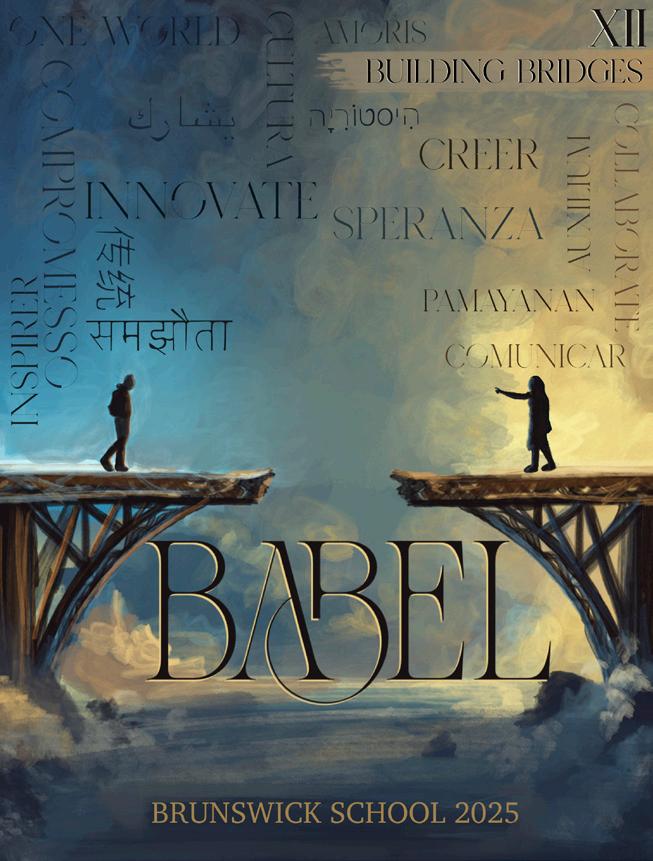
BABEL
Brunswick School / 2026
Volume XIII
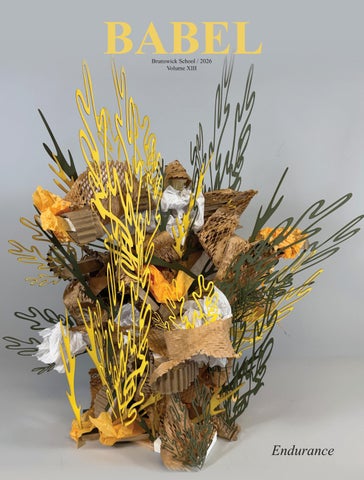
Brunswick School / 2026
Volume XIII
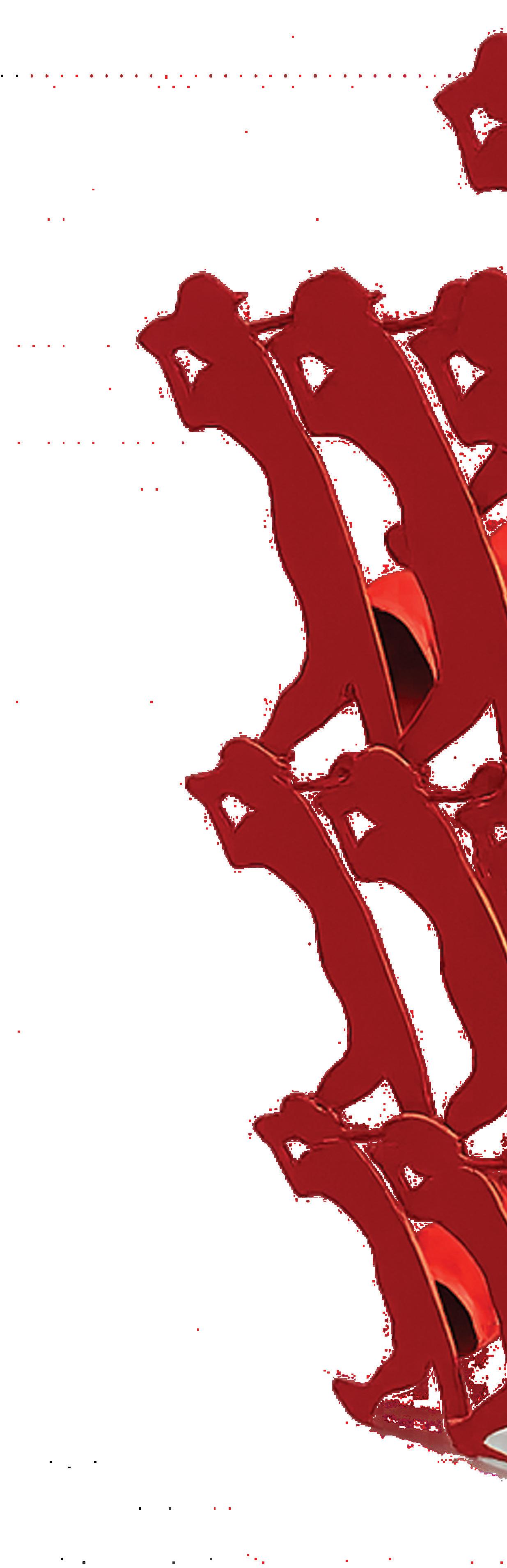
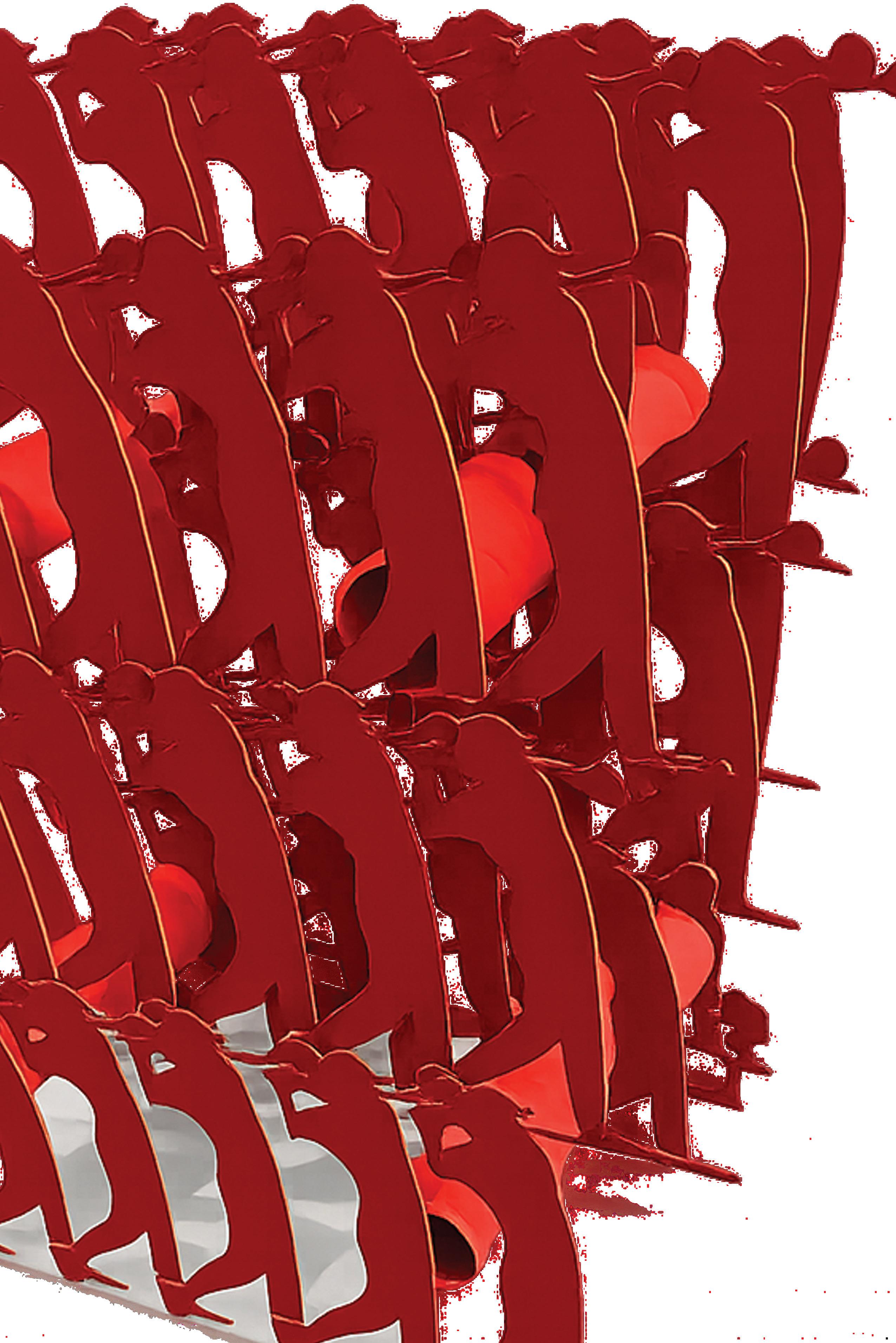
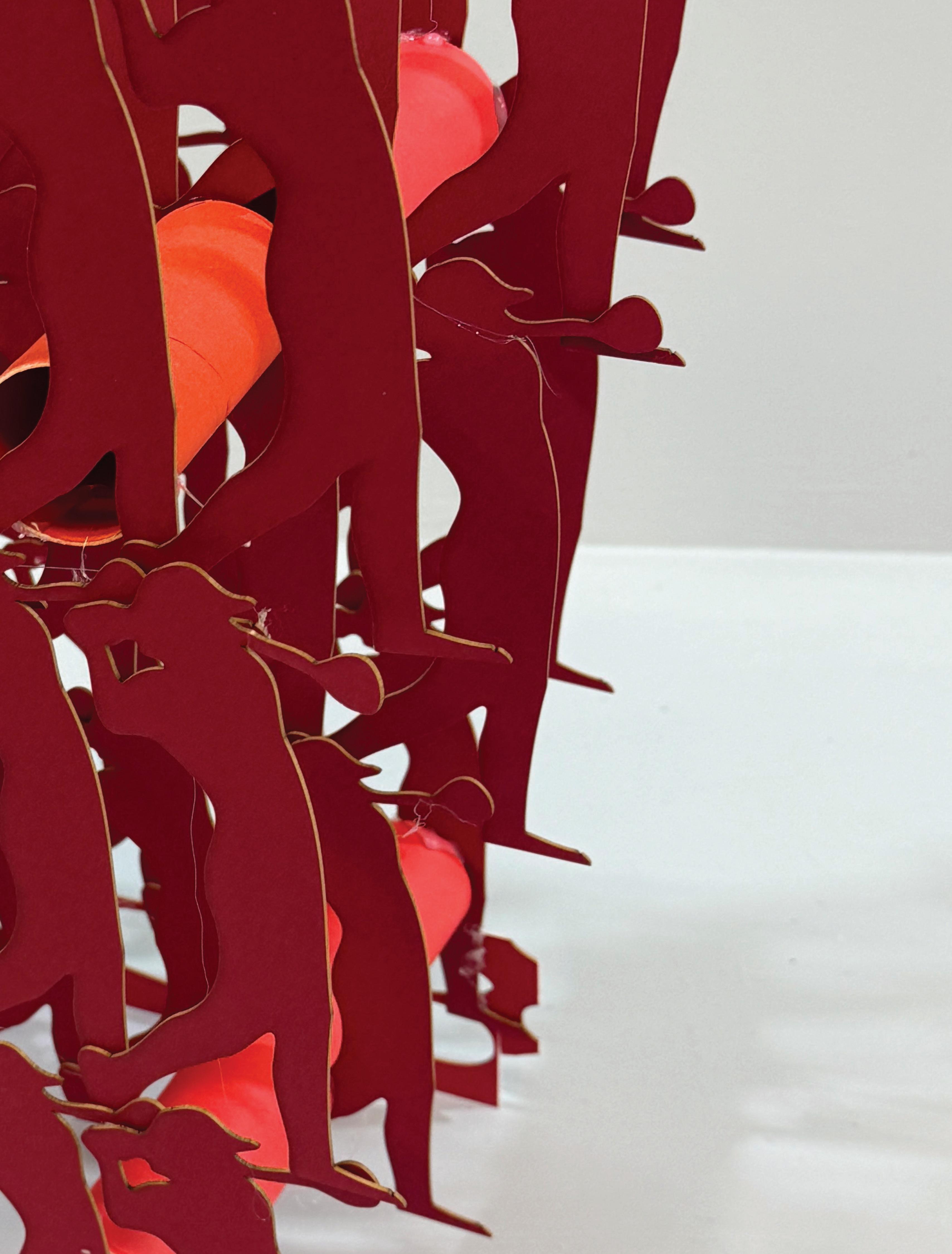
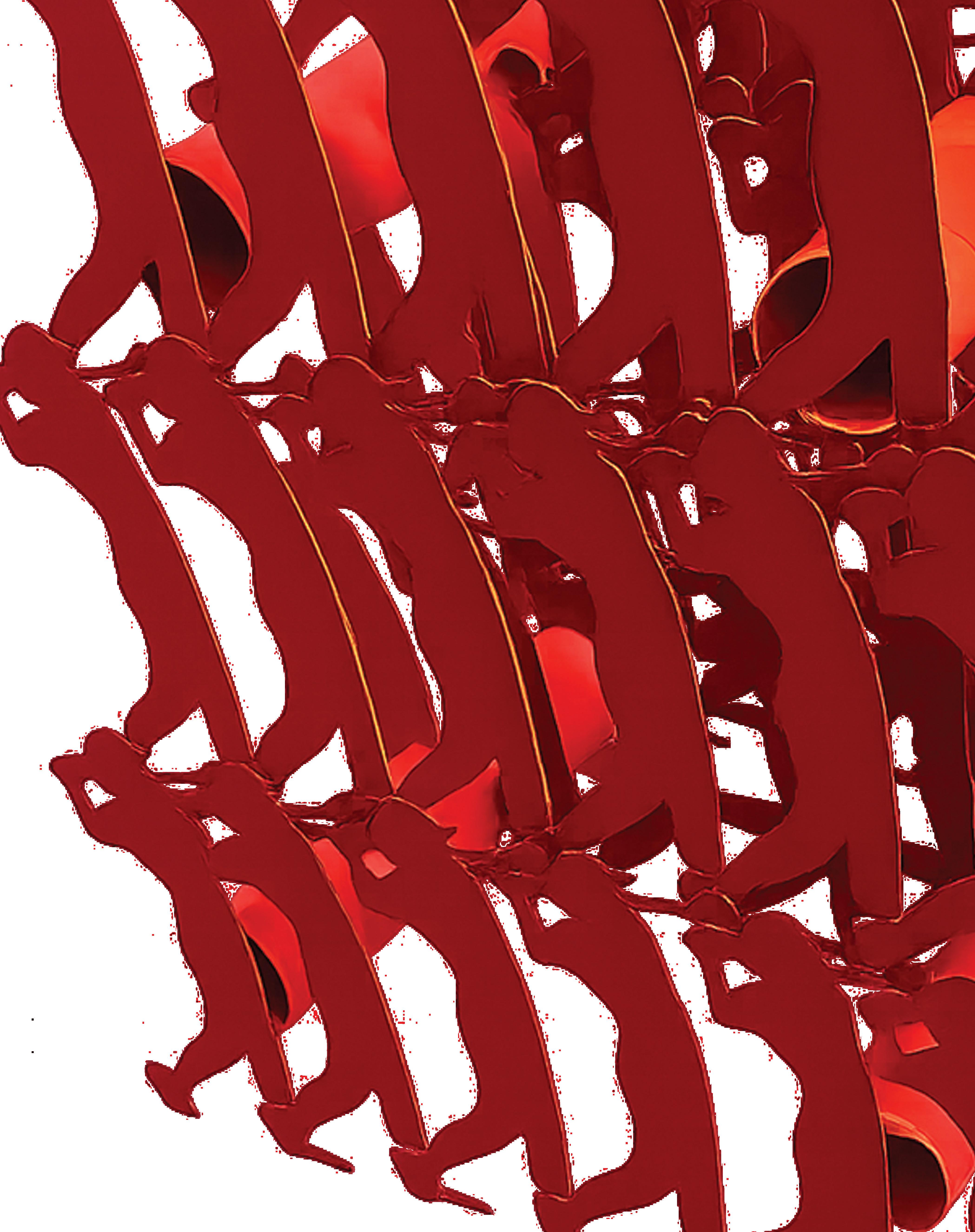
Endurance is the quiet force that sustains life through all circumstances. It is humanity’s ability to continue, create, and preserve meaning despite change, struggle, and the passage of time. Literature, in many ways, becomes the timeline of human history, a living testimony of emotions, ideas, cultures, and civilizations that endure across generations.


In this year’s magazine, we chose Endurance as our central theme because each piece reflects a unique voice, philosophy, style, and form. Through poetry, prose, reflections, and artistic expression, these works remind us that literature survives beyond borders and eras. It carries memory, identity, and hope forward, keeping human experiences alive through words.



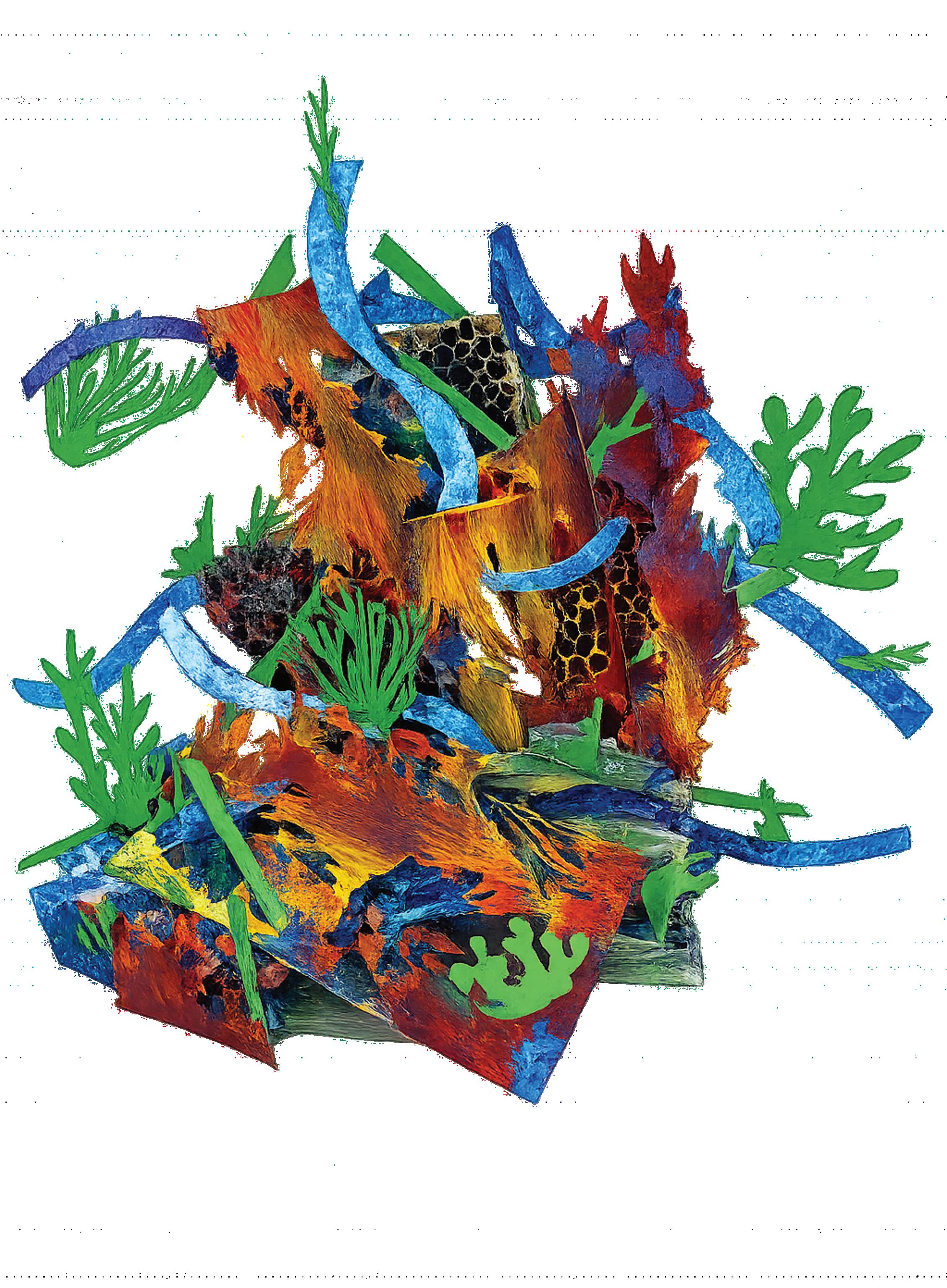

Celebrating a decade of publications, the theme for Babel’s 13th Volume, “Endurance,” celebrates the power of language and cultural fluency to endure through the human spirit.
Babel | 2026 | Volume No. 13 Brunswick School 100 Maher Avenue Greenwich, CT 06830 www.brunswickschool.org
BABEL, a Brunswick School literary magazine, presents the works of upper school students from Brunswick School and Greenwich Academy. The objective of Babel is to draw upon the diverse language skills of our student body to demonstrate the power of language to break down barriers and provide a gateway to better understanding the diverse cultures around us. Art is often paired with the literature presented to complement and enhance it. We believe that Babel is a testament to our students’ love of language, art, and culture.
First and foremost, the chief faculty advisers, Ms. Mimi Melkonian and Dr. Nicholas Salazar, wish to thank Mr. Thomas W. Philip, Brunswick’s overall Head of School and also Head of Brunswick’s Upper School, both for his gracious permission to launch Babel literary magazine so many years ago and for his continued support of the magazine. We also thank Mrs. Erin Withstandley and the teachers of the language department for their unwavering encouragement, support, and promotion of this literary magazine as well as Mr. Andrew Hall and the teachers of the art department for their creative support. Finally, we thank our student contributors who have all been integral in the creation of this edition of Babel.
From the Columbia University Scholastic Press Association
Gold Crown: 2017, 2023, 2024, 2025

Silver Crown: 2015, 2016, 2020
Gold Medal: 2014-2024
All-Columbian-Honor: 2015, 2016, 2019, 2020, 2025



This year’s editorial staff consisted of 39 student contributors and three faculty advisers from Brunswick School. The literary editor of Babel reviews each submission for quality and accuracy. Pieces are ultimately selected based on general quality, the accuracy of translations, and the creativity of original works. Students and faculty work together on editing and modifying the content of the Babel literary magazine. Each student contributor is tasked with certain parts of the magazine, such as editing literary pieces and formatting.

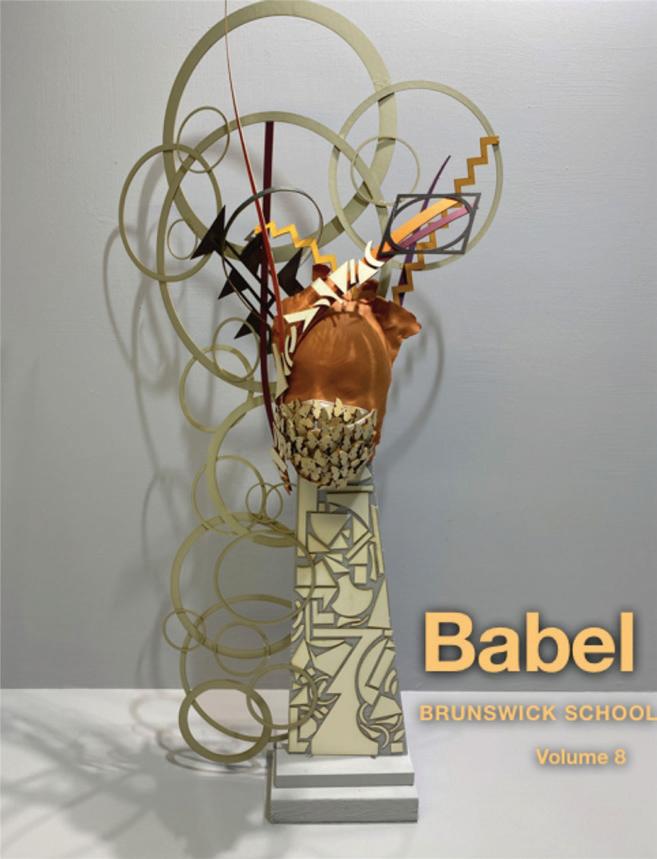
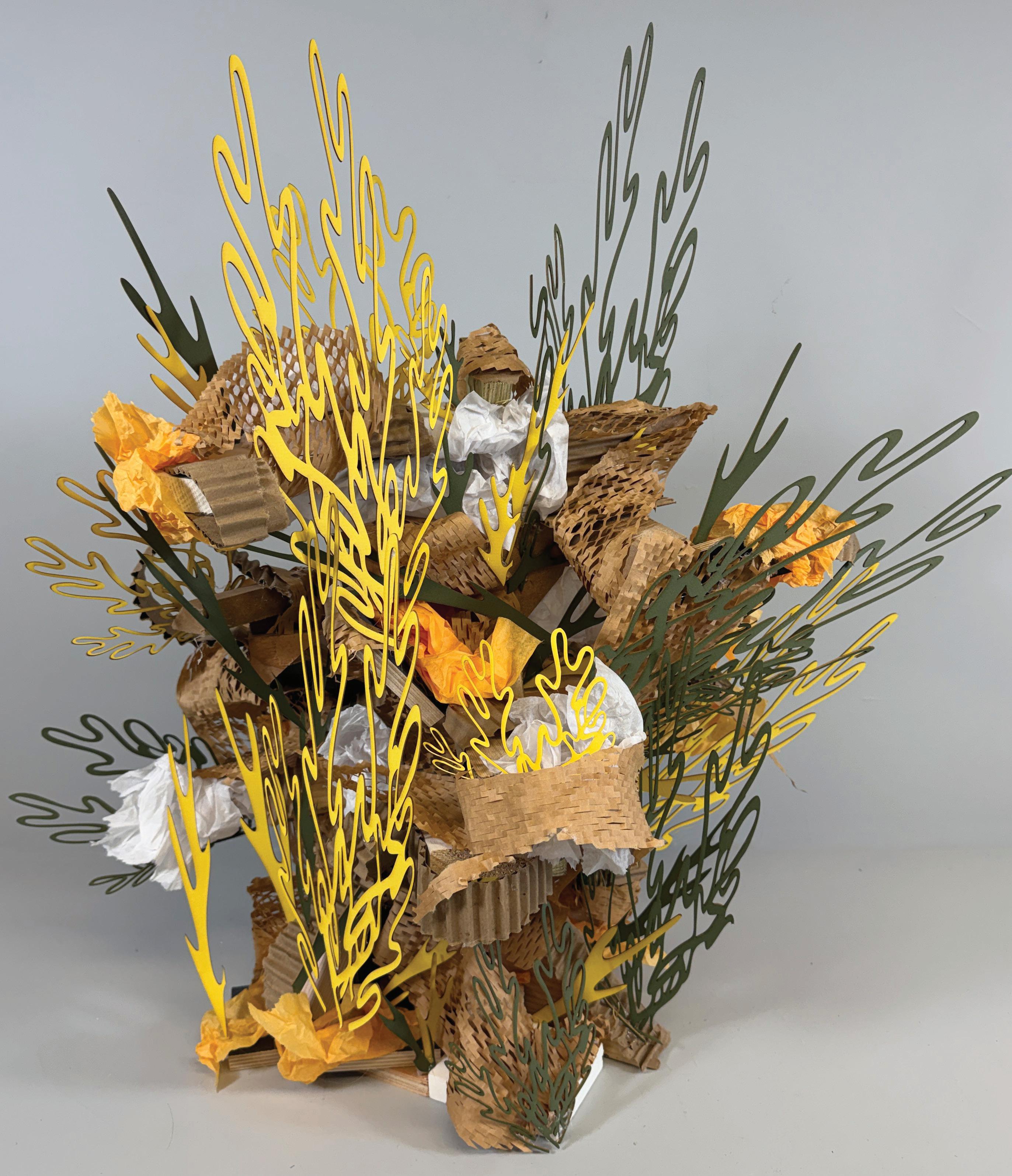
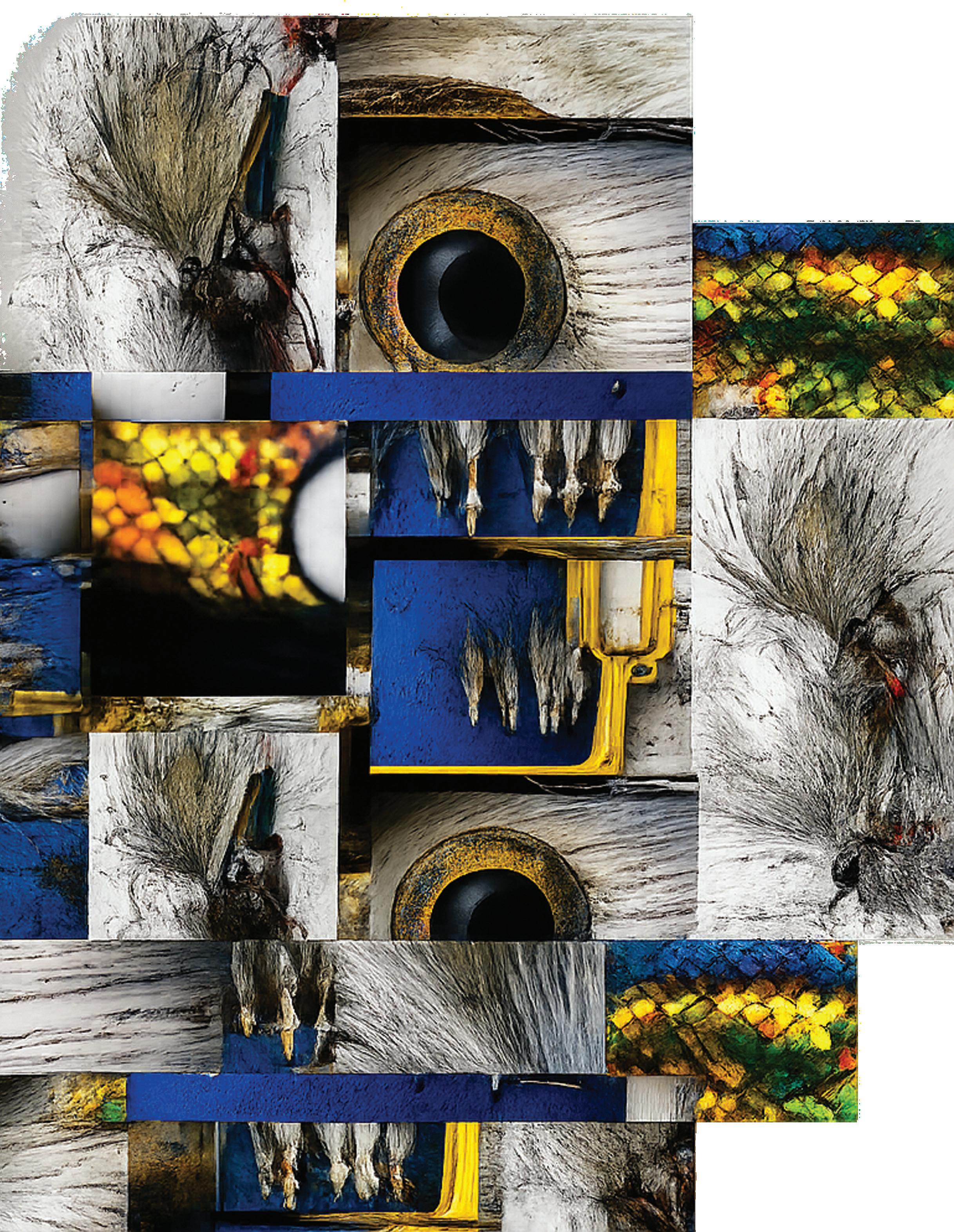
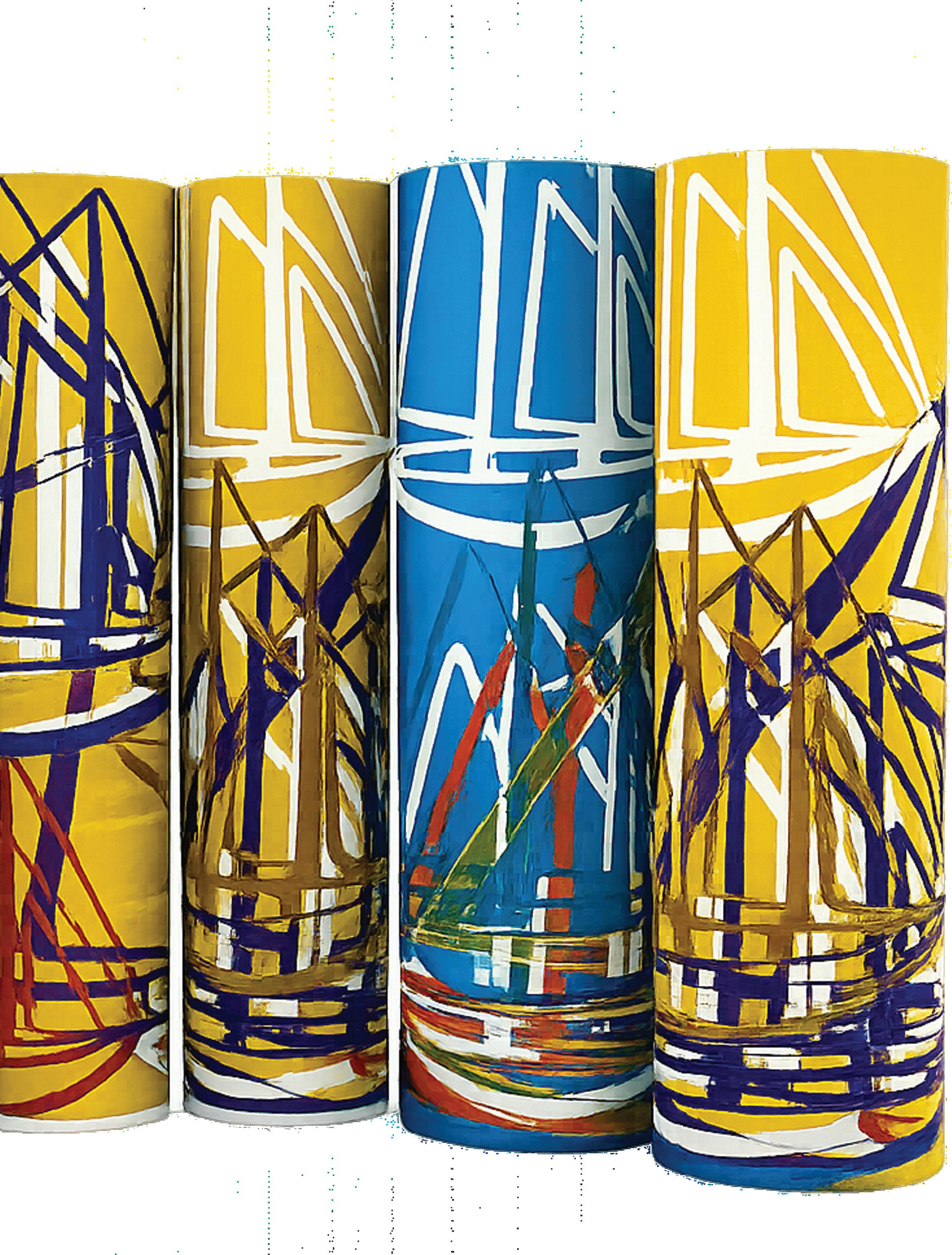
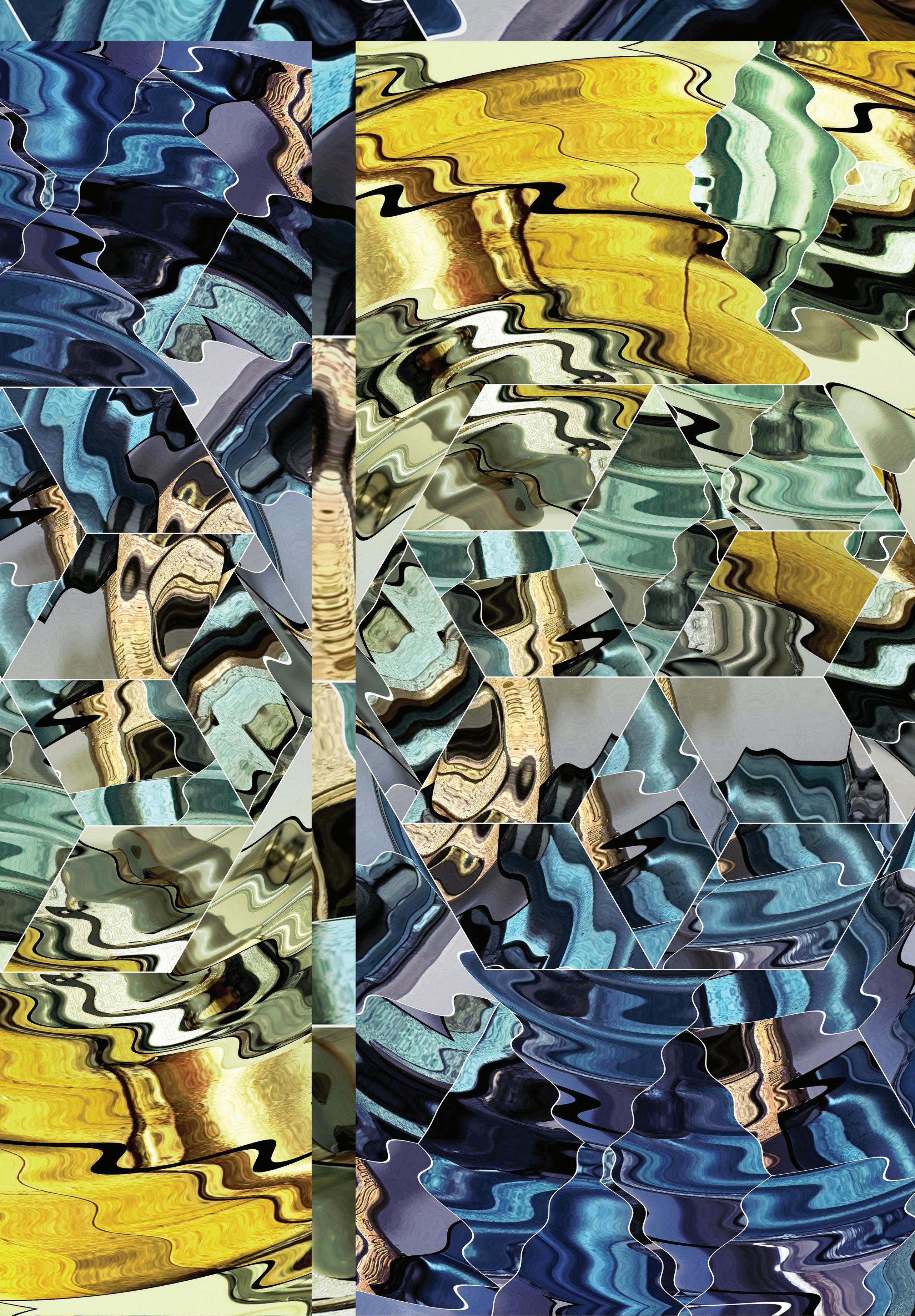
Volume XIII consists of 20 student submissions of literature and 24 submissions of original art. Literature and art are paired according to relevance. The cover art is the work of Ella Fessenden ’27. Her piece was designed for this year’s theme, “Endurance.” Importantly, the layout and graphic design for Babel are completely created by the students and do not rely on outside sources.
Furthermore, Brunswick School does not offer a journalism program and therefore students must find time outside of their busy academic, athletic, and club commitments to work on the magazine.
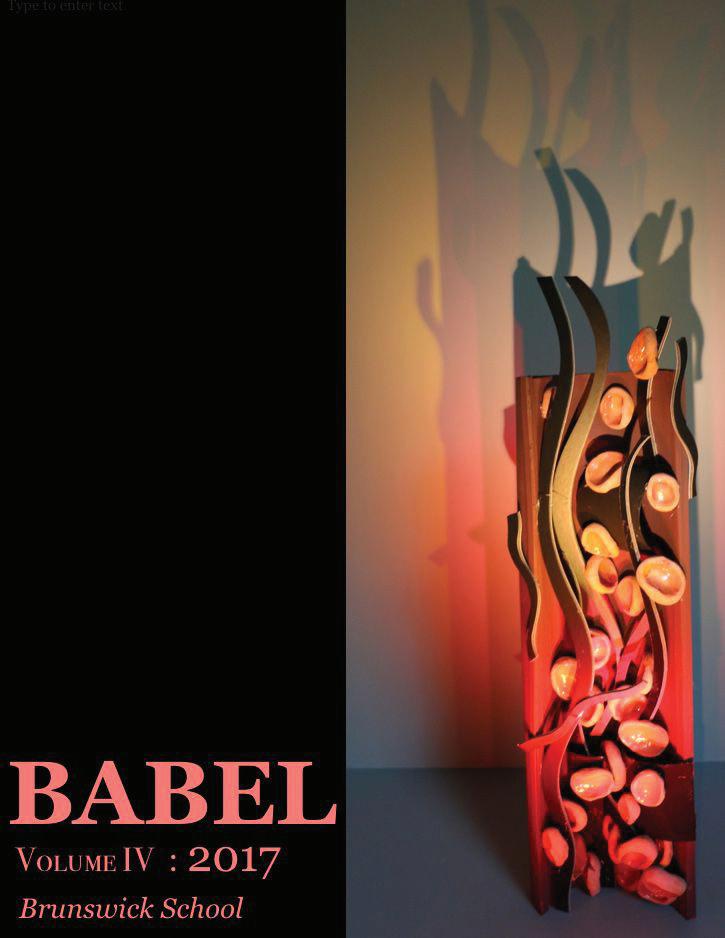
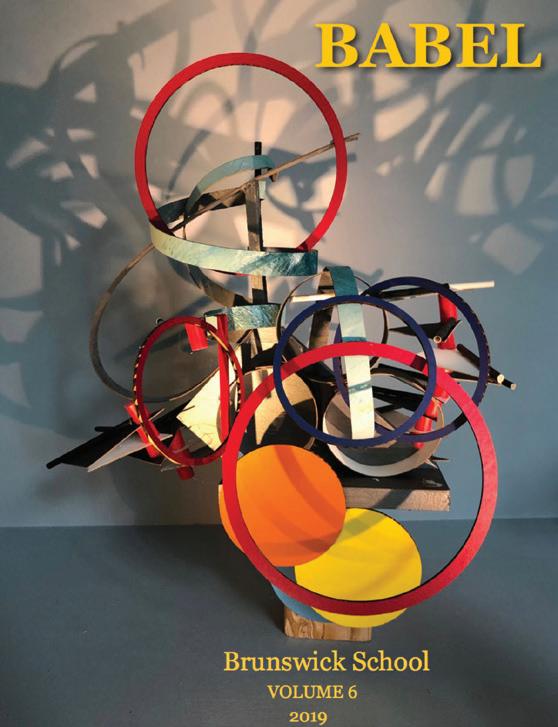
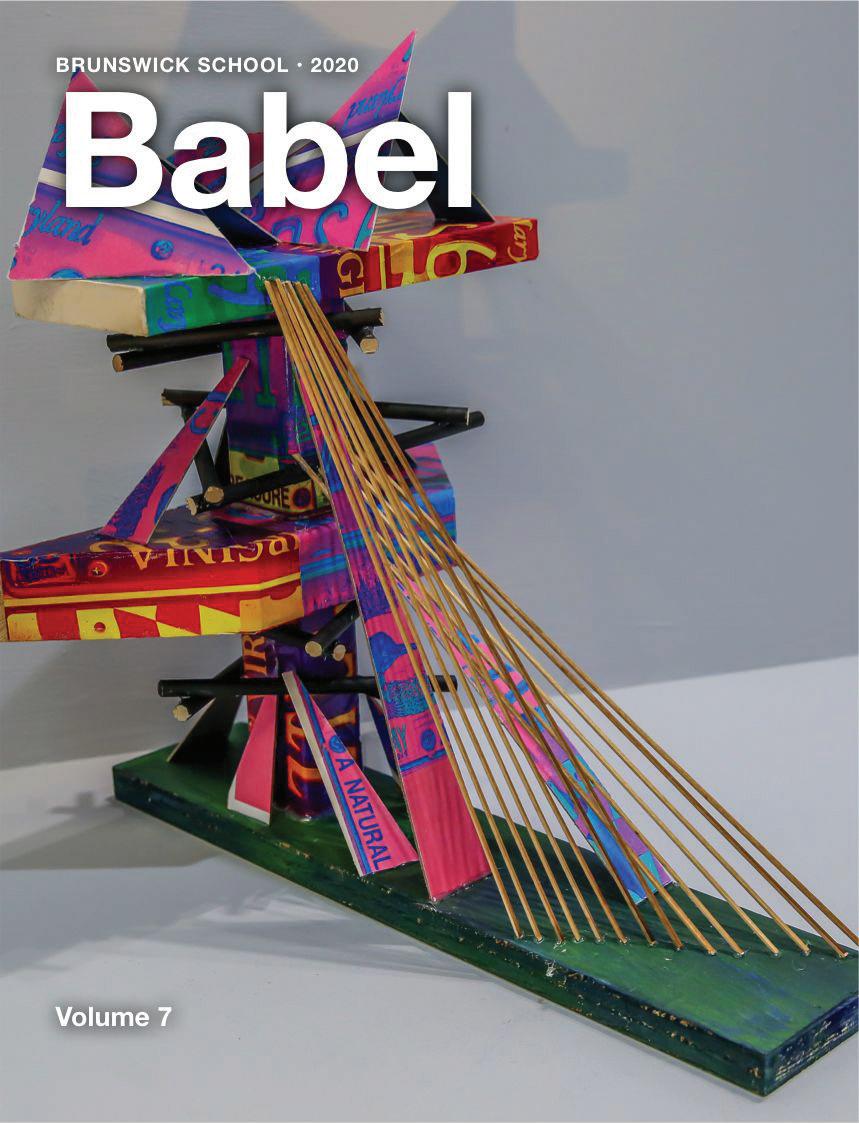
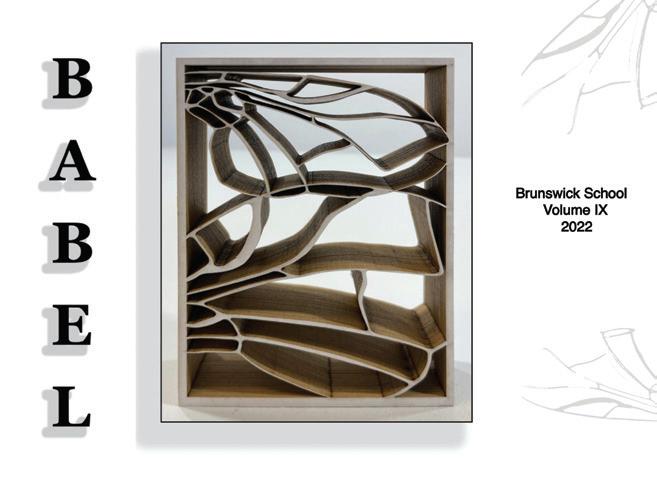
The 2025-2026 editorial staff of Babel literary magazine created Volume XIII using InDesign, Pink Mesh Magazine Layout. Zaslia and Minion Pro fonts were primarily used for the body of the text. Volume X, XI, and XII were also published using InDesign. Volume IX was published in Pages (Apple), and Volumes I-VIII in iBooks electronic format, which can be viewed on Apple computers and devices.
Volume XIII was printed on 80 pound Blazer Silk stock with 100 Blazer Silk stock for the cover. Distribution of the publication is free. The content of Babel literary magazine is protected by applicable copyright laws.
EDITOR-IN-CHIEF & DESIGN HEAD
Ryan Kaseta ’27
MANAGING EDITORS
Max Colella ’26
Peter Salame ’28
ASSISTANT EDTIORS
Armaan Lakhani ’27
Reed Keller ’28
ART EDTIORS
Robin Prince ’28
Marco Leao ’27
Jake Vahabzadeh ’27
LANGUAGE AMBASSADORS
Bryan Dean ’26 - Italian
Peter Salame ’28 - Greek
John Landers ’27 - Latin
Henry Mayerfield ’26 - Arabic
Ryan Kaseta ’27 - Spanish
Harry Saunders ’27 - Chinese
Conlan Bailey ’27 - French
FACULTY ADVISORS
Mimi Melkonian
Nicholas Salazar
Andrew Hall
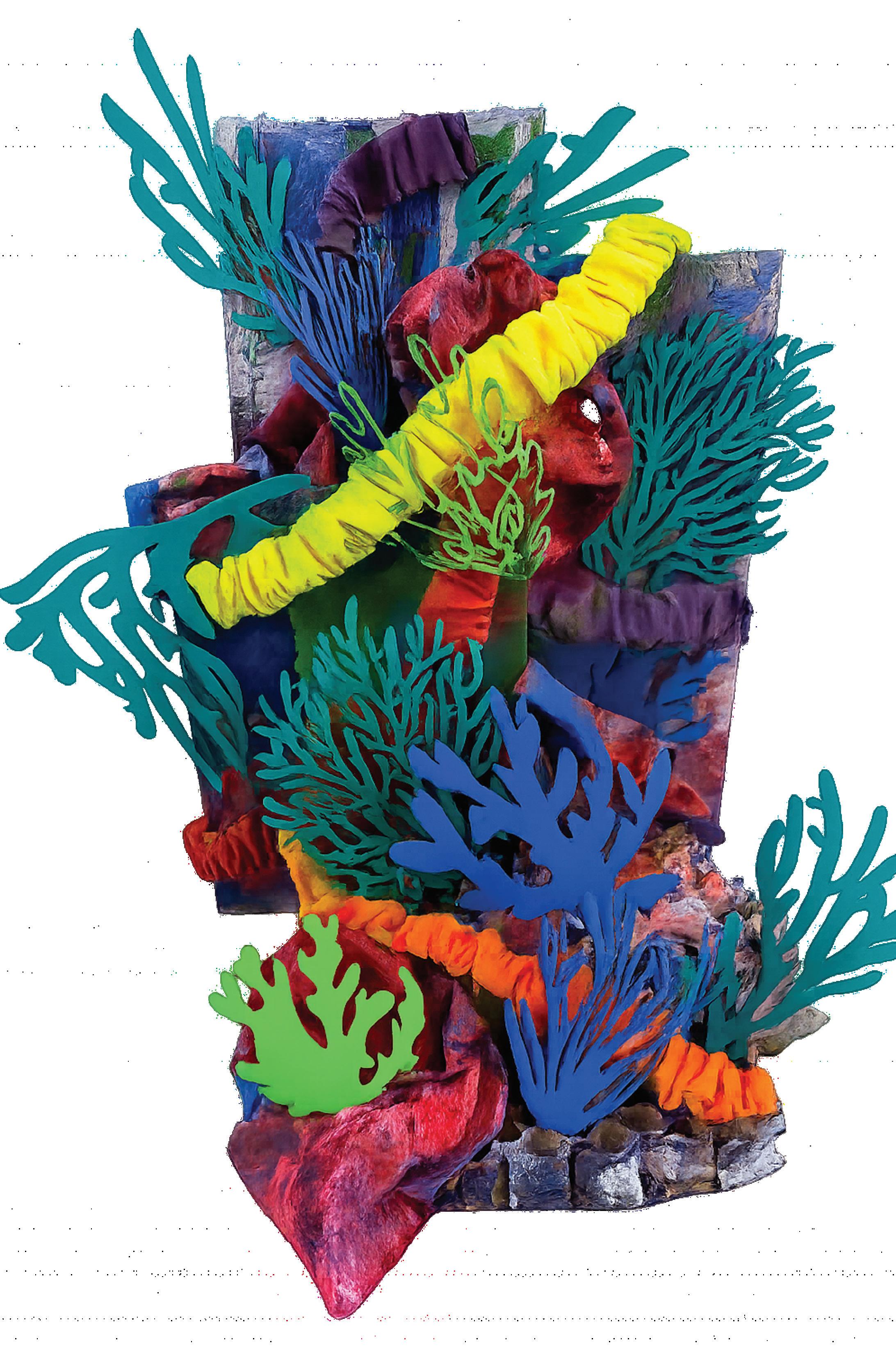








So, Simonides spoke... We think to ourselves with our whole bodies; cold, heat, hardness, softness, lightness, and heaviness, and we judge the feelings of pleasure and pain in themselves, and we think that we enjoy in good and bad things through the body itself, while in other times we feel pain through the soul itself and sometimes in combination with both soul and the body we feel.

In sleep, whatever we enjoy, I think I perceive to myself, but I do not understand, how in what way, and when these things come about, he said. This is in no way amazing, perhaps, if while being awake, the perceptions provided to us are clearer than the perceptions provided in sleep.


Section 1 • Original Work By Henry Mayerfield ’26
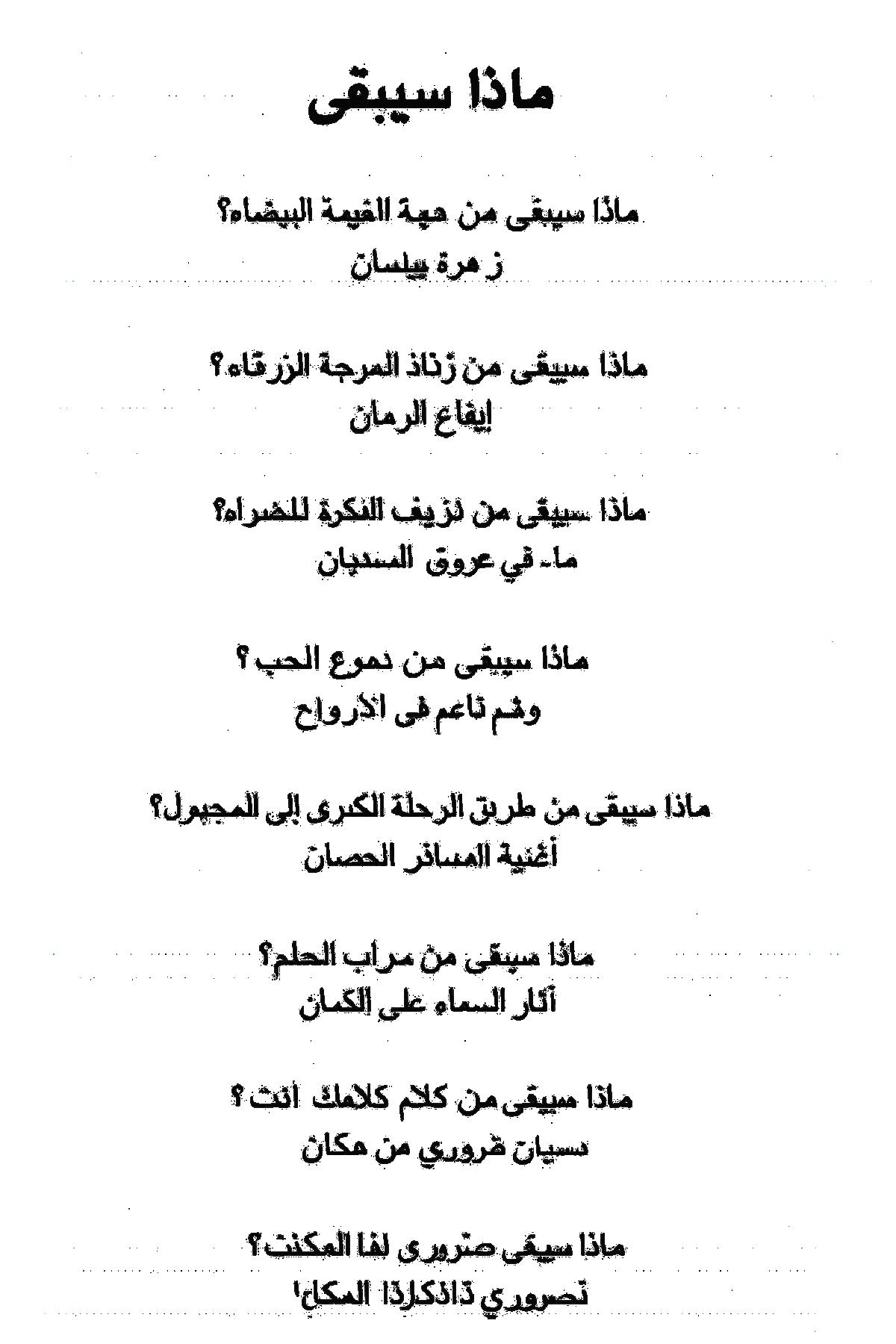
What will remain of the white cloud’s offering? An elderberry blossom.
What will remain of the blue wave’s drizzle? The cadence of time.
What will remain of the hemorrhage of a green idea? Water in the holm oak veins.
What will remain of the tears of love? A soft tattoo in violet.
What will remain of the dust searching for a meaning? The path of ardor.
What will remain of the road of the great journey to the unknown? The traveler’s song to the horse.
What will remain of the thing meeting with nothing? Divinity’s sense of security.
What will remain of the Arabic poet’s speech? A chasm…and a thread of smoke.
What will remain of your own speech? A necessary forgetfulness of the memory of place!
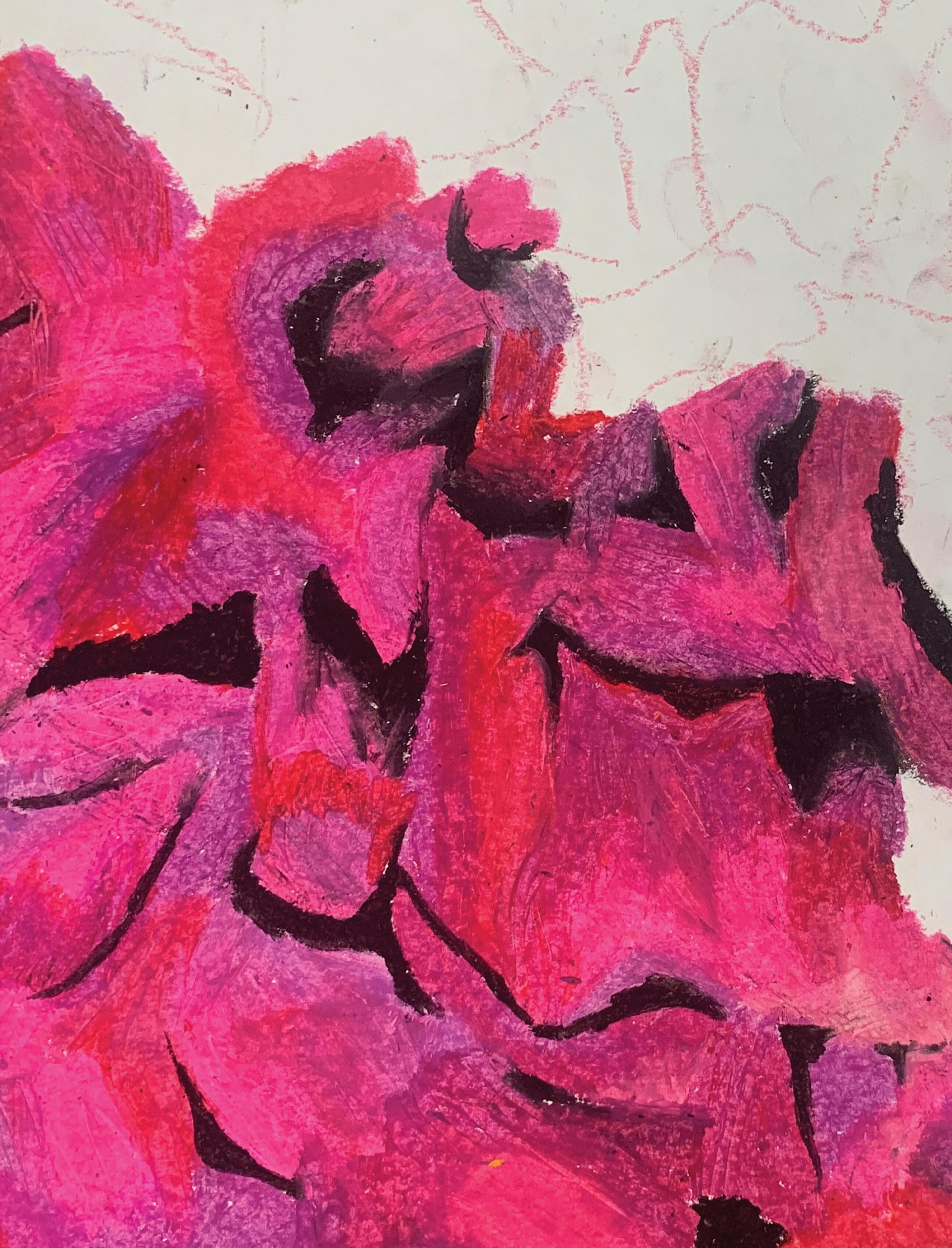
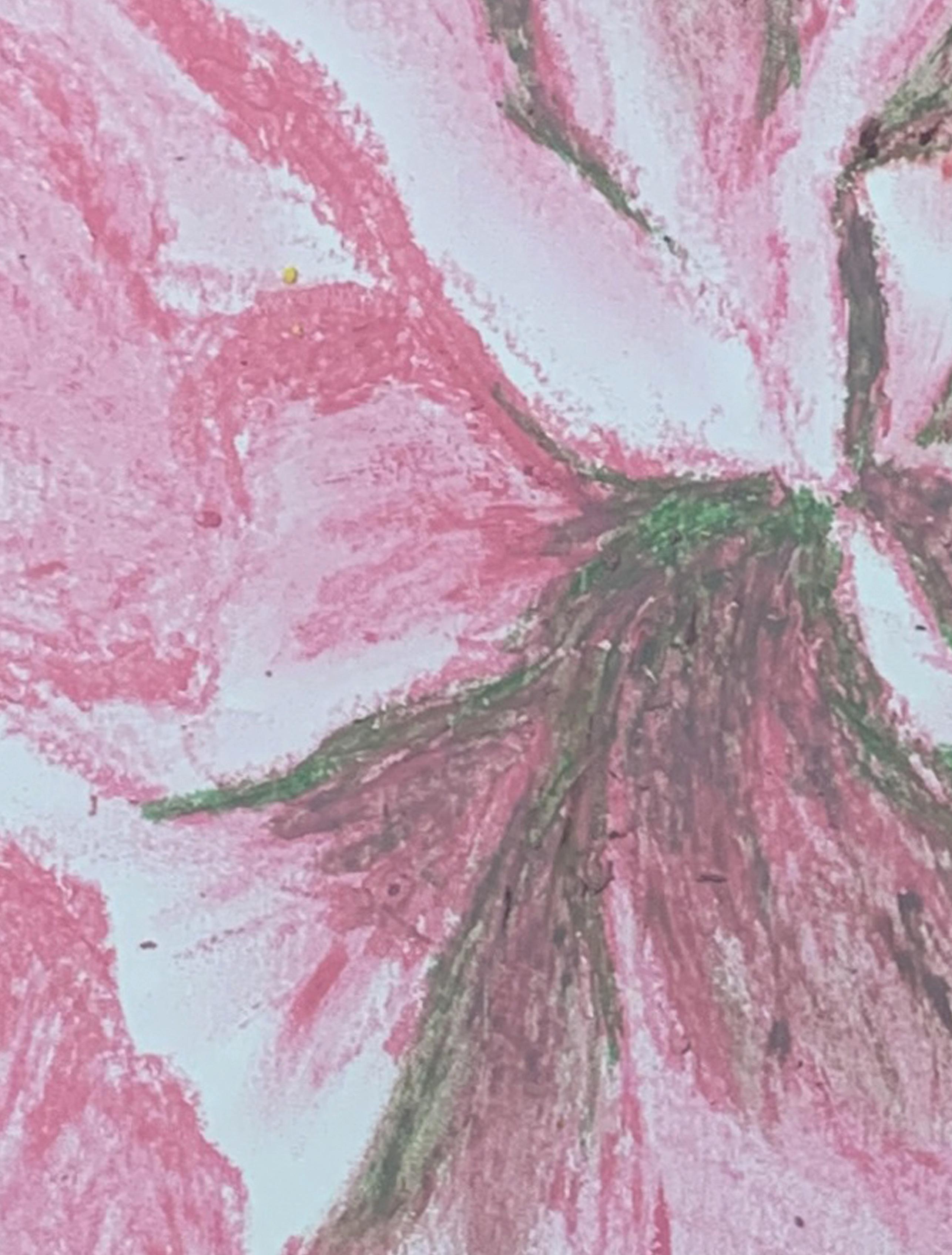
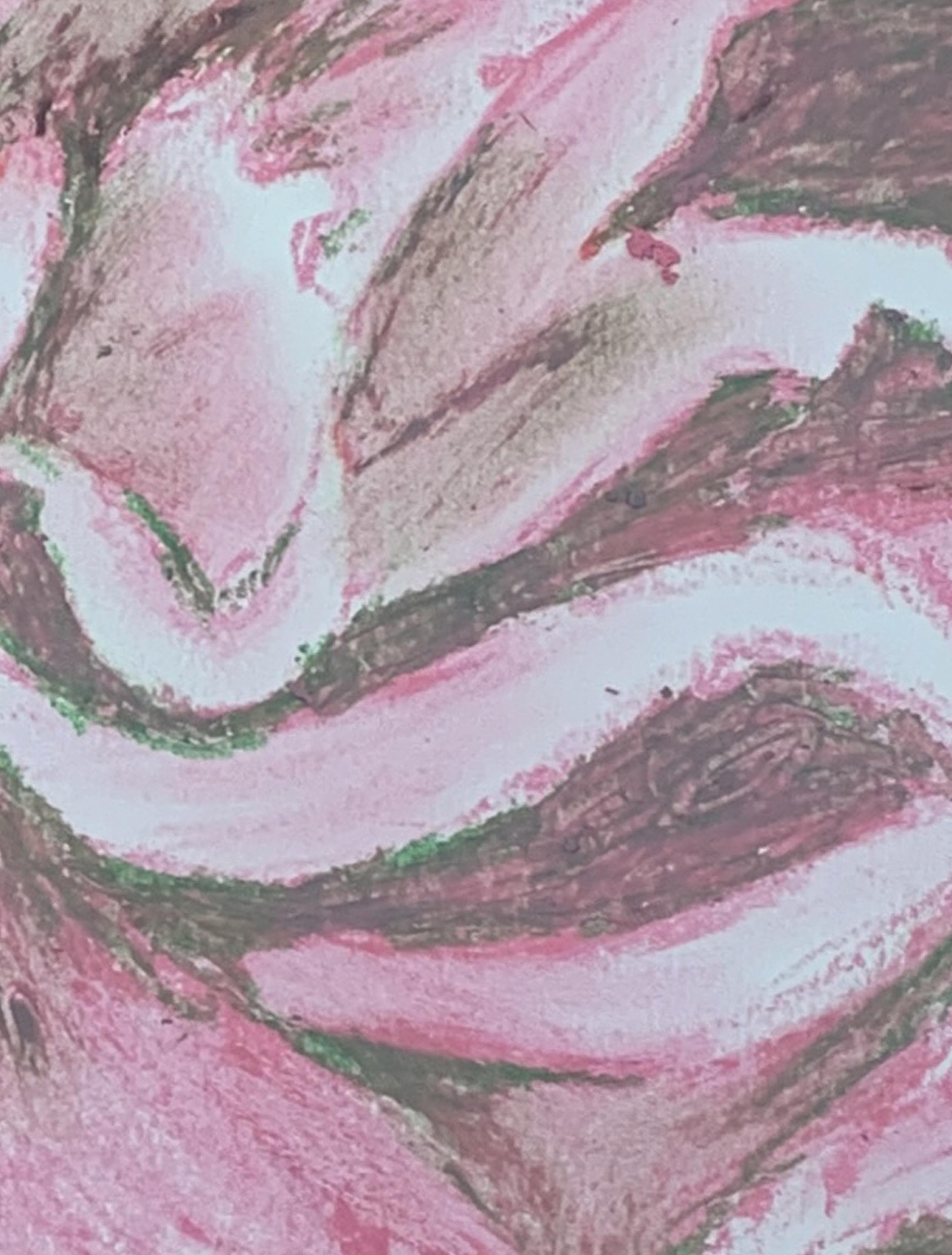
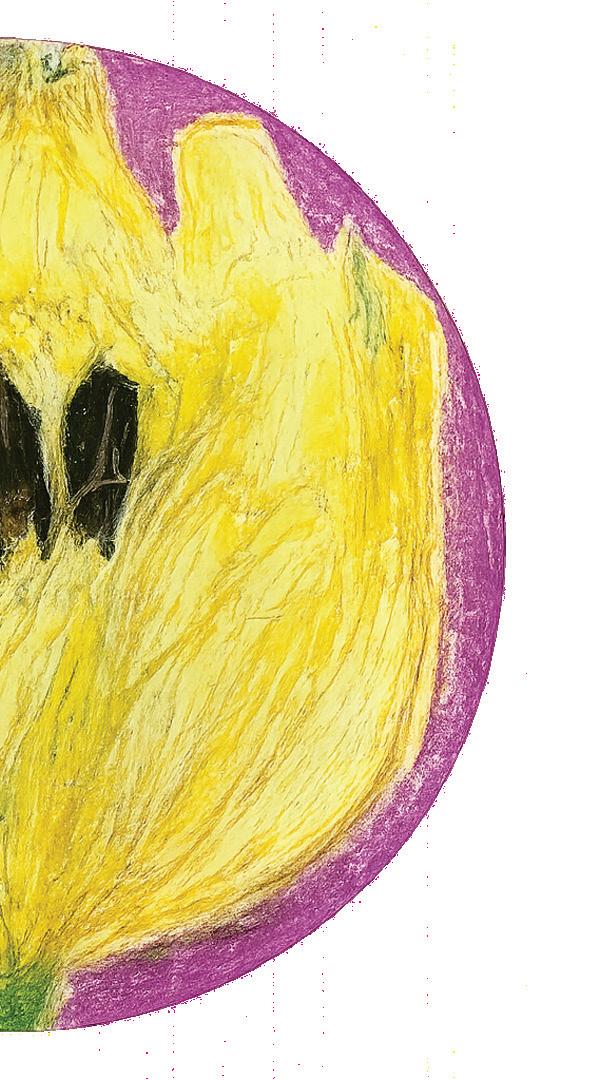
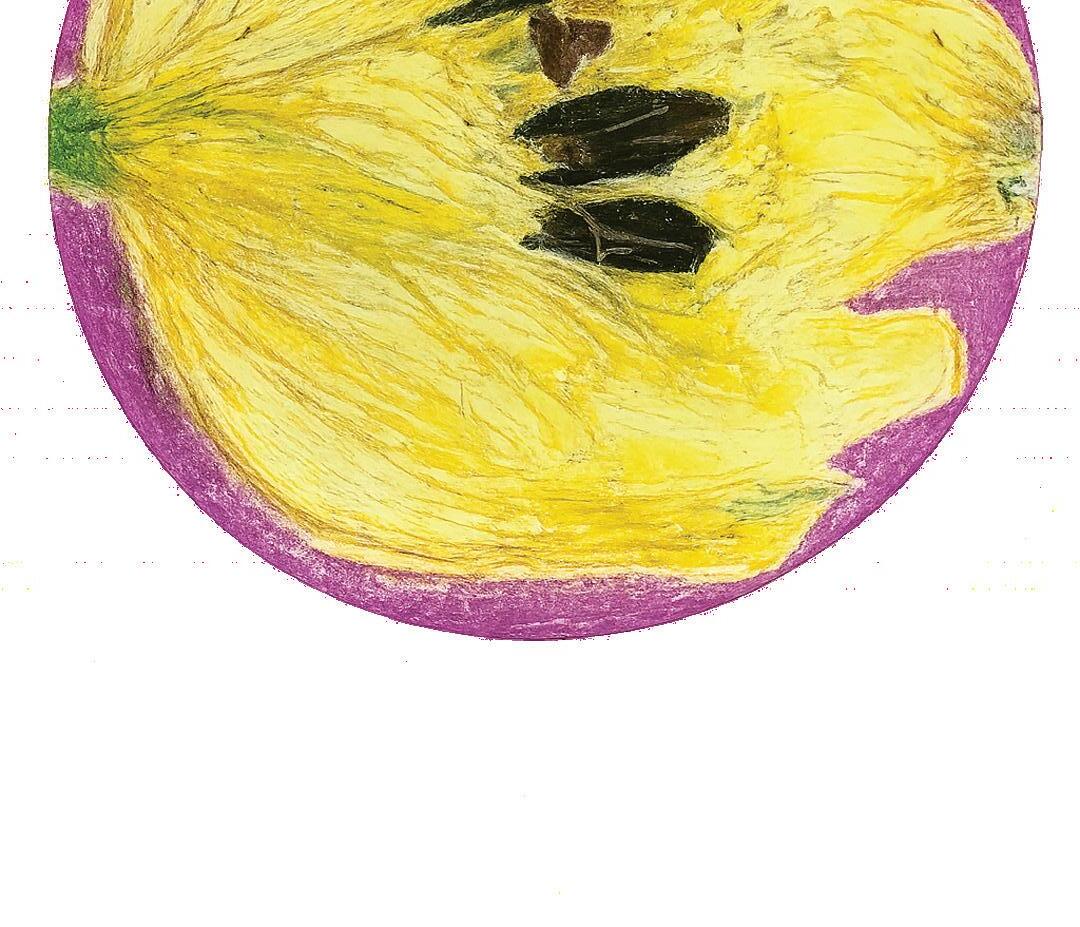
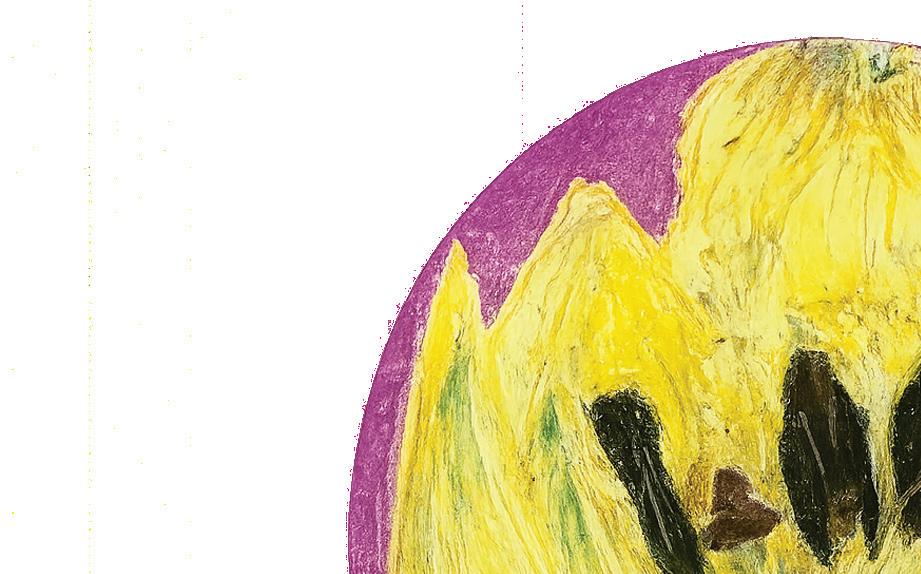
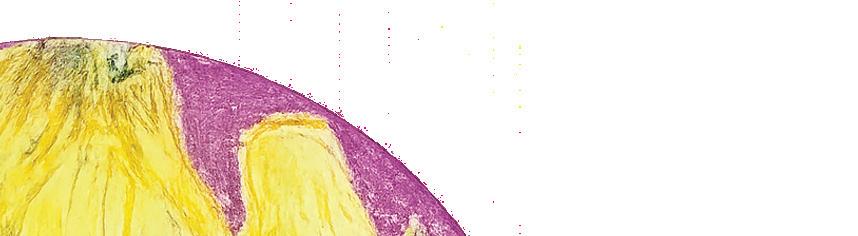
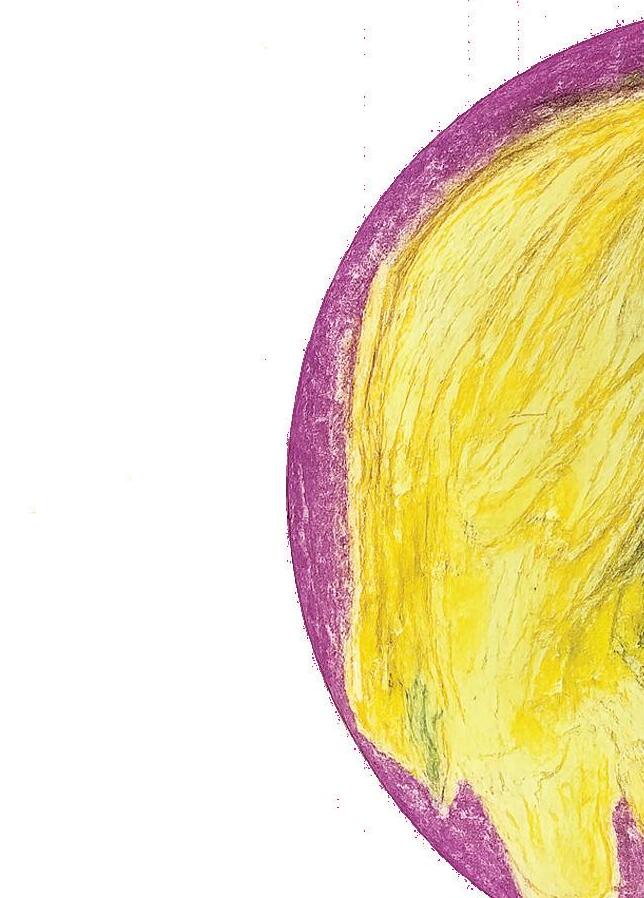
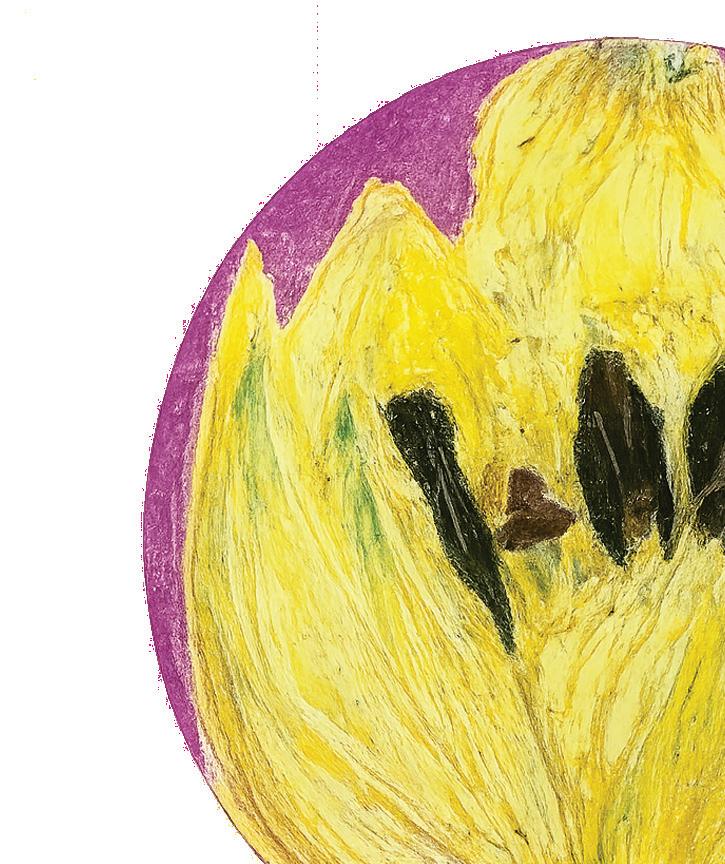
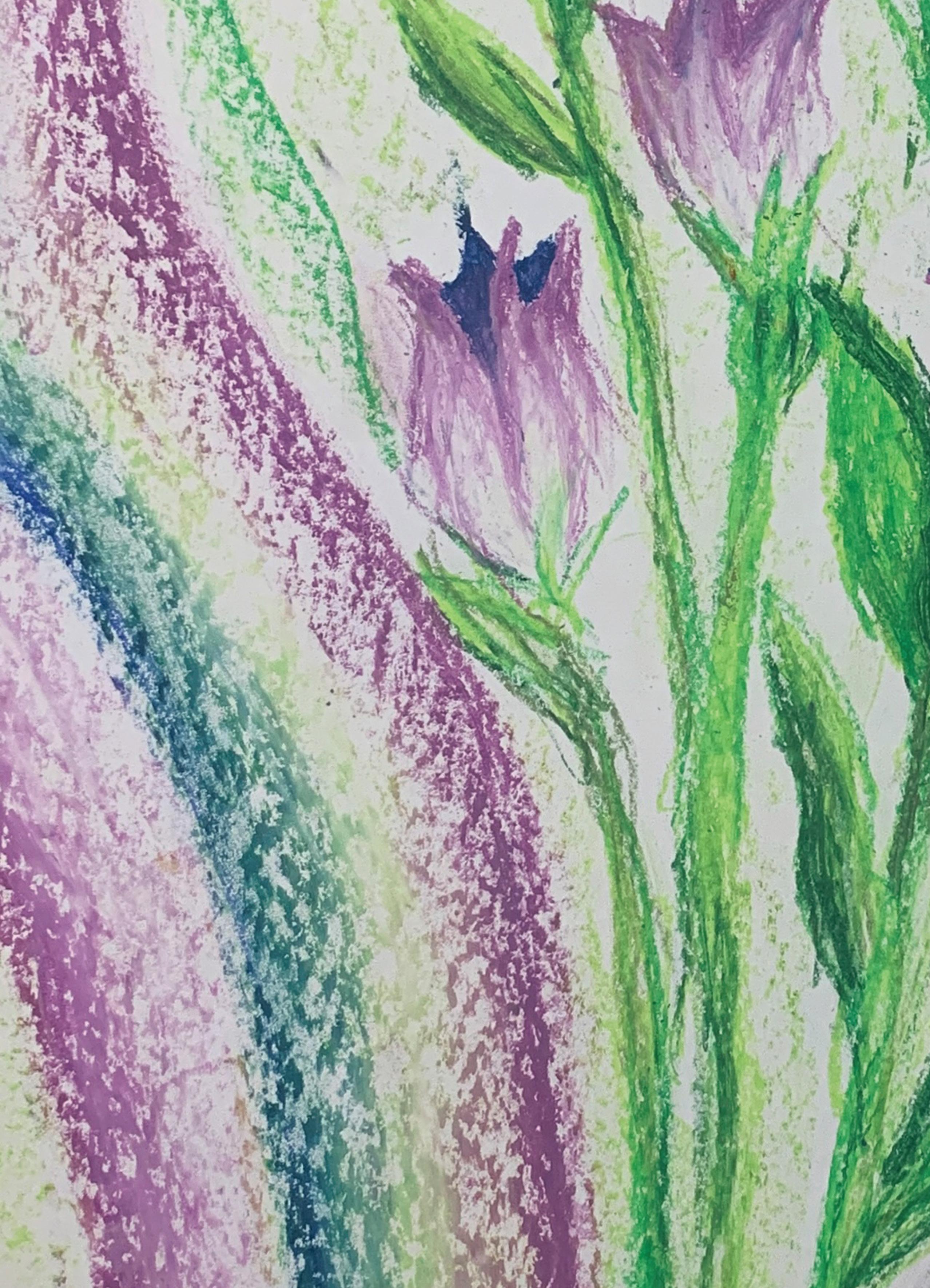
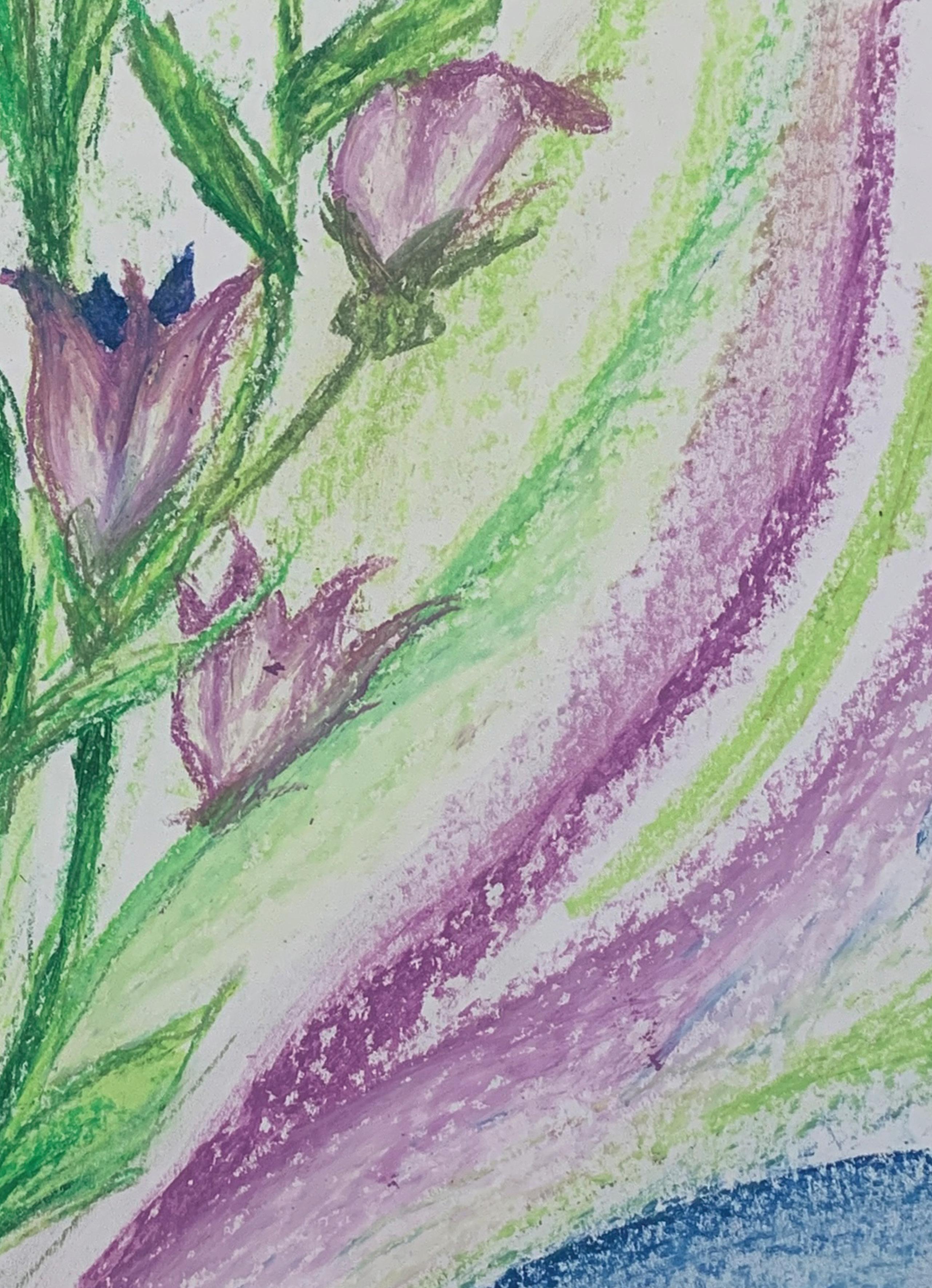
Claire Ji ’29 / Veins of a Flower / Pencils and pastels
2 • Translation By Olivia Salerno ’26
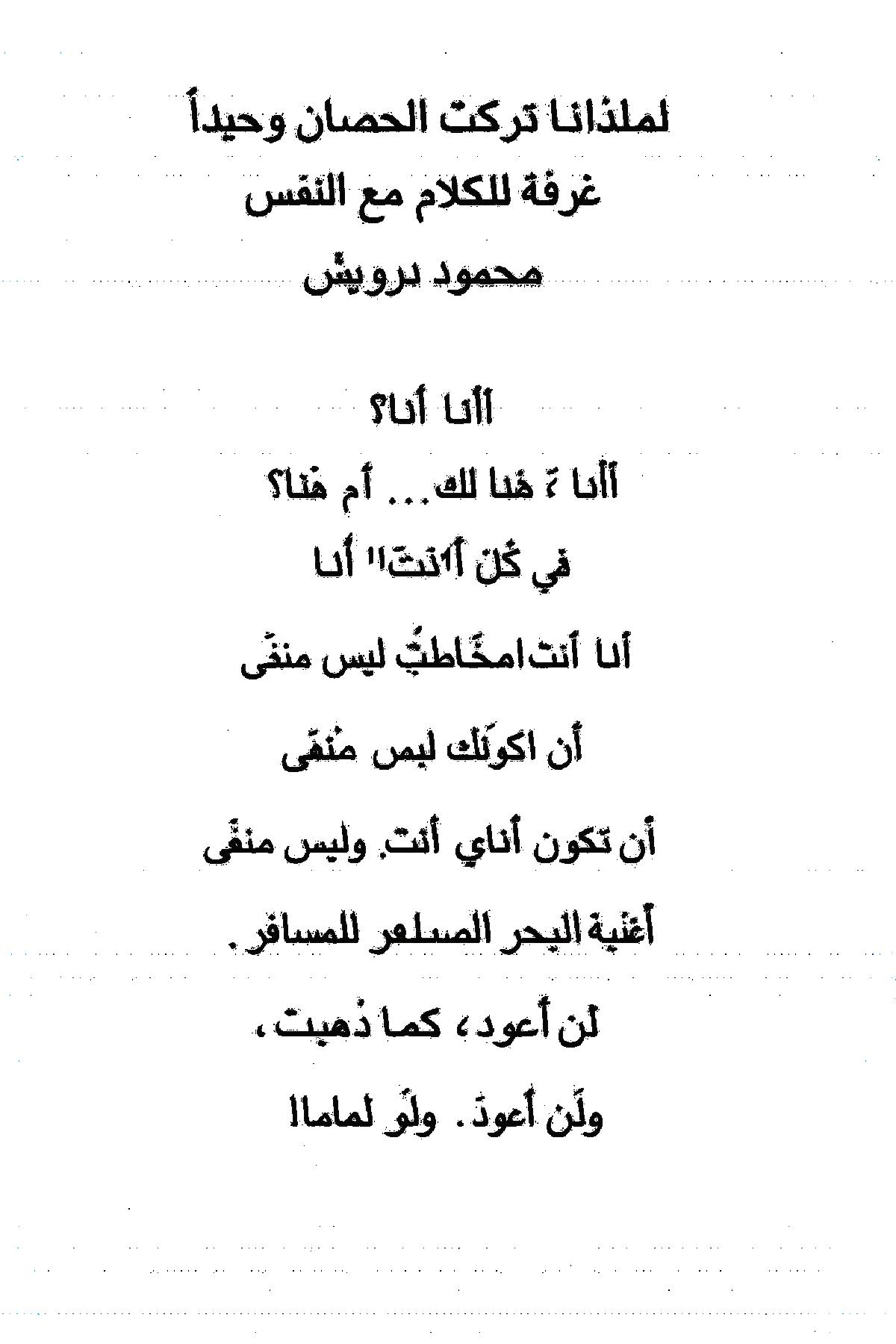
Am I really me?
Am I here for you… Or just here?
In every “you,” there is a piece of me,
I am the you being spoken to, it is not exile
To become you. It is not exile
For me to be you. And it is not exile
For the sea and the desert to be
The song of the traveler to the traveler:
I shall not return, as I went
And I shall not return… not even briefly.

林立德
方程都不懂
动力没有想放弃
我应该加油
每每在夜里
看着笔记本电脑
我一片空白
但是有一天,
物理对我眨眨眼
心里放松了
最后,我明白
能解各种的方程.
我爱物理课
I understand none of the equations, I have no motivation and want to give up, and I should work harder.
Every night, I stare at my notes and computer, I’m blanking out.
But one day, Physics winked I relaxed in Finally, I understood. I can solve all kinds of equations. I love physics.
La loyauté et l’honnêteté sont, pour moi, les plus grandes qualités qu’une personne puisse avoir. La musique et le cinéma me semblent être les formes d’art les plus belles. Le genre de musique préféré d’une personne en dit long sur qui elle est. Il y a quelque chose de profondément beau dans la neige et le froid. La nature et les montagnes sont les seuls endroits où l’on peut trouver une véritable paix pour l’âme. Tout le monde mérite des occasions.
Les jeux vidéo possèdent une vraie beauté et peuvent enseigner des leçons importantes. Les longs trajets en voiture, qui durent des heures, ont pour moi une valeur particulière. Le bonheur et la paix comptent infiniment plus que l’argent. Faire la grasse matinée le week-end fait partie des plaisirs simples de la vie. La randonnée et l’exploration de la nature sont, selon moi, les meilleures formes d’exercice.
Les gens sont capables de changer, et chacun mérite une deuxième chance. Chacun a droit à ses propres opinions, et tous méritent l’égalité. La vie peut être terrible, mais en même temps, elle est incroyable.
Pour chaque problème dans la vie, il existe plusieurs solutions qui attendent d’être découvertes. Les actions les plus spontanées deviennent souvent les meilleures décisions. L’échec est une expérience que tout le monde doit vivre, car il constitue l’un des chemins les plus importants vers le succès.
Loyalty and honesty are, to me, the greatest qualities a person can have. Music and cinema seem to be the most beautiful forms of art. A person’s favorite genre of music says a lot about who they are. There is something deeply beautiful about snow and the cold. Nature and the mountains are the only places where one can find true peace for the soul. Everyone deserves opportunities.
Video games possess a true beauty and can teach important lessons. Long car rides that last for hours hold a special value for me. Happiness and peace matter infinitely more than money. Sleeping in on weekends is one of life’s simple pleasures. Hiking and exploring nature are, in my view, the best forms of exercise.
People are capable of change, and everyone deserves a second chance. Everyone has the right to their own opinions, and all deserve equality. Life can be terrible, but at the same time, it is incredible. For every problem in life, there are multiple solutions waiting to be discovered. The most spontaneous actions often become the best decisions. Failure is an experience everyone must go through, because it is one of the most important paths to success.
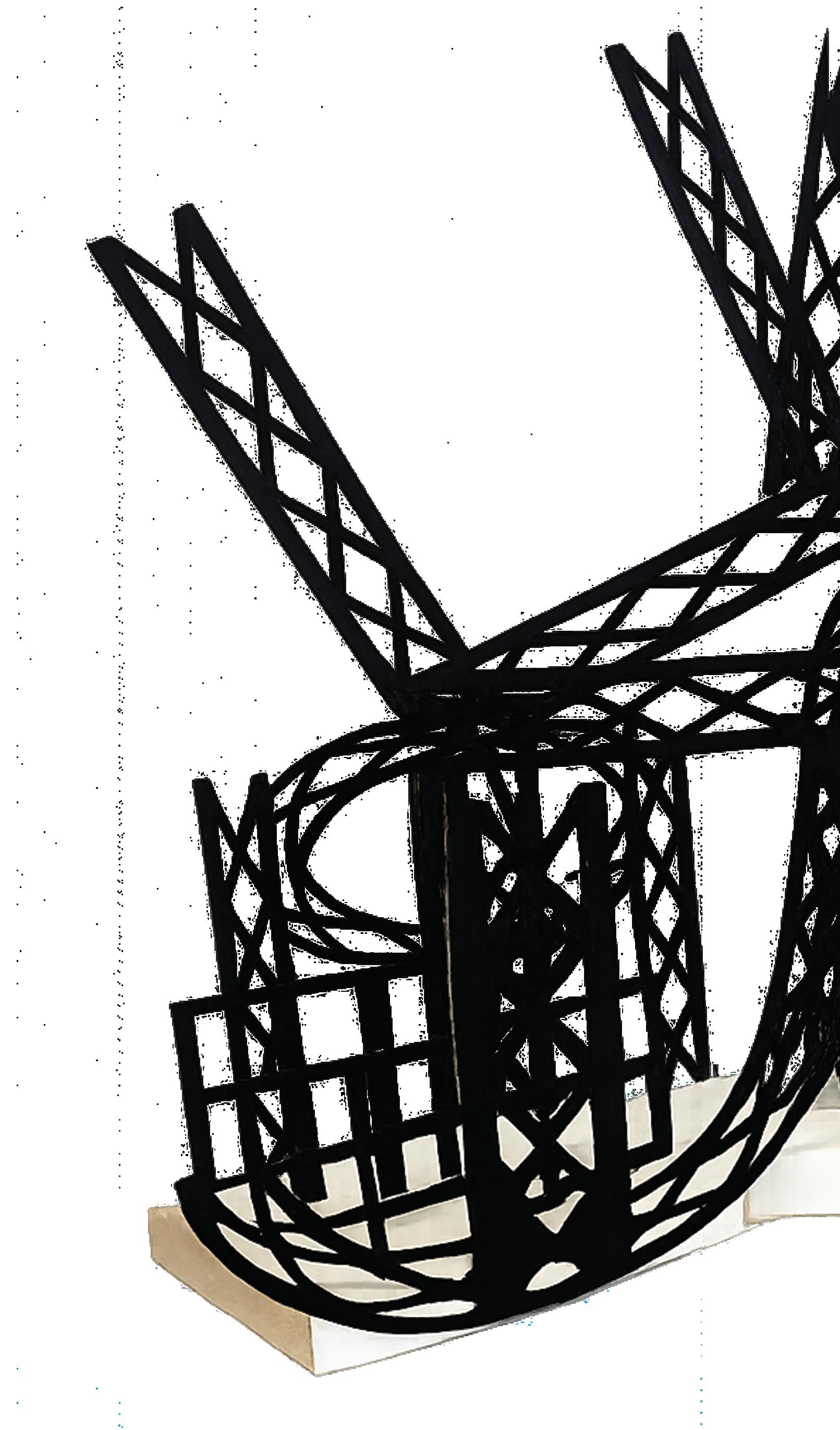
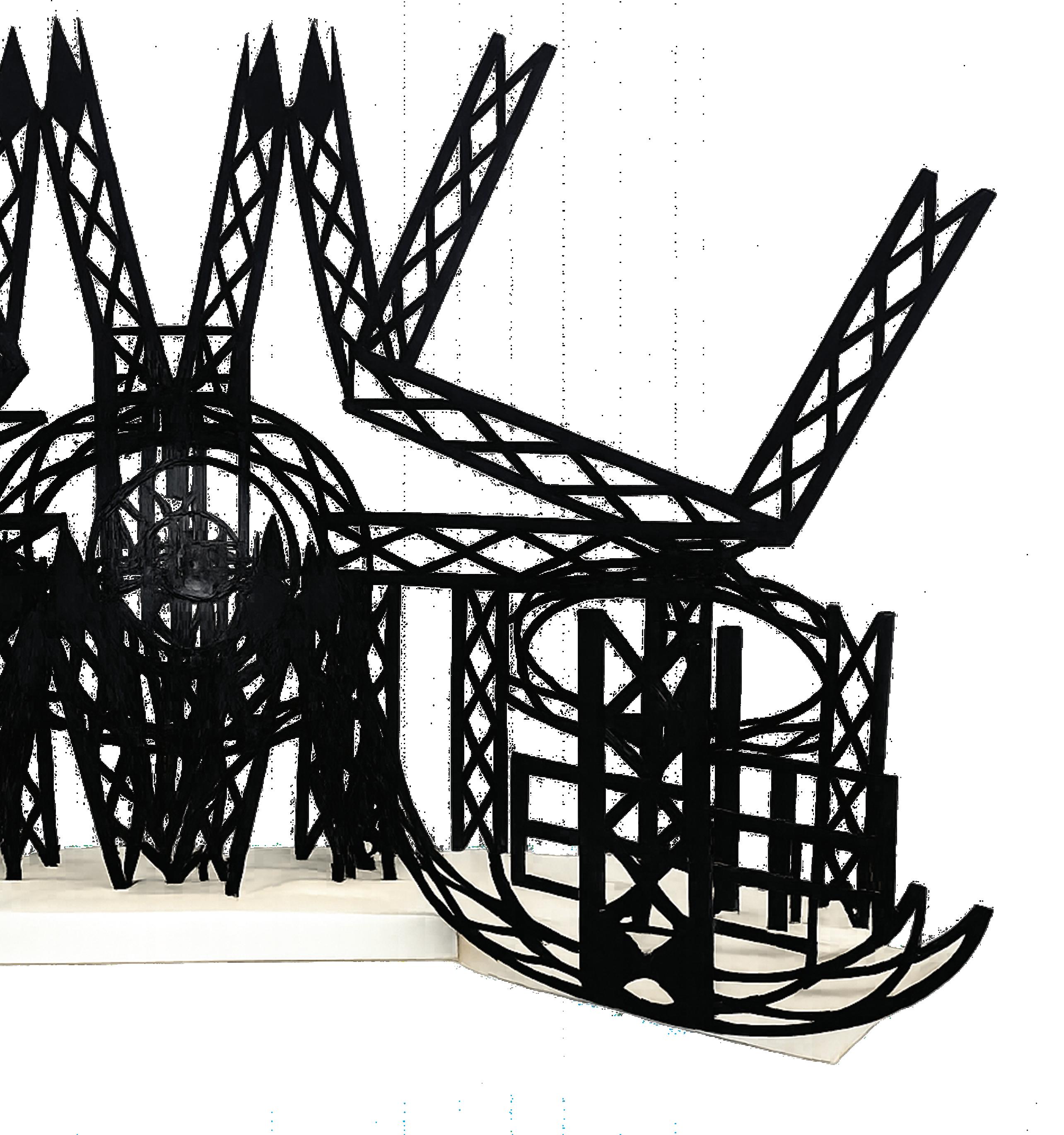
Section 1 • Translation By Neveh Yechiely ’26

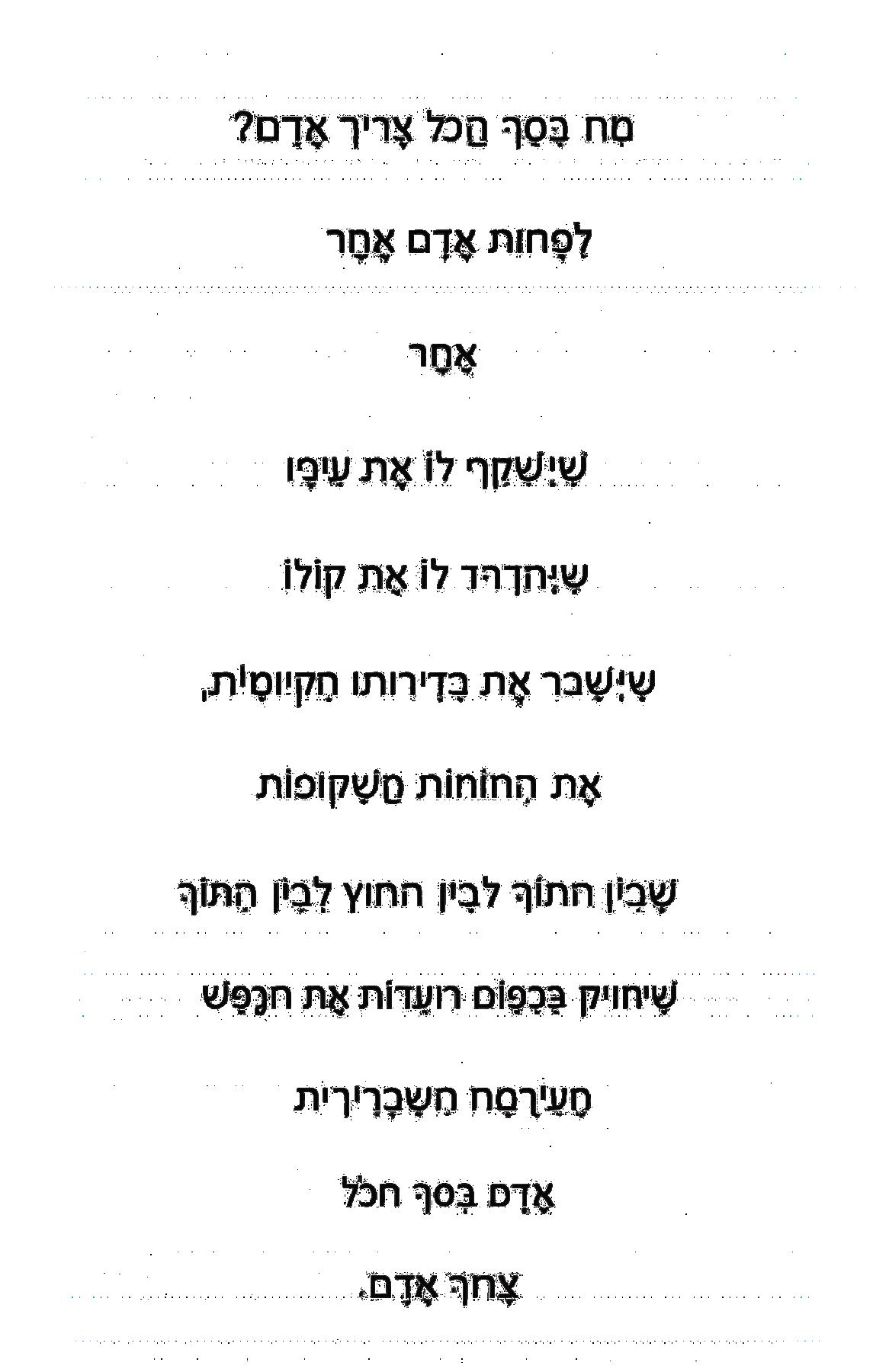
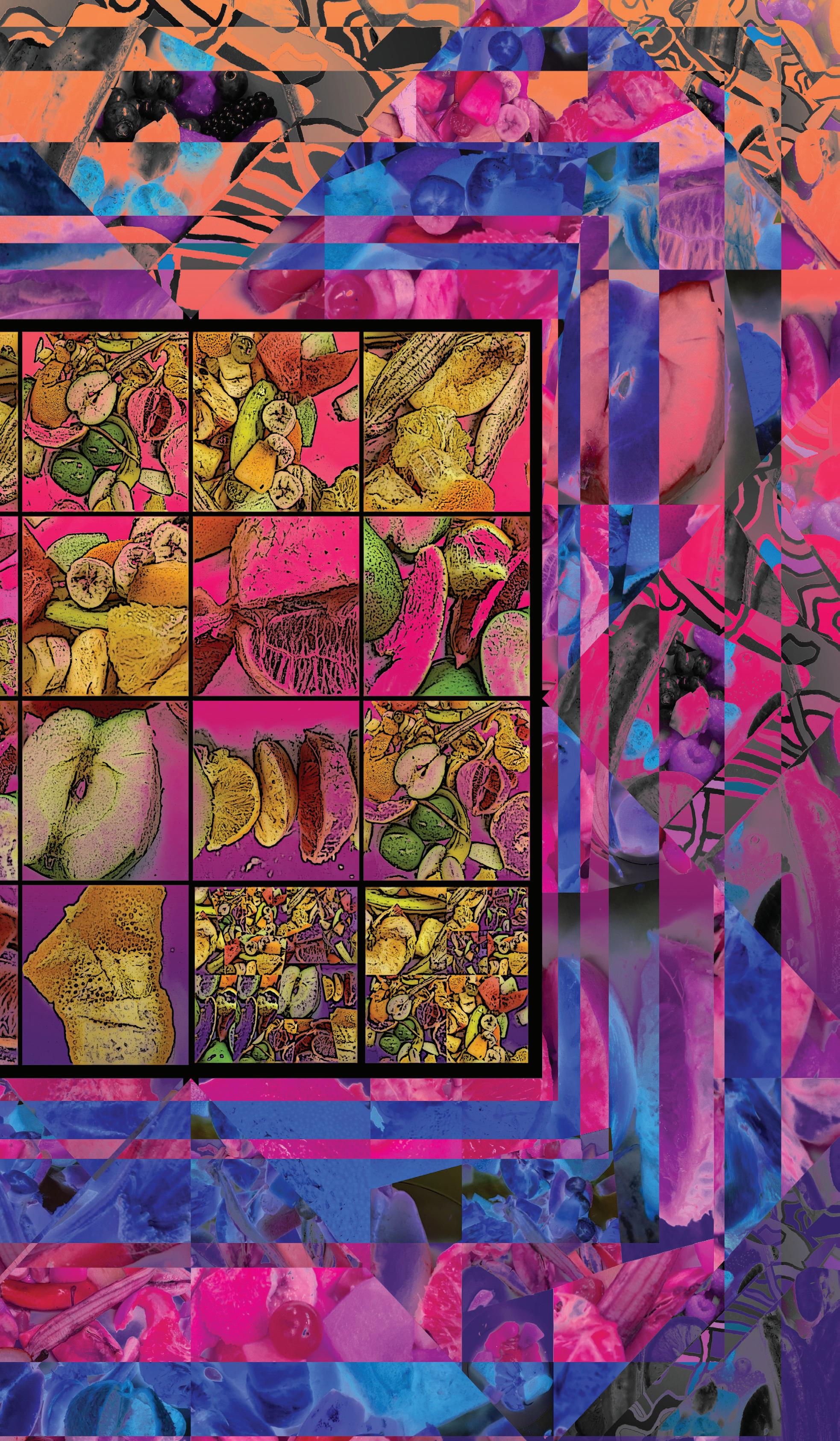
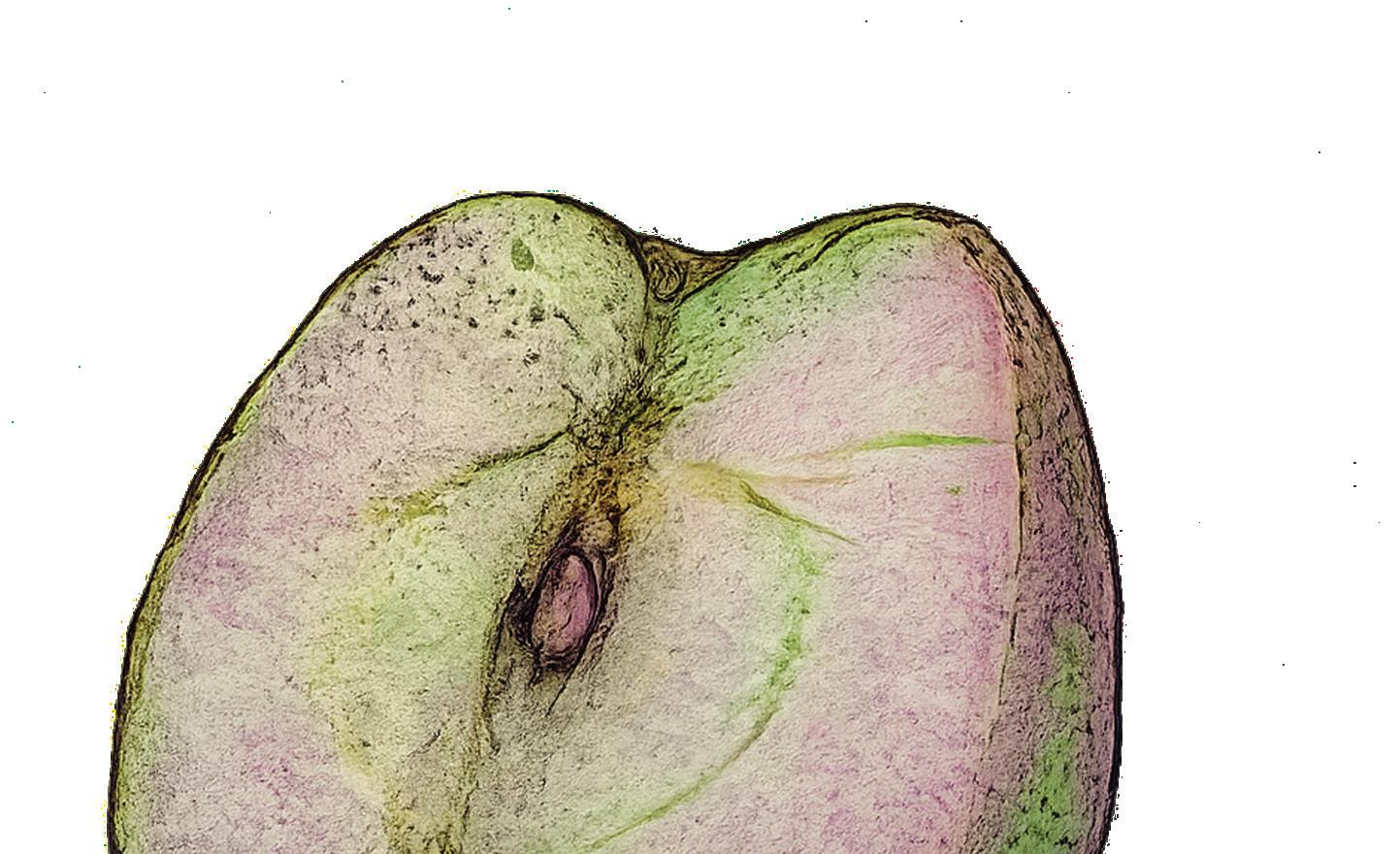
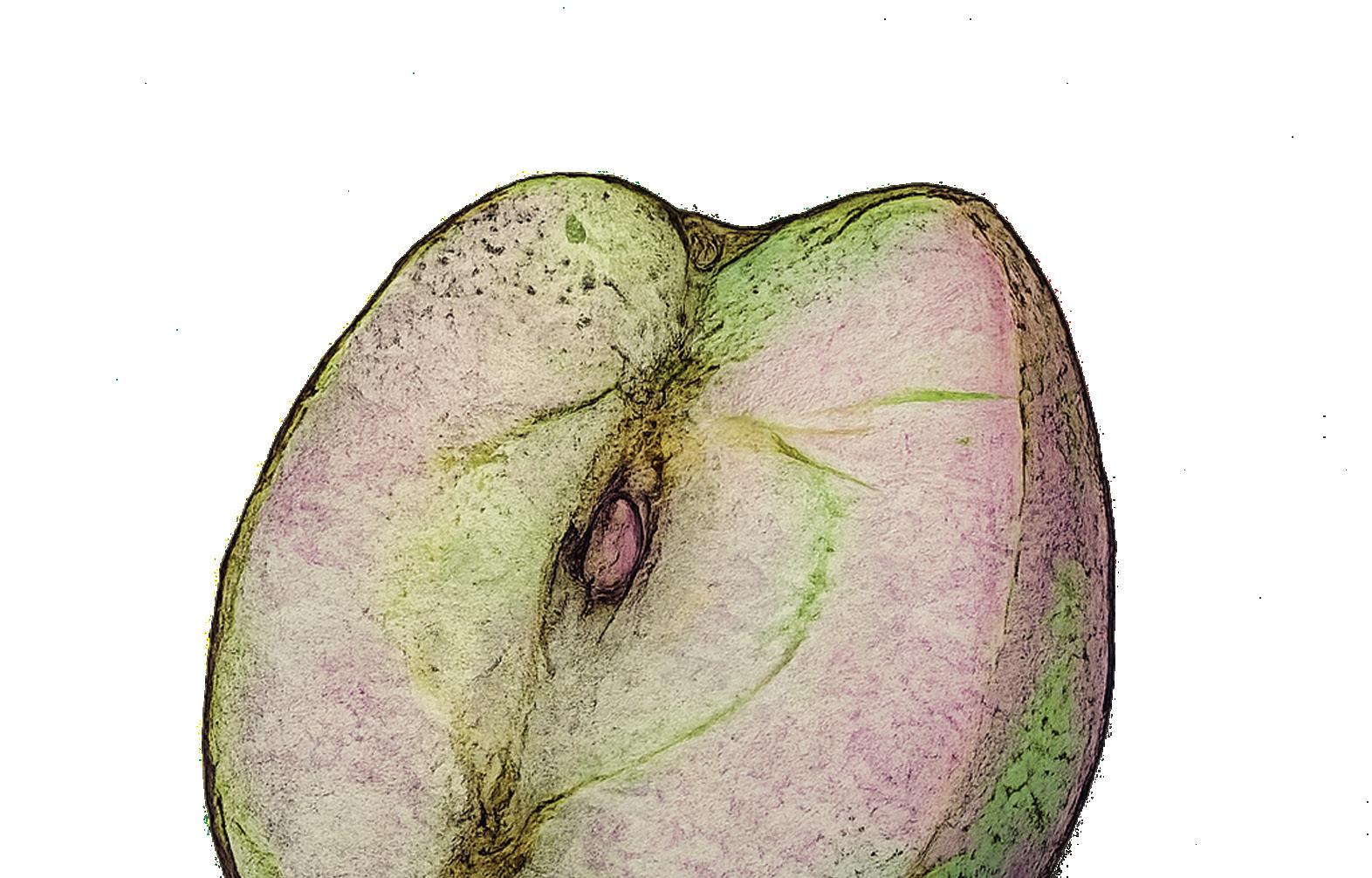


What does a person need, after all?
At least one other person who will reflect their eyes back to them, who will echo their voice, who will break their existential loneliness, the transparent walls between the internal and the exterior and the internal, who will hold, with trembling palms, the soul, naked and fragile, and treat it gently. A person, after all, needs a person. Original Work By Dori Manor
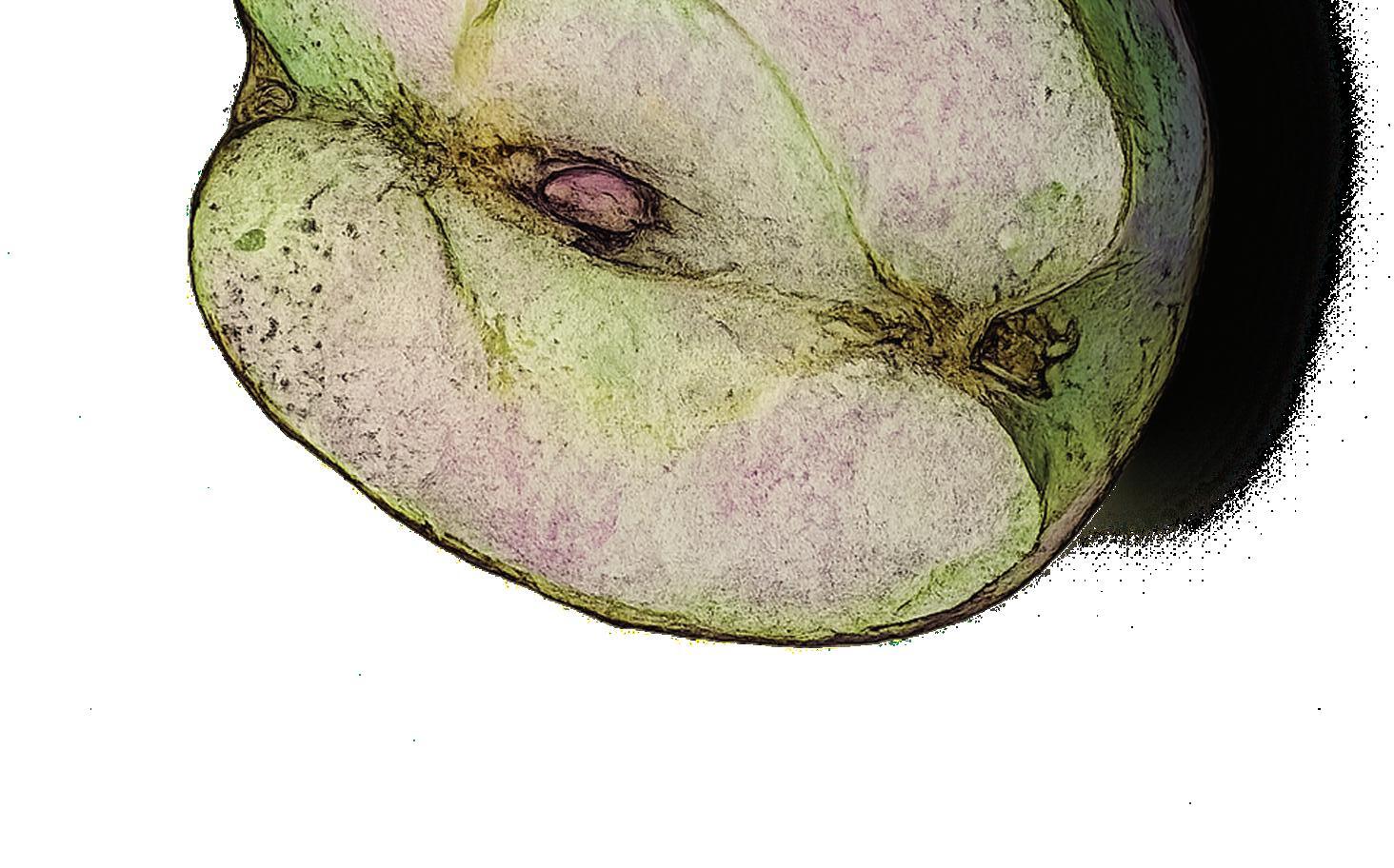
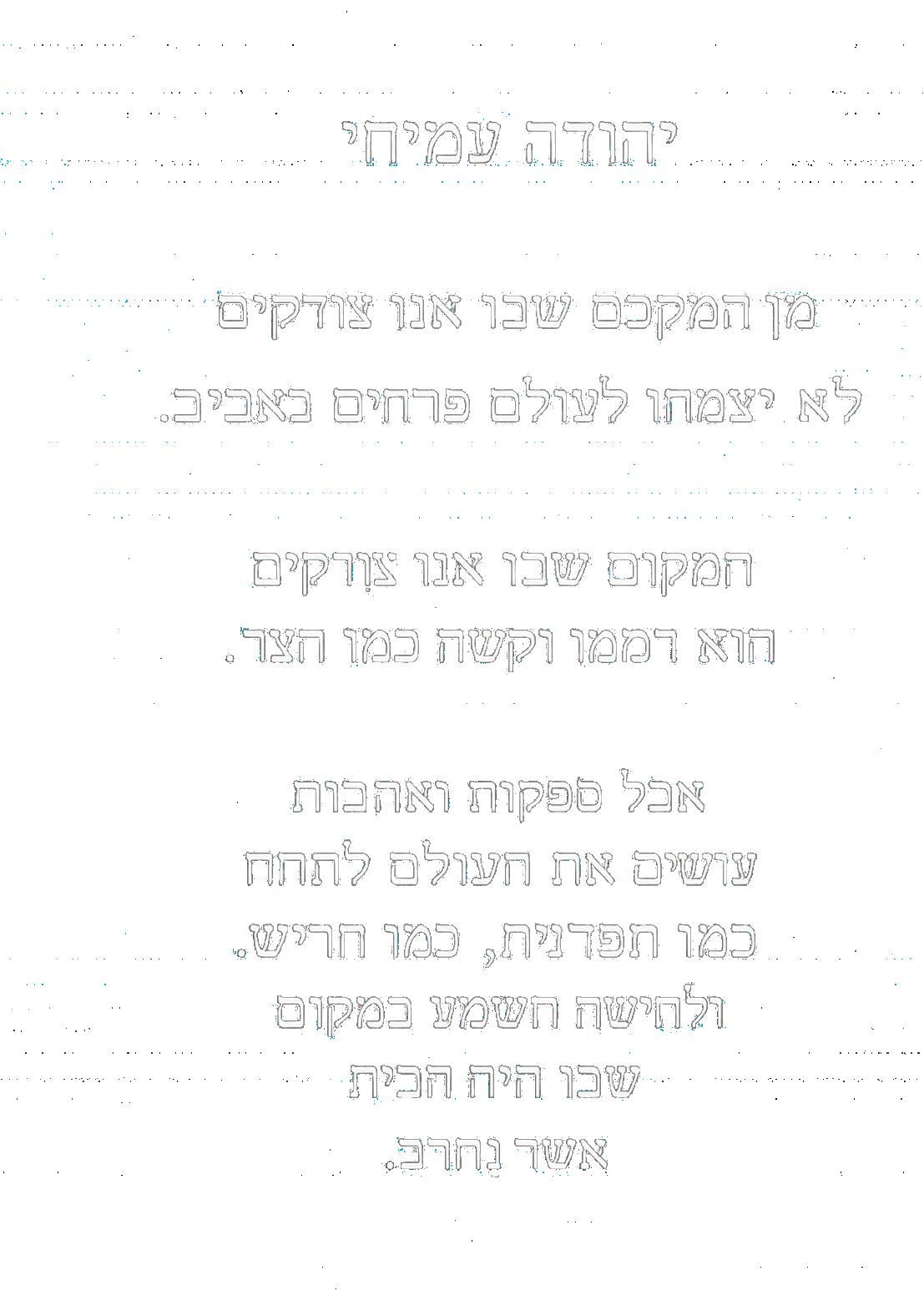
From the place where we are right flowers will never grow in the spring.
The place where we are right is hard and trampled like a yard. But doubts and loves dig up the world like a mole, a plow. And a whisper will be heard in the place where the ruined house once stood.
Chapter 6
A folyosó végén halvány fény derengett, mintha a köd nemcsak az udvart, hanem a gondolatokat is elborította volna. A fiúk szótlanul álltak egymás mellett, és egyikük sem mert
elsőként megszólalni, nehogy a kimondott szó visszafordíthatatlanná tegyen valamit, amit talán még meg lehetne menteni.
Az idő lassan múlt, szinte észrevétlenül, mégis minden perc külön súllyal nehezedett rá-
juk. A falak hidegen verték vissza lépteik zaját, mintha emlékeznének minden korábbi parancsra és büntetésre, amely itt hangzott el. Senki sem tudta pontosan, mire várnak, csak azt érezték, hogy a várakozás maga fontosabb, mint bármi, ami utána következhet.
Úgy tűnt, mintha a csend próbára tenné türelmüket, amely már amúgy is a végéhez közeledett, és mintha az a pillanat, amikor végre történik valami, nem megkönnyebbülést, hanem újabb bizonytalanságot hozna.

At the end of the foyer, a soft light glistens, as if the fog blocks not only the courtyard, but also their thoughts. The boys stand silently next to one another, and neither of them dared speak first, so as not for the word they speak to fracture what could be salvaged through silence.
Time passed so slowly it appeared stagnant, yet each passing minute placed a new weight on the boys. The walls coldly echoed back the footsteps, as if they remembered all the earlier orders and punishments that were given in this hall. Nobody knew exactly what they were waiting for, but they felt that waiting itself was more important than whatever could follow after.
It appeared as if the silence tested their patience, that of which was approaching its end, and, in that moment, when something had finally happened, no relief was brought, but rather a new uncertainty was born.
Chapter 7




Section 1 • Original Work By Joseph Vito ’28

Civita è un piccolo paese, ma è pieno di amore e gioia.
E un luogo con strade strette e case di pietra.
La natura e la comunità circondano il paese, ed è molto tranquilla.
Il cibo è fantastico, fatto con grande cura. Tutti si conoscono per nome.
La vita, guidata dal dolce ritmo del sole.
I bambini giocano, corrono e ridono nelle piazze.
Le famiglie passano tempo insieme ogni giorno.
La sera porta calma e silenzio,
Ma non manca di offrire divertimento e svago.
Il tempo passa lentamente a Civita, Una città piccola, ma molto viva.

Civita is a small town, but it is full of love and joy.
It is a place with narrow streets and stone houses.
Nature and community surround the town, and it’s very peaceful.
The food is fantastic, made with great care. Everyone knows each other by name.
Life, guided by the sun’s gentle rhythm. Children play, run, and laugh in the squares.
Families spend time together every day.
The evening brings calm, silence,
But it does not lack in offering fun and entertainment. Time passes slowly in Civita, A small town, but alive.
Section 2 • Translation By Augie Jones ’27

Ho sceso, dandoti il braccio, almeno un milione di scale e ora che non ci sei è il vuoto ad ogni gradino.
Anche così è stato breve il nostro lungo viaggio.
Il mio dura tuttora, né più mi occorrono
le coincidenze, le prenotazioni, le trappole, gli scorni di chi crede che la realtà sia quella che si vede.
Ho sceso milioni di scale dandoti il braccio non già perché con quattr’occhi forse si vede di più.
Con te le ho scese perché sapevo che di noi due le sole vere pupille, sebbene tanto offuscate, erano le tue.
Original Work By Eugenio Montale

I went down, giving you my arm, at least a million stairs
I went down, giving you my arm, at least a million stairs, and now that you’re not here, there’s emptiness at every step. Even so, our long journey was short. Mine still lasts. I don’t need them anymore connections, reservations, the traps, the scorn of those who believe That reality is what you see.
I walked down millions of stairs, giving you my arm not because perhaps one can see more with four eyes. I went down with you because I knew that between us, the only true pupils, although so clouded, They were yours.
Le sere d’estate, nel giardino, l’aria sembrava fermarsi tra gli alberi, come se anche il tempo avesse deciso di rallentare. Le voci arrivavano da lontano, leggere, e si confondevano con il fruscio delle foglie. A volte mi pareva che quel silenzio non fosse soltanto quiete,
ma attesa: un’attesa indefinita, che nessuno osava nominare.
Eppure, in mezzo a quella calma apparente, si avvertiva qualcosa di fragile, come se ogni gesto, ogni parola, potesse incrinare un equilibrio troppo delicato per durare.
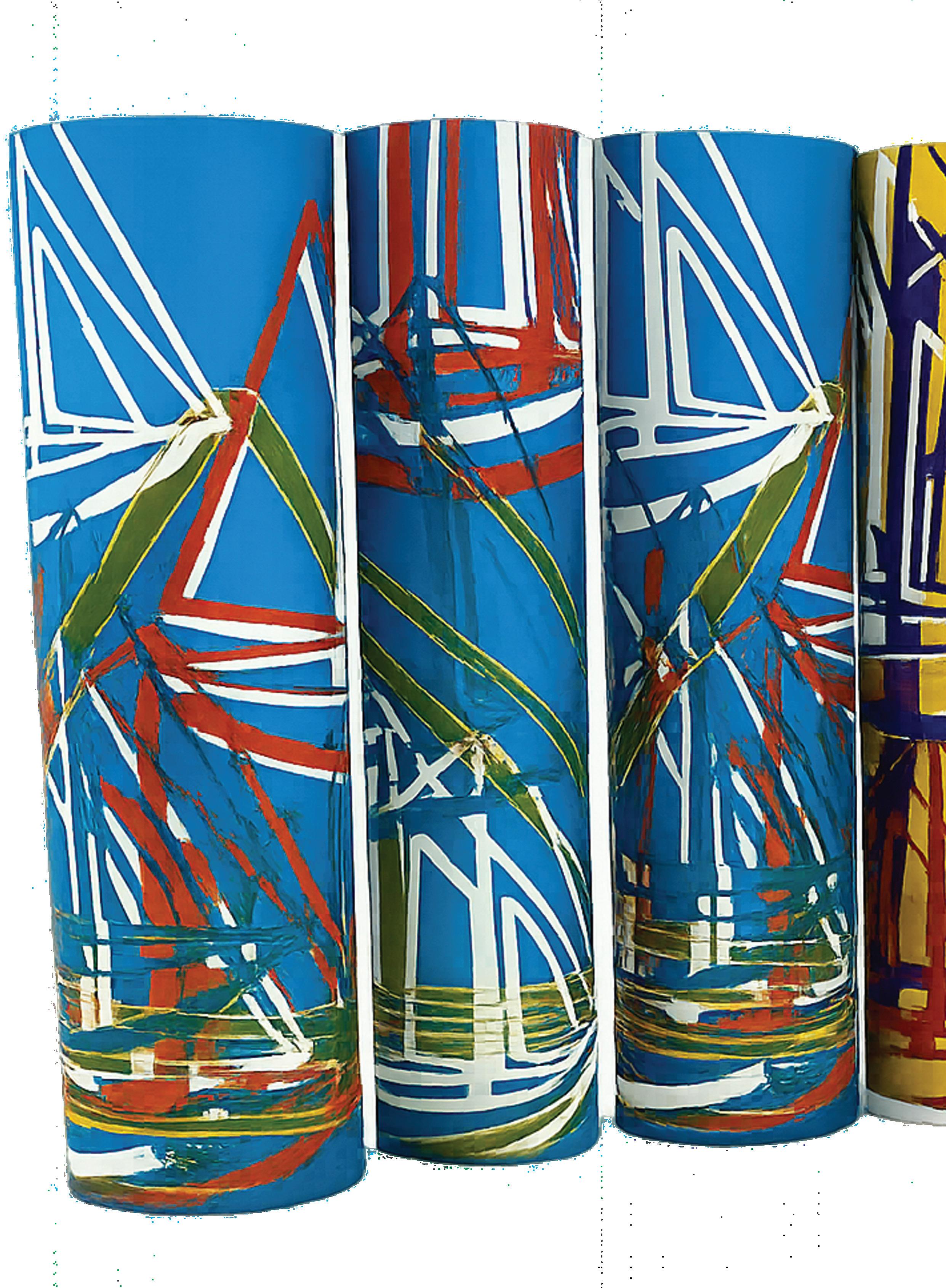
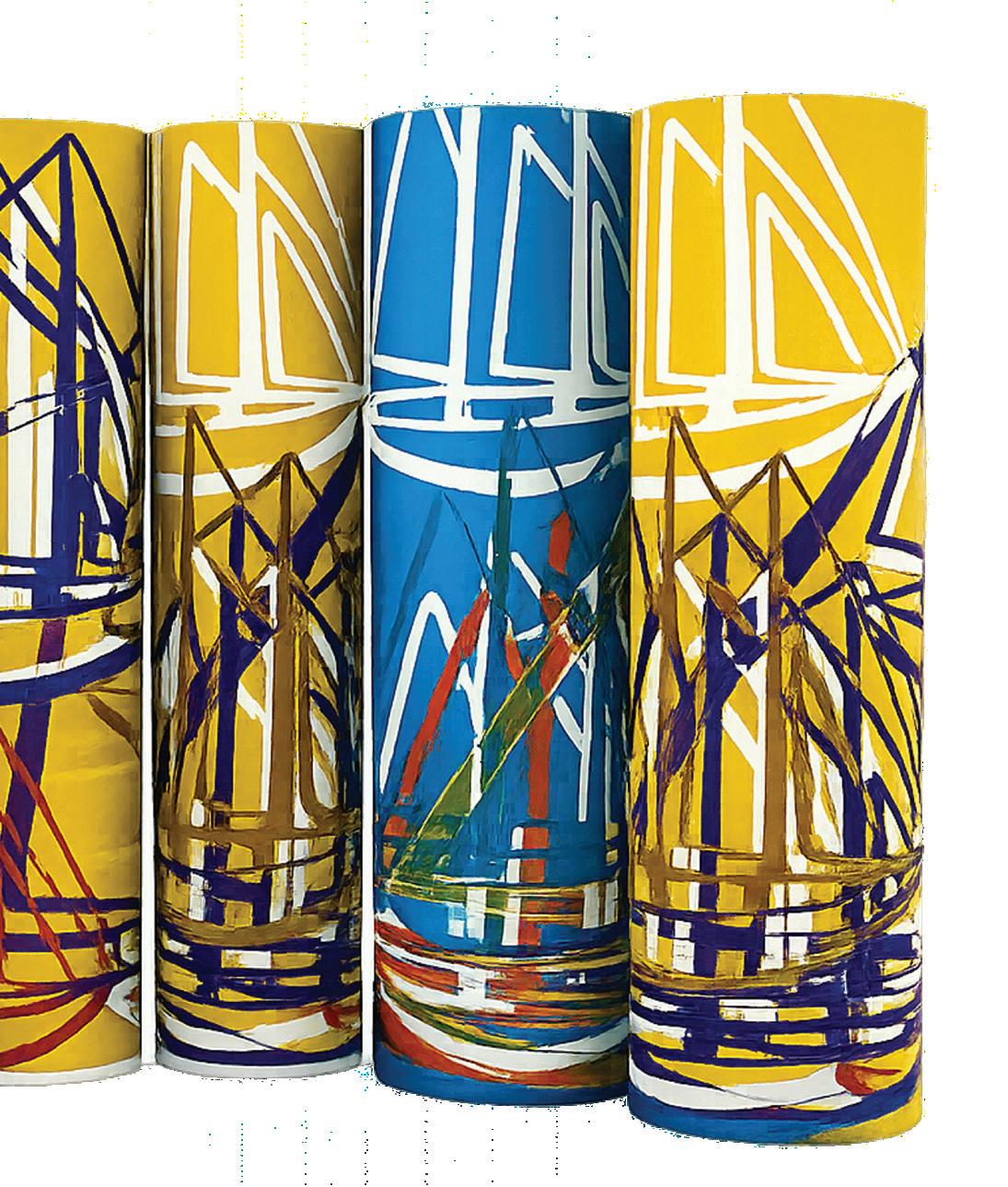
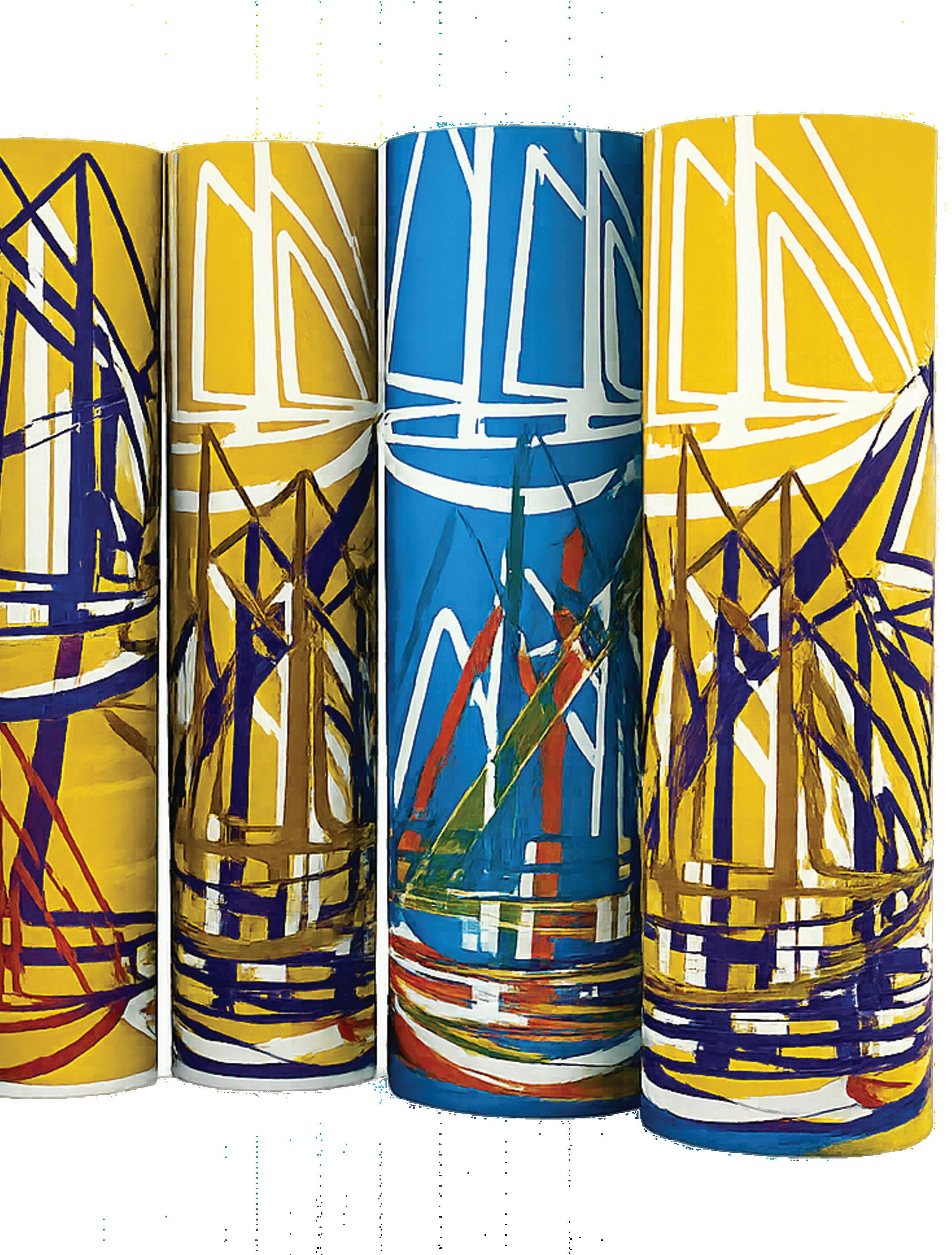
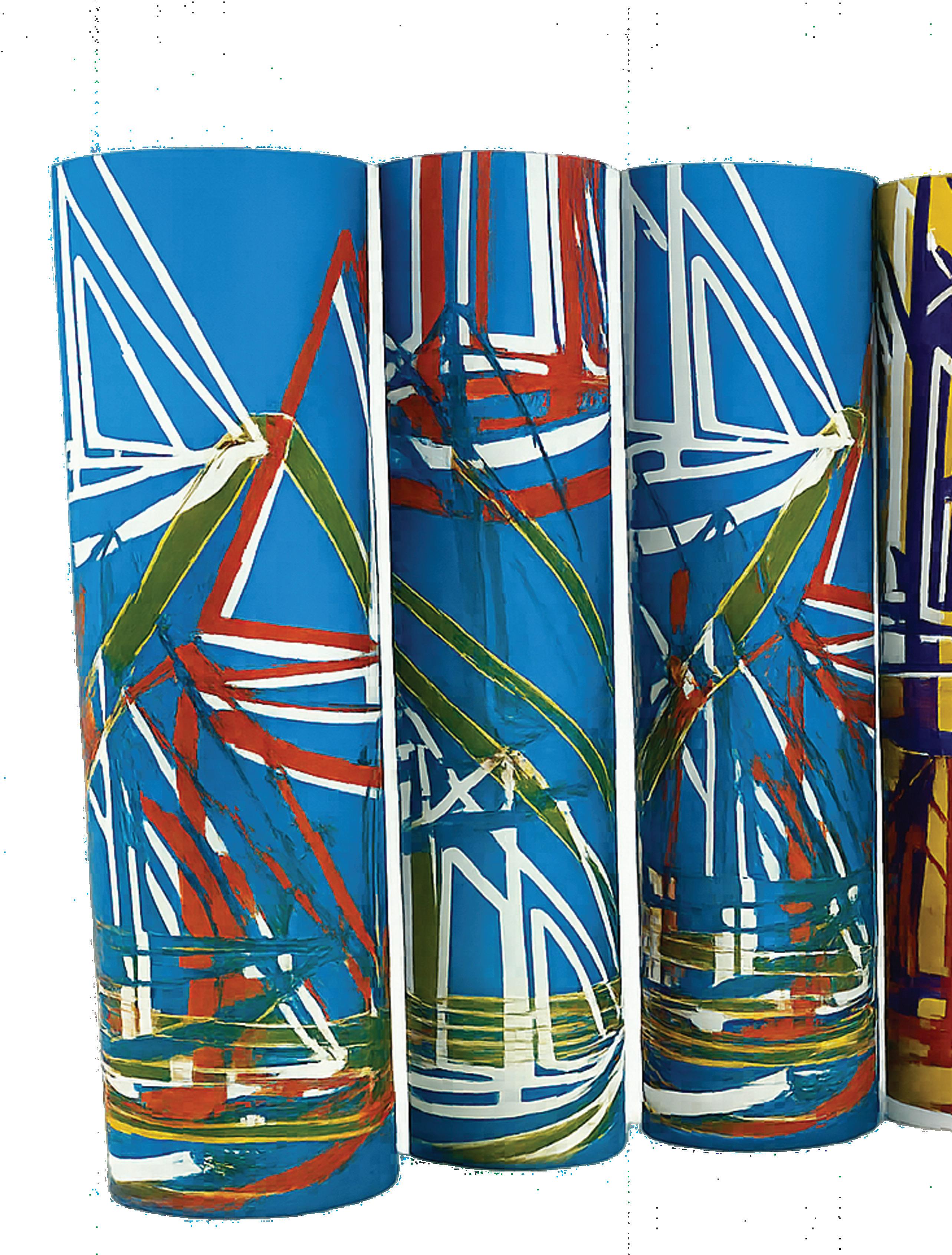
On summer evenings, in the garden, the air seemed to stand still among the trees, as if even time had decided to slow down. Voices arrived from far away, light, and blended with the rustling of the leaves. Sometimes it seemed to me that the silence was not just stillness, but waiting: an indefinite waiting that no one attempted to name. And yet, in the midst of that apparent calm, something fragile could be felt, as if every gesture, every word, might damage a balance too delicate to last.
4 • Translation By Ray Foley ’27
All’uscita del paese si dividevano tre strade: una andava verso il mare, la seconda verso la città e la terza non andava in nessun posto. Martino lo sapeva perché lo aveva chiesto un po’ a tutti e da tutti aveva ricevuto la stessa risposta:
“Quella strada lì? Non va in nessun posto. E’ inutile camminarci”.
“E fin dove arriva?”. “Non arriva da nessuna parte”.
“Ma allora perché l’hanno fatta?”. “Non l’ha fatta nessuno, è sempre stata lì”.
“Ma nessuno è mai andato a vedere?”. “Sei una bella testa dura: se ti diciamo che non c’è niente da vedere...”. “Non potete saperlo se non ci siete mai stati”.
Era così ostinato che cominciarono a chiamarlo Martino-Testadura, ma lui non se la prendeva e continuava a pensare alla strada che non andava in nessun posto. Quando fu abbastanza grande, una mattina si alzò per tempo, uscì dal paese e senza esitare imboccò la strada misteriosa e andò sempre avanti. Il fondo era pieno di buche e di erbacce e ben presto cominciarono i boschi.
Cammina cammina la strada non finiva mai, a Martino dolevano i piedi e già cominciava a pensare che avrebbe fatto bene a tornarsene indietro quando vide un cane. Il cane gli corse incontro scodinzolando e gli leccò le mani, poi si avviò lungo la strada e ad ogni passo si voltava per controllare se Martino lo seguiva ancora. Finalmente il bosco cominciò a diradarsi e la strada terminò sulla soglia di un grande cancello di ferro. Attraverso le sbarre Martino vide un castello e a un balcone una bellissima signora che salutava con la mano.
Spinse il cancello, attraversò il parco e sulla porta trovò la bellissima signora. Era bella, vestita come una principessa e in più era allegra e rideva: “Allora non ci hai creduto”.
“A che cosa?”. “Alla storia della strada che non andava da nessuna parte”.
“Era troppo stupida e secondo me ci sono più posti che strade”. “Certo, basta aver voglia di muoversi. Ora vieni ti farò vedere il castello”.
C’erano più di cento saloni zeppi di tesori. C’erano diamanti, pietre preziose, oro, argento e ad ogni momento la bella signora diceva: “Prendi, prendi quello che vuoi... Ti presterò un carretto per portare il peso”. Martino non si fece pregare e ripartì col carretto pieno.
In paese, dove l’avevano già dato per morto, Martino fu accolto con grande sorpresa.
Scaricato il tesoro il carro ripartì. Martino fece tanti regali a tutti e dovette raccontare cento volte la sua storia. Ogni volta che finiva, qualcuno correva a casa a prendere cavallo e carretto e si precipitava giù per la strada che non andava da nessuna parte.
Ma quella sera stessa tornarono uno dopo l’altro, con la faccia lunga per il dispetto: la strada per loro finiva in mezzo al bosco in un mare di spine. Non c’era né cancello, né castello, né bella signora. Perché certi tesori esistono soltanto per chi batte per primo una strada nuova.
At the edge of the town, three roads split: one went toward the sea, the second toward the city, and the third went nowhere. Martino knew this because he had asked many people, and everyone gave him the same answer:
“That road? It doesn’t go anywhere. It’s useless to walk on it.”
“And how far does it go?”
“It doesn’t go anywhere.”
“Then why did they build it?”
“No one built it. It has always been there.”
“But has anyone ever gone to see?”
“You’re really stubborn. If we tell you there’s nothing to see…”
“You can’t know if you’ve never been there.”
He was so stubborn that people started calling him Martino Hardhead, but he didn’t mind and kept thinking about the road that went nowhere. When he was old enough, one morning he got up early, left the town, and without hesitation took the mysterious road and kept going. The ground was full of holes and weeds, and soon the woods began.
He walked and walked, and the road never seemed to end. Martino’s feet hurt, and he was already thinking it would be better to turn back when he saw a dog. The dog ran toward him, wagging its tail, and licked his hands. Then it started walking down the road, turning around at every step to check if Martino was still following. Finally, the woods began to thin out, and the road ended in front of a big iron gate. Through the bars, Martino saw a castle and, on a balcony, a very beautiful lady waving her hand.
He pushed the gate, crossed the park, and at the door, he found the beautiful lady. She was pretty, dressed like a princess, and cheerful, laughing.
“So you didn’t believe it,” she said.
“Believe what?”
“The story of the road that went nowhere.”
“It was too silly, and I think there are more places than roads.”
“Of course. You just need to want to move. Now come, I’ll show you the castle.”
There were more than a hundred rooms full of treasures. There were diamonds, precious stones, gold, and silver, and all the time the beautiful lady said, “Take it, take whatever you want… I’ll lend you a cart to carry the weight.” Martino didn’t need to be asked twice and left with the cart full.
Back in town, where they had already thought he was dead, Martino was welcomed with great surprise.
After unloading the treasure, the cart left again. Martino gave many gifts to everyone and had to tell his story a hundred times. Every time he finished, someone ran home to get a horse and cart and rushed down the road that went nowhere.
But that very evening, they came back one by one, looking disappointed and upset. For them, the road ended in the middle of the woods, in a sea of thorns. There was no gate, no castle, and no beautiful lady. Because some treasures exist only for those who are the first to walk along a new road.
This classic story belongs to the famous children’s book «Favole al telefono» (Telephone Tales) by the celebrated Italian author Gianni Rodari
Cur Darii regnum quod Alexander occupaverat a successoribus suis post Alexandri mortem non defecit?
Considerate le difficultà le quali si hanno a tenere uno stato di nuovo acquistato, potrebbe alcuno maravigliarsi donde nacque che Alessandro Magno diventò signore della Asia in pochi anni, e, non l’avendo appena occupata, morí; donde pareva ragionevole che tutto quello stato si rebellassi; non di meno e’ successori di Alessandro se lo mantennono, e non ebbono a tenerlo altra difficultà che quella che infra loro medesimi, per ambizione propria, nacque.
Quelli stati che si governono per uno principe e per servi hanno el loro principe con più autorità; perché in tutta la sua provincia non è alcuno che riconosca per superiore se non lui; e se obediscano alcuno altro, lo fanno come ministro et offiziale, e non li portano particulare amore.
For what reason did the kingdom of Darius, which was conquered by Alexander, not rebel against his successors after Alexander’s death?
Considering the difficulties which are encountered when holding a newly acquired state, one could marvel at how Alexander the Great became the ruler of Asia in just a few years, and, soon after occupying it, he died; where it seemed reasonable that this state would have rebel; nonetheless the successors of Alexander managed to keep the control of it, and encountered no other difficulties than those that arose among themselves because of their own ambition.
These states which were governed by a single prince and his servants, give the prince even more authority; because in all of his province there is no one who is recognized as superior except him; and if they obey someone else, they do so only as a minister or an official of the prince, and not because they feel any particular affection for him.
Di solito a svegliarci è un rumore, ma quel mattino, alle prime ore, a svegliare Marcovaldo fu il silenzio che di qualcosa di strano aveva il senso. Come sempre aprì la finestra e si mostrò a lui tutta un’altra vista: le case, le finestre, le auto e le strade pareva fossero state cancellate. Al loro posto c’era un foglio bianco e Marcovaldo, preso dall’incanto, chiamò la moglie tentando di gridare, ma gli uscì solo un lieve sussurrare. Come aveva fatto sulle forme e i colori, la neve era caduta pure sui rumori, in quello spazio morbido e imbottito qualunque suono veniva attutito…..La neve era sparita e tutto era come prima, le case, le strade e le pompe di benzina, tutto, come sempre, ostile e spigoloso, non più candido, accogliente e silenzioso. A volte basta un po’ di fantasia, inventare qualcosa per scacciar la malinconia e se poi tutto torna come prima
c’è sempre un nuovo inizio, una nuova mattina.
Usually, a noise wakes us up, but this morning, at the early hours, it was silence that woke Marcovaldo, who sensed something strange. As always, he opened the window, and he saw a totally different view: the houses, the windows, the cars, and the streets seemed to be gone. In their place was a blank white sheet, and Marcovaldo was taken by magic. He called out to his wife, trying to shout, but only a whisper came out of his lips. How it had made the shapes and colors into a new form, the snow had also quieted the sounds in that soft, padded space, and the sounds stopped. The snow had disappeared, and everything was before the houses, the streets, and the gas stations, everything, hostile and sharp, no longer welcoming and silent. Sometimes a little imagination and invention scares away the melancholy, and even if everything returns to before, there’s always a new start, a new morning.
This short story “La citta’ smarrita nella neve” is part of Marcovaldo, a collection of 20 short stories written by the Italian novelist Italo Calvino.
Chapter 8
Egnatius, quod candidos habet dentes, renidet usquequaque. Si ad rei ventum est
subsellium, cum orator excitat fletum, renidet ille; si ad pii rogum fili
lugetur, orba cum flet unicum mater, renidet ille. Quidquid est, ubicumque est, quodcumque agit, renidet: hunc habet morbum, neque elegantem, ut arbitror, neque urbanum.
Quare monendum est te mihi, bone Egnati.
Si urbanus esses aut Sabinus aut Tiburs
aut parcus Umber aut obesus Etruscus
aut Lanuvinus ater atque dentatus
aut Transpadanus, ut meos quoque attingam,
aut quilubet, qui puriter lavit dentes
tamen renidere usquequaque te nollem: nam risu inepto res ineptior nulla est.
Nunc Celtiber es: Celtiberia in terra, quod quisque minxit, hoc sibi solet mane dentem atque russam defricare gingivam, ut, quo iste vester expolitior dens est, hoc te amplius bibisse praedicet loti.
Egnatius, because he has shining white teeth, always smiles. If he has come to a seat for the matter, when the speaker stirs up a weeping, that man smiles; if he is deplored to the funeral pyre of his pious son, when the childless mother weeps alone, that man smiles. Anything it is, whatever it is, no matter what he does, he smiles: he has a disease, and neither an elegant one, as I think, nor urbane. Therefore, you must be warned by me, good Egnatius. If you were a city-dweller, or a Sabine, or from Tibur, or a parsimonious Umber or a fat Etruscan, or a dark, big-toothed fellow from Lanuvium, or a Transpadane, as I will also come in contact with my own people, or anyone at all who cleans his teeth properlynevertheless, I would not want you to be grinning everywhere: for nothing is more foolish than a foolish smile. Now you’re a Celtiberian: in the land of the Celtiberians, whatever of urine each man has made, this man is accustomed in the morning to scrub his teeth and his red gums, as, the shinier your teeth are, the more it proclaims how much urine you’ve drunk.
Chapter 9


Молчание!
Original Work By Fyodor
Hush, hide yourself and conceal Your feelings, and your dreams;
Let them be in your soul’s depth They get up and enter Silently, like stars in the night,--Admire them,--- and hush.
How should the heart express itself?
How could another understand you?
Will he understand, what moves you in life?
Spoken thoughts are lies;
Adult thoughts consume,
We get rid of the truth through words.
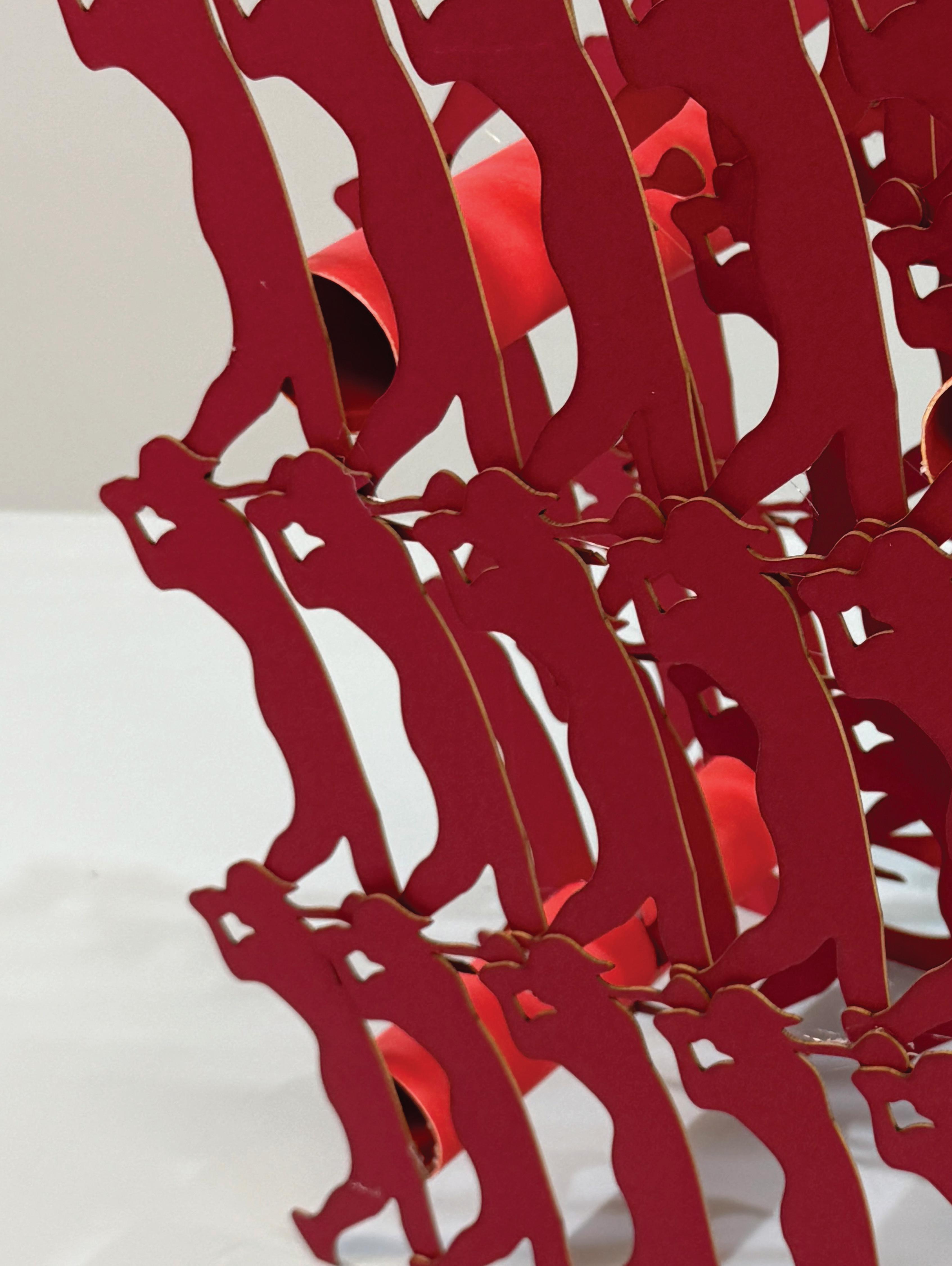
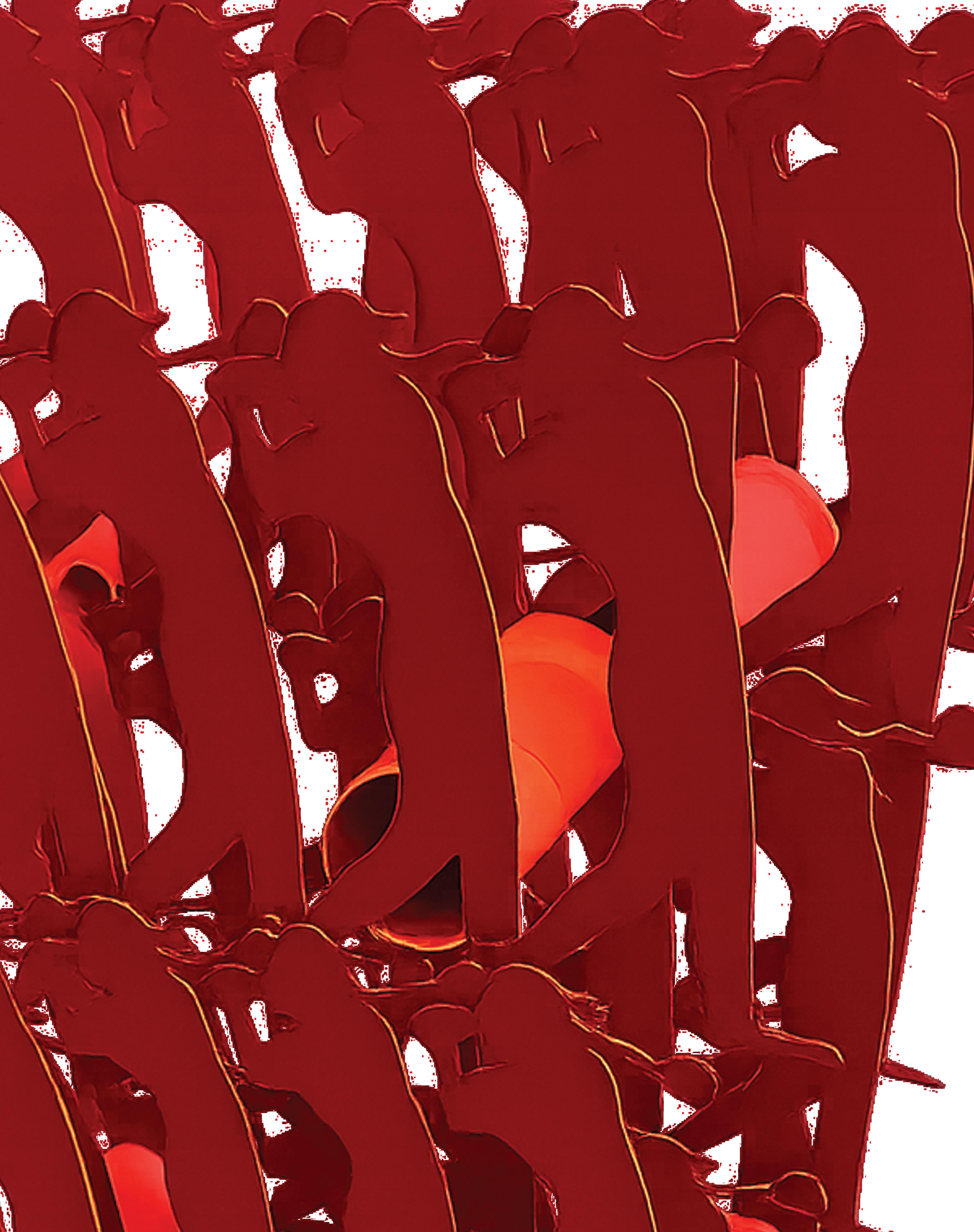
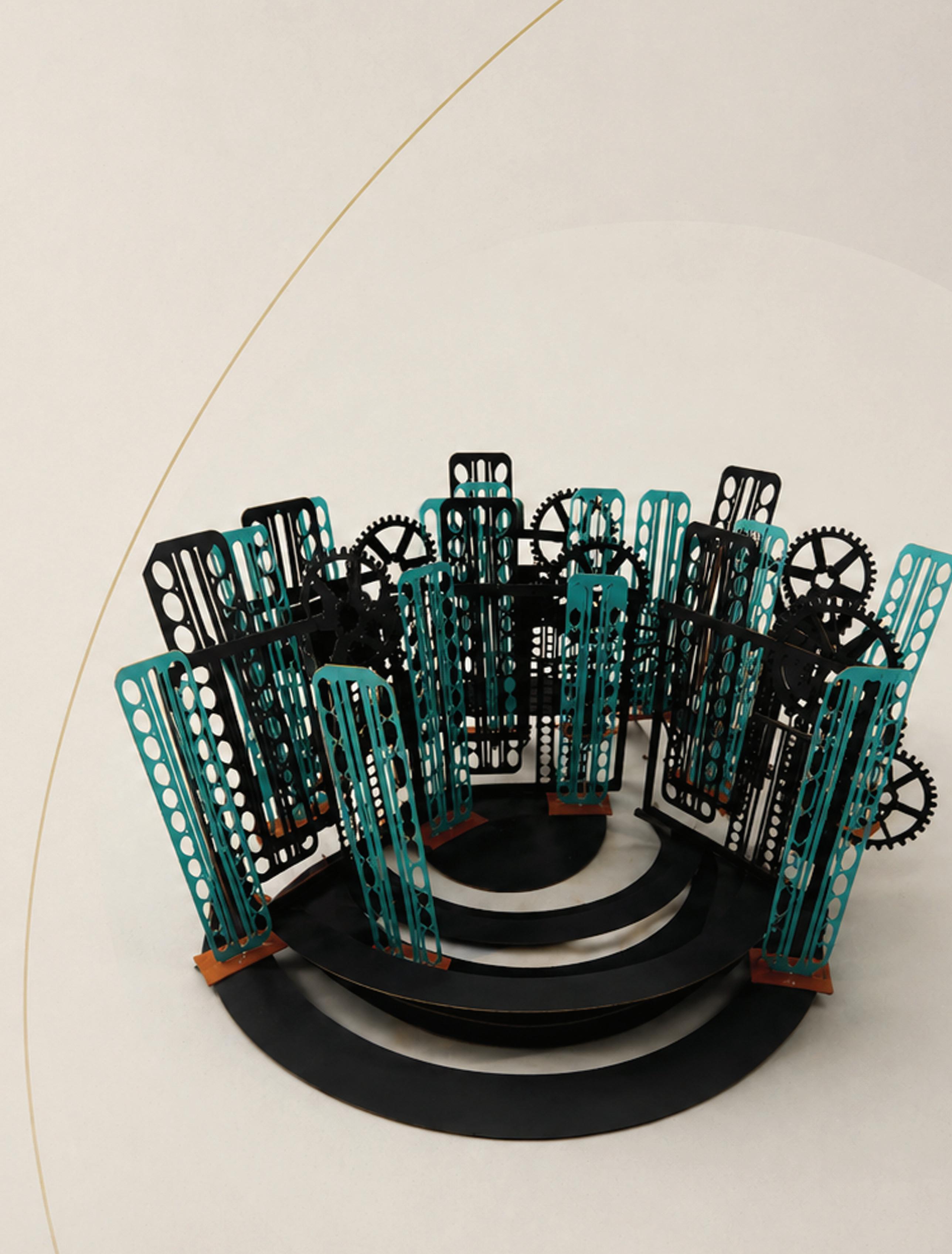
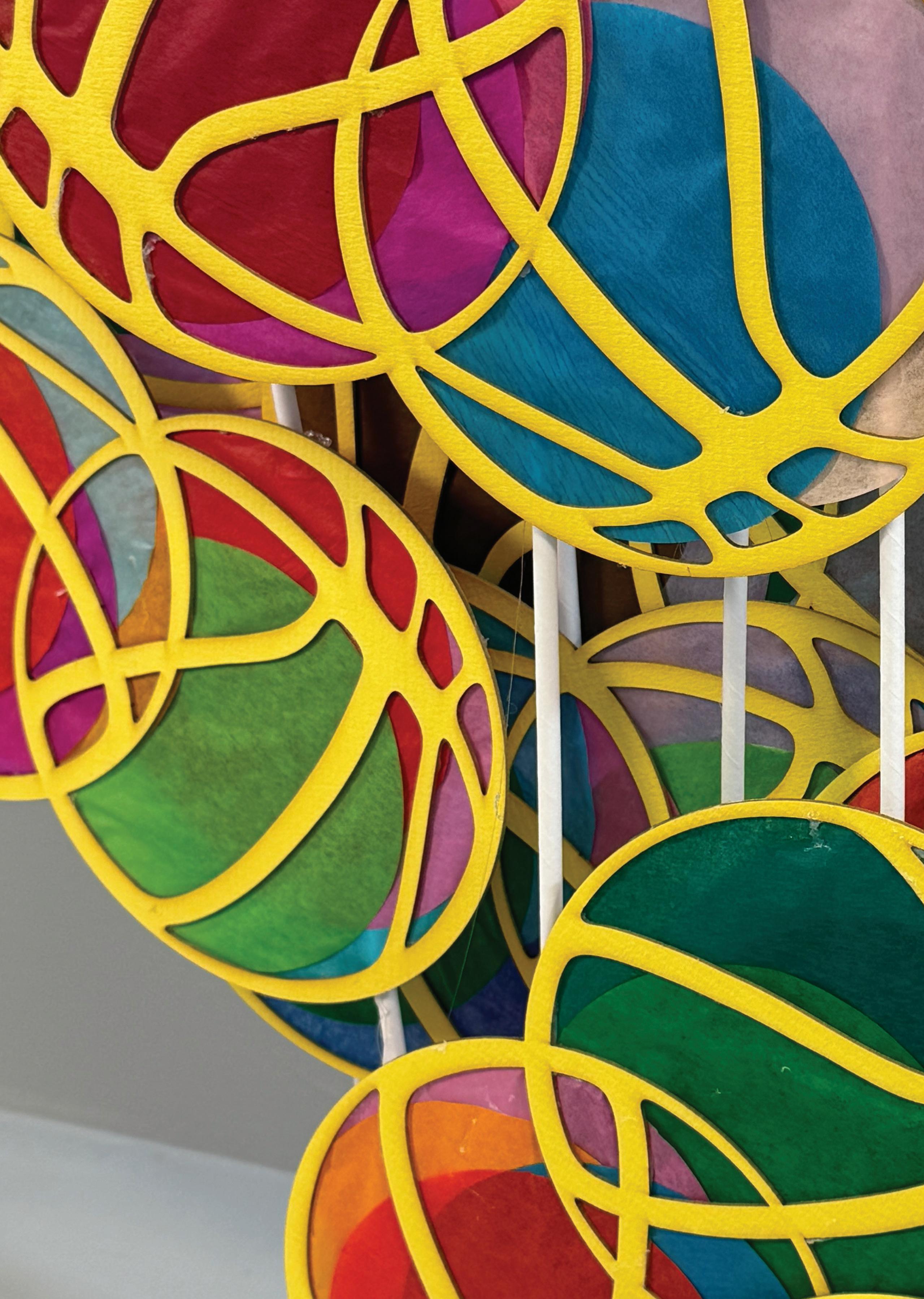
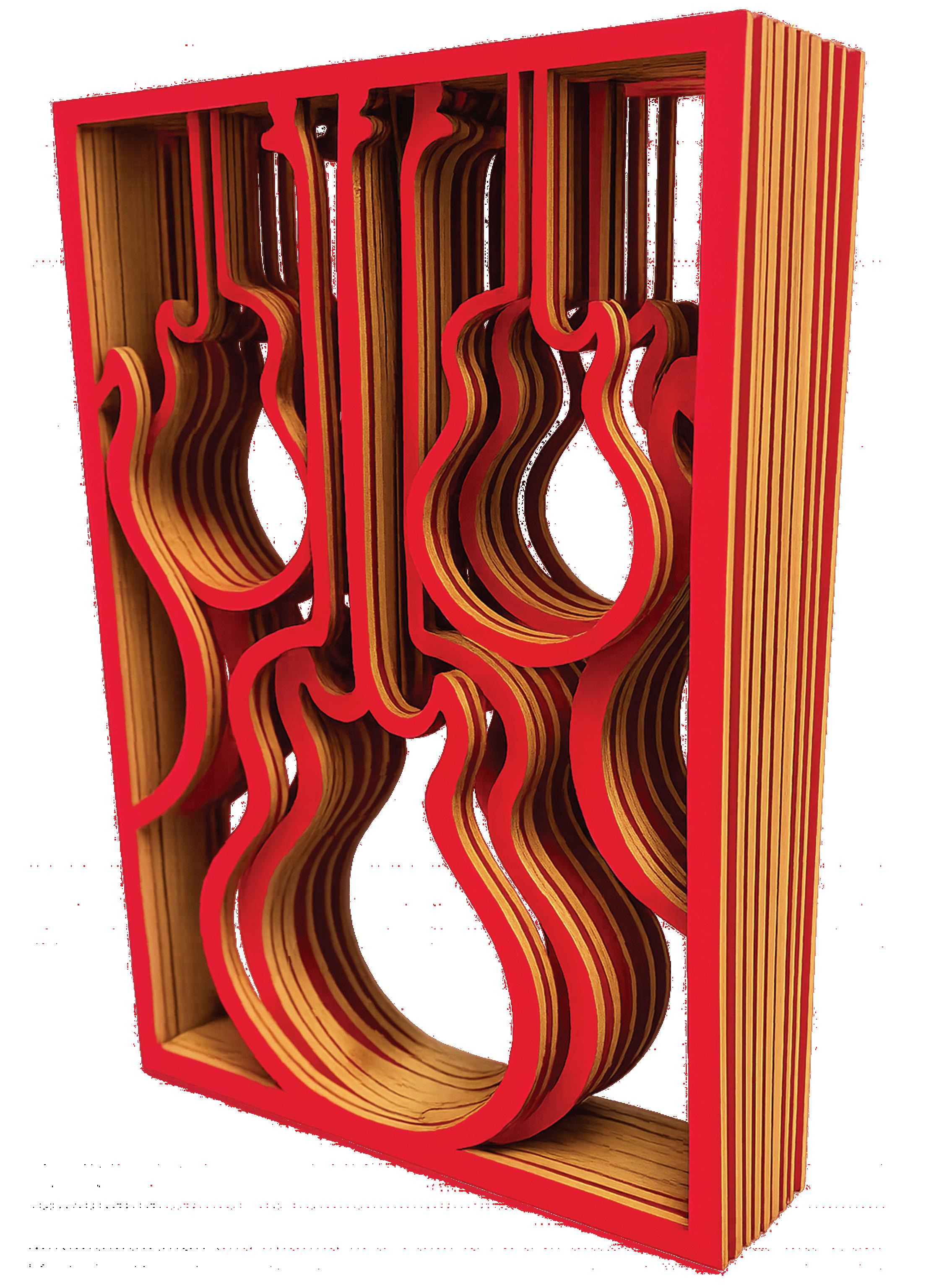
Kai Lum ’26 / Basketballs / Laser cut matboard

Section 1 • Translations By Matias Salazar ’29 & Yorman Veliz ’29
Q’uq’
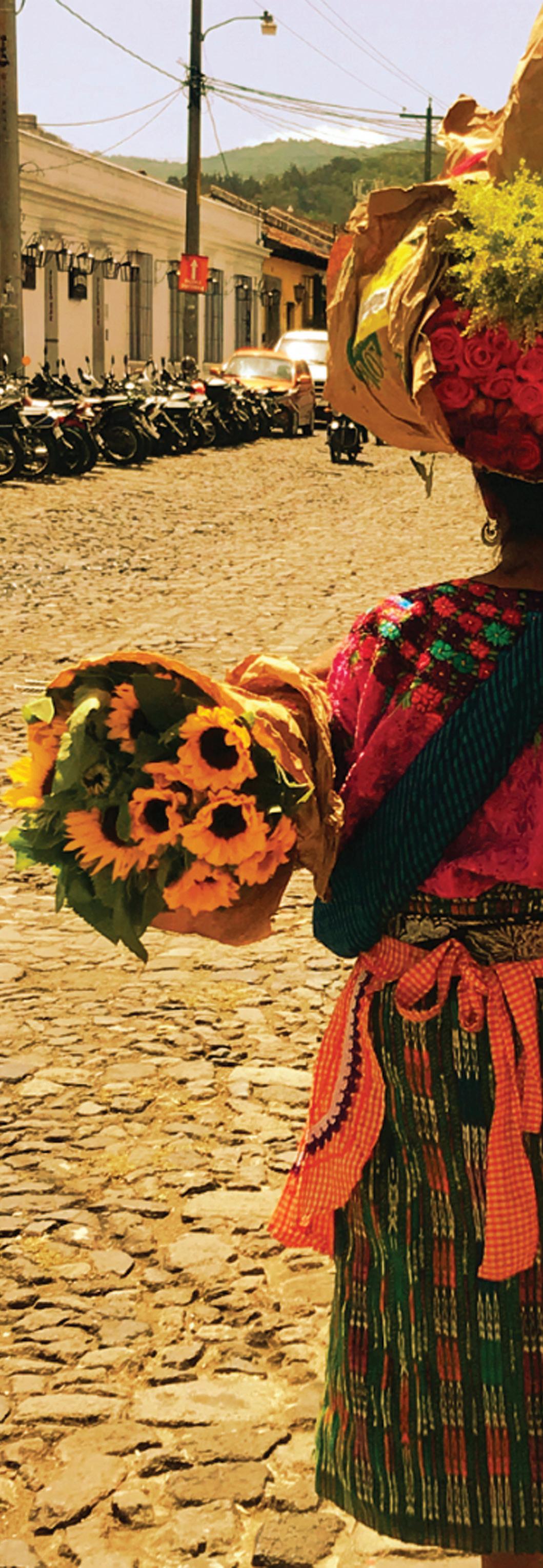
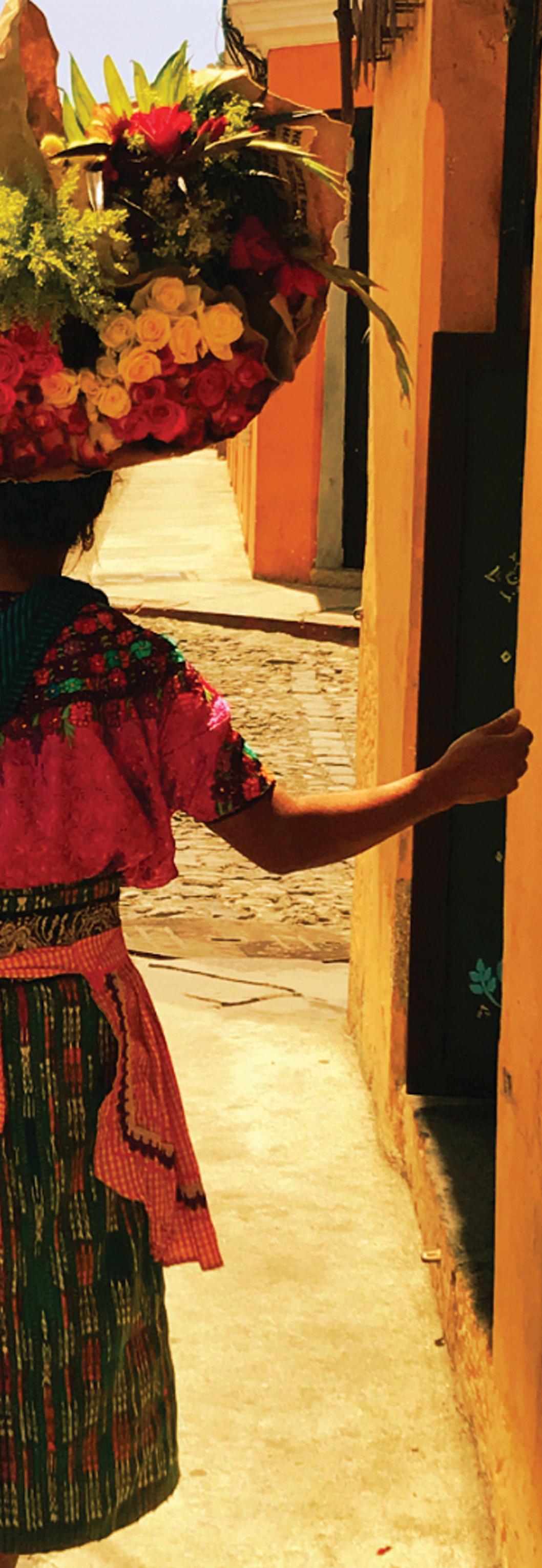
Ri q’uq’ are ri’, ri jun uq’ab’ che’ ri xutas rib’ che ri ukuta’m che ri uche’al kuchararej rib’ pa ri kaqiq’.
El quetzal es una rama que desprendida del tronco de su árbol se arrastra por el aire.
Ri ukayib’al re ri qakem man keqolow taj: xwi keq’elob’ik
Los colores en nuestros tejidos no destiñen: sólo envejecen.
Original Work By Humberto Ak’abal
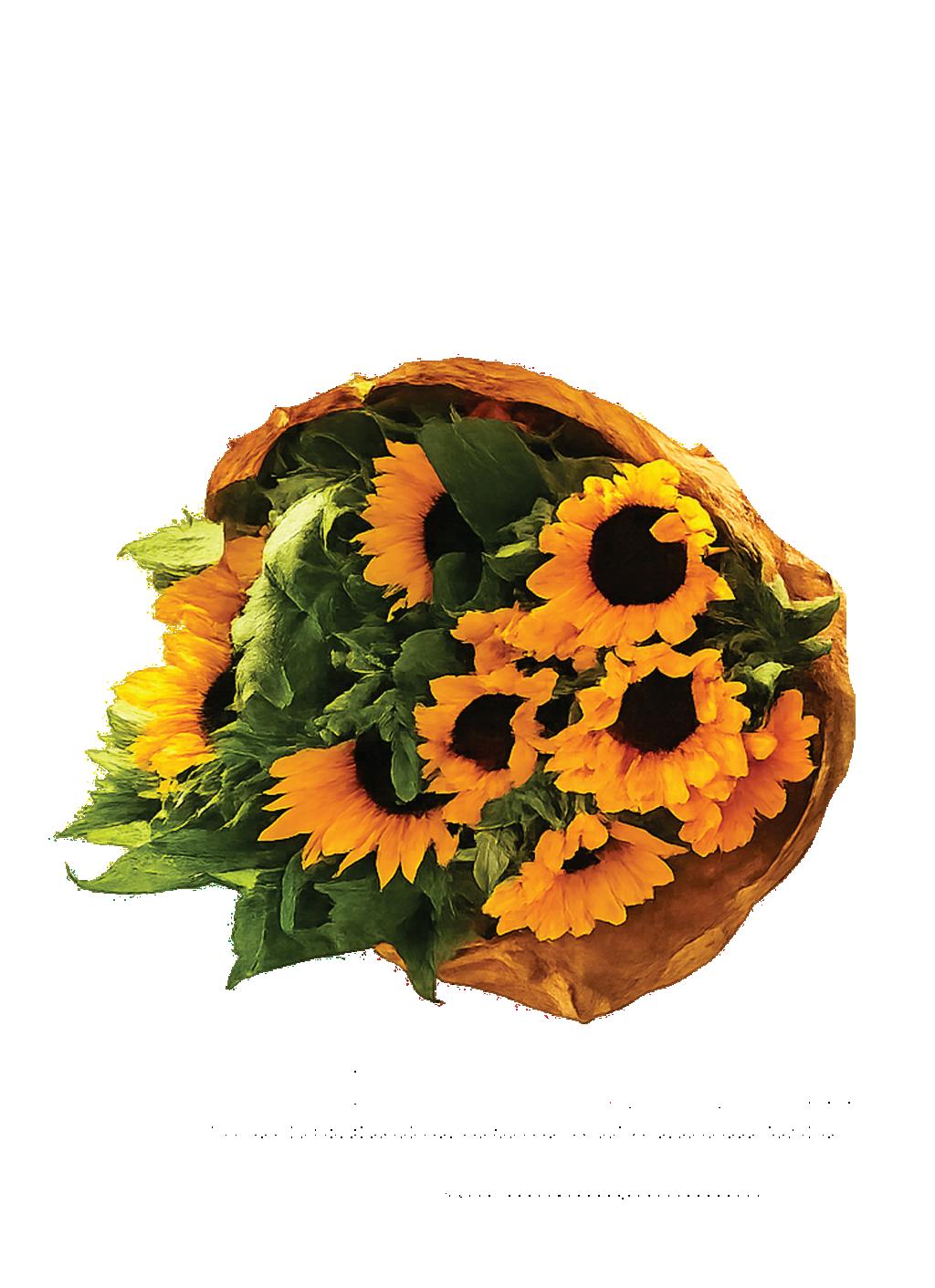
The colors in our fabrics don’t fade: they only age.
Humberto Ak’abal (1952-2019) was a K’iché Maya poet from Guatemala. He wrote in his native language of K’iché, one of more than 20 Mayan languages spoken in Guatemala. He also translated his poems into Spanish.
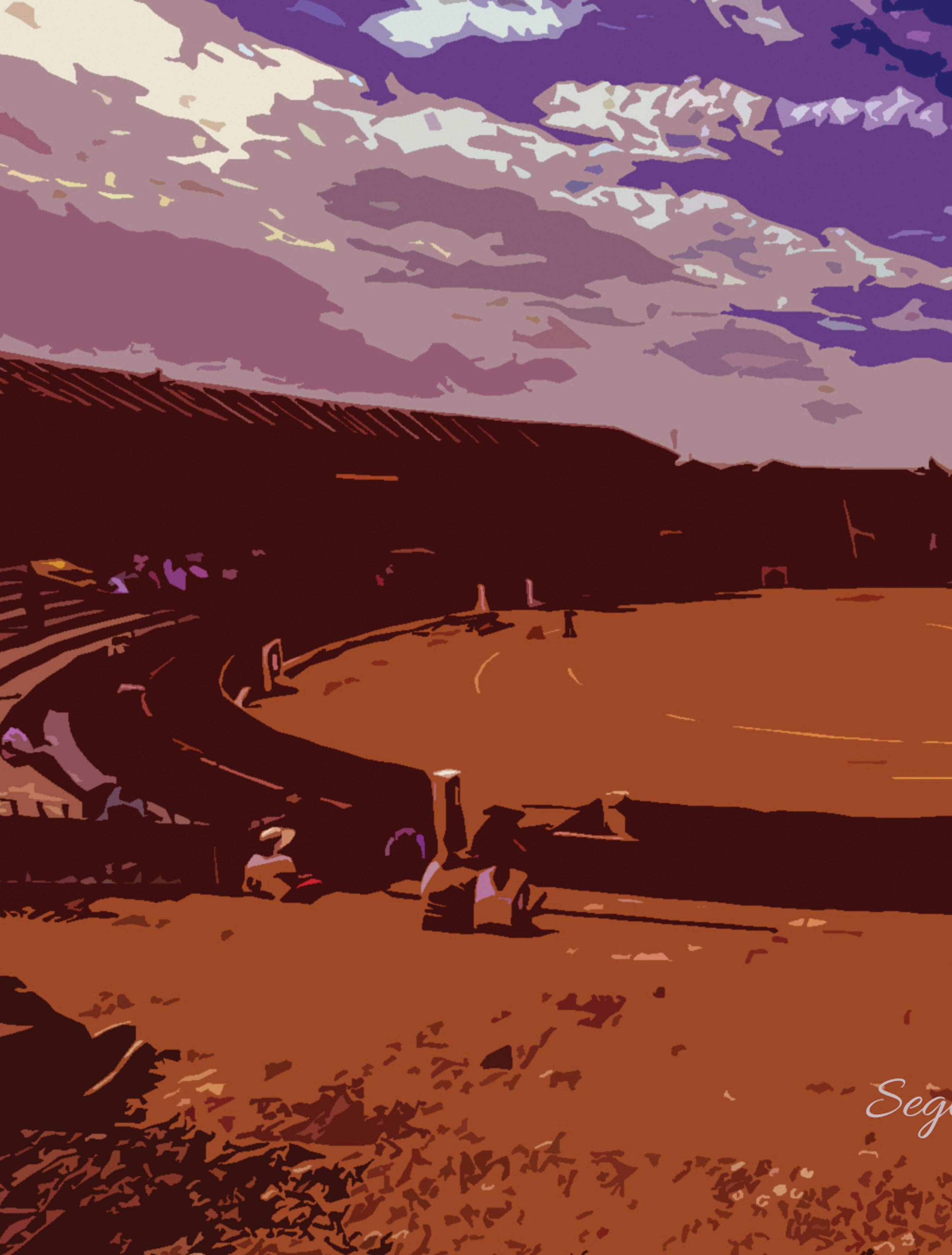
Nace sin público Hierba alta, moscas en los ojos.
Aprende el peso de sus propios cuernos, la tierra, el borde del alambre. Pasan los años sin música.
Su cuerpo se arma: negro, fuerte, duro, listo. Un día se abre la puerta que no conoce.
El sol sobre la arena. Los gritos. El pasodoble, La música que no oyó en el campo. Todo se decide en veinte minutos. Todo queda en veinte minutos.
Las gradas, el matador, la muleta roja, la espada El rojo que no vio en el campo.
La sangre como lluvia en la hacienda, mezclada con la arena blanca.
Al final se cierra la misma puerta pero ahora con público.
nadie recuerda las estaciones que vivió solo.
Su vida, medida por su muerte.
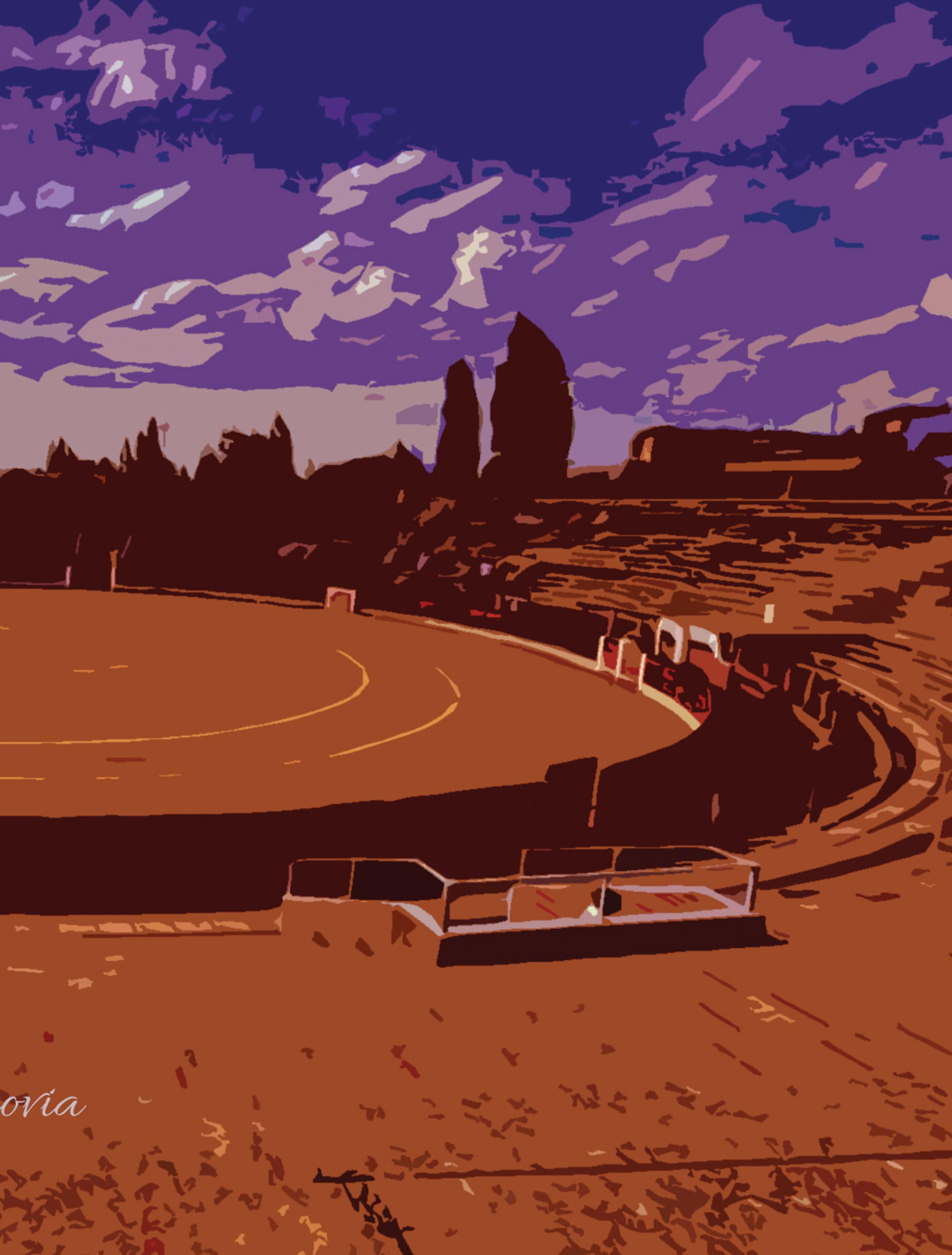
It is born without an audience Tall grass, flies in its eyes.
It learns the weight of its own horns, the earth, the boundaries of the barbed wire. The years pass without music.
Its body is armed: black, strong, hard, ready. One day the gate it does not know opens.
The sun on the sand, the shouts, the pasodoble, the music it never heard on the field.
Everything is decided in twenty minutes. Everything remains in twenty minutes.
The stands, the matador, the red muleta, the sword, The red it did not see in the field.
Blood like rain on the ranch, mixed with the white sand.
At the end the same gate closes, But now with an audience
No one remembers the seasons it lived alone.
Its life, Measured by its death.
No te amo como si fueras rosa de sal, topacio o flecha de claveles que propagan el fuego: te amo como se aman ciertas cosas oscuras, secretamente, entre la sombra y el alma.
Te amo como la planta que no florece y lleva dentro de sí, escondida, la luz de aquellas flores, y gracias a tu amor vive oscuro en mi cuerpo el apretado aroma que ascendió de la tierra.
Te amo sin saber cómo, ni cuándo, ni de dónde, te amo directamente sin problemas ni orgullo: así te amo porque no sé amar de otra manera, sino así de este modo en que no soy ni eres, tan cerca que tu mano sobre mi pecho es mía, tan cerca que se cierran tus ojos con mi sueño.
Original Work
By
Pablo Neruda
I do not love you as if you were a rose of salt, topaz, or an arrow of carnations that spread fire:
I love you as certain dark things are loved, secretly, between the shadow and the soul.
I love you like a plant that does not bloom but carries within itself, hidden, the light of those flowers, and thanks to your love, in darkness in my body lives the tight fragrance that rose from the earth.
I love you without knowing how, or when, or from where,
I love you directly without problems or pride: I love you like this because I know no other way to love, but in this way in which I am not neither are you, so close that your hand upon my chest is mine, so close that your eyes close with my dreams.




As this volume comes to a close, Endurance remains not only a theme but a reflection of the enduring power of student voices, creativity, and thought. Each contribution in this magazine stands as part of a larger literary continuum, one that preserves stories, identities, and artistic expression across time. We proudly submit this work to the Columbia Scholastic Press Association in celebration of literature’s lasting ability to connect humanity through imagination, reflection, and resilience.
–Peter Salame
’28