23 minute read
An Update on Non-Cigarette Nicotine-Containing Products and the Periodontal Patient

An Update on Non-Cigarette Nicotine-Containing Products and the Periodontal Patient
Brendan Keeney, D.D.S.; Ryan Schure, D.D.S., M.Sc. (Perio), F.R.C.D. (C)
ABSTRACT
The adverse general and oral health effects from traditional cigarette smoking are supported by decades of research. However, the use of cigarettes in the United States is on the decline, and current research and literature is relatively lacking with respect to novel nicotine consumption methods. Given the increasing and significant use of non-cigarette nicotine-containing products, such as electronic cigarettes, oral nicotine pouches and hookah pipes, attention from oral healthcare providers is warranted. An understanding of the potential negative periodontal outcomes related to these newer nicotine delivery systems is crucial to properly educating and treating patients today.
Health concerns related to cigarette smoking have been well-documented and published for many decades. In fact, direct warnings from the Surgeon General concerning smoking and the increased risk of cardiovascular and respiratory cancers and diseases have been publicly advertised since the mid-1900s.[1] In the dental literature, associations have also been well-established, with smoking being linked to increases in oral cancers,[2-4] periodontal diseases[5-9] and tooth loss.[10,11]
Specifically, smoking is known to increase both periodontal disease progression and severity, and lead to poorer periodontal-related treatment outcomes.[12-18] Studies have shown the damaging effects nicotine has on human gingival fibroblasts, with exposure inducing cellular apoptosis.[5-9] Nicotine has also been shown to increase the inflammatory response in human periodontal ligament (PDL) cells, through the upregulation of interleukin-β and downstream osteoclastogenesis, leading to bone resorption.[19]
Nicotine may also affect neutrophil function, increasing the release of proteases, and contributing to the progression of periodontal disease.[20] Neutrophils are critical in host immune regulation, and while total neutrophilic blood cell counts remain high in the systemic circulation of smokers, their typical protective characteristics are mitigated in favor of more destructive properties, which, ultimately, accelerate periodontal bone loss.[21] Epigenetic mechanisms could also be at play in nicotine-induced periodontitis, as further research into the dysregulation of certain microRNAs could clarify pathways that result in extensive disease.[19]
While smoking remained popular in mainstream society through the initial propagation of this knowledge, more recently, cigarette smoking has seen diminishing trends among U.S. teens and adults.[12-18] Concurrently, the advent of non-cigarette nicotine-containing products (NCNCPs) has occurred, some heralded as being safer alternatives to cigarettes. Three NCNCPs that have increased usage in the U.S. in the 2000s are electronic cigarettes, oral nicotine pouches (ONP) and hookah. While without tobacco, these products still contain nicotine and subject their users to its harmful effects. For example, ecigarettes and hookah pipes deliver nicotine absorption via inhalation, while the newer oral nicotine pouches allow for direct mucosal absorption.[22,23]
The actual amount of nicotine absorbed varies by product; some electronic cigarettes appear to expose consumers to less nicotine than a cigarette equivalent (approximately 1.54 mg to 2.60 mg per cigarette); however, other devices can deliver the nicotine equivalent of an entire pack of cigarettes (more than 30 mg) with a single cartridge.[24,25] Being the newest product on the market, ONPs have been shown to deliver extremely high concentrations of nicotine, approaching 50 mg per pouch in some instances, which is much higher than what was previously reported by manufacturers.[26]
Nicotine levels from hookah smoking appear to be highly variable based on multiple factors, including different cultural styles of use and inconsistent manufacturing regulations, but studies have shown that a single hookah session can induce a plasma nicotine concentration up to 10 times higher than a cigarette would.[27-29] Knowing this, along with the usage trends, it is prudent for dentists and their teams to understand the effects of NCNCPs on periodontal diseases, as well as the periodontal-related treatment outcomes.
Electronic Cigarettes
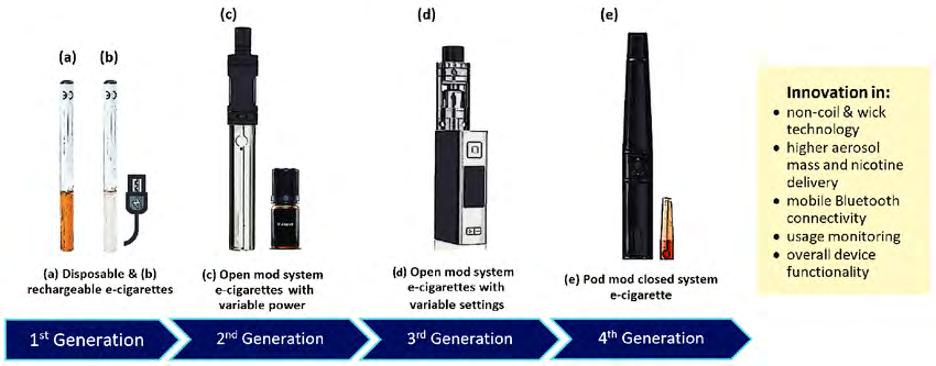
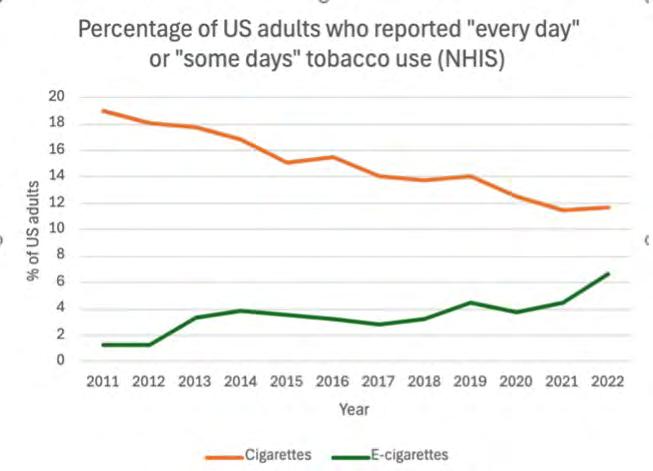
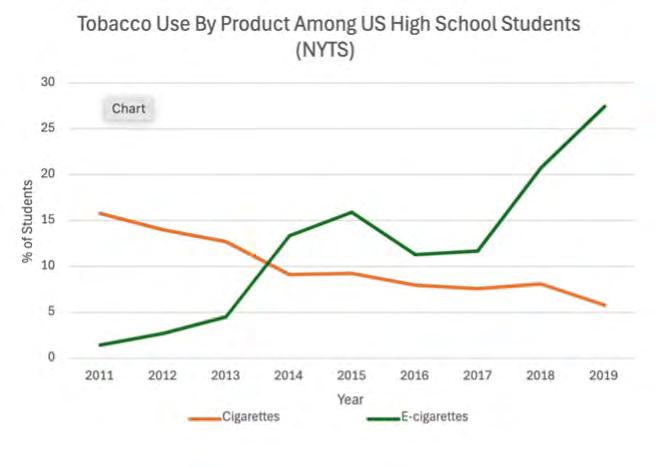
Electronic cigarettes, colloquially known as “e-cigarettes,” “e-cigs” or “vapes,” were introduced to U.S. markets around 2007.[30] First-generation e-cigarettes were designed to mimic the appearance and tactile feeling of a traditional cigarette, garnering the nickname “cig-a-likes” (Figure 1).[31,32] Currently, fifth-generation products are on the market and feature devices with “pods” or cartridges, housing the nicotine-containing liquid.[33] According to the National Youth Tobacco Survey (NYTS) in 2011, the percentage of middle and high school students in the U.S. using electronic cigarettes was just 0.6%, compared to 4.3% for conventional cigarettes.[13] In the most recent 2023 survey data, these percentages were reported as 7.7% and 1.6%, respectively.[18] The usage trend for adults follows a similar trajectory, with e-cigarettes now far outpacing traditional cigarettes (Figures 2, 3).[12-17]
E-cigarettes and Periodontal Diseases
While e-cigarettes eliminate some of the harmful health effects from tobacco smoke, these systems still contain nicotine, along with other dangerous chemicals, such as formaldehyde, acetaldehyde and acrolein, all of which have been implicated in contributing to higher levels of periodontal diseases in users.[34] Additionally, e-cigarettes have an added concern of toxicity from the heating of metal components within the devices, something not considered with cigarette smoking but that also may contribute to disease.[35]
Studies have shown that intraoral blood flow to mucosal tissue is decreased in e-cigarette users.[36] Other studies have analyzed the content of gingival crevicular fluid (GCF). In e-cigarettes users, there is increased expression of receptor activator of NF-kappa B ligand (RANKL) and osteoprotegerin (OPG) in the GCF, in addition to higher levels of inflammatory biomarkers that are commonly seen in periodontitis.[37,38] Research has also demonstrated that the vapor emitted by e-cigarettes can have toxic effects on human epithelial gingival cells, leading to apoptosis.[39] Further, e-cigarette vapors have been shown to have negative effects on the oral microbiome, such as increasing microbial diversity that ultimately leads to an increase in gingival inflammation.[40,41] Cumulatively, these mechanisms all contribute to a noted increased periodontal disease in e-cigarette users.
E-cigarettes and Periodontal Treatment Outcomes
A 2020 study demonstrated that scaling and root planing may be less efficacious in patients using e-cigarettes, as nonusers showed greater improvement in disease parameters following therapy.[42] Moreover, intraoral healing after periodontal surgery can be compromised in these patients. Nicotine from traditional cigarettes is known to induce vasoconstriction, creating a hypoxic tissue environment, which impairs wound healing.[36] In some studies, e-cigarettes have been shown to produce even poorer tissue responses than traditional cigarettes.[43] Patients who use e-cigarettes may also have higher levels of cotinine (a nicotine breakdown product) and can have a more acidic salivary pH, which can alter the oral microbiome to a point where certain periodontopathogenic bacteria can thrive and negatively impact healing.[44,45]
A 2024 study examined e-cigarette users and their healing following palatal punch biopsy procedures. The subjects were 18 to 50 years old and had never smoked traditional cigarettes. Results showed that those using ecigarettes had statistically higher levels of postoperative bleeding and swelling and delayed wound healing, compared to nonsmokers.[46] Thus, e-cigarette use should be avoided in the postoperative healing phase.
Dental implant treatment may also be compromised by e-cigarette use; studies have shown that these patients have increased probing depths, radiographic bone loss and plaque index, in addition to an increased amount of pro-inflammatory cytokines present in the peri-implant sulcus fluid.[47-49] Research has also shown that the accumulation of advanced glycation end products in peri-implant tissues, and the subsequent formation of reactive oxygen species (ROS), is significantly higher in cigarette and e-cigarette smokers compared to nonsmokers, suggesting that e-cigarette use may lead to detrimental and destructive metabolic changes in the soft and hard tissue that supports dental implants.[50]
Oral Nicotine Pouches
ONPs, a newer product also designed to divert from cigarette smoking, are gaining popularity as they are typically marketed as “tobacco-free” or “tobacco leaf-free” products.[51] These products may be useful to current cigarette smokers seeking a healthier alternative, as the lack of a combustion process in ONPs theoretically limits the toxins that users are exposed to.[52] And while some international marketing programs directed at adolescents have encouraged exchanging cigarettes for ONPs, this may not in fact be advantageous.[53] ONPs still contain nicotine, and the concern of addiction remains, especially in younger populations, given the variety of attractive flavors available.
A study from the UK in 2022 showed some harm reduction with the use of ONPs compared to traditional cigarettes, but also recommended putting a ceiling on the nicotine content allowed in these products.[54] Due to an influx of some extraordinarily highly concentrated ONPs, there are countries that have banned the products altogether.[55] In the U.S. in 2024, the FDA issued warning letters and civil money penalty complaints against retailers with suspected involvement in the sale of ONPs to underage individuals.[56] Despite ONPs not fully emerging into the U.S. market until 2016, popular brands such as Swedish-manufactured Zyn, rendered ONPs with a 4% share of the smokeless tobacco market by 2019.[57]
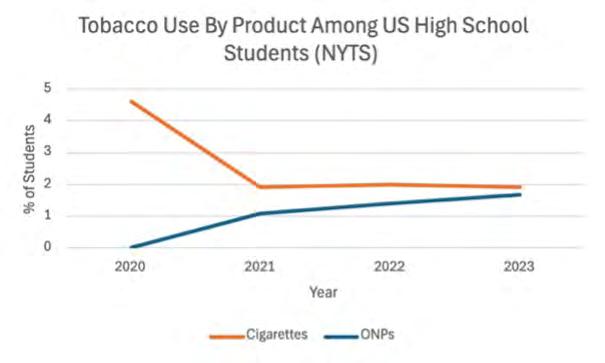
The 2021 National Youth Tobacco Survey (NYTS) revealed that American youth who perceive cigarettes and e-cigarettes to be harmful may be turning to ONPs instead, so it is critical that research continue to examine the health effects of these products, and that dentists are aware of the evidence.[58] Data from the NYTS shows that in 2023, cigarette and ONP use was essentially equal among high school students (Figure 4).[18, 59-61]
ONPs and Periodontal Diseases
Similar to e-cigarettes, ONPs have been increasingly marketed as a safer method of nicotine exposure; however, unlike cigarettes, e-cigarettes or hookah, ONPs produce nicotine absorption directly into the blood via oral mucosa, more similar to traditional smokeless tobacco products.[62] A 2022 study examined oral mucosal health of nicotine pouch users and noted significant mucosal changes and increased salivary biomarkers in this group, but did acknowledge that it is difficult to separate traditional smokeless tobacco users from the novel ONP product users.[63]
A 2024 study specifically looked at ONPs and found that they may lead to higher amounts of periodontopathogenic bacteria in the saliva of users and, thus, could play a role in the progression of periodontal disease.[64]
ONPs and Periodontal Treatment Outcomes
Nicotine dramatically represses cell viability and increases apoptosis in human PDL cells and, thus, ONPs may interfere with periodontal healing, where regeneration of PDL is crucial.[65] A 2022 study tested the effects of a multitude of different flavors of ONPs on human gingival epithelial cells. It was determined that many nicotine pouch flavors resulted in higher levels of inflammation and ROS production, in addition to increased cytokine production, suggesting that chronic use of flavored ONPs is likely to cause systemic and local toxicological responses that would affect oral healing.[66] Therefore, the use of these products should be avoided when periodontal healing is required.
Hookah
Hookah, also known as water pipe, has collected many different names over the years and in different cultures. Hookah has been around much longer than e-cigarettes, probably over 1,000 years, originating in India, moving through the Middle East and gaining popularity in the Western Hemisphere more recently.[27] A 2017 study demonstrated that the 15- to 34-year-age group had the highest percentage of its members holding the perception that hookah is less harmful than cigarettes, and, predictably, this age group contained the highest percentage of current or ever hookah users.[67]
A 2022 study showed a similar connection between hookah perception and prevalence of use in American youth.[68] There has been an overall uptick in hookah use in the U.S. since the late 1900s, particularly among young adults. In a study examining hookah use among American college students from 2008 to 2009, hookah was reported as the second most common form of tobacco use, behind only cigarettes.[69] By 2015, a study from California revealed
that 16% of college students reported use of hookah in the past 30 days, compared to just 12% for cigarettes.[70] Thus, current trends and attitudes regarding hookah should be of concern to oral health professionals.
Hookah and Periodontal Diseases
The idea that hookah smoking is healthier than cigarette smoking, from a periodontal perspective, has been proven false. Studies have shown negative outcomes with respect to mean periodontal bone height and prevalence of vertical bone defects in cigarette smokers and hookah smokers compared to nonsmokers.[71,72] Another study, from 2015, looked at the gingival health of both cigarette and hookah smokers. Like the earlier findings, the hookah smoking group had a higher prevalence of periodontal disease indicators compared to the nonsmoking group, and was comparable to the cigarette smoking group.[73] Other studies have confirmed that those using hookah experience greater marginal bone loss and have more missing teeth, compared to nonsmokers.[74]
A 2024 study attempted to compare the oral health of different types of smokers (e-cigarettes, traditional cigarettes and hookah). Interestingly, it found that self-reported oral symptoms, such as taste changes and bad breath, were least frequent among hookah smokers, perhaps because hookah smokers tend to smoke less frequently.[75] However, hookah smokers showed a significant amount of cellular damage, even more so than e-cigarette smokers. In fact, hookah users showed the most significant amount of cellular damage of all study groups, including traditional cigarettes, as determined by hyperchromatism and increased nuclear:cytoplasmic ratio.[75] This likely contributes to the higher levels of periodontal diseases seen in users.
Hookah and Periodontal Treatment Outcomes
Sparse research has been conducted considering the effects of hookah smoking on nonsurgical periodontal treatments but, nonetheless, hookah appears to have deleterious effects on periodontal surgery outcomes, similar to other forms of smoking.[76,77] For example, hookah smoking can impact the success of dental implants, with patients demonstrating increased peri-implant soft-tissue inflammation and crestal bone loss during healing.[77] Hookah smoking (as well as cigarette and e-cigarette smoking) was shown to increase expression of RANKL and OPG in the GCF, inflammatory markers related to periodontal disease and limiting oral healing.[37] Therefore, patients who smoke hookah should be informed of possible impaired healing and poorer outcomes after periodontal surgery.
Conclusions
While cigarette smoking is on the decline in the U.S., the use of non-cigarette nicotine-containing products (NCNCPs) is increasing; therefore, an understanding of their impact on oral health becomes extremely important. E-cigarettes, ONPs and hookah all contain nicotine and can produce similar, or even more severe, negative effects, compared to traditional cigarettes. Therefore, it is critical for oral health professionals to be aware of and monitor their patients’ nicotine consumption habits, regardless of the modality of intake.
It may be beneficial to broaden typical patient history questions such as “Do you smoke cigarettes or marijuana?” to include questions such as “Do you currently use any nicotine-containing products, including but not limited to cigarettes, e-cigarettes, nicotine pouches and/or hookah?” to ensure comprehensive screening. This will allow professionals to properly educate and inform their patients. Further, it would be prudent for the oral health professional to recommend that the patient stop using NCNCPs, similar to the smoking cessation strategies currently employed. Depending on the practitioner, this may include things like patient education, referral to the patient’s primary care provider or local organization (i.e., New York State Quitline), prescription of pharmacotherapy and/or follow-up.
As NCNCPs continue to rise in popularity, more research is required to fully understand their consequences. For example, the negative impact of nicotine on periodontal diseases may differ based on the mechanism of absorption (i.e., inhalation versus mucosal absorption), or if tobacco is included or not (i.e., traditional chewing tobacco versus ONP products). However, from the literature available, there are clear increases in periodontal disease parameters and decreases in healing capabilities, resulting in worse treatment outcomes for patients using NCNCPs. While patients may view NCNCPs as a safer alternative to cigarettes, from a periodontal perspective at least, there appears to be little difference in the deleterious effects.
The authors declare no conflict of interest in the preparation of this manuscript. Queries about this article can be sent to Dr. Keeney at brendankeeney52@gmail.com.

REFERENCES
1. Hall W. The 1964 US Surgeon General’s report on smoking and health. Addiction 2022; 117(12): 3170-3175.
2. Chattopadhyay I, Verma M, Panda M. Role of oral microbiome signatures in diagnosis and prognosis of oral cancer. Technol Cancer Res Treat 2019;18:1533033819867354.
3. Petersen PE. Oral cancer prevention and control—the approach of the World Health Organization. Oral Oncol 2009;45(4-5):454-60.
4. Tomar SL, et al. Oral health effects of combusted and smokeless tobacco poducts. Adv Dent Res 2019;30(1):4-10.
5. Johnson GK, Slach NA. Impact of tobacco use on periodontal status. J Dent Educ 2001;65(4):313-21.
6. Johnson GK, Hill M. Cigarette smoking and the periodontal patient. J Periodontol 2004;75(2):196-209.
7. Leite FRM, et al. Effect of smoking on periodontitis: a systematic review and meta-regression. Am J Prev Med 2018;54(6):831-841.
8. Chaffee BW, et al. Oral and periodontal implications of tobacco and nicotine products. Periodontol 2000 2021;87(1):241-253.
9. Apatzidou DA. The role of cigarette smoking in periodontal disease and treatment outcomes of dental implant therapy. Periodontol 2000 2022;90(1):45-61.
10. Hanioka T, et al. Causal assessment of smoking and tooth loss: a systematic review of observational studies. BMC Public Health 2011;11:221.
11. Souto MLS, et al. Effect of smoking cessation on tooth loss: a systematic review with meta-analysis. BMC Oral Health 2019;19(1):245.
12. National Center for Health Statistics. 2011-22; Available from: https://www.cdc.gov/nchs/nhis/ data-questionnaires-documentation.htm.
13. Tobacco product use among middle and high school students—United States, 2011 and 2012. MMWR Morb Mortal Wkly Rep 2013;62(45):893-7.
14. Arrazola RA, et al. Tobacco use among middle and high school students—United States, 2013. MMWR Morb Mortal Wkly Rep 2014;63(45):1021-6.
15. Arrazola RA, et al. Tobacco use among middle and high school students—United States, 20112014. MMWR Morb Mortal Wkly Rep 2015;64(14):381-5.
16. Dai H, Levanthal AM. Prevalence of e-cigarette use among adults in the United States 2014-2018. JAMA 2019;322(18):1824-1827.
17. Wang TW, et al. Tobacco product use and associated factors among middle and high school students—United States, 2019. MMWR Surveill Summ 2019;68(12):1-22.
18. Birdsey J, et al. Tobacco product use among U.S. middle and high school students—National Youth Tobacco Survey, 2023. MMWR Morb Mortal Wkly Rep 2023;72(44):1173-1182.
19. Du A, et al. MicroRNA expression profiling of nicotine-treated human periodontal ligament cells. J Oral Sci 2019;61(2):206-212.
20. Palmer RM, et al. Mechanisms of action of environmental factors--tobacco smoking. J Clin Periodontol 2005;32 Suppl 6:180-95.
21. Johnson GK, Guthmiller JM. The impact of cigarette smoking on periodontal disease and treatment. Periodontol 2000 2007;44:178-94.
22. Ramôa CP, Eissenberg T, Sahingur SE. Increasing popularity of waterpipe tobacco smoking and electronic cigarette use: implications for oral healthcare. J Periodontal Res 2017;52(5):813-823.
23. J MJ, Weke A, Holliday R. Nicotine pouches: a review for the dental team. Br Dent J 2023;235(8):643-646.
24. Goniewicz ML, et al. Nicotine levels in electronic cigarettes. Nicotine Tob Res 2013;15(1):158-66.
25. Prochaska JJ, Vogel EA, Benowitz N. Nicotine delivery and cigarette equivalents from vaping a JUULpod. Tob Control 2022;31(e1): e88-e93.
26. Mallock N, et al. Levels of nicotine and tobacco-specific nitrosamines in oral nicotine pouches. Tob Control 2024;33(2):193-199.
27. Qasim H, et al. The effects of hookah/waterpipe smoking on general health and the cardiovascular system. Environ Health Prev Med 2019;24(1):58.
28. Rastam S, et al. Comparative analysis of waterpipe and cigarette suppression of abstinence and craving symptoms. Addict Behav 2011;36(5):555-9.
29. Neergaard J, et al. Waterpipe smoking and nicotine exposure: a review of the current evidence. Nicotine Tob Res 2007;9(10):987-94.
30. Wang L, et al. A review of toxicity mechanism studies of electronic cigarettes on respiratory system. Int J Mol Sci 2022;23(9).
31. Protano C, et al. Environmental electronic vape exposure from four different generations of electronic cigarettes: airborne particulate matter levels. Int J Environ Res Public Health 2018;15(10).
32. Camacho OM, et al. Evidence from the scientific assessment of electronic cigarettes and their role in tobacco harm reduction. Contributions to Tobacco & Nicotine Research 2021;30(2):63-108.
33. Tillery A, et al. Characterization of e-cigarette users according to device type, use behaviors, and self-reported health outcomes: findings from the EMIT study. Tob Induc Dis 2023;21:159.
34. Almeida-da-Silva CLC, et al. Effects of electronic cigarette aerosol exposure on oral and systemic health. Biomed J 2021;44(3):252-259.
35. Zhang Q, Wen C. The risk profile of electronic nicotine delivery systems, compared to traditional cigarettes, on oral disease: a review. Front Public Health 2023;11:1146949.
36. Ghazali AF, et al. Oral health of smokers and e-cigarette users: a case-control study. JInt Dent Med Res 2018;11(2):428-432.
37. Ibraheem WI, et al. Comparison of RANKL and osteoprotegerin levels in the gingival crevicular fluid of young cigarette- and waterpipe-smokers and individuals using electronic nicotine delivery systems. Arch Oral Biol 2020;115:104714.
38. Ye D, et al. Inflammatory biomarkers and growth factors in saliva and gingival crevicular fluid of e-cigarette users, cigarette smokers, and dual smokers: a pilot study. J Periodontol 2020;91(10):1274-1283.
39. Ramenzoni LL, et al. Cytotoxic and inflammatory effects of electronic and traditional cigarettes on oral gingival cells using a novel automated smoking instrument: an in vitro study. Toxics 2022;10(4).
40. Adam M, Hasan R. The effects of e-cigarette use on the oral microbiome. Evid Based Dent 2023;24(4):153-154.
41. Yang I, et al. Oral microbiome of electronic cigarette users: a cross-sectional exploration. Oral Dis 2023;29(4):1875-1884.
42. Al-Hamoudi N, et al. Effect of scaling and root planing on the expression of anti-inflammatory cytokines (IL-4, IL-9, IL-10, and IL-13) in the gingival crevicular fluid of electronic cigarette users and non-smokers with moderate chronic periodontitis. J Periodontal Implant Sci 2020;50(2):74-82.
43. Kumar S, Shlossman M. Does e-cigarette use affect response to non-surgical periodontal therapy? Evid Based Dent 2023;24(4):179-180.
44. Hasan NWM, et al. Comparative effects of e-cigarette smoking on periodontal status, salivary pH, and cotinine levels. BMC Oral Health 2024; 24(1):861.
45. Liu J, et al. A pilot study on oral microbiome in electronic cigarettes consumers versus traditional cigarettes smokers. Folia Microbiol (Praha) 2024.
46. Majid OW, Preliminary evidence of impaired oral wound healing in e-cigarette users: a call for perioperative vaping cessation. Evid Based Dent 2024; 25(2):63-64.
47. Al-Aali KA, et al. Peri-implant parameters, tumor necrosis factor-alpha, and interleukin-1 beta levels in vaping individuals. Clin Implant Dent Relat Res 2018;20(3):410-415.
48. AlQahtani MA, et al. Clinical peri-implant parameters and inflammatory cytokine profile among smokers of cigarette, e-cigarette, and waterpipe. Clin Implant Dent Relat Res 2018;20(6):1016-1021.
49. Youssef M, et al. The effect of electronic cigarette use on peri-implant conditions in men: a systematic review and meta-analysis. Oral Surg Oral Med Oral Pathol Oral Radiol 2023;135(4):492-500.
50. D’Ambrosio F, et al. Periodontal and peri-implant health status in traditional vs. heat-not-burn tobacco and electronic cigarettes smokers: a systematic review. Dent J (Basel) 2022;10(6).
51. Robichaud MO, Seidenberg AB, Byron MJ. Tobacco companies introduce ‘tobacco-free’ nicotine pouches. Tob Control 2020;29(e1):e145-e146.
52. Chapman F, et al. A randomised, open-label, cross-over clinical study to evaluate the pharmacokinetic, pharmacodynamic and safety and tolerability profiles of tobacco-free oral nicotine pouches relative to cigarettes. Psychopharmacology (Berl) 2022;239(9):2931-2943.
53. Wiener RC. Association of smokeless tobacco use and smoking in adolescents in the United States: an analysis of data from the Youth Risk Behavior Surveillance System survey, 2011. J Am Dent Assoc 2013;144(8):930-8.
54. Azzopardi D, Liu C, Murphy J. Chemical characterization of tobacco-free “modern” oral nicotine pouches and their position on the toxicant and risk continuums. Drug Chem Toxicol 2022;45(5):2246-2254.
55. Kondratieva K. Russian Duma passes bill banning tobacco-free white pouches. 2020 [cited 2024 August 5]; Available from: https://tobaccointelligence.com/russia-gives-green-light-to-ban-tobacco-free-white-pouches/.
56. FDA Issues Warning Letters to and Files Civil Money Penalty Complaints Against Retailers for Underage Sales of ZYN Nicotine Pouches. 2024 [cited 2024 August 6]; Available from: https:// www.fda.gov/tobacco-products/ctp-newsroom/fda-issues-warning-letters-and-files-civil-money-penalty-complaints-against-retailers-underage-sales.
57. Delnevo CD, et al. Examining market trends in smokeless tobacco sales in the United States: 2011-2019. Nicotine Tob Res 2021;23(8):1420-1424.
58. Speciale Z, et al. An analysis of nicotine pouch use by middle school and high school students surveyed by the National Youth Tobacco Survey in 2021 and a review of the literature. J Prim Care Community Health 2023;14:21501319231169994.
59. Gentzke AS, et al. Tobacco product use among middle and high school students—United States, 2020. MMWR Morb Mortal Wkly Rep 2020; 69(50): p. 1881-1888.
60. Gentzke AS, et al. Tobacco product use and associated factors among middle and high school students - National Youth Tobacco Survey, United States, 2021. MMWR Surveill Summ 2022;7(5):1-29.
61. Park-Lee E, et al. Tobacco product use among middle and high school students—United States, 2022. MMWR Morb Mortal Wkly Rep 2022;71(45):1429-1435.
62. Ye D, Rahman I. Emerging oral nicotine products and periodontal diseases. Int J Dent 2023 2023:9437475.
63. Miluna S, et al. The correlation of Swedish snus, nicotine pouches and other tobacco products with oral mucosal health and salivary biomarkers. Dent J (Basel) 2022;10(8).
64. Miluna-Meldere S, et al. The effects of nicotine pouches and e-cigarettes on oral microbes: a pilot study. Microorganisms 2024;12(8).
65. Ge X, et al. Impact of nicotine on the interplay between human periodontal ligament cells and CD4+ T cells. Hum Exp Toxicol 2016;35(9):983-90.
66. Shaikh SB, et al. Flavor classification/categorization and differential toxicity of oral nicotine pouches (ONPs) in oral gingival epithelial cells and bronchial epithelial cells. Toxics 2022;10(11).
67. Majeed BA, et al. Prevalence and harm perceptions of hookah smoking among U.S. adults, 20142015. Addict Behav 2017;69:78-86.
68. Kuk AE, et al. The effect of perceptions of hookah harmfulness and addictiveness on the age of initiation of hookah use among Population Assessment of Tobacco and Health (PATH) youth. Int J Environ Res Public Health 2022;19(9).
69. Primack BA, et al. Waterpipe smoking among U.S. university students. Nicotine Tob Res 2013;15(1)29-35.
70. Allem JP, Unger JB. Emerging adulthood themes and hookah use among college students in Southern California. Addict Behav 2016;61:16-9.
71. Baljoon M, et al. Smoking and vertical bone defects in a Saudi Arabian population. Oral Health Prev Dent 2005;3(3):173-82.
72. Natto S, Baljoon M, Bergström J. Tobacco smoking and periodontal bone height in a Saudi Arabian population. J Clin Periodontol 2005;32(9):1000-6.
73. Bibars AR, et al. The effect of waterpipe smoking on periodontal health. Oral Health Prev Dent 2015;13(3):253-9.
74. Javed F, et al. Comparison of clinical and radiographic periodontal status between habitual water-pipe smokers and cigarette smokers. J Periodontol 2016;87(2):142-7.
75. Harrandah A, et al. Effect of different types of smoking on oral health and on cellular changes in oral mucosa. Saudi Dent J 2024;36(6):880-886.
76. Akram Z, Javed F, Vohra F. Effect of waterpipe smoking on peri-implant health: a systematic review and meta-analysis. J Investig Clin Dent 2019;10(3):e12403.
77. Alahmari F, et al. Soft tissue status and crestal bone loss around conventionally-loaded dental implants placed in cigarette and waterpipe (narghile) smokers: 8-years’ follow-up results. Clin Implant Dent Relat Res 2019;21(5):873-878.

Brendan Keeney, D.D.S., is a graduate of the University at Buffalo School of Dental Medicine and holds a Bachelor of Science degree in Biology from Boston College. He currently is a postgraduate dental resident at SUNY Upstate Medical University, Syracuse NY.

Ryan Schure, D.D.S., M.Sc. (Perio), F.R.C.D.(C) is a clinical assistant professor in periodontology at the University at Buffalo School of Dental Medicine. He maintains a private practice limited to periodontics and implant dentistry in Toronto, Canada.