


Ego thrives in a world disinterested in the ordinary. It feeds on spectacle, on dissent, on the promise that every person, institution, and nation must become exceptional or risk becoming irrelevant. We are taught to optimize, defend and market the self, and measure its worth against ever-more-punishing hierarchies of success. But ego is not only a hunger for exceptionality or praise. It is the deeper refusal to accept limits: moral, political, intellectual, or collective. In this special feature, we asks what happens when the pursuit of distinction becomes a governing principle of public life, and whether our society, sustained by extremes, is still capable of a shared purpose.
Ego can be dangerous when backed by a badge. Courtesy cards, distributed by police officers to friends, relatives, and favored insiders, make traffic enforcement optional for those with proximity to power: One driver receives the full force of the law, while another flashes a small plastic card and drives away. In “No Ticket to Ride,” Madeleine Connery argues that these cards are evidence of a police culture that treats loyalty as superior to legality. The result is a two-tiered justice system; the “law enforcement family” protects its own circle, while asking everyone else to obey the rules from which it quietly exempts itself.
Egos have also increasingly challenged objectivity in the modern media landscape. While the digital age has democratized access to information, it has also promoted a “vanity economy” that Russia Today (RT), a statebacked network that regularly fills its airtime with falsehoods, has expertly employed to recruit Western figures. As Julianna Muzyczyszyn argues in “Truth Be Sold,” RT exploits the egos of washed-up television personalities and young Western journalists, promising them unusually generous screen time and salaries in exchange for their willing participation in disseminating ideological disinformation.

Ego can also determine who escapes and who absorbs blame.
In “The Fall Girls,” Kayla Morrison argues that Trump’s dismissal of female cabinet members such as Kristi Noem and Pam Bondi reveals the persistence of the “glass cliff”: Women are elevated into leadership during moments of controversy, only to become the public faces of failures designed above them. Their appointments gesture toward inclusion, but ultimately preserve the authority and protect the egos of the men who were the architects of those crises. Sometimes, ego is what delineates belonging. In “Members Only,”

through opaque bureaucracy, retroactive revocation, and the deliberate production of statelessness. For Kuwait, national ego manifests in the belief that a state is entitled to trade human lives for the comfort of those already within the nation’s bounds.
But egos may not just be personal vices, and instead may even be systemically embedded in our understanding of knowledge itself. Evan Tao argues in “Are You Smart?” that egos, characterized by the Western idolatry of the “lone thinker,” obstruct the fundamentally social pursuit of human intelligence. Human cognition is more than just that of the Enlightenmentrooted “egocentric model of intelligence,” which mistakenly rewards the individual genius and paints a cultural image where exceptional intelligence is synonymous with the antisocial. In reality, intelligence is a shared construction, built through collective effort as opposed to lonely strokes of brilliance, and it ought to be recognized as such.
Egos permeate every level of society, from the individual to the collective, and span all walks of life. We offer this special feature as an invitation to reflect on the systemic ‘egocentricity’ that pours into our lives and as a challenge to look far beyond ourselves when considering the path forward. This ego is not always a loud, outward arrogance: Sometimes, it is the assumptions that quietly shape our perspectives. Thus, we encourage you to explore how the idolatry of the self may hinder our ability to create a better world together.
Editors in Chief
Mitsuki Jiang
Julianna Muzyczyszyn
Chiefs of Staff
Tiziano Pardo
Guilherme Sequeira
Chief Operating Officers
Siyuan (Michael) Shui
Will Thomas
Managing Editors
Brynn Manke
Tess Naquet-Radiguet
Isabella Xu
Chief Copy Editors
Vivian Chute
Nicholas Clampitt
Interviews Directors
Ciara Leonard
Raghav Ramgopal
Data Directors
Reina Jo
Aavin Mangalmurti
Creative Chief of Staff
Kierra Reese
Creative Directors
Bath Hernández
Natalie Ho
Fah Prayottavekit
Multimedia Directors
Clara Baisinger-Rosen
Caroline Cordts
Leyad Zavriyev
Web Director
Maja Mishevska
Puzzles Director
Matthew DaSilva
Zander Blitzer
Alexandros Diplas
Allison Meakem
Gabriel Merkel
Tiffany Pai
Hannah Severyns
Mathilda Silbiger
Alexandros Diplas ’14
Todd Harris ‘14.5
Oliver Hudson ’14
Haakim Nainar ’14
Benjamin Wofford ’14
Interviews Directors
Ciara Leonard
Raghav Ramgopal
Deputy Interviews Directors
Charlotte Peterson
Rishabh Rao
Sofia Segarra
Interviews Associates
Aleksandra Pakhomova
Amish Jindal
Anita Sosa
Aran Basu
Auden Goldblatt
Aurna Mukherjee
Charles Lebwohl
Christina Li
Gabriella Miranda
Jack DiPrimio
Matteo Papadopoulos
Michael Lau
Nava Litt
Riyana Srihari
Roark Petermann
Rutva Brahmbhatt
Samrah Syed
Sarik Gupta
Vanessa Tao
Wilber Anterola
Zern Hee Chua
Data Directors
Reina Jo
Aavin Mangalmurti
Data Associates
Anna Wong
Brandon Yu
David Dahlback Lubin
Jiangyi (Joy) Zou
Joshua Reed
Lucca Bertuccelli
Loureiro
Romilly Thomson
Sena Williams
Srijith Rangan
Zoe Weissman
Data Designers
Carys Lam
Web Director
Maja Mishevska
Puzzles Director
Matthew DaSilva
Web Designers
Casey Gao
Michelle Ee
Puzzles Associates
Ana Vissicchio
Auden Goldblatt
Bruce Zhong
Lucy Bryce
Marissa Scott
Zoe Weissman
Chief Copy Editors
Vivian Chute
Nicholas Clampitt
Managing Copy Editors
Annika Melwani
Daniel Shin
Natalie Tse
Copy Editors
Charlotte Peterson
Daniel Mun
Eva Dillon
Indy Nijjar
Jason Hwang
Kaylee Gilbert
Marion Poirot
Michaela Hanson
Rachel Loeb
Rachel Sang
Tanvi Mittal
Multimedia Directors
Clara Baisinger-Rosen
Caroline Cordts
Leyad Zavriyev
Multimedia Producers
Acadia Phillips
Auden Goldblatt
Becky Montes
Daniel Mun
Danielle Deculus
Ella Podurigiel
Ellie Wu
Erin Ozyurek
Ingrid Järvi
Izabella Piatkowski
Josué Morales
Lucas Da Silva
Lucy Previn
Lynn Nguyen
Maison Teixeira
Olivia Wang
Solomon Goluboff-Schragger
Thomas Foley
Chief Operating Officers
Siyuan (Michael) Shui
Will Thomas
Business Associates
Alice Kovarik
Arjun Puri
Becky Montes
Francisco Ramirez
Mariana Copeland Celaya
Marion Poirot
Meredith Turner
Remi Takahashi
Managing Editors
Brynn Manke
Tess Naquet-Radiguet
Isabella Xu
Senior Editors
Ava Rahman
Madeleine Connery
Sara Amir
Chris Donnelly
Editors
Allan Wang
Arjun Puri
Charlie Getman
Christina Charie
Emma Phan
Fabiana Conway
Gus LaFave
Jordan Lac
Joshua Stearns
Julia Kostin
Matthew MacKay
Meruka Vyas
Sabine Cladis
Zern Hee Chua
High School Program Directors
Ava Rahman
Madeleine Connery
Creative Chief of Staff
Kierra Reese
Creative Director of Design
Natalie Ho
Creative Director of Art
Bath Hernández
Creative Director of
Public Relations
Fah Prayottavekit
Design Directors
Anna Wang
Dongha Kwak
Yeonjai Song
Editorial Designers
Aahana Kothari
Devika Govindarao
Lia Kim
Marie You
Rhea Anand
Sam Ahn
Seoyoung Yoon
Sheeon Chang
Tiffany Tsan
Public Relations Designers
Kyuwon Park
Jordan Kinley
Cover Artist Ranran Ma
Staff Writers
Aaditya Das Narayan
Alexia Lara
Alina Calix-Martinez
Audrey Gmerek
Ben Hader
Benjamin Daniel
Charles Burke
Charlotte Park
Chiupong Huang
David Macario
Emily Pan
Emily Schreiber
Evan Hamaoka
George Weiler
Isabella Collins
Isaiah Sohn
Kayla Morrison
Kimaya Balendra
Lauren Kozmor
Lev Kotler-Berkowitz
Marco Schoellerman
Mia Reyn
Michaela Hanson
Nainika Sompallie
Natalia Baños Delgado
Nate Barkow
Nik Greborunis
Rachel El Grably
Remi Takahashi
Shant Ispendjian
Sofia Segarra
Sonia Chu
Sonya Rashkovan
Tom Yi
Art Directors
Larisa Kachko
Leslie Mateus
LuJia Liao
York Mgbejume
Illustrators
Airien Ludin
Amelia Jeoung
Angelina So
Anneke Beth
Awele Chukwumah
Christina Xu
Cora Zeng
Elizabeth Chew
Ellie Lin
Emily Chao
Emily McShane
Haley Maka
Jacquelyn Rich
Jiwon Lim
Kexin Huang
Lily Engblom-Stryker
LuJia Liao
Lydia Smithey
Mia Cheng
Mot Tuman
Oli Bartsch
Orla Maxwell
Paul Li
Ranran Ma
Rokia Whitehouse
Shay Salmon
Sofia Schreiber
Wanxin Li
Kyuwon Park
H7198, a seemingly inconsequential Rhode Island bill that would reduce the maximum sentence for a misdemeanor by one day, actually serves as a symbol of state resistance to federal immigration enforcement
by Charlie Getman ’29, a International and Public Affairs and History concentrator and Editor for BPR illustration by Orla Maxwell ’27, an Illustration major
at RISD and Illustrator for BPR
When we think of clashes between state and federal power, we tend to think of dramatic confrontations from our Advanced Placement US History textbooks like President Dwight Eisenhower sending federal troops to Little Rock in 1957 to enforce school desegregation. But modern conflicts between states and Washington, D.C. tend to be less grandiose: In Rhode Island, the latest fight may come down to just one day. As US Immigration and Customs Enforcement (ICE) expands its reach and federal officials push the limits of aggressive immigration enforcement, Rhode Island lawmakers are once again considering the Act Relating to Criminal Offenses, also known as H7198, a bill that would reduce the maximum prison sentence for a misdemeanor from 365 days to 364. Although seemingly minor, this change would help protect vulnerable visa holders from detention or deportation. The current one-year maximum sentence allows a federal immigration enforcement mechanism to be triggered, under which minor convictions punishable by a year or more in prison can serve as grounds for detention or deportation under the Immigration and Nationality Act. Immigrants lack the protection that citizenship offers and thus have the most to gain from this bill.
Because the change is so precise, even moderate legislatures lacking the political will to pass statewide sanctuary legislation are willing to make it. Rhode Island’s 364-day bill and others like it suggests that the most meaningful resistance to federal immigration enforcement will not come from the country’s progressive strongholds, but from more moderate statehouses willing to legislate one day at a time.
Take, for example, the story of Eva Mendes, a 48-year-old green card holder from Woonsocket, Rhode Island, who was detained in immigration custody for three months upon reentering the country this year due to a minor shoplifting charge nearly 15 years earlier. Eva pled guilty to this charge in 2009 and had already paid the subsequent fine but that did not matter. The maximum sentence she could have been given was one year, which was grounds enough for her detention in 2025. One day the difference between 364 and 365 was enough to separate Eva from her family.
Rhode Island is far from the first state to make this change. Seven states have already capped certain misdemeanor sentences at 364 days. Progressive states such as New York, California, and Oregon adopted this measure
“Rhode Island’s 364day bill and others like it suggests that the most meaningful resistance to federal immigration enforcement will not come from the country’s progressive strongholds, but from more moderate statehouses willing to legislate one day at a time.”
“When federal enforcement fails to make a distinction between violent criminals and green card holders with decade-old shoplifting charges, states have a moral obligation to protect their immigrant communities.”
to protect their immigrant communities from disproportionate punishments years before President Donald Trump’s second term. The public response to ICE’s actions, however, has pushed even moderate state legislatures leftward on the issue of immigration reform.
Rhode Island has a Democratic supermajority in the House and Senate, but the label of ‘Democrat’ means less than one may think. The legislature’s “big-tent” coalition is full of moderates who would run as Republicans in other states, routinely stalling more progressive legislation. Therefore, Rhode Island’s decision to advance the 364-day bill in this legislative session carries even more weight. It signals that even moderate legislators are now willing to stand up to the administration on its treatment of immigrants and that criminal code reform has become a politically tenable axis of resistance outside the country’s most progressive legislatures.
Virginia, one of 23 states in which neither party has a veto-proof supermajority in the legislature, has also proposed a bill reducing the maximum prison sentence for a misdemeanor to 364 days. If Rhode Island’s big tent makes the 364-day bill notable, Virginia’s divided and polarized legislature makes it remarkable. Both Rhode Island’s and Virginia’s bills may fail; what

is significant, however, is that Democratic legislators in Virginia and Rhode Island understand that the political moment requires meticulous state-level resistance. When federal enforcement fails to make a distinction between violent criminals and green card holders with decade-old shoplifting charges, states have a moral obligation to protect their immigrant communities. Criminal code reform, precisely because it is so granular, allows them to do so without the political costs of broader sanctuary legislation. By design, America’s federal system grants states broad authority over how they govern. It is therefore no surprise that progressive state legislatures have reformed their criminal codes to protect immigrants and no surprise that conservative states have done the opposite. What is surprising is when a state like Rhode Island follows suit. The Ocean State is not California, New York, or Oregon. Its legislature is less ideologically cohesive, less uniformly progressive, and more politically eclectic. Rhode Island’s 364-day bill is a sign that resistance to federal immigration enforcement is spreading beyond the country’s most progressive legislatures. The clash between state and federal power may not materialize only in dramatic confrontations in Rhode Island, it may come down to a single, consequential day.

by Tess Naquet-Radiguet
’27, a Political Science and Behavioral Decision Sciences concentrator and Magazine Managing Editor for BPR illustrations by Awele Chukwumah ’26, an Illustration major at RISD and Illustrator for BPR
Truth is a fickle matter. It prowls the crevices of bias and roams the pith of dissent. It snakes through equivocation, hiding from politics and eluding online discourse. Even as we increasingly hunger for it, truth languishes in the growing fissures of our information ecosystem.
Thankfully, prediction markets are here to help. By harnessing the wisdom of crowds willing to bet money on their opinions, these platforms are purportedly replacing the subjectivity of journalism with the accuracy of markets, offering “unbiased forecasts for the most important events to society.” On platforms such as Polymarket and Kalshi, users invest in event contracts short-term derivatives that allow traders to take binary bets on the outcome of real-world events. Traders receive payouts if their bets are correct at the time the contracts are settled. Prediction markets present a unique opportunity to make a quick buck (or a few million) and were responsible for $64 billion worth of transactions in 2025. Their trading volumes are expected to grow exponentially, set to exceed $325 billion this year.
But the industry is not without its woes; it seems these platforms are plagued by something of an insider trading problem. Last year,
a single trader made over $1 million by betting on Google’s Year in Search rankings, allegedly thanks to nonpublic information. Blockchain analysis on Polymarket has shown that 0.04 percent of traders are raking in 70 percent of profits. More concerning still, suspiciously accurate bets were placed immediately prior to the capture of Nicolas Maduro and US military strikes on Iran. Although allegations of insider trading have not been confirmed, it is still a bad look for prediction markets to be dealing in putatively illegal activity. Critics pounced on this issue, calling for stricter regulations to prevent such uses of privileged information. While well-intentioned, these attempts to constrain and regulate prediction markets have, to date, largely misconstrued their principal aim an error that precludes substantive regulations on the industry. As decentralized information exchanges that do not pay dividends, prediction markets are fundamentally different from securities markets, which are most often public exchanges through which companies aim to raise capital and provide investors with liquidity. Instead, prediction markets aim to bring truth to light, a goal that is most effectively achieved when traders bet on information that is not publicly available. Shayne Coplan,
“It seems these platforms are plagued by something of an insider trading problem.”
“Either way, regulations would inhibit growth. Whether the rock or the hard place would cause the industry more pain, however, remains uncertain.”
Polymarket’s CEO, even told CBS that “having an edge to the market is a good thing” a stark contrast to the ideal of information symmetry that underpins securities markets. But thus far, regulators have attempted to curb “insider trading” on prediction markets with legislation premised on the erroneous assumption that the industry similarly relies on this ideal of equality. Given that prediction markets’ success is dependent on nonpublic information, it is unclear whether betting on insider knowledge can even be called insider trading. Regardless, the industry faces a catch-22. Public perceptions of widespread insider trading will inevitably lead market players to believe they will lose money to traders with privileged information. Disillusioned players will stop betting, thereby constraining the industry’s growth. On the other hand, properly regulating prediction markets would similarly impose a growth constraint. Platforms would need to shut down “death markets,” a type of prediction market where individuals place wagers on the date of death, assassination, or killing of specific individuals or the occurrence of specific, high-casualty violent events; prevent people with material nonpublic information from trading; and create enforcement mechanisms to ensure these rules are respected. Such regulations would limit the
profits individuals could make on these platforms, driving larger investors away. Either way, regulations would inhibit growth. Whether the rock or the hard place would cause the industry more pain, however, remains uncertain.
Prediction market platforms understand they are in a bind. They also understand that their problems lie mostly in the optics of allowing “insider trading” to run rampant. Kalshi, Coinbase, Robinhood, and Crypto.com, along with a couple of other prediction market platforms, formed the Coalition for Prediction Markets (CPM), which aims “to expand consumer access to safe, transparent, and integrity-driven prediction markets in the United States.” To that end, the coalition is promoting federal regulation—a somewhat counterintuitive strategy given the industry’s desire for growth. But a cursory glance at their regulatory proposals reveals their hand. The CPM is advocating to remain under the jurisdiction of the Commodity Futures Trading Commission (CFTC), which oversees derivative markets and is incidentally the lightest form of regulation available to the industry. A commonly proposed alternative is regulation under state gambling laws, which are far more stringent and would drastically curtail the industry’s growth. Similarly, although prediction platforms operate
as fundamentally different markets, one could argue that event contracts based on financial metrics, stock indices, or economic indicators function like security futures and should therefore be subject to Securities and Exchange Commission (SEC) regulations, which are far more exacting than those of the CFTC. The SEC also has a mandate to work with the Department of Justice to prosecute people for insider trading, which prediction markets do not want to risk given their legally questionable premise of disseminating nonpublic information. So, for the CPM, remaining under CFTC jurisdiction would allow the industry to cloak its insider trading problem in a regulatory facade while preserving loopholes through which one could drive a bus.
Regulators, it seems, also recognize the optics problem. In March 2026, Senators Jeff Merkley (D-OR) and Amy Klobuchar (D-MN) introduced the End Prediction Market Corruption Act to Congress, a bill that aims to prevent government officials from using nonpublic information to trade on and profit from event contracts. At a time when the perception of government corruption is particularly high, politicians understand that a bill assuaging the public’s concerns of insider trading and dubious betting behavior would do wonders to increase market players’ confidence in the industry. But

the bill only targets the actions of government officials, preserving the foundation of informa tion asymmetry that has driven prediction markets to such rapid growth.
Besides, prediction markets are benefiting from the most pro-industry, pro-tech, pro-crypto administration the country has seen, backseating consumer protection. These aligned incentives will likely result in regulations that preeminently foster industry growth. Look no further than the crypto industry for insight into how regulations on prediction markets could be imposed. Before FTX Trading Ltd. collapsed, it lobbied specifically for CFTC oversight rather than the SEC’s, which a sitting senator admitted made consumer protection legislation nearly impossible to pass. To improve market players’ trust following the collapse of FTX, Congress passed the GENIUS Act in 2025, enacting regulations that superficially protected consumers and fixed crypto’s optics problem while largely allowing the industry to continue growing unconstrained. Since Kalshi and Polymarket show remarkable growth potential, each pursuing fundraising rounds of around $20 billion (up from $11 billion and $9 billion in 2025, respectively), this pattern will likely repeat itself.
Treasury Secretary Scott Bessent designates the “three components of the Trump economic
tration’s preeminent concern with economic growth and profit maximization. As long as these remain the federal government’s economic pillars, it is unlikely meaningful constraints will be imposed on the burgeoning prediction market industry. Rather, any regulations enacted will be perfectly calibrated to restore investor confidence enough to draw more liquidity into the market without meaningfully preventing harm to consumers or fixing the structurally unequal foundation on which the industry is predicated.
But trust, like truth, is a fickle matter. To be sustained, it requires meaningful investment in people’s well-being and attention to their real concerns. And a reluctance to curb the growth of a harmful multibillion-dollar industry does little to bolster either. By attempting to regulate prediction markets as if the optics of putative insider trading are the preeminent issue in the industry, regulators ignore the ethical problems that underpin its very structure. But as long as the federal government places profits over people, it seems prediction markets are here to stay. And with them, a stronger precedent to continue investing in industries that are fundamentally incompatible with supposed democratic ideals of equality.
“Besides, prediction markets are benefiting from the most pro-industry, protech, pro-crypto administration the country has seen, backseating consumer protection.”

Joseph M. Sellers is a nationally recognized civil rights attorney who has been a trailblazer for victims of discrimination. He has litigated pivotal cases such as the Americans with Disabilities Act of 1990, the Civil Rights Act of 1991, and the Lily Ledbetter Fair Pay Restoration Act of 2009. Today, he is the founder and co-chair of the Civil Rights & Employment department of Cohen Milstein, a private law firm engaged in history-making class-action litigation. Joseph Sellers is currently litigating a landmark case—Trump v. Thompson, also known as Lee, et al. v. Trump, et al.—that seeks to hold President Trump liable for the January 6 insurrection and affects the scope of presidential immunity.
On March 31, 2026, US District Judge Amit Mehta ruled that President Trump’s speech that day is not protected under the banner of constitutional immunity, marking a major step forward in Sellers’ case.
JOSEPH SELLERS
I would love to hear about the decision on the Trump v. Thompson case, if you could give an overview of the case and your role in it.
On January 8, 2021, two days after the January 6 riot at the Capitol, I was approached by Congressman Bennie Thompson (D-MS), who was then the chair of the House Homeland Security Committee, and Derek Johnson, who’s the president of the National Association for the Advancement of Colored People, about bringing a suit against Trump personally for his role in the riots.
I did some research and discovered a statute which was enacted in the 1860s.
It is rarely used, but it has total applicability here. It’s found in Title 42 of the US Code, Section 1985, Subsection 1. It forbids persons through the use of force, intimidation, or threat to conspire from interfering with the ability of federal officials to discharge their official duties.
Because Chairman Thompson was stranded in the House gallery on January 6 while the rioters broke into the Capitol and stopped all the proceedings, he had to be herded out because he was afraid of being harmed. The Capitol Police had to remove him and others, and they eventually returned at three in the morning to finish counting the Electoral College ballots.
This was a form of interference with federal officials’ ability to discharge their official duties by people who were using force, intimidation, and threats, and—we alleged—conspiring to do so.
We brought that suit on the first business day after President Trump was acquitted by the Senate in the second impeachment proceeding. There are currently 10 current or former members of Congress involved. We filed this suit and named President Trump personally, which is a rare thing.
You normally can’t sue the president personally because he has what’s called ‘constitutional immunity,’ which I’ll explain in a moment. We also sued the Oath Keepers and the Proud Boys, both organizations that we contended were conspiring with Trump to organize and eventually effectuate the insurrection on the Capitol.
In the legal proceedings, Trump and the others filed what’s called a ‘motion to dismiss.’
The scope of presidential immunity under the constitution was first established in Nixon v. Fitzgerald (1982). The Supreme Court said the duties and prerogatives of the president are so broad that they immunize the president from conduct that might otherwise be unlawful unless it’s outside the “outer perimeter of the presidency.”
That’s the term they used—the “outer perimeter of the presidency.” They never defined it.
Then came the Clinton v. Jones case (1997). There, Paula Jones claimed that Bill Clinton, before he was president, sexually harassed her, and she sued him.
By the time the suit proceeded, Clinton was president. He claimed that because he was president, the civil suit had to be suspended because he was too busy being president.
The Supreme Court unanimously ruled that, even when you’re president, if the suit is with respect to conduct that occurred before you were president, then the suit should proceed.
Trump moved to dismiss our case on the grounds of immunity. There were a host of other arguments they made to try to derail these claims.
The trial court rejected them all and found that Trump was not immune based on the allegation of the complaint. That’s the first time in American history that a court has found that a president is not immune from conduct occurring while he was president.
So the dividing line was, as they put it, was he an office seeker, office keeper, or office holder?
The trial court [...] found that Trump was not immune based on the allegation of the complaint.
Trump took an appeal to the US Court of Appeals in D.C. I argued this in the district courthouse and the circuit court. Nobody had ever figured out what the scope of the “outer perimeter of the presidency” meant.
There’s a case called Blassingame v. Trump (D.C. Cir. 2023). The Blassingame decision was the one that the Court of Appeals issued and affirmed, upholding the trial court decision finding that—on the allegations of the complaint—Trump was not entitled to immunity. They gave factors that they thought would be relevant in sussing out whether or not Trump’s conduct was within or outside the scope of the presidency. The basic distinction was whether he was engaged in seeking to retain his position by campaigning. If he was seeking reelection, then it’s private action. If he was speaking about and acting on matters of general public consequence that are consistent with the presidency, then it would be within the scope of the presidency, and therefore he would be immune.
I argued this in December of last year. Just recently, the court issued a decision. What he was doing was dispatching people to the Capitol to try to stop the count of the electoral college. The statute prohibits people from conspiring for the use of force, intimidation, or threats to interfere with the ability of federal officials to discharge their official duties. Trump will have to go to trial in federal court in front of a D.C. jury with respect to claims that he violated some federal civil rights laws with respect to his conduct on January 6.
And that would completely shift the playing field for presidential immunity from now on as well, right?
Well, we’ve already shifted it in the sense that we’ve shown the dividing line—office seeking versus office holding, so that’s guidance that nobody had before. The question would be: Could any reasonable jury find liability? If the answer is no, then it’s called a directed verdict. Then Trump would lose. There are going to be three stages. We’ve gone through two of them now, in which the assessment of immunity is determined.
So what stands between you, your team, and the final stage now? And what could Trump’s legal team do in response?
I think on campus right now, there’s a feeling that institutions are breaking down the rule of law. What advice do you have for students feeling that?
How do you continue to wake up and do this every single day?
What stands before us is the appeal to the Court of Appeals. We already won unanimously before the Court of Appeals before, but now there’s evidence and we’ll see what they do. If we win again before the Court of Appeals, Trump may seek review in the Supreme Court. That’s entirely discretionary whether the court grants review or not.
So the first thing—and the most important thing—is to vote. I know that sounds obvious, but people five or 10 years older than you have not voted very much because they’re disillusioned. It’s like, why does my vote matter? The answer is, if you don’t vote, you end up having people like Trump elected, because other people will vote.
You know, find what you are passionate about. Everybody’s going to have to decide what’s different, what works for them, and pursue it. There’s not a linear path, unless you’re extraordinarily lucky. Ask yourself, does it challenge me enough in ways that I care about and draw upon the strengths of my personality or other characteristics that I value? If it does, then it’s probably right for you. And everybody’s going to have to find their own path.
* This interview has been edited for length and clarity.
Existing water regulatory frameworks in the American Southwest must be reformed to stop the economic,
by Evan Hamaoka ’28, an International and Public Affairs and Geochemistry concentrator and Staff Writer for BPR
BPR
Before the first Americans carved out rectangular borders and called it “the Southwest,” before the Diné established their tribal homeland between the four sacred mountains, the area was water and immense layers of rock. Over millions of years, water cut through rock, forming the Colorado River. Today, the river’s drainage basin, into which precipitation collects, crosses seven states and supplies drinking and municipal water to 40 million people. However, the river also faces severe challenges. For two decades, the Southwest has been in a “megadrought” projected to continue beyond 2100. Driven by the continuous release of greenhouse gases, precipitation in the region has reached historically low levels. Higher temperatures have increased snow and surface water evaporation, further reducing river flow. Yet, even in the face of drought and desertification, US water law continues to allow and encourage unsustainable groundwater pumping. Southwestern groundwater regulatory frameworks must be made sustainable by aligning them with modern hydrological science.
When precipitation sinks through the ground, it fills an aquifer (water-permeable rock layers underlying a drainage basin) and becomes groundwater. The Southwest has resorted to pumping more groundwater as river flows decrease. Currently, the rate at which Southwestern states pump basin groundwater outpaces the rate at which precipitation replenishes it. This imbalance called overdraft is so severe that the basin lost 27.8 million acrefeet (over nine trillion gallons) from 2002 to 2024. Continuous overdraft destroys wetland habitats, reduces aquifers’ storage capacities, sinks the land above them, makes groundwater extraction more difficult and expensive, and opens groundwater to subsurface contamination by salt, chemicals, or industrial waste.
Additionally, as surface and groundwater are linked by the water cycle, groundwater overdraft can negatively impact river flows. During dry seasons, groundwater seeps into rivers, replenishing them. In turn, when surface water evaporates from rivers, it later becomes precipitation, which

“Lacking a shared framework, each Southwestern state regulates groundwater according to its own rules, with little consistency across borders.”
fills aquifers. Less evaporation means less precipitation and therefore less groundwater, forming a vicious cycle of depletion. Additionally, contamination in one form of water can affect the other correspondingly. Despite these inextricable, natural connections, legal frameworks in the United States regulate groundwater and surface water separately.
The fact that rivers cross state boundaries was obvious in the early 20th century, allowing the Colorado River to be governed as a public, interstate good. Since Congress enacted the Colorado River Compact in 1922, interstate surface water has been tightly regulated by the “Law of the River”: a complex interstate system of legal agreements, treaties, Supreme Court cases, and federal laws. The law gives each state a numerical, annual surface water allocation and enforces basin-wide goals (such as limiting depletion to 75 million acre-feet (MAF) over 10 years in Upper Basin states to ensure water remains available for Lower Basin states). River disputes between states are litigated at the Supreme

Court. Arizona, for instance, has sued California numerous times over water allotments. Since the river reaches Mexican states, the law even includes international water allocations and agreements. These regulations, while imperfect, allow for greater coordination between states.
Groundwater was historically less well understood than surface water. In the 1850s, Henry Darcy’s mathematical laws of flow sparked groundwater studies, yet, by 1900, the US Geological Survey only had three groundwater scientists. Now, we know that overpumping groundwater in one state can significantly reduce the surface water bound for another state. Groundwater itself also crosses state lines: 90 percent of US watersheds exchange groundwater with neighboring watersheds that cross state borders. Paradoxically, Southwestern groundwater remains managed at the state level, with highly inconsistent laws across states. When Americans colonized the West, territorial lawmakers linked the “right” to groundwater to property ownership of the overlying land. This principle also gave states free rein to boundlessly pump groundwater within their borders.
Lacking a shared framework, each Southwestern state regulates groundwater according to its own rules, with little consistency across borders. In New Mexico, for instance, lawmakers recognize links between surface water and groundwater, tightly regulating all in-state land and statutorily requiring special permits to pump any groundwater. The Office of the State Engineer controls both sources under the prior appropriations doctrine, under which the first party to claim and use water in an area has the dominant right to it (especially in times of scarcity). Next door, Arizona’s framework treats surface and groundwater separately. While surface water is governed by prior appropriations, groundwater pumping (in approximately 80 percent of Arizona’s area) remains virtually unregulated under the reasonable use doctrine. Since the 2010s, this framework has enabled for-profit water firms and industrial farming operations (some domestic, others Emirati or Saudi) to purchase thousands of acres in Arizona, where they can pump unlimited groundwater. Such pumpers mainly face civil liabilities, which remain largely unenforced against wealthy corporations. In contrast, Arizona’s managed urban areas tightly regulate groundwater pumping.
The unlimited pumping of groundwater by individual states impacts the whole Colorado River system. While some states have taken interstate disputes over “excessive groundwater pumping” to the Supreme Court, there exists no cohesive framework: This patchwork system is unsustainable. Congress must finally recognize that groundwater resources and its effects cross state lines and organize an
interstate groundwater compact like the Law of the River. Such a groundwater compact, which should cap the annual groundwater quantity taken by states, appears constitutional. As Sporhase v. Nebraska designates groundwater an “article of commerce,” Congress could find such constitutional authority under the Commerce Clause.
Within this structure, state governments should also exert greater regulation over in-state parties’ groundwater use to ensure future clean municipal water. Some regulations of this type include banning for-profit water firms and foreign corporations from purchasing unregulated land, reforming the reasonable use doctrine, enforcing stricter pumping limits, and incentivizing domestic agribusinesses to use more water-efficient irrigation techniques. States could also pursue creative policies to replenish groundwater, such as flooding overlying land with fresh water from oceanic desalination or advanced wastewater treatment plants allowing water to soak into the ground and replenish the aquifers.
A federal compact would also make it easier to mediate water conflicts between tribal and state governments. Throughout history, the United States government has broken its resource-related contracts with Native American tribes. Today, that must change. Many tribal governments are denied both a federal articulation of their water rights and the infrastructure to pump groundwater, and nearly half of all tribal homes lack clean drinking water or sanitation. While still restricting unsustainable pumping, a federal compact should secure water for tribes that have historically been denied it.
In turn, updating groundwater law with an interstate framework could spur sustainable updates to other areas of water law. The law currently unsustainably overallocates Colorado River water. In the 1920s—an unusually wet decade—the river’s annual flow was measured as 16.4 million acre-feet (MAF). Using this quantity, the government allocated 15 MAF per year to the states surrounding it. Today, we know that the river’s real average flow from 1906 to 2024 was 14.6 MAF, a discrepancy (on the order of trillions of gallons) that continues to widen during the megadrought. Future river allocations must recognize this hydrologic reality.
Worldwide, groundwater overdraft is a problem and a paradox. Water is essential for life, so it should be freely accessible to everyone. However, without legal frameworks to limit endless pumping by corporate parties, water will become increasingly inaccessible to everyone. Since nature will not yield to man-made water laws, we must design them with respect for the laws of nature.
Although the Low Income Housing Tax Credit program once successfully leveraged public-private partnerships for affordable housing, it is not enough to address today’s housing crisis
The landscape of income-restricted development has changed dramatically over the past half-century. During the era of public housing construction, the federal government directly provided loans and covered debt service for local housing authorities, which in turn maintained ownership in perpetuity. Following the 1973 moratorium on federally funded construction of public housing, however, the responsibility to construct and manage housing for vulnerable populations shifted to a public-private partnership model. The concrete, modernist high-rises of the 1960s have been replaced by sleek four-over-ones, with corporate names like Wells Fargo, JPMorgan, and Bank of America affixed to their construction fence wraps. In light of current affordability and housing supply crises, this archetype is showing cracks.
The Low Income Housing Tax Credit (LIHTC) program was born out of the 1986 Tax Reform Act, a monumental piece of legislation that wholeheartedly embraced the Reagan-era trickle-down theory. LIHTC acts as a lever to incentivize private financing in affordable projects. Credits are allocated by the Internal Revenue Service to state housing authorities, who in turn award them to private companies pursuing

by Gus LaFave ’26, an Urban Studies and Economics concentrator and Editor for BPR illustrations by Michelle Ee ’28, an Illustration major at RISD and Web Designer for BPR
affordable projects. These developments must meet state-specific affordability standards determined by area median income (AMI), often with 20 percent of all units in a building being held for tenants at 50 percent AMI, or 40 percent of units available to tenants at 60 percent AMI, with the rest being leased at market rate. Once awarded, the credit is wholly transferable, with developers allowed to sell it to financial institutions in exchange for equity financing. In market-rate real estate, lenders are primarily partners through debt, in which their primary objective is to make money from interest on the loan to the property, and they do not receive any excess profit. Through this direct financing from LIHTC purchase, banks instead become partial owners of these properties, receiving money from the operating income and eventual sale of the building rather than interest. This direct infusion of capital makes the project less reliant on debt, a primary concern in maintaining below-market rates for vulnerable tenants. Investors who receive the credit may apply it to their tax liability at a percentage of the project’s total cost over a span of ten years. Considering the federal government’s full retreat from direct construction of affordable housing, the credit binds the maintenance of low-cost housing stock to the private financing and development markets.
LIHTC has largely been a popular political project since its inception. Because the program was introduced in a bipartisan tax bill, Democrats and Republicans alike stand firm in the belief that the privatization of housing allows for market efficiency to provide a public good. Republicans maintain that the credit system “aligns incentives toward self-sufficiency, promotes upward mobility, and reduces long-term taxpayer burdens.” Despite the credit costing the federal government upwards of $15 billion in
2025, the general consensus that LIHTC expands investment opportunities for banks and other financial institutions without mandating private involvement makes the credit more politically palatable. The belief that competitive distribution, both for developers to obtain it and for banks to purchase it, will optimize the utility of public funds has sustained bipartisan support for the program.
Although the mechanics of the credit have not changed, the housing landscape of 2026 is vastly different than when LIHTC was first introduced in 1986. Renters are cost-burdened at record-high rates; there is an estimated shortage of nearly 6.8 million units of affordable housing, and 82 percent of young adults entering the workforce see homeownership as a loftier goal than previous generations did. Housing affordability remains a salient political issue at all levels of government. The causes of the current housing crisis are debated, as are potential solutions. For many, the issue lies squarely on the supply side: To combat skyrocketing housing costs, we simply must encourage construction through incentives like LIHTC. Build, baby, build.
However, LIHTC is simply not equipped to properly manage current localized housing crises. The credit is hyper-complicated, with standard industry guidebooks on its application containing over a thousand pages. Its awarding, distribution, and sale require extensive documentation, often demanding the legal and technical counsel of developers, financial backers, and local housing authorities. Such an

administrative burden adds additional transaction costs to every application. Furthermore, the distribution of the credit, both from state authorities to developers and from developers to banks, happens through syndication industries advisory groups that connect developers and investors and assist in designing the capital stack. The syndication of these credits, in theory to disperse risk among potential institutional investors, eats between 10 to 27 percent of the equity on all LIHTC projects.
This is not to say that oversight, caution, and diversified risk within this system are unnecessary. Public investment to the tune of $15 billion demands some inspection; proper processes to ensure credits are delivered to the right projects makes sense. However, as the credit moves from federal bureau to state agency, then developer, syndicator, community loan distributors, and finally to banks, the many changes of hands required to apply the LIHTC compound administrative burdens and stack transaction costs. These requirements slow any movement toward groundbreaking, a luxury that is simply untenable in the face of urgent housing need.
The program has also been unable to keep pace with the rising costs of construction. Across the pandemic years, construction costs rose dramatically because of labor shortages,
“The Low Income Housing Tax Credit (LIHTC) program was born out of the 1986 Tax Reform Act, a monumental piece of legislation that wholeheartedly embraced the Reagan-era trickledown theory.”

supply chain disruptions for critical materials, and the introduction of tariffs. These factors have been exacerbated by high interest rates since 2023. LIHTC-funded projects are largely more expensive to develop than market-rate units. With per-unit costs exceeding $800,000 in cities like Chicago, outlays for these projects are twice as expensive as those for market-rate housing. This discrepancy can be attributed in part to the various state-level requirements for affordable development, including clean energy, size requirements, and robust administrative facilities. However, the layered transaction and syndication costs involved in the complex capital stacks for a LIHTC deal certainly contribute to making ground-up construction a difficult endeavor.
At its heart, LIHTC folds private market investors and developers into the process of affordable construction. The provision of affordable housing for society’s most vulnerable families which should be a communal responsibility has become a lucrative asset class. Public money is not just moving into creating public goods; it is also lining the pockets of bank
executives and shareholders. While connecting developers with institutions that finance their projects should be a net positive, the industry has ballooned, and opportunities to profit at every step of this outsized process have made the public-private partnership a failure at addressing challenges in housing supply.
What housing policy needs right now is urgency. The LIHTC has been the poster child of common-sense housing legislation for decades, representing a bipartisan agreement that market forces are necessary in provisioning public funds. But the industry’s complexity does not encourage expediency it promotes languidness. The more hands the credit can touch, the greater the opportunity for profit extraction. Federal lawmakers must resist capitulation to the private sector in designing solutions to the current housing crisis. LIHTC is a tool in the belt, but it cannot be a monolith.

After nearly a decade of conflict, Russia launched a full-scale invasion of Ukraine in February 2022, garnering significant public attention. Now, over four years later, although the war is ongoing, but the public spotlight has largely faded. Olesia Mykhailyshyn, Viktoriia Portnaia, and Tetiana Kyryliuk are three students from the Kyiv School of Economics participating in an exchange program at Brown University. They are driven by their collective mission to raise awareness about the ongoing situation in Ukraine and share their experiences studying in times of war.
AUDEN GOLDBLATT
To start off, can you tell me about yourselves?
My name is Olesia. I am extremely grateful for the opportunity that our university provided for us during this extremely difficult period of war.
I’m Viktoriia, and I’m also an exchange student here.
My name is Tetiana, and I’m a third-year student studying Economics and Big Data.
Can you tell me a little bit about your personal connection to the conflict and what it’s like studying here at this time?
This winter we were here, not in Ukraine. [But the conflict in Ukraine] was extremely harsh for everybody, and the conditions there were just unbearable. Sometimes, you would be sitting at the table doing your regular homework assignments, and you’d hear weak air-defense mechanisms responding to the massive bombings, but life just does not stop. It does not pause. I am not from the part of Ukraine that was massively attacked. I am from the western part, and thankfully, my hometown is not as affected as Kyiv, for instance, where we are staying for the duration of our education.
As major cities continue to be repeatedly attacked, everyone is affected. Even western cities are being affected—though not as much as Kyiv, where attacks happen almost every night. It is something that you have to get used to, which is not okay. Receiving those attacks on a daily basis, you sometimes just do your homework, go to sleep, and then wake up randomly at 3 AM because of an air alert signaling that you have to go to a bomb shelter. Sometimes, you just sleep through it because you have exams the next morning. It is a reality that everyone in Ukraine faces. There were attacks that were not on strategically important infrastructure, such as residential buildings, which are just people’s homes. No one is protected. You never know who will be the next person to have their home attacked. My other personal connection is that my father is serving in the military. One gets to see their relatives who are in the military only a couple of times a year. Of course, you are constantly worried about them, hoping that they will be okay, while also understanding that it is important that they serve your country.
Sometimes, you would be sitting at the table doing your regular homework assignments, and you’d hear weak air-defense mechanisms responding to the massive bombings, but life just does not stop. It does not pause.
I’m originally from northeastern Ukraine, specifically a town called Shostka, just 60 kilometers away from Russia’s border. I was born there, but when I was five, my parents immigrated to Moscow. I spent my whole life in Moscow and was politically active there. I participated in the democratic movement there and was detained. In 2022, I became a political refugee in Sweden and was not granted asylum, so I had to choose to either return to Russia or Ukraine. My family and I decided to return to Ukraine. I had to start from scratch. My life was extremely impacted by the war. Recently, my father was drafted and is now serving in the Ukrainian military. My aunt has been working as a military doctor since 2020, so she has already served six years at the front lines. Now, I’m studying at the Kyiv School of Economics, and I’m very grateful to this university for helping me rebuild my life.
There is one story that affected our community a lot. It stayed with me for a very long time. The story is about Darya, a student I started my first year with at the Kyiv School of Economics. Her major was Artificial Intelligence, and when she turned 19, she joined the Ukrainian army as a drone engineer. During summer school in Istanbul, I talked about her quite a lot. When I came back just two weeks later, we got the message that she was killed. Our entire community was extremely affected by this news. As a result, people began to think about how they could be more valuable to their country,
In honor of her death, the Kyiv School of Economics launched a bachelor’s degree program called
VP AG
At Brown, do you feel that students have been able to empathize with this conflict or understand it?
Social media is something that’s very important to our generation and for students at Brown. If you’re active on social media, do you think the internet plays a role in raising awareness of what’s going on, or has it been harmful?
People do not perceive all of the resources and opportunities that they have here. As for awareness about Ukraine, people here do not have it at all. Some will just ask us where Ukraine is located; they don’t have enough empathy to ask how we or our relatives are. The only person here who has asked me about Ukraine and my relatives was an international student. The military actions taken by the United States in Iran felt just like the beginning of the war in Moscow. I’m very afraid of what’s going on in the United States right now, because it’s very bad that the American people don’t understand how their own country has degraded into something so autocratic.
Everyone needs to increase their awareness, as it will be the first step towards more meaningful engagement and helping others.
Social media is fully controlled by the algorithm it uses. It’s more harmful in terms of political engagement because people do not want to see content they do not like. They do not want to see how people suffer, how civilians are attacked, and how their lives get ruined. People do not like this content, and therefore, the algorithm will not show them this. It will show them beautiful pictures of life, but not of how other people, who are 9,000 kilometers away from the United States, suffer. That is one of the reasons why they cannot understand that there exists a world beyond their bubble, which is a problem. This generation feels that it is enough to just share or like a post that says something dissentful, but they do not take real action to protect democracy.
Social media is a very powerful tool meant to engage everyone from every part of the world, but it doesn’t help Ukraine as much as it could. Most posts are about donations, and the information is spread mainly among Ukrainians. Because of this, people from other parts of the world do not care as much.
They do not want to see how people suffer, how civilians are attacked, and how their lives get ruined. People do not like this content, and therefore, the algorithm will not show them this.
How can Brown students, particularly noninternational students, engage with this conflict in a way that actually helps Ukrainians?
First of all, we’re really grateful to be here, because this is one of the ways to spread awareness about what’s happening in Ukraine and to share our stories. A message that we’ve been trying to carry is to keep talking about Ukraine and not take anything for granted. Every Ukrainian citizen’s mission is to spread awareness about what’s happening in Ukraine, but for Brown students, I think it is just important to keep reading the news and learning about different perspectives to see what is actually happening. They might think it’s not concerning their life directly, but it really is. The war has been going on for so many years, and its consequences can be seen directly in the shift of political powers and the situation that is happening in the world right now.
People just need to stay aware and curious about Ukraine. They need to keep thinking about what the country is going through right now in order to develop their empathy.
When you see that your country is doing bad things both inside the country and abroad, you have to talk about it. You cannot just pretend that nothing is going on and that you cannot influence it. You can participate in protests and go more than once. You just have to take time out of your daily routine to do it—talk about what’s happening, and question the actions of your government. For this, you have to develop empathy to understand that when other people suffer, you always have to pay attention to it.
Is there anything else that you would like to share with the Brown community?
Empathy and interest have to be further developed in international politics and relations. We recently had a panel discussion about resilience in times of war, and very few people showed up because everyone is busy with their own lives, and they think that this doesn’t concern them directly, but it does. It is their responsibility to talk about international politics, because they are the ones who can create change in the world and alter our future.
They are not just students. They are citizens.
The message we always carry through is to not take anything for granted. We are really lucky to be here during this semester, as the winter back home was really harsh for our people. Temperatures went down to minus 10 degrees Celsius, and people in Ukraine didn’t have heating in their homes because of the attacks on critical infrastructure. When you don’t have electricity to charge your technology, it is really difficult to continue your studies as normal and prepare for exams, but people in Ukraine continue doing it. The message [we want to spread] is to be grateful for what you have, not take anything for granted, and understand that people somewhere else in the world might be going through tough situations. In order to make a difference, people need to raise awareness and take action.
* This interview has been edited for length and clarity.
by Mitsuki Jiang ’27, an International and Public Affairs and Applied Mathematics concentrator and Editor-in-Chief of BPR
illustration by Jiwon Lim ’26, an Illustration major at RISD and Illustrator for BPR
In 2024, The Boston Globe launched an unprecedented investigation into Massachusetts public schools, uncovering haunting stories of special-needs students’ parents attempting to navigate the education system. These parents, who sought only to ensure their child was receiving the specialized education they needed, were instead faced with a black-box system that offered secrecy in place of solutions. The Globe found that parents who succeed in acquiring better educational resources for their child are required to sign non-disclosure agreements (NDAs) with their school district while many other parents are unaware of what assistance options are available for their children. These agreements are known as “special education settlements” and are far from unique to Massachusetts public schools.
Although every student has the right to public education in the United States, students with disabilities overwhelmingly lacked access to appropriate educational services until 1975. That year, Congress passed the landmark Individuals with Disabilities Education Act (IDEA) in order to enshrine access to Free Appropriate Public Education for special-needs students into law. IDEA, which pertains to approximately 15 percent of all students across the United States, requires educational services to be tailored to fit the special education needs of each student. Under IDEA, an Individualized Education Program (IEP) is developed in tandem with the school and parents, outlining a personalized plan of learning for the student.
In theory, if parents of these students are dissatisfied with the suitability of the education
their children are receiving, whether it be with the terms or implementation of an IEP, IDEA grants them the right to a due process hearing. In practice, however, countless school districts distribute millions of dollars per year in special education settlements to avoid such hearings and bury contests to appropriate education deep in their ledgers. For these districts, hiding behind a settlement is much easier than making thoughtful reforms to their special education infrastructure. Thus, an ever-increasing reliance on settlements is no surprise.
Nonetheless, this practice diverts funding away from long-term special education investments, devastates districts’ financial capabilities, and further entrenches inequality for one of the most vulnerable student populations. Moving forward, special-needs students writ large must be placed at the forefront, rather than the tail end, of special education.
The Globe’s probe into special education settlements exposes the secrecy with which their terms are reached. Broadly, these deals involve out-of-district placements, where the student is transferred to a school, often private, that is better equipped to handle their learning needs, with tuition and transportation partially or wholly covered by the district. But because parents who settle with their districts typically sign an NDA, the terms of previous district payouts, such as tuition reimbursements, almost never reach the public. For parents, choosing to settle and sign an NDA saves them time and money, since enduring a lengthy hearing process often induces legal costs and draws the improved education of their child further out of reach. Although more costly
“As settlements stumble onward, we stray further and further away from the ideal of IDEA.”

in the long run, settlements offer districts the easy way out: Instead of deliberately improving programming and properly managing budgets, districts only need to spend money to resolve immediate issues.
Additionally, this secrecy creates informational asymmetry that gives districts the negotiative advantage to dictate settlement terms and prevent parents from using their knowledge of other deals to bargain for more in their own cases. In the district’s eyes, if parents had this information, more would clamor for better terms, leading to greater payouts that would cripple school budgets and lead to “financial ruin.” The normalization of NDAs that has emerged from these settlements reproduces inequalities among students, undermining the principles of equitable education that motivated the original purpose of IDEA.
This backward model of regulation makes parents, rather than the government, responsible for enforcing IDEA by pursuing legal action against a district. The logistical and financial burdens of doing so are high: Not only do parents need to be aware of their rights and the rights of their children, they also need to have the resources to take action and the luxury of being able to wait. As such, wealthy parents can hire lawyers who will draw out more cash from the district, whereas parents of lower-income households are not able to enter into favorable settlements or do not take legal action to begin with. There are regional disparities as well. Although specialized private schools have stepped in to fill district gaps in the Northeast, other areas of the country, particularly rural ones, have fewer private schools and thus no infrastructure to send special-needs students anywhere. As settlements stumble onward, we stray further and further away from the ideal of IDEA.
Reliance on these settlements produces a vicious cycle that further incapacitates districts
to improve their special education infrastructure, leading to even more settlements. Novel journalism efforts to uncover records of settlement agreements from districts have revealed just how much these settlements are costing. In 2024, The Boston Globe discovered that over $1 billion is spent annually for out-ofdistrict special education placements across Massachusetts public schools. The Philadelphia Inquirer obtained cost charts from districts in Philadelphia’s collar counties, of which the top four districts spent a combined $22.7 million in special education settlements from 2021 to 2024. In 2024, New York City school districts spent nearly a whopping $400 million on special education settlements, a 31 percent jump from the previous year. In many of these districts, settlements are engulfing their special education budgets, and their terms are only trapping districts into recurring costs with no room for institutional reform.
The standardization of settlements benefits neither families nor districts, begging the question of why districts continue to rely on them. When interviewed, some district officials have argued that these settlements do not reflect “failures in district programming,” but rather that they are an optimal way to ensure appropriate education for some special education students. The latter may be true—but these arguments are not mutually exclusive. Although the settlements may enable some students to finally receive appropriate education, in many cases, students have to be transferred elsewhere because of school district programming flaws. In Brookline, Massachusetts, for example, an overreliance on settlements appears to stem from financial mismanagement and insufficient in-district infrastructure.
But not all of the blame can be placed on districts. There is a crippling shortage of special education staff nationwide, with over half
of schools across the country reporting difficulty filling special education positions. Additionally, IDEA has never been fully funded by Congress and is missing its own 40 percent benchmark by more than half. Current federal funding covers an abysmal 12 percent of the excess cost of special education, which is a shortfall of nearly $40 billion. It is evident that reforming this system requires stratified intervention.
For one, it is grossly improper for the federal government to blast an underfunded mandate without further aid. Solving issues of transparency and resource capacity requires the federal government to increase funding to and oversight of IDEA. For districts, one can hope that if they learn to reprioritize their own students, this will translate to long-term infrastructure investment in special education, rather than a reliance on secretive settlements. With a combination of increased oversight, funding, and district reprioritization, we can begin to address the structural inequalities that plague the current special education landscape. In the meantime, a first step could be to expand legal aid to parents of lower-income special education students to somewhat level the playing field.
Districts desperately need a reframing of priorities. They are forgetting that their primary responsibility is to provide free and appropriate public education and no, it is not about the money. Journalism efforts cannot go unnoticed; they ought to spark further efforts to obtain settlement information across the country and inspire mobilizers to hold districts accountable for settling. The worst possible outcome is settling for the status quo.
The continued use of courtesy cards issued by police officers in the tri-state area exemplifies the justice system’s prioritization of loyalty over accountability
by Madeleine Connery
, an Economics and Environmental Sciences & Studies concentrator and Senior Editor for BPR
illustration by Haley Maka ’26, an Illustration major at RISD and Illustrator for BPR

Picture this: You are freshly 16 years old, zooming down the New Jersey Turnpike with music blasting at 2 AM, hitting 103 miles per hour like it is nothing. The feeling is nipped by the glare of flashing blue lights. Panic does not set in, however, because you reach into your wallet and pull out a golden ticket. A potential felony has just ameliorated into a minor offense all thanks to a small plastic card.
Courtesy cards also called PBA cards due to their origins in the New York City Police Benevolent Association (PBA), a police union are doled out informally by police officers across New Jersey, New York, and Connecticut. These cards line the pockets of hundreds and thousands of tri-state drivers, most of whom are close friends or family members of police officers. Those without direct connections can acquire cards through fierce eBay bidding wars or large donations to a local police union. Bestowed or bought, courtesy cards symbolize the unspoken code of preferential treatment owed to members of the informal police network. This “blue wall of silence” fosters a dangerously corrupt environment that encourages officers to prioritize loyalty above the law.
“Though police officers often claim that the cards are mainly used for minor traffic infractions — like a busted tail light or speeding — NJ OSC found that officers let citizens off for much more dangerous offenses, such as driving over 100 miles per hour or while severely inebriated.”
But just how effective are these cards? Existing analyses, though limited, suggest that the cards are incredibly effective at allowing citizens to evade a ticket, even when the offense is severe. The first and only formal analysis of these cards took place in 2024, when the New Jersey Office of the State Comptroller (NJ OSC) examined bodycam footage of 501 motor vehicle stops where no ticket was issued. Among these stops, more than 25 percent of drivers presented a courtesy card and received preferential treatment. Though police officers often claim that the cards are mainly used for minor traffic infractions like a busted tail light or speeding NJ OSC found that officers let citizens off for much more dangerous offenses, such as driving over 100 miles per hour or while severely inebriated. Despite their ubiquitous nature, there is no definitive statistic on how many cards are in circulation. In 2018, the New York Police Department (NYPD) announced they were reducing the number of cards allotted per officer from 30 to 20 due to the cards being sold on eBay. In response, one retired officer remarked, “The cops I spoke to were […] very disappointed they couldn’t hand them out as Christmas gifts.” Using the NYPD’s card reduction announcement as an estimate, a VICE journalist calculated that roughly 480,000 courtesy cards would have been issued to the 24,000 officers in the New York City area in 2020 not including the thousands more issued to retired members. When asked for a more informed estimate, another retired officer remarked, “I can tell you now from inside experience: They
don’t have a clue how many cards are printed because they’re not serialized. They don’t inventory the cards. They just give them out.” As one of the largest and most well-funded police unions in the United States, the PBA is certainly capable of tracking the number of cards in circulation, yet they have chosen to leave them largely unaccounted for. Failing to account for the number of cards in circulation is more than just a form of insurance against liability it also reflects the casual nature of the practice. Officers themselves have come to view the cards as trivial tokens in a sea of city crime rather than as material proof of a two-tiered system.
By extending an allegiance of preferential treatment to officers’ friends and family, courtesy cards morph the police union’s legal bond into a familial one. In a recent op-ed, David Miner, a detective lieutenant in Groton, Connecticut, warns that when police departments describe themselves as a “law enforcement family,” officers begin to “equate belonging with silence or mistake accountability for betrayal.” Miner’s concerns are not unfounded. When NYPD officer Josue Kavanaugh was given a daily summons quota that compelled him to issue tickets to courtesy cardholders, the PBA representative and fellow officers in the department reportedly harassed him threatening to give out his personal information to the motorists he had ticketed, throwing fire crackers at him in the precinct locker room, and refusing to grant him his yearly allotted number of PBA cards. Underlying this bullying was an implicit belief that he had broken their informal code of allegiance: that loyalty to the department ‘family’ is always supposed to come before accountability to the law.
Unsurprisingly, this informal oath of allegiance makes external investigation incredibly difficult. Journalists and legislators who attempt to research courtesy cards are met with a black hole of information. When one reporter tried to interview police officers about the cards several years ago, the only quote he got was simply: “Nobody wants to go on the record about this.” When VICE reporters interviewed several cardholders about how they used the courtesy cards, all wished to remain anonymous. Secrecy on both the part of the officer and the cardholder reveal the stigma associated with speaking out about the cards.
This lack of transparency is not unique to courtesy cards. Scholars have coined the “blue wall of silence” as a key source of departmental corruption wherein “police engage in a pervasive pattern of deception and withholding of the truth in ritual cover-up for their brethren.” The wall functions through aligned silence and paints external investigators of officer conduct as interlopers who have “little appreciation for or understanding of the danger, adversity, and peril that consume the working lives of the police.” Ultimately, this antagonistic locker room mentality prevents progressive changes to police culture, sustaining the divide between the ideals of policing and its corrupt reality.
Despite their pledge to stand “at the front lines of advocacy, protection and progress,” the internal importance of courtesy cards to the New York City Police Benevolent Association reveals that in-group loyalty remains their utmost priority. As long as refusal to respond to external mechanisms of accountability whether through government investigation, public pushback, or journalism is encouraged, progress remains an empty promise. An equitable justice system necessitates holding police officers and unions accountable, but so long as internal loyalty is materially enforced and silence is institutionally mandated, justice cannot be realized. Flashing blue lights in the rearview mirror are meant to serve as a deterrent reminder of America’s extensive carceral system but for some, they are only a minor inconvenience.
By employing the very strategies the West claims to abhor, Russia Today manages to draw viewers
“I’m proud to be an American and believe in disseminating the truth, and that is why, after this newscast, I’m resigning.” Liz Wahl had gone off script. In 2014, the American anchor resigned live on air on Russia Today (RT), a Russian state-funded television network she had worked for since 2011. In a solemn voice, she told viewers she could no longer “be part of a network funded by the Russian government that whitewashes the actions of Putin” in Crimea. In her resignation, Wahl characterized RT as a uniquely foreign propaganda machine that launders the Kremlin line through Western journalists.
Launched in 2005, RT is publicly financed by the Russian government and targeted toward non-Russian audiences, much like Qatar’s Al Jazeera and France’s France24. It quickly expanded, at least by its own metrics: RT claims to have been the first television news channel to reach one billion YouTube views in 2013 and later claimed more than 10 billion views and 16 million subscribers across its channels.
RT’s managing directors assert the network’s mission is “to represent a Russian point of view in the world.” RT questions the legitimacy and objectivity of Western reporting, but it does not purport to be the unbiased alternative. Instead, former managing director Alexander Nikolov argues that “there is no such thing as objective reporting.” RT regularly fills its airtime with falsehoods and misinformation. During the 2008 war in Georgia, the network amplified Moscow’s claim that the Georgian government had committed genocide in South Ossetia, even though the subsequent independent inquiry commissioned by the European Union found no evidence substantiating the allegations. After the crash of Malaysia Airlines Flight 17 over Eastern Ukraine in 2014, RT helped disseminate a carousel of contradictory theories blaming Kyiv, even as international investigations and later a Dutch court concluded that the plane was brought down by a Russian-made missile deployed from separatist territory. In the first days of Russia’s 2022 full-scale invasion of Ukraine, Ofcom, the United Kingdom’s regulatory body for broadcasting, found that RT had breached due-impartiality rules 29 times in just four days.
Despite targeting Western audiences, RT’s viewership in the West is actually quite low. A 2024 study of RT’s global audiences found that even before the full-scale invasion of Ukraine, Western users constituted only a small minority of RT’s overall audience. The most recent figures collected by the British Audience Research Board in December 2019 gave RT a daily reach of 87,000 viewers (just 0.02 percent of the UK viewing audience). In the United States, RT has never drawn enough television viewers to register in national figures. Instead, RT has performed better outside of the anglophone West. The same study found much stronger success with Arabic- and Spanish-speaking audiences, and in 2020, RT Arabic and RT Spanish were
by Julianna

the two largest RT Facebook pages, both exceeding other pages’ following by over 10 million. This is largely because, as a 2024 book on the network puts it, “Arabic and Latin American media spaces are not similarly governed by conventions of balancing different opinions nor of interrogating official pronouncements.”
But none of this has stopped the Kremlin from continuing to underwrite the RT project. The network enjoyed an annual budget of more than $300 million for much of 2012 to 2022, and, in 2024, it reportedly spent a record 31.7 billion rubles (about $390 million), raising the question of why the Kremlin might be willing to continuously subsidize RT’s efforts in the West despite consistently low viewership.
The answer lies partly in the media environment RT found in America. Although Liz Wahl characterized integrity and facts as defining values of Western journalism, this idealistic media regime had eroded long before RT’s rise. At the outset of the digital age, the boundary between reporting and opinion faded, the barriers to entry for media fell, sensationalism
“In an environment increasingly comfortable with ideological theater, RT can recruit washed-up television personalities, oblivious influencers, and, most damningly, young journalists willing to sacrifice their profession’s integrity and commitment to truth for career acceleration.”

gained traction, and objectivity was increasingly treated as a sham rather than a professional norm. By the early 2000s, a right-wing media ecosystem emerged. Outlets like Infowars, Fox News, and Breitbart, among others, created a media universe built around hyper-conservative partisanship and provocation, rife with misinformation campaigns.
RT recognized its potential to fit right in America’s skewed, increasingly post-truth media landscape. When asked how state-affiliated publications could maintain objectivity, current RT Editor-in-Chief Margarita Simonyan echoed Nikolov in maintaining that “there is no objectivity,” critiquing even reputable American networks like CNN for “creating a huge fuss when a single US soldier dies […] while not mentioning 2,000 civilians who perish at the same time.” To RT, American media is no more concerned with truth than it is.
For left-leaning Americans seeking entertaining and heavily opinion-driven commentary stylistically akin to Fox News, RT America platformed “discarded pundits” of American television such as Larry King,
Ed Schultz, and Jesse Ventura public Democrats and independents. But the network does not neglect its right-wing audience, either. It also hosted Alex Jones of Infowars and infamous alt-right British politician Nigel Farage among other prominent right-wing commentators. RT evidently has no coherent political ideology, only a philosophical one: that truth can be forfeited in pursuit of views or a “good” story.
Despite exhibiting such blatant disregard for truth and peddling explicit propaganda, RT has bolstered its ranks with a host of young, ambitious Western journalists who are willing to abandon the liberal tenet of truth-seeking for personal gain. In their study of former RT journalists, researchers Mona Elswah and Philip Howard argue the network recruited Westerners with little or no journalistic experience since they were easier to mold and less likely to resist explicit direction from superiors. Former employees describe young British journalists being “pampered with money, makeup artists, and private cars,” given unusually generous screen time, and paid salaries that far exceeded what they could earn in the West after years in reputable networks. As one participant bluntly put it, RT was attractive to new graduates because “the main prerequisite for the job is the language.” The interviewees describe an organization structure in which story selection flowed downward from the (overwhelmingly Russian) senior editorial staff to the young expat journalists, and politically sensitive scripts were screened and modified to align with the Kremlin line. Study participants admitted that “nothing they did was their own idea.” Another put it quite plainly: RT journalists knew that they were not telling the truth.
As the relevance of television broadcasting plummets, RT appears to have adapted the same strategy for the social media age. In September 2024, the US Treasury accused RT executives of using a front company to covertly recruit unwitting American influencers, while the US Justice Department alleged that RT employees deployed nearly $10 million to finance a Tennessee-based online content company that employed notable conservative influencers like Tim Pool and Benny Johnson.
RT may not have built a mass audience of its own in the West, but it appears to have recognized that the American media ecosystem much like Russia’s is drifting away from truth. In an environment increasingly comfortable with ideological theater, RT can recruit washed-up television personalities, oblivious influencers, and, most damningly, young journalists willing to sacrifice their profession’s integrity and commitment to truth for career acceleration. Liz Wahl resigned because she believed that Americans should “disseminate the truth.” But the network from which she resigned is proving that this American ideal is crumbling. RT’s Editorin-Chief may have been right: The post-truth world Wahl rejected on air looks far less foreign than Americans may like to believe.
Recent oustings of Donald Trump’s female cabinet members make it evident that these appointments are a strategic political maneuver and a manifestation of the ‘glass cliff’ phenomenon
President Donald Trump’s relationship with women is contentious at best. With a history of inflammatory comments and sexual assault allegations, he is far from a model feminist. Yet his second term featured a cabinet that was one-third female, a record for Republican presidents. Secretary of Homeland Security Kristi Noem and Attorney General Pam Bondi were prominent members. By April, however, Trump had sent the two home.
Gender dynamics in Trump’s cabinet appointments (and subsequent dismissals) suggest that the ‘glass cliff’ phenomenon, first coined in 2005 by psychologists Michelle Ryan and Alex Haslam, is now playing out on our country’s most visible stage: Women are selected for leadership roles during times of controversy, positioning them to deal with the inevitable fallout. This dynamic redistributes blame and reinforces the perception that women are incapable of handling executive leadership roles.
Noem’s and Bondi’s dismissals push forward the hypothesis that female leaders are treated as scapegoats during tenuous situations, obscuring the decisions made at the top of the Trump administration. As Secretary of Homeland Security, Noem was appointed to oversee the implementation of President Trump’s aggressive immigration crackdown, a central yet immensely controversial pillar of the administration’s agenda—a tension the President was well aware of. The US Immigration and Customs Enforcement (ICE)’s infringement on civilian safety was inevitable: Selection rigor and training time have both drastically decreased in order to multiply the deployable officer count. As a result, by early 2026, immigration enforcement operations in Minneapolis led to the deaths of two US citizens during encounters with federal agents, sparking national protests and congressional investigations into immigration authorities’ conduct. As the face of the Department of Homeland Security, Noem was placed at the
“Noem’s and Bondi’s dismissals push forward the hypothesis that female leaders are treated as scapegoats during tenuous situations, obscuring the decisions made at the top of the Trump administration.”
by Kayla Morrison
and Staff Writer for BPR
Analysis
Research
center of public criticism, called to defend these actions publicly, despite heightened enforcement being one of Trump’s key policies on the 2024 campaign trail. As public outrage mounted, Trump removed Noem from her position, pointing to an allegedly unauthorized $220 million border security advertising campaign featuring the secretary.
Bondi faced similarly intense scrutiny as Attorney General while handling the hotly controversial Epstein files. Given that the documents were initially ordered to be released in December 2023 and Trump’s name was associated with Jeffrey Epstein prior to Bondi’s cabinet appointment, Trump’s appointment of a female attorney general showed frightening foresight that she could become a scapegoat. He quickly soured on Bondi’s “botched” handling of the rapidly unfolding Epstein case, privately complaining about her shortcomings as a communicator. On April 2, she was fired. But characterizing Bondi’s tenure as uniquely poor obscures the near-impossible situation she was put in: investigating a criminal case that implicated the very superior by whom she had been appointed.
Trump’s cabinet shows a clear pattern of women being forced to absorb the backlash of controversial policy decisions made by their male superiors. This dynamic reveals that the glass cliff is a result of deliberate and predictive placement, not coincidental appointments. Whether or not Noem and Bondi were strategically selected as the faces of two of Trump’s second administration’s greatest controversies, conservative media outlets’ eagerness to criticize these women’s poor conduct instead of Trump’s verifies that scapegoating is a major factor of the glass cliff. Fox News has since called Noem an “utter, complete, total catastrophe,” blaming Noem rather than the administration itself for the “hyper-aggressive approach of ICE in Minneapolis.” During her tenure, Bondi was called a “shrieking Karen” by an anchor at Fox, an explicitly gendered phrase highlighting the normalization of bad-faith rhetoric, which leaves women particularly susceptible to political scapegoating.
Noem and Bondi were both positioned to fail. Their oustings make it clear that Trump’s female cabinet appointments are a political strategy rather than a genuine push for gender equity. Women in Trump’s cabinet are selected to defend the administration’s most controversial decisions. When they fail, they become convenient scapegoats to maintain the appearance of accountability without changing underlying policies, reinforcing existing skepticism about women occupying space in politics. Let us hope that the remaining women in Trump’s cabinet have other jobs lined up it may only be a matter of time.
“Trump’s

* This article was written and edited before the resignation of former US Labor Secretary Lori Chavez-DeRemer, announced via X on April 20, 2026, amidst internal pressure from multiple scandal investigations. ChavezDeRemer was the third high-level Trump Cabinet member to leave in early 2026. All three have been women.
By treating citizenship as a finite luxury, Kuwait is legislating its most vulnerable populations out of existence
In Kuwait, 24-year-old Fatima mourns the loss of her university education. Despite earning a 96 percent on her high school exams, a score that would normally guarantee a medical career, her status as a Bidoon with an “unspecified nationality” will leave her dreams unrealized. For Zahir, more than 20 years of service in the Kuwaiti army was not enough to make her Bidoon husband a citizen. He remains illegible in the eyes of the nation he defended, precluding Zahir from accessing the healthcare she needs to treat her diabetes.
The hardships faced by Fatima and Zahir are the consequences of a country so desperately intent on protecting its lavish social security infrastructure that it leaves scholars, veterans, and children behind in favor of maintaining privileges for those considered “authentic citizens.”
Those “authentic citizens” are individuals who settled in Kuwait before 1920 and remained until a nationality law was instituted in 1959. This already-exclusive group has recently shrunk: Kuwait has created new stateless groups in addition to the Bidoon to preserve authentic citizens’ high standard of living. By decreasing the quantity of social security recipients, Kuwait can afford to raise the quality of benefits given to the lucky few benefits including free schooling, a monthly allowance, life-long medical care, and guaranteed employment, among others. Specifically, Kuwaiti citizens are given financial support for each child, housing, and cost of living. They receive free consultations, surgeries, treatments, and subsidized medicines all courtesy of the Kuwaiti government. Additionally, Kuwait’s strong pension and retirement systems allow Kuwaiti citizens to retire at 55, receiving a pension equal to 80 percent of their final salary annually. This lavish infrastructure is built upon the reinforcement of Bidoon statelessness, rewarding their labor with little to no rights.
The Bidoon are an Arab minority in Kuwait who face statelessness due to their inability to register for citizenship when Kuwait gained independence in 1961. Originally a nomadic people, many Bidoon individuals lacked the documentation to follow this procedure or were not aware they needed to register themselves. As a result, the Bidoon have faced over 60 years of discrimination and hardship. In Kuwait, legal status and recognition is passed down patrilineally, meaning children born to Bidoon fathers automatically inherit stateless status. After Kuwait’s independence, the Bidoon
by Nainika Sompallie ’28, an Applied Mathematics-Economics and Behavioral Decision Sciences concentrator and Staff Writer for BPR
an
population was initially exempt from the Law on the Residence of Aliens and were designated special Article 17 passports conferring them the freedom to travel. Although the Bidoon lacked the right to vote, they had free access to public education, employment, and healthcare like Kuwaiti citizens. They wore the same police uniforms, worked in the same government offices, and were largely treated as equal members of society.
However, during the Iran–Iraq War, the Kuwaiti government passed a number of laws which gradually stripped Bidoons of their rights and dignity. In 1986, following suspicions of Bidoon involvement in the car-bomb assasination attempt on Kuwait’s Emir, they were reclassified as “illegal residents” and given six months to scramble for documentation proving their legal status. Though Bidoon soldiers made up 85 percent of Kuwait’s army during Iraq’s invasion, they were accused of collaborating with the invaders and promptly discharged following the country’s liberation in 1991. The war and resulting regional tensions has led Kuwait to view the Bidoon as a threat to national security, believing them to be secret Iraqis, Saudis, Iranians, and Syrians who hid their original identity documents to benefit from Kuwait’s oil wealth and robust welfare. Though Bidoons fought on Kuwait’s front lines, nationalist anxieties and conceit rebranded them as internal enemies. Today, Bidoons are treated as illegal residents. They are not issued any legal documents (birth, marriage, and death certificates), lack access to free public education, and are denied the healthcare that Kuwaiti citizens receive.
The Kuwaiti government and its citizens brand the Bidoon as opportunists, describing them as “an army of locusts.” They claim that the Bidoon do not integrate into Kuwaiti culture and their men practice polygamy to gain more monthly income from Kuwait’s family allowance system. They also think that Bidoon who lack education are a huge strain on the state, sharing the general opinion that “Kuwaiti citizens have worked for three hundred years to build this society” while the Bidoon simply profit off it. This mindset further contributes to the current discrimination against Bidoons.
While some Bidoons possessing 1965 census papers have been issued green ID cards providing minimal rights like registering for private school and requesting basic civil documentation on a case-by-case basis, those
“By making citizenship retractable and conditional, Kuwait sets a precedent where inalienable rights are reduced to a commodity that can be bought, sold, and stolen at whim.”
who lacked papers have been issued yellow or red cards. The obstructive nature of Kuwait’s national ego ensures that the process of obtaining and renewing these security cards is exhaustive. Bidoon are taken for private interviews, questioned about the status of their extended family, and required to renew their cards every one or two years depending on the class of their card. Further, corruption allegedly enables those with connections to receive their cards immediately while others never do, prioritizing exclusivity over justice.
Bidoon leaders and activists also allege that the Kuwaiti government has engaged in underhanded, illicit tactics to remove any possibility of citizenship. Officials supposedly required Bidoons to sign blank documents to receive government benefits from the Central Agency. Afterwards, the Central Agency would overlay them with letters confessing to alternative nationality.
The lengths to which Kuwait will go to protect their social security infrastructure is evident in the now-dormant Kuwait – Comoros deal. In November 2014, Kuwait attempted to procure citizenship for the Bidoon from the East African island-nation of Comoros, functionally exporting the problem of statelessness. This pursuit was not benevolent cowardly attempt to shift the responsibility of Bidoon statehood away from Kuwait. Rather than legally recognizing the group or providing a path to naturalization, Kuwait offered Comoros hundreds of millions of dol lars for a wholesale citizenship deal. This deal would have made the Bidoon a foreign population in Kuwait, holding Comorian citizenship but contributing to the Kuwaiti economy. Their material circumstances would remain largely unchanged. This plan was driven by the cold logic that providing welfare for the Bidoon was still more costly than a multimillion dollar deal with Comoros.
Though this deal was eventually axed in 2016, the attempt demonstrates Kuwait’s desperation to maintain its citizens’ standards of living. Recently, the crisis has expanded beyond the Bidoon population in a deliberate effort to cull citizenship numbers as Kuwait has begun retroactively stripping citizenship for the express purpose of “purifying national identity.”
Over three percent of the Kuwaiti civilian population have been impacted by these pol icy changes. Decisions are often made with almost no judicial review and striking opac ity in the revocation process. Those who lose Kuwaiti citizenship face “civil death”: restricted freedom of movement, withheld passports, can celed documentation, and economic insecurity become their new realities.
Women have been disproportionately affected. In 2024, Kuwait updated their
citizenship rules to state that “foreign national women marrying Kuwaitis cannot acquire Kuwaiti nationality.” By now retracting the citizenship of naturalized women without due process, the state essentially treats them as conditional residents rather than members of the community. Now, even Kuwaiti-born men can only transmit nationality to their children and not their spouses.
Kuwait has also started clamping down on other regulations, such as the prevention of dual citizenship and the requirement that an individual must reside in Kuwait for twenty years before even being allowed to apply for citizenship. Taken together, these policies become intersecting strategies designed for lasting exclusion. Citizenship becomes hard to acquire but easy to strip.
Kuwait’s narrowing definitions of citizenship violate international law. The UN Refugee Agency’s guidelines on nationality prohibit depriving nationality in a situation that leaves an individual stateless. The UN High Commissioner for Refugees (UNHCR)’s guidelines also mandate fair hearings and procedural safeguards when considering such a retraction. These are rights of which the Bidoon and other emerging groups of stateless citizens are deprived.
By making citizenship retractable and conditional, Kuwait sets a precedent where inalienable rights are reduced to a commodity that can be bought, sold, and stolen at whim. Citizenship is used as a means for Kuwait to protect itself rather than its citizens, creating a dangerous reality where undesirable groups can be legislated out of existence by using a lack of citizenship as justification. When a nation begins viewing citizenship as a luxury commodity rather than a right, it trades the humanity of its most vulnerable groups for a lavish lifestyle. For Kuwait, Fatima’s education and Zahir’s health are the price paid to preserve an immense national ego.

While Western culture idolizes the “lone thinker,” human intelligence is fundamentally a social venture
by Evan Tao ’27, an International and Public Affairs and Anthropology concentrator
illustrations by
Jacquelyn
Rich
’28, an Illustration
major at
RISD and Illustrator for BPR
What do you think of when you imagine the act of thought? Western culture’s quintessential image of intelligence Auguste Rodin’s sculpture
The Thinker depicts one man alone with his thoughts. A more accurate portrait of human intelligence might be called “The Thinkers”: two minds in dialogue. Human intelligence is a team sport. Great ideas are produced in conversation, by minds sharpening one another, reconciling differing perspectives, and sustaining focus longer than any one person can alone. Indeed, all intelligence is social intelligence.
Human cognition arose from our social nature. Among evolutionary anthropologists, there is general consensus on the social brain hypothesis, which posits that the human brain expanded to process complex social information as social group sizes increased. However, this hypothesis cannot fully explain why social intelligence is generalizable to all kinds of intelligence, such as tool use, memory, or abstract thought. The cultural brain hypothesis addresses this problem by suggesting that sociality did not simply make us better at socializing, but that it allowed us to exchange information about the nonhuman world that was essential to our survival. This hypothesis is supported by neurocognitive evidence showing that newborn infants have an innate neurological capacity for social learning. Individual knowledge accumulates across generations in a repository of knowledge: which mushrooms kill you, what the stars mean, how to thresh grain. Put simply, what makes humans the smartest species on the planet is our unique ability to pool our brainpower.
Psychologists Andy Clark and David Chalmers describe the ability to pool brainpower as ‘active externalism’: a process through which humans
“The social and relational aspects of intelligence are still present in a literate society, but they are vastly deemphasized. As a result, intelligence is associated less with the other and more with the ego.”

extend their cognitive systems outside their skulls using portable “modules” like notebooks and calculators. But before technology, our first mind expansions were other humans they hypothesize that the brain evolved to facilitate this exact process. Perhaps this is why we can focus on abstract ideas for longer when we have an interlocutor as opposed to when we are alone: Playing catch is easier than juggling. This may also explain why the influence of language on human cognition is so well documented: Your thinking is shaped by the quirks of the language you were socialized into.
That intelligence is social is immediately obvious in nonliterate oral societies where almost all knowledge comes from other people. It is taught using mnemonic devices like stories and songs or learned by apprenticeship and repetition. Information transfer necessarily builds a relationship between student and teacher. These processes point to the necessity of human connection for intelligence. Many Native American philosophers, for example, view intelligence as the discovery of one’s place in a cosmological network of relationships, requiring moral character and social harmony to achieve. In an oral society, the man with no friends is an ignorant man because he has no way to learn except by his own experience.
If intelligence is inherently social, then how did modern Western culture come to view it as an individual trait? Certainly, there is no singular cause, but a structural one worth highlighting is the gradual shift from orality to literacy. If language is key to human cognition, so is its medium. In nonliterate societies, it is impossible to forget that knowledge is social, because if you want an answer, you have to question the expert face-to-face. Literacy is fundamentally different. It allows us to think in solitude, and while the written word is still technically socially transmitted, the reader usually does not have a direct relationship with the writer. The social and relational aspects of intelligence are still present in a literate society, but they are vastly deemphasized. As a result, intelligence is associated less with the other and more with the ego.
During the dawn of literacy in the first millennium BCE, orally transmitted knowledge was written down for the first time. As stories moved from tongues to tablets, literature shifted away from didactic legends about humans and gods to introspection of the individual psyche. Philosophy shifted as well: While Socrates, Confucius, and Jesus had delivered oral dialogues to be recorded by their students, their successors wrote alone. Anthropologists David Graeber and David Wengrow argue that to ancient philosophers achieving independent thought as an isolated individual was only considered achievable for the great mystics, but today, we assume everyone thinks in solitude.
This shift continued during the Enlightenment, when Western philosophers sought to replace the dogma of institutions in favor of the reasoning of the individual. As public education made literacy near-universal, Enlightenment reforms completed the West’s transition away from orality. Where the church and monarchy had previously held a monopoly over knowledge, the gospel of the Enlightenment held that every individual should become a self-directed thinker, whether in science, politics, or ethics. For example, philosopher Immanuel Kant defined enlightenment as breaking free from “the inability to use one’s own understanding without the guidance of another.” The problem is that Kant, and thinkers like him, threw the baby out with the bathwater. The Enlightenment thinkers were right to promote thinking critically against authority, but by conflating dependence on institutions with dependence on other minds, they dismissed the social foundation of cognition altogether. The result was the myth of a self-sufficient, egocentric thinker.
The Enlightenment’s egocentric model of intelligence is still influential today. Our cultural image of the genius is an exceptional, “gifted” man who is often aloof and antisocial embodied in fictitious characters such as Sherlock Holmes and Sheldon Cooper or real-life technocrats such as Mark Zuckerberg and Elon Musk who move fast and break things. Intelligent
“Aside from misunderstanding the nature of intelligence, there is a real world danger that comes with teaching generations of children that their genius sets them apart from others: producing an arrogant class of übermensch (Nietzsche’s term for a “superman”) cognitive elites who believe they deserve their wealth and power.”

people are imagined to be disharmonious rulebreakers, exemplified in phrases like “smart aleck” or “too smart for her own good.” When children misbehave in school, adults sometimes suppose that it is because they are too smart for school and feel bored. We presume that intelligence sets children apart from their peers, rather than drawing them closer.
What is to be done with such minds? Elevate them to the top of the meritocracy, of course. Our educational and economic system purports to identify the smartest minds in early adolescence and grant them access to elite colleges and jobs. Even if meritocracy does not always work this way in practice, most people view it as an equitable ideal: 70 percent of Americans believe that college admissions should be solely based on merit opposed to affirmative action. Technocracy government by experts rather than elected officials also has majority support in many countries worldwide. Whether or not these systems work as advertised, their value rests on the unquestioned premise that intelligence is an individual trait. But if intelligence is social, shaped by language, culture, and relationships, it is strange to think that one could uproot students from the social environment from which they derived their intelligence, place them like interchangeable widgets into entirely different social environments, and expect the same results. The reality is that even our ideal meritocratic system selects for a very narrow type of intellectual ability that comes from a very narrow set of social environments.
This conflation is not accidental: Rather, it is built into gifted and talented programs, which are mandated in 37 states, supported by pediatricians and nonprofits, and favored in the college admissions system. Standardized tests, which remain one of the most important metrics for
college admissions, test the ability of individual students to think in isolation. Tests are also inherently designed to divide students if everyone got a 1600, the SAT would be useless to admissions officers. Aside from misunderstanding the nature of intelligence, there is a real world danger that comes with teaching generations of children that their genius sets them apart from others: producing an arrogant class of übermensch (Nietzsche’s term for a “superman”) cognitive elites who believe they deserve their wealth and power.
But intelligence never stopped being social. Millions of years of human evolution have wired our brains to think in tandem with others. Humans cannot think without the guidance of others as Kant suggests for our cognition is shaped by the language and schemas of our culture. In the words of Isaac Newton, every genius has stood on the shoulders of giants. Brilliant science is meaningless if it is inaccessible to others; excellent music is worthless if nobody hears it. As the Apostle Paul said, “If I have the gift of prophecy and can fathom all mysteries and all knowledge, and if I have a faith that can move mountains, but do not have love, I am nothing.” Intelligence is not a quality held just by individuals but by groups of minds large and small from a jazz trio to a research lab to worldwide projects like Wikipedia. A well-constituted group is smarter than the sum of its parts, just as a group of intelligent minds can be surprisingly stupid when egos get in the way. You are not intelligent primarily because of your knowledge and ability: You are smart because you have a network of people around you who understand your thoughts and use them to act in the world. Intelligence is driven just as much by human connection, social harmony, and moral character as it is by logical reasoning.
Cults are exporting their structures to the Global South, exploiting the weaknesses of host countries and making it increasingly difficult to prevent potential crimes from being committed
by Natalia Baños Delgado ‘26, an International and Public Affairs and Social Analysis and Research concentrator and Staff Writer for BPR
In November 2025, Colombian immigration authorities and army forces raided a hotel in Yarumal, Antioquia. Following a tip from a local shop owner, authorities found nine members of Lev Tahor, an ultra-Orthodox Jewish sect, with 17 minors. Originally founded in Israel during the late 1980s before moving around the globe, locals claim the members of Lev Tahor arrived in Colombia in October 2025 looking to rent a property to set up a community. The news of the arrests came as a surprise to the Colombian town, but it was not the first time Lev Tahor or other cults from the Global North had been uncovered overseas. In fact, a combination of low-capacity states in the Global South and ambiguity in cross-border prosecution create the perfect conditions for cults to export their teachings, leaving members isolated and vulnerable.
What constitutes a “cult” is fiercely debated, but prominent definitions often feature a personalist leader who uses manipulation tactics to isolate members from the outside world. When a cult employs religion in its structure or rhetoric, a fine line appears between balancing freedom of religion and tackling abuses that take
place within these groups, creating a legal grey area that hinders regulation.
The liberal tenet of religious freedom provides a legal sanctuary through which plausibly well-meaning cults can devolve into reigns of terror, shielded under the guise of “sincerely held” religious beliefs and thus avoiding state intervention. Look to the case of the Peoples Temple, a cult that was founded in 1955 professing Christian, communist, and socialist values with a focus on racial equality. As the movement gained traction, it also began engaging in dubious behavior including “loyalty tests” that involved sleep deprivation and physical pain. Founder Jim Jones relied on his close relationship with former San Francisco mayor George Moscone to avoid investigation. It was not until these violations came to light in a New West magazine exposé that Jones fled to a tract of land in Guyana.
The United States is not the only country whose legal system turns a blind eye to cults. In 2014, Grace Road Church, a South Korean cult known for its ‘threshing floor’ practice, which entailed beating adherents to expel the Devil
“When a cult employs religion in its structure or rhetoric, a fine line appears between balancing freedom of religion and tackling abuses that take place within these groups, creating a legal grey area that hinders regulation.”
“Elusive and hard to regulate, these groups not only endanger their own members when exported to countries with fewer regulations, but they can also harm local communities like the displaced native Fijians and Guyanese victims of mass suicide.”
from their bodies, fled to Fiji after mainstream churches classified it as heretical. Curiously, the South Korean government whose constitution guarantees religious freedom for all citizens recorded no instances of scrutiny before this point.
While the circumstances prompting Peoples Temple, Grace Road Church, and Lev Tahor to flee to the Global South vary, all three groups share a trend of mounting human rights abuses upon exodus, enabled by weak or corrupt host country governments. In Guyana, Jones compelled his group to commit ‘revolutionary suicide.’ Authorities later found over 900 Peoples Temple members some of whom were locals dead from mass suicide. Prior to the massacre, the Guyanese government did not conduct any formal criminal or human rights investigations into the group, likely because Jones was politically shielded by close government partnerships.
In Fiji, Grace Road Church developed close ties with former dictator and Prime Minister Frank Bainimarama, establishing several
businesses on the archipelago and employing over 300 Koreans and 100 locals. Bainimarama allegedly threatened the local Deuba tribe to drop complaints of land infringement. When the group’s founder was arrested in Seoul on charges of “enslaving” workers in Fiji, the Fijian government did not follow suit in pursuing a criminal investigation of its own.
Cult relocation abroad not only enables unobstructed criminal violations, but also complicates legal jurisdiction. In the case of Grace Road Church, though suspicion of abuse existed in Korea, the moment the cult left the country’s borders, Korean authorities could not reach them let alone intervene once the group was backed by the Fijian government. In the case of Lev Tahor in Colombia, a lack of a local warrant limited the possibility of prosecution, leaving Colombian authorities to focus on expelling the cult rather than tackling underlying issues.
Escalating crises have fueled public fascination with cults. As individuals face increasingly complex realities, Raphael Aaron, director of Cult
Consulting Australia, says that “cults provide simple answers.” But while these answers might offer temporary solace, they also invite profound risk. Elusive and hard to regulate, these groups not only endanger their own members when exported to countries with fewer regulations, but they can also harm local communities like the displaced native Fijians and Guyanese victims of mass suicide. Groups flee due to legal action only after they have been indicted on charges outside the realm of “religious deviance” Lev Tahor only fled Canada for Guatemala after Canadian youth protection services launched child abuse investigations. These cases show a pattern where prevention is nearly impossible, as groups can only be prosecuted after a crime has already been committed.

In April 2025, we met with the owners of two prominent local businesses on Hope Street in Providence. Here, we share their stories.
by Ari Birnbaum
While strolling through Fox Point, it is common to see small white placards attached to the fronts of historical buildings, usually with a year of construction and a name. The William Aplin House, constructed in 1826, is one of many of these buildings on Hope, currently occupied by a local business: Gregory’s Optical, also known as Gregory’s. Gregory’s has been around since 1989, first located on Thayer, then Wickenden, and finally, Hope. In its current location, the property’s age gives Gregory’s a special charm.

and gone, but The Camera Werks still thrives. The store sells various products and services, including film development, passport photos, picture frames, greeting cards, camera repairs, and postcards. It is one of the last independently owned camera shops in Rhode Island.


The owner of Gregory’s Optical, Michel Sirota, has started to see shifts among his clientele since the pandemic and the beginning of President Donald Trump’s second term. His clients, typically wealthier, highly educated liberals, are “stressed and depressed” as Michael put it, because they are disgusted with the current political state of the country. In addition, most glasses companies that Gregory’s partners with are foreign and ship overseas. An increase in prices for certain foreign companies due to recently imposed tariffs has forced American opticians to raise prices as well. Due to these combined challenges, Michael and his co-worker Rebecca have raised concerns over a recent decline in business of about 25 to 30 percent during the months of March and April.
Patricia says that having a small business is a cautious investment, but operating one of the last independently owned camera shops in Rhode Island is not something she actively thinks about in her daily work. During the pandemic, people became more aware of the importance of supporting small businesses, but the support could only extend to online businesses. According to Entrepreneurship for All, a nonprofit organization dedicated to helping independent businesses grow, over 38 percent of small businesses in Rhode Island have closed since 2020. Patricia confirms that although Providence is rich in small businesses, many new ones quickly close only after a couple years. She says that she has seen many “For Rent” signs pop up on Hope and many closures over the past five years. Patricia admits that it is harder to open a small business today than it was years ago because everything has shifted online.
Patricia introduced an annual photography contest to Pawtucket Public Schools: “One classroom became two classrooms, became four classrooms, and eventually, the entire grade in all of the schools.” These students were introduced to photography for the first time—some students had no prior idea what a camera was. Fifth graders, and the broader Pawtucket community no matter the age, have the opportunity to submit their photos to the Pawtucket photo contest every year. “I find ways to keep photography fun,” Patricia remarks, “It brings pleasure to people.”
To Michael, being on Hope feels like being part of a community. He receives many regulars who spread the word about his business, accounting for a lack of advertisements. He sometimes uses a trust system where a customer can pay for an expensive frame days after receiving it. Both Michael and Rebecca believe that the businesses’ long establishments in Providence, as well as long-term clients and customers, can carry them past these difficult times.
Patricia feels supported by the Providence community and appreciates the Merchant’s Association, a community organization dedicated to representing small and independent businesses on Hope.
“If you don’t shop here, we’re not going to be here,” says Patricia Zacks. In over 35 years of business, Patricia has fostered a loyal customer base. With an unpredictable future in the hands of a malevolent administration, Patricia still finds hope and joy in what she does. Patricia admits that these are scary times and there is a tension that looms in the air. People shop for greeting cards to mourn or stay connected with family and friends.
But despite this, she stays positive and continues to do what she does. Patricia Zacks and The Camera Werks make a substantial contribution to keeping art and community alive in Rhode Island.





Czechia must stand to preserve its national identity in light of Western and Eastern forces pulling it in opposing directions
by Michaela Hanson ’28, an Economics and English concentrator and Staff Writer for BPR illustrations by Amelia Jeoung ’26, an Illustration major at RISD and Illustrator for BPR
In the 16th century, a tiny village nestled in the valleys of Bohemia known as Jáchymov struck gold or rather, silver. After a period of crisis in the Bohemian mining industry, the discovery of rich veins of silver exploded across Europe. The silver was minted into a new Bohemian coin, called the thaler. Later, during the reign of Charles V, the coin would spread across all of the German-speaking countries in Europe, its name adapting to fit the local language: known as daler, daelder, and eventually, the Britishadopted word dollar. This coin’s offspring lives on in your pocket today as the American dollar.
While seemingly insignificant, this town’s claim to fame did not end in the 16th century, nor was it limited to coinage. In 1789, uranium was discovered in Jáchymov, prompting the Soviet Union to establish a system of gulags there, where they later forced prisoners to mine the element after World War II. The very village that established a naming convention for the currency of Western capitalism became the heart of the Soviet Union’s nuclear program a contradiction that is anything but coincidental for this nation.
Czechia, home to the Bohemian region, has a legacy of both Western and Russian cultural imperialism. This history has contributed to
diverging Czech perspectives on contemporary European politics, namely Europe’s position toward Russia, and the nation’s identity within a globalized European Union system. Prague’s legacy as one of Austria-Hungary’s main cities, as well as the historic German suppression of Czech culture, has left a lasting Western footprint on the region yet Czechia is one of the most ethnically Slavic countries in Europe. The stigma surrounding Eastern Europe has led many Czechs to desperately deny their Slavic heritage, instead positioning themselves within Austria-Hungary or the Holy Roman Empire to cement their identity as Western. Yet this very empire allowed Germanic culture to nearly exterminate Czech culture. So while it is imperative that Czechia uphold Western democratic norms, it must also do so without latching onto hegemonic powers and without surrendering its Slavic national identity. Otherwise, it propagates an imperiousness toward Slavic culture that can potentially contribute to the widening split in Europe.
As seminal Czech novelist Milan Kundera said in his essay, “A Kidnapped West,” after the Iron Curtain fell across Europe, “several nations that had always considered themselves to be Western woke up to discover that they were now in the East.” After 1948, the same intellectual
and artistic movements that helped shape Czech identity were brought under strict ideological control by a Soviet totalitarian apparatus. Kundera’s books were banned, and he himself was exiled and stripped of his Czech citizenship. Similar political prisoners were held in a system of gulags in the very same town of Jáchymov, where they were forced to mine uranium. Political prisoners began referring to themselves as “MUKLs,” standing for “men earmarked for liquidation” because of the abominable conditions and high death rate within the confines of the camps. To root out such political dissidents, the country was riddled with an army of secret police that listened for even the whisper of antiregime sentiment, upon which the speaker might suddenly lose their job, be expelled from university, or be sent to prison and tortured.
Soviet damage to Czech national identity has persisted past liberation. Decades of forced alignment with Moscow led many Czechs to associate Russia with political repression, reinforcing skepticism toward pan-Slavic identities and thus tainting the rich cultural roots connecting countries such as Czechia, Poland, Ukraine, and Slovakia.
The Germanic legacy that Czechs often cite in this effort to reject Slavic culture is one

that has repeatedly threatened to erase the nation’s cultural identity. The majority-Catholic Habsburg Empire nearly destroyed Czech culture after an effort to elect a Protestant king, heralding not only the strict re-Catholization of the population, but also a new era of Germanspeaking control. Bohemia’s central administration, educational system, and even Church were eventually forced to adopt German as their sole language of instruction, resulting in the dismissal and suppression of Czech culture and the reduction of Czech from a language to “merely a dialect.”
Both Czech national identity and language were revitalized as a result of a cultural revolution that culminated in the establishment of an independent Czechoslovakia in 1918. However, elements of Germanic culture continue to persist today. These Germanic cultural influences draw a distinction between Czech and other Slavic cultures, creating a source of tension for Czechia’s national identity. For example, Czechia’s demographic composition differs from the rest of the Slavic region, with 68.3 percent of Czechs identifying as nonreligious in 2021. Only 0.3 percent of Czechs are Orthodox Christians,
whereas 57 percent of Eastern Europeans identify with Orthodox Christianity. Additionally, in terms of Europe’s alcohol belts, which divide the continent into three regions based on alcoholic preferences, Czechia sits alongside Germany in the beer belt, rather than with its Slavic counterparts in the vodka belt. The decided split between Czechia and its Slavic siblings exemplifies a significant cultural divide.
After the country’s release from the Soviet Union’s orbit, Czechoslovakia’s new president, Vaclav Havel, called for the nation’s “return to Europe” in 1990. Thirty years later, the East–West cultural divide remains a central issue in Czech politics. During last fall’s parliamentary election season, former Prime Minister Petr Fiala said that “This election is about where the Czech Republic will go. Whether we remain a strong democracy, with full freedom, with prosperity, a country that is firmly part of the West… or whether we drift somewhere to the East.” Fiala’s callback to Soviet-era trauma exhibits just how precarious Czechia’s political identity has become. Two centuries as a cultural battleground between colonial, communist, and now capitalist regimes have resulted in a nation
“The very village that established a naming convention for the currency of Western capitalism became the heart of the Soviet Union’s nuclear program—a contradiction that is anything but coincidental for this nation.”
clinging to the promises of Western democracy yet tangled in Putin’s desire to regain control of Eastern Europe.
As the Kremlin strategically extends a welcoming hand through mass pro-Russian disinformation campaigns, this tension allows pro-Russian and anti-Ukrainian coalitions across Central–Eastern Europe to take hold of political life. Nearly 18 percent of Slovaks want Russia to win the war, and both Hungary’s Prime Minister Viktor Orbán and Slovakia’s Prime Minister Robert Fico vehemently oppose the European Union’s support for Ukraine. Across Central–Eastern Europe, international coalitions against Ukraine, such as the one between Hungary, Slovakia, and Czechia, have cropped up in light of a populist party victory in the Czech parliamentary elections last fall. For Czechia, these shifting allegiances reflect the national identity crisis it is experiencing, pulled back and forth between the promise of Western belonging and a Slavic ethnic background that Putin is all too eager to exploit.
It is through these channels that the story of Jáchymov a village that created the Western dollar only to later power the Eastern Soviet nuclear arms race against those same Western
allies—parallels that of the Czech nation. Czech culture has been molded from all sides, whether it be through the suppression of Slavic culture as inferior by the West or the souring of pride in Slavic culture by a totalitarian regime in the East. Despite this interference, the Czech people have been able to continuously resurrect their distinct cultural heritage.
These forces are still in play. With Russia’s occupation of Ukraine, it is more crucial now than ever to join the West in the democratic fight against Putin’s authoritarianism. Yet, Czech leaders must take care in balancing Western values with a preservation of the nation’s ethnically Slavic culture, for the continual self-deprecation of these roots only serves to push Slavic countries into the greedy arms of Russia. Through the acceptance of Slavic roots, Central–Eastern European countries can resist forces that weaponize identity politics in order to corrupt and exploit the region for their own gain. It is important for countries such as Czechia to neither slip too far to the East nor too far to the West, but rather stand proud as a Central European nation committed to democratic values and national self-determination.
* At the time of publication, Viktor Orbán is no longer Hungary’s Prime Minister, ending his 16 years in power.
“Through the acceptance of Slavic roots, Central Eastern European countries can resist forces that weaponize identity politics in order to corrupt and exploit the region for their own gain.”
“Decades of forced alignment with Moscow led many Czechs to associate Russia with political repression, reinforcing skepticism toward pan-Slavic identities and thus tainting the rich cultural roots connecting countries such as Czechia, Poland, Ukraine, and Slovakia.”
NATO’s spending targets reward expenditure over effectiveness, leaving members’ spending optimized for their own threats rather than alliance-level threats
“If they don’t pay,” President Donald Trump warned of NATO allies, “I’m not going to defend them.” Currently, his official position is that the United States would reconsider its defense commitments if its allies fail to demonstrate resolve, pointing to the most visible benchmark of burden-sharing: the requirement for NATO members to spend two percent of their GDP on defense.
The two percent figure has been an informal guideline since 2006, but it gained more political urgency following the 2014 Russian invasion of Crimea. At the 2014 Wales NATO summit, heads of state pledged to reach the informal spending target within a decade. Former President Barack Obama even warned that the United Kingdom’s special relationship with the United States was at risk. Despite rising pressure from the United States, only six nations met the target by 2021. It was not until Russia’s full-scale invasion of Ukraine in 2022 that defense was finally perceived as an existential concern. In 2025, all NATO member states except Finland (the alliance’s newest member) met the two percent target and even committed to raising the target to five percent.
While these numbers seem great on paper, they obscure a pressing issue: Targets push members to spend more but not to spend better. There are few mechanisms in place to ensure that investments serve the alliance as a whole. Despite the alliance collectively identifying Russia as their most “significant and direct threat,” member nations optimize their militaries to address what they believe is their most pressing threat. Therefore, given their occasionally divergent domestic priorities, this means
they are not all preparing for the same conflict. What NATO needs is collective readiness rather than collective expenditure. The limitations of the spending target become clear upon further investigation. For example, Greece and Germany both spend slightly above the two percent target, yet Greece deploys nearly five times more soldiers per capita. Countries with similar spending percentages can produce vastly different militaries that provide different levels of utility to alliance-wide security.
What Greece and Germany’s spending in relation to GDP does not capture is the composition of spending—that is, how funds are allocated between equipment procurement, personnel, operations, and research and development. Each facet bolsters military strength differently. In an attempt to regulate this following the annexation of Crimea, NATO urged each nation to allocate at least 20 percent of military spending toward procuring and developing “major” equipment. The target was designed to incentivize countries to build quality militaries with modern equipment rather than simply expand their headcounts. Despite the formalized target, the actual amount of investment in modernizing campaigns differs between nations experiencing a genuine existential threat and those which feel that they are merely paying lip service to the United States. The quality and sheer quantity of a nation’s modernization efforts can show whether a nation is sustaining their existing forces or building new capability.
Take Lithuania and Belgium, for example. Informed by differing geopolitical precarities, the two NATO states represent polar extremes

by David Lubin ’29, an International and Public Affairs and Economics concentrator and Data Associate for BPR illustrations by Leslie Mateus ’27, an Illustration major at RISD and Art Director for BPR
“What NATO needs is collective readiness rather than collective expenditure.”


of the equipment target. Belgium only allocates 14.5 percent of its defense budget on major equipment Lithuania spends above 45 percent.
Lithuania shares a border with Kaliningrad, a Russian exclave, and Belarus, a longtime Russian ally. Since Russia’s full-scale invasion of Ukraine, the Lithuanian government has justified its large spending increases by the “real, but not imminent” threat of Russian aggression against the nation. Specifically, Lithuania has recently purchased 100 CV90 Mark IV tracked infantry fighting vehicles, 44 Leopard 2A8 tanks, 30 CAESAR self-propelled howitzers, and eight HIMARS multiple rocket launcher systems. They are some of the most cutting-edge, modern models in the market. These purchases make a clear statement: Lithuania intends to make a Russian ground offensive as difficult as possible. Similarly, Finland, Latvia, and Poland have drastically increased gross military spending since 2022 and spend over 35 percent of military expenditures on major equipment.
Belgium is not, by any measure, an unwilling ally. It met the two percent spending target by increasing its deficit to double defense spending from 2014 to 2025. Still, 32.4 percent of its defense budget is reserved for personnel costs. Belgium and many other Western European nations facing a lower threat than their Eastern allies rely on professional volunteer armies instead of mandatory conscription. Because volunteer armies rely on free-market monetary incentives, personnel costs consume a large budget share regardless of force size. The aforementioned Lithuania and Finland have mandated compulsory service, enabling less spending on personnel and more on modernization. A primary determinant of military outlays is geography.
When low-threat countries like Belgium do invest in equipment, it is rarely for invasion deterrence. While Lithuania is focused on preventing invasion from Russia, Belgium is focused on nonexistential, multinational missions miles away from home soil. In 2025, Belgium acquired 11 new F-35 fighter jets (with the intent to procure more) and is anticipating the arrival of a third frigate. While a legitimate attempt at modernization, it is not optimized for the conflict that NATO has agreed is most imminent. The threat from Russia—whose navy is constrained by the country’s geography—is primarily land-based. The most effective form of defense, therefore, is ground forces, not significantly more expensive jets and ships. Belgium’s efforts do not align with the alliance’s most pressing threat. Belgium’s specific frigate was designed for naval blockades off the coast of Libya and counter-piracy near Somalia, not to deter Russia. Since Belgium does not share a border with Russia and therefore does not fear ground invasion, its spending reflects maritime and expeditionary priorities instead of frontline ones.
Nowhere are divergent national strategic priorities more apparent than in Greece, where focus is on countering the military advancements of fellow NATO member Turkey in the ongoing territorial dispute over Cyprus. Greece’s defense minister explicitly labeled Turkey, not Russia, as the nation’s “first and primary threat” when justifying increased defense spending. Modernization efforts like procuring advanced frigates, F-35 jets, and a three billion euro multi-layered air defense and antidrone system are optimized for the geography of the Aegean and Eastern Mediterranean, not the plains near Russia. Despite the collective
security guarantees assured by Article V of the North Atlantic Treaty, Greece and Lithuania are not preparing for the same war; they are naturally preparing against who they individually see as existential threats. As a consequence, Greece’s high spending does not actually improve alliance-wide security.
The result is that NATO spending is not optimized for the alliance as a whole. While NATO often operates as a united body in strategic planning, its collective thinking does not extend to spending breakdowns which would constitute a politically unacceptable intrusion on national sovereignty. While NATO does have specific capability targets that focus on coordinating collective defense, they are largely classified and carry little political weight. There is little incentive for politicians to meet a target the public cannot see, as opposed to the clearly comprehensible GDP target.
Pushing every ally toward five percent targets will not guarantee a stronger alliance. Instead, this target encourages creative accounting, like classifying nonmilitary spending as security infrastructure. Moreover, some European nations will struggle to afford the target, which risks sacrificing economic growth and letting real military spending decline. A target that shrinks the economy is illogical: Less growth means less capacity to fund future defense.
As national interests continue to drift, there is a real risk the historic alliance fractures. Disputes over Greenland’s sovereignty, Hungary’s relationship with Russia, and US involvement in Iran show that NATO is not currently a united body. Effective consensus decision-making demands that NATO be united; for collective security to be a true guarantee, each member state must be able to trust that the burden-sharing system will create cohesive military readiness.
NATO targets should be focused on what the alliance needs to effectively defend against: alliance-wide threats. Budgeting should be guided by military goals rather than political motives. NATO’s biggest free rider is not the member with the lowest GDP spending percentage it is the member whose military strategy provides the least to the alliance as a whole.

There’s a lot of confusion about what large language models (LLMs) actually are. At a basic level, how do they work?
Brendan Fleig-Goldstein is a philosophy professor and Mellon Postdoctoral Fellow at Brown University’s Cogut Institute for the Humanities. His research explores the philosophical foundations of cognitive science and artificial intelligence. In particular, he studies questions surrounding how well cognitive systems make use of limited resources, how cognitive limitations shape epistemic norms, and how irrationality can serve as evidence for cognitive models. He was previously the Director of Cognitive Science at Columbia University and is a coordinator for ALIUS, an international research group on consciousness. He holds a PhD in History and Philosophy of Science from the University of Pittsburgh, an MS in Symbolic Systems from Stanford University, and a BA from Tufts University with a double major in Philosophy and Cognitive & Brain Science and a minor in Religion.
At a high level, what they’re doing is taking natural language input, cutting it up into a bunch of smaller units called tokens, and then mapping those tokens into vectors, which are just a list of numbers. Then, those vectors get passed through successive layers where they are transformed and the model ultimately produces a probability distribution over possible next tokens. So what we really train LLMs to do is next-token prediction. When you use something like a chatbot, it’s generating text one token at a time—predicting the next word, then the next, and looping that process.
A lot of people think AI is just pulling data from its large training databases and regurgitating it. Is that accurate?
Can you give an example of how current models create patterns and come to generate text?
Not really. That’s probably one of the biggest misconceptions about AI—that these models can’t do anything novel. Of course there’s large amounts of data that these models are trained on, but it’s not just regurgitating the statistics of their input. Current models use what are called ‘attention mechanisms,’ where they track how different words in a sentence influence each other. In a sense, you can think of it as learning which words matter more for understanding the meaning of other words in context; so the attention mechanisms essentially bake the context of words into vectors. So if you have a phrase like “mean dog,” the model doesn’t just treat “dog” the same way every time—it adjusts its internal representation of “dog” based on the word “mean.” As it processes a sentence, it keeps updating these representations, gradually building in more and more contextual meaning. There are also other layers that capture broader patterns—things like factual associations or general world knowledge— but overall, the process is generative, not just retrieval-based.
One interesting thing about these models and the way they “learn” is that certain patterns in meaning get encoded geometrically in that space. A classic example is that if you take the vector for “king,” subtract “man,” and add “woman,” you get something very close to “queen.” The model isn’t explicitly told concepts like gender or royalty—it learns patterns like that from data. So while the math is complex, the core idea is surprisingly simple: It’s learning relationships between words and using those relationships to generate text, one step at a time.
Given how these systems work, what are they actually good at, and where do they fall short?
I like to think back to Simon and Newell’s analysis that an intelligence process is two-fold: You have to generate and then test, or you have to search and identify solutions and then decide which one’s the right one.
LLMs are pretty good at the first part. They’re great at generating ideas, alternative phrasings, or possible arguments. Where they’re weaker is in the evaluation step—figuring out whether something is actually correct or good. So you can use them to come up with some problems with your view that you can then decide whether to fix. But you shouldn’t treat them as a reliable judge of quality. That’s where people tend to go wrong.
There’s a lot of debate about whether students should be using AI for things like readings or assignments. What do you think are appropriate uses of AI? So is the concern that students are offloading the wrong kinds of tasks?
I don’t really see a problem with, say, putting in a reading and asking for a summary or clarification. If you’re confused about something, using a tool to help you understand it better seems totally reasonable. You can also use it to ask questions about a text, get alternative explanations, or even generate objections to an argument you’re working on. That kind of interaction can actually support learning. Where it becomes an issue is if it replaces the process entirely. It’s not a substitute for doing the reading or developing your own understanding.
Yeah, I think that’s a good way to put it. We’ve always offloaded certain tasks to tools, and that’s not inherently a bad thing. The question is which tasks you’re offloading. If you’re offloading something like basic clarification or getting unstuck, that can be helpful. But if you’re offloading the actual thinking, like forming an argument, working through a problem, or making judgments about what’s good or true, then you’re bypassing the skill that you’re supposed to be developing. So it’s less about whether you’re using AI and more about how you’re using it.
A lot of the public conversation around AI is about it “taking our jobs.” So, I have to ask… Is AI stealing our jobs?
[I think Brendan saw the look of horror on my face and decided to give a more uplifting answer.]
Look, one of two things are going to happen. Either AI is going to be everything that all the hypers say it’s going to be, and we’re going to get crazy super-intelligent AI in a few years, and it’s going to take all our jobs—or it’s not. And then the market, which is tied to all of this investment around AI, is going to then have a market correction. So if it doesn’t live up to the hype, then we will have a big recession, and we’re going to lose all our jobs anyways.
But, on a more optimistic note, I think there’s a lot that can be said on this topic and it’s just really hard to say right now. I think it’s less about outright replacement and more about changing what counts as a valuable skill. In a lot of fields, these tools are already being integrated into everyday work. For example, in programming, it’s increasingly common for people to use AI assistance, and some job interviews even allow it. That’s similar to how we think about calculators—you’re expected to use the tools that are available in real-world contexts. So the question shifts from “Can you do this entirely on your own?” to “Can you use these tools effectively to solve problems?” That doesn’t mean skills disappear, but it does change which skills are emphasized.
Does that mean we should be less worried about AI replacing people entirely?
So…is it stealing our jobs? Do I even need to be here?
Yeah, I think the reality is more nuanced than that. There will probably be some displacement in certain areas, but in many cases it’s more about redistribution of tasks. AI is very good at producing outputs quickly, especially in domains that involve language or pattern recognition. But it still relies on humans to guide, interpret, and evaluate those outputs. So rather than fully replacing people, it often ends up changing the structure of work—what parts are automated and what parts still require human judgment.
At the same time, I do think there are certain kinds of skills that are much harder to displace—especially the kinds of skills emphasized in the humanities. Things like interpreting meaning, constructing arguments, thinking critically, and making nuanced judgments don’t map as cleanly onto what these systems do well. Those are still going to be valuable, and in some ways they might become even more important as these tools become more widespread.
Well, it’s also just a very uncertain moment. Current systems might be plateauing a bit in terms of what they can do, but that’s not necessarily the end of the story. If there’s another major breakthrough— whether that’s a new approach to training these models or combining them more effectively with robotics and other systems—then you could see another wave of capabilities. And that could change the landscape again in ways that are hard to predict.
So, I think the honest answer is that we don’t really know yet. But it’s probably better to think in terms of adaptation rather than total replacement and to focus on developing skills that involve judgment, interpretation, and understanding—things that are harder to outsource.
Given all of this, what’s the most important thing people should understand about AI right now?
Probably that these systems are very good at producing outputs that look convincing, but that doesn’t mean they’re reliably correct or insightful. So the responsibility is still on you as a human to evaluate what’s being produced. If you keep that in mind, LLMs can be useful tools. If you don’t, that’s where people run into trouble.
* This interview has been edited for length and clarity.
Although the Tropical Forest Forever Facility initiative is an innovative effort to fight climate change threats,
it fails to address the root causes of deforestation
by Allan Wang ’28, an Applied MathematicsEconomics concentrator and Editor for BPR illustration by Ellie Lin ’27, an Illustration major at RISD and Illustrator for BPR
Tropical forests are one of our most crucial defenses against climate change, but they are disappearing at an alarming rate. A record 6.7 million hectares of rainforest were lost in 2024, largely due to agriculture and human-caused wildfires resulting in 3.1 gigatons of greenhouse gas emissions.
It is no surprise then that deforestation was a focal point of the United Nations Climate Change Conference (COP30) held in Belém, Brazil last year. There, the Brazilian government announced the launch of its Tropical Forest Forever Facility (TFFF), a $125 billion investment fund designed to encourage the preservation of rainforests in 74 developing countries. Utilizing what is known as a blended finance model, the TFFF draws on public sector contributions to induce private investment. These funds are then invested into high-yield bonds, with a portion of the returns being disbursed to countries that have successfully limited annual deforestation rates in areas of eligible tropical forest those exceeding 20 to 30 percent forest canopy cover to 0.5 percent or below. Countries will receive $4 per preserved hectare, at least 20 percent of which must be redistributed to local Indigenous communities.
The structure of the TFFF is undeniably innovative it flips the economics of deforestation by making forests more valuable when standing than destroyed. But while the TFFF will be a
“But this strategy does not hold for one key reason. The higher returns of the bonds that the TFFF wants to invest in are meant to compensate for their increased risk, not provide a stable revenue source.”
meaningful advance in blended conservation finance, it is unlikely to address the root causes of deforestation. In addition to bearing highly volatile returns that would first go to investors rather than forests, the TFFF does not disincentivize companies from pursuing environmentally harmful investments; it merely encourages them to support marginal conservation efforts.
Of the TFFF’s $125 billion funding target, $25 billion is to come from investor nations in the form of loans, while the remaining $100 billion will be financed by private investors. To make the TFFF a safer (and thus a more attractive) investment, the bulk of the risk will be assumed by the investor nations, meaning their contributions will be used to insure any private losses. Private returns are prioritized over forest payments as well only after repaying investors do eligible countries receive their share of the funding. The TFFF has acknowledged that in years with poor fund performance, payments to countries may be reduced.
Thus, in order for the TFFF to both consistently deliver returns to its investors and have money left over for forest conservation, the fund must invest in high-yield but risky sovereign and corporate bonds, often in emerging markets. The sample portfolio used by the TFFF in its latest concept note consists solely of emerging market bonds with a weighted average rating of BB+, considered speculative, or ‘high risk, high reward.’ The approximately three percent difference between the bonds’ estimated eight percent returns and the expected five percent returns to private investors (similar to other highly rated bonds in developed countries) are the funds that will go toward forest conservation.
But this strategy does not hold for one key reason. The higher returns of the bonds that the TFFF wants to invest in are meant to compensate for their increased risk, not provide a stable revenue source. That is, the existence of the extra three percent meant for forest conservation is far from guaranteed, especially in

times of economic downturn, political uncertainty, or regional instability. From 2017 to 2022, 11 emerging economies whose sovereign bonds could feasibly be a part of the TFFF’s portfolio including Argentina, Ecuador, Lebanon, and Zambia defaulted on their debt.
JPMorgan’s Emerging Market Corporate Bond Exchange Traded Fund, a portfolio containing over 1,000 similarly ‘high risk, high reward’ bonds, has only had a 3.63 percent average annual return since its inception in 2012 far below the level needed for the TFFF to sustain forest payments. The TFFF may not be as financially promising as it first appears to be.
More fundamentally, the TFFF is predicated on the flawed premise that the primary factor limiting global climate goals is the so-called “funding gap” an estimated $700 billion per year that must be channeled toward the protection of forests, biodiversity, and other climate projects. This line of reasoning therefore justifies public-private partnerships and substantial concessions (as is the case with the TFFF) to private investors in order to get their involvement. In reality, blended finance mechanisms like the TFFF may actually be more expensive than a solely public project, since governments usually face lower borrowing and administrative costs than the private sector.
As a result, the TFFF does not discourage companies from pursuing investments that are
environmentally harmful, and, in fact, actively invites polluting corporations into the climate reform discussion. For instance, Barclays, a leading British bank, is one of the primary private supporters of the TFFF. But the TFFF cannot hold Barclays accountable for its loans to corporations responsible for environmental degradation. Brazilian meatpacker JBS, just one of many companies responsible for deforestation in the Amazon, earned Barclays $1.7 billion between 2018 and 2023 only a mere fraction of the bank’s numerous environmentally destructive investments. Even if the TFFF succeeds in achieving its funding goals, it would not resolve the perennial issue that the firms and institutions supporting it still channel immense amounts of money to the kinds of investments the fund is trying to discourage.
Nonetheless, there are reasons to be optimistic. The World Bank was announced as the trustee and interim host of the fund, and the TFFF has already raised $6.7 billion at COP30, with major contributions from Brazil, France, Germany, Indonesia, and Norway, indicating some willingness from developed countries to take initiative on addressing the climate crisis. Compared to previous blended conservation finance programs like the Reducing Emissions from Deforestation and Forest Degradation in Developing Countries (REDD+) framework, which pays developing countries that reduce
forest-related carbon emissions, the TFFF makes several meaningful advancements. While there are doubts about the exact mechanism behind the distribution of payments to Indigenous groups, the inclusion of Indigenous people at all who play a crucial role in protecting tropical forests around the world represents one such improvement, given that projects like REDD+ have largely sidelined Indigenous communities. Likewise, the TFFF’s preservation of the forests themselves instead of just their carbon content represents a more cohesive view of the importance of forests to global biodiversity.
It remains to be seen whether the TFFF can move beyond the constraints of its current design or inspire future programs less tethered to the whims of private finance. While there is undoubtedly value to initiatives like the TFFF, governments should instead focus on future policies that directly address the root causes of deforestation, such as limiting agribusiness, mining, and logging, or increasing public funds for climate initiatives.
China’s cadre evaluation system has led the country to sideline the economy’s most guaranteed source of growth
by Zern Hee Chua ’29, an International and Public Affairs and Economics concentrator and Editor for BPR
China’s latest Five-Year Plan the state’s primary policy blueprint cements the country’s transition toward economic growth centered on productivity and social development. To achieve the latter, the central government has increasingly rewarded and promoted local leaders who maintain high employment rates in their respective jurisdictions, a practice better known as the cadre evaluation system. In their attempts to keep unemployment low, however, local leaders protect inefficient or unproductive firms, often with financial support like cheap credit. Ironically, in trying to promote social development, the cadre evaluation system has encouraged local leaders to sideline what is arguably China’s surest source of growth: productivity gains from the restructuring or closure of inefficient firms.
The cadre evaluation system encourages local elites to carry out central policy objectives, as it links their promotions and financial rewards to performance indicators established by senior officials in the Chinese Communist Party (CCP). Performance indicators have undergone significant changes over time. In the first two decades of post-Mao China, for example, local leaders were evaluated mostly on quantifiable, or “hard,” growth targets, such as the
annual gross value of industrial output in their respective jurisdictions. This incentive structure backstopped domestic and foreign investment in physical capital, contributing to the rise in China’s GDP per capita of around six to eight percent each year. Such miraculous growth, however, soon worsened income inequality and unemployment. As popular discontent with the system swelled at the turn of the century, the CCP elite expanded cadre evaluation metrics to include social development indicators like urban employment.
While well-intentioned, this attempt to deemphasize hard growth targets also meant that local leaders would score poorly for the layoffs that occur when huge firms downsize or exit the market. This adds another incentive to prop up inefficient firms with cheap credit and tax benefits. Hence, despite former premier Zhu Rongji’s landmark campaign to shutter inefficient state-owned enterprises (SOEs) in 1998, China is home to a large number of ‘zombie firms’ financially distressed companies that generate just enough cash to continue operating and service debt interests, but not enough to pay off the principal many of which are privately-owned in industries like electric vehicles. Between 2018 and 2024, the share of all

zombie firms in China nearly doubled from 6.3 percent to 12.2 percent, which is almost twice the global average for listed companies. While measures have been taken to restrict local governments’ discretion in giving out fiscal subsidies, other kinds of financial lifelines can still be provided to inefficient firms. Local governments can continue to offer tax benefits and loans at below-market interest rates, or in the case of Dayun Automobile Co., grant its trucks a highway toll exemption to boost its sales. These scenarios would likely occur so long as the fundamental incentive for local leaders to support inefficient firms remains unchanged.
Unfortunately, this aversion to letting inefficient firms exit also means China is missing out on significant productivity gains from doing so. This is unlike most advanced economies, where productivity gains from the restructuring or closure of inefficient firms have already been realized to a much greater extent. Economists estimate that such productivity improvements would raise China’s growth rate by 0.7 to 1.2 percentage points, nearly a fifth of the current GDP growth target of 4.5 to 5 percent. The downsizing or dissolution of inefficient firms would mean that large amounts of credit get redirected to more efficient firms. After all, Chinese zombie
firms have long “competed” for credit with their more productive counterparts, lowering the latter’s total investment by two to eight percentage points. Rerouting credit to more productive firms would allow them to expand and constitute a larger proportion of the market, which would eventually raise the average productivity of the sector. Furthermore, the departure of inefficient firms would result in less crowded markets and higher profit margins, enabling innovation that can raise productivity even further.
But the restructuring or exit of inefficient firms is more than just a source of growth for China. It is arguably also the country’s surest source of growth. China can also become more productive by continuing to adopt frontier technologies from advanced economies, but rival powers have imposed lasting technology blockades that stifle this approach. The United States, for instance, continues to restrict countries like Japan and the Netherlands from exporting computer chips made using advanced US technology. Restrictions on US investment in Chinese or Chinese-owned enterprises working on sensitive technologies such as quantum information systems and artificial intelligence have similarly stiffened over the years.
While these restrictions have impeded frontier technology transfers to China, they did spur domestic innovation in China. One may therefore think that quality innovation can make up for the productivity gains that local governments have been incentivized to forgo under the cadre evaluation system. Much as developing a five-nanometer process for the mass production of cutting-edge AI accelerators is no small feat, it does not necessarily extend to mean consistent innovation across a wide range of industries. Compared to the restructuring or exit of inefficient firms, innovation is a less certain source of productivity-led growth. Outcomes in research and development are inherently uncertain, while pruning industries with unnecessary overgrowth is almost sure to leave space for truly productive firms to grow. Moreover, even in emerging economies like China, new ideas are becoming harder to come by, as much of the foundational knowledge in technical fields has already been discovered. While some may point to the sharp rise in the number of active patents in China over the last few years as evidence of productivity improvements, the extent to which that truly reflects quality innovation and genuine technological progress remains unclear. The challenges China faces in both frontier technology imports and domestic innovation highlight the greater certainty with which the restructuring or exit of inefficient firms would lead to economic growth.
This efficiency-oriented approach to economic growth becomes even more crucial when one considers the abatement of China’s earliest
tailwinds to growth. China’s decelerating growth since the 2010s stems in part from diminishing returns to its investment in physical capital, which naturally set in as an economy grows. In other words, additional machines and infrastructure have yielded smaller increases in real GDP over time. Another structural factor behind China’s economic slowdown is its aging population. The country’s demographic boom, which was a key driver of economic growth, is long over. For at least a decade, China’s cohort fertility rates have remained well under the replacement rate of 2.1 births per woman. Reforms to the one-child policy in 2015 and 2021 have also been largely unsuccessful in reversing the fertility decline. Experts predict that subsequent shrinkages in China’s working-age population will lower its projected per-capita GDP growth over the next decade by a tenth. As China exhausts these early growth drivers, capitalizing on approaches that can guarantee increases in productivity becomes paramount, especially since per-capita incomes in China are merely two-fifths of the G7 average. And that is most certainly achieved through the restructuring or closure of inefficient firms.
Once a dynamo for China’s economic growth, the cadre evaluation system has become a denier of not just any source of growth, but the country’s most guaranteed source of growth. Keeping inefficient firms afloat to maintain employment at the expense of productivity-led growth may be a sensible trade-off in many other economies, which have already pruned a greater number of inefficient industries. But this is not the case in China. Whether noticing this consequence would ultimately lead to effective revisions of the cadre evaluation system is unclear. What is clear, however, is the need for China to first notice the gold mine of growth from which it is about to walk away.
“Local governments can continue to offer tax benefits and loans at below-market interest rates, or in the case of Dayun Automobile Co., grant its trucks a highway toll exemption to boost its sales. These scenarios would likely occur so long as the fundamental incentive for local leaders to support inefficient firms remains unchanged.”

Proximity to Russia may be one reason why NATO member countries miss major equipment defense spending targets. While Lithuania allocates 45.5% of its budget to major equipment, Belgium only allocates 14.5%.
(Lubin, 47)
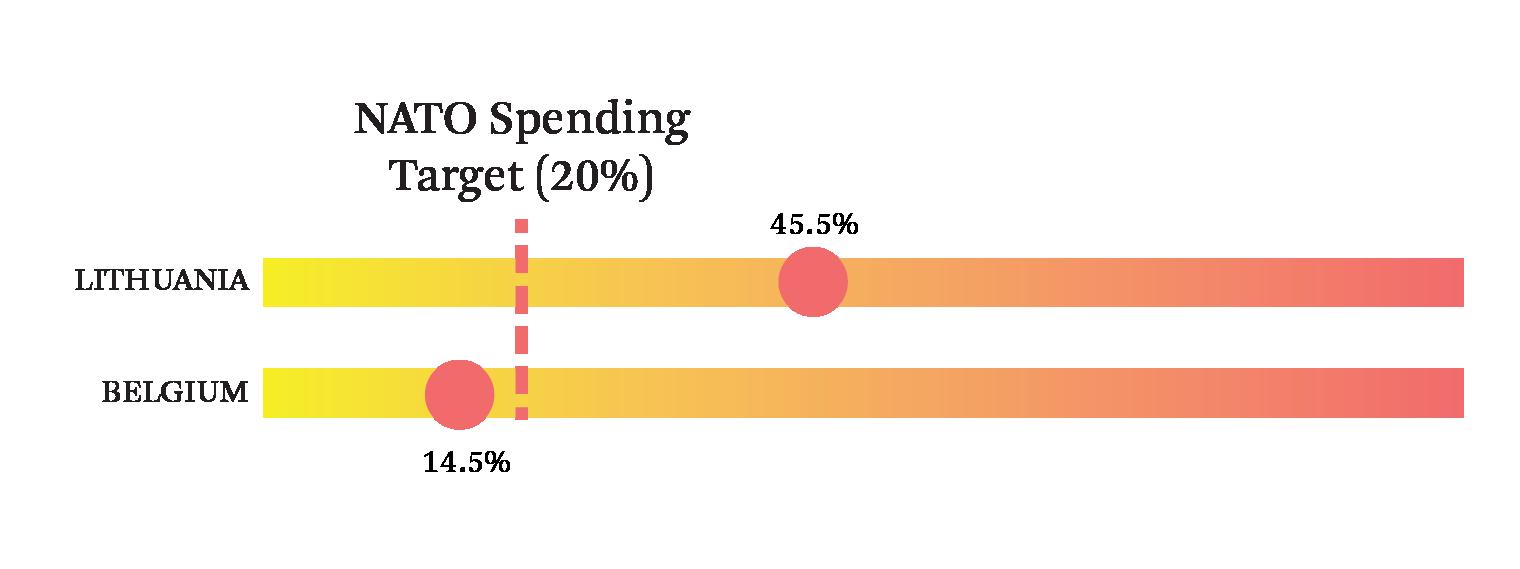

Low Income Housing Tax Credit (LIHTC)-funded projects are generally more expensive than market-rate units to develop, with Chicago’s “affordable” LIHTC development costing over twice as much to build than luxury market rate apartments.
(LaFave, 17)
Only 12% of mandated special education funding is provided by the federal government. Congress originally committed to 40%.
(Jiang, 23)

On Polymarket, 0.04% of traders rake in 70% of profits. Yet attempts to regulate prediction markets and curb insider trading have largely been unsuccessful.
(Naquet-Radiguet, 9)
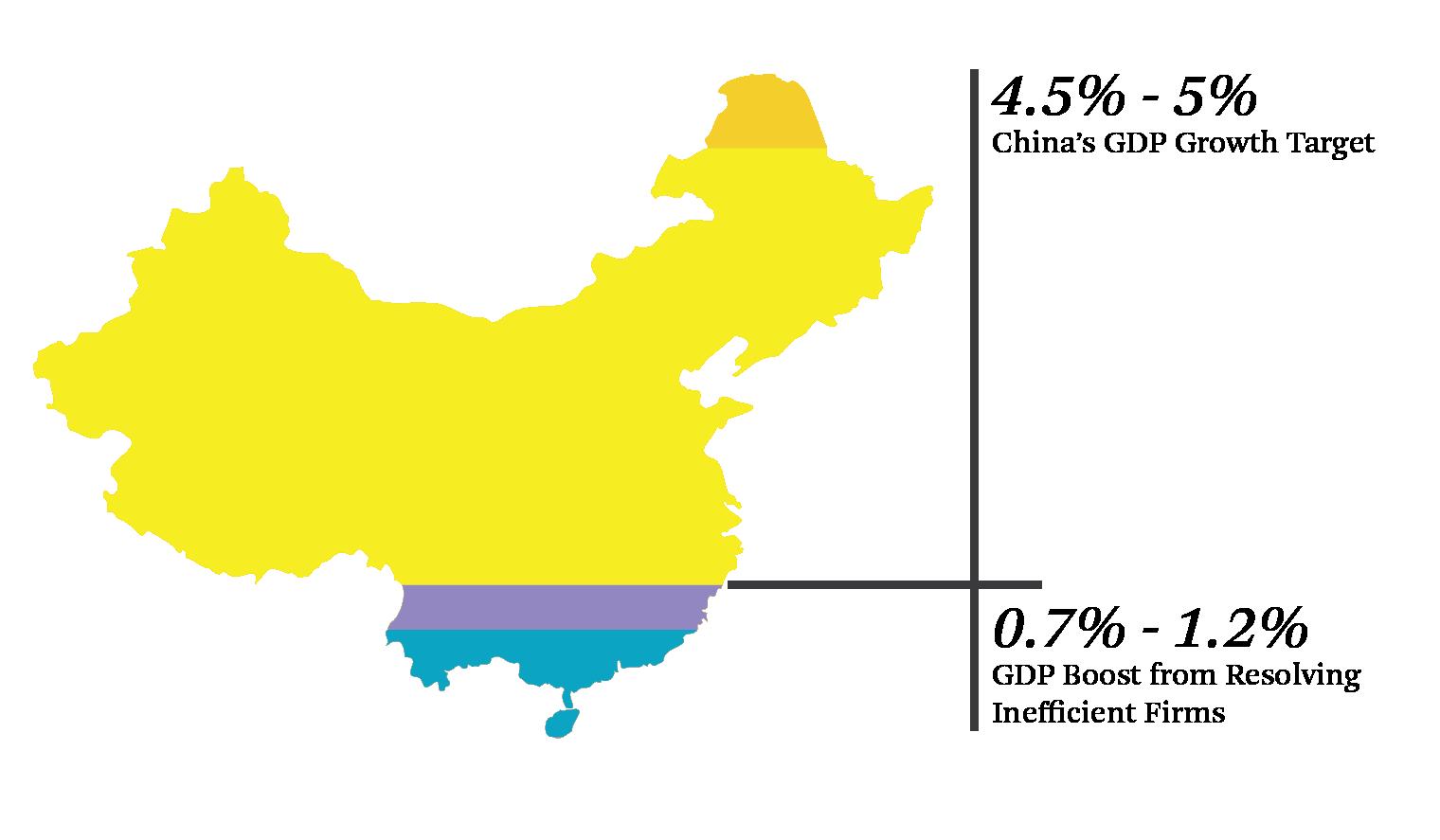
90% of US watersheds take in water from one neighbor and pass it to another, demonstrating the imperativeness of Congress establishing an interstate groundwater compact. (Hamaoka, 15)

Gains in productivity are being left unrealized in China. By resolving inefficient firms alone, they would find one fifth of their total productivity goals met.
(Chua, 52)

This is an area bigger than Massachusetts, Rhode Island, Connecticut, and New Jersey combined. (Wang, 50)
Cornmeal cake
Existed
Smells
Put back on Back of the boat
Forehead adornment
Leaning
Fair folk
Makeup mishap
Sneaky ways in, say Slew
Unknown John Her counterpart
Chicago trains
Loch ___ monster
Ready to go home?
Misjudgement of the space, say Digging
Drink on tap at any local pub
Philosopher Descartes
Wooland worker, say Civil War battle namesake
Way out
Obamacare acronym Alley ___
Michal Jackson’s seventh studio album “______ Altima” by Doechii
The Tube, for one
Childish
Low digit
Related to the kidneys
With 65-Across, one’s other persona See 64-across
Spanish show about a decadent private school
Many “Frozen”-inspired Halloween costumes
Aykryod of Ghostbusters fame “As ___ resort”
Fertile
Follow again, say Official directives
Weird AI’s primary genre
One of two for a beetle
Blow gently
Way off
Lieu
Lewd
Coin you might “turn on”
Minimal market purchase
Nutritional fig.
Title for a knight
One who makes the MTA, perhaps
Cranny’s Partner
“Help ___ the way!”
___ mortals
Trade jabs
Leaves for lunch?
Exclamation commonly heard this part winter “I may destroy you” creator Michaela Nevada city
“Assuming that’s true...”
NYC neighborhood Cares for a hallucinator, say Cries
Unfreeze Away
Nation that achieved independence from Ethiopia in 1993
Tone deafness
Diamond measures Legwear, perhaps Out of style
Undulate
Eye layer
Kind of mat
Like highlighter colors
Scottish refusal
Option opposite nothing, idomatically