




SPRING 2026 ISSUE 01
SPRING 2026 ISSUE 01

Thresholds de!ne how we understand the modern world. They delineate the boundary at which something becomes obsolete, intolerable, irreversible, or newly possible. We live among them everywhere, in politics, climate, technology, and culture. But thresholds are rarely clear when we are approaching them. They o en reveal themselves only when they have already been crossed. In a social moment so full of instability , adjustment, and incessant change, it is necessary to ask ourselves which invisible limits structure our lives, when they should hold, and what it means if they no longer do.
Thresholds can materialize in places as quotidian and unremarkable as the grocery store. In “Aisles Apart,” Audrey Gmerek interrogates how the deterioration of US-Canada relations has politicized cross-border shopping, as Canadians respond to economic and diplomatic hostility by withdrawing their purchasing power from the United States. In doing so, ordinary citizens cross a longstanding geopolitical threshold via their everyday consumption habits, illustrating the fragility of limits we may have considered ! xed and stable.
Government shutdowns represent one such political threshold with which we are repeatedly confronted—ordinary partisan disagreement crosses the con!nes of democratic negotiation and begins to o oad its costs onto the public. In “:( Your Government Ran Into a Problem and Needs to Restart,” Tom Yi argues that shutdowns are less a natural byproduct of polarization than an outcome of institutional design, allowing lawmakers to externalize the consequences of their failures.
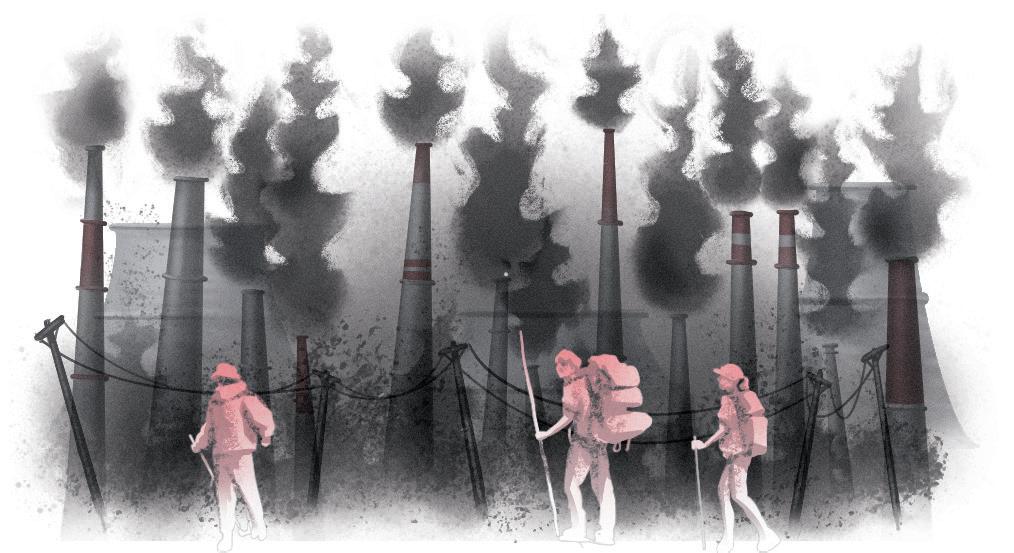
Further, thresholds can act as warnings that demand action toward necessary change. How can Earth avoid the catastrophic threshold of 2.5 degrees Celsius of warming? Global warming has not been shy of heated discussion on the international stage, and Stratospheric Aerosol Injection (SAI) presents a low-cost, politically acceptable alternative climate solution with the potential to reverse decades of lackluster global warming mitigation e$orts. However, as Nicholas Clampitt warns in “Mist-Direction,” SAI may instead be just another climate tactic that serves to preserve a petro-dominant status quo.

Sometimes, thresholds serve as barriers to entry and mobility. As implored by Fabiana Conway in “Stateless Neighbors,” these thresholds can raise questions about statehood and the livelihoods attached to them. For millions of Haitians, the Dominican Republic’s crackdown on immigrants of Haitian descent has le them in a citizenship limbo, where their passport means little more than a leatherbound booklet. Given the dire state of their home country, these Haitians face de facto statelessness, thus demanding a rede!nition of the thresholds that bar them from core protections o$ered by citizenship.
The rapid expansion of arti!cial intelligence has found its way into an extensive array of !elds, from so ware engineering to medicine, and of course, to academia. The em-dash, once a versatile punctuation mark, now represents a potential indicator of AI-generated writing, and other common patterns of writing face increasing scrutiny of no longer being “human-written.” What is the threshold between AI- and human-generated writing, and how does this line impact the future of writing? In “Prompt and Circumstance,” Isabella Xu contends that the accessibility of AI-generated writing jeopardizes the hierarchies topped by cultural elites and might eventually uproot existing linguistic shibboleths.
In a time where existing thresholds are blurring and new ones are rapidly forming, we hope this special feature will encourage you to linger in the in-between — to re%ect on inhabiting, crossing, and rede!ning the spaces that shape our world. We invite you to join us in exploring the possibilities that lie between the lines and challenge what is familiar.
EDITORS IN CHIEF
Mitsuki Jiang
Julianna Muzyczyszyn
CHIEFS OF STAFF
Guilherme Sequeira
Tiziano Pardo
CHIEF OPERATING OFFICERS
Will Thomas
Siyuan (Michael) Shui
MANAGING EDITORS
Brynn Manke
Tess Naquet-Radiguet
Isabella Xu
CHIEF COPY EDITORS
Vivian Chute
Nicholas Clampitt
INTERVIEWS DIRECTORS
Ciara Leonard
Raghav Ramgopal
DATA DIRECTORS
Reina Jo
Aavin Mangalmurti
CREATIVE CHIEF OF STAFF
Kierra Reese
CREATIVE DIRECTORS
Bath Hernández
Natalie Ho
Fah Prayottavekit
MULTIMEDIA DIRECTORS
Clara Baisinger-Rosen
Caroline Cordts
Leyad Zavriyev
WEB DIRECTOR
Maja Mishevska
PUZZLES DIRECTOR
Matthew DaSilva
Zander Blitzer
Alexandros Diplas
Allison Meakem
Gabriel Merkel
Tiffany Pai
Hannah Severyns
Mathilda Silbiger
Alexandros Diplas ’14
Todd Harris ‘14.5
Oliver Hudson ’14
Haakim Nainar ’14
Benjamin Wofford ’14
INTERVIEWS DIRECTORS
Ciara Leonard
Raghav Ramgopal
DEPUTY INTERVIEWS
DIRECTORS
Charlotte Peterson
Rishabh Rao
Sofia Segarra
INTERVIEWS ASSOCIATES
Aleksandra Pakhomova
Amish Jindal
Anita Sosa
Aran Basu
Auden Goldblatt
Aurna Mukherjee
Charles Lebwohl
Christina Li
Gabriella Miranda
Jack DiPrimio
Matteo Papadopoulos
Michael Lau
Nava Litt
Riyana Srihari
Roark Petermann
Rutva Brahmbhatt
Samrah Syed
Sarik Gupta
Vanessa Tao
Wilber Anterola
Zern Hee Chua
DATA DIRECTORS
Reina Jo Aavin Mangalmurti
DATA ASSOCIATES
Anna Wong
Brandon Yu
David Dahlback Lubin
Jiangyi (Joy) Zou
Joshua Reed
Lucca Bertuccelli
Loureiro
Romilly Thomson
Sena Williams
Srijith Rangan
Zoe Weissman
DATA DESIGNERS
Carys Lam
WEB DIRECTOR
Maja Mishevska
PUZZLES DIRECTOR
Matthew DaSilva
WEB DESIGNERS
Casey Gao
Michelle Ee
PUZZLES ASSOCIATES
Ana Vissicchio
Auden Goldblatt
Bruce Zhong
Lucy Bryce
Marissa Scott
Zoe Weissman
CHIEF COPY EDITORS
Vivian Chute
Nicholas Clampitt
MANAGING COPY EDITORS
Annika Melwani
Daniel Shin
Natalie Tse
COPY EDITORS
Andrew Ho
Charlotte Peterson
Daniel Mun
Eva Dillon
Francisco Ramirez
Indy Nijjar
Isabela Perez-Sanchez
Jason Hwang
Kaylee Gilbert
Leah Freedman
Marion Poirot
Michaela Hanson
Rachel Loeb
Rachel Sang
Ryan Choo
Shant Ispendjian
Tanvi Mittal
MULTIMEDIA DIRECTORS
Clara Baisinger-Rosen
Caroline Cordts
Leyad Zavriyev
MULTIMEDIA PRODUCERS
Acadia Phillips
Auden Goldblatt
Becky Montes
Daniel Mun
Danielle Deculus
Ella Podurigiel
Ellie Wu
Erin Ozyurek
Ingrid Järvi
Izabella Piatkowski
Josué Morales
Lucas Da Silva
Lucy Previn
Lynn Nguyen
Maison Teixeira
Olivia Wang
Solomon Goluboff-Schra er
Thomas Foley
CHIEF OPERATING OFFICERS
Will Thomas
Siyuan (Michael) Shui
BUSINESS ASSOCIATES
Alice Kovarik
Arjun Puri
Becky Montes
Francisco Ramirez
Mariana Copeland Celaya
Marion Poirot
Meredith Turner
Remi Takahashi
MANAGING EDITORS
Brynn Manke
Tess Naquet-Radiguet
Isabella Xu
SENIOR EDITORS
Ava Rahman
Madeleine Connery
Sara Amir
Chris Donnelly
EDITORS
Allan Wang
Arjun Puri
Charlie Getman
Christina Charie
Emma Phan
Fabiana Conway
Gus LaFave
Jordan Lac
Joshua Stearns
Julia Kostin
Matthew MacKay
Meruka Vyas
Sabine Cladis
Zern Hee Chua
HIGH SCHOOL PROGRAM DIRECTORS
Ava Rahman
Madeleine Connery
CREATIVE CHIEF OF STAFF
Kierra Reese
CREATIVE DIRECTOR OF DESIGN
Natalie Ho
CREATIVE DIRECTOR OF ART
Bath Hernández
CREATIVE DIRECTOR OF PUBLIC RELATIONS
Fah Prayottavekit
DESIGN DIRECTOR
Anna Wang
Dongha Kwak
Yeonjai Song
EDITORIAL DESIGNERS
Lia Kim
Marie You
Sam Ahn
Seoyoung Yoon
Sheeon Chang
Tiffany Tsan
PUBLIC RELATIONS
DESIGNERS
Kyuwon Park
Jordan Kinley
COVER ARTISTS
Trinity Breeze

STAFF WRITERS
Aaditya Das Narayan
Alexia Lara
Alina Calix-Martinez
Audrey Gmerek
Ben Hader
Benjamin Daniel
Charles Burke
Charlotte Park
Chiupong Huang
David Macario
Emily Pan
Emily Schreiber
Evan Hamaoka
Fanny Vavrovsky
George Weiler
Isabella Collins
Isaiah Sohn
Kayla Morrison
Kimaya Balendra
Lauren Kozmor
Lev Kotler-Berkowitz
Marco Schoellerman
Mia Reyn
Michaela Hanson
Nainika Sompallie
Natalia Baños Delgado
Nate Barkow
Nik Greborunis
Rachel El Grably
Remi Takahashi
Shant Ispendjian
Sofia Segarra
Sonia Chu
Sonya Rashkovan
Tom Yi
ART DIRECTORS
Larisa Kachko
Leslie Mateus
LuJia Liao
York Mgbejume
ILLUSTRATORS
Airien Ludin
Amelia Jeoung
Angelina So
Anneke Beth
Awele Chukwumah
Christina Xu
Cora Zeng
Elizabeth Chew
Ellie Lin
Emily Chao
Emily McShane
Haley Maka
Jacquelyn Rich
Jiwon Lim
Kexin Huang
Lily Engblom-Stryker
LuJia Liao
Lydia Smithey
Mia Cheng
Mot Tuman
Oli Bartsch
Orla Maxwell
Paul Li
Ranran Ma
Rokia Whitehouse
Shay Salmon
Sofia Schreiber
Wanxin Li
Kyuwon Park


































Aisles Apart
:( Your Government Ran Into a Problem and Needs to Restart Mist-Direction Stateless Neighbors
Prompt and Circumstance























by Lauren Kozmor ’26, a Political Science concentrator and Sta $ Writer for BPR
illustration by Shay Salmon ’27, an Illustration major at RISD and Illustrator for BPR
In the early 2000s, a group of eight young artists secretly lived inside Providence Place Mall. They built a hidden apartment in unutilized storage space to protest the displacement of artists from Fort Thunder and other historic homes to artist communities in Rhode Island. Two decades later, their story resurfaced in the 2024 documentary Secret Mall Apartment, which features real footage from the four years they lived undetected inside the mall. As a critique of commercialization, the project challenged the mall’s role as a site of pure consumption and reimagined it as a home and space for community. Today, what once seemed like a stunt feels more like a blueprint for transforming increasingly sidelined retail centers into housing.
Malls are no longer the economic and cultural anchors they once were. A er World War II, the enclosed mall became a de!ning institution of mass suburbanization. Developers consolidated department stores, specialty shops, and restaurants into climate-controlled environments that promised convenience and leisure in a single destination. By the 1980s, more than 2,500 malls operated nationwide. Serving as gathering places for teens a er school, families, and seniors seeking exercise, malls functioned as vital ‘third places,’ fostering informal connection beyond home and work. In the latter half of the 20th century, they structured everyday social life and symbolized a shared middle-class stability.
The enclosed mall retail model began to unravel in the early 2000s. It depended
“If redeveloped strategically, Providence Place could become one of the most consequential housing interventions in the city’s modern history, creating lasting residential stability.”
heavily on large department stores, like Sears and JCPenney, to draw consistent foot tra &c. As those anchors declined, surrounding retailers su$ered. The rapid rise of e-commerce further shi ed consumer habits away from physical storefronts. The 2008 !nancial crisis weakened an already fragile system: development stalled, retail sales plummeted, and many malls shut down entirely, leaving behind “empty shells.” Between 2007 and 2010, median household net worth fell by nearly 40 percent. Even as !nancial markets recovered, many working- and middle-class households never fully regained their lost wealth, which reshaped consumption patterns and weakened the spending base on which malls relied. The COVID-19 pandemic further intensi!ed these shi s, as remote work and online purchasing signi!cantly altered consumer behavior.
The consequences are stark. Since the 1980s, more than 1,600 enclosed malls have permanently closed, and the last new megamall in the United States was built in 2006. In 2024, mall vacancy rates were reported to be 248 percent higher than the overall retail vacancy rate, underscoring the sector’s disproportionate
decline. Projections suggest that by 2028, fewer than 900 malls will remain in operation. The United States, which built more retail space per capita than any other country, now faces a pressing question: What should be done with the millions of vacant square feet le behind by a retail era that no longer de!nes consumer life?
Providence Place exempli !es this crossroad. The 1.4-million-square-foot mall opened in 1999 and has since seen years of declining foot tra &c and mounting !nancial instability. In 2024, it entered receivership, a court-supervised process in which an independent party manages a ! nancially distressed property’s assets and operations. In February 2026, it was added to the Providence Preservation Society’s Most Endangered Places list, re%ecting concerns that the massive structure could be wastefully demolished. However, unlike many struggling suburban malls, Providence Place sits in the heart of downtown; it is within walking distance of the State House, the train station, and dense residential neighborhoods.
Across the country, similar properties are being reimagined to better suit the needs of their communities. Obsolete malls are being
converted into distribution centers, housing developments, schools, and mixed-use communities. Since the pandemic, nearly 200 malls nationwide have announced plans to incorporate residential units, re%ecting a broader shi toward walkable “live-work-play” environments, rather than single-purpose retail destinations. Living at the mall, formerly a countercultural act of rebellion, is now becoming a viable development strategy.
Providence has already demonstrated the promise of adaptive reuse. Just minutes from Providence Place stands the Westminster Arcade, America’s oldest indoor shopping mall. A er closing in 2008 during the Great Recession, it reopened in 2014 as the Arcade Providence, combining ground-%oor retail with 48 microlo apartments. The units leased within weeks and thousands of potential tenants expressed interest, revealing how underutilized downtown space can be preserved and adapted for contemporary housing needs.
Providence Place presents an even larger opportunity. The massive property remains in extreme debt with an uncertain future; at the same time, Providence faces a severe housing crisis. Nearly half of the city’s renters and more than one-third of homeowners are cost-burdened — spending over 30 percent of their income on housing. Rents have risen sharply in recent years, at times faster than anywhere else in the country, while wages have not kept pace. Since 2020, the city has recorded more than 24,000 eviction !lings. If redeveloped strategically, Providence Place could become one of the most consequential housing interventions in the city’s modern history, creating lasting residential stability.
Critics point to the cost and logistical challenges of converting malls into mixed-use


“Living at the mall, formerly a countercultural act of rebellion, is now becoming a viable development strategy.”
developments. Zoning restrictions, infrastructure upgrades, and concerns about the loss of retail jobs present real obstacles. Yet these concerns ultimately reinforce the case for change. Rhode Island ranks last in the country for new housing permits, a re%ection of policies that have failed to keep pace with rising demand. Meanwhile, Providence Place is kept a %oat by a generous tax treaty which keeps its annual property tax payments at roughly $500,000 instead of the nearly $25 million it would owe at its full assessed value. Maintaining the status quo risks subsidizing a struggling commercial property while sacri!cing resources for pressing !scal and housing needs. Additionally, preserving a strained retail-only model leaves the city vulnerable to continued decline: If the mall closes outright, Providence risks losing retail jobs, surrounding economic activity, and tax revenue.
Reimagining Providence Place as a mixeduse development aligns with Providence’s longterm needs and o$ers a more resilient path forward. Rather than demolishing the structure, adaptive reuse would conserve carbon and reduce construction waste, while phased redevelopment would allow portions of the mall to remain operational during conversion. Tying any new tax treaties to clear public bene!ts such as a $ordable housing units, infrastructure


improvements, and local hiring commitments would ensure the project serves residents.
Imagine: upper %oors lit by apartment windows and corridors !lled with people heading home, picking up groceries, or meeting friends for coffee. Transforming Providence Place would create the reliable customer base that retailers lack, restoring the everyday vibrancy that once made malls central gathering places in American life.
The secret mall apartment sought to reclaim space for those pushed aside by economic forces beyond their control. Today, Providence Place o$ers a similar opportunity on a far larger scale. By transforming the mall into thoughtfully-designed, mixed-use housing, Providence can address displacement, foster community and economic stability, and rede!ne urban space. A er all, why settle for a picket fence when you could have a lo by the food court?


Interview by Sofia Segarra ‘29
Miguel Cardona began his career as a fourth-grade teacher before becoming the youngest principal in Connecticut and later the state’s first Latino Commissioner of Education. As the second Secretary of Education of Puerto Rican descent, Cardona oversaw the education system’s recovery from the Covid-19 pandemic and implemented over $130 billion in student loan relief. A longtime educator and public servant, Cardona has dedicated his career to expanding access, equity, and opportunity in US schools.



Sofia Segarra: You’ve called this moment in higher education a “pandemic of prejudice” as universities scale back diversity efforts under political pressure. How should universities uphold equity and inclusion in today’s political climate?
Miguel Cardona: The federal government has chosen to check out of supporting higher education. We need to form alliances to keep students at the center of our conversations. To higher education leaders trying to balance changes from Washington with their students’ needs, my message was simple: We need you now, and we need to support one another. The last thing I want them to do is leave out of frustration, because that’s what our administration would want right now. Some university decisions conflict with institutional values, yet many are driven by the need to sustain basic student services. We should approach them with grace, recognizing they are often intended to protect students.
SS: You’ve said that what once made you feel different ultimately made you a stronger leader. How can marginalized students draw on that strength in a political climate where equity and justice feel under threat?
MC: Bilingualism and biculturalism are superpowers. Growing up in Connecticut and having Puerto Rican roots, my biculturalism provided me the confidence to code-switch and culture-switch. These superpowers are being attacked. This country was formed with people from different backgrounds and religions. It’s the Latino wave now, right? Before it was the Polish wave, the Italian wave, who all dealt with racial pushback. Much as we’ve learned from American history, we’re going to have to persevere through alliances, without hate or polarization.
Description of Interviewee.
SS: Through Cardona Solutions, you’ve continued advancing your work on multilingual education that you began as Secretary. How does Solutions create inclusive school environments that honor students’ languages while learning English?
This is a question. Do not indent questions. This is a response. Do not indent responses unless it is the start of a new paragraph within the same response. There should be no line space between a question and a response. Line space should only be present between the end of a response and the beginning of a new question.
MC: Si estoy buscando trabajo en otro país donde se habla español, es más probable que me escojan porque hablo dos idiomas [If I’m looking for a job in a Spanish-speaking country, it’s more likely that I’ll get chosen, since I speak two languages]. Knowing another language makes you more marketable. I supported education leaders as they balanced English instruction with the maintenance of students’ native languages, especially amid shifting federal policies. I have provided them with guidance to navigate this political climate, especially regarding college and career pathways. States are stuck in this four-year college mentality that prevents students from reaching their potential. They leave two years in, $150,000 in debt, and no degree to provide the earning potential to repay it. Our education is not aligned with the needs of our country. If our schools don’t evolve, we will have to rely on other countries to produce. Our K-12 and higher ed institutions have to be connected to this reality. Otherwise, we leave a vacuum that for-profit institutions fill by preying on first-generation students without actually delivering quality products.
“
To higher education leaders trying to balance changes from Washington with their students’ needs, my message was simple: We need you now, and we need to support one another.”
SS: During your time as Secretary, you’ve said you weren’t able to finish the work you began in Puerto Rico. Outside federal constraints, how are you supporting PR schools, and what systemic barriers became clearer to you during your time in office?
MC: Being on the island gave me real joy as I helped to decentralize their system, giving more authority to local districts and principals. It took the politics out of it. Principals shouldn’t be appointed by a governor for the entire island. We began with a pilot district, but the effort stalled after I left. I haven’t lost hope. I want to give the governor the chance to carry forward what’s best for the island and to honor what we started there.
SS: You’ve worked to rebuild the federal student loan system and expand debt relief while emphasizing access to higher education. Which of these challenges do you see as most urgent today, and how do you plan to continue advancing that work?
MC: Education is not an ancillary; it’s a must-have. Too many brilliant students across this country don’t have access to higher education because race and place are still big determinants of whether you have access to it. Once we recognize that higher education leads to students earning a million dollars over the course of their careers, those dollars become expendable income in communities; homes are bought, and taxes are paid.
SS: Regarding substance over sensationalism, how did you stay focused on expanding mental health resources, supporting educators, and improving instruction during polarized times?
MC: I developed this concept because people needed to see that we were doing things that mattered. “Culture wars” were creeping in, and every year there was a new boogeyman threatening to divide our communities. On the flip side, we were providing debt relief to teachers and increasing teacher-apprenticeships. When I talk about substance over sensationalism, I’m talking about all the lives we’re impacting, compared to the fear-mongering on the other side.
SS: As federal policy around DEI and Title IX, especially regarding LGBTQ+, low-income, and disability protections continues to shift, what can the Department of Education do to ensure that vulnerable students retain access to essential resources
MC: The Department of Education has a responsibility to protect students’ civil rights, and it walked away from that duty. Now, states and local leaders are stepping in to defend access, and it’s critical that those who care about students continue to form alliances and speak out against these attacks.
SS: What would dismantling the Department of Education and shifting power to the states mean for public schools, federal standards, and educational equity, especially for marginalized students?
MC: What we’re going to see is medically fragile students not getting needed support, and students whose civil rights are violated not having any recourse. Regarding the privatization of K-12 education, imagine you’re a private school receiving vouchers: Your goal is to make a profit. In that model, are schools going to enroll students with health needs when doing so runs directly against their business incentives? We are further dividing those who have and those who don’t. Public education is the great equalizer. It’s what allowed an English learner from an economically disadvantaged neighborhood to advise the President of the United States.
SS: Reflecting on conversations you’ve had with students, what were some experiences that stayed with you the most, and how did these conversations inform your vision for the future of American education and the spectrum of human development?
MC: I was a fourth-grade teacher, and what mattered most was being with students. When they told me, “You’re from Washington, but you’re a regular person,” it reminded me how powerful it is for them to see someone like them in leadership. I wasn’t a billionaire donor. I was a teacher, and I want students to know they, too, can lead at the highest places and go even further. ◆
Order 14367 is a dangerous
by Brynn Manke ’28, a Political Science and Computer Science-Economics concentrator and Managing Web Editor for BPR
illustration by Elizabeth Chew ’28, an Illustration major at RISD and Illustrator for BPR
What do atomic bombs and fentanyl have in common? As of December 15, 2025, they are both classi !ed as “Weapons of Mass Destruction” (WMDs) by the American government. Of course, one cannot claim that fentanyl is not destructive: An estimated 73,000 Americans died from fentanyl overdoses (either from illicit drugs laced with fentanyl or fentanyl alone) in 2023 alone. But likening fentanyl to Fat Man and Little Boy is, at best, a stretch. The drug is not manufactured as a weapon, nor is it intended for mass destruction.
Let us clarify that this recategorization is not a solution to the opioid crisis, nor can we be con!dent that it is intended to be one. While Executive Order 14367 purports to support Americans’ “well-being,” the obvious, evidence-backed solution is not supply-centric it is increased access to medication-assisted addiction treatment (real treatment not pseudoscienti!c “healing farms”). A government that suspended $140 million in “fentanyl overdose response e$orts” does not seem too interested in supporting addiction treatment. What, then, incentivized President Donald Trump’s administration to stretch WMD status to include fentanyl?
There is a legal basis for elevating chemical agents to WMD status. Congress’ de!nition of a WMD includes weapons that are “designed or intended to cause death or serious bodily injury through the release, dissemination, or impact of toxic or poisonous chemicals, or their precursors.” Anthrax and sarin, for example, both fall neatly within this de!nition.
But while these biochemical agents are of little use beyond bioterrorism, fentanyl has legitimate pharmaceutical applications. It is an e$ective countermeasure against “severe chronic pain” (especially relevant in the context of today’s chronic pain epidemic), and it is not produced with the intention of weaponization. Even suppliers of illicitly-manufactured fentanyl (IMF) have a multibillion-dollar !nancial incentive to keep their buyers alive. Moreover, a fentanyl analog has only been weaponized once on a mass level (by Vladimir Putin in Russia in 2002, as a counterterrorism measure). There is little evidence that any terrorist group plans to weaponize fentanyl anytime soon.
“If we turn to the relevant statutes, the administration’s rationale is clear: a desired expansion of executive power that transfers law enforcement authority from state and local agents to federal military and security forces who have exclusive jurisdiction over WMD regulation”.
Much of Trump’s rhetoric supporting WMD regulation as an approach to the fentanyl crisis is either misleading or utterly incorrect sure, “no bomb...kills 200,000 to 300,000 people every year,” but neither does fentanyl. If we turn to the relevant statutes, the administration’s rationale is clear: a desired expansion of executive power that transfers law enforcement authority from state and local agents to federal military and security forces who have exclusive jurisdiction over WMD regulation. Practically, rather than supporting Americans struggling with addiction, this executive order opens the door for further military encroachment on everyday law enforcement.
Contrary to the battle!eld imagery evoked by the War on Drugs slogans of the 1970s, the military does not enforce drug legislation. This task instead falls to civilian law enforcement. The Drug Enforcement Administration (DEA) is housed within the Department of Justice a separate branch from the military. The distinction between military and police forces is an essential check on executive power a principle long considered a fundamental American value. The Posse Comitatus Act generally prohibits “federal troops from participating in civilian law enforcement” and is recognized today as a necessary bulwark to protect American democracy from “large standing [armies].”
The fentanyl crisis, until now, has been no exception. Domestic fentanyl regulation is enforced by the DEA not by the military. But Executive Order 14367 directs executive agencies to treat illicit fentanyl as a WMD and to include fentanyl in the Armed Forces’ directives regarding “chemical incidents in the homeland.” This implicates statute 10 USC § 282, which relaxes the Posse Comitatus Act’s checks on federal power when WMDs are involved and gives the Secretary of Defense leeway to “provide assistance in support of Department of Justice activities relating to the enforcement” of chemical WMD regulation. Now that the executive branch treats fentanyl as a WMD, the Trump administration could take military action to domestically enforce fentanyl regulations.
“So, while there is no guarantee that the Trump administration will resort to militarized measures to address the fentanyl crisis, Executive Order 14367 establishes a realm of legal uncertainty for the administration to test the boundaries of constitutionality.”
There is a di$erence between federal forces supplying “indirect logistical support for law enforcement operations” and “[engaging] directly in law enforcement activities.” Under the courts’ interpretations of 10 USC § 282, the former is legal while the latter is criminal. But the line between “indirect logistical support” and direct engagement is too easily blurred. Take, for example, the involvement of federalized National Guard troops in a Coachella Valley marijuana raid in June 2025. Though the 9th US Circuit Court of Appeals deemed the troops’ deployment reasonable for “protect[ing] federal personnel” amid the Los Angeles protests, there are few reasons to believe that this standard law enforcement task required military support. Furthermore, the DEA has released little information about whether the National Guard played a direct role in, or merely facilitated, the raid.
Military forces operating in the domestic sphere are not subject to the same legal constraints as civilian law enforcement. While both police and military are bound by Fourth Amendment search and seizure doctrine, military personnel acting in a law enforcement
capacity exist in a much murkier constitutional space. The Exclusionary Rule, which prevents law enforcement from using evidence obtained in violation of Fourth Amendment protections in court, typically disincentivizes unreasonable search and seizure, but it is unclear whether the military is also held accountable by this rule. As a result, courts are o en more reluctant to extend it beyond civilian law enforcement.
Military and police also operate under drastically di$erent standards for the use of force. Police o&cers are “appropriately trained” to perform law enforcement duties, and civilian law enforcement agencies employ a “higher proportionality standard” than military forces in domestic peacekeeping. The latter are generally unfamiliar with the de-escalation and community accountability standards which guide civilian law enforcement o&cers.
To be clear, executive orders do not make law. They do, however, set precedent and dictate the
actions of the executive branch. So, while there is no guarantee that the Trump administration will resort to militarized measures to address the fentanyl crisis, Executive Order 14367 establishes a realm of legal uncertainty for the administration to test the boundaries of constitutionality.
Much of this theorizing is hypothetical, but the risks are real. What we know for sure is that military forces in Trump’s America play an increasing (and legally contested) role in domestic policing. In the context of an aggressive administration that has thus far invaded Venezuela and deployed armored vehicles in Los Angeles, these emerging questions about the legality of military intervention in domestic drug enforcement warrant our attention and scrutiny. Trump loves to push the limits of executive power; why would fentanyl be the exception?
“In the context of an aggressive administration that has thus far invaded Venezuela and deployed armored vehicles in Los Angeles, these emerging questions about the legality of military intervention in domestic drug enforcement warrant our attention and scrutiny.”
In the rapidly evolving subscription economy, we must de ne the threshold where predatory extraction begins
by Miguel Valdovinos
’26, an International and Public A $airs and Economics concentrator
illustration by Jacquelyn Rich ’28, an Illustration major at RISD and Illustrator for BPR
Players of popular open-world racing game
The Crew knew the servers would eventually shut down. Ubiso had announced the game’s end date well in advance — but when that day arrived, it vanished from players’ libraries, with no ‘o ine mode’ and no way to access what they had previously purchased. The shock was not just in losing a video game, but in realizing that what the users had understood as “ownership” had quietly meant something di$erent all along.
Historically, purchasing a product has meant permanent ownership over the item: Although companies could o$ er occasional repairs or support, they retained no say over whether the product could function. Today, companies can hold inde! nite control over it in the form of conditional access. Across so ware and hardware, permanent purchases are being replaced by weekly, monthly, or annual access subscriptions, changing not only how we pay, but also what we own. The subscription economy has introduced a world where permanent ownership ceases to exist.
We did not wake up one day without owning our things — we crossed that line slowly, one subscription at a time. Over the past two decades, DVDs have given way to streaming platforms, and so ware that was previously installed for years has become available only in the form of a monthly subscription. Microso O &ce’s
transition to O&ce 365 in 2013 normalized even productivity tools as rentals.
A quiet legal shi followed. Consumers increasingly buy licenses to digital goods, rather than the goods themselves. Companies can revoke access, alter functionality, or discontinue services entirely, o en with little consumer recourse. Few people notice because almost nobody reads the agreements — carefully reading all of the !ne print that the average American agrees to would take nearly 250 hours per year.
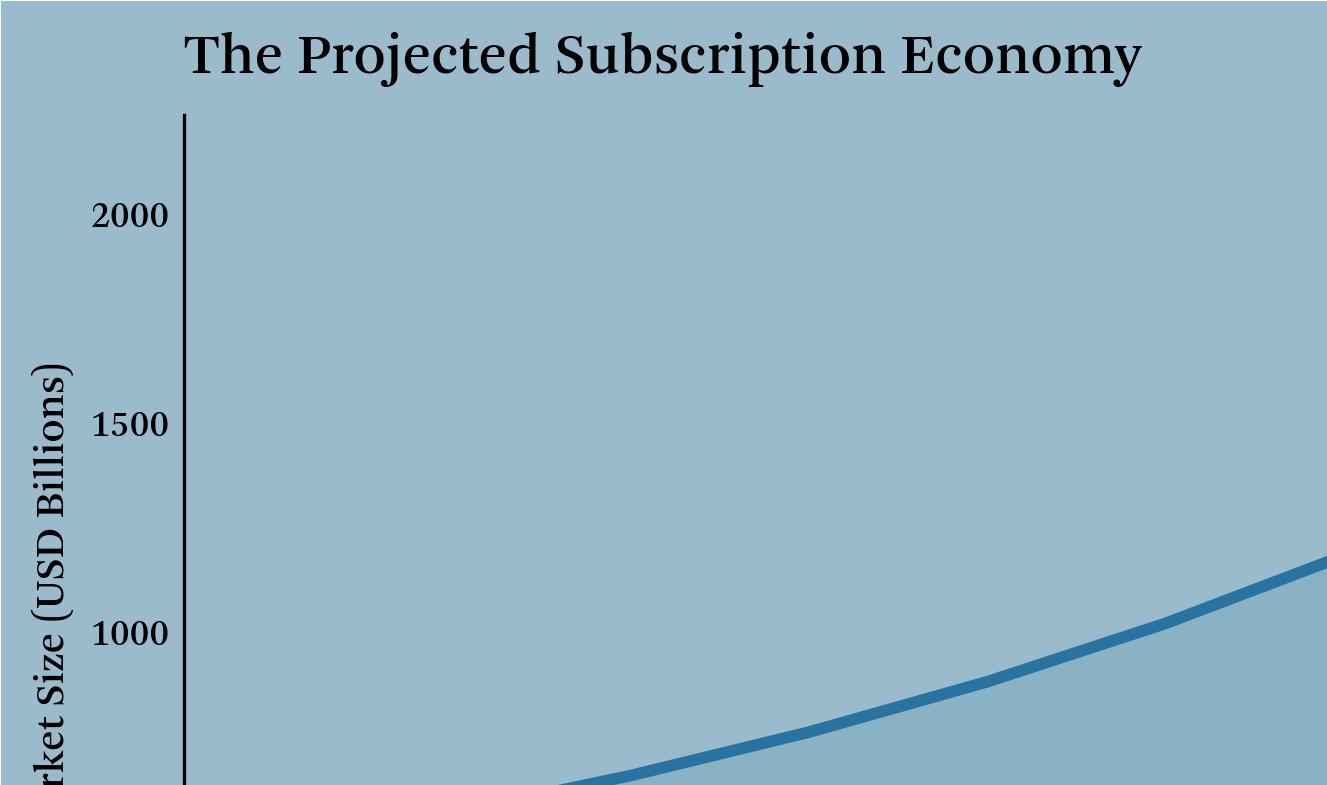
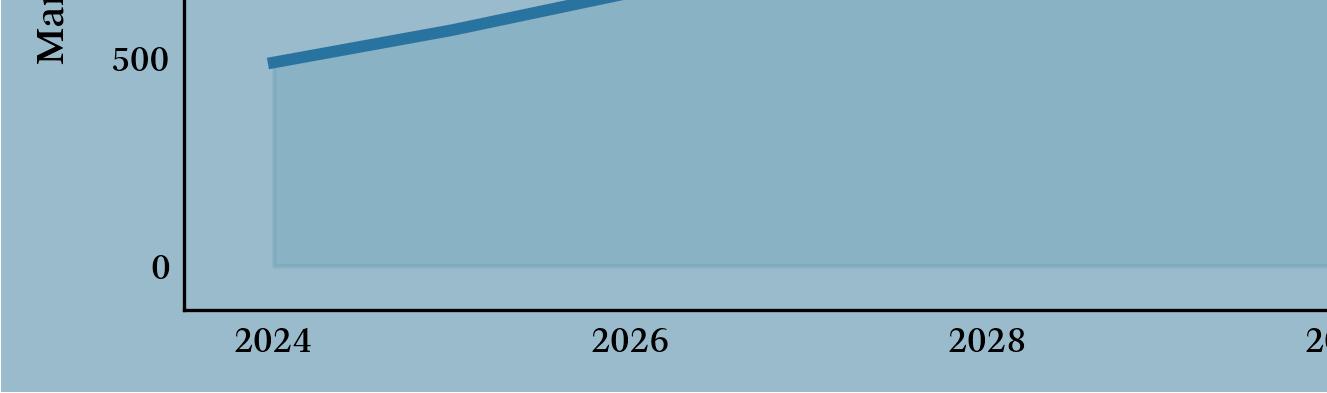
As it turns out, predictable recurring revenue is investor gold. The subscription economy has grown nearly sixfold in the past decade, with subscription-based businesses expanding !ve to eight times faster than traditional companies and outperforming the S&P 500.
Of course, not every subscription is exploitative. Services that rely on ongoing infrastructure, licensing, or maintenance involve recurring costs. Streaming music and multiplayer servers require continuous support, and users generally understand that they are paying for access to the platform. The problem arises when products sold as purchases depend on subscription models without preserving ownership once they end.
rea &rms subscriptions for other “digital o$erings” — while public outrage might delay these models, it cannot reverse the incentives driving them. Futurehome, a Norwegian smart home management platform whose hubs were originally sold with a one-time purchase model, now requires a $117 annual subscription to retain core features.
Cultural preservation su$ers when games, ! lms, or so ware disappear and cannot be

Consider subscription fees for heated car seats: Introduced by BMW in 2022, they were partially rolled back after fierce backlash. However, a recent statement from the company

“Ownership now carries a di erent meaning: it no longer guarantees control or permanence. Unchecked, the subscription economy lets corporations inde nitely monetize tools, devices, and necessities that were once fully ours.”
archived. The risk also extends into the workplace. Creative professionals, o&ce workers, and businesses increasingly rely on subscription soware and cloud storage to access years of documents, designs, and records. If their tools and !les exist only behind recurring payments, their work is held hostage.
But widespread resistance has been limited, partly because subscriptions obscure costs and potentially lead people to spend more than they realize. Seventy-four percent of US adults underestimate their subscription expenditure, which averages $1,080 per year, including nearly $200 on unused services. Meanwhile, company executives treat their customers’ discomfort with the subscription model as a temporary or transitional stage. Ubiso ’s director of subscriptions openly claimed that players “will become ‘comfortable with not owning’ their games.”
Despite companies’ apparent belief that the subscription economy is here to stay — and that consumers will adapt to it — policy and market responses to this shi are already beginning to emerge. Right to Repair legislation seeks to restore consumer control by requiring companies to preserve functionality and access to parts a er purchase. These frameworks could be extended to o ine modes and the release of end-of-life open source code so digital purchases can be preserved independently of subscriptions. When Pebble, a smartwatch manufacturer, shut down in 2016, the community-run Rebble saved
the core functionality of millions of smartwatches by rebuilding their backend services. Because Pebble did not block these e$orts, this scenario o$ers a precedent for how openness and user control can preserve ownership without corporate support. But to prevent consumer protections from depending on corporate goodwill, codifying these protections into law could ensure that ownership survives the shi ing incentives that drive the subscription economy. The question facing consumers is not whether subscriptions should exist, but where the threshold lies. Leisure and work have increasingly become recurring costs governed by agreements we rarely read. When a model shi s from providing a service to gatekeeping a physical asset, like a car’s heated seats or a professional’s !les, it becomes predatory. Ownership now carries a di$erent meaning: it no longer guarantees control or permanence. Unchecked, the subscription economy lets corporations inde!nitely monetize tools, devices, and necessities that were once fully ours. We need policy measures to protect our autonomy: Crossing that line may be easier than crossing back.
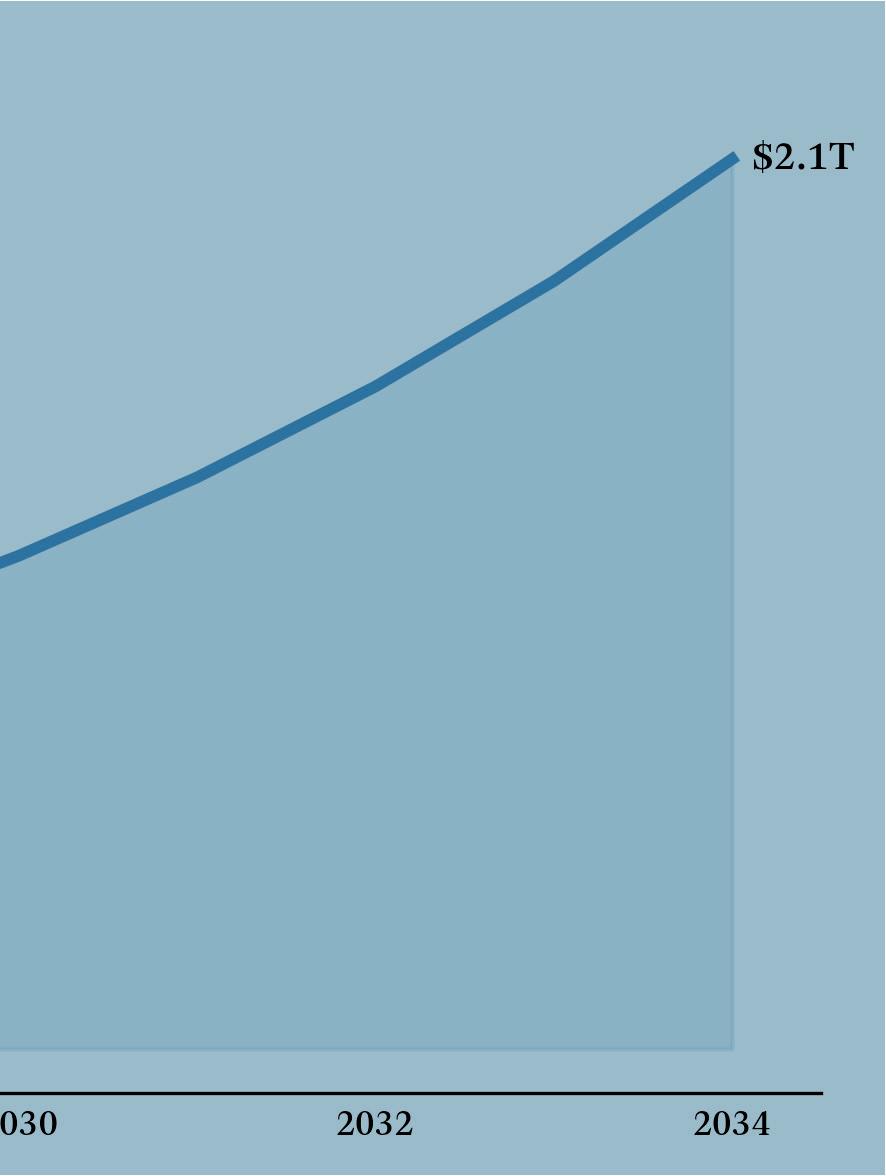
Interview by Jack DiPrimio, MPA
Nancy Y. Bekavac is an American academic and former lawyer who served as the sixth president of Scripps College from 1990 to 2007, becoming the first woman to lead the institution. Raised in Clairton, Pennsylvania, she earned her undergraduate degree from Swarthmore College, graduating Phi Beta Kappa in 1969, and received her law degree from Yale Law School in 1973, where she was a classmate of Hillary Rodham Clinton and Bill Clinton. Before entering academic leadership, Bekavac practiced law in Los Angeles and later served as Director of the Watson Fellowship and counselor to the president of Dartmouth College.




Jack DiPrimio: Could you tell us about your childhood and how it shaped your political outlook going into college and later law school?
Nancy Bekavac: I grew up in Clairton, Pennsylvania, the town in The Deer Hunter. Everybody’s grandparents or parents spoke what we then called “broken English.” They were all immigrants — from Croatia, Austria, Greece, Syria, Egypt. And it never occurred to me that there was a difference in citizenship among those who had funny accents and funny names like me and those who didn’t.
It was clear that Black people were discriminated against as we grew up in the 1950s, but most people in my orbit thought that was crazy. When the Supreme Court now says you can use skin color as an indicator of whether or not you’re a citizen, it’s hard for me to breathe when I think about that. The last two months have been completely insane.
JD: Could you touch on your undergraduate years — what your college experience was like and how it shaped what you did afterward?
NB: I loved Swarthmore College. I thrived in that environment because the school really rewarded curiosity and broad knowledge. By my senior year, I was captain of the College Bowl team, so trivia and general knowledge were kind of my thing.
My path to Yale, though, was mostly accidental. One of my best friends told me she was going to take the LSAT but didn’t want to be the only woman there. She said if I came with her, she’d pay for the test. I figured I was good at tests, so I went along.
When the form asked what law schools I was applying to, I turned to her and asked where I should apply. She said Yale — her dad had gone there — so I wrote down Yale. That was the only school I applied to.
Description of Interviewee.
In some ways, though, Swarthmore did shape that decision. The school encouraged intellectual confidence and a willingness to try things without overthinking them, which is probably why applying to law school that way didn’t seem strange to me at the time. I won a Watson fellowship to study in India the summer after I graduated. Before returning to the United States, I spent time in Vietnam working as a stringer reporter during the war. Seeing the war up close was deeply unsettling and it made clear how awful and destructive war really is. I came back angry and upset with my country.
JD: What was it like when you got to Yale law school during that time period?
This is a question. Do not indent questions. This is a response. Do not indent responses unless it is the start of a new paragraph within the same response. There should be no line space between a question and a response. Line space should only be present between the end of a response and the beginning of a new question.
NB: One of my earliest memories from Yale was meeting Bob Reich. In our torts class with Guido Calabresi, we had assigned seats. One day he sat in mine, introduced himself, and when I insisted it was my seat, he jokingly sat in my lap and asked if I’d have lunch with him. That’s how we became friends.
By the end of my first semester, though, I was thinking seriously about leaving law school to study philosophy at Princeton, where I had previously been accepted. I even went down during winter break in 1970 to look around, but the atmosphere there felt cold — especially for a Croatian-American woman interested in philosophy.
“When the Supreme Court now says you can use skin color as an indicator of whether or not you’re a citizen, it’s hard for me to breathe when I think about that.”
At the same time, Yale was an incredibly political place. Many of us were deeply engaged in the anti-Vietnam War movement, often piling into cars to drive to demonstrations in Washington. That combination of intellectual debate and political activism ultimately convinced me to stay.
JD: Do you think Yale at that time was different from Harvard or other law schools? Can you talk a little more about the culture? When you settled into Yale, did you and your classmates see yourselves as revolutionaries trying to change society, or more as people entering the legal profession?
NB: Oh, very different. Harvard was very rote. They were extremely serious, and we used to joke that they all loved the law a little too much. The running line was that at Harvard you were supposed to love the law, but at Yale you were supposed to ask, what is the law? It felt much more questioning, much more intellectual.
Honestly, most of the people I knew were not particularly interested in becoming traditional lawyers. The exceptions were students who felt called to criminal defense work those people had a real sense of mission. But Yale also felt very connected to politics. It was obvious even then that some classmates were headed into public life people would talk openly about Bill Clinton’s political ambitions, for example, and Hillary had already built a reputation through her organizing and student leadership before arriving. So alongside the intellectual atmosphere, there was a real sense that some people there were thinking about law as a pathway to national leadership.
JD: A lot of students now especially Gen Z came in thinking they wanted a legal career, but the political climate is making them rethink that. What would you tell law students or pre-law students now?
NB: First, the world always needs good lawyers. A good lawyer learns how to argue seriously and rigorously within a framework of rules and evidence. That matters, especially when institutions are under pressure.
And I remember thinking at Yale: “All these people who ‘love the law’ what does it even mean to love the law?” What I understood later is that the law is a kind of safeguard. There’s a line from A Man for All Seasons about laws being like hedgerows: If you cut them all down, you invite a wind no one can stand against. That’s what it can feel like when norms collapse.
JD: Did Watergate feel like the kind of constitutional crisis we’re living through now?
NB: No. Watergate was ugly, deceitful, and corrosive, but the difference was that Nixon’s own party ultimately turned on him. They told him: “You can’t destroy the Constitution. You have to go.” What we’re seeing now feels different: a party stunned into silence by ambition and fear. Fear of a primary, fear of ads, fear of losing power. And I don’t see nearly as many people as appalled as they should be.
JD: Do you think law schools have a responsibility to instill democratic values more directly?
NB: By the time you reach law school, it’s too late to develop a basic moral code. If you don’t already have values like honesty and integrity, law school won’t teach them. Morality forms early, from parents, community, or faith. The consequences become clear when someone bends reality for power: treating truth as optional and institutions as obstacles. People ask, “How does someone like JD Vance come out of Yale?” But the real question is: What was missing long before law school?
JD: Before we wrap up, I want to zoom out. A lot of Gen Z feels politically exhausted: angry, disillusioned, and constantly told we’re either “too woke” or not doing enough. What would you each tell young people right now?
NB: First, don’t let the word “woke” get weaponized into a substitute for thinking. When I was in law school, we weren’t “woke” we were waking up. People were moving through changing norms in real time and a lot depended on your circles. But the caricature that young people today are uniquely fragile or uniquely censorious is lazy. What I see now is something darker: a political culture that treats cruelty like a strategy and ignorance like a badge.
I used to feel like even when the country was furious Vietnam, Watergate I recognized the sides. I recognized my country. There are movements and figures now that I genuinely do not recognize, and that frightens me. So my advice is simple: Keep your standards. If your moral framework is intact, you will be harder to manipulate, harder to intimidate, and harder to recruit into someone else’s cynicism. Real courage is showing up, doing the work, and staying decent when it would be easier not to. ◆
The
Environmental Protection
Agency’s decision to remove health bene ts from its cost-bene t analysis tilts the scales in favor of companies
by Nate Barkow ’29, an International and Public A $airs and Education Studies concentrator and Sta $ Writer for BPR
illustration by Lydia Smithey ’27, an Illustration major at RISD and Illustrator for BPR
Many Americans take clean air for granted, but it is the product of detailed federal regulations that weigh the economic costs of reducing pollution against the bene!ts of cleaner air to human health. Recently, however, the Environmental Protection Agency (EPA) announced that it will no longer consider lives saved or health bene!ts in its cost-bene!t analysis of pollution regulations. Although this change is meant to apply to a speci!c rule governing the emission of pollutants from gas-!red plants, experts suggest that its rationale may also govern the EPA’s clean air rules. While President Donald Trump’s administration claims the EPA will still consider health e$ects, experts in environmental law note that this “reassurance fails” because “refusing to monetize large and important bene!ts is not a neutral choice.” Rather, it is a way to “diminish” how much they are weighed and tilt the cost-bene!t analysis in favor of companies and their economic bene!ts.
“This policy shi re ects the Trump administration’s proindustry bias and tendency to favor short-term economic gains over longerterm bene ts.”
This policy shi re%ects the Trump administration’s pro-industry bias and tendency to favor short-term economic gains over longer-term bene!ts. It is on par with the ill-advised thinking that governed the Department of Government E&ciency (DOGE), which took a red pen to programs throughout the government without considering whether their bene!ts outweighed their costs. Given the slapdash process, it was not surprising that many line items cut by DOGE ultimately had to be reinstated.
The administration's proposed approach to the EPA su$ers from the same blindspot. In the agency’s current view, the bene!ts of reducing smog and soot are simply too “uncertain” to quantify and should thus no longer be part of its cost-bene!t calculus. But only considering a regulation’s cost to industry without similarly quantifying the real harms to human lives and health is senseless unless the goal is to ensure that industry wins. In other words, this policy amounts to devaluing human lives in favor of extra pro!t, trading short-term economic bene!t for enormous human costs in the long run.
This is particularly alarming in the context of curbing pollution, where research on its bene!ts to human health is voluminous, making them among the easiest to quantify. The bene!ts of environmental regulations on emissions are evident in cities across the country, from Los Angeles to Fair !eld County. By contrast, in some areas of India, where pollution regulation enforcement is lackluster, citizens have to stay inside on some days due to the toxicity of the air.
The EPA’s failure to quantify the real bene!ts of pollution regulations is ironic and tragic.
“But only considering a regulation’s cost to industry without similarly quantifying the real harms to human lives and health is senseless unless the goal is to ensure that industry wins.”
The conservative administration of former President Ronald Reagan ! rst mandated the cost-bene!t analysis that included health bene!ts. Opponents of quanti!cation, meanwhile, mostly came from the le , arguing that such valuations were too low and insu&ciently captured people’s well-being, instead merely accounting for the economic value that they contributed to society. These le -leaning critics believed that underestimating the value of lives and health as part of the cost-bene!t analysis had the e$ect of squashing too many valuable regulations because the economic costs to companies were easier to measure. Nevertheless, the quanti!cation of health and lives has been standard practice for many years. As such, battles have been over how, not whether, human health and lives should be quanti!ed. For example, the EPA has
assigned a value of $11.7 million to a ‘statistical life,’ thus assigning a monetary bene!t to reducing the risk of death for a large group of people. There has been a consistent debate between public interest groups and industries about whether to raise or lower the value. For instance, in 2018, the American Petroleum Institute pushed the EPA to use a lower value of human life for older people because they do not earn as much in their older years. What the current administration is doing is one of the worst possible options — failing to recognize even the most well-established economic bene!ts of pollution regulation to human health and safety, and instead prioritizing costs to industry.
The Trump administration’s decision will put countless lives in danger, and the health consequences will ripple for generations. More than two million children are predicted to be exposed to dangerous toxins that increase their likelihood of life-long health issues. Poorer communities and communities of color are also disproportionately likely to be a$ected by these decisions.
This policy shi sets a dangerous legal precedent as the Trump administration is likely to place a similar thumb on the scale in other contexts where regulations are designed to protect human health and lives, including environmental protections, occupational health and safety rules, and food and drug regulations. Legal experts have pointed out that this policy shi may be vulnerable to a judicial challenge because federal agencies, including the EPA, are required
“What the current administration is doing is one of the worst possible options — failing to recognize even the most well-established economic bene ts of pollution regulation to human health and safety, and instead prioritizing costs to industry.”
to engage in balanced decision making and may not neglect signi!cant costs or bene!ts when evaluating regulations. Moreover, some experts have pointed to a Supreme Court precedent that suggests the current approach is legally %awed. In an opinion by former Justice Antonin Scalia, one of the Court's most conservative members, the Court made clear that a full consideration of costs must include “harms that regulation might do to human health or the environment.”
By refusing to consider both the costs and the bene!ts of health regulations, the EPA is weakening the foundations of environmental law.
The EPA’s policy shi represents a fundamental rede!nition of what an environmental protection agency should be doing. The administration is abandoning the legal framework of environmental policy that enables courts to hold industries generating pollution accountable, and their methodology is skewed to do precisely what it should not: prioritize short-term economic bene!ts over the long-term health of society. Prioritizing immediate economic gains at the expense of the future seems to be part of a general shi in viewpoints at the EPA and within the Trump administration. While this may appease corporate campaign donors and wealthy allies of the administration, it is detrimental to the longterm health and safety of the American people. Ultimately, these costs will be crushing.
In 2025, facing a crumbling school system marked by significant financial strain and a declining student population, Vermont’s Republican governor, Phil Scott, passed legislation for what had previously been unthinkable: consolidating the 119 town-based school districts to !ve state-centralized school districts and % ipping the state education funding formula on its head. While many Vermonters were infuriated by the departure from the state’s long tradition of !ercely-guarded local independence in schooling, the change is simply the result of years of legislative mismanagement. Ironically, the current progressive reformulation of Vermont’s education system is led by its Republican governor, following a long period of nearly total progressive control. These changes represent the state’s boldest and most uncomfortable action yet: breaking with tradition to promote education equity and make Vermont more inclusive.
Vermont’s education funding system is unique and extremely complicated. Every year on Town Meeting Day, Vermonters in every town gather to debate and approve a local school budget. The state then distributes education funds to each town based on what each one requests, and if a town requests a surplus, their property taxes are increased to make up the di$erence. This system is untenable: Districts face no hard limits on spending and shi the !nancial burden onto property taxpayers. In fact, in a stark contrast from this system, nearly every other state has education funding systems where the state provides each district a ! xed budget.
Reform has long been overdue, as Vermont’s current education system has countless inadequacies and shortcomings. The state’s multitude
“As the rest of the country rapidly develops, Vermont lawmakers have essentially attempted to preserve the state like it existed in the 1960s, foregoing reform and stalling development to preserve this rural character.”
of extremely tiny rural districts creates enormous redundancy in spending and inequity between students. As the rest of the country rapidly develops, Vermont lawmakers have essentially attempted to preserve the state like it existed in the 1960s, foregoing reform and stalling development to preserve this rural character. In terms of education, these e$orts have meant preserving local, independent control of districts, creating signi!cant barriers to inclusion in both cost and demographic diversity. In Vermont, a town’s ability to invest more in local schools hinges entirely on levying higher property taxes, making a good
by
education in Vermont incompatible with a $ordability. Curiously, Vermonters pride themselves on democratic principles like equity and inclusion, even though the state’s practices work to actively undermine these values. In a country set starkly on an urban-rural political divide, Vermont stands out. The irony that characterizes Vermont its status as the most rural yet the most progressive state also toppled the state’s %awed education tradition when its Republican governor led a reform e$ort.
The COVID-19 pandemic pushed the state’s education system to its breaking point. Despite Vermont o en ranking ! rst or second in the country in per-pupil spending, since the pandemic, the state’s fourth- and eighth-grade test scores have declined far more dramatically than the national average and have not since recovered. Vermont school districts had also become accustomed to budget surpluses from pandemic-era federal stimulus programs. In 2024, districts began to see de!cits while budgeting for future years as they came up short without any aid. In 2025, Secretary of Education Linda McMahon froze the pandemic-era funds two months before they were set to expire. While these funds were eventually restored to their original expiration date, the freeze revealed the frailty of the state’s education system as districts fell short on excess funds they had already spent to hire support sta $
A er the system reached a near collapse, creating !ve centralized school districts now seems like an inevitability. Vermont, like many other states, has faced an extreme a $ordability



crisis for several years. The cost of living is high compared to the national average, especially considering that Vermont has the smallest economy of any US state. This imbalance is driven by many factors: a high proportion of vacation and seasonal homes; high energy costs; an erroneous, slow, and outdated statewide zoning law; and misplaced state investments, all re%ecting structural mismanagement that has made growth impossible. In 2026, Vermont ranked ! h in the country for state government spending per capita at $12,873. In neighboring New Hampshire, number 46, the !gure stood at $6,020. Vermont’s
“The Democratic legislature had many opportunities to address growing a ordability concerns. Perhaps fearing voter backlash from this break in tradition, Vermont legislators instead did nothing. Either way, Vermonters took note.”
exorbitant spending on development has yielded few results, re%ecting a pattern of organizational blunders that extends to the school system.
Vermont’s a $ordability crisis was a primary driver of major electoral upset in 2024, the worst for Democrats in any state. Despite former Vice President Kamala Harris carrying the state with 64.4 percent of its vote — the highest percentage she received in any state — Republicans throughout the state won on the coattails of Governor Scott, who swept to victory with 73.4 percent of the vote. Ultimately, Democrats lost their legislative supermajority, and a Republican was later elected lieutenant governor in a bitterly contested race. Put simply, Vermonters were angry that even when armed with a supermajority, Democrats were more focused on passing tax hikes than ! xing the state’s housing, a $ordability, and education crises. The past legislature demonstrated its willingness to easily override the governor’s veto, doing so almost as o en as the governor vetoed bills due to a $ordability concerns. The Democratic legislature had many opportunities to address growing a $ordability concerns. Perhaps fearing voter backlash from this break in tradition, Vermont legislators instead did nothing. Either way, Vermonters took note.
In 2025, armed with a sweeping mandate, Republican Governor Scott moved swi ly to re-establish !scal responsibility and improve education equity. The legislature preliminarily approved a new system which would impose a progressive education tax on Vermonters based on municipal wealth. Using a weighted formula,

the state would distribute the funds per pupil to each district. Disadvantaged students — including those who are low income, have disabilities, attend rural schools, or speak English as a second language — would be given additional !nancial support.
The result is an extreme shi in the scales. Wealthy towns could see their taxes increase and their school budgets fall while the inverse happens in a neighboring poorer town. This result, however, is imperative for Vermont to live up to its values of inclusion. Rather than holding each town responsible for choosing which programs to fund — making up the di $erence in costs themselves — the new system allows each district the room to provide for necessary programs to best serve and meet the needs of all Vermont students. This change means that Vermont can transition away from its exclusive homogeneity and begin to build a more inclusive culture.
For years, far-le leaders had been unwilling to act to make imperative bold changes, perhaps out of fear of angering some of their constituents. This fear ultimately led to their defeat, paving the way for necessary reforms spearheaded by the Republican governor. The odd route which brought about Democrats’ weakened electoral position also opened the door for education reform in the state. Vermont’s values hinge on this debate to make education more equitable and inclusive. The core of the question is not how Vermont schools will be funded: it is who even gets to be a Vermonter. Based on the state’s proposed education reform, and the Republican governor’s leadership, the answer is clear: anyone.















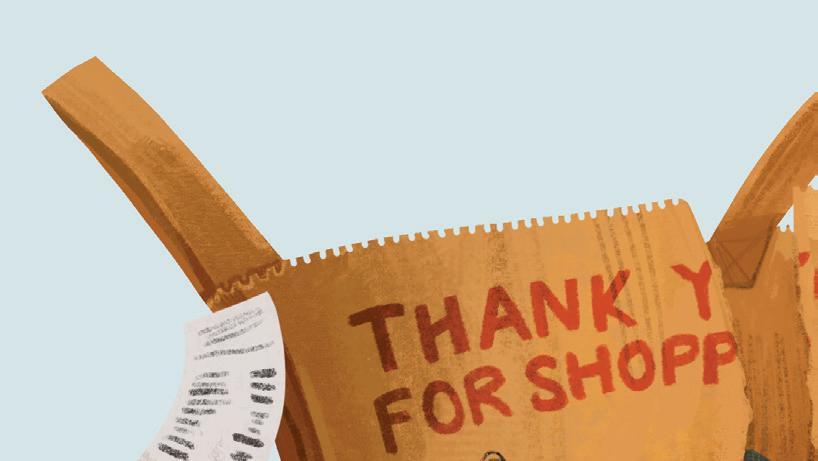
Rising anti-!anada rhetoric has strained the United States’ function as an informal grocer y aisle for !anada
by Audrey Gmerek’28, an International and Public A $airs and Economics concentrator and Sta $ Writer for BPR
illustration by Haley Maka’26, an Illustration major at RISD and Illustrator for BPR
In 2013, Mike Hallatt was banned from every Trader Joe’s in the United States for stocking his car with their goods and reselling them in his Vancouver spino$ store, Pirate Joe’s. Trader Joe’s does not have any stores in Canada, yet their goods are a familiar staple for Canadians. For decades, the United States has functioned as an informal grocery aisle for Canada, supplying everything from cheaper milk to Trader Joe’s Takis. When cross-border shopping !rst declined in 2015, shoppers cited the high exchange rate as the cause. The same trend has reappeared a decade later, but this time, the Canadian dollar remains resilient against the US dollar. While the United States and Canada have historically shared a strong trade relationship, tari$s imposed by the Oval O&ce have strained this relationship. The sudden decline in cross-border shopping indicates a shi in consumer behavior and represents a stark change in consumer preferences that is driven by politics rather than economics.
Cross-border shopping had become an almost ritualistic practice for the 90 percent of Canadians living within 100 miles of the United States -Canada border. The desire for lower prices and greater geographical convenience made this practice especially prominent in towns just south of the border. At a Trader Joe’s in northern Washington, for example, over 40 percent of its credit card transactions are initiated by non-US citizens. Despite its economic signi!cance, this cross-border shopping relationship has historically attracted little national attention, largely because it has existed within the context of a long-standing US -Canada relationship. Agreements such as the United States -Mexico -Canada Agreement allowed speci!c goods to travel tari$ and duty-free, and over $3.6 billion in goods and services were exchanged between the neighboring states daily as recently as January 2025.
Although the closure of Pirate Joe’s is attributed to mounting legal costs associated with selling Trader Joe’s products across the border, the broader decline in cross-border shopping re%ects a di$erent phenomenon: These once-routine cross-border exchanges have largely disappeared, and land travel from Canada has dropped by over 30 percent since President Donald Trump took o&ce for his second term.
Trump’s anti-Canadian rhetoric (including comments that he would like to see Canada become the 51st state) may sound like just another frivolous provocation against a fellow world leader. However, Trump’s plan to use “economic force” to push Canada into American statehood has been














“Framed as a geopolitical battle against Trump’s tariffs, the mo&ement’s impacts extend beyond intended targets, producing significant economic harm to the poc(ets of northern border to)ns across the United States.”
operationalized. In early 2025, Trump signed an executive order placing a 25 percent tari$ on imports from Canada, which he later raised to 35 percent. More recently, he kicked o$ 2026 by threatening a 100 percent tari$ on Canadian goods. In response, Canadians appear to be opposing Trump’s hostility with an economic force of their own. Canadians hold substantial purchasing power that can serve as a proxy for their dissent.
As a result, Canadians have le their passports at home and turned to domestic stores, scrounging the shelves for “Made in Canada” labels. This is part of a larger “Buy Canadian” movement that erupted in response to Trump’s abrasive rhetoric and trade policies towards Canada. This drive to shop patriotically is re%ected by the 81 percent of Canadians who said they were motivated to “Buy Canadian.” As a result, Canadian !rms are reorienting from international supply chains and even hiring marketing interns to help with “maple-washing.”
“Buy Canadian” is not just a grassroots movement or a social media trend; it has also been reinforced on the institutional level. Provincial Liquor Control Boards, such as those in Ontario and British Columbia, intend to stop stocking American liquor in their stores. Meanwhile, the Government of Canada announced the Buy Canadian Policy in December, which gives Canadian businesses priority in major federal contracts. Framed as a geopolitical battle against Trump’s tari$s, the movement’s impacts extend beyond intended targets, producing signi!cant economic harm to the pockets of northern border towns across the United States.
The decline in Canadian travel alone resulted in a $5.7 billion dollar loss for the United States tourism sector in 2025. In border towns, tense geopolitics can manifest in the form of empty parking lots. Kyle Daley, a supermarket owner in West Stewartstown, New Hampshire, stated, “When our neighbours stay away, our margins disappear, and those margins are vanishingly small to begin with.”
The damage does not end at the checkout counter. State governments rely heavily on sales tax, which funds a wide range of public services. Across states, the sharp reduction in sales tax revenue will exacerbate budget constraints on K-12 schools. On average, 45 percent of school funding comes from state revenue, and schools are already contending with a disruption of over $12 billion in federal funding since Trump took o&ce. The $4.9 million initial decline in sales tax revenue in Erie County, New York has also been felt signi!cantly by Erie’s Highway Department, which relies on the sales tax for 75 percent of its funding.






























































































The shi in Canadian consumerism could be lasting even if US -Canada tari$s were to return to a pre-Liberation Day normal. Just as cross-border shopping was once routine, Canadian shoppers are now building new habits that explicitly exclude the United States. What began solely as a political statement against American protectionism could mean a more serious economic realignment and a new normal for the two countries’ trade relations. This realignment will indisputably impact international business deals, and its ripples will be felt in the everyday livelihoods of small northern border towns.

































































































G overnment shutdowns ought to be reformed by internalizing, rather than externalizing costs, but solutions are not so easy to enforce
by Tom Yi ’28, an International and Public A $airs and Political Science concentrator and Sta $ Writer for BPR
illustration by Emily McShane ’29, a Film/Animation/Video major at RISD and Illustrator for BPR
A er 43 days, the longest US government shutdown in history ended on November 12, 2025. As of late February 2026, a partial government shutdown remains in e$ect. Its !scal and social consequences are well-documented: The disruption of critical federal services has resulted in billions of dollars lost in economic output and millions of a$ected citizens. Its cause is also seemingly well-documented: Political polarization is o en cited as the culprit of Congress’s inability to agree on appropriations legislation, leaving federal agencies without authorized funding (better known as a government shutdown). But while government shutdowns are a uniquely American phenomenon, polarization is not. Shutdowns are a striking example of American exceptionalism in that they are a byproduct of institutional design: Failure to reach compromise currently results in externalized costs, which can be safely mitigated provided that internalized costs are also introduced.
Shutdowns are most commonly attributed to contemporary political polarization. It is true that polarized disagreement produces gridlock when the annual budget cannot be agreed upon. Budgets require presidential approval and a majority vote in the House and Senate to pass, with one party rarely holding a trifecta. This causes gridlock to self-correct to an extent: Under the current system, the he y leverage of the opposition over the existing budget means negotiations and compromise must occur. However, this negotiation leverage currently takes the form of unnecessarily externalizing costs onto the American people. In October, thousands of government employees deemed “non-essential” were furloughed. Critical employees such as air tra &c controllers worked without pay; around 40
million Americans relying on Supplemental Nutrition Assistance Program food aid bene!ts received only partial payments. Programs like the Low Income Home Energy Assistance Program, a heating subsidy program used by approximately six million Americans, and Head Start, an early childhood education program used by over 800,000 Americans, were expected to take weeks to rebound even a er the November shutdown ended. Still, it is worth emphasizing that the long-term economic costs are limited. The cumulative impact of the shutdown was estimated to only “reduce real GDP (in 2025 dollars) by $11 billion [by the end of 2026]” — a relatively small impact of less than 0.04 percent on a $30 trillion economy.
While polarization is certainly relevant to the shutdown debate, it is institutional structures that grant the mechanism to pause the operations of government departments. Before the fundamental underlying e$ects and incentives of shutdowns can be addressed, however, reform must !rst begin by targeting relevant Congressional committees. While such reforms do not resolve the fundamental mechanism driving shutdowns, they do make shutdowns easier to avoid. At present, budgeting committees o en receive relatively junior members, are capped by a term limit, and are “relatively toothless.” As such, the abundance of junior members and strict term limits on budgeting committees result in a lack of deep expertise (or any incentive to build it), while the appropriations committees (the ones who actually write the checks) o en choose to ignore the budgeting committees’ suggestions. Thus, the budgeting committees’ structures need to be “strengthened or reimagined completely.” Additionally, we ought to provide better cost
“Shutdowns are a striking example of American exceptionalism in that they are a byproduct of institutional design: Failure to reach compromise currently results in externalized costs, which can be safely mitigated provided that internalized costs are also introduced.”
visibility. For example, every municipality and state government utilizes capital budgets that separate long-term capital expenditures from shortterm operating ones. The federal government currently lumps these costs together. Distinguishing between how we are !nancing X and the operating costs of X provides the option for more responsible spending. Moreover, forecast expenditures are currently set at 10 years for the Congressional Budget O&ce. Some of the highest costs are accrued here, but they grow signi!cantly a er this set window. Yet, nobody is tasked with making longer-term cost forecasts. Once more, better spending visibility — for both the short and long term — is necessary; the prerequisite for better budgeting is a better understanding of costs. Of course, this is all much easier said than done. Changes are unlikely because they require a leadership interested in changing rules, procedures, and cra ing legislation — reforms that must enjoy bipartisan support, no less. Nevertheless, although these reforms may not tackle the fundamental challenges of shutdowns — the underlying e$ects and incentives persist — they remain welcome. Not only are they relatively straightforward to implement, but they also represent a crucial step toward making shutdowns easier to avoid.
The !rst priority, then, is to eliminate the external costs. Comparing the United States to its democratic counterparts reveals that most do not externalize the burden of a shutdown onto the public via a provisional budget or automatic continuing resolution (ACR). Under a provisional budget system, if a new budget cannot be passed, funding either continues at the previous year’s levels or under a scaled-back provisional budget. This
“W hile polarization is certainly relevant to the shutdown debate, it is institutional structures that grant the mechanism to pause the operations of government departments.”
allows institutions, bene!ts, services, and projects to remain in motion. In Germany, if the provisional budget’s funding is insu&cient, the government may also borrow 25 percent of the budget from the previous year to cover ongoing costs. This system prevents societal upheaval from repeated stops and starts of crucial federal programs that are relied upon by citizens. Moreover, this system is present in both presidential and parliamentary systems. It is a function of the budgeting process and can be applied to the United States without a system overhaul. It should not be considered a fundamental structural limitation only applicable to, say, parliamentary systems, as the drawing of the Prime Minister (PM) and cabinet from the legislative branch and the PM’s subsequent role primus inter pares (!rst among equals) within the executive is. Indeed, the United States had a similar mechanism not too long ago: The original interpretation of The Antide!ciency Act, which currently prohibits federal spending without appropriations, was originally interpreted to permit federal agencies to continue operating when appropriations had expired. Nonessential operations were simply minimized under the logic “that Congress did not intend that agencies close down.” Upon its reinterpretation by Attorney General Benjamin Civiletti in 1980, the approval of limited operations was replaced by a prohibition on nearly all spending. However, solely implementing ACRs introduces a new set of challenges. The new status quo would be that the government stays open, thus lacking leverage to force a resolution or drive change. Year a er year, Congress might continue to roll over the budget without making crucial decisions

about funding, whether for energy transition projects or developing critical infrastructure. There would be no urgency for those satis!ed with the existing budget; with the current setup, there are at least stakes in failing to reach a compromise. Given the razor-thin majorities in Congress today, the resistance of a single congressperson holds considerable power. The lack of urgency in this scenario might well mean foot-dragging by resistant congresspeople over minor issues. Even worse than shutdowns, Congress might run on autopilot forever.
While shielding the public from cost externalization is necessary, this alone does not guarantee legislative progress. To ! x this, we must also set our sights on cost internalization. Forcing legislative decision-makers to bear the burden of failure would actively incentivize compromise on both ends of the political spectrum. Upon examination of other countries, however, it becomes apparent that the options for internalizing costs are limited. The failure to pass a budget in the United Kingdom and Canada is a matter of con!dence; in other words, it typically results in the resignation or dissolution of government. The moment a government cannot supply the budget, its right to rule expires. Unlike these parliamentary systems, the United States has codi!ed timeframes and no precedent for snap elections;

there are a plethora of American constitutional barriers and structural limitations that prevent such a system from ever realistically taking shape. Moreover, snap elections themselves are problematic. They cost the economy hundreds of millions of dollars and shi the burden onto citizens to vote, while parties focus on campaigning instead of ! xing the budget. Even worse, parties might be incentivized to trigger snap elections if they believe they are polling favorably among the populace. If it is instability we are !ghting, this is not the answer.
Fortunately, a rather strong outline to achieve cost internalization has already been proposed: The Prevent Government Shutdowns Act of 2025 acts within constitutional boundaries, advocating for a carrot-and-stick approach. Not only does this bill propose enacting continuing appropriations if a budget cannot be passed, but it also proposes pausing “o&cial travel, congressional recesses or adjournments, and the consideration of legislation that is unrelated to appropriations” until the appropriations process has been completed. These political consequences prevent the dreaded, never-ending autopilot mode, actively discourage foot-dragging, and encourage a timely compromise and resolution. Such a proposal is the !rst step in holding those in power accountable for their actions: It both
“Forcing legislative decision-makers to bear the burden of failure would actively incentivize compromise on both ends of the political spectrum.”
mitigates external costs and addresses the consequences of only doing so by introducing internal costs.
This bill has not crossed the !nish line. That should take nobody by surprise — politicians do not like internalized costs. Why would they? No rational actor is willing to surrender the ultimate bargaining chip they can deploy (at someone else’s expense, no less) for a system that causes personal misery when timely compromise cannot be reached. Until Congress is willing to shoulder accountability for its own gridlock, this bill, like the government o en is, might just be stuck in legislative limbo.
Stratospheric Aerosol Injection (SAI) is a lo) cost, politically acceptable alternati&e climate solution, but )ill it sacrifice more than it achie&es?
by Nicholas Clampitt ’26, a Political Science and Science, Technology, and Society concentrator and Chief Copy Editor for BPR
What do oil companies, ultraconservative think tanks, and billionaires agree on regarding global warming? Perhaps that it is propaganda, pseudoscience, or a hoax? Or perhaps something more paradoxical: that they have found its solution.
For decades, climate change has forged a destructive path through our world as mitigation e$orts have fallen short. A suite of technological innovations now promises to reverse this damage. Among these is stratospheric aerosol injection (SAI), a form of geoengineering that proposes injecting large quantities of aerosol particles, namely sulfur dioxide, into the stratosphere to re%ect incoming sunlight. SAI has incredible potential to reduce global mean temperatures by several degrees within a matter of months, with deployment projected to add decades before the Earth reaches the catastrophic 2.5 degrees Celsius threshold of warming. This would vastly extend the timeline to carry out a comprehensive green transition and avert the worst of climate change.
Research into the nascent technology has garnered inexplicable political backing from climate-skeptic politicians, think tanks, and lobbyists, as well as funding from the same billionaires and fossil fuel companies who pro!t from enterprises that warm our climate. This is no accident. Behind closed doors, SAI serves to maintain the centrality of fossil fuels to the global economy while stalling a green transition. By preserving the longevity of petro-assets and relegating clean-energy alternatives to solutions of the past, SAI is not a climate solution but a tool of capital preservation.
Capitalists’ solipsistic accumulation has polluted the Earth and warmed its climate, with the global end state being total ecological collapse. Despite their resistance to upending the hegemony of fossil fuels, !nancial elites recognize the threat that climate change poses to both global economic stability and fossil fuel corporations through regulation and the rise of energy alternatives. A Citi report estimates a loss of $44 trillion in global GDP with an increase of 2.5 degrees Celsius in global temperature by 2060. At the same time, nearly $100 trillion in unburnable fossil reserves and idle assets could become ‘carbon stranded’ economically worthless by 2050 as a result of the transition to low-carbon or renewable energy sources. Risks to petroleum assets from stringent climate policy, as well as risks to !nancial assets and coastal infrastructure from warming-induced environmental shi s, are set to have fatal impacts on the capitalist world order. Moreover, a green transition would undermine the American-led global economic order from within by eroding the petrodollar system that anchors global
“,us,
solar geoengineering is not simply a climate inter &ention, but a politicaleconomic inter &ention, buying time for incremental shifts to decarboni-ation, slo)ing the de&aluation of fossil capital, and reducing the impetus for o&erhauling the fossil-dependent infrastructures of the capitalist state.”
oil trade to the US dollar. Thus, elites have gone searching for a form of self-imposed restraint that does not fundamentally threaten their economic empires or pro!t motives one that SAI may provide.
Solar geoengineering has the immense capacity to bene!t corporations’ bottom line beyond simply eliminating renewable competitors. SAI companies have the unique opportunity to create permanent demand for their product. Aerosols injected into the stratosphere have a lifespan of about one to two years before falling back to the Earth. Therefore, to sustain the cooling e$ect of SAI, annual replenishment would be required. Furthermore, once wide-scale stratospheric injection begins, it will need to be consistently maintained against the threat of “termination shock,” a rapid rise in global temperature that would occur if injection suddenly stopped, threatening ecosystems and human civilization. The technology would thus create a permanent reliance on its proprietors, such as Stardust Solutions, who could e$ectively control the stability of our planet as resource extraction continues underneath.
Given the structural alignment between SAI and capital preservation, it is unsurprising that the technology has attracted a unique coalition of advocates. Conservative politicians such as Representative Randy Weber
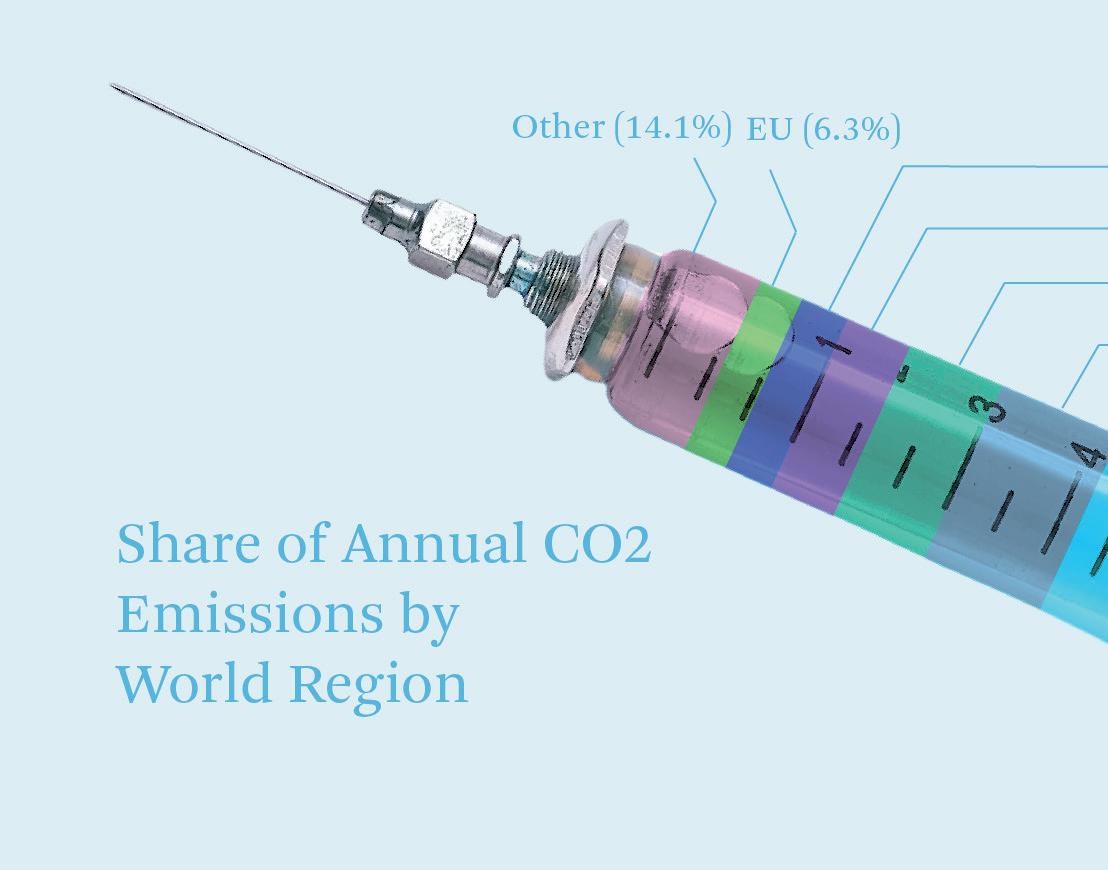
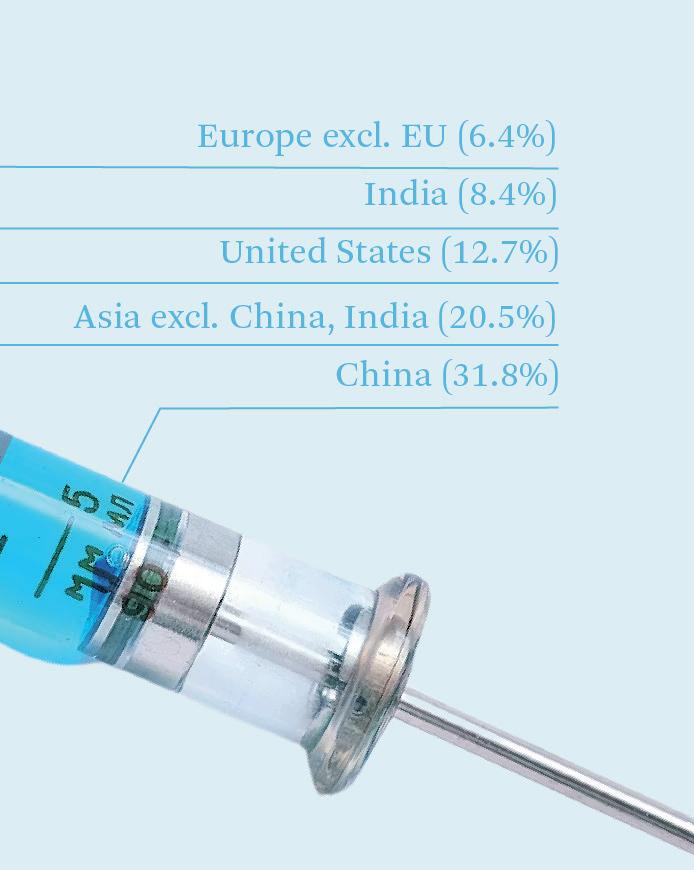
“,e stratosphere and &aried animate and inanimate bodies that compose our planet must not become another laboratory for capitalist experimentation.”
(R-TX) and former representatives Newt Gingrich and Lamar Smith have come out in support of geoengineering as an alternative to government regulation. Unlike other carbon policies, this climate techno! x promises to preserve oil markets, protect consumer freedoms with regard to petro-based products, and ensure the pro!tability of fossil fuels — all core positions of modern conservative ideologues. Geoengineering is consistent with the right-wing cultural worldview that prioritizes controlling the environment and protecting personal liberties provided by free market capitalism.
Stratospheric aerosol injection is also championed by the very creators of the climate crisis. Those who have maximized their gains through this economic system are key contributors to academic geoengineering research — from the founders of highly in%uential technology companies to the leaders of hedge funds, including names such as Microso ’s Bill Gates and Asana’s Dustin Moskovitz. A report from the Center for International Environmental Law noted that geoengineering research has become saturated by the interests of petroindustries, with funding sourced from oil companies such as Shell and Gulf. The Harvard Program on Climate Agreements, which heads Harvard’s solar geoengineering program, is directly funded by fossil fuel companies, including BP, Chevron, Enel, and Shell. Tycoons — including Canadian oil billionaire Norman Murray Edwards, who has a vested !nancial interest in developing the tar sands of Alberta — have also invested in geoengineering projects. Their “philanthropic” funding is strategic: The potential of SAI to mitigate global warming without systemically addressing the root causes of this crisis makes it an alluring venture for the wealthy elite.
By footing the bill for SAI research, conservatives and fossil industries reveal an internal recognition that global warming demands attention due to its threats to economic security. However, powerful calls for uprooting
the petro-economy require that climate deniers acquiesce, at least partially, to prevent a complete shi in the contemporary global economic order. Solar geoengineering thus exists as an anomalous climate ! x by which climate skeptics can resist a complete transition of the political economy. SAI projects appease both conservatives and petroindustries — the most politically-organized and !nancially-robust opponents of climate action — and could conceivably receive nonpartisan support, making the odds of their implementation considerably higher, especially as liberals, desperate for any climate measures, may acquiesce rather than risk the alternative of inaction. Geoengineering thereby becomes the only viable neutral solution, the implementation of which would bypass the political deadlock on climate action while satisfying states, economies, and political !gures alike. This political consensus is precisely what makes SAI dangerous. The technology threatens to lock us into permanent atmospheric management, delaying climate change’s most visible harms without addressing the combustion of fossil fuels that drives them.
Thus, solar geoengineering is not simply a climate intervention, but a political-economic intervention, buying time for incremental shi s to decarbonization, slowing the devaluation of fossil capital, and reducing the impetus for overhauling the fossil-dependent infrastructures of the capitalist state. As a climate tactic, SAI can preserve the status quo of petro-dominance and forge an alliance between the fossil and climate factions of accumulation while upholding the legitimacy and power of both under the interests of capitalism. Moreover, SAI would e$ectively centralize atmospheric authority in the hands of a select few, rendering planetary stability dependent on our ability to fund these actors. The backing of solar geoengineering by capitalist classes and petroindustries is therefore a strategic choice to concurrently stave o$ energy alternatives and bolster their control of the global politico-economic order.
The stratosphere and varied animate and inanimate bodies that compose our planet must not become another laboratory for capitalist experimentation. At a moment when evidence points toward circular economies, systemic decarbonization, the dismantling of petroindustries, and a reimagined relationship with nature as some of the di&cult yet necessary solutions to climate change, SAI o$ers a relatively cheap and politically acceptable alternative to such a substantial structural pivot. It is clear that SAI is possible — but will we permit the architecture of extractive planetary management it demands?
,e revocation of Dominican citizenship from those of Haitian descent raises questions about the definition of statelessness
by Fabiana Conway ’29
, an International and Public A $airs concentrator at Brown and Textiles major at RISD and Web Editor for BPR illustrations by Awele Chukwumah ’26, an Illustration major at RISD and Illustrator for BPR
A blue passport can get you far. The leatherbound booklet denotes association with the ‘New World’ and grants access to an unprecedentedly high degree of global mobility and embassy protection unless the passport reads “Republique D’Haiti.”
The 2013 retroactive revocation of birthright citizenship in the Dominican Republic and mass deportations of Haitian immigrants have created a nation of people who are citizens in name alone. The Haitian government cannot o$er the rights, protections, or basic infrastructure that constitute a state; their people are de facto stateless.
Despite sharing the island of Hispaniola, Haiti and the Dominican Republic’s fraught relationship runs deep. The !rst demographic division of the island was arti!cially created by French and Spanish colonists, who took over the West and East sides of the Dajabón River, respectively. The two empires took vastly di$erent approaches to colonization. Spain, occupying the modern-day Dominican Republic, developed a settler-based society, with a white and mixed-race majority. France, on the other hand, only saw Haiti as a site from which to extract pro!t, establishing an immensely lucrative plantation economy and importing over half a million enslaved Africans 10 times more than the Spanish did. When Haiti won independence in 1804 a er over a decade of slave uprisings, the demographic legacy of French slave ownership was immortalized. Haiti became the !rst Black republic and the !rst nation to be governed by former captives.
In 1822, to deter threats of French reinvasion, Haitian troops commanded by General Jean-Pierre Boyer surged across the Dajabón River, subjecting the citizens of the Dominican Republic to a brutal occupation. But Boyer’s gamble did not work. In the midst of the summer of 1825, a squadron of French warships, equipped with some 500 cannons, arrived on Haiti’s shores. They proposed a deal: Haiti was to pay the French state 150 million francs to compensate former colonists for lost land, slaves, and pro!ts. In exchange, France would recognize Haitian independence. Of course, this indemnity was little more than a nation-wide ransom. Failure to pay would lead to devastating French reinvasion.
Independently procuring the money required was unthinkable. Historians predict that the required sum amounts to $560 million in today’s dollars, an impossible amount for a nation freshly and violently unshackled from over a century of plantation slavery. Even the !rst round of payments amounted to around six times the government’s income that year. Without widespread recognition of their independence abroad, there was only one nation whose banks Haiti could turn to take out loans: France. They paid a crippling high-interest debt to the Parisian bank Crédit Industriel et
“But there is a third facet to the legacy of this debt: ,e extraction of Dominican )ealth under Haitian occupation shaped a national identity built on anti-Haitian sentiment.”
Commercial. To !nance their rapidly deteriorating !scal state, the Haitian government imposed heavy, unpopular taxes on the Dominican Republic. Occupying forces frequently con!scated food, supplies, and property from Dominican residents at gunpoint.
The indemnity levied upon Haiti by the French is o en dubbed the “double debt” due to its crippling and lasting e$ects on Haitian state capacity by 1914, about 80 percent of Haiti’s national budget was used to pay foreign debts, leaving no money for infrastructure, education, or healthcare. But there is a third facet to the legacy of this debt: The extraction of Dominican wealth under Haitian occupation shaped a national identity built on anti-Haitian sentiment.
The modern-day Dominican Republic cannot forget the haunts of its neighbors’ violent occupation. Driven by high unemployment at home, Haitians continuously seek work across the river in labor-intensive sectors like sugar, co$ee, and cocoa production. A er the 2010 earthquake, around two million Haitians %owed into the Dominican Republic, many of them undocumented. Shortly a er, the Dominican Republic’s Constitutional Court ruled to strip citizenship from children born to undocumented foreign parents 86 percent of whom were of Haitian descent.
From late 2024 onward, the Dominican Republic has intensi!ed its immigration crackdown on Haitians. Haiti is still a Black republic in the Dominican imagination, resulting in what human rights organizations criticize as the racial pro!ling of dark-skinned individuals. 379,553 Haitian nationals were deported in 2025 alone.
For Haitian citizens, the stakes of denationalization in the Dominican Republic are particularly high. Haitian citizenship is not a viable substitute for Dominicans of Haitian descent because the failed Haitian state is








“Despite holding a physical token of citizenship, Haiti’s passport sits near the bottom of the global ranking, )ith only 13 &isa-free destinations and &isas required for 139 countries.”


presently unable to guarantee even basic protections and services to its citizens. Haiti is considered “High-Alert” in the Fund for Peace’s 2024 Fragile States Index — it is the ninth worst globally and has the lowest possible score in the State Legitimacy indicator. Institutionally, the nation has had no nationally elected o&cials since January 2023, and its parliament has been inactive since 2019. The resulting vacuum of legitimacy has been “!lled” by armed gangs and militias functionally acting as governing authorities, controlling territory and major transport corridors, imposing rules, and o$ering selective protection.
On the ground, the Haitian state has entirely lost the monopoly on force: UN Security Council estimates say 75 to 85 percent of Port-au-Prince, the capital city, is controlled by gangs, with other reports showing !gures as high as 90 percent. The UN Human Rights O&ce veri!ed that at least 5,600 people were killed in gang violence in 2024 alone. Displacement is ubiquitous, with International Organization for Migration reports showing 1.4 million people internally displaced in the country with no policies to assist them. Basic service delivery is collapsing. Amid expanding violence beyond the capital, UN reporting showed fewer than 25 percent of health facilities near Port-au-Prince were functional.
The state of Haitian institutions is so dire that it is contentious whether Haitians can be described as citizens of any state at all. The United Nations High Commissioner for Refugees (UNHCR) 1954 Convention relating to the “Status of Stateless Persons” de!nes a stateless person as someone “not considered as a national by any State under the operation of its law,” but the UNHCR’s own 2010 paper on de facto statelessness nuances this term. The paper de!nes de facto stateless persons as those “lacking an e$ective nationality” and it cites literature de!ning de facto statelessness as occurring when governments “withhold the usual bene!ts of citizenship, such as protection, and assistance.”
Haiti’s state failure makes it unable to deliver the core rights and protections that citizenship is supposed to provide. Thus, the revocation of Dominican citizenship from those of Haitian descent e$ectively relegates the a $ected individuals to de facto stateless persons, regardless of their Haitian citizenship.
Despite holding a physical token of citizenship, Haiti’s passport sits near the bottom of the global ranking, with only 13 visa-free destinations and visas required for 139 countries. If citizenship was once a physical representation of belonging, Haitians are now contending with the reality of living in limbo. Characterized by their de facto statelessness, deported Haitians and Dominicans of Haitian descent travel with their blue passports to a liminal home.

The surge in AI-generated )riting across all le&els of societ y )ill gi&e rise to casual language as a ne) linguistic shibboleth
Emily Dickinson has lost her most beloved friend. Penned in alternating lengths, angles, and fervor, the em-dash was once a cure-all for the emphatic writer. It o$ered a moment of respite, prompting re%ection on the text. Or it represented a breath of hesitation. I elegize its sudden death in 2024, when this treasured punctuation mark was paraded across the internet as the most e$ective way to identify AI.
There are endless Reddit posts, Medium blogs, and LinkedIn posts coaching internet users on how to “not sound like AI.” Eager to capitalize on this internet witchhunt, companies like Grammarly and Quillbot have launched “AI Humanizer” tools promising to make AI-generated content sound less robotic. The crusade goes beyond the infamous em-dash: Servile positivity is dead, corporate verbiage like “delve” is dead, and triplets (oops!) are so, so dead.
Few groups scorn AI writing as much as academic cultural elites. A study at the University of California, Berkeley, found that the only university disciplines since 2022 whose syllabi did not ease up on restrictive policies against AI use were in the arts and humanities. Across all departments, 79 percent of syllabi still ban the use of AI for dra ing and revising essays.
“The crusade goes beyond the infamous em-dash: Ser &ile positi&it y is dead, corporate &erbiage li(e “del&e” is dead, and triplets (oops!) are so, so dead.”
Professors make laughably few efforts to conceal this derision. Benjamin Parker, Associate Professor of English at Brown University, put it quite concisely in his Spring 2026 ENGL0500T syllabus: “Assignments completed with the help of AI will be irrelevant, thoughtless, useless, and non-responsive. If the answers produced by AI look good to you, you have missed the point of everything.”
Parker’s words, while biting and admittedly motivational, overlook a key irony in academia’s critique of AI-generated writing: The largest portion of Large Language Model (LLM) training data is pulled from publicly accessible text, including academic repositories like arXiv, PubMed, BookCorpus, and Project Gutenberg. ChatGPT’s tell-tale writing style and corresponding content is not its own. It is coached on decades of academics across disciplines, from anthropology to economics, who relied on speci!c grammatical elements and a detached, impersonal voice as a lingua franca to convey their taste-maker status. The very writing style these professors now scorn is the language of their own manuscripts.
The democratization of academic language poses a serious challenge for the cultural elite. If their expertise can be replicated by brutish technology, then all of those agonizing years as a broke PhD student were for naught!
Historical precedent points to a very simple solution: Lean into human irreplicability. By the late 19th century, photography let %awless portraits



















































of the family unit grow ubiquitous. For all of their years of schooling and apprenticeship, classically-trained painters could not compete with the photorealism or speed of a camera. A coterie of young painters realized that if their profession was to survive, they had to recommit to tactile human expression. You may know them today as the Impressionists.
Monet’s famous red sunrise, which dapples across calm waters, captures a %eeting re%ection of light that eluded the era’s long-exposure cameras. Impasto — thick, visible, and messy brush strokes — drew attention to the laborious and passionate process of creation, in contrast to the camera’s simple click. Viewers could infer the pacing of the artist’s paint strokes from the !nal product, speeding up with excitement and slowing down to introspect. Paintings became a re%ection of the artist’s personal feelings toward the subject matter.
There is no de!nitive evidence that all academic writing will face a similar shi away from bloated, impersonal syntax. But if the direct reader address and casual language in Parker’s syllabus is exemplative of anything, it is that academics, too, are bristling against tradition. They must reinvent themselves as the Impressionists did. In the face of AI’s %atness, writing must become varied and personal.
Still, we cannot skirt the in%uence of LLMs forever. Compared to previous technologies, the accessibility of LLMs enables its in%uence to disseminate astoundingly quickly. A recent Max Planck Institute for Human Development study found a “seep-in” e$ect of AI language on everyday speech, where even conversational, non-scripted podcasts have shown a statistically signi!cant uptick in common AI vocabulary.
The causes go beyond passive consumption and regurgitation of AI writing. Just as elementary schoolers are trained to !ll-in-the-blank for the “correct” word a sentence is reaching toward, laptops, imbued with increasingly advanced predictive text, gradually program our brains to write emails in the style of Gemini. When predictive text was in its nascent stages, researchers at Harvard discovered that writers whose phones had the predictive keyboard feature used signi!cantly fewer “unpredicted” words. They speculated that texters would actually substitute their own word choice with the predicted text suggestions.
The 2020 landscape pales in comparison to the richness of LLMgenerated predictive text now. Gmail’s “Smart Compose” feature is underlaid with Gemini to ghost-write the ends of sentences. When I type “Thanks for…,” Gemini !nishes it up with “...taking the time to meet with me today. It was great catching up!”











































































When Gemini autocompletes a sentence, the brain stops searching for alternative endings — a tendency scholars call cognitive anchoring. Similar to what the 2020 Harvard study found, internal vocabulary dwindles to match that of Gemini: Hitting “tab” is far simpler than thinking for yourself.
Whether copied and pasted directly from ChatGPT or through subconscious adoption, AI-generated writing now saturates most corners of the internet, including the process of job-seeking. A 2025 survey found that two-thirds of job candidates use AI for resume and cover letter writing, interview practice, or career guidance.
Levin Brinkman, a co-author of the Max Planck study, explained that it is natural for humans to “copy what someone else is doing if we perceive them as being knowledgeable or important.”
So what of those who dispute AI’s intellect? Professors certainly resist AI seep, but what about their equally well-educated (if not a bit more !nancially-minded) peers from the good old college days?
The economic elite — the bankers, product managers, and lawyers of the world — have also not been so quick to accept the normalization of AI use amongst job applicants. Well-written cover letters are no longer an opportunity to demonstrate interest in the employer and signal quality of education. Twenty-!ve percent of recruiters !nd AI use when writing cover letters “unacceptable.” Another survey reported that 20 percent would reject candidates with AI-generated cover letters altogether. Employers can no longer make easy inferences about a candidate’s quality of education through the quality of their prose due to widespread AI use, rendering traditional cover letters useless.

The em-dash may be dead. The polished cover letter as a marker of professional competence may be dead. But if humans can be credited for anything, it is our uncanny ability to make an in-group out of anything: to clutch onto shibboleth for dear life. The ability to write well has always been — as it will always be — a status symbol. AI-generated writing promises to overturn hierarchies, but techno-optimists overestimate just how far taste-makers will go to hang on to their titles. What has fallen may yet rise again. Elite habitus is bound to get a whole lot more personal.
by Michaela Hanson ’28, an Economics and English concentrator and Sta $ Writer for BPR
In the 1930s, the Soviet Union engineered the Holodomor in Ukraine, starving a population residing in some of the most fertile land in Europe. Unrealistic grain quotas were imposed on Ukraine to power the rapid industrialization Stalin sought, draining Ukraine dry. Not even a decade later, Nazi planners plotted to colonize the region in order to feed the “master race” at the expense of the Slavs, whom they viewed as subhuman. This gave rise to the lesser-known “Hunger Plan,” which further starved the Ukrainian people. In both cases, Ukraine was seen as key to fueling the engines of extremist regimes.
Today, Ukraine is one of the world’s largest grain exporters and a major supplier in international food aid programs. In his mission to destabilize Western institutions and consolidate regional power, Russian President Vladimir Putin has leveraged Ukraine’s status as the breadbasket of Europe to weaken and divide the continent. By disrupting Ukrainian agricultural production, Putin has sent outsized humanitarian and economic ripple e$ects felt across Europe and the world, undermining regional support for Ukraine, and worse, stoking pro-Russian sentiment all in support of his goal to restore the power Russia once held before the fall of the Soviet Union.
The immense disruptions to Ukrainian agriculture since Russia’s invasion in 2022 are well-documented. Ukraine’s arable land has dropped by 14 percent, losing 3.5 million hectares to Russia. Of the remaining arable land in Ukrainian territory, a further 1.6 million hectares remain uncultivated due to military threat. This amounts to an annual loss of more than 15 million tons in agricultural products enough to feed 70 million people for an entire year.
“Of the remaining arable land in Ukrainian territory, a further 1.6 million hectares remain uncultivated due to military threat. This amounts to an annual loss of more than 15 million tons in agricultural products enough to feed 70 million people for an entire year.”
Furthermore, the Ukrainian land Russia continues to poorly harvest will only become increasingly damaged and strained, heralding a lasting setback to Ukraine’s agriculture that will persist beyond liberation.
Russia’s export blockades have only exacerbated the e$ects of this agricultural disruption. During the early months of the war, Putin restricted nearly all Ukrainian exports through its main export route, the Black Sea, with a series of naval blockades, mined waters, and missile strikes. The sheer amount of grain lost to these disruptions pushed the United Nations, Turkey, and Russia to negotiate the Black Sea Grain Initiative in 2022, which re-opened three major Ukrainian ports. Part of this deal included minimizing sanctions on Russian food and fertilizer. However, Russia was le unsatis!ed with the remaining sanctions and pushed for further concessions, ultimately ending the deal in 2023 when its demands were le unanswered. Ukraine was forced to establish its own maritime export corridor through ports such as Odesa, Chornomorsk, and Pivdennyi, although employing these routes remains risky and strategically vulnerable.
To support Ukraine’s economy and combat world food insecurity, the European Commission, in collaboration with Moldova and Ukraine, constructed “Solidarity Lanes”: rail, river, and road routes carrying Ukrainian grain to the rest of Europe to circumvent Russian blockades, o en enabled by temporary suspensions of tari$s on Ukrainian agricultural goods. However, it quickly became evident that the “frontline !ve” Poland, Slovakia, Hungary, Romania, and Bulgaria on whom the European Commission relied to facilitate this trade, lacked the resources necessary to handle the
“Limiting Ukraine’s export capabilities and stealing its supply has become a major source of revenue for Russia, which has been su ering economically from sanctions and tari s on its goods.”
transportation of such a large amount of grain. The resulting accumulation of grain in the frontline !ve pushed down the price of locally produced grain, causing huge income losses for farmers in these countries and triggering mass farmer protests.
As a result, Slovakia, Bulgaria, Hungary, and Poland adopted bans against the importation of Ukrainian grain, directly opposing the Solidarity Lanes. “Instead of export corridors, our countries are becoming warehouses,” said Yavor Gechev, then-agriculture minister of Bulgaria.
Such resistance directly fractures the uni!ed front in support of Ukraine that the European Union aims to project. A spokesperson for the EU deemed such unilateral actions unacceptable, stating that “in such challenging times, it is crucial to coordinate and align all decisions within the EU.” A partial compromise was reached, in which the European Union adopted a temporary ban on the domestic sales of Ukrainian wheat, maize, rapeseed, and sun%ower seed within the frontline !ve, as long as transportation to other countries was facilitated. Yet, the frontline !ve did not keel so easily. The nations’ agriculture ministers signed onto a position declaring their countries’ intention to extend the ban to the end of 2023, despite the European Commission’s decision to end the ban in September.
The widening fractures in European solidarity — especially on the part of countries previously part of the Soviet sphere that have since moved toward the West — are music to Moscow’s ears. Putin’s goal has always been clear: He seeks to restore what he views as the old Russian Empire and regain the power Russia had before the fall of the Soviet Union. He fears the eastward expansion of the EU and NATO not just for security reasons, but also because it constitutes a threat to his imperialist ambitions. Once a country has joined the EU and is subject to its rule of
law or has joined NATO and is protected by its military pact, Russia’s chances of regaining that territory are severely diminished. These policies partly explain why Putin reacts so intensely when post-communist countries suggest a westward alignment.
Yet belonging to the EU and NATO does not insulate countries from Russian antagonism. Repeated European opposition toward EU policies that aim to support Ukraine has set a precedent of dissent, challenging European Union authority on Russia-Ukraine policy issues. As such, Putin’s war on Ukrainian agriculture has therefore successfully fractured both European solidarity with Ukraine and the Union’s identity as a uni!ed coalition.
Hungary and Slovakia, both a $ected by in %ows of Ukrainian grain, have negotiated exemptions from Russian oil sanctions, and Hungary has refused to militarily aid Ukraine. More than 18 percent of Slovaks even want Russia to win the war. Hungary’s Prime Minister Viktor Orbán has been working on plans to create a Ukraine-skeptic political alliance, possibly impeding the EU’s ability to militarily and !nancially aid Ukraine.
While the European Union fractures, Putin has increased Russian in%uence in other parts of the world by !lling the gaping loss of Ukrainian grain, although millions of tons of the Kremlin’s exported grain are pilfered from Ukraine. Russia is currently among the top grain exporters in the world, particularly supplying grain to countries such as Turkey, Iran, and Egypt. Limiting Ukraine’s export capabilities and stealing its supply has become a major source of revenue for Russia, which has been su$ering economically from sanctions and tari$s on its goods.
Russia’s deliberate attack on Ukrainian agriculture has rippled across the world, triggering farmer protests across Europe and rising global food insecurity. As people su$er, support for Ukraine wanes alongside anti-Russian sentiments, and many countries previously under Soviet in %uence have ventured to deliberately resist the European Union rule of law, fracturing the very foundation of the system Putin so ardently opposes. Ultimately, the war on Ukrainian farmers has resulted in the shattering of the West’s uni!ed front toward the war in Ukraine and the attraction of post-Soviet countries back toward the East.
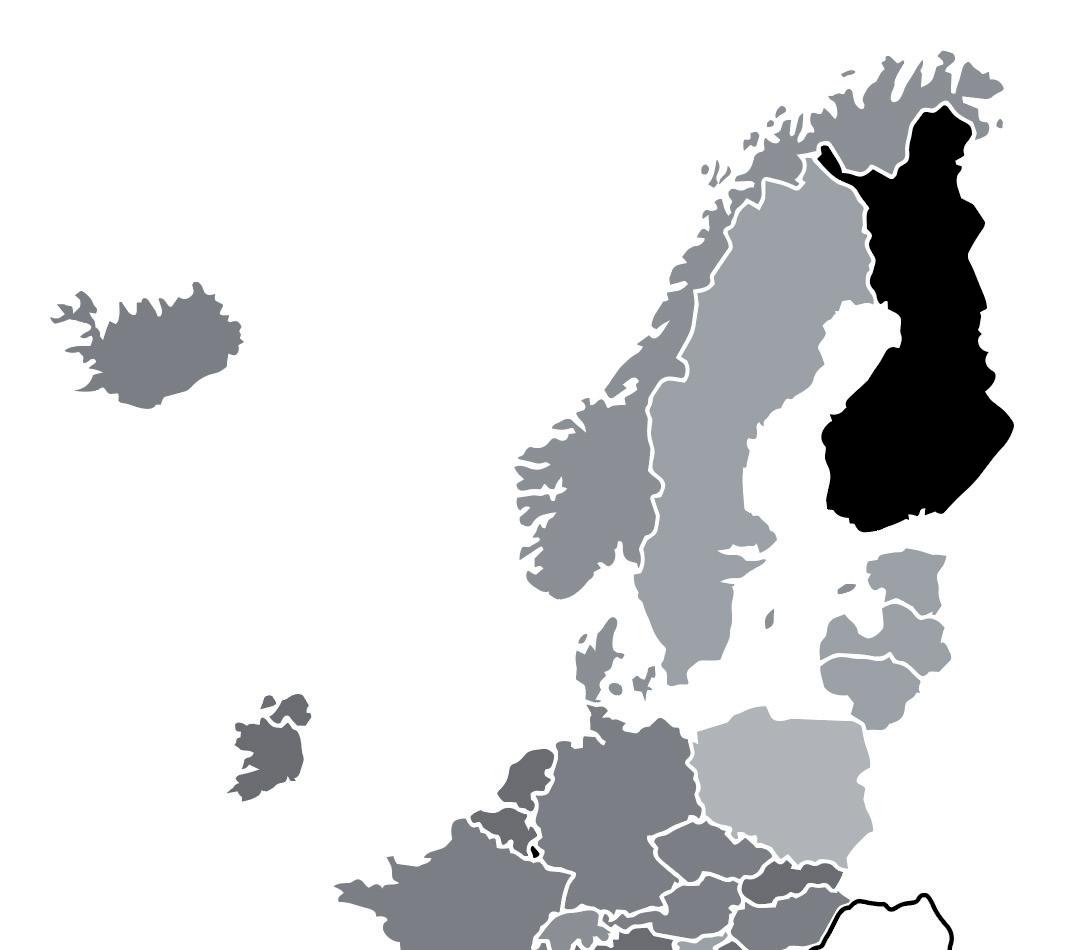
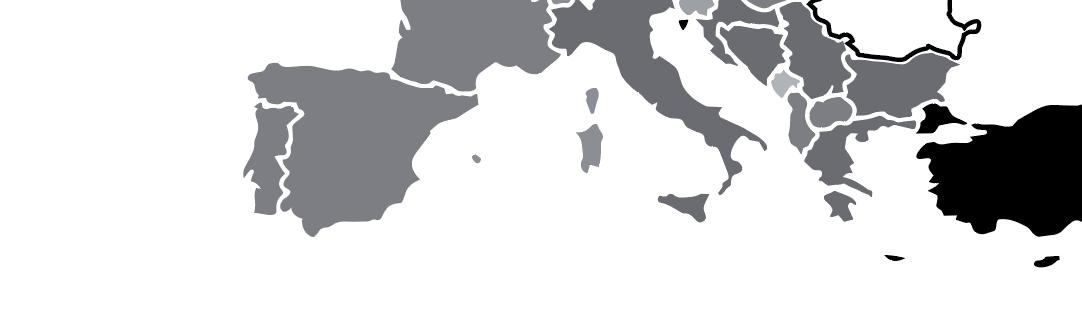
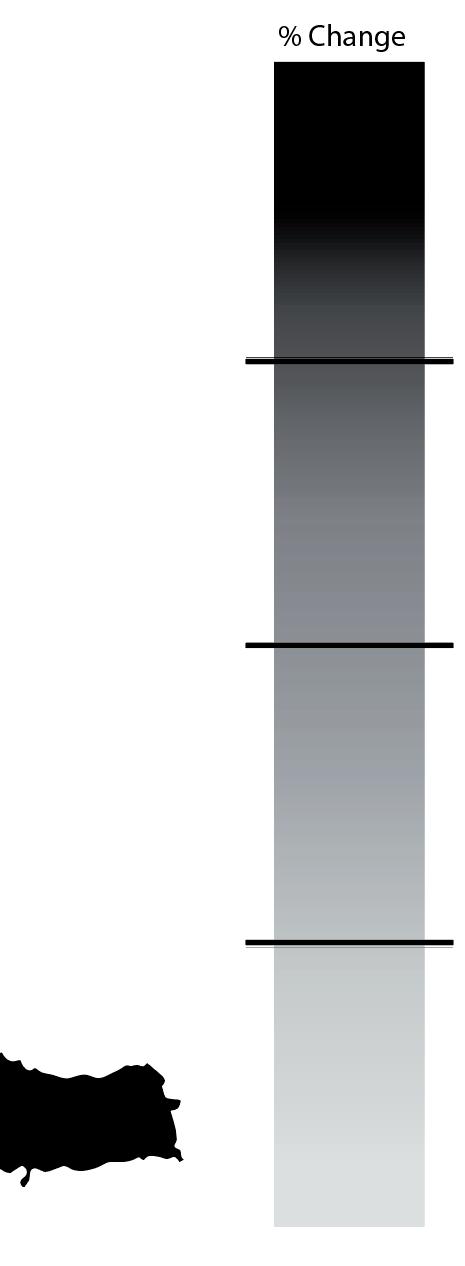
Despite his populist appeal, Ibrahim Traoré is not the democratic leader he may have initially appeared to be
by Ben Hader ’28, an International and Public A $airs and History concentrator and Sta $ Writer for BPR illustration by Rokia Whitehouse ’27, an Illustration major at RISD and Illustrator for BPR
Accra, Ghana. Cheers erupt from the gathered crowd as a man’s name is announced. Clad in a red beret and a camou%age uniform, the national %ag stitched onto his sleeve features a yellow star, not Ghana’s emblematic black one. Nevertheless, the spectators who have gathered for Ghanaian President John Mahama’s inauguration embraced this other man as if he was one of their own. This is Ibrahim Traoré, Burkina Faso’s interim president. As his more-than-warm welcome in Ghana would suggest, Traoré has successfully built a platform on the promise of a Pan-Africanist government, promising to free his citizens and African citizens writ large from political and economic exploitation by European powers like France. Despite his populist appeal, Traoré’s actions have been far from democratic — in fact, he is openly authoritarian. His backing by the Pan-African Vanguard thus re%ects a contemporary rejection of Western liberal frameworks under a pretense that improvement of material conditions is incongruent with “bettering” ideological ones.
Traoré’s rise to power was undemocratic from the onset. A former army captain, he seized power in 2022 by leading a coup to oust the previous military leader, who had also entered power through a coup nine months earlier. He arrived with a mandate founded on “the restoration of security and integrity” in Burkina Faso, both of which were in %ux. His political aims resonated with Burkinabés, who had grown disillusioned with the country’s French-dominated political-economic order. France’s six-year-long military campaign, Operation Barkhane, failed to defeat increasing threats of jihadist insurgencies across the Sahel, and Burkina Faso remained dependent on the CFA franc.
With his mission to “decolonize mentalities,” Traoré is o en compared to Thomas Sankara, Burkina Faso’s revolutionary leader and a !gurehead of Pan-Africanism. Sankara, who replaced the country’s colonial name of Upper Volta with Burkina Faso (“Land of Upright Man”), championed the same causes of self-reliance and anti-imperialism. Both Traoré and

Sankara’s own brother claim the “Progressive and Popular Revolution” as a continuation of Sankara’s ironically-named “Democratic and Popular Revolution.” Sankara’s Pan-Africanist enthusiasm has continued under Traoré, similarly centered on the removal of structures of Western democratic governance. Traoré’s disdain for Western institutions that espouse democratic ideals is rooted in his rejection of Burkina Faso’s imperial past, one from which Sankara also passionately fought to escape. As such, Traoré’s model of governance suggests that authoritarianism can be politically legitimized so long as it is expressed as a reclamation of national sovereignty and economic might.
Traoré argues that democratic governments in Africa, such as Burkina Faso’s previous regime, fail to e&ciently deliver policy change — but authoritarian governments can. His unilateral decision-making power allows him to skip the slow legislative processes that democracies require. Traoré describes his new regime as a “People’s Progressive Revolution,”
calling democracy an end to rather than a means of development. In other words, to reach the end of “democracy” and enact structural change, the country must !rst embrace a revolutionary period.
Traoré’s conception of democracy thus aligns with Sankara’s: Democracy is unattainable unless citizens can be protected by the power-yielding groups and individuals who have traditionally held in %uence over democratic governments. By calling back to the iconic !gure of Sankara to characterize democracy as an extension of Western imperialism, Traoré justi!es his authoritarian approach and essentializes the need to maintain power as a security and sovereignty measure. Traoré, who once assured Burkinabés that he would incorporate democratic practices into his regime, has since delayed the reintegration of democracy until 2029.
Prior to Traoré, Burkina Faso’s democratic project had largely been a failure. There had been no attempts to transition to democracy until

“Traoré argues that democratic governments in Africa, such as Burkina Faso’s previous regime, fail to e ciently deliver policy change — but authoritarian governments can.”


2014, when Burkina Faso’s second president, Blaise Compaoré, was removed from o&ce with hope of a democratic shi . National elections began in 2015, but by 2020, a failure to quash escalating jihadist insurgencies prevented nearly seven percent of the electorate from voting in national elections. For a nation that so zealously wished to express its political will and see it re%ected in its leadership, this level of disenfranchisement pushed Burkinabés back towards military rule, which received an overwhelming level of support before Traoré’s arrival in o&ce. Approval has only increased during his time in power: from 24 percent in 2012 to 66 percent in 2023.
Traoré does not need to disguise his authoritarian agenda. The mass support for his regime and military rule as a whole demonstrate that he has successfully framed authoritarianism as a tool for national unity.
Traoré’s economic policies further embody his belief that the country must consolidate power to achieve sovereignty. In the tradition of

Sankarist resource nationalism, which has been followed by countries like Mali and Niger, Traoré has reshaped Burkina Faso’s economy. He has increased the government’s stake in major gold mining operations owned by Western companies to 15 percent. Considering Burkina Faso’s gold export comprises over 70 percent of the country’s export revenue, Traoré’s increasing nationalization of the gold industry provides his government with the ability to counter European unilateral economic decision-making and redistribute revenue to the country’s development at large. Unlike democratic systems, where the nationalization of gold mining operations would require legislative negotiation, Traoré’s government can act e&ciently with minimal institutional resistance. The authoritarian governance structure he has embraced has thus allowed Traoré to implement radical economic policies to ensure the country’s sovereignty — even if their material e&cacy is yet to be determined.
Still, Burkina Faso is reliant on foreign assistance for its development. Traoré has
demonstrated a willingness to let sovereignty take a backseat when forging allyships with non-Western countries. Sometimes, this means partnering with extractionist nations. Traoré’s government has decisively abandoned its longstanding relationship with France for Russia, framing the new alliance as one that breaks from colonial in%uences and produces economic and military bene!ts. Traoré described Russia as a “family for Africa,” deeming Russia an ally in the mission for African sovereignty and necessary for knowledge exchange outside of a Western framework. A er he removed French troops from the country, Traoré invited Russian troops into Burkina Faso to help its battle against jihadists and gave Russian mining company Nordgold an 85 percent stake in a project which could yield over two tons of gold a year. Russia’s relations with Burkina Faso assist Russian political and economic aims far more than they assist Burkinabé sovereignty, but Traoré has convincingly portrayed them as bilateral to further the
perceived success of his crusade against French imperialism.
While Traoré has successfully harnessed nationalist sentiment, his crusade has blinded him to Burkina Faso’s most pressing issue: the jihadist insurgency, which has taken 60 percent of the country out of government control. Traoré alleges that the insurgency is supported by “foreign powers” seeking to keep Burkina Faso under “a state of permanent war.” He claims the attackers are not domestic terrorists, but rather forces funded by France to reduce citizen mobility, portraying Burkina Faso’s most urgent issue as another arm of the imperialism he vows to dismantle. While major think tanks like the International Crisis Group instead attribute the insurgency to a deep-rooted local unrest, Traoré refuses to address the issue through domestic means, instead preferring to continue cutting ties with the elusive alleged foreign backers.
The authoritarianism of Ibrahim Traoré’s regime is not unexpected. Centuries of economic exploitation by democratic Western powers and the failure of domestic democratic institutions have le Burkinabés disillusioned with the promise of democracy. Traoré has cemented himself as a national — and continental — hero with his promise to cut Western ties and better Burkina Faso’s material condition. His openly authoritarian stance has pushed him to the forefront of African politics, where, as his power consolidates, his popularity grows. To his millions of supporters, he is the “liberator of Africa” — even if this “liberation” means cracking down on their personal freedoms. If Traoré is the future of African politics, then autocracy via popular support may be as well.
by Leyad Zavriyev ’27
This photo collection explores street art and gra &ti from neighborhoods across the world—from Buenos Aires and San Juan, to Brooklyn and Philadelphia. These walls tell stories of struggle, resilience, memory, and pride: remembering victims of dictatorship, honoring cultural icons, or calling for justice. What unites them is the way everyday streets become open-air galleries, where paint is transformed into a direct voice of the people and their communities.


1. La Boca, Buenos Aires, Argentina – A mural dedicated to remembering the terror of Argentina’s military dictatorship.
2. San Juan, Puerto Rico–A memorial for the 4,645 people (over 72 times the o&cial government claim of 64) killed by Hurricane Maria in 2017, which also caused roughly $100 billion in damage.
3. Bushwick, Brooklyn, New York – A wall honoring the indigenous community as part of the Bushwick Collective.
4. Bushwick, Brooklyn, New York –A group of hiphop legends who revolutionized music as a whole. Pictured le to right are Tupac, Kendrick Lamar, Eminem, and Lauryn Hill.
5. Marrakesh, Morocco –A tagine reading “peace” in Arabic.


6. South Philadelphia, Pennsylvania
Quotes (provided for clarity lost in the image):
• “Though war is old it has not become wise”
—Alice Walker
• “True peace is not merely the absence of tension; it is the presence of justice”
—Dr. Martin Luther King, Jr.
• “The sprawling sound/Of peace sails on the wind/A white butter %y”
—Sonia Sanchez
• “I’ll overcome some day, if in my heart I do not yield. I’ll overcome some day”
—Charles Tindley
• “We will be judged by how well we have loved”
—Toni Morrison
7. Buenos Aires, Argentina–A mural painted over a garage door represents the justice movement of over 350 journalists and other media workers who were sacked by the news agency Telam for their political views and union-organizing activities.
8. Athens, Greece –Gra &ti artists have long used trains around the world to practice and spread their tags.
9. East Harlem, New York
10. East Harlem, New York
11. La Boca, Buenos Aires, Argentina–A tribute honoring Boca Juniors legend Diego Maradona, who rose from neighborhood idol to joint winner of FIFA’s Player of the Century.



12. Chinatown, Boston, Massachusetts – A decorated ATM.
13. Brooklyn, New York–Bklyn Kings Memorial.
14. Brooklyn, New York – A mural depicting the dockworkers without whom Brooklyn could not have become the sprawling city it is today.




17. Colonia del Sacramento, Uruguay
18. Providence, Rhode Island
19. Cedofeita, Porto, Portugal
20. Cambridge, Massachusetts–Skating and punk culture have grown hand-in-hand with hip-hop and gra &ti culture; today, many skateparks are e$ectively street art and tagging museums.
matter on the global stage, and what it means
by Isabella Collins ’26, an International and Public
A $airs and East Asian Studies concentrator and Sta $ Writer for BPR
illustration by Mia Kei Cheng ’26, an illustration major at RISD and Illustrator for BPR
In February 2025, Taiwan’s coast guard noticed something unusual in the Taiwan Strait. A Togolese-%agged cargo ship, the Hong Tai 58, had slowed near a submarine cable route connecting Taiwan to the Penghu Islands. O&cers repeatedly attempted to contact the vessel over radio, but it did not respond. Shortly a anchor, engineers at Chunghwa Telecom detected a break in the No. 3 submarine communications cable. Taiwanese authorities later detained the ship and its Chinese crew, and a court eventually sentenced the captain to three years in prison for intentionally damaging the line.

China is increasingly exploiting the vulnerability of submarine cables as a gray-zone tactic against Taiwan. By damaging Taiwan’s submarine cables in ways that can appear to be maritime accidents, Beijing can degrade the island’s digital connectivity. That pressure can slow communications, disrupt economic activity, and expose weaknesses in Taiwan’s response systems without triggering open con

This strategy works in part because most submarine cable breaks are treated as accidents: Globally, 150 to 200 cable faults occur each year, and about 70 to 80 percent result from accidental human activities, mainly !shing and ship anchors. But o&cials have begun to notice a pattern around Taiwan. The National Security Bureau has reported an average of seven to eight cable breaks annually in recent years, many involving Chinese-linked vessels. Against that backdrop, the Hong Tai 58 incident drew particular scrutiny, becoming Taiwan’s prosecution involving submarine cable sabotage by a Chinese-crewed vessel.
Subsea cables carry more than 99 percent of c, including actions, cloud computing data, diplomatic communications, and military coordination. More than 500 operational cables stretch across 1.48 million kilometers of seabed. Taiwan relies on 24 of them — 14 international and 10 domestic — to remain connected to global markets and security partners, including the networks that link its critical semiconductor industry to customers around the world. When a cable fails, internet

tra &c is redirected through other cables in the network. Those lines must suddenly carry far more data than they were designed to handle, creating congestion — connections slow down and capacity becomes limited until the cable is repaired. Fixing a damaged cable can take four to !ve weeks — a specialized repair ship must travel to the site, haul the cable ends up from the sea%oor, splice in a new section of !ber, and lay the line back down while working around weather and ship availability. Many of these vessels are based in Japan or Southeast Asia, which means Taiwan’s dependence on foreign ships leaves recovery timelines partly outside of its control.
For Taiwan, those delays are not just a technical problem. Chinese leaders have repeatedly stated their determination to bring the island under Beijing’s control. President Xi Jinping has stated that China “will never renounce the right to use force” over Taiwan and has described reuni cation as “a trend of the times” that is “unstoppable.” In a confrontation across the Taiwan Strait,




“The
cables is not limited to Taiwan. Similar incidents in recent years suggest the world’s digital infrastructure is becoming


disrupting Taiwan’s digital infrastructure could play directly into China’s strategy. Taiwan relies heavily on digital networks to share intelligence, coordinate military operations, and communicate with partners such as the United States and Japan. If those connections slowed or failed, it could be critical to Taiwan’s defense posture.
The economic risks are equally severe. Taiwanese companies collectively hold around a 68 percent share of global semiconductor production, and Taiwan Semiconductor Manufacturing Company alone produces about 90 percent of the world’s most advanced chips. Disrupting the digital infrastructure that supports this industry could interrupt production and exports almost immediately. Analysts estimate that a con%ict involving Taiwan could cost the global economy more than $10 trillion in the !rst year, underscoring how deeply the island’s technology sector is tied to global supply chains.
These vulnerabilities are particularly salient because China is also expanding the technological capabilities needed to exploit them. In March 2025, the China Ship Scienti!c Research Center
armoured communications cables at depths

ability to disrupt the seabed infrastructure that underpins global communications.
The vulnerability of undersea cables is not limited to Taiwan. Similar incidents in recent years suggest the world’s digital infrastructure is becoming an increasingly contested space. In late 2024, cables connecting Finland to Germany and Sweden to Lithuania were damaged within 24 hours of each other. A Chinese bulk carrier, the Yi Peng 3, was reported near both sites, raising fears of coordinated attacks in the Baltic Sea. A UK study found that eight out of 10 vessels suspected of cable sabotage were linked to China or Russia. China’s activities have begun to pose a serious threat to the international order.
Tan Suo San Hao, an 800 an increasingly contested space.” !

(“Striver”), can

If submarine cables are becoming a tool of pressure in the Taiwan Strait, governments need to start treating them as strategic infrastructure. Much of the network that carries global communications sits on the seabed with little monitoring and limited capacity to repair damage quickly. Taiwan and its partners should increase surveillance along major cable routes, using coast guard patrols and satellite tracking to monitor vessels operating near cable corridors and landing stations. Expanding the number of cable repair ships stationed in the Indo-Paci!c would also shorten the time it currently takes to restore damaged lines. Over time, adding more cable routes and strengthening backup systems would make Taiwan’s network harder to disrupt.



Of course, these steps cannot prevent every cable break. But, they would make it far harder to use cable damage as a quiet form of coercion. Undersea cables carry the communications, nancial transactions, and data ows that sustain both Taiwan’s security and the global economy. Leaving them exposed gives Beijing an opportunity to apply pressure without ring a shot.
The next Taiwan crisis may not begin with missiles. It may begin with an anchor.



Who is winning in the struggle for time, and who gets to dictate the pace of global change?
by Sabine Cladis ’29, a Political Science and English concentrator and Editor for BPR illustration by Ranran Ma ’26, an illustration master’s Student at RISD and Illustrator for BPR
In 1947, members of the Bulletin of the Atomic Scientists created the notorious “Doomsday Clock,” a symbolic representation of humanity’s impending doom. The clock inches forward when climate change accelerates and turns back when wars end; midnight represents catastrophe. The clock is not an empirical tool, but rather a measurement of societal urgency how desperately a change of course is needed. Perceptions of how urgent societal ills are di$er greatly, exempli!ed by the competing temporal frameworks adopted by the World Economic Forum (WEF) and the World Social Forum (WSF) in their attempts to address pressing social issues namely, the climate crisis. The forums’ ability to alter perceptions of urgency on the global stage represents a form of temporal power that enables them to negotiate the pacing of political change.
In the 21st century, power continues to operate through the geopolitical coordination of military strength, material extraction, and territorial gain. The institutions that dictate the pace of this coordination control what global issues require urgency, who must take action, and how swi the change must be. The WEF maintains that change must be gradual, long-term, and negotiated, whereas the WSF deems gradualism
reductive and irresponsible to those su$ering without intervention.
The WSF was designed as an alternative to the hierarchical neoliberal order upheld by the WEF, which works to “improve the state of the world through public-private cooperation.”
In Davos, Switzerland, where the WEF meets annually, heads of state, CEOs, and technocrats convene to discuss technological innovations, smart cities, and the transformation of the global workforce. The WSF, on the other hand, brings together grassroots organizers, human-rights activists, and marginalized voices who engage in global politics outside of elite-centric discussion spaces. The 2026 edition, which will be hosted in Cotonou, Benin, is organized around themes like resource governance, the climate crisis, migration, and food sovereignty.
Davos panels have mastered the ability to present social and political problems as business opportunities instead of structural issues in an e$ort to protect pro!ts and preserve WEF power. Arti!cial intelligence reshapes work, but through “reskilling” initiatives; climate change demands change, but through “new procurement guides” to support their “net-zero agenda.” Economic volatility requires action, but through a “Manufacturing and Supply Chain Readiness” digital tool. Because
“The institutions that dictate the pace of this coordination control what global issues require urgency, who must take action, and how swi the change must be.”
broader reforms like labor protection programs and reparative climate policies that actively reduce emissions would hurt elites’ bottom lines, these programs set a slow, technocratic tempo to reward the economic elite in the short term at the expense of long-term climate health.
The WEF’s intent to protect the neoliberal social order is most visible in its approach to climate change. Here, the WEF reframes climate emergencies as economic opportunities. Rather than confronting the structural drivers of ecological degradation, the WEF suggests a compromise: green capitalism, a market-managed transition that would allow for the appearance of progress without disrupting the underlying economic order. At Davos 2026, business leaders declared that “business-smart is climate-smart,” characterizing pro!tability and sustainability as naturally aligned forces despite evidence demonstrating their incompatibility. The WEF’s preferred horizon by which greenhouse gas emissions must fall sharply to avoid catastrophic global warming is 2050, but the Intergovernmental Panel on Climate Change’s Sixth Assessment Report claims this must happen by 2030 at the latest. Net-zero by 2050 gives corporations three decades of continued fossil fuel dependence disguised as climate leadership while the atmospheric deadline for avoiding 1.5 degrees Celsius of warming continues approaching. This stretching of time is not coincidental. Targets placed in the distant future allow corporations and governments to maintain the appearance of addressing worldly issues without completely upheaving the economic status quo. The WEF’s adjustments to the existing market order disregard societal demands for structural change.
Modern climate politics are structured around the relationship between what can be called “the space of experience” and the “horizon of expectation”—that is, what societies have lived through versus what they are permitted to expect from those in positions of power. When the “horizon of expectation” for climate responses narrows, visions for democratic possibilities narrow in response, forcing achievable climate targets to be repeatedly pushed back. The original Paris Agreement’s ambition to limit warming to 1.5 degrees Celsius has given way to more %exible, long-term commitments that weaken as each year goes by.
While Davos upholds the status quo, the World Social Forum advocates for radical change. The WSF exhorts the failures of neoliberal capitalism and brings together representatives from diverse communities to present structural alternatives. Isabel Ortiz, Director of the Global Social Justice Program at Columbia University, explained that “[w]hile Davos is the meeting for the 1%, the wealthiest people in the planet, Kathmandu [location of the 2024 WSF] is the meeting for the rest
of us.” A diverse collective will participate in the 2026 gathering: COMCAUSA from Mexico, Focus on the Global South from the Philippines and India, and Afrique-Europe Interact from Europe and West Africa, among others. These organizations—whose members represent communities displaced by climate crises, workers exploited by global supply chains, and whole nations juggling debts imposed upon them by imperial extraction—congregate at the WSF.
Davos approaches the intersection of these issues — for instance, climate displacement, racial injustice, and imperialistic resource extraction — with insufficient, incremental “reform.” The WSF, in contrast, brings together Indigenous leaders to speak alongside climate activists and migrant-justice advocates who engage with small-scale farmers; issues are presented as constantly intersecting and evolving. In other words, the WSF posits that those most a$ected by the crisis should determine its timeline.
This redistribution of power set by the WSF destabilizes the neoliberal continuity Davos establishes. The very pacing of politics becomes urgent, participatory, decentralized, and bottom-up. While technocrat and trillionaire critics
may dismiss the WSF’s ideals as utopian and too fragmented to scale, the forum is nonetheless an important symbolic refusal of the neoliberal continuity Davos suggests.
The German philosopher Walter Benjamin pushes back against notions of linear progress, describing historical progression as peppered with moments of resistance and interruption. Crises — even when supposedly inevitable — can be ruptured. The rising momentum of alternative temporalities are one such example of resistance, as movements such as the World Social Forum extol that some crises cannot be addressed in the next policy cycle. They must be addressed now.
It would be naive to claim that the WSF has displaced the socioeconomic authority of the WEF, as the structure of global governance remains persistently neoliberal. However, the WSF demonstrates that control over political time, now and into the future, is never absolute. Rather, it is contested again and again in order to actualize change. Hope for a better future should not rest on the optimistic wish for a new order, but on the fact that organizations in the present continue to negotiate a closer horizon for change and challenge who dictates the urgency of the 21st century’s most pressing issues.








Interview by Anonymous
Director-General Charles Liao serves as the head of the Taipei Economic and Cultural Office in Boston, also known as TECO-Boston. TECO-Boston is Taiwan’s diplomatic mission to Boston, Massachusetts, working on issues related to trade, cultural diplomacy, foreign relations, and more.

Charles Liao: My name is Charles Liao, and I am the Director-General of the Taipei Economic and Cultural Office in Boston (TECO-Boston). I came to Boston around two years ago from Taipei, and I served in Los Angeles, California, and Washington, DC as well.
Interviewer: Taiwan is known as a global leader in semiconductor chip manufacturing. Taiwan Semiconductor Manufacturing Company (TSMC) is one of the largest semiconductor producers and receives help from the Taiwanese government. Many believe this assistance helps Taiwan create a “silicon shield” to protect its autonomy. However, TSMC has begun expanding its presence in the United States, pledging $165 billion in investment into manufacturing semiconductor chips and building manufacturing facilities in places such as Phoenix, Arizona. Some members of the Taiwanese government have voiced concerns about this investment potentially eroding Taiwan’s silicon shield and turning TSMC into the “American Semiconductor Manufacturing Company.” What are Taiwan’s goals by expanding semiconductor manufacturing into the United States?
CL: Yes, earlier this year, TSMC announced a $165 billion total investment in Arizona. This makes it the largest foreign investment in US history. The investment will underscore Taiwan’s commitment to strengthening the global semiconductor supply chain and also support Taiwan-US technological advancement. The goal is to try to keep the semiconductor supply chain secure among all democracies.
Interviewer: Will this pledge impact Taiwan’s domestic production of semiconductors in any form?
CL: TSMC’s investment does not weaken Taiwan’s central role. On the contrary, it further reinforces Taiwan’s leadership position within the global supply chain and also increases Taiwan’s international partnership, particularly with the United States. Our national strategic plan for Taiwanese industry is for it to be rooted in Taiwan while expanding our global presence worldwide. So, TSMC will keep their R&D headquarters in Taiwan while also building strong production in the US. Taiwan is a small island and with very limited resources, so it is natural for our companies to expand their footprints worldwide when they grow to a certain scale.
Interviewer: You maintain that the People’s Republic of China (PRC) has never governed over Taiwan. The PRC claims that Taiwan is its territory, whereas Taiwan claims to be a sovereign nation. Recently, the PRC has increased its skirmishes against Taiwan, harassing Taiwanese vessels, conducting cyber attacks against Taiwanese infrastructure, and more. In the past, how has Taiwan defended itself in these situations? Moving forward, how will Taiwan continue to defend itself in these situations?
Description of Interviewee.
CL: In response to the Chinese Communist Party and their continued campaign of gray zone tactics—including military exercises, economic coercion, disinformation campaigns, and infiltrations—Taiwan is actively strengthening its national defense, enhancing the whole of society’s resilience. At the same time, we are working closely with democratic partners to jointly safeguard peace and stability across the Taiwan strait. Since 2016, Taiwan has increased the national defense budget by more than 80 percent, exceeding 3.2 percent of our GDP next year. We understand that war is also a battle of societal wills, so self-defense is included in our whole society’s resilience. That’s why, last year, we established a Whole-of-Society Defense Resilience Committee chaired by President Lai Ching-te. Its primary purpose is to coordinate efforts across different government agencies, the private sector, and civic society to enhance societal preparedness. We have also implemented some military reforms. For example, we extended our conscriptions from four months to a year, and we have prioritized asymmetric weapons, such as missiles and mines, and reformed our reserve system.
This is a question. Do not indent questions. This is a response. Do not indent responses unless it is the start of a new paragraph within the same response. There should be no line space between a question and a response. Line space should only be present between the end of a response and the beginning of a new question.
Interviewer: Almost 120 countries used to recognize Taiwan in the United Nations officially, but currently that number stands at 12— according to the latest data I’ve seen. However, Taiwanese entities like TSMC continue working with countries like the United States, which no longer recognizes Taiwan. How has Taiwan collaborated with nations that do not recognize its sovereignty?
“We focus on substance and practical issues through economic, technological, cultural, and person-to-person exchanges.”
CL: Yes, you are correct. Currently, we have only 12 diplomatic allies. But in Taiwan, we maintain over 100 offices worldwide. We focus on substance and practical issues through economic, technological, cultural, and person-toperson exchanges. We work with these partners through guidelines of "integrated diplomacy," proposed by our foreign minister last year, which highlight three key points. The first is what we call value-based diplomacy, the second is alliance-based diplomacy, and the third is economic diplomacy. For value-based diplomacy, we try to promote shared values among allies. For alliance-based diplomacy, we try to strengthen ties with those allies through bilateral or multilateral frameworks to bolster regional security and economic prosperity. Through economic diplomacy, the government leverages Taiwan’s competitive advantage in different sectors, industries, and tries to help our friends build their own economic resilience. An example of an initiative we are taking on right now is the Taiwan International Cooperation and Development Fund (TaiwanICDF). TaiwanICDF is the primary organization responsible for coordinating and implementing foreign technical missions. It had a wide range of programs in public health, climate change, agriculture, and education in Southeast Asia, South America, and Africa—including countries that do not recognize Taiwan. Another good example is the Global Cooperation and Training Framework, which was established in 2015 by Taiwan and the United States. It utilizes Taiwan’s strength and expertise over mutual concerns such as public health, law enforcement, female empowerment, cybersecurity, etc. This initiative assists countries through training programs for officials and experts while also enhancing Taiwan’s multilateral cooperation throughout the region.
Interviewer: My next question focuses on your work in particular. The United States does not recognize Taiwan as a sovereign state, so your office is called the Taipei Economic and Cultural Office in Boston, instead of a consulate. How would your operations in the United States differ if Taiwan were recognized as a country and could have an embassy with consulates?
CL: Taiwan-US relations have evolved significantly over the past few decades. In 1979, the United States switched its recognition to the PRC and established diplomatic relations with Beijing. That same year, the Taiwan Relations Act was signed into law by the US Congress. This legislation has served as a cornerstone of the robust relations between Taiwan and the United States. For over 46 years, we have forged a rock-solid relationship based on shared values and common interests. We have made progress in areas such as trade, investment, education, science, and technology. For example, Taiwan was the seventh largest trading partner last year of the United States, while it was Taiwan’s second largest. You can see how close our partnership is. As Taiwan-US relations reach a new milestone today, we will continue to uphold these principles to deepen Taiwan’s partnership with the United States.
Interviewer: What is the main goal of your particular job here in the United States?
CL: My office covers five states in the New England area, except Connecticut. We promote cooperation between Taiwan and the New England region in trade, investment, and technology, while facilitating exchanges between the two sides in educational and cultural areas. At the same time, we maintain close communication with local governments, legislatures, think tanks, and academia to further bilateral relations.
Interviewer: What are some examples of actions your office takes to maintain relations with local governments and legislatures?
CL: I’ll give you a couple of examples. Last year, we signed an education Memorandum of Understanding (MoU) with the Rhode Island government, a good example of bilateral educational exchange. The year before, we signed an education MoU with them related to higher education. And last year, we signed one for K-12 education. You can see the wide range of cooperation between the two sides. We have other exchange programs, too. We send our Mandarin teachers to the University of Rhode Island and they have a group of students visit Taiwan every year. We have many different exchange programs like these to promote our educational and cultural affairs.
Interviewer: Finally, we previously discussed PRC skirmishes with Taiwan; do you see a future where the PRC and Taiwan can coexist as separate sovereign nations?
CL: That’s a very important question. As President Lai has stated, he is open to engaging in dialogue with China based on the principle of parity and dignity. Taiwan will not give up our sovereignty and democratic values. Right now, the majority of Taiwanese people are completely against China’s military strait intimidations and attempts to shut Taiwan out of the international community. If there is going to be any positive interaction between Taiwan and China, China needs to stop threatening Taiwan with force and stop efforts to isolate Taiwan on the global stage. That’s the first step I hope that China can understand. And for Taiwan, peace is the ultimate goal. It is something all democratic countries want. While Taiwan is for peaceful engagement, it must be on terms that respect our sovereignty and democracy: no threats, no intimidation, just mutual respect. We hope China can face the reality of Taiwan’s existence and work with Taiwan and the international community to resolve differences.
Interviewer: Is there anything else you would like to add?
CL: I’m looking forward to deepening our relations with Brown University. I encourage all Brown students to visit Taiwan or study in Taiwan when you get a chance. In Taiwan, we offer a number of learning opportunities through different scholarships and programs. I hope you can all take advantage of this. And once again, thank you so much for this opportunity.
Migrants departing the Libyan coastline face harrowing conditions perpetuated by a wave of anti-migrant policy across Italy and the European Union
by Livia Venditti
’28, an Economics and History
concentrator
illustration by Emily Chao ’27, an Illustration major at RISD and Illustrator for BPR
Under the cover of night, small boats depart from the Libyan coastline, headed toward sanctuary in Italy. Packed onto rickety vessels and o en bought and traded by armed gangs, thousands of migrants and refugees face grueling challenges on their journey north. Some are unaccompanied children; others face religious persecution or nancial extortion in their home country, forcing them to brave the trip to Europe. Libya’s spiralling lawlessness, civil war-torn political landscape, and limited legal avenues by which to escape have driven thousands to travel by sea on the world’s deadliest migration path: the Central Mediterranean route. Since the government’s dissolution in 2014, large swaths of land along Libya’s borders and expansive coastline remain ungoverned and open to rampant tra cking and uncontrolled migration, lined by rival gangs and human smugglers. Many seek to escape widespread human rights abuses perpetuated by these
groups, yet the EU and Italy’s forceful attempts to curb migration ows will instead cause many Libyan migrants seeking freedom across the sea to perish en route.
Along the perilous journey, migrants risk capsizing, sickness, and drowning by the thousands. In 2025 alone, 1,745 people embarking from the Libyan coast disappeared or died trying to cross the Mediterranean, yet Italy and the EU have only intensi ed e orts to keep migrants out. Some of the greatest barriers to freedom these migrants face are aggressive European anti-migration policies that push them back into the clutches of smugglers and perpetuate a vicious cycle of violence and exploitation. By tightening external borders and funding inhumane detention facilities, border control pacts like the Italy-Libya Memorandum of Understanding (MoU) subject migrants to exploitation and human rights abuses rather than providing safe and legal paths to sanctuary in Europe.

“The lack of EU reform despite its awareness of such atrocities is a striking example of hypocrisy.”

Italy’s Prime Minister Giorgia Meloni is credited with reshaping EU migration policy, favoring even more stringent bilateral agreements and national policies. From redistributing migrants among member states to heightening border control, Meloni has spearheaded e orts outsourcing migration management instead of enforcing domestic human rights safeguards and encouraging regional cooperation. Italy’s crackdown on illegal immigration has intensi ed alongside her rise to power. In 2025, Meloni’s transfer of rejected migrants to detention centers in Albania was the rst time an EU country sent migrants to a nation that was neither their origin nor transit country, echoing the Trump-spearheaded deportation regime in the United States. Italy’s exploitation of Albania’s “fast-track asylum” process joins the MoU in a growing wave of anti-migrant EU e orts, with the newest relevant policy in February 2026 making deportations easier by allowing nations to deny asylum and return migrants to countries deemed “safe.”
Initially signed on February 2, 2017, the EU-sponsored MoU provides the Libyan Coast Guard with nancial, technical, and material support, enabling them to intercept tens of thousands of Libyans eeing inhumane conditions at sea and drag them to brutal detention centers for inde nite periods of time. These facilities run by the Directorate for Combating Illegal Migration in Libya hold anywhere from a couple thousand to 20,000 migrants, with thousands more held in “uno cial” centers controlled by armed militias. Crammed into small spaces and deprived of running water and food, detainees experience extensive torture, gender-based violence, starvation, and forced enslavement. With little legal regulation and ambiguous state mandates for armed groups, many migrants are forced to work on farms or factories without medical services, food, or water once brought back to Libya. While the MoU’s supposed aim is to secure national borders and prevent human tra cking, it instead allows the EU to “outsource migration management to third countries.”
As a stipulation of the agreement, Italian funds must be allocated to the provision of such centers, implicating Italy directly in the variety of human rights abuses that are devastating migrants and refugees. According to the United Nations Human Rights Council’s investigation into breaches of international humanitarian law in Libya, migrants are “routinely subjected to gross and systematic human rights violations,” aided by collusion between smugglers and state o cials. The Human Rights Council concluded that Libyan authorities and their international partner, Italy, have done little to curb crime and reform migrant detention centers. Yet, despite this evidence, the MoU has been renewed every three years since it was rst signed in 2017, and both the EU and Italy have spent millions of euros
to provide the Libyan Coast Guard with vessels and aerial surveillance equipment throughout this time period. The lack of EU reform despite its awareness of such atrocities is a striking example of hypocrisy. Even as senior EU o cials and member countries admit to being “conscious of the appalling and degrading conditions” faced by migrants in Libya, migration policies have only re ected a commitment to strengthen borders and o oad responsibility.
Italy not only nances and legitimizes violence against migrants, but it also actively seeks to criminalize lifesaving search and rescue e orts. Italian authorities have e ectively closed their ports to NGO search-and-rescue vessels like the Aquarius, a humanitarian aid boat that was denied a safe port while carrying 629 migrants on board. By applying intense political pressure on NGOs like Médecins Sans Frontières (MSF), Italy has aimed to inhibit the capacity of search-andrescue vessels and has imposed harsh sanctions and punitive measures that “mak[e] it easier and faster to con scate humanitarian…vessels.” The Piantedosi Decree, which Italy issued in 2023, facilitated the detention of search-and-rescue ships and forced humanitarian boats to ignore distress calls at sea by requiring them to immediately head to port a er each rescue. Migrants rely on humanitarian groups like MSF to provide shelter, relief items, medical support, and to run specialized centers to respond to survivors of human rights abuses. Combined with facilitating forced interceptions at sea, this obstruction of life-saving search-and-rescue missions further degrades the conditions migrants must endure.
Italian migration policy is only one example of how anti-immigrant attitudes have become increasingly embedded in policy decisions, re ecting a broader European wave of hypocritical anti-migrant hostility. There has been a slew of international backlash against the current US government’s violent deportation regime, yet the dire conditions faced by Libyan migrants have not attracted public attention on a grand scale. Above all, the EU and Italy’s continued support for the status quo normalizes the violation of human rights for the sake of border control, in direct contradiction with the values of international law they claim to defend.
As small boats continue to depart from Libya in darkness, the EU strategy of externalizing responsibility is brought to light, revealed not as a measure of security, but as a calculated anti-migration e ort. Italy and the European Union must reverse course and uphold the human rights of migrants and refugees by providing safe and legal pathways for migration and reforming policies governing the Mediterranean. Otherwise, they remain complicit in sustaining the cycle of abuse and death they claim to prevent.
by Matthew DaSilva ’26, a Mathematics-Computer Science concentrator and Puzzle Director for BPR



56 “ROFL!”
57 Smooth
58 An a er-a erthought, in brief
59 World Cup cheer
60 Roll of dough

32. ILL, 27. TAG, 39. RINGS OUT, 40. AS DO I, 43. MID IRON, 47. SEXT, 48. LEERED, 49. ERNEST, 53. EGGOS, 54. META, 55.
Answers Down
ERA, 51. DEE, 52. GOER, 54. MIXED SIGNALS, 59. POWER TRIO, 62. GEMMA, 63. PLATO, 64. EDU, 65. OSMAN, 66. SEDAN, 67. DOT, 68. STOOD