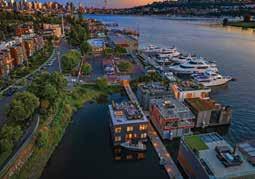
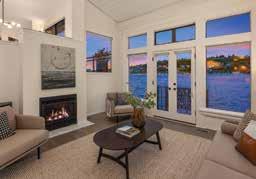
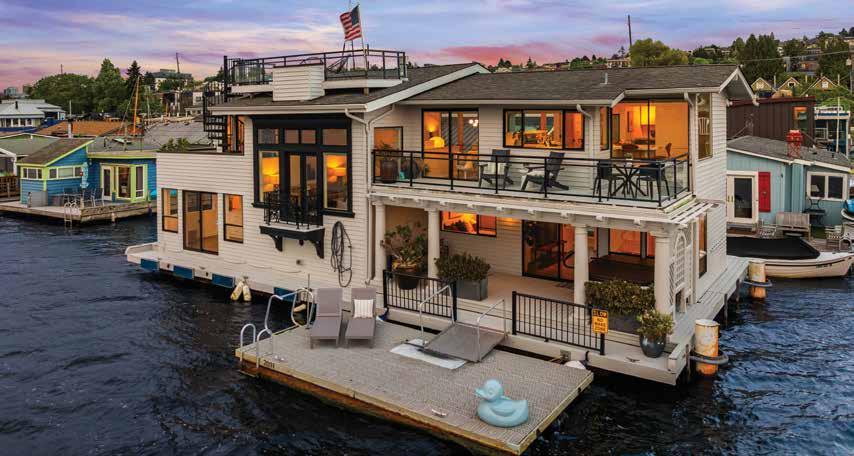
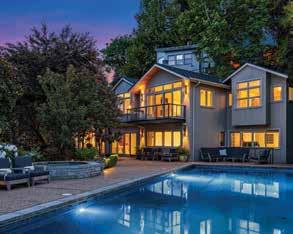
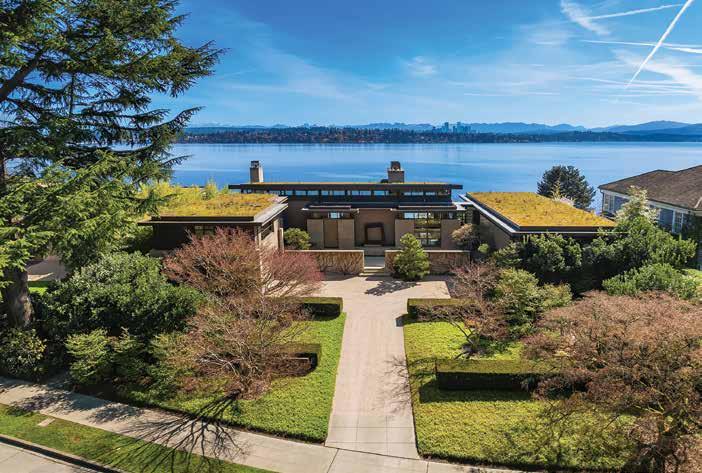
Stunning gated residence in the boutique, 12 slip community of Wards Cove. State of the art design built by Dyna Con-struction in 2015 with 30ft steel beams.
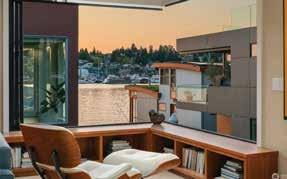
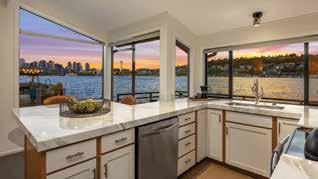
Second floor Great Room with Chef’s skylit kitchen, top of the line appliances include a Sub Zero refrigerator, built-in wine refrigerator, under counter fridge & freezer drawers, a Miele dishwasher & Wolf gas range. Custom Walnut cabinetry throughout, cold rolled steel fireplace & corner nano-window reading nook.
The main floor offers 3 bedrooms (spacious primary suite with one of the largest walk in closets I have seen on a floating home), laundry & storage. Moorage for up to 25ft boat. Roof deck with views of Lake Union, 4th of July fire-works & glorious sunsets. Huge, 1200sf basement with tons of storage has 5ft+(approx) ceiling height. There are also 2 large exterior storage rooms for
bikes and gear.
Automated blinds & Lutron lighting. Radiant heated tile floors keep you warm all year & AC cools for summer. Brand new roof in 2025. Brand new Tankless hot water heater/boiler & AC in 2026. Gated, secure parking space. Fee simple ownership. 2821 Fairview Ave E, #5, Seattle WA 98102 in Wards Cove
Price $3,488,000, NWMLS #2504851
|
ONE-OF-A-KIND LAKE LIVING IN SEATTLE!
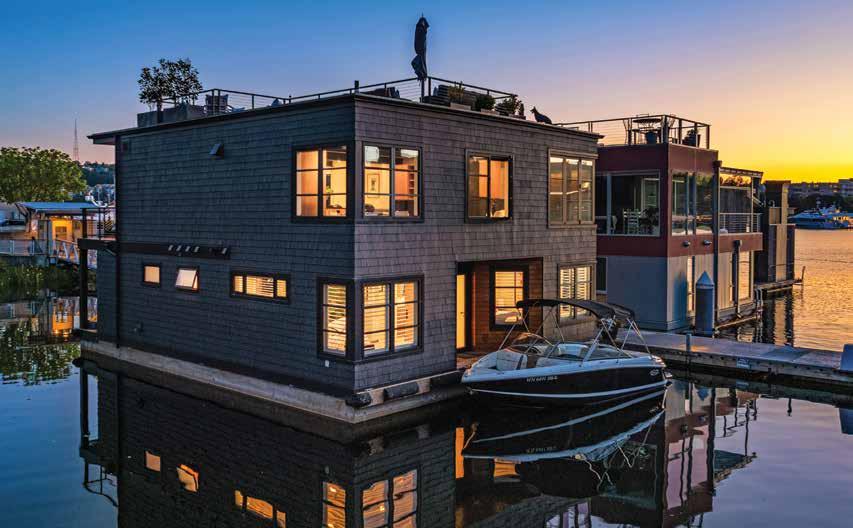
At nearly 2,400 square feet, this 4-bedroom, 3-bath residence with soaring 22-foot ceilings is among the largest floating homes on the lake — but its scale is only the beginning.
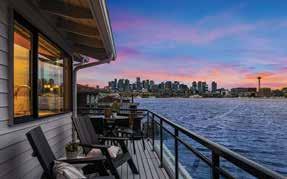
Positioned at the absolute end of the dock — and occupying the entire end — the setting is virtually impossible to replicate. Extending beyond the neighboring docks on both sides, it commands protected panoramic views spanning nearly 180 degrees — from Gas Works Park to the Seattle skyline — with open water unfolding in eve-ry direction.
Unlike typical floating homes, this property offers moorage on three sides and includes a rare Grandfathered floating entertainment dock, creating an unmatched indoor-outdoor waterfront lifestyle that simply does not exist elsewhere on Lake Union.
Designed for entertaining at the highest level, the home features multiple view decks, expansive outdoor living spaces, a skyline-view hot tub, and a rooftop deck perfectly positioned for sunset evenings over the city.
This is a true trophy property — architecturally rare, visually dramatic, and irreplaceable by today’s standards.
2031 Fairview Ave E #H, Seattle WA 98102
Please call for your private tour.
Corey Patt, Luxury Real Estate Specialist Broker at Coldwell Banker Bain 206-940-6484 | CoreyPatt.com
Sam Chapin, J.D., Private Office Advisor ENGEL & VÖLKERS Mercer Island, Brokerage 206-948-9153 | Sam.Chapin@evrealestate.com
Dan Gottesman, Private Office Advisor ENGEL & VÖLKERS Mercer Island, Brokerage 206-898-2505 | dan.gottesman@evrealestate.com
THE JEWEL OF LAKE UNION
Kenmore Air’s In-Flight Magazine
Your Complimentary Copy
Summer 2026, Volume 11, Issue 2
PUBLISHER Pat Hoglund
EDITOR Pat Hoglund
ART DIRECTOR Ken Cook
CONTRIBUTING WRITERS/PHOTOGRAPHERS
Scott Meis, Peter Lloyd, Chris Senyohl, Rob Thomas, Jan Butchofsky, Martin Chambers, Joe Herin, Katelyn Peil, Denita Delamont, Dave Ellis, Stephen Kirk, San Juan Islands VB
The owners, stockholders, employees, writers, editors, and/or other person(s) associated with, but not limited to, any and all creation of editorial, printing, writing and/or distribution of Explore:NW does not in any manner whatsoever assume any liability from loss to persons or property which may be an indirect or direct result of participating in any of the activities described in this magazine. Explore:NW is provided to the public for information, education and entertainment purposes only and does not in any manner whatsoever qualify any activity based on merits of safety to person or property. Any activities described in this in this magazine are exclusively taken at the reader’s sole risk. Printed in the U.S.A.
Features
26 Photo Essay N68HM is back where she belongs.
42 Boating Cruise or sail your way through the San Juan Islands.
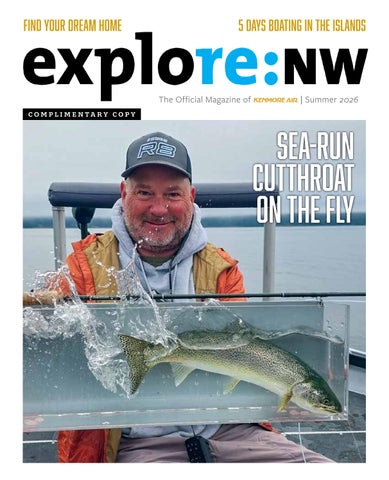
50 Sea-Run Cutts The Puget Sound is home to some of the best sea-run cutthroat trout fishing.
58 Luxury Homes A special real estate section featuring some of PNW’s most sought-after homes.
Departments
16 President’s Letter
18 Editor’s Letter
22 A Closer Look Meet Katelyn Peil, VP of Hospitality
24 Photo Contest
30 Gear Guide
32 Itinerary & Short Hops
41 Crossword Puzzle
About the Cover
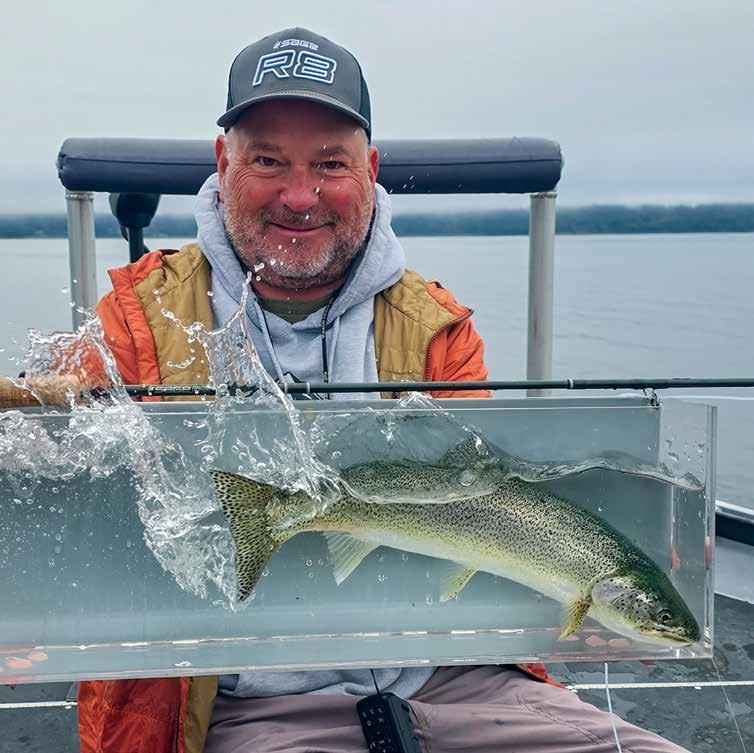
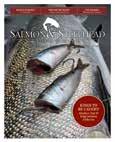
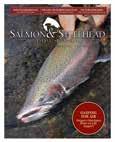
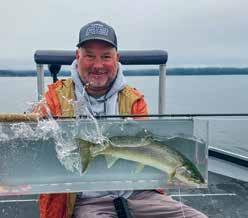
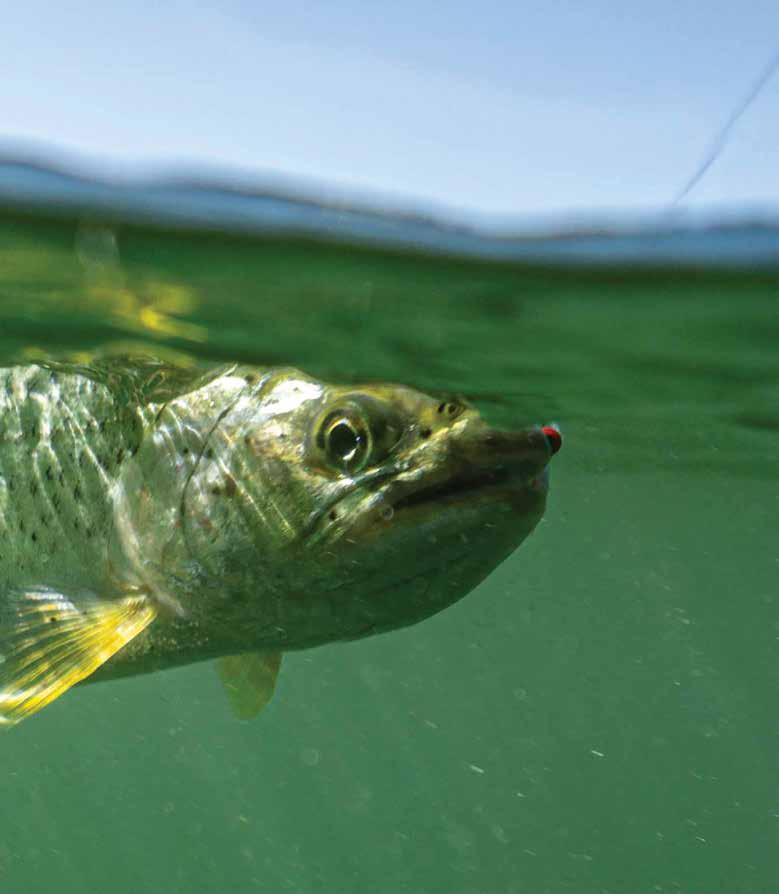
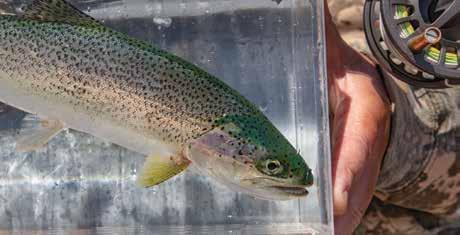
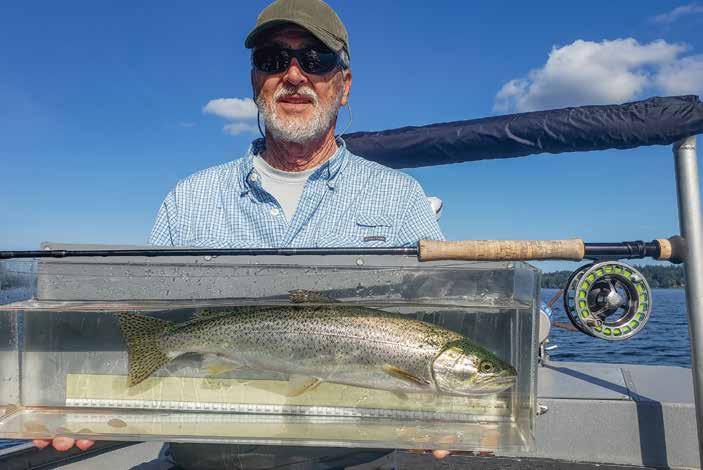
Longtime fishing guide Chris Senyohl poses with a Puget Sound sea-run cutthroat in a custom-made box used to display the fish in their deserved, full glory, while protecting them from harmful squeezes drops and lack of water. You can read more on page 50.
CHRIS SENYOHL PHOTO
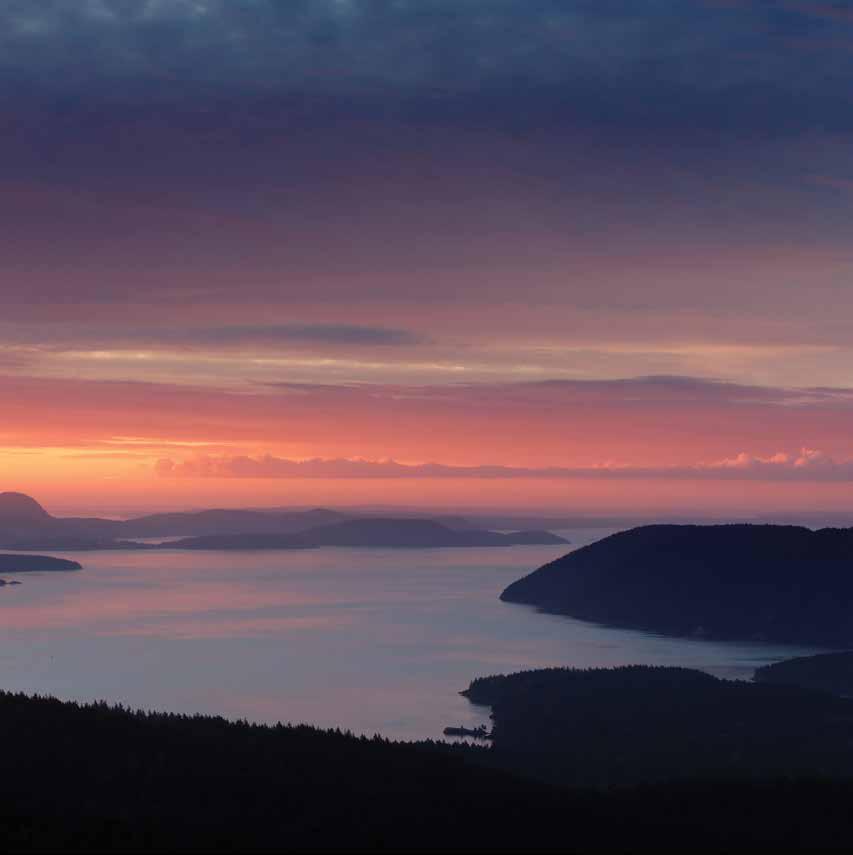
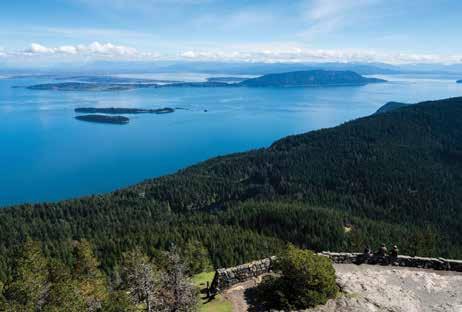
View of Samish Bay and Rosario Strait at sunrise from Mount Constitution in Moran State Park. Learn more about this day hike on page 34. BRAD MITCHELL PHOTO
LETTER FROM THE PRESIDENT
Fastest Route to Calm Starts With A Takeoff
By the time you’re reading this, the Northwest is doing what it does best — stretching into summer. The light lingers late over Lake Union. Cedar warms in the sun. The Salish Sea settles into that familiar blue-green hush, broken now and then by a wake, a gull’s cry, and the familiar rumble of a floatplane leaving the dock signaling adventures ahead.
At Kenmore Air, June through August is the season when everything comes alive at once. The docks fill with weekend bags and fishing rods. The terminals hum with families heading for island time, couples slipping away for a weekend in Victoria, and locals who know that the fastest route to calm is often the one that starts with a takeoff. It’s a season of movement, gathering, getting out there, and choosing the scenic views from above over sitting in traffic.
This summer issue of explore:NW is built for exactly that. Within these pages you’ll find ideas for unhurried mornings and big horizons, routes that trade traffic for tidewater, and itineraries that start the moment you step onto our docks. Whether you’re bound for the San Juans, Victoria, or a tuckedaway lodge in Desolation Sound you’ve been meaning to reach for years, I hope this magazine reads like a trusted local recommendation: practical, inspiring, and rooted in place.
And here’s my challenge to you for this season: don’t just return to your usual summer routine, expand it. Take the flight you’ve always watched from the shoreline but never booked. Swap the familiar ferry plan for a water takeoff and a window-seat view. If you’ve done the San Juans a dozen times, try them differently. Explore a new island, pick a new harbor, find a new trail that ends at a quiet beach. If Victoria has always felt like a “someday,” make it a Saturday. Step off the floatplane into the Inner Harbour and let the day unfold to try a new restaurant and wander a new neighborhood.
And if you’re short on time, have friends or family visiting in town, or just a spare hour you want to spend
David Gudgel, President
well, consider a scenic flight. It’s one of the simplest ways to turn an ordinary day into a story. You’ll see the skyline from the water, the islands scattered like stepping stones, and the mountains holding the horizon. No packing list required. Just show up, buckle in, and let the Northwest do what it does best
from 1,000 feet.
If you’ve flown with us before, you’ve likely felt what makes Kenmore Air distinct. It’s not just the view (though it’s hard to compete with Mt. Baker and Mt. Rainier on a clear day). It’s the way our team shows up. The dock crews who move with purpose and patience. The customer service teams who solve problems quietly, without fanfare. The mechanics who keep our aircraft in top shape so you can relax on your ride. The pilots who carry both responsibility and pride — professionals who know these waters, these islands, these passes, and how to read the sky.
Thank you for choosing us, trusting us, and coming along for the ride. Some of you fly once for the novelty, to see Seattle from above and check “floatplane” off your list. Others fly with us year after year, season after season, because you know that the quickest path to Friday Harbor, Eastsound, or Victoria is also the most memorable one. However you’ve found us, we’re grateful you did.
And a quick personal note: this will be my final issue writing to you as President. It’s been an honor to help steward this company and the people who make it run, and I’m proud of where we’re headed next.
If you’re flying with us this summer, I hope you take a moment, somewhere between takeoff and touchdown, to look out the window and let the scale of this region sink in. The water below, the working waterfronts, the forested shorelines, the wild edges that make the Northwest feel both rugged and welcoming all at once. It’s a perspective you can’t get from the road. And it never gets old.
Wherever you’re headed, and whatever new route you decide to try, thank you for bringing Kenmore Air along.
David Gudgel
President, Kenmore Air
The Magic of Sea-Run Cutties
It’s been well over 40 years since I caught my first searun cutthroat trout. In fact, it’s been nearly that long since I last seriously fished for them. It wasn’t until I read Chris Senyohl’s story on page 50 that those memories came rushing back.
Growing up in Tracyton, Wash., during the 1970s, my brothers and I had the kind of upbringing that revolved around the saltwater shorelines of Hood Canal and the greater Puget Sound. We swam in the Sound, flipped over rocks in search of crabs, dug clams, shucked and ate raw oysters and cast brass-andsilver Dick Nite spoons for what we simply called “sea-run cutties.”
Back then, they seemed plentiful. Truthfully, they still are in many places today. And they remain every bit as scrappy, aggressive and unpredictable as I remember. That’s part of what continues to make sea-run cutthroat fishing so appealing. They’re a fish that keeps you engaged every cast, whether you’re working a tidal flat, a rocky shoreline or a quiet inlet tucked away from the crowds.
If you’ve ever considered giving it a try—or even if you’re only mildly curious—I’d strongly encourage you to read Chris’s story. He’s one of the most respected guides in the Snoqualmie Valley and has spent years chasing these fish throughout the Puget Sound. More importantly, he understands them. In this issue, he shares enough insight, tactics and practical advice to help just about anyone get started.
Maybe you already have a fly rod tucked away in the garage collecting dust. If so, this might be the perfect excuse to dust it off, find a quiet stretch of beach and spend an evening casting into moving tidewater. And if you don’t have the gear—or the desire to invest in rods, reels and fly boxes—consider booking a trip with Chris. I’ve known him for years, and when it comes to
putting clients on fish, he’s as good as they come.
As someone who has spent much of the last 35 years focused on salmon and steelhead, I was surprised by just how nostalgic Chris’s article made me feel. His photos instantly transported me back to Phinney Bay, standing on old piers and floating docks while casting and retrieving those half-and-half Dick Nite spoons over and over again.
I can still picture the flash of silver darting toward my lure. Sometimes the fish would swipe and miss, only to circle back and strike again—this time finding the small siwash found its way to the corner of its jaw. I remember the vivid red slash beneath its throat looking almost like war paint, which is only fitting given the sheer nature of these trout. They’re aggressive, unrelenting, at times difficult to catch, and always without question will put up a good fight.
Most of the time we released them. Occasionally, we kept a few for my mom to cook for dinner. Today, catch-and-release has become the standard for many anglers pursuing these remarkable trout, and that feels fitting. If you fish with Chris, he carefully places each sea-run cutthroat into a custom plexiglass viewing box filled with saltwater, allowing anglers a brief moment to admire the fish before release. It’s a simple touch, but one that reflects the appreciation these trout inspire.
Reading Chris’s story reminded me that some fish stay with you forever. Sea-run cutthroat are one of them.
Pat Hoglund Editor, Publisher
Whale Watching Peak
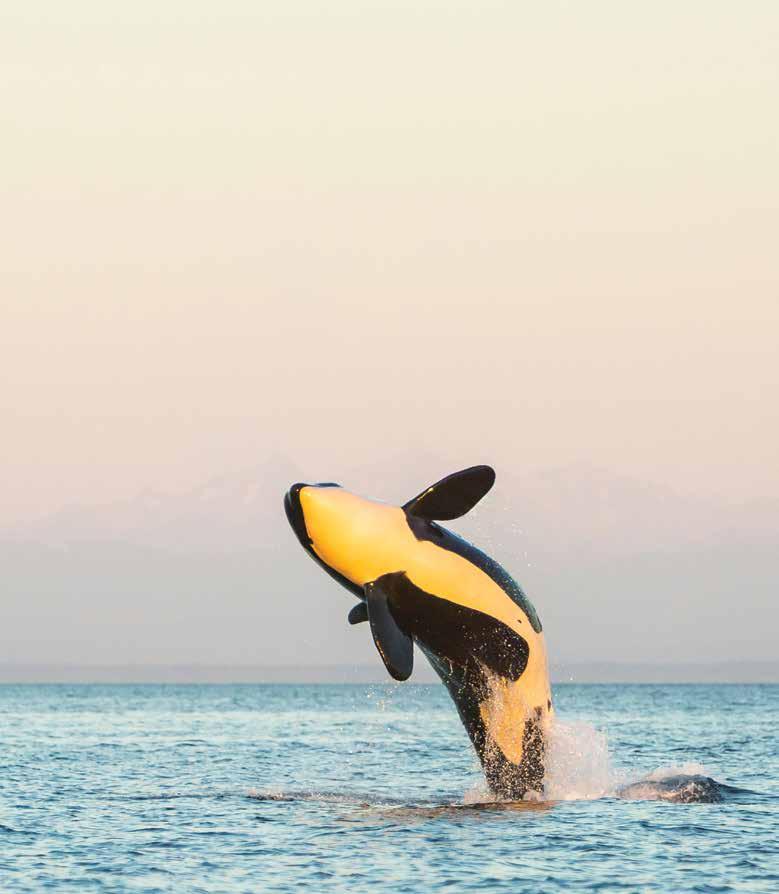
If whale watching in the San Juan Islands is on your agenda now is the time to enjoy the beauty and wildness of the resident killer whales of the Salish Sea. Coinciding with the returning salmon runs that the Southern resident killer whales rely on for sustenance, orcas are more commonly viewed during the months of June, July, August and September.
DENITA DELIMONT PHOTO
Meet Katelyn Peil, Vice President of Hospitality
QUICK FACTS
Birthplace: Olympia, WA
Residence: Kirkland, WA
Family: I am the fun auntie Current Position with Kenmore: VP of Hospitality
Education: Bachelor of Arts — Political Science/Sociology with a minor in Forensic Antrhropology — Western Washington University, Candidate: MBA, Boston University
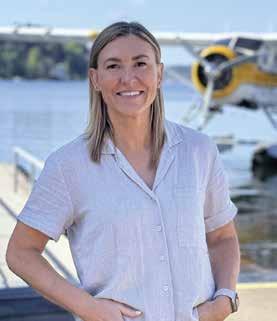
Since she was hired in early 2026 as the Vice President of Hospitality at Kenmore Air Katelyn Peil has emersed herself into the company’s culture finding that each day only strengthens her conviction that she’s where she’s supposed to be.
“This is a newly created role for the company, so it’s a very exciting time,” she says. “My goal is to ensure every interaction someone has with Kenmore Air, whether they’re a guest or an employee, feels thoughtful, smooth, and genuinely welcoming.”
Peil, 43, brings with her an impressive resume in the hospitality industry.
“My background started in a long tenure in hospitality operations in the restaurant industry and then hospitality tech space,” she says. “This helped develop my skill set for my first position here at Kenmore Air, and what an honor to work for such an iconic Pacific Northwest brand.”
A graduate of Western Washington University, Peil says her goal is to evaluate everything that shapes the experience at the airline whether that’s how Kenmore teams are supported day-
to-day or ensuring that passengers have a positive experience.
“At the core, it’s about creating a level of hospitality that people remember and want to come back to.”
Peil admits no two days are the same. That has kept her job interesting.
“I might start by checking in on operations or guest feedback, spend time with team members at our outstations, shadow flight runs, and work through projects that improve the overall experience,” Peil explains. “The most important part of my day currently, is listening. Whether that’s to employees or guests and then turning that into action. It’s a mix of strategy and being close to what’s actually happening on the ground.”
When asked what’s the most enjoyable part of her job she didn’t hesitate.
“The people, without question. I get to work with a team that genuinely cares; and getting to see the impact that has on our guests every day. There’s something really rewarding about watching a great experience come together. Where everything feels easy and seamless for the guest, even
though a lot is happening behind the scenes.”
When she’s not at Kenmore working, you might find Peil running a sports-leaning wine club where members partake in monthly tasting events where she uses her sommelier certification to stay connected to the win and sports communities. Or, you might find her somewhere close to water.
“I love to live an active lifestyle,” she says. If I am not at work or school, you can find me with a glass in hand at my favorite wine bar, Le Caviste, or at a myriad of local women’s sports events.”
Q&A With Katelyn Peil
How often do you travel on Kenmore Air?
As often as I can. It’s important to me to experience what our guests experience firsthand. It helps me stay connected to what’s working well and where we can improve, and it keeps me grounded in the reality of our unique operation.
If you had to pick between a Beaver or an Otter, which do you prefer? That’s a tough one, they are both iconic. If I had to choose, I’d probably say the Otter for its versatility and capacity, because I am a people person and that gives me space for more friends.
Are you a dog or cat person?
I am definitely a dog person. I lost my best friend Finley, who was a vizsla, about two years ago. My life is just not in a place to welcome a new pet into my household.
What is your favorite destination that Kenmore flies to?
It’s hard to pick just one, but having Deer Harbor on Orcas Island as a destination is especially meaningful to me. My family travels from out of state and stays nearby on a remote island for a short window each summer and having that easy access allows me to visit more often. It’s not just an incredible destination, it gives me the opportunity to spend more intentional, quality time with them, which makes it really special.
PHOTO CONTEST
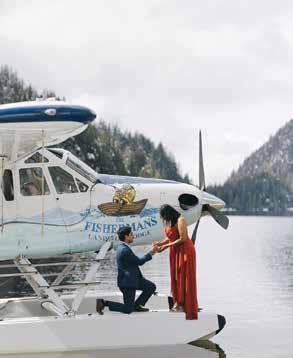
Congratulations to Amanda White for this incredible photo of a couple who chartered a private flight aboard Kenmore Air where the groom proposed to his soon-to-be wife, which is another way of saying she said yes. For tagging Kenmore Air on her Instagram account Amanda will receive a flight voucher to be used within a year.
Entrants
If you have a photo to enter, we want to see it. You can send it to us at pathoglund@comcast.net, tag Kenmore Air on Facebook or tag Kenmore Air on Instagram. In the next issue (Fall 2026), we’ll publish the best images, including the winner’s, who will also receive a $500
Kenmore Air Flight Voucher.
The Fall 2026 winner will be notified by the medium in which they made their submission. Photos will be judged on composition, image quality and uniqueness.
Send images via email to pathoglund@comcast.net OR Tag images on Instagram at @KenmoreAir OR Post images on Facebook at facebook.com/KenmoreAir
PHOTOGRAPHER: Zahra Ali TITLE: The Rainbow’s Ring
Photo Contest Winner
PHOTOGRAPHER: Joseph Duncan TITLE: Boats and More Boats
PHOTOGRAPHER: Chalsa M. Loo
TITLE: The Perfect Silhouette
N68HM IS BACK WHERE SHE BELONGS
A PHOTO ESSAY BY SCOTT MEIS
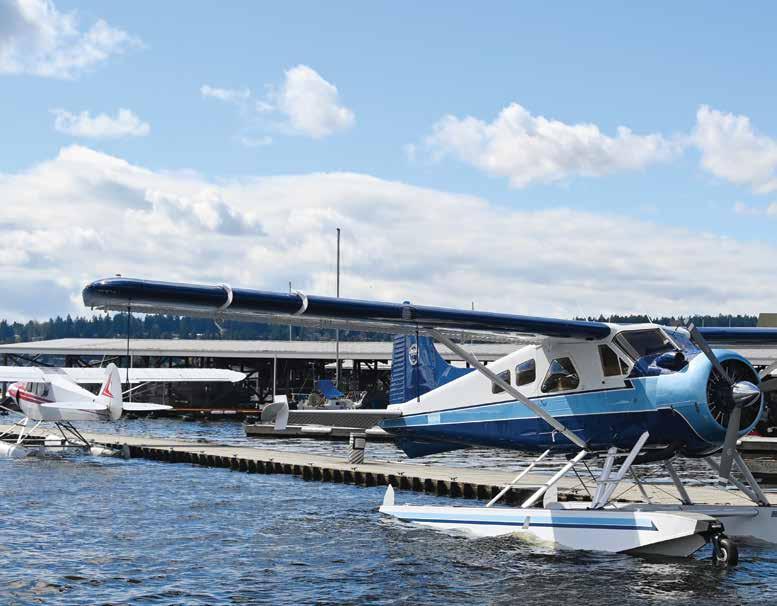
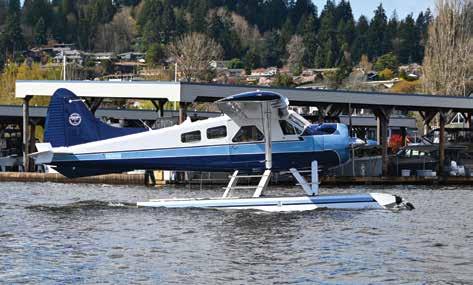
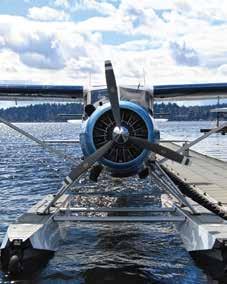
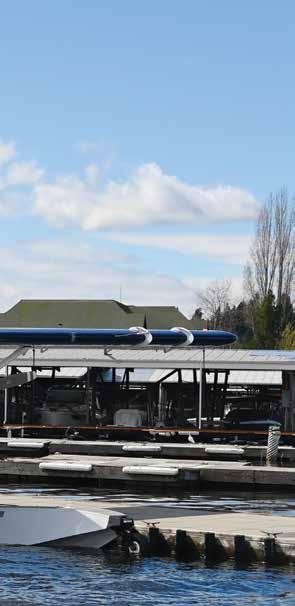
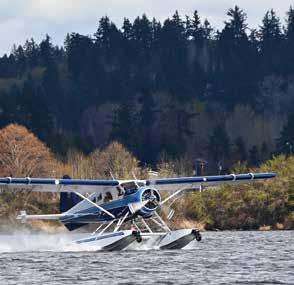
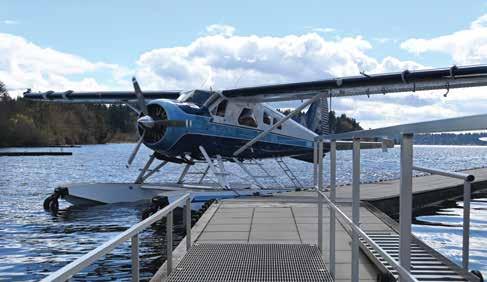
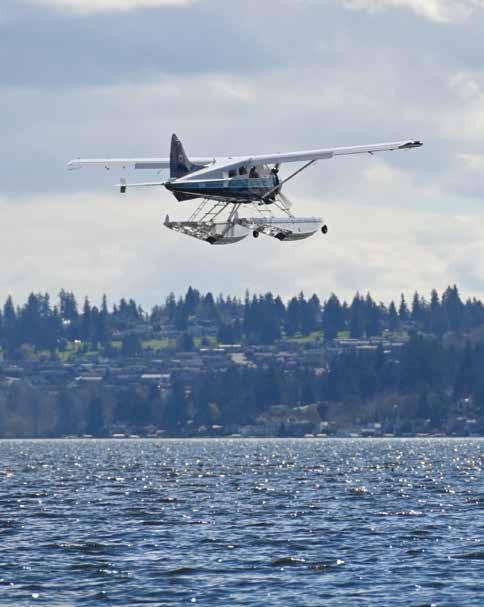
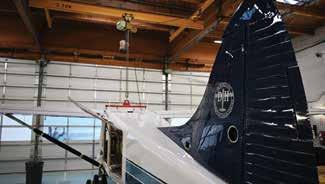
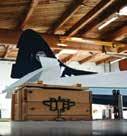
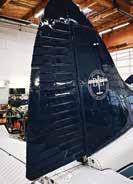
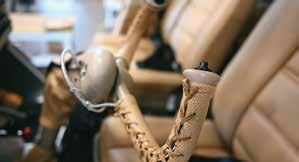
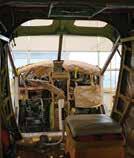
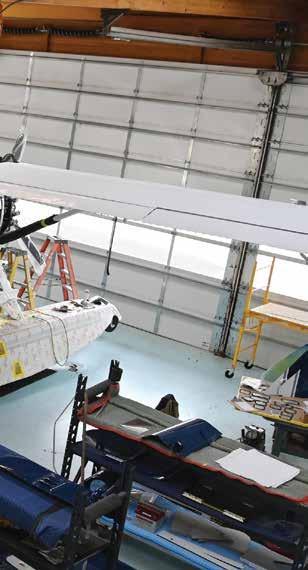
N68HM is out where she belongs, skimming the surface and climbing above the horizon. After nearly two years and 6,500 man-hours in Kenmore Air’s hangars and maintenance shops, this DHC-2 Beaver has been rebuilt from the data tag out with newly installed top of the line avionics, premier upholstery and every detail brought back to working order with Kenmore’s refined polish. Finished in April 2026 as an amphibious floatplane, N68HM will be equally at home kissing a glassy cove as it will tracking true down a runway, ready to keep doing what Beavers do best: chasing another new adventure.
GEAR GUIDE
Gear That Goes the Distance.
Good gear earns its place the hard way—by performing when conditions aren’t ideal and expectations are high. This collection of must-haves pulls together a handful of standout pieces that deliver real-world reliability, whether you’re hiking into the backcountry, traveling light, or spending long hours outdoors. Each one brings a balance of durability, function, and thoughtful design that makes time outside a little easier—and a lot more enjoyable.
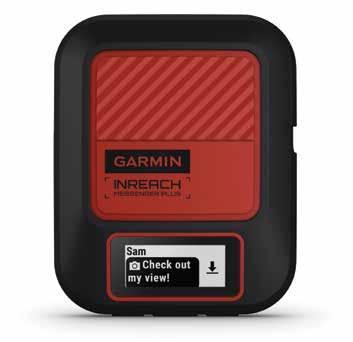
Garmin inReach® Messenger Plus
The Garmin inReach® Messenger Plus is one of the most capable compact safety tools you can carry on a boat or in a
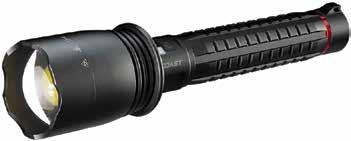
Coast XP80R Flashlight
The COAST XP80R is less of a flashlight and more of a portable spotlight—and that’s exactly what makes it such a compelling tool for hikers and anyone who spends time outdoors after dark. With a massive 15,000-lumen output and a beam that pushes close to 1,000 feet, this isn’t just for lighting up the trail at your feet—it’s for scanning ridgelines, picking out trail markers in dense timber, or locating camp from a distance. The adjustable slide focus system is where the XP80R really earns its keep. In flood mode, it throws a wide, even beam that’s perfect for setting up camp, digging through your pack, or navigating tight switchbacks. Slide it forward, and you get a tight, powerful spot beam that cuts through darkness—ide-
backpack, especially when you push beyond reliable cell coverage. Built around the global Iridium satellite network, it delivers two-way messaging, location tracking, and a dedicated SOS function that connects directly to a 24-7 emergency response center—peace of mind that’s hard to overvalue offshore.
What sets the “Plus” apart is its ability to send photos and short voice messages in addition to standard texts. For boaters, that means you can share real conditions, communicate clearly in emergencies, or update family without relying on spotty service. The device also seamlessly switches between Wi-Fi, cellular, and satellite, helping conserve battery and keep you connected when conditions change.
It’s compact, rugged, and built for real-world abuse, though it’s best paired with your phone for full functionality. The biggest drawback is the subscription requirement and added cost—but that’s standard for satellite communication. $399.99 garmin.com
al for early starts, late descents, or route-finding in unfamiliar terrain.
Dual-power capability adds real versatility. Recharge it via USB-C before heading out, then carry AA batteries as a backup when you’re deep in the backcountry. That kind of redundancy matters when you’re miles from the trailhead. It’s not fully waterproof, so you’ll want to keep it protected in wet conditions. But for dry-weather hiking, camping, and general outdoor use, it’s tough, reliable, and incredibly powerful. $142.99 coastportland.com
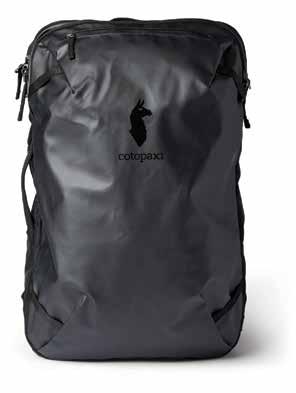
Cotopoxi Allpa 35L Travel Pack
The Cotopaxi Allpa 35L Travel Pack is one of those rare bags that truly bridges the gap between backpack and suitcase. At 35 liters, it’s perfectly sized for 3– to 5-day trips, and the clamshell, suitcase-style opening makes packing and organizing gear far easier than traditional top-load packs.
Where it stands out is organization. Internal mesh compartments keep everything visible and separated, while a padded laptop sleeve and exterior pockets handle smaller essentials. It’s a system that feels dialed for travel—not just hauling gear.
Comfort is another win. The air-mesh shoulder straps and supportive hip belt distribute weight well, making it surprisingly comfortable even when fully loaded. Add in durable, 100% recycled fabrics and rugged construction, and it’s built to take a beating from airports to backroads.
The only drawback is that it can feel a bit bulky when under-packed, but that’s a minor tradeoff.
$230 cotopoxi.com
Have
Some Fun in Friday Harbor
Start in town, branch out, and let the island pull you where it wants.
There’s no shortage of ways to spend a day in Friday Harbor, but a handful of places rise above the rest— each offering a different window into what makes this corner of the San Juan Islands so memorable.
1. Friday Harbor Marina
Start right in town. The marina is the heartbeat of the island—boats coming and going, boaters prepping gear, and visitors soaking in that first blast of salt air. Grab a coffee and walk the docks; it’s the perfect introduction.
2. Lime Kiln Point State Park
Often called one of the best land-based whale watching spots in the world, this rugged stretch of coastline delivers. The lighthouse perched above crashing water feels iconic—and when orcas pass by, it becomes unforgettable.
3. San Juan Island National Historical Park
Wide-open prairies, quiet beaches, and a story you won’t find anywhere else. Split between American and English Camps, this park blends sweeping scenery with the oddly fascinating history of the Pig War.
4. The Whale Museum
Before you head out on the water, stop here. It adds context to everything you’ll see—orca behavior, local ecology, and conservation efforts—turning a simple sighting into something much more meaningful.
5. Roche Harbor
A short drive from Friday Harbor, Roche Harbor feels like a different world. Historic buildings, a polished marina, and that famous nightly flag ceremony give it a timeless, almost storybook feel.
SHORT DAY HIKE SHARK REEF SANCTUARY
ON LOPEZ There’s something about a short hike that punches above its weight— and the trek out to Shark Reef Sanctuary on Lopez Island is exactly that kind of walk. Barely a mile round trip, it’s less about distance and more about slowing down long enough to notice everything.
The trail begins unassumingly, winding through open pasture before narrowing into a sandy footpath edged with wild grasses. Before the forest opens you’ll hear the Salish Sea slapping itself against the rocky shoreline. On a clear day, the Olympic Mountains rise faintly to the south, and the horizon feels bigger than it should for such a short hike.
But the real show is closer. Shark Reef is known for its haul-outs—rocks where harbor seals and sea lions lounge, bark, and slip in and out of the current. Bring binoculars and sit for a while. You’ll start to pick out patterns: a curious head popping up in the kelp, a raft of seals drifting just offshore, maybe even a bald eagle working the edge of the tide.
From the Lopez Island ferry landing, head south on Ferry Road, then turn right onto Weeks Road. Follow Weeks for roughly 4 miles before turning left onto Shark Reef Road. Stay on Shark Reef Road until it ends at a small parking area and trailhead. It’s well signed, but easy to miss if you’re not paying attention.
From the parking lot, it’s about a half-mile walk (roughly 10–15 minutes) to reach the reef.
Time your visit for a mid-to-low tide. The exposed shoreline reveals tide pools teeming with life—anemones, crabs, and the kind of small details that reward patience. Wear shoes you don’t mind getting wet.
It’s easy to rush a hike this short. Don’t. Shark Reef is proof that sometimes the best days outside aren’t measured in miles—but in moments you almost miss if you move too fast.
ROB THOMAS
4 Worthy Food Truck Stops
Lopez Island might be known for quiet roads and open shoreline—but its food truck scene tells a different story where a handful of carts stand out for serving up bold, unexpected flavors that rival anything you’ll find on the mainland. From street-style tacos at El Taco ’Bout It to indulgent poutine at Poutine Your Mouth, wood-fired pies from APIZZAPIE, and slow-smoked classics at David’s BBQ, each stop offers its own take on comfort food with a local twist. Just be sure to check ahead—hours and locations shift with the seasons.
EL TACO ’BOUT IT
Known for tacos, burritos, and quesadillas, using local ingredients from Lopez Island and the Skagit Valley always using organic and non-GMO ingredients when possible.
• Don’t Miss: Like the name implies, order the tacos with a side of creama and guacamole sauces.
• Open Fridays, Saturdays and Sun days 10:30 a.m. – 2:30 p.m. Look for them in the Lopez Village, next to Isabel’s espresso. eltacoboutit.com
POUTINE YOUR MOUTH
Serves poutine with various toppings and hot sandwiches, often found at the Farmers Market. Vegan options like Magic Mushroom with cashew cheese is a showstopper.
• Don’t Miss: The classic poutine
(crispy fries and cheese curds) with gravy is a must order.
• Open: Find them on IG to pinpoint their specific location. poutineyourmouth.com
APIZZAPIE
A pizza cart with a stone hearth oven for fresh, made-to-order pizzas. Each pie is made to order using local Fairhaven Mills Organic Flour. Cooked at 700 degrees the pizzas are fluffy and chewy. In other words: delicious.
• Don’t Miss: the Spicy Italian for red sauce lovers; the Truffle Mushroom for white sauce lovers.
• Open: Thursdays, Fridays, Saturdays 11:30 a.m. to 6:30 p.m. Look for them in the Lopez Village (214 Lopez Road).
apizzapienw.com
DAVID’S BBQ
Features traditional smoked brisket and ribs that are delectable, flavorful and most of all memorable. Using traditional barbecue methods (time honored smoking techniques with alder wood) married with the Pacific Northwest flavors puts this food cart in a class of its own.
• Don’t Miss: Brisket with their incredible barbecue sauce.
• Open: Thursdays, Fridays 11 a.m. to 3:00 p.m. Every other Saturday. Find them located next to Weeks Garage at 2262 Fisherman Bay Road.
Summit the San Juans
Rising above the archipelago, Mount Constitution—the highest point in the San Juan Islands—offers one of the most rewarding short hikes in the Pacific Northwest. Whether you’re chasing soft sunrise light or a clear afternoon panorama, this is a climb where the payoff comes quickly—but a little preparation still goes a long way. The true reward awaits at the summit, where climbing the watchtower reveals just how expansive these islands really are.
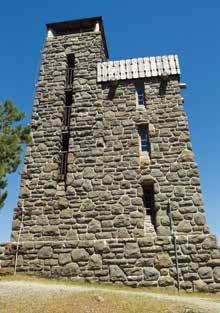
At the top, the historic stone observation tower—built by the Civilian Conservation Corps—delivers a panoramic view that’s tough to beat. From the tower, the landscape opens in every direction: the Canadian Gulf Islands stretch to the north, the jagged North Cascades rise to the east, and on a clear day, Mount Baker stands out on the horizon. It’s not the tallest summit by any means, but from that vantage point, it feels like the center of the island world.
The most popular route begins inside Moran State Park, located on the eastern side of Orcas Island. To reach the trailheads, follow Olga Road east from Eastsound into the park. For the Mountain Lake start, turn onto Mountain
Lake Road and continue to the signed parking area near the lake. For the Little Summit route, stay on the main park road (Mount Constitution Road) and watch for clearly marked trailhead pullouts as you climb. Both options are well signed and easy to access with a park map or GPS.
From either trailhead, expect a steady climb through dense fir and cedar forest. The grade is manageable but unrelenting, gaining roughly 1,500 feet depending on your route. Plan for 1.5 to 2.5 hours to reach the top at a comfortable pace.
A few simple tips can elevate the experience. Start early if you’re looking to beat the crowds—this is a well-loved hike, especially in summer. Bring layers, as summit winds can be surprisingly cool. Wear sturdy footwear, particularly in shoulder seasons when roots and rocks turn slick. And take your time heading down—your knees will appreciate it.
If you’re pressed for time, it’s possible to drive most of the way and hike the final stretch. Still, earning the summit on foot adds a layer of satisfaction, letting the forest unfold around you and making that first glimpse from the tower feel well deserved.
MARTIN CHAMBERS
Facts
A Washington State Discover Pass is required.
Located at Moran State Park on Orcas Island.
Dogs are allowed. Leashes required.
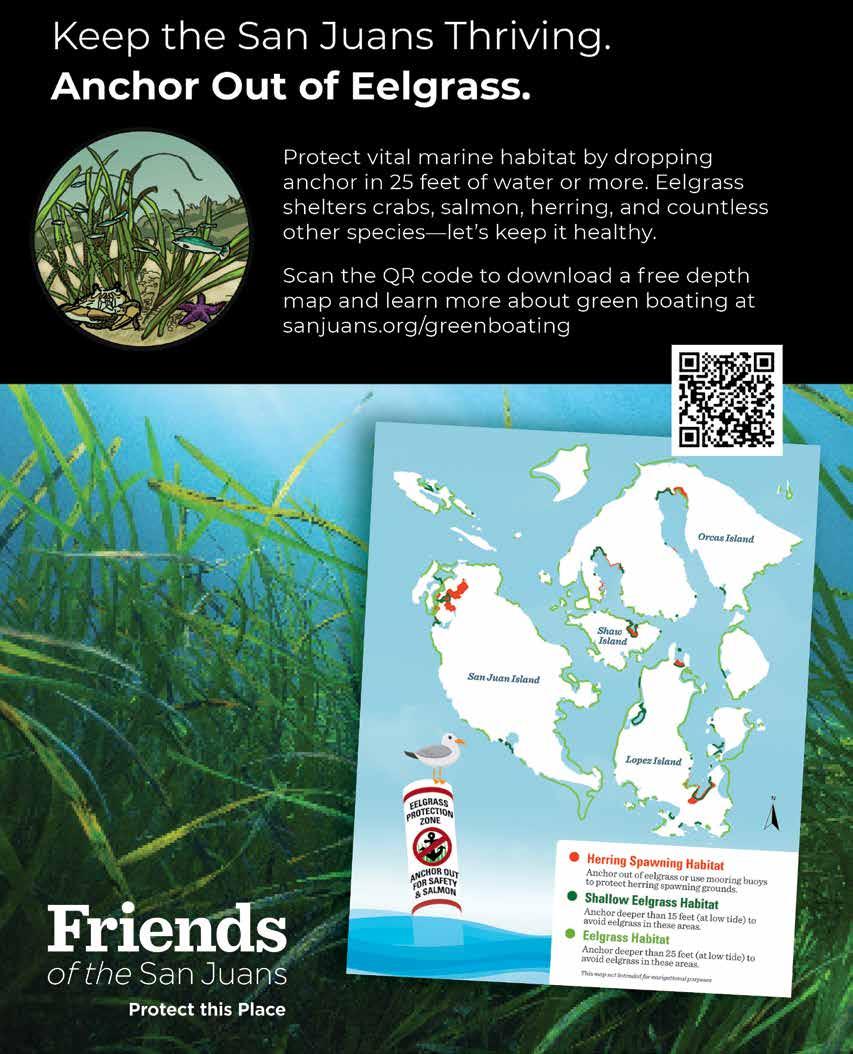
At 2,409 feet, Mount Constitution is the highest mountain in the San Juan archipelago.
Three routes: Mountain Lake Trailhead
Approximately 6.7 miles, 1,500 feet elevation gain.
Cascade Lake
Approximately 8.4 miles with a steep elevation gain.
Little Summit
Approximately 4.8 miles.
Fun
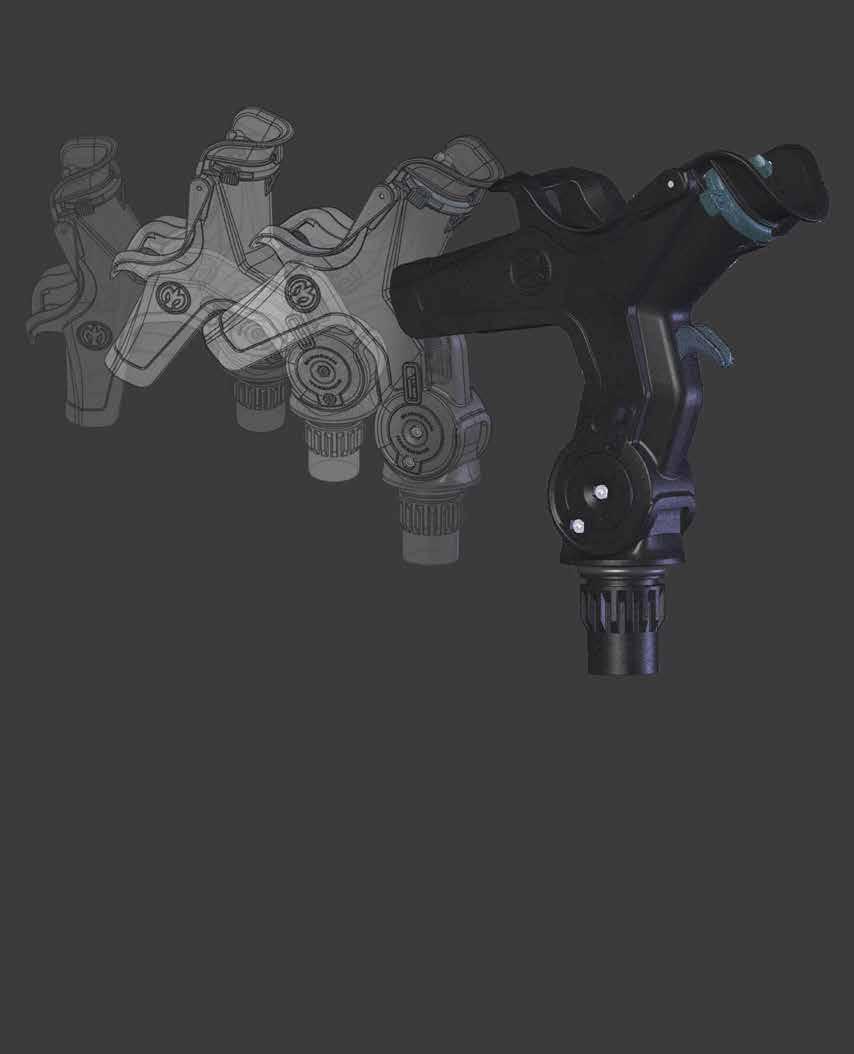
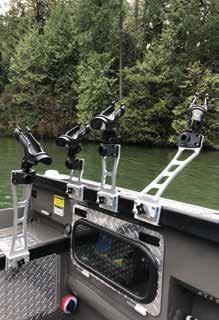
QUICK-SWITCH MARINE MOUNTS AND ACCESSORIES SYSTEM
Burnewiin’s premium marine mounts and accessories system allows you to maximize the usability of your boat. Whether you’re headed out before first light for a full day of fishing or taking the family out on an evening cruise, the Burnewiin system will allow you to seamlessly transition from one use to another.
Tide Pooling Done Right
Unlocking the hidden shorelines of the San Juan Islands.
Along the rocky edges of the San Juan Islands, some of the richest wildlife viewing doesn’t happen offshore—it happens at your feet. Tide pooling offers explorers a close-up look at a thriving, often overlooked ecosystem. But doing it right comes down to timing, awareness, and restraint.
Start with the tide chart. If you’re not planning your outing around a low—or better yet, negative—tide, you’re missing the show. When the water pulls back below average levels, it exposes a network of rocky basins that hold everything from sea stars to sculpins. Early morning tides tend to be best, offering calmer conditions and better visibility before winds pick up.
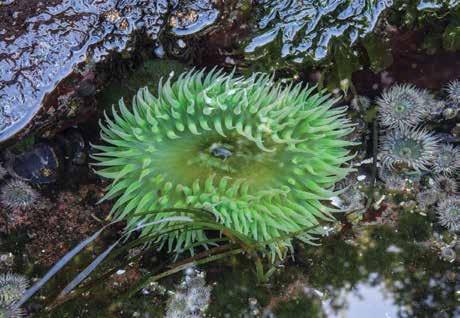
Once you’re on the shoreline, slow down. What looks like a lifeless puddle is anything but. Purple and orange sea stars grip the rocks. Green anemones open and close with the water’s rhythm. Crabs inch along the bottom, while small fish dart between shadows. The key is patience—stand still long enough and the pool comes alive.
Footing matters more than most people expect. These rocks are slick, un-
even, and very much alive. A good pair of non-slip boots isn’t just about staying upright—it helps you avoid crushing barnacles, algae, and other foundational species.
And here’s where a lot of people get it wrong: hands off. As tempting as it is to pick up a sea star or flip a rock, even brief handling can stress or harm marine life. Observe closely, take your photos, but leave everything exactly where you found it.
Keep one eye on the waterline at all times. Incoming tides move fast in the islands, and it doesn’t take long for your exit route to disappear. If you really want to get more out of it, bring a simple field guide or marine life app. Identifying what you’re seeing adds another layer to the experience—and before long, you’ll start recognizing patterns in where species live and how they interact.
Do it right, and tide pooling becomes more than a shoreline stroll. It’s a reminder that some of the most complex, vibrant ecosystems in the Pacific Northwest exist in just a few inches of water—if you’re willing to slow down and look.
Where to Tide Pool in the Islands
San Juan Island:
• Cattle Point Natural Area: the rocks beneath the lighthouse are accessible by steep trails from the bluff, or from the beach to the left during low tide
• Lime Kiln Point State Park: the rocks beneath the lighthouse can be reached at low tide, but not recommended for young children as the rocks are steep
• Reuben Tarte County Park: the beach is easily accessible from the road, with rocky areas on the edges
Orcas Island:
• Obstruction Pass State Park: easily accessible trail that leads to the beach; sloping beach makes for a good spot to look for creatures in the surf, with rocky areas nearby
Lopez Island:
• Odlin County Park: the best family beach on Lopez
• Lopez Village Beach: great place for crabs, squirting clams, sea stars, and anemones
SOURCE: SAN JUAN ISLANDS VISITOR CENTER
ANSWERS TO CROSSWORD PUZZLE ON PAGE 41.
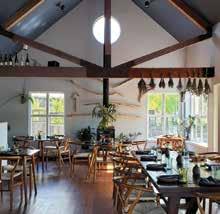
Show Some Island Love to the Orcas Cafe
Set just above the ferry landing on Orcas Island, Orcas Cafe delivers a dining experience that’s as much about place as it is about food. In operation since 1904 this is a true island classic that is located within the historic Orcas Hotel. The café immediately stands out for its front-row view of the Salish Sea— arguably one of the best casual dining backdrops in the San Juan Islands. The setting does a lot of the heavy lifting here. Grab a seat on the deck and you’re treated to a steady parade of ferries, shifting light, and quiet island movement. It’s relaxed, unhurried, and exactly what you expect from a place
with such rich history.
The menu keeps things simple and familiar. Breakfast is where Orcas Cafe shines most—classic plates like eggs, bacon, and sourdough toast (homemade) are done well, paired with strong coffee and a view that elevates the entire experience. Lunch offerings stick to approachable staples: sandwiches, salads, and a handful of comfort-driven options that fit the setting. Pastries and quick bites round things out nicely for those just passing through.
From a pure food perspective, the café is solid but not standout. The real value lies in the atmosphere and
location. Prices can feel a touch high for the simplicity of the menu, but that’s balanced by the convenience and one-of-a-kind setting. Dinner menu favorites include the Orcas Cheeseburger and the Chicken Tinga Burrito. When the Shepherd’s Pie and Octavia’s Fried Chicken are on the menu do yourself a favor and order one or the other. Or both for that matter.
Overall, Orcas Cafe is worth the stop—especially for breakfast or a laidback meal because it’s not trying to be a culinary destination, and that’s exactly why it works.
Open daily from 8 a.m. to 8 p.m.
DESTINATION MEAL: URSA
MINOR Ursa Minor on Lopez Island feels less like a restaurant and more like a destination meal—one of those places you build an evening around. Tucked into a quiet village, it delivers a refined, farm-driven Northwest experience that feels perfectly in step with the island’s slow, pastoral rhythm. The menu changes frequently, built around whatever local farmers, fishermen, and foragers have brought in that week, and the result is a series of small plates that are both inventive and deeply rooted in place. It’s one of my go-to restaurants whenever I visit Lopez Island.
Dishes tend to emphasize seasonal vegetables, and thoughtfully prepared seafood or meats. Nothing feels overly fussy; instead, Chef Nick Coffey lets the ingredients shine, whether it’s wood-fired bread with cultured butter, perfectly cooked fish, or a surprising vegetable dish that ends up stealing the show. I’ve always enjoyed the creativity of the menu, the warmth of the service, and the intimate, relaxed atmosphere. Service is knowledgeable without being stiff, and the space strikes a balance between rustic island charm and understated elegance—and easily one of the best reasons to plan an evening on Lopez. ROB THOMAS
Go By Bike
Explore the islands on two wheels.
If you’re planning to explore the San Juan Islands on two wheels, do a little homework before you grab the first set of handlebars you see. The islands are incredibly bike-friendly—but they’re not flat, and they’re not built like your typical bike-path destination.
Start with your bike choice. While traditional hybrids are available, many outfitters strongly recommend electric-assist bikes—especially on hillier islands like Orcas. That extra boost can mean the difference between grinding through climbs and actually enjoying the ride.
Next, plan your route ahead of time. The official tourism site (visitsanjuans. com) encourages riders to review maps and biking routes before arriving. Roads here can be narrow and scenic, but they often lack designated bike lanes, so knowing your route—and your comfort level—is key.
Also, don’t overlook logistics. Many rental shops are conveniently located in places like Friday Harbor, making it easy to start riding immediately upon arrival. Some even help map out routes tailored to your time and ability, which is worth taking advantage of.
Finally, think beyond just the bike. Most rentals include essentials like helmets, locks, and repair kits—but confirm before you go. And if you’re visiting multiple islands, remember that ferries are bike-friendly and make island-hopping a seamless part of the adventure.
Bottom line: choose the right bike, know your terrain, and let the island set the pace. In the San Juans, the ride is just as much the destination as anything you’ll stop to see.
Island Bike Rentals
Wildlife Cycles, Orcas Island 360-376-4708
Wildlifecycles.com
Susie’s Mopeds – Bicycling, San Juan Island 360-378-5244
Discovery Sea Kayaks Bicycle Rentals, San Juan Island 866-461-2559
Discoveryseakayak.com
San Juan Outfitters Bicycling, San Juan Island 866-810-1483
Sanjuanislandoutfitters.com
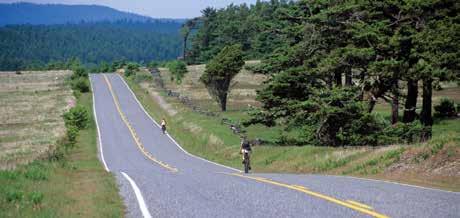
Cycling on San Juan Island can sometimes mean finding a lonely stretch of highway.
CROSSWORD PUZZLE
Across
1. Ocean watersport, 2 words
9. Cargo weight
10. Naval vessel title
12. Twin-hulled vessel
14. Honey-making insect
15. “___ man sea”
16. One ___ time, 2 words
17. Rowing implement
19. Tide motions where the sea is advancing up the beach
20. San Juan, for one
23. Directing a boat’s course
27. By way of
28. Alternative word
29. ___ tube
31. Large waves
35. ___ board
36. Low grade
37. Grip firmly
39. Exhilarating motorized watercraft, 2 words
42. Marsh plant
43. Ocean’s motions
44. Rotating drum for winding rope
Down
1. Underwater exploring, 2 words
2. On the ocean, 2 words
3. Knockout, for short
4. It holds the boat in a steady position
5. Toward the stern
6. Submerge completely
7. Stabilizers that reduce the rolling motion of a vessel, abbr.
8. Beach particles
11. ___ a course
13. Pub drink
18. Chopper blade
21. Transgression
22. A line used for extending or fastening rigging on ships
24. Wear away gradually
25. Arctic Ocean surface, sometimes
26. Oxygen or nitrogen
30. Thick cords used on boats
32. Pause or respite in the weather, 2 words
33. Guitar master Paul
34. Baseball stat, abbr.
38. Sight- ___
40. Set of tools
41. Source of natural light
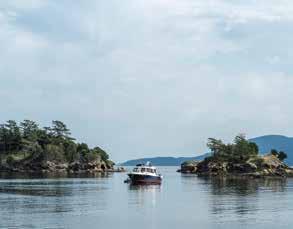
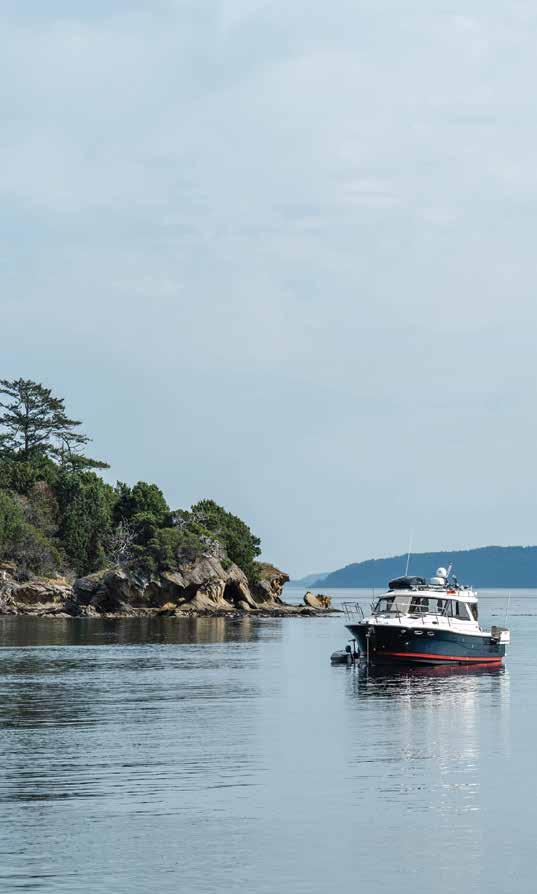
Sucia Island is the first of several stops and worthy of an extended stay if you so wish.
Cruising the San Juan Islands
Find your own quiet corner of water, drop the hook, and stay awhile.
By Dave Ellis
There’s a point every boater remembers in the San Juan Islands. It usually comes shortly after the marina disappears behind you and the shoreline begins to soften into forested ridges and rocky points. The boat settles into rhythm. Ahead lies a labyrinth of islands, anchorages, narrow passages, and protected coves that have made the San Juans one of the premier cruising grounds in the Pacific Northwest.
The magic of cruising here isn’t simply about the destinations—it’s about the journey between them. Distances are short enough to keep each day relaxed, yet every passage offers something different: quiet marine parks, quiet harbor towns, wildlife-rich shorelines, and constantly shifting tides and currents. Whether under power or under sail there’s a universal philosophy among boaters: slow down, stay flexible, and let the islands set the pace.
This four-day itinerary combines some
of the region’s most iconic anchorages with scenic cruising legs and practical marina stops that will ensure your trip is both comfortable and unforgettable. And by all means do yourself a favor and freelance from my recommendations because you can easily turn this four-day excursion into a weekend. Regardless of how long you’re on the water, any of these destinations are worthy of your time.
Day 1, Anacortes to Sucia Island or Matia Island
Most San Juan adventures begin in Anacortes, the natural launching point for exploring the islands. Yes, some boaters leave from Bellingham, but I have moor-
age in Anacortes so it’s from here I depart. Anacortes is a well-equipped marina, has fuel docks, grocery stores, and marine supply shops that make it the ideal place to prepare before departure. Most seasoned cruisers leave the dock with full tanks, stocked coolers, and enough provisions to remain comfortably off-grid for several days.
From Anacortes, the route pushes northwest across Rosario Strait toward Matia and Sucia islands. The route bends southwest toward Matia Island, a natural stopover by virtue of proximity. For those who launch early and catch the tides right, Sucia Island is a favorite stopover.
Matia Island A tiny, forested island
tucked inside the San Juan archipelago, Matia Island is home to Active Cove, the island’s primary anchorage. Arriving earlier in the day improves your chances of securing a mooring buoy or good anchoring position.
Here it feels intimate and secluded, often silent except for seabirds and the occasional rattle of rigging in the breeze. As part of the San Juan Islands National Wildlife Refuge, the island remains remarkably untouched. Thick evergreen forest surrounds the anchorage, and narrow trails disappear beneath towering firs and madronas. There are no stores, restaurants, or marina facilities here—just quiet shoreline and dense Pacific North-
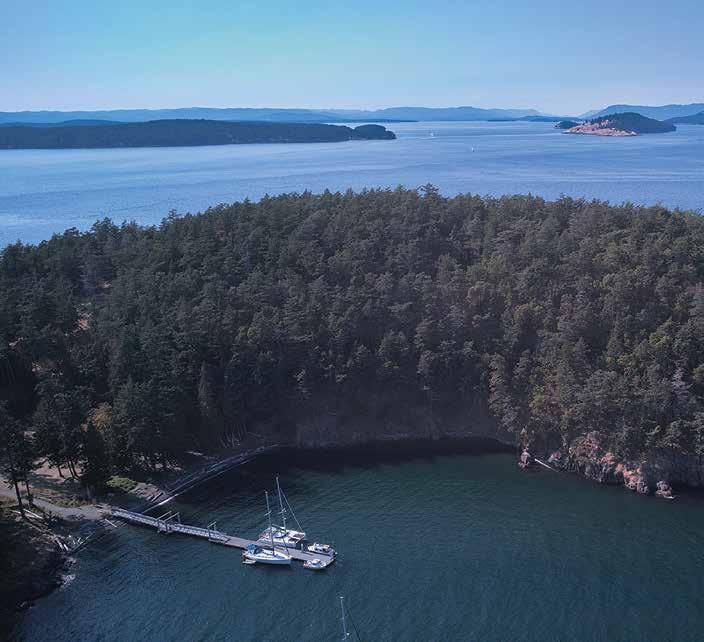
Jones Island Marine State Park, known as the Boater’s Island, is a small slice of San Juan paradise.
west forests.
After securing the boat in Active Cove, most visitors head ashore to explore the island’s network of hiking trails. The paths disappear beneath towering Douglas firs and moss-covered madronas, creating a deep forest atmosphere that feels remarkably untouched. The perimeter trail provides occasional openings overlooking the surrounding islands and tidal passages.
Because Matia is part of the San Juan Islands National Wildlife Refuge, wildlife viewing is excellent. Bald eagles are
common overhead, while seals and sea otters frequently patrol the shoreline. At low tide, small coves and rocky beaches become ideal for tidepool exploration. Sucia Island If I had to choose where to drop anchor the first night, I lean toward Sucia Island. And I head straight for Echo Bay. Protected and spacious, it offers excellent holding and enough room for a large fleet of visiting boats. Depending on conditions, Shallow Bay on the island’s southwest side provides another outstanding overnight option.
One of the most common mistakes first-time cruisers make in the San Juan Islands is assuming services are available everywhere. While protected coves and marine parks are plentiful, fuel docks, grocery stores, and pump-out stations become surprisingly limited once you leave the mainland. A little preparation goes a long way.
Most trips begin in Anacortes, and it remains the best place to fully provision before departure. Multiple marinas, dependable fuel docks, marine supply stores, grocery markets, restaurants, and repair facilities make it the ideal staging point. Experienced cruisers typically leave Anacortes with full fuel and water tanks, stocked coolers, and enough supplies for several days aboard.
Once inside the islands, Friday Harbor becomes the primary resupply hub. The marina offers transient moorage, fuel, pump-out facilities, showers, grocery stores within walking distance, and numerous restaurants. After several nights anchored out, many crews stop here to recharge—both literally and figuratively.
For cruisers exploring the western side of the islands, Roche Harbor offers another excellent fuel and provisioning stop. More resort-oriented than Friday Harbor, Roche Harbor features outstanding marina facilities, reliable fuel service, showers, restaurants, and small provisioning markets that make it a comfortable stop before continuing north toward Stuart or Sucia islands.
Most marine parks—including Sucia Island, Matia Island, and Jones Island Marine State Park— offer little to no fuel, groceries, or marina services. Once anchored out, you’re largely dependent on what you already have aboard.
That’s part of the charm of cruising the San Juans. Fuel up early, replenish supplies whenever possible, and embrace the slower pace that comes with life between marinas.
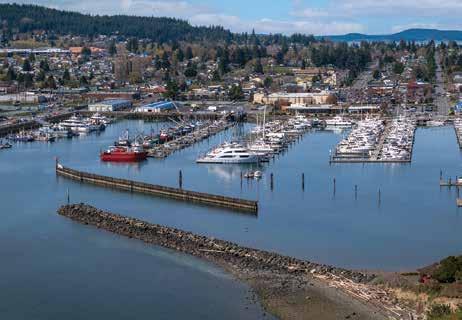
Panoramic view of the city of Anacortes across the marina from the Cap Sante Park overlook. Historic port city and the gateway to the San Juan Islands.
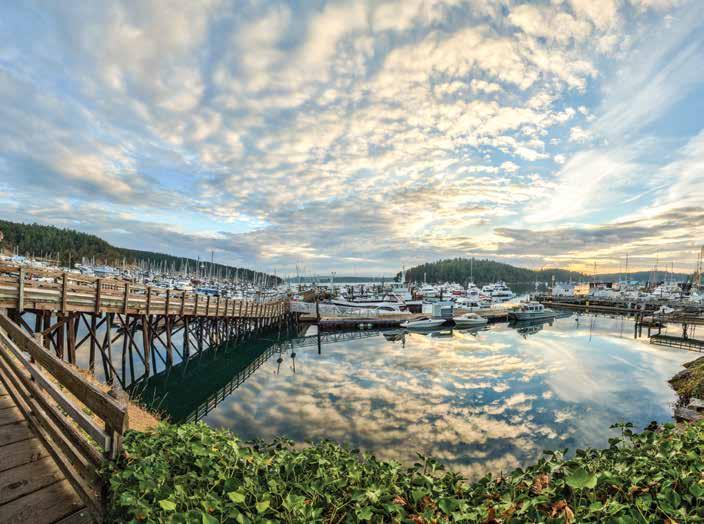
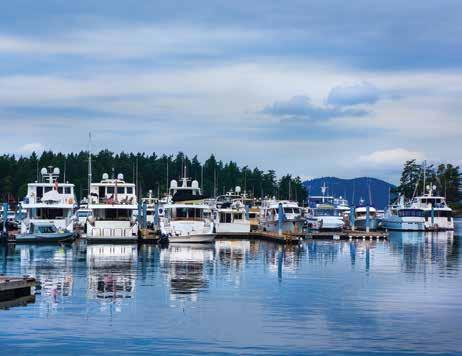
Boats at Friday Harbor San Juan Island Washington.
Once ashore, Sucia feels built for exploration. The trail system is one of the best in the San Juans, weaving through rocky shorelines, open meadows, and dense stands of fir and madrona. A favorite route follows the shoreline toward the island’s famous sandstone formations known as the China Caves, where wind and water have sculpted dramatic
overhangs and narrow channels along the coast.
Kayaking and paddleboarding are especially popular in Echo Bay and Shallow Bay thanks to the protected water and calm morning conditions. During summer evenings, dinghies gather along the shoreline while boaters walk the beaches collecting shells, watching harbor seals, or
simply enjoying the long Pacific Northwest sunsets.
For many boaters, Sucia becomes the first place where the schedule truly disappears.
Day 2, Stuart Island
With Day 1 behind you the course leads west toward Stuart Island, home to two
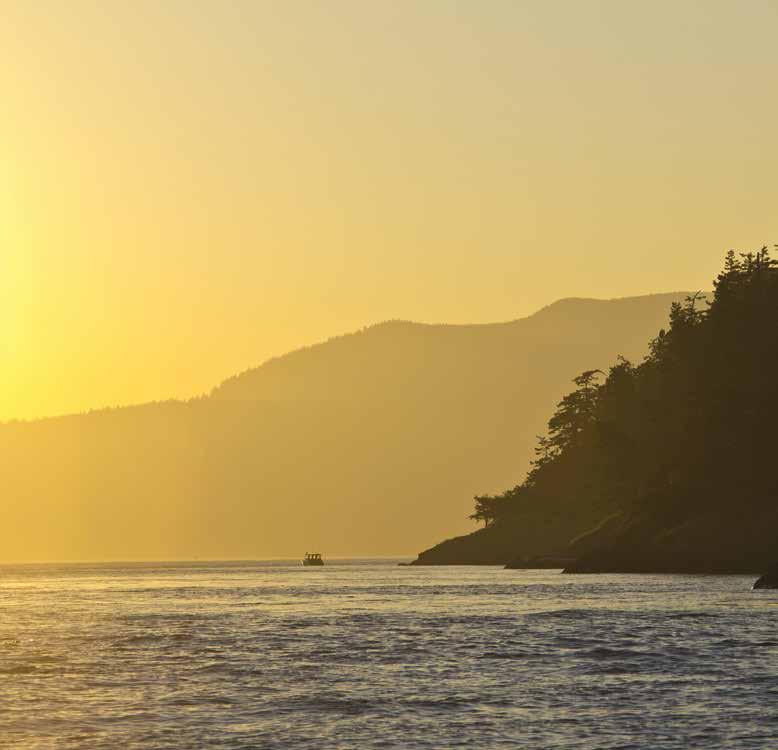
Sunset in the San Juan Islands. Near Matia Island.
of the most beloved harbors in the San Juans: Reid Harbor and Prevost Harbor.
Both provide excellent overnight protection and convenient shore access, though the best choice usually depends on wind direction and weather conditions—a recurring reality for boaters.
Reid Harbor is more sheltered and secluded, tucked deep into the island
with calm water and reliable anchoring. Prevost Harbor feels slightly more open and social, with docks, mooring areas, and scattered shoreline homes.
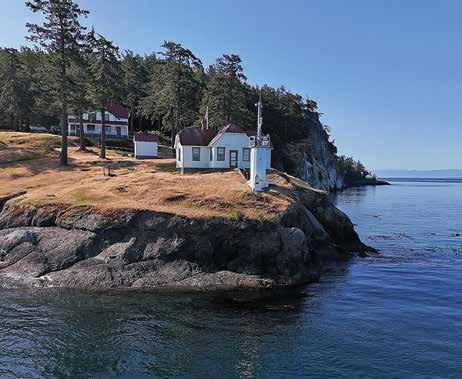
What truly sets Stuart Island apart, however, is the hike to Turn Point Lighthouse. The roughly five-mile round-trip trail crosses open meadows and quiet island roads before reaching the rugged northwestern tip of the island, where the lighthouse overlooks Boundary Pass. Freighters and tugboats glide silently through the strait while powerful tidal currents swirl offshore below.
Back near the harbor, many cruisers spend the afternoon paddleboarding or kayaking along the shoreline. Reid Harbor’s calm water makes it especially popular for evening dinghy rides and quiet sunset cruises around the anchorage.
Day 3, Jones Island
The cruise southeast toward Jones Island Marine State Park is one of the shorter runs of the trip, leaving plenty of time to enjoy the island itself.
Jones Island has long been a favorite among sailors because it feels designed specifically for people arriving by boat. There are no roads, no towns, and no distractions—only anchorages, hiking trails, campsites, and quiet beaches.
Depending on weather conditions,
cruisers typically choose between the east and west anchorages. The west side delivers beautiful sunsets but greater exposure, while the east side generally provides calmer overnight conditions.
A trail circles the island through dense forest and rocky shoreline. Deer frequently wander through campsites and along the beaches, seemingly unfazed by visiting boaters.
Jones Island Marine State Park has long been considered one of the most boater-friendly destinations in the islands. The atmosphere is relaxed, social, and simply wonderful. After anchoring, most visitors walk the island’s perimeter trail, an easy loop that hugs the shoreline through forest, driftwood beaches, and rocky viewpoints. Black-tailed deer are commonly seen wandering near campsites and shoreline picnic areas, often unfazed by nearby visitors.
The protected coves around Jones Island make it an excellent spot for kayaking, paddleboarding, and swimming during warm summer afternoons. Many crews also use Jones as a “rest day” destination—a place to slow down and spend an afternoon reading aboard, grilling dinner in the cockpit, or watching boats filter into the anchorage throughout the evening.
Sunsets from the island’s western
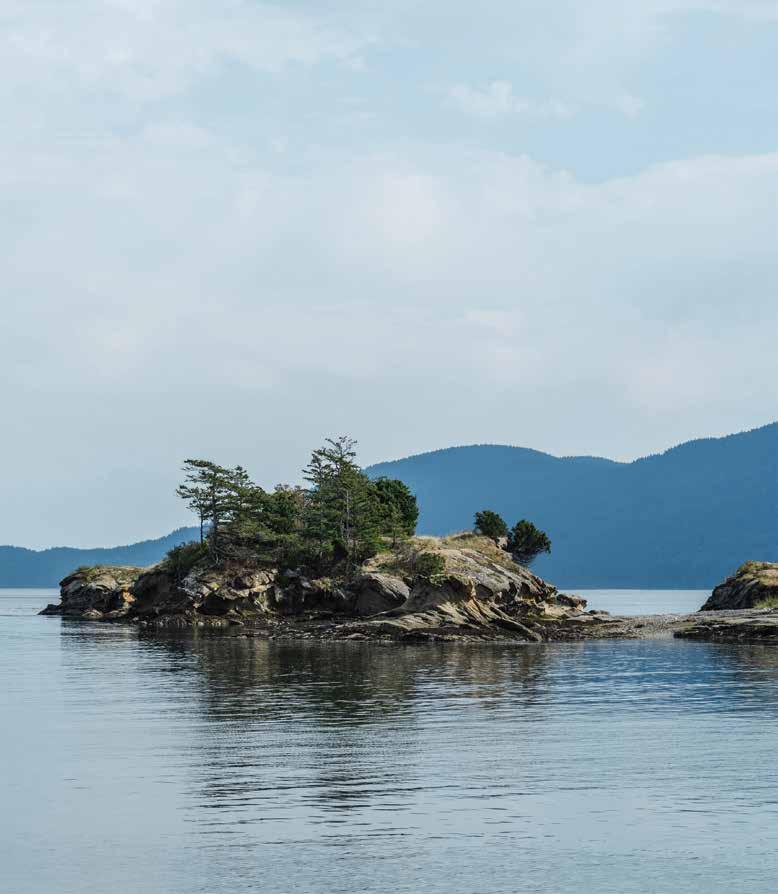
Turn Point is on the western most end of Stuart Island and is only accessible by water.
shoreline are particularly memorable, especially when the water turns glassy calm at dusk.
Day 4, Cypress Island and Return to Anacortes
The final day begins with a short cruise toward Cypress Island and Eagle Harbor,
a broad, protected anchorage surrounded by steep, forested hillsides.
Compared to the tighter anchorages at Stuart or Matia, Eagle Harbor feels wide open. Boats spread comfortably across the bay while hiking trails climb into the surrounding hills for sweeping views of Rosario Strait and the islands beyond.
Seclusion is an added bonus to boating at Cypress Island.
Eagle Harbor provides a broad, protected anchorage surrounded by steep evergreen-covered hillsides. Many boaters head ashore to explore Cypress Island’s hiking trails, which climb through dense forest toward scenic overlooks above Rosario Strait. On clear days, the views stretch across much of the San Juan archipelago.
Because Eagle Harbor is larger and more open than many of the previous anchorages, it’s also a favorite spot for relaxing aboard. Boats spread comfortably throughout the bay, creating a peaceful final-night atmosphere before the return to Anacortes.
As the trip winds down, many cruisers spend their final evening reflecting on how different life aboard feels after several days in the islands. The pace slows. Tides and weather begin shaping decisions naturally. And somewhere along the route, the San Juans stop feeling like a destination and start feeling like a way of traveling altogether.
From Cypress, the route bends south through Thatcher Pass or along the eastern side of the islands before eventually returning to Anacortes. Fuel docks reappear. Cell service strengthens. Ferry traffic increases. Slowly, the spell of the islands begins to loosen.
But something changes after a few days cruising here. That may be the true secret of these islands.
Not simply seeing them—but learning how to move through them slowly enough to truly experience them.
DISCOVER LOPEZ ISLAND
ISLAND INSIGHT, EXPERTISE, AND INTEGRITY
Get in touch to learn more about the Lopez Island real estate market:
• Complimentary consultations on your home’s value and the listing process
• Cutting edge marketing strategies
• Concierge services for buyers
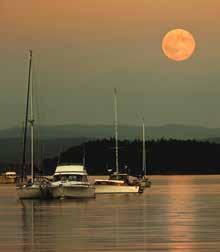
Super moon capture at Sucia Island, a small island in the San Juan Islands.
Puget VagabondsSound
Chasing sea-run cutthroat through tides, structure, and the ever-changing waters of Puget Sound.
Story and
photos
by Chris Senyohl
As the water crests and begins to fall, the current around the point picks up and you can begin to see baitfish dimple the surface in the eddy it’s creating. When I tell people about fishing for a true trout that lives in saltwater, many imagine it might be surf casting in crashing waves, or like fishing in the non-moving expanses of a lake. It’s not really either of those and in many places it much more closely resembles a river, with current, structure and different personalities that swing and change four times on most days with the rise and fall of the tide. There is a lot of complexity and nuance to it, just like there is in the sea-run cutthroat trout that roam these waters.
At some point, back in time, some of these coastal cutthroats developed an urge to wander and wanted to see what was past the bottom of the hill where their natal creek or river entered saltwater. Being physically able to adjust between fresh and saltwater classifies them as anadromous, just like all our Pacific salmon and steelhead, but with a less structured approach. They don’t all die after spawning spawning once, like Pacific salmon do and don’t undertake
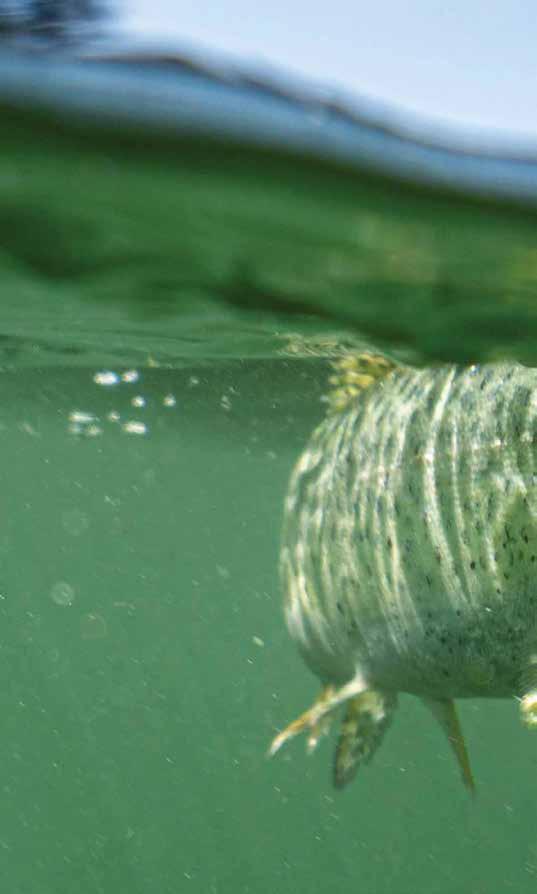
A sea-run cutthroat in its environment.
the well over 1000-mile journeys into the North Pacific that salmon and steelhead (their sea going rainbow trout cousins) take on. They are vagabonds that will poke around in the saltwater following food sources, usually staying within five miles or so of the creeks and
rivers where they were born.
Off the point where my boat is pointed, I see splashing and nervous water. It appears that a handful of sea-run cutthroat have found the food source, which on this day is juvenile candlefish. With fly rods already rigged with flies,
leader and the correct fly lines, I idle the boat within casting distance.
A standard 9-foot, 5- or 6-weght fly rod with a saltwater safe reel seat is pretty standard fare for fishing from boats and the same for on your feet from the beach, only maybe in a little longer 9'6" or 10' version. An intermediate integrated shooting head like Rio’s Outbound Short or Coastal Quickshooter is about perfect for a line, although intermediate lines and slightly faster sinking lines do occasionally come in handy. These are shallow water fish and can usually be found in water as deep as 12 feet to just inches of water. Any appropriately sized reel that can tolerate saltwater and hold 100 yards or so of backing will work fine. Leaders with tippet in the 8- to 10-pound range and three to four feet of the clear intermediate lines and a 9-foot version on a floating line will work just fine. For flies, a variety of small baitfish patterns in the 1- to 2 inch range with hooks in the size
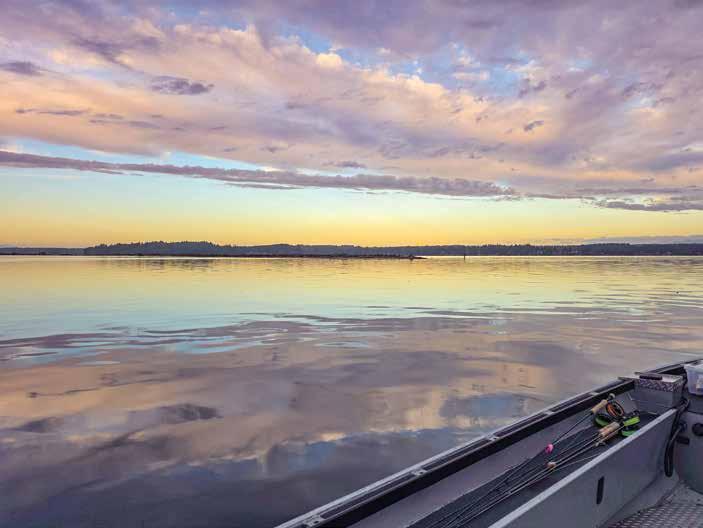
A calm afternoon on one of the many inlets of Puget Sound. Below, a cutthroat in a custom box made from plexiglass allowing the author to take photographs before release.
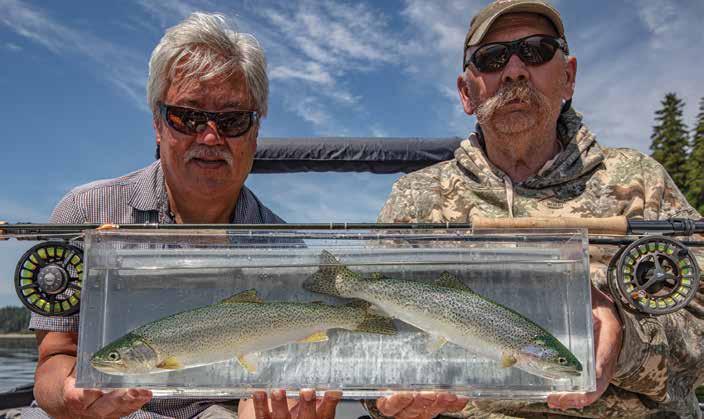
A fine example of a fly caught cutthroat from the salt. Below, famous fishing photographer Jeff Edvalds and Captain Tom Wolf with a double.
6 to size 2 range see the most use in my boat. Deceivers and Clouser Minnows in grey, brown, olives and white in some combination is a great place to start. Sculpin patterns will work, as will Wooly Buggers with a little flash and some shrimp or amphipod imitations. Poppers or waking flies on a floating line can provide some surface action too. They are not notoriously picky fish and if you put something there that looks like food, they will probably try to
eat it. I prefer a short strip, erratic retrieve with pauses, but most any varied retrieve will get some attention. They are opportunistic feeders that take advantage of out-migrating juvenile salmon (especially chum fry), candlefish, small herring and anchovies, shrimp, amphipods, sculpins, small shiner perch and just about anything else they look at that they think might be food.
Oddly, Puget Sound is not a sound and Hood Canal is not a canal. They are
glacial carved fjords with a depth of over 900 feet in some places and an incredible diversity in topography both above and below the surface. Puget Sound has well over 1,000 miles of beaches and shoreline, even more when you include Hood Canal. Some of those shoreline areas are open to the public anywhere below the high tide mark while others are privately owned. There are lots of those miles that are available to a wading angler through public beaches and access points and all of it is accessible by boat. A good amount of those miles are home to sea run cutthroat. You will hear from some “experts” that you only want to fish over cobbled, rocky beaches and
With the right craft, the calm protected waters of Puget Sound are available to everyone.
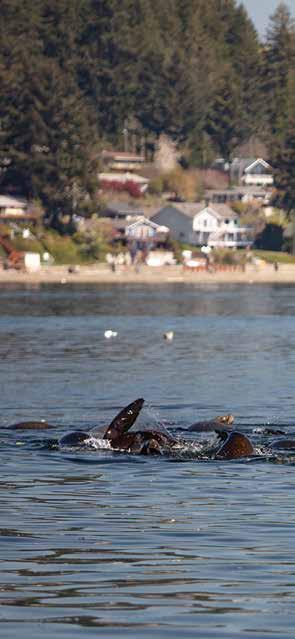
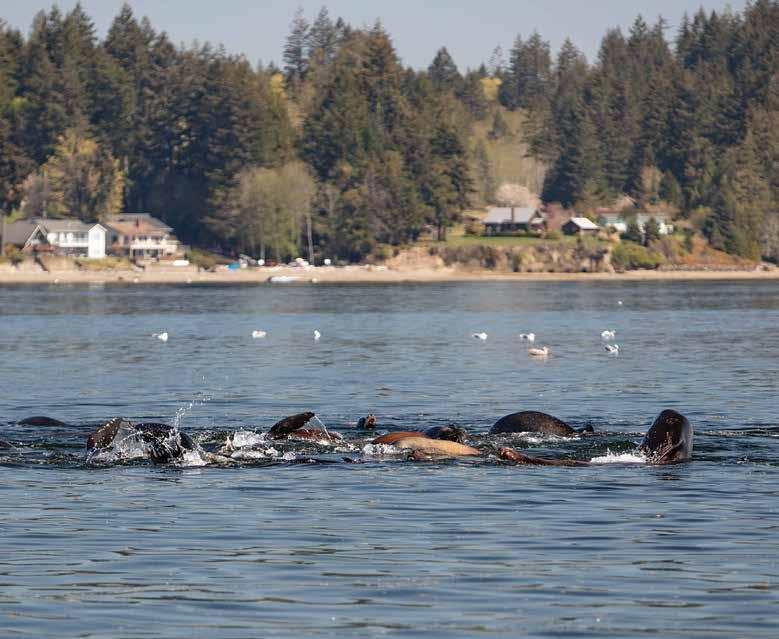
A cruising raft of male California sea lions.
not over soft sand, or mud beaches. That is a good place to start, and especially on some of those cobbled beaches that also have giant glacial erratic rocks both above and below the surface, but I can also tell you that eelgrass beds and sand dollar colonies can be excellent areas and they thrive on softer bottoms. Points, bay mouths and anywhere fresh water enters the salt, even little creeks or culverts that would not support fish are all worth a look. Oyster farms, shellfish laden beaches, both natural and commercial and certain estuary areas are good places to look as well.
This is a fishery that is there for everyone. No boat, no problem. No
high-end sea run cutt rod? No problem. Just your feet and fish with whatever 4- to 7-weight fly rod you have with a floating line and you are in the game. Just rinse them well when you are done. Boats, both smaller and bigger will definitely get you more opportunity. You can reach those fish that are just out of the casting range of shore-bound anglers, can easily and quickly cover water and move quickly to the next likely spot. Boats also give a chance for everyone, however mobile, old or young to have a great experience on the water.
Standing alone in a beautiful spot and fishing from the beach can be a very rewarding day also, even if you only get
a fish or two. Every place is different, some fish better on a rising tide than a falling one, some places are the opposite and in some spots both are good. A good tide with at least 8 feet of exchange is best, but they can be caught on any tide. It’s a year-round fishery with, (in my opinion) spring through early summer and fall being my favorite times, but they are available all year round. You will catch other things while fishing for them, from sculpins, flounder and surf perch. Wildlife, sea life and birds are seasonally varied with everything from grey whales, orcas, sea lions, osprey, loons, and porpoises encountered occasionally, to harbor seals, great
blue herons, otters, bald eagles, coastal crows and a myriad of shore birds. Even blacktail deer.
On a clear day, the views of Mount Ranier, the Olympics, the Cascades, Mount Baker (Native name Koma Kulshan — The Great White Watcher) can be flat out amazing and even some pretty awesome city skylines views in some spots.
The fish don’t get big like steelhead or salmon. Their lifespan if usually four to eight years, with most not making it past six. Average fish are between 9 and 14 inches. On most days in a boat you will hook one that is between 15 and 17 inches. In my experience I’d say 18 inches is great, 19 inches is special, and a legitimate 20-inch sea-run cutthroat is a true trophy fish. They live from
Northern California to Southeast Alaska, but Puget Sound is right in the middle of it and has some of the best, protected fishing for them anywhere on earth.
My client’s casts were spot on and we got a couple off that point on the falling tide. We even managed a few during the low slack while watching the gulls and coastal crows flying high into the air and dropping clams to the rocks where the shells broke allowing them to claim their tasty treat. The tide has turned now and that eddy is now forming on the other side of the point moving in the opposite direction. The baitfish are now pushed to the other side. There is a splash and it looks like a good one. Time to try again.
There are places where a beautiful place will lead you to some fish. There
are also times where a really cool, special fish, will lead you to a beautiful spot. This is both of those things together. This is a 100% catch and release, barbless hook fishery for a special fish. If you have the fortune to catch one of these special fish, in these special places, please be kind, careful and respectful with both the fish and the locations. If for no other reason than they’re worth coming back for.
Owner and operator of Intrepid Anglers Guide Service, Chris Senyohl guides anglers throughout Washington state and in Alaska. Chris is a fourth-generation Washingtonian whose home base is in the Snoqualmie Valley. He can be reached at 425-890-1681 or through intrepidanglers.com.
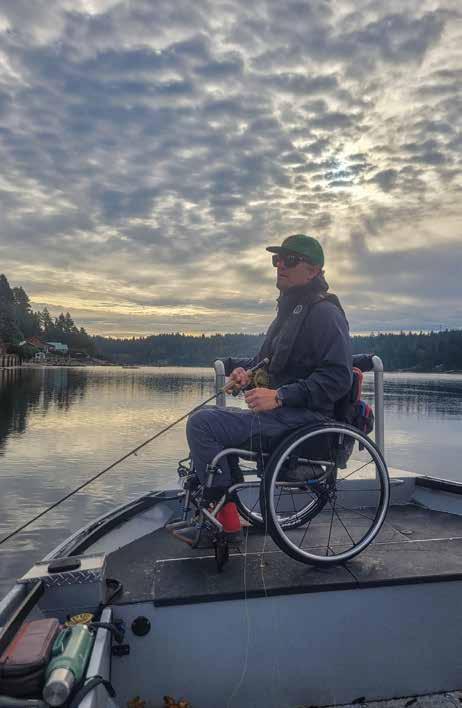
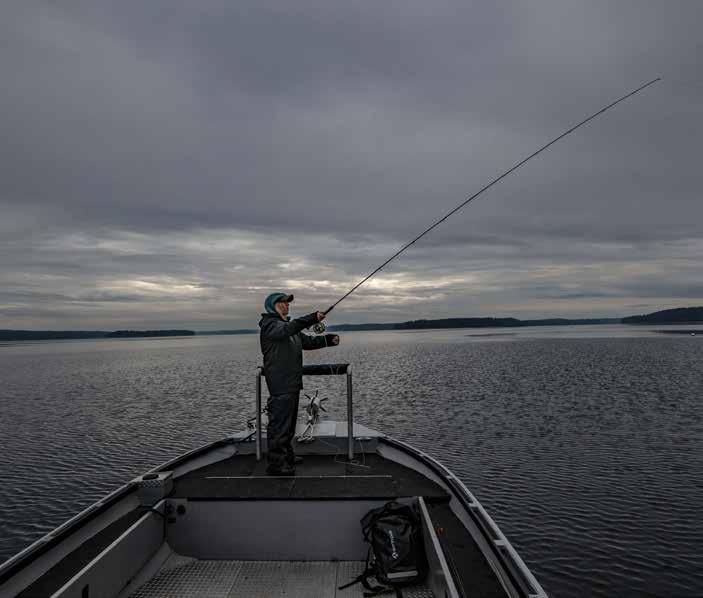
Casting a fly for cutthroat trout on Puget Sound.
Luxury Living
From the sought-after shores of the San Juans to the iconic waterfront estates surrounding Seattle, these homes showcase the very best of Pacific Northwest luxury.
By
explore:NW Staff
There’s a certain moment that happens when you arrive in the San Juan Is-lands or along the shores surrounding Seat-
tle. The pace softens. The light changes. Water replaces highways as the defining feature of the landscape, and homes seem designed not simply to occupy space, but to frame the Pa-cific Northwest itself. Here, luxury isn’t measured only in square footage or price tags—it’s measured in sunsets, private docks disappearing into quiet coves, walls of glass overlooking snowcapped peaks, and the rare feeling of complete escape just minutes from world-class cities or a short hop aboard one of Kenmore Air’s many flights.
Across the San Juan Islands, luxury homes are shaped as much by the envi-ronment as by architecture. Cedar, stone, and steel blend naturally into for-ested shorelines where bald eagles circle overhead and orcas occasionally surface offshore. On islands like San Juan, Orcas, and Lopez, estates range
from modern coastal retreats perched on rocky bluffs to timeless Northwest lodges tucked among towering firs. Privacy is paramount here. Many of these homes feel less like residences and more like secluded sanctuaries connect-ed by winding roads and marina slips.
Meanwhile, the greater Seattle area delivers its own interpretation of Northwest luxury—sleek waterfront homes along Lake Washington, contemporary masterpieces in Bellevue, and hillside estates overlooking the Seattle skyline, Mount Rainier, and the Olympic Mountains. The region has become a show-case for modern architecture that embraces light, views, and seamless in-door-outdoor living despite the often-changing weather.
Together, the San Juan Islands and Seattle region represent two sides of Northwest luxury living: one deeply rooted in quiet island solitude, the other connected to the energy and sophistication of a globally influential city. Both are defined by water, landscape, and an enduring sense of place that simply cannot be replicated anywhere else.
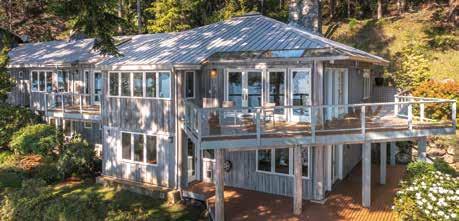
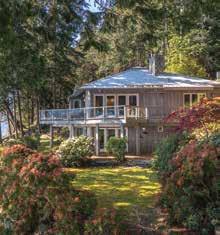
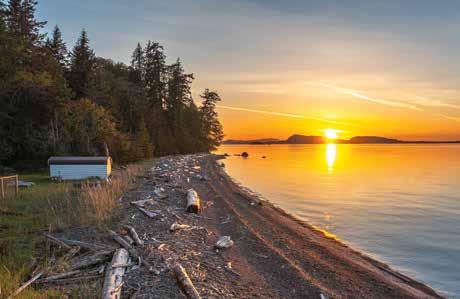
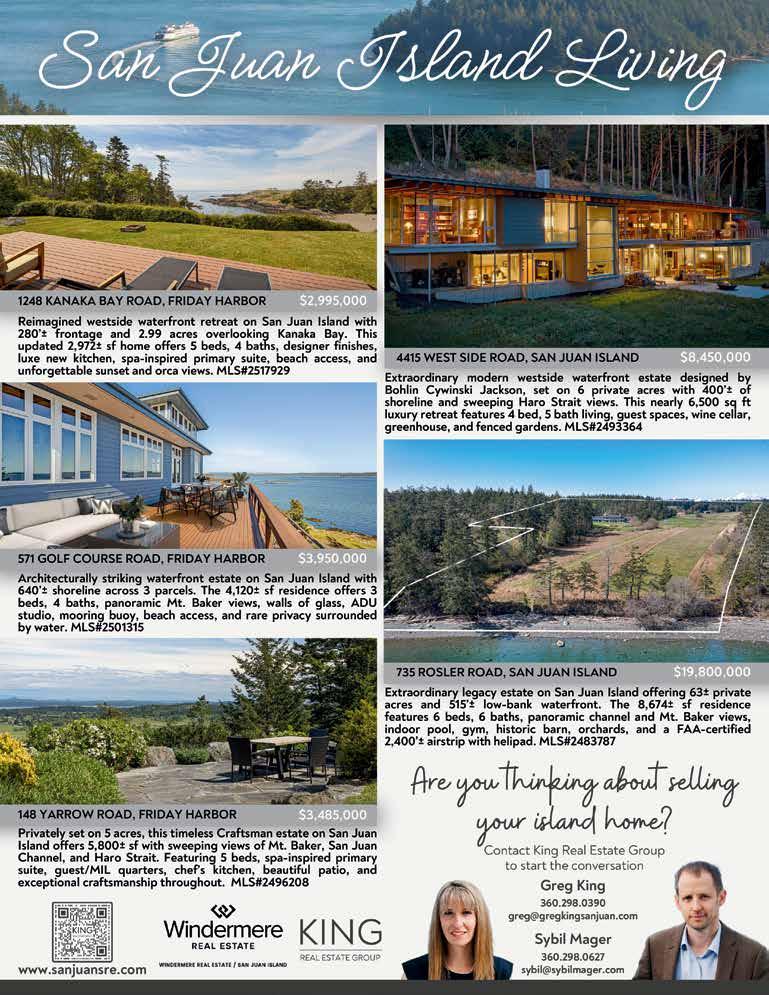
Set on over 2.75 acres this Orcas Island home captures island life in the San Juan Islands. Listed at just under $3 million, you can read more about this gem on page 67.
A Genuine Rarity in the San Juans
3 BED, 2 BATH
208 Tide’s End Rd (Lopez Island)
$2,400,000
Nearly ten acres of terraced shoreline and mature landscaping, this hard to find property is just a short stroll from the Lopez Ferry Landing. The centerpiece is a rare deep-water private dock with a 35-foot float, solid depth, power, and vehicle access for easy boat loading — a genuine rarity in the San Juans. (The float is currently stored off site.) The 1962 main house offers sweeping views of open water, mountains, and ferry traffic from 2,410 sf across two levels. A 600 sf waterfront cottage adds flexible space for guests, a studio, or a home office. Rounding out the property: a 960 sf detached garage and shop, two-car carport, chicken coop, fenced garden, dog run, and additional storage sheds. Two tax parcels, two wells, catchment with storage for irrigation, pocket beaches, a 20KW backup generator, and excellent privacy make this a selfsufficient retreat. Community Hilltop water and Rock Island fiber are available on the property but not yet connected — easy upgrades for the next owner.
Broker
Clure
Panoramic Views of Lake Washington
3 BED, 5 BATH
508 McGilvra Blvd E, Seattle
$15,850,000
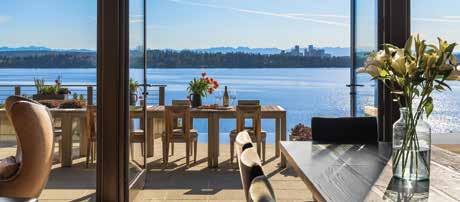
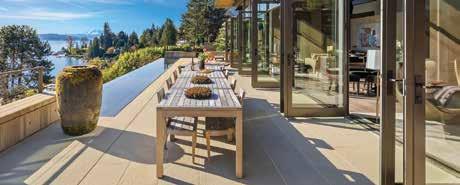
A once in a lifetime opportunity combining exquisite design, stalwart construction, highly desirable floor plan and amenities, and tremendous view location. The 124 ft wide lot affords panoramic views of Lake Washington, the Cascades, the Bellevue skyline, sunrises and Mount Rainier through the wall of glass and from the infinity reflecting pool terrace. This open concept home is tied together by consistent use of design elements and materials creating a restful, Zenlike atmosphere: polished and matte concrete, sandstone, reclaimed Belgian oak, weathered elm timbers and custom steel. Stunning Asian-influenced gardens with strong horizontal elements, Japanese black pines and Indonesian cisterns.
Listing Agents
Betsy Q. Terry & Jane Powers
206-322-2840
homeshop@ewingandclark.com Ewing & Clark
Stunning Views, Front-Row Seat to Harbor
3 BED, 4 BATH
573 Harborview, Deer Harbor (Orcas Island)
$2,800,000
Lot size 2.59 acres
Perched above Deer Harbor, this Roy Lundgren–designed high-bank waterfront home offers a front-row seat to the marine activity of Deer Harbor Marina, with sweeping views of Pole Pass, Washington state ferries, sea planes, whale-watching boats, and lively boat traffic. Built in 1994 by skilled local craftsmen and impeccably maintained, this 3,500+ sq ft residence features three ensuite bedrooms plus a bonus room, all filled with abundant south-facing light. Built on over 2.5 acres, the property includes an attached two-car garage for convenience, and two nearby marinas provide excellent access to island recreation. Kenmore Air float planes depart just minutes away, offering fast, direct travel to Seattle for appointments or sporting events. Furnishings are available with sale. Deeded shoreline shared access via neighborhood common area. Limited dock use for loading and unloading.
Broker
Deborah Jones 360-298-4558
dhjoneshomes@gmail.com
ORCAS ISLAND REALTY
Convenience, Comfort in Eastsound
3 BED, 3.5 BATH
$1,098,000
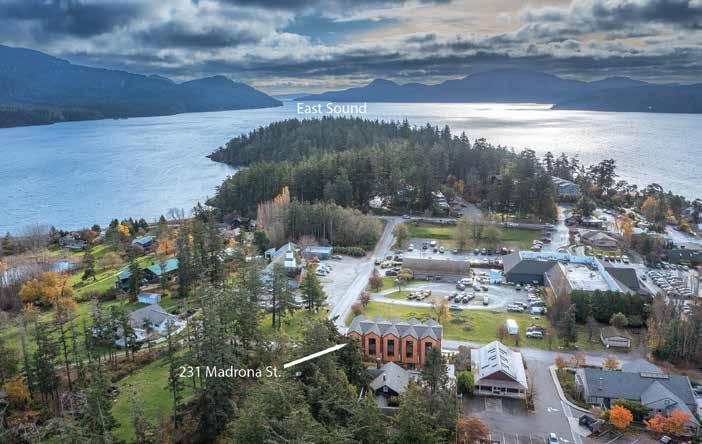
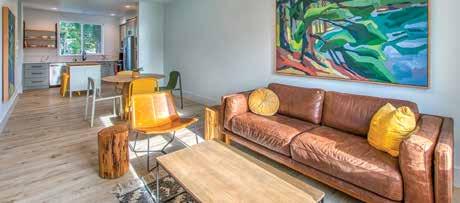
231 Madrona Townhomes
These townhomes have southwest exposure and a vacation rental permit. Enjoy life in the heart of Eastsound in new construction 3 bedroom, 3.5 bath units at the corner of Fern & Madrona near schools, beaches and the amenities of the Village. Five units in the complex each with separate entries. Contemporary design features wood exterior, quartz & butcher block counters, stainless appliances and white walls. Main floor can be a locked off studio space with 3/4 bath or integrated into the unit. Second floor features an open concept living, dining and kitchen space w/ 1/2 bath. The upper floor has 2 bedrooms both w/ ensuite 3/4 baths. One dedicated parking space plus plenty of street parking.
Brokers
Mary Clure
360-961-7523
islandsmary@gmail.com
Deborah Jones
360-298-4558
dhjoneshomes@gmail.com
Lopez Island Luxury
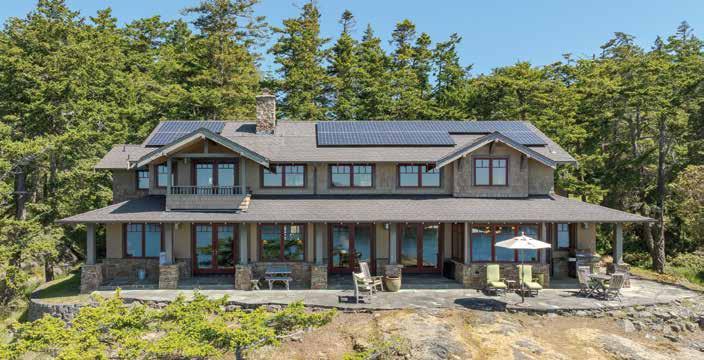
3 BED, 3.5 BATHS, 3,340 SF 481 Grimes-Riker Lane, Lopez Island
$4,900,000 MLS#2502025
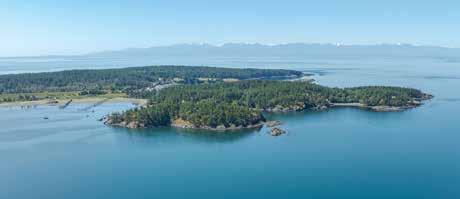
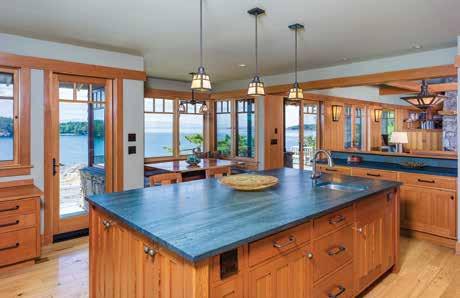
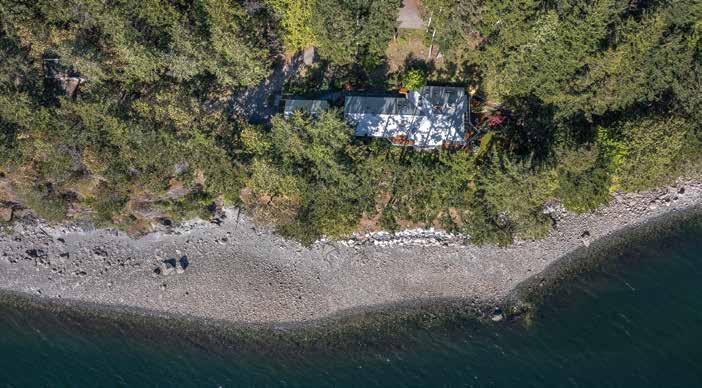
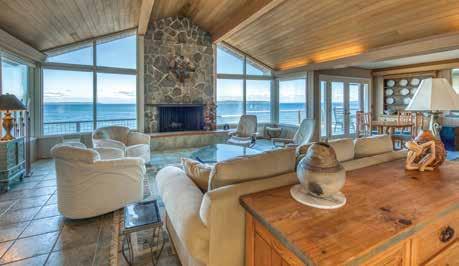
Set on 27 waterfront acres overlooking MacKaye Harbor, Vancouver Island, and the Olympic Mountains, this exceptional Northwest Craftsman offers rare privacy, timeless design, and breathtaking southern views. The custom 3-bedroom, 3.5-bath residence features madrona floors, walls of windows, clear fir cabinetry, and finely crafted built-ins throughout. The Great Room centers on a striking stone fireplace, while the chef’s kitchen offers slate counters, double ovens, a Wolf cooktop, and sunny breakfast nook.
Two ensuite primary retreats include walk-in closets, one with a private covered deck.
French doors open to a sunlit stone patio ideal for entertaining or enjoying soaring eagles and tranquil waterfront vistas. A detached garage with studio above provides private guest or creative space. The property also includes mature woods and pasture, a seasonal creek, pond, large shop/garage, fenced gardens, fruit trees, and full generator wiring—everything needed for refined island living.
Dianne Pressenda 360-202-6995
pressenda@rockisland.com
Windermere Real Estate/Lopez Island
Fly into Rosario. Come Home to the Shoreline!
3 BED, 3 BATH
1424 Palisades Eastsound (Orcas Island)
$2,499,500
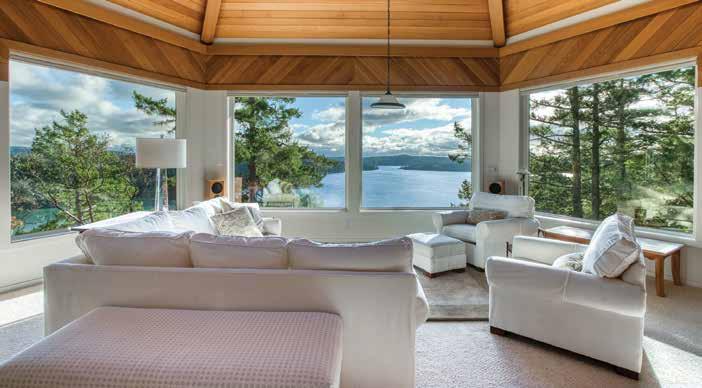
Southwest-facing Rosario Palisades waterfront with 542 feet of shoreline, panoramic sunset views, and a frontrow connection to the Salish Sea. Set among towering madronas, evergreens, and maples, and rooted on terraced grounds, this Northwest contemporary Jack Jackson Architect designed home offers over 3,700 sq. ft. with 3 bedrooms, each ensuite, including a gracious main-level primary suite. The great room is the heart of the home, with vaulted wood ceilings, floor-toceiling corner windows to take in the expansive 180-degree views across East Sound. A generous view deck extends the living space outdoors, while the lower level offers a spacious rec room with pool table included, additional guest space, and access to lower decks and the shoreline path. Set on over 2 acres, a gradual stairway leads toward the low-bank waterfront, where low tide opens the shoreline for exploration across the property’s full length of the property. The shoreline provides ample room for launching a kayak or a dinghy to reach the maintained mooring buoy. The engineered bulkhead provides sound protection. The
detached shop offers flexible use for whatever your heart desires, such as an art studio, yoga space, woodshop, or storage, complimented by two covered carports nearby. Thoughtful driveway improvements create a more comfortable arrival to this private waterfront setting. A special waterfront property that deserves a sec-ond look.
Brokers
Deborah Jones
360-298-4558
dhjoneshomes@gmail.com
Daina Boden
206-696-2280
Daina.realtor@gmail.com
ORCAS ISLAND REALTY
Generational Living at Its Best
470 Bonanza Drive Lopez Island
3 BED, 5 BATH
$2,495,000
5,052 SQ. FT
MLS#2524982
This is a Lopez Island gem if there ever was one. With 2 houses on 440+ feet of waterfront with deep water dock share and private buoy plus two additional separate tax parcels for future building. Everything you need for a family compound. The main home has vaulted ceilings with skylighted entry, clear fir trim, oak floors, tons of built-ins and storage, 2 woodstoves and flexible spaces. The kitchen overlooks the Great Room and boasts double ovens, separate Thermador cooktop, SubZero refrigerator, oak cabinets and walk-in pantry. The snooker table room with wood stove and deck door is as versatile as your imagination. Lower level spacious, ensuite primary bedroom includes separate closets with built-in dressers and office/exercise area. Extra 3/4 bath off the laundry room with exterior door to scrub down after a day on the boat. Both houses have view decks with enviable panoramas to wile away an afternoon. Second home (1044 sf) built in 1982 has 2 bedrooms and 2 baths with wood stove, built-in dressers & laundry. Adjacent to the circle driveway is a detached 2 car garage with separate shop & wood carport. A very natural and private 17+ acres incl terraced waterfront, rocky outcrops, mature woods & sunny pasture. Close to Lopez Hill trails. A total of 5,052 square feet, this property is listed below assessed value.
Listing Agent
Dianne Pressenda 360-202-6995
pressenda@rockisland.com Windermere Real Estate/Lopez Island
Your Own In-City Lakefront Resort! 5 BED, 5 BATH 608 39TH AVENUE E, SEATTLE
$15,950,000
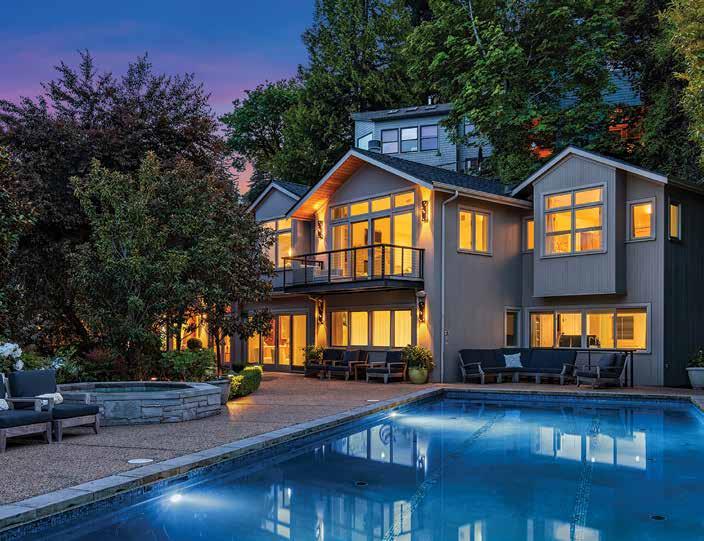
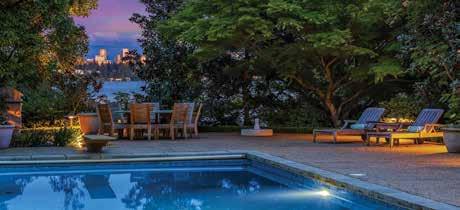
Rare offering of this extraordinarily private 120 ft no-bank Lake Washington estate with level lawn, lush grounds, swimming pool, hot tub, dock and sauna. Expanded and completely remodeled to take advantage of views of Mount Rainier, the Cascade Mountains, and the Bellevue skyline through the countless oversized windows. Open concept home with perfect indooroutdoor flow. Paneled living room, sandstone fireplaces, Carrara marble kitchen, family room, pool cabana room, all with relaxed yet sophisticated beachside character.
Listing Agents
Betsy Q. Terry & Jane Powers 206-322-2840
homeshop@ewingandclark.com Ewing & Clark
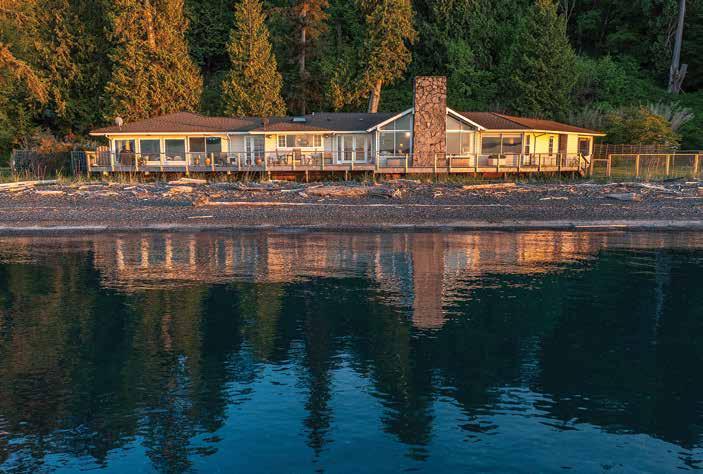
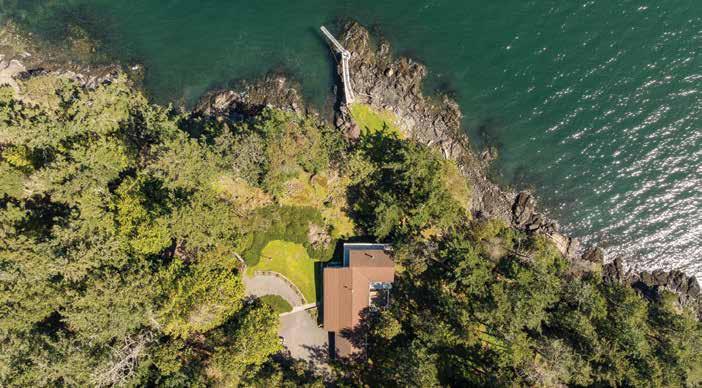
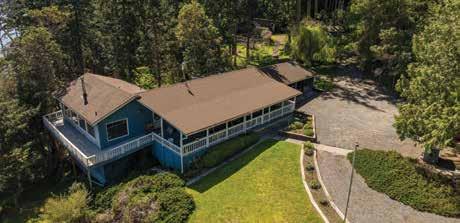
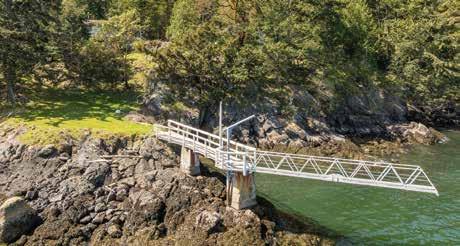
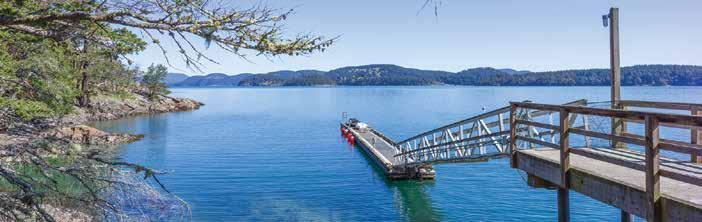
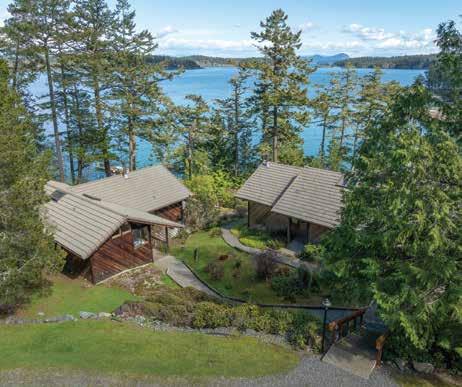
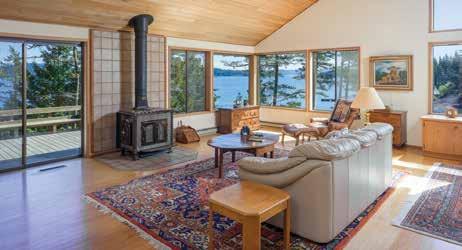
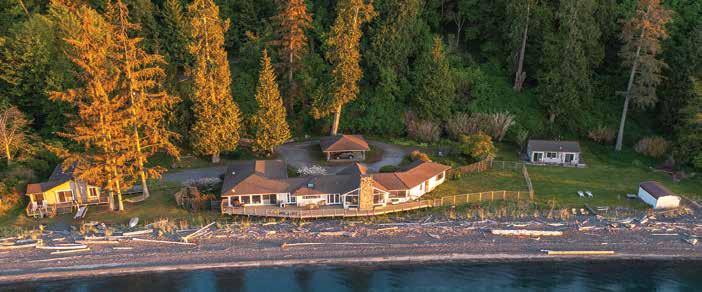
A rare chance to own a true stretch of Orcas Island shoreline, this north shore property offers 412 feet of walkout waterfront—a scale and presence that is increasingly hard to find. Adjacent to public land, the setting feels both expansive and private, with uninterrupted access to the natural beauty of the Salish Sea. Set on 2.75+ acres, the property includes three separate residences, offering flexibility for multi-generational living, guests, or income. The midcentury main home, with its own indoor swimming pool, captures sweeping water views and invites a thoughtful refresh, while the guest house—with an active vacation rental permit—provides immediate income potential. A detached bungalow adds further versatility. With two mooring buoys and direct beach access, the lifestyle here is effortless—launch a kayak, set a crab pot, or simply enjoy the rhythm of the shoreline. Offered below $3M, this is a compelling opportunity to secure a legacy waterfront property and shape it into something extraordinary over time. Includes ADU with VR permit.