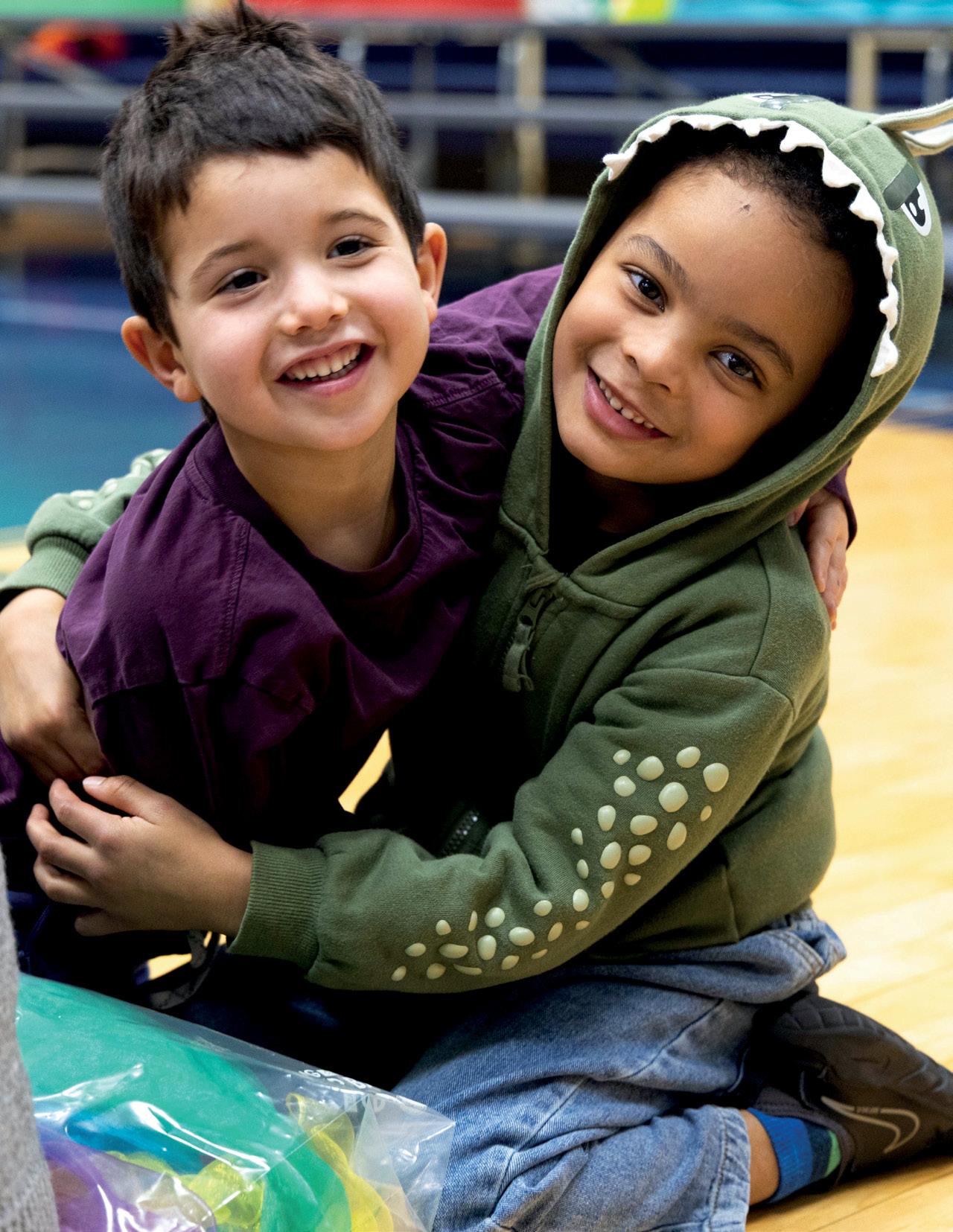
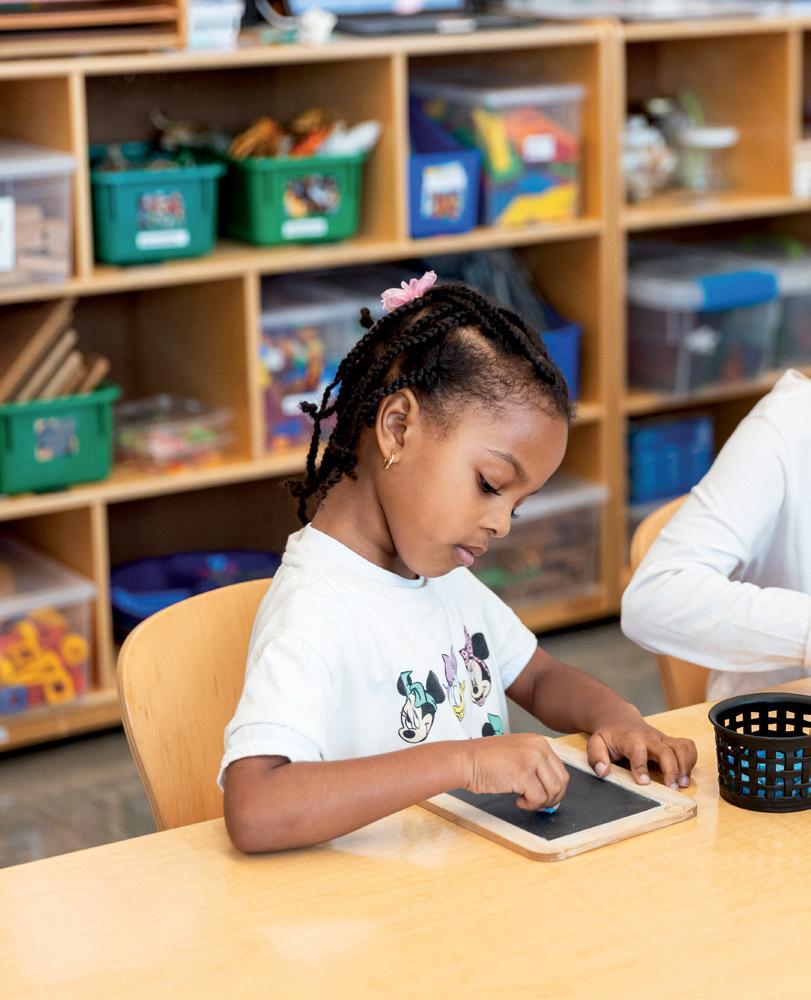
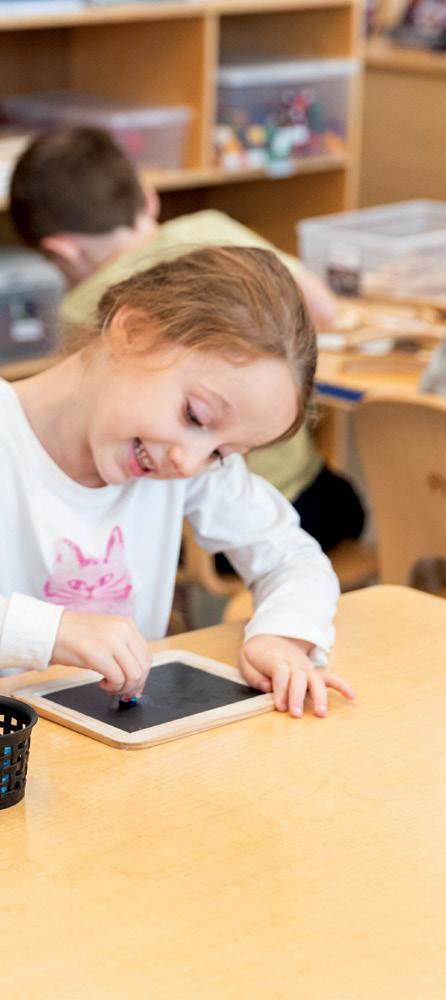
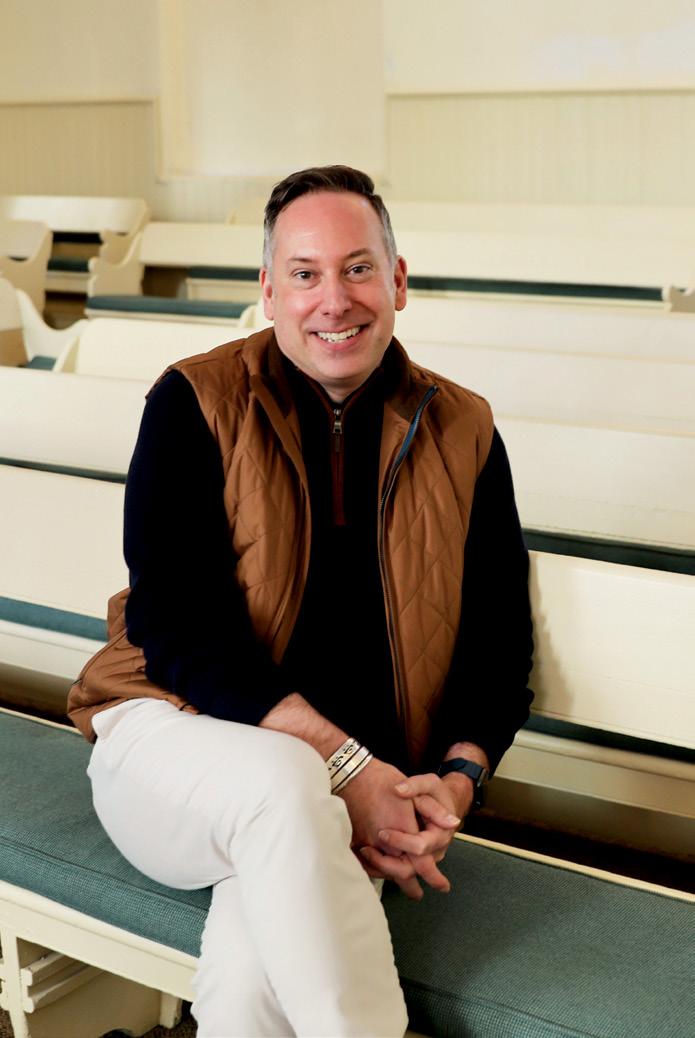
Guided by the Quaker belief that there is a Divine Light in everyone, Brooklyn Friends School cultivates an intellectually ambitious and diverse community that celebrates each individual’s gifts. We challenge our students to value and embrace difference as they develop critical thinking skills and apply their knowledge and intelligence both in and out of the classroom. In this rich learning environment, we inspire all members of our community to voice their convictions, to discover and pursue their passions, and to seek truth. Our graduates are compassionate, curious, and confident global citizens who let their lives speak in the spirit of leadership and service.
BROOKLYN FRIENDS SCHOOL
MAGAZINE
SPRING 2026
HEAD OF SCHOOL
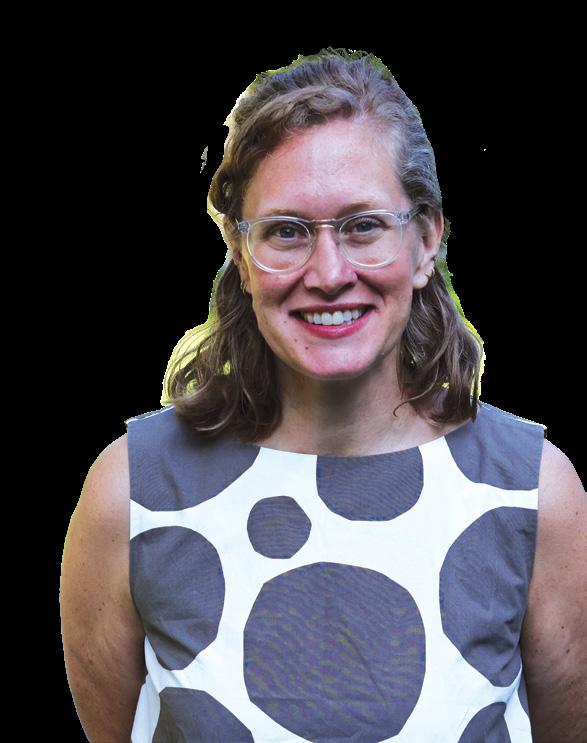
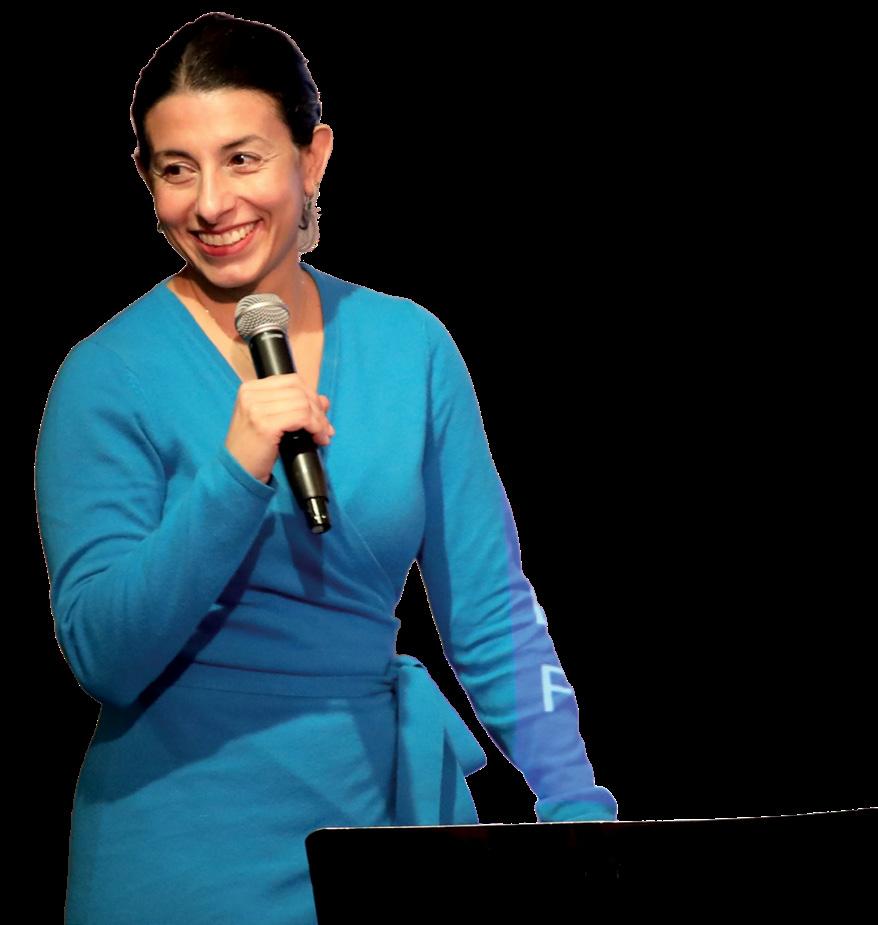
Crissy Cáceres
DIRECTOR OF COMMUNICATIONS AND MARKETING
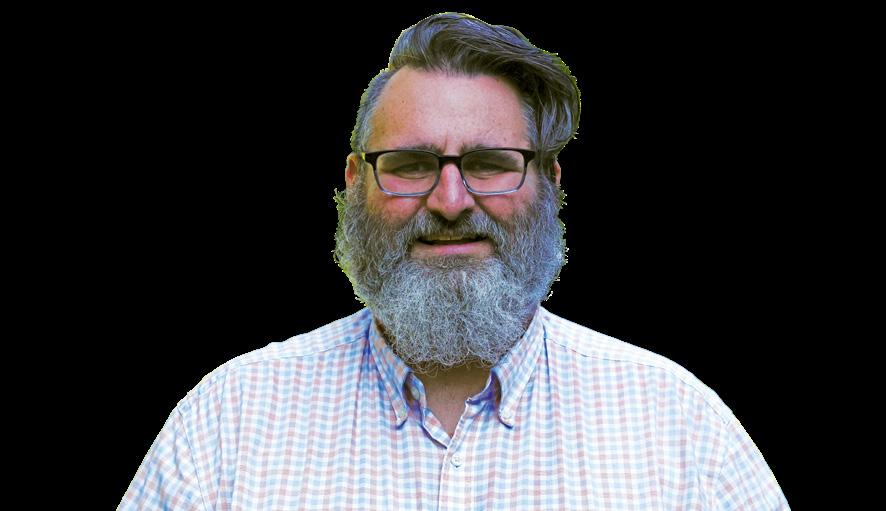
Brett Topel
DIRECTOR OF ADVANCEMENT
Cicely Upham
ADVANCEMENT AND COMMUNICATIONS TEAM
Emily Cowles
Associate Director of Digital Content & School Events Manager
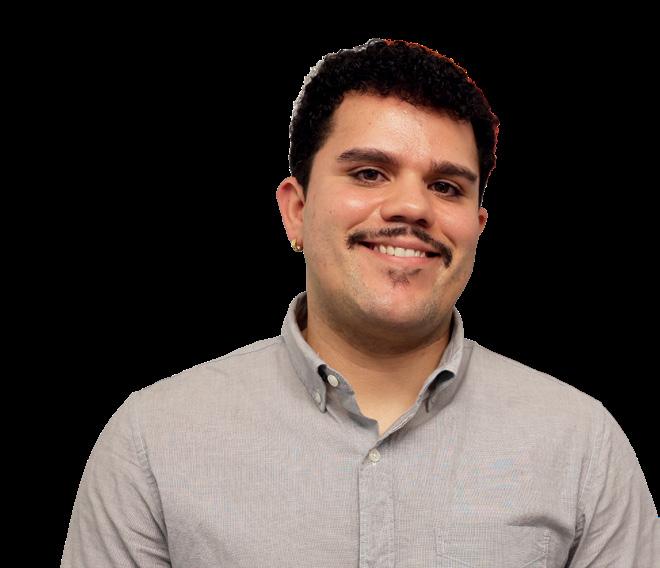
Leovanny Fernández ’10
Associate Director of Alumni Engagement and Strategic Initiatives
Peter Mackie ’12 Design, Advancement, and Data Systems Specialist
MAGAZINE DESIGN
Lilly Pereira, Aldeia.design
The Light is published by Brooklyn Friends School for students, families, alumni, and friends.
375 Pearl Street 116 Lawrence Street Brooklyn, NY 11201 718-852-1029 brooklynfriends.org
Cover Photo: PHE Studios
04 Letter from the Head of School
06 Student Spotlights Seven stories highlighting ways that our students are changing BFS, Brooklyn, and the World.
12
Leading with Light We take a deep dive into hard-hitting topics with three members of BFS leadership.
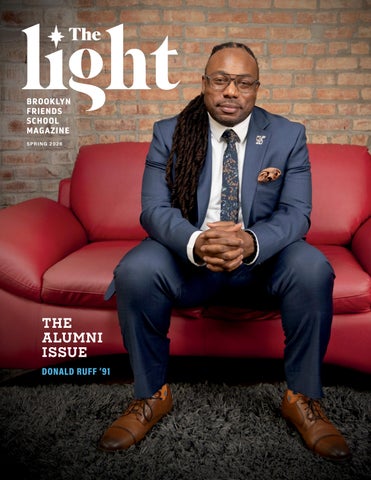
18 COVER STORY Donald Ruff ’91 From Pearl Street to Purposeful Leadership
22
ALUM FEATURE Robert Levin ’64 How a BFS student went on to complete some of the most iconic works in classical music.
26
ALUM FEATURE Jen Doman ’85 A true fill-circle story, filled with memorable moments.
32 Alumni Notes
34 Echoes from the BFS Archives
37 Our Quaker Identity
46 Sneak Peak Coming up next issue
Dear BFS Community,
There is something truly endearing and deeply human about a Brooklyn Friends School education, and it is something that does not end at graduation but rather unfolds across a lifetime. As I continue to meet our alumni, I’m struck not only by what they have accomplished, but how they move through the world in a manner that is so reflective of the school that they were a part of. Our alumni are change agents and deep thinkers, advocates and artists, learners and leaders, all grounded in purpose and a focus on being a source of good in our complex global human ecosystem.
In the unfolding pages of this issue of The Light, you will step into a series of beautiful lives in motion with stories that stretch across geographies and disciplines, and across dedicated commitments and bold and courageous pursuits. I invite you to move through these powerful stories with intention and in a spirit of reflection. May you pause when something catches you. May you notice not only where these journeys have led, but how they have begun, for at BFS, we know that our humanity is intricately connected to the way openings in our lives.
I urge you to also look for what lies beneath the surface of these stories: what questions persist and what values endure? These are not simply stories of arrival and accomplishment, rather, they are layered, unfinished, and vibrant stories alive with possibility. What emerges from each of them is not a single definition of success but a sincere constellation of lives that are connected by a shared orientation towards positive social impact. Every alum represented in this issue and endless others who are not, continue to reflect the school that touched them and that they touched back. All are deeply rooted in a manner that serves as a guiding light for us all especially at a time when our world desperately needs it. As you will read, our alumni are shaping communities across Brooklyn, across our country, and across our
world. Each day, they are advancing justice and building connection with a kind of integrity that reflects their time here.
At Brooklyn Friends School, we speak often about the Inner Light that each person holds within them. That Light is a deep well of discernment, truth, and wisdom. What we see in our alumni is the living expression of our teachings as a Quaker school, for they are not only navigating the world as it is; they are also helping to shape what it might become.
I am reminded of the words of Toni Morrison: “If you have some power, then your job is to empower somebody else.”
This line by one of my literary heroes, in so many ways, is a throughline of a Brooklyn Friends education. Within our school home, it is about responsibility, not just achievement. Here, it will always be about understanding that our gifts are not held alone but shared in service of something larger that ourselves and our own needs. As such, shine your Light ON, BFS alumni! To the many who I’ve had the pleasure to engage with and to those I look forward to meeting, know that I/we carry a deep sense of pride in who you are and the lives you are building.
We see you. We are inspired by you. We celebrate you. And we welcome you to always come back to your BFS home. May you continue to walk through the world with clarity, courage, and a deep commitment to what matters most, guided by your Inner Light.
And to our current students: you are part of this larger-than-any-limitation unfolding story. May you cherish all that it brings.
With gratitude and deep pride,
spotlights
Dynamic Duo
CREATING
TOOLS TO HELP WITH THE HOUSING CRISIS
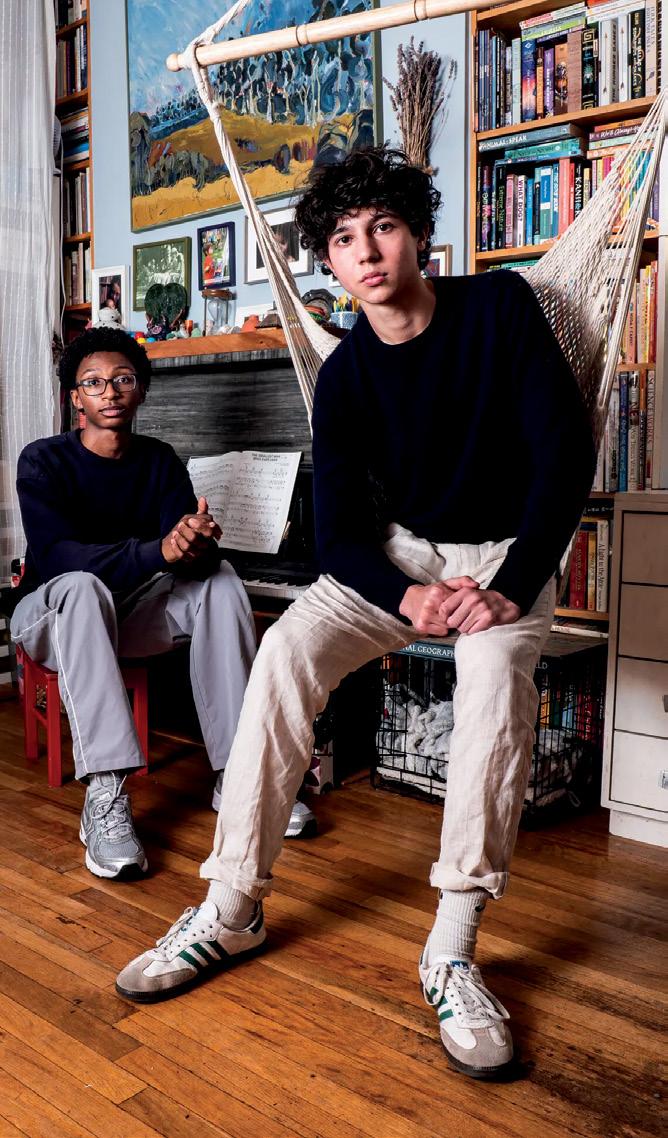
The last line of the Brooklyn Friends School mission statement reads: Our graduates are compassionate, curious, and confident global citizens who let their lives speak in the spirit of leadership and service. We may have to edit that a bit, since students at BFS are not waiting until graduation to make a true impact in our world. This fall, BFS had the work of two of its seniors—Derrick W. ’26 and Beckett Z. ’26, who created an online portal to address New York City’s affordable housing crisis—highlighted in The New York Times, CBS News, and several other major media outlets. The duo was inspired to start this initiative after a Socratic seminar discussion they had in economics class about the affordable housing shortage in the United States. “BFS has really amplified our voice and has given us the confidence to do these things,” Derrick said. “The BFS culture really teaches how we can impact others using the resources we have here, and to see opportunities not just in our lives, but in other people’s lives, and that has driven us to create this work.” Their venture is consistent with the great work being done within our Global Social Impact pillar and a clear indication that BFS students are not just hearing about these world issues, but taking action. BFS’ Director of Global Social Impact, Kevin Murungi, leads all students in various social justice work, but is quick to direct all of the credit for this project to the students themselves, who took what they learned at BFS and are making a difference. “What they’ve created is impressive and a useful tool for those looking for housing below market and I am very proud of them,” Kevin said. For their part, Derrick and Beckett deflect being in the spotlight, and instead want everyone to focus on the problem
“The BFS culture really teaches how we can impact others using the resources we have here, and to see opportunities not just in our lives, but in other people’s lives, and that has driven us to create this work.”
’26
created an online portal to address New York City’s affrodable housing crisis
PHOTO BY GRAHAM DICKIE
at hand—the affordable housing crisis—and are hopeful that their work will resonate with our leaders and spark real change. “I think it is really important for people to feel stability, and I feel housing is the foundation of that,” Beckett said. “This is a huge issue in New York City and If you are struggling to afford to live in a home for you and your family, it can derail a lot.” Added Derrick, “The bottom line is, we want more New Yorkers to know about the tool that we created and hopefully bring more awareness to the affordable housing crisis.”
Drawing Connections
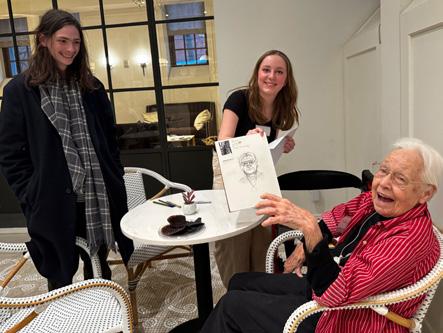
Brooklyn Friends School was delighted in December to launch a meaningful collaboration with The Watermark at Brooklyn Heights, a vibrant senior living community. This intergenerational initiative, Making Friends: Forging Intergenerational Connections through ArtMaking, brings together BFS art students and Watermark residents for a series of shared creative experiences over several months. Through regular visits, students and residents engaged in thoughtful conversations, exchanged stories, and created artwork side by side. These sessions were designed not only to nurture artistic expression, but also to cultivate empathy, understanding, and authentic human connection across generations. As participants explored different materials and themes together, they discovered common ground, celebrated differences, and built lasting relationships. The collaboration will culminate in a shared art exhibition in May, showcasing the artwork created throughout the program. The exhibition will honor the creative process and highlight the meaningful bonds formed between our two communities— demonstrating the power of art to connect, inspire, and foster friendship at
every stage of life. Queries that have guided BFS students and colleagues throughout the initiative:
How does art-making allow people to communicate in ways beyond words?
How can knowledge and experience be shared in various ways (conversation, art-making and writing, Quaker Meeting For Worship, working together, the visual conversation created through curation/ exhibition design, etc)?
The Sweet Sounds of BFS Jazz
Throughout this school year, BFS’ talented jazz musicians have made their mark on the New York City music scene. After an extensive audition process and months of dedicated weekend rehearsals, seven Middler Schoolers—Akash R. ’32, Marina V. ’31, Zoe O. ’31, Judah B.-S. ’31, Chloe R.’ 31, Isidore B. ’31, and Teo D-M. ’30—took the stage at Rose Hall at Jazz at Lincoln Center as part of the Middle School Jazz Academy. These students delivered a fantastic performance featuring New Orleans traditional jazz, along with music by Count Basie and Horace Silver. But wait, there’s more! Our talented Middle School Jazz musicians represented BFS beautifully at the annual Middle School Jazz Festival at Brooklyn Music School. The ensemble performed at an incredibly high level, thoughtfully incorporating clinician feedback and demonstrating a deep understanding of the cultural context of the music. Huge congratulations to BFS teachers Emiel and Tyler for their incredible guidance and support throughout the students’ preparation and audition process. These have been moments of joy, growth, and musicianship on iconic stages.
<< Derrick W. ’26 and Beckett Z.
Social Justice Incubators 2.0
After last year’s Social Justice Incubator success, the BFS Office of Global Social Impact announced the second cohort earlier this school year. Upper School students Dylan D. ’27, Harper L. ’27, Rex R. ’27 and Milo S. ’27 are passionate about food justice and creating sustainable gardens that increase access to fresh, nutritious food in food swamps and communities with limited access to resources; Cata S. ’28 and Darwin C. M. ’27 are shedding light and uplifting the many Latinx voices impacted by the legislation hyperfocusing on Latinx immigrants, migrants and citizens; Elle M. ’29, Cai N. ’29 and Pippi B. ’29 are thinking critically about the representation of Black women in film and believe film can not only be a tool for entertainment but a vehicle for social change. They want to make a film sharing the stories of historically underrepresented voices. “The diversity and specificity of this year’s cohort’s projects is emblematic of the awareness, creativity and drive for social change that our students
One project was about food justice and creating sustainable gardens that increase access to fresh, nutritious food in food swamps and communities with limited access to resources
Leadership for BFS, Brooklyn, and the World
In a powerful display of youth leadership and community commitment, students at Brooklyn Friends School are stepping beyond the classroom to make a measurable impact throughout New York City. Through a growing number of student-driven service initiatives, young leaders are organizing projects that address food insecurity, environmental sustainability, and neighborhood support.
wholeheartedly possess,” said Kevin Murungi, Director of Global Social Impact. BFS has received a Student Project Grant from the Friends Council on Education to fund each group for project activities! As part of the project, students met with key BFS leadership members to learn the best ways to handle finances, technology, and marketing for their projects. Even more exciting is the fact that a version of the Social Justice Incubator has also been launched in our Middle School. In partnership with an organization, Generation Citizen, whose mission and values are so closely aligned with ours at BFS, BFS has added a Panther Enrichment Program class that mirrors the Social Justice Incubator, where they design and carry out sustainable Social Impact Projects. This will be a great opportunity for students to learn more critically and deeply about their individual communities and our school community, while utilizing a research-oriented and design-thinking approach to address the most pressing global and local issues.
This fall, BFS’ Middle and Upper school students launched partnerships with local organizations including food pantries, senior centers, and environmental groups. From assembling weekly care packages for families in need, to coordinating cleanups at the Quaker Cemetery in Prospect Park, students are taking ownership of projects from planning to execution.
Many students say the service experiences help them connect classroom learning to real-world challenges. “It’s empowering to know we’re making a difference,” said one student leader, who was one of 17 Upper School students and three colleagues made the educational journey of a lifetime—spending 10 amazing days in Ghana last school year.
This particular program had students examine Ghana’s efforts in combating the legacy of the transatlantic slave trade and colonialism, and securing its resource sovereignty. “When we work together, even small actions can have a big impact.” As this
Fully Vetted
LIFETIME FRIEND RETURNS TO SHARE HER EXPERTISE
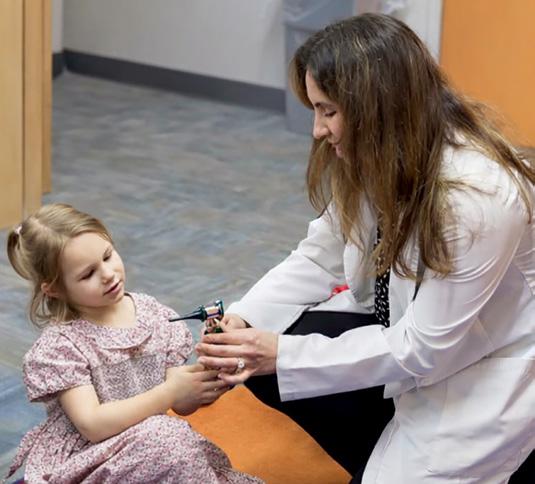
In September of 1991, Karen Urgo ’03 sat in a classroom at Pearl Street, beginning her journey at BFS. In March, Dr. Karen Urgo—now a successful veterinarian—returned to the very spot she spent her formative years to visit with our Orange Room students. A Lifetime Friend and a member of the Class of 2003 introduced the 4-year-olds to stethoscopes, molds of dog and cat teeth, and X-rays showing some animal patients who had made unfortunate eating choices. The students had a wonderful time, learned so much, and asked truly impressive questions. “It was so great to be back—they were so inquisitive and curious,” Karen said. “BFS was a wonderful place to grow up. It instilled in me many life lessons, and I had a really great childhood here.”
Third Graders Master Math
school year continues, Brooklyn Friends students plan to expand their outreach, demonstrating that meaningful change can start with young people who are ready to lead.
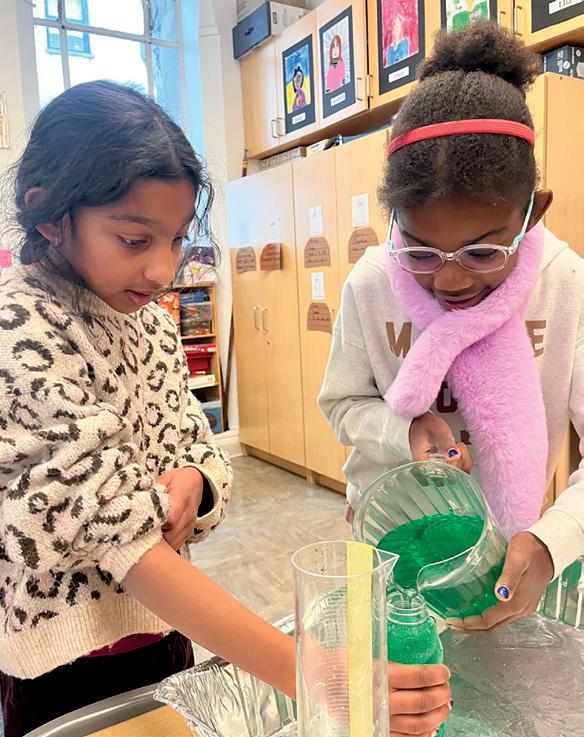
BFS third graders recently wrapped up a math unit on measurement—exploring all the different ways we can measure the world around us. The unit began with a big question: how could a piece of paper, a ball, a jump rope, or a weight each be “the most,” depending on how we measured them? From there, students rotated through metric measurement stations: Mass: Estimating the weight of objects in grams, then using balance scales to find the true weight—many noticing their estimates getting closer and closer. Volume: Exploring what 100 mL and 1,000 mL (1 liter) really look like, estimating how much water different containers could hold, and measuring precisely with graduated cylinders (that tall, thin vase was especially tricky!). Length & Perimeter: Measuring their own heights, leg lengths, arm spans, and head circumferences in centimeters, then finding the perimeter of books and rectangular objects around the classroom. Hands-on, thoughtful, and full of curiosity—this is learning at BFS.
Karen Urgo shows a young student how an otoscope works
Everyone Was Talking About Jamie!
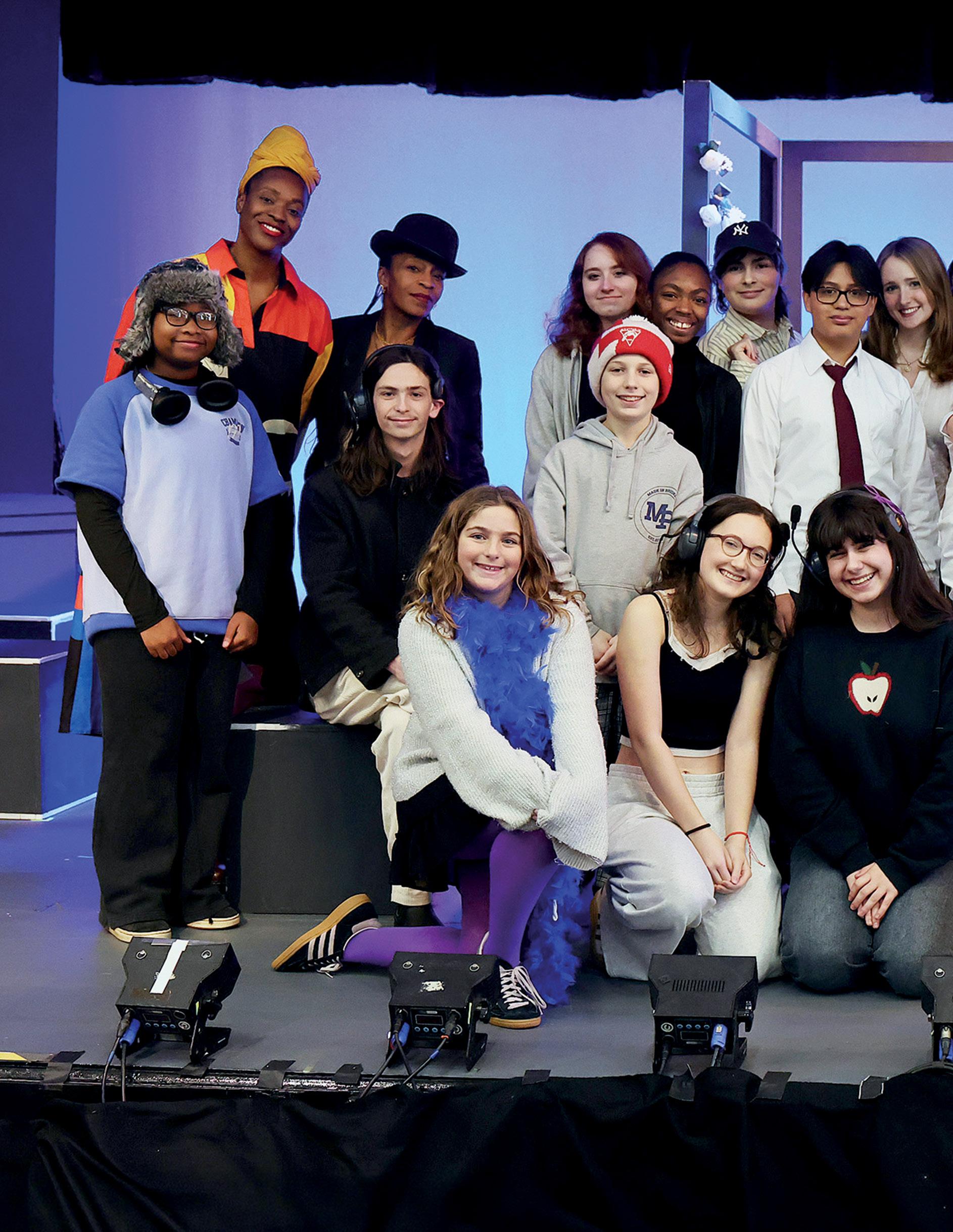
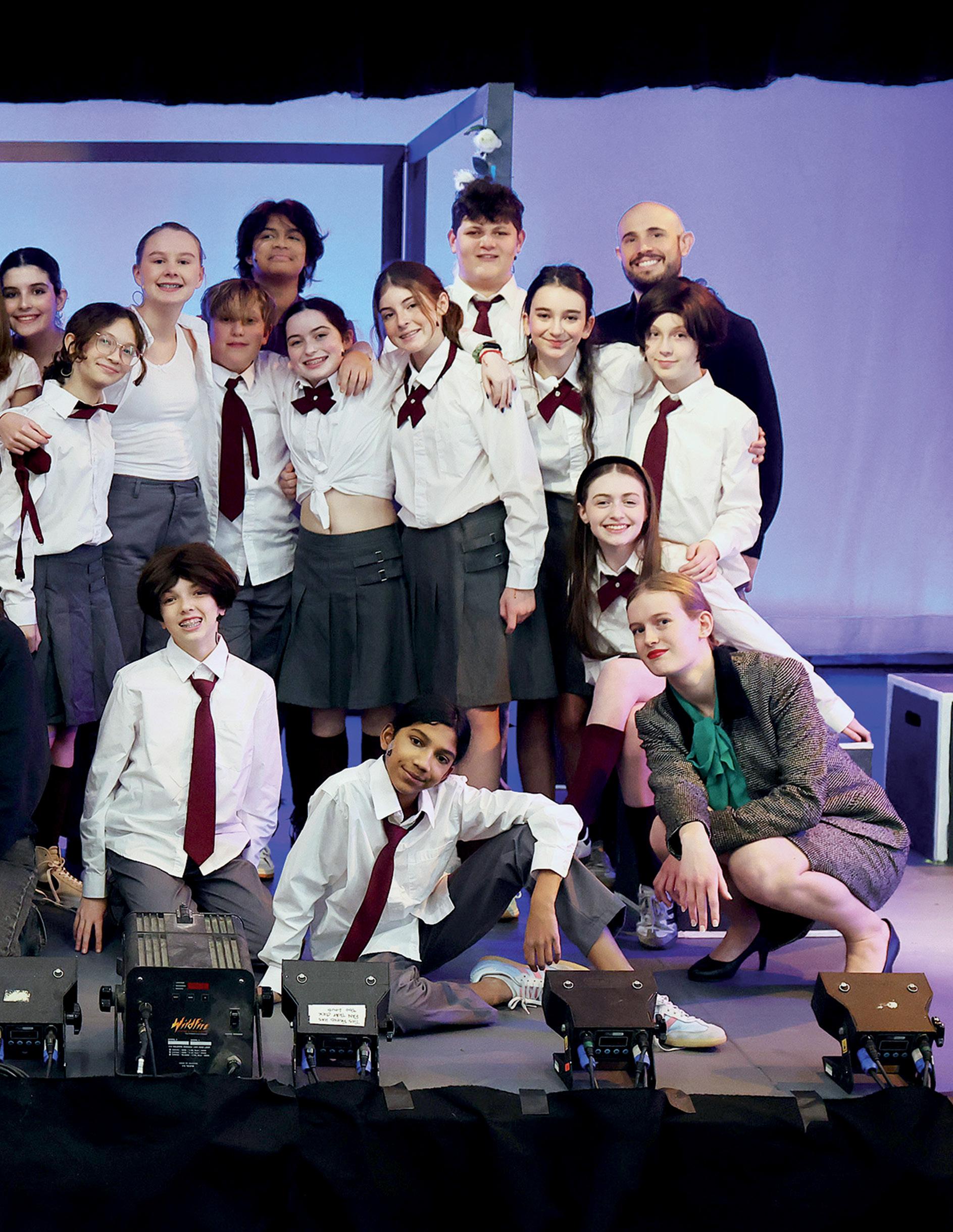
Courageous. Confident. Talented. Those are just a few of the adjectives to describe our incredible Middle and Upper School students, who took the stage in Everybody’s Talking About Jamie, this fall. The show itself, a vibrant, music-filled story about courage, self-expression, and the power of community, encouraged BFS student actors to take risks and stretch beyond what feels comfortable, to pursue bold choices, and to hold themselves to a standard of both bravery and excellence. Through their work, our students engaged deeply with themes of identity, belonging, chosen family, allyship, and joy in the face of adversity. They embraced complex characters and challenged themselves to tell this story with honesty, nuance, and heart. We were especially proud to produce this show at a time when, across our country, many students are discouraged, or even prohibited, from engaging with stories that center queer lives, encourage critical thinking, or challenge the status quo.
Visionary Voices Shaping the Future lıght LEADING WITH
Belonging is at the Heart of ECLS
KRISTIN BRADY Head of Early Childhood & Lower School
Q&As with:
Kristin Brady
Raymond Shay
Frank Cabrera
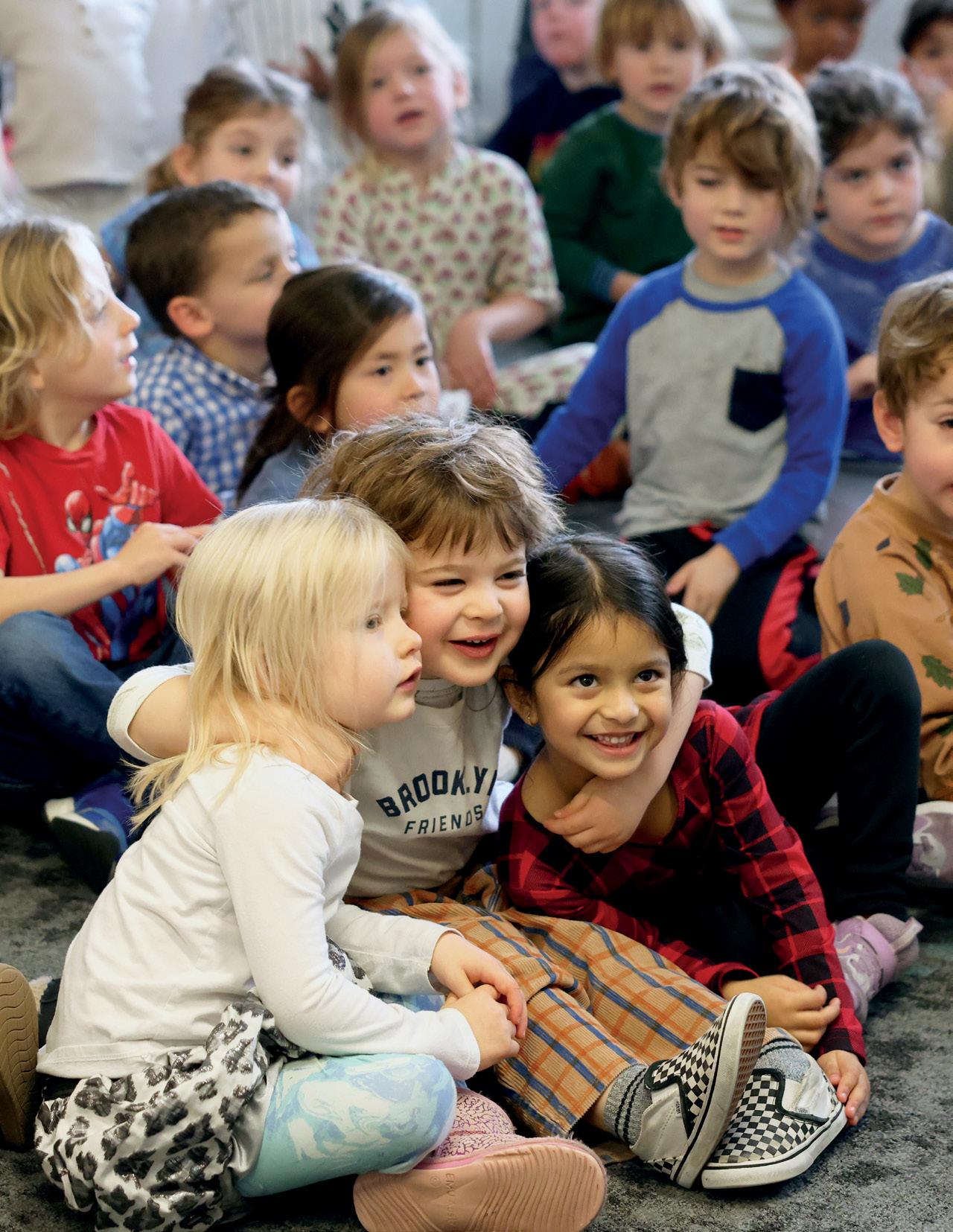
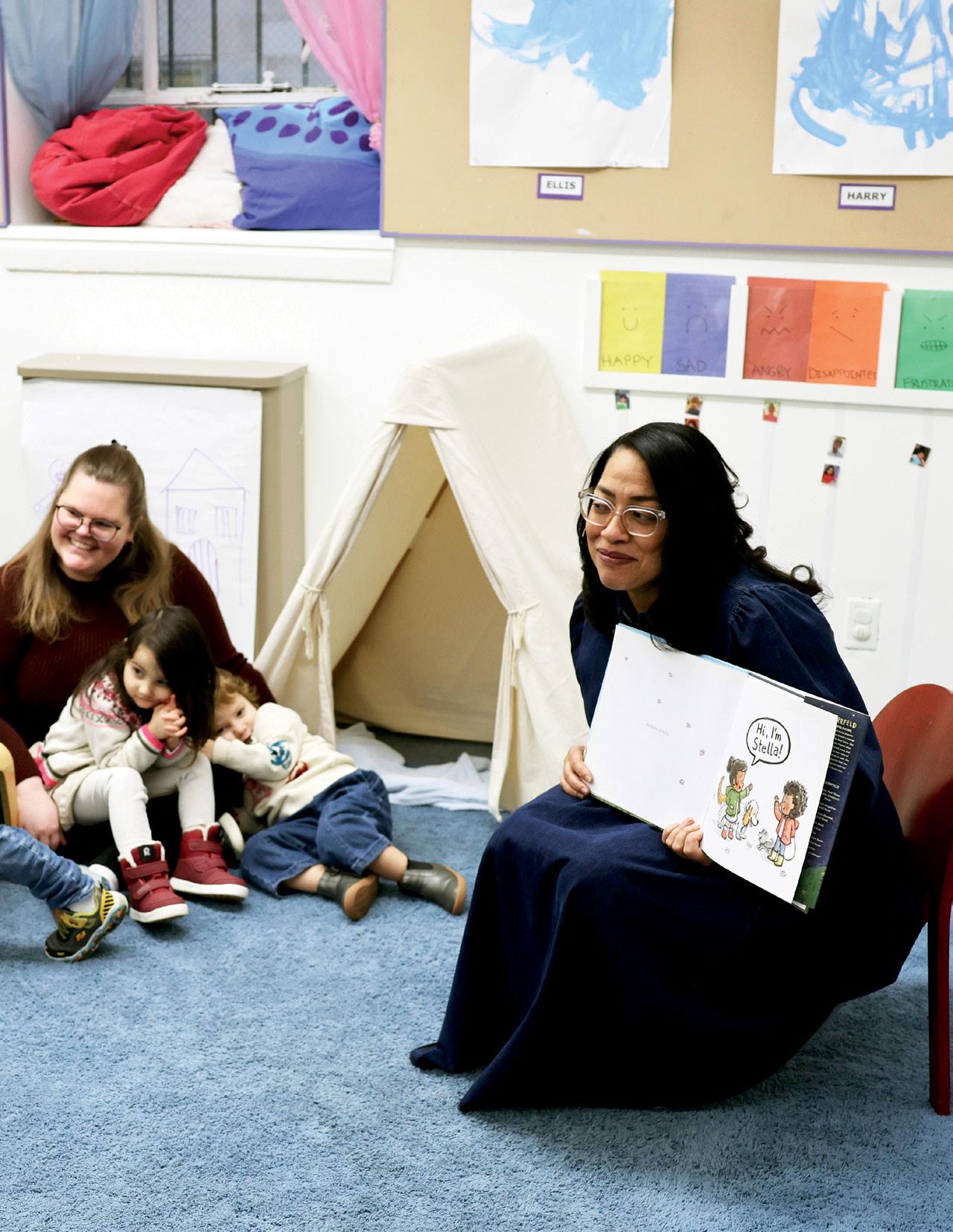
In September of 2025, Brooklyn Friends School officially launched their newest Learning Community—Early Childhood / Lower School— affectionately known as ECLS. The inspiration for merging of the two learning communities enhances and supports many aspects of BFS’ mission and Strategic Vision. It honors a continuum of learning, building, growth, and development that exists in each of our youngest students. The Head of ECLS is Kristin Brady, who has served as the Head of Early Childhood at BFS since 2024, after spending a decade serving as the Director of Cobble Hill Playschool, the parent cooperative preschool serving children ages 2-5 in Brooklyn.
Can you share the inspiration for combining the Early Childhood and Lower School Learning Communities? Here at Brooklyn Friends School, we see each child as a whole person. As we continue to develop our program, we are looking to research all of the best practices that will infuse our program with all of the skills of humanity—including persistence, creativity, curiosity, collaboration, problem solving, navigating tricky situations, working with others, as well as embracing and celebrating differences. We believe all of these skills are as important to a child’s early school experience as a robust math and literacy program.
One of the things that has emerged from our Strategic Vision is that our school is “For BFS, For Brooklyn, and For the World.” In what ways do you think Brooklyn Friends School is evolving and growing, and becoming a leader in ECLS in contemporary times? I think there’s a really strong narrative about young children, and that they really thrive being able to run through grassy fields, and see a cow, and watch baby ducks, and that their positive experiences are very tied to experiences that may or may not be available in an urban environment. Yet, I think there are incredible opportunities for all of the same growth, learning, and development that are unique to urban environments. For example, the fact that we exist in Downtown Brooklyn, and are part of a community. BFS is not a standalone school down a 50-mile dirt road that only exists by itself, in a vacuum. We are at our very heart, and by our very nature, embedded in a beautiful, diverse, exciting, and vibrant community. And so our students aren’t just attending school at Brooklyn Friends School, they’re attending school in Downtown Brooklyn. They’re
members of the Brooklyn Friends School community, but they’re also members of the Brooklyn community. That sort of expansive view of who the world around our students is, can serve as a lighthouse for early education, thinking in terms of the experiences children need to thrive. We have a bold opportunity to really showcase what urban education looks like in a really robust community.
Why do you think that you are the right person to lead this learning community at this moment in time? The idea that a Quaker school like BFS sees the light in each and every child, so deeply and fully honors my experience of centering children in life, and in education, and in practice, that I feel very at home here. I feel like Brooklyn Friends School is the place where I can live into my deeply held value that children should be at the center of everything in schools. … When you are able to center children by driving the teaching and learning process, and build an exceptional program by fully and comprehensively seeing the students as children, and the children as students. I’m not an expert in the third-grade math curric ulum, I’m an expert in children, and how children develop, and how to center children in educational practice, and that’s Brooklyn Friends School’s belief, as well. That match is where I feel like I am uniquely positioned.
What is a simple way to judge success in this burgeoning learning community? When I hear a student in ECLS say ’this is my school’—that’s a marker of success for me. It means that they feel like they belong here, it means that they’ve taken a sense of own ership in their education, and their community.
“
We are at our very heart, and by our very nature, embedded in a beautiful, diverse, exciting, and vibrant community.
Showing Up at a Critical AI Moment
RAYMOND SHAY Director of Technology and Auxiliary Programs
Raymond Shay has been the Director of Technology and Auxiliary Programs for the past two years, and has been charged with stewarding the school’s vision on Artificial Intelligence moving forward. He is the right man for the job, having served more than 20 years in education technology. More than that, Ray has his ear to the ground, attends and presents at conferences throughout the country, sharing his expertise that BFS gets to experience on a daily basis.
People refer to AI as though it was just invented, but in reality it has been used for many years. However, now it has become the number one topic among schools and students. Why? few years, generative AI is what has exploded. There is the big field of AI, and then a subset of that is machine learning, and another subset deep learning, and then within that subset, there is generative AI, which include large language models, which power the ChatGPTs of the world and other chatbots that people are now refer ring to as “AI.” This emergence of generative AI is based on very large sets of data, and the algorithms
that process those large sets of data. Because of that type of data, it’s made its way into schools and affecting teachers and students.
You have been charged with the incredible responsibility and privilege of leading BFS boldly into the best of what AI can offer its students and colleagues. What is the risk if BFS doesn’t show up at this moment? I think there’s a huge risk. So many decisions are being made every day at the personal level, at the group level, and at the societal, governmental level, that we need to have our voice on. In the past, society would think ’hey, I trust the government and capitalist corporations to come together and get it right’. We’re probably at a point where we believe in those institutions the least right, and it’s probably the point in humanity where we need that level of clear direction the most. So the risk of those like BFS standing by and not having our voices heard is a risk of us getting down a path that we can’t come back from.
There are many opinions about how strongly schools should have their students lean into AI. Where does BFS stand on this issue? Because AI is such a wide field, I think there’s space for all of those
feelings, and all of those identities. I’ve seen wonderful resources that can take this very scientific document, and make it accessible for a 12th grader, an eighth grader, a sixth grader—and it be able to do that the amount of time that it would take a teacher to create the same outcome. Once the summary is created, our teachers can decide whether AI did a good job, make sure that it’s good work, and tweak it where it needs to be tweaked. Then, they can turn that over to students. I think that provides an opportunity to have students engage with work that isn’t necessarily on their level or isn’t tailored for their learning style, and be able to engage with it. Our BFS teachers, who are deeply knowledgeable in their subject areas, can facilitate that use of the tool and match it to each student’s needs.
You have referred to yourself as an AI Skeptic, AI Cautious, an AI Pragmatist, and an AI Enthusiast. How are you holding the responsibility of what happens at BFS from an AI standpoint next month, next year, next decade? It’s exciting to be at a place where we have the space and the culture to have the messy conversations, and I’m really excited to be able to have those conversations at BFS. Going forward, we’re really talking about how we engage our students. A lot of schools are talking about how they engage with specific tools. We’ve been pausing on the tools, using them in places, but really planning what our student engagement should be around the messy topics, and not pushing them aside. Let’s get our students talking, and thinking. We need to have group discussions, and engage our families on AI so that they have a deeper understanding of what their students might be engaged with, and also to
know where BFS stands as a school. That way, we can all be in lockstep, giving the same answers to the students, so it’s not one lived reality at school, and a different lived reality at home or outside of school.
Ensuring the Just Place and Right Path
FRANK CABRERA
Assistant Head of Upper School for 11th and 12th Grades, Director of College Counseling
If the third floor commons at Lawrence Street is the Times Square of Brooklyn Friends School, then Frank Cabrera’s office is exactly where the ball drops each New Year’s Eve. That is to say, it is at the center of it all, and it yields new beginnings. The office itself, however, means little without its main inhabitant, who has been the Director of College Counseling at BFS since 2021, and this past September had the role of Assistant Head of Upper School for 11th and 12th grades added to his responsibilities. As the Director of College Counseling, Frank might tell you that he is part active listener, part thought-partner, and part cartographer. In the end, it is not about the final destination, although that is often the source of amazing pride, it is about the process.
One of the things our Head of School, Crissy Cáceres, always says about college placement here at BFS is that the end result of the process is always correct, as long as it honors the student and their journey. Can you explain that? Our approach is always putting the student and their process at the center, and to really honor who they are, and who it is that they hope to become. We try to amplify those emergent and already present perspectives. I don’t believe in shuffling kids into schools because it is a name brand school, or highly selective school, and nor do I even personally believe that that onto itself is what should be celebrated. What I’ve always taken a great deal of pride in my work throughout my career, and especially here at Brooklyn Friends School, is that we are really finding the right schools for these kids, and that we are really trying to identify all the ways that they can continue to become who they are already on the path to becoming at these different institutions. For me, that’s always been my joy—knowing that when it’s all said and done, most, if not all kids, feel like they’re at the school they’re supposed to be at, because they have been intentional with their choices all throughout and that degree of intention is what centers everything that we do in the college process.
How do you ensure that the stu dent is always centered in the pro cess? I’m just a facilitator, and I think my job is to make sure that they are the ones driving the conversations, and to get to know the students, to see them in their excellence and in their shine. I strive to lead them through this process by asking them questions, even if they don’t have the full answer perspective. My job is to shepherd the students into
finding the answers out for themselves. I think when you do that, and when you’re really honoring those stories that emerge to those conversations, that’s what allows me to do my job to the best of my abilities. I need to get to know who the families are, to be in concert with them as they figure things out amongst themselves, and then just making sure that in the conversations, it’s never about me, or my thoughts, or my perspectives. It always has to be grounded in what they want.
How do you feel when alums come back and reflect on the process, who they became, and how they discovered they are? One of the questions I ask alums when they come back to visit is, ’Do you feel like you are where you’re supposed to be? Do you feel like you landed in the right place?’ When the kids come back and they’re just so overjoyed with their experience, it’s amazing to hear, and it’s also amazing to hear about their growth. That certainly validates the work that we do. It’s also allowed me, as the years progress, to trust my gut and my intuition with so much more confidence. It’s a reminder to me that I know what we are doing well at a high level.
Thank You For Being a Friend
Each school year, BFS is incredibly fortunate to welcome a diverse group of alums, authors, educators, and experts from throughout Brooklyn and the World. Here is a sampling of only some of those guest speakers in 2025–2026.
Our 8th graders deepened their study of climate justice through an inspiring conversation with attorney Catherine Amirfar P’28, ’30, who shared her work representing small island nations on the front lines of climate change. Students learned about a recent landmark international court victory that will help hold major polluting countries accountable — a powerful example of how advocacy, law, and global cooperation can advance justice.
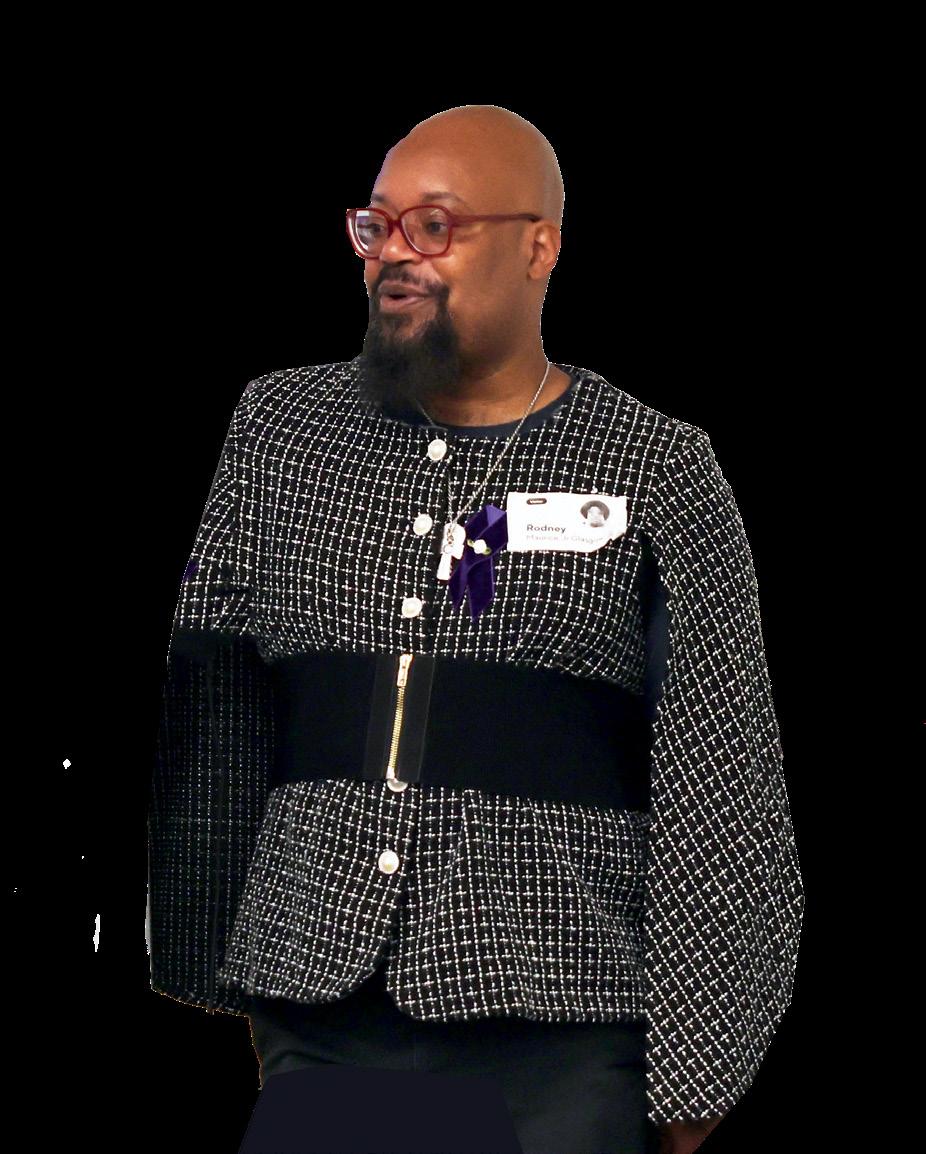
This January, BFS was honored to welcome Dr. Rodney Glasgow, Associate Director of the Friends Council on Education, as part of our continued investment in understanding our Quaker identity and Quaker education. Rodney led a dynamic gathering that allowed families and several colleagues to delve deeply and vulnerably into various aspects of who we are as people within our BFS Friends experience. The main query that he presented to us all was: “How do we utilize our children’s Quaker education as parents?”
Brooklyn Friends School was thrilled to welcome author and filmmaker Paola Mendoza, co-author of “Sanctuary” and “Solis” in January. Paola spent time with our Middle and Upper School students, speaking about storytelling, filmmaking, activism, and the power of young people’s voices—followed by a thoughtful and engaging Q&A. An inspiring afternoon rooted in curiosity, creativity, and courage.
Earlier this year, our Early Childhood Lower School Learning Community welcomed Alyssa Reynoso-Morris—awardwinning author, motivational speaker, and community organizer, whose work uplifts underrepresented voices and celebrates identity, home, and belonging. Students were captivated as Alyssa shared about her life and works, including “Plátanos Are Love,” “The Bronx Is My Home,” “Gloriana Presente: A First Day of School Story,” and her newest release, “Bold, Brilliant, and Latine.” A truly special moment came when our very own ECLS art teacher, Doris Rodriguez-Graber, joined Alyssa to share her experience illustrating “Gloriana Presente,” bringing the creative process to life, and showing students the powerful collaboration between author and illustrator.
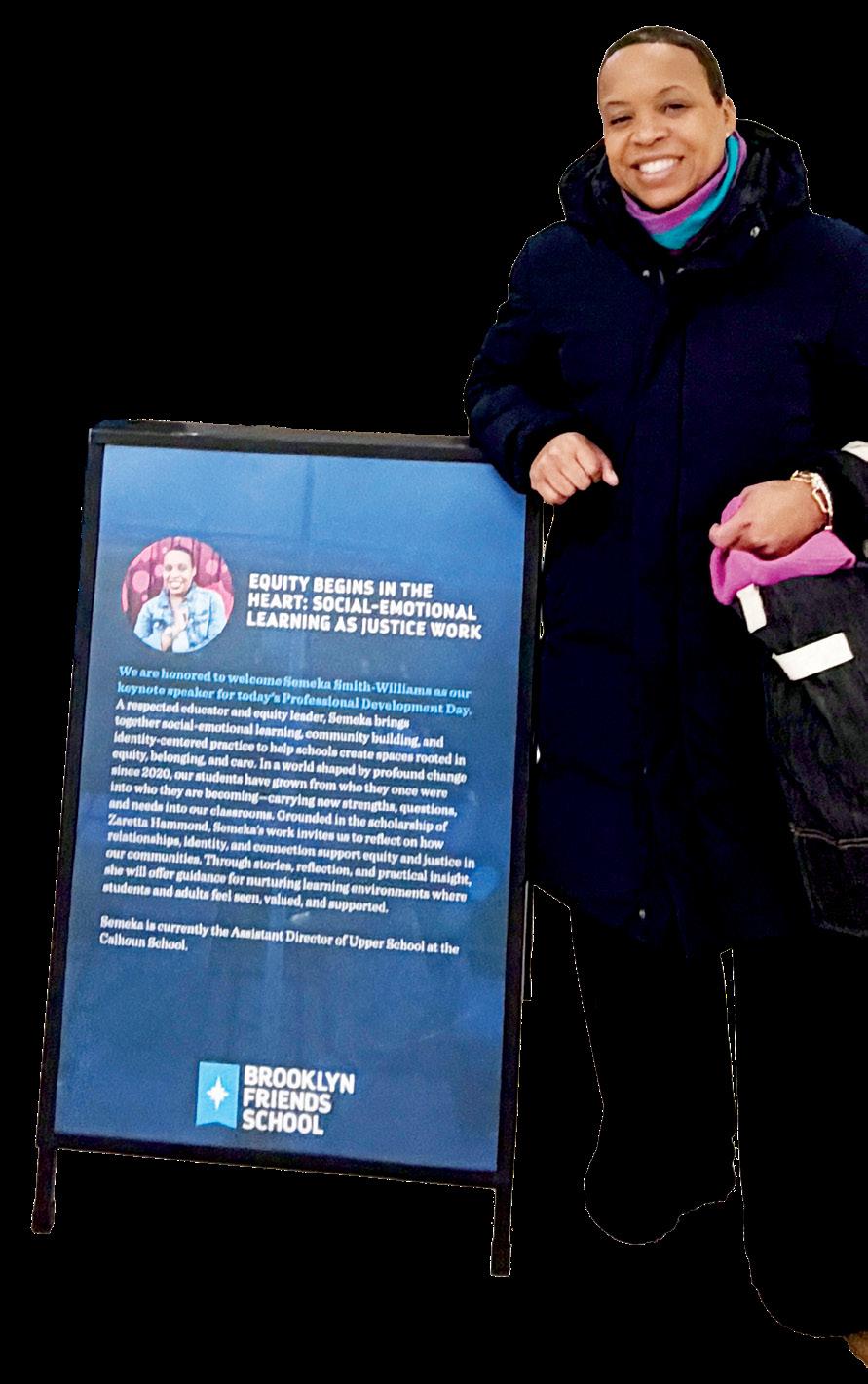
BFS was honored to welcome Semeka Smith-Williams as its keynote speaker for January’s Colleague Professional Development Day. A respected educator and equity leader, Semeka spoke about social-emotional learning, community building, and identity-centered practice to help schools create spaces rooted in equity, belonging, and care. Through stories, reflection, and practical insight, she offered guidance for nurturing learning environments where students and adults feel seen, valued, and supported. Semeka is currently the Assistant Director of Upper School at the Calhoun School and was a member of the NYSAIS Diversity Committee for 10 years and is now the Co-Director of the Justice, Equity & Diversity Institute.
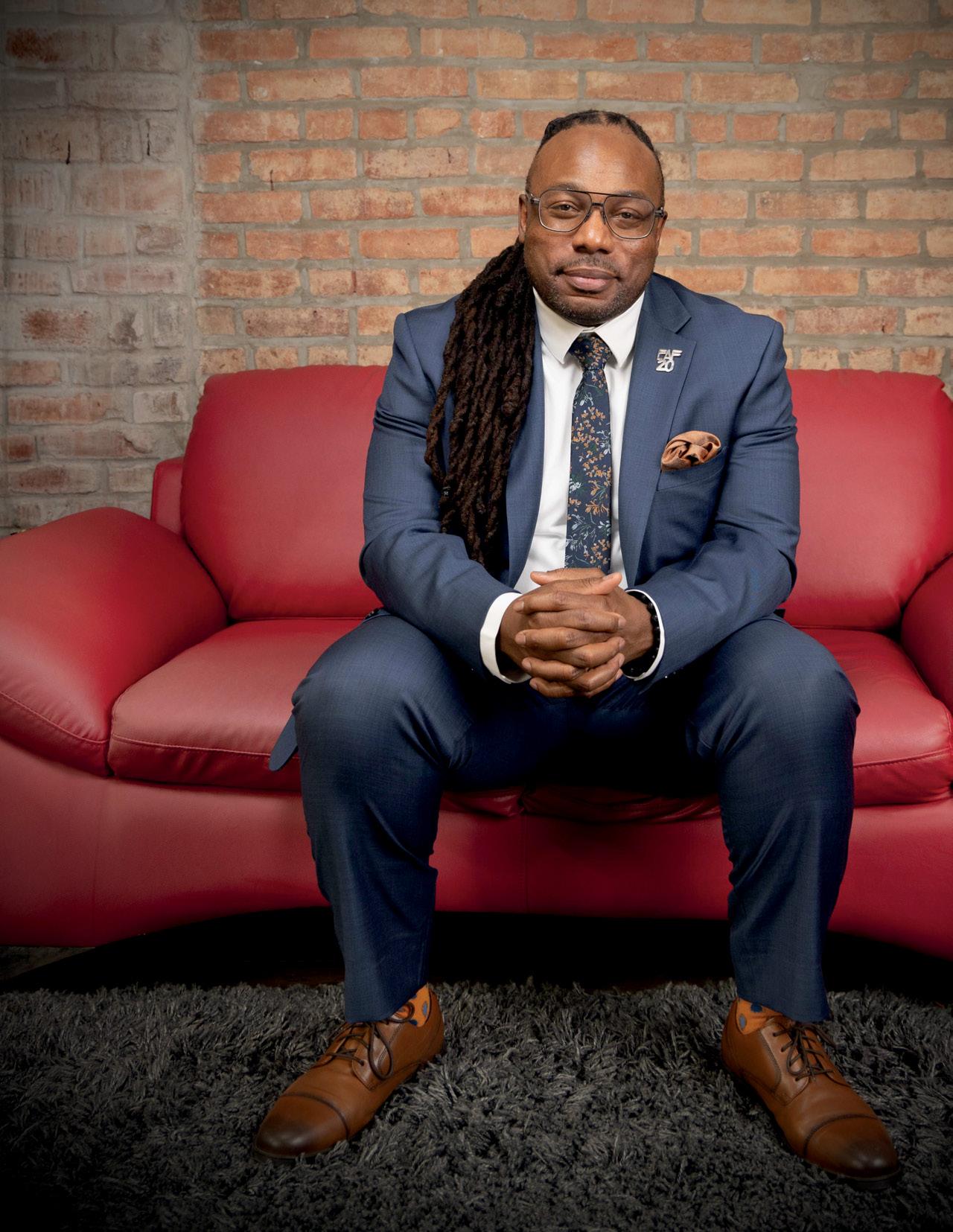
Donald Ruff ’91
From Pearl Street to Purposeful Leadership
STORY BY BRETT TOPEL • PORTRAITS BY PHE STUDIOS
Things
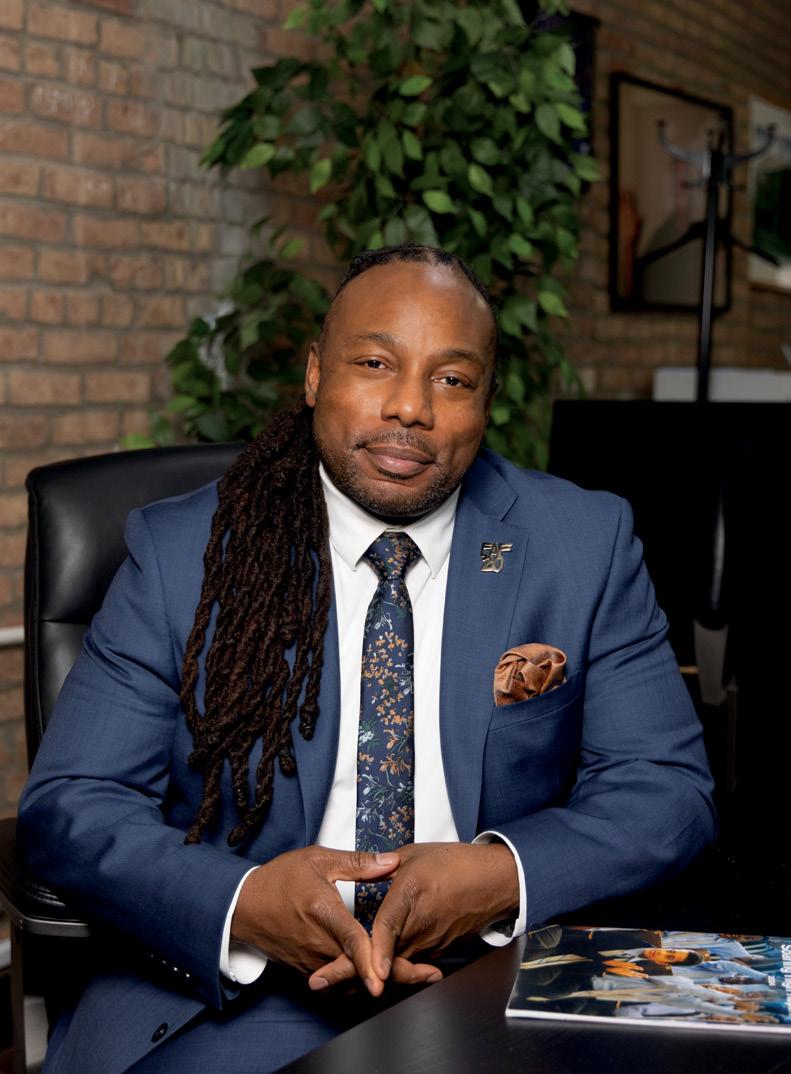
have never come easy for Donald Ruff. Raised in what he has described as “one of the most notorious housing projects in the country,” he defied the odds—going on to graduate from Brooklyn Friends School and Oberlin College, and ultimately to change the lives of tens of thousands as President and CEO of Eagle Academy.
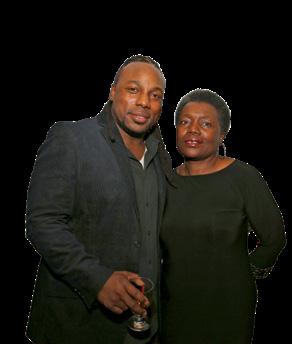
Of course, Donald’s journey was never a solo ride. Many people played a role in shaping the man he would become. But when everything else is stripped away, there was only one person who refused to let Donald Ruff fail, who would not even entertain the possibility of giving up on him, and who created opportunity after opportunity, even when he tried to sabotage himself. Only one person could truly envision Donald rising beyond the Polo Grounds Towers. That person was his mother, Theo.
“I actually ended up at Brooklyn Friends by accident, to be quite honest,” said Donald, who explained that John Hoffman, the Founder of The Albert G. Oliver Program, an organization which has placed more than 1,500 African-American and Latino students, from lower income families, into leading private day and boarding schools, as well as colleges, came to his house to speak with Donald and his mother. “I actually tried to get kicked out of the Oliver program, to be quite honest. You know, I started showing up to school late, I started throwing the exams they were giving us, because I thought they were going to send me away to boarding school. And here is this stranger, who clearly saw something in me that I could not see in myself.”
That led to one of the most important conversations Donald ever had with his number-one advocate—his mom. “I thought my mother was going to beat my ass, right? And she threw me a curve ball, and started crying and asked me what was wrong with me, explaining that she could not afford to send me to private school. I wish she would have hit me. It would have been easier. I said to her, ‘I don’t understand why you’re trying to send me to boarding school, bad kids are the ones who get sent away’. She told me to go back out and tell that to John Hoffman. So I went back out there, and I told John what the situation was. ‘Donnie, we have day school placements’—and that’s actually how I ended up at Brooklyn Friends.”
Accident or not, BFS changed Donald Ruff.
“I didn’t know that I was considered low income, or poor by some standards, until I went to Brooklyn Friends. When you’re growing up low income, you’re around other low income individuals. Every family is looking to survive. … When I went to Brooklyn Friends, it was one of the first times that I actually felt safe. I noticed, ’whoa, people are living differently than I am’. At Brooklyn Friends I had a level of survivor’s guilt, to be quite honest, and survivor’s remorse. Why me? Why did I receive this opportunity? At BFS I found other young people who were like me, who were inquisitive and smart.”
Following his graduation from BFS in 1991, Donald graduated from Oberlin College with a dual Bachelor’s Degree in History and African-American Studies. He also earned two certificates from the Executive Education program for Non-profit Professionals at the
Donald Ruff’s mom, Theo, has always been his greatest advocate.
Columbia University Graduate School of Business.
After serving in a range of educational leadership roles, Donald was named President and CEO of Eagle Academy in 2022. His career stands as a testament to what purposeful leadership can achieve when it is grounded in service, equity, and long-term vision. At Eagle Academy, Donald has helped steward an institution founded on the belief that young men—particularly those too often underestimated by society—deserve access to excellence, high expectations, and unwavering support.
“I believe God has put me on this Earth to make a difference in my community, and I’ve tried to do that every step of the way,” Donald said, nodding quietly when it is pointed out that he has positively impacted the lives of more than 40,000 young men of color. “So much of what I try to bring to my work is fueled by what I experienced at Brooklyn Friends School.”
This June, at BFS Commencement, things will come full circle for Donald Ruff, who will deliver the Alumni Address and receive the Letting Our Lives Speak Distinguished Alumni Award. Of course, his mom will be there supporting her son, as she always has.
“You know I’m a kid that has been deeply loved. I’ve been poured into, and I simply try to pour out. I’ve seen a lot of things growing up, and I simply want more for my community,” Donald said. “For me, it’s been about how I can stand on my mother’s shoulders. … I stand on the shoulders of my elders, and my ancestors, and I want young people to also stand on my shoulders, as well.”
“I’m a kid that has been deeply loved. I’ve been poured into, and I simply try to pour out. I’ve seen a lot of things growing up, and I simply want more for my community.”
Robert Levin ’64
Mozart’sRequiem From Brooklyn to
STORY BY BRETT TOPEL • PORTRAITS BY MATT COSBY
Feature: Robert Levin
Few musicians
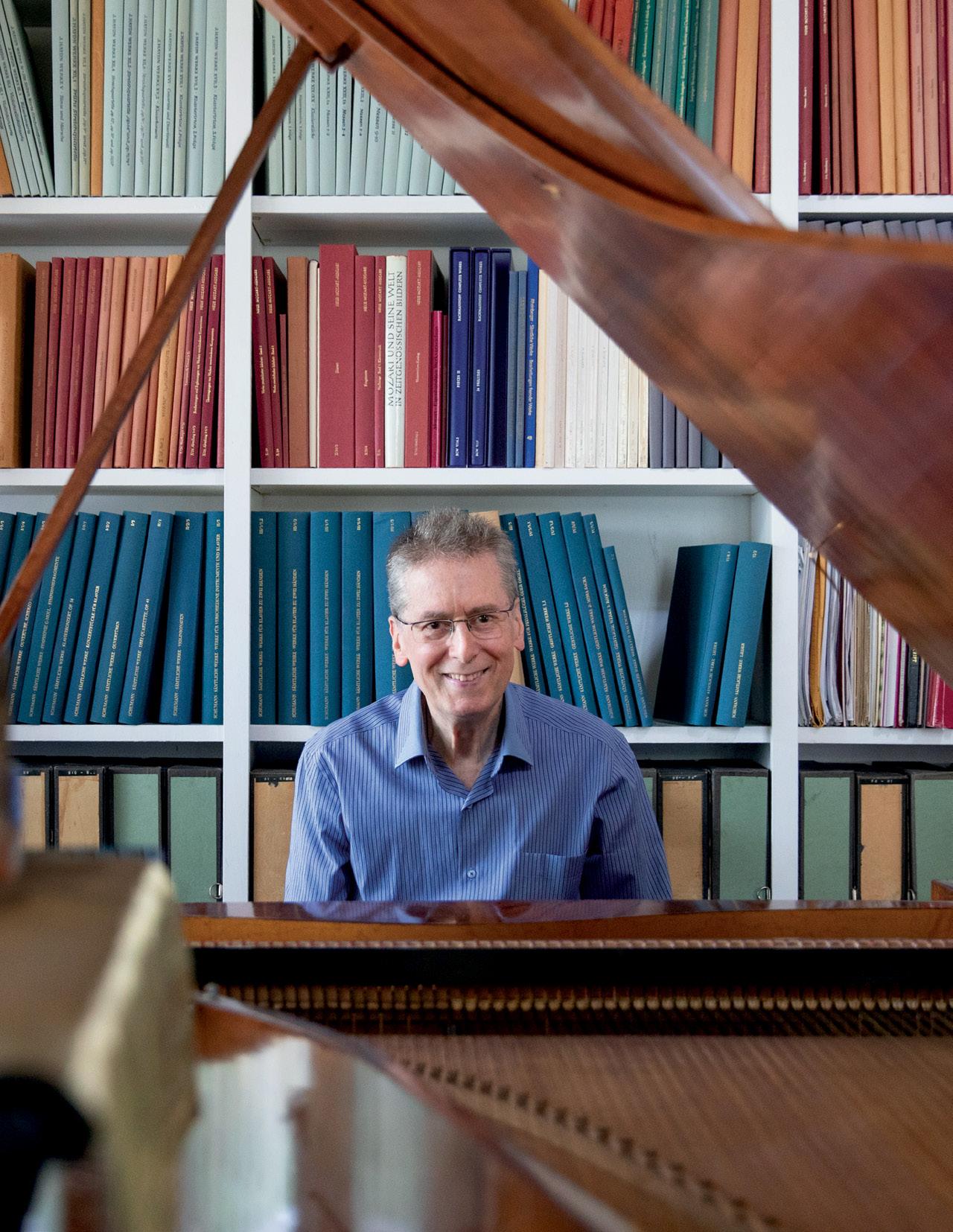
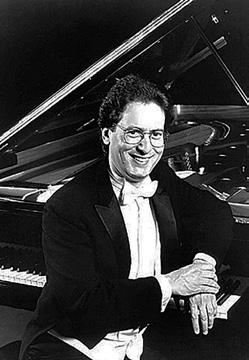
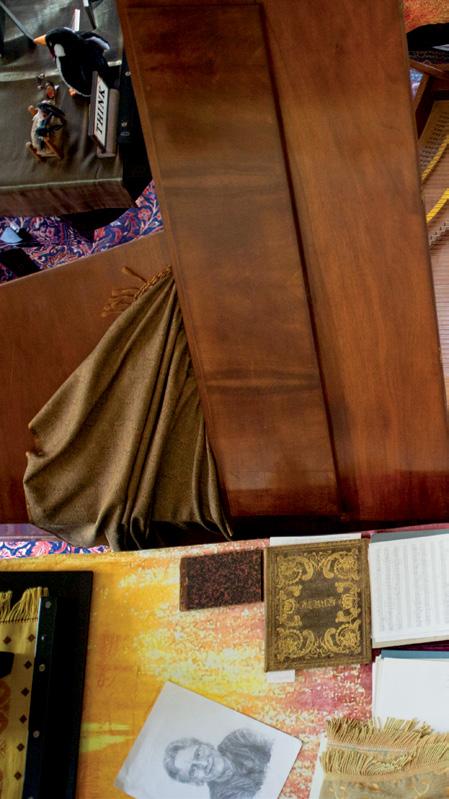
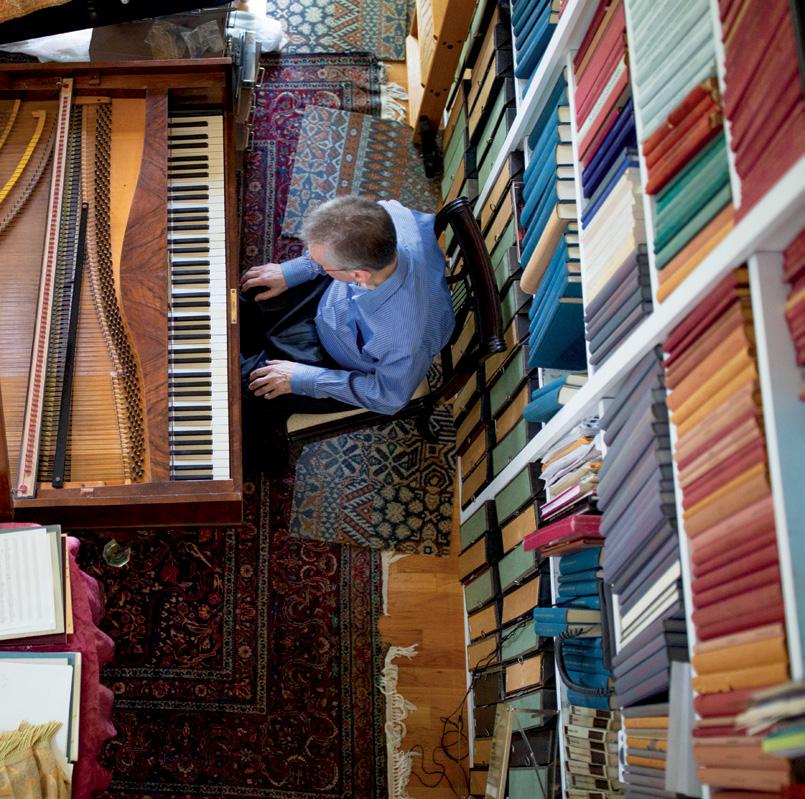
have dared to step into the creative space once occupied by legendary composers, such as Wolfgang Amadeus Mozart and Johann Sebastian Bach. It would be like matching wits with Albert Einstein, or challenging Lebron James to a game of one-on-one. Who, among us, would be so bold? The answer: a pianist, composer, and scholar of formidable range, who has achieved something extraordinary in modern classical music, he has restored the performer’s right—and responsibility— to create.
“Another aspect inevitably of being in a school with small classes was the intensity of interpersonal relationships, and to this day I remember the names of a lot of my classmates without any difficulty whatsoever.”
As a young boy, Robert Levin always had a thing for music. When he was as young as two-years-old, he was not going to sleep to the sounds of nursery rhymes, but instead was singing an aria from Mozart’s Don Giovanni, as well as showtunes from South Pacific for his father. So they got Robert’s Uncle Ben—a musician—involved.
“He tested me, and realized that I had absolute pitch, which is the ability to identify a note when played on an instrument or song without knowing what key it’s actually in,” Robert remembered. “So at that point, my uncle decided that he would take my education in hand, and sought out teachers for me.”
Robert continued to grow up in New York City and study music on the side, and in 1963, transferred from I.S. 59 in Springfield Gardens, Queens, to Brooklyn Friends School for ninth grade. “My father’s first cousin, Dr. Bernard Benjamin, who was the chief of pediatrics at Brooklyn Jewish Hospital, had two children who
had gone to a Friends school. So he recommended to my parents that I go to a Friends school because he felt that it had a very beneficial effect on his son,” Robert said. “To a large extent, the most precious kinds of experiences that I encountered at Brooklyn Friends School had to do with the superb faculty that was teaching there. … Of course, another aspect inevitably of being in a school with small classes was the intensity of interpersonal relationships, and to this day I remember the names of a lot of my classmates without any difficulty whatsoever.”
One of those classmates, in fact, was a young lady, who was also a musician. “I had quite a crush on her in grade nine, and I wrote a piece for her for flute and piano as a matter of fact,” Robert said. “I don’t think we ever played it, but I discovered it when I moved back to the States after living in Europe.”
Following tenth grade, Robert— who very much wanted to stay at BFS—was swayed to take his talents across the pond. Before leaving, however, in the margin of his final BFS report card, his advisor innocently wrote: “Robert excellent pianist.”
“My ear training teacher was a French American named Louis Martin, who studied in Paris under French music teacher and composer, Nadia Boulanger,” Robert said. “Louis said to my parents, ‘look, you know, he’s going to make progress here in New York, because he’s got a gift, but if you want him to take giant steps forward, then there’s only one address, and that’s for him to go to France and study with Nadia’.”
That moment ended Robert Levin’s academic time at Brooklyn Friends School, but launched the man who would become one of the most
prolific classical pianists of our time. Nowhere is that illustrated more than when he was asked to complete one of the most well-known unfinished works by Mozart—the Requiem, by acclaimed German musician and composer, Helmuth Rilling. However, when he was asked to do the unthinkable, Robert turned Helmuth down. “I looked at him and told him that I am the wrong person to ask to do this, because I come from the wrong country, and I have the wrong surname. I mean, think about the fact that an American Jew is going to finish a Catholic mass for the dead.”
However, Rilling would not take no for an answer. “For the next two or three years, the man pestered me on the phone. He always seemed to know where I was,” Robert joked. Finally, he gave in, and finished the master’s great work. When it
was performed in Germany for the first time in 1991, Robert Levin sat nervously in the audience. “You know, the Germans don’t scream and yell at the end of performances. They are rather low key. But they applauded loudly and for a long time. … The response by the audience was pandemonium.”
Over the past three decades, Robert has gone on to complete more of Mozart’s unfinished works, as well as pieces by the likes of Bach and Schubert. As a performer, he has regularly improvised cadenzas in Mozart, Beethoven, and Haydn concertos, reviving a practice that had virtually vanished from modern performance. These improvisations—constructed spontaneously before live audiences—embody one of Levin’s greatest achievements: the reintroduction of improvisation as an essential, historically grounded element of classical music-making.
Beyond the concert stage, Levin’s influence has been profound as an educator and thinker. At Harvard University and in masterclasses worldwide, he has reshaped how musicians understand authorship, interpretation, and authenticity.
Still, he looks back on his days at Brooklyn Friends School as a major moment in his journey. One of his greatest memories was being in the Meeting House on Schermerhorn Street, sitting in silence.
“The meditative character of communing together in Meeting established the essential spiritual dimensions to our education there, that we weren’t simply being trained in standard academic disciplines, but the deepening of contemplation was something that was central to our exposure. That is something I carry with me to the present day.”
Feature: Robert Levin
FullCircle Story JenDoma n ’85(withdau
STORY BY BRETT TOPEL • PORTRAITS BY PHE STUDIOS
Close your eyes. Open
them.
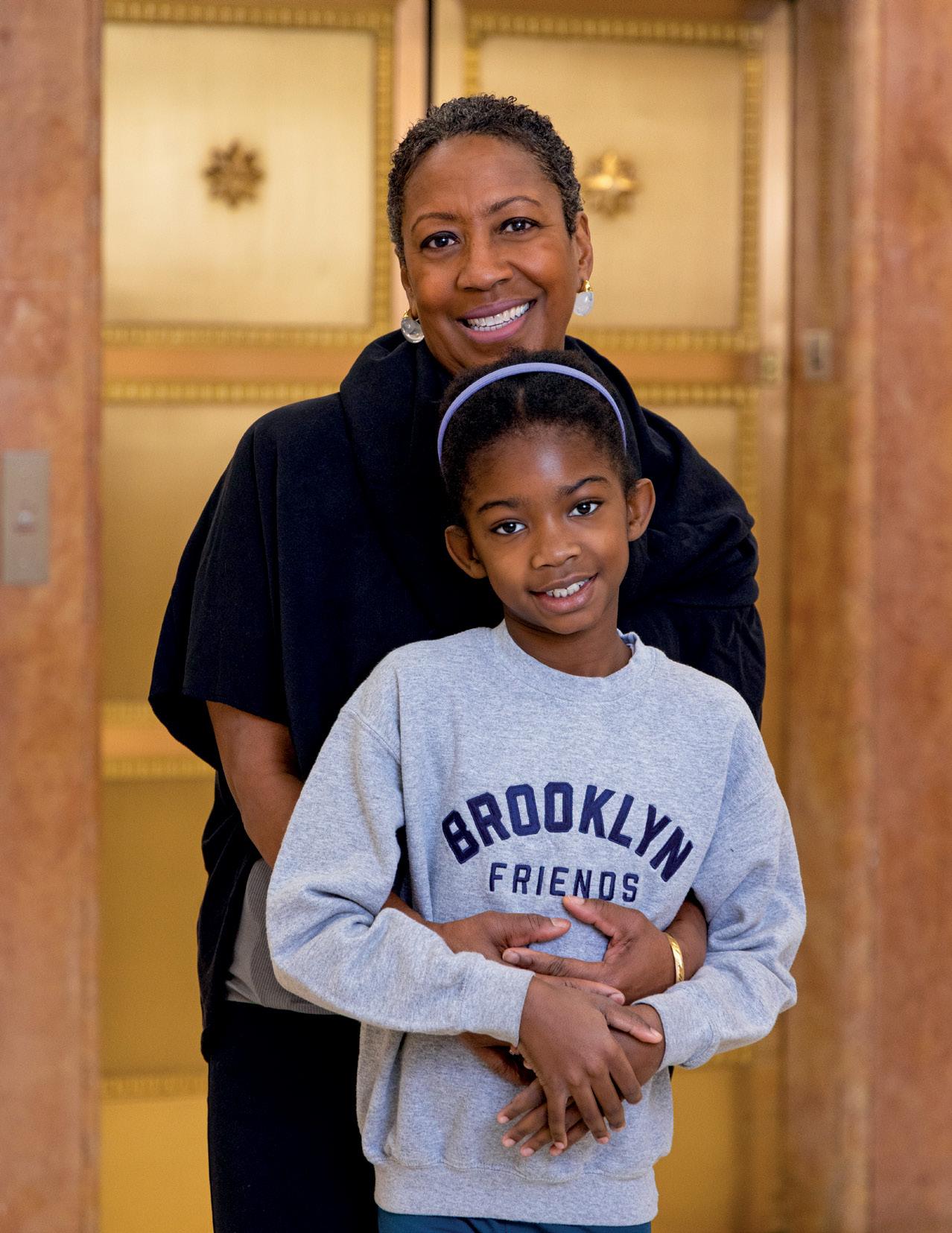
It’s June 2035—do you know where you’ll be? For Jen Doman, the answer is easy. On that day 9 years from now, she will be seated at Brooklyn Friends School Commencement, watching graduates cross the stage. One, however, will hold her gaze, her daughter, Anna James Doman, named in honor of Jen’s parents. While seeing a child graduate from high school is moving for any parent, this moment will be especially meaningful. It will mark exactly fifty years since Jen herself graduated from Brooklyn Friends School.
“I knew that if I was fortunate enough to become a parent, that I was going to get on my knees and pray that I’d be fortunate enough to have her go [to BFS].”
“Wow, talk about full circle! That’s a little terrifying,” Jen Doman said, allowing a small smile to creep across her face. “I knew that if I was fortunate enough to become a parent, that I was going to get on my knees and pray that I’d be fortunate enough to have her go [to BFS].”
That’s a far cry from the way Jen herself ended up at BFS following Middle School at P.S. 9.
“Once I graduated, my parents sat me down, and said, ’you’re going to go to a private school’. And I said, ’the hell I am’. Those kids are not my lane; I don’t like those kids. And my dad said, ’your mother’s going to take you to every private school in Brooklyn and Manhattan. You get to pick okay?’ And she did,” Jen said.
The moment she arrived at BFS, she walked into a situation where two students were involved in a heated argument, which was being mediated by Assistant Head of School, Jack Ramey.
“I saw it. I watched it, and I said, this one. It was that simple,” Jen said. “I didn’t know anything about
Quakerism. I just thought—this one, this is the right school. … I thought the way in which Jack was handling their argument was great. Eventually, they both calmed down, they shook hands and hugged it out—I remember this like it was yesterday—and I thought there was a there, there for me. There was something that I wanted to sort of pursue and see. Plus, I figured, if I hated it, I’d just switch out. I didn’t hate it. I loved every minute of it.”
Jen made the most of her time at BFS, she danced, she worked on the school newspaper, the yearbook, and eventually was elected as class president.
“It was just this very cool place, and we were a very tight class,” Jen said about the Class of 1985. … There was no bullying, no classism, no clicks. Everybody got along.”
Following her days at BFS, Jen Doman has experienced many different careers. She has done everything from working in the marketing department at Sports Illustrated, to being the Story Editor and Senior Reporter at Life Magazine. She credits her English teachers at BFS for her love of reading and writing. “The teachers here had a pretty profound impact on me.” She eventually found her way into television, serving in important roles at both the Today Show and at CNN. It was then time for a change—a big change.
In 2012, she began her work as a forensic social worker, which led to a number of different roles, leading to her time at New York County Defender Services, where she went on to manage a team of 10 social workers, oversee 80% of NYCDS’
homicide cases, and assist with client criminal defense strategies. She served as a major liaison with judges, assistant district attorneys, and in-house defense attorneys. It might not have been the job she really wanted to pursue, as a forensic site clean-up specialist, but it was an extremely meaningful and rewarding experience.
“I was helping people who got arrested, and accused of stuff you see on the cover of papers. I felt like a lot of the stuff that I read was disproportionately impacting people who look like me, which is why I wanted to get into forensic social work to begin with,” Jen said.
Today, she has her private practice, and is passionate about helping individuals navigate highly stressful personal and professional
situations. She works tirelessly for her clients and together they consistently achieve positive results. However, Jen does not focus on the general public, she has a very specific set of patients—specializing in counseling members of the NYPD, FDNY, all members of Law Enforcement, First Responders, Doctors, Nurses, and Veterans.
“They’re just people. Some panic more than others, some buy into stereotypes that have been indoctrinated into them since birth, and I thought maybe I’d be able to be of use,” Jen said. “I will have an officer telling me he’s having panic attacks, but he’s walking around with a gun. So I am like. ’Okay, let’s try to work this out.’
Through it all, Jen loudly and proudly credits many things she took from BFS, especially silence.
“You’re taught in social work school about the power of silence. It can be calming, it can be grounding. So in my sessions, the use of silence is extremely powerful, and I picked that up here at BFS.”
Now, each day that she drops off Anna, she gets to walk through the same lobby, ride the same elevators, and visit the same floors she did as a student.
“It’s a complete headtrip,” Jen said. “It’s very, very surreal, poetic, and amazing.”
alumni notes
This fall, Garrett Bradley ’03 was named one of this year’s MacArthur “Genius” Fellows, an honor awarded to just 22 artists across the nation. Each fellowship includes an $800,000 grant recognizing extraordinary creativity and impact. An artist and filmmaker, Garrett blends elements of documentary, narrative, and experimental cinema to explore profound questions of justice, public memory, and cultural visibility. Her acclaimed film Time (2020)—an Oscar-nominated documentary—follows one woman’s quest to free her husband from prison and exemplifies her commitment to illuminating forms of Black resistance, love, and resilience. We are so proud to celebrate Garrett’s brilliance, artistry, and vision.
ADUAYOM
PHOTO BY DJENEBA
WE WANT TO HEAR FROM YOU!
Class Notes is a special space here in The Light magazine where our entire alumni community can share updates about their lives. Whether you’re celebrating a milestone, announcing a new job, or welcoming a new family member, we want to know! These announcements help us stay connected across graduating classes and maintain the bonds that make our school community special. If you’d like to submit a Class Note for our next issue, please email us at: alum@brooklynfriends.org
1951
Peg (Irvine) Vohr checked in: Still running our small farm in Massachusetts with my husband Jim. Down to one horse (I still ride), two Collies, and a cat. We keep busy with visits from our sons and grandchildren. Would love to hear from any classmates.
1981
James Lynch, Esq. is Currently the Dean of the Kopplan school of business at Brooklyn College, In addition, he is the Trustee for the Parliament of world Religions, Trustee for the Union Theological Seminary, and resident minister in charge for the
Risho kosei kai Buddhist Center of New York.
1985
Maurice Coleaman reports that he became a Dale Carnegie Course Certified Trainer at the end of a two-year certification program. Congrats, Maurice!
1989
Derek Lynch is a Managing Member of NYC Legends, and is in negotiation with several Healthcare provider entities focused on quality, affordable and efficient Healthcare solutions for everyday workers and unions.
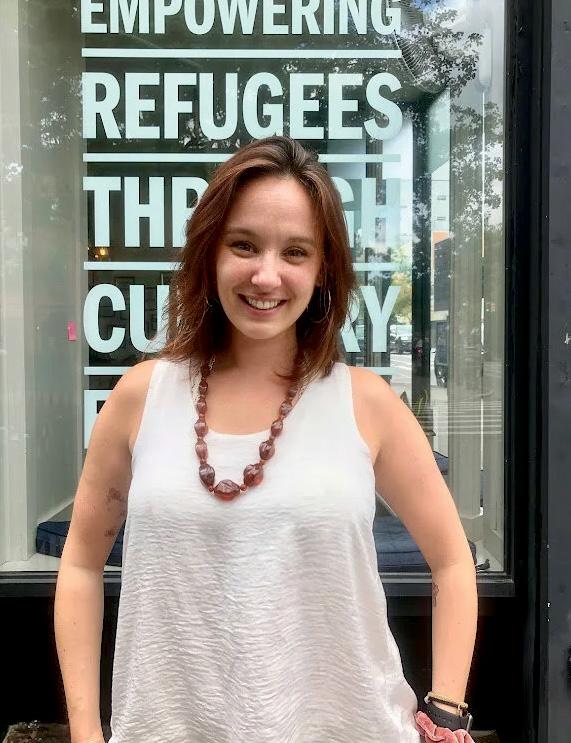
Dr. Kira O’Brien ’05 is the Chief Impact Officer at Emma’s Torch, where she leads the organization’s culinary training program and social ventures, which include its cafés and catering enterprises. In this role, she ensures that every facet of the organization advances its mission: to equip refugees with the tools, confidence, and community needed to thrive through meaningful employment and education. Kira has returned to the Brooklyn Meeting House twice over the past year to share her experiences at BFS and how the school has influenced her in her life and career. Her journey began in the resettlement sector, where she supported newly arrived individuals and families at the International Rescue Committee. Since then, her work has spanned case management, advocacy, workforce development, and the design of trauma-informed programs that promote dignity, agency, and belonging. She now has more than a decade of experience working alongside refugee and immigrant communities in both direct service and systems-level roles.
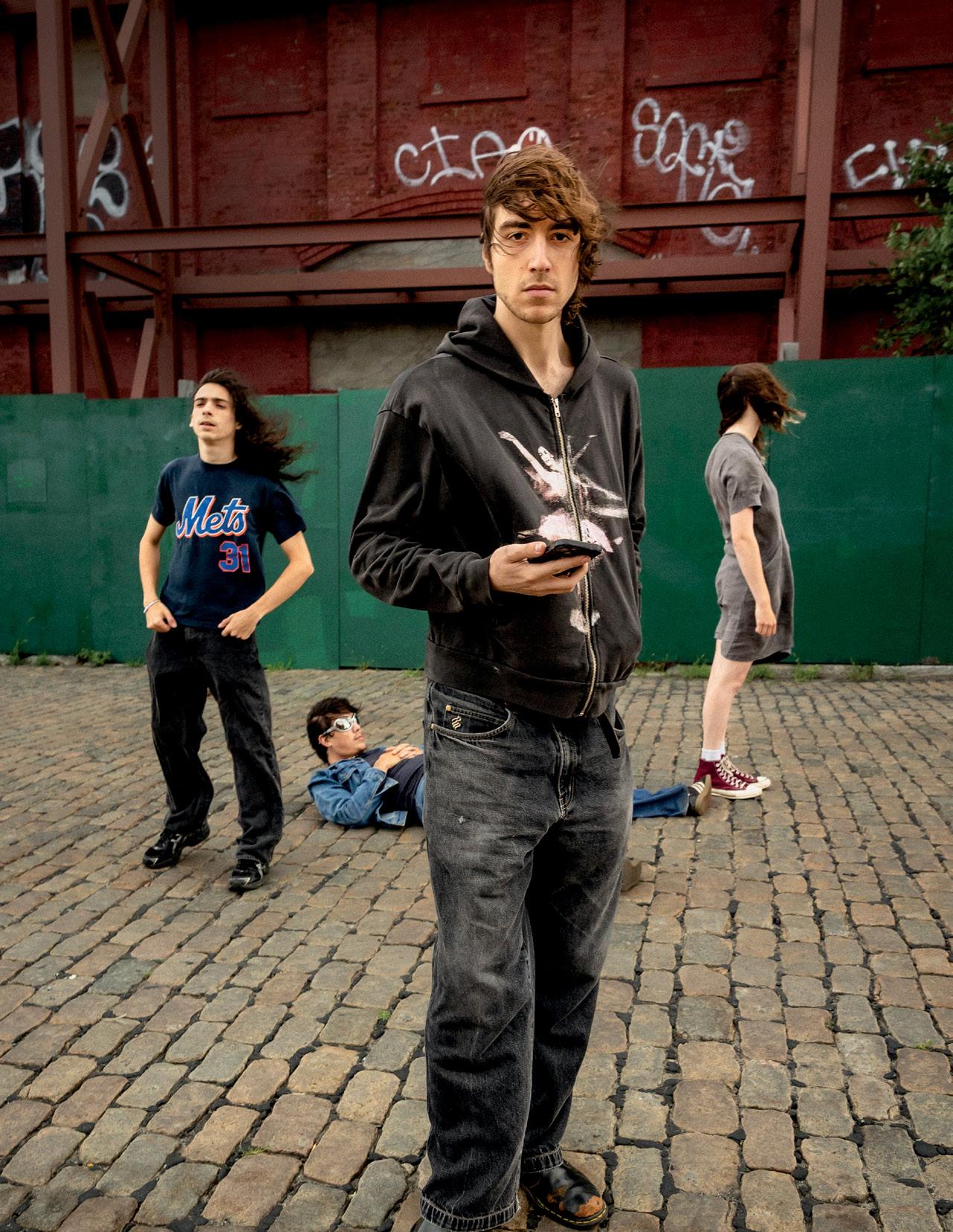
Three members of the Class of 2020 combined to reach the top spot on the list of The New Yorker’s Best Albums of 2025! Geese—the electrifying band featuring three Brooklyn Friends alumni: Cameron Winter, Max Bassin, and Emily Green, was honored by the magazine for their third studio album, which has been praised by the writer as “the record that made me feel the most hopeful about the future of popular music”—a testament to the bold, genre-shifting artistry they’re unleashing into the world. Geese lit up the Brooklyn Paramount, on Jimmy Kimmel Live! stage in October, and on Saturday Night Live! We’re so proud of these BFS grads, and can’t wait to see where 2026 carries their sound.
PHOTO BY GRIFFIN LOTZ
2009
Derek Lynch (DJ) is living in Sunsetpark, Brooklyn and is a fifth-year attorney and counsel at American Transit Insurance Co. There, he provides legal advocacy in arbitration proceedings.
2013
Jose Umana Gonzalez informed us that he recently started to work for the NYC Department of Education. He is also actively pursuing a career in acting and is taking acting classes to make his dream a reality.
2016
Sam Horowitz started as a Senior Associate at Converge Strategies in May 2025. At Converge, he is working to enhance community resilience through clean energy projects. In early 2025, Sam also joined the board of Our Climate, a national youth climate advocacy organization dedicated to advancing equitable, science-based climate policy.
2020
Salma McLaughlin is living near the ocean in Venice Beach, CA. She loves the warm weather and the pace of life in LA. Salma is working in retail and getting ready to expand her vintage
clothing resale business from online platforms to weekend markets. She composes and records music in her spare time, and is getting ready to release a few more songs to streaming services. She also hopes to finally learn to drive!
Sam Ehrlich is currently working for the HEEB Media magazine, and is now their director of e-commerce.
Walker Thoss has spent the past several months supporting a fellow BFS alum on their local election campaign.
2022
Yamila McLaughlin is wrapping up her college studies at Brown University, where, true to her BFS roots, she has been an active member and leader on the club volleyball team. She expects to earn a degree in Health and Human Biology this May, and is applying to post baccalaureate programs on the East Coast, with the goal of heading to medical school in a couple of years. She’s made tons of friends in college, but continues to cherish and spend precious time with her BFS friends.
Charlie Bertoldo is currently a senior at Elon University, majoring in Sport Management with a minor in Professional Sales. At Elon, he
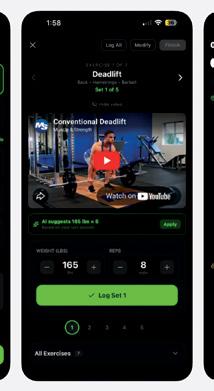
Alex Basner ’22 is currently a senior at the University of Michigan, pursuing a degree in Information Analysis from the School of Information. He is also complementing his studies with a minor in Business from Stephen M. Ross School of Business. In early 2026, he co-founded Maxed: Smart Workout Log, considered the fastest, smartest way to train. Maxed is a social fitness platform that gets smarter the more you train. Every rep you log generates insight. The algorithm adapts to your individual strength profile and identifies when it’s time to increase weight, adjust reps, or hold steady. A personalized Readiness Score factors in training load, muscle fatigue, and recovery patterns so you know when to push and when to pull back. As athletes, the founders know the gym is better with friends. Competition and community are built directly into Maxed. Share your workouts as receipts to your feed, try a recent lift, track consistency, and train with friends inside private groups where you and your friends can track stats, share workouts, and push each other forward. Whether you’re lifting, doing cardio, playing sports, or mixing in yoga, everything lives in one place. Congratulations, Alex!
has appeared on the President’s List, as well as winning the Presidential Scholarship. He currently works in several capacities for the Elon Athletics Department. Last summer, he served as Training Camp Intern for the New York Jets.
2024
Santiago McLaughlin is a sophomore at Rice University in Houston. He is majoring in History and pre-law, and, much like at BFS, enjoys playing volleyball on Rice’s club team. He’s planning to do
an internship in public service back at home this summer and then head to Europe for a semester abroad. He flies to New York at every possible opportunity to see his friends and family.
Elias Chresfield-Lynch is enjoying his second year at Wheaton College, where he is studying Psychology and is a member of an alternative rock band. He is also designing some very cool clothes.
Ruby Czeban checks in: Since graduating from BFS two years ago, I have been working on completing my Bachelor of Arts at McGill University in Montreal. I am studying urban studies, with minors in history and sociology, with the hopes of later getting a master’s degree in urban planning. In addition, I am the Co-Layout Editor of an academic journal and a member of McGill’s Best Buddies chapter. Even with the cold temperatures, I am maintaining an active lifestyle by playing intramural soccer and getting out with friends whenever I can.
2025
Gabrielle Lynch is taking advantage of her first year at Oberlin College. She’s taking Japanese, Russian, and some interesting politics classes. Gabby was recently chosen to model in a fashion show on campus, and was the only non-conservatory student chosen for the conservatories R&B ensemble. In her “spare time” she hosts a show on the local radio station (WOBC 91.5) on Sundays at 2pm. Check it out if you can.
Matisse Ibarra AbdurRahman has been having a fantastic time as a freshman at Wesleyan!
During his winter break, Matisse organized a 22-day jungle safari trip to Sri Lanka with his BFS friend and fellow wildlife photographer, Cody Cianfrance ’25. They visited two of the best nature reserves in Sri Lanka to document leopards, elephants, sloth bears, as well as countless species of birds and other smaller animals. I’m hoping that once he has cataloged the thousands of photos he took, that he will be able to put together a show to share his work.
BFS Revisited: Echoes from the Archives
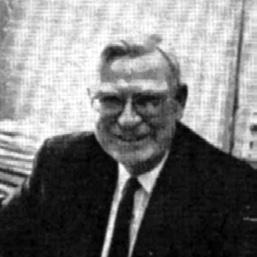
When looking back into the BFS archives, there are many stories that inspire us to think back to how things were here in Downtown Brooklyn yesteryear. This story is fun because it involves some of our alums, and correspondence that predates the 1900s. We recently re-discovered a letter from 1962 from an alum—Dr. Frank L. Babbot—to the Head of School at the time, Benjamin Berdsall, pictured at right. Dr. Babbot was recalling a story from his Lower School days at Brooklyn Friends School—which happened to be 1899–1902. Let me say that again to be clear—this particular alum was writing about his time at BFS in the 1800s! However, the contents of his letter were equally fascinating. You see, Dr. Babbot had sent along to his former Head, letters that he had saved from those early days at BFS, from December, 1900, when he was 9-years-old. “I had been ill and evidently Miss Robertson—a most remarkable woman—had given the class in penmanship the brief assignment of writing me a letter.” He then attached all of the letters from his classmates. Some, by 1962, had faded, but some were perfectly legible, including the one written by Elise Valentine. “My dear, Frank, we are in a new reader now, and it is called Sea Side. I hope you will be back in time to read in the second part—it is all about crabs and bees.” Or, this one: “My Dear Frank, We are getting along fine at school, and started a new reader. .... I am so sorry you are still sick and hope you will come back to school soon. — Your friend, Jade.” So, we can all rest knowing that the second graders at BFS were as friendly and caring 126 years ago as they are today. However, just seeing the cursive writing, the date—1900—each student wrote on each letter, and the sentiment expressed by each child, are worth re-living. It’s one things that these
actual artifacts have survived for more than a century, it’s also important that we remember and spread these true tales of BFS from long ago.
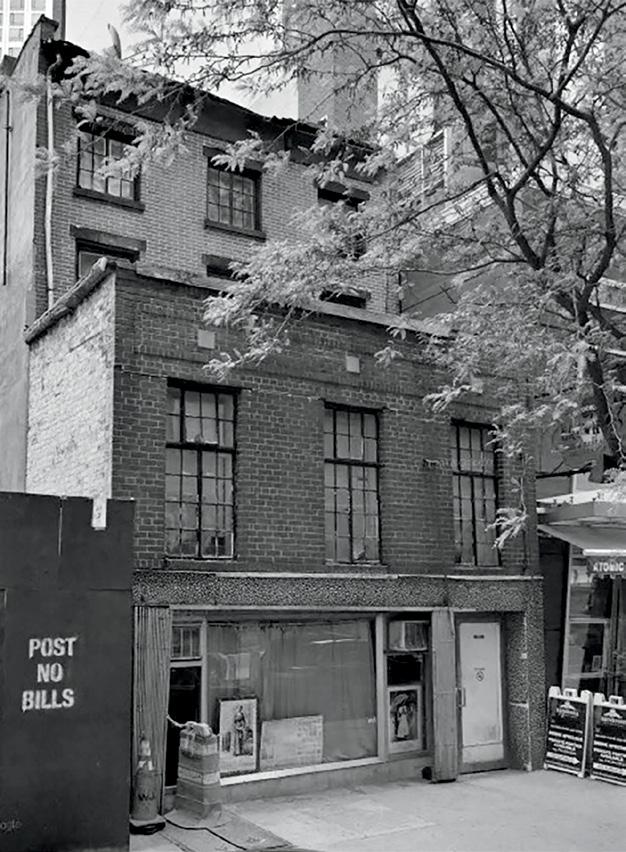
Finally, we recognize something in Downtown Brooklyn that has been hiding in plain sight for the past 177 years—two decades before our school even opened. Just two blocks from our Upper School, and a mere four blocks from Pearl Street, at 272 Duffield Street, sits a small brick house, largely obscured by tall green construction fences and only the top of the building is visible. If you don’t know what you are looking for, there is no reason to slow down, yet stop and look. However, it deserves a full stop, as this small former home stands proudly as a testament to the past. In 1858, a Quaker couple named Thomas and Harriet Truesdell purchased the home when they re-located to Brooklyn. Before
arriving in the greatest borough of them all, both of the Truesdell’s were extremely active in the abolitionist movement—as Harriet was delegate and committee organizer for the 1838 Anti-Slavery Convention of American Women in Philadelphia and Thomas was a founding member of the New England Anti-Slavery Society. After moving to 272 Duffield Street, it is believed that the Truesdell’s used their house to protect runaway slaves safely, and help them move on from place to place. In addition to oral history about the home, evidence of this includes a series of tunnels in the basement connected to neighboring buildings. “We believe this home is a place in which people who had been enslaved were held while they were moving on the Underground Railroad and onto freedom in Canada,” activist Aleah Bacquie Vaughn told Eyewitness News in 2021. “They put their lives at risk.” While there is no evidence, it stands to reason that once the Brooklyn Monthly Meeting was founded in 1857, that the Truesdell’s attended Meeting for Worship at 110 Schermerhorn Street, which of course was the original home of BFS. Given our school’s mission, it is incredibly important to recognize the Truesdell’s former home—now a National Landmark— which without any of this knowledge, would most likely be passed by without a second look.
Our Quaker Identity
The Quiet Revolution of Quaker Education
COURAGE, CRITICAL THINKING, AND CONNECTION FOR A NEW GENERATION
BY JASON NOVAK Assistant Head of School for Quakerism and Community Well-being
Let’s be truthful about the realities we are facing in our current adult experience: our world is often overflowing with noise, speed, and various digital pressures alongside the joys, celebrations, adventures, and love that we experience as human beings. Many children rarely experience lasting and true stillness, or the chance to listen inwardly unless time is set aside or authentically included for such moments. Quaker Education, and the grounding practice of Meeting for Worship, offers something profoundly countercultural to our modern day happenings. Spaces and moments for young people to center, reflect deeply, and discover and connect to their own Inner Light, offer a transformative alternative to the anxieties, busyness, and distractions now present as influences and realities in the current experience of childhood.
Quakerism came into my life more than 16 years ago, when I moved across the country from Seattle to Philadelphia. I had moved into the Germantown neighborhood of Philadelphia, and close friends of mine began introducing me to several of the friends and couples they knew in the area. During this process of becoming familiar with my neighborhood, I was also introduced to a few new friends who identified as Quaker. These friendships quickly formed into deeply valuable relationships. The ripple effect continued, as
this would lead me to attending my first Quaker Meeting for Worship, and eventually to being a part of the colleague community at Abington Friends School.
What I immediately found so profound about working in a Quaker school, was the central guiding tool and experience of settling into silence, listening for the voice within, and the practices that allowed for everyone’s voice to have value, and to be heard. Additionally, the messages that were coming forward from students during Meeting for Worship
were some of the most authentic and meaningful sharings I had ever experienced in a school setting. Students learned to take the time to pause, and look within to think about what they were about to share.
Quaker education has now been a part of my life’s experience for the past sixteen years, and as an educator and an administrator, I have come to deeply value and appreciate the important experience it fosters for students. What speaks to me most deeply? At the heart of Quaker education is the belief that every student, every human being, carries an Inner
“
At the heart of Quaker education is the belief that every student, every human being, carries an Inner Light. This Light serves and shines as a source of insight, dignity, and possibility.”
Light. This Light serves and shines as a source of insight, dignity, and possibility. This belief is both spiritually powerful and developmentally essential in seeing and knowing every child. When students are encouraged to reflect upon and trust their inner wisdom, they grow their own confidence, their agency, and they begin to see the deep value of truth that grows out of multiple perspectives. In Quaker schools, students learn to choose courage each time they stand and risk sharing forward a message in worship, stand up for a peer or on behalf of a social justice cause, or express a new idea in class.
The practice of Meeting for Worship here at BFS quickly becomes a weekly anchor for colleagues and students. In shared silence, students learn to center themselves, settle their minds, and look to their inner landscape. Over time, this practice grounds and nurtures emotional resilience and it sharpens critical thinking. When young people learn and eventually value the pause before reacting, to listen deeply before speaking, and reflect before concluding, they become more thoughtful and discerning about what they want to bring forward. The silence helps them to recognize what is theirs to
share and what they choose to question. It deepens our practice of making meaning of the world around us.
George Fox, often identified as the founder of the Religious Society of Friends known today as Quakers, urged Friends to “stand still in the Light,” recognizing that clarity and action grow from grounded reflection. Bayard Rustin, a Civil Rights Movement activist and leader, captured the spirit of Quaker moral courage when he said, “We need, in every community, a group of angelic troublemakers.” Bayard credits his Quaker faith when speaking to the values that can be found and upheld within. “My activism did not spring from my being gay, or, for that matter, from my being Black,” he said. “Rather, it is rooted fundamentally in my Quaker upbringing and the values that were instilled in me by my grandparents who reared me. Those values are based on the concept of a single human family and the belief that all members of that family are equal.” Quaker education encourages students to become principled and compassionate changemakers and challengers of injustice just as Bayard espoused throughout his own lifetime.
Jason Novak is BFS’ Assistant Head of School for Quakerism and Community Well-being
Quaker education and the practice of Meeting for Worship are uniquely aligned with the kind of emotional and relational growth that Brené Brown describes as essential for healthy human development. In her book Dare To Lead, Brown speaks to this when she reminds us that “courage is contagious. Every time we choose courage, we make everyone around us a little braver,” and that we must be willing to show up and be seen, fully and vulnerably, if we want genuine connection with others. In the sacred silence of worship, students practice this kind of presence: they learn to sit with uncertainty, to attend to their own thoughts and feelings, and to offer themselves in community without pretense. This mirrors Brown’s insight that “staying vulnerable is a risk we have to take if we want to experience connection,” because silence invites students not to perform, but to be and to discover their inner life. This in turn deepens their capacities for reflection, for empathy, and for belonging. Moreover, Quaker testimonies such as integrity and community build the sturdy ground that Brown identifies as essential for wholehearted living. She points out that “integrity is choosing courage over comfort; choosing what is right over what is fun, fast, or easy; and choosing to practice our values rather than simply professing them.”
For today—and for years to come— Quaker education offers so much more than a school experience. It offers forward a quiet revolution. Schools like Brooklyn Friends dare to center silence, courage, community,
integrity, critical thinking, and authentic connection and belonging, as integrated aspects of the school program. Meeting for Worship becomes a spiritually-guided living laboratory for grounded leadership, community becomes a reliable source of strength, and the Inner Light becomes a beacon that students learn to trust. This revolution doesn’t shout, it listens. It doesn’t demand, it invites and it welcomes. In doing so, it equips a new generation of
students with exactly what our world needs more of: the courage to act with integrity, the clarity that comes from centering, and the deep sense of connection that allows them to see the dignity found within themselves and in others. My hope is one that our practices, our values, and the fullness of our communities inside and across Quaker schools shape a world that is grounded in the luminous power and influence of our collective Light.
Why I Went Back to Quaker Meeting (and Why You Should Too)
BY JACOB GINSBERG ’12
When I was a student, I remember hearing a common refrain from visiting alumni, and when I first went back after graduating, I remember saying it myself. Despite how we may have felt about it as teenagers, the first thing that comes to mind when we’re asked what we miss most about our time at Brooklyn Friends is often silence—just as teachers and alumni told us we would. We miss Meeting for Worship. Last May, I missed it enough to attend a meeting in Philadelphia. I live in a city and state founded by a Quaker, so it was easy to find one— my apartment was only a few blocks from Arch Street Meeting House, a historic Quaker site in use since 1682. I was trying to process losses and turmoil, both personally and in the world, and a quiet hour seemed like the perfect way to look inward, to be connected and open instead of dissociated. I wanted to recover feelings of urgency, of speaking truth to power, of the self-assuredness that comes from being spiritually empowered or a naive high schooler.
In the first hour of silence, it was like I’d never left. The meeting house looked the same, with plain white walls and firm antique benches (at Arch Street, the cushions are stuffed with horse hair). The familiar, notquite-stuffy smell, and quiet sounds of people breathing and shifting in their seats took me right back to
Schermerhorn. I centered myself like Dori Dietz taught me in detention after some friends and I had disrupted a meeting (I remember, and am thankful, for the breathing lesson, but not the giggling that earned it). I listened in expectant waiting. I reached for the Inner Light.
When the meeting ended, and I was welcomed to join for snacks, coffee, and conversation, I found that community was another thing I’d been missing about Brooklyn Friends without realizing it. Members and regular attenders of the meeting were warm and inviting. I’d almost forgotten what it was like to spend time with people familiar with Quaker testimony and committed to the SPICES, people who appreciate silence, who know how to listen, who want to create fellowship, who care deeply about the world, people who embody traits we might take for granted in the tight-knit community of a Quaker school, but find are exceedingly rare outside of it.
Returning to meeting has led me to spiritual growth and profound experiences. A few months after first going back, for example, my heartrate shot up and a message yanked me off the bench. For the first time since I was in high school, I spoke in a meeting, sharing about how as a sometimes overly conscientious person, I felt moved to remember that what I’m seeking each Sunday is boundless and abundant. Flipping
through my copy of Faith and Practice a few weeks later, I found a Quaker named Mildred Binns Young had expressed the exact sentiment (only much more deftly) in 1961: “I have never outgrown a sort of naive surprise and delight which I felt when I found out that there is one single thing that one can have without limit and not deprive anyone else—the love of God, His Presence.” Meeting has become an indispensable part of my weekly routine, and I recommend it
to anyone feeling spiritually lost or seeking Truth, peace, and a return to the center.
But beyond that, you should try your local meeting because of the community of Friends you’re sure to find there. I’ve met young people new to the city looking for a spiritual home. I took a walk with a recently-settled nomad in his 70s who’s completed pilgrimages across the world but is new to Quakerism.
I joined a book club with people my age, people my parents’ age, and elders ready to provide mentorship and guidance, including a transplanted member of Brooklyn Monthly Meeting. I’ve attended committee meetings, made a trip to the beautiful Quaker study center at Pendle Hill, and formed friendships
with thoughtful, honest people who just get it, who make the Meeting feel like home.
At the end of meeting each week, newcomers are given the opportunity to introduce themselves. An introduction I’ve heard over and over is also the one I gave on my first day: I went to Quaker school growing up, and for whatever reason, I decided it was time to come back. I hope you are led to do the same.
Jacob Ginsberg returns to Quakerism.
Photo by: Adam Ginsberg ‘14
↑
We’re still smiling from the Early Childhood & Lower School Sing—an annual celebration where our youngest learners lift their voices, share their artistry, and remind us of the magic that happens when we come together in community. These Sings are a cherished part of our music and performing arts program, nurturing confidence, creativity, and connection from the very start of a child’s journey at Brooklyn Friends School. Thank you to our students, colleagues, and families for filling the room—and our hearts—with so much joy.
→ Coffee, conversation, and community! Thank you to all of our families for joining Head of School Crissy Cáceres this winter, as we launched our new series: “Coffee with Crissy.” We loved starting the day by engaging in open conversation about all of the exciting things happening at BFS.
A Picture is Worth
In the shadow of the Manhattan Bridge, BFS’ 8th, 11th, and 12th graders joined more than 4,000 students throughout New York State taking part in the annual educational event: “A Day in the Life of the Hudson.”
The event was coordinated by the NYS Department of Environmental Conservation. Our students spent time on Pebble Beach at Brooklyn Bridge Park collecting chemical, physical, and ecological data from the East River. They also observed the tides, took measurements, and caught, identified, and released small marine life. ↓
TheNEXT ISSUE:
BFS Families
The next issue of The Light, which will be published this fall, promises to shine brighter than ever, offering readers a thoughtful and engaging look into the lives of some of our current families. In this edition, we will turn our focus toward the people who help shape our community, while making their own impact on Brooklyn and beyond.
Through a series of in-depth interviews, we will deliver a diverse group of stories from all walks of life, within the BFS ecosystem. These features will go beyond surface-level introductions, or a follow-up of an arrival or dismissal interaction. Instead, they will explore personal journeys, challenges, and the values that drive our community as individuals, and families.
Architects, medical professionals, writers, lawyers, judges, clergy, actors, domestic engineers, tech gurus, educators, publishers, web developers, accountants, social justice champions, and many, many other careers are represented within our community. Way too many
to feature in a single magazine. We will attempt to create the most respectful cross-section of humans as we can.
By sharing these stories, The Light hopes to foster a deeper sense of connection and appreciation within our community. This issue is not just about the parents and guardians of our amazing students, it’s about understanding the people who help make our shared environment so vibrant, supportive, and full of life.