The water issue...
Sustaining species, drop by drop
The Hive Inspiring our next generation of nature lovers
Nudibranches
Slugs get a makeover
The kings of our waterways pages 10-11
Bring on the sun – and the rain...
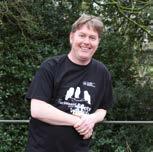
By Tom Burditt, Chief Executive Officer
Welcome to summer. I’m delighted to say that summer has well and truly arrived on our reserves, which have been full of wildlife buzzing, tweeting, chirping and croaking –something which makes me very proud indeed.
Summer should be a time for us to enjoy the sunshine, getting out and about exploring the nature reserves and wealth of green and blue spaces that our amazing region offers.
But there is no denying that our climate is getting more and more extreme. Already this year we have seen record-breaking heatwaves, with rare and seriously concerning red weather warnings being issued. Whilst nature is adaptable, it feels like it is being pushed to breaking point. And where nature suffers, so do we.
But nature can also be part of the answer, especially when we look at water and our blue environment. Both humans and wildlife depend on water, whether it lives in our streams and rivers, in the Irish Sea, or in our peatlands, ponds and woodlands - for feeding, drinking, breeding, or as refuge from wildfires.
This summer edition of Lapwing will mark what we hope to be a turning point as we campaign for cleaner rivers and improvements in the Irish Sea, and as we work to re-wet drained and degraded peatlands, both into thriving wetlands and, crucially, ‘wetter farmed’ areas.
In these pages, you will read about iconic river species such as the kingfisher and the otter, and hear about some of the diverse marine species in our little bit of the ocean.
Water is hugely important to everything your Wildlife Trust does, especially with all the extreme heat around. So, while I am hoping for some sunshine, I will never forget the importance of a few showers this summer.

6-7
2,392 people have already engaged with our Championing Nature events
4-5
Get in touch
We’d love to hear from you, whether sharing your thoughts on the magazine or your adventures in nature.
@Lancashirewildlifetrust
@Lancashirewildlifetrust
Lancashire Wildlife Trust lancswt.org.uk info@lancswt.org.uk 01772 324129
The Barn, Berkeley Drive, Bamber Bridge, Preston, PR5 6BY
Editor: Jenny Bennion
Sub Editors: Alan Wright, Amy Shakeshaft
Contact the editorial team: jbennion@lancswt.org.uk Design: nectarcreative.com
Registered charity no. 229325 Registered company no. 731548
You can change the way we contact you, or update your details by speaking to our membership team: E: membership@lancswt.org.uk T: (01772) 324129
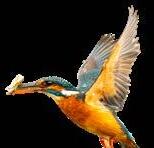
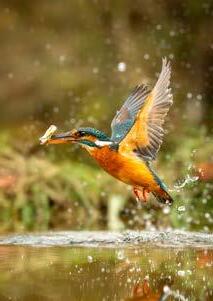
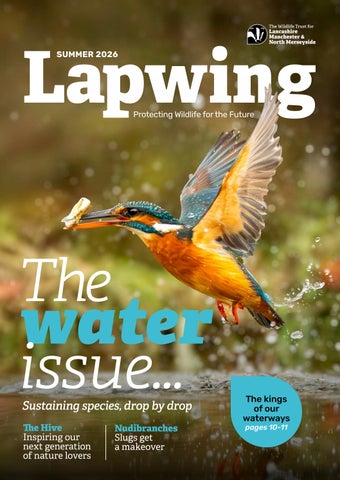
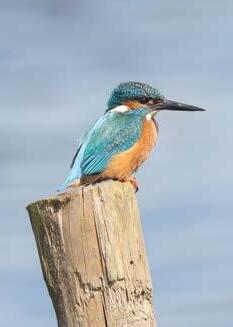
On the cover Kingfisher © Simon Owen wildest ones
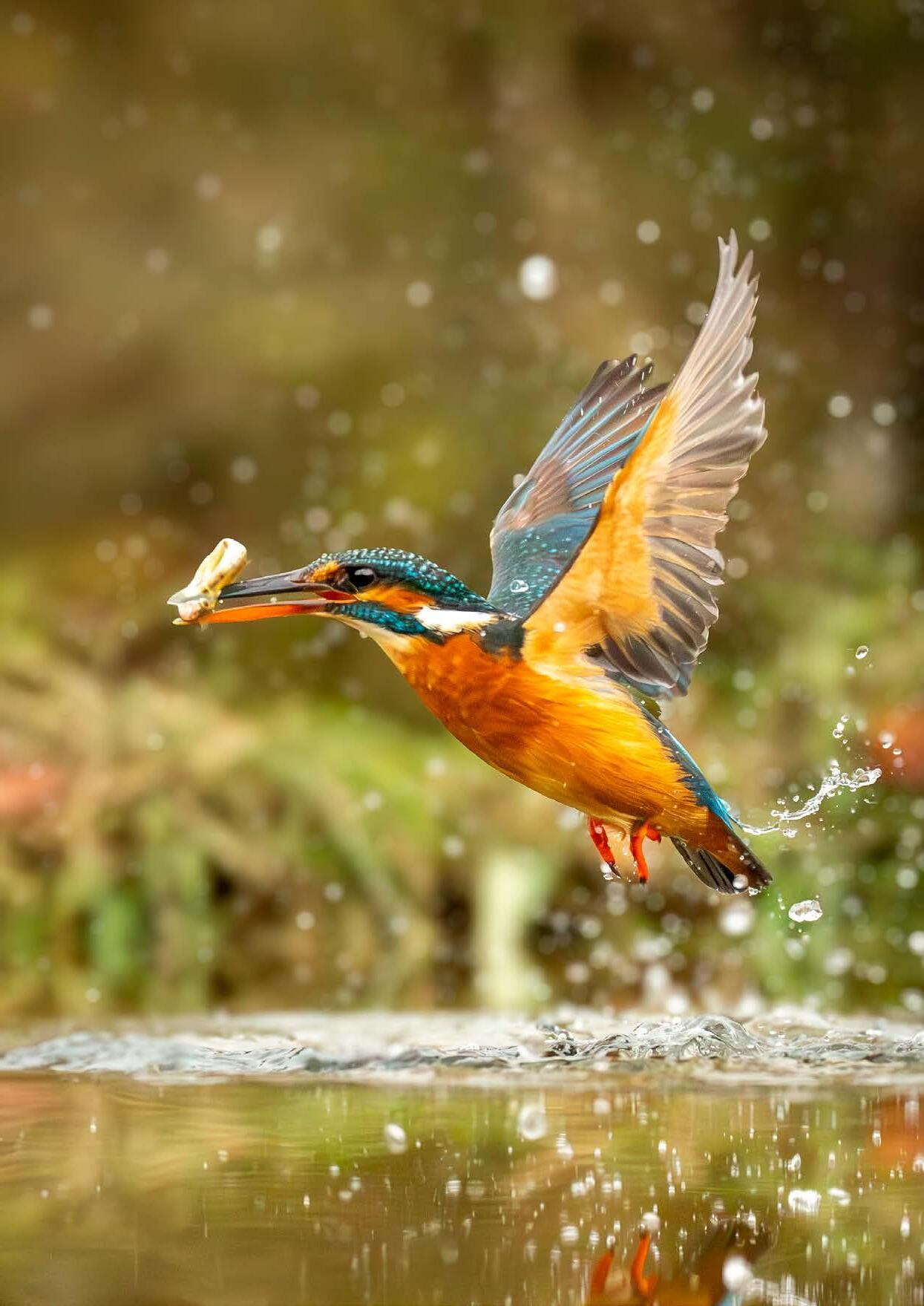
Wild but true... The kingfishers’ bill is so perfectly aerodynamic that the nose of Japanese bullet trains is modelled on them!
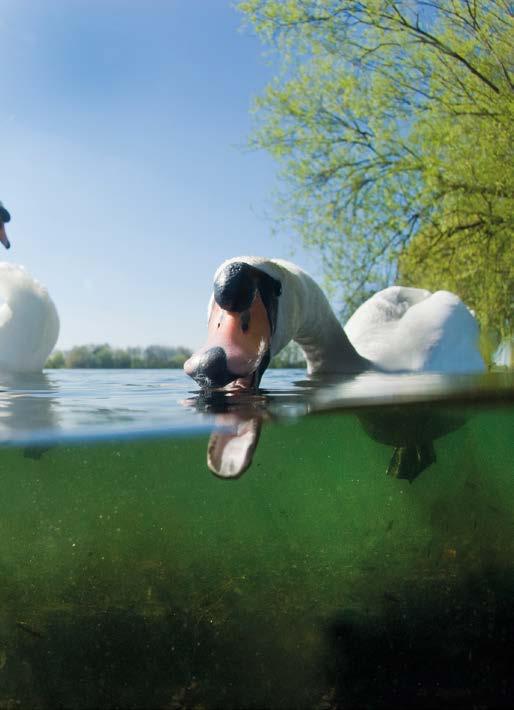
Mute swans © Jack Perks
I dropEvery
There is something about water that fires up strong emotions in all of us –we love it and sometimes we don’t like it at all. 40%
Only 4 out of the 10 beaches in Lancashire and Blackpool were classified as having good water quality in 2025
By Tom Burditt, Chief Executive Officer
By Alan Wright, Head of Communications and Campaigns
t’s raining, we sigh, tugging on our raincoats, but then we admit that it’s just what our gardens and the tinder-dry moorlands need.
We love the beach and the sea and the swimming baths, but we hate having a bath – well, at least until we reach the age of 45.
Everything we do at the Lancashire Wildlife Trust has some element that is wet – our magnificent wetlands, peatlands and ponds, linked by the rivers and canals of the North West of England.
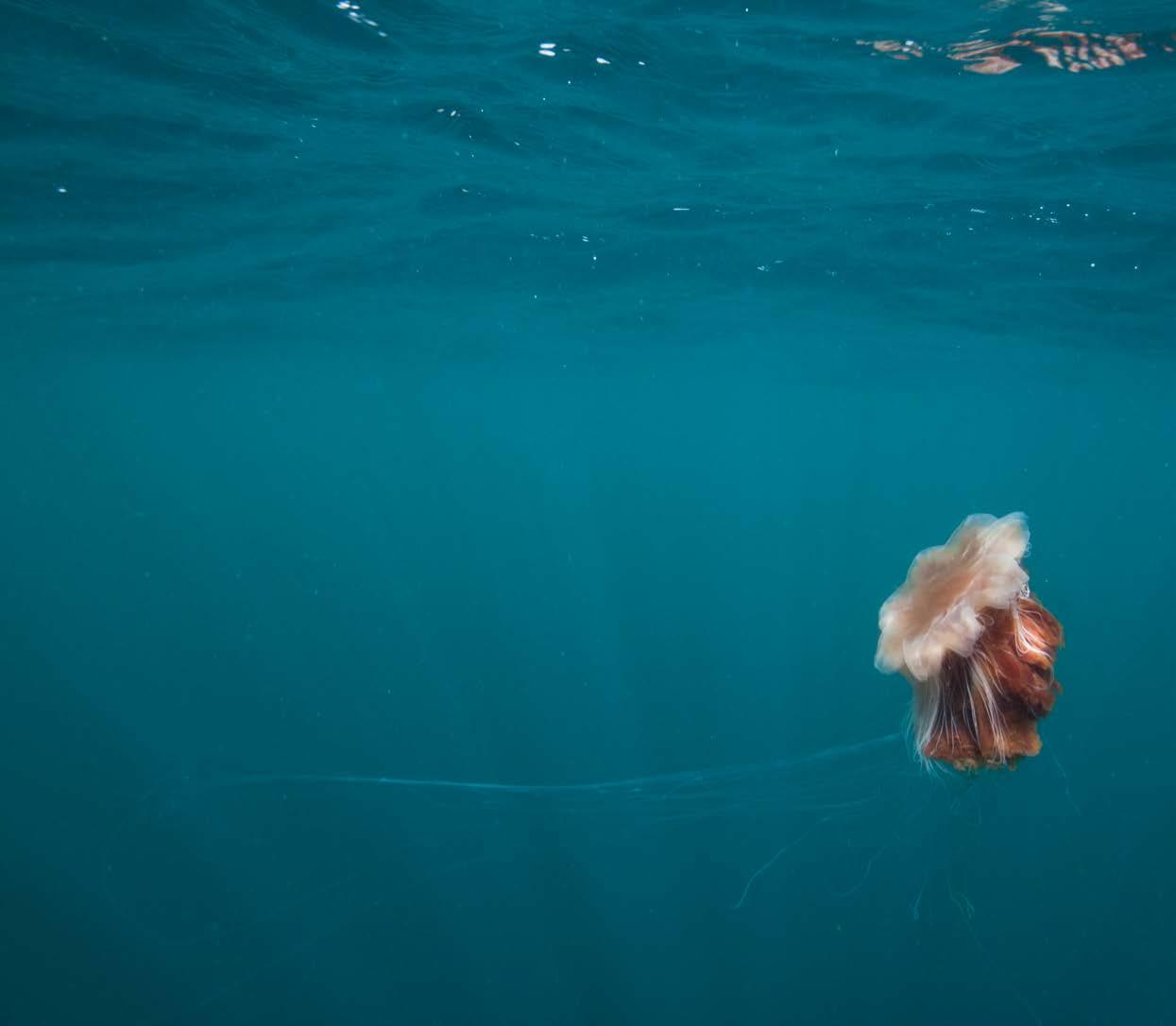
And then there is the hidden depths of the Irish Sea, so often disregarded as dirty and lifeless, but try telling that to the humpback whales, basking sharks, grey seals, green turtles, starfish, jellyfish, sea urchins, shrimps, nudibranchs and all the seabirds that depend on it.
American anthropologist Loren Eiseley summed it all up when he said: “If there is magic on this planet, it is contained in water."

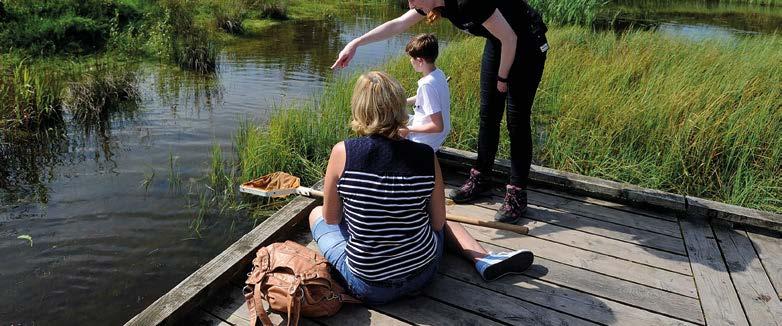
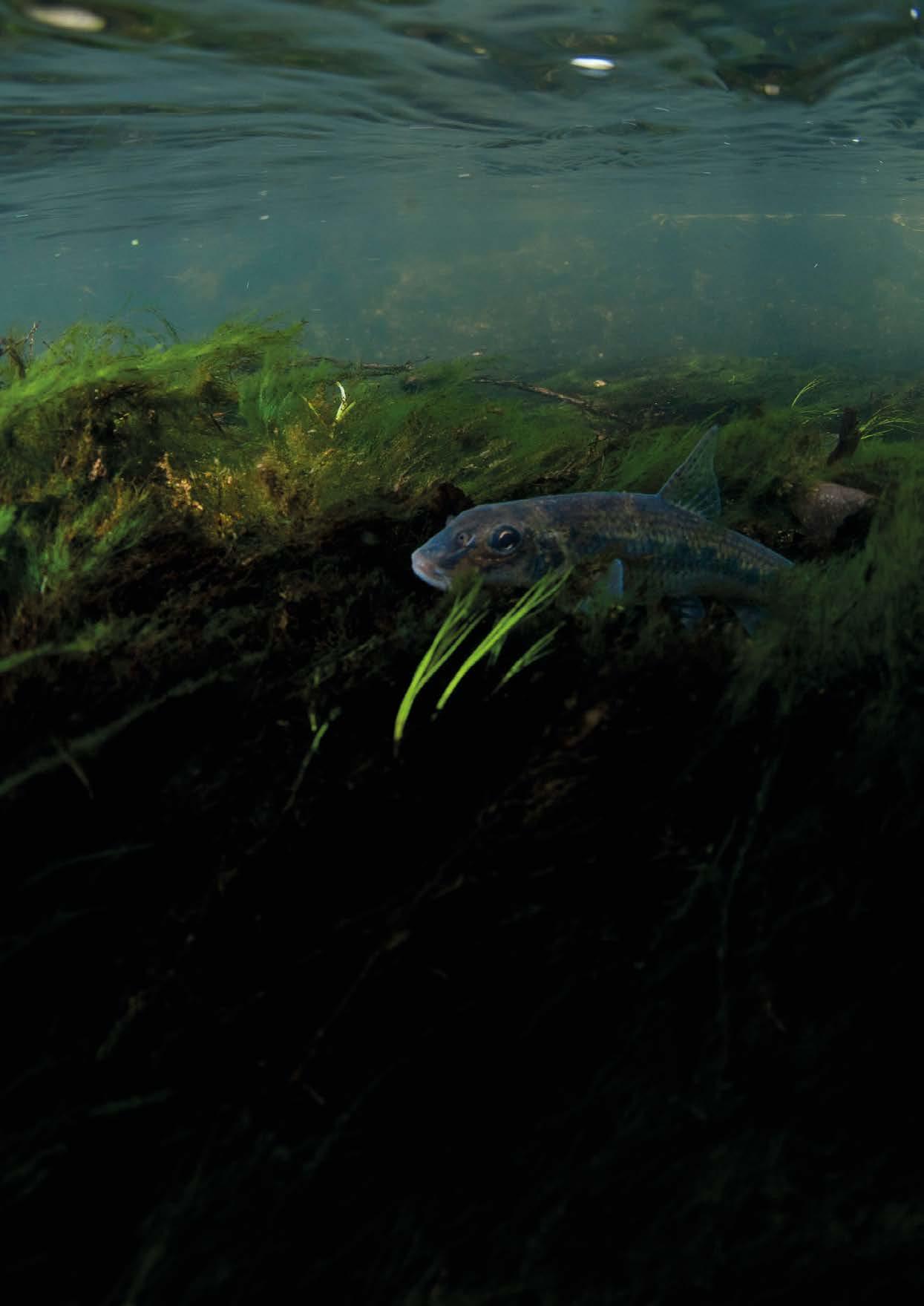
Gudgeon on a river floor © Jack Perks
Pond dipping © Jessica Fung
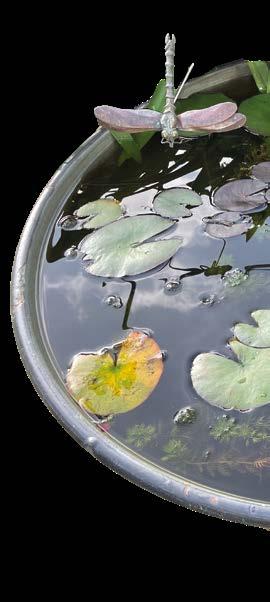
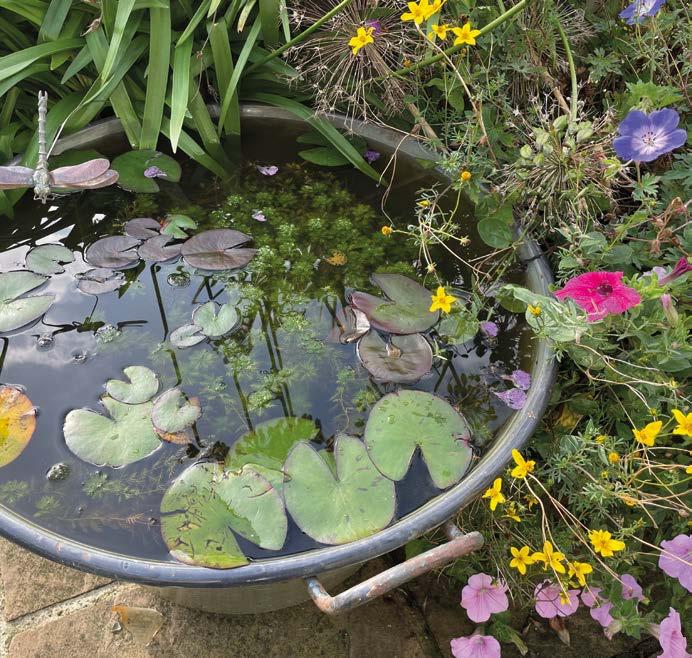
Even adding a small pond to your garden is great for wildlife
© Emma Robertshaw
Putting
water first
2026 sees the Wildlife Trusts stepping up our national campaigning work around water. In particular to influence the Government’s planned Clean Water Bill, which we see as the critical way in which they will deliver their manifesto commitment to clean up our rivers, lakes and seas.
We want to see an ambitious approach to water management across all sectors, restoring our waters to health, and securing a resilient, healthy water supply for people, for the economy, and of course, for wildlife; and we have identified six areas where we believe radical reform is required:
1. Creating a strong, independent environmental regulator.
2. Strengthening the Water Framework Directive’s coverage and ambition.
3. Rolling out a new system of effective regional governance of water supply and the watery environment.
4. Reducing water pollution and strengthening and enforcing polluter pays requirements.
5. Wilder Riverbanks: Increasing wetter and nature-rich land alongside waterways to restore river corridors to their natural form, tackle pollution, and reduce flooding to property and infrastructure.
6. Placing public benefit at the heart of water company governance.
How can you help?
Keep an eye on our social media, website and newsletters for hints and tips on reducing your water usage, how you can make water available for wildlife in your garden, and crucially how you can support our campaigning and lobbying work.
Politicians love nothing more than to hear from their own constituents, so get in touch with your elected representatives and tell them how much water matters to you.
Being a member of the The Wildlife Trust makes you one of nearly one million people who together can make water work for wildlife.
0 %
None of the 117 rivers tested in Lancashire were classed as having ‘good’ water quality in 2019
41%
of water samples from Lancashire analysed as part of the Great UK Waterblitz in 2025 showed unacceptable levels of nutrient pollution
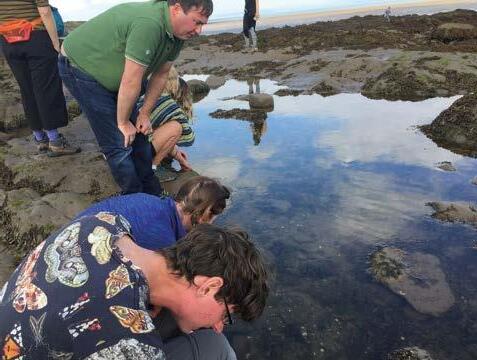
Rockpooling to discover life in the Irish Sea @ Alan Wright
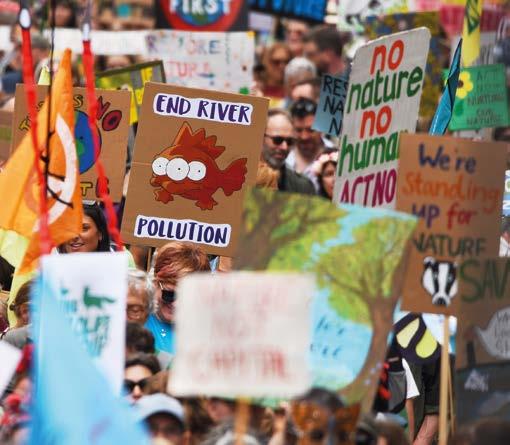
Restore Nature Now march © Logan Walker
Steve’s our champion... nature
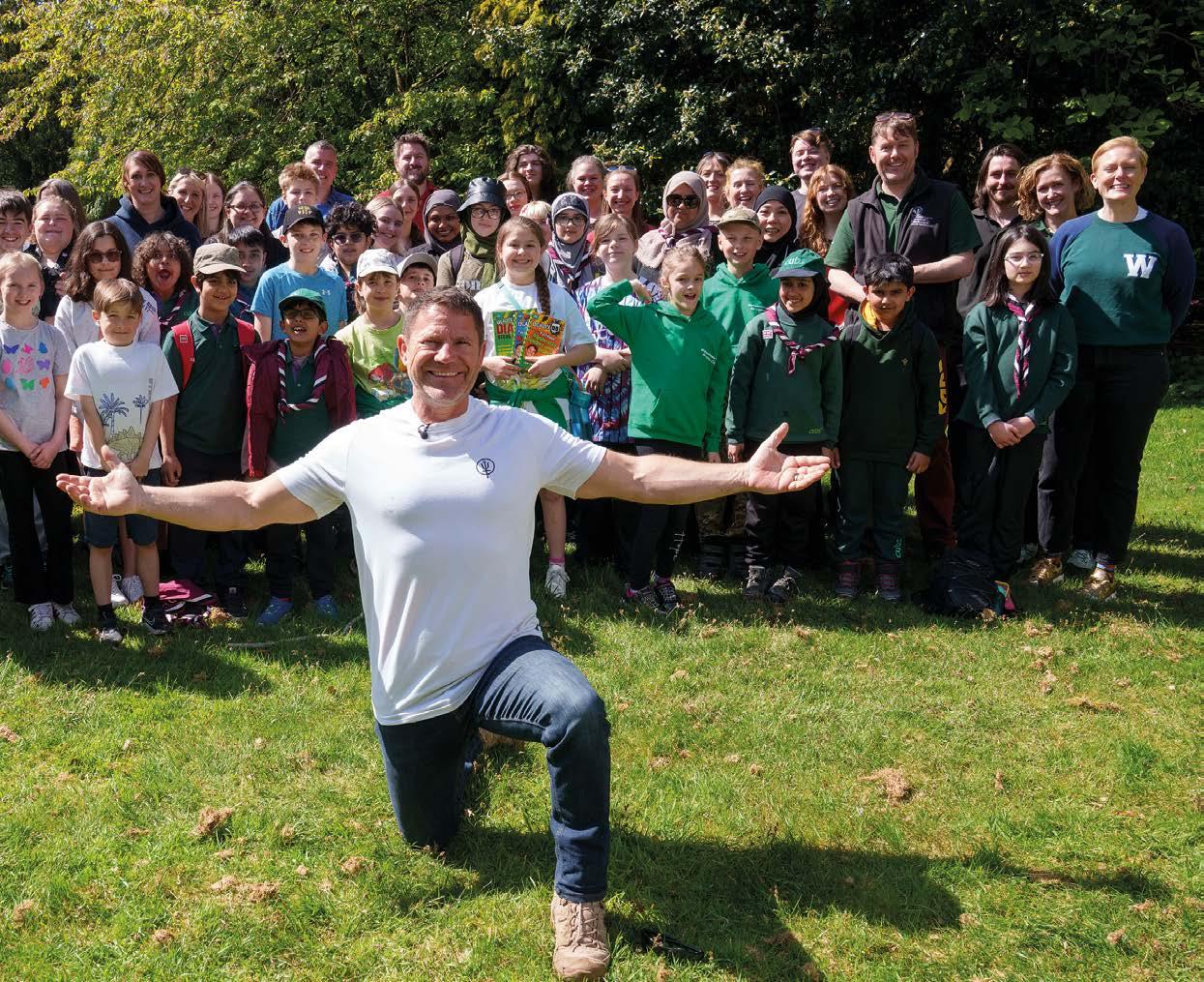
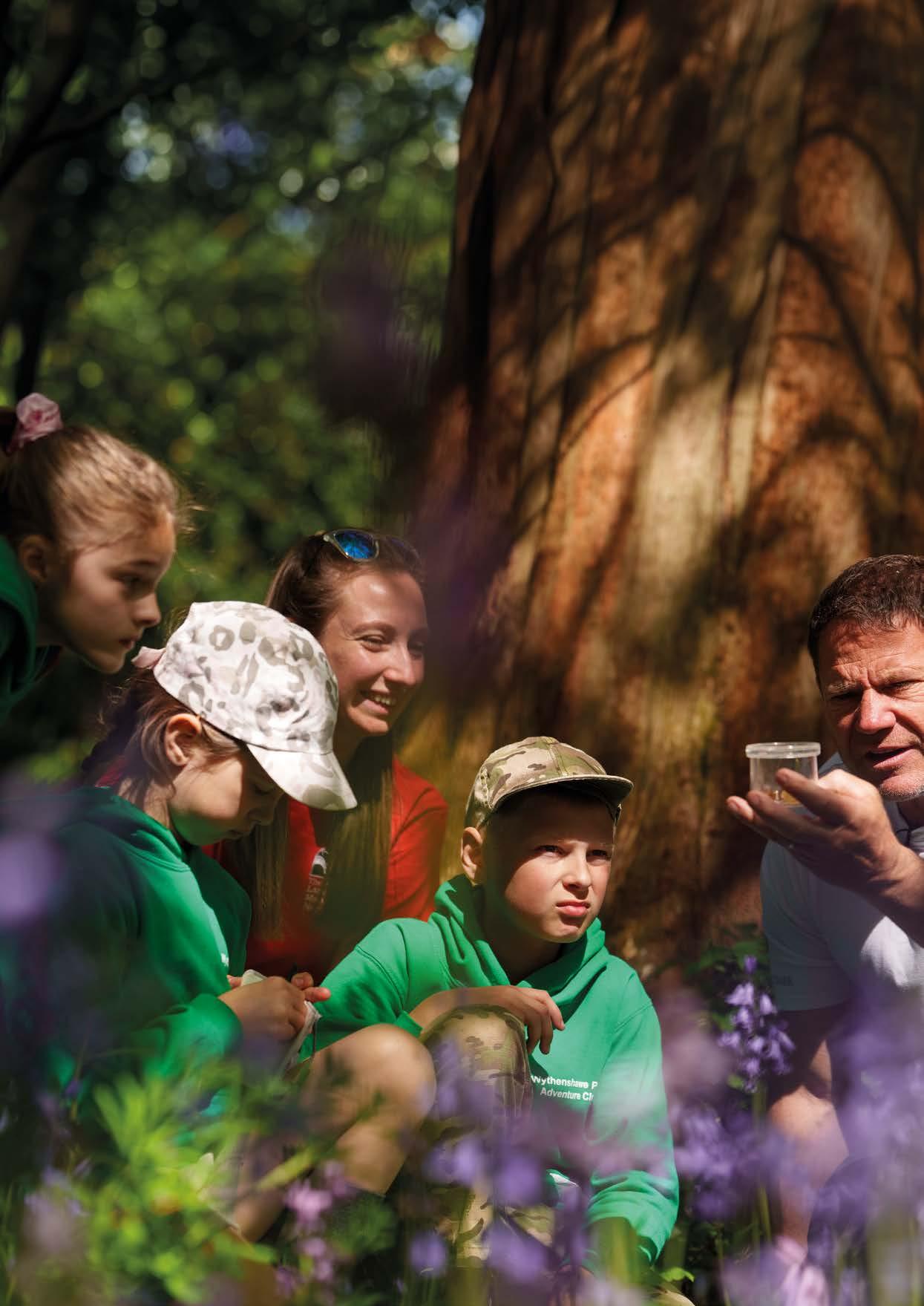
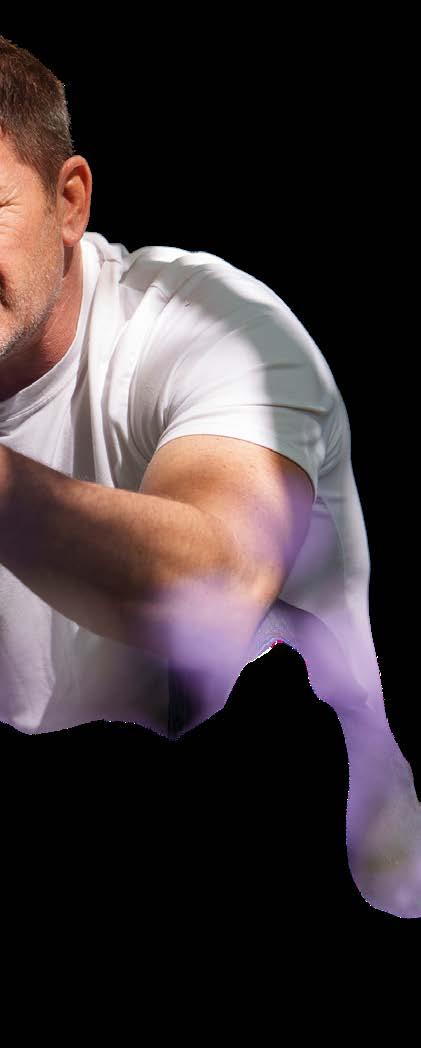
Naturalist, presenter and Championing Nature Project Ambassador, Steve Backshall, joined us on a special urban nature surveying day in Wythenshawe Park.
By Laura Hacking Vile, Engagement and Wellbeing Communications Officer
“It was fantastic to see the Championing Nature programme in action and to meet with the local community groups involved. During the surveying, we were able to identify thriving species in the pond, and it was great to see so many young people clearly enthused and inspired by the nature around them.”
Steve Backshall, Championing Nature Ambassador
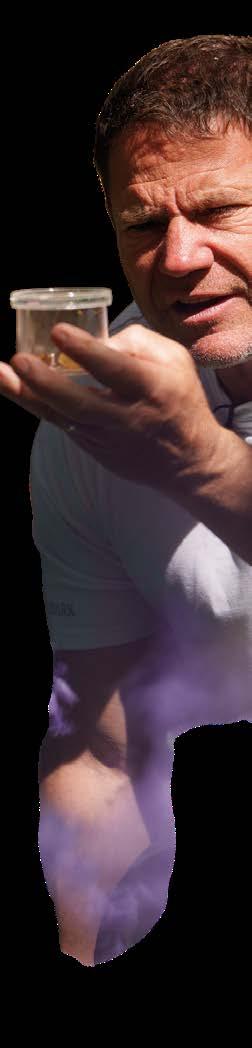
Members of Nacro Outdoor
Learning with Steve © Jon Super, AELTC

Connecting the people of Wythenshawe to the amazing nature on their doorsteps is what our Championing Nature project is all about –and who better to help us do it than project ambassador, Steve Backshall.
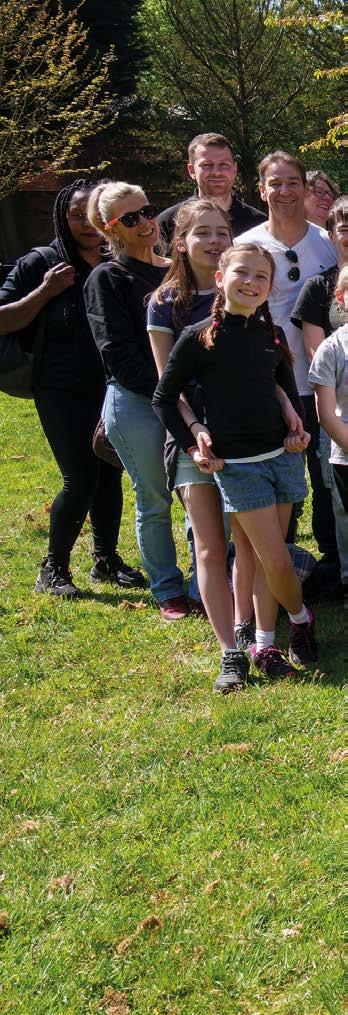
Steve joined us, and a lot of excited local young people, in Wythenshawe Hall and Park for a day of nature surveying –and what an amazing day it was.
Steve’s visit to Wythenshawe was part of our Spring Heartbeat Moment, one of a series of seasonal celebrations of the nature and people that make Wythenshawe so special. The event also tied in with the City Nature Challenge, a global citizen science phenomenon that sees people worldwide undertaking urban nature surveys.


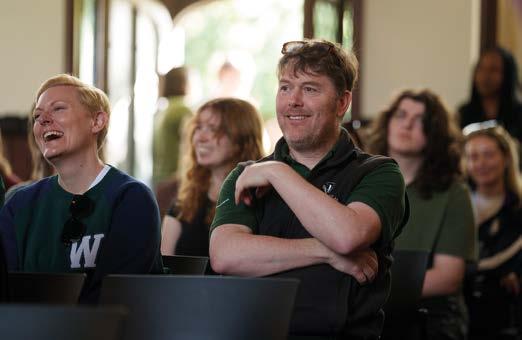

Young people from local community organisations were invited to survey with Steve, teaching them the importance of urban nature in day-to-day life, and how to take action to protect and restore nature on their doorsteps.
Steve was raring to get stuck in, turning his hand to pond dipping, hunting for mini-beasts and learning how to tree ID, whilst also discussing the importance of urban nature. Steve’s energy and knowledge was infectious, creating such a buzz about the wildlife that they found.
Championing Nature will be running in Wythenshawe for the next six years –but what a fabulous way to start!
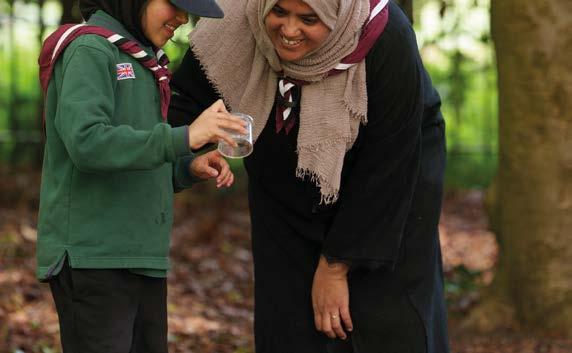
Shakila Ellahi, British Muslish Heritage Community Scout Group © Jon Super, AELTC
“It’s just under a year since the programme first launched and it’s been incredible to witness the positive impact that Championing Nature is having in Wythenshawe already. It was particularly encouraging at the Spring Heartbeat event to see the young people’s keenness to explore everything that nature offers, which was evident in their conversations with Steve Backshall, and the joy it brings being in nature and the outdoors.”
Ulrika Högberg, Head of Community Strategy at The All England Lawn Tennis Club

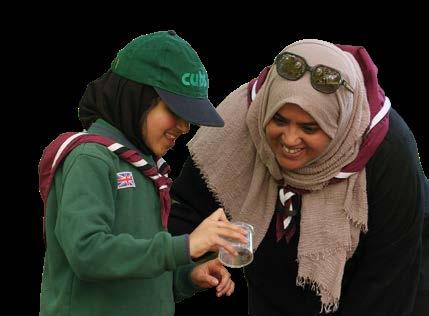
Find out more about Championing Nature at lancswt.org.uk/ championingnature
“Inner city young people from ethnic minorities often have limited access to safe green spaces and fewer chances to explore the outdoors. Championing Nature closes this ‘nature gap’ by giving them adventure, confidence, and a sense of belonging in natural spaces where they may not usually see themselves represented.”
Shakila Ellahi, Group Lead Volunteer from British Muslim Heritage Council Scout Group
Ulrika Högberg from Wimbledon and Tom Burditt © Jon Super, AELTC
Deep in the peat

Bog water can be as acidic as the vinegar in a jar of pickled onions –trust us we tested it!
Scan the QR for a video of us doing it
Barren wastelands or one of our most important habitats?
Peatlands are the unassuming superhero of the natural world.
By Jenny Bennion, Senior Communications Officer
What is peat?
Deep, dark and squidgy, peat is essentially a special type of soil made of partially decomposed organic matter. Peatlands are naturally waterlogged and acidic, and these are the conditions in which the precious peat forms.
As the top layer of vegetation on a healthy peatland grows upwards, the bottom layers of that same vegetation are being slowly pickled in the anaerobic acidic conditions below – and it is this process that forms peat.
This pickling process means that full decomposition (such as when a tree dies and falls over) does not happen to peatland vegetation. You can take a core from a peatland and still be able to identify strands of sphagnum moss that are hundreds, even thousands, of years old.
Peatland biodiversity
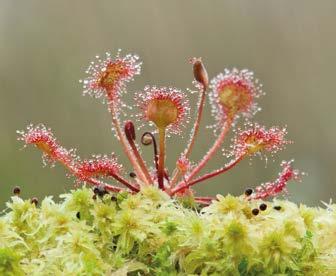
Peatlands are home to plants and animals not found in any other habitats. Take the sundew, a tiny scarlet plant which lurks on the peatland floor ready to catch its insect prey. We think of carnivorous plants as rare and exotic, yet many of our peatlands are full of them.
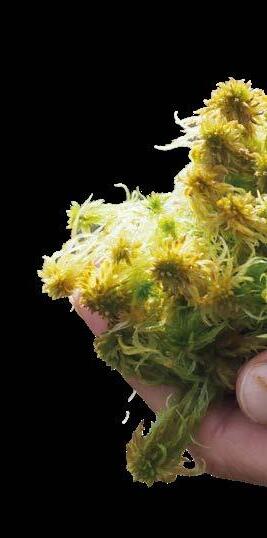
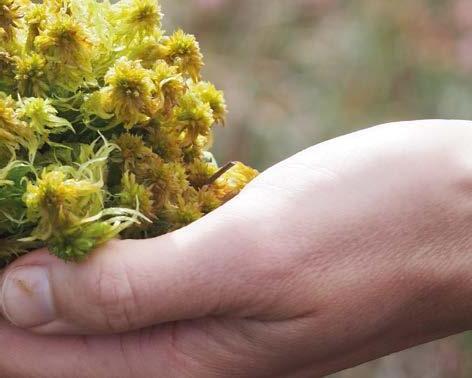
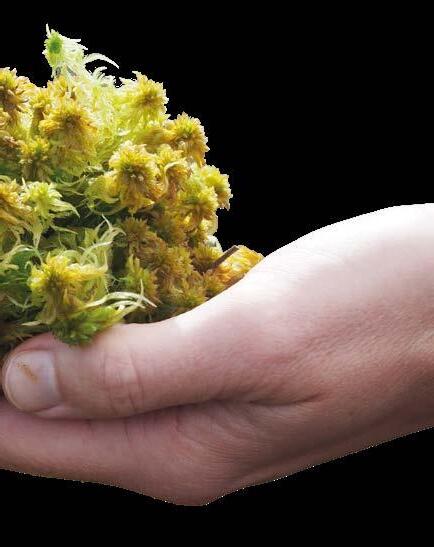
Sphagnum is a wonder of the bryophyte world using clever chemistry to actually create the acidic conditions in which peat forms, all whilst carpeting the ground in an array of jewel box colours.
Cotton grasses wave their fluffy white heads whilst rare birds and insects find a home in these beautiful boggy places.
Carbon capturing
As peat is formed by only partially decomposed vegetation, it retains nearly all of the carbon that it absorbed whilst growing, which is then locked away in its peaty soils for millennia, creating a huge carbon store that continues to sequester more carbon as more peat forms.
But a huge proportion of our peatlands have been drained and degraded for conversion to agriculture or for development. Once the water is removed, oxygen can get to the carbon rich soil. Carbon + oxygen = CO2 which is then released as harmful greenhouse gas.
Natural flood management
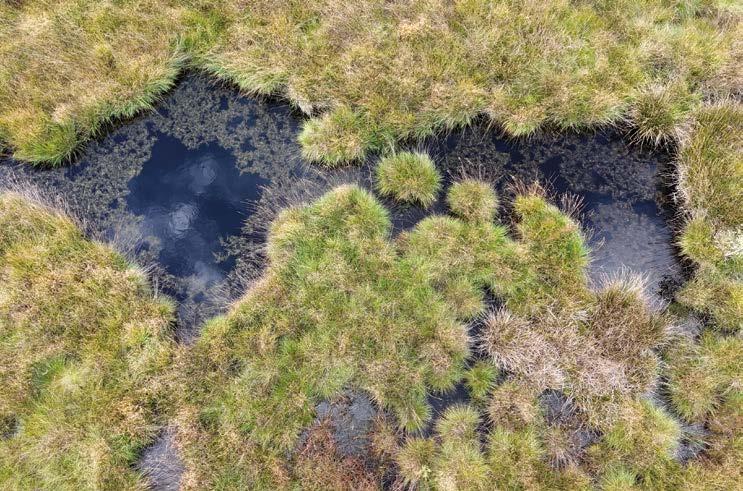
A healthy peatland is just like a huge sponge, able to absorb water from storm events, hold it in its peaty depths, and then release it slowly. However, dry and degraded peatland actually becomes hydrophobic – water hits the surface and runs straight off,

The slow flow of water through a healthy peatland provides a natural water filter, helping to ensure the water reaching our water courses is clean and clear. Did you know?
Peatlands store twice as much carbon as rainforests

Water filtration
The slow flow of water through a healthy peatland provides a natural water filter, helping to ensure the water reaching our water courses is clean and clear. However, carbon from degraded peat gets dissolved into the water staining it that tea brown colour often seen in our streams and becks. It is expensive for our water companies to remove.
It’s all about water
The key to caring for our peatlands is hydrology. When assessing a new area of degraded peat, we need to figure out how to get it wet again and how to retain that water.
Winmarleigh Moss SSSI near Garstang is our best preserved example of a lowland raised peat bog, but is surrounded by peat drained for agriculture, with deep ditches around its perimeter.
Through a process of acquiring and re-wetting strategic parcels of that surrounding land, we now have a larger restored area that is functioning as one hydrological unit.
The water arrives and remains, giving the peat the stable water table it needs. It has also significantly reduced the amount of water flowing into the surrounding ditches, relieving flooding pressure on the surrounding farmland.
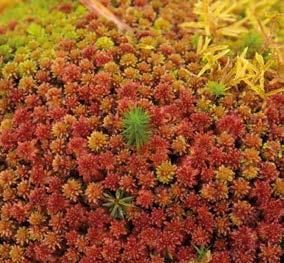
Sphagnum moss © Simon Hutchinson
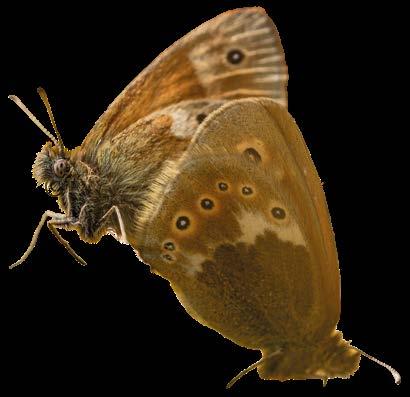
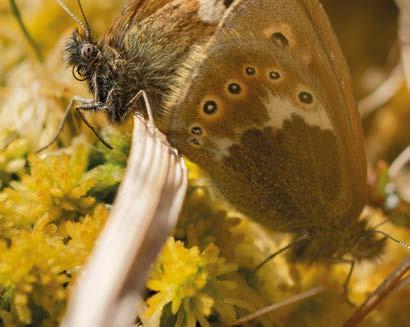
Large heath mating pair at Winmarleigh Moss © Ali Rajabali
Sphagnum moss © Ben Porter
Pools of bladderwortanother carnivorous peatland plant © Jamie Lawson
Round leaved sundews could be making a return too © Guy Edwards 2020VISION
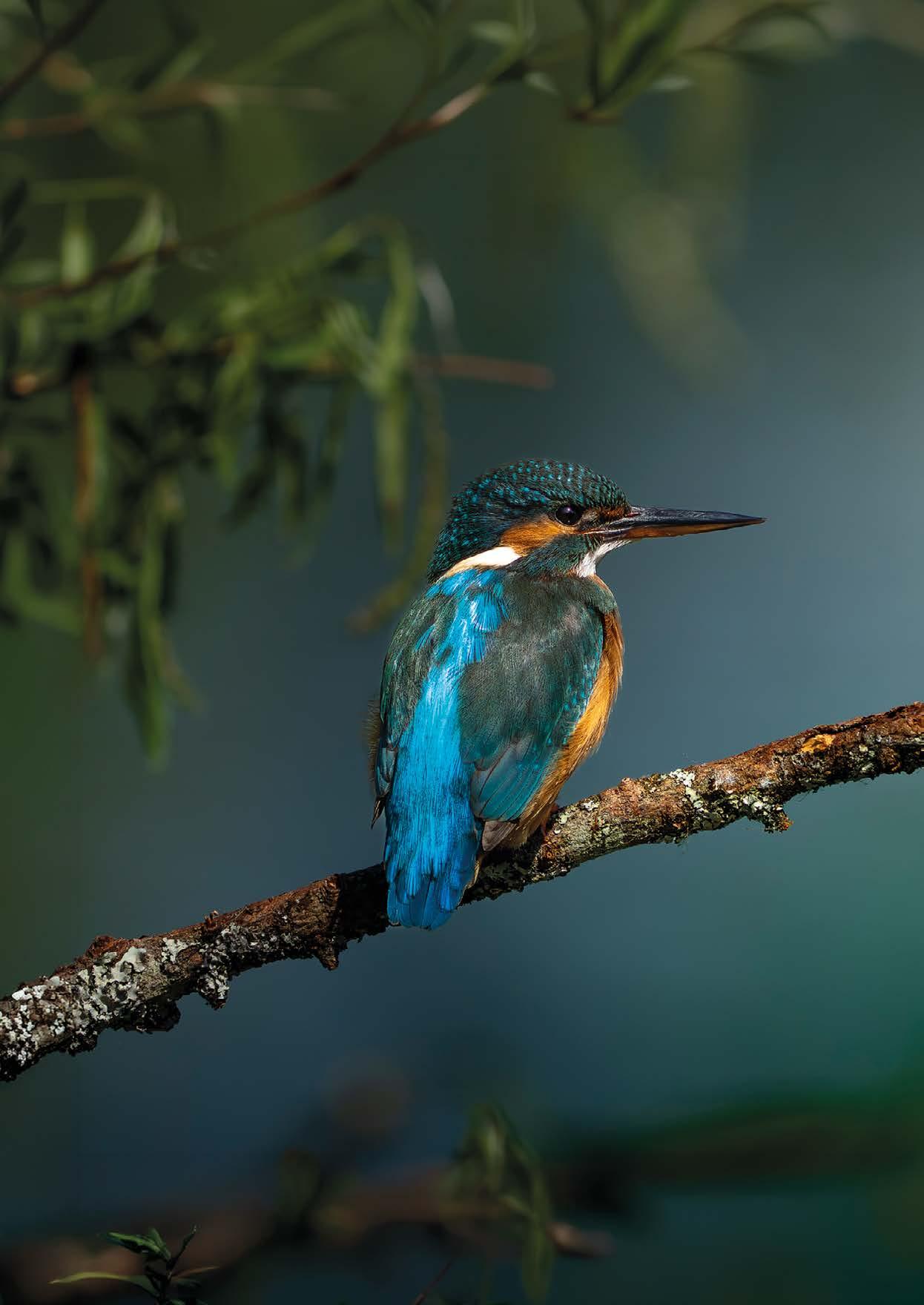
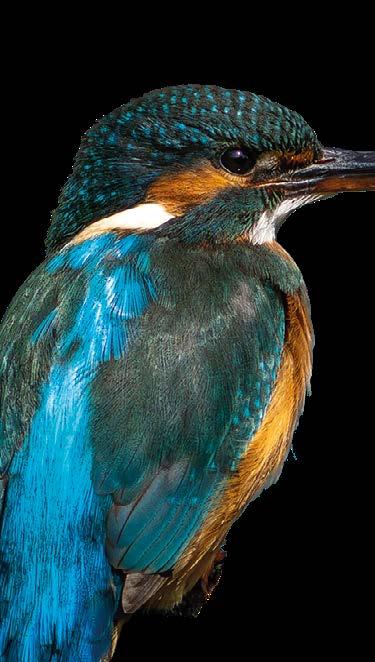
The kings o f our waterways
That flash of electric blue can mean only one thing...
By Jenny Bennion, Senior Communications Officer
Where to spot kingfishers
Keep an eye out around areas of slow-moving fresh water. Kingfishers can often be spotted perching on low hanging branches ready to dive in to catch their prey.
Supporting initiatives to reduce agricultural run-off, sewage and other pollutants entering our water courses will be vital to helping maintain our kingfisher population.
The next generation
Kingfishers create burrows in high-sided riverbanks forming a chamber at the end into which they lay two to three broods of up to seven eggs each year. Chicks hatch after around 20 days and fledge 25 days after that. Each chick can eat 12-18 fish every day meaning that their parents need to provide up to 126 fish each day!
So, it’s no wonder that kingfisher parents chase their chicks off around four days after fledging, so they can start on their next brood.
FACTS ABOUT
kingfishers
How we can help kingfishers
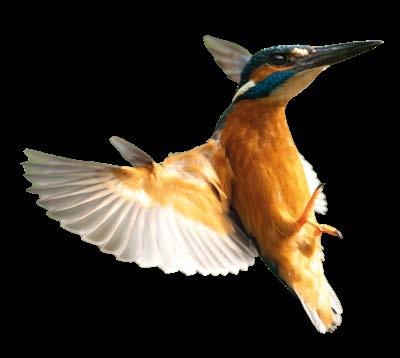
Happily, our kingfisher population is currently doing well, and with approximately 3,850 pairs breeding across the UK, they are classified as green on the UK Birds of Conservation Concern index. However, there are a few issues that can affect them:
Harsh winters – this is one of the major causes of population change in kingfishers. As our weather becomes more unpredictable due to climate change there is concern that this could spell trouble.
Water pollution – kingfishers need clean healthy waterways to provide their food, so supporting initiatives to reduce agricultural run-off, sewage and other pollutants entering our water courses will be vital to helping maintain our kingfisher population.
1 2 3 4 5
Kingfishers can dive at up to 25mph
They have a transparent third eyelid that allows them to see under water
Kingfishers have a 25cm wingspan and 16cm body length - only slightly bigger than a robin, but nearly twice as heavy
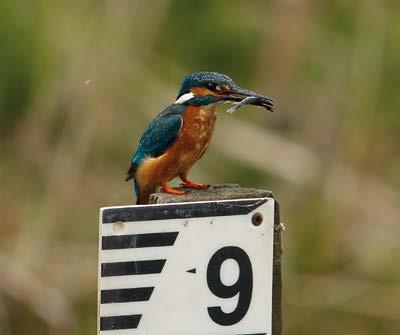
As expert fishers, their diet consists mainly of small fish such as minnows and other aquatic invertebrates including dragonfly nymphs
The kingfishers’ bill is so perfectly aerodynamic that the nose of Japanese bullet trains is modelled on them
Flooding – their riverbank burrows can get drowned out by rising flood waters. However, natural flood mitigation projects can help to allow floodwaters to spread out naturally across land, or seep more slowly into the ground to reduce flash flooding.
Mink predation – the non-native American mink can fit into kingfisher burrows and predate entire broods. However, mink eradication projects, which use special floating traps equipped with remote activation sensors, are having significant success in reducing numbers of this predator. A project spearheaded by the Waterlife Recovery Trust has seen mink completely eradicated from 5,852km2 of East Anglia.
Kingfisher at Lunt Meadows © Phil Boardman
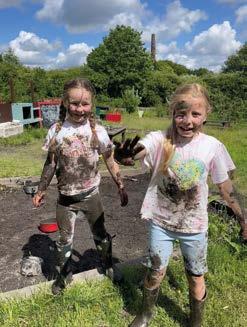
The Hive provides little minds with a playful path to Nature Connection
T Designed for play. Rooted in nature...
By Katie D’Arcy, Education Manager
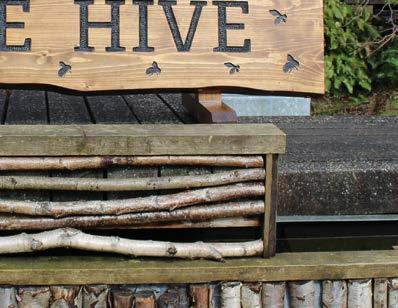
ucked away in a corner of Moss Bank Park in Bolton, is a play space like no other. Brimming with brambles, bees and butterflies, The Hive is a safe and welcoming space for families to connect with nature.
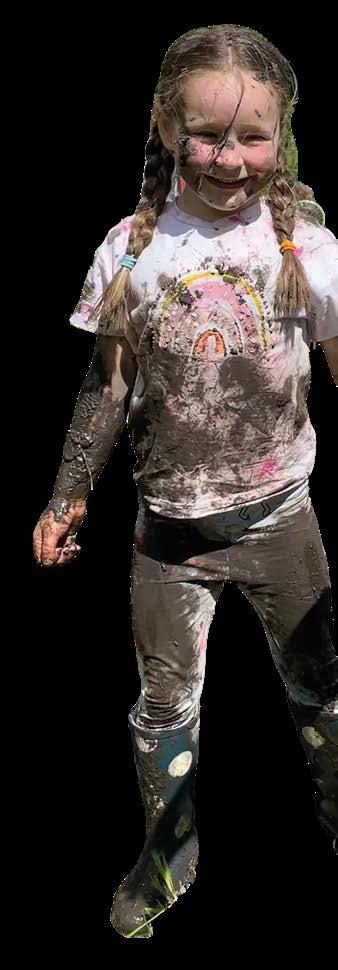
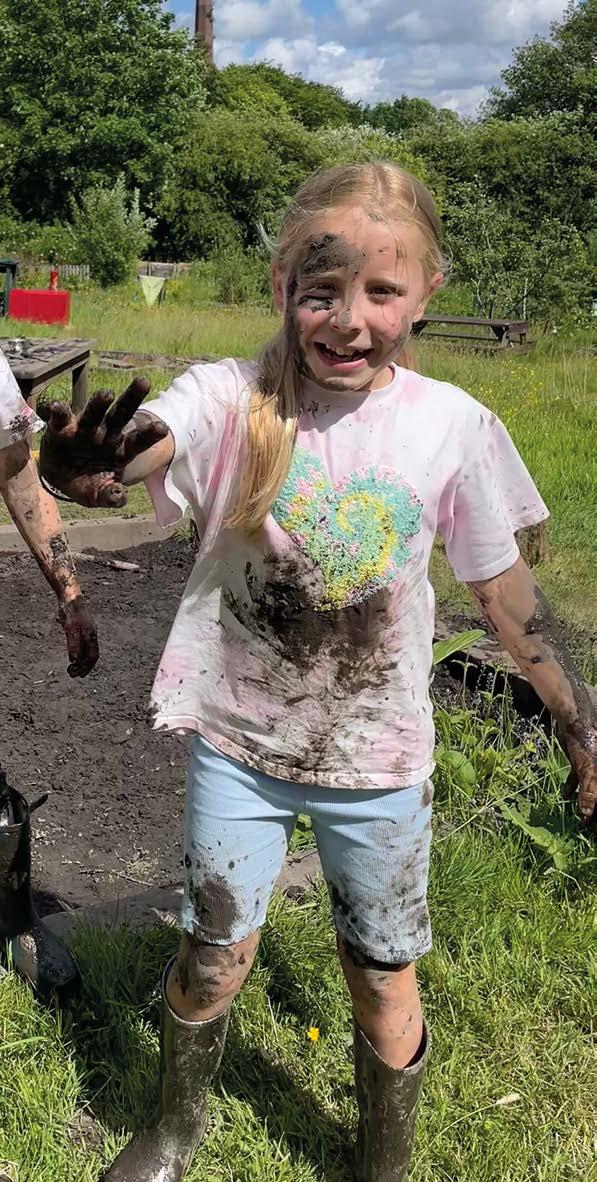
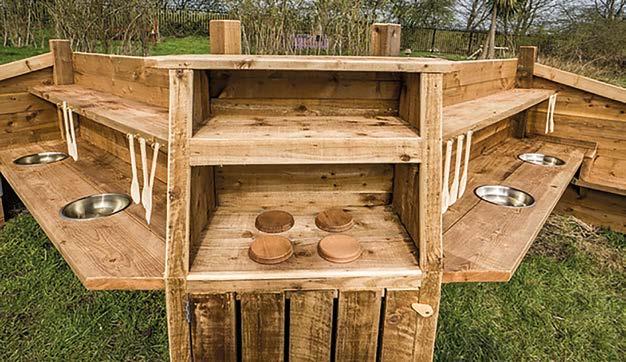
Designed to encourage creativity and curiosity, themed ‘gardens’ offer a range of play experiences for children and their families. They include splashing in the water play area, concocting delicious new dishes in the mud kitchen, making noise in the sound garden, on voyages of discovery in the small world play, building dens, and hiding in the ‘watch tower.’ The play opportunities regularly change, shaped by the seasons and the equipment on offer.
At the heart of The Hive is a simple but important idea: meaningful connections with nature which help people care for the natural world. Play and nature are intertwined. Children weave through long grasses and play alongside nettles and brambles.
It is free play – the freedom to run and explore in a safe environment. There is only one way in and out so he can just run. There’s always something new and different; the strawberry plants, raspberry and mint plants. The apples and pears in autumn. The water play is one of his favourite places. He can spend hours and hours in there.
Anne Marie O’Reiley – Mother of Declan (6 years old)
Scattered throughout the site are delicious edibles: redcurrant, mint, strawberries, apples and pears. Visitors are encouraged to try these offerings (guided by a knowledgeable other) but only taking a little. We sing the once common rhyme; “One for the bird, one for the bee, one for the squirrel and one for me.”
While many families may first visit for the promise of muddy boots and outdoor adventure, they often leave with a deeper appreciation for the natural environment and the wildlife that thrives within it. Relationships and friendships develop with regular visits and it’s wonderful to see connections within the community and with nature.

At the foundation of the Hive is Nicola Kitchen (Engagement Assistant), our wonderful Mud Pack practical volunteer group, and our engagement volunteers. The team work tirelessly to ensure the space is exciting and engaging for our visitors but is also a home for the wildlife.
The Hive is located behind the cafe in Moss Bank Park Open 10am-3pm, Thursday, Friday and Saturday until 31 October (closed over winter)
Day pass: £2.50 (babies under 6 months free)
Season pass: 4 people - £50, 8 people - £75

Scan the QR code to find out more
He’s been coming since he was six months old. It’s just brilliant to get him outdoors and The Hive gives him a variety of different play experiences. There’s nothing better than getting muddy and wet. Simon Atherton & Noah (2.5 years old)
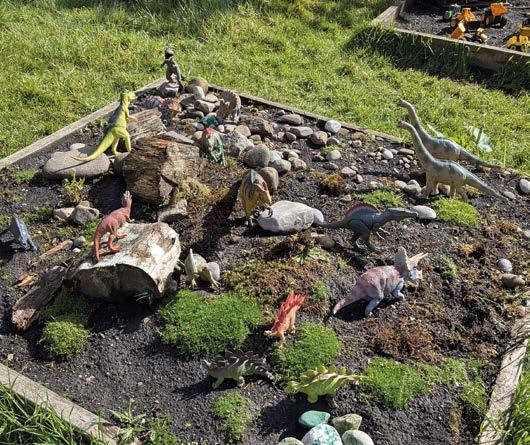
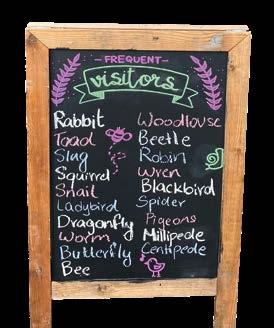
Some prehistoric play mates © Nicola Kitchen
The Hive mud kitchen © Peter Kennington
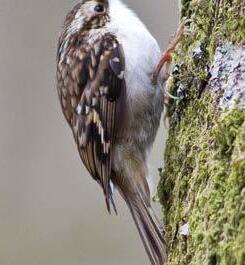
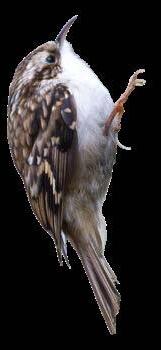
Treecreeper © Harry Hogg
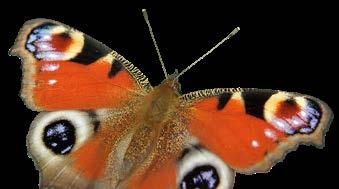
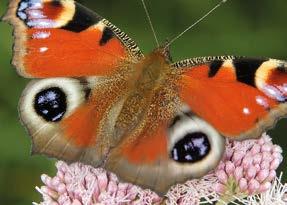
Peacock butterfly © John Bridges
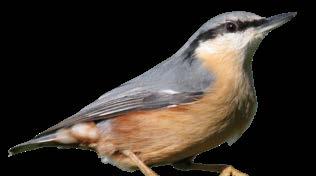
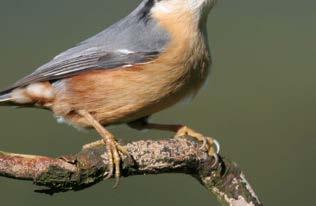
Nuthatch © Margaret Holland
Wild about volunteering

By Linda Watson, Summerseat Nature Reserve Group Chair
The Croal-Irwell Group is part of the Lancashire Wildlife Trust and based in Bury and North Manchester.
The group gets together for regular talks, field trips and works to manage the beautiful, secluded Summerseat Nature Reserve. Group chair, Linda Watson tells us more.
"We have a variety of activities for people interested in wildlife and conservation and monthly indoor meetings with speakers from September to June (except January) in Prestwich.
A recent speaker, Des Ney, took the robin as his subject. He talked not only about the habits and lifecycle of this popular bird, but also its historical and cultural significance, and a presentation on dragonflies and damselflies by Barry Ogden featured stunning photography that brought his talk to life.
Our monthly field trips are planned so we see the beautiful countryside of the North West at its best. In the autumn we have a fungal foray. Last year we went to Tandle Hill Country Park near Oldham where we were well rewarded with many varieties of fungi.
In the spring we have a bluebell walk and this April we visited Hardcastle Crags. The flowers formed a blue carpet in the woods as we walked along the riverbank. In the summer we often head to Anglesey to see the coastal wildflowers and nesting seabirds.
We also have stands at events such as Prestwich Clough Day. We hear interesting stories of what people have seen in their gardens or while out walking and we have the opportunity to tell them about our group's activities.
The jewel in the crown is the nature reserve we manage on behalf of the Lancashire Wildlife Trust. Summerseat Nature Reserve is on the site of a former sewage works and is owned by United Utilities. Over the last three decades work has been carried out to transform the site into a peaceful haven for wildlife.
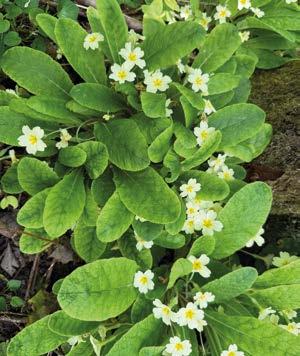
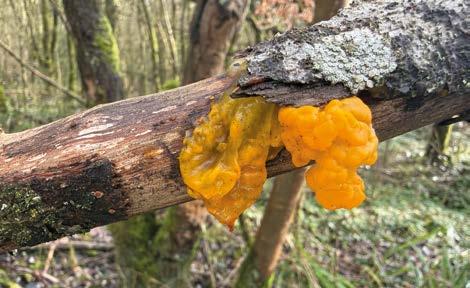
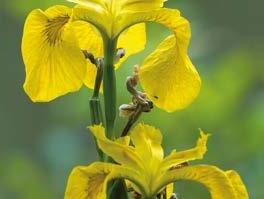
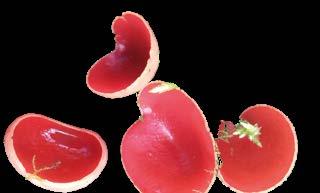
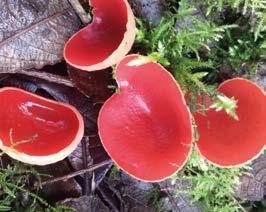
In the spring the woods are full of primroses, wild daffodils and scarlet elf cap fungi. In the summer the ponds have dragonflies and damselflies and are framed by yellow flag iris.

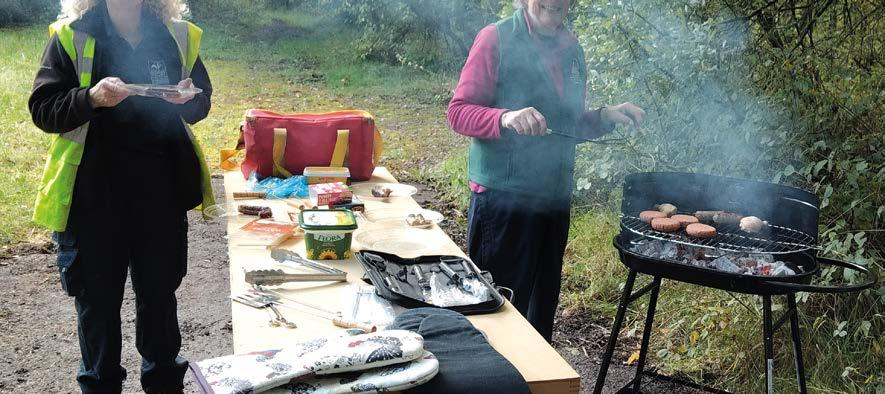
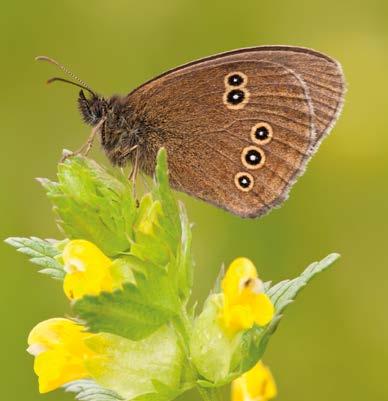
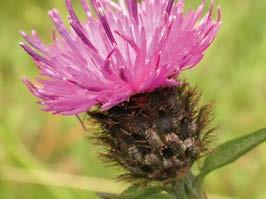
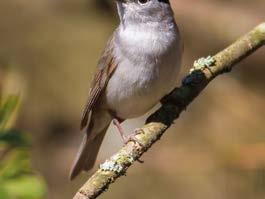
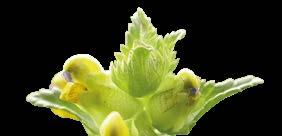
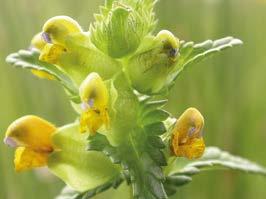
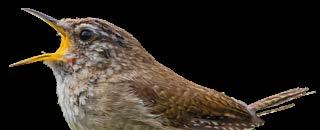
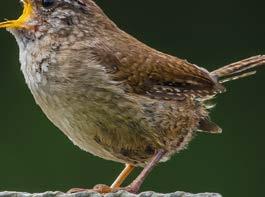
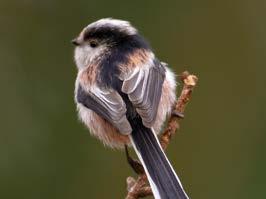
The wildflower meadow has orchids, yellow rattle, toadflax and knapweed. There are blackcaps, song thrushes, wrens, nuthatches, long-tailed tits and treecreepers.
On a recent dawn chorus walk, 26 species of bird were identified. The stars of the show were a pair of tawny owls calling to each other in the trees.
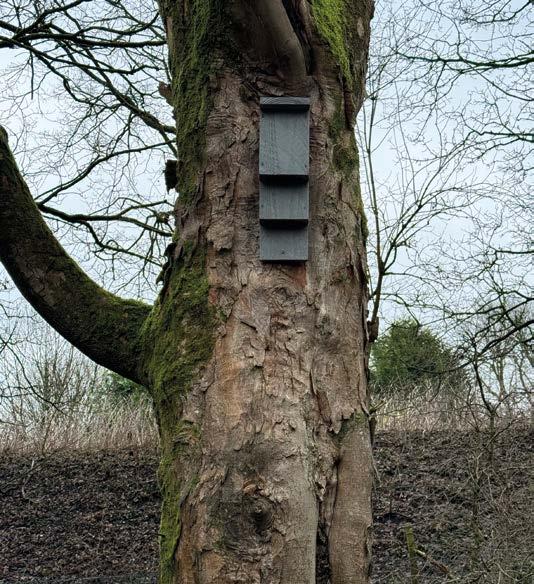
We have monthly working parties to maintain and improve the reserve. Activities include path clearing, pond clearing, putting up bird and bat boxes and strimming and raking the wildflower meadow."


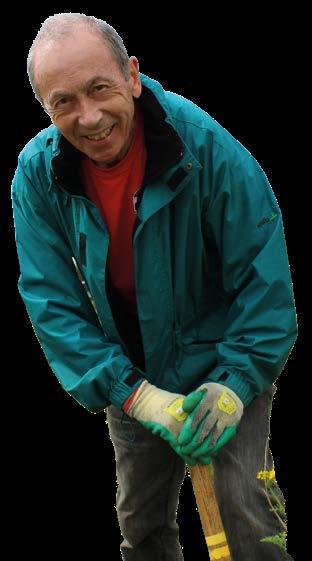
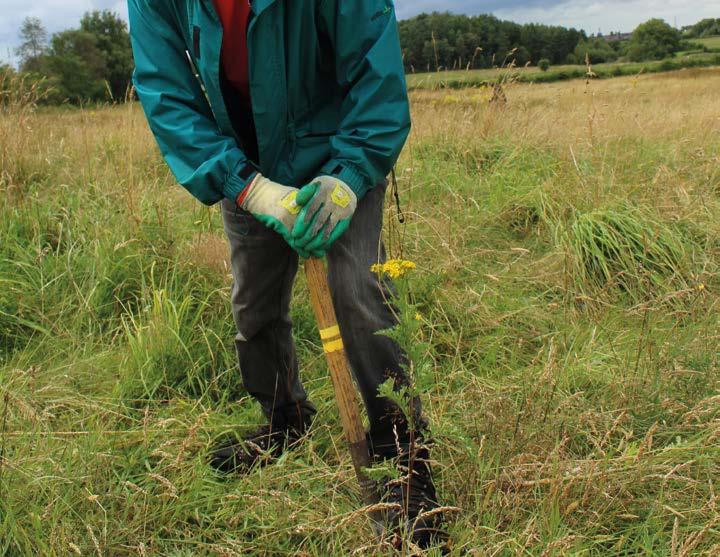
Morffew
Scarlet elf cups © Helen Earnshaw
Yellow rattle with ringlet butterfly © Ross Hoddinott 2020VISION
Join us for our Supporters’ Day and AGM 2026

By Emma Ironfield, Volunteer Manager
Members and volunteers are warmly invited to our annual Supporters’ Day and Annual General Meeting on Saturday 14 November at Brockholes Nature Reserve.
Last year more than 140 members and volunteers joined staff from LWT and other local environmental organisations to celebrate all we have achieved together for wildlife.
Chair, Chris Davies, and Chief Executive, Tom Burditt, started the day reflecting on our achievements and future plans, and thanking each member and volunteer for their contribution. We discussed how we can continue to encourage at least 1 in 4 people to take action for nature.
The keynote speaker, hedgehog enthusiast Hugh Warwick, spoke passionately about landscapes and protecting our green spaces to encourage wildlife to roam. He then delivered a popular workshop exploring how habitat fragmentation is a key driver of hedgehog population decline and the ways we can begin to overcome these obstacles.
Everyone attended a range of workshops, including ‘Growing Recovery –Restoring your Moorland’ delivered by the Lancashire Peat Partnership team, showing what it takes to grow sphagnum moss in a greenhouse setting. Our livestock team delivered a workshop on smart grazing and how we are using Nofence technology across nature reserves to enhance cattle grazing. Swifts, swallows and house martins were the focus of an interactive quiz-based workshop, focusing on bird identification skills.
The Halton Moth Group shared stories and highlighted the impact of citizen science, demonstrating moth trapping equipment. Another workshop focussed on how one member saved a Site of Special Scientific Interest, set up a charity, found supporters, and secured the funding to buy a whole nature reserve.
And this year’s Supporters’ Day, focussing on nature recovery will be just as exciting. We will be welcoming nature writer and rewilding advocate, Tom Bowser, as our keynote speaker, and offering a wide range of workshops, which showcase projects from across the Trust. It is a great opportunity to join together with like-minded individuals for an unforgettable and inspiring day.

Scan the QR code to register your interest for Supporters’ Day 2026
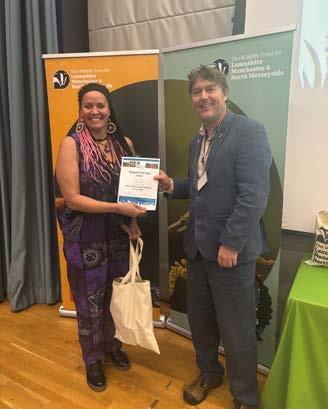
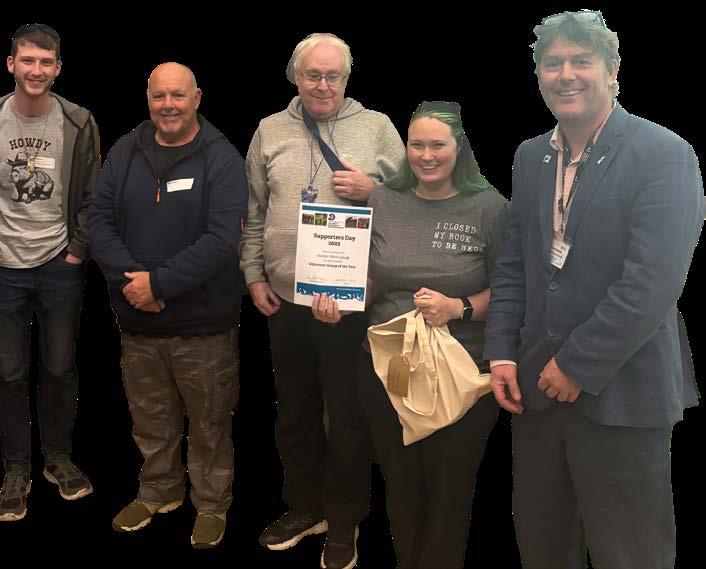
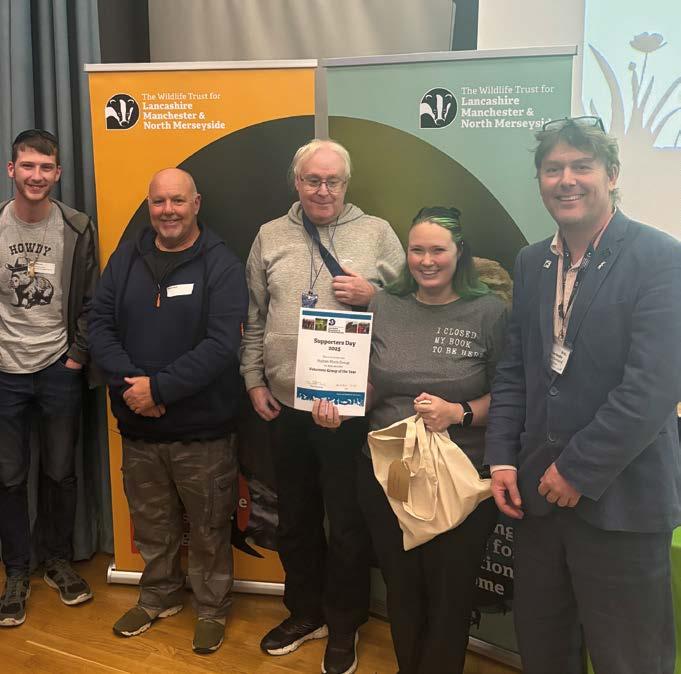
Moth Group - Volunteer Group of the Year 2025


Conservation Achievement of the Year 2025
© Cutacre Volunteer Group
Halton
Action for Nature Awards
The day would not be complete without our Action for Nature Awards. These are an opportunity to celebrate the inspiring stories of the people and groups who have been doing amazing things to aid nature’s recovery.
Nominations are open until 30 September 2026.
Scan the QR code for the nomination form and details of the categories
Unsung Hero

Young Nature Champion of the Year
Most Inspirational Volunteer of the Year
Volunteer Group of the Year
Conservation Achievement of the Year
Learning Through Nature Award
Business Nature Champion of the Year
Andy Rowett Outstanding Nature Champion of the Year
Thank you to everyone who attended Supporters’ Day 2025 and we look forward to welcoming you for another fantastic day of inspiration, shared learning and the chance to meet other members and volunteers.
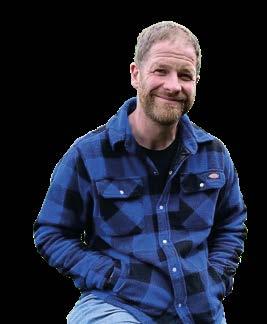
Nature writer Tom Bowser will be giving the keynote speech at this year's Supporters' Day © Tom Bowser
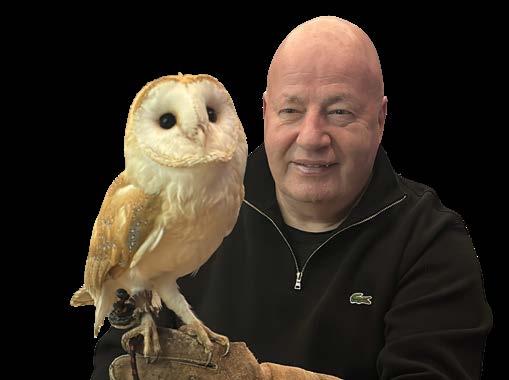
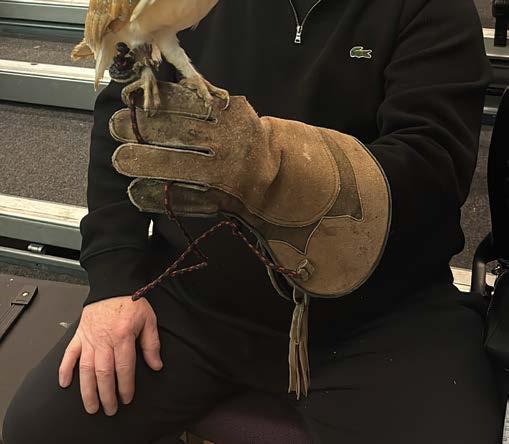
Brian Smith and Gizmo the barn owlwinners of the Andy Rowett Outstanding Nature Champion of the Year 2025
Afka Ray - Most Inspirational Volunteer of the Year 2025
Aria Wilcockson - Young person of the year 2025
Magical marine molluscs
We all know about slugs, slimy things that eat your plants. They aren’t everyone’s favourite creatures – but take that same species and put it beneath the waves and something magical happens... nature gives us nudibranchs.
What on earth is a nudibranch?
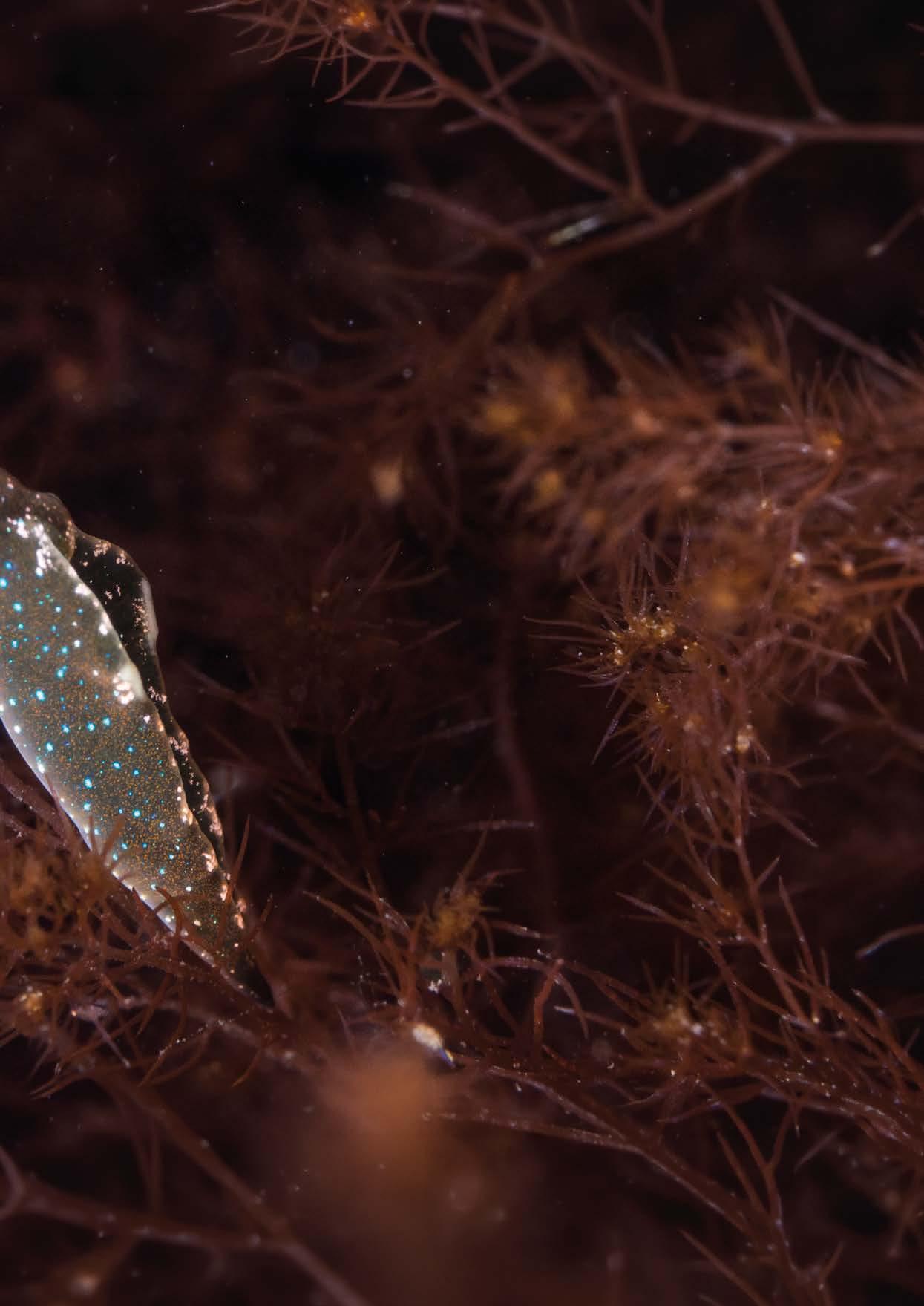
Nudibranchs are soft-bodied, colourful molluscs that live throughout UK waters including just off our coastline in the Irish sea. They are a mesmerising riot of colours and shapes, sporting feathers, spines and gills that look like something straight out of a fantasy colouring book. Some variations appear to have an ethereal glow, as if lit up from the inside.
The striking neon patterns and funky shapes of the nudibranch serve as an evolutionary advantage to both camouflage and warn predators away from them – a handy trick when you don’t have a shell. The name nudibranch comes from the Latin word nudus which means ‘naked,’ and the ancient Greek word brankhia which means ‘gills’.
In short, they are snazzy sea slugs which have earned themselves various nicknames a bit more inspiring than sea slug, such as sea-clown, -rabbit, -marigold, -dancer or -dragon.
Here at Lancashire Wildlife Trust, we love wildlife. It’s what we do. But sometimes inspiring that same love in others can be an uphill battle...
Slugging it out
Nudibranchs are found in coral reefs, sandy seabeds, rocky shores and sea debris like shipwrecks. They feed on seaweed, sea mats, sponges and anemones. And they aren’t above slugging it out with other nudibranchs and eating them too. This is called ‘biotic conflict’ and is thought to be a way to maintain populations and increase chances of survival for some species. Some nudibranchs also ingest the stinging cells of their prey into their own soft bodies, giving them an extra weapon against predators.
Not a nudibranch
It would be remiss of us not to point out that whilst nudibranchs are a dazzling species to behold, not all nudibranchs are sea slugs, and not all sea slugs are nudibranchs.
There are a whole host of super sea slugs that are bright and beautiful, but do not belong to the order of Nudibranchia.
Both are gastropods but have different characteristics and taxonomy, and are a fascinating example of the sheer diversity of marine life in our waters. Understanding the difference between the two is as complex as the ocean itself and keeps marine biologists and enthusiasts researching.
The simplest distinction lies in their size, diet and defence mechanisms; sea slugs are herbivorous, carnivorous, or omnivorous –they do not consume their own species or ingest stinging cells. They also tend to be larger, and use ink release, camouflage and autotomy (the ability to shed part of its body to escape predation) as defence mechanisms.
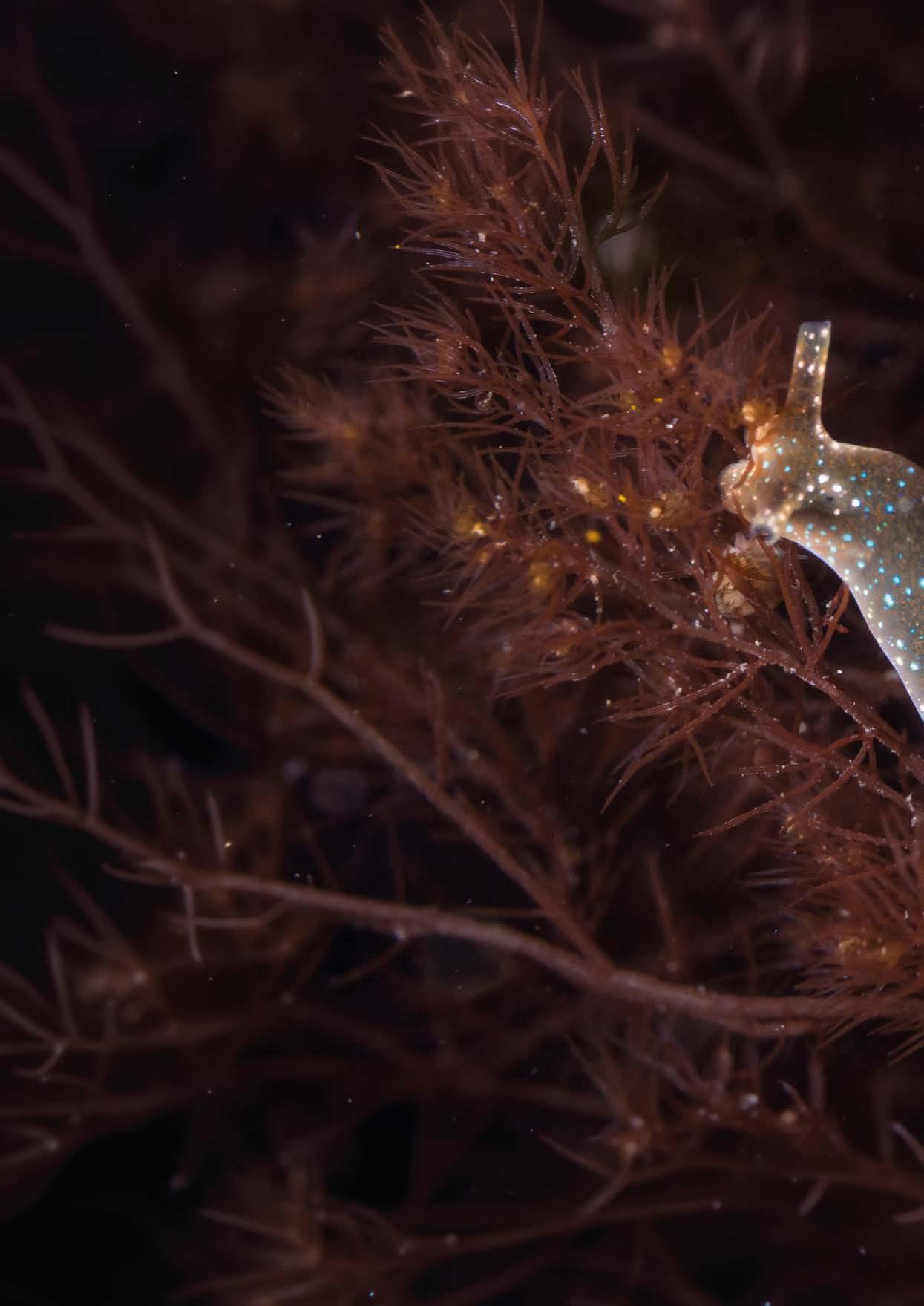
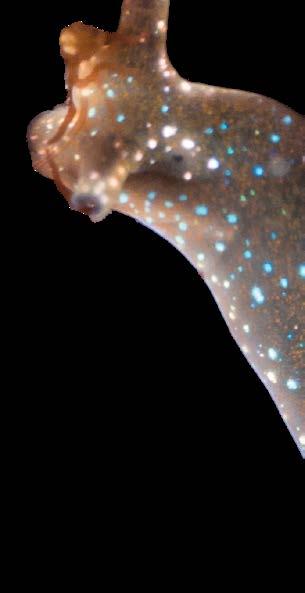
The largest known nudibranch (Facelina bostoniensis)
© Dan Bolt
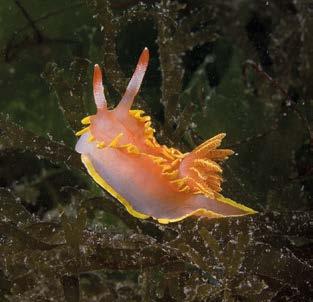
Yellow skirt sea slug (Okenia elegans)
© Paul Naylor
Nudibranchs are hermaphrodites, possessing both male and female reproductive organs.
There are over 100 different species of nudibranch in UK seas
All nudibranchs are sea slugs, but not all sea slugs are nudibranchs
By Amy Shakeshaft, Communications and Campaigns Assistant
of our favourite nudibranchs
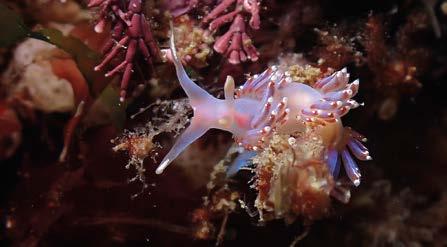
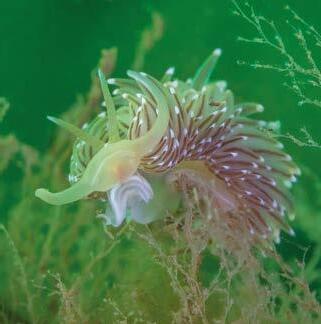
Violet sea slug (Edmundsella pedate)
A tiny nudibranch with striking violet colouration and white tips to the projections running along its back. Found all around the British coast and active between April and October, they lay eggs in a thin white thread which is much more discreet in appearance than their parent to protect them.
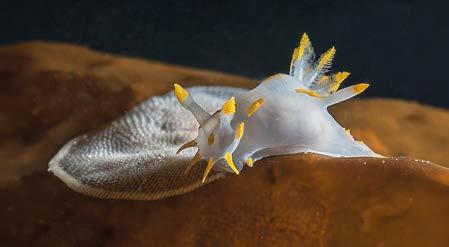
Yellow edged polycera (Polycera kernowensis)
More common in the south and west of Britain, this fancy fellow has a translucent white body with dabs and dashes of bright yellow. The scientific name is derived from the Greek word polys and keras, meaning ‘many’ and ‘horns,’ while kernowensis is derived from the old name for Cornwall, where this slug is commonly found.
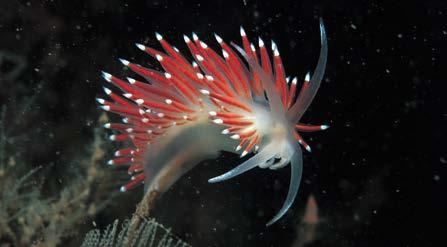
Scarlet lady (Fjordia browni)
This is one of the nudibranchs that ingests stinging cells from polyps to wield as a defence against predators. Its translucent white body is bedazzled with long scarlet, white-tipped spines, in the fashion of a porcupine.
© Justin Hart, Alderney Wildlife Trust
© Mark Thomas
© Paul Naylor marinephoto.co.uk
Cutacre’s comeback continues...

By Lydia German, Senior Contents and Campaigns Officer
Cutacre was once a series of overgrazed fields, but today, thanks to years of careful management, funding support and volunteer dedication, it’s becoming a thriving haven for wildlife with exciting new species recorded every year.
What excites me most are the multiple research projects taking place, resulting in new species record, findings being published in journals, and fresh ideas from students about how to manage the site - the last 12 months have been especially significant...
For the past three summers, Senior Content and Campaigns Officer Lydia has been following the story of Cutacre Nature Reserve in Wigan.
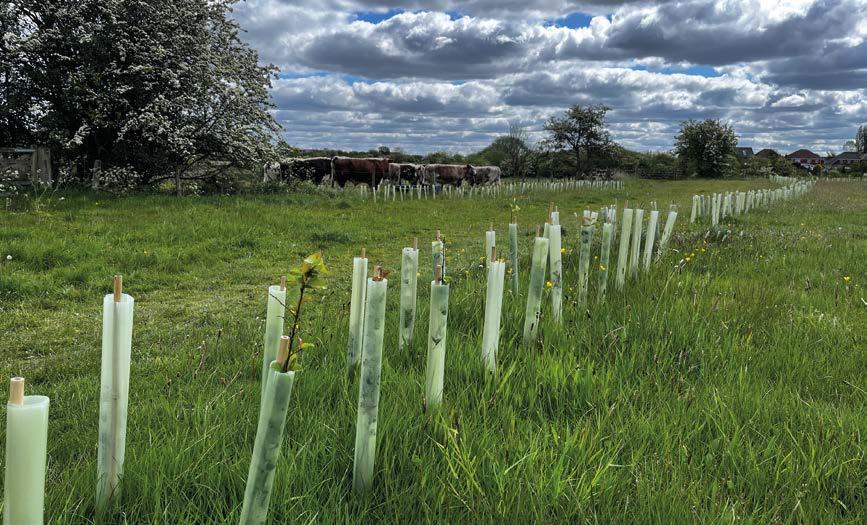
Throughout autumn and winter, volunteers, staff and corporate supporters laid 140 metres of hedgerow and planted more than 5,000 hedging trees. Over the coming years the site will have more than four miles of hedges in total.
Made up of species including hawthorn, hazel and holly, these hedges provide valuable movement corridors and shelter for wildlife, while helping connect habitats across the wider landscape. Funding from Manchester Airport Group also enabled four-time hedgelaying champion, Peter Gibson, to return to the site and restore hedges on neighbouring farmland.

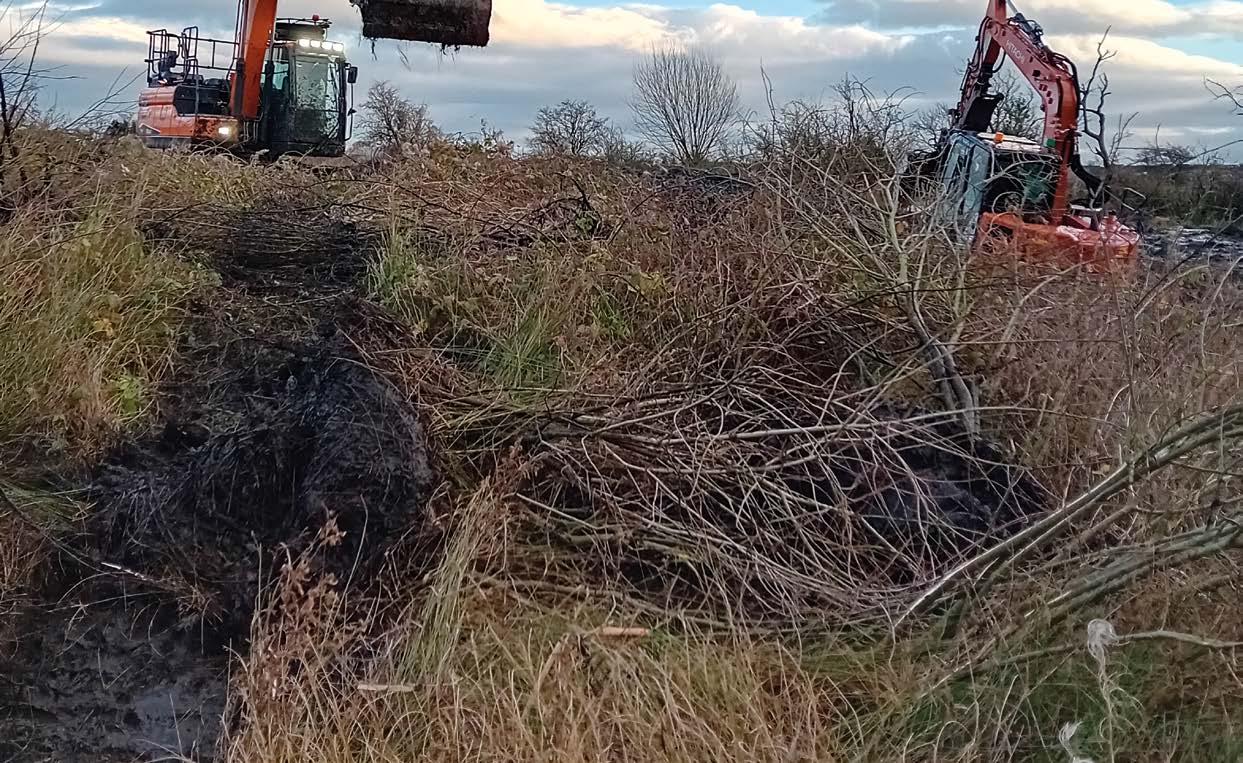
Volunteer at Cutacre and be part of this amazing project – scan the QR code or visit lancswt.org.uk/ volunteering

Pond restoration work has continued too, with another six ponds restored alongside those completed last year, plus two entirely new ponds created. Great crested newt eggs have been recorded in nine ponds in total, confirming successful breeding on site. This summer, further eDNA surveys will help build a fuller picture of the species using these habitats.
The site’s meadows are also responding dramatically to changes in management. By cutting and removing hay in late summer, nutrient levels in the soil are reduced, allowing wildflowers to flourish instead of dense grasses dominating.
Species such as pignut, bistort, yarrow and sneezewort have all increased significantly this year, which is a great sign of a healthy meadow. These species were already present in the seedbank, so the fact that they have expanded their range shows that managing the site differently is working.
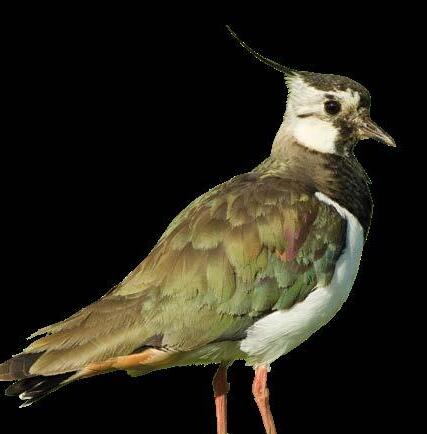
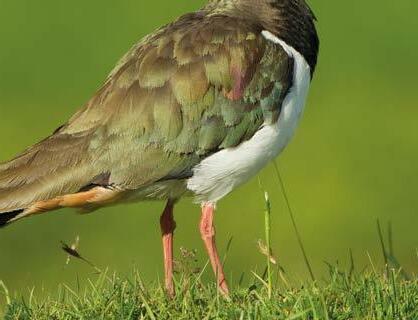
The improvements are also benefiting wildlife. Lapwing and skylark have nested on the reserve for the first time this year, alongside new sightings including southern marsh orchid
Monitoring projects are also helping us better understand how wildlife is responding to the changes. A national invertebrate project with the Wellcome Sanger Institute has already identified diaphorus oculatus, a species of fly never before recorded in Greater Manchester.
Meanwhile, researchers and students from the University of Salford are carrying out ecoacoustic monitoring (including confirming grey partridge are present across the landscape) and habitat management studies on site.
Last autumn, the Cutacre volunteers were named Volunteer Group of the Year at our annual Supporters’ Day. I was so proud to present them with their award after following their journey for the past few years.
I’d like to give a special shoutout to my colleagues Stephen Cartwright and Julia Dixon – it’s down to their management of the reserve that we’ve seen these fantastic changes. I can't wait to see the future of the site as development continues.
Many thanks to the following for supporting work at Cutacre: The Tree Council, Manchester Airport Group, Inflexion and Cavendish Nuclear.
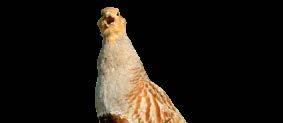
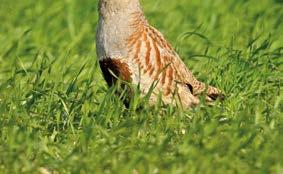
Research at Cutacre is helping us learn more about one of the UK’s most elusive farmland birds, the grey partridge. There is currently little research focused on this species, and to our knowledge, no studies have specifically used ecoacoustic monitoring to investigate grey partridge.
The findings from this work are expected to contribute to a future scientific publication, which will help to build new knowledge of the species.
Dr Helen Whitehead, Lecturer in Environment and Sustainability at the University of Salford
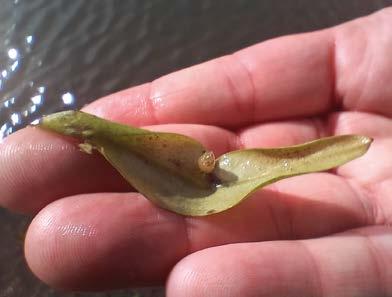
Great crested newt eggs at Cutacre © Lancashire Wildlife Trust
A newly planted hedge being investigated by our cattle © Lancashire Wildlife Trust
Grey partridge
© Chris Gomersall 2020VISION
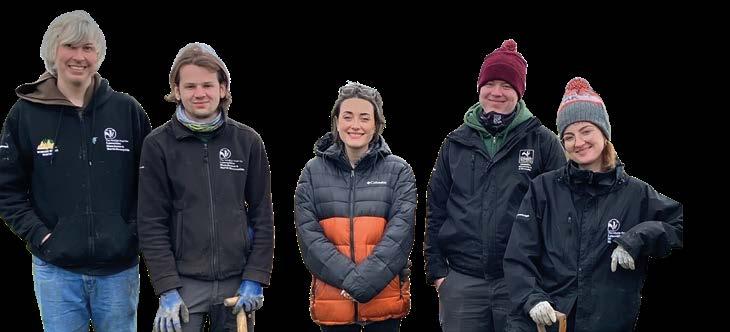
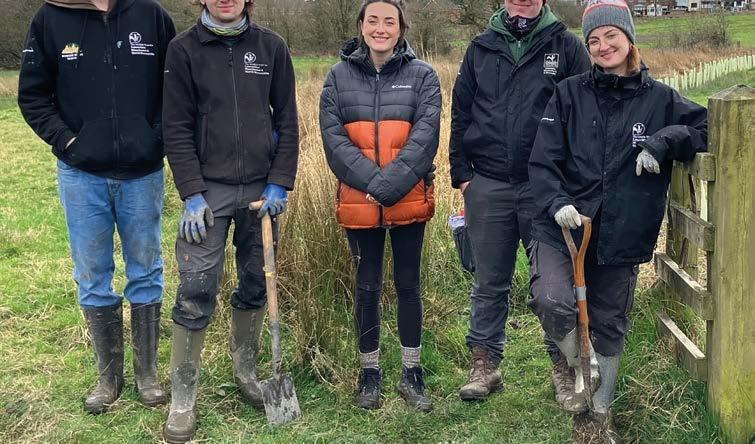
Lydia (far right) on a staff hedge planting day at Cutacre © Alan Wright
Lapwing
© Mark Hamblin 2020VISION
Hot on the otter trail
Otter sightings on the Lune and Ribble are exciting and encouraging. Are these talented mammals making a comeback?
Guiding a team of reporters is challenging, even more so if you are traipsing through muddy fields and woodland – and they tend to turn up in expensive shoes.

By Alan Wright, Head of Communications and Campaigns
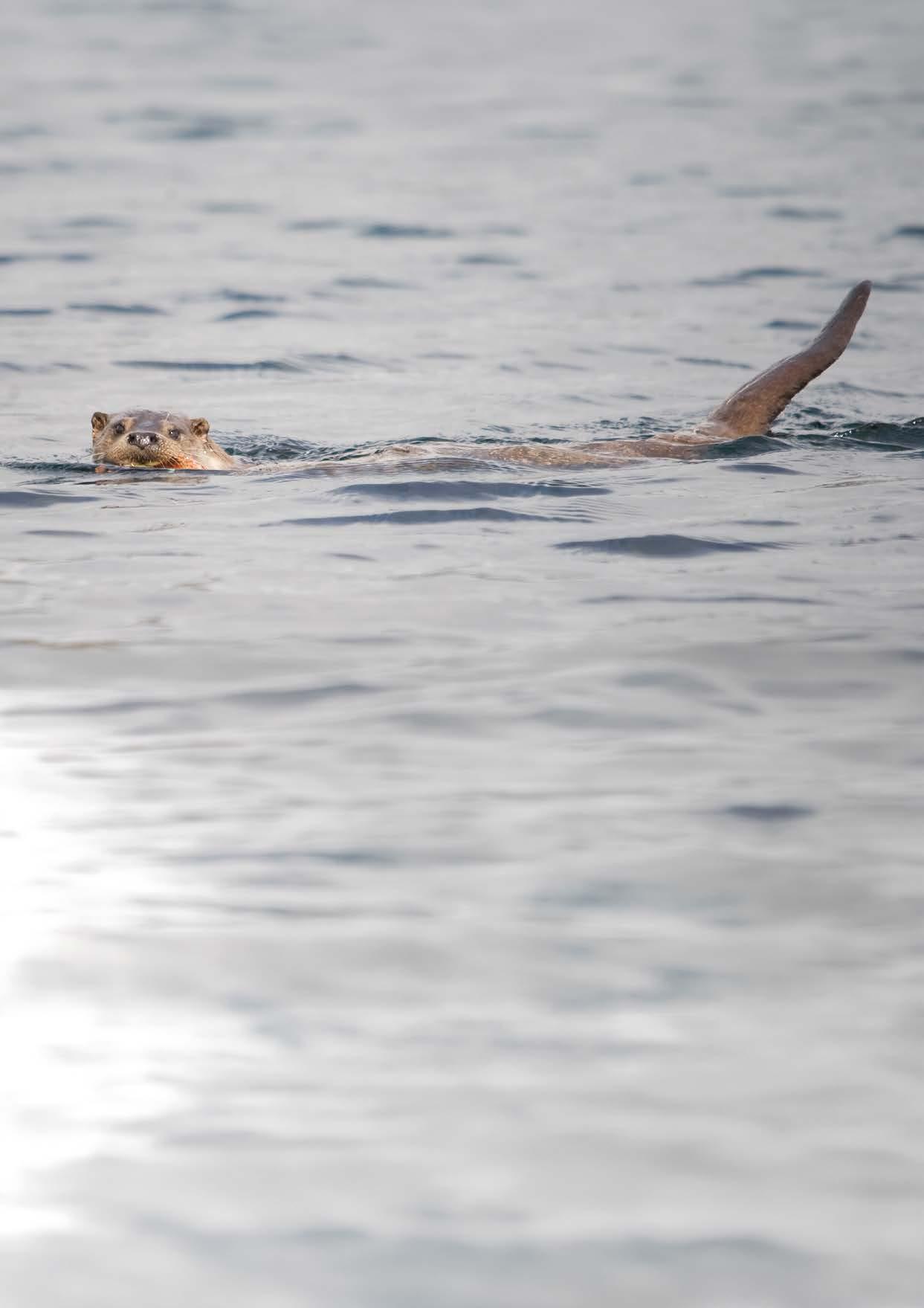
A couple of years ago I was out with a team from the local news searching for the rare belted kingfisher that had been spotted near Brockholes, with no joy, but then… I spotted an otter swimming in and out of an old clay drainage pipe. “How exciting!” I exclaimed.
My colleagues were more focussed on seeing the rare bird and did not realise the significance of me spotting only my second otter in the wild, the other being in Scotland. Otters are rare and had vanished from most of our rivers in Lancashire, Manchester and Merseyside. There hasn’t been an otter spotted at Otterspool on the banks of the Mersey for some time.
These wonderful mammals have a low tolerance to pollution, which means their presence tends to mean the waterway they are inhabiting is clean with a good supply of fish and other food.
Living in the North West of England, where we have some of England’s most polluted rivers, this has to be good news. Otters mean clean rivers.
Otherwise, otters are pretty resilient to climate change events like storms, drought and temperature changes, but require clean rivers with an abundant source of food and plenty of vegetation to hide their secluded holts.
They contribute significantly to the health and balance of aquatic ecosystems. As their habitat’s top predators, they control populations of fish and other prey.
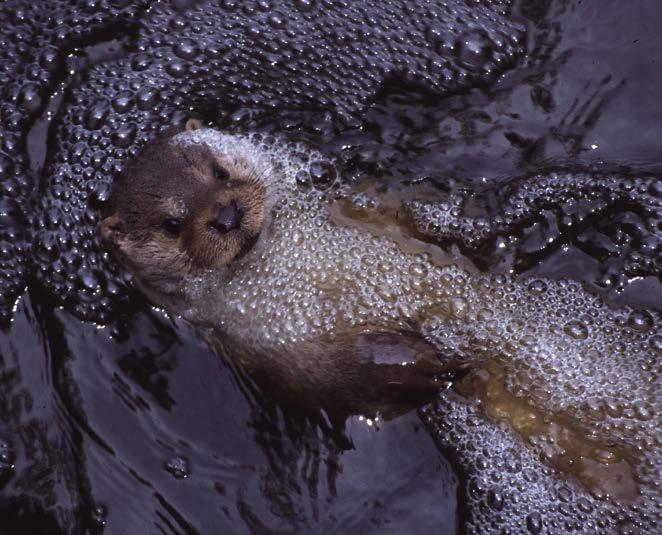
While you may see mink on our riverbanks, it would be difficult to confuse them with the larger and more powerful otter, with its greybrown fur, a broad snout, and a pale chest and throat. They have a much broader face than the mink.
Otters are fairly common sights on the Lune, near to our Aughton Woods Nature Reserve, and we are now seeing otters coming across from the River Ribble to Meadow Lake and Number One Pit at Brockholes.
Hopefully my excitement at spotting an otter will be treated with a little bit of the same by nature loving visitors to our reserves.
FIVE FACTS ABOUT
Eurasian otters
Otters can swim at up to 9mph (almost twice as fast as our Olympic swimming champions who can reach 5mph) and can run at up to 15mph on land
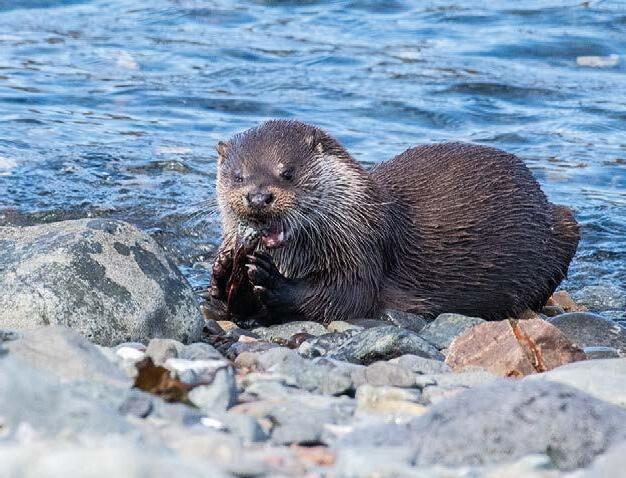
Otters feed on fish, eels, waterbirds, amphibians and crustaceans
Cubs are born in underground burrows called holts and are in the water by 10 weeks of age, staying dependent on their parents for over a year
Otters have webbed feet, dense fur to keep them warm, and can close their ears and nose when underwater.
Otters can communicate using their spraint (poo). Over 100 different scent components have been identified of which 17 of these are thought to contain information on sex and even individual recognition
Wildlife in North Lancashire 2026
The 2026 issue of the North Lancashire Wildlife Group's annual publication is now available. With 60 pages of reports and articles and over 200 photographs it is a celebration of wildlife in North Lancashire and the surrounding area. Copies cost just £5 + p&p.
For details of payment and to provide delivery address please contact Lucy, at luth23456@mail.com
Find out more about the North Lancashire Wildlife Group at nlwg.org.uk
Otter © Derek Moore
Otter chomping on a tasty morsel @ Peter Smith
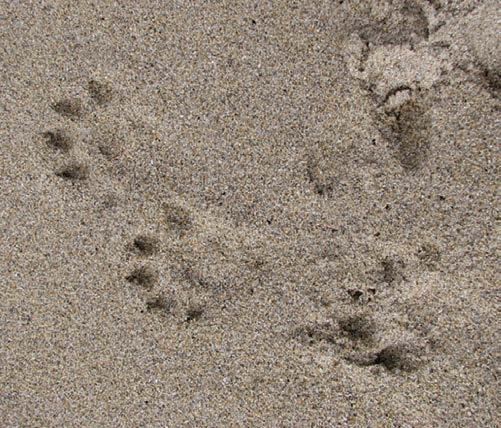
Otter tracks in sand @ Sue Crooks
Seasons thethrough lens
By Laura Cronin, Fundraising & Digital Marketing Officer
As summer marches on, we look back at the winning images taken by our talented photo competition participants since the turn of the year.

If you’re feeling inspired to head out to your local reserve and see what you can capture with your camera, why not enter our competition?
Scan the QR code to discover this month’s theme and enter your favourite shots.
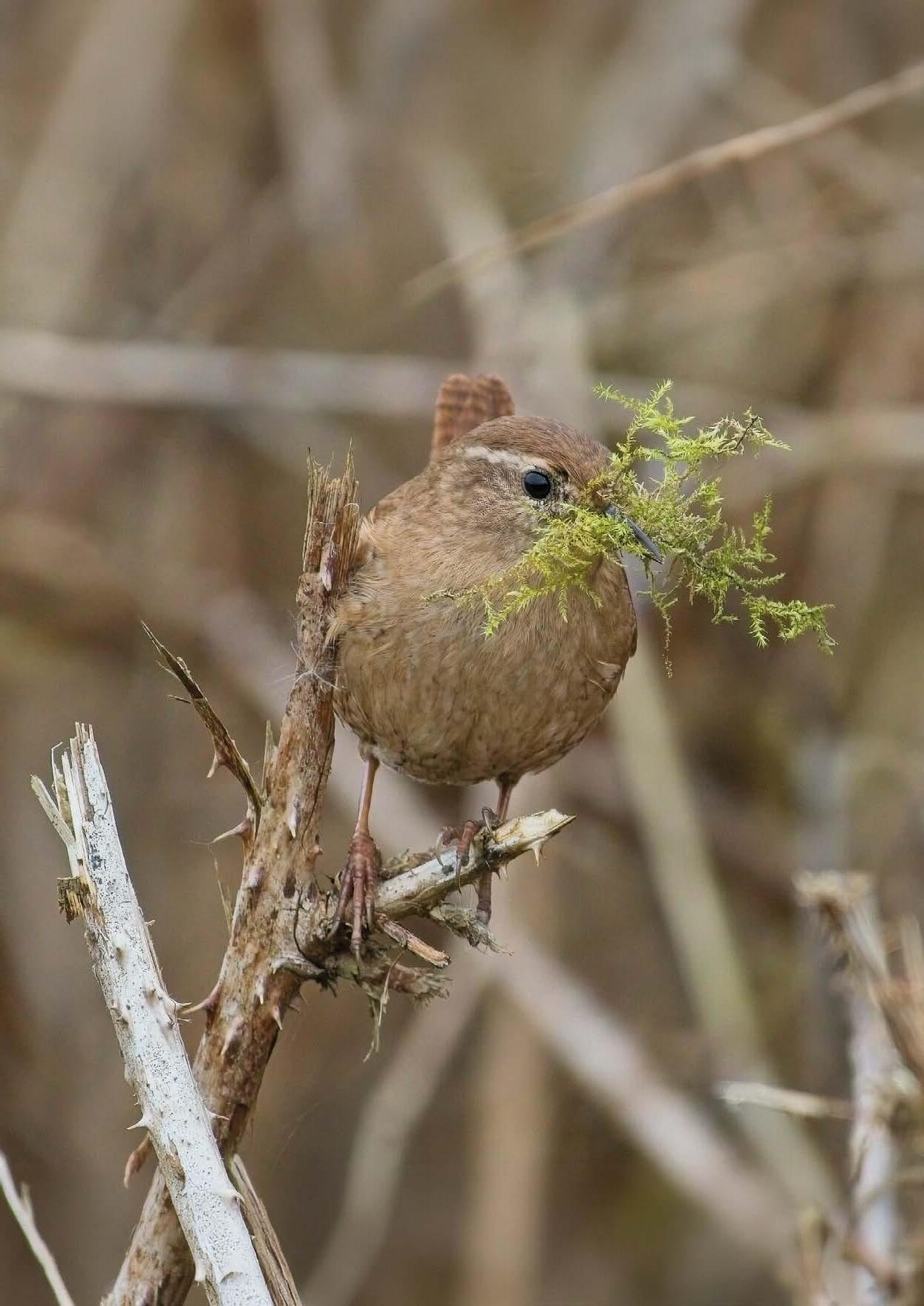
Nest building wren, Brockholes © Simon McKone
Our monthly photo competition gives you the chance to showcase the beauty of the natural world as the seasons change. The winners have done a wonderful job of capturing how our nature reserves burst into life during spring.
January
A bright winter, Brockholes - Raven Grey
This curious blue tit won the hearts of our voters in January, where the theme was Winter Wildlife Wonders. Taken by Raven Grey at Brockholes, voters particularly loved the vibrant colours of the blue tit’s feathers and how they stood out against the grey, wintry surroundings.
February
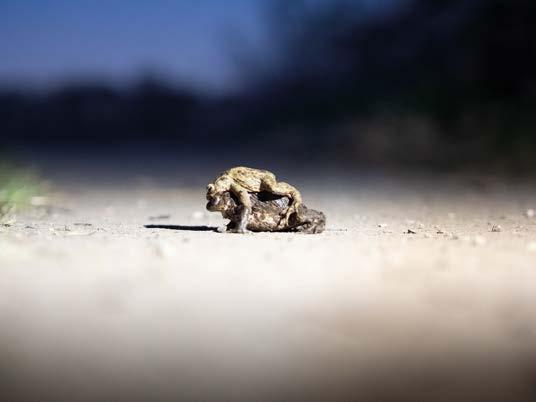
Toad in the hole, Lunt MeadowsJimmy McGrory
A fairly spot-on depiction of February’s theme, Love in Nature, Jimmy McGrory photographed these mating toads at Lunt Meadows Nature Reserve. Our voters were impressed by the skill involved in getting this shot, with one voter commenting: "To catch two mating toads in reduced light is amazing." The hilarious title was also appreciated by several commenters.
March
Nest building wren, Brockholes - Simon McKone
March is when we start to see some of our favourite signs of spring across our reserves, particularly birds gearing up for mating season. This month’s winning photo by Simon McKone demonstrated this perfectly. This cute little wren busily gathering nesting material at Brockholes was loved by our voters, with comments describing it as "a sure sign of spring".
April
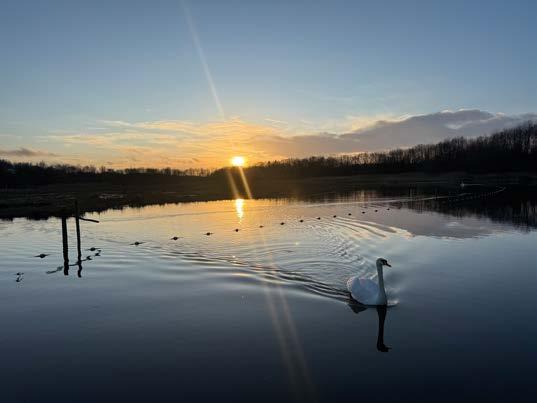
Swan at Brockholes at sunset - Maxine Tetlow
April’s theme was Waterways and Wetlands. Our voters fell in love with the colours of the sunset and the swan’s reflection in the lake's still waters, with comments describing the scene as "calm and serene", "beautiful", and "tranquil and relaxing".
As an avid sunset chaser, we had actually gone to Brockholes to see the murmuration at sunset but had nipped onto the village to visit the facilities! As I came out, I noticed the amazing sky and the reflection in the water, and as I walked towards it, the swan began to glide gracefully towards me. I managed to capture this beautiful moment on my iPhone, and I think it shows that some of the best photographs are the ones you never plan.
Maxine Tetlow, April 2026 winner
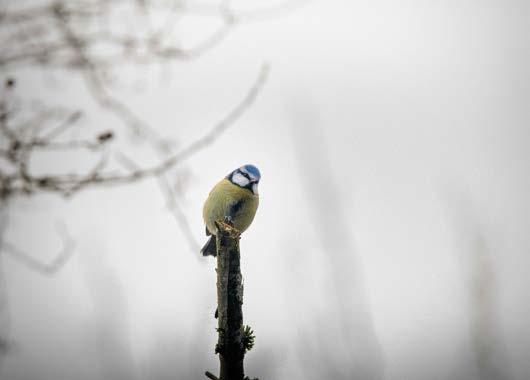
A bright winter, Brockholes © Raven Grey
Swan at Brockholes at sunset © Maxine Tetlow
Toad in the hole, Lunt Meadows © Jimmy McGrory
Quenching the thirst for knowledge is fun
The message was loud and clear at the eighth annual Manchester Festival of Nature –Manchester loves nature.
By Alan Wright, Head of Communications and Campaigns
The annual summer event at Heaton Park was packed with thousands of families thirsty for knowledge about the nature on their doorsteps and the work being done to keep it there.
It is a gathering of conservationists, Manchester Metropolitan University and Manchester Museum where we can share ideas and celebrate our successes with people who appreciate all we are doing.
And we are able to get our messages out to decision makers and influencers, that nature is a high priority to a huge percentage of the people that matter mostlocal residents.
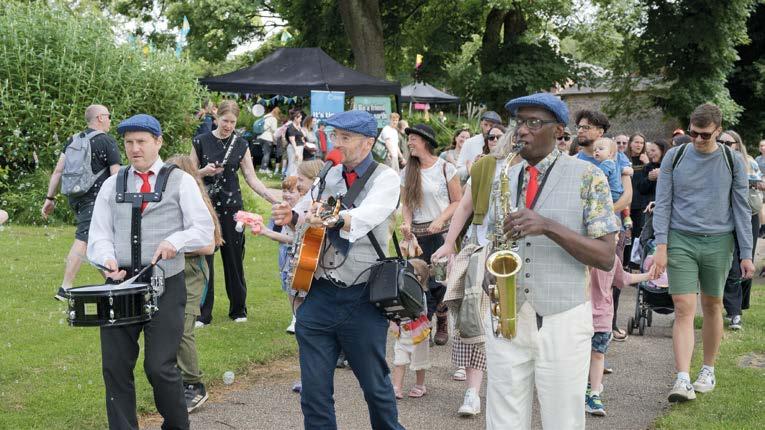
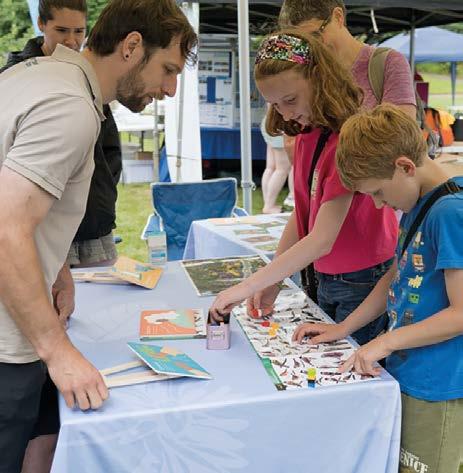
But the whole idea of the Manchester Festival of Nature (MFoN) is to learn while having fun, so there was dancing, singing and lots of people took part in the Legendary Pollinator Parade with its musical accompaniment.
Over 15 stalls were studying aquatic insects, squeezing sphagnum moss, introducing people to bats, clay nature pressing, Hapezome paper pressing, walking in the park and exploring pathways to nature. There was seed sowing, paper plant pots, rock painting, bug hotel making, a quiz and bird identification, and apple arts. Every stall was full of children and parents fascinated to learn about nature and to create wild things.
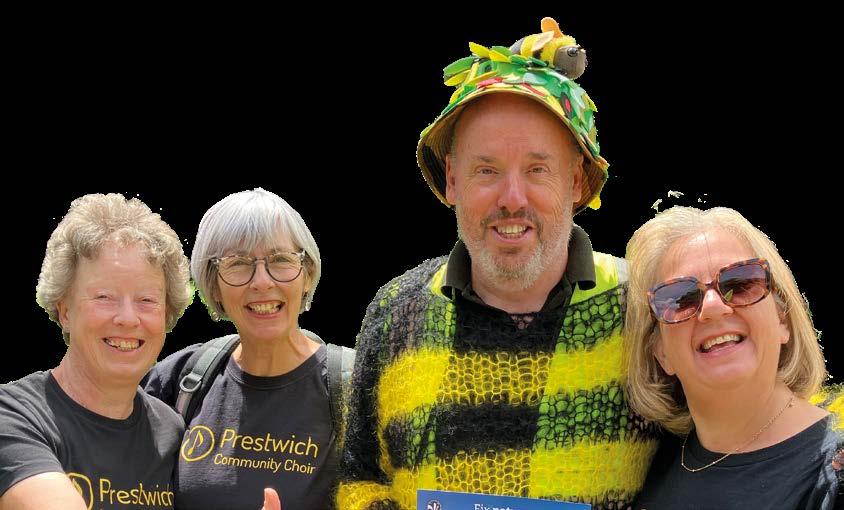
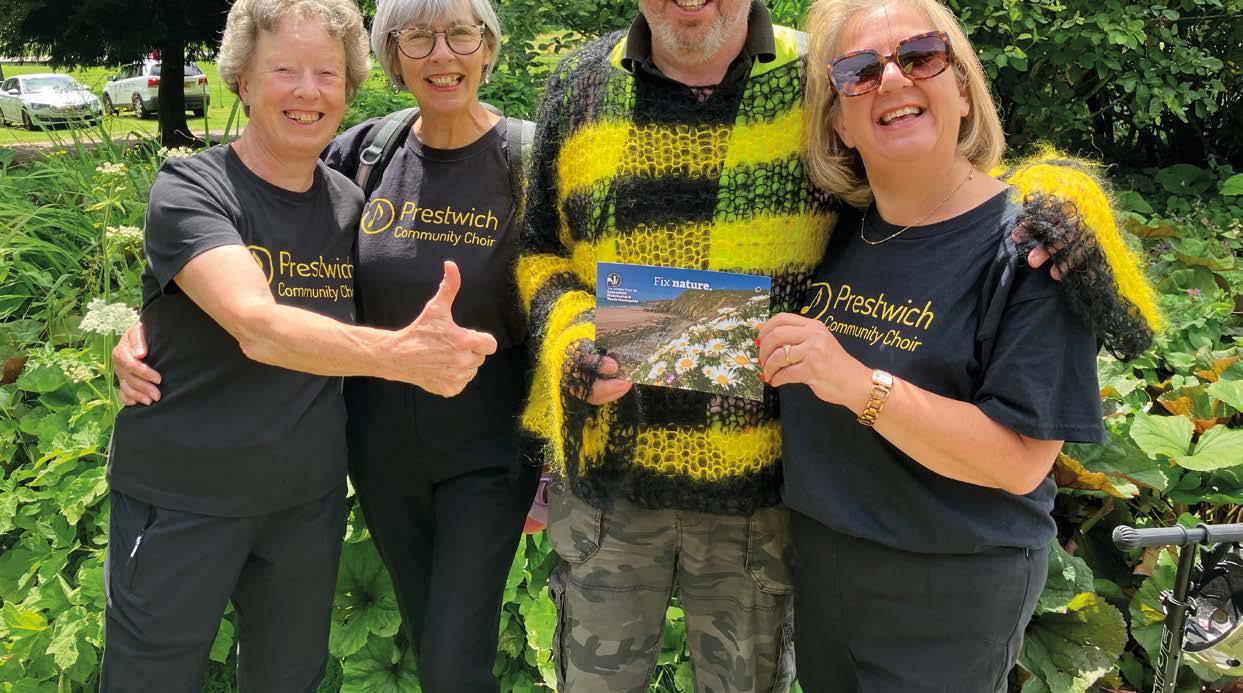
MFoN chair Alan with members of the Prestwich Community Choir @ Charlies Lyons
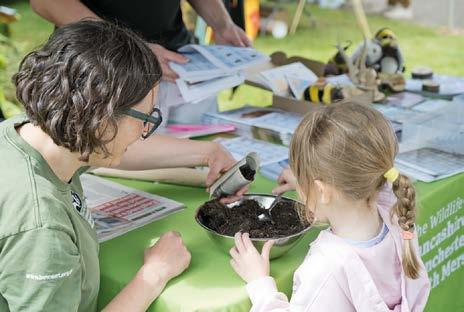
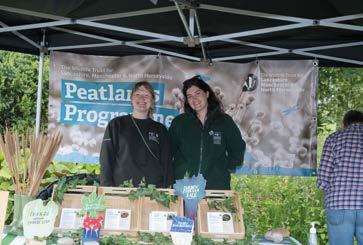
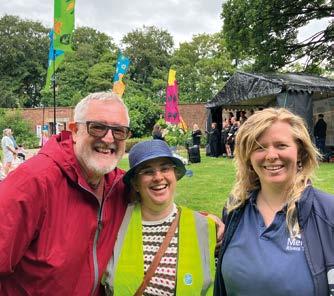
Represented this year were the Manchester Nature Consortium Youth Panel, LWT and its peat team, Manchester Museum, Action for Conservation, the Mersey Rivers Trust, RSPB, City of Trees, Manchester Friends of the Earth, Chester Zoo, Manchester and Salford Ramblers, Sow the City, Blackley Forest Orchard Project, the Croal-Irwell Group, CommuniTree Outdoor, Greater Manchester Environment Trust and the Heaton Park team. BMS Medics were on standby for emergencies.
The whole idea of the Manchester Festival of Nature is to learn while having fun
MFoN will take place next year at the end of June and if anyone is interested in getting involved or helping to support the festival, please contact awright@ lancswt.org.uk
Music was provided by the Prestwich Community Choir and the Flat Cap Three, with a popular photography exhibition from students at Manchester Metropolitan University.
MFoN friends and supporters RRG Toyota were promoting their Beyond Net Zero campaign and Spriggs Apparel were selling and raffling amazing wild animal rucksacks.
Our LWT corporate supporters
Thank you to all of our business supporters, we couldn't do what we do without you.
We are updating our business memberships, contact natureworks@lancswt.org.uk to find out more.
WELCOME TO OUR NEW MEMBERS: Aviva Eric Wright Group
HONORARY:
Beechfields Brands InFocus
Manchester Airport Group Southport FC Squire Patton Boggs Standby Productions
The Cardinal Partnership Vine House Farm Wild Woolers
GOLD: Gresham Office Furniture
OroSurgeon Senator Group Victrex
SILVER: Decordia Fort Vale Engineering Making Energy Greener
PSL Print Management
BRONZE: Aspire to Grow
Cavendish Nuclear Glasdon
Ibis Budget Manchester Salford Quays Ibis Manchester
Japanese Knotweed Agency
Softwire Technology Valley Mist
LOCAL: Moss Wood Caravan Park
“Make protecting nature YOUR business”
The Flat Cap Three lead the Legendary Pollinator Parade @ Charlie Lyons
Jenny making paper pots on the LWT stand @ Charlie Lyons
Nature with Chester Zoo @ Charlie Lyons
Manchester City Council's Dave Barlow, Manchester Museum's Rachel Webster and Mersey Rivers Trust's Abbie Goodby @ Charlie Lyons
Our peat team was well represented by Kirsty and Anna @ Charlie Lyons
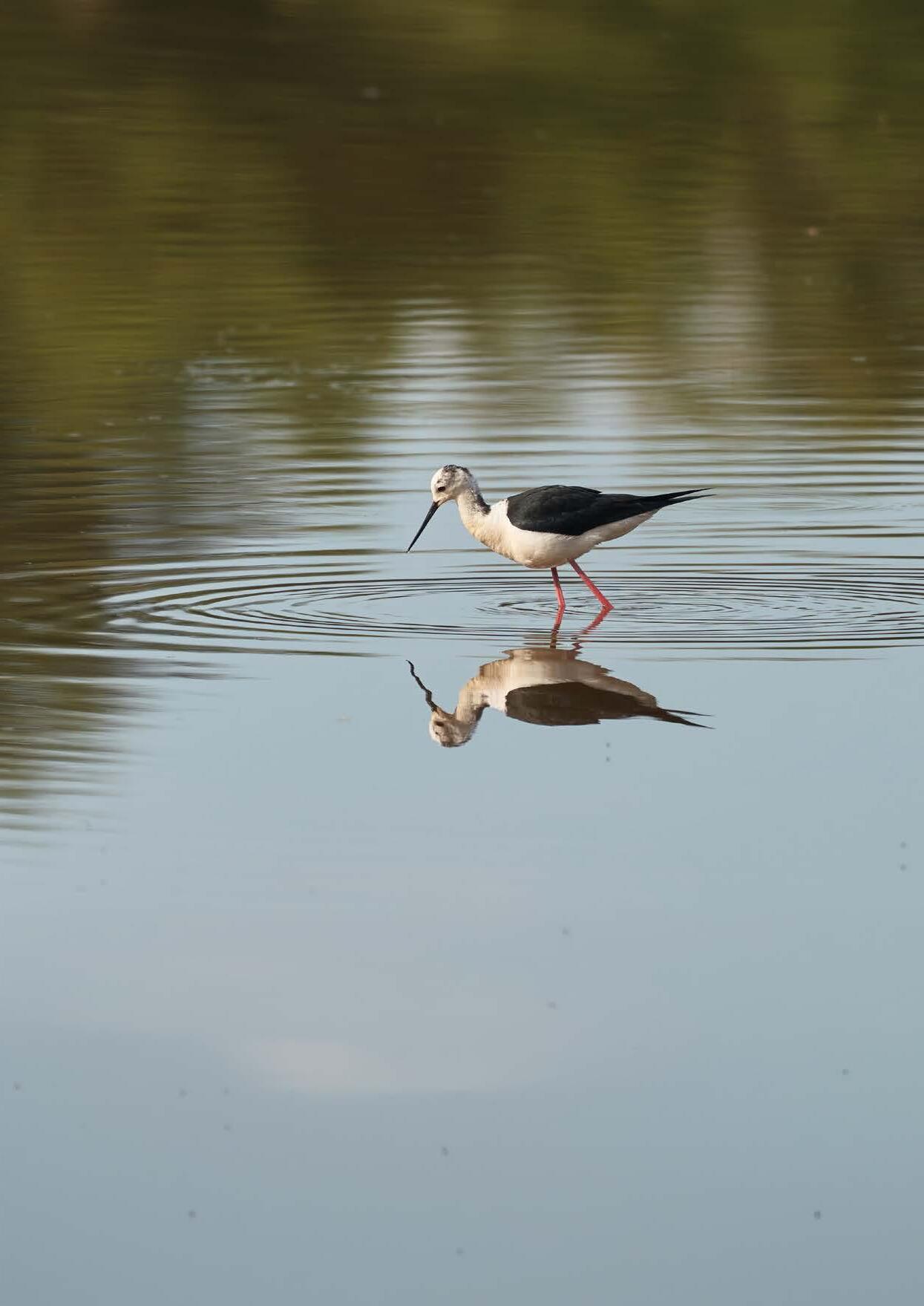
ripple The effect
By Tom Burditt, Chief Executive Officer
You have already heard about our Water Works for Wildlife campaign, but how does this translate into action?
hat I love about The Wildlife Trusts is the way we can both campaign at national level; and also work with local communities, volunteers and businesses down on the ground to show what good actually looks like.
We absolutely ‘walk the walk’ when it comes to helping our local water company United Utilities (UU) deliver public benefit (tying in to strand six of our campaign – see p4 and 5).
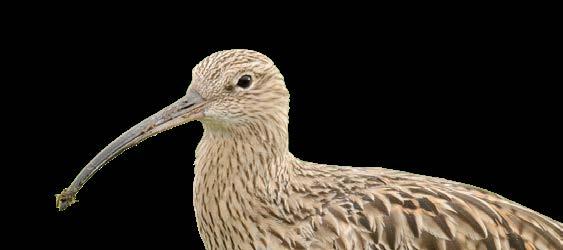
Following on from our recent restoration of UU land at Winter Hill, we now have a four-year partnership. The original work attracted breeding wading birds, including lapwing and curlew, within days of completion in March. It brought record numbers of dragonflies within a couple of months. Now this new partnership will deliver peatbog restoration across UU's wider estate in the West Pennine Moors,. It will provide public benefits like wildfire reduction, carbon storage, biodiversity uplift, water storage, and improvements to water quality and colour.
Many of the species that will be planted up on the moors as part of this work - the sphagnum mosses, cotton grasses and other peatland plants –will have come from LWT community and residents’ growing projects in a number of greenhouses, polytunnels and windowsills across East Lancashire.
Another favourite project of mine is probably our wetter farming work in the Alt and Crossens catchments of West Lancashire. In May I went to visit Lisa and Cameron Edwards, mother and son potato farmers on the other side of the River Alt to our Lunt Meadows Nature Reserve.
They are working with our lowland peat team on developing commercial bulrush crops on their wettest fields – that will ultimately be used to create a sustainable cotton-wool like fibre for padded jackets. It was a real pleasure to see their innovative harvesting technologies and to share their passion for the marsh harriers, lapwing and avocets that had moved onto their land since the re-wetting works had taken place.
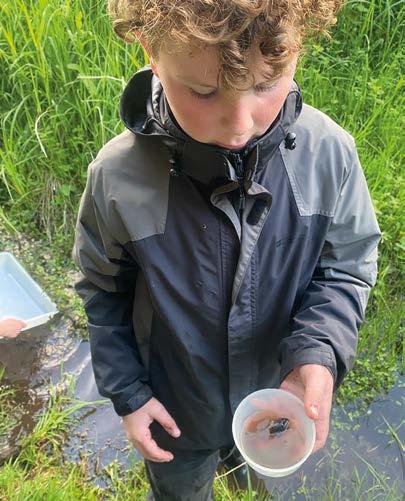
But I also wanted to get involved a bit closer to home, working with young people from my Silverdale Scout group (aged 10 –14). A couple of them are keen anglers, and they came up with the project themselves: trying to understand what could be done to improve the quality of their local rivers.
So far, they have successfully applied for and received £560 via the Ernest Cook Trust’s Blue Influencers Scheme to buy equipment, undertake some scoping work and train other local scout volunteers in surveying rivers, using the Riverfly Partnership citizen science technique. The different river invertebrates found through kick sampling are given scores, and that indicates river health and therefore the kinds of interventions that might benefit their local watery wildlife.

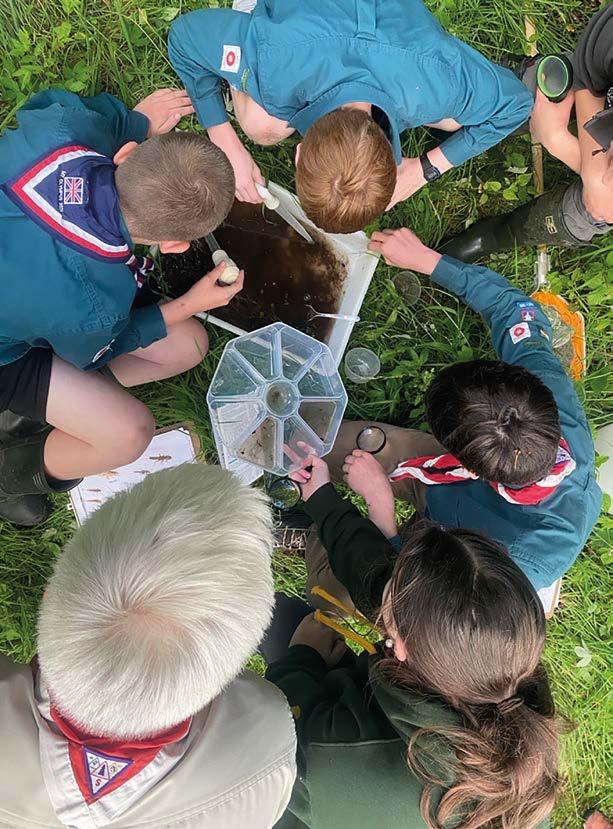
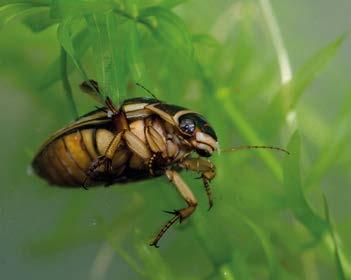
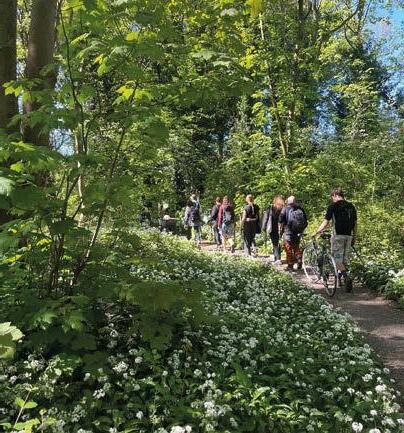
They loved getting stuck in, with the discovery of an enormous shiny great diving beetle one of the many highlights so far. The next stage will be for them to apply for 5,000 to make the changes to the river their surveying work identified – perhaps riverside tree planting, creating gravel banks for fish spawning or riverside ponds. They also have ideas for kayak water quality testing expeditions.
All of this is a lovely illustration of what the Wilder Riverbanks campaign strand might look like in practice. They’re learning so many life skills on the way, and it’s such a great example of local citizen mobilisation in action.
Just being part of these amazing young people’s journey into taking the future of our environment into their own hands is awe-inspiring.
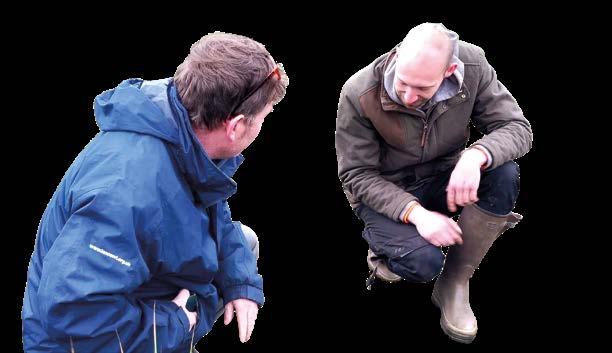

Finding a great diving beetle
© Tom Burditt
Bulrushes on the specialist harvester at Gore House Farm © A.J.Critch Wildlife
Great diving beetle © Jack Perks
The Silverdale Scouts undertaking a river survey © Tom Burditt
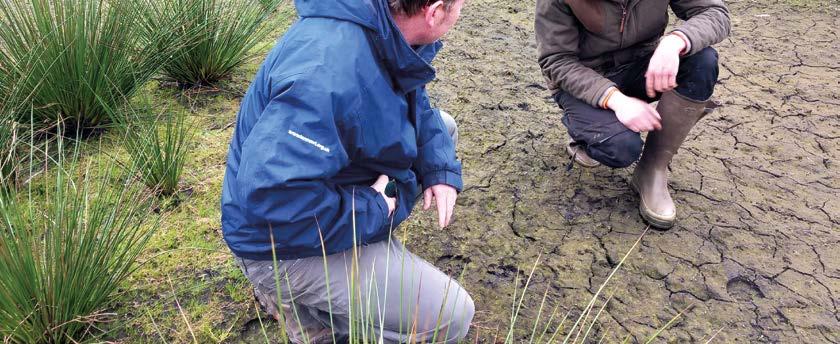
Tom and Cameron looking at new typha shoots at Gore House Farm © Helen Earnshaw
People and nature go hand in hand, so we are improving people's access to nature and the benefits it brings.
Where everyone belongs
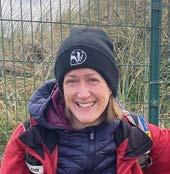
By Laura Hacking Vile, Engagement and Wellbeing Communications Officer

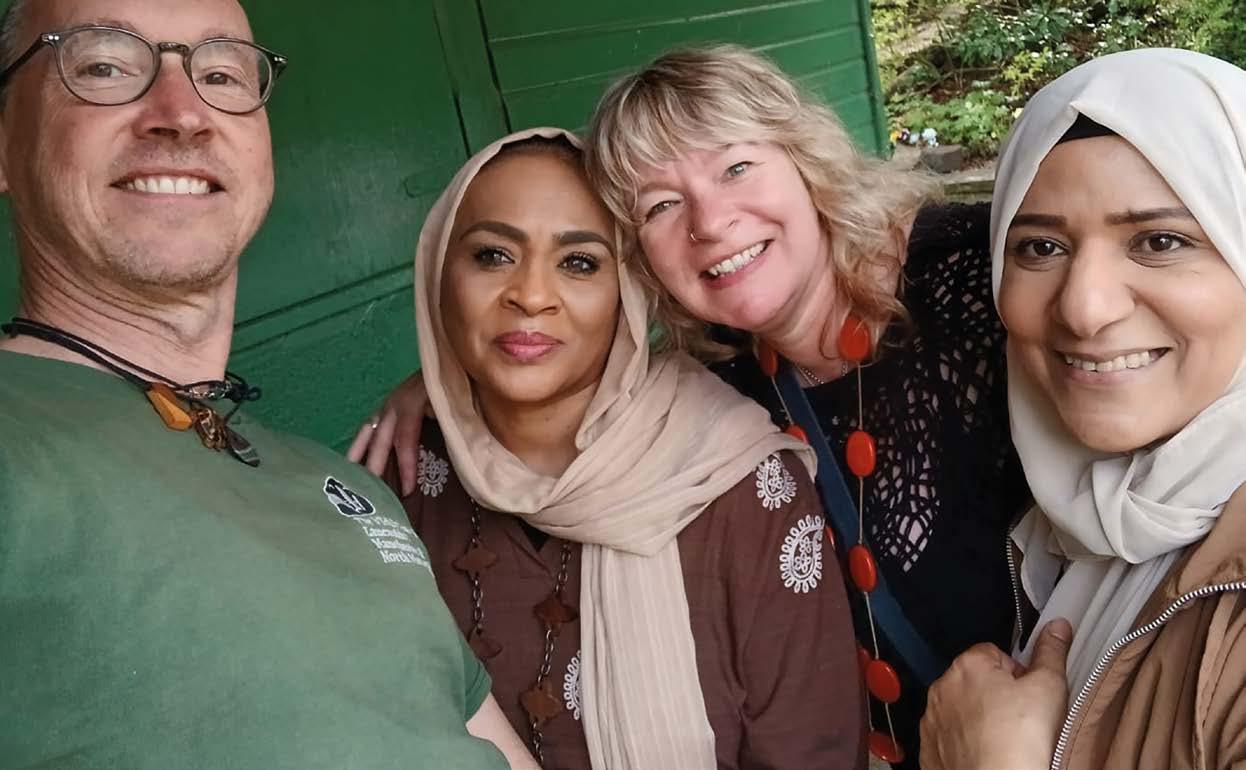
Community engagement and access to nature is a fundamental part of so much of our work. Our Nature and Wellbeing Service provides dedicated sessions across our region; along the Morecambe Bay coast with The Bay, in Wythenshawe through our Championing Nature project, at the Greenhouse Project in Blackburn, and also at Brockholes, Lunt Meadows, and sites in Bury, Chorley and more.
Sometimes people find us organically, sometimes they are referred by GPs, but wherever we are, or whatever we are doing, we are always working to create an inclusive environment where everyone can access the wonders that nature can provide.
of residents consider it important or very important to live close to green space, but an estimated third of Greater Manchester’s population do not live within 15 minutes of a green space.
Greater Manchester State of
Nature Report
Andy Mather with
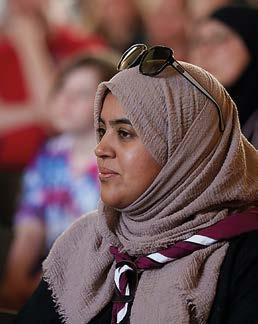
“As a member of an ethnic minority community... I have seen first hand how overlapping structural, cultural, and experiential barriers limit access to nature. There is often no established concept of nature as a source of mental and physical wellbeing, or as a space for connection, relaxation, and collective health. This highlights the need for more inclusive, culturally relevant approaches that help individuals and communities reconnect with nature at every stage of life.”
Shakila Ellahi, Lead Volunteer, British Muslim Heritage Council Scout Group
“People can unintentionally be excluded from nature engagement simply because communication barriers exist. Nature belongs to everyone and we have a responsibility to make our work as inclusive as possible. Sometimes, something as simple as learning a new way to communicate can make someone feel seen, welcomed, and able to engage with the natural world around them.”
Lois Clark, Engagement Officer, Lancashire Peat Partnership

"We discard labels. Our inclusive wellbeing sessions are thoughtfully adapted and welcoming for all. We often don’t reflect on how special this is, as for us it’s just the way we operate - it is the norm to make everyone feel included, supported, and valued."
Mike McDonnell, Senior Nature and Wellbeing Officer at The Bay
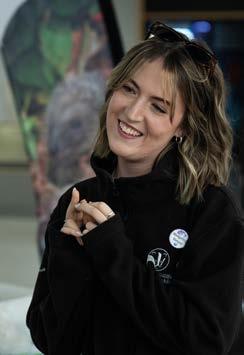
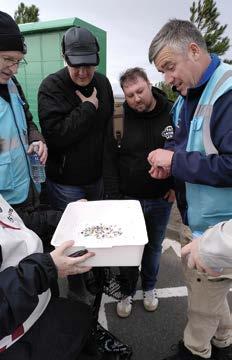
“Some people in our society experience a disconnection with the natural world. Either because our education offers them no sustained experience and understanding of it, or their upbringing leads them to believe that the countryside is not for people that look and live like them.”
Andy Mather, Senior Community Engagement Officer at The Greenhouse Project
“The Bay has proven to be so inclusive, with us referring people from 20 – 90 years of age, from different backgrounds and with varied physical and mental health conditions and other social issues impacting on their wellbeing. This is an exceptional programme that caters to everyone’s individual needs, with no barriers when it comes to disabilities or health conditions.”
Fleetwood Primary Care Network Social Prescribing Team
“If you feel like you’re having a moment and thinking I really don’t know what to do, or you don’t feel comfortable, just come along for an hour. From my experiences with having a disability, I think I can get quite anxious at times and when I don’t come, I probably feel worse, but when I come back, I really enjoy it.”
Rebecca Allen, Lead Volunteer for Nature and Wellbeing at the Chai Centre
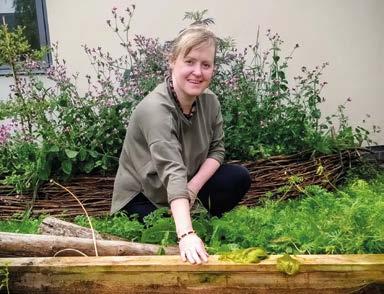
“We have been going to Philips Park for the past five years. We are a deaf mental health unit, some of our patients have physical and mental health challenges so coming to the group has been beneficial to them all.”
Gwylam Holt, NHS Support Time Recovery Worker
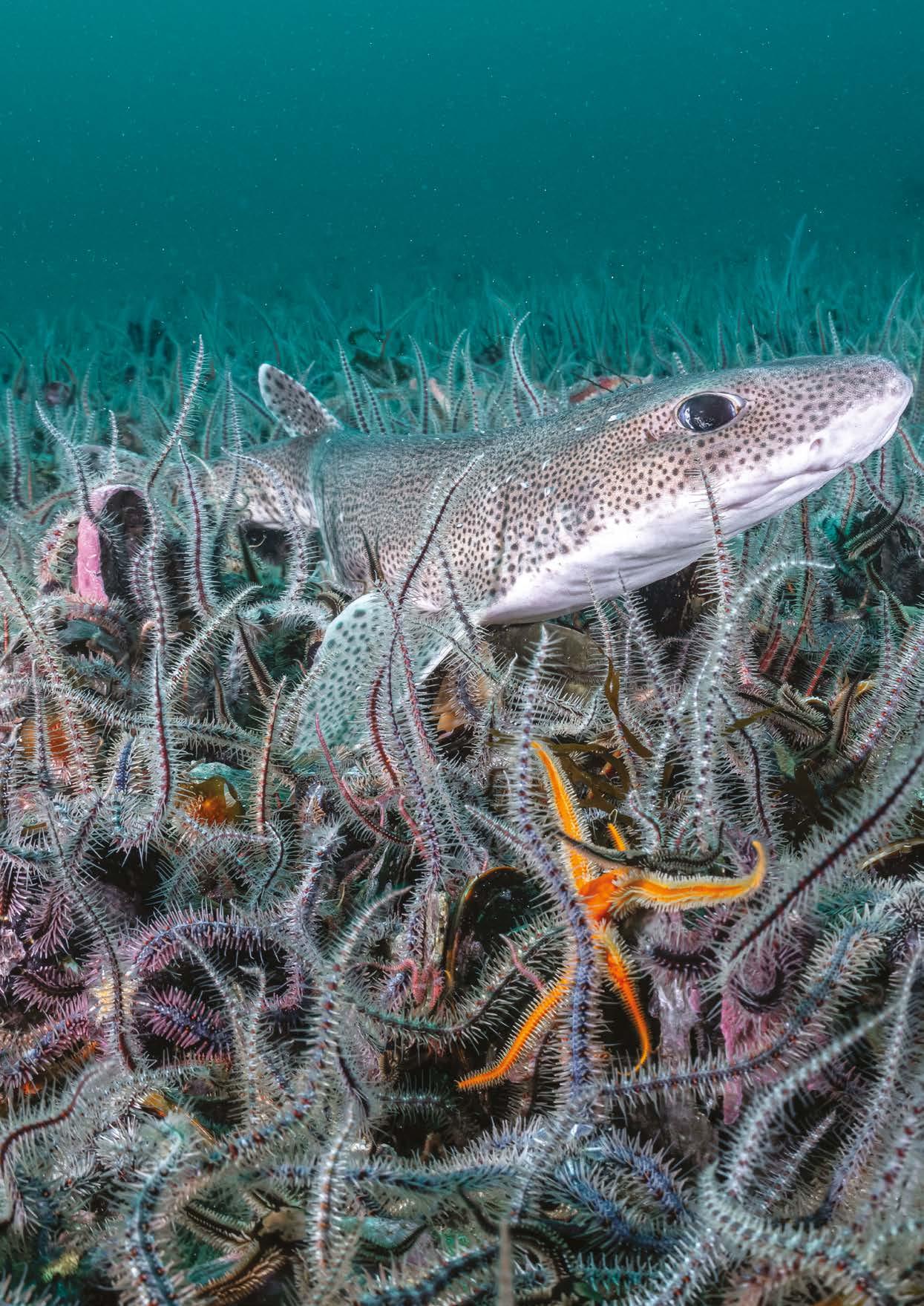
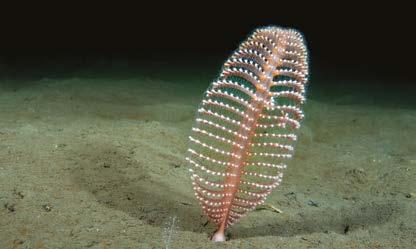
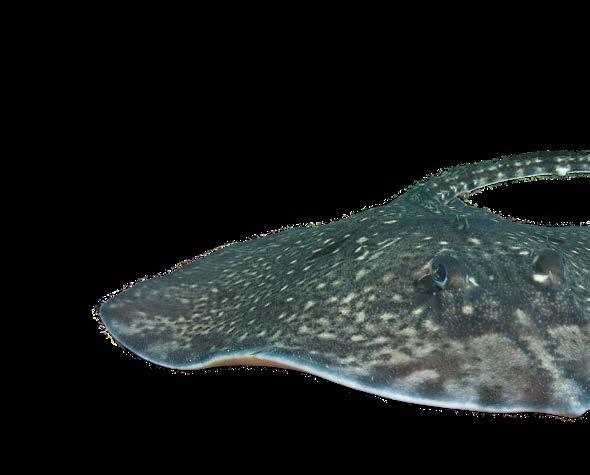
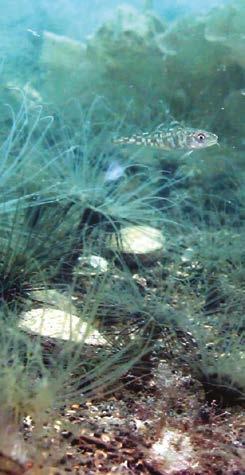
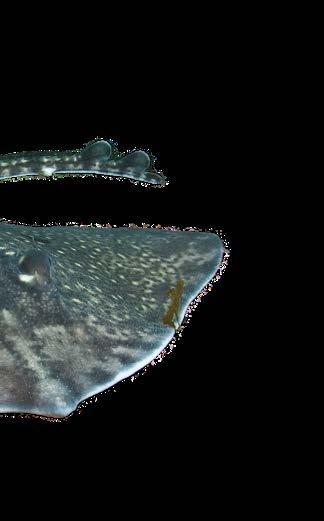
SMALL-SPOTTED CATSHARK
These small sharks are found all around our coasts, sticking close to the seafloor. They are often accidentally caught during bottom trawling.
SCOURING THE
SEABED
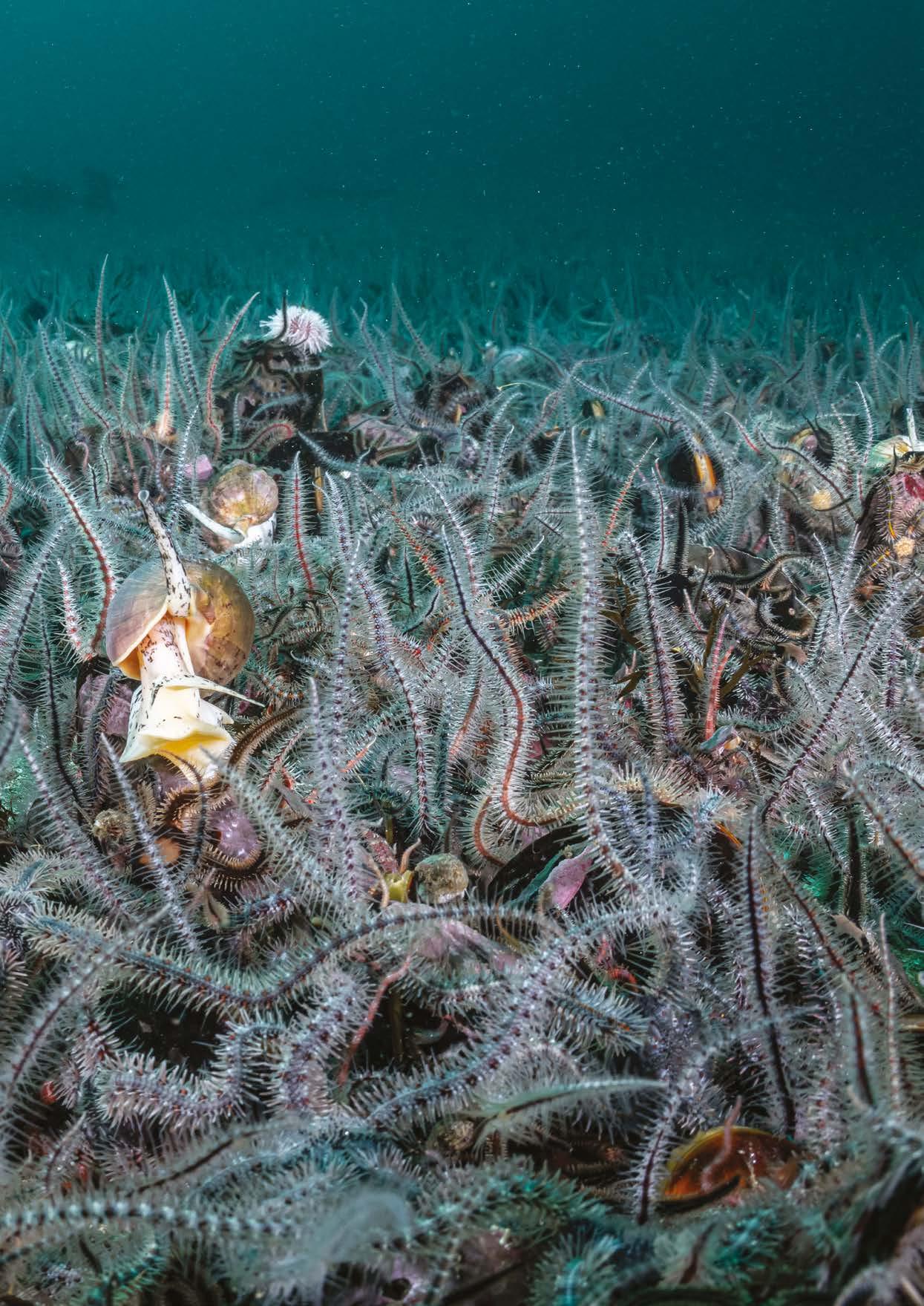
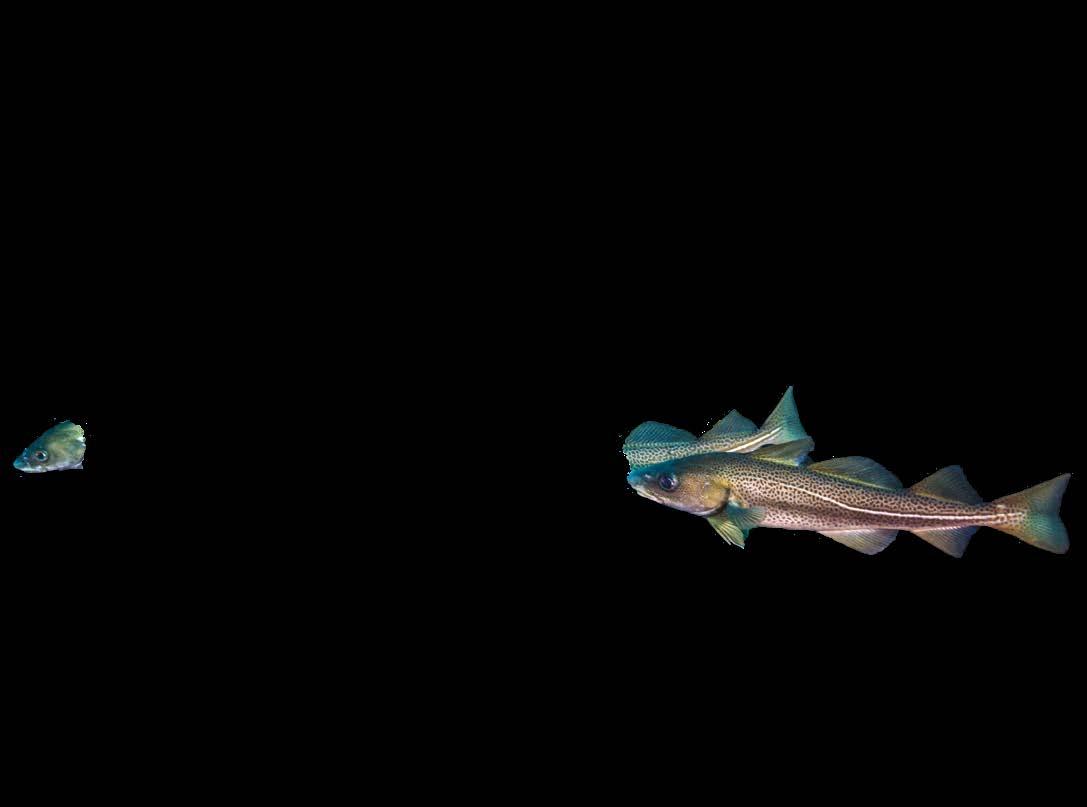
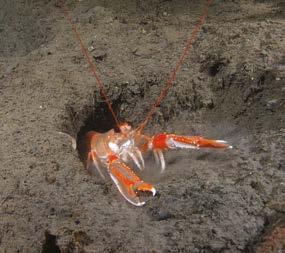
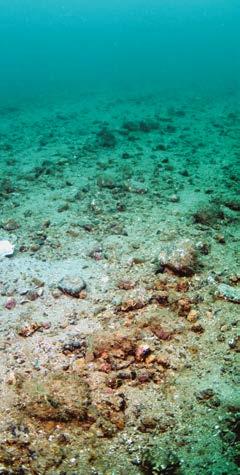
Get to the bottom of bottom trawling with Daniele Clifford, marine conservation officer for The Wildlife Trusts.


Warton Crag
A day spent repairing a drystone wall opened up the wonders of this majestic nature reserve.
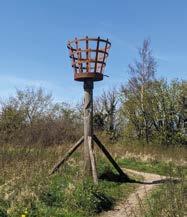
A beacon at the top of Warton Crag was said to have been lit to warn of the Spanish Armada and has been in use since 1576
By Jenny Bennion, Senior Communications Officer
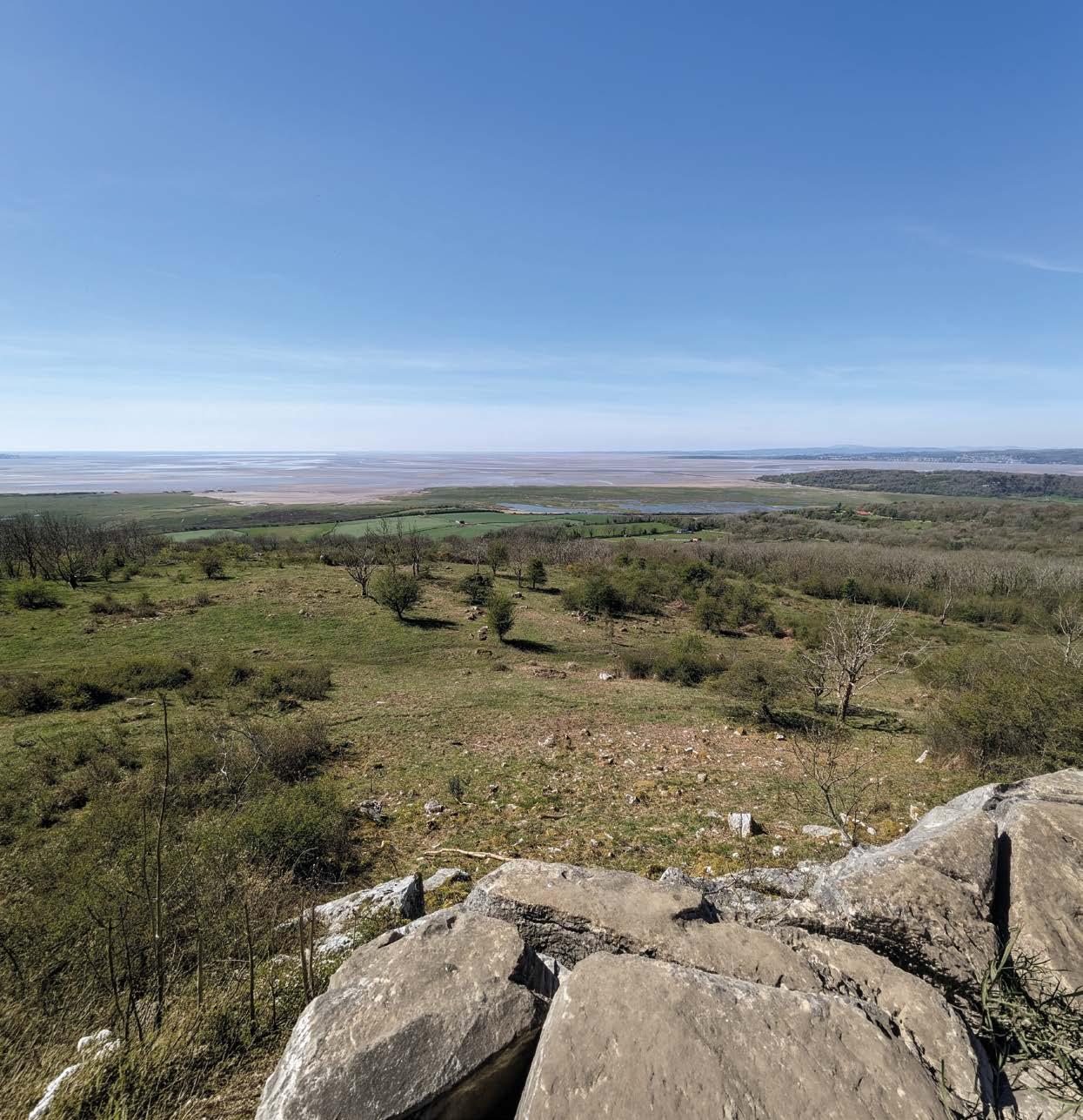
Warton Crag is stunning. A huge limestone crag that rears up out of the low and flat surrounding landscape. From the top views stretch from Ingleborough in the Yorkshire Dales, across the expanse of Morecambe Bay to the Lake District peaks.
On a clear day I challenge you to find a better view in the whole of the UK.
Peregrines have nested on the old limestone quarry face that fills your view as you turn into the car park. Venture further and areas of limestone pavement, limestone grassland, woodland and scrub – much of which is kept in check by a herd of conservation grazing redpoll cattle –create this special place.
Early purple orchids dot the grassland, whilst herb Paris, wild strawberry and rock rose cling on to cracks in the limestone pavement.

Fancy a visit?
Check out our reserve page for directions and more info.
Our drystone wall volunteers
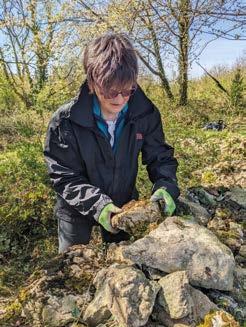
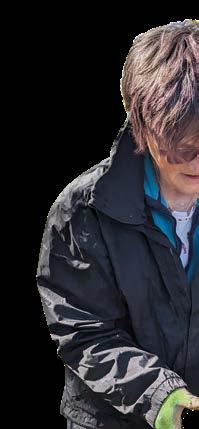
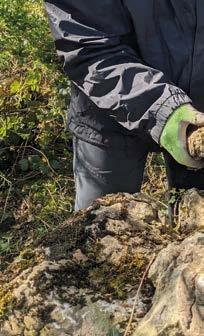
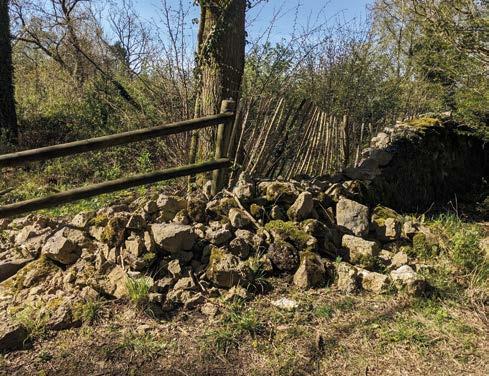
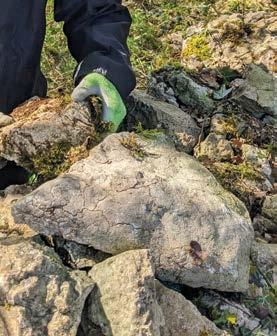
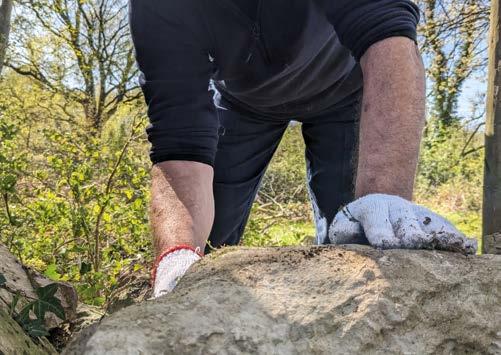
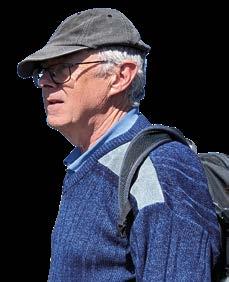
Volunteers Jan, Richard and Nick were hard at work repairing a drystone wall when I visited. Having always loved the intricacy, unassuming beauty and value to wildlife of drystone walls, I was eager to try my hand at this heritage craft. The first job was to clear fallen stones, arranging them by size, until we could see how much of the wall was left in a good enough condition to work from.
Then came the utterly absorbing task of finding just the right stone to create the outer faces of the wall. Try it here, try it there, turn it around, wiggle it, waggle it – until with a subtle thunk, more of a feeling than a sound, it locks into place.
View from Warton Crag © Jenny Bennion
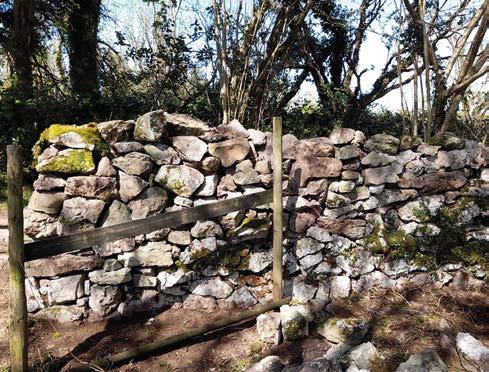
Smaller stones called heartings then fill the void, providing structural stability, and oh so many nooks and crannies that are just ideal for invertebrates. Larger tie stones are regularly placed across the whole width of the wall, to provide even more structural integrity. And finally, a row of cap stones finish the top. Perfect and ready to stand for a few more hundred years, using nothing more than the materials the site itself provided and a little love and attention.
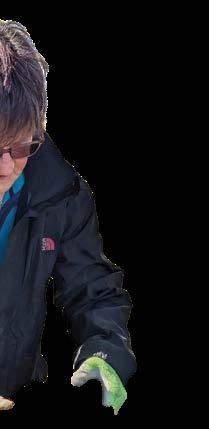
“I’ve taken a lot from the outdoors during my career as an outdoors instructor, so I love being able to give something back. It's just nice to be outside and with like-minded people, who I’ve learnt so much from.”
Jan
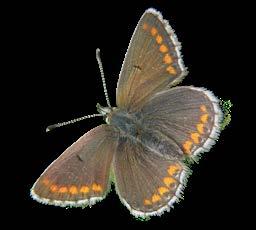
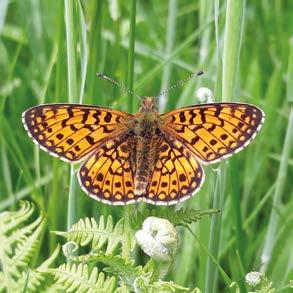
butterflies to spot at Warton Crag
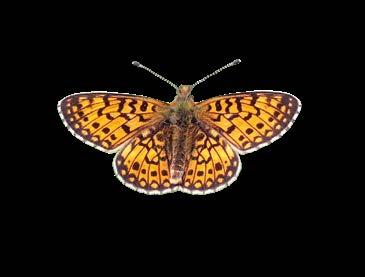
Small pearl-bordered fritillary
Extremely rare in England, but doing better in Scotland and Wales, this butterfly can be spotted flying low to ground to take nectar from flowers such as bramble and thistles.
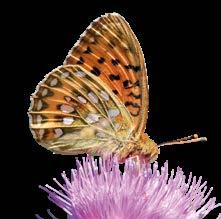
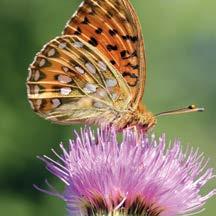
Dark green fritillary
Northern brown argus
This rare butterfly is associated with limestone grassland where common rock-rose provides its caterpillar’s foodplant.
Named for the green hue to their underwings, their caterpillars feed on the violets that dot the floor in spring.
Sadly, two other endangered butterfly species, the high brown fritillary and the pearl-bordered fritillary, have now been lost from Lancashire, despite our very best efforts to maintain their home at Warton Crag. The exact reason for this decline is not clearly understood, but the effects of climate change seem to have played a role.
Our increasingly warm, wet winters may be affecting the survival of over-wintering pupa, with wetter summers (such as in June 2025) adversely affecting the adults. Longer growing seasons are also causing habitat changes that may also play a role in this loss.
“I love the limestone here. The fact that millions of years ago this rock was thousands of tiny sea creatures, and now

“I like being outside after spending my career inside – this is a great way to get my exercise. I love the range and seasonal variations of the activities we get involved in, but I especially enjoy the drystone walling.”
Richard
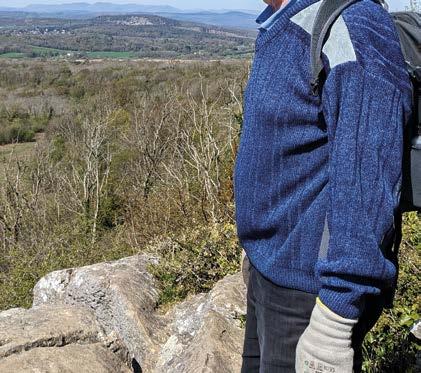
After - repaired dry stone wall at Warton Crag © Phil Reddell
Before - dry stone wall at Warton Crag © Jenny Bennion
© Lancashire Wildlife Trust
© Jim Higham
© John Bridges
Happy birthday Brockholes
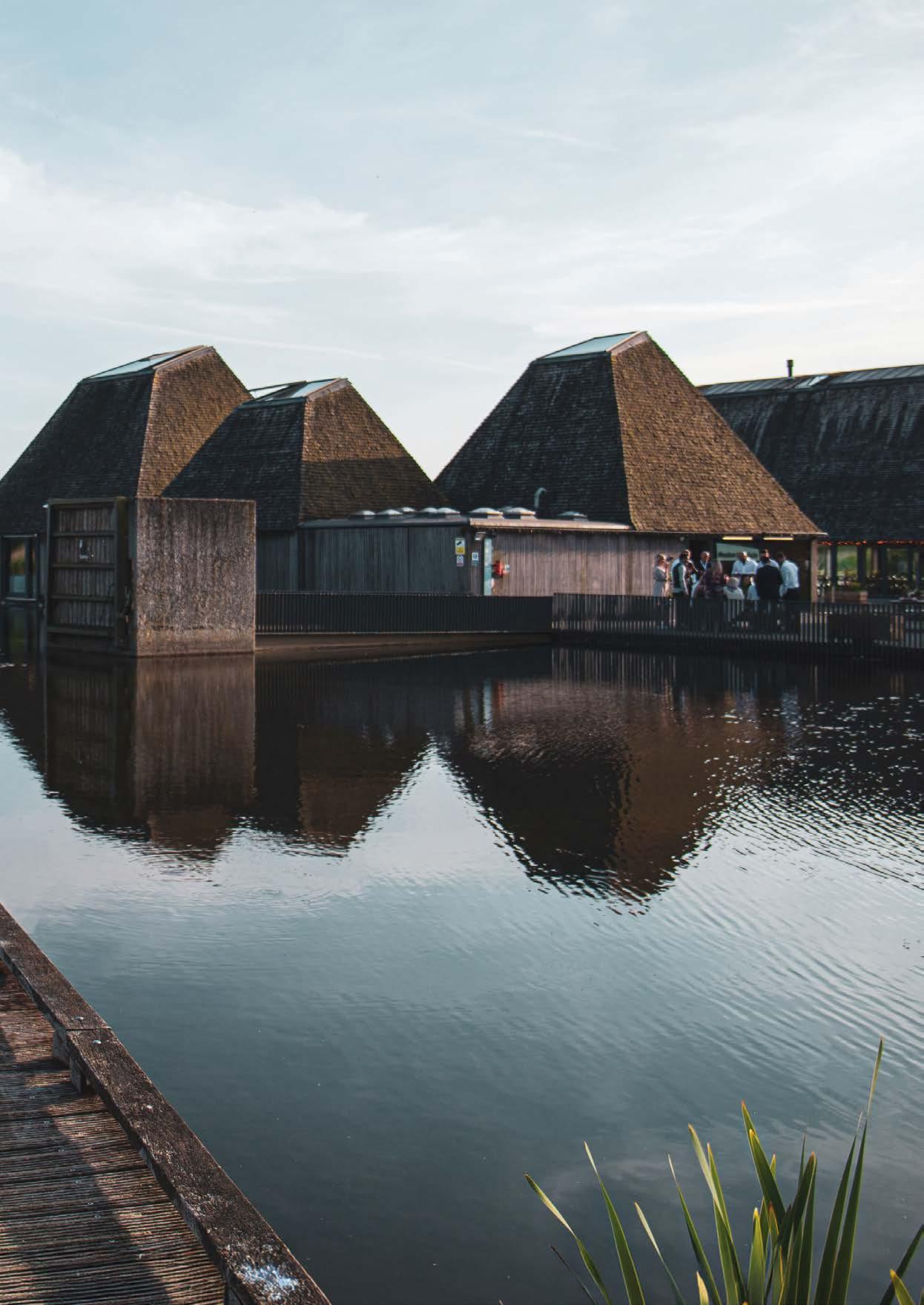
Our flagship nature reserve is 15, but what does Brockholes really mean for nature?
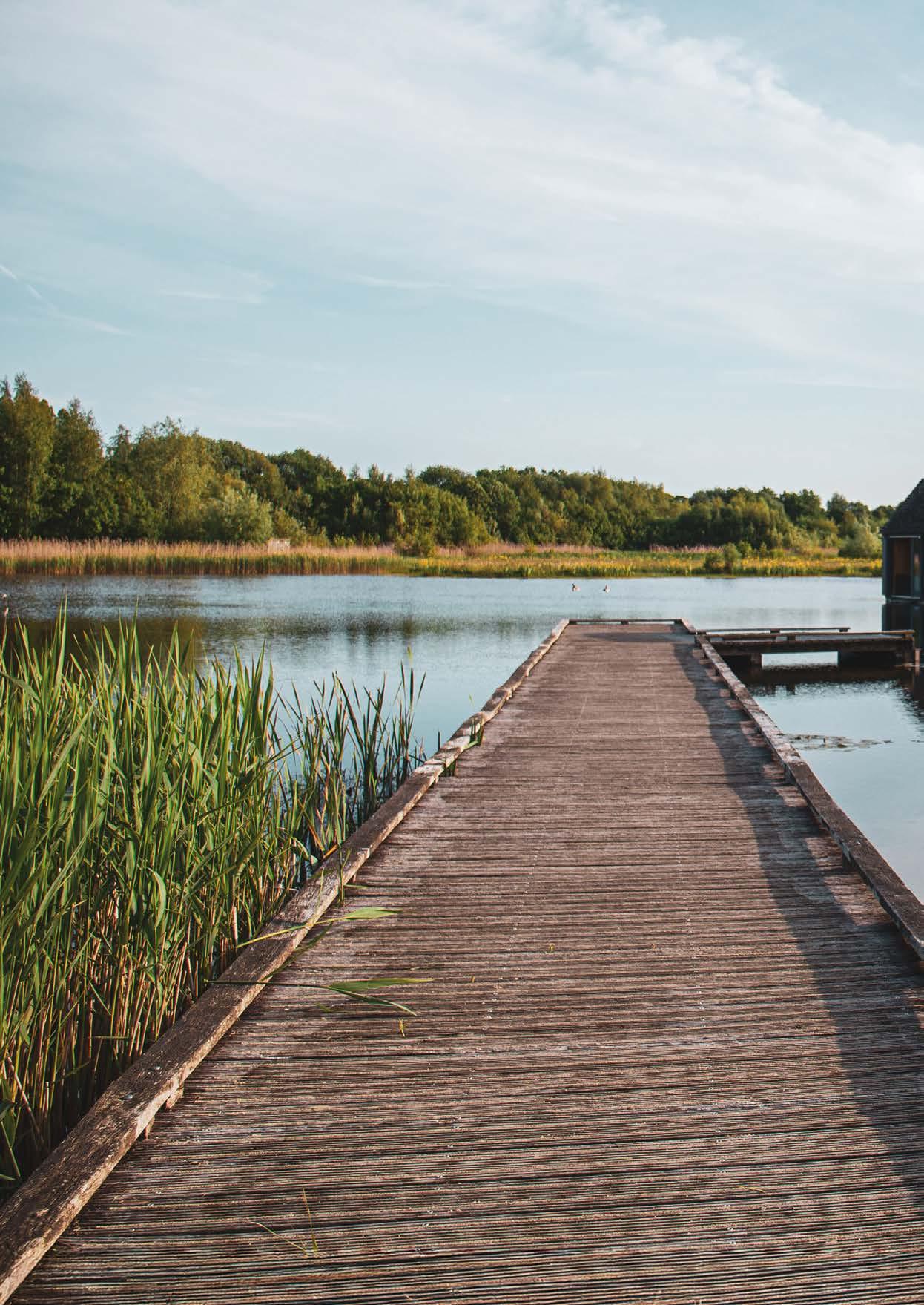
This year marks a proud milestone for Lancashire Wildlife Trust as Brockholes Nature Reserve turns 15. What was once a former quarry, scarred and industrial, is now a thriving landscape teeming with life. The reserve is a testament to vision, determination and the belief that nature can recover when given the chance to do so.
Brockholes didn’t happen by accident; it exists because people fought for it. The idea was bold; to transform a degraded site beside the River Ribble and the M6 Motorway into a place where wildlife could flourish and people could connect with nature.
At the time this wasn’t guaranteed to succeed; it required investment, persistence and a clear understanding that nature needs space and care in order to thrive.
Fifteen years on, that vision has been realised. Today Brockholes is home to breeding waders, otters, dragonflies and countless other species. It is 250 acres of wetlands, reedbeds and grasslands provide a vital refuge, not just for wildlife but for our surrounding communities who benefit from access to this wild space.
Brockholes also stands as a powerful example of the Lawton Principles in action; an approach to nature recovery calling for habitats to be bigger, better and more joined up.
facts about Brockholes
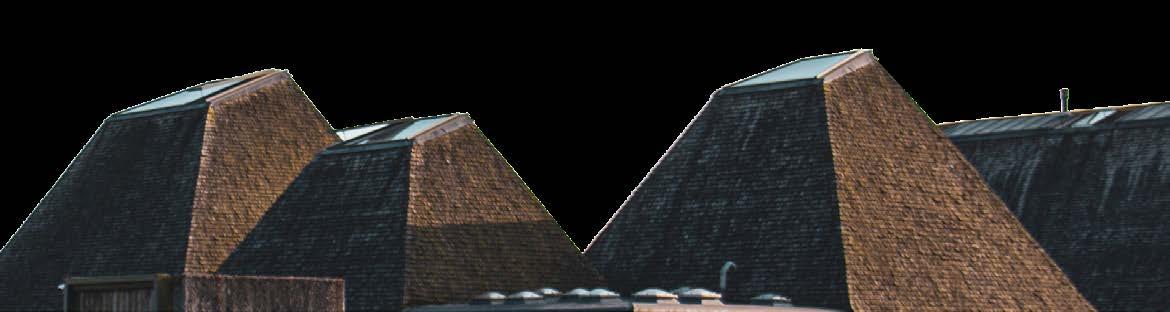
It’s home to the UK’s first floating visitor village
Brockholes’ award-winning visitor centre floats on a lake. Built on a giant concrete pontoon, the eco-friendly floating village rises and falls with changing
The reserve was previously a working quarry
Before becoming a wildlife haven, Brockholes was an industrial gravel extraction site. Since opening in 2011, it has been transformed into a spectacular landscape
More than 250 acres of wild landscapes sit just beside the M6
Despite being only moments from one of Britain’s busiest motorways, Brockholes feels worlds away from urban life. Visitors can explore
These principles recognise that isolated pockets of nature are not enough, wildlife needs widespread connected landscapes to thrive.
Situated within the River Ribble catchment area, Brockholes acts as a well-connected hub. Its habitats link to rivers, woodlands and farmland, allowing species to move through the landscape rather than remain cut off. This connectivity is essential for resilience, particularly in the face of climate change.
As a large, high-quality nature site, Brockholes delivers on those vital Lawton Principles. ‘Bigger and better’ space for nature supports sustainable wildlife populations and improving habitat condition.
At the same time, it is ‘more joined up,’ forming part of a wider network that stretches upstream and downstream along the Ribble, linking to other nature sites and even coastal habitats. Despite challenges, such as the nearby M6, it demonstrates how nature can successfully coexist alongside infrastructure and communities.
A recent visit from Sir John Lawton himself highlighted just how important Brockholes is as a model for landscapescale recovery.
So, here’s to the first 15 years of Brockholes and to many more years of nature’s recovery, connection and hope.
By Matthew Swift , Marketing Officer
Brockholes Nature Reserve © Kenny Glover at Lark Photography
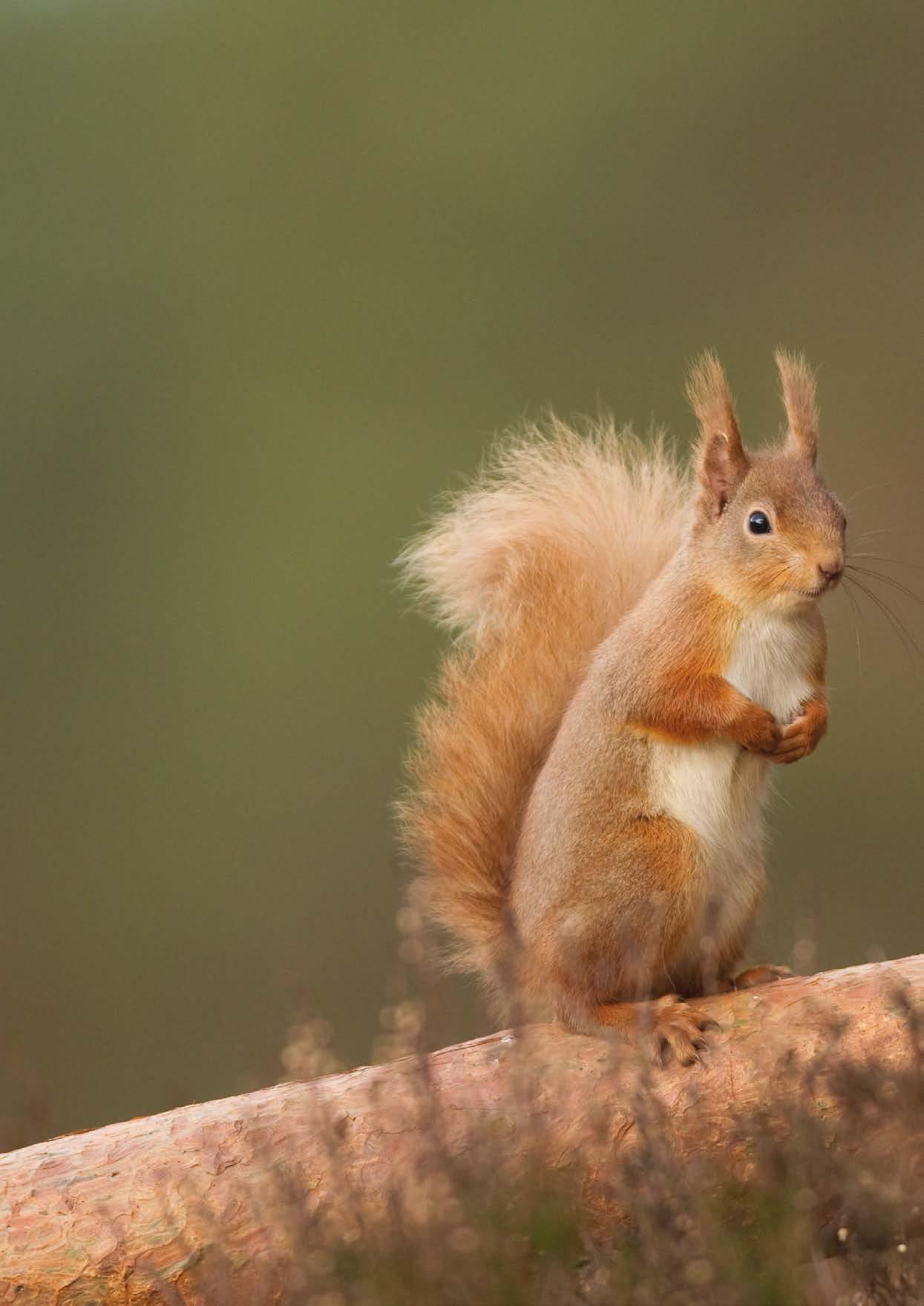
Big hearts for small squirrels
Within our community, red squirrel volunteers play a vital role. Their commitment helps protect Merseyside’s cherished woodland species at a scale that simply wouldn’t be possible without them.
Last year, red squirrel volunteers contributed an extraordinary 1,727 hours to monitoring, fundraising, management, and more – the equivalent of around 230 working days. Without their dedication, Merseyside’s reds would be at serious risk of disappearing altogether.
Join us in celebrating the incredible impact of volunteers and thanking every person whose passion makes conservation possible.
By Heather Harris, Red Squirrel Recovery Network Communications Officer
Could you become a red squirrel volunteer? Email red.squirrel@ lancswt.org.uk today
There is much to be proud of at Lancashire Wildlife Trust, but at the heart of everything are the people who donate their time to nature.
Lynn:
Since childhood I have been enchanted by red squirrels, remembering family trips to local reserves. When quiet, they used to take nuts straight from your hand. How sad it would be if future generations couldn’t enjoy the delight of seeing them.
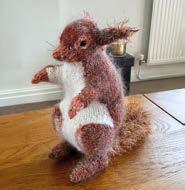
My mum taught my sister and I to knit in the 1950s, and I’ve always had a project on the go. During Covid, I looked for new purpose through knitting patterns by Claire Garland. I knitted my first rabbit and that was it - I was hooked!
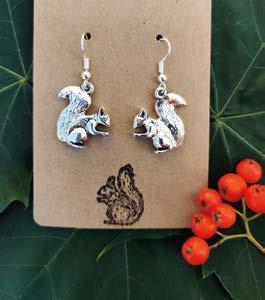
My friend, Alice, sells jewellery on Etsy to raise money for the red squirrel project, so I started selling my knitted animals too. It’s rewarding knowing all proceeds go to a worthwhile cause by doing something I love. I have sold nearly 200 creatures across Britain, with lovely feedback and several repeat customers.
Scan the QR code to check out the LancsRedSquirrels Etsy page
Maureen:
I have no idea when I first saw a red squirrel. They were once simply the squirrels we saw here and took for granted. I do, however, remember when I first saw a strange animal that I learned was a grey squirrel. It was August 1972: my first trip to Londonthe day I queued for hours to see The Treasures of Tutankhamen at the British Museum.
My last sighting of a red squirrel was, fittingly, on Red Squirrel Appreciation Day this January, when two danced through the wintry trees, showing off for a TV crew that had come to film our work.
I’ll never see the great mask of Tutankhamen again, and don't care if I never again visit London, but I do not intend that to be the last time I ever see a red squirrel while there’s something I can do to help them survive.
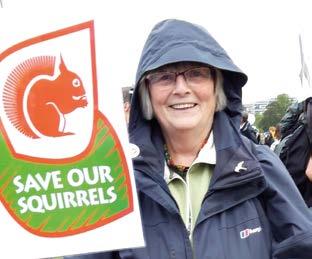
Linda and Jill:
Driven by their love for red squirrels, Linda and Jill volunteer to monitor populations and help protect the species for future generations. They take pride in reporting sightings, connecting with local communities, and reassuring people that reds still thrive in the area.
Linda is also a keen photographer, generously sharing beautiful shots of red squirrels she has spotted around northern England. Why they volunteer: “You can play a very important role in identifying where reds are and it’s so rewarding to see them. The support from the team is fabulous and it’s great to feedback results.”

Nick:
I remember the joy of taking my children to see red squirrels in the pinewoods and want to preserve this joy for future generations by conserving a threatened, iconic, and undeniably charming species. To some, it may seem crazy to get up at the crack of dawn to walk a monitoring transect for a couple of hours weekly for three weeks in Spring and Autumn, but if you are considering volunteering, don't let that put you offthe woodlands can be their most beautiful when they are waking up alongside you.
1,727
Last year, red squirrel volunteers contributed an extraordinary 1,727 hours
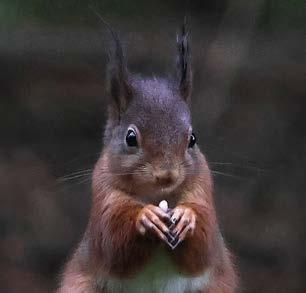
Red squirrel © Linda Baker
Breaking down barriers by the Bay

By Sarah Mason, Chief Executive, Morcambe Bay Partnership
A new chapter in outdoor accessibility has unfolded around Morecambe Bay, where a thoughtfully designed six-mile trail is helping more people than ever before.
For a full route description and points of interest to take note as you travel the trail scan here www.waysaroundthebay.org.uk/ three-nature-reserves

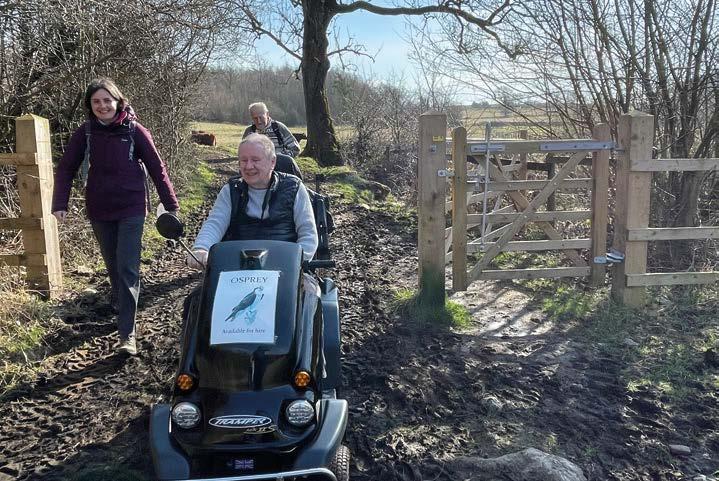
Abrand new ‘jewel in the crown’ trail is providing access to nature for those with reduced mobility, push-chairs and buggies. Beginning at RSPB Leighton Moss, the trail also offers free all-terrain mobility scooter hire right at the start.
At the heart of this initiative is a simple but powerful idea: nature should be accessible for everyone. Created by a partnership of organisations, The Three Nature Reserves accessible trail connects RSPB Leighton Moss, Gait Barrows and Trowbarrow nature reserves in the Arnside and Silverdale National Landscape, which straddles the Cumbria and Lancashire border.
What sets this route apart is not only accessibility but the exceptional natural environment it travels through.
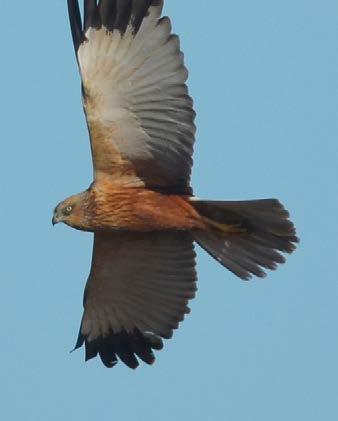
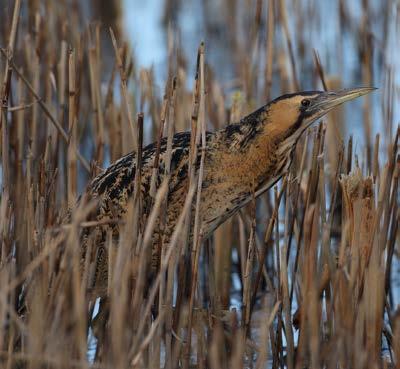
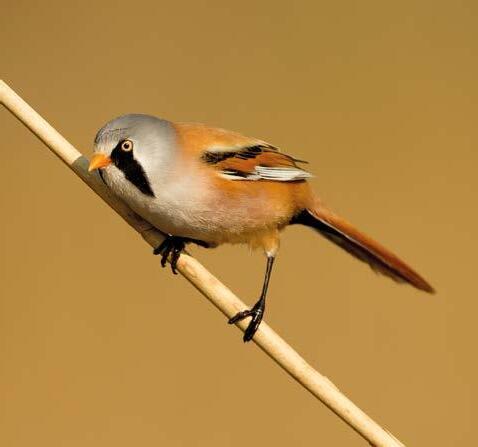
Starting at RSPB Leighton Moss Visitor Centre, the trail passes through some of the UK’s most important wildlife habitats and stunning landscapes, including the largest area of reedbed in the North West, home to iconic birds such as bittern, marsh harrier and bearded tit.
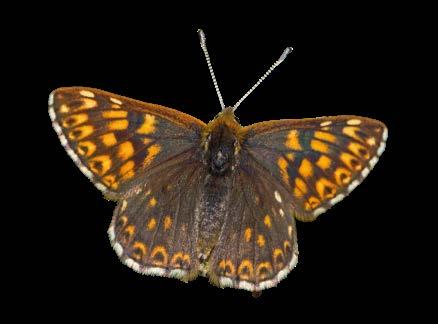
The route continues to Trowbarrow Local Nature Reserve where former limestone quarries have revealed fascinating fossils, and bee and fly orchids flourish. Travelling on to Gait Barrows National Nature Reserve, one of Britain’s most important limestone landscapes which is home to unique butterflies such as the Duke of Burgundy fritillary.
Going further, Coldwell Meadows, managed by the Arnside and Silverdale Landscape Trust, offers limestone grasslands and traditional hay-meadows in a riot of summer flower displays.
For more information about hiring a Tramper for FREE from Leighton Moss Visitor Centre, please visit events.rspb.org.uk/leightonmoss
“The launch of this multi-user trail is another milestone in wider collaboration to make this special landscape bigger, better and more connected for people and wildlife. It’s a strong model of joined-up delivery between nature conservation and community organisations and demonstrates our shared ownership and aspirations for our landscape.”
Jarrod Sneyd, RSPB Senior Site Manager
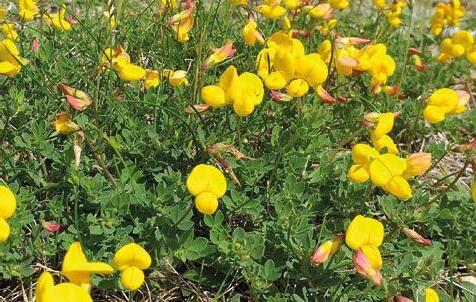
From booming bitterns to blooming bird’s-foot trefoil, the six-mile accessible trail provides a rich sensory experience for visitors.
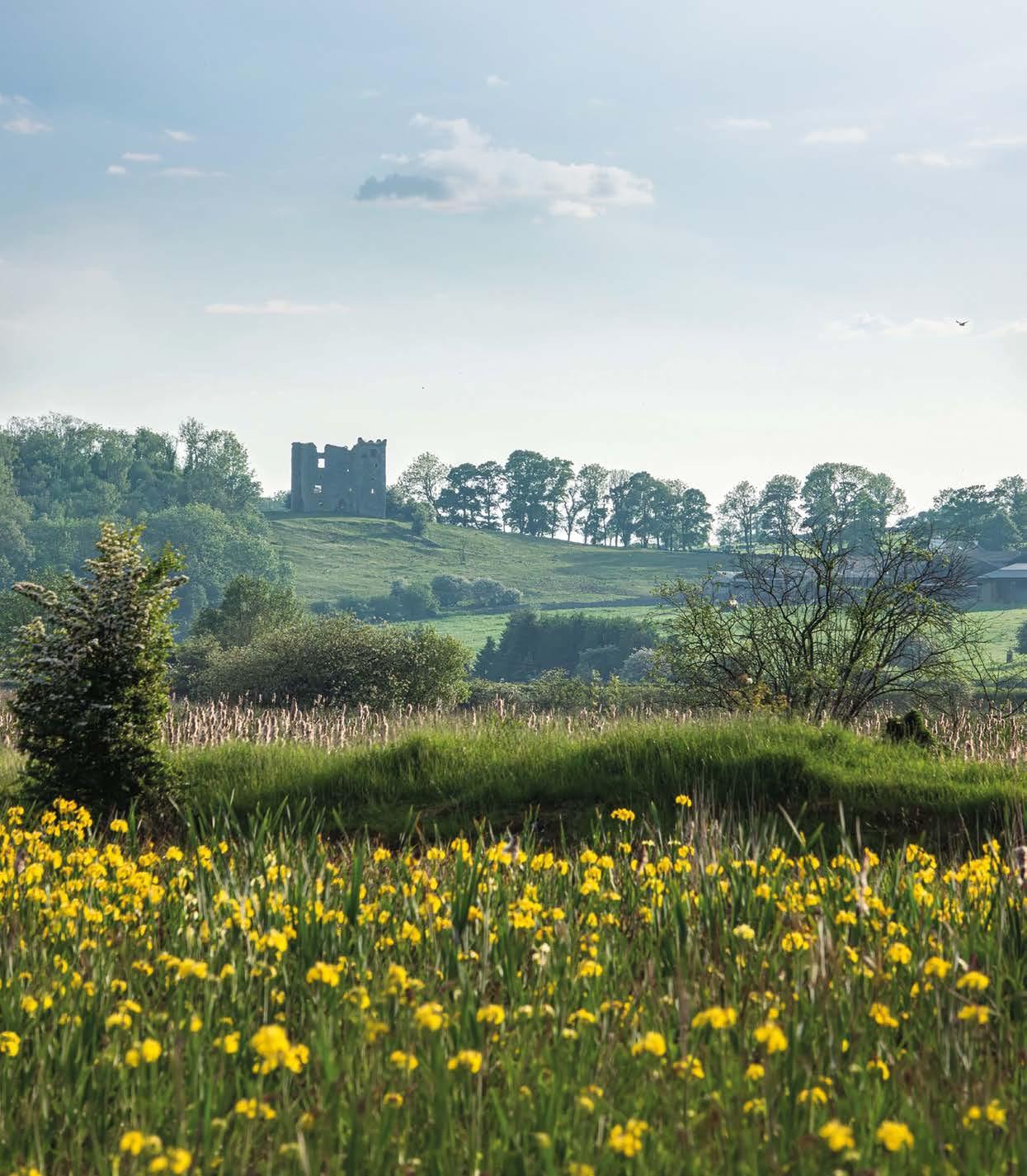
The trail finale winds through limestone woodland with veteran yews, an ancient limekiln and farreaching views across Silverdale Moss to Arnside Tower – arguably one of the best vistas in the National Landscape.
While the route is challenging, along a mix of both surfaced and unsurfaced paths, with the right equipment and support, visitors can enjoy a truly off-road experience. Easy access to this rugged route can be provided by three all-terrain mobility scooters (Trampers) which are available and free to hire from RSPB Leighton Moss.
This project to create meaningful access to nature is the result of strong collaboration.
Place-based charity
Morecambe Bay Partnership has worked with Arnside and Silverdale National Landscape, Arnside and Silverdale Landscape Trust, Bay Search and Rescue, Natural England and RSPB to create more inclusive access, so more people can enjoy the Bay’s inspiring landscapes, nature, history and culture. The creation of the route and purchase, maintenance and insurance of the mobility vehicles was funded through a grant from the Coastal Communities Fund awarded to Morecambe Bay Partnership in 2021.
“We are delighted that this accessible trail is now open for all to enjoy. The benefits of getting out into nature to experience the beauty of the landscape are immeasurable and now people who have difficulty accessing the countryside can have a real adventure with their friends and family with the added bonus of refreshments in the Leighton Moss cafe at the end.’’
Sarah Mason, CEO at Morecambe Bay Partnership
Bittern © Tim Stenton
Bearded tit © Danny Green 2020VISION
Duke of Burgundy © Natural England
Marsh Harrier © Adam Jones
LWT News Roundup
10 year project to revive ancient woodlands and hedgerows
A new £350,000 project has been launched across Greater Manchester. Funded by Manchester Airport Group and in partnership with Manchester City Council, six woodlands and several areas of hedgerows will be enhanced and restored.
The first two years will be focussed on hands-on nature recovery, removing invasive species, re-introducing native plants, and laying and planting hedgerows. The following eight years will be dedicated to the ongoing management and maintenance of these sites ensuring that all of the hard work isn't lost. Scan the QR code to find out more.

Inspiring the next generation of stewards of the sea
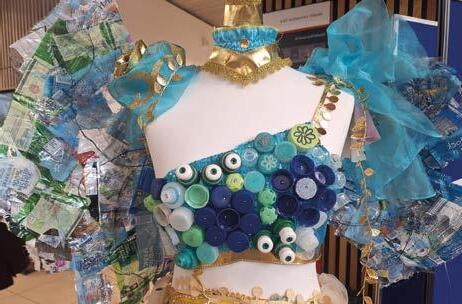
The Blue Influencer Scheme aims to help young people impact the environment through youth social action projects that benefit their communities, while helping them to create lasting and meaningful connections with nature.
Rachel Glascott (Community Engagement Officer) and Amy Pennington (Fylde Sand Dunes Project Senior Engagement Officer) have been working with schools on the Fylde coast. In February they took their Blue Influencer group from Montgomery Academy, Blackpool, to a Morecambe Bay curriculum event at Lancaster University. The students shared what they have learnt and showed off "Patrasha" their amazing model made out of waste plastic.
There’s always so much going on at your Wildlife Trust – here's just a few of the things we’ve been up to recently...
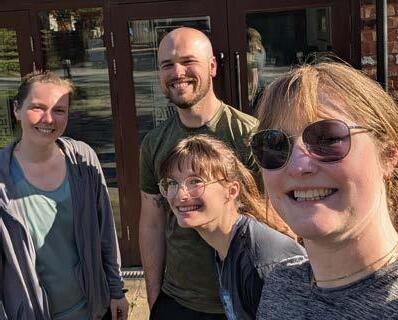
Team Adder ‘Nuff
A brave (and possibly slightly stupid) team of LWT staff and friends are taking on a 15km Tough Mudder Challenge in October and are raising money for the Trust at the same time! The challenge includes over 20 serious obstacles including ice baths, climbing over walls, and even a (small) bit of electrocution.
If you’d like to make what sounds like hell on earth worth it, you can donate here


Volunteers in Blackcarr Woods © Laura Hacking Vile
Wet Willow Wildlife –Celebrating the completion of a successful project
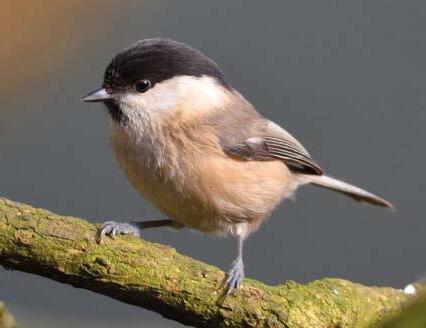
The Wet Willow Wildlife project, funded by Defra’s Species Survival Fund, worked across wet woodland sites in Bolton, the Salford & Wigan mosslands, Trafford, and the Mersey Gateway for two years. These habitats are a vital eco-system that support the precious willow tit, Britain’s second fastest declining resident bird, and a variety of other species such as moths, helleborines and amphibians.
The aim of the project, in partnership with The Conservation Volunteers, was to create a series of volunteering opportunities across our region where people could get involved in restoring and linking up precious areas of wet woodland.

Follow us on social media to keep up to date with all of our news
By Amy Shakeshaft, Communications and Campaigns Assistant
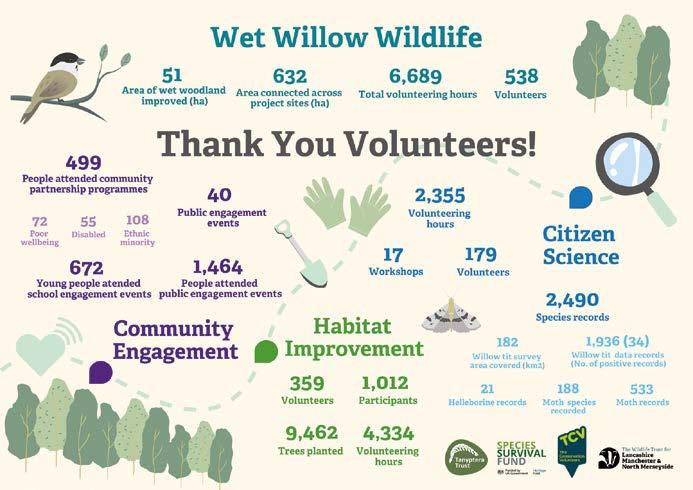
And after two amazing years, we achieved just that! Many thanks to our project officers, TCV and our incredible volunteers.
Celebrating Darwen’s Silent Right to Roam
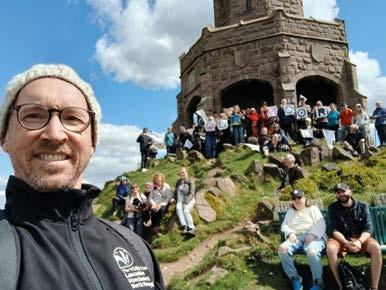
The Silent Right to Roam project in Darwen is a celebration and exploration of the working-class heritage of the Jubilee Tower on Darwen Moor, connecting people who may not already have an attachment to the moors through storytelling and creativity.
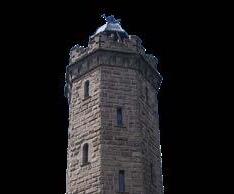
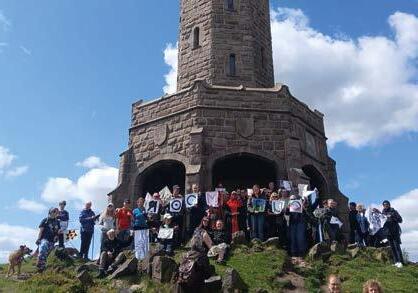
Delivered by your Wildlife Trust, funded through Historic England, and led by Community Engagement Officer Andy Mather, the project highlights how Darwen Moor has served as place of solace and protest, connecting with local, often overlooked, communities. The project honours the 1898 battle by local workers for public access to the moors.
Willow tit © Adam Jones
A Brockholes summer of fun!
Adventure awaits at Brockholes this summer with a jampacked schedule of activities for all the family. Each week of the school holiday brings a brand-new theme, from prehistoric discovery in Dinosaur Week to spellbinding surprises in Magic Week. We would love to see your finest fancy dress for each of our themes.
Daily activities
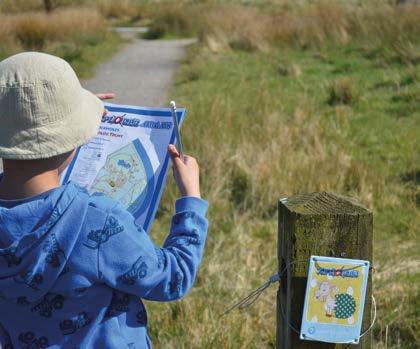
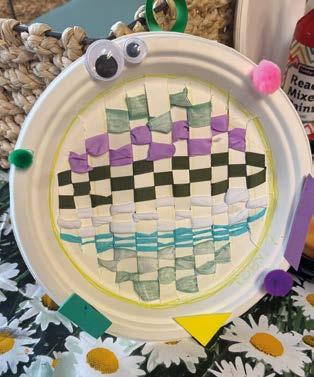
Get creative with our free upcycled crafts, including no-sew sock worms, cardboard tube frogs or paper plate weaving. Leave your creation to dry in the safe hands of our wonderful Welcome Centre team. Then, set off on a themed Xplorer orienteering challenge. Your adventure will take you across the reserve as you use your map reading skills to track down all the markers.
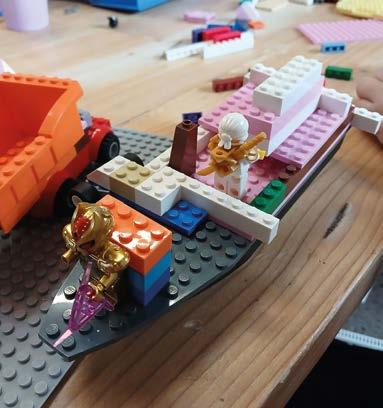
Community crafts
Make a lasting impact during your visit by taking part in one of our big community crafts which will link into our various themes throughout the summer. Help us create a giant papier mache dinosaur or build a LEGO® version of our entire visitor village.
Car boot sale and Makers’ Market
Join us on 22 and 23 August for a special re-loved car boot sale and Makers’ Market. Give those secondhand items a new lease of life and support some fantastic local businesses.
A Roman village takeover
Proceeds from all of our events go back into the Lancashire Wildlife Trust and support us in our work to protect important habitats in our local area for wildlife and connect future generations with nature.
Our visitor village is set to be taken over by Romans over the August bank holiday weekend for a historical twist on our popular summer village fete. We will be joined by special guests from the Roman Military Research Society, with opportunities to learn about Roman artifacts, see demonstrations and have a go at themed family activities.
Why not come in dress?fancy
What ' s on...
Head to lancswt.org.uk/ events for more information, booking details and our full events schedule.
Coastal Explorer
Bat walks at Brockholes and Mere Sands Wood
Step into the world of these marvelous nocturnal mammals as you explore the reserve at dusk. Our fantastic guides will teach you all about the species of bat that we see on our reserves, and you will get the opportunity to use bat detecting equipment to listen out for their high-pitched echolocation noises as they hunt for their insect food.
Discover the Fylde Sand Dunes
Embark on a fascinating guided walk to discover the wildlife of the Fylde Sand Dunes. These walks offer a rare chance to explore one of our most dynamic coastal habitats up close as our enthusiastic volunteer guides teach you about the ever-changing world of the sand dunes.
There is a wonderful variety of wildlife to be seen including butterflies, delicate dune flowers, and coastal birds.
Celebrate National Marine Week with a coastal adventure as we search for shark, skate and ray egg cases washed up on the beach. We will also be on the lookout for other fascinating finds along the way including shells and seaweed. There will be plenty of opportunities to learn about local marine life from our knowledgeable guides.
Wyre Sea Watch
Sea Watch is an excellent way to support our marine conservation work by helping us to record the species found along our coast. No prior knowledge or experience is needed; you will be with a knowledgeable guide who can help point out and identify species. Come along and learn something new whilst watching for species such as dolphin, porpoise, grey seals and more.
Fleetwood Beach Care
Help us to help nature thrive by joining us on one of our monthly sessions to clean up Fleetwood Beach. Explore the strandline with us as we pick up litter and plastic off the beach. Equipment is provided and there is no need to book, just turn up on the day.
Seaweed Survey at Knott End
Have you ever wanted to try your hand at conservation? Our seaweed survey is a brilliant opportunity to learn about species identification and the importance of taking notice of what we see and find.
This survey will help us to record the presence and absence of several species of seaweed.
Bonfire Night
Join us for a special bonfire night celebration at Brockholes, Mere Sands Wood, Lunt Meadows or The Hive at Moss Bank Park. Our bonfire night events are designed with wildlife in mind, keeping noise and disruption to a minimum.
Enjoy the cosy, relaxed atmosphere of a bonfire night celebration without the loud bangs. Suitable for little ones and some of our bonfire night events are also dog friendly.
Corporate Membership
Join our vibrant green network of business members
Not only will your contribution fund our vital work to support nature recovery across Lancashire, Manchester and Merseyside, but you will also receive lots of other benefits that help you show your commitment to nature recovery.
Our membership is split into two tiers, with added extras available depending on your budget and needs.
Tier One – £995 per year + VAT
• Use of the Lancashire Wildlife Trust logo and listing on our website. The Wildlife Trusts logo is nationally recognised as the brand for nature.
• The ability to promote your services and products to our 28,000 individual members.
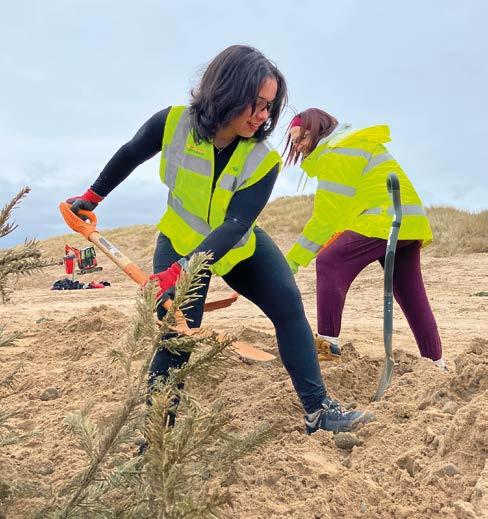
• An annual supporter event for two delegates, with opportunity to network with other corporate supporters and learn from speakers on ESG and corporate biodiversity reporting.
• An annual report on corporate supporter impact on biodiversity and nature recovery.
• Discounts on conferencing and hospitality across our sites with conference facilities.
• Digital guidance on increasing and communicating the biodiversity impact of your business.
• Lapwing, the LWT members magazine, and mention in our Annual Report as a supporter.
• In person advice and support to maximise employee engagement for nature recovery.
Tier Two – £1,495 per year + VAT
• All of the above PLUS a Corporate Conservation Day for up to 10 people, which supports vital local conservation work, strengthens teamwork and gives your staff a memorable hands-on experience outdoors.
Additional Extras
• Guided walk for up to 25 people: £250 + VAT
• Additional Corporate Conservation Days starting at £600 + VAT