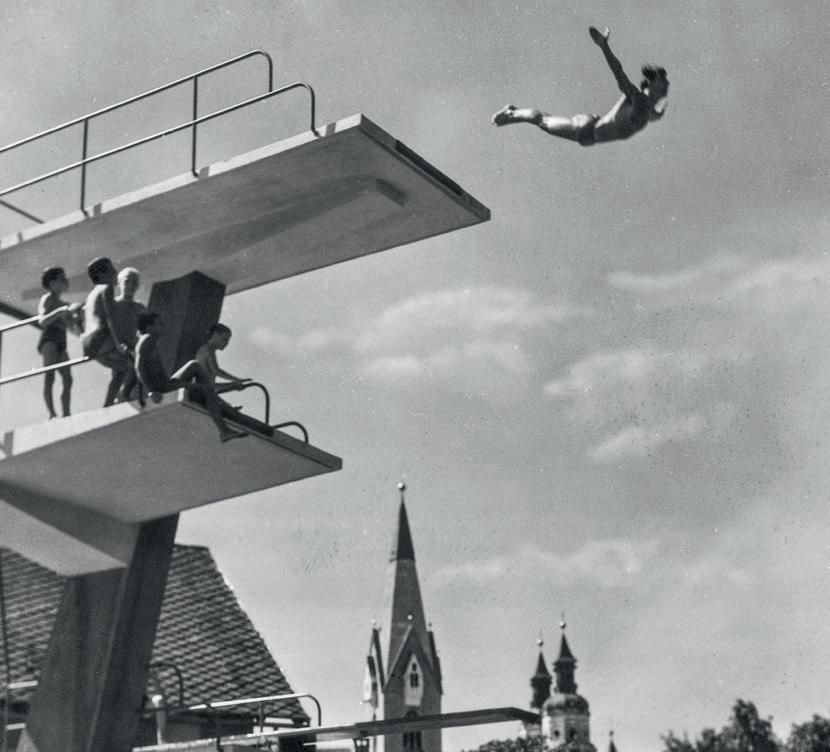
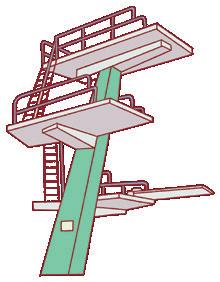
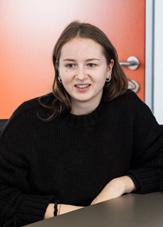
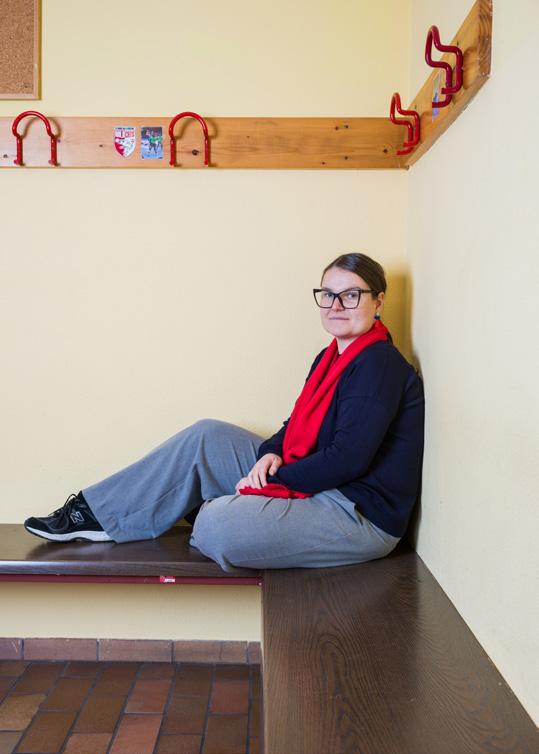
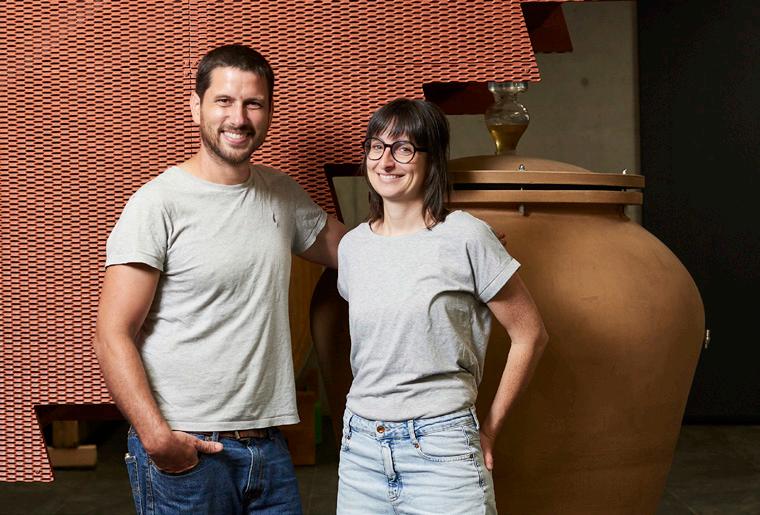
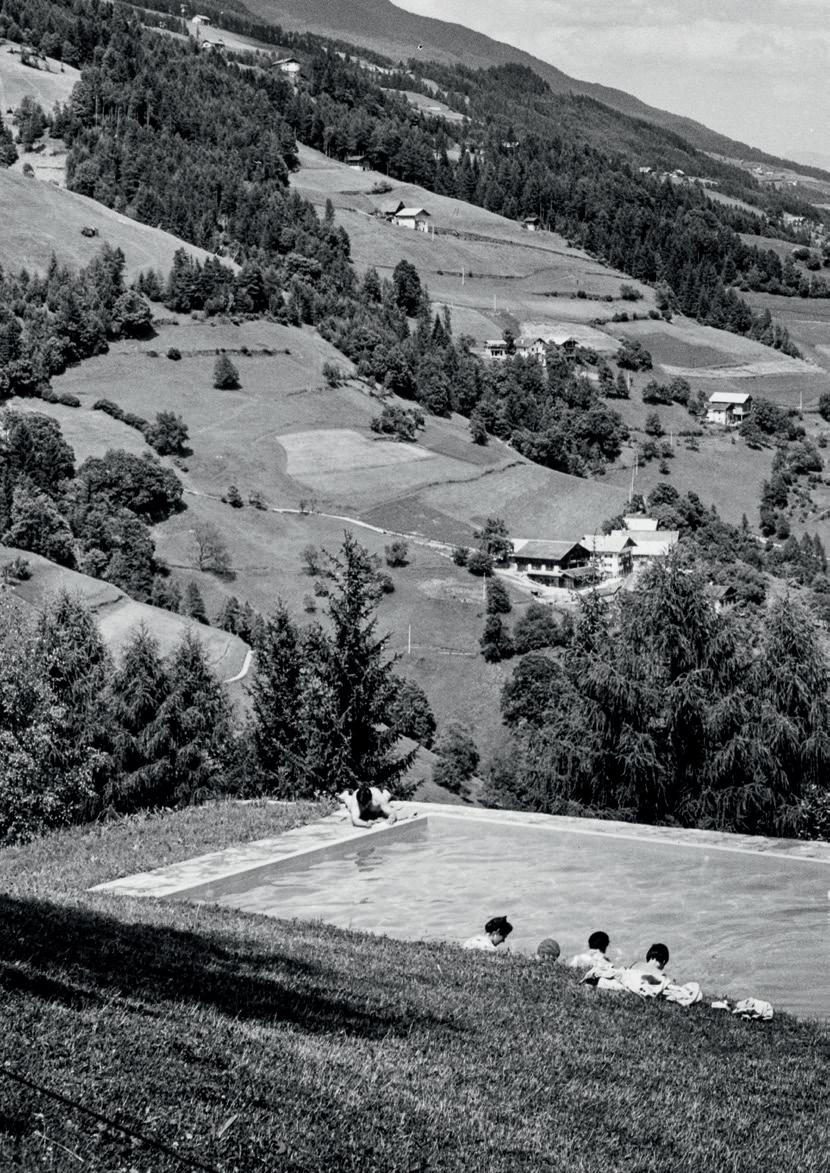
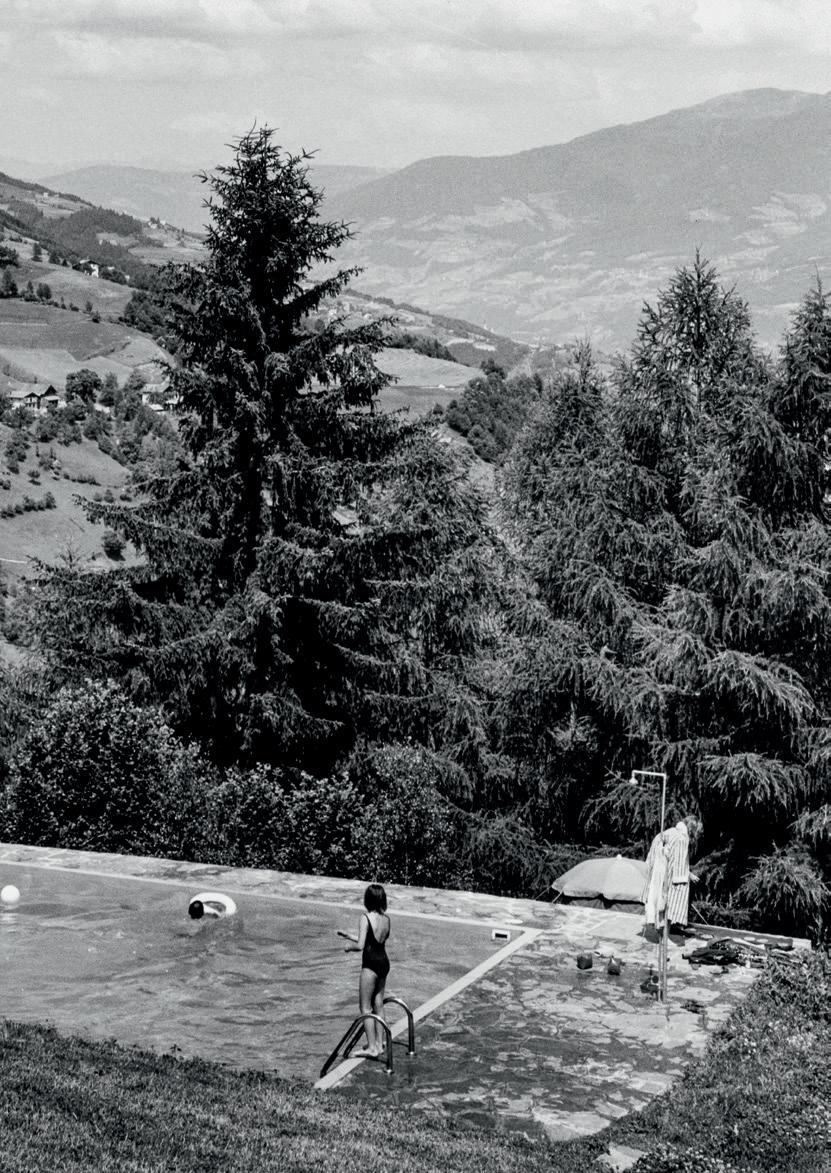
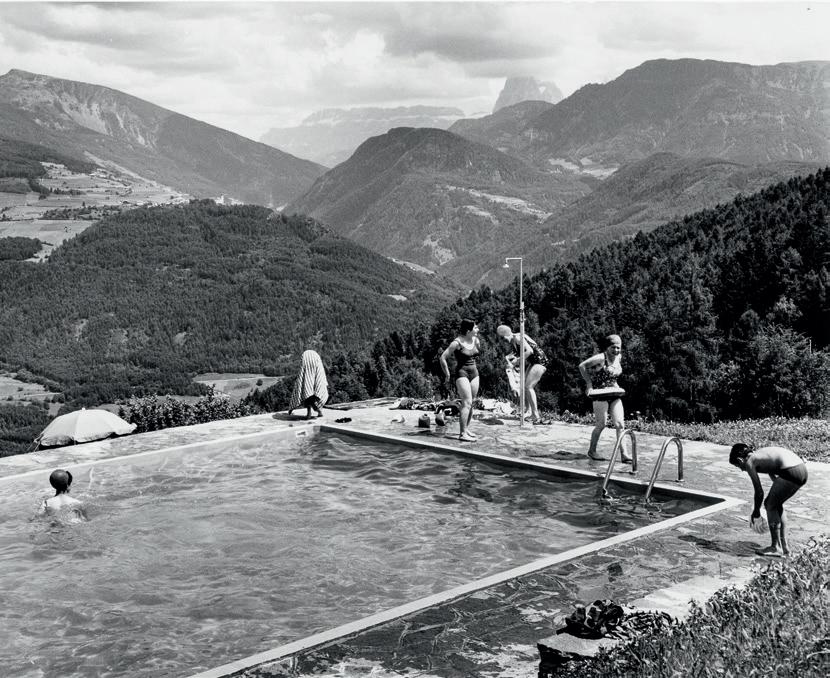
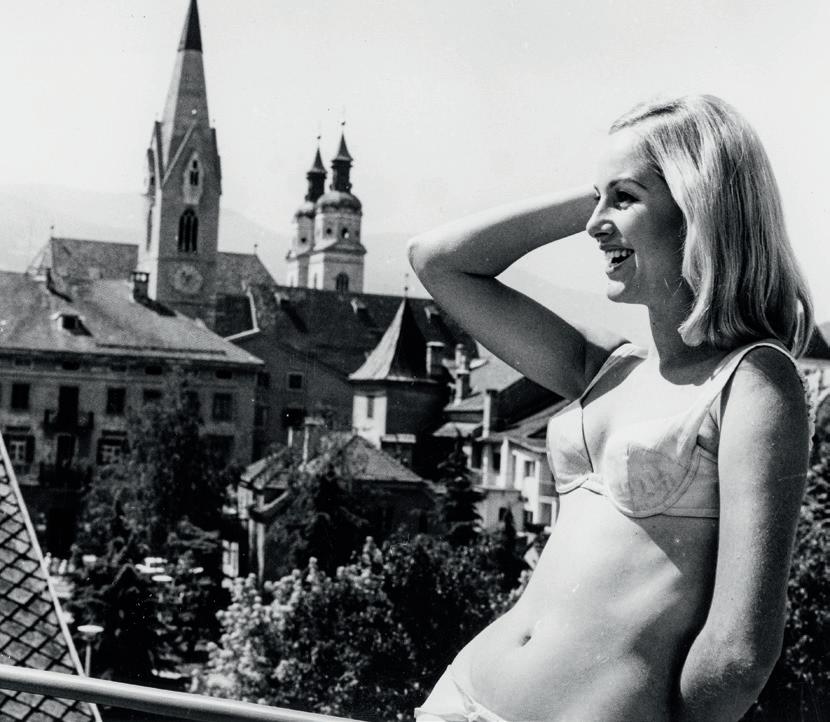
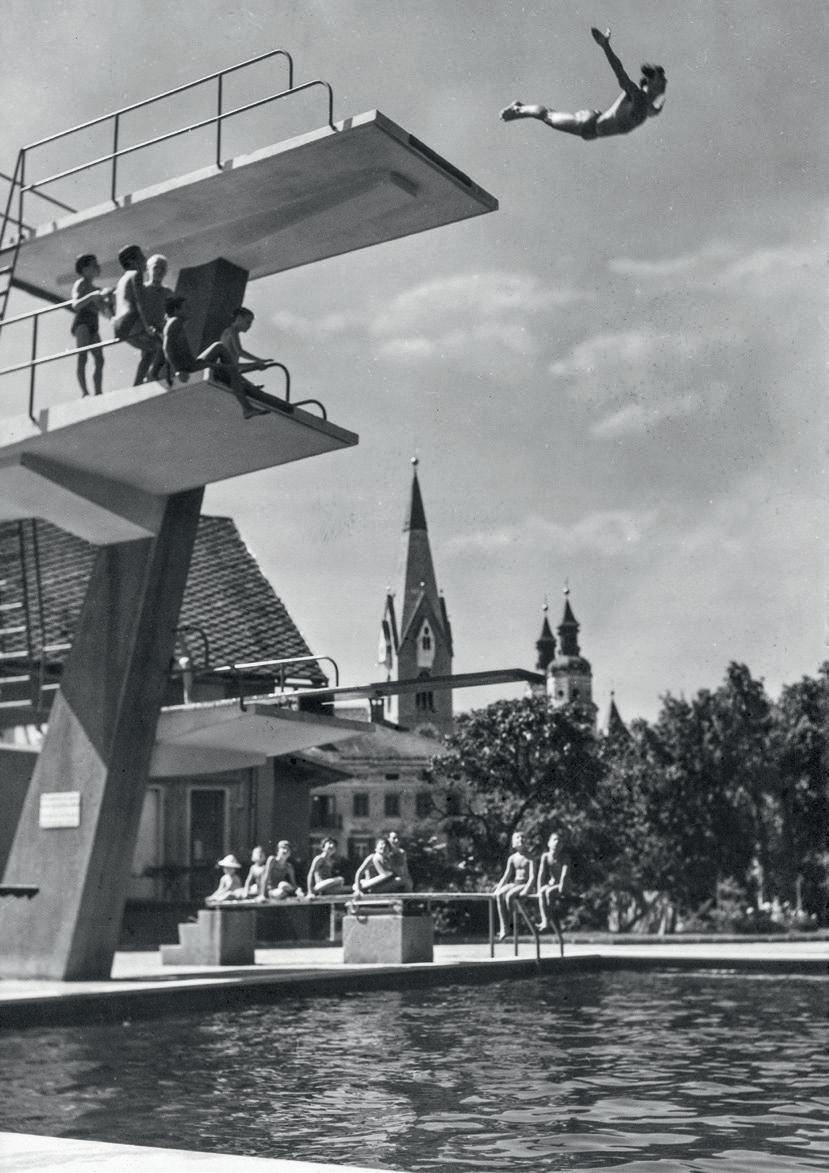
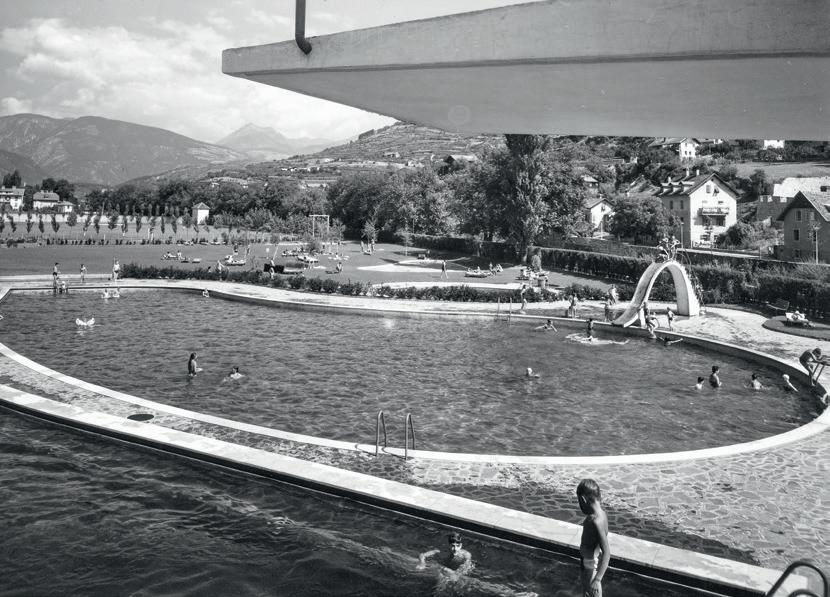
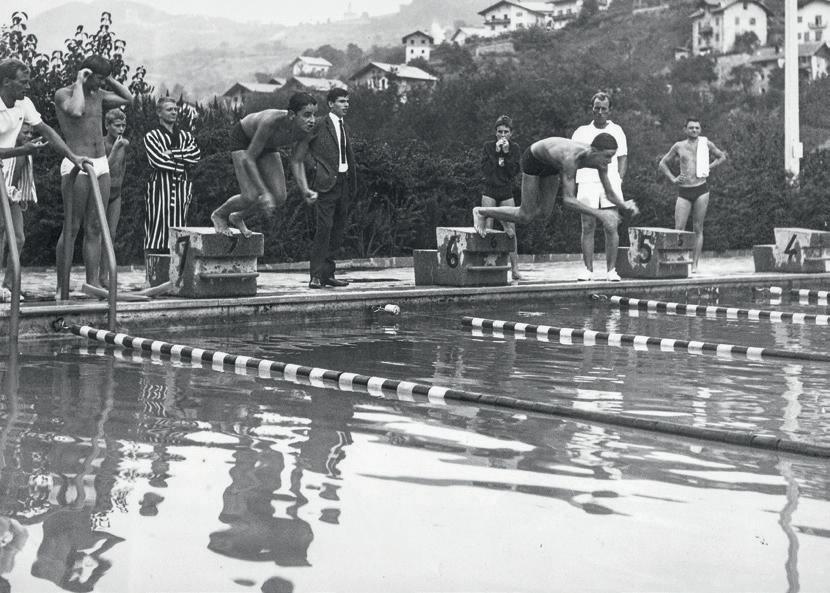
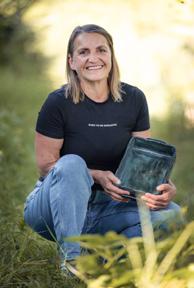
1 Valeria Dejaco’s name appears several times in this issue. From Brixen/ Bressanone, she’s a passionate cyclist so jumped at the chance to research and write our story on local cycling enthusiasts (p. 54). One of the pictures in our photo gallery (p. 70) comes from her family archive. Plus, Valerius Dejaco, who commissioned Brixen swimming pool, was her great-uncle.
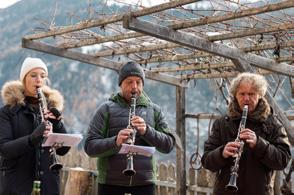
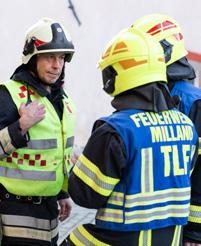
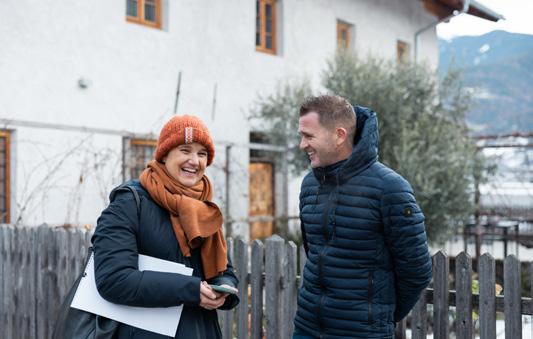
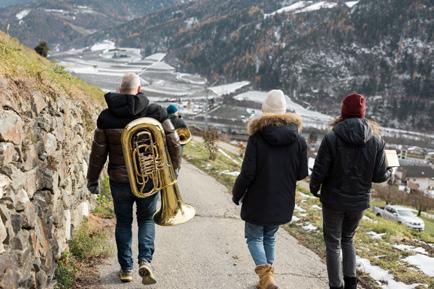
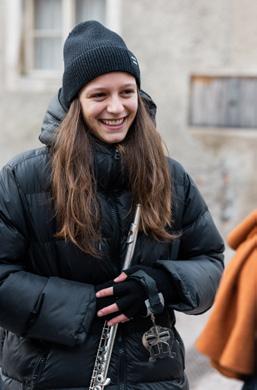
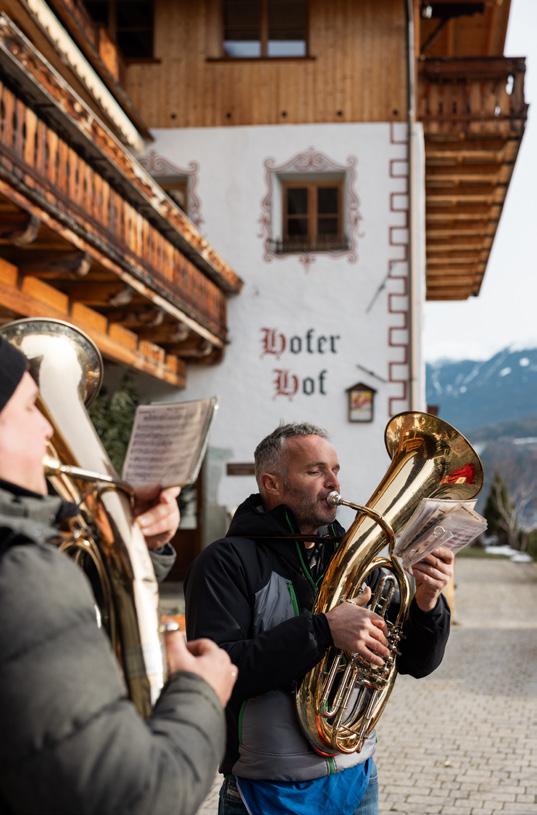
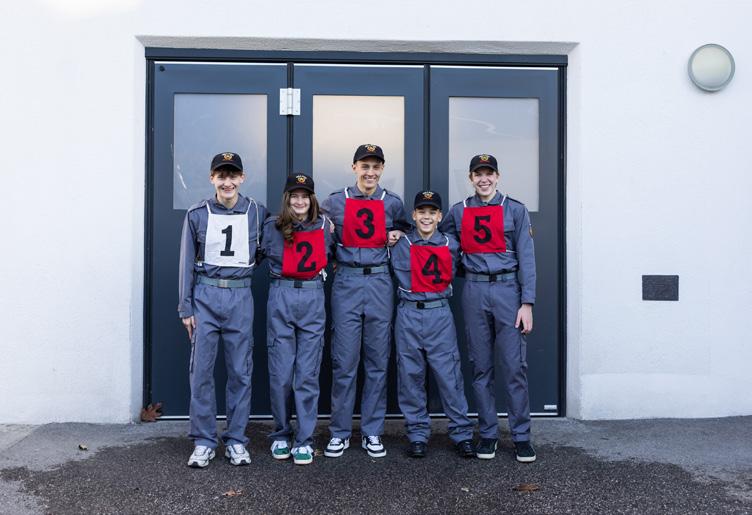
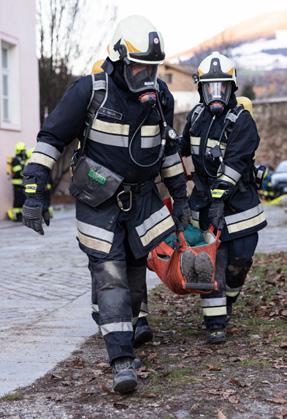
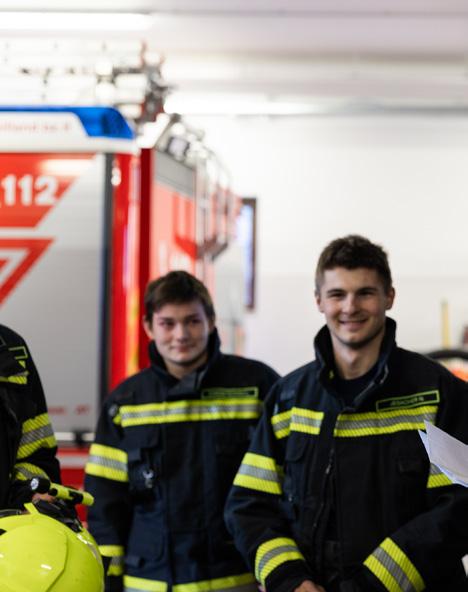
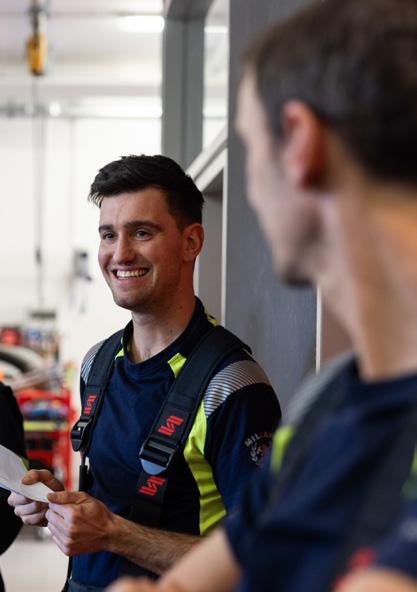
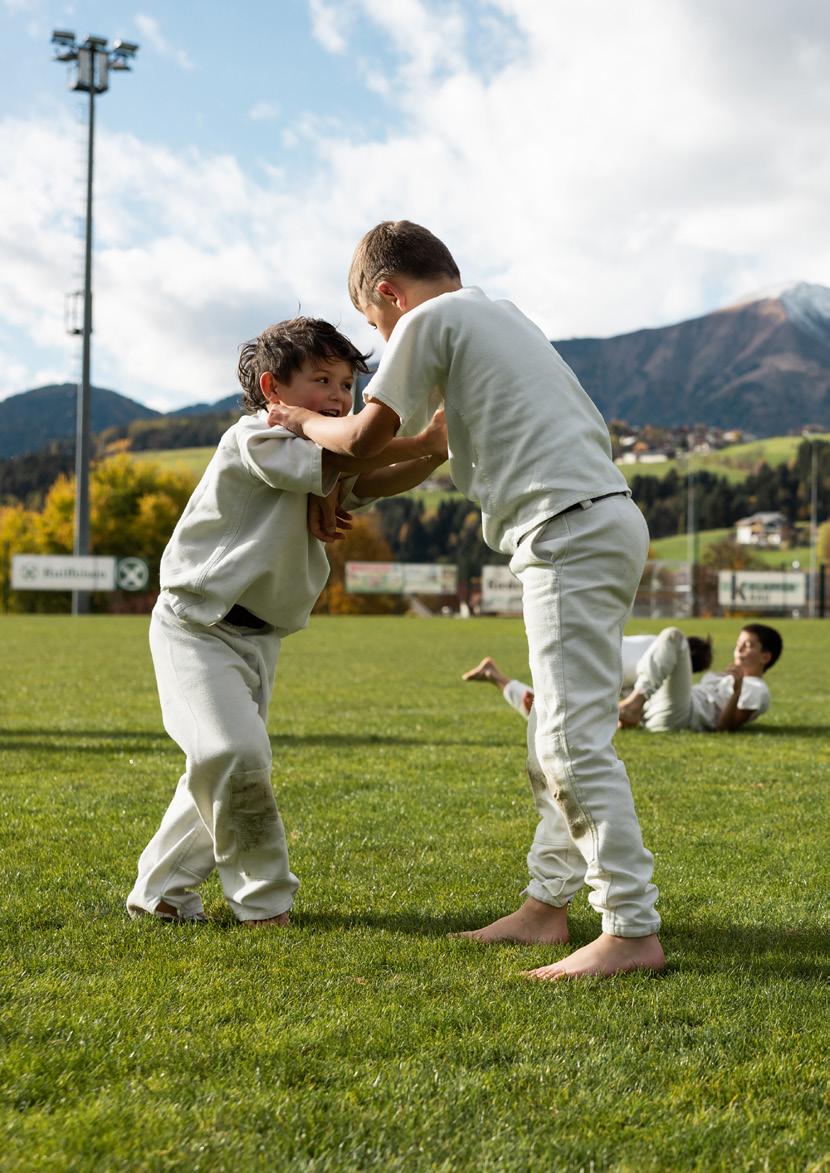
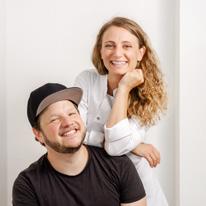
2 Photographer Philipp Seyr fully immersed himself in community life for our piece on village clubs, spending three days with local musicians, firefighters and Rangglers. “It was brilliant to document their team spirit,” he says. He himself was a folk dancer for many years and is considering signing his two sons up to a Ranggeln club, which as you’ll discover in the article is a form of wrestling.
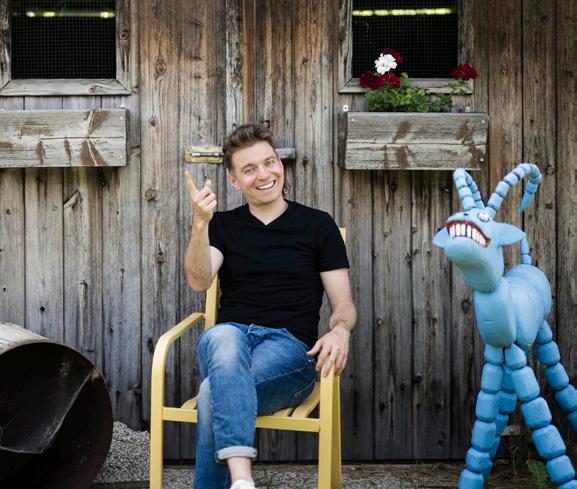
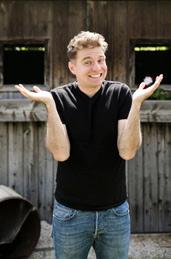
3 It almost seems as if it came from somewhere else. The blue Styrofoam creature poses next to comedian Jakob Messner – yet reveals nothing about itself. Its origin lies in the Messner Windschnur household: Jakob’s father Sepp, known to many as a musician, created it spontaneously, without giving it a lot of thought. Over time, it has become a permanent part of the family. Its shape is reminiscent of an ibex – and thus of a trait one can hardly deny the Windschnurs: a certain persistence in following their own path.
Cor. Il cuore. Das Herz. The heart. Clubs are at the heart of life in small towns and villages. From sports and social clubs to clubs dedicated to culture and local customs, they’re the glue that holds everything together. But these groups wouldn’t exist without the volunteers who get stuck in and work hard to keep them running smoothly. Everyone knows everyone and everyone helps each other, with nobody falling through the cracks. This community spirit unites people, fostering understanding, a sense of togetherness and creativity. And giving everyone involved a zest for life and a more positive future. Clubs build bridges and connect people of all ages. They are sustainable and keep towns and villages alive. Let’s hear it for clubs!
AUTHORS Valeria Dejaco, Lisa Maria Gasser, Daniela Kahler, Lenz Koppelstätter, Debora Longariva, Judith Niederwanger and Alexander Pichler (Roter Rucksack), Silvia Oberrauch, Susanne Pitro, Stefanie Unterthiner
PHOTOS Cover photo: Geschichtsverein Brixen/Robert Recla; Amt für Film und Medien/ Meran Foto Tappeiner, Bestand Südtirol Tourismuswerbung (73, 75), Amt für Film und Medien/Elisabeth Fuchs-Hauffen, Bestand Südtirol Tourismuswerbung (70-72), Florian Andergassen (6, 80), Archeoparc Villanders (15), Archiv Familie Dejaco (78), Argento Artistry (4, 38-39, 67), Martin Bacher (80), Claudio Bonazio (13), Brandnamic (66-67), Burgerhof Meßner (50), Valeria Dejaco (3), Edition Raetia/Familie Tauber( 74), Claudia Fea (13), Manuel Ferrigato (10), Festung Franzensfeste (53), Alex Filz (63), Fly Südtirol (63), Gelatofestival World Masters (14), Geschichtsverein Brixen/Robert Recla (76-77), iconfield (54–62), iStock (28), Manuel Kottersteger (67), Mike Krüger (50), Michael Messner (68), Alex Moling (4, 61), Hannes Niederkofler (3, 14, 16), Helga Oberhofer (68), Valentina Passler (81), Michael Pezzei (14, 54-62), Günther Pichler (81), Désirée Plattner (46), Caroline Renzler (4, 30-37, 40-49, 51), Thomas Roetting (69), Roter Rocksack/Judith Niederwanger & Alexander Pichler (82), Thomas Schäfer (12), Philipp Seyr (3, 12, 18-27, 38-39), Shutterstock (67), Tourismusgenossenschaft Natz-Schabs/Michael Messner (68), Tschiedererhof (80), Marika Unterladstätter (68), Sarah Volgger (81), Gustav Willeit (8), Harald Wisthaler (63)
ILLUSTRATIONS
Laura Neuhäuser (4, 64–65)
TRANSLATIONS AND PROOFREADING
Exlibris (Duccio Biasi, Valeria Dejaco, Helene Dorner, Alison Healey, Milena Macaluso, Charlotte Marston, Federica Romanini, Stefanie Unterthiner, The Word Artists)
PRINTED BY LONGO, Bozen
Kindly supported
16 Q&A with…
Comedian Jakob Messner, who satirises everyday life in South Tyrol
18 Clubbing Together!
Music, firefighting, Ranggeln: how local clubs hold mountain villages together
28 Fascinating Fungi
Five worth foraging for –and two to avoid
30 Up or Down
An interview with award-winning playwright Miriam Unterthiner 38 Spectacular Places
Guggenberg Multigenerational House 40 Cabbage & Friends
Three humble ingredients and the chefs who love them
Authentically Cool A visit to Burgerhof farm and vineyard
Surveying the Globe A piece of history
54 My Bike and Me
Tales of repairs, races and roaming on two wheels
64 A Desk with a View
Spreadsheets and yoga mats: my first “workation”
66 Favourite Spots
Wonderful Winter Light
70 Summers of Years Gone By A deep dive into the early years of outdoor bathing culture
80 Beautiful Things
Products from the region
82 Silent Witnesses of Time
The story behind a favourite photo
From panoramic views and horticulture to feats of architecture – living in harmony with our surroundings gives us a sense of the meaning, essence and beauty of the world around us.
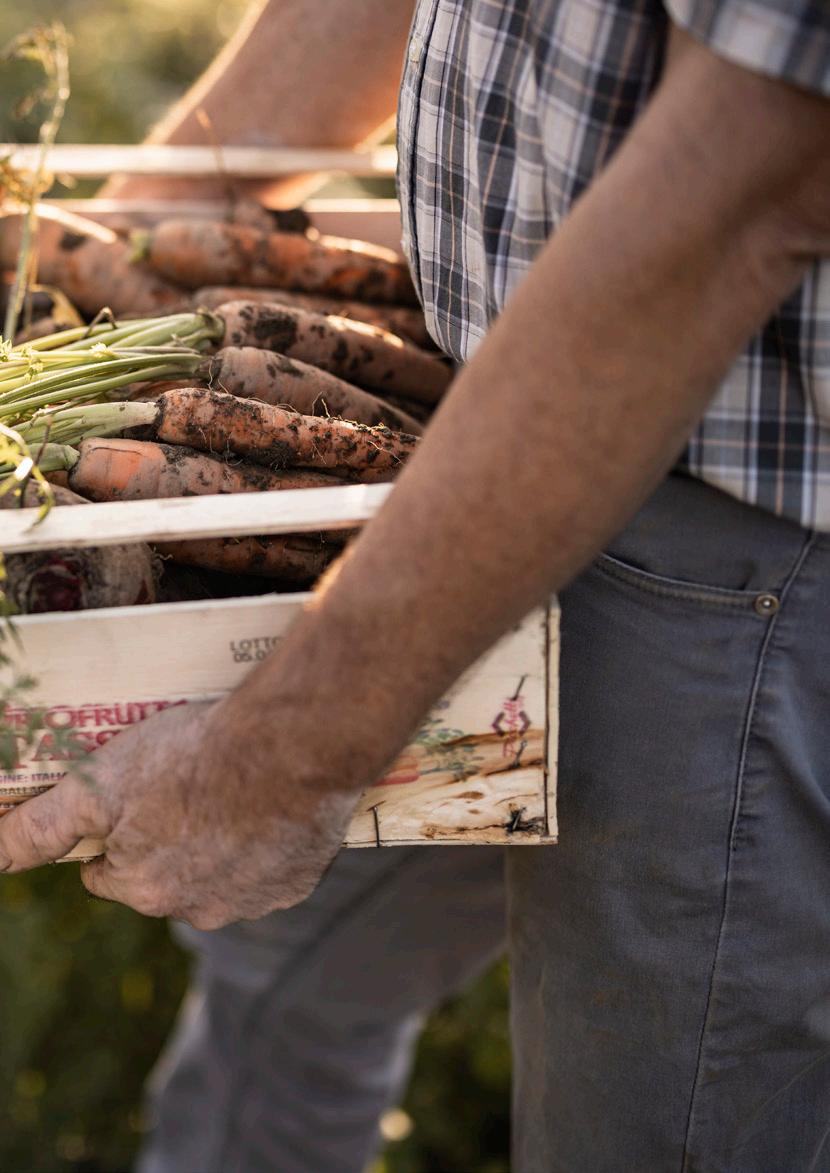
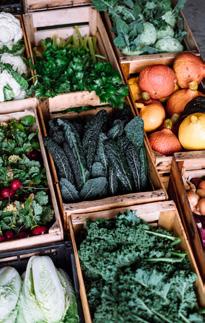
Food tastes best when you know where it comes from. On the Natz-Schabs/ Naz-Sciaves plateau at 750 to 980 metres above sea level, growers get their hands in the soil and tend a diverse array of crops, including carrots, lettuces, apples and strawberries. Local, fresh and seasonal, this is fruit and veg at its finest.
People and Nature
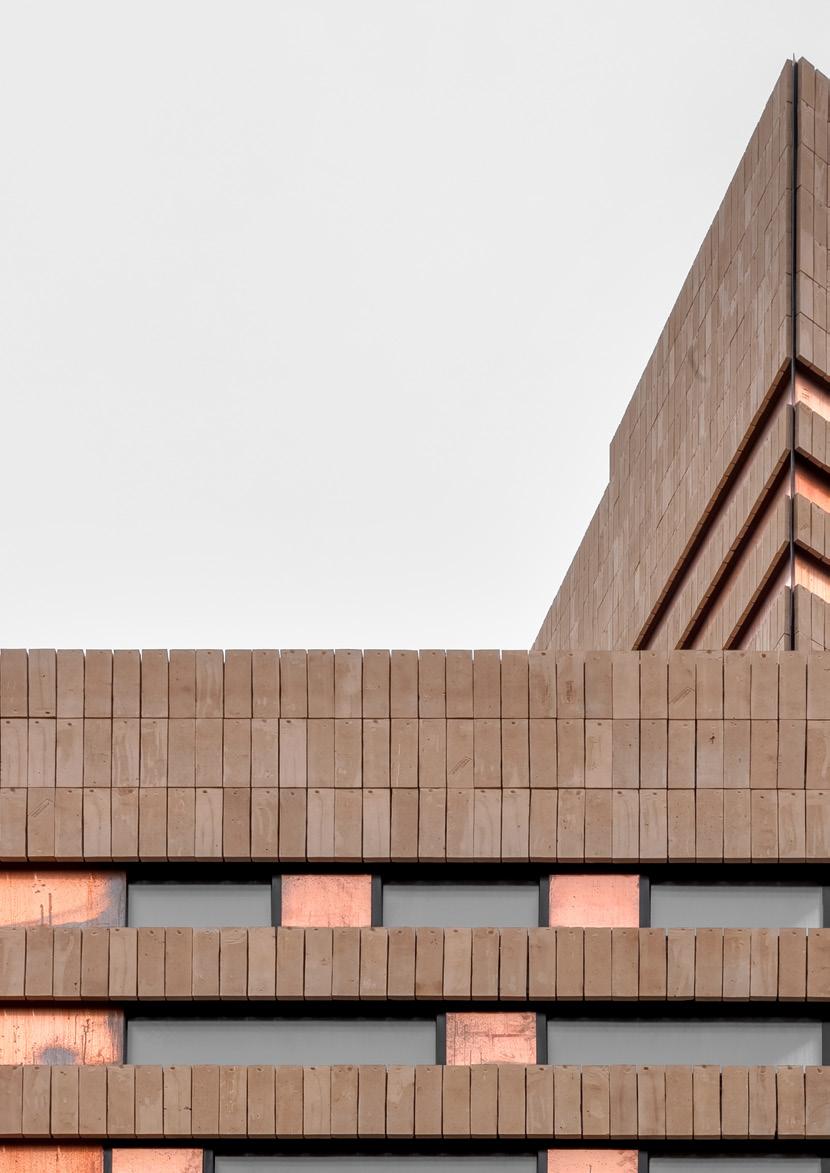
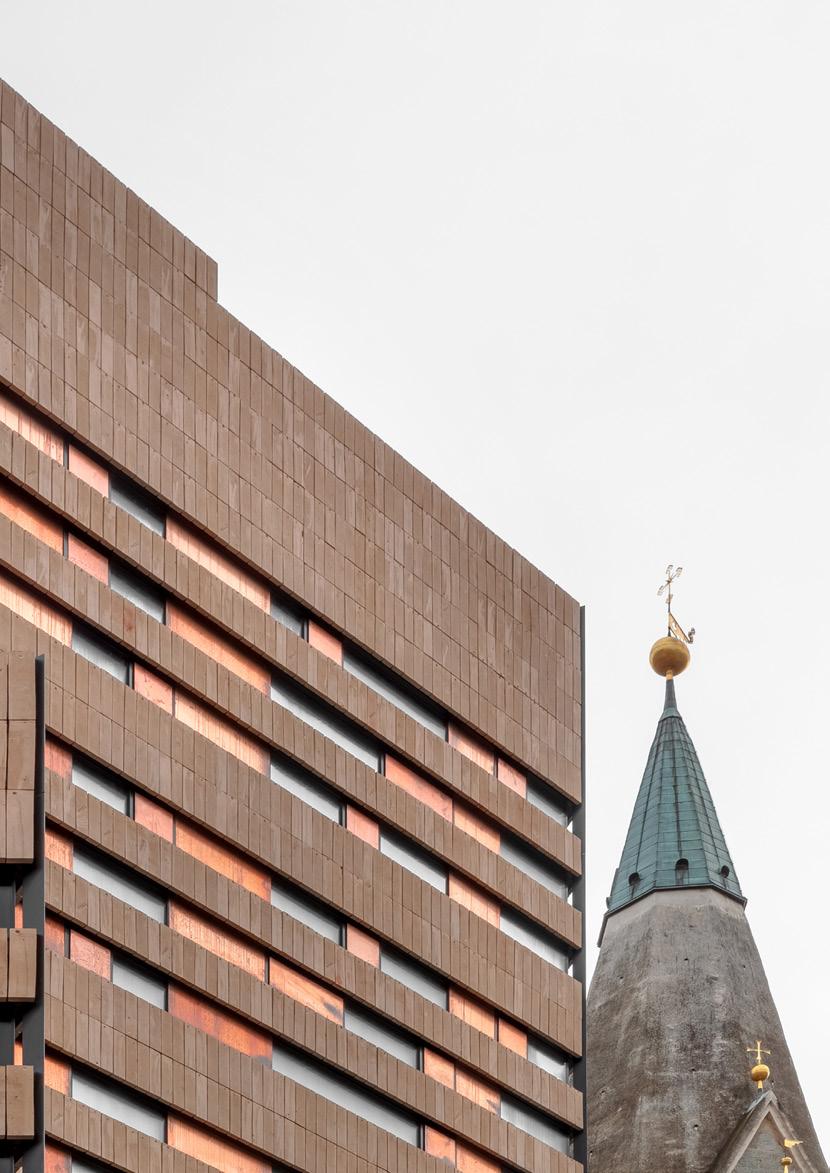
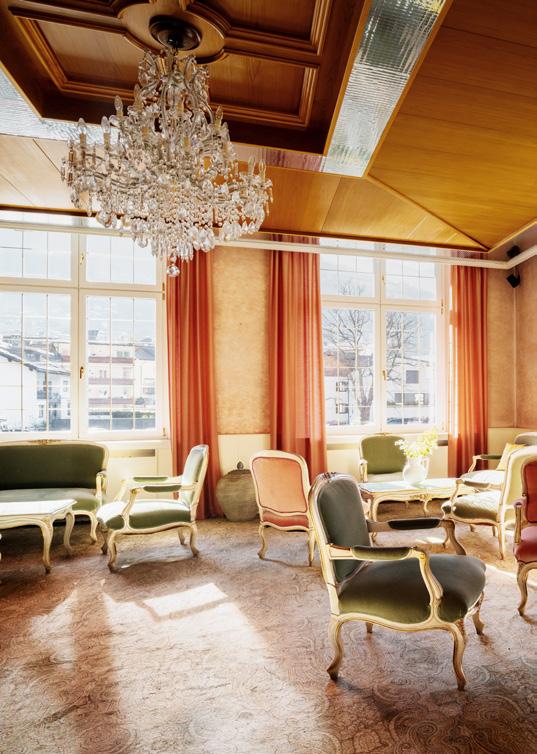
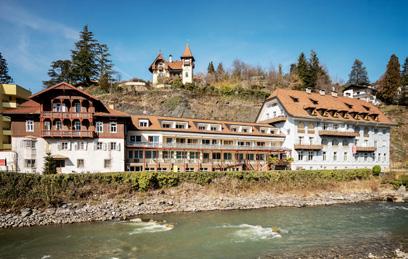
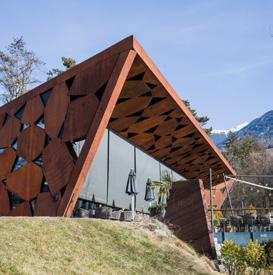
Opened in 2024, the Boutique Hotel Badhaus in Brixen/ Bressanone is so tucked away that you’d be forgiven for missing it. But once you know where it is, you won’t be able to take your eyes off it. Designed by architect duo Bergmeisterwolf, the hotel creates a lasting impression, its clear lines a complete contrast with the surrounding baroque buildings. From the outside, there’s an air of brutalism, but on the inside, the building is full of art. A hidden, small yet mighty modern masterpiece constructed from clay bricks, copper and steel.
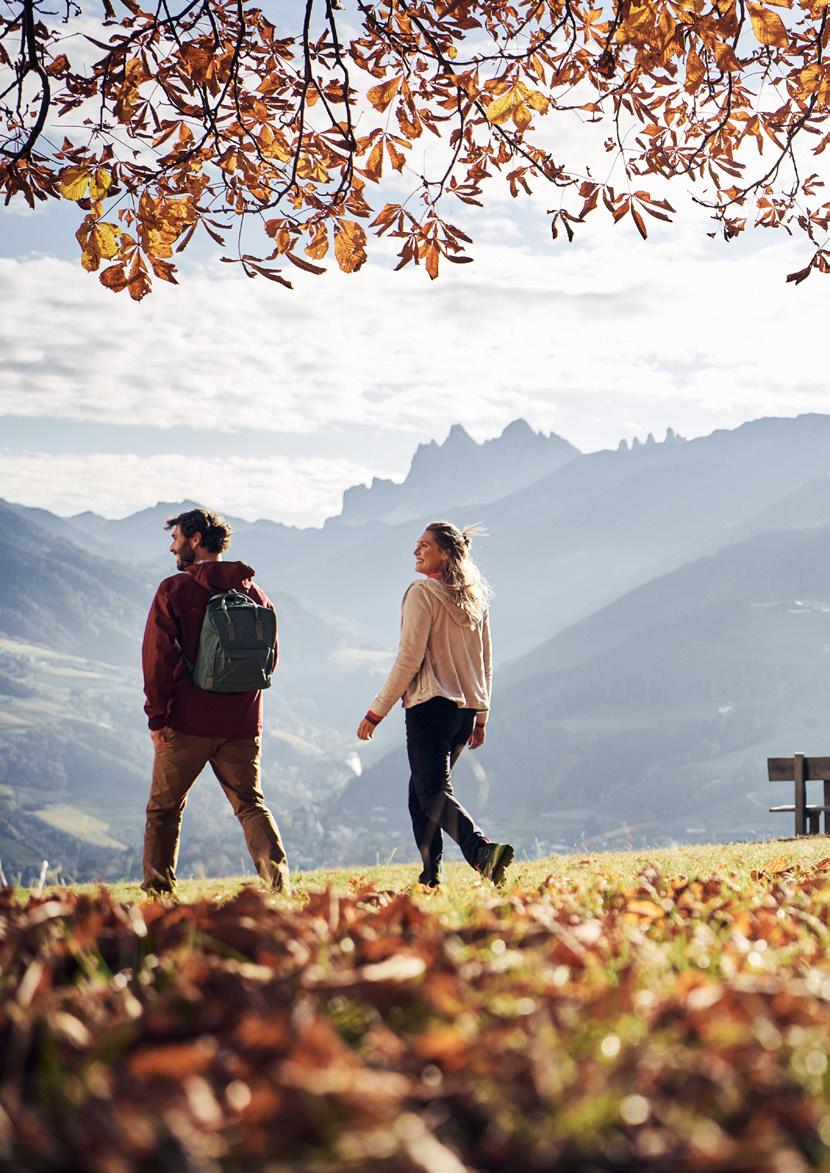
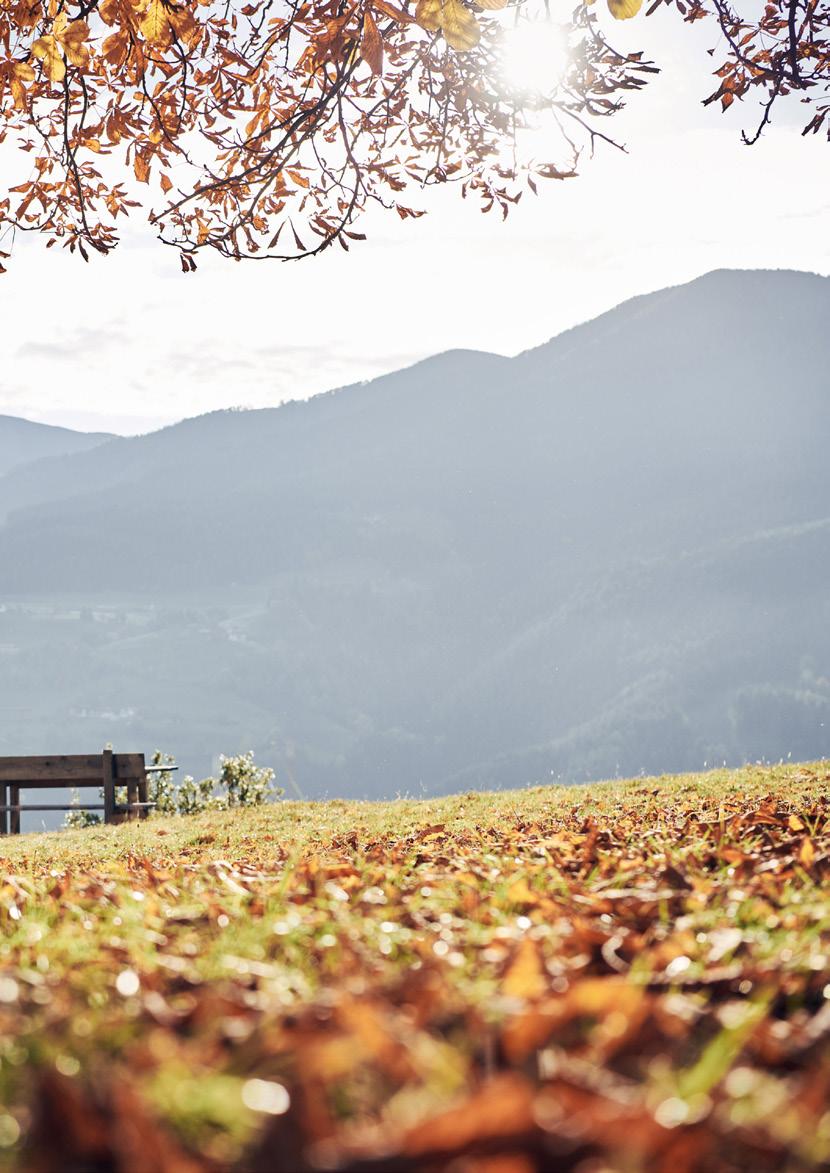
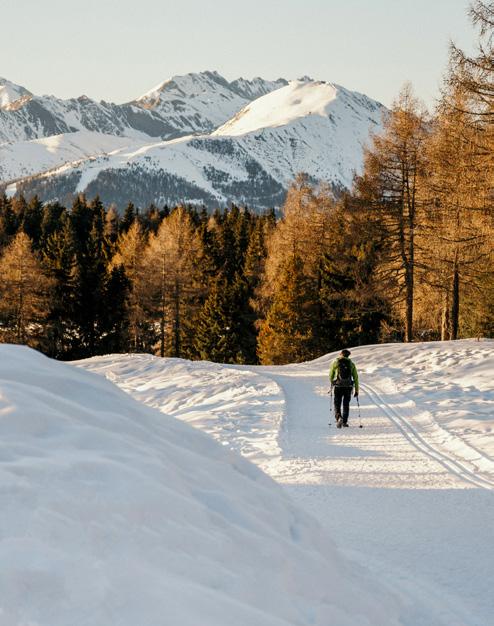
Running high above the Eisacktal valley, the Keschtnweg (Chestnut Trail) is especially beautiful in autumn. Hear the crunch of chestnut leaves under your hiking boots as the sun shines weakly in the sky while marvelling at the striking Geisler peaks on the horizon. Can you imagine a more spectacular panorama?
News from the region
This Issue’s Lucky Number
2.8 t
THIS IS THE FIRST ISSUE of COR – The Local Magazine to be printed in a more compact A4 format. By making this change, we are aiming to use paper more efficiently and reduce our overall use of materials. Each copy now weighs around 200 grams less than before. This may not sound like much, but with a circulation of 18,350 copies, it soon adds up, resulting in total savings of between 2.8 and 3.5 tonnes of carbon dioxide equivalent (CO2e). That is roughly the same as the annual CO2 emissions from one to two average cars or ten return flights from Munich to Rome.
A Green Star
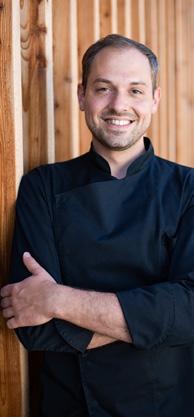
IN 2026, Kircherhof farm in Albeins/Albes became the first restaurant in and around Brixen/Bressanone to be awarded a green Michelin star for its commitment to sustainability. Wolfgang Schmidl has been the chef here since 2020. In his kitchen, he works almost exclusively with products grown on the farm itself, sourcing everything else from the local vicinity. Everything is about sustainability, “from the seeds that we sow ourselves to the finished dishes,” Wolfgang says, describing his approach. He also tries to avoid waste by using as much of the ingredients as possible. For instance, his carrot tortelli are filled with pesto made from carrot leaves and served in a carrot stock. Where does he find the inspiration for his dishes? “I like standing in the field and seeing what’s growing. Instead of dreaming up dishes in my mind, I look at what ingredients I have and work out what to do with them,” he explains.
kircherhof.it
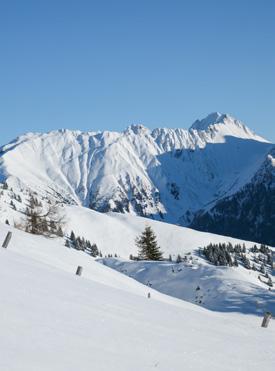
On Top of the World at the New Plosehütte
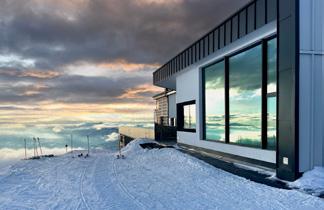
For skiers, stopping to refuel at the Plosehütte mountain lodge is a long-standing and much-cherished ritual. Here they can tuck into a hearty meal and enjoy the panoramic views before jumping back into their skis and descending the nine kilometres from the Plose summit (at 2,486 metres above sea level) to the valley station without stopping, their cheeks burning all the way. The original Plosehütte was built some 140 years ago in 1887 as a simple refuge by the German and Austrian Alpine Association. In 1924, it passed into the hands of the Italian Alpine Association (CAI). It was then extended several times, most notably in the 1960s when the first lifts brought many more tourists to the Plose.
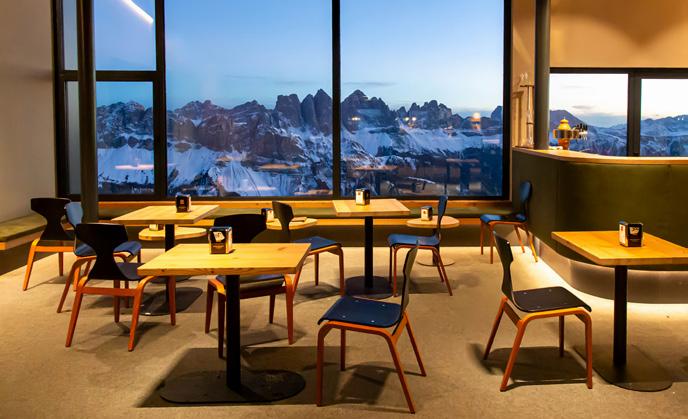
The opening of the lodge’s new building marks the start of another chapter in its history. Inspired by the location’s spectacular summit vistas, the architects Stefano Peluso and Claudio Paternoster installed large windows to frame the views of the Peitlerkofel and Geisler peaks. Instead of dormitories, the guest accommodation now comprises smaller rooms with private bathrooms. The new leaseholders, Fabrizio Marino and Claudia Fea, are architects themselves and moved from Turin to run the mountain lodge. Fabrizio is the chef, while Claudia takes care of the guests and operations. The young couple serve simple dishes like minestrone, goulash soup and dumplings – exactly the type of delicious, hearty fare you want up here in the mountains.
plosehuette.com
Dictionary of South Tyrolean
Oschpele Muggn
IF YOU HEAR a South Tyrolean utter the words “Oschpele Muggn!”, then you know something has gone wrong or irritated them. The first part of this phrase was originally used in a religious context and is derived from the word for the host or sacramental bread consumed during Holy Communion. Like with many swear words, it has changed so much over time that its origins are now hardly recognisable. And why the poor mosquitoes (“Muggn”) got added in remains a mystery. All we know is that today the expression is used as a mild expletive and outlet for a moment of frustration, often quickly forgotten and unlikely to be spoken of again.
The reconstructed Plosehütte mountain lodge at 2,486 metres above sea level offers captivating, unobstructed views of the Peitlerkofel and Geisler peaks. The dormitories have been replaced by small rooms with private bathrooms.
S is for SelfService Shop
AFTER BECOMING A FATHER, Matthias Klammer decided to rethink his approach to running his farm shop Marxenladele at Marxenhof organic farm. “You suddenly have a lot less time and need to plan your day much more carefully,” he explains. A lack of shop staff was also a factor and so a self-service shop seemed like the obvious solution. Matthias was familiar with the concept from other shops and set about comparing different systems, eventually investing in the user-friendly and cost-effective Lokbest software.
The system has been up and running since mid-June 2025 and has proven a great success. “At first, I was worried that nobody would use it.” But that couldn’t be further from the truth. In addition to its regulars, who value the face-to-face experience of shopping in person, the shop has welcomed new customers, especially those who appreciate the flexibility to shop outside of normal opening hours.
All shoppers have to do is register on the app, open the door by scanning a QR code and begin shopping. The self-service shop still sells all the usual goods, including fruit, vegetables and products made from ingredients grown on the farm. It is open around the clock from Monday to Saturday, with the remainder of the weekend reserved for restocking and family time. “It was the right decision,” says Matthias, “but the system hasn’t replaced the personal customer experience that makes our farm shop so special.”
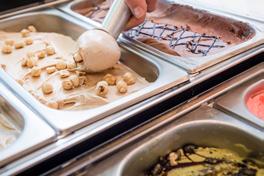
Artisan Ice Cream
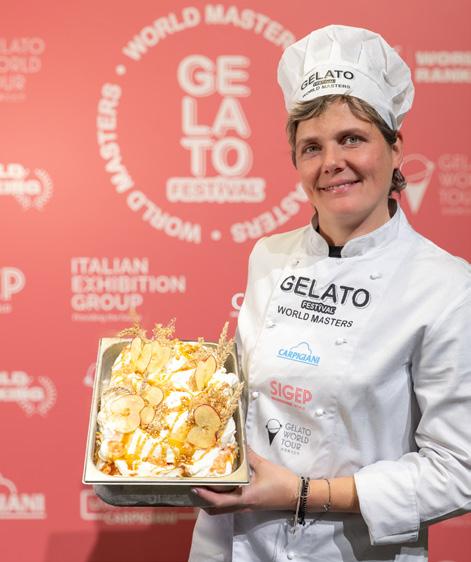
LISI STOLZ STARTED OUT making ice cream for her children using a small household appliance. “The ingredients list on industrially made products was far too long for my liking and was full of items I didn’t recognise.”
After attending a course in Bologna, she bought her first professional icecream maker on eBay. She’s come a long way since and is now one of the best ice-cream makers in Italy with several awards to her name.
She makes her ice cream at the listed Hubenbauer farmhouse in Vahrn/Varna using only her own home-grown fruit, berries and herbs, which is why she has no thoughts of selling her ice cream to wholesalers: “I’d never be able to pick enough ingredients from my garden to make 100 kilograms of lavender ice cream. Plus, I only want to make what I think tastes good.” What are her favourite flavours? “Ice creams made from single fruits like raspberries or blackcurrants. You can tell that just by looking at my display counter. I focus on carefully selected ingredients so that the taste really shines through.” What makes her ice cream stand out? “The story behind it and the excellent ingredients we have here in South Tyrol.” Nowhere is this more evident than in “The Treasures of the Mountains”, a yogurt ice cream with a beer wort ripple, honeyed apple and cereal crumble, which she created for the finals of the 2026 Gelato Festival World Masters in Las Vegas and which received a special mention for its successful combination of flavour and origin.
hubenbauer.com
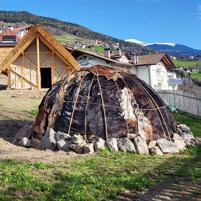
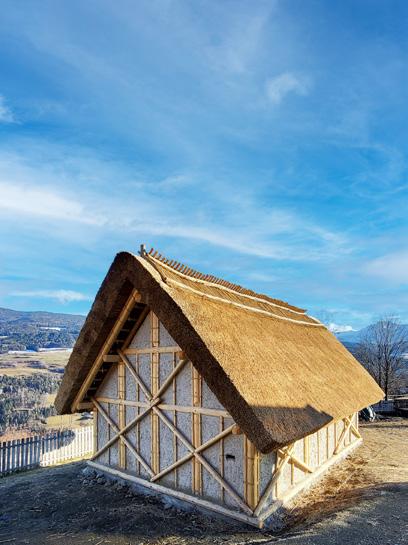
Did You Know That... in Villanders/ Villandro you can see how people lived thousands of years ago?
AT THE ARCHEOPARC VILLANDERS on the Plunacker archaeological site directly below the village centre, you can explore fascinating remains from the Stone, Copper and Bronze Ages and Roman period. In addition to some impressive, well-preserved graves and traces of settlements, you’ll find everyday objects on display, including stone tools, ceramics, brooches, combs, a key and a ladle. You can also discover prehistoric finds from surrounding areas such as St. Valentin/San Valentino and the Villanderer Alm mountain pasture, which provide evidence of people worshipping, hunting and mining. Taken as a whole, the artefacts demonstrate that people have lived in and around Villanders for at least 7,000 years.
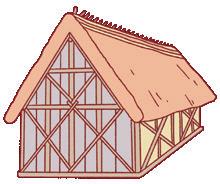
The Archeoparc also reveals what life was really like for our ancestors through reconstructions of three typical buildings and their interiors: a dwelling from the Middle Stone Age, a thatched hut from the New Stone Age and a Rhaetian house of the style found across the Alps for many centuries and not dissimilar to other old farmhouses in the region.
archeo.bergwerk.it
Than Just a New Name
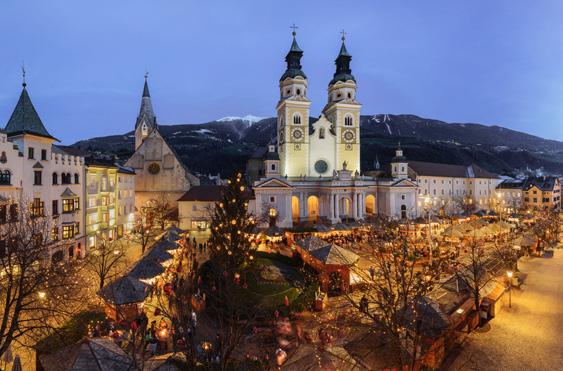
Four places united by a shared vision for the future. In 2026, Gitschberg Jochtal/Rio Pusteria, Brixen/Bressanone, Klausen/Chiusa and NatzSchabs/Naz-Sciaves joined forces to rebrand themselves as “Brixen Südtirol”. The partnership is about much more than just a new name. By working together, the local tourism managers are aiming to develop more offers and projects that give visitors a real taste of the entire region in all its diversity, from the foothills of the Dolomites to the towns and villages of the Eisacktal valley. They are also committed to using the partnership to make the region more sustainable and responsible – with a focus on quality rather than quantity –and to creating a positive future for visitors and locals alike.
brixen-suedtirol.com
Reconstructions of typical buildings and traces of settlements from three periods in a location where people have been living for at least 7,000 years.
Interview — STEFANIE UNTERTHINER
Photos — HANNES NIEDERKOFLER
Q&A with…
Interview
Comedian Jakob Messner, 28, who satirises everyday life in South Tyrol on Instagram
You’ve performed on stage since childhood. How did it all begin?
I travelled around with my father from a young age, playing drums in his band. I could hardly reach the pedals, but I loved the attention and almost stole the show from him. I entered the world of comedy by chance after I posted an impersonation of a snooty person from Bolzano/Bozen on Instagram, just for fun. The response was crazy – and the video went viral. One year and over 100 videos later, I’m now a full-time comedian and content creator.
Your characters include Bolzano-based lawyer Maximilian Leander von Grafenstein, ski instructor Kufsteiner Klausi and a German tourist up on the mountain pasture. Where do you get your inspiration? From everyday life. I’m fascinated by people and our daily interactions, be that in our valleys, mountain lodges or ski resorts. Often a snippet of a conversation is enough for me to invent entire dialogues and characters. Then I add in extra layers of humour, always keeping it positive and classy. To me, comedy is a delicate craft and I piece it all together very carefully.
Over 30,000 people now follow you on Instagram. How does that make you feel?
It’s exciting to see how my followers react to my content. But the number of likes and views loses meaning over time. For me, success is all about giving people a good time, like at my live shows when I get everyone laughing together. Spending time in nature is the perfect antidote to being constantly online. Running along the Eisack river in Brixen/Bressanone or taking a solitary walk through the woods keeps me grounded.
Cleverly Crafted Comedy
+ Having grown up in a family of performers, Jakob Messner from Gufidaun/Gudon near Klausen/Chiusa is very much a product of his upbringing. As the son of legendary musician and singer-songwriter Sepp Messner Windschnur, he’s always enjoyed unleashing his creativity and being in the limelight. But despite playing in the Gufidaun music group from a young age, he hasn’t followed in his father’s musical footsteps. Instead, his passion is comedy and he shares his sketches on his Instagram account “windschnur_comedy”. As a content creator, podcaster and comedian, he can often spend around seven hours preparing for a one-minute video. In 2025, he toured South Tyrol for the first time with his show A kloaner Schlawiner
@windschnur_comedy
Comedian Jakob Messner is inspired by everyday life in South Tyrol – in its valleys, mountain lodges or ski resorts. His aim is to give people a good time.
CLUBBING TOGETHER!
Volunteering is one of the backbones of village life in the Eisacktal valley. Join us as we meet members of a music group, voluntary fire service and sports club to discover how life flourishes and communities unite when hard work and fun go hand in hand
20 performances a year.
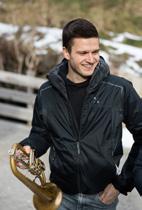
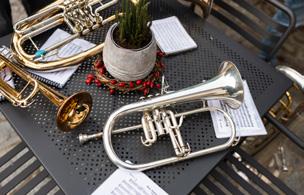
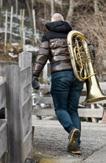
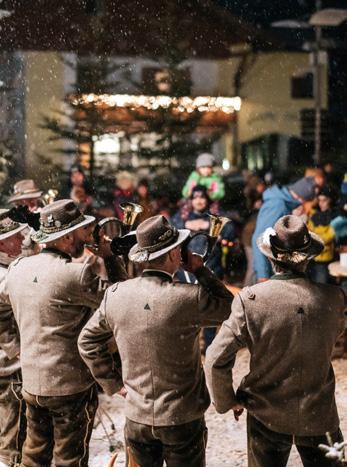
IIt’s nine o’clock on a Saturday morning in November and music can already be heard coming from the pergola-covered terrace at Schrotthof farm in the centre of the hamlet of Schrambach/ San Pietro Mezzomonte. The farmhouse itself – the oldest in Schrambach – is absolutely picture-perfect, with its gleaming plasterwork, rustic door with ornamental carvings and lush olive tree standing in front of it. But today it’s the energetic performance by the ten musicians outside that takes centre stage as the sound of the flute, clarinet, trumpet, horn, trombone and tuba fills the air. The piece they’re playing is the well-known concert march Mein Heimatland and, as is tradition, their rendition of it marks the start of a long day with a much longer history.
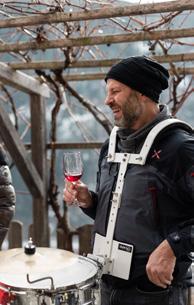
Every November, the musicians from the FELDTHURNS/VELTURNO MUSIC GROUP tour the village with a donation box, collecting small tokens of appreciation from the community for their performances throughout the year. Today, the donation box is for money, but for decades, the musicians were given wine instead, which is why the tradition is called Weinsammeln (“Wine Gathering”). Back then, they travelled around all the
winemaking areas of Feldthurns by horse and cart, collecting red and white wine and sometimes even vinegar, which the farmers poured into a huge vat using a watering can. The musicians then drank the strange concoction to quench their thirst after rehearsals. “Luckily that was before my time because I’m not sure I’d have enjoyed that particular tipple,” says Johannes Helfer, looking gratefully at the fine organic white wine donated to the music group by Schrotthof’s owner Michaela Mayr.
Johannes, who works as a nurse and sports a gelled, spiky hairstyle, has been chair of the Feldthurns music group for 10 years and, before that, spent 12 years running its youth group, which is a vital source of future talent. “Music groups are part and parcel of life in South Tyrolean villages,” he says. From village fairs and church processions to First Communion parties and the annual Saint Cecilia’s Day celebrations held to honour the patron saint of church music, the group has been part of village life for 222 years and today organises around 20 performances and 80 rehearsals a year. Central to the group’s success are the countless hours of voluntary work put in by its more than 60 members, especially Johannes at its helm. “Not a day goes by when I don’t at least think about the group,” says Johannes, who receives no financial compensation for his efforts. Instead, all the hard work is rewarded on days like today – in the form of monetary donations and the warm welcome and thanks received at every farm.
Volunteering is an invaluable pillar of society and the cement that holds village life together. Evidence of that can be found in every corner of South Tyrol. With 30 volunteers per 100 inhabitants, the northernmost province of Italy has traditionally always been at the top of national rankings for non-profit organisations. Clubs are by far the most popular type of nonprofit, with data showing that there are more than 4,000 of them in South Tyrol alone, ranging from sports, educational, social, and health and fitness clubs to clubs dedicated to cul-
Writer Susanne Pitro with Johannes Helfer, chair of the 222-year-old Feldthurns music group. The group comes together for around 80 rehearsals and
“Not a day goes by when I don’t at least think about the group.”
Johannes Helfer
Once a year, members of Feldthurns music group go from house to house performing and collecting donations in a tradition known as “Wine Gathering”.
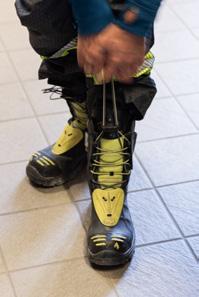
Left South Tyrol is home to 306 voluntary fire services with over 13,000 active members. Laying out hoses, shouldering breathing apparatus and shouting commands are all part of their training.
Right
It’s
to be
Help around the clock –be it with fires and accidents or cats stuck up trees.
ture, local customs, the environment and civil protection. Throughout the province, clubs and their members are tackling social issues, providing entertainment and leisure activities, creating a sense of togetherness and keeping people safe.
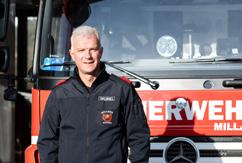
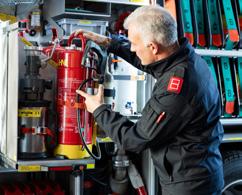
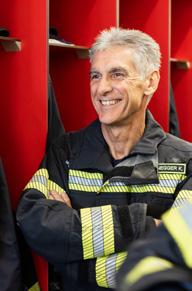
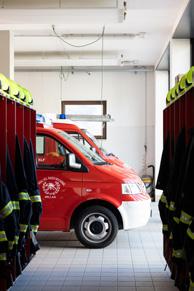
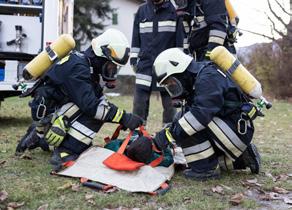
A shining example of this are the 16 firefighters from the MILLAND/MILLAN VOLUNTARY FIRE SERVICE , who we find doing a training drill outside a refugee centre in Sarns/Sarnes near Brixen/Bressanone on a freezing cold Saturday afternoon. Smoke can be seen pouring from the top floor of the building and the place is teeming with firefighters from three neighbouring stations. Each of them seems to know exactly what they are doing as they lay out the hose, shoulder their breathing apparatus and bellow commands into a walkie-talkie. A child is carried out of the building on a stretcher and given first aid, and a window is opened on the top floor. “They’re trying to create positive pressure to force the smoke out of the rooms,” explains Klaus Schroffenegger, who has been involved in the Milland voluntary fire service since 1978. As one of its longest serving members, he’s keeping a close eye on the firefighters’ every move as the drill progresses. Klaus is one of over 13,000 active members of the 306 voluntary fire services in South Tyrol. He also worked at South Tyrol’s only professional fire station in Bolzano/Bozen for over 30 years. Even now he’s retired, he rarely goes anywhere without his pager so that he’s ready to spring into action for call-outs in his local area. Why? “In my job, I was a civil servant,” he explains. “But volunteering for the fire service is all about being willing to help, enjoying the camaraderie and supporting your own village. I do this because I care.”
In our postmodern performance-driven society, one of the main reasons people choose to volunteer for their community is this desire to make a difference. Individualisation, isolation and social fragmentation certainly feel very far removed from the work being done by Milland fire station and its six spotless red fire engines. Once the training drill is over, the group is joined by some junior and women firefighters – people of different ages and backgrounds all united by a shared passion. “To me, firefighting is much more than just an activity – it’s a way of life,” says commander Christian Knollseisen. He sits at the very top of the station’s almost military-like chain of command, which enables it to respond to call-outs within minutes, right around the clock – from large fires and accidents to requests for technical assistance or cats stuck up trees. In addition to the positive impact on society at large, many of the volunteer firefighters point to the social benefits of volunteering for the fire service, including a feeling of belonging, friendships for life and a sense of standing in the community.
“Being part of the fire service is cool. Even our teachers think so!” say junior members, who all look forward to providing active service once they turn 17. A highlight of their training is an annual three-day camp where junior firefighters from across South Tyrol come together to compete against each other.
cool
part of the fire service. Kaya Runggatscher is one of four women firefighters in Milland.
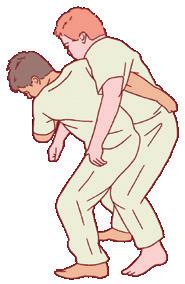
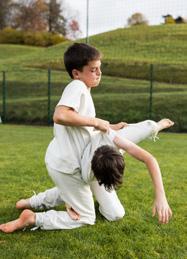
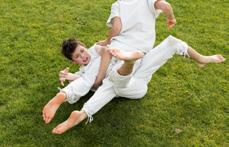
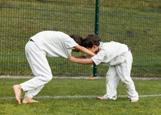
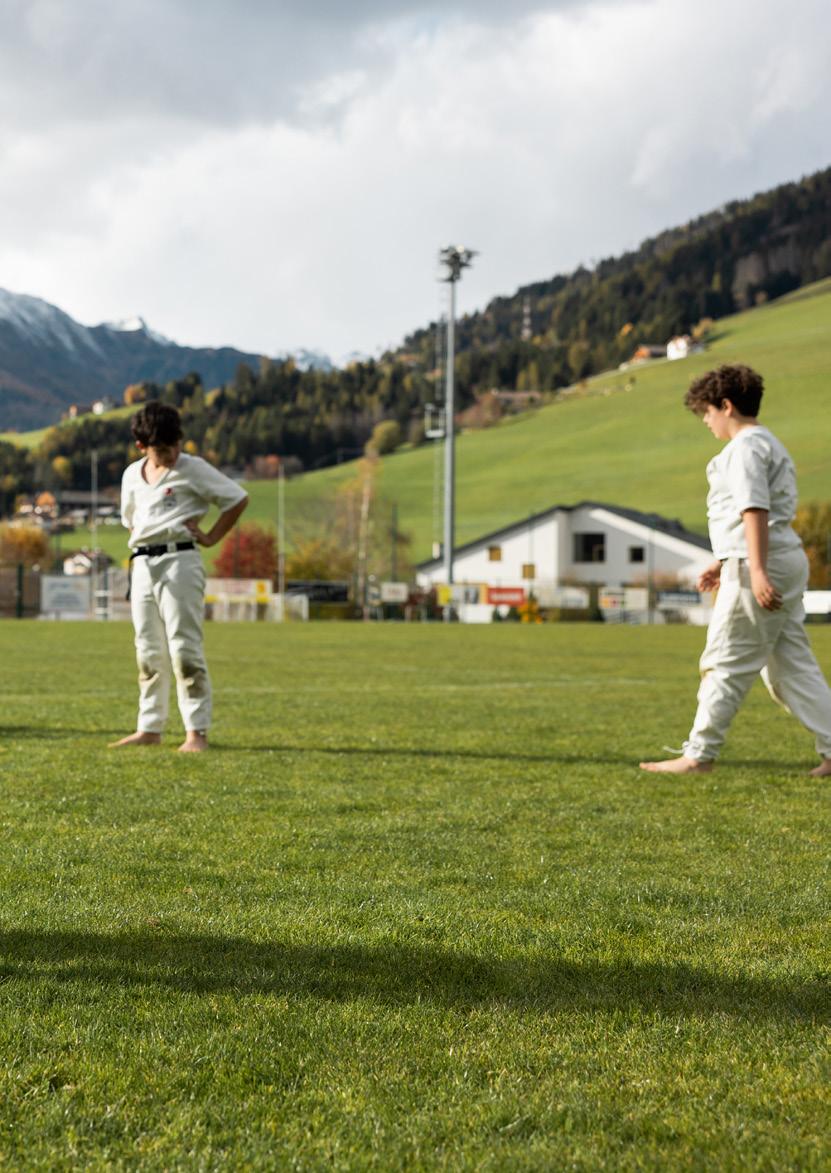
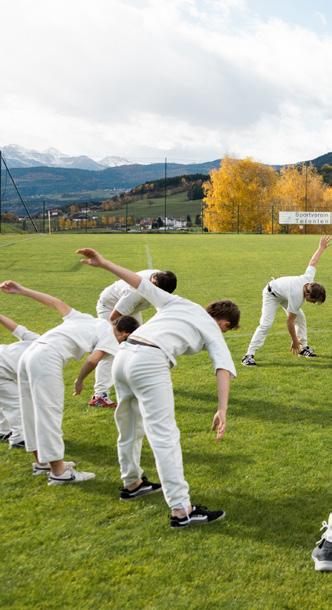
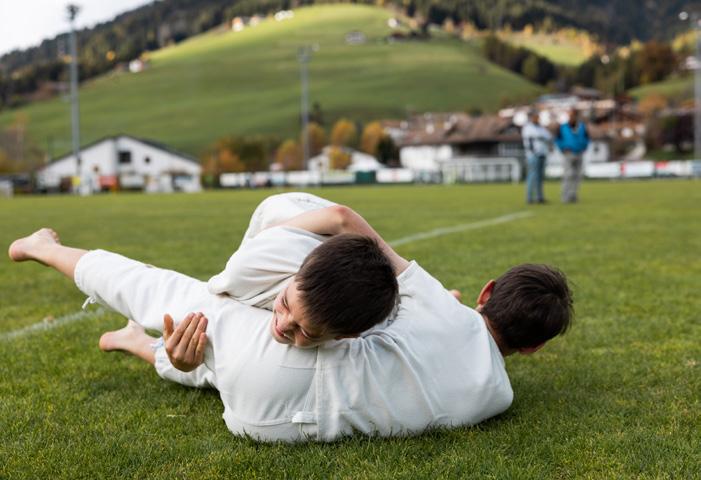
At Terenten Ranggeln club, six pairs of barefooted boys wearing white trousers and t-shirts can be seen fighting each other using moves similar to wrestling. For centuries, the person who could beat the greatest number of opponents by forcing both of their shoulder blades to the ground was the one who called the shots within local farms and villages.
To help them prepare, they are trained by Kaya Runggatscher, who is currently one of four active female members of the 55-strong Milland voluntary fire service. When she was a junior member, there were no adult women firefighters in Milland, but she and a fellow female member persuaded the leadership board to change that. “There are many tasks that women can do just as well if not better than men,” says Kaya. “And if there’s ever anything I’m not strong enough to do, I’m not afraid to admit it.”
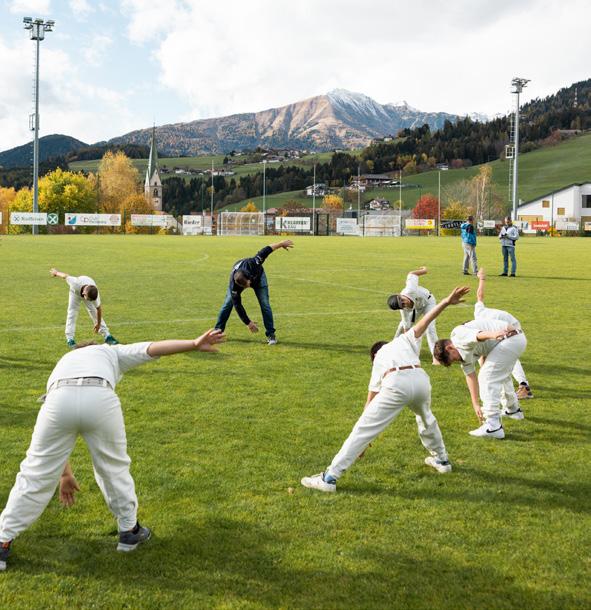
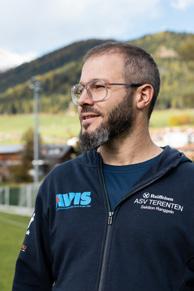
The inclusion of women in traditionally male-dominated activities like playing in the village music group and firefighting is not the only social change shaping the future of South Tyrol’s clubs. More and more young people are choosing to leave the province’s villages for urban areas or the wider world, although this gradual demographic shift does not yet seem to be impacting on the number of clubs. This is evident in TERENTEN/TERENTO , a sun-drenched village with a population of 1,800 on a plateau in the Pustertal valley with some 40 clubs to its name. The local SPORTS CLUB even has seven different sections. On a clear October afternoon, we find one of these in action on a grassy field at the village’s large sports ground, where six pairs of barefooted boys wearing white trousers and t-shirts are fighting each other using moves similar to wrestling. “Stand up and don’t stay on the ground for so long. You’ll get too wet,” cries coach Benedikt Engl in a beautiful Pustertal valley dialect in the direction of the tangle of arms and legs in front of him. A bearded man with glasses in his mid-thirties, he’s helping to keep the age-old Alpine tradition of Ranggeln alive. For centuries, the person who could beat the greatest number of opponents by forcing both of their shoulder blades to the ground using clearly defined holds and throws was the one who called the shots within local farms and villages. Today, the sport lives on at around 25 competitions in South Tyrol, Tyrol, Bavaria and Salzburg, including at Terenten sports ground, where every Whit Monday some 100 Ranggler from across the Alpine region compete against each other. During the rest of the year, the sport is mainly pursued by young people because, these days, adults like Benedikt only find enough opponents to compete against at interregional level.
The Ranggeln club in Terenten currently has around 16 junior members. To inspire youngsters to take part in this traditional sport, members run taster sessions in primary schools every year. The club also attracts children whose families still see Ranggeln as an important local tradition. “That said, most of them leave us by the time they turn 15 or 16 because they’re too busy with school or work,” says Benedikt. Nevertheless, Terenten’s Ranggeln club does valuable youth work. The club’s mixed age groups encourage the children to watch and learn from each other. “Ranggeln is not as pressured or competitive as other types of sport and there’s a real team spirit. During competitions, members are genuinely happy for each other when one of them wins,” says Johanna Lamprecht, mother of one of the young Rangglers and club secretary.
As time goes on, it’s undeniably becoming more difficult for clubs to maintain membership numbers and encourage people to volunteer. “We have to keep our eye on the ball to ensure that motivation and interest remain high enough for clubs to continue to be fully functional in the future,” says fire
commander Christian Knollseisen. Strong leadership is essential, as is the ability to move with the times and meet changing needs and tastes. For the Feldthurns music group, this means playing rock, pop and contemporary songs as well as traditional brass band music. “Our repertoire needs to include something for everyone, so that it appeals to the different generations of musicians and our audiences,” says conductor Albuin Meraner as he tours Schrambach collecting donations with another set of the group’s musicians. Despite this, he is keen to emphasise that there is no conflict whatsoever between the different generations in the group. The buzz of friendly conversation that erupts as soon as the musicians put down their instruments proves that his recipe is working. “You can play music and rehearse as much as you like, but nothing will work without a sense of community,” stresses Albuin. “A music group is only successful if all the members are enjoying themselves – that’s the key to each and every club’s future.”
The Ranggeln club in Terenten currently has 16 members. It does valuable youth work and helps keep this traditional sport alive.
22 out of 100 South Tyroleans
are involved in 5,730 associations –including somewhat unusual groups such as the Bonsai Club Brixen and the Vespa Club Brixen.
“The sense of community is huge.” Benedikt Engl
Fascinating Fungi
Mycology
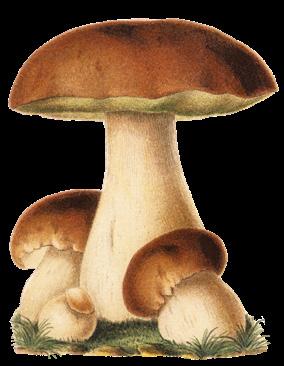
The precious one
Penny bun (Boletus edulis)
Thick, fleshy cap, initially domed but later puffs up to resemble a bread roll with a pale edge Lives in symbiosis with spruce, pine and beech trees
Bright white pores that turn olive yellow with age and do not discolour under pressure (important for distinguishing it from the equally edible bay bolete) Mild, nutty flavour that is just as tasty and highly prized when the mushrooms are dried One of the most sought-after edible mushrooms, so delicious that in ancient times people hid poison in it to murder their enemies
Over 5,000 different fungi grow in South Tyrol. We introduce you to five worth foraging for – and two to avoid at all costs
The sweet one
Saffron milk cap (Lactarius deliciosus)
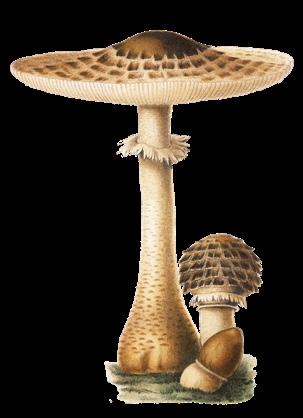
The ringed one
Reddish orange, often sticky cap with firm flesh Exudes a distinctive milky fluid when torn or cut into Usually lives in symbiosis with pine trees and prefers drier locations without too much shade Highly sought-after edible mushroom that has a sweet, mild flavour when fried May turn urine a harmless red colour after being eaten
Parasol mushroom (Macrolepiota procera)
Striking, initially bulbous cap that opens up into a large parasol (10 to 30 cm wide) White to cream gills with a spongy, moveable ring on the stem, which clearly distinguishes it from the poisonous panther cap
Thrives in beech and oak woods, meadows and forest edges with lots of light, but dislikes wet conditions
Nutty flavour best enjoyed by frying the caps in breadcrumbs Not suitable for eating raw because it may irritate the stomach and bowels Also known as the “snake’s hat” or “snake’s sponge” due to its scaly stem
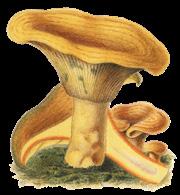
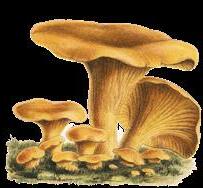
The golden one
Golden chanterelle (Cantharellus cibarius)
Spectacular deep to golden yellow in colour with a wavy cap that often folds in on itself Fruity scent almost reminiscent of apricots when freshly picked
Lives in symbiosis with coniferous and deciduous trees, especially spruce and pine trees Favours light areas of the forest with sparse tree cover
Popular in cuisine since ancient times and a source of nutrients including iron and potassium
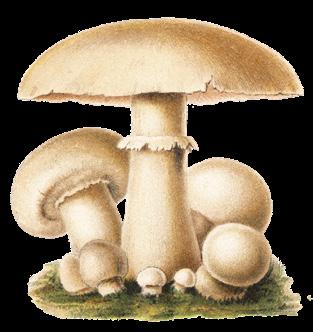
The mild one
Field mushroom (Agaricus campestris)
White to off-white with a round, domed cap Initially pale pink gills that eventually darken to a chocolate brown Prefers moderately fertilised meadows and pastures or grassy spots in deciduous forests Often appears after heavy rain Related to the button mushroom
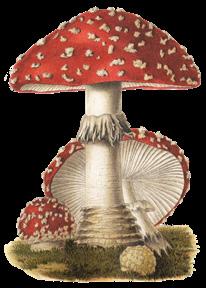
The iconic one Fly agaric
(Amanita muscaria)
Bright red cap with white spots and white to pale yellow gills Frequently found under spruce and birch trees
Often grows alongside penny buns Poisonous and can cause intoxica tion, confusion, slurred speech and extreme tiredness Traditionally used in Siberian shamanic rituals as a hallucinogenic
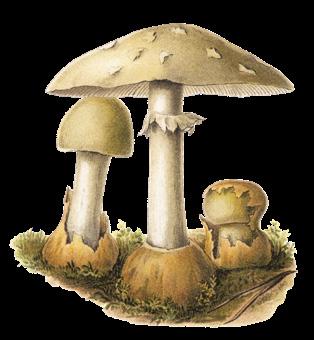
The deadly one
Death cap mushroom (Amanita phalloides)
Smooth, light green to olive brown cap that is slightly sticky when damp
Lives in symbiosis with deciduous trees and has a sweet, faintly honey-like smell One of the most poisonous mushrooms in the world
Has a bulbous base, white gills and a white, pendulous ring on the stem
Not to be confused with button mushrooms, which do not have a bulbous base and have pinkish brown gills
TOP TIPS:
Times: Mushroom picking is only permitted on even days of the month from 7 am to 7 pm. Regulation: Anyone not resident in the municipality must obtain a permit. Handling: After being picked, mushrooms should be given a quick clean straightaway and transported in an unsealed, well-ventilated container. Equipment: Raking and forking through the soil are prohibited. Shelf life: Mushrooms are best eaten fresh and should otherwise be stored in a cool place and consumed as soon as possible.
My only or down sense of direction
A conversation with award-winning playwright Miriam Unterthiner, who finds inspiration in the people and landscapes of the stories she was told as a child
is up
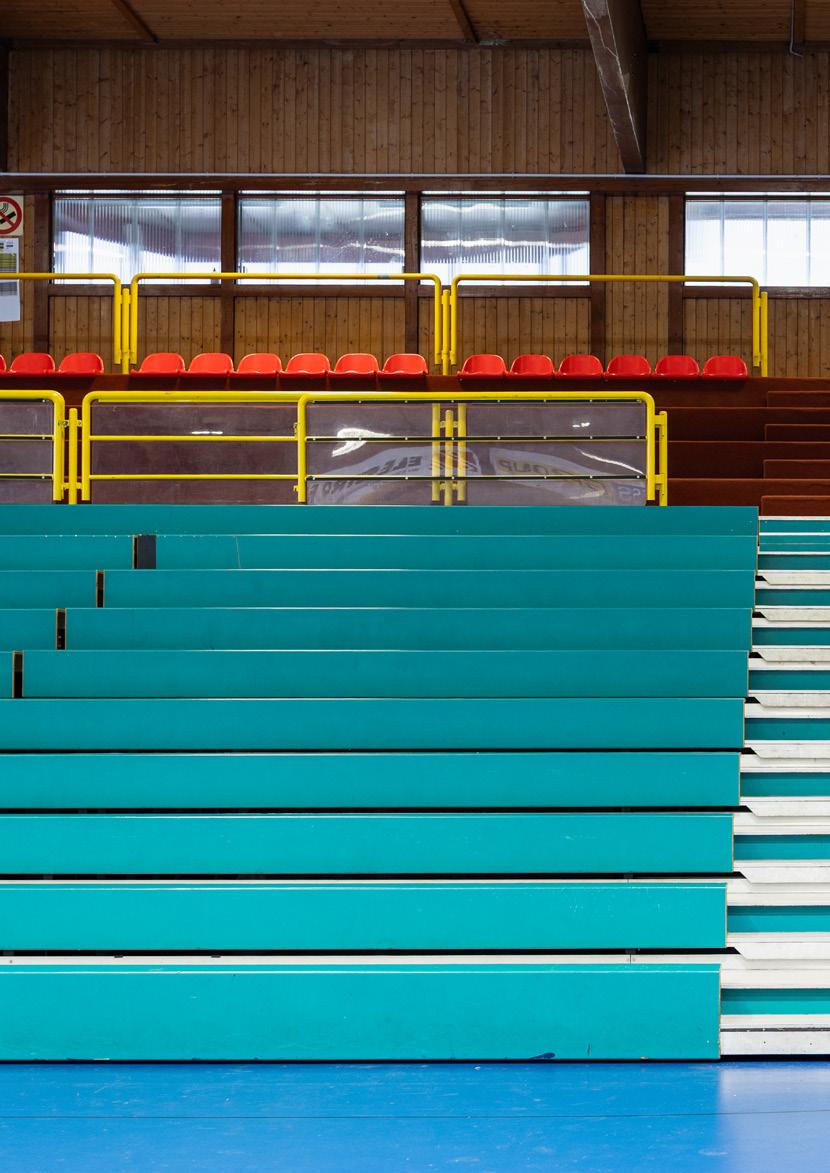
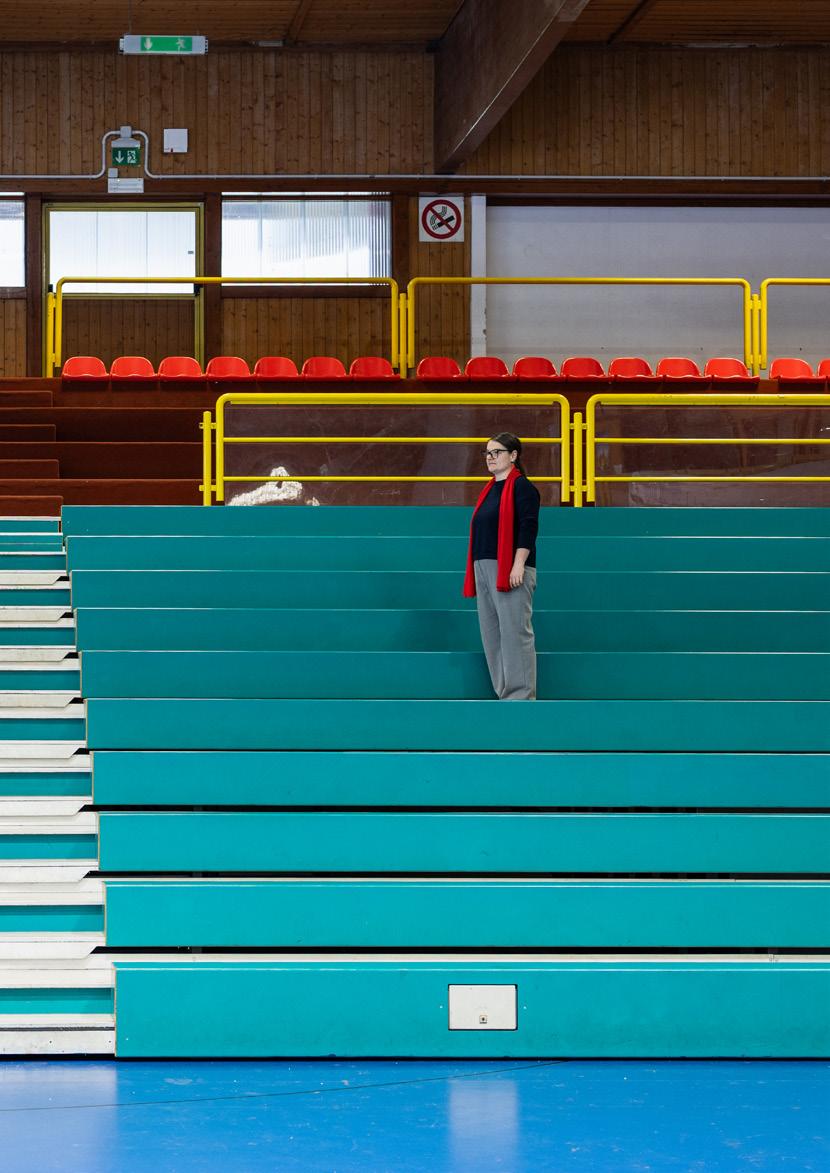
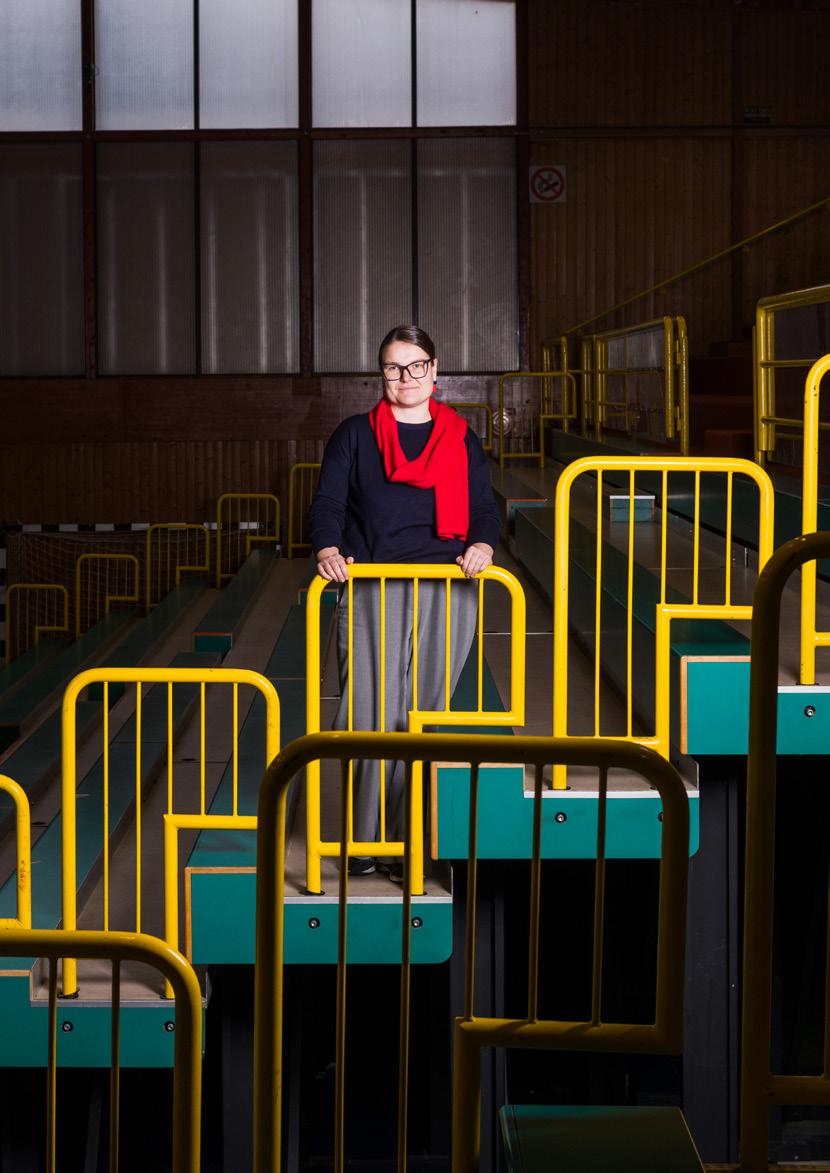
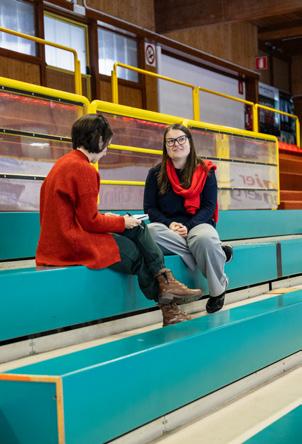
The author in the sports hall she played in as a child and teenager. Even back then, she felt a yearning to get out of the valley.
Interview
Miriam, have you always wanted to write for the stage? My childhood dream was to be a poet and then an author. I have no idea where that came from. I’d always been a bookworm, ever since my time at primary school in Latzfons/Lazfons. I devoured books but hadn’t the first idea about what it took to write them. All I knew was that books belonged in the library –and that was that.
What did you like to read? After I started lower secondary school in Klausen/Chiusa, my mother took me to the public library every week and let me borrow a maximum of three books each time. Or maybe four or five if I begged her. The more tragic or dramatic the book, the better. Anna’s Story about a teenager who died after taking ecstasy stuck with me.
You got through several books each week? I grew up with my siblings Stefanie and Hannes on a remote hillside on the edge of a mountain village. There were hardly any other children living nearby so books were my connection with the outside world.
What is one of your favourite places in Latzfons? The bus stop on the outskirts of the village. I’ve always felt a yearning to get out of the valley. I appreciate how unspoilt Latzfons remains. I love getting out and about in the magnificent countryside here and exploring the mountains, but too much can feel a little suffocating. I enjoy the feeling of going away
and coming back again. I see myself as living between two worlds in a constant back and forth.
When did you discover writing? Writing came completely naturally to me. I grew up listening to stories from the past – be it the bedtime stories our parents told us or the fireside tales Grandma and Grandpa recounted of everyday life working on their farm, reaping the crops and tending the cattle. For me, writing was a way to build on this oral tradition.
You moved to Vienna in the summer of 2018. Did you leave the stories of the landscapes and people from your childhood behind? My roots have shaped me more than I probably realise. When I was working on my first piece of writing, I felt compelled to invent as much as possible and create a new world. But it felt dishonest to write about something I wasn’t personally connected to. Today, I focus on places and stories that are familiar to me.
Your first mother tongue was the South Tyrolean dialect. How has that impacted you? I have a clear memory of using the word “Schrattl” to describe knots in my hair shortly after starting upper secondary school in Brixen/Bressanone. It was a completely normal word for me but must have sounded very strange to my fellow students who grew up in the town. These days, I change how I speak depending on where I am.
How familiar or foreign do you find standard German? When I first met somebody at primary school whose mother tongue was standard German, I thought that he talked as if he came straight from the pages of a book. I was absolutely fascinated by it. Standard German is completely different from the South Tyrolean dialect, right down to the sentence structure. I want to use the dialect more in my work. I still intuitively think in the dialect and write my notes in it, even though I compose the actual text using standard German.
“My roots have shaped me more than I realise.”
Where do you do most of your writing? My surroundings need to be as quiet as possible. In fact, the quieter it is, the more dramatic my writing becomes. That’s why I like working at a desk. Although saying that, I also work well on public transport. The train is a fantastic place to write. I often have the monotonous, rattling “du-dum, du-dum, du-dum” of Italian trains running rhythmically through my head as I write.
And what do you like to write on? I always print out whatever I write on the computer and continue by hand, before typing up what I’ve written. I’m constantly switching from paper to screen, which I know isn’t very efficient. But I need to write by hand.
Was there a key moment on your journey to becoming a playwright? My first real experience with the theatre came in 2017 when I was invited to take part in a literary competition. This resulted in me spending time both on and behind the stage. I was completely captivated by this unfamiliar world. At first, I knew absolutely nothing about writing for the stage. I’d read Faust at school, but its format is completely different from modern plays, where the stage settings and the characters’ actions are less strictly defined. Today, I love how anything goes when writing a play and how plays can be read like books.
What are your favourite topics to write about? I’m most interested in people whose voices go unnoticed and unheard among the wider public. I’m often told that my writing focuses on minute details and that I have a tendency to dwell on the meaning of individual words.
“I still feel so at home in the sports hall where I played.”
Where does that come from? Perhaps it’s the mountains and that sense of being enclosed that have made me inclined to focus on the little details. The mountains certainly do something to your mind.
Your multi-award-winning play Blutbrot (“Blood Bread”) explores the period immediately after the Second World War in South Tyrol and the Eisacktal valley. Why did you choose to write about this? I’m more of a listener than a speaker. I take in huge amounts of information and collect different insights for a long time before starting to write. It was over two years after my grandpa first made passing reference to escape routes and smuggling paths that I began working on the play. Blutbrot is about the routes the Nazis took to flee through South Tyrol with the help of the local population and how this history has left its mark on the region’s landscape and our bodies.
As the title suggests, bread plays an important role in the play. Do you bake? I actually ended up baking an excessive amount of bread while writing the play and experimented a lot with different flours and doughs.
Do you go to such lengths for every piece that you write? When I can, yes. I love immersing myself in another world and I find it helpful too. My play Mundtot (“Silenced”) is about sport. To help me write it, I read lots of training guides for coaches and even dug out my own running trainers again. To describe how athletes run, I had to run myself to remember how it feels.
Mundtot is about handball, which is a sport you played for eight years in your youth. It wasn’t that long, but I did train at least five times a week. So it actually feels much longer than that. That’s probably also why I still feel so at home in the sports hall where I played. After all these years, I still know what’s inside every cabinet. Things don’t change all that quickly.
What makes you feel at home somewhere? These days, I actually feel at home in several places: Latzfons, Brixen, Innsbruck and Vienna. The list seems to be growing rather than getting smaller. As well as the people, it’s the places themselves and the memories I have created there that make me feel at home.
What’s your first memory of Vienna? I visited Vienna before I started studying in Innsbruck, but I only spent a few days there and couldn’t leave quickly enough. It was far too much for me. My only sense of direction is up or down. When I’m in Latzfons, I head down
into town and when I’m in Brixen, I head up to the village. In Vienna, people talk about turning right or left or even bearing left, which I find mentally draining.
How does it feel to see your words being acted out on stage? It’s pretty crazy! On the one hand, I enjoy seeing how my text has been recreated on stage and the audience’s response to it. On the other, I find it difficult when the audience takes parts seriously that I found funny or when I pick up on a word that I wouldn’t have used in hindsight.
Miriam Unterthiner, 32, spends most of her time living and working in Vienna. The playwright and author from Latzfons/Lazfons near Klausen/ Chiusa studied philosophy and German in Innsbruck and creative writing in Vienna, before completing a funded dramatic writing course at the Graz Drama Forum in 2022. In 2025, her play Blutbrot was awarded the Kleist Prize for New Drama, the Literature Prize from the University of Innsbruck and the Austrian Book Prize in the Debut category. Miriam also received the 2025 Hans Gratzer Award for her work Mundtot
Awards ceremonies, like the one you attended when you won the Austrian Book Prize in the Debut category, put you in the limelight. What’s that like? I always feel a mix of emotions at these events. I’m most at home behind a desk, having spent months, if not years, of my life there. So suddenly finding myself on a stage takes me completely out of my comfort zone. I also much prefer the idea that it’s the text that’s winning the prize rather than me. That said, accepting an award is an absolute privilege. And, most importantly, the prize money allows me to keep on writing.
Can you make a living from your writing? At the moment I can, partly thanks to the awards I’ve won. That’s not something I take for granted and I don’t know what the future will hold. I want to be in a position to stay true to myself for as long as possible without having to do anything simply because I feel obliged.
Guggenberg Multigenerational House
Steeped in history, the Guggenberg house in Brixen/Bressanone first opened its doors as a chic spa house in 1890 and served as a place of rest and recuperation for decades before being converted into an innovative centre for communal living
An up-and-coming district
In the 19th century, Stufels/Stufles wasn’t exactly the most sought-after part of the episcopal town of Brixen. The district was home to numerous businesses, including a tannery infamous for its pungent smell that spread far and wide. Its location at the point where the Eisack and Rienz rivers meet also meant that Stufels was regularly hit by damaging floods. But after flood protection measures were introduced, Otto von Guggenberg seized the moment by converting an old riverside farmhouse in the district into a spa house. It was a move that changed the face of Stufels for good.
The healing power of water
Following a stay with naturopath Sebastian Kneipp, Otto von Guggenberg developed a keen interest in Kneipp’s healing methods. Having studied medicine in Vienna, von Guggenberg could see the potential of Kneipp’s holistic therapeutic approach. In fact, he was so convinced by it that he invested his wife’s entire fortune into establishing his spa house in Brixen. The investment paid off and the Guggenberg name became synonymous with health, respectability and social prestige for decades.
An
overnight sensation
The spa house began welcoming guests in 1890, but only rose to prominence over ten years later when Archduke Karl, the future Emperor of Austria, stayed there and was treated using Kneipp’s methods. Suddenly, a great many aristocrats from across Europe began travelling to Brixen to convalesce at the first Kneipp facility in the Habsburg Empire.
Confidentiality guaranteed
At first, the names of the guests who stayed at the Guggenberg spa house were proudly published in the Brixener Chronik. But soon discretion took priority and the spa house became a refuge for the world’s rich and famous for many decades. A few names leaked out in subsequent years, including Italian writer Umberto Eco, who is said to have visited several times, and actress Sophia Loren. The only guest to be identified during his stay was Italian singer Eros Ramazzotti, who had fans standing outside his window as soon as word got out.
Otto the pioneer
Besides putting Brixen on the map with his spa house, Otto von Guggenberg played a key role in the town’s modernisation. As mayor, he oversaw the construction of roads and a modern hospital as well as the expansion of the sewer system. His vision was to transform sleepy, conservative Brixen into an attractive spa and garden town. And he succeeded, as tourism began to take off during his time in office.
A new lease of life
After 127 years, the Guggenberg spa house closed its doors in 2017 and the building stood empty for several years. In July 2025, it was brought back to life as a home for communal living complete with co-working spaces and shared common rooms, where people of different generations live together in 45 rooms and six apartments under one roof. As Brixen’s new “living room”, the Guggenberg is a welcoming space for everyone in the town to come together to meet, chat, work, practise yoga in the garden or enjoy a coffee in Bistro Otto.
Cabbage & Friends
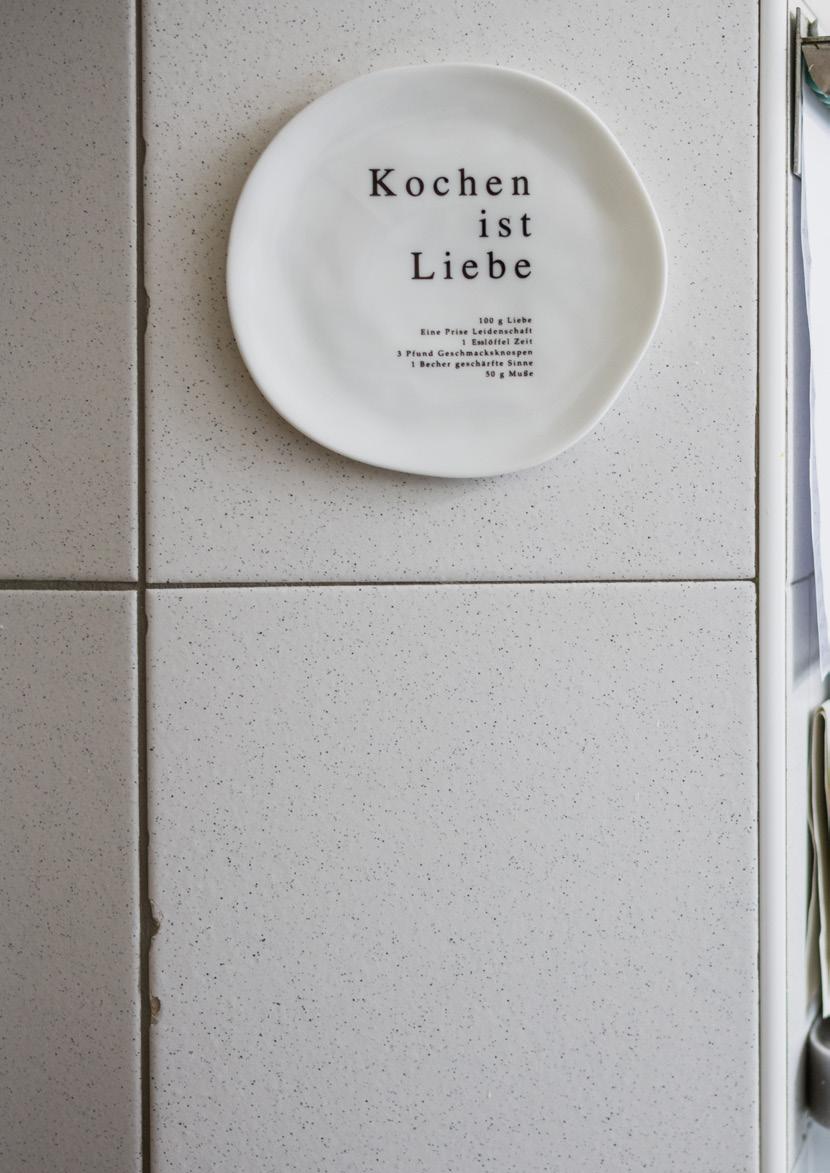
More than just a recipe, this decorative plate describes cooking in a nutshell. 100 g of love, a pinch of passion, 1 tablespoon of time, 3 pounds of taste buds, 1 cup of sharpened senses and 50 g of leisure symbolise what it takes to make good food.
We meet three local chefs who tell us about the one ingredient that has fascinated them since childhood. An ingredient that held a special significance for their mother, father or grandmother and has inspired them to create some of their favourite dishes –delicious new creations based on traditional recipes using ingredients from their own gardens or local producers
Text — LENZ KOPPELSTÄTTER, Photos — CAROLINE RENZLER
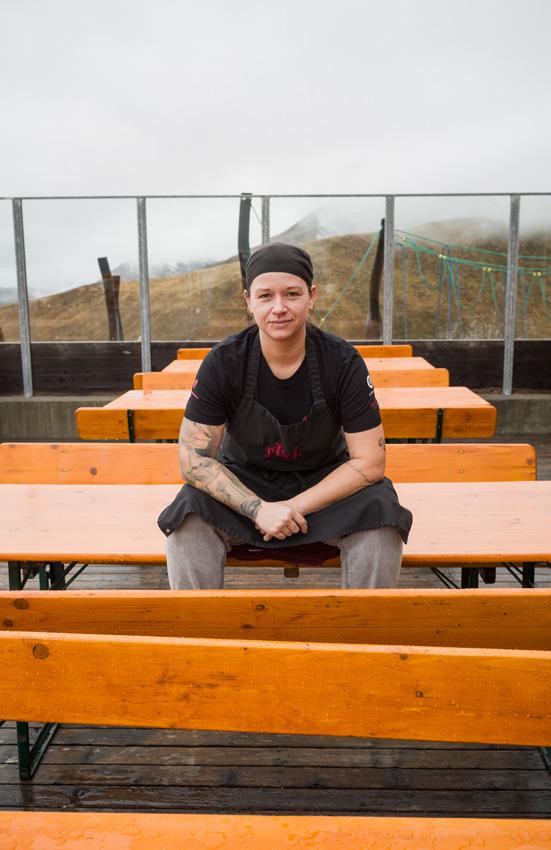
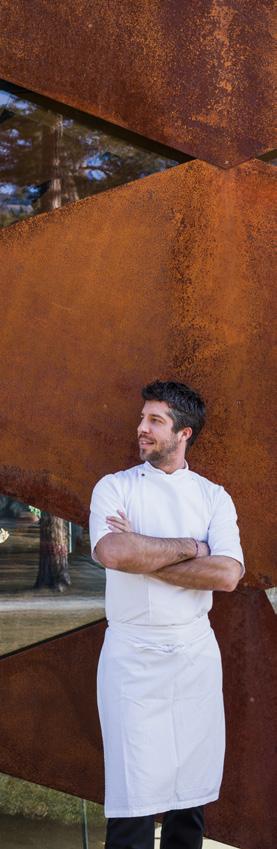
Elisabeth Lanz from the Gitschhütte mountain lodge on the Gitschberg mountain, Philipp Fallmerayer from Brix 0.1 in Brixen/Bressanone and Alex Haselwanter from Unterwirt in Gufidaun/Gudon – three chefs tell us all about their one favourite ingredient.
1. Cabbages
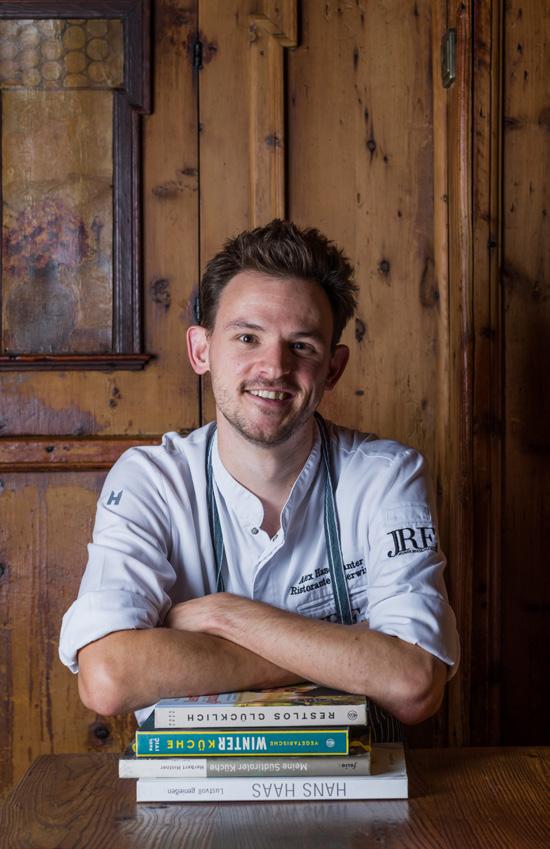
Alex Haselwanter, UNTERWIRT in GUFIDAUN/GUDON
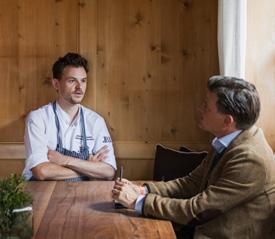
Unlike many chefs of his generation, Alex Haselwanter, 27, from the Unterwirt restaurant and guesthouse in Gufidaun, a village high above Klausen/Chiusa, has never felt the urge to travel the world to gain experience, preferring to hone his craft with his father. “I’m a home bird,” he admits with a smile before disappearing briefly from the rustic dining room and returning with a few cookbooks, the dark wooden floorboards creaking beneath him. “I’d much rather leaf through these than look at blogs or YouTube videos,” he continues. He may not have seen much of the world, but he’s certainly brought the world to his doorstep with his cuisine. Alex is the fourth generation of his family to help run Unterwirt. The building, which dates from 1370, came into the family’s possession through sculptor Valentin Gallmetzer, an ancestor of the Haselwanters, who acquired it when it was a traditional country inn and whose wooden sculptures of a winegrower and a night watchman still hang above the dining tables today. The Haselwanters have always had a reputation for bringing new ideas to the village. Never afraid to strike out in new directions, they even built the village’s first swimming pool in their garden for guests to enjoy, long before Unterwirt had central heating.
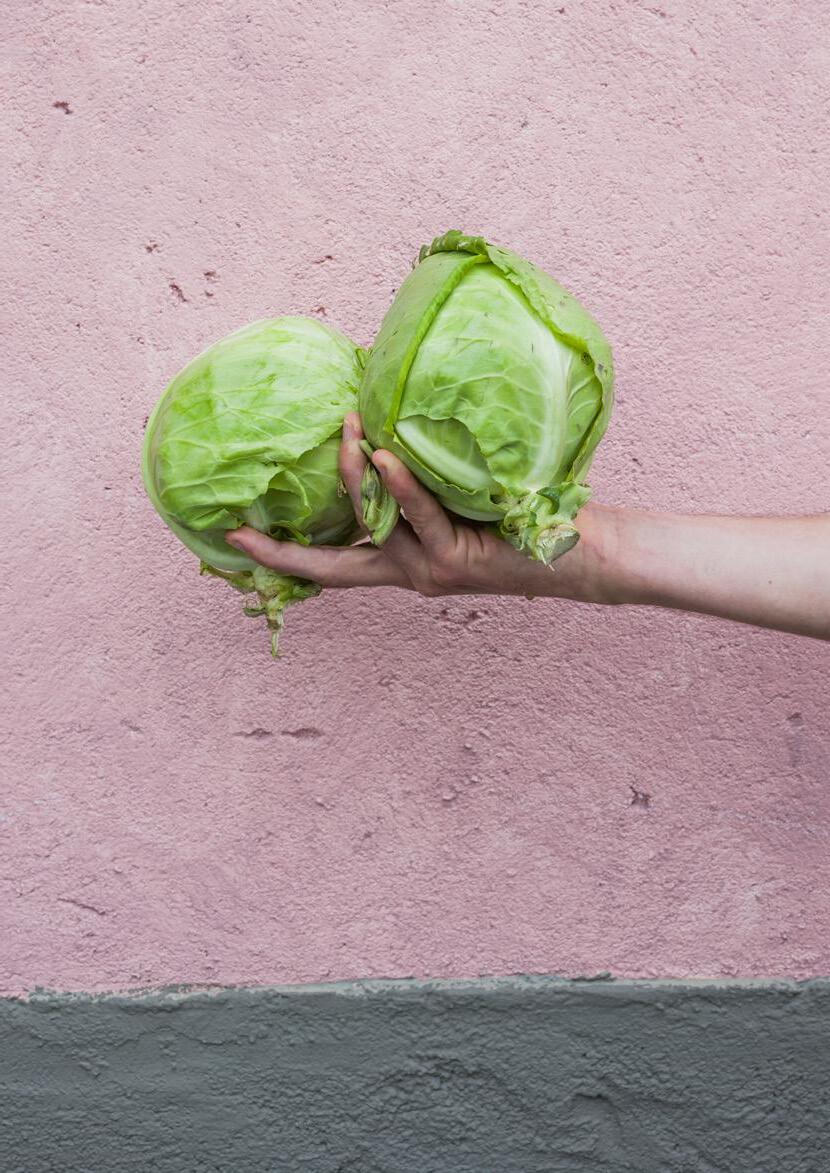
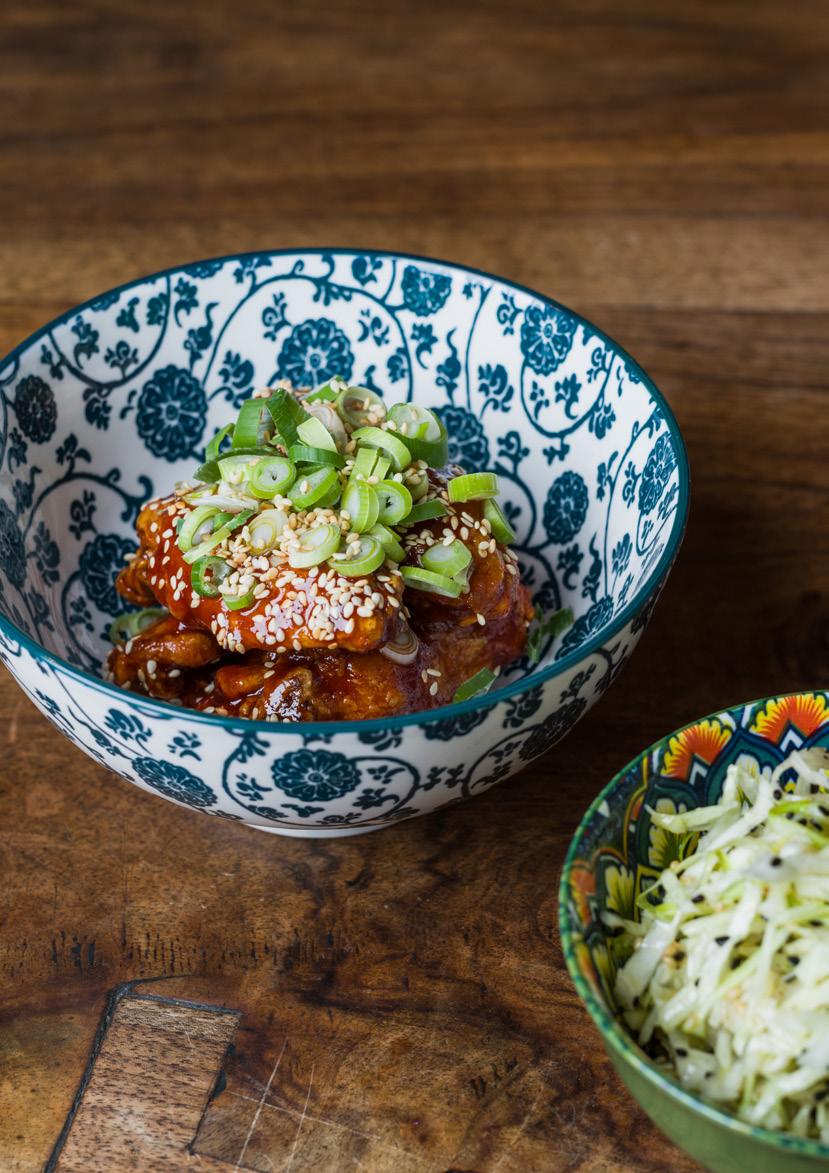
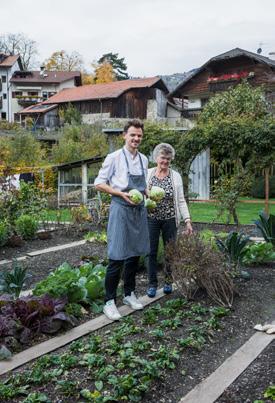
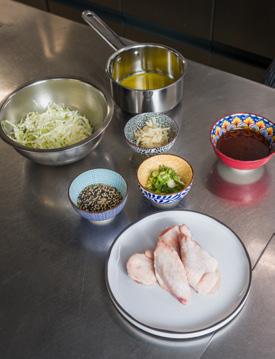
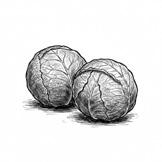
Alex loves East and Southeast Asian cuisine – and South Tyrolean vegetables. Cabbages are his favourite. “There’s nothing more South Tyrolean than cabbage,” he says. The young chef works 15 hours a day. His first job each morning is to head down into town to buy any vegetables he doesn’t grow himself. Then he goes into the garden to tend his leeks, radicchio, Padrón peppers and large crop of green, white, red and pointed cabbages. He spends much of the day seeking inspiration from cookbooks and experimenting with new dishes so he can change the menu every three weeks. His creations often leave guests wanting more. Recently, his spicy chicken wings on a bed of sour cabbage proved a huge hit with locals and tourists alike. The dish is a fusion of South Tyrolean, Vietnamese and Thai cuisine, with a little nod to Korean fried chicken, and is made from shredded cabbage, chicken wings, spring onions, roasted sesame seeds, olive oil, rice vinegar, champagne vinegar, salt, sugar, pickled ginger and a secret marinade. Welcome to Alex Haselwanter’s unique world of Asian and South Tyrolean cuisine!.
unterwirtgufidaun.com
2. Eggs
Elisabeth
Lanz, GITSCHHÜTTE on the GITSCHBERG MOUNTAIN
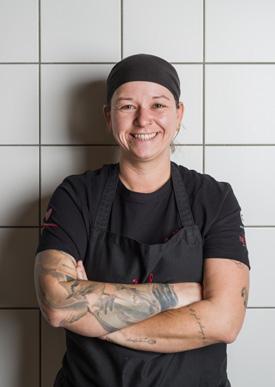
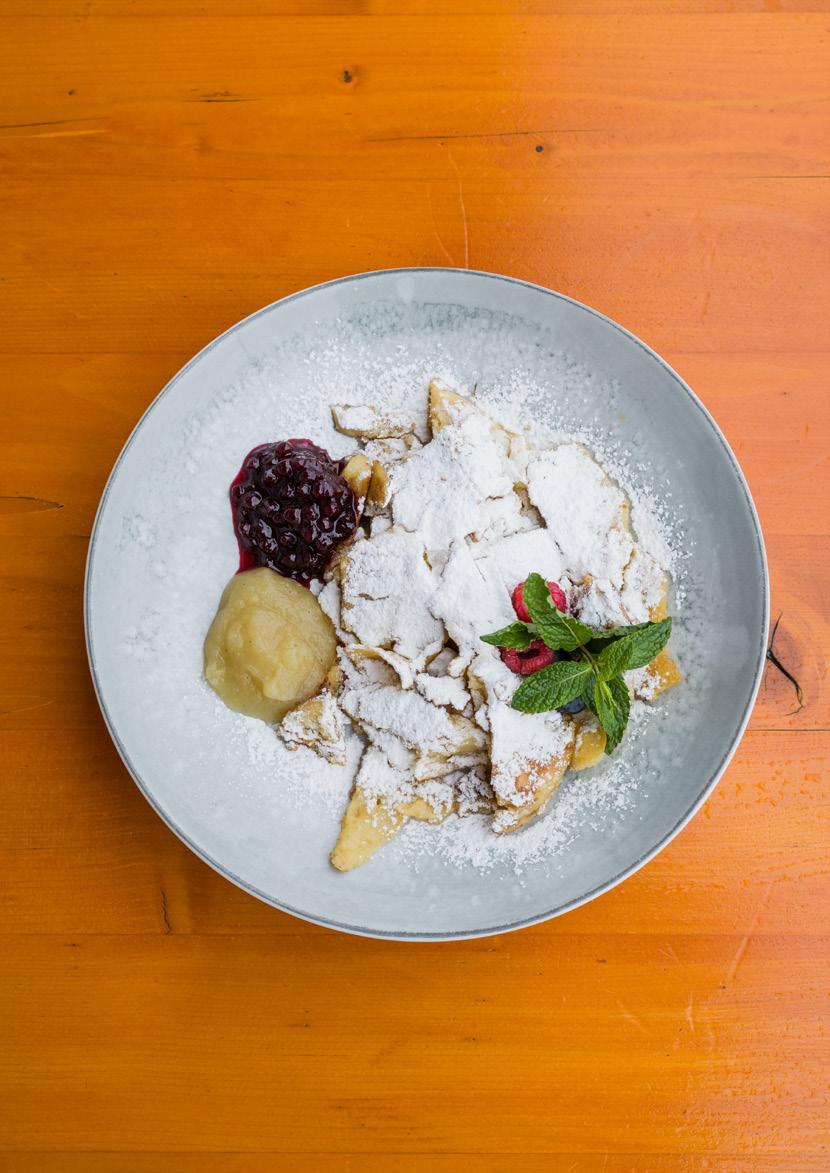
Elisabeth Lanz grew up around 1,400 metres lower than where she lives today – and yet her childhood home on a farm in Schabs/Sciaves was still 770 metres above sea level. She regularly helped out on the farm and especially enjoyed tending the hens that spent their days clucking around the house and rows of apple trees. “They’re such chilled animals and are great at eating up all our leftovers,” says the now 37-year-old, pulling a pan out from under the stove and opening the fridge. As a young girl, Elisabeth’s bedtime snack of choice were her grandma’s shredded apple pancakes. Shredded pancakes are still her favourite dish today. Whether served sweet with apple or Nutella, savoury with melted cheese and ham or the traditional way as Kaiserschmarrn sprinkled with powdered sugar, she loves them all! Eggs are her top ingredient to cook with. “All you need are a few hens and you’ll have freshly laid eggs every day. Plus you can make so much with them – fried eggs, scrambled eggs, egg salad...” The idea of buying eggs from the supermarket makes her laugh. She’s never done that in her entire life.
Elisabeth always wanted to be a chef. During her time at catering college, she prepared gnocchi with tomato sauce for the Giro d’Italia teams and their entourage as well as speck ham dumplings with goulash for the governor of South Tyrol. She’s always preferred cooking traditional food without any frills. As Elisabeth turns on the stove, it begins to hum. She’s been working as a chef at the Gitschhütte mountain lodge in the heart of the Gitschberg Jochtal ski resort at 2,210 metres above sea level for 12 years. The Gitschhütte has an excellent reputation for its food and its Kaiserschmarrn in particular. “I make my shredded pancakes using a very simple recipe,” says Elisabeth. Perhaps that’s the secret behind why they’re so delicious. Outside, the clouds are building over the mountain slope like huge balls of cotton wool, obscuring the five thousand or so peaks of the Dolomites, Rieserferner Group, Sarntal Alps, Stubai Alps and Zillertal Alps visible from here on a sunny day. The dining rooms are warm and cosy, their wood-panelled walls adorned with antlers and stuffed marmots and foxes. Steam is billowing from the kitchen. On the busiest days, the restaurant serves 1,000 plates of food to hungry skiers. “Last winter, we got up to 1,022,” Elisabeth confirms. She thrives on the adrenaline of working in a fast-paced kitchen. The pan is now back on the stove with small bowls of salt, vanilla sugar, rum, milk and flour arranged all around it. Alongside these ingredients are eggs, many eggs in fact, all from a farmer slightly further up the mountain. The mixture crackles and sizzles as the egg yolks form into Kaiserschmarrn, fluffy and light, just as it should be. A piece of childhood nostalgia and skiing heaven all on one plate!
gitschhuette.com
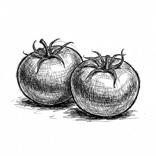
3. Tomatoes
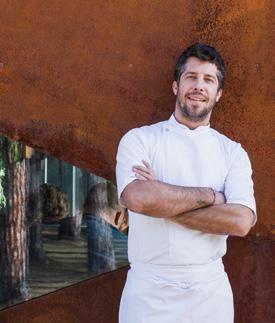
Philipp Fallmerayer, B rix 0.1 in BRIXEN/BRESSANONE
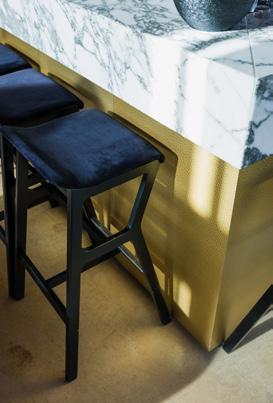
Even as a child, Philipp Fallmerayer knew that the best tomatoes came from his mother’s garden at the farm near Brixen where he grew up. Eating them always gave him such a sense of comfort and joy. Supermarket tomatoes didn’t even come close. In fact, he found them so watery and flavourless that he soon vowed to avoid them altogether. After training as a chef, the now 37-year-old worked in kitchens around the world in Melbourne, Dubai and New York before becoming a sous-chef to Norbert Niederkofler, the only chef in South Tyrol to be awarded three Michelin stars to date. A short time later, Philipp decided he wanted his own restaurant so, around ten years ago, he opened Brix 0.1 in the south of Brixen with business partner Ivo Messner. As we enter the restaurant, which is located in a small park on the edge of a small lake, our eyes feast on its sleek bronze wall and ceiling panels, marble counters, fulllength windows, and open kitchen with steaming pots and sizzling pans. The architecture is a complete contrast to Brixen’s baroque cathedral and we can’t imagine anywhere cooler to dine. Philipp is married to a Southern Italian. “She’s from Sorrento,” he says. “She taught me that food is culture and at the heart of everything in life.” The couple share a young son, Maximilian. “Since becoming a father, I’ve realised that good food, a healthy diet and cooking skills are among the most valuable things to pass on to our children.”
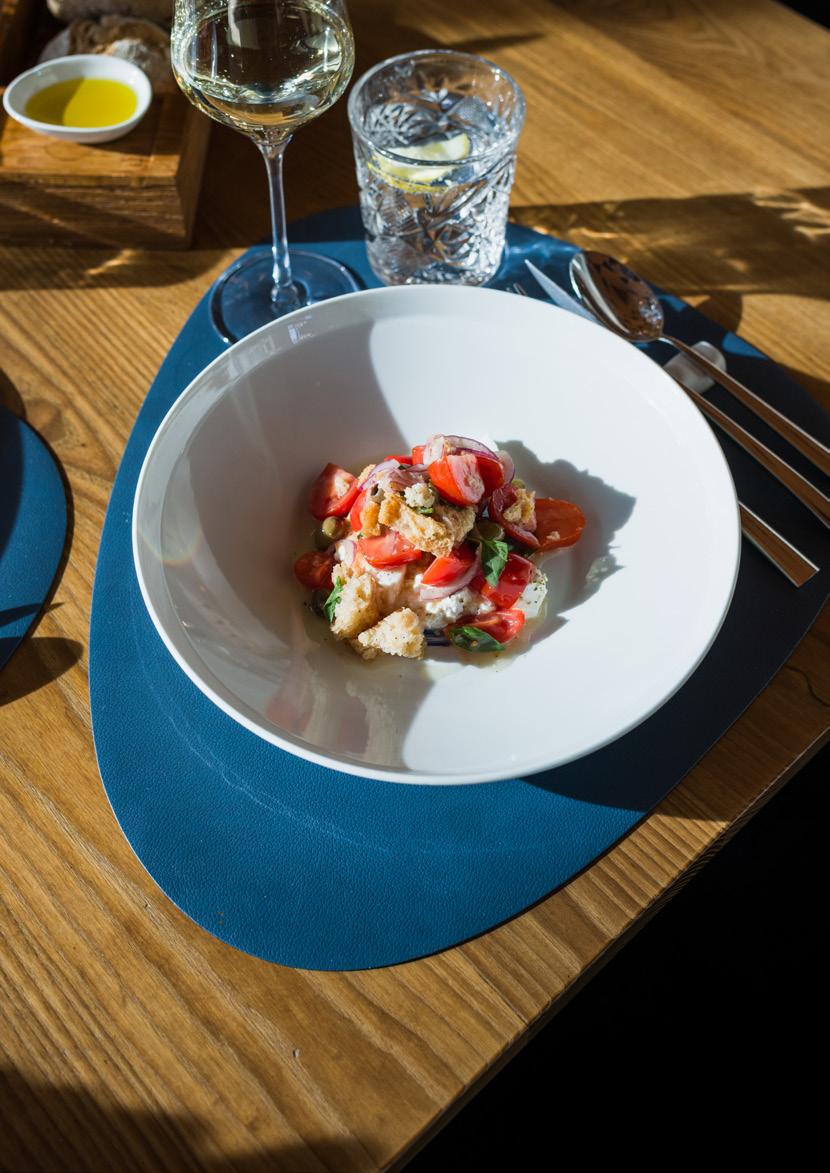
As well as running Brix 0.1, Philipp took over his family farm from his parents three years ago. He’d always used vegetables from the farm in his restaurant but now he has grand plans to grow even more ingredients himself by constructing additional greenhouses with space for enough carrots, potatoes, beetroot, broccoli, cauliflower, courgettes and aubergines to last almost all year round. He also wants to keep animals, including at least three oxen, as well as two ponies and a llama for his son. But his greatest passion remains the tomatoes that he loved so much as a child. He now grows 18 varieties, including oxheart tomatoes, Datterini plum tomatoes and red, yellow and black Piccadilly tomatoes. His favourite recipe combines them all into a salad together with burrata cheese, olive oil and oregano from the southern Italian region of Apulia, pane pugliese bread, Tropea onions from Calabria and self-pressed tomato water, which gives the dish a delicious soft yet crunchy texture. It’s childhood joy wrapped up on a plate!
brix01.com
Authentically Cool
At Burgerhof above Brixen/Bressanone, Johannes Meßner and Katrin Hammann run a farm, vineyard and seasonal tavern all rolled into one. Each of their bottles of wine reflects their unique style and is an embodiment of their creative spirit
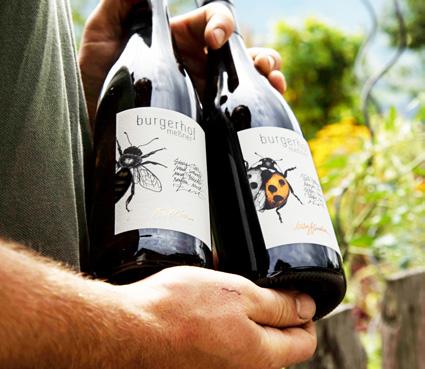
Johannes Meßner and Katrin Hammann specialise in natural wines and PIWI varieties, which still only play a minor role in the South Tyrolean wine industry.
THE ROUTE UP TO BURGERHOF is steep. Situated above Brixen at around 750 metres above sea level, the old farmhouse has been in the Meßner family since 1843. Here, the sounds of everyday life in the town below are a distant murmur. Johannes Meßner rides his e-bike up the slope towards us, having just dropped his son off at nursery. Smiling, he leads us into the farm’s wood-panelled dining rooms, the sloping walls a testament to the passage of time, and offers us a glass of Souvignier Gris. “I’m not the kind of person who explains how wine should taste,” he says. “I simply like to know if it leaves you wanting more.”
With vineyards and livestock, Burgerhof has always aimed to live off the land. Thirty-seven-year-old Johannes is one of four children. His parents played clearly defined roles at the farm, with his mother, Anneliese, acting as front of house and his father, Franz, working away in the background. In the early 1980s, they were among the first organic farmers in South Tyrol, which led to many calling them “crazy”.
Today, Burgerhof makes around 14,000 bottles of Solaris, Johanniter, Souvignier Gris and Regent wine every year from the grapes grown on the farm’s 1.5 hectares of loam soil and granite rock. Many of the vines were already well-established when Johannes took over, including fungus-resistant varieties known as PIWI. “We tend to refer to them as fungus-tolerant now,” he interjects. They still require human intervention, but to a lesser extent than standard varieties. For example, Johannes sprays his Solaris grapes once a year and his Johanniter three times a year, while conventional Silvaner grapes need spraying up to 12 times a year.
Next, Johannes takes us to the wine cellar. He opens the heavy wooden door to a pared-back modern extension of clean lines and concrete. It’s cooler here. Our eyes are drawn to the striking red steel staircase with an almost head-height ceramic wine vat beneath it.
Johannes tells us how he sees South Tyrol’s wine industry as strong but traditional, characterised by its diverse terroirs, cool climate and excellent wines. He explains that the focus remains on classic styles, with natural wines and PIWI only playing a minor role, even in sommelier training. These wines often require more explanation, which is why many of them are sold directly from vineyards.
To give more visibility to this market segment, Johannes has recently joined forces with other winemakers to establish Convinti, a community of winegrowers who firmly believe in forging their own path based on organic and biodynamic practices, trust in the region’s healthy soils and an understanding that making good wine takes time. While the members all follow a similar approach, they each pour their own unique ideas into their wines. Surely that puts them in competition? Johannes doesn’t see it that way. “We’re artisans. Talking to each other can only ever be mutually beneficial. Plus, there’s space for all of us.”
Spice and Fruit
Intertwined
Known for its radiant amber colour, the Souvignier Gris from Burgerhof Meßner is made from a fungus-resistant grape variety grown on a sunny southeastern-facing slope above Brixen/Bressanone at around 700 metres above sea level. On the nose, the wine reveals an intense symphony of aromas, weaving together ripe apricots and dark stone fruit with citrus notes and a hint of oriental spices. Combining both fresh and spicy flavours, it is pleasantly mild on the palate with a fine structure and crisp, lively character.
Johannes’s approach to winemaking is unique. His wines take time to mature and are more complex than most. His must fermentation method and extended skin contact shape his style. “My wines reach their peak later, so are at their best for longer.” Johannes doesn’t think of himself as a textbook winetaster, he believes in intuition. “It’s all about the wine being cool to drink.” During farm tours, he allows visitors to simply taste the wine.
Burgerhof has several sources of income, including its seasonal tavern, holiday apartments and farm. Since 2016, Johannes has managed it together with his partner, Katrin Hammann, who is 39 and works as an architect. Katrin also had a hand in designing the wine cellar and tasting room. “Rather than focusing on growth, our goal is to remain authentic,” she says. The couple aim to achieve this by working hard and living within their means. Recent weather events haven’t helped, as in 2024 a hailstorm destroyed 70 percent of their crops. Their diverse income streams are therefore vital for giving them financial security.
Before we leave, we ask Johannes what happiness means to him. He pauses before replying: “Understanding each other, being healthy, working and overcoming challenges together.”
The grapes are all picked by hand. Some of the wine is left to mature in wooden barrels, while the rest is stored as must for between two and six months depending on the vintage. Only small quantities of sulphites are added and the wine is bottled after maturing in the cellar for two years.
Full of character, the wine pairs perfectly with strong cheese, seafood and desserts.
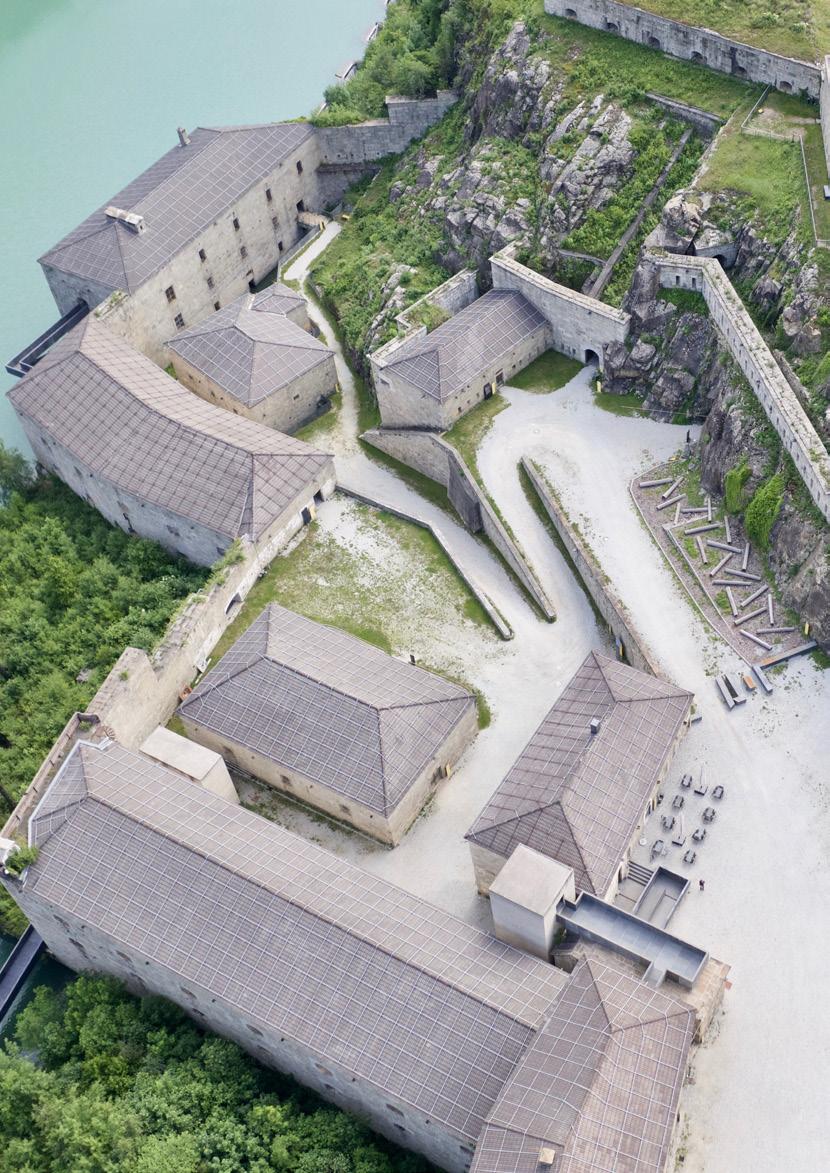
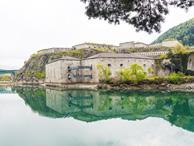
Franzensfeste Fortress
+ Covering 65,000 square metres and costing 2.6 million gulden to construct (approximately 69 million euros in modern money), this imposing fortress to the north of Brixen/Bressanone was a mammoth project commissioned by the Habsburg monarchy. However, by the time it was completed in 1838, it was already outdated from a strategic military perspective. It served as a storehouse for many years before being opened to the public in 2005. Today, Franzensfeste fortress hosts a wide range of exhibitions and events.
franzensfeste.info
Surveying the Globe
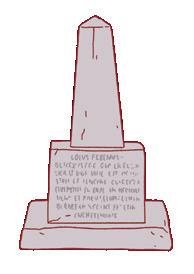
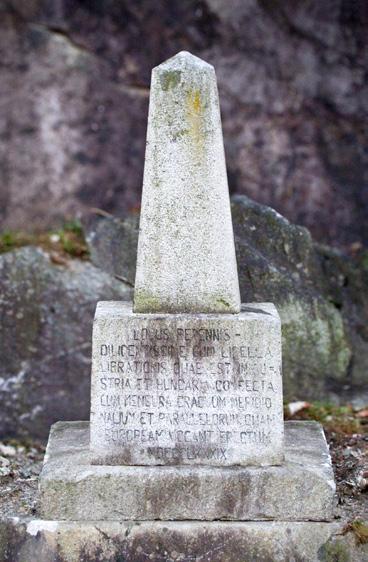
The polished stone beneath this obelisk is no ordinary slab of rock. Measuring ten by ten centimetres, the stone’s surface is so well protected from the elements by the obelisk and base that the inscription rightfully describes its location as a locus perennis (“everlasting place”). The stone is one of seven land markers erected by the Imperial and Royal Institute of Military Geography in the late 19th century. Located across Austria-Hungary from Maribor to České Budějovice and Hermannstadt to here at Franzensfeste fortress, the markers were originally intended for orientation purposes. Their position and altitude were determined with millimetre precision as part of an extensive military land survey designed to assist with the construction of roads, railways, tunnels and dams. The military also needed precise maps to ensure that it could plan and coordinate troop movements reliably.
The military’s ambitious cartography project, which began in 1873, attracted global attention as the first to draw up detailed, multinational maps using the metric system. Even using 19th-century surveying equipment (and without any satellites), the military was able to determine exact altitudes by using an optical levelling instrument and levelling rods to calculate differences in altitude between fixed measuring points. The base of the obelisk at Franzensfeste fortress was chosen as a suitable location for a land marker due to the stability of the local rock. It marks an altitude of 736.452 metres above the mean sea level of the Adriatic Sea at the Italian city of Trieste – a figure still accurate to a few centimetres today.
Obelisk at Franzensfeste Fortress
Date: 1889 Material: Granite Erected by: The Imperial and Royal Institute of Military Geography Inscription: Locus perennis diligentissimae cum libella librationis, quae est in Austria et Hungaria confecta, cum mensura graduum meridionalium et parallelorum, quam Europeam vocant. Erectum: MDCCCLXXXIX Translation: Primary marker for precise levelling in Austria-Hungary, performed in conjunction with European arc measurement. Erected in 1889.
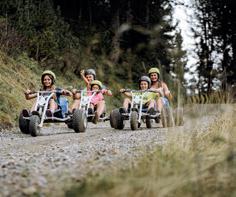
MY AND ME
A pharmacist on his delivery bike, two young mountain bike racers, a free-spirited gravel biker and a downhill champion turned restaurateur… We meet five cycling enthusiasts from in and around Brixen/Bressanone, each with a tale to tell of repairs, races and roaming on two wheels
Name: Greta and Jan Perathoner
Age: 11 and 10
Job: still at school
Type of bike: mountain bike
Our bikes in three words: light, fast and agile
Our favourite local route: from Lajen/Laion to Albions, Fonteklaus manor house and Gufidaun/Gudon
We never set off without... cycling gloves and clipless shoes
Our best cycling experience: our longest family bike ride so far through Uina Gorge in Switzerland, which was very steep with exposed sections where we had to get off and push Our top snack for on the go: fruity energy-boosting sweets
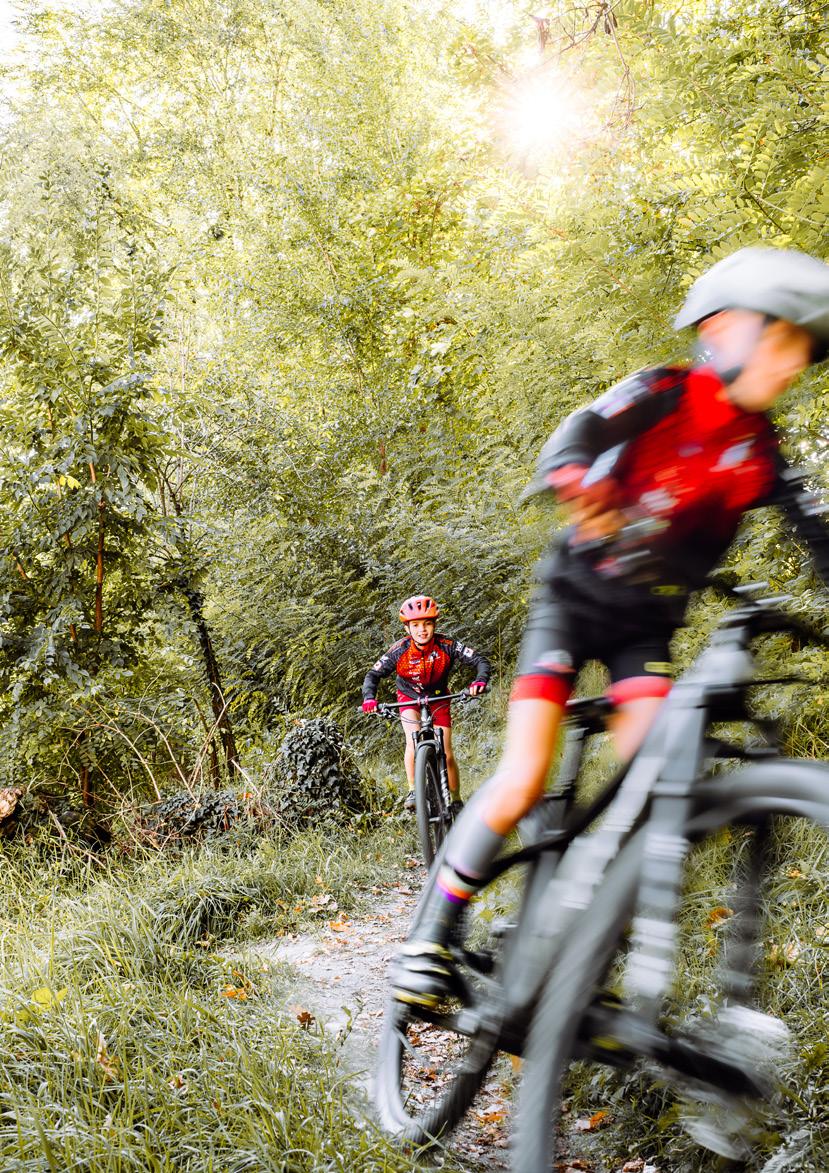
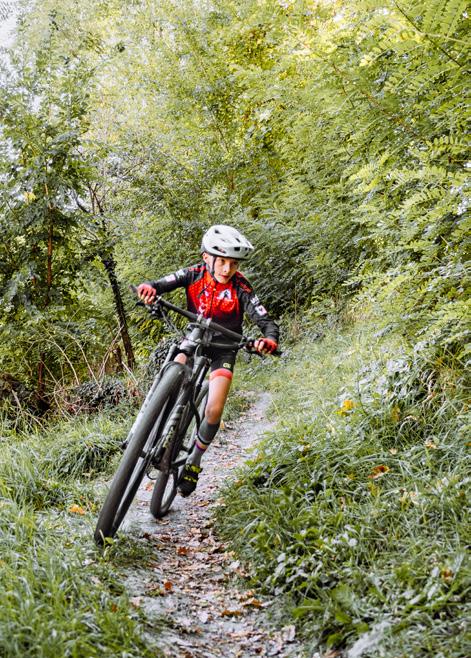
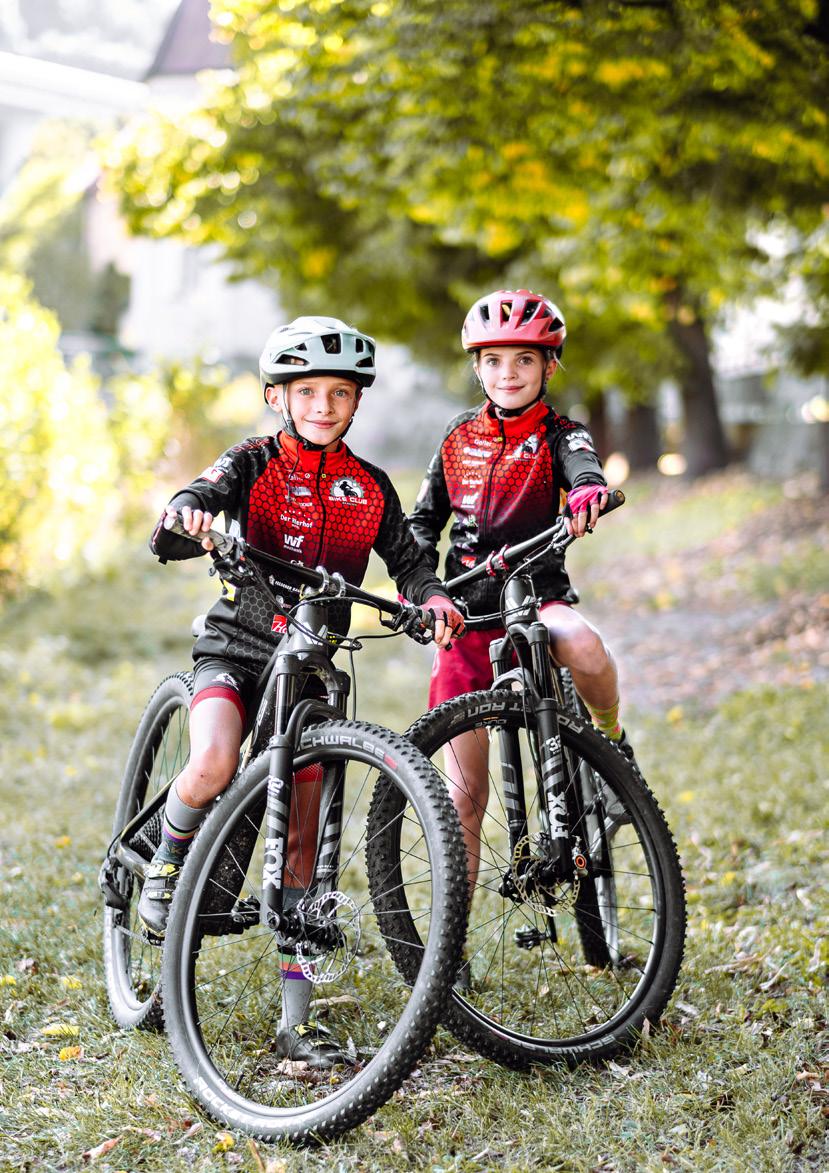
When we meet Greta and Jan Perathoner, they’ve just ridden their mountain bikes down into Klausen/Chiusa from their village of Lajen – a descent of 600 metres through the forest. “We often ride that way to training,” says Jan, who together with his sister can frequently be found at Klausen Bike Club’s training and race track alongside the Eisack river. The bikes look far too big for the young riders, but they steer them confidently through the lanes of the old town and navigate the narrow trails along the riverbank with pinpoint precision. One look at the deep concentration on their faces, their team jerseys and clipless pedals, and you can see that the pair know exactly what they are doing.
“We learnt to ride at a very young age and were racing around on balance bikes when we were three,” Greta tells us. “Our grandpa is a passionate mountain biker and our whole family cycle a lot.” After their parents signed them up to Klausen Bike Club, Greta and Jan began training regularly and now take part in youth races across South Tyrol. The family even plan their summer holidays around the race calendar.
The siblings’ favourite discipline is cross-country. “It has a bit of everything,” explains Greta. “You get to do several laps of a course and there are plenty of ups, downs, steps and obstacles. Only riding downhill would be boring.” Jan admits that he’s always nervous before starting a race. He’s been crowned South Tyrolean champion twice, including once as the season’s overall winner across all age categories. Greta, meanwhile, has come second in the South Tyrolean championships and has the trophy proudly displayed in her room.
Greta and Jan’s training covers both technique and stamina. “We practise how to get up quickly after a fall,” says Greta. “And how to negotiate steps,” she adds, revealing that she couldn’t help braking on her first attempt because the steps looked so high from the top. “The second time, I took a bigger run-up and rode straight down them – I’m never afraid of them now!”
We ask the pair whether they prefer riding uphill or downhill. “Uphill,” they both reply without hesitation. “Going down is easy.”
JOHANNES: THE DOWNHILL CHAMPION
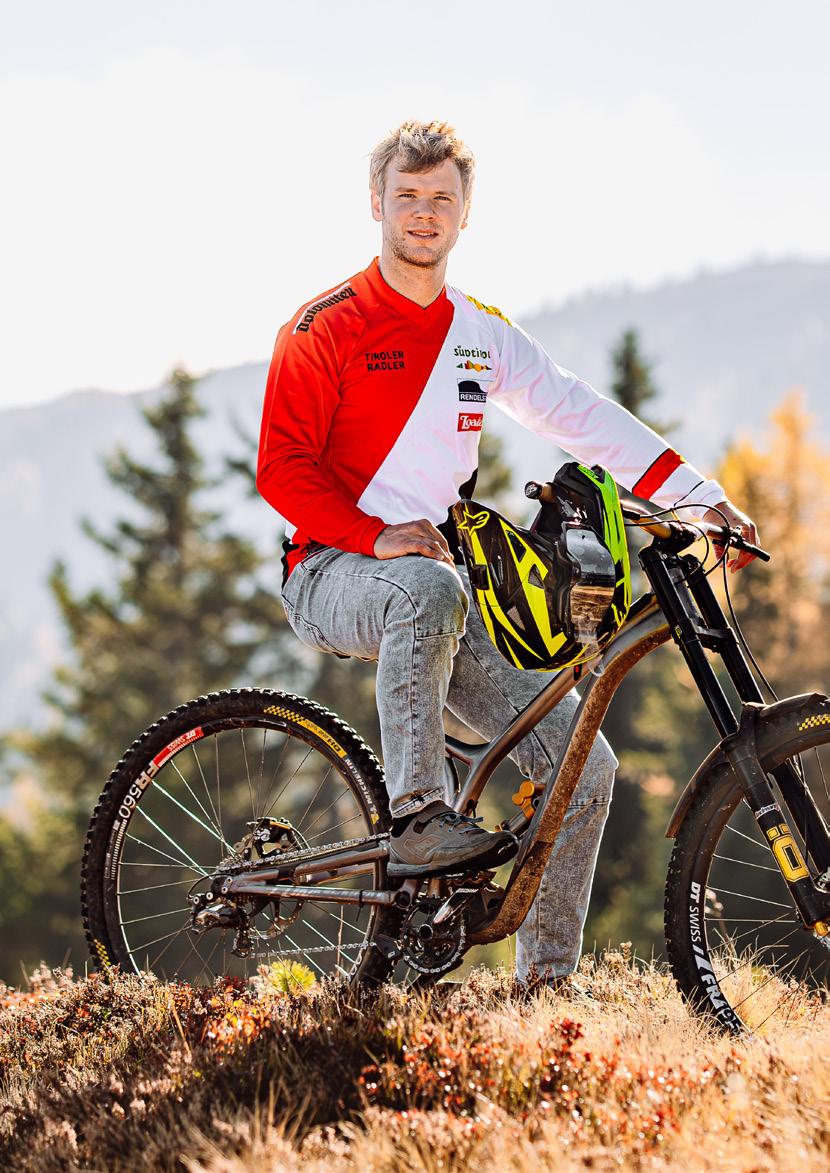
Name: Johannes von Klebelsberg
Age: 31
Job: mountain lodge manager
Type of bike: downhill bike
My bike in three words: perfect, stylish and simple
My favourite local route: the downhill trails at Brixen Bikepark
I never set off without... my jeans
My best cycling experience: winning the Downhill Italian National Championships in 2014
My top snack for on the go: mountain cheese
Up on the Rodenecker-Lüsner Alm mountain pasture, where Johannes von Klebelsberg runs the Starkenfeldhütte mountain lodge, autumn is approaching, the warm light bathing the sweeping landscape and dry trails in a beautiful glow. Just a few years ago, Johannes was racing along steep trails as a downhill World Cup rider, but today he’s swapped all that to serve dumplings and cheese platters.
“I began racing as a child,” he explains. “My brother and I were handed a flyer about a mountain bike race and were hooked immediately.” At the age of 16, he switched from cross-country to downhill racing “because I found the atmosphere so much better”. The downhill scene was less competitive and more relaxed, plus it brought him more opportunities for success. As the seasons went by, he stepped up his training and improved his times, twice being crowned overall Italian champion and competing in the World Cup until 2020. Before one race, he bought a pair of jeans on the spur of the moment and rode wearing them, which earnt him the nickname Denim Destroyer. “People thought I was crazy,” he says. This unusual choice of attire became his trademark and he went on to establish a label that manufactures tech jeans for athletes like him.
Today, Johannes lives life at a very different pace. He has two young children, runs two restaurants in addition to the mountain lodge on the Rodenecker-Lüsner Alm and employs 30 people. “Taking over the Starkenfeldhütte mountain lodge was a dream come true,” he says. Working surrounded by nature on the edge of a forest may sound romantic, but as Johannes explains, “in reality, it’s very demanding”. Despite having much less free time these days, Johannes still likes to get out on his downhill bike, especially when the sun is shining and autumn is in the air on the mountain pasture. “As soon as I sit on my bike, I feel my competitive streak come back. Even though I’m not as fit any more!”
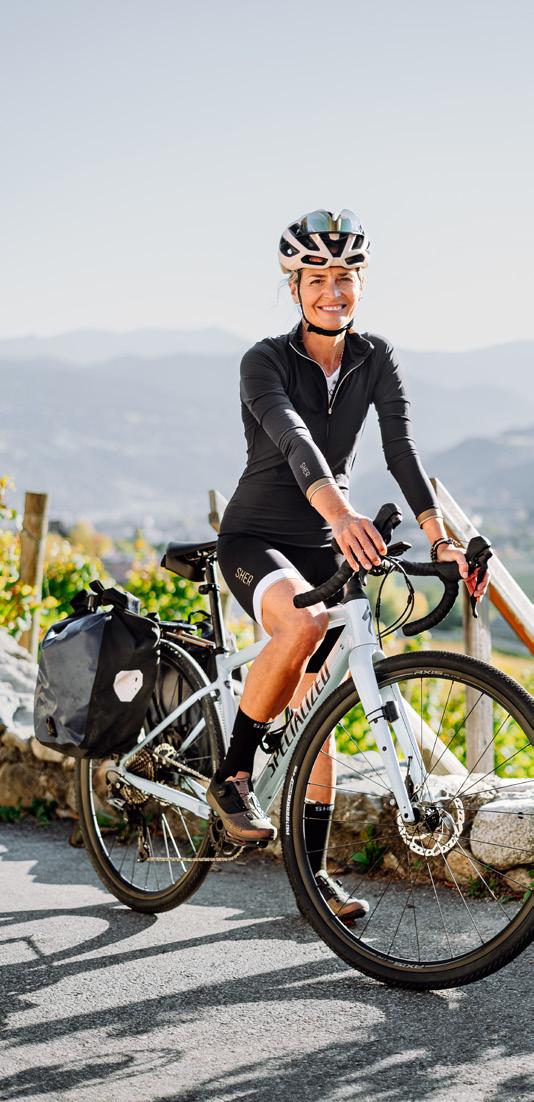
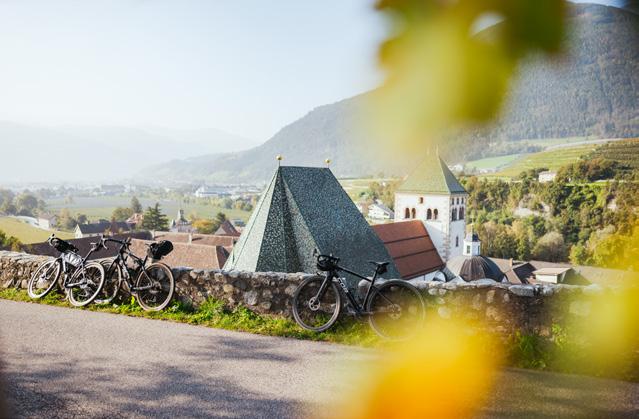
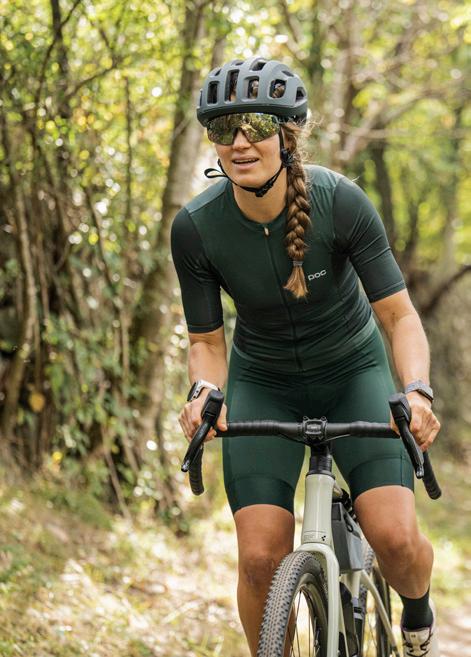
The afternoon sun is warming the vineyards around Neustift Abbey as we wait for Sarah Bernardi, our eyes fixed on the section of the Eisacktal valley cycle path winding through the grapevines before us. As Sarah reaches us, she leans her light blue gravel bike against a drystone wall. The rickety pannier rack holding her saddlebags looks out of place on the sleek bike. “I’m often laughed at for using it,” she says, running a hand across it, “but I can’t let it go – it was with me through all my travels in Asia.”
For years, Sarah was drawn eastwards every summer, her urge to travel taking her to the likes of Turkey, Tajikistan, Kyrgyzstan, Georgia, Armenia, Iran, Kurdistan and India. “Cycling is the ideal speed for travelling,” she says. “You smell and hear everything and can talk to people, but you’re still moving at a decent pace.”
As a teenager, Sarah spent the first money she ever earned on a pastel yellow ladies’ bicycle and later financed her degree by working as a cycle tour guide in Sardinia, Umbria and Tuscany. Competing has never appealed to her. She doesn’t use Strava and doesn’t measure how many kilometres and metres of elevation gain she cycles each year or how long it takes her to ride to the top of a pass. “I’m usually slower than everyone else because I’m always stopping to take photos or have a chat,” she says. “I like going for leisurely rides. People of all abilities can come cycling with me.”
“While some people do yoga, I take myself on a solitary bike ride if I feel the need to meditate,” continues Sarah. That said, the adventure-loving cyclist also seeks out opportunities to ride with others, especially women, and often enjoys long cycling weekends with female friends, large community rides and group trips with a glass of wine en route followed by a dip in a lake. “There’s something exciting and inspiring about strong women cycling together.” Good company aside, all she needs for a perfect day on two wheels is “warm weather, lots of hills, an ice cream with three scoops and a safe journey home”.
Name: Sarah Bernardi
Age: 50
Job: life and business coach, brand ambassador for a women’s cycling apparel brand
Type of bike: gravel bike
My bike in three words: freedom, fun and wanderlust
My favourite local route: my training ride via Bolzano/ Bozen, Ritten/Renon, Barbian/Barbiano and the Eisacktal valley cycle path
I never set off without... my colourful Tibetan stone bracelet
My best cycling experience: feeling invincible after conquering the highest accessible pass in the world at 5,600 metres above sea level when I was in India
My top snack for on the go: dried persimmon
SARAH: THE FREE SPIRIT
Name: Florian Peer Age: 48
Job: pharmacist
Type of bike: e-cargo bike
My bike in three words: big, practical and strong
My favourite local route: the cycle paths in Brixen –they’re great!
I never set off without... a spare inner tube
My best cycling experience: hauling logs of wood up the mountain in my bike’s trailer in preparation for a Sacred Heart of Jesus fire in Mellaun/Meluno
My top snack for on the go: gummy bears
FLORIAN: THE PHARMACIST
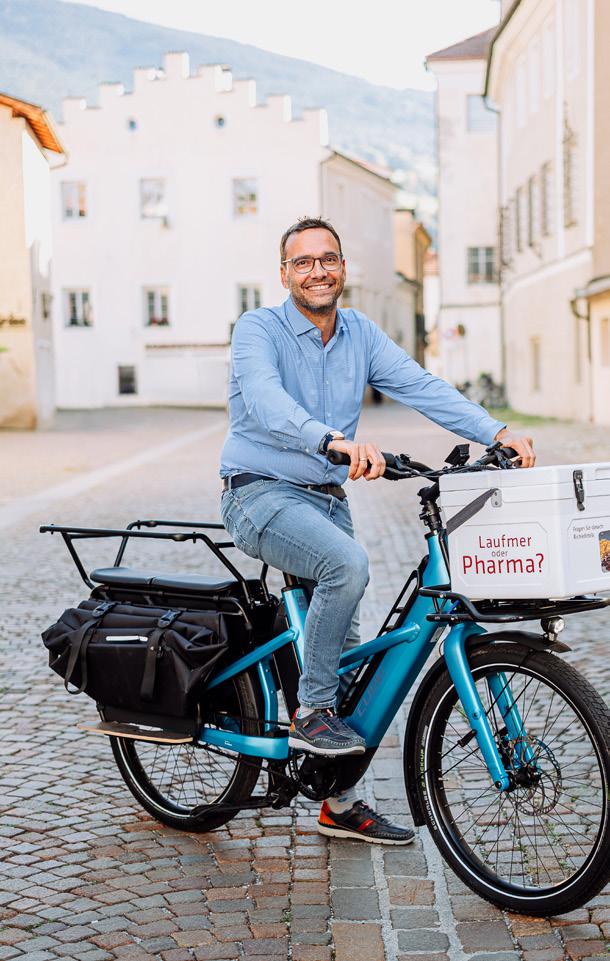
The sun is shining as Florian Peer cycles towards us through Brixen’s old town, catching the eyes of passers-by and returning their “Good Morning!” greetings. His family have been running the Peer pharmacy in Adlerbrückengasse since 1787, the building itself having served as a pharmacy since 1602.
Bright blue with a large seat at the back and a specially designed cool box for medication on the front, Florian’s e-cargo bike is certainly eye-catching. He and his team use the bike to deliver medication to mainly older people in the town. “We wanted our delivery service to be as sustainable as possible,” he says. “We use our electric van for longer distances and our e-bike for shorter journeys.”
Florian fell in love with the cargo bike at first sight, although there were some teething issues. “It wasn’t assembled properly when it was delivered and the handlebars suddenly came loose the first time I rode it,” he recalls. But since then, it’s handled everything he’s thrown at it, including transporting heavy boxes of stones for the garden and carrying two adult passengers on the bench seat. “There’s plenty of space for two people as long as they squeeze up a bit,” says Florian.
We ask Florian how life has changed since he’s been making deliveries with his e-bike. “I see much more of the town,” he replies. “Cycling is a fantastic way of getting out and about among people and nature. Heading out to make a quick delivery is like having a bit of free time in the middle of the working day.”
FROM 17 TO 20 SEPTEMBER 2026, the bike festa Südtirol will celebrate its premiere in Brixen. For four days, the bicycle will be showcased in all its facets – both in the town and along the surrounding routes. In the historic centre, visitors can test new models, workshops bring cycling enthusiasts together and guided tours lead along the Eisack River, through vineyards and towards the Dolomites. Test routes are available for all levels, with dedicated courses for children.
The programme is divided into four themed worlds: brand festa with new bikes and trends, ride festa with tours and test rides, people festa with encounters within the bike community and gusto festa with regional cuisine.
bikefesta.com
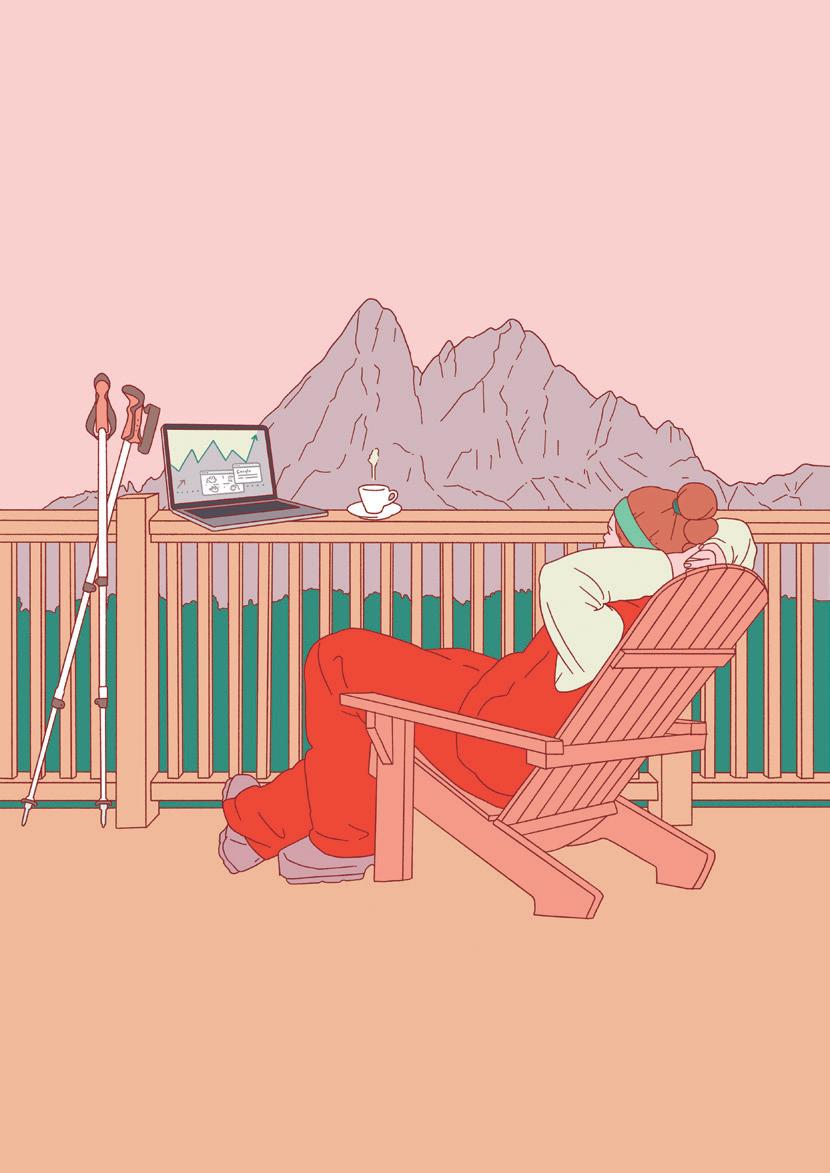
Do you dream of working through your to-do list against a stunning mountain backdrop or punctuating your online meetings with hikes and trips to the sauna? If so, a workation might strike the perfect balance. But is it really a good idea to try working somewhere picturesque and relaxing? Does work become pleasurable – or does the reality fall short in some way? Let’s put it to the test
Text — SILVIA OBERRAUCH
Illustration — LAURA NEUHÄUSER
e South Tyroleans are lucky to live in a place where others go on holiday. But unfortunately, we too spend most of our time working. Why not, I think to myself, make the most of our idyllic location and try combining work with leisure? A quick search later and the booking platform presents me with a list of 245 accommodation options with remote working facilities. My top pick is equipped with everything you could wish for – from a breakfast buffet and laundry service to a sauna. Even better, it’s located in the Pfunderer valley, a side valley with innumerable summits that I’ve never visited before.
I inform my employer and colleagues of my plans and receive the go-ahead to work reduced hours during my ten-day stay. In high spirits, I pack my suitcase with my walking boots, laptop, charging cable and favourite novel – and look forward to escaping everyday life for a while. As I’m checking into the hotel, I immediately notice how the mountains look close enough to touch. At first, I try to structure my new working routine around my other activities. The guided sunrise hike fits in perfectly with my working hours and I push back a call originally planned for the morning after my wine tasting session. Nothing distracts me from my work and I’m initially highly productive. I slot online meetings in neatly between a facial and an invigorating yoga class, but twice I only make it to my sauna sessions with moments to spare. By now, the lines between work and leisure are visibly blurring. Life seems perfect and I’m convinced that a workation is the solution to everything.
However, a few days later, as my stay is drawing to an end, I can’t help noticing that I’m writing endlessly long emails to my colleagues, full of anecdotes from life at the hotel, such as how a Dutch couple don’t like the dumplings on offer, but I in turn don’t like the gear sported by my fellow hikers. I clearly need to talk to somebody. I feel... lonely. It appears that I’m actually missing the aspects of everyday office life that I often find so tedious. The chats while making coffee, the collective eye rolls when we receive ridiculous requests, the brief exchanges in the corridor. I even put on a beaming smile and offer the room attendant a cup of tea, which she politely declines with a shocked look on her face. After one morning yoga flow session, I start up a conversation with the instructor about how I always feel nervous before meetings and whether he thinks alternate nostril breathing might help. He stares at me blankly and I hastily leave the room.
When I’m finally packing my suitcase to go home, I’m surprised by how excited I feel about being back in my usual creative environment and sitting in my comfortable desk chair. I’m even missing the office plants! I’ve eaten well, I have rosy skin and I’m feeling fit and healthy, but ten days have been more than enough. In my experience at least, a workation makes a fun change, but interestingly gives you a renewed appreciation for office life.
Wonderful Winter Light
Text — STEFANIE UNTERTHINER
In the cold winter months, the low-lying sun casts the landscape in a completely new light. Shadows lengthen, lines become sharper and familiar places suddenly appear very different
① Evenings on the cathedral square
As dusk falls, the cathedral square in Brixen/Bressanone takes on a beautiful glow, the cathedral’s two baroque towers standing proudly against the deep blue winter sky above. During Christmas market season, the traditional wooden huts, beautifully decorated trees and strings of sparkling lights are an idyllic sight, creating a festive atmosphere across the historic square.
brixen.org/christmas
② From dappled forest to sweeping valley
Enjoy winter in all its glory on this easy winter hiking and snowshoeing trail. Starting from the Altfasstal valley car park near Meransen/Maranza, the route initially takes you through a snowy spruce and larch forest. Here, sunbeams and shadows dance between the dark tree trunks as the sun shines through the branches, creating a patchwork of bright sunlight and dappled, bluish shade on the snow-covered forest floor. After a few minutes, the trees thin out and spectacular views open up across the tranquil Altfasstal valley and surrounding mountains.
③ A blaze of colour
Early sunsets are what make evening winter hikes a truly special experience. As you slowly wind your way uphill, the light changes minute by minute. The white blanket of snow takes on a softer hue, the blue sky turns apricot and orange, and the mountaintops are bathed in delicate pastels. For a brief moment, the mountain vista seems to glow as the world stands still in silent appreciation of this natural spectacle. Tip: The trail from the top station of the Plose cable car to Berghotel Schlemmer offers magnificent views.
④ Twinkling candlelight
During Advent in Natz/Naz, the village square glimmers with countless sparkling fairy lights, brightly lit Christmas trees and soft candlelight. The village’s s’Adventliachtl evenings held on four Fridays in December are the perfect opportunity to stop and reflect, a steaming mug of tea or mulled wine warming your hands. As Christmas approaches, the atmospheric Advent Concert held in Natz parish church on 23 December is also not to be missed.
⑤ White and golden glimmers
The Rodenecker-Lüsner Alm mountain pasture is often bathed in sunlight even in winter. The open, expansive plateau is dotted with individual larch trees, their trunks and branches gleaming a warm golden yellow or even reddish colour in the sunshine. It’s a beautiful spot to enjoy the gentle hiking trails that criss-cross the snow, offering breathtaking panoramic views on crisp, clear winter days.
⑥ An abbey high on the mountainside
Säben Abbey can be seen from far and wide, towering high above the artists’ town of Klausen/Chiusa from atop a rocky outcrop known as the Holy Mountain. Complete with churches and chapels, the abbey complex has sat on this striking rock face since the 17th century. The climb up to the site is particularly worthwhile in winter and a great way to escape the fog in the valley. Once at the top, you can bask in the sun as it warms the historic building’s pale stone walls, enjoy the cool breeze and marvel as the magical clear winter light illuminates the landscape all around this fascinating secluded spot.
klostersaeben.it
SUMMERS OF YEARS GONE BY
Outdoor swimming pools – as places to meet, play and be free – have long been part of everyday life in South Tyrol. We take a deep dive into the early years of our region’s outdoor bathing culture and discover some old photos of the first outdoor pools in Brixen/Bressanone, a bathing spot with abbey views and more
A POOL WITH A VIEW
The same pool as on the previous page is seen here from a different perspective, high on the slope above Barbian/Barbiano. Built by the Gasthof Bad Dreikirchen hotel in 1967, it was one of the first swimming pools of its size in the area, offering views of meadows and farms all along the Eisacktal valley and across to the Sella Group. Every summer, visitors (predominantly from Germany as well as a few from Great Britain) retreated up here to escape the heat and enjoy the fresh mountain air. They were often joined by young people from the surrounding villages who liked to sit on the water’s edge, chatting to their colleagues. Unlike international holidaymakers well-versed in the latest bathing trends, these locals – still sporting their traditional hair styles –were new to swimming for pleasure. For young women in particular, it was a hard-won taste of freedom and leisure time.
A SMALL SYMBOL OF FREEDOM
“Itsy Bitsy Teenie Weenie Yellow Polka Dot Bikini” – this summer anthem marked the start of a fashion revolution, even in Brixen. In the early 1950s, many people still learnt to swim wearing homemade knitted bathing clothes, although wealthier families had already started to buy cloth bathing suits. Showing too much skin was not permitted in Catholic Brixen, with the bishop himself even issuing a ban on bikinis, which remained in place until 1969. Instead, women had to wear swimming costumes – a far cry from the bikini sported by the model on this advertising shot, confidently posing with the cathedral’s two towers visible behind her.
OUTDOOR BATHING AND THE CHURCH
This swimming pool in Feldthurns/Velturno opened in 1971 as a place to cool off in the water, sunbathe on the grass and spend long afternoons in the fresh air. However, not everyone in the village was in favour of this pastime. In the German-language book Wilde Jahre (Paul Rösch, Patrick Rina, Edition Raetia, 2025), a witness from the time recounts how the church saw lounging around in the sunshine as improper. The village priest even felt compelled to divert religious processions to protect or prevent his parishioners from seeing the bathers.
An essay on South Tyrol’s tourism boom years: drawing on eyewitness accounts, historical images and a critical perspective, this book by Edition Raetia explores both the rise and the downsides of the economic miracle – from its pioneering phase to today’s challenges. Available at raetia.com
SUNBATHING AGAINST A HISTORIC BACKDROP
Two worlds collide in this photo, which captures the public’s new-found love of sunbathing in the foreground and the centuries-old stillness of Säben Abbey in the background. In the 1950s and 1960s, topping up your suntan was an essential part of a day by the pool, as demonstrated by the two women sitting on the edge of this swimming pool in Klausen/Chiusa. Some sunbathers rubbed oil into their skin to help them tan more quickly, while others swore by their good old blue tin of Nivea cream to supposedly protect them from the sun. The pool shown here was built in 1930 before being turned into a car park in 1994.
A TEST OF COURAGE
Sitting atop a narrow concrete pillar, the imposing seven-metre diving tower at Brixen swimming pool once stretched high into the sky. With its three platforms, angular design and simple handrails, it was a bold example of post-war modernism and an architectural symbol of progress and engineering. As in this photo, visitors could often be seen lounging in the sun on the edge of the pool while divers stood above them gearing themselves up to jump. During the 2002 renovations, the seven-metre tower was removed, as it was considered too dangerous. Today, its five-metre replacement still gives bathers plenty of opportunity to test their courage each summer.
A TRIUMPH OF A POOL
Built on farmland on the northern edge of Brixen in 1958, the town’s first proper outdoor pool complex was a landmark project commissioned by the then mayor Valerius Dejaco. The pool transformed summer life in the episcopal town, providing locals and visitors from across South Tyrol with a place to swim and have fun. Constructed using the latest technology of the time, the large facility met modern hygiene standards and was in a class of its own. It served as a popular meeting place for almost five decades before being replaced by the Acquarena leisure centre in 2002.
ON YOUR MARKS, GET SET, SWIM
The swimmers standing on their starting blocks in this photo look deep in concentration as they prepare to jump into the water. In the background, a boy can be seen tightly clenching his fists in anticipation. The photo from 1963 was taken during a competition at the newly opened Brixen swimming pool. Brixen sports club’s swimming team had been established just a few years previously in 1956. Before this pool was built, the team initially trained in a much smaller facility at the Guggenberg spa house, which was the location of Brixen’s first swimming pool. The club even held their competitions in the Vahrner See lake – in blissful ignorance of the wartime shells still lurking at the bottom.
Together into mountain adventures
Sun Park Gitschberg Adventure Park Jochtal
Cable cars Gitschberg Jochtal
14 May – 7 November 2026
Daily from 8:30 am to 4:45 pm
Beautiful Things
Products from the region
❶ A blend of fruity and earthy
At Tschiedererhof farm, Florian Jöchler turns his home-grown beetroot and Golden Delicious apples into a tasty, vibrantcoloured juice. The natural sweetness of the apples pairs perfectly with the beetroot’s mild, almost earthy notes to give the juice a delicious and surprisingly balanced flavour. Beetroot is also rich in vitamin C, iron and potassium. The juice is available from the s’ladele farm shop at Tschiedererhof, which also stocks apple and strawberry grape juice and apple and pear juice. 700 ml bottle, 3.40 euros.
tschiedererhof.it
❷ Crocheted with love
What started as a project to make her own lamp soon turned into a passion for Renate Rungger from Feldthurns/Velturno. Today, she designs her pieces organically without any firm ideas about their shape or the end result, crocheting, layering and reimagining them every step of the way. sonderLich.t lamps are crafted exclusively from natural materials and no two pieces are the same. Soft colours filter the light, creating a peaceful ambiance in the room. The matching iron frames are made in cooperation with a local blacksmith. Price available on request.
sonderlicht.com
❸ Alpine aromas
Imagine a London Dry Gin but with flavours from the Eisacktal valley. At Knöspele distillery in Brixen, Martin Rastner creates just that. He’s been working with classic distillates for years and loves experimenting with them at his recently renovated distillery. Home-grown juniper berries and lemon thyme, Swiss stone pine cones from local forests and fresh spring water all lend his Eisack Valley Gin its unique character. On the palate, the gin reveals resinous notes, a pleasant pine fragrance and fresh hints of citrus. Uncomplicated and versatile, it’s ideal for enjoying on its own or in mixed drinks. 500 ml bottle, 35.00 euros.
knoespele.com
❹ A sweet taste of autumn Niki Back bakery has created a traditional rye bread with a twist, where plums from in and around Barbian/Barbiano are the stars of the show. The location in which the plums grow makes them especially flavourful. Freshly harvested in autumn and handled with care, they lend the plum bread its characteristic taste and a delicate natural sweetness. The bakery also makes crunchy plum bread crisps, which are a delicious snack.
niki-back.com
❺ A summit to savour At Arke Pastry Studio in Brixen/Bressanone, pastry chef Susanne Cattoi and designer Michi Kiem can be seen hard at work crafting their patisserie and viennoiserie. One of their creations is the Peitler, a cake inspired by a sunrise hike on the Peitlerkofel mountain. Comprising a buckwheat biscuit base topped with chocolate mousse, cranberry jam and mountain pine caramel and coated in chocolate, the Peitler is the result of multiple rounds of prototype and material testing in partnership with the NOI Techpark in Bolzano/Bozen to recreate the shape of its namesake. Seasonal varieties are also in the pipeline. From 8.00 euros.
arke.bz.it
❻ Unique ceramics
A change in professional direction saw Sarah Volgger swap her desk for a potter’s wheel. In her workshop in Pfunders/Fundres, she crafts mugs, cups, bowls and plates for everyday use, which she fires at high temperatures to make them durable and dishwasher safe. No two pieces are the same, but it is the glaze that makes them truly unique. The colours and surfaces change during firing to create different results each time. Custom orders are also available. Cups from 34.00 euros. Instagram @heartmade_keramik
Silent Witnesses of Time
South Tyrolean photo bloggers Judith Niederwanger and Alexander Pichler tell the story behind one of their favourite photos
On a clear winter’s day back in 2020, we headed to Terenten/ Terento to explore the Mills Trail (Mühlenweg) – a leisurely circular hike along the Terner stream. The trail initially led us through shady forests and across open meadows, the gentle babbling of the water accompanying us every step of the way. As the route continued, the flour mills gradually started appearing before us. Dating back as far as over 500 years, they are full of history and evoke a bygone rural life.
The trail runs right past five of these mills, each one a testimony to traditional flour milling. Along the route, you’ll find
information boards on the history of the mills and the local cultural landscape. The hike also boasts plenty of spectacular views, including of the striking earth pyramids towering between the trees and hillsides.
The approximately 4.5-kilometre hike (around 90 minutes) begins from the car park in Terenten village centre. From here, walk along St.-GeorgsStraße/Via San Giorgio to the start of the trail and then follow the signs. After crossing the stream, continue following the path through the meadows until you return to the village.
Judith Niederwanger and Alexander Pichler run a successful hiking and photography blog called “Roter Rucksack” (German for “red backpack”). Their Facebook page of the same name has over 27,000 likes and they have racked up 24,000 followers on Instagram. In 2026, they released their third Germanlanguage book (Die schönsten Touren und Fotospots: Südtirol & Dolomiten published by Raetia), which presents over 40 hikes and photo spots in South Tyrol. roterrucksack.com