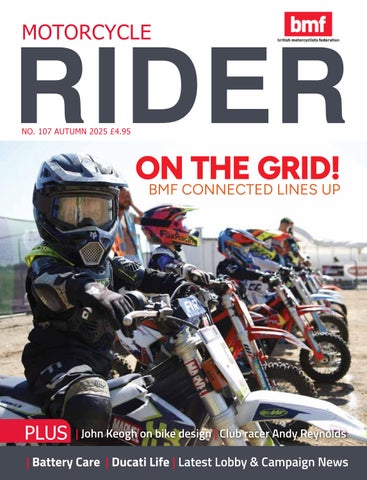
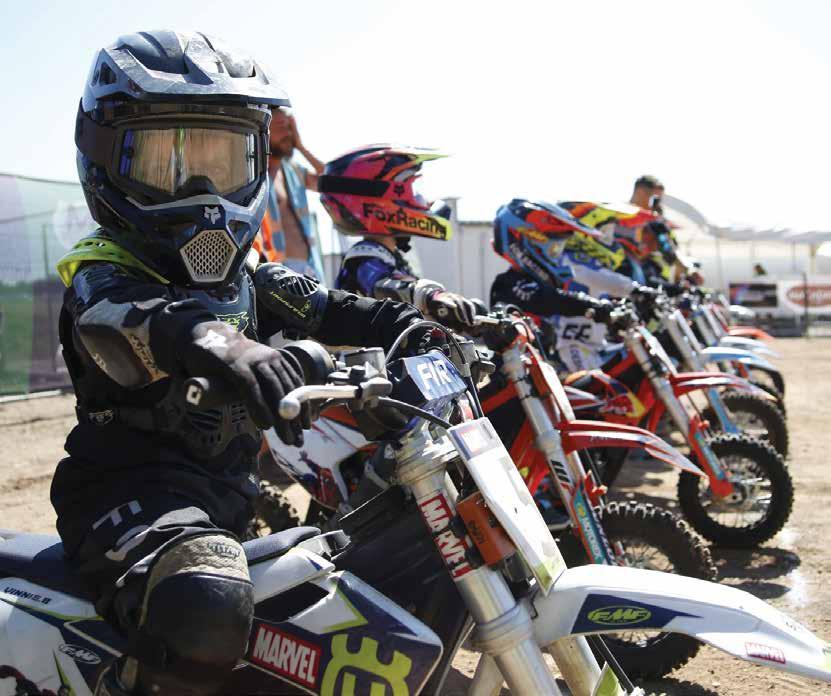
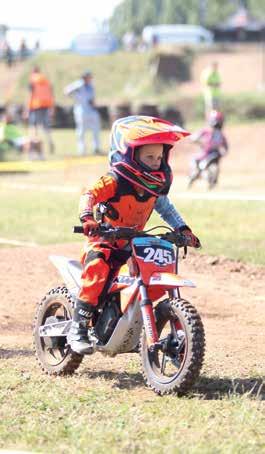
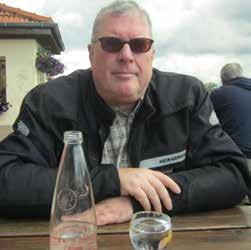
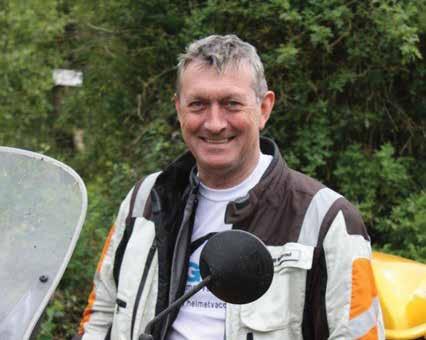
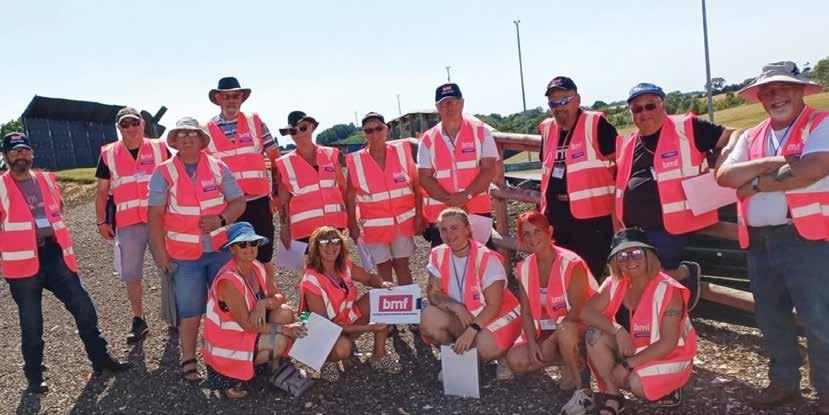
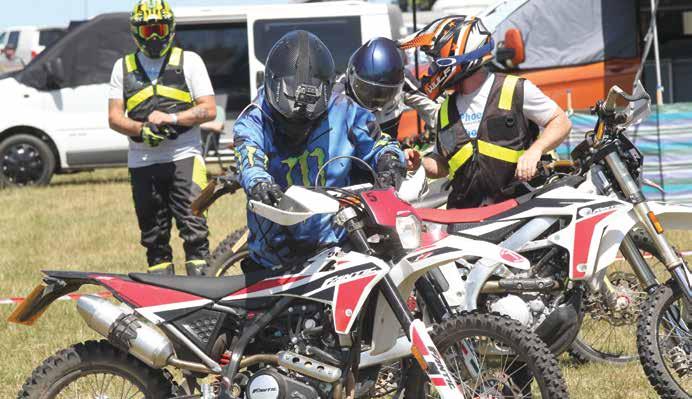
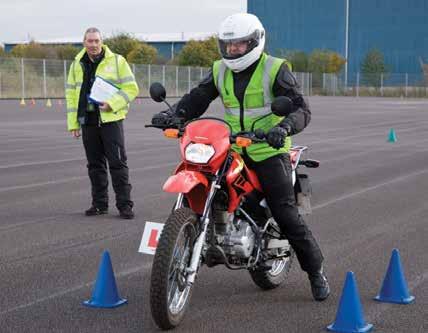
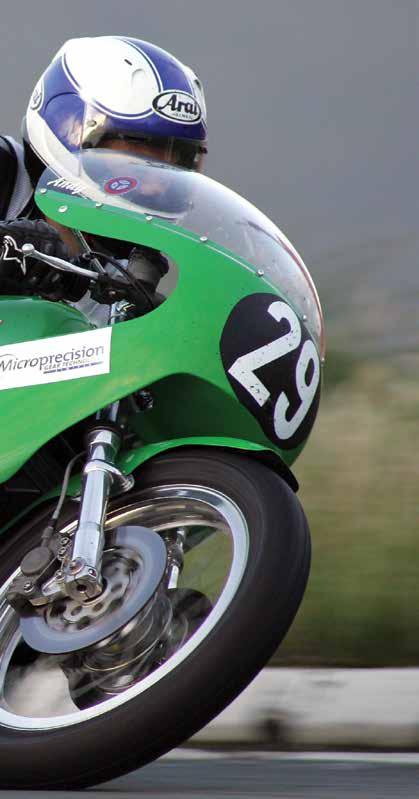
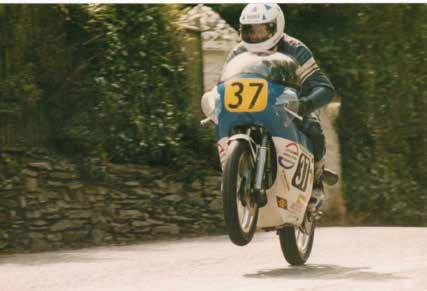
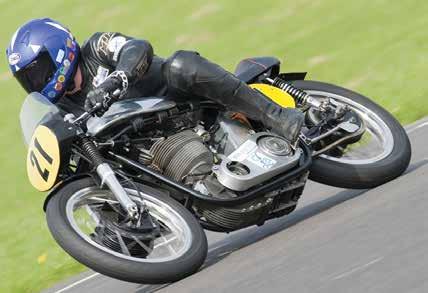
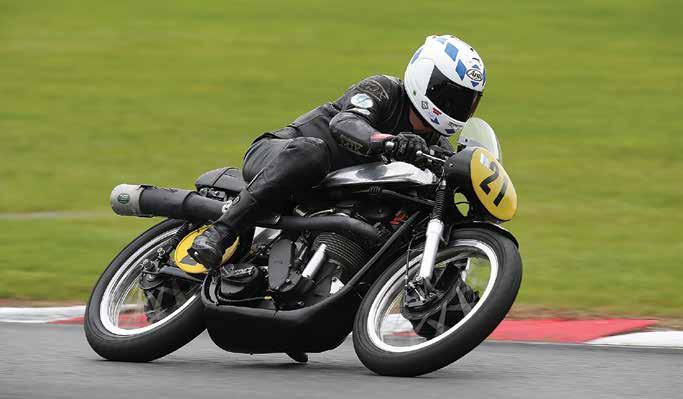
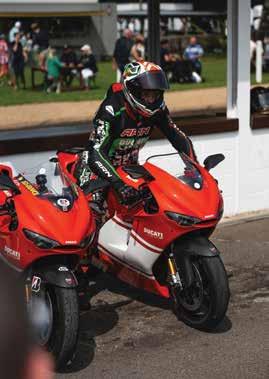
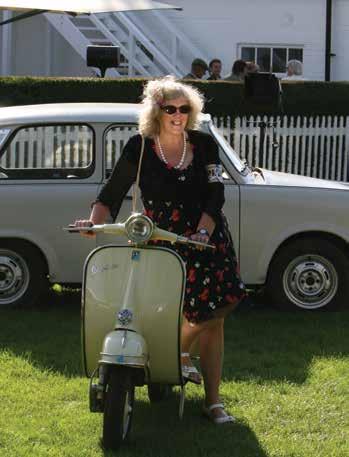
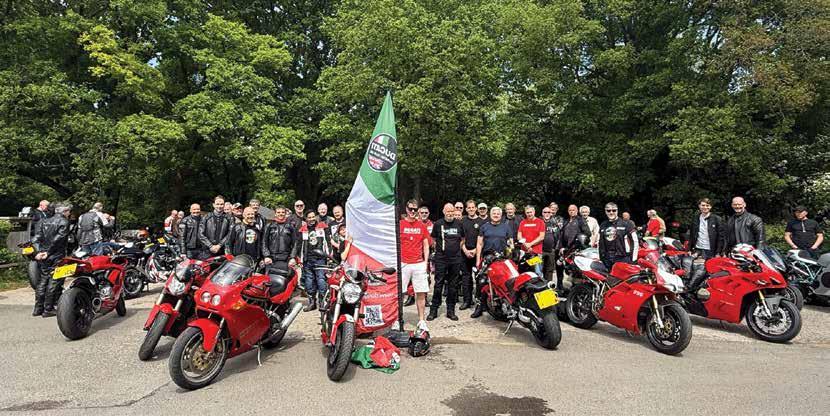
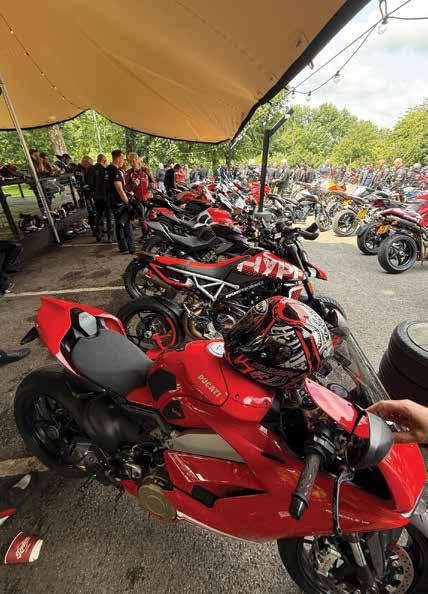
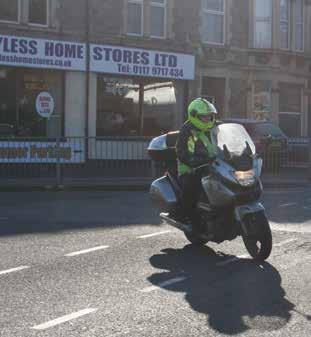
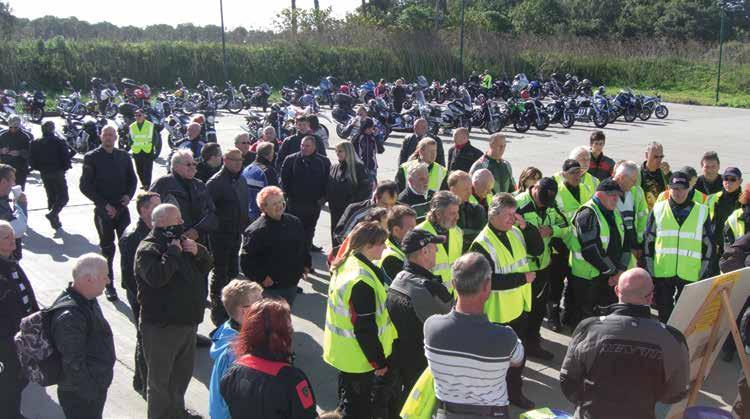
Cover Picture: On the grid at BMF Connected (photo: Andy Ward of BrillCreative )
MOTORCYCLE RIDER IS PUBLISHED BY THE BRITISH MOTORCYCLISTS FEDERATION (ENTERPRISES) LIMITED
MOTORCYCLE RIDER
Editor | Ian Kerr MBE - ian.kerr@bmf.co.uk
Production Editor | Peter Henshaw
Designer | Louise Hillier - design@bmf.co.uk
ALL BMF CORRESPONDENCE TO:
Helen Hancock
Administrator
BMF, PO Box 9036, Enderby Leicester, LE19 9BE
Tel: 01162 795112
Mob: 07918 903 500
Email: admin@bmf.co.uk
COPYRIGHT: All material published in MOTOrcycLE rIdEr is the copyright of the BMF. Use may be freely made of it without permission on condition that any material used is credited “reproduced by permission of MOTOrcycLE rIdEr, the BMF magazine”.
The views of any contribution contained in MOTOrcycLE rIdEr are not necessarily those of the editorial team or of the BMF.
Chair | Jim Freeman
Finance Director | Howard Anderson
Member Services Director | Peter Laidlaw
Political and Technical Services Director | Anna Zee
National and One-Make Club Forum Chair |Stephen davenport
Administrator | Helen Hancock
C O N T E N T S
Government may or may not be in chaos, but our work goes on
The BMF’s new show at Mallory was a rip roaring
The best of your photos, onroad and
John
Jilly
FRom the ChAiR
Dear Fellow Rider reader, The rain’s lashing down, after a splendid Indian summer of fine riding weather. Early Autumn’s my favourite time of year, with plenty of daylight and much more rider friendly temperatures than in high summer. When I was a young ’un it was considered perfectly normal to just wear a pair of high tops and a T-shirt, with a pair of gloves for the safety conscious, and jeans. These days I wouldn’t dream of not wearing ‘proper’ kit, which does tend to cook the rider at ‘20’s plenty’ speeds, but are we being brainwashed? I mean, falling off a pushbike at 20mph is no different to a motorcycle? I’m already going into the winter time ‘reflection’ mode.
"Please join us as an individual member if you aren't already!
Just point your phone at the QR code to go to the right spot on our website!"
Running through this issue I came across Dan Sager’s very useful article on batteries. Quite apart from the cost, the ‘new year, new battery’ school of thought isn’t exactly green. The longer we keep things functional the better. Dan’s article is rooted in the great divide between those who ride all year round and those who retreat to the shed for the winter – if you ride all year round batteries shouldn’t need special care. The shed dwellers point to the winter off-season as the perfect time to do all their maintenance, leaving the riding season uncluttered. That applies to getting your favourite local workshop to squeeze your bike in during their ‘quiet’ season, or if you DIY it, settling down to plenty of shed time.
After a good clean, what does your pride and joy need? Basic servicing on relatively modern bikes tends towards oil and filters, which anybody should be able to do, with appropriate tools and the proverbial Haynes
manual. Most servicing time is spent on the rest of the bike, not the engine. You’ll want to look at all those things that MOT testers focus on. You may not be confident in fixing the faults, but anybody can check over a bike and spot most of the obvious stuff. Be methodical, start at the front and work back. Think about getting the front wheel off the ground and supporting the bike securely. This is where one of those old skool centre stands is worth having. Is the front tyre looking ragged, how much tread is there? Wiggle the front wheel, grasping top and bottom, any feeling of ‘looseness’ should be checked, as the wheel bearings might be shot. Any signs of fork seals leaking? Move the handlebars lock to lock – do the forks turn smoothly or is there any feeling of roughness, a tendency to stop in the straight-ahead position, indicating a notch in the bearing? Still at the front we should look at the brakes. Obviously the pads should have enough friction material, but are they worn evenly, and if not perhaps the brake calliper needs stripping, cleaning and checking that everything’s moving freely. Is the disc worn, does the brake ‘pulse’ when you use it? If so, the disc could be warped, and you might need a new one. There’s plenty more to do and we’re still only at the forks.
Like most things, the more practise, the easier it gets. For a novice doing the inspection I’ve outlined, that could take an hour, for me about 10 minutes, the whole bike about double that. That’s just experience, not intrinsically difficult. I’ve taught people who’ve never looked at a motorcycle before, who’ve only ridden a pushbike, how to do that stuff. It’s real ‘If I can do it, you can do it’ stuff. Maybe we should look into that. Stay safe, ride safe,
A NNUAL G ENERAL M EETING 2025
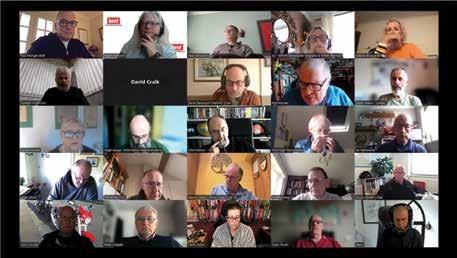
The BMF Annual General Meeting (AGM) was held on Zoom at 10am on Saturday 11th October 2025. The meeting was well attended, with many apologies also, by BMF members from all over the UK. The meeting was Chaired by Jim Freeman, with expert technical support from Helen Hancock, the BMF’s General Administrator and Communications specialist.
The AGM received detailed reports for the past year, with thoughts and direction for the next from:
• Anna Zee, Political and Technical Services Director, on Lobbying
• Paul Morgan CBE, Government Relations Executive, on Lobbying
• Howard Anderson, Finance Director, on Finance and Accountancy
• Peter Laidlaw, Membership Services Director and Events Director, on Membership and Events
• Helen Hancock, Communications Administrator, on Social Media and Events
The reports raised a lively dialogue, with questions and comments from the floor, either verbally or via the Chat.
The formal business of the meeting included the mandatory annual re-election of the Chair, with no nominations apart from Jim Freeman’s – he was elected unopposed by a Zoom Poll with a 97% approval vote.
The list of BMF Councillors for 2025-6 was voted en bloc, with 29 Councillors from the National and One Make Clubs Forum (NaOMC) and Annual Regional Meetings (ARMs) being approved in another Poll, by 93%.
Obituary
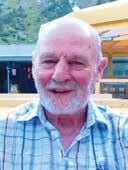
John Chatterton-Ross
With great sadness the BMF has learnt that John died on 2nd October 2025. John was 73 years old and had been ill for some time. He had been a BMF member for 56 years, a very active one indeed. John had lived a varied life with motorcycling at its core.
As a former police sergeant he took retirement, then devoted the rest of his career to the BMF and on a professional level working for FIM Europe as Public Affairs Director, where he preceded Chris Hodder, former BMF Government Relations Executive, in moving from the BMF to FIM. More recently John was the Head of Safety for Powered Two Wheelers at the Road Safety Foundation.
John also wrote for Motorcycle Sport magazine, where he became well known as an advocate for MZs, before moving to BMWs in later years.
The AGM would normally have approved the Annual Accounts to 31st December 2024 by vote, but was unable to do so, as the accounts were not yet available to the meeting. The meeting decided to defer the necessary vote to the January 2026 Council meeting, as the accounts will be available then. The accounts have to be formally approved by the guarantee holding Councillors. This follows a precedent set at the 2024 AGM.
The meeting also noted the loss of both Jim Peel-Cross and Nick Jeffery, long term Regional Chair in Region 7 and BMF Councillor respectively, in 2025, with an unopposed motion from the floor.
Following the usual selection of the next AGM date (10th October 2026) the Chair thanked all the attendees and wished everybody a pleasant and productive afternoon, hoping they made the most of the sunshine by getting out on their bikes.
The meeting was closed by the Chair, at 12.33pm.
The BMF sends condolences and best wishes to John’s family.
N E w S LOBBY NEWS ROUND UP
Progress Despite Stagnation
Wider political events over the last year have sometimes made public policy and motorcycle campaigning seem like an endless circus of musical chairs and charades. As the Government reels from one crisis to another, with ministers coming and going from different departments, or being forced out by scandal, those of us at the sharp end of the motorcycle lobby have needed to navigate numerous government ‘resets’ and the shifting sands of what the Government’s priorities are month by month. At departmental level, this is played out with ‘rabbit in the headlights’ ministers seemingly terrified of making any real decisions about some of the more granular areas of transport policy that affect us.
It would be easy to throw our hands up in despair and resort to hurling critical press releases into the ether to express frustration in an effort to feel better. But motorcycle campaigning is about consistency and taking the long view of things – it’s how we have achieved our greatest successes over the years. We do know that at some point this policy inertia will break. But in the meantime, if we take a good look at the last year, we can see that much has been done and is currently being progressed. Stagnation at the heart of government has not halted overall progress to increase the significance and authority of the motorcycle lobby. We have successfully maintained a collaborative and productive relationship with Ministers and officials, whilst continuing to push for motorcycling to be at the forefront of the Government’s future transport strategy. And the need for improved road safety for motorcyclists remains a core part of our messaging, particularly as 2024 saw a 9% rise in motorcyclist fatalities on UK roads, reversing previous safety gains.
Anna Zee (BMF), Paul Morgan (BMF) and Craig Carey-Clinch (NMC) report on progress so far this year.
Partnership Works
We were heartened by Ministerial assurance at the beginning of 2025 that the Government was giving “active consideration” to a full Review of Motorcycle Training, Testing and Licensing. This was in line with calls the NMC made in its publication ‘Motorcycling and the Future of Transport’, which was launched at a special Parliamentary reception back in December 2024.
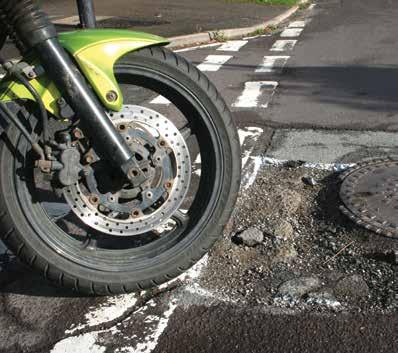
In what was a major success for our lobbying, the Government announced £23 billion to tackle roads infrastructure issues and potholes. This was a huge win for us after many months of targeted lobbying which perhaps we should shout about more. Although the size of the slice of this monetary pie that will go to potholes and related areas remains to be seen, this achievement underlines the power that can come from partnerships. The NMC and BMF coordinated their lobbying with wider motor, cycling and roads repair industry groups to lobby Government very effectively on this issue. Actual government cash to address a motorcycle safety issue? – it’s been a while since we’ve seen that.
We are still waiting for the review of training and licencing
Influencing Strategy
Earlier this year, the BMF and NMC submitted detailed responses to the Government’s Call For Ideas on an Integrated National Transport Strategy, an initiative launched by Ministers with great fanfare at the end of 2024 and due to be published at the end of 2025. And, in response to the Government’s plan to develop and publish a new Road Safety Strategy, the BMF and NMC set up a new cross-sector Working Group for Motorcycle Safety, chaired by the BMF’s Anna Zee under the auspices of the Parliamentary Advisory Committee for Transport Safety (PACTS). This group is developing detailed proposals for improving motorcyclist safety which we will feed into the development of the new Road Safety Strategy. At the same time, we will continue to contribute ideas and suggestions to the separate National Highways Road Safety Panel. Chaired by Chief Constable Jo Shiner, this brings together a wide range of organisations and the DfT. The BMF and NMC have an important role to play in its work, having already presented key motorcycling issues at its meetings.
Finding Allies
Key to our work has been the forging of strong partnerships across government and among a wide range of key stakeholders. These include PACTS, National Highways, Transport For London (TFL) and Transport Scotland. Throughout the year we have also issued a number of press releases, engaged with various media outlets and joined forces with other lobbies, where required to, to actively promote motorcycling. One of the key aims here is to continue to build the campaign for a long-overdue review of motorcycle training and licensing. Another is to ensure a much greater government focus on developing the motorcycling sector as an integral and sustainable future transport choice.
We have also worked collaboratively with key motorcycling partners such as the Land Access and Recreation Association (LARA) and our fellow NMC member the Trail Riders Federation (TRF), to protect and improve access for motorcyclists to all
types of highways, including sealed and green roads. The BMF and the NMC recently contributed to a joint response with the TRF commenting on proposed Rural Design Guidance issued by Active Travel England. We also responded with detailed proposals to the All Party Parliamentary Group (APPG) For Outdoor Recreation & Access on future access for motorcyclists to outdoor spaces and the countryside, where we have concerns over the proposals of a growing number of Local Authorities to limit future motorised access to rural areas. This work was successful as the APPG’s subsequent report recommended a balanced approach to motorised access to the countryside.
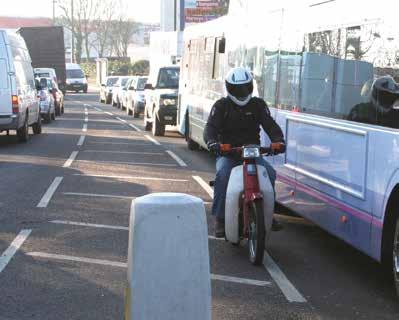
And, along with other motorcycle sector organisations, including the Motorcycle Industry Association (MCIA), the Motorcycle Action Group (MAG) and the National Young Riders Forum (NYRF), we have continued to push for default access for riders to the UK’s bus lanes, which included support for the Parliamentary petition. We have made it clear that the current DfT position on default bus lane access ignores existing research that shows positive or neutral safety effects for motorcyclists, and that the refusal to fully open up bus lanes to motorcycles appears to be part of a continuing a trend by government to suppress safety-focused policies for motorcyclists.
The Government Needs to Do More to Deliver on Motorcycling Priorities, including Improved Safety for Motorcyclists.
Still Waiting On...
Just over a year since the 2024 General Election and, after what felt like a positive start with the Government pledging to “Move fast and fix things,” delivery on a number of key motorcycling priorities appears to have taken a back seat to fine words and ethereal announcements about future policy improvements to come. It’s not just in respect of opening up universal bus lane access for motorcyclists (which would be a quick and instant win for Government in terms of improved motorcyclist safety) where exasperation is growing. Fifteen months into a new government,
In a four-wheeler dominated world, we need allies
and we are still awaiting news on the Government’s National Integrated Transport Strategy. Meanwhile, the promised “wide consultation” on a new Road Safety Strategy has failed to materialise.
Likewise, there is silence on what has happened to the muchneeded Review of Motorcycle Training, Testing and Licensing (although we are assured this is still under “active consideration” by Ministers). Plus, there has been no clarity on decarbonisation plans for the motorcycling sector, where the Government’s position remains frustratingly opaque.
In the meantime, KSI stats for motorcyclists continue to rise and a “disvirtuous circle of motorcycle safety” has become firmly entrenched, where negative behaviours and conditions on
the road continue to interact to make motorcyclists vulnerable. It’s a situation which in turn discourages government action to deliver a safer road environment for motorcyclists and hence the doom loop continues. The Government’s own motorcycle safety statistics clearly show there is much more to be done, particularly in terms of proper consideration and support for motorcycling in wider government transport policy, which is key if there is to be any real progress on improving road safety for motorcyclists.
What Next?
The Government has recently announced a major reset, which we are told will now move the Government from “fixing the foundations” to a “relentless focus on delivery.” New Ministerial appointments have also been announced to help shift the government machine from strategy to delivery. We must hope that we will now see some concrete progress in respect of delivering on motorcycling priorities – though it didn’t help that the latest ‘reset’ immediately plunged into irrelevance, as scandal engulfed the Government the same week as the new strategy was announced.
We will continue to engage proactively with Ministers and officials on the development of improved safety strategies, and we plan to take forward a number of other initiatives that we have been jointly working on, including an Action Plan on Motorcycle Theft and Motorcycle-Enabled Crime. This Plan will set out a detailed cross-sector strategy to be delivered in partnership with the Ministers, the Police, other law enforcement partners and industry, to tackle the growth in motorcycle theft, motorcyclerelated crime and wider anti-social behaviour; issues that remain of significant concern for both motorcyclists and the general public. The intention is to formally launch the Action Plan later in the year through the MCIA-chaired Motorcycle Crime Reduction Group. At the same time the NMC is working to develop a strategy with law enforcement and border control partners to tackle the growth in Counterfeit Motorcycle PPE which is increasingly being imported by rogue companies based overseas and which represents a real and growing risk to the safety of motorcyclists.
Additionally, we will continue to keep a close eye on the development of government policy around Connected and Autonomous Vehicles, which will clearly have a big impact on all road users over the coming years. The BMF and NMC have submitted a comprehensive response to the Government’s consultation on developing fundamental Safety Principles for Future Automated Vehicles, emphasizing that future innovation and design in respect of automated vehicles must not come at the risk of making the UK’s roads more dangerous for other road user groups, including mopeds and motorcycles.
2025 has been a busy year so far, but with lots more to be done. Our priority will be to continue to represent motorcycling at all levels of government to ensure greater awareness of the needs of motorcyclists and that this translates into a better deal for motorcycling for the future.
Anna Zee (BMF Director Political & Technical Services)
Craig Carey-Clinch (Executive Director of the NMC)
Paul Morgan CBE (Government Relations Executive)
G oi NG D o WN, D o WN, D o WN
Sales down, dealers closing, parking charges... MARK WILLIAMS is in sombre mood
I’ve previously commented (all right, moaned) about the undeniable fact that as motorcyclists, we are an ageing cohort who are not being replaced in sufficient numbers by younger riders to ensure the future of our little game. Having risen steadily over the past two decades, the average age of a UK motorcyclist is 54, and almost half of riders, e.g. the likes of yrs trly, and my sadly few remaining biker mates, are now over 60, and younger riders, denoted as those under 39, make up just 10% of the total.
It therefore comes as no surprise that bike sales are also in steady decline and as of September bike and scooter sales totaled 76,649 in the year to date (YTD), as opposed to 90,406 YTD September 2024, a fall of 15.2%. Worse still in terms of who’ll replace us old codgers, sales of the lower capacity machines that newcomers must learn on and then likely ride into their future are even lower: down by 19.4% in the case of 51-125cc models, and 20% for 126-500cc bikes. Only scooter sales actually rose during the last year, up 2.8% to 2,417, but I’ll bet that was due to the ongoing food and grocery delivery trade in the larger cities.
And as a consequence many bike shops are going out of business, or as British Dealer News puts it, “going down.” One of the biggest bankruptcies this year was M&P based in South Wales, first closing its Cardiff operation and jettisoning its Harley and Husqvarna franchises earlier this year, then its Swansea site in September following losses estimated at over £4 million. I used to buy spares and accessories from M&P but that business, too, has moved relentlessly to fleaBay and Chinese companies who supply direct, so I shall miss them.
Dealers specialising in used models are faring better but those tied to the major manufacturers who must often spend hundreds of thousands on franchise branding and then exist on waferthin margins, servicing and maybe clothing sales are steadily in decline. Yamaha dealers have gone down most of all this past year although big ticket brands such as Ducati, Triumph and even BMW are seeing their dealerships contracting – Pidcocks in Nottinghamshire perhaps being most notable, “due to rising operational costs and a decline in consumer demand.”
Where it will all end is, frankly, anybody’s guess. But with an ongoing cost of living crisis, rising business taxation and wages and (with a few notable exceptions) the high price tags of new bikes which are being produced in smaller and smaller numbers, I can’t see how the current business model is sustainable.
Unsustainable is also how I personally feel about riding nowadays in London, where for decades I enjoyed racing around the capital on a variety of bikes I owned including a Yamaha XS-2, Moto Guzzi Lario, Laverda Jota, BMW K75S and yes, I’ll admit it, Suzuki and Yamaha 125cc scooters… to say nothing of the many Bike, WhichBike? and MCi magazine test bikes. Even in the early noughties, I reckoned I could get anywhere I wanted to go in about 30 mins… and in the late ‘60s me and my mates used to race each other from our Islington flats to Earls Court tube station and back – the proof courtesy of the ticket machines – of a Saturday afternoon, just for the hell of it.
Such behaviour would not be tolerated these days even if speed cameras and the proliferation of traffic lights hadn’t made it impossible, but what is truly onerous is the cost of parking a bike in various London boroughs. Camden charges £2.60/day and Hackney recently settled out of court when their proposed £10/day charge was legally challenged by the BMF and Save London Motorcycling, although the exact outcome has yet to be announced. Others, like Lambeth and Harrow, charge nothing but some were waiting for the Hackney decision before they implemented their own charges. As ever, we bikers are generally viewed as an irritating and vulnerable minority but by supporting SLM and contributing to their fighting fund (https://sites.google. com/view/savelondonmotorcycling/main) and as a member of the BMF, you can help stave off the day when riding in London becomes no fun and almost impossible, when that applies to what was once the world’s home of motorcycling.
...connected by the love of bikes.
A Roaring Success
Education
Charity
Training Everyone
Discussions
D E T C E N N O C Community Opinions
bmF Connected, held over the scorching hot weekend of 12th–13th July to celebrate the bmF’s 65th anniversary, was an undeniable hit. bringing together enthusiasts, traders, trainers, motorcycling charities and support groups, road safety partners and a range of expert speakers, it stretched over two unforgettable days. With temperatures soaring to the highest of the year, the heat did nothing to deter the excitement and energy that pulsed through the event at mallory Park, the iconic motor sport venue in the heart of Leicestershire – it’s also the current home of the bmF.
Yoga Hit
Those who attended ranged from seasoned bikers to newcomers and families, all drawn by a shared passion for and connection to motorcycling. A wide range of activities and attractions kept spirits high, including the standout hit — biker yoga — led by ex-international sidecar passenger Kate Harrington, which showcased this innovative and entertaining way to stretch out after long rides and seamlessly connect body, soul and bike. Seasoned bikers and newcomers alike gathered on the Sunday morning, stretched out on the Mallory Park grass to practice their yoga skills, improving core strength and coordination and releasing muscle tension. All to the sound of Louis Armstrong’s ‘Wonderful World’ drifting over the Mallory Park lake –unforgettable!
Talks, Demos, workshops...
Of course, there were plenty of other things going on, and those attending experienced a full and varied programme of bike displays, informative expert talks, riding demos, workshops (including a fully booked Bikerdown Course organised by Leicestershire Fire & Rescue), off-road trails and trials, competitions, spot prizes, have-ago sessions, film-shows and club stands. The BMF and its key partner the National Motorcyclists Council (NMC) showed how they work with government Ministers and officials, and with road safety organisations, to represent riders’ interests at local,
national and European level. Key to this is to promote greater awareness of the benefits of motorcycling as an accessible, affordable, cleaner and greener transport option. We need to ensure that the needs of 1.4 million riders translate into effective safety improvements for motorcyclists through government transport policy and highway design.
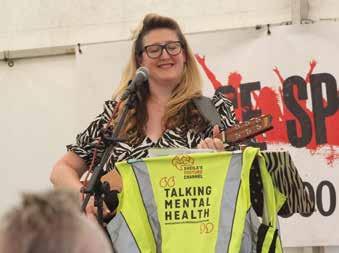
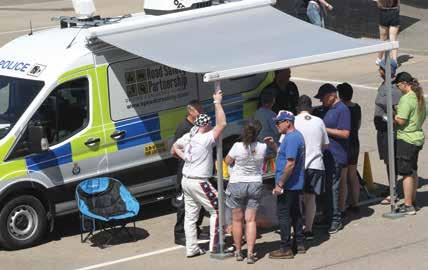
Additionally, there was a range of traders selling motorcycle equipment and spares, information stands offering advice on motorcycle security and tyre safety, and charities such as Mental Health Motorbike and Make Your M.A.R.K. (Motorbike Acts of Random Kindness), were on hand to ensure the success of this year’s event. A strong presence from road safety organisations, including Leicestershire Police with their vehicles on display promoting the BIKESAFE initiative, underlined the BMF’s commitment to partnership, working across the road
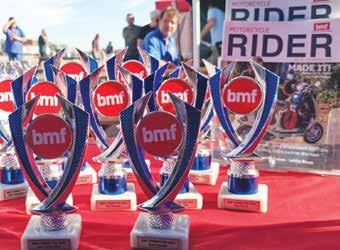
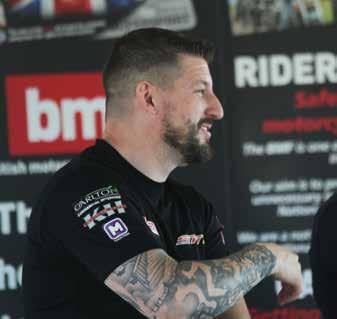
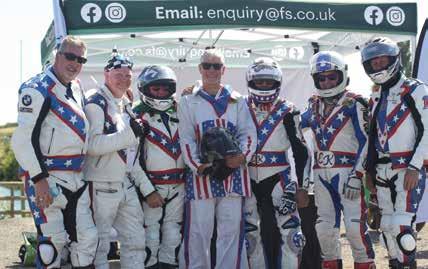
Volunteers made the event, but there were also awards, music and a focus on mental health. Leicestershire Police brought their BIKESAFE initiative.
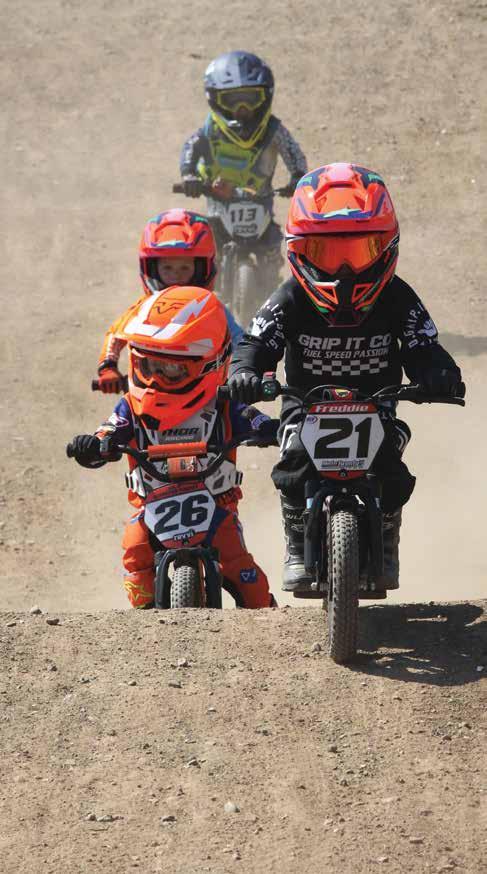
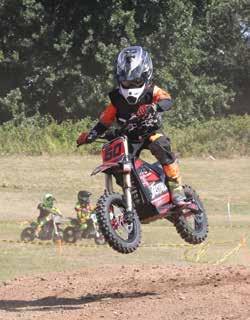
Try-a-bike sessions (for all ages) proved extremely popular, with tiny bikes getting big air… Talks, demos and workshops made for a packed weekend.
safety community to improve the safety of motorcyclists on the UK’s roads. Through the promotion of connections across the motorcycling community, underscored by a celebration of motorcycling history and culture, BMF Connected 2025 hit all the right notes. Feedback on the event was overwhelmingly positive, and it was clear from talking to those who attended that BMF Connected has already established itself as a key fixture in the UK biking calendar. And there’s good news for those who couldn’t make it this year – BMF Connected will return next year, promising even more excitement, learning, and connection across the motorcycling family for riders of all kinds. Keep your engines running – we look forward to seeing you at BMF Connected 2026.
BMF Photo Comp
Thanks to everyone who sent in photos for our Autumn Photo Comp – as ever, sorry we didn’t have room for them all.
But do keep sending your pictures in. The subject can be anything related to bikes – twisty roads, fantastic scenery, your local bike night, anything. The next Photo Comp will be in the Spring 2026 issue of Motorcycle RIDER, featuring the best of the runners-up as well as the overall winner.
Send your photos to: editor@bmf.co.uk
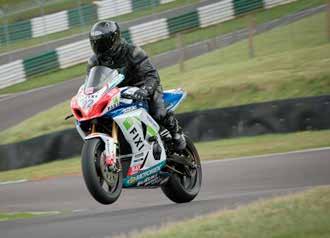
Left: Richard Green started track riding at 59 and bought an exAlex Lowes WSB promo bike from 2014. “Loving life! Just had my 60th birthday last week and looking forward to a lot more track days next year.”
Right: Travel author Sam Manicom sent this one in.
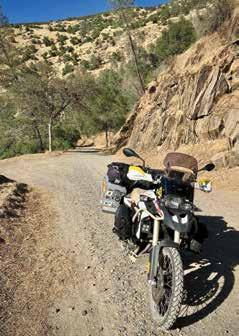
“Great camping spot by the Merced river – I went to sleep to the sounds of the rapids and crickets.”
✶ wINNER ✶
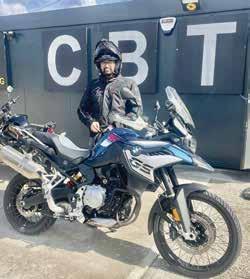
Above: “Motorcycling has become more than transport; it’s a way of life,” writes Anurag Anurag since passing CBT and gaining his full licence. “Now, I ride most days on my BMW GS850 Trophy— and every ride feels like freedom.”
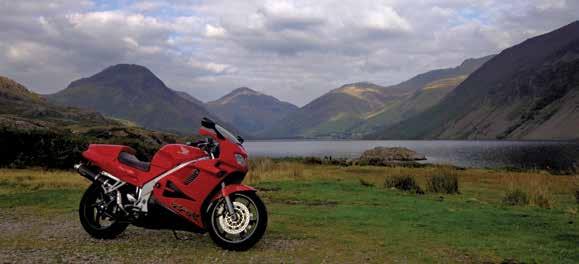
Paul Elverstone’s VFR, Wast Water, Lake District.
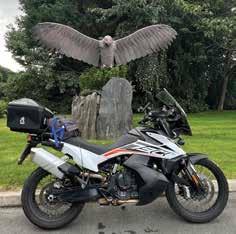
Above: Emma’ Street’s KTM took her to some wonderful places in Wales this year, including the Dyfi Osprey Project.
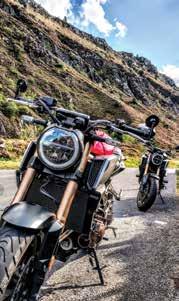
Right: Gerallt Davies sent a whole selection of good shots – here’s his Honda CB650 (plus a mate’s) on the A487 Machllyneth to Dolgellau road.
Motorcycle Design in crisis?
JohN KeoGh is one of the UK’s top bike designers, thinks we have a big problem– what’s his answer?
Motorcycle design is going through a bit of a crisis at the moment. While we saw some localised increases in two-wheeled usage during Covid, overall sales have only just recovered to the levels before the pandemic hit.
What we haven’t seen is a wholesale adoption of electric bikes. there’s a good reason for that – they don’t offer that much benefit over conventional petrol-engined two-wheelers and they don’t tap into the unique experience that motorcycling offers, which includes all the vicissitudes of a recalcitrant, often vibratory power plant.
How does that effect design? Well unlike with cars, a motorcycle’s design is fundamentally influenced by its motive power. How do you design a motorcycle? The first things you look at are what do you want it to do and how is it going to be powered.
As we recognised global warming and the finite limits of fossil-based power in the 2000s, manufacturers and particularly governments jumped on the alleged panacea of turning everyday vehicles electric. But we’re now beginning to see the limitations of that and while a number of bikes are now battery-electric that’s not reflected in either mass sales or pushing a new design ethic. In fact, the crisis I mentioned is three-fold: bikes aren’t really moving on in terms of design and functionality because a look at the current market – both in the West and in the huge Asian sectors – reveals three categories of machine:
1. Adventure Bikes. The bestsellers in the West – big, heavy, go-everywhere behemoths, not dissimilar to the car trend for SUVs.
2. Retro. Many customers want their bikes to resemble those of yore: open-engined, classical in looks but without the oil leaks and rubbish brakes!
3. Electric. Pierre Terblanche (of Ducati fame) describes their typical design as “yet another large suitcase on wheels.”
What’s Wrong with Modern Bikes
Why is this a design crisis? Because none of these categories advance the aesthetics nor, more importantly, the functionality of bikes. If anything, they’re picking up the bad habits of their fourwheeled counterparts and repeating styling cliches, becoming festooned with unnecessary (often mandated) electronic aids and complications, but without any corresponding advances
Opposite page:
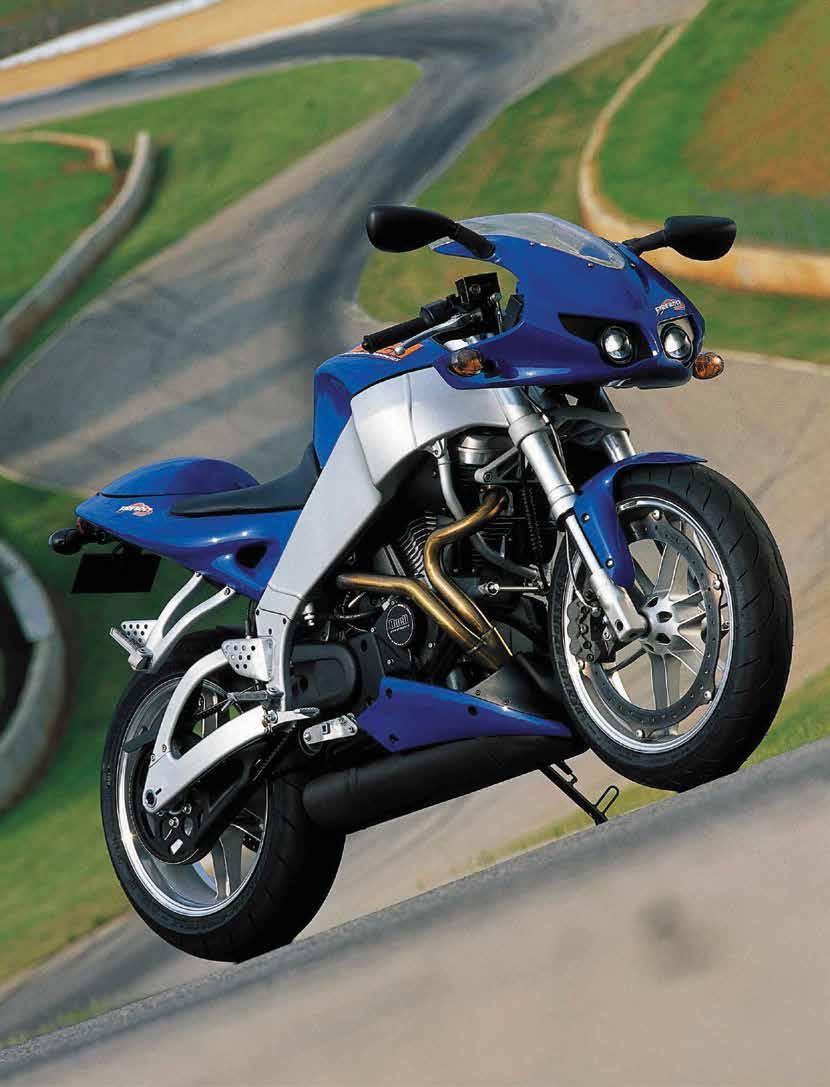
One of John’s most successful designs, Buell’s Firebolt
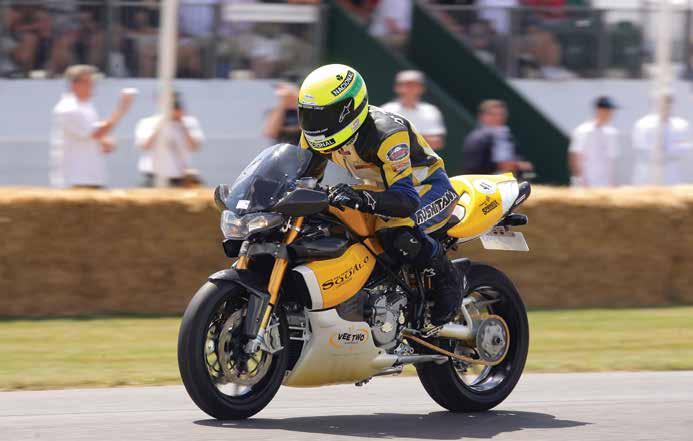
Below: John Keogh on one of his other bikes, the VeeTwo supercharged Super Squalo, at the Goodwood Festival of Speed.
in comfort, luggage capacity or usability. Yes, there are a lot of competent mid-to-heavyweight adventure bikes now but they’re not doing the job any differently than they were 20 years ago. In fact, if anything they’ve got even heavier and less efficient. When I jump on my bike I don’t want to have to spend ten minutes going through endless submenus in order to reset the traction control and anti-wheelie mode!
If we’re going to push the boundaries of design and put together something altogether more innovative, what should a new motorcycle be powered by and look like?
Let’s turn to the other main design factor. A motorcycle has to fit humans and be appropriate to what they want to do with it. This
Art & Engineering
So where am I coming from with all this? I started scribbling motorcycles 35 years ago when I got bored with designing cars on my Transport Design course, wanting to get more involved with the engineering and mechanisms of vehicles which had a direct effect on their appearance, rather than drawing a variety of ‘covering boxes.’ I’d just learned to ride and felt that bikes were far more interesting to both use and design, and I knew I didn’t want to spend my time designing car mirrors!
I was lucky to combine both art studies at Switzerland’s European Art Centre with detailed mechanical engineering at Coventry University to get the perfect background for motorcycle and racecar design, where the emphasis is on performance and technical requirements rather than just ‘styling.’ After graduating from Coventry I joined Triumph and got a top grounding in the development of new models, working on the Daytona, Speed Triple, Bonneville and an early version of the Rocket III.
However, I decided I’d rather be my own boss so set up John Keogh Design in 1996 and have worked as a jobbing freelancer ever since, mainly on motorbikes but also for Lola, Ricardo and other car companies as a racecar designer. This came about because I love racing – it's the one way to prove your design works better than any other, via the stopwatch or through winning.
is where a lot of the larger two-wheelers get it wrong with their size and weight. How can an average human user be expected to manoeuvre a bike weighing over 230kg (even without luggage) such as the BMW R1300GS? Yes, these are superb machines and once on the move disguise their weight well but personally I’d rather tour on a sports bike and suffer a lack of luggage than on a larger and more commodious adventurer. The latter restricts itself ergonomically to taller, generally male customers – why would a manufacturer not offer better products accessible to a much bigger slice of the population? So designs should address these fundamental failings.
What should a new motorcycle look like? Well, I would say this is all pointing to the continued use of petrol engines. And let’s face it, that’s often where the character of a particular bike comes from. The change would be to use it in a more efficient package, either with lightweight construction or improved aerodynamics, preferably both.
Right, that’s enough ranting, and you’ll have noticed that I haven’t proposed any solutions to these criticisms, but that’s what a design programme is for – to propose new products that improve any given object, structure or system. In any case, this is ongoing and anyway AI is going to fix it for us! Seriously, AI is a fascinating new tool, much misunderstood and potentially a great aid to improving designs, but that’s another story.
This got me into aerodynamics, not least because I was never any good at styling for styling’s sake. The shapes I was drawing needed to have a reason, whether for the engineering structure or because they could cut through the air better. My designs are also characterised by softer, more organic shapes, because those are generally more aerodynamic and are actually better structurally, as we can now see with the help of topology-optimised 3D printing. Such shapes are much harder to make and also more difficult to construct in CAD (Computer Aided Design) so I was always happier making clay models and avoiding the limitations of the early CAD programmes – that means I’m a dinosaur who still draws rounded shapes on paper. The newest trend in both car and bike styling, especial for electric models, is a reversion to harder edges and sharp lines, but how long this will last is debatable.
The two biggest influences on my design career were the Swiss-German maverick designer Luigi Colani and the incredible Spanish naturalistic architect Antoni Gaudi. The appeal of this groundbreaking pair was their use of organic forms. With a motorcycle – a machine that is designed to be sat on if not actually become at one with – it would seem appropriate to make the main body match that of the human rider. Kind of the opposite to an Orange County chopper! This also makes for smoother air flow, although as we can see from a machine like the Kawasaki Ninja
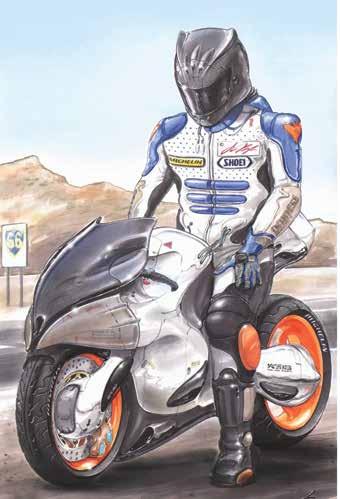
Above: ‘Bike of the future?’ Maybe.
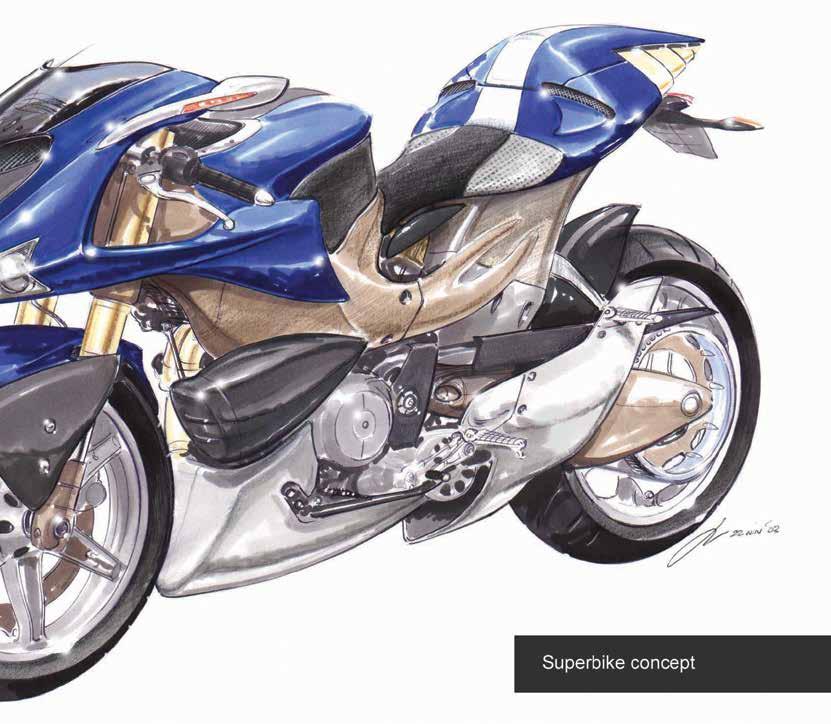
Right: Typical sports bike proposal. This would be one of a number of renderings done for a manufacturer to a specific brief to show how the bike might look for design, engineering and marketing departments.
H2R, you can always use brute power (320bhp in this case) to blast a hole through the air and rely on its general low crosssectional area for aerodynamic efficiency, rather than loads of sculpted bodywork.
Is AI the Answer?
My motorcycle designs came to a head with a Moto2 bike I penned with my partner Paul Taylor in US firm Taylormade Racing. This was my ‘Britten’: all-carbon monocoque (still unique), funny front-end, ducted radiator in the rear, ultra slim and aerodynamic. We spent over £100,000 building the race prototype which culminated in a wild card entry in the 2014 British Grand Prix at Silverstone with test rider Jeremy McWilliams.
It was no fairy tale debut though, more of a near disaster. We were off the pace, had no experience on the Dunlop control tyre and the bike spat Jeremy off under heavy braking because of the way the front swingarm was reacting. Really it needed another
£100k of development, but we had already missed the window of opportunity to offer a radically different type of race bike. I’m glad we tried it though, and it’s still the only full carbon monocoque chassis bike in existence. It’s now in the Top Mountain Motorcycle Museum in Austria.
I do think the latest CAD-Virtual Reality sculpting software and particularly AI offer ancient crocks like me a pathway to leapfrog into modern design for manufacturing. All of these are just tools though, and too easily manufacturers lose sight of the fundamentals of designing, which is to make a product that their customers will embrace. That’s why I still like sketching my idea of a new motorcycle with pencil and paper. After all, what we all love about motorcycling are the machines, and the freedom and fun of using them despite the best efforts of the designers!
testing Times
IAN KERR (with help from the DVSA) charts how the driving licence and test regime has changed in 122 years
It’s interesting to see how governments have altered motorcycling and motoring by the licensing of riders and drivers. But I had an overwhelming impression when I reached the end of this timeline – that motorcyclists have endured more rules and regulations than car drivers over the years, making it harder and harder to get a motorcycle licence!
Just to put things into perspective, in 1921 there were only one million drivers in Britain. By 1939 this figure had risen to three million, but it was only during the 1960s, when cars became more affordable, that motoring really took off. In 1973 the number of drivers had risen to about 20 million and a centralised computerbased licensing system was brought in to cope with the huge increase in demand for both driver and vehicle licences.
1903 First Driving licences introduced in Britain by the Motor Car Act – intended purely as a means of identifying vehicles and their drivers. All motor vehicles had to be registered, display registration marks and be licensed annually.
1920 Intention to launch a compulsory and uniform code of signals for all vehicles was announced. Apparently drivers in London had evolved a system for signalling their intentions to turn right or stop, using their arm – seen to be of such benefit that it was standardised as a code of behaviour across the country.
1923 A booklet approved by the Home Office (cost, 1 penny) was
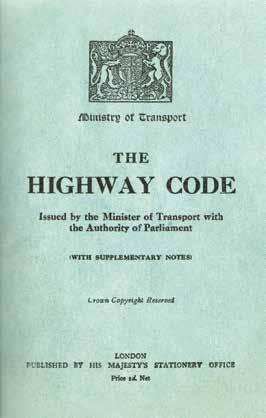
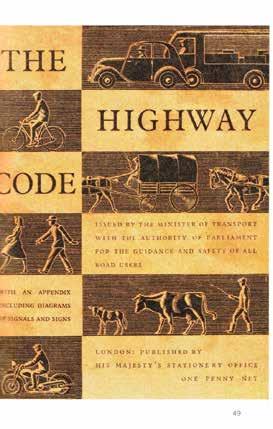
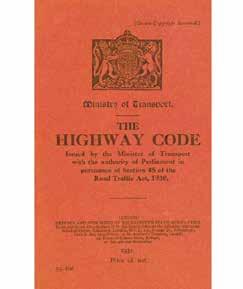
published by HMSO – Traffic Signals to be used by the Police and Drivers of Vehicles. Effectively the first Highway Code, but it didn’t use that title until 1931.
1930 Road Traffic Act paved the way for some of the first major changes on our roads. Controversially, all speed limits abolished for cars and motorcycles. Other regulations were introduced covering endorsements and fitness declaration and a licensing system for public service vehicles (PSV). One licence covered both car and motorcycle use.
1931 First edition of the Highway Code was published, including advice for motorcycle riders.
1934 In response to growing casualties (especially among pedestrians) Road Traffic Act 1934 reverses the abolition of speed limits, introducing a blanket 30mph limit in urban areas. Belisha Beacon pedestrian crossings launched, there was stronger insurance legislation, and driving/riding tests to be made compulsory in 1935.
1935 Voluntary driver testing introduced in March, to avoid a rush of candidates when the test became compulsory on 1st June for all drivers and riders who started driving on or after 1st April 1934. Around 246,000 candidates applied and the pass rate was 63% (46% in 2009). Those passing the motorcycling test did not need to take another test to drive a car. For the motorcycle test, the examiner stood somewhere they could observe the motorcyclist’s riding such as beside a common or in a city square. In the case of sidecar outfits or three-wheelers, the examiner might have accompanied the rider. Anyone buying a driving licence had to display ‘L’ plates until they had passed the test.
1937 Speedometers, and safety glass in windscreens, were made compulsory on this year.
1939 Three million drivers on our roads. Driving tests were suspended on 2nd September for the duration of WWII. During the war, examiners were redeployed to traffic duties and supervision of fuel rationing.
1946 Driving tests resumed on 1st November.
1947 The Motor Vehicles (Driving Licences) Regulations placed motorcyclists in their own licence group, but testing remained virtually unchanged until the 1960s.
1950 Pass rate for the driving test was 50%.
1951 Zebra crossings introduced.
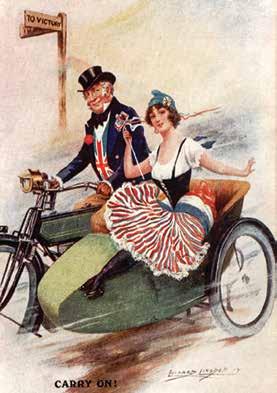
Early motorcycling provided a rich seam for cartoonists, including John Bull escorting Madame La France to Victory
1956 Test fee doubled from 10 shillings (50p) to £1 on 19th October. Testing was suspended from 24th November during the Suez Crisis. Learners were allowed to drive unaccompanied while examiners helped to administer petrol rations.
1957 Testing resumed on 15th April.
1958 From 1st March, provisional licences valid for six months. Britain’s first motorway, the M6 Preston bypass, was opened in December.
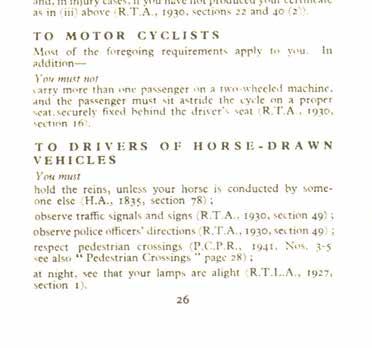
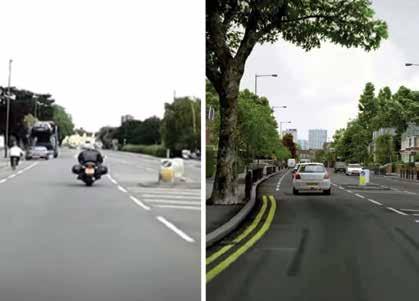
Right: “Motor Cyclists must not carry more than one passenger…” - early Highway Code stipulation Below: Hazard awareness prompts in the theory test.
1959 A new examiner training facility was opened at Stanmore training school, near Heathrow. Until then, examiners were trained on the job. M1 opened on 2nd November, with no speed limit, central reservation, crash barriers, or lighting!
1961 250cc learner law introduced, a response to the high number of motorcycling fatalities.
1963 Road Traffic Act 1962 permitted riders to ride motorcycles of more than 250cc after passing their test. Mopeds given their own vehicle group for driving test purposes.
1965 Centralised licensing system was set up at the new Driver and Vehicle Licensing Centre (DVLC) in Swansea, taking over licence issue from County/Borough councils. Medical standard for driving test eyesight changed – candidates had to read a number plate from 67 feet.
1967 Film and TV ‘shorts’ promoted safe driving, and new drinkdrive laws came into force on 8th October – 80mg alcohol/100ml blood.
1970 All driving instructors now had to be officially registered. A total of 3500 people are prosecuted for driving on a forged licence or wrongfully attempting to obtain a licence.
1972 Minimum age for riders of over 50cc bikes increased from 16 to 17. Demand for driving tests in general rises by 20% in 1972, and a further 15% in the following year.
1973 Safety helmets made compulsory for moped and motorcycle riders. Computerised driving licences issued from 1st March, with green paper licences replacing the old-style red booklets.
1975 Candidates no longer have to demonstrate arm signals in the driving test.
1976 Full licences now valid until the age of 70.
1977 Mopeds restricted to 30mph.
1981 Big changes to the bike test: learners restricted to 125s and provisional motorcycling licence entitlement to two years. New two-part test includes CBT-style basics, followed by on-road riding test.
1989 New accompanied motorcycle test introduced. Prompted by alarming accident figures. The old-style ‘Part 2’ motorcycle test, where the examiner stood by the roadside, was replaced by the new, more demanding ‘pursuit test’. The examiner now follows the candidate on a motorcycle and maintains radio contact during the test.
1990 Provisional licence holders prevented from carrying pillion passengers. CBT introduced for all learner riders, comprising five elements including a minimum two-hour accompanied road ride. The course was designed to ensure new riders had a basic level of competence before they were allowed to ride on public roads, displaying L plates and continuing the learning process. From 1st May, examiners gave candidates a brief explanation of faults committed during the test, plus advice on areas for improvement.
modules: planned approach to riding; defensive riding; progress and use of speed; overtaking and filtering; bends and corners; slow control; developing correct rider attitude.
2007 The register of post-test motorcycle training introduced in February. The number of questions in the theory test changed from 35 to 50 on 3rd, and pass rate increased to 43 out of 50. New edition of the Highway Code was published.
2009 New two-part modular motorcycle test introduced on 27th April, enabling the UK to comply with the EU Second Directive requiring new and more demanding manoeuvres to be tested: module 1 contains the specified manoeuvres element of the test which is conducted off-road, including the rider’s ability to control their machine safely, avoidance and emergency stop exercises. Module 2 includes an eyesight test and 30 minutes of on-road riding, assessing the rider’s ability to safely interact with other road users.
1996 Separate written theory test was introduced on 1st July, replacing questions asked about the Highway Code during the driving test. Theory test pass mark raised from 26/35 to 30/35 on 1st October.
1997 Direct Access Scheme (DAS) for new riders 21 and over, riding bigger bikes. Those under 21 restricted to 125s whilst learning, then to 25Kw (33bhp) machines for two years, then can ride any bike. From 1st June a new rider/driver given six or more penalty points during the first two years of driving loses their licence and must retake both the theory and practical driving test before being allowed back on the roads. From 29th September, waiting times between tests were reintroduced for unsuccessful candidates: minimum wait of 10 days between tests.
1999 Revised Highway Code published in February, with current advice and up-to-date legislation for all road users. Photo card licences introduced from 1st July for both first time issues and licence renewals.
2000 Touch-screen theory test introduced on 4th January.
2001 Drivers obtaining a full car licence from 1st February now had to pass CBT before being allowed to ride a moped. Various changes to motorcycle training regulations introduced, including CBT certificate now only valid for two years (down from three).
Candidates could book their theory test via the internet from 19th December.
2002 Hazard perception element introduced into the car and motorcycle theory test, using video clips to test candidates’ awareness of hazards on the road.
2003 ‘Show me’ and ‘tell me’ vehicle safety questions added to the beginning of the driving test on 1st September. Candidates could book their practical test on the internet from 24th October.
2006 Enhanced rider scheme for motorcyclists launched in November – advanced rider training from DVSA, with seven
2010 Independent driving became part of the practical driving test on 4th October. Candidates had to drive for 10 minutes making their own decisions.
2011 New case study introduced into the theory test in September.
2013 More new rules for motorcyclists were introduced on 19th January. A1 licence up to 125cc/14.6bhp. A2 licence now allows up to 46.6bhp, but new riders have to be 19 to take it. Also new rules on size of bike riders take A1/A2 tests on. Riders aged 21 or over can still take Direct Access to unlimited bikes.
2014 DSA and the Vehicle and Operator Services Agency (VOSA) merged to create the DVSA.
2015 New computer clips replace old filmed clips in the hazard perception part of the theory test on 12th January.
2017 Car tests changed to include following directions from a sat nav, testing different manoeuvres and answering a ‘show me’ safety question while driving.
2018 On 4th June 2018, car learners allowed on motorways for the first time, but have to be with an ADI instructor and driving a car with dual controls.
2020 EU flag no longer appears on new licences.
2021 Driving licence style changes – now ‘UK’ instead of ‘GB.’ where we are Now Licence classes are as follows:
AM (mopeds up to 28mph) – 16 years min, need CBT, theory and practical test on a two-wheeled moped.
A1 (motorcycle up to 11Kw/125cc) – 17 years min, need CBT, theory and practical tests
A2 (motorcycle up to 35Kw) – 19 years min, need either theory and practical tests (Direct Access) or practical test only plus two years experience on A1 licence (Progressive Access).
A (unrestricted) – 24 years min, need CBT, theory and practical tests (Direct Access) or 21 years min, practical test only plus two years experience on A2 licence (Progressive Access).
CBT brought in a separate off-road component to the test
Enthusiast or Idiot?
ANDY REYNOLDS (that’s his choice of headline) loved his racing – but was it worth it?
Photos: Andy Reynolds and Russell Lee
We all have regrets – in 1976 i sold a Vincent Rapide for £800. but i’ve also raced in 23 manx Grand Prix and tt events, winning 19 replicas, having competed in 39 races. i only failed to finish five times, so my race preparation can’t have been too bad. Never fell off on the island either and lapped at over 100mph on a classic bike. Now aged 77, i’m Chief motorcycle Scrutineer at two Goodwood race meetings – the members’ meeting and the Revival –plus was recently promoted to deputy Chief technical officer for the Classic Racing motorcycle Club.
Things Change...
But nothing comes free does it? I’ve a shoulder held up by a Kevlar loop, that doesn’t function well and constantly aches, plus a damaged heel that a doctor, seeing an X-ray, asked of me, “What the hell have you done to that?” Both injuries were thanks to other idiot racers causing me to crash at Brands Hatch.
Like many bike enthusiasts of my age I started aged 16 as I needed transport to get to work. I was a toolmaker apprentice and after a brief encounter with a Lambretta bought a BSA Shooting Star for £68. I ruined it by transforming it to a cafe racer, as was the fashion then, and after exploding it on the M1 sold it to my cousin, who then wrote it off. In 1969 at 21 I got married
to my childhood sweetheart (still together, with three wonderful daughters and eight grandkids), but that didn’t spell the end of my motorcycling. A pal who was a Velocette nut took me down the same route and in 1970 I bought a 1936 350cc KTS for £15 and also a KSS sprint bike on which I competed at Duxford and Santa Pod. Even won my class once at Martlesham – old bikes were so cheap in those days.
By 1976 I’d become a production foreman for a plastics company in Dunstable, with two daughters and another on the way. It was time for a change of direction, so I joined the police. We had struggled to pay the mortgage due to Ted Heath’s threeday week and by joining up got a police house supplied.
Above: Early days – Santa Pod in 1971, and the Velocette-based Cammilot sprinter
Left: Something different, riding a Paton at The Bungalow in 2008 (Russell Lee)
Below: Aermacchi 350 provided good club racing experience in 1977/78
Bottom: IOM highspot – on the MGP podium in 2009 (Andy is rider on the left, Ryan Farquhar centre, Wattie Brown on right)
Above: Trying hard on one of the Seeleys, 1995 at Ballacrye
Below: Andy built the Manx Norton replica himself, and put it to good use (Russell Lee)
I was also desperate to go road racing and just before moving house I became the third owner of a lovely 350cc Aermacchi. Perhaps my wife should have stepped in at that point? (I told her it would be fun!) I’d bought a Vincent Rapide a couple of years previously for £600 and I sold it to an Australian (that £800 deal) and that helped fund the race bike.
I raced the ‘Macchi at club meetings in 1977 and ’78 – BMCRC and Southern 67 meetings mainly. Midfield finishes and at that time I only weighed 10 stone, which helped. In early July Alan Cathcart, who also raced an Aermacchi, suggested I had enough points on my race licence to get an entry for the Manx Grand Prix newcomers race. I just got my entry in on time and that was the start of something that came to dominate my life. Francis Beart had prepared the motor for me and although practice week was troublesome I managed to complete the three laps. Our race was
run in very poor, rainy conditions and I finished 20th from 26 finishers, third of the six Aermacchis entered. The others were all Yamahas I think.
Velo Fellow
House prices were escalating so I had to sell the race bike and buy a home again. I fiddled with Velocettes, rebuilding a MK 1 KSS and buying a Venom Clubman road bike. By now I was a traffic officer and driving fast cars and BMW bikes for a living, but I still missed the racing. Two pals dabbled with buying and selling old motorcycles and one of them suggested that they could find enough parts to build a Velo race bike, though I would have to build it. We enlisted Velocette dealer Geoff Dodkin to build the motor and he generously supplied numerous parts to help us put together a cracking machine.
It was Geoff’s mechanic and quick racer, Nick Payton who actually built the motor and I spent a couple of years chasing him around various race circuits. The Island was calling though and a decision was made to enter the Manx GP Classic in 1985. Now then, listen carefully. Never consider racing a Velocette around the TT course. We spent the whole of practice week stripping and fixing the blooming thing. Geoff had supplied us with a kit of spare parts on a sale or return basis and I think we used everything. I became a clutch and GP carb expert, and boy was I tired at the end of the week. I did finish the race though, in 20th place, so some reward was forthcoming.
At the end of that season, I wrecked the engine at the end of the Snetterton straight when the exhaust valve found its way into the exhaust pipe! We built another squish motor, but it wasn’t a great success and at the end of 1986 the racer was sold together with a hoard of spare parts.
I then spent a year rebuilding a Lotus Elan Sprint, which I had bought using an inheritance from an uncle, though it turned out to have a rusty chassis. My wife Shelagh hated it as HGVs towered over the tiny Lotus, and I was tempted to drive it too fast. At one point it was insured for £20,000 but prices suddenly fell, and I just about got my money back after selling it to an enthusiast in Japan.
Two Seeleys
My close pal Pete Clements and I fancied building a replica 500cc Seeley Matchless but were short of the necessary funds. We spent a couple of years buying and selling bikes and eventually thought we had enough to go ahead. All the necessary parts had just become available and so we went on a buying spree, using a wedge of cash from Pete while I took out a bank loan. I sometimes wonder how I stayed married...
A happy winter was spent building the bike and utilising my engineering skills to make various small parts – engine plates, spacers, washers etc. For a couple of years, I learned what a real classic race bike could do. I raced every couple of weeks with a small amount of sponsorship from the Police Motor Club and other friends – a pair of tyres here, a gallon of Castrol R there, it all helped. I have used and abused all of my friends for many years and owe them so much. We entered the 1990 Classic MGP and after another troublesome practice week I finished the race about two-thirds down the order. Our motor had been very poorly built by a known engineer, so I approached John Goodall whilst in the Island and he agreed to work on our motor in the future.
John was a wonderful racer and engineer, and he looked after my engines for the next ten years. Sadly, Pete died in 1991 as a result of hospital negligence following him falling off his bike coming home from a Sunday ride out. His widow kindly let me keep his part of the bike, and it’s true that motorcycles can cause great sadness as well as provide great fun. Life went on and I began to improve my riding while John enhanced the motor’s performance. I abandoned road riding (for a few years) and having sold my Velocettes, built another Seeley, this time a 350cc Seeley AJS.
Time to Stop
I spent the next few years racing regularly and competing at the MGP plus numerous Continental meetings. Six years running I raced at the Dutch TT with a best result of 5th on the 350. In 1995 I won my first MGP replica, a landmark in my life. In 2003 and 2004 I competed in the Lightweight races at the TT, finishing in both but suffering some mechanical gremlins which sadly prevented good results. In 2007 I built myself a replica 500cc Manx Norton after selling both my Seeleys. I was already racing my pal Bob Johnson’s Honda K4 and I had some good results
Left: On the replica Manx at Snetterton, looking serious (Russell Lee)
Below: Andy has written up his racing life –see below
both on the Continent and in the MGP on that too.
My Island racing career ended in 2009 when, aged 61, I finished on the podium of the Senior Classic race in 3rd position. After the race, Manx Norton guru Andy Molnar gave me some sage advice, something like, “This might be a good time to stop racing – you’re still alive and unlikely to win.” I had a wander around the paddock in the evening twilight and decided he was right. I’d lapped at over 100mph the year before and the owner of the Paton that I was now racing agreed that we had achieved all that we wanted.
I still had the Manx and raced that quite successfully with the Lansdowne Classic Series but the final end came in 2016 when the blood condition I had worsened, and that was it. Finito. I’ve got a form of blood cancer and nearly died a couple of years ago but thanks to a brilliant consultant and some vastly expensive drugs I feel fine and can operate ‘almost’ normally. Everyone of my age seems to have some form of medical issue, but at least I still have my own knees, hips and 50% of my hearing! So, I had to stop racing, but went on to scrutineering instead, and that’s where I am today.
Was it all worth it? Well, for the money saved by not racing I could have had a bigger house, more cash in the bank and more foreign holidays...
No thanks, I loved every minute.
Buy the Book
If you want the full story, read Andy’s book: Racing Classic Motorcycles – First you have to Finish. Veloce Publishing. Also available on Amazon.
ISBN 978-1-787114-81-4
I T wON ’ T S TART !
Winter’s almost here – DAN SAGER on how to avoid a flat battery
Most of us will recognise that sinking feeling when you press the starter button on your motorcycle and nothing happens (apart, perhaps, from some clicking and whirring noises from the engine, and swearing from you).
I asked the battery saving experts at OptiMate why batteries go flat, how to spot the warning signs and, most importantly, how to avoid the situation in the first place.
Acid Trips
With a few exceptions, the vast majority of starter batteries fitted to motorcycles use lead acid technology. There are six cells inside the battery, each containing lead plates and electrolyte, which is a solution of sulphuric acid and distilled water. The electrolyte reacts with the lead to create electricity.
Unlike old school wet cell batteries, which needed topping up with distilled water and recharging regularly, modern Gel and AGM units are sealed. They are often described as ‘maintenance free’ ¬– but that isn’t strictly true. All batteries like to be fully charged all the time, to keep the chemicals inside the cells ‘buzzing.’
Inactivity is the enemy of all batteries. Every time you ride your bike, the alternator recharges the battery. If your motorcycle is parked for extended periods (e.g. over winter), the recharging that keeps the chemicals ‘buzzing’ stops. Add age into the equation,
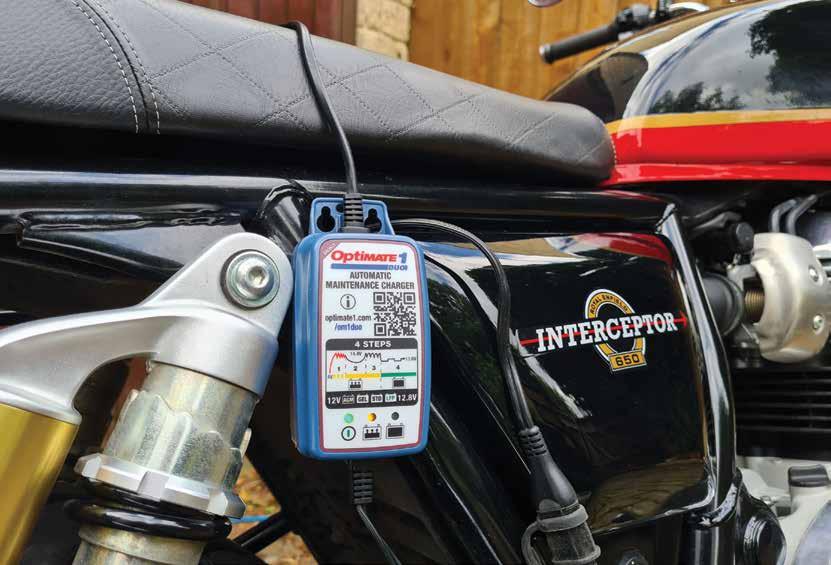
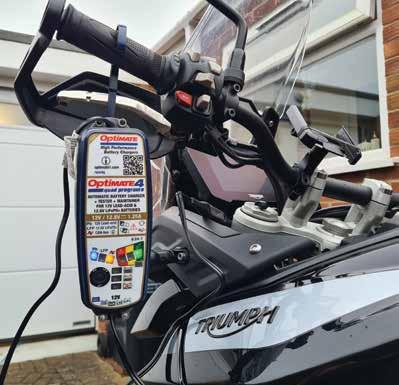
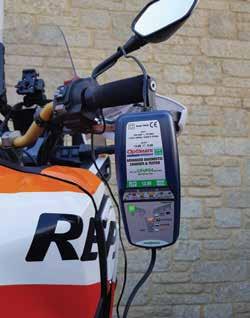
Above: Something like an Optimate automatic charger will keep the battery topped-up if the bike is left unused for a while
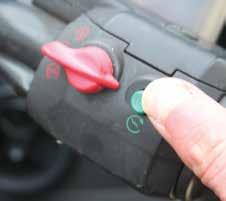
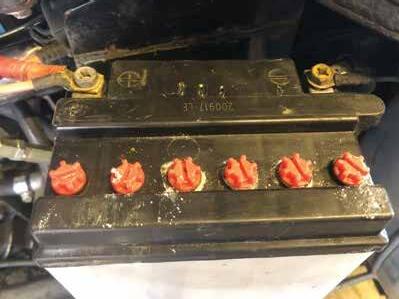
Left: Won’t it start?
and the problem is magnified, because the chemicals deteriorate over time.
Left idle, the electrolyte inside the cells starts to break down into its components – sulphuric acid and water. The sulphur ions form crystals, which stick to the lead plates, creating lead sulphate crystals. This is called sulphation and it prevents the battery from holding a charge, effectively rendering it dead flat. Without a specialist charger, it will need replacing.
Typically, after 2-3 years Gel batteries will start to fade –premium AGM types will generally last 3-4 years.
Amber Warnings
A flat battery is a fairly obvious red flag that something is wrong, but there are some early warnings that could alert you to a potential problem.
Feeling cranky. If the starter motor struggles then it may be a sign that your battery cannot deliver sufficient cold cranking amps to turn over the engine.
Red light spells danger. If the little red battery warning light comes on while you’re riding, or doesn’t disappear shortly after starting the engine, it could indicate that your battery is struggling to hold the charge from the alternator.
Rough stuff. Spark plugs typically require between 12,000 and 45,000 volts, (although very little amperage). If the battery is struggling to keep up, you may find that the engine feels lumpy or lacking power.
Diagnosis
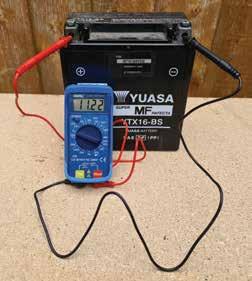
Checking the health of your motorcycle battery is very straightforward, providing you have a multimeter (AKA voltmeter) and know how to use it.
With the bike parked and engine off, you’ll need access to the battery terminals.
1. Set your multimeter to 20V DC
2. Put the red probe on the positive (+) terminal and black to negative (-)
3. Check the reading. It should show between 12.5V and 12.9V DC for a lead acid battery, or between 12.8V and 13.1V for Lithium.
Anything below 11V will probably be too flat to start the bike, but you should be able to recharge the battery and get the show back on the road. Once you get to 5V or less, the battery is deeply discharged – you might be able to recover it, using a specialist charger, depending on the degree of sulphation and the age of the battery.
For people who prefer a plug-and-play diagnostic tool, the OptiMate Test checks both battery and charging system, displaying the results using an easy-to-read green/amber/red LED system.
Connect the Test device to the battery and it instantly shows the ‘resting’ voltage, so you can see whether it is healthy. Should you wish to check the charging system too, start the motorcycle and the Test checks whether the charging system is able to bring the battery back to full charge or if it is over-charging. It even works with lithium batteries, making it a very handy gadget to have in your toolkit.
Prevention and Cure
Batteries last longer if kept fully charged. Riding your bike regularly, (at least once a week), for 20-30 minutes at ‘A’ road speeds, should be sufficient to keep everything topped up.
Alternatively, for owners of motorcycles that could be parked up for weeks on end, investing in a smart charger would be a sound move. An OptiMate 1 Duo, for example, costs around £50 and will monitor and maintain the battery 24/7. Most smart chargers come with a permanent battery lead, so they’re easy to
Left: Testing battery condition is easy with a multimeter
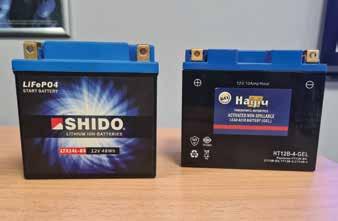
Below: Modern lithium batteries (left) are lighter and pack more punch than a traditional lead acid (right) Bottom: Chargers have got more sophisticated
Above: Watch out for rusty terminals –they could be preventing the battery from doing its job
Right: Lithium battery? Use the correct charger
plug in whenever the bike is in the garage, and using one could double the average lifespan of a battery, saving money in the long run.
For batteries that are more than a couple of years old, upgrading to an intelligent charger that can reverse sulphation would be a sound investment. The OptiMate 3, 4 and 5 models, for example, have an additional programme to rescue ‘dead’ batteries from as low as 0.5 volts! These use high voltage pulses that are designed to break down the lead sulphate crystals, allowing them to mix with the distilled water in the cells and return the solution to sulphuric acid.
Lithium – 12V but not the same
Lithium (Li-ion) batteries are increasingly common on motorcycles, because they have a higher power density than lead acid, so they can deliver more cranking amps for their weight. That means
manufacturers can fit smaller, lighter starter batteries. Bikes like the BMW R 1300GS and Honda CRF1100 Africa Twin come with a lithium battery fitted as standard.
So far, so good. However, lithium batteries are considerably more expensive than the equivalent lead acid version and they are particularly vulnerable to damage if left attached to a machine and unattended. They often have a lower Ah capacity and will drain three to four times faster when connected to a bike. Often in as little as one to two weeks.
Once discharged they can be difficult to recover, because they are protected by an internal Battery Management System (BMS), which prevents damage caused by discharging too deeply or from being charged beyond its safe voltage limit. A specialist charger, like the OptiMate Lithium 4s 0.8A, will be required to re-activate a flat lithium battery. A quick word of warning - NEVER try to jumpstart a bike fitted with a lithium battery - the shock could kill it!
For these reasons, maintaining lithium batteries is crucial, but you can’t use a regular 12-volt charger. Here’s why. Unlike a 12V lead-acid battery, which has 6 x 2V cells, Lithium batteries contain 4 x 3.2V cells, providing a total nominal voltage of 12.8V. They also have different charging curves and thresholds. You may have heard stories about lithium batteries catching fire and this is often caused by over-charging when using an inappropriate charger. That’s why specialist lithium chargers have been developed.
If you aren’t sure whether your bike has a lead acid or a lithium battery, OptiMate’s range of Duo chargers will automatically detect which type it is and charge it accordingly.
Charging Ahead
A flat battery can be anything from a minor inconvenience to a major expense, particularly if it causes a roadside breakdown or requires replacing, so it’s best avoided. Just like lubing your chain or checking tyre pressures, keeping your battery fully charged will avoid problems and extend its service life, so it should be part of your regular maintenance regime. Smart chargers have been around for a long time (the first OptiMate was developed 1994) and for a relatively modest outlay you’ll have a tool that will take care of your battery without any input from you, other than remembering to plug it in!
Find out more at www.optimate.co.uk.
Good News
You know the old adage – when fault finding, try the simple things first. Starting on my elderly Royal Enfield Diesel (another story) had become sluggish, the battery was a few years old and the bike isn’t often used over the winter these days, all indications that the battery was on the way out. “I’ll be needing a new one soon,” I said to my go-to bike dealer. “I doubt it,” replied the honest fellow, “have you looked at your terminals?”
Sure enough, the terminals were a little rusty. Disconnect them, a thorough clean with a wire brush, re-connect nice and tight...and the Enfield started first time. Simple things first, eh?
Peter Henshaw
THE BEST MOTORCYCLE LUGGAGE RACKS
When it comes to motorcycle touring or daily commuting, carrying your essentials safely and securely is just as important as enjoying the ride.
A well-chosen luggage rack makes all the difference, offering practicality, reliability, and peace of mind whether you are heading to work or travelling across countries.
From compact racks for everyday use to heavy-duty options for long-distance touring, here are Bikesure’s favourite motorcycle luggage racks.
BEST LUGGAGE RACKS FOR LONG-DISTANCE TOURING
HEPCO AND BECKER REAR RACKS AND TOP CASE
These racks are designed for heavy loads, making them perfect for touring set-ups with panniers and top boxes. Made from power-coated steel, they are built to withstand long rides and rough weather conditions, offering stability even when fully loaded.
The top-case carrier provides a robust, high-quality solution for mounting top cases and is designed to integrate securely with various bike models. It’s ideal for riders who carry larger, heavier luggage or travel with rigid cases.
TOURATECH LUGGAGE RACKS
Perfect for adventure riders, Touratech racks are engineered for strength and endurance. Ideal for off-road touring and long trips, they are designed to handle everything from camping gear to spare fuel cans, ensuring your luggage stays put even on bumpy terrain.
WHAT MAKES A GOOD MOTORCYCLE LUGGAGE RACK?
A quality luggage rack needs to balance strength and stability with ease of use. Key features to consider include:
• Capacity
• Compatibility with your bike
• Material (either lightweight aluminium or durable steel)
• Mounting system (either quickrelease fittings for commuters or fixed racks for tours)
BEST LUGGAGE RACKS FOR COMMUTERS
GIVI SR SERIES
The Givi SRSeries is known for its practical solutions and is ideal for daily use. These racks are lightweight, easy to install, and compatible with Givi Monolock or Monokey top boxes. Perfect for carrying laptops, work gear, or a change of clothes, they are a no-fuss option that doesn’t weigh down your bike.
SW MOTECH STREET RACK
These were actually designed with commuters in mind, and offer a slimline design that blends in with the bike when not in use. The quicklock adapter plate makes attaching or removing luggage simple, which is perfect for riders who don’t want a permanently fitted bulky rack.
UNIVERSAL LUGGAGE RACKS
If you swap bikes or want flexibility, universal racks can be a great solution. Options like the Ventura Bike-Pack System allow you to attach soft bags easily, making them suitable for both commuting and occasional long rides. While they may not always carry as much weight as racks for specific bike models, they are usually a budget-friendly and practical option.
GET THE RIGHT INSURANCE FOR YOUR BIKE
Whether you use your bike for long trips or daily commuting, getting the right insurance is just as important as choosing the right gear. Bikesure offer specialist motorcycle insurance tailored to your needs.
Call 0800 503 3275 for a quote.
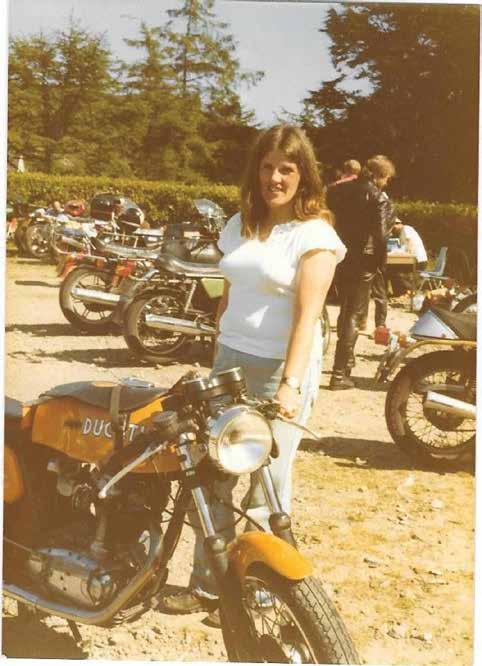
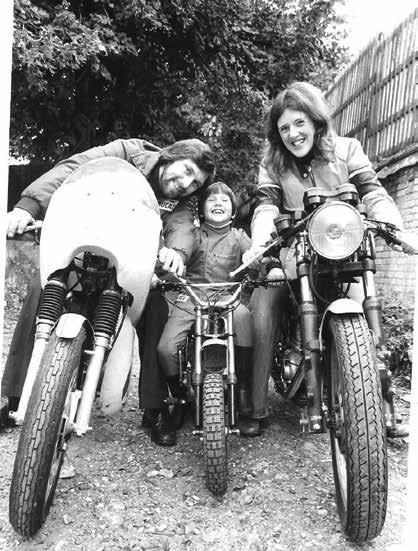
Above left: Forget that Suzuki – a young Jilly with her first Ducati, the 350 Desmo
Bikes became a family affair...
A Fine r o M ance
“How did you get into motorcycling?” It’s a question I’m often asked, and the reply is always the same: a neighbour had a few bikes, and one day offered my mother and me (aged four) a lift in his sidecar. I was hooked by the sheer thrill of the moment – if you ride a bike you’ll be well aware of the freedom and exhilaration I’m talking about. So that was it, my interest was sparked. It was also fuelled by cousins having various bikes – one even had a Vincent Black Shadow, quite THE bike in those days.
Schooldays were not particularly happy, and the only positive was to find a few chums who were similarly enthused by motorcycles. Whilst at grammar school, three or four of us
JILLY
PENEGAR was hooked on bikes before she started school – Ducati set the seal on it
would walk from Carshalton to Wimbledon Stadium to watch the speedway – saving our bus fares there for refreshments, but always getting the bus home. Technical College was next, a twoyear GCE ‘O’ level course (as it was then) and basic engineering programme which I enjoyed. And of course I had the opportunity to talk bikes with like-minded students.
My First Bike
The first bike I bought was an Ariel Red Hunter, a 500cc lump of a machine that had been languishing in a field near Shere, probably for more months than I was led to believe. It was a restoration project, and I soon realised the value of owners clubs,
Above:
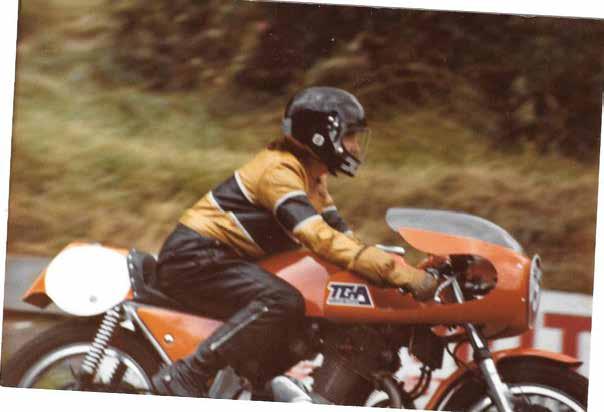
Right: It wasn’t all Ducatis...Jilly at Cadwell Park on Graham Boothby’s Laverda SFC
Below: 1981, and now aboard a Pantah
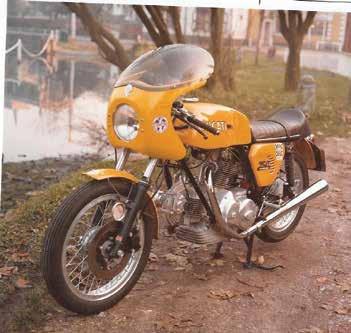
Below right: Pride of place – mustard yellow 750SS soon found a home in the Penegar garage
a great source of information and where to get those elusive parts. It took me a while to realise that the Ariel project was going to cost more than I had originally thought, and would push my mechanical knowledge to its (very limited) limits.
So it was sold on to another unsuspecting person whilst I began to work my way through various Japanese bikes, finally settling for a Suzuki T200 Invader for the commute to work. It was a delight to ride and had the nickname ‘Delilah’ as its registration include the letters ‘YYY’.
The T200 suited my pocket and lifestyle perfectly, but then fate stepped in. A change of job (motorcycle courier for a Twickenhambased newspaper) necessitated a different bike was required to
cope with the numerous journeys. A Suzuki GT250 Ram Air took me not only around Twickenham but to Fleet Street and also out the printers at Chelmsford. By this time, I had also joined WIMA (Women’s International Motorcycling Association) and attended a few rallies – some of the friendships from that time are still going strong today. By the way, I loathed the GT250! Whilst it did everything it was designed for, the Suzuki lacked ‘something’ that previous bikes had made motorcycling enjoyable. Plus I fell off it more often than all the other bikes put together, though with hindsight I suspect that the tyres weren’t the correct ones.
Jilly, Meet Ducati
What next? My (then) husband Chris and I had seen – and fallen in love with – a beautiful blue 250 Ducati Mklll at the Earl’s Court Motorcycle show in 1974. We were already aware of the marque through Paul Smart’s legendary win at Imola win in ‘72. So Chris
Left: Desmo is the DOC magazine – it’s come a long way since Roneo...
Below: 2015, Goodwood, and suitably attired (it’s not a Ducati, but just as Italian)
of the UK, but somewhere quiet until fully used to the quirkiness of the set-up. The 860 made a couple of trips to the IoM for the TT, and a memorable holiday in the Lake District where I took the outfit up Hardknott Pass and discovered I had muscles perhaps where I shouldn’t have!
Around this time, there were very few Ducatis in the country, and nearly all the 150 club members seemed to know the right people to work on their beloved machines, where to source spares, and help each other. Motorcycle sport has always featured in my life, and after joining the owners club, noticed that quite a few members were using their bikes for racing, so a trip to the paddock for each race meeting was a must.
I met Steve Wynne and the Sports Motorcycles team on one of their forays south to Brands Hatch – Steve has always been a supporter of the club and even hosted the club’s AGM at his premises in Manchester. I offered to be a ‘gofer’ for the Sports Motorcycles team at the now legendary TT in 1978, when Mike Hailwood made his dramatic racing comeback. That certainly provided quite a few stories and plenty of running around on the 860.
Into Racing
bought the 250 Ducati and in 1975 we both joined the Ducati Owners Club.
For a while, I struggled with my GT250, but having read several articles about Ducati singles, I decided that a 450 Desmo would be the one for me, approaching several sources for one. The London Italian Motorcycle Centre said that they had a very rare 350 Desmo in stock (only six were imported into the UK) and eventually I bought that. However, I had never ridden a bike with clip-ons and rearsets before, so the journey home to Wallington was an adventure to say the least. What had I done? It took weeks for me to finally get used the Ducati, but once I’d got there, what a delight to ride! Sure, there were problems –the lighting for a start, so a 12v conversion was fitted, and the carburetion could also cause headaches, but these were all minor glitches. Meanwhile, a taste for bigger Ducatis had set in, and a yellow 750SS now graced after garage after a trip to Vic Camp’s legendary shop (his front room) in Walthamstow.
Working for the Club
By this time, Chris and I had become involved with running the Ducati Owners Club GB, undertaking the roles of Chairman and Secretary. Before long, I had utilised my skills in book design and layout to help produce the club newsletter, Desmo. Back in those days, this was by using stencils, a Roneo printing machine, and one or two friends who were able to type and help collate the pages.
The 250 Mk3 and the 750SS had gone by now, replaced by a 250 Mach 1 racer and an 860 GT/ES with Squire sidecar, the latter enabling me to transport our son around.
If you’ve never tried to ride/drive an outfit, I strongly suggest that you give it go, maybe not in the more overcrowded roads
Over the years I’ve been fortunate to take part in various race meetings –mainly parades – on the 350 Desmo (at Snetterton), plus a friend’s Aermacchi Ala D’oro 350 (at Goodwood), and Graham Boothby’s 750 Laverda SFC (Cadwell Park). Great fun! I also volunteered to help the Phase One team at Vallelunga one
DUCATI
year, I don’t think I’ve ever worked so hard – and it was supposed to be a holiday! At least Stephane Mertens said that he liked my cooking.
In the 1990s I went to work at Sports, during the time they not only had a successful race team (especially with Robert Holden), but were also the Ducati importer for Wales, Scotland and the north of England. However, after Robert’s tragic death at the TT in 1996 – and Ducati deciding to have only one importer for the UK (Moto Cinelli) – there wasn’t enough work for me to be kept on, so I was placed on a six-month contract with Moto Cinelli.
Through all of this, I kept my involvement with the Ducati club, and over the years I have been Secretary, Treasurer, Membership Secretary and Chair (for nine years). Plus editing the magazine, which I have managed to progress from the Roneo stencils to full colour laser print. The club too has progressed, now with over 3500 members. During my time as Chair, I instigated the club’s affiliation to the Factory DOC, and was invited out to Bologna for discussions on the first World Ducati Weekend. (It was only supposed to be a one-off, but proved too popular!)
There were spin-offs from Desmo magazine too. I had suggested that members send in their technical tips and the result was the Ducati Ownership booklet, so successful that two editions were produced. When ‘Italian Bike’ magazine was produced in the early 2000s, I had a column in each issue – an additional way to promote Ducati and the club.
I also helped curate the exhibition ’Ducati 2000: an icon for the century’ in Newcastle 2000, spanning five decades of the marque, the associated dinner attended by such luminaries as Pierre Terblanche, Steve Wynne, Alan Cathcart, Mick Walker and many more. Quite a challenge but a memorable event. All in all, it’s been quite a journey.
Above: Ducati Owners Club is now over 3500 strong Left: DOC events are always well attended
THE LEGAL COLUMN
It was a long hot summer with great riding conditions, albeit occasionally too hot! As we approach the winter months many of us think about putting our bikes away, but it’s also great to see so many who make the best of the milder winters and keep riding all year round, including taking part on the many Santa runs and toy ride-outs.
If you are riding through the winter think about your own safety and try and reduce the risks.
Low Sun: Is the sun affecting your or someone else’s line of vision? Take steps to minimise glare with sunglasses or a legally tinted visor. “I couldn’t see because of the sun,” is not a defence.
Ice: Risk assess before you set off. Are your tyres adequate to deal with winter roads? If you do come off on ice there is sometimes a legal remedy if the highway or area should have reasonably been gritted or cleared, but hadn’t, or if there was no reasonable warning about the ice.
Maintenance: Make sure your bike is winter fit, get it checked out and make sure your tyres will be able to cope. October was Tyre Safety month, but of course it’s not too late to check your own tyres, making sure they are legal and safe. You are opening yourself up to criminal prosecution if your tyres are not safe.
Kit: Is your kit going to keep you warm, are your gloves adequate? While you don’t want your clothing to be too restrictive,
Far left: Low sun makes you less visible Left: Morning rush hour, mid-winter – would you filter here?
you do need to make sure you are comfortable and that your focus will not be hindered by feeling cold.
Visibility: Can you be seen in the dusk and darkness? If it’s a cloudy day the visibility can be poor, even in daylight hours. Check your lights and wear hi-viz, which can make a huge difference. A Danish study has shown that cyclists wearing hi-viz had a 46% lower overall accident rate and a 55% reduction in collisions with motor vehicles. Lack of visibility – for example dark clothing or a faulty headlight – can give defendants an opportunity to argue contributory negligence which may reduce damages awarded to you. So, make sure you are visible and remember that visibility can change from mile to mile, as anyone travelling to the Stafford Classic Bike show this October will remember!
So have a great winter, get out when you can, but stay safe. If the worst does happen call the BMF legal line for help and advice and for our expert services in serious and catastrophic injury.
B OOK R EVIE w S
by iAN KeRR
Why We Ride
As a motorcyclist, you have no doubt been asked to explain to non-riders why you ride a motorcycle, when there is so much negative press about bikes. “If I had to explain you would not understand!” is the usual response.
It usually does the trick, but afterwards have you ever sat down and thought how you would actually put forward a reasoned argument as to why you have spent more money on a motorcycle than you would on a car that can carry five people? Plus, a large bill for protective clothing.
In this softback
collection of articles written for an American monthly magazine some years ago (but updated) clinical psychologist Mark Barnes PhD goes a long way to answering questions you may have asked yourself in the past. And if you have never analysed why you ride, you may find it quite thought provoking.
Mark is an avid motorcyclist like the rest of us, and this isn’t some dull text book. All aspects of motorcycling are covered, on and off-road, even things like purchasing clothing, workshop maintenance, in fact just about every facet of biking, including the ways that riders indulge their passion when they are away from their machines.
The relatively short chapters can be easily dipped into, and one of the most interesting sections for me was the one covering similarities with top athletes and us, according to Mark! Despite his profession, the text is relatively light and easily understandable to most of us without a PhD. Having read it, you may disagree with his views, but it is definitely worth a read and may just give you a few pointers in answering that age-old question without coming out with the usual platitude!
why we Ride
Author: Mark Barnes PhD
Publisher: Companion House Books
Price: Available on Amazon for £14.09 (softback) or £12.53 (Kindle).
Tommy Price & Bill Kitchen
The latest soft-bound book from speedway specialist London League Publications is centred on the once dominant Wembley Lions. Like its author Peter Lush, this was my home team before they finally closed in 1972, so I am a little biased – I also knew one of the two top riders featured, Bill Kitchen.
Both he and Tommy Price were two of the key riders in the history of British speedway from the 1930s to the ‘50s. Price, a former grasstrack rider, only ever rode for the Lions and was the first British rider to win the World Championship (in 1949) having been British Champion in ’46.
Lancastrian Bill Kitchen rode a handful of speedway meetings before making a sensational debut for Belle Vue in 1933 and in 1946 joined Wembley and became team captain. He was an accomplished team rider, and popular throughout the sport, also riding for the British Lions in Australia, New Zealand and South Africa before retiring in 1953.
The book covers each rider individually and not as a comparison, with each getting equal billing in 160 well illustrated pages. But there are many similarities, with each riding on the Isle of Man and having motorcycle careers outside of the obvious speedway connection.
This is the fourth book connected to the Wembley Lions that Peter Lush has written and maintains the same high standards and accuracy that LLP has become known for with all its speedway titles, complete with the usual full statistics and records section.
If you are interested in any of the great British riders who shaped motorcycle sport and were all-rounders in the last century, this is a must read, and not only for speedway fans but all motorcycle historians!
Tommy Price & Bill Kitchen
Author: Peter Lush
Publisher: London League Publications
Price: £14.95
www.llpshop.co.uk
o bit UARy – Ni CK Je FF e Ry
Nick Jeffery, 77, a widely respected former industry figure, as well as in vintage and engineering circles, very sadly died on his August 10th birthday, at Stoke Mandeville hospital after a short illness. Universally popular within the two- and three-wheel community Nick was renowned for his interest and presence at countless events and reunions, most often astride one of his own classic or modern machines. Wherever, upon arrival, he’d immediately be asking perceptive questions or gently dispensing technical advice, in equal measure.
Nick’s employment began with a Morris Motors apprenticeship at Cowley in 1966, where his diligence was rewarded with BMC’s first ever Nuffield scholarship. Following a stint at Southampton University he started his motorcycle career at Suzuki on the service side and just two years later was appointed to a senior technical position at Kawasaki. Eight years at KMUK were followed by successfully studying for an MBA, awarded at Cranfield in 1982.
Nick’s next target was the vehicular legal world where, having qualified as a solicitor, he joined Renault Trucks, remaining very
productively employed (undoubtedly helped by an ability to speak French, German, and Japanese) with the French giant through to eventual retirement.
Despite an intensive career Nick’s lifelong links with motorcycles were never further away than a phone call or an evening/weekend visit. In addition to being an active BMF Councillor and member of the Political and Technical Services Committee for over 20 years with a particular role advising on technical and legal issues, he was also a member of the VMCC and a British Motorcycle Charitable Trustee, offering contributions to many other motorcycle-related groups. Rarely out of the saddle either in UK or Europe he rode Vincents and Broughs on several trips in Tasmania, the last in early summer this year. Back in the UK his next adventure which he amusingly described as “breaking ranks,” was to drive Bill Faulkner’s Model T Ford up to The Orkneys, a 2000-mile itinerary during which journey his declining health so tragically surfaced.
An extensive crowd of friends and colleagues attended Aylesbury Vale’s Natural Burial Meadow on 2nd September, where a superbly choreographed Celebration of Life Service was held on behalf of this quite exceptional gentleman, who never ceased helping those in need!
Mike Jackson
Triangle (Ipswich) MCC
This is a big year for Triangle (Ipswich) MCC – it was formed in 1925 and celebrates its centenary this year. It was originally known as the Red Triangle MCC, the ‘Triangle’ name coming from the YMCA insignia, because members would meet at the YMCA hut on the Nacton side of Ipswich. The first president was Major Everett and the Chairman Val Revett, whose grandson Gerry is a member of the club today.
Join the Club e-voice.org.uk/knmcc or email: pmorris4562@ fastmail.co.uk
Promote your Club! Want your club to be profiled on these pages? Email us: editor@bmf.co.uk
In 1947 C.V. (Monty) Lockwood, a former Manx Grand Prix rider, represented the club at Eastern Centre Board meetings. Len Corder, a founder member, was noted as a first-class rider when the club started. In the early days the club organised reliability trials, hill climbs, social runs, weekend camps and grass track meetings. In the late 1940s and ‘50s, members’ bikes were their only form of transport, used for getting to and from work during the week and (after a few minor adjustments) trials, scrambling and grasstrack at weekends.
In the ‘50s, ‘60s and ‘70s the club was heavily involved in scrambles, trials and moto-ball and in 1962 and 1965 Triangle MCC were British motoball champions. Fred Cotton, Bob Punchard and Brian Booth were top goal scorers, while speedway stars John Louis and Jeremy Doncaster were both members of the club.
While the club has always been involved in all types of sport, road riding gathered strength during the ‘90s and has become a major part of our activities. There are regular ride outs on Thursdays, Sundays and Wednesday evenings, plus weekends away, both camping and in hotels. A treasure hunt was organised during the early years and has returned as a regular event in recent years, while many club members have also taken part in the National Road Rally and Welsh Road Rally.
Ipswich was twinned with Arras in France and through council contacts we started a friendship with the Moto Club Arrageois, which led to many visits to France and visits to Ipswich for our French friends. In 2007 the club organised a visit to the USA for 20 members, named The Canyon Tour as we visited many of the canyons on the west side of the country. We flew into Las Vegas and of course hired Harleys for the two weeks. Many members have been back since then, in smaller groups. Europe of course has been a destination over the years, but the UK is still a firm favourite as it has so much to offer. The club has always tried to offer its members ride outs, trips and social events.
Covid hit us hard, and as with many clubs, it was a struggle. But we weathered the storm and came out the other side stronger – membership has grown, and we look forward to many more years of motorcycling together. In fact, it’s the members (of which there have been thousands) over the last 100 years that have helped this club reach its centenary. The current members are very proud of being part of it.
Do WN yo UR WAy
SCOTLAND – REGION 1
Regional Chair - Tom Duncan 01506 842131, 07887 835321 tom@tomduncan.co.uk
Pete Wilson - BSA Bantam secretary@bsabantamclub.org.uk
Paul Rouse paul.rouse2022@outlook.com
R10 - David Gillespie, 07882 525 777 gwocni@hotmail.com NATIONAL AND ONE-MAKE CLUBS FORUM (NaOMC)
Steve Corner steve.corner@nortonownersclub.org
MORE BMF REPS NEEDED! If your county is not listed and you would like to be a BMF rep, we would love to hear from you - please email admin@bmf.co.uk wRONG NUMBER?If these aren’t the right contact details, let us know at admin@bmf.co.uk and we’ll put it right.
Ideal for removing traffic film and road muck along with, grease, lubricants, brake dust and oils, Clean MyRide’s non-streak formula delivers superb results without damaging surface finishes, paint, plastics or metals including aluminium, alloys, chromed and anodised components. Simply mist onto surfaces, leave for a few minutes, agitate if necessary and wash off.
Check out our 5* reviews on our website, Facebook and Google and discover the effortless way to keep your bike spotless and gleaming with just one product!
CLEAR
MYVISION
Anti-Fog & Rain Repellant coatings for • visors • goggles • screens See website for details!
• NO HARMFuL SOLVENTS • EcO FRiENDLY 5*Reviews
3690 MILES WORTH OF EUROPEAN ROAd GRIME, bUG SPLATS, TAR SPOTS ANd OFF-ROAd GUNK GONE, THANKS TO CLEAN MYRIdE CLEANER & dEGREASER. SUPERb PROdUCT…MORE EFFECTIVE THAN OTHER bRANdS ANd MUCH CHEAPER TOO. THE RESULTS SPEAK FOR THEMSELVES!
CLEAN MY RIdE dOES WHAT IT SAYS. NO bEFORE PHOTOS bUT THIS IS THE FIRST WASH SINCE THE WINTER STARTEd ANd SHE LOOKS LIKE NEW AGAIN.VERY GOOd PROdUCT!