




















British Dressage: www.britishdressage.co.uk
e: camille.peters@britishdressage.co.uk
t: 02476 698826
Editor: Jane Carley
e: janecarley5@gmail.com
t: 01926 645981
For the full list of BD O ice sta , visit britishdressage.co.uk
British Dressage, Meriden Business Park, Copse Drive, Meriden, West Midlands CV5 9RG
Main switchboard: 024 7669 8830
Executive: 024 7669 8844
Training & Education: 024 7669 8833
BD Youth/u21 International: 024 7708 7801/024 7669 8834
Membership, Horse Registrations & Results: 024 7669 8832/836
Quest: 024 7669 8908
Sport Operations: 024 7669 8827
Judges: 024 7669 8831
Senior International: 024 7669 8835
Para & International: 024 7708 7803
Fixtures: 024 7708 7804
Championships: 024 7669 8846
BD Shop: 024 7669 8830 – press 1
Finance: 024 7669 8838/841
Marketing: 024 7669 8819
Communications: 024 7669 8842/839
Sponsorship & web ads: 01608 676180
DESIGNED AND PRODUCED BY
Fellows Media: fellowsmedia.com
e: hello@fellowsmedia.com
t: 01242 259241
Fellows Media, The Gallery, Manor Farm Southam Lane, Cheltenham GL52 3PB
ADVERTISE WITH US
For enquiries, contact Jacob Holmes
e: jacob.holmes@fellowsmedia.com
t: 01242 259244
SUBSCRIBE NOW
If you aren’t a member and would like to receive the magazine contact 01442 820580, bd@webscribe.co.uk or mysubcare.com
The views expressed by individual contributors are not necessarily those of British Dressage. Equally, the inclusion of advertisements in this magazine does not constitute endorsement of the products and services by British Dressage.
Be proud of what you have achieved
We are at the peak of our domestic championship season when hopefully all the hard work will pay off, and dreams become a reality.
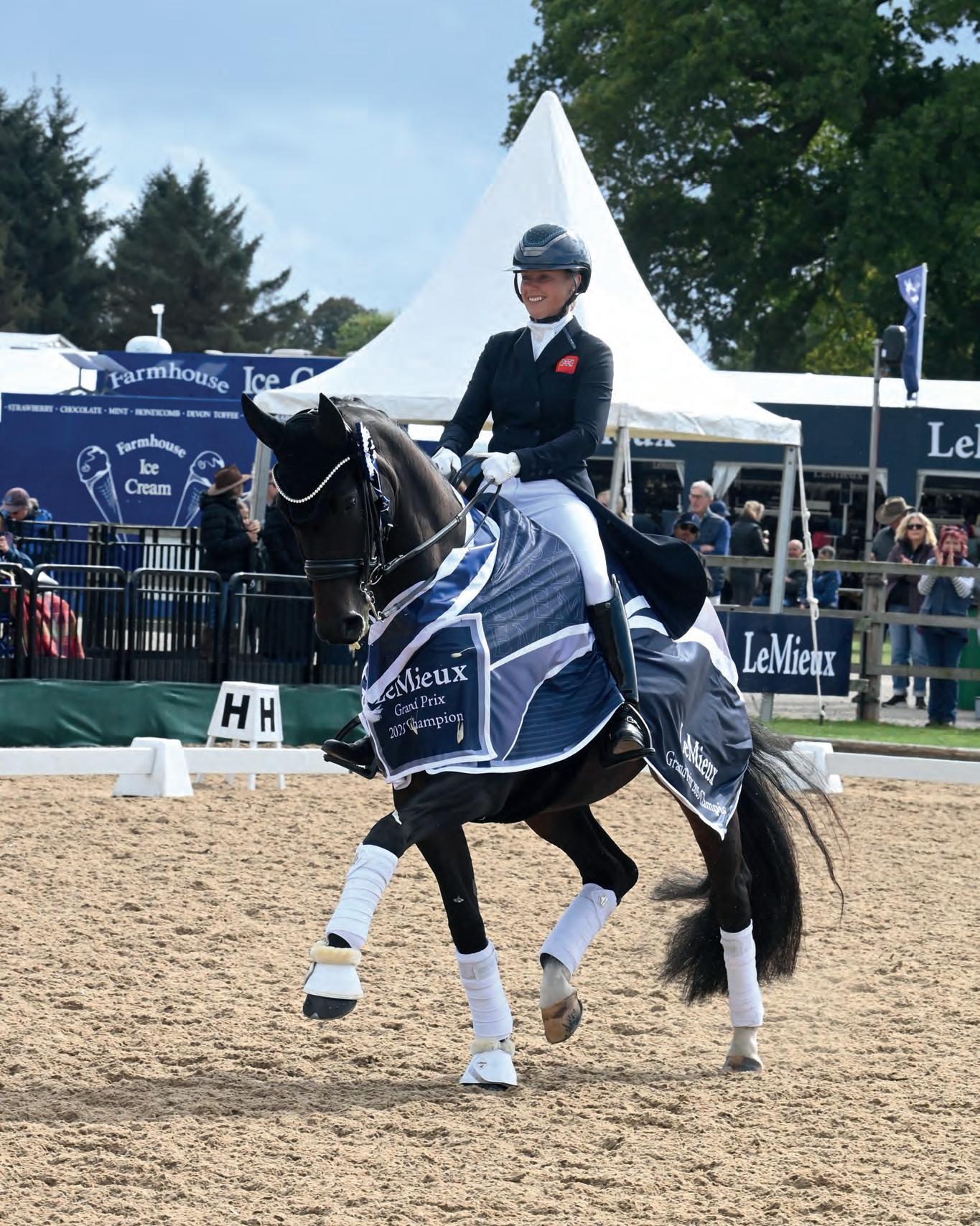
There’s no better example of this than our new LeMieux National Champion Sadie Smith, who has brought her British-bred mare Swanmore Dantina from a three-yearold to international Grand Prix.
‘Dia’ was also showcased in the British Dressage Young Horse Championships in 2021, winning the six-year-old class, further evidence of what a great platform this is for our stars of the future.
Dressage horses must combine the ‘fire’ needed to perform complex and demanding movements with a high level of resilience, competing in unfamiliar and often daunting arenas full of noise and lights. So exposure to the LeMieux Arena atmosphere in the KBIS Young Horse finals is a great preparation for their future career, as well as allowing spectators to get a glimpse of potential greatness.
This year the Somerford weather gods once again provided the added element of Tempest-like conditions, which also challenged the competitors in the Kudos Grand Prix Freestyle, decider for the LeMieux National Champion title. High levels of performance from the horses and smiles from the riders incredibly defied the weather, and it was once again the standout class of the show – when you could hear and see it through the downpour!
For those who find that their championship doesn’t bring the scores they’d hoped for, there’s some great advice from Thoroughbred Dressage’s Louise Robson in our special training feature on P71-73: Be proud of where you are and what you’ve achieved. She may have been referring to the challenge of retraining racehorses to do dressage, but it’s something that we can all take on board!
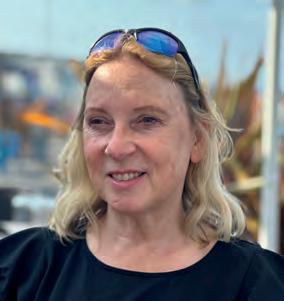
Jane Carley Editor,
British Dressage




















Keep up-to-date with the latest notices, news and views from British Dressage at britishdressage.co.uk
Our showcase training event – BD presents – will take on an exciting new format this year via a Regional Roadshow. For the first time BD Presents will be delivered across two special events – North and South.


For full details of the four fantastic riders and coaches who will be sharing their knowledge at the event and how to get your tickets, see our special feature on page 98.
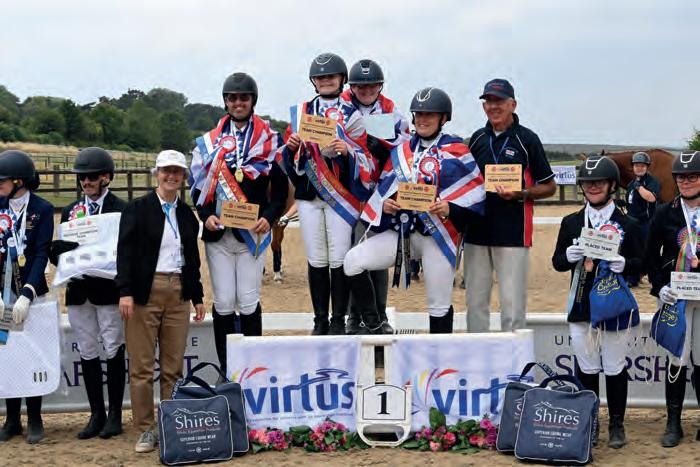
British riders emerged victorious as a team and in two individual categories at the Virtus Para Dressage World Championship at Sparsholt Equestrian on 24-25 July.
The British team of Christopher Bradley, Harriet Moore, Danielle Curzon and Daisy Britnell rode to an emphatic win in the team competition, by a margin of nine percent, despite penalties awarded as they were riding their own rather than borrowed horses.
In the Individual standings, Danielle and Dizzy Rascal topped the ii3 Grade lV
Intermediate A World Championship class; whilst Christopher earned his individual gold in the ii1 Grade lV Intermediate A with MBF Harley Rebel. Fellow Brits Jessica Limb (Penhaligon Danny De Vito) and Harriet Moore (CTD King) took silver and bronze respectively in the ii3 Grade lV Intermediate A, joining Danielle on the podium to make it an all-British affair.
Virtus is the global organisation that governs, advocates, organises and promotes many elite sports for athletes with an intellectual impairment.
British Dressage is deeply saddened to share the passing of Tricia Gardiner, a remarkable horsewoman whose life was dedicated to the art, discipline and joy of riding.
Born in 1935, Trish’s early life was shaped by wartime Britain before she built her home and family in Herefordshire with her husband Patrick. Alongside raising three daughters, she immersed herself in the equestrian world – from managing the family’s thoroughbred stud and farm to giving her time and energy to the Pony Club and local hunting community. Horses were at the heart of her life from the very beginning.
Trish first made her mark in eventing, riding the talented Welton Gameful to the highest levels of the sport, but after a serious accident she turned to dressage.
She worked closely with friend and mentor Lorna Johnstone and became a formidable partnership with Manifesto, a Welsh Cob–Thoroughbred cross, competing at great European shows including Aachen.
She was selected for the 1988 Seoul Olympics with Wily Imp, alongside Jennie Loriston-Clarke, Diana Mason, and Barbara Hammond, and helped secure a top-ten finish for the team.
Trish combined competing with an active role in training and mentoring across the disciplines. In later years, she enjoyed a special connection with Carl Hester, who supported her with her final Grand Prix horse, Moon Tiger. A highly regarded List One Judge, she was known for her clarity, fairness, and depth of understanding. Her influence in this role extended far beyond individual competitions, leaving a lasting impression on the judging standards of her era.





















We remember one of our sport’s most influential figures.
Jane Kidd passed away on 21 August 2025 at the age of 82. Jane embodied the spirit of our sport – an advocate, educator and visionary whose legacy will continue to shape British dressage for generations to come.
Jane’s life was intertwined with horses from her earliest years, and she carried her love of the sport into every avenue of her career. After twice representing Britain in show jumping at the European Junior Championships, a serious back injury altered her path, but with characteristic resilience she turned to dressage. She gave her time generously to others, especially to young riders. Jane was never happier than when guiding enthusiastic young people, encouraging their talent and watching them flourish. From coaching Pony Club teams to leading the Under 21 programme, she was a mentor who believed in nurturing not only skill, but also confidence and love for the horse. Many of today’s most successful riders began their journeys with Jane’s encouragement and wisdom, including top eventer Tom McEwen.
Her impact extended far beyond the arena. Jane wrote some of the most enduring works in dressage literature, offering insight and inspiration to riders at every level. She went on to serve as Editor of British Dressage magazine for 15 years, shaping its direction and bringing education to the forefront. It was under her stewardship that the Scales of Training were introduced to British Dressage, a legacy that continues to guide us today.
fairness and integrity, qualities that made her so widely respected.
It could also be said that Jane was ahead of her time; in 1974, she turned her attention to technology and recommended that breeding, progeny and performance should be fed into computers to help future breeders produce the best young stock. Jane’s idea was supported by Sir Harry Llewellyn, then president of the British Equestrian Federation, who helped her make progress with breeders, owners and technology.
Jane was a lateral thinker – she found Goodwood and started dressage there with Sue, the Duchess of Richmond.
Jane also played a vital role in officiating and governance, serving as an FEI and List 1 judge, as the first Chair of the BD Test Committee, and later as a Senior Selector. Her immense knowledge was always shared with
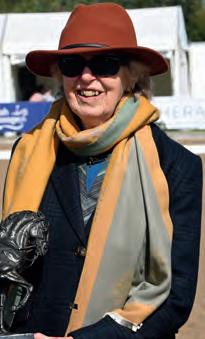
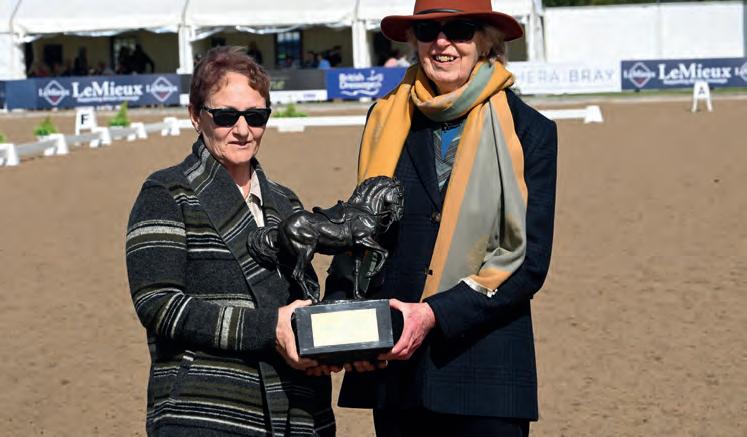
In recognition of her service, Jane was awarded the Linda Whetstone Memorial Trophy in 2024, one of the highest honours bestowed by British Dressage.
Before her long illness struck, Jane enjoyed her garden, cooking and walking with her friends, dogs and god-child Laura. She saw out her later years living with her brother Johnny Kidd in Fairford, Gloucestershire, and will be greatly missed by her family and friends.
Jane Kidd gave so much to British dressage, and her legacy will live on in the riders she inspired, the principles she championed and
the countless lives she touched along the way. She will be remembered not only for her extraordinary achievements, but also for her warmth, her humour and her generosity of spirit.
Desi Dillingham MBE, founding Chair of British Dressage (1998 – 2008), gave a heartfelt reflection:
“Jane was a lateral thinker – she found Goodwood and started dressage there with Sue, the Duchess of Richmond.
“She worked with Richard Meade to set up the British Horse Foundation, the beginning of the British Horse Database and the fore runner of British Breeding. Then to set up the Young Horse Classes and I ended up being the sponsor for many years. Jane had vision and the most amazing ability to bring people into her vision and encourage us all to move forward.”
Jill Day, British Dressage Chairman, shared her fond memories: “Jane, with her eloquence, insight, and unwavering commitment to equestrian journalism and education. It was always an honour to see her sitting at C and know you would be getting some useful tips on your judging sheet. Her contributions touched the lives of countless riders, officials, and supporters.”


















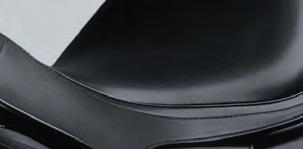












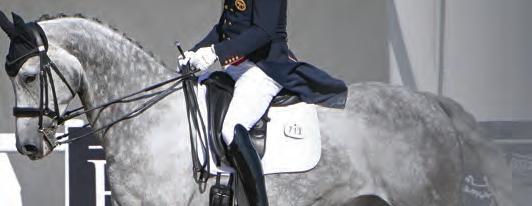
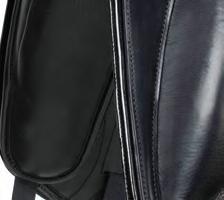
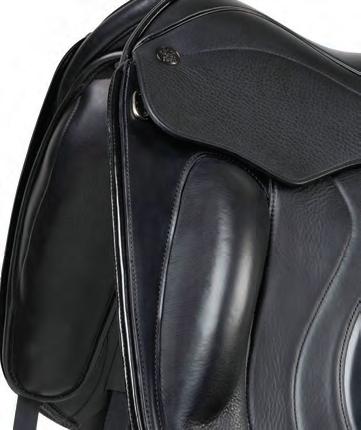
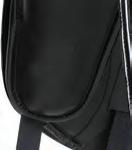
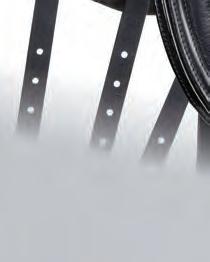
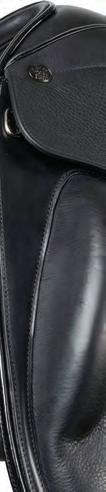
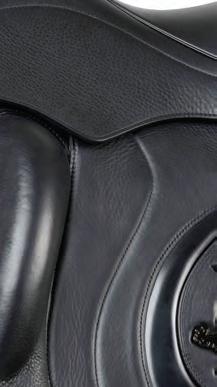
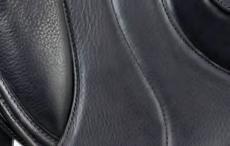
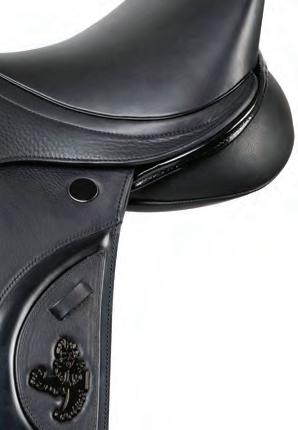
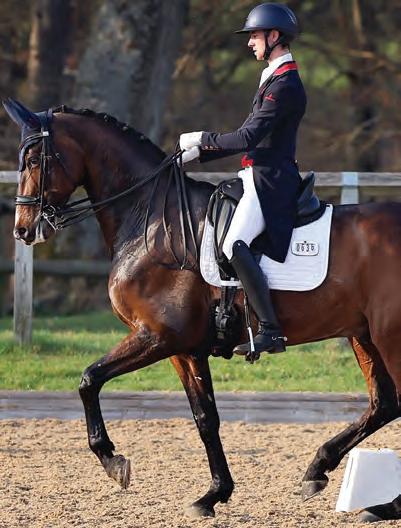
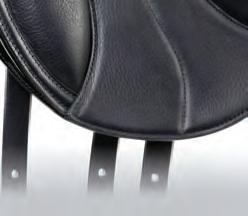
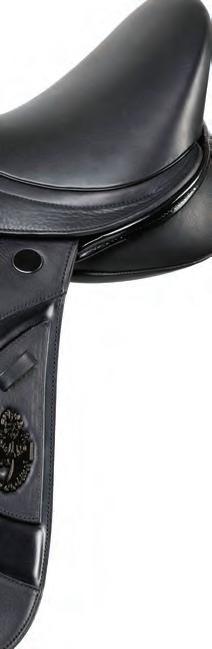
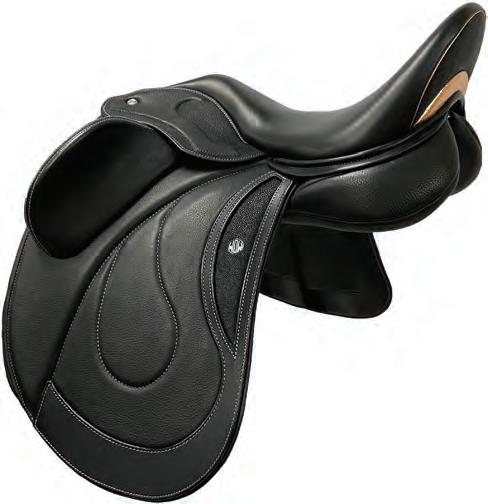
The redesigned Melody K CPS is now available with two seat options: Deep (DP) and Medium Deep (MD). It maintains the CPS technology (Coccyx Protection System) for a perfectly centered position and a roomy, comfortable seat. The Velcro blocks on this monoflap saddle combine the advantages of close contact and the versatility of interchangeable blocks. A versatile monoflap saddle, entirely made in Italy.



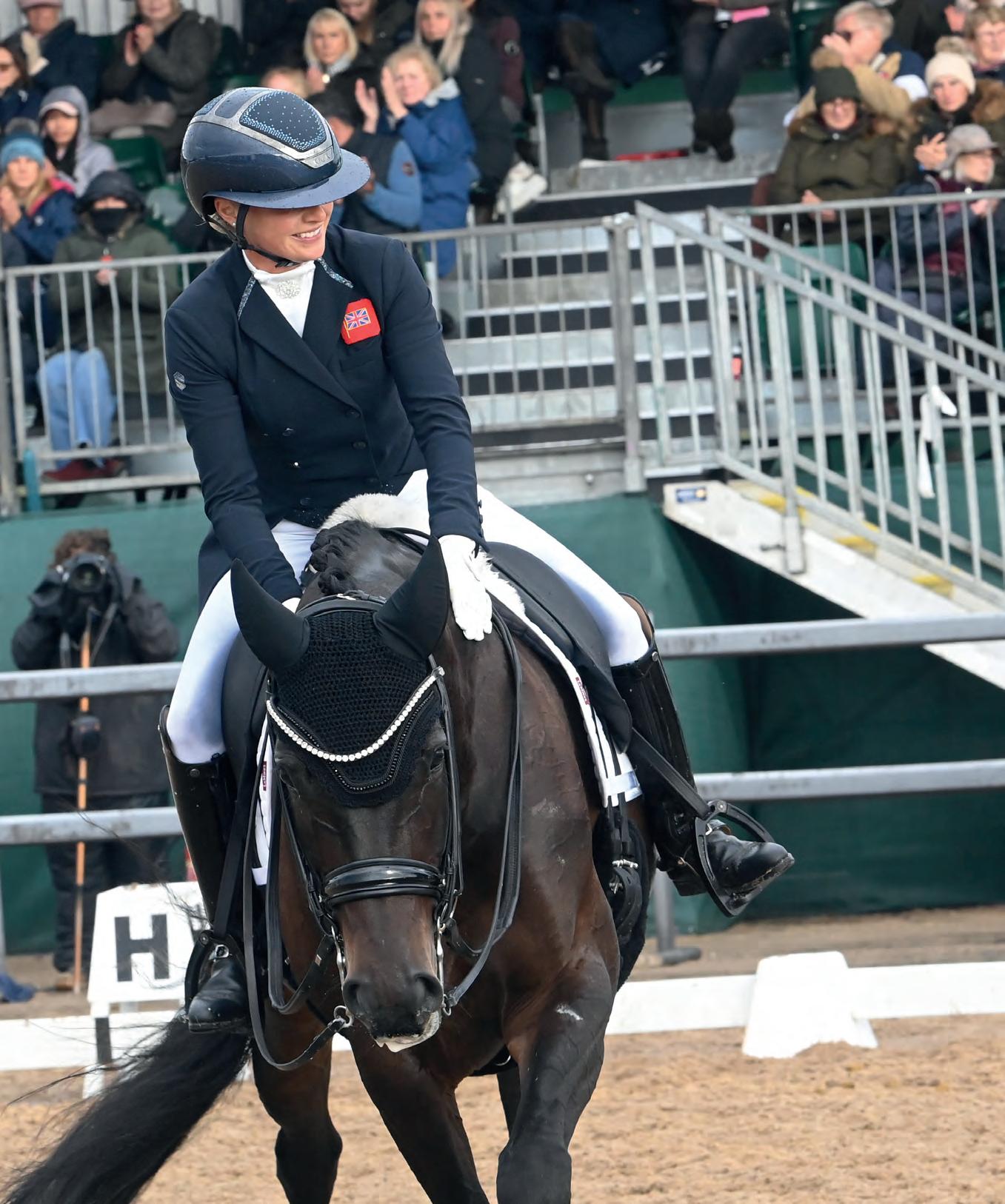
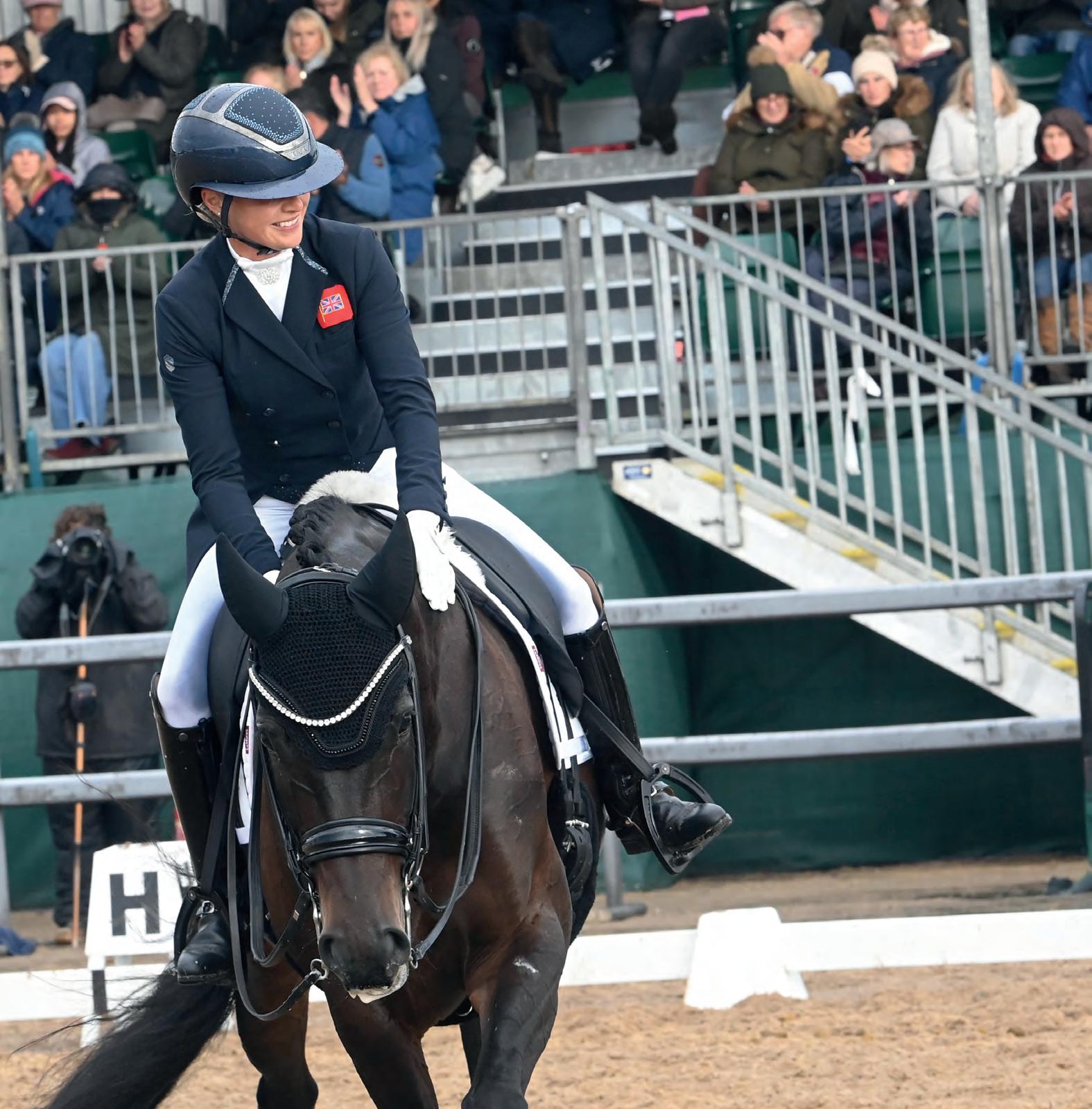


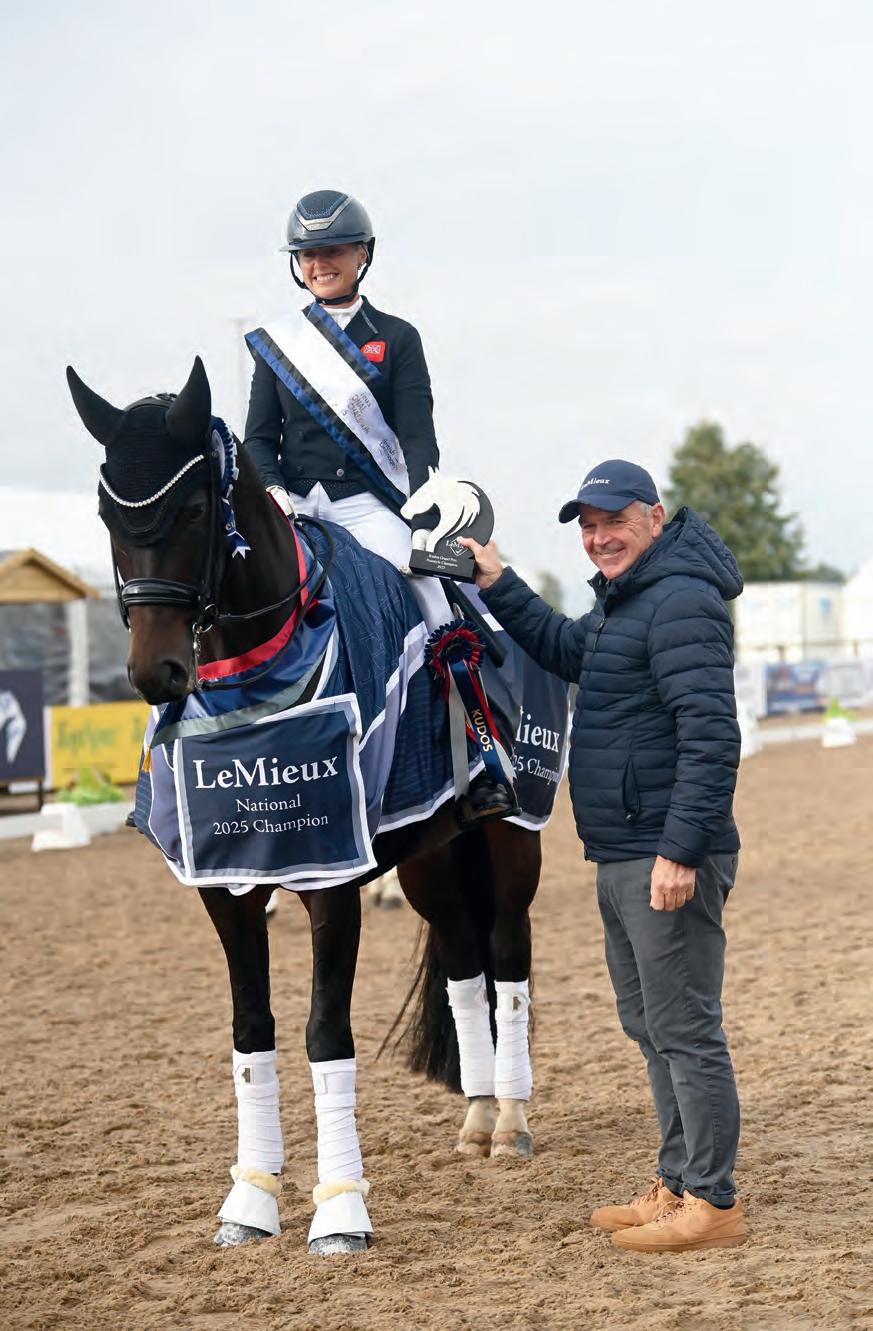
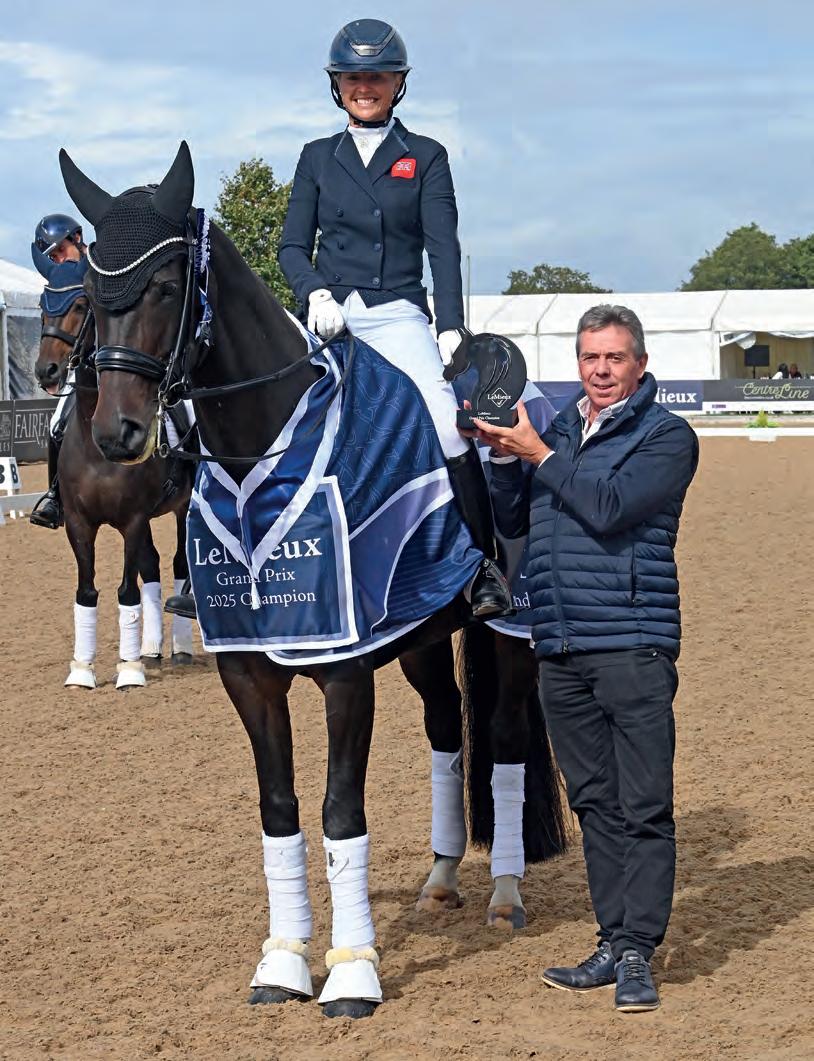
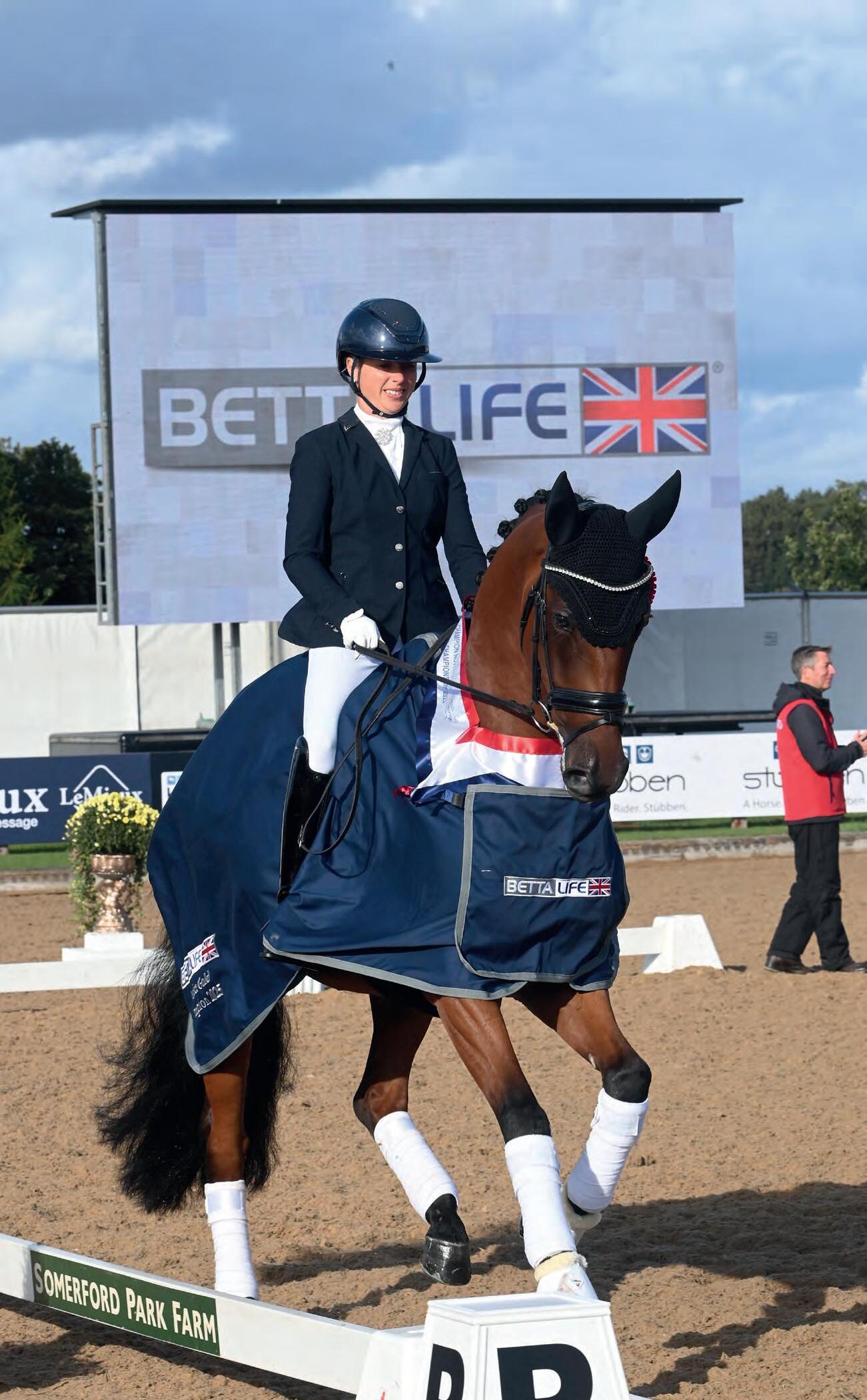
Sadie Smith with her own Swanmore Dantina
Left: Sadie Smith and her own Swanmore Dantina were crowned LeMieux National Dressage Champions 2025 after winning both the LeMieux Grand Prix Gold and Kudos Grand Prix Freestyle titles at Somerford Park.
Sadie purchased the 10-yearold mare (Dante Weltino x Charatan W), bred by Ben St John James, as a three-year-old and has brought her through the grades since winning the national six-year-old title in 2021.
“It’s a bit surreal to be honest,” Sadie said after being presented with the National Champion trophy. “It’s something I’ve always dreamed of – even as a kid I’ve dreamed of riding here but to be National Champion is a real career highlight for me. To be on there with some of the names who’ve won this title is amazing. I’ve had Dia since the start and we’ve done everything together through the levels; it’s extra special that she’s my horse and we’ve done it together, she’s like my best friend.”
Sadie notched up an impressive total of four championship sashes at the show as well as numerous podium places. She is pictured with LeMieux brand ambassador Alan Davies.
“SHE’S GOT A HEART OF GOLD, SHE ALWAYS TRIES AND SHE NEVER LETS ME
DOWN.”
– Sadie Smith on Swanmore Dantina
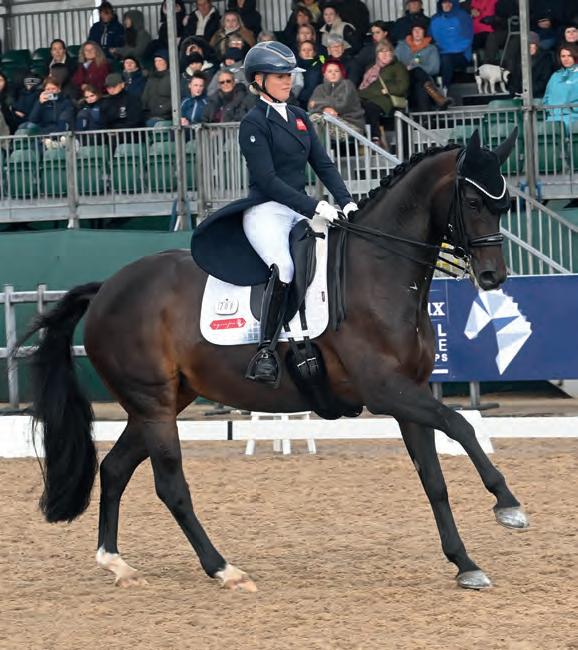
Below: Sadie Smith and Swanmore Dantina overcame a torrential storm to deliver a stand-out performance in the Kudos Grand Prix Freestyle, sealing the LeMieux National Champion title. With no mistakes and countless highlights, the pair earned 77.050% to finish four percent ahead of the field.
Even in the midst of billowing gales and heavy downpours, Sadie presented ‘Dia’ with harmony and lightness.
“That’s the first time I’ve managed to do the Freestyle with no mistakes, so that was the aim. I was so pleased; today it was nice because she was relaxed but I had more power. I couldn’t have asked any more – especially with the weather –the seating was whipping away when I was warming up! But she’ll keep going and fight to the end for you.”
“THAT’S THE FIRST TIME I’VE MANAGED TO DO THE FREESTYLE WITH NO MISTAKES.”
– Sadie Smith on Swanmore Dantina
Sadie Smith with her own Swanmore Dantina



1. Sadie Smith with her own Swanmore Dantina
2.
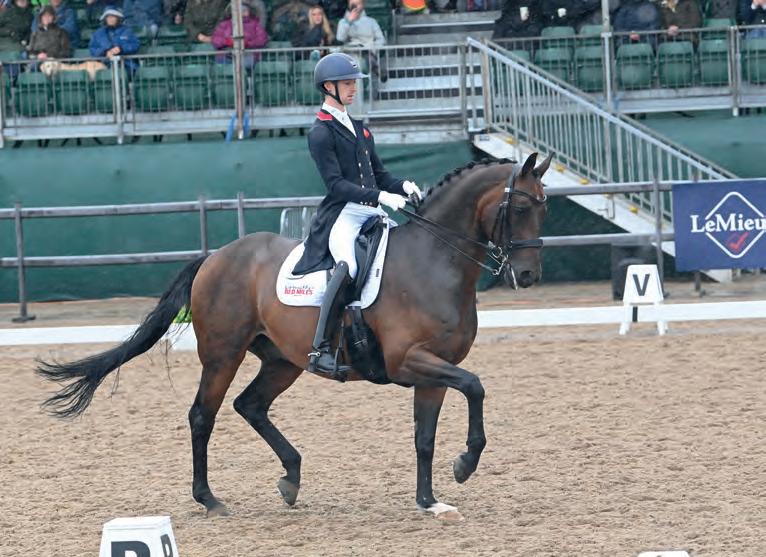
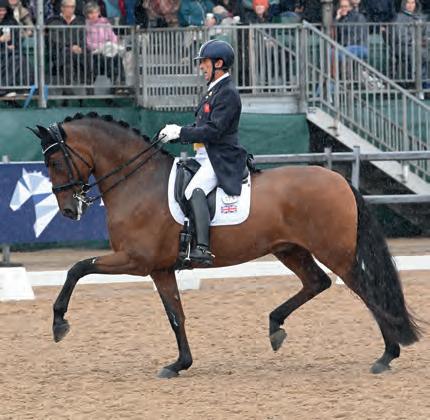
a battering by the elements but still shone to score
and secure their place as Kudos Freestyle runners up.
Below: Sadie Smith and Swanmore Dantina continued their wave of good form in 2025 with a win on their debut attempt at the LeMieux Grand Prix Gold, having progressed from taking the Stuebben Intermediate II title in 2024, to achieve a class-topping score of 71.957%.
“It means a lot to me,” Sadie continued, reflecting on the journey with her outstanding mare, “I bought her when she was three and she was quite ordinary at the start. I think because of her brain and her work ethic, every level she has taken she tries her best and I don’t have to work very hard because she is so relaxed and so easy.”
“We have started at Novice and worked our way through,” Sadie continued, summarising a dream achievement. “This is a real career highlight to me to have won the Grand Prix at the Nationals. I always dreamt as a kid to one day get to Grand Prix, so I am really happy.” Sadie is pictured with LeMieux founder Robert Lemieux.
Right: Alexander Harrison made his LeMieux Grand Prix Gold Championship debut with his own ten-year-old Kickback (Galaxie x Florencio) a successful one, scoring 68.957% for third place.
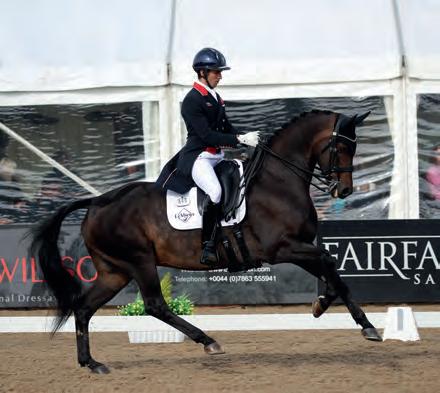
1. Sadie Smith with her own Swanmore Dantina
2. Gareth
8. Alice Oppenheimer with Sarah Oppenheimer’s Headmore
WINNER
Sadie Smith with her own Swanmore Dantina
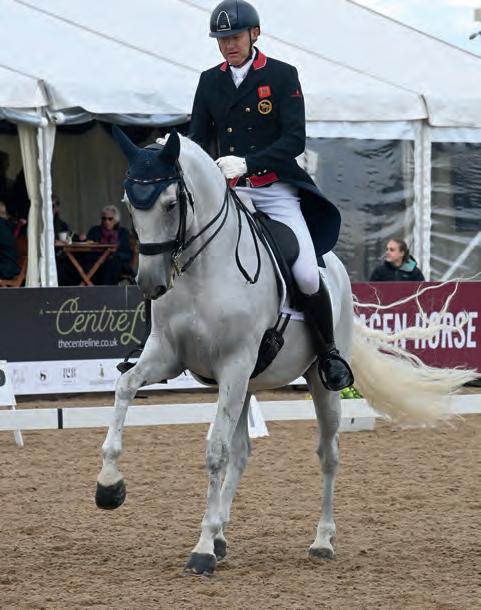
Below: Gareth Hughes and Lufada MVL notched up a great score of 69.413% to take the runner-up slot. LeMieux National Champion in 2022, Gareth has forged a strong relationship in a short time with Monica Linstedt’s 10-year-old Lusitano mare, and the pair were nominated for the European Championships this year.











































































































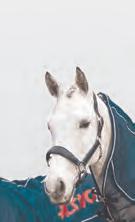
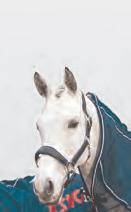





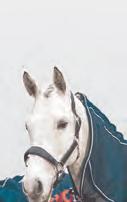

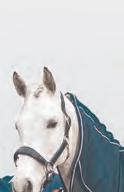


















































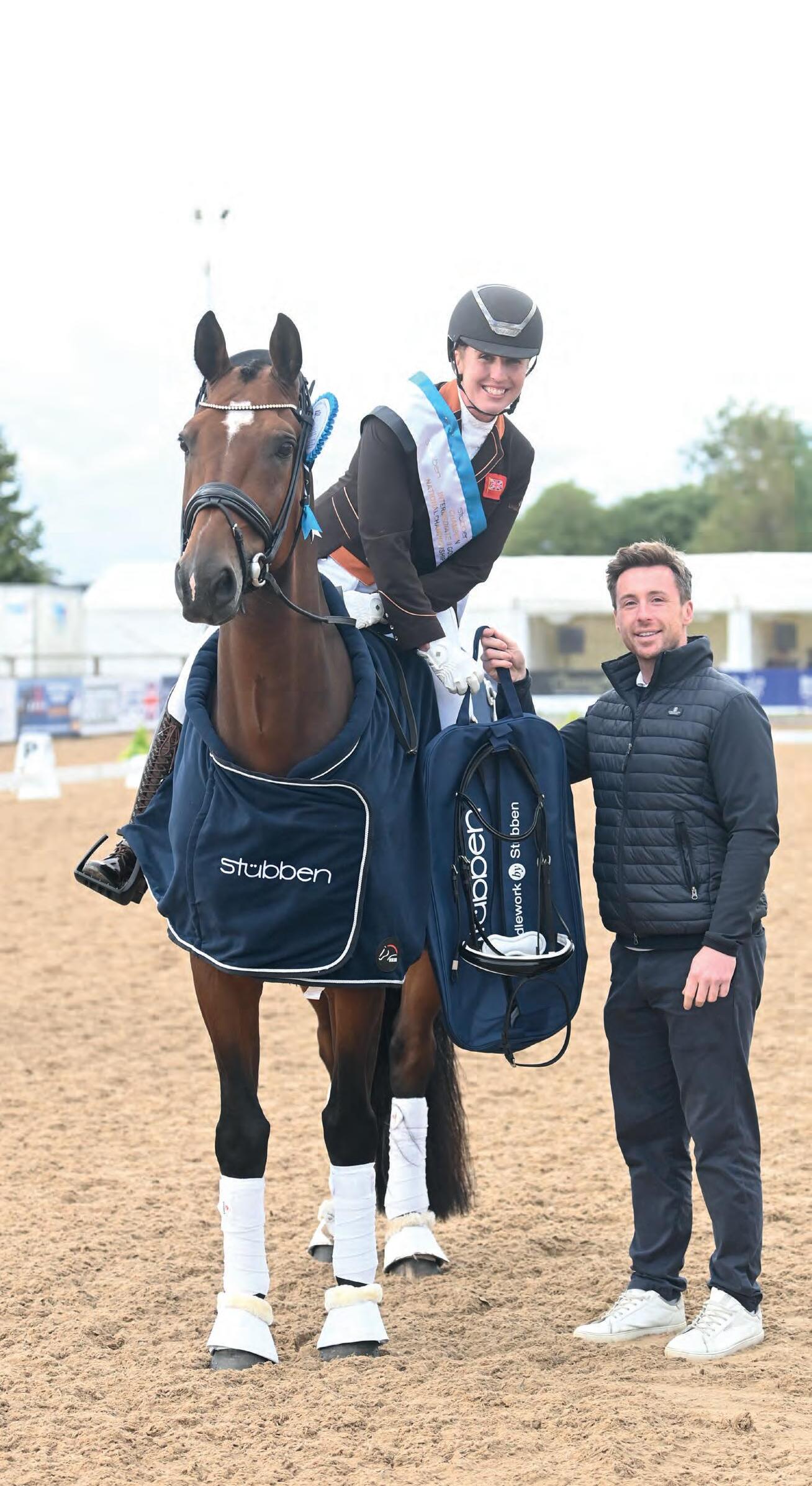
Below: Becky Moody earned her twelfth National title on day one at the 2025 Championships, with the handsome Jack Diamond, owned by Jo Cooper, producing a superb winning performance in the Stuebben Intermediate II Gold.
“I am super pleased with him,” Becky said. “He is 11 years old and an incredibly talented horse, we have had him since he was three. He is huge moving and it has taken a long time to get him to find his strength to do this kind of work. He is a really good example of how each horse is an individual, that needs to take their path.”
“He is just really exciting because there is so much more to come. So we will go away now and chip away and hopefully be ready for big tour next year, I’m excited for the future.”
They are pictured with Tom Sexton from sponsor Stuebben.
“HE IS JUST REALLY EXCITING BECAUSE THERE IS SO MUCH MORE TO COME .” –
Becky Moody and Jack Diamond
Becky Moody with Jo Cooper’s Jack Diamond
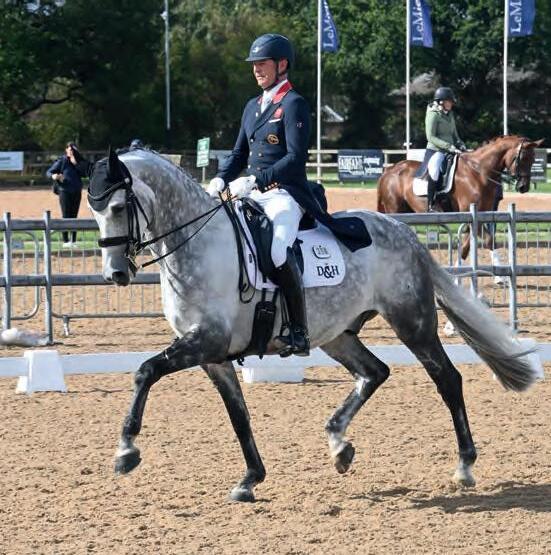
Right: Matt Frost took third place with Helga on 71.147%. The Keenan family’s Chagall mare has returned from injury to great success this year and is now back at Grand Prix.
HOOFPRINTS
1. Becky Moody with Jo Cooper’s Jack Diamond
Spencer Wilton with Samantha Britton’s Woodcroft Django
Matt Frost with his own and Nicola Keenan’s Helga
Theodora Livanos with her own Robinvale
5. Rowan Bryson with her own and Heather Bryson’s Izonik
6. Olivia Oakeley with Caroline Bell’s Full House
7. Thomas Bobis with his own Moliere de Massa
8. Tyla Schou with her own Dennis De Niro
9. Jonathan Clarke-West with his own Goomong Zinfandel
10. Charlotte Dicker with Sarah Marks’ Catherston Timeless
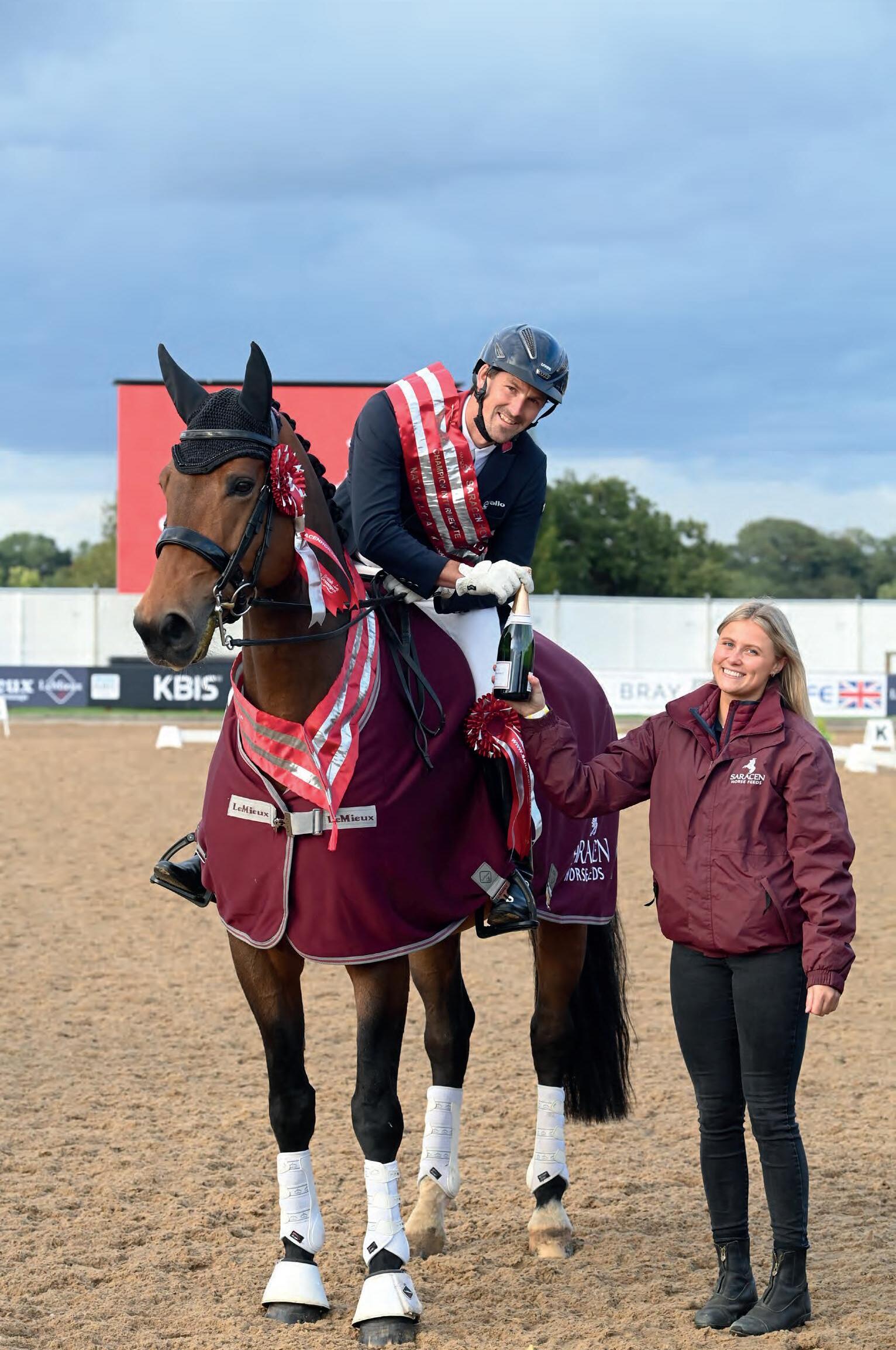
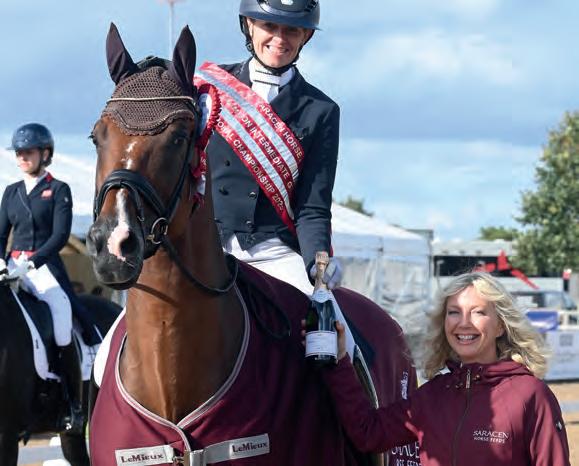
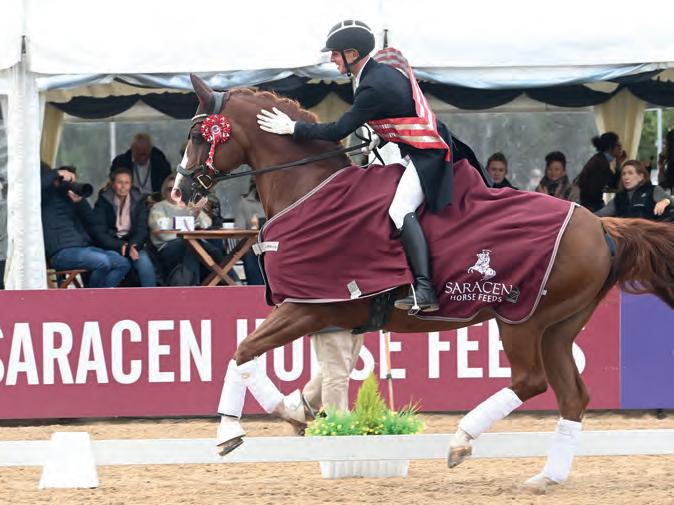
Below: Michael Eilberg broke his ‘seconditis’ at Somerford, returning to the top step of the podium with former seven-year-old champion MSJ Encore. Now 10 years old, the gelding came into his own in the LeMieux Arena, excelling to a fantastic music programme which earned 74.400%, and sealed the Inter I supreme.
“We managed to nail a test with no mistakes. The music really suits him, he’s really on the beat and he’s an impressive horse – he really stands out,” said Michael.
Speaking about ‘Eric’, who was bred at Mount St John, he continued: “He came to us as a foal and we’ve produced him from the beginning. Some good friends bought into him when he was five years old – Nicky and John Hannam – they own him now and they’ve kept him with me. He’s a really classy sort with a lot of potential, it’s lovely to have the ride on him.”
They are pictured with Iona Robinson of Saracen Horse Feeds.
“WE MANAGED TO NAIL A TEST WITH NO MISTAKES. THE MUSIC REALLY SUITS HIM, HE’S REALLY ON THE BEAT AND HE’S AN IMPRESSIVE HORSE – HE REALLY STANDS OUT.”
– Michael Eilberg on MSJ Encore
SARACEN HORSE FEEDS INTERMEDIATE I FREESTYLE GOLD
1. Michael Eilberg with Nicky Hannam’s MSJ Encore
SUPREME CHAMPION
Michael Eilberg with Nicky Hannam’s MSJ Encore
6. Anne-Marie Cowan with her own and Lesley Perry’s Kracka
9. Gracie Catling with Julia Catling’s Qwinton
Greg Sims with Stena Hoerner’s Waverley Fellini
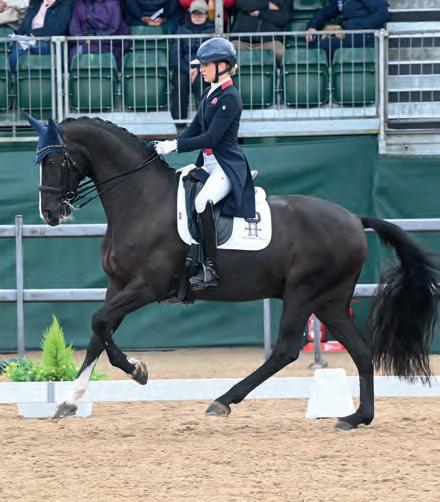
Below: After tasting success at the 2024 LeMieux National Championships, Sarah Higgins and Geniaal (by Vivaldi) were once again standout winners at Somerford, achieving an impressive 74.265% in the Saracen Horse Feeds Intermediate I Gold. They are pictured with Sarah Rushby of Saracen Horse Feeds.
“He is predominantly the ride of his owner Sarah Rao, who is in China at the moment preparing some horses for the National Games, so I have only ridden him three times since Hartpury,” Sarah explained. They are pictured with Sarah Rushby of Saracen Horse Feeds.
SARACEN HORSE FEEDS INTERMEDIATE
1. Sarah Higgins with Sarah Rao’s Geniaal
2. Michael Eilberg with Nicky
Sarah Higgins with Sarah Rao’s Geniaal
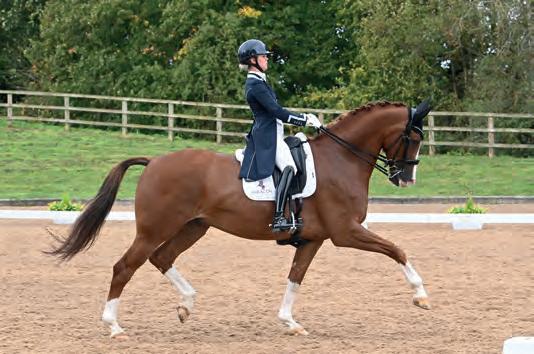
SARACEN HORSE FEEDS INTERMEDIATE I SILVER
1. Gijs Van Vooren with Judith Davis’ Hawtins Quattro
2. Jade Clark with her own Jemimah HH
3. Gijs Van Vooren with Judith Davis’ Hawtins Bellegra
4. Lucy Mills with her own MSL Saltarello Hit
5. Georgie Nicholls with her own Briarwood Notorious
6. Fiona Gair with her own and Nick Gair’s BRS Kingdom
7. Rachel Platt with her own Gracia du Rona
8. Beau Williams with Susan Fortune’s Ipurus
9. Evelina Shrieve with her own Insist TC
10. Rosie McDermott with her own Carrick Aldato Girl
Right: Gijs Van Vooren and the 12-year-old gelding Hawtins Quattro, owned and bred by Judith Davies took the Saracen Horse Feeds Intermediate I Silver.
“He was on fire today” Gijs reflected. “He just loved it and I was so happy with him. He did a mistake-free test which is all I wanted to do, I am just thrilled.”
“I’m originally from Belgium,” he explained. “I came here to work for Hawtins Stud seven years ago. I started backing young horses, then just built my way up to where I am now. It’s been an exciting journey, all thanks to Judith Davis. To get an opportunity like this, they don’t come along often. It’s a lot of pressure because I want to do her and the horses justice.”
The pair are now heading for Inter II and Gijs also finished in third place on Hawtins Bellegra with 68.524%.
Gijs Van Vooren with Judith Davis’ Hawtins Quattro
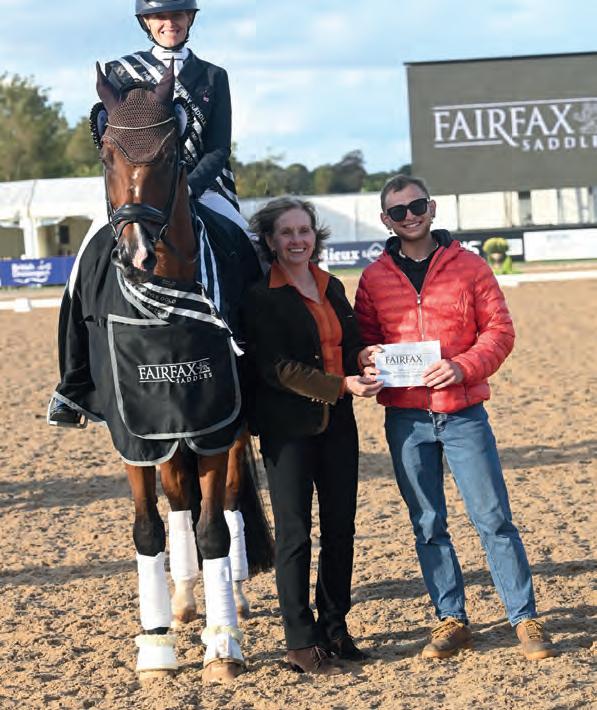
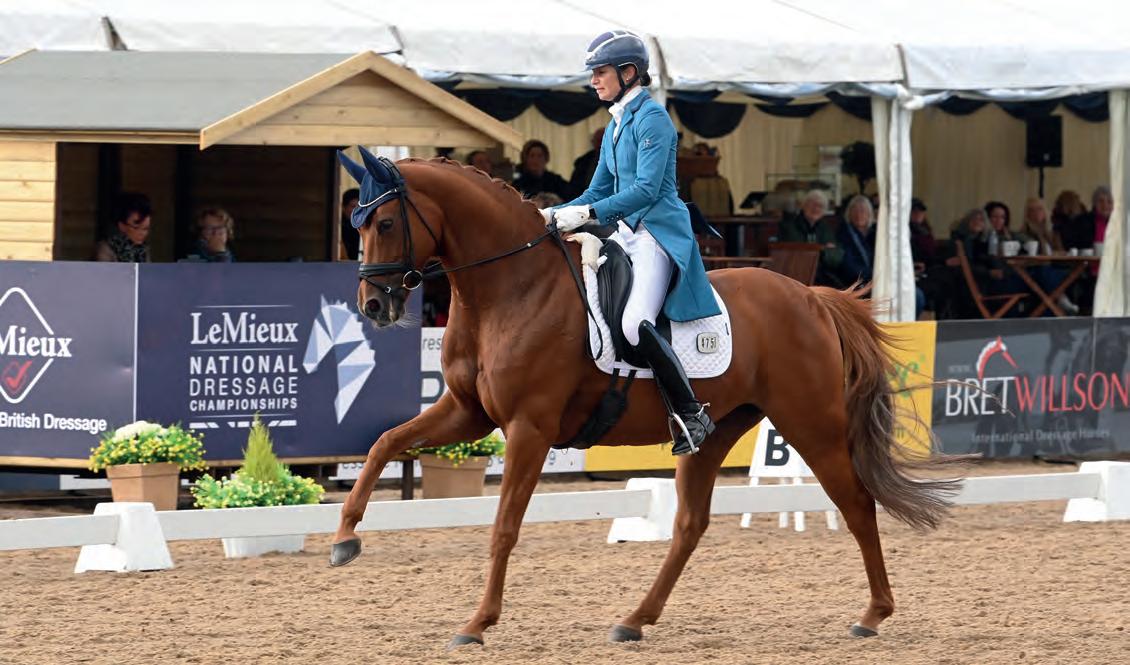
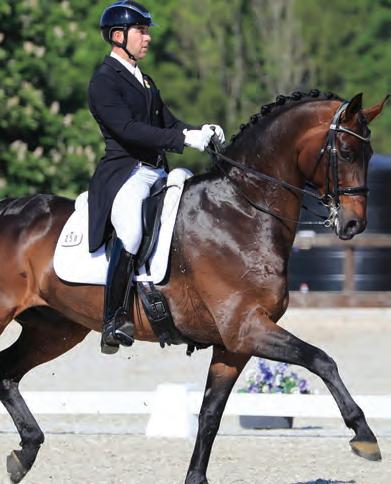
Right: Sarah Higgins and Geniaal returned to the top step of the podium in the Prix St Georges Freestyle with an impressive 76.750%, also taking the Supreme Champion title for the second year running.
“He was just amazing,” the Cheshire-based rider commented. “Freestyles aren’t my favourite thing and I probably need to practice them some more, but he’s a total privilege to ride. I’m incredibly lucky and very grateful to his owner Sarah Rao for allowing me to compete him.”
Reflecting on her outstanding consistency in achieving the Supreme title, Sarah said: “This year the standard of the Small Tour classes all season has been so high. I know he’s an exceptional horse but still everything has to go right on the day; to do that over three tests over the last couple of days has been magical.”
They are pictured with Vanessa Fairfax.
FREESTYLE
1. Sarah Higgins with Sarah Rao’s Geniaal
2. Matt Frost with his own Kerouac
3. Davy Harvey with his own Hercules III
4. Sara-Jane Lanning with Nicola Seale’s Hawtins Lirica
5. Becky Moody with Jo Cooper’s Lancelot B.S.
6. Gracie Catling with Julia Catling’s Qwinton
7. Becky Moody with Jo Cooper’s Magic Dream
8. Sara-Jane Lanning with her own Choice I
9. Daniel Bremner with his own, Lucy Bremner and Susan Singer’s Monet X 68.350%
10. Michael Eilberg with Ferdi and Geraldine Eilberg’s Nanouk EDH 67.775%
Sarah Higgins with Sarah Rao’s Geniaal



































































a
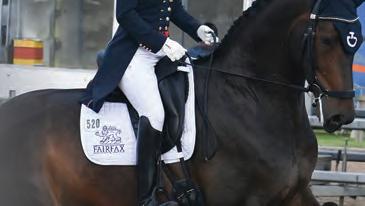
Below: Sarah Higgins earned the Fairfax Saddles Prix St Georges Gold victory for the second year in a row, topping a competitive rendition with Geniaal.
“It felt like one of the best tests I have ever done with him,” said a delighted Sarah after her lap of honour. “I knew I had to do a really good test today, it was a big class, really high standard and so many amazing riders.”
“IT FELT LIKE ONE OF THE BEST TESTS I HAVE EVER DONE WITH HIM.” – Sarah Higgins and
1. Sarah Higgins with Sarah Rao’s Geniaal
2. Michael Eilberg with Nicky Hannam’s MSJ Encore
3. Becky Moody with Jo Cooper’s Magic Dream
4. Gareth Hughes with his own and Georgina Wilkinson’s Mowgli-Olympia MC 70.500%
5. Jessica McConkey with her own Wilson Stensvang
6. Sara-Jane Lanning with Nicola Seale’s Hawtins Lirica
7. Michael Eilberg with Ferdi and Geraldine Eilberg’s Nanouk EDH
8. Davy Harvey with his own Hercules III
9. Kate Cowell with her own Joolz
10. Matt Frost with his own Kerouac
a
performance
to a fantastic 70.617%.
Speaking after his prize giving Gijs said, “It went much better than I expected, we made a couple of mistakes at the Regionals, so I just wanted to avoid doing those mistakes again. He’s such an amazing horse so I’m glad he got to show himself today.”
“I was a last-minute wildcard,” the Belgian-born rider explained about his exciting path to the podium. “They rang me to ask if I wanted to go and I said yes!
“Serena Pincus has trained me for a long time, we get on really well, she knows me, she knows the horses, my weaknesses, she’s absolutely brilliant.”
Gijs Van Vooren with Judith Davis’ Hawtins Quattro
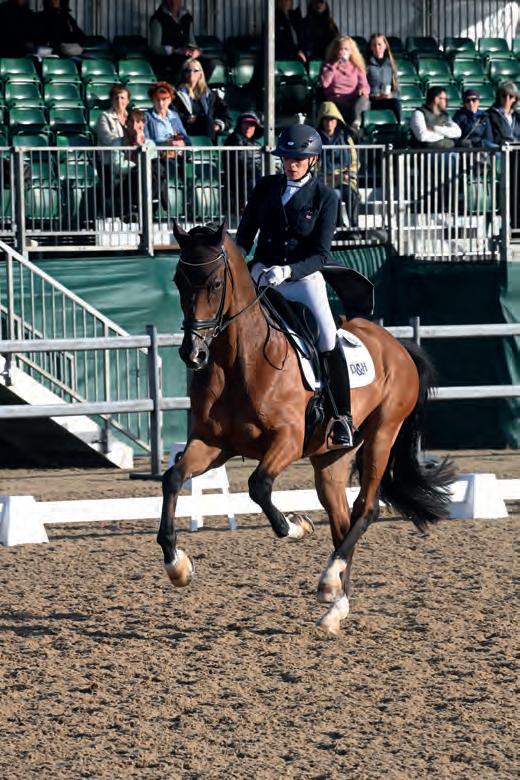
1. Gijs Van Vooren with Judith Davis’ Hawtins Quattro
2. Claire Abel with her own GF Sezuki
3. Evelina Shrieve with her own Insist TC
4. Georgie Nicholls with her own Briarwood Notorious
5. Fiona Gair with her own and Nick Gair’s BRS Kingdom
6. Jessica Parr with her own Juvat FCS
7. Charlotte Donovan with her own Just It’s Mie
8. Rosie McDermott with her own Carrick Aldato Girl 66.588%
9. Annabel Abell with her own Sheepcote Let’s Go 66.294%
10. Victoria Johnson with Sarah Johnson’s Temujin



For feed advice, please call our helpline team on 01270 782 223 or email helplineenquiries@dodsonandhorrell.com www.dodsonandhorrell.com It’s Kwik, it soaks in 10 minutes. It’s Beet, unmolassed sugar beet flakes.
“We produce and show a team of ponies and can have anywhere up to 15 in our string at one time. We have fed D&H KwikBeet for several years; it fits perfectly into our feeding routine as it takes very little time to soak, enabling me to make it fresh every time. I would recommend it to anyone wanting to add extra fibre into their horses and ponies diets and the fact that it is unmolassed is ideal for us too.” Ellie Meldrum, from Pernie Oaks, says it all
Right: Dannie Morgan and his ever-impressive Foundation-sired Fever Tree added another title to their collection, earning the Bret Willson International Advanced Medium Gold. Their winning score was a marvellous 77.250%, for a test that Dannie credited as ‘perhaps his best to date’.
“I was really pleased with Fever Tree today,” the Hampshire-based rider commented. “I contested the seven-year-olds on him and he was a little bit tight and had definitely got a lot of energy, so today he was able to show more relaxation and I was thrilled. I think it was probably the best test we have ever done.”
“I think this is his seventh or eighth title – he has won at every level to Advanced Medium which is really special as a seven-year-old. I just love him to bits, he makes me really happy, I am so lucky to have him.”
Fever Tree recently represented Great Britain at the FEI WBSFH World Breeding Championships.
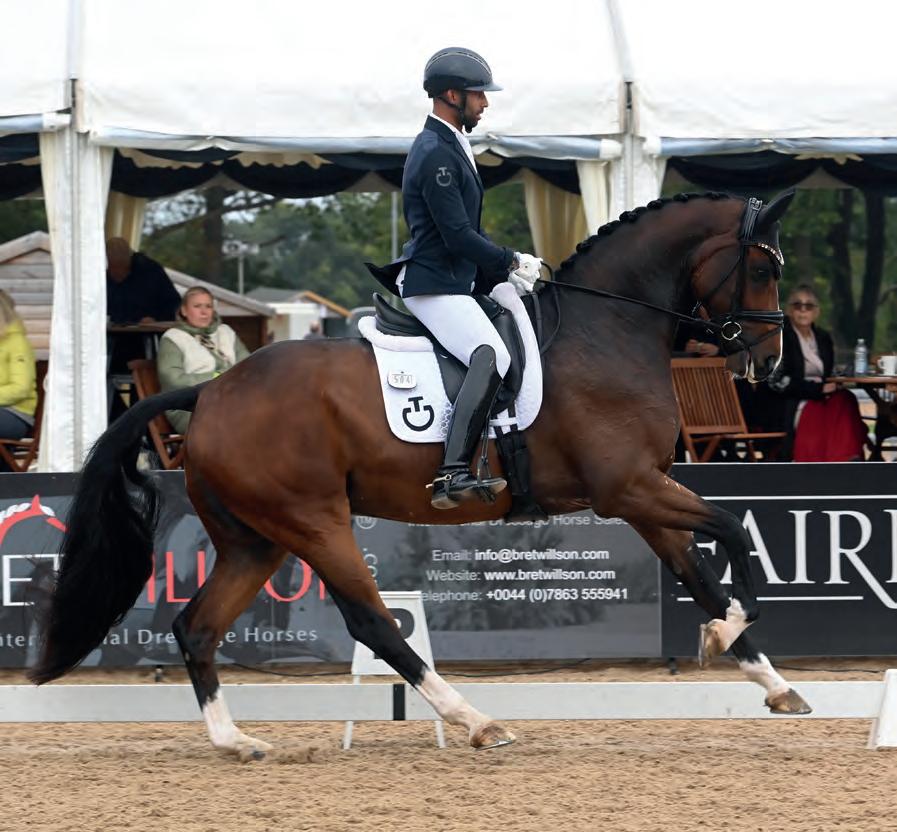
Dannie Morgan with his own Fever Tree
WILLSON INTERNATIONAL ADVANCED MEDIUM GOLD
1. Laura Hill with Janice Robson’s Jobarde-E
2. Jennifer Harkness with her own Inouk 68.806%
3. Liam Wattrus with his own Fürstenvae 68.722%
4. Alicia Laughton with her own Armada Bathsheba 68.500%
5. Jennifer Corrett with her own Joie De Vie 67.972%
6. Richard Long with his own Versatile Des Rois
7. Carmen Gammie with her own Let’s Make an Opera M
8. Emily Coller with Ann Coller’s Ashley
9. Brendan Tegg with his own and Sarah Davies’ Foxcourt Solar Eclipse 67.722%
10. Heidi Hutchinson with Lindsey Gospodarczyk’s Florida of Westoak 67.583%
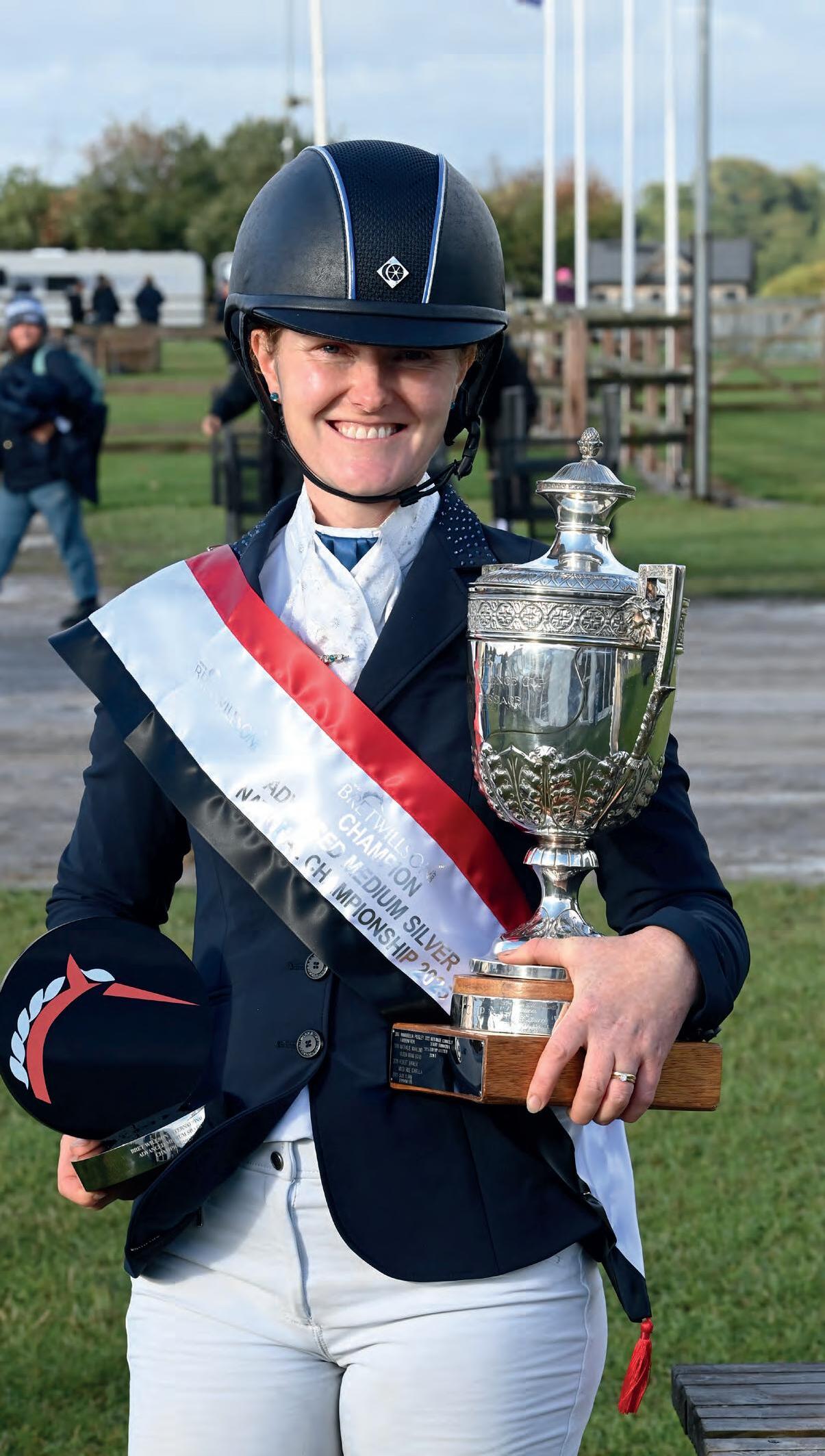
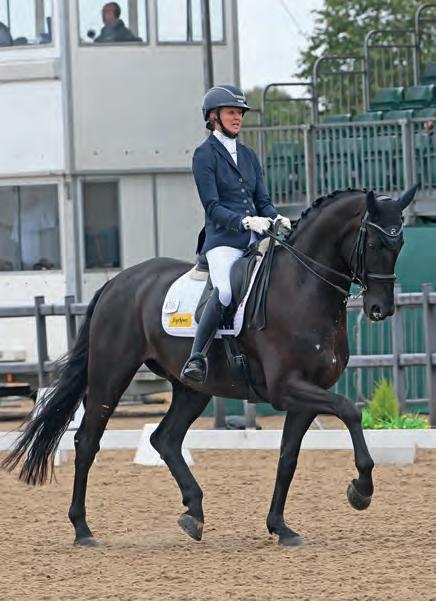
Laura Hill with Janice Robson’s Jobarde-E
“I’VE JUST STEPPED UP TO PSG, AND I HOPE HE’LL DO SMALL TOUR AND HAVE FUN GOING UP THE LEVELS.” – Laura Hill and Jobarde-E
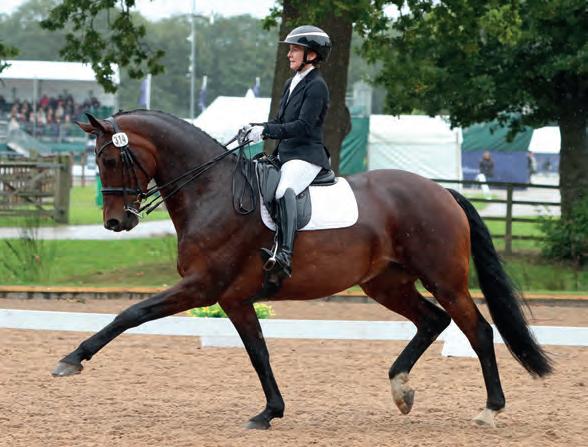
their ticket to the National Championships through a
Having owned ‘Romeo’ since he was three years old, now at the age of 11, he has grown up around Laura’s three children as she explained. “It has been a long journey so far, he’s been stopped and started because of having my three kids. But he’s just the absolute yard favourite, he’s the king of the yard.”
• Bioavailable Zinc & Copper & Vitamins B5 & B6 ExclusiveBDO er! Code :BD10 Oneusecodenottobeusedinconjuction withotherpromocodes
• Forti ed with Omega 3 & MSM • Amino Acids, Methionine & Lysine



















































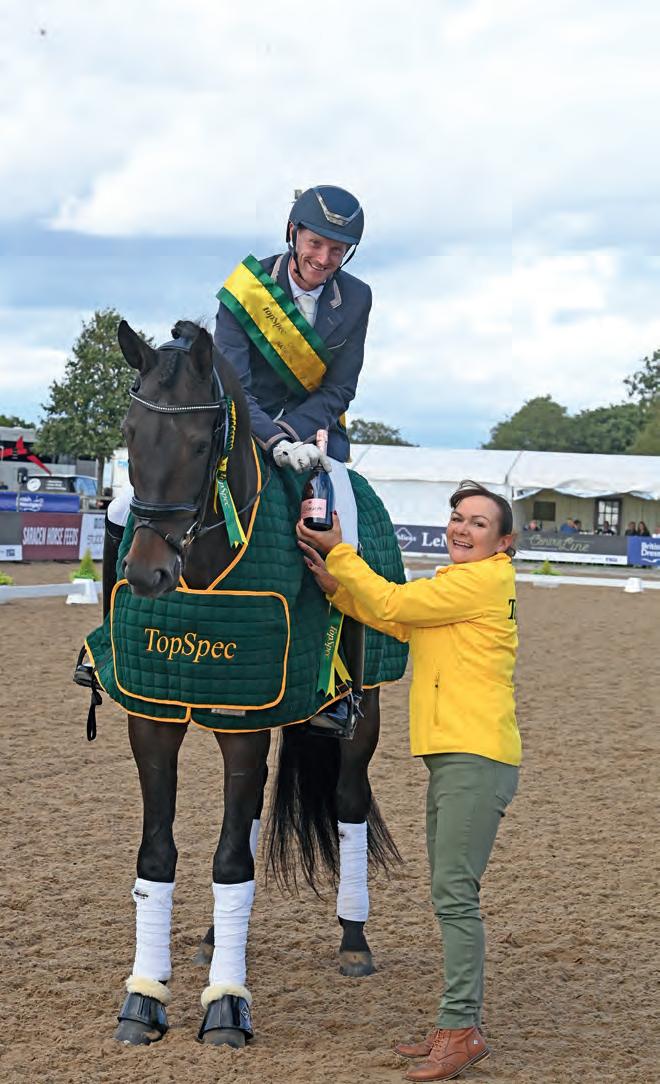
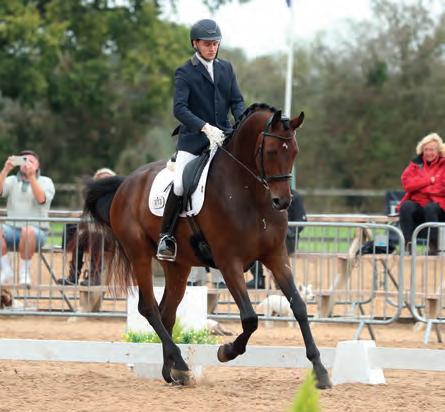
Robert Barker with Christine Kirk’s Kilian’s Bartholomew
going on to be runners-up in the KBIS six-year-
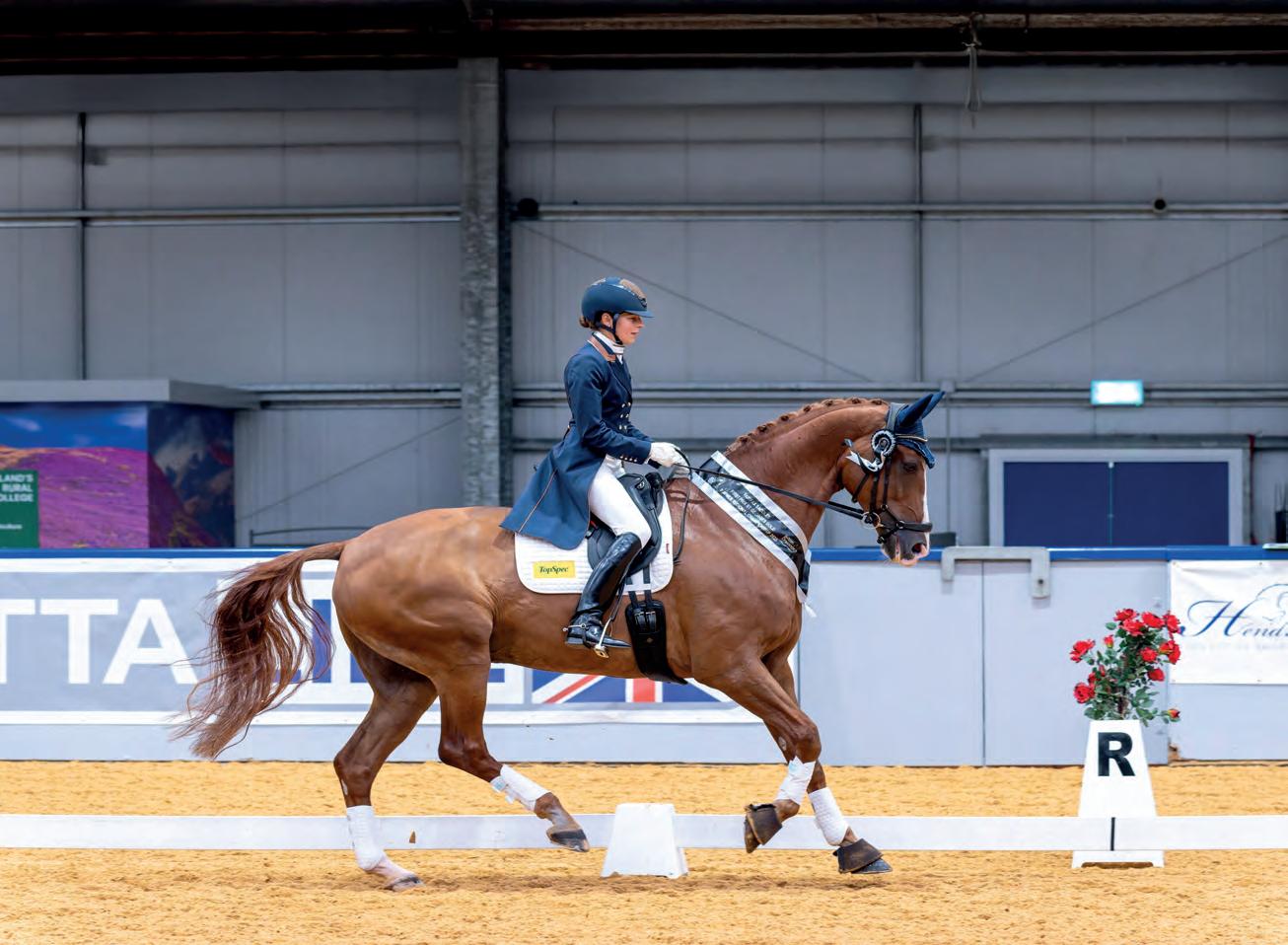
Left: Rob Barker and Christine Kirk enjoyed a rider-owner double dose of success in the TopSpec Medium Gold, claiming both of the top spots. It was the eye-catching six-yearold Kilans Bartholomew (pictured) to win the TopSpec sash, earning 73% and repeating his Regional success earned back in July, with the Lord Loxley-sired Licorno in second. Gloucestershire-based Rob was delighted with his results: “I’m really pleased, both horses are great. They gave me such a good feeling in there, it’s nice for the whole team, the owners, people at home and sponsors.” He is pictured with Laura Cooper of Top Spec.
1. Robert Barker with Christine Kirk’s Kilian’s Bartholomew
2. Robert Barker with Christine Kirk’s Licorno
3. Sadie Smith with Peter Belshaw’s Times Oddjob
4. Tom Goode with Megan Black and Noora Hamad Al Khalifa’s Veto
5. Gracie Catling with Gaynor Morris’ Fraithwens Wytske fan ter Lune
6. Paul Friday with Gemma Guest’s Devolution
7. Darren Hicks with Keeva Dedicoat’s Lenika
8. Natasha Leak with her own Kapoeria
9. Alice Peternell with Katherine Pfistermuller’s Vespasiano
10. Dannie Morgan with Kirstie Clarke’s Nureno

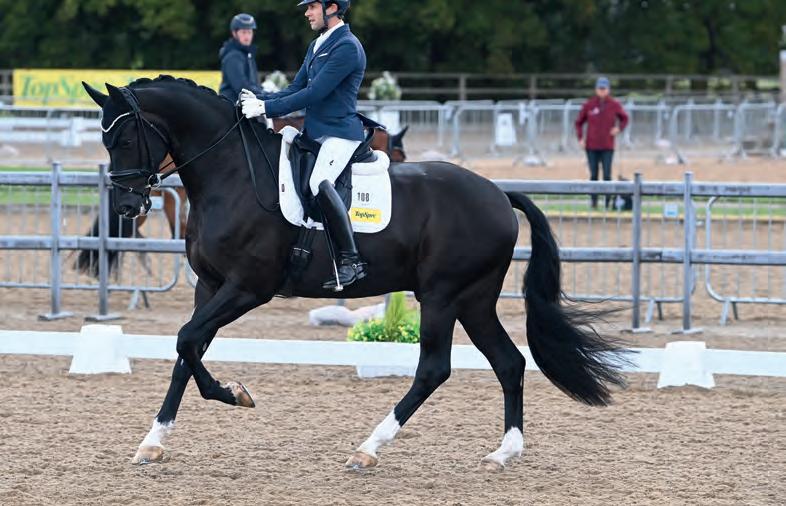
Sadie Smith completed an uber successful day at the championships with third place in the Medium, this on board Peter Belshaw’s Times Oddjob with a score of 71.500%.
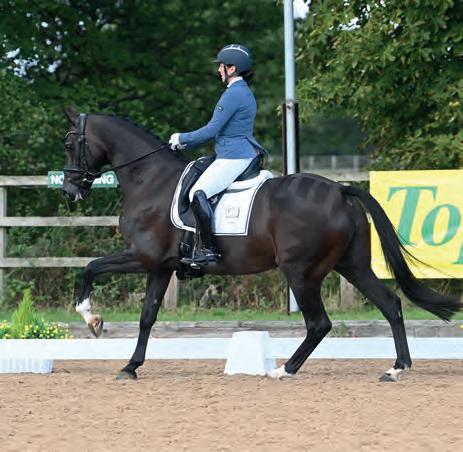
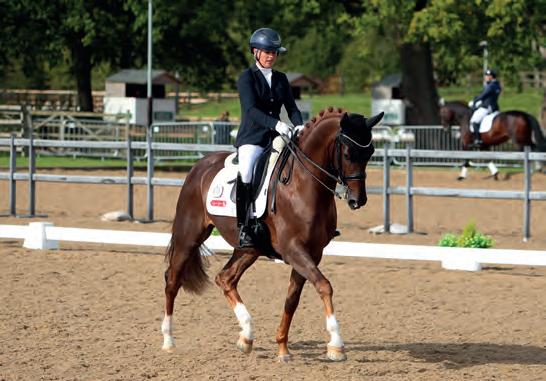
Aimee
and her own Everdale-sired Lavanya MC took the third spot with 69.083%.
1. Ella-Grace Dovey with Hannah Dovey’s Sheepcote Jackson
2. Anna Burns with Becky Moody’s San Isidro
3. Aimee Aspinall with her own Lavanya MC
4. Chloe Dawes with her own Femma Lijbra
5. Violet Hawkins with Alex Hawkins’ DZL Royal Sunrise
6. Jennifer Blunt with her own Dondolini
7. Lucy Bridgwater with her own Monaco II
8. Kate Purchase with her own Nethercote
9. Alison Calvert with her own Woodlander Frampton
10. Emma Mason with her own Fleur C
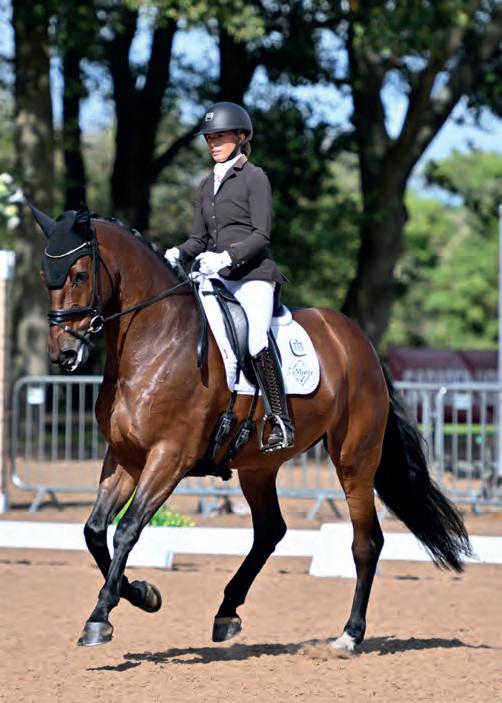
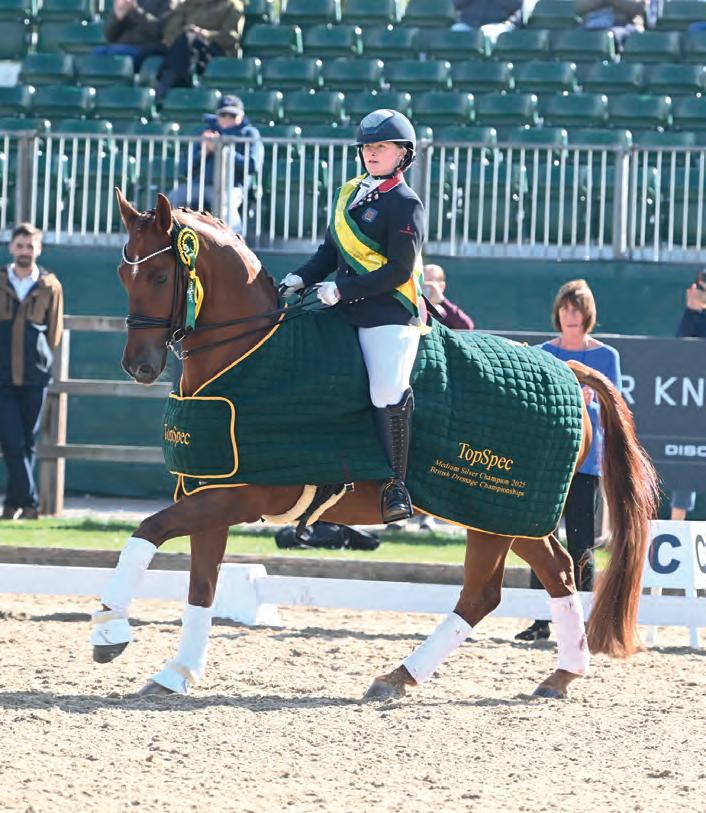
Below: The 2024 Children on Horses European Champion Ella-Grace Dovey sparkled on the national stage in the Vector Arena, adding another title to her collection in the TopSpec Medium Silver Championship. Riding Hannah Dovey’s British-bred gelding Sheepcote Jackson, Ella-Grace earned 70.444%.
Ella-Grace and Sheepcote Jackson have been a partnership for one-and-a-half years now, “We’ve been doing a lot of changes, practicing for the Juniors next year. But the changes have had to stop to prepare for the Medium. He is on the lazier side so anything he can get away with, like working less hard, that will be his favourite thing to do. Our aim is to go out around Christmas time and do Juniors.” WINNER
Ella-Grace Dovey with Hannah Dovey’s Sheepcote Jackson
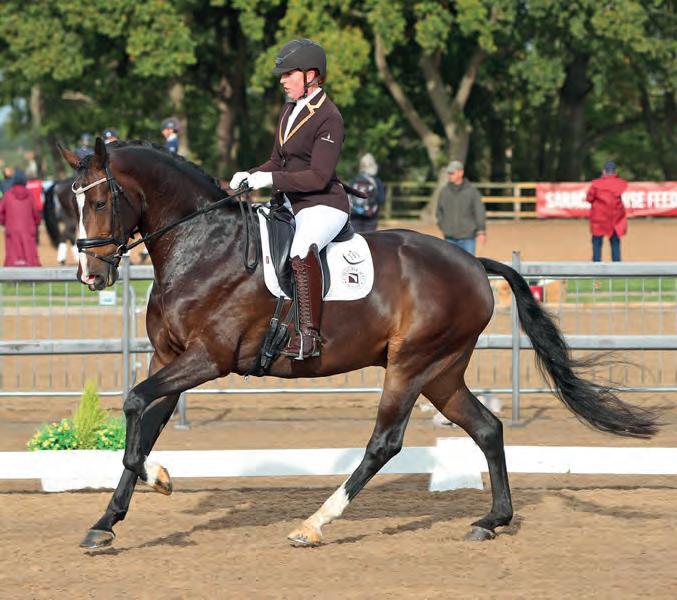
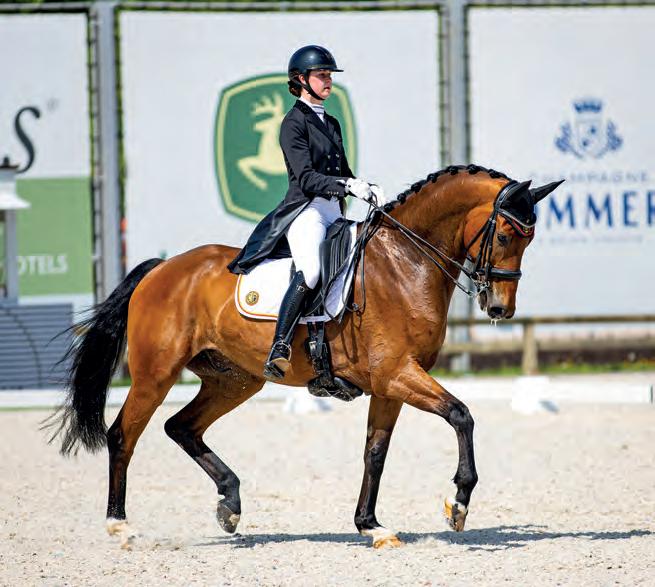
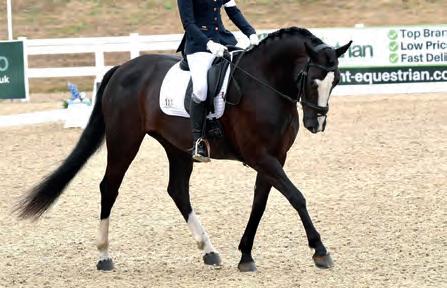
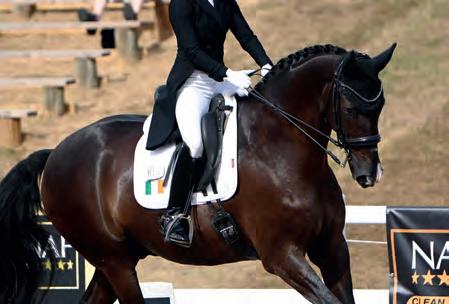
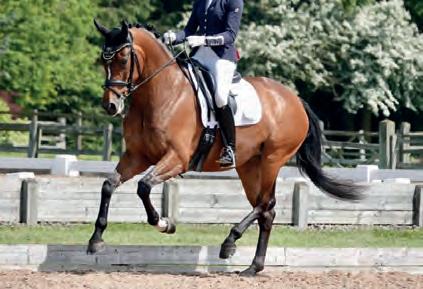
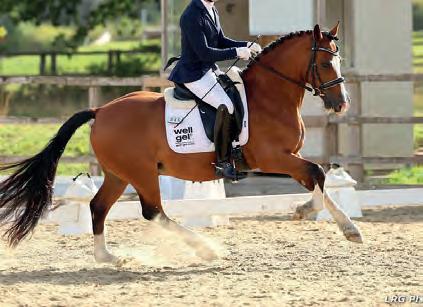
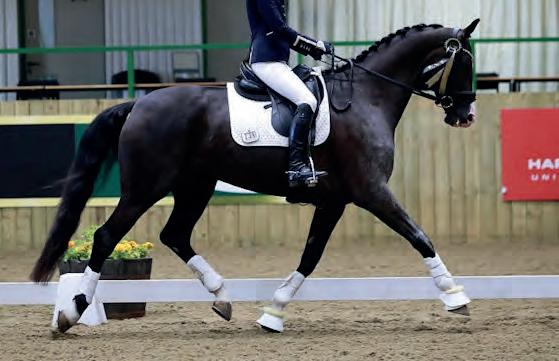
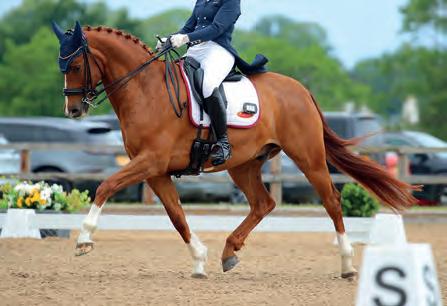
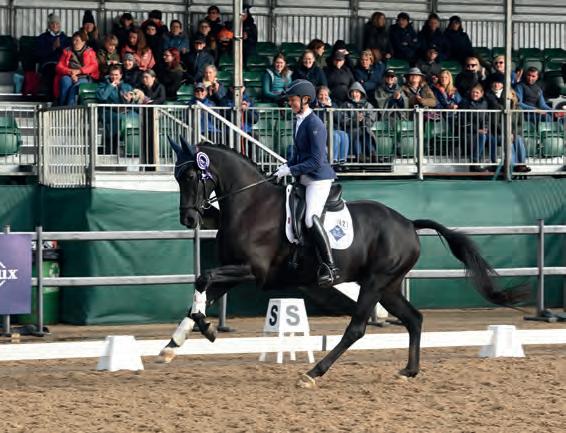
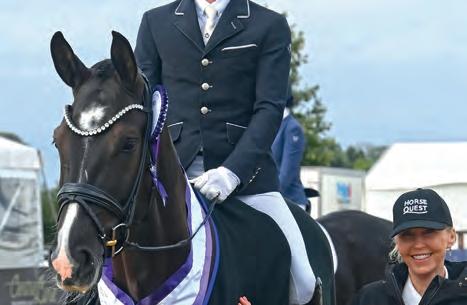
Below: Sonnar Murray-Brown produced an outstanding test with Devina B, earning the HorseQuest Elementary Gold title, on a score of 74.788%.
“I was very pleased with her, especially in these conditions. She has so much talent, there’s a long way to go but it’s really promising that she’s come here for her first Nationals and delivered.”
Sonnar found his superstar from the recommendation of a friend, “When I sat on her, she was raw but she gave a great feeling.” They are pictured with Alison Reeves of HorseQuest.
Bryony Goodwin was just a fraction behind on Sarah Lucas’s SJL Niko (Jerveaux x Florencio) with 74.273% and had no less than three horses in the top ten.
“WHEN I SAT ON HER, SHE WAS RAW BUT SHE GAVE A GREAT FEELING.”
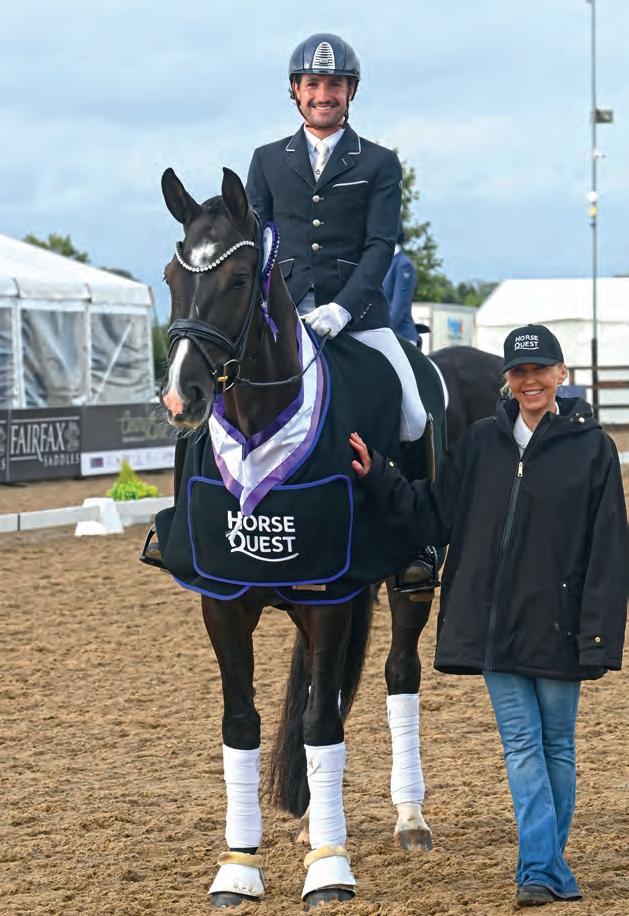
Sonnar Murray Brown with Amanda Leadbeater’s Devina B
1. Sonnar Murray Brown with Amanda Leadbeater’s Devina B
2. Dannie Morgan with his own and Kristina Rausing’s Freya VII
3. Bryony Goodwin with Antonia Brown’s SJL Niko
4. Jezz Palmer with Katie Oliver-Games’ Bovary JBM
5. Dannie Morgan with his own and Kristina Rausing’s Verity III
6. Bryony Goodwin with David Pincus’s Sheepcote Big Deal
7. Jennifer Johnston Harman with her own Nightlife
8. Bryony Goodwin with Alison Luscombe’s BB Florence
9. Maddy Frewin with Jude Capon’s Zevrado Bliss
10. Alice Peternell with her own Newton-D
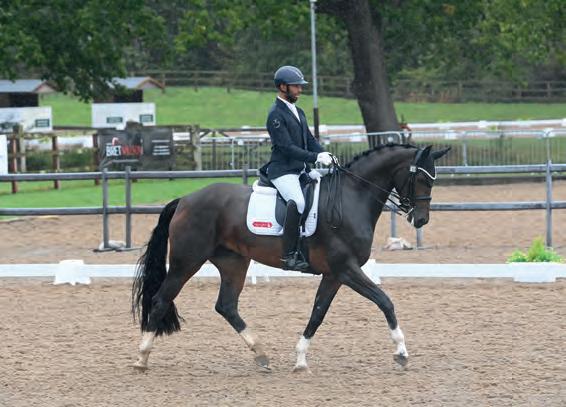
Above: Dannie Morgan and Kristina Rausing’s Freya VII (Fidertanz x Rosengold) placed second with 74.485%, in an extraordinarily competitive class with the top 10 all over 70%.
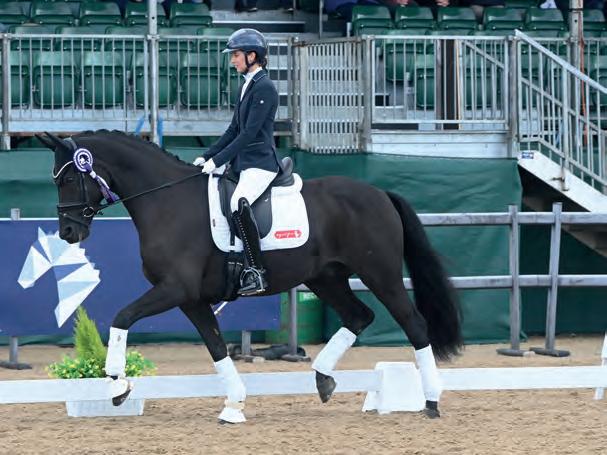
In the
Elementary
Aston and
Flo repeated their 2024 Novice Silver success, achieving a win at the level above, this time with a superb 70.272%.
“I’ve had her since a two-year-old and we’ve worked our way up together. She’s training at Advanced Medium level at home now,” the Somerset-based rider reflected on her eightyear-old mare, who’s by Fürst Romancier and out of a Sandro Hit mare.
“I owe all of this success to my coach Calum Whitworth,” she continued.
“He really knows us as a pair, what works and doesn’t work.”
Lauren Aston with her own Free Flo
1. Sadie Smith with Sarah Tyler-Evans’ River Rise Pizzazz
Sadie Smith with Sarah Tyler-Evans’ River Rise Pizzazz
2. Sophie Wells with Charlotte Hogg’s Ontario LC
3. Dannie Morgan with Rose McMillan’s Fürst
5. Sonnar Murray Brown with Amanda Leadbeater’s Devina
6. Bryony Goodwin with Alison Luscombe’s BB Florence
7. Paul Friday with Georgia Keegan’s EQP Deidre
8. Jezz Palmer with Martin Price’s Premier Anmore
9. Mark Forrest with Elena Goodfellow’s Marchioness de Fleurs
10. Tom Goode with Debbie Cunningham’s Razzila
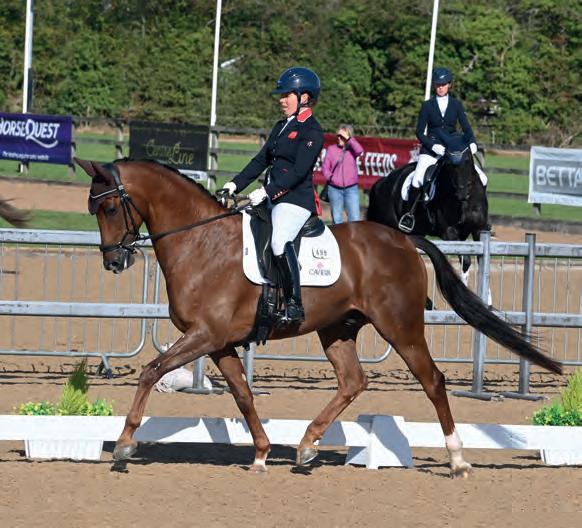
Dannie Morgan gave Rose McMillan’s Furst Lady III a super ride to take third spot on 72.742%.
Below: Second place belonged to Sophie Wells, who earned 72.871% with Charlotte Hogg’s Ontario LC (Vitalis x Jazz), known as Rio. The pair were first to go in the 38-strong class.
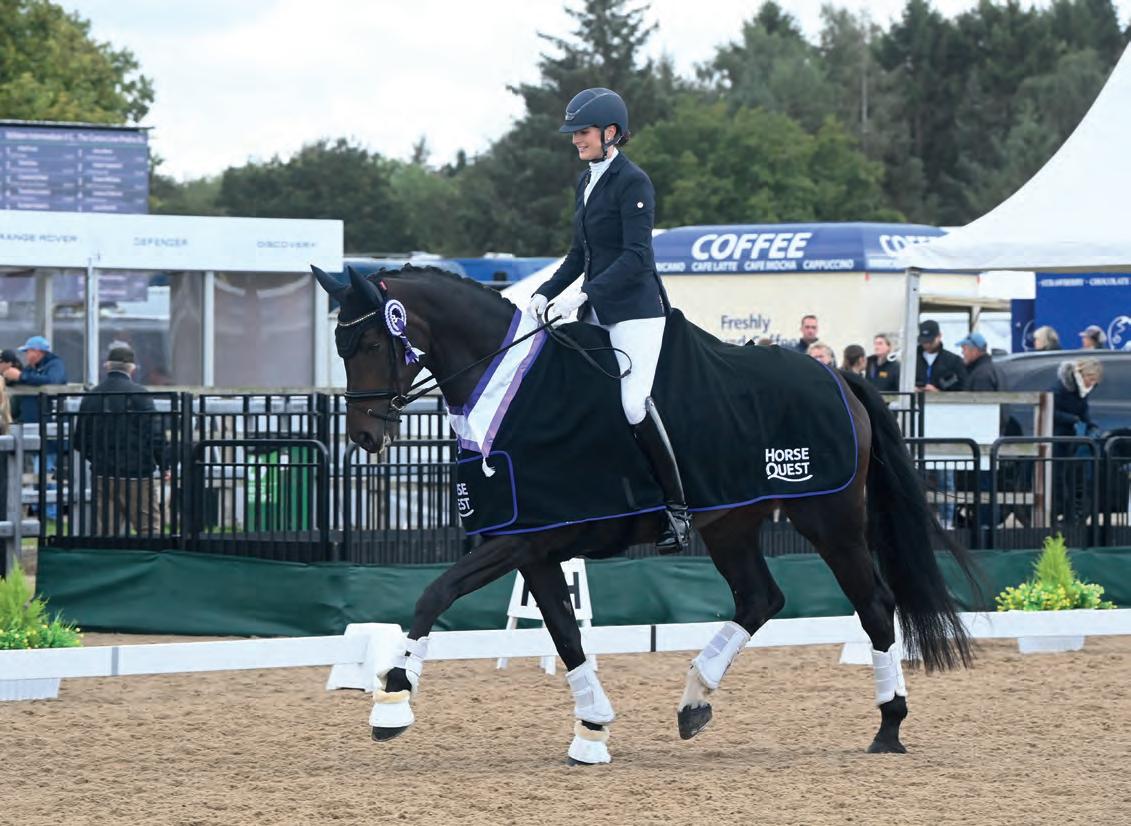
Above: Sadie Smith and Sarah Tyler-Evans’ River Rise Pizzazz topped a hugely competitive Bettalife Novice Gold class, where no fewer than 18 combinations scored over 70%. Their winning score was 74.677%, with the five-year-old gelding earning his second major title of the year, following on from success in the HorseHage Prelim Gold Winter Championship.
Sadie was delighted with the progress of her lovely gelding, commenting: “He went really well in my test – we had one spook at A but other than that, compared to last year in the four-year-olds...we could barely get around! This year he’s a lot more confident, he’s stronger in his body now and I was really smiling when we came out. He gave me a lovely ride.”
For Sadie, ‘Bolly’ is particularly special as she successfully produced his dam, River Rise Escarla, during the early years of her career.
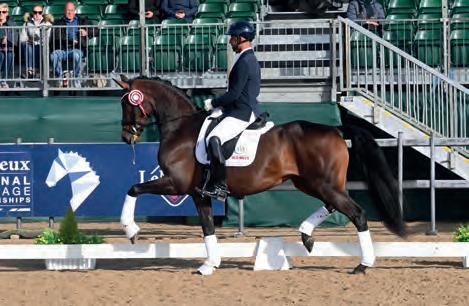
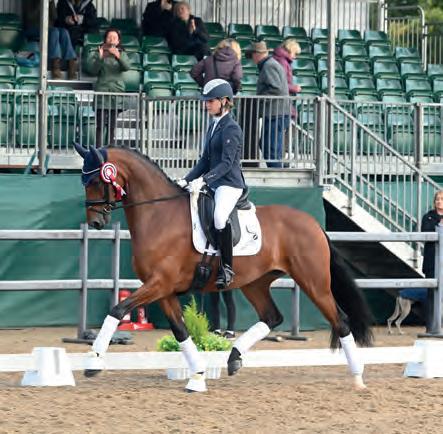
Right: Jack Stancombe and Andy Sutton’s Fastnet Rock (Franklin x Locksley II) were reserve champions on a score of 71.936%,
Below: Sophie Lee-Amies and River Rise Ooo La La finished just a fraction behind in third on a super score of 71.839%. An essential part of Sadie Smith’s team, Sophie had a busy few days helping with Sadie’s multiple rides as well as competing.
Lauren Burrows with her own High Hoes Esquisse
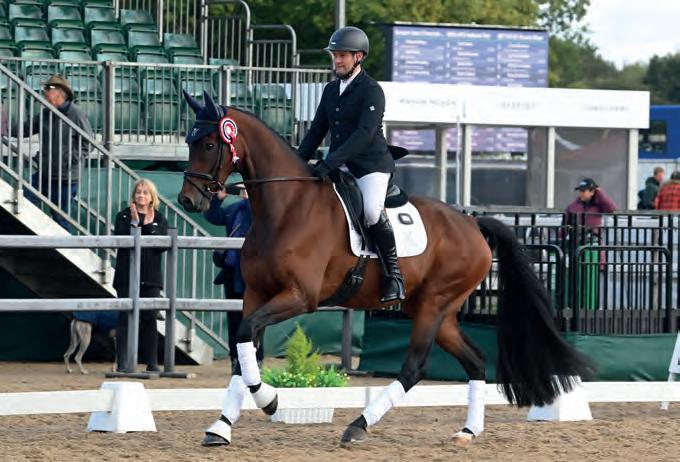
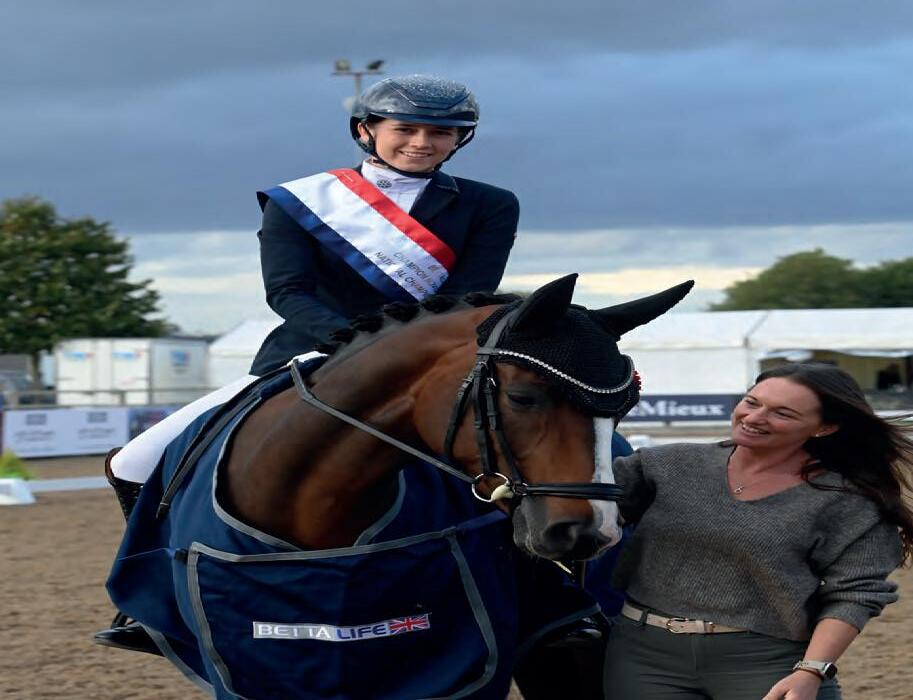
1. Lauren Burrows with her own High Hoes Esquisse
2. Jack Stancombe with Andy Sutton’s Fastnet Rock
3. Sophie Lee-Amies with her own River Rise Ooo La La
4. Beau Brotherton with Naomi Brotherton’s Berlin
5. Tara Faulds with Julie Faulds’ Platinum SNW
6. Emma Forsyth with her own Dolly Ann
7. Imogen Swann with Antonia Brown’s Podrick van den Overwinning
8. Imogen Casely with Shona Casely’s King Cotton Legacy
9. Emma Williams with Christine Kirk’s Dolce Signorian
10. Gemma Zaremba with her own Ernes 69.258%
“I BOUGHT HER AS AN UNBACKED THREE-YEAR-OLD.”
– Lauren Burrows on High Hoes Esquisse
Left: In a high standard Bettalife Novice Silver class, Lauren Burrows and her own High Hoes Esquisse succeeded in producing a title winning test on a score of 72.387%.
Lauren has now won titles at three consecutive BD Championships. When asked what her secret to success was, Lauren laughed: “Hard work! It’s long hours. I’m based with Dannie Morgan, I groom and ride for him as well – he’s a massive part of my success and I couldn’t do it without him. He gives me amazing opportunities riding lots of different types of horses, it’s made me so much better as a rider.”
Speaking about six-year-old Kizzy, Lauren said: “She’s by Escalito and bred by Nicky Hallam at High Hoes. I bought her as an unbacked three-year-old so she’s been my first young horse that I’ve done myself from scratch, with the help of Dannie on the ground.” They are pictured with Amy Pickard of Bettalife.

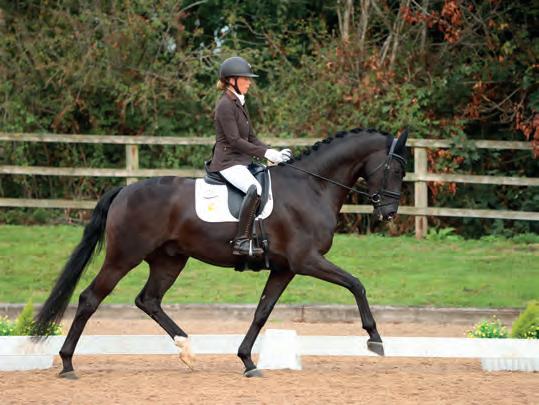
Sadie Smith with Peter Belshaw’s Times Rococo
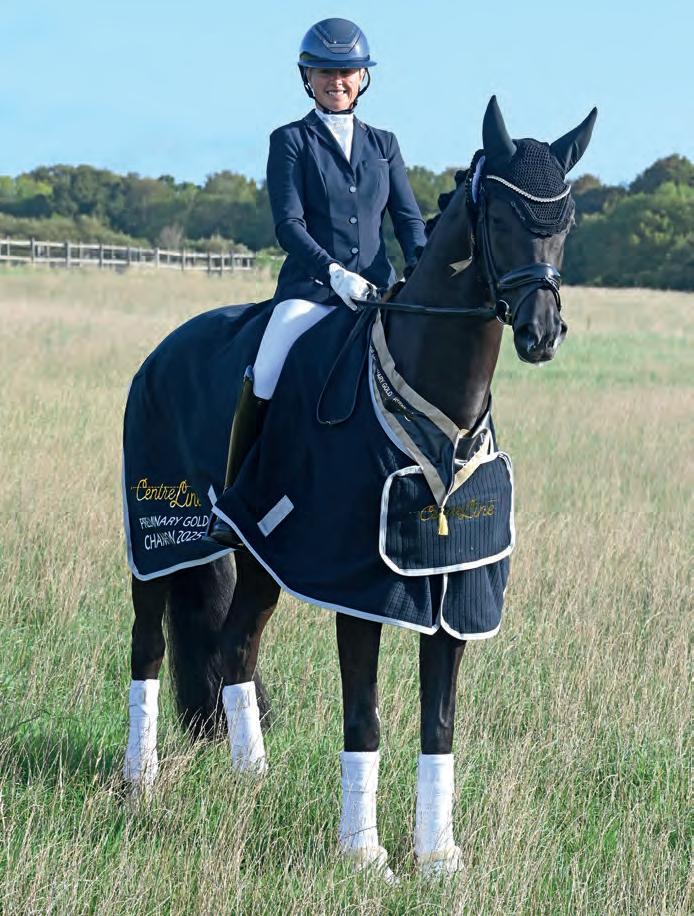
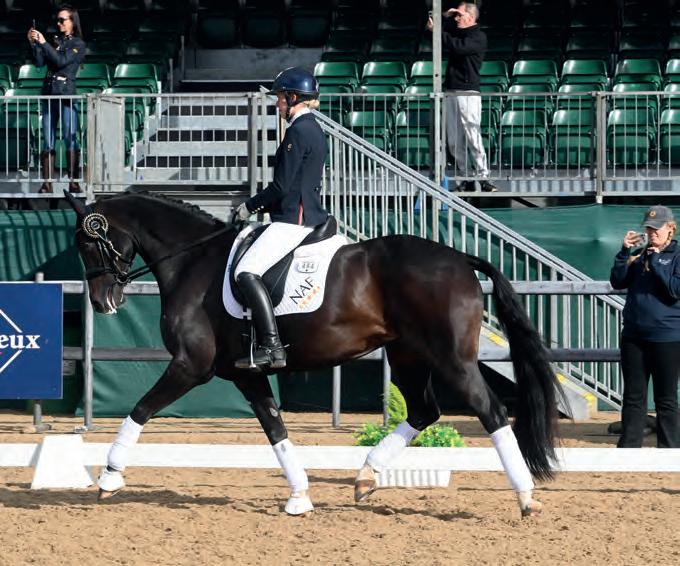
Above: Kerry Mackin and Finest Romance also earned a fantastic score of 72.800%, giving them a well-earned third place in a class that provided one of the Championships' highlights.
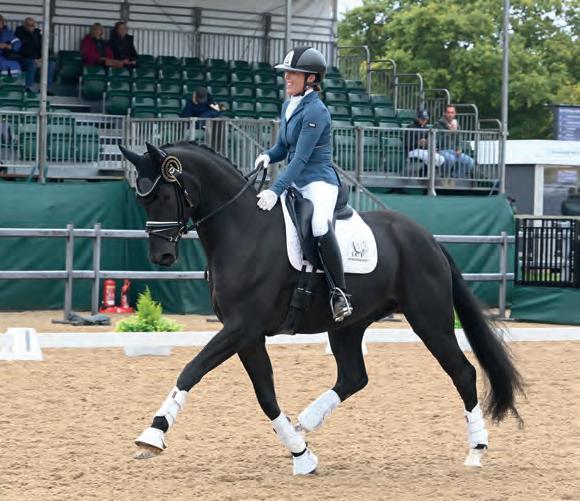
Sadie Smith’s fantastic championships continued on Sunday morning, when it was Peter Belshaw’s four-year-old mare Times Rococo (Ibiza x Negro) taking her turn in the spotlight, scoring 74.267% to win The Centre Line Prelim Gold.
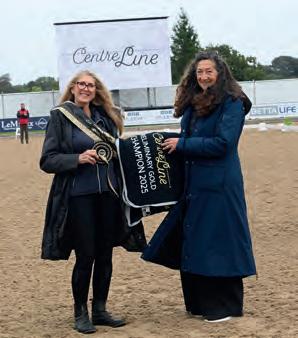
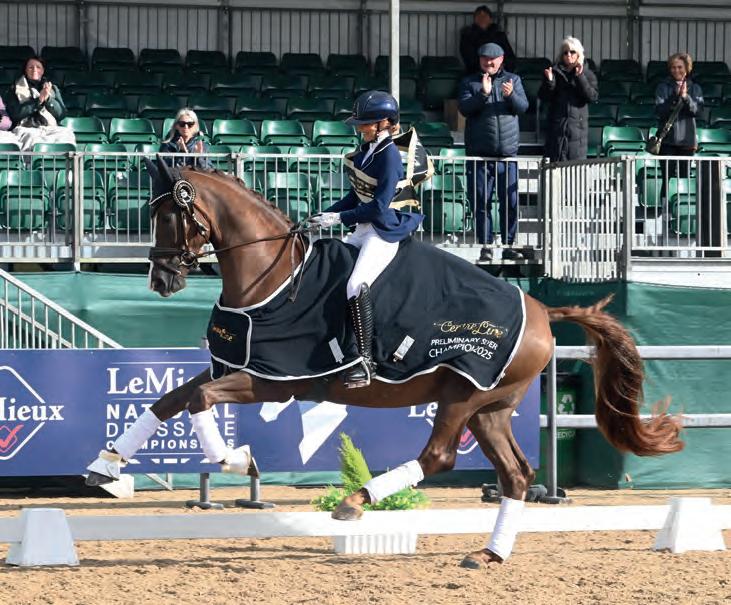
Right: Amy Ward and the impressive MS Broadway M (Bon Courage x Royal Classic) earned a remarkable score of 75% in the Vector Arena, claiming The Centre Line Preliminary Silver in convincing fashion. The five-year-old chestnut gelding is owned by Amy and Adrienne Ward.
“This is my first year at the National Championships,” said Amy reflecting on her win. “You never really know what that’s going to mean for you when it is your first time here but I’m absolutely thrilled with how the test went today.”
Amy has made the long journey back to action from a serious skiing accident: “I had knee reconstruction and learned how to walk again A year later I sat on a horse again to see if I could, and now I’m here. I’ve only been back in the game two or three years really. Having an injury like that really puts things into perspective.”
CENTRE
Amy Ward with her own and Adrienne Ward’s MS Broadway M
“I’M ABSOLUTELY THRILLED WITH HOW THE TEST WENT TODAY.” – Amy Ward
Helen
1. Amy Ward with her own and Adrienne Ward’s MS Broadway M 75.000%
2. Helen Hopewell with her own Ototo ASD 74.333%
3. Emma Williams with Christine Kirk’s Dolce Signorian
4. Leanna Osborne with her own Pherreau
5. Laura Borrell with her own Navarone
6. Amy Ward with her own Pete D
=7. Julia Wilkinson with her own Chadwells Zukunftsstar
=7. Duncan Morgan with his own Neptunus-Utopia
9. Erin Taylor with Charlotte Dicker’s O Sole Mio
=10. Gemma Zaremba with her own Ernes
=10. Thomas Eastwood with his own Santino CF
and her own Ototo ASD
claimed the reserve champion spot on
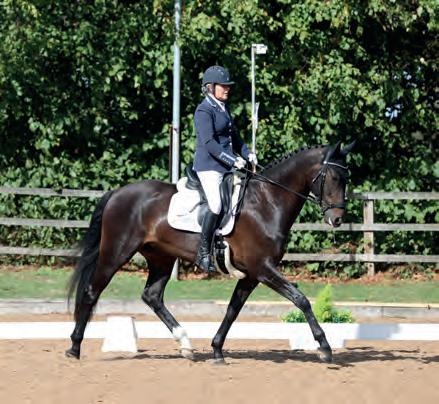











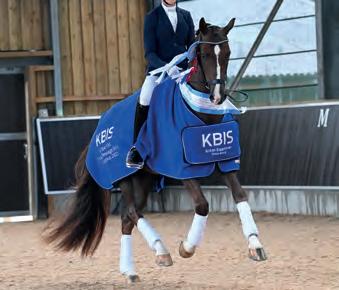
unday at the LeMieux National Championships sees the top three horses in the KBIS Young Horse Championships five- and six-year-old age categories step forward for final assessment as the ride judging takes place to decide the winner.
This year, international judges Sascha Schulz and Eva-Maria VintWarmington were joined by trainer judge and Olympic medallist Spencer Wilton, alongside British-born Dutch-based rider Phoebe Peters, who made her debut appearance as a guest rider at the National Championships.
1. Jezz Palmer with Amy and Adrienne Ward’s MS Broadway M
2. Sadie Smith with Sarah Tyler-Evans’ River Rise Pizzazz
3. Sarah Millis with her own Kilimandjaro De Massa
Above and below right: Nicola Mahoney’s Game On II owned, bred and ridden by Nicola herself, won an immensely competitive six-yearold championship. This horse, sired by Governor and out of Stella by Sir Donnerhall, has a great record in these championships, formerly winning both the four and five-year-old championships with Ashley Jenkins in the saddle.
Game On II got the nod ahead of Noora Bint Hamad Al Khalifa’s Veto and Tom Goode and Sadie Smith with Sarah Tyler Evans’ River Rise Onassis.
Nicola Mahoney spoke about what it felt like to ride her horse to the win: “It was the most incredible feeling in the world, I felt loads more pressure riding him this year after he’s done so well winning the four- and five-year-old championships here.
“It’s so rewarding having bred him myself, I’d like to say there was a lot of science behind my breeding programme but I think it’s just a lot of luck breeding such a phenomenal horse, how lucky am I!”
She trains with Serena Pincus and hopes to bring her superstar back to Somerford Park next year, with the seven-year-old class in her sights.
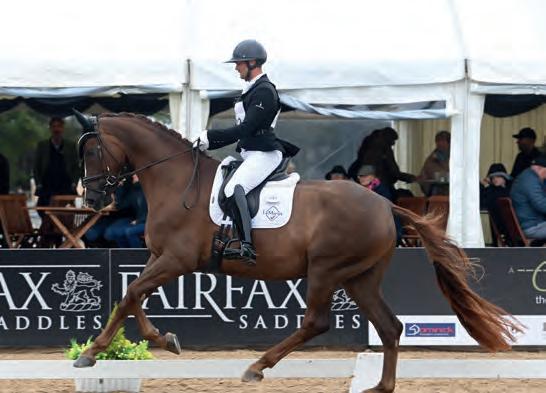
Right: Jezz Palmer rode Adrienne and Amy Ward’s tall, powerful gelding MS Broadway M (Bon Courage x Royal Classic) to the fiveyear old title. Earlier in the week, the gelding won the Prelim Silver under his owner Amy, who shares the ride with her trainer Jezz.
Jezz Palmer said: “He felt better today than yesterday, going round in that arena he lit up a bit more, and showed off more. But what is really good with him is as soon as I drop the rein, he has a huge walk, so he just powered around.”
He concluded by talking about how he and Amy work together for success: “He is now so fun to ride everyday and gives you a great feeling to ride even at home. I ride him a lot and teach Amy when she is here. Anyone can hack him, we are so lucky with his temperament.”
MS Broadway M took the win ahead of finalists Sadie Smith and River Rise Pizzazz – Bettalife Novice Gold Champions earlier in the week – and Sarah Millis and Kilimandjaro de Massa.
They are pictured with Lawrence Gill of KBIS British Equestrian Insurance.
1. Nicola Mahoney with her own Game On II
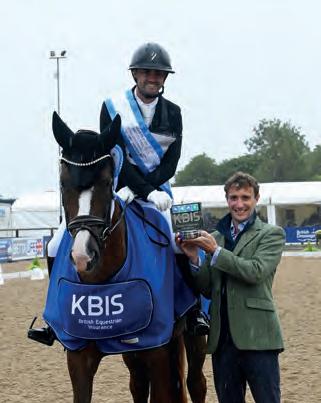
2. Tom Goode with Megan Black and Noora Hamad Al Khalifa’s Veto
3. Sadie Smith with Sue Garrard’s River Rise Onassis
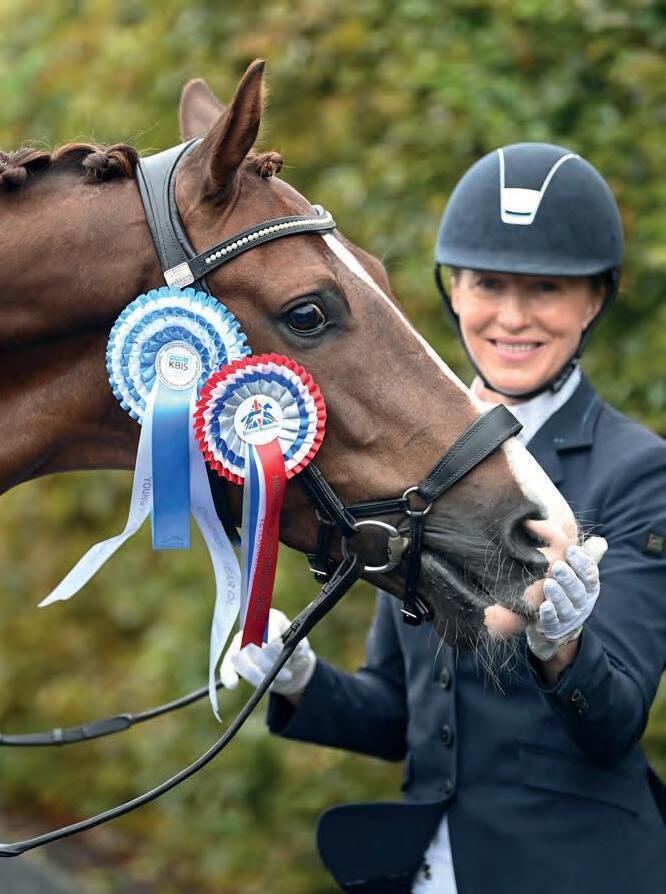
with
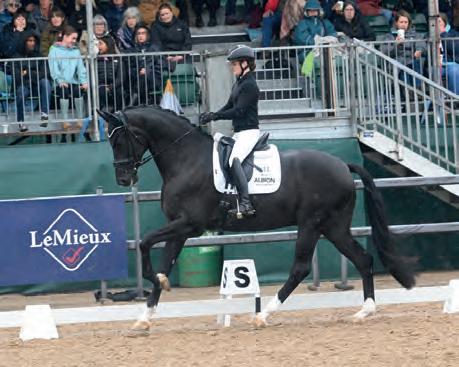
The KBIS Young Horse Championships four- and seven-year-old classes are decided on the basis of the national test for their age group.
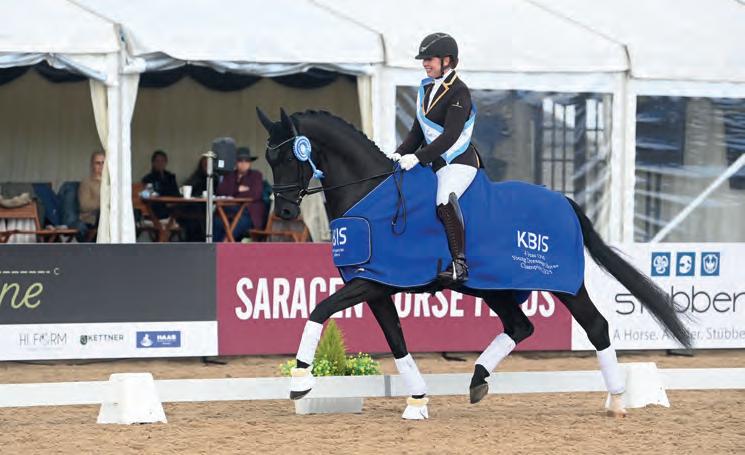
Right: Becky Moody and Raver TC, owned by Andree Buxton, were crowned four-year-old champions by judges Sascha Schulz and Spencer Wilton.
“He is by First Date out of a Spinoza mare,” explained Becky. “We’ve had him since earlier this year, he came from Holland. He belongs to a lady called Andree Buxton who is a new owner to me but she is a brilliant part of the team already. He is a really exciting horse for the future, super talented but also super lovely, a really nice person.”
“You would rarely see me on a four-year-old but he is such a good boy. It is a great atmosphere to come to; he was a little bit shell shocked this morning, but when I got back on him for our test, he was super cool.”
Becky Moody with Andree Buxton’s Raver TC
1. Becky Moody with Andree Buxton’s Raver TC
2. Tom Goode with Debbie Cunningham’s Ravenna II
3. Jezz Palmer with Martin Price’s Viktorious Anmore
4. Angus Corrie-Deane with Mary Corrie’s Veyron II
5. William Roberts with Christine Trendell’s Dubai Dubai
6. Imogen Swann with Hannah Exton’s SJL Zebedee 76.200%
7. Jezz Palmer with Martin Price’s Fürstin Fleur Caledonia Anmore
8. Amy Woodhead with Emma Blundell’s MSJ RSVP
9. Tom Goode with Melissa Roos’ Dynamic Prince
10. Lucy Palmer with her own Roulette III
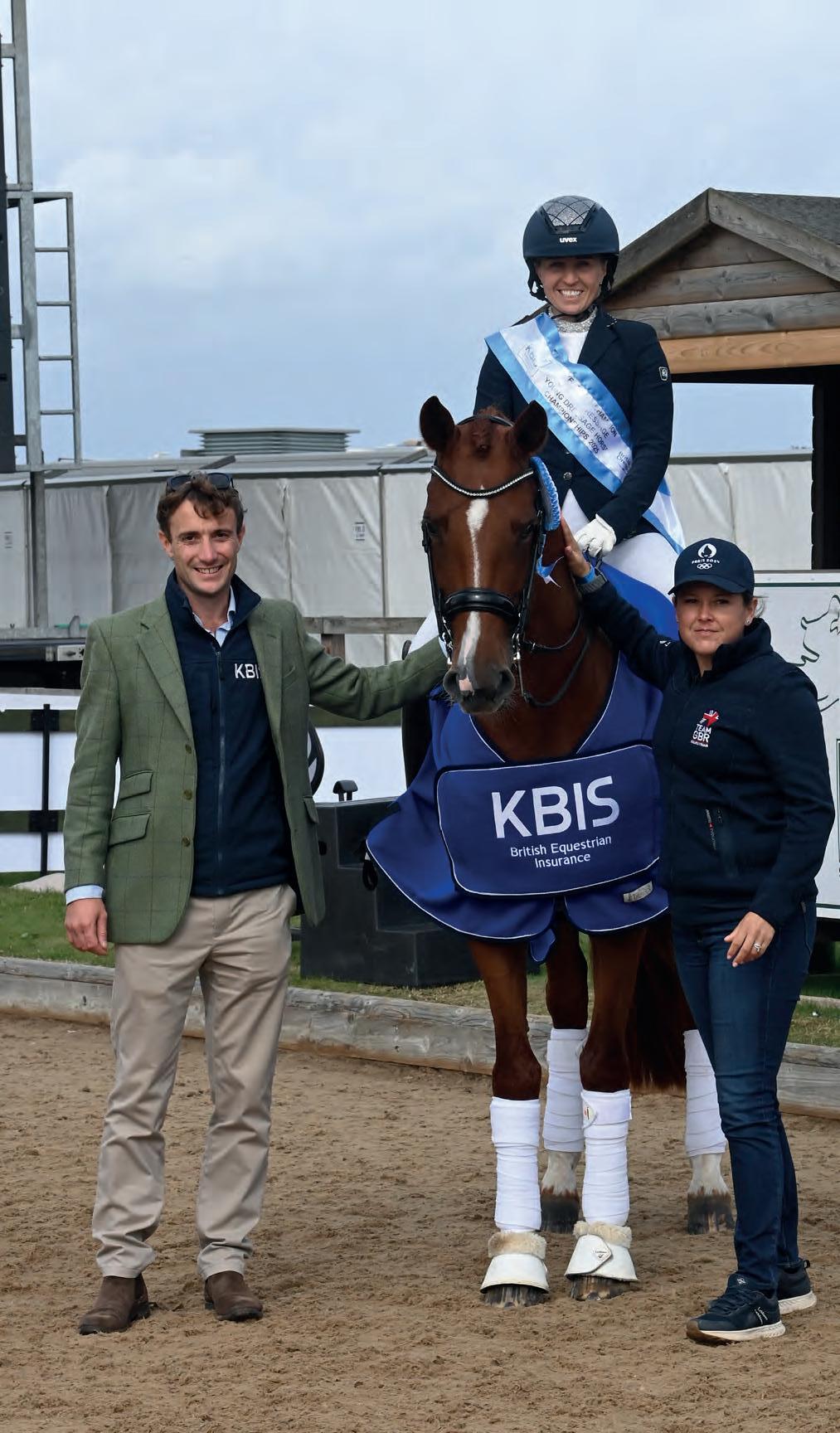
Right: It was home-bred victory for the Mount St John Stud in the KBIS seven-year-old class, as Amy Woodhead rode MSJ Viva Dannebrog (Vitalis x Don Schufro) to 79.467% in the national test for seven-year-olds.
Viva Dannebrog has now notched up three out of four of the age category titles at the LeMieux Nationals, winning as a four-, five- and seven-year-old.
She and Amy are pictured with Lawrence Gill and MSJ's Emma Blundell.
1. Amy Woodhead with Emma Blundell’s MSJ Viva Dannebrog 79.467%
2. Dannie Morgan with his own Fever Tree 78.767%
3. Alicia Lee with her own Della Ballerina 76.617%
4. Olivia Oakeley with her own Nulli Secundus II,
5. Sarah Millis with Isla Sully’s Odessa de Massa
6. Abigail Lyle with Fenella Quinn’s Neverland MFS
7. Daniel Sherriff with his own Nothing Compares 2U
8. Jody Haswell with his own Valentinio
9. Abbie Newbury with Keith Taylor’s Seagry Viceroy
10. Sadie Smith with Peter Belshaw’s Times Nemesis
WINNER
Amy Woodhead with Emma Blundell’s MSJ Viva Dannebrog
WINNER
Melissa Hargreaves with her own and John Hargreaves’ Lagerfeld W
1. Melissa Hargreaves with her own and John Hargreaves’ Lagerfeld W
2. Oriana McNamara with Andrea McNamara’s Lafite
3. Lillian Waller-McSweeney with Jacqueline Waller’s Willinga Park
Sky Diamond
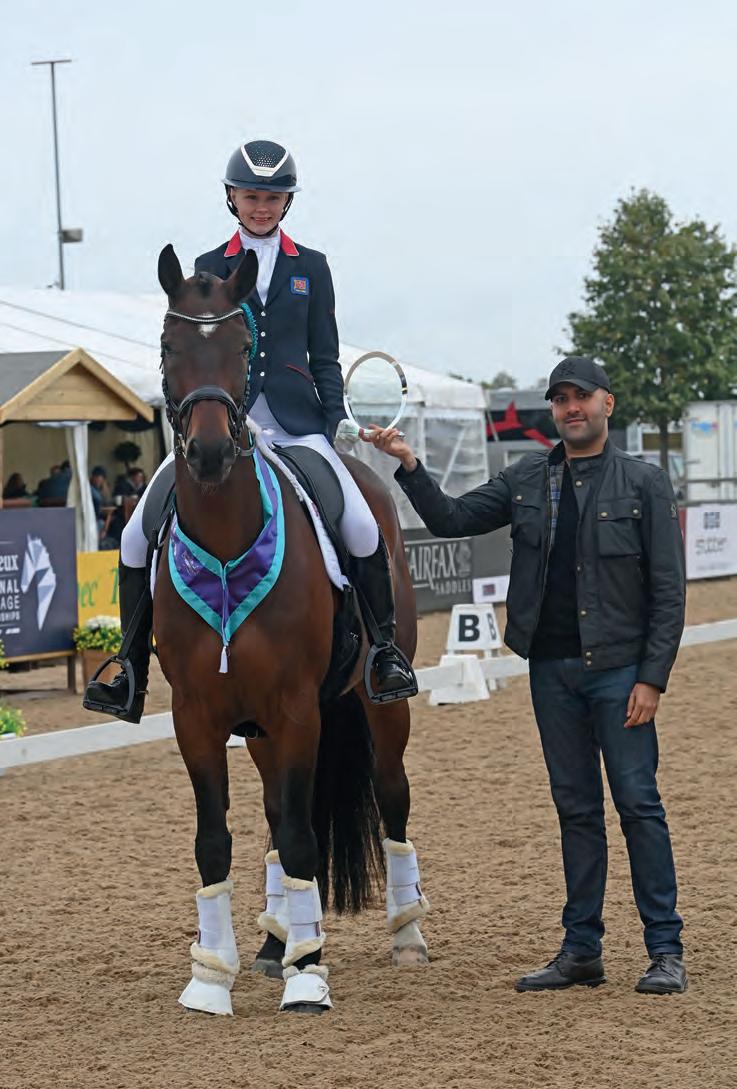
Left: At just 14 years old, Melissa Hargreaves secured her first National win on her own horse Lagerfeld W, also known as Carl at home. The duo scored a very impressive 74.375% from judges Anne Keen, Claire Ballantyne and Sascha Schulz.
Melissa said, “It’s been incredible, I’ve only been working with Carl for less than a year now and for him to have gone from eventing to dressage in such a short time, I’m just so proud of him.”
Melissa, who trains with Sarah Higgins, is now aiming at Junior classes.
They are pictured with Arron Halait of Rothera
WINNER
Queenie Moule with her own Amden Supreme Golden Dancer
1. Queenie Moule with her own Amden Supreme Golden Dancer
2. Georgie Morgan with Claire Morgan’s Brouwershaven’s Jasper
3. Ever Sinfield Day with Harriet Sinfield Day’s Machno Excalibur
4. Violet Hawkins with Alex Hawkins’ DZL Royal Sunrise
5. Jessie Clarke with her own Bunteeichen Nivaro
6. Sophia Longworth with Elizabeth Hart’s Don De Luxe
7. Mimi Kempster with Rachael Kempster’s Che Bello
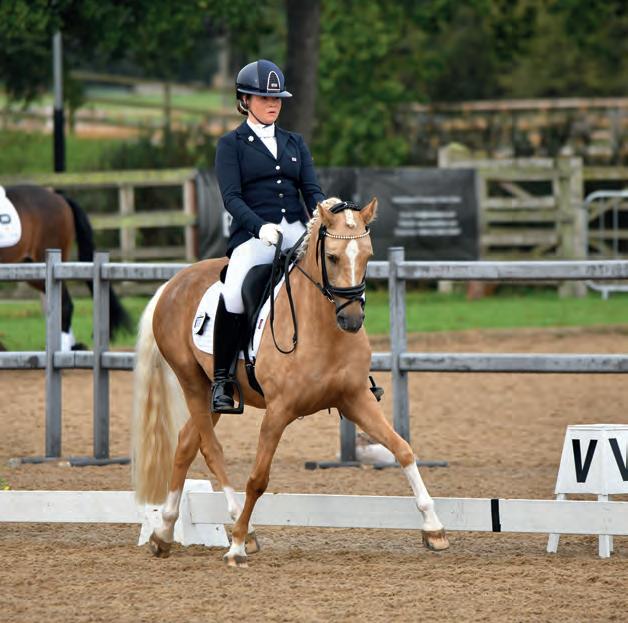
Above: Having always dreamed of competing at the Nationals, Queenie Moule rode her own gelding, Amden Supreme Golden Dancer (Leo) to win on a score of 69.667%.
Talking about Leo, she explained “He’s the best, he’s so nice and I’ve only had him for just over a year. I’d never done an FEI test so that he’s taught me all of that in such a short space of time and we’ve come here and won is just amazing.”
Queenie went on to reflect on her future goals; “Next year my overall goal with Leo is to go to the European Championships with him.”
1. Isla Sully with her own Vagabond De Massa 70.808%
2. Abigail Gray with Fenella Quinn’s Empire B 68.939%
3. Penny Smith with her own Rembrandt GSH
4. Hannah De Wit with Dinah De Wit’s Christianson
HE’S DEFINITELY A DIVA SO WE’VE GOT TO KEEP HIM HAPPY.”
– Isla Sully on Vagabond De Massa
Teghan Cantrell with Katrina Cantrell’s Woodlander Donna Summer
Isla Sully with her own Vagabond De Massa
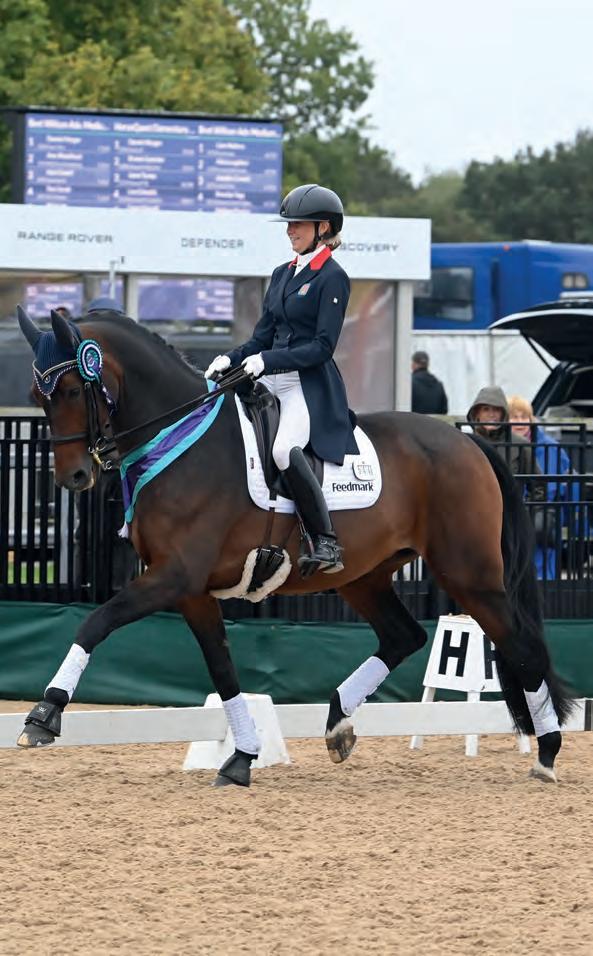
Below: Following on from Isla Sully’s team medal winning success at the European Championships, she won the Junior Riders class on a score of 70.808% with her own gelding Vagabond De Massa.
Reflecting on her test Isla told us: “It felt really good, he was amazing in the warm up, really nice and forward and powerful.
“We have been just training a lot at home, working a lot on the bits that need improving in the test. Also having fun to keep thing interesting for him, he’s definitely a diva so we’ve got to keep him happy.”
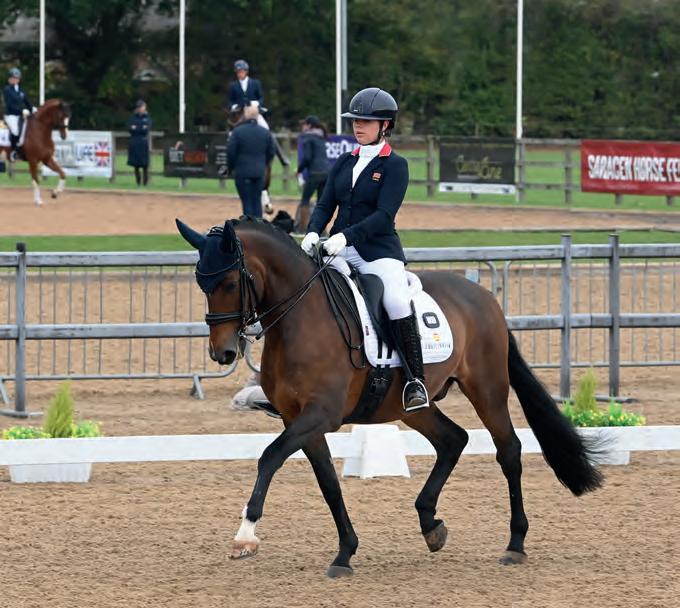
1. Teghan Cantrell with Katrina Cantrell’s Woodlander Donna Summer
2. Isobel Lickley with Nicola Lickley’s Katniss
3. Francesca Cawley with her own Dame Blanche
4. Megan Field and Elizabeth Barratt’s Dargun
5. Madison Eagle with her own and Richard Eagle’s Royalty II
Left: It was a clear win for Teghan Cantrell and Woodlander Donna Summer as they took the Junior Rider Champion title on a score of 72.157%. Woodlander Donna Summer, known as Dona at home is a 20-year-old mare owned by Teghan’s mother, Christine.
Reflecting on her test, Teghan explained “It is our last Young Riders test together. The Europeans was the highlight of my season and the only aim today was to just have fun.”
Teghan describes Dona as “the yard favourite, she’s very aloof, likes her space. We call her ‘Queen’.”
Looking to future plans, Teghan said: “Next season, we might step up to U25 Grand Prix, it all depends on how she feels. Other than that I have two young horses I need to bring out over the winter.”

Susanna Wade with her own Premier Royal Mint
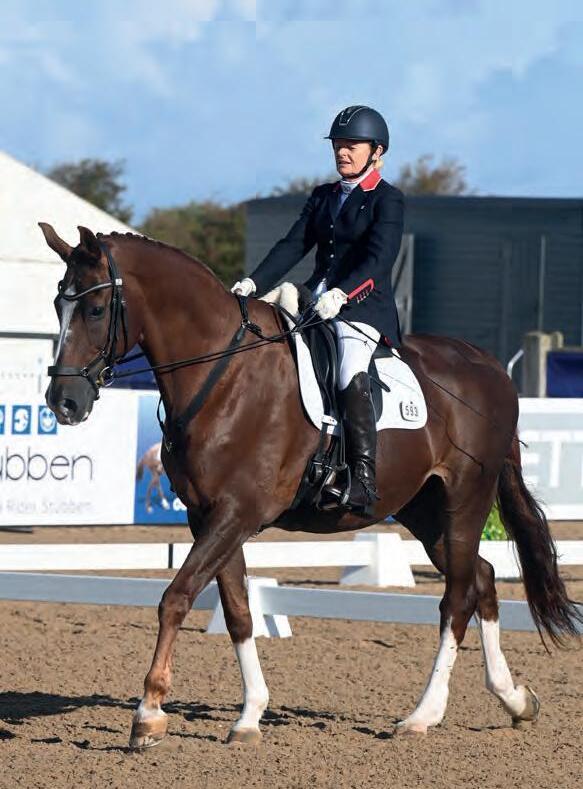
GRADE 2
Left: Susanna Wade and Premier Royal Mint secured the Grade 1 title for the second consecutive year, scoring 69.028%. The 18-year-old gelding is owned by Susanna and they have been competing successfully together since 2023.
“He was a Small Tour horse with Amy Mclean, Jess Thompson found him for me. We moved to train with Spencer Wilton and Darren Hicks a year ago.
1. Georgia Wilson with her own Faside Got The Love
2.
3.
4.
5. Jason Inchley with his own Rubin Ryella
The
gelding LJT
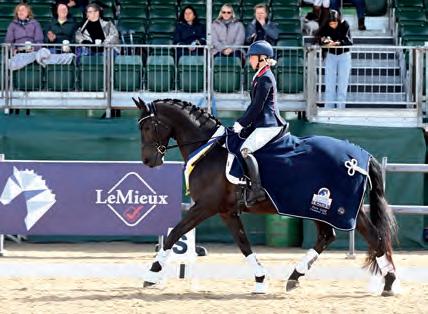
is a new ride for Erin this season, and they really look a combination to watch for the future, scoring 71.722%. The 13-year-old gelding is owned by Carl
1
GRADE 3
1. Erin Orford with Lady Joseph Trust, Anne Barott, Henrietta Cheetham, Carl Hester and Rowena Luard’s LJT
GRADE 4
and her Ferdeaux-sired
Nalique won the Grade 5 Champion title with a lovely performance for 68.684%, also placing second with Kiolita.
1. Laura Scott with her own CEI Summer
3. Sara Bates with Patty Allen’s
Laura Scott earned a first ever title at the LeMieux National Championships, securing the Grade 4 win with her own gelding CEI Summer Days on a score of 70.630%.
Laura and her black gelding also placed 20th in the HorseQuest Elementary
5
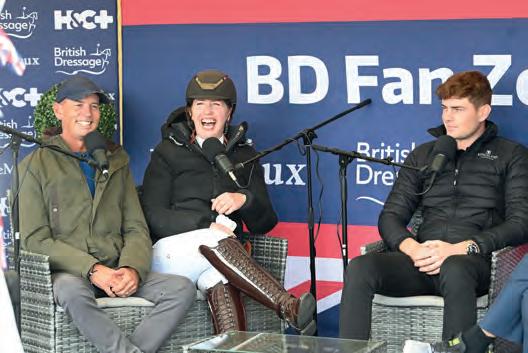
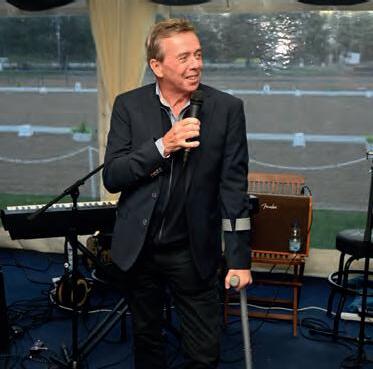
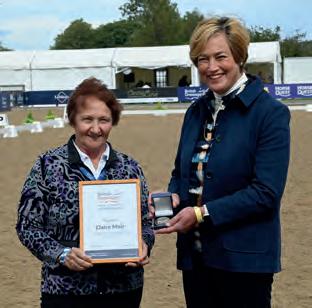
at the LeMieux Nationals!
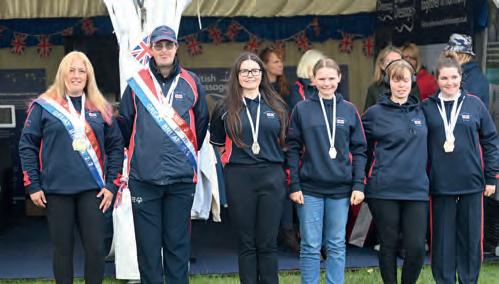
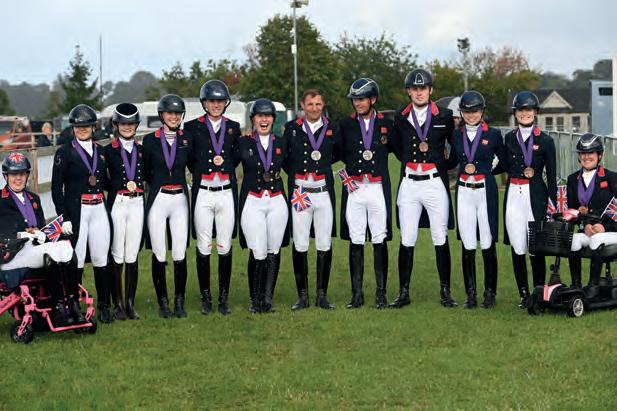
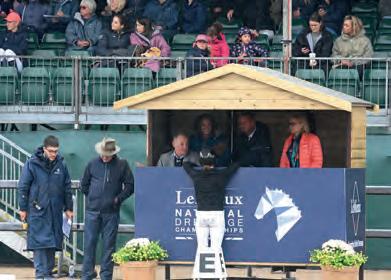
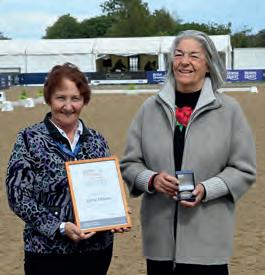
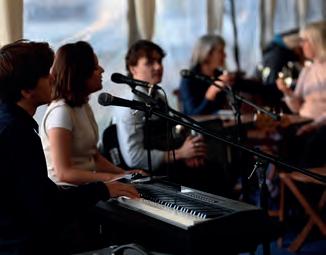
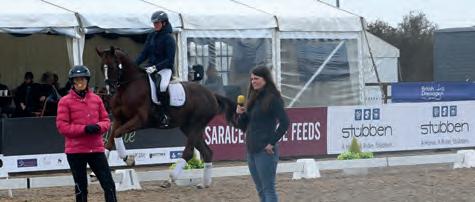
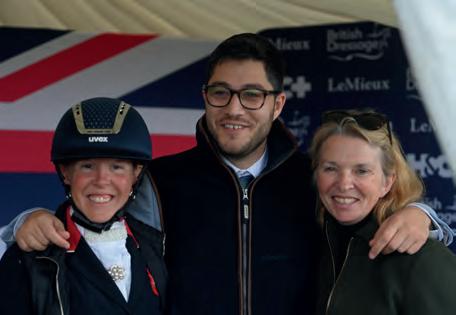
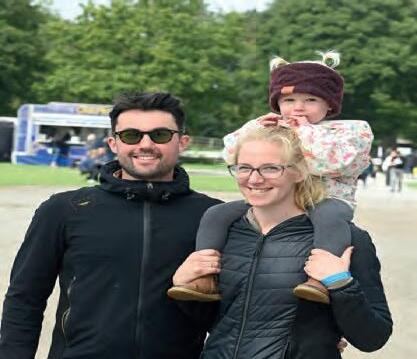
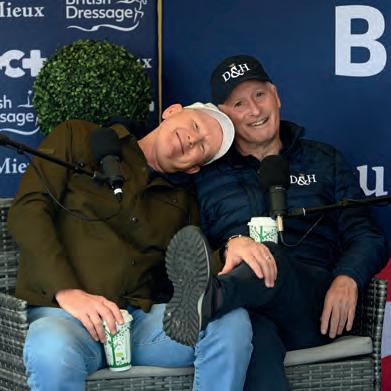
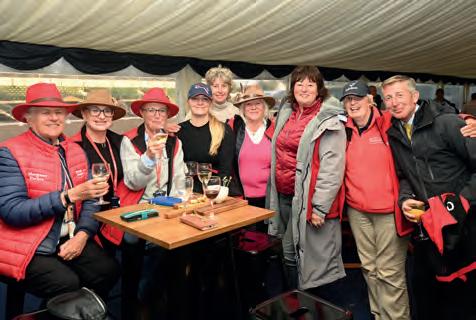
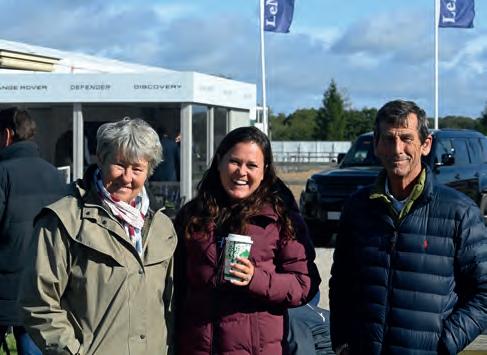
Whether defying the storms or enjoying the autumn sunshine, what a Nationals it was! Enjoy some candid moments from around Somerford Park.

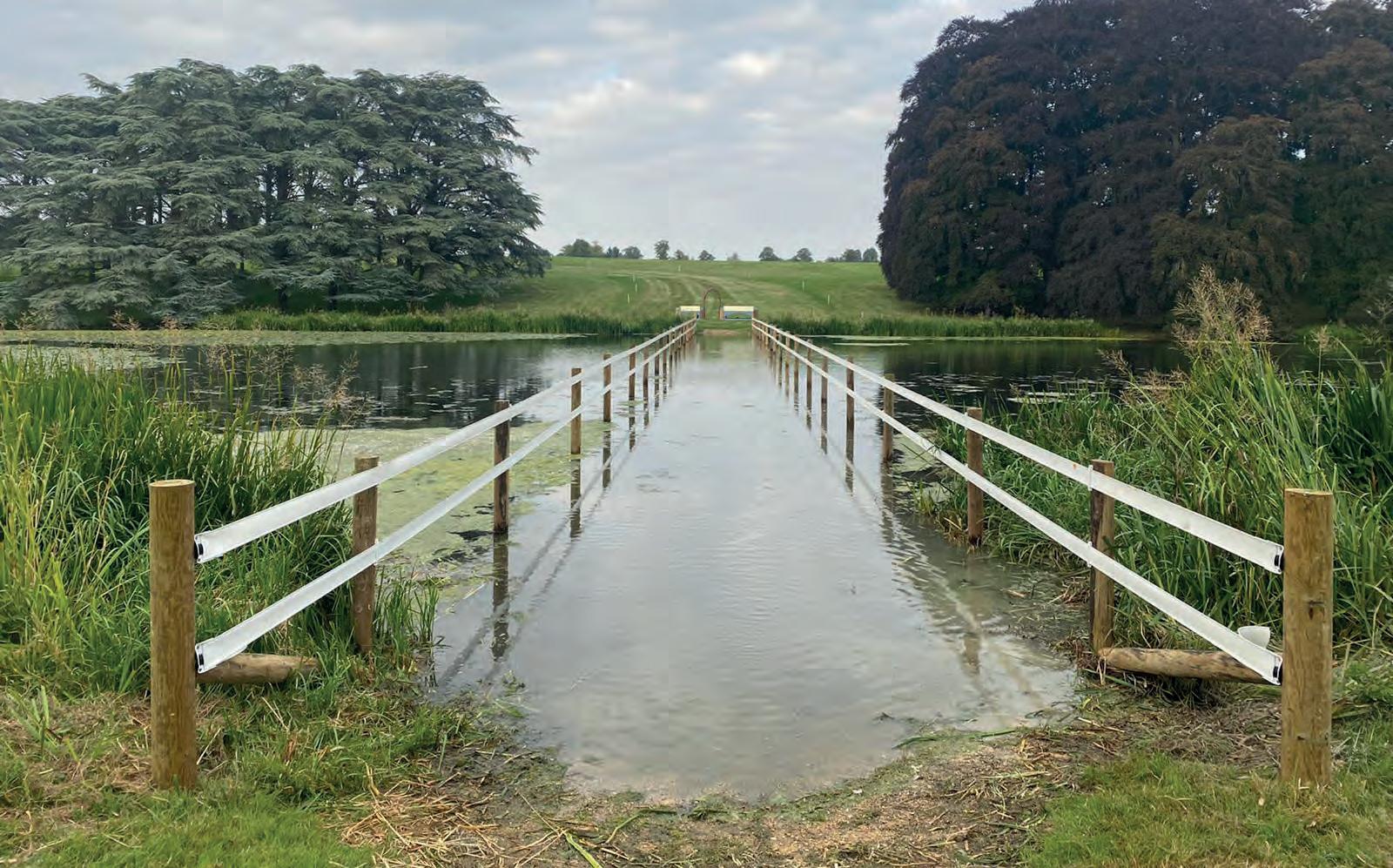
Every detail of a dressage yard reflects the standard of care. Arenas, stables, and turnout areas all speak of professionalism. Yet fencing is often overlooked, even though it’s one of the most important investments you’ll make. Increasingly, yards across the UK are turning to Horserail® fencing – a system that combines safety, strength, and style.
For valuable dressage horses, safety is paramount. Traditional post and rail can
splinter or break, leaving sharp edges, while electric tape deteriorates quickly in wind and weather. Horserail® changes the game.
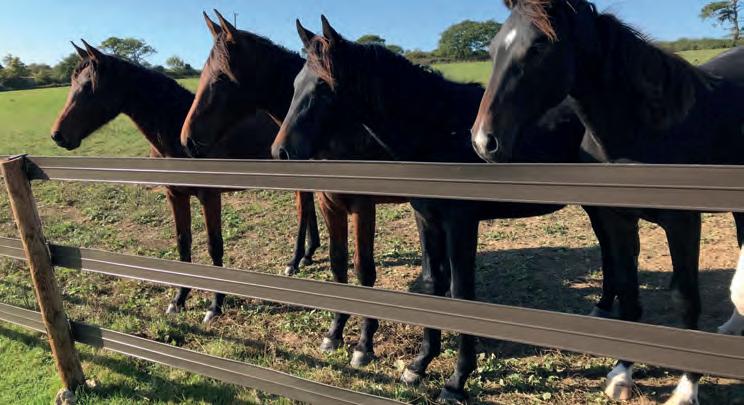
Each rail is a high-tensile wire encased in UV-stabilised polymer, creating a fence that’s smooth, flexible, and exceptionally strong. If a horse collides with it, the rail absorbs the impact, reducing the risk of cuts or breaks.
One UK yard owner put it simply:
“When a youngster ran into the fence, instead of injuries or broken rails, he bounced off without a scratch. That peace of mind is priceless.”
Horserail® doesn’t just protect horses – it protects your investment. Unlike timber, which needs constant repair, or tape, which frays, Horserail® is built for the long haul. Resistant to rot, rust, and weather, it comes with a 30-year manufacturer’s guarantee. That means fewer repair bills and less time spent fixing fences.
Presentation matters in dressage. Horserail® provides a polished, professional look available in black, brown, or white. Whether for a private yard or a competition venue, the smooth lines and smart finish elevate the overall appearance.
Dressage is about precision and elegance. Horserail® fencing matches those values while still being practical and functional.
Beyond looks and safety, Horserail® is designed to make yard life easier: Electrifiable rails: Top and bottom rails can be electrified to deter chewing or leaning.
• Low maintenance: No painting, no splintered rails to replace – just reliable fencing year after year.
• Flexible layouts: Rails curve and follow contours, perfect for paddocks, turnout pens, or arena perimeters.
• Safe fixings: All brackets are galvanised, powdercoated, and smooth-edged. For busy yard managers, this means fewer headaches and more time to focus on the horses.
and the long-term value becomes clear.
• Electric tape needs replacing often.
• Timber fences rot and splinter, and repairs add up.
• Horserail® requires minimal upkeep and provides consistent safety for decades.
For horses that represent years of training and significant financial value, it’s an investment that pays for itself many times over.
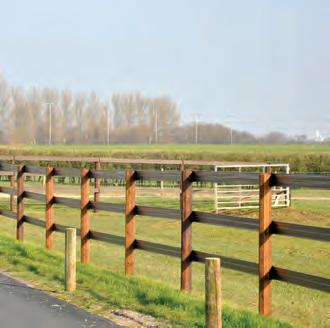
Horserail® is distributed and supported by a dedicated UK team, with expert installers available nationwide. Whether you want a full supply-and-install service or prefer to fit the fence yourself, everything from tools to fixings is provided, along with guidance to ensure your fence performs at its best.
With over 30 years of proven use in more than 40 countries, Horserail® is a name the equestrian world trusts. In the UK, it’s already the system of choice for leading studs, training centres, livery yards, and competition venues. Its reliability and track record speak for themselves.
At first glance, Horserail® may cost more than tape or standard timber. But factor in maintenance, repairs, and potential vet bills,
Dressage horses are elite athletes, and their care reflects that. Owners and riders are demanding higher standards across every detail of their facilities. Stabling, arenas, and feed regimes are carefully considered
– fencing should be no different. Horserail® allows you to create turnout spaces that are:
• Safe: smooth, strong, and impact-absorbing.
• Stylish: professional finishes that enhance any yard.
• Smart: long-lasting, low-maintenance, and cost-effective.
Whether safeguarding young horses or elite competition partners, Horserail® provides the reassurance that your fencing is as carefully thought through as every other aspect of your yard.
• Over 30 years proven worldwide
• 30-year guarantee
• Safer and smoother than timber or tape
• Available in black, brown, and white
• Electrifiable rails
• Minimal upkeep and long-term savings Secure Your Yard’s Future.
British Dressage riders and owners understand that excellence extends beyond the arena. By choosing Horserail®, you’re choosing a fencing system that reflects the values of dressage: safety, precision, and elegance. Because when it comes to your horses, compromise is not an option. m Freephone 0808 2344766 or Ruth Todd 07785986645 k info@horserail.co.uk K www.horserail.co.uk
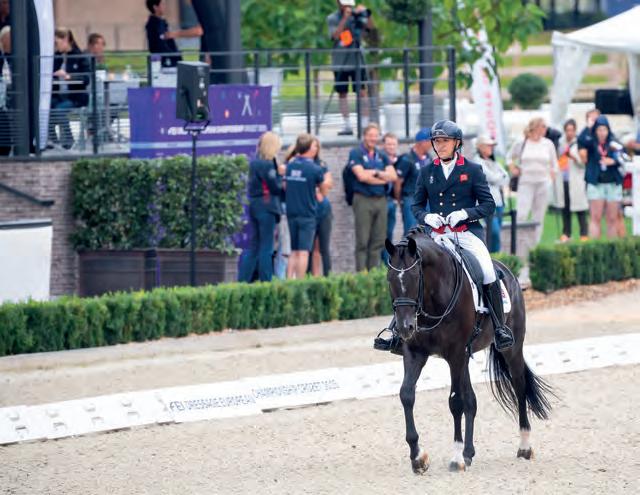
Right: Andrew Gould and Tatiana and Max Skillman’s Indigro were sadly eliminated on veterinary grounds in the Grand Prix and could take no further part in the competition. Andrew has since reported that Indigro returned home safe and happy from France, and that he will be working with team vets and his home team to bring him back to full health.
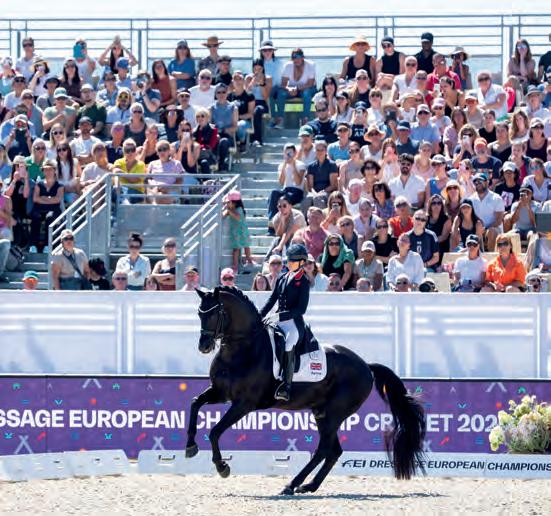
Right: Reigning FEI World Champions
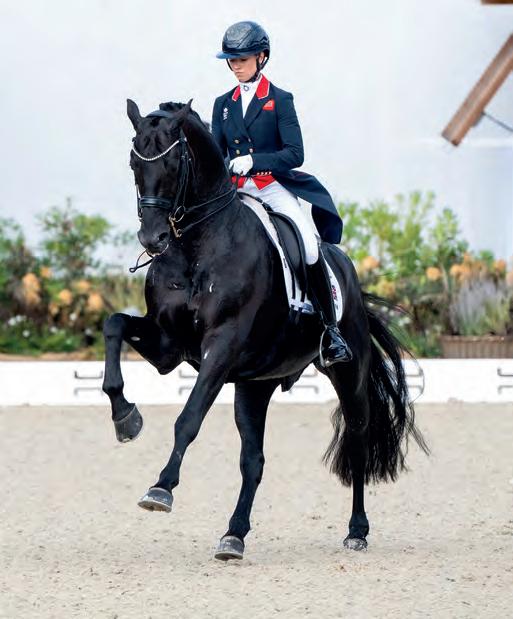
Lottie Fry and Glamourdale were amongst the last group of riders to go in the Grand Prix, and gained a solid 75.869% for a test full of the black Van Olst stallion’s trademark power and expression.
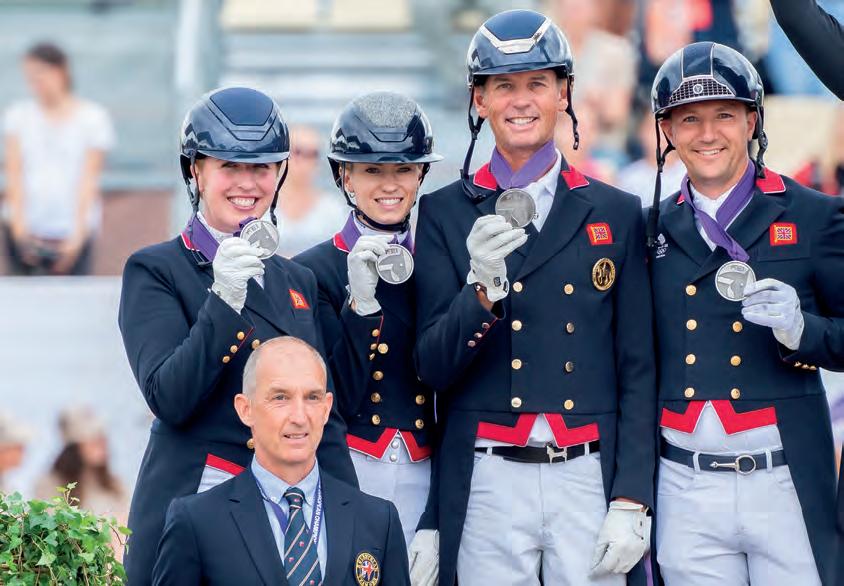
Great Britain’s senior team rode to a fantastic silver medal in the FEI European Championships in Crozet, France, and put up brilliant individual performances in breathtakingly close Grand Prix Special and Freestyle finals.
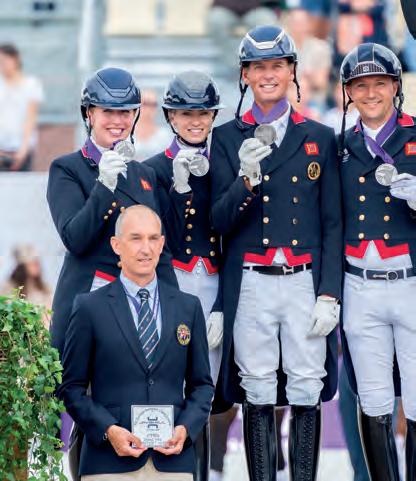
Left: After the closest of competitions, Germany edged ahead in the final rotation of riders to claim the gold medal on a score of 229.644. Great Britain took the silver on 226.785 with Denmark (223.385) in bronze. Becky, Lottie, Carl and Andrew are pictured with Chef d’Equipe Darrell Scaife.
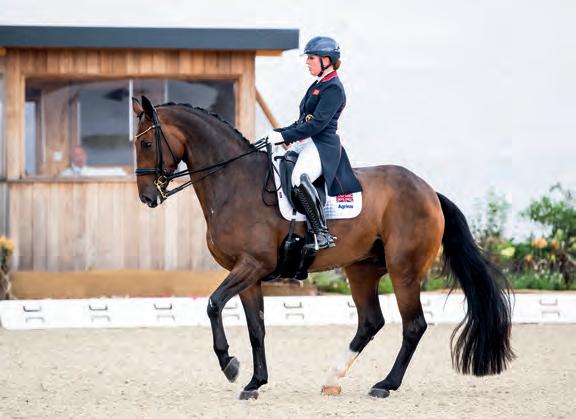
Left: On only their second senior championship appearance –after a stunning debut at the Paris Olympics – Becky Moody and Jo Cooper’s Jagerbomb handled the pressure superbly. Their Grand Prix test combined power and lightness, despite a couple of small blips, for a fantastic score of 74.829%.
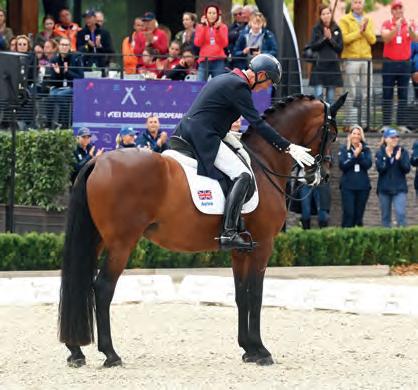
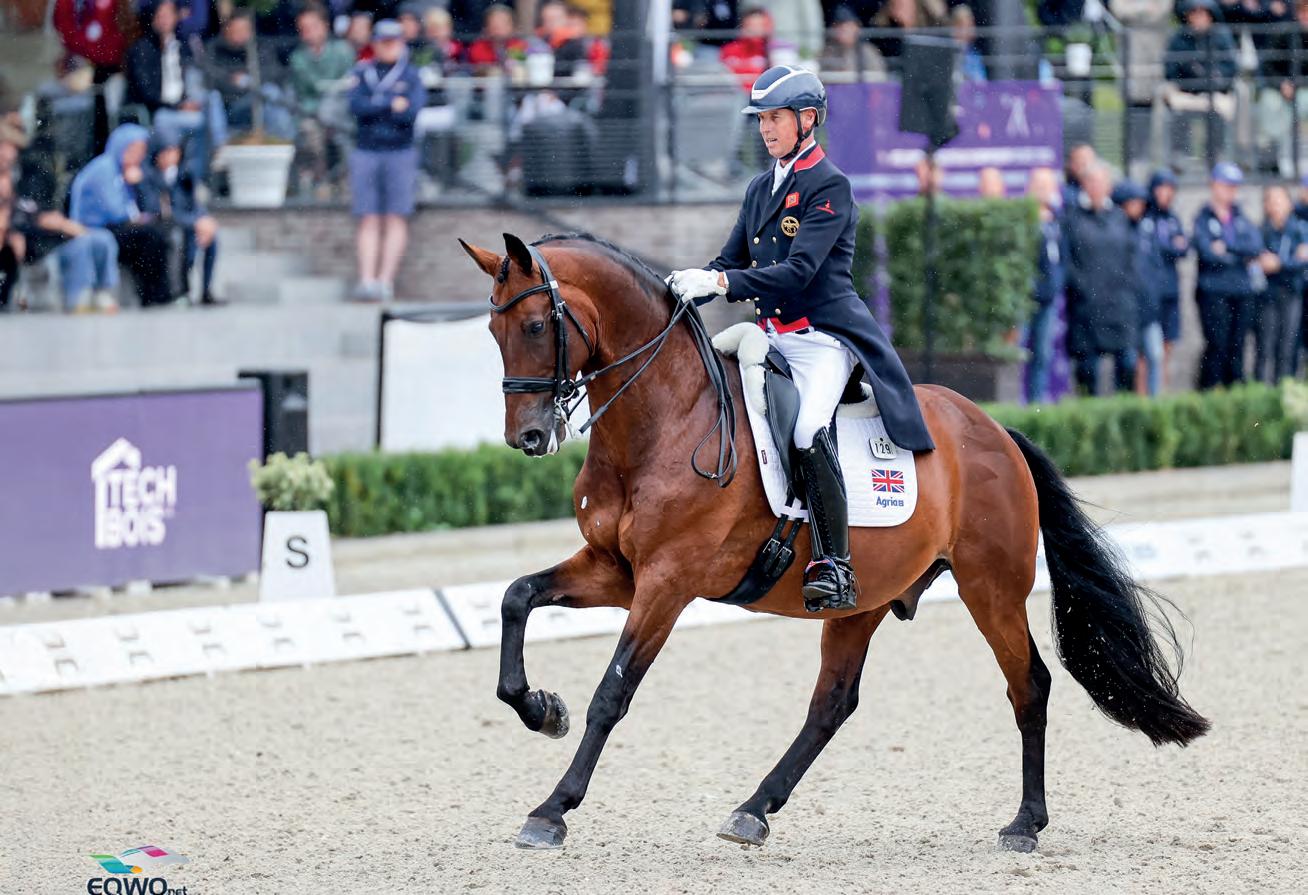
Above: Carl Hester was the first to present for Great Britain on the second day of competition and delivered the team’s top score of 76.087% with Fiona Bigwood’s Fame. The bay stallion grew in confidence throughout the test, reflected in rising trending scores. Highlights came in the canter work, where the flying changes, zig zag and pirouettes were exemplary and a polished final centre line.
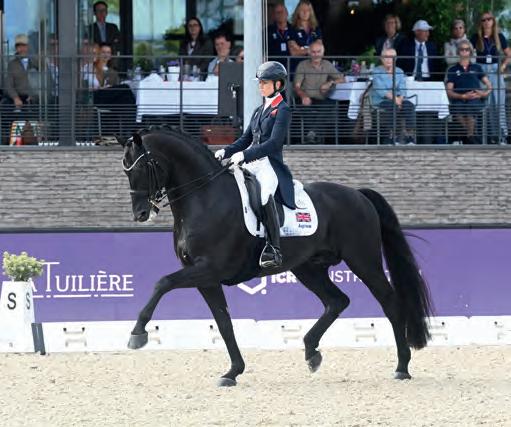
Below: Justin Verboomen claimed Belgium’s first ever championship medal – and made it a gold – by winning the Grand Prix Special on the nineyear-old Zonik Plus. Their harmonious performance won them a clutch of nines and tens for a score of 82.371%, plus a legion of new fans, and it was to be repeated the following day with another win, this time in the Freestyle.
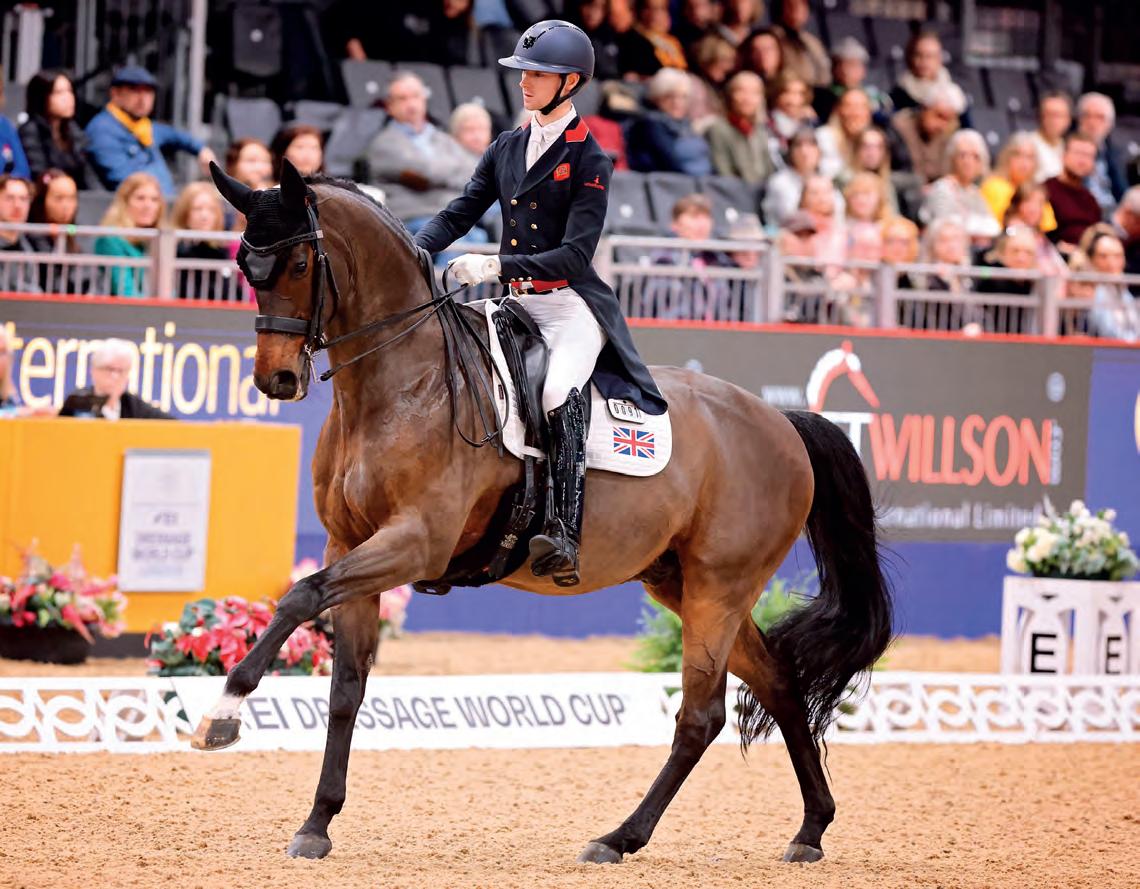
Left: Lottie Fry and Van Olst Horses’ Glamourdale produced the opening performance for the British riders in the Grand Prix Special test, and delivered a full-risk trot tour, displaying enormous half passes with elasticity and energy. High quality passage brought in high marks, as did plenty of airborne canter work, but today a handful of miscommunications in the piaffe just kept the score behind the pair’s personal best – 75.289%, resulting in ninth place on the final standings.
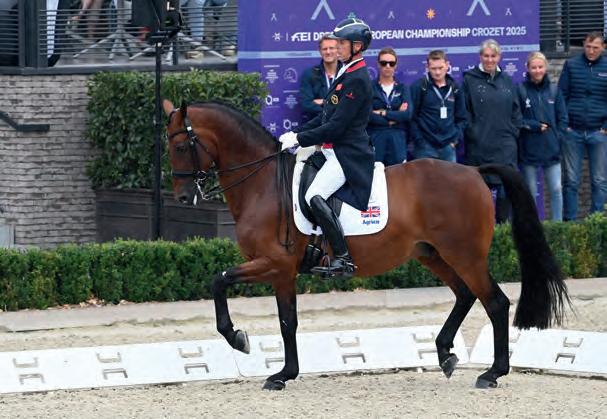
Above right: Carl Hester produced yet another consistent masterclass of championship test riding, earning a score almost identical to day one, a superb 76.383%. “It’s always nice to share it with somebody,” Carl commented on the joy of having Fiona Bigwood (pictured 4th left in the ‘kiss and cry’) by his side, as friend and owner, “we’ve known each other a long time, the fact that she asked me to ride him – that’s what a friendship is – she trusts me and I trust her. She’s honest when I’m riding and can always tell me how much I need to do or what else I need to do.”
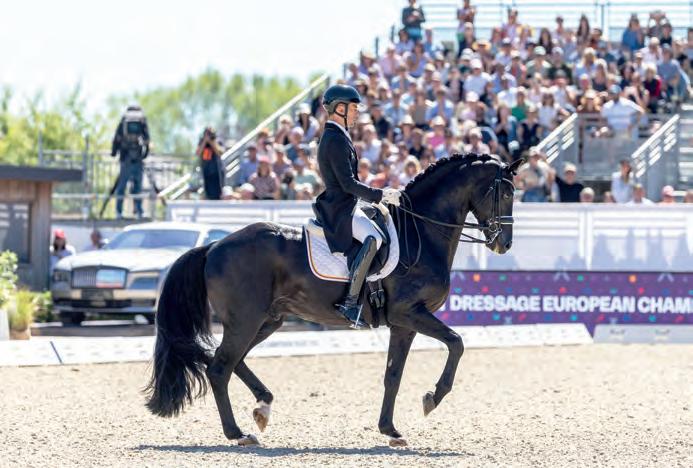
Right: Becky Moody and Jagerbomb delivered a display of high-quality test riding, with a masterclass on how to ride the challenging Grand Prix Special lines. The pair earned Britain’s top placing in the Individual medal competition, with a career best senior championship placing of fifth and 77.796%.
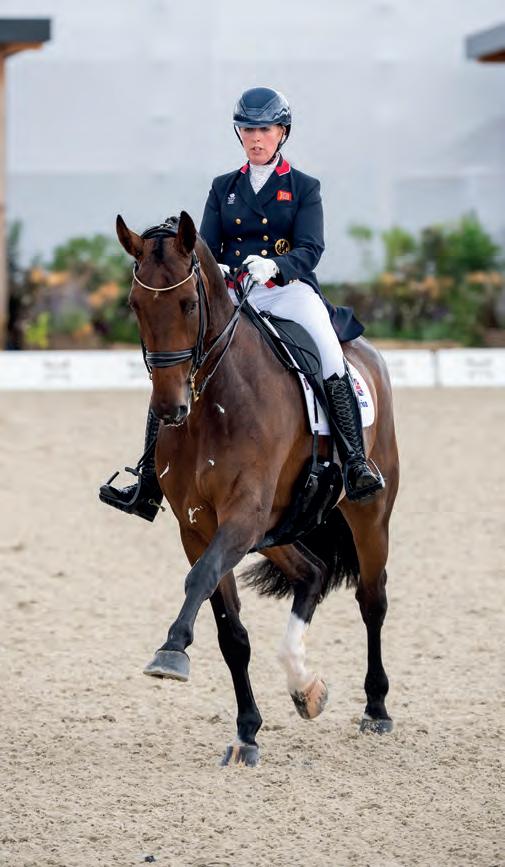
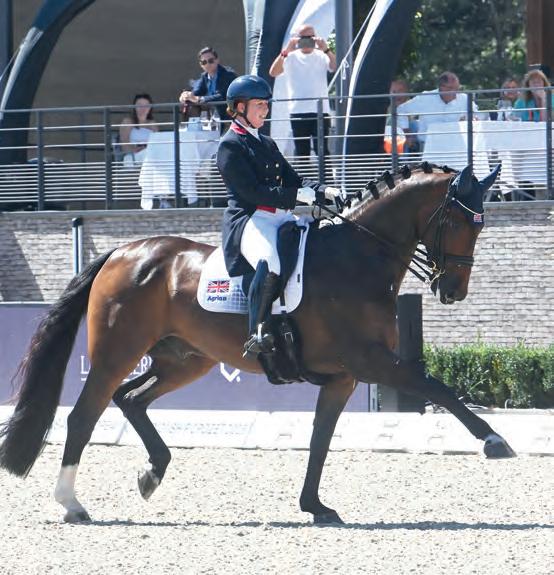
Becky Moody moved up into a career best championship position in the Freestyle, taking fourth place with Jagerbomb. Riding to her new Tony Hobden-produced ‘Beatles’ Freestyle programme, Becky’s floorplan is simply standout; with complex lines, plenty of pace changes and a high degree of difficulty. Three judges rewarded the choreography with a 10, whilst there were also 10s for harmony and music interpretation. Their score of 86.982% put them agonisingly close to the medals.
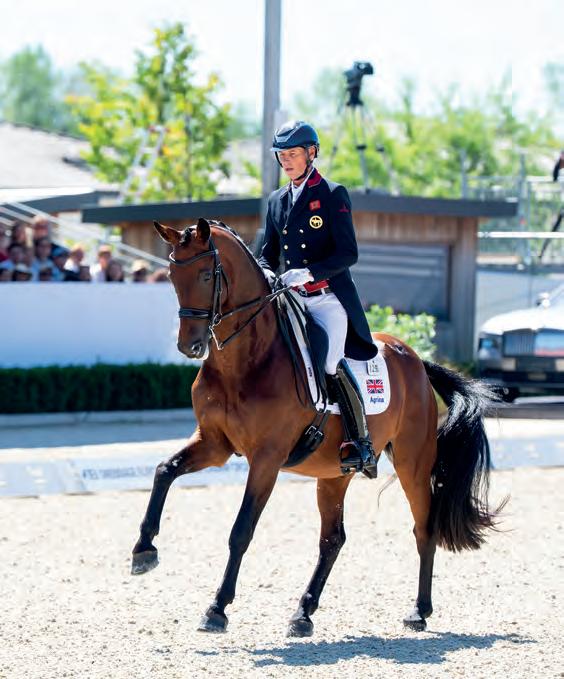
Above: Team maestro Carl Hester delivered another fantastic Freestyle with Fiona Bigwood’s Fame, earning seventh place on 81.029%. Riding to his ‘those were the days’ routine, Carl’s floorplan showed the same consistency as the Grand Prix and the Grand Prix Special. This combination have now placed seventh in all three of their Freestyle Championship finals as a duo – in Riesenbeck, Paris and Crozet.
Right: Lottie Fry debuted her highlyanticipated new routine with a fitting flying theme – playing on Glamourdale’s famed sky-high paces. On the day, the loud music and close environment meant finding relaxation in the test was a challenge; Lottie kept her cool, gave her powerful stallion great confidence and together they found a way to show off their trademark strengths as the test progressed. The pair were rewarded for a strong recovery with tenth place and 79.579%.
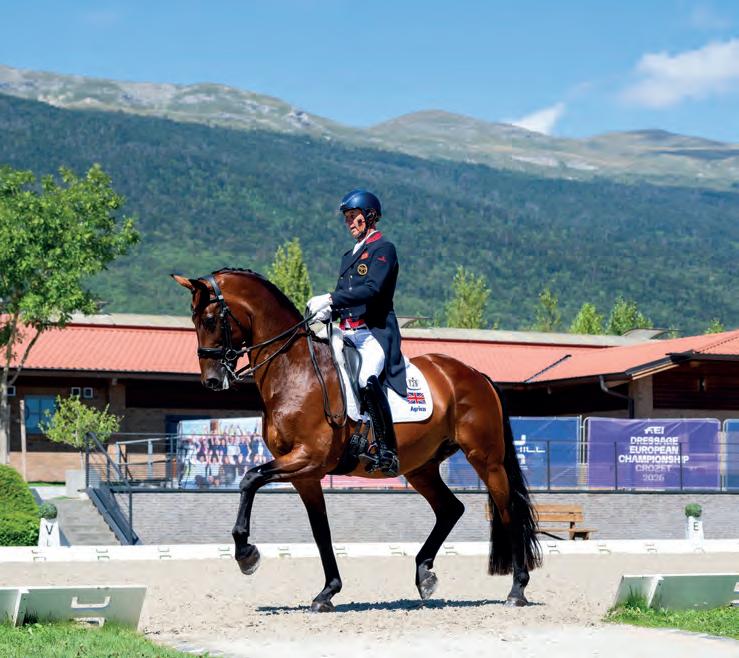
Below: The stunning venue in the French Alps, not far from the border with Switzerland, provided a dramatic backdrop for a nailbitingly-competitive FEI European Championships, shown to great effect by Carl’s final warm-up.

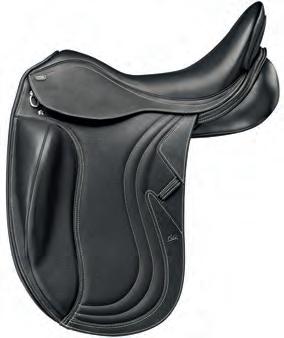
• Independent Jacob’s wool panels
• X-Change interchangeable gullet plate system
• Perfectly centred Deep Seat
• Anatomically correct block
• Versatile billeting system
• Customisable fit
• Premium Leather
Lack of rain has had a big impact on forage supplies this year, so what are the options if you’re facing a shortfall? Emma Penny investigates.

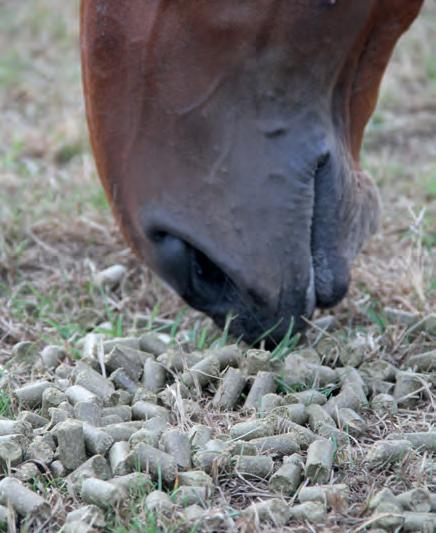
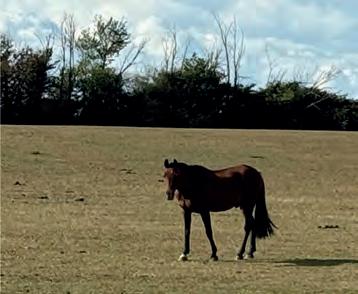

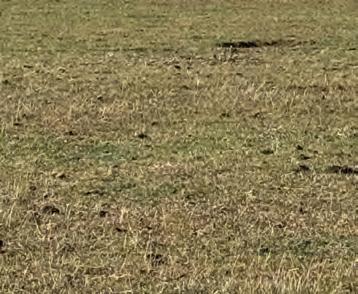
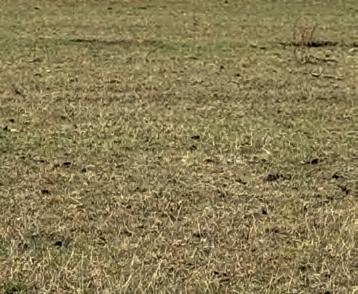
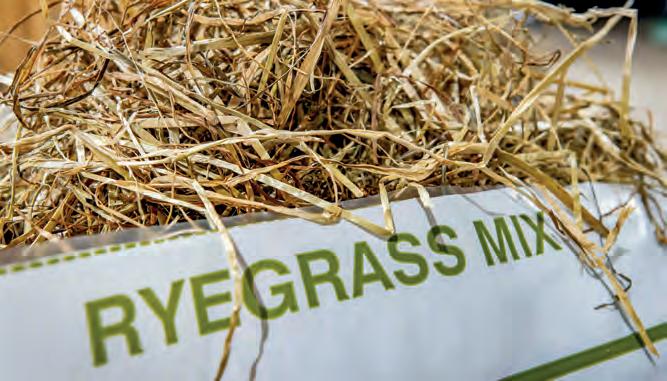
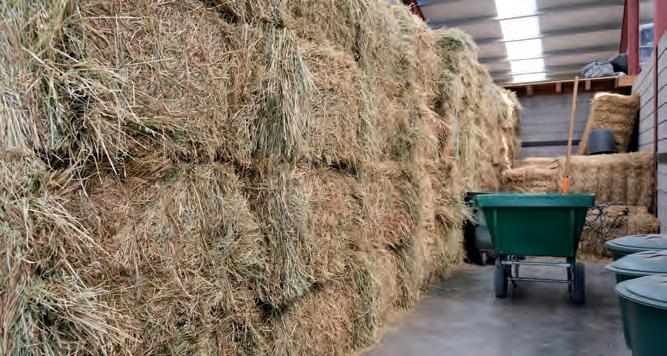
One of the driest springs in more than a century has had a big impact on grass growth, hay and haylage yields and sward recovery for further cuts.
It may also have been left longer before cutting to achieve a better yield, meaning the grass will be more mature, stalkier and so higher in indigestible fibre and lower in nutrients, says Baileys Horse Feeds’ nutritionist Emma Short.

Knowing what you are feeding –analysing forage – may be a useful first step, says Sarah Turnbull, feed advisor for HorseHage. “We would recommend that people complete their own analyses, if practical, when purchasing quantities of hay or haylage. If bagged forage, ask the manufacturers for this year’s analyses.”
supplies is sensible, says Sarah Nelson, Spillers’ nutritionist. “There are numerous alternatives to hay and haylage available that can be used to extend winter forage supplies. These include short-chopped fibres or chaffs, quick soaking mashes, high fibre cubes, unmolassed sugar beet, grass nuts and alfalfa pellets.”
Emma adds that chaff and grass products may be in short supply themselves. “We’re not sure whether alfalfa yields are affected this year as it a legume and deep rooting so may not be. Sourcing clean straw may also be a useful forage replacement, although care should be taken with those who are dentally-challenged or prone to clinical conditions, such as colic.”
PICTURED

For anyone facing a shortfall, thinking now about extending winter forage


...provide enough quality protein to make up for a shortfall in intake from forage.
Wherever possible, avoid significant or rapid changes in diet by gradually introducing any new feeds over a week to 10 days and before supplies get very low. The most suitable option(s) will depend on the individual horse, but Sarah Nelson says points to consider include:
• Shor t-chopped fibres require more chewing and in turn, help to support gastric health.
• Not all fibre-based feeds are suitable for feeding as forage replacers and some are only suitable for feeding as partial forage replacers, so check feeding instructions and contact the manufacturer or a nutrition specialist for advice if needed.
PICTURED
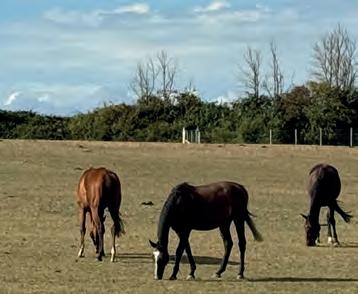
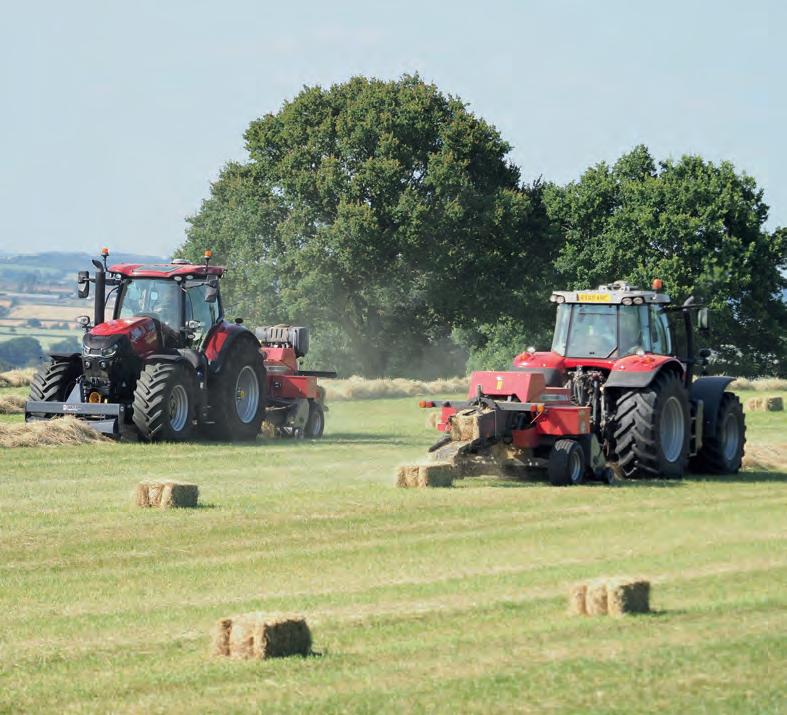
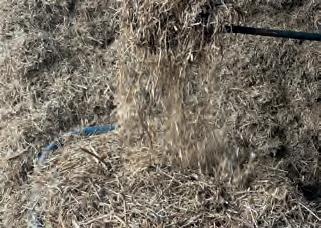
Main: The conditions have had a significant impact on hay supplies this year.
Middle: Chopped rape is an alternative to wheat or barley straw, also in short supply.
Right: If feeding bagged forage, ask the manufacturer for this year’s analysis.
• Many grass-based products are less suitable for good doers and should be avoided for those prone to laminitis.
• Forage replacers for horses prone to laminitis or gastric ulcers should be low in starch and sugar.
• Some forage replacers contain a similar level of energy (calories) and protein to hay while others have an energy level similar to spring grass or a performance feed.
While it may be an expensive winter, there are some ways to cut costs. Emma advises cutting out unnecessary extras and ensuring that the base diet is correct for bodyweight and workload by feeding the recommended amount of an appropriate mix, cube or balancer.
“Not feeding a balanced diet can be counterproductive and may impact health, hoof, coat and skin condition –leading to vet and farrier costs increasing.
“Check that you are not over feeding for bodyweight and workload as you may be feeding a higher spec product when it is not necessary. Unfortunately, if forage is lacking or of poorer quality, this may impact how much concentrate feed or supplements are required to counteract shortfalls.”
If you do need to feed a forage replacer, choosing one with added vitamins and minerals may mean you don’t need to feed a balancer or supplement on top, says Sarah Nelson. Where supplements are given, avoid overcomplicating diets (and costs) by establishing a suitable base diet first and then considering where your horse
Many BD members will be familiar with Northallerton Equestrian Centre. Besides hosting BD competitions and festivals it is also home to 60 livery horses. With only two days of significant rain since mid-March, the centre’s Tina Walker is being proactive in tackling forage and bedding shortages.
Yields from the centre’s 40 acres of hay and haylage ground were ‘a quarter of normal’, and she has rented an additional 40 acres, hoping to take a further two cuts. “We fed the first cut in our paddocks this summer.
I’m hoping for a long autumn so we can keep horses out for as long as possible and get a third cut.” Buying from other areas which
have had a better season may also be an option.
Straw is also in short supply in Yorkshire, she adds. A discussion with her supplier prompted her to try rape straw. “It’s in big square bales in a covered stack. I’m using a straw chopper and blowing it into a heap for use.” So far, she says it has been working well.
While Northallerton EC has its own water borehole and Tina did some irrigation in spring, she stopped when the hosepipe ban started. “It just didn’t sit right to do it when the situation is critical.”
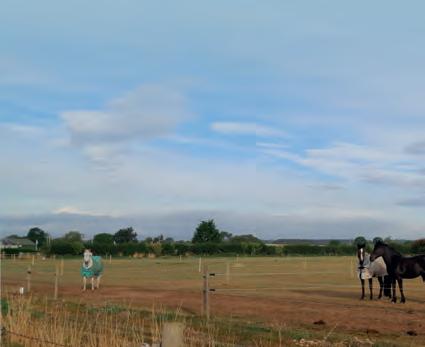
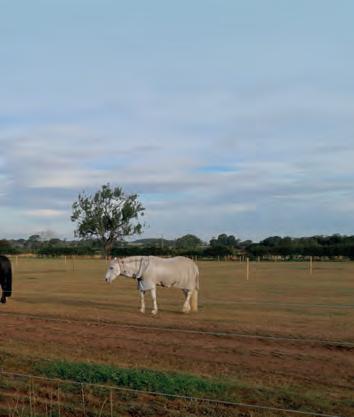
A need to increase resilience to drought –and downpours – means a local contractor will stitch in some different, deeper-rooted grass varieties this autumn, she adds.

may benefit from additional nutritional support, she advises. “For example, a hoof supplement will have limited benefit if the core diet isn’t balanced and a supplement designed to support gastric health won’t counteract a high starch diet.
“Compare products based on the daily feeding rate, rather than simply looking at cost per pack or nutrients per kilo or by %. While calculating costs is relatively easy, evaluating differences in nutrient delivery can be more complicated, even for experienced owners so seeking advice from a nutrition specialist may be helpful. Many feed companies offer free nutrition advice, including on forage, and yard visits for those with enough horses.”
When it comes to buying, combining orders with others on a yard and buying in bulk can sometimes be more costeffective, says Sarah Turnbull. “But ensure you have adequate storage facilities to avoid losses through vermin and so on. Be careful about compromising on
forage hygiene, as a horse that develops a cough because of dusty forage may end up costing more with vet bills.”
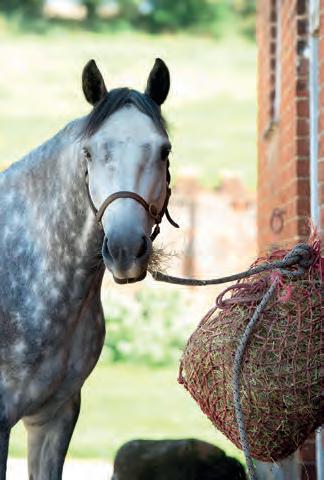
Sarah Nelson adds that sharing big bale haylage with others, so it’s fed within three to four days of opening may be more cost-effective than buying small bales. “Also, think about feeding it in a net or ground-based feeder, and monitor how much you are feeding and how much your horse is eating.”
Monitor your horse’s weight and body condition regularly, she advises.
“Hay may have a lower leaf to stem ratio, resulting in a higher fibre, but less digestible and lower protein forage. If it’s particularly low in energy and/or protein, owners may find they need to adjust their horse’s feed to compensate.
“Provided they’re fed in suitable amounts, feeds designed for horses with higher energy/calorie requirements will often provide enough quality protein to make up for a shortfall in intake from forage. Balancing lower protein forages for good doers can sometimes be more challenging, but a nutrition specialist can offer advice. Switching to a stud balancer for example may be a simple and effective, but not always obvious, solution.”
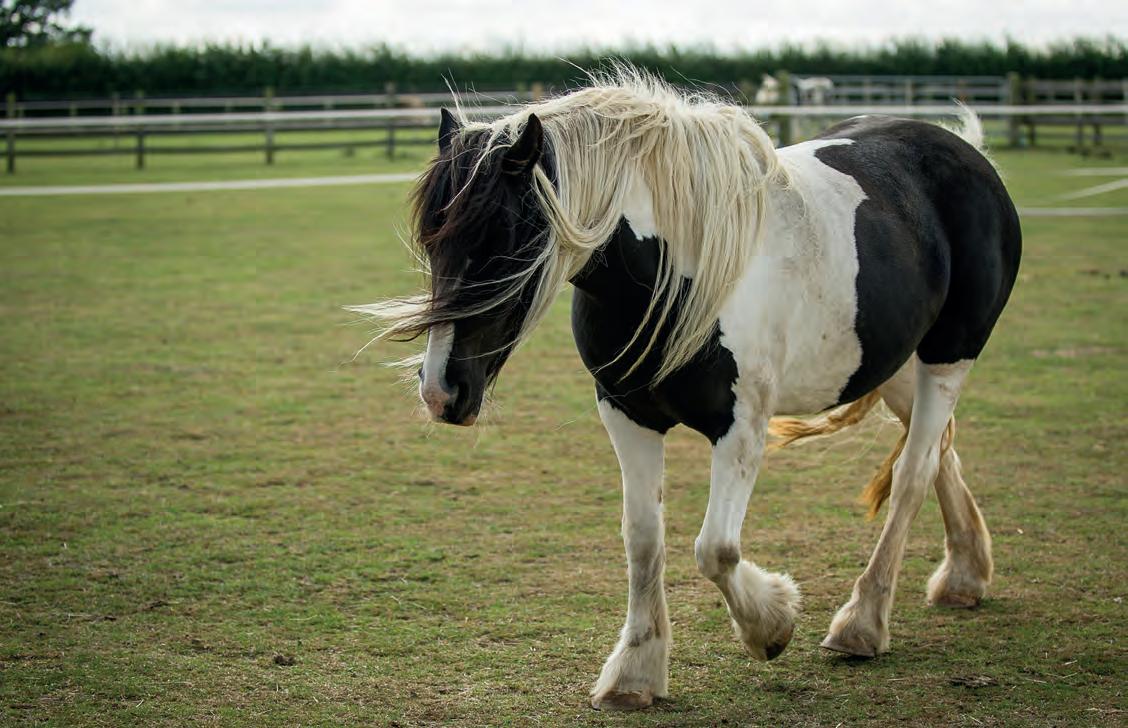
With prolonged dry weather affecting pasture quality, ADAS Equine consultant Lucy Jermyn shares five practical tips to help maintain grazing into the colder months:
1. Start supplementary feeding early: Introduce hay or haylage before pastures become overgrazed. Early supplementation allows grass to recover during wetter autumn conditions, extending grazing availability and reducing winter feed costs.





2. Protect soil after rainfall: Avoid turning horses out immediately after heavy rain. Resting fields for 12–24 hours will allow soil to drain, preventing compaction and plant damage, supporting healthy regrowth.
3. Delay use of winter pastures: Preserve designated winter grazing areas for as long as possible. Maintain a cover of stemmy grasses to protect soil and provide ‘standing hay’ (foggage) –a valuable winter forage source.

4. Manage stocking density: Ideally, provide more than an acre of pasture per horse to prevent overgrazing and soil damage. If space is limited, supplement with forage and consider surfaced loafing areas to allow turnout without harming pastures.
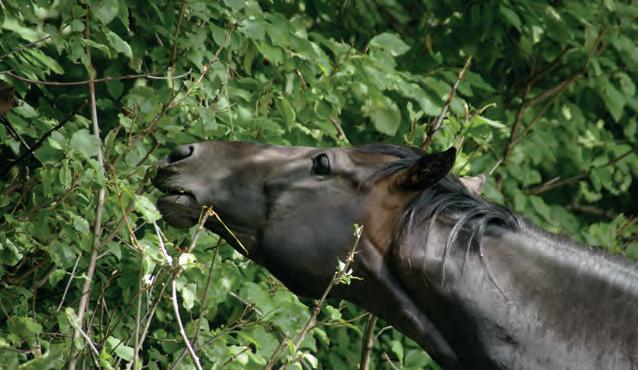
5. Consider hedgerow browsing: Controlled browsing of safe hedgerow plants can offer dietary variety and reduce pressure on main grazing areas. Always check plant safety before allowing access.


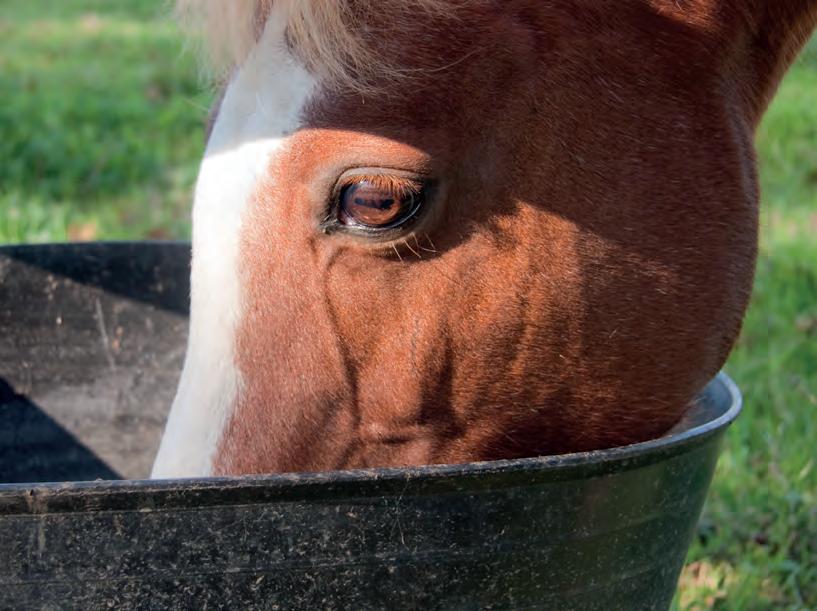

SPILLERS SUPPLE & SENIOR BALANCER is not just for seniors, but also those horses and ponies who may benefit from added joint support too. It includes glucosamine, MSM and omega 3 to support joint health as well as protein, vitamins and minerals needed to balance a forage-based diet. It also contains pre and probiotics to support optimum digestive health, plus vitamin C and a high level of vitamin E to support respiratory and immune health and added biotin.
RRP: £38.48 for 15kg | spillers-feeds.com





DENGIE MEADOW LITE WITH HERBS provides chewtime whilst remaining low in calories 5MJ/kg. A soft, naturally low in sugar 3% and starch 0.5%, tasty high-fibre blend of Britishgrown, chopped and precisiondried grass, cereal straw and herbs – cinnamon and thyme – plus a light dressing of linseed and rapeseed oils. Great value with approx. 60 scoops per bale.
RRP: £15.29 per 15k dengie.com






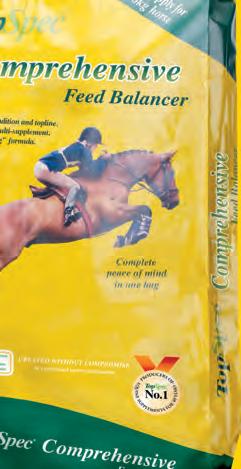
TOPSPEC COMPREHENSIVE FEED BALANCER is a very palatable, high protein, cereal grain-free, low sugar and starch, ‘non-heating’ concentrated feed which also includes the levels of micronutrients normally found in high quality specialised supplements, including e.g. a superb hoof supplement and generous levels of antioxidants. This superb specification allows horses to utilise far more nutrients from the forage and straights/blends in their diet, which usually means that their hard feed intake can be reduced, with resulting benefits to their digestion, state of mind and the horse owner’s pocket.
RRP: £37.55/£49.95 for 15kg/20kg | topspec.com

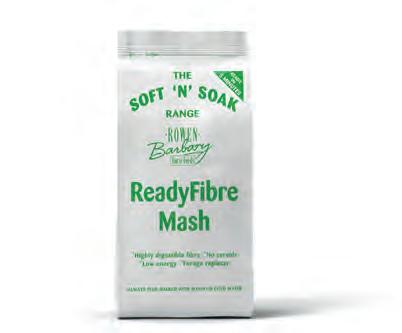
ROWEN BARBARY READYFIBRE MASH offers an easy, reliable fibre source. Quick to soak and highly palatable, this cereal-free mash is gentle on the digestive system while supporting hydration, making it an excellent choice as a hay replacer in colder months.
RRP: £14.92 per 20kg rowenbarbary.co.uk


HORSEHAGE HIGH FIBRE is made from specially selected, mature ryegrasses to provide high fibre with low protein, sugar, starch, and energy levels. Backed by a 100% quality guarantee, HorseHage gives owners confidence that they’re investing in a trusted, top-quality product.
RRP: £11.19 | Horsehage.co.uk






MOLLICHAFF DAILYFIBRE is a molasses free option for all-rounder horses and ponies. This brand new chaff is low in sugar and starch, yet high in fibre. DailyFibre is completely free of alfalfa, cereal grains and preservatives, making it a cost effective fibre solution for your feed room.


RRP: £10.49 for 12.5kg | Horsehage.co.uk

SARACEN ESSENTIAL BALANCER is a low calorie, low starch and sugar balancer, for good-doers. Many horses and ponies maintain their weight well on forage alone, however this is often not enough to meet micronutrient requirements. Essential Balancer supplies all the vitamins, minerals and quality protein required for health and immune function. The low feeding rate of 100g per 100kg body weight, per day makes Essential Balancer a cost-effective option, with a 20kg bag lasting 40 days for a 500kg horse.
RRP: £35.49 for 20kg | saracenhorsefeeds.com low
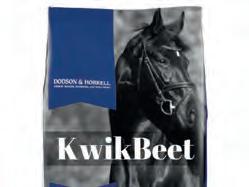











KWIKBEET is a versatile way to add additional fibre to your horse’s diet. Quick soaking, high fibre and naturally low in sugar –KwikBeet also promotes hydration and digestive health. Suitable for those who are prone to metabolic issues, or who may struggle to chew, KwikBeet provides D&H’s excellence in nutrition, for happy, healthy horses and is ready to feed in as little as ten minutes.
RRP: £18.87 | dodsonandhorrell.com
HORSLYX BALANCERS help ensure a balanced diet for your horse – this balancer is scientifically formulated to supplement the vitamins and minerals that can be lacking in hay and haylage, providing your horse with a complete nutritional package.
RRP: £17.48 for 5kg | horslyx.com




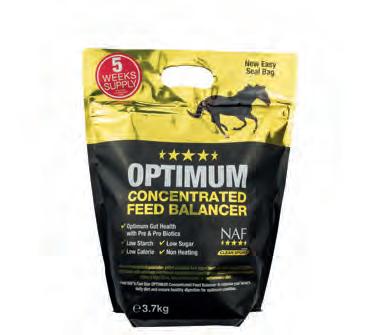
NAF FIVE STAR OPTIMUM BALANCER provides the perfect balance for dressage horses, supporting condition, topline, and performance. These concentrated pellets can be added to the feed bowl or fed straight from the hand, delivering essential vitamins and minerals often missing from modern diets. With added biotics to optimise hindgut health and nutrient absorption, Optimum helps maintain focus, suppleness, and stamina. Fed alongside a high fibre diet, this balancer ensures dressage horses stay in peak condition for training, development, and performance in the arena.
RRP: £37.99 for five weeks’ supply nafequine.com
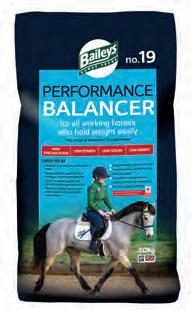
BAILEYS PERFORMANCE BALANCER provides quality nutrients, known to be lacking in forage and grazing, without additional calories. It’s ideal for maintaining a balanced diet to support muscle build, performance and recovery, while allowing for a flexible approach to calorie intake. It also contains ingredients to support gut health and is suitable for those prone to gastric ulcers. When fed as the sole concentrate, alongside forage, Performance Balancer costs as little as 88p per day (20kg bag @ £35) with a bag lasting 40 days (for a 500kg horse fed 500g/day).
RRP: around £35 for 20kg | baileyshorsefeeds.co.uk
















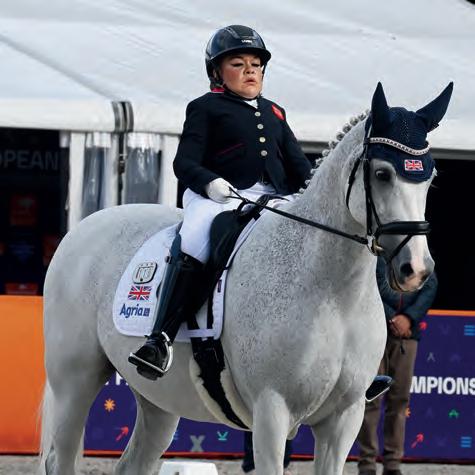
Above: After making her team debut in Riesenbeck in 2023, Gabriella Blake returned to European Championship action with her own, Gavin and Estelle Blake’s handsome Strong Beau. The pair were reserves for the Paris 2024 Paralympic Games and relished the chance to shine on the big occasion, delivering a great way of going and high quality work. Unfortunately an error of course hampered Gabby’s opening score, with half a percent deduction from the total of each judge – even with that, their efforts earned 72.375% and fifth place in a seriously competitive class.
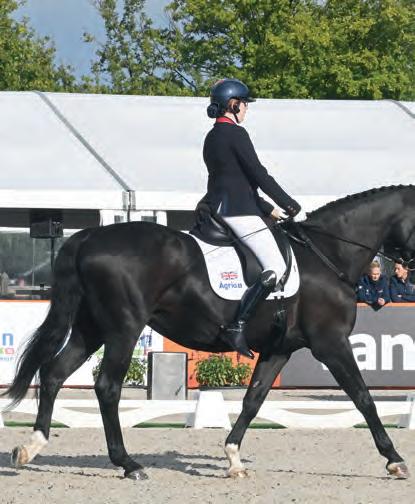
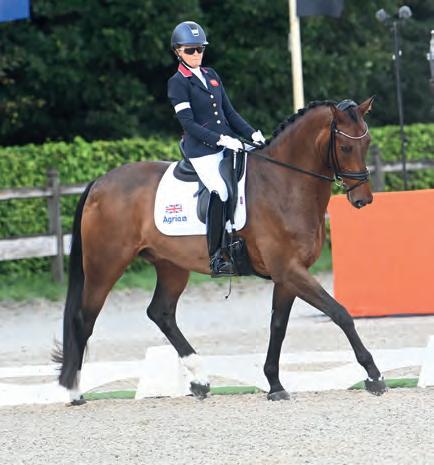
Great Britain’s para equestrian team came back from Ermelo, the Netherlands with a clutch of medals, with two seasoned campaigners joined by two debutantes to achieve admirable results in a highly competitive FEI Para European Dressage Championships .
Right: Nicola Naylor made a longawaited debut count with a superb test in the Grade 4 Grand Prix A with her own Humberto L (Cachet L x Haarlem). Their pair have been in fantastic form this season, and their class earned a place on the podium, and a wonderful bronze medal with 71.389%. “I’m stunned, shell-shocked and super pleased! I was sat in the lorry with Sarah (Millis, her personal coach) when I found out. I can’t score watch because I can’t hear them on my phone and I can’t see them on the board,” explained blind rider Nicola, “I just had to wait until they told me! We were ecstatic, it was just amazing.”
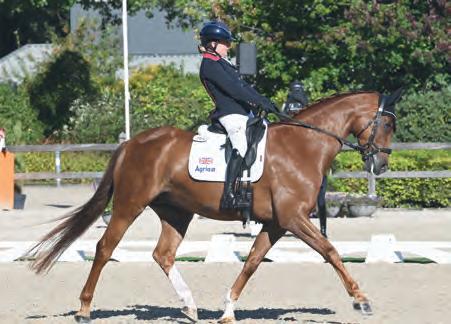
Left: British debutant Jemima Green produced a performance to be exceptionally proud of. With her own seven-year-old Fantabulous (Foundation x Furst Romancier), Jemima delivered a test full of confidence, rhythm and balance, and as the final competitor to take to the centre line in the Grade II class, she claimed an amazing bronze medal with a score of 73%.
Left: 2024 Paralympic medallist Mari Durward-Akhurst and the ever-dependable Athene Lindebjerg jumped straight back to the podium, earning the Grade I bronze on a score of 75.958%. Their elegance and accuracy was rewarded with plenty of eights. “She’s going the best she’s ever gone – we’re in a different place to Paris now,” said Mari. “It’s like she’s grown again, and she’s here and she just absolutely loves it. That’s what makes it so special, because she goes in like, ‘I’ve got this’,” she concluded.
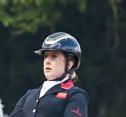
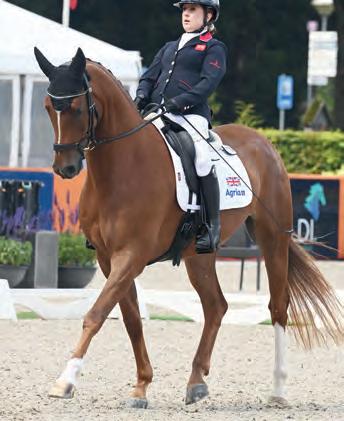
Right: Despite a two-hour competition suspension due to thunderstorms and one small spook in the arena, Gabriella Blake showed determination and composure, guiding Strong Beau through an accurate, rhythmical performance marked by precise serpentines, square halts, and steady immobility. Their partnership shone throughout, earning 74.000%, a result that boosted Britain’s tally and lifted the team onto the podium at that stage of the competition. “I am very pleased with that – having a little gap in between, then to come back like he did, he was unbelievable,” explained Gabby. “I got the walk that I wanted to get on the first day, so he felt incredible.”
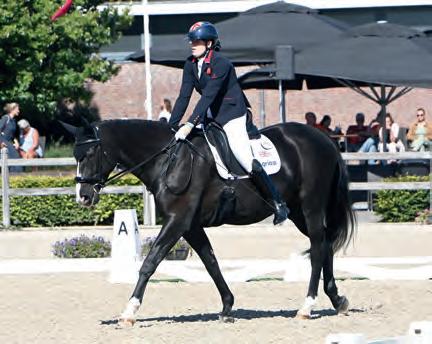
Left: Jemima Green and Fantabulous faced a challenging build-up to their team test in Ermelo, with torrential rain delaying their warmup and a spook in the arena unsettling their start. Supported by coach Georgie Nicholls and cheered on by Fanta’s breeders, the pair recovered well after early tension, showing their strong partnership as relaxation and fluency returned through the more technical movements. They finished with a square halt and a score of 72.100%, just shy of a personal best, providing a valuable contribution to the British team.
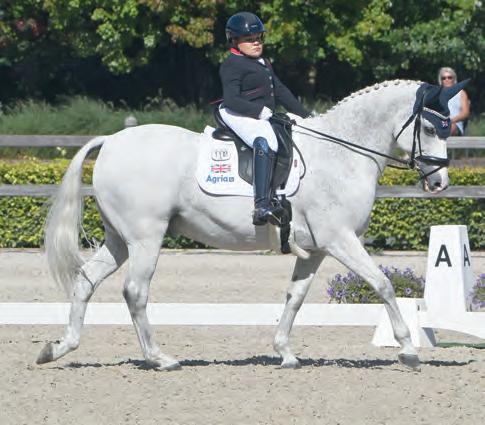
Above: Mari Durward-Akhurst and Athene Lindebjerg delivered a brilliant Grade I test, defying the storm delays. Guided by coach Rob Waine, Mari adjusted her warm-up perfectly and showcased Athene’s active walk, accurate serpentines, a square halt, and one of the best free walks of the day. Their harmonious partnership and Mari’s determination delivered the goods, earning a flurry of eights in the closing movements and a superb final score of 75.167%.
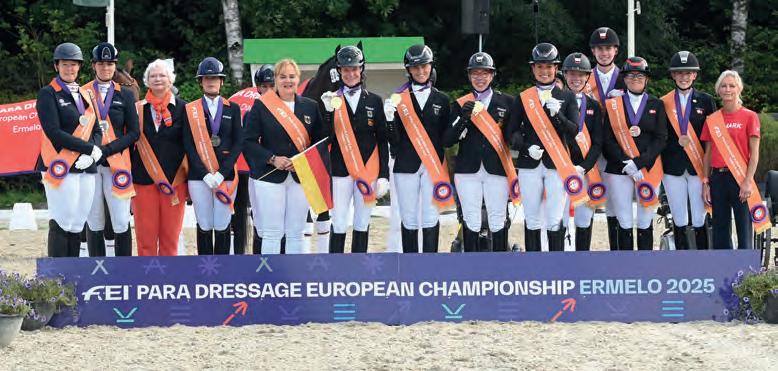
Below: For the first time in Para Dressage history a new team were crowned European champions, and it was Melanie Wienand with Lemony’s Loverboy, Heidemarie Dresing and Poesie 143, Isabell Nowak and Siracusa OLD, and Regine Mispelkamp with Pramwaldhof’s Bayala taking the gold for Germany in yet another extremely close competition at this year’s Championship.
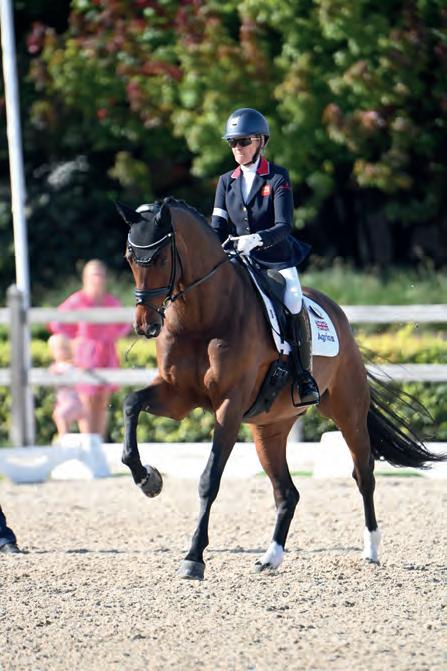
Grade IV Grand Prix B test. The walk work proved a highlight, with the difficult turn-onthe-haunches, extended walk, and repeat sequence ridden with empathy and control. A small spook in canter was quickly recovered, and the movements that followed – including balanced loops and obedient flying changes – gained stronger marks. When the score was announced as 71.406%, it was just shy of the 72.10% needed for bronze, leaving Great Britain heartbreakingly close to a medal.
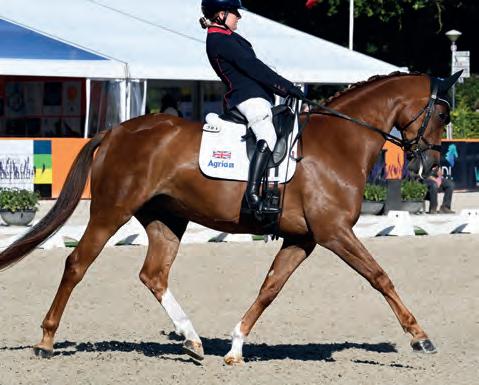
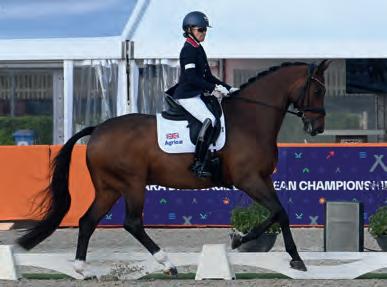
Above: Nicola Naylor produced an energetic and technically demanding Freestyle aboard Humberto L. Their test featured active canter loops, leg-yields, a strong and purposeful walk tour and a precise halfpass zig-zag in trot, all set to iconic British film and TV music that demonstrated super musicality. The performance earned 74.825%, placing Nicola just 0.17% behind the medal positions.
Left: Jemima Green capped off a remarkable championship debut with Fantabulous by delivering a personal-best Freestyle performance. Riding to upbeat violin-led music that showcased Fanta’s bright character, their strong connection and artistry shone throughout, earning 76.307% – an unforgettable week.
“My personality is very ‘tell me what to do and I’ll do it’, so the flexibility of freestyle just makes me a little bit anxious, but it was actually really quite enjoyable.”
“I’m just absolutely ecstatic – I’m so proud of him, it was the most confident he’s felt all week.”
JEMIMA GREEN
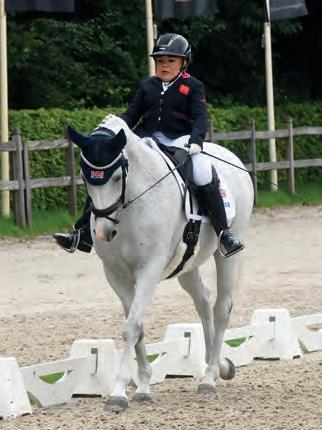
Above right: Gabriella ‘Gabby’ Blake and Strong Beau lit up Freestyle day in Ermelo with a polished, reggae-themed routine set to UB40’s Falling in Love With You. Their partnership and energy was without doubt a highlight throughout, capped with a sparkling final halt that drew applause from the crowd. The performance earned 74.400%, placing Gabby second at that point in the Grade I standings, before placing an eventual fifth - a superb achievement.
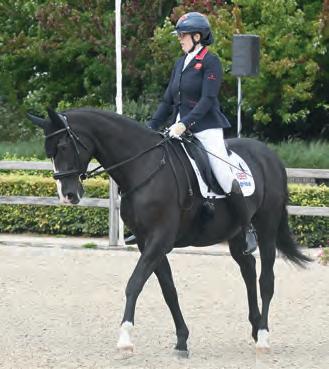
OUR PARA RIDERS AND THEIR PERSONAL TEAMS
Left: Mari Durward-Akhurst closed the Grade I Freestyle in style with Athene Lindebjerg, the beautiful black mare she calls “the Duchess.” Riding to a powerful Hollywood-inspired soundtrack, the pair delivered a flowing, accurate test featuring serpentines, circles, and an outstanding walk with stretch that impressed the judges. Their harmony, relaxation and precision earned a final score of 77.140% secured Mari her second bronze medal of the championships, adding to an already memorable week.
L-r Nicola Naylor with caller Julie Riches; groom Maisie Hodge and Jemima Green make a fuss of Fantabulous; Gabriella Blake with her personal coach Sophie Wells; Athene Lindebjerg enjoys some attention from personal coach Rob Waine and Mari Durward-Akhurst.
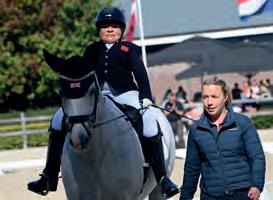
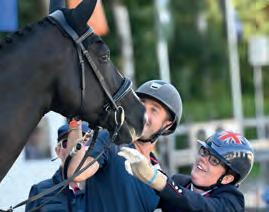




















New stirrup designs promise to offer riders greater comfort and safety. Jane Carley looks at some of the options.
The stirrup was originally invented around 4BC, offering greater stability and control for horsemen as they rode into battle. Until recently, the iron followed the same basic design, but rider biomechanics specialists noted that the way the stirrup hangs and supports the foot can impact the rider’s comfort and effectiveness. Safety is another concern, with the traditional D shape risking the rider being caught up in one iron. There is much research still ongoing to ascertain the effect of new designs and the effect of other factors such as leather length, but a range of options for improved comfort and safety are emerging and being adopted at the highest levels.
When a rider sits correctly, a straight line forms from the hip, through the knee, down to the foot.
If the foot’s position in the stirrup doesn’t support this line – for example, if the leather pulls the stirrup off-centre – the body starts to compensate. The most common reaction is a valgus movement: the knee falls inward, the hip loses its neutral position, and the foot bears weight at an angle. This leads to tension in the hip flexors, a ‘gripping’ leg and reduced suppleness in the saddle.

Ryde adjustable stirrups are designed to be fine-tuned for lateral position, tilt, and hanging angle, allowing the rider to adjust the stirrup to their own anatomy and chosen discipline, says UK supplier The Centre Line.
There are three individually customisable settings:
Traditional stirrups hang at an angle, which pushes the foot outward. This causes the leg to rotate inward, the knee to collapse, and the foot to rest on the outside of the tread. Riders often compensate by gripping with the thigh or pressing against the saddle.
With adjustable lateral positioning, the stirrup can instead be aligned directly under the hip. This allows the leg to hang naturally, the knee to stabilise, and the rider to find a balanced, supportive leg.
Stirrup leather angle determines how the stirrup meets the rider’s leg. If angled incorrectly, it can cause pressure on the inner thigh or slippage toward the plate’s edge.
By adjusting the leather’s angle, the rider can create an alignment that matches their body.
This allows the stirrup to follow the natural toe direction, reducing tension in the knees and lower legs.
Tread angle adjusts the pressure from the rider’s foot. A slight forward tilt deepens the seat and stabilises the heel. A backward tilt activates the forefoot and increases reaction time.
Adjusting the angle of the footplate helps the rider balance centrally over the horse.
Each stirrup can be set independently to address individual asymmetries and injuries.
Ryde stirrups include a magnetic safety release: the side branch opens fully to release the rider’s foot. If the branch is obstructed – by clothing, fencing or similar – it detaches completely via a replaceable steel spring, leaving no parts exposed and reducing the risk of entanglement.
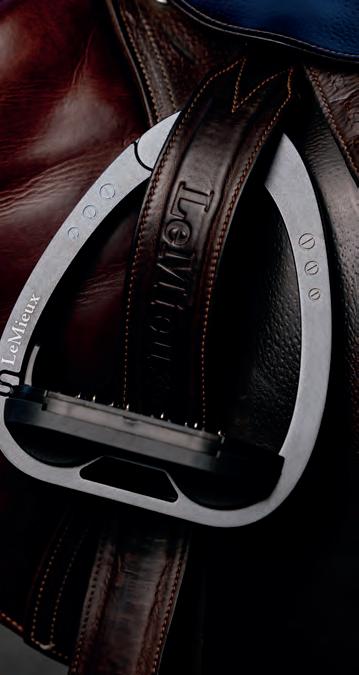
Vector Control stirrups from LeMieux are machined from aviation grade aluminium, making them lighter than most stirrups on the market at just 419g each, whilst not compromising on stability.
The ergonomic footplate has a cross-track grip surface with embedded hardened steel pins to provide maximum security for the boot.
This footplate is supported by a twinbalance arch system that distributes the weight evenly across the base of the stirrup frame. The apex of the frame is recessed and off-set, encouraging a 45deg outward orientation which makes it easier for the rider to locate the optimum angle for the foot and regain a lost stirrup.
There are two separate models (shown above right): The footplate of the Control stirrup is set at 0deg which provides maximum security for the foot, providing the rider with more ‘control’,
The Balance stirrup is set at 5deg, designed to help aid lower leg stability, keeping heels down and therefore helping the riders ‘balance’.
An integrated hinged arm has a two-stage
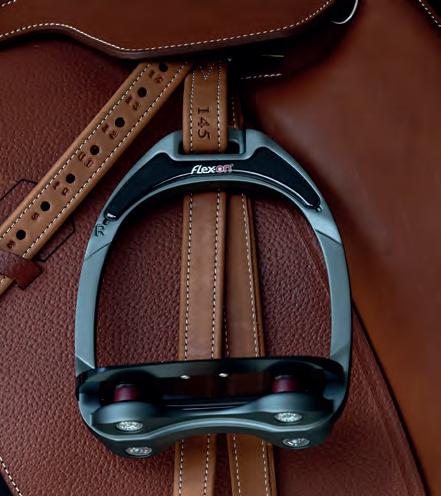
release system, preventing unintentional opening. The spring-loaded arm locks into the base of the main frame meaning that when under maximum pressure, the rider’s weight is spread evenly across the stirrup, preventing the outside from dropping and flexing. When pressure is put onto the arm of the stirrup, the arm releases allowing the foot to come out of the stirrup, minimising the risk of dragging.
The stirrup arm breakout force is 36N (equivalent to 3.62kg) in testing, meaning it has enough resistance to stop it from opening unintentionally, but will release when needed.
The French-made Flex-on stirrup has three key features.
Elastomer shock absorbers are combined with a wide footbed to cushion the shockwaves generated by the horse’s movement. This system is designed to enhance rider stability while reducing joint stress.
Biomechanical studies conducted by an independent sports science laboratory found that this maximises comfort during movement and impact, preserves the rider’s posture and physical integrity while reducing muscle strain and helps prevent chronic pain in adductors, ankles, knees and back.
The stirrup frame features an offset and skewed slot for the stirrup leather, allowing for natural alignment and improved contact with the horse. In addition, a choice of angled footbeds helps achieve optimal leg positioning.
The geometry of the Flex-on stirrup is designed to promote alignment of shoulders, hips and heel, while the inclined footbed encourages a natural drop of the heel for enhanced stability and posture.
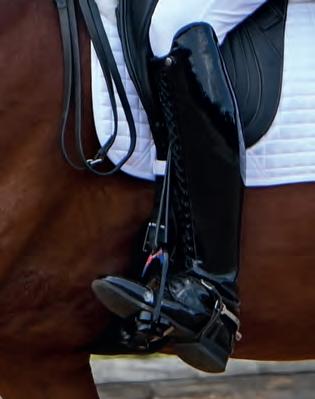
The patented Premier Equine Intego Duo safety stirrup features a double-action release system. In the event of a lateral fall, the entire outer arm opens instantly, allowing the foot to release safely and reducing the risk of injury.
A magnetic locking mechanism and




snap-closure double hinge ensure the arm returns securely to its original position.


Crafted from lightweight, anodised aluminium for strength and durability, the Intego Duo is equipped with a heavy-duty anti-slip tread for maximum grip. Each stirrup is clearly marked L and R for correct positioning, ensuring the opening arm is always on the outer side.


The Rider in Balance (RiB)stirrup was developed by rider biomechanics specialist Maria Theresa Engell. Dr Engell’s research into the influence of the rider’s foot position on their body position in the saddle found a direct relationship between how the rider walks, through how they sit in a balance chair to how they sit in the saddle.
“Many people exhibit over-pronation, where they lean into the inside of the foot. With a conventional stirrup, the rider has unstable legs, so they can’t get their leg around the belly of the horse without putting pressure on their knee,” she explains.
The patented RIB stirrup has a second hole for the leather on the inside which rotates the stirrup to the outside; the footplate is also adjustable. It is designed to provide maximum support and control, while placing the leg around the horse. This relieves pressure on the knees from the saddle and facilitates effective and precise use of the legs, says Rider In Balance.
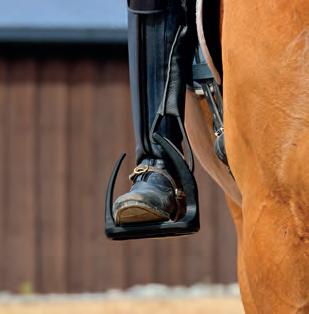
Longer traditional leathers are needed to accommodate the amount taken up by the second attachment point, but a second leather which slips over the first has also been developed.
A safety mechanism made of soft PU material ensures that the rider’s foot can be easily released in case of an accident. The mechanism bends and disconnects from the steel part to free the foot.


It is now available in both adult and children’s sizes.



The Ophena magnetic stirrup is permitted under a Para dispensation, helping prevent riders losing the iron. A magnetic insole placed inside the rider’s boot connects with the magnetic tread. Since there is no outside frame to the iron, it also acts as a safety stirrup.





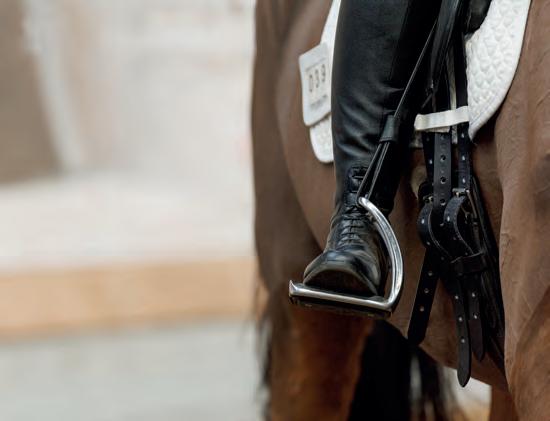
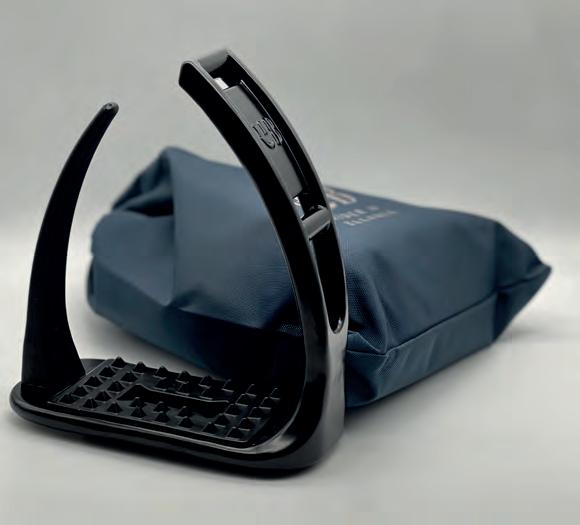


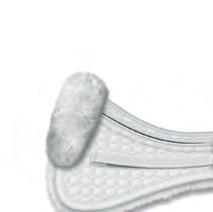
HORSEMAN’S ONE STEP is an all-in-one cream formula that cleans and conditions your tack. It penetrates leather to remove groundin dirt and sweat, and its lanolin-rich formula conditions and preserves to prevent cracking and drying out, keeping items soft and pliable. Suitable for use on natural or synthetic leather.




RRP: £12.62 for 425g |

absorbine.co.uk

MATTES HALF PADS are designed with the comfort of the horse in mind. They feature an anatomically shaped topline Spinefree clearance area, whilst the quilted design features two layers: Polyflex (a deep-needled needle felt) is used for shape retention and pressure equalisation and polyester wadding for padding. The natural density of the durable wool fibres offers great shock absorption, whilst selecting sheepskin trim in the front and rear areas of the pad offers additional comfort for your horse.
RRP: from £59 zebraproducts.co.uk/stockists
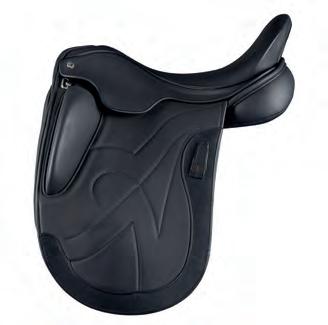
RYDE STIRRUPS are engineered to work with your individual biomechanics, actively supporting correct alignment and addressing rider asymmetry. The result? Greater stability, improved straightness, and clearer communication with your horse. Sleek, supportive, and precision-made, they’re unlike anything else on the market. Available in silver or black.
RRP: £385 | thecentreline.co.uk
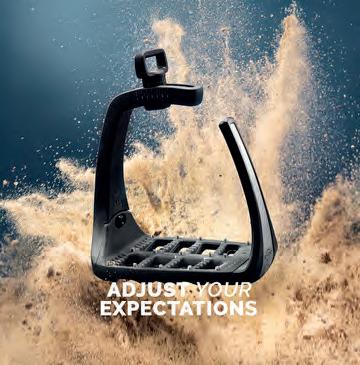
UNITY SERIES - MONOFLAP DRESSAGE
SADDLE is available in X and Y seat profiles plus V, U and XU trees for the ultimate in saddle fitting precision. Seat Size: 116.5-18.5in, fixed position, available in black and brown in full-grain calf leather.
RRP: from £4,435 | albionsaddlemakers.co.uk
SPRENGER AERO STIRRUP features an extra wide, inclined tread surface for comfort and optimal leg position, shock-absorbing and jointfriendly properties. A 180deg movable element releases the foot in all directions and the grip system in the tread can be extended with spikes. It is optimally balanced and a special stirrup leather eyelet offers an optimised leg position.
RRP: from £283.90 zebraproducts.co.uk/stockists
VECTOR STIRRUPS are a new generation of stirrup – technically advanced and lightweight. The ergonomic footplate of the Balance stirrup is set at 5deg to enable lower leg stability, keeping the heels down. The frame is recessed and off-set, encouraging a 45deg outward orientation making it easier for riders to locate the optimum angle for the foot. When pressure is put onto the arm of the stirrup, it releases allowing the foot to come out of the stirrup.
RRP: £159.95 | lemieux.com
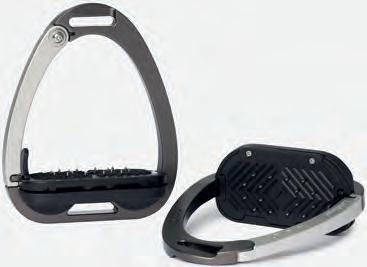

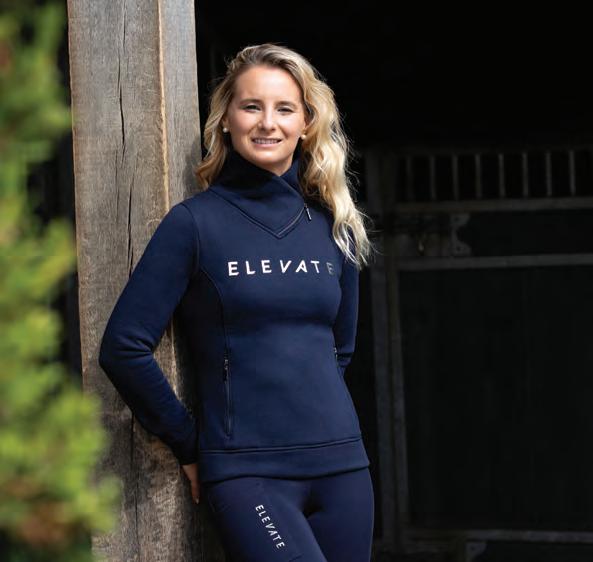






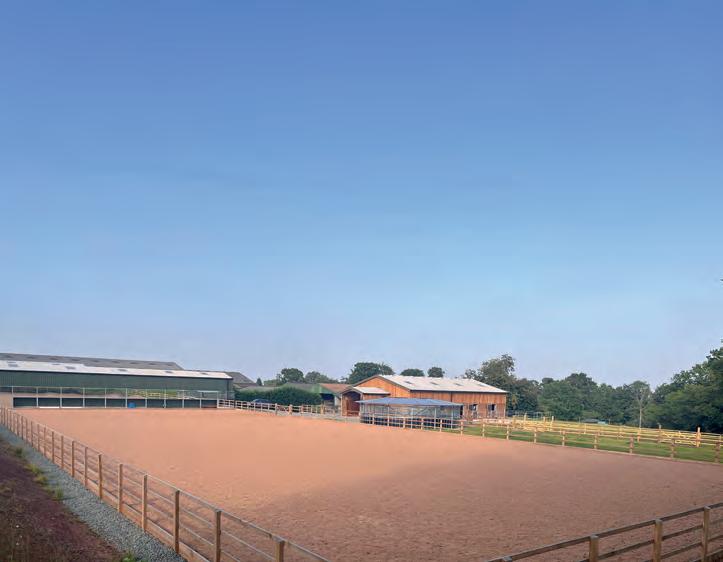

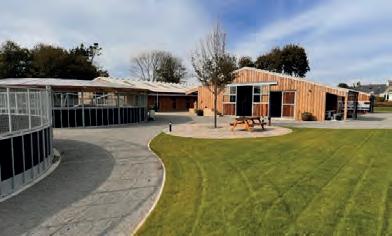
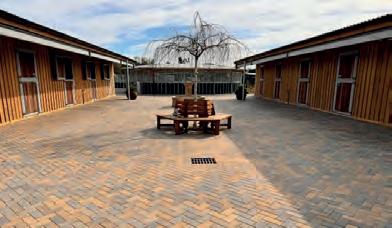
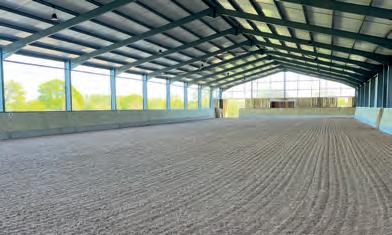
Louise Robson is a Buckinghamshire-based trainer specialising in retraining of racehorses from the racetrack to the dressage arena. She has produced Thoroughbreds up to Inter II level and won numerous RoR championships for Godolphin Lifetime Care Programme and Her Majesty Queen Elizabeth II.
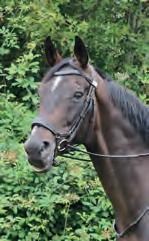
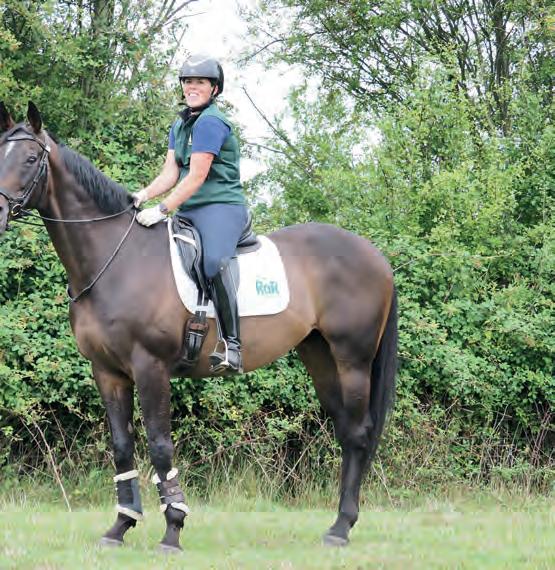
Everyone loves a thoroughbred but have you ever considered one as your next dressage horse? They can be incredibly rewarding to train, but you may have to adapt your approach to their unique needs, says Louise Robson
Breeding programmes for thoroughbreds have produced a horse that is designed to gallop and cross the ground as quickly as possible. They have long hindlegs and front legs which are often set behind the vertical. Gaining the uphill push required for dressage is a biomechanical challenge – the tendency is to fall onto the shoulders with the back hollow and the head raised. Yet with the right training they can achieve more than you’d expect. The lovely Quad (below left) has been trained to Inter I and now enjoys doing demonstrations.
It’s like teaching Usain Bolt to do ballet.
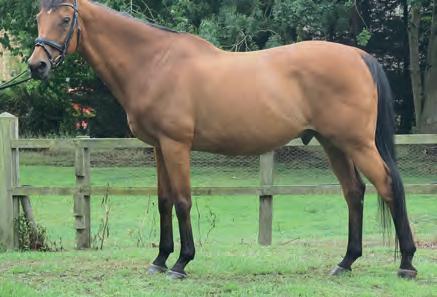
Don’t be tempted to turn away a horse that has come straight from the trainer and is still fit. Depending on your experience it’s better to hack them for a few weeks. Maintaining a routine is essential for an ex-racehorse’s well-being: they are used to being fed and
exercised at a certain time and immersing them into the chaotic world of a DIY livery yard can be unsettling at best!
Long reining is very useful to build fitness and core before you think about ridden training – it’s the way they will have been backed so they are very used to it.
Bailey (below left) is a seven-year-old gelding who ran over middle distances on the flat. It’s taken a while for him to be able to bend and to go forwards from the leg.
Keep ridden training sessions very short – 20 mins can be enough – and no more than three or four times a week. It’s a mistake to think you can ‘settle’ these horses by riding them a lot; you’re more likely to make them sore.
Be prepared for the fact that you may spend two years simply working on walk, trot and canter to get the basics in place.
However, it’s important to keep it interesting for the horse as they have very active minds! Do as much hacking as possible – again they don’t need to be long hacks – and ride on different surfaces to improve the horse’s proprioception.
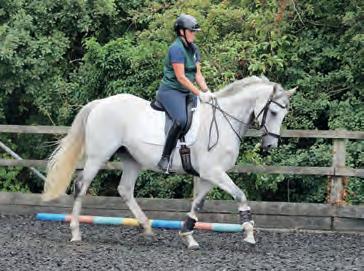
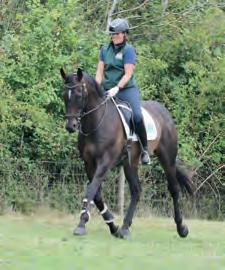
Think about your own position and balance.
Racehorses are not built for a rider to sit on, so make sure that you can trot and canter out of the saddle. You may find that many exercises are easier for the horse in canter, and what they have learned will translate better into trot afterwards.
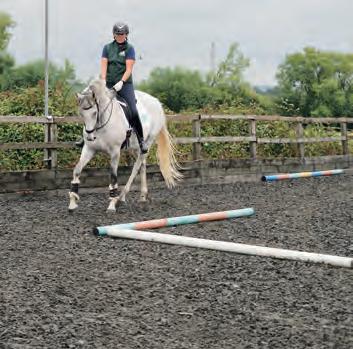
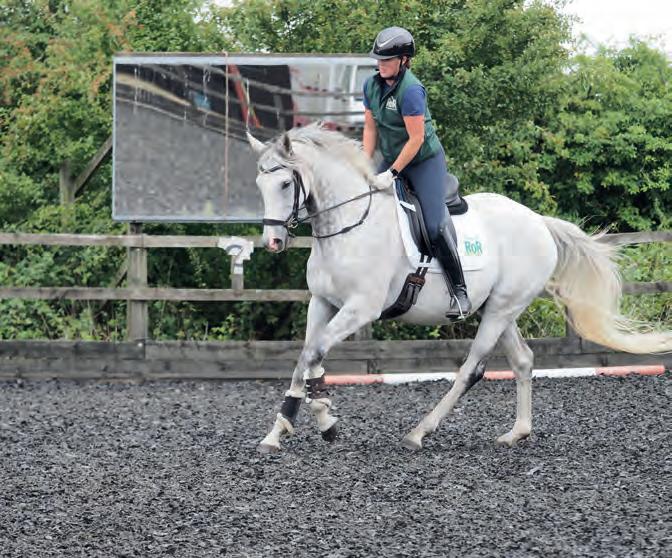
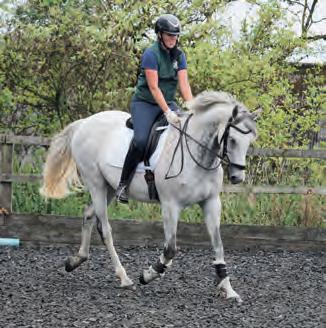
Tack and equipment
Although it’s important not to ‘hang onto’ the horse, in trot and canter you do need a following, elastic contact. A neckstrap can help you keep your hands in the right place; think of the horse’s neck coming ‘out’ of the neckstrap. If you do get into a pulling battle, the horse can get overbent and anxious and the situation can escalate! Re-organise and re-balance, using a smaller circle or pushing the horse sideways, and touch and then soften the rein.
Saddle fitting needs thinking about. These are often horses with no ‘middle’ as such so a shorter saddle may be needed. I tend to use a pad as well as a saddle cloth as they can be sensitive; but each horse is an individual. Work closely with your saddle fitter and be prepared for frequent reflocking as they change shape. When it comes to bitting you can keep it simple – try to find out which snaffle they ran in and whether they prefer tongue pressure or not. If the bit is uncomfortable you will find they draw the tongue up and
Riding squares around poles helps the horse to get his shoulders ‘out of the way’, by allowing the rider to turn the shoulders around the hind legs, rather than trying to get bend with the inside leg which will only push the quarters out.
Thoroughbreds will often travel ‘quarters in’ especially on the right rein, a legacy of mainly running on left-handed tracks. Again, controlling the outside shoulder improves this; push the horse around the turn on a half-circle on the centre line.
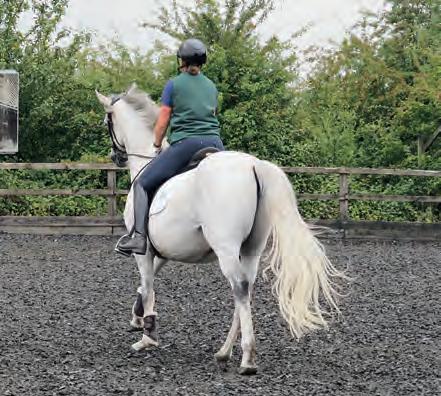
back. Racehorses have regular dentist visits, so keep this up.
It’s important to rule out saddle or bitting issues if you are struggling so that you can focus on how to improve the training.
It’s a myth that all thoroughbreds have poor feet. Some can and do go well barefoot; good gut health and a balanced diet is key. Talk to your farrier about any issues that
they might have had in training; wide and flat hind feet can lead to hind suspensory injuries, for example. Take photos of the feet when you first get the horse, and consider having some x-rays so that you can pinpoint any potential problems.
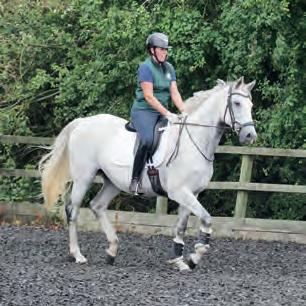
Don’t overcomplicate feeding. Forage analysis is useful to discover which minerals need supplementing. Many thoroughbreds do well on fibre and a balancer.
Greg is a 14-year-old gelding who is competing at Advanced Medium.
As the horse progresses up the dressage ladder you will encounter more challenges. They are not built to be quick behind in the way that is needed for collection and can lack ‘expression’. On the other hand, it’s natural for the thoroughbred to keep its poll up, as long as it is supple in the back. They also find the canter work relatively easy as this is what they were bred for!
The pole exercise is useful here again. Cantering a small square around the poles brings the shoulders around; you can also ride a small circle inside the poles – beware of going too small and the canter becoming four-beat.
The horse can tend to drop the inside shoulder so to keep him upright, move a few strides across and then take it onto a 15m circle. The circle helps you rebalance without pulling.
You can also push sideways on a long diagonal and then go straight for a few strides. Does the horse stay in balance? If so, you can take it into half pass.
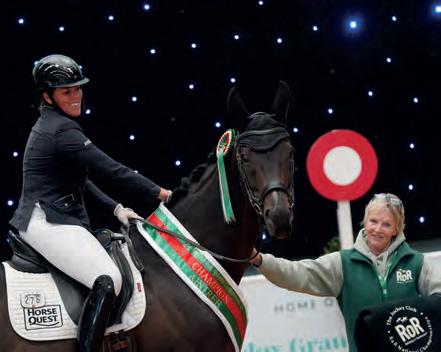
Greg (St Gregoire) was crowned Special Open champion (Advanced Medium and above) at the 2024 and 2025 RoR National Championships. It’s easy to get frustrated by disappointing marks or comments on your sheet. You might find it difficult to achieve relaxation when your horse is working hard to perform the movements. Compare the comments to where you feel the horse is in his stage of training and consider whether he is ready for you to push for more, or whether you risk him losing confidence. Most of all – be proud of where you are and enjoy what you have achieved: you’re doing something amazing on a horse that was bred and initially trained to do something else entirely!
They can find collection hard as they are not designed to be active in their joints. The racehorse will have a naturally good walk but you need to keep it forwards to maintain the four-beat rhythm; slow down too much and it will become lateral. Go from half pass into the pirouette as this keeps the forwardness, keeps the rhythm and avoids the urge to pull!
You could also make a 5m circle around the cone, go into travers and go from there, but always think forward.
DRESSAGE OPPORTUNITIES FOR THE THOROUGHBRED
BD’s Cavago Associated Championships has classes from Intro to Advanced Medium, with sections for RoR-registered and Weatherbysregistered thoroughbreds. Qualification is via gaining three scores over 60% at the level that you wish to qualify for.
Competitors can qualify for the RoR National Championships at Aintree where there are a range of dressage classes from Intro to Advanced Medium including Freestyle.
They can also get involved with the RoR dressage league, which awards special rosettes for the top ten competitors based on their results in affiliated and unaffiliated dressage competitions plus qualification for the RoR National Championships, and a league championship at the show.
The Elite Dressage Performance Award is open to horse/rider combinations competing at Advanced Medium level and above who have qualified by achieving a top six placing in the RoR Dressage Horse Special class at the RoR Championships.
Further information on the Retraining of Racehorses website ror.org.uk/series/dressage
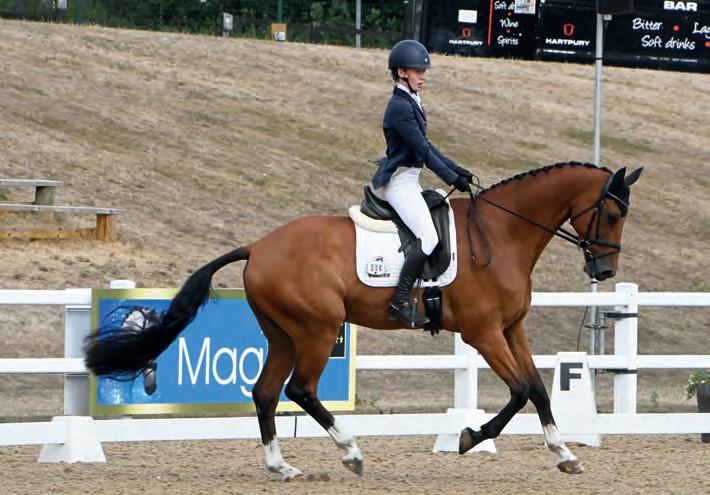
Equissage Pulse Bronze & Silver Championships
Grade 1 Bronze
1 Alison Corp and Apache Dancer 63.95%
Grade 3 Bronze
1 Chelsea Butcher and Howen Phillip 69.83%
2. Danielle Smith-Turner and Elaphine Declan 67.58%
3. Mark Griffin and Chilly Breeze 66% Grade 4 Bronze
1 Shirley Hart and Der Diamant 69.76%
2. Amy Mayho and August Rogue 69.05%
3. Lisa Griffin and Chilly Breeze
Grade 5 Bronze
1 Hattie Spurling and Top Biats
2. Harriet Williamson and King D II
3. Loretta Joynson and Tresais Lancelot
Grade 1 Silver
1 Alisha Robbins and Framsham Fella 68.33%
2. Margaret Lupton and Domino XI 68.23% Grade 2 Silver
1. Jason Inchley and Rubin Ryella 70.18%
2. Lacey O’Hara and Blue Diamond 67.46%
3. Jason Inchley and Fantasia QS 65% Grade 3 Silver
1 Isabella Benfield and Lamborghini III
2. Alexandra Stewart and Beau VIII
3. Janet Cummings and Rhonder ful Dorrells Grade 4 Silver
1. Amy Mayho and Toto Light
2. Amy Mayho and August Roque 68%
3. Lesley Mcnaughton-Wells and Liberty’s North Star 65.87%
Grade 5 Silver
1. Hattie Spurling and Top Biats 69.70%
2. Flossie England and Sankro 67.86%
Equissage Pulse Para Dressage Championships.
The Equissage Pulse Para Dressage Championships 2025, held at Hartpury University & College in Gloucestershire (19-20 August 2025) provided two days of fantastic competition as the titles were decided for the Bronze and Silver Championships, as well as the Gold Semi-Finals. With plenty of titles on offer across the event, there were standout performances across the grades and sections, showcasing the strength and depth of British para dressage.

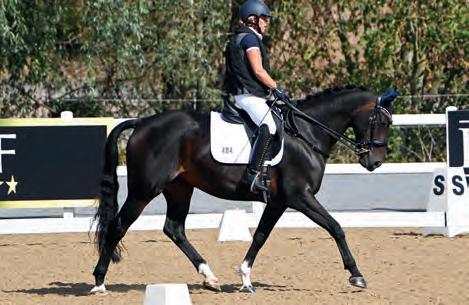
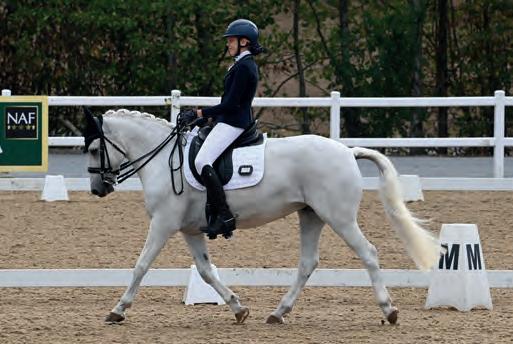
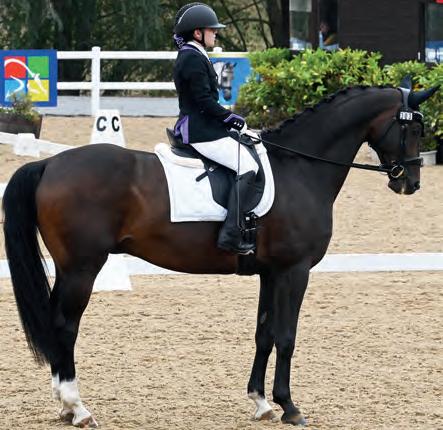
Right: Shirley Hart and Der Diamant (by Diamond Hit) had a highly successful show, made all the more memorable by the fact that ‘Diamond’ has recovered from colic surgery and complications to return to competing.
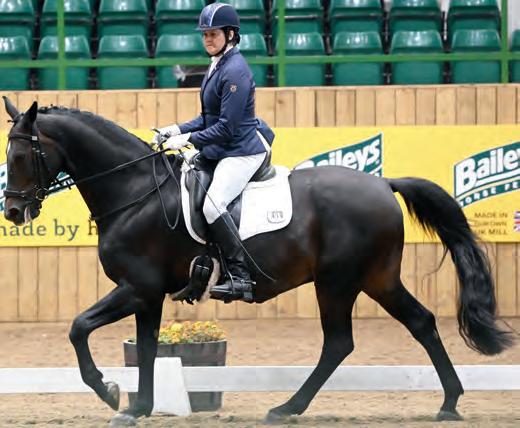
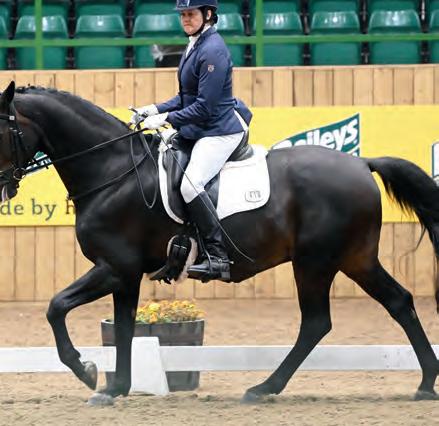
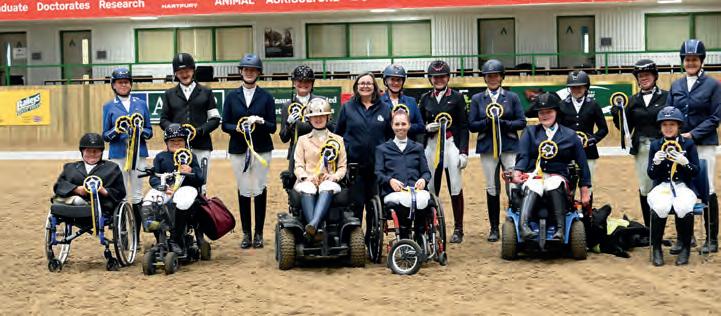
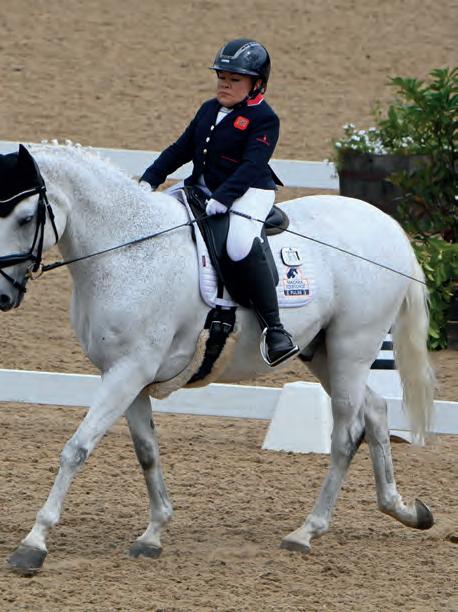
Pulse Freestyle
Above: Strong competition in the Equissage Pulse Freestyle Championships made for a joyful prize giving.
Left: Hartpury was a great preparation for European Championships team members Gabriella Blake and Strong Beau, who won both the Equissage Pulse Freestyle Grade 1 Championship and the Grade 1 Gold Semi Final.
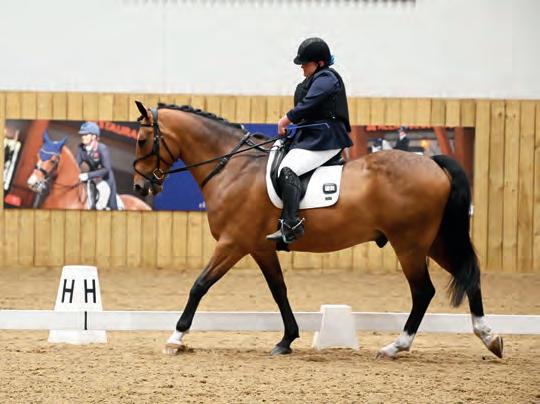
Above: Alisha Robbins and the 17.1hh Fransham Fella have only been competing together since last November but have had a fantastic season, topped off by winning the Grade 1 Silver and Grade 1 Silver Freestyle titles.
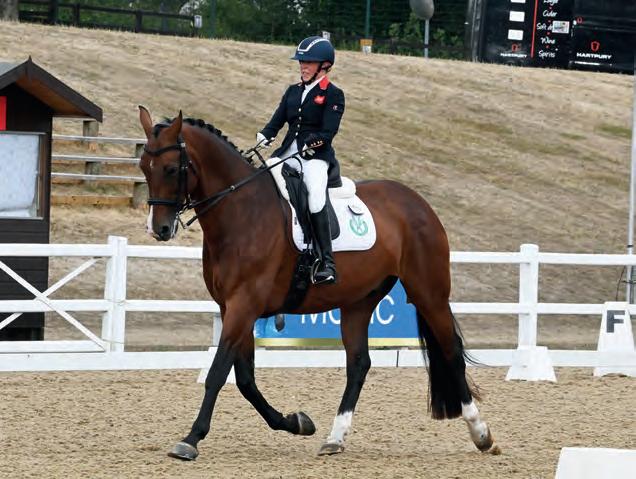
Above: Erin Orford and her new dancing partner LJT Nutbush have had a flying start to their competition career, winning the Grade 3 Gold Semi-Final with 73.33%.
Right: Laura Scott and CEI Summer Days took the Grade 4 Gold Semi-Final. Laura is head girl to her father, Champion Hurdlewinning trainer Jeremy Scott and took up dressage after suffering a spinal injury.
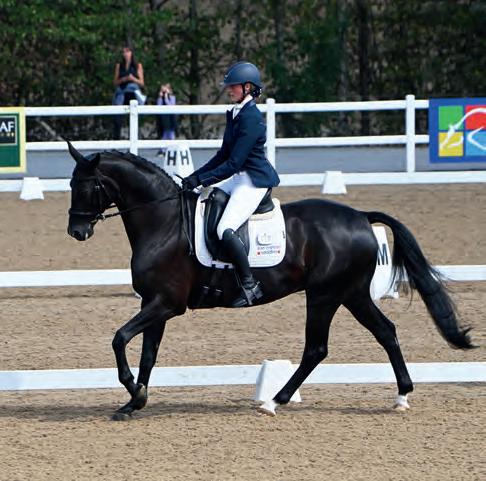
Below: Vicky Earnshaw and Prince Pepe had a very successful show, scooping the honours in the Grade 3 Gold music ahead of Vicky’s other ride Midline Rioja and taking the runner-up slot in the Gold Semi-Final.

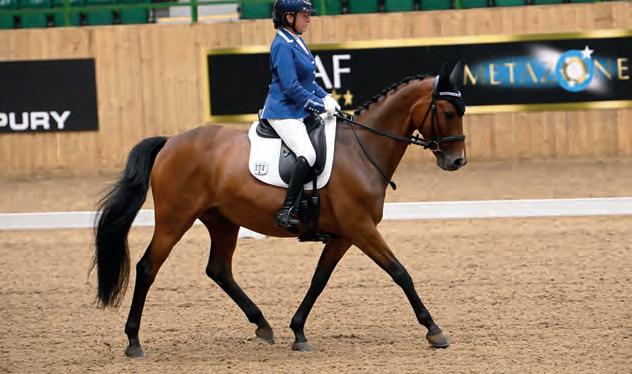
Equissage Pulse Gold Semi-Final
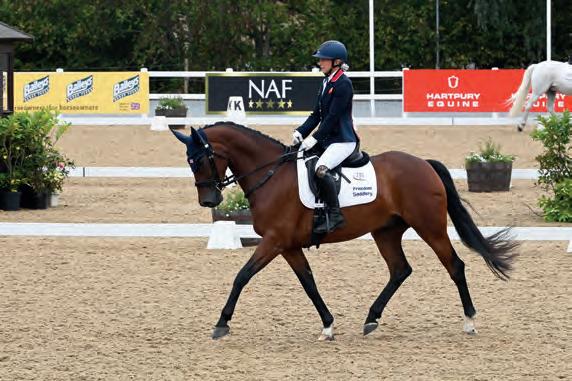
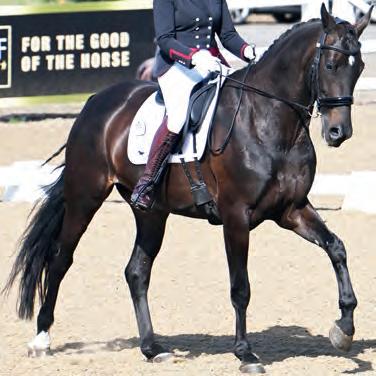
Alice Begg was another rider claiming multiple spoils with Nalique and Kiolita in Gold Semi-Final and music classes.









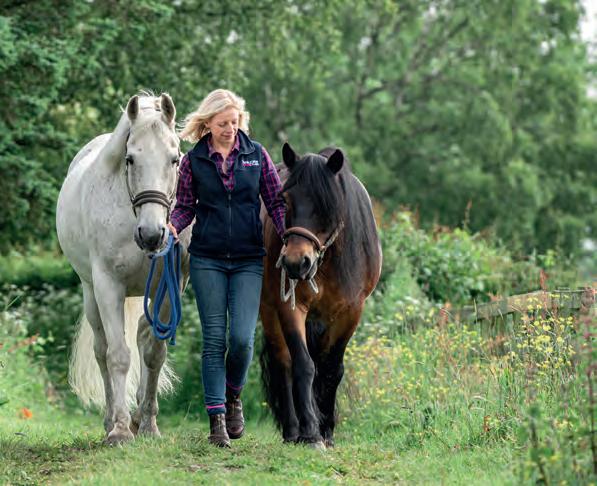















When it comes to transporting your prized dressage horse, choosing the right trailer can make all the difference. Stephanie Bateman speaks to experts to nd out what matters most.
From internal head height and tack storage to vehicle compatibility and breakdown cover, there’s a lot to consider when choosing a trailer to carry your dressage horse. Many dressage horses are tall and elegant animals that require ample space when travelling.
Kristina Parker from Equi-Trek highlights that an important feature riders should prioritise is the internal height of the trailer.
“Most of our trailers now have an almost 8ft internal head height, which is perfect for accommodating the taller stature of dressage horses comfortably.”

Space isn’t just about height, though; a horse needs enough room to lower its head, shift weight, and balance during travel. It’s also worth considering the length and width of your horse to ensure there is enough room with the partition, especially if you’ll be towing two horses together.
Riders often travel with an array of tack and equipment, including longer-skirted and deeper-seated dressage saddles which should be a consideration too.
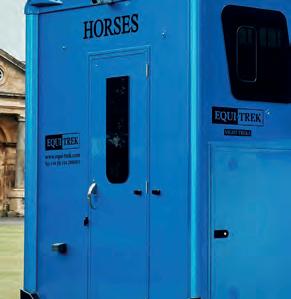

“Our trailers come with integrated tack and grooms’ lockers that have been widened to fit bigger, deeper dressage saddles alongside all the other kit a dressage rider needs,” says Kristina.
OTHER TRAILER FEATURES TO CONSIDER
• Living accommodation: Dressage competitions often involve long days at the venue. Having living space within your trailer means you can sit out of the weather, relax, make a cup of tea, or even prepare a meal. Many living areas include fitted wardrobes, ideal for hanging show jackets, keeping white breeches clean and storing boot bags.

• Storage: Aside from saddles and bridles, a trailer with adequate storage for rugs, grooming kits, and other essentials is invaluable. Consider whether you need additional storage solutions to keep everything organised and secure such as internal tack lockers.
• Orientation and ramp design: The ease with which your horse can load and unload, and whether they prefer to travel front or rear-facing can affect their
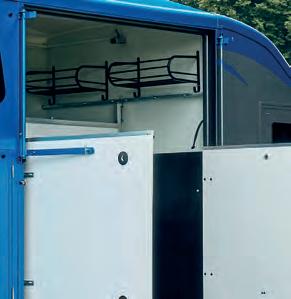




1. Get to a safe location: If possible, pull onto the hard shoulder, next junction, layby, or service area.
2. Repor t the incident: Contact Highways (for motorways) or the police (for smaller roads) if you’re causing an obstruction or are in a vulnerable position.
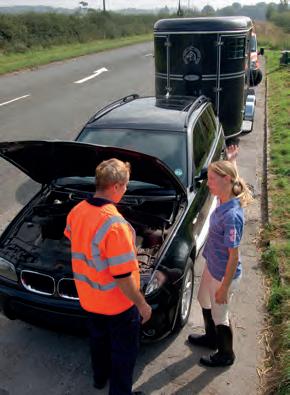
Above: Having combined breakdown cover for towing vehicle and trailer avoids having to deal with two companies in an already stressful situation.
Below: Consider whether your horse would be happier walking forward out of the trailer rather than having to back out.
3. Call your breakdown provider: Have your vehicle registration, location (using tools like What3Words for accuracy), and fault details (if known) ready.
4. Stay safe: Follow all advice from your breakdown provider, especially about road safety.
5. Avoid entering the horse area: While tempting, it’s safer for you to stay outside the lorry or trailer to prevent injury from startled animals or passing traffic. Horses often settle better if left alone during such incidents.
stress levels when travelling. Some horses also prefer walking in and out forwards instead of having to reverse out of the trailer, while others might be more comfortable side-loading. Ramp height, steepness and width are also crucial factors when evaluating your horse’s preferences, comfort and safety.
• Towing vehicle: Check your vehicle’s towing capacity, not just whether it can pull the trailer, but whether it can safely pull it when loaded. The key figure to check when towing is the Gross Train Weight (GTW) – the maximum combined weight of your vehicle and trailer when fully loaded. You’ll find it on your vehicle’s
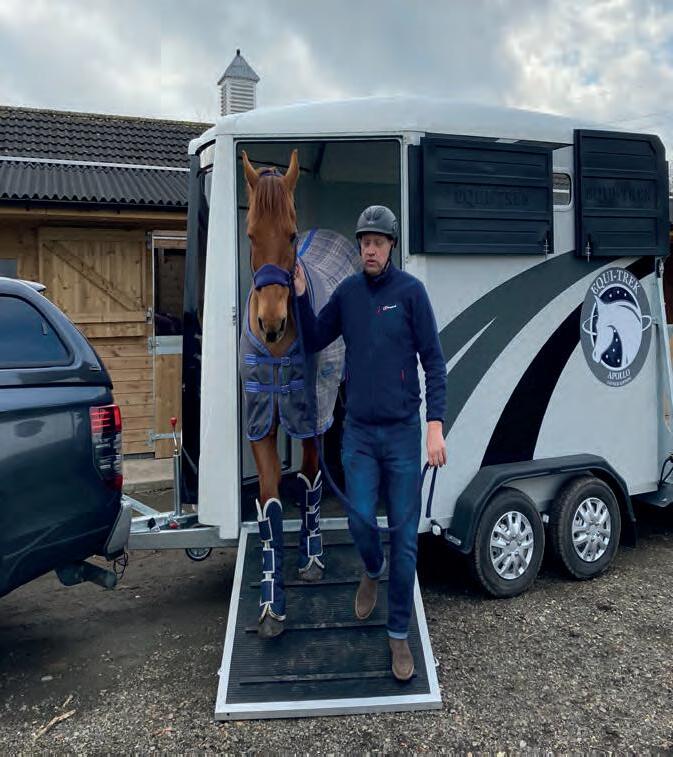
VIN plate, along with the Gross Vehicle Weight (GVW). To work out your towing limit, subtract the GVW from the GTW. Make sure the loaded trailer (including horses and gear) doesn’t exceed this figure, and check that your licence covers the weight you plan to tow. A too-big trailer can strain your vehicle and be unsafe, especially on hills or in bad weather.
• Other considerations: Aluminium floors tend to last longer than wood, rubber matting offers a stable, slip-resistant surface for your horse, ample ventilation prevents horses getting too hot and padded partitions and breast bars will offer an element of comfort.
Internal lights will help you see in the dark, and an internal camera that you can connect to a mobile phone or screen in your car enables you to watch your horse in transit.
Proper maintenance not only keeps your trailer safe but also protects your investment and ensures it remains covered under warranty.
“For all Equi-Trek trailers, the first service is due three months after initial collection, then annually for the following three years to maintain the standard threeyear warranty,” Kristina advises. “All servicing must be carried out at an approved Equi-Trek dealer.”
Before every journey, riders should perform their own visual checks:
Ensure all fixtures and fittings are secure and functioning.
• Check the lights to confirm they’re working correctly.
• Verify tyre pressure and condition.
• Confirm that all doors and ramps open and close smoothly.
Routine care and checks prevent avoidable breakdowns and help keep your horse safe on the road.
Proper maintenance protects your investment and ensures it remains covered under warranty.
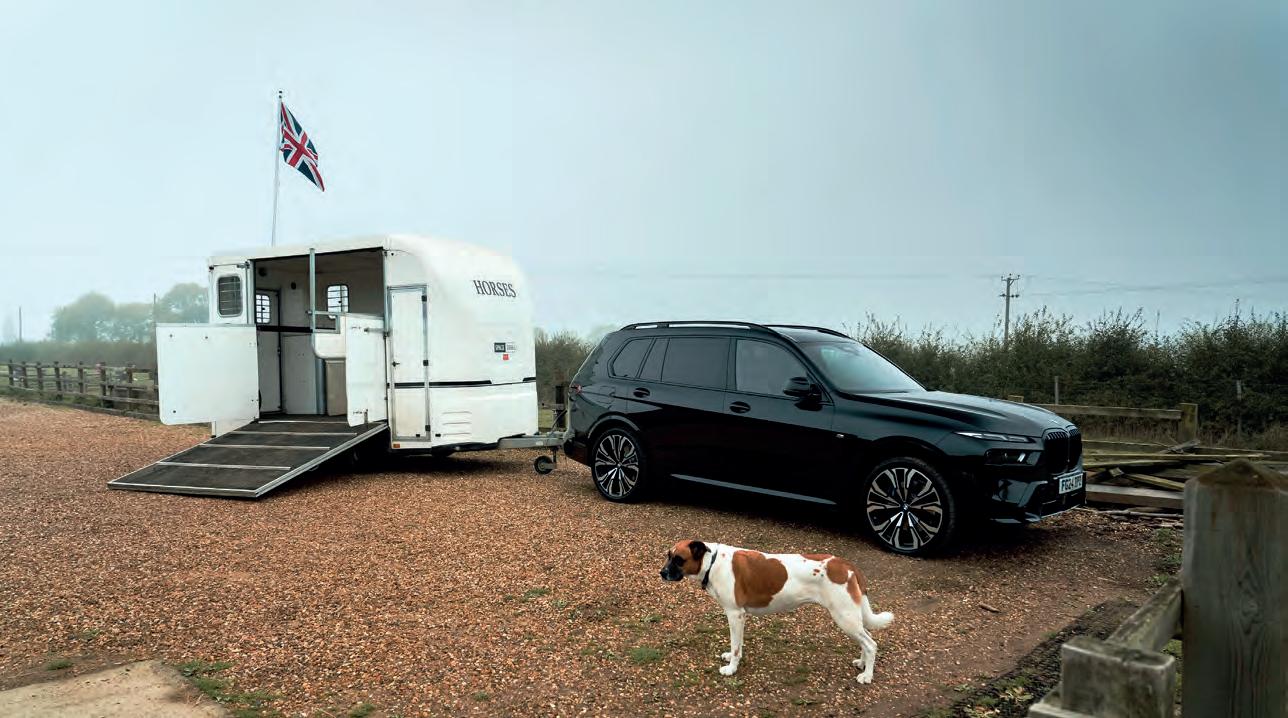
Towing a trailer introduces unique risks, especially if your vehicle breaks down. Claire Barker from PRP Breakdown explains: “Standard car breakdown cover typically excludes trailers carrying livestock. Your car and trailer are treated as one unit, so if you are towing horses, you’re unlikely to be covered by your car’s breakdown policy.”
Claire explains what you need to know about trailer breakdown cover:
• Separate or combined policies: It’s essential to get specific breakdown cover for when you’re towing horses. Some providers offer stand-alone policies or add-ons to your existing insurance. Claire recommends a combined cover for both car and trailer to avoid dealing with two separate companies in a stressful situation.
• Horse welfare: Ask potential providers what arrangements they have in place for your horses if your vehicle or trailer cannot be repaired at the roadside. It’s vital that any replacement transport complies fully with current legislation for professional horse transport.
• Know what to expect: Before purchasing cover, ensure the provider clearly explains what help will be provided and that their call handlers are knowledgeable and confident about dealing with horse trailers.
Lisa Stride-Turner and her 17.2hh Ubbo Z (Ubbs) previously travelled in a 7.5-tonne lorry but decided to switch to a four-wheel drive and trailer combination, primarily to cut escalating running costs.
“When things went wrong with the lorry, it was expensive to fix,” Lisa tells. “We realised the money spent on maintaining the lorry could be better used for training and competing if we switched to a car and trailer. I also find it easier and more comfortable towing the trailer than driving the 7.5t lorry.”
Their switch wasn’t without adjustments. Initially, they tried a sideloading trailer with Ubbs travelling rear-facing, but they soon found he preferred to travel forward-facing. “We then switched to a different make with a walk-on walk-off design, which has a low ramp that Ubbs finds easier to navigate,” Lisa shares.
The biggest challenge, she says, is storage and preparation space.
“The main drawback is lack of storage for tack and equipment and room for preparing the horse out of the elements,” she says. “We travel one horse at a time, so we use lightweight storage solutions on the empty side of the trailer and keep most equipment in the car.”
Tacking-up in bad weather can be tricky, but being organised and working quickly helps. Some riders use awnings or side-loading ramps for covered preparation, which might be worth considering.
“My advice for anyone considering the switch is to work out your horse’s preferred travel position – forward or rear-facing,” Lisa says. “Assess how much storage and preparation space you need, consider your comfort and ability when driving the towing vehicle, and confirm your vehicle has the correct towing capacity for your trailer and horse.”
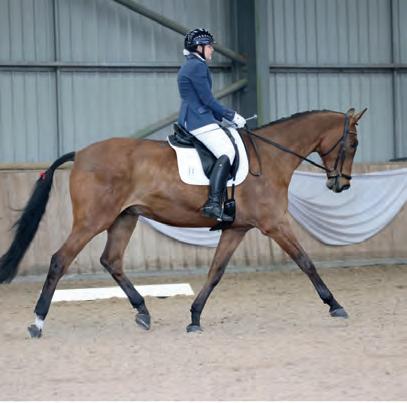
Exclusive BD Member Discounts on selected policies for trailers and horseboxes. Tel 01488 657650 for more information

BE-SEEN-SCREEN achieves high reflective performance in all light conditions, visible up to 500 metres. The limeyellow and red chevron design is immediately recognisable as a warning. As technology has changed, owners of horseboxes and trailers can react to breakdowns without the hassle of deploying a triangle. Sold directly by Be-SeenScreen or via Halford Online.
RRP: £29.95 | be-seen-screen.co.uk
PEPER HARROW TROPHY TWIN the compact two horse box for large horses with massive payloads of around 2800kg. Built on Iveco Daily chassis from 6.5-7.2 tonnes, available in manual or automatic. Lovely to drive, very similar to a 3.5 tonne but with better build quality, generous horse space, lots of tack storage and various size/ specification living areas.
RRP: £POA | phhb.co.uk


NIGHT-TREKA If you’re searching for a horse trailer that offers more than just transport, the Night-Treka is your ideal companion. Designed with overnight stays in mind, this cleverly built trailer comfortably sleeps two, making it a top choice for horse owners attending shows, events, or simply travelling longer distances. Inside, you’ll find a well-appointed living area featuring convertible seating that transforms into two cosy sleeping bunks.
RRP: £13,899 | equi-trek.com




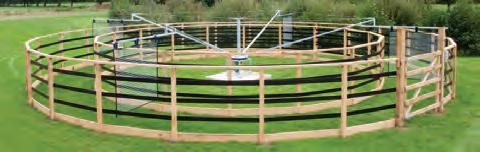

















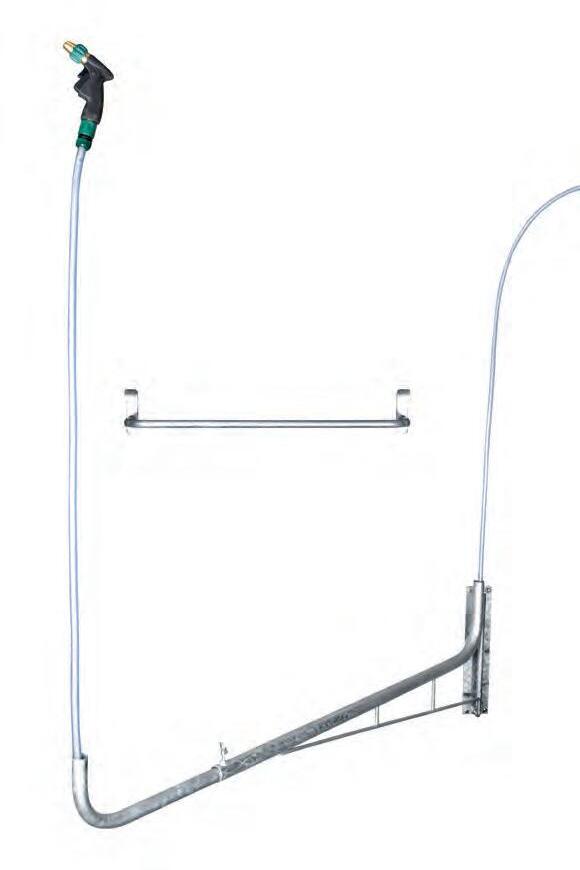
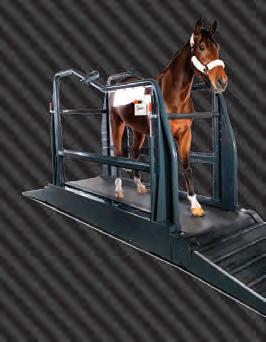


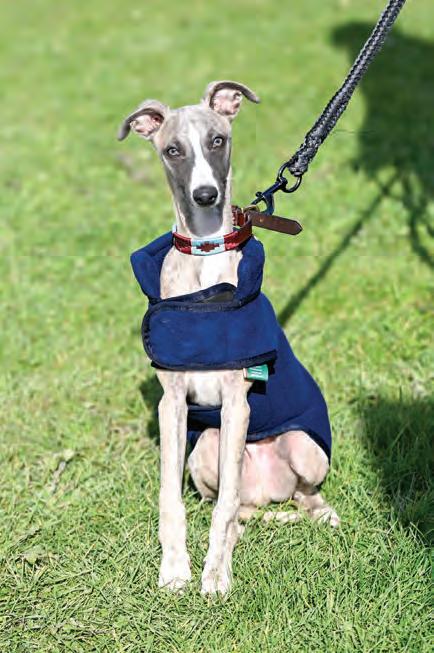
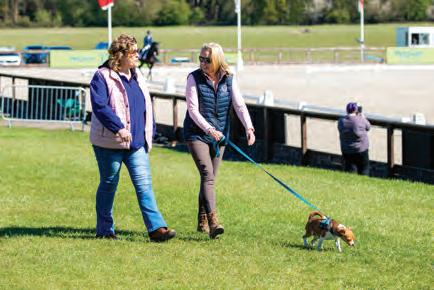
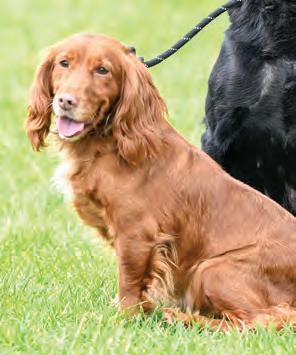

Many dressage riders couldn’t imagine being at the yard or at a show without their faithful dog.
But the right insurance is as essential for your dog as your horse, says Petplan
type of cover should I consider for my dog?
Different policies provide different levels of cover, and which one is right for you depends on the amount of vet-fee cover you need and whether you need shortterm or on-going help with vet bills.
There are generally three main types of cover to consider: lifetime, time limited and maximum benefit.
Lifetime cover offers ongoing support with vet bills throughout your pet’s life. Each time you renew your policy the Vet Fee benefit refreshes, allowing you to continue to claim year after year for the same condition, providing you renew with no break in cover.
Time limited cover enables you to claim up to a time or monetary limit, whichever is reached first. For example, you can claim for up to 12 months or up to £3,000 for each condition so this cover provides short term help with vet bills.
Maximum benefit policies allow you to claim for each injury or illness
up to your chosen vet fee limit, without time constraints.
Not all dog insurance is the same so it’s crucial to choose your policy carefully.
To make an informed decision, Petplan suggests you ask these key questions:
1. Are there additional limits within the vet fee cover?
2. Are both dental illness and injury covered?
3. Will I pay more for claiming?
like cover for vet fees, but do I also need to cover his value/purchase price in the way that you would with a horse?
When considering pet insurance for your dog, including cover for vet fees is essential, should your dog become unwell or injured. You might also consider including cover for death. This option
can be beneficial if your dog passes away due to illness or injury, allowing you to claim back the purchase price you paid for your dog.
Additionally, if your dog is lost or stolen and not returned, some insurers, like Petplan, offer Missing Pet cover for the purchase price or market value of your dog. This cover provides financial protection in unfortunate situations, so evaluate your needs and circumstances to decide if it’s necessary for your dog.
Do I need to take out third party cover?
Legal Liability cover helps dog owners with compensation, legal bills and the associated costs should their dog cause injury to a person or damage to someone else’s property. This type of cover can be crucial, as legal and compensation costs can be very high if someone decides to pursue a claim against you due to your dog’s actions.
the level of cover available and thus the premium affected by his breed and value?
Insurance premiums for dogs are influenced not only by the policy type and level of cover, but also your dog’s individual characteristics, such as their age, breed, and where you live. With Petplan, the value of your dog will not directly affect the premium.
Petplan also offers a Claims Pricing Guarantee, ensuring that while premiums may rise due to age and treatment costs, they won’t increase because of claims made. Always check with your insurer if you will pay more for claiming.
QAre there age restrictions in the same way as horses?
Age restrictions for pet insurance differ by provider and policy. Generally, dogs must be at least six weeks old to qualify for cover. While some insurers impose upper age limits for new policies, others will provide cover regardless of age.
QMany of our members will have quite a pack of dogs - are there any discounts for multiple animals in one household?
Yes, most pet insurers offer some sort of multi-pet discount but the type and value of this will vary from provider to provider. The discount may include either a flat monthly reduction or a percentage off the total premium based on how many pets are insured.
QWe’ve all heard alarming stories about huge vet bills being incurred for major surgery for dogs after an accident or a mishap such as sock-eating, so is specific cover available for major incidents?
You may be able to find accident-only
policies, however this type of policy usually doesn’t provide cover for illness and there could be a financial cap on pay outs.
Pet illnesses are more common than you might think. 90% of the claims Petplan see are for illness, so there is a risk that accident-only cover will result in you needing to pay veterinary bills yourself if your dog becomes unwell.
Your dog insurance policy should cover accidents like broken bones or swallowing foreign objects as standard. However, it is important to check there are no hidden limits within your veterinary fee cover which will impact both the level of care your dog can receive and the amount of money you have to pay out of your own pocket.
cover extend to second opinion or specialist vet treatment, and to physio or complementary therapies? Referral, specialist or second opinion treatment must usually be recommended by your primary veterinarian for your insurer to cover the costs.
Therapies like physiotherapy, osteopathy, chiropractic manipulation and behavioural therapies are typically included within the veterinary fees benefit, though cover can vary by provider and policy. So, it’s worth checking this before deciding which provider to go with. Sometimes your vet may also recommend an alternative treatment such as herbal medicine or homeopathy.
is the situation with exclusions after a claim?
Pet insurance policies have exclusions, similar to horse insurance policies, which will vary by provider. Common set exclusions include pre-existing
British Dressage doesn’t recommend a specific insurance company. Terms, conditions and excesses apply. Cover may be provided for some pre-existing conditions. Petplan is a trading name of Pet Plan Limited and Allianz Insurance plc.
90% of the claims Petplan see are for illness...
conditions and routine treatments like vaccinations, worming and neutering.
After a claim, it will depend on what type of policy you have chosen as to whether an exclusion will be placed on your policy. Time limited policies have a time limit on cover for a condition, after which the condition will no longer be covered. However, lifetime policy types will allow claims for ongoing conditions throughout your pet’s life, provided you renew the policy annually.
This makes it important to choose your policy type wisely to ensure you are able to get the best care for your dog throughout their entire lifetime.
you be able to comment on the most frequent type of claim?
Throughout the year, Petplan receives claims for a wide variety of illnesses and injuries.
In 2024, gastrointestinal conditions were the most commonly claimed for issues, including claims for vomiting, diarrhoea, gastroenteritis and colitis, affecting over 30,000 dogs.
This was then followed by claims for skin allergies, arthritis, dental conditions and lameness problems.






It’s wet, it’s cold and you’ve got stuff to do around the yard. Traditionally you’d have peeled off your gorgeous made to measure riding boots after putting your horse back in the stable and pulled on an old pair of wellies. They weren’t that comfortable, they were cold in winter and sweaty in summer, plus you can bet that a leak would appear on the wettest day of the year.
But now, as with all equestrian wear, there’s so much more choice.
Doing stable chores in trainers always risked getting wet feet, yet if you’ve got to go straight from the yard to the school run or to teach a rider, they’re such a comfortable and convenient choice.
Waterproof trainers have been a game changer for many riders, and LeMieux introduced a new version of its Trax trainer this year. Their spokesman says: “The trend for outdoor trainers is a growing demand in the footwear market due to the buying habits of consumers becoming much more focused towards functional lifestyle and long term wear.”
Trax Viva features a streamlined profile and comes in new colourways – Dusk, a dark blue with pink accents, and the fashion-forward Blossom.
A high performance, water-repellent ripstop upper offers rugged durability,




while a waterproof, breathable membrane and bellows tongue will keep your feet dry.
The Michelin rubber sole has a custom-designed high-traction tread pattern for maximum stability and grip. Extended scuff and flex-proof mudguards protect the hardest-working areas in wet conditions.
An EVA foam midsole provides shock absorbency, while a breathable, sweat-wicking orthofoam footbed offers ergonomic contoured support.
The paddock boot is a classic, great for working on the yard or teaching but easy to pair with half chaps for a hack. The front zip design revolutionised this boot and LeMieux has designed its version with a close fit and streamlined profile.
LeMieux’s paddock boot comes with an elastic Chelsea boot gusset, while, leather-covered inside leg elastic offers comfort and protection.
The X-Grip rubber sole provides non-slip traction in every weather, with a carefully designed linear tread pattern that interacts with your stirrup footplate grip, for maximum foot security in the stirrup.
Inside, the comfortable five-density contoured ergonomic footbed provides support and stability and a breathable
Left: LeMieux’s Trax trainer uses water-repellent uppers and a waterproof membrane to keep your feet dry.
Looking for a boot to wear this winter? Jane Carley looks at some of the latest options that blend technology with fashion.
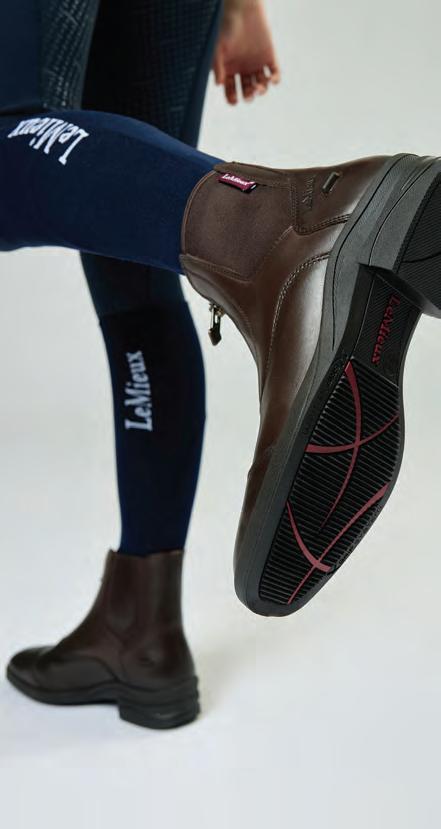
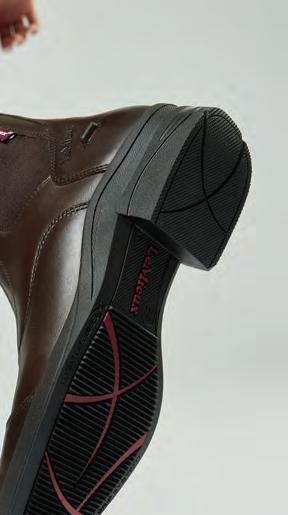

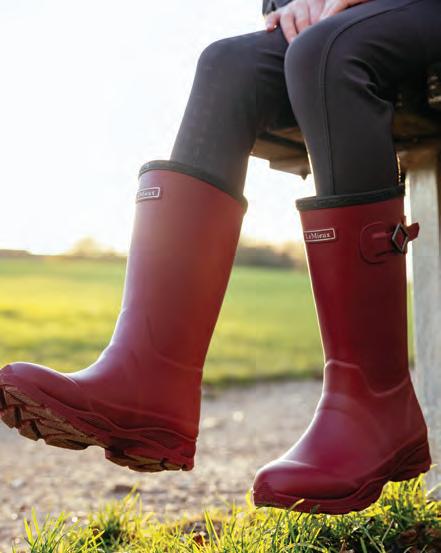
can get from non-breathable waterproofing, explains Lewis. It features a front zip for easy on/off, elastic side panels for a flexible fit and a robust hybrid sole for grip.
Another classic, the country boot gives you an option for in and out of the saddle, as well as being an alternative to rubber wellingtons if your feet are regularly in or around water or wet grass. The Dublin River IV Boots feature a full-length waterproof membrane lining to keep feet and legs dry and premium full leather upper for durability.
There will be occasions when only a wellington boot will do. Ariat’s latest Woodstock waterproof rubber boot is made from a flexible natural rubber blend and with FLX Foam midsole cushioning and removable insole; it also uses the company’s ATS sole technology for foot support.
The Duratread sole is designed to provide grip, with a clever ‘heelkick’ moulding at the back to make getting a muddy boot off easier.
lining delivers all-day comfort. There are firm rubber side spur rests for riding in spurs.
For a more rugged boot style, there’s the Borelli waterproof zipped boots from Premier Equine. This boot is made from leather that meets the German Institute for Standardization (DIN) quality standards, including aspects such as thickness, tear resistance, water repellency and durability.
“Essentially, DIN leather is a guarantee that the leather has been tested to a recognised benchmark and will offer consistent, high-quality performance –important for work boots that face heavy wear and challenging conditions,” says Premier Equine’s Lewis Collings.
The Borelli boot also uses Hydro Guard technology, a waterproof and breathable membrane system built into its lining. This works by keeping external moisture out while allowing internal moisture vapour (sweat) to escape, helping to keep feet dry and comfortable in wet conditions without creating that clammy feeling you
Many riders find this type of boot comfortable for activities such as dog walking with its moisture-wicking RCS+ memory foam footbed system. There’s also the Tough Tec sole – a combination of a Phylon midsole and thermoplastic rubber outsole provides for cushioning, traction and grip. The metal shank with moulded heel and arch support also contribute to comfort.
Dublin supplier Weatherbeeta also recommends sizing up if you are between sizes or like to wear thick socks.
There’s a traditional waterproof gusset with adjustable leather harness strap at the top for a closer fit. It’s available in bracken brown and deep navy.
LeMieux has revamped its Ultra Stride wellies with an enhanced rubber compound for extra durability. A moulded, cushioned insole and insulating neoprene lining for warmth offer all day comfort, and there’s an improved bonding seal to avoid leaks.
The Ultra Stride boot is available in the traditional black, navy and oak for adults, with Jay Blue and Ember colourways offering a bit of fun for children.
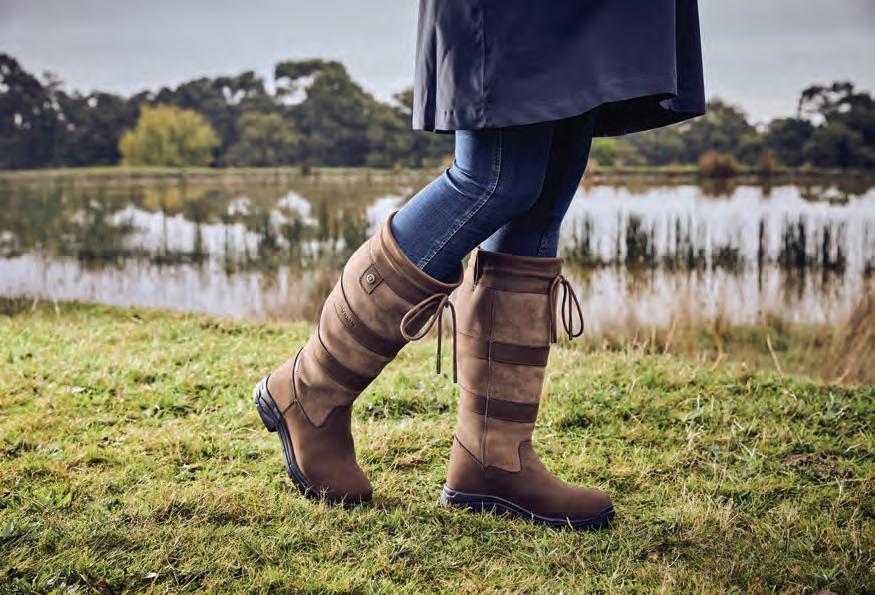
HY EQUESTRIAN ELEVATE WATERPROOF JACKET is designed using an aqua-shield fabric with taped seams for a windproof and waterproof finish, featuring shaped panelling for a flattering silhouette and fit, filled with a 125g faux padding. It also offers a silver two way front zip, inner protective storm cuffs with adjustable wrist cuffs and hood with adjustable toggles which can be folded away.
RRP: £99.99 | hy-equestrian.com

VESTRUM WOMENS LONG SLEEVED TRAINING TOP is a high-performance riding shirt designed for active equestrians. Crafted from lightweight, breathable fabric, it wicks away moisture to keep you cool and dry during intense training sessions or all-day wear. This sleek black riding top features a flattering fitted silhouette, 1/4 front zipper, and stretchy material for maximum freedom of movement. The modern design is finished with a subtle ‘Vestrum’ logo on the chest and a bold ‘Vestrum’ print on the sleeve – blending function with fashion.
RRP: £135.83 | royalequestrian.co.uk
THE STABLE 2.0 INSULATED JACKET is a rider’s go-to jacket this winter – now levelled up with fresh upgrades and brand-new colours for AW25. The Stable 2.0 insulated jacket brings back the dependable warmth and weather resistance equestrians know and love, with added style and functionality. Designed to move with you around the yard or in the saddle, it’s an essential layer for long winter days outdoors.
RRP: Women’s £90, Men’s £95, Kids £50 | ariat.com

TREX WATERPROOF CHELSEA BOOTS Designed with versatility in mind, the Trex boot offers ultimate durability with superior grip to suit your equestrian lifestyle. A stepped sole with a stirrup-friendly heel takes you from yard to saddle. The waterproof, responsibly sourced, sustainable leather upper is lined with a Hydroguard inner membrane that provides a breathable, moisture-wicking barrier. A lightweight EVA foam midsole offers shock absorption and all-day comfort, while a heavy-duty, breathable closed-cell comfort insole offers stability in every step. Available in black and brown and sizes UK4 – UK8.
RRP: £119.95 | lemieux.com

ROCANA ZIP THROUGH SOFTSHELL is designed for layering, as its sleek, unlined construction offers adaptability across changing weather conditions, while the streamlined silhouette ensures a flattering, close fit. Featuring two large front pockets with waterproof zips, this piece balances practicality with style.
RRP: £159 | hollandcooper.com
EQUETECH UTOPIA LUXE LONG WATERPROOF COAT is the ultimate blend of style, functionality and comfort for winter. Based on the award-winning Utopia Long Waterproof Coat, this new Luxe edition boasts even more features to protect you against the elements. The stretch breathable fabric boasts a 15,000 waterproof rating with taped seams, combining sustainability values with reduced dirt adhesion and shelter from winter weather.
RRP: £219.95 | 10% off with discount code LUXEBD25 | equetech.com
TRAX VIVA WATERPROOF TRAINERS Designed especially with equestrian lifestyles in mind, they’re lightweight, durable, supportive and waterproof to keep your feet comfortable and dry throughout your active day. A high performance, water-repellent ripstop upper offers rugged durability, while a waterproof breathable membrane and bellows tongue will keep your feet safe from splashes. The Michelin rubber sole has a customdesigned high-traction tread pattern to take on all terrain for maximum stability and grip. Available in Dusk Blue and Blossom and in sizes UK3 – UK9.
RRP: £99.95 | lemieux.com

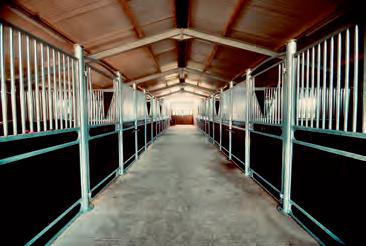
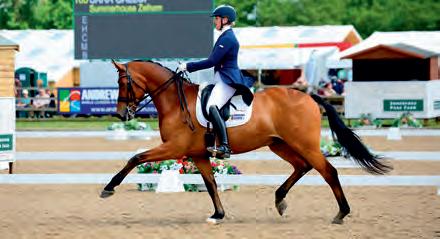














































Spooking can be a major source of frustration, denting scores and making competing a stressful experience. Andrea Oakes explores causes and solutions.
It can be maddening when a flowerpot scuppers your chances of qualifying, or a flapping banner spoils an otherwise foot-perfect test. For the rider of a spook-prone horse, each show can feel like a minefield of hazards to negotiate. Pigeons on the roof, a ray of sunlight streaming onto the track, even a rustling crisp packet can elicit an eye-popping reaction from the horse who sees danger in everything around him.
But is a spooky horse genuinely scared, or reacting for another reason? Rider, trainer and British Dressage List 1 judge Clare Deithrick explains that understanding the root of the behaviour is essential to solving it.

“With a new client, I always ask about the horse’s history,” says Clare. “It makes sense that a young horse or one who’s




had a sheltered life might look at an unfamiliar object and resort to his natural flight response, but an older horse might be spooking out of habit. Perhaps he’s been scared in a one-off incident or has never been given confidence. It’s more straightforward to build trust in a youngster – a blank canvas – but spooking through learned behaviour can be harder to unpick.”
The first step with an established spooker, Clare advises, is to rule out physical discomfort and assess his lifestyle.
“A horse who’s uncomfortable will be more reactive to his surroundings,” she says. “He might have a twinge that prevents him from moving confidently forwards, so tension and anxiety escalate. Check his tack, his back and

If a horse is genuinely nervous, give him time but also take control of the situation... ‘It’s OK’.






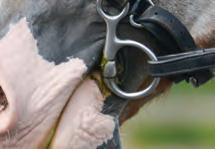


also his feed/work balance. More time in the field could make a big difference to his mental wellbeing.
“I’d then make sure the horse’s basic training is solid,” she adds. “He should be responsive to the aids, in both directions, and in front of the rider’s leg. While some horses are temperamentally more prone to spooking, with sharper senses, there’s usually an issue when a horse and rider combination lacks the basics and rapport.”
Rider confidence is a crucial part of the equation.


“A horse is often better with a rider who’s super-relaxed and calm,” Clare explains. “Lower-level competitors especially can be intimidated in the warm-up. They’ve often made their mind up before the show that their horse will spook, and that anxiety means they don’t





warm him up thoroughly. The horse is not supple, through and focused.
“Make sure you’re in the right place mentally, as being tense and easily stressed won’t help a nervy horse. Take someone with you for support and make use of the arena walk and familiarisation at bigger events. Learn to stay in your bubble while working in, fully focused on your horse and yourself. Rider psychology sessions and visualising positive outcomes can be a real help.”
As well as a proper warm-up plan, Clare recommends experimenting with tactics before the test begins.
“If a horse is still ‘looky’ as you go into the arena, try walking around the outside rather than trotting, to give him time,” she explains. “Keep him in front of the leg and listening. If he spooks during the test, don’t freeze or point him at the object. Instead, flex him away and swing off your line slightly to regain his attention.”
While extras such as ear hoods and competition-legal calming cookies are worth considering, Clare insists there’s no substitute for patience, preparation and good basic training.
“There’s no magic answer,” she says. “Get to know your horse’s personality and behaviour. Practice with props at home, putting up banners and ringing the bell. Go to different arenas and test riding clinics, trying to recreate the competition environment by plaiting your horse and even putting on your show kit.
“If a horse is genuinely nervous, give him time but also take control of the situation. You’ve got to be responsible and say ‘It’s OK’.”
Shona McLauchlan, who trains with Clare, was motivated to search for solutions when faced with a particularly spooky gelding.
He was a 17hh warmblood, a former showjumper, and anything – such as a car parked in a different place – meant high drama,” explains Shona. “I started exploring Tristan Tucker’s TRT Method, which helped him a lot. I’ve continued using it with other horses and now run confidence-building groundwork clinics.”
Shona explains that the basis of the TRT Method is creating a connection between the horse’s brain and feet and teaching to him find self-regulation so he can control his own emotions.
“The idea is to teach a groundwork pattern that encourages relaxation and keeps the horse focused on you, rather than the object he’s worried about,” she says. “Once he has learned the ability to find relaxation through these exercises, you can introduce things that
might cause him stress, such as flags and umbrellas, so he can return to that comfortable feeling.”
Groundwork, she adds, is a powerful way to encourage a horse to soften and ‘let go’.
“Placing yourself between the horse and the object helps build trust and confidence. It’s a time-consuming journey, but establishing good communication on the ground first makes a huge difference when you’re back in the saddle.”
A spooking horse may become deaf to your commands, but Shona has discovered some effective techniques. She says: “If he has blocked you, these offer a doorway into saying ‘Listen, I’m here, I’ll be your leader.’”
The curving shape
“A principle of the TRT Method is to create shape through the horse’s body, a supple inside bend that helps you to keep his focus. This is achieved through teaching him a pattern, as the horse steps under with his inside hind and front foot and then the outside pair. Returning to this pattern when faced with a spooky object gives the horse a more comfortable option than tension.
“As he learns to bend and flex, finding softness, you can reduce this to just a curve around your inside leg. Teach it thoroughly at home, so it’s familiar to him when he’s out. Try arena hires or simulate show conditions, implementing the same inside flexion if your horse spooks.”
the rein
“Another useful exercise is lifting the inside rein a little until the horse flicks an ear back at you. If he’s locked onto something scary, this is like saying ‘Back in the room, please.’ If there’s no response, try a small vibration, but once he shows a glimmer of attention, reward him and lower the rein. Like the curving shape, this technique helps the horse focus on his body rather than the spooky object.”
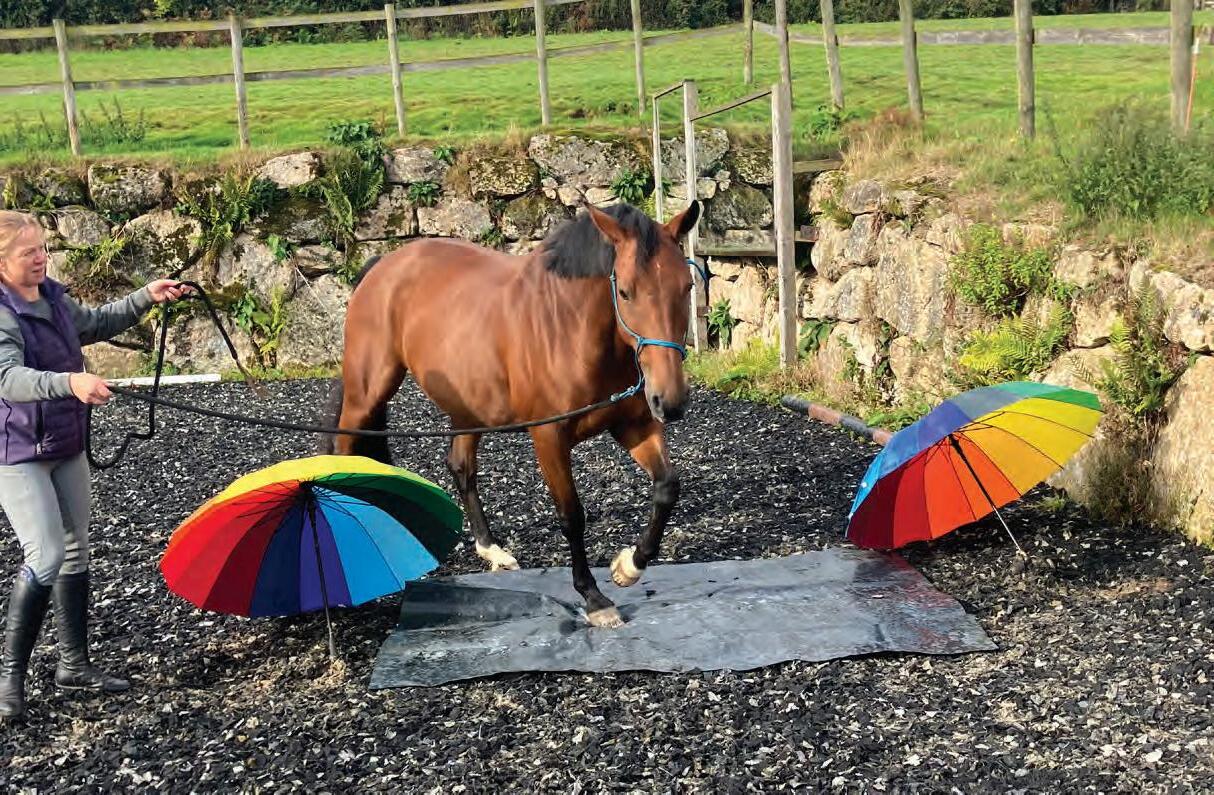





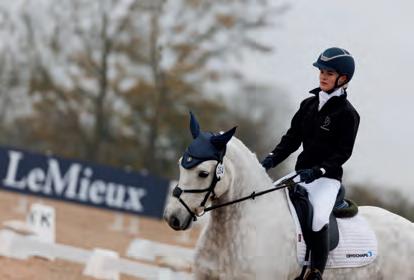


DO: Ashley Stewart
M: 07584 147258
E: scotland@ britishdressage.co.uk

Members: 1,258
Male members: 63
Female members: 1,195
Percentage of total UK membership: 7%
Youth members (25 & under): 229
Para members: 8
Venues: 18
Judges: 167
Coaches: 37
COUNTIES COVERED
Borders, Dumfries & Galloway, Fife, Grampian, Highlands and Islands, Lothian, Central Scotland, Strathclyde, Tayside.
Senior Rider Representatives
Scotland Senior Rider Reps – Sarah Mclean and Linda Thomson
The Senior Rider Rep plays a large part in the success of those active within the region. “My role means that I am involved in senior training, teams, camps and competitions,” Sarah Mclean explained, “I also act as a general support to members in BD Scotland. It’s a role I find hugely rewarding.”
Sarah has always been an active member behind the scenes, supporting the organisation
Ashley Stewart balances her time as DO alongside her role as Safeguarding & Membership Director with horsescotland. She holds a degree in Equine Science, a Post Graduate Diploma in Education and is enthusiastically continuing her studies in management. A passionate grassroots rider, Ashley enjoys competing at Area Festivals and the Scottish Championships, with a lifelong love of horses at her core.
Q: What’s the most rewarding aspect of your role?
A: It’s being part of so many riders’ journeys across our region. Supporting someone as they overcome their nerves to attend their first competition, camp or training event, and then seeing them and
of Regionals and Scottish Championships. “Being able to contribute in this way feels like a natural progression. When I moved from Edinburgh to the Scottish Borders four years ago, I became very aware of the differences in access to training and venues. Edinburgh had an abundance of choice, whereas in other parts of Scotland — despite having such talented and enthusiastic riders — access to top venues and coaches was more limited.” Sarah’s passion for participation is a great source of motivation for her within the
their horse grow in confidence and ability, is incredibly special. I also find it hugely rewarding to work alongside our dedicated officials, volunteers, committee members and venues as we strive to offer accessible events. I truly believe that our community is so welcoming and encouraging to all.
Q: What are your hopes for the Scottish region?
A: Our Scottish community has grown significantly in five years, with a 40% increase in membership, greater activity engagement and record numbers attending championships. This is also reflected in the talented combinations representing us at national and international levels. I hope to see this enthusiasm continue to thrive through inclusive, accessible opportunities.
Q: What’s your favourite BD Scotland moment to date?
A: I had to choose, fielding a Para Home Nations team in 2024 stands out. It was our first team in several years and they claimed the reserve champion title. That year, we managed to send teams to every regional event, no small feat for our region where travel can be a barrier. One PHN rider made a 1,000-mile round trip, which speaks volumes about the dedication of our Scottish members.
Q: What’s to come towards the end of the year and in 2026?
A: We’re looking forward to our popular Autumn camps and celebrating our members’ achievements at the annual BD Scotland Ball. For 2026, we’ll build our social events and also aim to expand training/CPD opportunities for our Scottish officials. Above all, we’ll continue to grow a friendly, welcoming and encouraging community that everyone feels proud to be part of.
To find your local region contacts and infomation on regional training, including camps, test riding, social activities, demos and much more, simply open the camera on your device and scan the codes opposite. Alternatively, visit the BD website, find your region and head to the regional training page via your web browser.
role, “I felt strongly about helping to ensure that opportunities are shared more evenly across the region, so all members benefit from coaching and development.” “One of my favourite memories was accompanying the teams to the Inter Regionals earlier this year,” she reflected on her experience as a rider and rep, “Having that double perspective made the experience really special. Competing with my own horse while also supporting the team gave me an even greater appreciation of the whole experience and I thoroughly enjoyed every aspect of the trip.”


“My advice to anyone wanting to get involved is to remember that being a BD member is not only about competing – it’s about being part of a community and engaging in training.” Sarah is a firm believer in breaking the myth of riders ‘not being good enough’ to have a go at affiliated competition. “We are all on a journey of improvement and every rider starts somewhere. BD offers a continual learning experience – through training, coaching and competitions alike – I would encourage anyone who’s considering it to give it a go.”


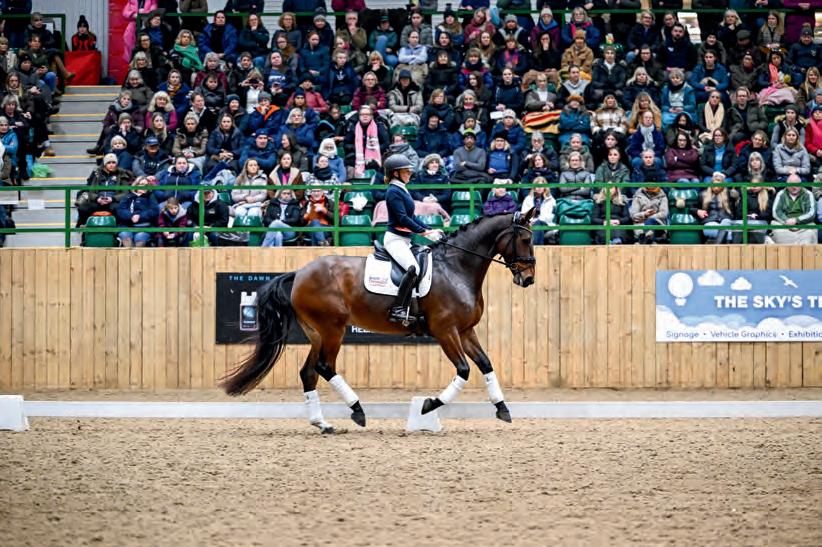

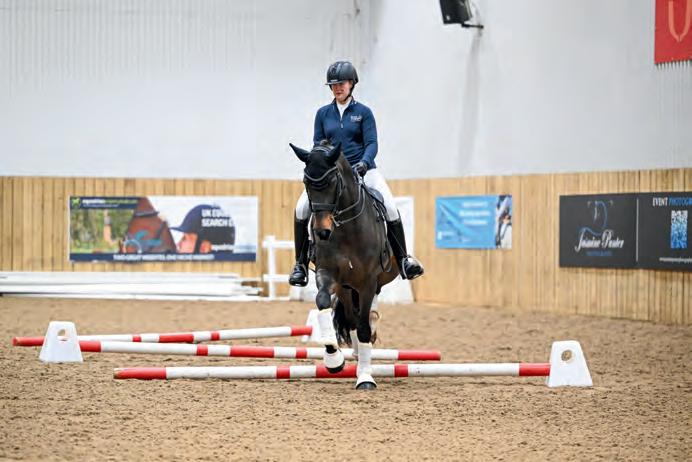
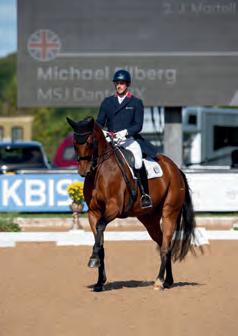
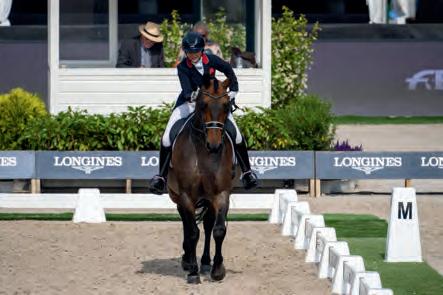
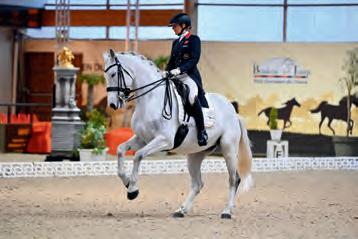


Keep up-to-date with the latest notices, news and views from British Dressage at britishdressage.co.uk
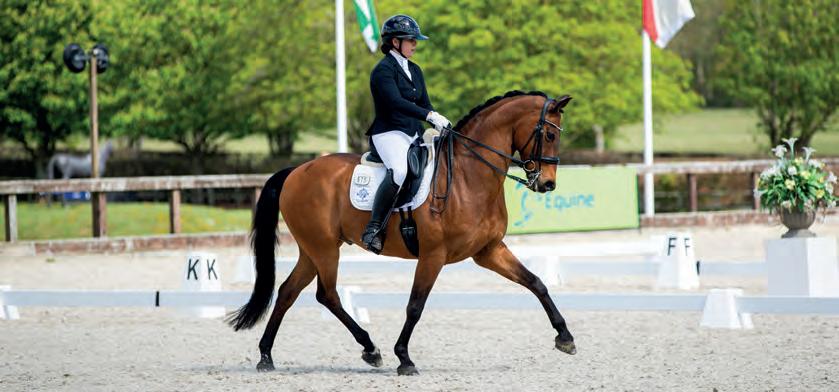
We recently announced changes to the qualification criteria for the Area Festival and Regional Championships for 2026, effective from 1 January 2026. The main changes can be summarised as follows:
• The percentages needed to qualify for the Area Festivals (and Regional Championships in some cases) have been adjusted to better reflect current competitive trends and the scores being attained under the new test structure.
• The qualification formats for the Area Festivals and Regional Championships have been aligned to simplify and streamline qualification, ensuring these competitions are more accessible and encourage progression between the two pathways.
• The number of scores required to qualify has been reviewed and modified to better reward
consistency and ensure standards are maintained at championship level.
The changes are designed to offer a greater number of competitors the opportunity to qualify for our Area Festivals and Regionals, while also supporting our organisers by encouraging higher levels of participation. It is vitally important that we ensure that affiliated classes continue to be well supported and competitive to ensure the future viability of our venues.
Scan the QR code to read the full announcement on the rule revisions.

The major dates list for 2026 is now available to view in full via the BD website. Planning the competitive calendar each
year is no small feat, for our Sport Operations team it’s like assembling a complex jigsaw. We work closely with all areas of the sport to ensure every rider, whether competing nationally or internationally, has ample opportunity to achieve selection scores, meet international eligibility standards, or earn direct qualification for our National Championships.
Whether you’re aiming for the regionals, quest semi-finals or international competition; you can find all of the advance dates for the new year via the major dates list.
In line with the British Dressage Articles of Association, the positions of Para Director and Training Director were put forward to the membership for election this year.
After a formal review of applications by the Nominations Committee, both Tracy Ormrod and Harry Payne were the sole candidates put forward to the membership vote for these two roles, with an electronic ballot carried out independently by Mi-Voice.
Both appointments will formally take effect from the date of the 2025 Annual General Meeting, on Thursday 9 October 2025. Both Directors will be in position for four years, until 2029.
BD Scotland members Pippa Broatch (List 5) and Ros Kirkman (List 4) have retired from the Judges Panel. British Dressage would like to thank Pippa and Ros for their contribution over the years and we wish the all the best for the future.
6-12 Oct Wellington Riding CDI/CPEDI, Hampshire
9 Oct HOYS Future Elite Championship, West Midlands
15-19 Oct Aintree Equestrian Centre High Profile, Merseyside 21-22 Oct Cavago Associated Championships, Onley Grounds, Warwickshire
14-16 Nov LeMieux Quest Championships, Arena UK, Lincolnshire
Members are reminded that qualification for the Winter Area Festivals and Winter Regionals closes on 31 December. Visit BD Schedules to find shows to earn points and scores.

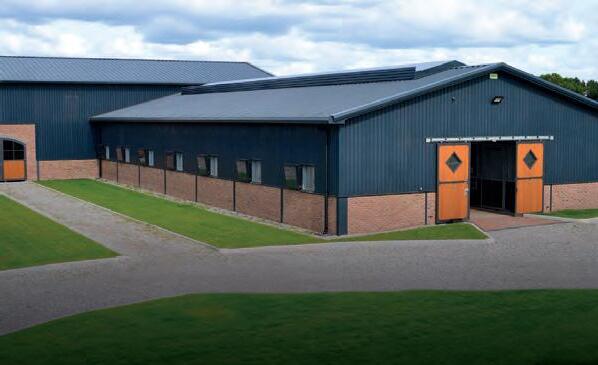


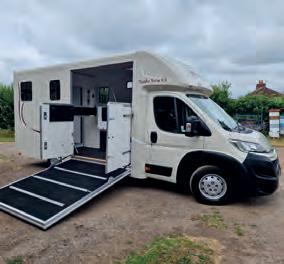
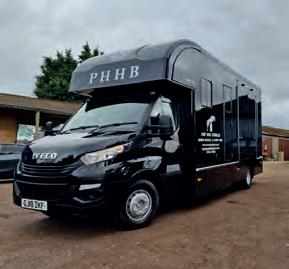
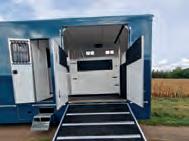
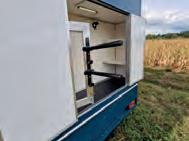
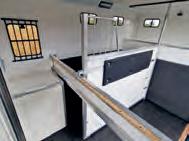










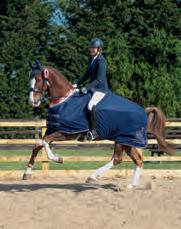



This autumn, British Dressage is on the move –and we’re bringing our flagship training event closer to you than ever before. After listening to your feedback, we’re thrilled to unveil an exciting new format for BD Presents in 2025, as we get ready to present training via our Regional Roadshow.
For the very first time, BD Presents will be delivered across two special events – North and South – giving more members the chance to experience our national training offering on a truly local level. Whether you’re a rider, coach, judge, owner or simply a dressage enthusiast, this is your opportunity to step into an arena of inspiration, expert insight and hands-on learning.
The Regional Roadshow promises a dynamic day of practical, live demonstrations, with leading British riders sharing their training philosophies and proven methods. This is training you can take home and apply directly to your own riding and coaching.
Each location will feature a unique line-up of top trainers, working outside of their usual region and delivering fresh perspectives, practical exercises and expertise... with a little entertainment too. We’ll also be working with carefully selected demo riders and horses from within our own BD community, so that you can see relatable combinations in action – alongside some aspirational performances to raise the bar.
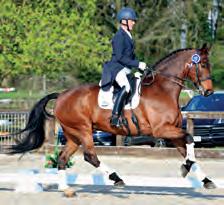
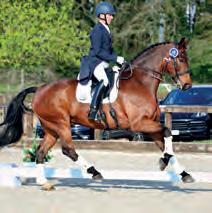
British Dressage is excited to unveil the year’s showcase training event, BD Presents, which returns in November to deliver relatable, top-quality dressage coaching to members across the country.
Saturday 1 November
Hurstbourne Equestrian, Hampshire
Michael Eilberg
Dan Greenwood

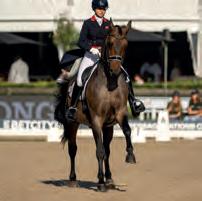
Saturday 22 November
Myerscough College, Lancashire
Anna Ross Louise Bell WHY ATTEND?
Together, these four outstanding trainers represent some of the very best in British dressage. Across both events, they’ll share their knowledge, training methods and competition tips – giving you tools and ideas to help achieve your own goals.
The BD Presents Regional Roadshow is set to be an exciting addition to our calendar – and with limited spaces at both venues, early booking is highly recommended.
This is your chance to learn, to be inspired, and to experience the very best of British Dressage coaching –without having to travel far.
Save the dates, book your place, and join us for BD Presents... Regional Roadshow, tickets are on sale now via the British Dressage website.
MY DRESSAGE LIFE RETURNS IN OUR NEXT ISSUE
Saturday 1 November
• Learn from the best –soak up the secrets of success from a group of top British riders and coaches.
• See it in practice –watch live training with demo combinations you can relate to.
• Take it home – practical exercises and insights to apply in your own riding.
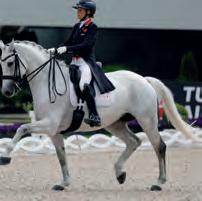
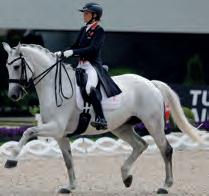
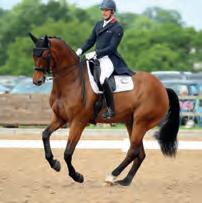
• Be inspired – experience the energy and expertise of the dressage community, right on your doorstep.







































perfect complement High in oil for coat shine Low starch, molasses free with pre and probiotics