If you aren’t a member and would like to receive the magazine contact 01442 820580, bd@webscribe.co.uk or mysubcare.com
The views expressed by individual contributors are not necessarily those of British Dressage. Equally, the inclusion of advertisements in this magazine does not constitute endorsement of the products and services by British Dressage.
From the editor
As this issue lands with members, hopefully we will all feel like the worst of the winter is behind us. A friend and I have the somewhat childish habit of messaging ‘still light at five o’clock!’ when it gets to the end of January, but I make no excuses. The prospect of longer days to train and compete – or simply avoid the rigmarole of fetching your horses in from the field in the dark –makes the seasonal slog worthwhile.
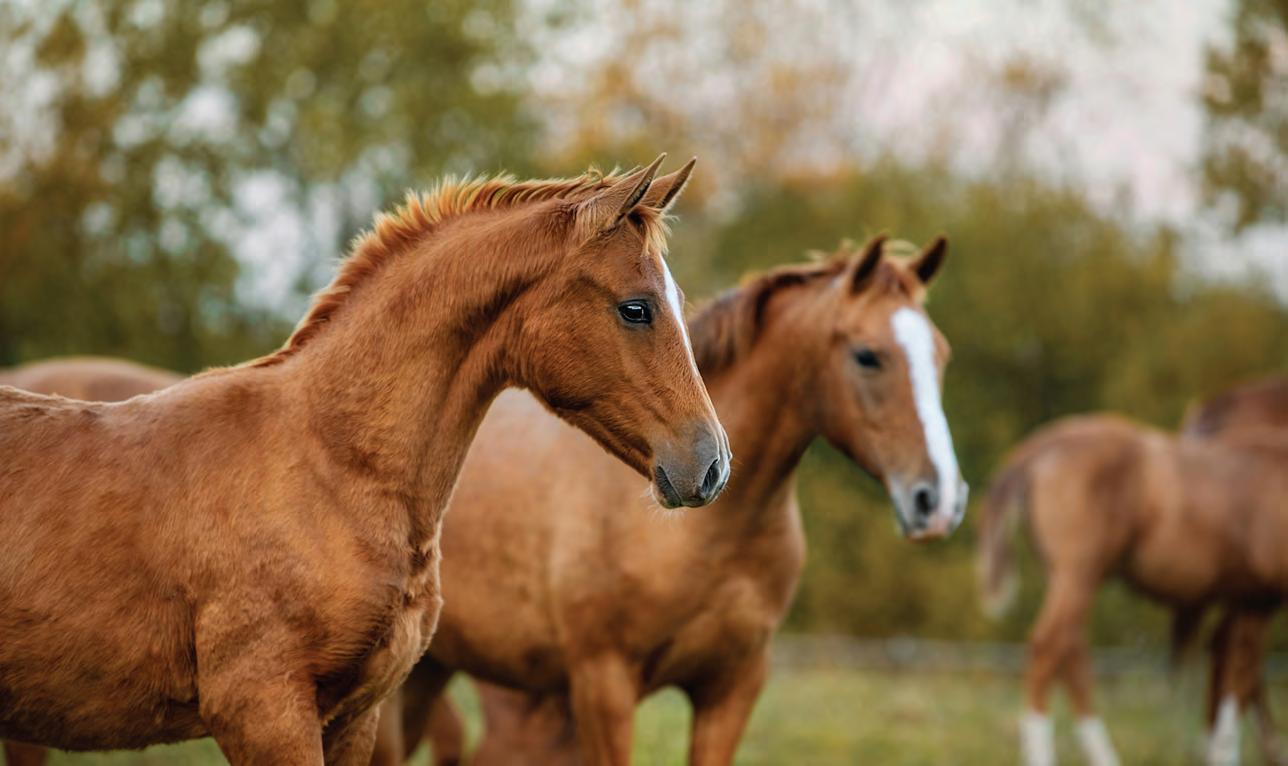
‘Brighter days ahead’ will also be welcomed by those anticipating the birth of a foal or planning to send their mare to stud this spring.
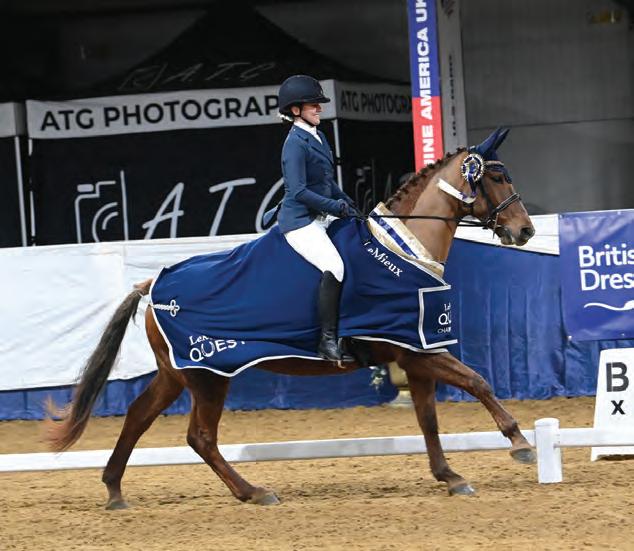
British breeding is on a high – Swanmore Stud, breeders of the current LeMieux National Champion, Swanmore Dantina, are profiled in this issue – and we’re pleased to also bring you a couple of thought-provoking features on the topics of weaning and the decision on whether to keep your colt as a stallion.
There’s a wide range of opportunities now to assess and promote the potential of our home-bred horses, from the British Breeding Futurities to the KBIS Young Dressage Horse series. Who knows – you may have a future National Champion in your paddocks by the end of the year!
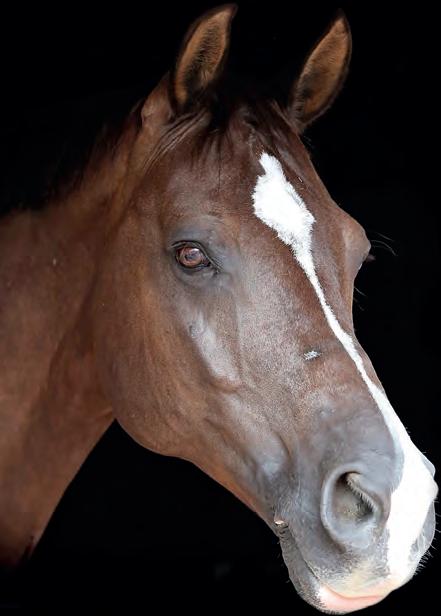
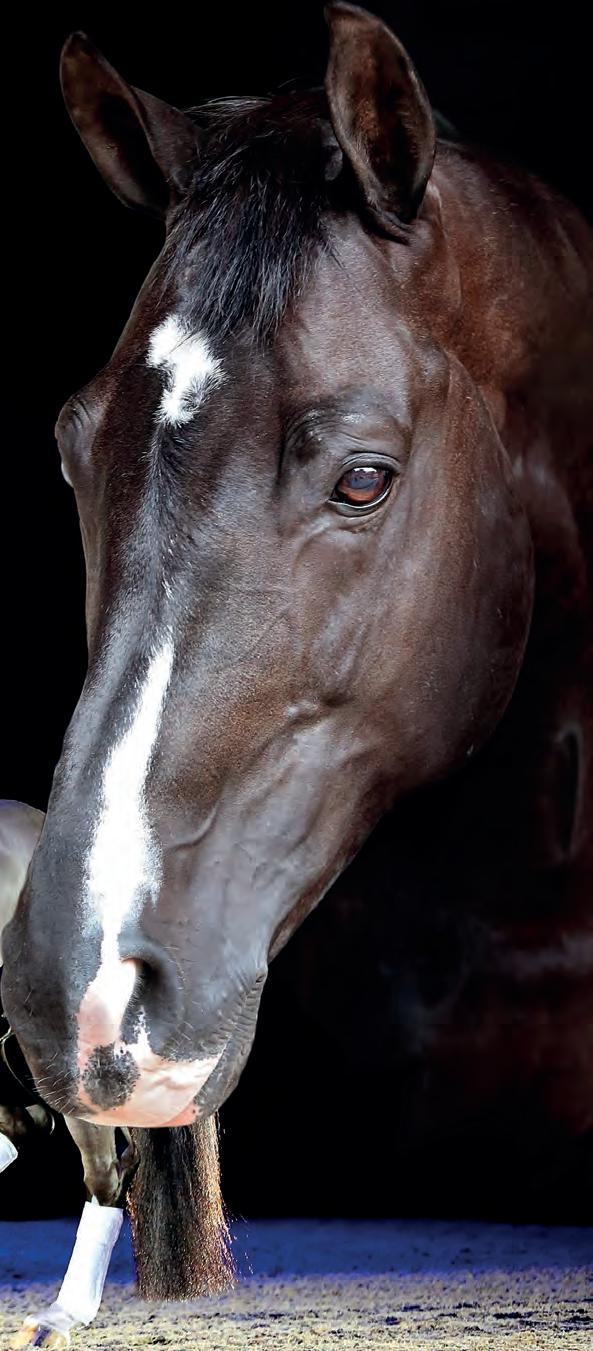
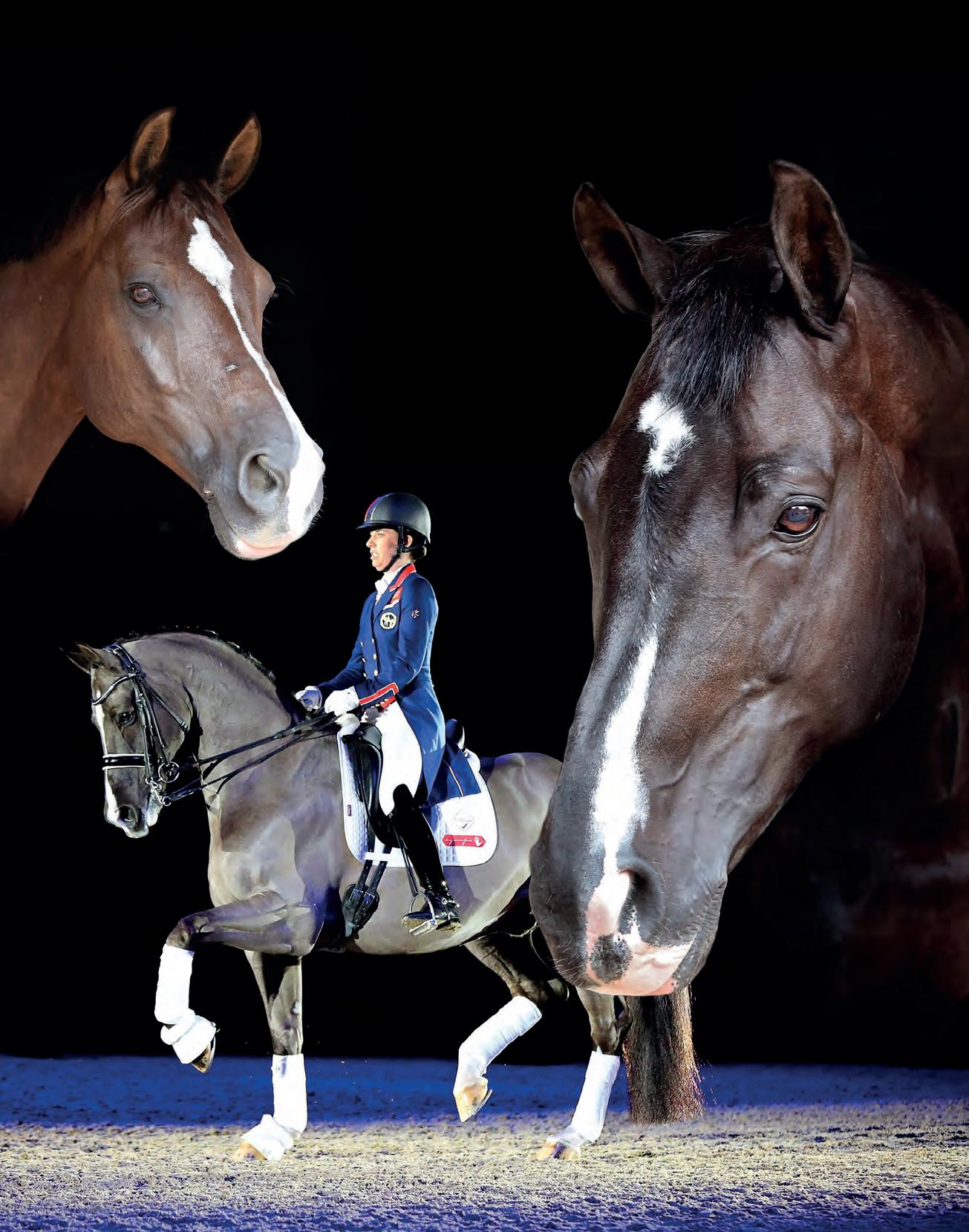
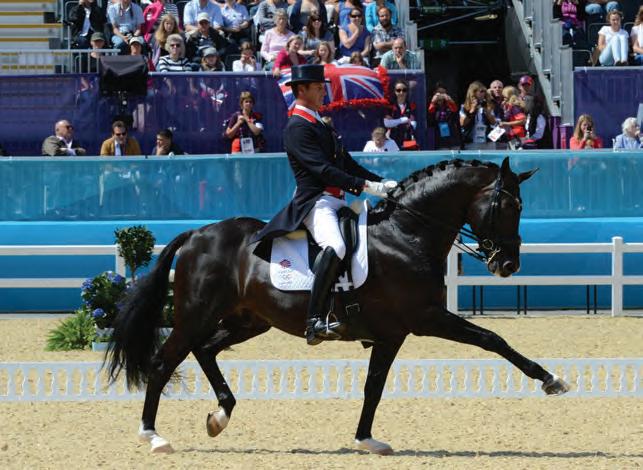
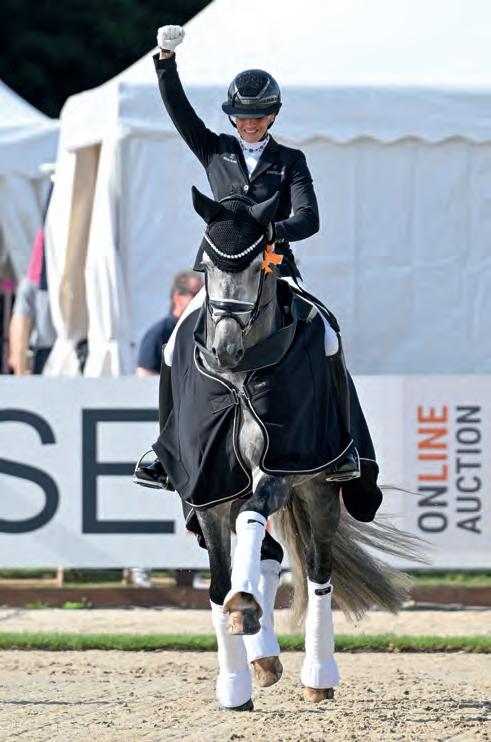
Speaking of champions, although the news of the sad passing of our Olympic medal-winning duo Uthopia and Valegro broke just after we had gone to press on the last issue of 2025, we felt that it was important to remember them in this print publication. They grace our cover for one last time and on p9 we look at their extraordinary contribution to our sport. The prospect of breeding or owning such an incredible horse has attracted many new devotees to dressage.
And you can now earmark events in the coming months with our new ‘What’s On’ guide on p66-69. This includes training opportunities as well as competitions so that even on the grimmest of days you’ve got something to look forward to!
Jane Carley Editor, British Dressage
IN THIS ISSUE
NEWS
PICTURED
D&H TO SPONSOR TWO MAJOR BRITISH DRESSAGE CHAMPIONSHIPS
British Dressage is delighted to announce a new, multi-year collaboration with premium horse feed brand Dodson & Horrell (D&H), who will support both the Associated Championships and the Intermediate I class at the National Championships from 2026 onwards.
The wellbeing, health and long-term performance of the horse underpin every aspect of
the D&H approach which is to deliver excellence in nutrition for happy, healthy horses. From research and formulation to manufacture, D&H products are designed to support horses across all disciplines and levels, ensuring they receive the nutrition they need to thrive — both in and out of competition. This horse-first philosophy has made D&H a trusted partner
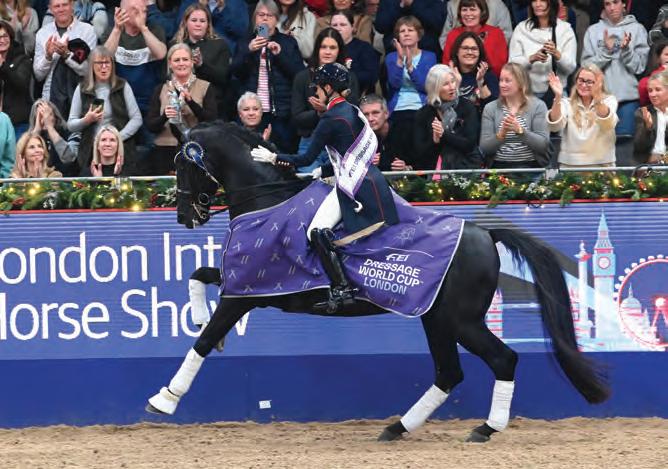
CELEBRATIONS IN LONDON
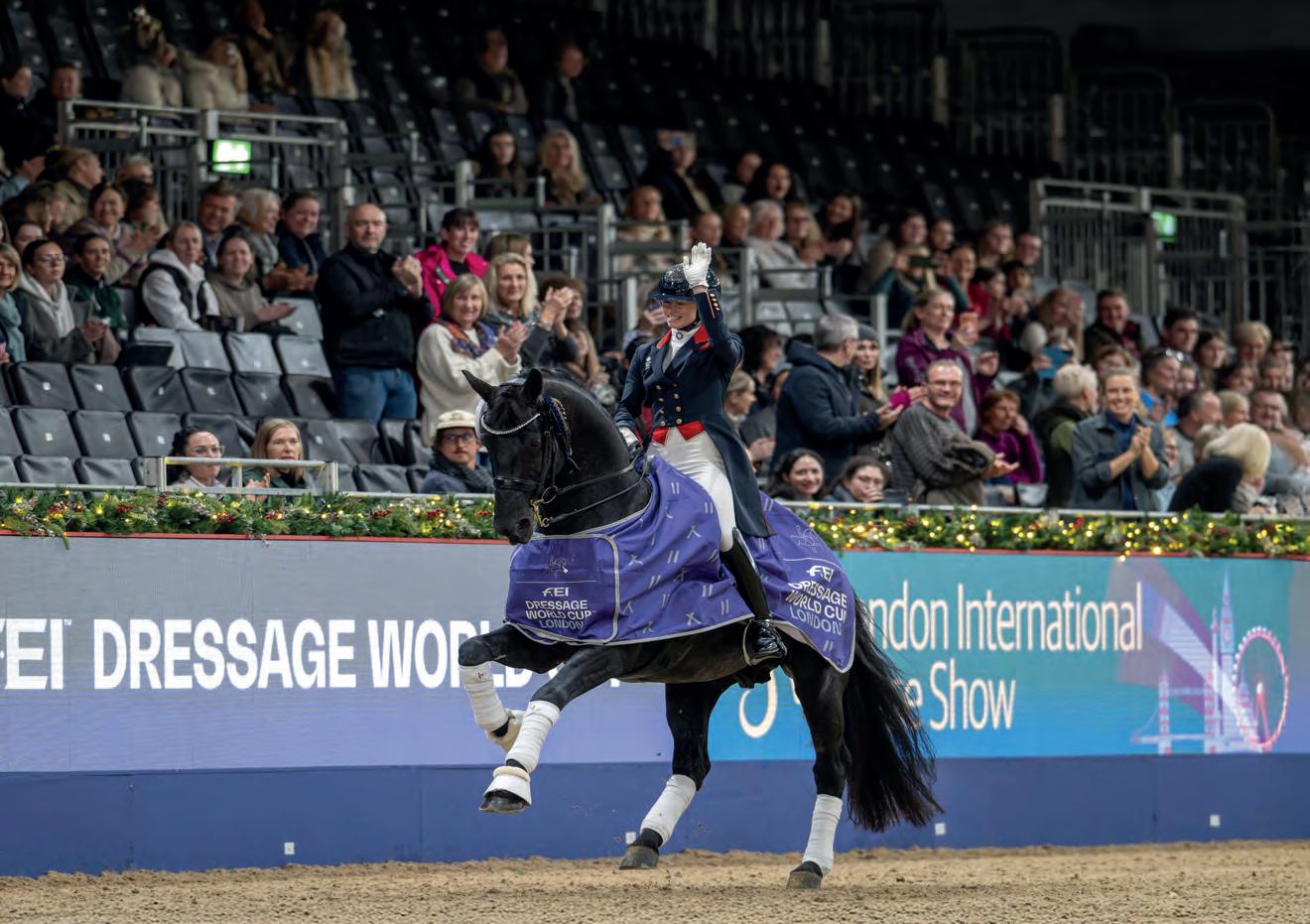
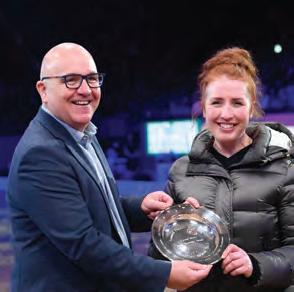
Presented at the London International Horse Show, the International Champions of Great Britain trophy recognises the highest placed combination at that year’s respective annual FEI Dressage Championship.
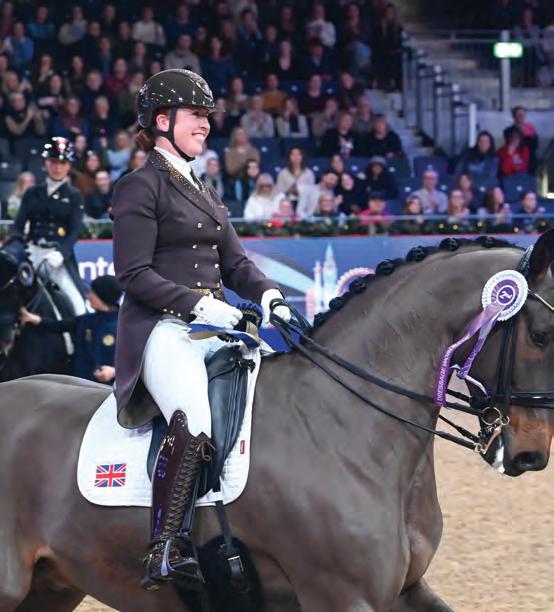
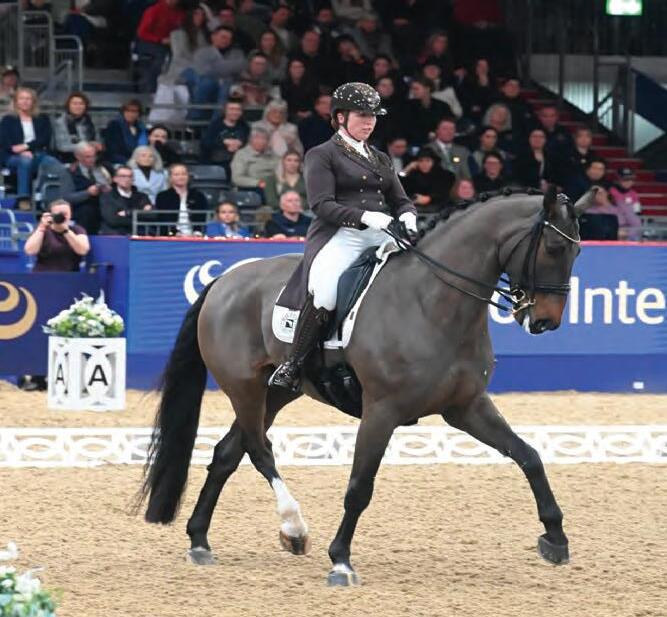
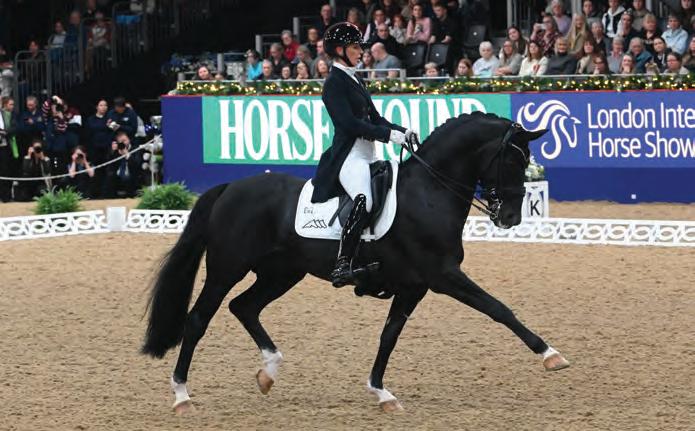
Following their success at the European Championships in Crozet, where they narrowly missed out on a medal in the Freestyle, Becky Moody (pictured with BD CEO Jason Brautigam) and Jo Cooper’s Jagerbomb were awarded the trophy. Congratulations go to Becky and to Jo Cooper.
Keep up-to-date with the latest notices, news and views from British Dressage at britishdressage.co.uk
to owners and riders, as well as events, governing bodies and national programmes.
British Dressage is proud to work alongside a brand that not only supports elite sport but also champions happy, healthy horses at every level.
D&H Head of Marketing & Communications, Isla BoxallLoomes said: “With horses firmly at the heart of both British Dressage and D&H, we couldn’t be more delighted to be collaborating with the sport at such an exciting and inspiring time. It was important to us to find a way to support British Dressage competitors and horses across the levels and our title sponsorship of both the Associated Championships and the National Intermediate I Championship allows us to do just that. Correct nutrition is key to ensuring that the individual needs of horses are met and we are looking forward to getting to know and supporting lots of horses over the coming months.”
Also at LIHS, five outstanding coaches were presented their British Equestrian Level 4 Coaching Certificate, endorsed by UKCC, following completion of their final panel assessments.
Our congratulations go to Hampshire-based British Dressage coach Amy Blount, whose research examined what governing bodies consider to be high-performance coaching in different equestrian disciplines.
GRACIE WINS STUDENT GAMES
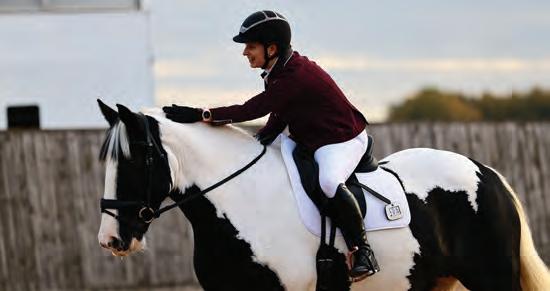
Young rider Gracie Catling (pictured below) has taken individual and team overall gold medals representing Great Britain at the Association des Étudients Cavaliers (AIEC) championships, in Leuven, Belgium.
Gracie was crowned champion in both the showjumping and dressage finals, while the team also won showjumping gold and dressage silver in the competition for riders who are students around the world.
“The final rounds are a 1.20m showjumping course where you have two minutes to jump two practice jumps on two unfamiliar horses, and an advanced medium/PSG dressage test and freestyle with a five-minute warm up.
“I felt super lucky to ride some gorgeous horses in both disciplines, jumping clear round all the courses,” Gracie explained.
D&H is to sponsor the popular Associated Championshops as well as the Intermediate 1 class at the National Championships.
IMAGE: KB PHOTOGRAPHY
IMAGE: FREDDIE PRITCHARD
UTHOPIA & VALEGRO
On Monday 1 December, Carl Hester and Charlotte Dujardin announced the passing of their great equine partners, Valegro and Uthopia, two legends of a golden era for dressage that transformed the sport in Great Britain.
VALEGRO
Few horses in the history of equestrian sport have commanded global admiration with the consistency and brilliance of Valegro, known affectionately as Blueberry. Bred by Martje and Joop Hanse in the Netherlands, Valegro was born in 2002 out of Maifleur and by Negro (Ferro) and originally named Vainqueurfleur. It was in 2005 that he caught the attention of Carl Hester, who brought him home to England, and began an unforgettable journey. In 2006 he claimed the Badminton Young Dressage Horse title as a four-year-old. Charlotte Dujardin took over the reins in 2007: the pair rose through the levels to Grand Prix in 2011, where they posted an outstanding debut score of 74%. Later that year, they were part of the history-making gold medal winning team at the FEI European Championships in Rotterdam.
London 2012 would follow – the moment that Valegro stepped into the ranks of legends – earning double gold and winning the hearts of millions. From then on, records fell and the medals kept coming; the wonder horse completed his career having secured the full set of European, World and Olympic gold medals on more than one occasion, as well as two World Cup victories and no fewer than 52 international class wins between 2011 and 2016. On one of his last public appearances at
the National Convention, celebrating the 25th anniversary of British Dressage, the audience queued patiently just to have their photo taken with Blueberry and offer a quiet moment of gratitude. He was certainly the biggest attraction at the event and still loved the public adoration.
UTHOPIA
Where Valegro dazzled with exuberance and power, Uthopia captivated with elegance, refinement and grace. Bred in the Netherlands, the stallion was born in 2001 by Metall and out of the Inspekteur-sired mare Odelia. ‘Uti’ was purchased by Carl Hester in 2005 and soon developed into one of the most consistent and admired Grand Prix horses of his time.
He won his Grand Prix debut in 2010 and went on to be the mainstay of the British team at the Europeans in Rotterdam the year after, securing team gold. At the same show, Uthopia became the horse to take Carl Hester to his first ever individual medals, securing double silver. At London 2012, the pair were pivotal to the gold medal success; before returning to the team in 2013, to earn a bronze medal at the European Championships in Herning.
Together, Valegro and Uthopia brought our sport to new audiences, reshaped the public’s understanding of dressage, inspired a generation and demonstrated that
outstanding performance is built on kindness and trust.
They leave legacies that will shape British dressage for decades to come.
FOND MEMORIES
Speaking on social media, Carl Hester gave a heartfelt reflection on his two old friends:
“Sleep well Blueberry and Uti, two of the greatest horses of our generation.
“Being part of their journey will always remain one of my proudest achievements and the whole team and I are deeply grateful for the joy they gave to us at home but also to their fans around the world.
“Their entire lives ran in parallel; they travelled to the shows side by side, lived in neighbouring stables, grazed in the same fields and retired together. Their bond and companionship were absolute.
“Allowing them to leave this world together was the final act of loyalty and dignity I felt I could give them, honouring a partnership that had never been separated in life.”
Charlotte Dujardin also reflected on her dancing partner of a lifetime:
“You have been, and always will be, my one in a million and it has been the honour of my life to be not only your dance partner but best friend. The magic we had, no one can take from us, and we will dance again one day.”
Building for the future
Breeding a top class dressage horse is not for the faint-hearted.
Helen Triggs meets Ben St John James and Roland Tong.
When Sadie Smith and Swanmore
Dantina won the LeMieux National Championship 2025, their success shone a spotlight on the Swanmore Stud, the brainchild of dressage riders Ben St John James and Roland Tong.
We sit down to chat in Ben and Roland’s beautiful comfy home, in rural Hampshire, decorated with trophies and championship rosettes,
with the walls full of pictures of dressage success. The aspect outside the window is of open fields full of horses quietly grazing and the full-size outdoor manege is also in sight. It is obvious that training horses and riders, and breeding talented youngsters is at the heart of the pair’s lives, with an end goal of producing top class Grand Prix (GP) horses for themselves, as well as quality horses with good temperaments for sale. Teaching, riding and training funds the
PICTURED
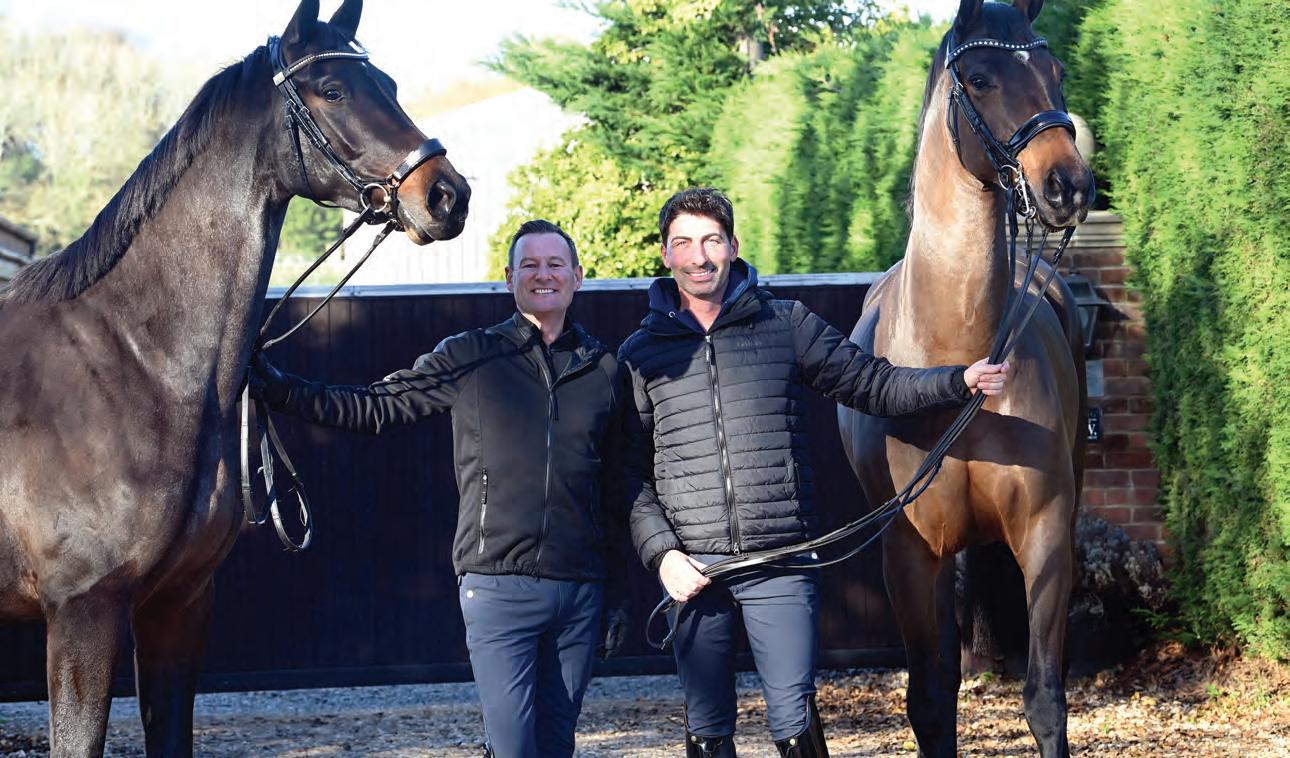
Roland Tong and Ben St John James, pictured with Swanmore Fleur de Lys and Devil’s Advocate, combine breeding with training horses and riders.
was the sale of Roland’s international GP horse Ambience (Alfie). “Initially we were renting properties and the financials were crippling,” says Roland “We ended up selling three- and four-year-olds to pay the rent. The good young horses always had to be sold and it was heart breaking.”
The change came when Alfie was sold to American Ann Romney, the wife of politician Mitt Romney. He is enjoying a wonderful life in California, teaching Ann the Grand Prix ropes. The money enabled a down payment
on the equestrian part of the former Mayhill Stud. This is made up of 16 acres, stables and both indoor and outdoor schools. The pair admit that the first four years were hard work, with their living accommodation a mobile home. Training and selling another talented dressage horse enabled them to start building their house and gave some breathing space to the business.
Swanmore aims to produce good quality ridden horses, both for professionals and talented amateurs, and good conformation and rideability are key. Ideally they are brought on and sold already started.
The relationship with Sadie Smith goes back many years – she worked for Ben and Roland for five years and bought Dantina (Dia) as a threeyear-old. Dia is by Dante Weltino out of a mare by Charatan, a GP stallion who died young. “The mare Charatana was really well bred, with strong conformation and a very good hindleg. Dia was beautiful but going to be too small for us,” said Roland. “We thought Sadie would be a good match and she looks perfect on her.”
“She was a bit spicy,” recalled Ben. “For us it’s important that talented horses go to super-talented riders. Dia was the epitome of what a dressage horse should be. We didn’t know for sure Dia would make a GP horse but with Sadie she had the best chance.”
Four-year-old Swanmore Fleur de Lys (Franklin x Spielberg), part-owned with good friend Anita Gray, is Roland’s hope for the future and his heart horse. “I get off her every day with a smile on my face,” said Roland. “There’s no way we could have afforded to buy her. I haven’t been this excited about a horse’s prospects for a long time. I can’t wait to show her off in the ring.”
Fleur has won a couple of prelims with Emma Bailey and will be produced
...training horses and riders and breeding talented youngsters is at the heart of the pair’s lives...
for next year’s five-year-old classes with Roland.
INTRODUCING WELSH CROSSES
There has been experimentation with cross-breeding too. “I lost my two main warmblood breeding mares about three years ago. Roland’s trained several amateur and professional riders on Welsh cobs. So, I started looking around at the different breeding lines and fell in love with the offspring of Swannhill Golden Rocket at London Welsh Cobs. He’s considered a stock getter and breeds beauty and type,” explained Ben. “I could afford talented section D mares by him and I put them to really good warmblood stallions. I needed to keep warmblood height and the canter was very important. Dressage horses need to push and Welsh cobs aren’t natural pushers. The offspring are beautiful with a lot of type. They are more squared up and with
PICTURED
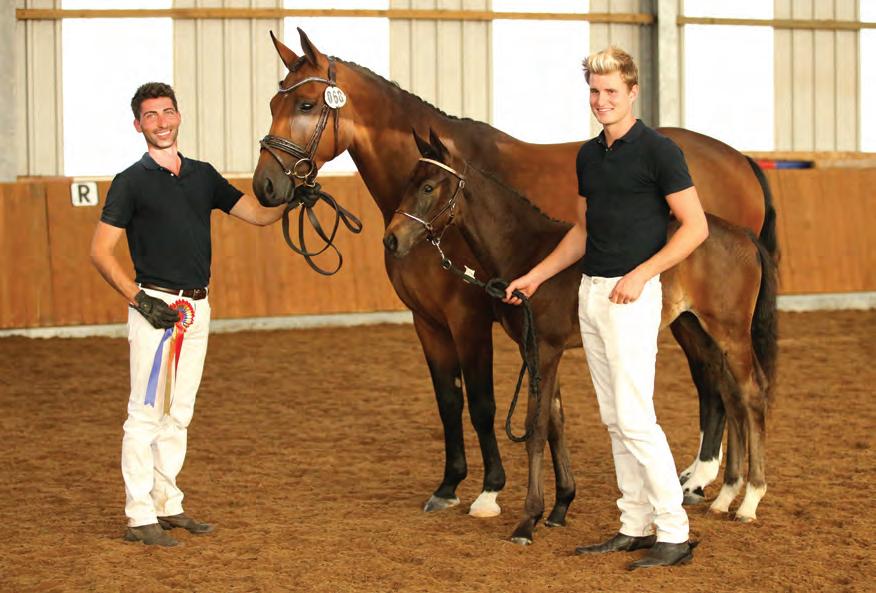
Above and inset left: Swanmore Dantina with her mother Charatana being shown by Ben and Mat Baker.
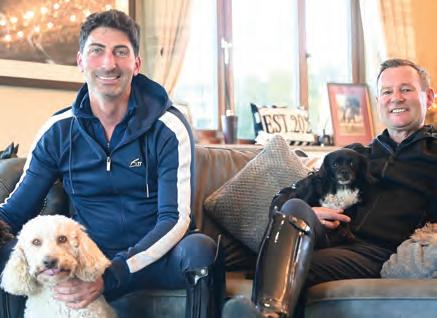
Below: A moment to relax.
a lot of strength. Ours aren’t sharp but are willing to work.”
Ben used a relatively unknown Schockemohle stallion Bon My Love which has Belissimo in his pedigree and Sandro Hit on the mother line. Belissimo horses are known as very kind and trainable horses with a lot of cadence and swing. “I wanted to keep a quality >
head and also keep the length of neck and leg. I got a beautiful long-legged jet black colt, called Swanmore Bon Amour and he’s a super mover. He sold to a good friend Nicola Sanchez and Roland will train and compete him later on.”
Recently Ben has been enjoying showing success with Devil’s Advocate (Larkshill Debonair x Jacardo) who he bred and owns with Wendy Head. Ben turned to showing to give ‘Dexter’ more confidence in bigger atmospheres before he moved up to Prix St Georges.
“I wanted to just enjoy my horse for a bit. Dexter absolutely loves it and we’ve both gained confidence. It’s done us both the world of good. He’d never seen anything like it – at his first show
he passaged for 15 mins because of a miniature Shetland. He’s done six shows and been top five every time, went to Horse of the Year show and came third in the Search for a Star Riding Horse final. He’s also qualified for London International in two classes.”
“Ben’s very lucky his other half is ‘turnout extraordinaire,’” quipped Roland. “We also get time together which we don’t normally as I’m off teaching and Ben’s running the yard.”
NURTURING POTENTIAL
Over the last almost 20 years, Roland and Ben have
For us it’s important that talented horses go to super-talented riders.
also helped to produce a number of successful dressage riders. Sadie won regional and national championship titles with Ambience. She was followed by Mat Baker and Owen Davies. Owen has purchased Swanmore Victorious (Valverde x Sir Donnerhall) and will contest five-year-old classes next year.
PICTURED
Swanmore Baroness.
PICTURED
Fleur de Lys
(Franklin x Spielberg) under saddle with Roland.
Now young rider Emily Rowlands has joined the team.
Swanmore is also fortunate to have Emma Bailey who has worked with them for 15 years and who is super-talented with young horses. “She starts them off
beautifully and makes them real ladies’ horses,” commented Roland.
Two people have been staunch supporters of Swanmore – Wendy Head and Debbie Bates. “Without their help we couldn’t have bought this place,” they
In the past we would’ve used an up-and-coming young stallion happily but now I pick stallions who are tried and tested...
said. “They’ve done so much for us.”
Roland and Debbie own Anja Valentine, who is out of an international GP mother line and is currently in foal to Totillah (Totilas x Sir Donnerhall). Totillah is currently the leading sire of the Dressage Futurity series. Anja Valentine has also had an embryo transfer filly by Bonjour (Bon Coeur x Furst Nymphenburg), Swanmore Annabella, who is rising three.
“In the past we would’ve used an up-and-coming young stallion happily but now I pick stallions who are tried and tested,” said Ben. “There are lots of good Timolin offspring on the ground and they are out doing well in different disciplines. Another one on our radar is Top Gear. Both are by Totilas who produces horses for both the professional and amateur market. They’re hugely trainable and you can see Totilas in their offspring.”
Ben and Roland are happy to be owning their own facility which gives them more freedom to produce the quality horses they love. We look forward to seeing more superstars emerge from their yard.
PICTURED
Above: Ben with London Just Devine (left) and the part-bred Welsh Swanmore Bon Amour (right).
PICTURED
“I get off her every day with a smile on my face,” says Roland of Swanmore Fleur de Lys.
London International Horse Show
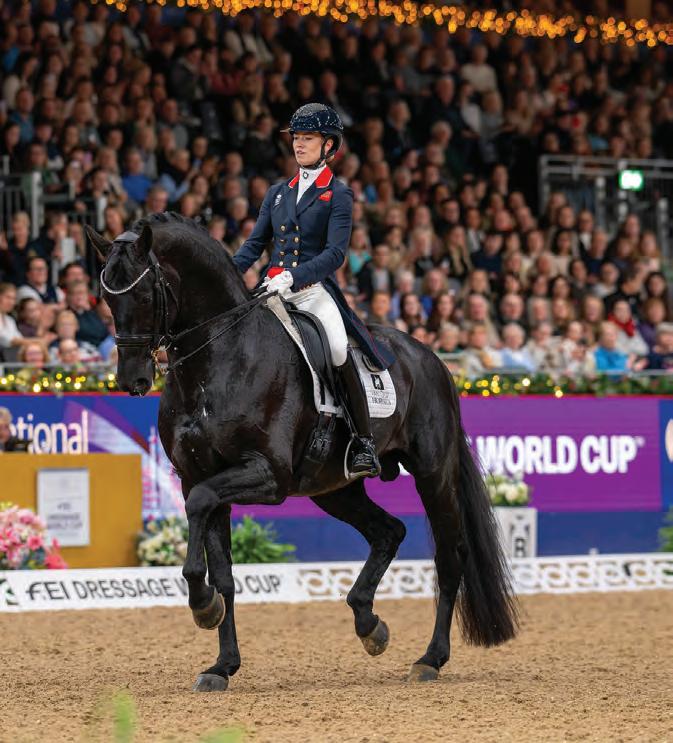
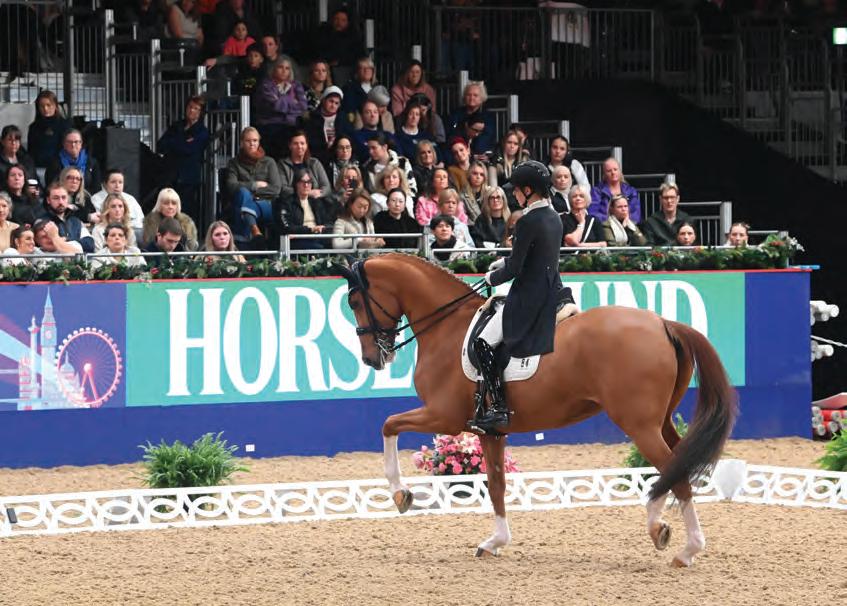
Left: Lottie Fry retained her FEI Dressage World Cup Qualifier title with her own and Van Olst Horses’ Glamourdale. As Lottie commented in her prize giving interview, London is the only UK show at which she and ‘Glammy’ compete, and they got a rapturous reception from the crowd, relishing the opportunity to see the pair in action.
London International Horse Show hosted its popular FEI Dressage World Cup Quali er just before Christmas, with a change to an afternoon slot for the Grand Prix Freestyle attracting a bigger crowd who were treated to a fantastic display by British and overseas riders.
Glamourdale fl ies to London win
Left: In the Grand Prix, Lottie and Glamourdale returned to top form, scoring 80.783% from judges Peter Storr (E - GBR), Marietta Almasy (H - FRA), Elke Ebert (C - GER), Susanne Baarup (M - DEN) and Clive Halsall (BGBR), with the usual clutch of 10s for his impressive canter work.
Right: After the disappointment of the European Championships, when the 14-yearold black stallion became unsettled by the volume of some passages in his ‘Glamourdale Airlines’ music, the Freestyle was a triumph, with the crowd clearly enjoying the selection of tunes, along with Lottie’s own voice overs. It was a fantastic performance too, awarded 89.170% with nines for trot and canter half pass, extended trot and tempi changes with yet more tens for that famous extended canter. Lottie said: “It was just an incredible feeling yesterday and today. I think these were two of Glamourdale’s best ever performances. We both love to be in London – the support from the crowd is just amazing and he really rises to that.”
Right: Becky Moody had promised a special programme from her regular collaborator Tony Hobden of Equidance and it didn’t disappoint: after a teaser of some of her previous music as she approached the centre line, it turned into non-stop Christmas. Along with challenging lines including lots of short diagonals and a high degree of difficulty, this earned three tens for choreography and four tens for music and interpretation.
“I’m dressed up like Christmas baubles,” said Becky afterwards of her sparkly tailcoat and hat. “So why not make it full-on Christmas? I’m incredibly lucky to have such a phenomenal horse who has a heart of gold.”
Above: Becky was a LIHS Ambassador for 2025, and the crowd were clearly thrilled by her performances with Jagerbomb. After an interrupted warm-up for the Grand Prix where ‘Bomb’ pulled a shoe, they were back on top from for the Freestyle, running closely behind Lottie for second on a score of 86.410%.
“I’m incredibly lucky to have such a phenomenal horse who has a heart of gold.”
BECKY MOODY ON JAGERBOMB
Left: Isobel Freese from Norway was the highest placed overseas rider in third, capping off a successful year with Total Hope (Totilas x Blue Hors Don Schufro). An up-tempo routine scoring high for canter work, saw them score 81.695% for a second Freestyle podium finish in a row at London.
London International Horse Show
Right: It was the first time that home audiences had the opportunity to see German-based Brit Susan Pape in action with the 14-year-old mare Harmony’s Guililanta (Jazz x Flemmingh), and the pair produced two great performances. In the Freestyle, a Tom Jones compilation matched well with the elegant chestnut’s precise work for a score of 79.805% and a fantastic fourth place.
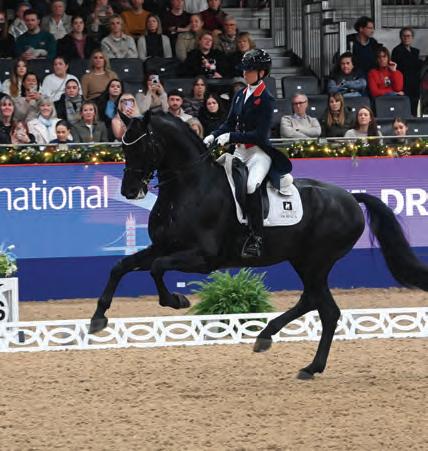
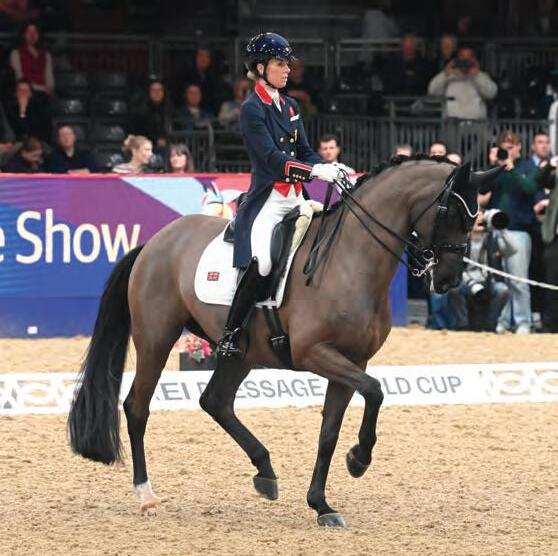
Below: Charlotte Dujardin returned to London International with her rising star Alive And Kicking (All At Once x Furst Piccolo) to take the runner-up slot in the Grand Prix on a score of 76.544%. Despite a few costly errors in the Freestyle which left her in fifth place, the 11-year-old mare showed that she is clearly one to watch.
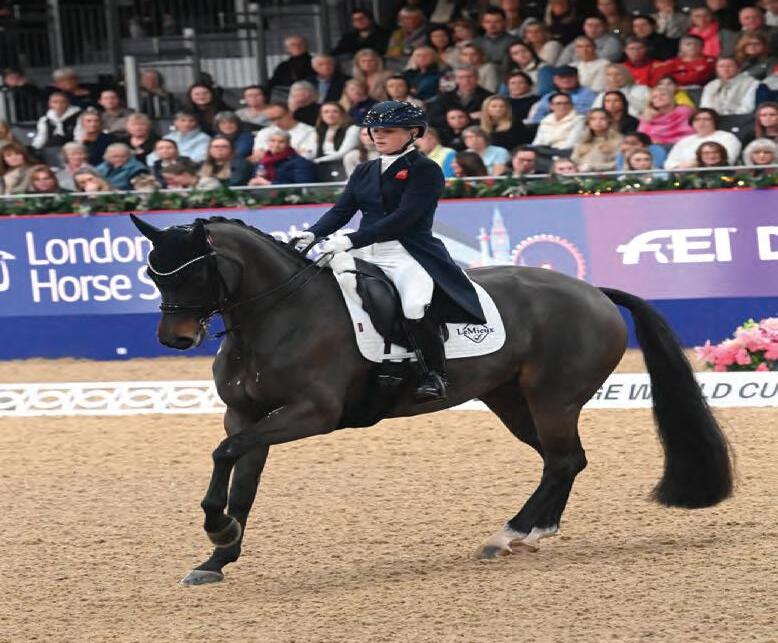
Above: Still very much ‘living the dream’ after a fantastic year which saw her and British-bred mare Swanmore Dantina (Dante Weltino x Charlatan W) crowned LeMieux National Champions, Sadie Smith made her London debut. The pair took sixth place in both the Grand Prix and the Freestyle, showing the impressive harmony between them that has impressed judges and wowed spectators from the start.
Chadwells Stud
BREEDING • SOURCING • PRODUCING BRITISH BRED, A BLEND OF THE BEST
We carefully match the best of European stallions with our high quality selection of British, German and Dutch mares; all of top quality, from many highly successful marelines.
At Chadwells Stud we pride ourselves on breeding and caring for our horses without compromise. No corner is cut, with continuous research into bloodlines, nutrition, horsemanship and care; we strive to offer exceptional quality from the start.
We can; breed or source a horse for you, care for them until we then start them undersaddle, followed by producing them further into a successful ridden career.
We also offer foaling down livery for visiting mares, as well as a chance to lease one of our top broodmares to breed a foal yourself.
Let’s hear it for the boys
You’ve bred a lovely colt foal and are wondering about keeping him entire – so what do you need to think about? Emma Penny investigates.
Congratulations! Your mare has produced the most stunning colt – it seems to have it all: The looks, the movement, the temperament, the attitude. At an early stage, you’re wondering about whether to keep him entire – but what do you need to know and consider before making the decision?
Tullis Matson, MD of Stallion AI Services and his fellow director and dressage sales specialist Faye Marut are often asked for advice. Tullis says: “We’re very passionate in this country about breeding. When a foal hits the ground, the dream has just arrived and people want to hold onto those genetics, but there are so many hurdles.”
Chief among those is the fact that there are already many breeding stallions, and a strong stallion licensing system on the Continent. Lorna Wilson who runs Elite Stallions says her business can offer the choice of about 600 dressage stallions to mare owners, a measure of how competitive the market is. “If you’ve bred a very good colt, I think the first thing is to work out if he is quality enough.”
For that, it should be assessed alongside many others, she says. In Germany, a colt thought to be good enough will generally be sent to a professional producer for the grading process. For initial grading, he will
undergo pre-selection including x-rays, with only 50% making it to the first part of this stage, and a further 50% failing to make the grade at the formal licensing. >
PICTURED
Above: There’s a lot to consider if you are thinking about keeping your colt as a stallion.
Below: Colts should be kept with other horses for as long as possible.
Lorna advises: “If you have a yearling that you think is exceptional, it would be a good idea to go to the German stallion licensing events in November as that will give you a good idea of the competition at two years old.”
In the UK, Eva-Maria Livesey who runs the British Futurity scheme and is focused on grading youngsters who will shine in the sport, says the decision to keep a colt entire shouldn’t be taken lightly. “Stallions are more involved and complex to manage, and it is not cheap when you consider licensing, health testing and having the facilities to keep a colt or stallion.
“The purpose of a stallion should always be to improve the breed, so your colt has to be way above the breed for quality. Look at the breed type in your studbook and at any discipline-specific standards too.
exceptional temperament, movement and conformation as you will often get a generation back [in the stallion’s offpsring]. The aim with breeding should always be to improve one generation to the next.”
Tullis says the first thing to consider is whether the colt has breeding potential.
“There are certain criteria people look for and top of the list is whether there are youngstock about, but there’s a big time difference between a young stallion and a proven one, so people will then look at what he has done [competition-wise] and how well he is bred.”
Faye adds: “It’s a catch-22. For a proven stallion, you have got to get offspring on the ground, so, for instance, stallions may be 18 years old before they become popular.”
“Also look at your mare very carefully – she needs to have an
PICTURED
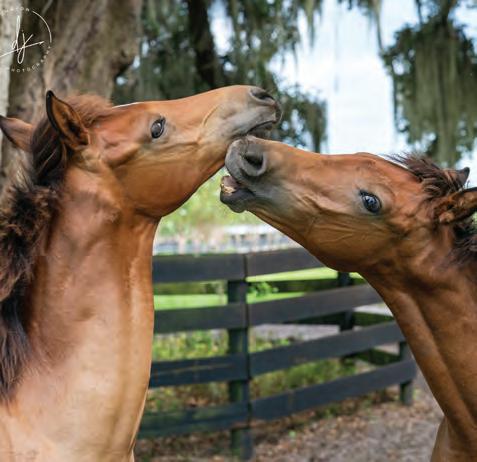
Above: Colt foals will play fight, but when it starts to become increasingly aggressive they should be separated.
Left: The purpose of a stallion should always be to improve the breed – Atlas Kelzer was awarded elite dressage colt status at the British Breeding Futurity.
Besides breeding potential, the ability to manage a colt and his transition to being a competition stallion requires careful consideration.
Tullis says: “Keeping and handling a young colt or stallion alongside other horses is not always easy and depends very much on his temperament and the facilities available.”
Key is whether that young colt will have a good life as a stallion. Tullis explains:
“When I first kept stallions 35 years ago, they were segregated from other horses. It wasn’t healthy and it wasn’t the right way.”
It’s crucial that colts are kept with other horses for as long as possible, he says.
“After weaning at six to nine months old, it’s good for them to be out with other foals for as long as possible.
“They will play fight with other colt foals, but when it starts to become increasingly aggressive and you see knocks and cuts, it’s time to separate them. That may be at a year or 18 months old, and that’s when life begins to change.”
PICTURED
Above: Handling and groundwork for colts at an early stage is essential to their well-being as a stallion.
Being able to keep entire youngsters safely as horses requires good facilities and confident handling. They need individual turnout in a well-fenced paddock, where they can see and touch other horses but not reach or fight with them. Tullis says: “We take colt liveries here, and being able to touch other horses over the fence makes them happier.”
He explains that he started offering colt livery as few yards will take them, or offer the facilities and experience to manage them well. For £45/day colts are stabled overnight, turned out during the day in adjacent paddocks and are handled every day. Faye emphasises that handling and groundwork at an early stage is critical: “It’s so important before the breeding stage. We sometimes get three-year-old stallions [coming to Stallion AI Services] who haven’t been handled much and that’s dangerous for us and the stallion.
“The early stages can have a big effect on how a horse turns out in life. They need positive experiences, especially as they become older and start collecting –a happy horse means happy semen.”
Owners may send their young stallion to bank some semen at three years old and get some foals on the ground to see what his foals are like, but with a dressage competition career to pursue, backing also needs to be considered.
North Wales-based international dressage rider Greg Sims takes stallions
usually at the end of their third year or beginning of their fourth year. “It’s a tricky topic as stallion licensing starts much younger, but I think their bodies are not mature enough, and I’d rather consider their welfare and longevity.
“They do need to be doing stuff before breaking – groundwork, being led off both reins and making sure they are mannerly and respectful is really important. It makes them far easier if they have had a bit of early education.”
Like Tullis, Greg’s yard set up can accommodate stallions, with quieter boxes and paddocks where they can still touch other horses. “The breaking process is the same, and we will do 15-20
PICTURED
Greg Sims takes stallions to produce as three- or four-year-olds, such as Kilan’s Double07, and says variety is key.
minutes three to four times a week. A variety of work is important, so we will take them hacking in fields and roads and to other places so they can see lots of different scenarios.”
Tullis is an advocate of keeping the riding and breeding aspects of a stallion’s life separate, so that the breeding is done by someone else. In Germany, Lorna explains that a system has been built for producing competition stallions, with specialists and producers for each stage of its life, from colt livery, to breaking and backing, young horse classes, progression to PSG, then the most talented horses going to a top rider to progress to GP. She says there is nothing to stop anyone sending a top colt to the Continent to be produced, compete and breed.
PICTURED
Colt breeders should visit licensing events to see the standard - this is a Vivaldos x Revolution colt at the 2025 Hanoverian licensing.
However, how a stallion handles life once he’s broken and riding away needs to be considered, Greg says. “Always think about whether life is good for the horse. It’s not good for a horse to be stabled 24/7 just because he is a stallion. If they can’t handle their hormones, perhaps it’s better to geld them and they can have a more normal life. If a stallion is not able to train and compete, who would want to use him?
“The most important thing is to be realistic – there are so many good stallions these days that any potential stallion has got to stand out.”
DECKSTATION PAUL SCHOCKEMÖHLE & HELGSTRAND DRESSAGE Münsterlandstraße 51 I 49439 Mühlen I Germany
VIVA VITALIS Vitalis - Fürst Romancier
TOTAL PS Totilas - Dante Weltino
SEBASTINO PS Secret - Vivaldi
ESCANTO PS Escamillo - Fürstenball
VITALIS Vivaldi - D-Day
DAAN G Donkey Boss - Don Olymbrio
EXTREME U.S. Escamillo - Vivaldi
BE SURE Benicio - Scuderia
TRUE HOPE PS Total Hope - Fürstenball
STRAIGHT HORSE LEONARDO Lord Europe - De Niro
TOTAL HOPE Totilas – Don Schufro
DONATION PS Debutant - Totilas
V-POWER Viva Gold - Fidertanz
PROUD JAMES Jameson RS2 - Johnson
CHOOSING A STALLION
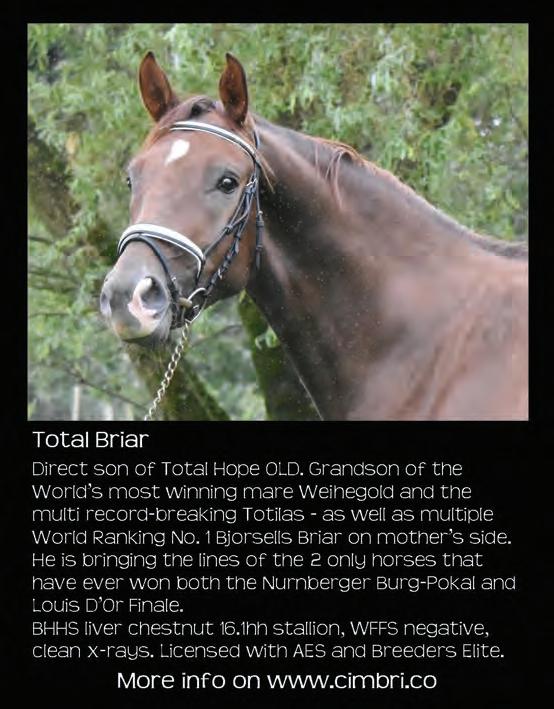
TOTAL BRIAR Bringing the lines from the World Champion and multi gold-medal winning mare Weihegold and the legendary and record-breaking Totilas via his sire Total Hope. On the mother’s line he brings eight-times World No 1 Bjorsells Briar 899. His sire Total Hope is currently winning CDI5* Grand Prix in Europe. Liver chestnut with four white feet. Standing at 16.1hh.
Stud fee: £POA | cimbri.co
AMARANTO D CENTURION Highly graded ANNCE & AES pure bred PRE stallion, 15.3hh 2015. Consistently placed at PSG with over 67%, was BD Associated Champion at Medium and Advanced Medium, MCI Flamenca Champion, MCI Level 2 Euro Champion in Paris and won the in-hand PRE Stallion at the Iberian Performance show, all in 2023. Three incredible paces and a wonderful temperament. Fresh and chilled semen, standing at Catherston Stud, Hampshire.
Stud fee: £600 | catherstonstud.com
TIMOLIN Grand Prix dressage stallion, 2011 Totilas x Sion 16.3hh. He is a sire of Champions, Equine Bridge Champion, BEF Elite, Intermediate eventer. His first crop are winning at Grand Prix at 10 years old. Stands at Catherston Stud in Hampshire. WFFS Neg, available for fresh, chilled and frozen semen. Please do ring to come and see him in the flesh.
Stud fee: £1,200 | catherstonstud.com
DON DANTE A British-bred Hanoverian stallion who has an incredible pedigree that includes top stallions such as Dancier, De Niro, Donnerhall, Lancier and Espri. Don Dante’s dam Sabrina is by Salvano, grandsire Salinero. Don Dante carries an exceptional performance record. Since 2012 he has placed in major young horse championships and won Premier League shows at PSG and Inter 1 level. In 2020 he began his Grand Prix career, was placed 3rd on his debut, followed by a 1st and 2nd. In 2021 he continued competing at Grand Prix coming away with two 1st and a 2nd placing. Don Dante did not begin his stud career until 2014 when he was proving himself as a competition horse with a consistent temperament, longevity and results. Eleven years of stock carry his level head, trainable temperament, expressive movement and confidence. One of his daughters, Donna Danita, is an example of all of these combined. She has climbed up the levels in her dressage career and was the highest scoring mare in the performance test in the BHHS 2024 gala.
Stud fee: from £800 NFFR + collection newbarnstud.co.uk
VETERINARY SERVICES
VALLEY EQUINE HOSPITAL in the heart of Lambourn offers a bespoke stud service to clients. We are a BEVA-approved AI centre for chilled and frozen semen, perform pre-breeding examinations of stallions and mares and successful infertility investigations of problem mares. We offer a personable client service throughout a mare’s pregnancy, including advice on vaccination, worming, nutrition and preparation for foaling.
valleyequinehospital.co.uk
TOWCESTER EQUINE VETS is a British Equine Veterinary Association (BEVA) approved centre for Artificial Insemination (AI). An established breeding centre with many returning clients, the breeding team provide a comprehensive service with dedicated equine vets and nursing staff who support your journey throughout the season. Visit the website to download the Breeding Services Guide.
towcester-vets.co.uk/equine/ services/breeding
ROSSDALES VETERINARY
SURGEONS’ dedicated team of stud vets provide a range of equine reproductive services. They offer breeding packages to suit your requirements, including natural cover, artificial insemination, embryo transfer, OPU for ICSI and semen collection and freezing. With veterinary specialists in equine reproduction, surgery and medicine, a world-renowned equine hospital and state-of-the-art laboratory, Rossdales is a BEVA-approved practice that offers expertise and care for your horse.
rossdales.com
B&W STUD AND REPRODUCTION SERVICES offers ovum pick-up (OPU) for ICSI. A form of IVF, ICSI is becoming more widely used in horses. The technique is useful for mares or stallions with fertility issues or where sperm availability is limited. Advantageous for competition mares, the procedure can be timed to suit the mare’s competition schedule and be outside the breeding season. The resulting embryo can be frozen until required for transfer to a recipient mare.
24/7 Resident vets & yard support staff in breeding season
Stud Courses 2026
• Foaling The Mare Foaling preparation, late pregnancy, foaling & adoption.
21st March
• Foal & Yearling Management Weaning nutrition, health, farrier & handling. 22nd March
• Artificial Insemination Technicians Training Management 24th February & 3rd March
• Dystocia In The Mare & Foal Resuscitation NEW Recognising the signs, when to call the vet, foal CPR , practicals with models & phantom mares.
23rd March
Equine Veterinary Expertise
Rossdales Veterinary Surgeons offer specialist expertise and lifelong care for your horse: from conception to birth, throughout their competitive careers, and during their veteran years.
We have dedicated teams of first opinion vets who specialise in equine reproduction, and in the management of all types and disciplines of sport horses - from elite athletes, to those competing at grassroots level. At our world-renowned Equine Hospital and Diagnostic Centre, our large multidisciplinary team of clinicians are led by RCVS and European specialists in surgery, medicine, diagnostic imaging, sports medicine and rehabilitation, reproduction and dentistry.
Westgate Labs answers the questions you didn’t know you had about the re-emergence of the large strongyle.
Once relegated to the margins of parasitology textbooks, large strongyles are showing signs of a possible comeback. Youngstock, broodmares and competition horses are among the most vulnerable, and as breeding preparations begin alongside early planning for the 2026 season, this is the moment to make sure your parasite control programme is working hard for you. We explore the emerging threat and highlight simple steps that studs and yards can take to stay ahead.
WHAT EXACTLY ARE LARGE STRONGYLES, AND WHY ARE THEY MORE SERIOUS THAN OTHER REDWORMS?
Large strongyles are a group of intestinal parasites whose larvae migrate through the horse’s body rather than staying in the gut. The most dangerous species,
PICTURED
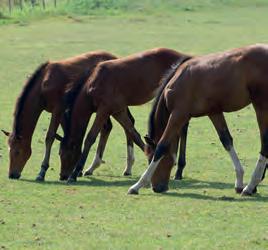
Youngstock, broodmares and competition horses are most at risk from large strongyle infection.
Return of the Redworm
Strongylus vulgaris, travel through the arteries supplying the intestines, grazing as they go. This weakens the walls of blood vessel and causes inflammation and blood clots that have potential to break off and block the blood supply to the bowel.
This process, known as verminous arteritis, was once a leading cause of severe colic and fatal intestinal infarction in horses. Thanks to decades of interval dosing, the condition became rare, but with more selective worming now the standard approach to reduce drug resistance, the parasite has an opportunity to re-emerge. Research from Colgate and Floyd (2025) warns that S. vulgaris “could resume its role as a significant parasite of horses” as treatment frequency decreases.
HOW WOULD I KNOW IF A HORSE HAS LARGE STRONGYLES?
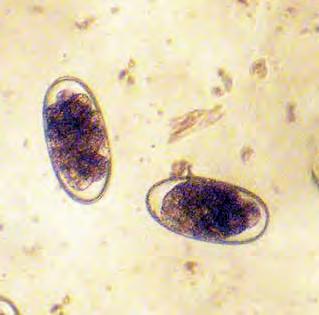
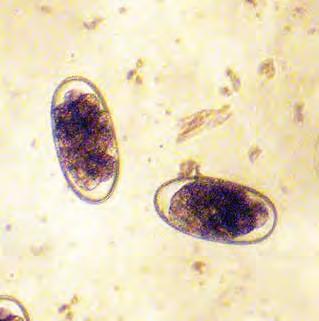
A standard worm egg count is unable to help as small and large strongyle eggs look identical under the microscope. This limitation wasn’t a problem while the parasite remained rare, but
a documented resurgence makes it important to test high risk horses and differentiate these two species. Clinical signs may be vague or absent until a life-threatening event occurs. Reported symptoms include intermittent colic, weight loss, fever and general poor performance, but many horses carry the parasite silently. Additional screening is therefore vital for early detection.
WHY ARE STUDS AND YOUNG HORSE ESTABLISHMENTS PARTICULARLY CITED?
Youngsters are much more vulnerable to parasite infection so any yard with horses under five is naturally high risk. Additional factors include:
• frequent horse movements
• imports from countries where S. vulgaris remains common
• high stocking density
• groups managed on minimal worming schedules
The Horserace Betting Levy Board highlighted “significant concern about the re-emergence of large strongyle species, especially Strongylus vulgaris” in its Code of Practice for the 2025 breeding season.
IS THERE EVIDENCE THAT THIS PARASITE REALLY IS COMING BACK?
The most striking data comes from Sweden, where prescription-only wormers and strict evidence-based dosing have been the norm since 2007. In 2008, only 6% of yards screened had a horse infected with S. vulgaris. By 2015, this had risen to more than 50%. Osterman Lind et al (2023).
This doesn’t mean the same prevalence is present in the UK, but it shows what can happen when treatment frequency drops. Without robust surveillance we have no way of knowing what is going on in our horses. We need to start looking for the needle in the haystack. There could be grave consequences if we don’t.
HOW DO WE TEST FOR LARGE STRONGYLES?
Two methods are available: Larval culture: A dung sample is incubated to allow any strongyle eggs to hatch and develop to third stage
PICTURED
Inset: Current testing practices rely heavily on worm egg counts, which are invaluable for assessing cyathostomin (small redworm) egg excretion, but they can’t distinguish between small and large strongyle eggs, which look identical under the microscope.
Below: Lab technician, Emily Dagg, preparing larval culture samples in the laboratory at Westgate Labs.
larvae. These can be identified to species by a trained technician. Culturing is a practical, costeffective test suitable for routine monitoring.
PCR testing: A molecular test that detects parasite DNA, not currently available in the UK.
WHEN SHOULD BREEDING YARDS AND COMPETITION YARDS TEST?
Because S. vulgaris takes six to seven months to mature from infection to egg production, time testing as follows:
• Adult horses over one year: add it into your programme to screen at least annually, current research shows no bias in timing for larval culturing
• Foals: test at seven to nine months, when infections picked up through turnout will begin egg shedding
• After potential exposure: test seven months after horses arrive from high-risk regions or yards
IF LARGE STRONGYLES ARE IDENTIFIED, WHAT SHOULD BE DONE?
Unlike small redworm infection, where treatment is advised only over a certain threshold of egg shedding, immediate treatment is recommended for any large strongyle presence. Fenbendazole, pyrantel, ivermectin and moxidectin hold varying claims for large strongyle species, although the spectrum and life stage
coverage varies with each chemical. The choice depends on time of year, age of horse and other test findings. Speak to your prescriber for more information. Despite this threat it’s important not to simply reach for a treatment. Resistance and small redworm remain the most pressing threat to horse health. Testing and targeted treatment remain the best way to protect both horses and drug efficacy.
HOW DOES THIS FIT INTO RESPONSIBLE WORMING FOR 2026?
Large strongyles are not the most common equine parasite, but they are among the most dangerous. Equally, as small redworm, ascarid and tapeworm resistance continues to challenge prescribers, the sector cannot afford to rely on older interval dosing strategies. For breeding operations, competition yards and any yard with regular equine movement, annual large strongyle screening alongside routine worm egg counts, tapeworm testing and blood testing for small redworm, offers a balanced, evidence-based approach.
YOUR ACTION POINT FOR 2026
Larval culturing is available now through Westgate Labs for individual or composite samples of up to four horses. Screening is a simple step that protects the health of your horses and helps safeguard the future of effective parasite control.
REFERENCES
• Victoria A Colgate, Emily F Floyd. Common equine parasites: past, present and future. UK Vet Equine. 2025;9(2):66. https://doi.org/10.12968/ukve.2024.0015
• HBLB Code of Practice for the 2025 equine breeding season https://codes.hblb.org.uk/index.php/page/197
• Osterman-Lind E, Holmberg M, Grandi G. Selective anthelmintic treatment in horses in Sweden based on coprological analyses: ten-year results. Animals (Basel). 2023;13(17):2741. https://doi.org/10.3390/ani13172741 For more information westgatelabs.co.uk
Your Member Benefits
We introduce some of the exclusive bene ts – discounts and special offers – available as part of your membership.
SAFETY FIRST
BD Official Safety Partner KASK offers members the best of safety and style.
WINTER ROAD REASSURANCE
As worn by team riders Carl Hester and Lottie Fry, KASK has become a brand familiar with riders taking part in affiliated competition from grassroots to Grand Prix. Start your year by refreshing your riding wardrobe, with safety and style in mind; British Dressage members will also receive an exclusive 20% discount when purchasing Kask hats direct from their website. To take advantage of this amazing offer, simply scan the QR code below to register for your discount code with KASK direct.
DRESSAGE FROM YOUR SOFA
Membership with our broadcast partners
Horse & Country Gives you access to live coverage of British Dressage events and competitions, including Petplan Area Festivals, Regional Championships, Winter and National Championships classes, plus over 1,000 hours of equestrian content including masterclasses, gripping documentaries, entertainment and reality shows.
Stream from home this winter, and enjoy the exciting line up of shows we’re getting ready to bring you in 2026.
BD Members enjoy not one, but two discount options with H&C. Choose from two memberships and use the codes below to activate your discounts!
H&C+ annual subscription • 15% off with BDMEMBERS15 • H&C+ Gold annual subscription • 20% off with BDMEMBERS20
OUR PARTNERS, YOUR BENEFITS
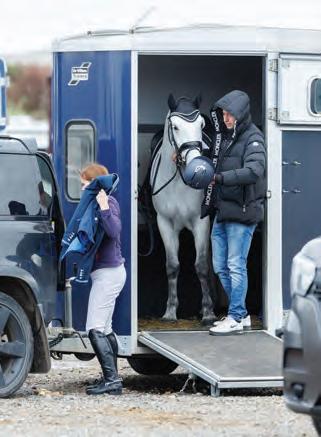
Travelling horses during the winter months can be a cause for concern when battling with the British elements. Our partnership with PRP Rescue Services offers BD members exclusive discounts on Horsebox and Trailer breakdown cover including, roadside assistance, vehicle recovery and horse transport.
The Organisation of Horsebox and Trailer Owners company are the UK’s longest established specialist equestrian roadside and recovery service and the leading supplier of specialist horsebox and trailer breakdown cover in the UK and Europe. In a breakdown situation all members can be assured of the best possible level of service from their incident managers, trusted roadside and recovery suppliers and horse/livestock transport companies.
To activate your discount, and find out which membership offer best suits you by ringing the team on 01488 657650, open Mon-Fri 9am to 5pm.
Our partners, your benefitsMembership with our broadcast partners Horse & Country Gives you access to live coverage of British Dressage Our full range of benefits offer you the chance to enjoy dressage for less – with money off opportunities and outstanding services to enhance your experience. From online training, equestrian products and event discounts, to classifieds, insurance and legal support, visit the BD Member Benefits page to view all of your exclusive discounts.
Weaning with confidence
PICTURED
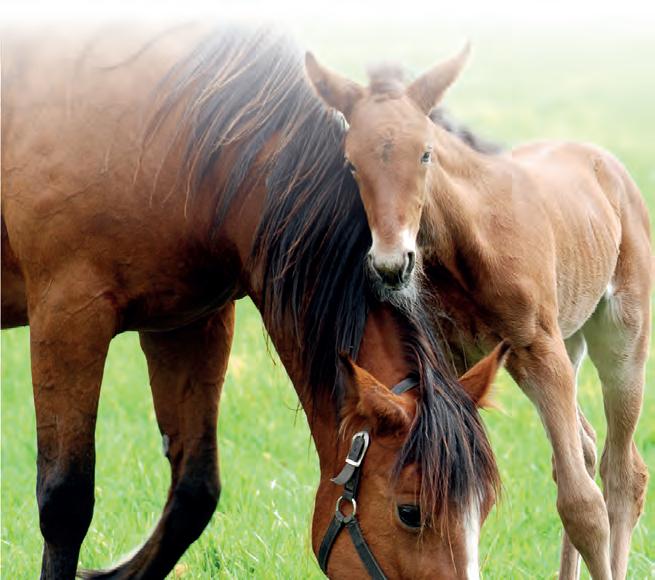
Handled correctly, weaning can be one of the most in uential moments in a foal’s life. Stephanie Bateman chats to leading breeders and nutrition experts.
Weaning is one of the biggest milestones in a foal’s early life, touching everything from nutrition and behaviour to emotional security. While the moment of separation is important, the foundations laid in the weeks and months beforehand are vital for a successful outcome.
At Mount St John Stud in Yorkshire, Emma Blundell places strong emphasis on calm preparation, social stability and careful observation.
“Most of our foals live in small groups of three to eight – companionship is everything,” she explains. “Before weaning, we make sure they’re well-handled, confident, and eating properly. If a foal isn’t quite ready, we don’t rush.”
Routine weaning usually takes place between fiveand-a-half and six months, but Emma’s team adapts around individual needs such as illness, antibiotics or weather conditions.
“We don’t wean in storms or heavy rain,” she says. “A quiet spell makes a huge difference to how smoothly foals settle.”
Emma typically removes one or two mares from the herd at a time so foals remain with their friends and the wider herd.
“Pairs work really well, especially for maiden mares or younger foals,” adds Emma. “Familiar companionship softens the emotional impact and helps them settle quicker.”
Most foals are weaned in mid to late autumn and move into a barn with both indoor and outdoor access. Deep-litter bedding, ad-lib hay and consistent group handling create a low-stress environment.
“Even simple things like farrier visits happen with a companion,” Emma says. “No foal is ever handled alone. That early social confidence is vital for the rest of their life.”
...place strong emphasis on calm preparation, social stability and careful observation.
Above inset: MFS Swingtime, by Sezuan’s Donnerhall.
MFS STUDFARM
PICTURED
Above left: Research is transforming our understanding of what foals need at weaning, says breeder Katy Holder-Vale whose colt Felix is shown with his dam Elite Elice.
Above right: After weaning, yearlings or retired ‘nanny mares’ can be good company for a foal if you are a ‘one mare owner’.
PRACTICAL WEANING
At MFS Stud in Scotland, Caroline Ironside also relies on herd stability to ease the transition.
“We wean in groups so friendships stay intact,” she says. “We wait until the whole group is at least five months old before weaning them together. They settle incredibly quickly that way.”
Readiness includes confident bucket feeding, good body condition and regular handling. Other signs include the mare naturally distancing herself or beginning to lose condition. Once separated, mares are moved out of sight and sound, while foals remain as a bonded group in a secure barn where they can move freely and engage in natural behaviours. Most foals settle into their new routine within 24–48 hours.
“The mares appreciate the break,” Caroline adds. “And for foals, keeping peers together gives them the
THE SCIENCE BEHIND WEANING
Growing research is transforming our understanding of what foals actually experience during weaning. Katy Holder-Vale of Witcham House Farm Stud, a contributor to the WBFSH State of the Industry report, explains that science now backs up what careful breeders have long suspected.
“In natural herds, weaning is a gradual process between eight and 11 months,” she says. “Foals explore new foods, new friendships and spend more time away from their dam, but the bond remains until they naturally drift apart.”
By contrast, traditional early weaning, often driven by breeding schedules, sales prep or management convenience, can create stress responses including calling, reduced play, disrupted eating, lowered immunity and behaviours such as crib-biting.
“Gradual techniques where the foal can still see, hear and smell the mare reduce stress significantly,” Katy notes. “Group weaning, which mirrors natural herd security, is particularly effective.”
She adds that mare factors also shape timing: “It’s not just the foal’s age that matters. The mare–foal bond is hugely important, and foals cope far better when weaning respects that relationship.”
confidence they need to thrive. Foals then remain in their peer groups until sold or kept for backing.”
Post-weaning mare care includes monitoring udder changes, adjusting feed, and ensuring smooth return to work or breeding.
“A calm mare is just as important as a calm foal in the overall success of weaning,” she explains.
FEEDING WEANLINGS
Nutrition plays a central role in supporting foals through this demanding period. Vanessa Allen from Spillers says preparation should begin long before separation.
“Weaning is stressful enough on its own,” she explains. “We want to avoid any added digestive upset from sudden changes or inappropriate feeding.”
For foals in good condition, Vanessa recommends a base of a balancer with a small amount of alfalfa based fibre feed. Poorer doers or those needing more calories can move on to stud & yearling cubes.
“Warmblood foals often thrive on fibre-based energy,” she says. “If extra calories are needed, increasing forage is preferable to adding cereal starch.”
Low-starch, high-fibre diets also help reduce gastric ulcer risk.
“The balancer and fibre combination is ideal for supporting the gut,” Vanessa adds.
General feeding principles:
• Keep routines and surroundings familiar
• Maintain companionship
• Delay weaning slightly for immature foals
• Monitor mares for mastitis
• Complete worming and health checks beforehand
• Provide ad-lib forage
• Start bucket feeding early
• Feed little and often
• Offer fresh water at all times
• Avoid supplements with added iodine or iron
HAWTINS STUD
Breeding fewer foals has encouraged Judith Davis of Hawtins Stud in Gloucestershire to rethink her entire system, and both mares and foals are benefitting.
With smaller numbers, Judith takes a more flexible and individual approach. Foals are still weaned no earlier than six months, but timings now reflect each mare–foal pair rather than a fixed schedule. Pairs are weaned together, mares move as a group to a distant field to reduce stress, and foals remain with their familiar companions.
Last year, with only two foals, Judith kept them with their dams longer and weaned at around eight months. She has also discovered the value of yearlings and even retired mares as calm ‘nanny’ figures.
“Lower numbers make you rethink everything,” she says. “Our retired mares have become brilliant babysitters and the whole herd dynamic is more relaxed.”
BALANCED GROWTH
PICTURED
Move the mare out of earshot of the foal after weaning and monitor her for mastitis.
Steady, controlled growth during and after weaning is crucial. TopSpec’s Nicola Tyler says uneven growth spurts are associated with developmental orthopaedic disease (DOD), and imbalanced nutrition will increase its incidence. “Youngsters need good-quality protein containing essential amino acids like lysine, threonine and methionine,” she explains. “They are vital for bone, cartilage and muscle development.” She also highlights the importance of copper, zinc and manganese for bone strength, and maintaining a calcium-to-phosphorus ratio of around 2:1. “Most nutrients come from the mare early in life, but milk is low in some trace minerals, so supporting the mare in late pregnancy boosts the
PICTURED
Keep foals with their familiar companions.
foal’s reserves,” Nicola explains. “Foals on good grazing may not need feed until around three months, but if pasture quality drops or milk supply falls, careful supplementation can help.” Introducing a balancer or small bucket feed by three to four months can also prevent the classic growth slump often seen at weaning. “Little and often is key,” Nicola says. “After weaning, ad-lib forage plus a nutrient-dense balancer and alfalfa chop encourages healthy, even development.”
THE ONE-MARE OWNER
Weaning with just one mare and foal can feel daunting, but a calm, well-planned approach keeps stress to a minimum.
• Pair up: If possible, team up with a neighbour or livery yard so your foal can wean alongside another foal or a steady youngster. A calm ‘auntie’ pony or retired mare can also provide reassuring company.
• Prepare early: Handle the foal regularly. The more confident and independent the foal is beforehand, the smoother the separation.
• Use gradual separation: Start with short periods where mare and foal can see and hear each other but are physically apart, for example, stabling side-by-side or using adjacent paddocks. Build this up over several days.
• Keep the mare settled: Move the mare out of earshot once the final separation happens, ideally with a familiar companion to minimise stress and reduce the risk of mastitis.
FEEDING MARES
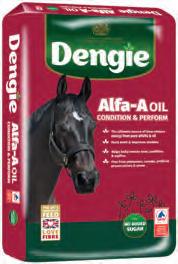
DENGIE ALFA-A OIL
High fibre and oil feeds offer an alternative way to support the broodmare’s energy needs without relying on high levels of cereals.
HORSLYX BALANCER From the ninth month of pregnancy, broodmares’ mineral needs rise as the placenta and foetus store key minerals. Correct nutrition is vital to support foetal development and early foal health. Feeding a Horslyx Balancer alongside forage helps ensure broodmares receive a balanced diet before foaling.
RRP: £17.48 for 5kg | horslyx.com
Dengie Alfa-A Oil has a comparable energy level to a stud mix at 12.5MJ/kg of digestible energy with exceptionally low levels of starch (2%) and sugar (4.5%). The inclusion of alfalfa provides quality protein, including lysine, plus other key nutrients to support the broodmare and foal.
RRP: £21.19 for 20kg | dengie.com
CAVALOR NUTRI BONE combines calcium, magnesium, phosphorus and trace elements to perfectly match the nutritional needs of young horses in growth and mares during pregnancy and lactation. For optimal skeletal development and body structure, choose new Cavalor Nutri Bone.
RRP: from £53 for 5kg | zebraproducts.co.uk/stockists
TOPSPEC STUD FEED BALANCER AND STUD LITE FEED BALANCER
TopSpec Stud Feed Balancer is a high-protein feed that contains a multi-supplement including outstanding levels of micronutrients and digestive aids for breeding stock. The feed promotes superb musculo-skeletal development, without providing the excess calories which can result in overtopping.
TopSpec Stud Lite Feed Balancer contains the same micronutrients on a lowprotein, low-calorie base for mares and youngstock that are good-doers. Both balancers provide in-foal mares and mares with foals at foot with nutritional support for healthy fertility, milk quality and yield and nutrient support for healthy colostrum quality.
RRP: Stud Feed Balancer
£39.95 / Stud Lite Feed Balancer
£38.30 for 20kg | topspec.com
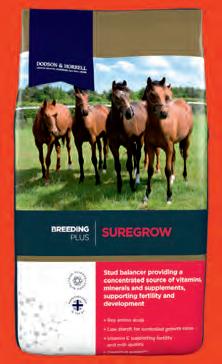
D&H’S SUREGROW provides a low calorie, concentrated source of vitamins and minerals for stallions, mares, foals and youngstock. The addition of prebiotics and a probiotic ensure support of a healthy hindgut environment, encouraging fibre fermentation and efficient nutrient uptake. Suregrow is also low starch for controlled growth rates, alongside providing key amino acids to support growth and development, vitamin E to support fertility and milk quality and additional hoof support.
RRP: £24.31 | dodsonandhorrell.com is growth
SPILLERS GRO N’ WIN BALANCER is ideal for pregnant and lactating mares, foals, and youngstock needing fewer calories than traditional stud feeds. It contains chelated vitamins and minerals for better absorption and is rich in essential amino acids –lysine, methionine, and threonine – to support growth and muscle development. Free from whole cereals, it’s high in vitamin E and includes vitamin C for immune health. Added probiotic live yeast helps optimise digestive health, making it a balanced choice for breeding stock.
RRP: £27.19 for 20kg | spillers-feeds.com
BAILEYS BETTER BIOME Studies in Thoroughbreds have shown a link between a healthy hindgut microbiome in youngsters, and future performance. Weaning can be a stressful time for both mare and foal, leading to disruption of the microbiome, which plays such an important role in both digestive health and the immune response. Adding Better Biome to the feed provides pre-, pro- and postbiotic support for the microbiome, to encourage a healthier microbial balance and help reduce the impact of stress.
RRP: £30 for 1.5kg | baileyshorsefeeds.co.uk
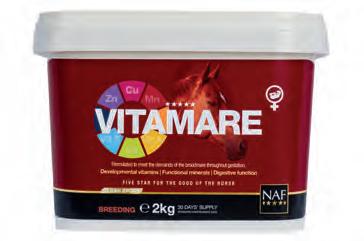
VITAMARE has been formulated to meet the broodmare’s nutritional demands throughout conception, gestation, and lactation, supporting her health and the development of a strong, healthy foal. Ingredients include calcium, chelated copper, a pre- and probiotic complex to support a healthy microbiome, natural Vitamin E, and essential trace elements. It provides balanced ratios to promote foetal bone and organ growth, milk production, and colostrum quality. Feeding VitaMare helps guard against fluctuations in micronutrient levels that can occur elsewhere in the diet.
RRP: £39.99 for 2kg | nafequine.com
FAST FIBRE Winter feeding plays a role in supporting horses and ponies prone to laminitis as spring approaches. Fast Fibre is a low calorie, high fibre feed, low in starch and sugar. Suitable for good doers, excitable types and those with dental issues, it can be used as a partial hay replacer.
RRP: from £13.74 | allenandpage.com
NUPAFEED MAH CALMER is ideal for mares, young stock and stallions, Nupafeed MAH calmer works by naturally supporting against stress. Patented MAH magnesium has been pharmaceutically developed to provide the best magnesium absorption without disruption to pH or hindering the absorption of other nutrients. Nupafeed MAH can help to manage stressful behaviour associated with stabling, routine changes and weaning, and also supports healthy joint development in foals.
RRP:from £38 | nupafeed.co.uk
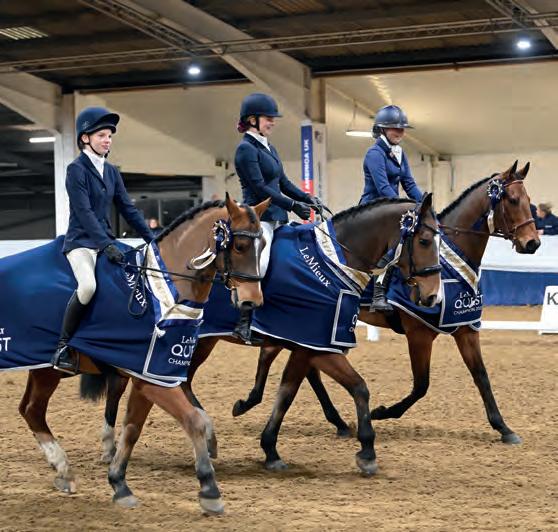
Left: Team Quest Open “We have all had ups and downs, with ponies, with riders but everyone has just stepped in to help get back to do the best job we can, it’s been incredible.”
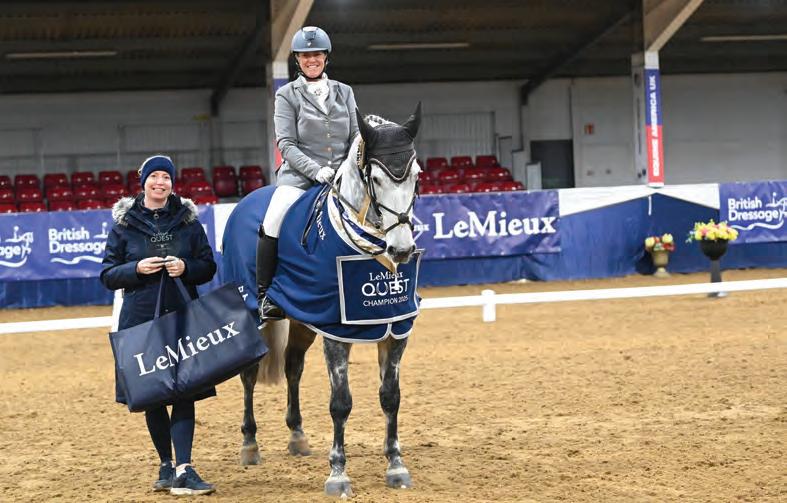
South & West team Mel’s Belles topped the Team Quest Open tables, claiming the title after two days of competition against 24 teams.
Fiona Russell-Brown with Nye Painted Lady, Trish Tucker and Tallyho Jackson, Deborah Fisher riding Woodline Lady and Elizabeth Turner with Molls Blossom stepped up to make the winning quartet at the Championship, completing on a score of 409.722.
The ladies, hailing from Gloucestershire and Wiltshire, brought skill and teamwork to secure championship qualification, with the guidance of Melanie Norris. The team’s trainer — and the original ‘Mel’ of Mel’s Belles — was arena-side cheering them on alongside family, friends, and fellow squad members who helped make the achievement possible.
An epic Quest conclusion
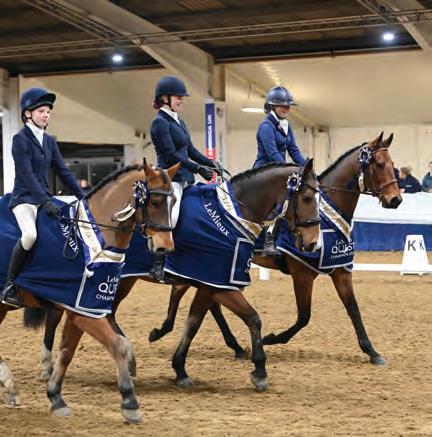
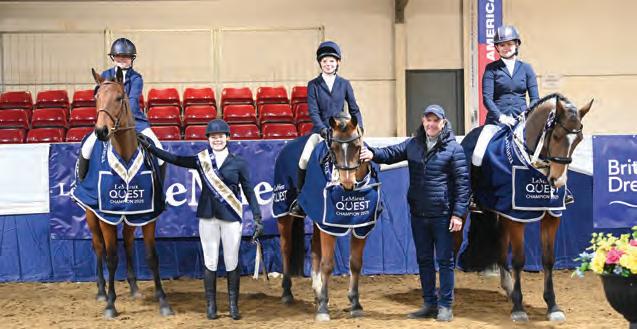
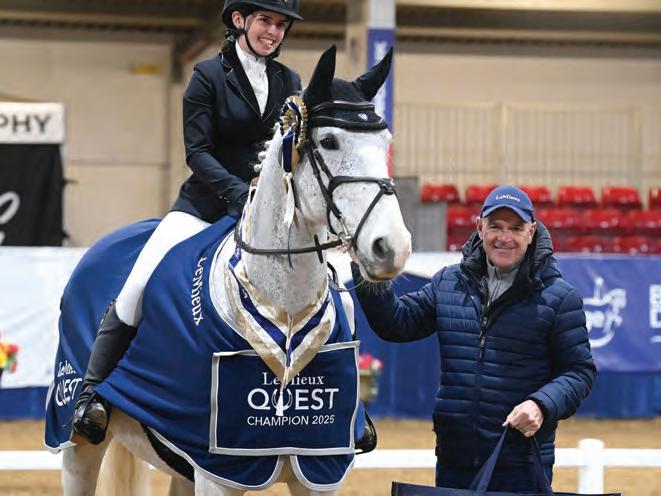
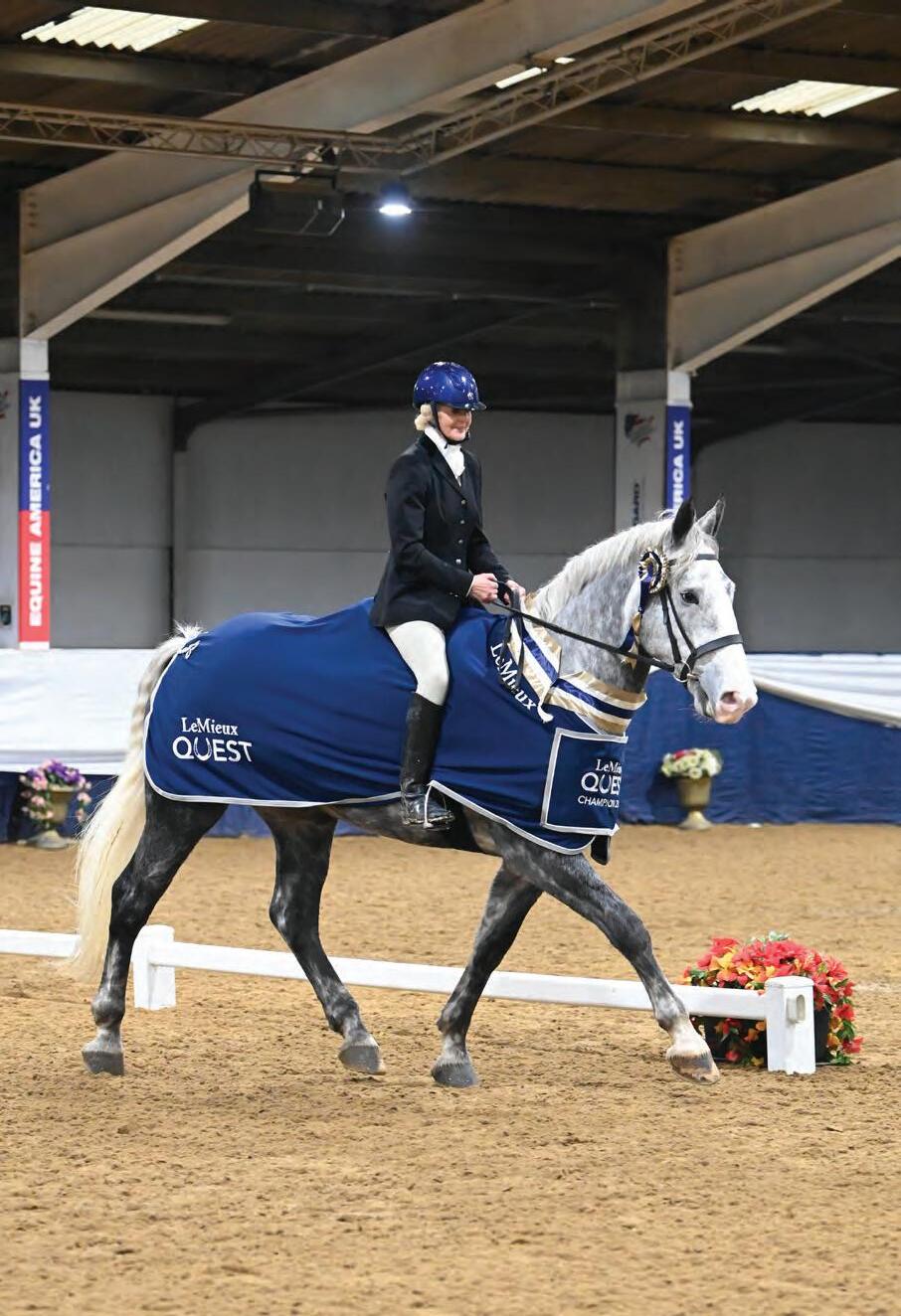
With team spirit, marvellous mascots and top test riding on show, congratulations to all that took part in the LeMieux Quest Championships, where the 2025 champions were crowned after an epic journey from quali cation to the grand nale.
Right and above right: Team Quest U21 In the U21 Team Quest contest, the Joy Riders sister-friend quartet Becky Weston, Kate, Megan and Beth Harrison returned to the top step of the podium, to take their second U21 team title in three years. Their winning score was a superb 423.456.
Despite only forming a Quest team recently, the four girls making up the winning team have known each other for a long time – the three sisters, Amy (14), Millie (14) and Olivia Parry (16) decided to join forces with their friend May Mooney (16) to take on Team Quest.
A storming second day of competition secured the title, as the four girls rode some impressive tests and brought in equally impressive scores.
Garthfach Whisky Rocks, the ultimate family horse, earned two top scores of 73.400% with Megan in the saddle, and 73.600% with the eldest Harrison sibling Beth on board. Becky Weston brought her former racehorse Whooligan for his first major show, and earned two consistent contributing scores, including a fantastic 70.530%. The youngest of the Harrison trio, Kate, brought a brand-new partner to this year’s winning line-up too, as she moved up in height to sister Megan’s former pony Oxview Mattie.
Right: My Quest Open Introductory “We started Quest as an education, hopefully he’ll go on to looking after the grandchildren, so it’s my last hurrah as I’m sixty-four.”
In their first year of BD competition Sue Pudney and Salute IV rode to victory in the Open Introductory class; the pair shone through the rain to earn a winning score of 68.485%.
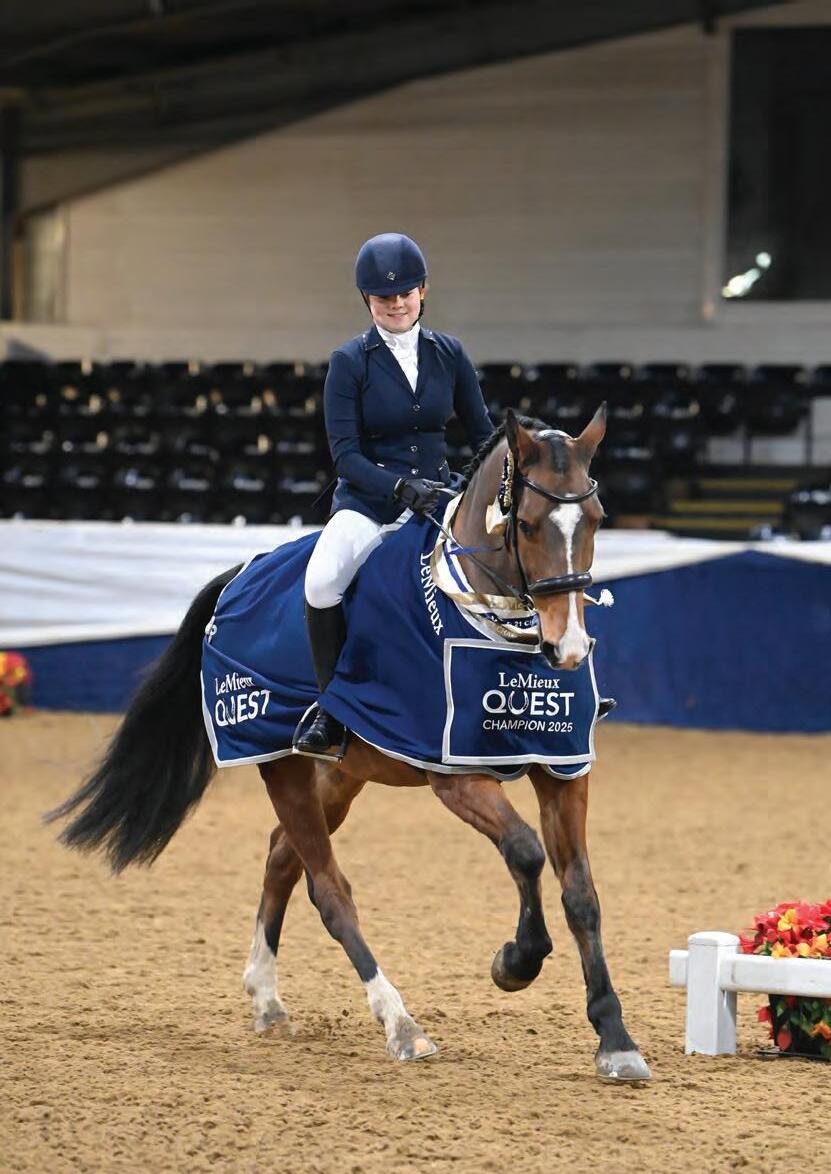
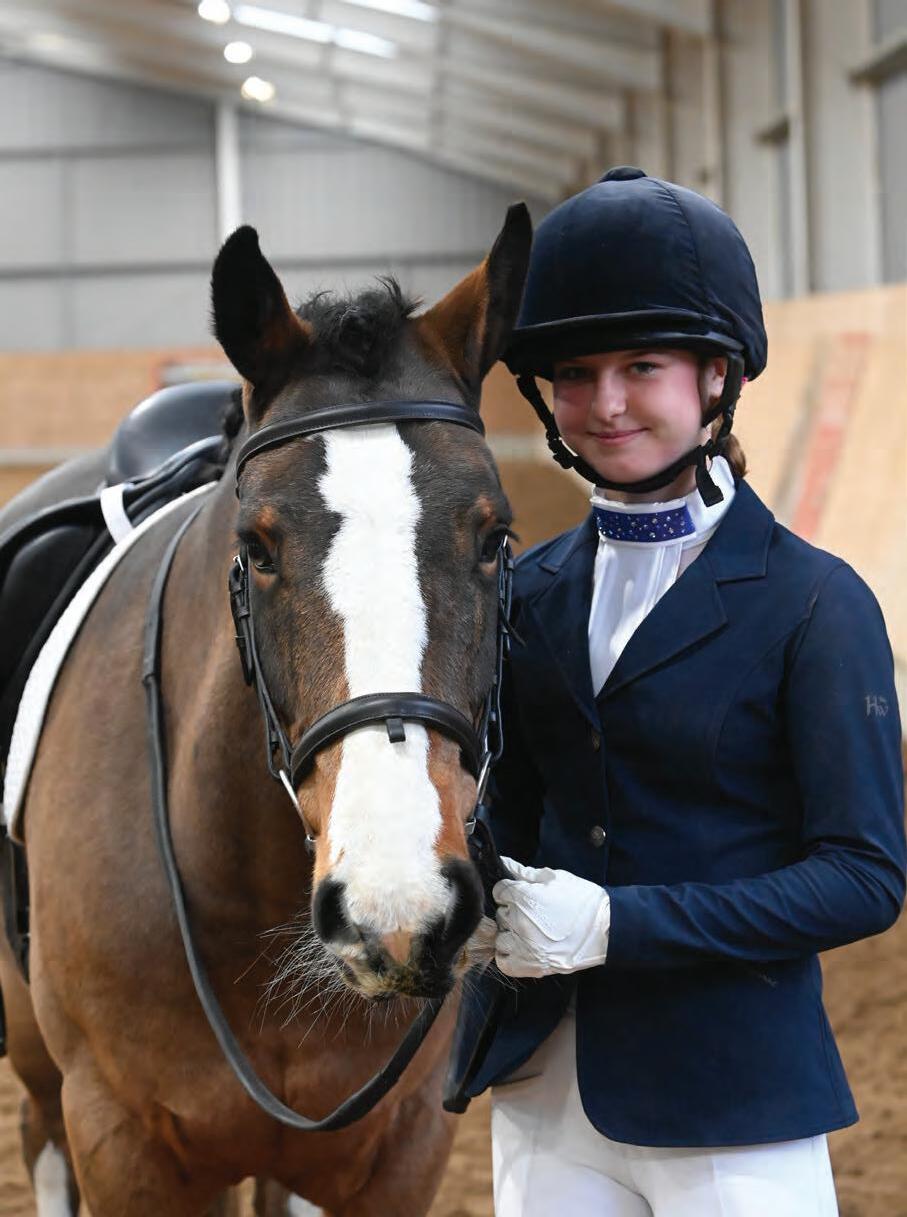
Right: My Quest U21 Novice A busy weekend proved one to remember for Megan Harrison, who not only made up part of the winning U21 Quest team the Joy Riders, but also earned the My Quest U21 Novice crown with her 12-year-old Garthfach Whisky Rocks.
Megan and Whisky also earned the highest score of the show, delivering a fantastic 74.867% in front of Laura Leicester, Jane Peberdy and Deborah Howson.
Below: My Quest U21 Preliminary Dorset-based Isabella Golder produced Vardags Silmarillia’s to a top score of 68.406% in the 29-strong Prelim class, earning the title for herself and owner Sarah Chandler. The Irish-bred grey mare also placed ninth in the My Quest Open Prelim with Sarah taking the reins.
Below: My Quest U21 Intro Worcestershire’s Georgina Timmis rode to an impressive score of 72.197% on board her own Little Miss Lola Snow. ‘Georgie’ has produced the mare slowly from the age of three, and did a great job of showing her the ropes at her first Championship. The pair were cheered on by friends from the West Midlands Dressage Group.
Below: My Quest Open Preliminary Four years of hard work paid off for Katy Weller in the My Quest Open Prelim Championship, as she delivered a winning test on board Chloe Knowles’ Cool Eliza.
Left: My Quest Open Novice
Earning the highest score across the My Quest Open classes, Lisa Crabtree and Bowland Silver Laughton claimed the Novice Champion title on 70.067%. Lisa has owned ‘Harry’ for nine years, and has taken the Irish gelding from backing to competing across the disciplines.
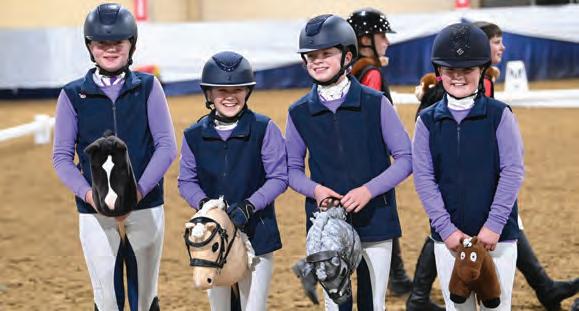
Below left: Reins and Giggles take their hobby horses to the prize giving.
ROLL OF HONOUR
LEMIEUX TEAM QUEST OPEN
1. Mel’s Belles - 409.722
2. The Seedlings - 402.597
3. The Sequestrians - 402.273
LEMIEUX TEAM QUEST U21
1. Joy Riders - 423.456
2. Eastwell Eaglets U21 - 412.191
3. Beamish Riding Centre - 411.732
LEMIEUX MY QUEST
OPEN INTRODUCTORY
1. Sue Pudney and Salute IV, 68.485%
2. Justine Ward and McCartneys Valintino, 68.106%
3. Charlie Harper and Quantocks Best Kept Secret, 68.030%
OPEN PRELIMINARY
1. Katy Weller and Cool Eliza, 69.855%
2. Sarah Hall and KGV Camiro, 69.420%
3. Janine Wright and La Loca, 69.348%
OPEN NOVICE
1. Lisa Crabtree and Bowland Silver Laughton, 70.067%
2. Sarah Bott and Clovers Reward, 69.733%
3. Louise Lennon and Willow XX, 69.467%
U21 INTRODUCTORY
1. Georgina Timmis and Little Miss Lola Snow, 72.197%
2. Erin Greenwell and Storm VIII, 69.848%
3. Harry Moore and Parcybedew Sparkling Diamond, 69.394% U21 PRELIMINARY
1. Isabella Golder and Vardags Silmarillia, 68.406%
2. Emilia Mole and Hollyhurst Bugatti, 67.971%
3. Amy Parry and DHI Mojo, 67.899% U21 NOVICE
1. Megan Harrison and Garthfach Whisky Rocks, 74.867%
2. Caitlin Evans-Simpson and Thorngate Crusader, 71.067%
3. Bonnie Inskip and Popalbee Temptation, 70.533%
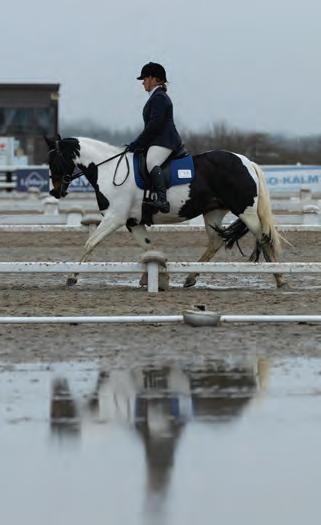
Right: Weather not for the faint hearted; Suzie Pugh and Westceffyl Poppy brave the puddles competing at Novice level for Open team the Marvellous Misfits.
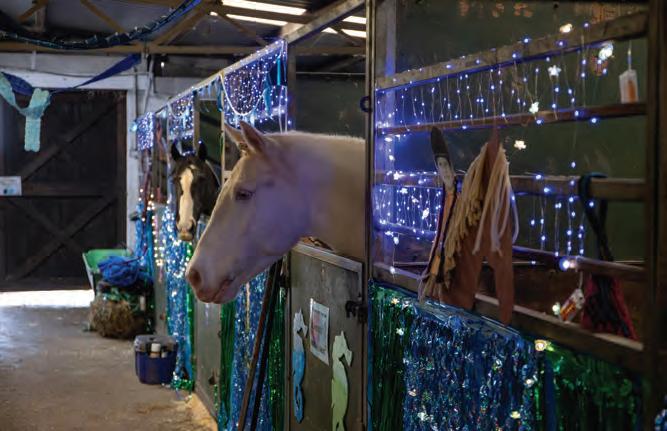
Below: The SDWPC Seahorses took home a special prize for the best decorated U21 stables; this is Ghost III - owned and ridden by Georgia Deeble – showing off his fairy lights, tinsel and custom cardboard cutout.
Below: High fives for Isla Sankey (9) who presented her Welsh pony Hilin Chaffinch for the WMDG Bluebirds alongside My Quest U21 winner Georgina Timmis.
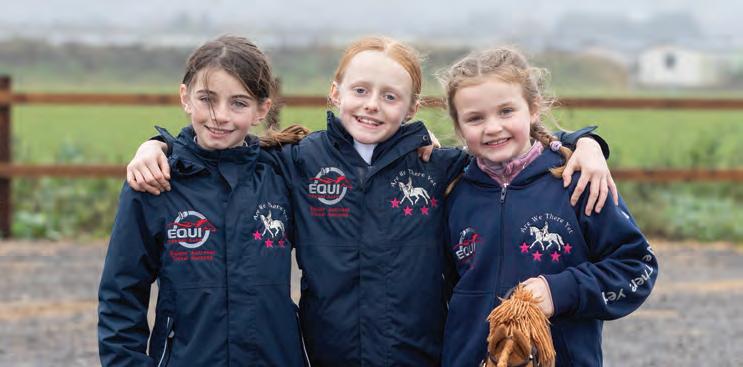
Above: The Are We There Yet trio smile at their first LeMieux Quest.
Above: The Eastwell Eaglets celebrate second place in the U21 Team Championship with Millie Kutluoglu (12) at the centre on board her pony Broomells Desert Moonstone.
The double bridle is in the spotlight as the FEI considers its future use. Jane Carley reports on research and expert advice.
Riding in a double bridle could be considered the ultimate in finesse and skill, the refinement of a training process that can see horse and rider combinations progress to the top of the sport. Yet in recent years, it has come with some negative connotations, and its use questioned both within the discipline and the equestrian world in general.
For those wishing to compete internationally, the FEI has recently voted on a proposal to make snaffles an option in CDI3* and CDIO3* from 1st January 2026. Further discussion is to follow on whether the double should be permitted at all in CDI, CDIOJ and Junior Championships.
British Dressage’s National rules have always given riders the choice of a double or snaffle bridle up to and including at Grand Prix.
Snaffles are in increasingly common sight at all levels of competition, although the double is permitted from Elementary upwards.
Debate continues on whether the double bridle can have a negative effect and scientific studies have commenced on this topic.
PICTURED
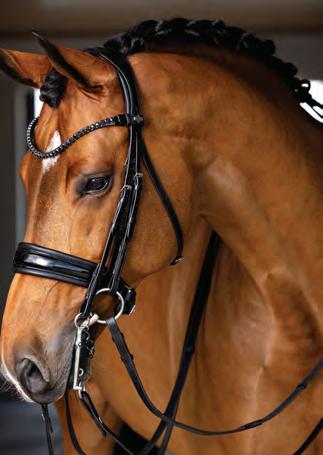
Above: Double or snaffle?
BD offers the choice right up to Grand Prix.
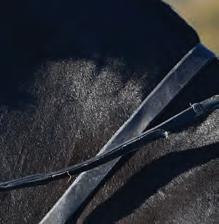
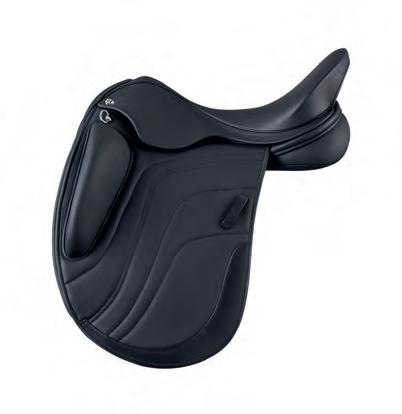
Right Inset: Research has informed bridle design to give riders a wide choice to meet their horse’s needs.
IMAGE: STÜBBEN
Research by Dr Russell MacKecknieGuire, Dr Hilary Clayton, Professor Jane Williams, Dr David Marlin, Mark Fisher, Diana Fisher, Dr Vicki Walker and Dr Rachel C Murray compared pressures exerted on the horse’s head and rein pressures in both double and snaffle bridles and found little difference between to two, but Dr MacKechnieGuire cautions:
“This was elite riders with horses that were experienced in doubles – they all had excellent balance and co-ordination; we don’t have any evidence yet from less skilled riders.”
the horse first. The leverage on the curb can present a welfare concern if used incorrectly.”
He adds: “The double should be used as a refinement of the riders’ aids as it facilitates subtle changes in rein pressure.”
Dr MacKechnie-Guire suggests that less experienced riders would benefit from a lesson on a schoolmaster horse in a double bridle before trying one for the first time on their own mount.
Bearing this in mind, he urges riders to think before reaching for the double bridle.
“Think about why you are using it –it shouldn’t cover up a training issue. Ensure that everything is in place to avoid the risk of causing a negative impact on
“More knowledge is needed on the impact of the double bridle and we have further scientific studies planned.”
He comments that the increased use of snaffle bridles through the levels may be due to riders being more informed about the effects of bits and bridles, along with a wider choice of products.
“Bridles and bits can be semi-bespoke to each horse as there is so much choice, which is really positive. We can see that riders are looking at different approaches due to the research being carried out and education now available to them.” >
“BD has been highly proactive in backing research and its position offering riders the choice of a snaffle right up to Grand Prix is also no doubt influential,” he says.
THE PERFECT FIT
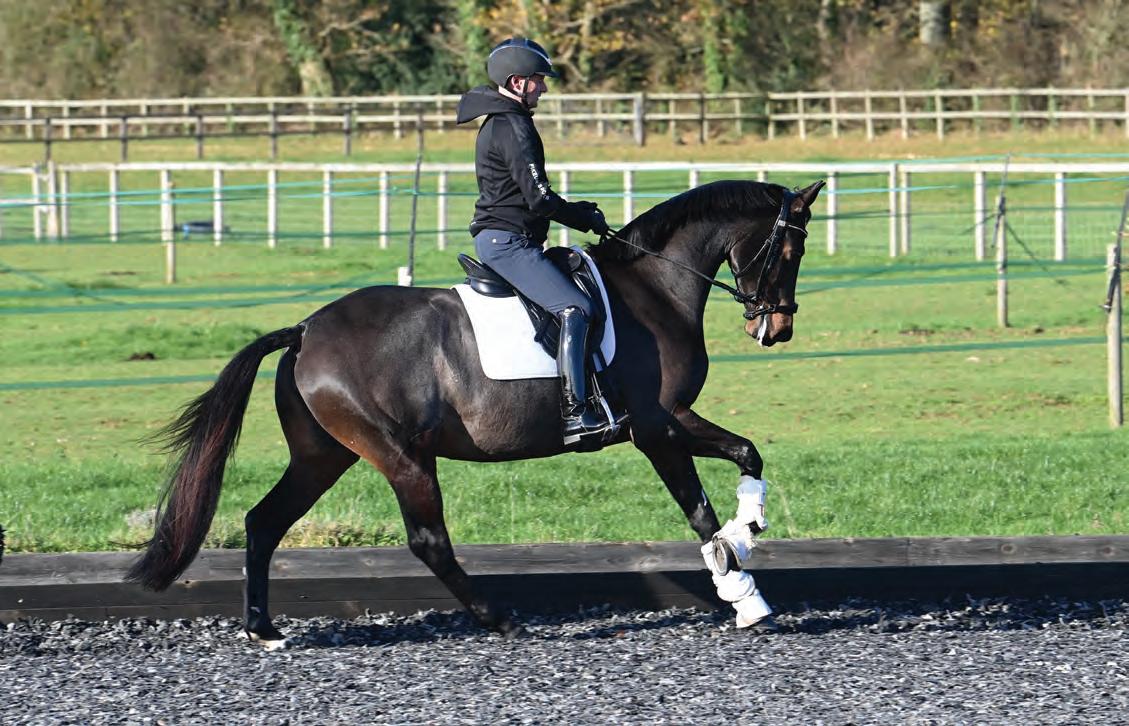
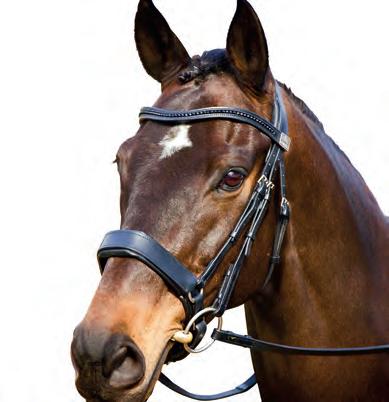
When fitting a bridle to the horse we must all be aware of the areas of pressure, the main areas being the base of the ears, the atlas, the area around the Temporomandibular joint (TMJ), across the nasal bones and under the lower mandible, explains Diana Fisher, SMS Master Saddle Fitter and Qualified Bridle Fitter, who was a partner in the research.
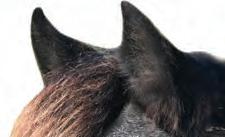
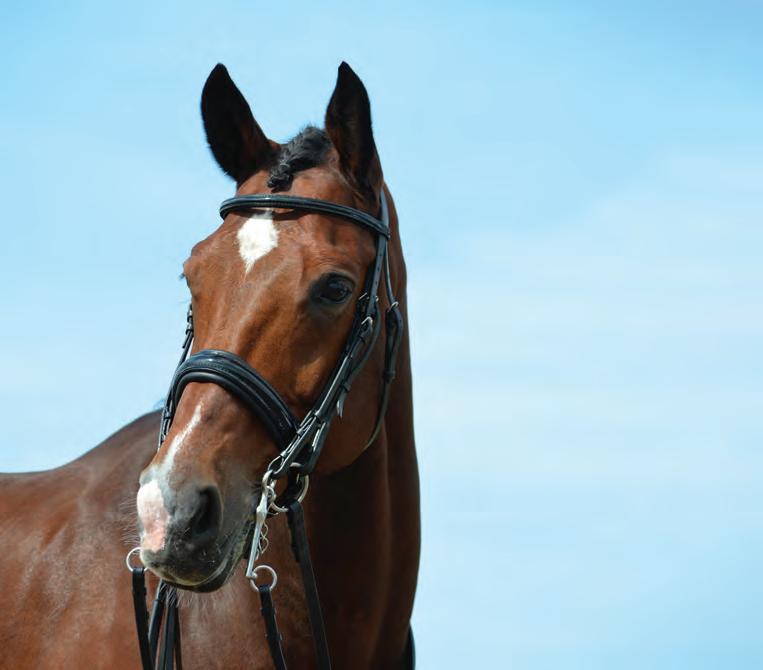
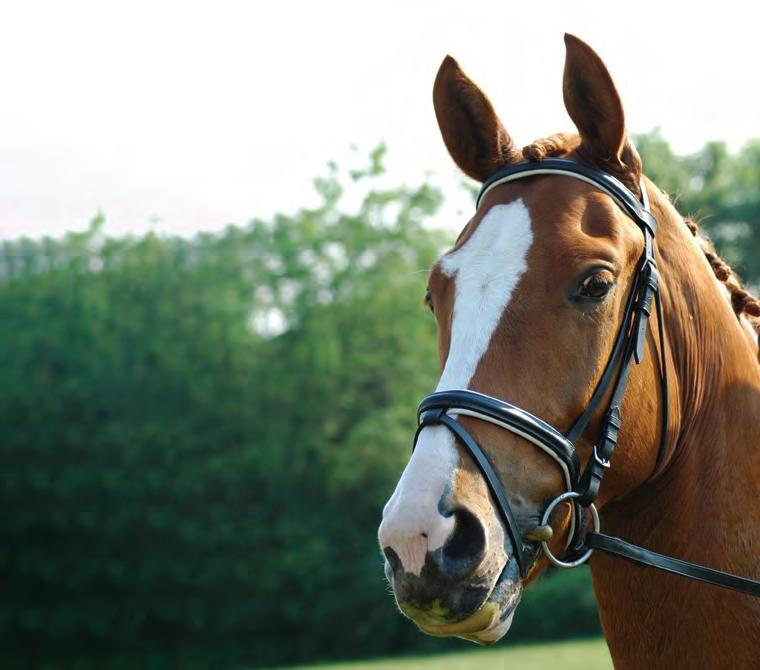
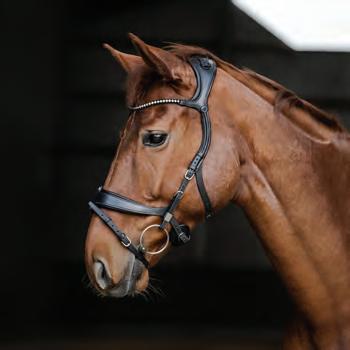
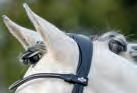
“Choosing the correct headpiece for the horse’s conformation is very important. Horses come in all shapes and sizes in this area, so a headpiece that has a cut out behind the ears with soft padding would be preferred for comfort. There are many different anatomical shaped headpieces on the market.”
She adds: “Some horses are quite muscled over the atlas area which can result in pushing the headpiece forward to the base of the ears, so shape and width are extremely important.
“Generally, the fit of the headpiece for the snaffle bridle and the double bridle would be much the same, although our research found that the extra bit in the horse’s mouth weighing 1kg created 10 newtons increase in force on the headpiece, which reiterates the
importance of correct design and fit for the horse.”
The study found that there was no increase in pressure on the noseband in the double verses the snaffle, she comments.
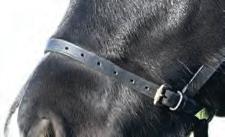
“When fitting the noseband, it is important to fit 2cm below the facial crest as we do not want it up against the bony areas or over the facial nerves that run under the facial crest.
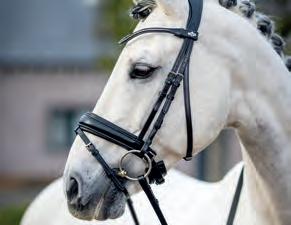
“We must be aware of the width of noseband that would suit the conformation as some horses do not have a lot of space between the top of the lips to the facial crest: these horses need a narrower noseband so as not to allow interference from the bits. Padding on the noseband is also important for the comfort especially on the bony areas across the nasal bones and the lower mandible.”
Ideally any buckles need to be kept away from bony areas; in line with the upper eye level on the fleshy cheek area is preferable, Diana suggests.
“When fitting the browband we need to
A BIT ON BITS
Diana Fisher offers guidance on choosing curb and bridoon bits:
Consider mouth conformation:
• Does the horse have a short or long mouth?
• Are the bars of the mouth wide and fleshy or thin and razor-like?
• Does the horse have a fleshy tongue, a thin tongue or maybe a long tongue? Does the horse have a high or low palate?
The same principles apply for a snaffle bridle.
The bridoon is fitted the same as a snaffle, generally 1-2 crinkles at the top of the lips, no more than two, the curb bit sits slightly below the bradoon.
The curb chain should sit in the chin groove and should only come into play when the shanks have a 2-3 inch movement.
Curb chains can be used as a chain or with a rubber, leather, sheepskin, neoprene cover or combination of these materials. Some horses benefit from having a cover on the curb chain and some horses are just as happy without.
Research with elite riders found little difference in pressures exerted by double or snaffle bridles
PICTURED
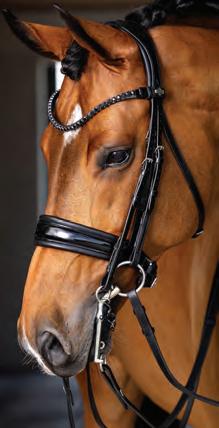
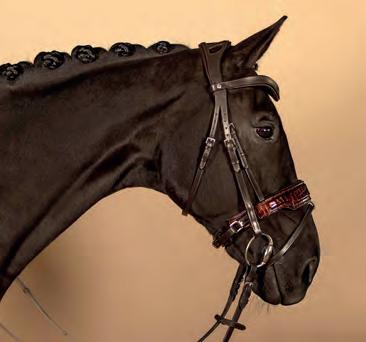
Above: Using a cavesson noseband before introducing the double helps the horse get used to its feel.
IMAGE: LEMIEUX
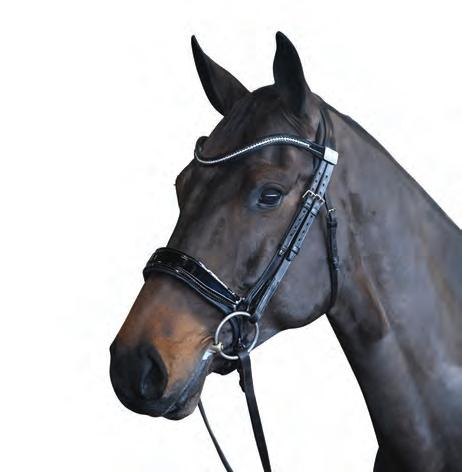
Right: Consider the fit of the bridle in relationship to the horse’s head shape.
IMAGE: FAIRFAX
take into consideration how prominent the bony areas around the TMJ are as we may need to consider what shape of browband would suit, maybe a straight or maybe a drop shaped browband.
When fitting the bits, Diana recommends using a professional bit fitter. (more tips in the box below).
between the lip and the noseband: some horses do not have a lot of room here and these horses can be difficult to fit to a double bridle.”
There are many reasons why some horses take to a double bridle and some not so well, suggests Di.
“We need to take into consideration the length of the head, how much room
“Head conformation can affect how a horse takes to a double bridle.
A longer nose and longer lips help when we must fit two bits and a curb chain – there is a lot more room and the horse has more space for the tongue.
“The short head that does not have the space from the lip to the facial crest generally has a short mouth and not a lot of room for two bits, the curb groove is also usually smaller and close to the end of the lips.
Some horses are just more comfortable in a snaffle.
“There are so many variables as to why some horses prefer a snaffle to a double –it could be the conformation of the head, mouth, asymmetries around the head or the mouth, or correct training.”
“In my opinion the double bridle is not the problem, it’s getting the fit correct and using mouthpieces that suit the conformation of the horse.
“Essentials are the correct shaped headpiece and noseband, not a ‘nearly fit’ but a true fit, making sure that the horse is at a suitable place in it’s training to be able to cope with the curb and that the rider can ride at the required level,” she says.
HORSES
ARE INDIVIDUALS
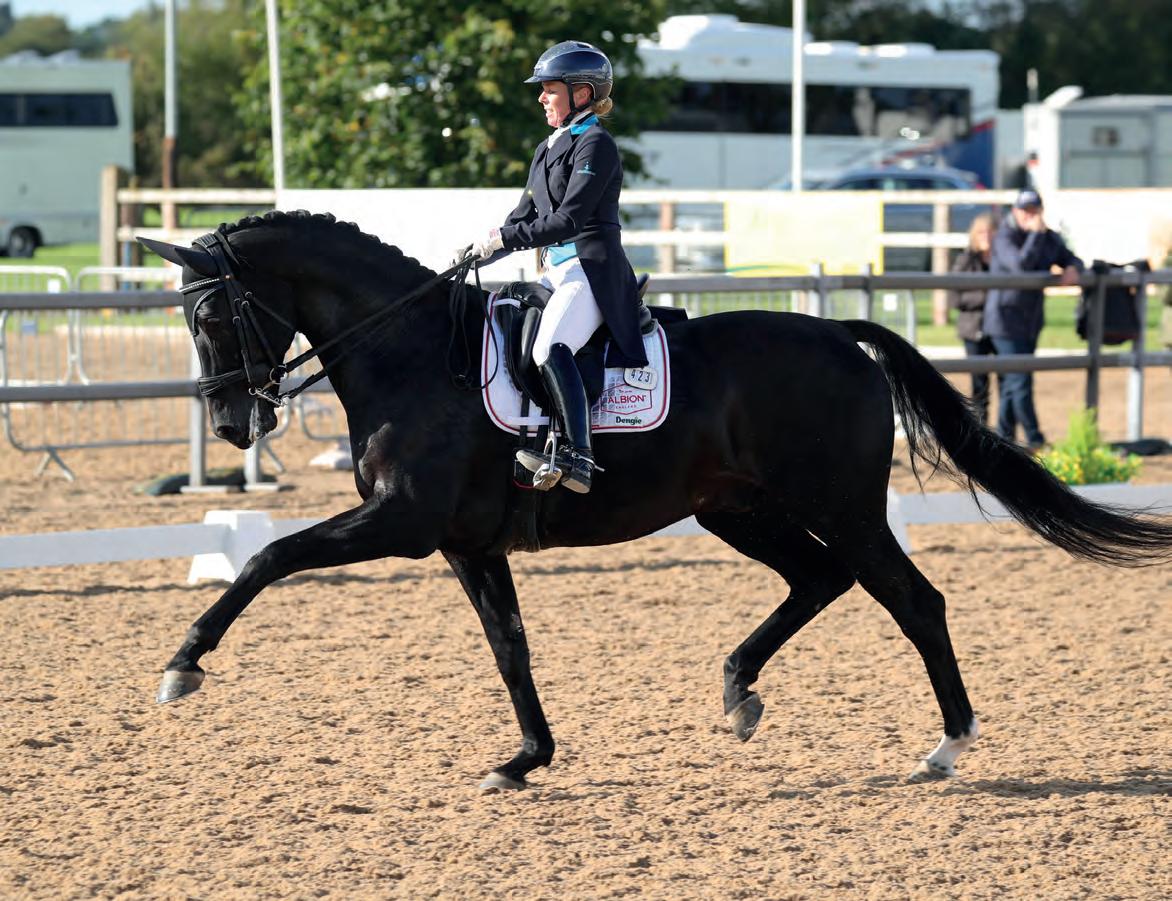
Laura Tomlinson caused a stir when she rode Soegaards Bon Royal to third place in the Le Mieux Grand Prix Championships at the 2024 Nationals in a snaffle, but she comments that it was purely a matter of a particular horse going well in that bridle.
“Some horses are just more comfortable in a snaffle, so that’s the right choice for them. I tend to ride for what the horse’s long-term aims are, however, so I’ll ride in a double at 3* if the aim is 4*, where it is still compulsory.”
Laura says that she will sometimes choose a snaffle if a horse has lost confidence, with the aim of returning to the double if 4* is being targeted.
“It’s down to the individual horse’s conformation; some will go better in a snaffle because of the shape of their mouth or they have a large tongue or small mouth that makes it difficult to have two bits in.”
She comments that she has not experienced any negatives from judges for riding in a snaffle, but suggests that they (judges) see it as less of an issue than the public.
“The horse should go the same anyway, so I take the same approach to training – they should be as soft and light in a snaffle as they are in a double and
PICTURED
Above:x Laura Tomlinson competes horses up to Grand Prix in a snaffle, but says it depends on which bridle the horse goes best in.
Below: A headpiece that has a cut out behind the ears with soft padding is preferred for comfort.
IMAGE: FAIRFAX
they should find collection just as easy in a snaffle.
“If they need more or different preparation, that suggests that you are using the double as a stronger tool. It’s true however, that you can sometimes give a quicker release in a double, with a very forward or strong horse for example.”
Laura suggests that many riders use a snaffle at home even if competing in a double.
When it comes to the choice of bits, she aims to keep it simple, using the same type of bit for the bridoon as for the snaffle.
THE TRAINERS’ VIEW
“I will experiment with short shanks on the curb, for example with Full Moon, who can get a bit light, to help keep him forward into the double.”
She points out that when starting to train in a double, she will swap the noseband on her snaffle to a cavesson, to give a similar feel to the double.
“I’ll start a horse in a double in the six- to seven-year-old, initially just for hacks and low-pressure situations, and I’ll continue by riding mainly in a snaffle. It’s likely that the horse will stay in a snaffle for competitions until Inter II.”
Harry Payne, chairman of the BD training committee, maintains that as the horse progresses through the levels, he should be able to fulfil their requirements in a snaffle as well as he does in a double.
“Some horses accept and go well in a double, others do not, so it is entirely correct to offer the rider the choice.”
He comments that while historically the skill of riding in a double bridle was taught as general horsemanship rather than specific to dressage, rider training is now more competition-focused.
“It’s important to get the basics right – work with eyes on the ground such as your trainer to ensure that you are using the double bridle correctly. And if you hit a training issue, it’s a good idea to go back to the snaffle to fill in the gaps.”
Harry points out that there is a lot of expert advice available on bridle and bit fitting which riders can tap into to get the best possible solution for their individual horse.
He adds that BD’s horsecare training not only helps to deliver a sound knowledge base to members, it helps them to influence other riders in their circle on the benefits of using the correct tack and equipment in a way that is appropriate to their and the horse’s level of training.
SADDLES AND BRIDLES
WINDEREN GEL BITS SYSTEM lets you tailor the same bit to each schooling session with quick-change cheek pieces. The gel mouthpieces promote relaxation and suppleness, encouraging even sensitive horses to seek a quiet, elastic contact and chew confidently. Designed for dressage riders who want soft, precise connection. Available in Slim (0.55”) and Comfort (0.7”), the system helps you maintain clear, consistent communication as your horse’s way of going and muscle development progress.
RRP: from £100 | winderen.com
THE EDINBURGH BRIDLE is a premium anatomical bridle handcrafted from the finest eco-friendly Italian leather. Designed with a softly padded, pressurerelieving headpiece and is available with a matte, lacquered or glitter noseband. It offers exceptional comfort and fit. FEI and USEF approved and used by FEI riders.
KUDOS CLASSIC DRESSAGE BRIDLE from LeMieux is a classic example with a contemporary twist and is just made for the arena. For additional comfort, the crank pad has excellent cushioning. The LeMieux bridles are made from beautifully soft European leather and feature an anatomically-shaped headpiece with soft padding cutaway around the ears and poll to aid in the distribution of pressure, maximising comfort.
RRP: £189.95 | lemieux.com
PRESTIGE 3E158 DRESSAGE BRIDLE The triple-raised 3E158 dressage bridle is crafted from fine European leather with an anatomically-shaped, softly padded headpiece to reduce pressure on the horse’s poll. It includes two elegant browbands: one set with Swarovski stones, the other in patent leather, and a patent leather noseband with white padding and Swedish flash closure. Matching reins are included. A refined choice for comfort and classic dressage style.
RRP: £418 | prestigeitalia.com
EQUIPE BR81 ‘ no stress’ anatomic bridle follows the contours of the horse’s head and features soft, comfortable padding on the main pressure points, including the noseband and the crownpiece. The ergonomic headpiece is light and flexible, reducing pressure on the cervical area. Brown or black, cob and full sizes.
RRP: £310 | zebraproducts. co.uk/stockists
BR82 BY EQUIPE is an elegant dressage double bridle with reins, that features an ergonomic wide noseband to ensure an even distribution of pressure, offering comfort and freedom of movement even during the most intense work. The crownpiece features shaping to reduce pressure on the cervical area. Brown or black, cob and full sizes.
RRP: £475 | zebraproducts.co.uk/stockists
SWITCH BRIDLE FROM STUBBEN Anatomical cut back headpiece; innovatively padded to release pressure on the neck. Curved softly padded noseband with interchangeable loop, the noseband can be combined or French. Rear anatomical pad on noseband buckles on both sides gives even adjustment for correct placing on lower jaw. This bridle offers a 2-in-1 option: switch from a snaffle bridle to a double bridle easily! Silver-coloured fittings, stitching in matching tone.
RRP: £319 | stuebben.com
BRIDLE AND GIRTH BANK David
ALBION KONTINUUM DRESSAGE SADDLE
The new Kontinuum Monoflap dressage saddle builds on Albion’s beloved K2 and K3, offering a modern evolution in rider balance, close contact, and fit – all while retaining the trusted K2 tree. At the heart of the Kontinuum’s design is a more natural, supportive rider balance. Subtle refinements to the seat profile gently reposition the pelvis, promoting a centralised, aligned leg position and delivering improved comfort without restriction. Riders benefit from greater pelvic freedom, enhanced close contact, and a posture that is supportive and guided yet adaptable – equally suited to developing riders and seasoned competitors.
For the horse, the refined, short back panel provides a wider weight-bearing surface, designed to fit the backs of modern horses for closer, more consistent contact, and refined contouring to suit a wider range of back profiles. With three arch options – V, U, and XU – the Kontinuum range delivers Albion’s most versatile fit yet.
RRP: from £2,770 albionsaddlemakers.co.uk
Dyer Saddles’ bridle and girth banks feature carefully selected products chosen for quality, function and adjustability. They stock bridles with fully interchangeable parts, allowing precise, tailored fitting. By trialling designs at home with expert guidance, riders can confidently invest in tack that supports comfort, performance and long-term horse welfare overall.
RRP: POA | daviddyersaddles.co.uk
SCHOCKEMÖHLE SPORTS
presents the latest dressage bridle collection, the result of a unique partnership with Isabell Werth. As one of the most successful personalities in dressage, Isabell brings in her long-standing experience and extraordinary passion for perfection. Experience the quality and innovative design of the Isabell Werth bridle collection.
RRP: from £329.95 schockemoehle-sports.com
FAIRFAX BRIDLES are renowned for being the highest welfare bridles on the market, as they are proven to alleviate pressure in the six key zones. This new style of noseband (also fits double bridles) is tapered at the sides to give additional clearance and comfort between the noseband and the bit.
RRP: £500 | fairfaxsaddles.com
SANDRO BLISS BRIDLE gives an exotic twist to the classic cavesson. The wide ‘mock croc’ skin noseband has a gentle taper to relieve pressure in sensitive areas. The noseband is 2.5 wide in the centre and the pad and solid leather tapers down at the sides. The Sandro bridle is completed with the Bliss of London anatomical headpiece, which is gently curved around the ears, allowing it to nestle into the perfect position and is available to upgrade. Bliss bridles are made from highquality English leather with stainless steel buckles and fittings. Available in black croc, cocoa croc, or tortoiseshell patent croc in custom sizing.
RRP: from £442 | bliss-of-london.com
• Routine breeding services
Fresh, chilled or frozen semen
• Ovum pick-up
• Epididymal semen harvesting
Harvest oocytes from your mare to enable in vitro fertilisation
Flush, freeze and store semen from the testes at castration
• ICSI embryo thawing & transfer
Excellent pregnancy rates with these valuable embryos
• Embryo freezing
Allows the embryo to be stored indefinitely and transferred at a time that is convenient for both the recipient mare and the owner
• Embryo transfer including recipient mare herd
• Stallion collection and processing to ship or freeze
Ride with clarity
The BD Presents... Regional Roadshow offered members across the country with the chance to enjoy some top tips from four presenters, travelling outside their region to participate in BD’s annual flagship training event. Camille Peters and Emma Penny report on the headlines and top take-aways.
BD PRESENTS... SOUTH
Hurstbourne Equestrian, Hampshire
Michael Eilberg & Dan Greenwood
PROMOTING SOFTNESS
Working with the first combinations of the day at young horse level, Michael introduced the importance of softness and stretch. “The stretch is an indicator of how well the horse has worked, if they have worked well from behind to the contact. They will welcome the stretch.” He demonstrated the movement of the ‘sausage muscle’ (Trapezius), saying, “When the neck is soft this muscle will pop out, this then allows flexibility in the shoulder. You have to build strength from the base of the neck; if you keep promoting stretching, they build strength and softness in the shape.”
The same concept applies to work at the higher levels. “Roundness must
translate to length, not create shortness. For advanced horses, the ability to work in collection with a high tempo and a long stretchy neck is key to achieving high quality work and good collection.” Michael demonstrated stretching from passage training with Isobel Lickley and Katniss, “it’s a clear indicator of how good the horse is in your hand. If a stretch is on the tip of its tongue, your collected work will be on the contact.”
STRAIGHTNESS ON CIRCLES
Straightness affects the whole body, not just the neck. “I would rather forgive falling out than falling in,” Dan Greenwood said when working with Liz Killick and Vorstin Vona. “Think of riding your 20m circle on a railway line. Keep your front legs and hindlegs on the rail, be sure to use your outside rein and don’t de-rail through the outside shoulder. If you ride with your hips and shoulders on the same rail, you can keep your horse on the same tracks.”
PICTURED
PICTURED
WEIGHT DISTRIBUTION
To encourage longevity, Michael discussed recognising conformation and riding to balance the weight across the body. With Max Campbell’s fiveyear-old Posche VS (Koning x Vivaldi) as the subject, Michael said, “with a horse built very on the hindlegs, to remove the pressure you want to tip the balance more over the forelimbs. If you distribute the weight evenly across all parts of the horse, it’ll stop either the hindlegs or the front legs from doing too much.”
Bella Balian shows a stetch with the horse seeking the contact forward.
Lewis Carrier and Rubi in the zig zag.
PICTURED
Below: Liz Killick and Vorstin Vona work on a circle.
Rider position is key to getting this right, so with Max, Michael encouraged him to ride forward in the body with a light seat. The influence of rider position was also raised at the other end of the training spectrum, where Michael worked with Lewis Carrier to show how his body could help Rubi in the advanced zig-zag work: “Rider balance in the zig-zag is important, you have to watch your shoulders and hips, too much movement can create short changes. Stay square and upright.”
PICTURED
Max Campbell demonstrates a light seat on Posche VS.
Achieve it, check it, leave it
LATERAL PROGRESSION
“Lateral work is all about athleticism,” said Michael. “Horses become more athletic through gaining lateral strength.” Working with Hannah Biggs and St Giles Fortune Cookie, Michael demonstrated the ethos of the horse becoming ‘taller’ through sideways work. “Everything laterally starts with forward first, then sideways comes second. You want to turn a straight horse into the angle, then add and control the flexion.” Michael tested this direction of forehand theory by asking Hannah to ride a straight diagonal line, then riding travers before riding straight again.
POSITIVE ANTICIPATION
A theme throughout the day. was positive anticipation. When working on flying changes and half pass sequences with Tasha Wakeley, Dan identified the usefulness of positive anticipation in progressing from Advanced Medium to Small Tour. “You want control, balance and canter quality,” Dan said. “The progression from Advanced Medium to Inter I is all in the canter. Be sure to use both reins to prepare, and try to break
PICTURED
Hannah Biggs and St Giles Fortune Cookie use lateral work to develop athleticism.
down the changes of direction to create positive anticipation.”
PRAISE
In aiming to train horses with kindness and harmony, praise is at the core of the education process. Michael said, “We want to make them feel proud of what they’re capable of. Don’t be afraid to ask and praise at the same time.”
In the session on progressing to Grand Prix with Isobel Lickley and Katniss, Michael demonstrated the value of praise in working with the talented horse to introduce half steps.
PICTURED
Inset: Izzy Lickley demonstrating the importance of praise.
Left: Tasha Wakeley works on flying changes.
PEARLS OF WISDOM
• “Achieve it, check it, leave it.” Michael
“When you’re doing challenging things, they have to trust you enough to follow you there. When they react you must let go. When we’re teaching horses to understand something specific, we do it once to achieve, once to check and then stop and praise.”
• “Ride with clarity, not force or power.” Michael
• “Make it as easy as possible to show the horse what we want.” Dan
• “ When mistakes are made in changes – you don’t want to confuse the horse so continue the line.” Dan
BD PRESENTS... NORTH Myerscough
College, Lancashire
Anna Ross & Louise Bell
IN FRONT OF THE LEG
Getting a horse in front of the leg can be challenging at times, but Anna Ross had a few suggestions to help. “A couple of laps in ‘Pony Club canter’, with the rider up and out of the saddle can help make things fun. “As riders, creating a bit of positive tension within ourselves can also help, so imagine a fire alarm going off when you want to ride a transition.” She added that using leg aids fast and out of time with what you are doing can also help. “Another option is to ride with another horse in the school.”
RELAXATION
Demo rider Poppy Burgess was keen to work on relaxation with her GFS Dizzy Rascal in their session with Anna.
“This horse is naturally interested in what’s going on. Relaxation is a good trend in the sport, but it’s a big ask with power,” Anna noted.
Where a horse is very tense, she recommends walking in hand briefly to warm up.
“If it’s safe, have a canter to start –when the horse canters they move their backs which leads to relaxation, and then ride in large curve shapes. Then come back to trot, relax the hand, and then go back up to canter as the transitions will also help with relaxation. I like to hear the horse breathing, to blow its nose or have a snort to show it’s relaxing.”
Following the transitions with counter canter in 5m loop will help the horse stretch through its body.
I’d always recommend some jumping or polework... for longevity.
She also recommended starting on the left rein in a warmup. “Starting on the right means you have to give way, so canter on the left rein to start.”
Once the canter work is done and the horse is relaxed, progress to walk and trot work, she added.
COPING WITH AN OVER-TRIER
“Talented, hot horses who are working at elementary level can often think they are doing Grand Prix (GP) in their heads,” said Louise Bell when working with Matt Burnett and his chestnut Za Za Zoom.
“When they are eager to please, it is so easy to go off track, so find exercises that will help them relax and let you in – with a horse like this it has to be a partnership.”
Her exercises included riding half 10m circles to the centre line, then shoulder in, then change the rein with a half circle back to the track. She also suggested changing the rein in medium trot to X, then leg yielding across to the track.
PICTURED
Louise works with Matt Burnett and Za Za Zoom.
PICTURED
Louise Bell discussed the benefits of a horse doing more than one discipline, with Sarah Kingwells and Odi as a great example.
The
answer is always, always in the basics.
DUAL PURPOSE BENEFITS
“It’s great to have a horse doing show jumping and dressage with two different riders. It’s good for the horse’s body and builds up the ‘pushing’ muscles. I’d always recommend some jumping or polework – it is great for longevity, keeps horses (and us) fresh in the mind and it’s good for their all-round education.” says Louise Bell, talking about demo horse Odi, who competes successfully at BD and BS with Sarah Kingswells (dressage) and Jeanette Powell (show jumping).
MOVING UP THE LEVELS
A join-the-dots approach to higher level movements can help ease any strain on the horse’s body when it is being asked to step up levels. Anna said: “The move from small to big tour is a big jump. It’s when the horse has to do most repetition in its work. Cross training is important so you’re not doing the same thing every time.”
When training, she advised breaking movements into much smaller parts, for instance, preparing for a pirouette but not performing one, and building up or ‘joining the dots’ over time. She said this approach also worked well for competition warm-ups. “Don’t put your horse in an overwhelm situation – always give them something they can handle physically and mentally.
“Just because we have a horse that can, doesn’t mean we should. Look at the horse and ask whether it’s mentally and physically capable of the questions you’re going to ask at GP. I used to think it was clever to get a horse to GP, now I think it’s smart to know when to stop.”
COACHING TIPS FROM ANNA
“I learned a long time ago not to jump in too quickly when I am assessing a horse and rider, otherwise you sometimes have to unsay the things you’ve said at the beginning!
“I also ask riders what they do well – it’s
PICTURED
Above left: Beth Bainbridge demonstrates the higher level work.
Above right: “If you feel you have to kick for a [flying] change, don’t –get your horse more in front of the leg to start with”, says Anna.
Below left: “Where a horse is tense through the back in trot, changing diagonal frequently until there is no reaction can help”, says Anna.
PEARLS OF WISDOM
• “The answers is always, always in the basics. If you gloss over them, they will catch up with you later on. If you do something by luck or hope, it’s difficult to correct – be meticulous about how you do the basics.” - Anna
• “If you’re training and have a non-horsey person with you, a good telltale sign for them to look for if you’re asking for collection is whether they can see the front end coming up. If they can’t, you’re probably just shortening the stride,” - Anna
• When you are leg yielding off the long side, come round the corner and change your diagonal, leg yield in, go straight, change your diagonal back and leg yield out again. “It makes it much easier.”
– Louise
often a better question than what they struggle with, as that can end up being a long list!
“As a coach, we should build horse and rider strengths. It’s sometimes easier to add marks to strengths rather than something that’s poor.”
Sport supporting the planet
A year on from the launch of BD’s Sustainability Strategy, Jane Carley looks at progress made and at how others in the sport are responding to the challenge.
AAt the end of 2024, British Dressage announced that it had joined together with British Showjumping to launch a Sustainability Strategy, which would ensure that its own operations set the standard in responsible, sustainable activities.
BD shares a headquarters building at Meriden, Warwickshire with British Showjumping so both organisations can join forces to make improvements in their offices, while co-operating closely on procedures at their events and in training activities.
Helping members with their own sustainability journey is an important part of the strategy, by providing clear, unified guidance on sustainable actions.
“Progress has been made,” comments Charlotte Osborne, Head of Development.
“Some of which members will have seen in action already, such as changes in waste disposal and recycling procedures and towards eliminating single use plastics at national events.”
Live scoring systems have also been rolled out more widely, allowing scores to be input digitally and to automate the processing of results.
“There was an internal review of publications including the use of digital innovation to communicate with members and reduce the use of paper, printing and postage resources,” she adds.
An example of this is the launch of the BD Magazine digital specials in 2025. Training for coaches and officials is available extensively through e-learning, while inperson training is offered more locally.
BD’s member education programmes have also included a sustainability focus from providing educators such
PICTURED
Above: The equestrian industry is gearing up to protect the green environment it relies upon.
Below: Swallowfield Equestrian’s Jo Swain fills buckets from water harvested into large tanks.
Member education programmes include a sustainability focus
as coaches and judges with the tools to raise awareness of sustainability to a partnership with ADAS Equine.
“We have been able to offer an introduction to land management training with ADAS which is cost effective for businesses and horse owners,” Charlotte explains, “alongside other key information such as on green energy tariffs, recycling protocols for business waste and carbon literacy to help members get started.”
Members also have access to podcasts and webinars by sustainability specialist White Griffin.
PICTURED
There is still plenty to do, Charlotte confirms.
“We are still in the process of carrying out an internal carbon footprint review which involves activities such as studying financial information to look at mileage travelled by staff and officials etc. We hope to update on this shortly.”
THE LIVERY YARD
Swallowfield Equestrian is a family-run business with a 30-box livery yard and competition venue in Warwickshire. It is owned and run by BD coach Jo Swain who points out that the increasingly unpredictable climate has provided a wake-up call for equestrian businesses this year. She adds that being more sustainable is also good for business.
“The dry summer has put the focus on water, and we’ve had to water arenas more, so I wanted to find a way to cut back on water use in the yard,” she explains. “We installed a tank to collect rainwater for watering the indoor school over 30 years ago, but we now collect rainwater from building roofs into large
tanks to top up stable waters and soak haynets.”
Use of hosepipes has been reduced; the hot wash box is taken out of use in summer with livery owners encouraged to bucket wash down their horses after exercise.
“Previously we were taking water out to the fields in containers via a tractor and trailer; by adding a tank to collect rainwater in the field it can be used to fill the troughs directly, eliminating time and costs to transport it.”
Muck removal is kept local with a neighbouring farmer removing the heap and spreading it on his fields; a certain amount of discipline is required however –leftover hay has to be kept out of the muckheap.
Jo comments that she has been using Veolia, a commercial waste contractor, for 30 years. “Plastic, card and feed packaging goes into a single large bin for recycling, but we have to commit to keeping other items such as food waste out of it.
“Arden Woodshavings also collect their pallets and re-use them.”
Jo suggests that one of the biggest challenges is to encourage horse owners to prioritise buying quality feed and hay over other purchases.
“We also have to stop and think to avoid waste from actions such as leaving taps running and lights on.”
A LEADING VENUE
Hartpury University is a specialist university and college which sits within a large rural estate and is internationally recognised for its work in equine, animal, agriculture and sport education. Hartpury has an extensive equestrian centre, livestock units, sports academies and farmland.
International events including dressage and eventing take place at Hartpury each year alongside a full calendar of affiliated competitions, and the venue also hosts conferences including BD’s two-day Principles of Dressage.
Sustainability Director Jackie Jobes explains: “Hartpury has launched a five-year Sustainability Strategy, with sustainability embedded across the whole institution rather than treated as separate departmental projects. Department-level plans will follow.”
The strategy includes embedding sustainability across all educational courses, ensuring future equine professionals understand environmental impact.
On campus there is a focus on reducing waste, improving recycling, energy efficiency, and developing closedloop systems.
It makes a commitment to net zero, carbon reduction, and biodiversity protection and focuses on climate resilience, preparing the estate for climate impacts, especially water management and land use.
Senior Lecturer Rachel Collins explains: “Hartpury co-developed the Equine Carbon Calculator with White Griffin, Sparsholt College and University Centre
and Derby College Group and the Farm Carbon Toolkit, which helps businesses understand how their activities interact with the environment in terms of carbon being stored and emitted.”
Students have learned how to use the tool on yards, with post-grad students collecting real-world data and producing feedback reports, so they can lead on this.
“Now we are looking to get the discussion going so that the industry can start thinking about emissions, and around that we’re looking at how we can support people with how to use that information, “ she says.
A range of practical sustainability actions are in place at Hartpury including paperless events using live digital scoring. Already in use at major competitions, it will be rolled out to weekend shows in 2026, explains Equine Director Philip Cheetham.
“The focus with event catering is shifting toward reusable systems rather than compostables. We are also working with a new catering provider on locally sourced, more sustainable food for events.”
“Our bedding supplier is exploring reduced plastic packaging, while manure management is another challenge with up to 200 horses on site. It currently goes to a neighbouring farm where it is rotted down for use on the land, where soil tests are carried out to ensure it meets nutrient requirements.”
Jackie comments that other avenues for muck handling are being considered including heat recovery from manure and use with ground-source heat systems.
Energy is a major topic with extension of the site’s solar power infrastructure planned, including on the large roof spaces offered by the buildings and on car park canopies.
“We’re working on ‘behaviour change’ campaigns to stress the importance of avoiding waste, although that can be difficult with a student cohort that rotates on an annual basis,” says Jackie. “There has been full LED lighting conversion across arenas, stables, and equine unit teaching spaces, with PIR to switch off lights.”
PICTURED
Above top: Conserving water –including minimising the use of hosepipes to wash horses down – is a simple step that all equestrians can take.
Above: Digital scoring was pioneered at major events such as the LeMieux National Championships and is now being extensively rolled out.
Water management is a growing priority due to climate change and event demands. While a lake with an extraction licence provides water for arena irrigation, some buildings already use greywater harvesting, she explains.
“We also have plans to expand rainwater harvesting and water storage via tanks and new ponds.”
“We see the potential for Hartpury to host industry forums on managing horse manure and testing new waste and energy technologies, and for positioning the estate as a testbed for sustainable equine innovation.”
RED GORILLA
Sustainable development and environmental responsibility sit at the heart of Red Gorilla’s long-term business strategy, says Equine Sales Manager, Katherine Tuckley.
A major step was the discontinuation of the Tyre Rubber range in 2025, she explains.
“Tyre Rubber products proved environmentally challenging due
HORSEHAGE AND MOLLICHAFF
Production of forage and feed products is farmer-led and thus the approach to sustainability is based on common-sense and costeffectiveness, suggests Mark Watson, director of Horsehage and Mollichaff regional producer Fox Feeds.
“There are some challenges associated with producing dry forages,” he says. “In the British climate we are reliant on crop drying technology which uses energy. But if we were to import forages from warmer countries, then the reduced need for drying is countered by water required to grow the crops, and the transport from those countries.”
He comments that some of the crops used have strong sustainability credentials.
“Alfalfa, for example, is a legume which fixes its own nitrogen so doesn’t need any nitrogen fertiliser, and its flowers are highly attractive to pollinators. It’s also a ‘four-year crop’ so soil disturbance is minimised.”
Mark explains that the company aims to grow most of the ingredients for fibre feeds in the UK.
“This year we have sourced mint from the UK for the first time.”
An update to drying machinery has also helped with this: “We have invested in a new dryer which can run on renewable fuels and is gentler on the crops, so we can now dry mint in-house.”
Technology is also deployed in the field – from soil testing and variable rate fertiliser application to ensure that nutrients are applied where they are needed, reducing pollution risks, to guidance systems on tractors which cut fuel usage and increase efficiency by avoiding machinery overlapping. Packaging is another challenge, Mark explains.
“Because HorseHage is a packed product which must be 100% airtight, it’s difficult to use plastic with recycled content, although it is all recyclable. Importantly, we pack into small bales in field, rather than making big bales and having to reprocess them, so we’re not wasting plastic wrap or energy.”
In addition to the wood chip-fuelled dryer, investment in renewables has also seen solar panels installed at the mill this year.
“And because we are farmers, we’ve been able to use environmental schemes on the farm such as legume fallows and field margins to increase biodiversity in the fields.”
NAF
In 2024, NAF established its five-year Corporate Strategy, a fundamental pillar of which was a focus on sustainability and broader corporate responsibility, explains managing director Richard Moore.
“The initial programme of auditing what the business currently does, calculating its carbon footprint and creating a carbon reductions plan has led to a roadmap of actions. In the medium term, the roadmap prioritises the challenging task of finding alternatives or adaptations to our plastic packaging, as well as working with our supply chain to support them in adopting sustainable practices that go into our raw materials.
Richard stresses that for the equine nutrition sector in particular, it is important that any changes made to become more sustainable (for example in packaging or the ingredients sourced), never compromise on the health of the horses that NAF designs the products for.
He explains that the company is actively seeking opportunities to move to renewable energy sources for the factories.
“We have also implemented a number of measures to reduce our footprint (for example switch off procedures, installing LED lights and efficient technology throughout). But we know that a significant proportion of our emissions sit in our supply chain, and whilst we cannot directly impact that change, we can certainly influence and support reductions, which we are committed to doing over the next five years.”
“The team has already created a high standard of recycling on site, as well as significantly reducing our printing and removing all extraneous items from our purchasing. We have decommissioned air conditioning units and have switched our lighting and machinery to energy efficient alternatives.
He adds: “Furthermore, when we update our formulations, our team actively considers the ethical and environmental impacts of the ingredients we use. One example is that all our soya and palm oil is responsibly sourced, supporting zero deforestation sourcing schemes.”
to manufacturing emissions and the material’s non-recyclable nature. To replace them, Red Gorilla has introduced the Rubber Type and expanded Gorilla Plas range which is made from a nonporous recycled polymer. Both ranges are fully recyclable at the end of their working life.”
This shift of both Rubber Type and Gorilla Plas to UK-based production has significantly reduced transport miles
and the company’s carbon footprint, without compromising durability, strength or quality of the Red Gorilla range, says Katherine.
Red Gorilla has increased the use of recyclable materials used in both manufacturing and packaging.
The company has also improved ‘circularity’, with products that are both made using recycled material (where possible) and recyclable at end of life.
“Our next phase will focus on increasing
recycled content even further and exploring additional recycling initiatives,” says Katherine.
“We’re also targeting ongoing welfare-driven product innovation to support safer, healthier horses and more efficient yard environments.”
WG Stud – Producers of Elite Progeny
Five outstanding stallions with fantastic bloodlines including Lord Leatherdale, Gribaldi, Carthago Z, Voltaire, Nimmedor, Tygo, Broadstone Chicago and Darco. All five stallions have impeccable temperaments, are WFFS negative and are available seven days a week. Stud feedeposit of £200 then £700 (£500 for WGS Chicago’s Darco and WGS Maverick) invoiced once mare scanned in foal. First collection fee included in deposit, thereafter £90. Postage charged at cost. All prices include VAT.
Viewing welcomed. Contact Hazel on 07779217215, hazel.wgs@zen.co.uk, www.wgstud.co.uk, or facebook WG Stud (home of Silvester).
21 — 22 March 2026 | Hartpury,
Join Peter Storr, Andrew Gardner and Becky Moody for two top days of training and insight for judges, riders, coaches and fans. Secure your tickets online, with discounts for BD judges!
Carthago Chicago
Silvester
Lord Rico
WGS Chicago’s Darco
WGS Maverick
Gloucs
BD ACTION
SELECTION POLICIES
For current or aspiring international riders, the selection policies for senior, U25, Para and youth CDI, CPEDI, CDIO and Youth and U25 European Championships are available to view via the BD website. The policies are also available for the Senior and Para World Equestrian Games, and FEI WBSFH World Breeding Championships.
BD LEARNING HUB
Start the New Year with some schooling! The BD Learning Hub offers a wide range of courses from rider wellness and equine
health, to coach CPD and farriery. To access the BD Learning Hub, members simply need to visit the landing page, available via the BD website and follow the instructions to create an account. Once the account is confirmed as ‘active’, you can begin working through the courses available, benefits include a 20% discount on training modules. Coach Package and Package+ holders get free access.
JUDGE RETIREMENTS
BD South & West member John Fullick (List 5) has retired from the Judges Panel. British Dressage would like to John for
Keep up-to-date with the latest notices, news and views from British Dressage at britishdressage.co.uk
his contribution over the years and we wish him all the best for the future.
ASSOCIATED CHAMPIONSHIPS CORRECTION
Our congratulations go to Amanda Bettle and Southwood Florence, owned by Jemma Regnard, winning the Prelim Gold title at the Draught Horse Associated Championships. Their win was incorrectly listed in the previous issue of the BD Magazine.
PICTURED Amanda Bettle and Southwood Florence.
PHOTO: KB PHOTOGRAPHY
Whats on
Our new guide to competitions and BD events from 11 February to 15 April 2026. Please refer to the BD Schedules webpage for the most up-to-date schedule information.
Venue County SAT 14 - WED 18 FEB
Myerscough College Winter Regional Lancashire
Elms Farm Equestrian Centre (P-AM) Lincolnshire
WED 18 - SUN 22 FEB
Alnwick Ford Equestrian Winter Regional Northumberland
THU 19 FEB
Solihull Equestrian Centre (P-GP/PYO FEI)+FS West Midlands
West Wilts Equestrian Centre (P-GP/PYO FEI)+FS Wiltshire
FRI 20 FEB
Allens Hill Competition & Livery Centre (P-AM)+PE Worcestershire
Brook Farm Training Centre (P-GP/PYO FEI) Essex Foxes (I-AM) Cheshire
Lime Kiln Farm (P-GP/PYO FEI)+FS Norfolk
Highfield at Howe (P-AM) Fife
Onley Grounds Equestrian Centre (P-AM)+FS Warwickshire
FRI 20 - SUN 22 FEB
WED 11 FEB
Speedgate Events (P-PSG)+PE Kent
Topthorn Arena (P-M) Suffolk
West Park Equestrian Services (P-AM)+FS Durham THU 12 FEB
The first major Para dressage fixture of the year takes place at Arena UK, Lincolnshire. The show is the first major stepping stone for those aiming for championship selection, as well as being a great opportunity for newcomers to make their mark on the scene. Come along to enjoy the contest for the titles across the sections and grades, and support our para dressage stars. View the complete schedule via BD Online. EQUISSAGE PULSE PARA
Alnwick Ford Equestrian (P-GP/PYO FEI)+FS Northumberland
Kelsall Hill Equestrian Centre (I-AM) Cheshire
THU 5 MAR
Field House Equestrian Centre (P-PSG)+FS Staffordshire
Solihull Equestrian Centre (P-GP/PYO FEI)+FS West Midlands
Dressage at Belmoredean (P-GP) West Sussex
West Wilts Equestrian Centre (P-GP/PYO FEI) Wiltshire
Chard Equestrian Ltd (P-GP/PYO FEI)+FS Somerset
FRI 6 MAR
Allens Hill Competition & Livery Centre (P-AM) Worcestershire
Crow Wood Equestrian (P-PSG) Lancashire
Onley Grounds Equestrian Centre (P-AM)+FS Warwickshire
SAT 7 MAR
Allens Hill Competition & Livery Centre (P-GP/ PYO FEI) Worcestershire
Bishop Burton College (I-GP/PYO FEI)+FS East Riding of Yorkshire
Burrows Court Farm (P-GP/PYO FEI) Gloucestershire
The College Of West Anglia (P-AM)+PE Cambridgeshire
Foxes Riding School (I-E) Cheshire
Duchy College (I-PSG)+PE Cornwall
Combined Training Qualifier @ Kelsall Hill Equestrian Centre Cheshire
COMBINED TRAINING
COMBINED TRAINING CHAMPIONSHIP QUALIFICATIONS
Qualification is open for Red Gorilla Combined Training Championships, qualify from the following shows for the finale at Weston Lawns in the West Midlands on 8 to 10 May.
With jumping from 60cm and dressage from Introductory level, it’s a great way to find some winter variety.
11 January Radfords Equestrian Centre, Powys
24 January Brook Farm Training Centre, Essex 14 February Solihull Equestrian Centre, West Midlands
28 February Allens Hill Competition Centre, Worcestershire
28 February Golden Cross Equestrian Centre, East Sussex
1 March Moreton Equestrian Centre, Dorset
7 March Kelsall Hill Equestrian, Cheshire
8 March Ponderosa Equestrian Centre, Newport
14 March Bury Farm Equestrian Village, Buckinghamshire
15 March Willow Banks Equestrian Centre, Lincolnshire
15 March Scottish National Equestrian Centre, West Lothian
21 March Muirmill Equestrian Centre, East Ayrshire
22 March Lime Kiln Farm, Norfolk
22 March West Wilts Equestrian Centre, Wiltshire
28 March Bogenraith Equestrian, Aberdeenshire
28 March Pickering Grange Equestrian, Leicestershire
Crofton Manor Equestrian Centre (P-PSG) Hampshire Fenning Farm (P-AM) Cambridgeshire
Hunters Equestrian (P-GP/PYO FEI) Gloucestershire
Ladyleys Equestrian (P-AM)+FS Aberdeenshire Merrist Wood College (P-AM) Surrey
Northallerton Equestrian Centre (P-GP/PYO FEI)+FS+PE North Yorkshire
Lime Kiln Farm (P-GP/PYO FEI)+FS Norfolk
Kings Sedgemoor Equestrian Centre (P-GP/ PYO FEI)+FS Somerset
Radfords Equestrian Centre (I-AM)+PE Powys
Combined Training Qualifier @ Ponderosa Equestrian Centre Newport
Golden Cross Equestrian Centre (P-AM) East Sussex
MON 9 MAR
Bury Farm Equestrian Village (P-GP/PYO FEI)+FS Buckinghamshire
TUE 10 MAR
Newbold Verdon Equestrian Centre (P-GP/ PYO FEI) Leicestershire
WED 11 MAR
Speedgate Events (P-INTI)+FS Kent
Aike Grange Stud (I-AM)+FS East Riding of Yorkshire
Quob Stables (P-GP/PYO FEI) Hampshire
Topthorn Arena (P-M) Suffolk
THU 12 MAR
Half Moon Stud (P-PSG) Dorset
NOT ONE TO BE MISSED
21–22 March
FRI 13 MAR
Moreton EC (P-INTI)+FS Dorset
Scottish National Equestrian Centre P-AM FSM only West Lothian
Stourport Riding Centre (E-GP/PYO FEI)+FS Worcestershire FRI 13 - SAT 14 MAR
Weston Lawns Equestrian Centre (P-GP/ PYO FEI) Warwickshire
SAT 14 MAR
Combined Training Qualifier @ Bury Farm Equestrian Village Buckinghamshire
Colraine Equestrian Centre (I-AM) Cornwall
Kingswood Equestrian Centre (P-GP/PYO FEI)+FS Staffordshire
Pachesham Equestrian Centre (P-AM)+FS Surrey
Scottish National Equestrian Centre (I-AM)+PE West Lothian
Sparsholt College (P-GP/PYO FEI)+FS Hampshire
The Grange Equestrian Centre (P-GP/PYO FEI)+FS Devon
Greenlands Arenas (I-AM) Cumbria Dressage at Hascombe (P-GP) East Sussex
Aster Academy Dressage (P-GP/PYO FEI) Kent Greenfields of Avondale (I-E) South Lanarkshire
SAT 14 - SUN 15 MAR
Manor Grange Stud (I-GP/PYO FEI)+FS West Yorkshire Myerscough College (P-GP/PYO FEI)+FS Lancashire
SUN 15 MAR
Bluegate Hall Farm (P-M) Essex
Bold Heath Equestrian Centre (P-GP/PYO FEI) Cheshire
Eland Lodge Equestrian Centre (P-AM) Derbyshire
PRINCIPLES OF DRESSAGE SEMINAR
Saturday 21 –Sunday 22 March
Hartpury University & College, Gloucestershire
An event for all – riders, coaches, judges, stewards and supporters of the sport. Led by Peter Storr, Clive Halsall and Michael Eilberg, it’s set to be a fantastic way to launch the spring season.
Tickets are available via the BD website, the event is open to all members and nonmembers seeking to further their dressage knowledge.
Forest Edge Arena (P-GP/PYO FEI) Norfolk Hartpury University and Hartpury College (N-AM) Gloucestershire
Combined Training Qualifier @ Scottish
National Equestrian Centre West Lothian
Sunnybank Farm (I-M) Caerphilly
Combined Training Qualifier @ Willow Banks Equestrian Centre Lincolnshire
Stourport Riding Centre (P-E)+FS Worcestershire
Mendip Plains Equestrian Centre (P-AM) Somerset
Little Mill Equestrian (I-GP)+FS+PE=PE FSM Carmarthenshire
TUE 17 MAR
Onley Grounds Equestrian Centre (P-GP/ PYO FEI) Warwickshire
Felbridge Showground (P-PSG) West Sussex
WED 18 MAR
Crofton Manor Equestrian Centre (P-GP/PYO FEI) Hampshire
Hunters Equestrian (P-PYO FEI) Gloucestershire
Port Royal Equestrian & Exhibition Centre (P-INTI)+FS East Riding of Yorkshire
THU 19 MAR
Solihull Equestrian Centre (P-GP/PYO FEI)+PE+PE FSM West Midlands
Dressage at Belmoredean (P-GP) West Sussex
Golden Cross Equestrian Centre (P-AM) East Sussex
THU 19 - SAT 21 MAR
Sheepgate Equestrian (P-GP/PYO FEI)+FS Lincolnshire FRI 20 MAR
Allens Hill Competition & Livery Centre (P-AM) Worcestershire
Brook Farm Training Centre (P-AM)+FS Essex
Arley Moss (P-PSG)+FS Cheshire
SAT 21 MAR
Field House Equestrian Centre (P-INTI) Staffordshire
Lower Stocklands Farm (P-AM) Cardiff
South Staffordshire College (P-PSG) Staffordshire
Quob Stables (P-AM) Hampshire
Windmill Farm Equestrian Centre (P-AM) Buckinghamshire
Combined Training Qualifier @ Muirmill Equestrian Centre East Ayrshire
Ballavartyn Equestrian Centre (I-PSG) Isle of Man
Rockrose Equestrian Sports Centre (P-GP/ PYO FEI) East Lothian
Willow Banks Equestrian Centre (P-PYO FEI) Lincolnshire
Breach Barn (P-AM)+FS Kent Pendarves Events Centre (P-M) Cornwall
SAT 21 - SUN 22 MAR
The Cabin Equestrian Riding Club (P-GP/PYO FEI)+FS Aberdeenshire
SUN 22 MAR
Brook Farm Training Centre (P-GP/PYO FEI)+FS Essex
Combined Training Qualifier @ West Wilts Equestrian Centre Wiltshire
Inchcoonans Equestrian (I-E) Perthshire and Kinross
Combined Training Qualifier @ Lime Kiln Farm Norfolk
MON 23 MAR
Bury Farm Equestrian Village (P-GP/PYO FEI)+FS Buckinghamshire
Wellington Riding (M-GP/PYO FEI) Hampshire
Wellington Riding PE Hampshire
TUE 24 MAR
Forest Edge Arena (P-GP/PYO FEI) Norfolk
Ian Stark Equestrian Centre (P-AM)+FS Borders
Caron Roberts Equestrian (P-AM) Wiltshire
Kelsall Hill Equestrian Centre (I-AM)+FS Cheshire
WED 25 MAR
Hunters Equestrian (P-GP/PYO FEI) Gloucestershire Myerscough College (P-E) Lancashire
Northallerton Equestrian Centre (P-GP/ PYO)+FS+PE North Yorkshire
Essendon @Radley Green (P-GP/PYO FEI)+PE Essex
THU 26 MAR
The Grange Equestrian Centre (P-GP/PYO FEI)+FS Devon
Radfords Equestrian Centre (P-AM) Powys Silver Leys Equestrian (P-GP/PYO FEI) Hertfordshire FRI 27 MAR
Eland Lodge Equestrian Centre (P-AM) Derbyshire Crow Wood Equestrian (P-PSG) Lancashire Lake Farm (I-PSG) Isle of Wight Bicton Arena (P-GP/PYO FEI)+FS Devon SAT 28 MAR
Foxes Riding School (I-M) Cheshire Hartpury University and Hartpury College (P-M) Gloucestershire
Moor Farm Equestrian Centre (P-N) Pembrokeshire Moulton College Equestrian Centre (P-AM)+FS Northamptonshire
Sparsholt College (P-GP/PYO FEI)+FS Hampshire Topthorn Arena (P-PYO ADV) Suffolk Onley Grounds Equestrian Centre (P-AM)+FS Warwickshire
British Dressage Young Horse & Young Pony
Qualifier @ Parwood Equestrian Centre Surrey
Amersham Dressage (P-E)+FS Buckinghamshire
Combined Training Qualifier @ Pickering
Grange Equestrian Leicestershire
Combined Training Qualifier @ Bogenraith Equestrian Aberdeenshire
SAT 28 - SUN 29 MAR
Port Royal Equestrian & Exhibition Centre (P-INTI)+FS East Riding of Yorkshire
SUN 29 MAR
Speedgate Events (P-INTI)+FS+PE Kent
Holmside Hall Equestrian (I-AM)+FS Durham
Kingston Maurward College (P-INTI) Dorset
Merrist Wood College (P-GP/PYO FEI)+FS Surrey
Morris Equestrian Centre (P-AM)+FS East Ayrshire
Solihull Equestrian Centre (P-PSG)+FS West Midlands
Combined Training Qualifier @ Alnwick Ford Equestrian Northumberland
Aster Academy Dressage (P-GP/PYO FEI) Kent
TUE 31 MAR
Manor Grange Stud (I-GP/PYO FEI)+FS West Yorkshire
Widmer Equestrian Centre (P-AM) Buckinghamshire
THU 2 APR
Half Moon Stud (P-INTI) Dorset
Field House Equestrian Centre (P-PSG) Staffordshire Dressage at Belmoredean (P-GP) West Sussex
FRI 3 APR
Allens Hill Competition & Livery Centre (P-AM) Worcestershire
Aster Academy Dressage (P-GP/PYO FEI) Kent Pendarves Events Centre (P-M) Cornwall SAT 11 - SUN 12 APR
Scottish National Equestrian Centre (I-AM)+PE West Lothian SUN 12 APR
Fenning Farm (P-AM) Cambridgeshire Lake Farm (I-PSG) Isle of Wight Northallerton Equestrian Centre (P-GP/PYO FEI)+FS+PE North Yorkshire
Sunnybank Farm (I-M) Caerphilly
The Grange Equestrian Centre (P-GP/PYO FEI)+FS Devon
Muirmill Equestrian Centre (I-AM)+FS East Ayrshire
Radfords Equestrian Centre (P-GP/PYO FEI)+FS Powys
Stourport Riding Centre (P-E) Worcestershire
Little Mill Equestrian (P-PSG)+FS+PE+PE FSM Carmarthenshire
Golden Cross Equestrian Centre (P-AM) East Sussex TUE 14 APR
Widmer Equestrian Centre (P-AM) Buckinghamshire WED 15 APR
Port Royal Equestrian & Exhibition Centre (P-INTI)+FS East Riding of Yorkshire
Quob Stables (P-GP/PYO FEI) Hampshire
REGION UPDATES
NORTH & WEST
The North & West Youth Championship is back on 29 March — with a new host venue for 2026, Kingswood EC! Proudly sponsored by Ethos Bedding,
WALES
this year promises bigger energy, greater opportunities and unforgettable moments for every young rider. Join us for an inspiring demo with Isobel Lickley (left) who has represented Great Britain from Ponies to Young Riders, alongside Ella-Grace Dovey. Whether you’re competing or supporting, all N&W Youth riders are welcome — come ride, learn and celebrate the future of our sport. Don’t miss the event of the season!
SOUTH & WEST
Get the latest news from your region. This is your one-stop shop for training updates, team news and exciting opportunities.
In the South & West region we’re looking forward to the better weather and the summer season, in particular our Inter County Challenge (ICC) which runs over two days at Bicton Arena from 2 - 4 May. This competition is open to ANY BD Member and has youth and senior options; those from age six to 25 ride the Youth Rider Skill Tests, whilst the Senior ICC runs from Intro to FEI. There’s lots of added extra fun elements too from dancing to unmounted gymkhana games! To qualify just book onto our S&W ICC test riding days, earn three scores and leave the rest to us. The event is kindly sponsored by RedPost Equestrian.
BD Wales hosts Zoom session ‘Breaking the Silence – Perimenopause, Menopause & the Female Equestrian’ with Steph Bradley on Tuesday 10 February at 7pm. Steph will share findings from her widely supported research, which highlights how perimenopause and menopause can affect riding, confidence, participation and wellbeing. Drawing on real rider experiences and her own journey, Steph will explore key themes, current thinking around support, and host an open Q&A. This session is one of many Zoom events planned over the winter, offering valuable education and support on topics that matter across our sport.
SCOTLAND
Youth riders! Get ready for Formal Squad Assessments in Scotland, where you’ll get stuck into a coaching session with a registered BD Youth Assessor. We’ll be looking at your position, knowledge and way of going, to be able to assign a squad for the season. You’ll be provided with some great feedback too. Scan the QR code to view the assessment dates.
REGIONAL TRAINING
SOUTH & EAST
Why not take part in our series of Zoom calls throughout the winter. There’s plenty planned coaches, judges and riders, all designed to help with goal setting, performance targets, planning and more. The coach-specific ones are designed to provide top advise on supporting your riders, whilst judges have training to keep them up to date when sitting at C, and riders will get tips on social media, how to raise their profile, attract sponsors and keep safe online. Lots to look forward to in 2026!
To find your local region contacts and infomation on regional training, including camps, test riding, social activities, demos and much more, simply open the camera on your device and scan the codes opposite. Alternatively, visit the BD website, find your region and head to the regional training page via your web browser.
NORTH & EAST
Get ready for Freestyle dressage with a great local clinic. On 23 March at Northallerton EC attend the Equivisions Dressage to Music Clinic with Steph Croxford and Julie Geraghty. If you’ve always wanted to take part in dressage to music but don’t know where to start, or want to refresh your floor plan and music, then this is the ideal clinic for you. Bookings open soon, visit the North & East Region training page on the BD website for more information and to secure your place. PLUS, bring along a friend too –as we’ll accept bookings from members and non-members.
Lizzie Murray
07747
lizziemurraydressage@gmail.com
DRESSAGE LIFE MY
AN INSPIRING FIGURE...
MOST TREASURED POSSESSION...
Definitely my dogs, they bring so much joy every single day.
Carl Hester. He’s been involved in our sport for such a long time and continues to be at the top of his game on different horses, whilst spending a huge amount of his time training and mentoring some of the best riders in the UK.
FAVOURITE FOOD?
MY GUILTY PLEASURE... Always chocolate!
SOMETHING WE DON’T KNOW ABOUT YOU...
NICOLA MAHONEY
Japanese food, healthy and delicious.
Nicola Mahoney is a British dressage rider, breeder and producer of young horses, known for her success at national level and her thoughtful approach to training and breeding. In 2025, Nicola achieved a unique feat – breeding, owning and riding the winner of the KBIS 6YO Championships – making history with her chestnut talent Game On II.
EARLIEST MEMORY OF HORSES...
I was pony-obsessed as a child. After years of begging, my father drew up a contract with me promising to never get married if he bought me a pony! He has kept that contract to this day and we often laugh about it! We went to the local riding school, I was allowed to choose a pony and fell in love with a grey Welsh mare called Melody.
BEST MOMENT IN DRESSAGE TO DATE...
It has to be the last three years with Game On. He’s the horse of a lifetime and to win three national young horse titles with him has been very special.
BEST BREEDING ADVICE...
Do not breed from mares that are unsound or difficult to ride. Good dam lines are a vital factor in breeding good quality horses.
A SPECIAL HORSE?
All the horses that are in my life are really special and I love them all. Game On is an obvious choice because of his huge talent, plus he is the most intelligent horse I have ever owned. It makes training him a real pleasure.
FAVOURITE BREEDING STALLIONS?
I’d love to use Proud James, as he looks like one I’d like to ride! I also have a very nice Furstenball mare that is a half-sister to Game On and a Franklin that moves exceptionally well but is quite spicy, both these stallions have worked quite well for my mares!
DREAM DINNER PARTY GUESTS
Someone funny and sarcastic, perhaps David Walliams. Gordon Ramsey, to either cook or critique the food. Adele as she is straight talking with no filter and could perhaps start the karaoke. Richard Branson for his life stories and business tips.
FAVOURITE SONG OR PIECE OF MUSIC?
I studied at the London College of Fashion but decided I was way too conservative and definitely not cool enough for a career in the industry!
WHAT WOULD THE TITLE OF YOUR AUTOBIOGRAPHY BE?
‘Don’t Give Up’. Running a yard is often challenging and a real labour of love. Recently, I had a horse arriving from abroad, I had no idea of his name and when the tack locker was unloaded it had ‘Don’t Give Up’ all over it. It’s the name of the horse but it made me smile as I took it as a sign!
BEST BREEDING STORY...
Years ago we bought a mare by Brentano II x Weltmeyer at the Verden Elite Auction. I ended up lending her to a friend as a broodmare and she produced a black filly, Swirly Temptress, who went on to compete for Italy in eventing at the Olympic Games, despite having no eventing blood. The same mare is the Grand Dam of Game On, proving the lasting value of a strong dam line!
Wild horses by the Rolling Stones and covered by many other artists.
FAVOURITE TV SERIES OR FILM?
Yellowstone is a recent favourite... it makes me want to run off with a cowboy!