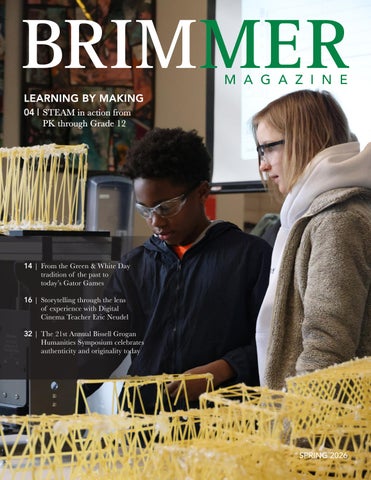
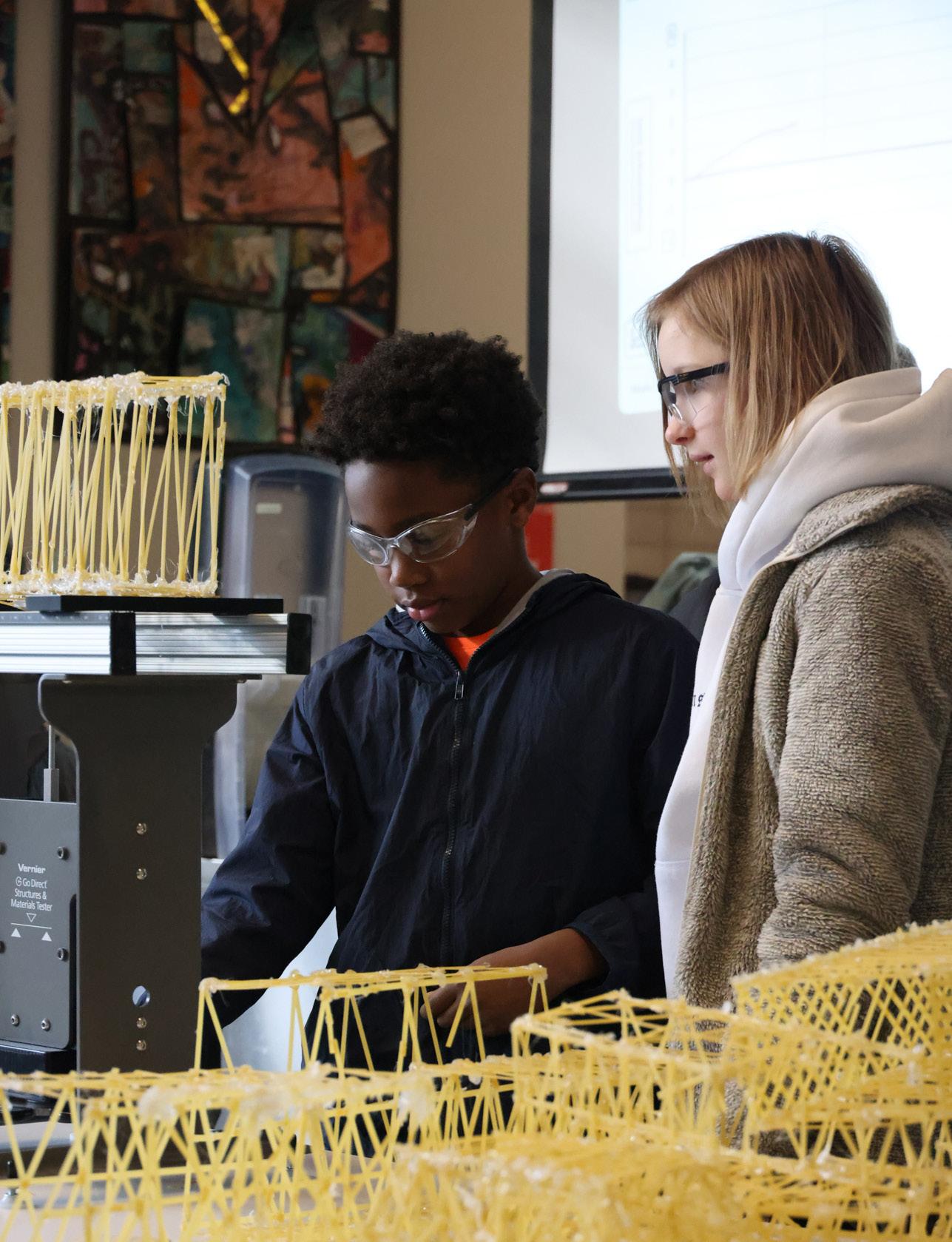
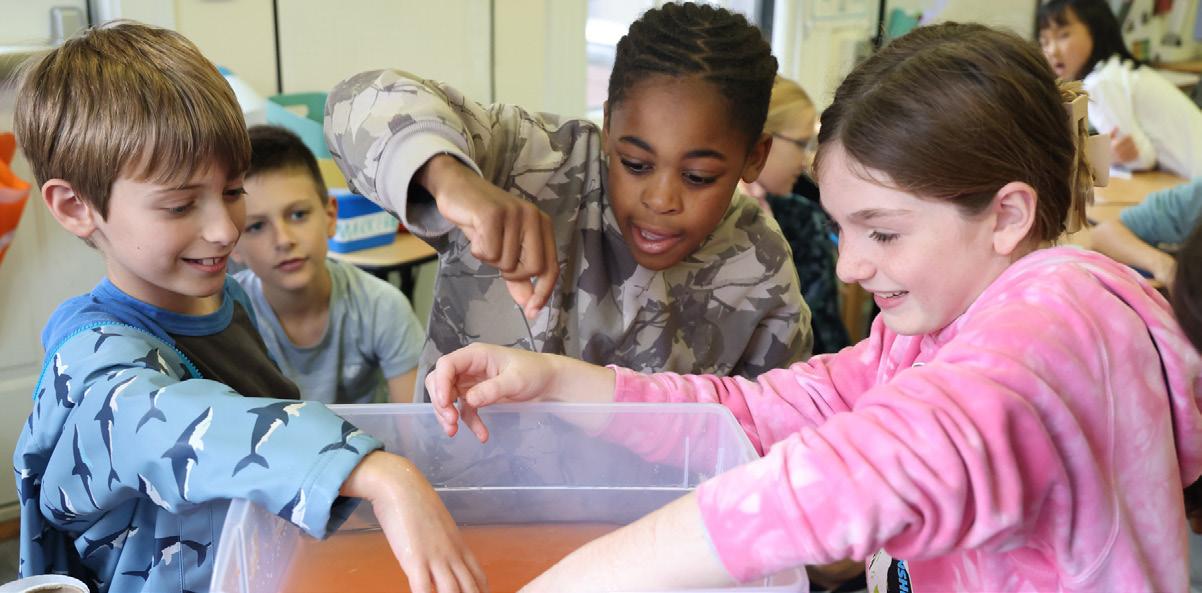
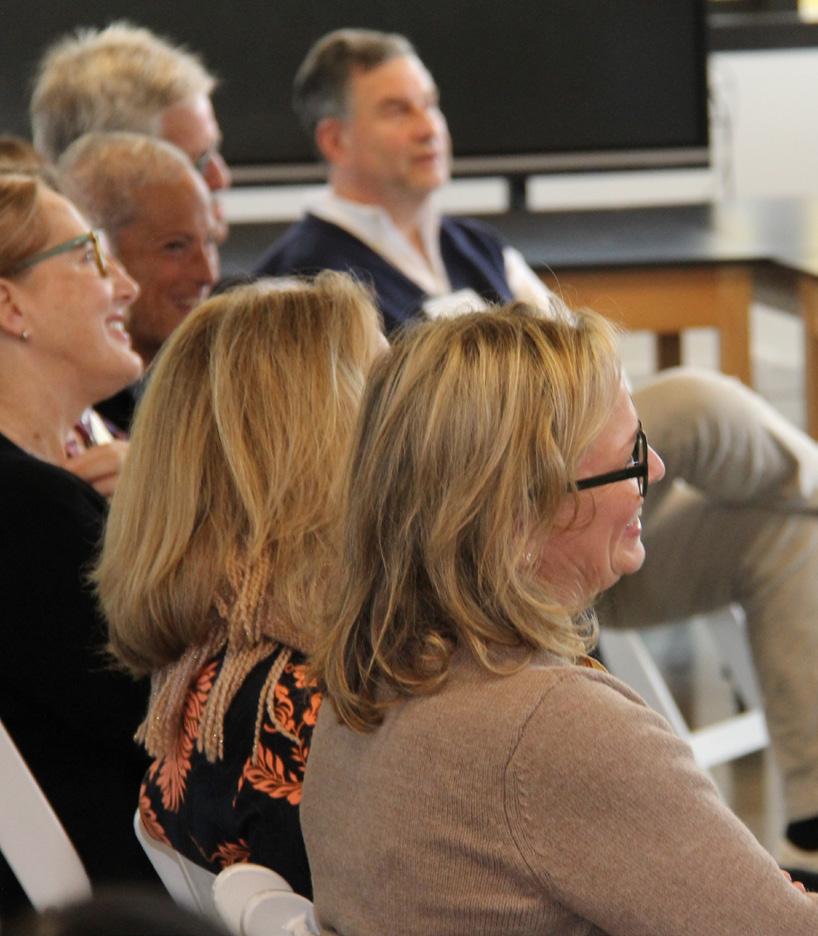
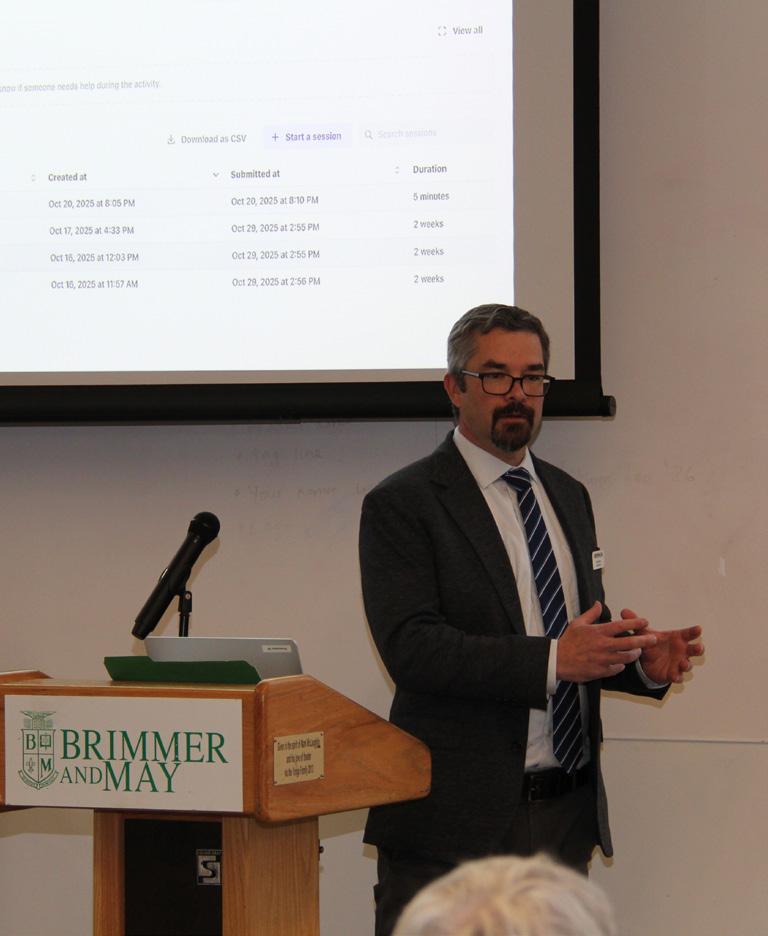
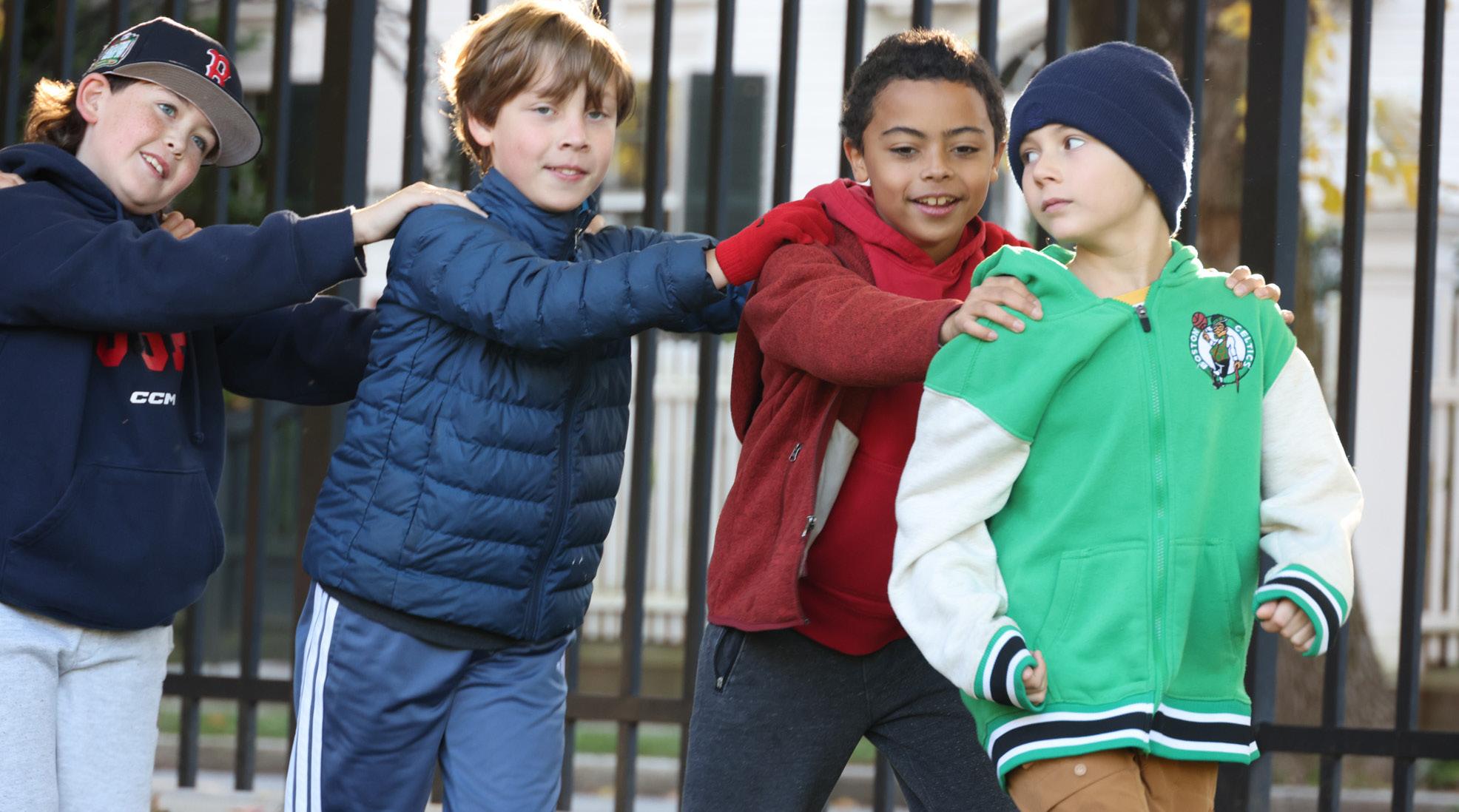
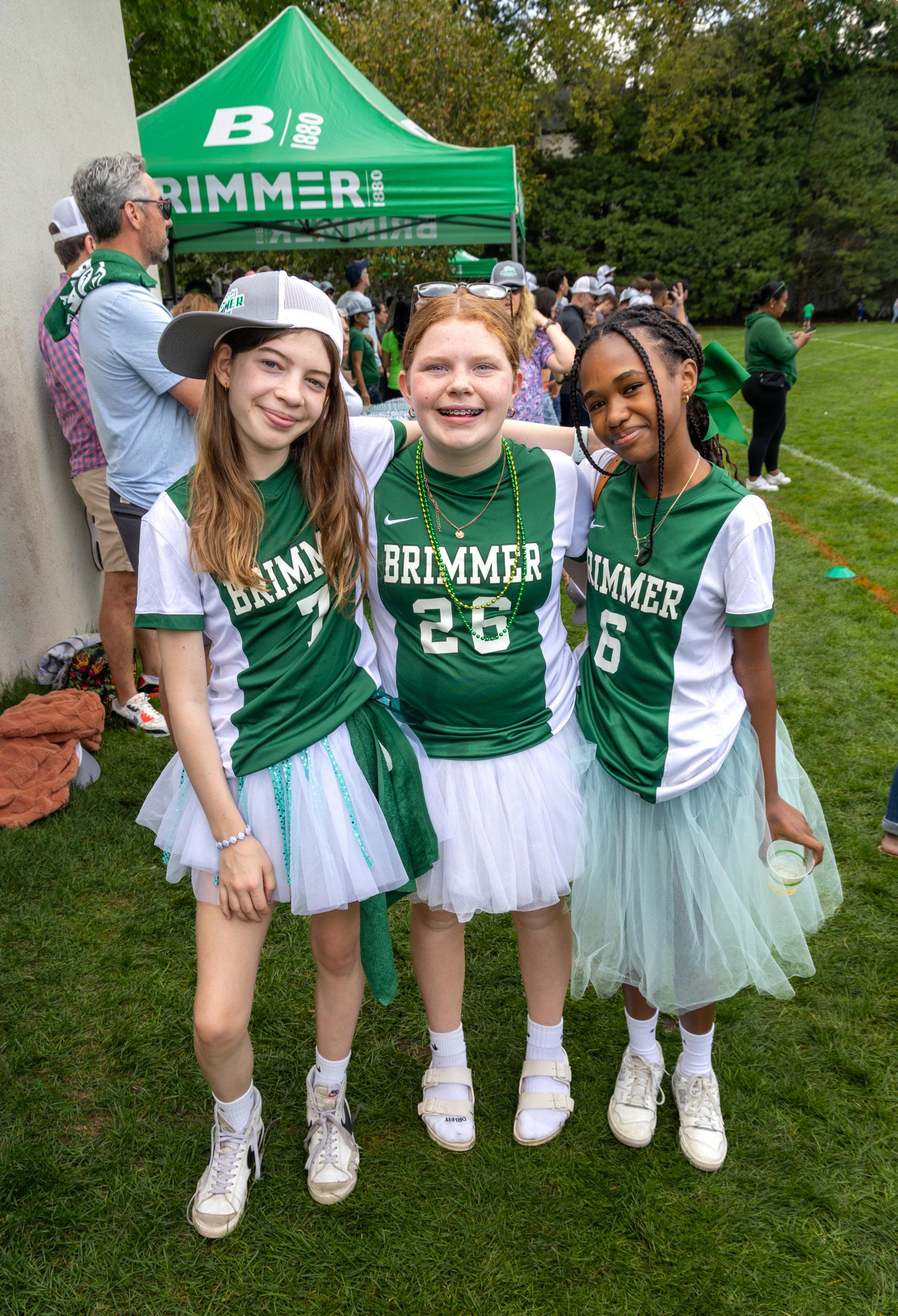
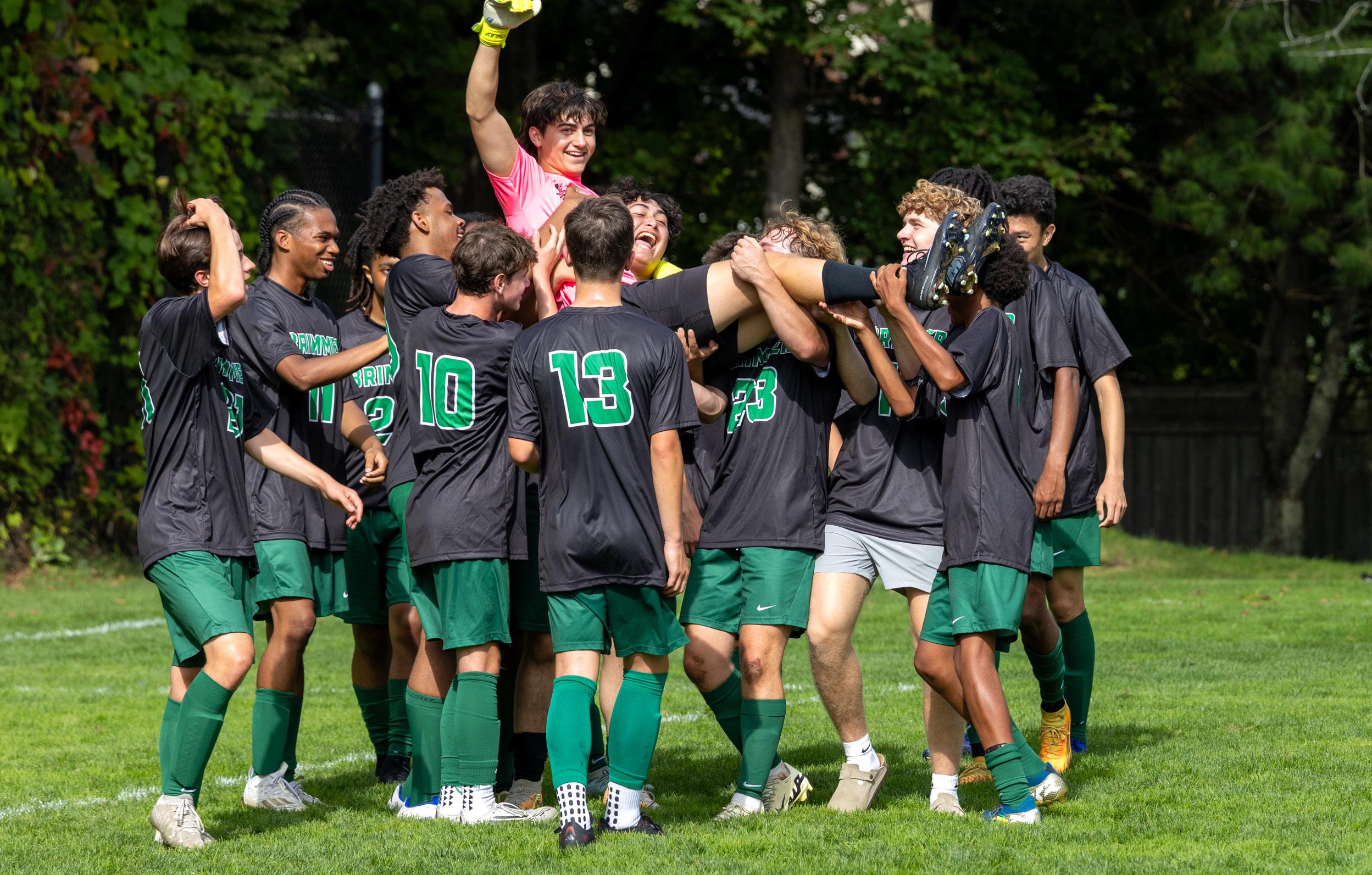
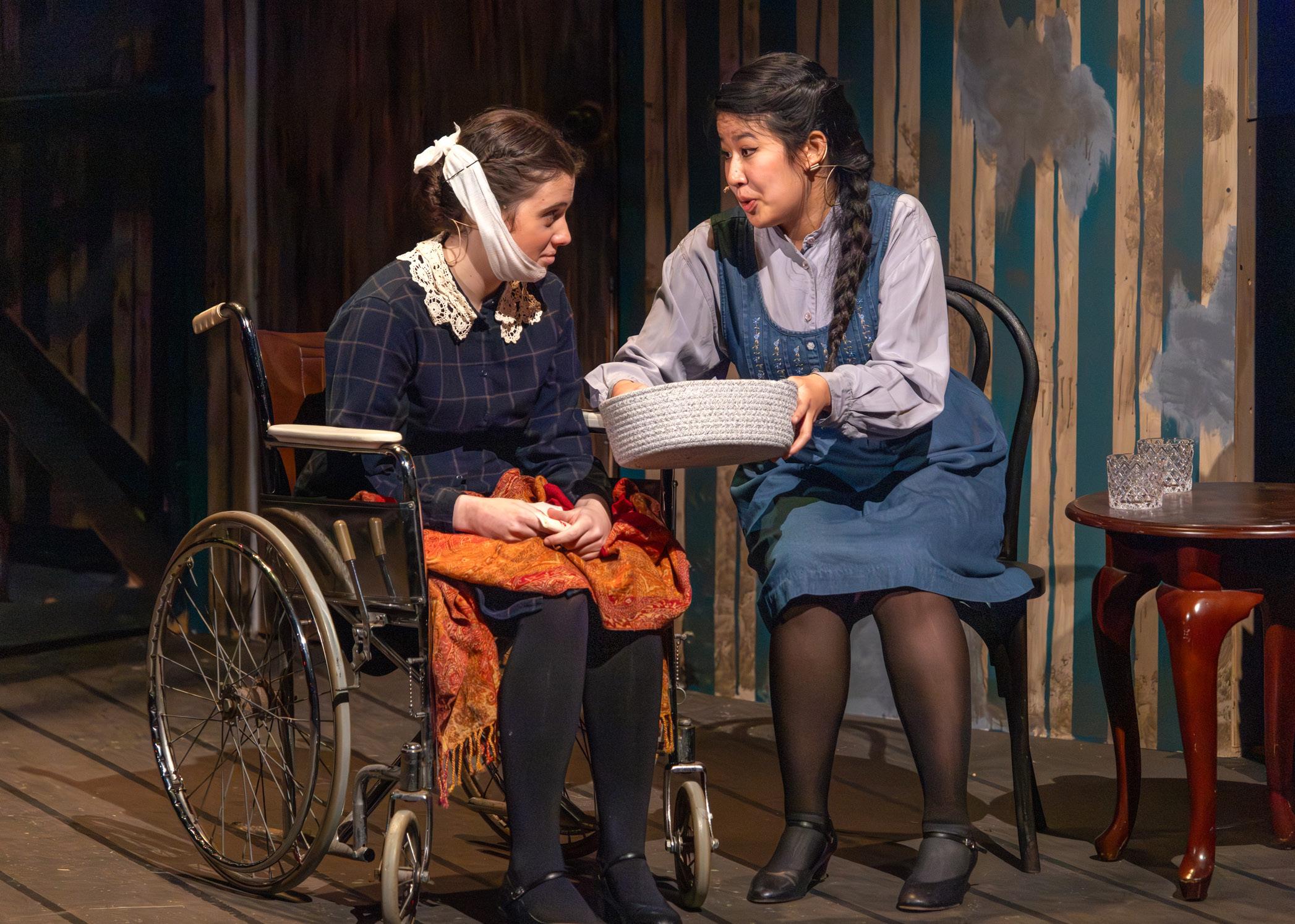
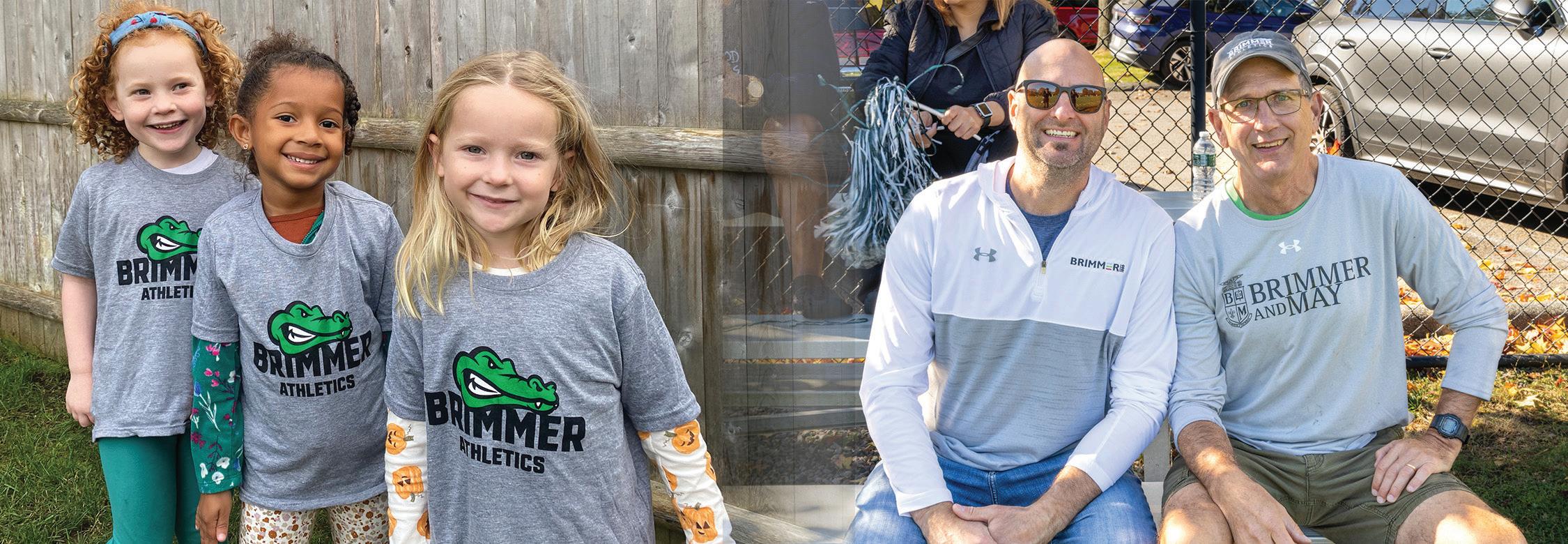
Front Cover: The Grade 6 Bridge Exhibition embodies Brimmer’s commitment to hands-on, interdisciplinary STEAM learning.
Back Cover:
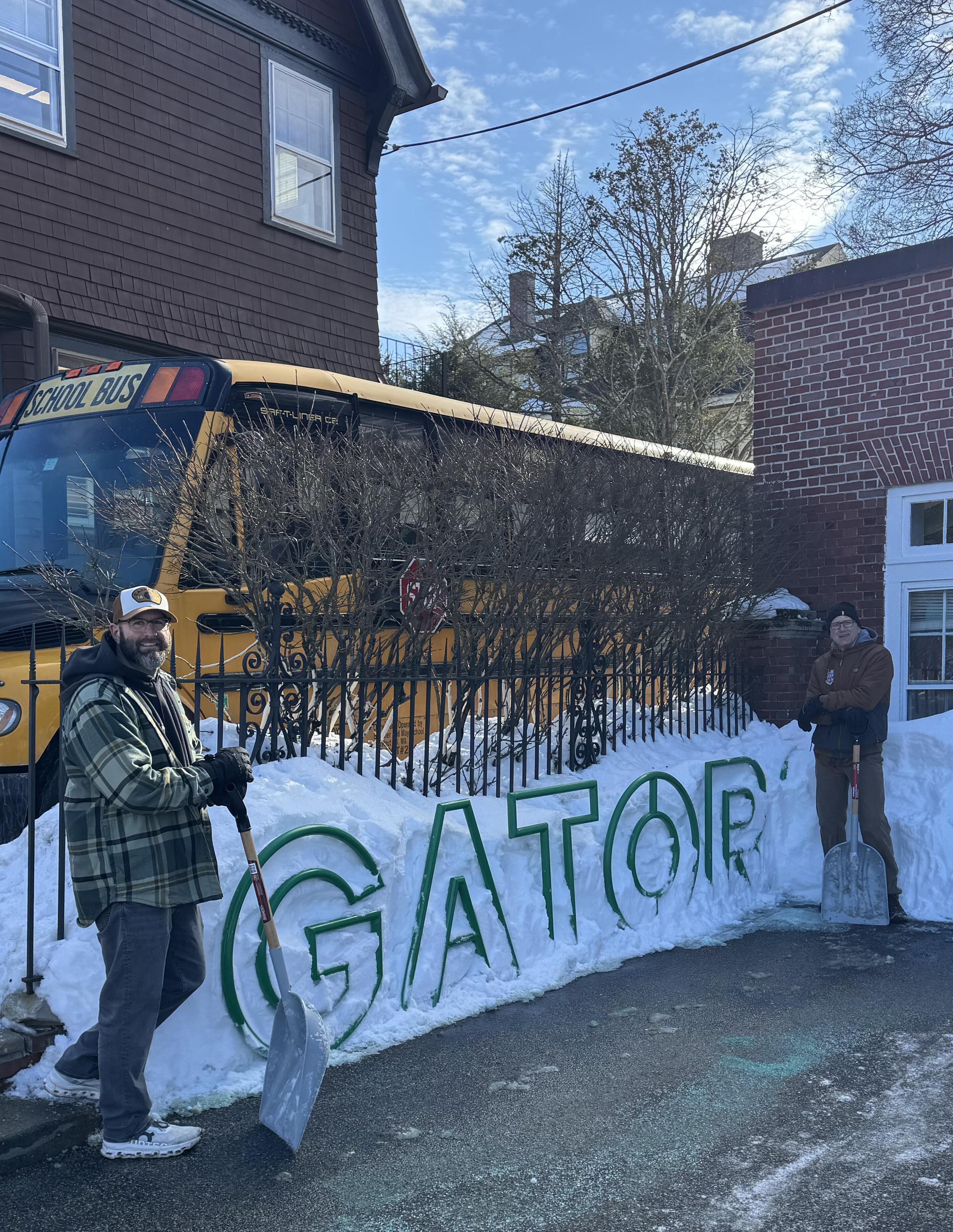
Facilities Team members Eric Smith ’99 (L) and Tom Schmottlach digging out the bike rack after one of our many winter storms!
Around Campus
vision
realized
A letter from Judith Guild
In 2017, Brimmer successfully concluded the Realizing the Vision (RTV) campaign and embarked on a new chapter with the opening of the Hastings Center. This facility was conceived with remarkable intentionality. The project valued the power of community where ideas can flourish and be nurtured. In turn, we aimed to provide our students with the infrastructure, technology, and creative environment essential for advancing our Design Thinking curriculum and embedding innovation at the heart of the students’ educational experience. The launch marked our expanded commitment to STEAM education, incorporating sophisticated digital capabilities that reflected our pedagogical mission.
Our enduring inquiry into how students learn most effectively guided our development of enhanced science facilities, a robust Maker Space, innovation laboratories, and collaborative research environments designed for dynamic problem-solving. In this edition of Brimmer Magazine, you’ll discover how these initiatives have flourished, positioning our students at the forefront of advanced STEAM education.
Now, eight years later, we stand at the threshold of another milestone: the completion of the Building Our Tomorrow campaign and the inauguration of our new Recreation & Wellness Center. As with our previous strategic endeavors, we are bringing to fruition a vision articulated five years ago, one that recognized the need for dedicated
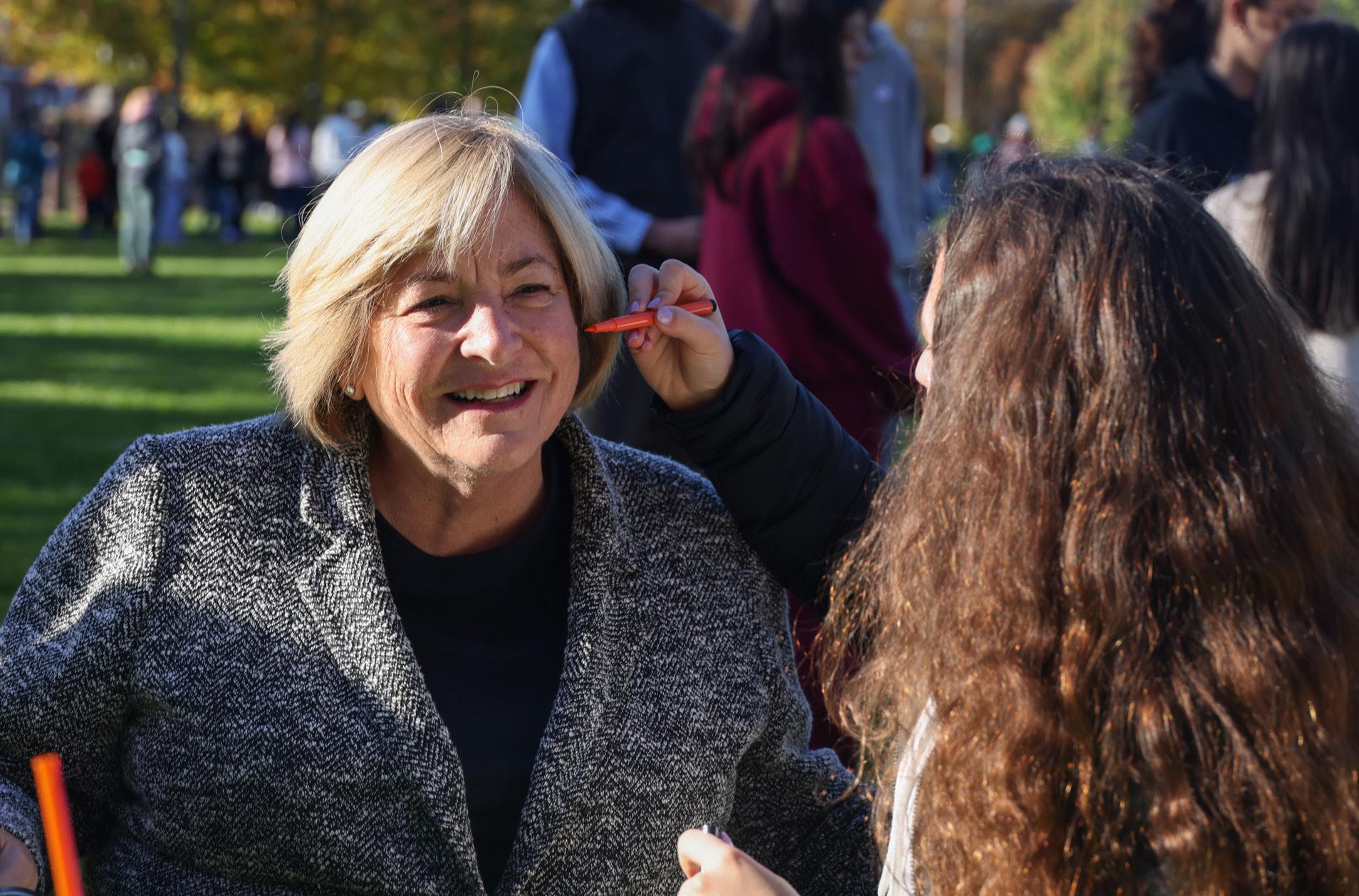
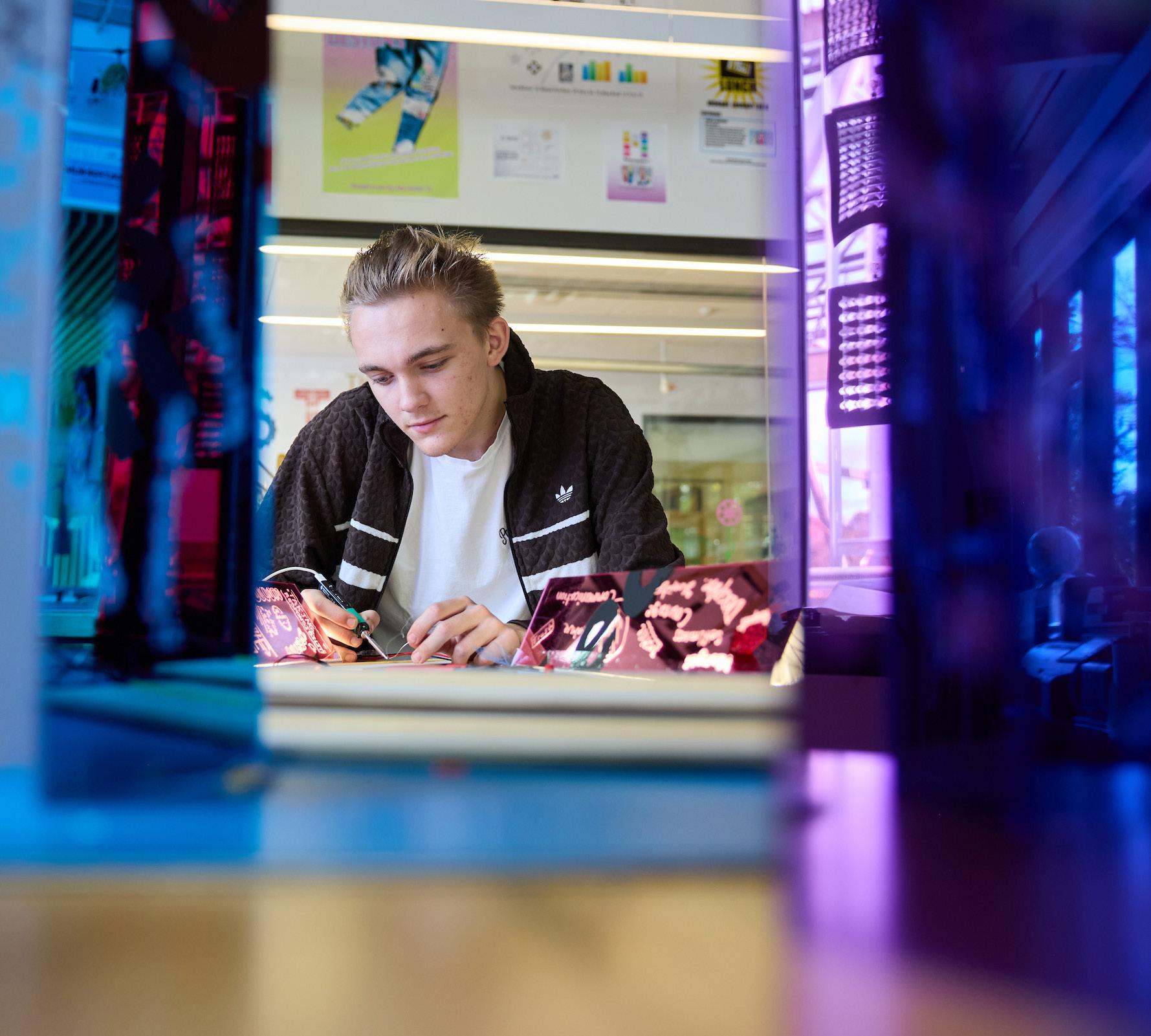
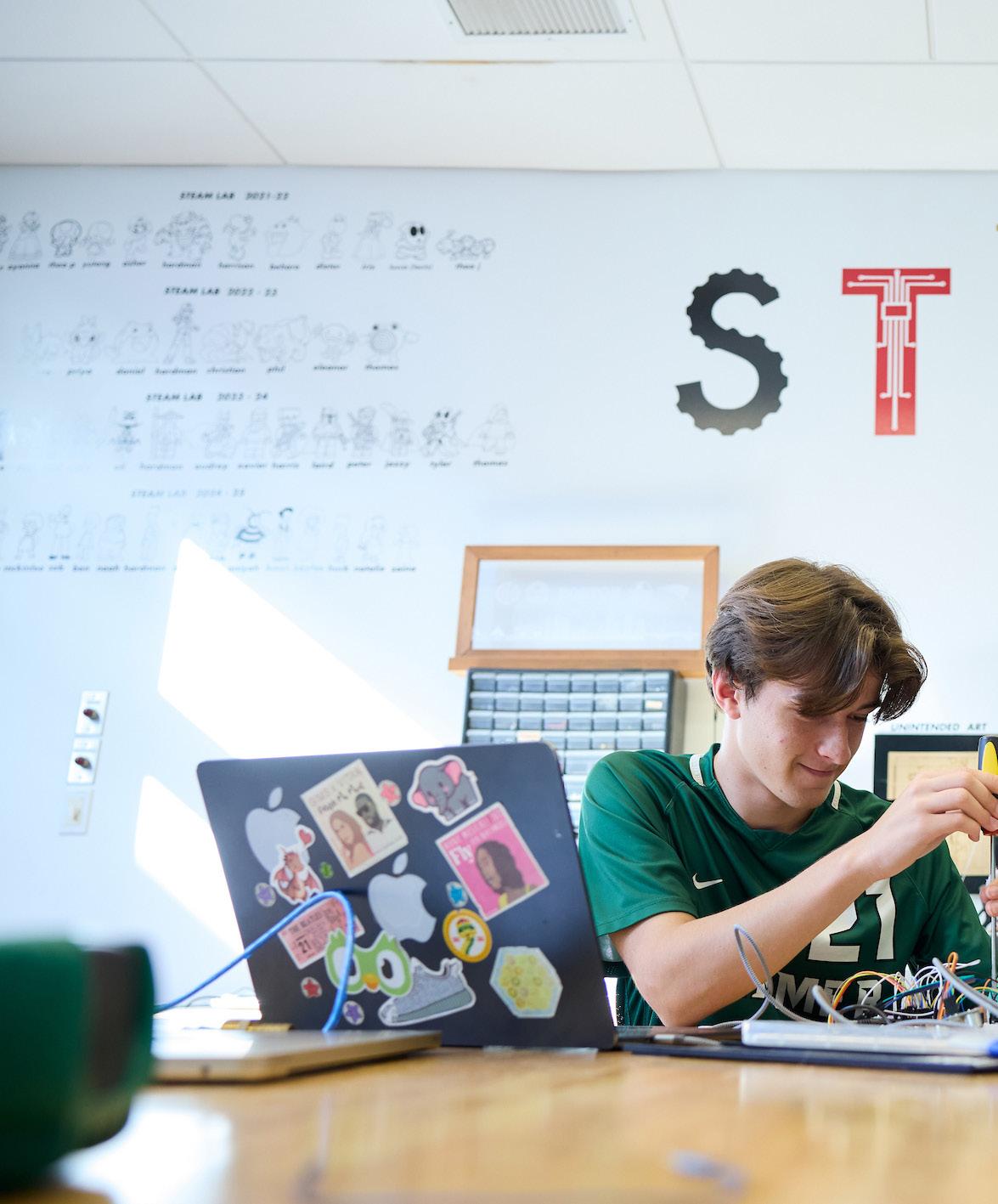
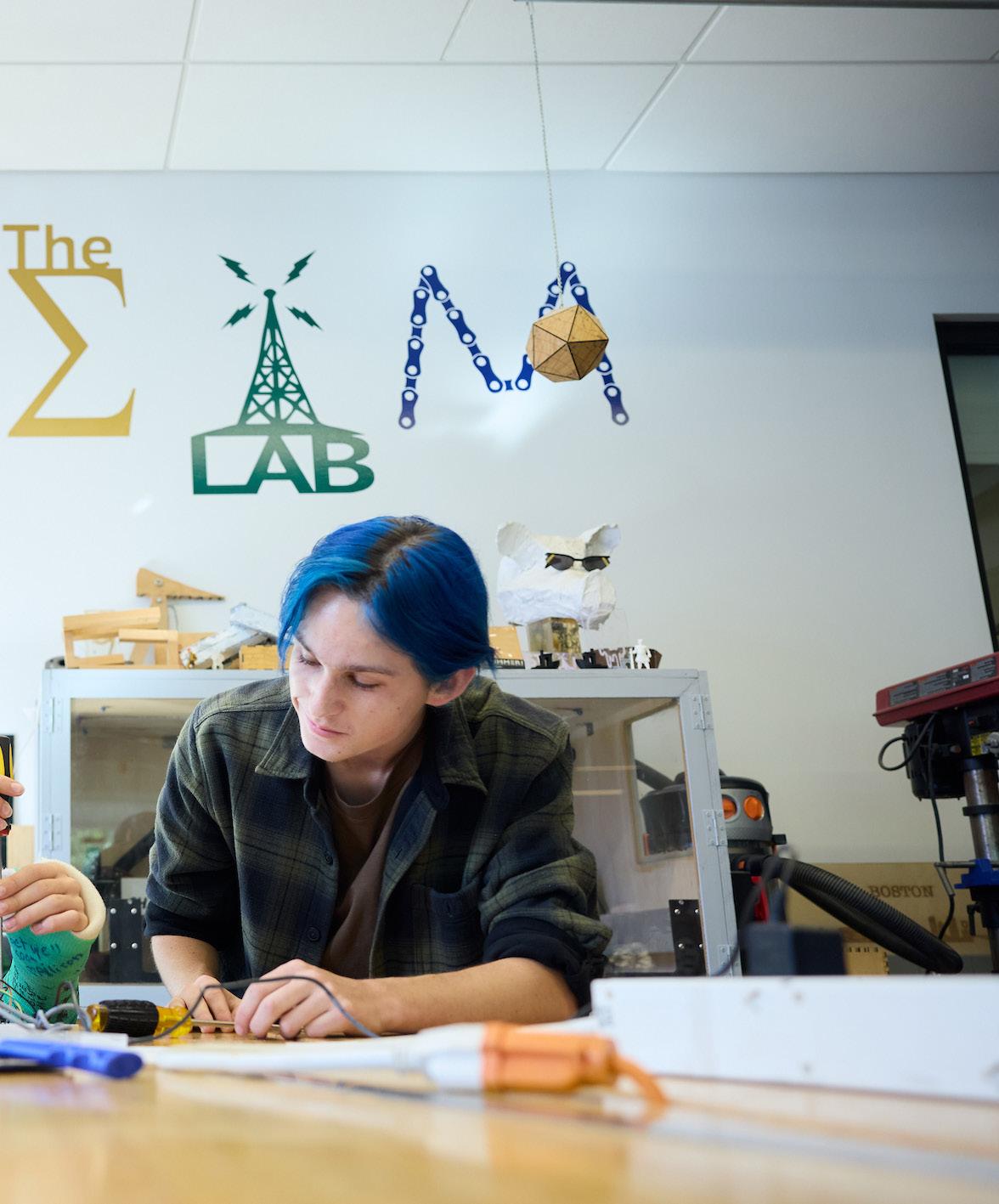
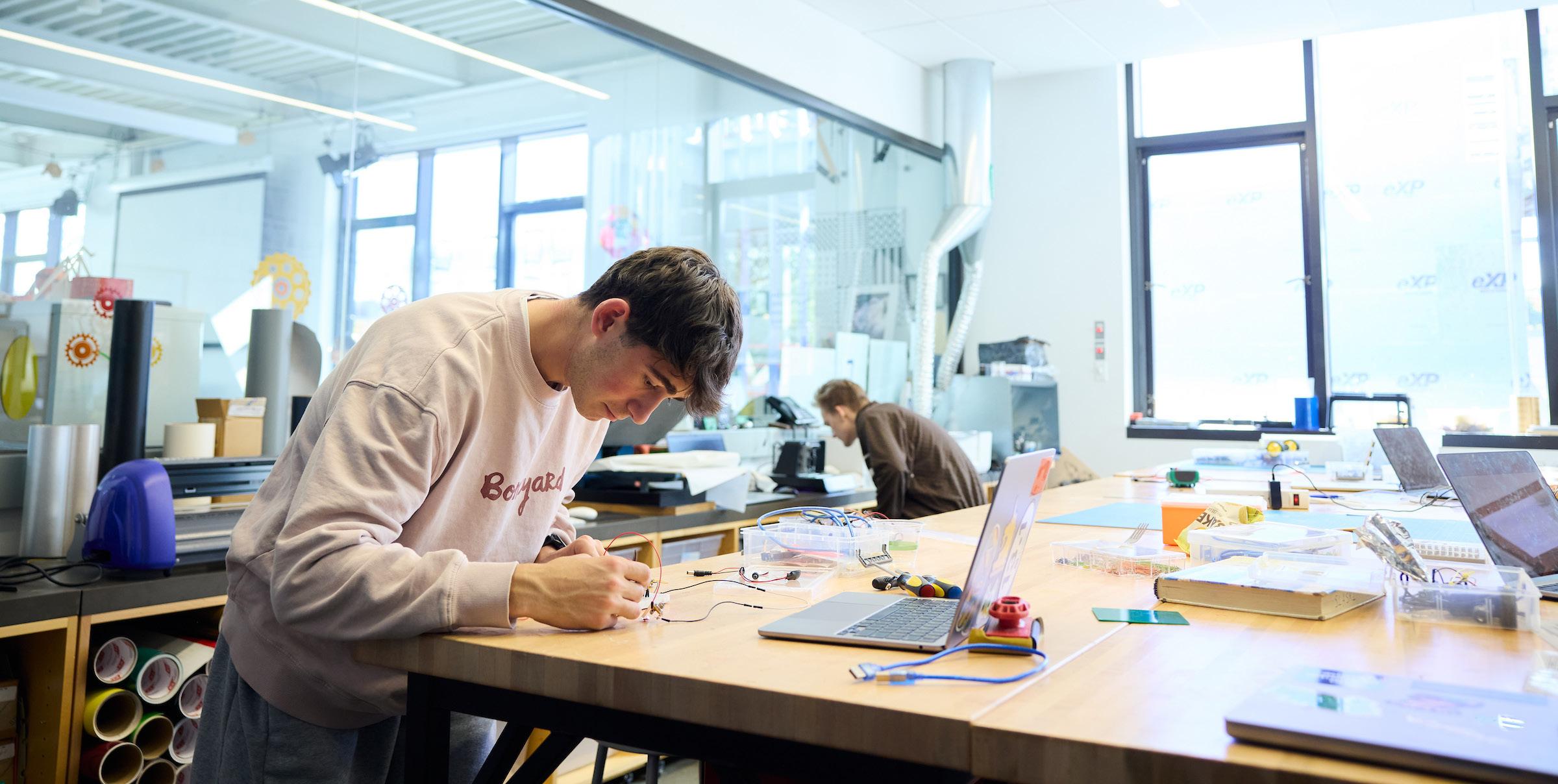
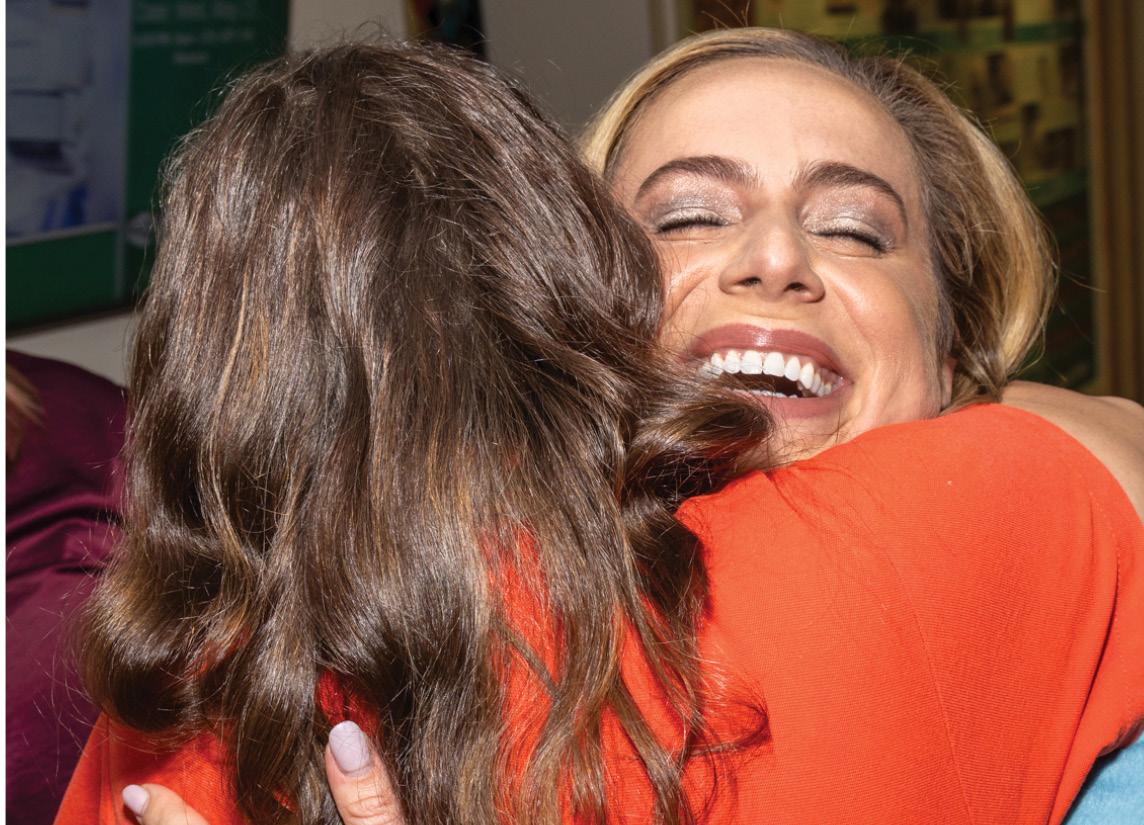
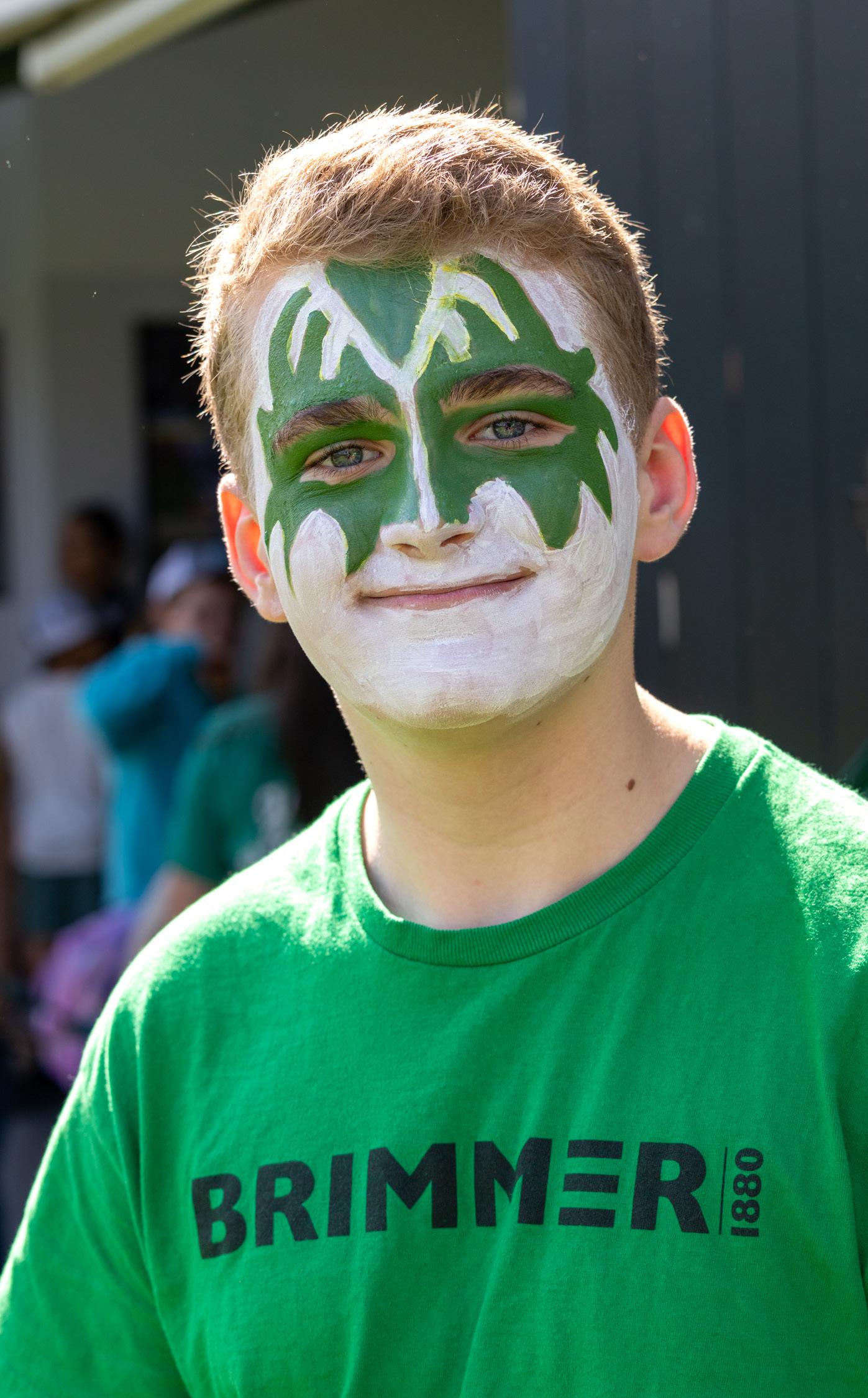
Above: Head of School Judy Guild has her face painted by a student during Harvestfest (see pages 38–41); Opposite: Nikka Souza ’26 at work in the Hastings Center Innovation Space
spaces for student health and wellness, expanded classroom capacity, venues for community engagement, support for a vibrant faculty, and elevated athletic programming. This latest achievement represents not just a physical expansion but also the continued evolution of Brimmer’s commitment to the development of the whole student while providing competitive compensation to retain and attract talented faculty.
When the Fall 2026 issue of Brimmer Magazine is released, we will be celebrating the grand opening of the new building and enjoying another milestone in Brimmer’s long history. The events we highlight in this magazine each year will soon take place in our new community space, which will welcome our growing alumni population and broader community.
When I speak to alumni from the 1970s, they remark on the profound impact of the Emily C. Thompson Activities Center. They loved having graduations, dances, plays, and athletics in their new space on campus. Now, 50 years later, we stand on the cusp of creating what we know will be a defining space for Brimmer to gather, play, and cheer for each other. I am grateful to have the time and privilege to be part of this remarkable moment in Brimmer’s history. ■
Learning by Making
STEAM in action from PK through Grade 12
STEAM learning at Brimmer is hands-on, collaborative, and intentionally woven through every division of our School. From programming Bee-Bots in Pre-Kindergarten to Senior Capstone projects in the Maker Space, students are encouraged to approach learning with a problem-solving mindset. The stories that follow highlight eight immersive STEAM experiences, each offering a snapshot of how students apply creativity and critical thinking in real-world ways. Together, these vignettes reflect a shared commitment to learning by making and empowering students to see themselves as innovators at every stage.
Edward Flint ’26 and Isaac Morris ’26 work in the Maker Space
Learning Sets Sail
Lessons From Land and Sea
Some of the most meaningful collaborations begin by chance. That was certainly the case with our STEAM partnership with Middle & Upper School Science Teacher Nia Gipson. The three of us served as mentors this year, and during early summer planning conversations, Nia shared her passion for East Asian culture, her recent visit to South Korea, and her work with the National Consortium for Teaching about Asia—an organization dedicated to supporting elementary and secondary educators in teaching about East Asia. Our conversation became animated as we began to plan a collaborative project that involved Nia bringing her expertise into our fourth-grade classrooms.
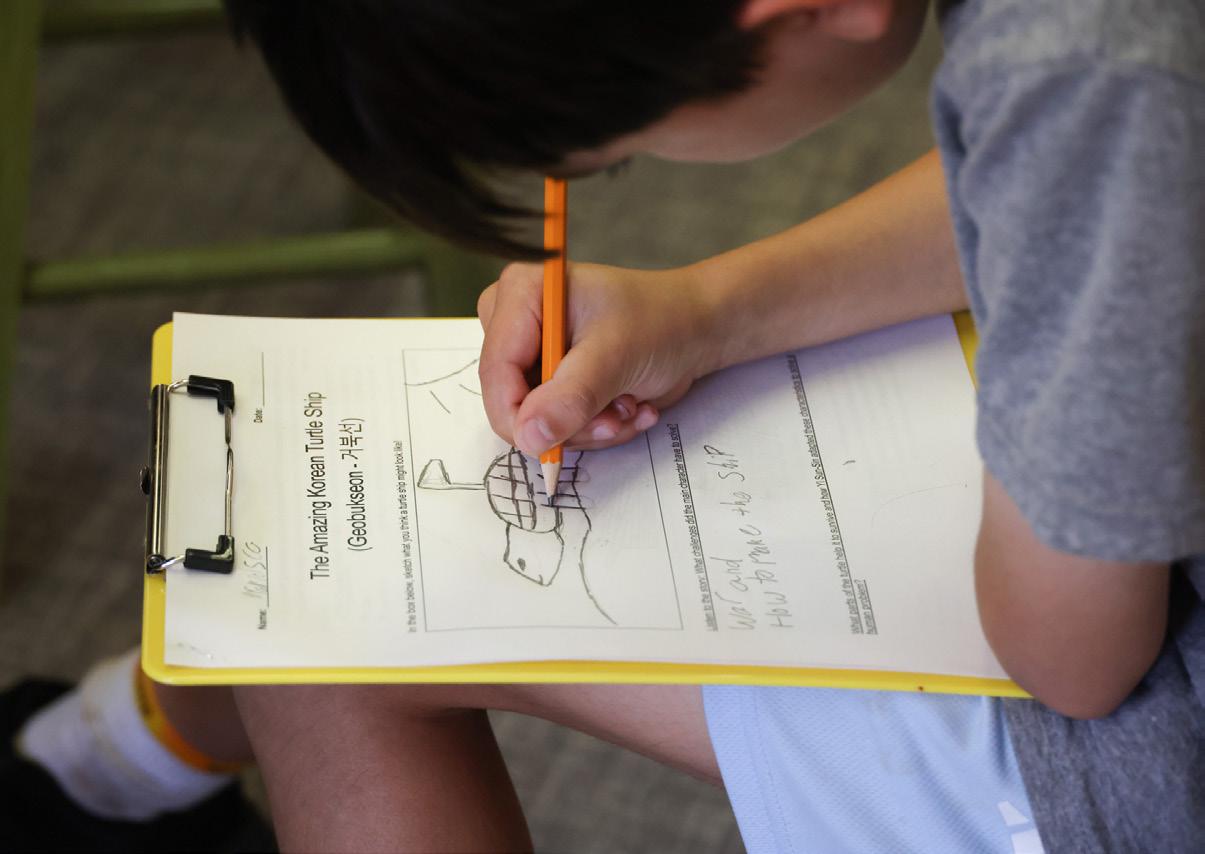
Nia teaches a unit on biomimicry, and the historic Korean turtle ships proved to be the perfect entry point for introducing this concept to our students through a hands-on STEAM experience. She launched the project by reading The Turtle Ships by Helena Ku Rhee, inviting students to consider how nature inspires human innovation. Together, they explored key questions: What features help a turtle survive? And how did Admiral Yi Sun-sin adapt those characteristics to solve a human problem?
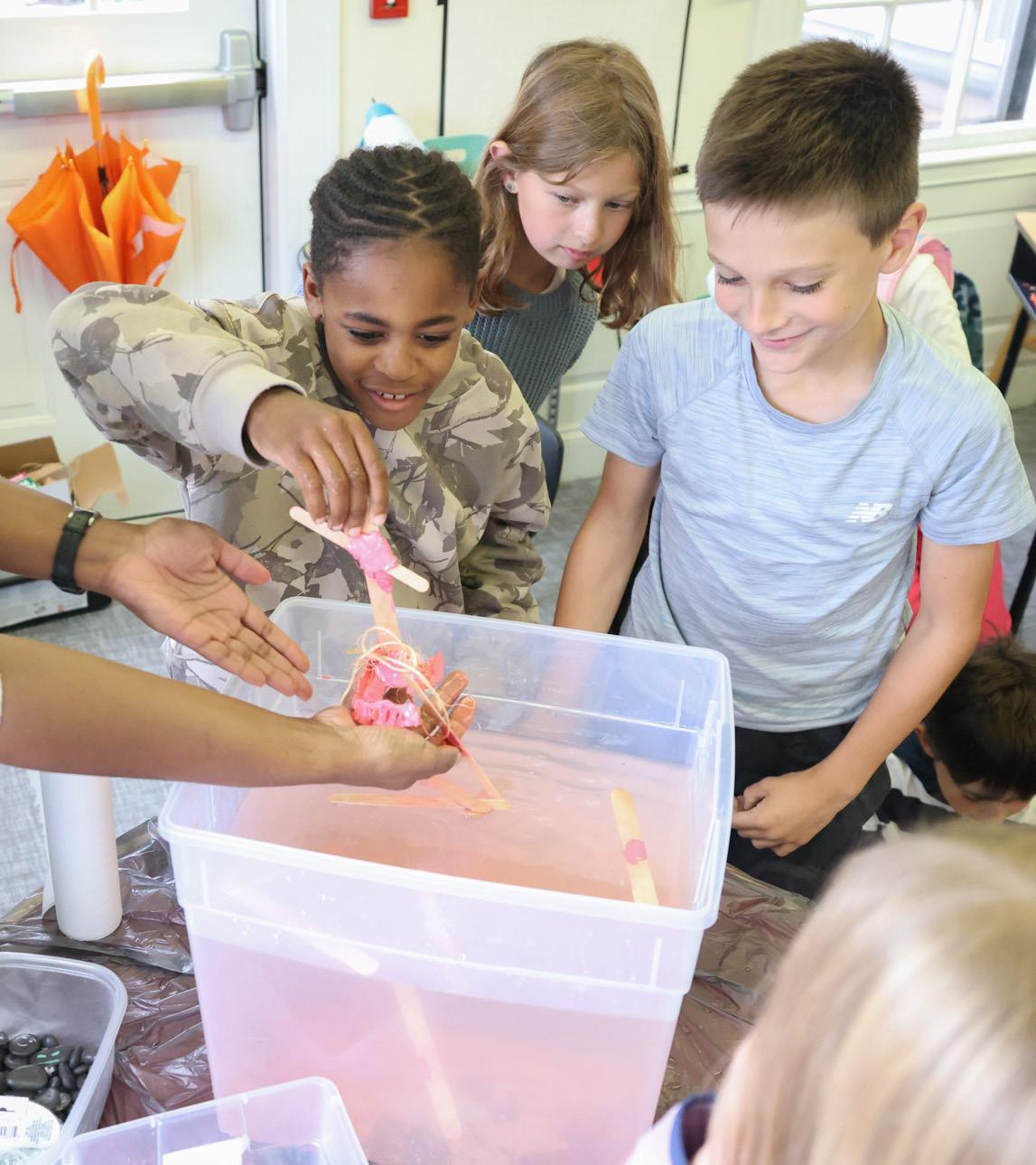
Fourth graders were then given an engineering challenge: Working in pairs, they designed and built boats capable of carrying the most weight using only Popsicle sticks, clay, and jute string. Students had 60 minutes to plan, design, and construct their vessels, then tested their creations the following week in a manmade “ocean.”
Students learned valuable lessons that extended far beyond engineering principles. They discovered that nature has been solving design problems for millions of years and that observing the natural world can inspire innovative human solutions. Through the constraints of limited materials and time, students experienced the iterative design process firsthand—planning, building, testing, and revising their prototypes. They grappled with competing priorities: Should they start with a wider base for stability or taller sides to hold more weight? How could they waterproof their vessels while maintaining structural integrity?
This project was a powerful example of how intentional, crossdivisional collaboration enriches learning for everyone involved. What began as a casual conversation between mentors became a dynamic interdisciplinary experience connecting science, history, literature, and engineering—proving that some of our most meaningful educational moments happen when we embrace unexpected connections.
Hali Hellmuth
Grade 4 Teacher
Gemma Kevaney
Grade 4 Teacher
Grade 4 students first designed their boats on paper (above) before building them and testing them in water (at top)
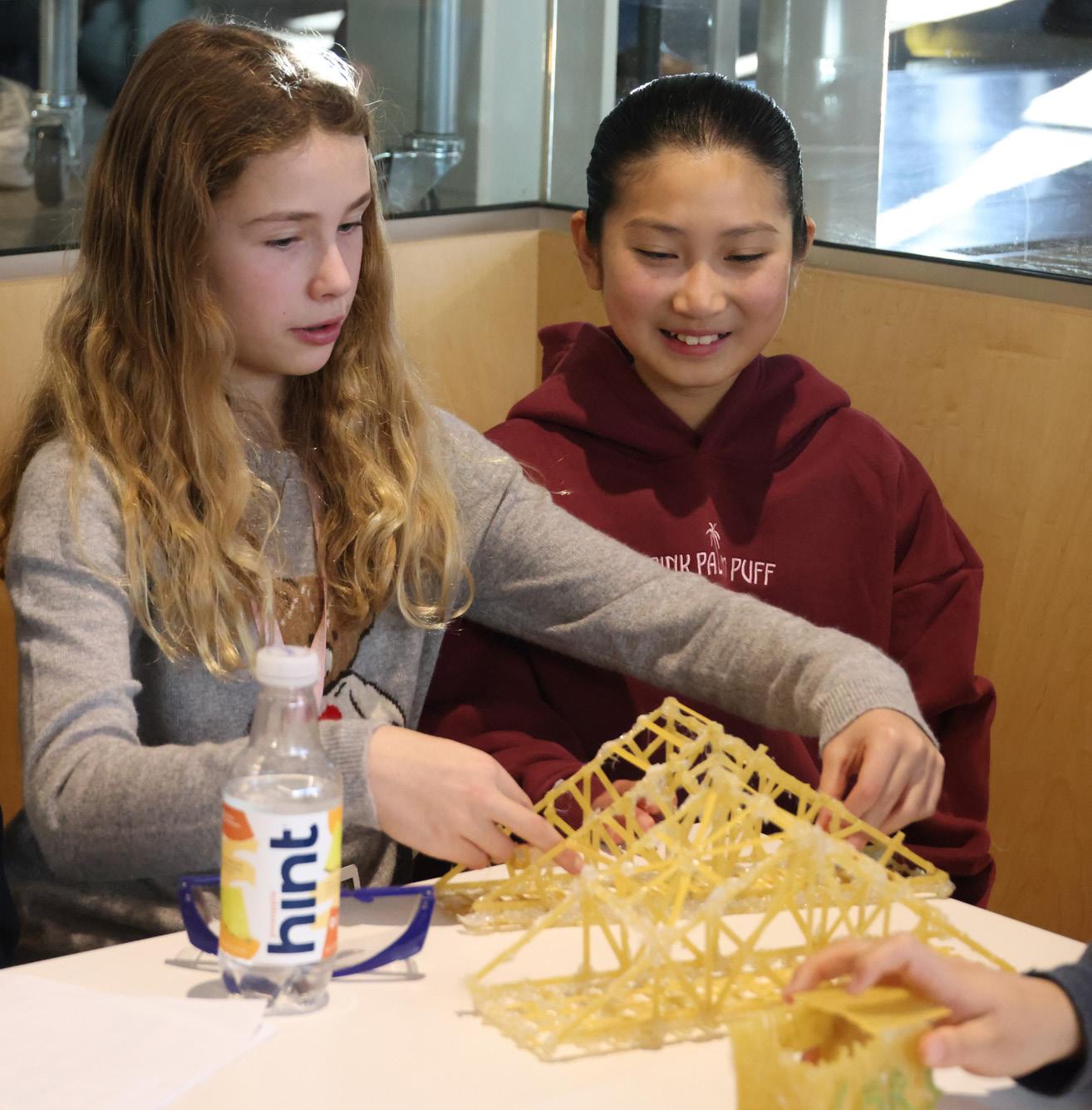
Snap, crack, and pop...familiar sounds to Brimmer’s sixth graders every December and an unmistakable sign that the Bridge Exhibition has arrived. After months of design, calculation, collaboration, and revision, the student-built bridges meet the ultimate test in front of peers, faculty, and families.
When I arrived at Brimmer earlier this year, the reputation of the Bridge Project had already preceded itself. A beloved Brimmer tradition, expanded and refined by Head of Middle School Dr. Matt Gallon over the past 10+ years, this project embodies Brimmer’s commitment to hands-on, interdisciplinary STEAM learning. This year, I had the privilege of continuing that legacy.
The unit begins with an examination of core physics concepts, applying forces such as
Bridge Building
A Middle School Rite of Passage
compression and tension to various bridge types. Students then research famous bridges to understand how these principles appear in the real world. To connect their learning to career pathways, students explore roles in the construction industry using Bureau of Labor Statistics data about engineers and ironworks to analyze salary considerations and job responsibilities. (This year, learning came to life when two professionals from Shawmut Design & Construction took a break from building Brimmer’s new Recreation & Wellness Center to join a section for a Q&A.)
Leveraging this background, students begin drafting to-scale blueprints and building financial “bid sheets.” With a creative twist, linguine becomes “steel beams” costing $1,000 apiece, while glue guns are treated as high-priced welding equipment. Students must predict project costs and evaluate
actual expenses, integrating math and design thinking.
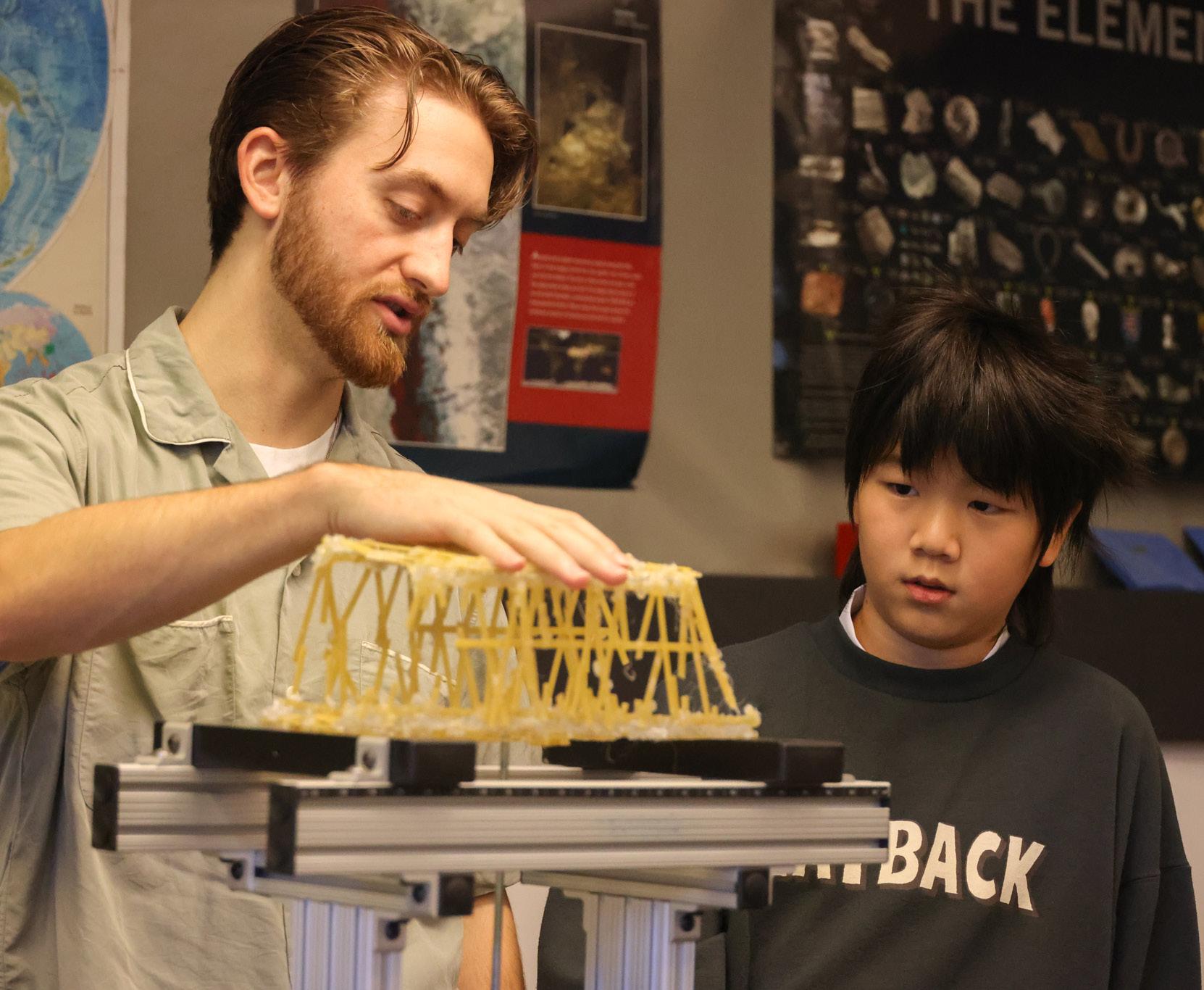
The build comes with days of measuring, gluing, troubleshooting, and refining. All this leads up to exhibition day where bridges are attached atop a Vernier Structures & Materials Tester as the community gathers to watch the mass slowly crunch each bridge. Excitement is present; beams bend, and no bridge is exempt from impending damage. In that moment, students are reminded that success is not about holding the most weight but rather a metric of efficiency achieved through the best mass held to mass ratio.
Each year, the Bridge Exhibition leaves students with something far stronger than a pasta structure: real-world connections, confidence in problem-solving, and a tangible understanding that engineering is as much about thoughtful design as it is about creativity. This year’s exhibition was no different, bringing Brimmer’s community together once again in the spirit of creativity, innovation, and authentic learning for one unforgettable morning.
Jack Carroll Middle School Science Teacher
Middle School Science Teacher Jack Carroll (at right) assists his students with their bridge designs
Each spring, the History 8 classes team up with Director of Innovation & Design
Kathryn Lee P ’32, ’34 and Middle School English Teacher Andrea Underhill-Curtin for an interdisciplinary project that caps students’ Middle School experience. Working in pairs or small groups, students select a changemaker—past or present—who has
mobilize others toward positive change? And how does someone go from being an ordinary citizen to an inspirational leader?
Drawing on their historical research, students create a visual timeline in English 8 to better understand the sequence of events and ideas that shape(d) their leaders work. From there,
“Where, after all, do universal human rights begin? In small places, close to home—so close and so small that they cannot be seen on any map of the world.”
—Eleanor Roosevelt
made a meaningful, positive impact on a community. Their research begins in History 8, where they explore not only the person’s life and accomplishments but also larger guiding questions: How does one become a leader for positive social change? How does someone
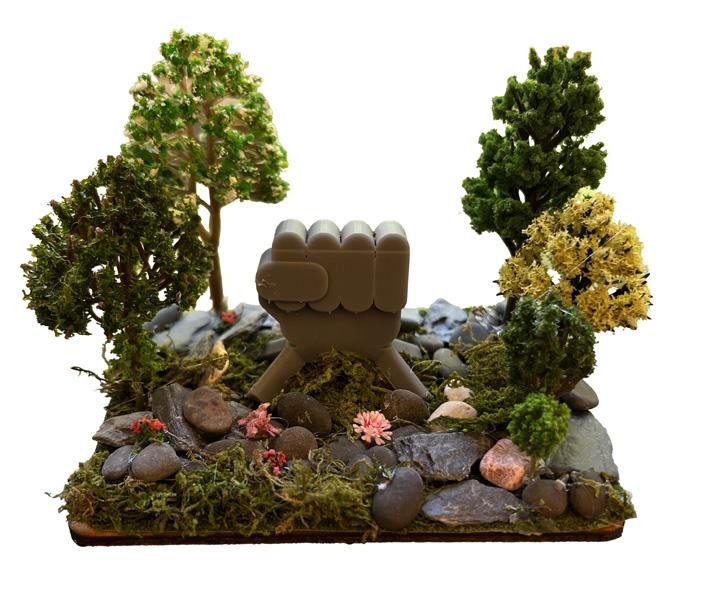
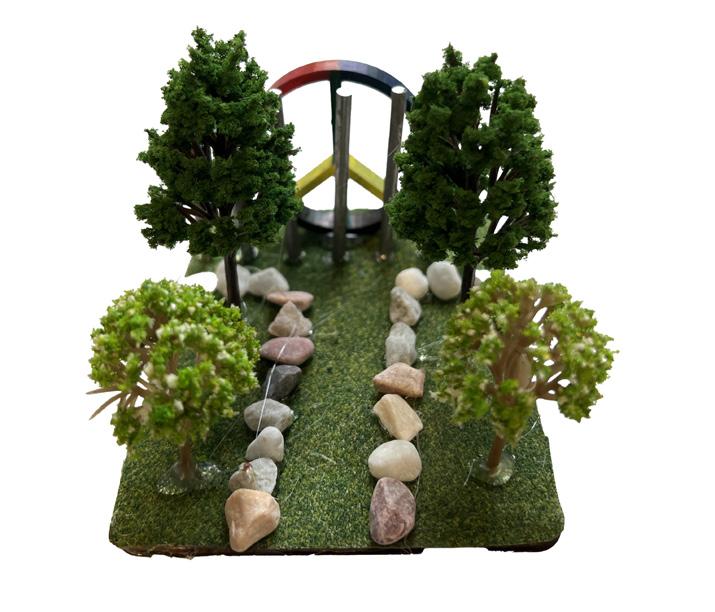
the project moves into Tech 8, where students design and 3D print unique monuments to honor their ambassadors using the modeling program Onshape. Finally, in Art 8, they bring their monuments to life by adding paint, miniature trees, rocks, and other materials to
symbolically reflect each changemaker’s story and legacy.
The project culminates in an exhibition of research and artwork that highlights how leadership, creativity, advocacy, and design intersect. By the end, students don’t just study social change—they learn how it happens, why it matters, and how they, too, can become changemakers.
Parker Curtis Middle School History Teacher
Kathryn Lee P ’32, ’34 Director of Innovation & Design Middle & Upper School Art Teacher
Andrea Underhill-Curtin Middle School English & Drama Teacher Middle School Director of Theater Program and Student Life
At Right: Grade 5 students had the opportunity to share their Mars rover projects with their PK Buddies; Opposite Page: Kindergarten students hard at work on their sea turtle projects
STEAM Starts Early…and Keeps Growing
Kindergarten Climate Action Heroes
A Sea Turtle STEAM Project
Teaching our youngest students to be changemakers and climate action heroes is not always easy. As educators, we strive to make learning experiences meaningful and authentic, hoping students will carry these understandings beyond the classroom walls and into their future selves. At Brimmer, we integrate learning across content areas to open the door to these possibilities.
In Kindergarten, students journey through different continents throughout the year, learning about various countries, their geographies, climates, cultures, animals, and environmental challenges. This year, during their North America study, students investigated oceans and lands, discovering diverse wildlife across the continent’s countries. They learned how animals use the land, depend on rivers, and live in the oceans.
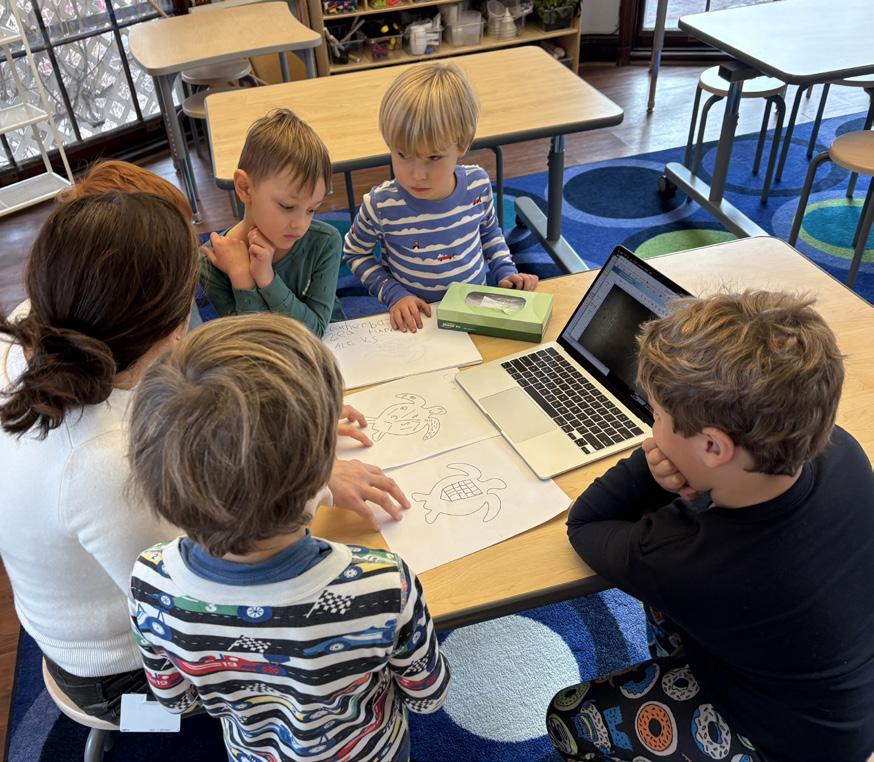
Kindergarteners explored different sea turtle species and how climate change affects their habitats. They came up with ideas and actions that humans can take to protect these animal habitats. Students researched facts about various species of turtles that live in North America.
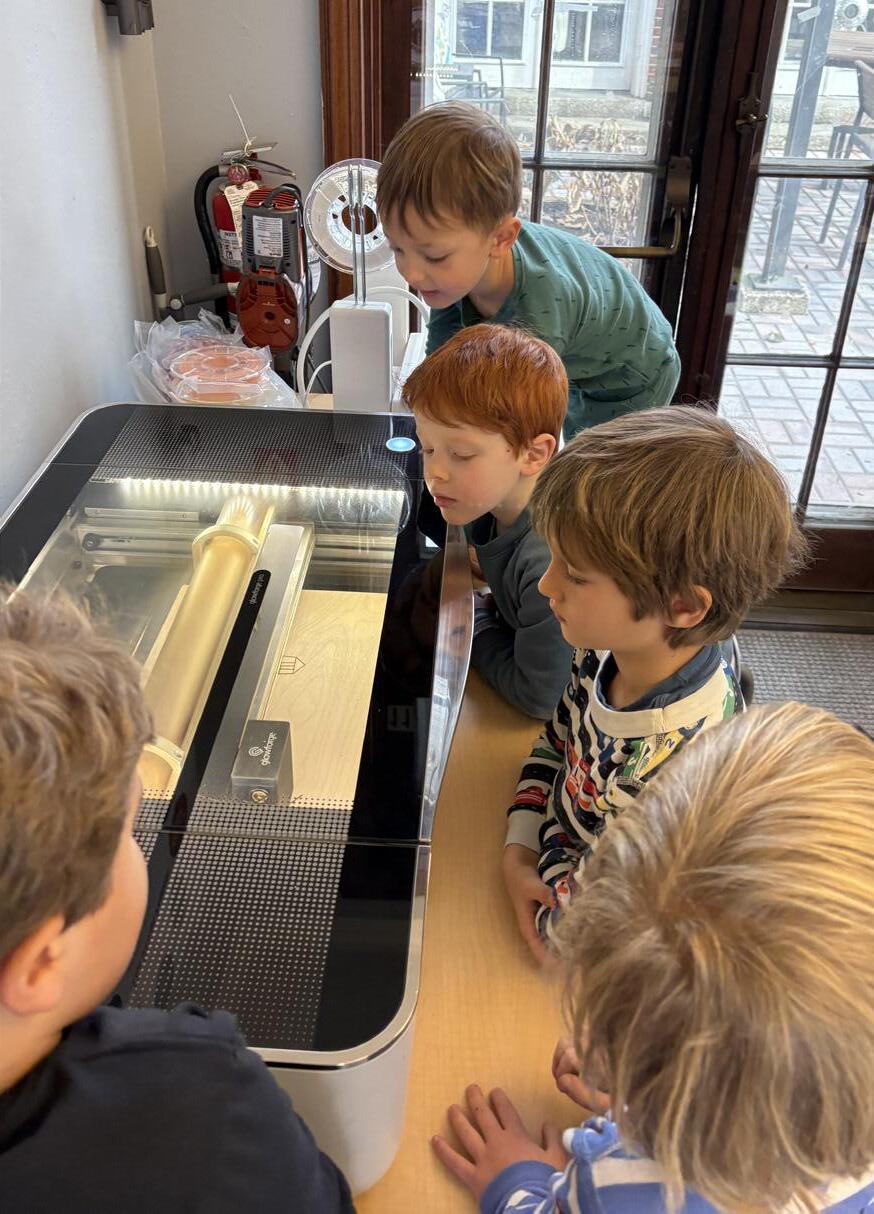
Based on what they researched, they then designed their own sea turtle shells to be printed on our Glowforge wood laser cutter. Kindergarteners were in awe of their
final product. They couldn’t believe their drawings had come to life on simple pieces of wood.
Through this project, students developed essential skills that will serve them throughout their lives. As researchers, they learned to gather, organize, and apply factual information about sea turtle species and their ecosystems. As climate action heroes, they discovered how human activities impact wildlife and understood their role in protecting vulnerable species. As global stewards, they connected local actions to worldwide environmental challenges, recognizing that conservation requires collective responsibility.
The STEAM integration brought their learning to life. Students applied scientific knowledge about turtle anatomy, used technology to transform their designs into physical objects, incorporated engineering principles to create functional shell patterns, explored artistic expression through their unique designs, and employed mathematical thinking in pattern creation and spatial reasoning. This authentic, hands-on experience empowered our youngest learners to see themselves as capable agents of positive change.
Grade 5 Mars Colony
Engineering Solutions for a Changing World
Duringthe winter months when weather is cold and crisp, winds are blowing, and snow blankets the campus, our fifth-grade students are tucked away inside on a different planet. Literally. They are on Mars.
By January, students are deep into research and scientific exploration of space and Mars. After exploring the successes and challenges of colonizing the New World during the Age of Exploration, students apply those lessons to create their own colony with the premise that climate change is making Earth less inhabitable. Along with creating a Colony
Compact, designing a colony blueprint, and addressing fundamental human survival needs, students design a Mars Rover robot.
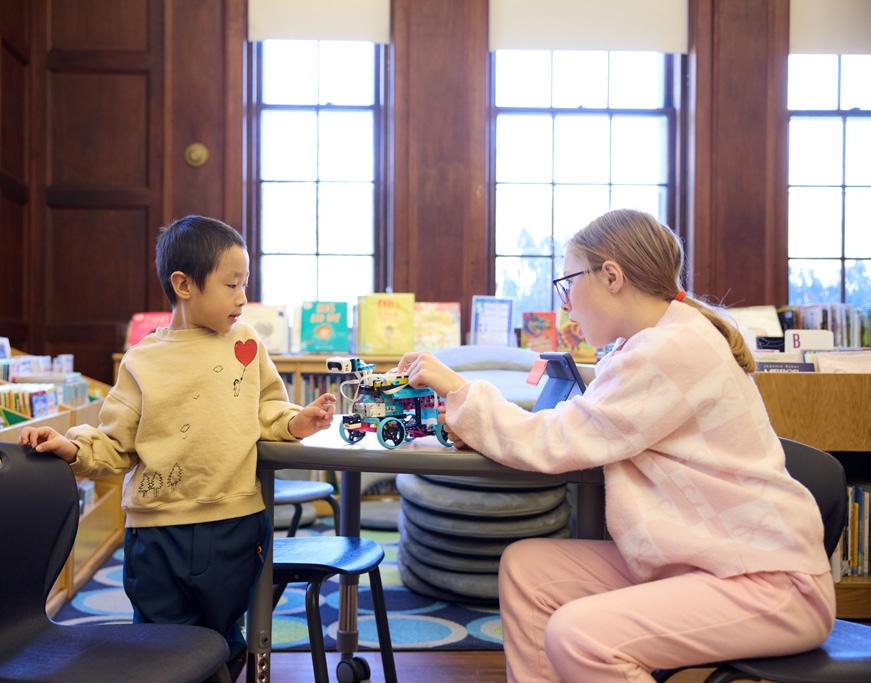
Students developed understanding of what rovers do after reading A Rover’s Story by Jasmine Warga in literature groups. Rovers came to life with LEGO SPIKE Prime kits. For the first few weeks, students became familiar with the kits and were presented
continued from page 9
with simple programming tasks using code similar to Scratch. Students learned to program sensors for specific tasks. Once rovers were built, students programmed a light sensor to traverse Martian terrain to find specimens for scientists on Earth, then built and programmed an arm to collect those specimens.
This project developed critical competencies essential for fifth-grade success and beyond. Students strengthened their writing skills by crafting a detailed Colony Compact and articulating complex ideas about survival and governance.
Communication skills flourished as they collaborated in teams, shared research findings, and presented their colony designs to a greater audience.
Critical thinking and reasoning were at the heart of this challenge. Students analyzed historical colonization patterns, identified what succeeded and what failed, then applied those lessons to an entirely new context. They reasoned through causeand-effect relationships, weighing multiple solutions to problems like resource scarcity and extreme environments.
Learning to code through LEGO SPIKE Prime introduced students to computational thinking. They broke down complex tasks into sequential steps, debugged programs when sensors didn’t respond correctly, and iterated their designs. This foundational coding experience built confidence in technology and problem-solving that will serve them throughout their academic careers. Through this integrated STEAM experience, students emerged as capable thinkers ready to tackle interconnected, real-world challenges.
Ina Patel Lower School Director of Teaching & Learning
Mayday & Mayhem
Hands-on robotics inspires teamwork, curiosity, and innovation
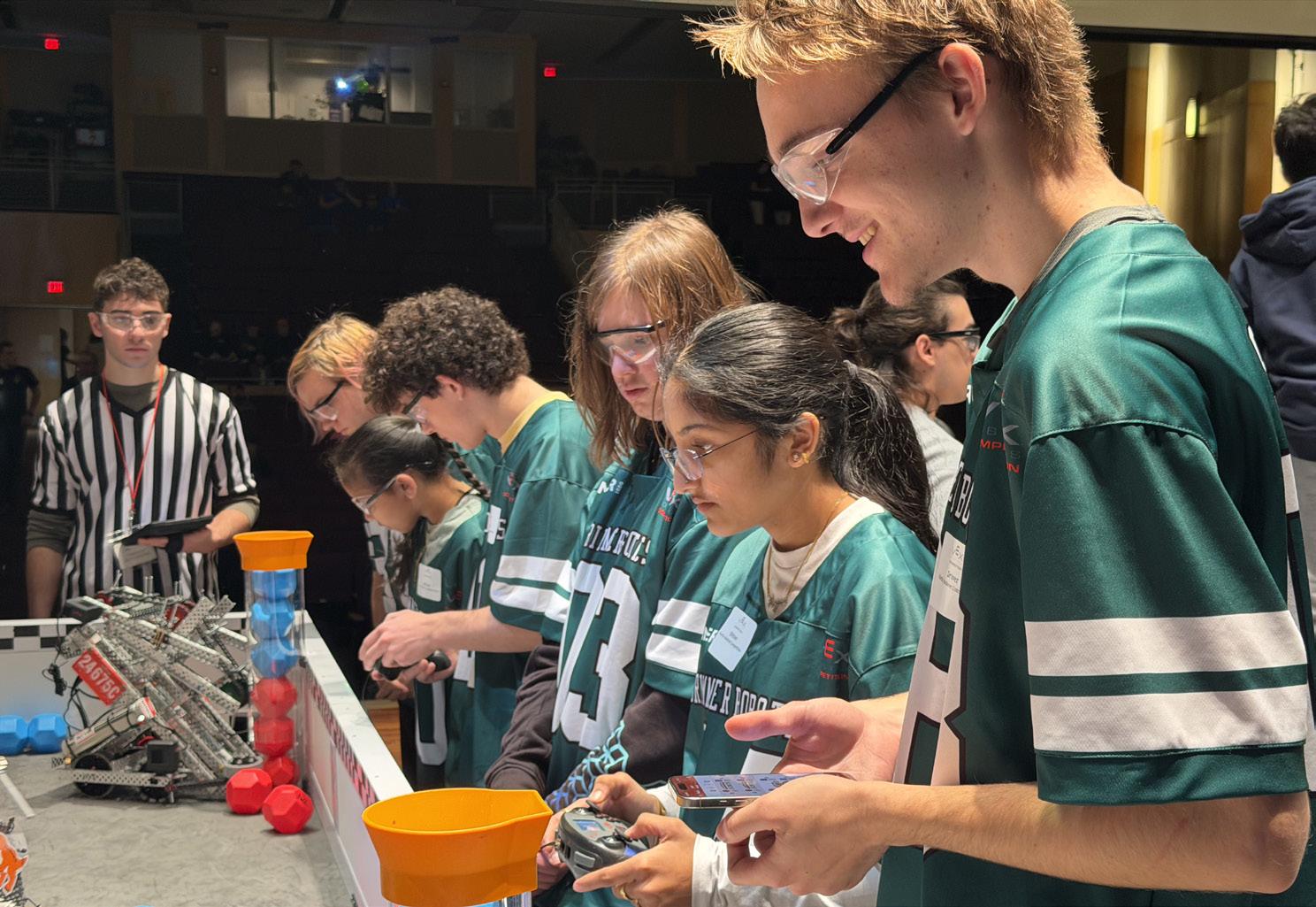
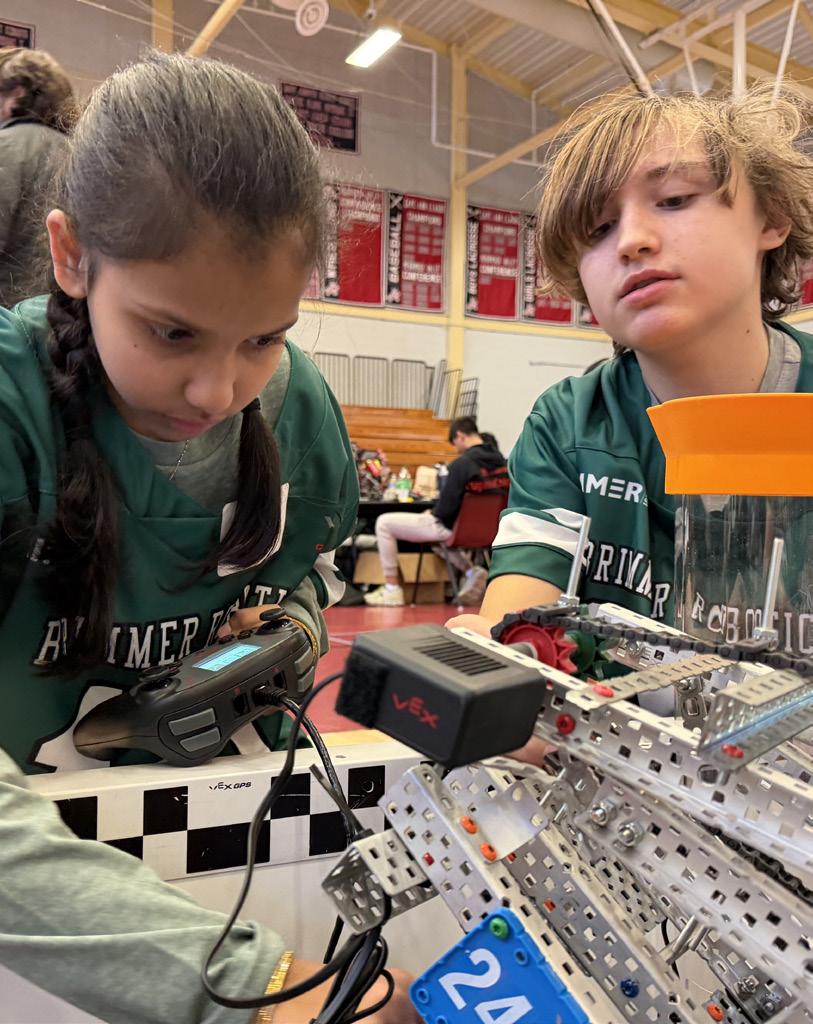
TheBrimmer Robotics Team was founded in 2016 by Jeffrey Wu ’18, whose vision and dedication helped launch the program and guide the team to its first formal competition a year later. Originally overseen by Upper School English Teacher Kenley Smith until I took over as faculty lead, the club is open to both Middle and Upper School students. As interest continued to grow, we made a strategic shift to increase student engagement. With 10 students participating this season—and best practices recommending smaller team sizes for optimal learning—we divided the group into two teams, Mayday and Mayhem, so that every student could take on a meaningful, hands-on role.
Our fully student-run teams meet three times a week and compete in multiple VEX V5 Robotics events across New England each year. Each season centers around a new challenge theme; past examples include High Stakes, Over/Under, and Spin Up. This year’s theme is Push Back. Students design, build, code, and debug their robots themselves. Competitions begin with qualifying rounds, where teams are randomly paired for matches. Top performers earn the chance to select their partners for the final bracket-style tournament, with the top two teams advancing to regionals.
“Students really enjoy the hands-on building and learning,” says team captain Aryaa Mutha ’26. “Some decide to focus on a Robotics/Technology & Engineering/Life Sciences concentration, some go on to apply to Brimmer’s STEAM Diploma Program, and many realize they want to explore robotics and engineering beyond the classroom.”
What inspires me most is that students aren’t just learning robotics and engineering; they are developing leadership, teamwork, and resilience. Their camaraderie and work ethic are remarkable. When I asked Aryaa for a favorite quote from the season, she didn’t hesitate: “Can I work on the robot even though we aren’t meeting today?”
Leonard Wholey Upper School Math and Engineering Teacher
Big Learning with Little Robots
How playful exploration leads to early programming skills
One of the most meaningful professional development experiences I’ve had was a workshop with Professor Marina Bers, head of the DevTech Research Group at Boston College. Her work explores how coding and robotics can be a part of learning in early childhood—an age group often overlooked in curriculum design and rarely given developmentally appropriate tools. Along with 15 other educators, I spent two days exploring ScratchJr and KIBO robots, resources created in collaboration with the Lifelong Kindergarten group at MIT. I left convinced that innovation in education should begin with our youngest learners and grow upward, rather than starting with older students and adapting down. This year, PK teacher Katie Hodes and I have begun that work in the PK classroom with the goal of expanding one grade level at a time.
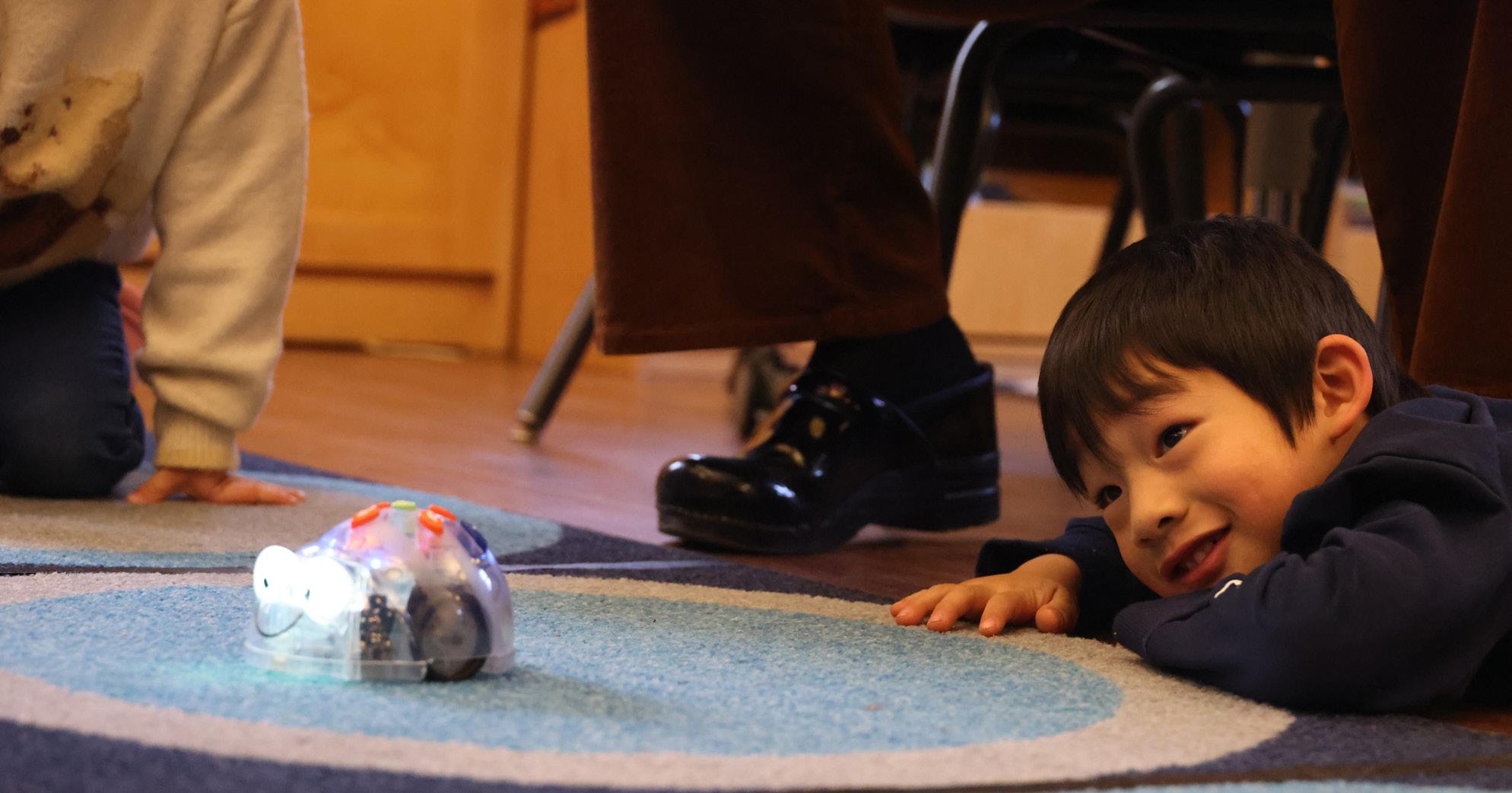
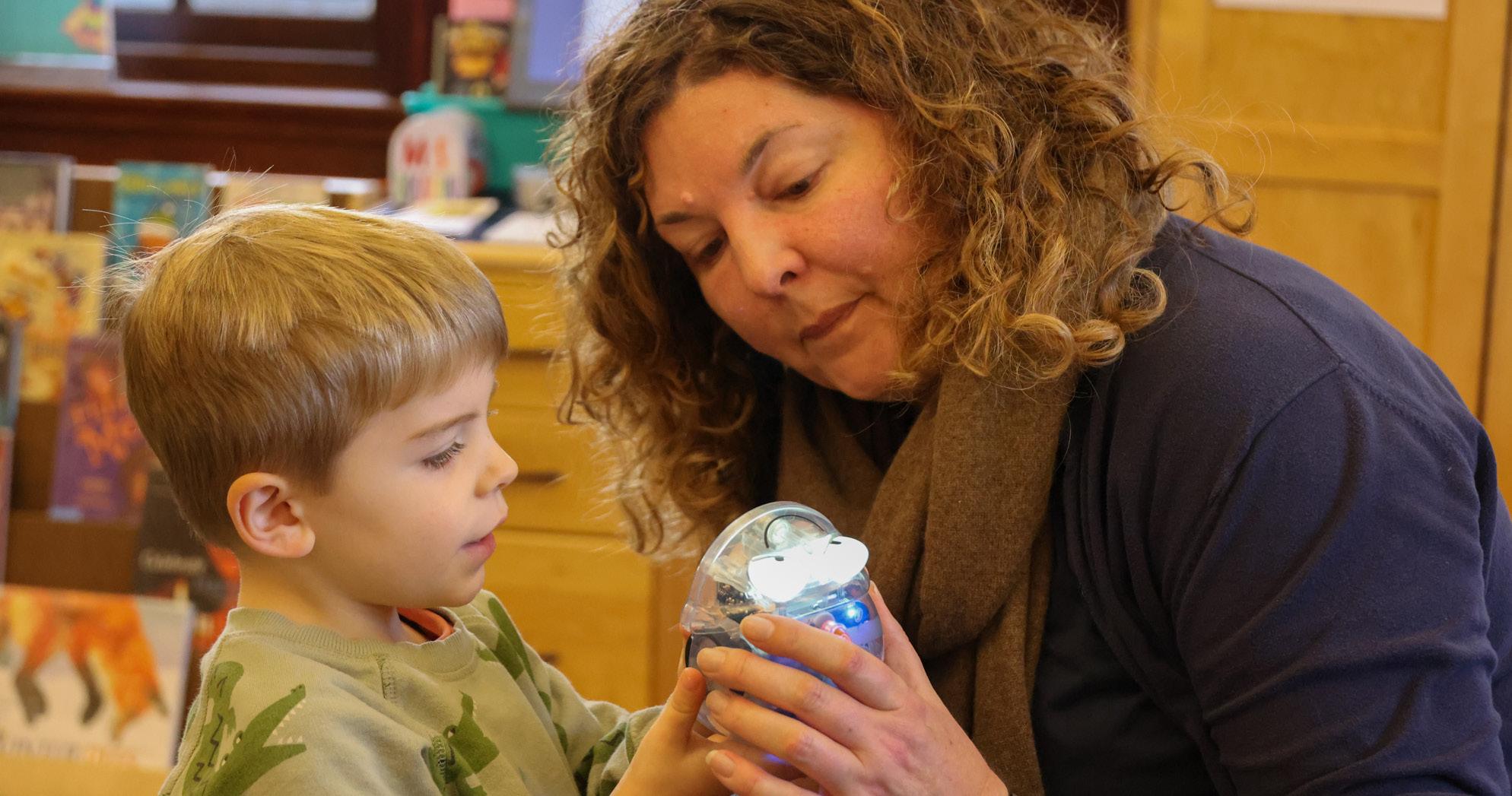
PK students begin learning about programming and robotics with an introduction to Bee-Bots: palm-sized, bumblebee-shaped robots with big eyes and simple, button-based commands. They start by learning what each command does, moving
forward, backward, or to the side. Then, they practice sequencing by “programming” their teachers. Thankfully, the commands don’t include jumps or cartwheels!
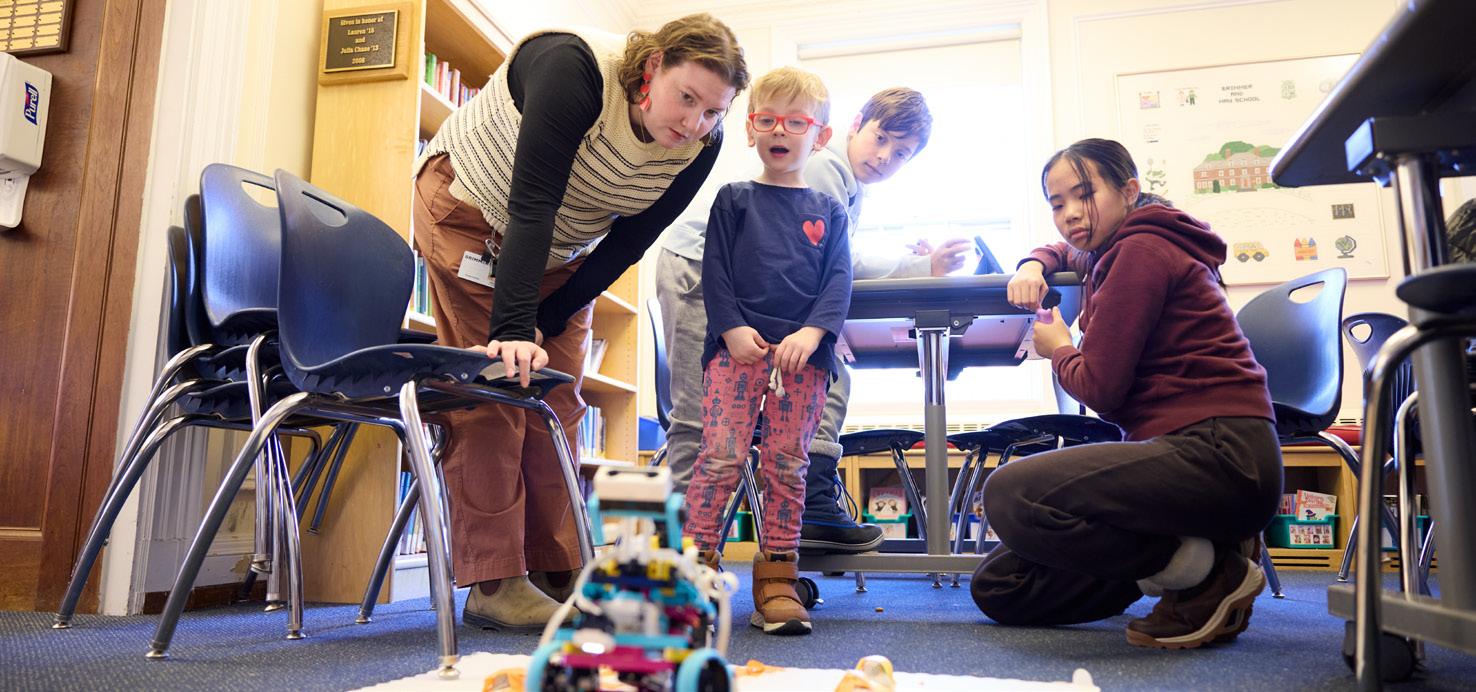
Walking into the Lower School library during this time, a visitor would see the “Bee-Bot Highway,” a designated space where the BeeBots execute their programs. That highway would be lined with students lying on their stomachs, eager to watch the Bee-Bots’ work up close.
Student excitement is unmistakable; most of the first floor of McCoy knows when BeeBots are in action! The robots signal each step with lights and sound, and the students count the steps together, cheering when they see the robots respond independently to commands. This joyful blend of exploration, play, and challenge mirrors the heart of PK learning every day, and I feel fortunate to help shape these early experiences.
Jen Kunkel Director of Instructional Technology
At Left: The Brimmer Robotics Team competes in a VEX V5 event this past fall; Above: Director of Instructional Technology Jen Kunkel teaches PK students how to program their Bee-Bots continued on page 12
From Concept to Creation
Inside the Maker Space STEAM Lab elective
For students in the STEAM Diploma Program, STEAM Lab is a hands-on course where ideas take shape through design, engineering, and fabrication. This Senior Capstone elective in the Maker Space offers students access to professional-grade tools while challenging them to think like designers, engineers, and entrepreneurs.
Throughout the course, students work on both 2D and 3D design projects, fabricating their ideas using an array of tools—including 3D printers, a laser cutter, a UV printer, a CNC router, and a vinyl cutter. Projects move from concept to prototype to finished product, reinforcing the iterative nature of design and problem-solving.
As part of an entrepreneurship unit, students collaborate by collectively running a small business that produces custom T-shirts, sweatshirts, and vinyl decals. By leveraging the Maker Space’s fabrication tools, the class
can fund many of their own projects while gaining firsthand experience in product design, production, and operations.
Students also dive deeply into robotic control systems using the Arduino microcontroller. After completing a series of tutorials that introduce the board and development environment, students design and build original projects that respond to real-world inputs. Using sensors, displays, LEDs, servos, and motors, they transform data into action—prototyping circuits on solderless breadboards and using AI tools to help troubleshoot and refine their code.
This year, thanks to a Faculty Innovation Award grant, students were able to fabricate their own custom Printed Circuit Boards (PCBs) in-house using the Voltera V1 electronics prototyping platform. By eliminating the need for third-party vendors, students were able to iterate more quickly,
ideas in real
and
The result was a wide-ranging portfolio of student work, including a Tetris game; a Stacker game; an automated plantwatering system; a temperature, pressure, and humidity weather station; and even an accelerometer-driven wah-wah device for an electric guitar. Together, these projects showcased the depth and breadth of the STEAM Lab experience—and the power of a Maker Space designed for serious exploration.
test
time,
deepen their understanding of the electronics design process.
Chris Hardman Physics Teacher Director of the STEAM Diploma Program
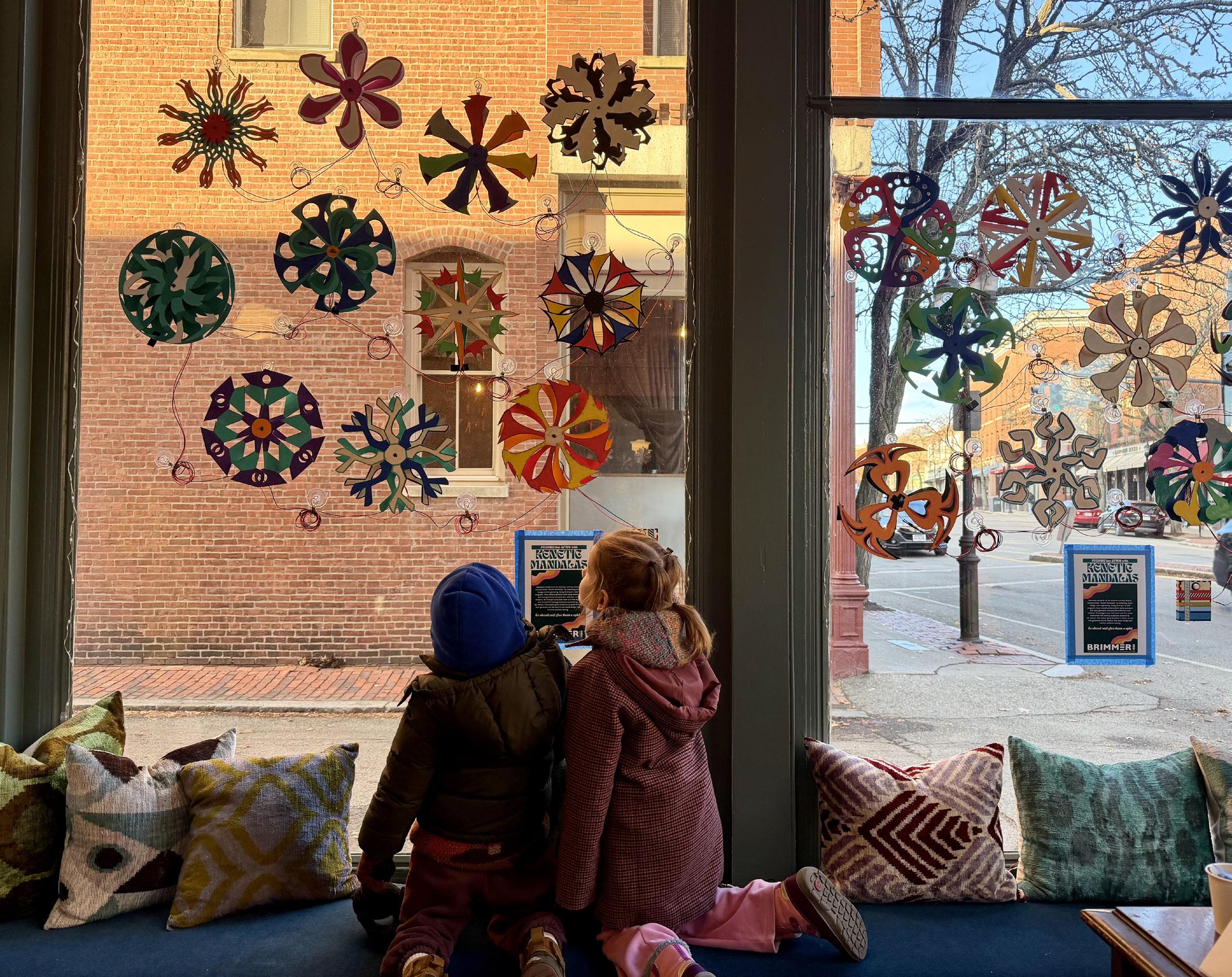
Above: Brooks Neufeld ’26 (front) and Nikka Souza ’26 (rear) work on projects in the Maker Space; At Right: students interacting with the kinetic mandala project in the window of Turtle Books in Brookline Village
When Upper School geometry and design classes come together, the result is both creative and compelling. This fall, students collaborated to create kinetic mandalas that blended math, design, and engineering. Using Onshape, a computer-aided design (CAD) program, they experimented with radial symmetry and applied geometric concepts such as reflection and rotation to develop intricate patterns. The designs were then laser-cut from wood and transformed into moving sculptures powered by DC
KINETIC MANDALAS
STEAMing Up Our Neighborhood
motors—bringing geometry to life through real-world design and creative problemsolving. The finished mandalas also added a stunning new feature to the Dining Commons windows in October.
A few months later, Turtle Books, a new children’s bookstore in Brookline Village, reached out about a possible collaboration; and the mandalas were the perfect fit for their holiday window display. Visitors were invited to press a button and watch the
sculptures spin, turning the students’ work into an interactive experience.
This kind of interdisciplinary learning gives students the rare opportunity to transform classroom concepts into beautiful, collaborative creations that enrich the wider community.
Rupa Houndegla P ’21, ’26 Upper School Math Teacher
Kathryn Lee P ’32, ’34 Director of Innovation & Design
Keeping the Spirit Alive
From Green & White Day to the Gator Games
By Lea Abdulnour ’29, Journalist for The Gator
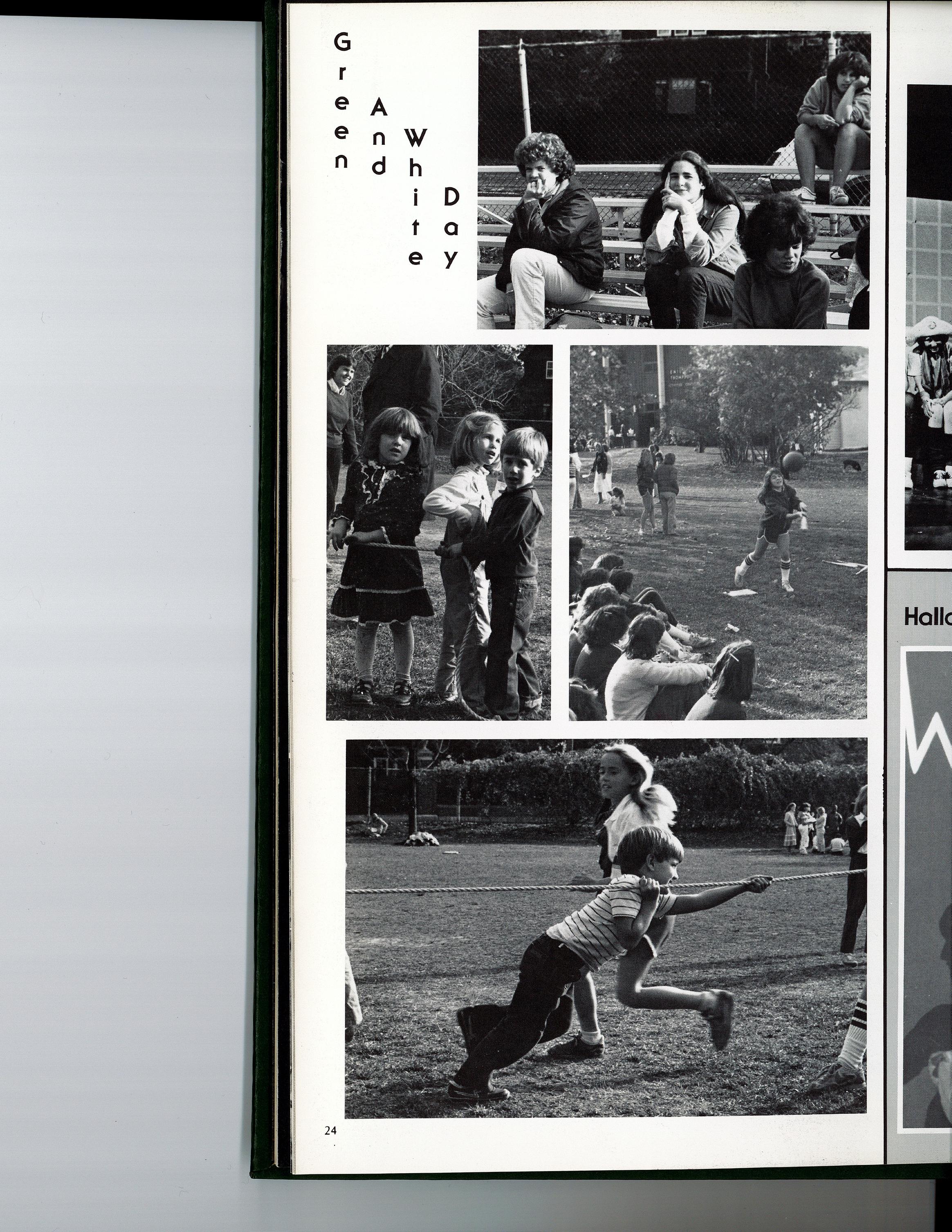
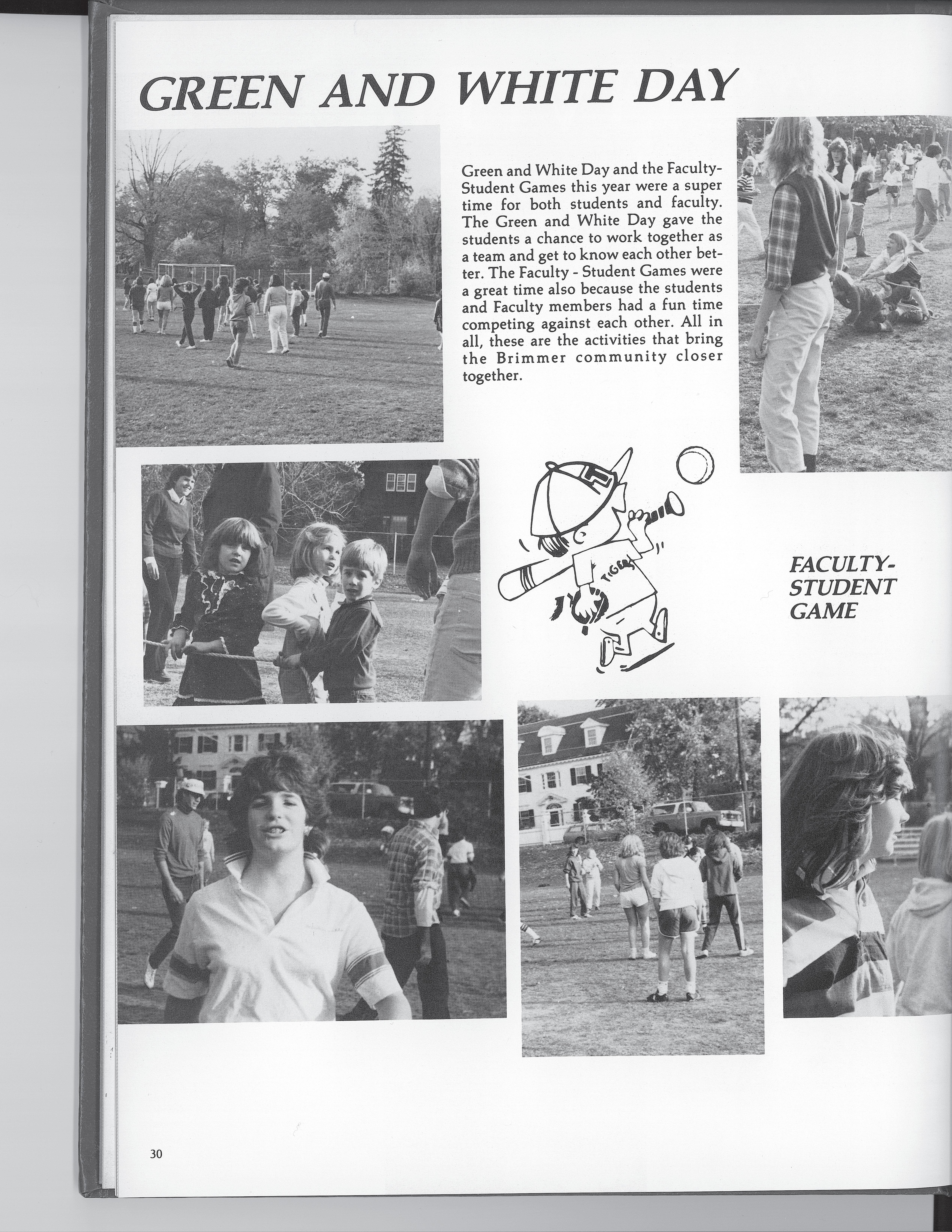
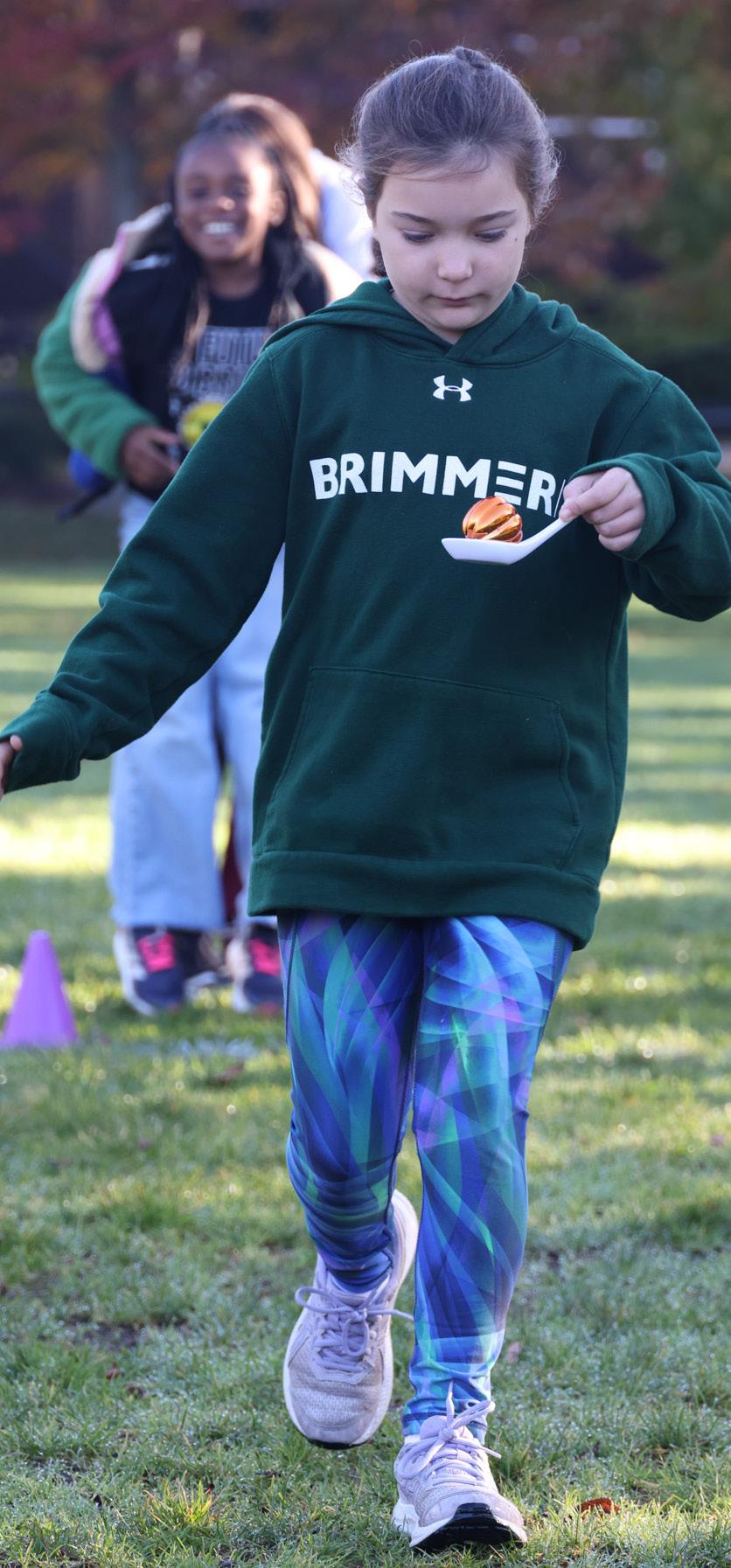
Prior to the launch of this year’s Gator Games, the School had another cherished tradition: Green & White Day. Starting in the 1980s, this annual tradition brought students from all grades together for a day of friendly competition and community pride.
Then, sometime in the early 2000s, Green & White Day quietly disappeared. Assistant Head of Academic Affairs Joe Iuliano P ’14, ’15, ’18, who served as Middle School Head at the time, couldn’t recall the reasons for ending the tradition, only noting an erosion of student interest. “There was no formal administrative decision, as I recall, but it just
faded away,” Iuliano said. “But it’s a great school tradition and lots of fun, and I am so glad to see the revived student excitement around it.”
Much like today’s Gator Games, alumni recall it as one of the most anticipated days of the year, when students of all ages came together to show School spirit and compete in friendly events.
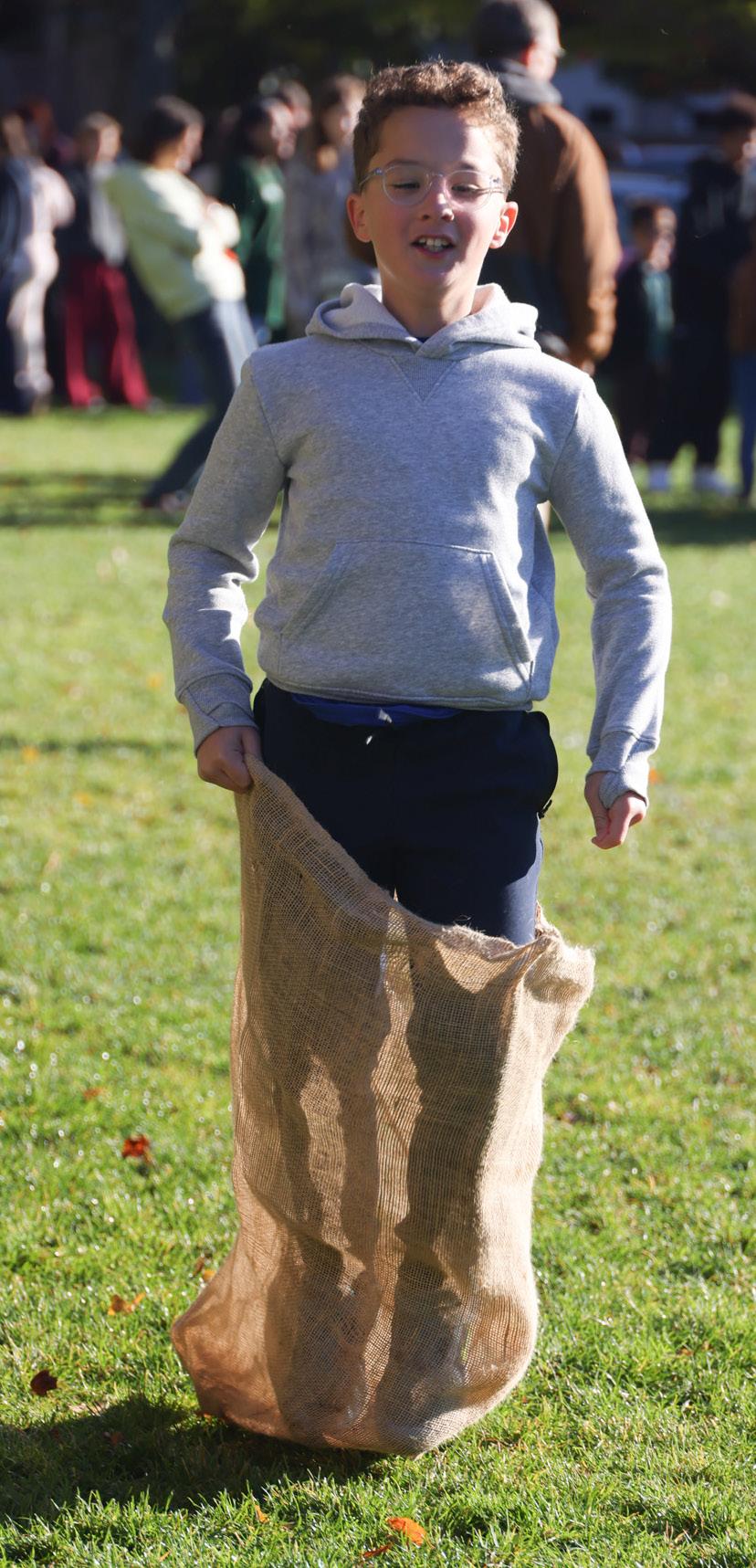
Students were split into two teams, Green and White, and took part in various games and challenges throughout the day. “I remember potato sack races and running across the
field with an egg on a spoon,” said Courtney Camps Toomey ’04. “I also remember that you were assigned to your team when you started at Brimmer and your team would be published in the all-student handbook and printed phone book. Go Green!”
Lower School students were paired up with “buddies” in the Upper School, similar to Harvestfest today. Even those not directly competing found joy in watching, encouraging others, and celebrating every small victory as if it were their own. Alumni Affairs & Special Events Director Amanda Spooner Eppers ’88, P ’22 reflected on her
always been the ultimate mission: to bring everybody together.”
Eppers and other alumni faculty call the day “one of the most memorable parts of the school year.” Many look back on Green & White Day as a symbol of belonging, a day that reminds them how it felt to be part of something bigger than themselves. “I remember always loving Green & White Day,” Ali Drourr Brockman ’98 said. “I loved that it was our entire community together, having fun, and competing in silly games. I loved being with the big kids when I was younger, and I loved being able to support the Lower School as an Upper Schooler. It was what Brimmer was all about, a fun community taking care of one another.”
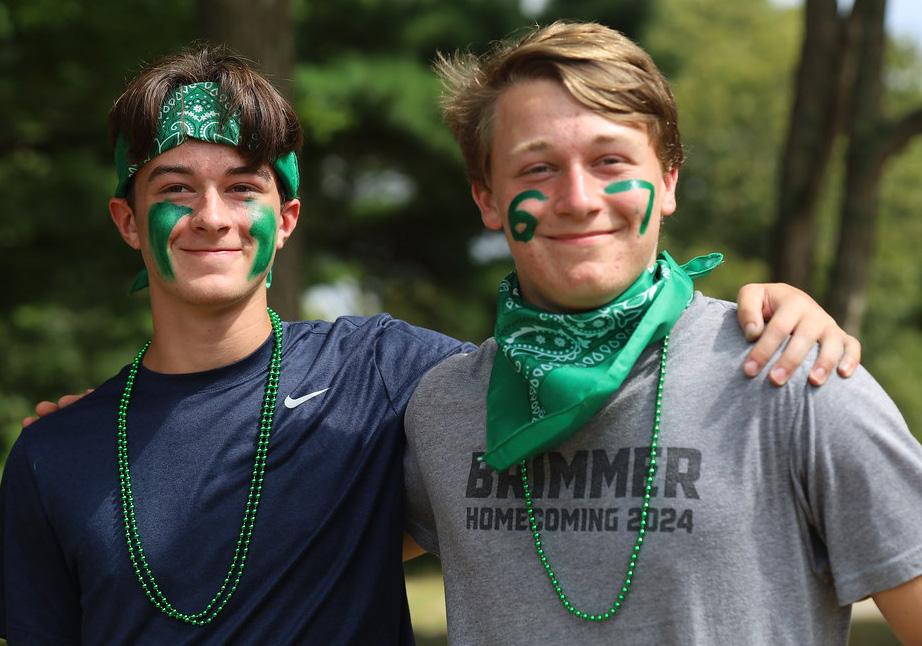
Opposite: Edward Flint ’26 (L) and Andrew Flint ’26 representing Team Green during a fall Gator Games event; At Top: Students participating in Green & White games back in the 1980s; At Bottom: Ezequiel Diaz ’28 and Nydia Comenzo ’27 representing Team White during a fall Gator Games event
“The Upper School felt like a cohesive group of students, and we really felt that camaraderie,” Eppers said. “I think that carries forward to today, where the kids really do feel that same camaraderie. I feel like there’s that good mix and connection in both Games.”
Although the activities have evolved over time, the heart of the tradition remains unchanged, Epper said, adding that each generation of students upholds the same sense of teamwork and joy, showing that the School’s traditions continue to thrive today. ■
Look Up!
Storytelling through the Lens of Experience
By Sue Cuyler, Director of Marketing & Communications & Madison Perkins, Marketing & Communications Associate
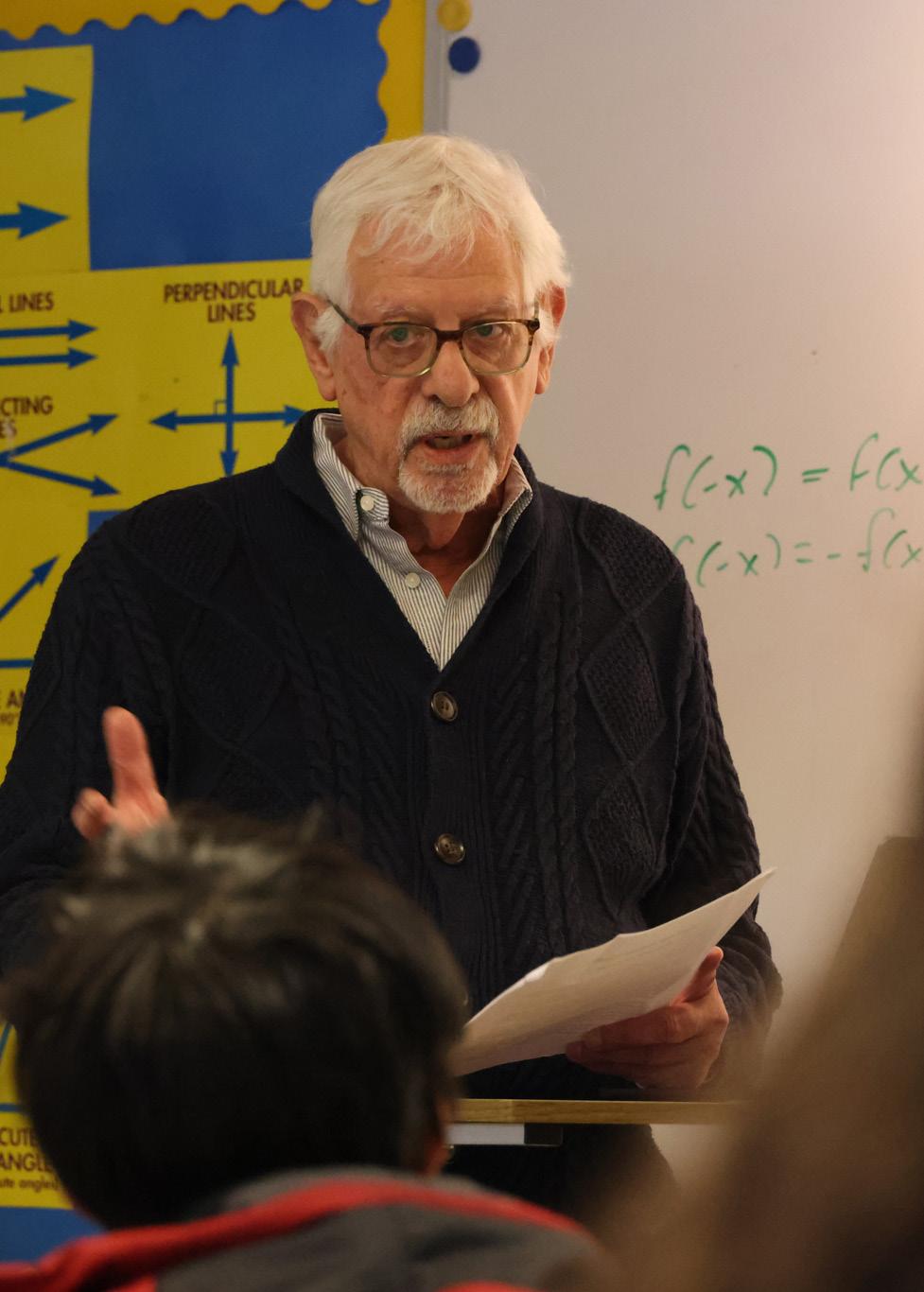
“T he world is a beautiful place,” says filmmaker and Brimmer Digital Cinema Teacher Eric Neudel, “if you know what to look for.” That belief sits at the heart of Neudel’s teaching, where Upper School students learn far more than how to operate a camera or edit a sequence. They learn how to shape meaning and tell stories that resonate.
In Neudel’s classes, filmmaking is about intention. His students’ final projects pose deceptively simple questions: What kind of world do you want to live in? What role will you play in making that happen? From those prompts, students create three-to-fourminute films that reflect their values, their observations, and their growing sense of voice. That thoughtful grounded approach is no accident.
Neudel is quick to say that he did not come to teaching by following a traditional academic path. Instead, he brings life experiences shaped by decades of work as a filmmaker and photographer in demanding, often unpredictable environments around the world.
“Not having been a teacher all my life, formally speaking,” he explains, “I draw on experiences from places where things were complicated and uncertain. Those experiences taught me so much, and I adapt them to an academic setting.” For Neudel, teaching solely from a textbook written by someone who has never seen the world risks distorting history. Lived experience, on the
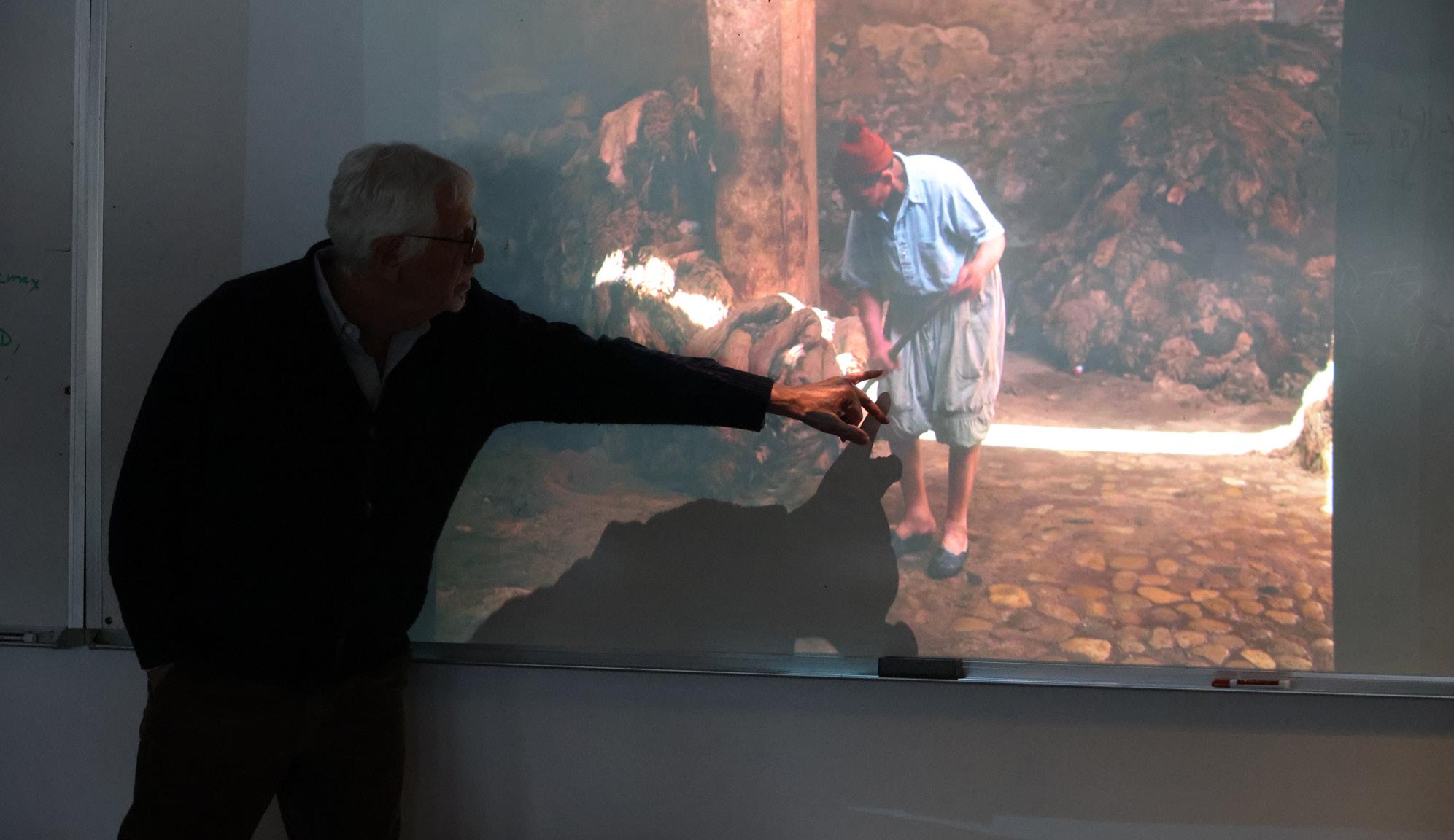
At Left & Opposite: Neudel joined Julie WilliamsKrishnan’s Darkroom Photography class in the fall to share his photography with students
other hand, brings nuance, humility, and curiosity into the classroom.
In many ways, Neudel has been teaching since the 1970s—mentoring producers, editors, assistants, and young journalists while working on ambitious documentary projects. Over the course of his career, he has produced a remarkable number of films and received an unsurprising number of accolades for his work. One defining moment came in the mid-1990s during the NOVA production Fast Cars, a film aboutIndy car racing initially built around a predicted winner who did not, in fact, win. Faced with a failing narrative, Neudel reimagined the story entirely, shifting the focus to the aerodynamics and athleticism of the sport. That lesson of being adaptive is one he passes directly to his students.
Learning how themes weave together and how visuals carry emotional weight can strengthen not only a film but also one’s writing, thinking, and communication skills in every area of life. “Abstract thoughts don’t hit,” he tells students. “But kernels of reality do—images, moments, pieces of
continued on page 18
life.” Humans, he reminds them, are natural storytellers. Even when we don’t have all the answers, we have consciousness, shared experiences, and the ability to communicate them.
Neudel also brings a filmmaker’s pragmatism into the creative process. Longer films, he notes, often mean more problems. Constraints force clarity. Distilling a theme to its essence becomes an exercise in problemsolving—and, ultimately, an art.
It’s a mindset shaped by learning every aspect of filmmaking the old-school way, working on original film stock, undertaking technically demanding projects, and staying curious. “My experiences made me insatiable for information,” he says. This quality is one he hopes his students will absorb.
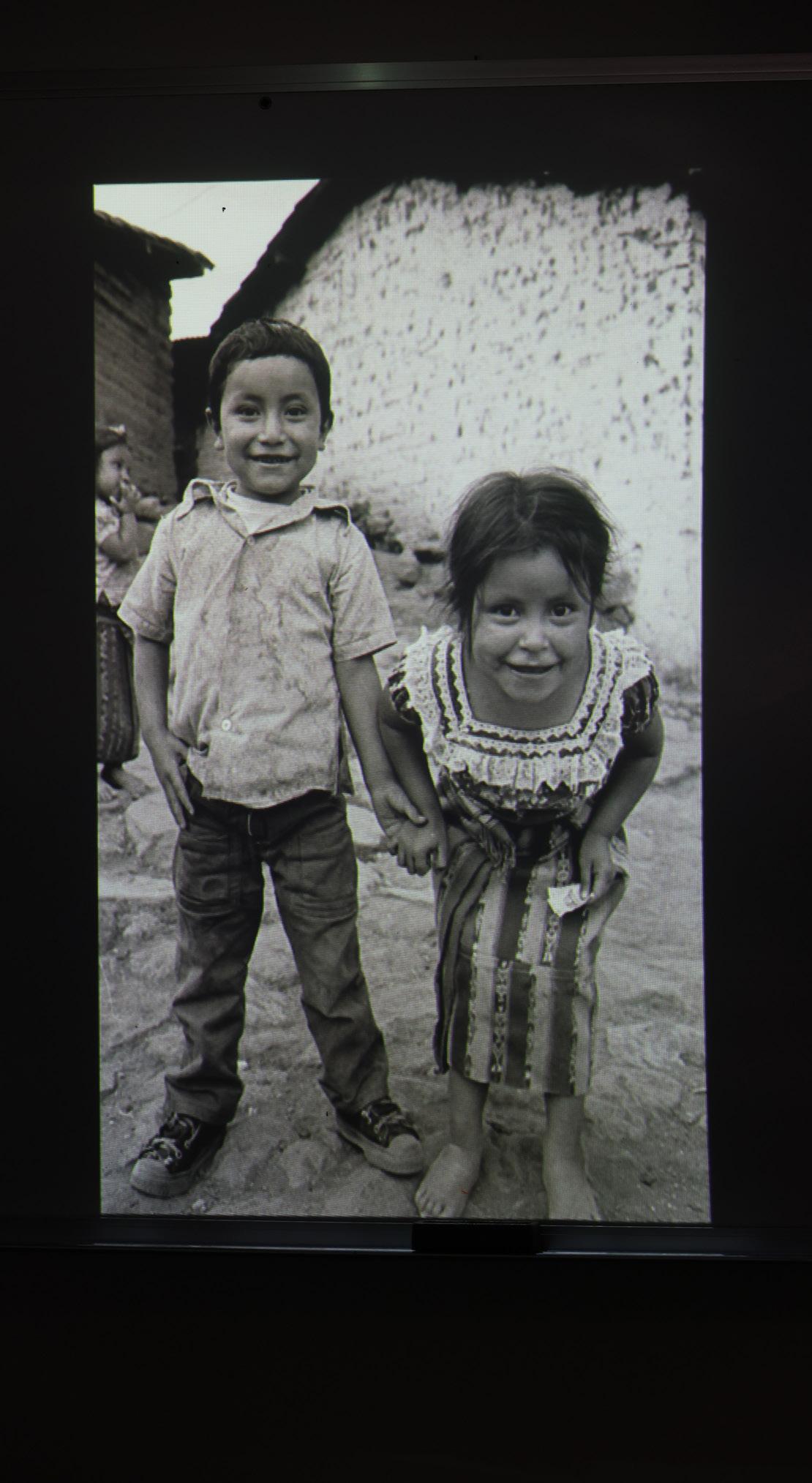
Neudel’s relationship with photography mirrors his approach to teaching. He bought his first Leica camera in 1972 and carried it—by hand, never with a strap—across the Amazon, the Andes, the Himalayas, and Southeast Asia on assignment with NOVA That same camera was his companion for 45 years, capturing images that now form a visual memoir of cultures, landscapes, and lives.
This spring, many of those photographs are being honored at an exhibition at Brandeis University. “How can you wrap your mind around this big, complicated world?” he asks. “For me, it’s by taking photos. In doing so, you see the simplicity of life. You see people’s dreams, passions, and aspirations.”
That philosophy recently came full circle on campus when Upper School Photography Teacher Julie Williams-Krishnan invited
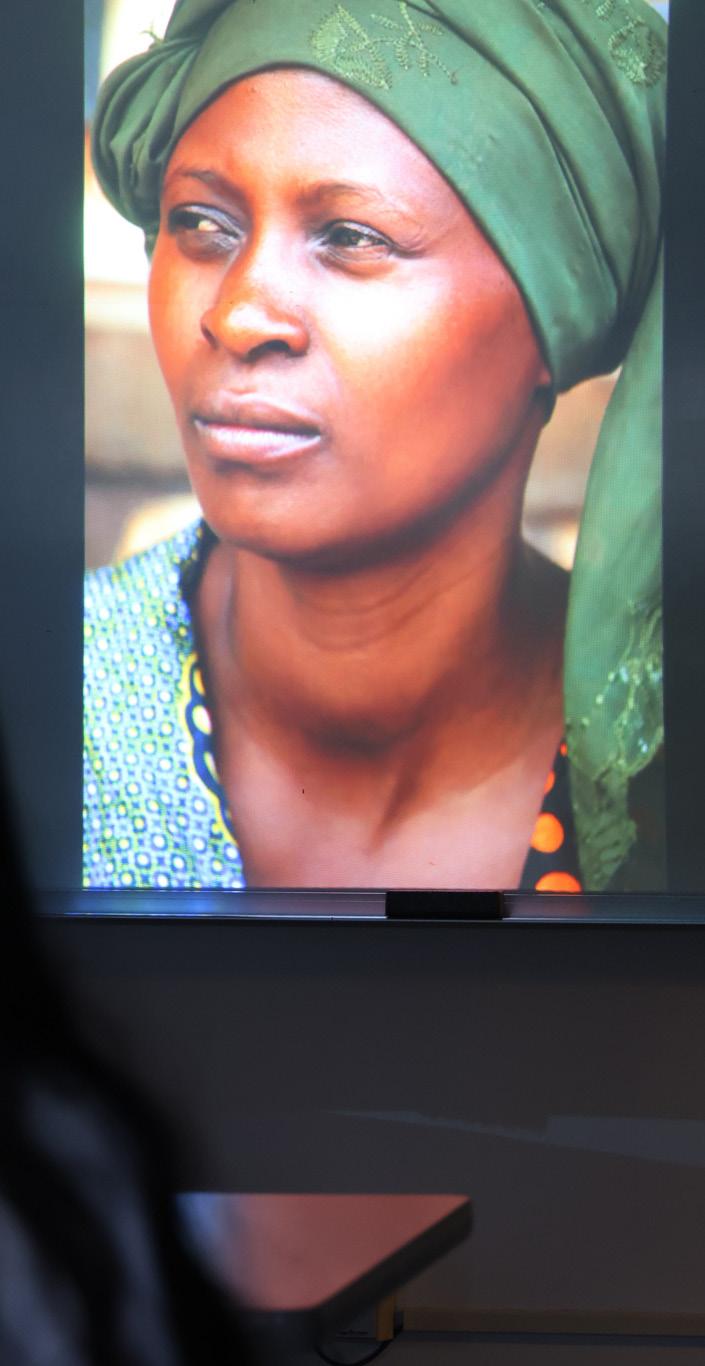
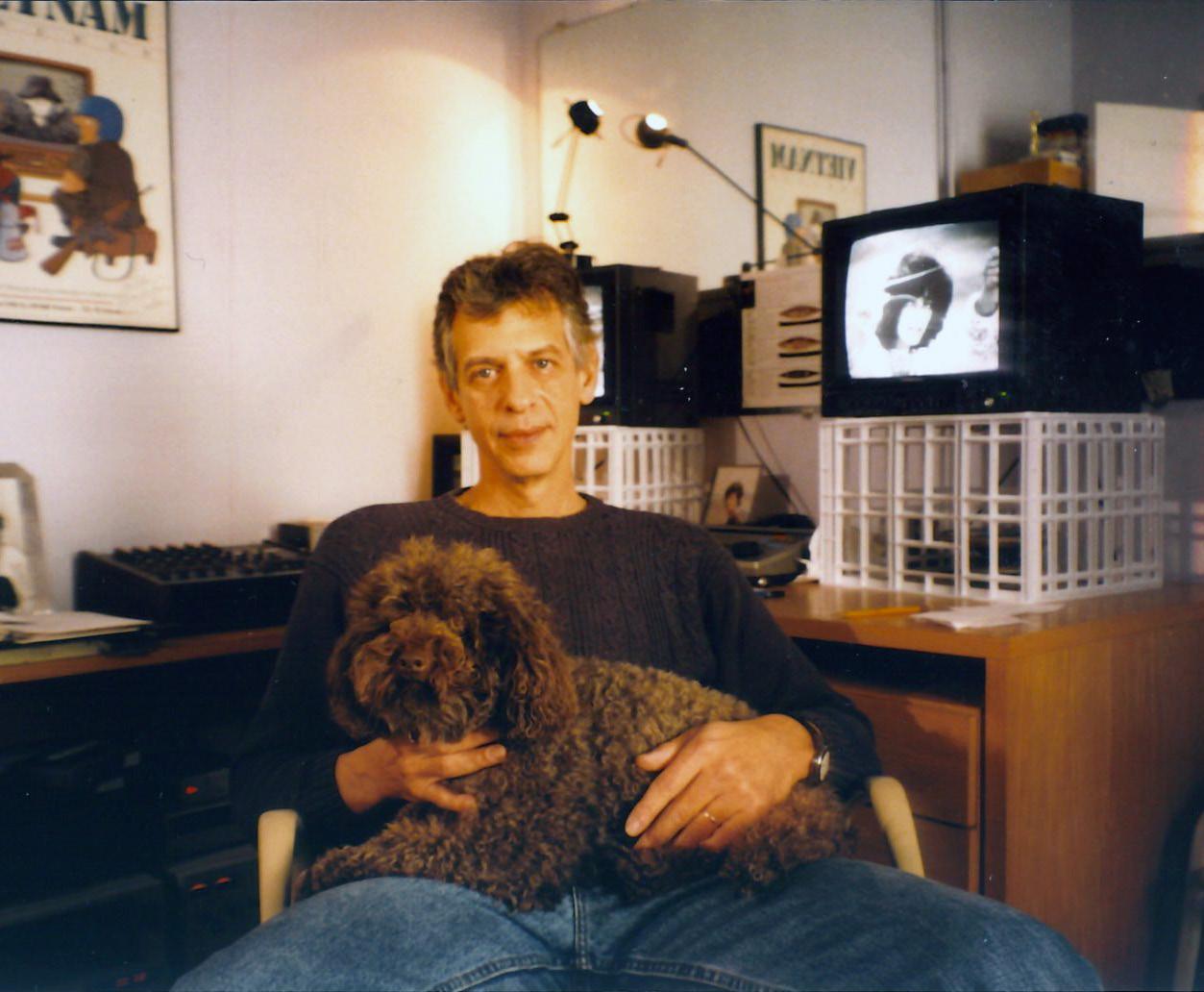
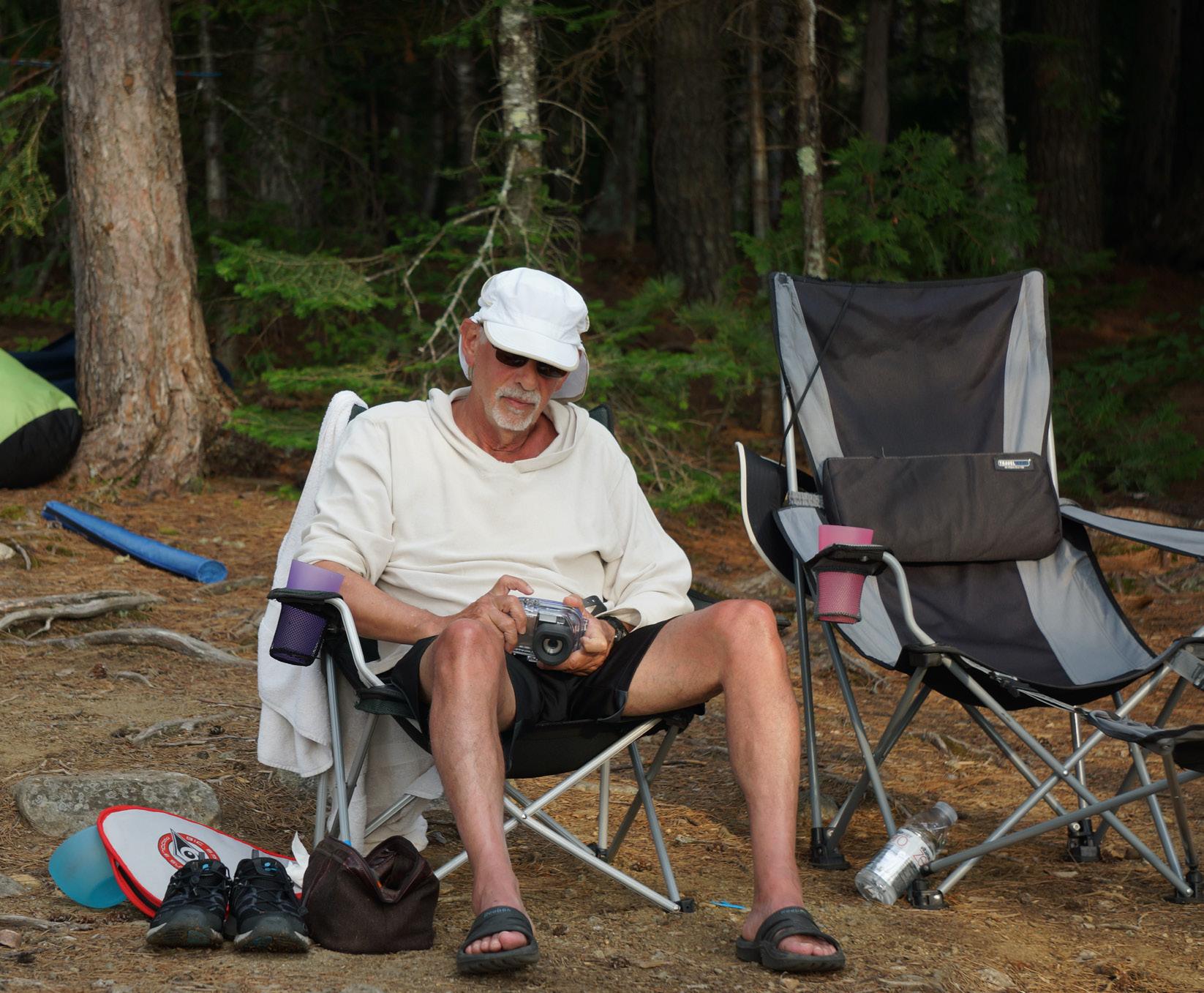
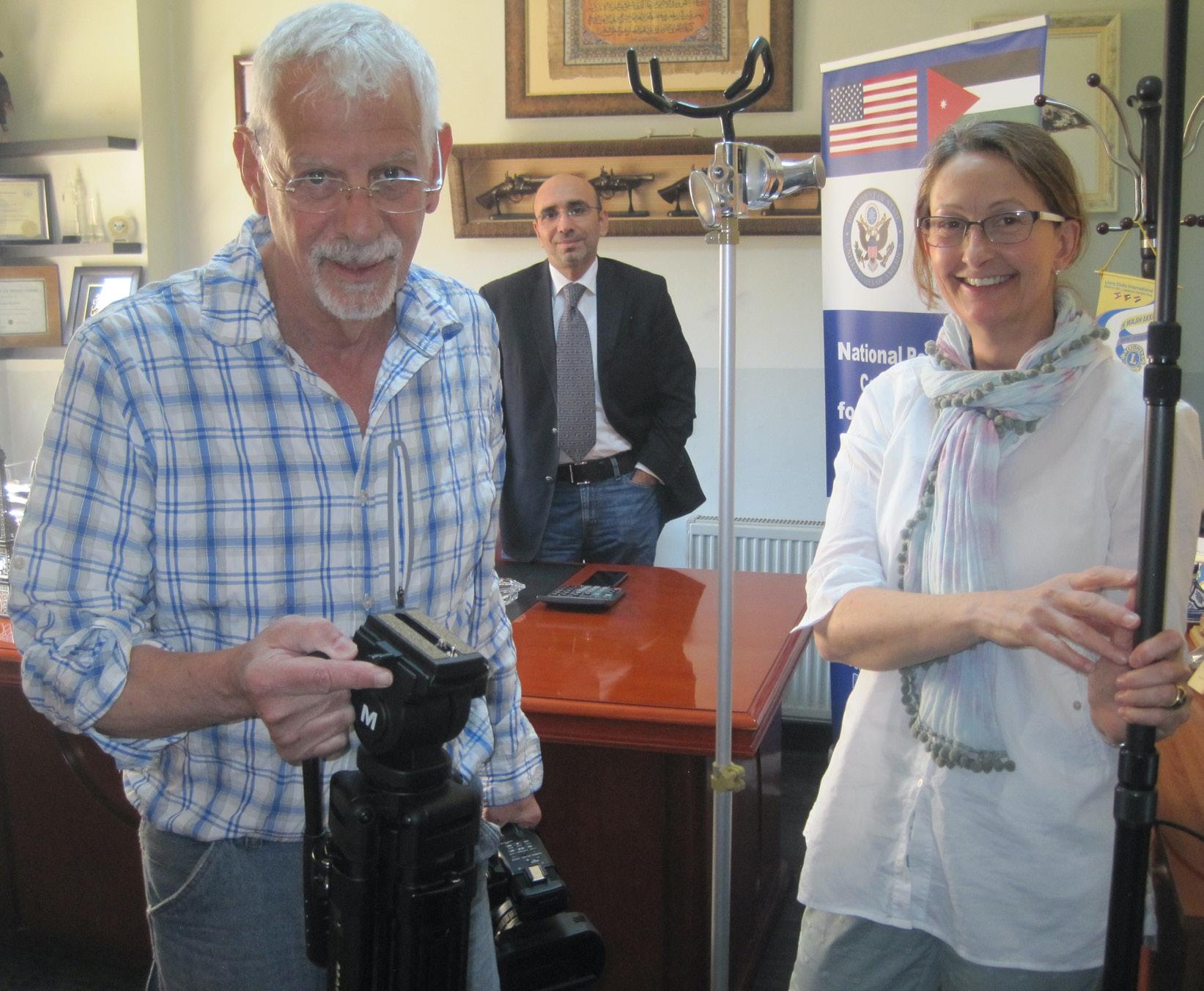
At Top: Neudel in his Brookline, MA, home studio in 1995, editing a film with the help of his dog, Lily; At Left: On location in a wilderness watershed in northwestern Maine in 2013, preparing to shoot photographs with a waterproof housing; Opposite Top: Personal portrait from 1973 during a trip to the Sahara Desert; Opposite Bottom: In Amman, Jordan, in 2016, filming an interview with Akram Ramini and co-producer Alison Gilkey for the film The Wake Up Call
Neudel to speak to her class. “When I learned that Mr. Neudel was printing photos from his lifelong travels, I asked to see them,” shares Williams-Krishnan. “I was in awe, not only by the beauty of the photos but by the fact that many had never been shared outside his family. This work deserves to be seen!” Students in Williams-Krishnan’s Darkroom Photography class agreed. “Mr. Neudel’s presentation and photography told such an emotional story,” says Izzy Miller ’29.
Sharing his photography with students was not a departure from his film teaching but a continuation of it. The images brought his stories to life, demonstrating how experience, observation, and respect for one’s subject transform art into something deeply human. “I can remember each and every shot,” says Neudel. And when he speaks about them, students understand why. “It was a wonderful experience and extremely inspiring,” says Miller ’29. “It made me want to travel the world and take photos.”
Neudel’s career required constant travel, a pace that sometimes took its toll. Yet even then, he sought balance—coaching his children’s sports teams to maximize time with family, grounding an extraordinary professional life in everyday presence. That same balance now defines his role at Brimmer: global perspective paired with deep attentiveness to students. In Neudel’s classroom, filmmaking becomes a way to make sense of the world and one’s place in it. Students learn not just how to create films but how to look up, slow down, and notice what matters. In doing so, they discover that storytelling is not just an art form; it is a way of understanding life itself.
“Now Mr. Neudel will have his own show at Brandeis University!”* exclaims WilliamsKrishnan. “How exciting that he has the chance to share his photographs and experiences with the world. We will all be richer for it!” ■
*Neudel’s photography exhibition, Only Us: Photographs by Eric Neudel ’69, will be on view at Brandeis University’s Wien Faculty Center from March 2026 to June 2026.
FILMMAKER (AND YOUNGEST SON) PETER NEUDEL MADE THE FOLLOWING SHORT FILM ABOUT HIS FATHER’S LIFE. TITLED I COULD TELL MY OWN STORY, IT CAPTURES THE ESSENCE OF HIS FATHER’S LONG AND STORIED CAREER.
spotlight on LOWER SCHOOL CREATIVE ARTS
Three disciplines. One shared vision.
In the Brimmer Lower School, drama, music, and visual art are intentionally woven into every student’s experience, guided by a team of educators who plan, teach, and reflect together. We asked the Lower School Creative Arts team to share their experiences, each through the lens of their own discipline. What emerges is a shared philosophy: Collaboration among the art disciplines is what allows lessons to resonate most with students.
Rachel Wolf Heyman P ’29, ’32
Lower School Drama Teacher
Caroline Scheibe
Lower School Music, Chorus & Band Teacher
How would you describe the role of the arts in the Brimmer Lower School experience? Why is collaborating as a team so important to that experience?
Joanne Clamage P ’08, ’10
Lower
School Visual
Arts Teacher
JC: The Creative Arts are the heart and soul of the Lower School community. Our program is unique as students can explore all three disciplines as a part of their school day. Through fourteen different arts presentations, the Brimmer community comes together to share and appreciate one another’s creativity. Throughout the year, our team meets weekly to design and plan the process that children will experience in their creative arts classes. We work carefully to ensure that experiences build over time to deepen students’ learning. In addition to weekly meetings, we assist one another to support our four choral and band ensembles throughout the week as well as provide leadership for our Music Exploration program. These additional touchpoints with students and as a team foster trust and appreciation for one another.
CS: The arts are a connective thread throughout students’ Lower School experience. The three of us find ways to connect to classroom themes so that students can engage with their classroom topics of study from multiple angles. Because we teach students in each year of their Lower School journeys, we can build upon their skills and knowledge from year to year. Collaborating as a team allows us to coordinate curricular themes and provides time and space for us to create meaningful community events that become milestone experiences for our students.
RWH: At Brimmer, the arts are valued as vital to our students’ learning. All Lower School students get weekly instruction in drama,
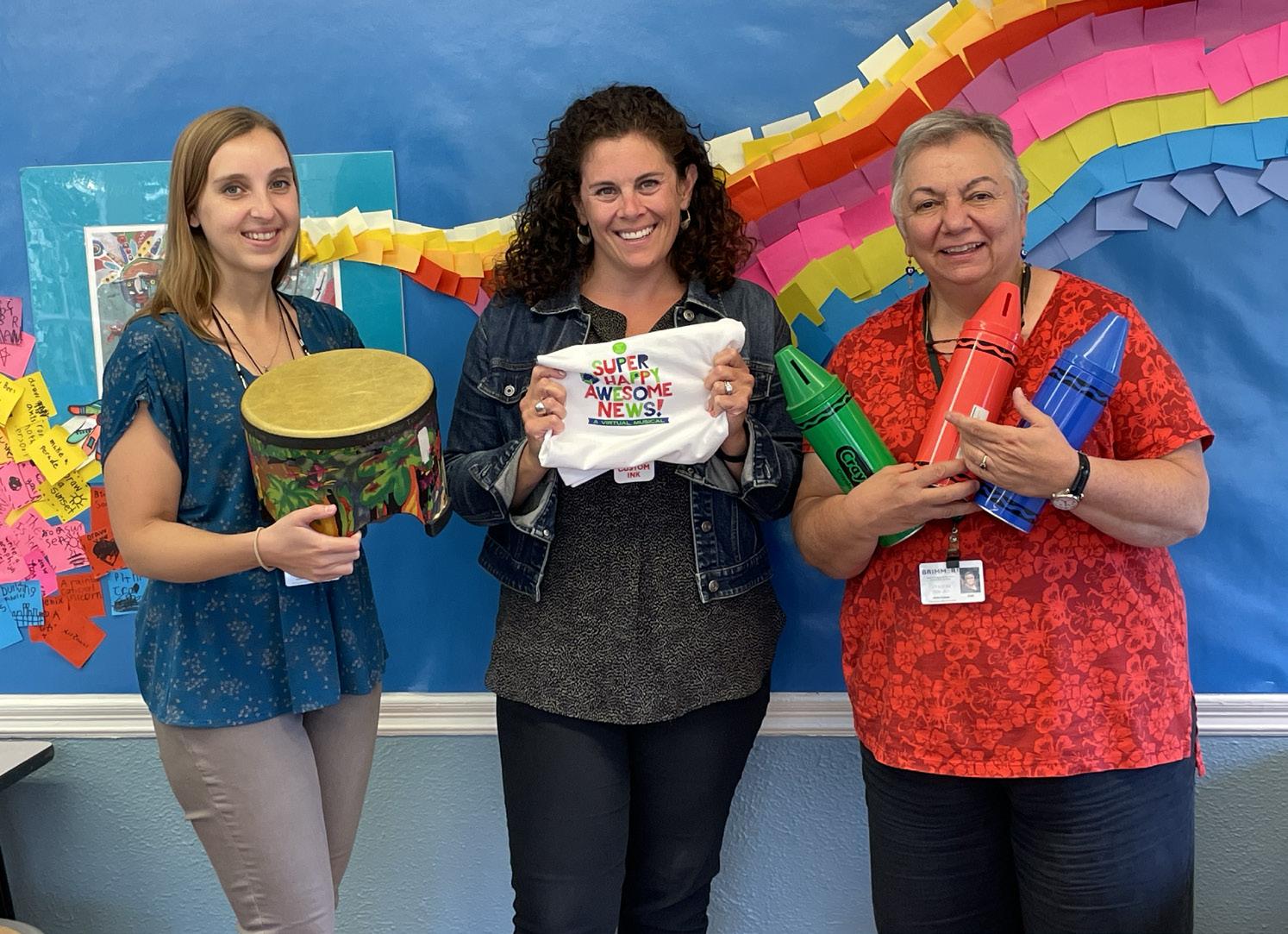
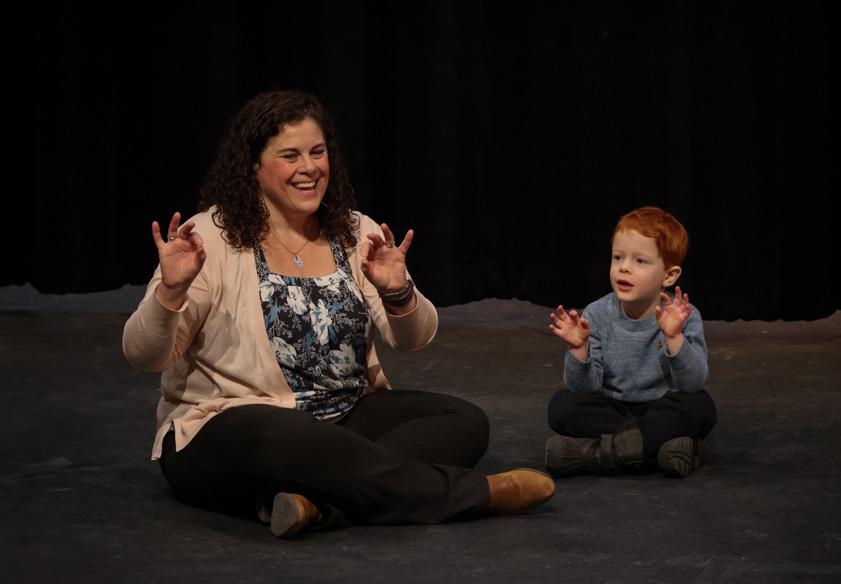
Above: The Creative Arts team celebrates the 4th & 5th Grade Musical production Super Happy Awesome News! in 2021; Opposite Left: Wolf Heyman during a PK/K Informance; Opposite Right: Clamage explores color mixing with her early childhood students
music, and visual arts. Our program focuses on a progression of skills in music, drama, and art from year to year. We equip our students with skills to express themselves, but we also use the arts to approach classroom curriculum through a different lens. For example, when Grade 2 learns about Brazil, they also become experts on the rainforest in drama class using educational theater techniques to explore global issues such as deforestation and pollution. Simultaneously, the students explore Brazilian music in music class and create art inspired by Brazil in their visual arts classes.
The arts also serve as a medium to foster community. Whether it is a performance, a visual arts exhibit, a concert, or an informal share in a classroom setting, our students are coming together to support each other, enjoy each other, and learn from each other. Our collaboration as a team enhances the educational experience for students in so many ways: creatively, academically, socially, and emotionally. As arts educators, we collaborate to make the creative experience meaningful for our students. We bounce ideas off each other and count on each other for support, logistically as well as artistically. A drama production is so much more exciting with visual art and musical elements, so our collaboration as a team benefits the artistic experience for all. And because we are responsible for so many productions and events each year, we rely on each other to be present as we take turns taking the lead and being support systems. The students see that we, as adults in the community, also come together through the arts. They know that we are all on the same team with a common goal to help create a positive experience for our students where each individual student shines. ■
CREATIVITY & CONFIDENCE
How do you help the most hesitant students find their confidence/ voice/artistic expression during their years in the Lower School?
JC: Our classes are designed to build respect for one another and the work it takes to be a practicing artist. Through carefully guided experiences, students learn to appreciate one another, honor each person’s unique perspective, and provide positive feedback through reflective practices. Risk-taking is encouraged, and mistakes and triumphs are celebrated equally. We model an appreciation for authenticity, hard work, and quality over quantity.
CS: In the music classroom, patience is key. I begin offering solo opportunities to students in PK and continue to build in moments for turn-taking throughout each year of the Lower School music program. Often, there are students who do not want to take solo turns when they first begin at Brimmer. I always offer those students a turn anyway, with the understanding that they can say, “No, thank you” if they don’t want one. I find that over time, these students see that taking a turn isn’t scary or intimidating; it’s just part of what we do here. Often, those same students sing
confidently by the end of the school year!
RWH: Starting in PK, our students feel empowered to share their work with others because it is such an integral part of our school culture. With our process-oriented approach, our youngest students get used to sharing dramatically in a classroom setting first before venturing to the stage to share. This emphasis on process makes it rare for a Brimmer Lower School student to express hesitancy about sharing. We encourage risk-taking first in our learning environments, so once the arts are taken to a more public setting, like the stage, our students have taken baby steps to get there and are generally feeling excited and brave. The fact that we teach all Lower School students, PK through Grade 5, allows us the unique experience to really know our students and their families as we help them grow from year to year. Our long-standing relationships with many of our students give us the knowledge needed to design an experience to best match the needs of each individual student, so that they feel comfortable sharing.
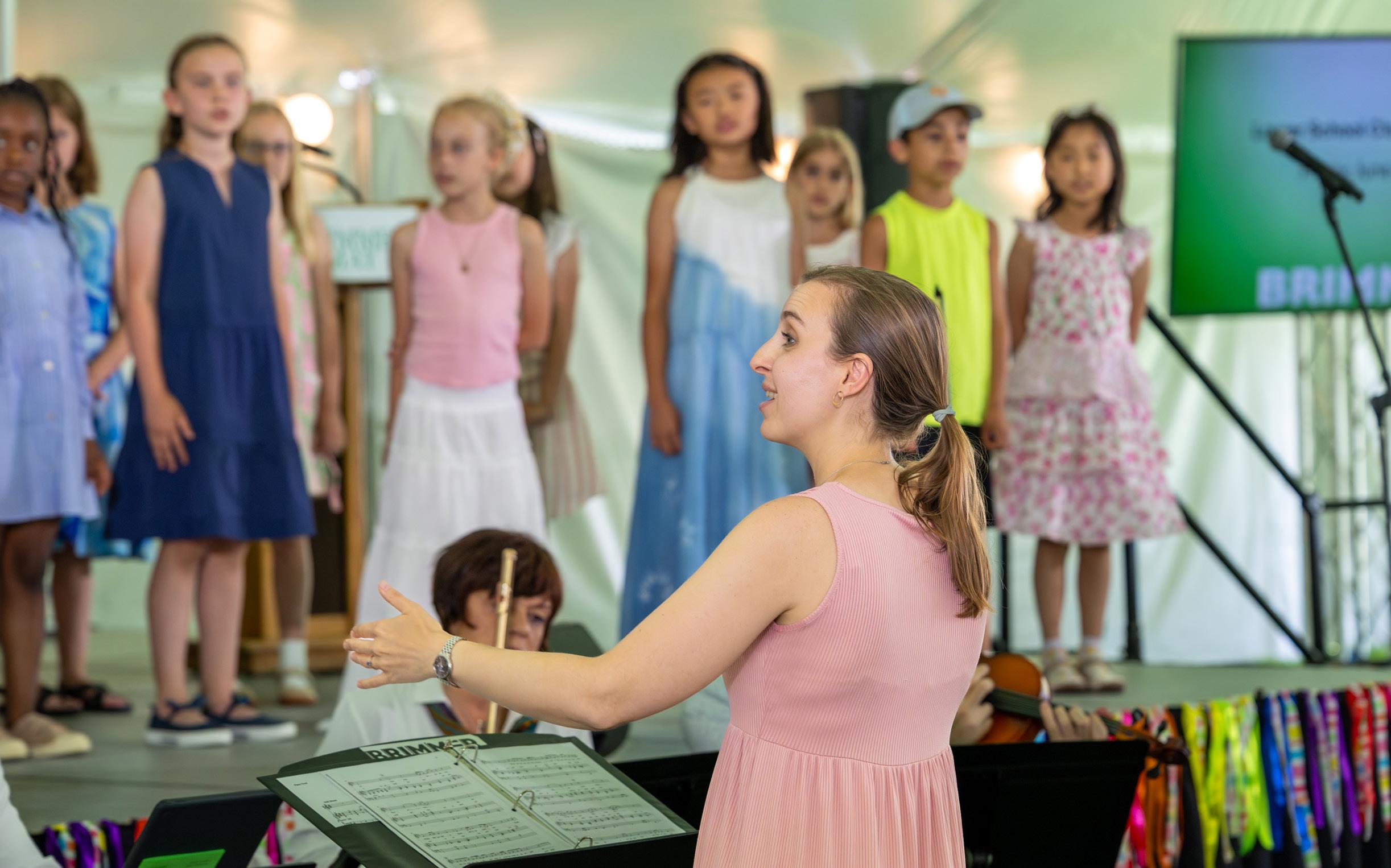
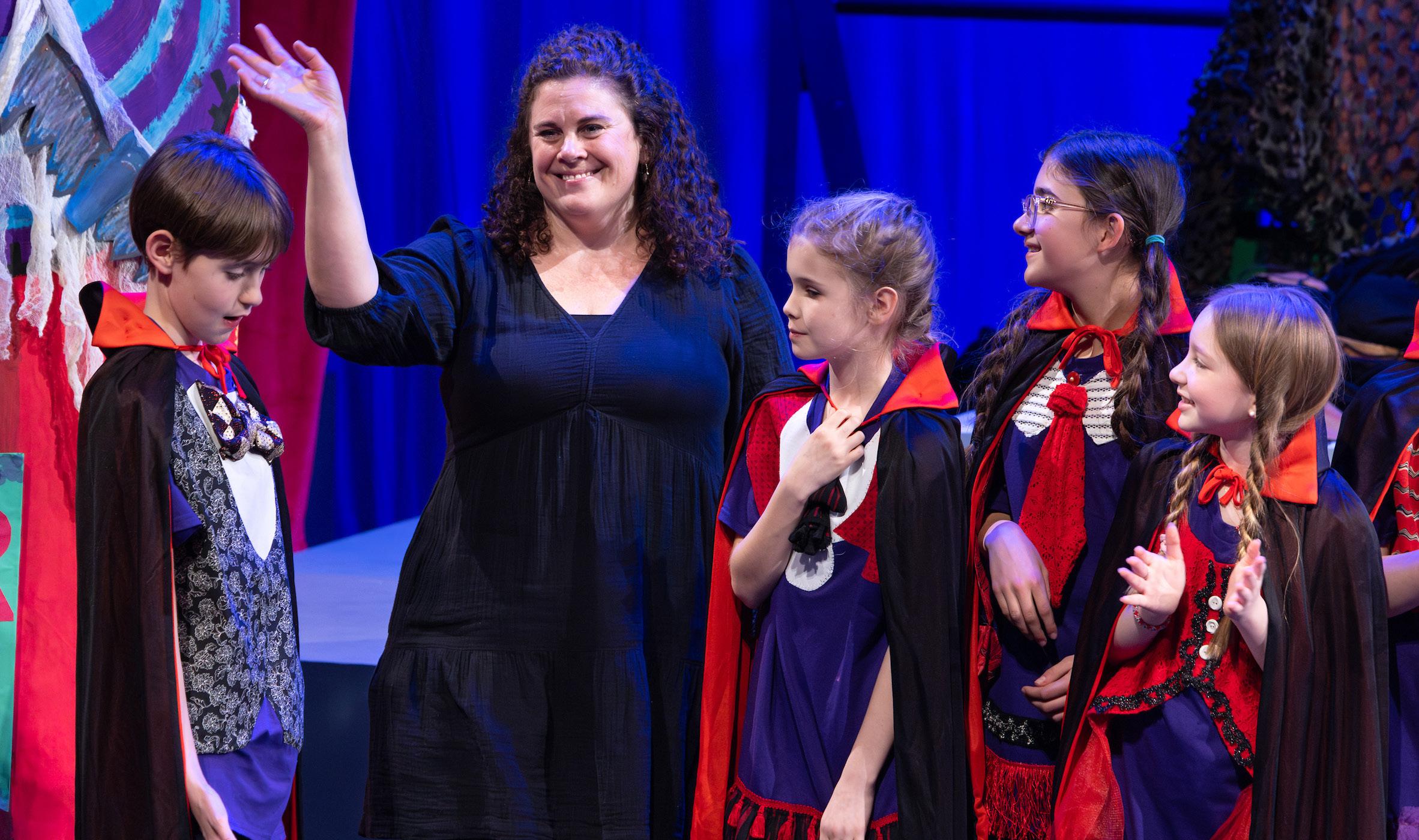
Scheibe leads students through a performace during Lower School Closing last June
CLASSROOM MAGIC
CLASSROOM MAGIC
Tell us about a Brimmer classroom moment that reminds you why you love teaching your specific discipline.
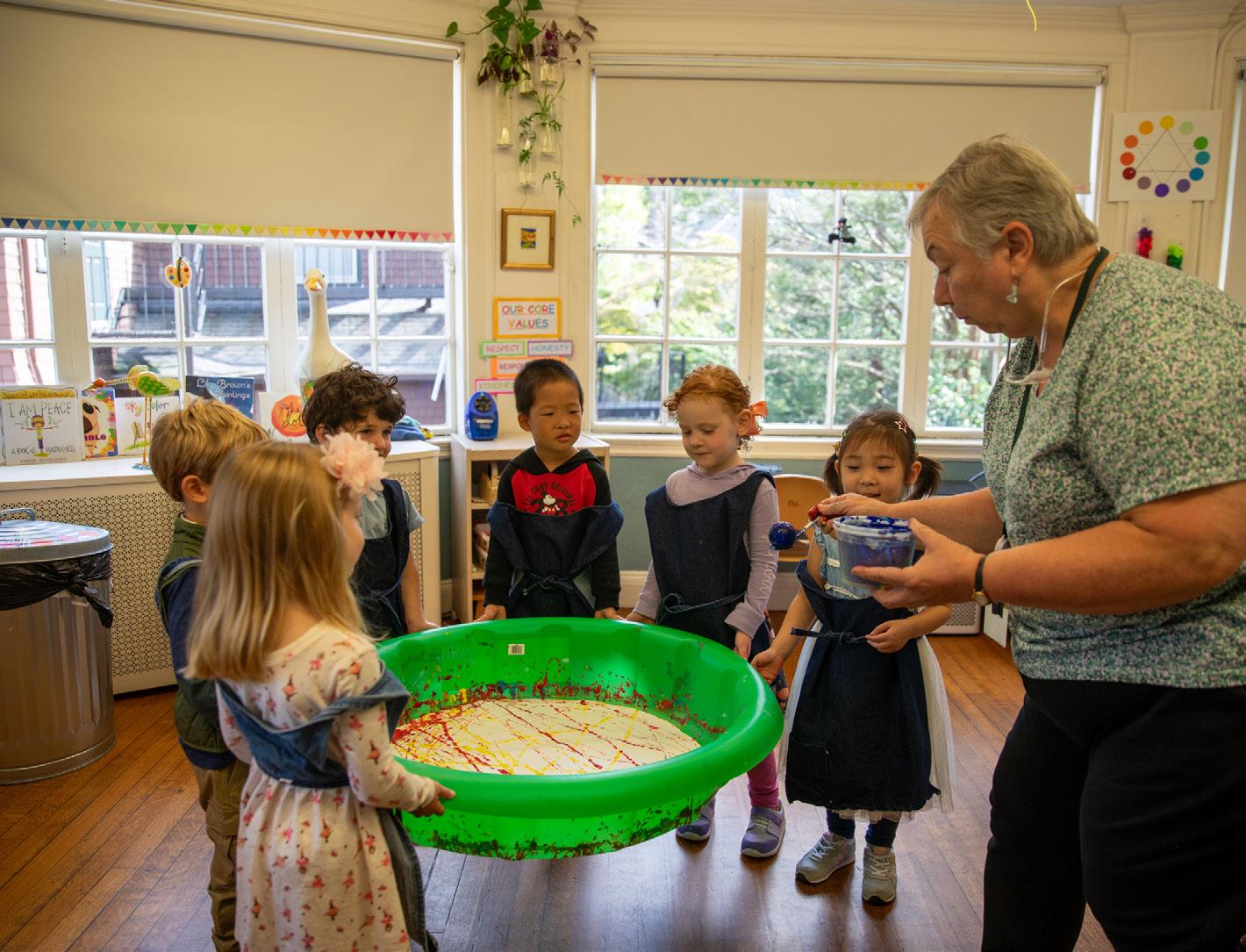
JC: I always start the school year with collaborative art experiences to set a positive tone and encourage students to feel comfortable working side-by-side with one another. My favorite activity is one I do with early childhood students to explore color mixing. Students gather around a small swimming pool and work together to roll paintcovered baseballs back and forth to create a design. They squeal with laughter and oooh and ahh when they observe the colors mixing to make new colors. I love that color is always magical for children, and I am passionate about creating joyful experiences for my students!
CS: Last year, the 2nd & 3rd Grade Chorus learned a jazzy version of “Over the Rainbow” to perform at our Lower School Closing ceremony. Those students loved learning that piece, and I’d often hear them humming or singing it in the hallways or at lunch time. Hearing their voices singing together during
the performance gave me chills, it was so beautiful! That experience reminded me that music can be such a powerful connective experience and become core memories for children. It reminded me why I love teaching children to sing!
RWH: There is a classroom moment almost every single day that reminds me why I love teaching Lower School drama! Seeing this year’s 5th graders rehearse their roles for the 4th and 5th Grade Musical, while remembering them in the kindergarten drama classroom, reminds me how privileged I am to be on such a long journey with each child as a PK through Grade 5 educator. I remember when a current 5th grader was in kindergarten, and she was especially engaged in our adaptation of The Little Engine That Could into a modern dramatic classroom performance. The students rotated through each character, taking turns improvising dialogue in each role in our story. Upon
hearing the news that her next character assignment would be The Little Blue Train, she announced, “I need to wear a blue shirt. And there needs to be a smoke machine, a laser show, and a hydraulic lift for my big entrance. This is all really important to me. But, no pressure.” Her declaration was not only charming but also indicative of her investment in this project. Now this same student is taking risks in her challenging role in the March musical and even serves as a helper in younger students’ drama classes. Recently, when I revealed the cast lists for the Grade 3 French plays, it was rewarding to hear the students discuss memories of French plays past that their older siblings performed—the younger siblings seemed so proud to make it to this milestone of the Brimmer Lower School experience. The arts at Brimmer are full of traditions and rites of passage. I still remember a 5th grader showing up to opening night of her musical declaring, “I have been waiting for this day since I was in kindergarten!”
COLLABORATION IN ACTION
Building on your answer to our intro question about collaboration, can you give us an example of how your unique roles come together to make a final production?
JC: Each production that we present is a unique creative endeavor that evolves over time into a heartfelt expression of love! Our themes are often inspired by our students’ interests and our goals as a learning community. We begin by identifying the strengths and needs of our students. We discuss, daydream, and brainstorm authentic experiences that we can bring to our students in our weekly classes. Our goal for these productions is for students to feel confident sharing their excitement and the deep learning that they have experienced in class.
CS: Most of our collaborative performances are centered around a piece of literature or text, which is often the basis of the dramatic component. Rachel [Wolf Heyman] usually leads the effort to find a suitable piece of literature to work from, and from there I will come up with ideas for musical components that would complement the literature while also matching the skills and strengths of each grade level. Joanne [Clamage] often pulls inspiration for the sets and costumes from the illustrations of a book or sometimes from the imaginations of the students themselves.
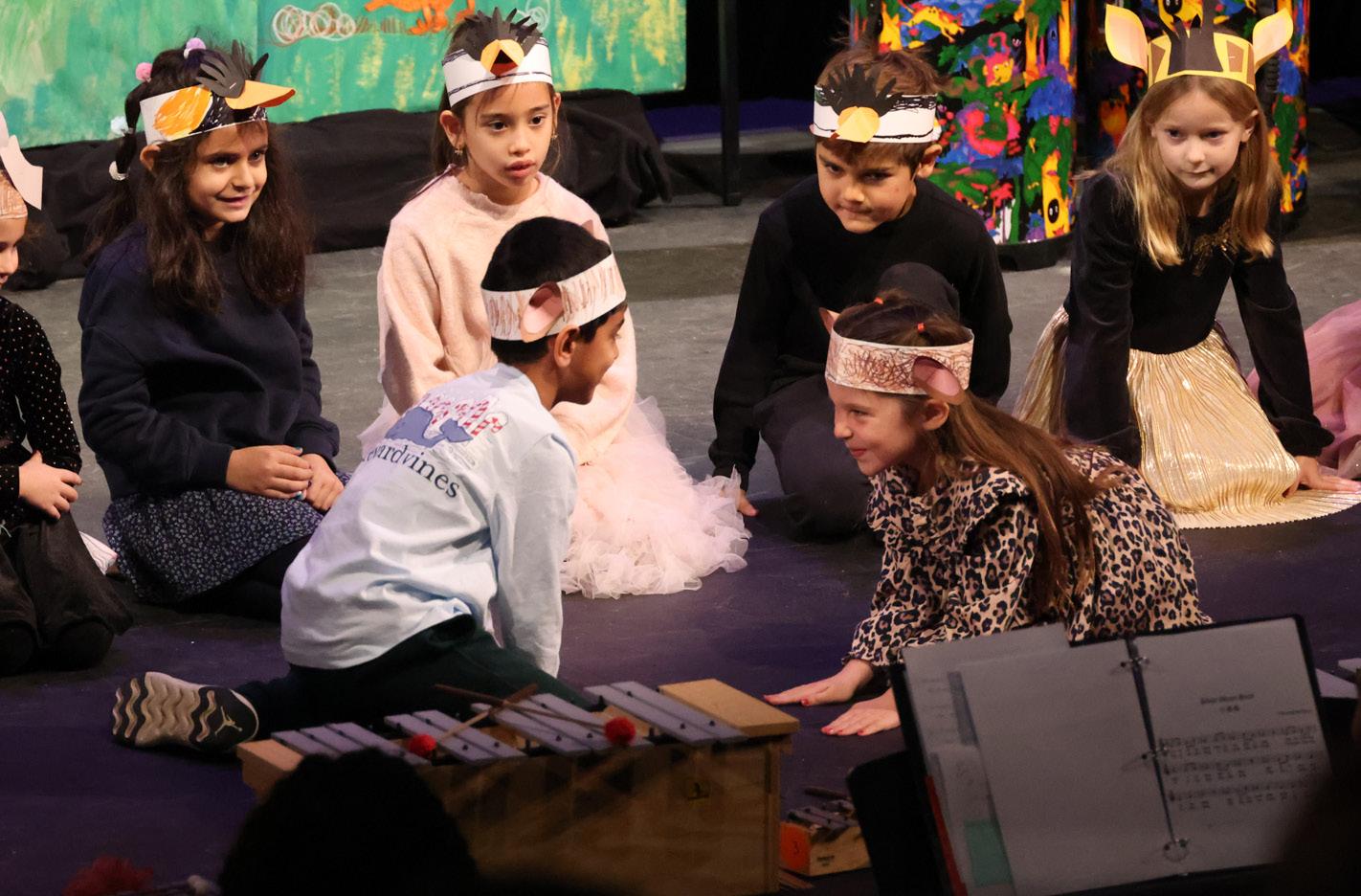
RWH: The Fall Community Performance is a great example of our collaboration-in-action, not only as a team but also for our students as well. We usually begin the process with a pile of dramatic children’s literature, which leads us to a theme. For example, this past fall’s theme was “We Are All Connected.” The literature inspires original dramatic pieces with each grade level united by the common theme. Once the dramatic pieces are in progress, each grade learns something musical that goes with each piece. Our 5th graders, as the leaders of the Lower School,
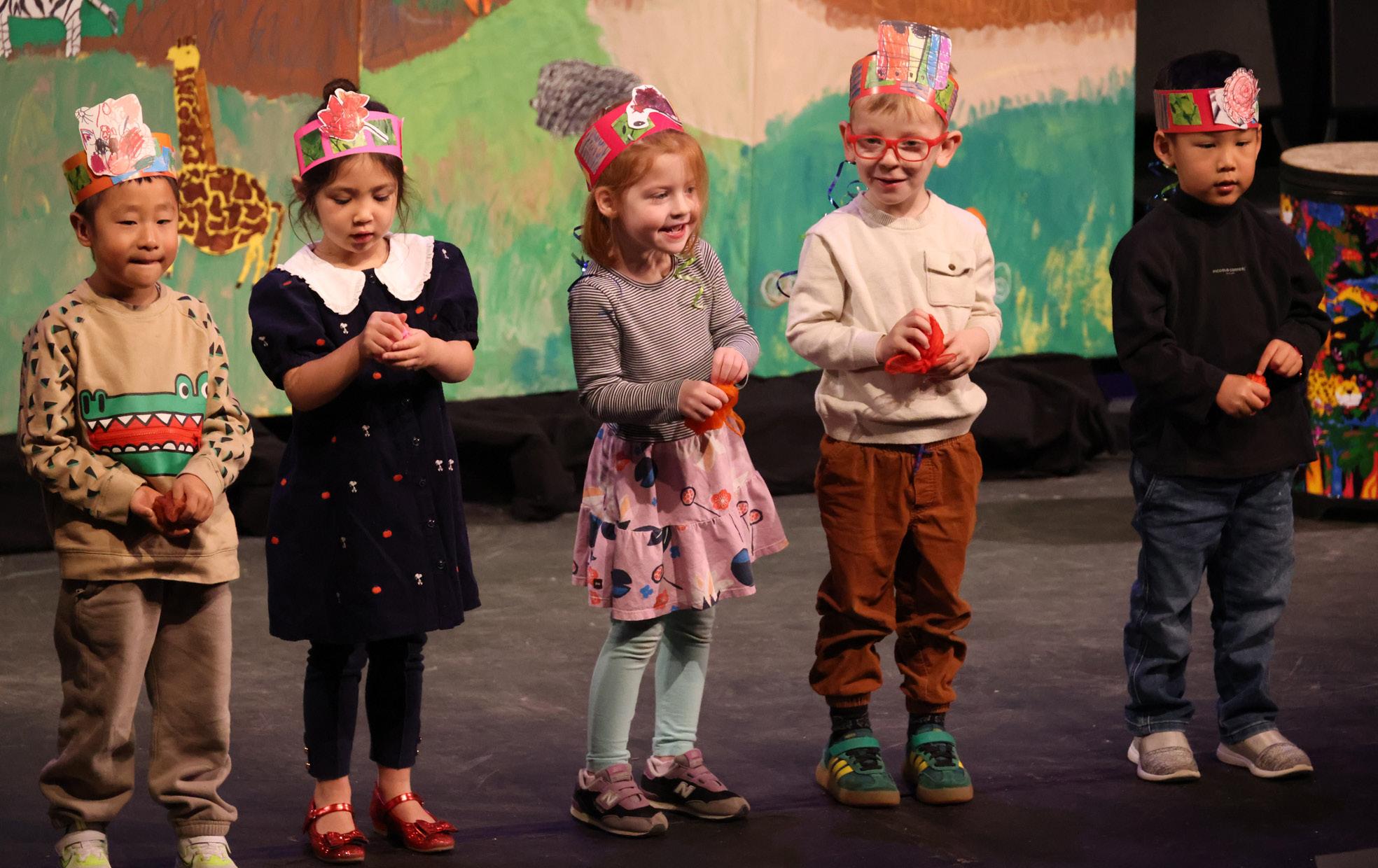
serve as storytellers for the younger students’ performances, so that more experienced students are sharing the stage alongside our younger students. In art classes, our youngest students make headpieces to reflect their characters while our older students work to create scenery, props, and program art. We have a flow that works well to incorporate all our mediums into one final production. This same flow is also present in our Informances, Grade 3 French plays, the 4th and 5th Grade Musical, and many smaller cross-curricular projects in our classrooms.
on Lower School Creative Arts continued from page 23
REFLECTION
What play, song, or art project from childhood stands out as a cherished memory for you, and why?
JC: When I was in elementary school, we did not have weekly art classes. We all colored mimeographed sheets of seasonal coloring book images. Thankfully, my world changed when I took art classes with my neighbor, Daveda Movitz, in her home art studio. She was an amazing and supportive teacher, and she made me feel that my art was important. As a five-year-old I remember walking briskly to and from those Saturday art classes and realizing that this was “IT” for me!
CS: I grew up singing in my church youth choir program, which was an extremely formative experience for me. Our director organized multiple choir tours in Denmark, the first of which happened when I was in 6th grade. As one of the younger singers on that tour, I remember watching the older singers perform and admiring their poise as
well as the beauty of the music they sang. It was inspirational and made me want to continue to improve my singing. Nine years later, I was able to tour again in Denmark with the same choir, this time as a college-age featured soloist. It was amazing to experience that full-circle moment and to realize that I was now in the position of those older singers who I had admired so much.
RWH: When my third-grade class studied Alaska, teaching artists from a local theater came to our school for a playwriting unit. We wrote fables based on our Alaskan studies, and my fable was chosen to be performed as a short play. I was offered the opportunity to perform and have a hand in directing an original story that I wrote. It was a simple classroom performance, but the feeling of excitement and pride is one that will stick
with me forever. It was so empowering to feel seen in this way, and I strive every day to give my students that same sense of pride and ownership over their creative endeavors. ■
At Top: Scheibe during a PK/K Informance; Above: Wolf Heyman closes out the 4th & 5th Grade Musical production We Are Monsters in 2024
Class Notes
1962
Diana Luce Plunkett
“I have seven grandchildren. I still work as a real estate agent in the Rye, NY, area.”
1966
Bette Banquer Fredrickson
“I am still a volunteer EMT after 32 years. Horses are still a huge part of my life. My twin sons are 45 years old, and I have two grandchildren.”
1967
Sandra Feinzig Bloomenthal
“We are living in and loving our new loft in an old mill in Lowell, MA. I am a practicing attorney who recently had the joy of walking to and from the Lowell courthouse, where I won a Supreme Court of New Hampshire case concerning the Hague Convention. The case reunited a mother and daughter, allowing the daughter to return to her home in a foreign country.”
1971
Lilly Heckman Cleveland
“I am helping start an environmental testing business with my family called Crystal Analytical. I am a part-time genealogist, historian, and watercolor artist. I have two grandchildren, Macartney (5) and Olive (4), and we all live in the same town. Very lucky!”
1975
Frances Fremont-Smith
Frances is pleased to announce that her son Eliot and his wife Amy welcomed a little boy, Lee Eliot Jia, on January 13. A cute little brother for their two-year-old Maylin Ann. Frances got to meet little Lee over Valentine’s Day!
1981
Jennifer Perry Potter
“In 2022, I retired from MEDITECH, Inc., after 18 years. I now volunteer three days a week at the Marlborough food pantry. When I’m not at the food pantry, I enjoy yoga, pickleball, and walking our two dogs. My husband is originally from the UK, so we make several trips a year to visit friends and family. I graduated from Virginia Intermont College with a BS in Equine Management. Immediately following graduation, I worked within the equine industry before switching to the medical world. I started transcribing dictation before becoming a surgical coordinator. From there, I made a move to the medical software industry from which I retired.
1984
Nina Cook
“I moved to Melbourne, Florida, this past summer.”
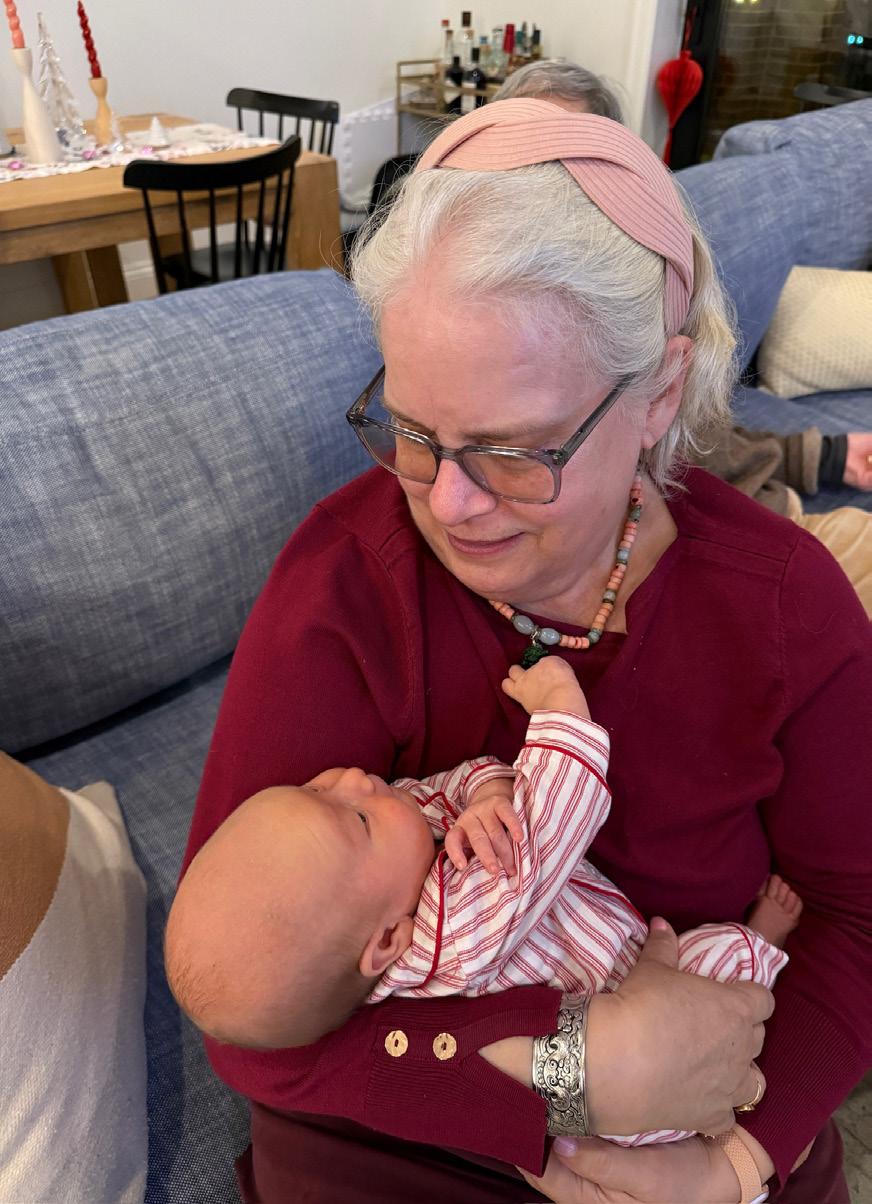
Frances Fremont-Smith ’75 with her new grandson
1988
Stacey Dupre Cropley
“Our daughter, Kayty Cropley, was married on November 1, and I was recently published again! Yay!”
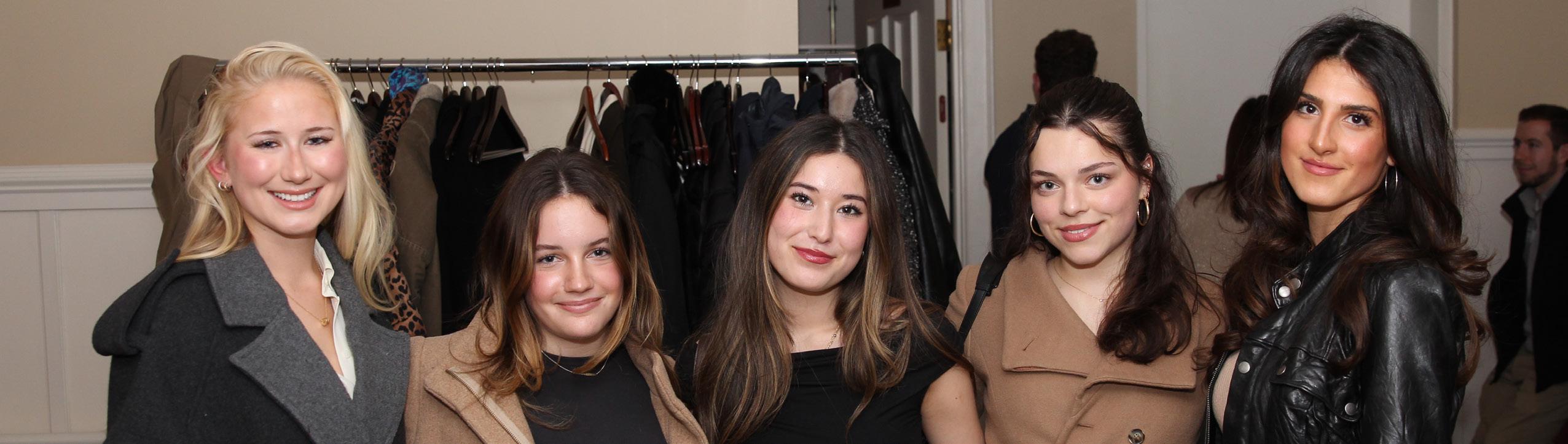
Returning alums (L-R) Stephanie Altschul ’25, Mae Gordon ’25, Natalie Aber ’25, Claire Fleming ’25, and Chloe Scolnick ’25 celebrate at the Alumni Holiday Party at Brae Burn Country Club (see pages 64-65)
1997
Stephanie Brown Iannone
“This holiday season my son, John Luca, and I raised over $1,000 for Ronald McDonald House charities. It feels so good to give!”
2007
Jennifer Truscott Tarantino
“Welcomed our second daughter, Olivia, on March 29, 2025. Working at Gartner in CT.”
2011
Ga Yeon (Rachel) Lee
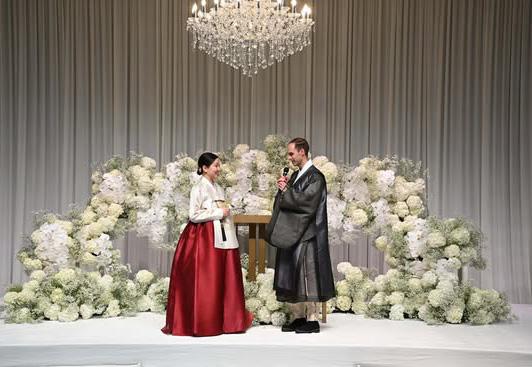
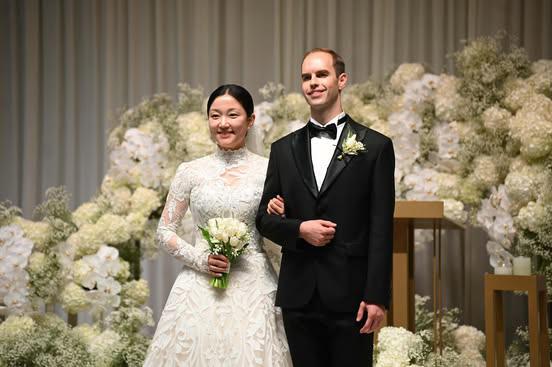
“I’m now living in Copenhagen and working as a statistician at Novo Nordisk. I moved here two and a half years ago after two years in Seoul. My husband’s name is Mathias Ingerslev Loft. We met in Seoul four years ago and got married on October 18, 2025, in Busan, South Korea—a city located 30 minutes from my hometown, Ulsan. I hope to visit Brimmer again one day. I haven’t been back in the United States for some time now. Really miss Boston!”
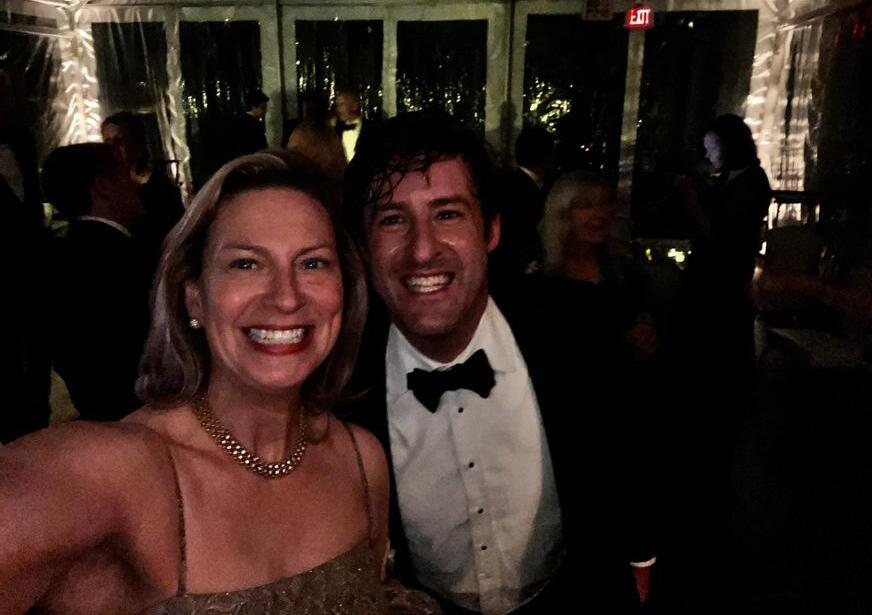
Director of Alumni Affairs & Special Events Amanda Spooner Eppers ’88, P ’22 ran into Alex Zook ’05 at a gala last fall at The Country Club in Brookline, MA
Ga Yeon “Rachel” Lee ’11 at her wedding in South Korea last fall
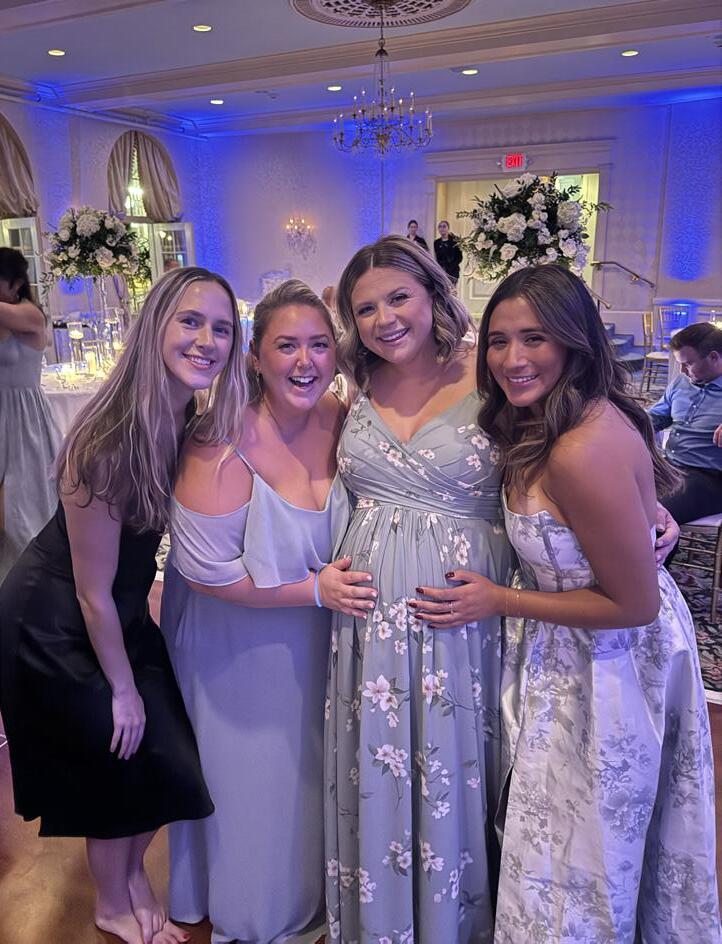
Members of the Class of 2012 celebrated at the wedding of Samantha Cacciatore ’13. (L-R) Kaleigh Marcotte, Ali Fisher, Corey Murphy Kaubris, Megumi Milla.
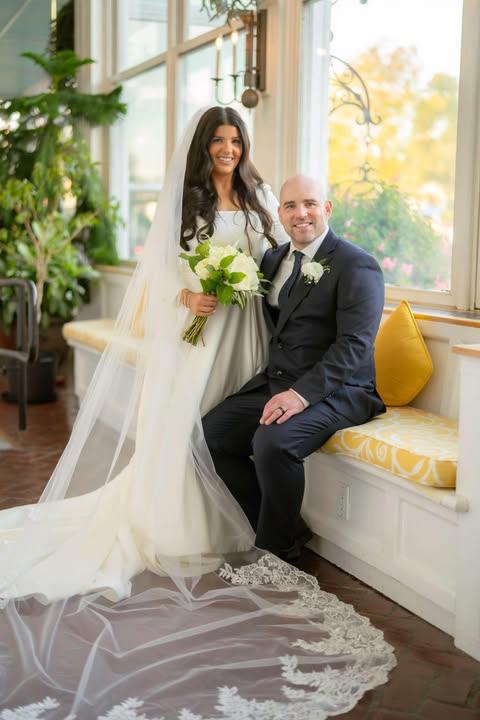
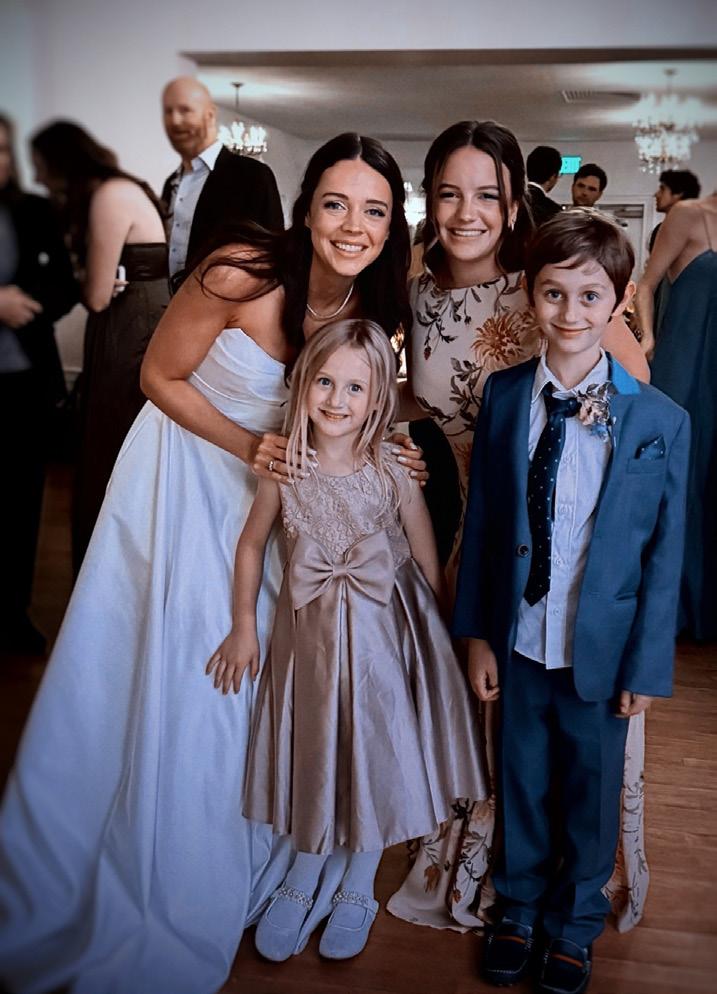
Samantha Cacciatore Simms ’13 and husband Nick at their wedding last year
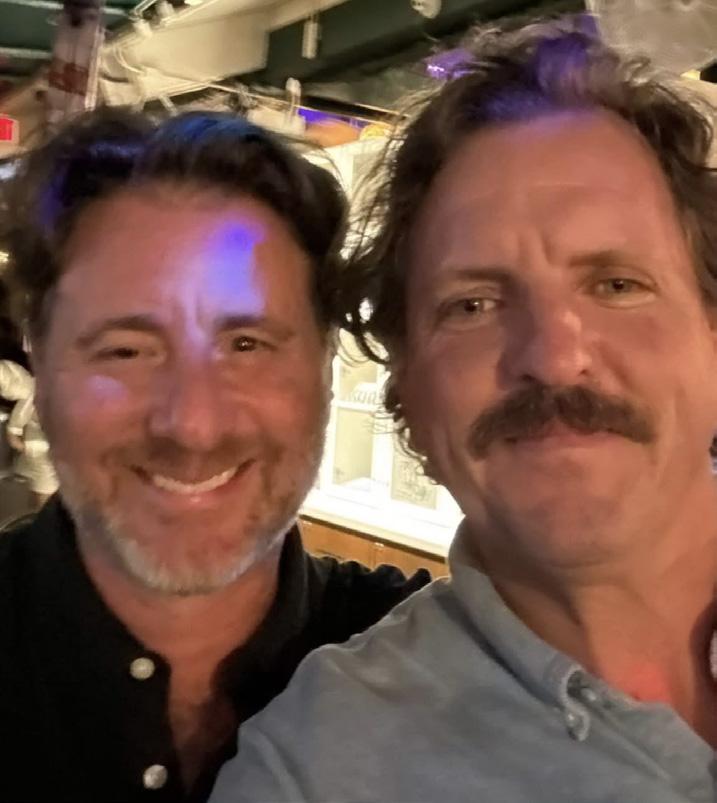
Old friends Ryan (Eyges) Chernis ’97 (L) and John Welter ’97 (R) caught up this winter in Florida, where John resides
Gordon ’14 and sister Mae ’25 celebrated Sammy’s wedding last fall with two Brimmer Lower School students, for whom
2013
Aniket Shroff
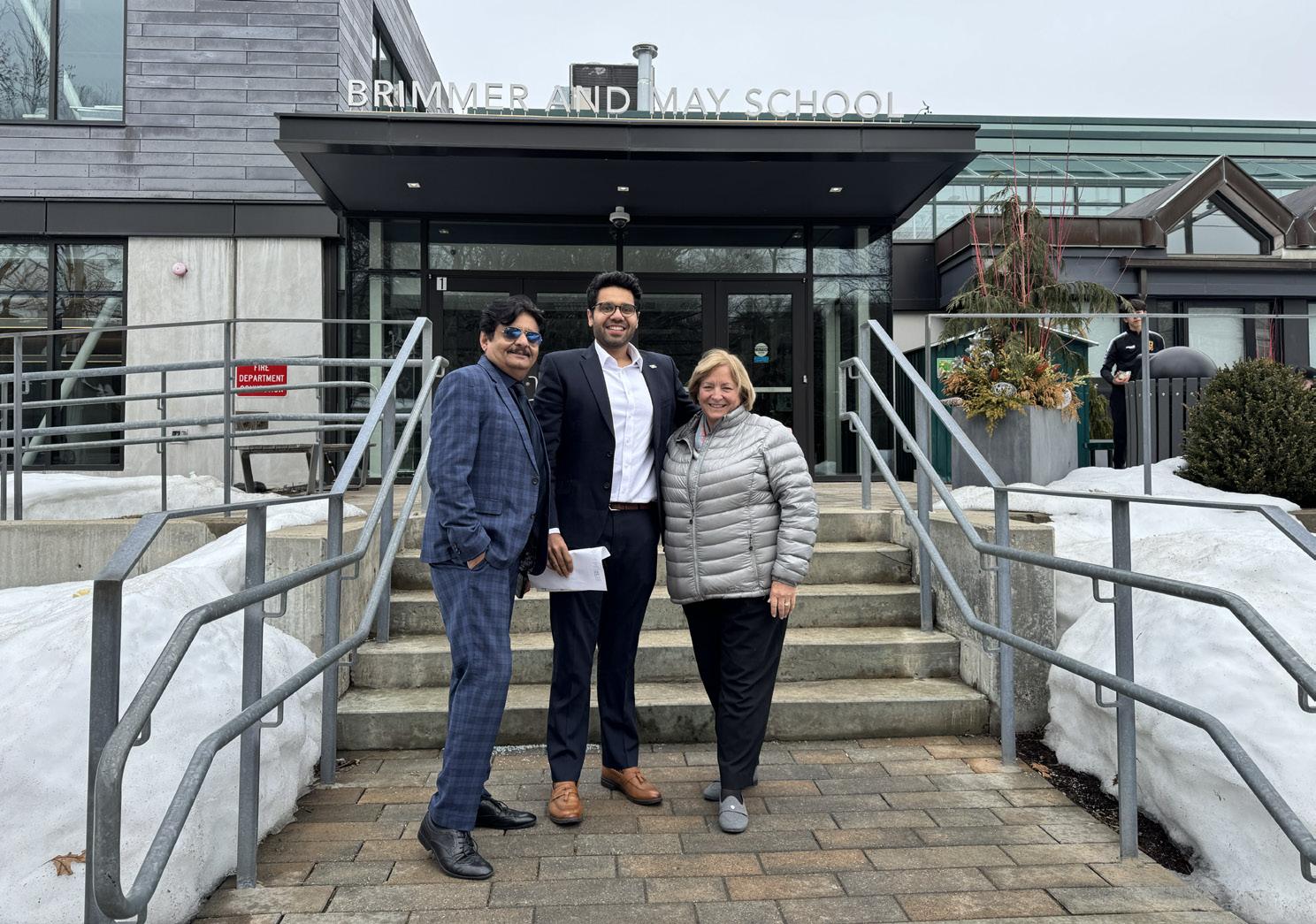
We were thrilled to have Aniket back on the Brimmer campus this spring to share in the celebration of his Forbes 30 Under 30 Middle East distinction as CEO of Niti Group of Companies! Congratulations, Aniket!
2016
Julie Blazar
Julie writes that she is finishing law school and will be getting married to her partner following graduation.
2017
Charles Li
“In April 2025, I joined the Ocean Research Project, an Annapolis, Maryland–based nonprofit, as a volunteer crew member for its 2025 Greenland research expedition. It took us a month to sail from Annapolis to Nuuk, the capital of Greenland. From there, we began our scientific research immediately, as the summer in the High Arctic is preciously short. Over the next three months, we sailed farther north, reaching 78° N and stationing in 32 different fjords along the way, collecting vital data in conjunction with NASA’s Ocean
Charles Li ’17 on a Greenland research expedition last spring
Melting Greenland mission. In October, we successfully completed the expedition and sailed back to the United States. Throughout six months of living a boat-based life at sea, I was grateful to encounter many profound experiences and to form new bonds with people from many different countries. Looking
back, the expedition felt like the natural culmination of the curiosity and persistence I had been developing at school. It left me with a deeper connection to the people I met, the places I explored, and the experiences that shaped the journey.”
Sammy
Sammy is a nanny
Aniket Shroff ’13 (middle) with his father and Head of School Judy Guild
Class Notes Cont’d
from page 27
2019
Michelle Levinger
Michelle recently graduated from the American Film Institute, where she earned her master’s degree in producing.
2020
Ze (Tony) Wang
In a recent note to Brimmer math teachers Pete Slaski, Nancy Bradley, and Rupa Houndegla, Ze writes: “I wanted to share a quick update and take this opportunity to say thank you. Last May, I graduated with a BA in economics from Brandeis University and a BS in applied mathematics from Columbia University. I am very grateful for your teaching and support during my four years in high school. The Brimmer math department played an important role in building my foundation in mathematics, statistics, and analytical thinking, which helped me pursue higher-level quantitative courses in college and eventually choose applied mathematics and economics as my majors. I am now working as a research specialist at the University of California, San Francisco, focusing on developing and applying analytical methods to support data-driven decision-making in clinical care, public health, and global health. I feel fortunate to continue my passion for mathematics in solving realworld healthcare challenges.”
IN MEMORIAM
ELIZABETH “BETTY”
HOWARD LINZEE ’43
JANE STONBERG BERNSON ’54
JENNIE WASSER ’63
BARBARA LOCHIATTO ’76
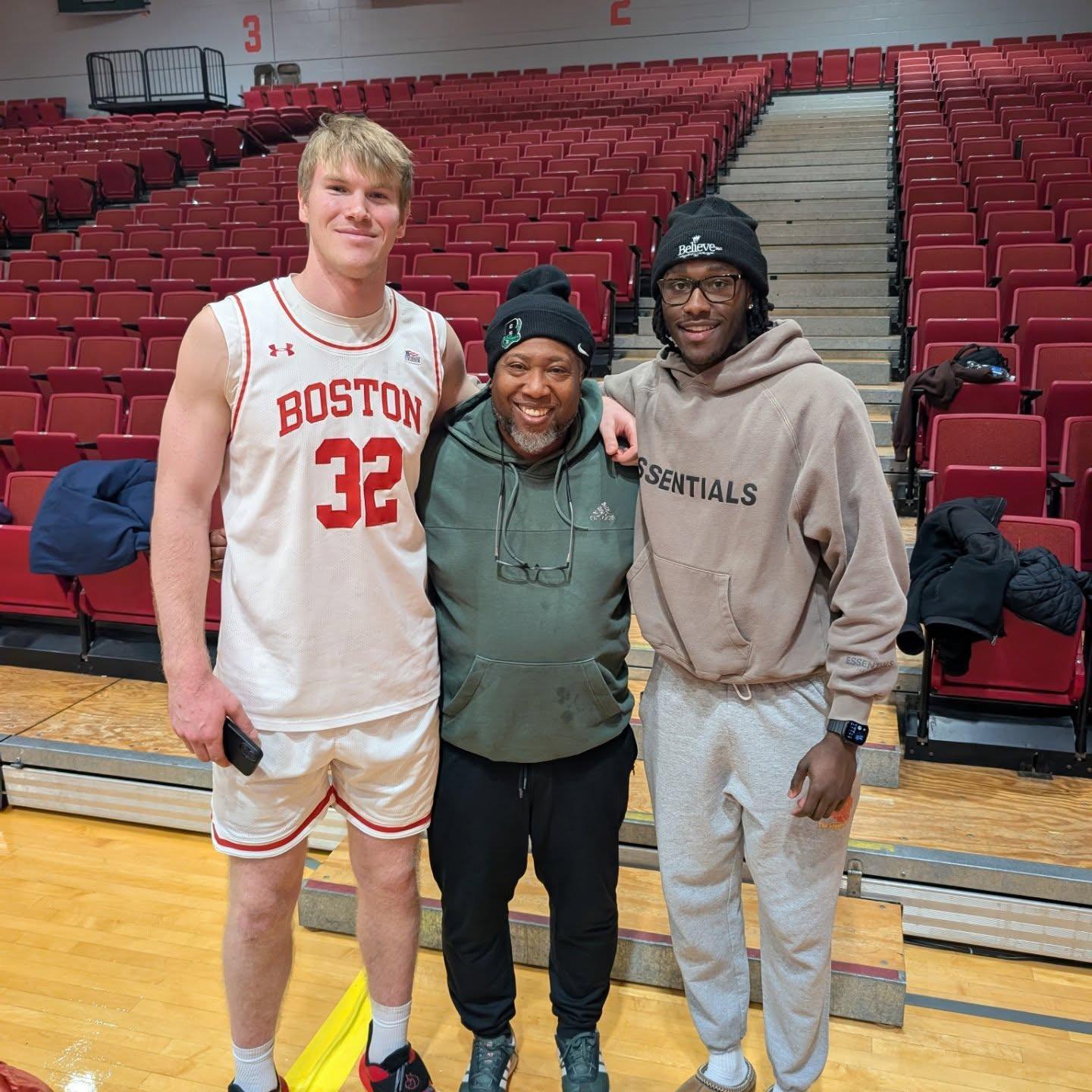
(L-R) Quinn Nielsen ’23, Athletic Director Tom Nelson, Jarrel Okorougo ’22. Tom and Jarrel came to watch Quinn’s Boston University basketball game in December.
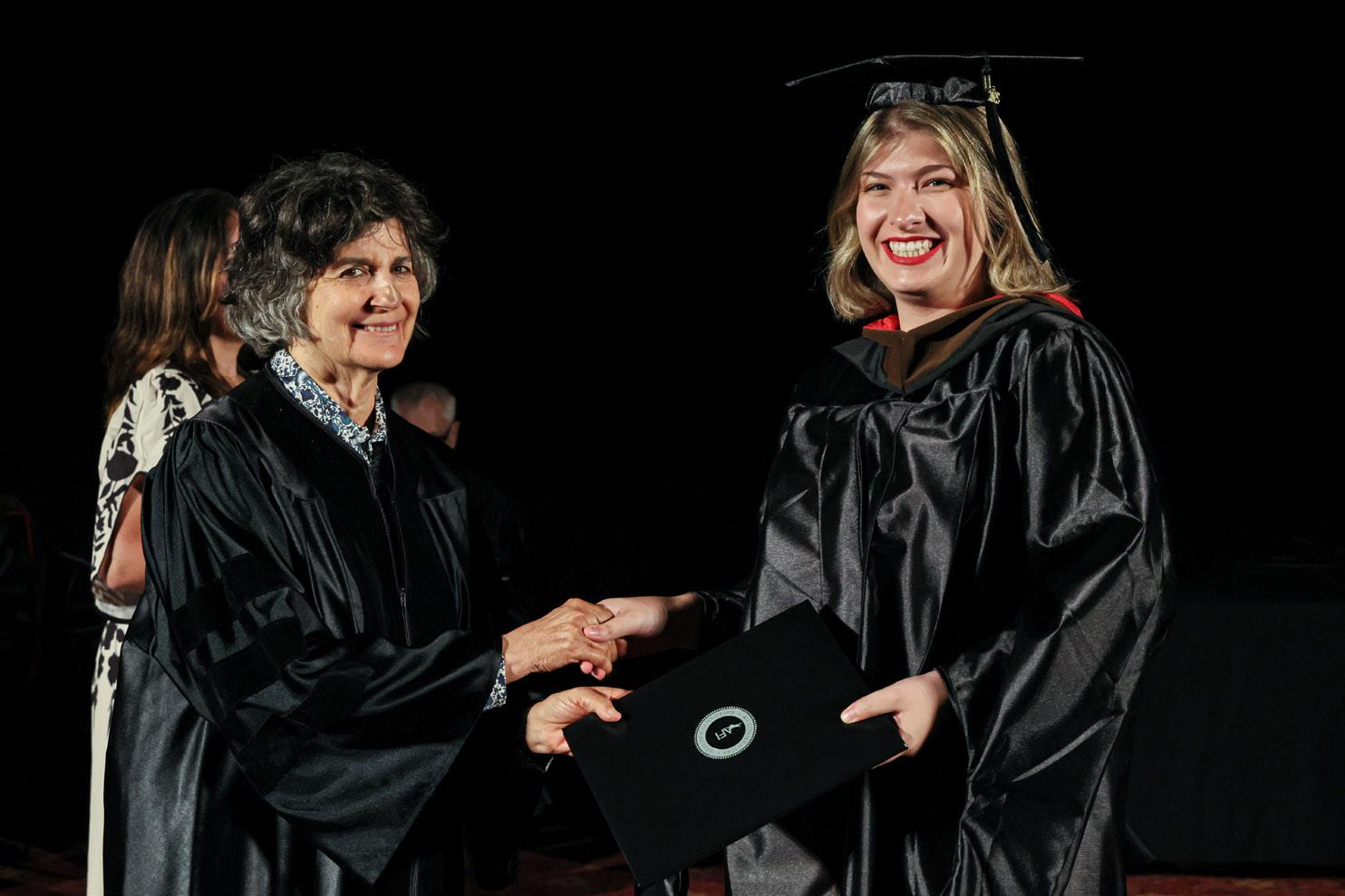
Michelle Levinger ’19 graduating from the American Film Institute
board of visitors day
Learn with Intention. Lead with Integrity
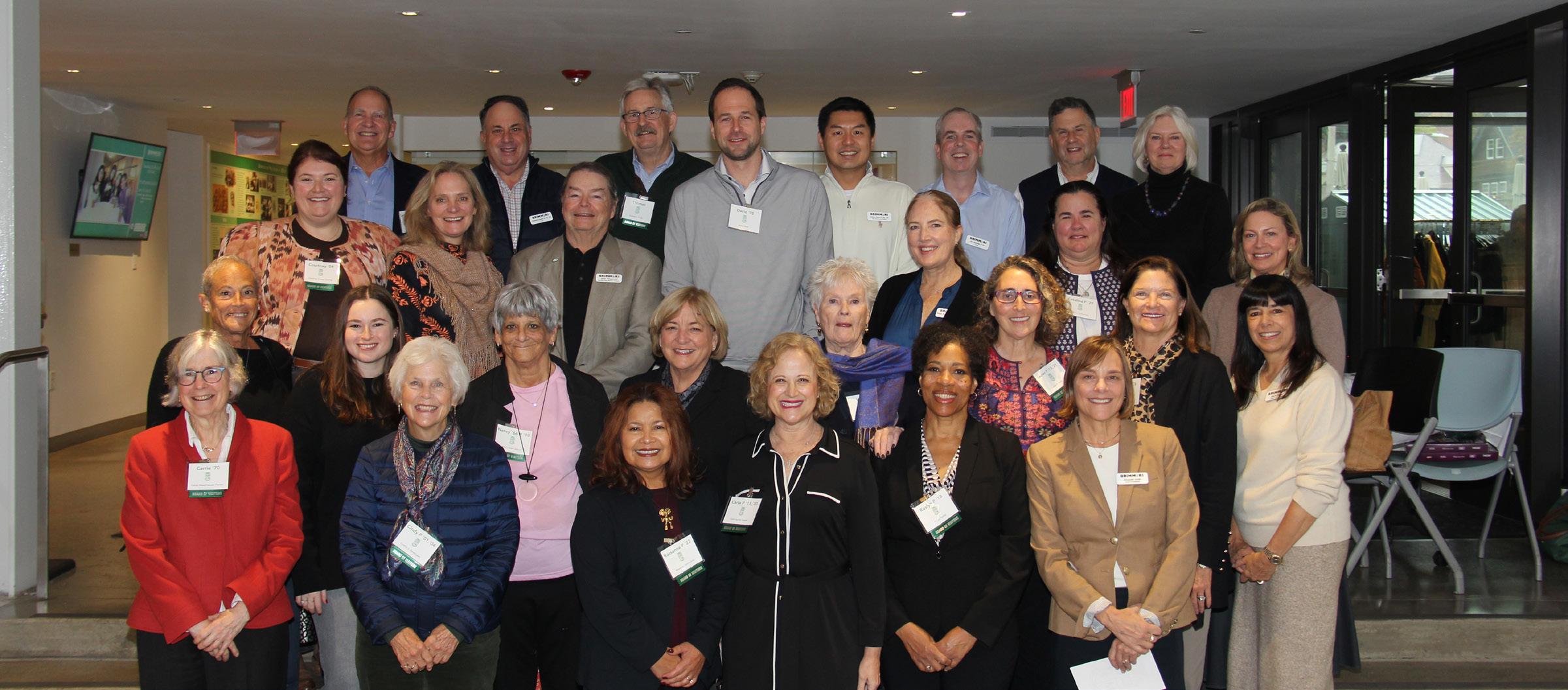
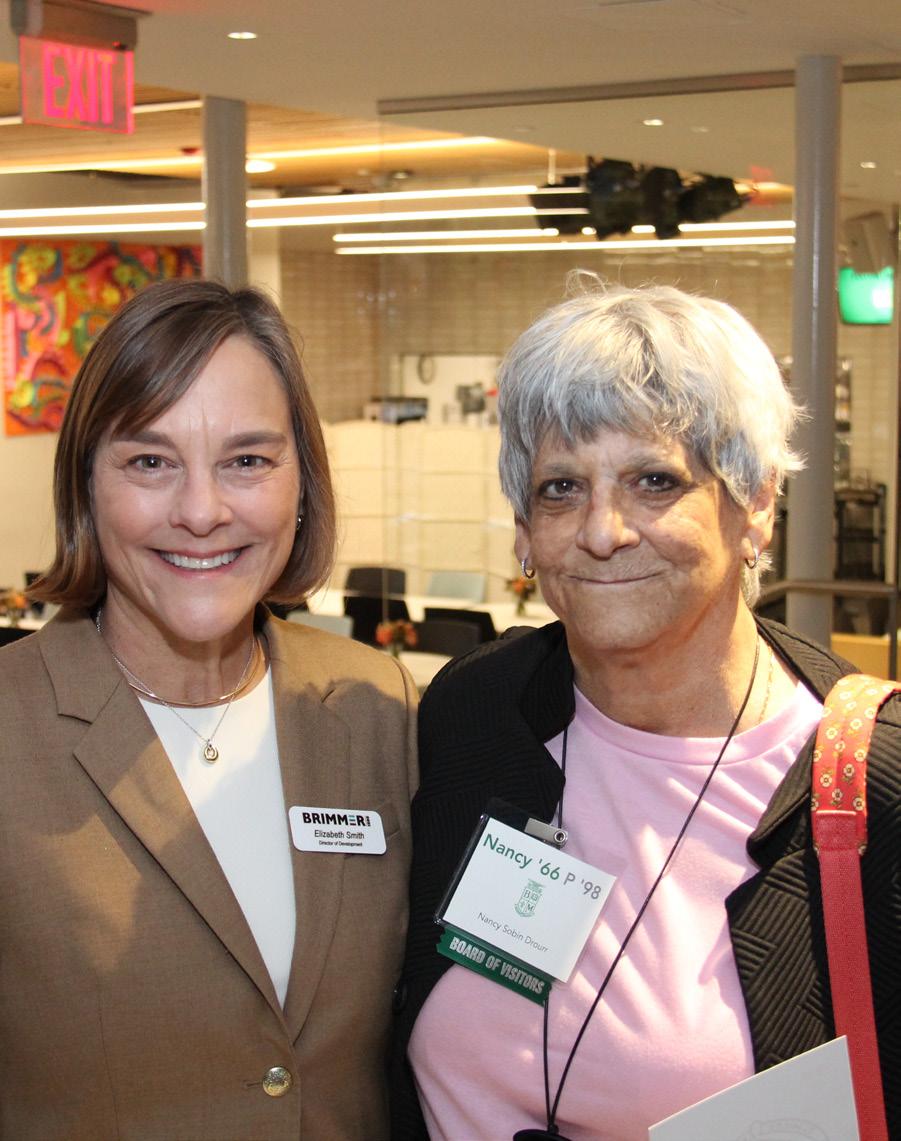
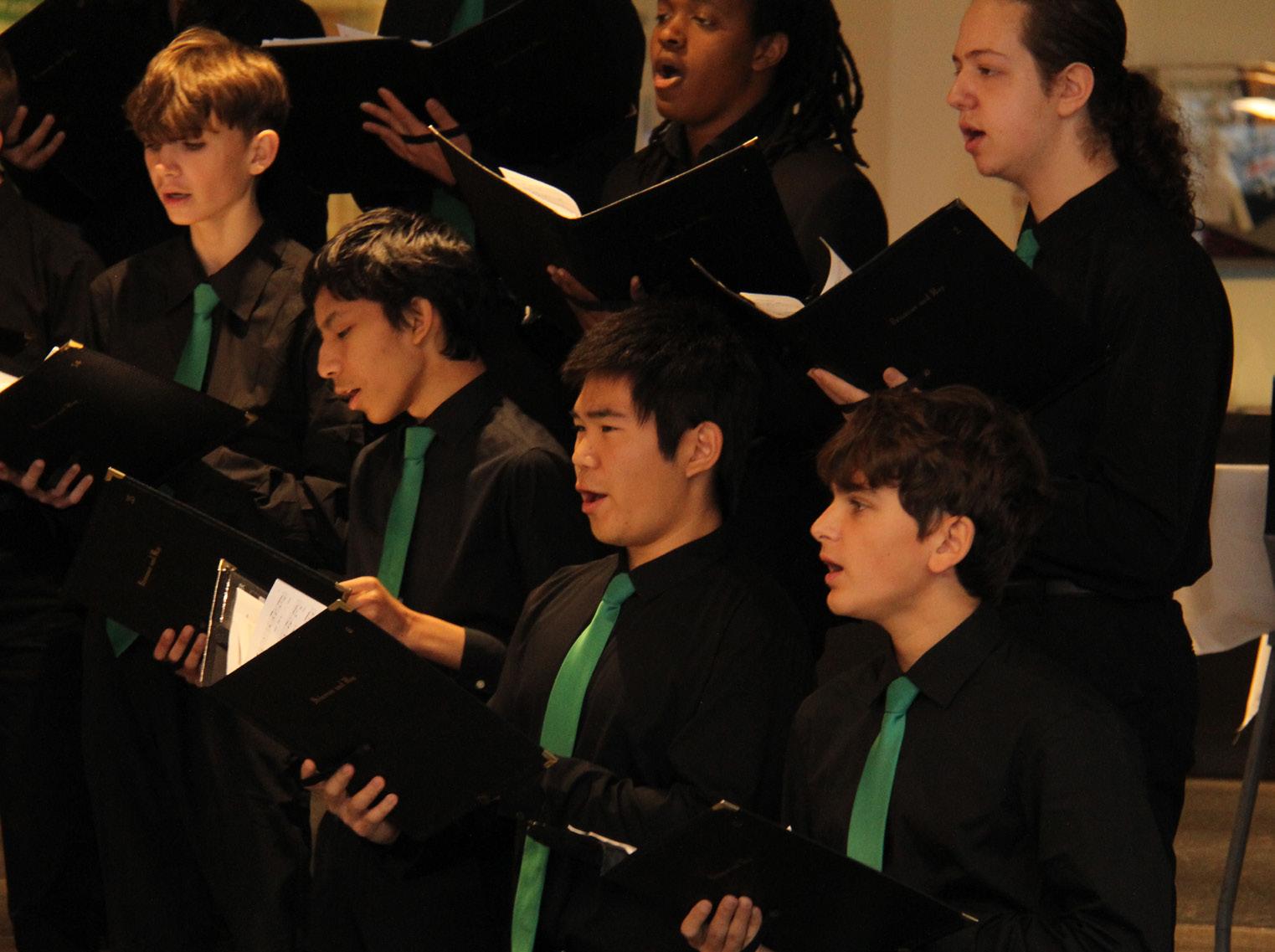
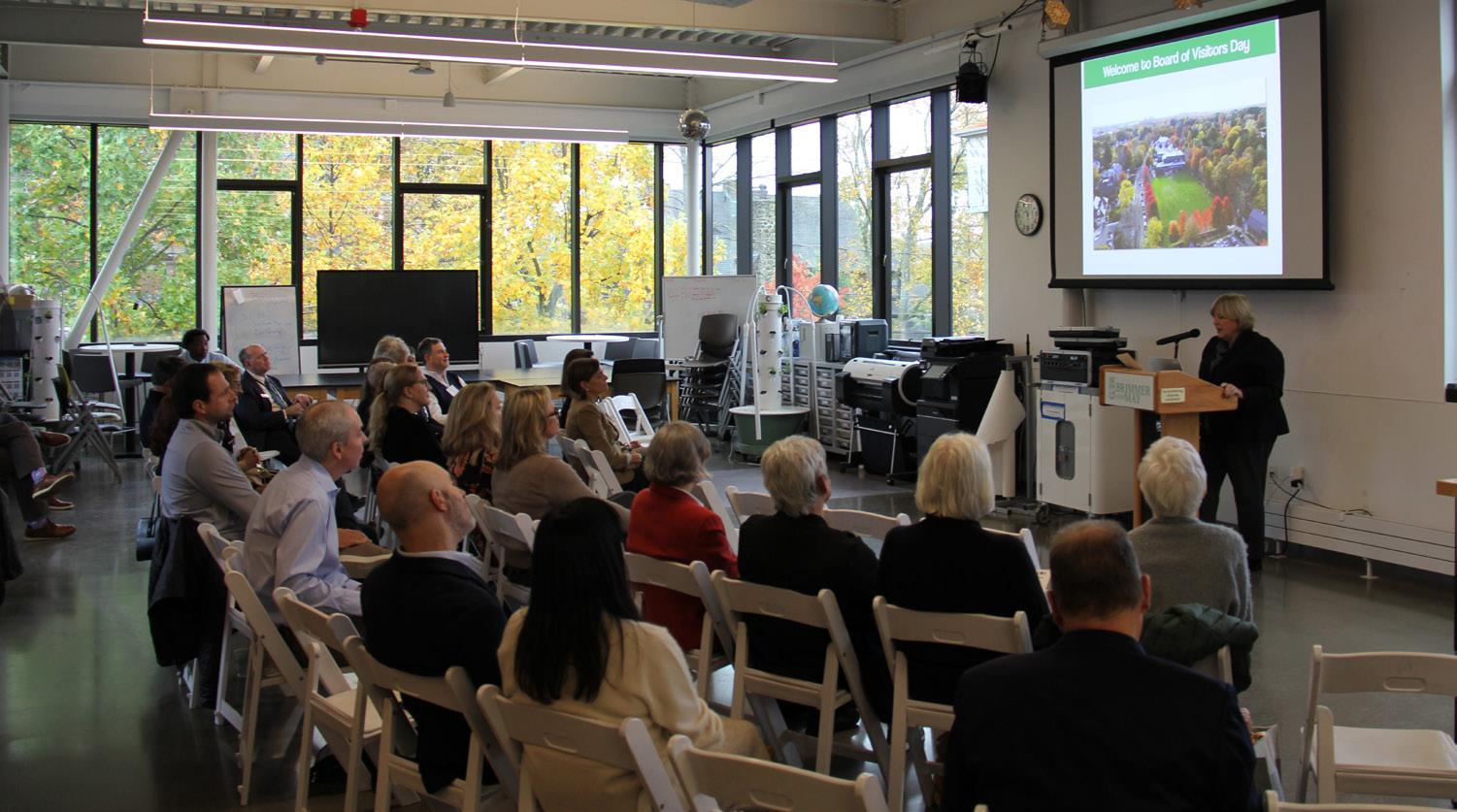
Members of our Board of Visitors (BOV)—including former trustees and staff, alumni, parents, educators, and friends—joined us on campus in October for a morning of faculty and student panel discussions; a keynote address from Head of Middle School Matt Gallon; a beautiful performance from Greenline, Brimmer’s award-winning Upper School student choral ensemble; and a State of the School address from Head of School Judy Guild. “Board of Visitors Day is always a special day for us at Brimmer,” says Director of Development Elizabeth Smith P ’17. “We are thankful to the students who made time to present to our guests on the ways in which AI continues to enhance their classroom experience, an idea further demonstrated in the keynote address on human-centered AI. Thank you to our entire BOV for staying informed and engaged with our School.”
Lower School
Director of Teaching & Learning
Ina Patel and Grade 4 Teacher Gemma Kevaney shared the ways in which AI supplements Lower School learning, particularly in the upper elementary classrooms. From accessing grade-level learning materials from reliable sources like CNN, National Geographic, and the New York Times to showing students how to ask AI for age-appropriate resources for research projects, Patel and Kevaney ensure that all results are carefully vetted. “Often, I use AI to identify unique, lesser-known topics (e.g., floating soccer fields of Thailand) to spark curiosity and global awareness,” says Kevaney. Regardless of AI usage, Brimmer faculty prioritize what is most important. “Teacher expertise stays at the center of all we do,” says Kevaney. “I use AI to support planning and differentiation, but instruction, relationships, and decisions remain mine to make.”
Middle School
Middle School English and Drama Teacher Andrea Underhill-Curtin shared her use of Flint AI in her Grade 8 English class. Panel students Elliana Barros ’30, Nikhil Shah ’30, Theo Cheatham ’30, and Sophia Huang ’30 were reading Macbeth at the time and using Flint AI to analyze the text, explaining that it allowed them to improve the explanation of their analysis for a scene that specifically asked them to focus on the complexities of gender roles and relationships. As a class, they continue to use
Upper School
Upper School Technology Teacher Darol Ware was joined by AP Computer Science Principles students Merrin Lindenfelser ’28 and Noam Andelman ’28 in a discussion about how AI, particularly Flint, is used in the classroom.
“As an educator, I focus on its merits as a learning coach, tutor, and complementary assessment tool,” Ware explained. He then engaged in a Q&A with his students about their own experiences, asking how the use of AI for these kinds of knowledge checks compares to traditional tests and quizzes. “You can ask AI for clarification or to rephrase a question,” explained Lindenfelser. “This allows for more individuality and flexibility in the assessment process.” Andelman then shared his experience in Ware’s Artificial Intelligence course, where he built an AI model using Teachable Machine, explaining the steps he followed and the surprises he encountered along the way. “I needed to gather a considerable amount of raw data to train my model,” said Andelman. “I never realized how important the quantity and variety of existing data was to creating accurate AI tools.”
the platform to improve writing and practice speech delivery for further work on their Inspiration Speeches. “For all Flint AI activities, I create a workspace that has specific understanding of the lessons,” said UnderhillCurtin. “Rather than offering a general chatbot that only gives immediate answers, Flint AI helps coach students toward exactly what they are trying to improve.”
Keynote
Address
Head of Middle School
Matt Gallon’s keynote address, “HumanCentered AI at Brimmer,” shared the ways in which we use technology to enhance—not replace—teacher impact and student learning.
“AI is reshaping how people work and communicate,” said Gallon. “But one thing that hasn’t changed is the connection between a teacher and a student. We see AI not as a replacement but as a partner and as a tool that helps strengthen those relationships and extend what we can do together.”
Gallon walked our guests through the programs we have been piloting schoolwide, including Flint AI in Grades 6–12 and MagicSchool in the Lower School, and explained that our adoption of AI is guided by our mission and Core Values. By sharing the ways that both teachers and students can benefit from these tools, and the guardrails we have in place, he was able to show our guests that these are safe and responsible platforms for AI use.
“AI can be a great equalizer, but only if access is universal, intentional, and grounded in our values,” said Gallon.
“At the end of the day, this isn’t about technology. It’s about what kind of learning community we want to be.” ■
bissell grogan 21st annual humanities symposium
Authenticity & Originality Today
By Sue Cuyler, Director of Marketing & Communications
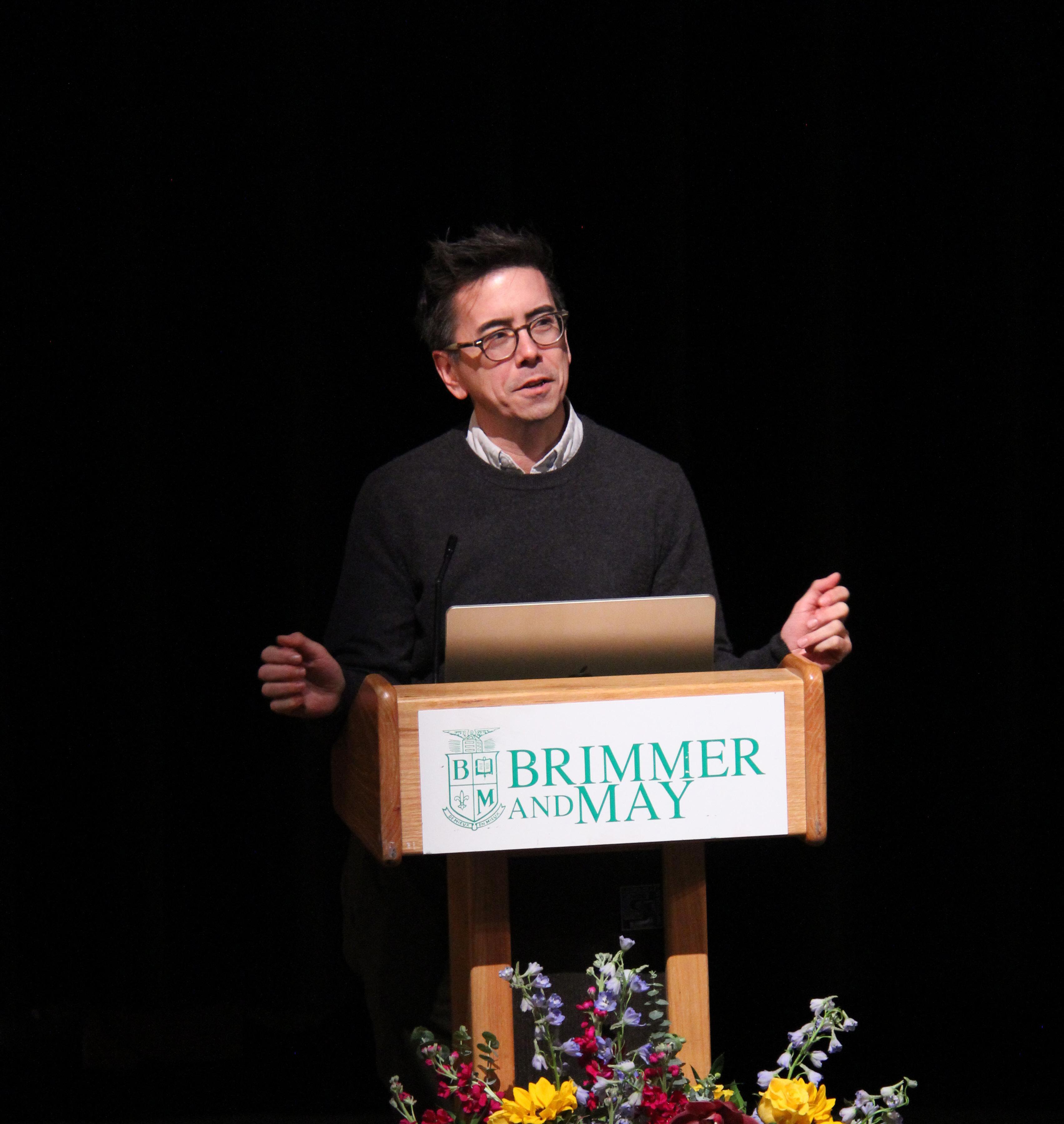
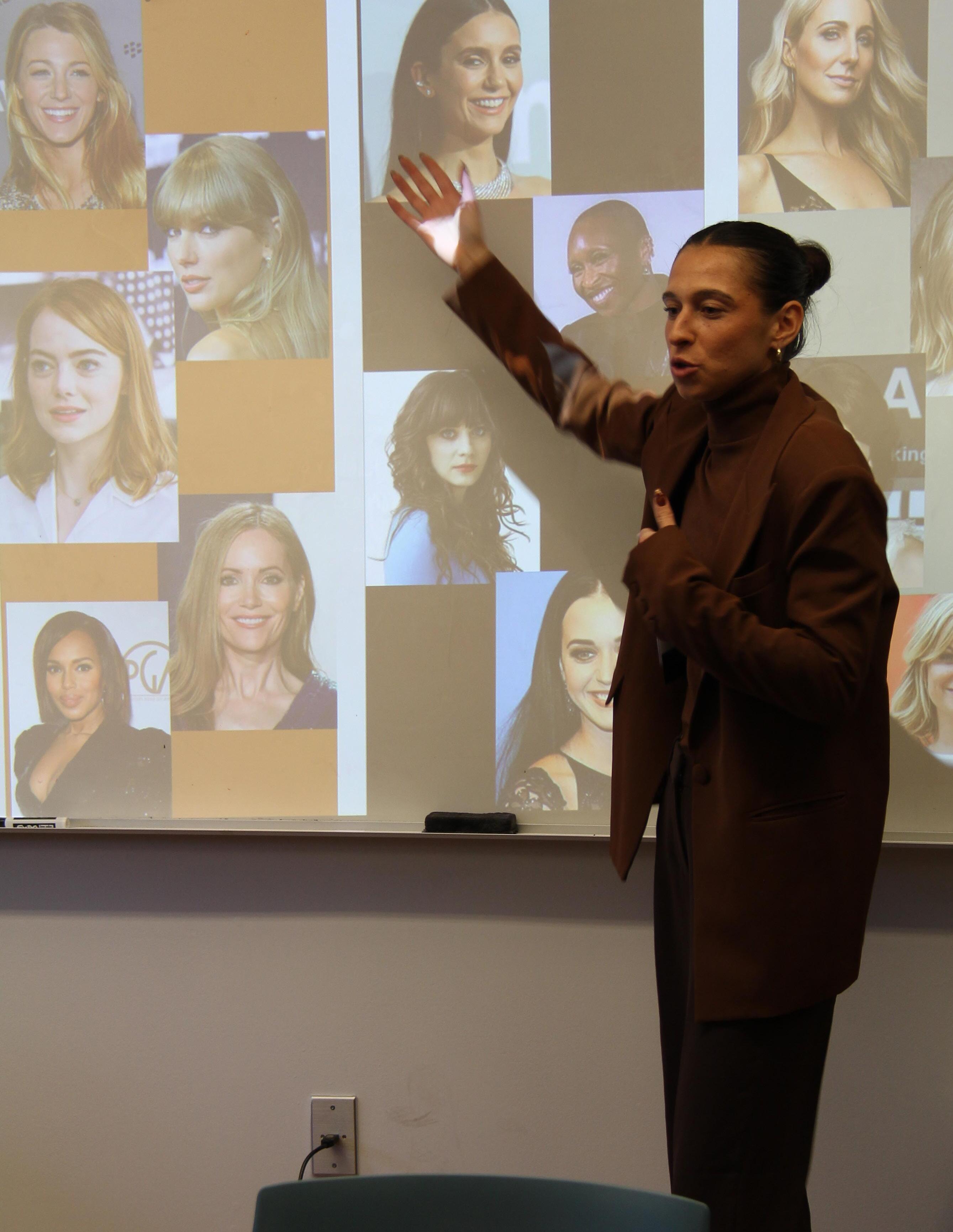
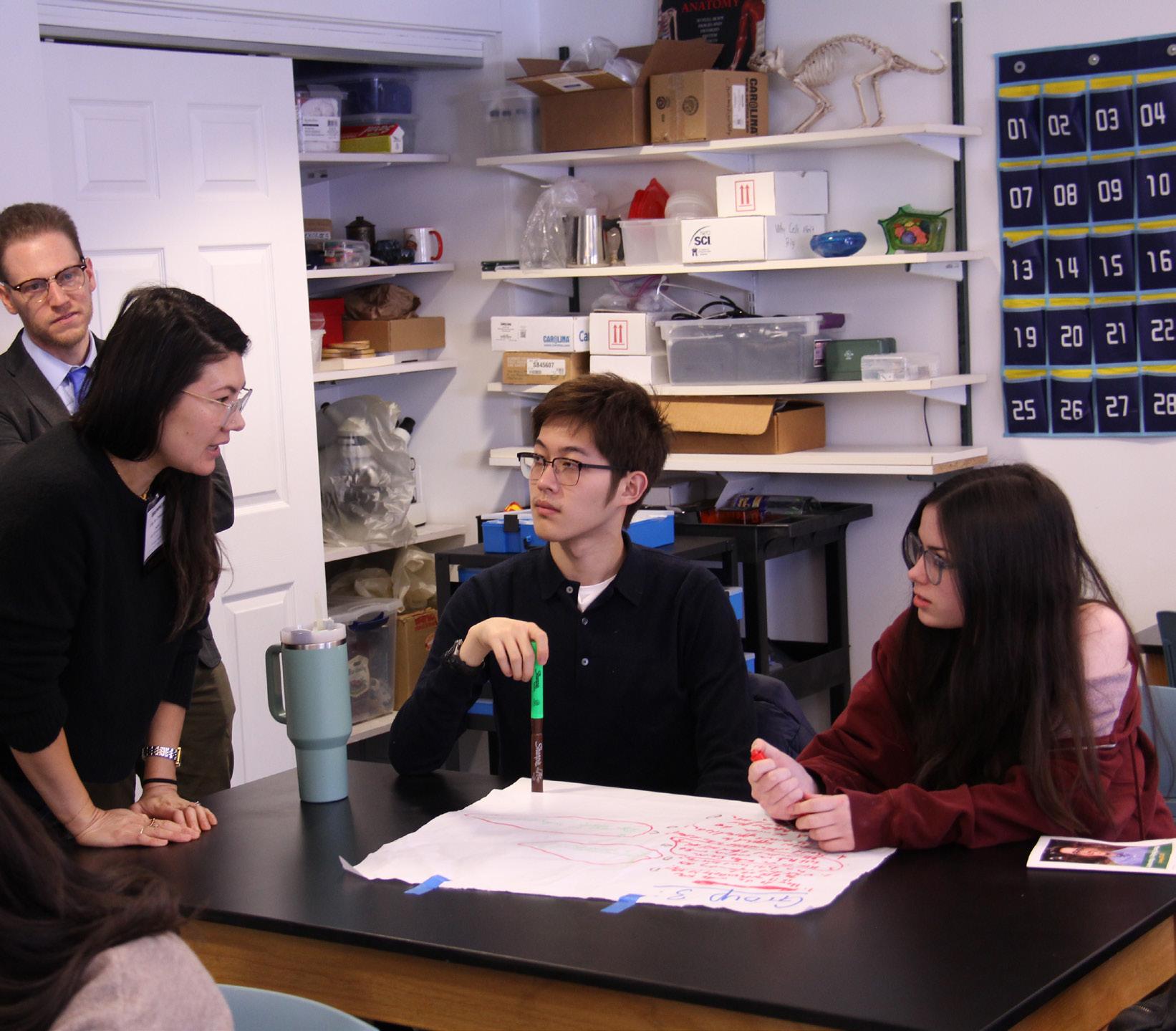
On January 20, the Brimmer community welcomed facilitator and strategic advisor Eric Hudson to the Corkin Theatre for a dynamic keynote address to kick off our annual Bissell Grogan Humanities Symposium. Hudson started his career in the classroom, and authentic learning continues to be at the heart of his work. His presentation explored what it means to be human in a world fearful that AI will steal our authenticity. Following the keynote, Upper School students participated in related workshops across diverse fields of interest, including storytelling, writing, dance, design thinking, art, and marketing. “It was my father’s vision when I stepped down as Brimmer Board Chair to endow a scholarly symposium that students would enjoy for years to come,” said Trustee and Symposium Namesake Kenyon Bissell Grogan ’76. “I am delighted to attend today’s program, now in its 21st year, and engage in such timely, relevant discourse.”
Keynote Speaker
Eric Hudson
What Does It Mean to Be Human in the Age of AI?
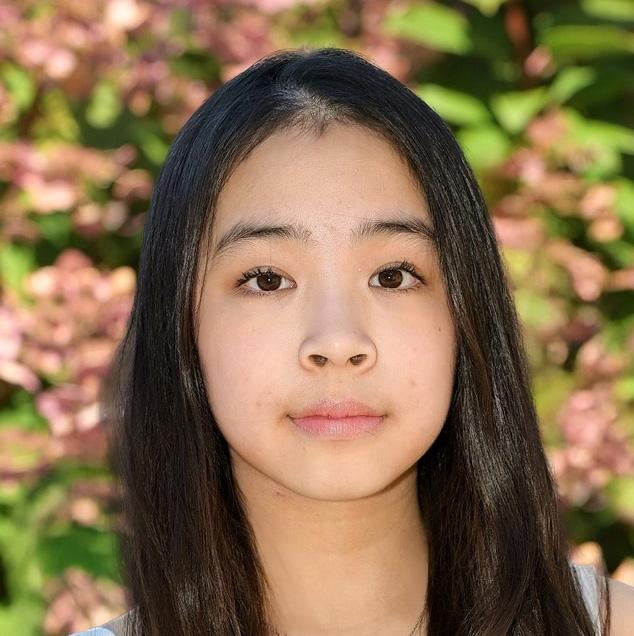
Introduced by Mary Wang ’26
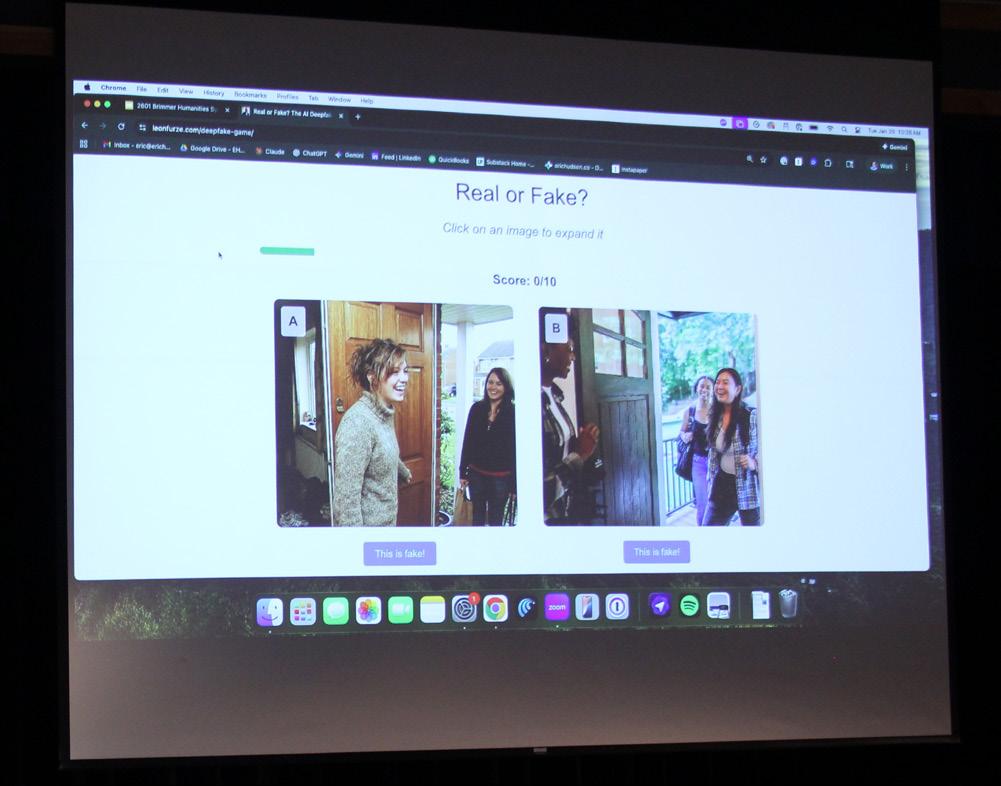
If you are finding it harder to identify AIgenerated imagery these days, you are not alone. When Hudson offered students a series of comparisons and asked if they could tell which ones were fake, the responses were lively and varied. Generative AI is changing by the day, and its ability to simulate human behavior is becoming harder to detect. To quote Stanford University professor Fei-Fei Li, “Despite its name, there is nothing ‘artificial’ about this technology—it is made by humans, intended to behave like humans, and affects humans.”
So, what human skills matter most in today’s world of AI? Hudson centered his keynote on three: literacy, learning, and ethics.
Being AI literate means understanding what’s really going on when we interact with complex, non-neutral technologies such as
EricHudson is a facilitator and strategic advisor who supports schools in making sense of what is changing in education and specializes in focusing on a human-centered approach. Eric spent a decade at Global Online Academy (GOA), first as an instructional coach and ultimately as chief program officer, working with schools around the world to rethink where, when, and how we learn. Prior to GOA, he was a teacher at the middle, high school, and college levels. The classroom is where he developed his passion for learnercentered design and facilitation. Eric holds an MA from the University of California, Berkeley, and a BA from Cornell University.
Elizabeth
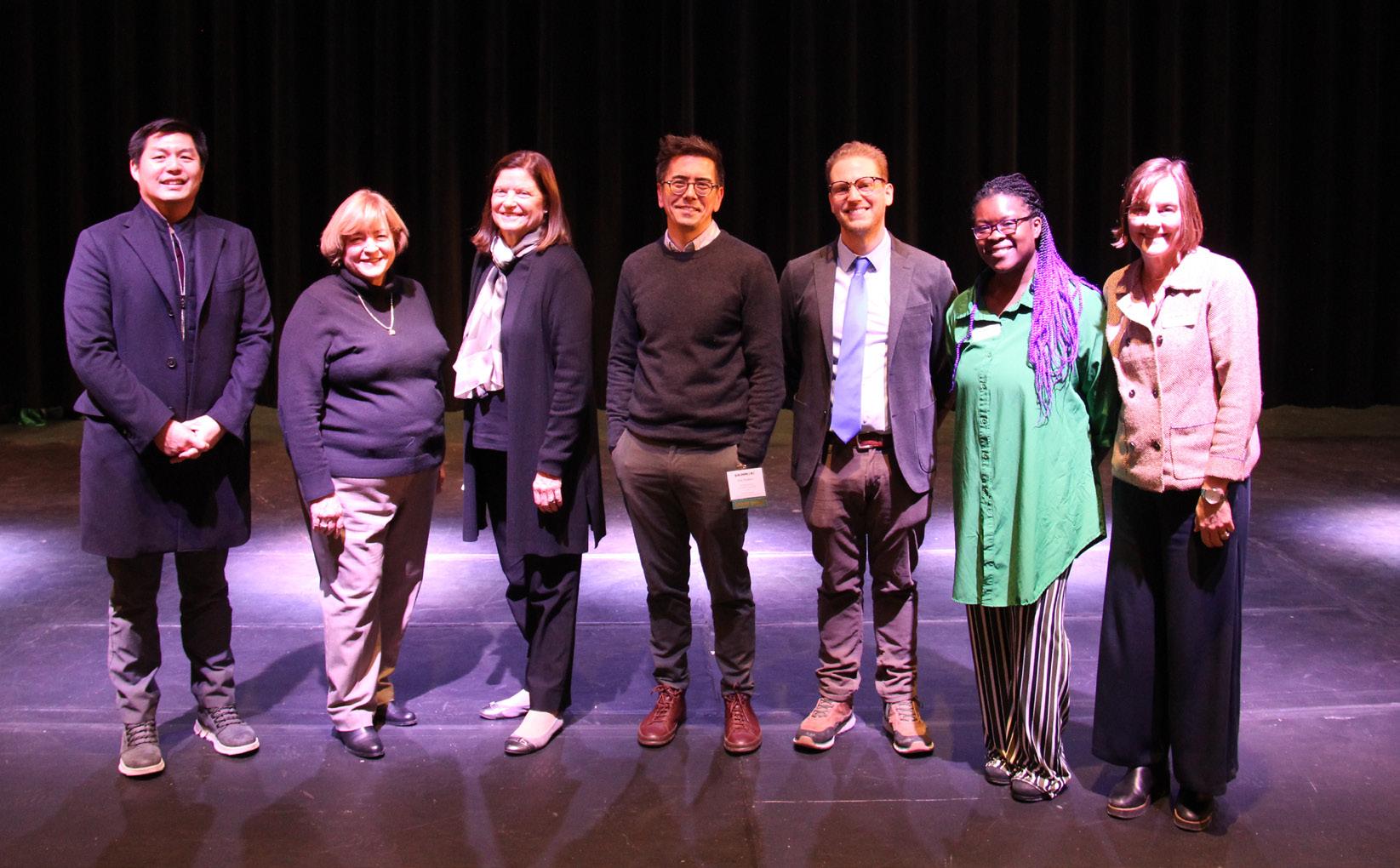
(L-R) Chair of the Board of Trustees Chris Chou P ’29, ’33, Head of School Judy Guild, Symposium Namesake and Trustee Kenyon Bissell Grogan ’76, Keynote Speaker Eric Hudson, Upper School Humanities Teacher and Symposium Co-Chair Bradley Starr ’07, Director of MS/US Library and Symposium Co-Chair Elyse Seltzer, Director of Development
Smith P ’17
Workshops
Authenticity & Originality Today
Authentic Voice: Telling Our Own Stories
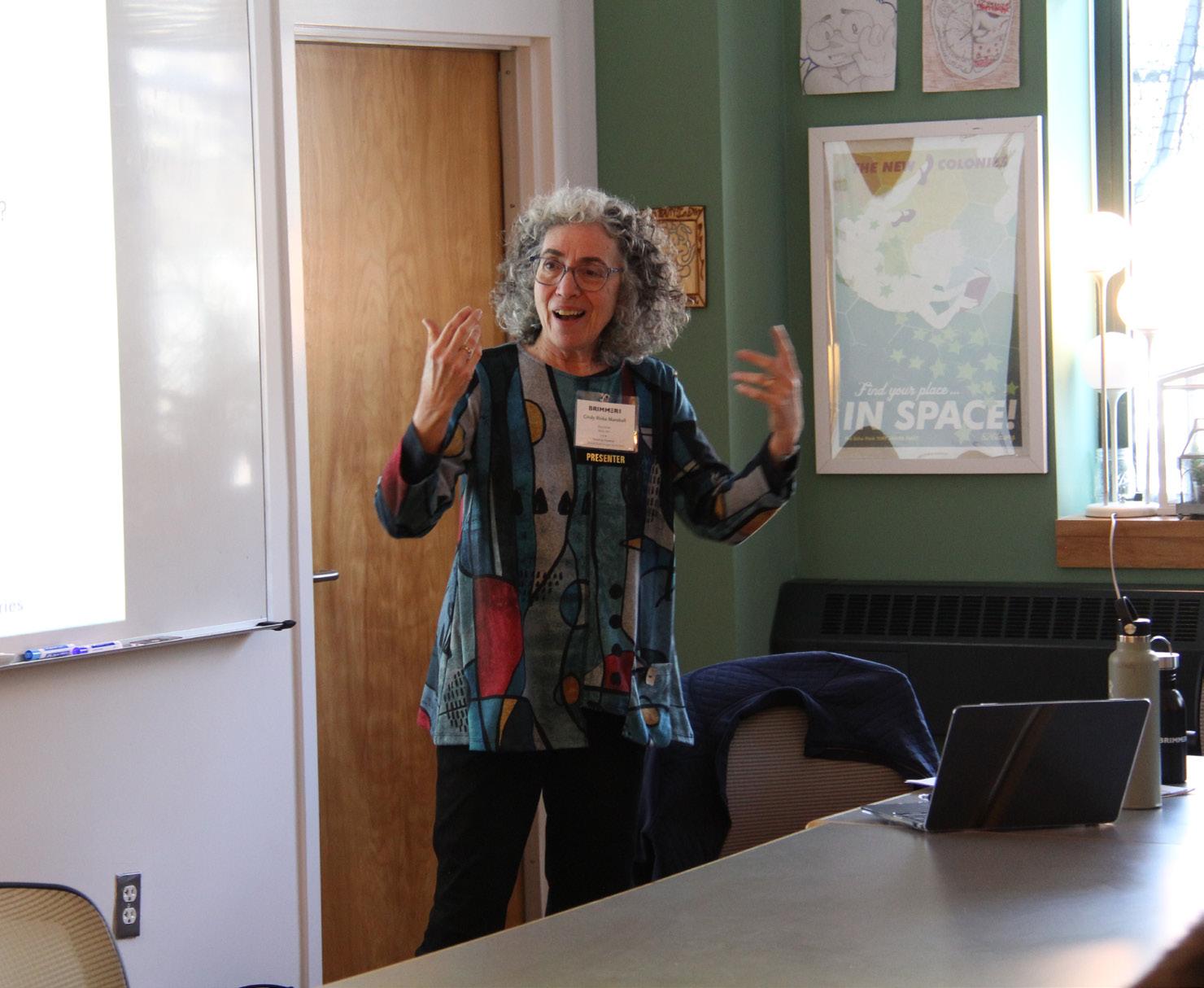
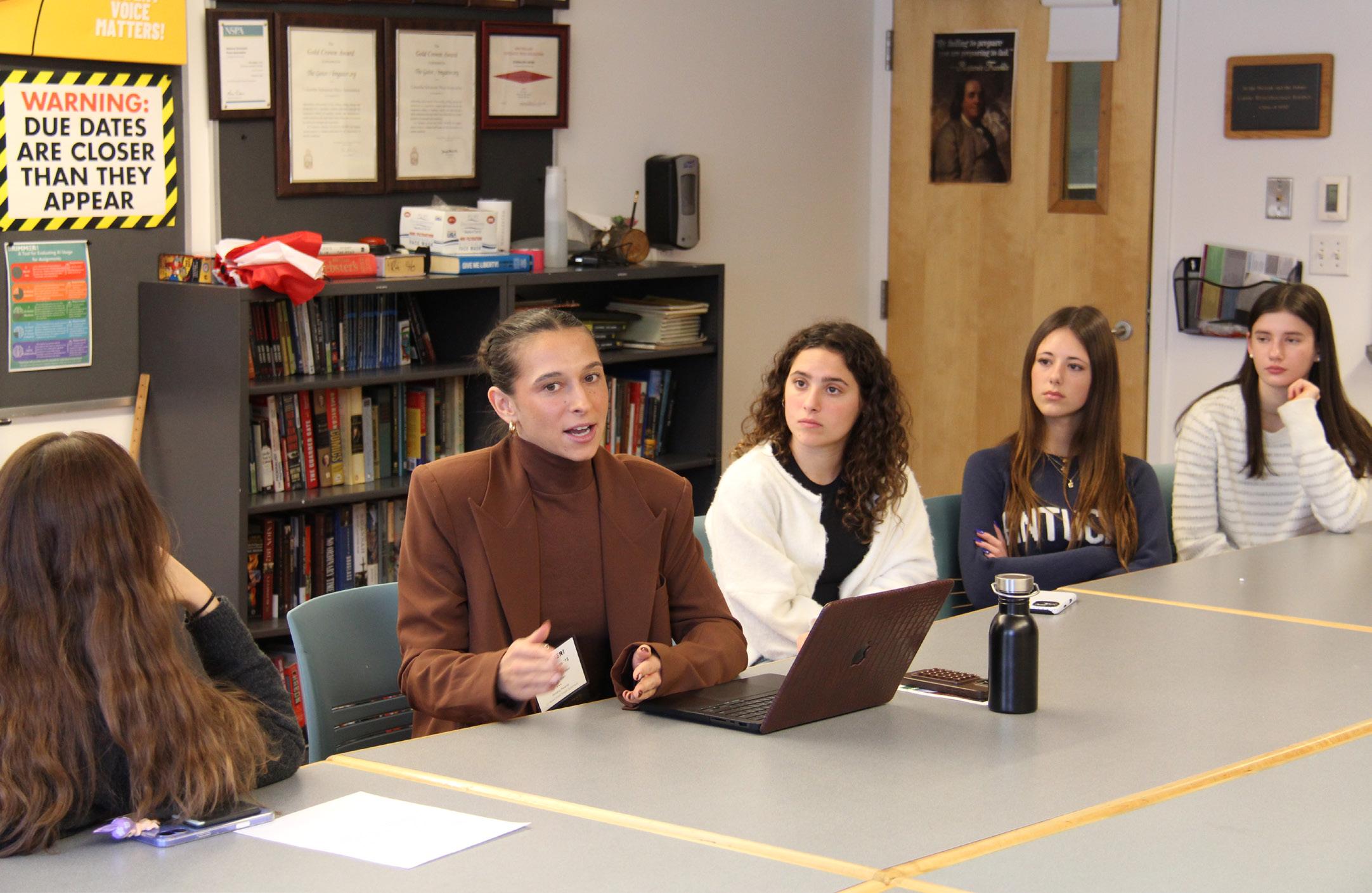
Cindy Rivka Marshall, Award-Winning Storyteller, Educator, Facilitator, and Founder of Story Arc
Afro-Latinx Dance + Activism
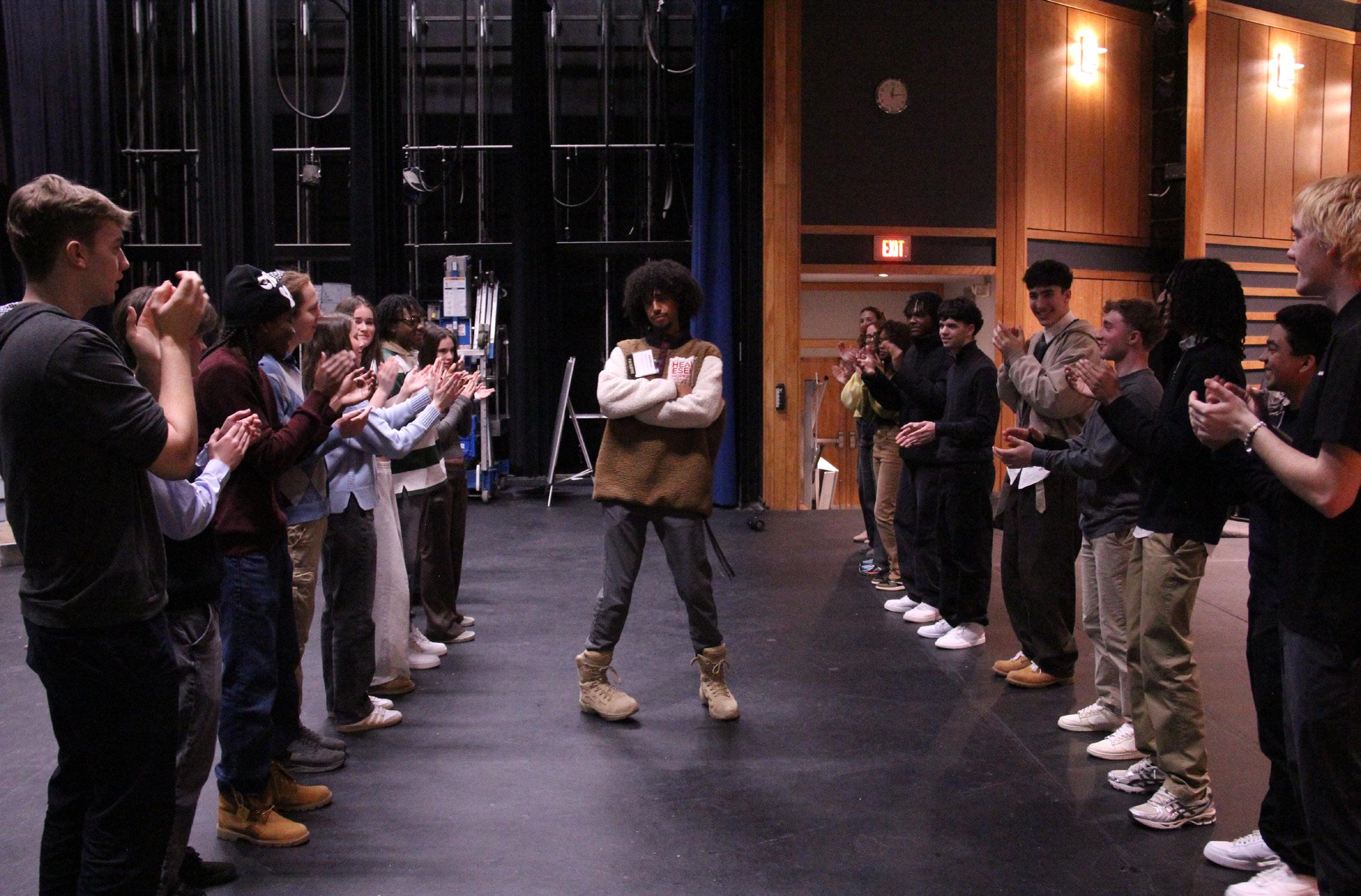
The Haus of Glitter Dance Company + Performance Lab + Preservation Society
Tango, Identity, and...Gay Animals?:
Composing the Queer Experience in Video Games
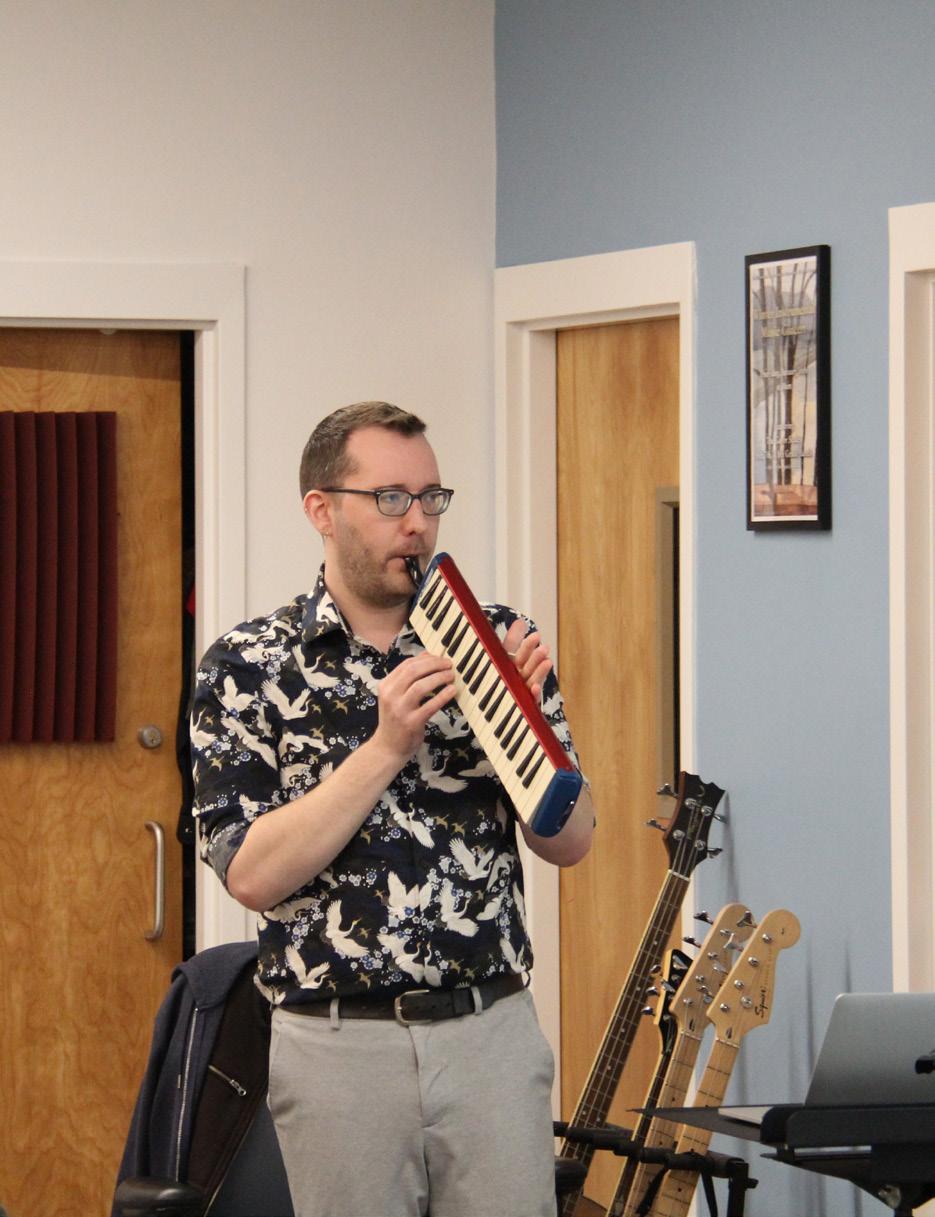
Dr. Alex Ostergard, Middle & Upper School Music & Instrumental Teacher
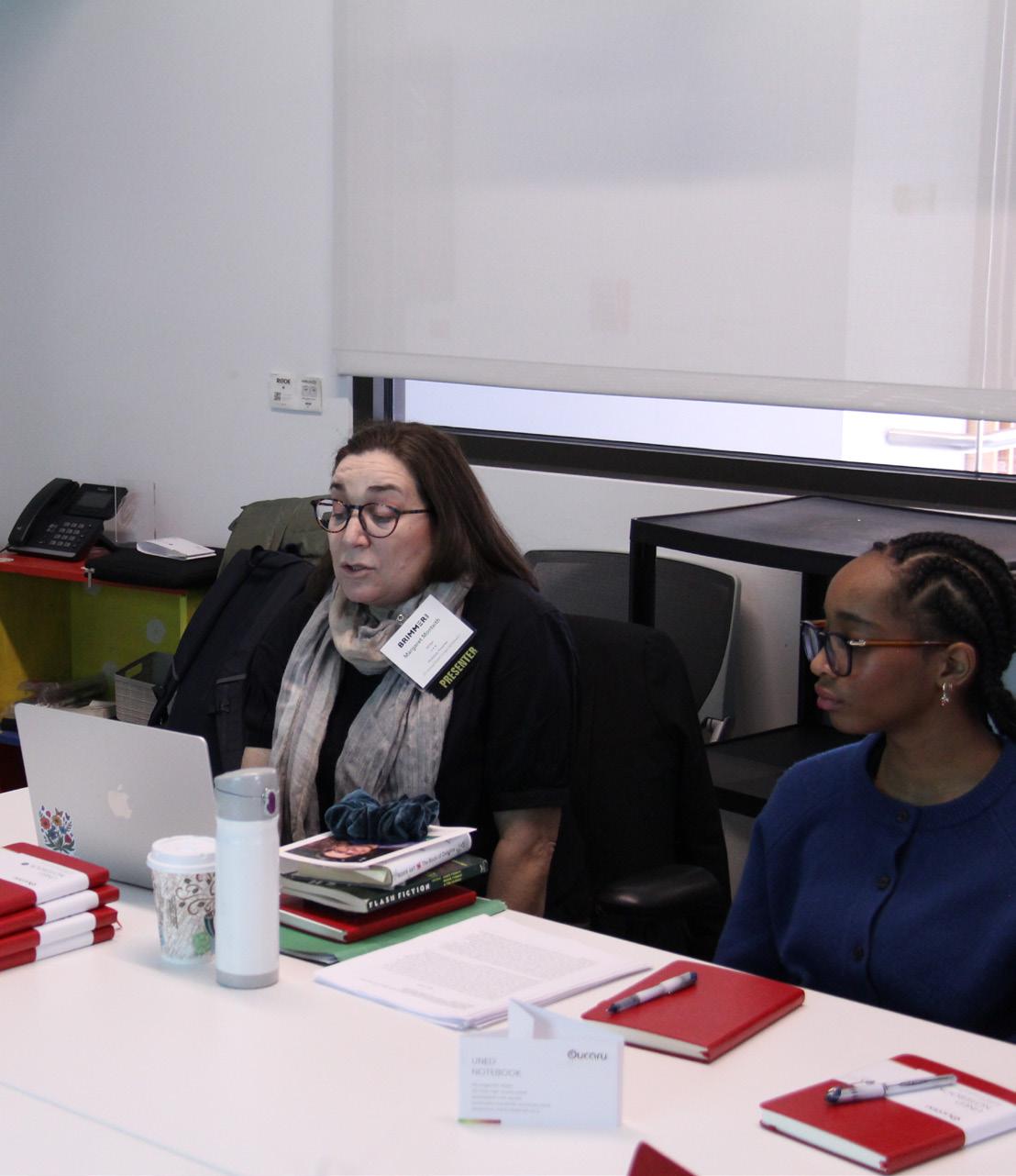
Expressing Human Insight and Crafting Authentic Storytelling in the Age of AI
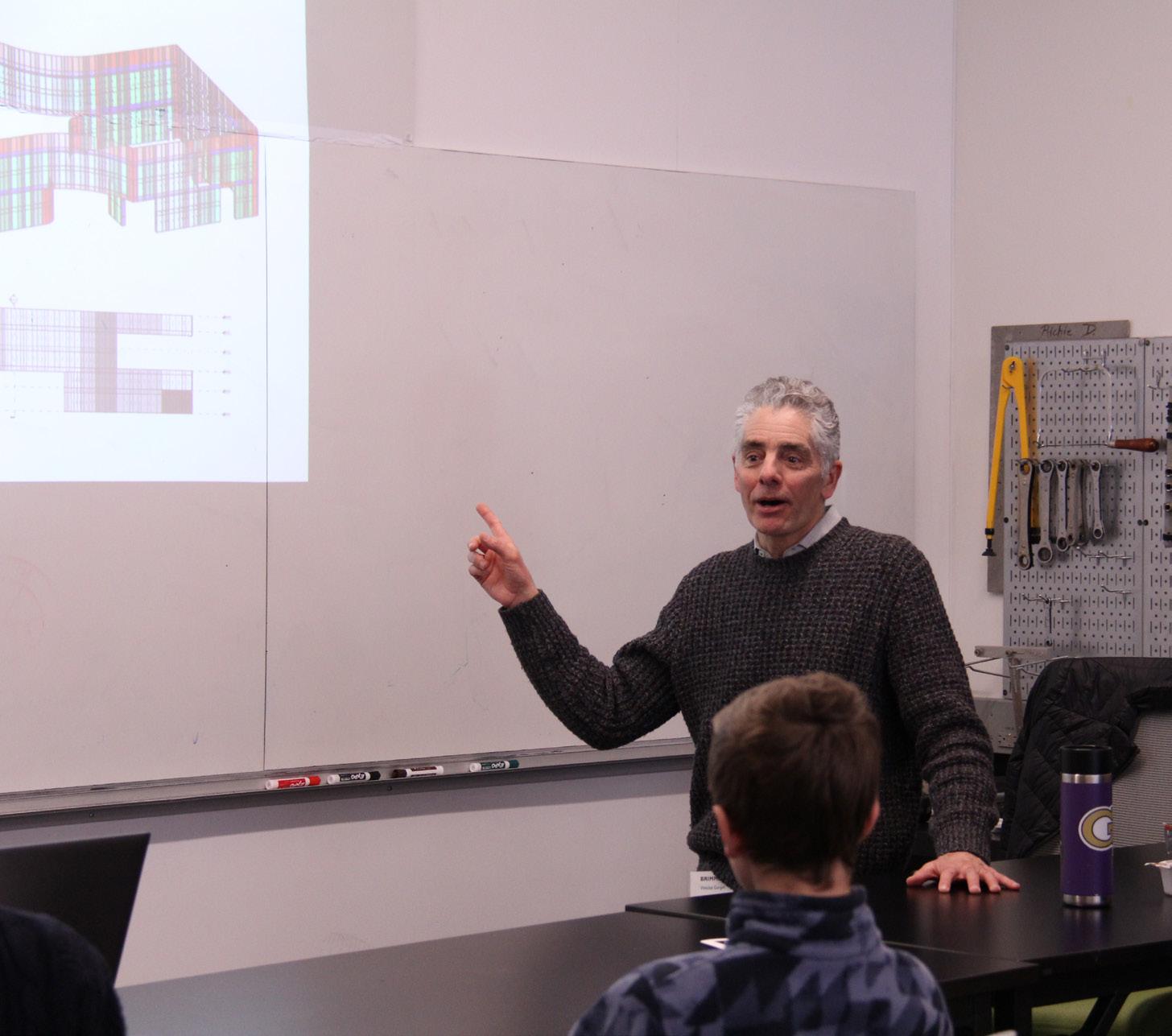
Margaret Monteith, Writer
Fashion & Color Analysis Business: How to Be Authentic When You Are the Brand
Shani Breiman ’18, Principal at Styled by Shani
Design Thinking and Emerging Technologies: How AI Is Changing the Way We Create
Vinicius Gorgati, Architect & Partner at Sasaki Architects
Critical Vision: Why Look at Art in the Age of AI
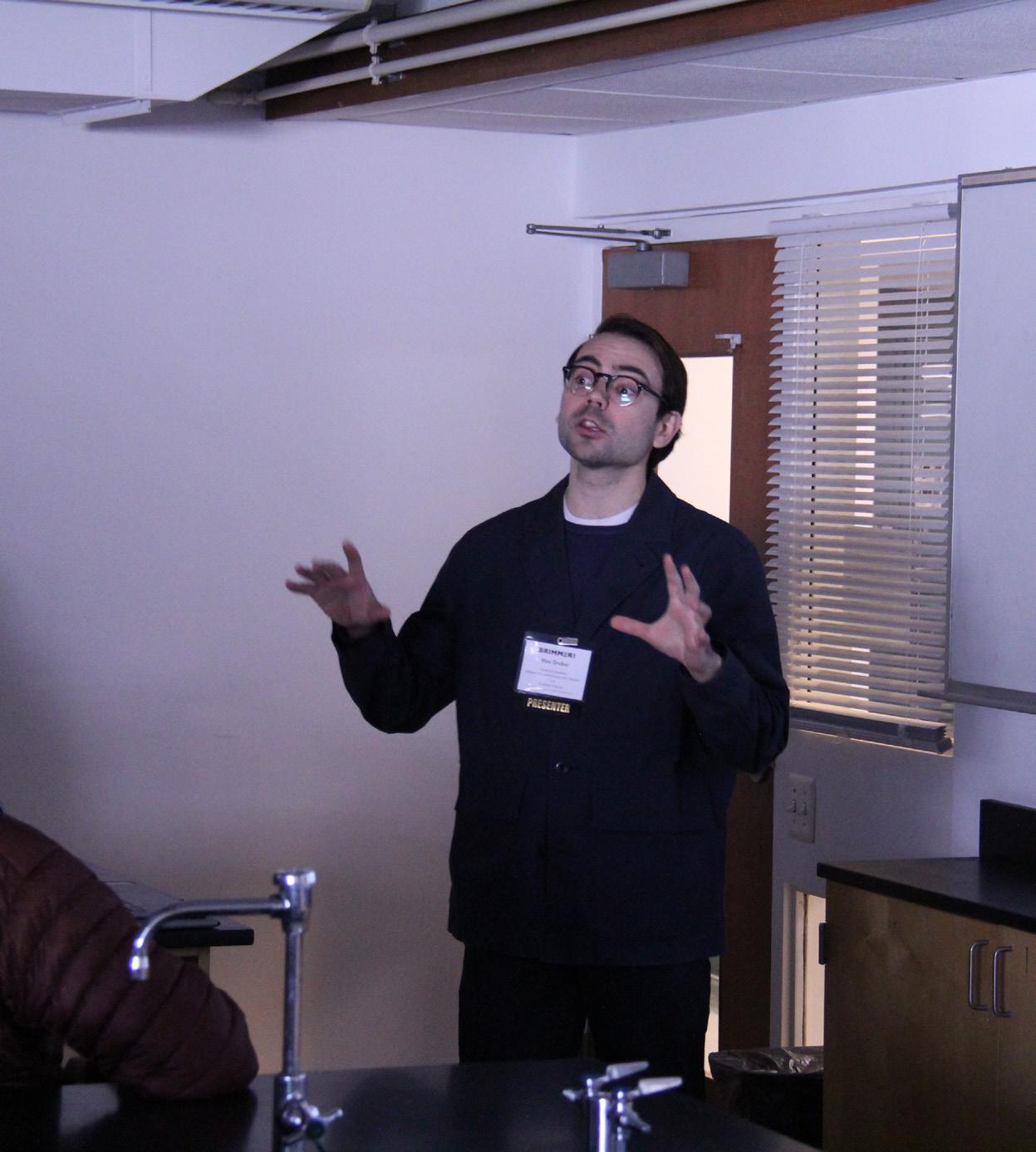
Max Gruber, Curator, ICA Boston
Be Real, Be You:
Turning Authenticity into Opportunity in the Digital Age
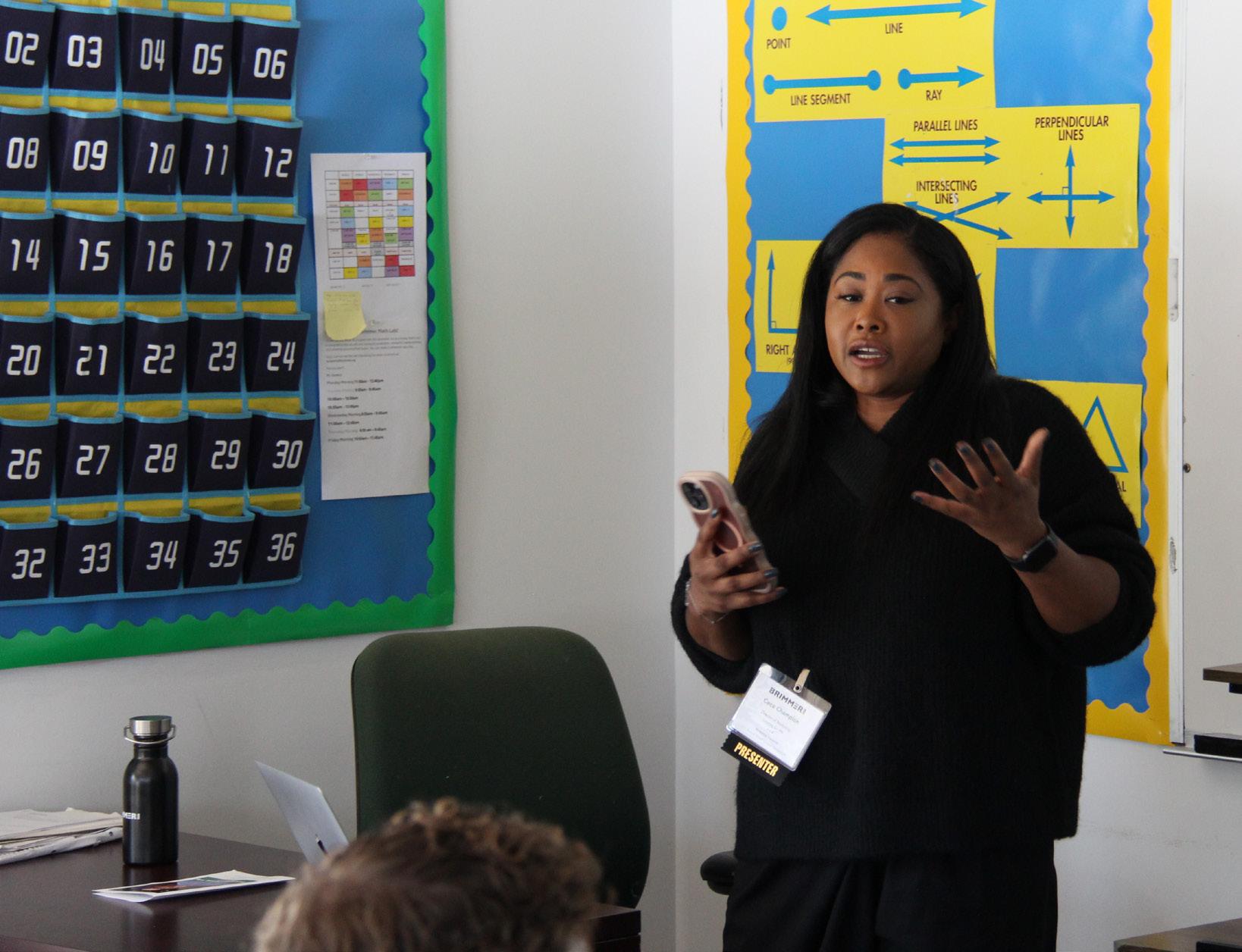
Cece Champion, Director of Marketing at Lowney Sports
Asking the Right Questions in the Age of AI
Ling-Se Chesnakas, Teacher at Right Question Institute
THE BISSELL GROGAN HUMANITIES SYMPOSIUM WAS ESTABLISHED IN 2006 IN HONOR OF KENYON BISSELL GROGAN, FORMER CHAIR OF THE BOARD OF TRUSTEES AND BRIMMER GRADUATE OF THE CLASS OF 1976. THE GOAL OF THE SYMPOSIUM IS TO BOTH EDUCATE AND ENGAGE STUDENTS IN RELEVANT TOPICS OF TODAY. AN ANNUAL EVENT ATTENDED BY STUDENTS IN GRADES 8–12, IT COMMENCES WITH A KEYNOTE SPEECH AND IS FOLLOWED BY WORKSHOPS THAT EXPLORE A DIVERSE RANGE OF SUBJECTS ON A CHOSEN TOPIC.
Bissell Grogan Symposium
smartphones and social media platforms. Simple neutral technologies by comparison (think clocks, calculators, and projectors) deliver static results. But complex platforms (think TikTok, Discord, YouTube) are influenced by humans to deliver what you want, when you want it, and they do so via what Hudson refers to as “cheap signals.” If you’ve wondered why AI-generated results are so quick, confident, responsive, and sycophantic, it is because they were designed to appear as fluent, caring human experts and authority figures. However, their output is not always correct. “AI tools are designed to validate us, keep us engaged, and form a bond with us,” says Hudson. “If we focus on using generative AI to evaluate claims, not tell us ‘facts,’ it can change how we interpret its results for the better.”
This is where the learning comes in. Studies have shown that as learners, we are not particularly skilled at determining how much we are actually learning from a class or presentation. Active, collaborative learners tend to absorb more than passive listeners. The same is true when using AI in learning. “Don’t ask AI to read content for you or write a paper for you,” suggests Hudson. “Rather, ask AI to help you evaluate and question that content. Ask AI to help you break down the concepts or give you feedback on the work you’ve already done.” These kinds of collaborative interactions yield collaborative results, and the same rules apply to teachers using AI in their own work. Students and teachers alike must ask the question, “What is authentic, original work?” and then base AI rules, guidelines, and boundaries around it.
By doing so, schools can use AI tools in a way that reflects their values. It is crucial that students deepen their understanding of the ethical implications posed by AI. “Can AI make the world a better place?” Hudson asked the students in closing. “Or will it do more harm than good?” By thinking critically about these emerging technologies and how they impact both school and daily life, we can harness the benefits of responsible AI use.
In the words of Fei-Fei Li, “AI must enhance us, not replace us.” ■
Ling-Se Chesnakas, Teacher at Right Question Institute
Cece Champion, Director of Marketing at Lowney Sports
Cindy Rivka Marshall, Founder of Story Arc Max Gruber, Curator
The Haus of Glitter Dance Company
At Top Left: Dr. Alex Ostergard, Brimmer Middle & Upper School Instrumental Teacher; At Top Right: Shani Breiman ’18, Principal at Styled by Shani; At Bottom Left: Vinicius Gorgati, Architect & Partner at Sasaki Architects; Bottom Right: Margaret Monteith, Writer
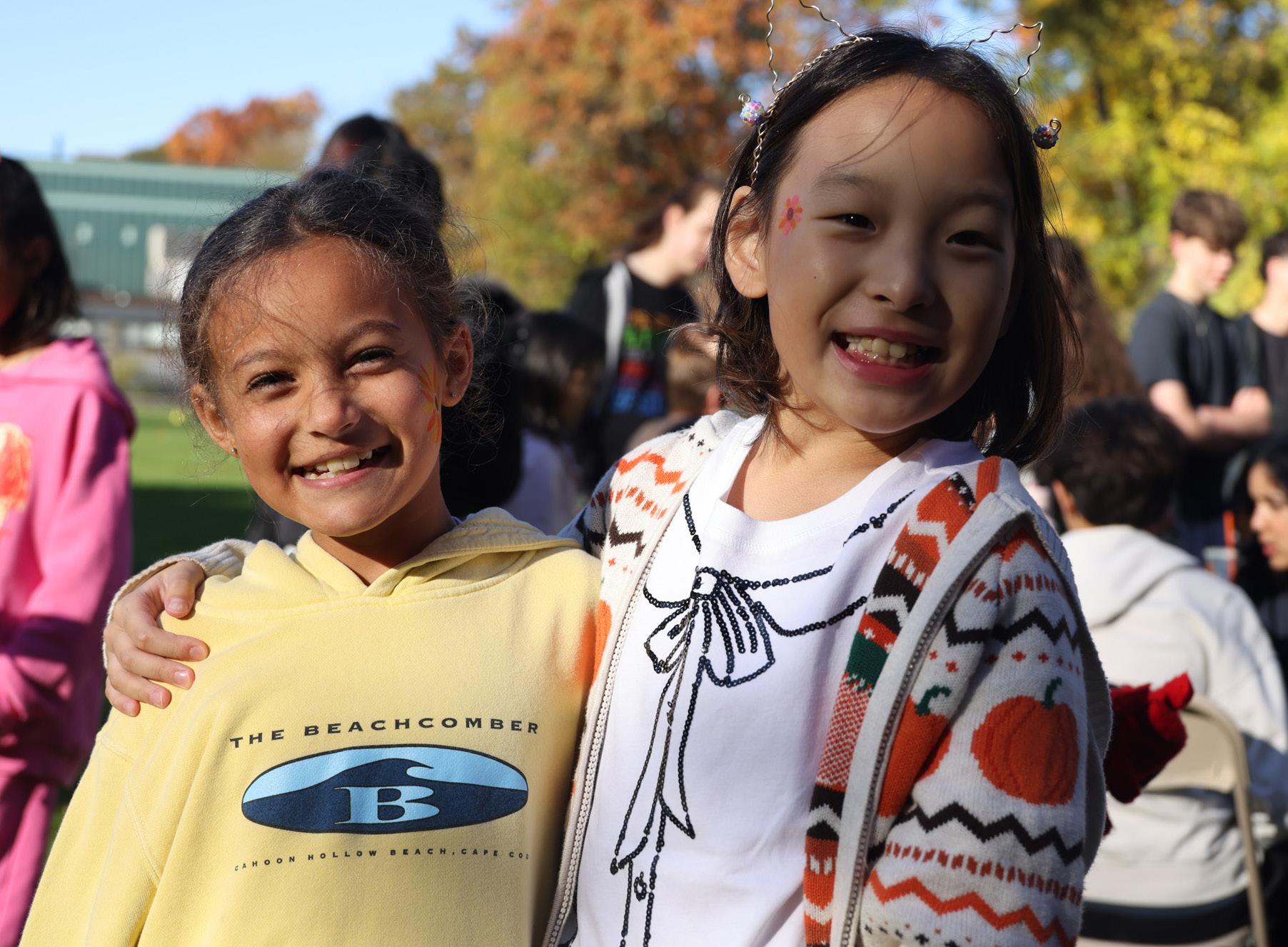
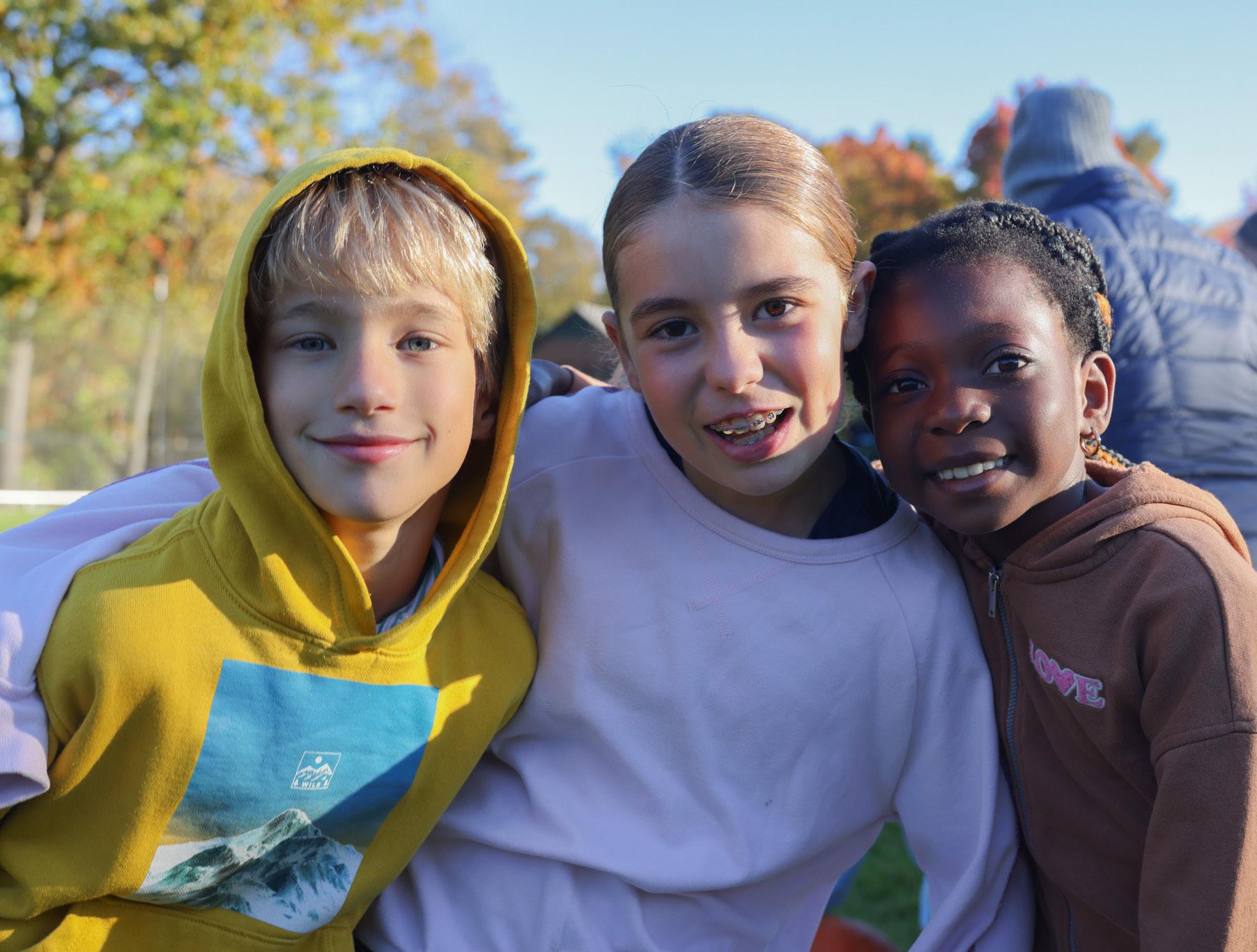
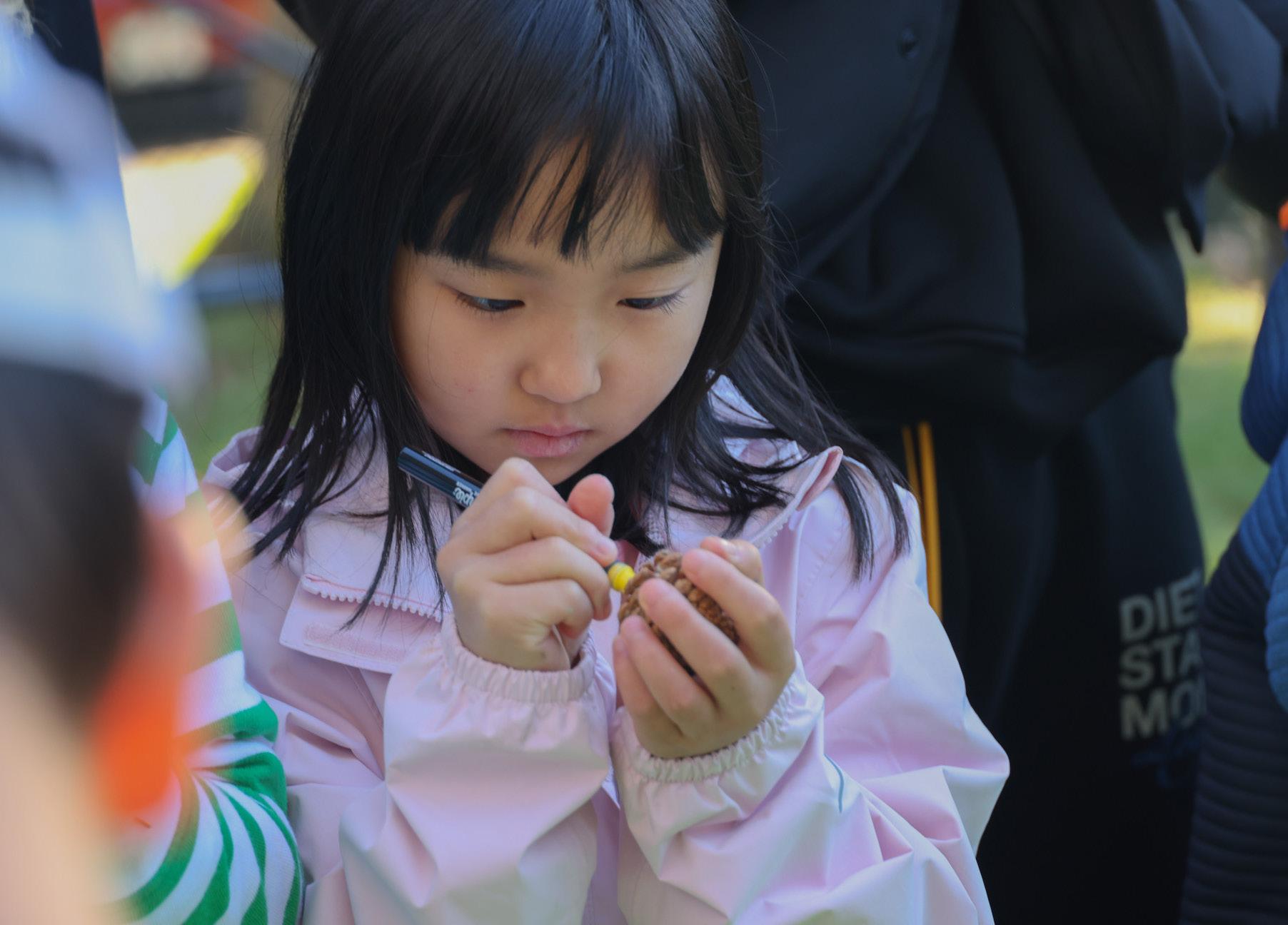
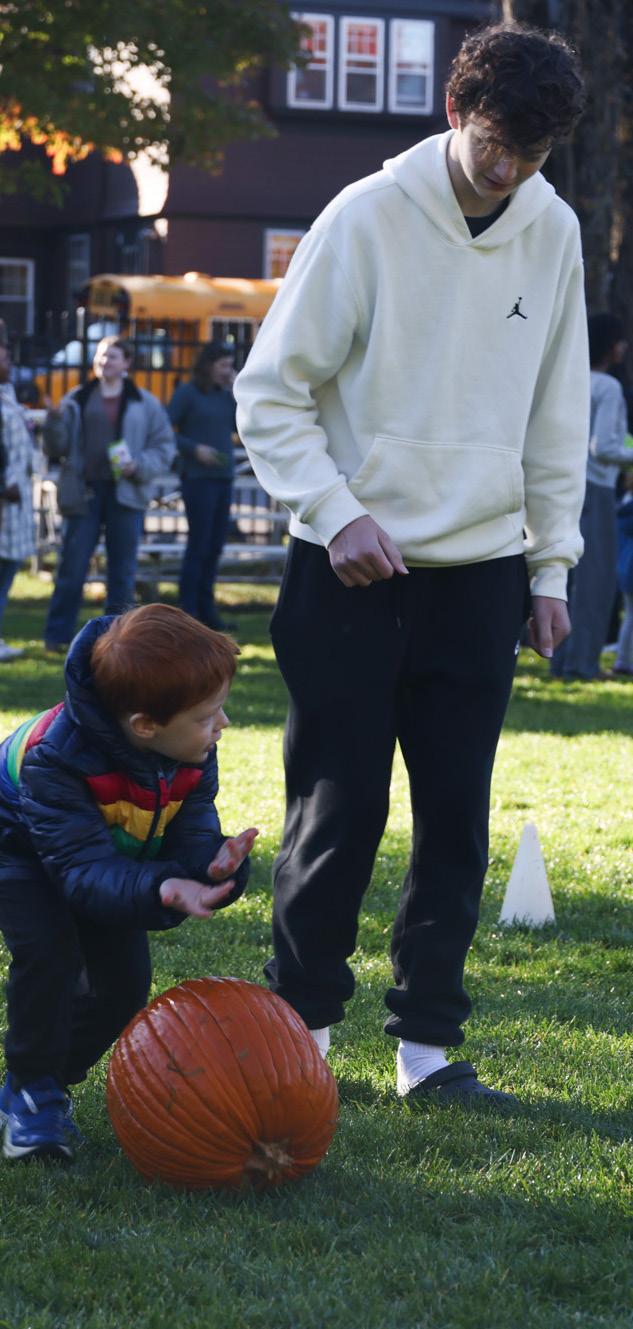
Harvestfest
Our annual School-wide event celebrates fall in New England! 2025
advancing brimmer in the 2025-2026 school year
By Elizabeth Smith P ’17, Director of Development
This has been an exciting year for the Alumni & Development Team at Brimmer. Like so many members of our community, we are thrilled to see construction on the new Recreation & Wellness Center nearing completion, and we are also anticipating the announcement of the next Head of School in late spring.
For the many alumni who have reached out with questions about how we plan to celebrate longtime Head of School Judy Guild, rest assured that there will be a full community celebration in the spring of 2027. This celebration will give our community the opportunity to honor all that Judy has done for Brimmer and the many ways she has touched the lives of alumni and faculty over her 35 years of service.
As the School continues to evolve and advance, we are excited to make continued progress on the Alumni Strategic Plan 2025–2028, led by Alumni & Special Events Director Amanda Spooner Eppers ’88, P ’22. Alumni are encouraged to attend our second annual Alumni Association Meeting on Alumni Day, Saturday, May 9, as part of the day’s events. This meeting is open to all alumni and offers opportunities to connect with current students and members of the Alumni Board, hear an institutional update from Judy Guild, and share ideas about future alumni programming—both on campus and beyond.
While the new Recreation & Wellness Center has been under construction this school year, we have continued to raise major gifts for the Building Our Tomorrow campaign and recently introduced the Bricks & Bleachers
Community Campaign to engage our entire community this spring. As of February, we have raised $7.21 million for the endowment and $19.1 million in capital gifts, bringing our total to $26.3 million. We hope many of you will join us in purchasing a brick or a bleacher row to leave your mark on Brimmer’s future. Thanks to the generosity of so many, we will complete the new building in July and are planning a ribbon cutting and campaign celebration in fall 2026.
We are also continuing to work toward our $1 million goal for the 2025–2026 Annual Fund. The Annual Fund remains our highest fundraising priority each year, supporting every aspect of the Brimmer experience. It provides the Board and administration with the flexibility to respond to the School’s evolving needs, from faculty development and financial aid to classroom technology, campus maintenance,
lunch programs, and strong PE, athletics, and arts offerings. Alumni and friends have until June 30 to contribute, and every gift truly makes a difference. We are especially grateful for Annual Fund support during a year when our community is also invited to participate in naming opportunities within the new Recreation & Wellness Center.
In addition to our fundraising efforts, we have hosted several wonderful events this year, including Homecoming soccer games and a BBQ on Orr Field in October, Board of Visitors Day, the Alumni Holiday Party, and the Bissell Grogan Humanities Symposium on Authenticity & Originality Today. The Alumni Coffee House in January (see pages 48–49) was another highlight, as was the A Night to Dazzle & Dream Community Celebration & Auction in April. On May 9, we will host Alumni Day, during which we will induct former longtime Athletic Director Jeff Gates P ’13, ’13, ’15, ’15 into the Athletics Hall of Fame along with Jacob Quiles ’16, Mark Gasperini ’16, and Cindy Kurker ’86, and the cast of In the Heights (2016) and Alex Zook ’05 into the Creative Arts Hall of Fame.
This past winter, the Alumni Office also traveled to New York City and Florida for alumni events and professional development. It was a joy to reconnect with alumni from the classes of 1950–2022, and it is always humbling to hear about their lives, accomplishments, and reflections on the lasting impact of their Brimmer education.
Once a Gator, always a Gator! ■
Opposite: The Brimmer Alumni & Development Office, including (L-R) Advancement Associate Mark Sehnert, Director of Alumni Affairs & Special Events Amanda Spooner Eppers ’88, P ’22, Director of Development Elizabeth Smith P ’17, Director of Annual Giving Sharin Russell
ALUMNI DAY
MAY 9 , 2026
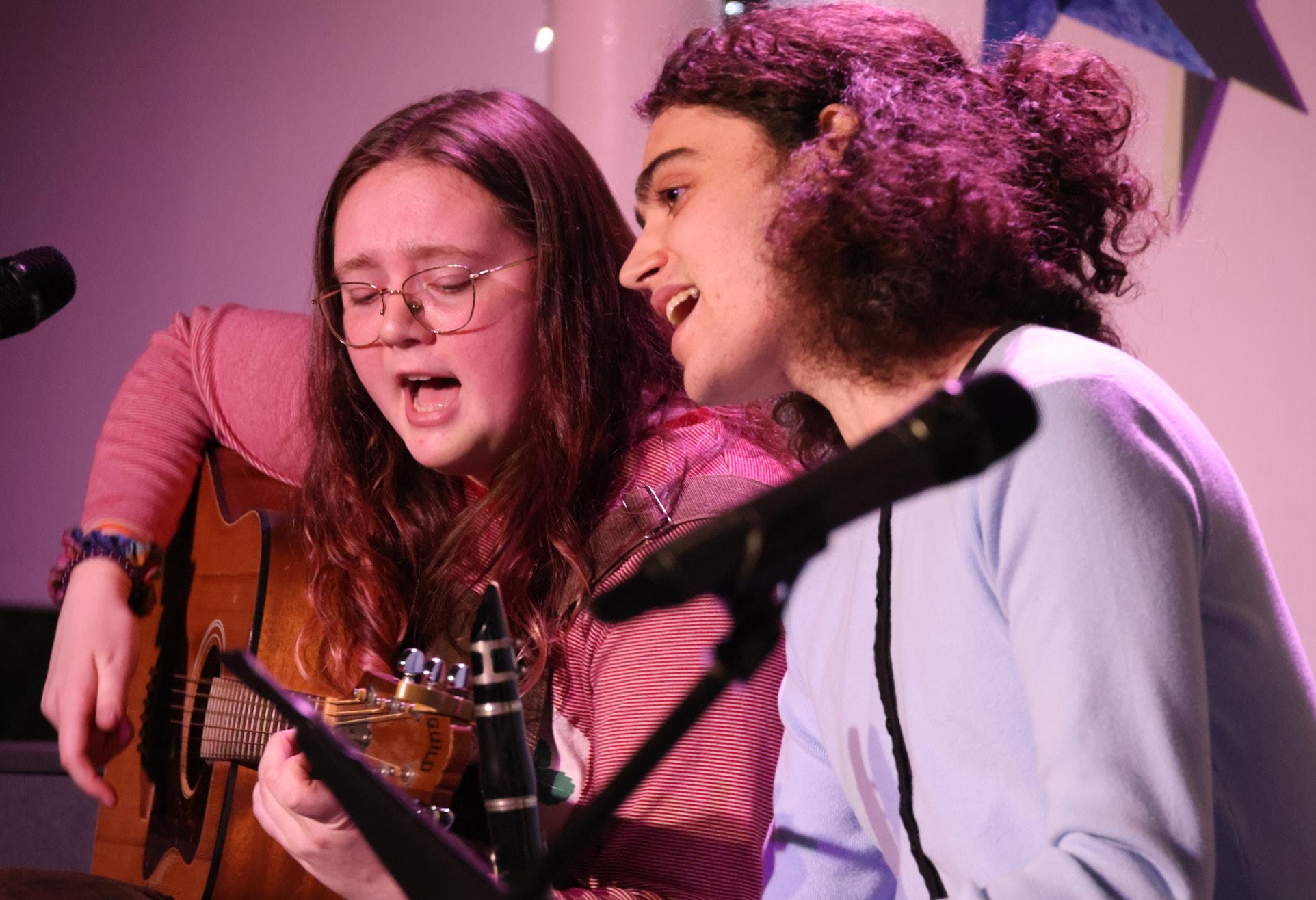
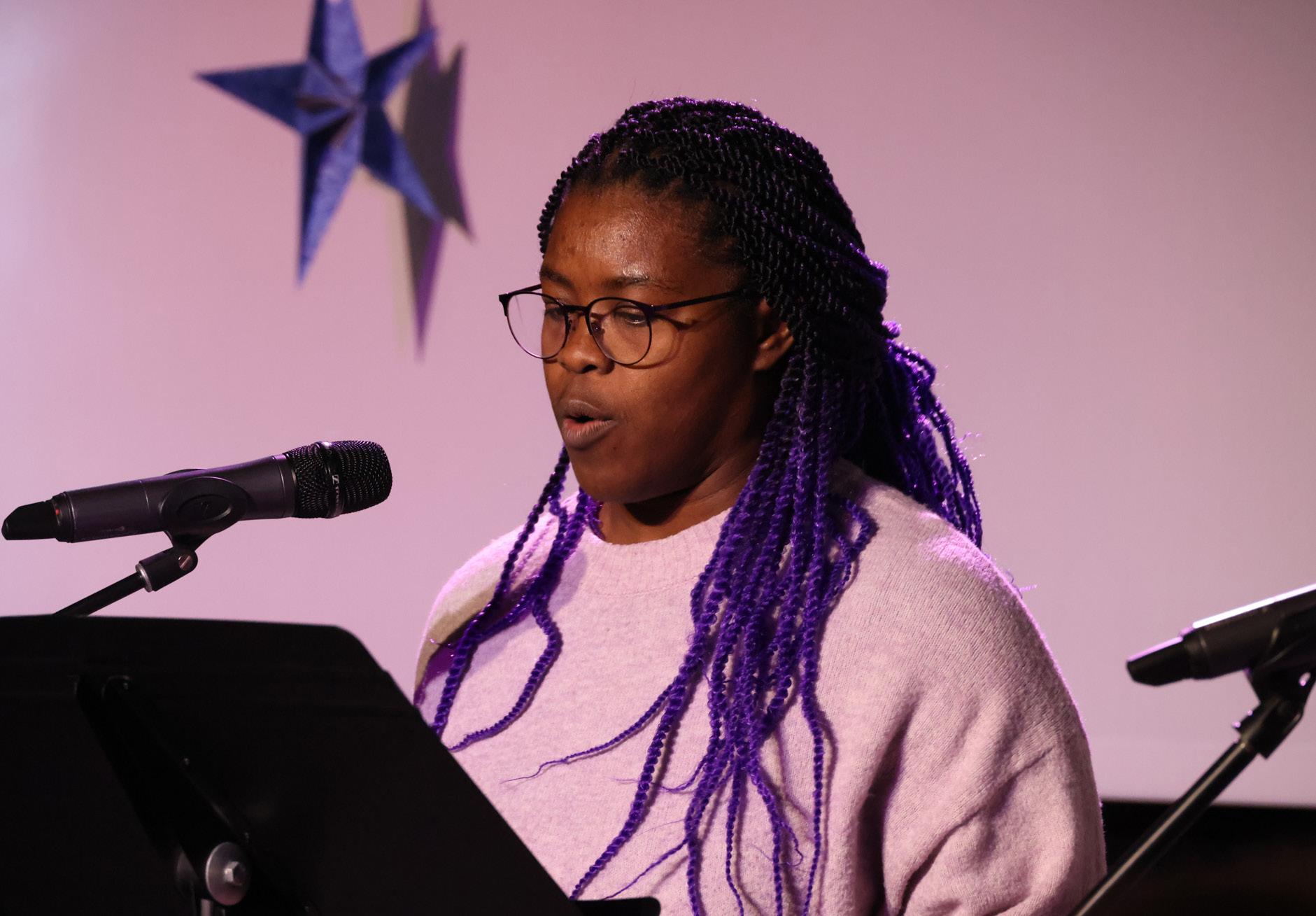
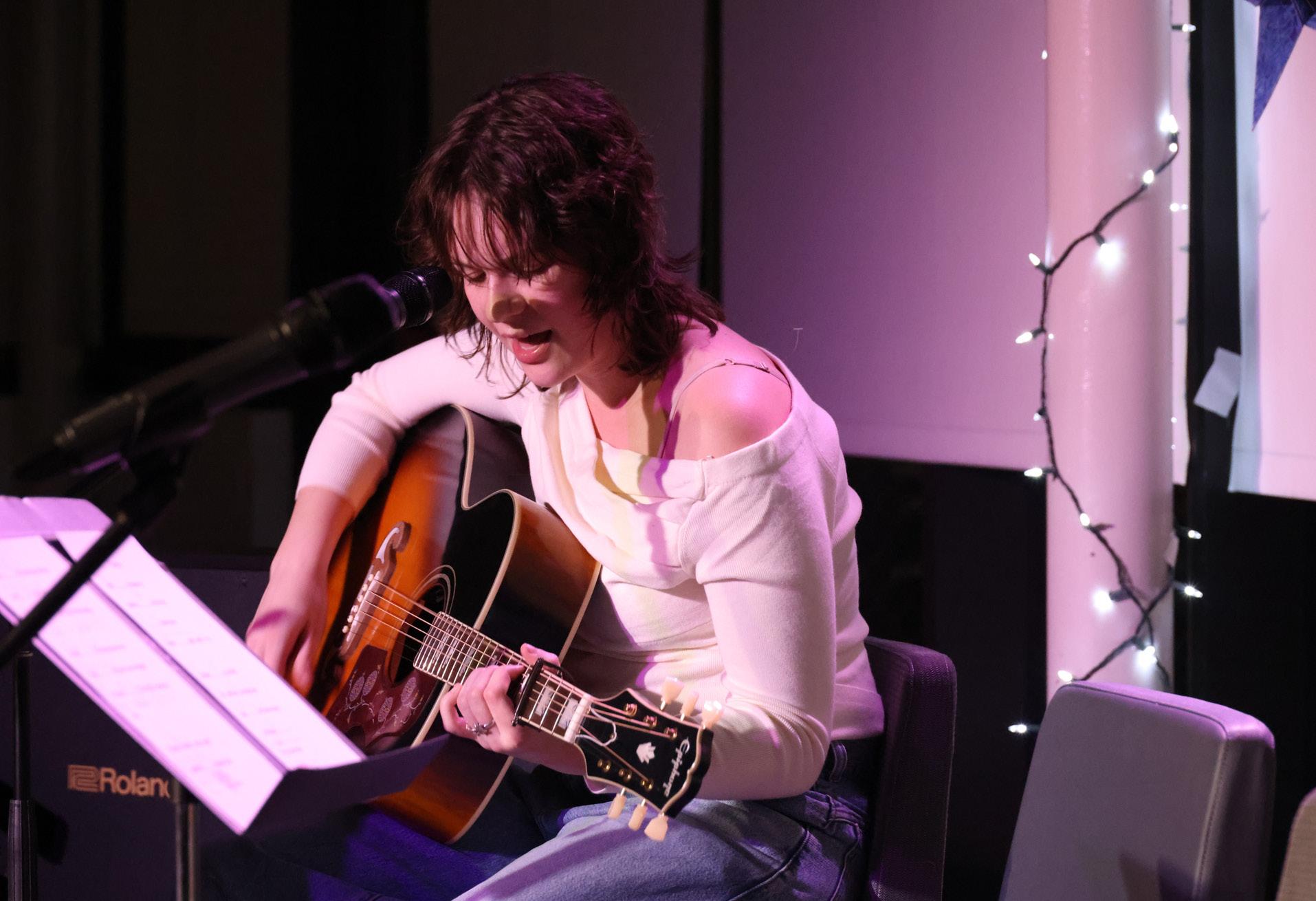
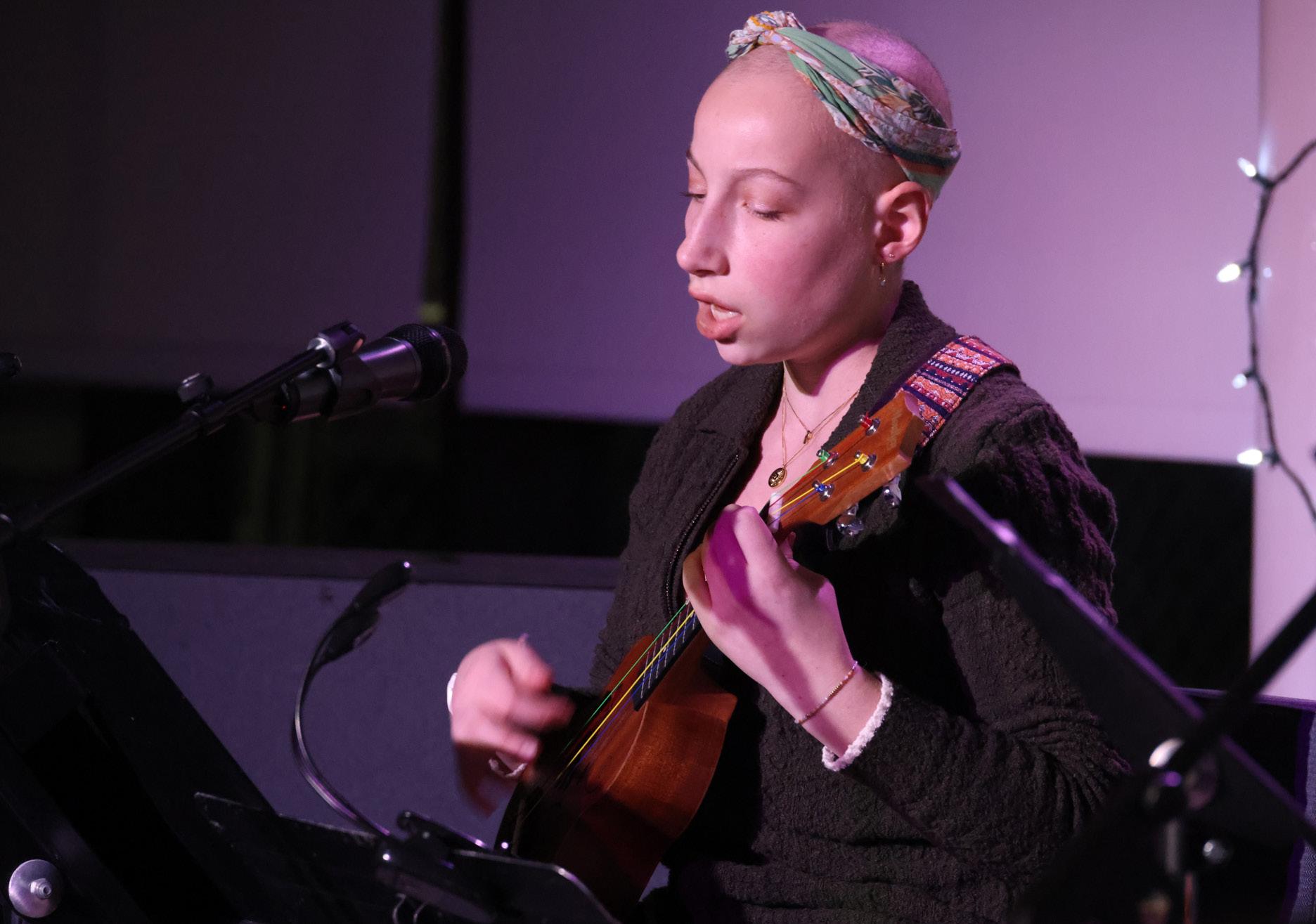
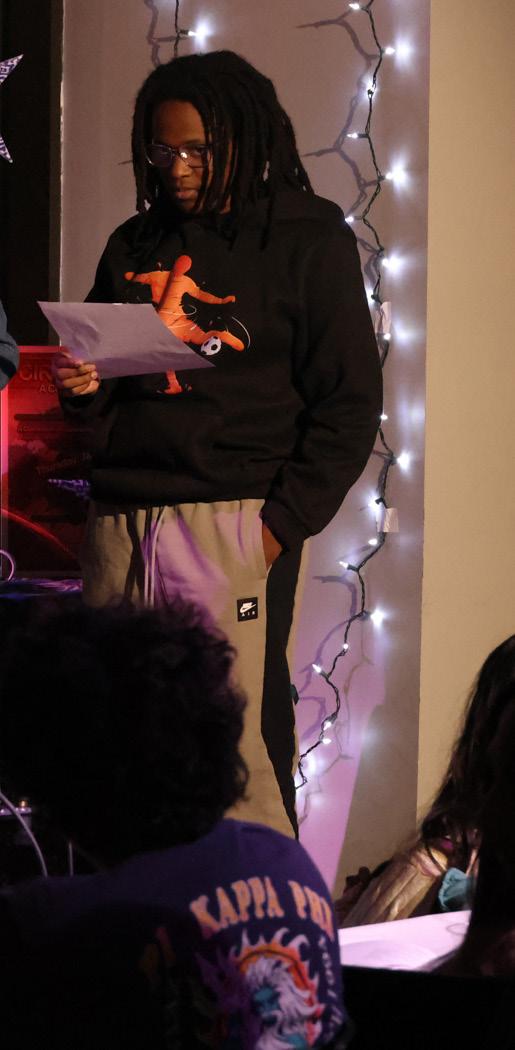
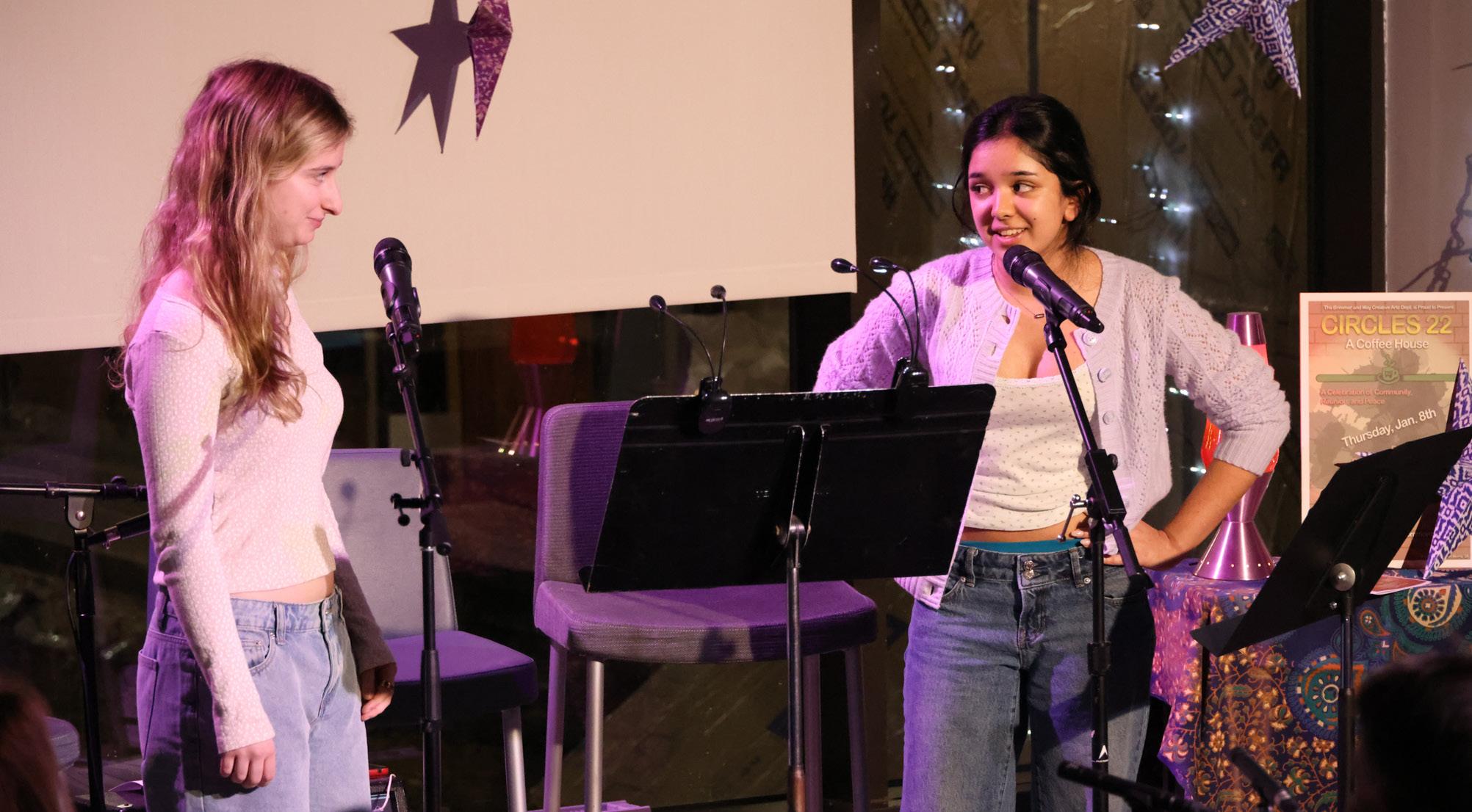
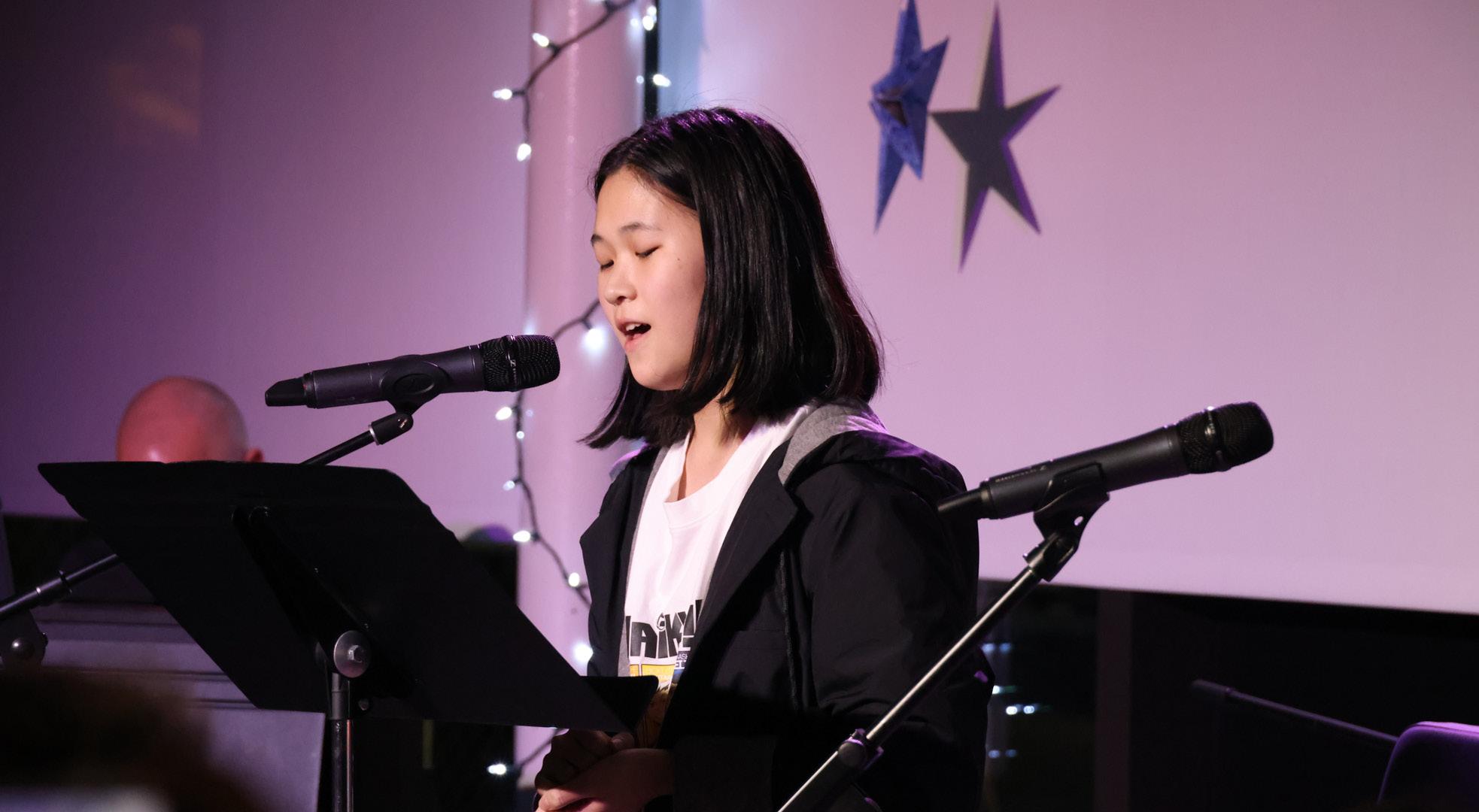
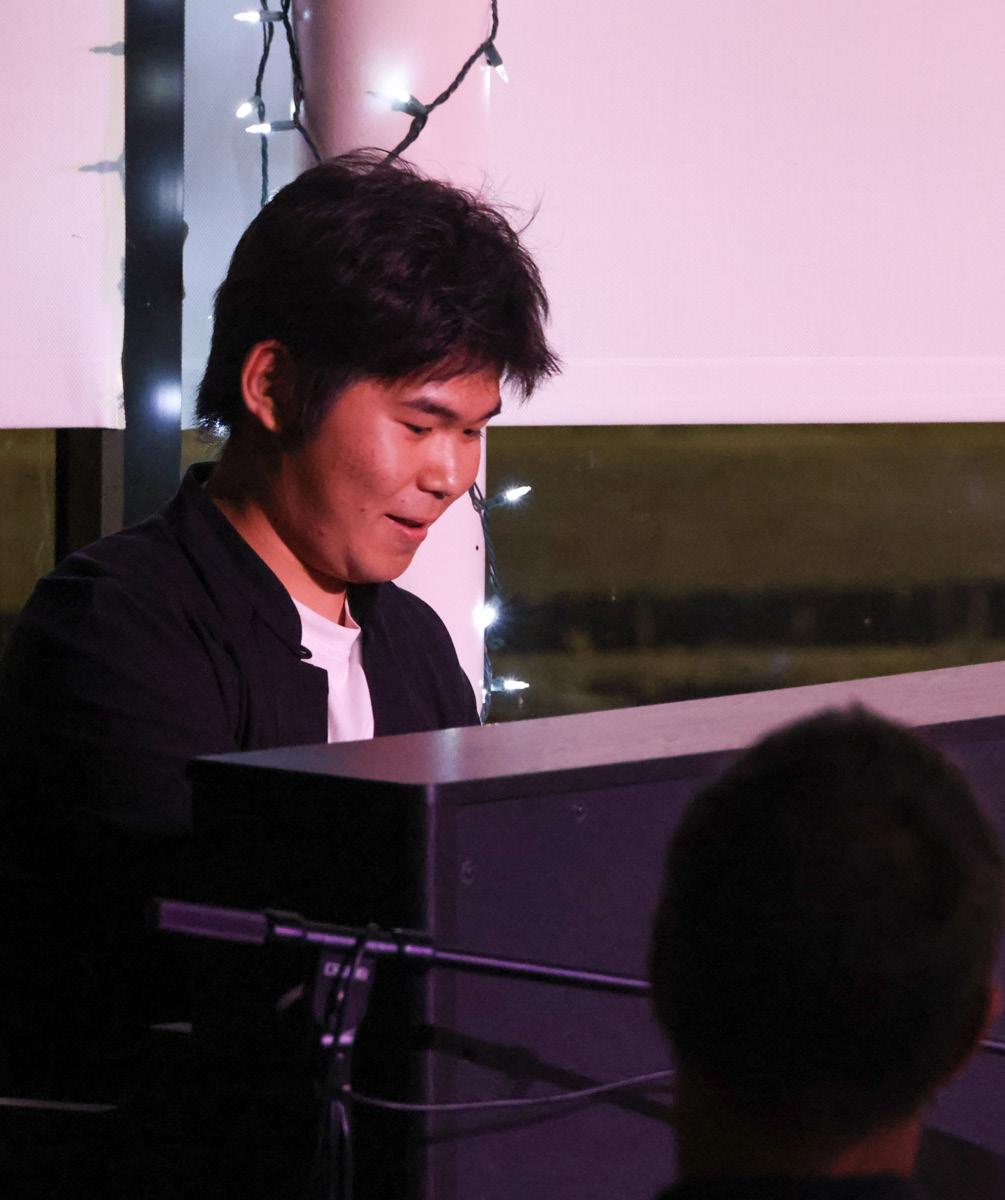
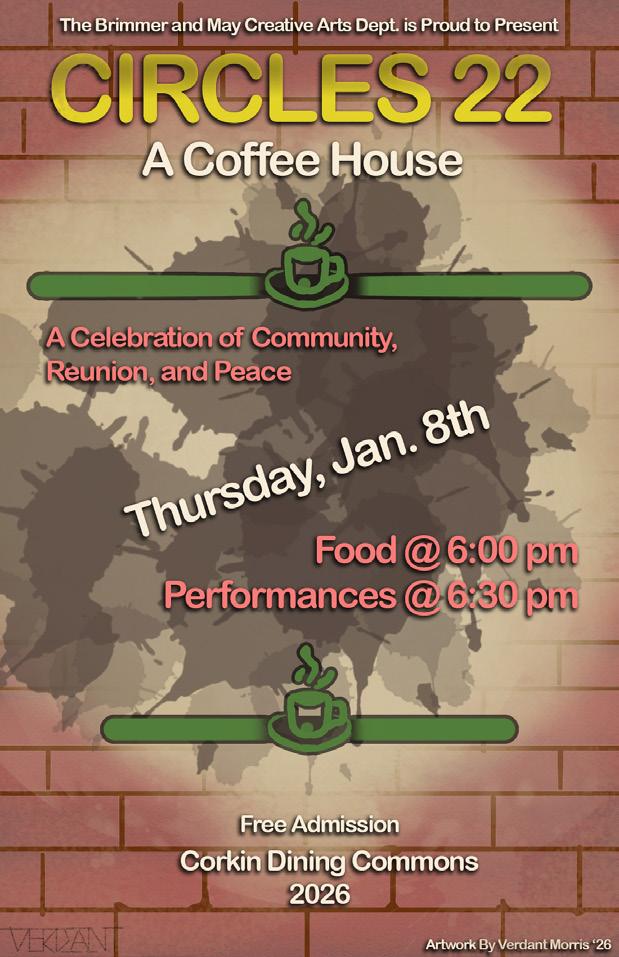
Circles 22: A Coffee House
Madison Perkins, Marketing & Communications Associate
(L-R) Creative Arts Department Chair Bill Jacob P ’06, Upper School History Teacher
Ted Barker-Hook P ’23, PK Teacher Taylor Vaughn, and Binyam Tsegai ’26
Sophia Spring ’22 (L) and Zakkai Mares-Van Praag ’22
Maddie Pogoda ’25
Ruby Cohen-Weinberg ’25
Director of Middle & Upper School Library Elyse Seltzer
Jerry Li ’27
Upper School Math & Engineering Teacher Leonard Wholey
Coffee House MCs Charlotte Wolfstich ’26 (L) and Meera Gandhi ’26
Jane Lai ’29
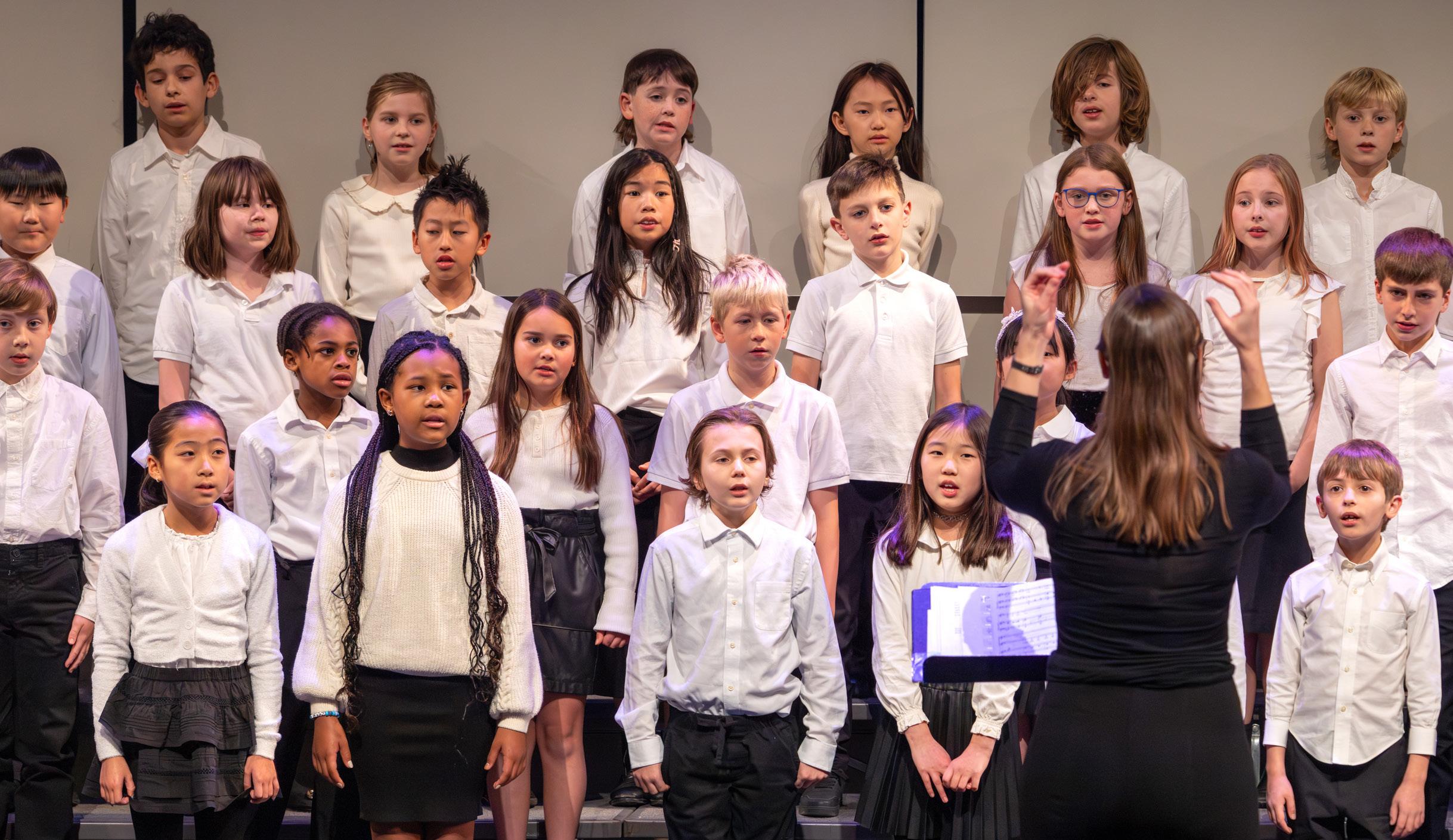
Winter Concert
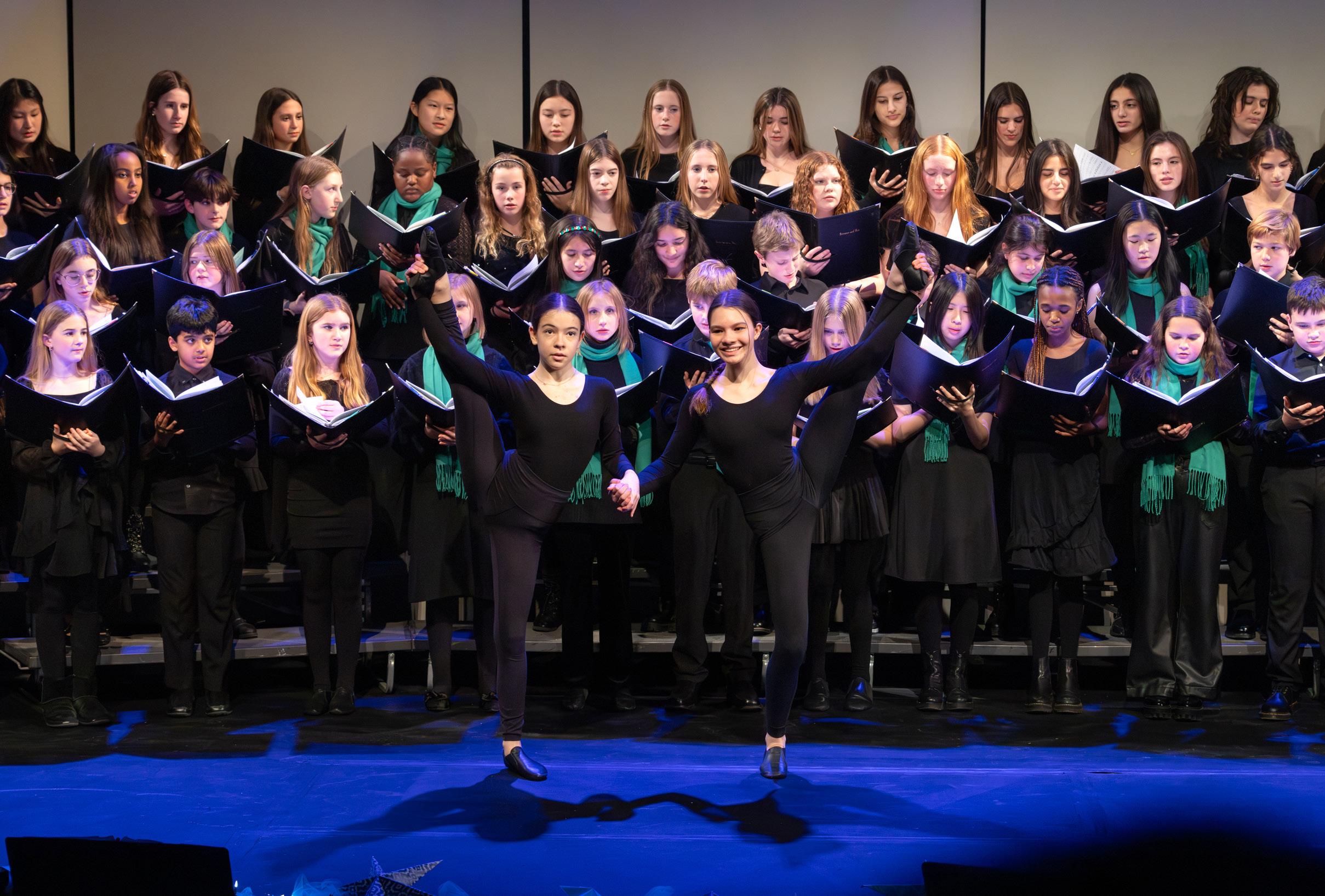
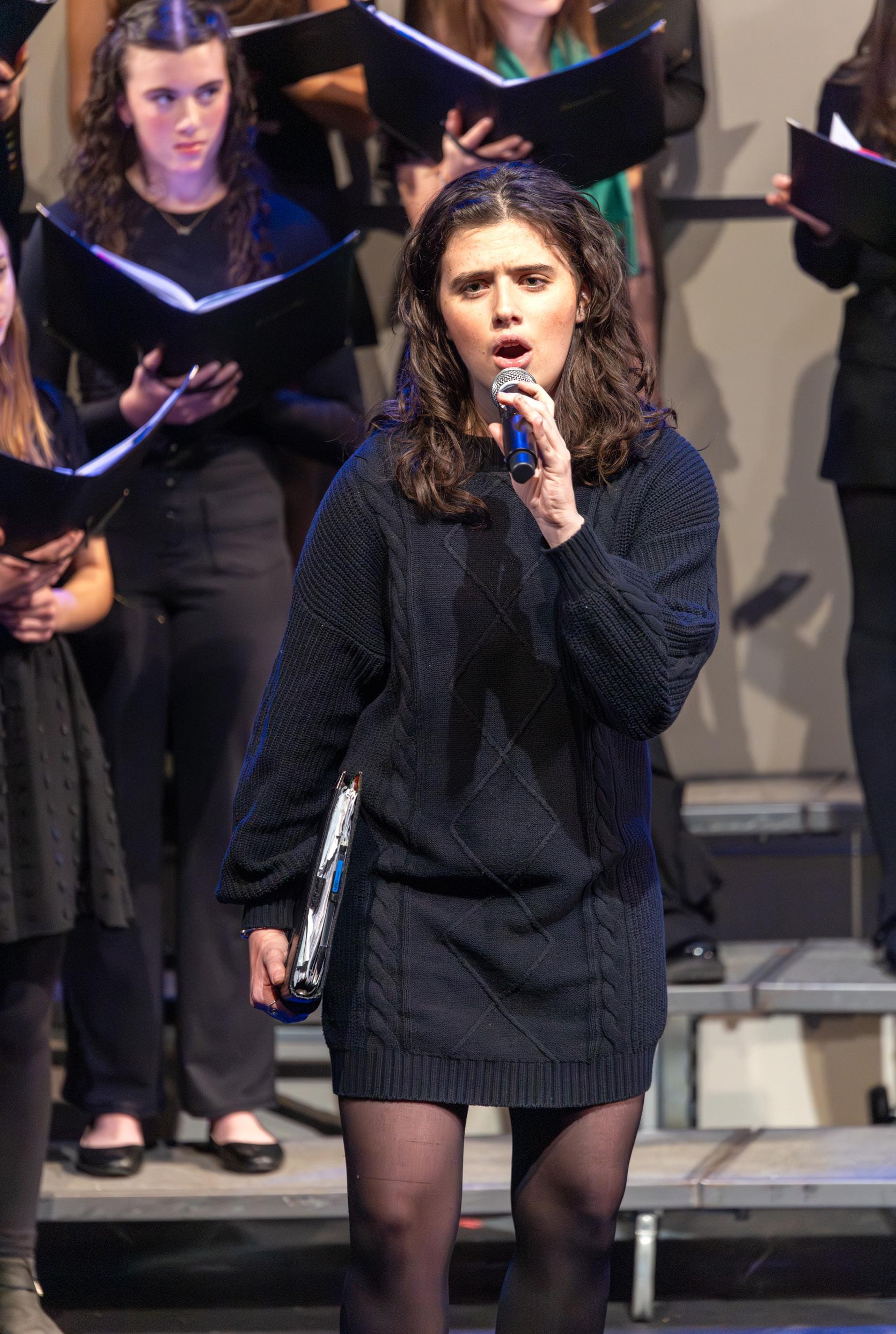
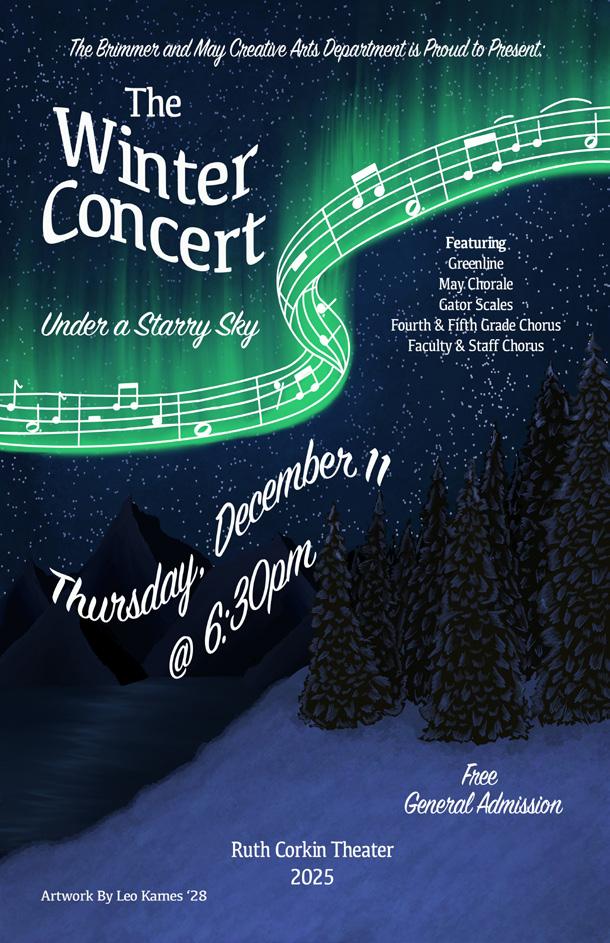
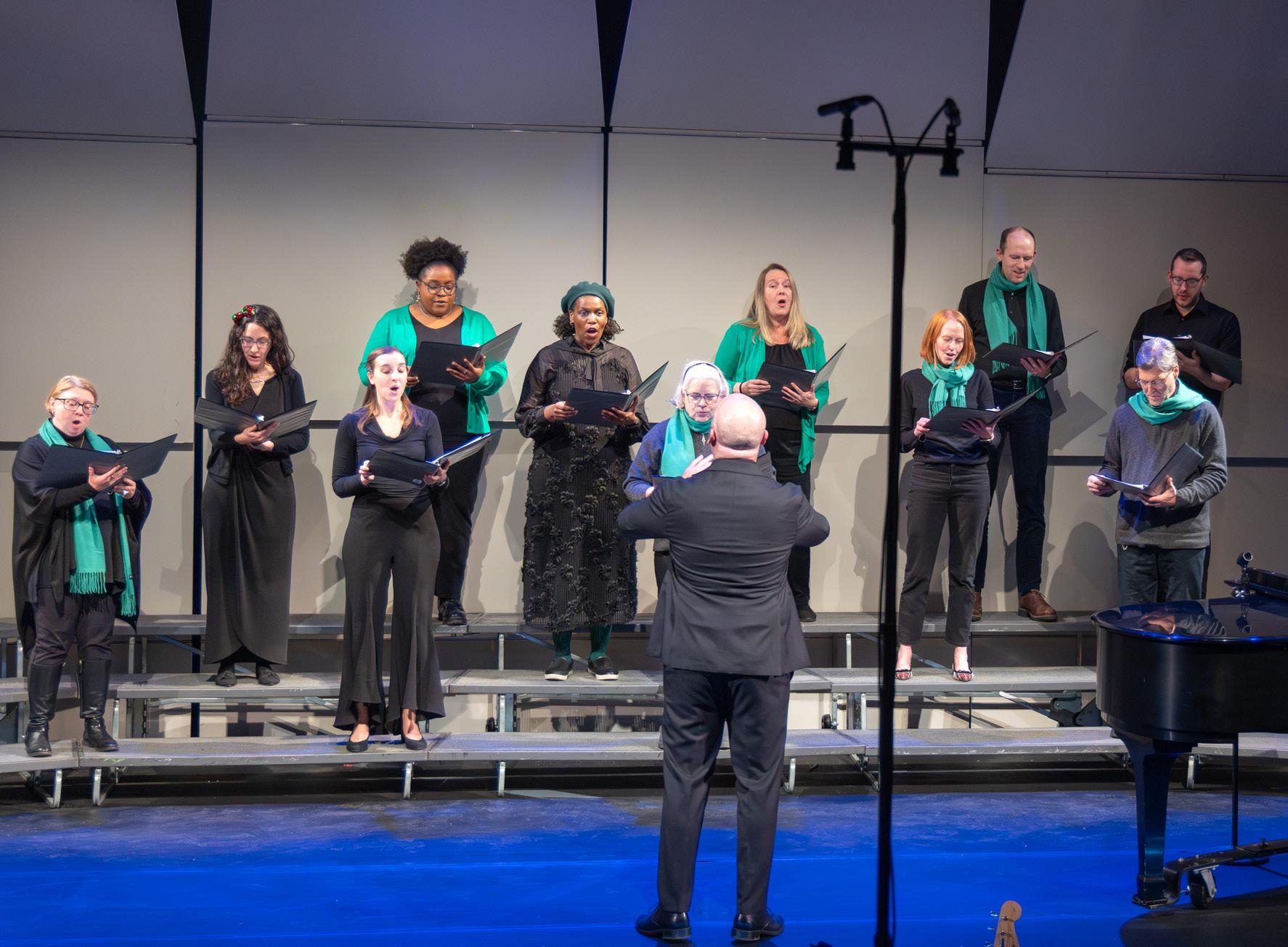
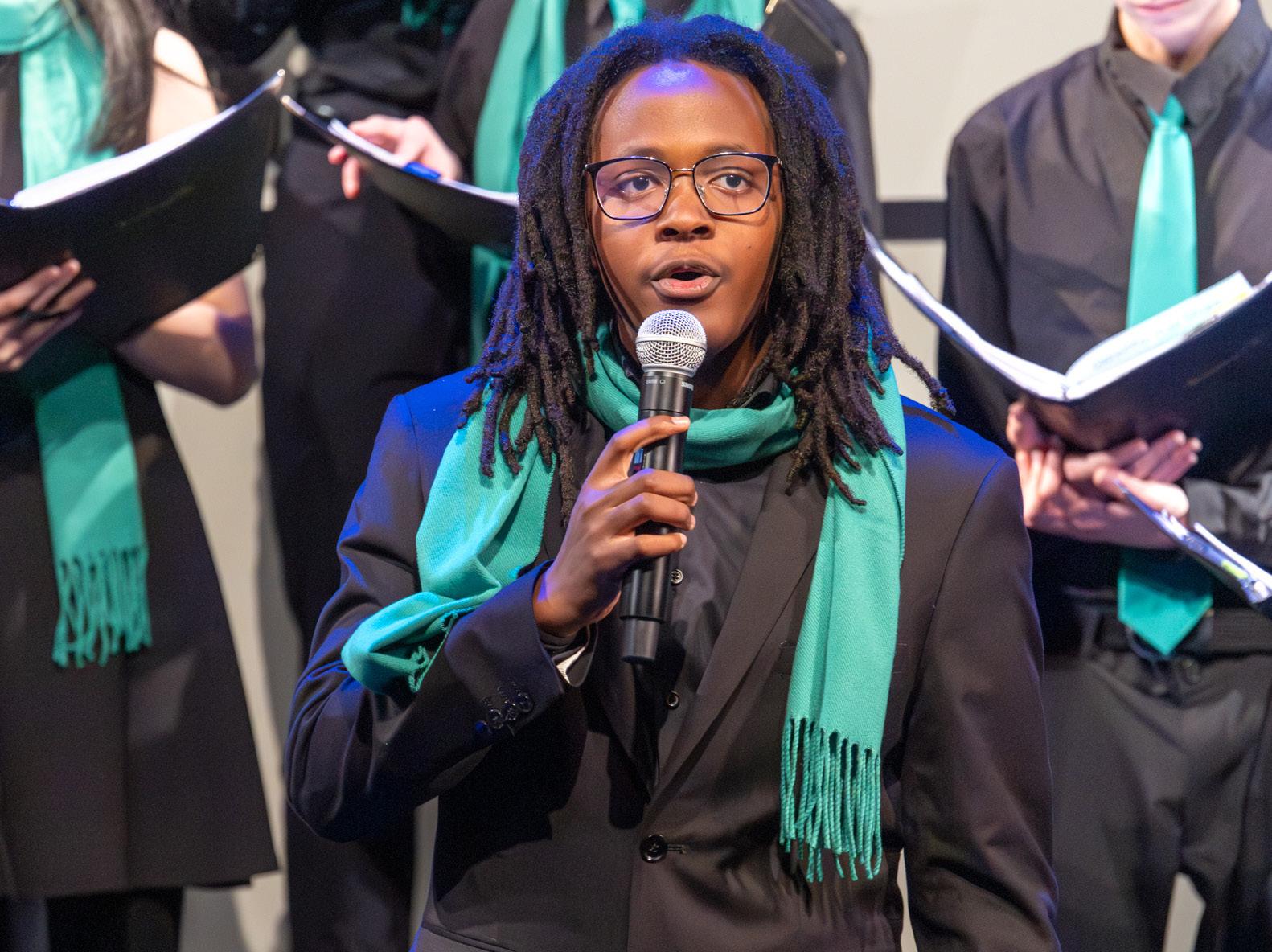
Bravo to The Gator Scales, 4th & 5th Grade Chorus, May Chorale, Greenline, and our Faculty & Staff Choir for filling our theater with beautiful music in December. Our amazing faculty leadership, including Middle & Upper School Music Teacher Max Holman, Lower School Music Teacher Caroline Scheibe, and Instrumental & General Music Teacher Dr. Alex Ostergard, curated a stunning selection of pieces to send us off to Winter Break.
David Barron, Oxygen Photography
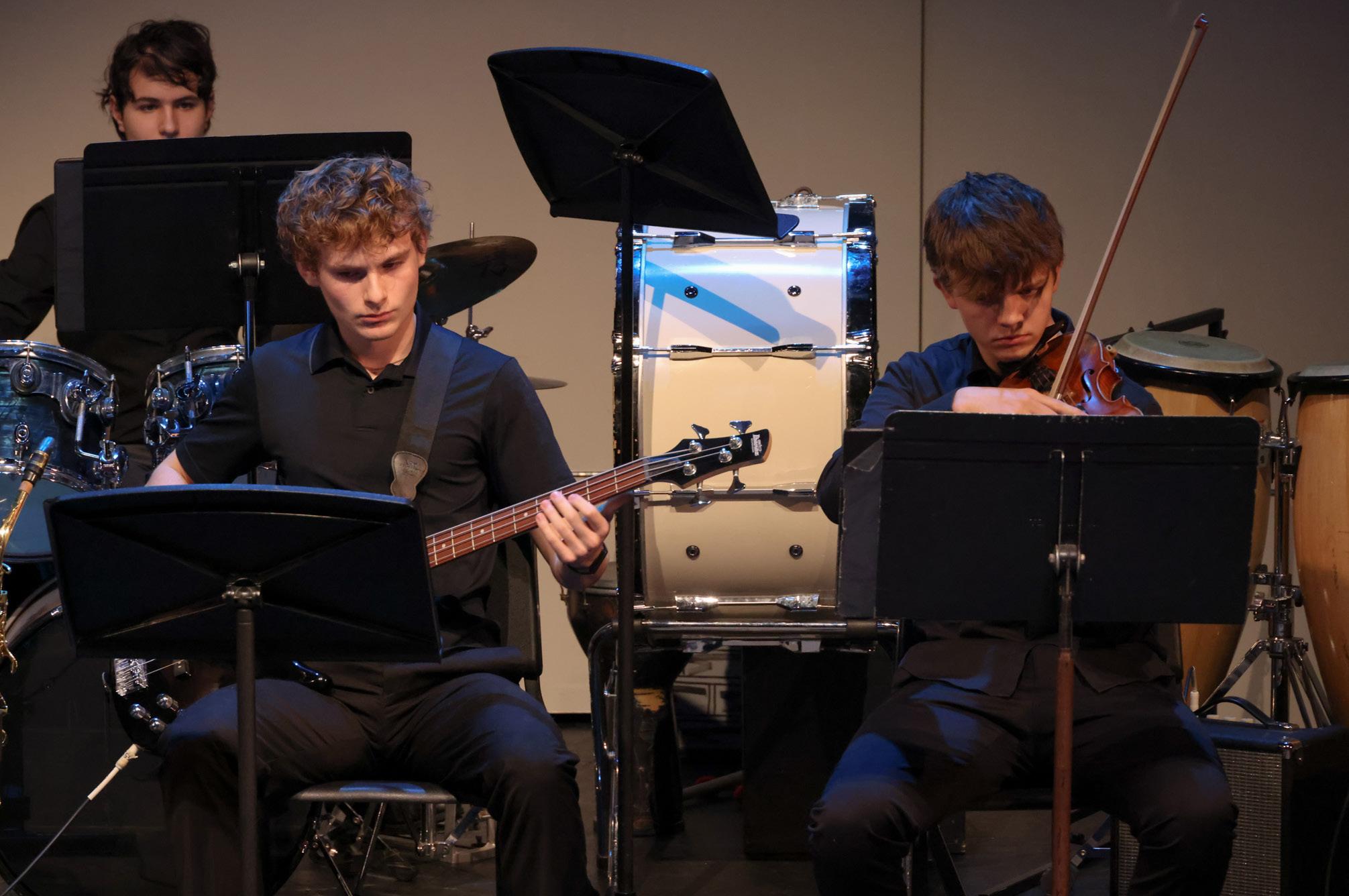
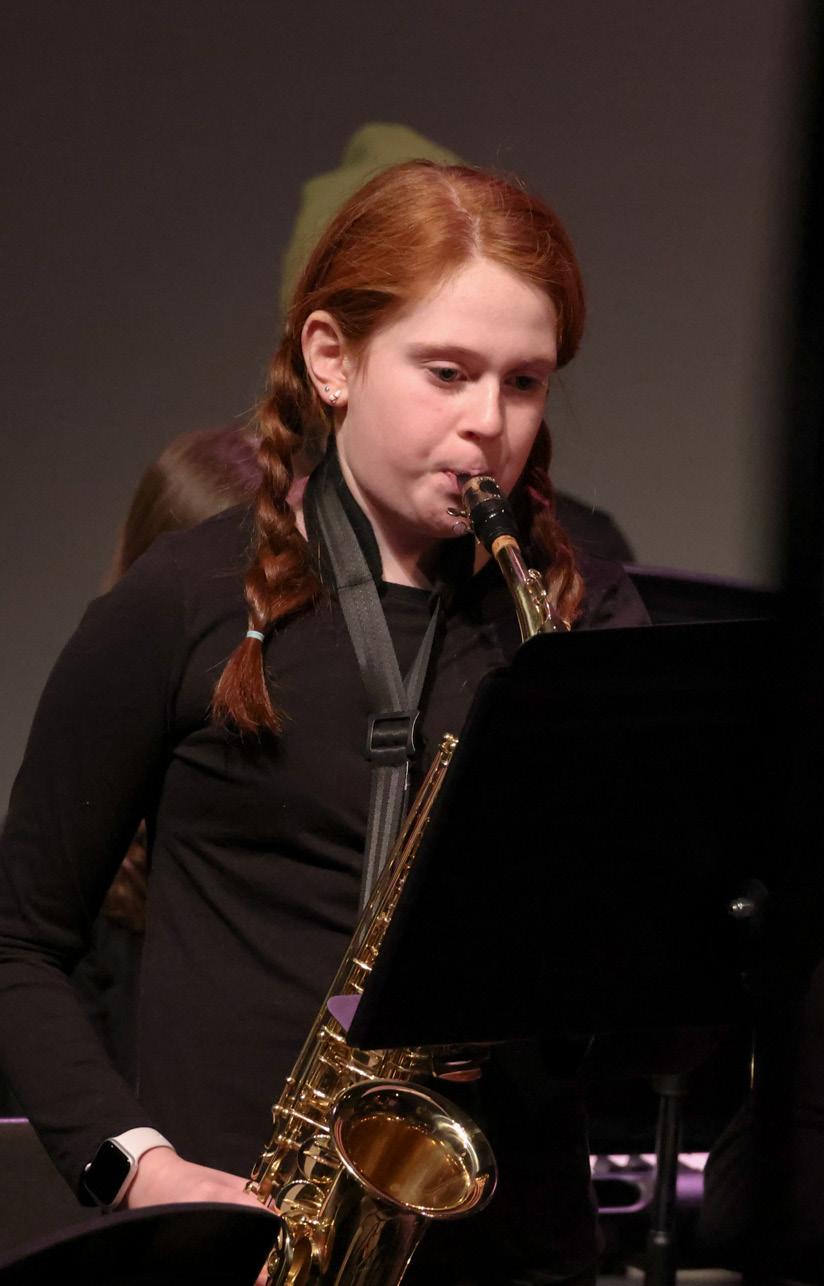
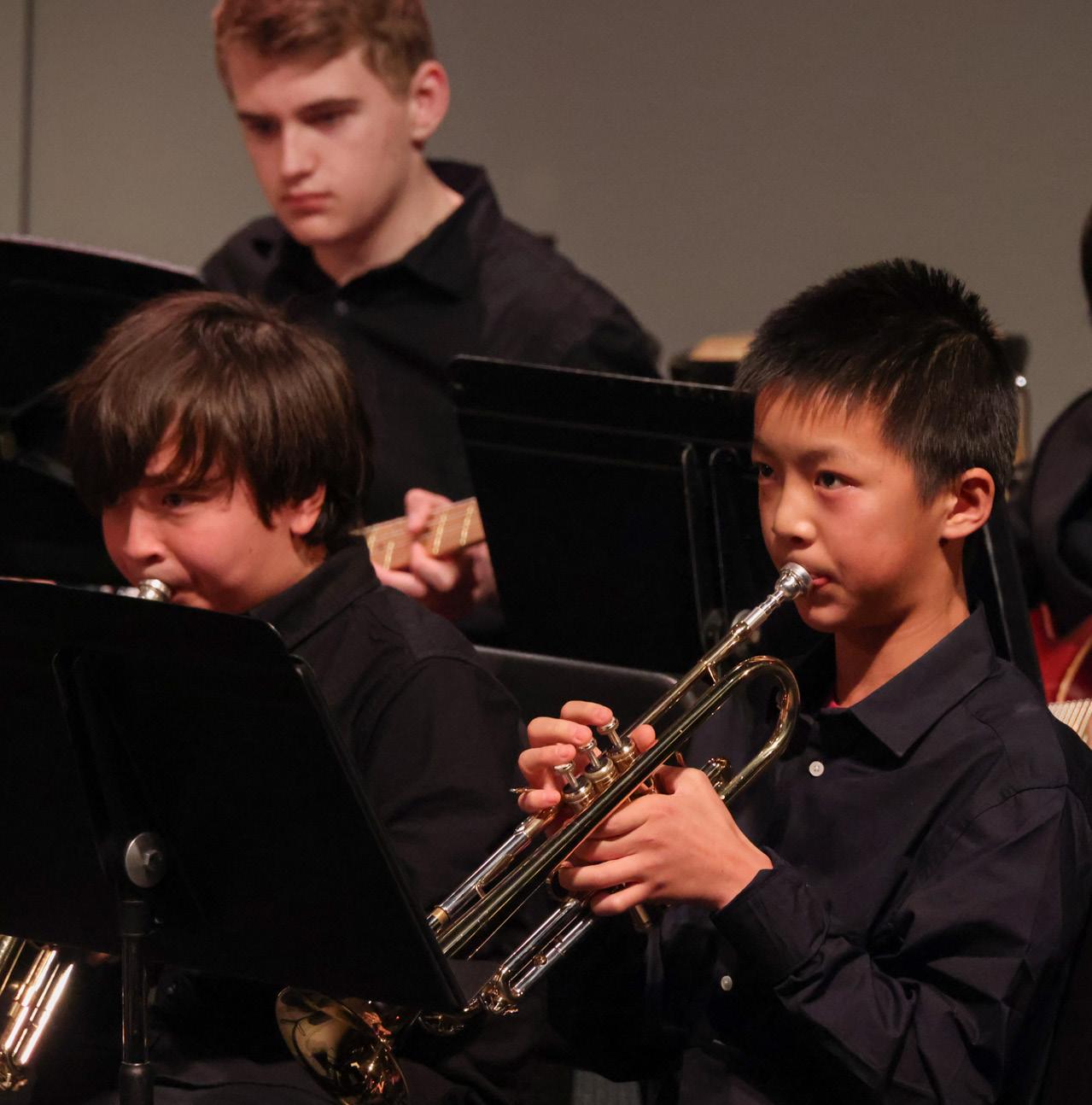
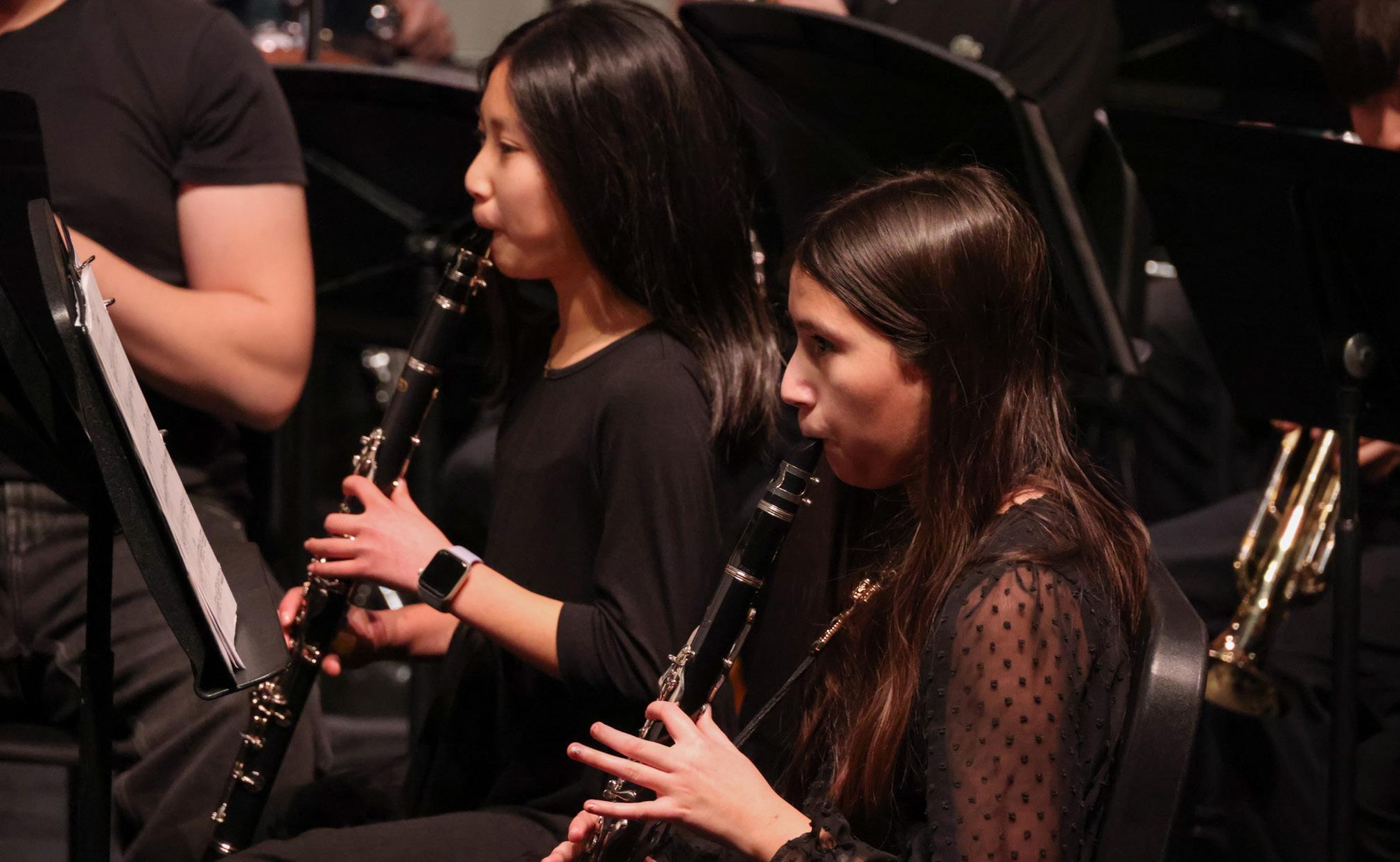
Winter Instrumental Music Concert
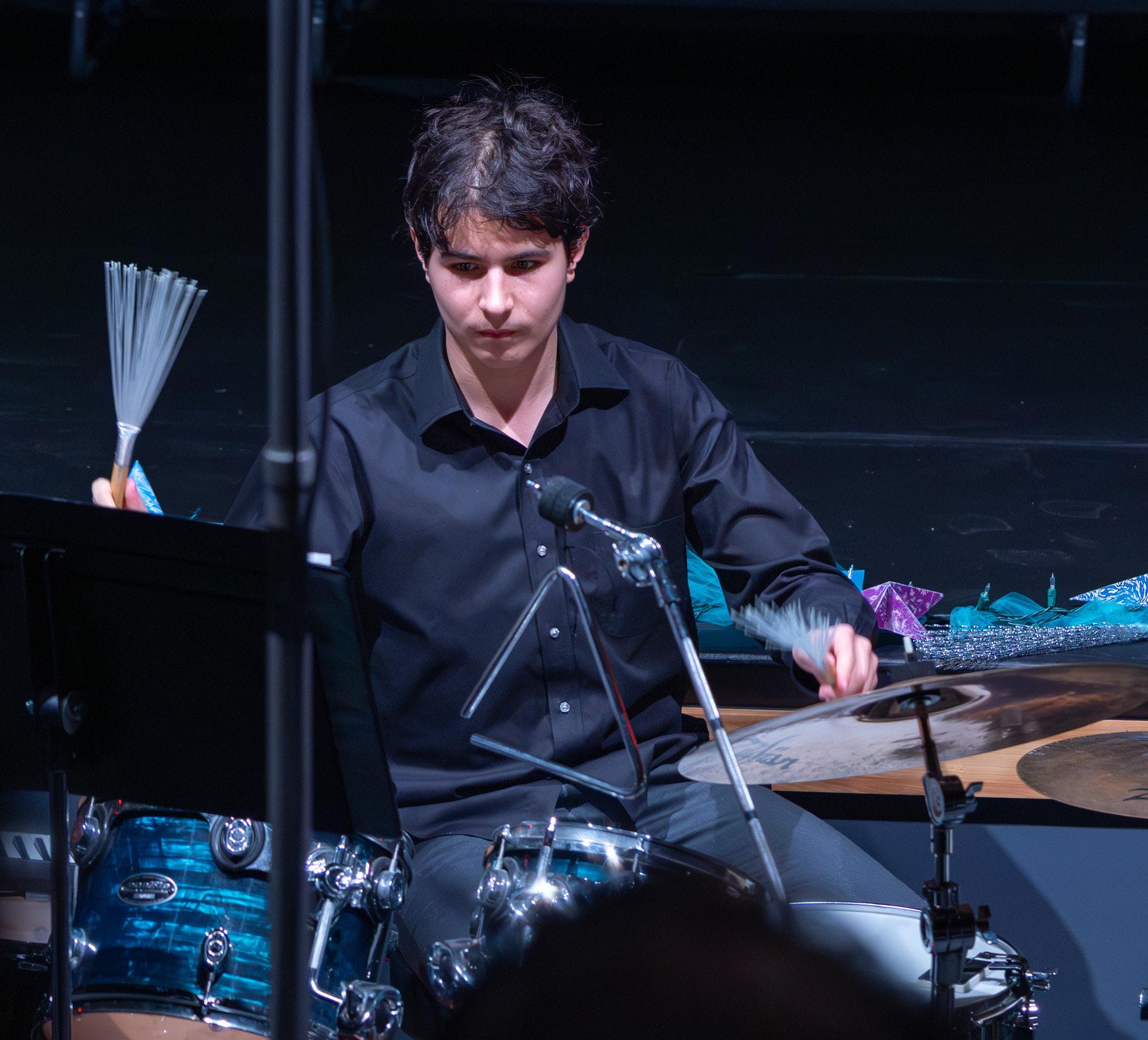
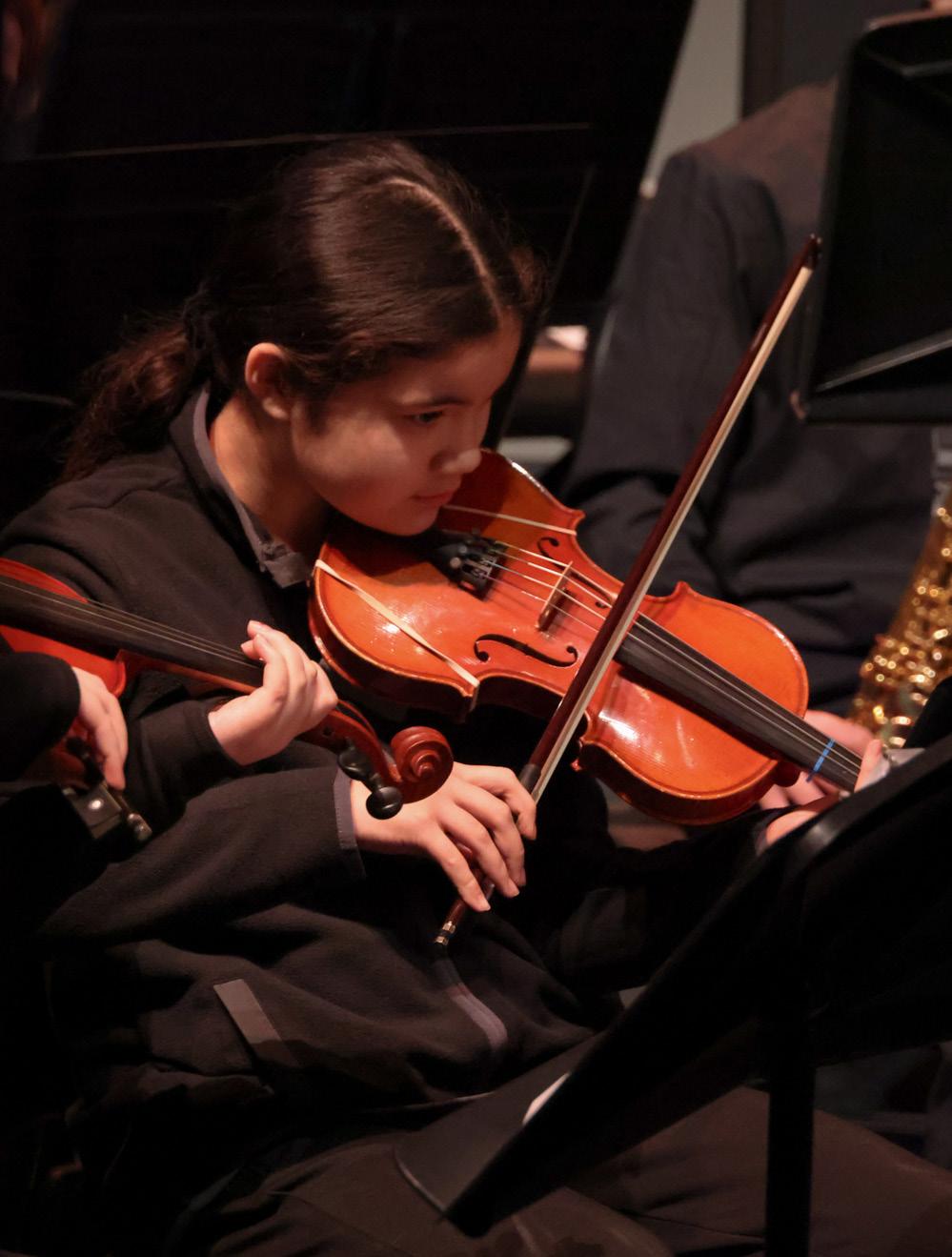
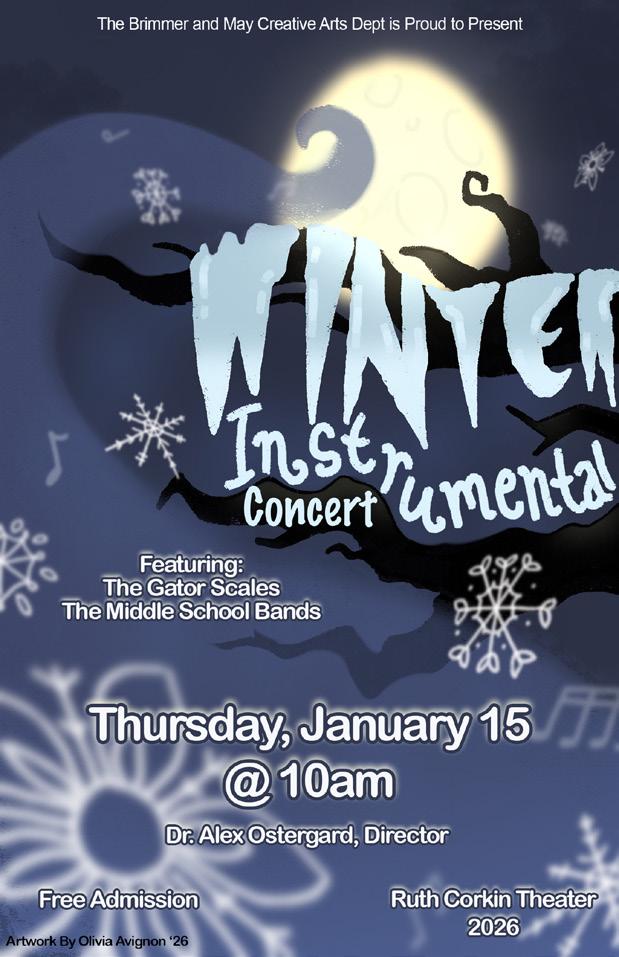
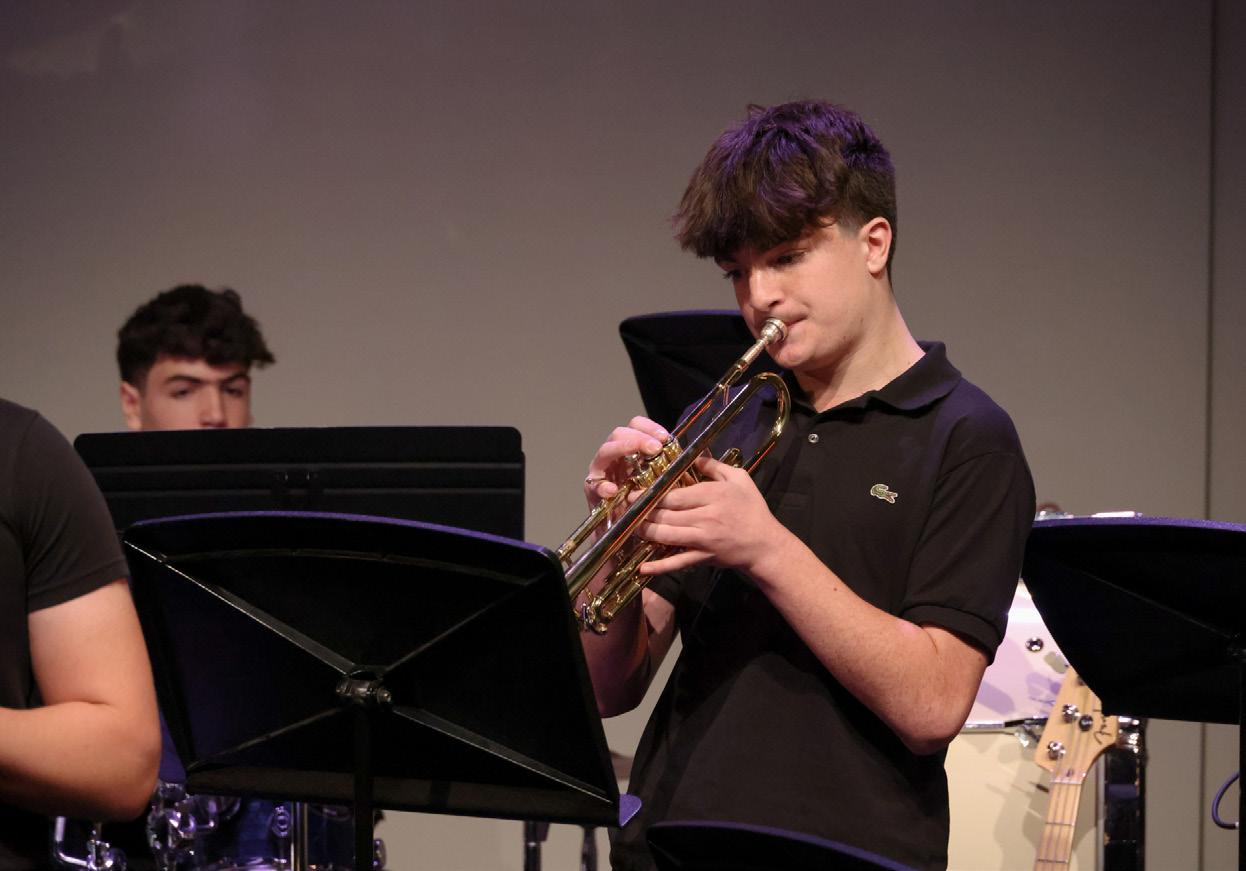
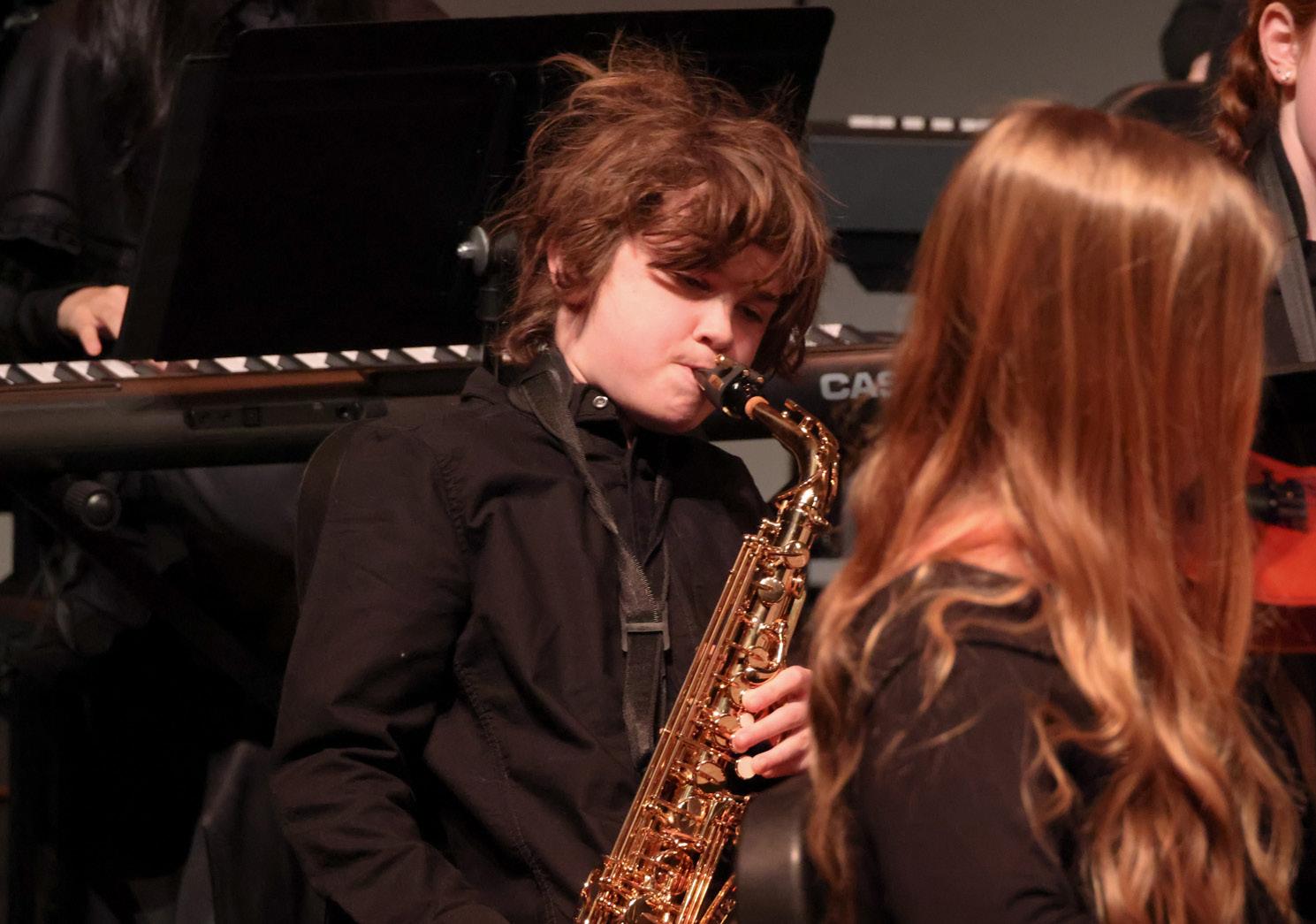
Congratulations to the 6th, 7th, and 8th grade bands, as well as The Gator Scales, for a beautiful performance in January. Special thanks to Instrumental & General Music Teacher Dr. Alex Ostergard for leading and inspiring our student musicians.
Madison Perkins, Marketing & Communications Associate
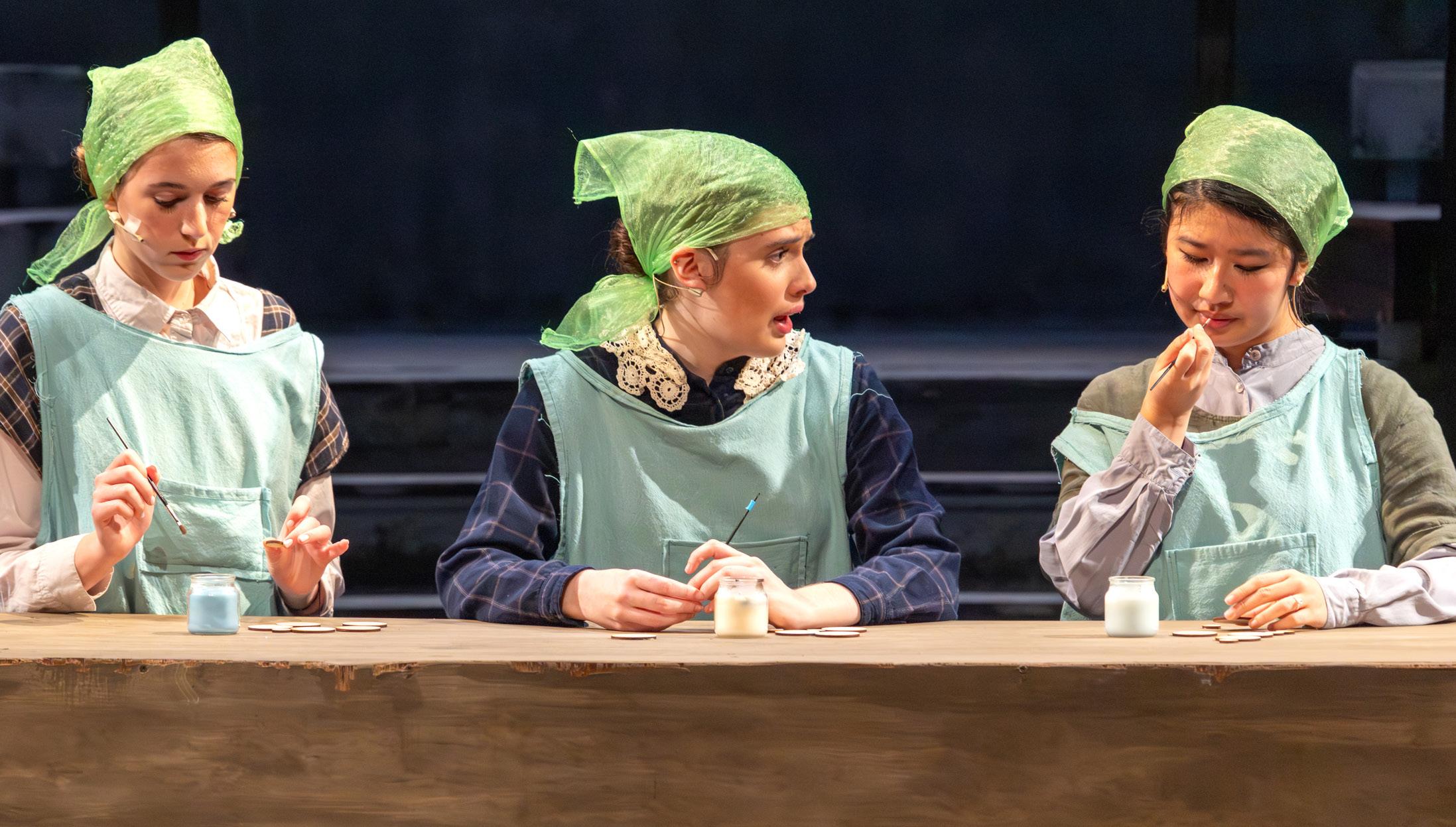
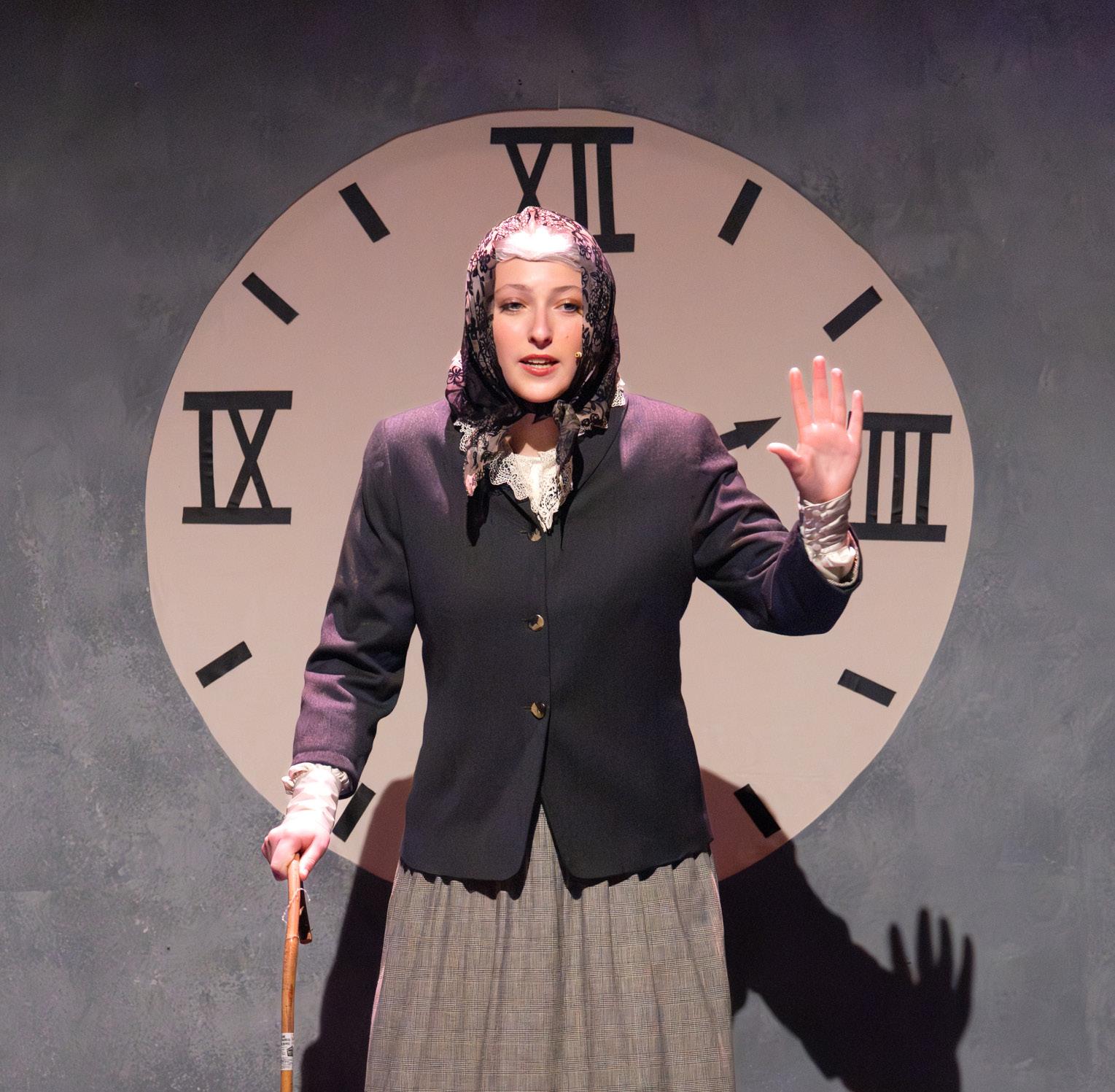
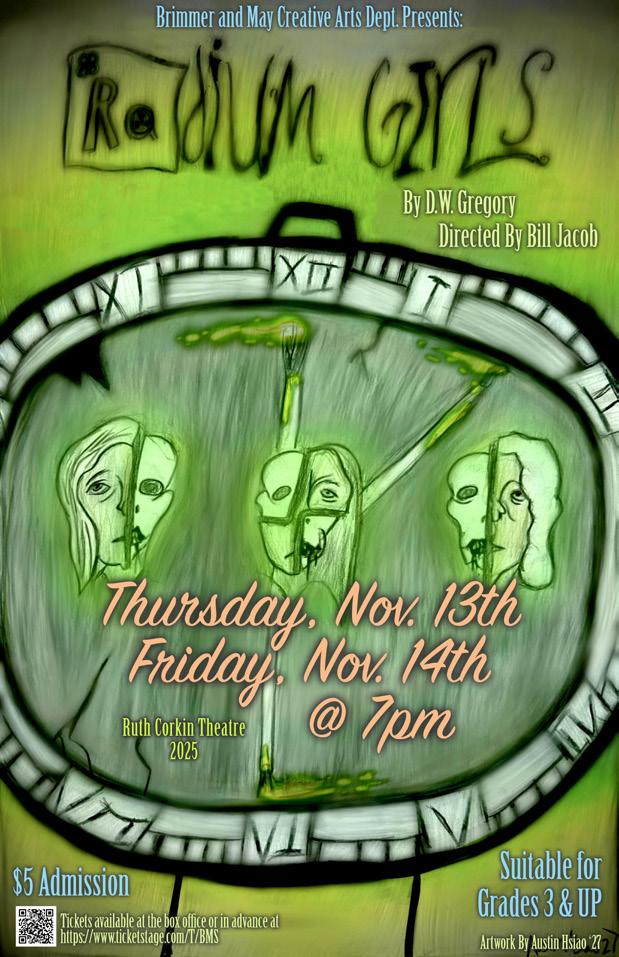
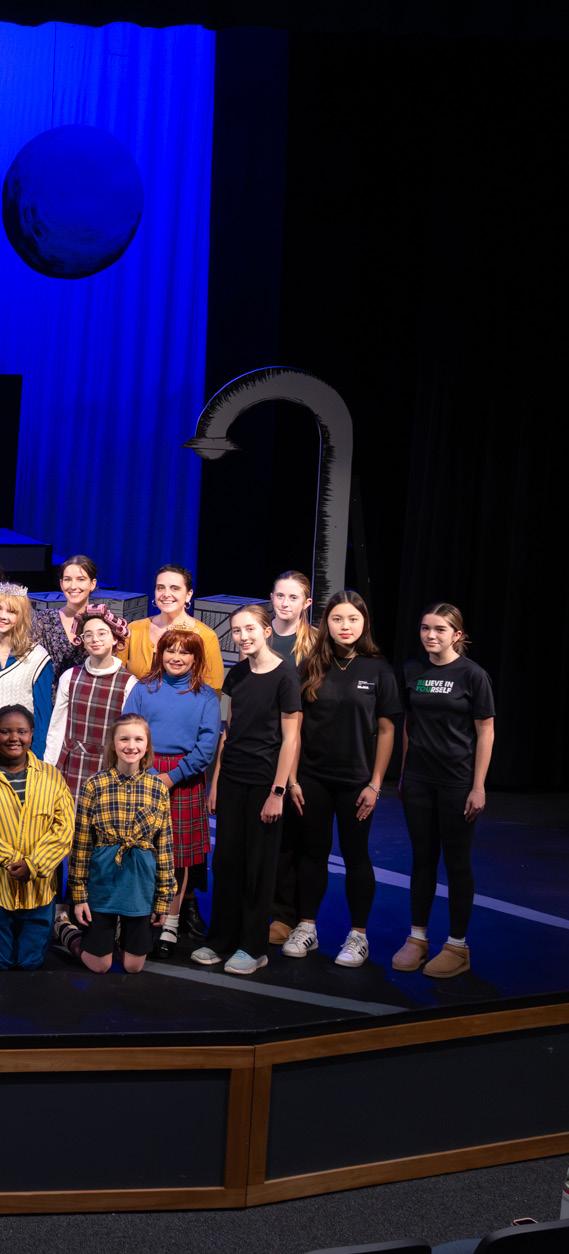
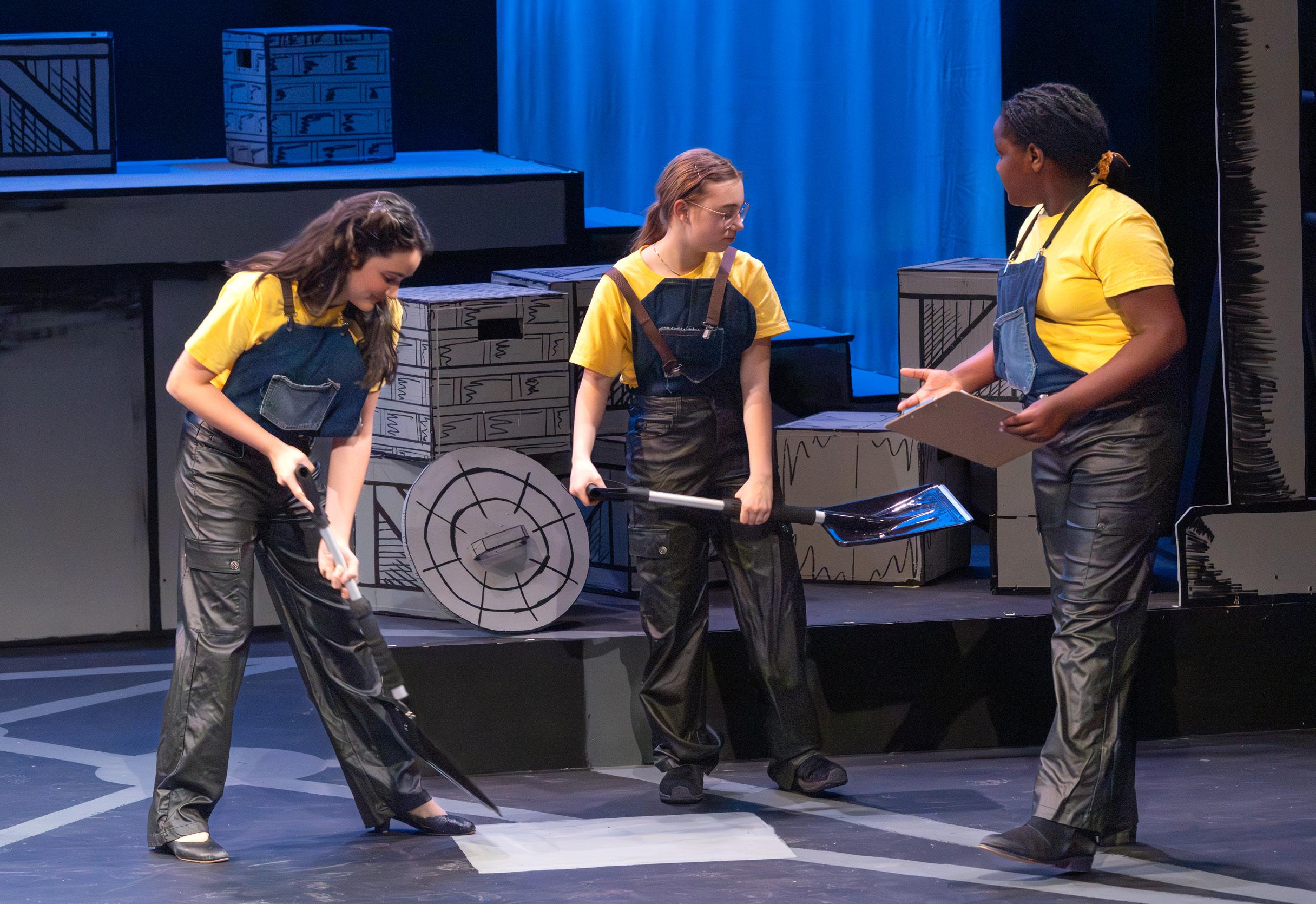
Upper School Play Radium Girls
Set in 1920s New Jersey, the play follows three young women, Grace Fryer (Mary Wang ’26), Kathryn Schaub (Rachael Rosenberg ’27), and Irene Rudolph (Abigail MacLean ’27), who paint watch dials with glowing radium paint to support the war effort. When they begin to suffer serious illness from radium poisoning, they fight for recognition, accountability, and justice. The play is based on a true story. Department Chair Bill Jacob P ’06 said the play gives students a chance to take on heavier material than usual. “It’s a drama, which is something we don’t usually do,” he said. “We tend to do comedies. It’s nice to have a drama in the mix for people to stretch and push themselves.”
—Senior Journalist Leo Latino ’28 for The Gator David Barron, Oxygen Photography
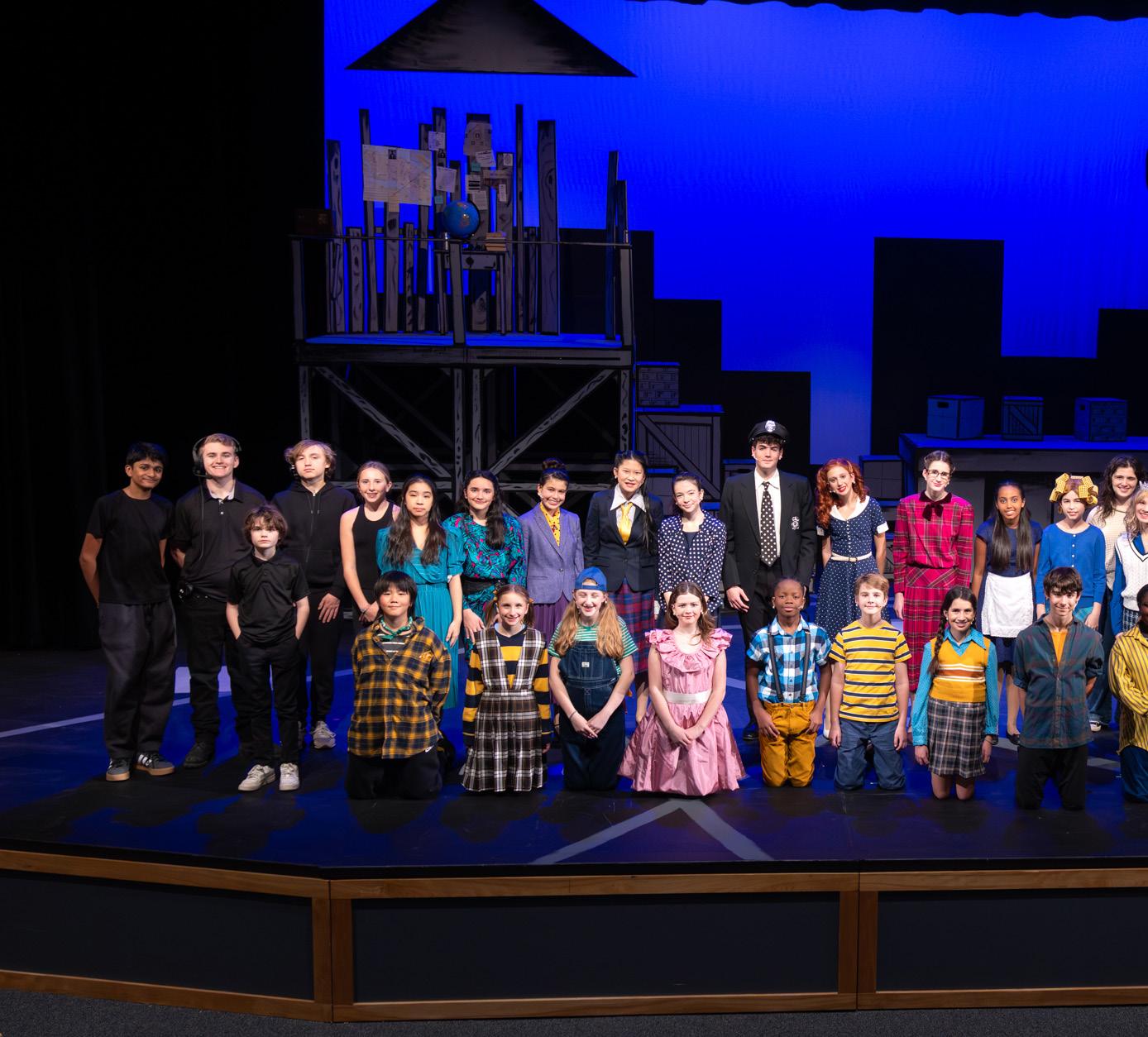
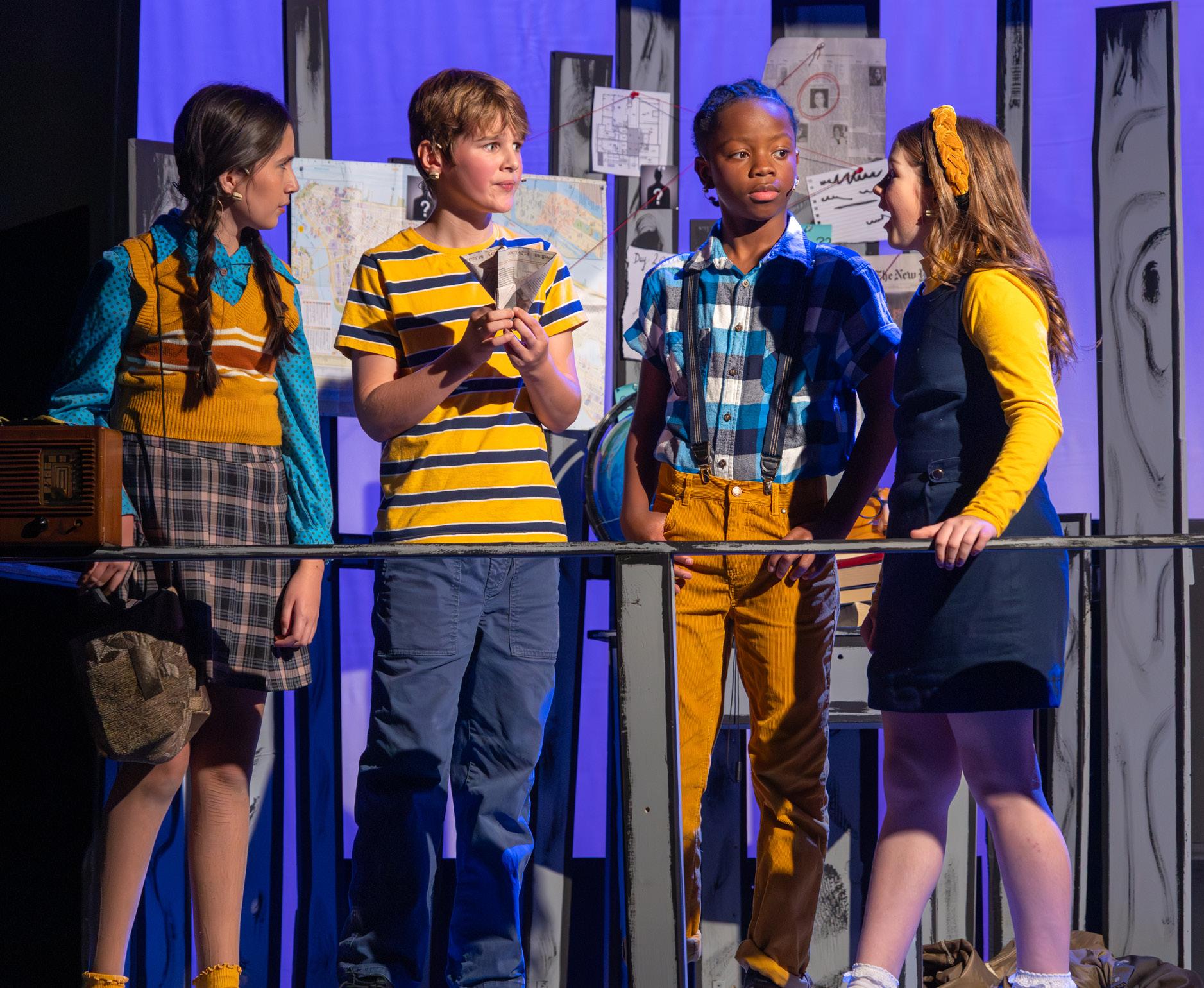
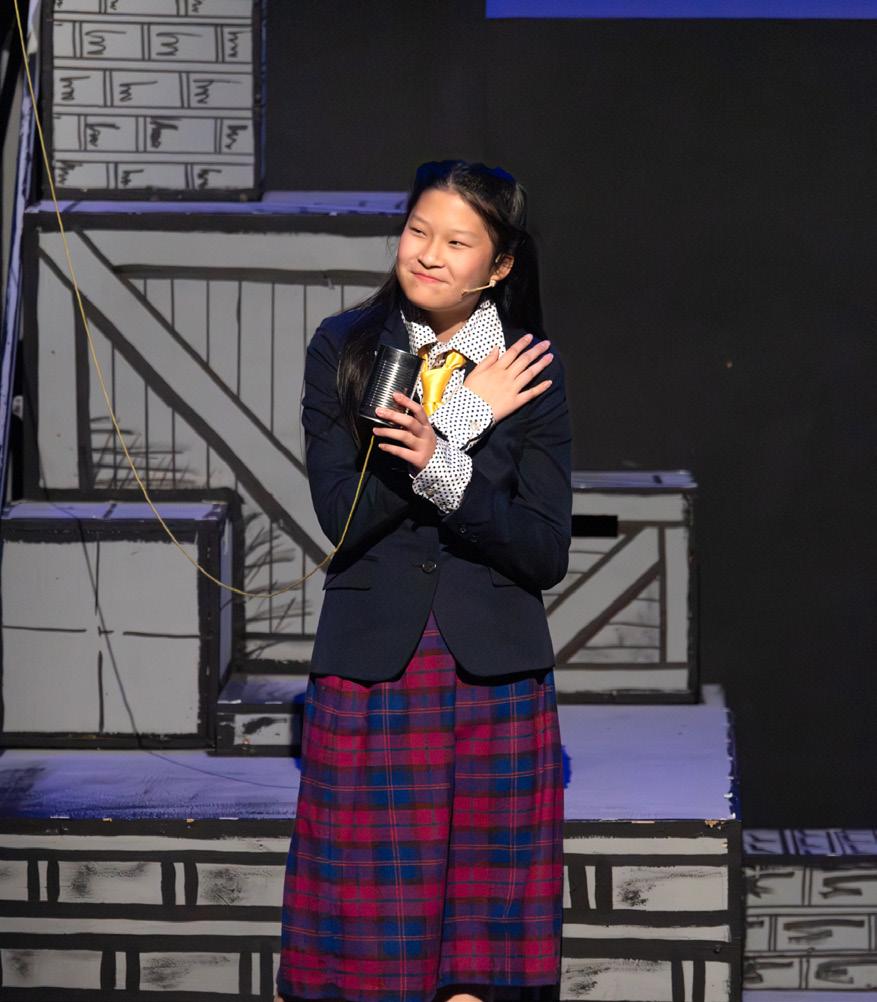
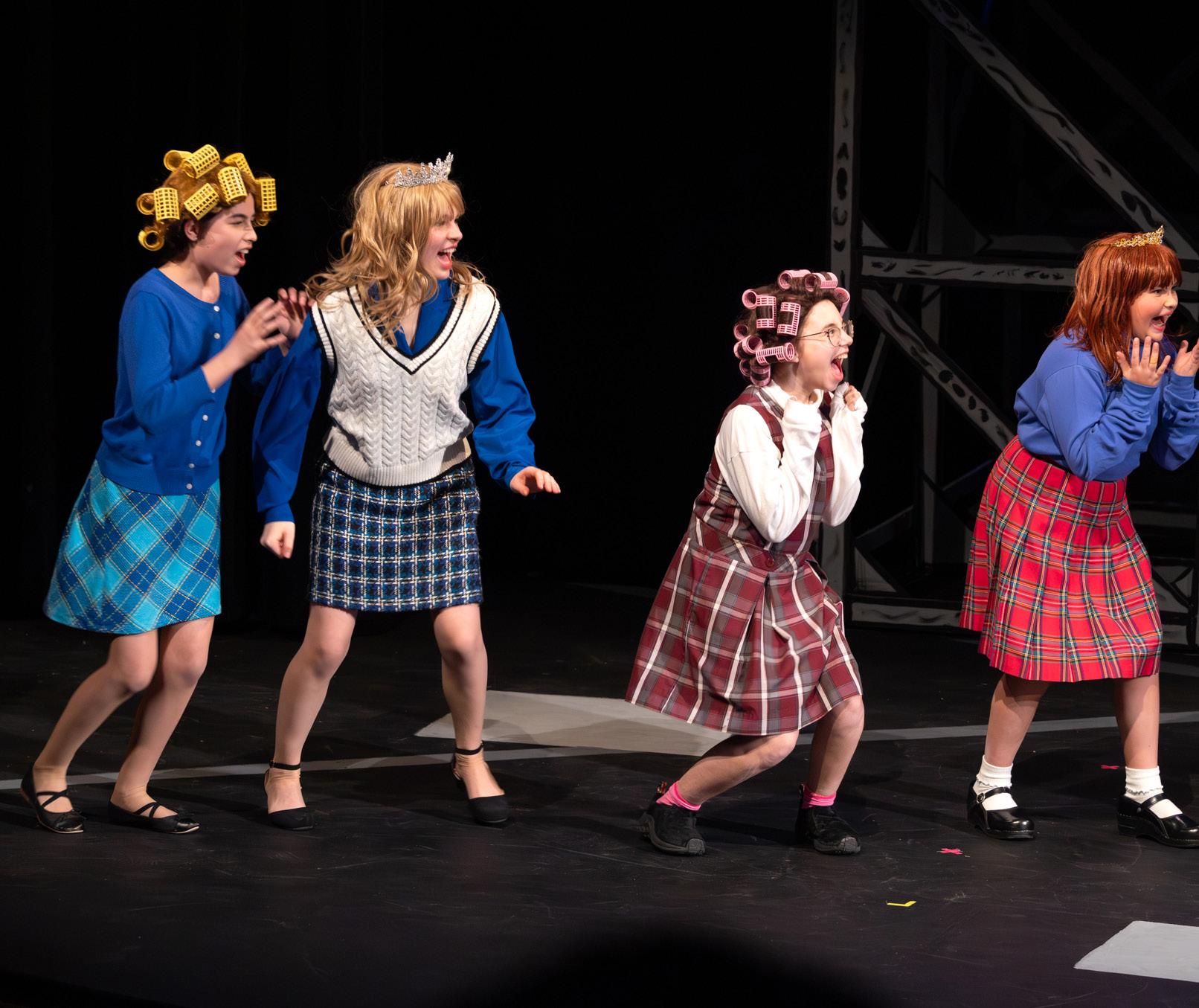
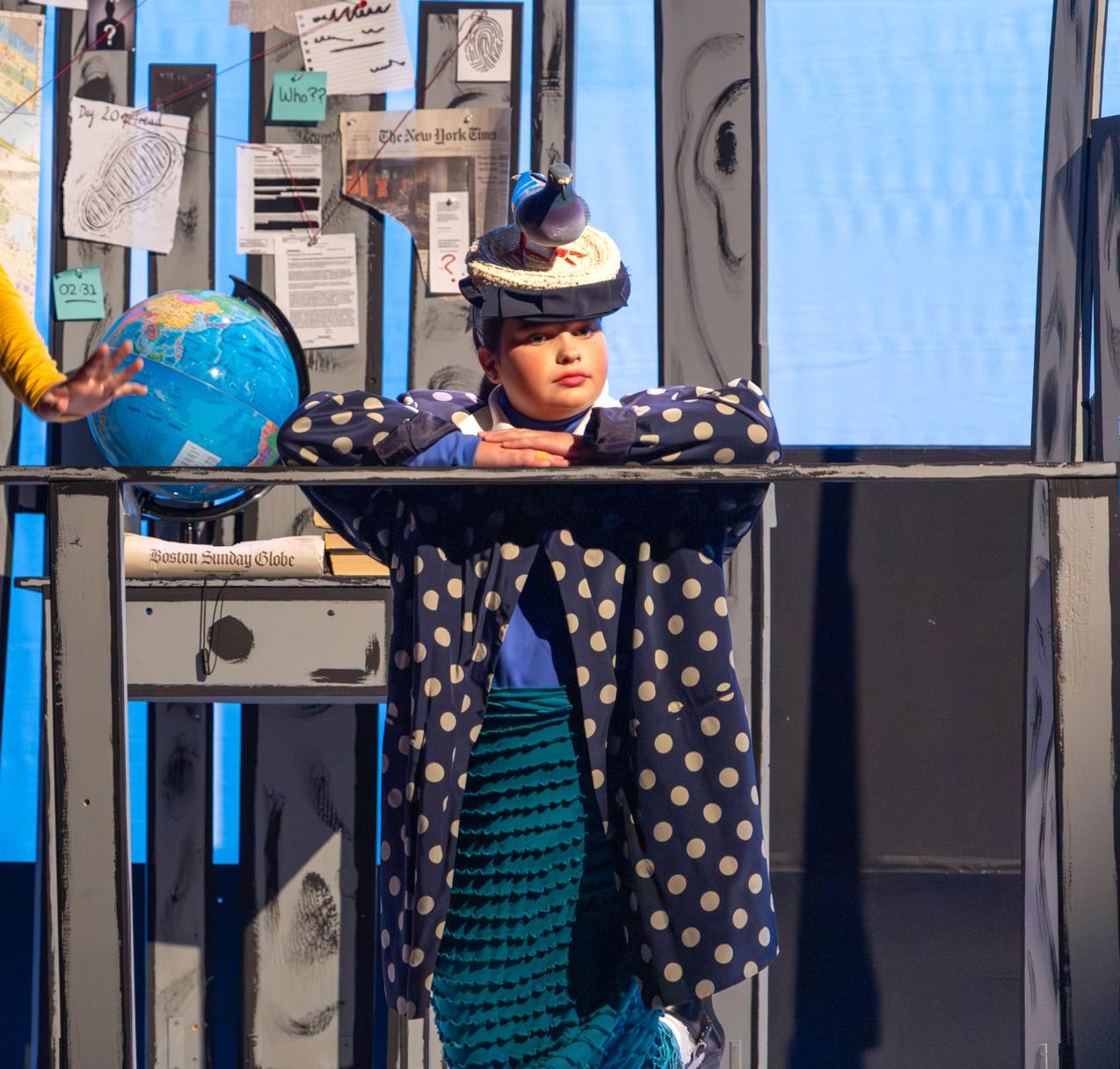
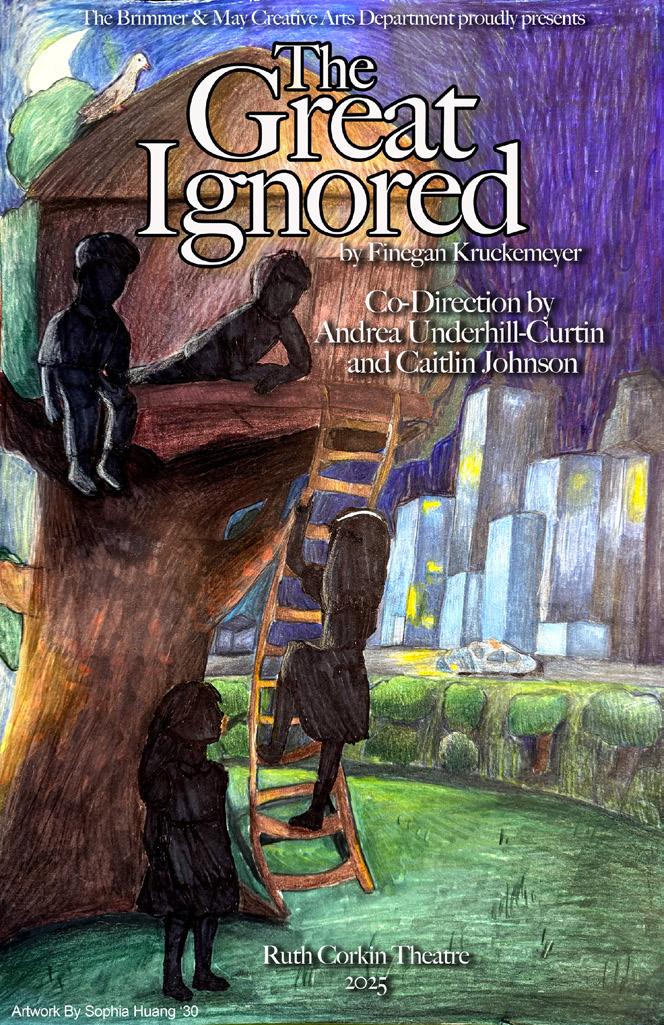
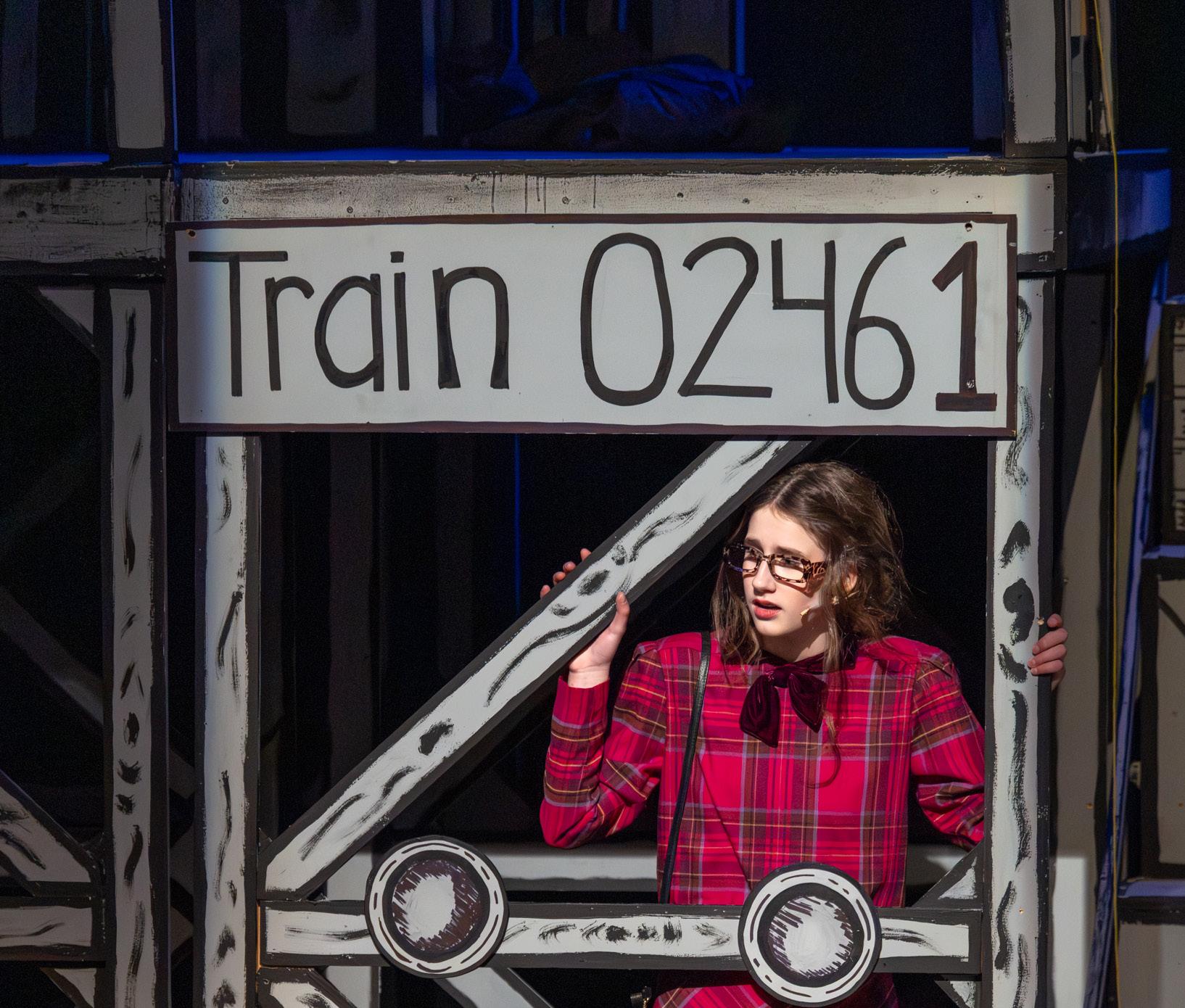
Middle Schooll Play The Great Ignored
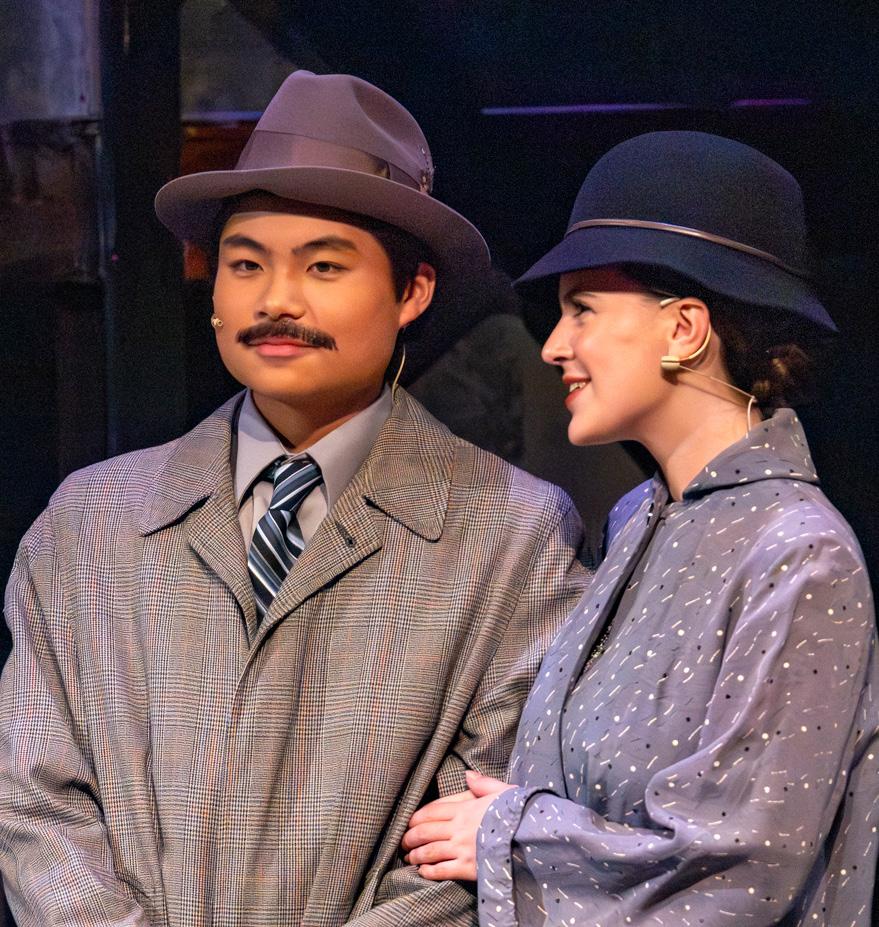
I was impressive by how quickly students grasped the style of the show. We knew they would take to the humor in the characters and writing, but the noir mood and tones might have been more challenging for them. However, our cast rose to the occasion with their performances; their large facial expressions and physical movement, comedic beats, and vibrant 1940s costumes were a gift.”
—Andrea
Underhill-Curtin, Director of Middle School Theater Program, Middle School English and Drama Teacher David Barron, Oxygen Photography
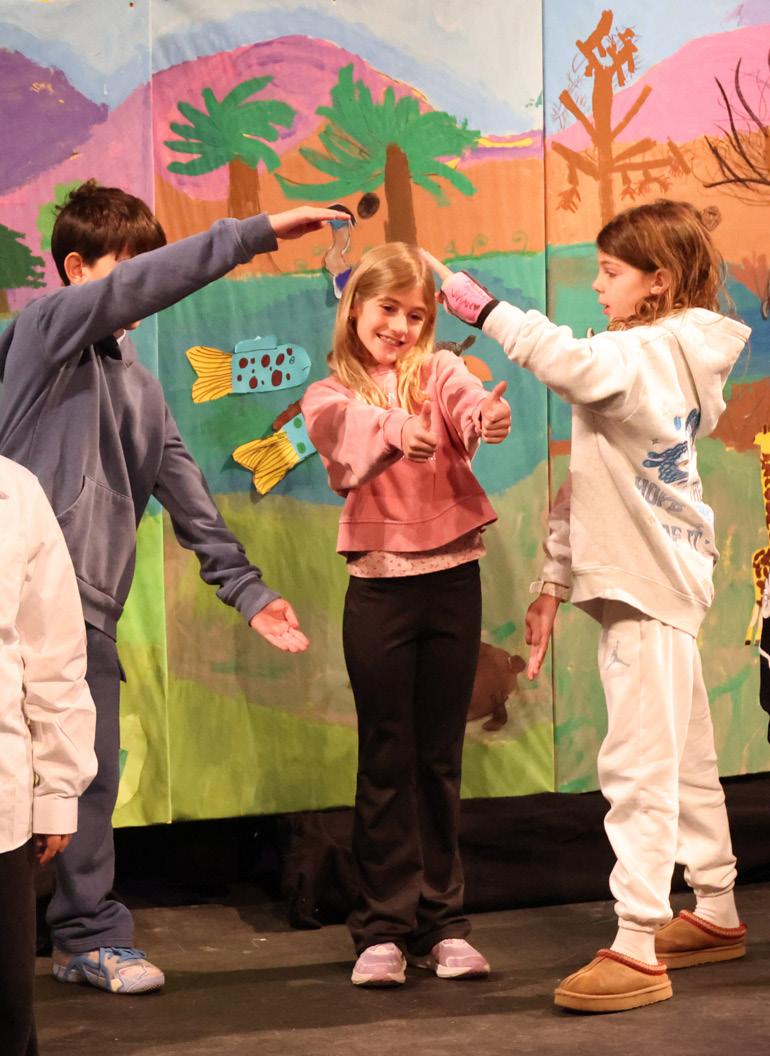
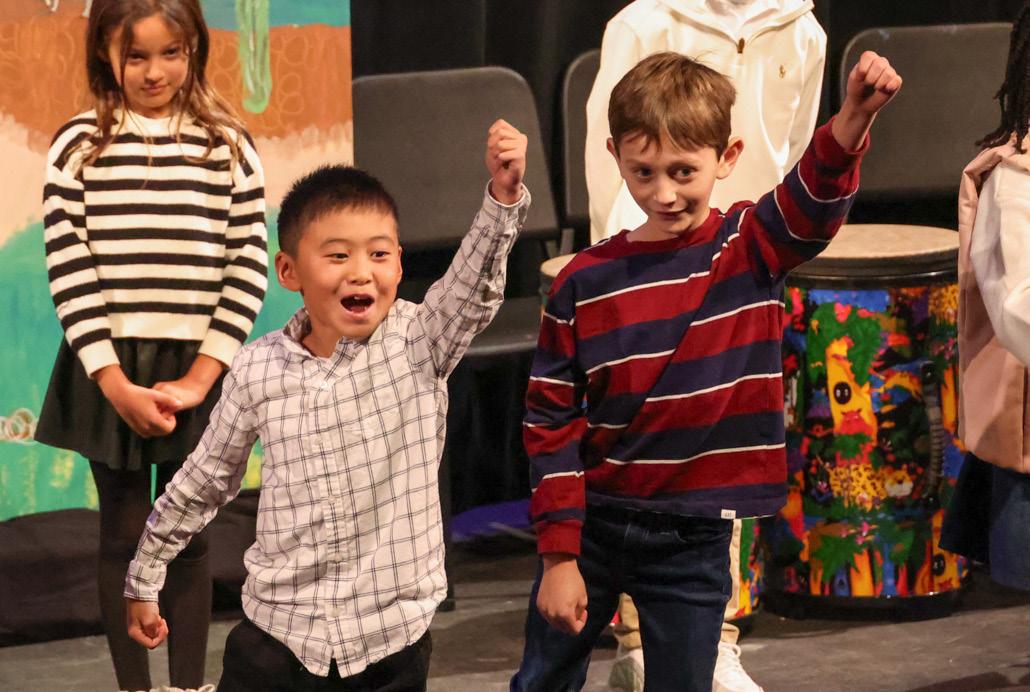
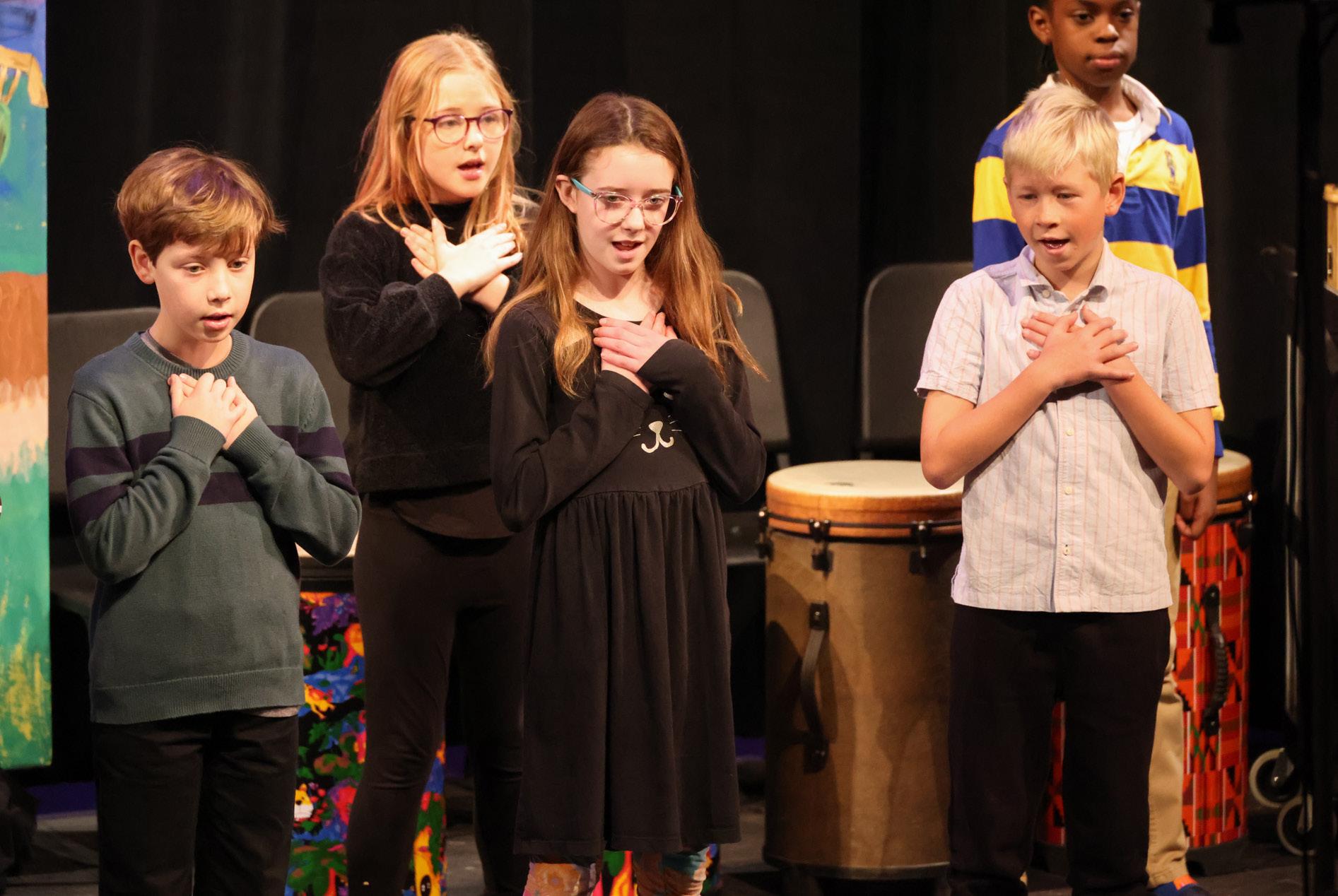
Lower School Fall Community Performance
We Are All Connected
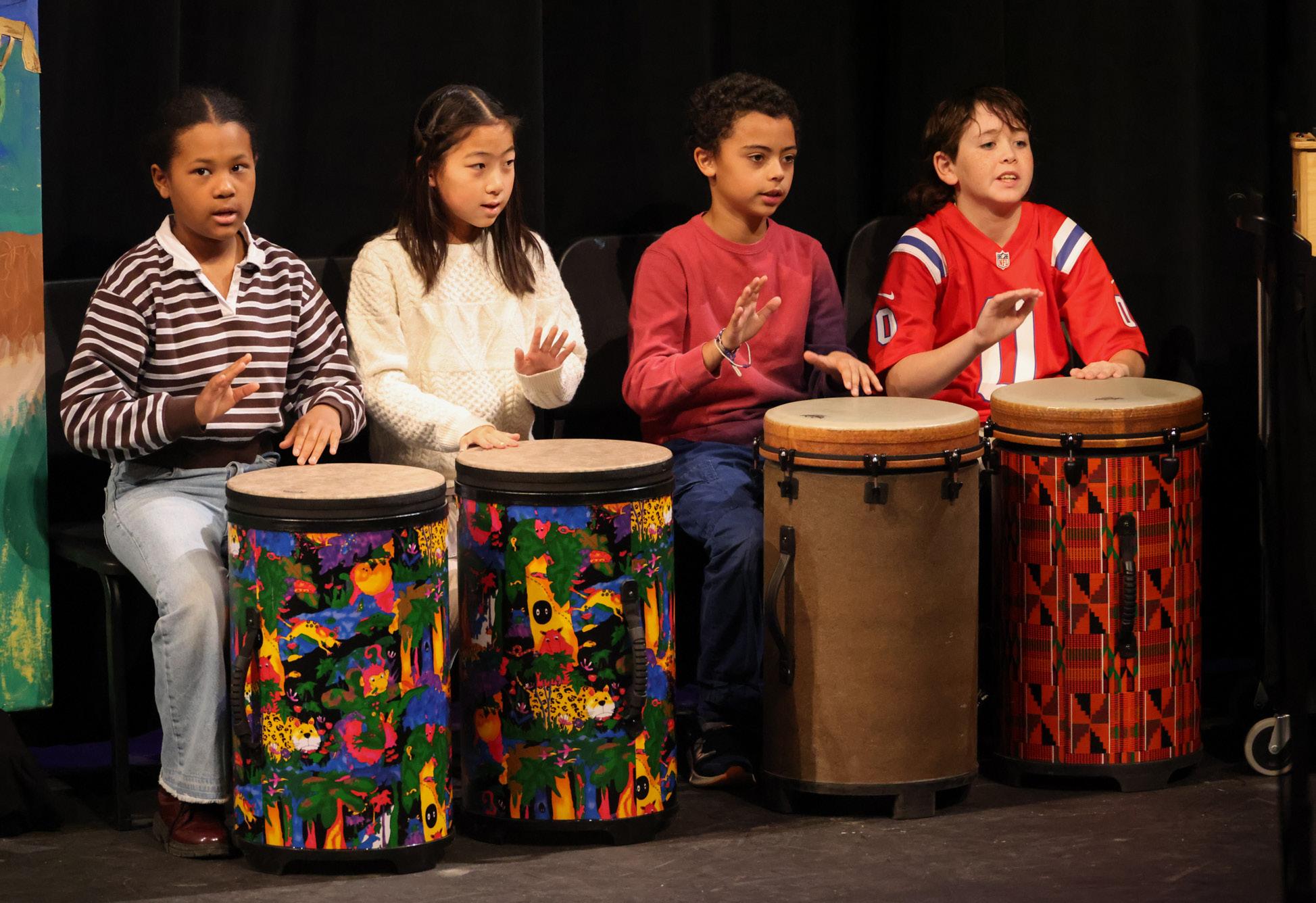
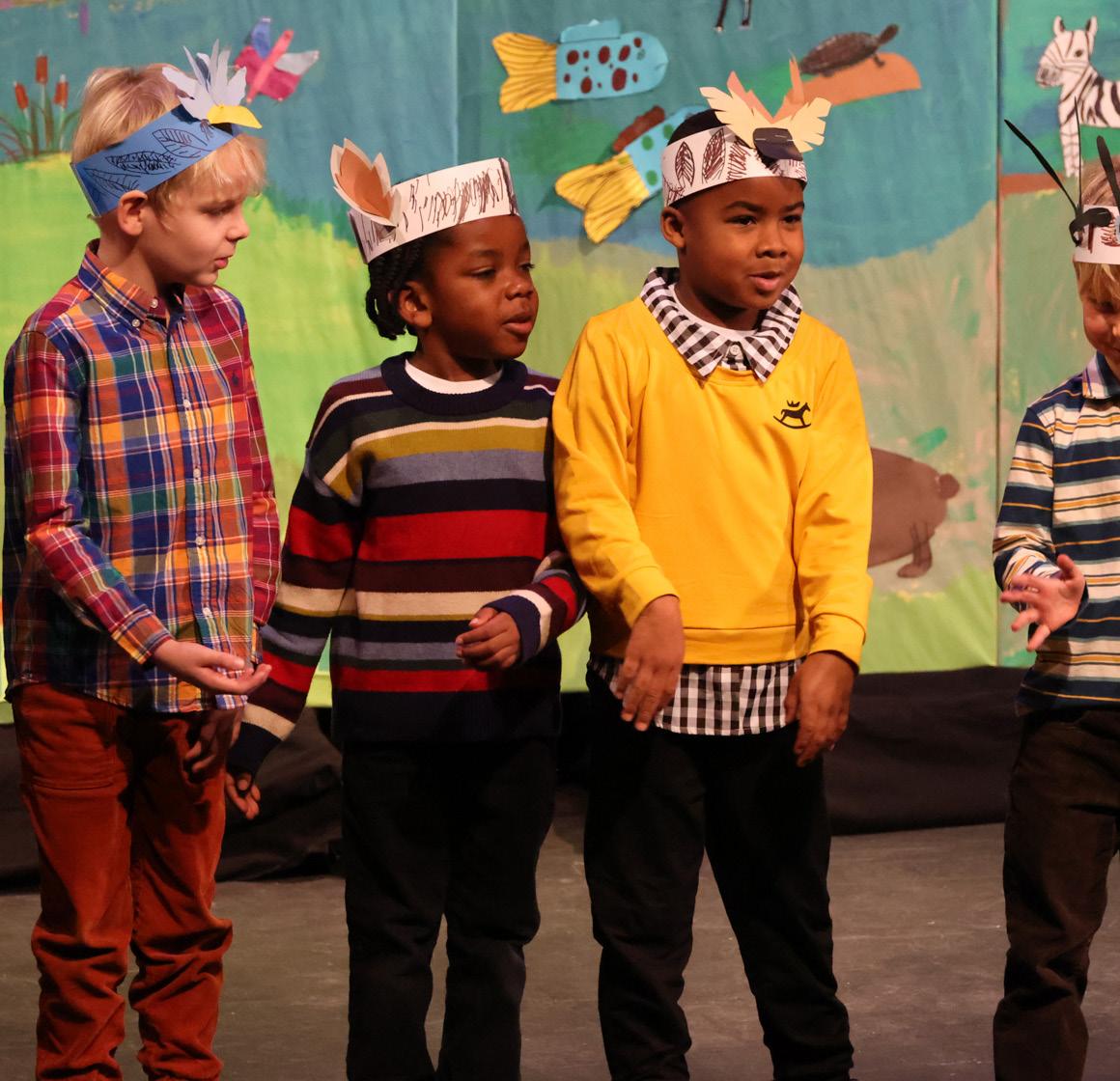
Our fall Lower School Creative Arts classes explored a diverse range of literature that influenced the art, music, drama, dance, stories, and poetry that made up this original performance piece. Students engaged with the unifying theme of connection woven throughout, contributing their own imaginative, personal ideas to the performance. What a joyful celebration of community!
Madison Perkins, Marketing & Communications Associate
award-winning artists
Join us in congratulating the following artists for receiving coveted Scholastic Art & Writing Awards. We are incredibly proud of all our artists and the amazing work they create every single day.
—Kathryn Lee P ’32, ’34, Director of Innovation & Design Middle & Upper School Art Teacher
Mention
Alice Shimomura ’27
Photography Honorable
Taylor Liu ’27
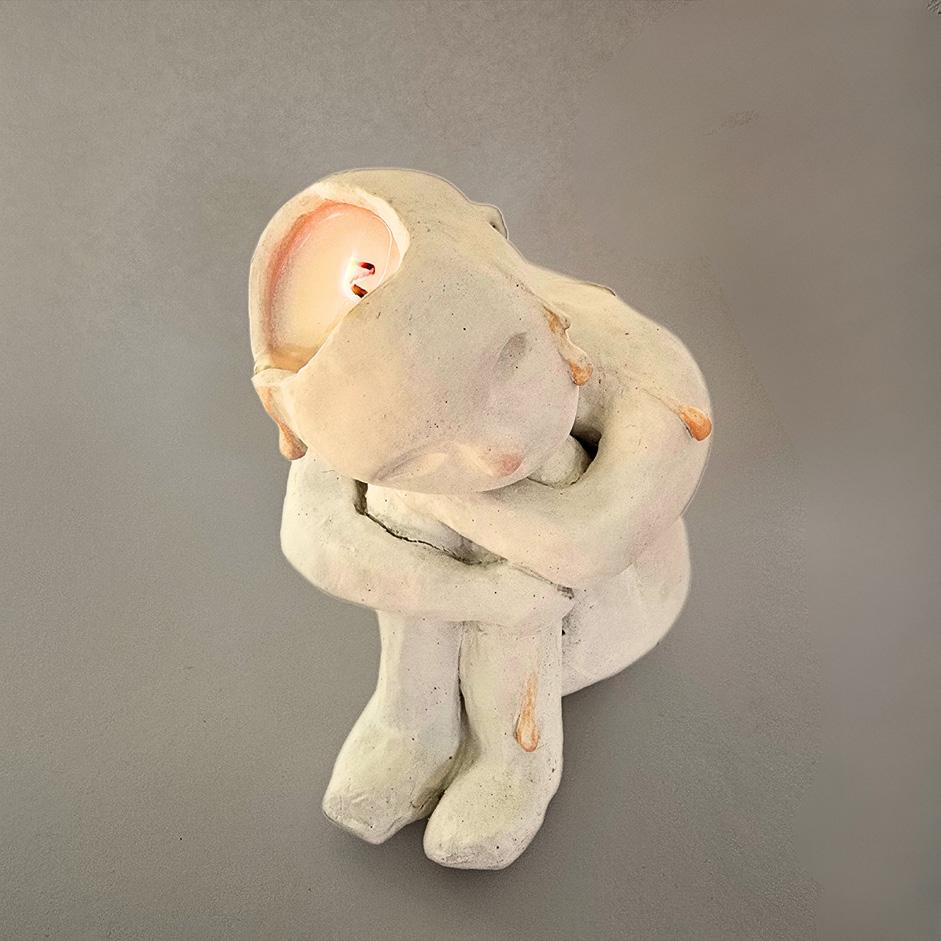
Ceramics
Silver Key
Taylor Liu ’27
Ceramics
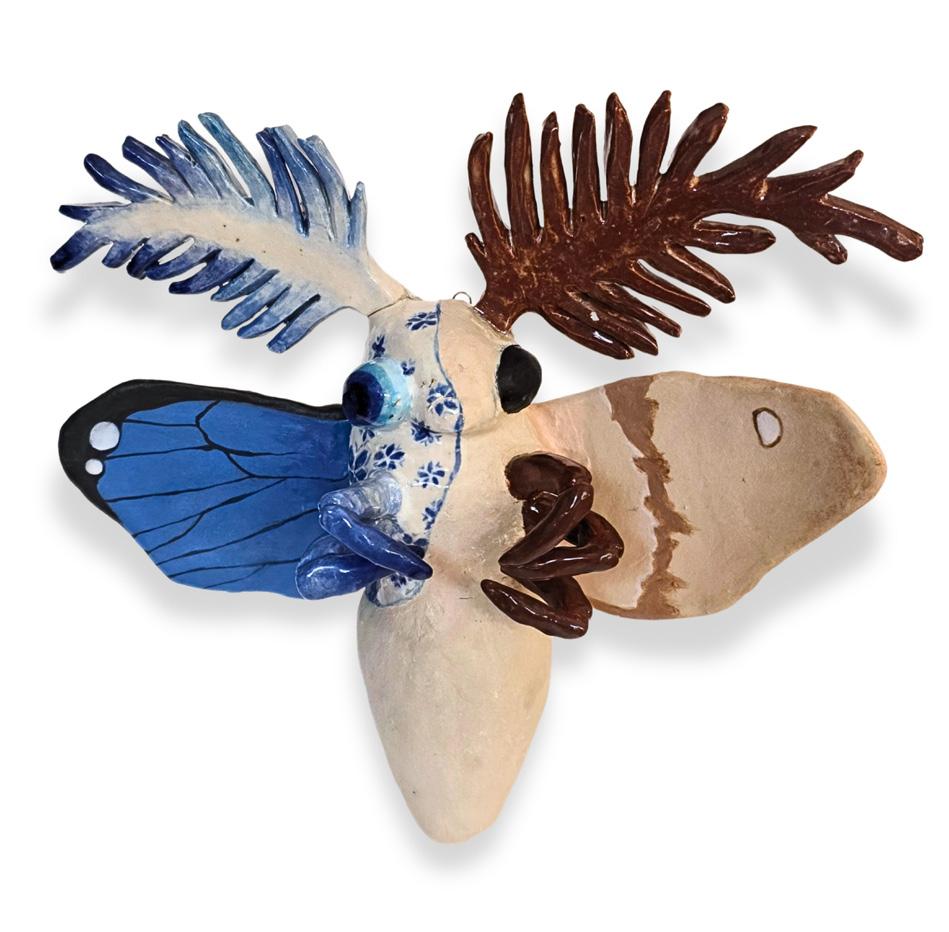
Gold Key
Chloe Chang ’30, Painting, Honorable Mention
Charlie Young ’29, Photography, Honorable Mention
Austin Hsiao ’27, Ceramics, Gold Key
Eli Gauld ’29, Photography, Honorable Mention
Phillip Lane ’29
Photography Honorable Mention
Penelope Burket ’31
Photography Gold Key
Winter Alumni Gatherings
New York, NY
Palm Beach, FL
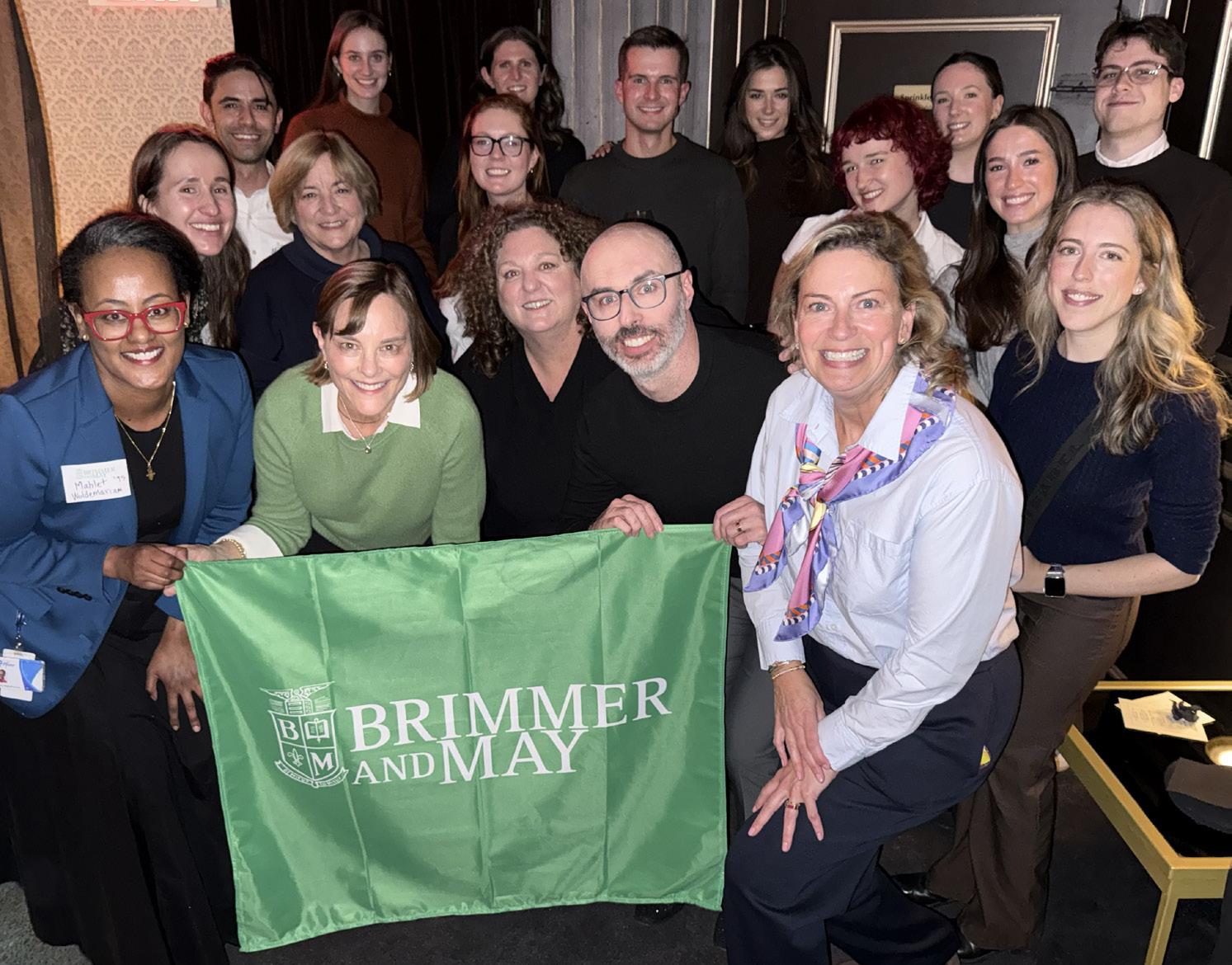
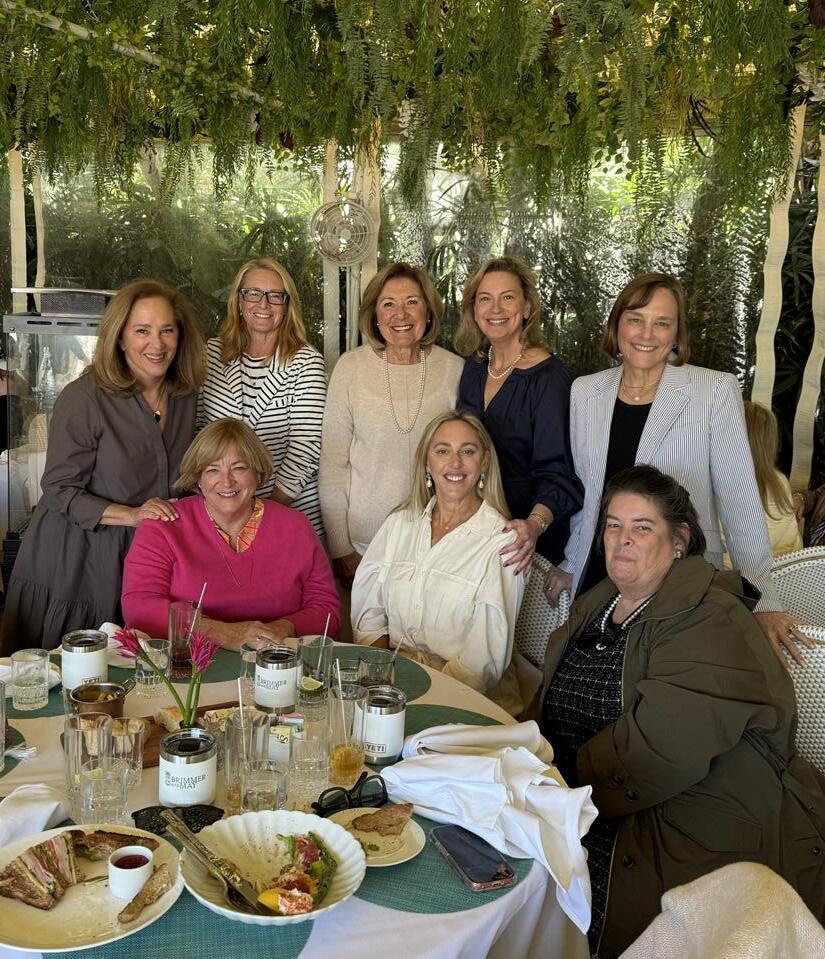
We beat the blizzard of 2026 by visiting our alums in Florida in February! Front Row (L-R) Head of School Judy Guild, Samantha Strauss Hanman ’02, Nina Cook ’84; Back Row (L-R) Linda Shapiro Waintrup ’72, P ’02, ’06, Katie Maloney ’84, Carol Tesone Croffy ’67, Director of Alumni Affairs & Special Events Amanda Spooner Eppers ’88, P ’22, Director of Development Elizabeth Smith P ’17
At Top: Front (L-R) Mahlet Woldemariam ’95, Director of Development Elizabeth Smith P ’17, Former Administrator Cassie Abodeely, Assistant Head of School and Head of Lower School Carl Coombs P ’27, Director of Alumni Affairs & Special Events Amanda Spooner Eppers ’88, P ’22, Leah Moskowitz ’15; Middle (L-R) Katie Magiera Kirk ’05, Head of School Judy Guild, Holly Eaton ’09, Anja Westhues ’20, Hanna Spivak ’20; Back (L-R) Michael Laskaris ’07, Ella Meranus ’20, Sarah Calmas ’13, Owen Meredith ’16, Claudia Slifka ’16, Susanna Calhoun Ford ’15, Sam Eigerman ’19; Middle Left: (L-R) Susanna Calhoun Ford ’15, Assistant Head of School Carl Coombs P ’27, Leah Moskowitz ’15; Middle Right: (L-R) Katie Magiera Kirk ’05, Holly Eaton ’09, Head of School Judy Guild, Michael Laskaris ’07; Bottom Left: (LR) Ella Meranus ’20, Hanna Spivak ’20, Former Administrator Cassie Abodeely, Anja Westhues ’20, Sam Eigerman ’19; Bottom Right: (L-R) Claudia Slifka ’16, Director of Alumni Affairs & Special Events Amanda Spooner Eppers ’88, P ’22, Owen Meredith ’16
alumni holidayparty
Head of School Judy Guild with the graduating Class of 2026
Maya Thompson ’26 (L) with Kaylee Rivera ’25
(L-R) Trustee Gail Gabriel ’71, P ’05, Peggy St. Clair P ’07, Trustee Kenyon Bissell Grogan ’76, and Trustee John Fitzgerald P ’07
(L-R) Brooks Neufeld ’26, Eli Lewis ’25, Ben Dykeman ’25, Erny Peng ’25, and Conno Wagner ’25
(L-R) Laurent Audoly P ’26, Maxim Audoly ’26, and Olga Granaturova P ’26
(L-R) Director of Enrollment Management Brian Beale P ’35, ’37, Hanna Spivak ’20, Enna Spivak ’17, Emma Hastings ’19, Sarah Smith ’17, Shani Breiman ’18, and Director of Development Elizabeth Smith P ’17
(L-R) Sophia Horning ’25, Lincoln Jiang ’25, Chloe Scolnick ’25, and Stephanie Altschul ’25
(L-R) Rubelys Gonzalez ’26, Ruelys Gonzalez ’26, Maya Thompson ’26, Jackson Tarbox ’26, Adi Houndegla ’26, and Sophia Sampaio ’26
(L-R) Director of STEAM Program Chris Hardman, Olivier Khorasani ’20, Tristan Durocher ’21, and Michael Hastings ’18
Emily Onderdonk ’18 (L) and Katheryn Maynard ’18
Marlo Frank ’22 (L) and Tahina Lizama-Kiefl ’22
(L-R) Yvette Zhang ’26, Mimie Manigat ’26, Mary Wang ’26, Aryaa Mutha ’26, and Hashim Aziz ’26
Both Varsity Cross Country teams built upon the programs’ recent successes, including some breakout individual performances in addition to team results. At the MBIL Championship meet in October, the Varsity Girls raced their way to a 2nd-place finish, while Varsity Boys battled to a 4th-place finish. Both teams wrapped up their seasons at the Division IV NEPSTA meet at University of Maine at Augusta. We applaud our coaches and runners on a job well done!
FALL AWARDS & ACCOLADES
James Landis ’28
Varsity Cross Country
MBIL All-Stars
Isaac Morris ’26
Varsity Cross Country
MBIL All-Stars
Charlotte Woolley ’30
Varsity Cross Country
MBIL All-Stars
Gloria Laurenza ’29
Varsity Cross Country
MBIL All-Stars
Ana Calanca Freire ’26
Varsity Cross Country
MBIL All-Stars
Maxim Audoly ’26
Varsity Boys Soccer
MBIL All-League
Andrew Flint ’26
Varsity Boys Soccer
MBIL All-League
Rimon Zhao ’27
Varsity Boys Soccer
MBIL All-League
Brennan Vallely ’27
Varsity Boys Soccer
MBIL All-League
Nydia Comenzo ’27
Varsity Girls Soccer
IGC All-League
Alexa Dykeman ’27
Varsity Girls Soccer
IGC All-League
Maya Tedrake ’27
Varsity Girls Soccer
IGC All-League
Maria Calanca Freire ’29
Varsity Volleyball
IGC All-League
Boys Soccer Under first-year head coach Mauricio Zavala, the Varsity Boys Soccer team compiled a 9-4-3 record en route to the MBIL Championship game, in which they were defeated by a talented Gann team. They also earned their first NEPSAC home game since 2019, when they hosted MacDuffie in the Class D quarterfinals. The team will look to continue their upward trajectory this coming fall!
Varsity
Varsity Girls Basketball
After last season’s NEPSAC Class D win, the Varsity girls entered this winter expecting to be challenged in NEPSAC AA. Under Coach Courtney Sims P ’30, the team competed well in their new class, picking up big wins against St. Andrew’s, Austin Prep, Winchendon School, and MacDuffie School. The team also showed fight and determination in their losses against competitive AA opponents, and with a strong group of returners, they will continue to ascend next season!
Varsity Girls Soccer Coach Thomas Gatanis took over the reins of the Varsity Girls Soccer program, and in his first season led the team to a 6-4-3 record. Among notable victories, they picked up a 1-0 win over Class C Wheeler School on the road, as well as many positive results in IGC competition. The team earned a home IGC Playoff game, in which they fell in a competitive match against Boston Trinity Academy. With no graduating seniors, this program looks forward to more success this fall.
Varsity Boys Basketball
Under Coach Tom Nelson, the team compiled a 14-13 record and came within one game of making the NEPSAC AA tournament. This season was highlighted by notable wins against CATS Academy, Cheshire Academy, and St. George’s School. With a strong group of returners, this program looks forward to continued success next season!
Varsity Volleyball
The Varsity Volleyball program also saw a change in leadership with Hannah Bailey stepping in as Head Coach last fall. Despite some challenging results, the season was marked by improvement and the promise of further growth. In addition to a full Varsity schedule, six scheduled JV games were indicative of a sport and program on the rise, with an exciting future!
Led by Coach Paul Bonfiglio, this team showed promise and ability during their inaugural season. Competing in Division 2 of the IGC, they picked up strong wins over Boston Trinity Academy, Waring School, and Newman School, and advanced to the IGC championship game. As a young group, we look forward to continued success for this team next season!
Varsity II Girls Basketball
This winter marked another successful season for the Brimmer Curling program. Led by Coach Amanda Spooner Eppers ’88, P ’22 and Coach Paul Murray P ’23, and with a mix of new and experienced players, the team showed tremendous growth and ability. Their season concluded with two big wins at the Bonspiel, including the Country Club Cup and the Winsor Trophy. Congrats to all our Curlers!
Varsity Curling
Brimmer took home the C-Division Novice Championship win as well!
Congrats to Brimmer on the A-Division Championship win!
Varsity II Boys Basketball
Under the leadership of Coach Givaughn Jones, the team finished the season with a 7-7 record despite playing a challenging out-of-league schedule. They reached the semifinals of the MBIL Division 2 tournament before losing to eventual league champion Boston University Academy. We applaud them on their successes this season!
temple fair winter 2026
Celebrating Chinese culture and the Year of the Horse with arts and crafts, games, and prizes in the Hastings Innovation Space.
reads
brimmer (& listens!)
Faculty and staff share the books and podcasts that have resonated most with them this year.
I loved this memoir of a young woman who loses her mother to cancer and, through her memories of growing up Korean American and the Korean food culture, evokes healing emotions. Grief, identity, and connection between food and culture are dominant themes in this story.
Sharin Russell Director of Annual Giving
My current obsession is this final book in the larger series of works known as His Dark Materials, young adult (YA) fantasy books of a very literary bent. Pullman is a literature professor at Oxford University, and he based the books on John Milton’s epic poem Paradise Lost (which my AP Literature students read this past fall), itself a retelling of the Garden of Eden story. Pullman’s books are set in a world that is like our world but is not our world. Human souls are external in this reality and take the form of an animal.
The books follow the main character, Lyra, from infancy through her early 20s. She is on a quest to find her soul, who has been separated from her, and to look for the source of Dust, particles that appear to have a supernatural origin. I love these books because they deal with big, complicated issues like free will, religion, and authoritarianism while still offering wonderful adventures with armored polar bears, witches, and travel between alternate universes. Pullman took a big swing with these stories and has the skill to pull them off.
Kenley Smith Upper School English Teacher
Director of Middle & Upper School Library Elyse Seltzer shares the books that topped her reading list this year.
Librarian
I recently got into the K-Pop Demon Hunters craze and started reading the Phoenix Hoard series. This first book hooked me right away. Emiko Soong, a retired assassin from her magical clan, is forced back into family politics when the god of death calls in a long-standing debt. Her mission: to recover the Ebony Gate, the barrier keeping hungry ghosts out of her beloved San Francisco. It’s a fast-paced urban fantasy with plenty of action and heart.
Because I love to travel, I often look for books set in places I visit. Before a recent trip to Japan, I picked up this second book in Isaka’s Assassins series. I ended up devouring it before I even got to Japan—it has some violence and action, but it is surprisingly funny and philosophical. The story follows multiple hitmen aboard the Shinkansen (bullet train) running the same route I later traveled. It made the trip even more exciting, since I could picture the scenes unfolding right where I was.
This is a book of delicious prose, a tale with at least two narratives, a mirror on our society today, and all with a bit of a poke at scholarly assumptions and a reckoning about who truly has knowledge and power. The New York Times states in its review: “Civilization as we know it ends. A pair of scholars in 2120, risking death from roving predatory gangs, travel across what’s left of England in search of a long-lost, epoch-making poem titled “A Corona for Vivien.” They are the last, it seems, historians alive.”
As I listened to this book on my commutes to and from Brimmer, I guffawed, I raised my eyebrows, and I was awed by McEwan’s incredible gift of storytelling and societal analysis. Without giving away the story, I will say it takes place about 100 years in the future, and the scholars are trying to recover/rediscover things that have been lost due to the scenario that is unfolding in our lives here in the 2020s. The narrative strands weave (at least) two different versions of the events that lead to the pursuit of the long-lost Corona poem. It is a curious experience to have the world we live in now be a subject of a future inquiry that is set in a vastly less comfortable reality. I have to agree with the summary from the New York Times review: “It’s a sophisticated entertainment of a high order” and it can “make one nostalgic for the present.”
This graphic novel is a firsthand account of a young girl’s fight for survival during World War II. I found it to be even more moving than Persepolis (by Marjane Satrapi), a favorite of mine. This memoir shows humans at their absolute best and worst before, during, and after the Holocaust.
I have read nearly everything Okorafor has written and deeply love her Africanfuturist work. This most recent novel is unlike anything else in her body of work. The story moves between two narratives: a realistic fiction novel about Zelu, a Nigerian American writer who is down on her luck, and Rusted Robots, the wildly successful science-fiction novel she writes. As Rusted Robots grows in popularity, Zelu’s connection to her own characters deepens in unexpected and unsettling ways. This is meta-metafiction at its best—thoughtful, layered, and quietly profound. It took me six months to read this book, not because it was long, but because I wanted to savor it. I lingered in each moment, in no hurry to leave Zelu or Ankara behind.
What if you could live forever—but no one could remember you? The moment you leave a room, everyone in it forgets you ever existed. Addie LaRue accepts this curse and is determined to turn it into a kind of blessing. If she cannot be remembered, she will still leave her mark—on art, on stories, on the world itself—defying a fate that insists she be forgotten.
Julie Williams-Krishnan Upper School Photography Teacher
continued
Leonard Wholey Upper School Math & Engineering Teacher
Last spring, I attended a meditative writing workshop in Provincetown, MA, led by Willow Defebaugh, the editor-in-chief of Atmos Meeting her in person left a lasting impression and deepened my connection to her work, particularly her podcast, which has since become one of my favorites. Willow, a trans woman whose personal journey is deeply intertwined with her reverence for transformation in the natural world, brings a rare clarity and gentleness to conversations about creativity, connection, and change. Her podcast blends interviews with artists, scientists, and cultural pioneers, inviting listeners to consider what nature can teach us about growth, adaptation, and becoming.
That same spirit of transformation continues in her book, which I was drawn to alongside the podcast. I’ve approached this book differently than my traditional reading habits, choosing instead to read one meditative essay each morning. Organized into four sections—Reverence, Balance, Evolution, and Healing— the book invites a slower, more intentional relationship with both reading and reflection. Each essay offers new perspectives on nature and our deep interconnectedness, while immersive photography of ecosystems from around the world grounds these ideas visually. Together, the podcast and the book consistently leave me contemplating my connection to the natural world and how profoundly it shapes my daily life, creativity, and sense of belonging within a world in transition.
Paul Donato Fifth Grade Teacher
Assistant Head of School and Head of Lower School Carl Coombs P ’27 shares his two favorite recent reads:
If you love Shakespeare, this is an unforgettable read. O’Farrell tells a profoundly moving story of grief, loss, and the quiet, transformative power of art. With beautiful prose, she reimagines the Shakespeare family tragedy that may have inspired Hamlet, offering a portrait of how creativity can help us find meaning through heartbreak. It’s a beautifully crafted novel that stays with you long after the final page. I also highly recommend the movie that was released this past winter.
This warm, quietly funny novel is about grief, friendship, and unexpected connections. Told in part by an unusually observant octopus, it blends humor with real emotional depth. This is a comforting, thoughtful read that stays with you long after the last page—and it might just change how you see the world (and sea creatures).
Carl Coombs P ’27 Assistant Head of School Head of Lower School
A novel in epistolary form—my new vocabulary word thanks to [Upper School English Teacher] Kenley Smith. Sylvia Van Antwerp makes sense of her life in the writing of letters. She writes to people she knows and some she doesn’t. Some she sends and some she doesn’t. The letters chronicle her life in big and small ways. This book has all the themes of a full life: humor, grief, anger, regret, and self-discovery. It is one of my favorite books of the past year.
Cecelia J. Pan P ’16 Science Department Chairperson Director of Educational Initiatives Co-Director of Faculty Recruitment and Mentoring