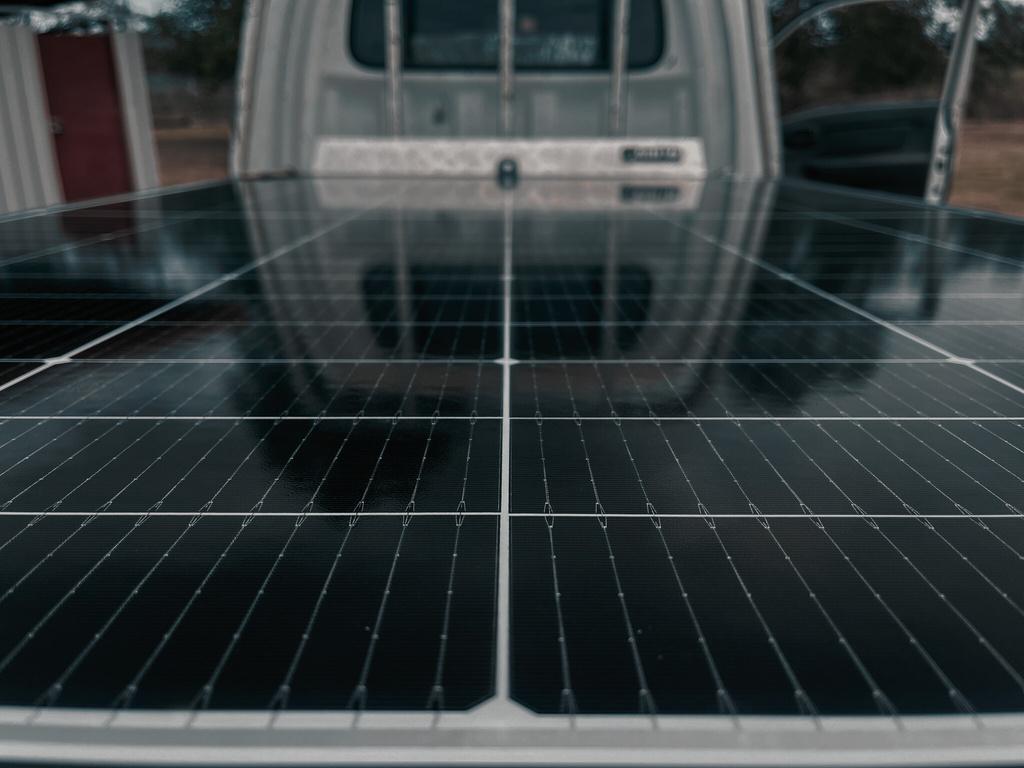
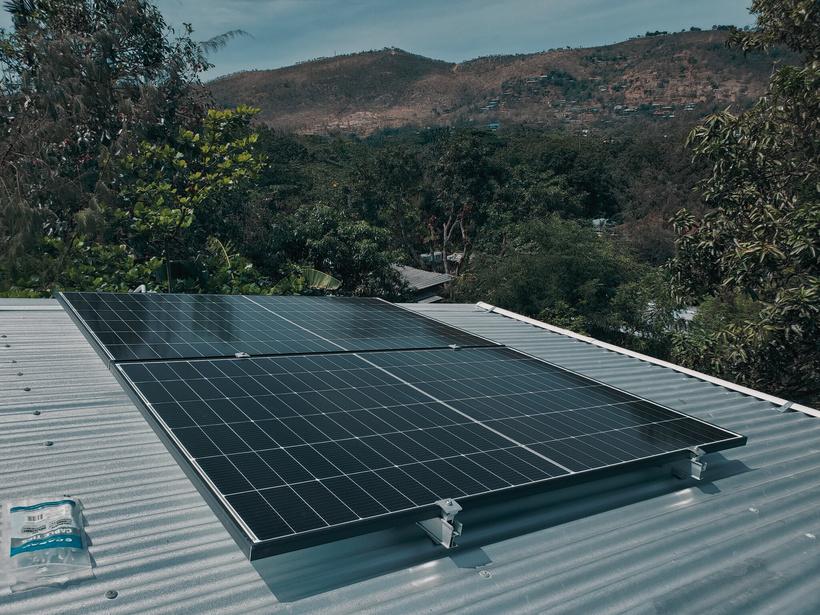
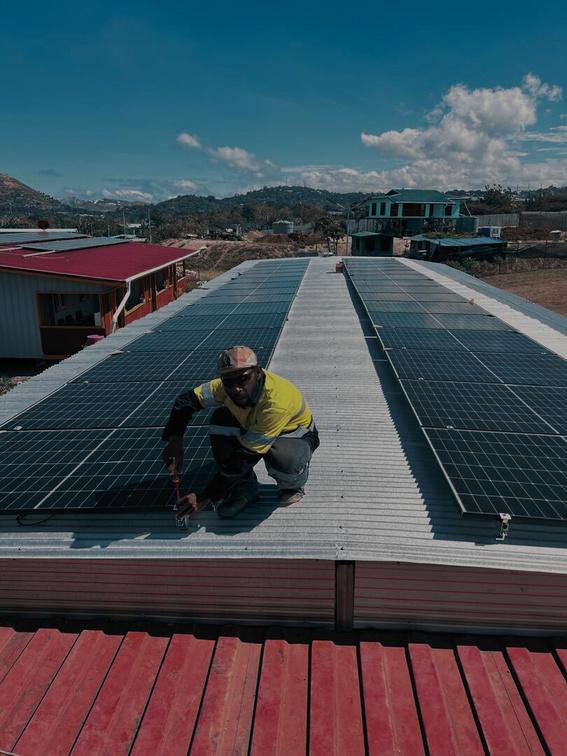
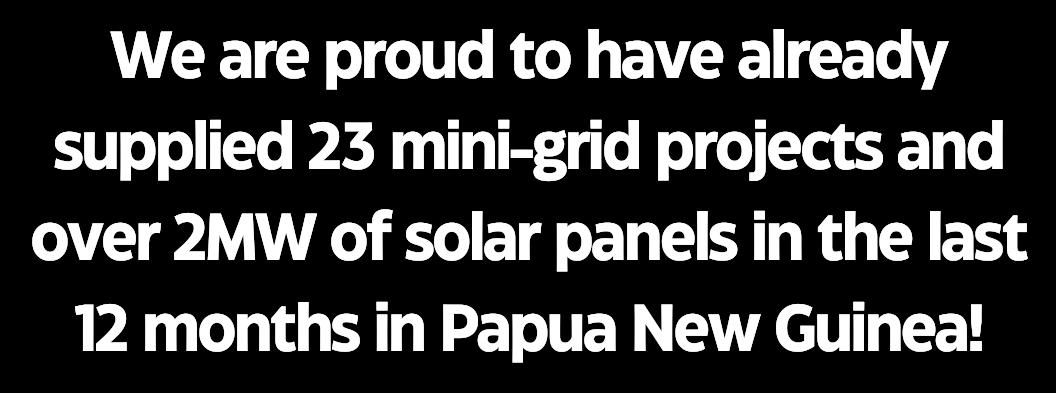
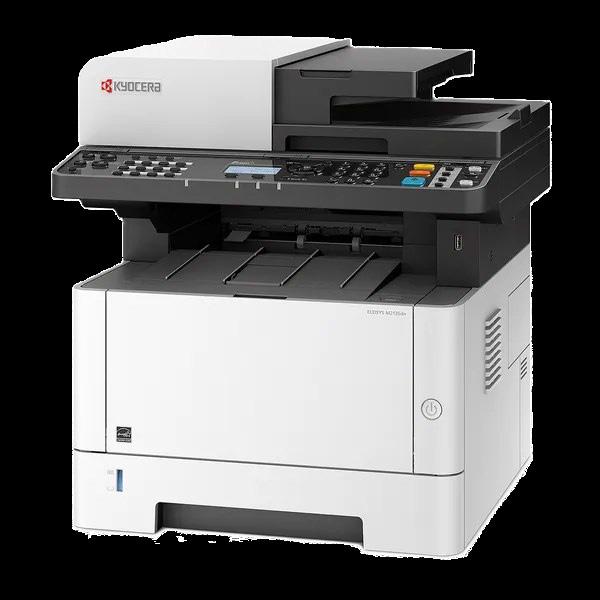
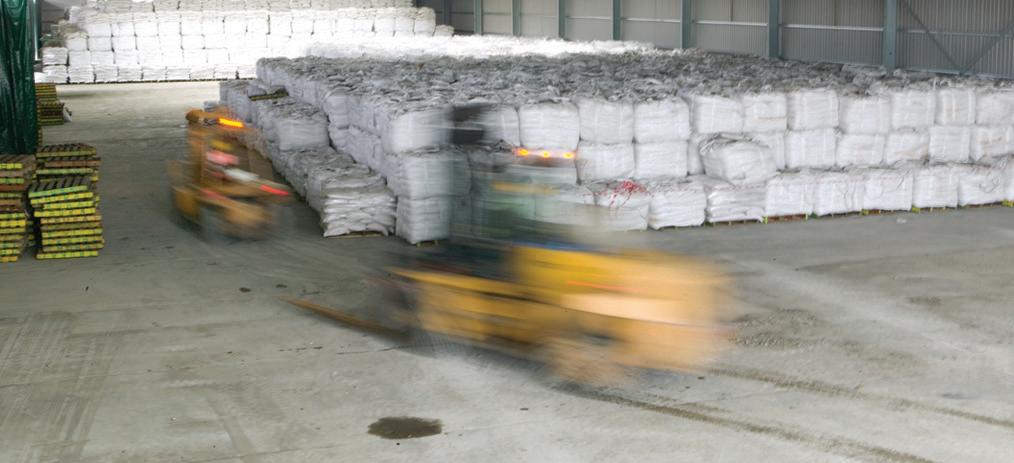
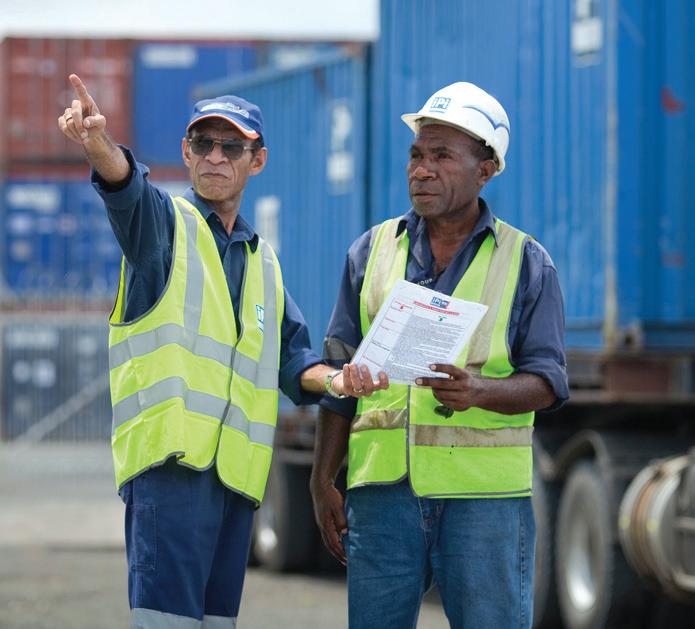
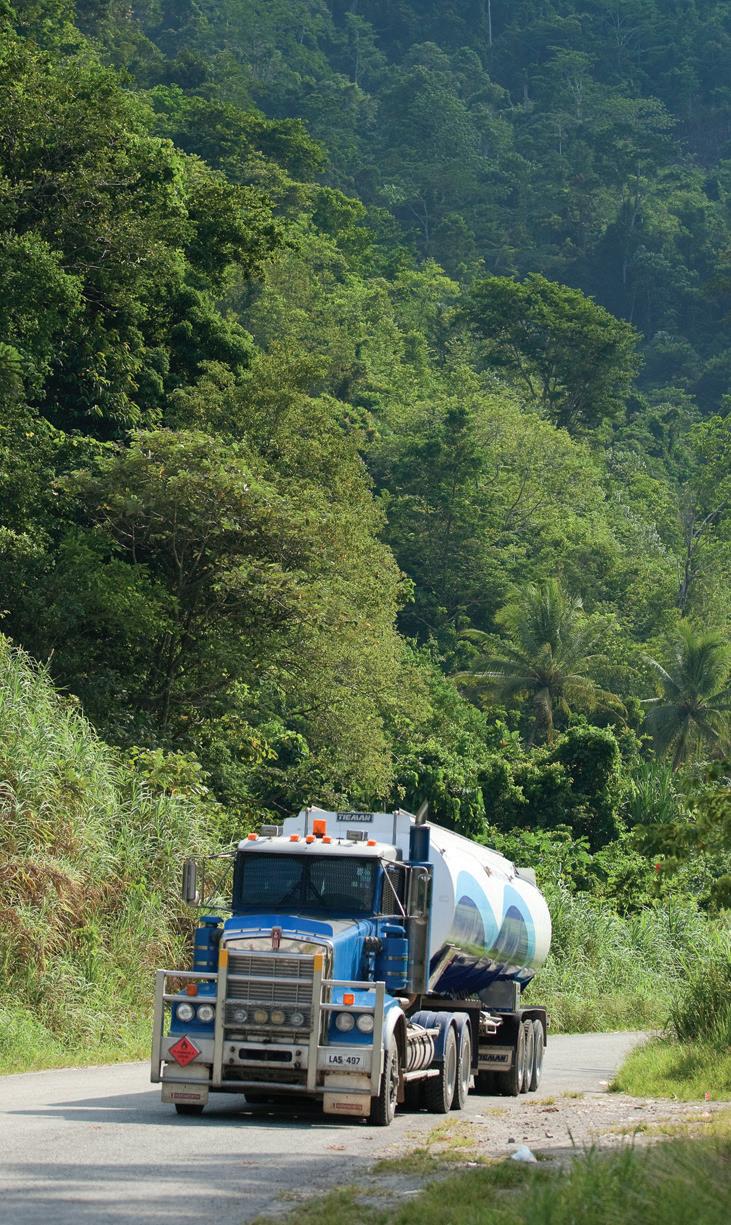
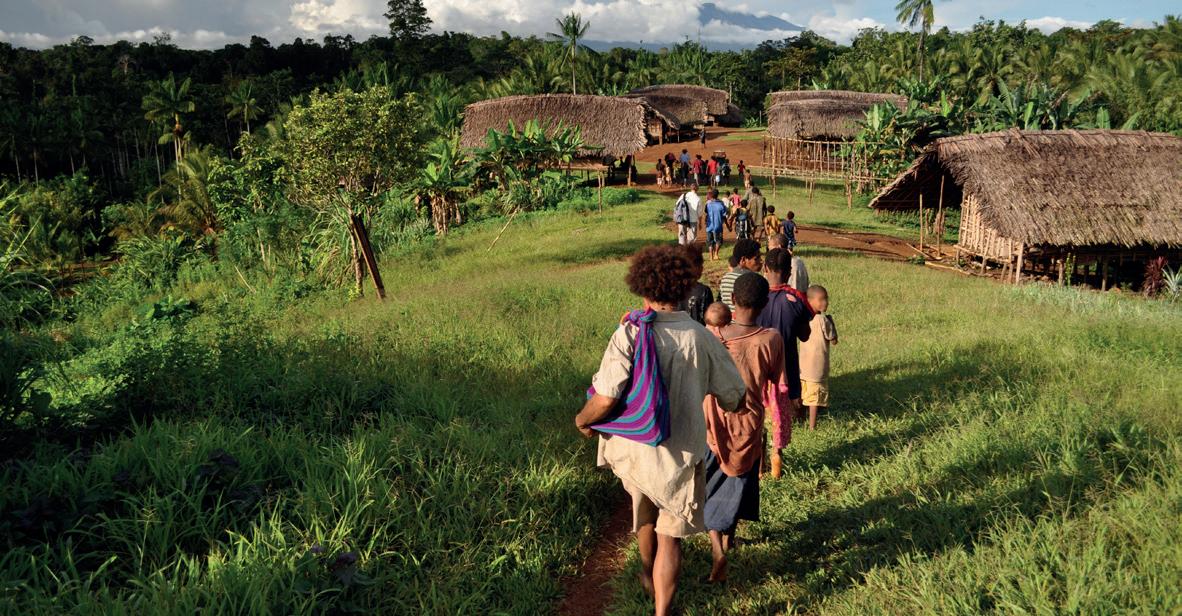
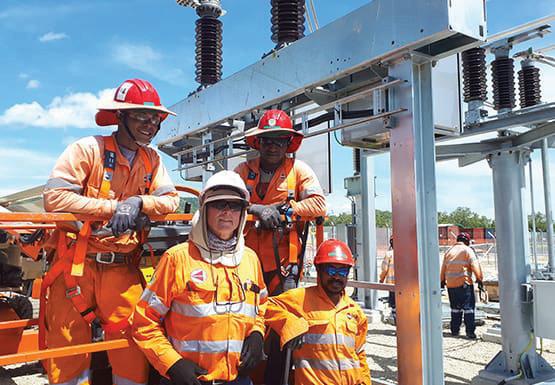
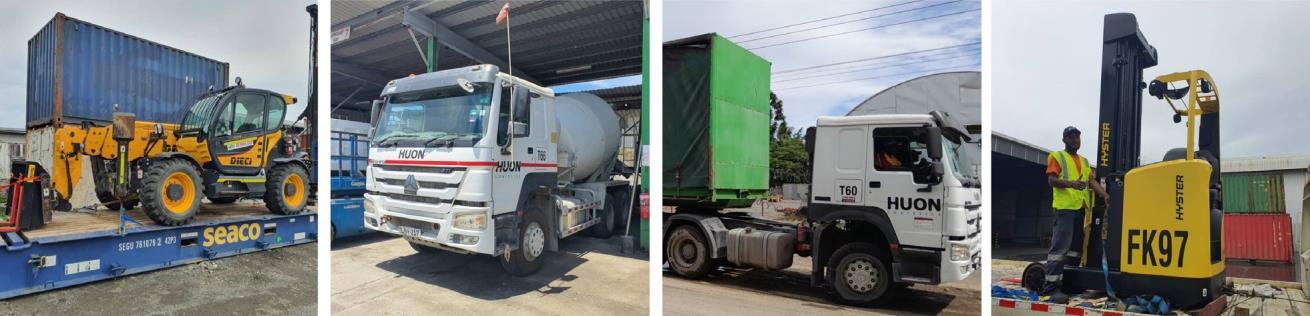
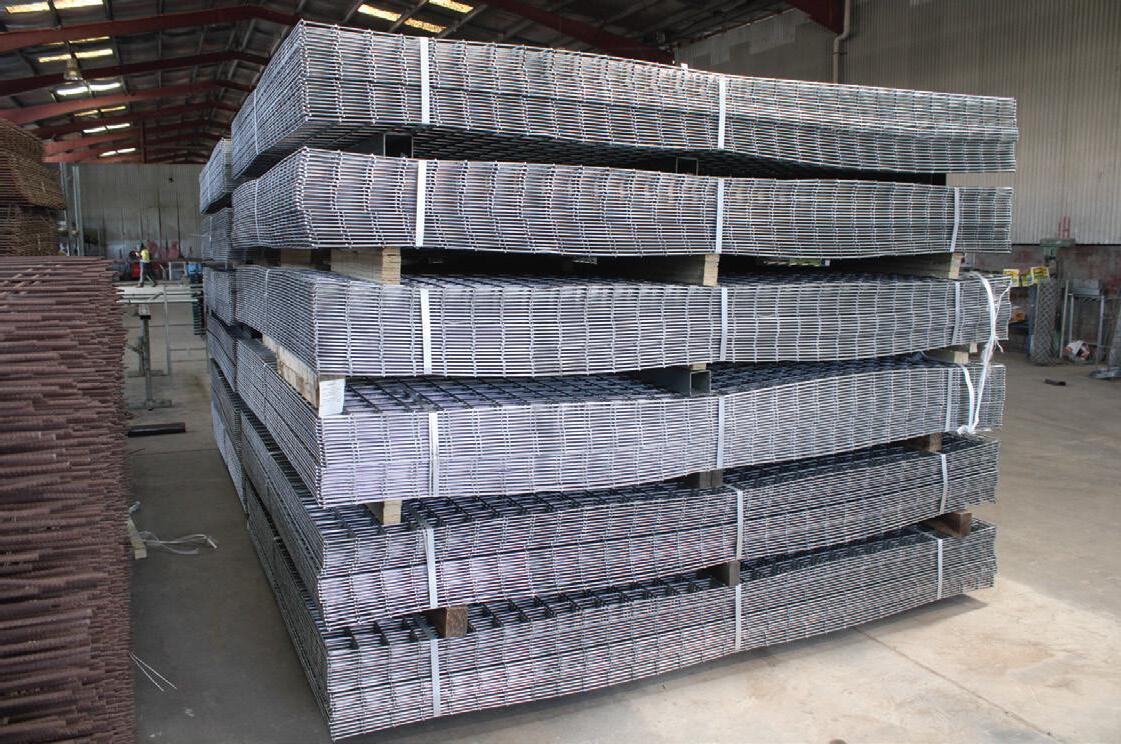
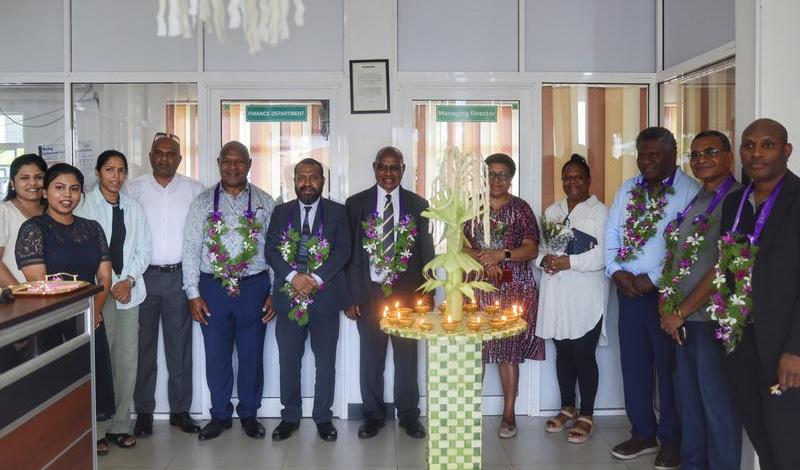
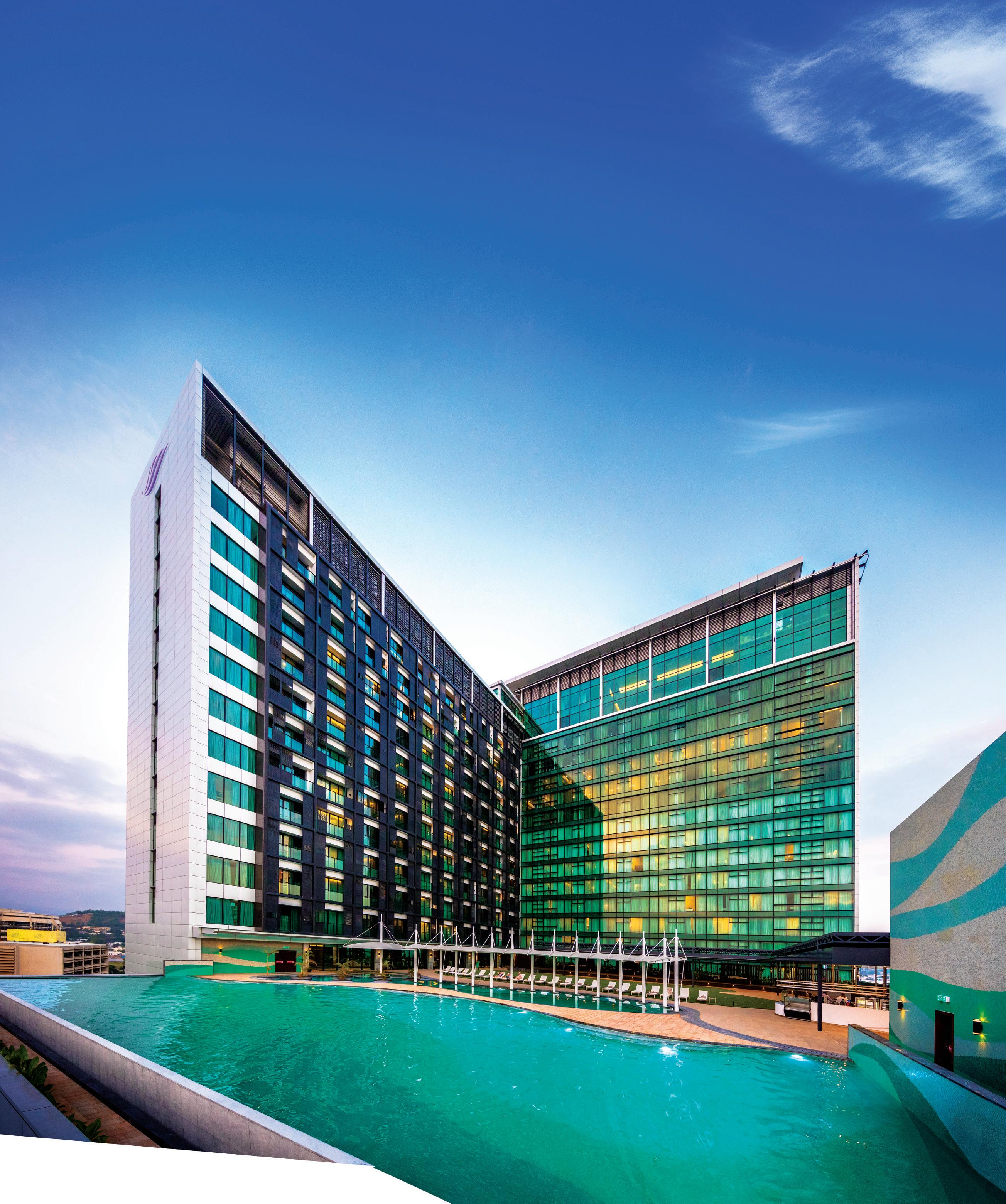
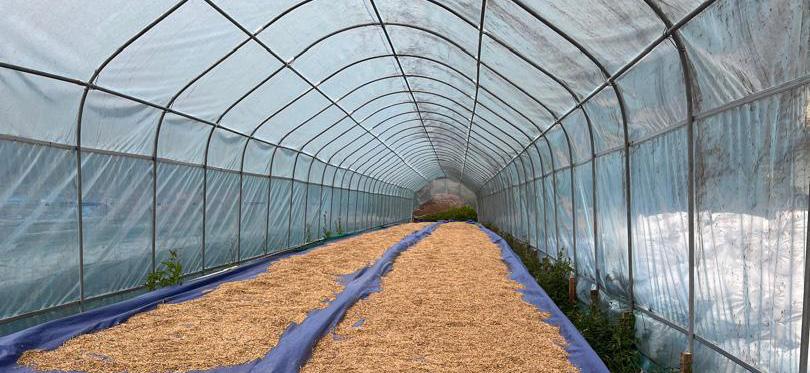
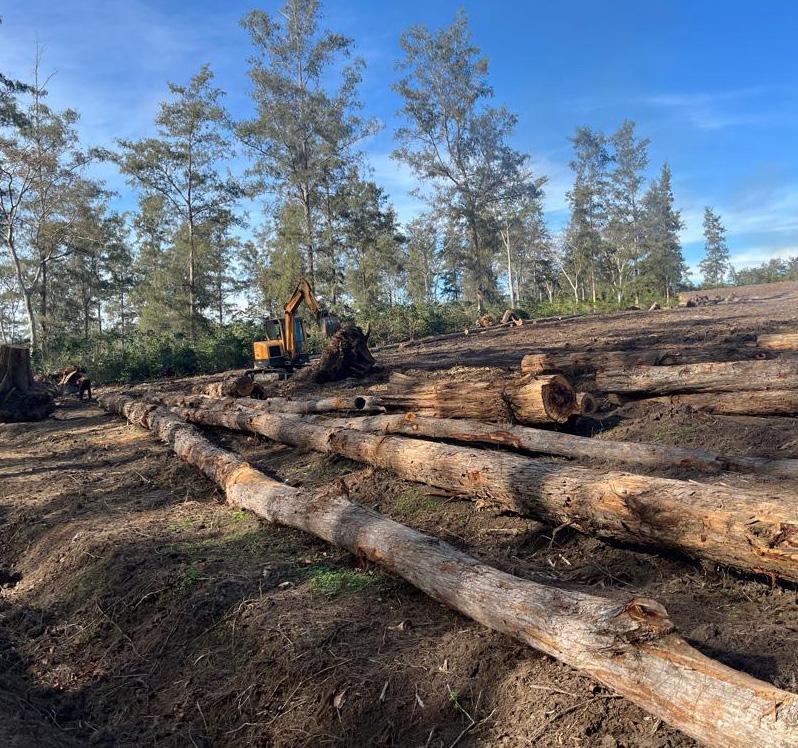
At PNG Solar Supply, we want to provide you with the tools you need to set up your solar systems We are an experienced Papua New Guinean owned business focused on offering products from diverse manufacturers to best suite your needs
We have a team that is able to help with design, and we handle everything for you We challenge you to find an easier way to light up your world
PNG Solar Supply is an Authorized Distributer of and a proud member of
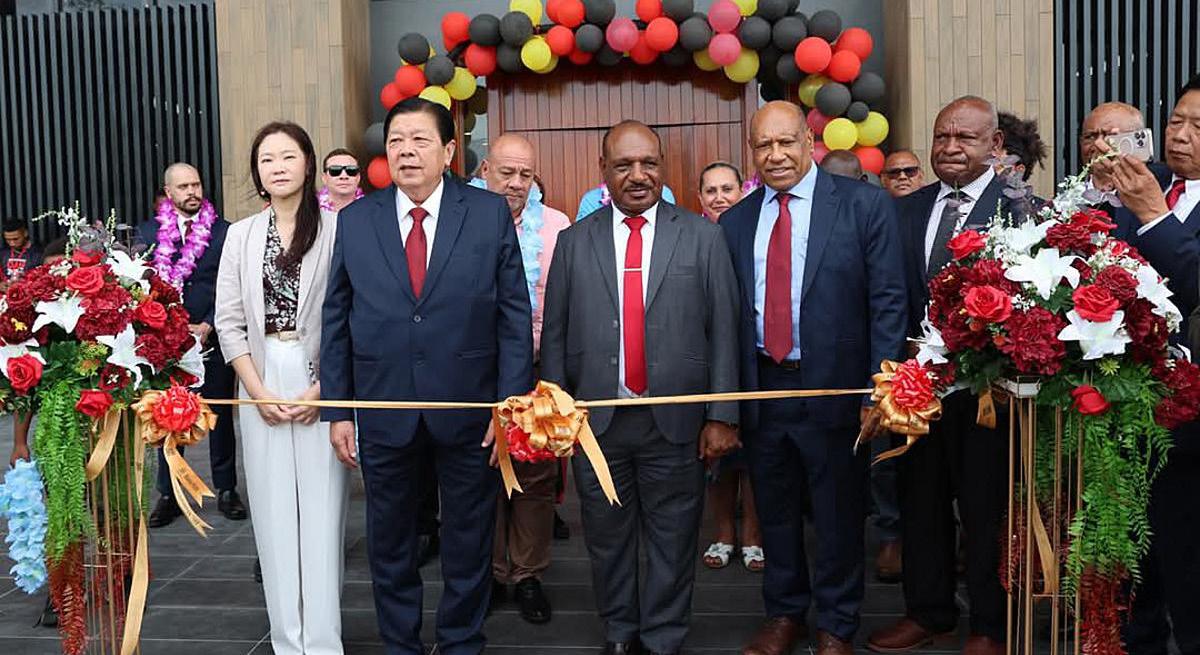
Korea Keen to Deepen Relationship
PNG CORE Hosts Breast Cancer Awareness Session with Paradise
PNG Ports Climb Global Rankings in 2025 World Bank Port Performance Index > 46
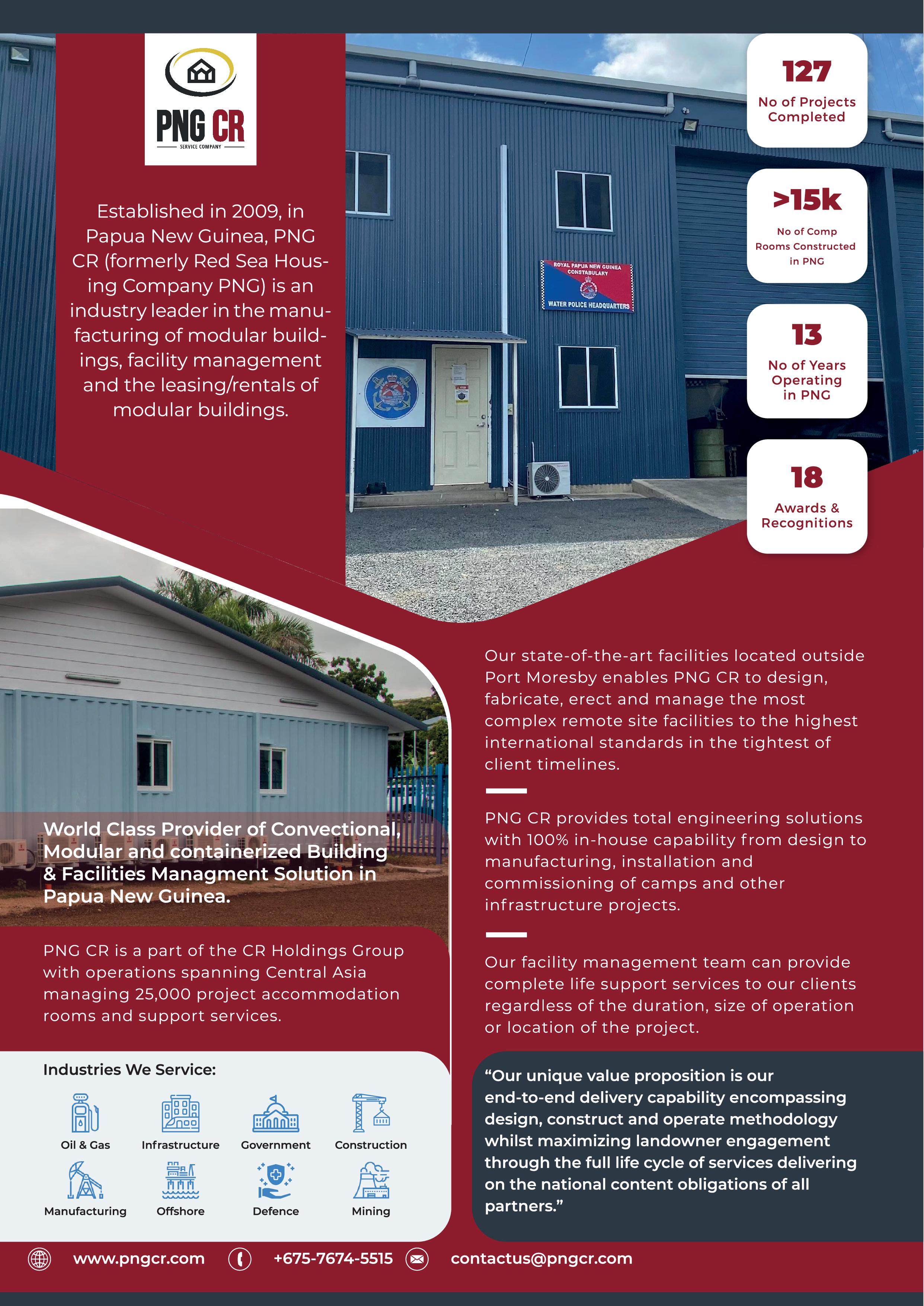
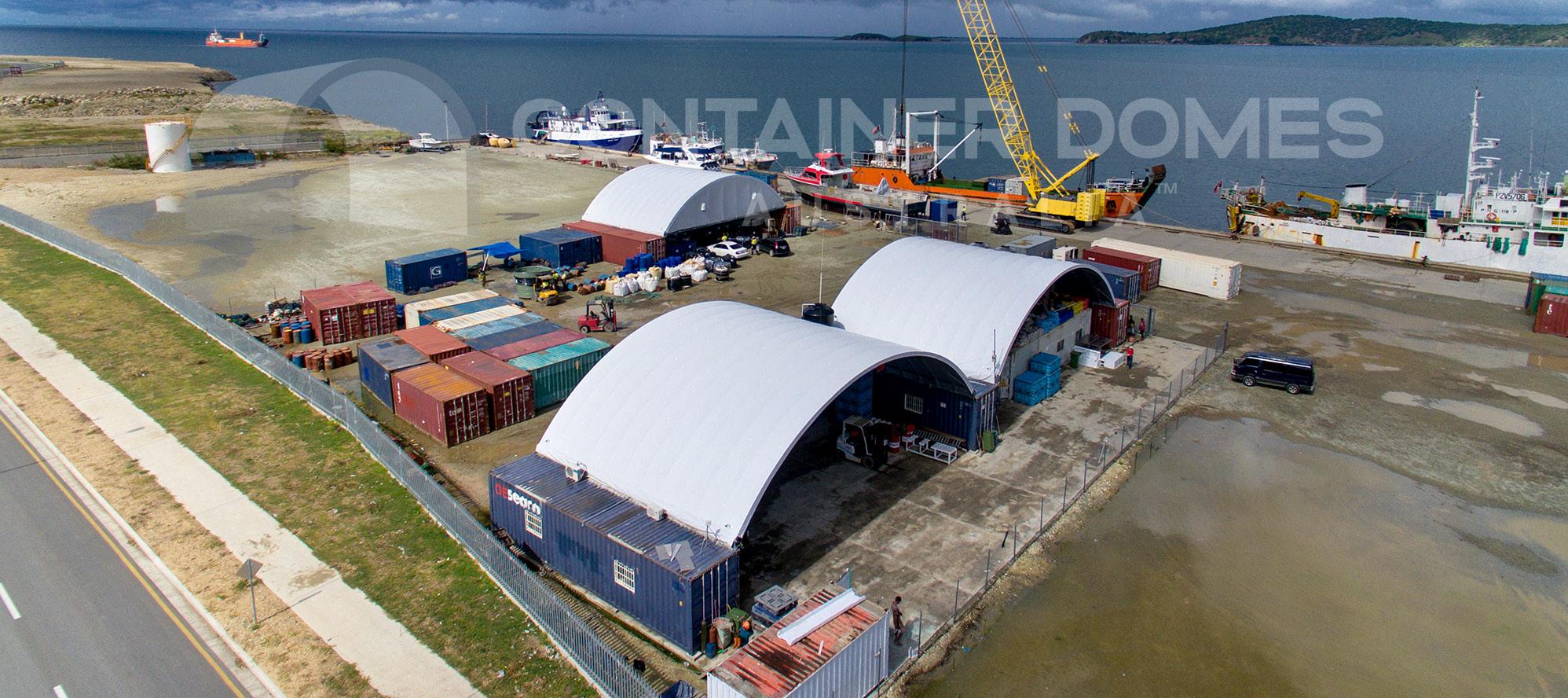
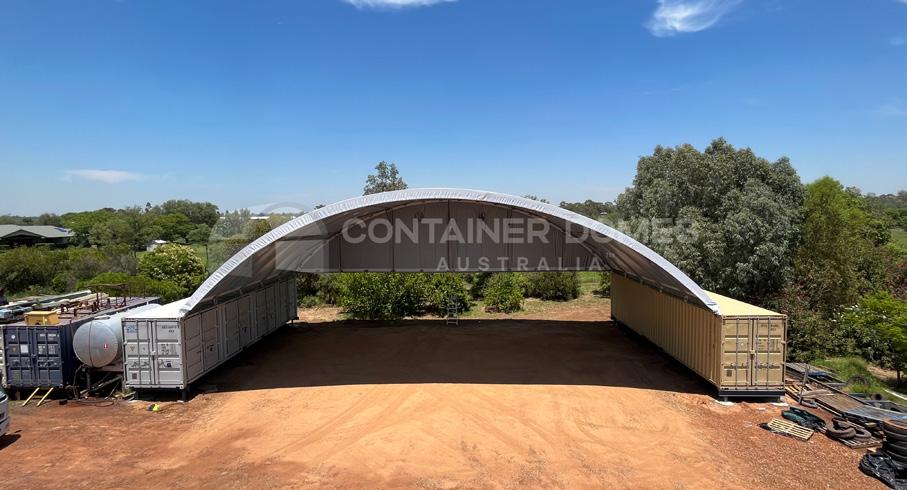
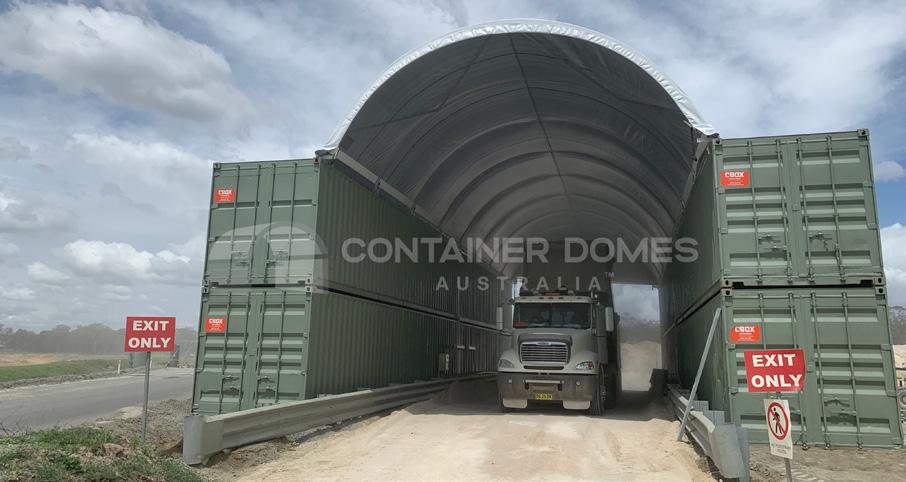
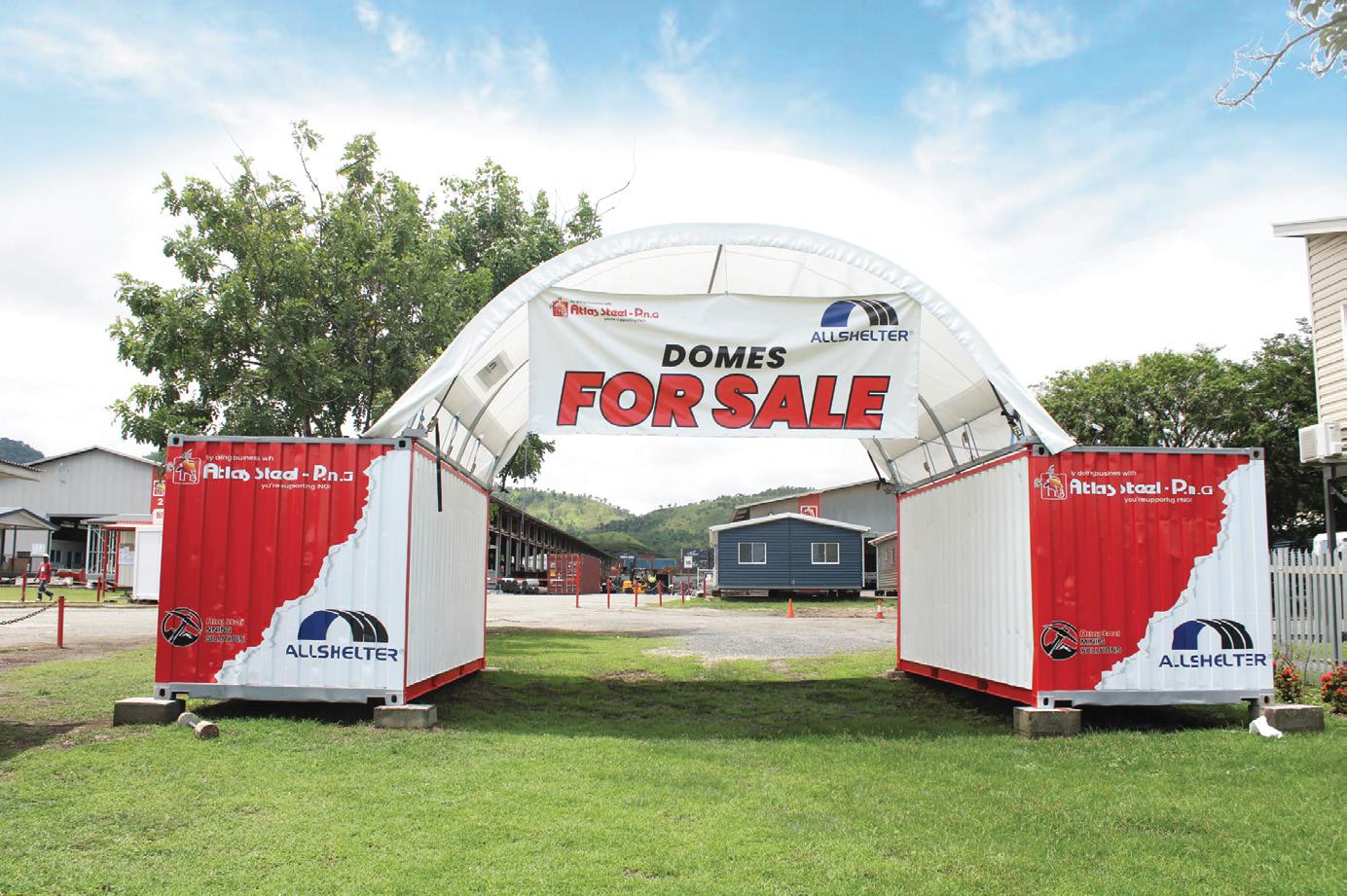
PNG CR Services Teams Up with Australian Firm to Bring Dome Shelters to Papua New Guinea > 48
New Caledonia Trade Delegation
Strengthens Ties with PNG at POMCCI Business Breakfast > 50
PNG’s Second SEZ Summit Attracts Record Investor Interest, Targets
$20-B Investment > 54
MINING
Augustus Minerals Moves to Secure Stake in Mt Kare Gold Project > 56
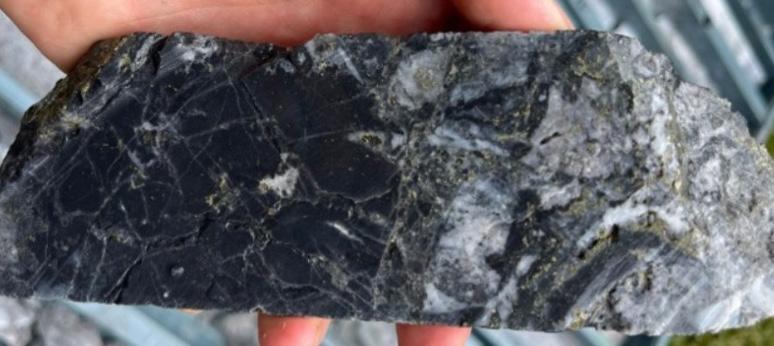
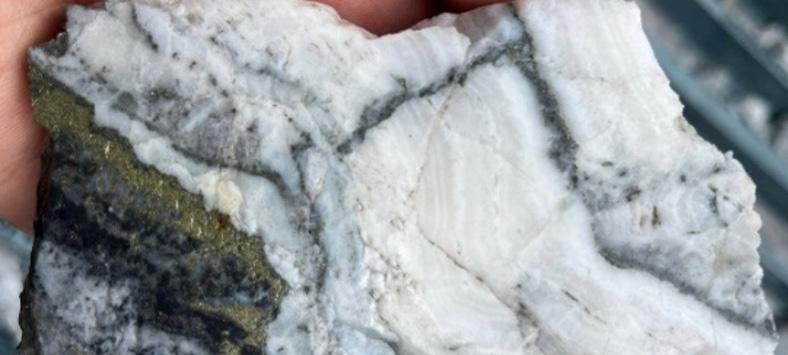
Great Pacific Gold Hits High-Grade Gold, Copper at Wild Dog Project > 58
Ok Tedi Granted 2-Year EL Extension for Misima Deposit > 62
K92 Mining Sees First Production, Inauguration of Process Plant > 64
Great Pacific Gold Advances Kesar Project with New Exploration Report > 66
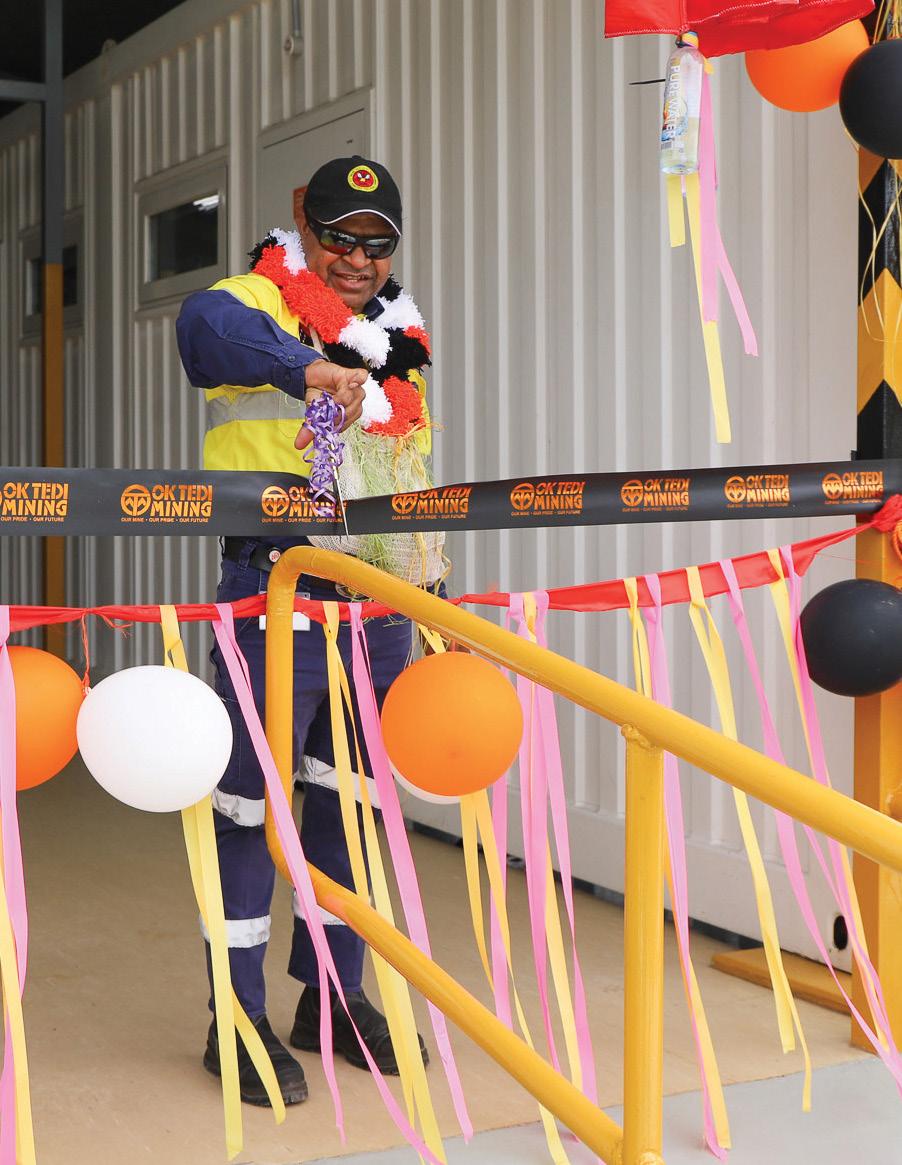
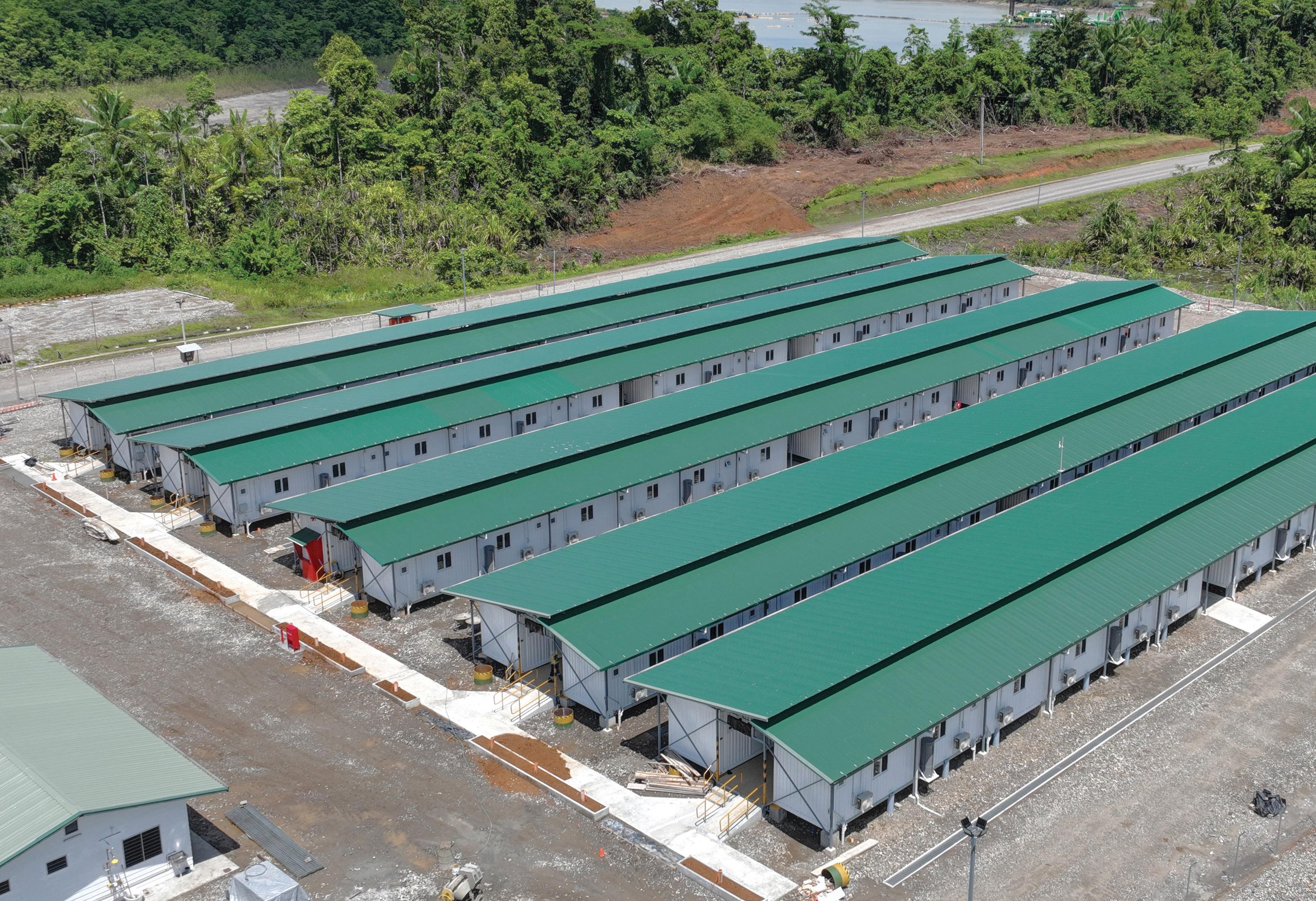
Ok Tedi Commissions New Mine Operations Workshop > 68
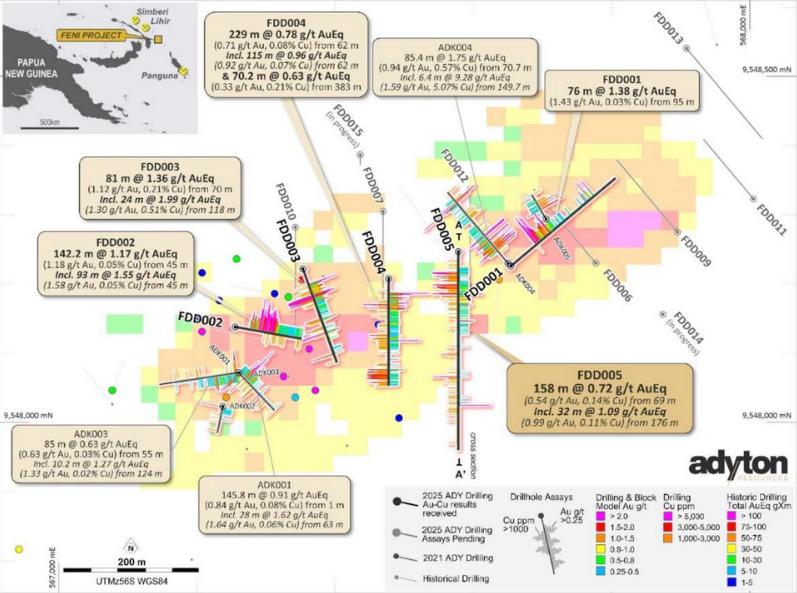
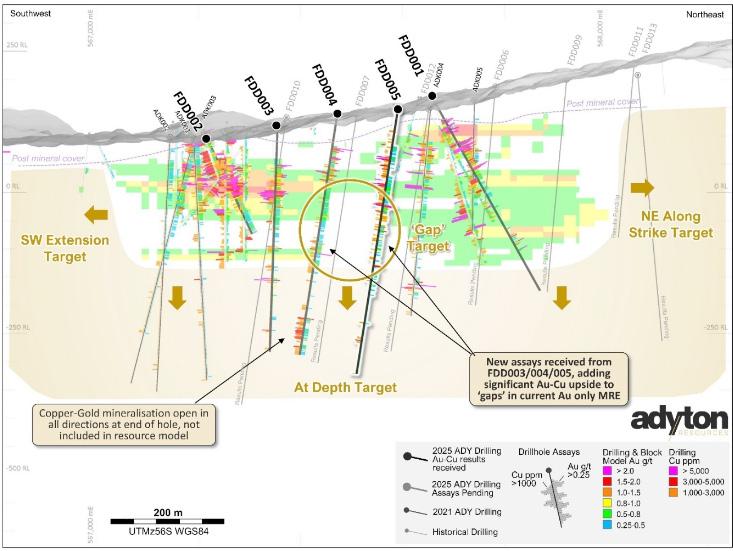
Adyton Confirms Significant Scale at Feni Gold-Copper Project >
Paita Commends Pacific Lime and Cement’s Landowner Partnership >
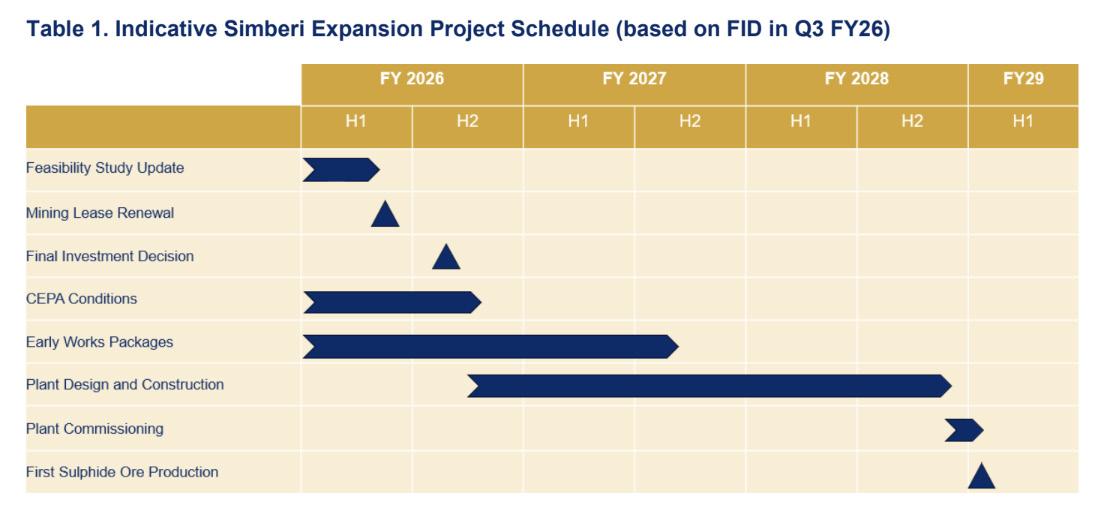
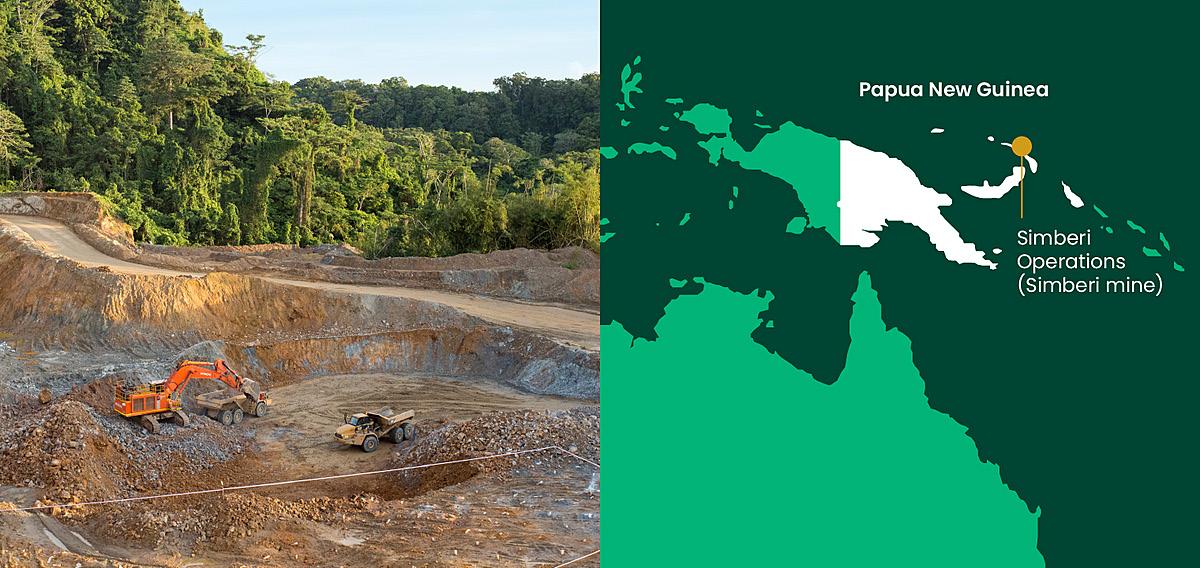
St Barbara Advances Simberi Expansion as Gold Production Continues > 74
South Pacific Metals Begins First Drilling Program at Ontenu Northeast > 76
Geopacific Reports Strong Gold Intercepts at Woodlark Project in PNG > 78
OIL & GAS
Petroleum Secretary David Manau: Exploration in PNG ‘Has a Future’ > 82
Papua LNG Dev’t Forum Work Underway; State Pushes for Early FID > 86
MRDC Unveils 4 Major Projects to Boost Hela Province > 88
Abg, Japan, Undp to Deliver Clean Power for South Bougainville > 120
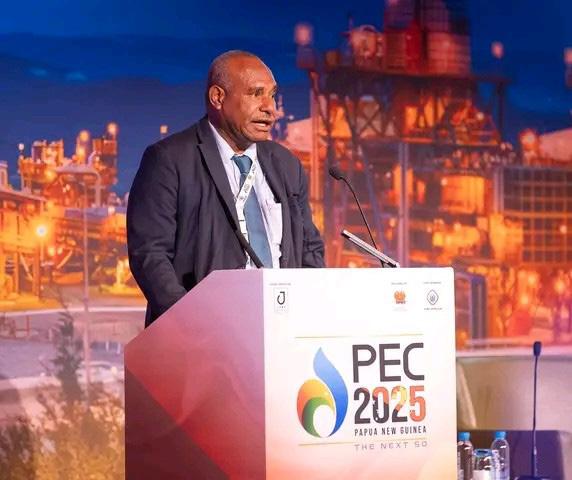
PEC 2025 Platforms Discussions for ‘Next 50’ of PNG Energy > 122
Bougainville Hastens Growth with High-Impact Infrastructure, Buin Solar Innovation Hub > 124
COMPANY
ExxonMobil Works to Inspire Next Generation of Female Engineers > 136
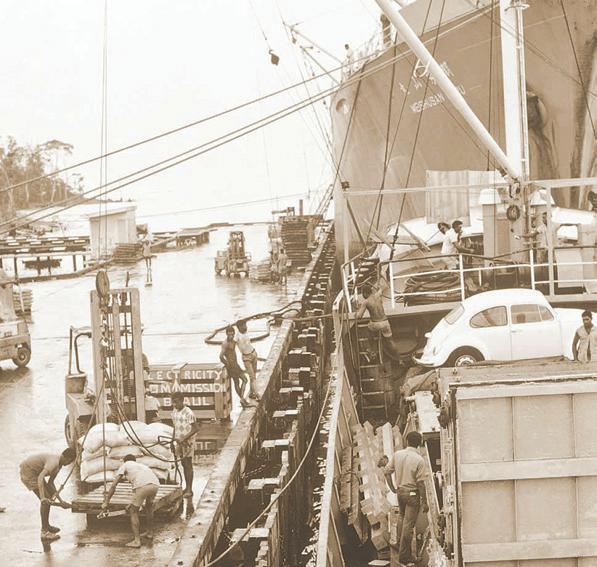
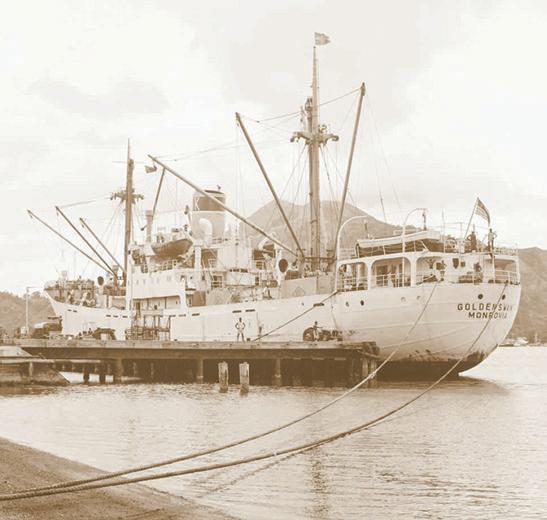
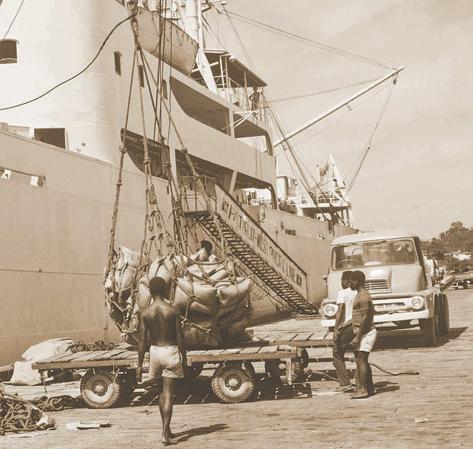
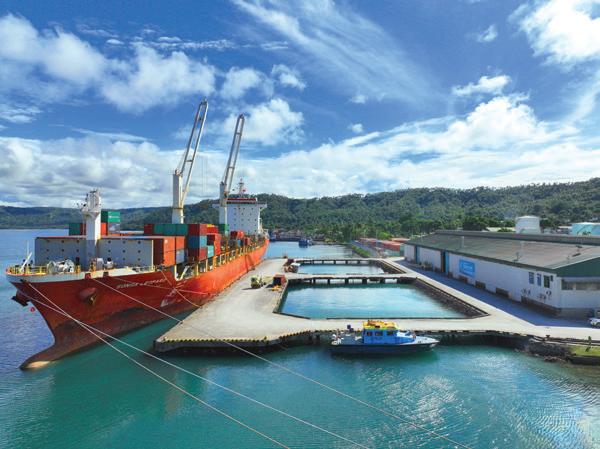
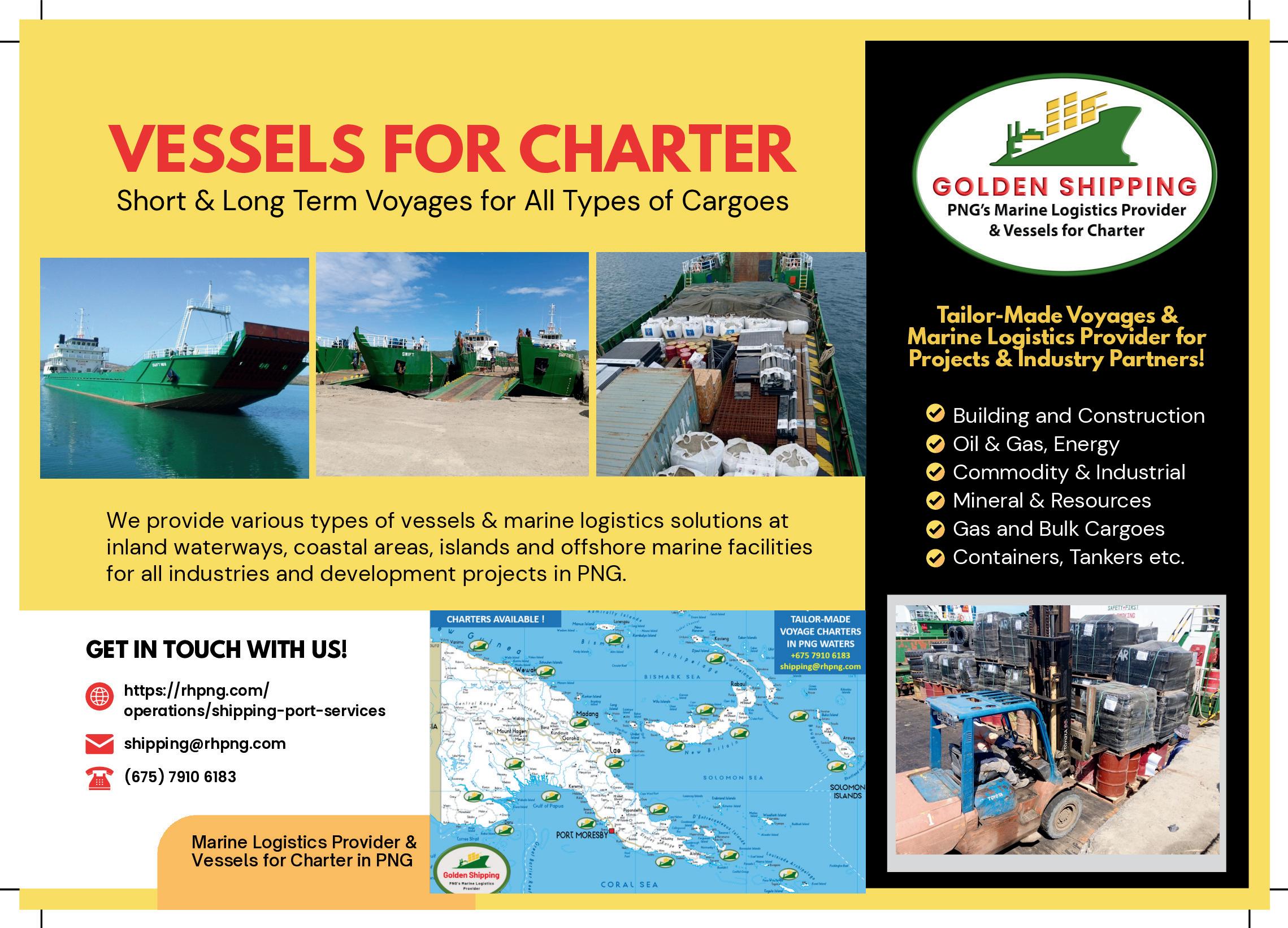
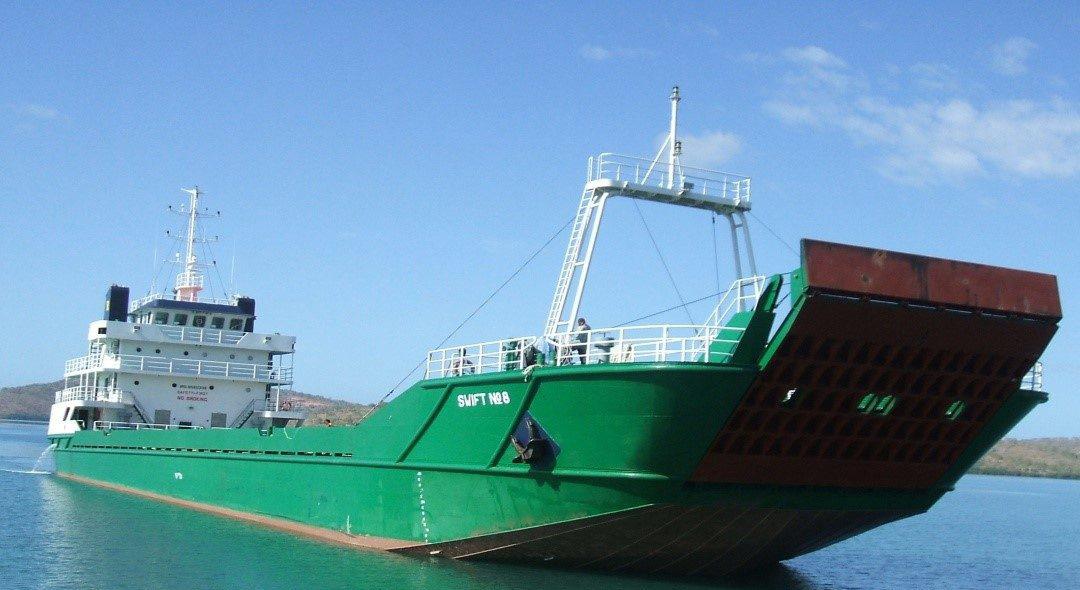
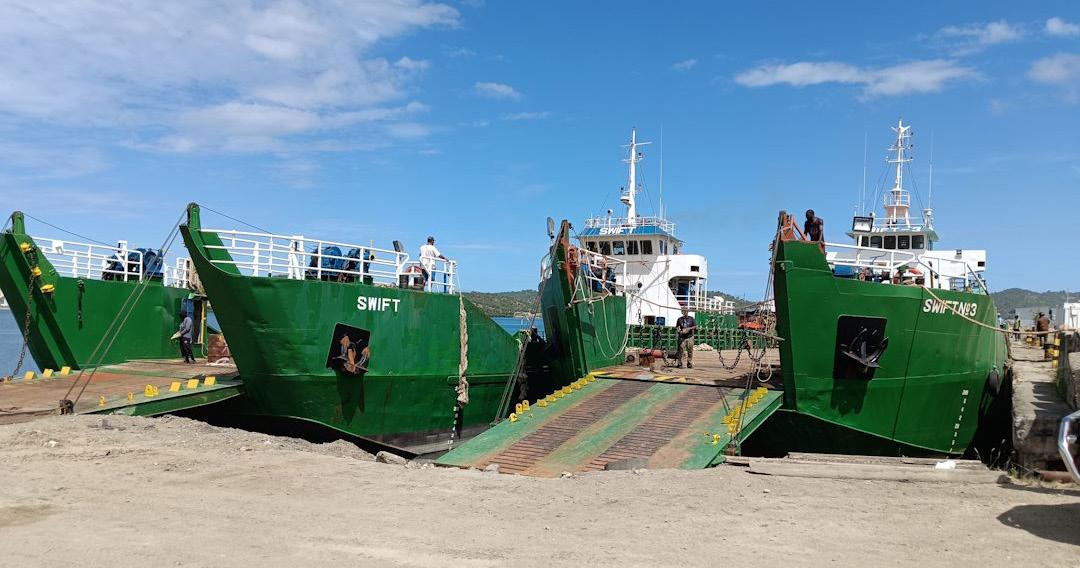
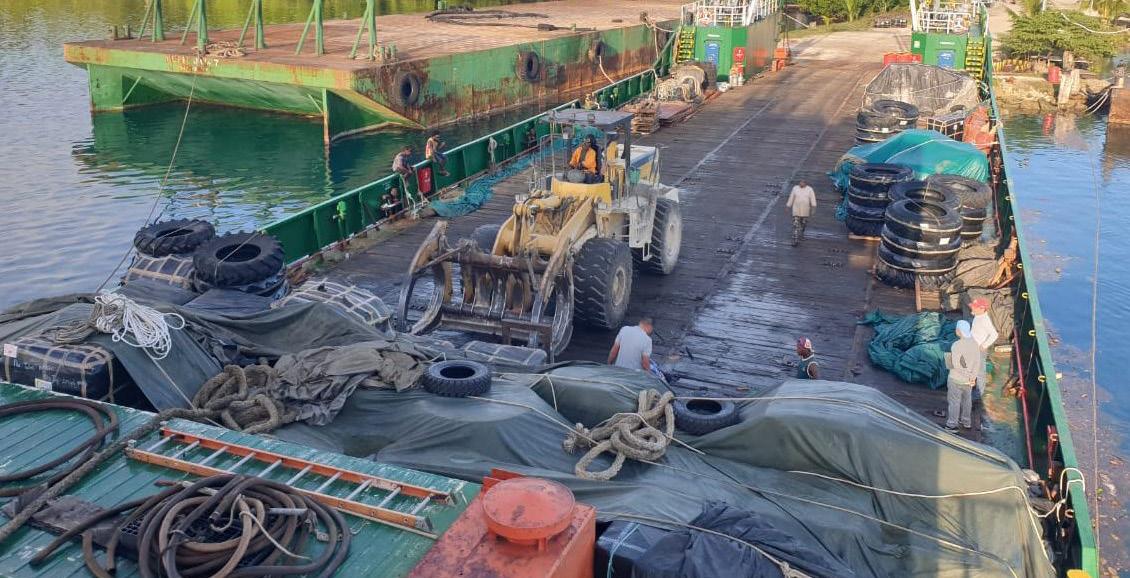
Golden Shipping: Steering Papua New Guinea’s Marine Logistics Into a New Era > 137
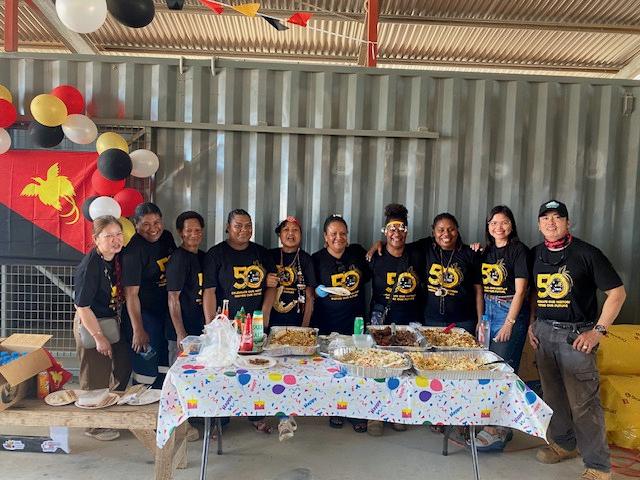
IEA Schools: Celebrating 50 Years of Growing PNG’s Future > 142
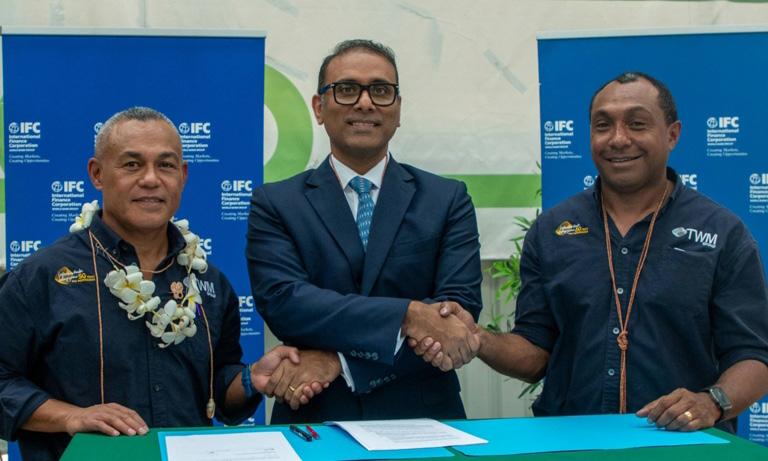
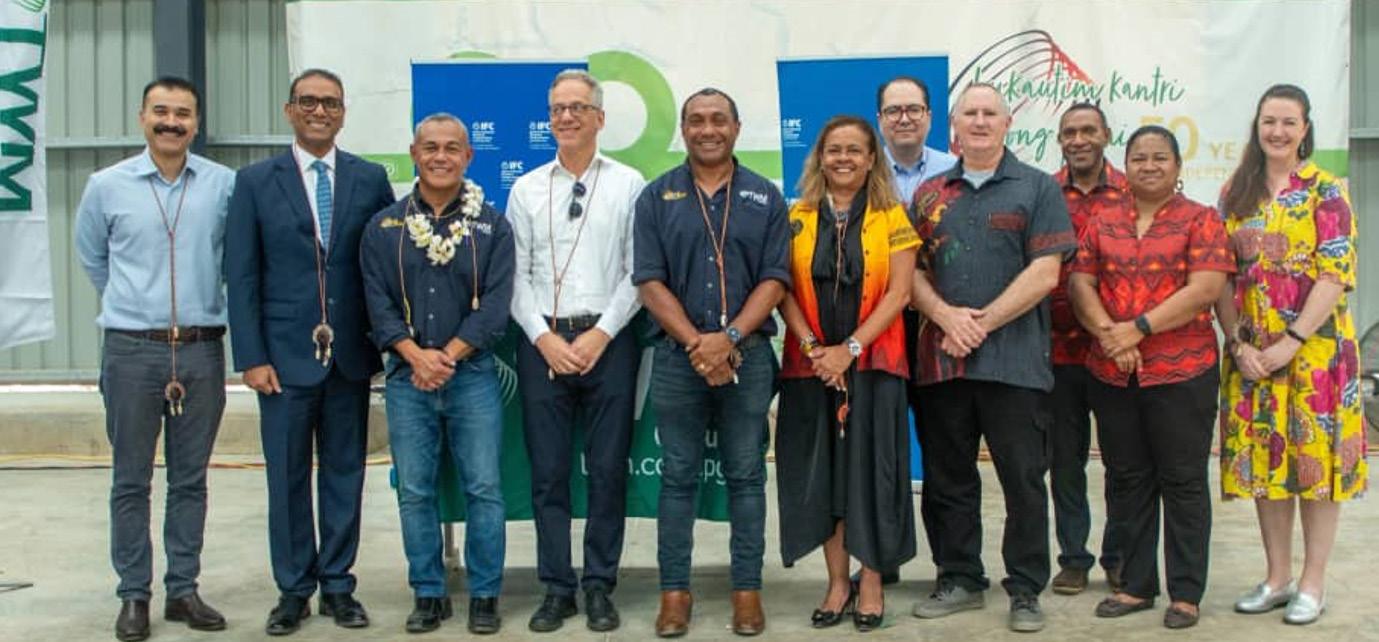
TWM Group Secures IFC Investment to Transform PNG Waste Management > 144
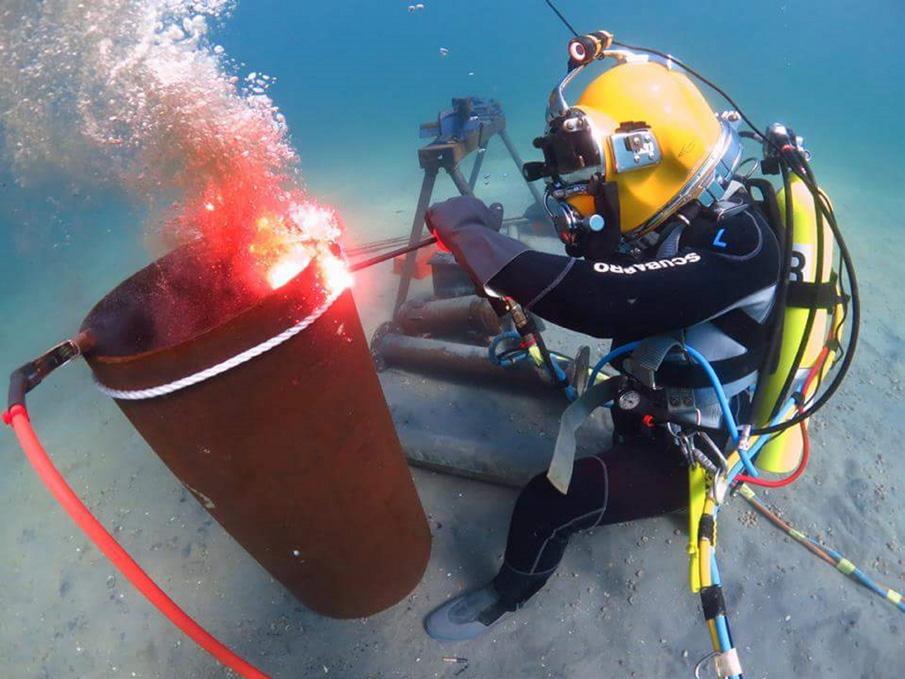
Commercial Divers Key to Pacific Towing’s Salvage Success > 146
AGRICULTURE
PNG, Sri Lanka’s Jaindi Put Up Coconut Processing Plant in 126
Farmers Call for Stronger Gov’t Push to Revitalise Agriculture > 128
Coffee Minister Opens State of the Art Factory in Lae > 130
Sepik Cocoa Quality Shines > 132
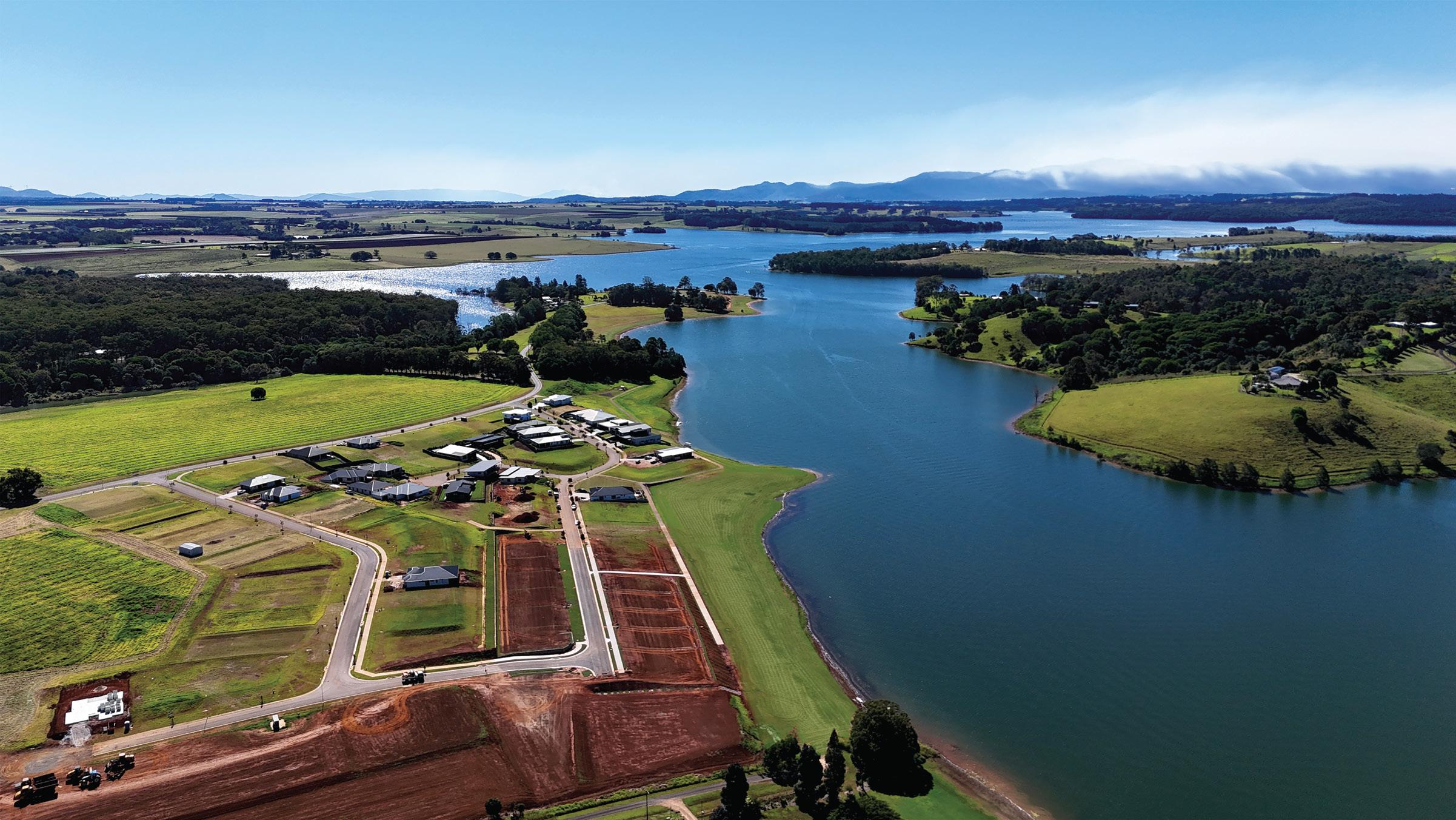
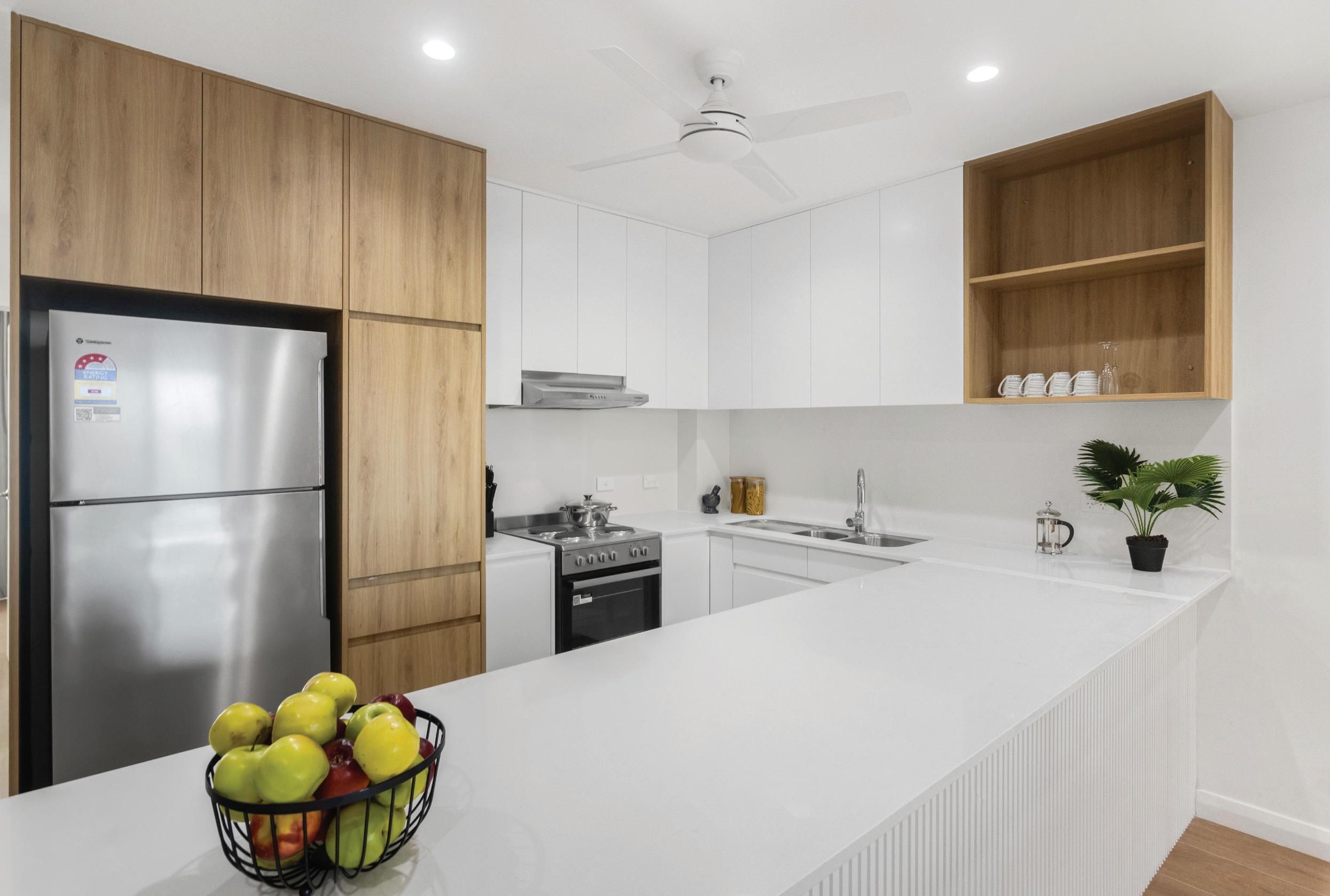
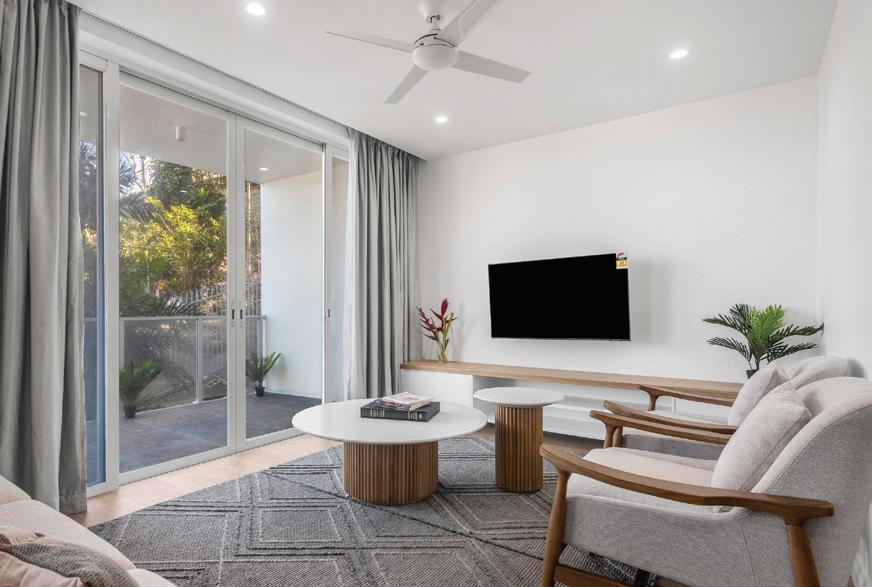
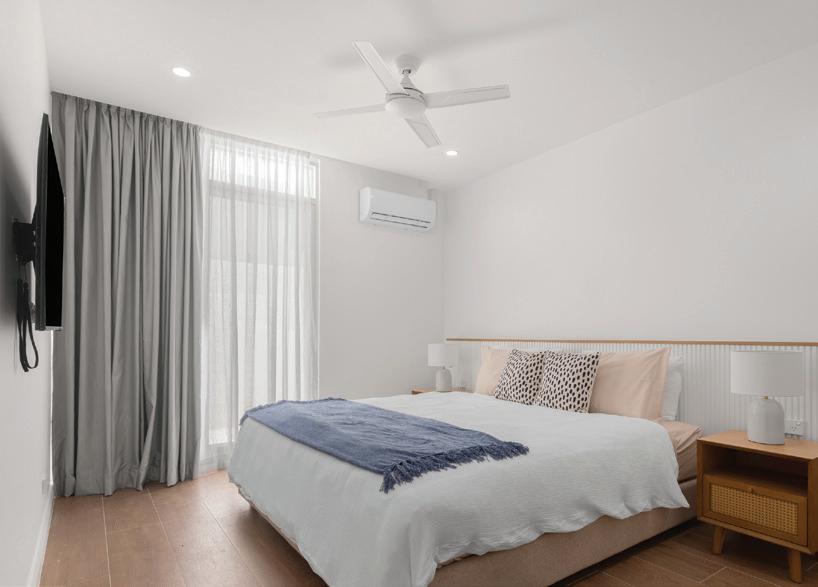
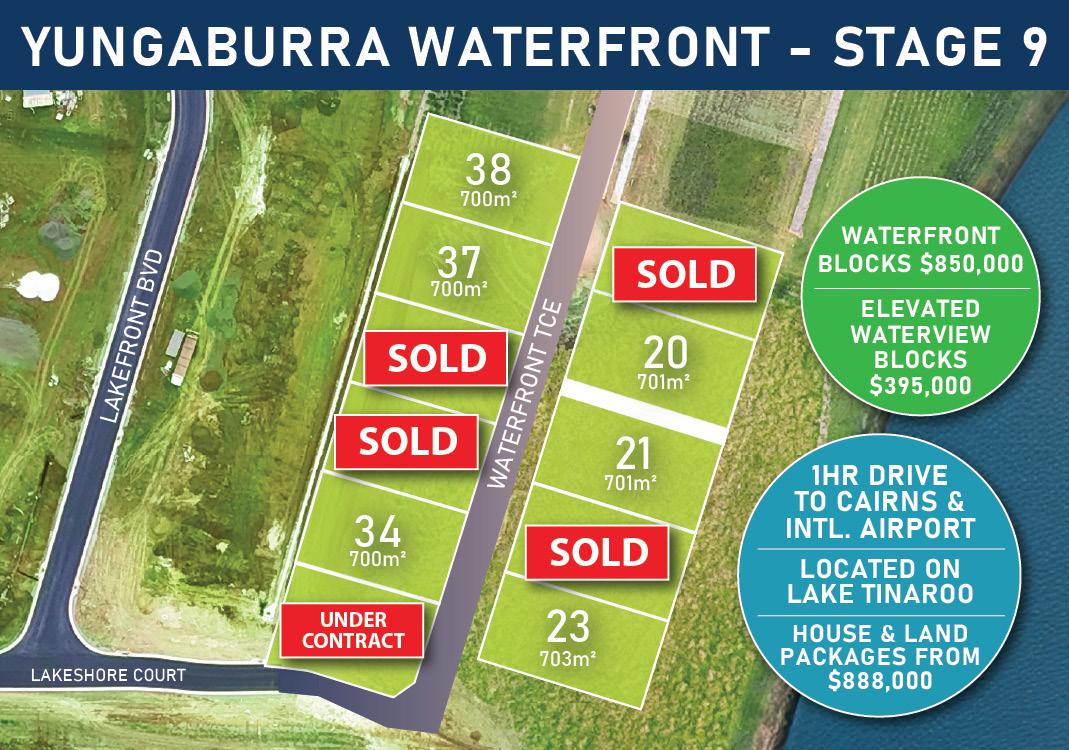
Yungaburra Waterfront – Stage 9 Now Selling From $395,000 > 148
PNG Forest Products: Building Our Future Since 1954 > 150
Port Moresby Electrical Completes Major Upgrade for Moresby Arts Theatre > 152
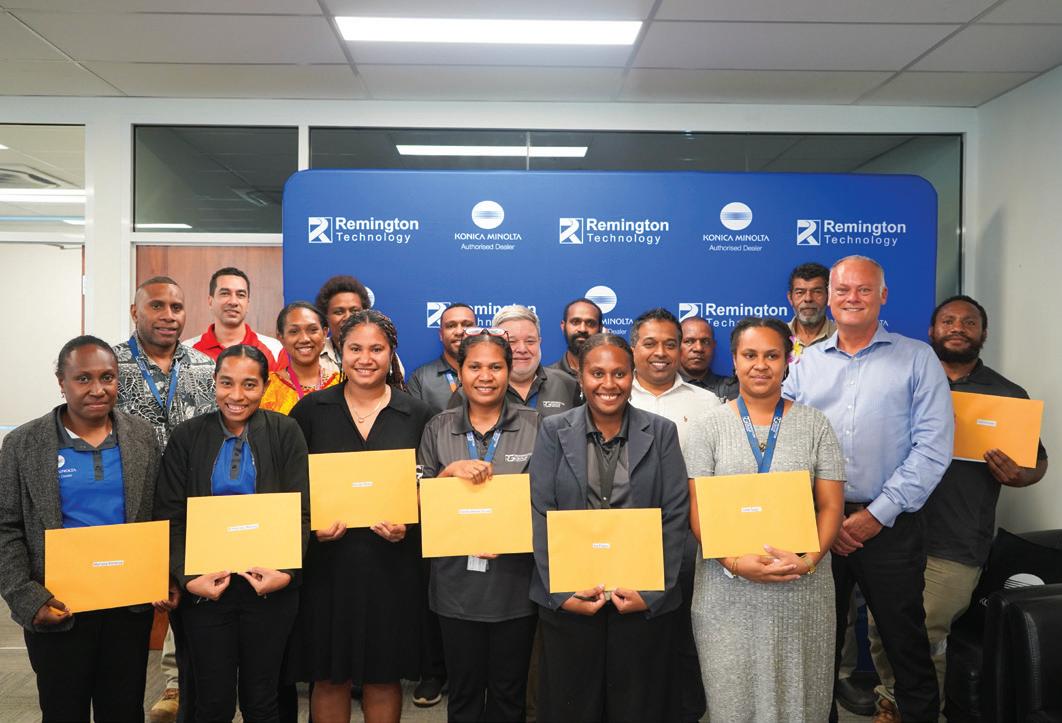
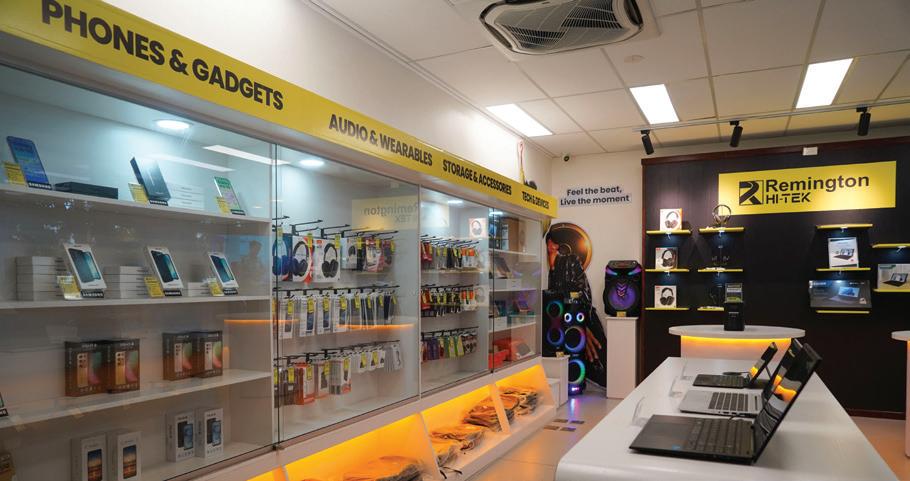
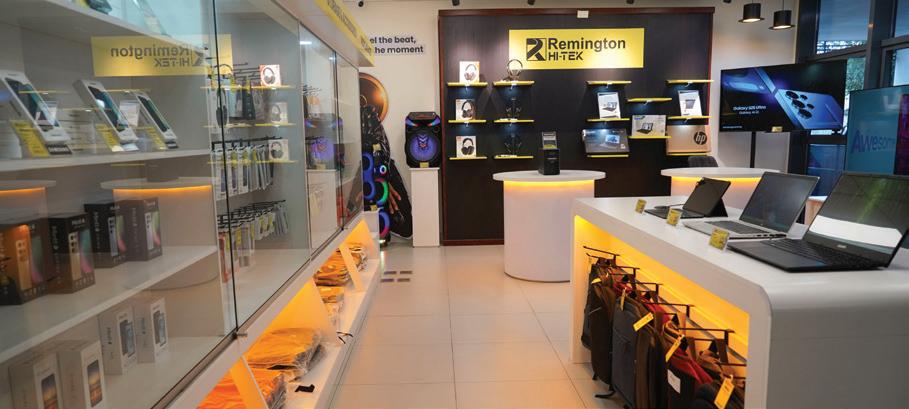
Remington Technology Gets ISO 9001 Certified > 154
Four Westpac PNG Employees Attend Westpac Group Youth Network Summit > 156
From High-Volume Meals to Eco-Friendly Practices: How Green Hills Redefines Catering in PNG > 158
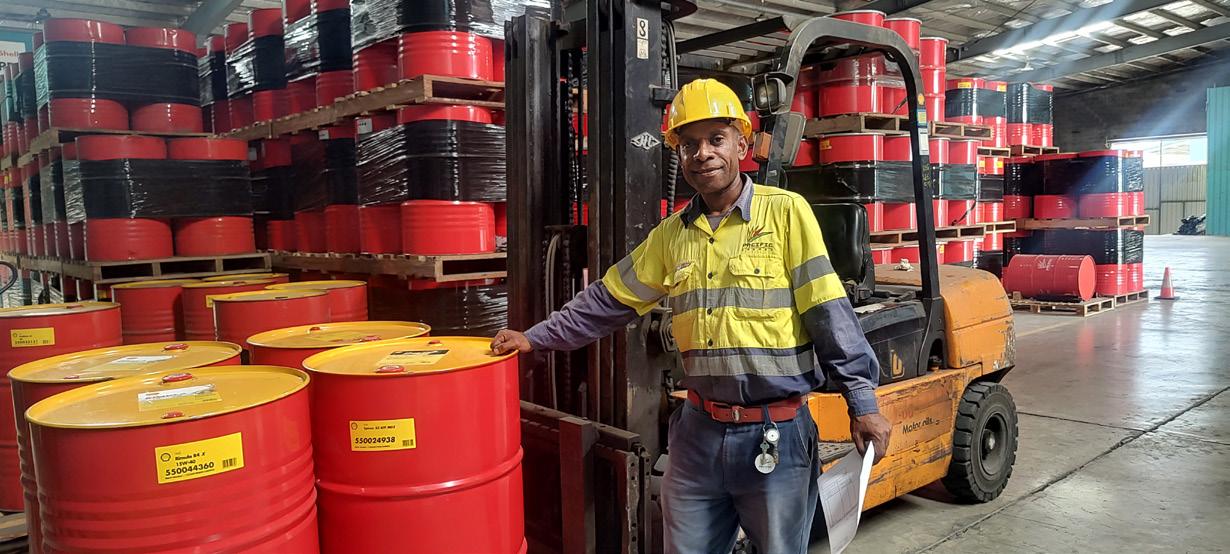
Fueling Growth: How One PNG Supplier is Expanding Lubricants, Aviation Fuels, and Its National Footprint > 159
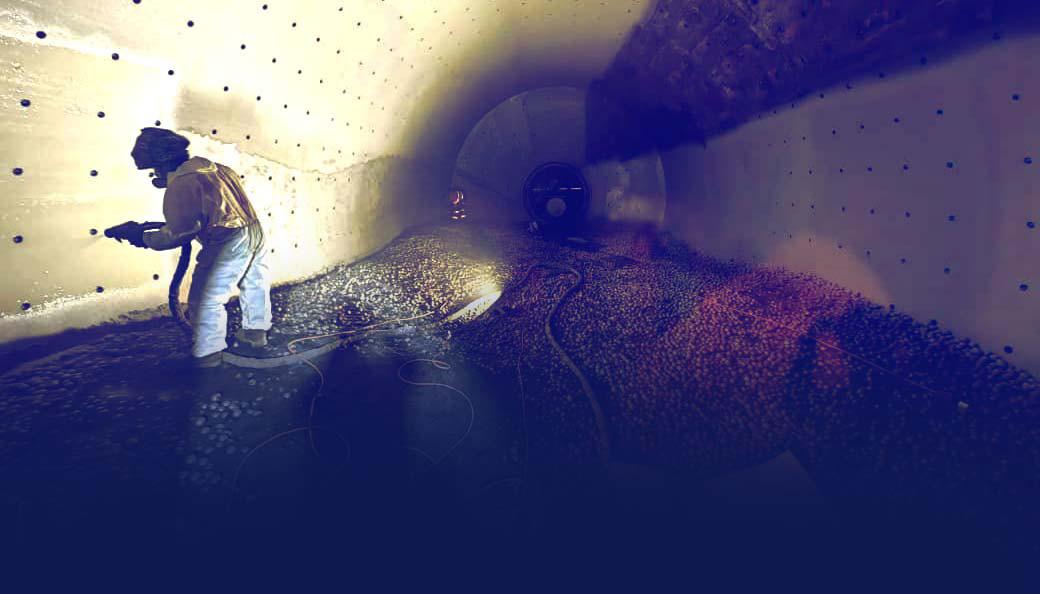
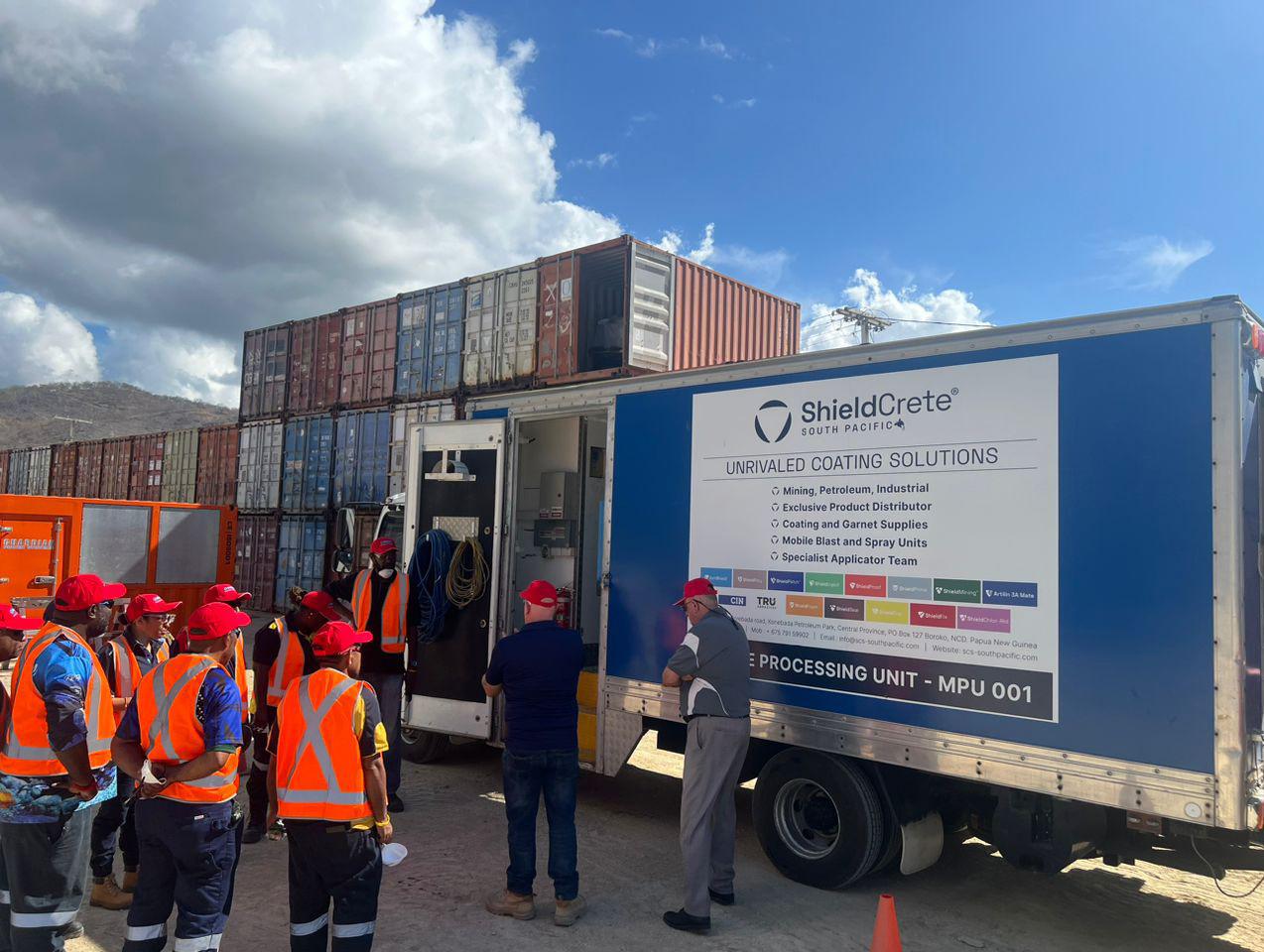
ShieldCrete South Pacific: Bringing Advanced Industrial Coatings to Papua New Guinea’s
From First Oil and Gas to LNG
INTRODUCTION
In my last article titled “Decades of Exploration to First Oil and Gas Production,” I told the story of the early days of petroleum exploration in the new nation of Papua New Guinea up to the days of first oil and gas production in the early 1990s. Gas was first produced and sold from the Hides gas field by BP and Oil Search in December 1991, and crude oil was first produced and sold from the Kutubu fields by Chevron and their joint venture partners in June 1992. The discovery of crude oil and natural gas at Iagifu and Hides respectively in 1986 and 1987 in significantly large accumulations worthy of commercial production sparked an exploration boom in subsequent years.
Papua New Guinea became a vogue place for oilmen to be. In the 20 years or so after these discoveries, Port Moresby was home to oil and gas companies large and small that needed to be in this opening frontier of exploration; such is the herd mentality of oilmen. Together they spent a staggering 3 billion kina, which amounted to some US$2 billion at the exchange
EDITOR’S NOTE: Michael McWalter, former Director, Petroleum Division and Adviser to the Government of Papua New Guinea, and erstwhile petroleum adviser to the governments of Ghana, Liberia, Cambodia, São Tomé, and South Sudan, recalls the foundations of petroleum resource development in Papua New Guinea, and continues his story of oil and gas exploration and production in independent Papua New Guinea.
Michael McWalter is a certified petroleum geologist and technical specialist in upstream petroleum industry regulation, administration and institutional development.
rates of those days, or about US$4.1 billion in today’s money. That effort involved the drilling of some 150 wells and the conduct of some 108 seismic surveys that eventually led to the discovery of moveable hydrocarbons in 61 wells and the location of 20 new petroleum accumulation fields, though many of these contained natural gas rather than oil. I now continue the story. However, it is an immense tale, so I shall just delve into it here and there to show where the petroleum industry has taken us at the time of our 50th anniversary of independence. And I apologise if at times my tale is anecdotal or lacking.
GOBE AND MORAN OIL FIELDS
Along the frontal trend of anticlines in the Papua New Guinea fold and thrust belt, wells drilled on the Gobe and Moran structures found additional pools of oil, in lesser quantities than the accumulations of the Kutubu fields, but still enough to warrant development. Almost every anticline was drilled along the frontal trend, even to the point of one supposed anticline turning out upon drilling to be a syncline rather than an anticline, and thus unable to trap any fluids in the subsurface.
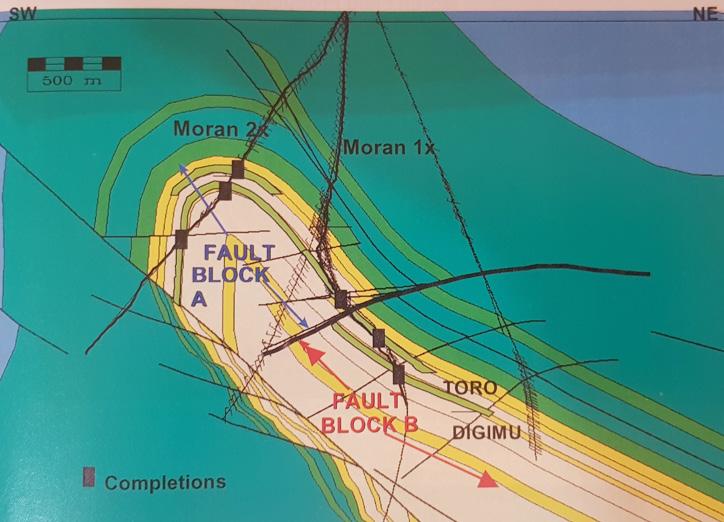
The Moran field north-west of Kutubu was estimated to hold about 113 million barrels of recoverable oil, whilst the Gobe field was estimated to contain about 83 million barrels of recoverable reserves. Both of these fields had structural complexities due to faults that compartmentalised the accumulation of oil within the reservoirs.
This isolation of separate pools of oil also led to some considerable rivalry between adjacent petroleum licensees, whosought to exert their prowess one over the other by naming the parts of the fields in their licences differently. Hence, we
Figure 1: A geological section through the Moran anticline showing Moran 1X and 2 wells penetrating the tightly folded and faulted structure
had supposed field names like South East Gobe, Gobe Main, Moran Central and North West Moran. With these fields awkwardly extending across licence boundaries, both coordinated development and unitised development arrangements had to be negotiated between the different licence joint venture groups. This was not always easy due to often intense corporate rivalries and differing economic and commercial positions.
The development of these fields ensued with different production arrangements. The Moran field depended on the use of the Kutubu Central Production Facility, to which flowlines from Moran to Kutubu were installed. Meantime, the Gobe field had a separate production facility installed (the Gobe Production Facility) and a short project-specific spur pipeline. Both of these fields used the Kutubu Export trunk oil pipeline and its integral offshore Kumul Marine Terminal for transmission and dispatch of crude oil for export. This entailed the negotiation of tariffs for the use of the various Kutubu facilities, which added further complexity to the commercial arrangements for field development. However, such arrangements did serve to optimise the use of existing field processing facilities, storage and transportation systems, andobviated the unnecessary and redundant duplication of petroleum infrastructure.
In the case of the use of the Kutubu Export Pipeline by the producers of the Moran Joint Venture and Gobe Joint Venture, some companies were also parties to the Kutubu Joint Venture, whilst others were not. Beguiling arguments for high tariffs were made by those members of the Kutubu Joint Venture that were not involved in these new field developments, while conversely equally beguiling arguments were made for low tariffs by those members of the Moran and Gobe Joint Ventures that were not involved in the Kutubu Joint Venture. Those involved in the new field developments as well as the Kutubu project were quite mute in their tariff arguments. The threat of impending ministerial regulation, as was then permitted by the Petroleum Act, rapidly crystallised the thinking of the various licence
ventures, and those commercially adamant arguments rapidly dissolved into a commercial and fair resolution of the tariffs!
OIL FIELD PRODUCTION
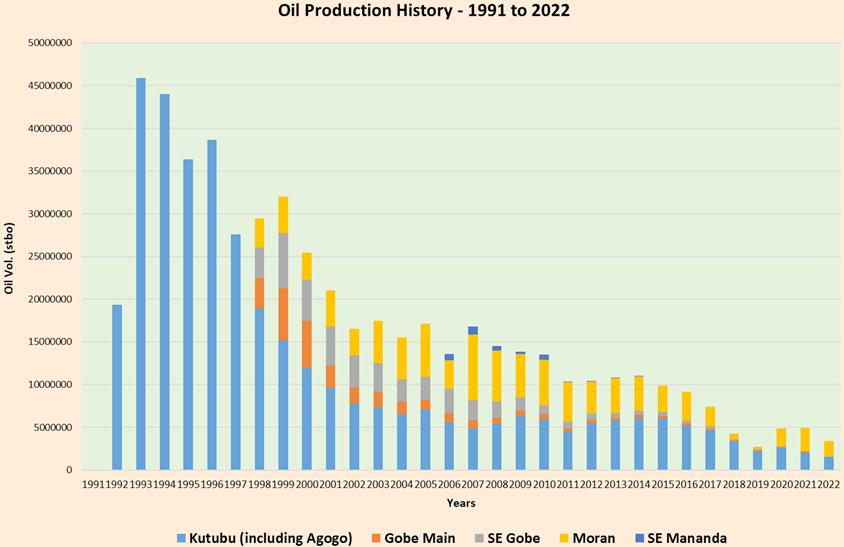
Both Gobe and Moran oil fields commenced production in 1998, some six years after the Kutubu field. Gobe reached peak production in 1999 at an annualised rate of 34,278 barrels of oil per day (bopd) and declined thereafter, whilst Moran only reached peak production in 2007 at an annualised rate of 21,503 bopd. The two fields contributed to supporting Papua New Guinea’s aggregate oil production as that at the Kutubu fields inexorably declined as reservoir energy was depleted.
The development of the Kutubu field has, in retrospect, been a
great success, with oil production continuing to this day, albeit much reduced in volume from its high production rate of its halcyon days when it almost reached 150,000 barrelsof oil per day, plus production of the field’s associated gas.
The Kutubu development was launched on the basis of recoverable oil reserves of just 164.8 million barrels, but as of 31 December 2019, it had produced 319.8 million barrels of oil. Based on an estimated original-oil-in-place volume of 556.2 million barrels, this suggests that the original projection of just 29% recovery has eventuated in as much as 57.5% recovery by the end of 2019. With production still taking place at about 3,000 barrels of oil per day, the Kutubu field is clearly reaching its last days. It does this in
Oil production history 1991 to 2022 after the Dept of Petroleum and Energy at 16th PNG Mining and Petroleum Investment Conference and Exhibition, Sydney, Australia, 2022
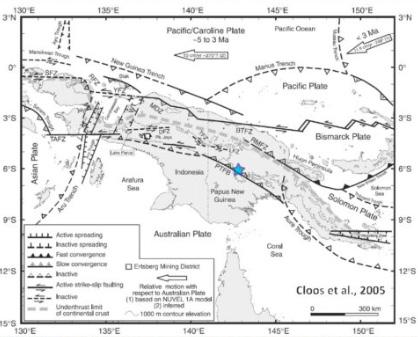
Figure 2: A tectonic map of New Guinea showing the Papuan Thrust and Fold Belt (PTFB) on the edge of the Australian tectonic plate. The blue star marks the location of the Hides gas field. After Cloos et al 2005.
Figure 3:
FEEL THE POWER - JUST DRIVE IT
Built tough for PNG’s rugged terrain, the Ford Stormtrak is ready for any challenge. Powered by a 2.0L Bi-Turbo diesel engine with 500Nm of torque, it delivers unstoppable performance. Featuring a 10-speed automatic transmission, 4x4 capability, and smart SYNC®4 infotainment, it’s the ultimate pickup for work and adventure.
considerable glory as it reaches 60% recovery of its original oil-in-place, quite an extraordinary recovery factor.
Admittedly, associated gas obtained from the field separators was originally re-injected into the field at the gas/ water interface as a semi-miscible flood so as to enhance oil recovery, but even by the standards of such secondary recovery techniques, this level of oil recovery has been quite remarkable. Of course, a large uncertainty always remains in the petroleum geology, insofar as we do not have precisely mapped subterranean field limits on account of it not being possible to obtain clear seismic imaging of the reservoirs. We therefore cannot rule out the possibility that oil is being extracted from an original pool that may have a geometric volume and areal extent somewhat different from that originally conjectured, which was based solely on well penetrations and geological mapping.
Whilst the Kutubu fields have been a great success, both Moran and Gobe fields have had a chequered developmenthistory with various problems of one kind or another. The development of the Gobe fields started with feuding over operatorship between the Chevron-led joint venture and the Barracuda-led venture. Barracuda, a subsidiary of Mount Isa Mines Ltd, had acquired the small independent company Command Petroleum, which had bravely drilled the South East Gobe-1 discovery well as operator of Petroleum Prospecting Licence No. 56. Chevron’s prowess won out and they retained operatorship over the Gobe field development and subsequent production.
Intractable problems with customary landowner identification of the people of the Gobe area have persisted through development and production. The land of the Gobe Mountains was gazed upon by both people from the north and the south and only sparsely used for hunting and gathering and ancestral rights. The land was hotly contested and ownership was very difficult to determine outright. The Government had to resort to using the Lands Title Commission to help determine landowner rights. With initial development delays, production never reached its planned output, only reaching 34,000 barrels of oil per day in September 1999. Additionally, reservoir
problems were encountered which involved sanding problems due to the reservoir sandstone being extremely fragile and friable.
Extensive extended well testing (EWT) at Moran enabled early oil production and the gathering of some very useful field production data. However, it depleted the reservoir pressure to such an extent that the associated gas started to effervesce from the oil and create a gas cap above the oil. This required re-
pressurisation of the Moran oil field using gas sourced from the adjacent Agogo field. The Moran oil field’s high compartmentalisation broke the field into many small fragments which were often difficult to resolve.
GAS DEVELOPMENT PREPARATIONS
In the absence of any further significant oil discoveries, the future was considered to lie in the development of the gas fields, where exploration
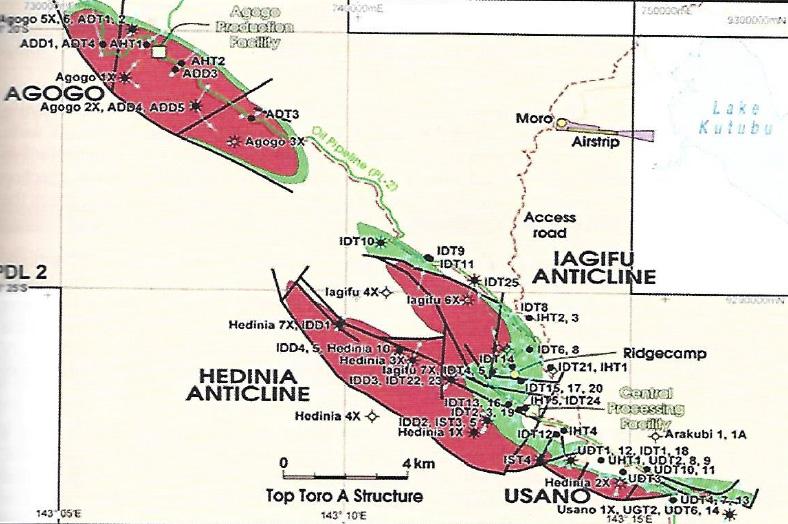
Figure 4: The Kutubu Oil Fields structural configuration. Red is gas overlying oil in green. The grid lines are five minutes apart by latitude and longitude. After the Scheme Booklet: Merger of Oil Search and Santos 2021.
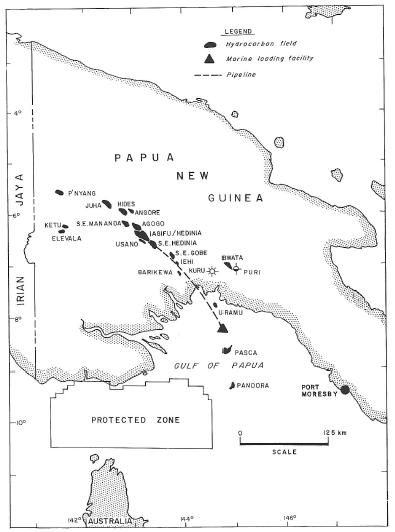
Figure 5: An index map of discovered oil and gas fields of Papua New Guinea as at 1993. Of these fields, only IagifuHedinia, Agogo, SE Gobe, SE Hedinia and Usano contained oil; the rest were gas fields, some with large amounts of gas.
< Page 14
drilling was demonstrating them to be significantly more abundant than oil by a factor of about ten times.
The Government realised that its petroleum endowment was not so full of oil, but was comprised substantially of naturalgas resources. It was recognised that it would be difficult to develop these in the absence of any domestic gas demand from households, commerce or industry, and all the more so because PNG is remote from the gas markets of other nations.
Accordingly, in 1992, the PNG Government, through the newly established Petroleum Branch of the Geological Survey, commissioned a special study on all the discovered oil and gas fields of PNG. This work was conducted by the US firm Scientific Software Intercom in collaboration with the Government’s Petroleum Division and sought to assess the extent of the petroleum resources and reserves to proper and systematic standards of reserve reporting as were then published by the Society of Petroleum Engineers. Based on aggregation of the recoverable reserves, an economic study was then undertaken applying the then prevailing PNG petroleum fiscal and commercial regime. The results were presented to the National Executive Council, showing that if
the gas fields discovered to date were aggregated, there could conceivably be a large-scale commercially viable gas development based on the export of liquefied natural gas (LNG) to energyhungry East Asian markets. However, more work would be needed to obtain better estimates of the recoverable gas reserves, the quantification of gas field development costs and the construction costs of a gas conditioning plant, gas pipelines, liquefaction facilities, and storage and export facilities.
The Government liked the idea of gas development and embarked on reviewing and examining suitable policies for such, and began fostering the notion of gas development. Economic and policy studies were conducted and extensive discussions between gas field licensees, owners and promoters ensued. After extensive consultations between Government agencies and licensees, in 1995, the Government tabled a Natural Gas Policy before the Papua New Guinea Parliament. The policy laid down the regulatory, commercial and fiscal terms that the Government was willing to consider for the encouragement of investment in gas development. Key features were the introduction of Petroleum Retention Licences (PRLs) to allow the companies to keep their discoveries beyond the period of tenure provided by a normal Petroleum Prospecting Licence. These would be allowed in consideration of
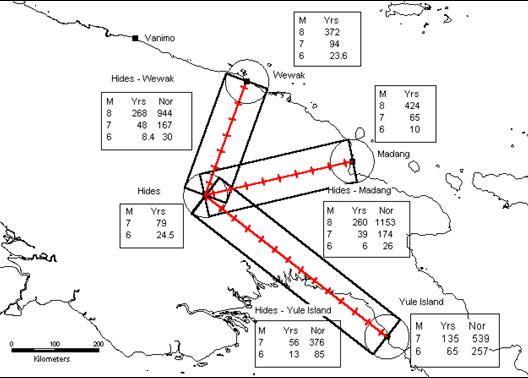
Figure 6: Summary of earthquake return periods for terminals and pipeline corridors for magnitude M 6, M7 and M 8 earthquakes. The Hides-Yule Island route was the least seismically active. After Dr. H Letz
an acceptable programme of gas field appraisal and delineation, the conduct of commercial studies and development promotion by the licensees. So long as a field was currently not commercially viable, the PRLs would allow retention by the licensees for up to 15 years, and no longer. This was a significant encouragement to the holders of petroleum prospecting licences, which normally only gave a combined tenure of eleven years in which to explore, make a discovery and launch a field development. The introduction of PRLs recognised the very long lead time for large-scale gas development.
The gas policy also introduced a single ring-fence for project development, including gas pipeline infrastructure, liquefaction plant and marine facilities. Based on considerable economic modelling and debate, the policy landed on a concept of 50/50 sharing of the net value between the developer and the Government. The income tax rate for gas operations was set at 30% of net profits, without any dividend or interest withholding taxes, and the State decided it would keep its right to take up to 22.5% equity in the entirety of any development, including the LNG plant and associated facilities. Royalty rates and development levies were left at 2% of the wellhead value. Fiscal stability was to be offered, but only upon payment of a 2% income tax premium and the execution of a
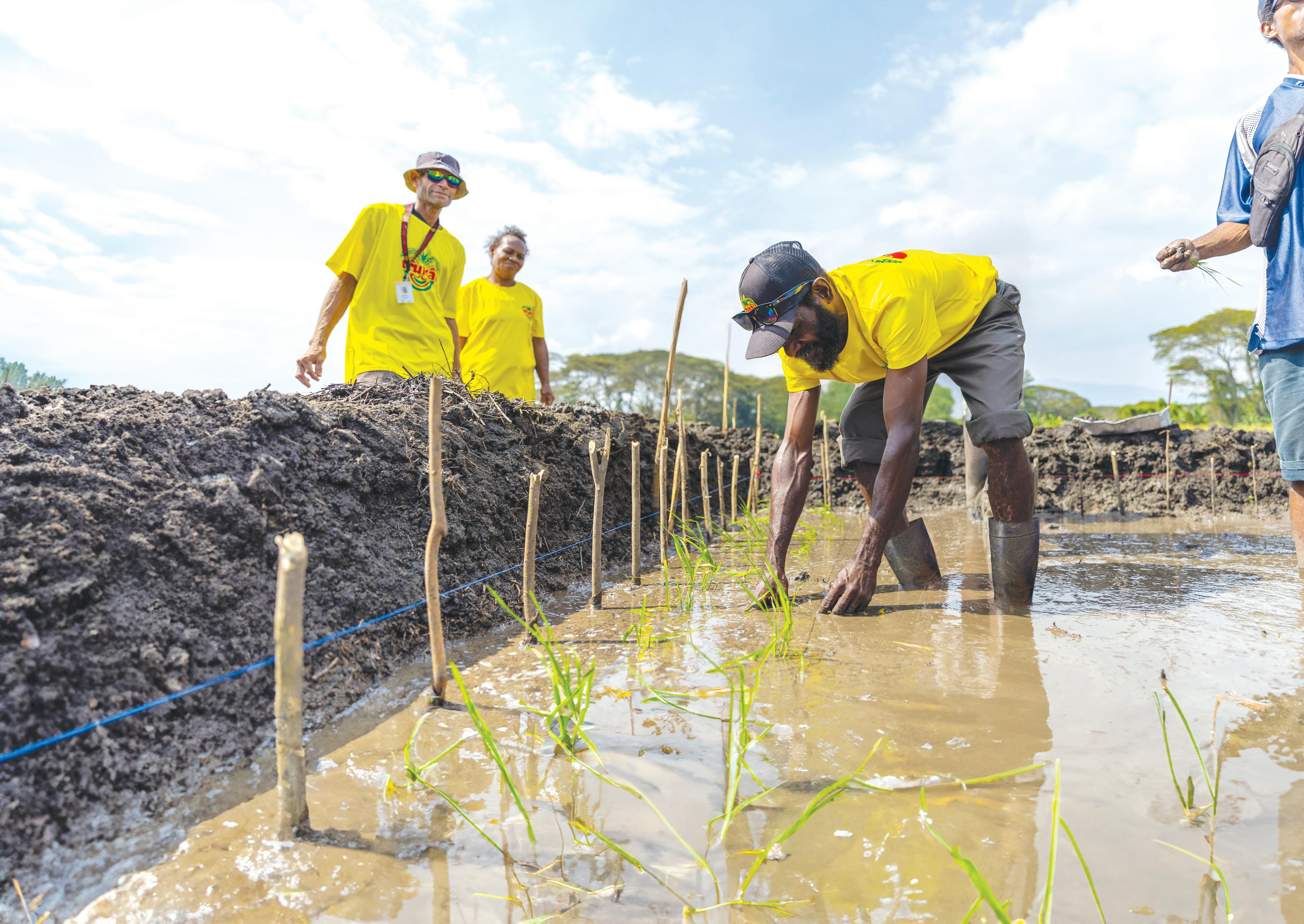
TRUKAI SMART FARMER PROGRAM EXPANDS INTO NEW GUINEA ISLANDS REGION
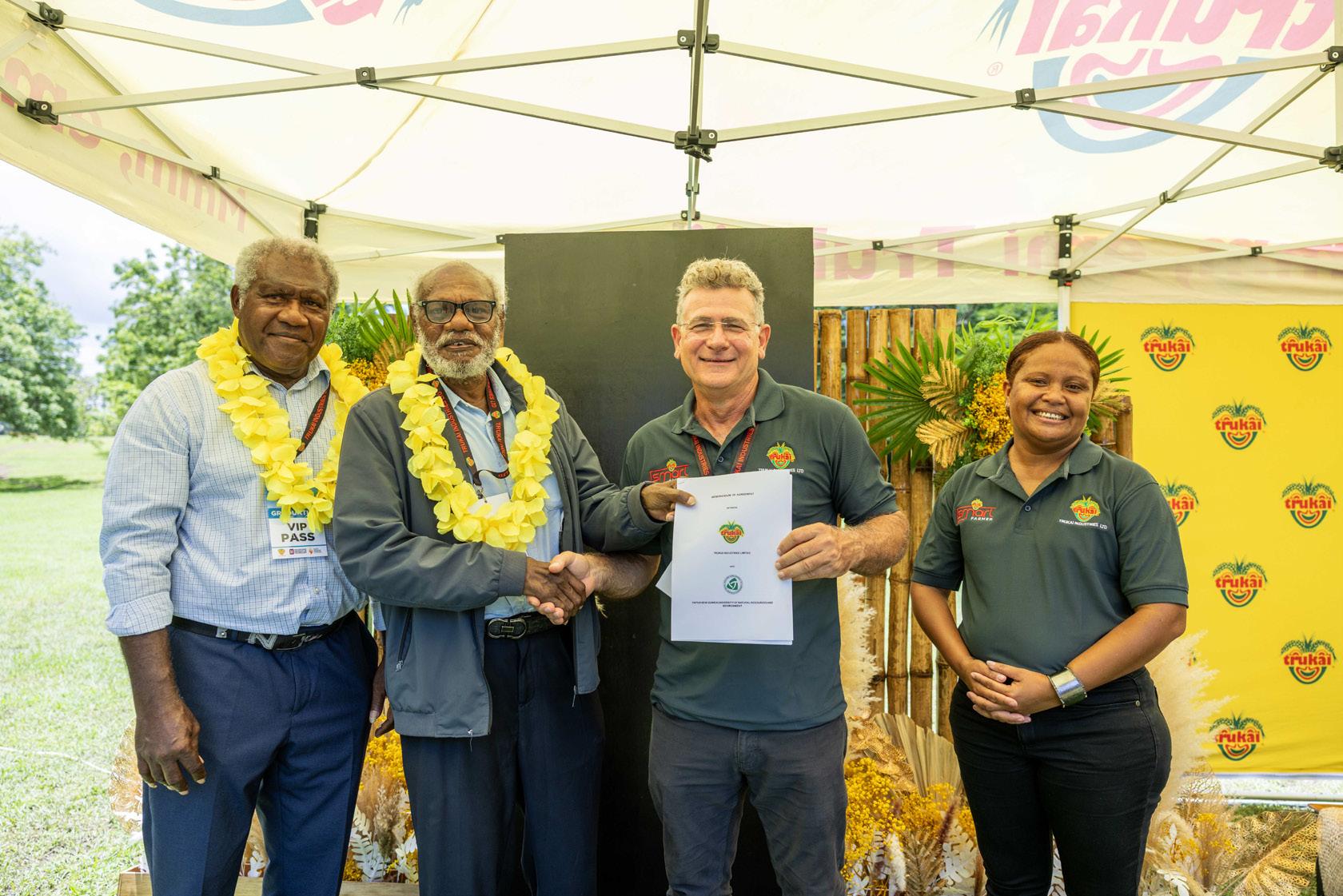
Trukai Industries Limited is delighted to announce the expansion of its flagship Smart Farmer Program through a new partnership with the Papua New Guinea University of Natural Resources and Environment (PNGUNRE).
This collaboration complements existing partnerships with PNG University of Technology (Unitech) in the Momase region and Pacific Adventist University (PAU) in the Southern region, extending the program’s reach to the New Guinea Islands (NGI).
The 20-week program provides training and capacity-building initiatives to local farmers, leveraging the expertise of partner universities to improve rice farming techniques, productivity and livelihoods.
By equipping farmers with knowledge and practical skills, the Trukai Smart Farmer Program aims to enhance yields, promote sustainable farming practices through Irrigated Rice Farming.
Trukai Industries General Manager Andrew Grace, Agriculture Manager Aina Davis, with Professor Issac Pue UNRE Vice Chancellor and Mr Hosea Turbarat Manager Kairak Centre for Sustainable Rural Development.
< Page 16
Fiscal Stability Agreement with the Government. This was effectively an elegant user-pays principle. Standard depreciation allowances on capital expenditure and exploration would remain at 10% per annum and 25% respectively under the existing fiscal regime. These still represented a quite harsh depreciation schedule by petroleum sector standards because it is not possible to fully recoup one’s field development costs until ten years after expenditure, unlike more accelerated cost recoveries allowed in Production Sharing Contracts.
With the foundations for commercial gas development defined by the new gas regulatory and fiscal regime, Exxon and BP pursued their LNG development plans based on the large Hides gas field with the idea of taking the gas to the north coast of Papua New Guinea. There in Madang, they planned to build a coastally located deep-water liquefaction plant sited next to deep-water fjords which would give direct access for LNG carriers to moor alongside these coastal facilities. However, these plans faltered due to the Asian financial crisis in 1997 and the consequent sudden reduction in East Asian LNG demand. The tragic and terrible tsunami that occurred in 1998 at Aitape on the north coast accentuated the seismic risk for an LNG plant on the north coast of Papua New Guinea. The tsunami demonstrated that, whilst placing any LNG facilities nearer to markets, any north-coast-located LNG facility would have to be built to much more exacting standards of construction and operation to cater for the additional seismic risk.
The Petroleum Division, mindful of the seismic hazards of the northern part of PNG, had earlier commissioned a PNG Seismic Hazard Study from Dr Horst Letz, formerly resident seismologist at the Port Moresby Geophysical Observatory (and later to be the chief scientist who set up the Earthquake and Tsunami Warning Centre in Jakarta, Indonesia). This report was published around the time of the tsunami. It clearly defined the risk and indicated that a southern coast location for an LNG plant and facilities would be preferable, even if it meant a slightly longer shipping route for LNG carriers to transport LNG to likely markets in East Asia.
Additionally, gathering gas from
gas fields aligned with the prevailing geological structure of the Papuan Basin running north-west to south-east would have a better chance of collecting gas from multiple fields to be found in the same orientation rather than orthogonally across the dividing range of mountains and across the swamps of the Sepik River basin, all of which were void of gas discoveries. Later, BP withdrew from Papua New Guinea and took their ideas about larger-scale gas development by way of an LNG project to West Papua in Indonesia, where they successfully launched the Tangguh LNG Project in a similar environment, peopled again by Melanesians.
When the amendments to the Petroleum Act were being prepared for gas development pursuant to the approved Gas Policy, the results of policy studies on landowner benefits (both royalty and equity sharing), strategic access to pipelines and petroleum processing facilities, and elementary domestic gas business provisions became available. An effort was made to incorporate them into the amendments to the Act. The Government was also intent on providing statutorily defined benefits to communities hosting any future oil and gas development, together with proper processes of consultation and liaison with communities, rather than having negotiated and often capricious benefit-sharing arrangements. For such benefits, the Government devised the idea of a separate Development Agreement between the community parties, subnational Government parties and the State. The allocation of defined and additional benefits was to be agreed in a formally convened development forum. Proper professional research was also to be made as to land matters through the conduct of formal social mapping and landowner identification studies conducted by and at the expense of the petroleum licensees themselves, but with such studies being furnished to the Government for its use.
Significant and specific political lobbying arose from the Southern Highlands Province, home to many of the known major oil and gas fields. The Province, quite bizarrely, wanted a separate Gas Act just for gas operations. For a while, it seemed that the National Government was stymied in its plans for gas development due to these concerns, but extensive consultations took place. In the resulting compromise,
the Government agreed at the political level to introduce some of the reforms suggested by the Province, but only if the Act would remain intact, though it was now agreed that the new Act would be rebranded as the Oil and Gas Act, whilst still generically referring to petroleum for the most part. Thus, the Oil and Gas Act, No. 49 of 1998, was born. It represented a major restatement and overhaul of the former Petroleum Act and has paved the way for improved and formalised participation by communities and their sharing in statutorily defined benefits arising from oil and gas production. It is only a shame that timely and efficient benefit processing and reconciliation with the correct beneficiaries have been difficult at times to achieve. Disputation of land ownership has not helped in this matter.
GAS TO AUSTRALIA SCHEMES
Meantime, Chevron, realising that they were handling increasing volumes of associated gas in their operation of the Kutubu oil fields (as much as 400 million standard cubic feet of gas per day (MMSCFD)), bought out the commercial notions that the International Petroleum Corporation (IPC) (the early Lundin Oil Company) had about developing their offshore Pandora gas field. Pandora had been discovered by IPC in 1988 in the middle of the Gulf of Papua, and subsequently the company had plans of producing and piping gas to Townsville in Queensland, Australia, to supply a 200-megawatt power plant. Chevron had gas aplenty and was taking great pains to re-inject as much of it as possible into the reservoirs, but if that gas could be sold into a market, they considered that perhaps that could enhance their sales revenue and obviate the need to inject quite so much gas.
Figure 7: An early copy of the Oil and Gas Act No.49 of 1998 which was certified on 9th February 1999 and commenced on 18th February 1999. It replaced the Petroleum Act, No. 46 of 1977.
There then ensued a period when all manner of gas development notions were focused on transmitting gas to Australia from the associated gas of the producing oil fields plus gas from development of the as-yet-undeveloped gas fields, such as Hides, Angore, Juha and P’nyang. Over the course of the next several years, various schemes to send gas southwards to Australia waxed and waned and struggled to gain traction.
In the early 2000s, exploration reached an all-time low as corporate enthusiasm waned. There was little point in exploring for petroleum with the high likelihood of finding gas rather than oil, if even the substantial discovered gas fields could not be developed and produced.
In 2003, Chevron departed the Kutubu Joint Venture as its material economic interest in the Kutubu Project diminished below its corporate threshold. It sold its Papua New Guinea assets and interests to Oil Search.
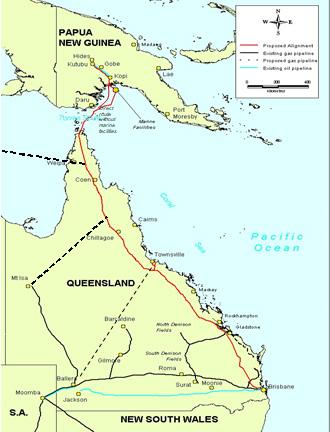
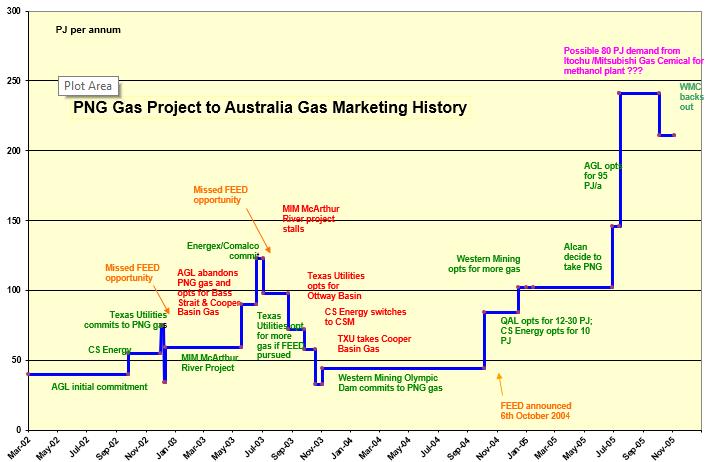
The PNG Gas Project, also known as the PNG Gas to Queensland Project, or Gas to Australia Project, ended up at one time with over 4,300 kilometres of trunk gas pipelines and laterals hanging off the Papua New Guinea gas fields with nearly 250 PJ per annum (equivalent to about 600 million standard cubic feet of gas per day at 1,056 British Thermal Units per cubic foot) of potential gas sales. Alas, fundamental flaws in the concept led to most of those potential customers being quite quixotic.
Most of that infrastructure was in the north-eastern quadrant of Australia and its installation was to be expensed against the supply of gas to a wide and quixotic range of Australian gas customers. With low gas prices, high steel prices and the emergence of coal seam methane development notions in Australia, it was eventually realised that PNG might end up giving its gas away for nothing, and that the only value for Papua New Guinea might remain in the natural gas condensates extracted from the gas in Papua New Guinea. The PNG Gas Project for the supply of gas to Australia failed. Additionally, such a large-scale transnational activity needed considerable support from the Governments of both Australia and Papua New Guinea to protect sovereign interests.
Fundamentally, Australia’s policy of gas-
versus-gas competition and gas system regulation was at odds with such a trunk gas delivery pipeline, which would need special treatment within the Australian pipeline regime and due respect for its transnational delivery of gas. Eventually, in 2008, an abrupt turn was made to change all the development notions towards supplying gas to an LNG plant to be located on the Papuan coast beside the Gulf of Papua. An effort was immediately made to market the gas as LNG to East Asian markets. Australia had specifically encouraged
gas-versus-gas competition, but in doing so it spoiled the market price for gas imports from countries such as PNG, and encouraged the furtherance of coal seam methane (CSM) schemes to extract gas from extensive coal deposits in Queensland. Indeed, this later gave birth to Australian LNG export projects supplied by gas from CSM sources, the supply of which has not turned out so plentiful, necessitating the purchase of make-up gas from domestic markets and thus creating a domestic gas supply shortage along Australia’s east coast.
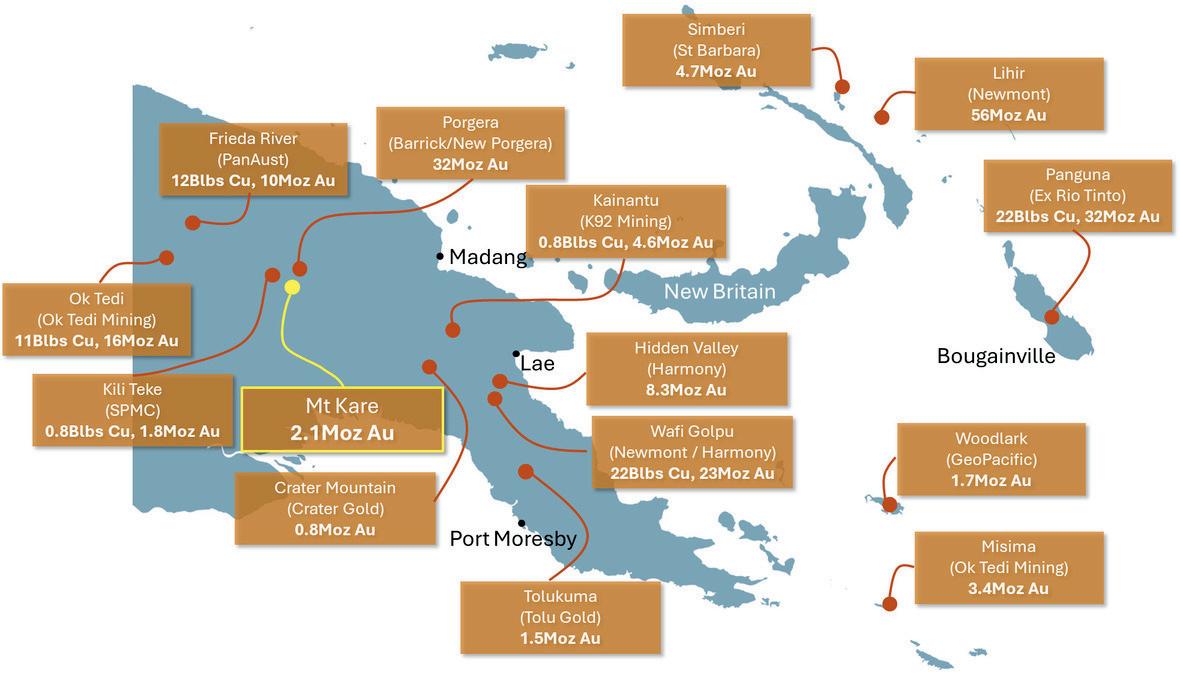
Mt Kare: Exploration Licence Application
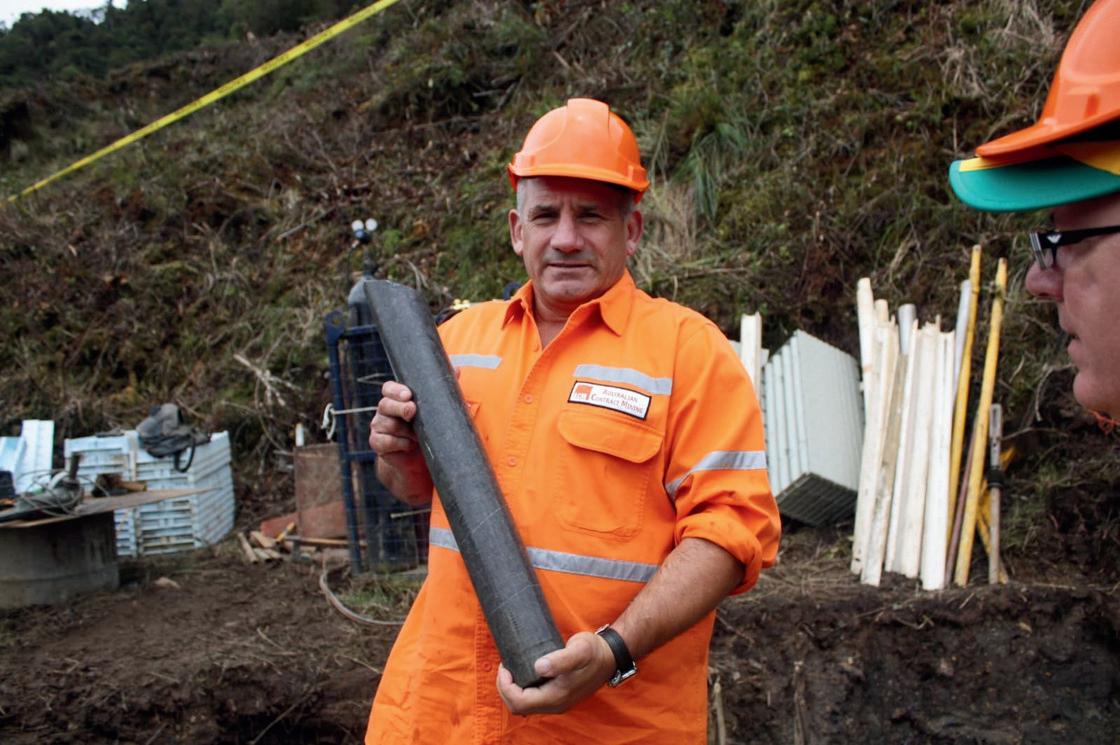
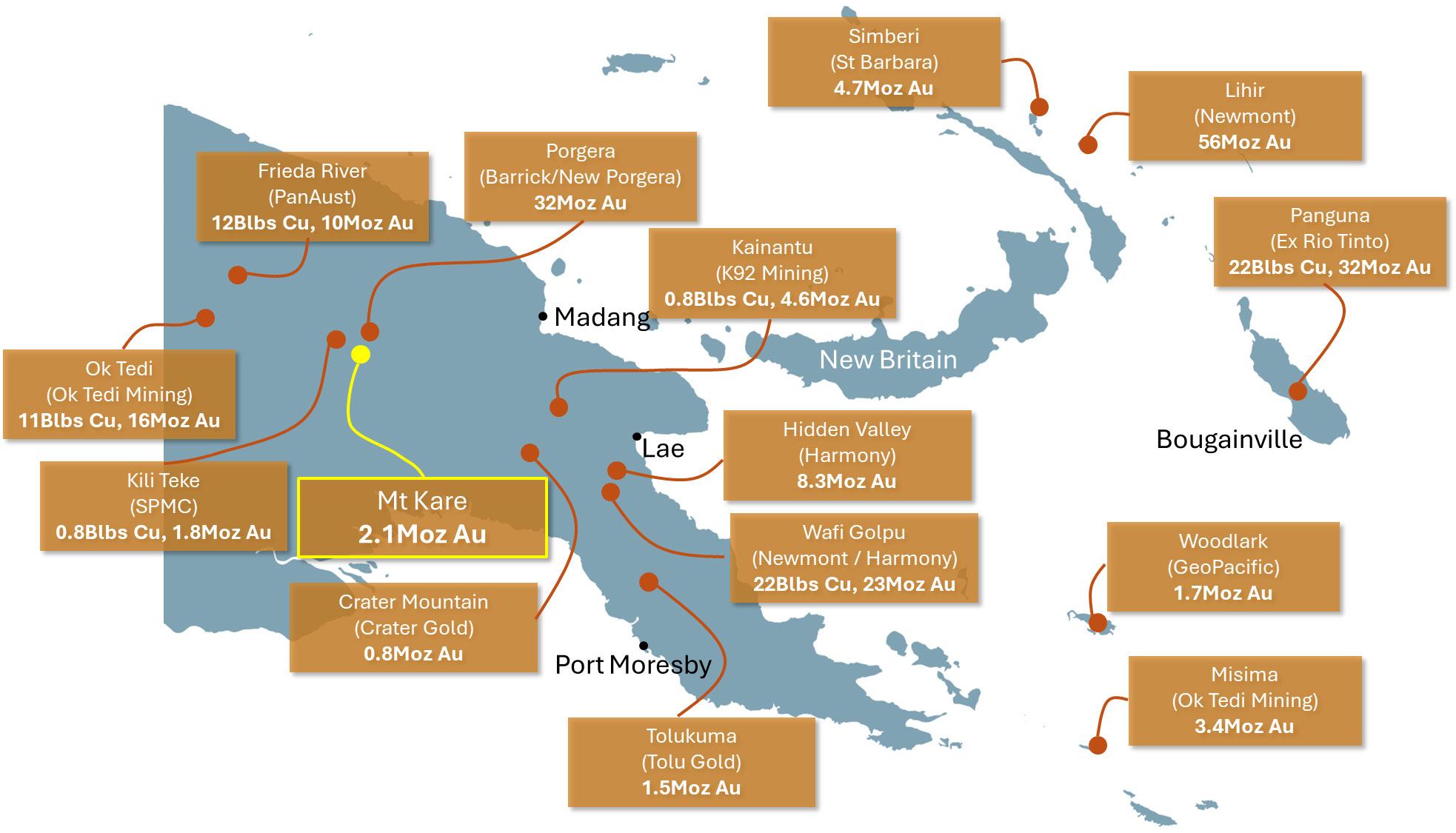
Augustus has acquired ACM Contract Mining (PNG) Ltd, (ACM PNG) which holds the Exploration License Application ELA 2446 that covers the Mt Kare Project.
Mt Kare is located 15km from, and is geologically analogous to, Barrick (Niugini) Limited’s Porgera gold mine (33Moz Au).
Mt Kare is an alkali epithermal gold deposit, a rare class of gold deposit, that includes Porgera, Lihir (PNG) (47Moz Au), CadiaRidgeway (NSW) (>50Moz Au) & Cripple Creek (Colorado) (26Moz Au)
Augustus is actively pursuing pathways to secure the licence which may include: objecting to other license applications, and/or negotiating with other applicants
More than A$100m historically invested in exploration and mining studies including 454 diamond drill holes for 73,639m.
Why Mt Kare? Why PNG? Why Now?
Mt Kare is one of the largest undeveloped gold assets in Australasia
Chairman, Brian Rodan, has long standing relationships with local stakeholders and governmental authorities, developed over 15 years operating in Papua New Guinea.
Mineral Resources Authority of PNG Expected Minimum Criteria of the Applications:
tangible work programs necessary to advance the project into feasibility studies, backed by sound technical team with proven mine development record, and healthy financial standing.
Augustus Minerals strategy will focus on:
Rapid development of an underground adit to better drill, understand and develop bonanza grade zones.
Aggressive drilling program and advanced studies on structural geology and alteration geochemistry to understand and effectively target high-grade zones.
Rapidly advance mineral resource studies, feasibility studies and development pathways for both high-grade underground and open pit scenarios.
Why Mt Kare? Why PNG? Why Now?
Improved security situation.
Improved landowner relationships. Record gold prices.
Ref: Augustus Minerals Limited (ASX:AUG) ASX Announcement “Music Well Gold Project Exploration Update” on 18.11.24
Australia’s commitment to Papua New Guinea as a long-term strategic partner. Exec Chair, Brian Rodan, has strong working relationships with PNG Government and land holders in the Mt Kare developed over 15 years.
Mt Kare licensing process has been held up for over 10 years but is now advancing.
Warden is advancing the in-time applications former first in time applicant being removed AUG is second-in-line applicant with a fully valid application.
In abandoning gas supply to Australia by pipeline, Papua New Guinea now needed to consider capturing the premium values that gas exports into energy-deficient East Asian economies were able to achieve.
The dependence on external infrastructure and specific gas demands in Australia was not seen as either politically attractive or sustainable, nor was it commercially attractive due to low gas prices brought about by Australia’s gas competition policies. It was most fortunate that Papua New Guinea backed away from such schemes for the dispatch of gas to Australia. Thus was born the PNG LNG project.
PNG LNG had many factors in its favour as a distinct source for LNG for supply to East Asian markets. PNG is a non-aligned Christian nation; it is not an Islamic nation. PNG was desirous of investment and keen for development based on commercial fiscal terms. PNG, as a nation, has open-ocean access and does not rely on any strategic straits. It has a Westminster-style Government and observes the principles of law and contract. PNG is favourably positioned to supply the Australasian region, but can reach out to serve Asian, Pacific and American markets. With diminishing oil production and the absence of new oil finds, PNG’s explorers needed to capitalise on prior exploration investments that failed to find oil. Gas in the new 21st century was no longer a hindrance and could be profitably developed, even extending the life of the oil fields.
In May 2014, PNG became an LNG exporter, and is now producing consistently more than 8 million tonnes per annum (mta) LNG to customers in China, Japan and Taiwan – well above the nameplate capacity of the original LNG plant design. It got there because of fine operatorship on the part of ExxonMobil of a coherent joint venture. ExxonMobil was able to market the gas to top-quality customers and obtain superior project financing.
The only major disappointment has been the collapse in crude oil prices below projections on several occasions, and hence the LNG prices due to the indexing with crude oil. For the first year, some elevated prices were obtained, but clearly the fall of crude oil below US$30 per barrel in the early days of LNG production hurt the project economics and outcomes to all stakeholders, as it again did during COVID-19 when LNG prices plummeted below US$3 per million British Thermal Units.
The PNG LNG Project produces gas from a variety of gas fields including the Hides and Angore gas fields, and the Kutubu, Moran, Agogo and Gobe oil fields. The more remote Juha gas field is set to produce gas later. Altogether, these fields have about 9 trillion standard cubic feet (TCF) of gas to contribute for liquefaction.
due to a lack of seismic imaging and lateral resolution of field boundaries. The geology is already complicated on account of the extensively folded and faulted nature of the strata, so we might anticipate some surprises, both positive and negative.
Figure 10: The PNG LNG Logo was designed around Papua New Guinea’s distinctive cultural icons, a traditional mask, in Papua New Guinea’s national colours. The two swishes represent has emerging from the ground. The nicks in the right swish suggest the plumage of Papua New Guinea stunning Birds of Paradise.
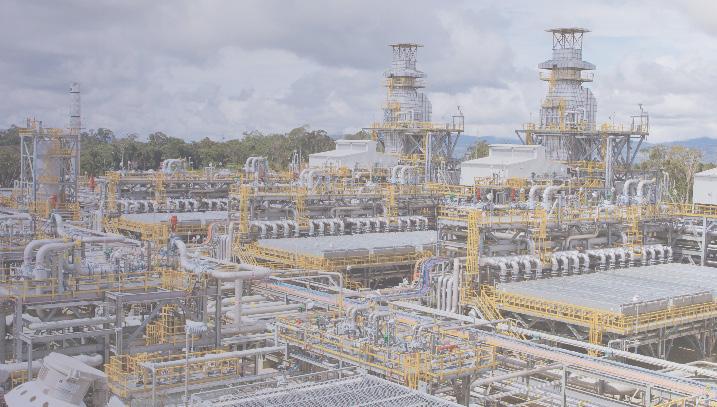
Figure 11: The Hides Gas Conditioning Plant which conditions gas from Hides and Angore gas fields before transmission down the trunk gas pipeline to Caution Bay
The PNG LNG project was projected to export LNG at a heating value of 1,135 BTU/SCF gas and the liquids were forecast to sell at US$60/barrel. Anticipated LNG prices were: US$8.07 per MSCF, equivalent to US$10.20 per MMBTU, or US$9.69/GJ. The original plant design was upgraded early on from 6.3 million tonnes LNG per annum to 6.9 million tonnes LNG per annum for production over a 30-year period. Gross income was estimated to be about US$74.3 billion. Even at US$50/barrel oil, the project was still forecast to yield US$61.9 billion in LNG sales. The gas is rich in natural gas liquids (NGLs), so at just 20 barrels of NGLs per million cubic feet of gas, some 210 million barrels of NGLs were forecast to yield an additional US$12 billion of sales revenue.
Access to lands for the PNG LNG Project development came with resounding landowner consent after enormous development forums were held at project level in Kokopo in New Britain and at licence level in each licence area. During the forums, the sharing of the benefit streams of the 2% royalty, 2% free equity from the State, 2% development levy, and other project grants including business development and infrastructure grants were discussed. Oddly, whilst some grants were paid quite promptly, distribution of the royalties and equity benefits has been the subject of considerable delay, mainly due to some remaining uncertainties about landownership, often brought about by disputes over landownership. This is exceedingly difficult to accomplish where traditional customary title persists, often with multiple and overlapping ownership and usufructuary rights. But notwithstanding this situation, the landowners have been extremely patient, and in some cases, and for many years into LNG production and export, they have remained quite stoical. < Page 20
Other discovered gas fields will likely be developed later and, despite being cast as different projects, will likely seek to optimise gas infrastructure; these are the P’nyang gas field and the Muruk gas field which can add about 5.25 TCF of additional gas for liquefaction. Quite how much gas will eventually be recovered from each field still has considerable uncertainty, just as stated before for oil recovery. This is due to the considerable remaining uncertainty of definition of the subsurface reservoir volume
Aside from the statutorily defined equity benefit of 2% of the project, the Government agreed to provide additional equity to the communities in the amount of 4.2%. This was promised to them in the main PNG LNG Project development forum in Kokopo. This was to have been a commercial deal, but successively its commercial cost to the beneficiaries has been whittled down to nothing. Provided that this additional equity benefit can be managed properly and in accordance with the Oil and Gas Act, it will be a most valuable asset once the project finance has been paid down by the State.
ELK/ANTELOPE GAS FIELD
A bold and entrepreneurial company called InterOil, championed by a charismatic leader Phil Mulacek, had two Petroleum Prospecting Licences (PPLs) in the Eastern Papua Fold Belt: PPLs 237 and 238. They were granted in 2003 near to small historic gas discoveries of the 1950s, such as Kuru, Puri and Bwata, each in Miocene limestones.
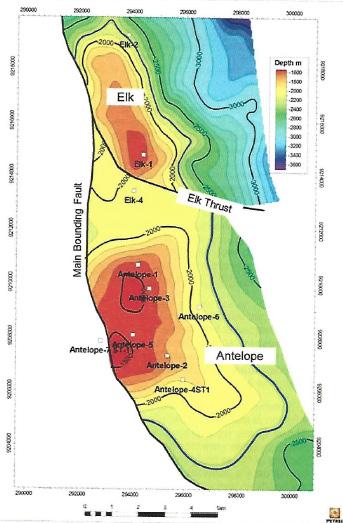
In 2006, the Elk-1 well was drilled and declared to be a gas discovery in fractured Puri Limestone after testing at 21.7 MMSCFD. Two more wells, Elk-2 and Elk-4, were drilled to appraise the structure. Elk-2 penetrated the Puri Limestone below the gas-water contact. The Elk-4 well penetrated the Puri Limestone again, but at depth it intersected a gas-bearing reefal facies of shelfal limestone which was tested as a gas discovery. A thrust fault separates the Elk structure from a major feature to the south that was named Antelope. Seismic and regional analogy studies indicated that a significant reefal buildup occurs over the Antelope structure. Subsequently, wells Antelope-1 and -2 appraised the lateral extent of the field to the south with good reservoir quality to an approximate extent sufficient to realise that a substantial gas field had been discovered. InterOil applied for a Petroleum Retention Licence, which was designated PRL 15 on granting by the Minister on 10 November 2010.
After many bold attempts to devise a scheme of development consisting of mini-LNG trains, including floating offshore LNG trains and all manner of deals, InterOil decided to farm down its equity and introduce
an experienced project champion from amongst world-class players. After much wrangling and corporate intrigue, including arbitration hearings between new equity participants, InterOil finally left the Elk-Antelope gas field and its future development to a joint venture comprised of Total (as operator) 61.3%, Oil Search 22.835%,
ExxonMobil 36.45% and other parties 0.5%. Altogether, some 10 wells have penetrated the Elk-Antelope structure and the area is covered by several generations of 2-D seismic data. Subsequently, Oil Search merged with Santos and, once the project licences are granted, the Government will most likely exercise its lawful option to
Figure 12: The PNG LNG Project LNG Plant Terminal in Caution Bay where an average of nine cargoes of LNG is loaded each month. It sits at the end of a 2.4 kilometre jetty build out into Caution Bay
Figure 13: ElkAntelope top geological structure map. After the Scheme Booklet: Merger of Oil Search and Santos 2021.
For more than 15 years, Silverstrand Limited has been shaping communities and strengthening infrastructure across Papua New Guinea.
From urban developments to remote site construction, we bring skill, precision, and pride to every project we undertake.
Our mission is simple: deliver quality construction solutions on time and on budget, while maintaining the highest standards of safety and craftsmanship.
Whether it’s a road, bridge, building or office fit outs, you can trust Silverstrand Limited to get it done — the right way.
www.silverstrandpng.com
take equity at cost, reducing each participant’s equity proportionately to give the final project equity as: TotalEnergies 31.1%, ExxonMobil 28.7%, Santos 17.7% and the State 22.5%.
On this basis, TotalEnergies, as it is now called, has sought to develop the field for the supply of gas for liquefaction and export of a projected volume of 5.6 million tonnes per annum (mta). Quite how this will be achieved has varied over time, with initial plans being for two 2.8 mta LNG trains, though this has changed to four electric-driven 1 mta trains plus use of liquefaction ullage in the PNG LNG Project on a tariffed basis. TotalEnergies negotiated and renegotiated a Gas Agreement with the Government for the Papua LNG Project. Subsequently, they have submitted applications for a total of six petroleum licences, including a Petroleum Development Licence covering the field and associated
period of four years’ construction should possibly enable first LNG delivery by 2029.
I have not dwelt on smaller gas discoveries or other less conceived or marginally economic schemes of petroleum development. Indeed, little exploration is taking place as there is already a queue for gas development. As the Nation’s public and petroleum sector infrastructure develops and grows, perhaps some access costs to petroliferous areas may diminish and with that, fields of smaller accumulations may become economically viable for exploration and subsequent development. In all petroleum provinces around the world, there are normally a few giant fields, several large fields and a myriad of smaller fields. Hopefully, it is these smaller fields that will promote the domestic utilisation of gas and prosperity of Papua New Guinea.
THE FUTURE
Clearly, gas field development for gas
apprehension of the risks associated with them of all kinds. Tens of billions of US dollars are invested in the original exploration, appraisal of discovery, development planning and design, and the development of facilities. In operation, hundreds of millions of US dollars are required each year to keep the facilities in good repair and operating optimally and safely. The end result is the net value which is shared one way or another, whether through typical tax/royalty licence systems or production sharing contracts between the Government and companies.
Expectations of stakeholders need to be taken care of most assiduously. Transparency of operations and a resulting well-informed Government and people will have a better understanding of what is happening. The companies need to have timely and appropriate approvals, transparent uses of local content, and report key statistics openly. The Government needs to make sure beneficiaries at the community level
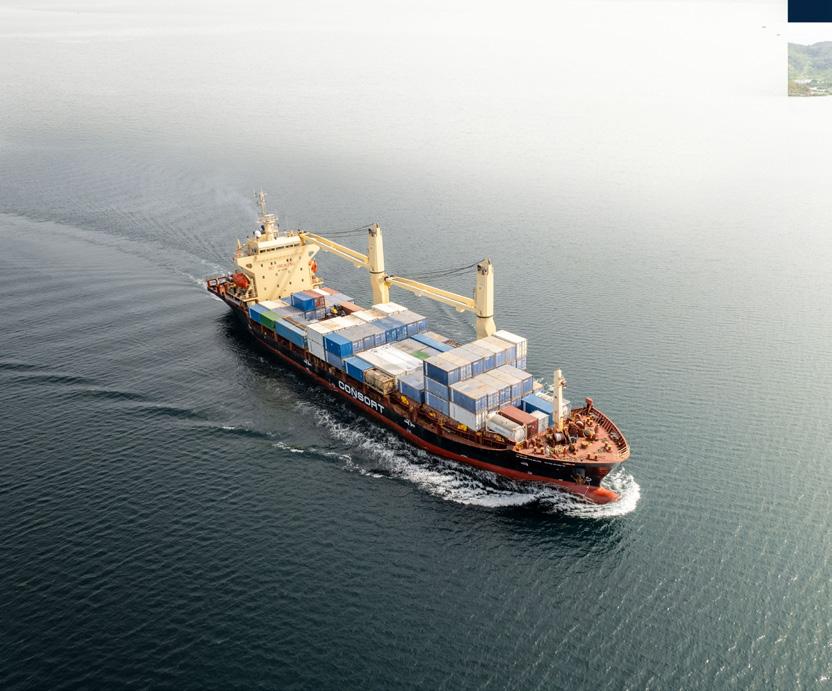
Blue Water Shipping your global logistics partner in Oceania
With a team of local experts and an extensive network across the globe, we offer comprehensive logistics support. Whether you need to move cargo across continents or within the region, we ensure your goods get where they need to be.
End to end project logistics solutions
Freight forwarding via road, ocean & air
Strategic consolidation & warehousing hubs
Freight all kinds (FAK) shipped under a single rate
Fast & compliant in-house customs brokerage
Dedicated charter of vessels to Lihir
Transport engineering for complex logistics
Contact our local experts in Papua New Guinea
Tel: +675 7153 8640
Email: lae@bws.net
Marape Reaffirms PNG’s Global Commitments at UN’s 80th General Assembly
By:ROSELYN EREHE
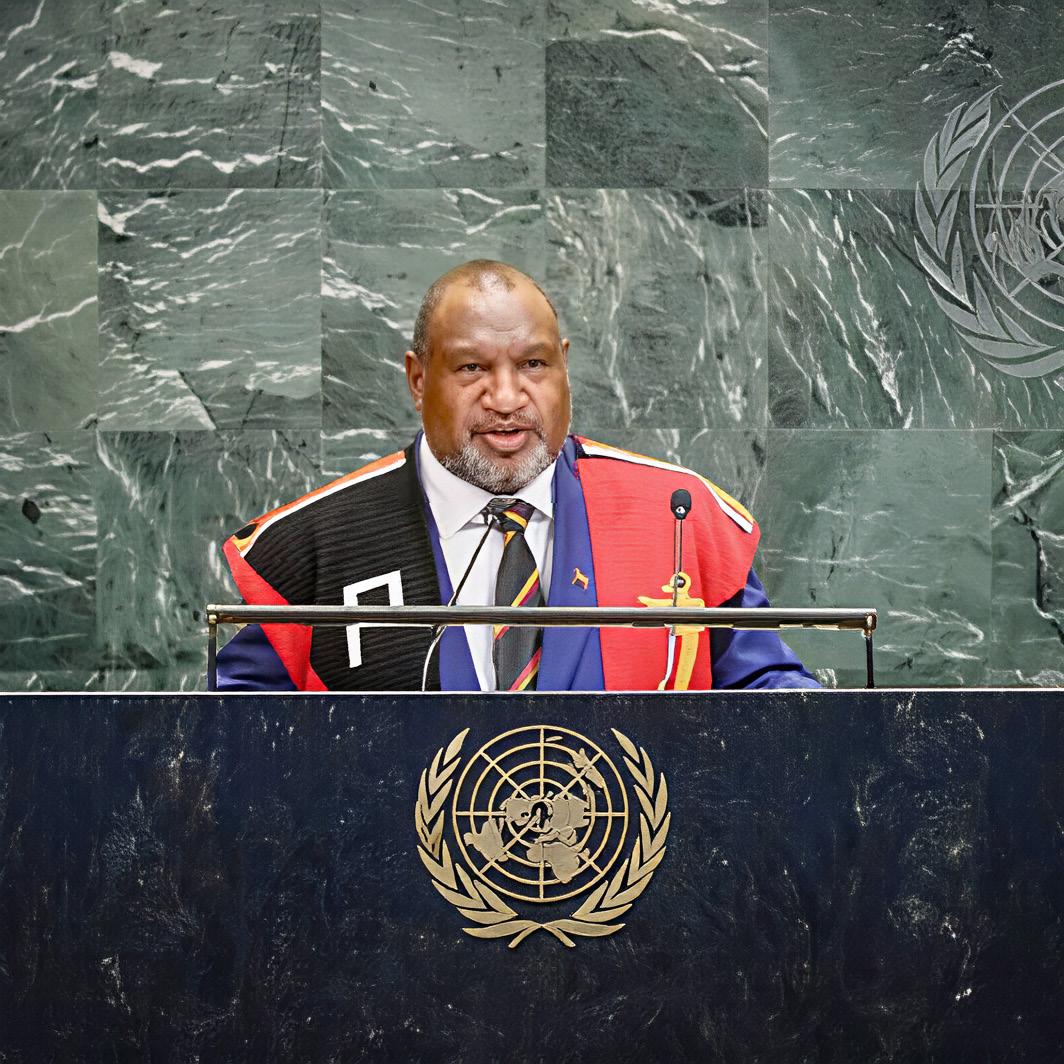
Papua New Guinea Prime Minister James Marape delivered the country’s statement at the United Nations General Assembly (UNGA) 80th Session General Debate in New York, aligning his address with PNG’s 50th independence anniversary and 50 years of UN membership.
He opened by highlighting the enduring strength of PNG’s Constitution, which he described as the nation’s binding force across extraordinary diversity.
“Papua New Guinea is extraordinarily diverse — over 1,000 tribes, 850 languages and 600 islands. Yet our Constitution binds us as one people, one nation, one country,” Marape said.
From there, he paid tribute to churches for their role in delivering education, health and community services, while stressing the constitutional protection of all faiths. “Religion must never divide humanity — coexistence must,” the Prime Minister affirmed.
Turning to PNG’s history of conflict, Marape recalled the decade-long Bougainville crisis and its peaceful resolution under UN guidance.
“For a decade, Bougainville suffered violence, but through dialogue under UN oversight we achieved the 2001 Bougainville Peace Agreement. Not a bullet has been fired since,” he said, noting Bougainville as a powerful example of peace built on genuine will.
VISIT OF THE UN SECRETARY-GENERAL
Marape then reflected on the recent visit of UN Secretary-General António Guterres to Papua New Guinea, his first official visit to the country.
He said Guterres commended PNG’s leadership on climate action, cultural diversity and its peace model in Bougainville.
At the same time, he acknowledged the SecretaryGeneral’s call for improvement.
“He also reminded us to fight
corruption, strengthen governance and ensure services reach all citizens. At 50 years, we recommit to transformation so that no citizen is left behind,” he said.
GLOBAL RESPONSIBILITY: FORESTS, OCEANS AND CLIMATE
Shifting to global challenges, Marape underlined Papua New Guinea’s role as a forest and ocean nation with unique responsibilities.
“Our tropical forests absorb carbon and produce oxygen. Our vast Pacific waters are part of the
world’s greatest carbon sink. Our reefs, rivers and ecosystems shelter unique biodiversity,” he told the Assembly.
Reaffirming PNG’s commitment ahead of COP30 in Brazil, he added, “There is no other planet like Earth. Our ancestors left us a liveable planet; we must do the same for our descendants.”
Marape also urged the G20 and industrial nations to act with greater urgency.
“We call especially on G20 and industrial nations to cut emissions, reform global finance to support biodiversity nations and align responsibility with carbon footprint. Our forests and oceans are not just Papua New Guinea’s — they are global goods,” he declared.
MARKING PNG’S GOLDEN ANNIVERSARY
In closing, the Prime Minister used PNG’s golden anniversary to
express appreciation to international partners.
“On this 50th anniversary, I thank the United Nations for embracing us since 1975, our bilateral and multilateral partners, Australia for peacefully granting independence and investors, NGOs and churches for their enduring service,” he said.
He ended by linking Papua New Guinea’s journey with the UN’s wider role as a meeting ground for humanity.
“Fifty years ago, we entered this Assembly as one of its youngest members. Today, we stand as a free and democratic nation, with unity in diversity, resilience and vast natural endowments,” he said.
Congratulating the UN on its 80th anniversary, Marape concluded with a message to the world: “Unity can be found in diversity. Peace is built and sustained through dialogue. This one planet must be preserved for all generations.”
Prime Minister of Papua New Guinea Hon. James Marape aligned his General Debate Address at the 80th UNGA on Friday 26 September, in New York, USA.image supplied
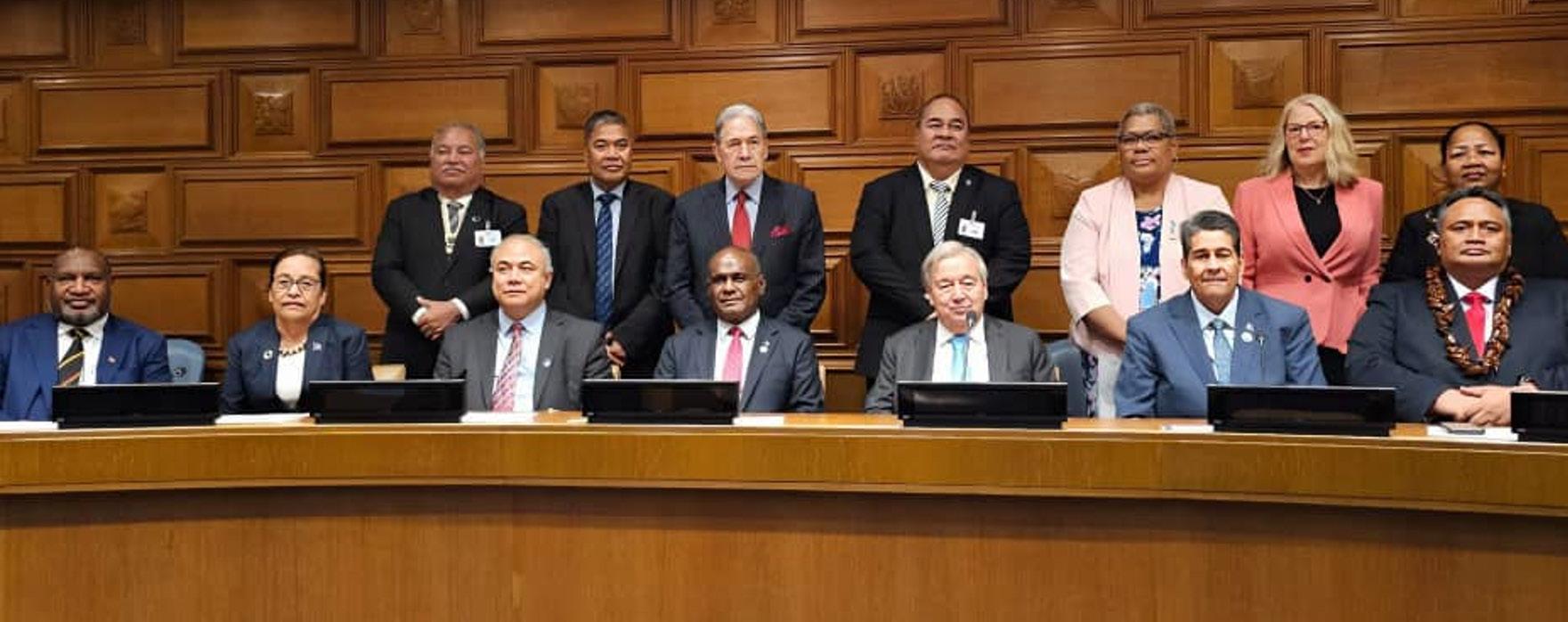
Prime Minister James Marape (first from left) with Pacific Islands counterparts during the PIF Leaders’ Dialogue with UN Secretary-General António Guterres at the 80th United Nations General Assembly in New York on Friday, 26 September 2025. –Image supplied
At COP30, PNG Calls for Global Action on Nature-Based Climate Solutions
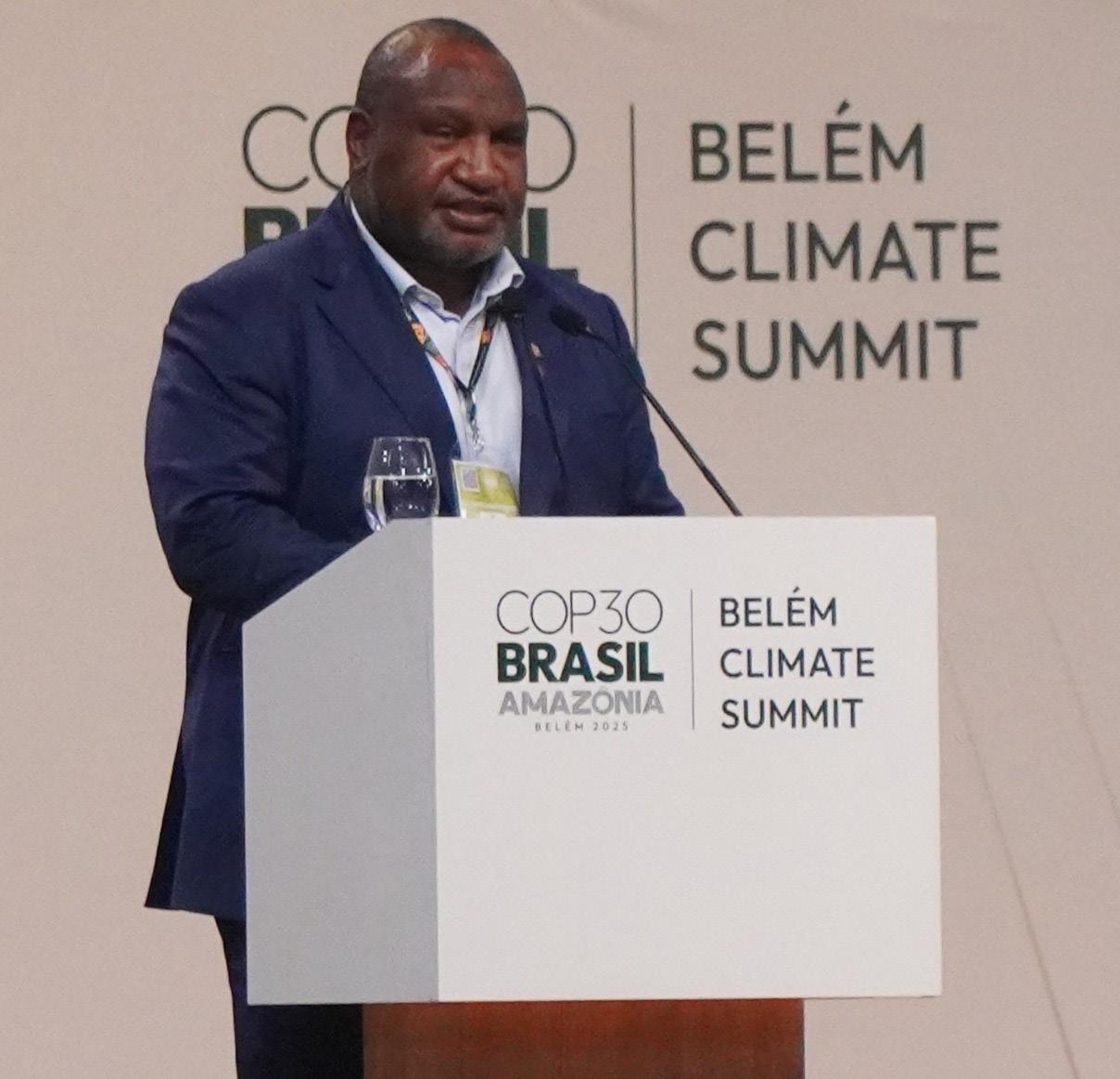
Prime Minister James Marape of Papua New Guinea has called on world leaders to “act now and act responsibly” to save the planet, urging nations to honour their commitments under the Paris Agreement and embrace nature-based solutions as the foundation of global climate action.
Speaking at the World Leaders Climate Action Summit during COP30 in Belém, Prime Minister Marape said that for Papua New Guinea, “climate adaptation and mitigation is not a choice — it is a matter of survival”.
His remarks positioned PNG as a global advocate for forest and ocean nations and highlighted the existential stakes for small island and forest-rich states.
NATURE-BASED SOLUTIONS AT HEART OF CLIMATE ACTION
PM Marape reaffirmed Papua New Guinea’s leadership in advancing Articles 5 and 6 of the Paris Agreement, recognising the critical role of forests and carbon markets in addressing climate change.
“Forests and oceans offer naturebased solutions and technologies to replenish Mother Earth,” he said. “Papua New Guinea safeguards 35 million hectares of pristine rainforest — the lungs of the Earth — and we offer this as our contribution and legacy to humanity”.
“This shows that even a small forest nation like Papua New Guinea can drive global impact,” he added, reinforcing PNG’s moral authority as a custodian of one of the world’s largest remaining tropical rainforests.
FORESTS AND OCEANS: THE TWIN PILLARS OF SURVIVAL
PM Marape emphasised that forest nations and ocean states like PNG bear the greatest brunt of climate change despite contributing the least to global emissions.
“Saving the forest saves the Earth,” he said, citing WTO DirectorGeneral Dr Ngozi Okonjo-Iweala, who described the world’s rainforests as “atmospheric rivers that water the planet”.
He reaffirmed PNG’s commitment
to ocean conservation, announcing the country’s intention to protect 30% of its ocean area from illegal and commercial exploitation, in line with the 30×30 initiative discussed at COP30.
“With 7% of the world’s biodiversity in our land and waters, the sustainable use of our oceans and forests is vital to saving this planet,” he said.
GLOBAL PARTNERSHIPS, INDIGENOUS LEADERSHIP
Prime Minister Marape acknowledged the support of the United Nations, the Green Climate Fund, France, Australia, the Coalition for Rainforest Nations, and the World Agroforestry Centre (ICRAF) in advancing PNG’s conservation agenda.
He also paid tribute to His Majesty King Charles III, President Xi Jinping, and UN SecretaryGeneral António Guterres for their global leadership on forest and biodiversity protection. “Without saving our forests, trees, and oceans, the climate change conversation is redundant,” PM Marape said. “Technology is important, but without nature-based solutions, it cannot succeed”.
SOLIDARITY THROUGH NATUREBASED SOLUTIONS
At a thematic session on “Climate and Nature: Forests and Oceans”, PM Marape emphasised that PNG, home to over 35 million hectares of tropical rainforest and vast marine resources, stands ready to contribute to global environmental preservation efforts.
“We must find solidarity in naturebased solutions to solve climate
change,” he said. “Forests and oceans are our greatest allies — they preserve the air, regulate the climate, and sustain all life on Earth”.
The Prime Minister urged the global community not only to protect these ecosystems but to harness their power for sustainable development and carbon mitigation.
COMMITTED TO PRESERVATION
“Papua New Guinea remains committed to preserving its forests and ocean resources. We have stepped up efforts to preserve our terrestrial and marine ecosystems as part of our contribution to the Paris Agreement and our shared planetary responsibility.”
He commended Brazil for hosting COP30 and championing forestnation cooperation, noting that PNG and Brazil share a common destiny as custodians of the world’s largest tropical forest systems.
“It is appropriate that we meet here in Belém — a city at the heart of the Amazon. Under President Lula’s leadership, we have seen great progress, including a 50 per cent reduction in deforestation in Brazil. This is an inspiration for all forest nations”.
PM Marape concluded by calling on the private sector and global partners to step up investments in nature-based climate solutions.
“Let us unite around the forests and the oceans as two major solutions for a sustainable and liveable planet. Together, we can preserve the air, the land, and the seas — the lifeblood of our shared Earth”. Page 32 >
From gensets to vehicles, tyres, lubricants and more, discover the best brands and big range that tackle PNG’s toughest conditions.
And there’s only one place to go! Where else but Boroko!
COP30 FOCUS ON IMPLEMENTATION, CLIMATE FINANCE
COP30 highlighted the central role of forests and oceans in climate action, featuring initiatives such as the Tropical Forest Forever Facility (TFFF), strategies for protecting coastal and marine areas, and a drive to move from pledges to tangible, scalable implementation (Article 2).
Key initiatives included:
• Tropical Forests: Launch and mobilisation of the TFFF for longterm, results-based financing of tropical forest conservation.
• Oceans: Elevating oceans’ role, including the 30×30 initiative to protect 30% of marine areas by 2030.
• Connecting Forests and Oceans: Recognising the interdependence of these ecosystems in achieving global mitigation goals.
• From Promises to Action: Encouraging scalable, equitable solutions to ensure a just transition.
• Climate Finance: Highlighting the need for innovative, accessible financing, particularly in regions like Latin America, with outcomes including the Baku–Belém Roadmap (Article 2).
URGING GLOBAL CLIMATE FINANCE FOR FOREST NATIONS
At the Thematic Session on “10 Years of the Paris Agreement: NDCs and Financing”, PM Marape called for stronger global financing mechanisms to support forest and ocean nations.
He stressed that tropical countries like PNG, Brazil, and the Democratic Republic of the Congo are “carrying the weight of the planet’s survival”.
“Forests and ocean nations are carrying the burden of the entire planet’s atmospheric balance,” he said.
“The Amazon Basin, the Congo Basin, and the tropical forests of Papua New Guinea and Southeast Asia together form the lungs of the Earth. Conserving them is the greatest mitigation effort we can make to save humanity itself”.
He reflected on his journey, stating: “When I first began this journey, I thought I was fighting
to save our forests. Now I realise I am fighting to save humanity. Our forests, oceans, and biodiversity sustain all life on Earth — and without them, we have no future”.
“There is no planet like Earth. Mars and Mercury are unlivable. Here, rivers, trees, mountains, and oceans sustain life. That is worth fighting for”.
CALL FOR NATURE-BASED CLIMATE FINANCE AND EQUITY
PM Marape urged industrialised nations and multilateral partners to channel financing into nature-based solutions that value standing forests over exploitation.
“Our forests deserve proper conservation financing. Naturebased technologies must begin by valuing standing forests — not just harvested timber. One hectare of conserved forest can save the world far more than any industrial offset” (Article 3).
He called for a new era of equitable climate finance recognising forest nations’ contributions through jurisdictional REDD+ and carbon market systems under Articles 5 and 6 of the Paris Agreement.
European Commission President Ursula von der Leyen endorsed these approaches, highlighting carbon pricing as a powerful tool to drive emissions reduction and sustainable development.
PNG’S CLIMATE LEADERSHIP AND PARTNERSHIPS
PM Marape reaffirmed PNG’s commitment to halting large-scale deforestation, restoring degraded lands, and supporting sustainable community development.
“For six years as Prime Minister, I have been saying: stop deforestation. Bring real conservation that sustains livelihoods and protects humanity. If this generation of leaders fails to find real financing solutions for forest nations, history will judge us harshly”.
He highlighted PNG’s readiness to collaborate with global partners to operationalise long-term climate financing solutions and advance forest-nation diplomacy.
STRENGTHENING GLOBAL
LEADERSHIP AND CLIMATE
JUSTICE
Throughout COP30, PM Marape
emphasised that forest and ocean nations are shouldering the planet’s survival. He commended UN Secretary-General António Guterres for his address, calling it “a moral compass for world leaders to act decisively in this decade of truth”.
“The 1.5°C limit is not a political target; it is a red line for humanity,”
PM Marape said. He endorsed the call for a paradigm shift in global climate action, urging fossil fuel phase-outs, accelerated renewable energy transitions, and protection of tropical forests and oceans — the planet’s natural carbon sinks.
“Papua New Guinea stands shoulder to shoulder with the United Nations and forest nations like Brazil in protecting the lungs of the Earth. Our forests and our oceans are the greatest natural assets we can offer the world — and we must ensure that their preservation is matched with fair and equitable climate finance”.
DEEPENING PNG-BRAZIL STRATEGIC PARTNERSHIP
On the sidelines of COP30, PM Marape held bilateral discussions with Brazilian President Luiz Inácio Lula da Silva to strengthen cooperation in climate action, food security, and clean energy.
President Lula praised PNG as a natural partner, describing both countries as “forest and ocean-rich countries with shared responsibilities in protecting the planet’s lungs”.
PM Marape stressed that despite their minimal carbon footprints, both nations are shouldering the global climate burden. “Our forests and oceans carry the world’s excess carbon, yet our people have not shared in the benefits of global
carbon wealth”.
The two leaders agreed to:
• Establish diplomatic missions in each other’s capitals.
• Collaborate on tropical agriculture, renewable energy, and biodiversity conservation.
• Explore partnerships in hydropower, LNG, and clean energy technologies.
PM Marape also proposed Pacificto-Amazon diplomacy, linking Pacific forest and ocean nations with Latin America’s environmental and agricultural powers.
“We are connecting the Pacific and the Amazon — two of the world’s great forest regions — in a common cause for climate and sustainable growth” (Article 4).
He invited Brazilian companies to invest in PNG’s agriculture and energy sectors, noting that “Brazil’s agribusiness success can inspire PNG’s transformation into a foodsecure exporting nation”.
ADVOCATING FOR CLIMATE FINANCE AND FAIRNESS
At the Leaders’ Thematic Session
ADB: Pacific Growth to Hasten in 2026 on Resource Strength
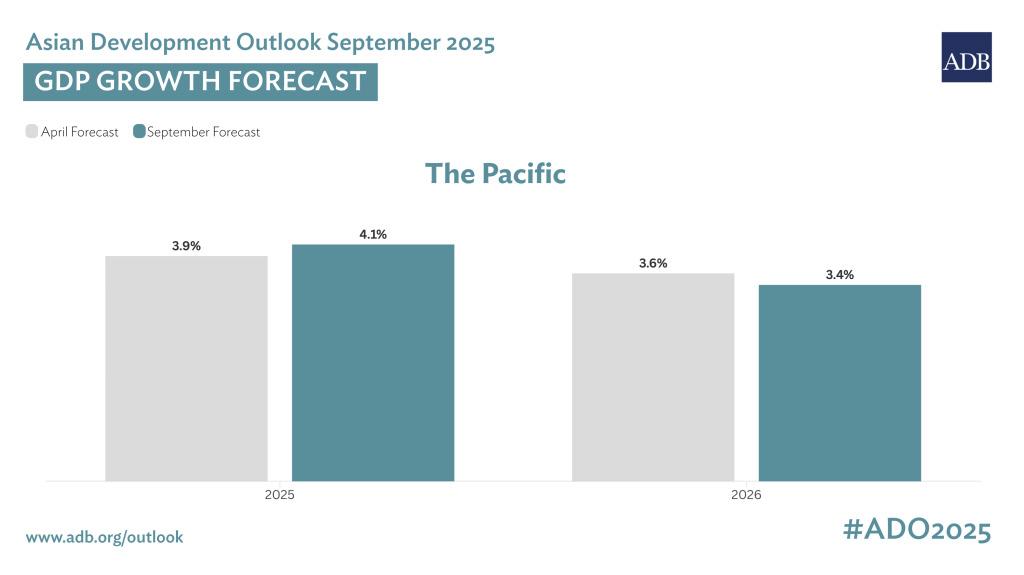
Economic growth in the Pacific is expected to pick up next year, buoyed by strong resource output in Papua New Guinea (PNG), according to the Asian Development Outlook (ADO) September 2025, released on 6 October.
The report by the Asian Development Bank (ADB) projects Pacific economies to expand by 4.1 percent in 2025, before moderating to 3.4 percent in 2026, an upward revision from the April forecast.
The ADB attributed the improvement mainly to the mining and petroleum-driven performance of PNG, the region’s largest economy.
“While it is good news that growth will accelerate in the Pacific subregion this year and inflation forecasts are adjusted down, geopolitical and trade tensions still pose risks to growth,” said ADB Director General for the Pacific Emma Veve.
“ADB remains committed to helping build resilience to potential shocks such as extreme climate events and disruptions to global supply chains.”
PNG’s economy is forecast to grow by 4.6 percent in 2025, before easing to 3.6 percent in 2026 as output from major resource projects stabilizes. Inflation projections remain unchanged.
The report said that new investment decisions in mining, petroleum, and related sectors could provide an additional boost to growth.
In Fiji, the Pacific’s second-largest economy, growth is forecast to remain steady at 3.0 percent in 2025, but to slow in 2026 due to the indirect impact of United States tariffs on its key trading partners.
Inflation is expected to ease over the next two years as fiscal measures and lower global commodity prices help reduce consumer costs.
ADB said Fiji continues to face “large shocks due to limited fiscal buffers and climate risk,” but ongoing reforms and new spending on water security and coastal protection should strengthen long-term resilience.
In Solomon Islands, growth is ex-
pected to hold steady at 2.9 percent in 2025 and 3.2 percent in 2026, with the inflation outlook revised upward for next year before easing slightly in 2026.
The government’s recent shift to an expansionary monetary policy is expected to support growth while keeping inflation contained.
Vanuatu’s 2025 forecast was trimmed to 1.5 percent, reflecting delays in post-earthquake reconstruction, though growth is expected to recover to 2.5 percent in 2026.
In the Central Pacific, growth projections were adjusted slightly downward for Kiribati and Nauru, now at 3.9 percent and 2.3 percent in 2025, and 3.3 percent and 2.5 percent in 2026, respectively.
Tuvalu’s growth outlook remains unchanged at 2.7 percent in 2025 and 2.5 percent in 2026.
Public infrastructure spending is expected to remain a key growth driver across these economies, though commodity price volatility and supply chain disruptions continue to pose risks.
In the North Pacific, forecasts were mixed. Growth was upgraded for the Marshall Islands to 3.0 percent in 2025 and 3.5 percent in 2026, supported by fisheries and construction.
However, projections were lowered for the Federated States of Micronesia (FSM) and Palau—now at 0.8 percent and 8.2 percent in
2025, and 1.1 percent and 3.9 percent in 2026, respectively.
The ADB cited slow utilization of Compact of Free Association funds in FSM and a gradual tourism recovery in Palau.
Growth prospects across the South Pacific are expected to remain uneven. The Cook Islands is projected to post the highest growth in the region at 10.4 percent in 2025, before slowing to 2.5 percent in 2026 as post-pandemic tourism demand stabilizes.
Growth in Samoa is expected at 4.0 percent in 2025 and 2.7 percent in 2026, while Niue is forecast at 3.4 percent and 3.0 percent. Tonga is projected to grow 2.5 percent next year, moderating slightly to 2.3 percent in 2026.
“Tourism and construction remain key growth drivers” in the South Pacific, the report said, though weaker agriculture and fisheries output could weigh on Samoa’s outlook. Inflation is expected to continue moderating but could face renewed upward pressure from global price movements.
Founded in 1966, ADB is owned by 69 members, 50 of which are from the Asia-Pacific region. The Manila-based multilateral lender said it remains committed to “helping build resilience to potential shocks” and supporting inclusive, sustainable growth through innovation, infrastructure, and partnerships.
Paita Calls for Investor Confidence in PNG’s Special Economic Zones
By: ROSELYN EREHE
Papua New Guinea’s Minister for Mining Rainbo Paita has urged investors to embrace the country’s Special Economic Zone (SEZ) initiative, stressing the need for competitiveness, strong incentives, and practical reforms to attract longterm investment.
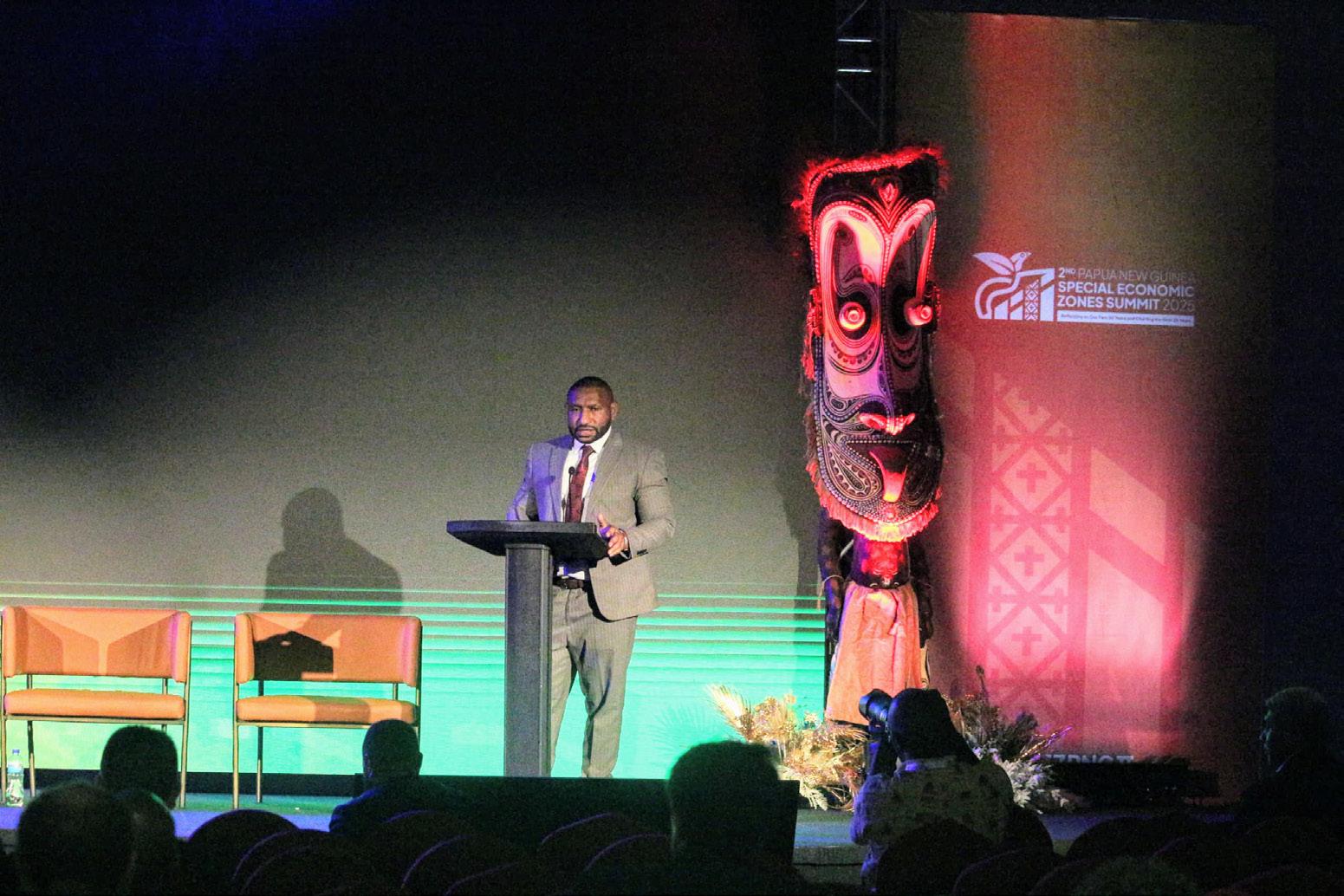
Speaking during the Second Special Economic Zone Summit at APEC Haus, Minister Paita commended the Minister for International Trade and Investment Richard Maru and his team for organising what he described as a “very successful three-day conference.”
The event, from August 31 to September 3, brought together local participants and international investors.
Paita highlighted the logistical challenges of hosting such a forum but praised the Ministry for Trade and Investment, the SEZ Authority, and supporting agencies for their support and execution of the summit.
“It takes time, resources, and planning to bring together investors from across the world. I commend Minister Maru, the Secretary, the Chairman, and the CEO of SEZ for their leadership,” he said.
EARLY SEZ LEGISLATIVE PUSH
Reflecting on his own role in the early stages of the SEZ agenda, Paita revealed that he contributed personally to the drafting of the initial version of the SEZ Authority Act during his early years in Parliament.
“We did not have a lawyer at the time, so I took ideas and wrote them myself. I brought the submission to Cabinet without a policy framework, but it was passed because members believed it was important,” he said.
He acknowledged that both he and Minister Maru had faced scepticism over the country’s readiness to manage SEZs due to gaps in infrastructure, technology, and experience.
However, he said determination was key: “Business is like a wheelbarrow. Nothing moves until you start pushing. Minister Maru has been pushing this initiative forward.”
Paita stressed that PNG must focus on competitive incentives rather
than relying on cultural or emotional appeals to attract investment.
“The world has gone past the stage of isolation. Seventy to eighty percent of global manufacturing is done in China. If we want SEZs to succeed, we must be practical,” he stated.
He argued that investors would only commit if PNG could offer cost advantages and streamlined processes.
“We need to provide the cheapest energy, reliable water, competitive port services, and incentives that are better than what others are offering. Companies will only invest if they see profits and long-term growth,” Paita said.
CALL FOR STRONG REFORMS
The minister emphasised the need to cut bureaucratic red tape and create an investor-friendly environment within SEZs. He called for one-stopshop services, fast-tracked visa and work permit approvals, simplified registration, and strong guarantees for investors.
“Without special incentives, no one will invest. We must ensure SEZs are truly special. Why would anyone choose the districts in PNG or SEZ unless we make them competitive? Incentives and concessions must be clear, and bureaucracy stripped away so investors feel safe,” he added.
Minister Paita also appealed to the broader vision of development, urging investors to see PNG as a place where they could make a mark, not just profits.
He contrasted established SEZs in Dubai or the Philippines, already crowded with investors, with the opportunity to pioneer new industries in PNG.
“If you go to Dubai, you will be one of many. But if you come to PNG, you will be creating something new— changing lives, making money, and building a story of your own,” Paita told delegates.
STRONG CABINET SUPPORT
Paita reaffirmed his commitment to the SEZ policy, assuring Minister Maru of his full backing in Cabinet and beyond.
“I support you in driving this initiative because SEZs are the only way we can attract serious foreign direct investment into PNG. The challenges are real, but the opportunities are greater,” he said.
He further encouraged investors present at the summit to take bold steps into PNG.
“We may not have the full infrastructure like others, but we have the vision, the people, and the commitment. This is the time to invest in Papua New Guinea.”
PNG Minister for Mining Hon. Rainbo Paita speaking at the Second Special Economic Zone Summit held at APEC Haus (September 3), calling for investor confidence in the country. – image supplied by Gregory Pulpulis
PNG on Global Stage at IAPH World Ports Conference
PNG Ports Corporation Limited (PNGPCL) through its Chief Commercial Officer, Ms. Deborah Michelle Onga, recently represented the country as a panellist at the 2025 International Association of Ports and Harbors (IAPH) World Ports Conference from 7–9 October in Kobe, Japan.
The conference, celebrating the IAPH’s 70th Anniversary, gathered more than 200 global port authorities and 170 port-related businesses under the theme “Reinvention and Prosperity in Turbulent Times.”
The event brought together international leaders from the IMO, World Bank, UNCTAD, and major global maritime organisations to explore how ports can achieve sustainable growth in an era marked by geopolitical uncer-
through Smarter Concessions,” joining distinguished speakers from Thailand, Chile, and Canada.
The session focused on how port authorities can structure smarter concession agreements to ensure land is used for its highest economic, operational, and strategic value. Ultimately, smarter concessions to
social and environment value for the nation.
Drawing on her leadership of PNG Ports’ commercialisation strategy and its flagship Lae Industrial Park development, Ms. Onga highlighted PNG Ports’ ambition to unlock the commercial potential of all 15 of its ports — not only the major gateways
Papua New Guinea
solutions - no job is too big
Proudly PNG | A Remington Group Company
PNG Ports’ CCO Deborah Onga with other presenters from around the world at the 2025 World Ports Conference, Japan
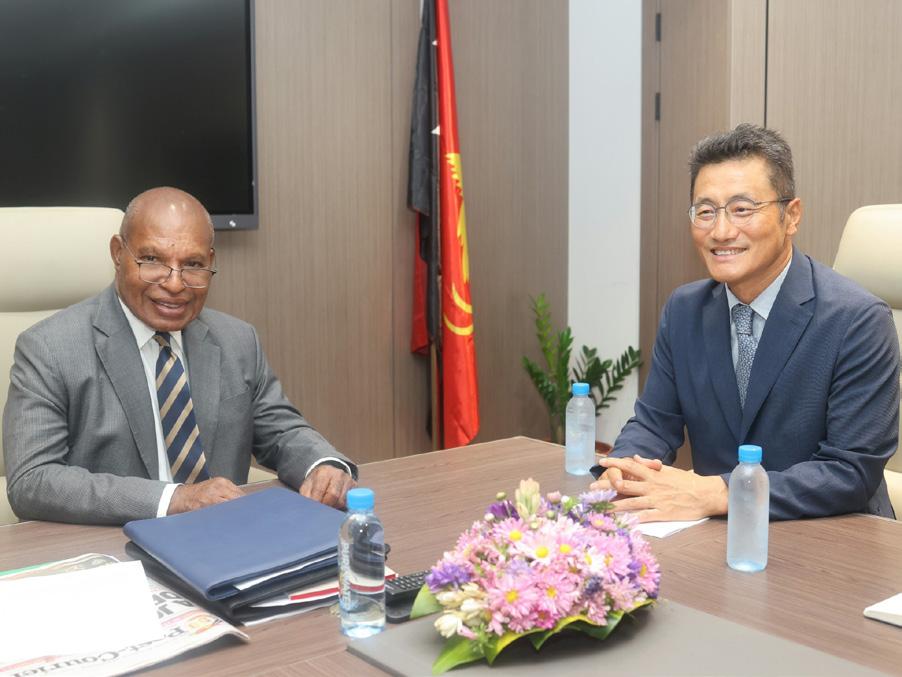
Korea Keen to Deepen Relationship with PNG
The Korea International Cooperation Agency (KOICA) will establish an office in Papua New Guinea, Jongho Choi, the Ambassador of the Republic of Korea to PNG, has announced.
Amb. Choi said this following his meeting with PNG Minister for International Trade and Investment Richard Maru on 22 October.
“This is a welcoming news. KOICA is South Korea’s government agency for providing official development assistance to developing countries through grant aid and technical cooperation,” Maru said.
The minister said the government wants to see more aid flows between PNG and Korea, noting that they also want Korea Eximbank to be more active in the domestic market as they offer one of the lowest interest rates.
“We have a good record with Korea Eximbank as we repaid our first
< Page 40
She outlined how improved land utilisation and by adopting a transparent and standardised concession framework, PNG Ports can strengthen investor confidence, ensure governance and integrity, and align with government policy and Kumul Consolidated Holdings (KCH) oversight standards.
Her insights positioned Papua New Guinea as a model for how small developing nations can approach port land management strategically, using concession frameworks that strengthen trade competitiveness, sustainability, and community benefit.
REPRESENTING THE PACIFIC AT A GLOBAL FORUM
Ms. Onga’s inclusion on the IAPH panel marked a historic milestone — positioning Papua New Guinea at the forefront of Pacific representation on the world stage.
While delegates from Fiji, Solomon Islands, and other Pacific nations were in attendance, Ms. Onga was the only Pacific voice featured on the official speaker program.
Her participation symbolised a turning point for the Pacific region, which has long been under-represented in global port and maritime discussions, spearheading conversations not only for PNG, but for the broader Pacific
loan for the Wewak storm drainage project on time, and we want more concessional aid. We look forward to the establishment of KOICA office in PNG and to working with them on grant projects and development finance,” Maru said.
Both officials also discussed Maru’s possible visit to South Korea to attend the APEC Ministerial Meeting (AMM).
“I will also be meeting a number of potential investors in the two days that I am making available to meet with the private sector in Korea on the margins of the AMM. We are very keen on bringing some Korean investors to PNG,” said Minister Maru.
The minister said he was pleased that the Government of Korea wants to deepen its relationship with PNG. He welcomed this interest and looked forward to working with the Korean Government and Korean investors in
Islands, on how developing economies can transform their ports into engines of national and regional prosperity.
“It was a profound honour to speak for Papua New Guinea and the wider Pacific at such an influential global forum,” said Ms. Onga.
“For too long, our region’s expertise and perspectives have been overlooked. This opportunity demonstrates that the Pacific has strong, capable voices with real experience to contribute to the global maritime sector.”
Ms. Onga also expressed her appreciation for the collaboration and advocacy of Mr. Mike Gallagher, CEO of Ports Australia, whose support helped secure her inclusion on the panel.
“I am sincerely grateful to Mike Gallagher for recognising the importance of Pacific representation and for championing the inclusion of Papua New Guinea. His support ensured our region had a seat at the table — and a voice in shaping the future of global ports,” she said.
BRINGING GLOBAL INSIGHTS HOME
Accompanied by PNG Ports Director Ms. Belinda Manning, Ms. Onga also gained valuable insights from the broader conference discussions centred on how ports can achieve real growth when supply chain resilience is tested by conflict and climate change.
Special Economic Zones and non-resource sectors.
He added that Korean companies are eager to serve as EPC contractors in the mining and petroleum industries, and that PNG hopes to build more win-win partnerships under its new foreign policy focused on security and economic prosperity.
Through networking and dialogue with international peers, Ms. Onga and Ms. Manning, return with their key learnings on resilient infrastructure investment, sustainable port innovation, and effective governance frameworks.
They intend to incorporate these into PNG Ports’ future operations, and with a strategy to drive better Pacific representation and active dialogue with the International Association of Ports and Harbors.
“The knowledge and global connections gained from this conference will help PNG Ports advance its commercialisation strategy and position Papua New Guinea’s ports as regional leaders in sustainability and trade facilitation.”
Ms. Onga added.
ABOUT THE INTERNATIONAL ASSOCIATION OF PORTS AND HARBORS (IAPH)
Founded in 1955, the IAPH is a global alliance representing over 200 port authorities and 173 businesses across more than 90 nations.
The Association serves as a key platform for collaboration, policy exchange, and innovation among the world’s leading maritime and logistics organisations.
The 2025 conference marked its 70th anniversary, reaffirming its commitment to connecting ports and people worldwide.
PNG CORE Hosts Breast Cancer Awareness Session with Paradise Private Hospital
As part of its Safety Talk of the Month (STOM) initiative, the Papua New Guinea Chamber of Resources & Energy (PNG CORE) recently hosted an educational session in collaboration with Paradise Private Hospital to spotlight the critical issue of breast cancer and its impact on women’s health in Papua New Guinea.
This timely session, organised by PNG CORE’s Strategic Planning & Projects Unit, coincided with the global Pinktober campaign—an international movement dedicated to raising awareness about breast cancer.
The event aimed to empower staff with vital knowledge on breast cancer risks, early detection methods, and available treatment options.
Attendees gained practical insights into self-examination techniques and the importance of mammogram screenings, highlighting that not all lumps can be detected through physical examination alone.
Staff had the privilege of hearing from three esteemed healthcare professionals from Paradise Private Hospital: Dr. Grace Raire, Obstetrics & Gynaecology Specialist; Sr. Fabiana Menem, Labour Ward Unit Manager; and Radiologist Rayhab Kiha.
Their presentations covered essential topics such as self-breast examinations, clinical screenings, and the life-saving role of mammograms in early detection.
Dr. Raire emphasised the urgency of addressing breast cancer, noting: “Breast cancer remains a critical health challenge, being the leading cause of cancer-related deaths among women globally. In 2023 alone, there were approximately 2.3 million new diagnoses worldwide, resulting in over 670,000 fatalities.”
She also highlighted the concerning statistics in Papua New Guinea, where breast cancer accounts for an estimated 4,000 new cases and over 1,600 deaths annually.
“This initiative seeks to shed
light on these unsettling statistics and emphasise the importance of early detection and timely interventions,” she added.
PNG CORE staff expressed appreciation to the specialists and encouraged everyone within the community to prioritise health screenings and educate their loved ones on the importance of early detection.
“We believe that through aware -
ness, education, and community involvement, we can make a significant impact on the breast cancer landscape in PNG,” Raire said. Beyond supporting and promoting the minerals and energy sectors, PNG CORE remains committed to fostering progress and sustainability through initiatives that create a proactive environment within communities—focusing on health, education, and sports.
Business Training
Business Assessment Services
Business Advisory & Mentoring
Workshops, Seminars & Events
Project Information Center
Supplier Management Portal
ISO 9001:2015 - QMS Training, Audit and Certification
PNG Ports Climb Global Rankings in 2025 World Bank Port Performance Index
PNG Ports Corporation Ltd (PNG Ports) has announced that both the Port of Lae and the Port of Port Moresby have improved their global rankings in the 2025 World Bank Container Port Performance Index (CPPI).
Both seaports outperforming several major ports in nearby developed economies such as Melbourne, Brisbane, Port Botany (Sydney), Auckland, Napier, and Otago.
According to the report, Lae Port has advanced from 311th position in 2023 to 264th in 2025, while Port Moresby has improved from 280th to 248th. These gains reflect a continued upward trajectory in operational performance and port efficiency.
“This improvement demonstrates the impact of strategic investment in equipment, systems, and operational efficiency,” said George Gware, COO of ICTSI South Pacific.
The company is the port operator of Papua New Guinea’s two international container terminals, Motukea International Terminal in Port Moresby and South Pacific International Container
Terminal in Lae.
“Our recent investments in new gantry cranes, yard equipment, and advanced port management systems have contributed to faster vessel turnaround times and improved cargo handling efficiency,” Mr Gware added.
The Container Port Performance Index (CPPI), jointly compiled by the World Bank and S&P Global Market Intelligence, evaluates over 400 ports worldwide based on key operational indicators such as vessel time in port and container throughput.
The CPPI has become a widely referenced benchmark for measuring global container port performance since its introduction in 2020.
The Index measures how efficiently container ports move vessels through their terminals, with shorter turnaround times translating into cost savings, improved reliability, and reduced carbon emissions.
The 2025 report emphasizes that high-performing ports contribute significantly to global supply chain resilience and economic competitiveness.
“This recognition by the World Bank is not just about rankings—it’s about the hard work of our people and partners who ensure PNG’s ports remain vital arteries for trade, growth, and national development,” added Neil Papenfus, CEO of PNG Ports.
PNG Ports operates 15 ports across Papua New Guinea, with Lae, Port Moresby, and Kimbe generating profits that support 12 Community Service Obligation (CSO) ports — essential gateways that connect remote communities and sustain regional economies.
Despite increasing competition from private ports that do not contribute to the national network’s upkeep, PNG Ports continues to invest in its entire port network to serve both commercial and community interests.
PNG Ports is a State-Owned Enterprise responsible for managing, operating, and maintaining Papua New Guinea’s network of 15 declared ports. The company is committed to ensuring safe, efficient, and sustainable maritime operations that support the nation’s economic growth and connectivity.
SMARTER ICT. STRONGER BUSINESS.
From cloud to connectivity, Daltron is your ICT Solutions partner delivering end-to-end services that reduce costs, boost efficiency, and scale with your business.
Whether you’re a growing SME or an enterprise operation, Daltron provides tailored technology solutions that drive real outcomes. From managed IT services and cloud infrastructure to hardware supply, cybersecurity, and business-grade connectivity, we make your ICT smarter—so your business can do more with less.
With nationwide support and decades of local expertise, Daltron is your ICT partner in Papua New Guinea and beyond.
PNG CR Services Teams Up with Australian Firm to Bring Dome Shelters to Papua New Guinea
Alocal project services company is partnering with a leading Australian manufacturer to introduce innovative dome shelter solutions across Papua New Guinea.
PNG CR Services Company announced its strategic collaboration with Container Domes Australia, a move that promises to deliver durable, cost-effective infrastructure tailored to the country’s varied environments and sectoral needs.
The partnership merges PNG CR’s on-the-ground project delivery expertise with Container Domes Australia’s reputation for quality, innovation, and robust engineering in dome shelter systems.
“This partnership is about more than just supplying infrastructure—it’s about providing solutions that meet the needs of Papua New Guinea’s industries and communities,” said Allen Tyson, managing director of PNG CR Services Company.
“By combining international expertise with local presence, we are ensuring that our clients receive quality products backed by reliable, on-the-ground service,” Tyson added.
The two companies said the partnership will focus on serving key sectors such as mining, construction, agriculture, and logistics, with plans to expand into areas like rural development, education infrastructure, and disaster relief.
Prior to the partnership, Container Domes Australia supplied and installed four 18-metre-wide cyclonerated domes at Port Moresby Wharf, demonstrating the suitability of their shelters for PNG’s challenging conditions.
Paul Whitla, director of Container Domes Australia, said the collaboration aligns with the company’s broader vision of making its products more accessible in emerging markets.
“Container Domes Australia is excited to work alongside PNG CR Services to expand our reach into Papua New Guinea,” Whitla said.
“With PNG CR’s deep market knowledge and service capability, customers can be confident that our domes will not only be delivered
to international standards but also supported locally through installation, maintenance, and warranty services,” he added.
The companies said they are committed to enhancing local capacity by providing training, employment, and ongoing support—an approach that could generate broader economic benefits beyond the construction and industrial sectors.
The collaboration is a distribution agreement that grants PNG CR Services exclusive rights to represent and supply Container Domes Australia products throughout Papua New Guinea.
The domes will continue to be manufactured in Australia and imported into PNG, ensuring consistent quality and compliance with international engineering standards.
EMPHASIS ON LONG-TERM PRESENCE
Central to the partnership is the establishment of a strong local presence to ensure proper installation and reliable after-sales service.
According to PNG CR, the dome structures offer a scalable and flexible alternative to conventional buildings, allowing faster and more efficient project delivery—particularly in remote or resource-constrained locations.
The premium quality shelters are engineered to withstand some of the harshest conditions, making them ideal for Papua New Guinea’s challenging environments.
Manufactured in Australia to meet the country’s highest engineering standards, each structure is cyclone-
rated and built with a galvanized RHS steel framework and a heavyduty polyethylene (P.E.) fabric cover designed for high UV resistance.
The shelters come with a 10-year structural warranty and a 20-year UV warranty, offering long-term durability and reliable performance across industrial, remote, and coastal applications.
Beyond industrial use, both companies expressed interest in deploying the dome technology for humanitarian and community applications.
This includes temporary classrooms, mobile clinics, and emergency shelters—particularly relevant in PNG’s disaster-prone regions.
The collaboration, they said, is designed to create “long-term value for clients while contributing to Papua New Guinea’s industrial and community growth.”
New Caledonia Trade Delegation Strengthens Ties with PNG at POMCCI Business Breakfast
By:ROSELYN EREHE
The Port Moresby Chamber of Commerce and Industry (POMCCI) hosted a special Business Breakfast on 29 October, welcoming a high-level trade delegation from New Caledonia. The event, held at the Royal Papua Yacht Club, brought together government leaders, diplomats, and business representatives from both nations to explore new opportunities in mining, industry, training, and sustainable development.
The breakfast was attended by the President of the Government of New Caledonia, Alcide Ponga; the French Ambassador to Papua New Guinea, Pierre Fournier; the European Union Ambassador to PNG, Erika Hasznos; and other members of the diplomatic corps, including the Korean Ambassador, Choi Jong-ho, and the Fijian High Commissioner, Jackson Bernardo Evans.
Representing the Chamber of Commerce and Industry of New Caledonia, Christophe Laurent thanked POMCCI for the warm reception and introduced the delegation of 14 New Caledonian companies eager to connect with PNG counterparts.
“People here are very capable in their own specialties,” Laurent said. “We would like to share our talents, find ways to work together, and be part of the Papua New Guinea landscape.”
Laurent emphasized that New Caledonia aims to be more open to the Melanesian world through stronger economic engagement.
“A lot of relationships can be made, and this morning is a great occasion to do so. Nouvelle-Calédonie wants to be more present in the region, and on the economic side, we will play our role,” he added.
French Ambassador Pierre Fournier expressed his appreciation to POMCCI for facilitating the exchange, noting that the mission marked a milestone in strengthening Franco-Pacific partnerships.
“This trip to PNG has been a long time in the making, and it already seems successful,” he remarked.
Fournier shared that the New Caledonian delegation had held a series of productive meetings with the Prime Minister and the Ministers of Foreign Affairs, Mines, Energy, Education, and PNG Ports. “It was important to listen to
what our interlocutors had to say, but also to be heard—to remind people that Nouvelle-Calédonie is not just about political challenges but also about its remarkable industrial and economic capacity,” he said.
He underscored that New Caledonia’s diversity and expertise give it the strength to play a greater role in the Pacific. “Enhancing this role is an essential mission for us as diplomatic actors,” he stated.
“This country’s potential is unlimited—it requires patience, hard work, and above all, the quality of personal relationships built on trust and genuine friendship.”
Delivering the keynote address, President Alcide Ponga thanked POMCCI and the people of PNG for their warm hospitality. “Your hospitality made this event more relaxing, with plenty of opportunity for discussion,” he said. Ponga noted that the mission was supported by Team France Export and the CCI of New Caledonia, providing a platform for companies to explore regional markets and collaboration.
He highlighted New Caledonia’s commitment to strengthening ties with Papua New Guinea under the Joint Cooperation Plan signed in 2018, which aims to enhance economic and diplomatic cooperation.
“Our mission reaffirms our commitment to this partnership and to identifying new opportunities for mutually beneficial cooperation,” Ponga said.
The New Caledonian delegation comprised companies from sectors including mining, metallurgy, energy, water treatment, transport, industry, and training—each recognised for technical expertise and innovation. “New Caledonia treasures its relations with the global Pacific, of which Papua New Guinea is a key member and brother,” the President remarked, adding that New Caledonia hopes to learn from PNG’s economic success and share its own experiences in return.
TRADE DELEGATION SHOWCASES PACIFIC EXPERTISE
The New Caledonia Trade Delegation included representatives from a range of industries — from engineering and construction to education, energy, and animal nutrition. Among the participating companies were: AMC Sud (Ateliers
Each company brought technical expertise and innovative solutions aligned with PNG’s infrastructure, industrial, and training needs.
Following the speeches at the breakfast meeting, the visiting companies introduced their work. AMC, represented by Vincent Royard, shared insights into the company’s industrial metalworking expertise. AMC operates a 2,000-square-metre workshop in New Caledonia, specialising in mechanical engineering, structural design, and fabrication of industrial equipment such as tanks, pressure vessels, and mechanical parts. Royard also announced the company’s recent expansion into aluminium shipbuilding, emphasising readiness to collaborate with PNG clients in both industrial and marine engineering projects.
Another company, BECA, represented by Frédéric Poujade, outlined its regional engineering capabilities. Poujade described BECA as a multidisciplinary consultancy with over 4,000 professionals across the Asia-Pacific region.
“In industries like mining, energy, power, and manufacturing, our focus is simple—keep people and plants safe, lift uptime, and drive down unit costs,” he said. “Our approach is practical: start fast, prove value quickly, and use that success to make long-term impact.”
BUILDING BRIDGES IN THE BLUE PACIFIC
The visit of the New Caledonian delegation to PNG is part of a broader initiative to enhance regional integration within the Blue Pacific, leveraging economic partnerships, shared environmental goals, and cultural ties.
Through business missions like this, France and New Caledonia seek to expand cooperation with PNG, the Pacific’s largest economy, by encouraging collaboration in sectors such as infrastructure, energy, training, and technology.
The French Embassy in PNG described the engagement as a milestone toward building sustainable partnerships that reflect France’s long-standing
< Page 50
commitment to the Pacific region, both politically and economically.
The high-level business and economic delegation from New Caledonia—supported by the French Embassy in Papua New Guinea, the French Development Agency (AFD), and Expertise France— brought together senior representatives from New Caledonia’s government, business chambers, and leading private sector companies for a series of engagements with Papua New Guinean counterparts.
According to His Excellency Pierre Fournier, the French Ambassador to Papua New Guinea, the visit demonstrates the renewed momentum in relations between France and Papua New Guinea following the official visit of President Emmanuel Macron in July 2023.
“This mission is a strong signal of our shared commitment to strengthening ties between France, New Caledonia, and Papua New Guinea,” Ambassador Fournier said. “It also contributes to integrating New Caledonia into its regional environment by promoting its know-how and the expertise of its companies.”
FRANCE’S GROWING ENGAGEMENT IN PNG
The French Embassy in PNG operates as a Poste de Présence Diplomatique (PPD) — a small yet active diplomatic mission made up of three expatriate staff and two local employees. While its focus remains primarily political, the embassy works closely with France’s Regional Economic Service based at the French Embassy in Canberra, which provides economic and trade support.
The embassy also collaborates with France’s Consulate General in Sydney for consular services and with a newly appointed non-resident defence attaché based in Canberra, tasked specifically with military and security cooperation with PNG.
Ambassador Fournier noted that the recent establishment of offices for both AFD (Agence Française de Développement) and Expertise France in Port Moresby—the first and only in the Pacific Islands—underscores the importance France places on its partnership with PNG. These offices, along with the placement of three technical experts in key government departments such as the Department of National Planning and Monitoring, the National Capital District Commission, and the Prime Minister’s Office, highlight France’s long-term commitment to PNG’s development priorities.
REGIONAL ECONOMIC COOPERATION AND BUSINESS LINKS
The Regional Economic Department, led by Kambiz Mohkam (Head) and Louis Vedel (Deputy Head), operates under the French Treasury and plays a vital role in facilitating trade and investment between France, New Caledonia, Australia, New Zealand, and the Pacific Islands.
This department contributes to developing bilateral economic ties, analysing public policies, conducting market studies, and promoting France as a destination for business partnerships. It also helps French and New Caledonian enterprises identify new opportunities in the Pacific, including in PNG.
The breakfast event included networking opportunities between PNG businesses, corporate representatives, and the visiting companies, fostering new conversations around regional trade and development partnerships.
The POMCCI Business Breakfast once again demonstrated Port Moresby’s growing role as a hub for Pacific economic dialogue, bringing together regional partners committed to collaboration and shared prosperity.
YUNGABURRA WATERFRONT - STAGE 9
Native Industries (Pagini Group) have operated in PNG for more than 40 years. Native Industries with its land owner joint venture companies at PRL 15, Kerema, Kainantu and Port Moresby offer a broad range of mining, oil and gas support services specialising in:
Transport & Logistics including bulk fuel distribution
Heavy Equipment Supply and Operation,
Remote Aviation Refuelling Services (Casa Part 144 approved),
Small Vessel and Landing craft Charter and operation;
Landowner Joint Venture
Operations and Management, Project managers
Refuelling specialist
Lifting specialists; Workshop managers
Health Safety and environment officer;
Multi skilled equipment operator
Heavy vehicle operators
Natives national and international work force ensures best practice is incorporated into our internal training programs which in turn develops the capability of our workforce.
For enquires please contact: andrew.johnston@paginigroup.com.pg or nathan.herbert@paginigroup.com.pg Tele:+675 7105 1793
PNG’s Second SEZ Summit Attracts Record Investor Interest, Targets $20-B Investment
By:ROSELYN EREHE
Papua New Guinea has concluded its Second Special Economic Zone (SEZ) Summit, hailed as the country’s largest international investment gathering to date, drawing over 450 delegates, including more than 100 foreign investors from Asia and the Middle East.
The three-day summit, held from 1–3 September at APEC Haus in Port Moresby, has been described by organisers and officials as a turning point in positioning PNG as a competitive global investment hub.
REBRANDING PNG’S INVESTMENT IMAGE
The SEZ Summit provided a platform to rebrand PNG’s investment image. Speaking ahead of the event, Dr Lawrence Sause, Managing Director of the Special Economic Zone Authority, said the summit was designed to counter negative perceptions about PNG and demonstrate the country’s ability to attract credible global capital.
“For a long time, PNG’s reputation, due to bad press, has been that this is a place where investment will not take off. But PNG is still a great place for investment, despite all the doom and gloom,” Dr Sause emphasised.
He revealed that four SEZ projects have already been licensed, valued at K7.4 billion, including Parker Hill, the Pacific Lime and Cement Project, Sea Park, and the Central Industrial Park. These projects, he said, represent investor confidence in PNG’s future.
RECORD FOREIGN INVESTOR PARTICIPATION
Minister for International Trade and Investment Hon. Richard Maru, host of the summit, confirmed that investor participation far exceeded expectations.
“For the first time, we are getting 30 investors from China, 11 from the United Arab Emirates, and 13 from India. We also have participants from Malaysia, Indonesia, Japan, Thailand, and other countries. This is an investment seminar like no other,” Maru said.
The summit featured 50 business booths for networking and matchmaking between foreign investors and local businesses, with the government targeting USD 20 billion (approximately K70 billion) in new investments across
agriculture, fisheries, forestry, mining, manufacturing, energy, transport, hospitality, and retail.
One example Maru highlighted was a planned retail complex in Port Moresby that would be “three times the size of Vision City,” underscoring the scale of projects under discussion.
UAE SIGNALS DEEPER ENGAGEMENT
A notable highlight was the presence of a high-level delegation from the United Arab Emirates (UAE), which announced its intention to strengthen ties with PNG. The UAE has proposed three major agreements before the end of the year:
• An Investment Promotion and Protection Agreement
• An Air Service Agreement
• A Comprehensive Economic Partnership Agreement
Maru also confirmed that PNG is preparing to establish a diplomatic mission in Abu Dhabi by the end of 2025, with the UAE seeking to become PNG’s first major new bilateral partner following its 50th Independence Anniversary.
PRIVATE SECTOR-LED SUCCESS
Remarkably, the summit was hosted without direct government financing, relying instead on K5.5 million in sponsorships from 25 private and state-linked entities, with only four government agencies contributing.
Both Dr Sause and Minister Maru praised the private sector’s role, describing the event as a milestone for public-private collaboration.
“This summit is about building partnerships and attracting capital. Without investment, PNG cannot create jobs, build industries, or sustain its growing population,” Maru said.
PNG is offering competitive incentives, including 10-year tax holidays and duty-free importation of materials, modelled on successful SEZ frameworks in countries such as the Philippines, which operates 420 zones generating USD 68 billion annually.
Minister Maru said he is convinced SEZs will eventually outpace the mining and petroleum sectors in job creation and export earnings.
“The potential of SEZs is unlimited. We have the raw resources. Our future
as a country is going to be anchored on SEZs,” he declared.
CLOSING REFLECTIONS: FROM TALK TO ACTION
In his closing speech, Minister Maru reflected on PNG’s economic journey since independence and the urgency of reform.
“Our economy is now valued at US$32 billion, while nations like Singapore and the UAE—once behind us— are now at US$500 billion. We must change the way we do business if we are to provide for our people and future generations,” he said.
He acknowledged delays in government processes, citing stalled agreements with the UAE, and challenged public servants to move with urgency to secure investor confidence.
Maru reaffirmed that the first four licensed SEZs will deliver K8 billion in investments and over 10,000 new jobs. Seven more applications, valued at an additional K20 billion, are already under Cabinet review.
“This is a game-changer for our country. SEZs will grow more jobs than the mining and petroleum sector. Our challenge is to move beyond talk and take decisive action,” Maru urged.
As PNG enters its 50th year of independence, the SEZ Summit has set an ambitious tone: to drive industrialisation, job creation, and economic diversification through a competitive SEZ framework.
With investor enthusiasm high and private sector support evident, the government now faces the challenge of turning commitments into tangible projects.
“The talk fest must end today, and the actions must start tomorrow,” Maru concluded. “Together, we will build the new PNG economy.”
(Left to right)
PNG Minister for International Trade & Investment Hon. Richard Maru and Special Economic Zone Authority Chairman Dr Lawrence Sause speaking of the Second SEZ Summit during a media conference held in August 31 at the Hilton Hotel, Port Moresby. - image supplied by Gregory Pulpulis
Augustus Minerals Moves to Secure Stake in Mt Kare Gold Project
Australian-listed explorer
Augustus Minerals Ltd. (ASX: AUG) is positioning for a potential foothold in one of Papua New Guinea’s most storied mineral prospects.
This is after it executed a binding share-purchase agreement to acquire ACM Contract Mining PNG Ltd (ACMPNG), holder of a third-in-line exploration-licence application for the Mt Kare Gold Project in Enga Province.
Under the agreement, Augustus will purchase ACMPNG for A$250,000 (US$163,000 or 690,000 kina), funded from existing working capital.
The PNG company’s application covers a site long considered among the most prospective gold-and-silver deposits in the Pacific, hosting a historical mineral resource of 43 million tonnes at 1.5 grams per tonne (g/t) gold for an estimated 2.1 million ounces of gold and 18 million ounces of silver.
Augustus Executive Chairman Brian Rodan described the acquisition as a “strategic and risk-weighted opportunity” that could unlock one of the region’s premier gold development assets.
“Mt Kare’s proximity to the worldclass Porgera Mine and its robust geological similarities make this a compelling long-term play for Augustus,” Rodan said.
The project lies roughly 15 kilometres southwest of Barrick (Niugini) Ltd’s Porgera Gold Mine, which has historically produced more than 500,000 ounces of gold annually.
CONTESTED APPLICATION PROCESS
While the licence application remains subject to approval by Papua New Guinea’s Mineral Resources Authority (MRA), Augustus is optimistic about its prospects.
ACMPNG’s submission, lodged on 22 February 2016, follows earlier applications by Global Mining Group Ltd and Tribune Mt Kare Gold Ltd.
Under the Mining Act 1992, applications are reviewed in order of lodgement but are not automatically granted to the first-in-time applicant.
Each application proceeds through landowner hearings, MAC (Mining Advisory Council) review, and a final
ministerial recommendation, a process Augustus anticipates could take up to six months or longer.
In June 2025, the company confirmed that the first-in-line applicant, Global Mining Group, was removed from the register, making ACMPNG now the second-in-line applicant for the Mt Kare exploration licence (ELA 2446) [Augustus Minerals ASX Update, 25 June 2025].
Augustus also disclosed plans to object to prior applications or explore joint-venture negotiations with Tribune.
LEGACY AND POTENTIAL
Discovered in 1987 by Conzinc Riotinto of Australia, the Mt Kare Project has undergone more than A$75 million (US$48.8 million) in historical exploration expenditure.
The site’s data — based on 454 diamond drill holes totalling 73,639 metres — indicates a geological system comparable to Porgera, with the same host rocks, structural controls and mineralisation style.
Between 2011 and 2014, Indochine Mining Ltd undertook confirmatory drilling, metallurgical test work, and a pre-feasibility study reported under JORC (2004). Augustus has stated that these historical findings have not been independently verified and will be reviewed under JORC (2012) once tenure is secured.
LOW-COST ENTRY, HIGHUPSIDE PLAY
Augustus views the acquisition as a
low-cost, high-leverage entry into a Tier-1 exploration corridor. The company believes ACMPNG and its affiliates have already spent more than A$2 million (US$1.3 million) pursuing the licence process since 2016.
“The balance between acquisition cost and exploration upside makes this a unique opportunity,” said Rodan, adding that the purchase provides a corporate vehicle to expand into other PNG mineral corridors.
If successful in obtaining tenure, Augustus plans to re-validate Mt Kare’s resource under JORC (2012), restart drilling within 90 days, and commence feasibility studies within 15 months.
In September 2025, the company also completed a A$1.675 million (US$1.09 million) capital raising to fund exploration at its Western Australian assets and support its Mt Kare strategy (Discovery Alert, Sept. 2025).
BACKGROUND
Augustus Minerals currently holds 100 percent interests in two Western Australian projects — the Ti-Tree Project in the Gascoyne region and the Music Well Project north of Leonora — both prospective for gold, copper, lithium and rare earths.
With Mt Kare now on its radar, Augustus seeks to extend its exploration footprint beyond Australia, pursuing opportunities in one of the Pacific’s richest and most competitive gold belts.
Great Pacific Gold Hits High-Grade Gold, Copper at Wild Dog Project
Great Pacific Gold Corp. has reported strong results from drilling at its Wild Dog Project on New Britain Island in Papua New Guinea. The project is focused on the Sinivit area, part of a 15-kilometre-long gold and copper corridor.
Drill hole WDG-12 found two promising zones:
• The first zone measured 5.9 metres of 14.38 grams per tonne gold equivalent (AuEq), including a smaller section of 2.5 metres at 32 g/t AuEq.
• The second zone measured 5.8 metres at 6.15 g/t AuEq, including 3 metres at 10.9 g/t AuEq.
“These results show that the Sinivit target continues to deliver high-grade gold and copper,” said Greg McCunn, CEO of Great Pacific Gold. “Holes WDG-08, 12 and 13 define a strong high-grade area within the Sinivit structure, with WDG-14 currently in progress.”
MORE DRILLING COMING
A second drill rig has been shipped to the site, and new camp facilities are being built for the expanded crew. Drilling with the second rig is expected to start in December 2025.
WDG-12 core from 125.37–128.92m (Zone 1) showing high-grade quartz–sulphide veins and gold grades up to 68.2 g/t Au.
“The second drill rig will allow us to test deeper areas at Sinivit and
WDG-12 core from 179.0–182.54 m (Zone 2) showing quartz sulphide breccia with strong gold and copper grades up to 29.8 g/t Au and 3.1% Cu.
explore other promising targets identified in recent surveys,” McCunn added.
ABOUT THE DRILLING
The drilling found gold and copper in veins and breccia, rocks that have been broken and cemented by mineral-rich fluids over time, the company added in a statement. The upper zone has strong quartz and sulphide veins, while the lower zone may represent a deeper, hotter area where metals collected. These features suggest the area has had multiple episodes of mineral-rich fluid flow, producing high-grade gold and copper.
LiDAR Survey Helps Planning
PROJECT OVERVIEW, NEXT STEPS
Wild Dog is Great Pacific Gold’s main project, with a 15-kilometre gold and copper corridor that could extend over 1,000 metres deep. Previous drilling has already found high-grade gold, including 8.4 metres at 50 g/t AuEq at hole WDG-08.
HQ drill core specimen from WDG-12 (181m) showing a dark grey to black clast-supported hydrothermal breccia cemented by chalcopyrite, pyrite, and quartz.
HQ drill core hand specimen from WDG-12 (179.6m) showing massive quartz–carbonate–sulphide veining with coarse chalcopyrite and pyrite, typical of a strongly mineralized vein zone within the Sinivit system.
Papua New Guinea. Some of these are next to K92 Mining’s properties and show similar potential for gold and copper.
The Phase 1 drilling program will continue into early 2026. The arrival of the second drill rig will allow the company to explore deeper and faster, aiming to find more high-grade gold and copper in the Wild Dog area. < Page 58
A recent high-precision LiDAR survey mapped the Wild Dog district in detail, helping the team plan where to drill next and design infrastructure. The data is being analysed to locate faults, veins, and other features that may contain more gold and copper.
The company also has projects at Kesar, Arau, and Tinga Valley in
Our Services
> Safe and reliable bulk fuel & dangerous goods experts
Safely moving the resources that power PNG.
> Dry freight & line haul transport
Dependable delivery — anywhere, anytime.
> Camp, catering & site services for mining & petroleum
Seamless, full-service support for on-site operations.
> Quality hospitality across all industries
Consistent, certified excellence in every meal and service.
> Property, warehousing & storage solutions
Space and infrastructure that keep industries moving.
> Innovative management & staff training
Building capability, leadership, and safety culture.
Ok Tedi Granted 2-Year EL Extension for Misima Deposit
Ok Tedi Mining Limited (Ok Tedi) has announced that the Government of Papua New Guinea has officially granted a twoyear extension to Exploration Licence EL 1747 for the Misima Deposit in Milne Bay Province, held by its wholly owned subsidiary, Misima Minerals Limited.
The approval and granting of the licence extension marks a critical milestone for the Misima project and for Ok Tedi, following the company’s acquisition of the project earlier this year.
The granting of EL 1747 resolves the final regulatory requirement and allows Ok Tedi to proceed with planned exploration, development, and community engagement activities at the Misima Deposit, it said in a statement.
As a PNG-based and PNG-owned company, Ok Tedi’s acquisition and development of the Misima Deposit is particularly significant.
It demonstrates the ability of local companies to lead resource development, generate economic opportunities for Papua New Guinea, create employment for local communities, and contribute to sustainable national development, the company said.
Ok Tedi Mining Limited Managing Director and Chief Executive Officer
Kedi Ilimbit said that the granting of the licence represents a significant step forward in unlocking the resource potential of the project, advancing economic opportunities, and supporting sustainable mining in the country.
“We are delighted to have received the licence extension from the government, enabling us to move forward with our plans for Misima. This achievement reflects OTML’s ongoing commitment to responsible resource development and sustainable engagement with local communities,” Ilimbit said.
Ilimbit added that Ok Tedi remains committed to working closely with stakeholders, including government authorities, landowners, and communities, to ensure that exploration and development activities are conducted safely, sustainably, and in line with national and international best practice.
Ok Tedi Mining Limited (OTML)
is a majority state-owned entity that operates an open-pit copper, gold, and silver mine located in the Star Mountains of Western Province, Papua New Guinea.
The company ships copper concentrate to smelters and ore refineries in Japan, the Philippines, Indonesia, South Korea, India, and Germany.
Operating in the region for over 40 years, OTML has made a signifi-
cant contribution to development in Western Province through direct and indirect employment, royalties, compensation payments, and business opportunities.
Ok Tedi is now expanding its operations to Milne Bay Province through the acquisition of Gallipoli Exploration Limited, a wholly owned subsidiary of Australian mining company Kingston Resources Limited, for the Misima Mine.
Australian Doctors International Re-imagining remote health care
The
Purpose-built for Papua New Guinea’s remote regions
PNG LNG Revenues to the Government and people of PNG
PGK 16.27 Billion Tax Revenue Stream Amount since 2014
*(start of production through July 2025)
Distributions to Kumul Petroleum
Distributions to MRDC (Landowners)
PGK 11.06 Billion PGK 2.23 Billion
1.61 Billion
1.49 Billion
Total Benefits to the State
PGK 32.66 Billion
In its first 11 years of Production, the PNG LNG Project has contributed over 32 billion kina in total benefits to the State of Papua New Guinea.
This infographic shows the amount of revenues paid by the PNG LNG Project to the Government and people of PNG since LNG production started in 2014. All figures shown are for amounts paid or payable through July 2025.
The PNG LNG Project generates five primary revenue streams. These include equity distributions paid to Kumul Petroleum Holdings Limited (KPHL) and MRDC, which is based on the amount of equity in the PNG LNG Project held by each (KPHL – 19.4% and MRDC – 2.8%). Different types of tax including company tax are paid to the Internal Revenue Commission. In 2024, Tax payments alone to the State were over PGK 4 billion, the largest in the Project’s history. Development Levy and Royalties are paid to the Department of Petroleum and Energy in line with the Oil and Gas Act for the benefit of respective Project areas, provincial and local level governments plus landowner beneficiaries.
PNG LNG is operated by a subsidiary of ExxonMobil in co -venture with:
K92 Mining Sees First Production, Inauguration of Process Plant
K92 Mining Inc. has announced the first production of commercial-grade gold-copper-silver concentrate from its new 1.2 million tonnes per annum (tpa) Stage 3 Expansion Process Plant at the Kainantu Gold Mine in Papua New Guinea.
During the official inauguration ceremony held on site on 16 October, Prime Minister James Marape witnessed a gold pour at the new plant, which produced 458 ounces of doré.
Joining Marape were Minister for Mining Rainbo Paita, other distinguished members of Parliament, officials from the Eastern Highlands Provincial Government, and heads of government departments and agencies.
Landowner association leaders including Bilimoia Landowner Association Chairman Busa Sio and Associated Landowners Association Chairman Noka Tinko, as well as representatives from the diplomatic corps, the business community, and project partners were also present.
The new Stage 3 Expansion Process
Plant — delivered under budget — represents the largest capital investment under K92’s Stage 3 Expansion program, with 90% of total costs spent or committed as of September 30, 2025.
Commissioning remains on track for completion in the first half of Q4, the company said in a statement K92 Chief Executive Officer and Director John Lewins said the achievement marks a pivotal moment for the company and its stakeholders.
“I am very pleased to announce that the Stage 3 Expansion Process Plant has achieved its inaugural production, a major milestone for our Company, our stakeholders, and the country of Papua New Guinea,” Lewins said.
“This achievement is the result of the tireless efforts and collaboration of our workforce, contractors, and partners. I commend our team for successfully bringing this major project online safely, efficiently, and under budget,” he added.
Lewins noted that the presence of the Prime Minister, Minister for Mining,
and other key officials underscores the strong partnership between K92 and the PNG Government.
“Their continued partnership and support have been instrumental to the success of the Kainantu Gold Mine,” he said.
Lewins emphasised that this milestone positions K92 for future growth.
“This marks an exciting chapter in K92’s history as the Company advances towards Tier-1, mid-tier producer status. Beyond celebrating this milestone, we are excited for the significant long-term benefits that the Stage 3 Expansion will deliver for our employees, communities, and all stakeholders,” he said.
Super for Tomorrow
Introducing PacSuper
As Papua New Guinea’s oldest private sector superannuation fund, PacSuper is committed to making super simpler, more efficient, and more effective — helping members build the retirement they deserve.
As the only local fund offering dualcurrency investing (PGK and AUD), our members enjoy greater flexibility and control over how and where their money grows.
And with salary packaging, you could reduce your tax rate from as high as 42% to as low as 2%, while contributing up to 15% of your gross salary to super at concessional rates.
Superannuation — it’s what we do. It’s who we are. A no-brainer, really.
Great Pacific Gold Advances Kesar Project with New Exploration Report
Great Pacific Gold Corp. (GPAC) has announced plans to file an updated technical report for its Kesar Gold Project in Papua New Guinea, outlining the results of its first exploration phase and setting the stage for a follow-up drilling campaign next year.
The report, prepared under National Instrument 43-101 (NI 43-101) standards, summarises the
follow-up program at Kesar with the objective of unlocking value that we believe is currently not recognized in our share price,” McCunn added.
He said GPAC has invested over 16.7 million PNG Kina (C$5.8 million) in Kesar over the initial twoyear licence period, making Great Pacific Gold one of the most active exploration firms in the country.
“We look forward to working with the Mineral Resource Authority in PNG and our local stakeholder
at 3.67 grams per tonne (g/t) gold, including 0.71 metres at 13.5 g/t Au (hole KDH003);
• At the Hampore target, 0.94 metres at 3.17 g/t Au, including 0.29 metres at 9.08 g/t Au (hole KDH011).
In addition to the drilling results, the company conducted an airborne MobileMT geophysics survey, which identified several high-potential targets for both porphyry-style mineralisation and intermediatesulfidation epithermal deposits.
A Phase 2 exploration program has been recommended for 2026, including surface mapping, trenching, and a 3,000-metre follow-up diamond drilling campaign to further test the mineralised zones.
“While Wild Dog remains our top priority target, Kesar has tremendous potential and is strategically located alongside K92 Mining’s Kainantu Mine,” said Greg McCunn, CEO of Great Pacific Gold.
“We are expecting the bulk of our exploration expenditures in the coming year to be spent at Wild Dog, but we are planning a focused
and landowner groups to renew the exploration licence for a further two years to allow the Company to continue to invest in the region and make Kesar a long-term success,” he said.
The updated technical report, being finalised by H&S Consultants Pty Ltd in Sydney, Australia, will provide a comprehensive summary of the project’s geological characteristics
Ok Tedi Commissions New Mine Operations Workshop
TO SUPPORT ELECTRIC TRUCK FLEET
Ok Tedi Mining Limited (Ok Tedi) has officially commissioned its new Mine Operations Workshop, a modern facility purpose-built to support the maintenance of the company’s recently introduced fleet of XDE 260 XCMG electric trucks.
Named “Workshop 50” in recognition of Papua New Guinea’s 50th Independence Anniversary, the facility represents a major step forward in strengthening Ok Tedi’s mining operations.
It offers increased capacity and tailored facilities to service the larger and more advanced truck fleet, the company said in a statement.
Ok Tedi anticipates operating a total of 15 electric trucks by the end of the year. The company currently runs 10 units, with five more being assembled. The XCMG trucks are used to haul ore and waste from the mine to the crusher and waste dumps respectively.
Designed and equipped to meet the unique maintenance needs of the XCMG electric fleet, the new workshop is expected to enhance operational efficiency and reduce downtime.
Ok Tedi Mine Manager for Mobile Maintenance Tommy Mambu thanked Ok Tedi Managing Director and Chief Executive Officer Kedi Ilimbit and the Ok Tedi Board, saying the investment reflects the company’s ongoing commitment to innovation and operational excellence.
“The new Mine Operations Workshop gives us the capacity and capability to properly maintain our electric truck fleet, ensuring safe, reliable and efficient operations. It is another important milestone as we modernise our mining fleet and invest in the long-term future of our operations,” Mambu said.
< Page 66
SEDAR+ with an effective date of September 9, 2025.
The Kesar project area lies within the New Guinea Thrust Belt, a geologically complex region known for hosting significant gold and
The construction and commissioning were completed within budget, with additional works including the installation of a 50-tonne crane and lube facility delivered through project contingencies and cost optimisations. Thorough commissioning checks were carried out prior to the official handover.
Despite challenges such as adverse weather and budget pressures resulting from changes to scoped requirements, the project team applied adaptive planning and close coordination to mitigate delays and ensure safe delivery.
Ok Tedi General Manager Operations Ben Burger underscored the strategic importance of the new facility.
“The new workshop will primarily benefit the Mine Maintenance Department, but its impact will extend across the broader Ok Tedi business by enabling more reliable fleet perfor-
copper deposits. Mineralisation occurs in quartz-sulphide veins and breccia zones within tonalite and metasedimentary rocks — features consistent with the high-grade systems that have made the Kainantu district one of Papua New
mance,” Burger said.
This milestone supports Ok Tedi’s 2050 Growth Strategy, with a focus on transformational growth and sustainability, paving the way for a stronger and more resilient future for the company and its shareholders.
Ok Tedi Mining Limited (OTML) is a majority state-owned company that operates an open-pit copper, gold and silver mine located in the Star Mountains of Western Province, Papua New Guinea. The company exports copper concentrate to smelters and refineries in Japan, the Philippines, Indonesia, South Korea, India and Germany.
Operating in the region for over 40 years, Ok Tedi has made a significant contribution to development in Western Province through direct and indirect employment, royalties, compensation payments and business opportunities.
Guinea’s most productive mining corridors.
With its Phase 2 campaign planned for 2026, Great Pacific Gold aims to continue advancing the Kesar Project while deepening its exploration footprint across Papua New Guinea.
Adyton Confirms Significant Scale at Feni Gold-Copper Project
Adyton Resources Corporation has confirmed the large scale of its Feni Gold-Copper Project in Papua New Guinea, following final assays from drill hole FDD005.
The results also point to new high-priority targets that could further expand the project’s mineral potential, the company said in a statement.
Drill hole FDD005 returned 158 metres at 0.72 grams per tonne gold equivalent (0.54g/t gold and 0.14 per cent copper), including 32 metres at 1.09g/t gold equivalent (0.99g/t gold and 0.11 per cent copper).
It also ended with 383 parts per million molybdenum, indicating a possible connection to a deeperseated intrusive system, Adyton said.
The company said the hole is the fifth consecutive one with assays greater than 100 gram-metres gold equivalent -- confirming broad and continuous mineralisation between two existing resource areas at the Kabang prospect.
Adyton Chief Executive Officer Tim Crossley said the drilling of FDD005 was aimed at unlocking the untapped area between known deposits.
“The drilling of hole FDD005 was a bold move in the middle of the ‘gap’ area in our block model. It is the deepest hole ever drilled at Feni with a gold bearing vertical footprint of greater than 700 metres,” Crossley said.
“Our next focus is to integrate the new data from our current drill program into our historical data set and recent close-spaced drone magnetic survey to vector in on and identify the higher-grade zones within this extensive mineral system.”
Adyton Chief Operating Officer and Chief Geologist Dr Chris Bowden said that despite lower grades compared with previous drill holes, the latest results demonstrate the extensive scale of the mineral system.
“While the highlight intersection in FDD005 was lower-grade than previous drillholes, it still reported over 100 gram-metres and the two very broad zones of gold-copper mineralisation — 382 metres at
0.43g/t AuEq (from 69 metres) and 332 metres at 0.13g/t AuEq (from 508 metres to end of hole) — clearly indicate the footprint and scale of the system at Feni is extensive,” Dr Bowden said.
Ongoing analysis is strengthening their understanding of the area’s geological structure, he added.
“We have re-interrogated the assay results with the outcomes from
geophysics data (including highresolution drone survey). We now have higher confidence that FDD005 likely sits in a structural offset, explaining the significantly wide and highly anomalous grades,” Dr Bowden said.
“Furthermore, the re-review of the geophysics and assay results has resulted in a revised understanding of the potential structural controls
Paita Commends Pacific Lime and Cement’s Landowner Partnership
By: ROSELYN EREHE
Papua New Guinea’s Minister for Mining Rainbo Paita has commended the Pacific Lime and Cement Limited (PLC) joint venture initiative, describing it as a model that challenges existing industry norms and sets a higher standard for future resource projects in the country.
“This challenges the status quo of all projects,” said Minister Paita. “Companies now must match this or do even better.”
He made the remarks during the Joint Venture Spin-Off Inauguration and Equipment Handover ceremony held on 14 October at the Central Cement and Lime Project site in Kido, Central Province.
The event marked the official launch of a groundbreaking partnership between Synergy Alliance Limited (SAL), Kido Holdings Limited (KHL), and Rearea Minerals Limited (RML).
The initiative represents a significant shift, transforming local landowners from project stakeholders into active equity partners in PNG’s emerging lime and cement industry.
Distinguished guests at the event included Keith Iduhu, MP ,member for Hiri-Koiari; Central Province Deputy Administrator Augustine Tipale; Ambassador to PNG Isaac Lupari; and Australian Deputy High Commissioner to Papua New Guinea Adrian Lochrin.
Representatives from the Kido and Rearea landowner communities, PLC, and SAL also attended.
PLC Managing Director Paul Mulder said the joint venture is focused on delivering tangible benefits to landowners and creating a foundation for long-term prosperity.
< Page 70
to mineralisation (more akin to the structural setting at Lihir).”
Adyton said it is continuing to refine its geological model with the new data, which has already highlighted additional targets now
“This joint venture delivers more than promises; it provides tangible benefits and real ownership for the people of Kido and Rearea,” said Mulder. “We are building a sustainable future, together.”
The partnership introduces an innovative model of landowner participation through:
• Free-carried equity – granting landowners immediate equity partnership without initial capital investment;
• Capacity building – training, skills development, and mentorship led by SAL; and
considered more prospective. The company is prioritising these in its current phase of drilling in the fourth quarter of 2025.
The Feni Island Gold-Copper Project lies within the 250-kilometrelong Tabar-Lihir-Tanga-Feni Island chain in Papua New Guinea’s
of service businesses and assetheavy equipment contracts.
The PLC partnership demonstrates how commercial success can align with community empowerment and local ownership, reinforcing the company’s commitment to responsible resource development and inclusive economic growth.
Iduhu also commended the initiative, acknowledging the strong collaboration between the company and landowners.
“I commend the leadership of the landowners who have been working closely with PLC to see the initiative that we witnessed at the launch become a reality,” said Iduhu.
Bismarck Archipelago, which also hosts the Simberi and Lihir gold mines.
The project currently has a foundational resource of 1.45 million ounces of gold, with exploration aimed at defining higher-grade zones within the larger mineral system.
St Barbara Advances Simberi Expansion as Gold Production Continues
St Barbara Ltd is pressing ahead with its Simberi Expansion Project in Papua New Guinea, reporting progress across exploration, early works, and mine development, even as some operational challenges remain.
In its latest statement, the company’s Simberi operations on Simberi Island produced 11,158 ounces of gold in the first quarter of FY26 at an all-in sustaining cost of A$4,487 per ounce.
Production fell slightly below forecast, largely due to maintenance issues and limited availability of the contractor mine fleet.
St Barbara Managing Director and CEO Andrew Strelein said the truck fleet situation was improving.
“By early October, the Volvo A60 truck fleet had increased to ten units from four, and the contract truck fleet availability finally improved. Total mining movement is on track to meet October budget and forecasts,” he said.
EXPANSION PROJECT ON TRACK
The Feasibility Study for the Simberi Expansion Project, which aims to mine multiple open pits containing 2.6 million ounces of oxide and sulphide ore over a 13-year life, is scheduled for completion in the second quarter of FY26.
The Pre-Feasibility Study for the 15 Mile Processing Hub is expected in the third quarter.
However, a Final Investment Decision (FID) is now anticipated in Q3 FY26, delayed due to outstanding matters relating to amended tax assessments. While funding proposals are pending, early works continue, including:
• Expansion of the mine camp, with 140 new beds completed and another 60 underway.
• Procurement of a new 5.8MW ball mill, expected to ship in January 2026.
• Geotechnical drilling and test pitting for a new haul road to replace the existing aerial rope conveyor.
• Installation of a reverse osmosis water treatment plant to improve plant efficiency and reliability.
Other infrastructure upgrades include a planned wharf to accommodate larger ships, with contract execution
expected in Q3 FY26.
Power station expansion from 7MW to 19MW is also required before the new grinding circuit can be commissioned, which is scheduled for Q3 FY27.
MINE LEASE EXTENSION SECURED
The Papua New Guinea Mining Advisory Committee recommended extending the Simberi Mining Lease 136 until 2038. The recommendation was forwarded to the Mining Minister for review in September 2025.
EXPLORATION AND RESOURCE DRILLING
Exploration activities at Simberi and surrounding islands continue, with both resource definition and sterilisation drilling advancing.
The FY25 program completed 61 holes totalling more than 10,400 metres, while follow-up drilling in Q1 FY26 included 12 additional holes.
Recent drilling highlights include:
• Pigibo North: SDH607 – 35 metres at 1.2 g/t gold from 1 metre.
• Pigiput-Sorowar Northeast Trend: SDH669 – 31 metres at 3.1 g/t gold from 2 metres, including 13 metres at 5.8 g/t from 15 metres.
• Darum waste rock dump: SDH685 – 9 metres at 10.8 g/t gold
from 55 metres, including 6 metres at 15.7 g/t from 57 metres.
Surface sampling and trenching on Tatau Island also revealed promising gold anomalies.
The Mt Siro area returned highgrade results, including 26 metres at 1.0 g/t and 16 metres at 2.0 g/t gold in trenching, and 9 metres at 2.9 g/t in drilling, including 2 metres at 11.4 g/t gold. Further drilling and soil sampling are planned for FY26.
NEXT STEPS
St Barbara plans to complete the Feasibility Study, continue early works and pre-expansion projects, and ensure compliance with environmental permits, including waste rock dump designs, water management plans, and mine closure plans.
If completed on schedule, the new ball mill will enable higher processing rates by Q3 FY27, with sulphide ore processing expected to begin in H2 FY28. The flotation circuit and first gold concentrate production are anticipated at the start of FY29.
The company is moving steadily toward expanding production and securing the long-term future of its Simberi operations, while maintaining a focus on environmental compliance and sustainable development.
South Pacific Metals Begins First Drilling Program at Ontenu Northeast
South Pacific Metals Corp. (SPMC) has launched its maiden drilling program at the Ontenu Northeast prospect in Papua New Guinea, marking a significant step forward in the company’s exploration activities within the mineral-rich Kainantu region.
Located within the Osena project area, Ontenu Northeast lies along the Kainantu Transfer Zone, a northeast-southwest corridor that also hosts the Kainantu Gold-Copper Mine, currently operated by K92 Mining Ltd.
This area is known for its promising gold-copper deposits and remains a focal point for ongoing mineral exploration in the country.
The company said the drilling will test whether the northwest-trending mineralised structures identified earlier this year are surface indicators of deeper epithermal gold-copper (Au-Cu) veins, like those currently mined at K92’s Kora and Judd deposits.
Surface sampling has already returned encouraging results, with assays of up to 3.95 grams per tonne (g/t) gold, 645 g/t silver, and 1.56 percent copper across a six-metre-wide outcrop.
Five other mineralised structures in the area, with rock chip samples recording as high as 13.9 g/t gold and 388 g/t silver, will also be part of the program’s targets.
SPMC plans to complete four to six drill holes, totalling around 1,500 metres, before the end of the 2025 field season.
Chief Executive Officer Timo Jauristo described the launch as an important step in the company’s growth.
“The drill program marks a major milestone for South Pacific. Ontenu Northeast has not been drilled before,” Jauristo said.
“The whole team is excited to start drilling these holes, aimed at testing the deeper parts of these mineralised structures for high-grade epithermal Au-Cu veins.”
“The first drill hole is planned to intersect several of these structures at depths between 100m to 250m. The remainder of the program will further test this structure as well as some of the other mineralised structures.”
The drilling results from Ontenu Northeast are expected to provide vital geological insights into the potential of the Osena project and could set the
stage for a new phase of gold and copper exploration in Papua New Guinea.
SPMC, which is listed on the TSX Venture Exchange (TSX-V: SPMC), OTCQB (SPMEF), and Frankfurt Stock Exchange (6J00), continues to strengthen its exploration portfolio across the Pacific region as part of its broader strategy to identify and develop high-potential mineral assets.
Geopacific Reports Strong Gold Intercepts at Woodlark Project in PNG
Geopacific Resources Ltd has reported further strong gold results from its ongoing drilling campaign at the Woodlark Gold Project in Papua New Guinea, highlighting continued potential to expand its current 1.67-million-ounce resource.
The latest results confirm multiple high-grade zones at the Great Northern and Kulumadau deposits, as well as a promising new discovery at the Kamwak exploration prospect, the company said in a statement.
At the Great Northern deposit, several drill holes returned significant gold intercepts, including 5 metres at 2.16 grams per tonne from 185 metres, 6 metres at 2.43 g/t from 208 metres, and 9 metres at 3.88 g/t from 145 metres.
Mineralisation in the area remains open at depth, with further assays expected in the coming weeks, the company said.
Drilling at the Kulumadau deposit also yielded encouraging results. A deep geotechnical hole intersected 20 metres at 2.09 g/t gold from 281 metres, below the current pit design, suggesting potential for additional resource growth. High-grade intercepts of 1 metre at 13.3 g/t and 1 metre at 13.6 g/t gold were also recorded.
The main lode at Kulumadau remains open to the south, and four more drill holes are planned to test extensions of the resource, Geopacific said.
Meanwhile, at the Kamwak prospect, a new high-grade interval of 2 metres at 8.67 g/t gold was recorded from 86 metres.
Kamwak lies adjacent to the 711,000-ounce Kulumadau deposit and is considered a potential new discovery. Diamond drilling is underway to build a geological model to support follow-up drilling.
Geopacific CEO James Fox said: “These results continue to reinforce the significant exploration and growth potential that remains at Woodlark. Our drill campaign is systematically testing extensions to the existing resource areas while advancing multiple new targets.”
“With consistent results across
several deposits and more assays due shortly, we are confident of delivering further resource growth beyond the current 1.67-million-ounce base.”
The current drilling program at Woodlark is divided into three main areas: resource development, exploration targets, and potential new mineral resources.
To date, 37 reverse circulation and diamond holes covering nearly 4,865 metres have been completed, with additional drilling planned over the next 2–3 months at Little MacKenzie and Wayai Creek.
Exploration at these areas follows promising surface sampling, trenching, and previous drilling, aiming to confirm near-surface mineralisation and expand the
existing resource base.
The campaign is expected to provide detailed geological data to inform updated resource models and support further growth of the Woodlark Gold Project.
For over 50 years, PNG Ports has kept Papua New Guinea moving – from small coastal jetties to major global gateways. We've helped turn local harvests into global exports, supported trade and industry, and driven the heartbeat of our economy – delivering progress to every Papua New Guinean.
Our ports connect Papua New Guinea to the world and importantly, they connect us to each other – uniting communities, strengthening supply chains, and supporting our people. We’re building prosperity for generations to come.
Petroleum Secretary David Manau: Exploration in PNG ‘Has a Future’
By: ROSELYN EREHE
Papua New Guinea’s petroleum sector remains ripe with opportunity despite recent slowdowns in exploration activity, according to David Manau, Secretary for the Department of Petroleum.
Secretary Manau delivered a compelling presentation on 8 October at the 2025 Papua New Guinea Petroleum & Energy Conference (PEC) under the theme “Exploration Operations –Is There a Future?”
In his address, Manau affirmed that exploration indeed has a future, stressing that the challenge lies not in questioning its existence but in shaping its direction through strategic policies, partnerships and investment frameworks.
“Exploration is not just a technical process; it is a strategic choice. It’s about how we position our country, attract investment, and unlock long-term value for our people and stakeholders,” he said.
Manau highlighted PNG’s strong energy fundamentals, stating that the country holds an estimated 25 trillion cubic feet of gas — among the largest reserves in the Asia-Pacific region.
While oil production has declined over the past three decades, PNG’s pivot to liquefied natural gas (LNG) has strengthened its role as a rising energy exporter.
He said Kumul Petroleum Holdings Limited (KPHL) continues to play a traditional key role as the State’s equity holder, while the newly established National Petroleum Authority (NPA) now serves as a dedicated institution to promote exploration and de-risk investment in partnership with industry players.
UNTAPPED PETROLEUM BASINS
PNG currently has five petroleum basins: Papuan, North New Guinea, Cape Vogel, Bougainville and New Ireland. However, only the Papuan Basin is producing,
contributing about 17 percent of PNG’s GDP.
“The other four basins are underexplored, not because they lack potential, but because they lack data and targeted policy support,” Manau said.
He emphasised that unlocking these basins could diversify national revenue, transform PNG’s energy landscape and deliver tangible benefits for all stakeholders.
EXPLORATION TRENDS, FISCAL INCENTIVES
Between 2020 and 2025, the country saw a sharp decline in exploration activity, with prospecting licences dropping from 104 to just 40. No highimpact wildcat wells were drilled during that period, except for Mailu-1, which has now been rescheduled for drilling in the first quarter of 2026.
Despite the downturn, exploration spending continued, supported by fiscal incentives under Section 155N of the Income Tax Act, which allowed the
amortisation of exploration costs between 2019 and 2023.
“This resulted in over K10 billion in forgone revenue, which is not a loss, but a signal of sustained investor interest,”
Secretary Manau explained.
EMERGING OFFSHORE HOTSPOTS
Secretary Manau said PNG’s offshore potential is gaining momentum, with multi-client seismic surveys such as Painimaut 2D and Nanamarope 3D conducted in the Gulf of Papua.
These vendor-funded surveys, he said, have attracted growing industry attention, adding:
“These multi-client seismic campaigns are not just technical exercises, they are market signals.”
“The Gulf of Papua is rapidly emerging as PNG’s next exploration hotspot. These surveys lay the groundwork for future licensing bid rounds and offshore investment.”
The National Petroleum Authority will continue to support
Secretary for the Department of Petroleum, David Manau, speaking at the 2025 Petroleum and Energy Conference. – Image supplied
PROGRAMS & SERVICES:
Development and Publication of PNG Standards
Verification and Advice on PNG Standards
Calibration and Verification Services
Laboratory Accreditation Services
Certification Services
Standards Training Services
Licensing, Inspection, and enforcement of the use of nuclear/radioactive material & irradiating apparatus.
such initiatives as key tools for unlocking frontier potential.
NEW, PROPRIETARY EXPLORATION PROJECTS
PNG’s upstream sector is showing renewed confidence through new and ongoing exploration efforts.
Kumul Petroleum Holdings Limited has completed seismic campaigns in Kimu and Barikewa, while AIE has conducted infill work near P’nyang using advanced Vibroseis technology.
Frontier projects are also progressing, including TotalEnergies’ deepwater Mailu-1 well — a high-impact wildcat estimated to cost between USD 50 million and USD 80 million — and ExxonMobil’s Wildebeest prospect in Gulf Province.
“Mailu-1 could open a new offshore hydrocarbon province,” Secretary Manau said, adding that Petronas’ farm-in to PL 576 validated the project’s significant potential.
He also noted new exploration initiatives across multiple basins: Heritage Oil’s Malisa Prospect near P’nyang (estimated 2 Tcf of wet gas), Peak Oil’s Exotica Prospect in New Ireland and Larus Energy’s Nanamapore Prospect in Central Province.
“These initiatives demonstrate that PNG’s exploration and upstream sector is reactivating,” he added.
LEVERAGING EXISTING INFRASTRUCTURE
Manau outlined a brownfield exploration strategy that prioritises near-field prospects close to existing LNG and pipeline infrastructure.
“This approach reduces costs, accelerates development and enhances investor confidence,” he explained.
He cited the Angore Pipeline Tiein Project and the Agogogo Tie-in as examples of efficient integration, adding that these connections also support domestic gas supply and national energy access.
The Secretary said PNG is
preparing for a transition to a Production Sharing Regime (PSA) by 2026 — a move expected to balance risk and reward more effectively and attract investors to frontier areas.
“The NPA is preparing bid rounds, facilitating multi-client seismic permits, and advancing data-driven governance to improve transparency and investor engagement,” he said.
He called for strategic government intervention, particularly in frontier regions such as Western Province, where several marginal gas fields exist.
According to Manau, PNG’s energy future depends on aligning fiscal and regulatory frameworks, leveraging existing infrastructure and positioning the nation as a regional gas hub anchored by major projects like Papua LNG, P’nyang and Pasca A.
“The foundation is in place. The partnerships are forming. The data is improving. Let us move forward with clarity, confidence and commitment,” he concluded.
Papua LNG Dev’t Forum Work Underway; State Pushes for Early FID
By: ROSELYN EREHE
Preparations for the highly anticipated Papua LNG Development Forum are now underway, as the Government of Papua New Guinea (PNG) moves decisively to advance the project towards its Final Investment Decision (FID).
Minister for Petroleum Jimmy Maladina confirmed on 22 October that the State Team has commenced coordination with project operator TotalEnergies following his directive to begin logistical and planning arrangements for the forum.
Maladina explained that the Development Forum is a mandatory process under the Oil and Gas Act 1988 and must be completed before the issuance of a Petroleum Development Licence (PDL).
The forum serves as an important platform for the State, project developers, and affected landowners to discuss and agree on benefit-sharing and development commitments related to the Papua LNG Project.
“The Development Forum is an important step for the Papua LNG Project. It is required under the law and provides the platform for the State, project developers, and affected landowners to agree on benefit-sharing and development commitments,” Maladina said.
He confirmed that initial meetings between the State Team and TotalEnergies have already taken place, focusing on budgeting, logistics, and scheduling arrangements to ensure the forum is held at the earliest opportunity.
“Work on the Development Forum has kicked off with a meeting between the State Team and TotalEnergies. The focus is now on finalising the budget and logistical details to ensure the forum is held soon,” he said.
Maladina reiterated the Government’s commitment to pushing the project forward, emphasising that all necessary requirements are being expedited to support an early FID.
The recent signing of the Papua
LNG Joint Equity Marketing Agreement between Kumul Petroleum Holdings Limited (KPHL) and TotalEnergies marks a major milestone in that direction, he added.
NEW KPHL BOARD LAUDED
In a related announcement, Maladina also congratulated the new Board of Kumul Petroleum Holdings Limited, led by Chairman Gerea Aopi, on the successful signing of the Joint Equity Marketing Agreement.
The Minister described the agreement as a “critical milestone” that demonstrates strong cooperation between the State and its development partners.
“This signing represents a breakthrough for the Papua LNG Project. It demonstrates renewed commitment by both KPHL and TotalEnergies to advance the project towards the Final Investment Decision,” Maladina said.
The agreement, which had been pending for over a year, now removes a key hurdle in the project’s transition to its development phase. Maladina commended the leadership of the new KPHL Board for its decisive action and acknowledged TotalEnergies for its professionalism and continued partnership with the State.
“I acknowledge the tireless efforts
of TotalEnergies’ management teams in Singapore and Port Moresby. Their professionalism and cooperation have been instrumental in bringing the project to this stage,” he said.
According to the Minister, the signing of the Joint Equity Marketing Agreement reinforces investor confidence and signals that the Papua LNG Project is entering a critical stage of progress.
“This achievement gives confidence that the Papua LNG Project is entering its development phase. The Government welcomes this progress as it will pave the way for greater investment, employment, and long-term benefits for Papua New Guinea,” he concluded.
Maladina said the Ministry and the Department of Petroleum are working closely with all relevant government agencies, TotalEnergies, and landowner representatives to ensure that the Development Forum is conducted efficiently, transparently, and in full compliance with legislative requirements.
As preparations gather pace, the Government’s strong stance underlines its determination to deliver the Papua LNG Project, one of the country’s most significant resource developments, taking it into its next phase and bringing tangible economic and social benefits to Papua New Guinea.
Minister for Patroleum Hon. Jimmy Maladina.image supplied
MRDC Unveils 4 Major Projects to Boost Hela Province
By: ROSELYN EREHE
The Mineral Resources Development Company (MRDC) has announced four landmark projects set to transform the economic landscape of Papua New Guinea’s gasrich Hela Province.
Formalised through key agreements signed in Tari on 17 October, the projects mark a new phase of investment aimed at accelerating development and improving local livelihoods.
The initiatives include a 5MW power supply project from Hides to Tari, the signing and groundbreaking for the Hela Heritage Hotel, the opening of MRDC’s new Tari office, and an annual K1 million funding support from Petroleum Resources Kutubu (PRK) to the Hela Provincial Health Authority.
MRDC Managing Director Augustine Mano said the projects represent a long-awaited milestone in fulfilling the vision of Hela’s leaders and ensuring resource benefits reach the people.
“With ExxonMobil agreeing to provide gas for up to 5MW of power, landowners from the licence area in Hides, Tari town, its surrounds, and other districts of Hela will benefit from the cheapest power in PNG,” Mano said.
“This has been the dream of our leaders like the late Anderson Agiru and Prime Minister James Marape, who was then finance minister when they signed the PNG LNG Gas Agreement in 2009.”
“It has taken a while to deliver because we had to negotiate, but it is finally a reality. I want to thank the leaders involved, and the landowners and Hela people for being patient.”
He said the introduction of reliable and affordable electricity would be a catalyst for further development in Hela.
“Through power, places change. Development happens through investments. Hela will get the cheapest power in all of PNG, and it’s reliable. There will be no blackouts,” he said.
Prime Minister James Marape, who is an MRDC trustee and the local MP for Tari, officiated the groundbreaking for the Hela Heritage Hotel, one of the province’s most significant upcoming investments.
Mano said the hotel, expected to be
completed by early 2027, will serve both visitors and locals while promoting and preserving Hela’s distinctive culture.
“The hotel is to be the cultural center of Hela. Hela is beautiful with its unique culture — how do we show it? This hotel will provide the hub so that the culture of Hela must be appreciated, enjoyed, and preserved,” he said.
He added that the Heritage Hotel would create employment, stimulate business opportunities during construction, and complement existing accommodation facilities once operational.
As part of MRDC’s broader social investment, PRK has committed K1 million annually to the Hela Provincial Health Authority to help attract and retain medical professionals.
“We have many good doctors, but they don’t come to the provinces to work because of many challenges, so they must have incentives. This K1 million is their incentive. We have also done the same for Southern Highlands and Gulf provinces,” Mano said.
MRDC also strengthened its presence in Hela with the opening of a new office at the Hela 2 building complex in Tari. The office will handle landowner-related issues locally, reducing the need for travel to Port Moresby.
“The days of landowners flying to Port Moresby to have their issues addressed are over. We now have an office in Tari to deal with all that. I want to encourage landowners to stay in the province, deal with issues here, receive your royalty and equity benefits here, and spend it here so the Hela economy can prosper,” Mano said.
He also commended Hela Governor Philip Undialu for providing strong leadership, improving law and order, and building critical infrastructure to encourage investment.
Through these new initiatives, MRDC aims to position Hela as a province on the rise—one where resource wealth is being converted into tangible economic growth and lasting prosperity.
MRDC managing director Augustine Mano during one of four agreement signing ceremonies on Friday 17 October in Hela Province. -image supplied by MRDC COMMUNICATIONS.
(From Left to right)
Prime Minister James Marape, Hela Governor Philip Undialu and MRDC managing director Augustine Mano with officials during the groundbreaking ceremony of the Hela Heritage Hotel. -image supplied by MRDC COMMUNICATIONS.
Maladina Outlines Petroleum Sector Reforms at 2025 PEC Conference
By: ROSELYN EREHE
Papua New Guinea’s Petroleum Minister Jimmy Maladina has reaffirmed the Marape-Rosso Government’s commitment to reshape the country’s petroleum industry through a new fiscal and regulatory framework aimed at delivering fairer, more transparent and sustainable outcomes for the State and its people.
Delivering the ministerial keynote address at the opening of the 2025 Papua New Guinea Petroleum and Energy Conference (PEC) on 8 October 2025 at the Stanley Hotel, Port Moresby, Minister Maladina said the Government’s reform agenda would redefine the sector’s contribution to national development over the next 50 years.
“As Papua New Guinea celebrates 50 years of independence, we must look ahead with clarity and purpose,” he told delegates. “The decisions we take today will define the petroleum sector’s contribution to our nation in the next half century.”
REFLECTING ON 50 YEARS OF PETROLEUM DEVELOPMENT
Minister Maladina acknowledged the petroleum sector’s vital role in the economy since the first oil from Kutubu flowed in 1992 and PNG LNG exports commenced in 2014, noting that hydrocarbons have powered the nation’s growth and connected it to global markets.
However, he said the existing oil and gas fiscal regime had fallen short of expectations, with government revenues often delayed or diluted by deductions extending throughout project life cycles.
“The State’s share of revenues from projects were well below 50 percent and are diluted through deductions that prolong during project life,” Maladina said.
“State equity participation in petroleum projects has caused the State to commit to sovereign debt and risk. This must not continue.”
REFORMS TO RESHAPE THE INDUSTRY
The minister announced a comprehensive reform programme based on three key pillars: institutional reform, fiscal and regulatory reform, and transparency with local participation.
Central to these reforms is the introduction of a Production Sharing Contract (PSC) framework, which will replace the current tax and royalty system for future projects. Minister Maladina described this shift as “the most significant fiscal and regulatory change since independence.”
“The PSC model provides early revenue for the State and landowners, ensures transparency in cost recovery, and maintains investor competitiveness,” he said. “It strikes a balance between national interest and investor confidence.”
He confirmed that the Government had approved the PSC Policy White Paper, which will now guide industry consultations leading to the drafting of new PSC legislation.
The National Executive Council (NEC) has directed a State Working Team, led by the newly established National Petroleum Authority (NPA), to spearhead this process.
KEY FEATURES OF THE PSC FRAMEWORK
Minister Maladina outlined several key features of the new framework:
• Landowners and provinces will each receive 2% of gross revenue, drawn from royalty and development levy, ensuring benefits are not reduced by deductions.
• The State will receive a minimum of 10% of gross revenue from the start of production to ensure predictable income.
• Investors will recover exploration, capital and operating costs transparently through cost recovery mechanisms overseen by the NPA.
• A 0.5% National Petroleum Levy will fund NPA operations and data management.
• Landowners will receive 2% free carried equity, with the State retaining the option to acquire up to 20.5% equity on commercial terms.
• The State will also own all infrastructure used for the extraction, transportation and processing of petroleum.
“This framework ensures early and reliable revenue for the State, guaranteed participation for landowners, and transparent, competitive conditions
for investors,” Minister Maladina emphasised.
SECTOR UPDATES AND EMERGING PROJECTS
Minister Maladina also provided updates on ongoing and upcoming projects that will shape the future of PNG’s petroleum landscape.
He noted that while mature oilfields such as Kutubu, Moran and Gobe are in decline, a new generation of gas projects — including Papua LNG, P’nyang Gas Project, Pasca A and Stanley Gas Project — are progressing well, alongside emerging prospects such as Wildebeest and Mailu.
“These projects represent billions of kina in potential investment. They will redefine PNG’s production capacity and create a strong foundation for the next 50 years,” he said.
According to Maladina, the PSC framework aligns PNG’s petroleum regime with international models used in Indonesia, Malaysia and Brunei, positioning the country as a credible and modern jurisdiction.
He said, “As global LNG competition intensifies and the energy transition accelerates, investors seek predictable and transparent environments. This reform signals to the market that PNG is open, reliable and reform-driven.”
The minister said the petroleum sector would remain a cornerstone of PNG’s economy while supporting diversification and sustainable development.
“Over the next five decades, we will channel petroleum revenues into national wealth creation, expand downstream processing, promote cleaner energy, and build strong institutions that outlast political cycles,” Maladina said.
He concluded his address by reaffirming the Government’s determination to secure fair and lasting benefits for future generations.
“When PNG celebrates 100 years of independence in 2075, let future generations look back and say: this policy was the catalyst that anchored our growth and prosperity, built on fairness, transparency and enduring partnerships,” the minister declared.
PAPUA NEW GUINEA’S LEADING STEVEDORING AND EQUIPMENT HANDLING PROVIDERS.
Joint Venture Port Services offers industry-leading stevedoring and equipment handling services in Papua New Guinea. Our modern fleet and highly trained workforce ensure efficient operations while adhering to Australian benchmarks for health, safety, and environmental standards.
LOCATIONS THROUGHOUT PAPUA NEW GUINEA
OUR SERVICES
‣ STEVEDORING
‣ TERMINAL HANDLING SERVICES
‣ BREAK BULK HANDLING
‣ PROJECT CARGO MANAGEMENT
‣ TRANSPORT (REGIONAL LOCATIONS)
‣ CONTAINER PACKING & UNPACKING
‣ TERMINAL OPERATIONS SYSTEMS (EDI)
‣ CARGO WASHING
‣ QUALIFIED TRAINERS (AS/NRS)
‣ EQUIPMENT HIRE
KIUNGA
Maladina Welcomes Sinopec Subsidiary in PNG
By: ROSELYN EREHE
As Papua New Guinea marks its 50th anniversary, the country’s petroleum sector has received a significant boost with the announcement that Sinopec will establish a subsidiary to undertake drilling and seismic work.
The announcement was confirmed in Port Moresby on 24 September, when Minister for Petroleum Jimmy Maladina met with Xiao Yi, Deputy Director for Geophysical and Engineering at Sinopec.
Maladina welcomed the move, calling it a clear signal of investor confidence in PNG’s resources sector and the government’s policy direction.
“We welcome Sinopec’s decision to establish a subsidiary in Papua New Guinea. This demonstrates investor confidence in our resources sector and the government’s policy
importance of the company’s planned activities, noting their role in shaping the industry’s future.
“Drilling and seismic activities are critical to the future of our petroleum industry. Sinopec’s technical expertise and global experience will complement our efforts to grow the industry responsibly and sustainably,” he added.
Xiao reaffirmed Sinopec’s longterm interest in PNG, emphasising the company’s readiness to contribute to the country’s petroleum development.
“Our establishment of a subsidiary in Papua New Guinea reflects our long-term interest. We are ready to contribute our technical strengths and work alongside the government and stakeholders,” he said. Maladina assured that the
and gas sector, saying partnerships such as this would continue to drive growth.
The new subsidiary will operate under Sinopec International Petroleum Service Corporation (Sinopec Petroleum Service), a wholly owned arm of Sinopec Group.
With more than 50 years of petroleum service experience, the company has delivered seismic, drilling, construction, and pipeline projects across China and internationally.
It is ISO 9000 certified and has successfully executed projects in Africa, the Americas, the Middle East, and Asia.
Sinopec said it was committed to building partnerships that not only strengthen its global brand but also contribute to the responsible
Located in Lae, we manufacture and supply high quality, durable, reliable and safe 200 Litre fuel Drums all over PNG.
Upstream Permit Issued for Papua LNG Project
The Conservational and Environmental Protection Authority (CEPA) has granted the Level 3 Environmental Permit for the upstream component of the Papua LNG Project to TotalEnergies EP PNG Limited (TEP PNG).
It marks a key step toward the project’s eventual Final Investment Decision (FID).
The Level 3, or “L3,” permit is the principal regulatory approval under Papua New Guinea’s Environment Act 2000 for activities declared to be of national significance.
It allows companies to proceed — subject to stringent, independently peer-reviewed impact assessments — with mitigation and monitoring measures.
The permit requires the development of Environmental and Social Management Plans (ESMPs), which define how potential impacts will be managed, continually monitored and reported throughout the project’s life cycle.
It also enshrines public participation and transparency, giving
stakeholders opportunities to raise concerns, contribute local knowledge and engage in project dialogue.
In a formal handover ceremony, CEPA Managing Director Jude Tukuliya presented the permit to TotalEnergies EP PNG’s Public Affairs Manager Richard Kassman in a gesture officials said signified forward momentum for the project.
“This significant milestone will lead to alignment to Prime Minister James Marape and government’s aim of having nearly K200 billion worth of oil, gas and mining projects in the next 15 years,” Tukuliya said.
Observers see the permit issuance as the culmination of a decade of collaboration, regulatory scrutiny and negotiation between CEPA and TEP PNG.
It brings the Papua LNG initiative one step closer to full investment approval, although final decisions have yet to be made.
For many observers and stakeholders on the ground, the permit is more than a bureaucratic
milestone. It is a sign that hopes for job creation, infrastructure investment and revenue generation for affected communities remain alive — even as environmental and social safeguards remain under close watch.
As Papua New Guinea balances economic ambition with environmental responsibility, the permit’s conditions and the strength of enforcement will be keenly observed by local communities, civil society groups and international partners.
LOGISTICS | 3PL WAREHOUSING | EQUIPMENT HIRE | GENERAL SERVICES
Huon Logistics Ltd based in Morobe Province has been in operation for 25 years. Our practical solutions are designed to successfully meet client -tailored needs, and most importantly add value to each and every project for both the client and our company. We pride ourselves in a range of comprehensive strategies, management, an d support for organizations both locally & globally.
CORE COMPETENCIES
consisting of Trucks, Side lifters, and Lowloader
Workshop fully flagged with expert mechanics
Light Vehicle Service Truck Service
Container Hire and Fabrication
20ft/40ft and Flat Rack Container Hire
Site Office Rooms Ablution Blocks
client's requests.
Equipment Hire
Forklifts
Telehandler
EWP's
Front End Loaders
Water Trucks
Bus Hire
Light Vehicle Hire
Tilt Trays
Cranes (20T-250T)
Light Towers (Diesel & Solar)
Concrete Trucks
PO Box 4602 Lae, Morobe Province Section 353, Lot 23 Malahang Industrial Centre, Busu Road, Lae Morobe Province 411, Papua New Guinea
The Eda Davara Marine Sanctuary has successfully hosted its first-ever EcoExplorers Debate, a youth-led initiative that brought together students from three Motuan communities to promote environmental awareness and traditional knowledge preservation.
Held in Barakau village, the debate marked a major milestone for the organisation’s EcoExplorers Program — an educational initiative launched to empower local youth as future leaders in environmental stewardship.
The event featured four teams from Tubusereia Junior High School, GabaGaba Primary School, and Barakau Primary School, with GabaGaba Primary providing two teams.
The debates focused on pressing topics such as marine protected areas, mangrove species, seawalls and manmade infrastructure, and seagrass ecosystems.
The judging panel comprised communication specialist Bryan Earles, national environmental conservation
advocate Vinzhealar Nen, distinguished academic Professor John Genolagani, and Lisa Bun, policy officer from the Conservation and Environment Protection Authority (CEPA).
Following an engaging series of debates, GabaGaba Primary School emerged as the first Eda Davara EcoExplorers Debate Champions for 2025. Awards were also presented for best speakers and individual participation.
The debate was made possible through a grant from the Young Pacific Leaders program and the support of the Government of the United States of America, with Deloitte Papua New Guinea also joining as a local sponsor.
In his closing remarks, Hiri-Koiari District Member Hon. Keith Iduhu commended the youth-led initiative and pledged K50,000 (about US$12,000) in funding to help expand the program across more Motuan villages in Central Province.
“This support will allow Eda Davara to continue the work and impact that it has through its projects,” Hon. Iduhu said.
Established in 2023, the Eda Davara Marine Sanctuary is a youth-led and run organisation based in Barakau village. It focuses on youth development, environmental conservation, and the preservation of traditional Motuan knowledge.
The EcoExplorers Program was introduced to educate primary school students on marine ecosystems and their cultural significance.
Whittaker Apartments
Modern Living in Downtown, Port Moresby
Whittaker Apartments offers a selection of 28 two-bedroom apartments and 2 three-bedroom penthouses, with sea view and of the CBD in one of Port Moresby’s most sought-after locations. These exceptional apartments are now available for lease.
Make the move to Whittaker Apartments and enjoy the convenience of modern living, right in Downtown.
+675 313 7400
@345, Level 2
Stanley Esplanade, PO Box 2142, Boroko NCD, Port Moresby, Papua New Guinea info@pacificpalmsproperty.com.pg
Available Units:
2 Bedroom Apartments (Walter Bay View)
2 Bedroom with Private Courtyard
2 Bedroom (CBD View)
3 Bedroom Penthouse (Walter Bay View)
Key Features:
Fully Furnished with White & Brown Goods
Swimming Pool
Fully Equipped Gym
Backup Water & Power
24/7 Security
Note: The photos used in this artwork are of the actual apartment and not renders.
PTO, TPA Release International Visitor Survey Highlights
The Pacific Tourism Organisation (SPTO), through its Pacific Tourism Data Initiative (PTDI) and in close collaboration with the Papua New Guinea Tourism Promotion Authority (TPA), has released the Papua New Guinea International Visitor Survey (IVS) for the period January–June 2025.
This report provides critical insights into the travel motivations, expenditure patterns, and satisfaction levels of international visitors to Papua New Guinea (PNG), supporting ongoing efforts to strengthen the country’s tourism strategies and enhance the visitor experience.
PNG is among 10 Pacific Island countries — the Cook Islands, Niue, Vanuatu, Tonga, Solomon Islands, Samoa, Kiribati, Timor-Leste, and FSM-Yap — participating in the Pacific Tourism Data Initiative funded by the New Zealand Government.
PTDI continues to serve as an essential resource for tourism data across the Pacific through its biannual
International Visitor Survey (IVS), an annual Business Confidence Index (BCI), and an annual Community Attitude Survey (CAS), strengthening regional tourism strategies.
The survey analysed 1,415 responses, representing 3% of total visitors during the period, with a 22% response rate.
Key findings revealed that 46% of respondents were first-time visitors, with an average household income of USD 60,000–79,999.
International visitor arrivals increased to 53,379, up from 48,622 in the same period in 2024, reflecting sustained recovery driven by targeted marketing, improved air connectivity, and government-led initiatives to raise PNG’s tourism profile.
Visitors were primarily drawn by PNG’s natural landscapes, cultural diversity, and business opportunities, as well as connections with family and friends.
Historical and heritage attrac-
< Page 98
tions, particularly World War II sites, continued to strengthen PNG’s appeal as a unique cultural and historical destination.
From an economic perspective, the average total spend per visitor was USD 2,278, with 65% (USD 1,552) estimated to directly benefit the local economy.
The total economic impact of international tourism for the six months was valued at USD 121 million (PGK 491 million).
Although average visitor spending decreased compared to the same period in 2024, the data suggests a shift toward higher prepaid expenditure, indicating evolving traveller purchasing behaviours and a greater reliance on digital booking channels.
< Page 96
After a successful pilot in 2025, Eda Davara now aims to roll out the program to Grades 7 and 8 across the Hiri-Koiari District, with a goal of reaching more than 1,000 students by 2026.
Visitor satisfaction remained high at 4 out of 5, with 93% of respondents recommending PNG and 86% indicating willingness to return.
Positive feedback focused on the friendliness of local people, cultural diversity, and natural beauty, while areas for improvement included safety, domestic air travel, costs, and infrastructure.
TPA’s Chief Executive Officer, Eric Mossman Uvovo, highlighted the significance of the findings in guiding future tourism development.
“The International Visitor Survey provides valuable insights into the motivations and experiences of our visitors,” he said.
“This information enables us to refine our marketing and product strategies, strengthen partnerships, and deliver a more seamless visitor
experience. With robust data, we can position Papua New Guinea as a competitive, culturally rich, and resilient destination in the Pacific,” said Uvovo.
SPTO’s Chief Executive Officer, Christopher Cocker, reaffirmed SPTO’s commitment to advancing regional tourism research and supporting data-driven decision-making.
“Through the Pacific Tourism Data Initiative, SPTO continues to empower Pacific Island countries with high-quality data to inform sustainable tourism growth,” he said.
“We commend PNGTPA for its commitment to evidence-based policy and planning. These findings not only support national tourism strategies but also contribute to the region’s collective vision for a sustainable and resilient Pacific tourism sector,” said Cocker.
The organisation operates entirely through volunteers who balance full-time jobs with their passion for environmental work. Its teams cover Administration, Law and Policy, Science, Community Projects, Monitoring and Evaluation, and Marketing, and include student interns from the University of Papua New Guinea, Institute of Business Studies University, and Pacific Adventist University.
Community members and supporters interested in partnering with or sponsoring Eda Davara’s initiatives may contact the team at edadavara@ gmail.com.
TPA Launches Hello Poro Campaign, 50th Independence Tour Packages
The Papua New Guinea Tourism Promotion Authority (TPA) has launched its Hello Poro Tourism Campaign alongside the 50th Independence Destination Tour Packages at Kwalimu Haus, Waigani in Port Moresby.
The launch, held as part of the nation’s 50th Independence Anniversary celebrations, is a part of TPA’s initiative to strengthen Papua New Guinean to explore their own home.
The Hello Poro Campaign is a storytelling-driven media initiative that will highlight Mt. Hagen, Kavieng, Port Moresby, and Wewak as hero destinations through TPA’s social media reels, YouTube content and booking-enabled websites.
Alongside the campaign, the 50th Independence Tour Packages will offer ten curated four-day packages across the four main tourism regions, each subsidized by 50 percent to make travel more affordable and accessible.
Partner operators include Buna Treks, Paiya Tours, Bougainville Experience, PNG Tour Guide, and others who are collaborating with PNGTPA to deliver these experiences.
These initiatives are expected to drive higher visitation during the Independence period from September to December 2025, raise visibility for local operators and SMEs, strengthen domestic tourism habits, engage communities in showing PNG’s culture and history.
Speaking at the event, TPA’s CEO, Eric Mossman Uvovo said the initiatives reflect TPA’s commitment to strengthening the tourism brand, boosting visitor engagement, supporting SMEs, and encouraging greater domestic travel.
“Tourism tells the story of who we are as Papua New Guineans –diverse, united, and welcoming. Hello Poro shows our people, our culture, and our destinations with authenticity and pride, while the subsidized Inde -
pendence Tour Packages ensure that more people, both here at home and abroad, can share these experiences. This is an investment in our longterm growth as a tourism nation,” said Uvovo.
The launch event featured remarks from industry representatives, media partners, and tourism operators. Guests were treated to a preview of the campaign video, a showcase of the subsidized tour packages, entertainment by Wan Squad, and a prize draw.
The Papua New Guinea Tourism Promotion Authority (PNGTPA) is the government agency responsible for promoting Papua New Guinea as a desirable tourist destination and facilitating the growth of the tourism industry in the country.
PNGTPA works collaboratively with stakeholders to develop and implement strategies aimed at attracting visitors and showcasing the diverse cultural and natural attractions of Papua New Guinea.
BPNG, AFI Chart Path for Climate-Resilient, Inclusive Financial Systems
The Bank of Papua New Guinea (BPNG) and the Alliance for Financial Inclusion (AFI) recently co-hosted a four-day Joint Learning Programme on Inclusive Green Finance (IGF) Policy Implementation, bringing together policymakers and central bankers from across the globe to strengthen climate-resilient and inclusive financial systems.
Held in Port Moresby from 28 to 31 October, the programme united key financial and development stakeholders to discuss ways to integrate inclusive green finance into national and institutional frameworks.
Discussions focused on Papua New Guinea’s climate priorities, the development of the Inclusive Green Finance Policy (IGFP), and the establishment of the Green Finance Centre, which will serve as a hub for coordination, research and innovation in sustainable finance.
Participants explored gender-responsive data, Digital Financial Services (DFS) and emerging financing options such as green bonds and blended finance to design inclusive and adaptive policies.
The sessions also emphasised biodiversity conservation, stakeholder collaboration and action planning to strengthen IGF policy implementation and promote sustainable financial inclusion.
Expert insights were shared by AFI member institutions, including the Nepal Rastra Bank, National Bank of Rwanda, Bangladesh Bank, State Bank of Pakistan and the Central Bank of Seychelles.
Contributions also came from international and local partners such as AFD, UNDP, UNCDF, IFC, the Green Climate Fund, CCDA and various financial institutions in PNG.
BPNG Deputy Governor Jeffery Yabom said climate change was “not a distant risk but a lived reality for everyone in the Pacific.” He said that women and vulnerable groups were often the most affected, facing barriers in accessing finance when they needed it most.
The lessons from this programme will extend beyond Papua New Guinea, benefiting regulators across
the Pacific and other developing economies facing similar challenges, he said.
AFI’s Director of Strategy, Member Engagement and Evaluation, Aban Haq, commended BPNG for its strong partnership and leadership in advancing inclusive green finance across the AFI network. She noted that the Joint Learning Programme addressed the urgent need for financial inclusion responses to climate change, particularly for women, smallholder farmers and rural communities.
She said that digital financial services play a transformative role in promoting resilience and ensuring that climate adaptation efforts reach those most affected.
Assistant Governor for Financial System Development and Innovation, George Awap, lauded participants for their dedication throughout the fourday programme.
He described the event as “a convergence of shared purpose aimed at exploring how inclusive green finance can act both as a shield against the escalating threats of climate change and as a catalyst for sustainable, inclusive economic growth.”
Awap highlighted PNG’s achievements, including the launch of the Green Finance Policy in 2023, the establishment of the Green Finance Centre in 2024, and new international partnerships aligning financial policy with climate goals.
He noted that these initiatives had
already mobilised over two billion kina in climate-related finance, and underscored the importance of collaboration, innovation and capacity building to ensure that financial inclusion benefits those most in need.
“BPNG remains committed to building a resilient, low-carbon and inclusive financial ecosystem,” he said.
AFI Regional Manager for the Pacific, Mereseni Tuivunivai, commended BPNG for successfully hosting the four-day programme.
She said the training was timely and strengthened participants’ understanding of how to integrate environmental and climate considerations into financial inclusion frameworks.
Mrs Tuivunivai stressed the need to develop locally relevant green taxonomies, leverage technology and data for resilient systems and promote gender-responsive financial policies.
Collaboration among regulators, government, the private sector and development partners is key to building inclusive and climate-resilient financial ecosystems, she said, urging participants to apply their learnings and translate policy commitments into action.
The BPNG–AFI partnership reflects a growing recognition that financial systems must adapt to climate risks while promoting equitable access to finance, ensuring that no community is left behind in the transition to a sustainable economy.
PRODUCTS SOURCED
UNRIVALLED PURCHASING POWER RANGE AND SPEED TO MARKET.
UNRIVALLED PURCHASING POWER RANGE AND SPEED TO MARKET.
Include but not limited to…
Include but not limited to…
• Mining Equipment & spare parts
• Mining Equipment & spare parts
• Earth Moving Equipment & spar e parts
• Earth Moving Equipment & spar e parts
• Agricultural Equipment & spare parts
our body text PRODUCTS SOURCED
• Agricultural Equipment & spare parts
• Electrical, plumbing & building supplies
• Electrical, plumbing & building supplies
• Forklift & automotive parts
• Forklift & automotive parts
• Oils and lubricants
Drawing on a combined 180 years of experience, EXPAC’s team expertly manages the purchasing and product sourcing requirements for companies located in Papua New Guinea and the Pacific Islands.
Drawing on a combined 180 years of experience, EXPAC’s team expertly manages the purchasing and product sourcing requirements for companies located in Papua New Guinea and the Pacific Islands.
our body text
Our high service levels, short lead times and extensive product sourcing capacity is why corporations, medium and small businesses, mining companies, governments, all trust EXPAC with their purchasing requirements.
Our high service levels, short lead times and extensive product sourcing capacity is why corporations, medium and small businesses, mining companies, governments, all trust EXPAC with their purchasing requirements.
• Oils and lubricants
• Catering supplies
• Tools
• Catering supplies
• Tools
• PPE
• PPE No item is too large or small
No item is too large or small
With a strong presence in Europe, China, Papua New Guinea and Australia, EXPAC specializes in sourcing genuine, high-quality parts from trusted suppliers around the globe.
With a strong presence in Europe, China, Papua New Guinea and Australia, EXPAC specializes in sourcing genuine, high-quality parts from trusted suppliers around the globe.
With the establishment of Expac China, we are able to supply directly out of China to PNG. For all queries and quotes from China, please contact our office in Australia.
With the establishment of Expac China, we are able to supply directly out of China to PNG. For all queries and quotes from China, please contact our office in Australia.
EXPAC CHINA: Suite 1130, Chuangzhan Tower, 928 Xikang Road, Shanghai
EXPAC EUROPE: 25 Clifton Road, Poole, Dorset, BH14 9PW
Email: sales@expac.com.au
Email: nenita@expac.com.au
Email: sales@expac.com.au
Email: sales@expac.com.au
Email: sales@expac.com.au
Email: nenita@expac.com.au
Email: sales@expac.com.au
Email: sales@expac.com.au
Nambawan Super Empowers 6K Members Via Financial Literacy Training
Nambawan Super Limited (NSL) continues to deliver on its commitment to improving the financial well-being of its members through its ongoing Financial Literacy Training (FLT) Program, which has reached over 24,500 members since its inception in 2021.
Through this program, Nambawan Super has conducted financial literacy sessions for both public and private sector employers across the country.
The sessions are designed to equip NSL members with practical financial management skills to help them make informed decisions about their money today—while still employed—and to prepare them for life after employment.
The FLT Program focuses on helping members better understand personal finance, budgeting, debt management, saving, superannuation products and services, retirement planning, home ownership, and financial management for micro, small, and medium enterprises.
These sessions are delivered free of charge by Nambawan Super’s Member
Education Team as part of the Fund’s broader member education and empowerment initiatives.
NSL Chief Executive Officer Paul Sayer said the Financial Literacy Program demonstrates Nambawan Super’s continued commitment to supporting members beyond superannuation contributions and investment returns.
UNMATCHED
ICT CONSULTING
IT Strategic Review
IT Audits
IT Health Checks
Solution Design
Cyber Security
PEN Test, PCI DSS
ISO 27001 Info Security
Project Management
SUPPORT SERVICES
IT Service Desk
IT Systems Break-fix
Warranty Services
Spare Parts
Back-fill Support
Managed Services
Off-site Backup Storage
INFRASTRUCTURE
Cabling & Power
HCI Server & Storage
Virtualisation
Comms & Networking
CCTV / Access Control
Network Security
Customised DC, Micro DC
Solar Micro Power Grids
INTERNET & DATA CENTER
Internet-Home / Corporate
Metro Area Ethernet
Cloud Solutions
Hosting / Filtering
DR-Physical / Virtual
Co-location
BCP Suite
OFFICE AUTOMATION
Print / Scan / Copy
Document Management
Document Digitization
ID Card Solutions
Digital Duplicators
Digital Archiving
DATEC LEARNING CENTRES
Academic Diploma Programs
Professional Diploma Programs
Professional / Soft Skills
Personal Development
Pearson / PSI Testing Center
eLearning / Online-Live
PMI / Scrum / ITIL Training
SOFTWARE SOLUTIONS
Software Development
Software Licensing
Oracle DBA Services
BI/Dashboard Reporting
Website / Mobile Apps
HR & Asset Management
Internal Audit System
Banking, Lending & Insurance Applications
RETAIL SHOP
PCs, Laptops, Tablets
Printers, Scanners, POS
Antivirus, Adobe Suite
MS Office Applications
Mobile Phones / Topup Cards
Smart Watches / Cameras
Consumables / Accessories
AV & Commercial Display
BPNG Boosts Drive for Financial Inclusion, Role of Microfinance
By: ROSELYN EREHE
The Bank of Papua New Guinea (BPNG) has reaffirmed its commitment to building an inclusive financial system, underscoring microfinance as a key driver of national development and economic empowerment.
Deputy Governor of BPNG Jeffery Yabom delivered the message during his keynote address at the PNG Microfinance Diagnostic Validation Workshop on 3 September at the Crown Hotel in Port Moresby.
The workshop, facilitated by the Asian Development Bank (ADB), brought together financial institutions, the Credit Guarantee Corporation, the Centre for Excellence in Financial Inclusion (CEFI), the SME Corporation and other stakeholders.
Yabom stressed that financial inclusion remains one of PNG’s greatest development priorities, noting that more than 80 percent of the population live in rural and remote areas with limited access to banking services.
He described microfinance as a “lifeline” for families, enabling them to save, invest, pay for education and grow small businesses that support community development.
Reflecting on progress, he cited PNG’s commitments under the Maya Declaration on Financial Inclusion in 2013, when fewer than 20 percent of citizens had access to formal financial services.
< Page 108
financial well-being but also to the broader economic empowerment of Papua New Guineans,” he said.
Since the start of the year, the Fund has delivered over 270 sessions to more than 6,000 members from NSL employers in both the public and private sectors, including the Department of Education, PNG Ports Corporation, Correctional
“Today, under the National Financial Inclusion Strategy 2023–2027, there are more than 4.3 million bank accounts, a result of the combined efforts of BPNG, financial institutions, and development partners,” he said.
Despite this progress, Yabom acknowledged persistent challenges, including high costs of serving rural communities, weak governance in some microfinance institutions and limited diversity in financial products.
He called on stakeholders to expand offerings such as microinsurance, remittances and SME-focused services, while also strengthening consumer protection and regulatory oversight.
He highlighted opportunities through digital finance, women’s economic empowerment, strategic partnerships and climate-resilient “green finance.”
These, he said, would be vital in aligning financial inclusion with PNG’s Vision 2050 and mediumterm development strategies.
“BPNG will continue working closely with government, the private sector, and development partners to ensure that microfinance remains sustainable, innovative, and inclusive,” Yabom assured.
Supporting these messages, ADB consultant Jagdeep Dahiya presented two analyses of the sector.
He noted that although PNG’s financial system has grown since the Microfinance Expansion
Services, Civil Fire Services, Milne Bay Administration, Public Health Authority, and Oil Palm Smallholders, among others.
The most recent sessions were conducted with the Office of Censorship and the National Airports Corporation, with strong participation and positive feedback received.
The Financial Literacy Training is offered free of charge to NSL employers and members, underscoring Nambawan Super’s commitment to
Project, which established CEFI, microfinance institutions still account for less than three percent of total sector assets.
Services remain concentrated in urban centres, and many Papua New Guineans continue to rely heavily on informal lending, he said.
Dahiya further observed that while deposit ownership has increased, access to credit remains limited and a widening gender gap in financial inclusion persists.
He identified weak regulatory incentives, poor infrastructure, low digital literacy and high banking fees as major barriers.
Thus, he recommended reforms to strengthen policy frameworks, increase funding for microfinance institutions and foster innovation in digital finance to reach underserved communities.
The workshop concluded with open discussions and feedback, reflecting a shared commitment among stakeholders to advance inclusive finance.
nation-building through education and empowerment beyond superannuation savings.
Employers interested in organising a Financial Literacy Training session for their staff are encouraged to contact Nambawan Super’s Member Education Team via the registration form on the NSL website, by calling the toll-free number 180 1599, emailing CallCentre@ nambawansuper.com.pg, or visiting their nearest NSL Branch.
Bank of Papua New Guinea Deputy Governor Jeffery Yabom speaks at the PNG Microfinance Diagnostic Validation Workshop on 3 September 2025 at the Crown Hotel in Port Moresby. –Image supplied
PNG to Co-host 2026 AFI Global Policy Forum
By: ROSELYN EREHE
Papua New Guinea will co-host the Alliance for Financial Inclusion (AFI) Global Policy Forum (GPF) in 2026, the Bank of Papua New Guinea (BPNG) confirmed.
Governor Elizabeth Genia accepted the hosting offer on behalf of the country during the 2025 AFI Global Policy Forum in Swakopmund, Namibia, which drew senior policymakers and central bank leaders from across the developing world.
“I am honoured that AFI has chosen Papua New Guinea to co-host the 2026 Global Policy Forum, where central bank governors and policymakers from around the world will gather to advance financial inclusion worldwide,” Genia said.
She added that the event would highlight regional unity: “This will not just be Papua New Guinea’s event. Our fellow Pacific island nations will stand alongside us as co-hosts, ensuring that the 2026 Forum reflects the shared values and aspirations of our Blue Pacific.”
PACIFIC PRIORITIES
Looking ahead, Genia said the 2026 Forum would tackle pressing issues that are common across island states.
“Our focus will be on building resilient economies for an inclusive future. Across the Pacific we share the challenges of distance, climate change, and connectivity, but we also share solutions rooted in innovation, culture, and community,” she said.
Hosting the forum in Port Moresby will shine a spotlight on the Pacific region’s efforts to deepen financial inclusion and build sustainable economies. It will also allow Papua New Guinea to demonstrate its leadership in financial sector reforms.
The AFI Global Policy Forum has become the world’s premier platform for financial inclusion, providing opportunities for regulators and policymakers from over 90 developing and emerging economies to share experiences and shape policy agendas.
FINANCIAL INCLUSION GAINS
Papua New Guinea’s own financial inclusion record will be featured at the event. The Bank of Papua New
Guinea, through its Centre for Excellence in Financial Inclusion (CEFI), has led the delivery of programmes under the National Financial Inclusion Strategy (NFIS), now in its third phase covering 2023–2027.
These initiatives include the creation of more than two million new bank accounts, an expansion of financial service access points nationwide, and an accelerated rollout of mobile and digital banking, particularly designed to reach women and rural communities.
Financial literacy has also been a central focus. According to BPNG, CEFI has trained more than 250,000 Papua New Guineans in financial literacy, of which 120,000 were women.
The country’s NFIS has set a target of bringing at least 50 percent of the population into the formal banking sector by 2030.
In addition, BPNG is preparing to launch its first lending under its green refinance and guarantee facility in 2026.
The scheme is aimed at encouraging investments in clean and sustainable projects, thereby strengthening Papua New Guinea’s resilience to climate risks while opening up new financing options for local businesses.
ECONOMIC AND DIPLOMATIC BOOST
The 2025 AFI forum in Namibia drew around 700 delegates, including 50 central bank governors, and organisers expect similar numbers in Port Moresby next year.
The influx of international delegates is forecast to provide economic benefits through increased tourism and spending, while positioning Papua New Guinea on the global stage.
Officials said the event would also attract global media coverage, boosting the country’s visibility as a trusted partner in the international financial inclusion community.
GENIA JOINS AFI BOARD
Alongside the hosting announcement, Governor Genia was also nominated to the AFI Board of Directors, where she will represent Papua New Guinea and the Pacific Islands Regional Initiative grouping.
“I step into this role with a strong sense of responsibility. Papua New Guinea, like many developing economies, sees in AFI a unique platform where our voices are not just heard but shape global policy,” she said.
“I accept this nomination representing Papua New Guinea, but I am also committed to championing issues which are important to Papua New Guinea’s Pacific friends and neighbours.”
In her acceptance, Genia underscored the urgency of addressing climate change through financial systems. “For the countries of the Pacific, our blue-green economy is at the heart of our cultures, our communities, and our economies. Our financial systems must play a central role in addressing the negative impacts of climate change, protecting our cultures and traditions, and building resilience in our economies,” she said.
AFI BACKGROUND
The Alliance for Financial Inclusion is the world’s leading international grouping dedicated to financial inclusion, comprising more than 80 central banks and regulators from over 90 countries.
Its annual Global Policy Forum is a platform for dialogue, knowledge sharing, and peer learning, helping member institutions advance policies to expand access to financial services.
Its diverse membership stretches across Asia, Africa, Latin America and the Pacific, providing opportunities for regulators to exchange insights on policies such as digital banking expansion, small business financing and green lending.
POMCCI Hosts Business Breakfast with P wC
UNPACKS MAJOR REFORMS UNDER THE NEW INCOME TAX ACT 2025
By: ROSELYN EREHE
The Port Moresby Chamber of Commerce and Industry (POMCCI)
hosted a Business Breakfast at the Lamana Hotel on Wednesday, 1 October 2025, featuring PricewaterhouseCoopers (PwC)
Papua New Guinea Tax Partners
Peter Burnie and Shanol Jokhan.
Burnie and Jokhan presented detailed insights on the New Income Tax Act 2025 and shared their professional expertise on the key changes introduced under the new tax legislation.
The two-hour event brought together members of the business community seeking valuable insights into the new tax regime.
According to PwC, the New Act represents a complete overhaul of the country’s tax system, tracing its roots to the Bogan Review of 2015 and subsequent reform commitments under the 2017 Medium Term Revenue Strategy (MTRS).
The new Act is described as the most significant tax legislative change in Papua New Guinea in more than six decades.
Passed by Parliament in March 2025, the Act will take effect for tax years commencing after 1 January 2026. It replaces an outdated framework that has evolved through decades of amendments, aiming to simplify, modernise and consolidate tax provisions.
PwC noted that the Act’s objectives include:
• Simplification and consolidation of existing provisions
• Greater emphasis on selfassessment rather than full assessment
• Alignment with the Tax Administration Act (TAA) for efficiency and consistency
However, PwC cautioned that taxpayers should expect transitional challenges as businesses adjust to the new rules.
INTRODUCTION OF CAPITAL GAINS TAX (CGT)
For the first time in PNG’s history, the New Act introduces a Capital Gains Tax (CGT), effective 1
January 2026.
The 15% CGT applies to gains made on the disposal of taxable assets such as resource rights, related information, membership interests, and acquisition rights.
PwC presenters explained that taxpayers can choose between using the historic cost or market value as of 1 January 2026 as the cost base for these assets.
Capital losses may be carried forward indefinitely to offset future gains. PwC described this as a major structural shift, particularly for investors in PNG’s resource sector, and urged businesses to evaluate how this change will affect their investment strategies.
CHANGES FOR NONRESIDENTS
The new Act also introduces major updates for non-resident businesses operating in PNG.
Under the reforms, income earned by non-residents through a Permanent Establishment (PE) will be taxed at 30% on net income, while those without a PE will continue to be subject to Non-Resident Tax (NRT) via withholding.
NRT will apply to income such as dividends, interest, royalties, annuities, insurance premiums and technical fees, with a 15% withholding rate on technical services.
The Act also provides clearer definitions of permanent establishment categories, including consulting, construction and agent-based operations, setting
time thresholds for determining tax residency.
EMPLOYMENT AND INDIVIDUAL TAXATION
PwC highlighted that while tax rates and thresholds remain unchanged, the Act refines the taxation of employment income and employer-provided benefits.
It maintains concessional treatment for housing, motor vehicles, school fees and leave fares but updates valuation methods. For example, vehicle benefits are now based on acquisition cost rather than prescribed value.
The concept of salary packaging is formalised, requiring approval for arrangements exceeding the 40% benefits threshold. Individuals with employment income subject to withholding are not required to file tax returns, although assessments may be raised if employer withholdings fall short.
CORPORATE AND GROUP TRANSACTIONS
The Act introduces new provisions for intra-group reorganisations, including rollover relief for asset transfers within corporate groups that have at least 95% ownership, subject to approval by the Commissioner General.
It also allows group loss transfers, aligning PNG more closely with international tax practices.
Dividends between resident companies remain exempt, while dividends from non-resident sources are exempt if the recipient owns at least 10% of the foreign entity.
(From left) PwC Tax Partner Shanol Jokhan, POMCCI
President Rio Fiocco, PwC Tax Partner
Peter Burnie, POMCCI Executive Officer Mary Johns, and PwC Tax Partner Michael Collins during the POMCCI Business Breakfast at the Lamana Hotel on Wednesday, 1 October 2025. –
Image supplied by POMCCI PR
DEPRECIATION AND FIXED ASSETS
One of the key simplifications under the new Act is the reform of tax depreciation rules. The Act introduces five asset classes with prescribed depreciation rates and allows immediate deductions for assets valued under K1,000.
Pooling is permitted for certain asset classes, and for the first time, taxpayers may claim depreciation on business intangibles such as patents, copyrights and marketing intangibles, typically over ten years.
The Act removes outdated accelerated depreciation incentives but retains some concessions for manufacturing and primary production assets.
PREPARING FOR IMPLEMENTATION
Burnie and Jokhan described the passage of the Act as a “significant milestone for tax reform,” urging businesses to prepare for
implementation by reviewing:
• Fixed asset management
• Employment arrangements
• Cross-border contracts
• Operating models for nonresident entities
Although the law takes effect in 2026, PwC noted that complementary regulations, including a revised Tax Administration Act and Income Tax Regulations, are expected before enforcement.
The Internal Revenue Commission (IRC) will also play a key role in ensuring a smooth
transition through updated processes and taxpayer guidance.
The POMCCI continues to facilitate such engagements to keep the business community informed about key economic and legislative developments affecting the private sector in PNG.
The breakfast provided an opportunity for business leaders and tax professionals to engage directly with PwC’s tax experts on the implications of the New Income Tax Act and its expected impact on business operations and compliance in the country.
The POMCCI Business Breakfast brought together members of the business community to gain valuable insights. – Image supplied by POMCCI PR
Allan Guo Leads PNG’s Hydro Revolution
‘ENERGY IS OUR GREEN GOLDMINE’
By: ROSELYN EREHE
Papua New Guinea continues to grapple with energy gaps, but hydro power is increasingly being recognised as a key solution to meet the country’s growing electricity demand.
Allan Guo, Managing Director of PNG Hydro Development Ltd, says hydro energy is the way forward and holds the key to unlocking PNG’s green industrial future.
He called for more unified action between government, the private sector and international partners to realise this potential.
“This is our moment. Hydro is renewable, it’s reliable and it is ours. We must develop it not just to light homes, but to power a whole new economy,” he said.
HARNESSING PNG’S VAST HYDRO POTENTIAL
Speaking at the 2025 Petroleum and Energy Conference (2025 PEC) on 9 October, Guo highlighted that PNG possesses substantial renewable energy potential—an estimated 14,000 megawatts of hydro capacity, more than 98 percent of which remains untapped.
He said the country’s vision is clear: to power green industries and achieve 70 percent household electrification by 2030.
With landowners ready and investors showing genuine interest, the next step, he explained, is proactive and coordinated action to resolve land access issues.
Guo emphasised that tailored policies and strong on-the-ground leadership are essential to turn PNG’s promising renewable resources into viable, bankable projects.
PERSONAL AND PROFESSIONAL JOURNEY
In an exclusive interview with PNG Business News, Guo shared his personal and professional journey—a story that began with humble beginnings and evolved into a lifelong mission to build a greener, more self-reliant PNG economy.
Reflecting on his early years, Guo spoke about the values that continue to guide his company and his belief that energy is the cornerstone of
national progress.
“When I came to PNG over 20 years ago,” he recalled, “my first exposure was through a Chinese company. From there, I worked in Africa and eventually returned to PNG because I saw a future here.”
“Energy is not just part of development. Without it, you can’t build roads, schools, factories—nothing,” he added.
Over the years, PNG Hydro Development Ltd has completed eight hydroelectric schemes and one transmission line, including several Asian Development Bank (ADB)-backed projects, developments for King Forest Products, and independently funded hydro and energy infrastructure initiatives.
EDEVU HYDROPOWER PROJECT: POWERING PORT MORESBY AND BEYOND
Among the company’s landmark achievements is the Edevu Hydropower Project, located on the Brown River in the Hiri-Koiari District of Central Province.
AG Investment, a subsidiary of PNG Hydro Development Ltd, began work in late 2022 on the Edevu–Moitaka 132 kV transmission line.
Led by PNG Hydro Development Ltd, the project represents a total investment exceeding K700 million and aims to strengthen energy supply to Port Moresby and the Southern region, both of which have long struggled with unstable power and frequent blackouts.
With an installed capacity of 54 megawatts and four turbine units located in the powerhouse, the Edevu Hydropower Plant is expected to supply up to 40 percent of electricity needs for homes in the National Capital District.
The project is designed to improve energy reliability and affordability, helping Port Moresby meet growing industrial and residential demand.
The plant has received strong endorsements from national and provincial leaders, serving as a model for public-private partnerships that advance PNG’s target of 70 percent national energy access by 2030.
LANDOWNERS A KEY FACTOR
Development of the Edevu Hydropower Plant spanned nearly 15 years. Initially launched in February 2017 by PNG Power Ltd, it is seen as a milestone toward achieving the government’s Vision 2050 goal of a decarbonised, green energy future, with hydropower positioned as the cornerstone of PNG’s renewable transition.
Guo credited long-term cooperation and dialogue with Edevu’s landowners as a key factor in the project’s success.
The project also represents one of Central Province’s largest infrastructure investments, creating significant employment opportunities during construction and continuing into its operational phase.
The project’s 104 transmission towers connect the Edevu plant to the Port Moresby grid and are designed to accommodate future supply from the upcoming Naoro-Brown Hydropower Project—part of a broader effort to strengthen grid stability across the region.
BUILDING A GREEN FOUNDATION FOR NATIONAL GROWTH
Guo believes many national development plans falter because they overlook energy as the foundation for sustainable growth.
“You build roads without energy, and they collapse into disuse. Fix energy first and the rest will follow,” he said. For him,
Managing Director of PNG Hydro Development Ltd
Allan Guo delivers his presentation at PEC 2025, highlighting Papua New Guinea’s vast renewable energy potential of 14,000 MW—over 98 percent of which remains untapped. Image supplied, PEC 2025.
ABG, Japan, UNDP to Deliver Clean Power for South Bougainville
A1-megawatt Buin Solar Farm was officially launched in November in Buin Town, marking a major milestone in Bougainville’s renewable energy journey.
The project is funded by the Government of Japan and implemented through the United Nations Development Programme (UNDP) in partnership with the Autonomous Bougainville Government (ABG).
It will deliver clean and reliable electricity to homes, schools, hospitals and businesses across Buin and its surrounding communities — reaching nearly 80 percent of the population.
In his welcoming remarks, Chief Albert Nukuitu reflected on the community’s determination to keep Buin powered through difficult years.
“In 2018, we formed Buin Power — a community-driven effort that ran 22 hours a day without government funding,” he said.
“These young people gave their lives to serve the community and deserve recognition as Bougainville Power moves forward.”
The solar farm now transforms that legacy into a regionwide power solution, integrating solar panels, battery storage and backup generators to ensure a constant energy supply while cutting fossil fuel dependency.
< Page 118
tool for electrification—it is a catalyst for transformation.
HYDROPOWER: PNG’S GREEN
GOLDMINE
According to Guo, hydroelectricity represents far more than a power source. It is a pathway to national transformation and economic independence.
“Hydro is green. It’s sustainable. It can power our industries and help PNG export green fuels like methanol, which the world is now demanding,” he said.
With the global shift toward low-carbon shipping and aviation,
President Ishmael Toroama, in his keynote address, commended the people of Bougainville for their resilience and unity, describing the solar project as a milestone in the region’s journey towards selfreliance.
“What we have achieved today is not by chance,” he said. “It is through our own hands, our pride and our unity as Bougainvilleans. Peace is here to stay.”
The President expressed gratitude to development partners for their continued collaboration and encouraged communities to take ownership of projects that contribute to Bougainville’s growth.
“We must take ownership of our land, our power and our future,” he said. “When we work together, we strengthen our journey towards independence.”
Japanese Ambassador Hisanobu Mochizuki reaffirmed Japan’s support for Bougainville, describing the project as a reflection of longstanding friendship and cooperation.
“This solar farm will help stimulate the local economy by improving access to clean energy,” the Ambassador said.
He also highlighted Japan’s ongoing assistance to Bougainville, including the construction of 15 coastal bridges, support for the 2019 Bougainville Referendum and the building of new school facilities.
Guo sees PNG’s rivers and mountains as strategic assets that can drive both domestic and international growth.
“We have only tapped 2 percent of PNG’s hydro potential. The remaining 98 percent is untouched. That’s our opportunity.”
He believes that one day, PNG could export green energy and decarbonised fuel to global markets, achieving energy security while building an entire green economy at home.
EMPOWERING PAPUA NEW GUINEANS
Today, PNG Hydro Development Ltd has a presence in nearly every province. Central to its mission, Guo said, is empowering locals in project sites
UNDP Resident Representative Nicholas Booth noted that the event coincided with United Nations Day, marking 80 years since the UN Charter came into force and 50 years since Papua New Guinea joined the UN.
“Bougainville once knew the scars of war, but today it stands for peace,” Booth said. “This solar farm represents renewal — linking peace, equality and sustainable development.”
He added that the project will reduce energy costs by up to 50 percent, deliver steady power to essential services and directly benefit more than 200 households.
Chief Secretary Kearnneth Nanei also acknowledged the continued partnership with Japan and UNDP, describing the initiative as a vital step towards Bougainville’s energy independence.
“Bougainville Power will manage generation and distribution across Buin, Arawa and Buka,” he said.
Upcoming government initiatives, including plans for a new hospital, teachers’ college, market facilities and major road improvements, will also be supported by this project, Nanei added.
The Buin Solar Farm will expand its network to nearby villages and missions, including Piano, Tokaino, Tabago and Kangu, covering a 48-kilometre radius.
through hands-on technical training and leadership development.
“When you mention the word hydro, people think it must be done by expatriates. We have proven otherwise—a PNG-based company can deliver hydro projects.”
To reinforce this vision, PNG Hydro Development Ltd has established a dedicated arm for energy investments, engineering and technical services—including installation and testing—that were once outsourced overseas.
Through this approach, the company not only builds power plants but also local capability, ensuring that PNG’s renewable future is truly powered by Papua New Guineans.
PEC 2025 Platforms Discussions for ‘Next 50’ of PNG Energy
By: ROSELYN EREHE
The 2025 Papua New Guinea Petroleum and Energy Conference (PEC), held from 8–9 October at The Stanley Hotel, marked the nation’s 50th Independence Anniversary under the theme “The Next 50,” a call to shape and reset the next chapter of PNG’s energy future for the coming decades.
The two-day event brought together more than 100 organisations and participants from over 15 countries, creating a strong platform for dialogue, collaboration and investment across the petroleum and energy value chain.
The conference featured more than 30 national and international speakers, including industry leaders, policymakers and technical experts who explored emerging policies, upcoming projects and investment opportunities critical to PNG’s evolving energy landscape.
Day One of the conference opened with a keynote address by Dr Fereidun Fesharaki, chairman of FGE and a renowned global energy economist.
With a longstanding association with PNG, Dr Fesharaki delivered a comprehensive analysis of global and regional energy trends, highlighting PNG’s strategic role in the Asia-Pacific energy market.
He presented several insights relevant to PNG, noting that:
• Oil’s future is a plateau, with a longterm price range of USD65–80 per barrel.
• Liquefied natural gas (LNG) is the growth story, with demand led by Asia into the 2040s.
• A wave of new LNG supply will emerge from 2026, creating both challenges and opportunities for gasrich nations.
Dr Fesharaki said the conference’s structure fostered meaningful interaction, particularly through moderated panel discussions that encouraged audience participation during Q&A sessions.
“The PEC has added tremendous value – the quality of dialogue and engagement reflects the importance of these discussions for PNG’s future,” he said.
DUMA REAFFIRMS POWER SECTOR TRANSFORMATION
The ministerial keynote address on Day
Two was delivered by Energy Minister Peter Isoaimo, who set a clear vision to “use today’s oil and gas wealth as a bridge to a renewable future.”
Key points of his address highlighted the country’s preparation for a greener, technology-driven energy landscape, including:
• Investing in youth and renewables for long-term strength.
• Achieving the goal of affordable, sustainable energy for every household by 2075.
The second ministerial keynote was delivered by Minister for State-Owned Enterprises William Duma, MP, who reaffirmed the Marape-Rosso Government’s commitment to transforming PNG’s power sector through the partial privatisation of PNG Power Limited (PPL).
He said the initiative aims to improve efficiency, attract private investment and ensure reliable, affordable electricity for all Papua New Guineans.
Minister Duma said this transition marks “a new era for PNG’s energy future,” balancing investment returns with improved service delivery for citizens.
He outlined the government’s targets of 70 percent national electrification by 2030 and universal access by 2050, supported by renewable energy development and major infrastructure upgrades.
During his visit to the PNG Business News exhibition booth, Minister Duma told PNG BN that the 2025 PEC is “one of the biggest and most successful conferences to date,” describing it as a vital platform for high-level networking, engagement and discussions on national
energy agendas.
Building on the momentum of PEC 2024, this year’s conference expanded both its reach and depth. It offered delegates the opportunity to engage directly with key stakeholders, regulators, investors and project developers, all focused on shaping PNG’s next 50 years in energy and petroleum development.
The 2025 conference also served as an exhibition hub, where sponsors and delegates showcased innovations, products and services driving energy transition, sustainability and infrastructure growth across the country.
PEC 2025 SPONSORS AND SUPPORT
The success of the event was made possible through the support of its sponsors.
Kumul Minerals Holdings Limited led as Platinum Sponsor, joined by ExxonMobil PNG, PNG LNG, China Petroleum Pipeline Engineering Co. Ltd, and Winston Engineering Ltd as Gold Sponsors.
The National Energy Authority supported as Silver Sponsor, while Kumul Consolidated Holdings, TWL Group, TotalEnergies, Papua PNG, Motor Vehicles Insurance Ltd, Asia Pacific Communication Specialist, High Arctic, Robinson Energy, and Houpu Clean Energy Group Co. Ltd served as Bronze Sponsors.
Through collaboration, policy reform and investment, the discussions held over the two days have laid a strong foundation for the next 50 years — ushering in a new era of growth and transformation for PNG’s petroleum and energy sectors.
(Left to right) Minister for StateOwned Enterprises Hon. William Duma, Managing Director for National Energy Authority and Minister for Petroleum Hon. Jimmy Maladina visited the PNG BUSINESS NEWS Exhibition booth to pick up their copies of the latest Issue 3 Magazine during the 2025 Petroleum & Energy Conference on 8th October, at the Stanley Hotel.Image supplied 2025 PEC.
Bougainville Hastens Growth with High-Impact Infrastructure, Buin Solar Innovation Hub
South Bougainville is entering a new era of progress and energy transformation as the Autonomous Bougainville Government (ABG) moves forward with a series of high-impact infrastructure projects and the launch of the Buin Solar Farm and Innovation Hub.
These landmark developments reflect Bougainville’s vision of a self-reliant, resilient, and inclusive economy driven by sustainable energy and local empowerment.
TRANSFORMING SOUTH BOUGAINVILLE THROUGH INFRASTRUCTURE
The ABG has prioritised South Bougainville as a critical growth corridor, recognising its strategic potential as a hub for trade, connectivity, and renewable energy.
A suite of infrastructure projects is now underway across Buin, Siwai, and Bana districts, aimed at improving access, supporting economic activity, and strengthening community resilience.
Among these initiatives are key road upgrades, bridge construction, and the rehabilitation of essential community facilities. These efforts are designed not only to enhance mobility and service delivery but also to catalyse private sector investment and local entrepreneurship.
Local contractors have been engaged under the Government’s localisation and employment strategy, ensuring that the benefits of development remain within the region.
Communities across South Bougainville have responded with optimism, viewing these projects as tangible signs of progress toward the ABG’s long-term development aspirations and its overarching goal of achieving economic independence.
The infrastructure drive also supports the ABG’s focus on decentralisation and rural empowerment.
By investing in reliable access roads, electricity, and communications, the Government is creating a stronger foundation for sectors such as agriculture, fisheries, and tourism—industries with high potential for export and sustainable income generation.
BUIN: POWERING A SUSTAINABLE FUTURE
Complementing these infrastructure efforts is the newly launched Buin Solar Farm and Innovation Hub—a pioneering project that signals Bougainville’s commitment to renewable energy and innovation-led growth.
The solar farm, located in the heart of Buin District, is designed to provide reliable, clean electricity to households, schools, and businesses that have long relied on costly and inconsistent power sources.
The project was unveiled in a ceremony attended by ABG officials, technical partners, and community leaders, who hailed the initiative as a milestone in the region’s transition to sustainable energy.
The Buin Solar Farm not only demonstrates the Government’s commitment to reducing carbon emissions but also strengthens energy security for rural communities.
At the core of the project is the Innovation Hub, an educational and research facility that will serve as a platform for technology transfer, renewable energy training, and youth entrepreneurship.
The hub is expected to host workshops, training sessions, and pilot projects focused on solar maintenance, sustainable agriculture, and digital innovation.
By linking renewable energy with skills development, the ABG aims to foster a new generation of Bougainvillean innovators equipped to drive local industries and create green jobs.
The initiative aligns with Bougainville’s broader development framework, which prioritises clean energy, human capital investment, and community-led growth.
PUBLIC–PRIVATE COLLABORATION, LONG-TERM VISION
The implementation of both the highimpact infrastructure programme and the Buin Solar Farm underscores the importance of collaboration between the ABG, local landowners, private investors, and international partners.
These partnerships have been essential in mobilising resources, sharing technical expertise, and ensuring that projects are designed and delivered to meet community needs.
Government officials have emphasised that such projects form part of a long-term strategy to achieve energy sovereignty and reduce dependence on external financing.
The ABG’s Department of Technical Services and the Department of Mineral and Energy Resources have jointly overseen the coordination of renewable energy planning, supported by technical input from regional experts.
High Commissioner William McDonald Soaki of the Solomon Islands, who recently attended the 2025 PNG Petroleum and Energy Conference in Port Moresby, commended Bougainville’s leadership in renewable energy development.
He highlighted that the island’s initiatives could serve as a model for neighbouring Pacific nations seeking to diversify their energy mix and advance sustainable growth.
A BRIGHTER, GREENER BOUGAINVILLE
Together, these initiatives are reshaping South Bougainville’s landscape—literally and figuratively. Roads and bridges are opening access to once-remote areas, solar panels are lighting up schools and markets, and the Innovation Hub is inspiring young minds to think differently about the future.
The synergy between infrastructure and clean energy investment is a testament to the ABG’s pragmatic approach to development: one that balances progress with sustainability, modernisation with local ownership, and ambition with community partnership.
As Bougainville continues its path toward greater autonomy and economic self-sufficiency, projects like these ones stand as milestones in its journey—a clear demonstration that sustainable development is not only possible but already taking root across the region.
PNG, Sri Lanka’s Jaindi Put Up Coconut Processing Plant in Madang
By: ROSELYN EREHE
The partnership will lead to the establishment of a large-scale coconut processing plant in Madang Province under a joint venture (JV) arrangement between the PNG Government and Jaindi Exports.
This was announced during a two-day visit by Minister for International Trade and Investment Richard Maru and his delegation to Sri Lanka.
Under the joint venture, the State will hold 51 percent of shares, while Jaindi Exports will hold 49 percent. The project is expected to cost K100 million, with the government committing K50 million in equity funding from the 2025 Public Investment Program (PIP) Budget.
“The State’s equity contribution is ready, and we are ready to start this project,” Minister Maru confirmed.
To be built on 20 hectares of land owned by the Madang Provincial Government at Siar along the North Coast Road, the project aims to shift PNG’s traditional copra-based coconut industry toward a modern, value-added sector producing high-end coconut products for both domestic and export markets.
“This project will transform the entire coconut industry in PNG,” said Minister Maru. “Labouring to make copra and selling to copra mills to produce crude coconut oil will be a thing of the past.”
“Our farmers will harvest and sell coconuts directly to the processing plant, where every part of the coconut—from the husk to the shell and the water—will be processed into finished products for export.”
Once operational, the processing plant is expected to create about 1,000 new jobs in Madang Province and stimulate increased coconut production across the region.
According to Managing Director of the Kokonas Indastri Koporesen (KIK), Mr Alan Aku, Madang was chosen based on KIK’s census data showing the province has three million coconut trees capable of producing 206 million nuts per year.
“That is the primary reason why we will be setting up the proposed processing plant in Madang. If this project is successful, we will look to build more processing plants in East New Britain and Bougainville,” Mr Aku said.
Building on this, Minister Maru revealed that the government will seek National Executive Council (NEC) approval for the joint venture, along with the creation of a new Special Economic Zone (SEZ) to be known as the Siar SEZ.
The coconut processing plant will be located within this SEZ, which will serve as an industrial park distinct from the Madang Integrated SEZ that focuses on the fishing industry.
During their visit, the PNG delegation—which included Madang Governor Hon. Ramsey Pariwa, Secretary for International Trade and Investment Mrs Jacinta Warakai-Manua, and KIK Managing Director Mr Aku—toured Jaindi Exports’ world-class processing facilities and observed the company’s diverse product lines.
Minister Maru described Jaindi’s operations as impressive, noting their range of products such as coconut cream, milk, oil, sugar, butter, whipping cream, ice cream, vinegar, virgin oil, coconut water, flour, chips, and milk drinks.
He said these products are in high demand globally as consumers increasingly seek healthy and natural alternatives.
He added that global demand for coconut products had risen sharply from US$15 billion in 2015 to US$40 billion in 2025 and is projected to reach US$60 billion by 2030.
“Jaindi Exports is struggling to meet increasing global demand and is expanding to PNG to take advantage of our proximity to key markets like Australia, Asia, and Oceania. With our EPA access to the European Union, we can also start exporting organic coconut by-products to Europe,” Minister Maru said.
To commemorate the partnership, Jaindi Exports hosted a customary event that featured a Sri Lankan cultural performance, the lighting of an oil lamp, and the planting of two coconut trees at Navik Mills to symbolise the new relationship.
Minister Maru extended an invitation to Jaindi Exports Founder and Managing Director Mr K.M. Sampath Anuruddha and his executives to visit PNG later this month to finalise partnership arrangements and inspect the project site in Madang.
Governor Ramsey Pariwa welcomed the development, saying he looked forward to hosting the Jaindi delegation and seeing the project get underway soon.
the world’s leading manufacturers of coconut-based food and beverage products.
A two-day visit to Sri Lanka by Minister for International Trade and Investment Hon. Richard Maru and his delegation has set the stage for discussions on establishing a major coconut processing plant in Madang Province under a joint venture (JV) between the PNG Government and Jaindi Exports. –image supplied
Papua New Guinea’s (PNG) coconut industry welcomed a new partnership between the MarapeRosso Government and Sri Lanka’s Jaindi Exports Pvt Limited, one of
Farmers Call for Stronger Gov’t Push to Revitalise Agriculture
By: ROSELYN EREHE
The Farmers and Settlers Association (FSA) has urged the Marape-Rosso government to take bold action to reverse the decline in agricultural production and rural employment, stressing the need for fresh interventions to stimulate Papua New Guinea’s primary industries.
In a statement issued to PNG Business News on 3 September, FSA President Wilson Thompson said that while the government’s priorities in health, education, law and order and infrastructure are commendable, stronger emphasis is needed on agriculture and rural industries, which have seen production, income opportunities and employment decline over the past five decades.
He noted that past initiatives, including the Small Agriculture Credit Scheme in the 1990s, the Agriculture Commercialisation Fund in the 2000s, and more recent programmes such as the Productive Partnership in Agriculture Project (PPAP) and the Partnership for Commercialisation and Diversification (PACD), had limited long-term impact.
“Until 1991, Papua New Guinea had successful commodity plantations and agriculture settlement schemes that provided production volume, skills transfer, buying access, employment, and income for rural communities,” Thompson said.
He pointed out that despite declining production and export volumes since 2000, foreign exchange earnings have increased due to high global commodity prices.
“This means export value has risen even while production and employment are falling. To reverse this trend, we need to rehabilitate plantations and settlement schemes, replant, and distribute quality seeds, while encouraging smallholders,” he said.
Thompson urged the government to draw lessons from history, highlighting the plantation redistribution and block development
programmes launched by the Somare-led Pangu government in the 1970s and expanded under Sir Julius Chan in the 1980s.
He said the recently launched National Agriculture Strategy Plan (NASP 2023) presents an opportunity for the commercialisation and mechanisation of agriculture and could drive real transformation during PNG’s 50th anniversary.
According to the association, rural industries such as coffee, cocoa, rubber, coconut and oil palm directly inject money into communities through daily wages, farm purchases and operational expenses, unlike extractive industries where benefits are largely limited to royalties.
Thompson stressed that plantations, settlement schemes and associated factories could contribute up to 50 percent of the government’s target of one million new jobs, with forestry, fisheries and support services contributing another 25 percent.
He also called on the government to extend tax exemptions and tariff relief currently enjoyed by mining, oil and gas projects to agriculture.
“There is no reason why tractors, implements, fertilizers, weedicides, and factory building materials cannot be exempted,” he said.
The association further expressed disappointment over the lack of budget allocations for seed production, nurseries and
livestock breeding.
“Although there is much focus on downstream processing, the question remains: what will be processed if production continues to fall?” Thompson said.
While acknowledging progress under Connect PNG, which has opened access to remote areas such as Aseki to Kaintiba, Menyamya to Marawaka, Tabubil to Telefomin and Abau to Alotau, he emphasised that these new economic corridors must be matched with the introduction of commercial crops and livestock to maximise their benefits.
“The Marape Government must break the cycle of declining agriculture production and productivity. New interventions must start now if we are to achieve meaningful growth in revenue, exports, and employment,” Thompson said.
THE DESTINATION FOR YOUR NEXT CONFERENCE OR EVENT
Loloata Island Resort offers fully equipped conference and meeting facilities, ideal for corporate retreats, strategy sessions, and incentive programs. The tranquil island setting encourages focus and collaboration, with tailored team-building experiences both indoors and outdoors. Loloata also integrates conservation into its guest experience, giving organisations the opportunity to participate in coral and mangrove restoration and our sustainability programs.
Coffee Minister Opens State of the Art Factory in Lae
By: ROSELYN EREHE
Coffee Minister William Bando officially opened the new stateof-the-art Homestate Coffee Factory at Tanam in Lae, Morobe Province, Papua New Guinea on 25 September.
The investment marks a milestone for Morobe’s coffee sector, creating opportunities for farmers who previously had to transport their produce to Goroka for processing.
The factory is a major step forward for the country’s coffee industry, strengthening rural livelihoods and reaffirming coffee’s place as the “green gold” that sustains millions of households nationwide, Bando said.
Leaders from both the provincial and national governments, business representatives, coffee stakeholders, and industry partners witnessed the occasion.
Minister Bando congratulated Homestate Chairman Tony Wetwattana and his team for their commitment to the industry, adding that the facility would not only boost coffee production in Morobe but also benefit farmers from other maritime provinces.
“When we talk about taking back PNG, we must take our people with us. I have travelled to a couple of coffee plantations and factories, and I can say that our people are so engaged and resilient,” Bando said.
“As minister for this important sector that supports over 450,000
households that equates to about 2-3 million individuals, this is where the money should be spent.”
“To the chairman of Homestate, Mr Paiboon, our host, distinguished guests, industry partners and most importantly the coffee growers of Morobe, thank you for your commitment to our nation,” Bando said.
The minister highlighted coffee’s deeper meaning for rural communities. “I stand before you today not just as your coffee minister, but a son of this land who understands that coffee is not just a crop.”
“It’s a heartbeat of the rural economy, hope of our families and the green gold that will one day underpin the course of our country,” he said.
Bando said the new facility symbolised more than just a corporate achievement, but “a profound political statement.”
“It’s a declaration by this Government that we are decisively moving away from a colonial era model of raw commodity extraction. We are now marching towards a new era of in-country value addition, job creation, and national wealth retention,” he added.
The ministry is working with government and partners to strengthen the sector through building coffee access roads, tackling the coffee berry borer pest, introducing the soon-tobe-launched Green Gold Card to
support farmers with pricing, and driving research and development into climate-resilient seedlings and modern farming techniques.
Coffee Industry Corporation (CIC)
Acting CEO and Chief Operations Officer Steven Tumae also commended Homestate, noting their long-standing relationship with CIC.
“They initially approached CIC and asked for a permit to build in 2016 and we denied their application because of some irregularities in relation to policy guidelines,” he said.
“From that initial contact a decade ago, we fast-forward to January 2025 when Homestate was licensed as a Dry Coffee Processing Mill. Today, we open its doors to the growers of Morobe and wider PNG,” Tumae said.
He added that Homestate is already a major player in industries such as rice, instant noodles, salt, sugar, and foam boxes.
“Their strategic diversification into coffee signals immense confidence in the coffee industry. It also adds significant capacity to Morobe Province, a province with a rich coffee heritage,” he said.
“I also take this time to acknowledge the contributions of past and present factory owners and exporters in Morobe who have served farmers well and continue to this day. You have laid the groundwork. Today we build upon it,” he added.
PNG Coffee Minister William Bando leads the ribboncutting ceremony to officially open the new state-of-theart coffee factory in Lae, Morobe Province, witnessed by delegates. –Image supplied
A proud partner in Nation Building.
For over 50 years, BSP has stood shoulder to shoulder with the people of Papua New Guinea, committed to delivering inclusive nancial services and investing in national development.
We’re proud to serve Papua New Guinea through our
10,950+
3,000+
Sepik Cocoa Quality Shines
UK CHOCOLATIERS IMPRESSED BY PAPUA NEW GUINEA COCOA AT TASTING EVENT
Acocoa cupping competition in East Sepik, Papua New Guinea, brought nine British specialty buyers and boutique chocolatiers together to taste chocolates made from 39 samples provided by Sepik cocoa producers.
Judges and visitors praised the beans’ consistent processing and A-grade export quality, signalling strong international market interest.
The mini-Cocoa Cupping Competition held in Baimuru Village, Yangoru-Saussia District, East Sepik Province, showcased some of the best cocoa Papua New Guinea has to offer.
The two-day event attracted nine specialty buyers and chocolatiers from the United Kingdom, along with hundreds of producers, fermentary owners, extension workers, traders, and community members.
It was organised by Yekere Cooperative Society Limited with support from the Cocoa Board of PNG, the EU-STREIT PNG Programme, and other local partners.
A panel of four local judges from the Cocoa Board of PNG, Rubio Cocoa Plantation, and Queen Emma Chocolate Company assessed chocolates made from samples submitted by 39 cocoa farmers and groups across the Greater Sepik region.
The panel was chaired by Kenny Francis, Sub-Program Leader of the Post-Harvest & Research section under the Cocoa Board of PNG. It included two women and two men. Explaining the results to participants, Mr. Francis said: “When we were doing the tasting, we really had a difficult time differentiating the quality
of the samples, which means your processing is uniform and consistent.”
“That’s a very good indication because there were no major defects in all the samples. You should be proud because nearly all cocoa beans are of A-grade export quality.”
This high assessment was echoed by the British chocolatiers after sampling the chocolates.
Sophie Jewett, of York Cocoa House (UK), shared her appreciation: “I’m very grateful to the people of Sepik for sharing their cocoa and chocolate with us, and for demonstrating the different techniques employed here.”
“We’ve tasted really good beans, and I would be very pleased as a chocolate maker to work with any of these cocoa beans in our factory in the UK. It’s been a truly amazing experience.”
Alex O’Connor from Nutricraft House (UK wholesaler and importer) was impressed by the overall quality, saying: “I was actually very impressed—some were amazing, some were nice, but nothing was bad.”
“Sometimes you hear that chocolate from Papua New Guinea can be smoky, but in all the beans we tasted in this competition, there was no smoke at all. That shows people are improving their drying techniques and understanding how to enhance quality.”
“I’m really looking forward to working with the people of Sepik to bring some Papua New Guinea chocolate to the UK and Europe,” he added.
Rory Payne, from Cocoaloco (British craft chocolate maker), highlighted the importance of connecting producers and
consumers: “Our customers have never seen a cocoa tree and most of them don’t know what a cocoa pod is. My job here today is to take your story, your pictures, and your passion back to them.”
Jacques Cop of CocoaCaravan (UK small-batch chocolate company) spoke about shared values and respect for farmers: “I was born on a farm and know the hard work it takes to grow and harvest crops.”
“We have a chocolate factory in the green rolling hills of the UK, where we work with cocoa farmers from around the world. What they all have in common is a passion for independence and authenticity— values we see here in Sepik. We’d love to add Papua New Guinea’s beautiful cocoa to our collection.”
The visit was made possible through the International Trade Centre’s United Kingdom Trade Partnership (UKTP) Programme, the Cocoa Board of PNG, and FAO’s EU-STREIT PNG Programme.
The UKTP, funded by the UK and implemented by the International Trade Centre (a joint agency of the United Nations and the World Trade Organization), helps small and medium-sized enterprises export their products to the UK.
Ms. Candice Webb Ungerer, UKTP Project Manager for the Pacific, described the event’s success: “The goal of this visit was to create direct partnerships between buyers and producers to facilitate sustainable, long-term trade.”
“I’m so impressed by the hospitality we received—it was truly unprecedented. Having all these cocoa producers together in one place is such an advantage because it gives buyers the opportunity to
NAVIGATING 50 YEARS OF SUCCESS
CONNECTIVIT Y ACROSS PNG
Weekly Sailings
Liner Shipping
Lea , Por t Moresby, Kiunga, Madang, Rabaul
1 0-day Sailings
K i mbe , L orengau
Project Charters Cargo Consolidation
Door-to-Door Delivery
For half a century, Consor t has proudly supported a diverse range of clients across Papua New Guinea’s energy and resources, construction, wholesale and transport sectors
As PNG’s leading coastal shipping provider, we remain committed to delivering consistent and reliable services to all our customers
Fortnightly Sailings
Weekly Sailings L ae, Por t Moresby,
Aoltau, Buka, Kavieng, Kieta, Oro Bay, Vanimo, Wewak
Alotau, Buka, Kavieng, Kieta, Oro Bay, Vanimo, Wewak
Project Charters Cargo Consolidation
O ur Services | |
Kieta
sample so many different cocoa products.”
This achievement follows a tailored market-readiness training conducted last month for 68 lead cocoa producers and agripreneurs in the Sepik to help them meet high European market requirements.
The training was supported by the UKTP, Cocoa Board of PNG, and the EU-STREIT PNG Programme.
The Food and Agriculture Organization of the United Nations (FAO), through the EU-STREIT PNG Programme and its partners, continues to support improved practices, technologies, and quality control measures in the cocoa value chain.
These include proper fermentation and drying techniques, which have demonstrably enhanced cocoa quality in the Greater Sepik region—contributing to the exceptional results showcased at this competition.
The event’s success also reflected the power of partnership. Speaking on behalf of EU-STREIT PNG during the official welcome
ceremony—highlighted by colourful traditional songs and dances— Dr. Rabi Rasaily, FAO Senior Agricultural Officer, commended Yekere Cooperative Society Limited for initiating the cocoa cupping event.
“They came to our office with the idea and initial capital to host this event, and EU-STREIT PNG and the Cocoa Board came in as coorganisers and co-facilitators. We’re so happy that this coincided with the visit of our partners and buyers.”
Mr. Daryll Worimo, Regional Manager for the Cocoa Board in the Sepik, said the purpose of the mini-cupping event was “to promote premium cocoa quality at the farm level using sustainable practices.”
The event, the first of its kind in Papua New Guinea to be mobilised by a cocoa-producing community, serves as a lead-up to the PNG National Cocoa of Excellence and Agri-Trade Show, which will be held in the Greater Sepik region in 2026.
The EU-STREIT PNG Programme is the European Union’s largest grant-funded initiative under the EU Global Gateway Strategy in Papua New Guinea.
It is implemented as a United Nations Joint Programme led by FAO in partnership with ILO, ITU, UNCDF, and UNDP.
The Programme aims to boost sustainable, inclusive rural development by enhancing returns and opportunities in the cocoa, vanilla, and fisheries value chains (FAO) and strengthening key enablers such as:
• Digital inclusion (ITU and FAO)
• Digital financial services (UNCDF)
• Sustainable, climate-resilient transport infrastructure (ILO)
• Renewable energy solutions (UNDP and FAO)
The Programme directly benefits both East and West Sepik Provinces.
NextGen Solutions provides Corporate uniforms, Safety Work wear, Spor tswear, Branded Merchandise, highvolume Stationer y, Computers, Technological accessories, and Promotional items to various industries within required timeframes and at affordable prices
Suppor ted by k nowledge of the local market and connections with global suppliers, the team provides products designed to meet industry standards. NextGen Solutions offers tailored solutions to suppor t business and institutional needs across all of PNG.
Experienced Team
Quick Turnaround
High Quality and Trusted Network of Suppliers
Understand the PNG styles and Design
In-house Design and Production
Stock Readily Available
Priced on your affordability
Tailored Solutions
BLACK SWAN
At Black Swan PNG, we deliver tailored security solutions that meet the distinct needs of each client. With a strong focus on risk mitigation, our expert team combines cuttingedge technology, highly trained personnel, and strategic protocols to provide dependable security across any operational environment. We are committed to safeguarding your assets and ensuring a secure and resilient presence wherever you operate.
ExxonMobil Works to Inspire Next Generation of Female Engineers
The operator of the PNG LNG Project, ExxonMobil PNG Limited, recently welcomed 75 outstanding ninth-grade girls from five Port Moresby schools for a day of hands-on science experiments, mentorship, and exciting activities designed to spark their curiosity and build their confidence in engineering.
Now in its second year in Papua New Guinea, ExxonMobil’s “Introduce a Girl to Engineering Day” held at its LNG Plant at Caution Bay was a resounding success.
This year’s theme, “Design Your Future,” encouraged students to imagine the possibilities of a career in STEM (Science, Technology, Engineering and Math).
Supported by 42 passionate employee volunteers from ExxonMobil’s Women in Energy Network, these lucky students explored key engineering concepts and learned directly from Papua New Guinean engineering professionals.
ExxonMobil PNG Chairman and Managing Director, Dinesh Sivasamboo, visited the students during their practical sessions and was impressed by both their enthusiasm and teamwork.
“It’s great to see that even though you’ve come from different schools, you have quickly made new friends and learned to work together effectively as a team to solve real world problems. These are important skills and experiences that will help you excel in your lives and your careers,” Mr. Sivasamboo said.
“Papua New Guinea’s energy future looks quite bright, so there will be opportunities for students like you throughout our industry. I hope you will continue to apply yourselves to your studies so that you might join us as engineers one day,” he said.
Students expressed their gratitude and excitement about the experience, saying it opened their eyes to new possibilities in engineering.
“I didn’t think much about taking on engineering, but after today, I might have a change of mind,” said Zillar Naku Pa’aka from Gordon Secondary School. “Once we started
the practical activities, I really enjoyed it.”
“I really enjoyed the electrical engineering activity with the circuit boards,” added Sylvia Mero from Jubilee Catholic Secondary School.
“When the lights lit up, it felt like it lit something in me. I think after today, I’d like to become an engineer.”
The students represented Gordon Secondary School, Charles
Lwanga Secondary School, Jubilee Secondary School, Bavaroko Junior High School, and Ororo Junior High School. The day concluded with lunch at the Plant site mess and a small gift pack for each participant to take home.
ExxonMobil PNG is proud to help inspire the next generation of innovators by empowering more girls to dream big and engineer boldly.
Golden Shipping: Steering Papua New Guinea’s Marine Logistics Into a New Era
By: ROBINA HAPO
For more than two decades, Golden Shipping has quietly but steadily positioned itself as a vital player in Papua New Guinea’s maritime logistics sector. Established in 2001 as the shipping division of a larger group, the company began primarily by servicing its own logging camps. Today, under new leadership and with an ambitious forward strategy, Golden Shipping is stepping confidently into the wider industry as a provider of comprehensive marine transport and logistics solutions.
Golden Shipping currently operates a diverse fleet of six landing craft, ranging from 500 to 1,400 tonnes, supported by over ten sets of tugs and barges. This robust fleet has allowed the company to serve vast stretches of PNG waters from Daru to Manus, Vanimo to Kiunga, and across the Milne Bay province, ensuring that even the most remote coastal and river communities receive essential goods and services. The company also owns wharf facilities at Motukea, with additional operating points in Alotau, Kamusi, and other key maritime locations.
Having moved away from dependance on logging operations, Golden Shipping now focuses on offering a broad portfolio of marine services to the public and private sectors. These include vessel chartering, wharf handling and port services, bunkering operations, and marine repair services through its yard facilities. The shift reflects the company’s goal to contribute meaningfully to the growing needs of PNG’s industrial, commercial, and resource sectors.
Safety remains at the heart of the company’s operations. All vessels are locally registered and fully compliant with National Maritime Safety Authority (NMSA) requirements, with several also maintaining international class certifications. This commitment to safety and compliance is strengthened by the team’s deep expertise that many of Golden Shipping’s master mariners and
engineers are former international seafarers with 30 to 40 years of experience. Their global exposure shapes the company’s vision to lift PNG’s marine standards by integrating efficiency-driven systems, best practices, and improved operational culture.
As PNG experiences increasing activity in oil and gas, construction,
and infrastructure development, Golden Shipping sees enormous potential to fill gaps in the coastal shipping network. While major players dominate containerized shipping, the company is strategically positioning itself in the bulk and project cargo segment, where specialized vessels and experience are critical.
Shipping Manager Edward Soo elaborates on the company’s vision and what Golden Shipping wishes to impart towards the marine standards of Papua New Guinea. Mr. Zoo says, “with our past experiences overseas, we are trying to capitalise in bring up the marine standard of PNG in line with the country’s development strategies and authorities”.
The management believes this niche not only aligns with national development priorities but also leverages their long-standing expertise in project logistics across demanding international environments.While PNG’s maritime sector continues face demanding challenges from infrastructure limitations to logistical complexities, Golden Shipping remains optimistic. The company believes that with proper planning, investment, and collaboration with authorities and communities, PNG’s marine sector can evolve rapidly. Golden Shipping aims to play a key role in building stronger maritime infrastructure,
enhancing capacity, and enabling smoother flow of goods that support economic growth.
As Golden Shipping enters a new chapter, its vision is clear, to provide dependable, compliant, and solution-driven marine logistics that
support the country’s development. Backed by decades of experience and a renewed strategic direction, the company is charting a course not only to strengthen its own operations, but to elevate PNG’s coastal shipping landscape as a whole.
Powering Papua New Guinea’s Future, AG Energy Limited - The Technical Force Behind AG Investment Ltd.
As the specialized t echnical arm of AG Investment Ltd, AG Energy Limited playsa a pivotal role in delivering high-impact infrastructure and energy solutions across Papua New Guinea. From hydropower to civil works, we bring engineering precision and local expertise to every project.
+675 72100645 www.aginvestmentpng.com
Port Moresby, Papua New Guinea
Subcontractor to landmark developments like the Edevu Hydro
Power Plant
Over 200 local jobs created annually
Driving sustainable progress through technical excellence
Together with our parent company, we’re not just building infrastructure- we’re building opportunity.
on Port Moresby’s premier billboard
The city’s largest, most prominent digital billboard, located at Paga Point and facing APEC Haus, commanding undivided attention from a diverse range of vehicle and pedestrian traffic. The crowning jewel in any advertising portfolio, start here with any campaign.
IEA Schools: Celebrating 50 Years of Growing PNG’s Future
‘QUALITY EDUCATION YOU CAN TRUST’
For 50 years, IEA Schools have stood beside families across Papua New Guinea—helping children grow into confident, capable learners.
As we celebrate this milestone, we invite you to enrol your child for the 2026 school year and become part of a community that puts care, respect, and safety at the heart of every school day.
At IEA, your child will be known, supported, and inspired. We’re here to nurture lifelong learners—children who feel safe to ask questions, explore ideas, and step into their future with courage and purpose.
When you choose IEA, you’re choosing more than a school. You’re choosing a place where your child belongs.
A TRUSTED CHOICE FOR YOUR CHILD’S FUTURE
IEA Schools offer high-quality education from prep to grade 12, tailored to each child’s needs. Our classrooms and playgrounds are filled with positive relationships, strong routines, and a culture of respect—because we know that children learn best when they feel safe, valued, and inspired.
WHERE LEARNING AND CARING GO HAND IN HAND
Your child’s wellbeing is our daily priority. From secure campuses to caring staff and clear communication, IEA Schools create an environment where children grow with confidence—academically, socially, and emotionally.
WE’RE WORKING TOGETHER FOR YOUR CHILD
We believe parents are partners in education. That’s why we keep you informed and involved through:
• Email bulletins and printed newsletters
• Facebook updates
• Regular parent-teacher meetings
You’ll always know how your child is progressing—and how you can support their journey.
PATHWAYS THAT OPEN DOORS
Whether your child dreams of studying overseas or here in PNG, an IEA
education ensures that your child has a solid foundation. We offer:
• ACT, IB, PNG curricula, and TAFE College certificates
• Global perspectives with a strong PNG identity
• Clear pathways to tertiary study
• A learning environment that builds purpose and possibility
MORE THAN TEXTBOOKS
Education at IEA goes beyond the classroom. We help children grow through sports, arts, leadership, and teamwork.
For example, recently students from Gordon International School (Grades 4–7) travelled to Brisbane and won first place in the “House of Champions” hip hop dance competition. Along with the parents and staff, we celebrate their achievement!
The IEA offers extra-curricular programs that:
• Build confidence and leadership
• Provide national and international exposure
• Strengthen teamwork, discipline, and creativity
• Celebrate PNG talent on the world stage
ENROLMENT FOR 2026
Who: Families seeking safe, high-quality, globally-minded education for children from early years to secondary and TAFE
When: Applications open November 1st, 2025 — limited places available
How: Visit your nearest IEA School or apply online at www.iea.ac.pg
What You’ll Learn:
Curriculum options, teacher qualifications, extra-curricular programs, fees, transport support, and transition pathways
BECAUSE EVERY CHILD DESERVES A FUTURE FULL OF POSSIBILITY
As a parent, you want your child to be safe, supported, and prepared for whatever path they choose. You’re not just choosing a school—you’re choosing a foundation for their future.
At IEA Schools, we honour that trust. Whether your child dreams of university overseas or a meaningful career here in Papua New Guinea, we’re here to guide them with care and purpose.
We combine strong academics with real-world learning, global awareness with local pride, and encouragement with high expectations. Your child will grow in confidence, gain the skills they need, and discover the belief that they can go anywhere—and become anything.
Because when you choose IEA, you’re choosing a future that counts.
IEA – 50 Years of Growing PNG’s Future. Quality Education You Can Trust.
Visit us today to secure your spot for 2026.
For more information contact IEA: +675 709 22266 / 22277 / 22288 info@iea.ac.pg
Ela Beach Road
PO Box 6974, Boroko, NCD Papua New Guinea 111
AIR NIUGINI CELEBRATES
50 YEARS OF INDEPENDENCE WITH THE NEW AIRBUS A220!
This September, Air Niugini marks a historic milestone as it welcomes the Airbus A220 to its fleet – just in time for Papua New Guinea's 50th Independence Anniversary!
Experience a new era of flying with:
Improved reliability and connectivity to domestic and international destinations
Enhanced fuel efficiency reducing costs and emissions
More seats and cargo capacity
Comfortable, quiet cabins and spacious interiors for a superior journey
Complimentary inflight WiFi to stay connected during your travels
Air Niugini's A220 will elevate the travel experience, opening doors to economic growth, tourism, and sustainability.
Fly into the future and beyond with Air Niugini’s newest Airbus A220.
TWM Group Secures IFC Investment to Transform PNG Waste Management
By: ROSELYN EREHE
Papua New Guinea’s leading waste management company, the TWM Group, has secured a major boost with a $10.2 million investment from the International Finance Corporation (IFC), paving the way for the Pacific’s first integrated waste management facility built to international standards.
The investment, provided through a kina-denominated fixed-rate loan, is supported by the World Bank’s IDA Private Sector Window. It will enable TWM Group to expand operations to manage growing volumes of hazardous and industrial waste, helping safeguard public health and the environment as PNG experiences rapid population growth and industrialisation.
The announcement was made on 24 September during the country’s 50th Independence Anniversary.
“As we celebrate 50 years of PNG’s independence, we are proud of TWM’s contribution to protecting our pristine environment and diverse culture while remaining focused on delivering our vision,” said Kori Chan, TWM Group Managing Director.
“This partnership, developed over more than three years of analysis, assessment and due diligence, confirms that TWM Group now meets IFC’s stringent global environmental and social performance standards,” Chan said.
Chan said the investment demonstrates global confidence in TWM Group and enables the company to expand the scale and scope of their work, ready to service growing volumes of waste from multiple industries across PNG and the Pacific Islands region.
It represents a major step forward for the industry and positive news for the nation as it looks to the next 50 years of independence, Chan said.
The development comes at a critical time, with PNG moving towards formal regulation of waste management while facing the urgent challenge of rising unmanaged waste.
By setting new benchmarks for sustainability, TWM’s facility will position the private sector at the forefront of solutions to reduce health risks and protect the country’s unique natural environment.
IFC’s Senior Manager for Infrastructure and Natural Resources in Southeast Asia and the Pacific, Erik Becker, highlighted the significance of the partnership.
He said, “Since 2021, we have been working with TWM Group through market assessments, business planning, environmental and social screening and gender diagnostics to help develop the Pacific Islands’ first integrated waste management facility, designed to handle hazardous and industrial waste in compliance with international standards.”
“This investment will establish new standards for environmental sustainability and operational excellence, showcasing a one World Bank Group approach to support private sector-led and sustainable waste management in PNG and the Pacific region.”
The financing is also expected to
create jobs and stimulate innovation in waste management services, reinforcing sustainable economic resilience.
It aligns with broader efforts to support PNG’s growth as the nation marks both its 50th year of independence and 50 years of partnership with the World Bank Group.
TWM Group’s role in advancing gender inclusion has also been recognised. The company was one of 18 participants in the Meri Save Trades (Women Know Trades) initiative, a programme led by IFC in partnership with the Business Coalition for Women and supported by the governments of Australia and New Zealand.
The initiative has helped women break into industries traditionally dominated by men, creating more diverse and inclusive workplaces across PNG.
Founded as a pioneer in modern waste management, TWM Group continues to drive change by embedding sustainability into its operations and shaping a cleaner, healthier future for PNG and the Pacific region.
(From left) Michael Chan Jr., Group CEO of TWM Group; Vikram Kumar, IFC Regional Industry Director Infrastructure Asia; and Kori Chan, Managing Director of TWM Group, during the announcement. –Image supplied
Visit us at Port Moresby, Lae, Wewak , Madang, Kiunga , Kokopo, Rabaul , Kimbe, Kavieng & Mt Hagen.
Commercial Divers Key to Pacific Towing’s Salvage Success
Marine salvage is a discipline defined by urgency, complexity, and risk. Every operation is different, and every operation is “high stakes” – multimillion-dollar assets, lives, and marine ecosystems are often at risk.
In Melanesia, Pacific Towing (PacTow) has consistently demonstrated the expertise and resolve to tackle these challenges head-on. A homegrown Papua New Guinean business headquartered in Port Moresby, PacTow has earned its reputation as the region’s leading marine services provider.
At the core of nearly every salvage operation PacTow undertakes is its commercial diving team – the only permanently based unit of its kind in Melanesia.
SALVAGE LEADERSHIP WITH GLOBAL RECOGNITION
Over the past two decades, PacTow has completed close to 100 successful salvage and wreck removal operations, involving a diversity of vessels ranging
from bulk carriers to general cargo vessels, and from fishing vessels to yachts.
These projects have taken PacTow not only across PNG but also further afield – to Melanesia, into Micronesia, across to Indonesia, and even into northern Australia. This extensive track record underscores both the demand for and the trust in PacTow’s capability.
That capability is further evidenced by PacTow’s standing in the global salvage community. It remains Melanesia’s only full member of the International Salvage Union (ISU), the body that represents the world’s leading professional salvors. It is also the region’s only member of the International Spill Control Organization (ISCO), reflecting its role in protecting marine environments. These affiliations are not merely symbolic; they attest to PacTow’s adherence to the international standards of salvage practice, safety, and environmental stewardship.
COMMERCIAL DIVING: THE ESSENTIAL INGREDIENT
What distinguishes PacTow from many other salvage operators is the central role of its commercial diving team. Salvage operations – whether patching hull breaches, sealing fuel tanks, or rigging heavy lifts – are almost always dependent on skilled divers working in hazardous conditions. PacTow’s diving team brings a combination of local knowledge, international training, and experience that is unmatched in the region.
Yungaburra Waterfront – Stage 9 Now Selling From $395,000
Your lakeside lifestyle awaits… but not for long. Stage 9 of Yungaburra Waterfront in the Atherton Tablelands of Far North Queensland, Australia has been met with overwhelming demand, with many allotments now under contract.
Just moments from the water’s edge, these exclusive 700m²+ elevated blocks offer the perfect setting to build your dream home and enjoy the ultimate Tablelands lifestyle — boating, kayaking, weekend coffees in the village, and sunset walks by the lake.
Only a few opportunities remain to secure premium land in this exceptional waterfront community.
There are 18 divers – all Papua New Guinean – in PacTow’s commercial diving team.
Diving Manager, Ricky Leka, has been diving for PacTow for 20 years and leading his team for 13. Another, seven divers have been with the company for more than 10 years.
Uniquely, the PacTow diving team is the only permanently based commercial diving operation in Melanesia. This ensures that PNG and neighbouring nations have 24/7 access to a highly qualified dive team, without the costs and delays of flying in specialists from more developed countries further afield.
The team holds both PNG and Australian diving certifications, a rare dual qualification that guarantees compliance with regulatory frameworks.
PacTow’s divers also regularly travel for international training, honing skills in subsea engineering, salvage techniques, and safety systems. PacTow also supports PNG’s diver
recompression facility in Port Moresby and several of its divers are certified hyperbaric chamber technicians.
BEYOND SALVAGE: SERVING PNG’S OIL AND GAS SECTOR
While salvage remains the most high-profile demonstration of PacTow’s diving expertise, the team’s contribution extends well beyond emergency response. As PNG’s oil and gas industry continues to expand, demand for reliable and locally available subsea services is growing.
PacTow’s divers are increasingly engaged in underwater inspections, maintenance of subsea infrastructure, and pipeline support. Their capacity to provide a cost-effective and certified local solution is vital for a sector that values safety, efficiency, and minimising downtime.
A REGIONAL ASSET WITH LOCAL COMMITMENT
PacTow’s investment in its commercial diving team is not just about building technical capability; it is also about building local capacity. This is evident
in the five young commercial diving trainees in PacTow’s team. By developing home-grown divers and technicians, the company contributes to skills transfer and workforce development in PNG. This ensures that the nation has its own cadre of diving professionals who can respond to crises and support its economic growth.
Marine salvage will always be a demanding field, and in Melanesia it is PacTow that consistently answers the call. Central to that capability is its commercial diving team – the region’s only permanent professional diving operation, staffed by divers with international qualifications and unparalleled local knowledge.
Pacific Towing is Melanesia’s largest marine services business. It employs more than 250 staff and has a fleet of 20 vessels. It provides a broad spectrum of marine services including towage, emergency response, commercial diving, life raft services, and salvage. PacTow is part of a larger maritime and land Logistics Division of the Steamships Group. To learn more about PacTow: www.pacifictowingmarineservices.com.
PNG Forest Products: Building Our Future Since 1954
With over 70 years of manufacturing in Papua New Guinea, PNG Forest Products has long been an industry leader in Engineered Wood Products in the South Pacific, Australasian and South East Asian regions.
Their extensive range of products and services for the domestic and export markets include pressure treated pine timber and plywood; kit homes and prefabricated buildings; modular bridges and bridge decking; and project construction and infrastructure development.
In fact, PNGFP is the largest supplier of timber housing & infrastructure projects in the South Pacific, having delivered more than 10,000 buildings.
PNGFP supply PNG’s only kit-set buildings engineered to PNG and Australian building codes, that are preservative pressure treated to fully protected from termites and rotting.
The construction division, NiuBuild, has built well over 2,000 buildings in PNG including numerous mining and exploration camps; over 1,000 school buildings; and supplied hundreds of education and health facilities throughout the country.
Innovation is at the core of the company’s success, as reflected by PNGFP’s Managing Director, Tony Honey: “We are producing and exporting some truly innovative and interesting engineered wood products that are value adding to an otherwise basic piece of plywood.”
“Modular bridges and decking into Australia and New Zealand; specialised railway bridge re-decking in Sydney; sound barriers along Australian highways and rail corridors; scarf jointed bus and train floors for Australia, NZ and Malaysia, and the list goes on.”
The origins of the company start back in the early 1920s, when Bulolo Gold Dredging Limited (BGD) was developing extensive alluvial mining operations in the Bulolo Valley.
To facilitate this large-scale operation, they needed sufficient housing in the valley for the hundreds of workers and their families. So BGD secured timber permits, established sawmill and joinery facilities, and set about building a town, complete with a school and hospital.
As the operation grew in scale, so did the town and the need for more timber. In the 1940s, the Forestry Department established a pine nursery and reforestation program, planting 60,000 young pine trees in December 1948 and each year thereafter.
When the mining operation scaled down, BGD formed Commonwealth New Guinea Timbers Ltd and constructed the largest plywood factory in the Southern Hemisphere. In 1954, plywood production and the export of product to overseas commenced, signalling the birth of a new industry.
Today, PNG Forest Products employs over 1,500 Papua New Guineans and is committed to building a better future through sustainable manufacturing practices. All timber is sourced from renewable pine plantations managed by the PNG Forest Services. Sawdust and wood chip waste from the mills are utilised to power the biomass boilers for the veneer driers and kilns.
PNGFP also works in conjunction with the Department of Environment and Conservation to ensure that the best environmental practices are maintained. In fact, PNG Forest Products
is the only company in PNG that has achieved PEFC Chain of Custody accreditation based on 100% controlled wood.
PEFC, (Programme for the Endorsement of Forest Certification) is an international organisation that promotes sustainable forest management through independent third-party certification.
PNGFP’s Chain of Custody certification demonstrates a commitment to sustainable forest management that is unique in this country.
As a further commitment to sustainability, the company’s manufacturing facilities in Bulolo are powered by their own Hydro Power stations which they continue to invest in heavily.
In 2023, PNGFP Hydro commissioned their fourth power station at Baime, feeding 11.6MW into PPL’s Ramu grid and raising their capacity to supply PPL up to a total of 22MW.
The combination of a renewable timber resource processed with sustainable hydro power and biomass heat energy makes PNGFP’s engineered wood products truly and uniquely green.
Port Moresby Electrical Completes Major Upgrade for Moresby Arts Theatre
The Moresby Arts Theatre, one of Papua New Guinea’s most cherished cultural landmarks, has undergone a major transformation following the completion of a comprehensive electrical and fire services upgrade carried out by Port Moresby Electrical.
The project, aimed at improving safety, reliability, and sustainability, marks a significant investment in preserving the historic theatre while modernising its infrastructure to meet current standards.
Port Moresby Electrical was engaged to design, supply, and install new electrical systems, standby power solutions, and fire protection facilities, alongside energy-efficient lighting and renewable energy systems.
Among the key deliverables was the installation of a 200 KVA diesel generator with a 405-litre base fuel tank and a 1,000-litre day tank
Automatic Transfer Switch (ATS), Essential Services and Community Area Switchboards, and upgraded distribution breakers.
Outdated switchboards were removed and replaced with new distribution boards equipped with RCBO 30mA safety switches for enhanced electrical protection.
Fire safety saw a major overhaul with the addition of a Fire Indication Panel (FIP), complete with strobe lights, bells, horns, and a modern detection system.
Two 84,000-litre fire water tanks and diesel fire pumps were installed, along with extensive underground piping for hydrants and hose reels.
To support the theatre’s sustainability goals, Port Moresby Electrical installed solar streetlights, bollard lighting, and a 12KW threephase hybrid solar inverter system with a 32KW lithium-iron battery backup, ensuring a steady and environmentally
DC silenced fans, and upgraded general lighting and outlets across the facility.
The project not only modernised the theatre’s technical backbone but also improved its resilience and operational efficiency through renewable energy integration and upgraded safety systems.
The fit-out also included splitsystem air conditioners, exhaust fans,
Through this upgrade, the Moresby Arts Theatre is now better equipped to continue its role as a vital hub for arts, culture, and community gatherings — with safety, sustainability, and innovation at its core.
Remington Technology Gets ISO 9001 Certified
Remington Technology, a member of the Remington Group of Companies, has successfully achieved ISO 9001 certification, demonstrating the organisation’s relentless pursuit of quality, reliability, and continual improvement.
This internationally recognised certification confirms that Remington Technology’s systems, processes, and culture meet the highest global standards.
In addition, several staff earned their ISO 9001:2015 Internal Auditor certificates in September. These certified internal auditors are now qualified to run audits across the business, ensuring the company stays compliant, continually improving its processes, and maintains the highest standards of performance.
“Remington has always been a quality organisation, now we have the ISO 9001 certification to prove it,” said Justin Kieseker, CEO of the Remington Group.
“I am immensely proud of our team for this achievement. Every area of our business contributed, proving our systems and processes are world-class.”
“This certification not only recognises our leadership in the field, but also gives our customers, suppliers, and employees confidence that our operations meet international standards.”
“ISO 9001 is becoming increasingly relevant in Papua New Guinea, especially when working with global partners and government, and this milestone positions us strongly for the future.”
The certification reflects Remington Technology’s ongoing commitment to excellence and its role as the leader in PNG’s technology sector, Kieseker added.
“It’s a reflection of our people, our processes, and our promise to deliver exceptional solutions to our customers,” he said.
Remington Technology is a leading provider of business
technology solutions and print services in Papua New Guinea.
The company is committed to innovation, reliability, and world-class service that supports businesses across the nation.
Media Enquiries contact Esther Gegelagi - Remington Group Marketing marketing@ remington.com.pg | +675 73737757 | www.remington.com.pg
PC: Remington Group team members who earned their ISO 9001:2015 Internal Auditor certificates with CEO Justin Kieseker.
Four Westpac PNG Employees Attend Westpac Group Youth Network Summit
Four Westpac employees recently represented Westpac PNG at the Westpac Group Youth Network (TYN) Summit in Sydney, Australia, reinforcing the bank’s commitment to fostering youth leadership and driving positive change in communities across Papua New Guinea.
Corporate Affairs and Marketing Officer, Melanie Yumbrick; Staff Lending Manager, Fabian Aime; Business Analyst, Marsha Isaac; and Operations Officer, Florian Whemby, attended the summit.
It brought together over six hundred young professionals from across Fiji, Australia, and New Zealand under the theme “Agents of Change” to explore how they can make meaningful impacts in their workplaces and communities.
The Youth Network is one of Westpac’s Employee Advocacy Groups (EAGs), bringing together younger employees under the age of 35 to connect, learn, and give back to their communities.
“Attending the TYN Summit was an amazing opportunity to meet other young people who want to make a real difference,” said Fabian Aime, one of the Westpac PNG attendees.
“The ‘Agents of Change’ theme really hit home for me. It showed us that no matter what job we do, we can all help create positive change at work and in our communities,” he said.
The summit included guest speakers, a hands-on shadowing program, and chances to meet others who share a passion for creating change.
The Shadowing Program allows TYN members to buddy with other EAG members, offering firsthand exposure to workplace culture and leadership. It’s a powerful way to build confidence, gain insights, and grow professionally through real-time learning.
Beyond the summit, the Westpac PNG Youth Network has been active in the community this year, with members taking part in community day and beach clean-up activities, demonstrating their commitment to environmental care and local action.
Westpac PNG Chief Executive Andrew Cairns praised the initiative, saying: “Our people are what make Westpac strong, and employee advocacy groups like the Youth Network show our commitment to supporting the next
generation of leaders.”
“We want our employees to be themselves at work, to learn, grow, and make a real difference. These young people show what it means to be an agent of change, and I’m proud to see them taking part in this summit.”
During the summit, the four Westpac employees spent time networking with other young people from across the region, building connections and sharing ideas.
A memorable highlight of their experience was learning about the Westpac Lifesaver Rescue Helicopter Service, a life-saving program that Westpac has proudly supported since 1973.
Westpac is about creating a workplace where people can succeed both professionally and personally, with opportunities to grow, do meaningful work, and make a difference in the lives of customers and communities.
The Westpac PNG Youth Network continues to play an important role in connecting Westpac’s younger employees, encouraging new ideas, and making sure different voices contribute to shaping the bank’s future.
From High-Volume Meals to Eco-Friendly Practices: How Green Hills Redefines Catering in PNG
Tucked away between the Port Moresby CBD and Motukea Internation Wharf is the former Red Sea Lodge site, now called Green Hills Accommodation Village While known for hosting corporate guests on short-term assignments, part of the property’s true distinction lies in its high-capacity catering operation, which prides itself on being one of the most professionally managed services in the city.
The kitchen is certified under ISO 22000 and audited annually by TQCSI International in Australia, placing it among the few catering facilities in Papua New Guinea with this level of accreditation.
“When we provide meals, we’re delivering food prepared to an international standard,” says the catering manager Alice Futter , who has more than 25 years of global hospitality experience and over a decade of service in PNG.
Operating since 2020, the kitchen currently produces an average of 600 meals per day for corporate clients, including industrial sites, educational
institutions and other commercial operations. Previous and current clients include Puma, Black Swan International (BSI), ExxonMobil, Australian Federal Police and Motukea International Terminal.
To address industry-wide skills shortages, Green Hills has established a structured internal training programme covering food safety, bacteria control, temperature management, hygiene and international kitchen processes.
Delivered on-site over eight hours, the programme equips staff to perform to ISO-certified standards while contributing to the wider development of PNG’s hospitality workforce.
Green Hills is also leading Port Moresby’s shift toward sustainable catering. The company has introduced reusable metal food service containers , wooden cutlery and offers environmentally friendly packaging, supported by a full recovery-and-sanitisation cycle. This system required careful planning and investment but now forms one of its strongest value propositions for environmentally conscious clients.
Local sourcing remains central to operations. Fresh fruits and vegetables are purchased directly from the Highlands, with additional supplies from local markets. The company also employs workers from communities such as Baruni and Porebada, offering transport to ensure consistent access to employment.
Reliability underpins the Green Hills service philosophy. With a dedicated delivery fleet, the team ensures punctual, consistent meal service across Port Moresby and works closely with clients to maintain quality while meeting budget requirements.
The accommodation village also features a relaxed bar and bistro and a small à la carte kitchen offering pizzas and casual meals, making it a convenient venue for after-work gatherings and small functions.
Green Hills Hospitality Services stands out as a fully-fledged operation distinguished by rare international certification, a sustainable approach, strong local engagement and a well-managed catering service in a market where safe, on-time delivery is vital.
Fueling Growth: How One PNG Supplier is Expanding Lubricants, Aviation Fuels, and Its National Footprint
By: ROBINA HAPO
In a market long dominated by major oil companies, one local aviation fuels and lubricants supplier is carving out a bold new path; expanding across PNG’s aviation network, and positioning itself to compete for major mining contracts by securing diesel fuel supply. After years of strategic groundwork, the Pacific Energy company is now entering a pivotal phase of growth; driven by a clear vision, to build a nationwide fuel presence, capable of supporting the country’s biggest industries.
For the past several years, Pacific Energy Aviation (PNG) Limited (PEAL) has focused heavily on strengthening its lubricants division. As the authorized distributor of Shell lubricants in Papua New Guinea, PEAL has been steadily increasing its footprint through both B2B and B2C channels; supplying mining firms, transport companies, roadside service stations, retail outlets, and smaller workshops across the country. But competition in the lubricants market is fierce given more than 16 brands exist locally. Major oil companies, often win large mining tenders because they bundle diesel fuel discounts with lubricants; an advantage PEAL is in pursuit of.
“Diesel fuel is the missing link”; Chief Executive Officer, Henry Elias explained. “Without diesel fuel, we cannot offer the combo deals that major mining companies expect. This limits our chances in big supply tenders, even though we have “competitive product pricing and technical expertise.”
Despite this challenge, PEAL has achieved a major milestone last year; surpassing 1 million liters in lubricant sales for the first time since launching distribution in 2016, a notable achievement without the advantage of having the diesel fuel combo. Sales are again on track to reach the one-million-liters mark this year. However, with diesel fuel supply, the company estimates it could capture contracts
worth in excess of three million liters or more annually from just one major mining client.
This ambition is shaping the company’s next strategic move. Plans are underway to acquire an existing ground fuels depot, or develop a new facility near the main port, either in Port Moresby or Lae. The team is also monitoring potential sell-offs; such as the Kimbe and Kavieng Fuel Depots, recently acquired by another oil major, and other facilities that may become available in the near future, with intentions to expand its diesel fuel footprint nationwide. “To
grow our fuels portfolio, we need diesel fuel everywhere”, Mr. Elias said.
“It is the missing link that will unlock the next level of growth”.
While lubricants remains a huge lucrative business growth prospect, the most rapid expansion this year has come from Jet-A1 aviation fuel. Traditionally operating only in Port Moresby since 2010, the business made a decisive leap into new regional markets in 2024. In partnership with Ok Tedi Mining Limited (OTML), whose fly-in flyout (FIFO) operations depend on reliable Jet-A1 fuel supply, which PEAL has expanded its aircraft refueling operations to five strategic airports; Nadzab, Kagamuga (Mount Hagen), Kiunga, Tokua (Rabaul), and Vanimo with Wewak scheduled to come online next.
By next year, the company expects to have operations in 10 or more airports nationwide; including Daru, Kavieng, Hoskins, Manus (Momote), Buka, Madang, Goroka and Tari. The expansion includes major investment in new equipment, fixed storage facilities, and aviation refueling infrastructure. “Aviation has become one of our strongest growth pillars”, Mr. Elias said. “The partnership with
OTML gives PEAL the strategic link into remote airports, where consistent fuel supply is crucial to be maintained for the mining workforce”.
Even as PEAL expands geographically, the company continues to build technical credibility. One of its key strengths is its certified Lubricants Technical Advisor; an engineer trained and certified in “machinery lubrication technology”, who supports clients in selecting the most suitable products for heavy machinery and industrial applications. This technical capability has helped strengthen the company’s reputation among the mining, transport, marine, power generation and engineering industries.
With its dual focus on aviation fuels and lubricants, with a strategic push towards diesel fuel, PEAL is positioning itself to become a more competitive and integrated fuels supplier across Papua New Guinea. Its growth story is one of resilience and long-term planning; hitting milestones, navigating structural disadvantages, and preparing for the next wave of opportunities in the country’s current diverse industries and markets.
“We have relentlessly pursued and achieved current outcomes so far without diesel fuel”, Mr. Elias said. “Now imagine what more can be achieved when we finally have the diesel fuel mix”.
ShieldCrete South Pacific: Bringing Advanced Industrial Coatings to Papua New Guinea’s Mining, Industrial and Commercial Sectors
ShieldCrete® International has established its significant presence in Papua New Guinea through a strategic joint venture between Malaysia-based ShieldCrete® International and local partner Workforce South Pacific creating ShieldCrete® South Pacific (SCSP).This is an advanced coating solutions company with major operations in Port Moresby and over 30 years of specialized experience that focuses on abrasive blasting, advanced coatings, and polyurea applications for the heavy industry, mining, and oil and gas sectors.
State of Art Facilities and Mining Focus
This specialized company operates PNG’s largest indoor paint and blast facilities in Port Moresby, positioning itself as a key player in the region’s industrial coating sector.
“This is yet one of the premium standards because it has the biggest indoor blast and paint facility which we believe sets a record in PNG, explains SCSP Director Nigel Marshall.
ShieldCrete® South Pacific has already established a strong footprint in PNG’s mining industry, working at prominent sites including Simberi, OK Tedi and Hidden Valley mines.
Addressing Critical Industry Challenges
PNG’s mining operations face unique environmental challenges, from tropical humidity to constant battles against corrosion and asset degradation conditions that can significantly impact equipment lifespan and operational efficiency. ShieldCrete® South Pacific provides specialized protective coatings that address these challenges head-on, offering solutions for various plant operations and underground mining environments. Their coatings are designed to prevent rust, reduce maintenance requirements, and significantly decrease application times, ultimately reducing costly shutdown hours for
mining operations.
In an exclusive interview with ShieldCrete® South Pacific (SCSP) Managing Director Mike McGrory, he detailed the company’s mission and strategic approach in delivering advanced coating solutions to tackle operational challenges across Papua New Guinea’s mining and commercial sectors.
“Our coatings can dramatically reduce shutdown hours and maintenance costs,” explains Mr. McGrory. “This translates to improved productivity and better returns for mining operations across PNG.”
Comprehensive Product Portfolio
ShieldCrete® South Pacific offers a diverse range of protective coatings, including solutions for corrosion resistance, wear protection, and fire resistance for multiple substrate types. Beyond mining, the company has successfully completed projects for major clients like Harbourside and has expanded into retail sectors, including supermarkets and vehicle coating applications.
The company offers BeltShield® for conveyor belt repairs, ShieldPoly Advanced Polyurea Coatings
162 >
for impact- and corrosion-resistant surfaces, and ShieldPatch™ X1 for quick, hand-applied repairs on steel, concrete, and rubber components.
Concrete protection is also a key service, with ShieldSeal and ShieldFoam preventing moisture ingress and long-term deterioration. Fast-curing formulations and customized solutions ensure that operations stay productive, safe, and cost-efficient.
Sustainability and International Standards
The company emphasizes greatly on environmental responsibility through ISO-compliant manufacturing processes and the use of recycled products for blasting operations. The products come from internationally recognized suppliers and promote sustainable practices by extending the life of structures and reducing the consumption of natural resources.
Global Expertise, Local Presence
The company leverages international resources and technical knowledge from its global network, which spans to South Africa, New Zealand, Europe, Indonesia, the Philippines, and the Middle East. Their team includes experienced chemists and technical experts who specialize in developing custom solutions for specific industrial challenges.
Current Growth and Future Vision
Currently managing significant projects including a 4,000 square meter roofing project for Food Prime, ShieldCrete® South Pacific is rapidly expanding with over 28 job opportunities in PNG. Beyond direct employment, ShieldCrete® South Pacific is developing comprehensive training programs and community engagement initiatives, contributing to local skills development in the specialized coatings industry.
With their parent company’s 104year history, European manufacturing facilities, and 400 million euro annual revenue, ShieldCrete® South Pacific combines this global network and expertise with local commitment to provide comprehensive services including stocking, selling, training, and project exe -
cution for PNG’s industrial sector while maintaining a strong local presence.
The company’s commitment to sustainability aligns with PNG’s environmental priorities, utilizing ISO-compliant manufacturing processes and recycled materials where possible. Their products meet international standards while being specifically adapted for PNG’s unique operating conditions.
As PNG’s mining sector continues to expand, ShieldCrete® South Pacific is well-positioned to support this growth with innovative
protection solutions. The company’s ability to provide comprehensive services from product supply and training to full project execution makes it an attractive partner for both established mining operations and new developments.
With major mining projects on the horizon and increased focus on operational efficiency, ShieldCrete® South Pacific’s specialized expertise in asset protection and maintenance reduction could prove crucial for PNG’s continued mining sector success.
This article was contributed by a guest writer, Robina Hapo.
Remington Group Unveils Remington Hi-Tek – PNG’s Newest Digital Haus
The Remington Group announced the official launch of Remington Hi-Tek, its dedicated technology retail brand, marking a major step forward in making world-class tech accessible, affordable, and supported locally in Papua New Guinea.
The flagship Remington Hi-Tek showroom has officially opened in Port Moresby, offering a wide range of smartphones, laptops, TVs, accessories, and smart gadgets from leading global brands. A Lae showroom is already on the expansion roadmap, with an online e-commerce store set to follow, bringing convenience and tech accessibility to homes and businesses across the country.
With over 77 years of service in Papua New Guinea, Remington Group has built a reputation for reliability, service, and local commitment. Remington Hi-Tek is the Group’s latest evolution, designed to meet the growing demand for modern tech products backed by trusted after-sales support.
“Technology shouldn’t be something Papua New Guineans need to chase overseas,” said Justin Kieseker, CEO of Remington Group. “With Remington Hi-Tek, we’re bringing global-standard tech retail to PNG, right here, backed by local support, service, and stock. This isn’t just a shop; it’s a long-term commitment to PNG’s digital future.”
The launch signals Remington Group’s confidence in Papua New Guinea’s fast-growing digital economy and the rising need for reliable technology in offices, schools, SMEs, and homes nationwide.
Customers can expect:
• A modern in-store shopping experience with personal attention
• Genuine, brand-new global tech products
• Trusted warranties and local technical support
• Competitive pricing and corporate supply options
• A seamless online shopping platform coming soon “We’ve listened to our customers.
People want real tech, fair prices, and someone they can call when things go wrong,” Kieseker added. “Remington Hi-Tek delivers exactly that.”
The Port Moresby showroom is now open and serving customers, with more updates on Lae and the online store to be announced soon.
LAE CHAMBER OF COMMERCE INC
LAE... PNG’s Central hub of:
Ad Works Media
AES
AG Energy
Agmark
Air Niugini
Argo Marine
Aspen Medical
Atlas Steel PNG
Augustus Minerals
Australian Doctors International
Aviat Club
Bishop Brothers
Black Swan
Blue Water Shipping
Boroko Motors
BSP
Budget Car rental
Business for Health
Capital Insurance
CC Pacific Ltd
Central Business System
Consort
Consultrans Limited
Coral Seas Hotel
Credit Bank
Crossroads Hotel
Crown Hotel
Daltron
Datec
Don Kyatt Group
Dunlop PNG
Eagle Exports
East West Transport
ECM
Edge Education
Expac
Express Freight Management
ExxonMobil
FX
Advertisers’ Index
Golden
Hastings Deering
Hornibrook NGI
Huon Logistics
International SOS
iPi
Islands Petroleum
JJ Ship Equip Agencies
Joint Venture Port Services
Jokema`s Inn
Komatsu
Kramer Asia Pacific
Kwila Corporation
Lae Biscuit Company
LAE CCI
Loloata Island Resort
Mapai Transport
Markham Culverts
Marriott Apartments
Moni Plus
Nambawan Super
Nasfund
National Institute of Standards and Industrial Technology
NCI Packaging
Niugini Assurance
NiuPower
Ok Tedi Mining
Pac Super
Pacific MMI Insurance Ltd
Pacific Palms Property
Pacific Towing
Paga Hill Development Company
Pagani Group
PNG
PNG
Hospitality
PNG
PNG
PNG
PNG
POMCCI
Port Moresby
QED
Quality
Remington
Resources
Santos
Silverstrand
South Pacific International
Steamships
Swire Shipping
TE PNG
Tisa Bank
The Corps Security
The Stanley Hotel and Suites
Trans Niugini Tours
Tropicair
Trugas
Trukai
TWM
Virtualflex
Vodafone
Westpac
Woolpert
Yungaburra Waterfront Developments
Zenex
known as Kramer Ausenco) delivers expert service and performance driven results for your project.