BUNYE: TAKING


BUNYE: TAKING

Genluiching Mining Corporation (GMC) is a Philippine mining company registered with the Securities and Exchange Commission (SEC) and the Mines and Geosciences Bureau (MGB). It is licensed and authorized to engage in the exploration, quarrying, processing, and trading of iron ore, one of the Philippines’ high-value mineral products for export, as its principal business mission.
GMC partners with heavy construction equipment lessors, land transport and shipping companies, and petroleum suppliers for its exploring, drilling, excavating, hauling, transport, and shipment activities for greater financial fluidity and operational leverage. Its partners in this supply chain include Monark Equipment Corporation, Maxima Steel Mills Corporation, Phil lua Shipping Lines, Caltex Philippines, and Shell Philippines.


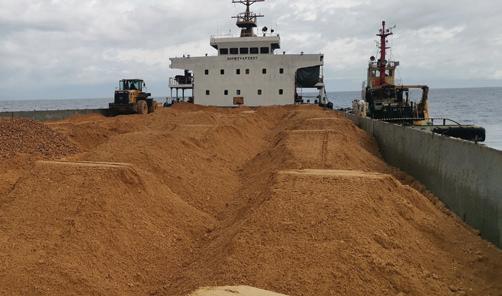
GMC’s concession area in Mati City, Davao Oriental yields iron ore and other minerals that include copper ore, gold ore, manganese ore, limestone, and silica.
GMC’s concession area in Ayungon, Negros mining site yields silica.


TAGANITO MINING CORPORATION

Supplies the limonite Ore (Mine waste), which contains 1.5%
Nickel and 0 10% Cobalt

Produces Mixed Sulfide, comprised of 57% Nickel and 5% Cobalt using the High Pressure Acid Leaching Technology


TAGANITO HPAL NICKEL CORPORATION NICKEL AND COBALT (MIXED SULFIDE)
METAL MINING CO., a Nickel Refinery
Conducts the final process and converts the Mixed Sulfide to 99.99% Nickel and 99.99% Cobalt.


Use as a prime component to produce Lithium batteries, electric vehicle batteries, mobile phones, steel products for largest skyscrapers, and many more.
A rare element utilized in lighting applications, aerospace, sports equipment, robust alloys and many other uses.
Utilized in the manufacturing of stainless steel, chrome plating, the production of corrosion-resistant superalloys, nichrome, and various types of paint
(Part 2)
Taking Stock of the Role of Women in Resources Development
Mining Decarb: E-mission Impossible? (Conclusion)
Celebrating the 70th Annual National Mine Safety and Environment Conference
Gold and Silver Shine Amid Inflation Concerns
Connecting Geoscience, Technology, and Industry to Build a Better Philippines
PNIA: Ban on Nickel Ore Exports Not Timely
Genluiching Mining Corporation: A Rising Player in the PH Mining Industry
HMC-TNP Achieves Unprecedented Fourth Consecutive PMIEA Award
Maharlika Corp. Lends $76.4M to Makilala Mining Project
Intertek Minerals: Your Preferred Partner in the Philippines
Advancements in Mining Equipment
Strengthening Values and Camaraderie
TMC pays over P63.5-M in taxes, fees to Surigao Norte

PSA: Construction Material Prices Remain Stable in January
DPWH Starts P28.9-m Repair of ‘Swaying’ Biliran Bridge
New Transport Chief Dizon Vows Projects to Continue
Megawide Gets Green Light on Cavite BRT Project
EEI: Pillar and Pioneer in PH Construction Industry
Sustainability Forum 2025: Advancing the Green Economy
The No.1 Weapon Vs. Cable and Fiber Optic Network Downtime
Save Money, Work Smarter, Drive Safer With Geotab’s Telematics Technology
Conquering Rough Terrain: Off-The-Road Tires and How Higantis Leads the Way
QES Helps Set Assay Standard for Nickel Ore Analysis
Smart Investment in Dewatering Systems — A Lifetime Cost Perspective
Valley Blades: Solutions You Can Count On
Advanced Forepoling Solutions with Robit® Casing System
GHD Steps Up Capabilities, Resources in PH


Marof his myriad inflation and against economic from the hard put consumer public a tight result declincosts further dollar fuel for materials more for debt the proand the Government facilienergy utiliAmong recovery are conflict weaker about by intercountry. businessmoney and and serespecially economic globally. groups, the mining sustainable refrom the pandemic and slowdown. investments for underscored Secreassured the commitment to environment Diokno also expects adhere to practices. He strike environand supsocioeconomic Marcos ecomedium-term fissucceed mining
written by: FERNANDO PENARROYO

By Fernando Penarroyo
Windustry would have to perform well. Dur ing the Philippine Economic Briefing in New York where President Marcos delivered a keynote message to American investors, Diokno emphasized the administration’s commitment to help maximize the mining sector’s potential in attracting more foreign investments.
hen I came back from my studies in Europe, I continued my studies at the UP College of Law. For me it was UP Law or bust because I financed my way to law school attending evening classes. Surely, with a meager government salary, I couldn’t have afforded pursuing law studies without the subsidy from taxpayers.
The mining industry considered the Duterte administration as another wasted era for realizing the full economic potential of the sector. The Marcos government in herited a mining industry reeling from the anti-mining stance of the previous administration with the appointment of the late Regina Paz Lopez, a staunch anti-mining advocate, to head the Department of Environment and Natural Resources (DENR). The appointment was bitterly opposed by the industry resulting in Lopez’s rejection by the powerful bicameral Commission on Appointments.

I was a junior member of the petroleum contracts team and negotiated production sharing agreements with private corporations. I was impressed with the depth of knowledge and demeanor of the foreign lawyers who represented the international companies. The head of our agency was also a tax lawyer, and I saw how he and the lawyers representing the private companies would discuss commercial and legal issues with all aplomb and passion. I wanted to be like them.
During her term, Lopez ordered the closure of mining operations and initiated a national mine audit conducted on behalf of the Mining Industry Coordinating Council. Mining stakeholders described the three years of closure of these companies as “arbitrary” and claim that at that time, the industry practically “gasped for breath.”
With COVID-19 bringing down the economy on its knees and a worsening economic fallout becoming inevitable, Duterte issued Executive Order No. 130 in April 2021, lifting the nine-year moratorium on the granting of new mining permits. Finally in December 2021, the Duterte administration succumbing to economic pressure, lifted the ban on open-pit mining.
Juggling work deadlines, law school classes, and personal life was overwhelming. Long working hours followed by evening classes often led to my physical and mental exhaustion. Tuition fees, books, and other expenses added financial stress. On some occasions, the pressure and long-term commitment caused me doubts and burnout. It wasn’t easy, but with discipline, planning, and self-care I just focused on my long-term goals.
and travel time from the DOE office in Fort Bonifacio to Diliman was less than an hour. Meanwhile, the early 1990s was a period of severe power crisis when the country experienced rotating blackouts that lasted up to 10 hours a day particularly in Metro Manila. The economy suffered from an insufficient power generation capacity due to years of neglect and underinvestment in energy infrastructure. During those half-day blackouts, I spent most of my time reviewing for my law class.
It is well to note that at the height of the pandemic in 2021, the mining sector’s contribution to the gross domestic product
Page 8 >
Back then, traffic during rush hours was not that bad

The energy crisis severely impacted industries, businesses, and households. Criticism focused on President Corazon Aquino’s government for failing to heed repeated warnings of crumbling infrastructure and an inevitable power breakdown. To address the crisis, President Aquino enacted measures allowing private companies to invest in power generation, a significant shift toward privatizing the energy sector. The situation was
New Leopard DI650i down-the-hole surface drill rig offers long-term productivity and superior stability with robust and reliable main components – seamlessly integrated with state-of-the-art technical solutions. Scalable automation, easy maintenance and outstanding movability are the features that make Leopard DI650i a premium product, which is an honor to own.
Leave your paw print and enjoy the smooth, efficient ride.
Explore the new Leopard DI650i: ROCKTECHNOLOGY.SANDVIK/DI650 i
lot of exposure on contracts negotiation especially when the government was negotiating with the consortium that operated the Malampaya Natural Gas to Power Project. During that time, I was bombarded with financial terms like “sovereign guaranty”, “offthe-balance sheet“ and “take or pay” which I didn’t learn from technical school. So, during one law school break, I managed to convince my bosses at the DOE to send me to a business school run by the University of Texas


at Dallas for a short course in Advanced Oil and Gas Financial Management. Attendance on the month-long course enabled me to interact with a diverse group of industry professionals and finance experts from international petroleum companies. We engaged in discussions on cost analyses, risk assessment, and investment strategies not only in the upstream sector but downstream operations as well.
With proper time management, I did my best to balance my career with my law studies. By staying true to my goal of becoming a lawyer, all the late nights and sacrifices eventually paid off. While pursuing law, I even managed to become the Officer-in-Charge of the Oil and Gas Division at the young age of twenty-nine.
After graduation from law school and passing the bar examinations, I felt the need to shift gear and widen my horizon from upstream petroleum to new and emerging industries. The 1990s saw growing global demand for minerals and metals, driven by industrialization in countries like China and India. The Philippine government pursued economic liberalization policies to attract foreign direct investment in various sectors, including mining. Mining was viewed as a way to bring in foreign capital, enhance exports, and increase government revenues.
With the signing of the Philippine Mining Act in 1995, the Ramos administration actively promoted mining as a key sector for economic growth. The pro-mining law provided many incentives to resources companies. As a result, from 1994 to 1996, exploration boomed as the country witnessed a 400 percent increase of foreign mining companies like Rio Tinto, Anglo American, Newcrest, Newmont, Phelps Dodge, Goldfields, and other big mining houses.
As a young lawyer then but having vast experience in contracts negotiation gained from the DOE, I was headhunted and recruited to join Australia’s WMC. WMC
was awarded a Financial and Technical Assistance Agreement (FTAA) by the Philippine government in 1995 to develop the Tampakan Copper Project in South Cotabato, Mindanao. I didn’t have much experience in mining laws but FTAAs and petroleum service contracts have similarities since both have the same constitutional basis allowing 100% foreign ownership of companies engaged in the exploration, development, and utilization of natural resources.
The boom in mineral exploration at that time also saw the emergence of native title and social license issues. Around the world, host communities and governments expected companies to do more to support stakeholders and leave a positive legacy for the future. With WMC, I gained extensive experience in environment laws and policies such as indigenous peoples rights, land access agreements, forestry, community organizing, capacity building, and resettlement.
Part of my job required me to be seconded to WMC’s numerous business units in Australia for a year. The secondment exposed me to advanced compliance strategies and risk management techniques used by the company. My interactions with WMC’s in-house legal teams and operational managers on complex transactions, project financing, and regulatory issues enabled me to develop skills in corporate governance, project development, and indigenous rights negotiations—areas where WMC has extensive experience.
Part of my secondment included working with Minter Ellison, an Australian law firm which was WMC’s external legal counsel for its fertilizer project in Queensland. Aside from acquiring lessons in Australian legal models to improve resource management, I also developed soft skills, including adaptability and cross-cultural communication. The skills and experience I gained from my Australian secondment benefitted my legal career tremendously as the mining industry became increasingly

globalized with companies operating across multiple jurisdictions.
Meanwhile, the 1990s and early 2000s saw the wave of mergers and acquisitions among mining companies, which was driven by several global and industry-specific factors. These consolidations were often aimed at enhancing competitiveness, reducing costs, and managing risks in a rapidly changing global mining landscape. To remain competitive, mining firms sought to merge with or acquire others to gain access to new markets, broader resource bases, and greater economies of scale. Mergers also allowed companies to create vertically integrated operations, from exploration to production to distribution.
In 1999, WMC became a key part of this ‘get big’ push when it was acquired by BHP. Other companies followed suit. Newmont Mining Corporation acquired Normandy Mining and FrancoNevada in 2002, becoming the world’s largest gold producer at the time. BHP merged with Billiton in 2001, creating BHP Billiton, one of the largest diversified mining companies in the world. AngloGold merged with Ashanti Goldfields in 2004 to form AngloGold Ashanti, strengthening its position as a major gold producer.
In 2001, WMC which had invested $39 million for exploration and support activities in its Tampakan project decided to pull out of the Philippines. Following an evaluation of the mineral resources of its Tampakan project, the company decided that it would not be able to meet an acceptable rate of return on
investment. The company said it also took into account the continuing drop in the price of copper in the world market at that time. WMC sold its rights and interests to the original claim owners, paving the way for its complete pull-out from the Philippines. I was among those retrenched from the company.
With this development, I was fortunate to have won a scholarship given by the Australian government to pursue my Master of Laws at the University of Melbourne. Melbourne Law School is ranked among the top law schools globally, making its LLM a prestigious qualification. Their LLM program offered me further exposure to both common law and international law perspectives, crucial for my legal practice which deals with cross-border energy and resource issues. I focused my subjects and research works on resources and infrastructure business development and project finance.
Fresh out of graduate school in 2002, I was still feeling my way into the professional mainstream. With so much time on my hands and still deciding on how I would restart my career, I thought that perhaps a part-time lecturing job would suit me at that time. It was an avenue for me to reintegrate myself into the legal profession after being out of the country for almost two years. My return from graduate school was an opportune time for me to teach and share what little knowledge I have acquired from my studies. After all, I won an Australian Development Scholarship so
Page 12 >


technically, I have to pay forward and reciprocate the opportunity of studying in Australia’s highest rated university in legal studies.
I spent six years as a titled part-time university lecturer at De La Salle University-Far Eastern University, which offered a dual degree program, Master of Business AdministrationJuris Doctor. At the same time, I embarked on and developed my private law practice after spending years as an in-house counsel. In my first lecturing experience, I developed and implemented a syllabus on legal research with emphasis on internet legal database research. I also taught environmental law with emphasis on global practice. At that time, those subjects were relatively at their infancy.
My stint in DLSU-FEU paved the way for further professorial lecturing opportunities in other universities. I was invited to lecture at my alma mater, the University of the Philippines National Institute of Geological Sciences where this time, my students were graduate students doing their Master of Science in Geology. In UP NIGS, I developed and implemented a syllabus on Mineral and Energy Policies. I was also invited to lecture for the geology board examination review on Resources and Environmental Law. It gave me the opportunity to lecture around the country before students who want to join the mineral, energy, and resources industries. I was also invited to lecture at the Bangkok-based Asian Institute of Technology, where my student were senior executives from private and government-owned Bangladesh companies. Lecturing gave me an extensive opportunity to promote one of my advocacies - creating career development programs through student mentorship. By acting as resource person in fora organized by student groups, I have been able to reach out to many youth organizations.
I also got involved in the renewable energy industry by volunteering as legal counsel
of the National Geothermal Association of the Philippines (NGAP). My background in energy law, environmental regulations, drafting contracts for project development, and corporate transactions enabled me to branch out to renewable energy following the passage of the Renewable Energy Act of 2008. Serving as director and legal counsel for NGAP allowed me to understand RE industry policies and expand professional network within the geothermal sector. It gave me an opportunity to contribute advice on legislative and regulatory developments affecting geothermal projects, assisting with drafting policy recommendations, and participating in working groups focused on legal and business issues. I was nominated by NGAP to be the Philippine representative and board director of the International Geothermal Association, where I gained further professional global network in the industry.
Through the years, I provided legal and commercial advice and prepared country risk analysis to geothermal companies. I wrote many legal articles on geothermal, and some were cited in policy papers published by development agencies. I believe that the greatest recognition by the industry was being invited to write the chapter on the Philippines for the Second Edition of the book “Geothermal Power Generation: Developments and innovation” published by Elsevier. Elsevier is one of the world’s leading scientific publishers and data analytics companies. I was also engaged as consultant by an international cooperation agency to assist a foreign government to review its geothermal contractual framework agreements.
In 2022, I was appointed by the President of the Philippines as Chairperson, Professional Regulatory Board of Geology of the Professional Regulations Commission. The PRB Geology plays a pivotal role in overseeing the regulation and governance of the geology profession. The Board presides over board licensure

examinations and supervises the evaluation and accreditation of geology programs. Additionally, the Board works closely with other government agencies, academic institutions, and industry stakeholders to promote continuous professional development and to address emerging issues in the geosciences.
At the same time, I received formal recognition from my peers in the legal profession by being involved in arbitration proceedings as Chair and Member of Panel of Arbitrators in numerous high-value and impact cases. I was also invited to act as a judge for the Asian Legal Business - Philippine Law Awards since 2020 in the categories of energy and resources, among others.
Resources and energy issues have become complex and highly technical, requiring specialized expertise and experience. These challenges demand not only a deep understanding of the law but also insights into the intricate details of geoscience. A specialized skill set that combines law, policy, business, and technical expertise is much needed to effectively tackle challenges in the resources and energy industry. Acquiring this interdisciplinary expertise allows a lawyer to better understand complex scientific technical data, financial information, and government policies to effectively communicate with stakeholders.
For a government regulator, having a legal background combined with expertise in
geosciences offers a distinct advantage in shaping and enforcing policies and regulations in relation to natural resources management. It allows the regulator to interpret complex technical data accurately, draft more effective and scientifically sound policies, and ensure regulatory decisions are both technically sound and legally robust. Additionally, the ability to bridge the gap between legal frameworks and scientific data makes the expert invaluable in high-stakes cases, contract negotiations, and policy development. Being a lawyer with a background in geosciences, I can say that it is professionally rewarding due to the high demand for legal expertise in specialized, lucrative sectors such as environmental law, energy, mining, and natural resource management.
Fernando “Ronnie” S. Penarroyo specializes in Energy and Resources Law, Project Finance and Business Development. He is also currently the Chair of the Professional Regulatory Board of Geology, the government agency mandated under law to regulate and develop the geology profession. Atty. Penarroyo was recently awarded the 2024 Distinguished Alumnus Award for Geosciences by the UP Alumni Association. For any matters or inquiries in relation to the Philippine resources industry and suggested topics for commentaries, he may be contacted at fspenarroyo@penpalaw.com. Atty. Penarroyo’s commentaries are also archived at his professional blogsite at www.penarroyo.com


written by: PATRICIA A. O. BUNYE
Patricia A. O. Bunye is the Managing Partner of Cruz Marcelo & Tenefrancia where she heads its Mining & Natural Resources Department and Energy practice group. She is also the Founding President of Diwata-Women in Resource Development, Inc., a non-government organization advocating the responsible development of the Philippines’ wealth in resources, principally through industries such as mining, oil and gas, quarrying, and other mineral resources from the earth for processing.
resources development.
The mining industry in the Philippines, like many other countries, has traditionally been male-dominated. Nevertheless, there are marked efforts to increase women’s participation and address their unique challenges, thanks in no small part to the leadership of a woman Secretary of Environment and Natural Resources and to groups that are pushing this agenda.
Among the major issues faced by women in mining are: (1) gender division of labor, where women are confined to jobs that are less technical or less physically taxing; (2) limited access to education and training, which in turn limits their opportunities for advancement; (3) cultural and social barriers, which include cultural beliefs that prevent women from going underground; and (4) negative environmental and social impacts of mining operations.
To address these challenges, a number of steps have been identified:
1. Policy reforms. These include amending the Philippine Mining Act to include gendersensitive provisions to ensure more equitable participation and opportunities for women. Mining companies
could also be mandated to conduct periodic gender impact assessments and sexdisaggregated data collection. These reforms would also include a better implementation of the Magna Carta of Women in the mining industry and introducing guidelines, particularly for Social Development and Management Programs (SDMPs) which would encourage gender-responsive projects to meet the needs of women in mining communities. n this regard, Department of Environment and Natural Resources (DENR) Secretary Maria Antonia Yulo Loyzaga recently signed a new department administrative order mandating mining companies to incorporate the United Nations’ 17 Sustainable Development Goals (UN SDGs) into their SDMPs. Mining contractors and permit holders will have the responsibility of ensuring that SDGs are achieved within their host and neighboring communities.
The 17-point UN SDGs include, among others, no poverty; zero hunger; good health and well-being; quality education; gender equality, clean water and sanitation; affordable and clean energy; decent work and economic growth; reduced inequalities; and sustainable cities and communities.
2. Education and Training. This involves iincreasing access to education and training programs tailored to women to bridge the gap in technical skills. Women often have limited access to STEM education which is essential for careers in mining. Mining companies can take the lead in developing and implementing training programs specifically for women in mining to hone their technical and management skills, and leadership.
There are existing programs, such as the United Nations Development Programme’s course on Gender and Mining Governance, which includes modules on promoting women’s engagement in mining projects.
3. Empowerment and Leadership Opportunities. In a 2023 speech at the 10th anniversary celebration of Diwata – Women in Resource Development, DENR Secretary Loyzaga urged mining companies to empower women to lead and provide a platform that can harness their unique perspectives, knowledge and skills. “Mining companies are urged to enhance women participation in their conservation and restoration projects, acknowledging the indigenous women’s and other women’s invaluable knowledge of local ecosystems. The mining
industry can mainstream gender-responsive policies in their corporate strategies, not only to ensure that practices do not inadvertently harm women, but that they also build corporate resilience,” Loyzaga said.
As this is being written, the Chamber of Mines of the Philippines (COMP), in partnership with PH-EITI and the Mines and Geosciences Bureau, has announced a forum entitled “Mining Her Own Business: Elevating Women’s Voices in Natural Resource Governance” which is expected to gather industry leaders, policymakers, academics, and development partners to discuss genderresponsive governance in the extractive sector. The discussions will focus on:
• Women’s participation in decision-making
• Gender-sensitive data disclosures
• The impact of mining revenues on women and marginalized groups
Although women continue to face significant challenges in the mining industry in the Philippines, there are concerted efforts to address these issues and create a more inclusive sector. It is envisioned that, by promoting gender equality and providing opportunities for women to participate fully, the mining industry will become more sustainable and equitable for all stakeholders.

written by: NOEL B. LAZARO, EVEART GRACE P. CLARO, JUDD YONDER L. REYES, AND MARIELLE D. MARBELLA
The global push for sustainability has reached a tipping point, compelling industries to accelerate their decarbonization efforts. Nowhere is this more critical than in mining—a sector paradoxically essential for the green transition yet burdened by its environmental footprint.
The first part of this article (see Issue 4 2024 – Editor) examined the Philippine mining sector’s decarbonization landscape, highlighting the challenges of attracting carbon project investments, the role of policy reforms, and the industry’s response to emerging sustainability standards like Towards Sustainable Mining (TSM). It also explored legislative efforts, such as the Low Carbon Economy Investment Act and the Carbon Rights Act, to incentivize emissions reduction and integrate carbon markets.
This second part delves into the tangible steps mining companies must take to decarbonize, the barriers hindering progress, and the opportunities that could turn sustainability into a competitive advantage.
Sustainability reporting has become essential for businesses, particularly in mining. Since 2019, the Philippine SEC has mandated all listed companies to disclose their sustainability practices, achieving over 90% compliance. In 2023, the SEC reinforced this mandate with enhanced standards, including structured forms beyond narrative reporting to ensure thorough ESG disclosures.
An encouraging development is the SEC’s move towards mandatory reporting, aiming to extend these regulations to unlisted firms.
Also, the Philippine Financial and Sustainability Reporting Standards Council (FSRSC) is introducing new reporting requirements for publicly listed
extractive companies, mandating compliance with the International Financial Reporting Standards (IFRS) S1 and S2 by 2027.
Developed by the IFRS Foundation’s ISSB, these standards create a global framework for sustainability reporting, focusing on climate-related and financial issues that impact company value. IFRS S1 addresses general sustainability disclosures, while IFRS S2 targets climate-related disclosures, aiding companies in reporting how sustainability factors influence their long-term success and risk management.
The introduction of IFRS S1 and S2 significantly boosts board accountability in industries with major environmental impacts, particularly in addressing sustainability and climate-related issues. These standards mandate oversight of sustainability practices, measurable emissions reduction targets, and stakeholder transparency, positioning boards as environmental stewards. Non-compliance can impair asset values, reduce earnings, and erode investor trust.
With such standards, mining companies are set to establish trust among their stakeholders, thus attracting more investments with the promise of sustainability.
The concept of a circular economy is fundamentally aligned with the principles of sustainability, focusing on reducing waste, maximizing resource efficiency, and promoting environmental regeneration. Unlike the traditional linear economy, which follows a “take-make-dispose” model, the circular economy emphasizes a closed-loop system where materials are reused, repaired, refurbished, and recycled to create a more sustainable, restorative system.
Viewing mining through the lens of the papal encyclical Laudato Si reveals the tension between humanity’s resource

needs and the moral duty to protect the planet. At a Vatican meeting on “Mining for the Common Good,” Pope Francis voiced concerns about profit-driven economic models that overlook environmental and human impacts. He advocated for a “circular economy” in mining, emphasizing resource reuse and waste reduction.
Circularity is essential in mining operations. Philippine mining companies must submit an annual environmental protection and enhancement program detailing measures to minimize extraction’s adverse effects, including waste and tailings reduction, efficient water management, riverbank stabilization, progressive mine rehabilitation, and recycling of materials like tires and non-biodegradables.
The DENR complements the shift to a circular economy
and low-carbon energy system through the Green Economy Program of the Philippines (GEPP). This initiative emphasizes integrated waste management and green technology. The GEPP aims to involve all government levels and private sectors in policy formulation and energy efficiency promotion.
Rohitesh Dhawan, CEO and President of the International Council on Mining and Metals (ICMM), describes how circularity can be made more impactful in an October 2024 report: “To achieve a circular economy at scale, innovative solutions are needed for both process and product.”
The imperative to transition to a greener future embodies a

paradox. The human activities driving carbon emissions are simultaneously vital for sustaining electrification, creating a delicate equilibrium between often opposing societal forces.
Consider the Tesla Model 3 that has a 50-82 kWh lithium-ion battery, using 2170 Nickel-Cobalt-Aluminum (NCA) batteries before 2023, and 2710 Nickel-Cobalt-Magnesium (NCM) batteries in vehicles manufactured in China and Berlin. Recently, Tesla adopted Lithium-Iron-Phosphate (LFP) batteries for the standard Model 3 (2021-2023). This highlights a critical issue: EVs rely on batteries, which require minerals, and minerals necessitate mining. This theme is central to Ernest Scheyder’s recent book, “The War Below: Lithium, Copper, and the Global Battle to Power Our Lives,” which examines the conflicts arising from the demand for essential metals.
Scheyder illustrates the complex interplay involving mining companies seeking to extract metals for value and revenue, residents opposing mine construction but seeking job security, environmentalists who acknowledge mining for the green revolution while striving to protect ecosystems, and regulators navigating both socio-economic interests and governance rules.
Identifying barriers to decarbonization in mining is crucial, particularly economic dependence. This reliance can foster resistance to decarbonization due to fears of job losses and economic decline. Transitioning from fossil fuels requires substantial investment, limited financing options, and community support, posing political and social challenges. Infrastructure limitations complicate matters. Effective decarbonization demands modern infrastructure, including reliable energy sources and efficient transportation networks. In many regions, inadequate infrastructure hampers energy project implementation and cleaner technology adoption, leading to stalled initiatives or increased costs. Technical challenges also arise in scaling up new technologies, which often require trailblazing research
and development. This technological gap hinders the adoption of practices that could reduce carbon footprints. According to the Rockefeller Foundation, the Philippines needs approximately $9 billion to bolster renewable energy efforts, a figure that could rise to $165 billion by 2050.
The regulatory framework is another critical factor. Inconsistent or weak regulations and bureaucratic gridlock can lead to slow development. Absent fair and firm guidelines, companies may prioritize short-term profits over long-term environmental responsibility, thereby stalling progress in reducing carbon emissions.
Global market pressures can also impact the mining sector’s decarbonization efforts. Fluctuating commodity prices may deter companies from investing in sustainability initiatives.
Furthermore, supply chain emissions present another layer of complexity, as controlling emissions from suppliers and transportation can complicate overall decarbonization strategies. Awareness and education play a vital role in this context. A lack of understanding about the benefits and importance of decarbonization among stakeholders can hinder progress.
Despite these challenges, there are opportunities conducive to decarbonization within the mining industry. Electrifying operations by transitioning to EVs and equipment can lower emissions, particularly when powered by renewable sources. BloombergNEF’s 2023 report noted that lithium-ion battery costs have dropped dramatically during the previous ten years, reaching a record low of $139/ kWh last year, due to increased production capacity and falling raw material costs. By 2030, advancements like solid-state electrolytes and anodes are expected to lower costs to $80/ kWh.
The Philippines, rich in valuable metals like nickel, copper, and gold, has a combined value of $0.4 to $1 trillion. With adequate government support and a robust platform, it could position itself as an EV hub to rival South-
east Asia’s first battery plant in Indonesia.
On the other hand, integrating renewable energy sources, such as solar, wind, and hydropower, can significantly reduce reliance on fossil fuels.
For example, in 2018, Ipilan Nickel Corporation (INC) established a mini-hydro power plant with a 6-kW capacity to provide free electricity to the Indigenous community in Sitio Mararag, Barangay Maasin, Palawan. Since 2019, this facility has continuously supplied 220 volts to at least 32 households, including the Mararag Day Care Center. In 2022, the company also installed solar-powered lamp posts and plans to expand its solar initiatives, further supporting a cleaner environment.
Moreover, INC has initiated a 25-hectare mangrove plantation in the brackish waters of Española, Palawan, contributing to coastal protection and environmental restoration. If replicated across regions and industries, these efforts could be pivotal.
In compliance with DENR Administrative Order No. 201819, which sets strict limits on land disturbance and mandates immediate replanting or rehabilitation, mining companies are expected to implement comprehensive rehabilitation and reforestation efforts that not only restore biodiversity but also absorb CO₂. This can be strengthened by adopting circular economy practices that minimize waste.
Carbon pricing is another avenue worth pursuing. By creating a market for carbon credits, companies can receive financial incentives to lower emissions, encouraging innovation and cost-effective carbon footprint reduction strategies.
Governments are increasingly offering regulatory incentives to companies investing in green technologies, which could handsomely reduce costs—a strategy the Philippines should consider seriously.
Finally, stakeholder pressure is rising, with investors and consumers demanding more sustainable practices and driving companies toward adopting decarbonization strategies.
Balancing these opportunities and challenges will be crucial for the mining industry as it navigates the path toward effective decarbonization.
A collaborative and multifaceted approach is required to overcome the barriers to a low-carbon future in the mining sector. Stakeholders can harness a culture of stewardship from initiatives like the DENR’s green transition, clear and efficient regulatory policies, tax and financial incentives, international standards like the TSM model, meaningful sustainability disclosures, investment in renewable energy and carbon rights, upscaling circular economy practices, and access to research and technology.
Achieving net-zero emissions by 2050 may seem like a piper’s dream, but with every ambition turned into action, decarbonization can come within reach. The world watches—with bated breath.
Noel B. Lazaro, Atty. Eveart Grace Pomarin-Claro, Judd Yonder L. Reyes, and Marielle Marbella are key members of the Legal and Regulatory Affairs Group at Global Ferronickel Holdings, Inc. (FNI).
They were honored with the InHouse Legal Team of the Year 2024 Best Practice Management Award (Corporate Social Responsibility) and were shortlisted for InHouse Legal Team of the Year 2024 in the Energy and Natural Resources category by the In-House Community (IHC). The IHC represents over 21,000 in-house legal professionals across Asia and the Middle East and received a record 206 nominations in 2024 across 14 jurisdictions.
They were also celebrated at the Asian Legal Business (ALB)–Philippine Law Awards 2024, organized by Thomson Reuters, where they received the In-House Team of the Year 2024 (Construction and Real Estate) award and were finalists in the Philippine In-House Team of the Year 2024 and In-House Team of the Year 2024 (Innovation) categories. Atty. Lazaro was named among the Top 5 Philippine In-House Lawyers of the Year 2024.

written by: MARCELLE P. VILLEGAS
The 70th Annual National Mine Safety and Environment Conference led by Philippine Mine Safety and Environment Association (PMSEA) was held on November 19 to 22, 2024 in Baguio City.
This year’s theme is “Endurance and Innovation for Sustainability.”
Annually in this event, the mining industry gather in Baguio City to promote and celebrate responsible and sustainable mining, occupational safety, environmental stewardship, and social responsibility.
This year’s conference had an exciting lineup of activities, including Mining Exhibit, Youth Congress, Mineral Industry Symposium, Mine Safety Field Demonstration, Norfolk Tree Rejuvenation, and more!
On the first day of ANMSEC, Philippine Mining and Exploration Association hosted the 7th PMEA Forum, “Critical Minerals for Green Technology”. The forum was a partnership with MGBDENR. This was held at the Ifugao Room, CAP John Hay Trade and Cultural Center.
The forum brought together industry leaders and experts who discussed the pivotal role of critical minerals in advancing green technology. The forum provided valuable insights into sustainable practices and innovative solutions shaping the future of green technology.
The forum also covered government initiatives on critical minerals exploration, new laboratory techniques for porphyry copper exploration, mining methods for bulk minable deposits, and smart technology and data science applications for the mining industry.
A livestream of “Kapihan sa Baguio” was held on Nov. 19, 2024 in Baguio Country Club. The broadcast was made possible by the Philippine Information Agency (PIA), Presidential Communications Office, Philippines, and Baguio City Public Information Office.
This special episode of “Kapihan sa Baguio” was hosted by Mr. Andrew Pinero and Ms. Helen R. Tibaldo,

Regional Head of Philippine Information Agency. Together with the guest panelists, the episode featured a thorough conversation on building a sustainable and resilient mineral industry.
Panelists include: His Excellency Harald Fries (Former Ambassador of Sweden to the Philippines), Sweden Trade Commissioner Johan Lennefalk, PMSEA President Engr. Luis Sarmiento, Ambassador Delia Albert, MGB Assistant Director Marcial Mateo, PMSEA BOD Ramon Santiago, and PMSEA BOD Angelita Lee.
The mining industry’s commitment to safety, environmental responsibility, and social development took center stage at the 70th Annual National Mine Safety and Environment Conference (ANMSEC) Awards Night and Testimonial Dinner, held on November 22, 2024, at the CAP – John Hay Trade & Cultural Center Main Hall A & B, Baguio City.
The event drew hundreds of industry professionals to celebrate excellence in the mineral sector, recognizing


www.fluke.com/en-ph

Suitable for harsh industrial environments. For validation and advanced troubleshooting of copper, fiber and coax cabling infrastructure at the mine site.
Cable testing you can trust, network testing you’ll need. Good for cabling validation, network performance testing up to 10GBASE-T and nearest switch diagnostics that includes VLAN and PoE information.
OTDR designed for both enterprise and OSP environment. Automated setup senses fiber characteristics and sets measurement parameters to discover and locate fiber faults at the mine site. Easy and simple to use UI with in-depth trace analysis when needed.


to minimizing environmental impact, prioritizing mine safety and health, enhancing rehabilitation efforts, and promoting community development, earning them the 2024 PMIEA award.
The awardees are as follows:
SURFACE MINING OPERATION:
Cagdianao Mining Corporation (East Coast Mineral Resources Co., Inc.); CTP Construction and Mining Corp.’s Carrascal Nickel Corporation, Adlay Mining Project, and Dahican Nickel Project; FCF Minerals Corporation; Hinatuan Mining Corporation – Tagana-an; and Taganito Mining Corporation
QUARRY OPERATION:
Eagle Cement Corporation, Northern Cement Corporation, Republic Cement & Building Materials, Inc. – Bulacan, Republic Cement & Building Materials, Inc. – Teresa, and Republic Cement Mindanao, Inc.
MINERAL PROCESSING OPERATION:
Coral Bay Nickel Corporation
The PMIEASC also awarded the Platinum and Titanium Achievement Awards to qualified mining and mineral processing companies that did not meet the required rating for the PMIEA but attained a high degree of SHES performance. The PMIEASC Achievement Awardees are the following:
PMIEASC PLATINUM AWARDEES: SURFACE MINING OPERATION:
Carmen Copper Corporation (of Atlas Consolidated Mining and Development Corporation), Filminera Resources Corporation, Platinum Group Metals Corp. (of Surigao Integrated Resources Corporation), Rio Tuba Nickel Mining Corporation – Nickel Mining Project, and Zambales Diversified Metals Corporation
QUARRY OPERATION:
Helix Mining and Development Corp. –Davao, Helix Mining and Development Corp. – La Union, Helix Resources and Development Corp., Solid North Mineral Corp.
MINERAL PROCESSING OPERATION: Philippine Mining Service Corporation
– Alcoy Plant, and Philippine Mining Service Corporation – Bohol Plant
PMIEASC TITANIUM AWARDEES:
Surface Mining Operation: Dinapigue Mining Corporation, and Quarry Operation: Bohol Limestone Corporation
BEST MINING FOREST CONTEST
Another highlight of the conference was the Best Mining Forest Contest (BMFC), adhering to DENR Administrative Order (DAO) No. 22, series of 1989, and NEC Resolution No. 2005-02, which recognizes mining and mineral processing companies for their reforestation and environmental rehabilitation initiatives.
Under the Mining Forest Program, the Best Mining Forest Contest (BMFC) is part of the government’s initiative to address deforestation and promote biodiversity conservation, showcasing how mining and mineral processing plant operations can play a positive role in environmental restoration.
This year’s winners were celebrated for their successful reforestation efforts. The 2024 BMFC awardees are the following:
METALLIC CATEGORY:
Winner: Cagdianao Mining Corporation (of East Coast Mineral Resources Co., Inc.)
First Runner-up: Platinum Group Metals Corporation (of Surigao Integrated Resources Corporation)
Second Runner-up: OceanaGold Philippines, Inc. (FTAA No. 001)
Second Runner-up: Taganito Mining Corporation
Third Runner-up: Carrascal Nickel Corporation
NON-METALLIC CATEGORY:
Winner: Republic Cement & Building Materials, Inc. - Bulacan (MPSA No. 026-94-III)
First Runner-up: Eagle Cement Corporation
Second Runner-up: Republic Cement & Building Materials, Inc. - Teresa
Third Runner-up: Solid North Mineral Corporation
MINERAL PROCESSING PLANT
CATEGORY
Winner: Coral Bay Nickel Corporation
First Runner-up: Philippine Mining Service Corporation - Alcoy Plant
EXPLORATION CATEGORY
Winner: Philex Mining Corporation
SAFEST MINES AWARD
Safety remains a top priority in the mining industry and the Safest Mines Award (SMA) honors mining and mineral processing companies that uphold the highest safety standards in their operations. The award also recognized the company’s safety protocols and commitment to the health and well-being of its workers, training programs for all personnel, and cutting-edge safety practices to protect its workforce. The summary of 2024 SMA awardees is as follows:
SAFEST SURFACE MINING OPERATION AWARD
Winner: FCF Minerals Corporation
Runner-up: Carrascal Nickel Corporation
SAFEST QUARRY OPERATION AWARD
Winner: Republic Cement Mindanao, Inc.
Runner-up: Republic Cement and Building Materials, Inc. - Bulacan
SAFEST MINERAL PROCESSINGEXTRACTION CATEGORY AWARD
Winner: Coral Bay Nickel Corporation
SAFEST MINERAL PROCESSING - CALCINING PLANT CATEGORY AWARD
Winner: BMC-Forestry Corporation
SAFEST MINERAL PROCESSING - CRUSHING PLANT CATEGORY AWARD
Winner: Pinagpala PT Aggregates Corporation
Runner-up: Philippine Mining Service Corp. - Alcoy Plant
MOST IMPROVED SAFETY PERFORMANCE
Winner: Dinapigue Mining Corporation
SAFEST MINING OPERATION
Winner: FCF Minerals Corporation
Photos by: -- Merianjay Fallan-Briz -- Philippine Mining and Exploration Association -- SGV & Co. Reference: https://mgb.gov.ph/2015-05-13-0202-11/mgb-news/1633-recognition-ofexcellence-in-mining-and-mineralprocessing-the-2024-pmiea-bmfc-andsma-at-the-70th-annual-national-minesafety-and-environment-conference-inbaguio-city

Save money, work smarter and drive safer with Geotab’s telematics technology
During the first three quarters of 2024, the value of metallic mineral production increased by 3.17%. This is equivalent to PHP6.02 billion rise in production, from PHP189.90 billion to PHP195.92 billion year-on-year.
Precious metals, particularly gold and silver, have experienced a significant surge in value, driven by growing investor interest amidst rising inflation. Recent data reveals an increase in the prices of these commodities, reflecting a broader trend of investors turning to gold against economic uncertainty.
According to the latest price bulletin of Banco Sentral ng Pilipinas (BSP), gold has an of $361.17, representing an impressive 18.69% jump in value. Silver has a remarkable rise with a $3.46 increase, translating to a 14.69% gain.
Analysts give credit to this surge directly to heightened inflation rates, which are prompting investors to seek safe-haven assets like gold to protect their wealth. Gold is traditionally considered as a store of value that maintains its purchasing power during periods of economic instability and currency devaluation. As inflation erodes the value of traditional currencies, the demand for gold increases as well.
The performance of gold in 2024 has been impressive. The price of gold has consistently remained above the $2,000 mark, showcasing its resilience and appeal. In September, the price of gold reached a peak of $2,565.25 per troy ounce, highlighting the strong upward trend.
Market expectations lead towards continued price increases for precious metals throughout the remainder of the year. While inflation concerns persist and global economic uncertainty remains, the demand for gold and silver is anticipated to remain strong.
Meanwhile, silver prices are expected to remain strong, driven by industrial demand, particularly in the solar sector. The price of silver improved from $23.55 per troy ounce to $27.01 per troy ounce. Additionally,

copper prices rose to $4.07 per pound, up from $3.90 per pound year-onyear. In contrast, nickel prices have significantly declined. According to the London Metal Exchange, nickel prices fell by 25.43%, decreasing from $10.39 per pound to $7.75 per pound year-on-year. This surge in precious metal prices underscores the importance of diversifying investment portfolios and considering alternative assets like gold and silver, particularly during periods of economic volatility. Investors seeking to mitigate the impact of inflation may find these precious metals an attractive option to preserve and potentially grow their wealth.
In the metal market, silver and copper enjoying price appreciation while nickel experiences a significant downturn.
Silver has great potential due to rise in industrial demand particularly in the solar energy sector, which relies heavily on silver in photovoltaic cells. This heightened demand has pushed the price of silver upward, rising from $23.55 per troy ounce to a current level of $27.01 per troy ounce.
Copper is also performing well in the price trends with a price increase to $4.07 per pound. This is a notable jump from $3.90 per pound compared to the same period last year. This increase is due to the current demand in copper from the construction industry, electronics, and infrastructure development.
Nickel on the other hand is experiencing a significant downturn with its price decline. Data from the London Metal Exchange (LME) reports a decrease of 25.43% in nickel prices yearon-year. This translates to a fall from $10.39 per pound to $7.75 per pound.
Last year, gold was the leading commodity in terms of total contributions. It had a 47.30% of the total value, which amounts to PhP92.67 billion.
Nickel ore and its by-products, including nickel-cobalt mixed sulfide (NCMS) and scandium oxalate, together represented 36.26%, or PhP71.05 billion.
Copper ranked third, contributing 14.60% or PhP28.61 billion. The combined value of silver, chromite, and iron ore was PhP3.60 billion, which represents approximately 1.84% of the overall contributions.
From MGB’s year-end review, the performance of gold remained robust, despite a 4% decrease in production volume, which fell from 22,948 kilograms to 22,034 kilograms. However, the production value increased from PhP77.92 billion to PhP92.66 billion, representing an increase of PhP14.75 billion or 18.93%.
Bicol Region is the prime gold producer with 20.40% of the total production, yielding 4,495 kilograms. This is due to the remarkable output of Philippine


Gold Processing and Refining Corporation. Region II or the Cagayan Valley Region ranks as second to this with a contribution of 20.02% or 4,268 kilograms, which is the combined output of FCF Minerals and OceanaGold (Phils.) Inc. Next in place is Region XI or Davao Region with an output of 2,085 kilograms.
The Cordillera Administrative Region ranks on fourth place with a production of 1,626 kilograms, while the Caraga Region is on the fifth rank with a production of 1,553 kilograms.
MGB reported that the production loop was completed by Region VII, represented by Carmen Copper Corporation, with an output of 1,021 kilograms; and Region IX, represented by TVI Resources Development (Philippines) Inc., with an output of 904 kilograms.
Johson Mining Corporation and Tribal Mining Corporation reported no production during this period.
The average price of gold for over the nine-month period it noteworthy, increasing from US$1,932.07 per troy ounce in 2023 to US$2,293.24 in 2024, year-onyear.
Gold remains a stable commodity for investment even during economic downturns. Silver production in terms of volume and value experienced substantial growth, increasing by 9% and 43%, respectively.
This increase brought the production totals from 35,788 kilograms, valued at approximately PhP1.43 billion, to 39,136 kilograms, with a value of around PhP2.05 billion year-on-year.
The overall increase in volume was due to the impressive 39% rise in output from TVI Resources Development (Philippines) Inc. at its Balabag Gold-Silver Project in Zamboanga del Sur. Their production increased from 13,973 kilograms, valued at PhP569.28 million, to 19,430 kilograms, with an estimated value of about PhP1,007.45 million year-on-year.
Second to this is Apex Mining Company Inc. which produced 7,426 kilograms, valued at
PhP378.45 million.
The Philippine Gold Processing & Refining Corporation reported production of 4,387 kilograms, while OGPI produced 3,488 kilograms.
Copper production showed significant growth, with volumes increasing by 44% and overall value rising by 53%.
Copper production increased from 195,533 kilograms, valued at approximately PHP 18.71 billion, to 280,718 dry metric tons, with an estimated value of PHP 28.61 billion, year-on-year.
The re-entry of Carmen Copper Corporation’s (CCC) Toledo Copper Operation in the Lutopan Mining Area contributed greatly to the growth in copper production, with a production of 79,914 dry metric tons. Additionally, CCC’s Carmen Mining Area, had an 11% increase in production volume, amounting to 12,638 dry metric tons.
On the other hand, Philex Mining Corporation had a decline in production at 8%, while OGPI also reported production decline at 9%.
Chromite has been doing well in terms of production. It had increased for both volume and value, rising from 67,877 dry metric tons with an estimated production value of PHP 957.65 million to 103,917 dry metric tons valued at approximately PHP 1,392.35 million year-on-year.
Techiron Resources Inc. made this remarkable production increase, from 10,508 dry metric tons to 55,327 dry metric tons year-onyear.
Second to this is Taganito HPAL Nickel Corporation, which produced 48,590 dry metric tons. (Taganito’s chromite production is a by-product of its NCMS output.)
For nickel, Due to oversupply and reduced demand from China, nickel ore and its byproducts, NCMS and scandium oxalate, experienced a decline in overall performance. Nickel value fell from PhP90.56 billion to PhP71.05 billion year-onyear, representing a decrease of PhP19.51 billion.
Nickel production volume and value of nickel ore decreased by 12.07% and 20.56%, respectively.
This decline went from 29,231,074 dry metric tons, valued at approximately PhP54.10 billion, to 25,702,968 dry metric tons, with an estimated value of PhP42.98 billion.
Caraga Region, the nickel hub of the Philippines, contributed 62.24% of the total, amounting to 15,988,700 dry metric tons.
Next in the rank is MIMAROPA with approximately 18%, contributing 4,626,941 dry metric tons.
Regions VIII and III contributed about 11.08% (2,848,283 dry metric tons) and 5.62% (1,445,621 dry metric tons), respectively.
Lastly, Regions XI and II added 509,455 dry metric tons and 273,968 dry metric tons, respectively, to the overall production.
For scandium oxalate (by-product of the Taganito THPAL operation), the production volume and value totaled 8,751 dry kilograms. This represents a 30% decrease from the previous year’s total of 12,545 dry kilograms. Similarly, the production volume of NCMS fell by 8%, declining from 58,297 dry metric tons to 53,875 dry metric tons year-on-year.
There was also a decline in the production value by 23%, from PhP36.26 billion to PhP27.92 billion. This was attributed to maintenance shutdowns at the producing plants. The total value of NCMS includes an estimated value based on its cobalt content.
Bulacan’s Ore Asia Mining & Development Corporation is the only producer of iron in the Philippines. They had a decline in both production volume and value. There has been a 51% reduction in production volume, dropping from 98,110 dry metric tons to 48,048 dry metric tons, and a 49% decrease in value, falling from approximately PhP323.48 million to PhP164.28 million compared to the previous year.
Leyte Ironsand Project, operated by MacArthur Iron Projects Corp and Atro Mining Vitali Iron Inc., reported no production during the same period. The project is located in the towns of Dulag, Mayorga, MacArthur, Javier, and Abuyog.
During the first three quarters of 2024, it is estimated that

Managed Aquifer Recharge (MAR) and Aquifer Storage and Recovery (ASR) are demanding applications where well components are submitted to hash conditions or taken to their limits. Besides knowledge of the application, those involved in the design and implementation of those projects must have a complete understanding of the limitations of individual components and their compatibilities. A comprehensive solution is needed to increase their ability to provide reliable wells while balancing expenses.
By combining the tradition and knowledge with which we have led the water wells industry for 120 years with innovative equipment specially designed for these applications, Johnson Screens provides complete solutions supported by technical and construction experience in some of the most demanding projects in the world and the most reliable water well equipment in the industry.
Our complete solutions include screens, casing, pump pipes with threaded and fast installation, antirotational connections, filter packs, and other accessories to ensure the safe and reliable operation of your MAR/ ASR water well.
Learn more about our solutions at johnsonscreens.com/water-wells
Tel: +617 3867 5555
Email: info.au@johnsonscreens.com

written by: MARCELLE P. VILLEGAS
The Geological Society of the Philippines’ (GSP) GeoCon 2024, held December 4-5, 2024, at the Novotel Araneta City in Quezon City, served as a dynamic and effective platform for Philippine and international geologists to share their research and advancement in the field. The conference, themed “Filipino Geologists: Bridging Geoscience, Technology, and Industry for a Better Philippines” highlighted the essential contributions of geologists to responsible resource management and effective disaster risk reduction. Presentations and discussions spanned a wide range of topics, encompassing both fundamental geological principles such as petrology, geochemistry, geophysics, tectonics, volcanism, climate change, and stratigraphy, and applied geoscience related to energy, water, and mineral resources.
The conference highlighted the important role of geoscience in building a sustainable and resilient Philippines.
GSP President, Mr. Joey Nelson R. Ayson, explains the story behind the event’s theme. “The theme of this conference had its roots in Thailand when we attended GEOSEA 2024 and the Thai Geological Society recounted their difficulties in explaining natural phenomenon like landslides or severe flooding or other geohazards since the locals would rather believe on folklore or even supernatural causes…”
“We need to balance the conversation and wise use of our limited natural resources such as minerals, oil & gas, geothermal, water and even hydrogen. As such, we have to continue to explore and build a database of our natural resources including critical minerals and energy resources as we transition to a green economy.”
The conference aimed to facilitate solutions to critical challenges in areas such as energy development, economic geology, geohazard mitigation, geochemical and geophysical analyses, volcanism and tectonics, seismic and earthquake


engineering. At the same time, the event encourages recognition, mitigation, and adaptation of emerging environmental trends, leveraging tools like artificial intelligence and machine learning applications in geology, engineering geology and geotechnics.
The two-day conference also featured an oral and poster scientific sessions where participants presented their innovative research, exchanged ideas, and built networks within the geoscience community.
GeoCon2024 is a milestone event for the Philippines’ geoscience community as it provided meaningful collaborations and enriching connections among our country’s brilliant minds. The conference had successfully reinforced the importance of bridging geoscience, technology, and industry to drive progress and innovation.
The active participation of the geologists of MGB RO No. VIII in the conference underscored the commitment of the Office in
Mr. Benjamin Austria (Member, Professional Regulatory Board of Geology, PRC), Mr. Edgar Benedict Cutiongco (President, Philippines Petroleum Association), Atty. Fernando Penarroyo (Chairperson, Professional Regulatory Board of Geology, PRJ Columnist) | Mr. Joey Nelson R. Ayson (GSP President), Usec. Carlos Primo C. David (DENR) [Photos by the author]
In GHD, we seamlessly integrate our services to achieve significant and lasting benefits to the mining business of our clients.
Tailings storage facility design
Geotechnical investigation
Geology and geophysics
Hydrogeology and hydrology study
Civil infrastructure design
Environmental and social impacts assessment
Environmental monitoring
Mine closure and rehabilitation
Construction management and supervision
Renewable energy system design
Structural design
Asset management systems and digital twins
ESG and strategic sustainability


advancing the Bureau’s mission of promoting sustainable mineral resource development and ensuring geohazard preparedness and environmental protection.
Mr. Ayson also noted, “Geologists play a significant role in the creation of geo-hazard maps to identify areas prone to landslides, floodings, coastal, seismic, volcanic, and other geohazards as well as provide risk assessments to these natural hazards. This also includes providing geotechnical data and services for various infrastructure projects to support the Build Better More Program of the government.”
He also stressed that importance of communicating correct information to our leaders in a timely manner so that they are able to make informed decisions based on science. Mr. Ayson added, “Equally important is to provide and explain this information to the Filipino people so that they are not uninformed or misinformed. Only then can we truly bridge any gaps and significantly contribute to a better Philippines.”
On September 2, 1945, in Manila, Filipino and American geologists and mining engineers founded the Geological Society of the Philippines (GSP). The initial push for its creation is attributed to Major Robert N. Williams and Dr. Jose M. Feliciano. Dr. Feliciano became the first
< Page 26


President. The Philippine government recognizes the GSP, requiring that one member of the Commission on Volcanology come from the Society. The GSP also spearheaded Republic Act 4203, passed in 1965, which regulates the geology profession in the Philippines and allows the GSP to appoint members of the Board of Examiners for Geology.
Currently, GSP has 1,200 members from about 700 in 2022


and a thousand in 2023. Mr. Ayson said, “This is why in 2023 and 2024, we have focused on giving back to the membership whose continue support has propelled the Society to new heights. From the free Life Membership of seniors and a modest accident insurance for current members, we now bring the PRC in this convention to assist in your licence renewal. Mabuhay ang GSP!”

the excise tax collection will reach approximately PhP5.11 billion. Meanwhile, the expected royalties from the development and utilization of mineral resources within the mineral
reservation areas are around PhP2.73 billion.
Currently, there are 21 mining projects located in these mineral reservation areas, including 20 nickel mining projects and one
chromite mining project.
Reference: https://mgb.gov.ph/2015-05-13-0202-11/mgb-news/1637-philippinesmetallic-mineral-production-valuerises-by-3-17
written by: MARCELLE P. VILLEGAS
The Philippine Nickel Industry Association (PNIA), the country’s largest group of nickel mining companies, has voiced strong concerns regarding the renewed suggestion to impose an ore export ban as part of the mining fiscal regime reforms, highlighting that such a policy may not address the real challenges faced by the industry in developing value-added processing (VAP) in the Philippines.
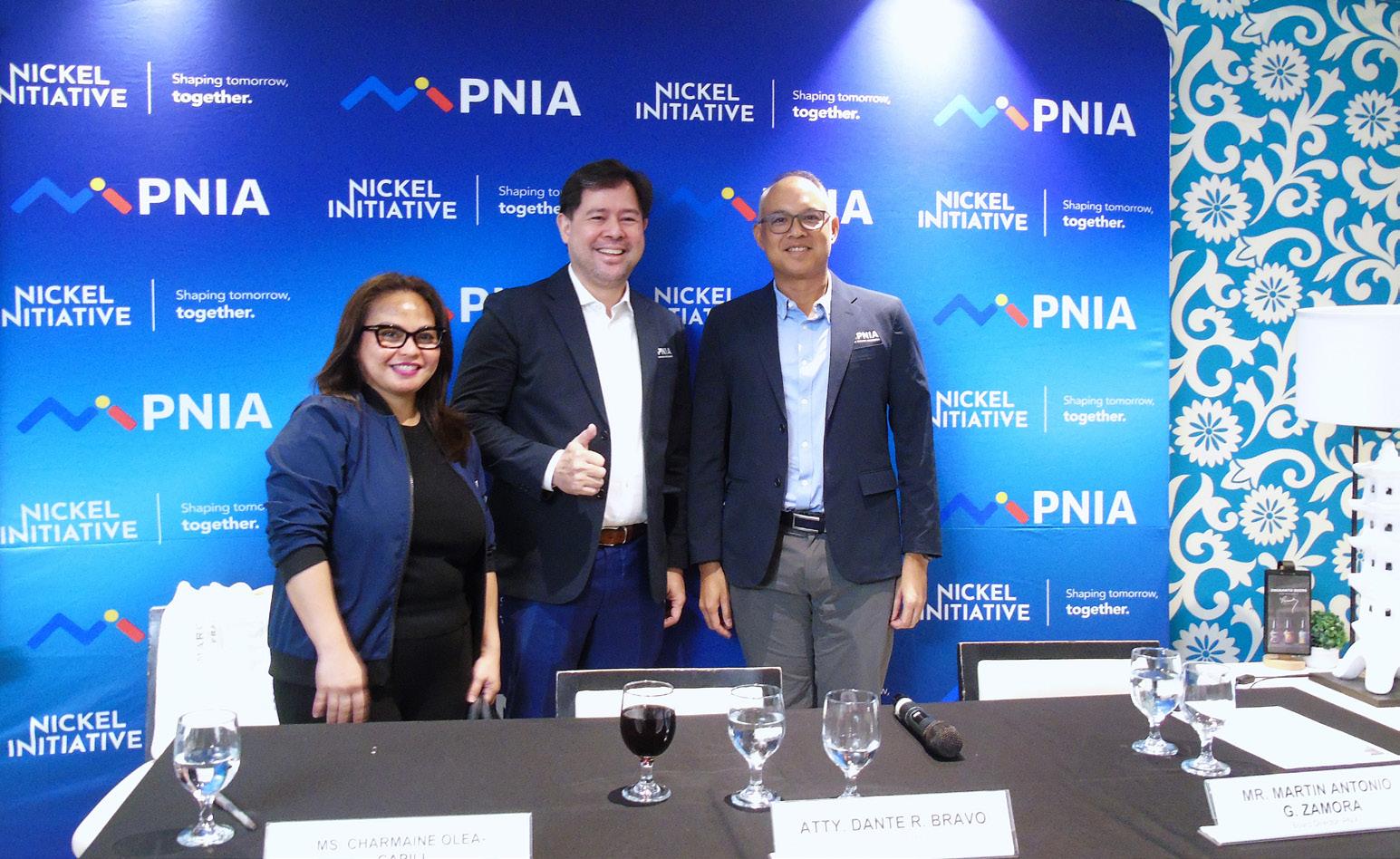
“We support the aspirations of the government for a more developed nickel industry; however, it is our position that an export ban is not a timely policy at the moment,” said Atty. Dante R. Bravo, PNIA president, urging that the focus be on creating the right environment to attract the right investments and enable VAP development.
Atty. Bravo, along with his colleagues at PNIA, expressed their insights during a PNIA Media Roundtable discussion last Feb. 11 at Romulo Café in Quezon City.
He further said, “A proposal like the ore export ban is appealing, however if implemented at this time, it overlooks the regulatory and business challenges that make value-added processing in the Philippines difficult to implement.”
The proposal aims to encourage VAP by banning the export of raw nickel ores, but the difficulties in establishing and sustaining VAP facilities in the Philippines have to be addressed.
“Without holistic government support, addressing inconsistent policies, and regulatory burdens, forcing value-added processing will lead to mine closures and job losses,” said Atty. Bravo. “The government needs to create a more conducive business environment before pushing for policies that might disrupt the industry’s progress.”
Also present in the discussion is Mr. Martin Antonio G. Zamora, PNIA Board Director. and Ms. Charmaine Olea-Capili, Executive Director of PNIA.
Mr. Zamora, PNIA Board Director and President of Nickel Asia Corporation, said, “Whether the ban is imposed in 5 to 10 years, we believe it should not be there at all. There are so many things that the country needs to do to promote value-added processing (VAP) -- we have to work on the fun-
damentals first such as east of doing business.”
“One part of that is streamlining the policies between national and local governments.”
“We are disagreeing [to the ban] but we are not disagreeable. PNIA fully supports the ambition of the government to promote VAP, but we sincerely believe that implementing the ban will not push forward the goal,” he said.
During the media event, PNIA’s presentation report “Driving Growth: PNIA’s 2025 Industry Outlook for the Philippine Nickel Sector” clarified how the ore export ban issue will affect the nickel industry. Here are some key points:
1. PNIA urges reconsideration of ore export ban, stressing that the Philippines must first create a competitive environment to attract investments in value-added processing (VAP) before implementing restrictive policies.
2. Implementing a ban on ore exports will further add to uncertainty from potential investors, along with ease of doing business, long permitting processes, and harmonization of national and local policies.
3. Calls for swift action to seize global nickel opportunities, highlighting that the country risks falling behind as competitors like Indonesia, Brazil, and Australia ramp up production and attract foreign investments.
4. Warns of geopolitical and market risks, cautioning that an export ban could drive buyers to alternative suppliers and undermine the Philip -
pines’ competitiveness amid evolving trade policies and shifting demand for nickel.
Years ago, before Indonesia started implementing an ore export ban, they first prepared a conducive investment climate for value-added processing.
PNIA pointed out that Indonesia has several advantages that the Philippines lacks, including policy implementation, infrastructure, and strong government support. More importantly, the ore ban was only implemented after the country had secured a substantial number of investors committed to its mining industry growth.
“Indonesia has been able to attract foreign investments, build infrastructure, and offer very attractive fiscal incentives that have allowed it to quickly scale up processing capacity driven by strong government support,” said Atty. Bravo.
“From our experience, the Philippines lacks the same environment for investors, for instance, it takes over ten (10) years just to approve mining permits, which could force investors to look for a more attractive regulatory environment in other countries where they can get attractive return on investments.”
“Value-added processing requires more than just government support and building facilities; first and fore-

most, we need to conduct a strategic and in-depth mapping of resources to identify quality of nickel and quantity of nickel as not all ore is good for value-added processing. Additionally, we have to begin upskilling our mining engineers to prepare them for processing activities. Without addressing these key issues, imposing an ore export ban at this time would slow progress and risk industry failure.”
The complexity of the proposed ore export ban is compounded by evolving geopolitical dynamics and persistent trade tensions.
“The growing uncertainty in global trade, particularly regarding potential trade tariffs, places the competitiveness of Philippine nickel exports at risk,” said Atty. Bravo. “It’s important that we maintain the competitiveness of the industry, particularly as geopolitical factors continue to evolve.”
This highlights the need for a carefully considered approach to ensure the future of the mining sector.
He also mentioned that in comparison to countries like New Caledonia, Brazil, and Australia, these countries are increasing their nickel production, presenting additional competitive challenges. “If the Philippines were to implement an ore export ban, countries like China may turn to other nickel suppliers,” Atty. Bravo explained. “As these markets grow more competitive, we could lose valuable buyers and miss out on key export opportunities.”
Atty. Bravo also emphasized that the timing of the ore export ban should be carefully reconsidered, particularly as global nickel demand continues to evolve rapidly.
“With rapid development in battery technologies, shifts in China’s stainless steel production, and other changes in the global supply chain, now is not the right moment for an ore export ban,” he said. “This policy may undermine our competitiveness and fail to adequately account for the fast-moving dynamics of supply and demand. Instead of imposing restrictions prematurely, the focus should be on strengthening the country’s investment climate to ensure the long- term sustainability of the sector.”


In 2025, the global nickel market is anticipated to be dynamic. According to PNIA Market Analysts, global nickel production is projected to increase by 3.8%. However, consumption is projected to grow at a faster rate of 5%, reaching 3.514 million tons, largely fueled by demand from the stainless steel and renewable energy sectors.
“While global demand remains strong, the oversupply from Indonesia and shifts in technology will continue to put downward pressure on prices,” said Atty. Bravo.
Nickel prices, recently hitting a four-year low, are forecast to average $16,750 per ton in 2025, with potential spikes to $20,000 early in the year. “Price fluctuations due to oversupply from Indonesia and changing demand patterns, such as the growing preference for lower-nickel batteries, will impact market stability,” said Bravo.
Despite the challenges, the Philippines remains a key player in the global nickel supply. The Department of Trade and Industry reports foreign investments in the mining and quarrying industry at PHP 79.19 billion between July 2022 and December 2024, with key investments from China, Australia, and Japan.
PNIA continues to work with government partners to help the mining sector grow sustainably. Atty. Bravo concluded, “We must work with the government to create policies that encourage investment in both mining and value-added processing, ensuring that the benefits of the nickel industry are fully realized for all stakeholders.”
ABOUT PNIA. The Philippine Nickel Industry Association, Inc. (PNIA) is a non-stock, non-profit association registered with the Securities and Exchange Commission. Established in 2012, PNIA serves as the unified voice of the nickel industry, advocating for its role as a globally competitive and responsible driver of inclusive and sustainable economic growth in the Philippines. Through its Nickel Initiative, PNIA promotes collaboration with the government and various stakeholders to enhance the competitiveness of the nickel industry, anchored in responsible mining and sustainable development.
For more information about PNIA, please visit www.philippinenickel.org.
For media inquiries, please contact: Mr. Arnel Vasquez arnelvasquez@rebelmarketing.com.ph
+63 949 990 5658
Space is at a premium at the bottom of the pit. WebGen™ 200 Surface eliminates traditional scheduling constraints.
WebGen™ 200 Surface reduces exposure to geological hazards by minimizing the need for revisiting blastholes. With wireless detonation, all explosives are isolated within the blasthole, eliminating the risk of vehicle interactions with explosive components. Making it safe to transform a loaded blast into a productive haul road. orica.com/wireless
GET MORE FROM YOUR BLASTING WITH WIRELESS TECHNOLOGY
Lightning risk reduction

Firing on demand


written by: LBB
In the dynamic landscape of the Philippine mining industry, Genluiching Mining Corporation (GMC) has emerged as a significant player since its inception.
Founded in June 2012 by Mr. Jet P. Tupas, GMC has swiftly positioned itself as a robust contender within the sector, focusing on sustainable mining practices and community development.
With interests spanning iron ore , nickel , copper, gold , and various non-metallic minerals , GMC aims to harness the rich mineral resources of the Philippines, particularly in its current tenement locations at Mati City, Davao Oriental , and Ayungon, Negros Oriental
This article will explore the impressive growth of GMC, its operational strategies, and impactful community engagements that highlight its commitment to responsible mining.
Founded with a mission to lead responsibly within the mining sector, Mr. Tupas, President and CEO of GMC, emphasizes sustainability and community development.
His vision for GMC is not solely focused on profit generation but rather on creating a legacy that benefits both the environment and local communities.
Mr. Tupas stated:

”At Genluiching Mining Corporation, our overarching

goal is to integrate mining operations with community well-being. We strive to ensure that our extraction activities positively impact the surrounding areas while adhering to the highest standards of environmental stewardship. Our mission reflects our commitment to sustainable practices that leave a lasting positive impact beyond mere commercial success.”
This holistic approach underscores the company’s dedication to responsible mining and sets the foundation for GMC’s continued growth.
GMC’s interest in a broad range of minerals significantly enhances its position in the market. The company primarily focuses on:
– Iron Ore : A critical raw material for steel production, the iron ore market continues to thrive with ongoing global industrialization. GMC aims to tap into this demand by ensuring a steady supply of highgrade iron ore.
– Nickel and Copper : Both metals have surged in demand, particularly due to their fundamental roles in electric vehicle manufacturing and
renewable energy technologies. As countries push towards greener initiatives, GMC is strategically well-positioned to capture these emerging markets.
– Gold : Continues to be a hedge against inflation and economic uncertainty. GMC’s expansion into gold mining complements its portfolio and increases its revenue potential amid fluctuating market conditions.
– Non-Metallic Minerals : This category includes crucial materials such as limestone , silica sand , silica quartz , and pozzolan that are essential for construction and infrastructure projects. By diversifying its mineral interests, GMC can cater to various industries and capitalize on multiple revenue streams.
These diverse focus areas not only bolster GMC’s market competitiveness but also reinforce its stability against market volatility. Efforts to explore new mining opportunities in nonmetallic minerals exhibit GMC’s adaptability in the face of changing economic landscapes.
GMC’S OPERATIONAL LANDSCAPE
GMC’s operational tenements


are strategically located in Davao Oriental, and Negros Oriental— regions known for their wealth of natural resources. These locations provide GMC access to various minerals while facilitating logistical efficiency in transporting materials. Additionally, they are situated near vital infrastructure, enabling effective management of mining operations.
Under the leadership of Mr. Leo Belarmino Jr., COO and Vice President of GMC, the corporation emphasizes rigorous operational compliance and environmental sustainability. He remarks:

“Our operations are built upon a foundation of safety, regulatory compliance, and best practices. We recognize that adherence to legal requirements is non-negotiable; however, we also go beyond compliance by actively promoting initiatives to protect the environment. At GMC, we strive to harmonize our business endeavors with ecological balance to contribute positively to the regions we operate in.”
This commitment to environmental management encompasses comprehensive measures including waste management protocols, restoration plans for mined lands, and biodiversity conservation to mitigate the impact of mining activities.
GMC wholeheartedly embraces its responsibility to maintain an environmentally friendly operational footprint.
A key component of GMC’s strategy revolves around fostering strong ties with local communities, recognizing that mining operations cannot thrive in isolation. GMC takes pride in its investment in community development through various initiatives:
– Healthcare Programs: GMC engages in health outreach campaigns, providing medical assistance to local residents and improving healthcare access in underserved areas.
– Education Initiatives: The company supports educational programs, creating scholarships for deserving students, facilitating supplies for schools, and investing in facilities. This fosters local talent development and equips future generations to contribute positively to their communities.
– Infrastructure Development: Contributions towards local infrastructure projects enhance living conditions, demonstrating GMC’s commitment to meaningful engagement with the areas it impacts.
Through these comprehensive efforts, GMC cultivates trust and goodwill, fostering collaborative relationships while simultaneously strengthening its community framework.
As the mining landscape continues to evolve, Genluiching Mining Corporation remains committed to strategic expansion and innovation. Future prospects for GMC include:
– Exploration Activities: Ongoing exploration efforts aimed at identifying new mineral deposits will further enrich GMC’s portfolio and bolster its resource base.
– Broadening Market Reach: Expanding operations into adjacent regions and tapping into both local and international markets will enhance GMC’s competitive advantage.
Developing partnerships with domestic and international
entities can facilitate knowledge sharing and elevate operational efficiencies.
– Innovation in Mining Technology: GMC is also exploring innovative technologies that align with sustainable practices. Integrating advancements such as automation and data analytics can increase operational effectiveness while minimizing environmental concerns.
These expansions and innovations position GMC well within a rapidly changing mining industry, affirming its stance as a forward-thinking organization committed to sustainable practices.
Genluiching Mining Corporation’s meteoric rise in the Philippine mining industry serves as an inspiring testament to what can be achieved through visionary leadership and a commitment to sustainable practices. Under the guidance of Mr. Jet P. Tupas and the operational stewardship of Mr. Leo Belarmino Jr., GMC is actively reshaping the narrative around mining, marrying economic viability with corporate responsibility.
By strategically diversifying its mineral interests—including iron ore, nickel, copper, gold, and non-metallic minerals—GMC is poised for long-term growth. Its dedication to fostering community development, alongside its stringent compliance with environmental regulations, positions GMC as a true role model.
As GMC continues to cement its place within the Philippine mining landscape, its legacy of social responsibility and sustainable development will undoubtedly impact future generations positively.
The partnership between mining operations and community wellbeing stands as a cornerstone of GMC’s mission, ensuring that all stakeholders benefit from the resources extracted from the earth.
Through its ongoing efforts in responsible extraction and community engagement, GMC is set to flourish as a rising star in the industry, paving the way for others to follow.

Because failure isn’t an option
Truflo Pumps’ dewatering solutions have kept mining operations running smoothly in the harshest conditions imaginable — right around the world. Built
We
Hinatuan Mining Corporation-Tagana-an Nickel Project (HMC-TNP) once again demonstrated its unwavering commitment to responsible mining practices by securing its fourth consecutive Presidential Mineral Industry Environmental Award (PMIEA) in the Surface Mining Operation Category.
This remarkable achievement highlights HMC-TNP’s steadfast dedication to environmental protection, safety, health, and community development across its operational area. The company, operating on Hinatuan Island in the municipality of Tagana-an in Surigao del Sur, has proudly earned the PMIEA each year from 2021 to 2024.
The prestigious PMIEA recognizes mining contractors, permit holders, and permittees in the Philippines who consistently demonstrate exceptional performance.
It honors those who exhibit outstanding dedication, innovative initiatives, and an unwavering pursuit of excellence in areas crucial to sustainable mining.
In addition to its fourth PMIEA, HMC Lady Dump Truck Driver Jennifer Q. Inting was awarded Best Surface Miner for the second time, with her first win occurring in 2022.
HMC’s continued success in the Surface Mining Operation Category reflects its comprehensive approach to responsible resource extraction.
The award specifically acknowledges the company’s achievements in the following areas:
• Environmental Protection: HMC’s practices showcase a strong commitment to minimizing the environmental impact of its mining operations. The company’s Annual Environmental Protection and Enhancement Program (AEPEP) serves as a foundation for effective rehabilitation programs, responsible water management, biodiversity protection, and adherence to local and national regulations. HMC advocates and practices responsible mining throughout its operations.


• Safety and Health Management: The company places a high priority on the safety and well-being of its employees and surrounding communities. HMC implements robust safety protocols and health programs, utilizing its Annual Safety and Health Program (ASHP) as a key tool. As of December 31, 2024, HMC has accumulated 43,057,046.23 Safe Man-Hours without a Lost Time Accident, underscoring the company’s commitment to safety and the dedication of both management and employees to its safety and health programs.
• Social and Community Development: HMC actively engages with local communities, contributing to their socio-economic development through a variety of initiatives. The company’s Community Relations team manages the Annual Social Development and Management Program (ASDMP), which focus -

es on enhancing the community through health, socio-cultural, and religious initiatives, among other projects.
Securing the PMIEA for the fourth straight year is a significant milestone for HMC, not only validating its commitment to responsible mining but also setting a new benchmark for the industry.
This achievement reflects the hard work and dedication of the entire HMC team, who continually strive to uphold the highest standards of responsible mining practices.
The PMIEA serves as a powerful motivator for the mining industry to embrace sustainability and contribute positively to the environment and the communities in which they operate.
HMC’s continued success serves as an inspiration, proving that responsible mining is both achievable and sustainable through consistent dedication and innovation.

The Maharlika Investment Corporation (MIC) signed a binding term sheet to provide a USD76.4 million (Php 4.425 billion) Bridge Loan for the early development of the MaalinaoCaigutan-Biyog (MCB) CopperGold Project.
In a statement, the MIC said the amount will be used for the updating of Makilala Mining’s feasibility study and frontend engineering design, the construction of a main access road in partnership with the Kalinga provincial government, and skillsbased training for the Balatoc Indigenous Cultural Community.
Makilala Mining, an affiliate of Celsius Resources Limited— listed on the Australian
Securities Exchange and London Stock Exchange—will also use the loan to fulfill financial capability requirements under its Mineral Production Sharing Agreement with the Philippine government.
The MIC said the decision to back the MCB Project followed a rigorous due diligence review of its technical, financial, legal, environmental, and socio-economic aspects, yielding promising initial results.
The loan will be disbursed in tranches, with an initial USD10 million (Php 579 million) earmarked for immediate project commencement. The agreement also includes provisions ensuring MIC’s oversight and participation
in key project management decisions.
Discussions on securing additional equity funding for the MCB Project are ongoing.
MIC President and Chief Executive Officer Rafael Consing Jr. said the MCB Project aligns with the sovereign wealth fund’s mandate to drive economic growth and sustainable development.
“Our investment decision reflects a shared commitment to the sustainable, inclusive, and regenerative development of the MCB Project,” Consing said.
Makilala Mining president Julito Sarmiento meanwhile, said, the loan shows the government’s strong support for responsible mining.
As the Philippines continues to experience growth in its mining industry, access to reliable, efficient, and comprehensive mineral testing services is more critical than ever. Intertek is a leading Total Quality Assurance provider to industries worldwide. Its network of more than 1,000 laboratories and offices in more than 100 countries delivers innovative and bespoke Assurance, Testing, Inspection and Certification solutions for its customers’ operations and supply chains.
Intertek Total Quality Assurance expertise, delivered consistently with precision, pace and passion, enabling customers to power ahead safely.
Intertek Minerals is proud to be the largest in-country provider of mineral testing services in the Philippines. With its extensive capabilities, it offers the advantage of faster turnaround times and locally tailored
solutions to meet specific client needs.
Intertek’s comprehensive services ensure that clients receive accurate, reliable results while minimizing delays and maximizing efficiency in their operations.
With a comprehensive range of mineral testing services that support every stage of the mining life cycle, Intertek Minerals’ local capacity provides a full suite of offerings—from geochemical analysis and metallurgical testing to environmental monitoring and trade-related services.
Intertek’s highly skilled professionals and advanced facilities allow us to respond quickly to client needs and deliver actionable insights that support operational excellence across the mining value chain.
Intertek Minerals delivers a full suite of services to support mining
operations, from exploration to production. Our solutions are designed to meet the evolving needs of the mining sector and include:
• Sample preparation
• Geochemical analysis utilizing XRF, CSA, and ICP for a range of commodities.
• Fire assay
• Trade related services
With decades of experience and a commitment to continuous innovation, Intertek Minerals is the partner of choice for mining companies seeking to achieve optimal results.
Intertek is dedicated to supporting mining companies in their pursuit of safer, more efficient, and sustainable operations. Its deep local knowledge, complemented by our global network, ensures that we are well-positioned to support clients in the mining industry.
For more information about our services and how Intertek Minerals can support your mining operations, at www.intertek.com/ minerals.


DRILL IT FURTHER AND FASTER WITH THE BEST MINING AND TUNNELING PRODUCTS.
DRILL IT FURTHER AND FASTER WITH THE BEST MINING AND TUNNELING PRODUCTS.


written by: THEA SAMANTHA C. GO, EM
Paramina Earth Technologies, Inc. is a proudly all-Filipino mining and civil construction contractor that has been making significant strides both domestically and internationally.
With over 29 years of experience, Paramina has pioneered surface and underground contract mining in the Philippines, later expanding into tunneling, ground stabilization, and slope stabilization for civil and mining construction projects.
Today, the company is recognized not only for its contributions to the Philippine mining industry but also for its impactful work on global infrastructure projects.
A LEGACY OF EXCELLENCE
Paramina’s journey began with its groundbreaking work in the Philippines, where it has partnered with major underground mines, quarries, and civil construction companies in the country. One of its notable mining projects include the mine development of an epithermal gold project in Davao de Oro.
This project showcased Paramina’s expertise in delivering efficient and sustainable mining solutions. Moreover, the recently completed Main Access tunnel measuring 7.4m x 8 m x 1.011km of the Upper Wawa Pumping Station project is a testament to Paramina’s expertise in the tunneling business.
Beyond the Philippines, Paramina has also made its mark internationally. The company played key roles in starting new underground gold mines in Papua New Guinea, Vietnam, Mongolia, Fiji, and Burkina Faso in West Africa.
Additionally, Paramina has been providing mine technical services to Teknomin Construction Limited, a major

contractor for Hindustan Zinc Limited, one of the world’s largest producers of zinc.
Paramina’s global portfolio-also includes its contribution to the construction of the Hong Kong Chek Lap Kok Airport, as the drill and blast subcontractor.
Paramina’s success is a
testament to the talent and dedication of Filipino Mining Engineers, Geologists, Civil, Mechanical, and Electrical professionals. The company’s ability to adapt to diverse environments and challenges has made it a trusted partner for both domestic and overseas clients.


Whether it’s optimizing mining operations or constructing specialized major infrastructure, Paramina’s expertise ensures that projects are completed efficiently, safely, and to the highest standards.
THE 3DEXPERIENCE PLATFORM In addition to its contracting
services, Paramina is a leading distributor of GEOVIA products, including Surpac, a powerful software solution for mining and geological modeling.
Surpac is widely recognized for its ability to streamline resource estimation, mine design, and planning processes. But the innovation doesn’t stop there; Surpac is now integrated with the 3DEXPERIENCE platform, a collaborative environment that connects individuals, data, and solutions in real-time.
The 3DEXPERIENCE platform enhances Surpac’s capabilities by enabling seamless data integration, improved collaboration, and streamlined workflows. This integration allows mining companies to optimize their operations, make informed decisions, and achieve greater efficiency.
By combining GEOVIA’s advanced tools with the 3DEXPERIENCE platform, Paramina empowers its clients to tackle the challenges of modern mining and construction with confidence.
Paramina’s expertise in GEOVIA products has earned it a strong reputation among top mining companies, quarries, government sectors, and academic institutions in the country. The company provides technical support and advancements in mine planning and design, helping clients achieve their goals with cutting-edge solutions.
Paramina’s journey is a testament to the potential of Filipino expertise and innovation. As the company continues to grow and take on new challenges, it remains committed to delivering exceptional value to its clients and contributing to sustainable development.
To learn more about Paramina’s services, GEOVIA products, and the 3DEXPERIENCE platform, visit www.paramina.com. Whether you’re looking for cutting-edge mining solutions or a reliable partner for your next infrastructure project, Paramina is here to help. Contact us today to discover how we can support your goals.
written by: ENGR. SUPRABHAT SARKAR, COO, TEKNOMIN CONSTRUCTION LTD. INDIA
Mining has witnessed substantial advancements, shifting from labor-intensive processes and basic machinery to sophisticated, reliable equipment. These developments have drastically increased productivity and safety standards while minimizing environmental impacts.
As the mining industry prioritizes equipment reliability, tribology, maintenance practices, and oil recycling innovations are essential for ensuring sustainable operations and meeting future demands.
Historically, mining operations relied heavily on basic tools such as jackhammers and bobcats, which demanded extensive physical effort from workers. This equipment offered limited productivity and minimal safety features, posing considerable risks to miners.
As global demand for metals and minerals surged, the industry responded with technology-driven advancements. By the early 2010s, high-capacity machinery such as double-boom hydraulic jumbos LHDs (21-ton loaders), and LPDTS (63-ton trucks) became the standard in underground mining.
These machines not only boosted productivity but also integrated safety-enhancing features, including airconditioned operator cabins, ergonomic controls, and sensors. These features reduced fatigue and safeguarded health, marking a significant step forward in improving mining safety standards.
Tribology, the study of friction, wear, and lubrication, has become integral to the operation and longevity of modern mining

machinery. Equipment in mining sites encounters extreme environments, such as high dust levels, muddy water, and poor ventilation, all of which exacerbate wear and tear on components.
Effective tribology practices, especially in lubrication management, are essential to reducing frictional losses and preventing premature equipment failure. Advanced lubricants specifically formulated for mining conditions enhance the durability of critical moving parts like loaders, excavators, and hydraulic jumbos.
In addition, specialized lubricants can withstand temperature fluctuations and resist contamination from dirt and water, ensuring that machinery performs optimally despite harsh conditions. Through consistent lubrication, wear is minimized, and downtime is reduced.
Tribology-based maintenance, combined with regular inspections, plays a vital role in keeping high-investment machines reliable, extending their operational life, and preserving productivity.
and ore
Dariba, Rajasthan, India. Under a subcontract agreement with Teknomin Construction Limited, Paramina’s trackless equipment operators and Mining Engineers have worked in this mine since 2009 and in two other mines owned by HZL.”
Given the high cost and challenging operating conditions of mining equipment, reliability is paramount. A comprehensive maintenance strategy includes scheduled maintenance, daily checks, and operator inspections to keep equipment in top condition. Effective practices encompass:
• Daily Washing and Cleaning: Cleaning equipment regularly prevents the buildup of harmful deposits, which can interfere with performance and cause premature wear.
• Scheduled Inspections: Routine checks allow for early identification of wear, reducing the risk of sudden breakdowns.
• Operator Training: Skilled operators play a crucial role in maintaining equipment reliability by observing operational discipline. For instance, avoiding braking violations, responding promptly to alarms, and practicing autonomous maintenance help prevent avoidable wear and ensure smoother operations.
Mining equipment components, often imported and expensive, make cost-effective maintenance plans essential. A well-executed plan that reduces the frequency of part replacements can substantially cut costs.
Innovations such as punctureresistant tires, improved hydraulic systems and extended-life lubricants also contribute to enhanced equipment durability and reduced operational expenses.
Moreover, the emergence of electric mining machinery, such as HZL’s electric explosivecharging equipment (BEV Charmec) operated by Teknomin Construction Limited, illustrates the shift toward cost-efficient alternatives.
Electric equipment reduces fuel dependency and is an environmentally friendly solution that aligns with global sustainability goals.
In Part 2 of this article, we


continue the discussion on why reliability is important to the mining industry and share more strategies we can use to ensure equipment efficiency.

Mr. Suprabhat Sarkar is the Chief Operating Officer of Teknomin
Construction Ltd. in India. A mining engineer with over 22 years of experience, he specializes in high-speed mine development, production and international operations across coal, zinc, lead, silver, gold, and copper mining.
Mr Sarkar holds an MBA (Finance), First-Class Mine Manager Certificates (Metal) in India and Australia, a Diploma (Management) - Australia, and a Second-Class Mine Manager Certificate (Coal).
Renowned for leadership, technological innovation, and global expertise, he has driven transformative projects at Teknomin Construction Limited and beyond. You can reach him at suprabhat.sarkar@teknomin. org
Upholding its commitment to empowering its stakeholders through values-driven initiatives, Taganito Mining Corporation (TMC) spearheaded a Values Formation and Team Building Seminar comprised of 250 livelihood beneficiaries — including farmers, fishermen, PWDs, senior citizens, women, vendors, and traders — on February 5 at Claver, Surigao del Norte.
Facilitated by 1TEAM International, the seminar aimed to enhance camaraderie, teamwork, and entrepreneurial resilience, incorporating practical and biblical principles to guide members of the 24 people’s organizations supported by TMC in building self-reliant and sustainable enterprises.
The discussions revolved around the Principles of Stewardship and Responsibility, emphasizing that managing resources is not just financial but a matter of faithfulness with what God has entrusted.
Facilitators Antonio Vicente P. Sta. Elena and Ian Zach Rubio led the discussions on real-life business sustainability scenarios, helping participants recognize both the challenges and rewards of financial stewardship.
A key concept was the I-TAP principle (Integrity, Transparency, Accountability, and Performance), which highlighted the fundamental values necessary for sustaining businesses and livelihood initiatives.
The interactive team-building activities helped participants gain a deeper appreciation for cooperation, leadership, and shared responsibility in their organizations.
“It was inspiring to see people commit to aligning their work with both professional excellence and spiritual values. Through this program, we witnessed a profound shift in perspective among the participants, who realized that financial stewardship is not just about managing resources but about being faithful with what God has entrusted to them,” shared Sta. Elena.

He stressed the importance of integrity in leadership, honesty in financial decisions, and accountability in responsibilities, which resonated deeply with the participants.
“This journey has strengthened our belief that when faith and good stewardship go hand in hand, true transformation happens. May we continue to build a future where integrity and excellence glorify God in every aspect of our lives,” he added.
Engr. Artemio Valeroso, Vice President and Resident Mine Manager of TMC, underscored the company’s thrust to empowering its stakeholders, saying: “Having the right foundation is important when starting and operating a business. These livelihood support initiatives are extended by the company so that you, our stakeholders and community, can survive and sustain even beyond the life of the mine.”
The participants echoed their appreciation for the initiative.
Roger Parpan, President of TMC’s PO Federation and Chairman of TACPECCO Water Refilling and Agrivet Business, said: “Malaking
bagay para sa bawat PO ang values formation, at doon ipinakita kung paano mahuhubog ang isang maayos na samahan at pagdadala ng bawat grupo.”
Parpan also acknowledged how the discussions, anchored in biblical principles, helped identify and address internal challenges that could threaten organizational stability.
“Malaki ang pasasalamat namin sa NAC at TMC sa walang humpay na suporta para sa kaunlaran ng bawat people’s organization. Salamat TMC at Salamat sa NAC. Mabuhay!”
The Values Formation and Team Building Seminar served as a powerful reminder that sustainable livelihood development goes beyond financial assistance—it requires a strong foundation of values, teamwork, and faith-driven stewardship.
As TMC continues to invest in programs that empower its communities, it reinforces its vision of a brighter future where integrity, accountability, and sustainability shape resilient and self-sustaining enterprises.
Don’t spend more on tailings than you have to.
Weir’s unmatched technology and expertise means you can find a solution that’s built to your operational and site requirements. We’ve reduced customer energy consumption by 51%, average water usage by 76% and lowered TCO all while safely improving the stability of tailings and reducing the tailings footprint. Plus, we can even help re-purpose waste into useful materials for dam wall construction and backfill that saves valuable resources and increases efficiency.
Now it’s your turn to re-think tailings with a Weir tailored solution. www.global.weir/rethink_tailings


Amining firm paid over PHP63.5 million in taxes and regulatory fees to the municipal government of Claver in Surigao del Norte, a local official said.
In a statement, Claver Mayor Georgia Gokiangkee recognized Taganito Mining Corporation (TMC) as one of the local government unit’s (LGU) active development partners.
The payment was made Monday as business transactions for 2025 started through TMC Community Relations Officer Mark Vincent Junel Felias, the Philippine News Agency reported.
“The payment is part of the 2025 Local Business Tax and other regulatory fees of the TMC,” Gokiangkee said.
She noted that the taxes and fees are part of the mining company’s corporate social responsibility to contribute to the LGU’s development efforts.

Gokiangkee said the payments and fees would go to education, health, agriculture and infrastructure programs this year.
A portion of the payment will also support social services programs for senior citizens, individuals with disabilities, and other disadvantaged groups.
acknowledges the continued support of the Taganito Mining Corporation to the local government as it paid over PHP63.5 million in 2025 local business tax and regulatory fees Monday (Jan. 21, 2025). The revenues would help the LGU in its infrastructure and social services programs and projects.
THE UNVEILING OF THE AGATA MINES NATURE FARM MARKS A SIGNIFICANT FIRST IN THE PHILIPPINES
What began as a dream now thrives in Caraga – a significant first in the country’s mining industry.
TVIRD’s Agata Mining Ventures, Inc. proudly unveiled the Agata Mines Nature Farm, marking a historic milestone as the pioneering agrotourism and ecology hub developed from the company’s Final Mine Rehabilitation and Decommissioning Plan for its former mine site. This groundbreaking development not only sets a precedent for sustainable land use but is also testament that there is life after mining.
The overwhelming support of the community has been a cornerstone of the project’s success. Agata’s years of collaboration with the townsfolk helped transform the area from a responsibly managed mine site to a thriving ecological and agricultural

destination. Moreover, the community’s cooperation helped the company to transition the local economy from mining back to agriculture.
The Agata Nickel Laterite Project was operated by TVI Resource Development Philippines Inc.
(TVIRD) from 2014 to 2023. During this time, it successfully delivered 382 shipments of nickel DSO to its direct markets in Asia and Oceania, bringing its 9-year production volume to over 20 million wet metric tons (WMT) of nickel laterite ore.

The unveiling was marked by the signing of a Memorandum of Understanding with the Department of Tourism (DOT) and received strong support from various government agencies: the Department of Environment and Natural Resources (DENR), Mines and Geosciences Bureau (MGB), National Commission on Indigenous People (NCIP), Technical Education and Skills Development Authority (TESDA), Department of Trade and Industry (DTI), Caraga State University (CSU), Department of Agriculture (DA) and the Philippine Coconut Authority (PCA).
The event also received the solid endorsement of local government unit executives and Barangay captains of the host municipalities Jabonga, Santiago and Tubay in Agusan del Norte.
“We are humbled by the outpouring of support from our community and partners. Their involvement has been essential to the success of our mining operations as well as the legacy that Agata is building for its beneficiary communities,” said TVIRD Tenement Management and Environmental Compliance Director Jesalyn Guingguing, who concurrently heads Agata’s Final Mine Rehabilitation and Decommissioning Plan.
After years of progressive rehabilitation efforts, the onceindustrial site is now an oasis for biodiversity, sustainable agriculture and eco-friendly tourism. With the active participation of the local community, including the children of Agata employees, the farm is evolving into a biodiversity tourism enterprise that showcases the region’s natural beauty, rich cultural heritage and innovative farming techniques.
Local communities staged an agricultural showcase that included fruits, vegetables and marine products like fish and shells during the market booth contest “Tabo-an o Tiangge sa Agata” (Marketplace in Agata).
A group of young entrepreneurs who


are children of Agata employees also presented Agata Mines Nature Farm souvenirs called Agata Nit Bags. In addition, a groundbreaking ceremony was held for the historical Gazebo, which was once the exploration campsite of TVIRD partner company, MRL Nickel Philippines.
As Agata breathes new life into its former mine site, it likewise marks a new chapter on sustainability in the Philippine mining industry with its host communities – most notably, the indigenous Mamanwa Tribe with whom it shares a common development roadmap.
The farm will not only offer opportunities for agro-education and eco-tourism but will also provide a sustainable livelihood for its residents.
Agata’s collaboration with TESDA has facilitated skills development for the community, ensuring they are equipped to take full advantage of the economic benefits this new phase brings.
Agata wishes to thank its partners The Department of Tourism (DOT), Mines and Geosciences Bureau
Regional Office (MGB-RO-XIII)
Regional MSESDD Chief Engineer Glenn Suante; Department of Environment and Natural Resources (DENR) Region XIII Legal Division Chief Atty. Redemptor Oja; National Commission on Indigenous People
(NCIP) Acting Agusan del Norte Provincial Director Cierona Cutar; Technical Education and Skills Development Authority (TESDA) Administrator II of the Northern Mindanao School of Fisheries Nancy del Guzman; Department of Trade and Industry (DTI) Agusan del Norte Provincial Director Lorie Jane Sacote; Caraga State University (CSU) President Dr. Rolyn Daquil; Department of Agriculture (DA) Regional Technical Director for Research and Regulation Abel Wagas; Philippine Coconut Authority (PCA) Acting Regional Manager Manolito Casapo; and the local government unit executives and Barangay captains of the host and neighboring municipalities of Jabonga, Santiago and Tubay in Agusan del Norte Province.
guests participated in an arm-in-arm pose in support of the
In the global extractives and mineral development sector, a number of natural and manmade hazards exist – inherent risks that must be carefully mitigated through technology and a mindset of constant awareness. At the TVIRD Group, the commitment to occupational safety and health (OSH) is deeply ingrained in its culture across all its project sites: gold and silver mining operations in Siana and Balabag, and final rehabilitation at the Agata Nickel Project.
This same commitment to the well-being of both its personnel and its communities was recently showcased as its Balabag Gold-Silver Project Emergency Response Team (BGSP-ERT) emerged as the 2024 fire brigade champion at the National Safety Competition of the prestigious 70th Annual National Mine Safety and Environment Conference (ANMSEC).
Also, at the same event in Baguio City, the company’s wholly-owned subsidiary, Greenstone Resources Corporation – operator of the Siana Gold Project – landed in fourth place. These parallel achievements highlight the group’s high standards and holistic approach to emergency preparedness in addressing the inherent risks in field operations.
For close to 20 years, the welfare of the TVIRD Group’s workforce remains at centerstage. This dedication has earned the company numerous accolades, including the recent Gawad Kaligtasan at Kalusugan (GKK) Award from the Department of Labor and Employment’s Occupational Safety and Health Center (DOLE OSHC), owing to more than 30 million safe man-hours with no lost time due to accidents (LTAs) in its mine sites.
Leading the group’s Occupational Safety and Health (OSH) initiatives is Aldrin B. Arieta, who has been instrumental in establishing robust safety standards – and whose guidance of the group’s ERTs led to top honors in both regional and national events such as the first Surigao del Norte Governor’s Rescue Olympics and the National Fire Olympics.


The company also pioneered its own annual Fire and Rescue Olympics in each mine site – a program initiated during the early days of Agata.
“This initiative emphasizes every employee’s importance in emergency preparedness. It is also a way to ensure that everyone is ready to respond in time of crisis, even within their own homes,” Arieta said.
At the forefront of TVIRD’s safety and health initiatives is the establishment the Emergency Response Team – a group of highly-trained personnel equipped to handle a wide range of crisis situations, including fires, landslides and medical emergencies. The ERT undergoes continuous rigorous trainings and realistic simulation exercises to sharpen their skills and ensure they can respond swiftly and effectively in critical emergency situations.
The company also trained its host communities in emergency response and first aid, leading to the establishment of community-based ERTs that empower local residents to respond effectively to emergencies, with the support of TVIRD’s professional team.
By fostering a work culture that prioritizes the well-being of its people, the group contributes to the United Nations Sustainable Development Goals, particularly on Decent Work and Economic Growth (Goal 8) and Good Health and Well-Being (Goal 3) – thus, demonstrating a broader impact that supports global initiatives for sustainable development.
Safety remains at the heart of TVIRD’s operations. In an industry where risks are inevitable, the TVIRD Group strives to show what is possible when safety is ingrained as a fundamental value, extending beyond policies to become a way of life.
Crisis simulation.
TVIRD’s Emergency Response Teams are always ready to assist, continuously training to ensure that they can handle a wide range of crisis situations, including fires, landslides and medical emergencies.
Greenstone’s ERT demonstrates their exceptional skills in the Fire Busters competition at the first Surigao del Norte Governor’s Rescue Olympics.
Construction material prices in the Philippines remained stable in January 2025, with the annual rate of increase easing to 1.2 percent from 1.5 percent in December 2024, the Philippine Statistics Authority said this month.
It said the slower annual increase in the construction materials retail price index in the National Capital Region was due to a slower annual increase in the heavily weighted tinsmithry materials index, which rose 1.6 percent in January after a 2.6-percent increase the previous month.
Compared with the previous month’s annual growth rates, slower increases were seen in electrical materials (1.8 percent after 1.9 percent), painting materials and related compounds (2.2 percent after 2.6 percent), plumbing materials (0.8 percent after 1.0 percent) and miscellaneous construction materials (0.6 percent after 0.8 percent).
The carpentry materials index, however, saw a higher annual increase, rising 1.0 percent after a 0.8

percent increase in December.
The masonry materials index maintained its previous month’s annual growth rate of 0.3 percent.
The construction sector plays an important role in the Philippine economy, contributing seven percent of the country’s gross domestic product (GDP) in 2023.
With the national government’s infrastructure program, the sector brought in about 14.2
million Philippine pesos in foreign investments and employment opportunities for thousands of Filipinos.
Despite headwinds caused by the impact of the COVID-19 pandemic, the sector is poised for growth as the economy recovers. However, inflation and soaring interest rates may continue to challenge private construction, according to a study by Statista.
The Department of Public Works and Highways (DPWH) has started the Php28.9-million repair of Biliran Bridge, more than a month after the structure went viral online when it exhibited wavelike movements.
Built in 1976, the Biliran Bridge is the only connection the people of Biliran Island use via land travel to directly cross into mainland Leyte province.
Since Dec. 23, 2024, only light vehicles, including passenger vans and sports utility vehicles, were allowed to cross the bridge.
This was after a video showing the bridge was swaying due to defective components went viral on social media.
The DPWH Biliran district engineering office said work started in the first week of February following the issuance of the notice to proceed

earlier in the month, the Philippine News Agency reported.
“The identified contractor has been mobilizing their equipment and some materials to be used as scaffoldings and other preparatory repair activities,” said DPWH Biliran officer in charge Irwin Antonio in a statement.
The project involves replacing
corroded bolts, steel members, and plates, installing new finger-type expansion joints, and repairing other damaged bridge components.
While construction is ongoing, the bridge will remain open to light vehicles weighing five tons or less, while heavier trucks will be transported via a barge provided by the provincial government.
Department of Transportation (DOTr)
Secretary Vince Dizon has assured the government will continue and expedite existing transportation projects.
In a statement, Dizon said continuity is “key” to completing transport projects that will benefit the public.
“With the passing of the baton, we need to expedite instead of slowing down. We need to work even harder so we can finish this quicker,” he said in a Philippine News Agency report.
Dizon cited big-ticket projects such as the North-South Commuter Railway (NSCR), Metro Manila Subway, privatization of regional airports, as well as the EDSA Busway and construction of the EDSA Greenways Project, among others.
“Let’s roll up our sleeves and let’s get to work to get things done,” he said.
Dizon said privatization or seeking more public-private partnerships (PPP) for critical transport infrastructure is critical to improving
the country’s transportation system.
“We will really push that forward because [privatization] to my mind, and especially to the mind of our President [Ferdinand R. Marcos Jr.], is the way to go to make transport services more efficient,” he said.
Dizon lauded former Transportation Secretary Jaime Bautista’s efforts in the privatization of several transport projects, including the Ninoy Aquino International Airport (NAIA), Laguindingan Airport, and BoholPanglao International Airport.
“The biggest contribution of Sec. Jimmy in such as short span of time is really the massive privatization effort beginning obviously with the NAIA privatization,” he said.
In addition to these airport projects, Dizon said the operations and maintenance of the EDSA Busway and the Metro Rail Transit Line 3 (MRT-3) are both up for privatization.
In particular, he said the feasibility study for the EDSA Busway is set to

be completed in a few months and its contract is expected to be awarded by the end of 2026.
On the other hand, the terms of reference for the MRT-3, for both its solicited and unsolicited proposals, are being ironed out by the DOTr, the PPP Center, and the Asian Development Bank.
Infrastructure builder Megawide Construction Corp. will undertake the P1.87-billion development of Cavite’s first Bus Rapid Transit (BRT) system as it received the green light to proceed with the project, the company said in a disclosure to the stock exchange.
Megawide and its joint venture partner Maplecrest Group Inc. have signed with the Cavite provincial government the contract to develop the project.
The Cavite BRT Project, awarded as a 30-year concession by the provincial government of Cavite, is slated for completion by 2028.
The joint venture, named Cavite Rapid Transport Inc., plans to start construction in the first quarter of 2025 with the hope of partially operating it by the third quarter.
Once opened to the public, the BRT is projected to serve at least
10,000 passengers a day going around Cavite and moving back and forth to Metro Manila.
In a Philippine Star report, Megawide chairman and CEO Edgar Saavedra said the goal is to expand ridership in the BRT by five times in three years. He believes the project would play a crucial role in declogging Cavite’s traffic and improving its economy and livability.
“The initial phase of the Cavite BRT will serve close to 10,000 daily passengers, with a target to increase ridership by five–fold within three years, depending on Cavite’s progress,” Saavedra said.
For Maplecrest, the BRT will raise the marketability of Lancaster New City, a township built by its subsidiary Property Company of Friends Inc. (ProFriends).
Maplecrest chairman Guillermo Choa said the BRT would include the
spine road of Lancaster New City in Imus, General Trias, and Tanza cities as part of its alignment.
The BRT will cover a 29-kilometer stretch along Kawit, Imus, General Trias, Tanza and Trece Martires. As proposed, the project will be separated into two services, namely, the actual BRT and the point-to-point (P2P) system.
The first phase of the BRT is made up of three terminals and 27 stations, while the second leg of the development is composed of one terminal and 20 stations.
The P2P will connect nonstop to the Parañaque Integrated Terminal Exchange, also operated by Megawide.
The BRT will be provided with an exclusive lane for transport like the EDSA busway, and the buses will leave stations on a set schedule for predictability and reliability.
written by: MARCELLE P. VILLEGAS
More than a construction company, EEI Corporation offers strategies to break the poverty cycle of their workers. Let us know more about their fascinating story and business philosophies that are rooted in humanitarian goals.
It is not often that one can engage in an enriching lecture and open forum with a top executive of a highly successful 93-yearold construction company in the Philippines.
This is one of the rare opportunities that Philippine Infrastructure and Construction Club (PICC) offers their members and attendees. One of PICC’s noteworthy guest speaker for 2024 was Mr. Henry D. Antonio, Director / President & CEO of EEI Corporation (EEI). In this business luncheon meeting, attendees had the chance to learn from the company’s wisdom behind their sustaining power in the industry.
For the past two years, Mr. Antonio has been the President & CEO of EEI Corporation. Prior to this, he was the company’s COO in 2022. For five years, he was the Advisor to the Chairperson at RCBC. He was also the Vice Chairman and Head of Advisory of KPMG R.G. Manabat & Co.
Mr. Antonio’s presentation during the PICC luncheon is titled “Challenges of Doing Mega Infrastructure Projects for Philippine Contractors”.
On April 17, 1931, EEI Corporation (EEI) was incorporated as a machinery and mills supply house for the mining industry. EEI later expanded into construction services, supply of manpower in the Philippines and overseas, and distribution of a range of industrial machinery and systems.
EEI is a member of the Yuchengco Group of Companies, a conglomerate with interests in banking, education, financial services, property development, and

renewable energy.
Known as one of the leading construction companies in the Philippines, EEI has expertise in the construction of infrastructure, buildings, and industrial and electromechanical facilities.
Their wide range of services include the installation, construction and erection of power generating facilities; oil refineries; chemical production plants; cement plants; food and beverage manufacturing facilities; semiconductor assembly plants; roads, bridges, rails, ports, airports, elevated expressways, metro rail transit system and other infrastructure; high rise residential and office towers, and hotel buildings.
To highlight some of the important points of his discussion, Mr. Antonio talked about the social responsibility of companies in the Philippines. This entails improving the lives of their workers, which in effect will help bring national economic progress.
However, he mentioned that the industry’s dependency on cheap labor suppresses technical expertise.
“You cannot demand a laborer to
work doubly hard with the salaries that we are paying them, when they cannot afford to have a proper house, they can’t even afford to pay for a proper meal, and they can’t send their children to school. So why would they invest more time in you?”
Since low-wage laborers are living in poverty, they are at high risk of resorting to criminal activities for additional income.
And Mr. Antonio noted that they experience this situation in their construction projects.
“I think this is one of the things that sometimes, as a society in the Philippines, we don’t take care, because we believe we are so poor, we cannot take care of our people. And unless we change that, we will continue to be a meager industry,” he pointed out.
“I believe that when we invest in people, they will invest in you. That is why in EEI, since I joined, we’ve embarked on a couple of social infrastructure projects.”
Here are some examples on how they addressed the issues of lowwage laborers:
-- Salary and Compensation Strategies (implementing abovemarket salary rates and to motivate workers through fair compensation)
-- Worker Welfare Programs –(100% subsidized meals for all
laborers | Rationale: Dignity and integrity in labor requires basic needs met)
-- Financial Exploitation Prevention -- (Banned “sangla ATM” practices and high-interest lending, terminated employees engaging in usurious lending, established cooperative with 1% interest loans)
-- Worker Accommodation Improvements – Since their company is known for creating high-quality residential buildings, homes, and the like, it is only proper to also consider providing a decent living condition for their employees. EEI provides standardized temporary housing facilities for their workers, with proper beds and linens, and more.
The company stresses the importance of discipline, facility maintenance, and equipment care.
-- Long-term Social Development Initiatives – The company has a housing program on 67-hectare property in Tanza which is an affordable housing option for workers. Additionally, there is also a scholarship program for project workers’ children, with 100 initial scholars, and mentorship by professionals.
Mr. Antonio mentioned an important core belief, that in order to break the poverty cycle, it will require an increase in consumer spending power. This, in turn, will make workers more productive, and will create opportunities for economic mobility.
“The biggest difficulty in the Philippines is that we don’t grow our middle [class]... a significant component of our population remains poor and that is ... short sighted. A person that does not have money cannot consume. A person that does not consume will not support the economy. The economy will continue to be small until we realize that these people need to spend. Therefore, we need to give them money. We need to make them productive so that they can move from their level to the next level and that will change the Philippines.”
He emphasized that investment
in human resources is a key to national economic growth.
world-caliber project management expertise through their projects

A potential impact diagram to illustrate the benefits of prioritizing workers’ welfare
Mr. Antonio mentioned that mega infrastructure projects usually exceed typical government terms. Thus, the company needs to address long-term planning complexities. For example, the Manila subway project might take 10-15 years to complete. For this kind of massive project, it is good to consider international infrastructure development strategies, and other innovative urban planning approaches.
-- Invest in people to drive economic growth
-- Break cycle of cheap labor
-- Create systemic opportunities for social mobility
-- Long-term vision over short-term profits
-- Prioritize worker welfare
-- Implement comprehensive social support programs
-- Focus on skill development and education
-- Create pathways out of poverty
EEI’S AWARDS AND CITATIONS
EEI Corporation has gained
and collaborations with global contractors in the Middle East, Africa, and Asia Pacific countries. In terms of having an excellent track record, EEI Corporation has a quadruple-A rating as a General Engineering Contractor. This is the highest rating for contractors issued by the Philippine Contractors Accreditation Board (PCAB) under the Department of Trade and Industry.
Additionally, EEI Corporation has ISO Certifications; namely ISO 9001, ISO 14001, and ISO 45001 certifications for quality, environment management, and occupational health and safety standards.
EEI’s subsidiaries include the EEI Business Solutions Inc., EEI Power, EEI Realty, EEI Construction & Marine, and Gulf Asia International Corporation (GAIC). Other subsidiaries are EEI Corporation (Guam), Inc.; EEI Subic Corporation; Bagumbayan Equipment & Industrial Plant, Inc.; Philrock Construction and Services, Inc.; Philmark, Inc.; EEI Energy Solutions Corporation; EEI Carga; JP System Asia, Inc.; and LearnJP Corp.
They have various projects in
GERMAN
written by: MARCELLE P. VILLEGAS
On 31 January 2025, the German-Philippine Chamber of Commerce and Industry (GPCCI), in collaboration with the German Embassy in Manila, successfully hosted the Sustainability Forum 2025: The Green Economies of Tomorrow.
A significant gathering in the Philippines, this event brought together leaders across government, business, and civil society to explore solutions for climate action, green infrastructure development, and the growth of green jobs.
The German Ambassador to the Philippines, His Excellency Andreas Pfaffernoschke said in his welcome remarks, “Germany is a reliable and long-term partner of climate action in the Philippines.”
“Through our global International Climate Initiative (IKI), a wide range of projects have been implemented in the Philippines since IKI was launched in 2008. Currently, ongoing bilateral projects amount to EUR 53.4 million (around Php 3.2 bn). Our commitment not only underscores our dedication to environmental and climate protection but also highlights our ambition to create a resilient, sustainable, and prosperous society for all.”
The forum centered on three key objectives, namely: evaluating the Philippines’ progress in meeting its Nationally Determined Contributions (NDCs), promoting sustainable infrastructure and business solutions, and empowering the workforce for green jobs.
The event addressed the Philippines’ progress on its Paris Agreement Nationally Determined Contributions (NDCs), emphasizing sustainability efforts across sectors. Experts highlighted best practices in energy-efficient design, sustainable urban development, and innovative green business solutions. Finally, a session focused on green jobs and the importance of workforce development for a sustainable economy.
In one of the panel discussions,


Panel 2: Green Infrastructure/ Business Solutions, the focus was on the role of green infrastructure in efficient business operations, making urban living better and more conducive for efficiency and progress, and at the same time being in harmony with the environment. The panel of speakers was headed by Department of Energy Undersecretary - Hon. Rowena Guevara, internationally renowned and award-winning urban planner Architect Felino “Jun” Palafox, Jr. (President and Founder/Managing
Partner of Palafox Associates), Mr. Marlo Lawrence Suelto (Technical Coordinator of Philippine Green Building Council), Mr. Nilesh Y. Jadhav (Head for Sustainability Advisory of Siemens Inc.) and Mr. Ronald Mercado (Managing Director of BASF Philippines).
The event brought together diverse experts to discuss climate action. The Climate Change Commission delivered the keynote, focusing on the Philippines’ NDCs. Subsequent panels addressed climate resilience (Climate Change Commission,
[31 January 2025] Makati Shangri-La Manila -- Usec. Rowena Guevara (Department of Energy), Arch. Felino “Jun” Palafox, Jr. (President of Palafox Associates), and Mr. Marlo Lawrence Suelto (Technical Coordinator of Philippine Green Building Council) [Photo by the author]
Discussion on “Green Jobs” with Moderator - Mr. Tristan Arwen Loveres (VP GPCCI), Mr. Arturo C. Guerrero II (Governor and Chair, Employers Confederation of the Phils.), Mr. Josef Werker (CEO, Humble Sustainability), Ms. Brenda Baylon (GM, PV2 Energie Philippines Inc.), Ms. Jeanette Damo (Exec. Dir. Department of Labor and Employment), and Mr. Karthik Subburaman (Reg. Dir. of Asia Society for Social Improvement and Sustainable Transformation)

Planet 2050, UN Global Compact, Asian Development Bank), green infrastructure and business solutions (Department of Energy, Palafox Associates, Philippine Green Building Council, BASF Philippines, Siemens Inc.), and green jobs (ASISST, DOLE – Institute of Labor Studies, PV2 Energie Philippines, Employers Confederation of the Philippines, Humble Sustainability).
“The strength of the Philippine economy lies in its people, and green jobs are key to securing a sustainable future,” says GPCCI President Marie Antoniette Mariano. “By equipping
< Page 61
Luzon, Visayas, and Mindanao.
In Metro Manila, their projects include:
-- MRT-7 Project involves the design, construction and commissioning of the 23-km railway line that will connect Quezon City and Bulacan. The system will have 14 stations.
-- SM Four E-Commerce Center of SM Prime Holdings, Mall of Asia Complex, Pasay City -- It is a LEED – Gold Version 3 Certified structure.
-- Metro Manila Skyway Stage 3 Project -- This is a design and build contract between EEI Corporation and Citra Express Corporation (CCEC).
-- Fame Residences Phase 1 of
our workforce with the right skills and fostering business-led sustainability initiatives, we can drive economic growth while advancing climate action.”
The Sustainability Forum 2025 concluded with a resounding message: businesses, policymakers, and civil society must collaborate to implement impactful sustainability initiatives. This continued partnership is essential to achieving a greener, more resilient future.
GPCCI / AHK Philippinen belongs to the international network of
German Chambers of Commerce Abroad (AHKs) which is represented by 150 offices in 93 countries. GPCCI is the official representation of German businesses in the Philippines; a bilateral membership organization with around 300 members; and a service provider to companies in their market entry and expansion.
For queries, please contact: Mr. Yves Aguilos Head of Government Affairs and Data Protection Officer Email: yves.aguilos@gpcci.org | Mobile: +63 917 713 1516
SMDC, Bayshore Residential Resort, The Air Residences Project, The Finance Center Project (owned by Daichi Properties, Inc.), Beacon 3 (or the Amorsolo Tower), and more.
Regular events of PICC are organized by Second Chance Events & Consultancy Inc. PICC is a forum for discussion that aims to lift the profile of the Philippine construction industry and to highlight its contribution to growth in the Philippine economy. If you want to expand your business network and meet key personalities in the construction industry here and abroad, then
come and join the bandwagon of regular attendees of the PICC luncheon meetings.
To know more about the upcoming events of Philippine Infrastructure and Construction Club, please visit https://picc.com. ph/.
Reference:
[1] Source: SEC Form 17-A (2023) - https://edge.pse.com.ph/ companyInformation/
[2] EEI Company Website - https:// www.eei.com.ph/
Additional reference for EEI at the PICC event, including videos and photos from the luncheon: https://picc.com.ph/coming-events/ past-events/2024-04-26-eeicorporation-luncheon-mr-henry-dantonio/
written by: ATTY. LEO ERNESTO THOMAS G. ROMERO, CPA
It’s a familiar scene in bureaucracy: stacks of ledgers, receipts, and forms all piled high, awaiting reconciliation. The promise of transparency relies on the dedication of civil servants who work tirelessly, even as they navigate an outdated system. In this world of endless paperwork and bureaucratic imperfections, trust remains an elusive currency, especially in the monitoring of royalties owed to the Indigenous Peoples (IP) in the Philippines.
Over the last ten transparency reports, the National Commission on Indigenous Peoples (NCIP) has aimed to oversee royalties from mining companies to Indigenous Cultural Communities and Indigenous Peoples (ICC/IP). But inconsistencies in record-keeping and gaps in data submissions from Regional Offices have hindered full transparency, leading to concerns from the Extractive Industries Transparency Initiative (EITI).
Such a situation necessitates collaborative solutions, and amid these administrative hurdles, a possible breakthrough is poised to transition from theory to application. Blockchain provides a means to rebuild confidence in the system.
Before exploring its potential benefits, it is important to understand what blockchain is. It is a decentralized digital ledger that records transactions across a distributed network. Once an entry is confirmed, it becomes part of a chain of data blocks that cannot be altered or erased. This feature makes it an ideal tool for ensuring transparency. Unlike traditional databases that rely on a central authority, blockchain ensures that all records remain intact and verifiable, making it particularly valuable for monitoring.
To illustrate, picture a large household where several siblings receive allowances from their

parents. Initially, the eldest siblings manage the distribution and monitoring of the allowances. But without a definite record, disputes may arise. To prevent this, the siblings decide to keep a shared notebook where fund movement is recorded and monitored. However, this paperbased system quickly proves impractical since pages can be lost or altered. Making sure that everyone has an identical and upto-date copy is also impossible. Now, imagine replacing this notebook with a system that automatically records transactions in real time and prevents any changes. This is what blockchain
does. It acts as a shared, tamperproof ledger, ensuring that every participant has an identical copy of the records. Unlike traditional record-keeping, where a single person controls the files, blockchain eliminates the risk of unauthorized changes.
A useful analogy is a shared Excel file. In a standard spreadsheet, the file owner can still edit past entries, change permissions, or even delete the file entirely. With blockchain, every entry locks once recorded and cannot be changed, even by the person who added it. Instead of relying on a single person, everyone in the network maintains
their own synchronized original. If someone attempts to alter a past record, the system automatically rejects the change, ensuring full transparency.
In November of 2024, while immersed in a course on Blockchain for Industry, I started to analyze the very problems plaguing the reconciliation reporting of IP royalties. The root of the problem was clear: a system reliant on traditional record keeping that created difficulties in timely compilations and reporting. My research led to an academic proposal suggesting that blockchain could provide a potential fix. The idea seemed straightforward. If NCIP could transition to a blockchainbased system, it could achieve real-time transparency. But at that moment, it was merely theoretical.
Then, in February 2025, something unexpected happened. During a Philippine Extractive Industries Transparency Initiative (PH-EITI) event, a representative from the Department of Information and Communications Technology (DICT) talked about eGovChain, a blockchain project launched in 2024 designed to enhance transparency, cybersecurity, and streamline integration efforts. The concerns raised at the event reflected the very issues I had written about just months before.
After the event, I reached out to the speaker and later engaged in a series of email exchanges with representatives of PH-EITI. I also submitted to them a copy of my term essay. These discussions led to a proposal to study blockchain reflected in a Memorandum of Agreement (MOA) among PH-EITI, NCIP, DICT, and the academe. While blockchain was ultimately not included in the Memorandum of Understanding (MOU) executed on February 20, 2025, between NCIP and EITI, I still saw an opportunity to involve the academe in future discussions. Instead of limiting the discussion to two agencies,
I advocate for expanded collaboration where the government actively engages key research institutions such as the Fintech Cohort of Manchester Metropolitan University & the Asian Institute of Management (MMU-AIM), the University of the Philippines Center of Blockchain Research and Applications (UP COBRA), and the Ateneo Blockchain Laboratory (ABL) to develop academic literature on real-world blockchain applications. On March 4, 2025, I learned that PH-EITI was forming a Technical Working Group (TWG) with NCIP, a promising development that presents the perfect opportunity to realize this advocacy even further
Of course, not everyone is convinced. Critics, such as the anthropologist Margie Cheesman, warn of the conjuring effect, where blockchain projects are launched with grand promises but fail to deliver tangible results. Blockchain has been trialed in land registries, voting systems, and supply chain management, often with mixed success. These experiments have collapsed under the weight of regulatory uncertainty or a failure to address deeper governance problems, issues that technology alone cannot solve.
Estonia’s e-Governance system is regarded as a success, providing a model for secure public services. Similarly, the World Food Programme’s Building Blocks initiative has used blockchain to track humanitarian aid, ensuring that funds are disbursed transparently. Blockchain-based land registries in other regions have struggled, often due to bureaucratic resistance or lack of legal clarity.
The Philippines now stands at a crossroads, much like these other nations. Blockchain’s potential in IP royalty reconciliation is no longer a mere academic exercise. It is a viable solution.
Whether blockchain will
succeed in bridging the variance reconciliations in IP royalty monitoring depends on how carefully the technology is implemented. If deployed thoughtfully alongside institutional reforms, it could restore confidence in a system that has long been undermined by administrative difficulties. But without careful oversight, blockchain risks becoming just another failed experiment.
As the MOU between PHEITI and NCIP takes shape and the TWG moves forward, the stakes are high. If this initiative succeeds, it could mark the beginning of a broader transformation in governance. For now, the technological promise of breaking the chains of bureaucratic mistrust flickers one block at a time.

Atty. Leo Ernesto Thomas G. Romero , CPA, co-heads the tax group at the Legal Department of Global Ferronickel Holdings, Inc. (FNI), which earned the In-House Team of the Year at the Asian Legal Business (ALB) - Philippine Law Awards 2024 and In-House Legal Team of the Year 2024 from the In-House Community (IHC) in distinct categories. He is pursuing a Master of Science in Fintech at Manchester Metropolitan University and the Asian Institute of Management (MMU-AIM).
Passionate about SDG Goal 9 (Industry, Innovation, and Infrastructure), Atty. Romero is deeply fascinated by emerging technologies and their potential for meaningful impact

In 2024, Johnson Screens® celebrated its 120th anniversary. The company that became synonymous with well screens with the invention of its original Vee-Wire® has diversified its portfolio over the years to provide complete solutions for the water wells industry. This is the story of how it happened.
The story of Johnson Screens began as Edward E. Johnson waited at the train station one cold February morning in Minnesota, USA. There, he received word that a well screen he had been waiting for wouldn’t be arriving on the next train. He had ordered the screen over a month before, and now his crew would be held up longer. Johnson’s impatience was obvious when the railroad station master suggested he make the same screen himself.
Johnson’s reply was, “Nope! If I ever make one, it will be something different and better. Any fool can copy somebody else’s idea. I’m going to develop a well screen with a lot more open space for the
water to come through.”
This conversation prompted Johnson to think about building a better well screen. During the train ride home that very day, Johnson started drawing and making calculations on how to do just that. In March 1904, Johnson completed his first well screen, forever changing the water well industry. After modifying his machine, he made the first Johnson brass strip well screen.
Johnson also envisioned the continuous slot well screen in the early 1900s. He reasoned that it would provide more open area per square foot of screen, allowing more water into the well.
However, he ultimately had to wait until the 1630s for welding technology to catch up.
The widespread use of electric welding and its rapid development in the late 1920s led Edward Johnson to complete his dream of a continuous slot-welded screen using the Vee-Wire concept.
In July 1930, he applied for a patent
for this method of manufacturing screens. Later, another patent was obtained for the Electric-MasterWeld screen machine using resistance welding without a switch. The quality of this manufacturing process ensured consistent slot spacing and screen integrity, which ensured the longevity of well completion.
The first continuous slot well screen made with Vee-Wire used for an irrigation well in St. Paul, Minnesota, is a testament to the quality of this manufacturing process.
This screen, installed in 1932 and removed from the well in 1961, was in nearly perfect condition after 30 years, clearly demonstrating the signature durability of a Johnson Screen.
The 1960s were a time of rapid growth and global expansion for the company. This trend would continue as the new decade dawned, pushing Johnson Screens ever closer to becoming the organization we recognize worldwide today.

The first Johson Screens international facility was established in Naintré, France, initially to support the company’s flagship water well family of solutions.
As the company’s workforce continued to expand and new applications for their screening solutions appeared in previously untapped markets, Johnson Screens established additional factories in India (1964), Australia (1967), Japan (1966) and Brazil (2005), all of which contribute to the company’s ongoing success.
Johnson Screens also expanded to form its Industrial Screens department, supporting other markets, such mining, pulp and paper, and food and beverage.
In 1966, Johnson Screens published the first edition of the globally recognized Groundwater and Wells book series. That book, known throughout the global water well industry as the “Green Bible” because of its unmistakable green binding, represents a comprehensive guide for designing, installing, and maintaining water wells.
It firmly established Johnson Screens as a technical expert within the water well industry, a role the company has proudly played ever
since. In support of the book’s teachings, Johnson Screens started to offer Groundwater and Wells Design classes domestically and internationally.
The company was family-owned for the first 60+ years of Johnson Screens’ history. That changed in 1966 when the company (then known as “E.E. Johnson Inc.”) was purchased by UOP.
A series of mergers and acquisitions followed that initial purchase.
Currently part of the Aqseptence Group, GmbH, Johnson Screens is a sister brand with other historic leader organizations in the water business.
In 2020, a company-wide realignment called ONE Johnson brought all the regional branches together as one global company with one objective: supporting customers and fulfilling their needs.
The company now leverages its global capabilities and expertise under a unified brand identity that resonates with its long-standing history and traditions and aligns with its operational strengths.
Ultimately, the move has consolidated Johnson Screens’ mindset as a “solutions provider” rather than a “product manufacturer.”
That drive is clearly demonstrated in Johnson Screens’ Water Wells portfolio of solutions. Beyond the well screens that initiated its impeccable reputation, the company offers various screening solutions and products with a mission to support our customers on their journey to environmental sustainability with innovative screening solutions.
Those complete solutions have been used in high-capacity wells and in challenging environments, such as Managed Aquifer Recharge (MAR) and Aquifer Storage Recovery (ASR) projects, as well as Geothermal and Direct Lithium Extraction (DLE) wells.
Today, after 120 years, Johnson Screens continues to follow Edward E. Johnson’s spirit of innovation by creating better solutions with the aim of serving the industry for another 120 years and beyond.
Through this tradition of innovation, the company commits to providing complete solutions for the mining water well industry. Learn more about our solutions for the most challenging water well applications by visiting our website, www.johnsonscreens.com/waterwells, or contact us at info.au@ johnsonscreens.com.

Without comprehensive geotechnical ground investigations, even the most advanced mining projects can face devastating delays, increased costs, and safety risks.
Geotechnical ground conditions are the single biggest risk to establishing a mine, its infrastructure including tailings storage facilities, large earthworks and tunnelling related projects. You must invest in geotechnical investigations sufficient to understand ground risk and develop credible mitigation plans.
There are three components to effectively ensure the value of your investment:
1. Build a solid plan built around the specific project risks, budgets and capability
2. Bring in people with long-term, proven expertise
3. Ensure your partner is equipped with the right tools that are wellmaintained and highly reliable RDCL Specialist geotechnical testing contractors provide high
quality ground investigation and in situ measurements using surface and downhole geophysics and Cone Penetrometer Testing (CPT).
The company has the longest track record in the Philippines in the delivery of these tools, being involved in the establishment of many leading mines in the country since the early 2000’s. Our leading engineers acquire high quality data, passed to specialist technicians and reviewed by Lead Discipline experts.
RDCL Philippines is not yet ISO registered so cannot issue under that marque; all work undertaken by RDCL Philippines is to RDCL (NZ) standards and processes which are ISO 9001:2015 certified.
Investing in detailed geotechnical investigations upfront not only reduces operational and safety risks but also minimizes the potential for costly delays and redesigns. As the mining industry also
faces increasing pressure to meet sustainability goals, RDCL’s ability to provide precise ground data helps ensure compliance with environmental regulations, builds a knowledge base of data and helps ultimately to prove stability and surety to close the operation.
RDCL have 25 years’ experience handling complex geotechnical investigations for large scale mines and infrastructure. We hold world records for deep testing and have worked on we would say are all the leading mines in the Philippines.
Our seasoned engineers work intimately with the unique challenges posed by the Philippines’ geology and operating environment. Their expertise has consistently delivered results that ensure safety and efficiency in even the most challenging conditions. We are the most experienced and the best to have on your project.
You benefit by using us to oversee the technical aspects of your ground investigation program, conduct specialist tests and provide factual completion documentation. RDCL’s mission is to stay on task, manage uncertainty and execute to schedule and budget to avoid delays and overruns.
Our team works closely with yours to develop a detailed investigation plan that aligns with the project’s timeline, budget, and risk profile, ensuring all necessary tests are completed on time and within budget. We can further help you scope and specify and evaluate technical capability of contractors to produce data that accurately reflects the site conditions.
Our approach is to work in productive partnership with you and your team, and we are very adept at problem solving in realtime under difficult conditions.
Specialist Tools
RDCL has an ongoing track record of specialist ground investigation techniques and making them available in the Philippines to greatly improve project outcomes.
• Downhole Televiewers
These are widely deployed in the modern scene to much better constrain data and improved drilling returns. The use of Downhole Televiewers allows us to capture high-resolution images of the subsurface, improving our ability to identify structural weaknesses that could compromise mine safety.
• Surface Geophysics
Surface geophysics enables acquisition of data across large length and links intrusive testing to enable interpretation of ground models and uncover potentially unforeseen conditions. At RDCL, we utilize advanced surface geophysical methods, such as seismic refraction and electrical resistivity, to gather data that informs our geotechnical analysis.
• Cone Penetrometer Testing (CPT)
CPT for soft sediments and tailings is leading technology
widely deployed in the rest of the world, and available through RDCL in the Philippines. CPT is fast, accurate, repeatable, and the most versatile in-situ soil test available. The data aids in many geotechnical assessments including liquefaction, bearing capacity (foundations) and settlement.
or downhole televiewers, we create a comprehensive understanding of the ground conditions, enabling you to make better-informed decisions, mitigate risks, and improve the overall project outcome.
RDCL’s combination of cutting-
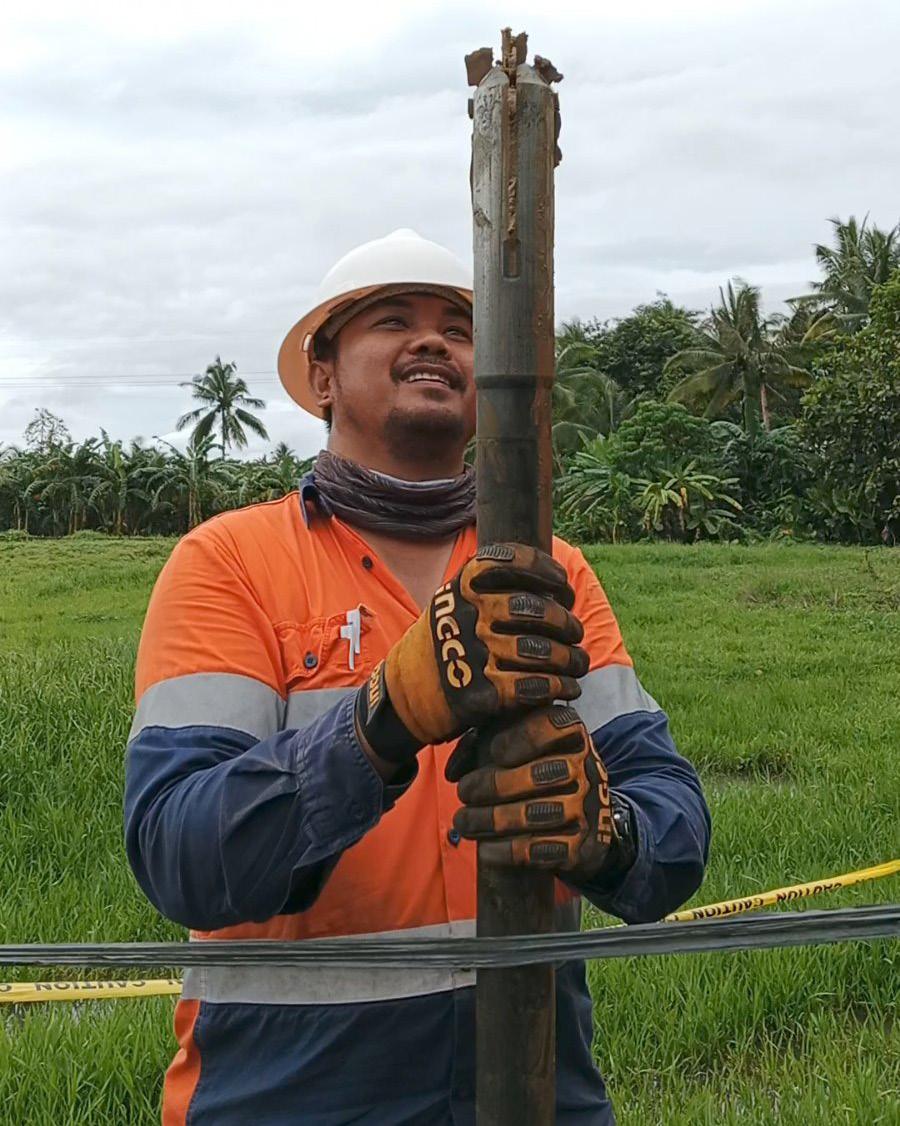
These techniques help us identify geological features such as fault lines, water tables, and rock properties that can impact the stability of mining operations, infrastructure projects, and tailings management.
For example, seismic refraction methods can reveal variations in bedrock depth or provide insights into rock strength, which are crucial for mine design and construction of safe, stable structures. Similarly, electrical resistivity surveys can detect areas of weakness or potential groundwater flow, which is essential for assessing risks to tailings dams or other earthworks.
By integrating surface geophysics with other testing methods like Cone Penetrometer Testing (CPT)
edge tools, unmatched experience in the Philippine market, and our collaborative approach sets us apart as the preferred partner for mining projects.
We have the people and equipment on the ground in the Philippines to execute high quality ground investigations, and our teams and tools are suited to your projects.
Together we combine our expertise with your design teams to execute any project. Contact us today to discuss how RDCL can enhance your mining project’s success with tailored, high-quality geotechnical services. Let’s set up a meeting to identify how we can support your objectives and deliver results.
written by: ROGER KOO AND MARK CONNELL
In the vast and rugged mining landscape, where operations stretch across thousands of kilometres in some of the most remote locations on Earth, connectivity is critical. From ensuring the safety of workers to maintaining seamless production, network reliability is the backbone of mining operations.
However, with extensive fiber, copper and coaxial cable networks spanning both underground tunnels and above-ground facilities, identifying and resolving faults efficiently is akin to looking for a needle in a haystack.
Fluke Networks, the trusted leader in Ethernet network testing and certification, is at the forefront of ensuring that mining infrastructure and networks remain connected and operational.
By providing state-of-the-art network test tools, training and preemptive maintenance solutions, Fluke helps mining companies minimise downtime, enhance safety and security and improve operational efficiency.
The Fluke Networks suite of solutions, an essential part of every technician’s tool bag, is indispensable in identifying and resolving network connectivity faults quickly, ensuring mining operations and networks stay online.
For operating mines, network reliability is non-negotiable. These mines are not just workplaces; they are self-sustaining communities where employees live, work and communicate online with their families.
Whether it is operating autonomous mining trucks and trains, controlling production equipment, or maintaining security surveillance systems, mining operations depend on robust network infrastructure.
Fluke’s cable and network testing solutions play a crucial role in:
• Fault Detection and Prevention
– Identifying and resolving fiber,
copper and coax faults before they cause major disruptions.
• Uptime Optimization – Keeping mines operational by ensuring stable network connectivity.
• Security and Safety – Supporting surveillance and monitoring systems to protect personnel and assets.
• Efficiency and Compliance
– Helping mining operations meet local standards for network installations and maintenance.
Mining environments present extreme conditions that put network infrastructure to the test. Fiber optic cables, which serve as the backbone for data transmission in these operations, can be easily damaged by vibrations, heavy machinery, or accidental excavation. Given the sheer scale of mining sites, some spanning over 700 kilometres, it would be nearly impossible to locate faults manually. A single undetected network failure can impact a mine in multiple ways:
• Autonomous Equipment Failure: Disruptions in fiber optic networks can cause automated mining trucks and trains to malfunction, leading to costly delays.
• Security System Downtime: Security cameras and monitoring systems rely on uninterrupted connectivity. A fault in a cable could lead to blind spots, leaving valuable assets and personnel at risk.
• Communication Breakdowns: Workers depend on network reliability to stay in contact with remote control centres, often located thousands of kilometres away.
• Operational Delays and Financial Losses: Downtime in mining operations translates to significant financial losses, not only in production delays but also in costly demurrage charges for delayed shipments at ports.
FLUKE’S SOLUTION: RELIABLE NETWORK TESTING AND TRAINING
Fluke’s comprehensive suite of cabling and network testing tools, example, the OptiFiber Pro, empowers mining operations to detect faults quickly, reducing downtime and increasing efficiency. Traditionally, identifying a fiber optic break could take days, but with Fluke’s precision tools, it now takes just seconds.
The LinkIQ™ Cable+WiFi+Network Tester is another tool in the bag that helps to verify cable performance up to 10 Gb/s using frequency-based measurements and solve network connectivity problems. It performs ping tests to verify connectivity and nearest switch diagnostics to identify key network issues and validate switch configuration.
Additionally, the Industrial Ethernet (IE) models allow identification of cabling issues on RJ45, M12X, M12D, and M8D terminated cables supporting EtherNet/IP, PROFINET, EtherCAT and other IE protocols. Test results are downloadable and managed via the LinkWare™ PC software.

Fluke’s solutions support mining operations by:
• Providing Basic and Advanced Fiber Optic Testing Tools –These instruments allow engineers to maintain proper fiber optics hygiene, locate faults instantly, reducing network downtime.
• Providing Visibility into Cable and Network – Answers the question if it is the cabling link
Fluke LinkIQTM Cable + Network Tester is great for cabling validation, network performance testing up to 10GBASE-T and nearest switch diagnostics that includes VLAN and PoE information.
or network configuration that is preventing network connectivity?
• Supporting Multi-Network Connectivity – Mining operations rely on multiple interconnected networks, including IT, production, and security networks. Fluke’s solutions ensure seamless operation across all systems.
• Supporting Training and Certification for Network Technicians – Fluke offers accredited training programmes, such as the Certified Cabling Test Technician (CCTT) programme, ensuring mining staff are fully equipped to maintain and troubleshoot networks.
Beyond monetary losses, the risk of an unmonitored security breach for an entire week underscored the critical importance of network fault detection and having the right training to troubleshoot issues through the process of elimination in the correct order.
Mining operations do not end at excavation. The transportation of mined materials to ports and cargo ships depends on seamless network infrastructure. Port conveyors, cranes and automated loading systems are heavily reliant on fiber optic and electrical networks. A single

Fluke OptiFiber® Pro OTDR is designed for both enterprise and OSP environment. Automated setup senses fiber characteristics and sets measurement parameters to discover and locate fiber faults at the mine site.
A major Australian mining operation recently encountered persistent network failures in its security surveillance system. A key security camera, positioned in a sensitive area, was intermittently cutting out. Over a week of troubleshooting, engineers first replaced the camera, then the network switch, yet the issue persisted.
Upon using a Fluke cable analyser, the true cause was identified within eight seconds, simply a bad cable connection. By the time the true fault had been identified, the company had already spent over $10,000 on unnecessary hardware replacements. If they had known what to look for and used Fluke’s cable analyser tool first, the issue would have been swiftly resolved and precious time and money saved.
mining technicians:
• Understand best practices for fiber optic maintenance.
• Can quickly troubleshoot and fix network faults.
• Stay up to date with the latest tools and requirements of testing standards (ISO, TIA).
• Renew their certification every two years (mandatory) to keep skills sharp. By keeping technicians well-trained, Fluke helps mining companies reduce human error, enhance operational safety and ensure network uptime.
In an era where connectivity is the foundation of safe and secure mining

break in connectivity can delay ship departures, leading to millions of dollars in lost revenue.
Fluke’s fiber optic testing solutions are just as essential in port environments as they are in the mines. By ensuring reliable connectivity, mining companies can avoid costly delays and streamline their supply chain operations.
Fluke doesn’t just supply cuttingedge tools. It also invests in training the workforce to handle network infrastructure effectively, with a range of online video trainings and webinars available on its website and its Certified Cabling Test Technician (CCTT) programme. This industryrecognised, hands-on, BICSI CECapproved certification ensures that
operations, Fluke provides the tools and training necessary to keep mines running without interruption. For the mining industry, every second of downtime matters.
Investing in Fluke Networks Cable and Network Test solutions goes beyond maintaining operations. It ensures the safety and security of everyone on site.
Want to safeguard your mining network? Discover how Fluke’s tools and training can keep your operations connected, secure, safe and productive.
Editor’s Note: Roger Koo is Fluke Networks Product Manager, Fluke South East Asia Pte Ltd. Mark Connell is Fluke CCTT Facilitator South Pacific, Measurement Communication Solutions
Fluke Industrial Ethernet CableAnalyzerTM Kit is suitable for harsh industrial environments, for validation and advanced troubleshooting of copper, fiber and coax cabling infrastructure at the mine site.

written by: EZANNE SOH, SENIOR REGIONAL MANAGER, APAC, GEOTAB
The Philippines’ mining industry faces significant challenges, including rising fuel costs, regulatory changes, and the need for increased efficiency. To remain competitive, mining operators must optimize resources while ensuring safety. Your fleet and equipment provide a prime opportunity for cost savings and operational improvements.
Geotab’s innovative open platform for fleet and asset management helps mining companies track equipment, improve uptime, and reduce operating costs. Here are four reasons why Geotab’s telematics technology can be a game-changer for mining operations in the Philippines.
PROVIDE VISIBILITY INTO DRIVER RISK FOR PROACTIVE SAFETY MEASURES
Safety is one of the top priorities for mining operations, where hazardous conditions and heavy equipment increase the risk of accidents. Geotab’s AI-powered Driver Risk Insights shifts safety monitoring from vehiclebased data to driver-specific analysis, allowing fleet managers to assess and predict collision risk at the individual driver level.
This cutting-edge technology leverages Geotab’s vast data insights to benchmark driver performance, detect risky behaviors, and enable proactive coaching through the Geotab Drive App. By identifying high-risk drivers and implementing targeted safety measures, mining fleets can prevent collisions, reduce insurance costs, and foster a culture of continuous safety improvement.
ENSURING MAXIMUM UTILIZATION
Effective cost control starts with full visibility over your equipment. Mining sites are complex environments, and tracking your assets ensures optimal use of every machine. Geotab’s technology connects directly to a vehicle’s onboard computer, collecting real-time data on fuel consumption, engine hours, and overall performance.

With our system, you can pinpoint the location of every piece of equipment, reducing the risk of unnecessary rentals due to misplaced machinery.
Fuel costs are one of the largest expenses for mining operations, particularly in a country where logistics and transportation costs continue to rise. Geotab’s telematics technology enables mining businesses to monitor fuel consumption, detect inefficiencies, and identify areas for savings.
Our system tracks fuel usage based on engine hours, not just distance traveled—essential for mining sites where vehicles often operate while stationary. By analyzing idle time and fuel economy, you can implement smarter fuel management strategies, reduce waste, and optimize costs across your fleet.
Geotab provides maximum flexibility for mining projects of all sizes. Our device can be installed on any vehicle—regardless of manufacturer— and integrates all data onto a single

platform. This allows you to track fuel efficiency, engine health, battery status, and other key performance indicators with ease.
Designed for the toughest conditions, our technology is ideal for heavy mining equipment, construction vehicles, utilities, powered assets, and trucks. With durable, impact-resistant, and weatherproof housing, they are built to withstand the demanding environments of mining operations in the Philippines.
Begin your journey with Geotab today and move into a future where every trip is safe, and every operation is optimized for success. With our help, you can leverage AI insights, track your valuable assets, increase equipment uptime and lower your operating costs.
To learn more, visit www.geotab. com/APAC
Off-the-road (OTR) tires are the backbone of industries that operate in the toughest environments. Whether it’s construction or mining, these heavy-duty tires ensure that massive machinery can traverse uneven, rocky, and muddy terrains with ease.
Choosing the right OTR tires is critical for maximizing efficiency, safety, and cost-effectiveness. That’s where Higantis comes in—offering high-quality tailor fit OTR tires and expert services that keep industries moving forward.
OTR tires are specifically designed to endure extreme conditions. Unlike standard tires, they are engineered with reinforced sidewalls, deeper treads, and specialized rubber compounds to withstand heavy loads, sharp debris, and challenging landscapes.
Higantis isn’t just a tire supplier; we are your partner in ensuring optimal performance and longevity of your OTR tires. We make sure that our expert solutions will guide your choices and make a difference:
1. Premium Quality Tires
Higantis offers a comprehensive selection of OTR tires from the most trusted brands, ensuring that clients get the best fit for their specific needs.
2. Expert Consultation
Choosing the right OTR tire can be complex. Higantis’ team of specialists provides expert recommendations based on the application, load requirements, and terrain conditions.
3. Tire Maintenance Services
Regular maintenance is key to extending the lifespan of OTR tires. Higantis offers tire monitoring, management, and repair services to help businesses minimize downtime and maximize productivity.
4. Innovative Solutions
From advanced tire pressure

monitoring systems (TPMS) to eco-friendly recycling or reusage options, Higantis stays ahead of the curve with innovative solutions that enhance performance and sustainability.
5. You are our Priority Higantis prioritizes customer satisfaction by providing tailored solutions, competitive pricing, and reliable after-sales support.
In industries where every minute of downtime can mean significant losses, having the right OTR tires is crucial. Higantis ensures that businesses get the most out of their investment by offering top-tier products, expert guidance, and proactive maintenance solutions. With a reputation built on trust and reliability, Higantis continues to

be a leading force in the OTR tire industry.
No matter the terrain, Higantis has the right solutions to keep your operations running smoothly. Explore our range of products and services today and experience the Higantis advantage firsthand!
written by: PAULA ANGELINE BACANI
For mining operations, precision in elemental analysis is not just a requirement—it’s the key to efficiency and profitability. The ability to conduct rapid, nondestructive analysis of ore samples directly impacts decision-making in the field and in laboratories. That’s where the SPECTRO XEPOS ED-XRF, distributed exclusively in the Philippines by QES Technology Philippines, Inc., is making a real difference. With nearly 90% of assay laboratories in the country’s nickel ore mining sector relying on ED-XRF advanced technology, it’s clear that the SPECTRO XEPOS is setting a new industry standard. Now, with the combination of this with the Environmental Express Katanax sample preparation Electric Fusion Machine, the game is changing once again.
The SPECTRO XEPOS XEP05 ED-XRF isn’t just another instrument—it’s a powerhouse of precision and accuracy. This ED-XRF delivers performance comparable to the more complex WD-XRF. Even using pressed powder pellets for sample preparation, it ensures accurate, repeatable results. Its stability and sophisticated spectral analysis allow for high-precision readings of nickel, cobalt, and iron oxide, among other essential elements.
But accuracy starts with preparation. The Environmental Express Katanax Sample Preparation Electric Fusion Machine takes sample consistency to the next level. By eliminating interfering matrices and producing more homogeneous samples, the fusion process enhances the reliability of analytical results. To meet varying laboratory needs, users can choose between the Katanax 3-placer or the Katanax 6-placer, depending on their sample
throughput requirements. This flexibility ensures efficiency, whether handling lower or higher volumes of samples, ultimately leading to better decision-making and fewer costly errors for mining operations.
The SPECTRO XEPOS XEP05 ED-XRF delivers fast, reliable results without the lengthy and labor-intensive procedures required by traditional methods. Unlike wet chemistry techniques that demand extensive sample preparation and prolonged waiting periods, it delivers precise and accurate readings in minutes.
The addition of the Environmental Express Katanax fusion machine further optimizes efficiency. Pressed pellet sample preparation, while effective, has its limitations. Fusion preparation eliminates matrices inconsistencies, reducing the risk of inaccurate readings and ensuring every test is as reliable as the last. This translates to higher throughput, increased productivity, and lower operational costs for assay laboratories.
PHILIPPINES, INC. Powerful equipment are only as good as the support behind it. QES Technology Philippines, Inc. has been a trusted partner to the Philippine nickel mining industry, ensuring that SPECTRO XEPOS users receive world-class services. With strategically located service centers and offices in Pampanga, Manila, Cebu, and Surigao City, QES guarantees expert installation, training, calibration, and maintenance support.
This commitment to after-sales service is a major factor why mining
companies continue to invest in the SPECTRO XEPOS. Having a knowledgeable local team available for troubleshooting and technical assistance anytime ensures maximum uptime and optimal performance for every unit in operation.
The adaption of the SPECTRO XEPOS XEP05 ED-XRF in the Philippine nickel ore mining industry speaks volumes about its reliability and accuracy, especially when almost 90% of the Ni Ore Industry are users. When paired with the Environmental Express Katanax fusion machine, it provides an unparalleled level of efficiency and cost-effectiveness.
With the support of QES Technology Philippines, Inc. (Authorized representative of SPECTRO Analytical Instruments GmbH), the assay department of mining companies can be confident that they’re using the best technology available to maintain compliance, improve profitability, and streamline operations. Investing in advanced and known-brand analytical equipment isn’t just a smart decision—it’s a necessity for any mining operation looking to stay ahead in an increasingly competitive industry. To see the SPECTRO XEPOS XEP05 in action, #QESInAction, schedule a visit at QES head office at Unit 507, Page 1 Building, Acacia Avenue, Madrigal Business Park, Ayala Alabang, Muntinlupa, Metro Manila, or at National Highway, KM. 4, Brgy. Luna, Surigao City as ED-XRF demo units are available on both locations. For consultations and quotation requests, contact QES at +632 8771 1248, via email at qtpmarketing@qesnet.com, or explore their offerings at www. qesnet.com.

Industry research shows that only 10% of pumping systems achieve their expected design life, emphasising the importance of informed decision making in dewatering system investments. While initial purchase price often drives decisions, the true cost of ownership extends far beyond the upfront investment.
When evaluating dewatering systems, organisations must consider four key factorsreliability, safety, maintainability, and efficiency. Common pump failures stem from operator errors, improper installation, inadequate maintenance, and auxiliary equipment problems.
However, these issues often trace back to poor system design and inappropriate pump selection, which are often attributed to attempts to reduce initial costs.
A comprehensive view of lifetime costs includes design and engineering, initial capital investment, installation and commissioning, power consumption, operational resources, maintenance and repairs, lost productivity, and environmental compliance.
With over thirty years of mining sector experience, Truflo Pumps combines expertise and innovation to deliver optimal dewatering solutions. Working closely with clients to ensure each system matches specific operational requirements, Truflo Pumps’ strength lies in creating bespoke solutions for both open-cut and underground mining operations. By tailoring dewatering systems to site specific conditions and issues the overall lifetime cost can be reduced significantly.
Whether your requirements are diesel, electric or explosion proof pumps, they will help you to move water in the best and most costeffective way.
Designed and built in Australia, Truflo Pumps can be found in some of the harshest conditions imaginable right around the globe as their rugged construction and reliable running ensures minimal downtime.

The AquaBoss Asset Protection system, developed by Truflo Pumps in conjunction with hydraulic engineers, pump maintenance teams and pump crews, represents a breakthrough in pump control technology. Through advanced curve mapping capabilities, this control panel delivers sophisticated monitoring and protection for pumping systems and engines providing long-term asset reliability and economies for mining operations.
Key benefits include:
• Advanced Performance Optimisation: The system continuously monitors critical operational parameters, ensuring optimal performance within designed curves, providing real-time monitoring and proactive issue detection.
• Extended Equipment Lifespan: AquaBoss offers dual protection through engine safeguarding and wet end preservation, significantly reducing wear and tear.
• Proactive Maintenance Management: The system’s predictive capabilities transform maintenance from reactive to proactive by identifying upcoming service requirements and enabling scheduled maintenance planning. By maintaining ideal operating parameters, AquaBoss significantly reduces wear and tear, leading to substantial savings in replacement and repair costs.

Delivering world class protection, the AquaBoss Asset Protection System ensures longevity for pumping assets in the global mining sector, optimising both performance and the total cost of ownership.
Working with global mining companies, Truflo Pumps has established itself as a leader in cost-effective dewatering solutions through industry expertise, successful implementations and commitment to tailored system design.
Mining operations are invited to discuss the issues they face, whether harsh water, pump setup, environmental or other issues with Paul Power, Truflo Pumps’ international dewatering advisor.
Paul visits the Philippines on a regular basis and is happy to assist in the design of dewatering systems that deliver true value for money. Paul is also taking expressions of interest in companies interested in becoming an agent for Truflo Pumps in the Philippines.




Commitment to innovation. Product development. Market insights. Unmatched experience. These are just some of the things that give Valley Blades Limited—and our customers—the leading edge.
The Grader-Link Pro™ mining grader blade by Valley Blades delivers longer wear life compared to standard OEM blades.
Uniquely designed in locking segments of 46lbs each for the regular straight blade or 41lbs each for the serrated blade, these forged and heat-treated blades are safe and easy for one operator or maintenance person to handle, right on site, reducing both downtime and maintenance required. The bottom line is increased safety and performance and decreased costs.
One case study showed the GraderLink Pro™ to be the best cutting edge ever used by an American gold mine. After nearly 2,000 hours of use over 184 days, wear was minimal, consistently averaging ½” across the mouldboard and 1 inch at either end.
Carbide inserts were still intact, and while the blade showed some minor chips, overall product performance was not impacted.
Home of the exclusive VALLITE heat-treating process, Valley Blades is your go-to for blades, cutting edges, ground-engaging tools (G.E.T.), wear parts and accessories

for construction and mining equipment.
VBL’s through-hardened blades are also available with replaceable carbide tips to offer the best performance for scarifying hard surfaces. A variety of rotating and fixed (non-rotating) tips are available to tailor the blade to your application. The CARBITTM system is available in different sizes to suit all sizes of OEM machines.
Keeping up with global competition means providing customers with trusted solutions that work and last. The team at Valley Blades cares about what they do, and it shows up in the quality of the product.
Valley Blades Limited ® is exclusively distributed by Uptime Earthmoving Solutions, Inc. in the Philippines. For product inquiries, you may reach us through the following:
Landline: (2) 8687 1000 loc 396 Mobile: + 63 915 069 2676 | +63 949 137 4108
Email: customer.service@ uptimeearthmoving.com Facebook: www.facebook.com/ uptimeearthmovingsolutioninc LinkedIn: www.
linkedin.com/company/ uptimeearthmovingsolutionsinc
Office Address: Unit D 10th Floor., CyberOne Bldg., 11 Eastwood Ave., Eastwood City, Bagumbayan, Quezon City, 1110


& Convention Centre, Singapore

Register now!

C
Sands Expo & Convention Centre, Singapore
Sands Expo & Convention Centre, Singapore
co-located with:

co-located with:
co-located with:


Book your schedule now for the region’s leading digital construction show and conference
Combined with the region’s leading event for the geospatial market, Geo Connect Asia, the combined event offers a vital extra location intelligence ingredient to the construction environment.
Book your schedule now for the region’s leading digital construction show and conference
Book your schedule now for the region’s leading digital construction show and conference
Combined with the region’s leading event for the geospatial market, Geo Connect Asia, the combined event offers a vital extra location intelligence ingredient to the construction environment
Combined with the region’s leading event for the geospatial market, Geo Connect Asia, the combined event offers a vital extra location intelligence ingredient to the construction environment
Combined with the region’s leading event for the geospatial market, Geo Connect Asia, the combined event offers a vital extra location intelligence ingredient to the construction environment.
Vision for sustainable, digitalised construction


Sustainable construction through digital twins & transparent supply chains
Vision for sustainable, digitalised construction
Regional project insights – lessons from South & Southeast Asia
Sustainable construction through digital twins & transparent supply chains
Vision for sustainable, digitalised construction
Vision for sustainable, digitalised construction
Regional project insights – lessons from South & Southeast Asia
South & Southeast Asia delegations - digital construction trends across the region
Sustainable construction through digital twins & transparent supply chains
Sustainable construction through digital twins & transparent supply chains
Regional project insights – lessons from South & Southeast Asia
Automated and autonomous construction - practical applications of AI and machine controls
South & Southeast Asia delegations - digital construction trends across the region
Regional project insights – lessons from South & Southeast Asia
Automated and autonomous construction - practical applications of AI and machine controls

Industrialised construction – scaling with offsite manufacturing and robotics
South & Southeast Asia delegations - digital construction trends across the region
South & Southeast Asia delegations - digital construction trends across the region
Preparing the workforce for AI-driven construction
Industrialised construction – scaling with offsite manufacturing and robotics
Data as a strategic asset – building a strong foundation for AI in construction
Preparing the workforce for AI-driven construction
Automated and autonomous construction - practical applications of AI and machine controls
Automated and autonomous construction - practical applications of AI and machine controls
Managing innovation & emerging technologies in construction

Data as a strategic asset – building a strong foundation for AI in construction
Industrialised construction – scaling with offsite manufacturing and robotics
Industrialised construction – scaling with offsite manufacturing and robotics
Investing in the future of construction – perspectives from investors
Managing innovation & emerging technologies in construction
Preparing the workforce for AI-driven construction
Preparing the workforce for AI-driven construction
Data as a strategic asset – building a strong foundation for AI in construction
Investing in the future of construction – perspectives from investors
Data as a strategic asset – building a strong foundation for AI in construction
Managing innovation & emerging technologies in construction
Managing innovation & emerging technologies in construction

Investing in the future of construction – perspectives from investors
Investing in the future of construction – perspectives from investors
Construction Firms and General Contractors
AEC (Architecture, Engineering, and Construction) Consultancies
Public and Private Asset Owners
Technology Providers
Government and Regulatory Bodies
Venture Capital (VC) and Corporate Venture Capital (CVC) Firms
Real Estate Developers
Educational and Training Institutions
Register your visit today at www digitalconstructionasia com
Complimentary Trade Visitor Pass (worth $55) is also available!
your visit today at www.digitalconstructionasia.com
Pass (worth $55) is also available!

Forepoling is a method of supporting a weak roof of a mine or a tunnel, used traditionally in soft, loose, or carving ground.
To make use of this method, poles, timber, steel tube, or slabs are driven into the ground before or during excavation. The method has been used for centuries, both in smaller mines as well as larger tunneling operations.
Along with time, forepoling has also developed a course as a method and the old wooden supports have been replaced with more sustainable and rigid supports made of metal. These newer supports are capable of supporting the tunnel roof even under broken rock conditions.
However, even broken rock is not an obstacle for tunneling when you are using the Robit® Casing System. Made for the modern iteration of forepoling, nowadays also referred to as a “tube umbrella’, the casing system offers a holistic system for the work.
The drilling system consists of casing tubes, which are drilled through the overburden in the shape of an umbrella, therefore supporting both the sides and the roof of the tunnel equally. Once in place, the drill is removed, and the casings are filled with grouting to strengthen and solidify them even further.

The Robit® Casing System allows for easy driving of the casing tubes into the ground with low torque demand and is, quite naturally, fully compatible with Robit drilling bits and rods.
Robit® is exclusively distributed by Uptime Earthmoving Solutions, Inc. in the Philippines. For product inquiries, you may reach us through the following:
Landline: (2) 8687 1000 loc 396
Mobile: + 63 915 069 2676 | +63 949 137 4108
Email: customer.service@uptimeearthmoving.com
Facebook: www.facebook.com/ uptimeearthmovingsolutioninc LinkedIn: www.linkedin.com/company/ uptimeearthmovingsolutionsinc
Office Address: Unit D 10th Floor., CyberOne Bldg., 11 Eastwood Ave., Eastwood City, Bagumbayan, Quezon City, 1110
written by: LEW ANNE CRUZ
The power generation sector is undergoing rapid transformation to respond to the increasing demand for affordable and secure electricity.
With the increasing integration of decentralized renewable energy sources, global decarbonization, and increased energy consumption, the demand for more electrical substations has never been greater.
Recognizing this shift, GHD has established a Global Capability Center (GCC) to support the delivery of transmission and distribution projects. The GCC is designed to support infrastructure development and work closely with other GHD offices to deliver these solutions alongside GHD’s clients.
“At GHD, we are committed to accelerating the transition to clean energy,” shares Simon Terry, General Manager –Philippines.
“By creating a Global Capability Center focused on the design of electrical substations,
we provide our teams and clients worldwide with access to the right expertise, enhance efficiency, optimize costs, and drive innovation. This strategic approach strengthens our global competitiveness and ensures we deliver highquality, future-ready solutions that help our clients navigate the evolving energy landscape with confidence.”
Located across GHD’s offices in the Philippines, the GCC serves as a strategic hub, supporting GHD offices across the globe. It brings together a wide range of engineering disciplines—including primary, secondary, protection, telecommunications, automation, civil, and structural engineering—with a strong focus on detailed design delivery.
This centralized approach aims to deliver consistent, high-quality output across GHD’s global projects.
For more information, please contact Brad Smith, Technical Director – Power at Brad. Smith2@ghd.com.