Information for Parents and Pupils
Years 3-6
Years 3-6
It gives me great pleasure to welcome you to another exciting year in the Prep School at Brighton College Vietnam Whether you are new to our community or returning for another year, we are thrilled to have you with us as we embark on a journey of growth, discovery, and joyful learning. This year, our Key Stage 2 pupils will continue to flourish as curious, confident, and kind learners- ready to explore new ideas and challenges with enthusiasm.
At Brighton College Vietnam, our guiding values of kindness, curiosity, and confidence lie at the very heart of everything we do These values shape our approach to teaching and learning, our relationships with one another, and the spirit of our whole school community In Key Stage 2, pupils continue to follow the English National Curriculum, which provides a broad, challenging, and engaging framework for learning This curriculum helps children deepen their understanding across subjects, strengthen their communication and problem-solving skills, and develop independence as learners
Our curriculum is designed not only to promote academic excellence but also to nurture the whole childtheir creativity, wellbeing, and sense of purpose. Alongside the core subjects of English, Mathematics, and Science, and the breadth that Vietnamese, Mandarin, PE, Music and Art provide we are proud to offer a range of specialist subjects unique to Brighton College Vietnam that enrich our pupils’ educational experience: HEALTH (Home Economics and Lifetime Health) – Our holistic wellbeing programme empowers pupils to make informed, balanced choices about their physical and mental health. It promotes self-awareness, resilience, and a positive attitude toward lifelong wellbeing
OPOP (Our Planet & Our Past) – A distinctive interdisciplinary subject that encourages pupils to think globally and act locally Through OPOP, children explore sustainability, social responsibility, and the ways in which individuals can make meaningful contributions to their communities and the wider world
LAMDA (London Academy of Music and Dramatic Art) – Through speech, drama, and performance, LAMDA develops our pupils’ communication skills, confidence, and self-expression It offers an exciting platform for creativity, collaboration, and personal growth.
These unique subjects, combined with our engaging and forward-thinking curriculum, help our pupils build the essential skills and character traits they will need to thrive in the 21st century- from critical thinking and empathy to digital literacy and collaboration.
This KS2 Parent Curriculum Handbook has been created to give you a clear insight into what your child will experience and achieve during their time in Key Stage 2 We believe deeply in the power of home–school partnership, and your involvement is key to every child’s success Together, we will support their growth, celebrate their achievements, and inspire them to become thoughtful, resilient, and compassionate young people
I l k f d t t dinary year of learning and discovery with your children.
Head of Prep School
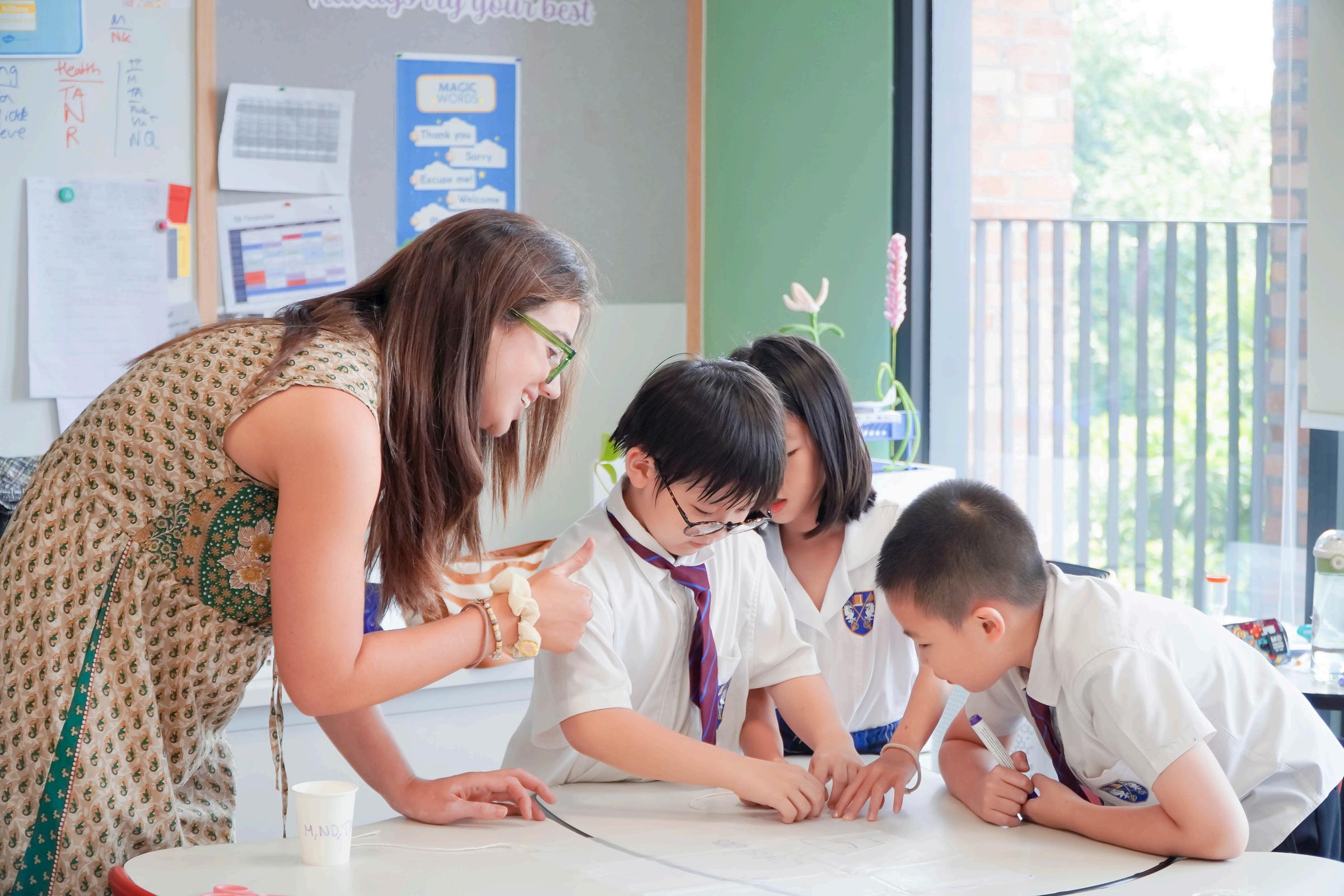
Our bespoke Brighton College curriculum uses the English National Curriculum as the framework for teaching and learning whilst going beyond with subjects such as Our Planet and Our Past and our HEALTH programme. Our curriculum is culturally relevant, inclusive for all learners and provides pupils with the knowledge and skills needed for the future
Where needed, we offer support with English as an Additional Language and Additional Educational Needs departments and extend learners through a personalised learning approach that is always pupil-centred.
We hope this guide helps you to understand our curriculum and that your child enjoys these exciting learning years at Brighton College Vietnam.
The English curriculum in KS2 continues to build on the foundation of learning laid in KS1. By the end of KS2 pupils will have acquired the skills and knowledge they need to fully access the next stage of their learning. Pupils will not only learn English skills, but also harness their knowledge of the wider world and imaginary worlds We use carefully chosen text drivers to inspire all children to become terrific writers and life-long readers. Our English curriculum promotes high standards of language and literacy by equipping our pupils with a strong command of written and spoken English, so that they can be successful in all aspects of learning.
To read easily and fluently at the appropriate age and development level
To develop a habit of reading for pleasure and for information
To acquire a wide vocabulary and understanding of grammar
To appreciate the varied and rich literature available in English
To write clearly and coherently, adapting their language for a range of styles and contexts
To discuss, develop and enhance their learning in English with confidence
To become competent in speaking and listening, including presentations and discussions or debates
Content of Curriculum
Speaking and Listening
Being able to communicate effectively and appropriately is an important skill. Brighton College Vietnam supports pupils to help them better understand spoken English and respond appropriately, not only with the correct words, but also tone of voice, intonation and cultural cues Pupils will learn the skills of debate and justification when elaborating on any opinions they make.
At Brighton College Vietnam, we believe that mathematics should be relevant and applicable. Of course our pupils will learn how to calculate, but they will also develop a deeper conceptual understanding of mathematics. Our mathematics curriculum embeds necessary repetition to aid speed and fluency in number work, whilst introducing more complex and challenging tasks to build on knowledge and to develop understanding as pupils revisit each mathematical topic Mathematics at our school provides a solid foundation for understanding the mathematical world, the ability to reason mathematically and an appreciation of and sense of enjoyment about the subject.
To become fluent in the fundamentals of mathematics, including through varied and frequent practice with increasingly complex problems over time
To develop a conceptual understanding and the ability to recall and apply knowledge rapidly and accurately
To reason mathematically by following a line of enquiry, conjecturing relationships and generalisations, developing an argument, justification or proof using mathematical language
To solve problems by applying mathematics to a variety of routine and non-routine problems with increasing sophistication, including breaking down problems into a series of simpler steps and persevering in seeking solutions
Year 3
Place value, addition and subtraction, multiplication and division
Multiplication and division, length and perimeter, fractions, mass and capacity
Year 4
Place value, addition and subtraction,measurement (area), multiplication and division
Year 5 Place value, addition and subtraction, multiplication and division, fractions
Multiplication and division, length and perimeter, fractions, decimals
Multiplication and division, fractions, decimals and percentages, perimeter and area, statistics
Year 6 Place value, addition, subtraction, multiplication and division, fractions, converting units
Ratio, algebra, decimals, fractions, decimals and percentages; area, perimeter and volume; statistics
Fractions, money, time, shape, statistics
Decimals, money, time, shape, statistics, position and direction
Shape, position and direction, decimals, negative numbers, converting units, measurement (volume)
Shape, geometry (position and direction), themed projects, consolidation and problem solving
Our science curriculum is not only based on theoretical and conceptual understanding, but a chance to experience the workings of our world Our engaging science curriculum not only demonstrates the principles of science, but also provides the opportunity to conduct appropriate experiments in our dedicated Prep science labs Pupils will make links with other subjects such as mathematics and be confident in using the language of science to describe and report about their experiments. By the end of KS2, pupils will have mastered much more than the foundational knowledge of scientific principles, ready for further study at KS3
Year 3
Year 4
Skeletons, movement, nutrition and diet, food waste, rocks
Grouping and classifying living things, data collection, states of matter, sound
Fossils, soils, plants, biodiversity Forces, magnets, light
Data collection, electricity, energy, habitats, deforestation
Data collection, the digestive system, food chains
Year 5
To develop scientific knowledge and conceptual understanding through the specific disciplines of biology, chemistry and physics
To develop an understanding of the nature, processes and methods of science through different types of science enquiries that help them to answer scientific questions about the world around them
To equip pupils with the scientific knowledge required to understand the uses and implications of science, today and for the future Aims
Year 6
Life cycles, global warming, plastic pollution, properties of materials, reversible and irreversible changes
Living things and their habitats, fossils, electricity, renewable energy
Forces, space, reproduction Reproduction, animals (including humans)
Light, light pollution, the circulatory system
Variation, adaptations, themed projects
We are very proud to be based here in Vietnam and want our pupils, both native and non-native, to learn the language and know more about the country’s amazing culture. This will include aspects of history and geography, plus a celebration of Vietnamese customs. Research shows that children who are confident in their mother tongue will find learning another language much easier We want our Vietnamese pupils to benefit from a solid foundation in their Vietnamese and our non-native Vietnamese speakers to enjoy learning the language of their host country.
For pupils to use their reading and listening skills to develop their spoken and written Vietnamese
To use grammar, punctuation and spelling confidently in written work, across a wide range of genres
To build an understanding of Vietnamese history and heritage, including legends and history
The core of computing is computer science, in which pupils are taught the principles of information and computation, how digital systems work, and how to put this knowledge to use through programming. Building on this knowledge and understanding, pupils are equipped to use information technology to create programs, systems and a range of content. Computing also ensures that pupils become digitally literate, working at a level suitable for the future workplace and as active participants in a digital world. They will be able to confidently express their ideas through information and communication technology
To understand and apply fundamental principles and concepts of computer science, including abstraction, logic, algorithms and data representation
To analyse problems in computational terms and have repeated practical experience of writing computer programs in order to solve such problems
To evaluate and apply information technology, including new or unfamiliar technologies, analytically to solve problems
To understand the importance of being a responsible, competent, confident and creative user of information and communication technology
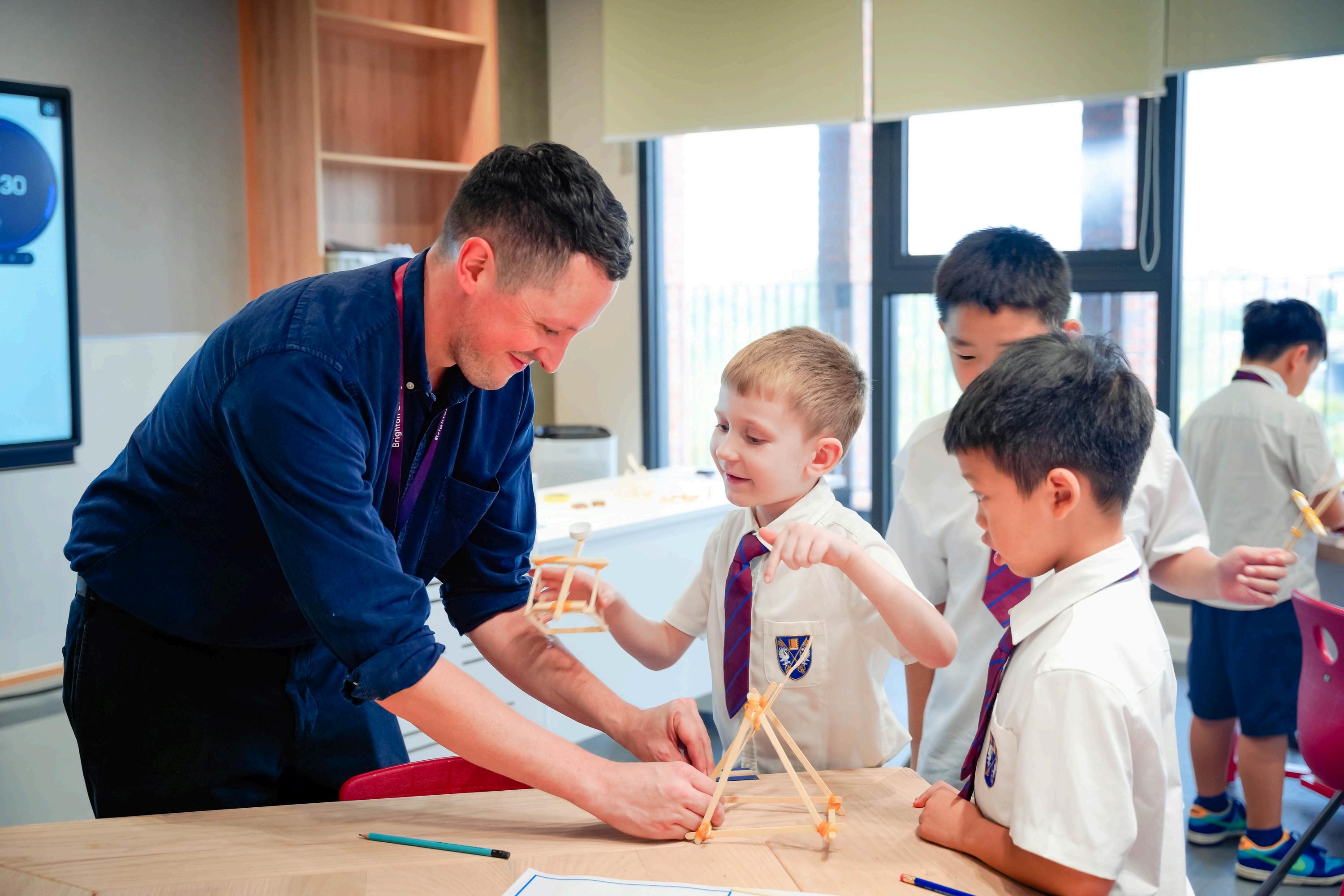
This exciting practical subject draws on pupils’ creativity and imagination to design and make products that solve real and relevant problems within a variety of contexts. Our high-quality design technology (DT) curriculum, delivered in our dedicated DT studio, ensures our pupils have the opportunity to take risks, becoming more innovative, resourceful and enterprising Through the evaluation of past and present DT practices, pupils will also understand the impact of DT on daily life
To develop the creative, technical and practical skills needed to perform everyday tasks confidently and participate in an increasingly technological world
To build and apply a repertoire of knowledge, understanding and skills to design and make high-quality prototypes and products for a wide range of users
To critique, evaluate and test their ideas and products and the work of others
Introduction
To produce creative work, exploring their ideas and recording their experiences
To become proficient in drawing, painting, sculpting and other art, craft and design techniques
To evaluate and analyse creative works using the language of art, craft and design
To know about some significant artists, craft makers and designers, and to understand the historical and cultural development of their art forms
Content of Curriculum
Introduction
Drama, at Brighton College Vietnam, is a subject that uses the body, voice, and imagination to develop creative skills and produce performances. It encourages creativity, communication and teamwork. In KS2, all pupils will have the opportunity for dedicated drama lessons which we see as being crucial to develop their confidence and fluency in English. Drama gives children the opportunity to learn many skills; to interpret language in new ways; to work in a team and to actively pursue resilience through their acting We want all of our young people to experience the excitement and energy of performance and their drama lessons will lead into a variety of Prep School performances across the year.
To develop pupils' skills in creating and performing, through individual and group opportunities
To allow pupils to understand and interpret the English language in new ways, developing pronunciation and broadening their vocabularies
To enjoy working creatively with others, taking pride in developing new skills
Content of Curriculum
Introduction
HEALTH is a Brighton College designed specialty subject The subject name itself is an acronym standing for ‘Home Economics and Life Time Health’. In our lessons we teach the Home Economic aspects of Design Technology with food nutrition, food preparation and textiles work. The subject also teaches pupils how to support their own well-being and mental health Finally, we promote and develop citizenship with hands-on projects to support charities and our local community, plus developing sustainability awareness and supporting a growing understanding of global issues This subject is taught in a purposebuilt classroom which is set to make our school chef jealous, being kitted out with high-end cookery equipment and space for our team of young people to learn these important life skills.
To understand and apply the principles of nutrition and learn how to cook
To develop an understanding of where different food comes from
To ensure an understanding of their own role in the local and global community
To help pupils understand their own well-being and changing needs as they grow up over KS2
To learn and apply strategies and techniques to support good mental health including mindfulness, the power of breath and the links with physical well-being
The HEALTH curriculum at KS2 includes: Planning menus, shopping and cooking using good hygiene and taught skills to use equipment safely and with good effect
Creating and then sewing own textile designs; designing and working with a range of materials; learning about basics to care for clothing
Selecting from and using a wider range of materials and components, including construction materials, textiles and ingredients, according to their functional properties and aesthetic qualities
Teaching pupils to take responsibility to plant, tend and grow in our Prep School garden.
Supporting pupils to participate and lead projects to support local, national and global issues
Throughout KS2, pupils extend their language learning to include the study of Mandarin by exploring modern and traditional Chinese culture, the geography and people of China and Chinese festivals Alongside this, pupils will build a foundational understanding of key vocabulary and grammar. Pupils will use pinyin to support their learning, and start to write and understand key radicals and characters that enable them to read and write basic texts with greater accuracy. As they progress through the key stage, pupils are challenged to use their Mandarin for a greater range of communicative tasks.
To know about other cultures, particularly Asian cultures where Mandarin is spoken
To express their ideas and thoughts in Mandarin
To understand and respond to spoken and written language
To speak with increasing confidence, fluency, and spontaneity
Music is a universal language that embodies one of the highest forms of creativity. Our highquality music curriculum will engage and inspire pupils to develop a love of music and develop their talent as musicians. Brighton College Vietnam’s modern theatre enables pupils to perform on stage, increasing their self-confidence, creativity and sense of achievement. As they progress in their music learning, they should develop a critical engagement with music, allowing them to compose and become more familiar with a wide range of musical genres.
To perform, listen to and begin to evaluate music across a range of historical periods, genres, styles and traditions, including the works of significant composers and musicians
To learn to sing and use their voices to create and eventually compose music on their own and with others, have the opportunity to learn a musical instrument and use technology appropriately
To understand and explore how music is created, produced and communicated and begin to explore inter-related dimensions such as pitch, duration and tempo
Introduction
"Our Planet and Our Past" refers to the teaching of geography and history at KS2, as an appreciation of how these two disciplines are connected is essential to understanding our wider world Through the study of geography and history, pupils will learn about different places, both at local and global scales. They will also learn how historical events have changed our human and physical environments and understand the nature of processes which continue to have a significant impact on our planet. Our Planet and Our Past will inspire in pupils a curiosity and fascination about the world and its people that will remain with them as they move through their Prep School learning journey and beyond
To develop contextual knowledge of globally significant places, both on land and in the water, including their defining physical and human characteristics
To understand the processes that give rise to physical and human geographical features and how these are interdependent
To communicate geographical information in a variety of ways including collecting, analysing and presenting a range of data gathered through experiences of fieldwork
To know and understand significant aspects of the history of the wider world as a coherent, chronological narrative
To understand the methods of historical enquiry, including how evidence is used to make historical claims
To understand historical concepts such as continuity and change, case and consequence, similarity, difference and significance, and use them to make connections, draw contrasts, analyse trends, frame historically-valid questions and create structured accounts, including written narratives
Content of Curriculum
Our Physical Education (PE) curriculum will inspire our pupils to be active and healthy whilst giving them opportunities to work collaboratively as a team It will support pupils’ confidence and can also help build character and embed values such as fairness and respect. Pupils will build on their PE experience from KS1 and will be introduced to a broader range of activities to improve their agility, balance, and coordination whilst taking part in more physically challenging activities.
The modern sporting facilities throughout the Brighton College Vietnam campus offer our pupils every opportunity to try new sports and enjoy sharing physical activities with their peers.
To develop competence and begin to excel in a broad range of physical activities
To perform physical activities for sustained periods of time
To engage in competitive sports and activities
To develop flexibility, strength, technique, control and balance
To take part in outdoor and adventurous activity challenges both individually and within a team
To master basic movements in running, jumping, throwing and catching
To perform dances using simple and complex movement patterns
To compare their performances with previous ones and demonstrate improvement to achieve their personal best
The PE curriculum in KS2 includes:
Developing more complex movements including running, jumping, throwing and catching as well as balance, agility and co-ordination
Participating in team games and developing more complex tactics for attacking and defending
Performing dances using a range of movement patterns
Teaching pupils to swim competently, confidently and proficiently over a distance of at least 25 metres using a range of strokes effectively
Year 3 Being Me in My World
Setting personal goals, selfidentity and worth, positivity in challenges
Celebrating Difference
Families and their differences, conflict and how to manage it, bullying and how to solve it.
Year 4 Being Me in My World
Being a school citizen, rewards and consequences, group decision-making, having a voice
Celebrating Difference
Challenging assumptions, identifying how special and unique everyone is
Year 5 Being Me in My World
Planning the year ahead, rewards and consequences, how behaviour affects groups, having a voice, participating
Celebrating Difference
Cultural differences and how they can cause conflict, racism, types of bullying, materials wealth and happiness
Year 6 Being Me in My World
Identifying goals for the year, global citizenship, children’s universal rights, rolemodelling
Celebrating Difference
Perceptions of normality, understanding disability, understanding bullying, inclusion/exclusion, empathy
Dreams and Goals
Difficult challenges, managing feelings
Healthy Me
Exercise, food labelling and healthy swaps, attitudes towards drugs, keeping safe
Relationships
Family responsibilities, friendship and negotiation, being a global citizen
Changing Me
How babies grow, body changes, family stereotypes
Dreams and Goals
Hopes and overcoming disappointment, working in a group, celebrating contributions and resilience
Healthy Me
Healthier friendships, assertiveness, what is peer pressure
Dreams and Goals
Future dreams, jobs and careers, supporting others (charity), motivation
Healthy Me
Smoking including vaping, alcohol and anti-social behaviour, body image, relationships with food, healthy choices, motivation and behaviour
Relationships
Jealousy, love and loss, memories of loved ones
Changing Me
Being unique, girls and puberty, accepting change, environmental change
Relationships
Self-recognition and selfworth, safer online communities, rights and responsibilities online, reducing screen time, dangers of online grooming
Changing Me
Self- image and body image, influence of online and media on body image, puberty for girls and boys
Dreams and Goals
Personal learning goals, in and out of school, emotions in success, making a difference in the world
Healthy Me
Taking personal responsibility, how substances affect the body, emotional and mental health, managing stress
Relationships
Mental health, managing feelings, assertiveness, technology safety
Changing Me
Self-image, body-image, puberty and feelings, conception to birth, reflections about change, respect and consent
Introduction
Our wealth of Co-Curricular Activities (CCAs) enhance and enrich our pupils’ learning and offer them choice in trying new things outside of class time. CCAs take place from Monday to Thursday after school We see this as an important part of the everyday timetable and pupils are encouraged to choose the activities they take part in. We suggest that parents support each child to select their options and that there are a range of different activities chosen across the week. If required, staff can help with recommendations and support pupils to pick clubs which will work best for them. These activities can range from physical to intellectual, but always incorporate new skills and, most of all, enjoyment!
The aims of the CCA programme are to add challenge and offer further opportunities for pupils to try new things and begin to manage their own learning and achievement.
Why it is important
Brighton College Vietnam's CCAs range from specialist to general and will include activities such as:
Art Club
Technology Club
Chess Club
Board Games Club
Drama Club
Debating and Public Speaking Club
Book Bug Club
Quidditch
Brighton College Journalists Fun with Language
Origami Club
Mindful Colouring
Golf
Triathlon Club
Football Club
Dance Club
Basketball Club
Eco Club
Brain Busters Logic and Mathematical
Conundrums Club
Gardening Club
Pokémon Club
Tech Toys and Games Club
Animal Fun Club
Eureka Science Club