AMERICAN ESSENCE BY BRIGHT MAGAZINE GROUP
Constantino Brumidi brought old-world beauty to our nation’s Capitol Artist of Liberty
AMERICAN ESSENCE BY BRIGHT MAGAZINE GROUP
Constantino Brumidi brought old-world beauty to our nation’s Capitol Artist of Liberty
One photographer’s heartfelt tribute to the American way of life

What makes a nation’s pillars high And its foundations strong? What makes it mighty to defy The foes that round it throng? It is not gold. Its kingdoms grand Go down in battle shock; Its shafts are laid on sinking sand, Not on abiding rock.
Is it the sword? Ask the red dust Of empires passed away; The blood has turned their stones to rust, Their glory to decay.
And is it pride? Ah, that bright crown Has seemed to nations sweet; But God has struck its luster down In ashes at his feet.
Not gold but only men can make A people great and strong; Men who for truth and honor’s sake Stand fast and suffer long. Brave men who work while others sleep, Who dare while others fly... They build a nation’s pillars deep And lift them to the sky.
—William Ralph Emerson


16 | Taking a Break
Country singer-songwriter Chase Rice explains why he finally stepped off the tour bus.
22 | Mighty Funny
Steven Rogers draws inspiration from comic greats for his clean, timeless stage presence.
8 | Social Calendar
Our picks for exciting events worth attending across the country.
10 | Culture Shortlist
What to watch, read, and visit for some pastime inspiration.
12 | Summer Excursions
Where to go for adventures amid cooler climes.
14 | For the Nuptials
The proper etiquette for wedding gifting.
26 | A Tribute to the West
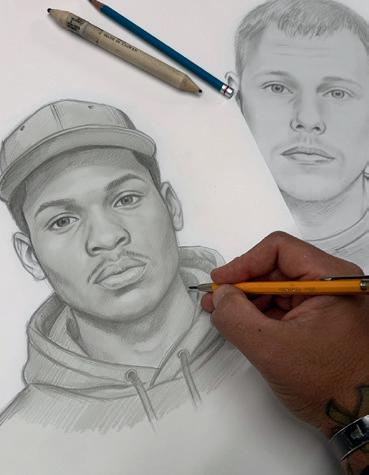
A Philly police officer uses his artistic talent to honor those killed in the line of duty. 8
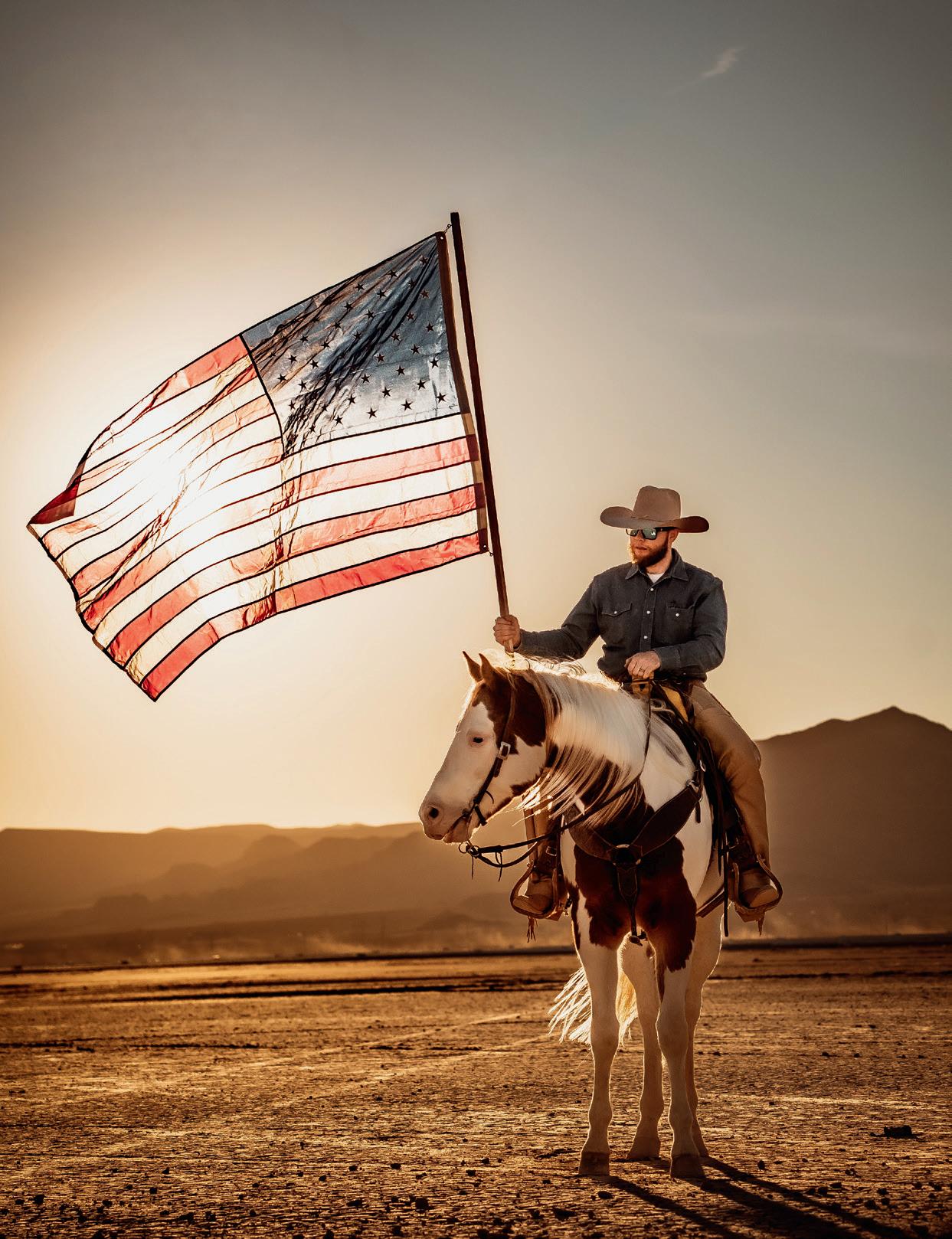
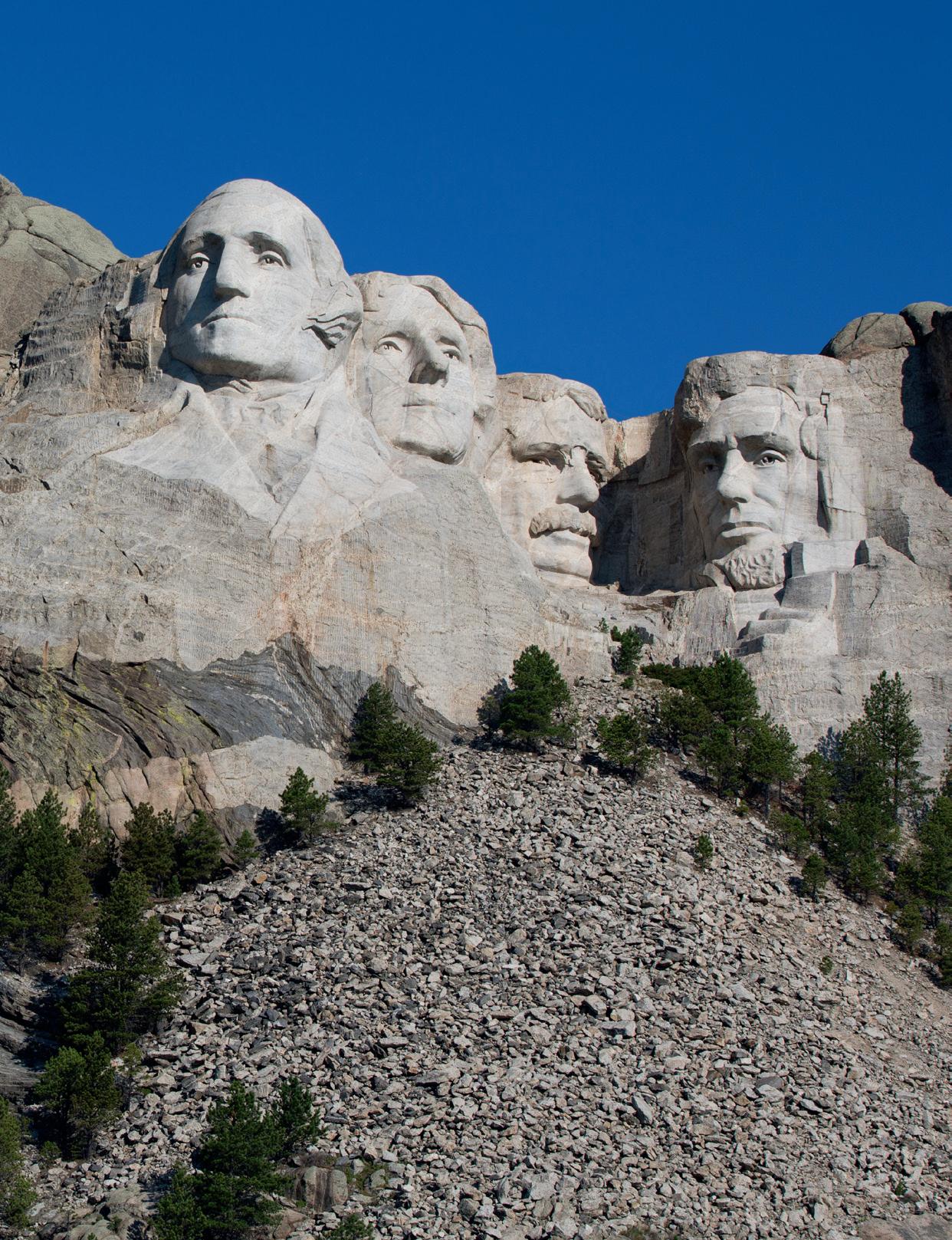
Nevada-based photographer Lia Hallett captures the American spirit with her symbolic imagery.
28 | Hands Across America
Two colossal clasped hands could stand as the Statue of Liberty’s West Coast companion.
30 | The Cop Who’s an Artist
34 | The Basics of Sourdough
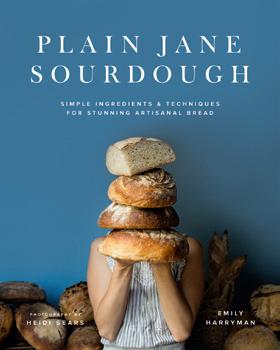
Emily Harryman’s cottage bakery, run from her home kitchen, focuses on simple loaves that are easy to make.
41 | Heritage Grains
A mill in North Carolina is on a mission to preserve grains that have been grown in North America for generations.
46 | The Finest American-Made Stationery
Crane played a part in many important moments of American history. It continues its pursuit of perfection in the form of engraved fine stationery.
48 | Yeehaw!
To get a taste of the Wild West, head to a dude ranch in Idaho where the whole family can partake in adventure.

54 | Jefferson’s Circle of Friends
A look at Thomas Jefferson’s close relationships tells us much about the Founding Father’s high regard for friendship.
58 | A Pamphlet That Sparked Independence
A timeline of Thomas Paine’s “simple facts, plain arguments, and common sense” that inspired a new nation.
60 | Muralist at the Capitol
Constantino Brumidi, an immigrant and political exile from Italy, brought the traditional art of fresco painting to America.
64 | Protecting the Flag
A former slave’s love of freedom earned him the military’s highest honor during the Civil War.
67 | Autobiographical Children’s Novel
Laura Ingalls Wilder, author of the children’s book series “Little House on the Prairie,” expressed her view on who rules America.

72 | A Republic of Virtue
Architect and artist Michael Curtis discusses renewing the nation’s spirit through beautiful, nourishing civic art.
78 | From Canvas to Country
Gilbert Stuart’s presidential portraits helped establish a visual language that balanced dignity with accessibility.
84 | Why I Love America
A woman from the Philippines found her purpose in America.
86 | Family Roots
A descendant of Dolly Quincy Hancock reflects on the legacy of his history-making family.
88 | An Invitation to Renew Patriotism
In celebration of America’s 250th birthday, historian Matthew Spalding’s book takes readers on the political, legal, and philosophical journey of independence.
91 | Boston Freedom Trail
A walking tour through the “Cradle of Liberty” connects 16 historic sites significant to the Revolutionary War and America’s founding.
94 | Captains of Industry
Celebrating 19th-centrury inventors who “altered the course of contemporary civilization.”
98 | Rx for Life
Dr. Amy Shah on what women need to know about perimenopause and menopause.
Indulge in the finest at DAYES Coffee Roasters.
We’re proud to introduce our specialty, enzyme fermented coffee. This innovative coffee is low in caffeine, low in acidity, gentle on digestion, mycotoxin free, and deliciously smooth - with notes of dark chocolate, butterscotch, brown sugar, and nuttiness. Fermented with 50 enzymes, each premium quality bean is specially crafted and roasted at our own coffee shop in Middletown, New York.




→15% Off your first order. Use code: AE15OFF A healthier choice for your morning brew!

Freshly roasted in Middletown, New York - delivered to your home Available whole bean or ground.
Order Online: DayesCoffee.com or by Phone: 315-904-2768

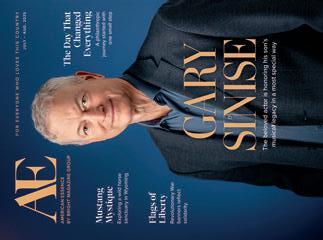
AMERICAN ESSENCE BY BRIGHT MAGAZINE GROUP
FOR EVERYONE WHO LOVES THIS COUNTRY
JULY – AUG. 2026 | VOLUME 6 | ISSUE 4
PUBLISHER Dana Cheng, PhD
EDITORIAL
Editor-in-Chief
Profiles Editor
Lifestyle Editor
History & Culture Editor
Editor-at-Large
Sharon Kilarski, PhD
Brett Chudá
Annie Wu
Jennifer Schneider
Tynan Beatty
CREATIVE
Lead Designer
Designer
Photographers
Luba Tistarelli
Karen Tang Adhiraj Chakrabarti
Samira Bouaou
Production Manager Astrid Wang
SALES
Sales Director
Sales Assistant Ellen Wang Onon Otgonbayar
CONTRIBUTORS
Sandy Lindsey, Tim Johnson, Annie Holmquist, Kenneth LaFave, Randy Tatano, Andria Pressel, Jared Pearman, Michele Vrouvas, Ryan Cashman, Krista Thomas, David Coulson, Jeff Minick, Alan Wakim, Brian D’Ambrosio, Dustin Bass, Andrew Benson Brown, Sarah Isak-Goode, Lynn Topel, Gratian Yatsevitch III, Deena Bouknight
American Essence (USPS 24810) is published bimonthly by Bright Magazine Group at 129 W 29th St. FL. 8, New York, NY 10001. Periodicals postage is paid at New York, NY.
Postmaster: Send address changes to American Essence, 129 W 29th St. FL. 8, New York, NY 10001.
General Inquiries: AmericanEssence.net/help
Advertisement Inquiries: ad@americanessencemag.com
Submissions: editor@americanessencemag.com
www.AmericanEssence.com
EDITOR’S NOTE
Dear Readers,
This issue, we salute our nation’s semiquincentennial with a toast to independence. The journey begins with our cover photo: an American flag and a cowboy astride a horse. Few images speak of freedom more eloquently than photographer Lia Hallett’s (see her story on page 26 ).
We meet others who, in different ways, celebrate freedom. Country songwriter Chase Rice reminds us that sometimes the best way to honor freedom is to kick back and relax (page 16). Comedian Steven Rogers explains why the Fourth of July is his favorite holiday (page 22), and police forensic artist Jonny Castro creates portraits of those who have died protecting our freedom (page 30).
Portraitist Gilbert Stuart captured the likenesses of the nation’s first several presidents who had the honor of leading young America (page 78). Among them was our third president, Thomas Jefferson, who formed friendships that shaped the kind of leader he would become (page 54). He consequently shaped the Declaration of Independence—signed 250 years ago.
To fortify our love of this great nation, historian Matthew Spalding delves into the document’s meaning and significance for today (page 88).
Happy 250th!


Patriotic Inspiration
‘THE DECLARATION’S PROMISE’ AT THE LIBRARY OF CONGRESS
Washington | Opening July 3
The Library of Congress, America’s preeminent literature repository founded in 1800 by President John Adams, celebrates America’s birthday with an outstanding exhibition featuring unique items like Thomas Jefferson’s rough draft of the Declaration of Independence, Lincoln’s handwritten Gettysburg Address, and other Declaration-inspired treasures from America’s history.
LOC.gov

Soaring & Roaring
WATERSTONE BANK AIR & WATER SHOW
Milwaukee, Wis. | July 25–26
The skies and waterfront of Milwaukee will serve as a stage for the world’s top aviators to soar overhead and perform heartstopping acrobatic skills. Past years’ shows have included the U.S. Navy’s Blue Angels, the U.S. Air Force Raptor F-22 Demo Team, and other top-tier aerial performers. Admission is free for the two-day event.
MKEAirWaterShow.com
An All-American Road Trip
GREAT LAKES ROCKABILLY ROAD TRIP MUSIC FESTIVAL
Clinton, Ohio | Aug. 1
The shores of Lake Erie will come alive as Downtown Port Clinton hosts a day-long festival highlighting vintage cars, food vendors, a pin-up pageant, and hours of lively performances by rockabilly bands. The retro lineup will include Wayne Hancock, Deke Dickerson and the Eco-Fonics, The Reverend Horton Heat, and many more performing on multiple stages. GreatLakesRockabilly.com and America250-Ohio.org/Event/Great-Lakes-Rockabilly-Road-TripMusic-Festival

Washington | Aug. 22–23
The sound of revving engines and shrieking tires will fill the nation’s capital for the first time ever, as race cars whiz around the National Mall. This motorsports extravaganza is a free, two-day event with a course that has as the backdrop the Washington Monument, the U.S. Capitol, the Smithsonian Air and Space Museum, and other city landmarks. Freedom250GP.com
Celebrate International Culture WORLDFEST
Louisville, Ky. | Sept. 4–7
Louisville will showcase cultures around the globe with an international gathering of performers who will entertain guests of this four-day, free-to-attend event. Three stages for virtually non-stop performances, a Global Village to experience customs from around the world, and almost 150 vendors will offer an international selection of exciting art, goods, and food.
LouisvilleKY.gov/Government/City-Events/WorldFest
It’s Cheesy-Wonderful!
VERMONT CHEESE WEEK
Waitsfield, Vt. | Sept. 14–20
Curd nerds will swoon at the prospect of a week-long celebration of their favorite dairy product. Presented by the Vermont Cheese Council, this tasty event will include the presentation of coveted honors to the state’s best cheesemakers, farm tours, and restaurant specials. The 14th Annual Cheesemaker Festival at Shelburne Farms is the highlight, where guests can sample the state’s best offerings. VTCheese.com/CheeseWeek

Two hundred and fifty years of American independence is upon us, marking two and a half centuries of freedom of speech, protected rights, and the pride in the red, white and blue. Here in Branson, patriotism isn’t just a description; it’s a way of life. The essence of Old Glory is weaved not only into the American flags we fly, but the social fabric that has created this beautiful city that so many call home, and millions more visit year after year. This is where the celebration of America comes to life. Where the red, white, and blue are flown proudly. This is Branson, the most patriotic destination in America.
Plan your trip to Branson and experience these red, white, and blue events and activities while you help celebrate the 250th (semi-quincentennial) anniversary of America:
• Spirit of America at King’s Castle Theatre
• A star studded concert in Echo Hollow Amphitheatre at Silver Dollar City | May 9
• Spring Fling in Historic Downtown Branson | May 15-16
• Rally Point Branson | June 12-13
• Guinness World Record on Flag Day with a Red, White, and Blue Parade in Historic Downtown | June 14
• Honor America Fireworks at College of the Ozarks | June 27
• 4th of July in Branson
• Airforce Band on Branson Landing | September 4
• Thunderbirds at Branson Airport | September 5-7
• Harley Davidson (H.O.G.) Rally | September 10-13
• Veterans Week | November 5-11
250 Things to Do in Branson | For the full list, visit: https://www.explorebranson.com/articles/post/250-things-to-do-in-branson
VISIT
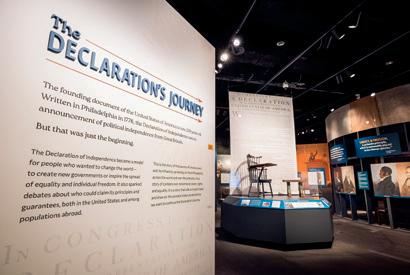
‘The Declaration’s Journey’ Philadelphia’s Museum of the American Revolution marks the nation’s 250th anniversary with a major exhibit that explores the historical impact of the Declaration of Independence. Through a collection of rare documents, art, and historical artifacts, the exhibit traces the document’s far-reaching legacy as a living text. As one of the most influential political documents in modern history, the Declaration has been debated, reinterpreted, and challenged both at home and abroad. It inspired declarations of independence in Haiti and Mexico as well as arguments for equality from American abolitionists, Confederate secessionists, and suffragists. The exhibition is open through January 3, 2027
WATCH
‘The Better Angels’
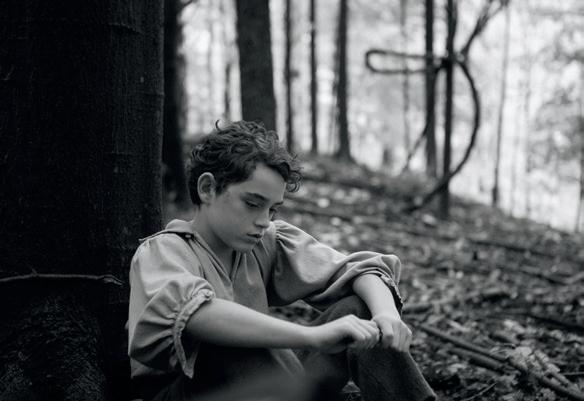
Growing up in extreme poverty on the Indiana frontier, young, self-taught Abraham Lincoln learns the value of education and hard work from his beloved stepmother and rugged father. During these formative years, he embraces the principles that would help him sustain the United States during the nation’s greatest time of crisis.
DIRECTOR
A.J. Edwards
STARS
Braydon Denney, Jason Clarke, Diane Kruger, Brit Marling, Wes Bentley
RELEASED 2014
STREAMING Kanopy, YouTube
These pages are in the preview.
READ READ
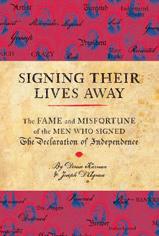
‘Signing Their Lives Away: The Fame and Misfortune of the Men Who Signed the Declaration of Independence’
Who were the 56 men who signed the Declaration of Independence? What were their lives before, during, and after they signed a letter of grievances to England’s King George III? Denise Kiernan and Joseph D’Agnese explore each of these early Americans, providing an easy-to-digest but no less absorbing snapshot of their involvement in the Revolution, contributions to the country’s new government, and tribulations at the hands of British and Loyalist soldiers.
Quirk Books, 2009 Hardcover, 256 pages
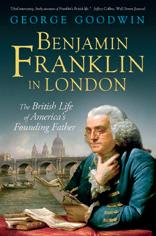
‘Benjamin Franklin in London: The British Life of America’s Founding Father’
Benjamin Franklin was a patriotic Englishman who supported the British Empire that spanned two continents. This isn’t an alternate history; it is Franklin prior to the American Revolution, during the 20 years he spent in London representing the American Colonies. George Goodwin’s book shows how British indifference to their Colonies led Franklin to embrace American independence and turned him into a Founding Father. This book is well-written, informative, and entertaining.
Yale University Press, 2016 Hardcover, 400 pages
are not included preview.

By Annie Holmquist
y parents are nearing their 50th wedding anniversary, and amazingly, many gifts they received have also weathered the years. My mom still mentions, “This pie plate was from Uncle Bob and Aunt Marj,” or, “These mixing bowls were from Dad’s neighbor.”
Her fond recollection of these presents shows just how special a wedding gift can be. But in these times of changing norms, the etiquette of wedding gift-giving can be confusing. Etiquette instructor Bethany Friske provides several tips to consider when you’re “going to the chapel” as a wedding guest.
The wedding’s location—both in terms of how far a guest has to travel and the socioeconomic differences across different parts of the country—as well as the guest’s relationship to the couple all play into the appropriate amount to be spent on a wedding gift, Friske says. A normal amount is $50 to $150, and close friends or relatives should consider giving on the higher end of that range. But a guest’s personal budget also plays a big role. It’s more important to “give what we can afford,” rather than trying to impress and then breaking the bank, Friske explains.
Friske encourages guests to include the costs they incur attending wedding events as part of the aforementioned wedding gift dollar range. If you travel to a destination wedding, “your gift is your attendance,” Friske says. Likewise, those who host showers or are part of the bride or groom’s wedding party may also reduce the amount they give based on those expenses. Bringing a congratulatory
Etiquette expert Bethany Friske breaks down whether cash is okay, how much value your gift should be, and how to buy a gift that’s not on the registry
card to the wedding mentioning that these actions were your gift to the couple is a clarifying touch, Friske says
Thanks to online gift registries, many wedding gifts are shipped from the store. “You should send a separate card [listing] the specific items that are being sent” to the couple, Friske advises, noting that not all companies denote the giver in the packaging, leaving couples clueless about whom to thank. Cards are also an important avenue for other details, such as the dollar amount when the gift is cash or the gift receipt for a physical gift.
It’s helpful, but not necessary, to stick to a couple’s gift registry, Friske says. However, those who deviate from it should “be tasteful,” considering the couple’s style preferences when doing so. She also encourages creativity, such as gifting practical items like “cleaning supplies in a bucket,” or “a step ladder with a box of picture-hanging nails and a tape measure.” And cash is never crass, she reminds us, and is much appreciated by young couples.
Lastly, the married couple should give an important gift—by expressing thanks. The current trend of people failing to send thank-you notes “is not okay,” Friske says, for it discourages the giver from giving, while also unintentionally creating a negative impression of the gift recipient. If givers don’t receive a thank-you note, Friske encourages them to courteously follow up with the couple via text or phone to confirm they received the gift and ensure their card was not separated from the gift.

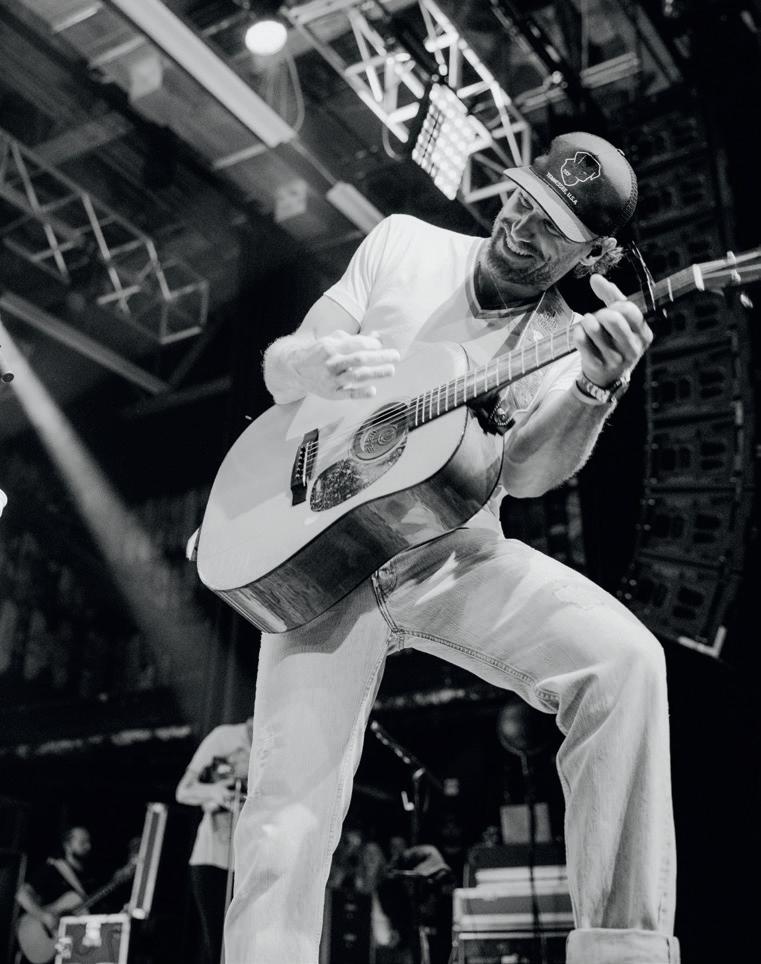
Chase
a concert.
A Queens, New York, comic revives classic, family-friendly humor while saluting friendship and unforgettable Fourth of July traditions.
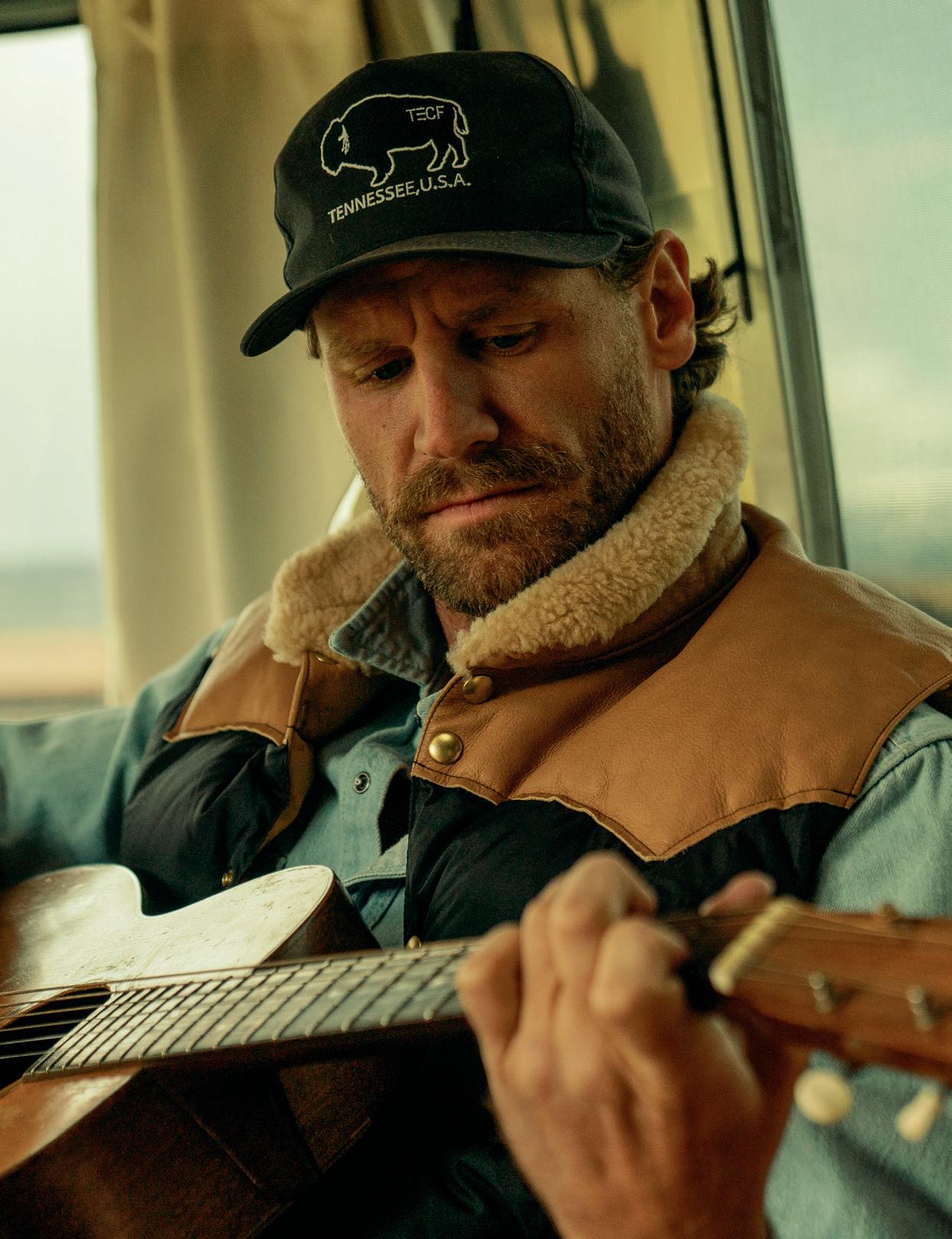
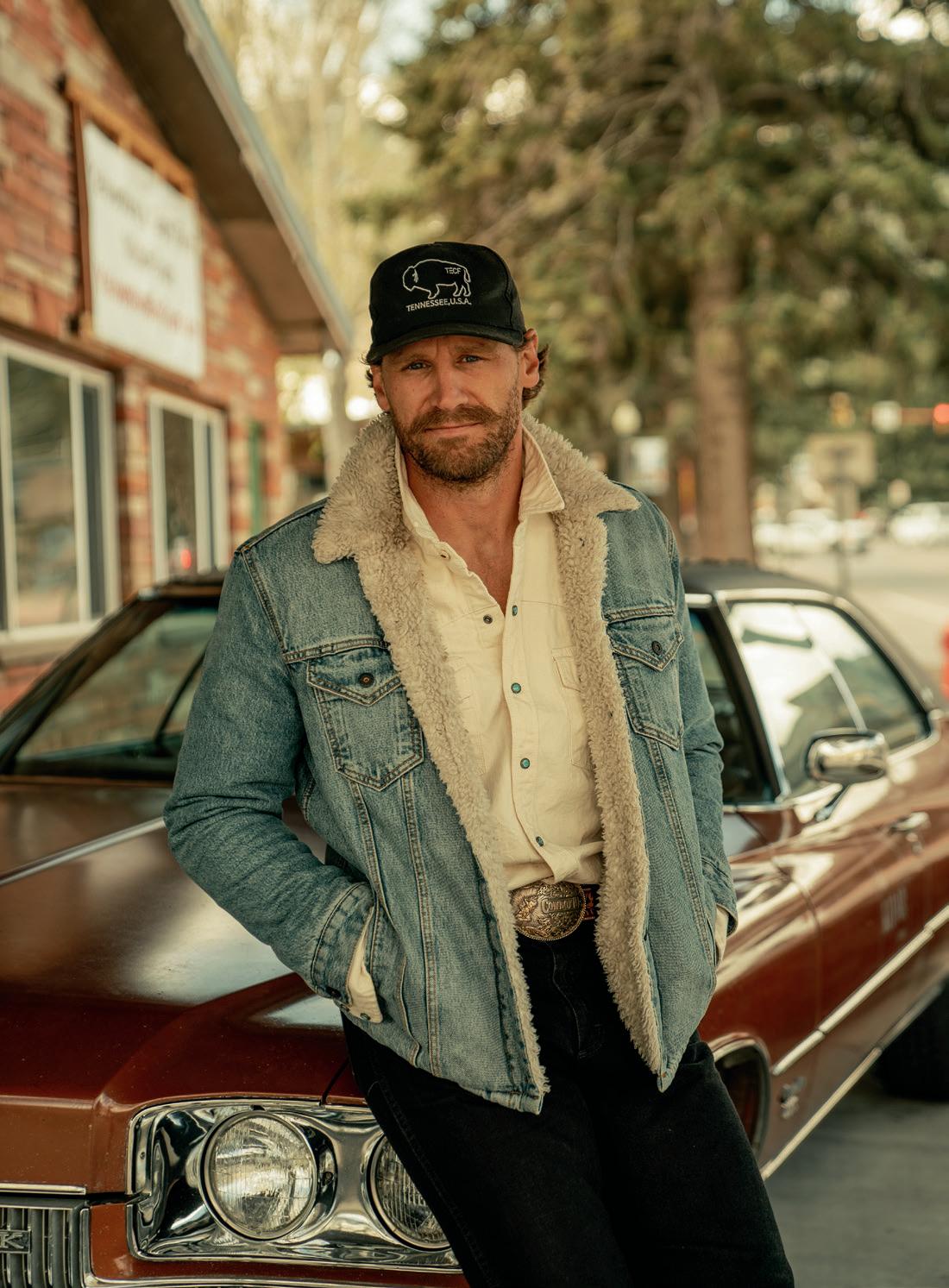
After going independent and slowing down on his tour schedule, country singer-songwriter Chase Rice is making his most personal music yet
By Kenneth LaFave

elax, fans. Country music star Chase Rice isn’t retiring; he’s just slowing down. Way down.
“It kind of hit me on a tour bus last fall that I didn’t want to be on that tour bus. I haven’t taken a break from touring in 13 years. I’m taking one now, and I’m as happy as can be,” he said.
Rice talked to us by phone from his Tennessee home, where he spends his days playing golf and romping with his black lab, Jack. Tough life. “I’m still doing a handful of shows and writing songs.” But the grind of touring is behind him—at least for now.
Rice first came to prominence at age 24 in 2010 as a contestant on “Survivor: Nicaragua.” This kickstarted his country music career, first as a songwriter of the diamond-certified single “Cruise,” performed by Florida Georgia Line. From there, he went on to release six studio albums of his own and two No. 1 singles on the Country Airplay chart: “Eyes on You” and “Drinkin’ Beer, Talkin’ God, Amen.”


Surely someone once that busy isn’t satisfied just playing golf, right?
“I’ve been renovating the house, and over the winter I hunted deer, elk, and duck with Jack. I got sad when the season was over, and there were no more deer to chase.”
When can we expect Rice to return to the tour circuit?
“I didn’t know how much I needed this break, needed to kick back and slow down. I can’t say I’ll be back with a full tour in 2027. I don’t know. I’m concentrating on living life again. But I’ll get back to full-time at some point.”
He’s in no hurry for “some point” to arrive.
Rice still does what he does best—make music— but he’s less pressured to be No. 1.
The change happened a couple of years ago, when he quit the Broken Bow label, went independent, and started producing albums that reflect what he wants to say, rather than what would
I didn’t know how much I needed this break, needed to kick back and slow down. … I’m concentrating on living life again. “
These pages are in the preview.
please corporate headquarters somewhere. The ultimate product of this rediscovery of artistic freedom is the album “ELDORA,” released last year. Rice explained its origins:
“We”—Rice, producer Oscar Charles, and songwriter and friend Wyatt McCubbin—“went to a cabin in Colorado after playing Red Rocks and wrote 10 songs, plus I already had written two others. We didn’t think, ‘Will this be a hit?’ I got caught up in my earlier career with, ‘Where are the radio hits?’ Not that radio is a bad thing, but I think it slows your ability to write good songs when all you think about is hits.” The album’s name, all in capital letters, comes from a sign advertising an abandoned lodge they had passed by. Seeing the old hotel got Rice’s imagination going.
In 12 songs, Rice tells a dozen stories of sorrow, triumph, and lessons learned. The overall tone is nostalgic and a little melancholy with a dollop of hope. Among them: “Cowboy Goodbye,” Rice’s tribute to his musical hero George Strait, compares the life of a cowboy to that of a musician.
Chase Rice, country music singer-songwriter Stepping back from the rush of his career and the pressure to be No. 1, Chase Rice is embracing life’s simple joys.

To honor those killed in the line of duty, police forensic artist and veteran Jonny Castro creates portraits with moving likeness
By Randy Tatano
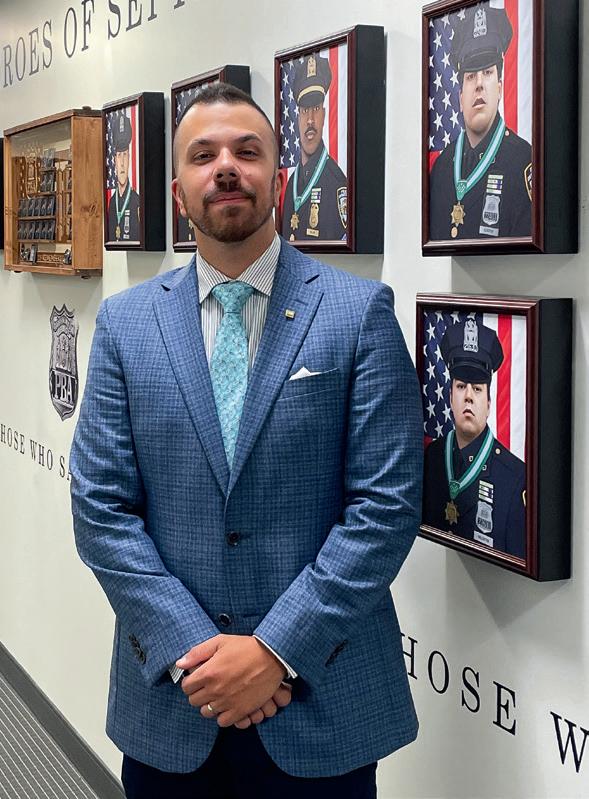
When we’re missing our loved ones who have passed on, nothing brings back happy memories like a favorite photo. But for those who have served our country and died in the line of duty, something more is needed—which is what Philadelphia police officer Jonny Castro does for those brave souls who have fallen.
Castro is the police force’s forensic artist. He does composite sketches based off witness statements along with reconstructions of homicide victims. His job is a lot like the police sketch artists you see on TV. While he’s a 20-year veteran of the force, his work off the clock has set him apart. He creates beautiful portraits of first responders and military personnel who have made the ultimate sacrifice.
Artistic talent runs in the Castro family. “My dad was an incredible artist. His dad was and both of my daughters are incredible artists. I guess it runs in the family.” So he went off to college to study graphic design. And then 9/11 happened, which stirred patriotism in him. Castro left school, joined the Army, and served with the military police in Iraq. Upon returning home, he joined the police academy, feeling it was more of a solid career choice than art.
But as it turned out, he was meant to be an artist. For his first 10 years on the force, he served as an officer in West Philadelphia. When the
Drawing mostly bad guys by day, he decided to create portraits of the good guys who are no longer with us. “
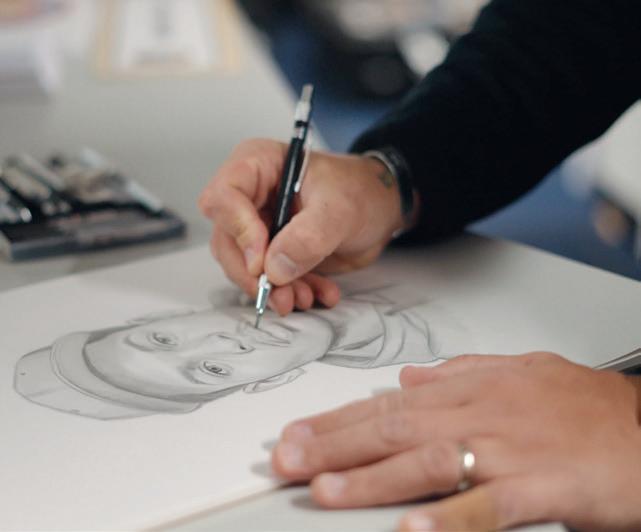
force’s veteran artist retired, Castro got the job. Drawing mostly bad guys by day, he decided to create portraits of the good guys who are no longer with us.
He completed his first portrait 10 years ago.
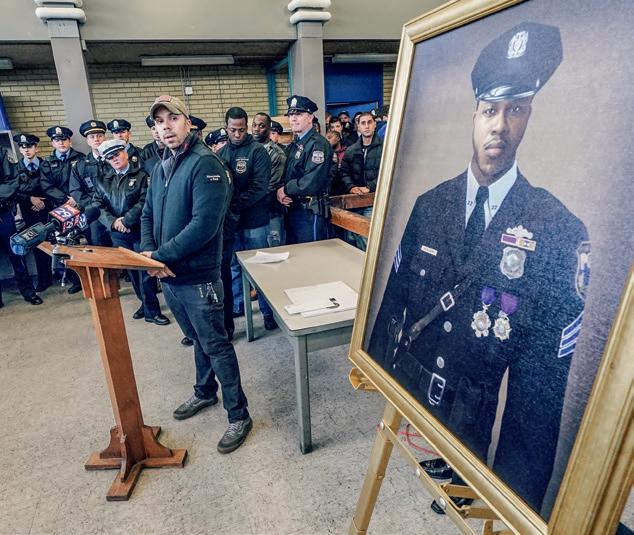
“[Philly police] Sgt. Robert Wilson was shot and killed in the line of duty in 2015. On the one year anniversary of his death, I painted a portrait of him.” Wilson had been promoted and received several medals posthumously, but there were obviously no photos of him showing that. “So I painted him with his sergeant patches and the medals on his chest.” When he posted the portrait on his art page, the response was incredible.
“Everybody loved it in the Philadelphia Police Department, and people said, ‘Why don’t you do this for every officer? Do as many officers you can.’”
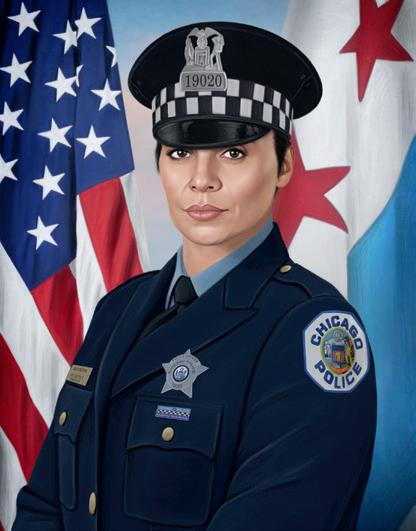
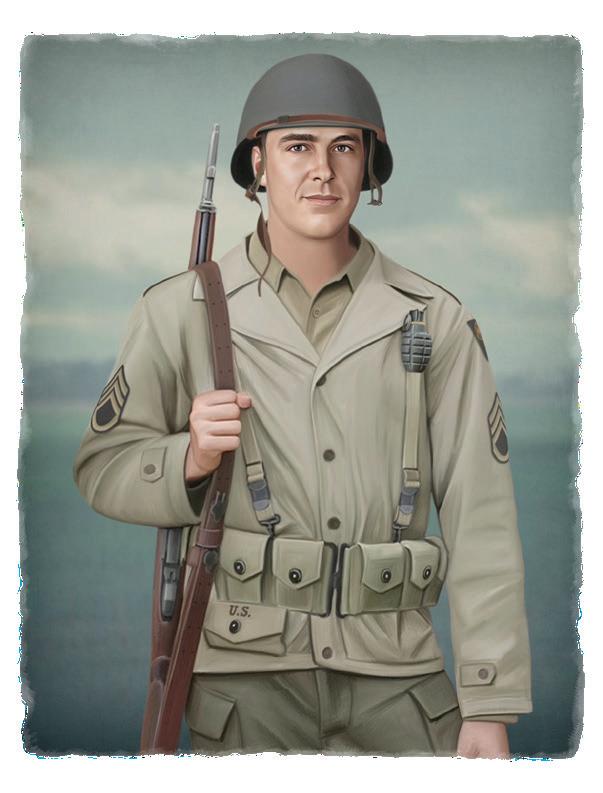
Castro estimates he’s done between 2,400 and 2,500 portraits of police officers, soldiers, and first responders who have died in the line of duty. “I try to do every officer who’s sadly killed by homicide. And then I also paint officers killed in car accidents, service members killed overseas, and civilian victims of crime, too.”
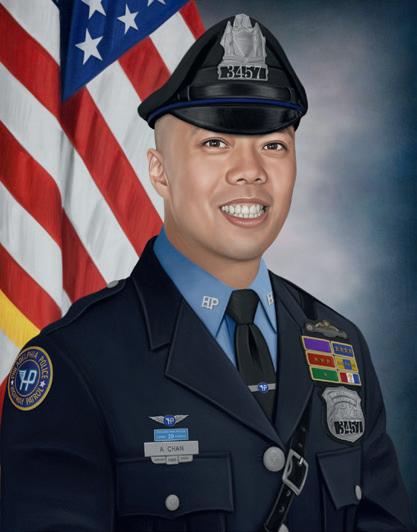
Castro “paints” digitally on a display tablet and uses the internet to learn more about those he will portray. “I follow a lot of police pages, so when I see an officer’s killed, I’ll start to do my research. Many times they have photos of themselves, but you’d be surprised how many officers don’t have photos in uniform. So then, I’ll find Facebook pages of them, and get to work.” He often learns more about the person from their loved ones. “A lot of times, families will reach out to me beforehand.”
Each portrait takes him about six hours to complete. But he says the key is getting those windows of the soul right. “Once you put those little flashes in the eyes, it brings the portrait to life. And families tell me it really feels like he’s there, he’s looking at us.” He then gets prints made, frames them, and sends them to the family. He has a few “generous benefactors,” but for the most part, this comes out of his own pocket. His portraits have ended up on headstones and even tattoos. But what really touches his heart is when families reach out to him about using his work at a funeral. “I think that’s probably the biggest compliment I could get. They’d want that image displayed at their funeral, in front all their loved ones, all their friends.”
These pages are in the preview.
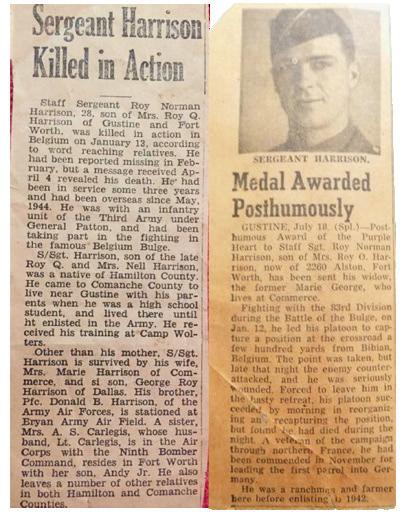
When asked if there’s one portrait he’s made that really touched him, he thought of one he did of a soldier who was killed long ago. He was searching online for photos from the Vietnam War on eBay and came across one that left an impression, of a soldier being treated by medics. He bought the photo, started doing research, and found out that his last surviving relative was a cousin who lived in California. After he completed the portrait, he sent the cousin prints as well as the original photograph he found and bought. The portrait held a personal connection for Castro. “My dad served in Vietnam. He told me a lot of stories about friends that he lost, so that that kind of like hit a nerve with me,” he said.
Castro estimated that there are probably fewer than 100 full-time police sketch artists in the United States. He might be the only one who also draws heroes.
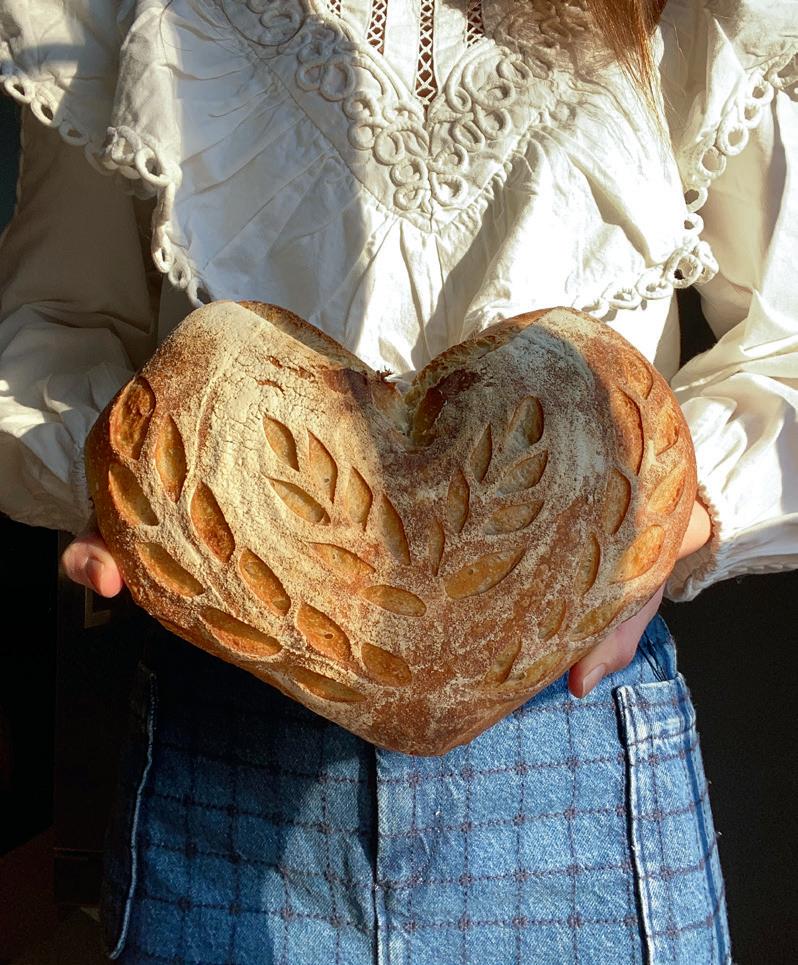
Get sourdough inspiration on page 34.
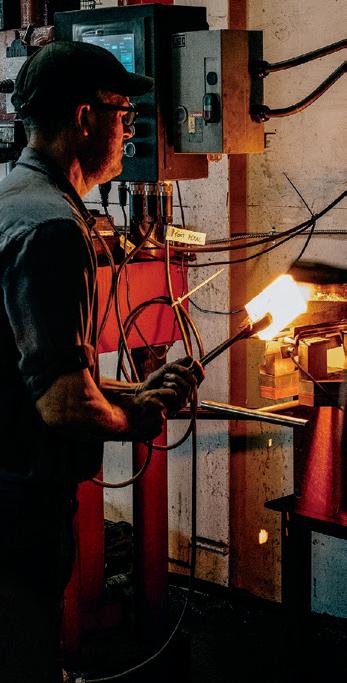
The craftsmanship behind a stationery company with history dating back to Paul Revere’s time.
Get a taste of the frontier life with a visit to an Idaho dude ranch.


Home baker Emily Harryman found a way to sustain her family and teach others to do the same, through delicious sourdough creations
By Ryan Cashman
It’s easy to imagine the warm and tangy smells that greet Emily Harryman when she opens the door to her bread room. Once the dining room of her Keller, Texas, home, the space now serves as the heart of Harryman’s cottage bakery, “Plain Jane Bakes.” The walls are painted French blue, and the ceiling is coated with green leaf-patterned wallpaper. The enormous, east-facing window floods the room with light, casting rays of sunshine on wooden cooling racks stacked with sourdough bread. In the corner by the window stands the oven, a compact Simply Bread


L12 that can fit a dozen loaves at a time. The room is furnished with a large, dark wood island and several hutches that house Harryman’s ingredients and baking tools.
These pages are in the preview.
“I never would have imagined that our formal dining room would be an in-home bakery. Now, the entire sourdough process takes place here. The room fills my heart with great joy,” Harryman said. Since launching her business in 2024, Harryman’s bread room has become more than just a space for Harryman to make bread, teach classes, and perfect the recipes for her upcoming cookbook, “Plain Jane Sourdough: Simple Ingredients and Techniques for Stunning Artisanal Bread.” It is the culmination of a long journey that began in the humble, seaside kitchen of the home her grandparents built.
Decorative Beginnings
Harryman’s love of food was sparked by regular visits to her grandparents, who lived in a small coastal town just outside San Francisco. “My grandma was very passionate about cooking. Any time we would visit, we’d sit down in the living room and choose a recipe to try from one of the food magazines spread across her coffee table,” Harryman said.
Once you get your process down, then it’s like riding a bike. “ Emily Harryman are not included
While the recipes weren’t always successful, her grandmother’s spirit of hospitality had a profound effect on Harryman. She recalled that her grandparents had “one friend who was a widow, who would come over all the time for meals. They always made sure she felt loved and cared for.” Inspired, Harryman took charge of meals after school and soon discovered that her real passion was for baking. After taking classes in cake decorating, Harryman began getting requests for birthday cakes from schoolmates. Then, in her senior year of high school, she was asked to make a wedding cake. “It was a 3-foot-tall ‘Alice in Wonderland’-inspired piece. That opened a lot of doors for other jobs and weddings,” she said. Harryman continued to decorate cakes while attending college at a small school outside Pittsburgh, Pennsylvania. Her skills landed her and her roommate, Tristan, a spot on an episode of the popular Food Network show “Cake Wars” in 2016. The pair competed against professional bakers in a Minecraft videogame-themed episode. “By some miracle, we won!” Harryman said. 2016 was also the year she met
her husband, Issac. After they got married, the couple relocated to Texas, only to move back to Pennsylvania for a new job a few years later. Harryman gave up baking as they tried to start a family, though she would suffer several miscarriages before giving birth to three healthy children. Job loss in 2022 forced the family back to Texas for a job with a significant pay cut, which meant the family needed a supplemental source of income to make ends meet. So, in 2024, Harryman dove back into baking, only this time, she wasn’t decorating cakes. She was baking sourdough.
The groundwork for Harryman’s sourdough adventure began when her college roommate Tristan re-introduced Harryman to the natural, unprocessed ingredients that she had seen in her grandmother’s kitchen. Motherhood, too, made Harryman acutely aware of the ingredients she was feeding to her young children. “There’re so many preservatives, so many genetically modified ingredients, so many things sprayed on our food, that I wanted to … buy things that are pretty much as close as you can get to as God made them,” Harryman said.


Crane started as a paper company with a pivotal role in the Revolution, and continues a craftsmanship tradition making fine stationery
By Krista Thomas
For over 250 years, an iconic American institution has acted as an unofficial national historian—by making paper.
When Colonial entrepreneur Stephen Crane launched his papermaking business with the purchase of the Liberty Paper Mill in 1770 near Boston, Crane unintentionally ingrained himself into the very life and heart of American history.
In fact, notable patriot Paul Revere—a key figure in America’s fight for independence—was one of Crane’s first customers. Since the British empire was in control of currencies and stamps at the time, Revere asked Crane to develop stamps and paper currency for the Colonies.
Storied Heritage
Crane had a penchant for excellent handicraft, which he passed on to his son Zenas Crane. In 1801, Zenas founded Crane & Co., the basis for today’s fine stationery company. He passed the torch to his sons Zenas Marshall Crane and James Brewer Crane, who continued producing security and banknote papers along with stationery and engraved paper products. After splitting from the currency-making part of the company, Crane & Co., in 2015, Crane Stationery continues the heritage of hand-engraved stationery that started with its founders.
Crane Stationery CEO Robert Buhler wants to honor the craft that has been a part of American values, institutions, and culture. “Every important thing in America has been done on Crane stationery,” Buhler said. “We are part of the very fabric of American history.”
From crafting the earliest stamps and banknotes of revolutionary patriots to engraving commemorative parchment invitations to presidents’ inaugurations, Crane Stationery has been a part of many significant events, including the deadly duel between Alexander Hamilton and Aaron Burr. Historical documents from
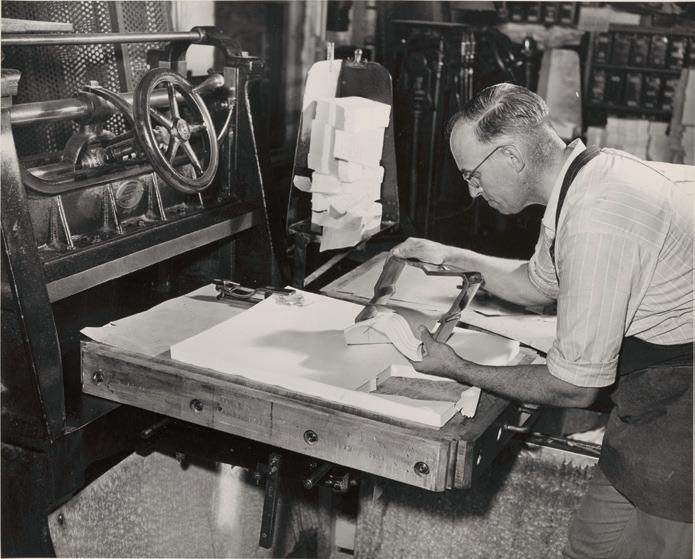
FAR ABOVE A Crane worker cuts envelopes with a die (a metal tool for cutting materials).
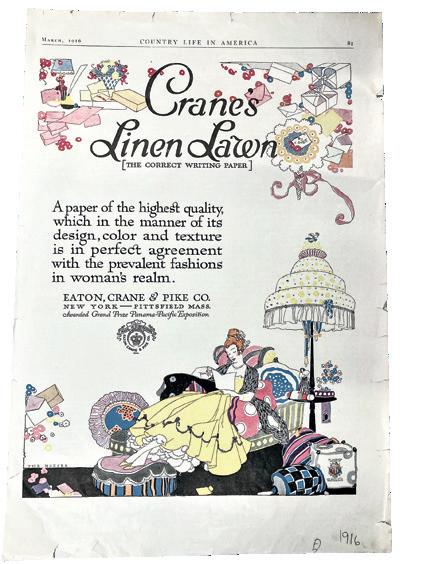
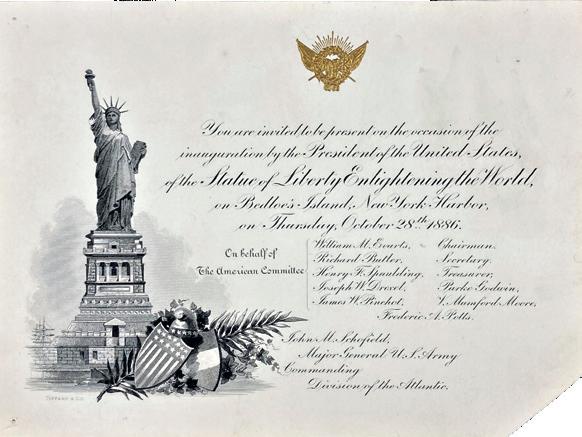
ABOVE Crane printed invitations for dignitaries to attend the inauguration of the Statue of Liberty in New York in October 1886.

the summer of 1804 reveal that Hamilton’s first formal correspondence to Burr was written on Crane stationery.
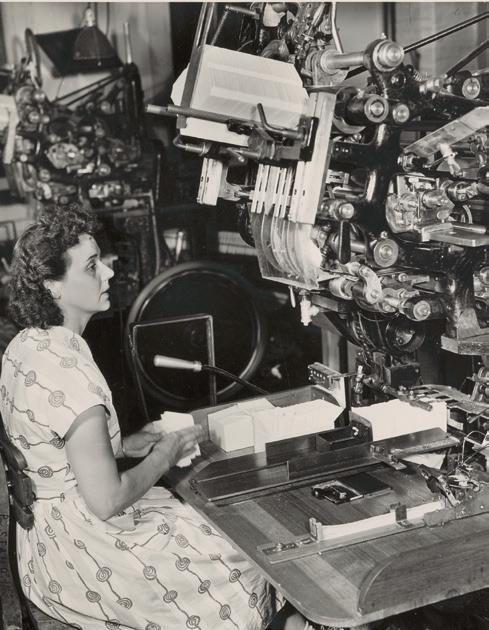
The traditional print-making process endures to this day. Though difficult and labor intensive, the company has employed the same method since 1770, passed down from generation to generation. It’s this precision mastery of the art of engraving that gives ordinary individuals, dignitaries, royalty, and A-list celebrities a way to personally
communicate important thoughts and messages on paper.
The engraving process is completely mechanical. The company uses 100 percent cotton paper sourced in America, though no longer made by the Crane company itself. The paper products are imprinted with a design that is handcarved onto copper plates. With the force of 10,000 pounds of pressure, the design gets pressed from the plate onto the paper. The carvings in the metal hold the ink and apply the color attributes to the overall finished product. The designs can be simple or intricate, depending upon the customer’s order or the occasion (the company produces a variety of designs for holidays, weddings, thank you cards, sympathy cards, and more).
Few people in the world know how to craft high quality engraved paper. Master engravers dedicate their lives to this art. Apprentices who are serious about learning the craft typically take at least a year to master a single color in the engraving process. For additional colors, it requires additional years.
Crane’s stationery is in rare company. “Our clients demand excellence. You have to be perfect every single day. For those with discerning tastes, we produce premium stationery the traditional way because it is the only way to make it for kings, queens, and presidents,” Buhler said. What’s premium stationery used for? Think White House presidential stationery and holiday cards. Or, making formal invitations for dignitaries to attend the official inauguration for the Statue of Liberty in October 1886, or the Golden Gate Bridge opening in May 1937. Crane also created personalized sympathy cards for Jacqueline Kennedy after John F. Kennedy Jr. was assassinated in November 1963.
Over the course of Crane Stationery’s history, many of America’s important milestones have been captured for posterity. For everyday Americans, too, Buhler believes that the memorable moments in life are best preserved through paper. It’s been tried-and-treasured to express sincerity and authenticity through handwritten messages. “Expressing true emotions is best with a handwritten note,” he said, for they are the ones that are saved, cherished, and remembered.
A dude ranch in Idaho promises wilderness adventures and rustic comfort for the whole family, set against a rugged landscape
By David Coulson

These pages are in the preview.
are not included preview.

From boyhood companions to fellow founders, Jefferson’s enduring friendships influenced both his character and the nation he helped build
By Jeff Minick
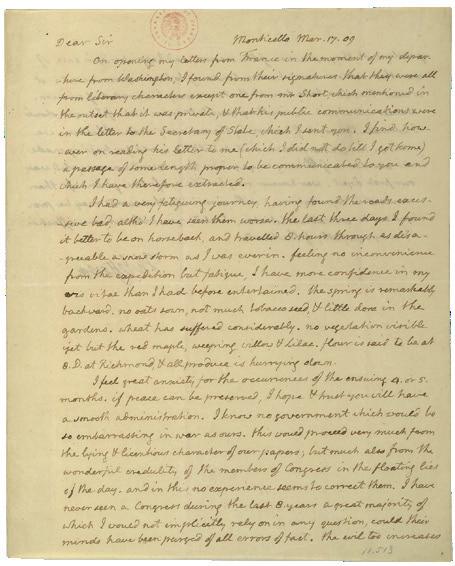
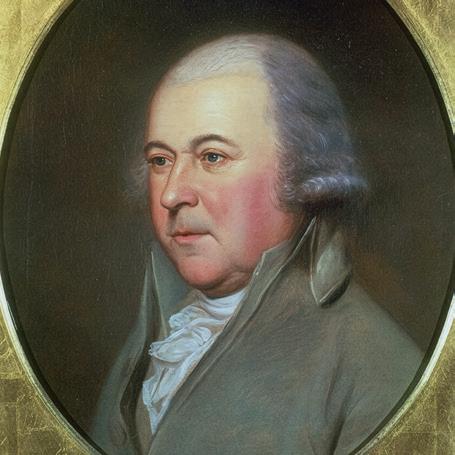
An examination of the long life of Thomas Jefferson (1743–1826) reveals a circle of friends and acquaintances that is a veritable Who’s Who of the American Revolution and the half-century that followed. He was well acquainted with men like George Washington, made enemies of Alexander Hamilton and other Federalists, called his mentor Benjamin Franklin “a great and dear friend,” enjoyed an intellectual correspondence with Abigail Adams, and counted three presidents—John Adams, James Madison, and James Monroe—as close personal friends.
Examining his relationships with Adams, Madison, and his boyhood friend Dabney Carr tells us much about Jefferson’s high regard for friendship, of which he once wrote to another friend and signer of the Declaration of Independence, Benjamin Rush: “I find friendship to be like wine, raw when new, ripened with age, the true old man’s milk, & restorative cordial.”
Apply the old proverb “Show me your friends, and I’ll tell you who you are” to Jefferson, and we gain insights into the man as well.
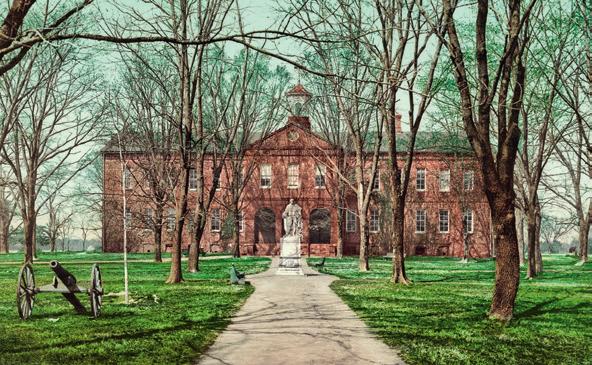
Born into a prominent Virginia family of landed wealth, Dabney Carr (1743–1773) received part of his early education in James Maury’s boarding school, where he and Jefferson became best friends. It’s said that the two sometimes studied or read books beneath a tall oak on the land that would become Monticello, and that they vowed that whichever of them died first, the other would bury him beneath the oak.
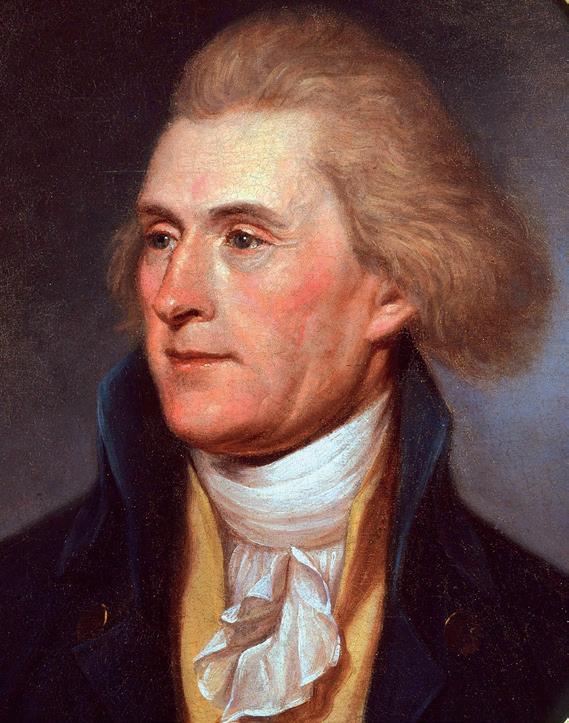
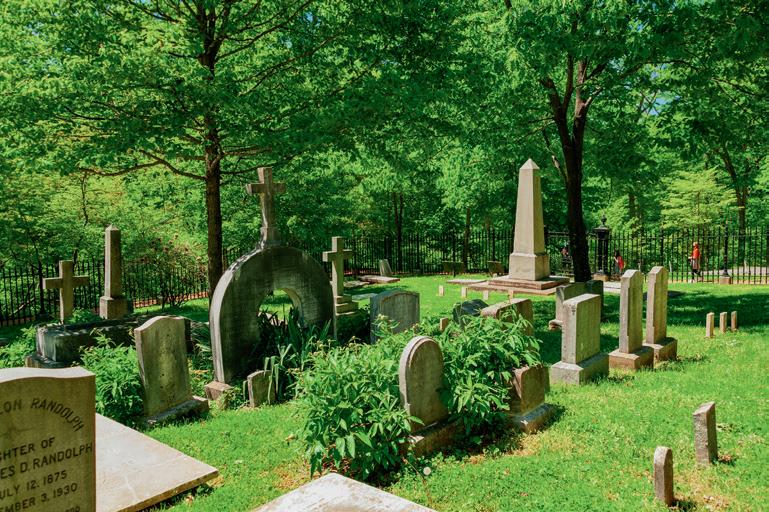
He and Jefferson together attended the College of William and Mary in Williamsburg, and during that time Carr frequently visited Shadwell, the Jefferson family’s plantation near Monticello. There, he befriended and fell in love with Martha, Jefferson’s sister, and the couple married in 1765. He was active in the Virginia House of Burgesses and became a prominent opponent of British rule. Following Carr’s early death at age 29, Jefferson had him buried beneath the oak as promised, the first to be interred in what became Monticello’s cemetery.
Yet Jefferson’s fealty to his friend’s memory extended beyond the grave. He assumed the care of Martha and her six children, focusing particular attention on his nephew Peter Carr. Letters to the young man reveal Jefferson’s keen interest in his education and moral development. He urged Carr to value time, to apply himself to his studies, which Jefferson sometimes mapped out, and to “give up money, give up fame, give up science, give the earth itself and all it contains rather than do an immoral act.”
John Adams (1735–1826) and Jefferson first met in 1775 at the First Continental Congress in Philadelphia. Though Adams’s New England upbringing contrasted sharply with Jefferson’s plantation life, as he and his wife, Abigail, owned and operated a farm rather than a plantation, the two became fast friends, drawn together by books, ideas, and mutual respect. Later, they served at the same time as diplomats to France and England, where they toured Shakespeare’s home and English gardens together. At one point, Jefferson wrote to James Madison that Adams “is so amiable, that I pro nounce you will love him if ever you become acquainted with him.”
In 1801, when the Federalist Adams lost his second term to Jefferson, the ever-widening gap in their political viewpoints and their vision for America shattered these affections. The two men ceased their correspondence, which Adams had once described as “intimate” and “one of the most agree able Events in my Life.”
Only after Jefferson had left the White
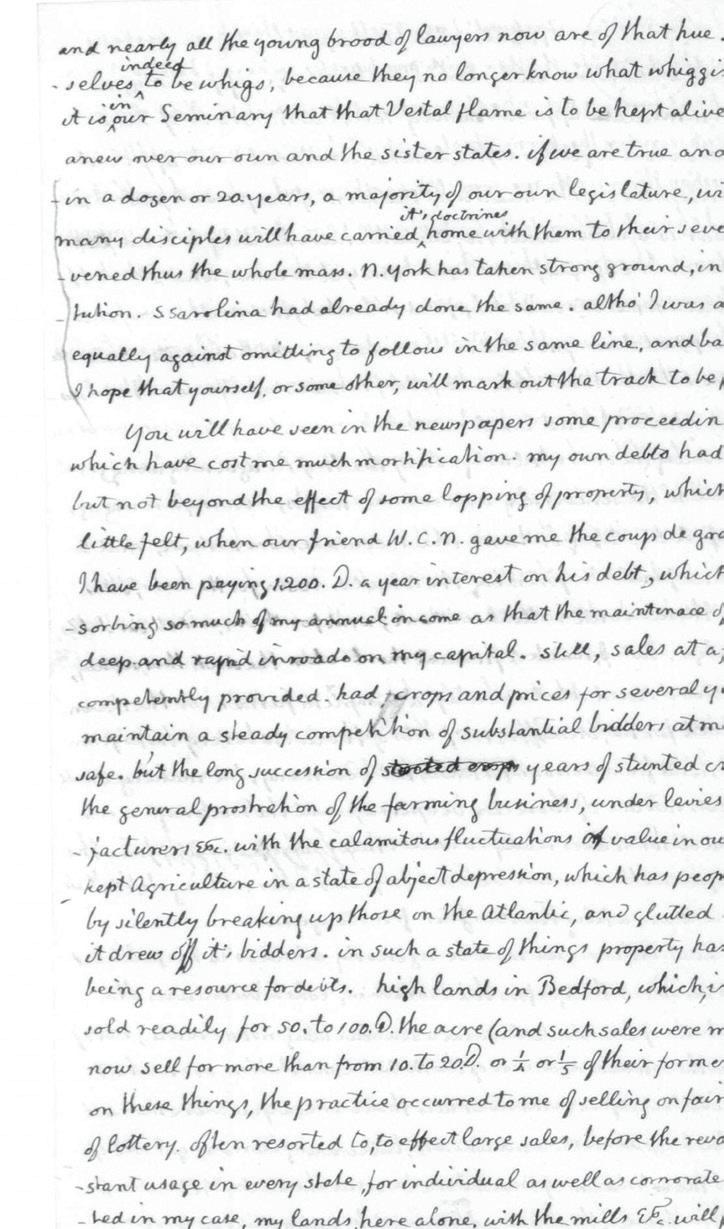
House and returned to Monticello was this breach repaired, largely through the efforts of Benjamin Rush. The 15-year correspondence from 1811 until their deaths is a treasure box of their thoughts. An anonymous author at Monticello. org observed: “This reconciliation began a rich correspondence that touched on myriad topics, from reminiscences about their contributions to the young nation’s history, to opinions on current political issues, to matters of philosophy and religion, to issues of aging. Their letters were also lighthearted and filled with affection.”
On his deathbed, while the rest of the country celebrated the 50th anniversary of American independence and the Declaration that both Adams and Jefferson had helped compose, the last words Adams spoke were “Thomas Jefferson still lives.” He was wrong, as Jefferson had died just hours earlier. He was also mistaken in another sense: Both he and Jefferson would live on in the American mind for their accomplishments, writings, and friendship.
An American Phenomenon
In the introduction to his recent book “A Journey North: Jefferson, Madison, & the Forging of a Friendship,” Louis P. Masur writes, “There is no friendship like theirs in American history, certainly not in political history.”
Their greatest accomplishments run parallel
These pages are in the preview.
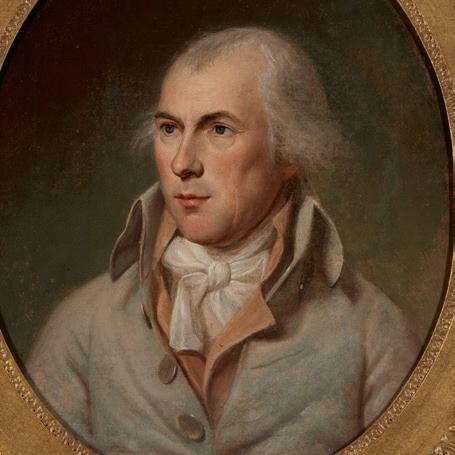
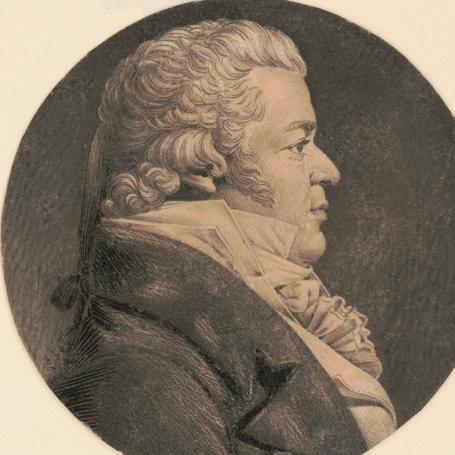
to each other. Posterity regards Jefferson as the Father of the Declaration of Independence and James Madison (1751–1836) as the Father of the Constitution. Jefferson served for eight years as the third U.S. president (1801–1809); Madison held office for an identical length of time (1809–1817). Madison played a key role in the passage of Jefferson’s Virginia Statute for Establishing Religious Freedom, and both helped found the University of Virginia.
In many ways, however, the two men could hardly have been more different. At 6-foot-2, Jefferson towered above the 5-foot-4 Madison. Jefferson received his college education at William and Mary, while Madison traveled
north to Princeton, in part to escape the Anglican influence that prevailed in Virginia’s education. Jefferson was fast on his feet, aflame with ideas, and engaged well with others, especially at intimate events like dinner parties. Madison was the more methodical thinker, whose painful shyness was offset only by his wife Dolley, the proverbial social butterfly.
Yet they forged a friendship that endured for half a century.
State politics from 1776 to 1782 put Jefferson and Madison in Williamsburg and in almost daily contact. In January 1783, Jefferson was in Philadelphia waiting to enter diplomatic service in France. He and Madison stayed in the same boardinghouse, where Jefferson acted as an ultimately unsuccessful matchmaker between Madison and Kitty Floyd, daughter of a New York congressman. When Jefferson returned from France, the next 25 years drew the two men even closer together by their politics and shared personal interests.
Books and reading, which had first drawn this odd couple together, remained a centerpiece of their conversation. Interests in liberty and government, the natural sciences, and agriculture further cemented the relationship. The creation of the University of Virginia also invited their creative energies away from the world of federal politics.
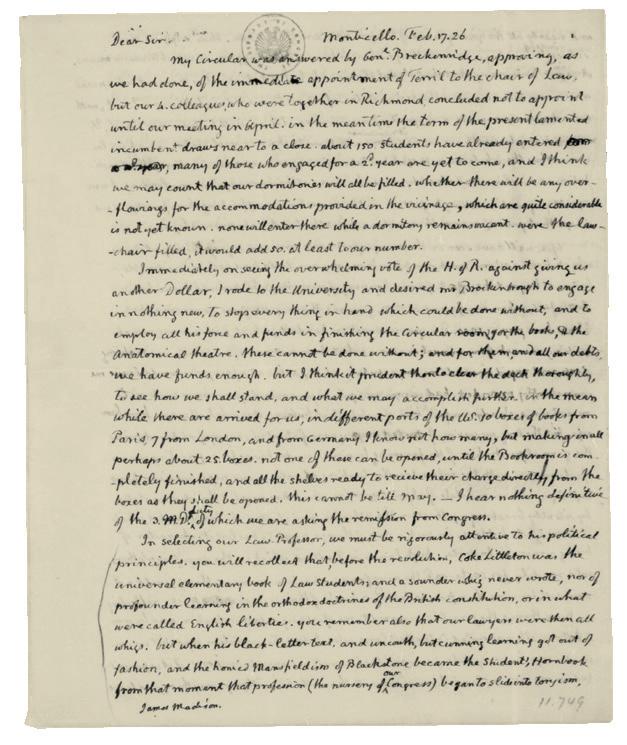
In a February 1826 letter to Madison, Jefferson wrote, “The friendship which has subsisted between us, now half a century, and the harmony of our political principles and pursuits, have been sources of constant happiness to me thro’ that long period.” In the same letter, Jefferson concluded, “To myself you have been a pillar of support thro’ life, take care of me when dead, and be assured that I shall leave you with my last affections.”
Following Jefferson’s death, Madison honored his friend’s request by keeping an eye on affairs at the university while also helping safeguard Jefferson’s reputation, assisting historians and biographers, and encouraging publication of an edition of Jefferson’s writings compiled by his grandson.
Jefferson’s life reveals the threads that make friendship work. In each of the cases mentioned, for instance, a common interest in books, reading, and ideas formed the initial pathways toward friendship. The devotion shown to Dabney Carr, and which Madison showed to Jefferson, was not a false or grandiose salute to a departed friend, but a sincere sign of harmony and love. The ruptured friendship of Adams and Jefferson and its subsequent restoration tells us that personal relationships we might deem dead may still possess the breath of life. Here were two men who, though separated by a mountain of differences, restored and preserved a friendship they regarded as more valuable than politics.
In a May 1820 letter, Jefferson observed that “wherever I have been, it has been my good fortune to meet with or make ardent and affectionate friends.” Because these friendships shaped and benefited the early years of the American republic, the rest of us have shared in Jefferson’s good fortune as well.
Despite his severe wounds, William Harvey Carney gallantly saved the regimental colors during the Civil War
By Dustin Bass
After growing up a slave, William Harvey Carney (1840–1908) eventually received his freedom before the onset of the Civil War. On January 1, 1863, the Emancipation Proclamation was heralded, and young Carney, who had planned a career in the ministry, took an opportunity to join the fight. His love of freedom and the American flag were on display during a bloody battle in Charleston, South Carolina, and resulted in his earning the nation’s highest military honor.
Carney was born in the port city of Norfolk, Virginia, where his father and mother, William Carney Sr. and Ann Dean, were slaves promised their freedom when their owners died. When Ann Dean’s owner, Maj. Carney, died, she and the rest of his slaves were freed. About 1857, Carney Sr., however, pursued his freedom via the Underground Railroad. He first arrived in Philadelphia and then New York, but he didn’t settle down until he felt at home. That home was in New Bedford, Massachusetts.
During this time, Carney Sr. worked tirelessly to earn enough money to pay for the freedom of his entire family. While Carney Sr. was working to raise those funds, Carney attended a private and secret school managed by a local minister. It was here that he learned to read and write. Carney Sr. soon sent for his family, having earned enough money to purchase their freedom.
Joining the 54th
Carney worked with his father in the shipping trade, but he soon turned his eyes to the ministry. Not long after his arrival in New Bedford, though, the Civil War erupted. While he obviously wished for a Union victory, he could do little to contribute until President Abraham Lincoln issued the Emancipation Proclamation. It not only declared all slaves in the Confederate territories free, but also allowed blacks to enlist in the Union Army.
ABOVE
“When the country called for all persons, I could best serve my God by serving my country and my oppressed brothers,” Carney recalled. “The sequel is short—I enlisted for the war.”
Carney joined the 54th Massachusetts Colored Infantry Regiment by March 1863 and was assigned to Company C. By May, Carney and the 54th under the command of Col. Robert Gould Shaw had completed their training. They now set off to war.
The regiment’s first deployment was to Darien, Georgia. It was not a battle but a raid, which left the town pillaged and on fire. Shaw criticized the fact that his regiment was being used merely to pillage. He believed it should fight. His criticisms apparently reached the right people, and the 54th was given orders to pursue Charleston, the capital city of South Carolina and one of the Confederates’ strongholds. Charleston was a strategic objective for the commanding general of the U.S. Army, Winfield Scott, whose Anaconda Plan included a naval blockade of Confederate ports. The first objective for the 54th to secure Charleston was to land at James Island. Landing there would hopefully divert Confederate troops from the stronger Fort Wagner, therefore weakening its defenses. Union troops landed on the island on July 8, 1863. Confederate troops took the bait and sent 3,000 troops to take the island, resulting in the July 16 Battle of Grimball’s Landing. With a successful strategic maneuver, the Union troops retreated from James Island the following day, with plans to attack Fort Wagner on July 18.
On the morning of July 18, Brig. Gen. George C. Strong visited Shaw and his 54th. He pointed to Fort Wagner, which was currently being bombarded by Union ships and siege guns, and asked the soldiers, “Is there a man here who thinks himself unable to sleep in that fort tonight?” The soldiers yelled back, “No!”
Strong followed with another question and one that had historic consequences for Carney. “If this man should fall,” Strong said pointing to the color bearer, “who will lift the flag and carry it on?”
Shaw immediately stated that he would. The 54th erupted in a cheer. The responsibility, however, soon fell to Carney.
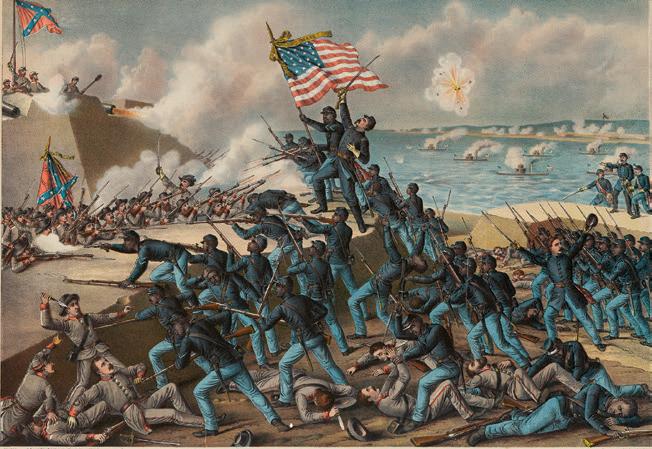
“Storming Fort Wagner” by Kurz & Allison, circa 1890, illustrates Union soldiers storming the fortified walls of the Confederate bastion on Morris Island, S.C.
‘The Dear Old Flag’
Inside Fort Wagner awaited approximately 1,800 Confederate soldiers. Suddenly, 5,000 Union troops, led by the 54th, charged the fort.
“When about 100 yards from the fort, the rebel musketry opened with such terrible effect that for an instant the first battalion hesitated,” reported the Liberator newspaper.
Boys, I but did my duty; the dear old flag never touched the ground. “
Sgt. William Harvey Carney
But only for an instant, for Col. Shaw, springing to the front and waving his sword, shouted, “Forward, my brave boys!” and with another cheer and a shout they rushed through the ditch, gained the parapet on the right, and were soon engaged in a hand-to-hand conflict with the enemy. Col. Shaw was one of the first to scale the walls. He stood erect to urge forward his men, and while shouting for them to press on, he was shot dead, and fell into the fort. His body was found, with twenty of his men lying dead around him, two lying on his own body.
The casualty numbers for the 54th were high, and among those casualties was the color bearer. Carney noticed the wounded soldier. He tossed his rifle and ran to grab the flag. Carney then rushed toward the ramparts of the fort. He noticed that his regiment was not with him. He decided to await them, despite musket balls whizzing by him.
The troops began another charge. As he waited for them to move ahead of him, he noticed they were Confederates. He quickly wrapped the flag and rushed from the fort toward the Union soldiers. While running, flagstaff in hand, he was
shot in the chest, but kept running. He was soon hit by a second bullet. When he encountered a member of the 100th Infantry Regiment of New York, the soldier offered to carry the flag for him. Carney was adamant that the colors stay with him until he could pass them to another member of the 54th. As the two pursued the rear of the Union troops, Carney was struck again, this time in the head. Despite three wounds, he held the flag.
“As he saw the men falling back, himself severely wounded in the breast, he brought the colors off, creeping on his knees, pressing his wound with one hand and with the other holding up the emblem of freedom,” reported the Liberator.
The moment he was seen crawling into the hospital with the flag still in his possession, his wounded companions, both black and white, rose from the straw upon which they were lying, and cheered him until exhausted they could shout no longer. In response to this reception, the brave and wounded standard-bearer said: “Boys, I but did my duty; the dear old flag never touched the ground.”
Meritorious Award. His wounds had left him incapable of continuing with the 54th, and he was discharged. But his moment lived on in the memory of his fellow soldiers.
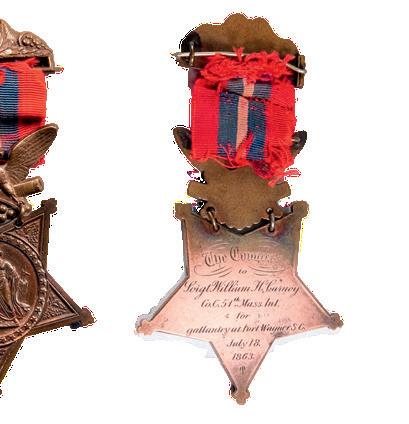
Shortly after the battle, Carney was awarded the Quincy A. Gillmore Medal of Gallant and
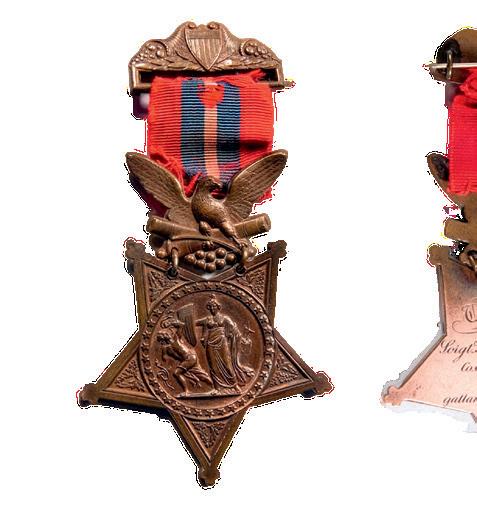
Decades later, Christian Fleetwood, who had fought for the 4th Regiment United States Colored Infantry, asked Carney if he could borrow his Medal of Honor to exhibit at the 1900 Paris Exhibition. Fleetwood had been awarded the Medal of Honor on April 6, 1865, for actions practically identical to Carney’s. Fleetwood’s commendation reads: “Seized the colors, after two color bearers had been shot down, and bore them nobly through the fight.” Fleetwood discovered, however, that Carney had not received one. Fleetwood, along with Luis Fenollosa Emilio, who had been a captain in the 54th Regiment, petitioned the War Department that Carney receive the Medal of Honor. On May 23, 1900, Carney was presented with the Medal of Honor, for “when the color sergeant was shot down, this soldier grasped the flag, led the way to the parapet, and planted the colors thereon. When the troops fell back he brought off the flag, under a fierce fire in which he was twice severely wounded.”
These pages are in the preview.
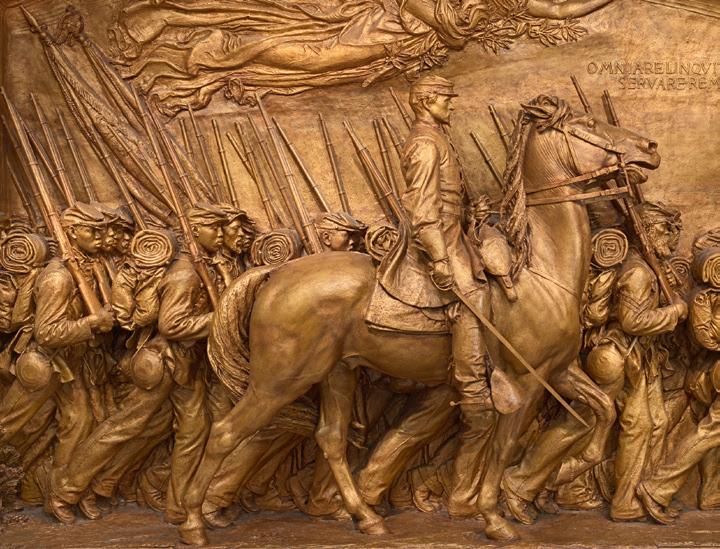
Although Carney was not the first of the 25 black Civil War soldiers to receive the American military’s highest honor, the date made his actions the first worthy of the Medal of Honor.
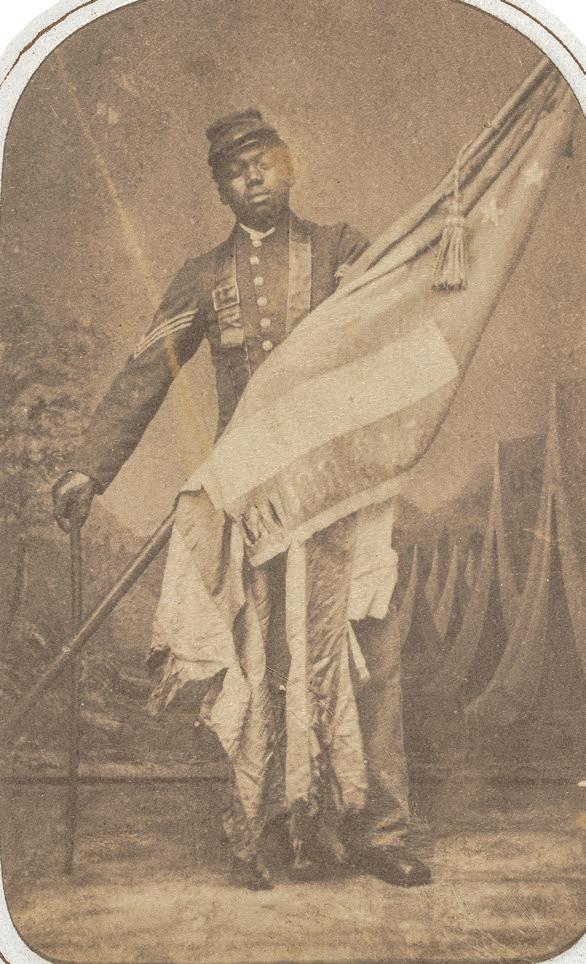
Carney returned to New Bedford after the war, where he married Susannah Williams, had a daughter, and became a U.S. postal carrier—the nation’s first black mail carrier. Along with his Quincy A. Gillmore Medal of Gallant and Meritorious Award (which was replaced in 1905 with the Civil War Campaign Medal) and the Medal of Honor, Carney’s 54th was memorialized in the Boston Common by sculptor Augustus Saint-Gaudens; his rescued flag is on display in Boston’s Memorial Hall; and, in New Bedford, the elementary school Sgt. William Carney Memorial Academy is named in his honor. Additionally, there is a famous photo, taken in 1864, of Carney with “the dear old flag” that “never touched the ground.”
are not included preview.
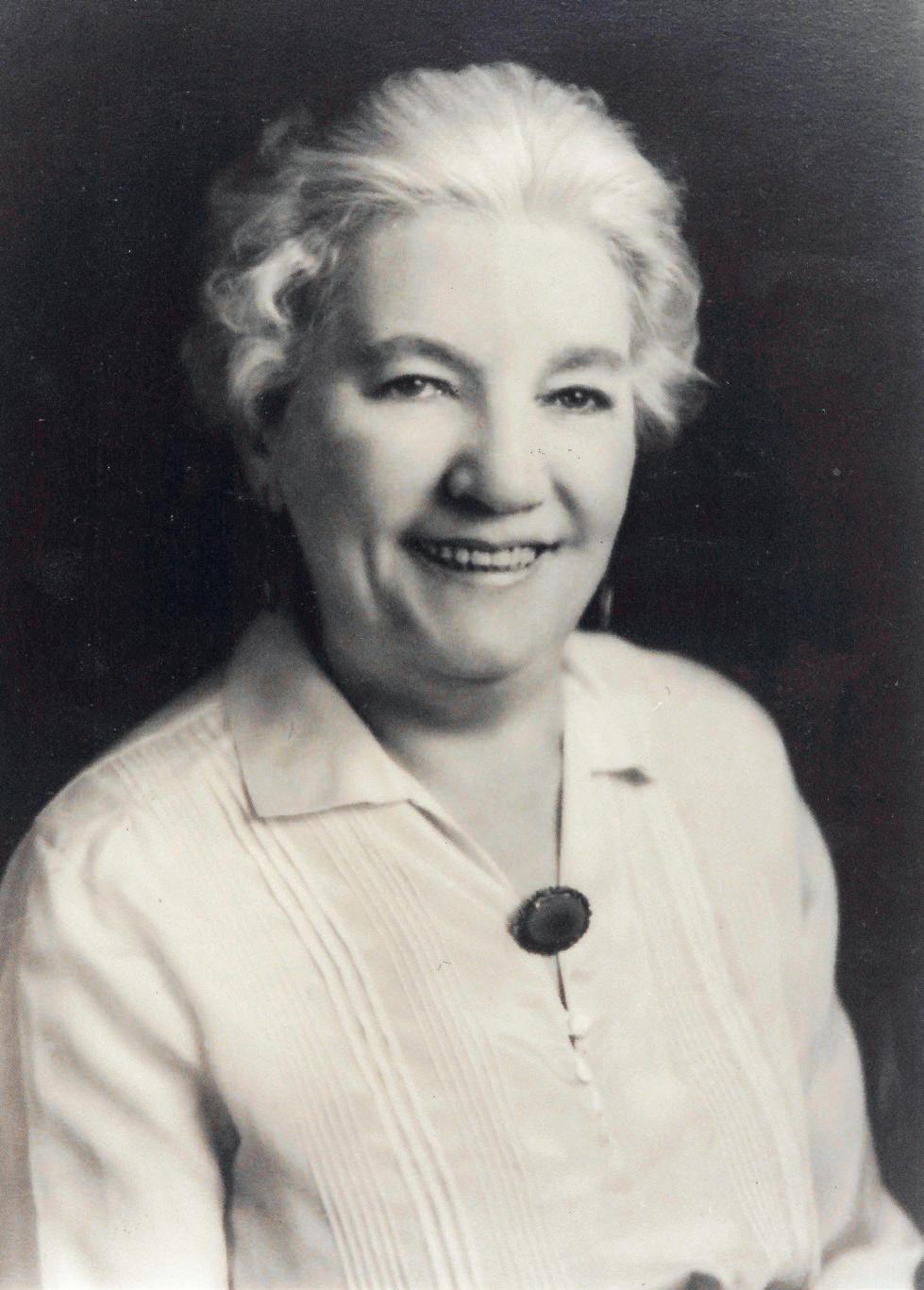
A Fourth of July scene in ‘Little Town on the Prairie’ reveals how the author understood freedom

In all things, we should aim toward beauty, goodness, and truth.
“ Michael Curtis

The ‘classive’ artist Michael Curtis talks about the return to what is truly beautiful and enduring in art in order to ‘Make America Beautiful Again’
By Andrew Benson Brown | Photographed by Madalina Kilroy
Michael Curtis is a sculptor, painter, historian, architectural designer, and poet who has taught and lectured at institutions that include the Institute of Classical Architecture and Art and the National Gallery of Art. His paintings and statuary are held in over 400 public and private collections, including the Library of Congress, the National Portrait Gallery, and the U.S. Supreme Court. Curtis has created statues and medals of major American historical figures, including Davy Crockett, Dwight D. Eisenhower, and Justice Thurgood Marshall.
His monumental “History of Texas,” installed at the Texas Rangers ballpark in Arlington, Texas, is the largest American frieze of the 20th century. Current commissions include sculpted portraits of Pope Benedict XVI and James Madison, as well as residential architectural designs in classical styles.
Curtis’s plays, essays, verse, and translations have appeared in more than 30 journals. He is the author of numerous books of criticism, history, and translation, including the verse satire “Modern Art: An Exhibition in Criticism” and a verse translation of “The Priapeia” from Latin. His most recent book is the American edition of “Land of Sunlight and Stars: Afrikaans Verse in Translation.”
American Essence: Your statues stand in some of the most symbolically important spaces in America—from the Library of Congress to the Supreme Court. How has working at that scale of national memory shaped your understanding of what public art ought to do?
Michael Curtis: Pardon me for saying “civic art.” Public art and art in public places are other things—inferior things—things having no purpose.
My purpose in statuary is to memorialize, to honor those who led exemplary lives, to recall us to our civic selves, and to embody not merely a likeness but some particular virtue, if not virtue itself. All art is an idea made real, yet more than this, the best pictures and statues are the most virtuous pictures and statues. Moment after moment from conception to full realization an artist must be true in thought and action with brush or hammer. Any misplaced move of hand or absence of mind will cause the hammer or brush to go wrong. Each idle thought or careless slight is a vice that corrupts a statue, picture, building, or song, as sin corrupts a soul.
In all things, we should aim toward beauty, goodness, and truth. I think it best in civic art to look to heaven. It seems to me that civic art should strive for something like heaven on Earth.
AE: Your career spans sculpture, painting, architecture, poetry, history, and teaching. How would you describe what unifies all the work you do across these different fields?
Mr. Curtis: Defense. I entered art school at 17 and was immediately challenged, sometimes attacked by progressive modernist professors. … I didn’t blame them. They, too, suffered the soul-crushing liberation of modern art schools as both student and teacher. … Because I was Catholic-schooled, I had sufficiently absorbed the best of all that has been thought, said, and done. Around this age, I made an avowal to defend my artistic forefathers, an avowal to which I remain true.
In the days before the internet, there was no effective way in the modernist hegemony for “classive” artists to meet other classive artists; nor poets, poets; architects, architects; et alia. To be true to my avowal, there was no way out. I attempted to master every art and craft. Yes, I was young and all things seemed possible. Now here I am, nearly 70, and tolerably skilled in numerous disciplines.
AE: You often use the term “classive” rather than “classical.” What does classive mean and why is it the right word for the aesthetic tradition you defend?
These pages are in the preview.

Mr. Curtis: Well, there it is, the inquiry into the nature of the creature we are. In brief, we are souled or we are soulless. We are either souls in material bodies, or we are material bodies, nothing more.
Plato and Socrates posited a soul-like psyche or daimon and a purposeful unchanging eternal being. Democritus speculated that all is but atoms and the void, and that all which happens is mere chance. The universe is either purposed and constant or the universe is random and ultimately meaningless. You see the conflict. Plato, too, saw the conflict and recommended that all of Democritus’s books be burned. None of Democritus’s books survive. As you know, however, ideas cannot be burned.
So here we are at sixes and nines, teeth and claws, some half of us certain of our souls, some other half certain of their soullessness. Trouble is we build for souls differently than we build for bodies, we legislate for souls differently than we legislate for bodies, and we educate for souls differently than we educate for bodies.
Souls and bodies have different needs, different wants, and different desires. The soul needs God, wants beauty, and desires union. The body needs feeding, wants filling, and desires pleasure.
The drunk ritualist Jackson Pollock splattered synthetic wall paint on things that meant nothing but material. The devout Catholic Michelangelo Buonarroti imbued his Old Testament pictures with divine heroes interacting with the ultimate being in a purposed universe.
The souled ascend toward God. Material descends, as in the “Descent of Man” to mud, Darwin-like. You will notice that we ascend into classive buildings, into buildings formed like us (bottom, middle, top, sides and center, bilaterally symmetrical or as symmetrical parts of a whole). In a reasoned and logical classive building, you know where you are and where to go. Yet more than this, you are at home in a classive building because it is friendly to your soul, fitted to your body.
You will notice that we often descend into unfriendly, ugly progressive buildings, places where our souls feel alienated and our bodies get lost.
We are souled classive, or we are soulless progressive. “Classical” is either a high standard or a style from antiquity. “Modern” is merely a word that means “just now,” a word that is 1,500-some years old. You might have a classical progressive building as in the Guggenheim Museum, or you
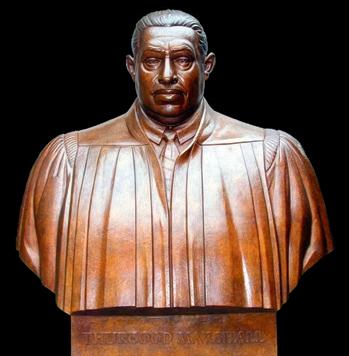
Justice Thurgood Marshall Bust
Located at the Thurgood Marshall Federal Judiciary Building in Washington
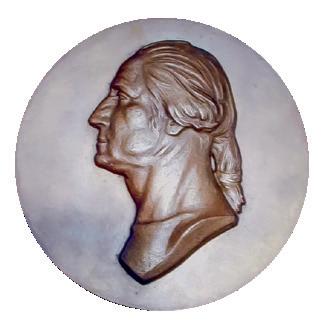
Washington Medallion
Several cast, located at various places
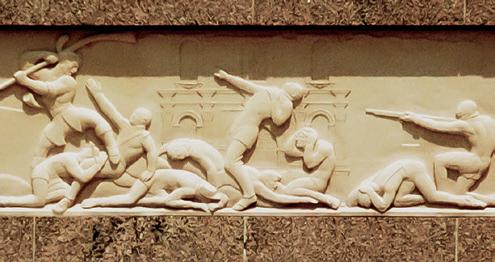
‘History of Texas’ Relief
Located at the Texas Rangers’s Choctaw Stadium in Arlington, Texas
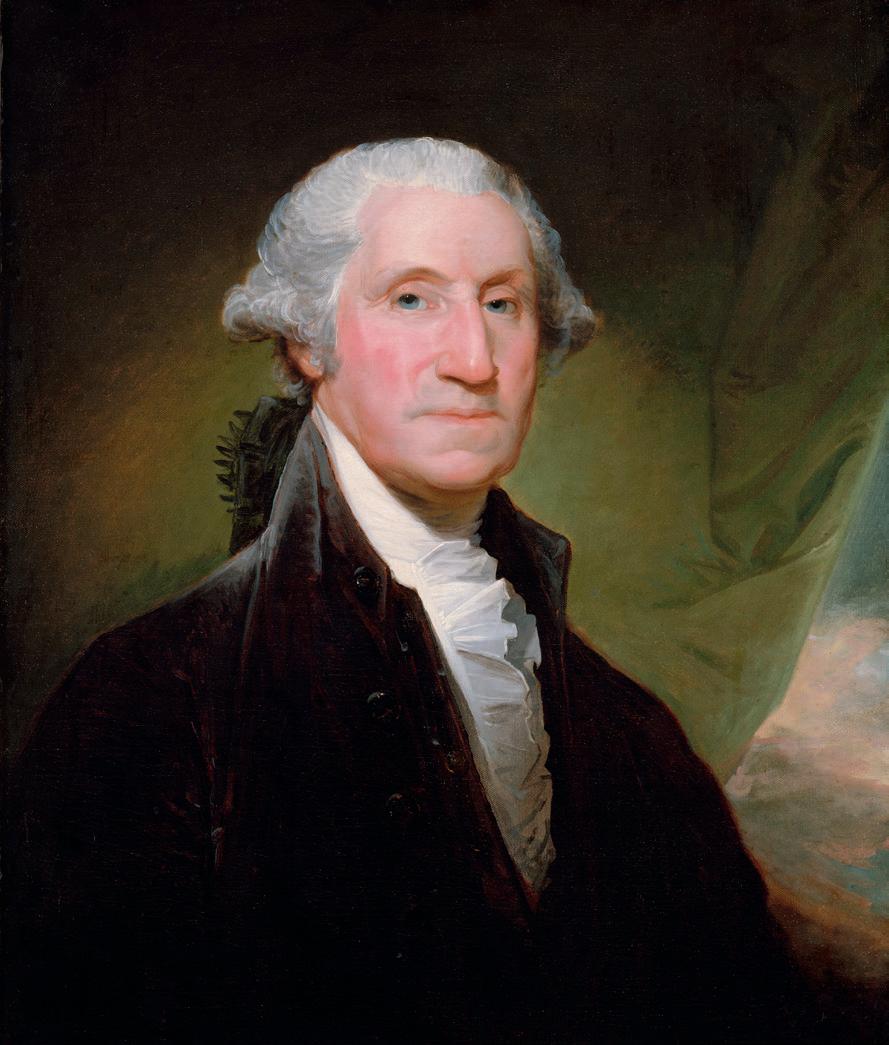
Gilbert Stuart established the tradition of presidential portraits by painting the likenesses of the first 6 presidents
By Sarah Isak-Goode
When flames threaten to erase everything, instinct takes over and people reach for what matters most. As British troops advanced on Washington during the War of 1812, that instinct guided First Lady Dolley Madison inside the White House. Determined that a symbol of the young nation should not fall into enemy hands, she ordered that Gilbert Stuart’s portrait of George Washington be removed from the White House and carried to safety. Minutes later, the British arrived and set the building ablaze, but the image of Washington—and all it represented—survived.
The rescue of Washington’s portrait highlights the extraordinary power of a single image. Before the emergence of photography in the mid-19th century, painted portraits were the only reliable way to preserve a person’s likeness for future generations. They recorded appearance, conveyed social standing, and served as a lasting visual memory for families and nations alike. As the Industrial Revolution expanded the middle class, demand for portraits surged, transforming what had once been the privilege of monarchs and aristocrats into a broader cultural practice.
This shift was especially significant in the United States. After independence, the young republic sought political stability and a visual identity. Portraiture became essential in shaping how citizens understood their leaders. For presidents in particular, portraits were more than images. They were instruments of national identity. In an era when most Americans would never see their president in person, painted likenesses were the primary means through which leadership was made visible and human.
Unlike European traditions that emphasized grandeur and hierarchy, American portraiture reflected a different ideal. The great American painter Gilbert Stuart helped define this shift. His portraits of early presidents established a visual language that balanced dignity with accessibility, presenting leaders not as distant rulers but as participants in a shared civic life.
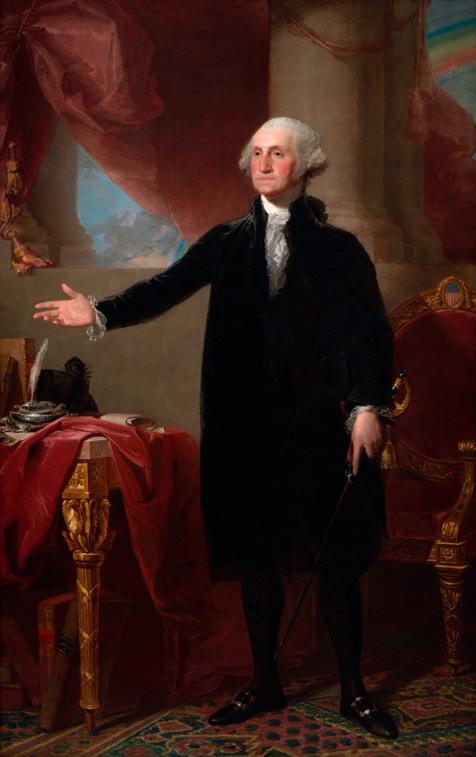
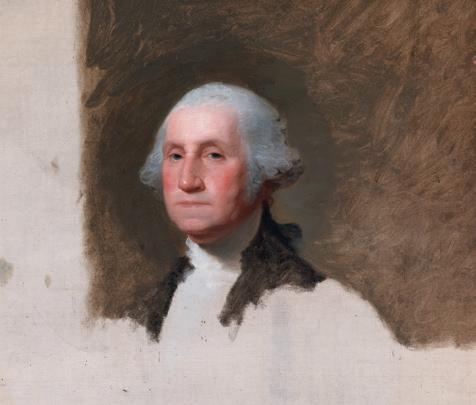
The one-dollar bill is based on the 1796 “Athenaeum”
Born in 1755 in Saunderstown, Rhode Island, Stuart emerged from modest beginnings. Though he showed artistic talent at a young age, he did not begin formal training until age 14, when he studied under Scottish painter Cosmo Alexander. After a brief apprenticeship, Stuart eventually found his footing in London under the guidance of Benjamin West, one of the era’s most influential artists.
Stuart absorbed the refined techniques of British portraiture but adapted them in distinctly American ways. He rejected excessive formality and instead relied on layered color and visible brushwork, often working directly with the brush rather than with preparatory drawings. This approach gave his work a distinctive, lifelike presence that his patrons highly valued.
Despite his professional success, Stuart struggled financially throughout his life. He returned to America in 1793, driven in part by debt and in part by ambition. He intended to paint George Washington and secure both fame and financial stability. That decision would define his career and,

more broadly, the visual identity of the American presidency.
Stuart painted more than 100 portraits of Washington, but three compositions stand at the center of his achievement: the Vaughan type, the Athenaeum head, and the Lansdowne portrait.
The Vaughan portrait marked Stuart’s first attempt. He later admitted dissatisfaction, believing his reverence for Washington had interfered with his ability to capture a true likeness. That hesitation is part of what makes the painting compelling. It reflects the weight Washington carried as both a man and a symbol.
The Athenaeum portrait became the definitive image. Though unfinished, it achieved extraordinary cultural reach. Stuart deliberately retained the original and used it to produce replicas, a strategy that proved financially successful. Today, this image serves as the basis for the portrait on the U.S. $1 bill. Its restrained composition and calm authority shaped how generations have envisioned Washington.
The Lansdowne portrait expanded this image into a full-length statement of national identity. Washington stands amid symbolic objects: books representing law and governance, laurel for victory, and architectural elements evoking stability. Yet even here, Stuart conveys Washington’s authority without suggesting overreach. He went on to produce several iterations of the image, including the one preserved by first lady Dolley Madison.
Portraiture became essential in shaping how citizens understood their leaders. “
These pages are in the preview.
Stuart’s portrait of James Madison offers a different kind of presence. Where Washington conveyed commanding authority, Madison projects intellectual intensity. Known as the “Father of the Constitution,” Madison played a central role in shaping the structure of the federal government, including its system of checks and balances.
Painted around 1804, before his presidency, the portrait reflects Madison at a moment of rising influence. His expression is focused and reserved, consistent with his reputation as a thinker rather than an orator. Stuart captures this quality through subtle modeling of the face and restrained composition.
The portrait was paired with one of Dolley
Madison, forming a traditional pendant set. While Madison’s image emphasizes intellect and governance, Dolley’s conveys social grace and political presence. Together, they reflect the dual nature of leadership in the early republic: policy and public life intertwined.
Interestingly, Stuart painted Madison during a period of intense demand. A contemporary remarked that the artist was “almost worked to death,” underscoring how important portraiture had become. For figures like Madison, these images were not optional. They were essential tools for shaping public identity in a growing nation.
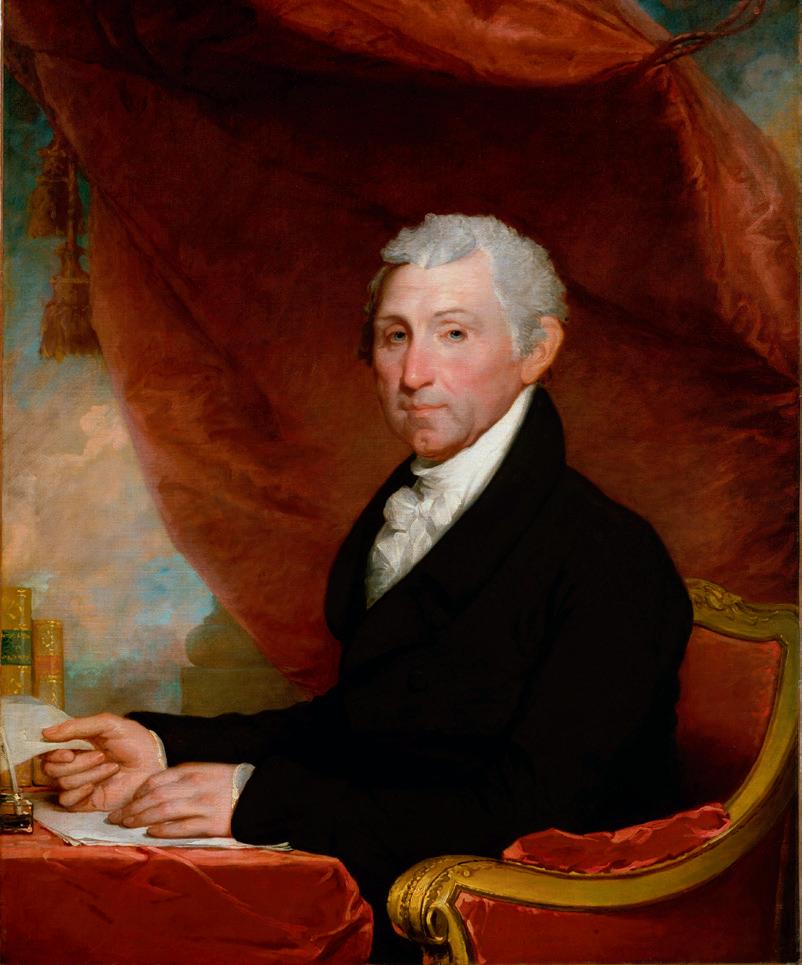
The Statesman as Executive Stuart’s portrait of James Monroe, painted between 1820 and 1822, reflects a mature phase of both the artist’s career and the presidency. By this time, the office had developed clearer traditions and expectations, and the portrait reflects that institutional stability. Monroe is shown seated at a desk, surrounded by papers, with a dramatic red curtain and classical column behind him. These elements draw from European traditions, yet the overall effect remains distinctly American. The emphasis is on civic responsibility rather than royal grandeur.
The composition follows a formula Stuart often

My journey to America is a reflection of why this country represents hope
By Lynn Topel
America. The land of the free. Home of the brave.
We hear these words often enough when the national anthem is played or performed before sporting events. These lines remind us of America’s greatness, not just in sports but in upholding the principles of freedom and democracy within our borders and, to a great extent, for the world at large.
For many, America is—and has been for a long time—the “land of opportunity.” In the mid-1800s, when the Gold Rush gripped the nation, and between 1870 and 1920, during the rise of industrialization that brought about a great demand for labor, many passed through Ellis Island and Angel Island, hoping to make their fortune in this vast land.
This influx of people did not abate over the years, and here is where my immigrant story begins.
I grew up in Manila, Philippines, where my father settled after leaving China when he was just 13 years old. As the eldest of five children in a middle-class family, I was brought up with responsibility and obedience drummed into my being. I graduated with a business degree; although it wasn’t my first choice, it was the most practical one. My father, who never finished elementary school, had high hopes for me to achieve some level of financial success.
However, after graduation, I signed up instead to do volunteer work in one of the
central Philippine provinces. I was assigned to be a teacher at a high school. My father was livid. In the Philippines, teaching is an honorable but low-paying job. Nevertheless, I decided that this was the path I wanted to pursue. After my oneyear stint in the province, I went back to Manila and got a part-time teaching job so I could later pursue a master’s degree in education. Living frugally and simply on a part-time teacher’s income was not feasible. I had to continue living with my parents.
But fate had other plans. In the early 2000s, agencies were recruiting in the Philippines for teachers to work in America. I passed the certification exams to teach in Maryland and soon found myself on a flight to Baltimore. Armed with my H-1B visa and with my whole life packed into two pieces of luggage, I was ready for a new adventure.
My father dropped me off at the airport, and his parting words were, “If you find your destiny there, don’t come back.” Though seemingly harsh, these words from my normally stoic father were packed with emotion. I took it as his version of, “If you love somebody, set them free.”
There, at the airport, his eldest daughter was being set free to live her own life and find her future.
Not every Filipino who works abroad finds happiness and success. But with my father’s blessing, I strove to make the most of the opportunity.
In America, living near the nation’s capital for the first couple of years meant I had access to the metro. On the weekends, I would take the metro to the downtown area, and it became my playground. Museums and monuments became the backdrop of my life. I soaked up the nation’s history and culture. I stood before war memorials and witnessed the changing of the guard at the Tomb of the Unknown Soldier—a testament to the sacrifice many men and women made for this country. To pass the teachers’ certification test, I had to cram the entire history of this nation in one week. But a comprehensive textbook in no way compares to actually seeing, living, and breathing it all in.
After several years working in the country, I became a full-fledged American citizen. I saw how fortunate I had been that, somehow, I had landed on America’s shores. America is a nation that had to fight to create its identity and destiny. I felt a kinship toward it as I also came here to be who I wanted to be and to forge my own path forward.
Now that I am married with kids, I have made my home in rural Maryland. I resigned from my teaching job to teach my own children at home instead. That way, I could share with them not just my academic knowledge, but also my love for country and God—something that many schools have stopped promoting. I love America, and I wanted them to grow up with that same love.
The Philippines will always have a place in my heart, and I would love to visit again soon, especially with my dad now in his 80s. But I have found my place in America, and it has also found a place in my heart. You might say, I have found my destiny.
Why do you love America?
What makes it worth celebrating? What moves you about the people and places that make up our country? Tell us in a personal essay of about 600 to 800 words. We welcome you to send your submission to:
Editor@AmericanEssenceMag.com
America
is a nation that had to fight to create its identity and destiny. I felt a kinship toward it as I also came here to be who I wanted to be and to forge my own path forward.
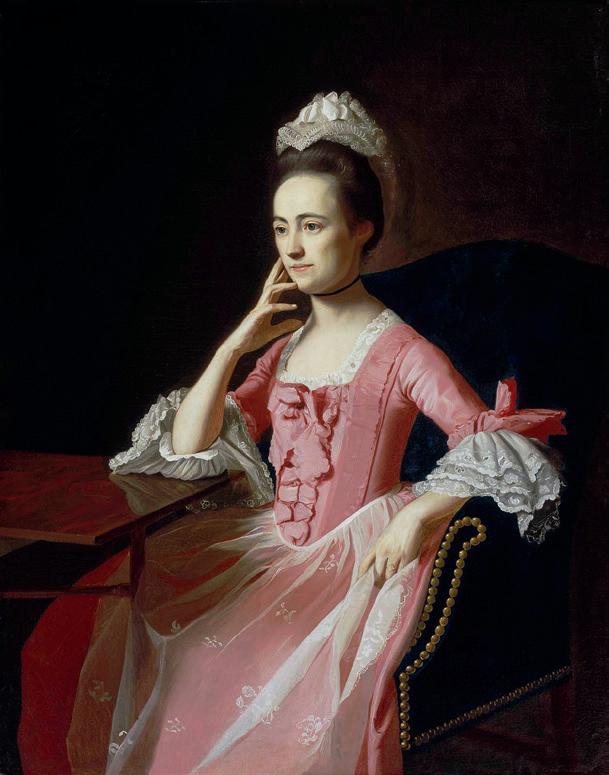
My mother’s lineage traces back to the wife of Founding Father John Hancock and a family whose strong faith helped them overcome life’s challenges
By Gratian Yatsevitch III
What I’ve come to appreciate in my own life is that family culture and behavioral traits are passed down through the generations. For as long as I can remember, I knew I was the five times greatnephew of John Hancock, one of the Founding Fathers and major financiers of our nation. My mother would make references to her ancestors and told me brief stories of our family’s past. John Hancock married into the Quincy family, my family.
I found unfathomable narratives in history books, reading them like heroic fairy tales: the Battles of Lexington and Concord, the Battle of Bunker Hill, and the Siege of Boston, just to name a few. Each conflict strengthened the Quincy and Hancock family bond. I marveled; why did John Hancock and his wife Dolly risk everything to help establish a nation rooted in liberty?
John and Dolly had two children who sadly didn’t survive to adulthood. Dorothy “Dolly” Quincy was the aunt, godmother, and namesake to my maternal great-great-great-grandmother, Dorothy Sewall May. Dolly was descended from a deacon, a reverend, a colonel, and a judge across the generations. The Quincys were a quintessentially New England family all the way to my mother, Margaret, who was born and raised in Massachusetts.
Today, when I read books and letters, both
about and by my ancestors, I am reminded of the Quincy and May character that lived in my mother. Above all, it’s their integrity that stands out, and it’s undoubtedly a strength that’s founded on their Christian faith.
These pages are in the preview.
I grew to appreciate that the American Revolutionary War is inextricably linked to the Colonists’ belief in God’s righteousness. Our Founding Fathers had two choices: to establish that all our rights come from men and man’s law; or to establish natural law, the idea that all our rights are God-given. From the fervent prayers at the first Continental Congress to the way natural law is the foundation of America’s legal system, God’s name has been invoked as our claim to freedom and liberty. This was established in the opening text of the Declaration of Independence, that our rights as citizens are not derived from the government, but rather “endowed by our Creator.”
Deep spiritual faith also endured in Dorothy Sewall May’s husband, Col. Joseph May. I actively searched for his will and last testament as if seeking a hidden treasure, a clue to the mysteries of my ancestors. In his final words, he movingly wrote, “I desire to record my gratitude to Almighty God for his singular favor to me through life … mercifully visited as it has pleased him, with a share of disappointments and bereavements: but always sustained by unwavering confidence in his wisdom, which
“
Above all, it’s their integrity that stands out, and it’s undoubtedly a strength that’s founded on their Christian faith.
cannot err, and in his goodness, which is unchangeable and everlasting.” Col. May outlived his wife and several children, so for me, this sentence sums up his steadfast faith in God. He dutifully led his family spiritually and supported his son, Samuel Joseph May, through his Harvard University education. Samuel eventually became a reverend, devoted abolitionist, and suffragist from the 1830s until his death in 1871.
Although my mother lived her Christian faith fully, she kept it private. She led by example. And as far as I know, my mother not once missed her right to vote her entire adult life, knowing what her ancestors had sacrificed.
After two decades as the wife of a U.S. Army colonel and diplomat, she was denied healthcare after an unwanted divorce. She fought the legal system all the way to the U.S. Congress and won. She led the way and had a determined courage for justice. I admire that about her. For all my ancestors, their Christian faith carried them through turbulent times.
Examining my mother’s handbag after her death, I was surprised to find a note written in her unsteady handwriting, where she had inscribed the Ten Commandments and the Seven Deadly Sins. I knew she wanted those reminders to strive to live a life worthy of honoring God. My mother always had a strong sense of right and wrong, an audacity for justice. I believe that was carried through her from her ancestors, who risked everything to help create a freer nation 250 years ago.
Today, all Americans are beneficiaries of this
heritage, the idea that serving God faithfully is what championed our freedom. My mother didn’t tell me too much about our family history; it was already imbued in her life. It’s that part of her, woven into the tapestry of my family’s Christian heritage, that I cherish the most.
Is there a family member who has positively impacted your life?
American Essence invites you to share about your family roots and the lessons passed down from generation to generation.
We welcome you to send your submission to: Editor@AmericanEssenceMag.com







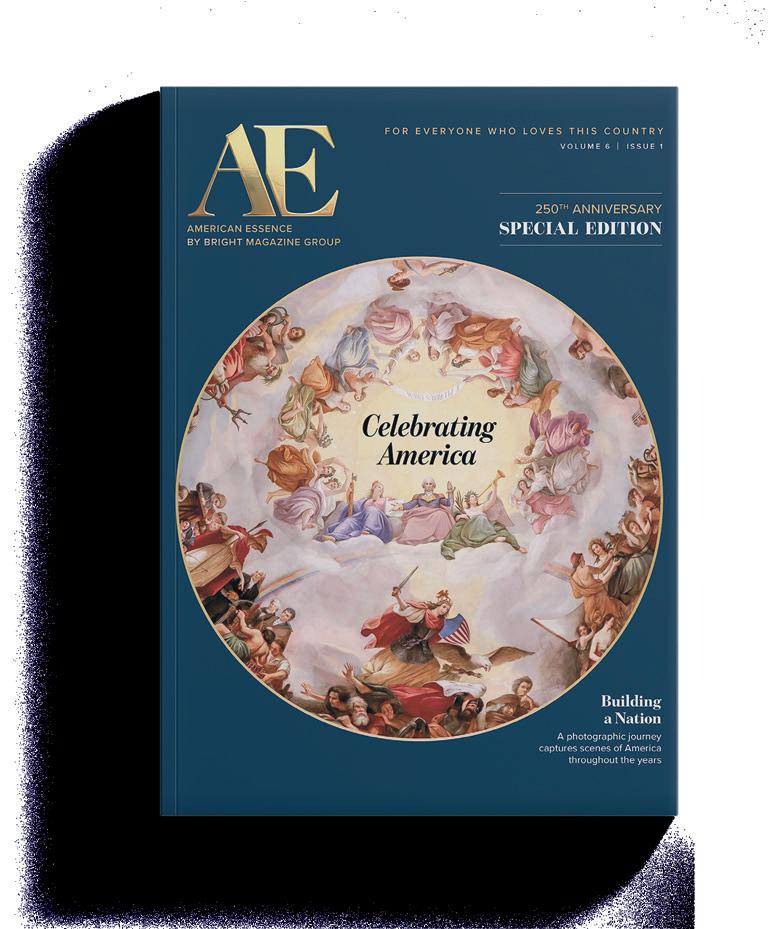
Made to Be Kept
Beautiful stories of America’s heritage, faith, and craftsmanship. Worthy of your table. Worth revisiting.

Rediscover the heart and soul of our nation with American Essence, a bimonthly magazine celebrating America’s rich tapestry of cultures and landscapes. You’ll find inspiring tales of courage, fascinating episodes from history, expert tips for healthier living, and more. Meticulously curated and full of hopeful stories, each issue is a celebration of the American spirit. AmericanEssence.net