FREE /JUNE 2026
THE STAR IS AN INDEPENDENT PUBLICATION FOR LOCAL PEOPLE BY LOCAL PEOPLE ESTABLISHED 2021

“For all your tree related needs” Mobile:0447 792 200 ajts@westnet.com.au www.adamjenkinstreeservices.com.au

THE STAR IS AN INDEPENDENT PUBLICATION FOR LOCAL PEOPLE BY LOCAL PEOPLE ESTABLISHED 2021
“For all your tree related needs” Mobile:0447 792 200 ajts@westnet.com.au www.adamjenkinstreeservices.com.au
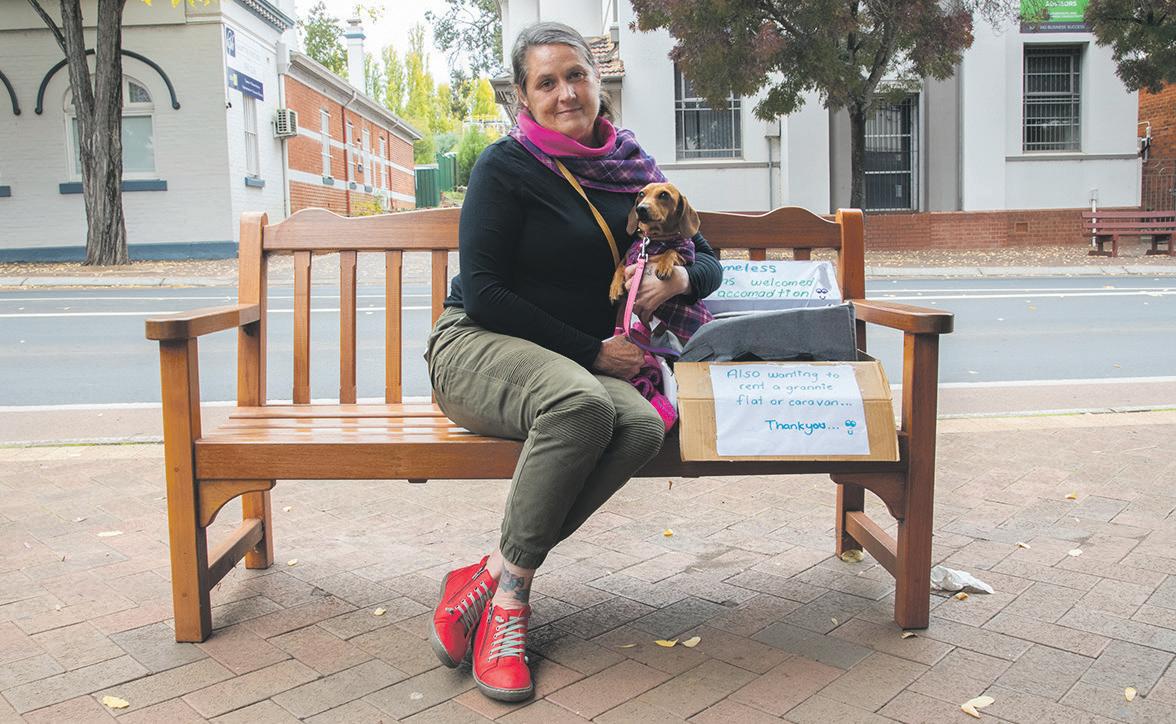
Colleen* has been doing it tough for months now, living out of her small car with her faithful dachshund Pippi Longstocking.
By now, she says, she’s getting used to it.
In her current stretch of homelessness she’s been doing it for two months.
Before that it was six.
In between she found temporary accommodation in a run-down 50-year-old caravan, and for four months was the caretaker of a Serpentine property. Living off unemployment benefits of $800 per fortnight while the average rent in Bridgetown hovers around $620 per week she has no hope of finding a rental home.
And with a history of substance abuse that she’s since overcome she’s loathe to try share accommodation with unknown people where she may be exposed to their potential problems.
It’s been like this for her for the last 18 months. Before then she’d called Margaret River home for 30 years until her rent hit an unaffordable $750 per week.
*Colleen did not want to use her second name.
What that says about our government is rather devastating, isn’t it?
Despite the hardship of living out of her car she’s found “silver linings”.
“I’ve learnt not to be a victim because I am not, I know I have a voice,” she said.
“I’ve overcome addiction through this process.”
Survival skills
While in Perth her strong survival skills taught her the safest places were 24 hour service stations with their cameras, lights and amenities.
“It was scary. It’s all been scary, the one saviour was my little girl sausage dog.”
“We are a team.”
With family history in Bridgetown, she travelled here “on a whim and a prayer” for her uncle’s 80th birthday and lived in the old caravan.
But the caravan was in poor condition and “beyond its time”.
She’s looking for a suitable caravan or a granny flat in exchange for dollars or work.
Her job seeker payment of $800 per fortnight, makes even renting in the caravan park unaffordable.
Local resident Elisabeth Pellicaan is a highly qualified mental health professional who became acutely aware of the homelessness problem just before Christmas last year, when she encountered a homeless middle-aged woman in one of the town’s parks.
She reached out to help with an offer of food and shelter.
She’s been instrumental in assembling a group of concerned people to do something about it.
There’s little information about the scale of homelessness locally, she says, and neither the police nor the Shire have a clear idea of the numbers.
2,000 COPIES OF THE BRIDGETOWN-GREENBUSHES STAR ARE DISTRIBUTED EACH MONTH.
THE BRIDGETOWN-GREENBUSHES STAR CAN BE FOUND AT THE FOLLOWING LOCATIONS :
• BRIDGETOWN NEWSAGENCY
• WATTLESEED CAFE
• GREENBUSHES CRC
• BRIDGETOWN CRC
• BRIDGETOWN STAR OFFICE: 2/84-86 HAMPTON ST
• GREENBUSHES ROADHOUSE.
• THE STABLES IGA
• POST NEWSPAPERS 270 ONSLOW RD SHENTON PARK

The Bridgetown Greenbushes Star is bound by the Standards of Practice of the Australian Press Council.
If you believe the Standards have been breached, you may approach the Bridgetown Greenbushes Star or make a complaint to the Australian Press Council in writing at www.presscouncil.org.au. The Council may also be contacted on 1800 025 712
SHINING BRIGHT OVER BRIDGETOWN AND GREENBUSHES ESTABLISHED 2021
THE STAR IS AN INDEPENDENT PUBLICATION PRODUCED IN BRIDGETOWN, WA
ADDRESS
2/84-86 HAMPTON STREET, BRIDGETOWN PO BOX 523 BRIDGETOWN 6255
MANAGER & EDITOR
MARK SCHNEIDER 0439 187 651
EDITOR@BRIDGETOWNSTAR.COM
ADVERTISING & SALES 0414 550 025 ADS@BRIDGETOWNSTAR.COM
LAYOUT DESIGN
BLANK SLATE CREATIVE 0450 593 061 HELLO@BLANKSLATECREATIVE.COM.AU
PHOTOGRAPHY
MARK SCHNEIDER



PUBLISHED ON THE LAST SATURDAY OF THE MONTH BY THE BRIDGETOWN-GREENBUSHES STAR.
COPY DEADLINE IS THE LAST MONDAY OF THE MONTH ADVERTISING DEADLINE IS THE THIRD FRIDAY OF THE MONTH
CONTRIBUTIONS TO THE BRIDGETOWN-GREENBUSHES STAR DO NOT NECESSARILY REFLECT THE VIEWS OF THE PUBLISHER.
THE BRIDGETOWN-GREENBUSHES STAR RESERVES THE RIGHT TO EDIT CONTRIBUTIONS.

There were 676 homeless people in the southwest in 2021 according to advocacy organisation Shelter WA, and the problem was getting worse rapidly.
There’s currently an eight-year waiting list for people registered with the Department of Housing for public housing in WA.
“What that says about our government is rather devastating, isn’t it?” Ms Pellicaan said. Attitude
She’s outraged at the attitude towards the homeless.
“It’s as if if you’re homeless that’s your problem.
“If you don’t have a home to go to somehow that’s your issue, your problem, you have to fix it, even though there’s no way of fixing it because you’re not actually responsible that there’s no housing available, but the government behaves as if you made it a choice,” she said.
She says on top of that some shires deter homeless people with loud noise, bright lights and street furniture that deters people from sleeping in the streets, as well as forcing them to move on repeatedly.
Happily that’s not the approach of the Shire of Bridgetown-Greenbushes.
She says there’s a lot of goodwill in Bridgetown from individuals, churches and charities who are keen to find solutions but a state-wide approach is needed.
The Member for Warren Blackwood, Bevan Eatts, is particularly concerned with the lack of a domestic violence shelter anywhere in the electorate.
While he says there’s a lack of statistics about the scale of homelessness he believes it’s bigger than people think, and it’s not just because people have personal problems.
Bridgetown is a very caring community that needs government support from all three levels of government to address homelessness
“The reality is today that there are people out there that have jobs, and they’re homeless, and it’s because they either A: can’t find a house, or B: if they do, they can’t afford it,” Mr Eatts said.

“The price of rentals has just gone through the roof.”
The high price of housing and the number of Air B’n’Bs were also adding to a “perfect storm” creating homelessness, he said.
Housing Supply
There’s also a housing supply problem.
“You can do all the reports you want, but the reality is we need the bricks and mortar,” he said.
There were instances where the high cost of headworks made developments unfeasible.
“While we’re operating on a budget surplus the State Government should be pulling every lever that they’ve got to be making it as easy as possible to build houses.”
He said Bridgetown is a very caring community that needs government support from all three levels of government to address homelessness.
Minister for Planning and Lands, Housing and Works, John Carey has said the West Australian Government has invested $6.3 billion in housing and homelessness since 2021 and has demonstrated a commitment to working with providers to deliver more homes for vulnerable Western Australians.
Most recently it opened a new $4.27 million development in Albany, delivering 12 homes for people at risk of homelessness there.
Last December it also opened Bunyap Rise in South Bunbury, a project delivering accommodation for youth at risk of homelessness in the area.

The Bridgetown Club celebrated a milestone in May, marking 80 years since the much loved local institution was formally established for community use.
To honour the occasion, the Club hosted a special Open Day on Saturday the 23rd of May, bringing residents, past members and visitors together to explore its history and enjoy a full afternoon and evening of activities.
Festivities began at midday with pizzas for lunch and pies for dinner, alongside historical displays and opportunities to meet current members and committee representatives.
A reunion gathering welcomed anyone connected with the Club over the decades — former members, volunteers, performers, committee representatives and supporters.
Club Vice President Alison Brewer said the anniversary was an opportunity to celebrate both heritage and renewal.
“While the Bridgetown Club has a proud history, it is very much focused on the future,” Ms Brewer said.
Incorporated in 1948, it’s operated continuously ever since, transitioning from a traditional gentlemen’s club to the inclusive community venue it is today.
“Women members play an active and valued role in the life of the Club today, and we are committed to being an inclusive, welcoming space for people of all ages and backgrounds.
“The Club is evolving with the community it serves, while still honouring its heritage,” she said. The building itself carries a significant story.
Originally known as Fort Belvedere, the Inter War Bungalow was built in 1936–37 for Godfrey and Mary
Hester, prominent early settlers who contributed greatly to Bridgetown’s agricultural and civic life.
Following their passing, the Hesters bequeathed the home to the community, and in 1946 it became the Bridgetown Club.
Club President, Robert Benson Parry, said the 80th anniversary was a moment to reflect on the Club’s evolution.
“This milestone is about more than celebrating 80 years of history – it’s about recognising how the Club has grown and adapted over time,” he said.
“We’re proud of our past, grateful for the generations who built the Club, and excited about the direction we’re heading as a modern, inclusive community organisation.”
Today the Club hosts a wide program of activities including weekly cards and darts, monthly Open Mic and Burger Nights, Bingo, Sundowners, themed meals, LP and Poetry Nights, theatre matinees with the Repertory Club, and board game evenings with the CRC.
Its newly launched Art Collective also provides local artists with a platform to exhibit and sell their work.
Workshops, weddings, business events and social competitions round out a busy annual calendar that continues to make the Bridgetown Club a vibrant hub of local life.
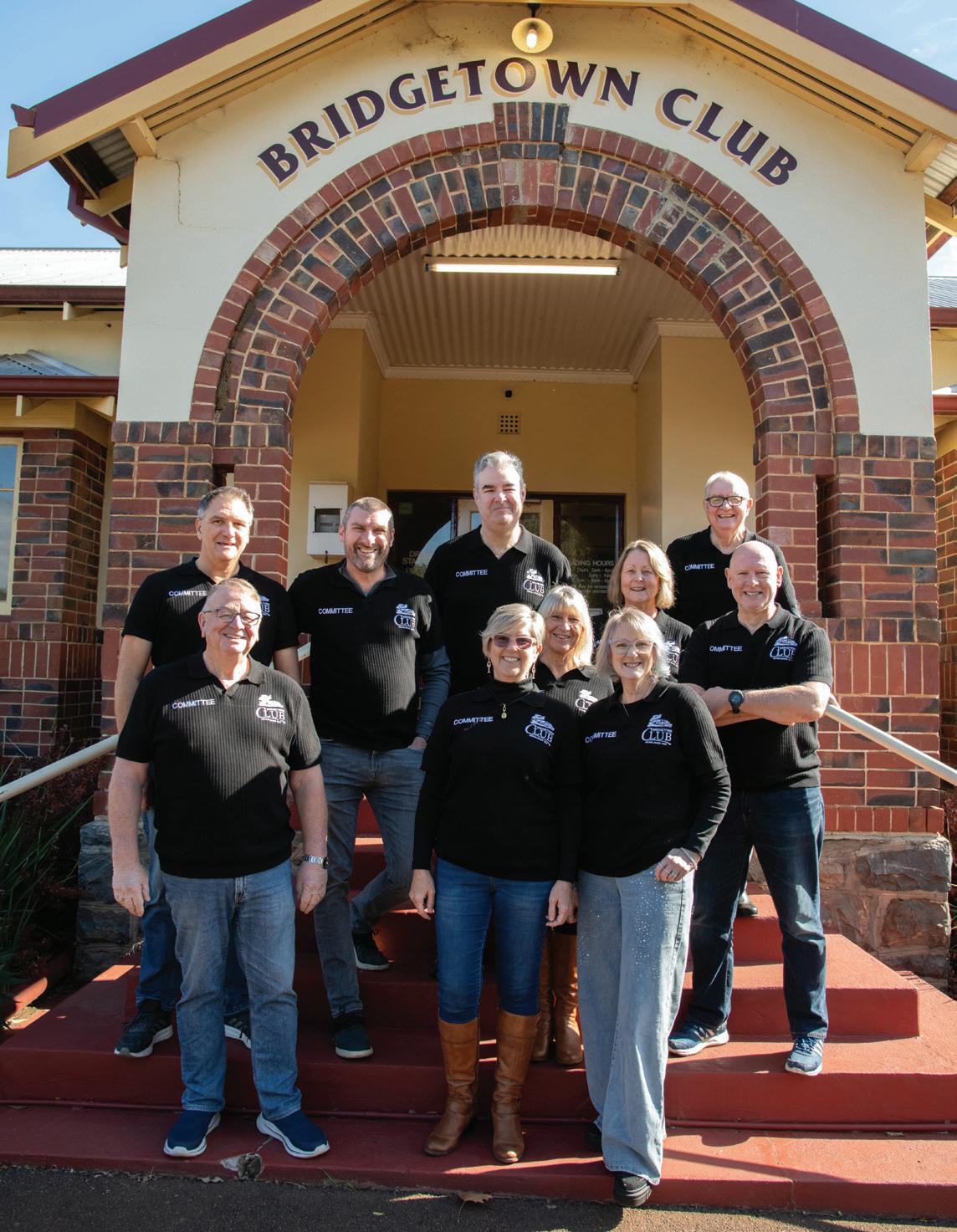
The Club is evolving with the community it serves, while still honouring its heritage.



Local brewer wins four awards at the Australian International Beer Awards.
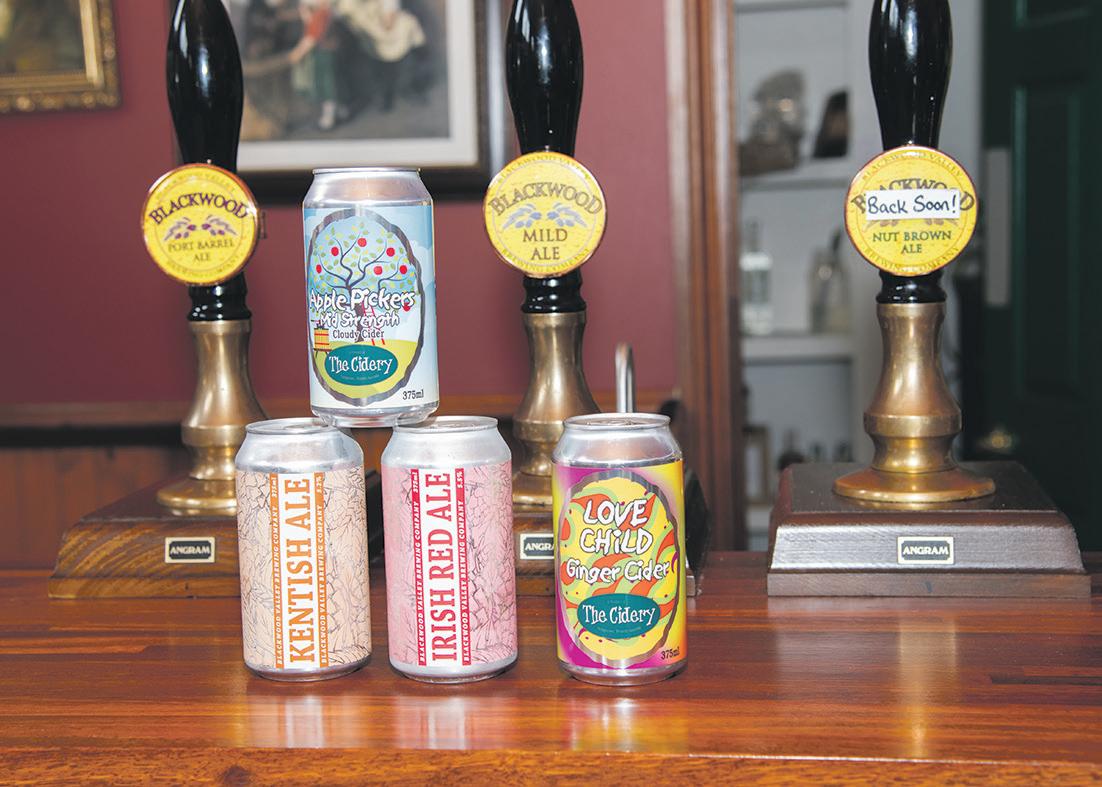
The Cidery’s habit of winning national awards for its beer continued at this year’s Australian International Beer Awards (AIBA) in Melbourne, but this time there was a twist in the tale.
Because on top of winning a Bronze for its Kentish Ale and a Silver for its Irish Red Ale, it also picked up a Gold for its Love Child Cider, and another Gold for its Apple Pickers Cider.
The AIBA has only recently added cider to its categories and both of the Cidery’s entries received the top awards in their categories.
Entering the annual awards have long been a focus for the small brewery.
“We’re a small producer in the overall scheme of things so if we can find the time we’ll grab a couple of products off the shelf and enter them in the competition,” said brewer Mark Hollett.
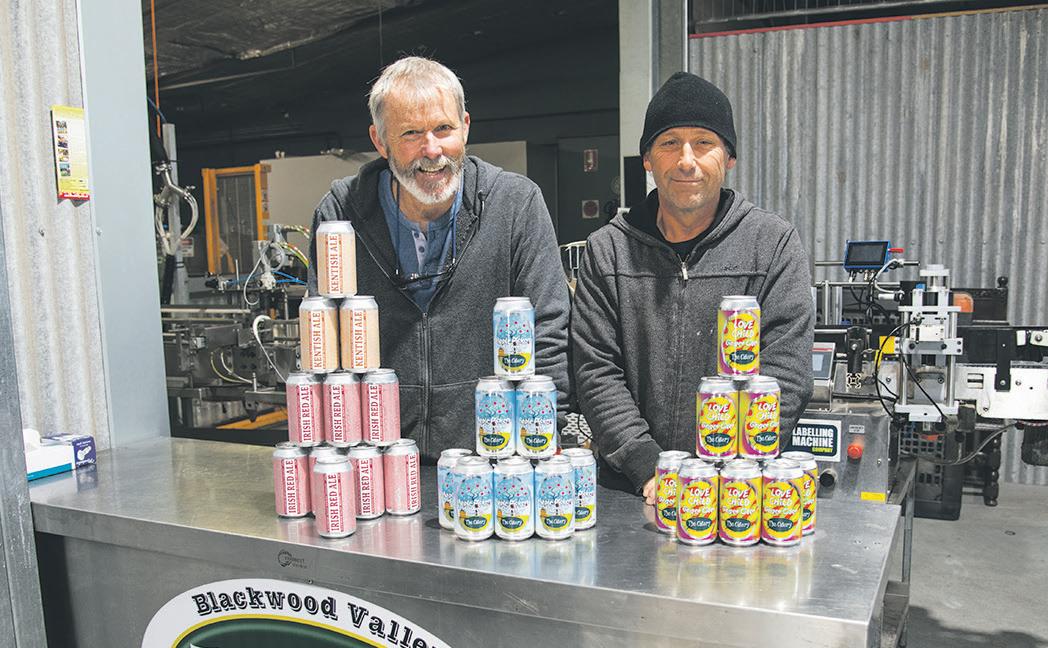
“It’s partly so we can get some benchmarking and some feedback on or products to see how well they fit in the parameters of the style they represent, and it’s also nice just to get a bit of kudos for your products, because we do try to make proper natural products from natural raw ingredients.
“And we source just about all our raw ingredients for the cider locally.
“Obviously for the beer you have to get your malts and things from traditional sources. A lot of our malts are Australian, but there’s also UK malts if we’re making UK styles of beer.”
“So we just try to stay as true to the original recipes as possible.”
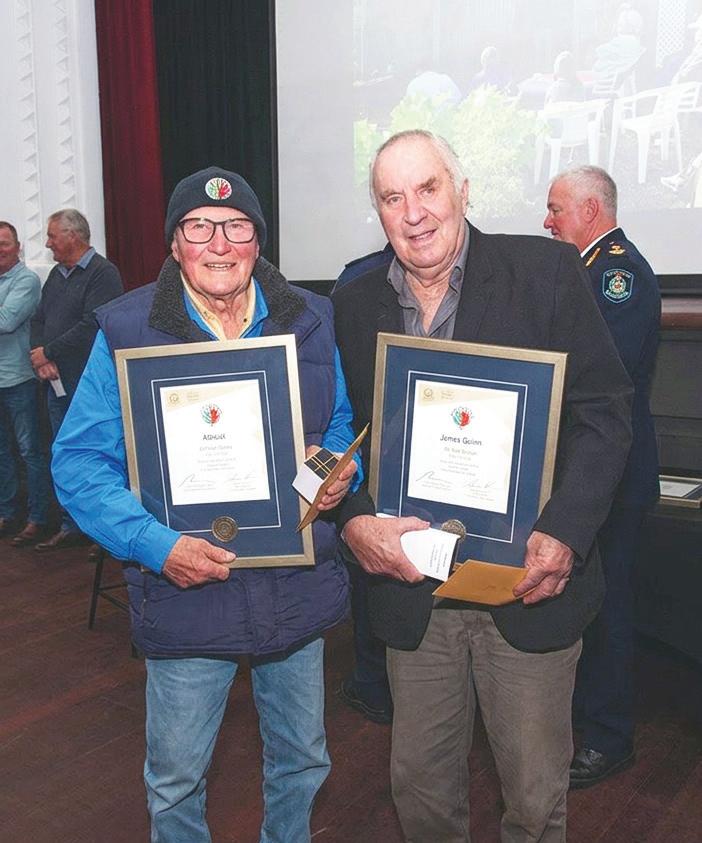
Hal Reid’s and James Gale’s decades of volunteer fire-fighting were recognised on the 22nd of May at the Town Hall.
On a night when Bridgetown celebrated the contribution of its many volunteers, two veteran fire-fighters stood out for the sheer length of their commitment.
Hal Reid’s and James Gale’s extraordinary 65 years of service to the Bridgetown-Greenbushes community was recognised with the awarding of framed certificates commemorating their achievement.
Hal has been fighting fires since leaving school at 15.
“Back in those days the mechanisation wasn’t as great as it is today, it was manpower, manpower, manpower, and a much bigger population, fathers and sons were all in it together,” he said.
With decades of experience behind him he’s still fighting fires if the weather’s not too hot, but he’s also thinking about the future of fire fighting in a warming, drying climate.
He says it’s essential that forested areas have adequate access into them to fight fires and that the Department of Biodiversity Conservation and Attractions (DBCA) isn’t adequately resourced to properly manage crown lands, forests and national parks.
In his time fire-fighting has evolved from an ad-hoc cooperative effort where farmers gathered to battle fires.
He said a serious fire in December 2003 was the catalyst for change, when Chris Sousa became the Shire’s Emergency Services Manager.
“With Chris’s initiative we started to get radios and equipment – it was a big improvement in our operations.”
He’s in no doubt that climate change is having a major impact.
“Long dry summers and the low rainfall winters are certainly changing the soil moisture and the vegetation moisture,” he said.
Dry conditions were making it difficult to carry out the necessary prescribed burns to prevent fires.
“Prescription burning is a pretty demanding activity with a lot of preparation and pre-assessment and if the circumstances are right there are several sites that need to be burnt.
“But they don’t have the resources to burn more than one of them, so they do one, but the others have to be done in a less opportune situation, and so they cop it from all directions.”
“I don’t think governments quite grasp the need for the massive resourcing of DBCA,” he said.

Ihave had the pleasure of reading the latest edition of the Bridgetown-Greenbushes Star and the pleasure is derived not just from the excellence in journalism but as importantly the pleasure in handling newspaper with its attendant smells.
So evocative of a previous era when we read newspapers on a daily basis and I for one am very pleased to be able to read a local, well-written and informative newspaper again.
Mary Elgar, JP
Send Letters to the Editor by email to editor@ bridgetownstar.com, or PO Box 523 Bridgetown 6255.
Producing your local newspaper has always been a labour of love but in 2026 it’s also become a financial balancing act that’s increasingly difficult to sustain.
The Bridgetown–Greenbushes Star is privately owned and, despite the dedication behind it the paper’s struggling to break even — let alone make a profit.
Like newspapers across Australia and around the world, the Star faces the same pressures: declining advertising revenue that struggles to cover production costs, and the challenge of keeping a community newspaper alive in an era dominated by global digital platforms.
Every edition you read represents many hours of writing, editing, layout, photography, ad sales, and administration — work that’s rewarding in every sense but the financial!
To secure a long term future for the Star, I’m working towards transforming the paper from a privately owned publication into a not for profit community enterprise.
It’s a model used successfully in many regional towns, where the newspaper becomes a shared community asset rather than the responsibility of one or two individuals.
It allows for broader participation, stronger local ownership, and more stable funding.
I’m applying for grants to help make this transition possible.
These grants would support staffing, governance development, and the creation of a sustainable business model.

But it’s competitive and there’s no guarantee of success — even strong applications can miss out.
That’s why I’m turning to you — the Star’s readers, our community, the people who tell me every month how much they value having a local paper that reflects local voices.
If you believe the Bridgetown–Greenbushes Star is worth keeping, I’m asking for your help. Donations of any size make a real difference. You can contribute by scanning the QR code printed in this edition to make a donation.
Please mark your donation as “donation to the Bridgetown-Greenbushes Star.”
Your support will help ensure the Star can continue to report local news, celebrate local achievements, and provide a platform for community stories.

Geegeelup Village faces some big challenges meeting the demand for accommodation for the elderly with an ageing population and a growing waiting list for accommodation in Bridgetown-Greenbushes.
But Geegeelup has a Master Plan that aims to meet that rising demand.
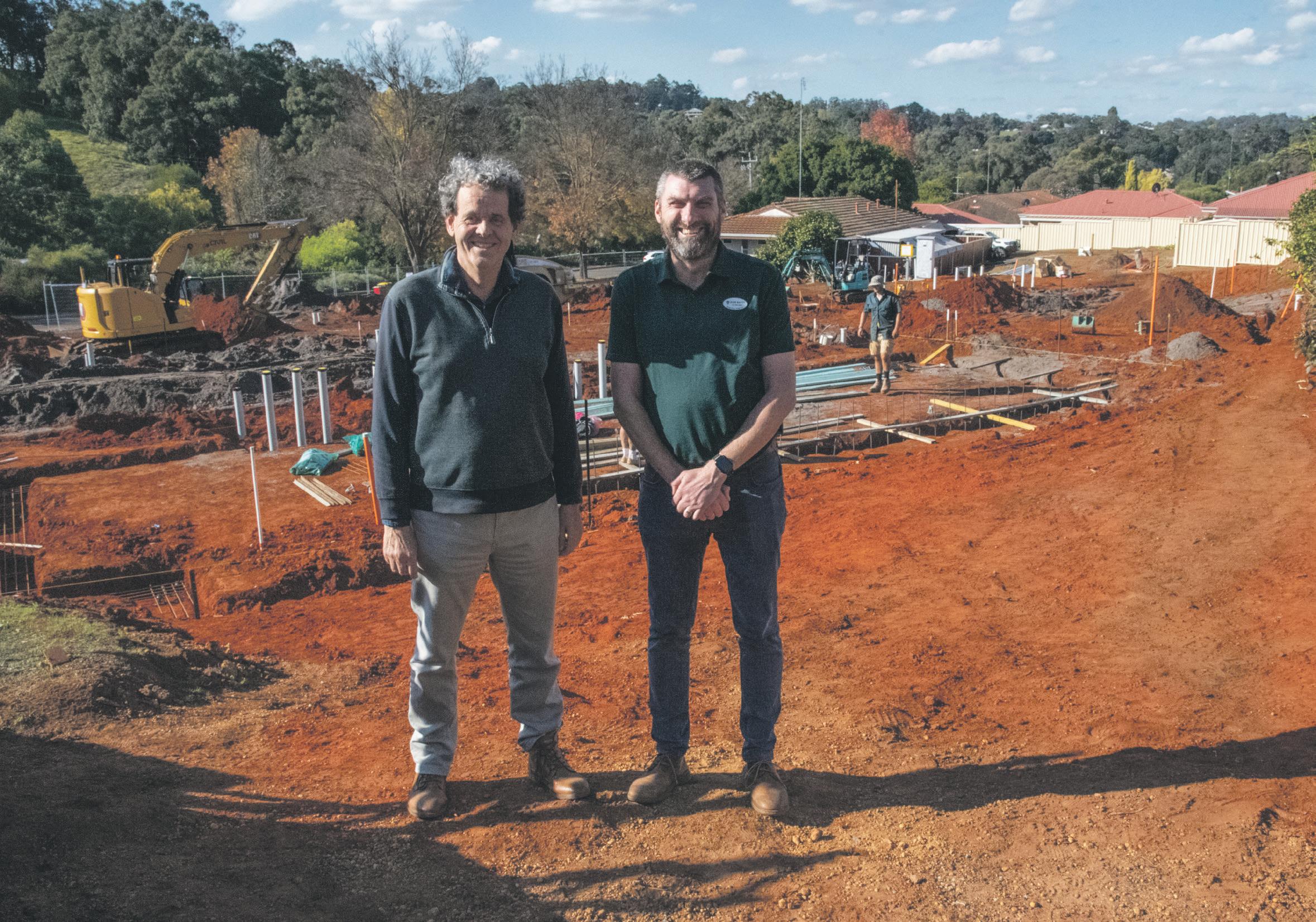
At the recent “Let’s Plan for Life” event at the Town Hall, General Manager Sean Mahoney and Independent Living Manager Rob Bayes were there to explain it.
With the shortage of accommodation around town one of the most pressing needs is accommodation for the staff who care for the residents.
Workers’ accomodation
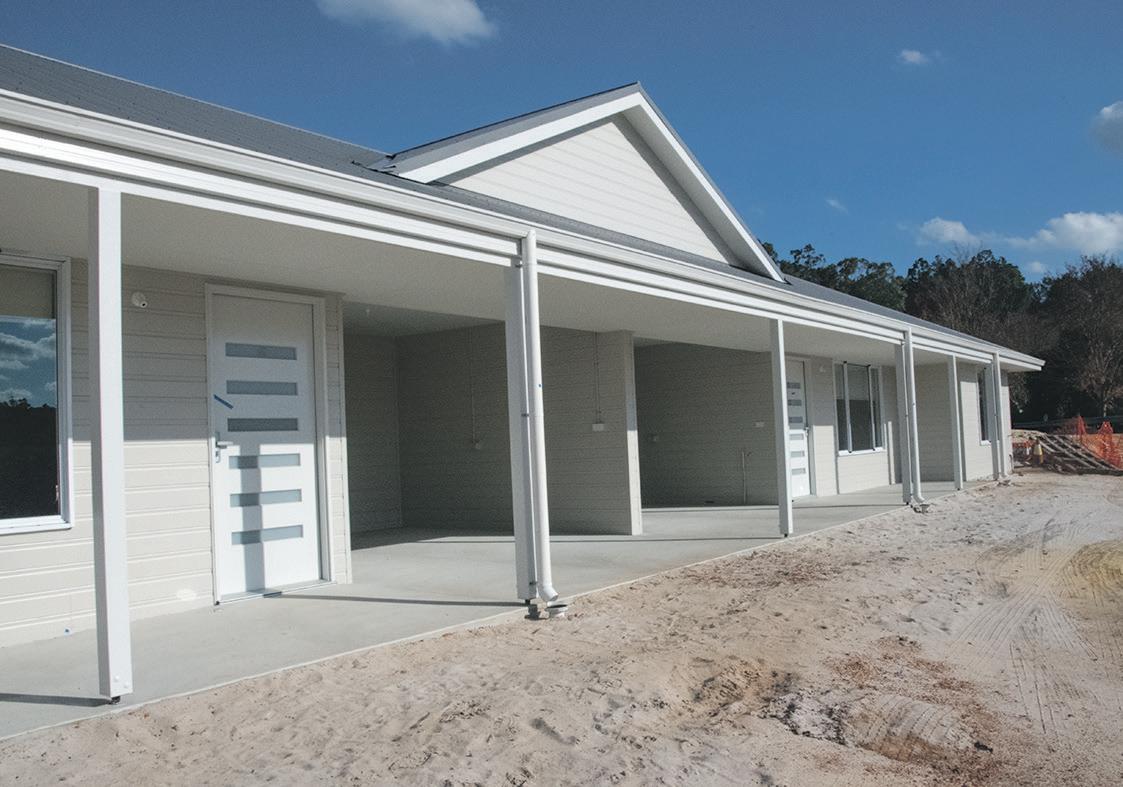
A Commonwealth grant has funded the development of six units for workers’ accommodation which is now being built on Nelson Street, and which is vitally important for attracting staff.
They’ll be finished in March 2027.
Also under development on Nelson Street is a clubhouse for residents — an important social hub for people to get together.
It will have an outdoor barbecue space, a big TV, a space to enjoy a convivial tea or coffee, and a library.
It’s all about building a community in Geegeelup, Mr Bayes said.
Stormwater management is also a challenge that’s being addressed.
“We want to cover off the one-in-one-hundred year events of rainfall, which happens twice a year in Bridgetown from my recent experience,” Mr Bayes said.
Pet Policy
A new more flexible policy allowing people to keep their pets with them is also being developed.
“That’s a very important step forward because we really do recognise the role a pet can play in
providing companionship to help people in their later years.”
New residents’ accommodation units are being developed in Allnutt Street with two bedrooms, open space, a kitchen, a bathroom and laundry.
Geegeelup has also bought land to the south of the village which has nearly doubled its capacity for housing.
Power, water and sewerage is yet to be developed, however, and there is a lot of work that needs to be done.
A recent government audit has found that Geegeelup was fully conforming with the new aged care standards.
Waiting list
Mr Bayes said there were still big challenges ahead. In the 10 months he’s been in the job the waiting list has gone up by more than 40 per cent.
He said that anyone who wants to go on the waiting list should do so.
There are actually two waiting lists – for the aged care facility, which has certain requirements – and for the independent living facilities.
Mr Bayes said to get on the Independent Living waiting list a face-to-face meeting was best, where he would take a few details in a simple process.
“There’s no outlay, there’s no commitment, you just come and give your details, and that’s it.”
“Don’t hang around would be my advice.”
Funding
Funding, which could require around $20 million, was also a challenge
“Yeah, sure, we might be able to double the size of the village but who’s going to pay for all this – it’s not going to be cheap,” he said.
“We’re going to have a lot of conversations with local, state and federal governments to try to see what funding we can get to support this development.
“And of course there are local groups and companies around that we can also talk to to see what sort of assistance we can get.”
Keeping rental accommodation affordable was also challenging.
Mr Mahoney concluded by saying that in the last six years Geegeelup’s aged care facility had doubled.
The 15 units it was currently building, or recently finished, was also a 30 percent increase in its capacity.
“That’s our journey until now and into the future,” Mr Mahoney said.

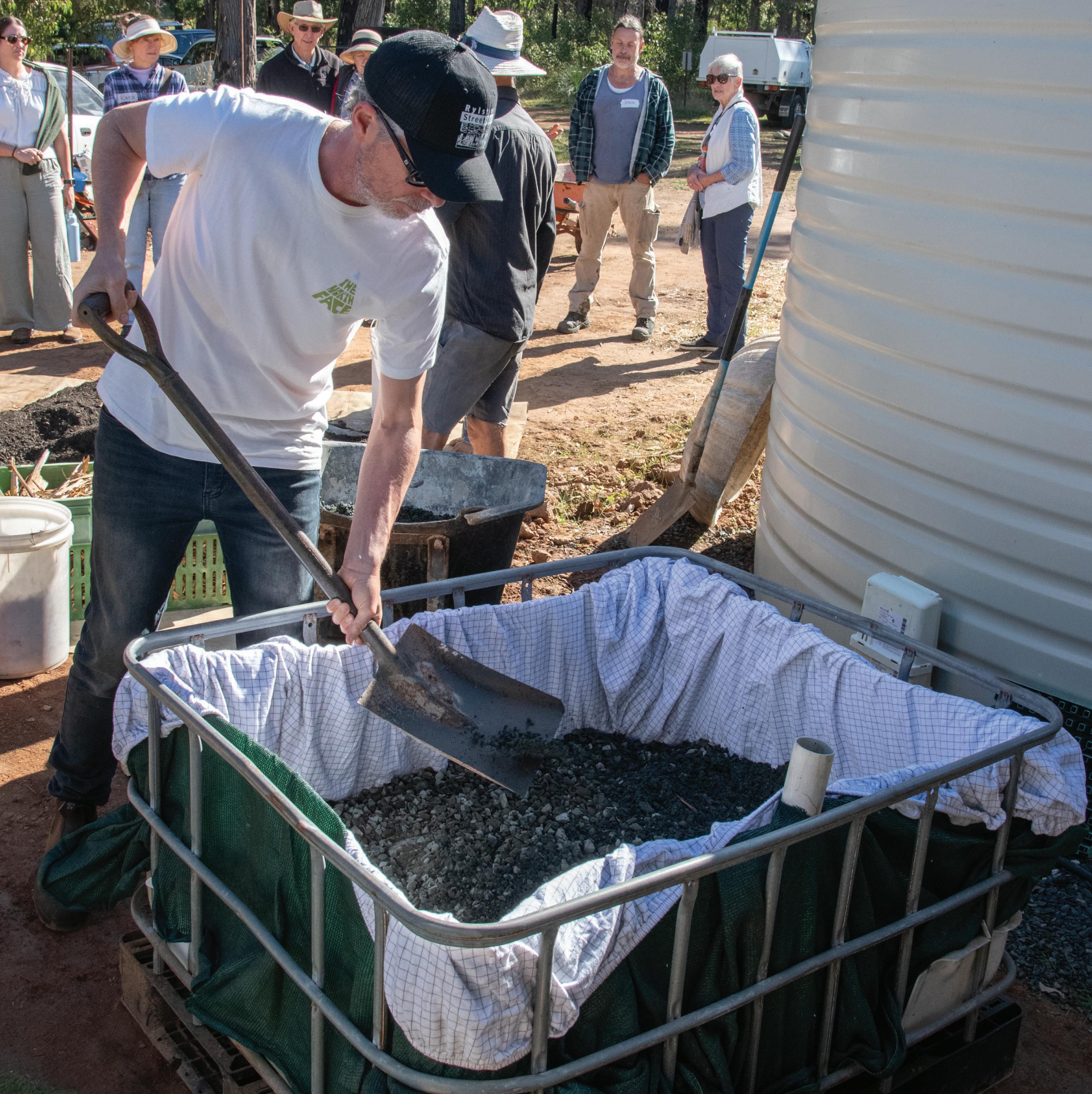
David Chick and Keita Burrell’s property was the venue for an informative field day for the Blackwood Valley Small Landholders’ Group.
There’s not much to be said in favour of climate change, but one of its rare blessings is the sort of mild blue-sky autumn days that make you glad to be alive.
It was on just one of those warm Saturdays in May that saw 50-or-so people gather on the property of David Chick and Keita Burrell for an informative field day presented by the Blackwood Valley Small Landholders group.
Water Saving
Climate change brings lower rainfall, so reducing water use to produce our food becomes an imperative.
And with that in mind David Chick’s hands-on howto-do-it guide to wicking beds could not have been more valuable.
It’s a beautifully simple idea that uses capillary action where water naturally moves upward through soil or organic material. Instead of watering from the top, the bed stores water in a sealed reservoir at

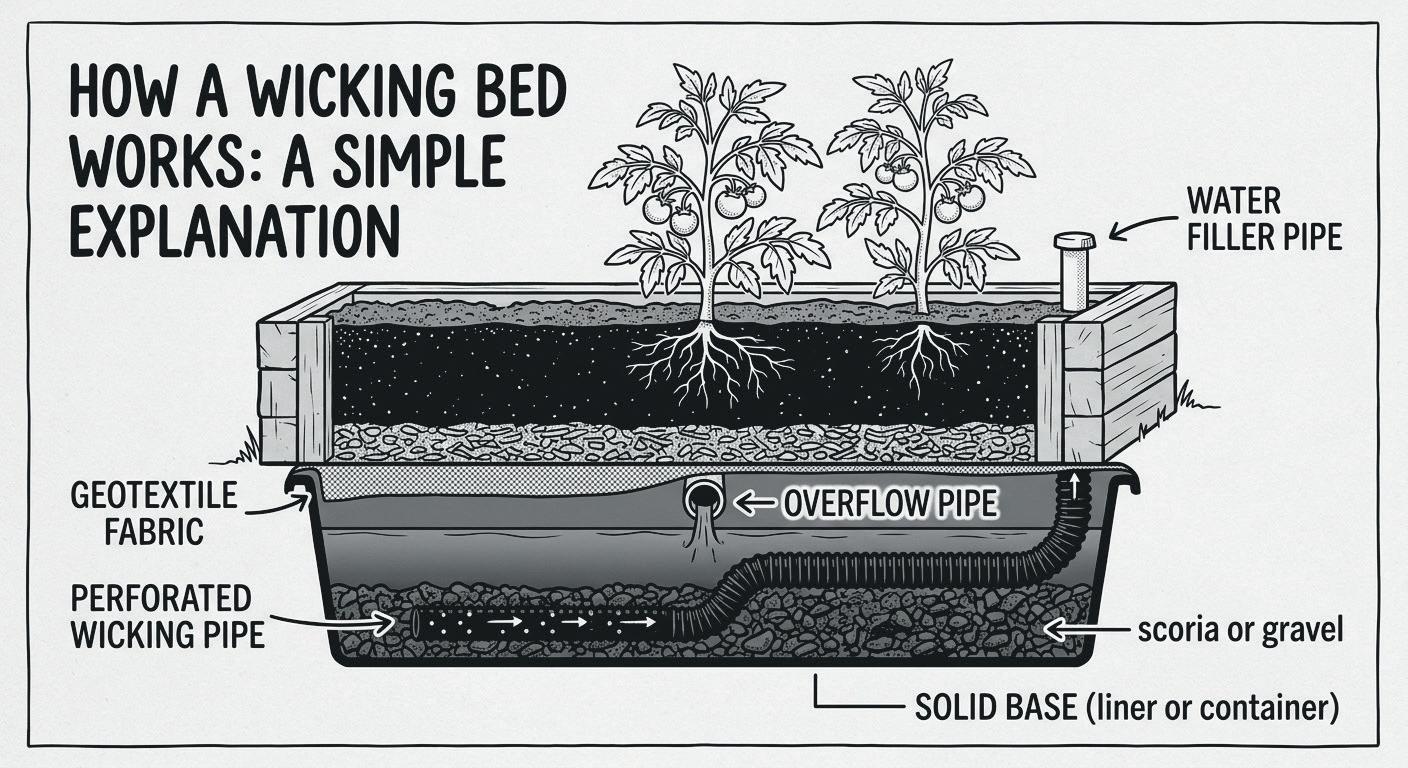
the bottom, and the soil “wicks” moisture upward as plants need it.
A wicking bed is an enclosed system that aims to minimise evaporation in summer while providing the water, nutrients and trace elements plants need to survive and thrive.
Shade cloth or a geotextile material separates the water reservoir, with a cloth placed on top of that to seperate it from the upper layers.
Capillary Action
Blue metal or basalt with cracker dust (ground up blue metal) on top of that allows for capillary action, while organic material sits on top of that.
Finally, the growing medium enhanced with trace elements, worm castings, biochar and blood and bone goes on top of that ready for the seedlings to be added and watered-in.
The demonstration proved a lively interactive session, with Jen Barnett, or Jen the Herbalist sharing her knowledge of herbs for the wicking bed, and others contributing their improvements for the design.
You’ll find a wealth of useful information available online and in books for those wanting to learn more
about buiding their own wicking beds and the wide variety of materials that can be used to make them.
A shared vegetarian lunch followed before an informative walk of the 11-hectare property featuring water conservation measures, the important contribution chickens make to sustainable systems, and more.
Mark Tupman’s talk on bringing our soils back to life emphaised the vital importance of plant diversity.
An impromptu talk on Aquaponics by Graham Garner was well received, as was organic farmer Wayne Edwards’ talk on his journey to his BioVeg biodynamic farm in Manjimup.
The Blackwood Valley Small Landholder’s Group supports people managing rural properties that range from less than a hectare to over 100 hectares.
It organises field days and workshops with guest speakers as well as producing a quarterly newsletter, and a Facebook page.
The group’s website, www.bvsl.com.au, also contains a lot of useful information for landholders incuding comprehensive guides to rural living and videos on planing your property, water management, tackling tunnel erosion and more .
The opposition to mining exploration continued at Transition Bridgetown’s Open Space event.
End forest mining, don’t let it happen was the theme from a well-attended Open Space meeting presented by Transition Bridgetown, Bridgetown Friends of the Forest, and the Blackwood Environment Society on Sunday 24th of May.
Alison Wright, President of the Bridgetown-Greenbushes Friends of the Forest, gave an update on the exploration tenements for lithium the group is opposing.
They cover 32,000 hectares, including parts of Dalgarup National Park, through to the Beedelup National Park, including a number of popular tourist destinations.
The group has been meeting with the Shires of Nannup and Bridgetown-Greenbushes, sending letters to Ministers and the Premier, and holding discussions with the Department of Mines, Petroleum and Exploration, and the Department of Biodiversity Conservation and Attractions.
It’s also been engaging with the community through Facebook to raise awareness of the threat to the forest.
If we win it will actually be a landmark case.
Jenny Dewing, President of the Blackwood Environment Society, described how the group is trying to stop mining at the exploration phase with an expensive legal challenge through section S111A of the Mining Act in the Mining Warden’s Court.
Section S111A allows a minister to stop an application for a mining tenement in the public interest.
Should the Minister decline to do that the group will attempt to halt exploration through the Warden’s Court.
The group has relied on an expert report from Professor Kingsley Dixon to support its case.
After obtaining a six month adjournment the next

session at the Warden’s Court is scheduled for the 28th of August. So far the group has spent $62,000 on its legal case.
“If we win it will actually be a landmark case,” Mrs Dewing said.
The group is arguing that the environmental value of the land, with its many endangered species, along with its tourism value means that mining should be ruled out.
Some 3,500 signatures have been collected on petitions opposing mining.
“We believe that as a community, the Bridgetown-Greenbushes community has particularly demonstrated our custodianship and our caring for the forest,” Mrs Dewing said.
A documentary, The Forest, followed the talks, chronicling the work of ecologist Tom Crowther, whose research demonstrates the carbon capturing potential of healthy diverse forests with their complex ecosystems, in contrast to tree plantations.
The documentary is available on ABC iview and Apple TV.
Disclosure: Author Mark Schneider is a member of Transition Bridgetown.


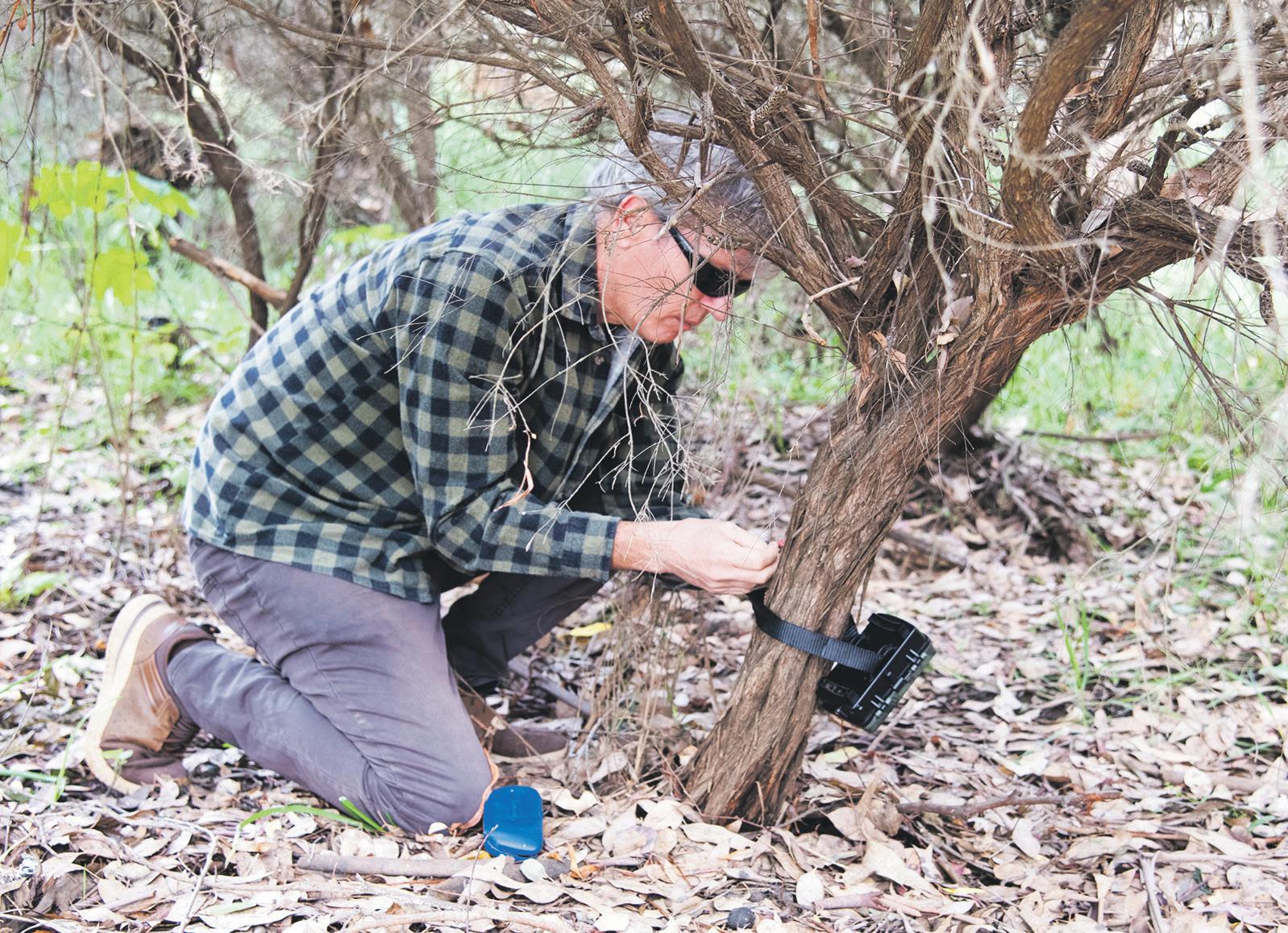
Jon Steer sets up one of his cameras.
“You do need to look at all of the videos because you never know when you might get something of huge interest”
- Jon Steer
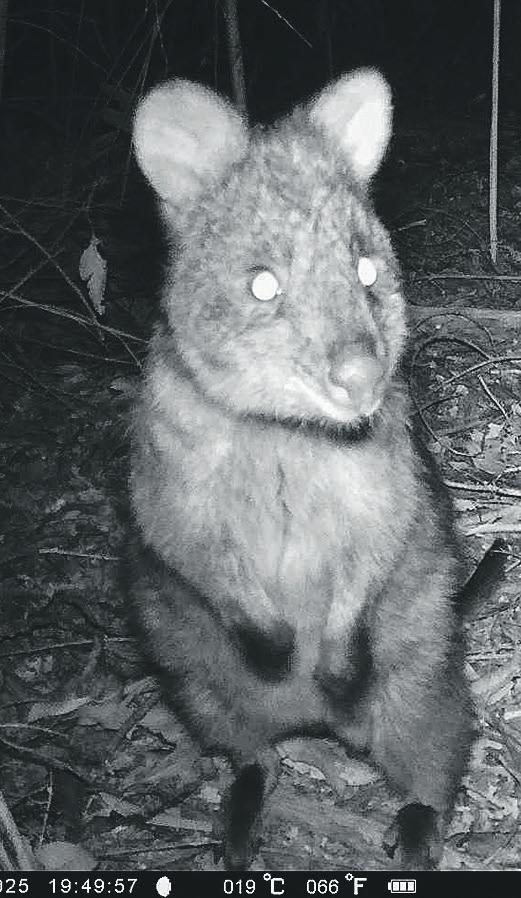
Quokkas, Western Brush Wallabies and Black Cockatoos are being captured on camera by local conservationists.
Trail cameras mounted throughout the Dalgarup forest region are revealing its rich diversity of animal life, including threatened species, according to activists in the Bridgetown-Greenbushes Friends of the Forest Group.
Up to nine cameras have been set up on trees over the past year by the group’s vice president Jon Steer and his partner.
Among the wildlife they’ve captured are endangered Western Brush Wallabies, Baudins and Red Tailed Black Cockatoos, and Quokkas, which are famously seen on Rottnest Island.
The cameras are producing both video and still shots in a citizen science effort.
Some of the video cameras are set off by motion and are “ludicrously sensitive to everything”, making hours of work for Mr Steer who has to trawl through it all in search of useful footage.
“You do need to look at all of the videos because you never know when you might get something of huge interest,” Mr Steer said.
He’s getting rid of those cameras in favour of more expensive ones relying on a combination of infrared and motion detection.
The better cameras have solar power and glass lenses, but are surprisingly cheap at about $140.
He targets denser bushland where the wildlife feels safer.
“I would love to see a Quoll, I’m sure they’re out there, but we haven’t seen one yet.”
“I remember the first time we found Quokkas on camera it was quite exciting I’ve got to say.”
“We went to retrieve the cameras and were just having some tea out in the forest and I had the laptop out on the bonnet of the car and I was going through pictures and I went ‘oh my God! Quokka!” Quokkas
He said Quokkas needed a lot of dense vegetation and any disturbance to their habitat was a threat. Wildlife corridors were particularly important.
“We’re interested to know what’s out there, one, just from general interest, but also threatened species that we find can have an impact for any future mining out there – they will need to be taken into account.”
When he finds anything on DBCA’s (Department of Biodiversity, Conservation and Attractions) threatened or endangered list he makes a fauna report to them which goes to Perth and gets added to their central database.
That’s important for assessing the environmental impacts of any mining activity and any other developments, as well as their planning for prescribed burns, he said.
He’d like to see a well-qualified and experienced scientist do a study to back-up their citizen science efforts.
The lack of data about the species in the area was “a really big problem” and that there was no proof about the presence of endangered species like black cockatoos.
“Not only are there lots of cockatoos there but there are undoubtedly nesting sites and roosts and so forth.”
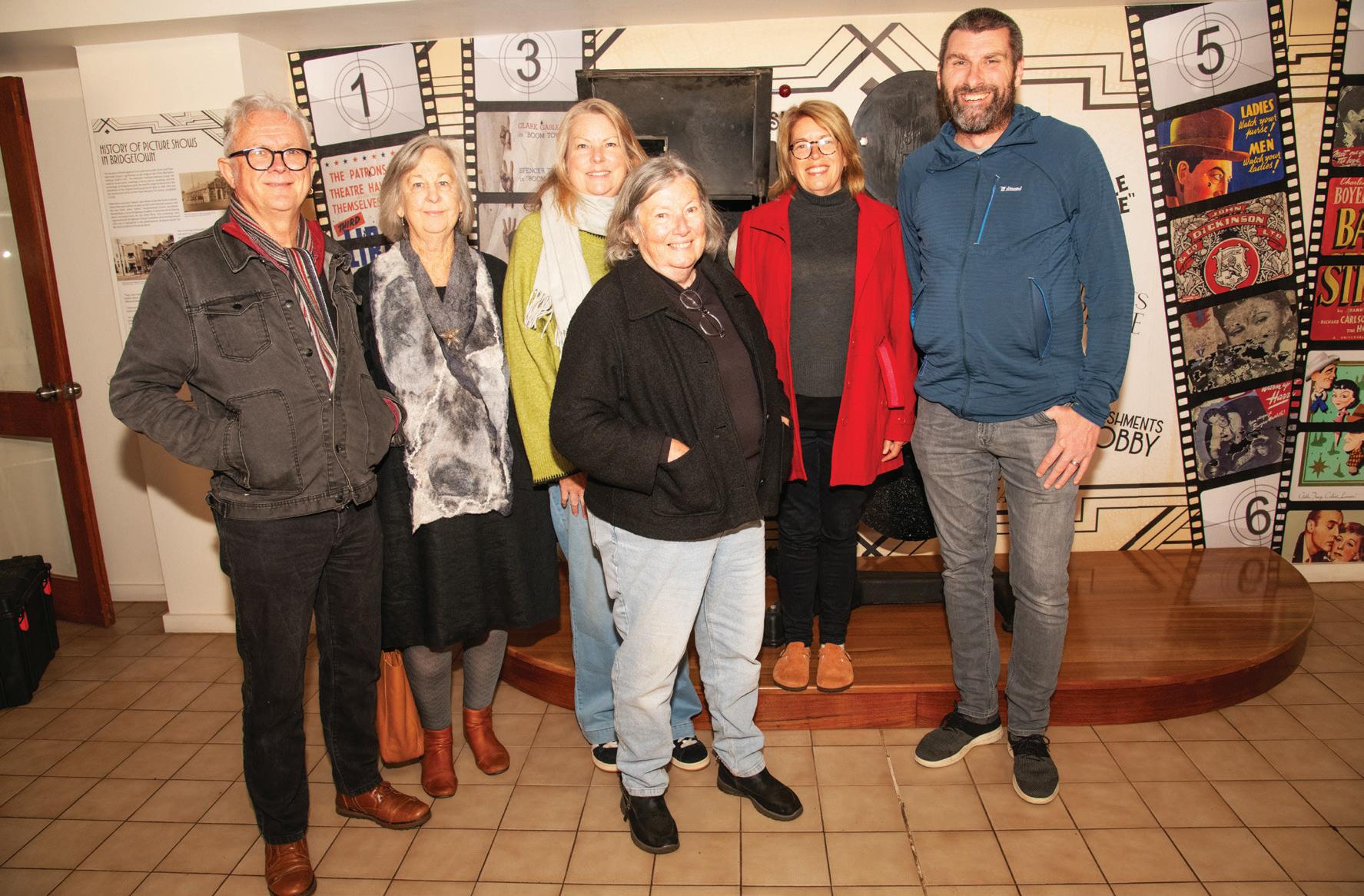
Bridgetown’s lovers of the silver screen will soon have something to celebrate with the launch of Bridgeflix, a new community group that aims to bring a variety of movies to town for children, teens, adults and families.
Things got off to a bright start with a night of short films at the Town Hall on the 20th of May with the Cinefest Oz Best Aussie Short Films.
It drew an enthusiastic crowd to a free showing of some of the best short films Australia has to offer.
For Bridgetown it’s a back to the future moment. Movies were screened at the Mechanics Institute from October 1904 to 1932 before it was demolished to make way for the Town Hall, which became the venue for movies until 1960, when the Bridgetown Drive-in opened.



“Their guide was the black-clad ghost of the town’s Ada Robinson, ably channelled by her very own Great Granddaughter, local historian Amanda Lovitt. ”
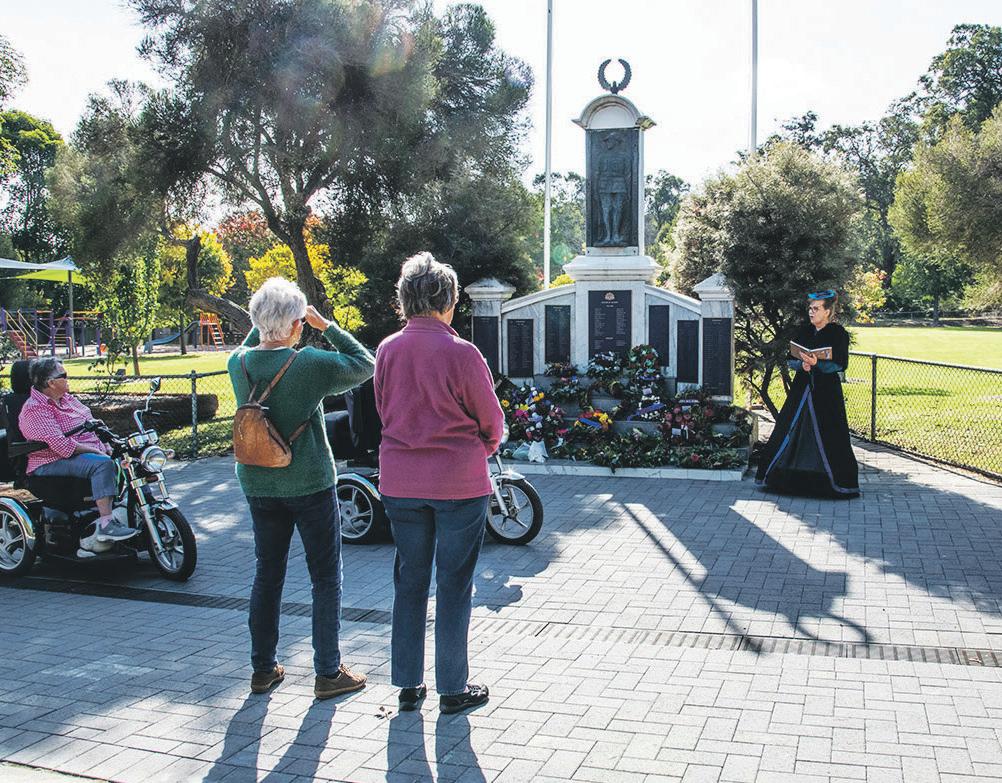
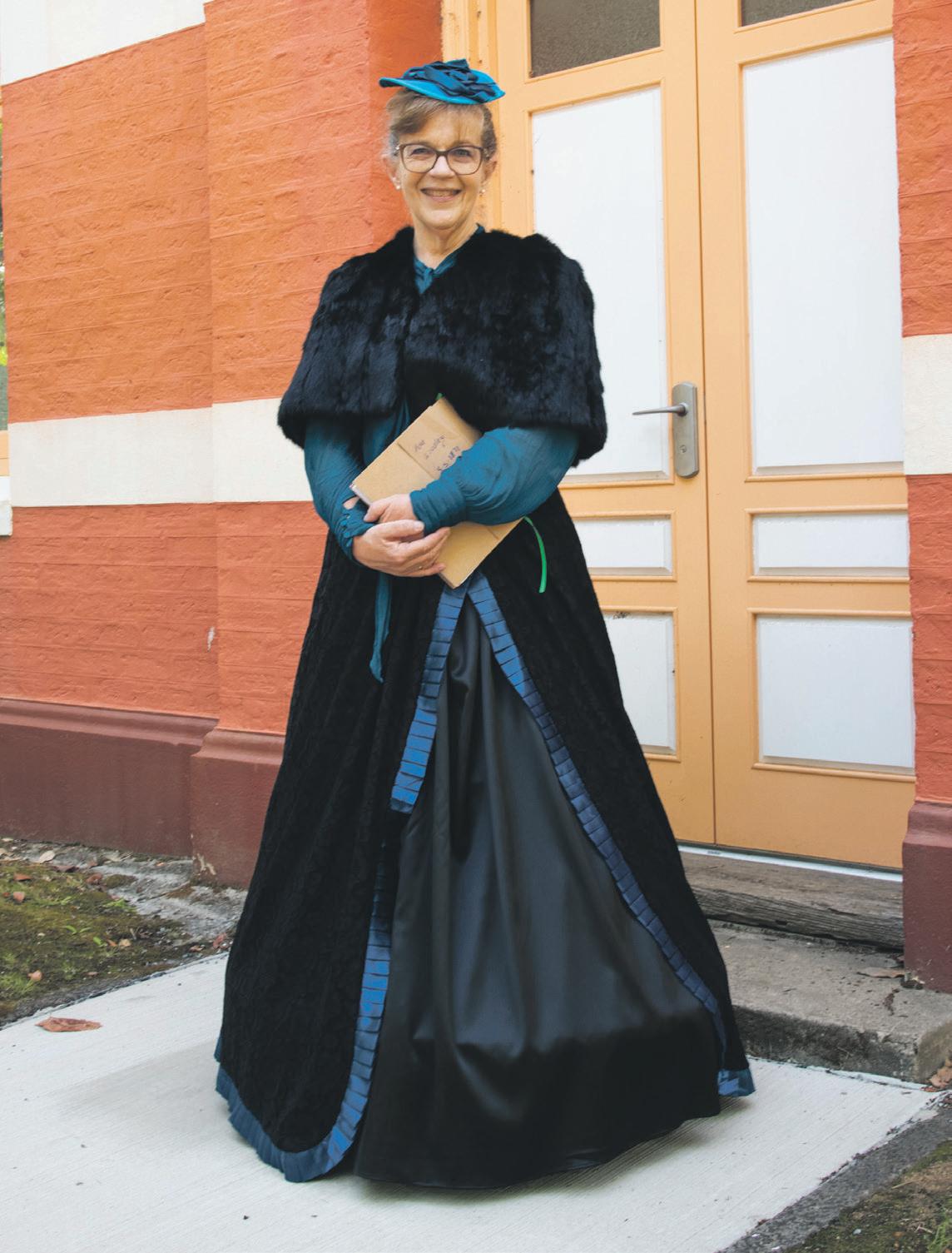
Ada the Friendly Ghost is the perfect tour guide for a fascinating walk through Greenbushes’ history.
Local history enthusiasts were in for a treat when they gathered at the Greenbushes war memorial for a stroll through the mining town’s fascinating history on the day after Anzac Day.
Their guide was the black-clad ghost of the town’s Ada Robinson, the Friendly Ghost of Greenbushes, ably channelled by her very own Great Granddaughter, local historian Amanda Lovitt.
With family connections reaching way back into Greenbushes’ past, Ms Lovitt is steeped in the history of the town.
She brings it to vivid life through her retelling of people’s stories and events, starting with the original Indigenous inhabitants.
We heard how the memorial dated back to 1922 and recorded the names of some of Ada’s eight children on it, who served in WW1 and returned to tell the tale.
She also spoke about two other Great War veterans, Robert Whitfield and Henry Parkinson, who came to Greenbushes at the end of the war.
Having survived that carnage both had the misfortune to die in poverty in 1923.
As a result both were lying in unmarked graves without headstones in the Greenbushes Cemetery until recently. Today, however, Whitfield has a headstone and Parkinson will get one this year.
The costs for both have been covered by grants given to the Greenbushes Discovery Centre.
They will soon be accorded the honour of an official plaque commemorating their service.
Greenbushes was overrepresented for volunteers for the war, a contribution that was meant to be rewarded by the gift of two commemorative machine guns, which mysteriously never arrived.
One curious quirk of Greenbushes history is the shifting of entire buildings across streets, including the former Temperance Hotel, which it was stipulated had to be moved between the hours of 10pm and 3am.
Other buildings suffered the misfortune of being burnt to the ground, including two churches.
“Ada” regaled us with tales of a young lady forced to leave town due to the shame of a child born out of wedlock, and of sisters married on the same day in town at 8.00am as a cost-saving measure.
The tour ended at the historic Roads Board Building, which is currently being renovated as a home by an enthusiastic couple.

Love a jigsaw challenge?
Then this is for you!
Fridgetown Fest presents the Community Jigsaw Puzzle Challenge.
Get your team of 4-to-6 people together to rise to the challenge of completing a 2000 piece puzzle for your table.
To book email admin@puzzletown6255. com.au.
Entry is free.
SATURDAY JUNE 6 8AM-4PM Bridgetown Town Hall
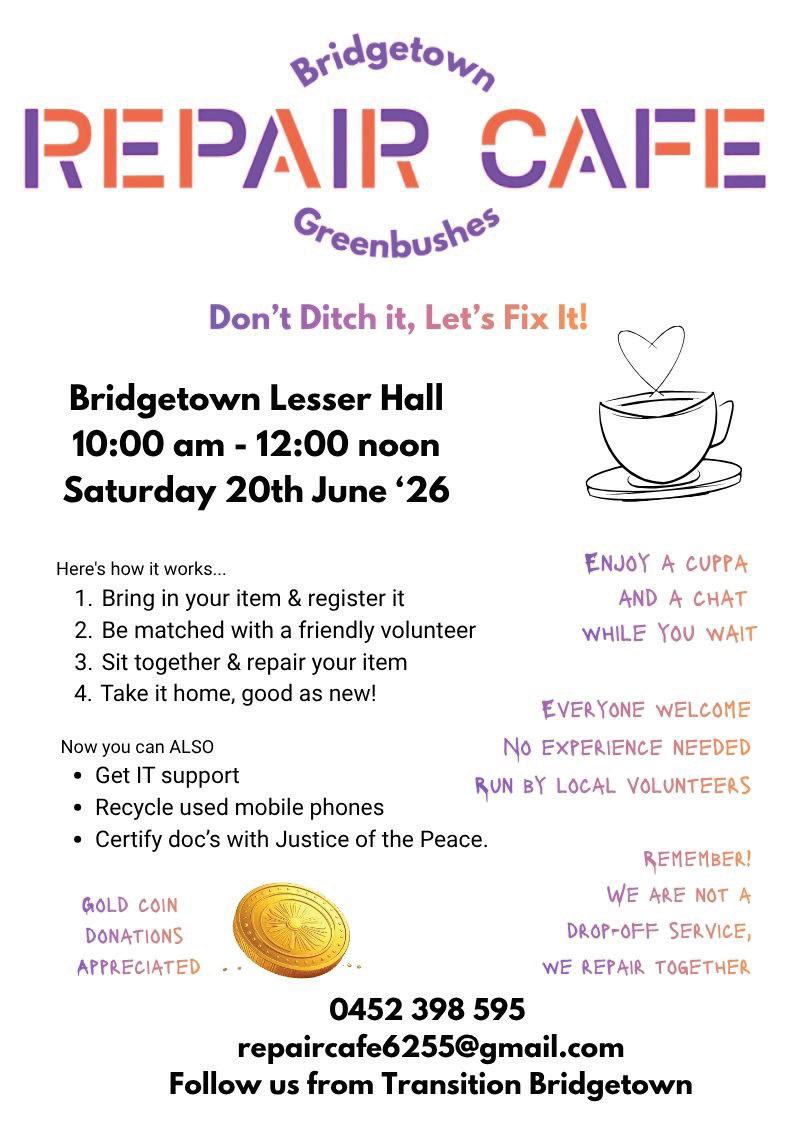
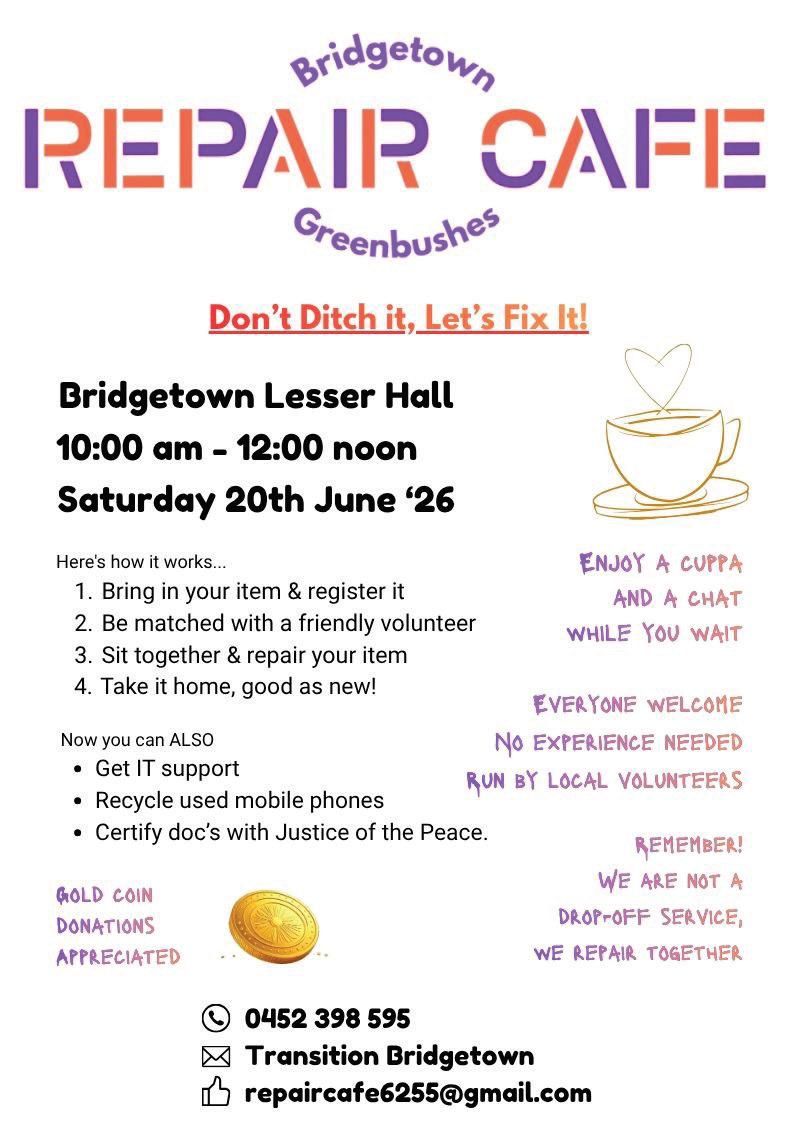
It’s on again - Transition Bridgetown strikes a blow against the throwaway disposable culture by hosting the Repair Cafe.
So if something’s broken stow it, don’t throw it, then bring it along to the Lesser Hall and let Bridgetown’s expert repairers work their magic on it to bring it back to life.
It’s always a great event with morning tea laid on for free.
SATURDAY JUNE 20th 10AM - 12PM
Bridgetown Town Hall

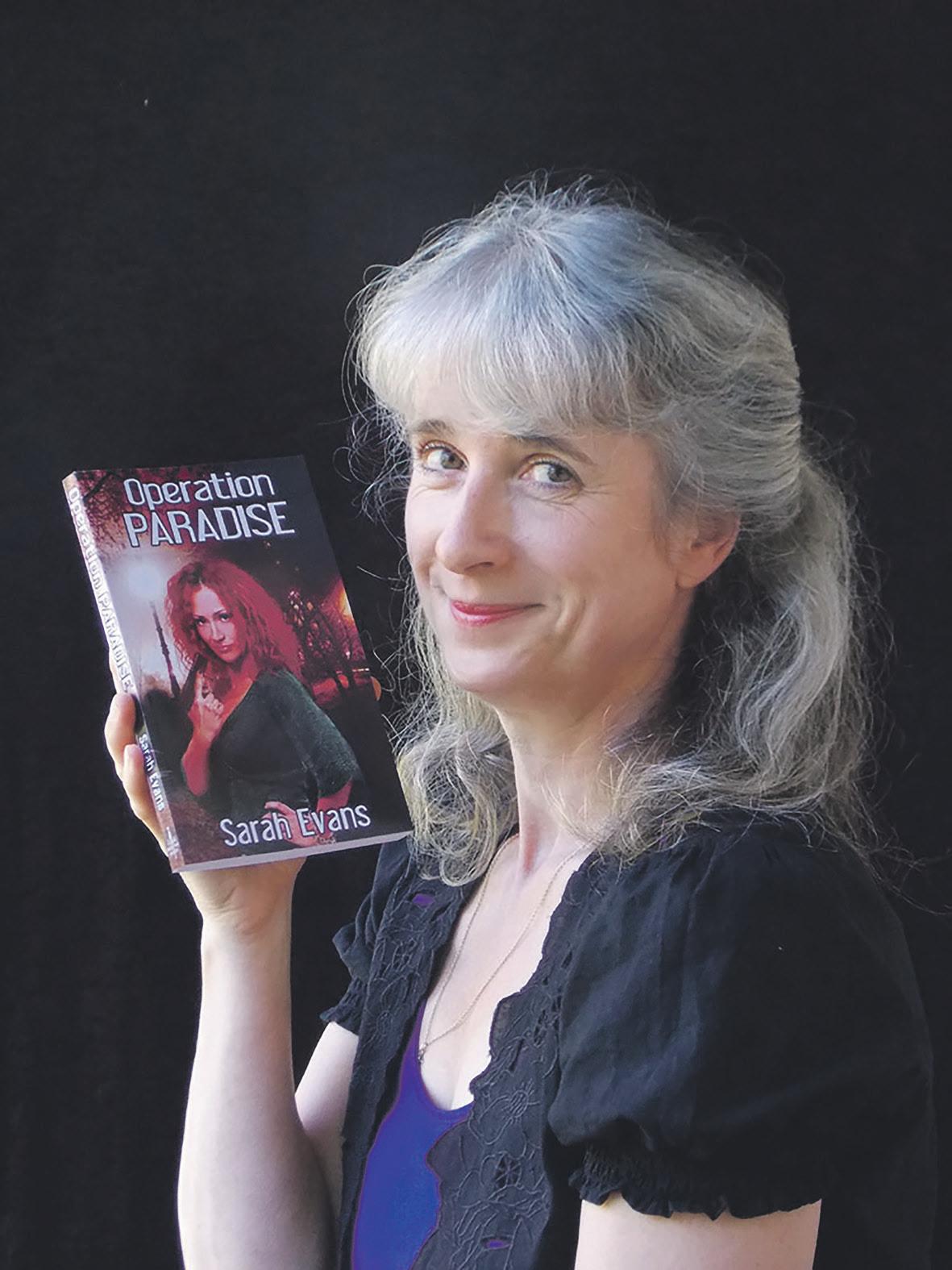
Have you ever wanted to write crime but didn’t know where to begin?
Award-winning crime writer and author of the Eve Rock series, Sarah Evans, is hosting a crime writing workshop for beginners.
She’ll interview criminal lawyers Lindy Porter and Jeremy Scudds, of Porter Scudds Legal, followed by a Q&A session.
This is a must for anyone writing crime or curious about the justice system.
THURSDAY JUNE 25th 5.30-7.00PM Bridgetown Library
Antique lovers of Bridgetown rejoice! You have nothing to lose but your cash! You have a heap of wonderful antiques and collectibles of a bygone age to win from an enticing variety of stalls. Whether it’s ceramics, clocks, glassware, jewellery, kitchenware, tools, toys or anything else, you’re sure to find something of rare quality to grace your home at the Antique and Collector’s Fair.
FRIDAY JUNE 26th & SATURDAY JUNE 27th
Bridgetown Town Hall
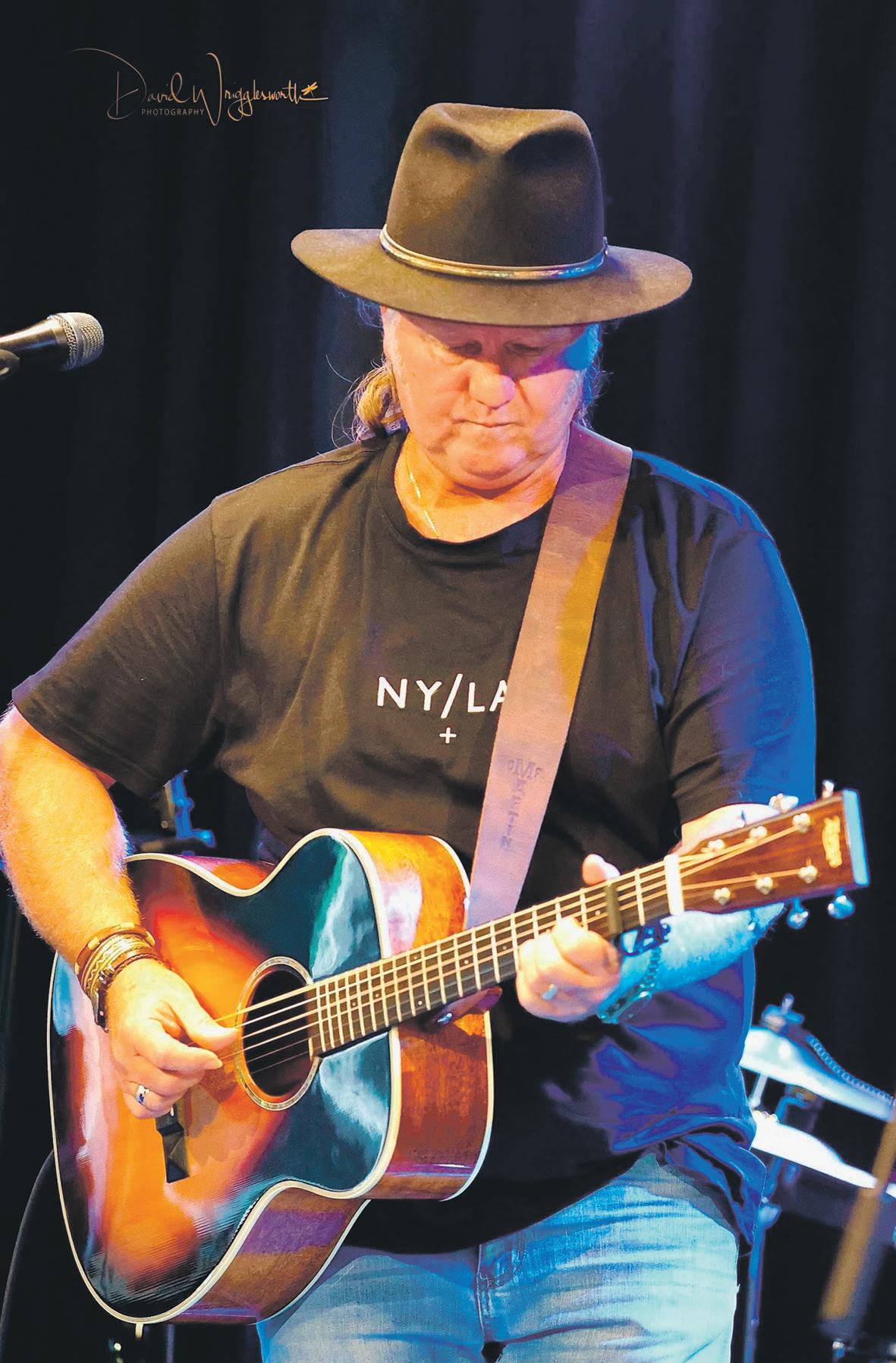
Celebrated Country singer-songwriter Ray Jones appears live at the Llama Lounge.
A gifted storyteller, Jones has captivated the country music world with his sincere lyrics, timeless melodies, and a voice that feels like home.
With multiple awards and achievements, he has quickly earned great respect among the country music community.
SATURDAY JUNE 13th 6PM Llama Lounge
The Portraits section of the BridgetownGreenbushes Art Awards focuses on the human spirit and the faces of our community.
$1,000 is up for grabs for the best portrait, with $750 for the best local identity.
It’s bound to be an elegant evening of art and conversation at the Bridgetown Visitor Centre and all are welcome to attend.
WEDNESDAY JUNE 3rd 6-8 PM Bridgetown Visitor Centre
a dozen or so artists worldwide to have mastered realistic wildlife sculptures in lead crystal glass.
Kim Perrier’s latest sculpture is in the running for big prize money.
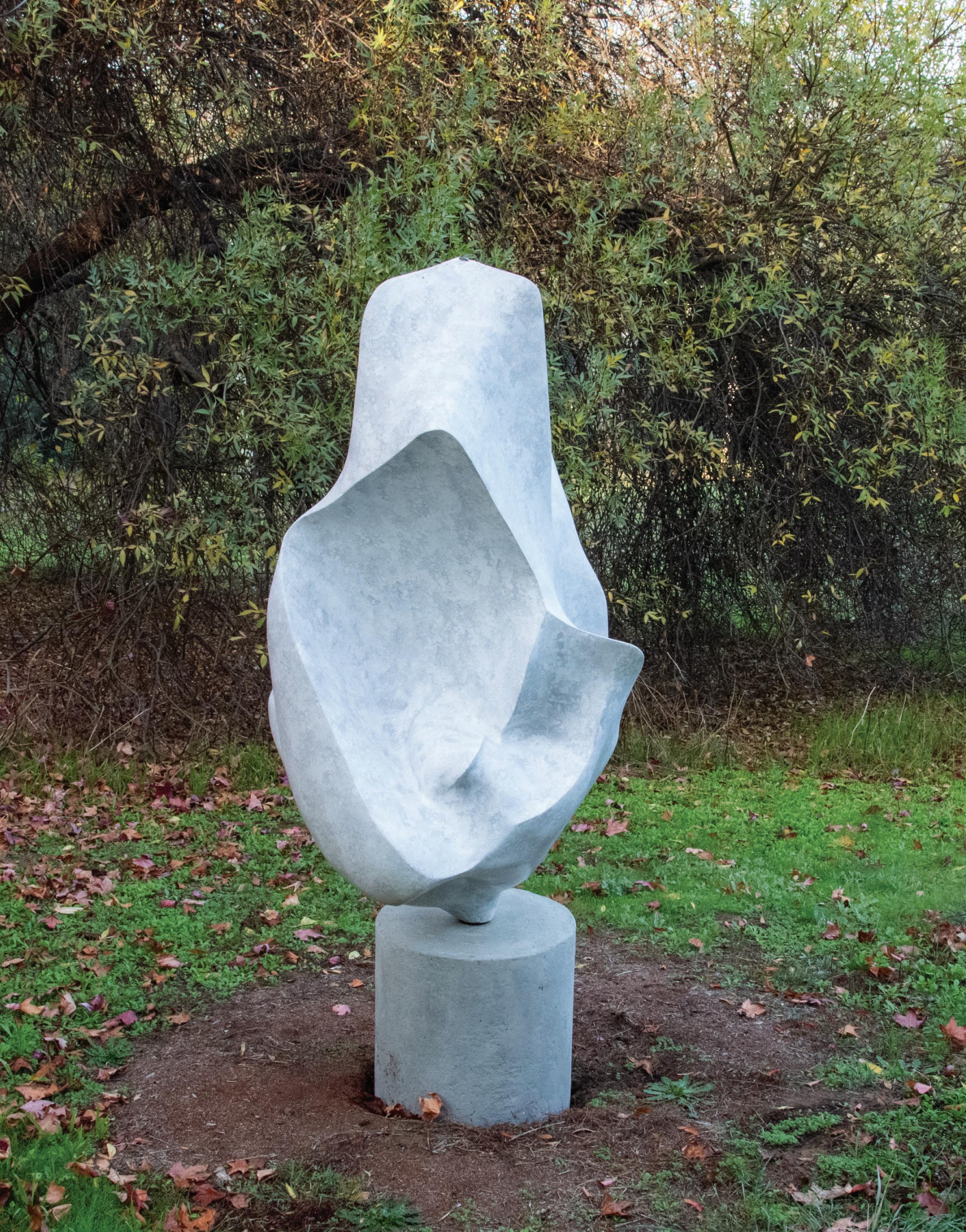
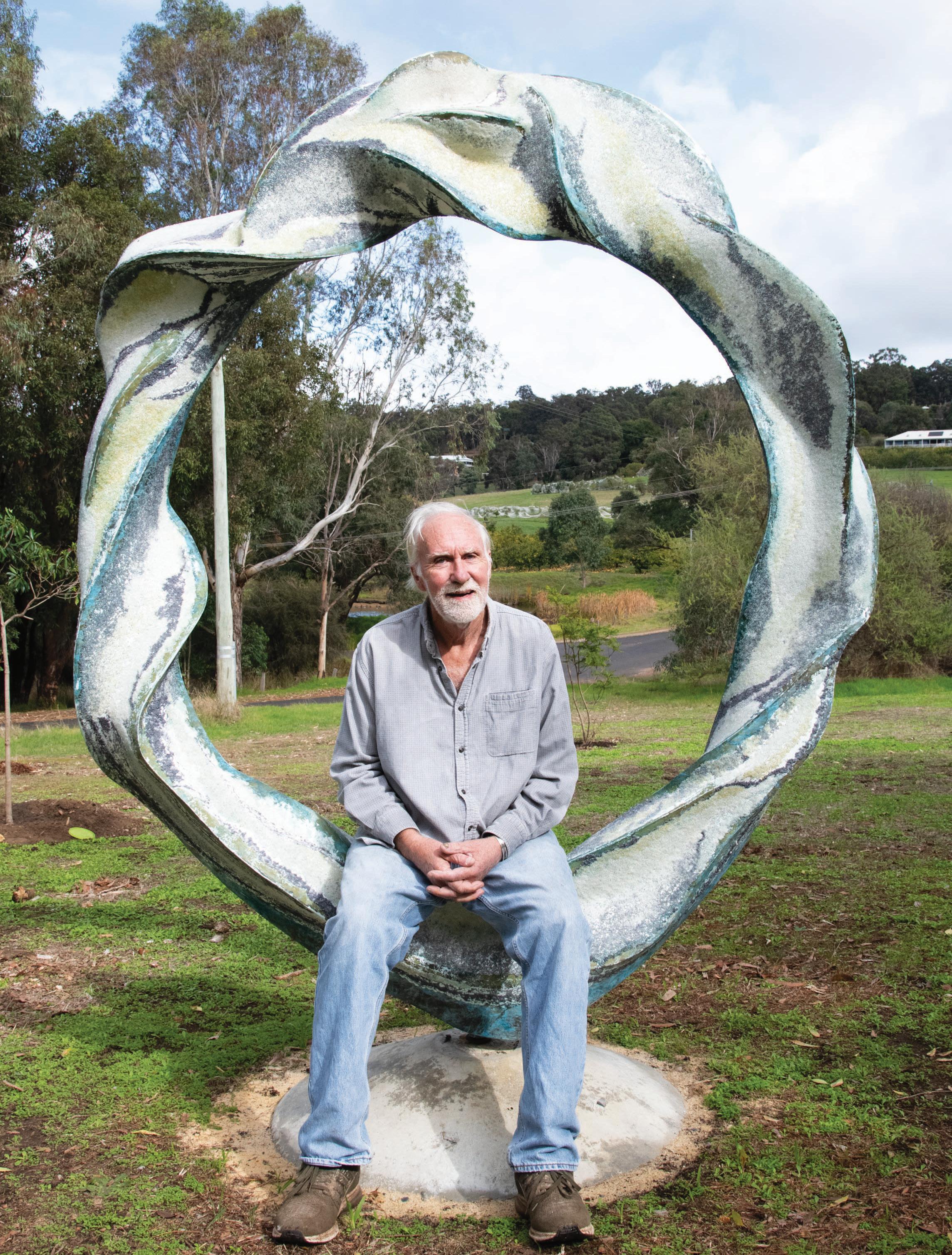
The late afternoon sun sparkles off the sensuous twisting surface of Kim Perrier’s latest sculpture, Seyfert Enigma, the light reflecting off thousands of tiny glass crystals, which coat the veteran Bridgetown sculptor’s most recent works.
It’s inspired by the discoveries of American astronomer Carl Seyfert who first identified the spiral galaxies with their bright centres swirling around a supermassive black hole.
So it’s only fitting that the work has been accepted into the Perth Sky Sculpture Park at the Perth Observatory in the Perth Hills for its 2026 exhibition opening on the 31st of October.
Alongside the work of other select WA sculptors, Seyfert Enigma will be in the running for the highest prize pool for sculptures in WA.
The veteran Bridgetown sculptor and artist chose concrete for the work, but his skills are by no means limited to any particular medium.
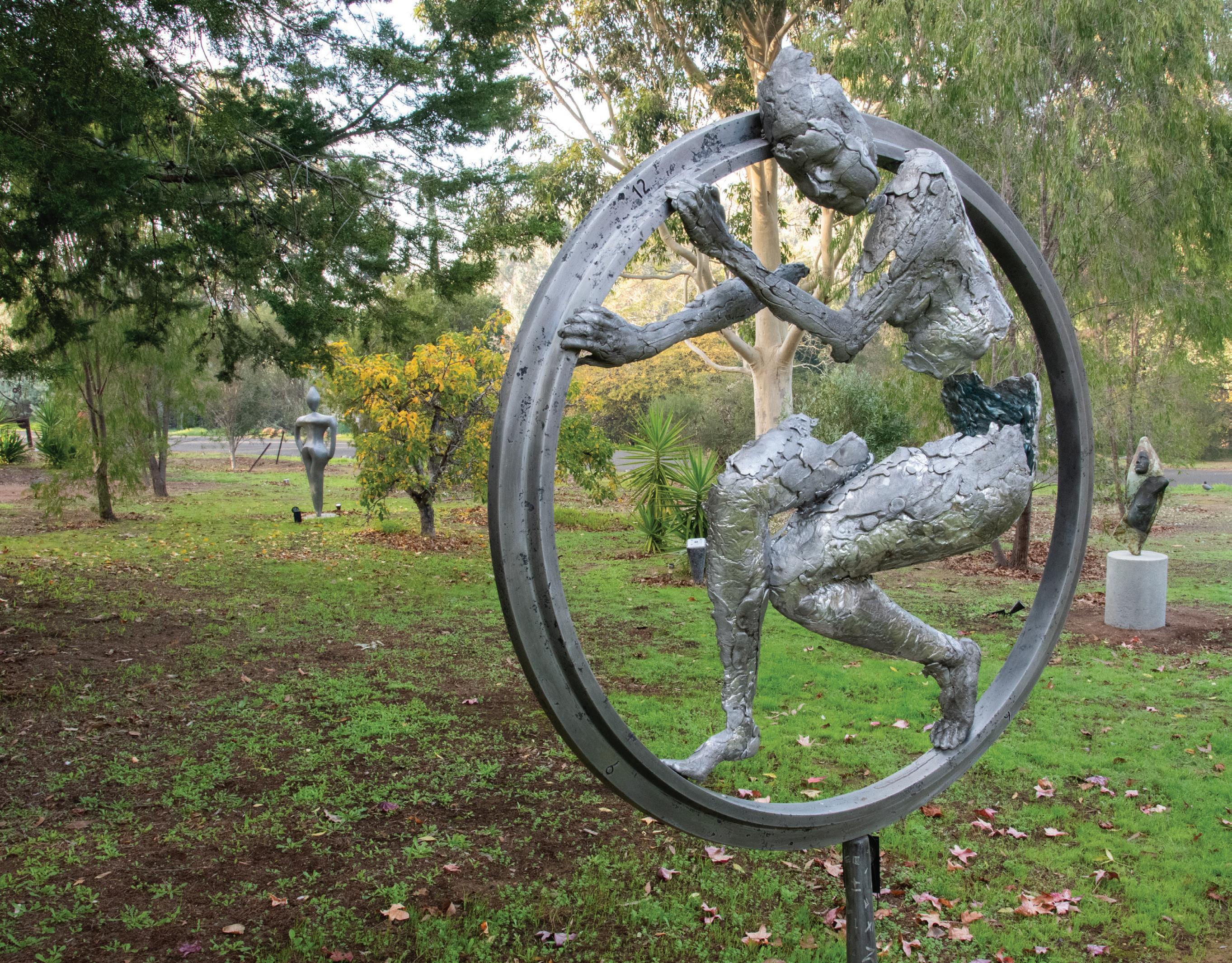
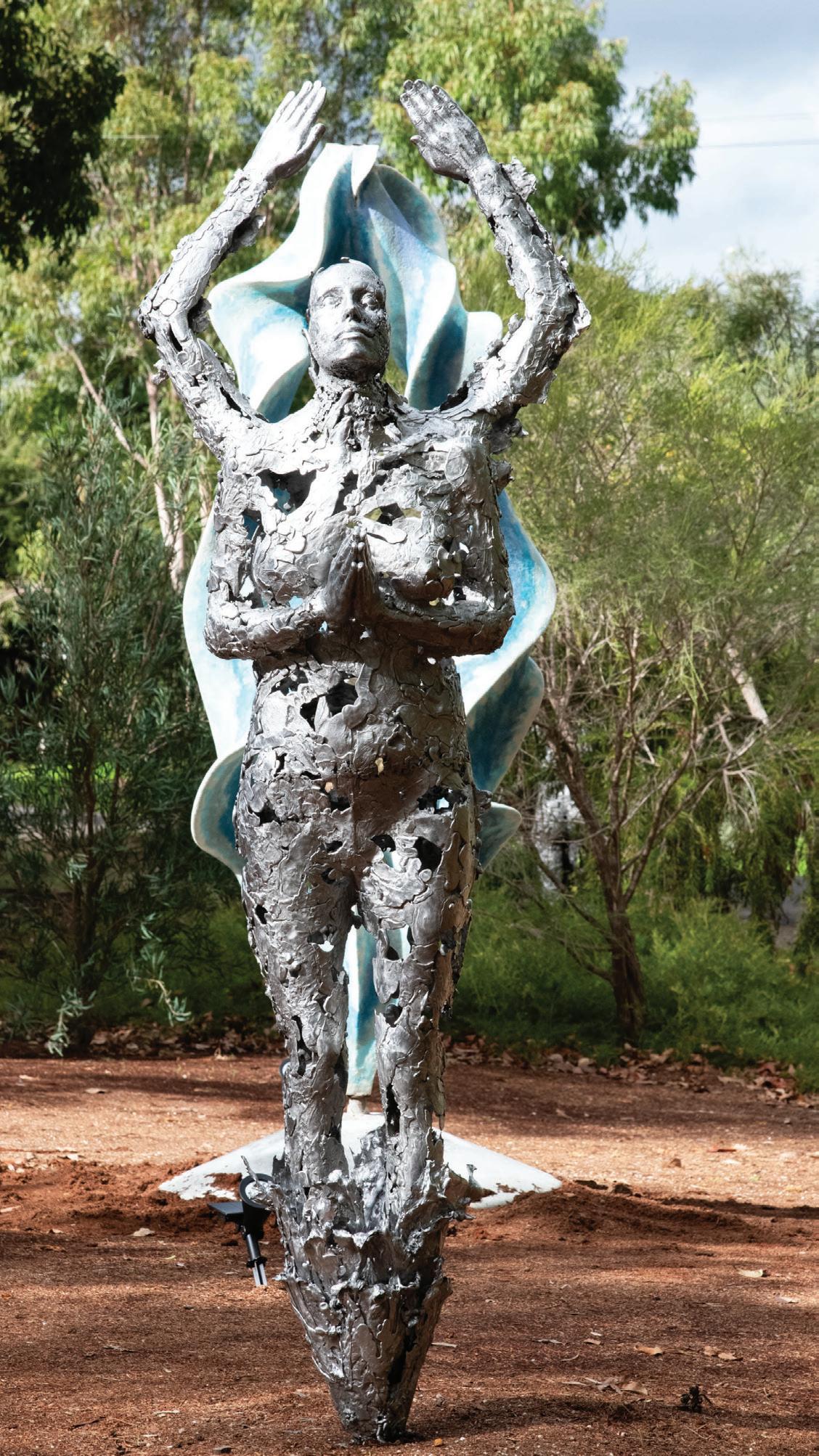
Indeed, his world class sculpture garden in Dreyfus Street features works in a variety of mediums including aluminium, as well as his unique Carbonature sculptures which seem to magically emerge from the blackened trees themselves.
In his “50 year apprenticeship” as an artist he’s even worked in glass and he says he’s one of only
Sperm whale teeth and soapstone have also been transformed by his sculptural visions.
“I prefer to see myself these days as an art technologist, because I have a really broad understanding of materials and material usage and appropriate machinery and technologies,” he said. Innovative Technology
In fact he’s keen on innovative technology, having recently created a series of music videos using AI.
He was a documentary film maker for 10 years, and has even helped develop laser scanning technology that’s been used for minting coins and medallions.
“I did some pretty significant stuff,” he said.
That “significant stuff” has included work on a 3D scultpture of Genghis Khan which was included for an exhibition for UNESCO, and engineering design work for a huge waterfall project for the Sultan of Brunei.
He can spend months bringing each unique work to fruition in a process that just emerges organically without any planning.
So how does he do it?
“I don’t actually design very much, I just kind of start,” he said.
“Generally I just start and design them as I create them.
“I just look at the shapes that have potential in this object and then weld the armature to hold the concrete in place.
“Because I’m working in this organic style sculpting I just kind of do it in front of myself.
“And the most bizarre element with that is I’m building them horizontally, so rather than building
He can spend months bringing each original work to fruition in a process that just emerges organically.
them vertically I can have them in front of me and just turn the object around so I’m always kind of working directly in front of me, rather than having to stand up and sit down.
“I don’t know what it fully looks like until it’s finished and I stand it up
“it’s only then that the real picture comes right,” he said.
Kim Perrier’s Sculpture Park is open seven days a week day and night until 8pm.



Rowland Benjamin runs Information for Action a not-for-profit environmental group that uses the internet, cartoon books, music video and theatre to explain environmental problems and their solutions. This cartoon, Cockroach Bankers, is from his most recent book Eco Freako Environmental Cartoons Volume Two.
Copies of both books - Volume One and Two, can be obtained directly from Rowland at the Sunday Bridgetown market. https://ecofreakocartoons.com/
Find the following words in the grid. They may be read in any direction, even diagonally. Some letters are used more than once.
Solve the crossword. Each answer has four letters.
Letters have a number value Some values are in the right hand cells. Create remaining values using clues in centre cells.
Letters A to Z have a number value. Some are shown in the right-hand cells. Create remaining values using clues in centre cells.

A meeting of the Blackwood Valley Mental Health Professionals’ Network will hear from clinical psychologist and former Senator Christabel Chamarette.
She’ll share her 12 years of experience in the Kimberley region with the Helping Families Heal Program assisting Aboriginal community workers address childhood trauma and adversity and problems of violence, addiction and suicide.
Whether you’re joining us for the first time or returning, the Mental Health Professionals Network is excited to welcome you.
Christabel Chamarette has over 50 years’ experience in the treatment of violence and sexual problems in families.
Her message is to promote healing and treatment for childhood trauma and adversity to prevent violence, abuse and suicide.
To register, or for more information, contact our friendly Network Coordinator, Elisabeth Pellicaan at crossroadscounselling6255@gmail. com
Friday 12 June at 6.00pm at Henri’s Wellbeing Centre, 16 Hester Street Bridgetown.













Pickleball at the Leisure Centre is an easy sport to enjoy
It’s the fastest growing sport in the world, a cross between tennis, badminton and table tennis, and Bridgetown people have taken pickleball to heart with gusto, with sessions of the sociable sport played every Monday at the Leisure Centre.
The game is most popular in summer, but a few enthusiasts can always be relied on to turn out in winter for a bit of hit and giggle in a sport that requires little in the way of athletic commitment or financial investment.
It’s played on a small court with a large paddle and a perforated plastic ball.
You can forget about lightning-fast tennis serves. With pickleball the ball moves quickly off the paddle, then drifts slowly through the air, making it an easy target to return serve and volley, and that makes it fun for all ages.
In fact some people play pickleball into their 70s, enjoying the benefits of a light workout, with very little risk of injury.
Left: Jil Neave and Quinn holding up their end in a fun game of pickleball.

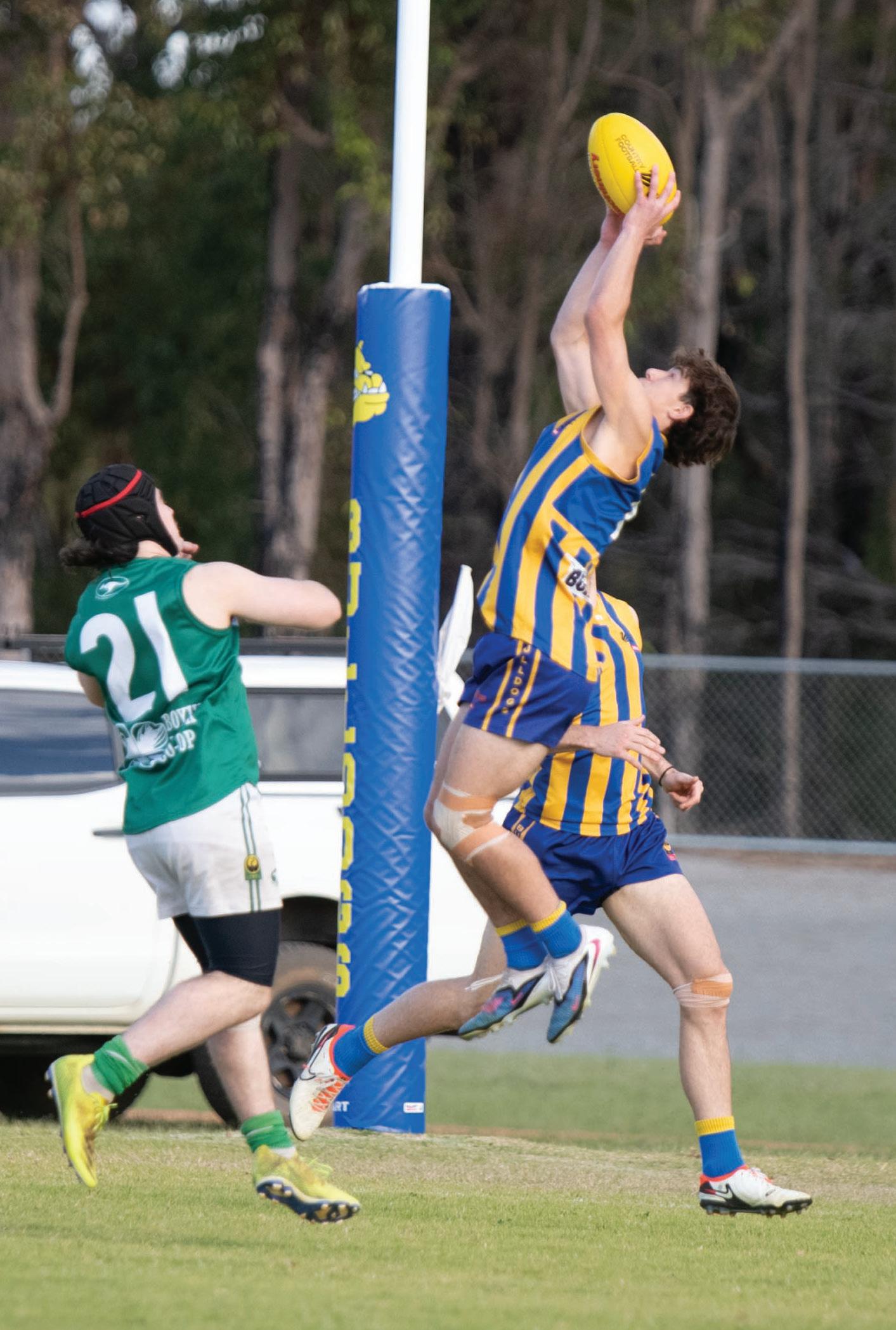
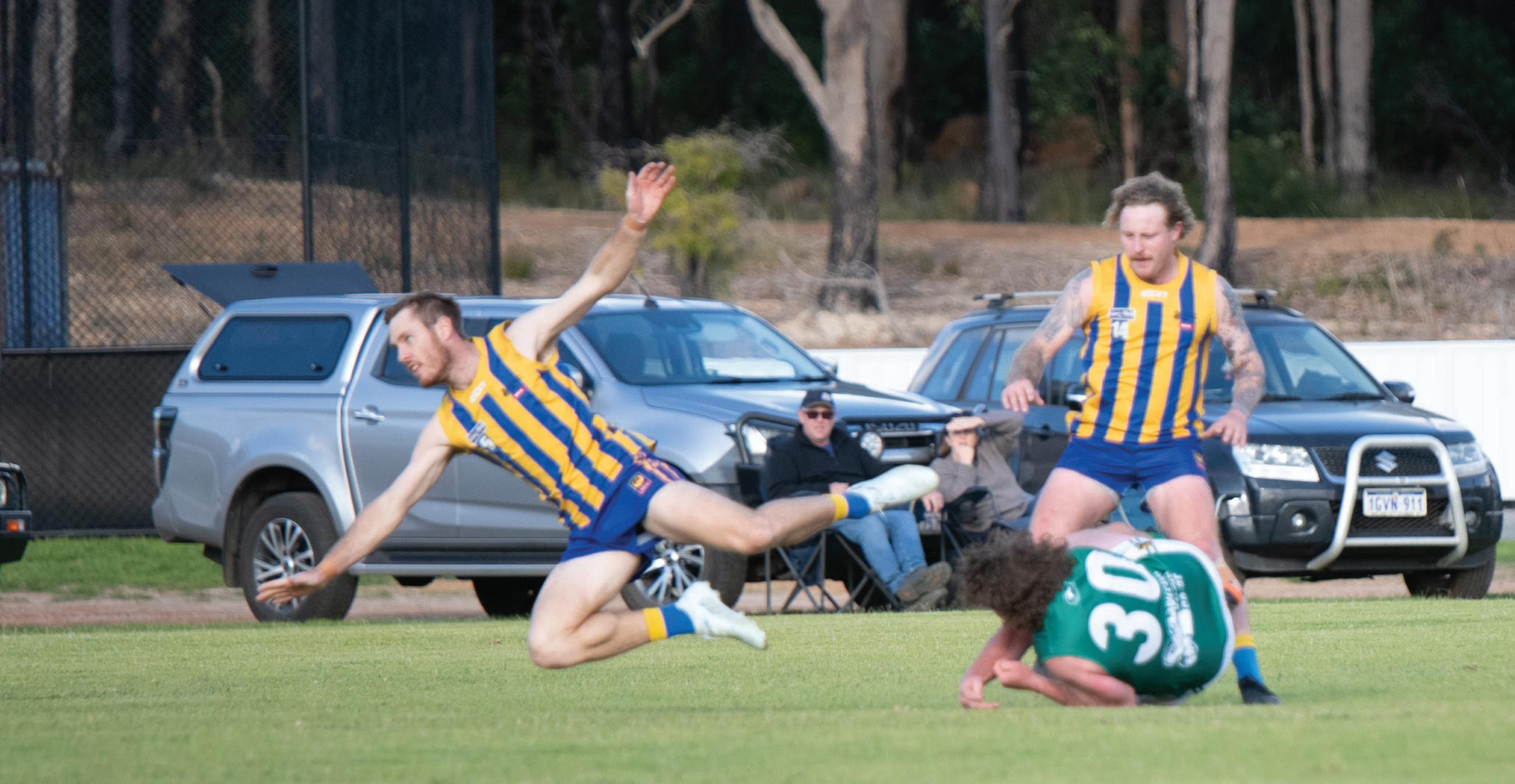
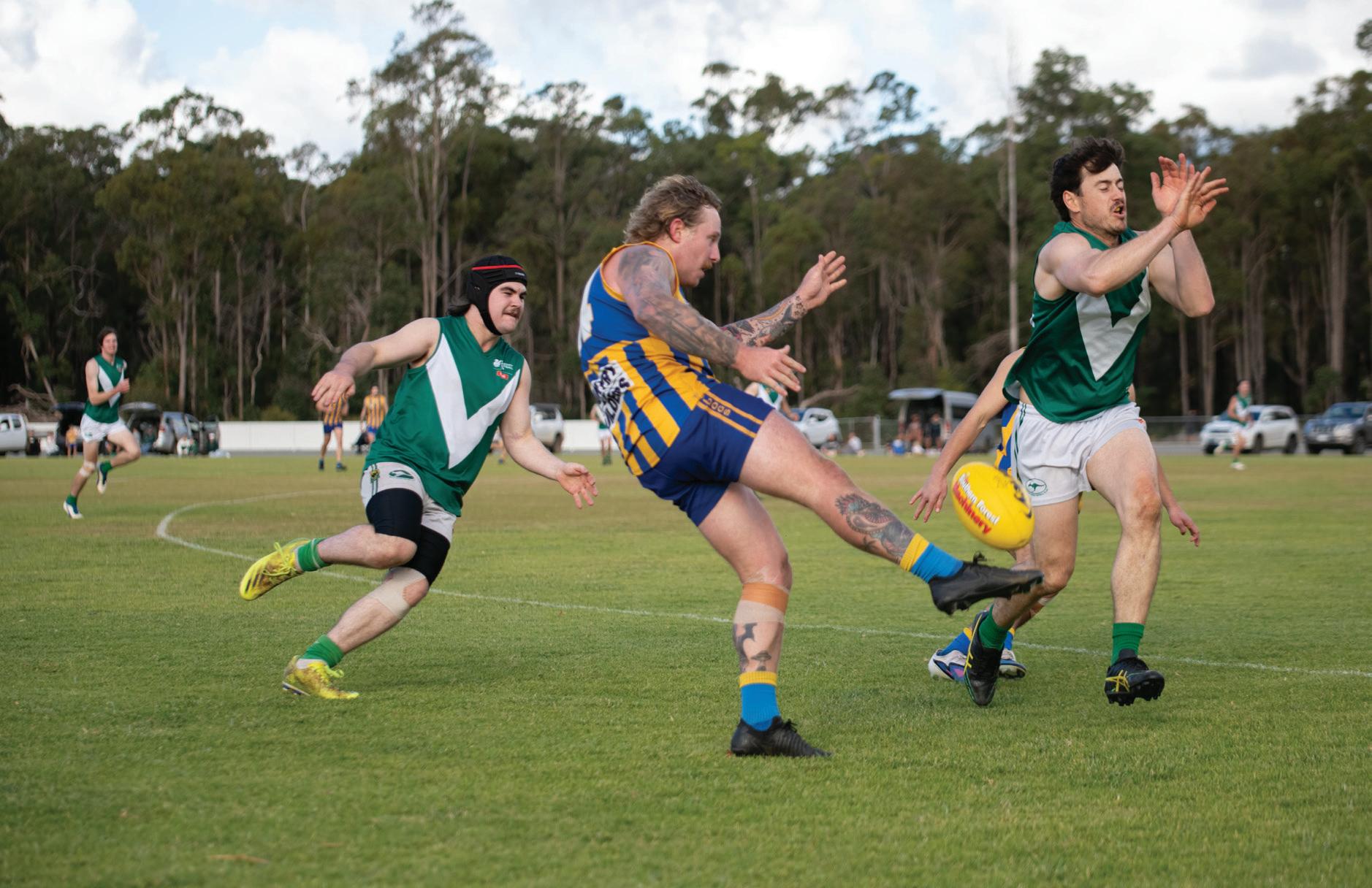

The Bridgetown Bulldogs have had a gritty and determined start to the season showing impressive consistency and competitiveness.
Only Kojonup stands between them and the top of the ladder, with four wins under their belt at the time of writing.
They’re real premiership contenders.
A highlight of the season was the 154-point thrashing of winless Boyup Brook in round six, a game that was done and dusted by quarter time.
Not to be outdone, they dished out similar treatment to Southerners in the following round at Pemberton, restricting the home team to a miserable 3.4 (22) while the Bulldogs ruthlessly piled on 25.20 (170) in a 148 point flogging.
Their only defeat for the season so far was to ladder-leaders Kojonup, in round three, which they lost by 23 points.
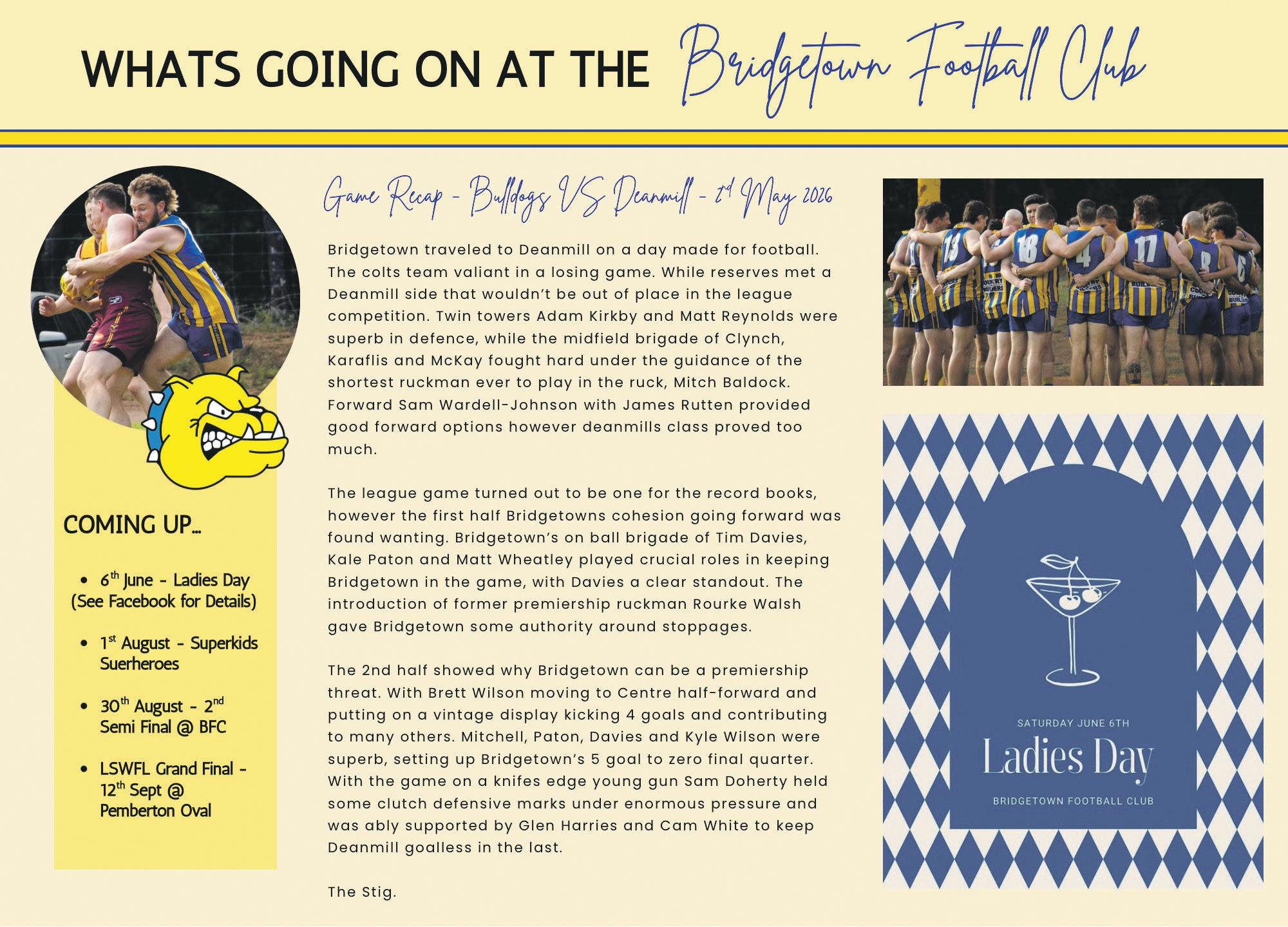
Bridgetown’s battle with Deanmill on the 2nd of May was a close run affair with a dominant second half display getting Bridgetown over the line by 8 points.
Don’t miss The Stig’s coverage on page 19.