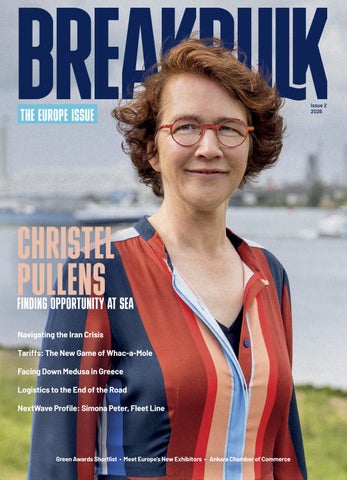
CHRISTEL PULLENS
FINDING OPPORTUNITY AT SEA

Navigating the Iran Crisis
Tariffs: The New Game of Whac-a-Mole
Facing Down Medusa in Greece
Logistics to the End of the Road
NextWave Profile: Simona Peter, Fleet Line
FINDING OPPORTUNITY AT SEA
Navigating the Iran Crisis
Tariffs: The New Game of Whac-a-Mole
Facing Down Medusa in Greece
Logistics to the End of the Road
NextWave Profile: Simona Peter, Fleet Line
A European Spending Surge Is Upgrading the Infrastructure That Project Cargo Depends On (p.48)

Christel Pullens: Finding Opportunity at Sea
12 UpFront: Movers and Shakers
Highlighting recent industry hires, promotions and departures
14 UpFront: Waves of Cargo
Big in Japan: Kobelco Beats the Bottlenecks in High-Stakes Move to Kyushu
16 UpFront: News Bites Quick Hits, Big Impact!
A roundup of Breakbulk shippers and exhibitors in the news
18 UpFront: Breakbulk Europe New Exhibitor Spotlight
Over 100 companies will join Breakbulk Europe for the first time
21 UpFront: Global Green World Awards 2026
22 UpFront: The Logistics Lens by Hatch Decarbonizing Project Logistics: Practical Moves Beyond Offsetting
24 UpFront: ESTA Update Fixing Europe’s Freight Rules
25 UpFront: Breakbulk Europe
Meet Your Event Director
David Langrish on raising the bar for Breakbulk Europe
26 UpFront: Women in Breakbulk “Hi, How Are You?”
Deconstructing the world’s most asked and least honestly answered question
27 UpFront: Thought Leader
Why the Gulf Crisis Extends Far Beyond Hormuz
The winners will be those who can pivot fastest, ICAT says
28 UpFront: Equipment Innovation First All-Electric SPMT Ready for the World
30 UpFront: Europe
DP World on Why Europe’s Big Build Needs Smarter Supply Chains
32 Global Mapping the World’s Maritime Pressure Points
Geopolitical instability a catalyst for operational disruption
38 Global Taking the Leap From Cargo Owner to Tech
A candid discussion with Adnan Rajput
42 Europe
Christel Pullens: Finding Opportunity at Sea
A maritime career shaped by resilience, reinvention and relentless curiosity
48 Europe
The Defense Dividend
A European spending surge is upgrading the infrastructure project cargo depends on
86
94 Simona Peter Is Making Her Mark in Middle East Logistics
Breakbulk Americas
September 22-23
George R. Brown Convention Center Houston, USA
Breakbulk Asia
November 18-19
Sands Expo and Convention Centre, Singapore Be a part of Breakbulk
East
February 2-3
Dubai World Trade Centre Dubai, UAE
Breakbulk Europe
May 11-13
Rotterdam Ahoy Rotterdam, Netherlands
54 Europe Ankara’s Logistics Ambition: Building a Regional Powerhouse Why Türkiye is becoming an increasingly important logistics gateway
59 Europe
An Insider’s Look at FPSOs
SBM Offshore’s Natasha Frey reveals the allure of these monstrous offshore projects
64 Europe Facing Down Medusa in Greece Cosmatos Group and Mammoet deliver critical refinery unit for EKME
69 Americas Tariffs: The New Game of Whac-a-Mole
Fluor, DHL, Jade Management Group and AAL Shipping report operational changes from shifting tariffs
74 Americas Logistics to the End of the Road
Practical lessons from the field on mastering remote project logistics
81 Asia
Mastering Asia’s Wind Lifecycle Repowering, not retirement, to drive region’s wind energy future
86 Middle East From Disruption to Opportunity Navigating the Iran Crisis
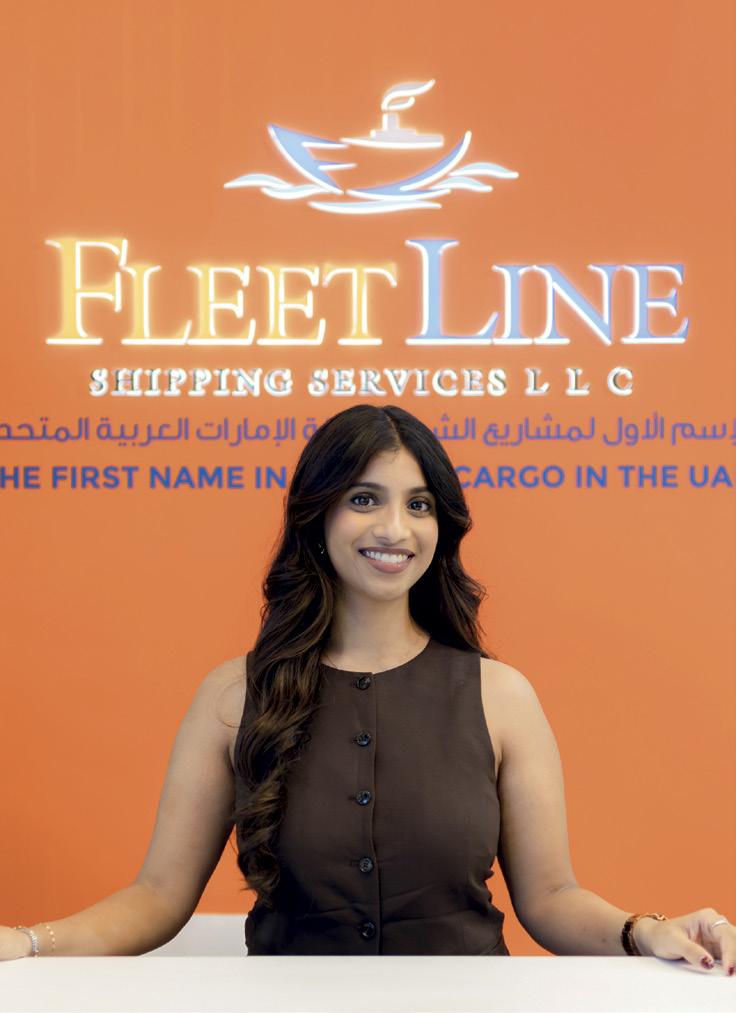
94 Middle East NextWave Profile: Simona Peter Fleet Line executive on UAE project growth and industry resilience
98 Back Page The Last Look “Full Steam Ahead” Photo Contest –Editors’ Choice Award

Welcome to the Europe issue of Breakbulk Magazine, as we meet in Rotterdam to gather as a global community.
This year’s event will once again welcome more attendees than ever to bring businesses closer together, renew old friendships and make new ones. The atmosphere is sure to be upbeat because no amount of global upheaval can dampen the Breakbulk spirit.
And there has certainly been upheaval. The Iran conflict has added new uncertainty to project planning, procurement and transport routes, yet project cargo executives continue to demonstrate resilience and ingenuity. In this issue, we round up perspectives from 10 notable companies navigating the impact of war in the Middle East that is being felt far beyond the region itself.
But with ongoing conflicts has come an unexpected silver lining. Be sure to read “Can Defense Spending Save Europe’s Aging Infrastructure?” exploring how military investment is accelerating upgrades to roads, ports, rail and industrial capacity. You can also see this topic come to life on the Breakbulk Live stage on Wednesday at Breakbulk Europe.
Geopolitical turmoil is not the only challenge facing the industry. Tariffs continue to frustrate procurement specialists as described in “Tariffs: The New Game of Whac-a-Mole.” The title comes from one of my family’s favorite games, and I hope it brings at least a brief smile in response to an otherwise frustrating topic.
You’ll also find practical guidance from Hatch on managing remote projects from a systems perspective, including specific ways to reduce risk from project launch to “the end of the road.”
If you’re here in Rotterdam, don’t miss the Green World Awards on Tuesday evening. You’ll find the finalists on page 21, and after the event, we’ll distribute a special publication celebrating the winners and their achievements across the industry.
Another program I’m especially excited about is the first Future Thinkers Community Forum on Wednesday afternoon on the Voices Stage. Our group of industry leaders and academics will share insights on the current supply chain disruption and the short- and long-term impacts shaping project business worldwide. The goal is simple: help you plan for the future with greater confidence. We will also be publishing a report on the findings from the Future Thinkers Europe regional meeting, so watch for it toward the end of June.
And finally, note our three Women in Breakbulk profiles in this issue: cover star Christel Pullens, along with Natasha Frey and Simona Peter. I’m thrilled by the growth of this program and the opportunity to share the experiences of these exceptional women.
Next stop: Houston for Breakbulk Americas, followed by the launch of Breakbulk Asia in Singapore. I hope to see you at every Breakbulk event.
Best,
Leslie Meredith Product and Editorial Director
Editorial Director
Leslie Meredith
Leslie.Meredith@breakbulk.com
Senior Reporter
Simon West simon.west@breakbulk.com
Designer Mark Clubb
Reporters
Luke King, Liesl Krog, Iain MacIntyre, Amy McLellan, Malcolm Ramsay
Contributing Editors
Jonathan Cournoyer
Hatch
Margaret Kidd San Jacinto College
John Pittalis AAL Shipping
Tyler Sullivan ICAT
Breakbulk Magazine Editorial Board
John Amos Amos Logistics
Tina Benjamin-Lea Eli Lilly and Company
Elisabeth Cosmatos Cosmatos Group of Companies/ The Heavy Lift Group
Dennis Devlin
DT Project America
Payne Fischer
Dharmendra Gangrade Larsen & Toubro
John Hark Bertling North America / Texas A&M University
Itoro Ibanga Air Liquide
Margaret Kidd San Jacinto College
Gautham Krishnan Fluor
Jake Swanson DHL Global Forwarding
Edward Talbot Trans Global Projects
Grant Wattman
Jade Management Group, Inc.
Andrew Young Bechtel Corporation
Portfolio Director
Jessica Dawnay
Jessica.Dawnay@breakbulk.com
To advertise in Breakbulk Media products, visit: http://breakbulk.com/page/advertise
Subscriptions
To subscribe, go to https://breakbulk.com/page/ breakbulk-magazine
A publication of Hyve Group plc.
The Studios, 2 Kingdom Street Paddington, London W2 6JG, UK
Movers and Shakers (p.12)
Blue Water Shipping, Chapman Freeborn, deugro, DHL Global Forwarding, G2 Ocean, Gulf of America Logistics, Mammoet, Milaha, MSC, Noatum Logistics, Port of Philadelphia, Swire Shipping, Trans Global Projects, Bechtel
Big in Japan (p.14)
Kobelco, The Heavy Lift Group
News Bites (p.16)
AAL Shipping, Mammoet, Port of Brownsville, UTC Overseas, Bechtel, Fluor, Saipem
Mapping the World’s Pressure Points (p.32)
AAL Shipping, Fracht Group, Maersk Project Logistics, RAK Ports
Taking the Leap From Cargo Owner to Tech (p.38)
Bechtel, GE
Christel Pullens: Finding Opportunity at Sea (p.42)
Damen Shiprepair & Conversion, ABB, Boskalis, Wärtsilä
The Defense Dividend (p.48)
AProjects, Bremerhaven, Port of Pori, Trans Global Projects, Saipem, Siemens Energy
An Insider’s Look at FPSOs, Today’s Floating Industrial Cities (p.59)
SBM Offshore
Facing Down Medusa in Greece (p.64)
Cosmatos Group, Mammoet, The Heavy Lift Group
Tariffs: The New Game of Whac-a-Mole (p.69)
AAL Shipping, DHL Industrial Projects, Fluor
From Disruption to Opportunity: Navigating the Iran Crisis (p.86)
AAL Shipping, DHL Global Forwarding, RAK Ports, Petrofac
NextWave Profile: Simona Peter Is Making Her Mark in Middle East Project Logistics (p.94)
Fleet Line Shipping, Etihad Rail
Key:
Exhibitor
Breakbulk Global Shipper
A special thank you to our Issue
AAL Shipping, Combi Lift Projects, Damen, DCS DAH, Drewry, Folk Maritime, Gosselin Group, GPLN, Hamel, HLI Port & Rigging, HuaGang Container, IRPT, KTC, MEGAMOVE, MSC, OIA, Port of Aberdeen, Port of San Diego, Port Houston, Project Cargo Network, PSA PDP, RHB, TGS, Transporte XXI, TRT International

Movers & Shakers
Waves of Cargo: Big in Japan
News Bites
New Faces at Breakbulk Europe
Green World Awards: The Shortlist
Hatch: Decarbonizing Logistics
EU Heavy-Haul Permits: What’s Next
Get To Know Your Europe Event Director
Women in Breakbulk: Vivien Kocsis
Tyler Sullivan on the Gulf Crisis
DP World on Why Europe’s Big Build Needs Smarter Supply Chains
Andy Tite is taking on a new position as senior vice president for projects at Blue Water Shipping, starting July 1, 2026. Tite joins the project forwarder after more than six years at DHL Global Forwarding, where most recently he served as global commercial head for Industrial Projects. He has also held managerial and executive roles at Zeamarine, deugro and ALE.
Mammoet has named Suzanne Jungjohann as its new chief human resources officer. Jungjohann, who also joins the company’s executive board, began her new position in April. “Suzanne brings the experience needed to help us attract, develop and support the highly skilled professionals who make our work possible,” said Joost Goderie, CEO of Mammoet.

G2 Ocean has hired Brazil-based Fabiana Lazoski as senior project cargo commercial manager. She joins G2 Ocean, one of the world’s largest operators in the open hatch segment, from BBC do Brasil (agent for BBC Chartering), where she worked in sales and chartering. Lazoski has also held managerial project logistics roles with Fracht and Bertling.
Swire Shipping has launched a new office in Kuala Lumpur, Malaysia, and chosen Koon Yan Tan to lead the new set-up. Former head of Swire Shipping’s Singapore agency, Tan has taken on the expanded role of head of Singapore and Malaysia agencies, overseeing the company’s activities across both Southeast Asian markets.


Bechtel has appointed Lucy Martin as president of its Mining and Metals business, succeeding Ailie MacAdam, who was set to retire in May after more than four decades with the company. Martin has worked at Bechtel for more than 24 years. Her leadership roles have included general manager for South America, operations manager for the Americas and general manager for Asia Pacific.
Ahmed Sadi has begun his new position of manager of project logistics at Qatar-headquartered logistics provider Milaha. Sadi joined the company in April 2025 from DSV, where he served as assistant operations manager, freight forwarding. Prior to DSV the executive held several supervisory roles in the UAE and Kuwait for Agility.
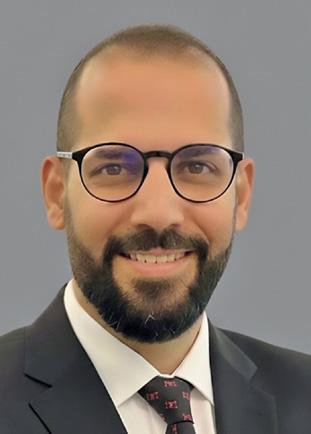
MSC has named Michaël Miramond as its new chief digital officer. Miramond, who joined the company in January, will spearhead the carrier’s digital strategy across divisions including shipping, logistics and terminals. Prior to MSC, the executive served nearly five years as vice president chief digital officer at CMA CGM.
The Port of Philadelphia has appointed board member Rich Lazer as its next executive director and CEO, replacing Jeff Theobald, who announced his retirement in late 2025. Lazer joins the Delaware River facility from the Philadelphia Parking Authority, where he served as executive director. Lazer was set to begin his new role on June 1.
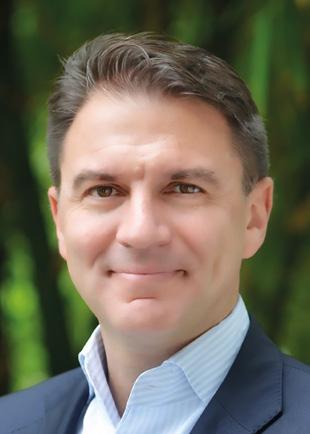
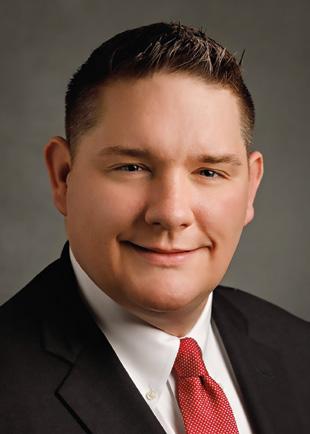
Noatum Logistics has chosen Marco Civardi as managing director for Asia, where he will oversee regional strategy, business expansion and operations across the Asian market. Civardi joins the company from JAS Worldwide, where he served as CEO China for five years. He also spent eight years at Maersk as area managing director for Vietnam, Cambodia, Myanmar and Laos.
Mirela Mattos has been named business development manager for deugro Brazil. The appointment coincides with the launch of the project forwarder’s new branch in the Brazilian city of Porto Alegre in southern Rio Grande do Sul state. Mattos joins deugro from Fracht Brasil, where she held the role of business development manager for six-and-a-half years.


Chapman Freeborn has named Danish Cutleriwala as country manager for India. Mumbai-based Cutleriwala will be responsible for the air charter specialist’s operations and growth in India, a country it describes as “one of the world’s fastest-growing aviation and logistics markets.” Cutleriwala joins Chapman Freeborn from logistics firm Sciens Logistics India, where he served as country manager, APAC & Middle East.
Trans Global Projects has launched TGP Finland and has brought in Jussi Heinonen to spearhead the new operation. A seasoned professional in Finland’s project logistics sector, Heinonen previously served as managing director and partner at UPF Finland Oy. His new role will focus on supporting clients across Finland, which TGP described as a “technically demanding market where local expertise and close coordination are essential.”
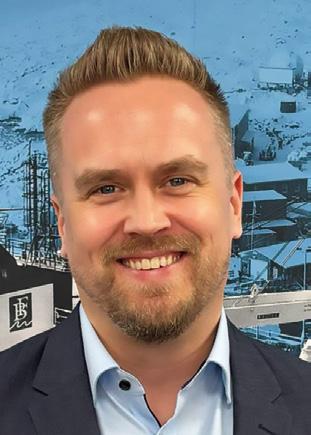

Juliana Gibbons has joined DHL Global Forwarding as head of Industrial Projects Canada. The Vancouverbased executive, who began her new position in April, previously served as vice president of commercial for Swire Projects Americas, a division of Swire Shipping. Prior to that she held various executive and managerial roles for Rohde & Liesenfeld Canada.
Guy Platten has become the new chair of The Mission to Seafarers, a welfare charity operating in over 200 ports across 50 countries. Platten, a chartered master mariner, succeeds Thomas Boardley, who steps down after nine years at the helm. Platten brings more than four decades of senior leadership experience to the role. Most recently, he served as secretary general and CEO of the International Chamber of Shipping.
Jake Minner has begun his new role as VP of operations — Specialized Transport and Trucking, at Gulf of America Logistics. Boasting more than 17 years of heavy-haul experience, Minner will lead GoAL’s asset-based heavy transportation division from the company’s newly launched office in Baton Rouge, Louisiana.

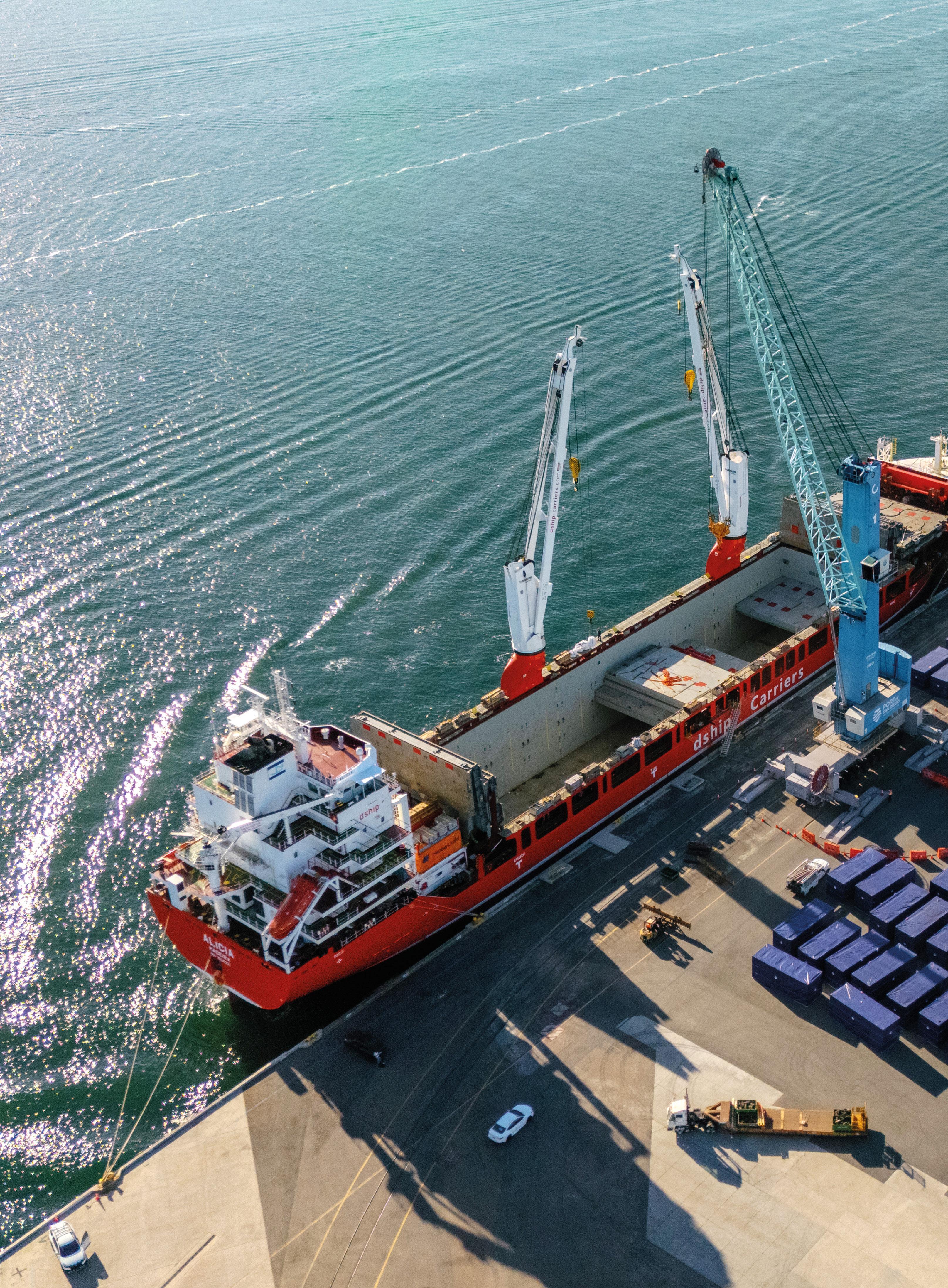
Noriko Sano, general manager of overseas business logistics at Kobelco, the logistics arm of Japanese steel manufacturer Kobe Steel and a member of The Heavy Lift Group (THLG), takes us inside a highstakes multimodal delivery to a semiconductor plant on the island of Kyushu and offers a window into the mounting pressures and emerging opportunities shaping the country’s logistics sector.
1. Can you walk us through the scope of the project?
NS: We were tasked with transporting 17 items of heavyduty, critical plant equipment to a factory owned by one of Japan’s leading gas supply companies. At the time, the facility was under construction by an EPC contractor and is intended to supply products to a new semiconductor plant on the island of Kyushu. The equipment was sourced from four locations. Four cold boxes were imported from China, while the remaining units were manufactured domestically at sites across Japan. The contract required all equipment to be delivered within a tight nine-month window using a combination of trailer and vessel transport. Even for Kobelco, which has access to an extensive network of subcontractors and logistics partners, this represented a high-pressure commitment.
Strict schedule control and fortnightly project meetings were essential to ensure the operation kept on track.
2. What were the main challenges during the Kyushu project, and how were they managed?
NS: This was a typical heavy-lift and project logistics operation in which transport methods were dictated primarily by technical and physical constraints rather than by cost or modal preference.
On land, the key challenges involved narrow roads, overhead structures and bridge capacities. Some of the cargo weighed up to 90 tons, requiring clearance from local authorities for bridge crossings. We collected data for all relevant bridges and carried out detailed loadbearing assessments on 30 of them. This analysis alone took seven months. In addition, the contract required the use of a special type of trailer to accommodate the length and weight of several cold boxes. Such trailers are limited in number in Japan and are typically in high demand, requiring careful advance planning.
On the maritime side, weather risk was a constant concern. The project ran through typhoon season, raising the possibility of vessel delays or cancellations. Even seemingly minor dependencies had the potential to disrupt the schedule. For example, a crane at the semiconductor plant was not under our direct control, and its availability depended on the EPC contractor’s construction timeline. The largest physical obstacle arose at the entrance to the Kyushu facility itself, which
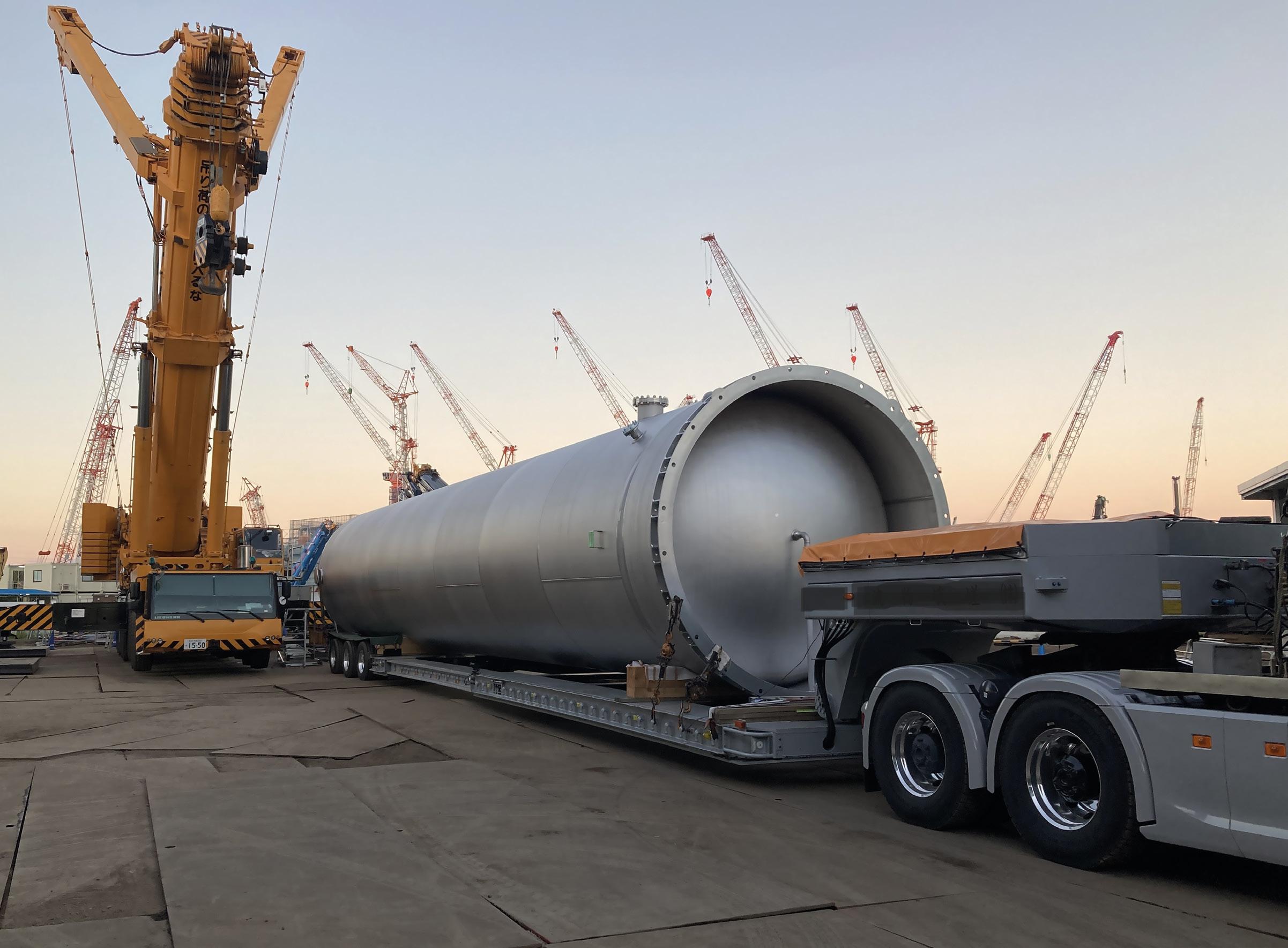
was too narrow for the trailers to pass. After evaluating alternatives, we determined that widening the access road was the only feasible solution. Detailed CAD (computer-aided design) simulations were conducted to define workable dimensions before the modification was carried out.
3. What stood out most from the Kyushu operation?
NS: The project underscored just how precise and unforgiving heavy-lift logistics can be. In one instance, the clearance between a pedestrian bridge and cargo loaded on a trailer was only 150 millimeters. The driver hesitated, expressing concern about attempting the maneuver. However, height measurements were taken immediately beforehand, and we were fully confident that safe passage was possible, which ultimately proved to be the case. Such moments reinforced the importance of preparation, precise measurement and trust between planners and operators, all of which are critical in heavylift and project cargo operations.
4. How does this project relate to Kobelco’s “Modal Shift” strategy and broader transport capability?
NS: For this project, transport modes were dictated by the cargo’s size and technical constraints, and demanded complex, tightly coordinated multimodal execution across sea and road. The experience has strengthened Kobelco’s logistics capabilities in managing high-risk, time-critical operations. Separately, the company is advancing a broader “Modal Shift” initiative in response to CO2 emissions reduction requirements, as well as to driver shortages and rising logistics costs in Japan, which are expected to reduce transport capacity by up to 34% by 2030. By shifting a greater portion of Kobelco construction machinery transport from road to sea, a core business of the division, and by leveraging its coastal fleet and port operation expertise, Kobelco is building a more resilient, efficient and lower-carbon logistics model.
THLG is exhibiting at Breakbulk Europe. Meet its members at stands 2E50-F51.
A roundup of Breakbulk shippers and exhibitors in the news
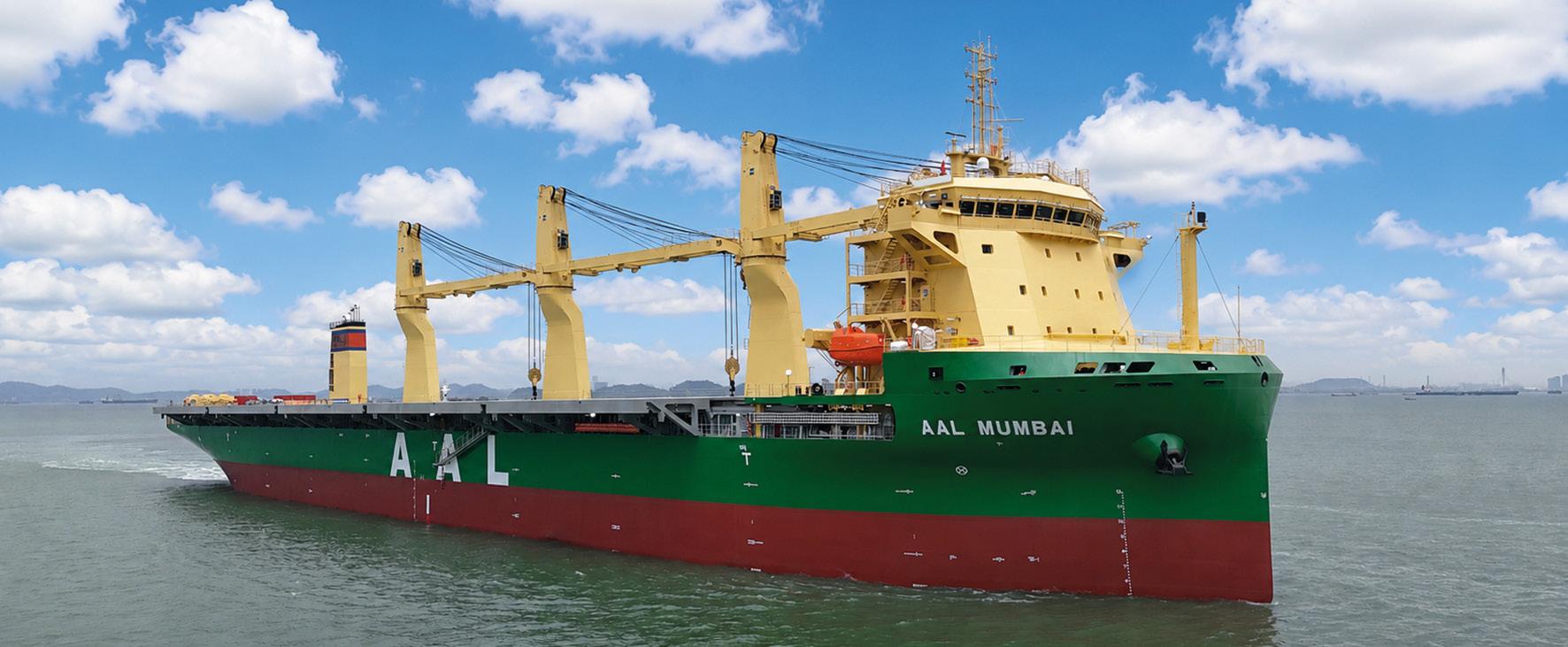
AAL Shipping has underlined its growing commitment to India with the naming of its latest Super B-Class vessel, AAL Mumbai, as the carrier ramps up its presence in one of the world’s fastestgrowing project cargo markets. The 32,000-dwt heavy-lift newbuild, capable of lifting up to 800 tonnes, was officially named at CSSC Huangpu Wenchong Shipyard in Guangzhou
and will now enter commercial service, taking AAL’s Super B-Class fleet to eight vessels, with two more scheduled for delivery by 2028. Named after India’s commercial and maritime powerhouse, AAL Mumbai arrives as the country accelerates investment across infrastructure, energy and offshore renewables, sectors expected to drive strong demand for specialist heavy-lift shipping.
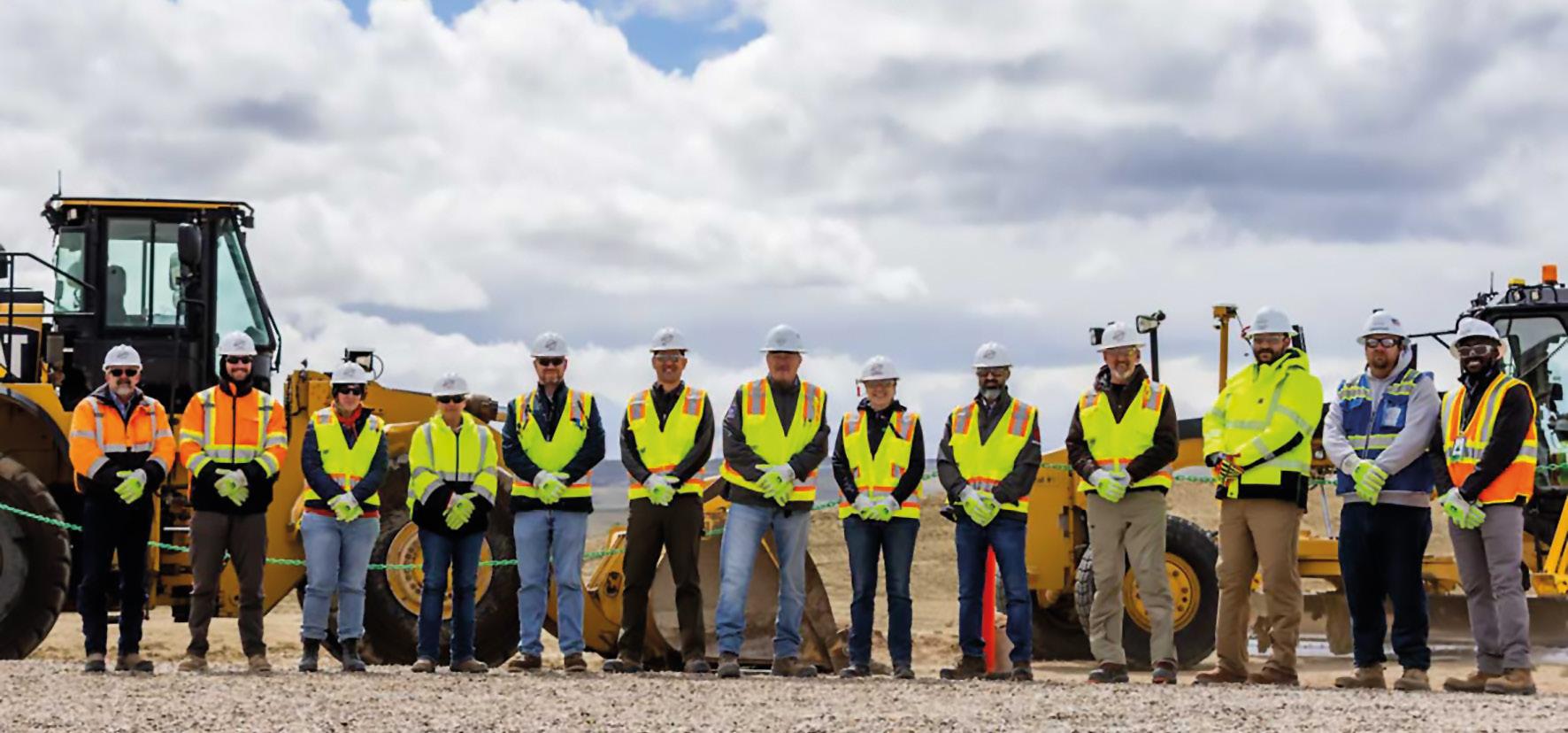
Bechtel and nuclear innovation company TerraPower have begun construction work on America’s next nuclear power plant, the Natrium Kemmerer Unit 1 plant in the U.S. state of Wyoming. The 345-MW Kemmerer Unit 1 is on track to be the first utility-scale advanced nuclear power plant in the U.S. TerraPower, co-founded by Bill Gates in 2008, said 1,600 workers were being mobilized to begin
construction of the plant, which is being installed near a retiring coal-fired power plant, making it the world’s only coal-to-nuclear project under development. Building work is expected to take five years. “We’re not just breaking new ground on a first-of-a-kind nuclear plant in Wyoming; we’re building the next generation of America’s energy infrastructure,” said Chris Levesque, president and CEO of TerraPower.
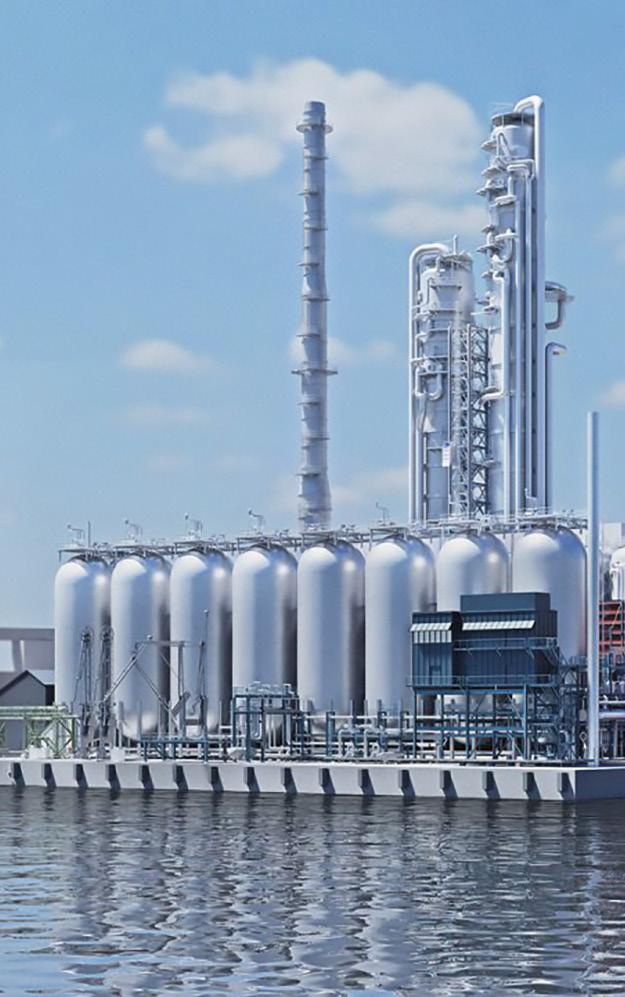
MAMMOET WINS CONTRACT FOR STOCKHOLM CCS PROJECT
Mammoet has won a contract from Saipem to carry out the heavy-lift scope for the construction of Beccs Stockholm in Sweden, one of Europe’s first major carbon capture and removal projects. The heavy-lift transport specialist is tasked with handling 23 components weighing between 50 and 280 tonnes and two significantly larger units weighing 1,500 tonnes apiece. The two heavy pieces will be installed using Mammoet’s 3,200-tonne class PTC140-DS ring crane.
Beccs Stockholm is owned and developed by energy company Stockholm Exergi. The facility will capture and store 800,000 tonnes of CO2 annually from the biogenic flue gases of Stockholm Exergi’s existing combined heat and power plant.
Saipem is designing and building the carbon capture unit, the CO2 storage and out-shipment facilities, and installing and constructing the CO2 compression and liquefaction units.
Fluor has won a deal to engineer and design the America First Refining facility in Brownsville, Texas, the first new refinery to be constructed in the U.S. in more than 50 years. The value of the front-end engineering and design (FEED) contract was not disclosed.
AFR’s refinery is being built on a 240-acre plot within the Port of Brownsville on the U.S.Mexico border. The facility will turn U.S. light shale oil into gasoline, diesel and jet fuel, with processing capacity expected to top 60 million barrels a year.

Saudi Arabia has kicked off the next stage of its flagship King Salman International Stadium, inviting firms to prequalify for early construction works in Riyadh. The stadium is one of 15 being built from scratch or refurbished for the FIFA World Cup 2034.
Saudi Arabia was officially announced as tournament hosts in late-2024. The arena will have a capacity of more than 92,000, making it Saudi Arabia’s largest, and has been designed by U.S. architects Populous.

The UAE and Jordan have signed a US$2.3 billion deal to build a 360-kilometer railway connecting Jordan’s phosphate and potash mines at Al-Shidiya and Ghor
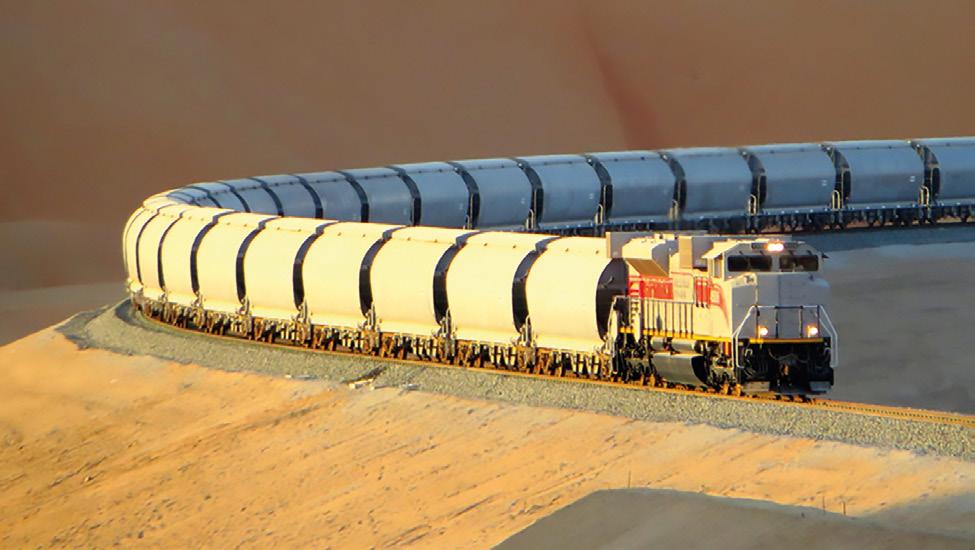
Al-Safi to the Port of Aqaba. The project is expected to transport up to 16 million tonnes of minerals annually, according to the UAE’s state news agency WAM. The Port of Aqaba is Jordan’s only seaport, located in the far south of the country on the Red Sea.
The initiative, which will be executed through the newly formed UAE-Jordan Railway Company, a joint venture between Abu Dhabi-based L’IMAD Holding Company and several Jordanian partners, is the latest in a line of ambitious rail projects being developed across the Middle East. Breakbulk and project cargo are benefiting from the infrastructure buildout, with the transport of earthmoving equipment, tracklaying wagons, locomotives and concrete sleepers driving demand for heavy-lift logistics support.
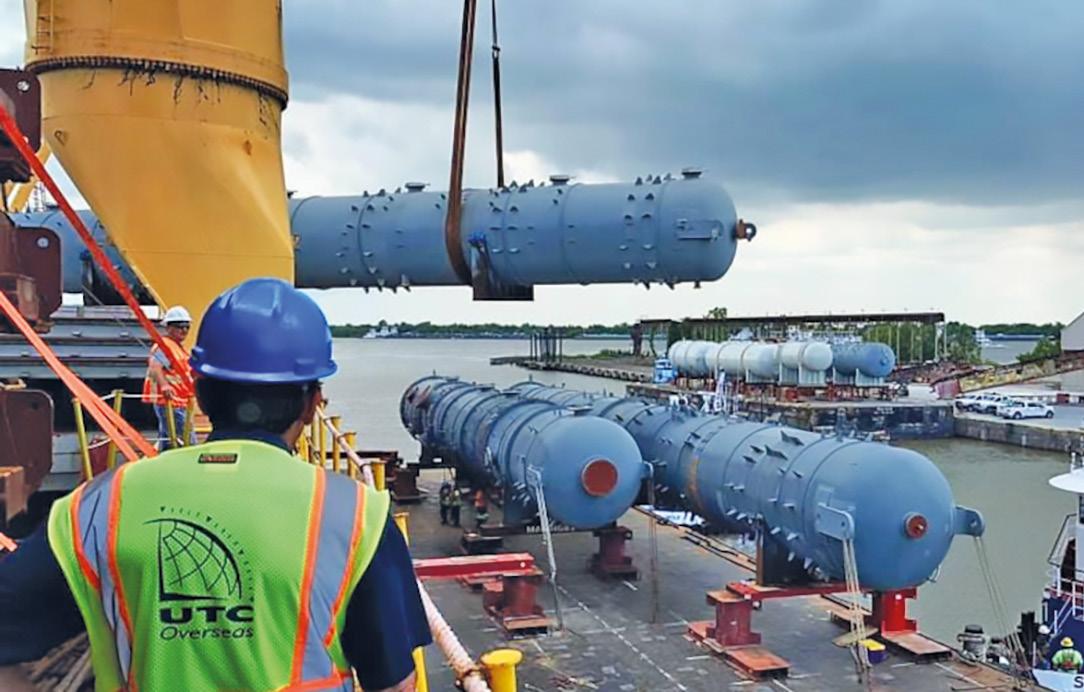
UTC Overseas has strengthened its footprint in the Americas, announcing the launch of UTC Project Argentina in Buenos Aires. The new base will be headed by Gabriela Dulcic, an experienced executive with a proven track record in managing large-scale, complex logistics operations, UTC said. Argentina has emerged in recent years as one of the region’s most
exciting markets for breakbulk and project cargo. As well as sitting on one of the world’s largest reserves of unconventional oil and gas, the South American nation also boasts massive lithium resources. As long-term investment flows into energy, mining and infrastructure, demand is growing for specialized logistics and transport solutions to support complex projects.
Meet some of the companies showcasing their expertise at Breakbulk Europe.

AST Freight Forwarder Türkiye Stand 2P50
AST International Transport has provided extensive and innovative industrial logistics solutions for 25 years and continues to execute complex operations for major energy investments.
One of the major projects successfully handled by AST is the 550-MW natural gas combined cycle power plant project in Uzbekistan, contributing to the strengthening of the country’s energy infrastructure. Within the scope of the project, AST seamlessly managed the transportation of HRSG system shipments. Fifteen modules, each 27 meters in length and weighing 160 tonnes, were transported from Shanghai to Jizzakh. In total, over 15,000 CBM of equipment was moved
from China, South Korea, India, the Netherlands and Germany via multimodal logistics operations. The power plant transport operations were completed safely and on time.
“Supporting the growth of our clients’ businesses and the industries they operate in has always been one of our core priorities,” says Emrah Tetik, founder and managing director of AST. “We have been working for many years with national and international companies across diverse industries. We have also built strong partnerships across key international markets. Thanks to AST project teams’ strong planning and coordination capabilities, we ensure reliable execution and the successful completion of every project.”
Since 2001, AST has successfully completed numerous projects, standing out for its well-designed and customized logistics management services and its extensive international network.


Joshua Cui Chief Technology Officer (CTO)
Equipment
China Stand 2G80-H81
What is the most important thing about your company that you’d like the Breakbulk community to know about?
We want the Breakbulk community to see GENMA as a longterm partner, not just a supplier, that provides efficient, sustainable and customized material handling solutions. Our products, including third generation mobile harbor cranes, grab ship unloaders, pneumatic ship unloaders, scraper ship unloaders, ship loaders and transshipment systems, are all designed for high performance, low energy use and environmental compliance. Our key differentiator: full lifecycle support from engineering and manufacturing to after-sales service and upgrades. We partner with customers at every step.
What made you decide to exhibit at Breakbulk Europe this year?
Breakbulk Europe is the world’s leading project cargo and breakbulk event. It is the ideal platform to introduce GENMA’s products and latest technologies, especially our bulk handling equipment (including third generation mobile harbor cranes) and intelligent solutions, to a broader European and global audience. We want to connect directly with project owners, terminal operators and engineering firms to understand their challenges and show how our solutions enhance efficiency and sustainability.
Where are the biggest opportunities for your business in today’s project market?
We see three major opportunities. First, the global energy transition drives investment in wind power, aluminum and other commodities, which all require efficient, low-breakage, intelligent handling equipment. Second, ports upgrading aging infrastructure fuel demand for green automated handling equipment and mobile harbor cranes. Third, a growing focus on supply chain resilience and safety opens markets for our continuous ship loading and unloading equipment, especially for grains, fertilizers, coal and iron ore. Our ability to customize complex projects helps us seize them.

Martin Steenbock III Project Management
Road Transport USA
Stand 2N50
What is the most important thing about your company that you’d like the Breakbulk community to know about?
At Izzi Trucking & Rigging Inc., we are a second-generation, asset-owned and operated family business with over 50 years of experience in heavy haul transportation, rigging, warehousing and project logistics. What sets us apart is our turnkey approach, single point of accountability, specialized fleet, inhouse engineering and permit support, and commitment to safety, communication and long-term customer partnerships.
What made you decide to exhibit at Breakbulk Europe this year?
Breakbulk Europe gives Izzi Trucking & Rigging Inc. the opportunity to connect with key industry decision-makers, strengthen existing relationships, build new partnerships, and showcase our expanded capabilities in specialized transportation, rigging, warehousing and project logistics. With continued investment in equipment, fleet growth, project management and strategic storage locations, we felt this was the right time to highlight what makes Izzi a trusted, assetbased partner.
Where are the biggest opportunities for your business in today’s project market?
Izzi Trucking & Rigging Inc. sees the biggest opportunities in power generation, data centers, modular construction, renewable energy, nuclear and heavy industrial projects. As customers face tighter schedules and more complex logistics, demand is growing for asset-based partners who can provide turnkey transportation, rigging, storage, engineering support and final installation while reducing risk, improving scheduling and maintaining full project visibility.
Company name Stand Country Sector Company name Stand Country Sector
2M Logistics 2D10 Netherlands Freight Forwarder
ACAM 1M30 France Marine Transport
ACMA 2M63 Cote d’Ivoire Marine Transport
ACPMC & SAPPE 1M30 France Ports & Terminals
Ankara Chamber of Commerce 2F90-G91 Türkiye Association
ARKAS HEAVY 2N23 Türkiye Industry Services
ASPION GmbH 1J51 Germany Technology
AXXES 2C83 France Equipment
Bandić Maritime d.o.o 1K50 Croatia Freight Forwarder
BBL PROJECT CARGO SOLUTIONS 1M30 France Freight Forwarder
Boa Management AS 2Q62 Norway Marine Transport
Breston 2C82 Netherlands Equipment
Brigade Electronics (EU) BV 2R23 Netherlands Equipment
CargoEZ 2S43 United States Technology
Cargosnap 2S41 Netherlands Technology
CFT- Compagnie Fluviale de Transport 1M30 France Marine Transport
Corvia | Eekels Technology B.V. 2S28 Netherlands Marine Transport
CrossTrades Logistics Network 2B40 Hong Kong Association
Dajin Heavy Industry Co., Ltd. 2L60 China Marine Transport
Damen Shipyards 2E11 Netherlands Marine Transport
DÉGRA 2D74 Netherlands Equipment
DEVECİ ULUSLARARASI AĞIR NAKLİYAT 2P22 Türkiye Road Transport
Devoted shipping lines 1G54 United Arab Emirates Freight Forwarder
Docs N Packs 2S40 India Freight Forwarder
DOLL Fahrzeugbau GmbH 2A40 Germany Equipment
Dufour 1M30 Belgium Ports & Terminals
EL-Rishon Logistics Limited 2P33 Nigeria Freight Forwarder
Enstructure LLC 1L15 United States Ports & Terminals
ESTEPH APS 1C40 Denmark Freight Forwarder
EUROGATE Container Freight Station GmbH 1G21-H20 Germany Ports & Terminals
ExB 2Q63 Germany Technology
FEDNAV 1L10 Belgium Marine Transport
Folk Maritime 1H31 Saudi Arabia Marine Transport
FULMENN UAB 1J53 Lithuania Road Transport
GENMA Solutions 2G80-H81 China Ports & Terminals
Gleistein GmbH 1A53 Germany Equipment
Gosselin Logistics 1C45-D44 Belgium Ports & Terminals
HeavyGoods.net / CodesSquare GmbH & Co. 2K73 Germany Technology
Hi-MEGALINE & KET 2H91 Korea, Republic of Marine Transport
HPL ONE 2E55 Türkiye Freight Forwarder
HUB France 1M30 France Ports & Terminals
ICO Terminals
2C80-D81 Belgium Ports & Terminals
Indian Vanlines Private Limited 2R63 India Freight Forwarder
Info.era (Circle Group) 2M02 Italy Technology
Interlogis Poland SP. zo.o. 2L02 Poland Freight Forwarder
Invest in Georgia 2G104 Georgia Government
IRV Venice Italy 2R50 Switzerland Ports & Terminals
Izzi Trucking & Rigging Inc. 2N50 United States Industry Services
J M Baxi Group 2N20 India Equipment
Jiangsu Fanzhou Shipping CO. LTD 2A70 China Marine Transport
KTC Logistics 1A44 Honduras Freight Forwarder
LENO 2S45 Nigeria Marine Transport
Loopfar 2C102 China Equipment
Ludwigsystem GmbH & Co. KG 2N51 Germany Equipment
Maritime Optima 1J40 Norway Technology
Marsa Maroc 2C100 Morocco Ports & Terminals
MFC Group - Modern Freight 2E50-F51 United Arab Emirates Freight Forwarder
Miss Project & Miss Transport 2P41 Türkiye Freight Forwarder
MSA Safety 2S42 United Kingdom Equipment
MSHARIB SHIPPING & LOGISTICS FZE 2M01 United Arab Emirates Freight Forwarder
Multisec - Engineered Lifting System 2R51 United Kingdom Equipment
Negabarit-Service LLC 1M17 Ukraine Freight Forwarder
NEOLINE 1M30 France Marine Transport
NEURORED TMS & SCM 2S34 Spain Technology
OIA Global 2Q33 United States Freight Forwarder
Oval Shipping and Logistics, Ghana 2S52 Ghana Freight Forwarder
OVL Container 1G52 Finland Equipment
ozean engineering GmbH 2N33 Germany Technology
Port of Aberdeen 2P30 United Kingdom Ports & Terminals
Port of Blyth 2R33 United Kingdom Ports & Terminals
PORT OF MARSEILLE FOS 1L14 France Ports & Terminals
Portland Port Ltd 2R42 United Kingdom Ports & Terminals
Profesyonel Taşımacılık ve Ticaret LTD.ŞTİ 2R30 Türkiye Freight Forwarder
PTS Logistics GmbH 1G21-H20 Germany Freight Forwarder
Regal Logistics 2P60 Pakistan Freight Forwarder
Royal Gate Logistics Ltd 2R61 Nigeria Freight Forwarder
Rubb Buildings Ltd 2C93 United Kingdom Equipment
SCALES / OCTRA 2D76 France Freight Forwarder
Scandinavian Auto Logistics A/S 1C40 Denmark Ports & Terminals
SEA-INVEST 1M30 France Ports & Terminals
Services Portuaires Sétois 1M30 France Ports & Terminals
Shanghai Hamel Supply Chain Technology Co.,Ltd2M41 China Freight Forwarder
Signode Switzerland GmbH 1C44 Switzerland Industry Services
Somaloir 1M30 France Ports & Terminals
SPARBER Group 2N35 Spain Freight Forwarder
St Service SRL 2M12 Italy Freight Forwarder
Strata Worldwide 2R53 United States Technology
Terrasecure Projects 2M70 Romania Freight Forwarder
TEST 1 SRL SB 2N41 Italy Equipment
TGO 1M30 France Ports & Terminals
TH Sling 2M13 China Equipment
The Grab Specialist B.V. 1C01 Netherlands Equipment
Three Port Logistics & Transimex Group 2S20 Ghana Freight Forwarder
TMF Operating 2R41 France Ports & Terminals
Trancom UKR 2N52 Ukraine Freight Forwarder
Trans Fast Logistics Private Limited 2Q60 Pakistan Freight Forwarder
TRT International 2C01 United States Road Transport
Tuvas project 2R21 Türkiye Road Transport
TWD 2A51 Netherlands Equipment
UGR - United Global Ro-Ro 2C82-D83 Türkiye Marine Transport
Uzman Global Logistics & TRC Heavy 1F44 Türkiye Freight Forwarder
Verstegen Grabs 2C81 Netherlands Equipment
Westdijk Transport Group 2Q42 Netherlands Road Transport
Winteb 1D50 Netherlands Equipment
Wuhu Shipyard (Europe) GmbH 1K10 Germany Marine Transport
X2 Logistics Networks 2D100 Hong Kong Industry Services
Yossikama shipping 2Q53 Gabon Marine Transport
The Breakbulk Green World Awards spotlight the companies and service providers helping shape a more sustainable industrial project cargo sector. The winners will be announced during the Breakbulk Europe Welcome Reception at 5:30pm on 16 June 2026. Check out the categories and shortlisted entrants below.
Category: Best Digital Solution
Sustainability - Carbon Insight
Suite Transportation
CarbonLeap: CarbonBank
Central Barge
HYUNDAI GLOVIS: The Ocean Cleanup ADIS Project
PortXchange: EmissionInsider
Sommer Digital Transport Assistants: AGNES
ZERO44
Category: Best Digital Solution
Sustainability - Industrial Construction
AeKo Dynamics: AeKo Stocks
Amphitrite - The Ocean Bulletin
INSITE IT - Insite LMS
Seaber
Balena Projects: Detroit Press Machine Delivery
Comark: BESS Hungary
DP World: Low Carbon Truck Programme
Prism Logistics: VGO Reactor Transport
Category: Best Maritime Transport
AtoB@C Shipping: Green Coaster
AAL Shipping: Super B Class Vessel
UTC Overseas: Vistula River LPG Transport
Prism Logistics: Nayara Refinery Coke Drum Transport
Malin Group: Eela Water Treatment Works
Category: Eco-Friendly Equipment Innovator
Belgo-Iberian Maritime: Greenbar Dunnage
Michelin Group: WISAMO (Wing Sail Mobility)
QuinteQ Energy: THOR and THOR X Flywheel Energy Storage System
Category: Sustainable Logistics Excellence Award
DP World: Our World, Our Future
FLS Group: Drive the Change
Höegh Autoliners: Aurora Vessels
Nextpower: Solar Transport Programme
ReDew Trading: UAE–Africa Corridor
Van der Vlist Transportgroep: Bolster System
Category: Sustainable Ship Design
Corvia: Modular Propulsion Platform
Hyundai Glovis: 10,800 CEU PCTC
Royal Shipyards: GADUS 5800
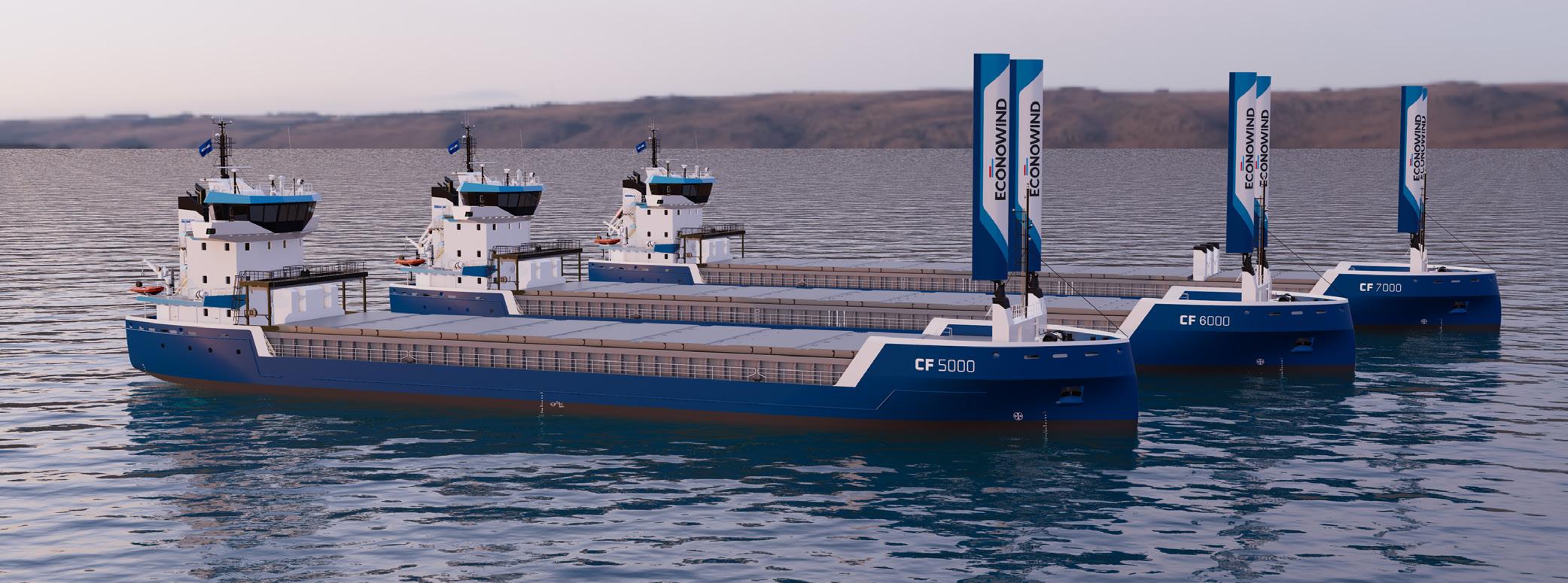
Windcoop: Wind-Powered Container Feeder
Category: Renewable Energy Project of the Year
Chipolbrok: NEOM Green Hydrogen Project
DP World: London Gateway Decarbonization
EWA Group: Ras Shoukeir Wind Project
GEODIS: Les Eoliennes Flottantes du Golfe du Lion
Through a strategic practitioner’s lens, Hatch Logistics’ global experts explore the forces shaping project and breakbulk logistics: from risk and execution to geopolitics, sustainability and decision-making in complex cargo environments.
Four ways to turn logistics from a project constraint into a sustainability win
By Simon-Pierre Lefebvre

On large industrial projects, logistics is often treated as a pure execution function: moving material to site as cheaply and as quickly as possible. From a project perspective, this framing is a missed opportunity. Logistics is not just a support activity; it is a system that can highly influence cost, schedule, risk and environmental efficiency.
Because logistics is frequently reduced to a point A to point B exercise, sustainability is often seen as an added constraint, instead of an added value. As a result, opportunities, such as reducing carbon emissions, are missed or addressed late.
With the right data and early coordination, logistics can be deliberately optimized to reduce emissions while supporting project objectives, particularly on large or remote projects where logistics choices have a significant impact. As sustainability becomes increasingly central to owner expectations and community acceptance, decarbonizing project logistics is shifting from “nice to have” to a core element of project delivery.
Freight consolidation is one of the most practical and immediately available levers to reduce environmental impact. Large projects often involve fragmented shipping patterns, with partial loads moving independently from multiple vendors,
either locally or from overseas. Establishing well located consolidation hubs creates opportunity for combined shipping, improving load factors and reducing total vehicle kilometers traveled. Beyond emissions reduction, consolidation simplifies site receiving, reduces congestion and improves material tracking. The key is integrating consolidation planning into procurement and expediting activities early, rather than treating it as a last-mile optimization.
This method of consolidation also diminishes risks, as the project gets access to critical items earlier in the delivery timeline.
Routing is another optimization lever. Digital logistics tools now make it possible to evaluate alternative routes based on emissions intensity, distance, congestion and border complexity. Creating the transport network before execution with this newly available data allows the project to select ports with stronger rail connections, avoid highly congested corridors and sequence deliveries to minimize empty backhauls. Using the right tools at the right time allows for savings in time, transport budget and carbon emissions.
Road transport remains the default choice for many projects due to perceived flexibility and schedule certainty. However, rail and barge transport offer significantly lower emissions per ton-kilometer, particularly for long-haul movements, and usually allow a heavier payload. Intermodal solutions, such as moving freight by rail or barge to a regional terminal and completing the journey with short-haul trucking, often offer the best balance of reliability and carbon reduction.
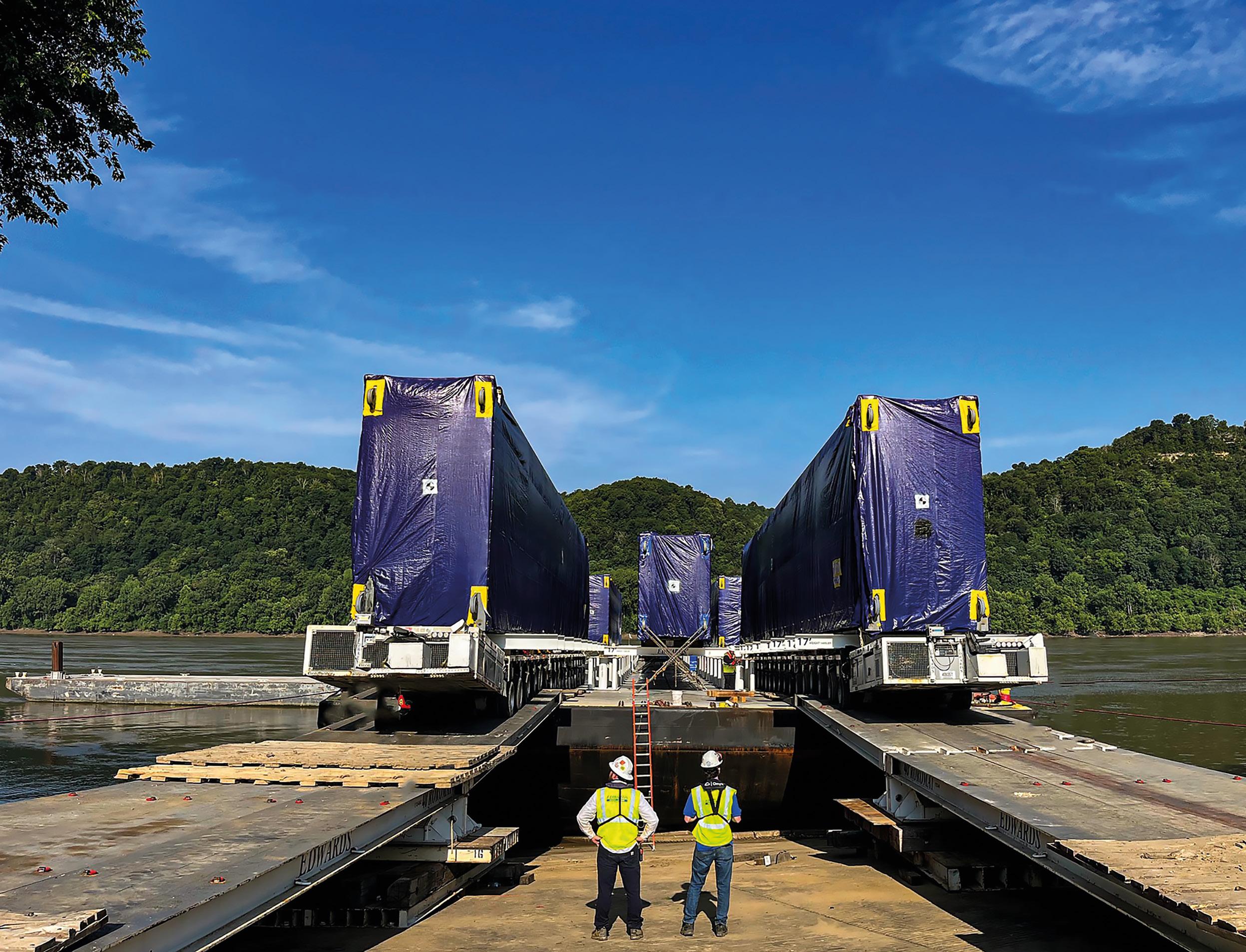
Evaluating transport modes at the package level, rather than shipment by shipment, allows projects to capture these benefits without introducing undue risk.
Packaging is often overlooked, yet it directly affects transport emissions. Over-packaging increases both weight and volume, driving higher fuel consumption. Working with suppliers to standardize packaging, improve stackability and adopt reusable or returnable solutions can reduce emissions while also lowering site waste and handling effort. For repeat equipment and bulk materials, these changes are typically low risk and economically attractive. Defining packaging standards helps reduce weight and waste, while protecting the cargo.
Looking ahead, decarbonizing logistics will increasingly be driven by integration rather than disruption. Carbon-aware planning tools are becoming more accessible, allowing emissions to be tracked alongside cost and schedule. At the same time, owners are beginning to embed emissions performance into contracts and procurement decisions, shifting expectations across the supply chain.
From a practical perspective, decarbonizing project logistics is less about radical change and more about disciplined execution. By treating logistics as a system to be optimized, instead of a constraint to be accepted, projects can move beyond offsetting and achieve real, measurable emissions reductions. Combined with emerging technologies such as alternative energy sources and more efficient transport equipment, these measures enable industrial projects to improve overall performance while significantly reducing their environmental footprint.
Simon-Pierre Lefebvre is a logistics coordinator at Hatch, where he has spent the past two years supporting complex and large-scale projects across various industries. His experience ranges from developing logistics strategies for a remote mining project to managing the movement of industrial tailings and other materials.
ESTA director Ton Klijn on a pivotal moment for heavy transport
Good news can seem hard to come by in these difficult times. We have all our fingers crossed, but it is just possible that the coming weeks and months will see the most positive reforms of Europe’s heavy transport regulations in a generation.
The cause of my cautious optimism is two pieces of important European legislation currently making their way through the Brussels bureaucracy.
The first is the proposed revisions of the EU’s Weights and Dimensions Directive. This sets the maximum allowed size and weight of heavy goods vehicles operating within the European Union. Intended to support the single market by allowing trucks to move freely across EU borders, the mandate has proved ineffective, with many member states introducing local regulations of their own.
However, we are delighted to see that the current revised directive contains a series of measures that have been long called for by ESTA and Europe’s heavy and abnormal transport companies.
At Breakbulk Europe: Join Ton Klijn as he introduces the European Trailer Operator License (ETOL) and its role in reducing risk on complex projects.
Thursday, June 18
Breakbulk Voices Stage 10:30am-10:50am
In January, Cyprus took over the Presidency of the Council of the EU and officials have reassured ESTA that they regard the reforms as a priority and believe the process will be completed before the end of June.
The revisions could be transformative for our industry. They include:
• a “one stop shop” per country for permits
• standardized permit application forms
• use of electronic permits
• harmonization of escorting rules and vehicle markings
• permitting systems to be available in all EU languages
The second related reason for our cautious optimism is the EU’s Military Mobility Package. Expected to take several more months to come to fruition, the package aims to create a system of efficient and common heavy transport regulations for both military and industrial use. Crucially, it contains proposals for a network of pan-European transport corridors, again something that we at ESTA have been requesting for many years.
Such routes will necessarily integrate road, rail and water infrastructure, but we sincerely hope that national and sectoral differences can finally be put to one side for the greater benefit of all.
It is, of course, tragic that the urgency to introduce such reforms has only been seen in a time of crisis. But (assuming that they do not fall at the last moment) the revisions to the directive and the Military Mobility Package will represent a huge step forward for our industry, significantly boosting both efficiency and safety.
ESTA is the European Association of Abnormal Road Transport and Mobile Cranes, an industry body with 117 member organizations across 25 countries.
Q: Can you tell us a bit about your background and what led you into the events and breakbulk world?
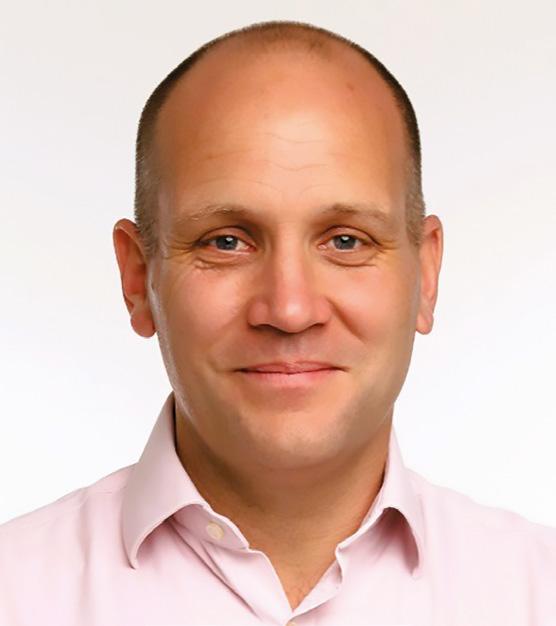
DL: I’ve spent my career in the events industry, working across largescale international exhibitions and conferences, always focused on bringing industries together to create meaningful connections and business opportunities. What drew me into the breakbulk world is the sheer scale and complexity of the sector, and the critical role it plays in global trade. It’s a highly collaborative industry, and that aligns perfectly with what events are designed to do: Connecting people, ideas and opportunities in one place.
Q: What excites you most about taking on this position?
DL: Taking on this new role is incredibly exciting. I’m bringing a wealth of experience in delivering and growing major events, but what really stands out is the opportunity that Breakbulk Europe represents. It’s already such a well-established and respected platform, and my focus is on continuing to delight and deliver for our customers, ensuring they see real value, whether that’s through business generation, networking or insight. There’s huge potential to build on that strong foundation.
Q: Breakbulk Europe continues to go from strength to strength. What do you think is driving that momentum?
DL: Breakbulk Europe continues to go from strength to strength, and a big part of that is the community. This is a growing and evolving industry, and the event reflects that momentum. What has really struck me is the level of advocacy. People genuinely want the event to succeed; they participate actively and see it as their platform. That sense of ownership is powerful. We’re seeing that translate into growth too, with the show around 18% bigger this year and targeting over 12,000 attendees — a strong indicator of the industry’s confidence and engagement.
Q: For first-time exhibitors, what’s your top piece of advice?
DL: For first-time exhibitors, my biggest piece of advice is that success comes down to planning. Be clear on your objectives — what do you want to achieve from the event? Whether it’s lead generation, brand awareness or relationship building, shape your presence around that. Create a strong offering that will attract the right audience and make sure your team is fully briefed and aligned on those goals. And importantly, use us, we’re here to help. Our client engagement teams work closely with exhibitors to make sure they get the most out of their investment.
Q: What should long-time attendees look out for that they haven’t seen before?
DL: For long-time attendees, there are some exciting new elements to look out for this year. The new Breakbulk Voices theatre will bring more practical, realworld insights and fresh perspectives to the program, complementing the broader strategic discussions on the Breakbulk Live stage. We’re also continuing to grow the NextWave program, which celebrates and supports the next generation of industry leaders — something vital for the future of the sector.
Q: When you’re not working, how do you like to spend your time?
DL: Outside of work, I like to keep things simple. Spending time with family is a big priority, and I enjoy running and playing golf whenever I get the chance.
Questions about the event?
The Client Engagement Team is here to help. Contact them at breakbulksupport@breakbulk.com HYVE News
Deconstructing the world’s most asked and least honestly answered question.

By Vivien Puppa Kocsis
“How are you?” is one of the world’s most asked questions. There are different variations globally, from the oddly specific “Have you eaten rice yet?” in parts of Southeast Asia, through the poetic “What is your color?” in parts of the Arabic world, to the avoid-asking-personal-questions-at-allcosts “What’s the news?” in my native Hungary. And let’s not even mention the shipping industry’s favorite term: “Ahoy!”
Yet, controversially, “How are you?” is probably the least honestly answered question globally. Socially acceptable responses for the above questions are fine/yes/fine/not much and … “Ahoy!” In fact, young Hungarian teenage girl me, visiting the USA for the first time, caused a small social shock when I actually answered the “How are you?” question. It was a Walmart cashier teenage boy who asked me that, and young me said “tired.” Cultural clash ensued. I was shocked he asked me such a personal question, he was shocked I answered.
To clarify, I am not advocating that you go into a Walmart or walk around the floors of Breakbulk Europe and reveal your life story to every person who says “Hi, how are you?” What I am advocating for is that you answer the question “How are you?” to the most important person in the room: yourself.
Humans are great at understanding and mapping out a variety of very complex things; however, we are surprisingly bad at consciously understanding ourselves. For instance, “feeling tired” is a blanket term for millions of signals from our various body parts that our brain collects, processes, summarizes and communicates to our conscious self. And then the conscious self simply responds: “Nah, I just need some coffee.”
Even on a high level, there are four types of tiredness:
1. Physical: Are you walking around in uncomfortable (but very fashionable!) shoes the whole day at Breakbulk Europe? The physical exercise of walking around probably created some microscopic tears in your leg’s muscle fibers, which the brain translated as pain. That is physical fatigue. Coffee won’t fix that.
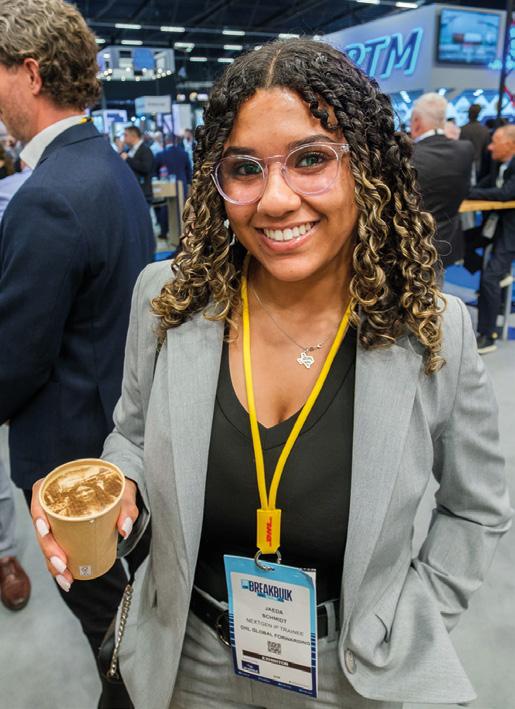
2. Mental: Listening to indepth Breakbulk panels and reading amazing articles, such as this one? Your prefrontal cortex, the part of your brain behind your forehead responsible for processing complex information, gets ineffective at cleaning itself from toxic byproducts and slows down. This is mental exhaustion. Coffee may mask this temporarily.
3. Emotional and social: Introverted but need to network for your career? I feel you. Various emotions and mental states, such as stress, fear and anxiety, can make you feel exhausted even if you lie in bed all day long. Coffee is just a placebo here.
4. Motivational and meaning-related: Finally, lack of motivation and loss of meaning can feel like tiredness. In severe cases, we refer to this as “burnout.”
We are not really used to categorizing tiredness to this level. Furthermore, unfortunately, no single activity or secret potion addresses all the types of tiredness. Sleep helps physical and mental fatigue but does not address emotional and motivational exhaustion. Journaling addresses emotional and motivational but does not address physical and mental. And don’t get me started on coffee. So maybe a better and more achievable reenergizing solution starts with understanding which kind of tiredness we have, what likely caused it, and what is the solution that typically works for us to manage it.
So I am inviting you for a little exercise: Close your eyes (well, after you finish reading this article), mentally scan the sensations across your body, and ask yourself the question: “How are you?”
Vivien Puppa Kocsis is an award-winning Harvard-educated scientist, applied mathematician and Guinness World Record endurance athlete. She is the keynote speaker at this year’s Women in Breakbulk event at Breakbulk Europe.

For event schedule, visit https://europe. breakbulk.com/page/women-in-breakbulkeurope-edition
THOUGHT LEADER
For logistics, the winners will be those that can pivot fastest
By Tyler Sullivan, EVP Defense Solutions, ICAT Logistics
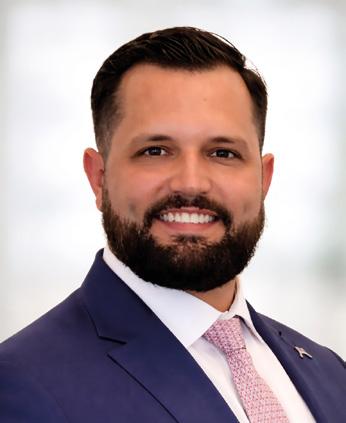
The global supply chain disruption and extended impacts from the Iran conflict is much broader than a single chokepoint.
While the Strait of Hormuz remains central to the current issue, the real pressure stems across surrounding countries and regions as well. Port closures, airspace restrictions and shifting security postures are forcing a major shift in how freight moves. Direct and predictable flows into the Gulf region are now severely fragmented, requiring non-standard routing and more complex, on-the-ground execution. This is primarily impacting hyperscalers, defense contractors and energy operators, as their supply chains depend on precision, speed and continuity.
The Strait of Hormuz remains the anchor point, but the disruption is regional. Ports are intermittently unavailable or operating at reduced capacity. Airspace closures are forcing carriers to utilize longer and less efficient routes. Border crossings that were once routine now involve increased scrutiny and evolving requirements. For hyperscalers, such as Amazon and Microsoft, impacts delay server rack deployments and data center build schedules. For defense, they affect sustainment timelines and mission readiness. For energy organizations, these disrupt the movement of critical equipment tied directly to production and infrastructure uptime.
This volatility is expected to persist for the next 90 to 180 days. Even if maritime traffic stabilizes, surrounding infrastructure will take even longer to normalize. Governments will continue adjusting policies, customs authorities will tighten controls and carriers will price in risk while limiting overall exposure. Standard routing guides are no longer reliable, and execution requires constant adjustment across all three sectors.
The necessary shift is both operational and strategic. Organizations must move away from fixed routing strategies and adopt flexible, contingency-based planning instead. That
means identifying alternate entry points and understanding how cargo can move inland through neighboring countries, which often involves bonded movements, temporary imports, duty exemptions and coordination across multiple customs authorities. What was once a single-country move may now span three or four.
At this stage, pre-approval of these routes is essential. These sectors cannot afford to build solutions mid-shipment. Alternate routes, documentation requirements and clearance processes must be mapped in advance. This includes aligning with brokers, validating compliance requirements and ensuring every move can withstand scrutiny in a more controlled and regulated environment.
Execution discipline is now the differentiator. Real-time visibility, proactive communication and rapid response capabilities are critical. When mode conditions shift, teams must pivot immediately. Hyperscalers cannot afford downtime, defense operations cannot risk sustainment gaps and energy operators cannot absorb disruptions to production. Each sector requires a dedicated control tower approach with clear ownership, defined escalation paths and continuous monitoring across every move.
The takeaway is straightforward: Logistics in this region is no longer about efficiency alone, but adaptability under pressure. Organizations that can manage complex, non-standard routes while maintaining control will continue to operate effectively. Those relying on traditional models will not.
This is the new baseline. For these sectors, supply chain flexibility is no longer an advantage, it’s an operational requirement.
ICAT is a global leader in specialized logistics, delivering customized solutions to industries where failure is not an option. With 65 offices and operations in 190 countries, ICAT supports sectors including live events, luxury, technology, defense & aerospace, life sciences and finance. ICAT was acquired by New Atlas Capital in 2024.
Equipment Innovation
Without legacy engineering constraints, this new “advanced” SPMT offers reduced emissions and compatibility with existing hydraulic fleets
As the project cargo sector intensifies efforts to decarbonize heavy transport operations, one category has remained particularly difficult to electrify: the self-propelled modular transporter (SPMT). Long dependent on dieselhydraulic systems, SPMTs sit at the center of some of the world’s largest industrial and infrastructure projects, yet commercially viable zero-emission alternatives have been notably absent.
A Chinese technology company believes it has an answer.
By Leslie Meredith
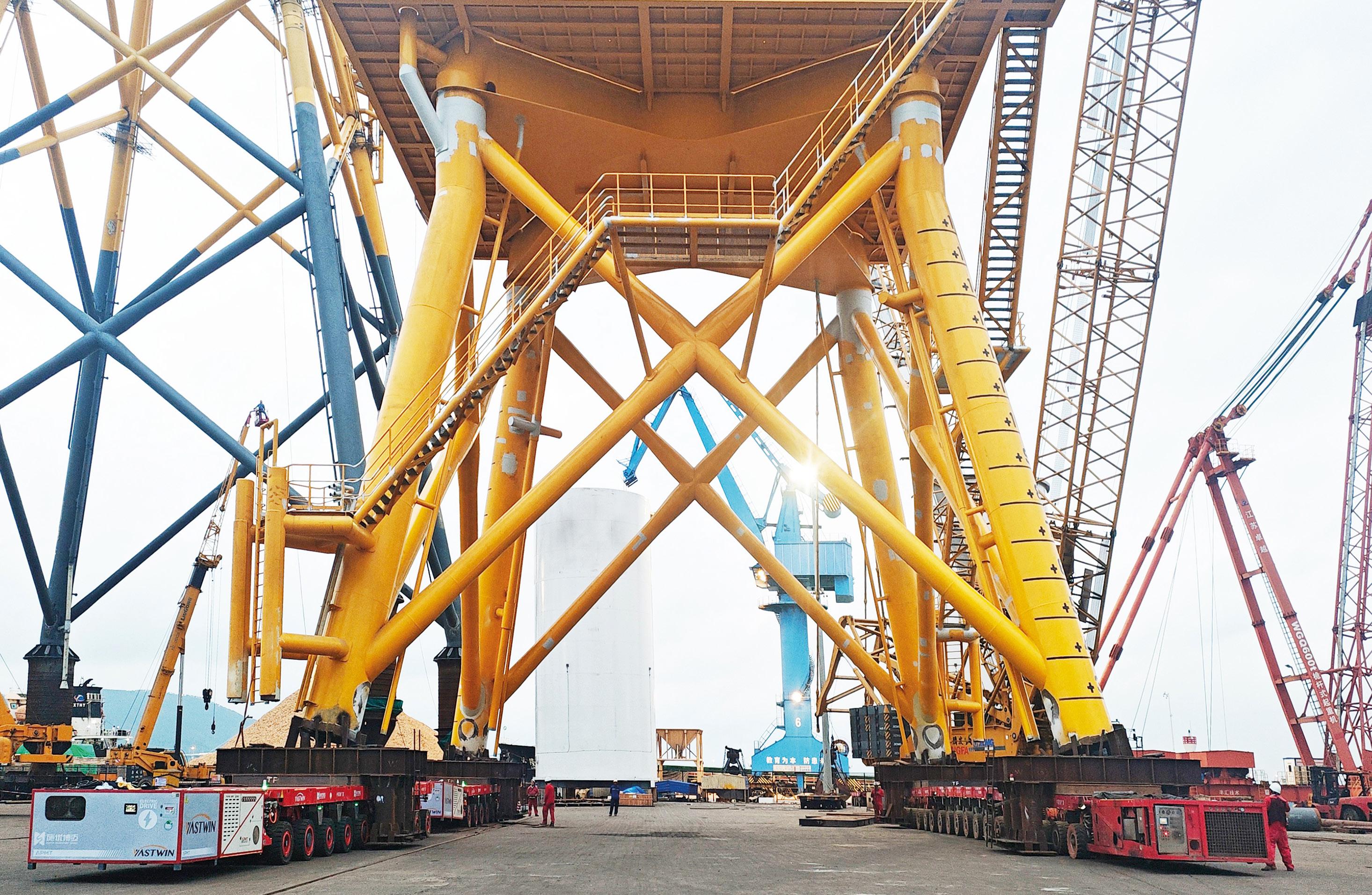
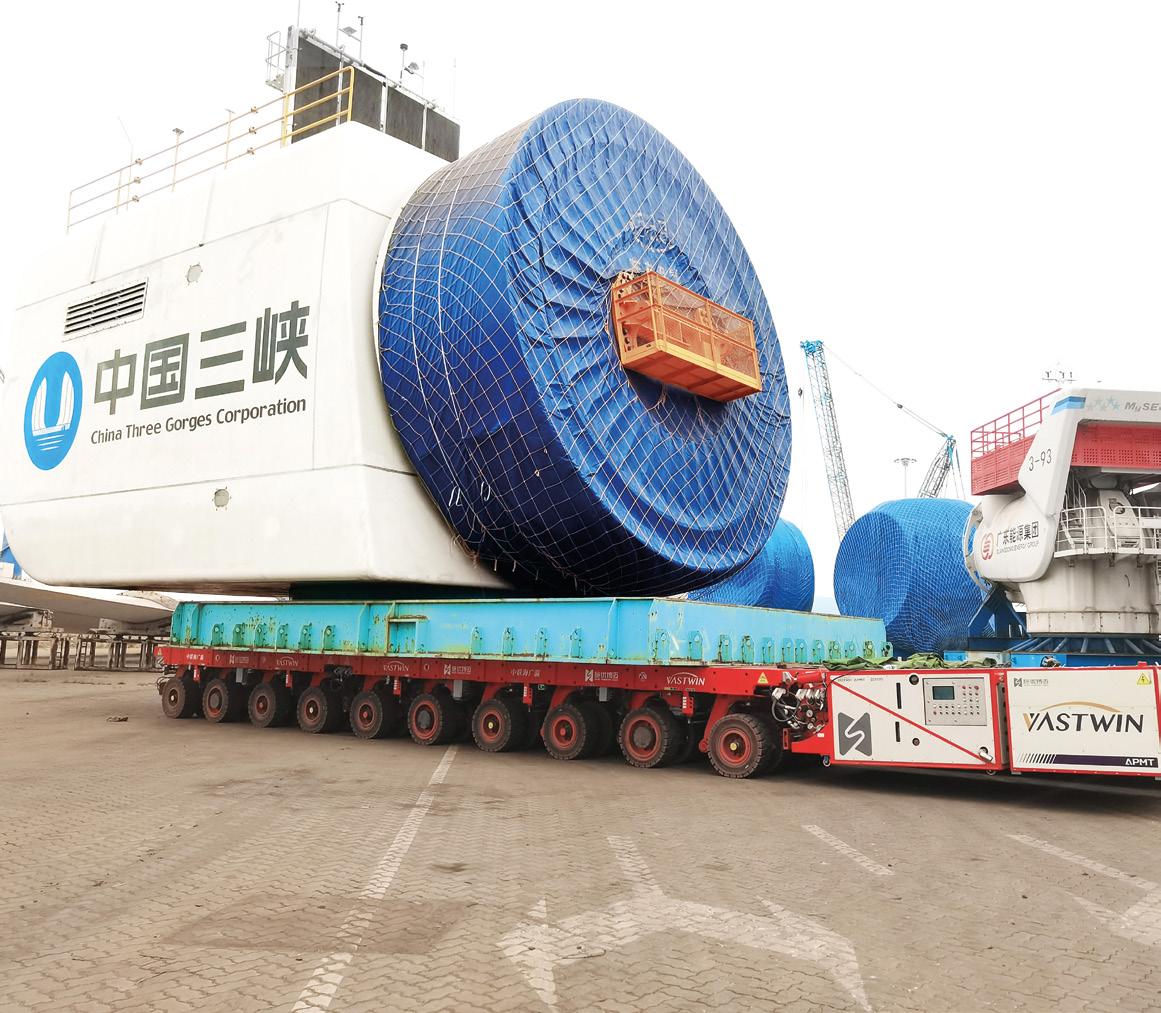
Founded in 2024 in Xuancheng, Anhui Province, Anhui SuperTransport Heavy-Load Robot Co. Ltd. has introduced the APMT (Advanced Power Modular Transporter), what the company describes as the world’s first fully electric-driven intelligent modular transport platform designed for heavyhaul and project logistics applications.
The platform has received CE certification and is being codeveloped with VASTWIN. Super Transport Robot is currently expanding international distribution partnerships for the
APMT. The platform has already launched deployments in sectors including offshore wind, petrochemicals and port logistics in China.
Now the company says it’s ready for the world. The SPMT market is highly competitive, led by two Germany-based companies, Scheuerle, part of the TII Group, and Goldhofer, along with Italian firm Cometto, part of the Faymonville Group. Notably, the APMT can work with existing SPMTs, ensuring no stranded assets.
“Importantly for fleet operators, the APMT has been designed to operate alongside conventional hydraulic SPMTs in mixed fleet configurations, allowing companies to introduce electric units incrementally rather than fully replacing existing assets,” Ziguang Jin, spokesperson for Vastwin, told Breakbulk in an exclusive interview.
Unlike conventional hydraulic-drive SPMTs, the APMT uses a proprietary integrated electric motor axle architecture powered by permanent magnet synchronous motors. By eliminating the traditional diesel power pack and large-scale hydraulic transmission systems, the platform significantly reduces mechanical complexity, maintenance requirements and operational emissions. Based on 1,500 annual operating hours, the company estimates that a single unit can reduce CO2 emissions by approximately 118 tonnes annually compared with a conventional hydraulic-drive SPMT.
The simplified electric architecture also reduces hydraulic pipework and mechanical connection requirements, which the company says can significantly lower labor and maintenance costs.
The design was made possible by starting with a clean-sheet electric platform rather than adapting legacy hydraulic products. As a new entrant without an installed fleet base to maintain, the engineering team was able to prioritize electrification from the outset. “As a new company, we had no legacy architecture to defend and no installed base to accommodate,” said George Ge, founder of Super Transport Robot.
The six-axle-line platform carries up to 255 tonnes and is equipped with a 400.61 kWh CATL lithium iron phosphate battery system operating at up to 700 volts. Dual-port
fast charging enables the unit to reach 80% capacity in approximately two hours.
Beyond emissions reduction, the company positions the platform around operational efficiency. Independent electric drive systems remove extensive hydraulic pipework and reduce potential failure points, while operating noise remains below 65 decibels, which has become particularly important for urban infrastructure projects, ports and energy facilities operating under stricter environmental standards.
The timing aligns with increasingly stringent regulations focused on a path to zero carbon emissions. EPC contractors, port operators and specialized transport companies are facing growing customer scrutiny around Scope 3 emissions, ESG targets and low-emission project delivery requirements, particularly in Europe and parts of Asia. The APMTs provide verifiable metrics for reporting.
Today’s models incorporate AI-enabled functions including route planning, environmental monitoring, risk analysis and multi-unit coordination. “These functions are designed to improve fleet coordination and operational planning across complex project environments,” Jin said.
No company can afford to stand still in an evolving industry, and Anhui SuperTransport Heavy-Load Robot Co. is working on another world first: the self-driving APMT. Stay tuned as Breakbulk follows the company’s progress in future reporting.
Mark Rosenberg, EVP Ports & Terminals, Europe at DP World, explains how smarter, connected supply chains can help Europe deliver on its infrastructure, energy and industrial ambitions
Europe is entering a period of renewed investment in infrastructure, energy and industrial capability. Investment in infrastructure alone has grown from around €91 billion in 2014 to about €487 billion in 2025, according to McKinsey. Across the continent, governments and businesses are looking to modernize transport networks, accelerate the energy transition and strengthen regional supply chains.
Despite recent growth, Europe’s construction sector shrunk by 2% last year, slowing civil infrastructure projects such as road and bridge upgrades. Its energy sector tells a similar story; according to the International Energy Agency (IEA), the European Union (EU) invested nearly US$400 billion in clean energy last year, without matching the speed of infrastructural development. Its industrial economy, facing rising fuel prices and tightening carbon regulations, is also struggling to stay competitive.
This is not happening in isolation. Global trade is becoming less predictable. Supply chains are shorter, more regional and more complex. Goods no longer travel in a straight line from port to port,
moving instead across multiple transport modes and borders.
When it comes to trade, Europe is facing challenges related to energy and the cost of goods, but an equally important issue is how goods move around the continent.
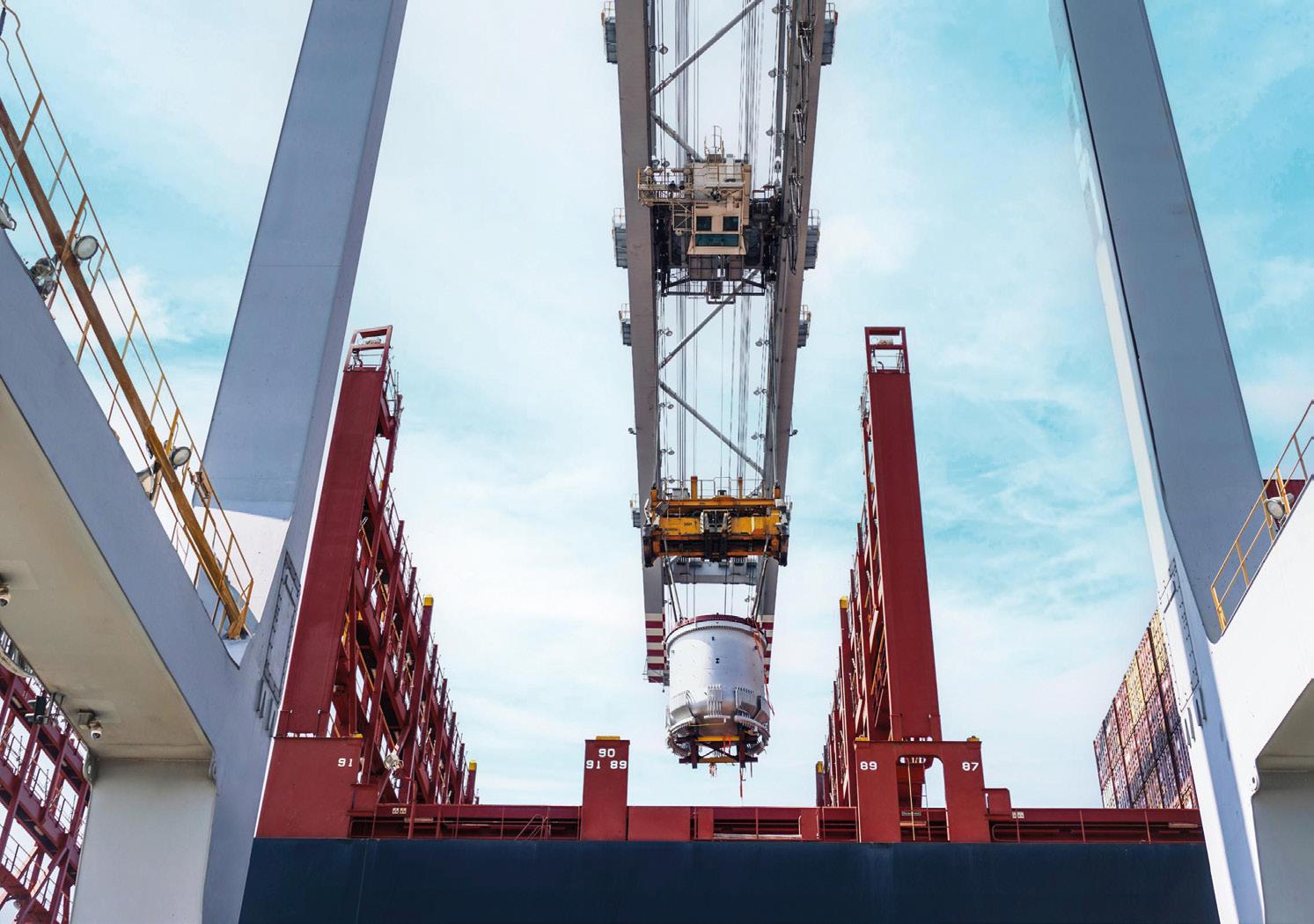
Europe needs supply chains that can safely handle large, complex cargo, such as wind turbines, generators and heavy machinery, while having them reach their destinations on time. In a multimodal system, success depends on how well these flows are connected and not just how efficiently they pass through a single point.
Europe’s industrial ambitions are putting pressure on the region’s
breakbulk supply chains. At last year’s Breakbulk Europe main stage panel on overcoming bottlenecks, “bureaucracy” was cited as the biggest barrier to cargo flows.
Edi Cioran, CEO of DP World Antwerp Gateway, went further, describing Europe’s urgent need for modernized, integrated breakbulk infrastructure to meet the demands of its energy sector alone.
Global disruption — from geopolitics to climate issues — is adding further strain as reflected in our Global Trade Observatory survey, which interviewed 3,500 supply chain decision makers. In this, customs and border control were highlighted as the main causes of disruption, while one of the top response strategies was to diversify supply chains to create more agility.
Reliable infrastructure has become ever more essential. And while ports are critical, they are only one part of the journey. Oversized cargo still needs to move inland, cross borders and reach their final destination. As supply chains evolve and adapt, the ability to connect maritime transport with rail, road and inland waterways is becoming the key advantage.
If Europe wants breakbulk to move with greater certainty, those who can deliver seamless multimodal solutions for customers will likely win the race.
Resilient breakbulk supply chains require specialized handling across multiple touchpoints. To keep this cargo moving smoothly, two things are essential:
• The right capacity and equipment to handle and transport large cargo.
• Digital systems that track cargo and simplify cross-border processes.
Demand for these integrated solutions is growing fast, with the multimodal transport market expected to expand to more than US$60 billion by 2032.
That is where our role becomes distinctive. Across Europe, we combine specialist breakbulk capabilities with ports, inland terminals and transport networks into one connected system. This helps our customers reduce gaps between port, border and destination.
Digital tools play a key role. Our proprietary systems like ZODIAC connect operations across breakbulk terminals and transport routes in real time, improving visibility, reducing delays and making the handling of complex, non-standard cargo more predictable.
But visibility alone is not enough. Breakbulk cargo needs a clear, reliable route from port to final destination. We connect our port operations with inland terminals and multimodal transport networks, linking road, rail and river corridors. For example, in Romania, our Constanta terminal works in tandem with the Aiud inland hub to move oversized cargo deeper into Europe with fewer hand-offs.
This is supported by centralized coordination. Our European Control Tower in Bucharest, supported by integrated services such as groupage, brings together road, maritime, air and rail transport into one system, improving planning and response times in times of disruption.
As trade becomes more complex, reliability will define competitiveness. Ports will always matter. But what matters even more is how well they are connected.
Ultimately, Europe’s success will depend on its ability to link transport
modes, simplify processes and keep cargo moving, even during disruption.
To learn more about the future of multimodal transport solutions, visit: https://www.dpworld.com/en/insights/ multimodal-transport-future-of-trade
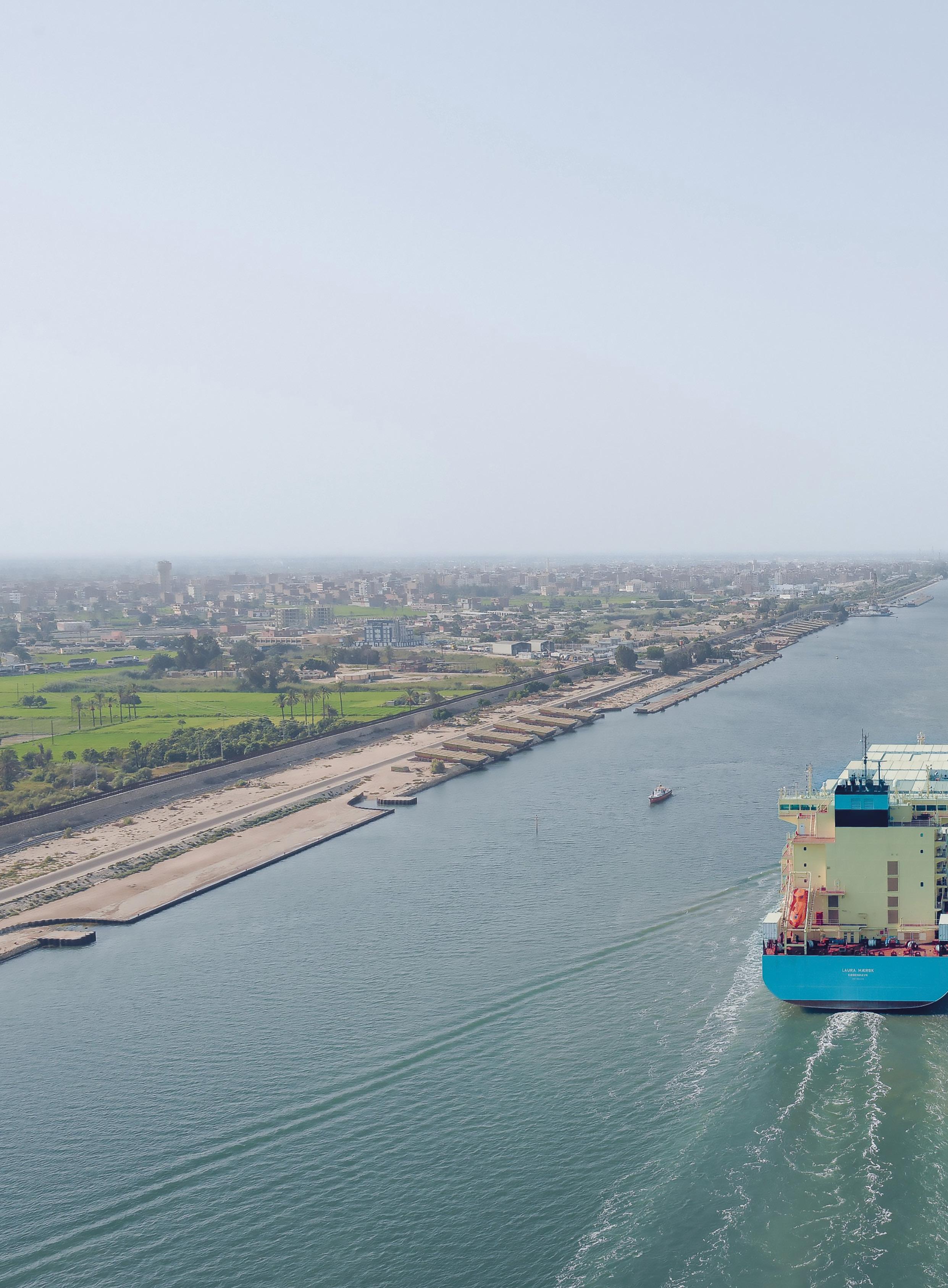
International trade depends on a handful of narrow waterways, and when they’re hit by disruption, the effects are felt across the whole system. From the Singapore and Malacca Straits, a single, high-traffic corridor moving a quarter of global seaborne trade, to the Strait of Hormuz, where blockades this year have throttled energy and industrial supplies, these passages are vital to keeping global trade and commerce moving smoothly.
Geopolitical instability is often the catalyst for operational disruption: The Suez Canal remains the fastest bridge between Asia and Europe, but recent shocks have shown how quickly efficiency can give way to delay, while the Black Sea is now a high-risk environment since Russia’s invasion of Ukraine. The Panama Canal highlights a different pressure point: climate, where water levels now determine shipping schedules. In Europe, the Strait of Gibraltar and the English
At Breakbulk Europe: Geopolitics in Action: The Domino Effect on Trade Routes
Wednesday, June 17
Breakbulk Live Stage 10:30am-11:20am
By Amy McLellan and Simon West
Channel handle dense, complex traffic with little room for error. Together, these chokepoints form the backbone of global logistics, where resilience has emerged as the industry’s defining priority. Read on as we navigate the world’s most critical maritime chokepoints, and the risks and opportunities shaping them today.
Singapore not only hosts one of the world’s largest and advanced refining
complexes, but it is also the world’s leading maritime bunker hub, supplying more marine fuel than any other port globally and making it a central node in global energy logistics. Little wonder that the Singaporean government invests heavily in surveillance, enforcement and maritime security infrastructure to keep the waterway open. From a navigational and commercial standpoint, the Singapore Strait serves as the natural entry and exit point of the Malacca Strait, and together they operate
effectively as a single, continuous waterway. And what a waterway: It’s responsible for carrying 25% of global maritime trade. While the Singapore segment holds exceptional significance for global bunker supply, the Indonesian and Malaysian portions constitute the true strategic chokepoint due to their narrow passages and concentrated vessel traffic.
“The Malacca and Singapore Straits form one of the world’s most critical maritime corridors,” said Marc Willim, global head of chartering at
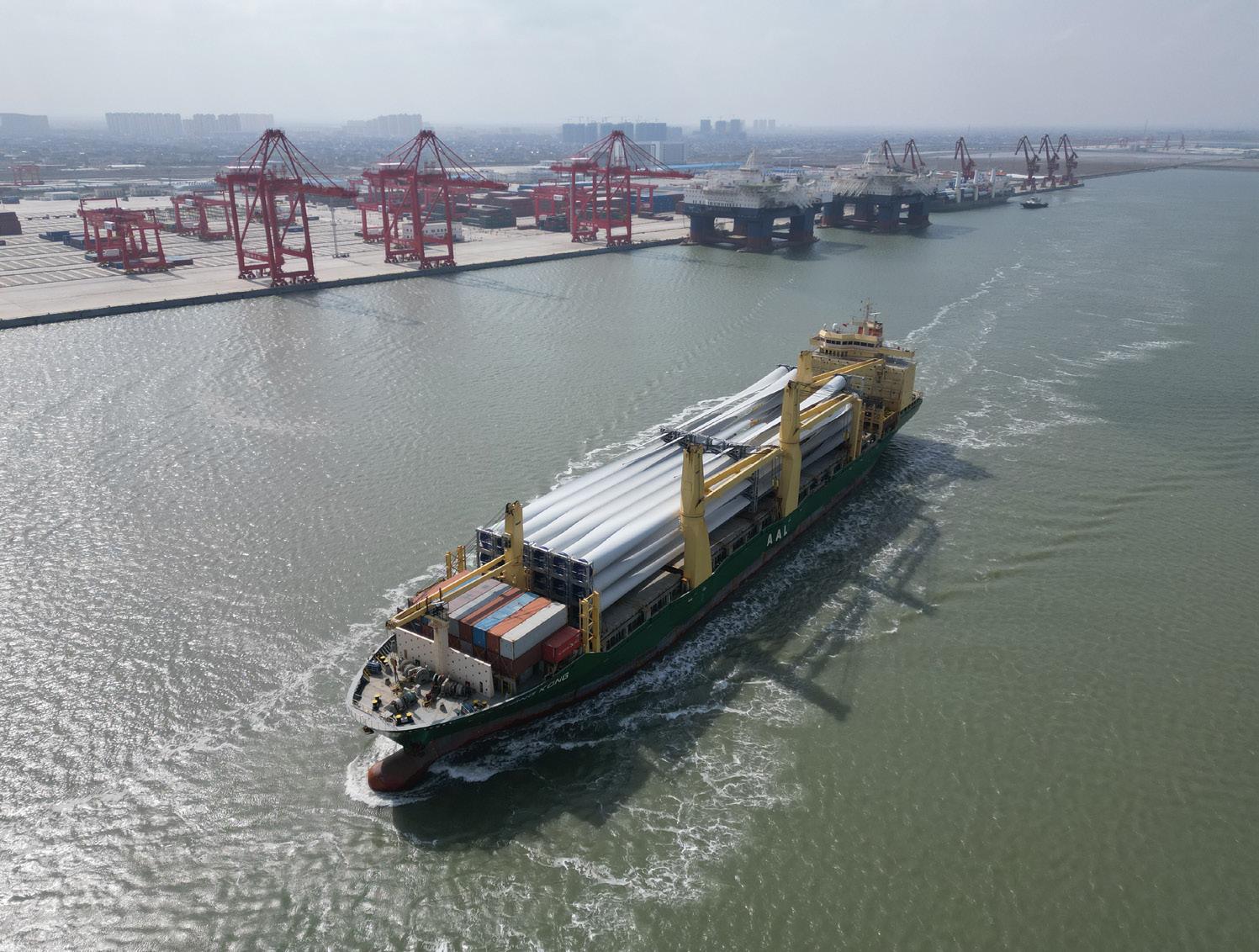
AAL Shipping , which sends about 60 vessels through the straits each year, placing the company among the many operators navigating one of the busiest maritime zones worldwide. “It’s comparable in traffic density to the English Channel.”
While piracy in the Malacca Strait has been significantly reduced over the past decade, occasional incidents still occur.
“These are typically limited in scope, often involving theft of paint and ropes and primarily affecting vessels at anchor rather than those in transit,” Willim said, adding that such incidents bear little resemblance to the more severe piracy events historically seen in regions such as the Gulf of Guinea or off the Horn of Africa.
He attributes this to efforts by the adjoining states (Indonesia, Malaysia and Singapore) to maintain robust and coordinated patrol regimes involving naval and air force assets.
“These joint security initiatives have been effective in mitigating threats and ensuring navigational safety,” said Willim. “At present, there is no indication of any imminent risk that would disrupt or block the Malacca Strait; only a deliberate intervention by a major global power could realistically impede traffic.”

If there were any lingering doubts about the strategic importance of the Strait of Hormuz, then the military conflict between the U.S and Israel on one side and the Islamic Republic of Iran on the other will have dispelled them.
At the time of writing, this narrow passage separating the Arabian Peninsula and Iran remained effectively closed to most international shipping. The blockade has triggered a severe global shipping crisis and the largest disruption to energy supplies since the 1970s. It has also led to mounting shortages of vital materials such as petrochemicals, fertilizers, aluminum and helium.
Hugh Cox, chief commercial officer at breakbulk-handling RAK Ports in Ras Al Khaimah, the closest
major port in the UAE to the Strait of Hormuz, pointed to the waterway’s additional role in supporting major manufacturing and EPC hubs that supply projects across the U.S., Europe, Africa and the Indian subcontinent.
“Realistically, you’re talking about a shipping channel that’s only around three to five kilometers wide. And without that access, you get a buildup of pressure. Right now, there’s effectively a chokehold — we can’t access vessels to move that freight out. But what you’ll see, once things open up, is a surge. Cargo is still being manufactured and then effectively banked. As soon as the Strait reopens, there will be a rush to move it, and a clear knock-on effect as everyone tries to push volumes out at once.
“It’s a critical piece of natural infrastructure, and the world needs it to be open, whether from an energy, project, cargo or manufacturing perspective.”
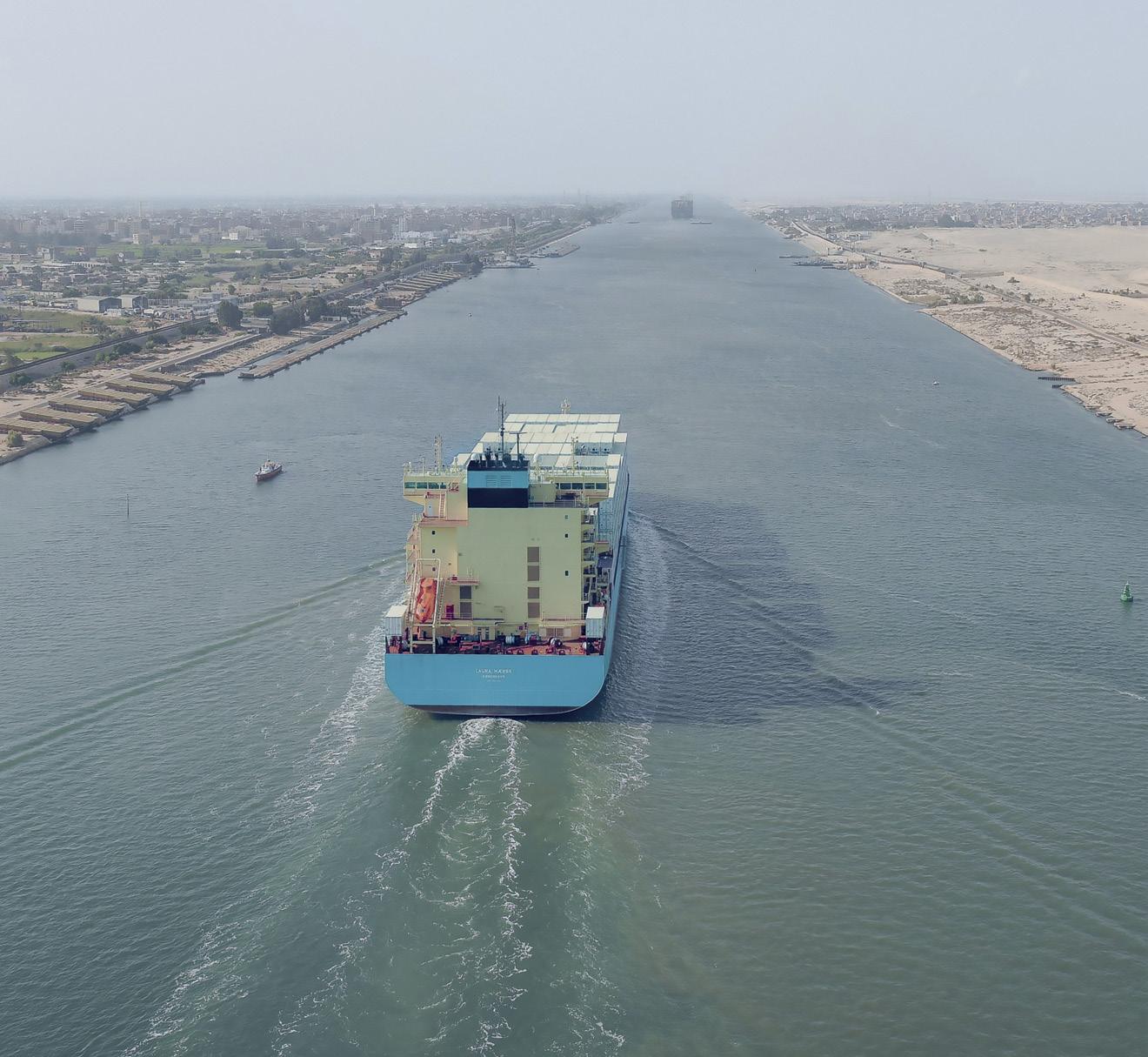
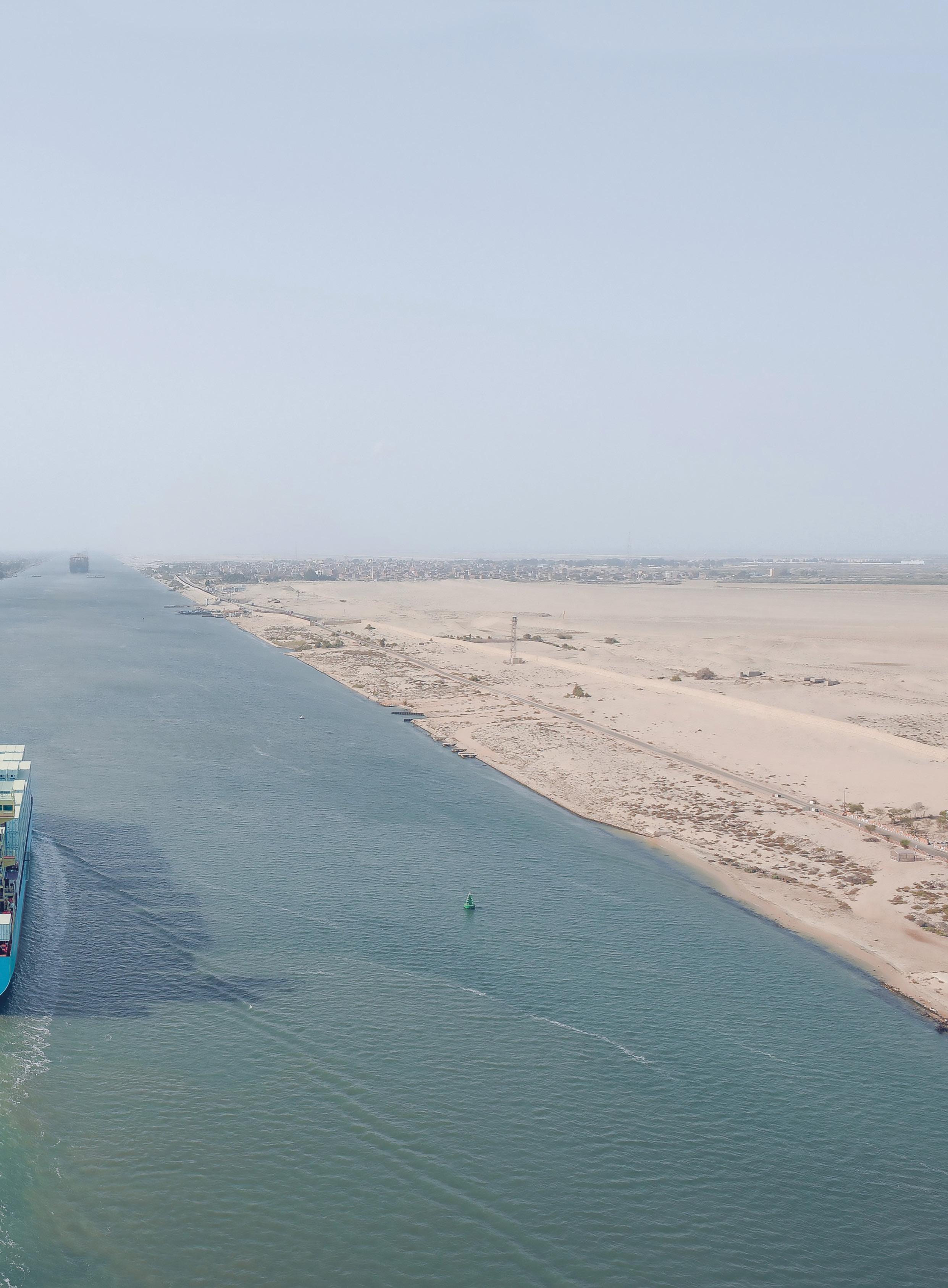
The Suez Canal is one of the most critical maritime chokepoints in the global logistics system. Roughly 12–15% of international trade passes through the canal, including about 30% of global container traffic, with cargo moving through the canal estimated to exceed US$1 trillion annually.
Strategically, the canal provides 10–14 days shorter transit times on Asia–Europe routes, which means significant fuel savings, lower vessel operating costs and reduced emissions. The waterway has seen a number of disruptions in recent years, most notably the Evergreen blockage in 2021 and the Red Sea Crisis that started in late 2023 when a wave of Houthi attacks targeted commercial vessels and tankers.
“Despite these disruptions, the maritime industry has shown remarkable adaptability, with Cape of Good Hope rerouting, alternative transshipment hubs and adjusted vessel deployment and
schedules,” said Rafael Vicens, head of Maersk Project Logistics, IMEA.
Vessel owners, he said, have adopted additional precautions, including war risk insurance, real-time security intelligence and route diversification tactics, while the wider supply chain has shown strong resilience.
“Many project cargo shippers have adapted by building more schedule contingency into EPC logistics and staging cargo through regional hubs (Middle East, Mediterranean),” Vicens said, adding though that all of this comes at a cost in longer transit times, higher freight rates and increased uncertainty.
“For project cargo, chokepoints like the Suez Canal are not just about transit time; they are about schedule certainty,” Vicens said. “When you are moving turbines, reactors or mining equipment, a delay of even a week can impact construction timelines worth millions of dollars per day. What we are seeing now is a shift in mindset; logistics planning is moving away from pure efficiency toward resilience, with more contingency routing and earlier planning built into major projects.”
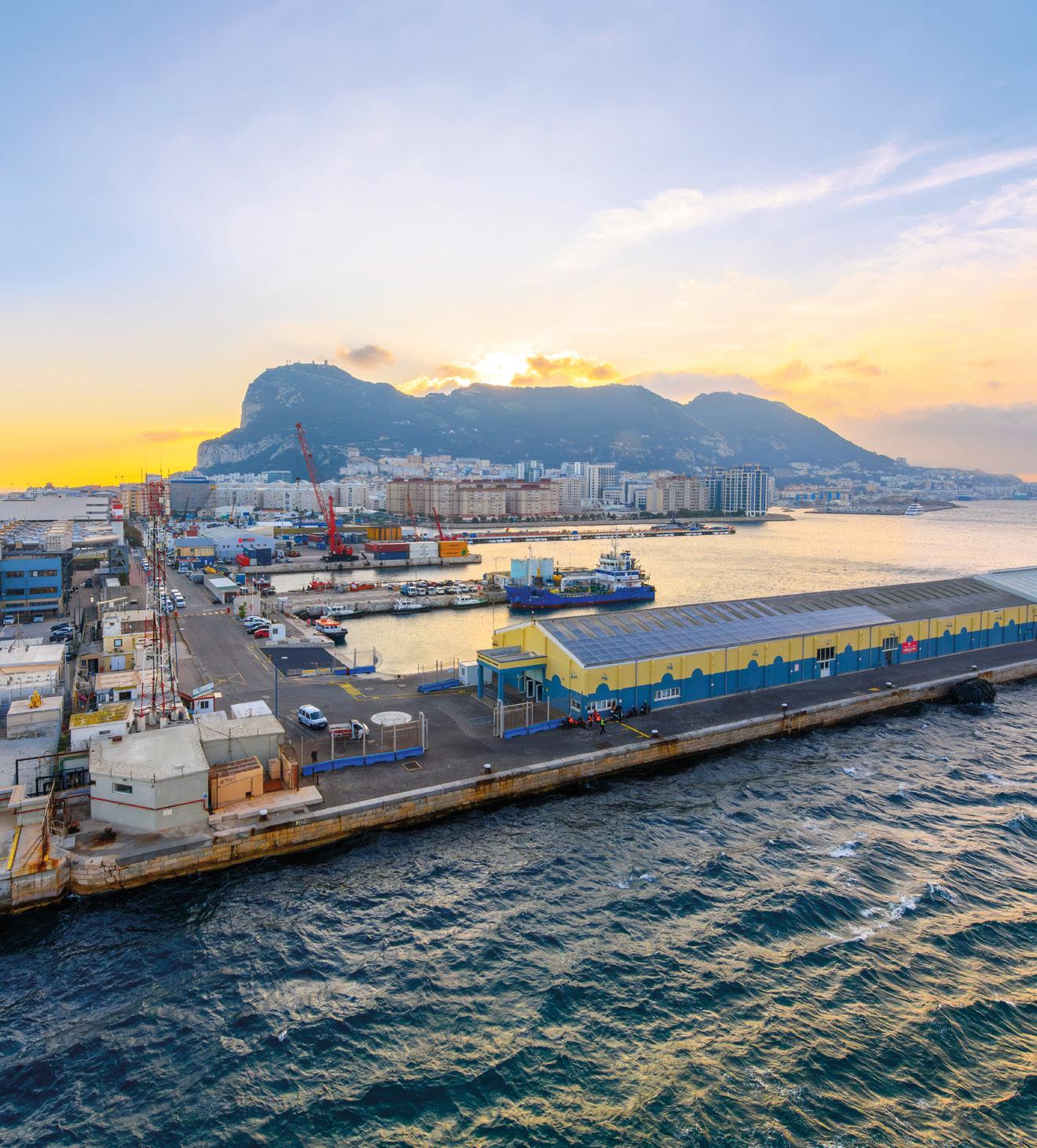
The Strait of Gibraltar carries more than 10% of global maritime trade by value and is the sole link between the Atlantic Ocean and Mediterranean Sea. And while it is a low-profile chokepoint, according to Tim Killen, head of growth for projects at Fracht Group, the Strait “combines natural, operational and geopolitical risks in a way that makes it deceptively fragile.”
Some 300 ships per day pass through the waterway, with a mix of ocean-going vessels, tankers, ferries and naval traffic, meaning there is a risk of collision and delay. Navigation can be challenging with strong opposing surface and deep currents as well as frequent high winds, which complicates maneuvering, especially for large vessels.
With no alternative western sea route into or out of the Mediterranean, if the Strait of Gibraltar became blocked or unusable then vessel traffic would effectively be stuck. “It is a low-profile shipping area, with a low-frequency disruption, but as the Straits have very little redundancy capacity in the event of disruption, the impact could be very high,” Killen said.
The Black Sea sits at a strategic crossroads linking Eastern Europe with Western Asia, and forms a key stretch of the Middle Corridor, a 7,000-kilometer overland and maritime route connecting China to Europe and bypassing Russia.
The waterway has long been a vital artery, not just for bulk commodities, but also for oversized and specialized cargoes moving across the region.
Since Russia’s invasion of Ukraine, however, the Black Sea has become a more complex and high-risk operating environment. According to Hans-Kristian Pedersen, an analyst for Denmarkbased Risk Intelligence, there were 20 reported incidents last year involving commercial vessels, up from 16 in 2024, although these figures remain low relative to overall traffic, and collateral damage is still the most likely risk.
“A key shift over the past four years is the expansion of naval drone capabilities, with drones now able to traverse the Black Sea,” Pedersen said. “Concerns about drifting mines remain, but containment efforts are
underway via the Romania–Bulgaria–Turkey tri-party initiative and separately by Ukraine. Sightings and controlled detonations continue to be reported.
“Reports of drone debris and drifting “stray” drones have also become more frequent, reflecting wider drone use by both Ukraine and Russia. Attack intensity tends to come in waves, often appearing intended to influence political and diplomatic negotiations as much as to secure military advantage.”
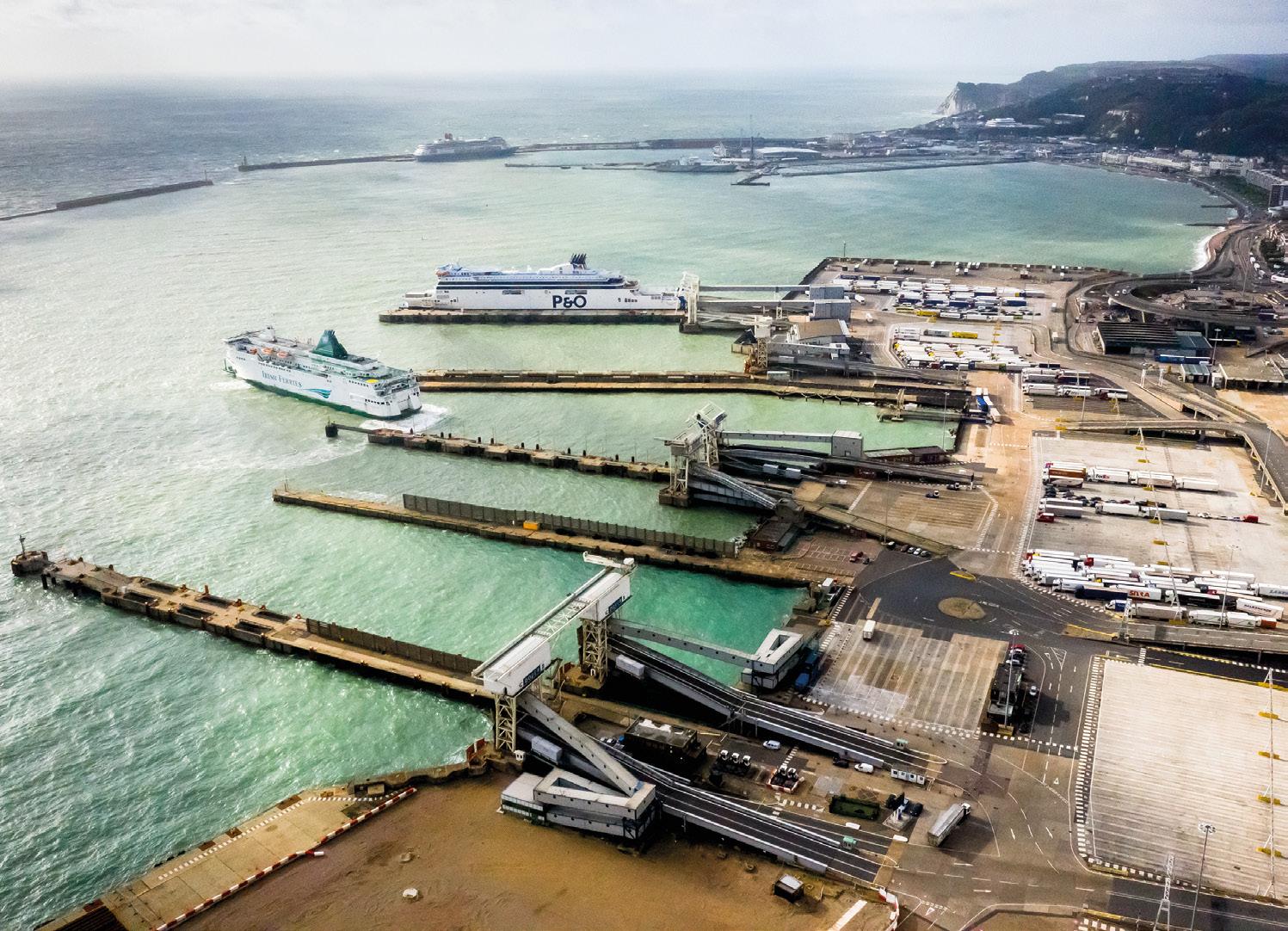
The English Channel is one of the most strategically important trade routes in the world, with more than 500 vessels using this narrow and closely controlled corridor every single day.
These crowded waters face potential disruption from a number of risks, including geopolitical and regulatory changes, such as post-Brexit border requirements, which can increase checks and paperwork and lead to congestion if not carefully managed.
Environmental and operational threats are equally significant, said Doug Bannister, CEO of the Port of Dover, located at the center of the Channel. These threats include severe weather events that can interrupt crossings and infrastructure constraints, particularly on surrounding road networks, which can escalate local delays into national supply chain issues.
“And there is always the presence of security risks, including cyber threats that pose ongoing challenges to the safe and efficient flow of traffic,” Bannister said. “Continued cooperation between UK and EU authorities and digital solutions are essential to streamline border processes and help mitigate disruption on this vital route,” he added.
The Panama Canal is a highly strategic maritime corridor linking the Pacific and Atlantic Oceans. Water availability is its most critical constraint, according to Maria Dixon, director of ISM Shipping Solutions. “The Canal is not just a passageway,” said Dixon. “It is a freshwater-dependent infrastructure system, and that dependency shapes everything from transit slots to vessel draught limits.”
Drought in 2024 led to draught restrictions, reduced daily transits and prioritization mechanisms that directly affected commercial planning and freight economics. While 2025 brought improved rainfall, it would be a mistake to treat that as a permanent correction, Dixon said. “The lesson from 2024 is that climate variability is no longer an exceptional event. It must be treated as a planning baseline.”
Mitigation requires long-term water management projects along with operational flexibility in transit planning and transparent communication with operators so

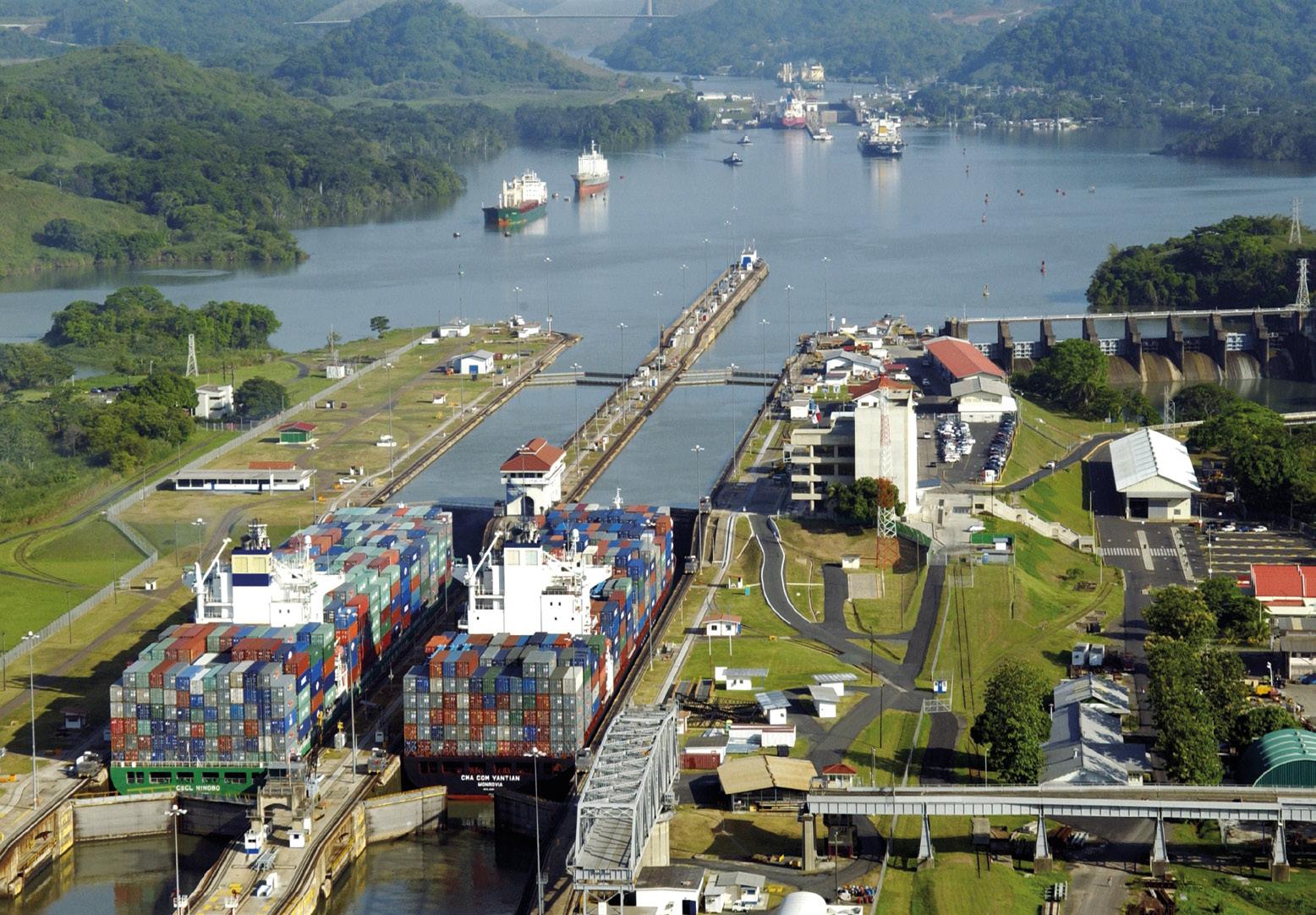
that restrictions are anticipated rather than reactive.
Disruption can also arise from traffic concentration, lock maintenance cycles or incidents involving large vessels, which can have a cascading effect across global schedules. An overreliance on just-in-time logistics adds a layer of systemic risk. “When operators plan with minimal buffers, even minor canal restrictions can amplify into wider supply-chain disruption,” Dixon said.
While Panama is politically stable, there are external geopolitical risks: Shifting trade routes, sanctions and conflicts elsewhere in the world that suddenly reroute cargo flows toward or away from the canal. “When global tensions rise, the canal often becomes a pressure valve for redirected trade,” Dixon said.
Until recently, the severity of the Arctic climate meant the Northern Sea Route was inaccessible to mainstream shipping. A warming weather system, however, means there is renewed interest in this polar shortcut that cuts journey times between Asia and most European ports by as much as 30% to 40% compared with taking the Suez Canal.
However, many believe the NSR is likely to remain a niche route for many decades, despite the shrinking Arctic sea ice season. Seasonal reliability,
geopolitics, insurance exposure and a lack of infrastructure and contingency options also count against it.
“These issues can make it a commercially and operationally fragile route, even as climate change improves physical access,’ Killen said, pointing out that there are not enough suitably rated ships or icebreakers to make the NSR a scalable, mainstream route in the near- to mid-term.
From drought to Brexit, grounded container ships to war zones, the project cargo industry is well-used to
adapting to the unexpected. “We work in a resilient and solution focused industry, where the management of change and disruption are commonplace,” Killen said. Among the lessons learned is the need to prioritize innovation and resilience over optimization.
“As an experienced and successful project logistics community, we understand the importance of assessing and designing solutions which include alternative options, allowing contingency time and contractual flexibility rather than relying on one single best or cheapest option every time,” he said, stressing the importance of early logistics involvement.
“This allows us the time and capacity to scenario plan and identify potential risk, so that projects understand the potential that disruption could have, rather than waiting for events to happen,” Killen added.
The benefit? Faster decisionmaking during disruption, reduced schedule impact and projects able to pivot and move forward rather than stall when the unexpected happens.
Award-winning freelance journalist Amy McLellan has been reporting on the highs and lows of the upstream oil and gas and maritime industries for 20 years.
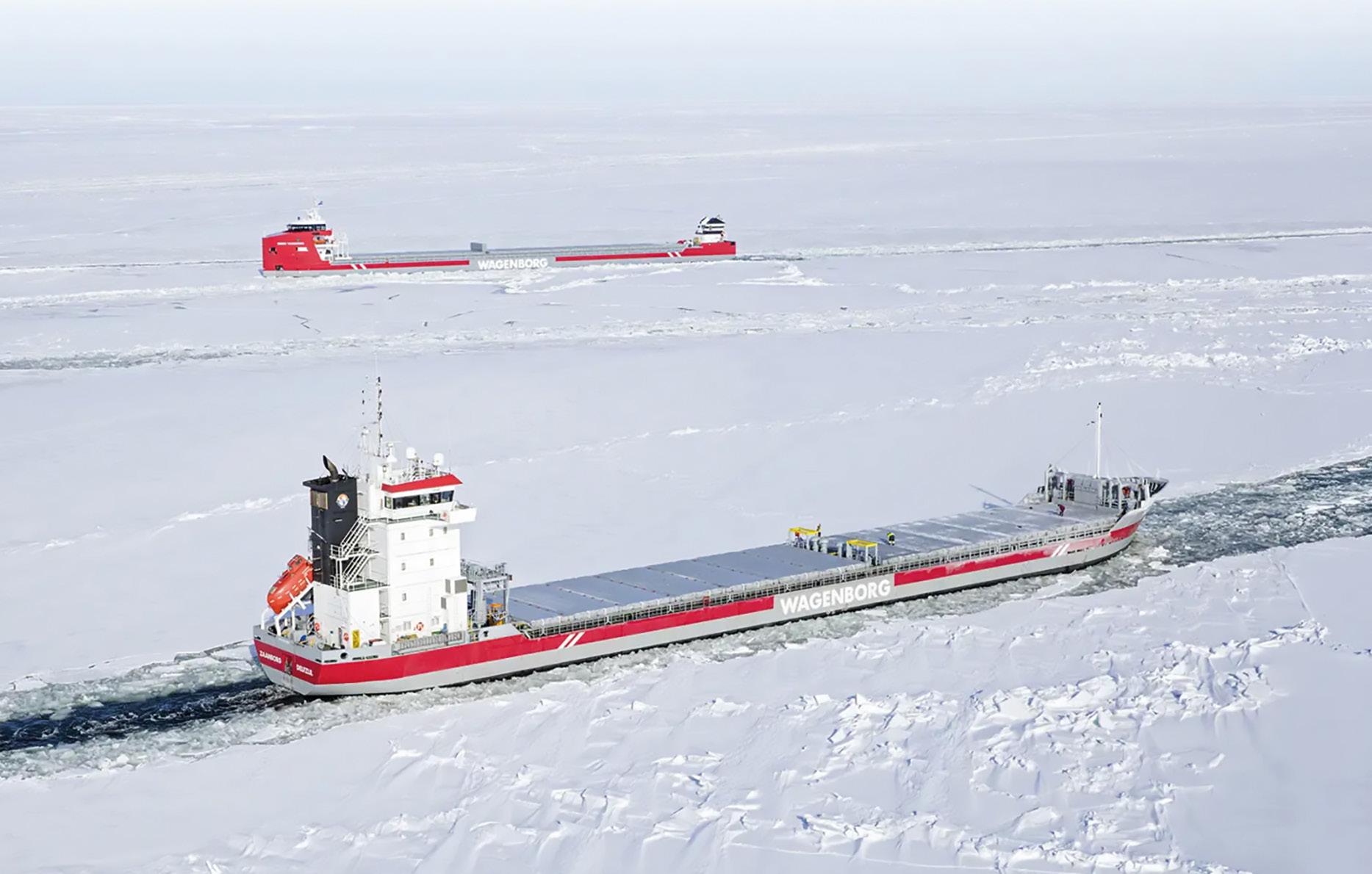
Wagenborg multipurpose vessels cut through the ice.
Credit: Wagenborg

A candid discussion with Adnan Rajput and Breakbulk’s Leslie Meredith as he readies for a major career transition
LM: You’ve spent more than 25 years in supply chain, most of that with GE and Bechtel. What drew you to technology?
AR: I was always into tech. My question, regardless of whatever I did, was always: How do I make things better for myself and others? My ex-boss (Erik Hallas) at GE told me once, “Adnan, if you make something easy for somebody, that person will always root for you, no matter where you go.” That stuck with me. At the time, the industry as a whole was very dependent on Excel files, emails, all of that, and in many cases still is. When I moved from the U.S. to the Middle East with GE, I had an opportunity to rethink how we handled procurement and logistics. Something that was taking days could now be done in hours. Pick and pack, order management, inventory management, customer updates all got easier. Our costs went down dramatically. We reduced logistics costs significantly for the region. And the speed improved. We could see exactly what the backlog was, what the demand was, and what was left in the pipeline.
LM: What’s your take on AI and where it’s heading for supply chain?
AR: I see the models advancing very quickly. I think the growth accelerated during the pandemic when we knew AI adoption was coming, but maybe 10 to 15 years out. The pandemic became a catalyst. Looking at the future of supply chain, I think AI will bring more transparency and more competition to the market.
LM: What do you mean by more competition?
AR: Think about two freight forwarders. One is doing everything manually and the other is running on AI. The difference comes down
to turnaround time. How long does it take to respond to a quotation request? We all work in different time zones. If I’m in the U.S. and you’re in China, by the time I wake up, your day has ended. But with AI, that’s all preprogrammed. While you’re sleeping, the AI is sending out the RFQ, collecting responses and running the calculations. When you come back online, everything’s ready. Your turnaround is dramatically faster.
Secondly, everything comes down to margin. Today, on the manual side, you’re guessing, is it 5%, 10%, 15%? You don’t have the data. With AI, you’d know upfront that last month you shipped the same thing to the same customer and charged X. You’re building consistency. Yes, there’s a cost to implementing an AI model, but the benefits are 10x that cost.
LM: How long will it take large companies like GE or Bechtel to integrate these systems?
AR: Based on my experience, these are organizations that take data
Thursday, June 18
Breakbulk Live Stage 1:30pm - 2:15pm
security very seriously, and rightfully so. They want to make sure that whatever company they bring in to build the model, the data is protected. That due diligence takes time, but it’s the right approach. People don’t realize that data is the new oil.
Globally, there’s so much data out there, but people have no idea how to use it. You can have charts, you can have dashboards, but understanding the real value of data, knowing how to extract what actually benefits you, that’s something that very few are doing well in supply chain. You see it on the financial side, but not in logistics. The data is all siloed, and a lot of it isn’t clean. Garbage in, garbage out. Change will come, but it will take longer than people expect, and it comes down to the

company’s vision, meaning where they see their logistics department in the next five or six years.
LM: How do you make the case to a decision maker who is hesitant?
AR: You put it in dollars and cents. Show them what they’re spending today in man hours and logistics spend and show them what changes with the new system. Yes, there’s a cost, but you can reallocate your resources. I give people a simple example: If you have five people in logistics doing tracking, documentation and administration, and you’re paying them an average of $100K each, that’s half a million dollars. If a system costs $200,000 a year but delivers 10x the return, you can move three of those people to higher-value work elsewhere in the organization.
With AI, you move from reactive to proactive. Instead of waiting a week to get the data you need, you get it with the click of a button. And you catch things you were never catching before like overpaying
carriers or invoice errors. A lot of shippers are shipping so many loads a month that nobody goes back and checks. With the right tools, that data is visible immediately. It can tell you that you shipped this last month and paid X. Why are you paying two times more this month?
LM: Can you think of a specific project earlier in your career where these tools would have made a difference?
AR: Absolutely. Early in my career I worked on large projects in the Middle East where we were shipping hundreds of units for a single project. If we had these tools then, our procurement would have been simpler, our transportation more transparent and our raw materials sourcing better optimized.
Think about the typical process for a shipper. If I need to move something from A to B, I have a list of 10 providers. I send 10 emails. I get 20 responses asking for clarifications. Another 20 responses. By the time I’m done, I have 50 emails just for
one shipment, and then I still have to sort through all of them for pricing, transit times, and terms. With the right tools, I would have put everything into the system and let the machine do it. The RFP goes out, responses come in, calculations run and nothing comes back to my inbox.
LM: What AI platforms do you use personally?
AR: I started with ChatGPT, just to test it. I liked it, then found Claude. After that, DeepSeek. I think it really comes down to your purpose. Are you using AI for coding? For general tasks and emails? For design? Personally, I mostly use Claude and DeepSeek.
LM: What’s your take on the quality of AI output?
AR: I think the human-in-the-loop is very important. I see a lot of people who just copy and paste AI output and send it out. That’s a mistake. At the end of the day, you as a human need to make sure the output makes sense. And so much of the result depends on your input. Like I said, garbage in, garbage out.
LM: You’re taking on a CEO role at a supply chain technology company. What are your goals for the first 90 days?
I first interviewed Adnan at Breakbulk Europe in Bremen at the historic Park Hotel across from the venue in 2018. He shared why GE attends Breakbulk events:
“GE uses these events to ensure they are partnering with the right service providers to protect their assets.” It’s a reason cited by many attending shippers today.
AR: First, it’s about making sure the technology stack is aligned with the real problems shippers and forwarders face every day. Because “supply chain optimization technology” can mean many things. Who are you serving? What problems are you solving first? How does it roll out across different markets? I want to make sure that roadmap is clear. That clarity is the foundation of everything else.
*Breakbulk Exhibitor *Breakbulk Global Shipper


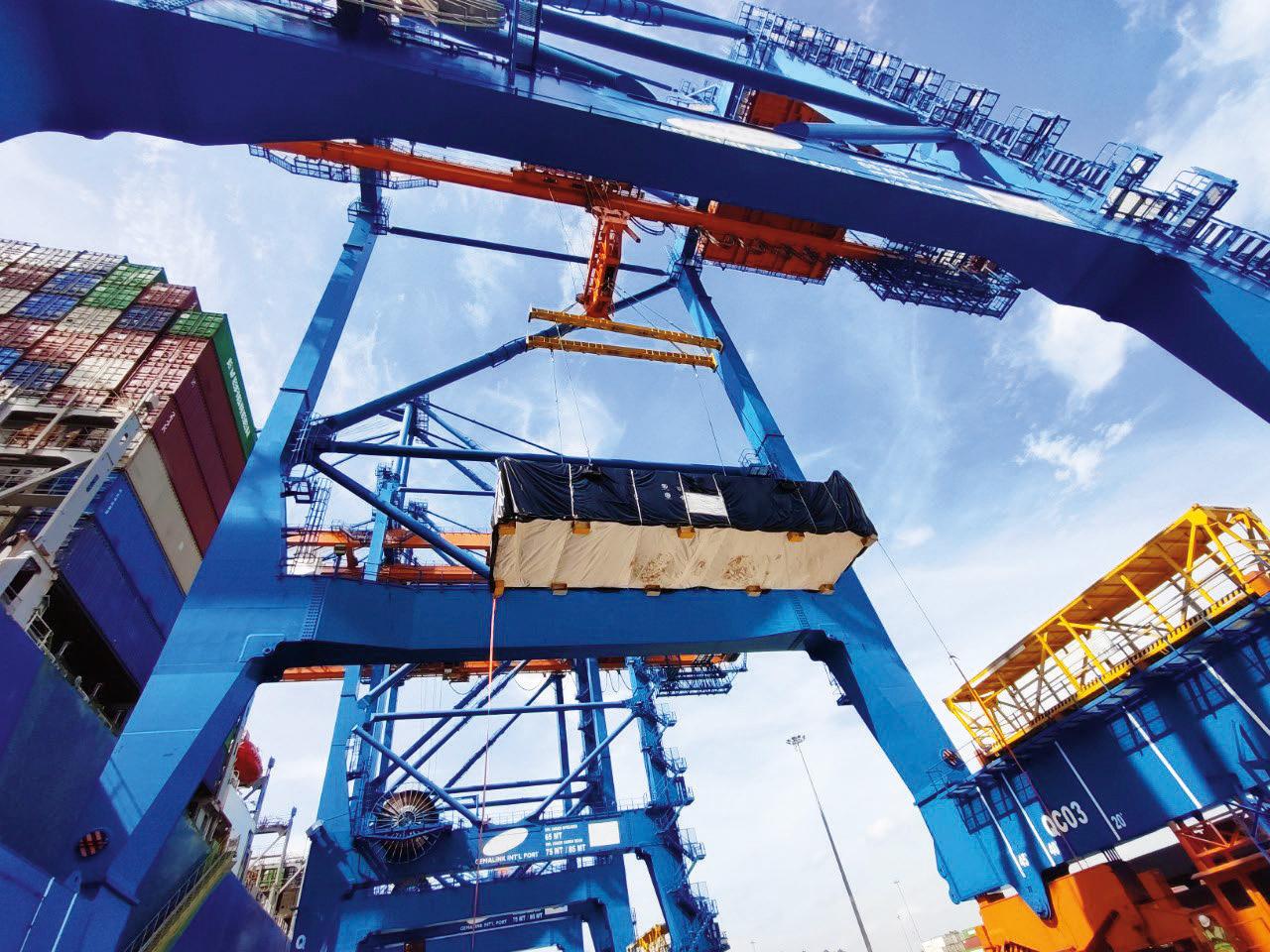


If Christel Pullens had to explain why she has spent most of her career in shipyards, she might tell you it all started with the nuns.
Across the road from her childhood home in Elshout, in southern Netherlands, stood a monastery where retired missionary nuns returned after years spent working in far-flung parts of the world. As a young girl she was fascinated by their stories and the images they shared from countries far beyond the small town where she and her four siblings were being raised.
“There was this whole world beyond my town where people lived differently, looked different and experienced life differently and all I wanted to do was go there,” she recalls.
Not far away, another influence was taking shape. In a neighboring village, giant ship propellers cast at a local foundry caught her attention. Convinced it could offer her a route into the world the nuns described, she applied for an internship with the company behind the propellers.
She imagined herself somewhere in Brazil or elsewhere in the Americas, but the internship took her to a shipyard in Belgium instead. “I was a teenager with these big dreams
By Liesl Krog
of faraway places and was slightly disappointed that I was only going to go to Belgium, but I remember walking into that yard and something just clicked. I felt, this is where I belong.”
Her time for travel came soon enough. While continuing her studies, she spent a year in Johannesburg researching her thesis before returning to the Belgian shipyard where her career had started. What followed was eight years at the yard during a period when Europe’s shipbuilding sector was beginning to contract. She still remembers the moment the reality of the industry’s decline truly hit home.
“Someone asked if they could borrow the winches from the slipway for a museum exhibition about shipbuilding in Belgium disappearing,” she recalls. “And I said: ‘But the yard is still using them.’”
By then, however, work was slowing and Pullens knew it was time to move on. She still had ambitions of working internationally and after the propeller manufacturer became part of Wärtsilä she began pursuing opportunities within the wider group.
Initially, she struggled to even get past human resources.
“They told me my background was not relevant for the role. My response was that I was already working for one of their companies. What do you mean it’s not relevant?”
Eventually, one senior manager looked beyond her age and the fact that she was a young woman applying for a technically demanding role in Venezuela. “He became one of the people who really changed my career,” she says. “We still keep in touch today.”
The experience would shape her own thinking about leadership and mentorship. “You need someone in your corner,” she says. “Someone who sees your value and is willing to back you, even if you are different from what everybody expects.”
To this day, Pullens says it is the most important advice she
At Breakbulk Europe: Women in Breakbulk Networking Breakfast
Tuesday, June 16
Rotterdam Ahoy, Third Floor, Port 1 9:00am - 11:00am
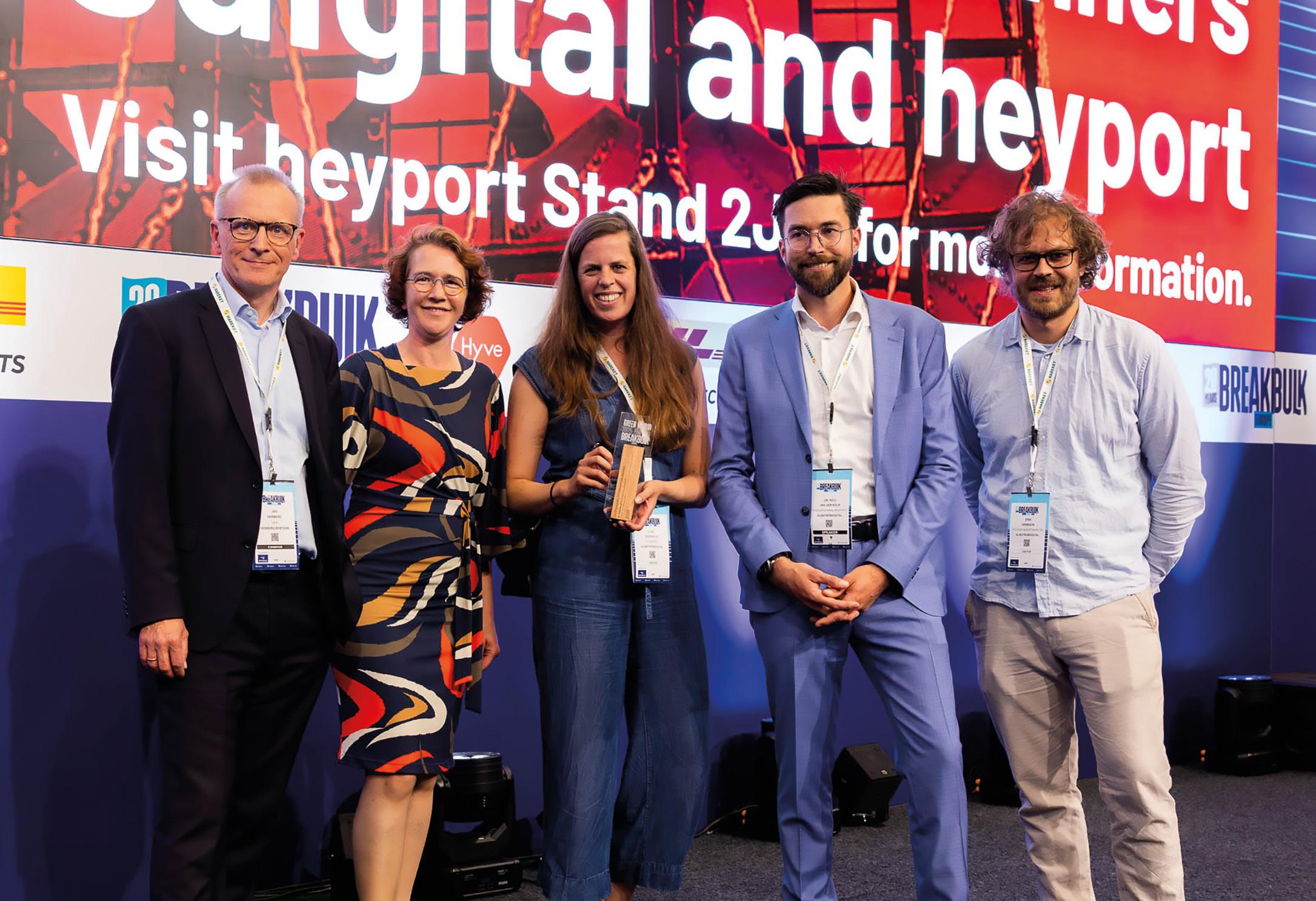
can offer younger professionals entering the industry. “Find your sponsor,” she says. “Find someone who sees your value and is willing to back you. Just as important: don’t wait for the museum to call before exploring like I did initially. Go out there and find the opportunities.”
Looking back, Pullens admits there were times she stayed too long in organizations where opportunities for growth never fully materialized despite consistently delivering results.
“I would meet my targets, exceed them even and still not get the promotion or the interesting project,” she says. “Eventually you have to recognize when a company values you and when it doesn’t. Never be afraid to move to tackle a new challenge.”
That mindset would ultimately shape Pullens’ career, leading her toward increasingly complex international projects and some of the most demanding cargo operations in the maritime sector.
After joining Dockwise, now part of Boskalis, she became immersed in the world of heavy
transport and engineered logistics on a global scale. “I remember seeing these massive projects on television immediately knowing I want to be part of that,” she says.
Three decades later, few women have built careers across as many corners of the maritime and heavy logistics sectors as Pullens has. She has closed contracts and executed projects involving almost every type of inland and oceangoing vessel across more than 60 countries, while leading sales teams, serving on boards and building an international maritime career.
Her work has ranged from major shipyard projects to highly sensitive military transport operations, including the movement of submarines and other classified cargo, with contracts valued at up to €200 million.
Along the way, she held senior roles at Damen Shiprepair & Conversion, Alewijnse and MeteoGroup (now ABB) and served on the Rotterdam Maritime Board, the World Maritime Academy and the Breakbulk Europe
It raises the obvious question: how does somebody build a career across so many organizations, sectors and cultures while continuing to break into spaces where women are still often the exception rather than the norm?
She laughs before responding. “Honestly? It is not all that exciting an answer. As a woman in this industry, you learn very quickly that you always have to be extra prepared.”
Whether she was walking into meetings with shipowners in Venezuela, working on classified military transport operations or negotiating multi-million-dollar projects, Pullens knew she had to be more prepared than anyone else in the room, down to the smallest technical detail.
“With propulsion systems especially, every vessel is different,” she explains. “It’s not like engines where you can know one system and apply it everywhere. I would spend hours preparing before every trip, studying drawings, going into the workshop, understanding every technical detail.”
Even outside maritime, she still encounters it in another passion: sidecar motocross racing, which she returned to competitively three years ago before turning 50.
“It’s also a male-dominated world,” she says. “Initially people don’t really know what to make of you. But once they see you race, opinions change.”
The parallels with shipping are difficult to ignore. “There are still days when you walk into old boys’ network meetings and you wonder if you really have the energy to do it all over again,” she admits. “But then there are other days where you feel completely on top of the world.”
Ultimately, she believes resilience comes down to preparation, consistency and refusing to shrink yourself. “You show up prepared, you stand your ground and you keep going.”
Yet, after decades of doing exactly that, Pullens increasingly found herself questioning the long-term sustainability of the sector she loved.
“I reached a point knowing we cannot continue like this,” she says. “We are using and abusing the planet, and there has to be a smarter way of doing things.”
While still working in an executive board role, Pullens enrolled in an online sustainability management program through Cambridge University, immersing herself in new thinking around longterm business sustainability.
“It changed the way I looked at business,” she says. “Not how to maximize profit in the short term, but how to build something that is sustainable for people, planet and profit over the long term.”
By 2020, she had made a decision that surprised many around her. “I decided that from that point onward I only wanted to do work that created a positive impact,” she says.
The choice came at a cost. She walked away from the security of a senior corporate career, including the salary and associated perks.
That decision eventually led her to Sea Ranger Service, a social enterprise focused on maritime conservation and training young people for work at sea. That same philosophy of making a difference continues to shape her work through maritime innovation and technology development at PortXL where Pullens helped to connect emerging technologies with maritime and logistics players looking to modernize operations and improve sustainability.
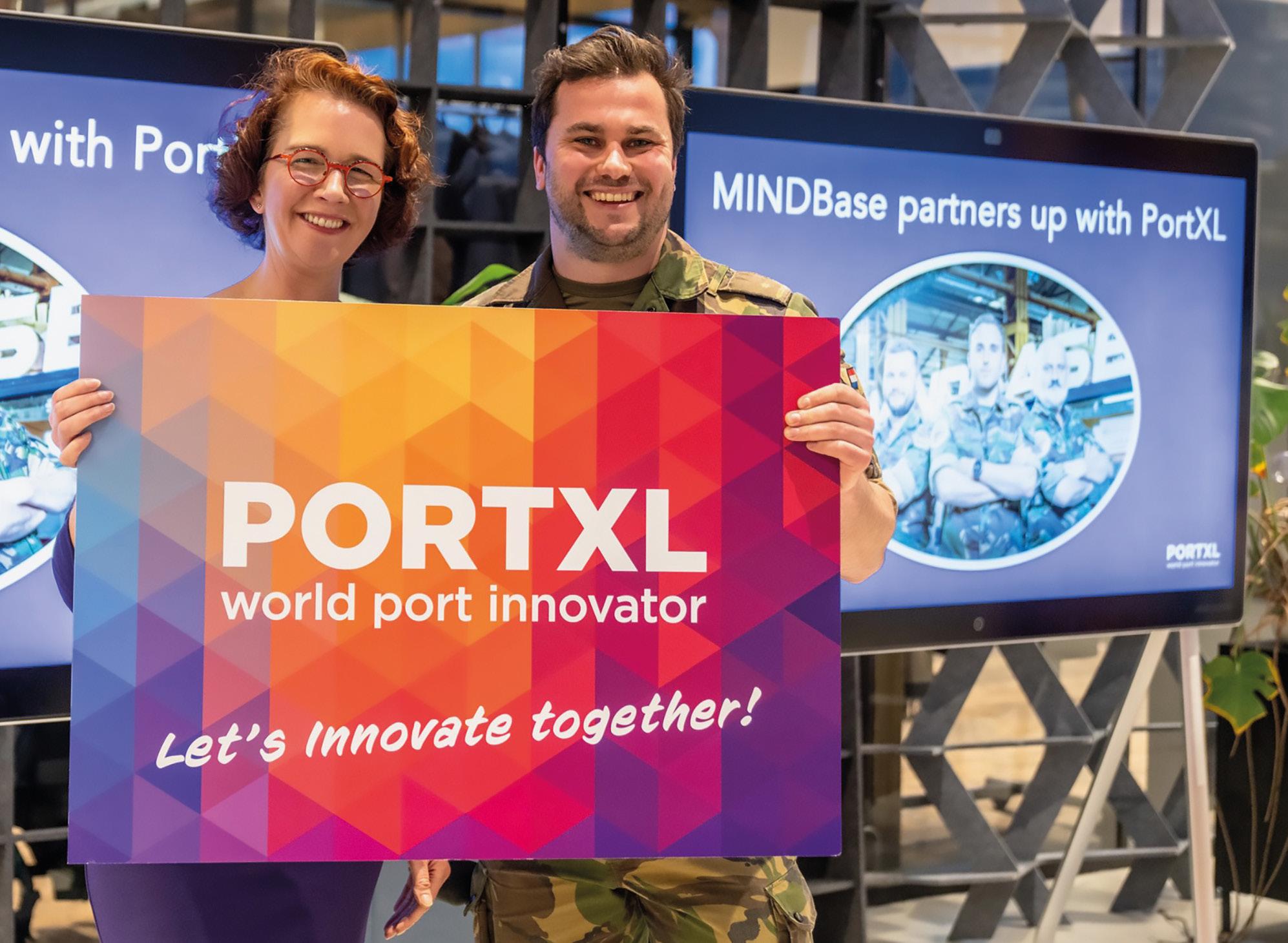

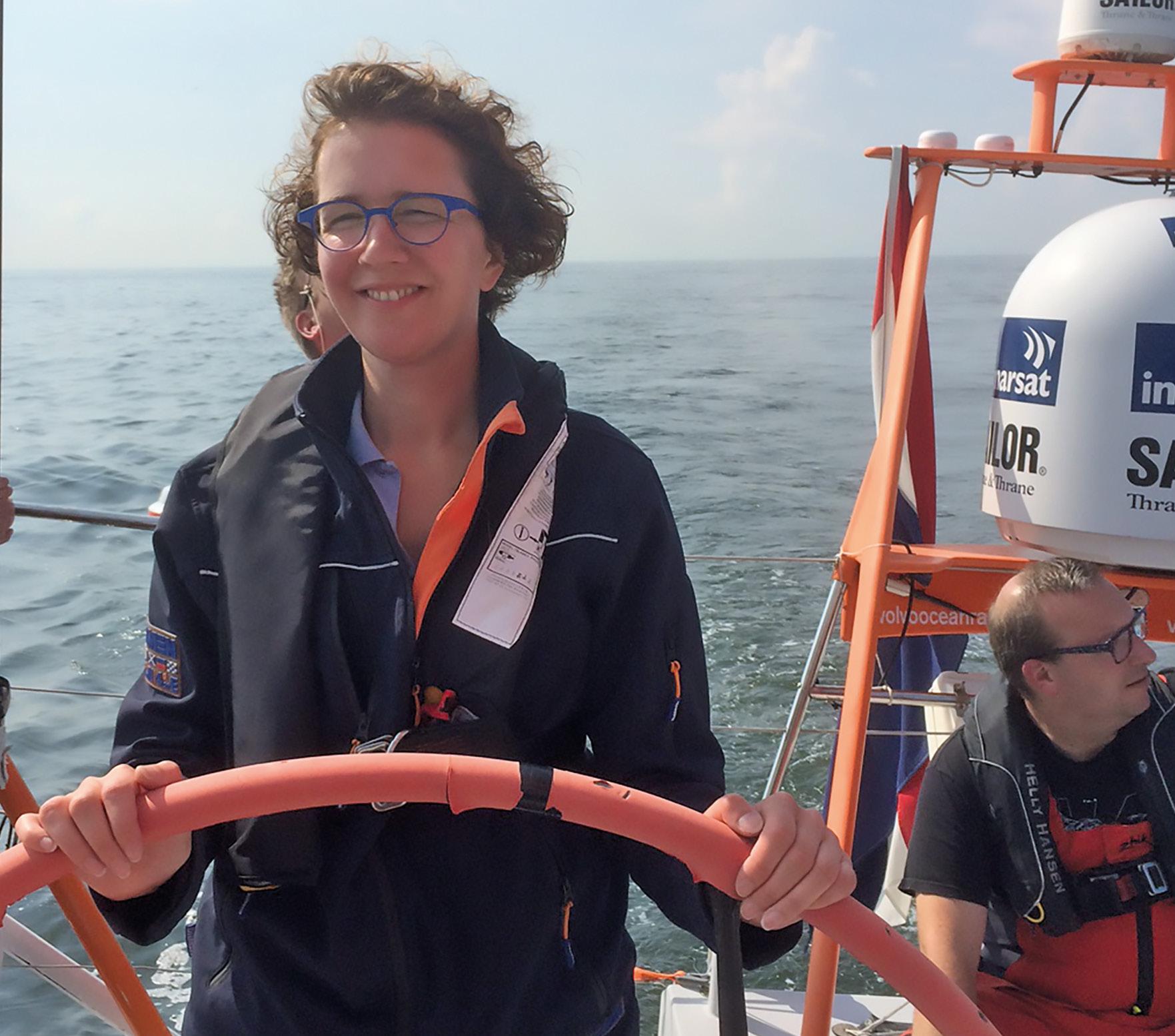
“I can help bridge the gap between innovative companies and major industry players because I understand both worlds,” she says.
Beyond PortXL, she is looking forward to applying her skills and passion to operationalize new technologies in innovation projects that push the envelope.
“The pace of innovation is changing dramatically,” she says. “You can see it in everything from energy systems
to defense technology and maritime operations. Industries can no longer afford to take years to adapt. We have to make a change now.”
Looking ahead, Pullens believes the maritime industry’s greatest challenge is no longer generating new ideas, but creating organizations capable of implementing them.
“Five years ago, innovation
Pullens’ passions include sidecar motocross racing (top) and the Sea Ranger Service, a social enterprise focused on maritime conservation and training young people for work at sea.
Credit: Christel Pullens
was still a nice-to-have topic. Today it is essential,” she says.
Yet she warns that too many companies still treat innovation as a side project rather than embedding it into daily operations. She believes truly radical thinking in maritime today is surprisingly simple: be willing to question longstanding assumptions and remain open to doing things differently.
“Innovation is not about big visionary talk,” she says. “It’s about creating structures that allow ideas to survive operational reality. You need processes to support that but most importantly, a culture that is open to change.”
Six years after making the decision to walk away from the corporate world, Pullens says she has no regrets. “I have a completely different life now, but it feels so much better. I work with people who genuinely want to change the industry in a positive way.”
And away from the boardrooms and shipyards? Pullens says she is simply “mom”. Her two boys, aged 11 and 13, are her pride and joy. Together, the trio share a love of music, playing drums, piano and plenty of rock music at home. Unsurprisingly, they have also inherited her appetite for racing and already own a small motorbike of their own.
“I’ve always believed people should try things and not be afraid to be different,” she says. “Whether it is music, racing or changing an industry, you only really discover yourself when you are willing to step outside your comfort zone.”
Liesl Krog is a transportation journalist based in South Africa.
*Breakbulk Exhibitor *Breakbulk Global Shipper
*Women In Breakbulk Partner

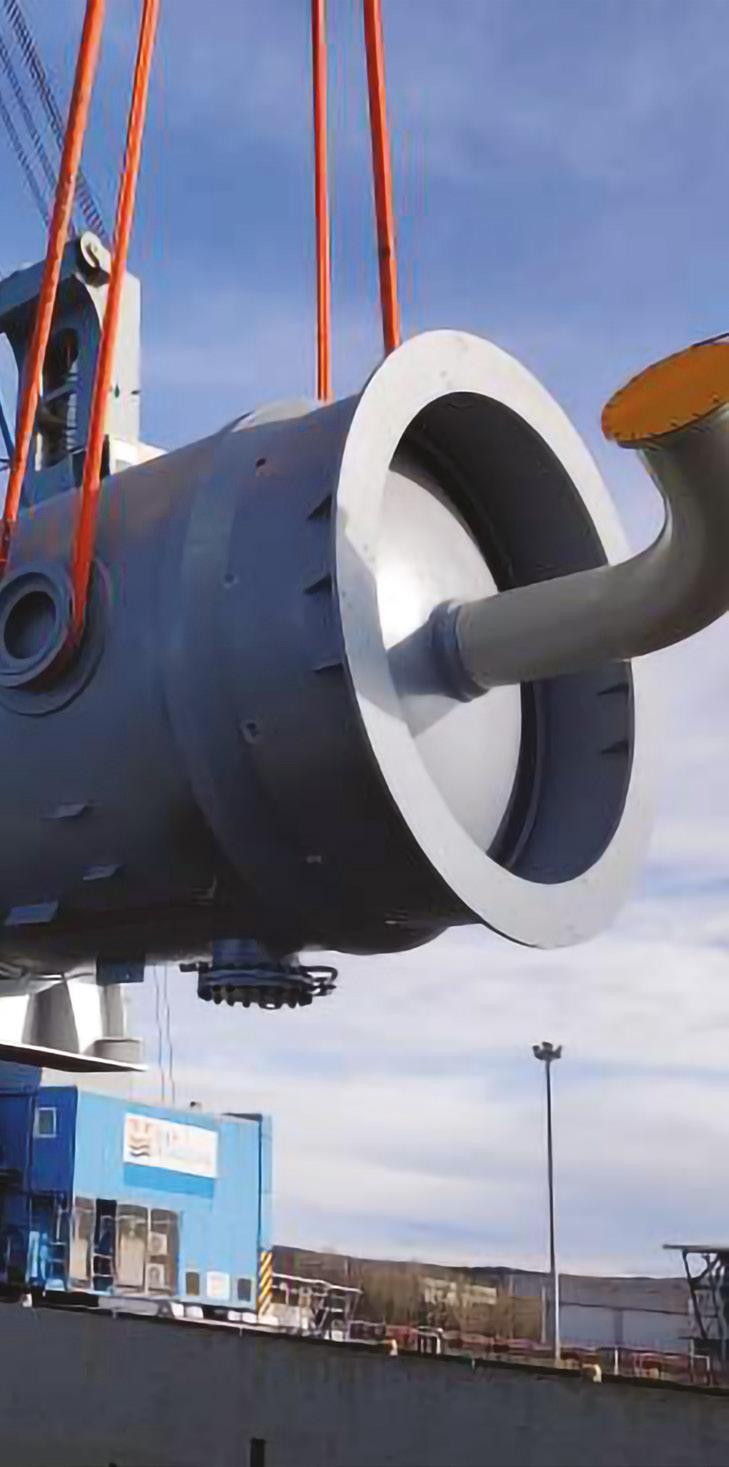
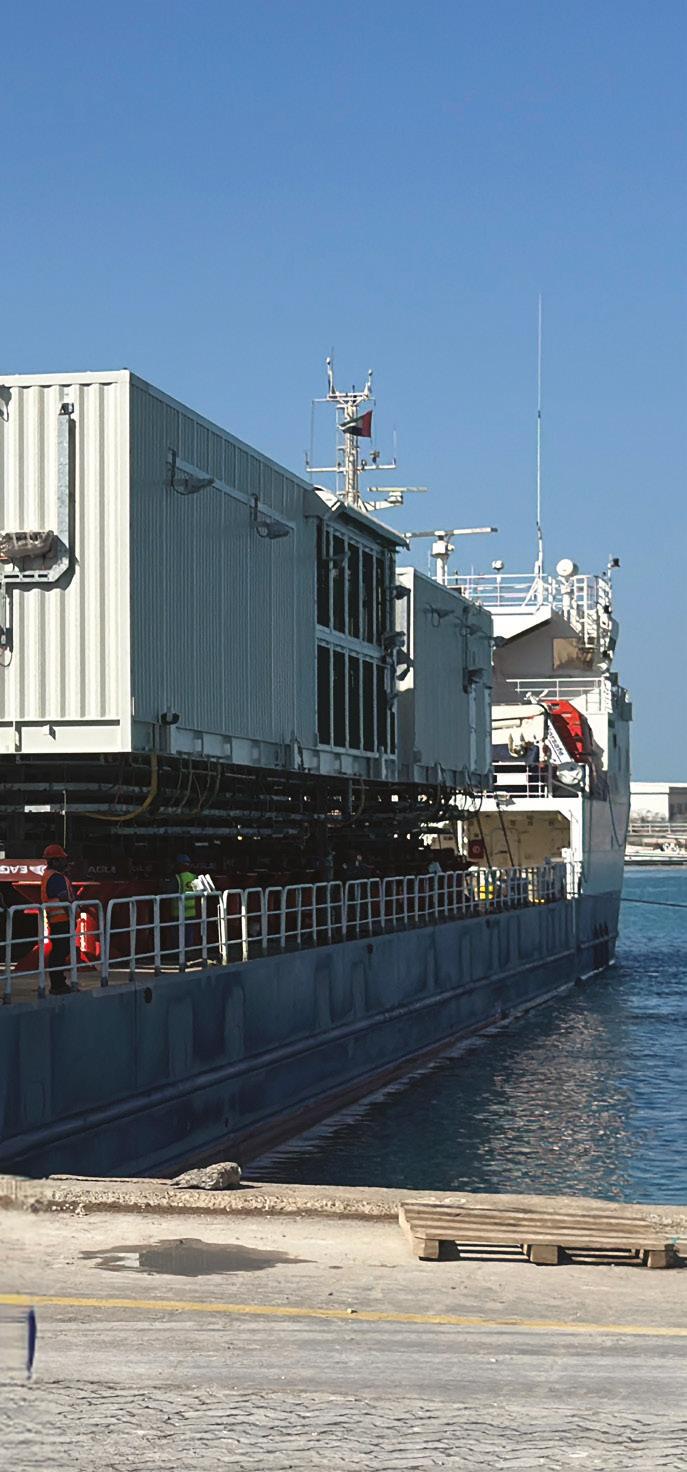
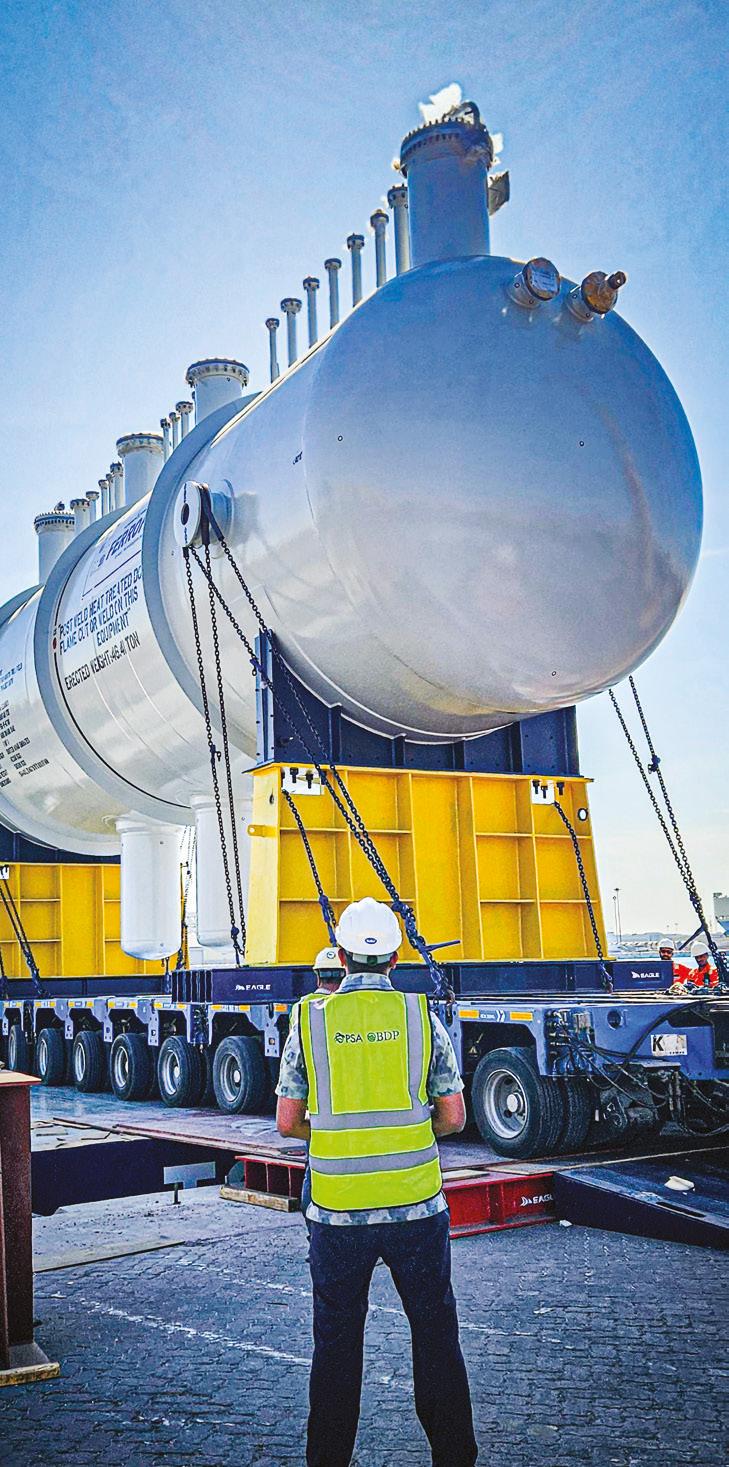
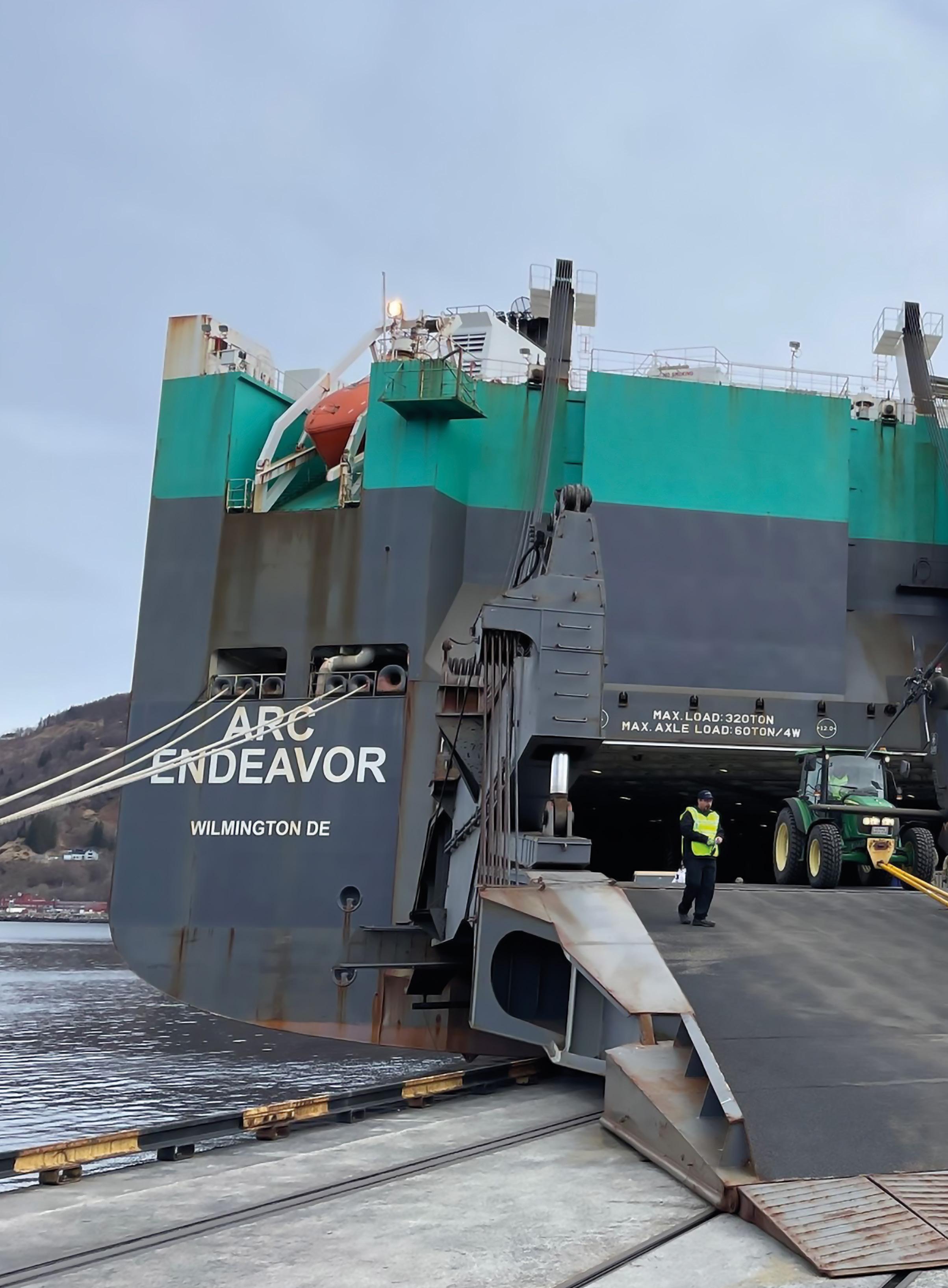
At Breakbulk Europe: Will Demand for Military Readiness Save Europe’s Aging Infrastructure?
Wednesday, June 17
Breakbulk Live Stage 11:40am - 12:25pm
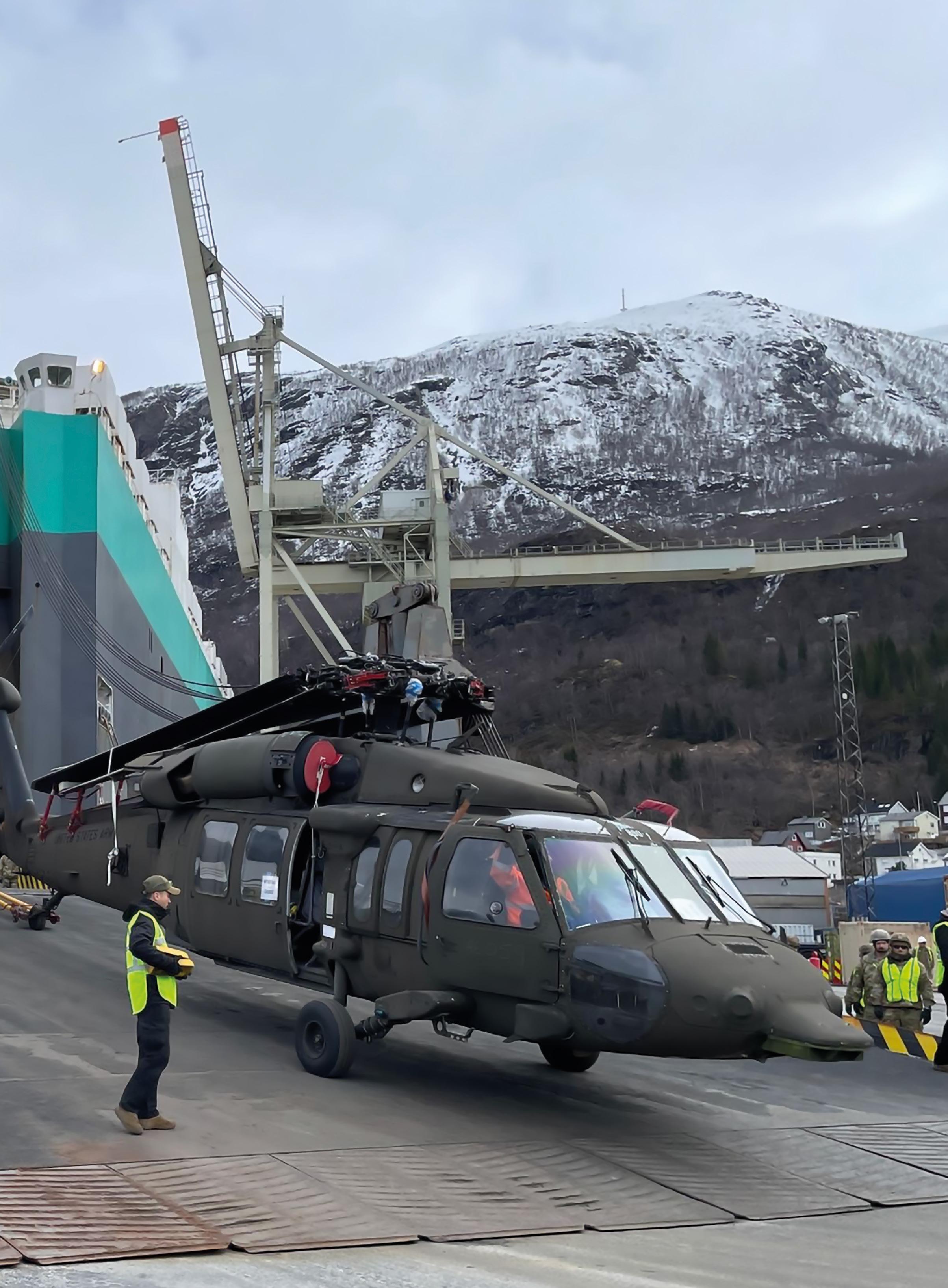
A European Spending Surge Is Upgrading the Infrastructure That Project Cargo Depends On
By Luke King
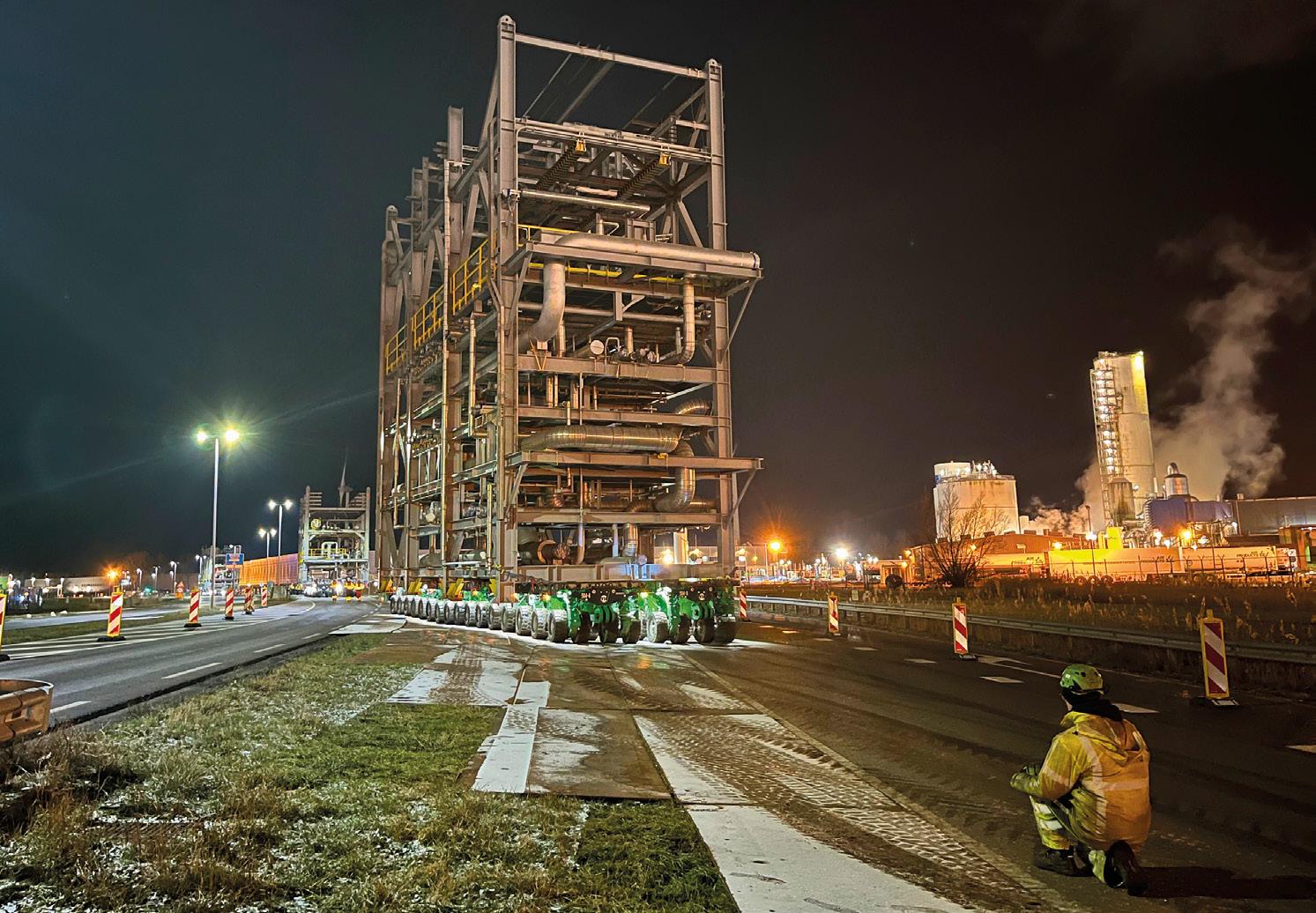
Europe’s defense spending surge is becoming one of the most significant drivers of heavy transport infrastructure investment the continent has seen in decades. As governments pour money into military mobility — the ability to move troops and equipment rapidly across borders — the roads, bridges, rail links and ports being upgraded are the same ones that project cargo specialists rely on every day.
The scale of the investment is considerable. The EU’s Connecting Europe Facility has already allocated €1.74 billion for military mobility in the 2021-2027 budget period, co-funding 95 dual-use infrastructure projects across 21 member states, while the European Commission has proposed a tenfold increase — €17 billion — for the 2028-2034 period. NATO’s Security Investment Programme contributed

a further €1.72 billion in 2025 alone.
At the heart of the Military Mobility Package are four priority military corridors and some 500 hotspot projects aimed at removing physical bottlenecks: weak bridges, narrow tunnels and ports that cannot handle roll-on, roll-off (RoRo) military loads at scale. The connectivity gap between the Baltic States and Poland is among the most striking examples of the problem: a single main road links Poland and Lithuania, while incompatible rail gauges cause long delays at the border.
Most EU roads carry a 40-tonne weight limit, yet modern battle tanks weigh between 55 and 70 tonnes, a mismatch that illustrates just how far civilian infrastructure standards have drifted from military requirements. “Dualuse infrastructure means building ports and transport links to military axle-load and weight standards,” says Andreas
Menzel, managing director Northern Europe at Trans Global Projects. “Those standards are far closer to project cargo requirements than to normal commercial freight, which is why these investments matter directly for heavy logistics.”
Germany sits at the center of the military mobility map, functioning as the primary transit corridor between Western Europe and NATO’s eastern flank, a role that is driving targeted investment in port and rail infrastructure already beginning to benefit commercial heavy transport.
At Bremerhaven, funding linked to military mobility has been directed at reinforcing quays, strengthening port surfaces, upgrading rail infrastructure and improving internal access routes. Once in place, those same reinforced surfaces and load-rated quays become permanently available for project cargo.
“When a quay or yard is built to carry military axle loads, project cargo benefits immediately,” Menzel says. “It reduces the need for temporary loadspreading, lowers operational risk and makes heavy lifts more repeatable.”
On the rail side, Germany’s pool of wagons suitable for military transport has fallen from over 1,000 in 1990 to just a few hundred, a decline that reflects decades of underinvestment. Military mobility requirements are now pushing that in reverse. “Military mobility pushes rail systems to accommodate very heavy units and long formations,” Menzel adds. “For project logistics, that can be the difference between rail being a theoretical option and a practical one.”
Ruediger Fromm, logistics business partner for wind power at Siemens Energy, says investment is overdue.
“From a shipper’s perspective, infrastructure upgrades in many European countries are needed, as resilient heavy-cargo infrastructure is a prerequisite for industrial competitiveness and economic growth,” he says. “The main challenge today and for the foreseeable future remains
identifying and securing suitable transport routes amid regulatory, technical and regional constraints.”
The Eastern Flank Corridor
No country in Europe has felt the strategic urgency of military mobility more acutely than Poland. Since Russia’s full-scale invasion of Ukraine, Poland has become the primary logistical hub for NATO’s eastern flank, and the infrastructure investments flowing in reflect that reality directly.
Łukasz Chwalczuk, president of the Polish Abnormal Road Transport Association (OSPTN), ESTA Europe board member and managing partner at law firm iuridica, describes a wave of defense-linked projects already benefiting civilian heavy transport. In early 2026, an agreement was finalized to reconstruct the Kwiatkowski Route serving the Port of Gdynia, a critical NATO equipment node, after years of structural degradation and weight restrictions. The Polish Ministry of National Defence has simultaneously prioritized the so-called Red Road, a direct connection from Gdynia’s port terminals to the S7 expressway, with around €1 billion secured for the project.
“These investments are a gamechanger for civilian heavy transport,” Chwalczuk says. “They will eliminate port-entry bottlenecks and provide a durable, high-capacity corridor for oversized project cargo,
allowing heavy road transport to bypass aging city infrastructure entirely.”
Rail investment in Poland is similarly substantial. CEF Military Mobility funds are being directed at rebuilding RoRo ramps, expanding rail siding layouts and, critically, reinforcing the load-bearing capacity of bridges, culverts and viaducts across southern and eastern Poland.
Military requirements to transport 60-tonne Abrams and K2 tanks are forcing upgrades to structures that had long constrained civilian freight. “The military is no longer building isolated infrastructure solely for its own use,” Chwalczuk notes. “Defense spending is being integrated into the public network, making the military a powerful financial sponsor for civilian infrastructure.”
However, Chwalczuk is direct about the gap between investment plans and operational reality. “From a project cargo perspective, these improvements are not yet felt in day-to-day operations,” he says. “These are long-term investments, and we expect to see their real impact only in the coming years.” He also flags a deeper structural problem: Poland’s permit system remains heavily paperbased, each application reviewed from scratch regardless of precedent, and legal appeals for refusals take around two years to resolve. Infrastructure investment, he argues, must be matched by administrative reform.
Looking further ahead, Chwalczuk sees the investment cycle continuing regardless of how the war in Ukraine
resolves. The eventual reconstruction of Ukraine will generate an enormous volume of oversized cargo movements, much of it transiting through Poland, and the corridors being built today for military mobility will serve that demand just as directly. “I expect this to be a long-term trend,” he says. “The reconstruction of Ukraine will require a massive volume of oversized cargo deliveries, making these upgrades essential for the long haul.”
The NATO Newcomer Finland’s accession to NATO has redrawn the strategic map of northern European logistics. With the EU’s longest border with Russia and a geography that makes reliable north-south and east-west connectivity essential, Finland has moved rapidly to the center of military mobility planning.
The Finnish government announced in April 2026 a first tranche of €112 million for military mobility projects, including planning for a European rail gauge link between Tornio and Kemi, bridge strengthening and critical road improvements, connecting with the Joint Nordic Strategy for Transport System Preparedness published in March 2026.
The Port of Pori illustrates how CEF funding is being deployed at project level. A €3.15 million EU contribution has funded a new fixed RoRo ramp and expanded cargo yard at Mäntyluoto Harbour. The port’s proximity to military bases gives the upgrades
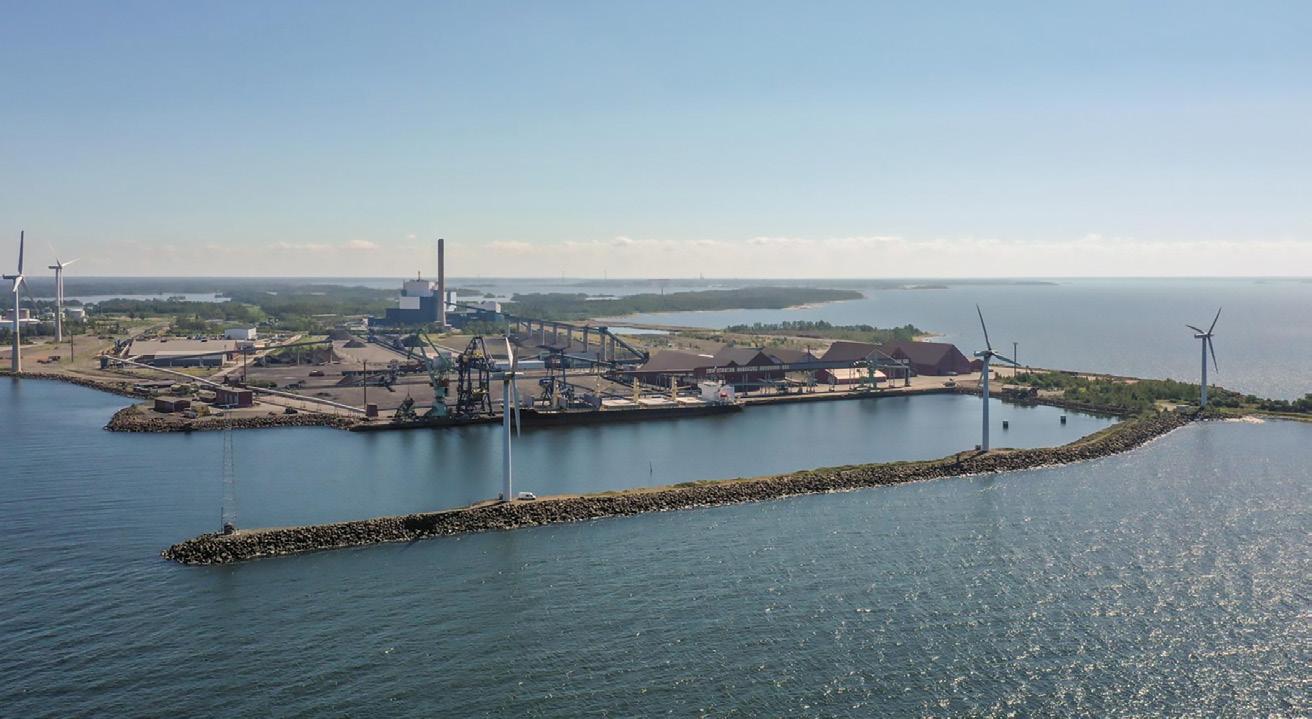
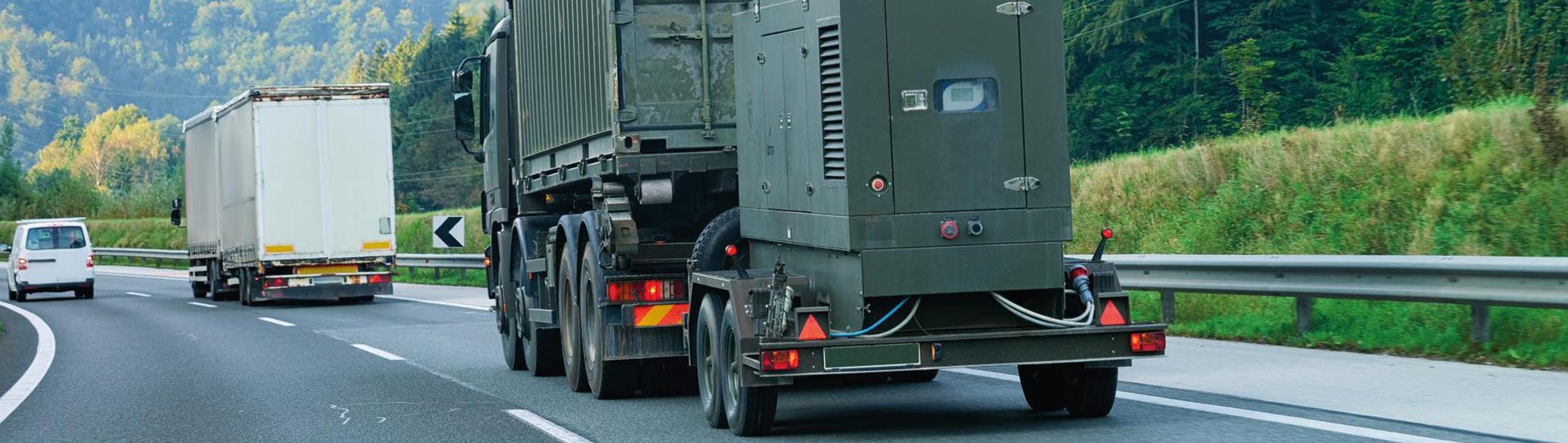
clear strategic value; its enhanced RoRo and heavy cargo capacity now serves both commercial and defense purposes. In April and May 2025, the facilities proved their worth when military vehicles were transported through during joint exercises.
Jussi Heinonen, managing director Finland at Trans Global Projects, describes a shift in the nature of demand since NATO accession. “Since Finland joined NATO, we’ve seen a clearer focus on defense-related logistics planning rather than an immediate spike in cargo volumes,” he says. “The discussions are increasingly about feasibility, routing and infrastructure capability for heavy and oversized units.”
Heinonen points to the structural dual-use logic that makes military investment relevant for commercial project cargo. “Infrastructure upgrades linked to defense spending are making a tangible difference. When roads, bridges, rail or ports are designed to handle military axle loads and weight classes, civilian project cargo benefits automatically.” The main constraints, he adds, are often not on primary corridors but on secondary links: access roads, weight limits and turning radii that still dictate transport strategy for
the heaviest loads, compounded by climate conditions and long distances.
It is on that last point that Finland brings something distinctive to the broader European conversation.
Detailed route surveys, conservative engineering assumptions, winteradapted transport practices and close coordination with authorities have long been standard practice in Finnish heavy cargo operations. “These are capabilities that are now becoming more relevant across Europe,” Heinonen says, and as the continent focuses on military readiness and logistics resilience, the Finnish approach is increasingly being looked to as a model.
The Strategic Bridge
Türkiye’s role in European military mobility is distinctive. Though not fully integrated into EU military frameworks, it nonetheless occupies a critical position at the junction of Europe, the Black Sea, the Caucasus, the Middle East and Central Asia.
Uğur Çelikoğlu, logistics coordinator at Saipem in Türkiye, describes an infrastructure model that embeds military standards into civilian networks. “Türkiye is not building separate defense logistics networks,” he says. “Instead, it is quietly militarizing its civilian infrastructure standards.” Under the 2053 Transport and Logistics Master Plan, motorway expansion has been designed with axle loads, gradients and bridge capacities compatible with heavy military equipment. Rail is receiving over 50% of transport investment allocations through the mid-2030s, with port capacity expansion at Mersin, Ambarlı, İskenderun and the planned Çandarlı carrying strong dual-use relevance.
For project cargo, the results are already tangible: “Türkiye’s road network
The EU’s Military Mobility Package proposes standardized procedures, digital permitting and a maximum three-day approval window for cross-border movements.
Credit: Shutterstock
increasingly supports high gross vehicle weights and oversized cargo, reducing route surveys and escort constraints,” Çelikoğlu says. Mersin and Ambarlı have emerged as regional project cargo gateways rather than purely container-focused facilities.
Cyril Guth, a director at Antwerpbased AProjects, sees Türkiye’s value in broader strategic terms. “Türkiye is not just a European logistics market, it is a strategic bridge between Europe, the Black Sea, the Caucasus, the Middle East and Central Asia,” he says. “From a project cargo perspective, its relevance lies in ports, industrial capacity and regional connectivity.” That geography, he adds, means planning for movements through or into Türkiye requires a different reading of infrastructure, permissions and geopolitical exposure than anywhere else in the region.
One indicator of how seriously the project cargo industry is taking the defense opportunity is the emergence of dedicated networking platforms to serve it. AProjects is launching DLOP — the Defense Logistics Online Platform — a pooled competence and procurement resource connecting freight forwarders, equipment suppliers and specialist operators focused on military logistics work.
“Everyone is working on their own corner right now,” says Guth. “We want to create a wider platform where contacts, capabilities and equipment can be shared, including a procurement module specialized in military logistics, because it doesn’t exist today.” The network will also give regional agents registered with national ministries of defense access to a broader network of suppliers and counterparties.
Guth takes a measured view of the pace of change. Part of the evolution in project cargo networks, he argues, is already underway, driven by a convergence of forces: Energy projects, geopolitical tensions, shifting trade flows and industrial investment are all prompting ports to reposition, new vessels to be ordered and routes to be reassessed. Defense spending adds another layer to a process already in motion.
For all the capital flowing into physical infrastructure, industry stakeholders are consistent on one point: Bricks and steel alone will not solve Europe’s military mobility problem.
According to the European Association of Abnormal Road Transport and Mobile Cranes (ESTA), the movement of heavy military
equipment across Europe still relies on civil transport frameworks that are fragmented, inconsistent and slow. Permit requirements for oversized loads vary significantly between member states, and ESTA estimates permit-related administration costs the sector around €500 million annually.
“Fragmentation of national rules for oversized and overweight transport constitutes one of the core bottlenecks for military mobility by road,” the association noted in a position paper.
The EU’s Military Mobility Package proposes standardized procedures, digital permitting and a maximum threeday approval window for cross-border movements, all of which Chwalczuk broadly welcomes. But, he cautions, without genuine digitalization and reform of a permit appeals process that currently takes around two years to resolve, their impact will be limited.

For logistics providers, the administrative layer is a daily reality.
“Administrative and permitting processes, especially in Western markets, can add layers of complexity that impact timelines,” says Guth.
“The link between defense investment and tangible improvement on the ground is real, but still maturing,” Guth adds. The prize, for military and civilian project cargo alike, is the same: A network strong enough to move the heaviest equipment quickly, reliably and across borders without bureaucratic delay. Europe is investing at a pace not seen in decades. Whether the regulatory environment moves fast enough to match it remains the open question.
Luke King is a freelance reporter and communications consultant who has been involved in the project cargo industry since 2007.
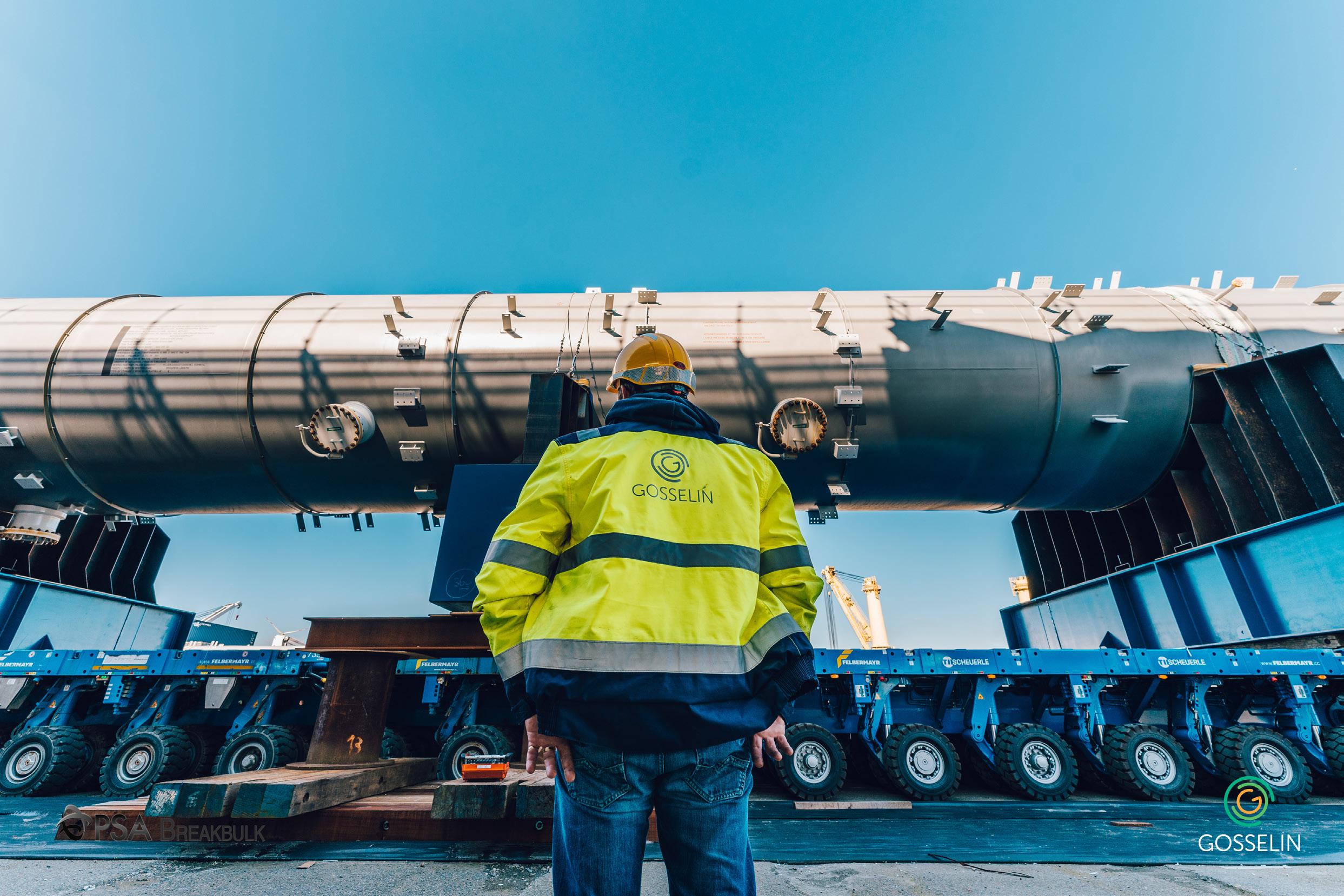

Credit: Ankara Chamber of Commerce
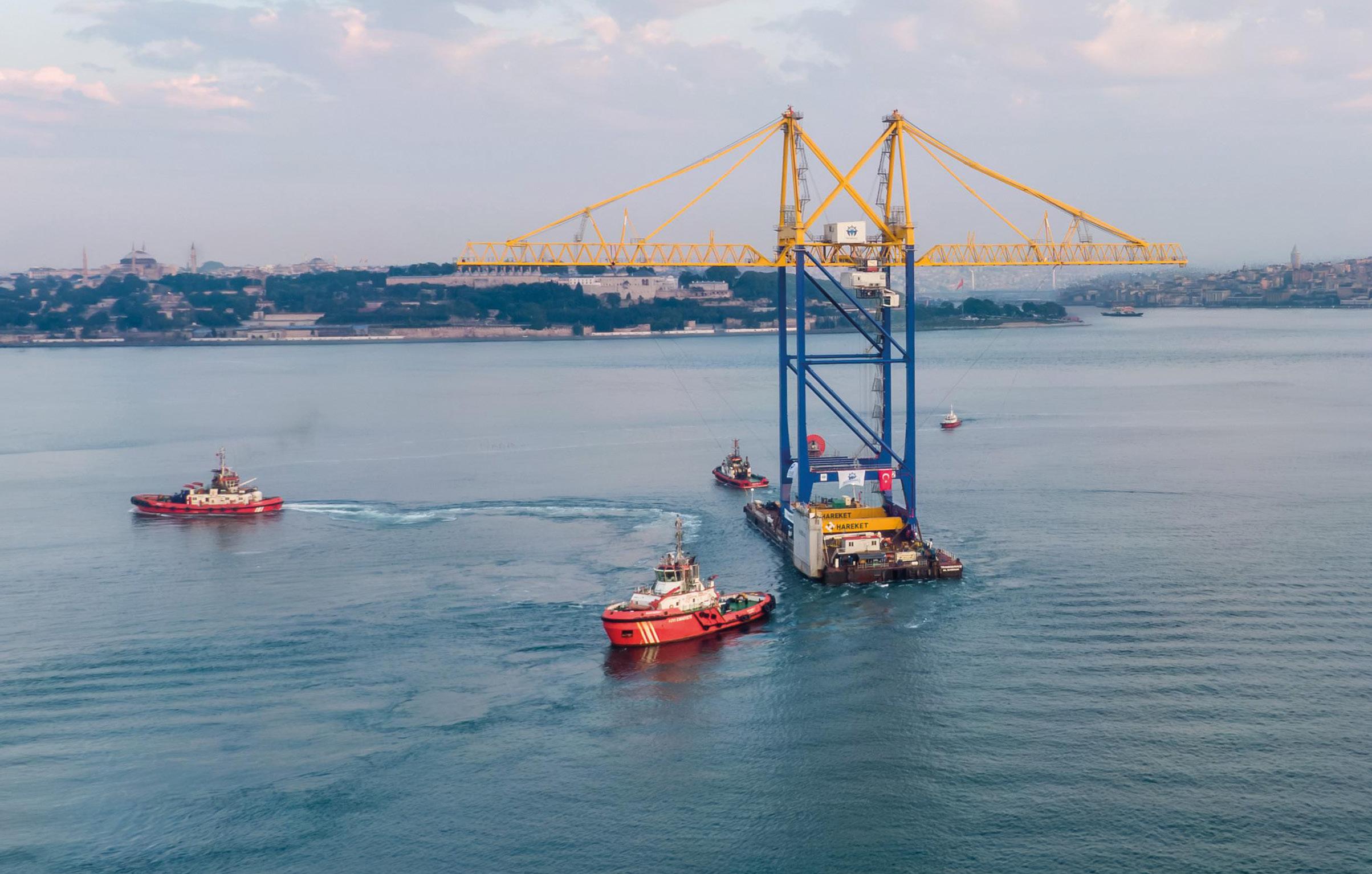
Gürsel Baran, chairman of the board at Ankara Chamber of Commerce, explains why Türkiye is becoming an increasingly important logistics gateway between Europe, Asia and the Middle East, with Ankara emerging as a key operational hub
How would you describe Türkiye’s position in the logistics sector?
Türkiye is one of the key players in global logistics thanks to its geographical location, transportation infrastructure, large trade volume and dynamic economy. Positioned on the transit corridor of Europe, Asia, Africa and the Middle East, Türkiye serves as a natural connection point in east–west and north–south trade flows. From
our country, it is possible to reach 67 countries within a four-hour flight radius. This geographical advantage enables Türkiye to function as a hub for logistics and transportation activities.
The logistics sector holds a significant place within Türkiye’s service industry. Today, the size of the logistics sector stands at approximately US$110 billion, while export revenues reach around US$42
billion. We are closely following the developments related to the Strait of Hormuz together with the rest of the world. At a time when the global trade map is being reshaped, Türkiye stands out as a reliable supply base and logistics hub. Thanks to the integrated functioning of port, air, road and rail connections, the country is on a path of sustainable growth in both goods trade and logistics service exports.
Could you elaborate on the transformation the logistics sector has undergone in recent years?
Digitalization and AI are at the forefront of the major transformation drivers in logistics. AI-supported route planning, warehouse automation and data analytics applications have the potential to increase operational efficiency while reducing costs. A significant portion of companies in Türkiye have already accelerated their transition to these technologies.
Türkiye’s position as a bridge between Europe, Asia and the Middle East is considered one of its greatest advantages in logistics. Initiatives such as the Development Road Project and new trade corridors have the potential to position Türkiye at the center of alternative supply chains. At a time when global supply chains are being restructured, Europe’s search for sourcing from nearby regions further increases Türkiye’s importance. This creates new opportunities, particularly in export logistics.
In the coming years, Türkiye aims to rise in global logistics performance rankings and become a regional distribution hub. Achieving this goal would allow the country to play a decisive role not only in transportation but also in supply chain management. However, to realize this potential, it is crucial to continue infrastructure investments, facilitate access to financing, and accelerate technology-driven transformation.
What are your views on e-commerce logistics?
The pandemic period we experienced globally revealed the importance of flexibility and market diversification in logistics. Dependence on a single market can create vulnerabilities. In this context, Türkiye has introduced a “distant countries strategy” in exports, extending its export range from 2,000 kilometers to 8,500 kilometers. This strategic expansion is also highly significant for the logistics sector.
Gürsel Baran, Ankara Chamber of Commerce
I believe that the upcoming period will be marked by further growth in e-commerce, accompanied by digital transformation and automation within the logistics sector.
How do you evaluate Ankara’s strategic position in transportation and logistics?
When we assess Ankara from a transportation and logistics perspective, we are not only referring to a capital city but also to the heart of a multi-layered geographical and economic center. Türkiye’s position as a junction between Asia and Europe, and between the Black Sea and the Mediterranean, makes it a natural logistics bridge on a global scale. Located at the very center of this broader picture, Ankara is among the cities best positioned to leverage this advantage.
From a historical perspective, this role of Ankara is not new. As a city located on the ancient Silk Road, it has long been a crossroads not only for trade but also for knowledge, cultures, beliefs and ideas. Today, this historical legacy is being reshaped through modern transportation infrastructure and logistics investments.
Ankara’s central location provides fast and efficient access to all parts of the country. With highspeed rail, extensive road networks and international flights, Ankara serves as the “Gateway of Anatolia to the World.” This offers a major advantage in logistics planning. Minimizing delivery times, reducing costs and increasing operational efficiency highlight the critical importance of Ankara’s location.
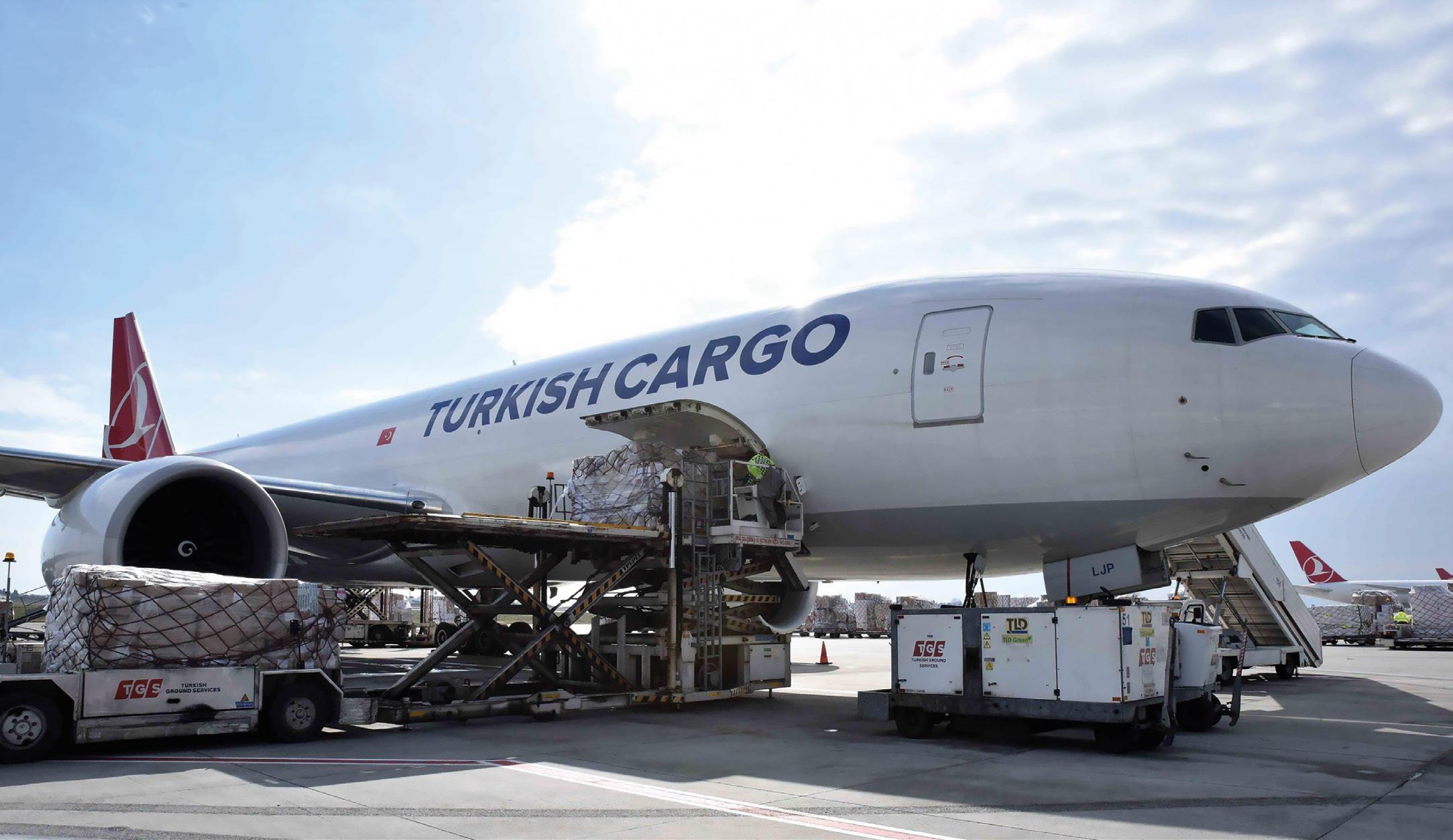
Therefore, Ankara should be regarded not only as an administrative center but also as a strategic actor at the core of Türkiye’s logistics network. With the right investments and planning, it has the potential to become not just a regional but a global logistics hub.
How are global developments affecting Ankara’s logistics role?
Recent global developments have made the importance of transportation and logistics more visible than ever. Particularly during the pandemic, significant disruptions occurred in supply chains, pushing countries to seek alternative routes. The risks of dependence on traditional logistics lines became more apparent.
In this process, Türkiye has emerged as an alternative and reliable route thanks to its geographical location. The emergence of new corridors in Asia–Europe transportation has increased Türkiye’s strategic importance. In this context, the “Middle Corridor,” which extends from China through
Central Asia, the Caspian region, and Türkiye to Europe, has gained significant importance in global trade.
As one of the most critical links in this corridor, Türkiye is strengthening its position, while Ankara is becoming more visible in this new era. Ankara should now be viewed not merely as a transit point but as a center where logistics processes are planned, managed and directed.
Regional developments in our neighboring geography also enhance the strategic importance of logistics. Regional crises, disruptions in trade routes and shifting economic balances make countries and cities with strong logistics infrastructure more advantageous. In this regard, Ankara stands out with its robust infrastructure and central location.
As global trade is being reshaped, Ankara’s role is also evolving. The city is becoming not only a point of physical transportation but also a center where logistics strategies are developed, new partnerships are formed and the direction of trade is determined.
Why is multimodal transportation important in logistics, and where does Ankara stand in this regard? Today, one of the most critical factors determining competitiveness in logistics is the ability to integrate different modes of transportation. It is now clear that systems relying solely on road or rail are no longer sufficient. This is where the concept of “multimodal transportation” comes into prominence.
Multimodal transportation refers to the integrated operation of different transport modes in a complementary manner. This system provides both cost advantages and increased operational efficiency.
Railways stand out with their high capacity and environmentally friendly nature, while road transport maintains its indispensability through flexibility and accessibility. Air transport offers speed, especially for high value-added goods. The real success lies in designing these modes not as competitors but as complementary elements.
Ankara is one of the most advantageous cities in Türkiye in this regard. Its location at the intersection of road, rail and air networks provides a strong foundation for multimodal transportation. One of the key supporting elements of this infrastructure is projects such as the Ankara Logistics Base.
The Ankara Logistics Base serves as a center where different transportation modes converge, and where goods are efficiently managed and distributed. With such investments, Ankara is evolving into not only a production and consumption center but also a strong logistics hub.
Moreover, logistics is no longer limited to physical transportation. Digitalization, data management, intelligent transport systems and sustainability have become integral parts of the sector. Ankara has the potential not only to keep pace with this transformation but also to lead it.
What is the vision of the Ankara Chamber of Commerce in this field?
As the Ankara Chamber of Commerce, we consider transportation and logistics as a strategic sector for Ankara’s economic development. Logistics costs, access speed and the quality of transportation infrastructure directly affect trade competitiveness.
In this context, our priority is to further strengthen Ankara’s logistics infrastructure and transform the city from a regional center into a global logistics hub. Expanding organized logistics zones, increasing railway connections, and digitalizing transportation processes are key components of this vision.
We also believe that collaboration among the public sector, private sector, and academia plays a critical role in this process. The development of the logistics sector should be supported not only by infrastructure investments but also by knowledge production, human capital, and technology.
We are ready to work in cooperation
with all stakeholders to make the best use of Ankara’s potential. We believe that Ankara can become a city that brings together East and West, integrates trade and logistics, and serves as a strong attraction center in its region.
In conclusion, Ankara is the heart of Türkiye. For this heart to beat strongly, its transportation arteries must function quickly, efficiently, and in an integrated manner. Every step taken in line with this vision will enhance not only Ankara’s but also Türkiye’s and the wider region’s economic strength.
Could you explain the importance of the Ankara Chamber of Commerce’s participation in Breakbulk Europe and bringing its members to this event? Participation in a prestigious international exhibition such as Breakbulk Europe represents not just a visit but a strategic expansion for the business community. As the Ankara Chamber of Commerce, we are pleased to bring our members to this important event with the support of our Ministry of Trade.
Breakbulk Europe is one of the world’s largest meeting points for project cargo, heavy-lift logistics and supply chain management. It brings
together a broad ecosystem, from ports and logistics companies to energy projects and infrastructure investment decision makers. It not only offers participants the opportunity to establish new business connections but also provides a platform to observe the trends shaping global trade onsite.
Today, competition is no longer local but global. Therefore, it is crucial for our companies to enhance their access to international markets, develop new partnerships and closely follow innovations in their sectors. Breakbulk Europe offers a unique platform precisely for these purposes.
Through this visit, we believe that our members will gain opportunities to expand into new markets, establish international partnerships, discover solutions that will make their logistics processes more efficient and achieve a stronger position in global competition.
As the Ankara Chamber of Commerce, our goal is to expand our members’ gateways to the world, increase their competitiveness and enhance the visibility of Ankara’s business community on the international stage. We consider our organization for Breakbulk Europe as an important part of this vision.
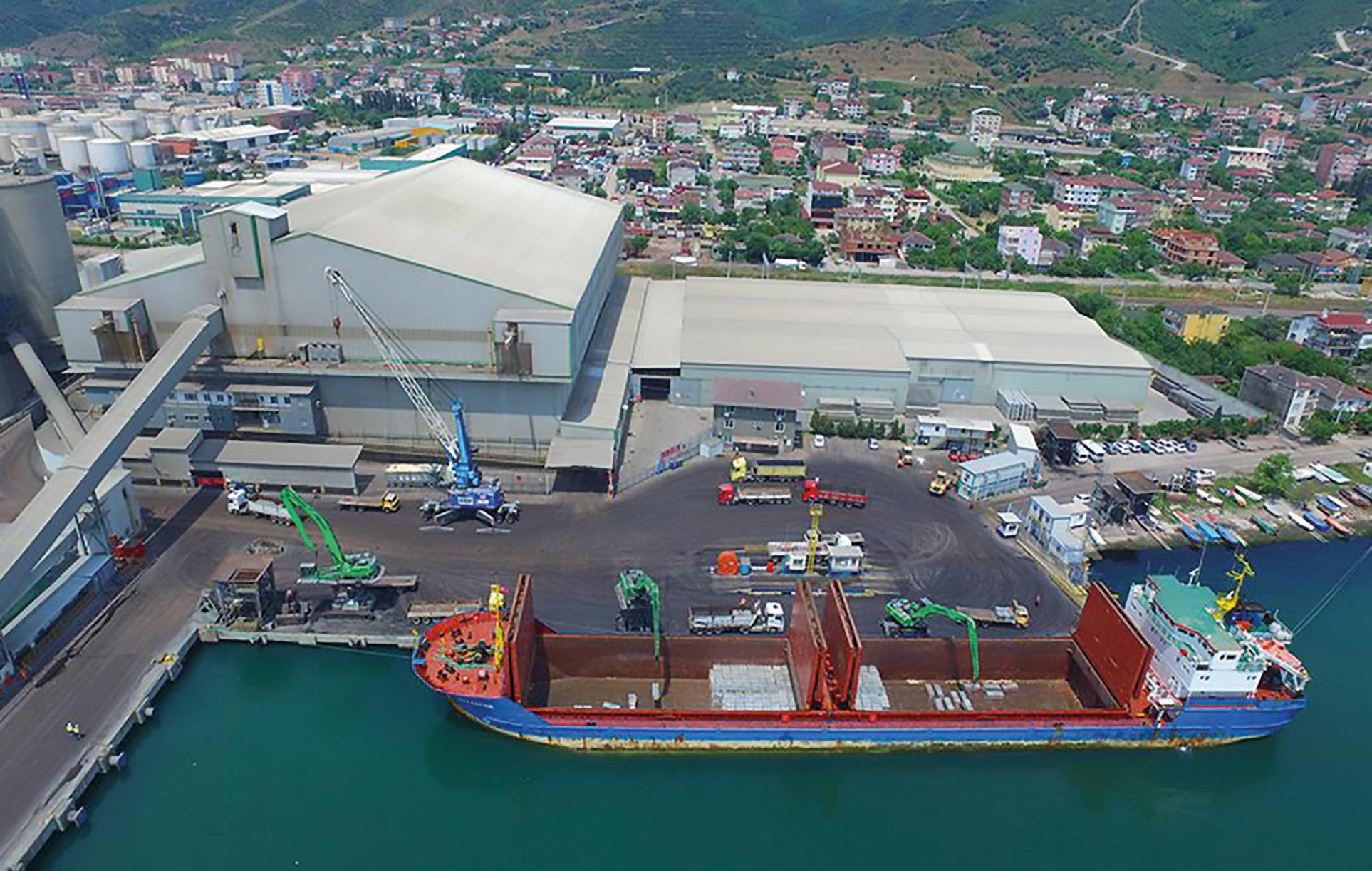
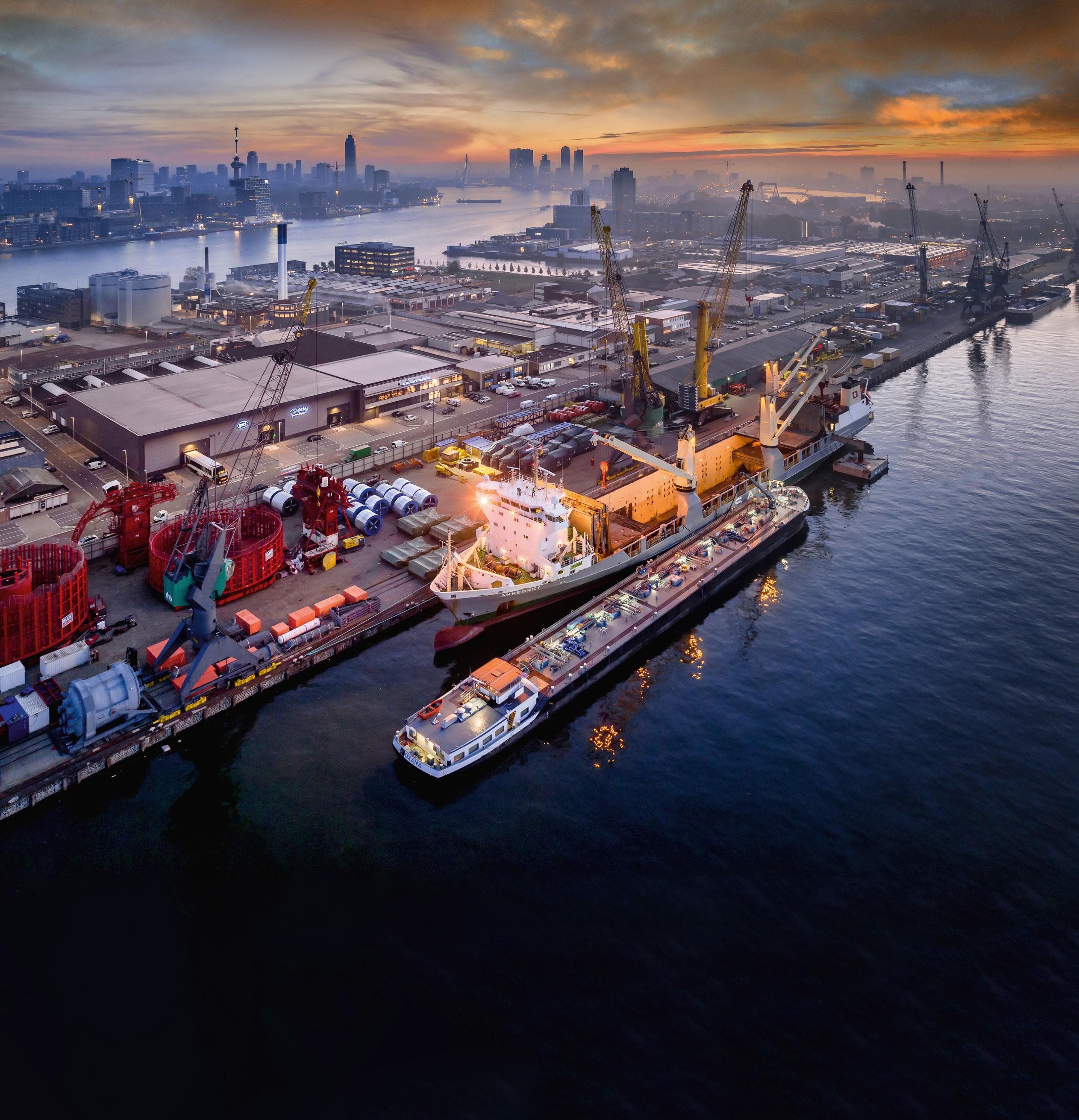
Editor’s note: When Natasha Frey’s Women in Breakbulk membership form landed in my inbox, I reached out for this interview because her work in floating production, storage and offloading vessels (FPSOs) represents a fascinating side of the industry many people never see. Stories like Natasha’s show the incredible range of careers women are building across the industry.
By Leslie Meredith
LM: What drew you to this industry, and what has kept you in it?
NF: I was drawn to logistics because it sits at the intersection of strategy, operations, problem-solving and people. No two days are ever the same. Early in my career, I realized I enjoyed environments where decisions had a direct operational impact and where you could physically see the outcome of your work moving across the world. What has kept me in the industry is the scale and complexity of it. In FPSO and offshore projects, logistics is not simply transportation — it becomes part of project execution itself. You are coordinating with engineering schedules, fabrication yards, customs regimes, marine operations, heavy transport, geopolitical risks and critical-path delivery all at once. I’ve worked across multiple regions and cultures, and that global aspect still excites me. There’s something incredibly rewarding about seeing a project come together after years of coordination and knowing the supply chain played a critical role in making it happen.
LM: SBM Offshore is one of the world’s leading FPSO specialists. For readers who may be less familiar with the sector, what does the
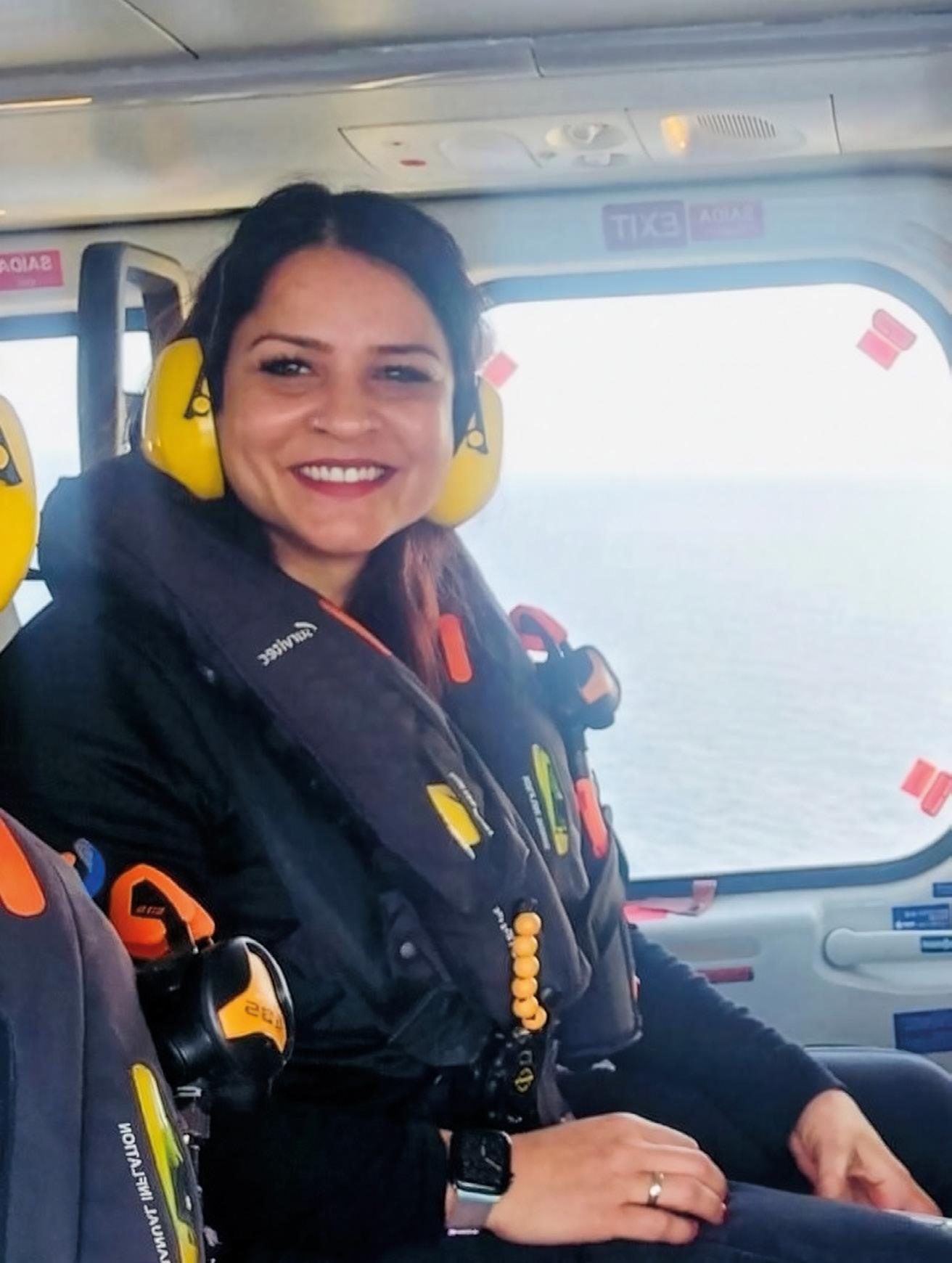
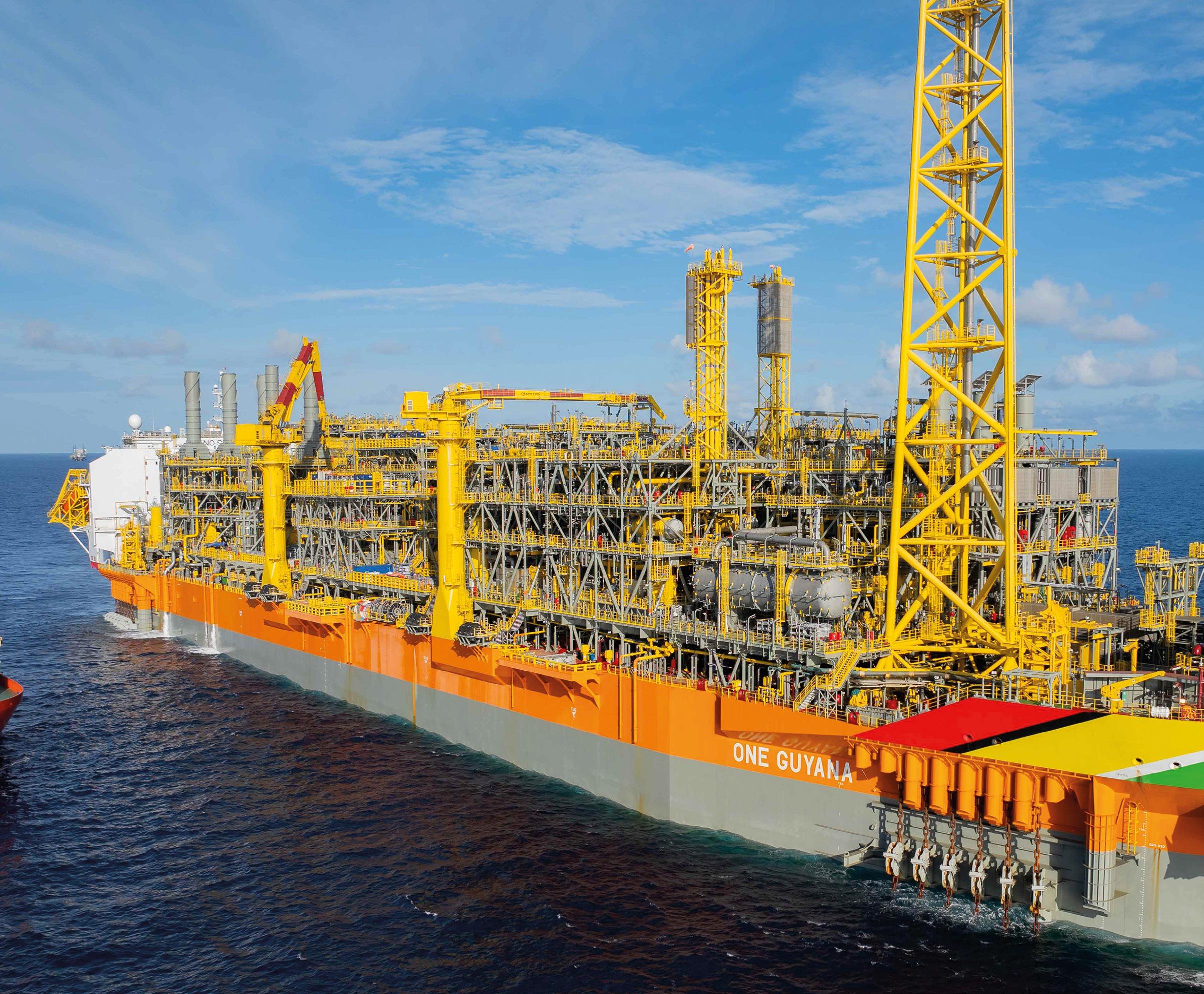
logistics and supply chain work behind an FPSO project look like, and what makes it different from other large-scale offshore projects?
NF: FPSO logistics is one of the most complex forms of project logistics in the world because an FPSO is essentially a floating industrial city built across
At Breakbulk Europe:
Ports Under Pressure: Offshore Wind and the Space Challenge
Wednesday, June 17
Breakbulk Live Stage 12:40pm - 1:25pm
multiple countries simultaneously. You may have topsides fabricated in Asia, mooring systems manufactured in Europe, subsea equipment sourced globally and integration happening in another region entirely, all while supporting offshore installation schedules with zero margin for delay.
Unlike traditional industrial projects, FPSO execution combines EPC complexity with marine logistics, offshore operations and highly specialized heavy transport requirements. Cargo sizes are extreme, interfaces are numerous, and many deliveries are directly tied to offshore installation windows that cannot easily move. The challenge is not only moving cargo, it is synchronizing
engineering maturity, procurement, fabrication, vessel schedules, customs compliance, local content requirements and construction priorities into one coordinated execution strategy. That is what makes FPSO logistics so unique: logistics becomes a core project discipline rather than a support function.
LM: FPSOs are increasingly central to LNG development, particularly as Europe works to diversify its energy supply. What is the logistics and supply chain picture for FPSOlinked LNG projects right now, and where do you see the growth?
NF: We are seeing increasing pressure on global supply chains
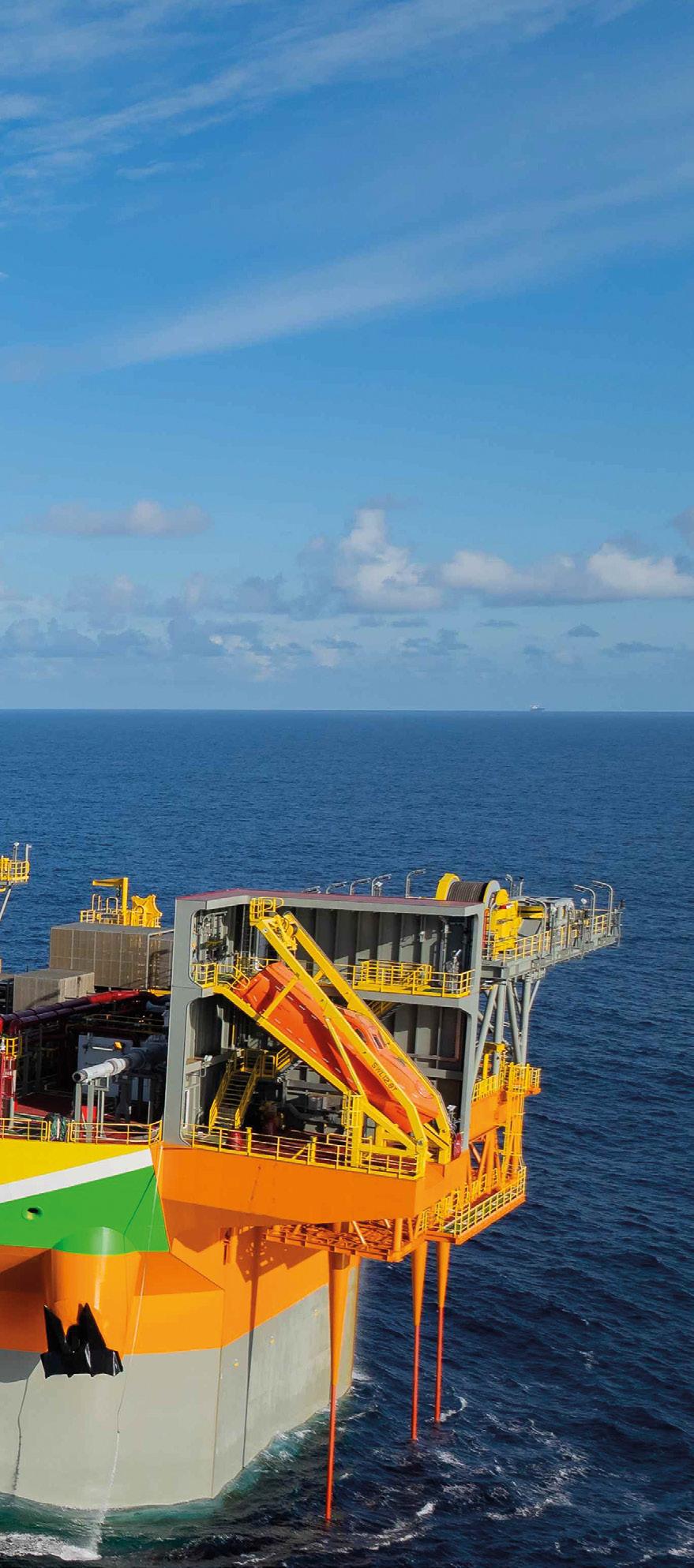
driven by energy security, regional diversification and accelerated offshore developments. LNG-linked offshore projects are growing in importance because countries want faster and more flexible production solutions. From a logistics perspective, the market is becoming more challenging. We are dealing with constrained heavylift capacity, geopolitical disruptions, port congestion in certain regions, long lead equipment, and increasing local content requirements, all while projects are expected to execute faster. I see major growth continuing in South America, particularly Guyana and Brazil, alongside West Africa and parts of Asia. At the same time, supply chains are becoming more regionalized as
companies try to reduce dependency on single sourcing locations. The biggest shift, however, is digital visibility and data-driven execution. The companies that succeed in the next phase of FPSO growth will be the ones that can integrate engineering, procurement and logistics data in real time rather than operating in disconnected silos.
LM: Heavy transport, installation and marine logistics at this scale involves an enormous number of moving parts and contractors. What do you most value in supply chain partners?
NF: Transparency and accountability. In complex offshore projects, issues will happen, such as weather disruptions, manufacturing delays, port congestion and customs complications. That is reality. What matters is how partners respond when challenges arise. The best supply chain partners are proactive, solutions-oriented and operationally transparent. They communicate early, escalate risks before they become critical and understand that collaboration matters more than protecting individual KPIs. I also value partners who truly understand project execution, not just freight forwarding. In EPC environments, logistics decisions directly impact construction schedules and offshore readiness. The strongest partners understand the wider project context and act as an extension of the project team.
LM: What is the single biggest operational challenge facing FPSO logistics right now and what would solving it require?
NF: One of the biggest challenges is fragmentation of information across the supply chain. Many projects still operate with disconnected systems, manual processes and inconsistent data ownership across procurement, expediting, logistics and suppliers. That creates reactive execution instead of proactive execution.
The industry has become extremely advanced technically, but operational visibility across the supply chain still lags behind in many areas. Solving this requires more than technology alone. It requires process discipline, data governance and alignment between all stakeholders on how information flows across the project lifecycle. The future is not just digitization, it is connected execution.
LM: What is the accomplishment in your career you are most proud of, and what did it take to pull it off?
NF: I’m most proud of the progression I’ve achieved by continuously stepping into more complex environments and proving myself through execution. Moving from the service provider side into the EPC and FPSO world was a major transition because it requires a completely different level of project integration, stakeholder management and operational ownership. Being able to grow into leadership roles within that environment is something I’m very proud of. What it took was resilience, adaptability and a willingness to continuously learn. Offshore project logistics can be intense: long hours, high pressure, global stakeholders and constant problem-solving. You have to stay calm under pressure and earn credibility through consistency. I’ve also learned that leadership is not about having the loudest voice in the room. It is about creating clarity, building trust and enabling teams to perform under difficult conditions.
LM: Women remain underrepresented in offshore project execution at senior levels. You’ve worked across three continents in a field that is still maledominated. What has your experience been, and what would you tell a younger woman considering this path?
NF: The industry is changing, but offshore logistics and project execution
are traditionally male environments, particularly at senior operational levels. Early in my career, I often felt I had to prove my technical credibility faster and more consistently than some of my peers. Over time, I learned that confidence comes from competence. When you understand your business, deliver results and communicate clearly, people respect that.
I would tell younger women not to underestimate themselves or wait until they feel “fully ready” before stepping into bigger opportunities. Some of the best growth happens when you take on challenges slightly outside your comfort zone. I would also encourage them to develop both technical expertise and communication skills. In logistics leadership, your ability to align people, influence decisions and navigate complexity is just as important as operational
knowledge. There is absolutely space for women in this industry, and the industry benefits from having more diverse leadership perspectives.
LM: Where do you see FPSO logistics in five years in terms of technology adoption, project scale, regional demand and the skills the next generation of logistics managers will need?
NF: I believe FPSO logistics will become far more data-driven, integrated and predictive over the next five years. We will see greater use of real-time tracking, AI-supported planning, digital twins, automated reporting and integrated supply chain platforms that connect procurement, engineering, logistics and construction into a single execution ecosystem. Projects will also continue increasing in scale and complexity,
particularly in emerging offshore regions. At the same time, clients will demand faster execution, stronger ESG performance, more local content integration and greater cost control. The next generation of logistics managers will need a very different skillset than before. Operational experience will still matter, but data literacy, stakeholder management, commercial awareness and digital adoption will become equally critical. The logistics leaders of the future will not just move cargo. They will manage risk, drive visibility, influence strategy and connect entire project ecosystems together.
Natasha Frey is a supply chain discipline manager - FPSO Logistics for SBM Offshore, based in The Netherlands
7,600 metres of quayside
Vessels up to 300m-long
-10.5m LAT berths
Lifting capacity up to 140 tonnes / m²
692,000m² of laydown area
UK’s largest shore power system
portofaberdeen.co.uk *Breakbulk Exhibitor *Breakbulk Global Shipper
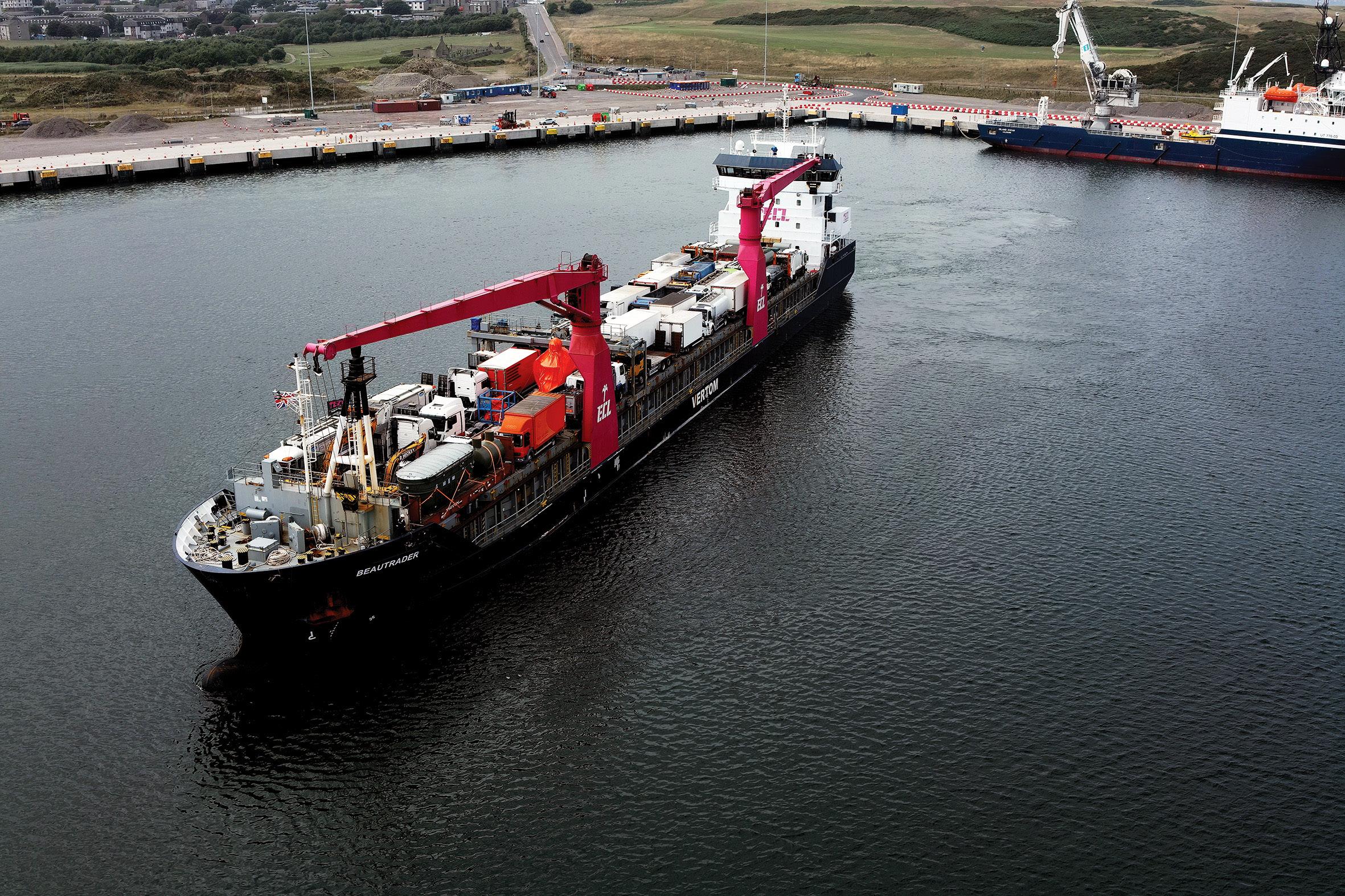
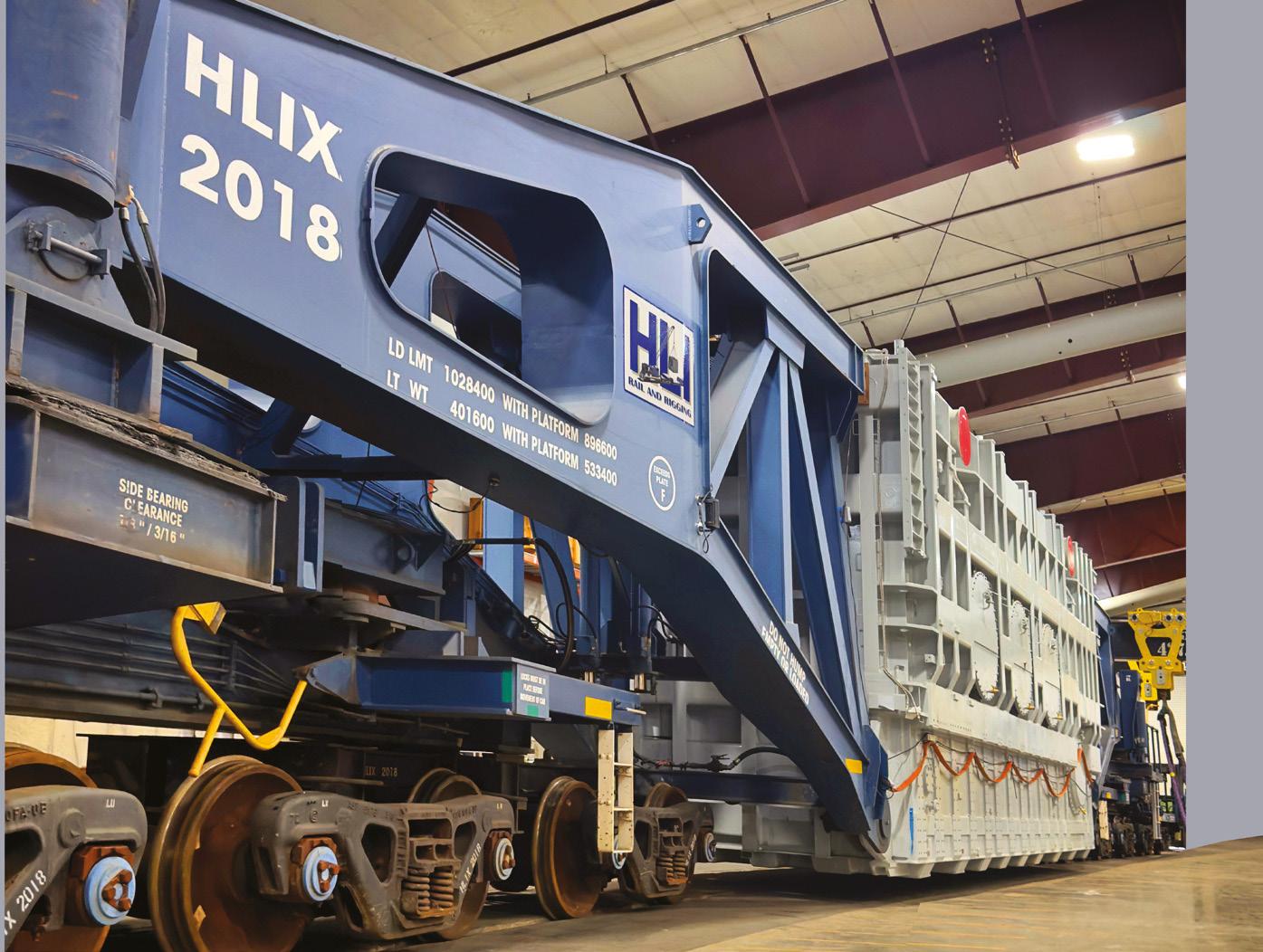
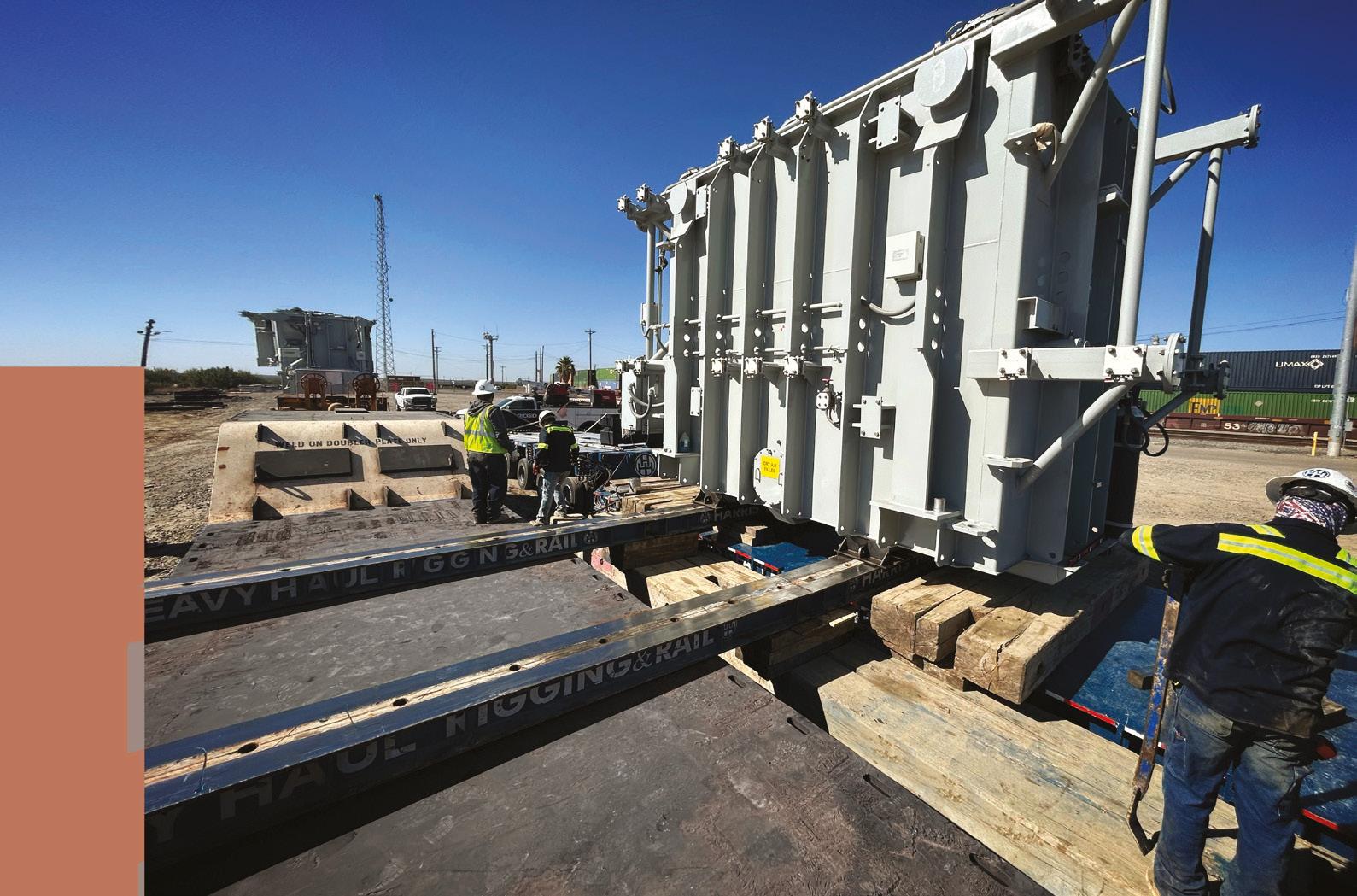
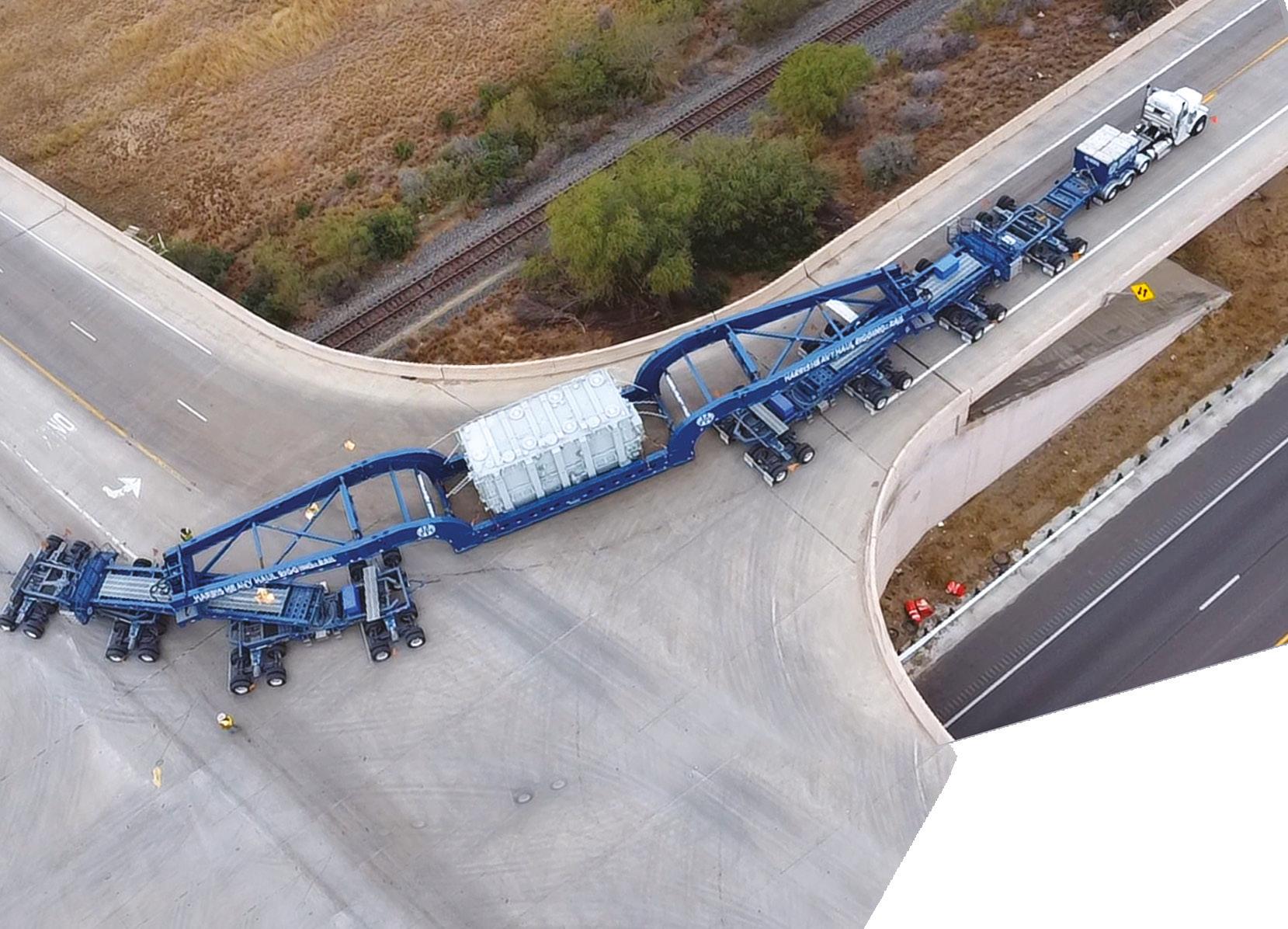
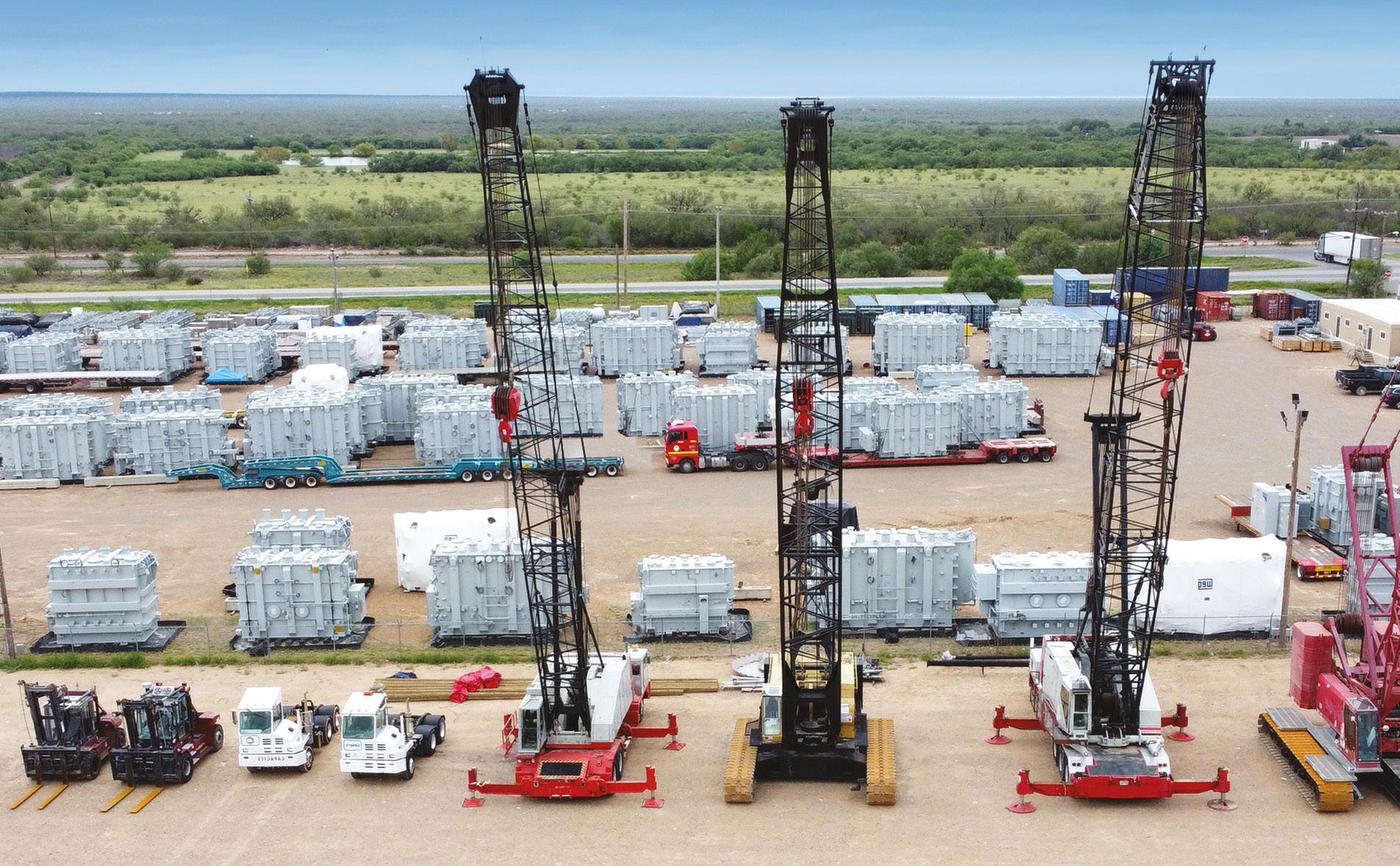

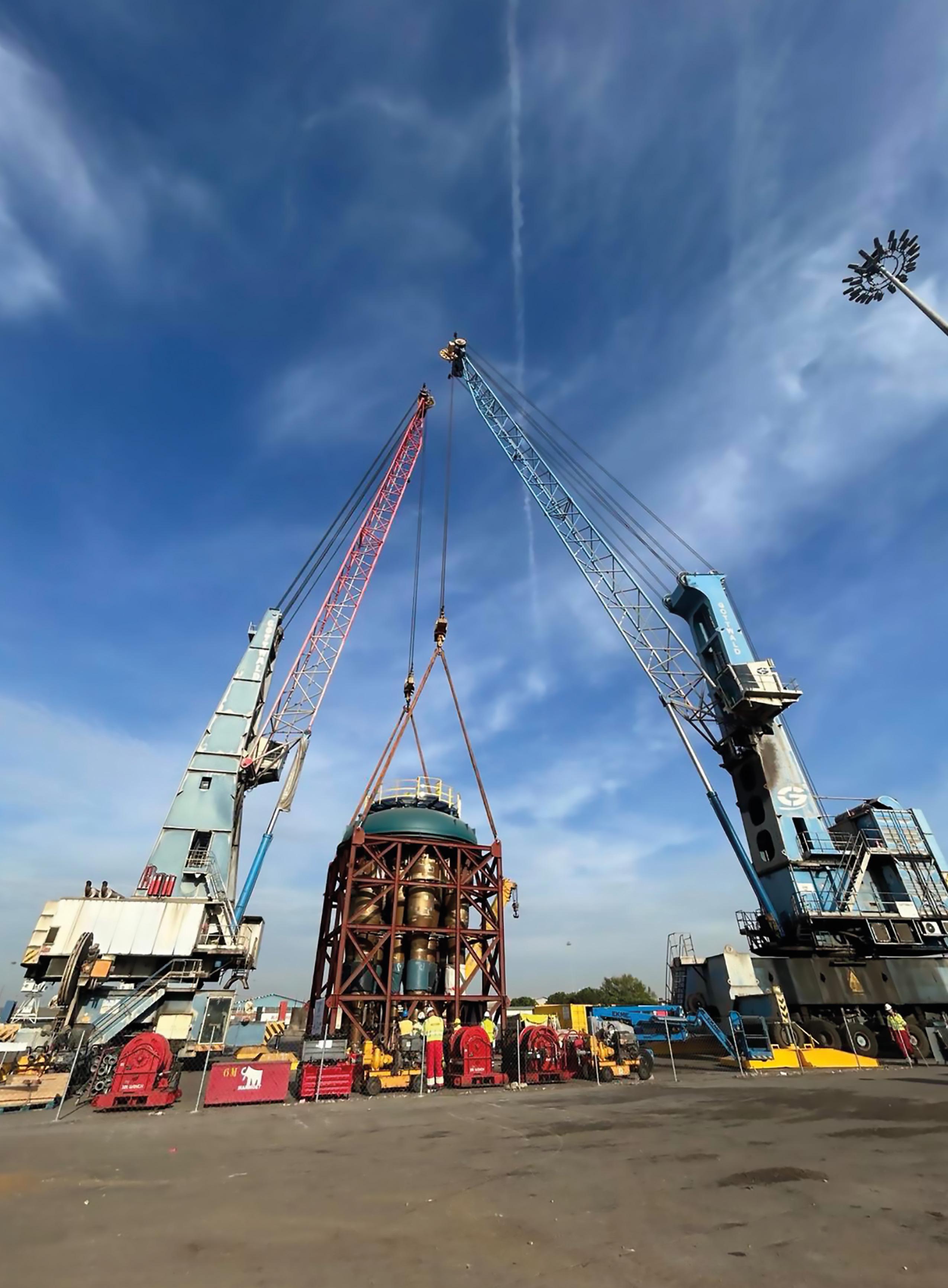
Cosmatos Group and Mammoet Deliver Critical Refinery Unit for EKME
By Malcolm Ramsay
In Greek mythology, the Medusa was a monster so formidable that defeating her required intelligence and precision rather than brute force. While Perseus was ultimately able to use the reflection in his shield to avoid being turned to stone, this option was not open to project forwarder Cosmatos Group, heavy-lift specialist Mammoet and industrial equipment manufacturer and contractor EKME when they were tasked with their own modern-day Gorgon, transporting a giant 210-metric-tonne refinery unit in Greece.
Too tall for roads, too heavy for standard barges, and too critical to fail, the Medusa heavy-lift project was undertaken as part of a major upgrade to Helleniq Energy’s Aspropyrgos Refinery, a linchpin in Greece’s energy infrastructure. Located just 30 kilometers northwest of Athens, near the port of Aspropyrgos, the refinery is responsible for processing 65% of the country’s crude oil, making it a cornerstone of both domestic and regional energy security.
Cosmatos Group, a member of The Heavy Lift Group, was brought into the project by EKME, a global player in petrochemical fabrication, due to its proven expertise in navigating complex, high-stakes transport moves, and from the outset this project presented a number of challenges.
“The distance between EKME’s fabrication shop and the port of
Thessaloniki is about nine kilometers through the city,” Kyriakos Kalis, director at Cosmatos Group, told Breakbulk, explaining that height restrictions meant that two giant units had to be carefully moved from the fabrication facility for final assembly at the port of Thessaloniki.
Once combined into the Medusa unit, the entire component was then shipped by barge to the refinery’s port of Aspropyrgos for onward delivery to the Helleniq facility.
At the core of the operation was the EKME-fabricated top head and cyclone unit, a monolithic structure weighing 210 metric tonnes and measuring 14.2 meters long, 8.73 meters wide and 8.73 meters high. The unit’s sheer size and weight, combined with the need to assemble it portside before transport, pushed the boundaries of what was logistically feasible.
“The most challenging points from a design and manufacturing point of view were the design and connection of the plenum chamber stub-outs with the secondary cyclones and the primary cyclones connection to the plenum chamber bottom ring,” said Yannis Karyotis, CEO of EKME.
The top head and cyclone system is a critical component of a refinery’s fluid catalytic cracking (FCC) unit, which converts heavy, high-boiling hydrocarbon fractions from crude oil
Thursday, June 18
Breakbulk Live Stage 10:45am - 11:30am
into lighter, more valuable products such as gasoline and diesel. Located in the reactor vessel, the cyclones act as a containment and separation system for the catalyst and hydrocarbon vapors.
The system is engineered to operate under severe conditions, with temperatures typically exceeding 500°C and pressures of around 1.5–3 bar, while maintaining high separation efficiency and minimizing catalyst losses.
The journey of the Medusa unit began in EKME’s fabrication facilities in Thessaloniki, Greece’s secondlargest city and a major industrial hub. This was the sixth such project that EKME has undertaken in the past twenty years, which provided the necessary infrastructure and expertise for the complete build.
Typically, the top head and cyclones are delivered separately to site and assembled there ahead of the refinery turnaround, when installation takes place. However, in this particular project, time and space constraints within the refinery meant that the entire top head and cyclones package had to arrive fully preassembled.
Transport limitations required the partners to move the top head and cyclones sections separately by selfpropelled modular transporter (SPMT) to the port, where they were assembled dockside before being transferred onto a PRO CB 100 barge measuring more than 70 meters in length.
“Once it was decided that barge transportation was the only feasible solution, discussions were initiated through frequent team meetings,” Karyotis said. “Site visits at the ports,
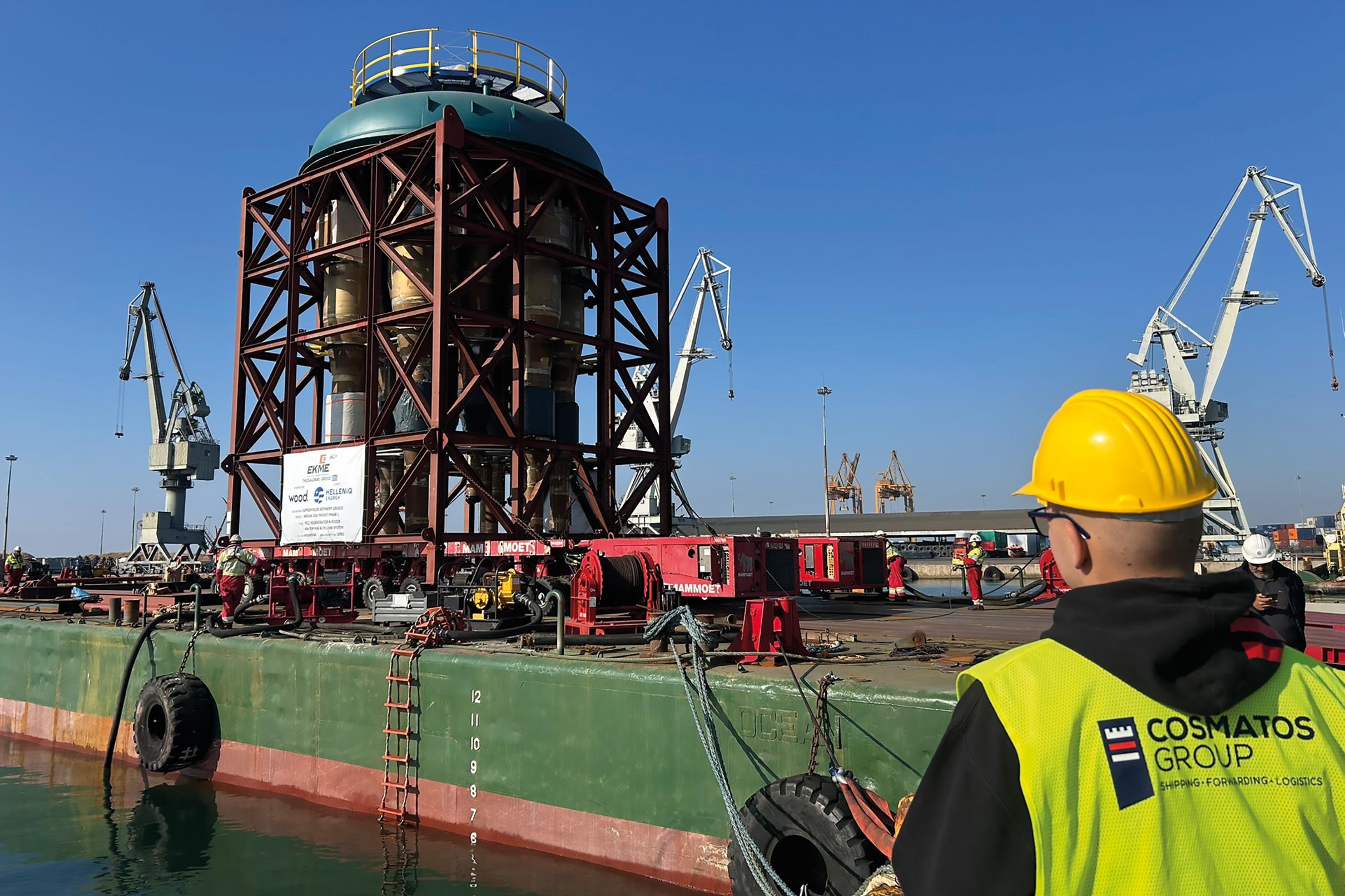
along with engineering studies to assess pier strength and identify a suitable barge, were considered critical factors in the project’s decision-making and follow-up.”
With over 50 years of experience in manufacturing pressure equipment and skid-based units for oil and gas refineries, energy and industrial sectors, EKME was well prepared for the large-scale fabrication involved and worked closely with heavy-lift specialist Mammoet to devise a suitable transporter configuration to move the prefabricated pieces to the port of Thessaloniki.
“An SPMT with 20 axle lines was used,” Kalis said. “As per the method of statement (MOS), this was the appropriate equipment to ensure that the load-in and load-out operations were performed safely. Pier and barge strength were taken into consideration in the MOS in order to determine the configuration of the equipment to be used.”
With the top head and cyclones ready for load out at the fabrication site, the team then had to ensure the route was clear and all calculations
complete to ensure the swept-path and load-bearing tolerances were accurate.
“The new top head was transported from the site to the port early on a Sunday morning, in accordance with police instructions,” Kalis added.
Upon arrival at the port of Thessaloniki, the giant top head unit and cyclone units were then positioned for the final assembly of the combined Medusa unit.
“We have good cooperation with the port authority regarding the necessary area availability, the logistical support necessary and the supply of lifting equipment and other apparatus,” Karyotis said. “In this case, proper transportation box and bracings design, and the selection of the area of final assembly within the port, were the key points to ensure secure handling. As was of course the selection of Mammoet, an experienced world leader in heavy haul and lifting operations, as the transportation subcontractor to perform the loading and land and marine transport activities.”
With the unit finally assembled, it then had to be transferred to
barge for onward transport to the port of Aspropyrgos.
“A mobile ramp was placed between the barge and the pier to achieve the most efficient loading operation,” Karyotis said. “The Marine Warranty Surveyor (MWS) supervised the welding and nondestructive testing of the mooring equipment and the spreader beams on the barge. Further on the predicted welding procedures, additional welding was carried out on buckled areas of the barge’s deck plating.”
Detailed pre-planning by the teams also identified the cyclone leg connections as a potential weak point. By calculating the relevant elevations in relation to the transportation frame, the partners were able to ensure a sufficiently stiff structure capable of withstanding accelerations and movements during both land transport and, in particular, the sea voyage.
“The successful design was the product of a close cooperation between EKME’s team and the experienced supplier of the cyclones, Van Tongeren, from England,” Karyotis said.
Transporting the giant unit by barge avoided many of the obstacles associated with road transport, but it also introduced a unique set of challenges, as the immense weight of the component made precise ballasting of the barge critical.
“Mammoet personnel were monitoring the ballasting operation,” Karyotis said. “The load-out was stopped from time to time to allow proper de-ballasting and upon loading the top head, the water ballast was discharged.”
To achieve the perfect equilibrium required for safe transport, counterweights were strategically added at the aft section of the barge, though their placement had to be adjusted slightly from the original MOS specifications. This fine-tuning was essential to eliminate any tilt and maintain the
calculated trim, the optimal balance between the barge’s bow and stern.
The need for these adjustments arose from unexpected weight discrepancies, as the barge’s own equipment, combined with the heavy-lift gear provided by Mammoet, added more mass than initially accounted for in the plan. With every kilogram counting, even minor imbalances could compromise stability during transit.
Alongside the challenges of ballasting, weather conditions were also a key factor, and due to unexpected delays in the barge’s arrival, the project had to be postponed to the autumn period — a riskier season for maritime transport. Nonetheless, the team adapted with enhanced weather monitoring and additional safety checks, proving that even the bestlaid plans must bend to the elements.
Upon arrival at the Port of Aspropyrgos, the Medusa unit was offloaded and transported the final few kilometers to the refinery. “Phase 2 involves the installation of the Medusa assembly onto the existing reactor and is currently being executed at the client’s premises,” Karyotis said. This upgrade is part of a €130 million investment to modernize the refinery, reducing emissions by 50% and enabling the processing of heavier, high-sulfur crudes, critical in meeting EU environmental standards and securing Greece’s energy future.
Based in the UK, Malcolm Ramsay has a background in business analysis and technology writing, with an emphasis on transportation and ports.
*Breakbulk Exhibitor
One tariff disappears, another pops up as project cargo companies recalculate costs and sourcing decisions.
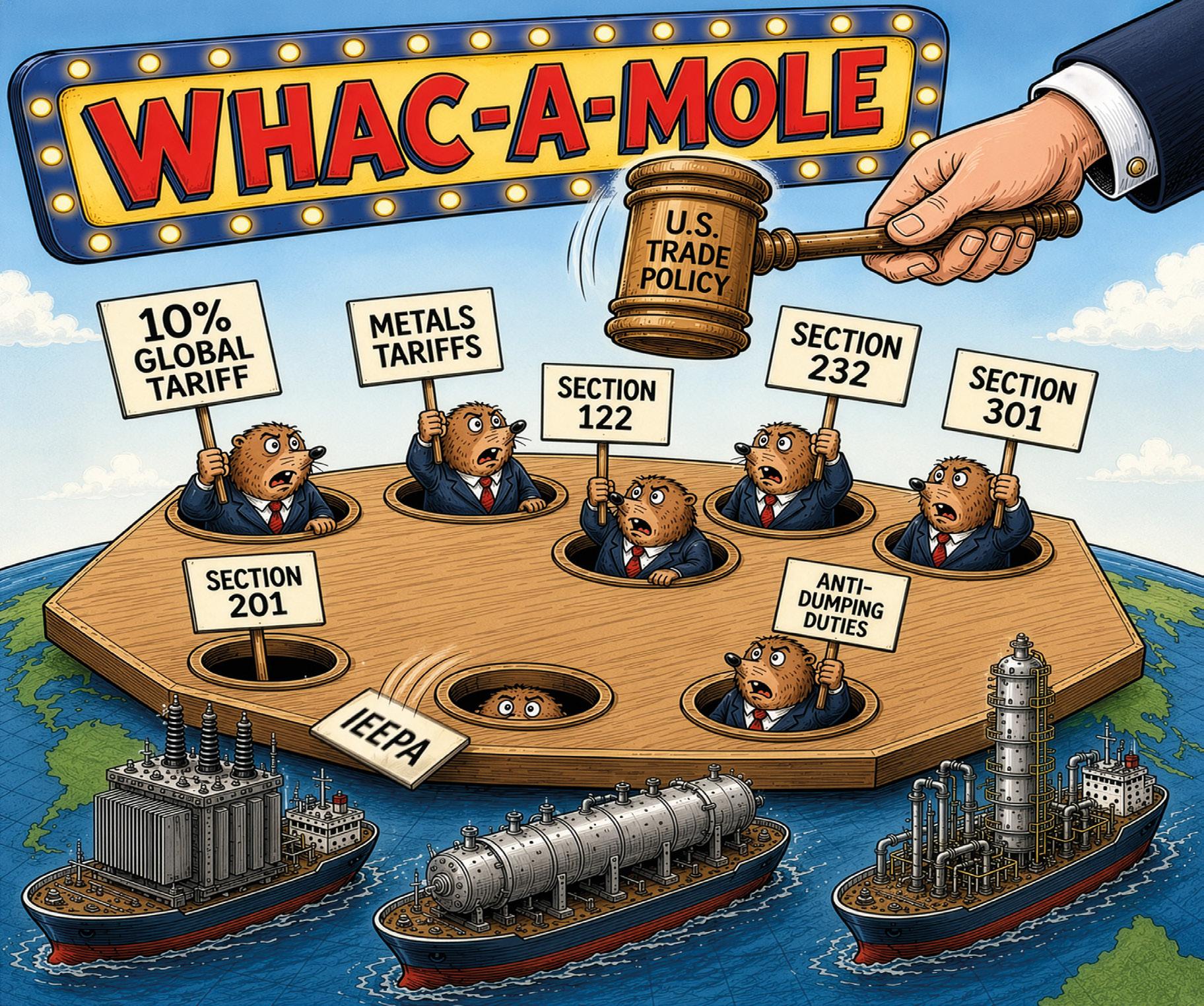
Fluor, DHL, Jade Management Group and AAL Shipping report operational changes from shifting tariffs
By Leslie Meredith
Despite news headlines, Trump’s tariffs did not disappear after the U.S. Supreme Court ruled against the use of the International Emergency Economic Powers Act (IEEPA) in February. The administration moved quickly to replace some of the lost revenue under other tariff laws. Just as quickly, manufacturers, importers and trade groups moved to protect their right to refunds or challenge the new tariff schemes.
Market certainty continues to elude our grasp, but the challenges are clear. Gautham Krishnan, logistics expert for global EPC Fluor , said: “Ongoing changes to tariff regimes and evolving trade policies have reduced predictability in material pricing and availability, making it increasingly difficult to lock in cost and schedule certainty over the project lifecycle.”
While the recent court decision wiped out about 60% of the tariffs put in place in 2025 under the IEEPA, the other 40% stayed in place

because they were imposed under different legal authorities. That included a 10% global tariff, imposed under Section 122 of the Trade Act, which is now in litigation.
In a dizzying chain of legal proceedings, the U.S. Court of International Trade ruled the Section 122 tariff unlawful on May 7 in a 2-1 decision, though relief was limited to three named plaintiffs; claims by others were dismissed because they couldn’t prove direct financial
harm to themselves as importers. Then the Federal Circuit stayed (paused) the order on May 12, so Customs and Border Protection (CPB) continues to collect Section 122 duties on all importers while an appeal proceeds. This particular tariff is temporary and will expire July 24 unless Congress extends it. That temporary status has done little to calm the market.
Procurement teams are being asked to make sourcing decisions for projects that stretch years into the future while tariff structures can change within days. The current environment has become a pay-now, litigate-later system, with importers often forced to absorb duties upfront while court challenges move slowly through the system.
The refund question is becoming its own source of confusion. After the Supreme Court ruling, companies that paid IEEPA tariffs began looking for ways to recover those duties. CBP
April 5, 2025


April 2, 2025
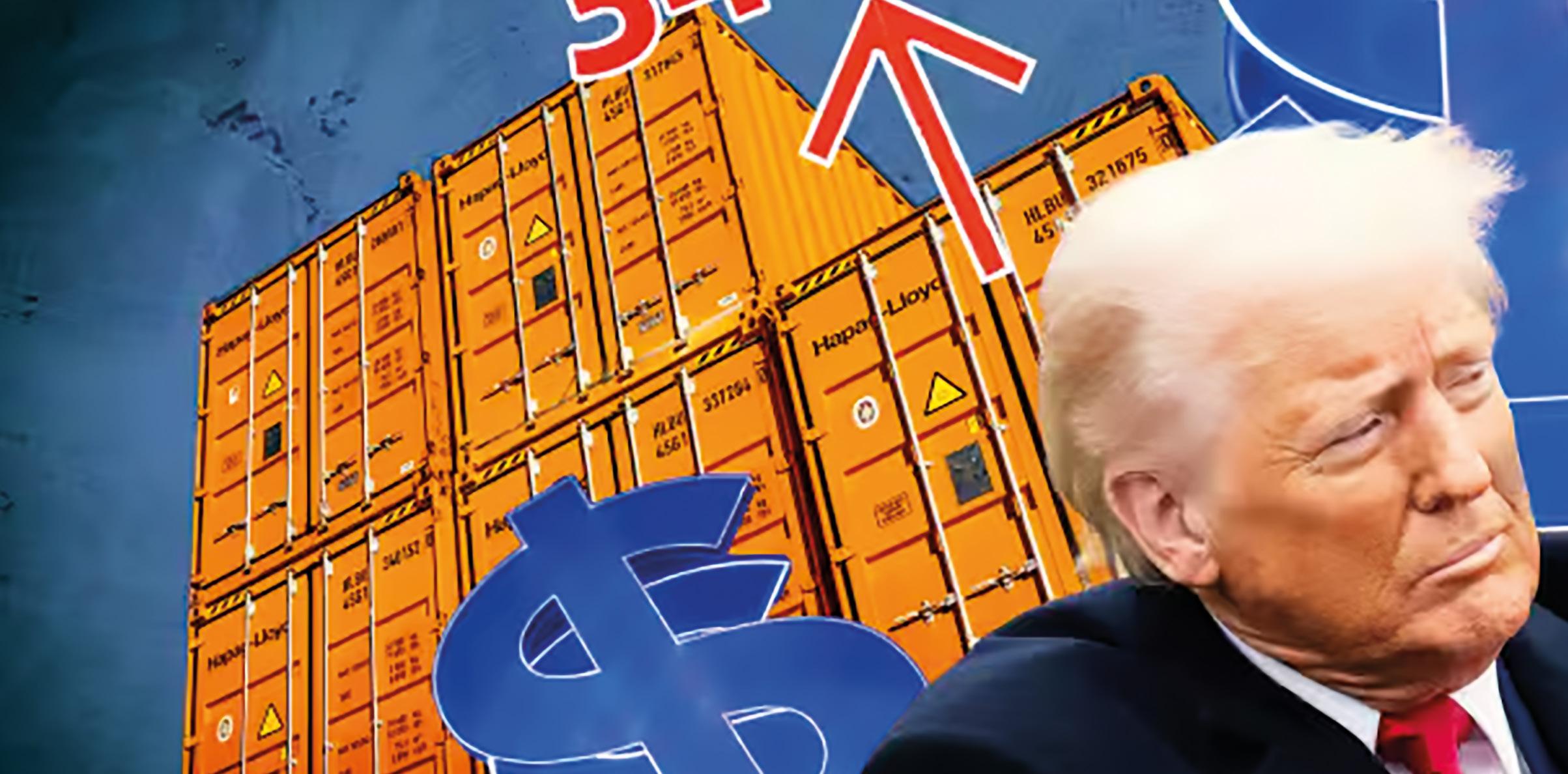
Feb. 24, 2026
Section 122 global tariff begins at 10%

Feb. 20, 2026
U.S.

March 6, 2026
CBP files its initial refundsystem plan
March 4, 2026 Court of International Trade issues a sweeping refund order

April 6, 2026
Expanded Section 232 tariffs on steel, aluminum, copper, and some derivatives take effect
has been building a refund process through CAPE, its Consolidated Administration and Processing of Entries system, while importers and their lawyers sort out whether to file administrative claims, lawsuits at the Court of International Trade or both.
The refund does not automatically go to the company that ultimately absorbed the cost. It generally follows the customs entry, which means the importer of record or its authorized broker is the party positioned to seek repayment. In project cargo, that could be the owner, supplier, EPC, distributor or another contracting party, depending on how the transaction was structured. That makes contract language and entry records more important than ever.
But it is the modification of Section 232 tariffs on steel and aluminum that may hit project budgets hardest. When Breakbulk surveyed 10 senior industry leaders last July about the federal policies having the biggest
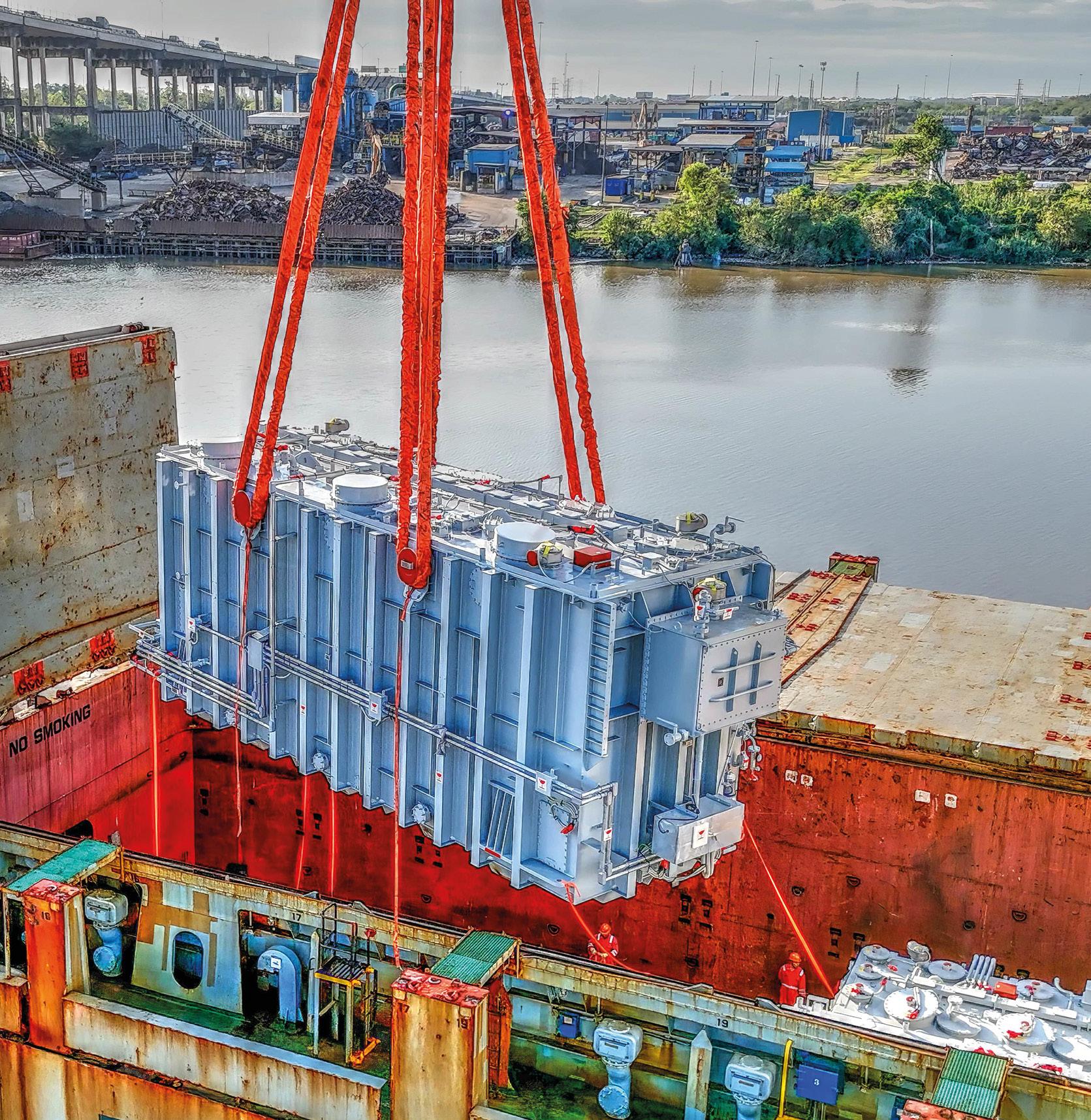

April 14, 2026
Court-ordered update due on CBP’s refundsystem progress
May 7, 2026
U.S. Court of International Trade rules
Section 122 tariffs unlawful; relief limited to three named plaintiffs
April 20, 2026
CBP begins accepting refund requests through CAPE
May 12, 2026
Federal Circuit issues administrative stay; CBP continues collecting Section 122 duties pending appeal
June 7, 2026
Government’s deadline to appeal the CIT nationwide IEEPA refund order


July 24, 2026
Statutory expiration of Section 122 tariffs (150-day cap; only Congress can extend)
effect on project work, metals tariffs led by a wide margin. And these tariffs just got a lot higher.
Until early April, the steel, aluminum and copper used in power equipment and other industrial goods were taxed at 25%. After the IEEPA tariffs were deemed illegal, the administration expanded Section 232 so the tariff could be based on the full value of the item, not just the value of the metals inside it, as long as they made up more than 15% of the item’s total weight.
That change is a big deal for project cargo. Take a $250,000 transformer weighing 27,000 kilograms, the kind used in a mediumsized substation. Its steel and copper are worth around $45,000 and account for 25% of its weight. Before the April 6 expansion, the importer would have paid $11,250 in tariffs, based on 25% of the metals value. After the change, the tariff jumped to $62,500.
Project owners are pausing to recalculate. “Each project is different, however we have seen delays as projects reassess costs and determine whether to change their sourcing strategy in order to deal with the new tariff landscape,” Jake Swanson, chief commercial officer of DHL Industrial Projects , said.
Carriers are seeing the same
response from cargo owners. John Pittalis, head of communications at Singapore-based AAL Shipping, said increased duties on Chinesemanufactured goods, “including industrial equipment, steel and renewable energy components, along with changing import regulations,” have prompted customers to “reassess sourcing locations, procurement timelines and shipping routes.”
Fluctuating tariffs are also changing the equation for procurement teams. Krishnan said Fluor is responding on three tracks: a “best-cost sourcing model” that weighs total landed cost, including tariffs, logistics, supplier capacity and schedule resilience, against execution certainty; price-variation clauses with suppliers to reduce upfront contingencies; and hedging.
Grant Wattman, president of Jade Management, a projectlogistics consultancy, said tariffs have “accelerated the need for being agile and being prepositioned with alternatives, up to and including accelerating project delivery timelines.”
Forwarders are also finding benefits. “From a freight forwarder’s perspective, it has allowed us to help provide additional solutions to our customers,” Swanson said. “In some cases we are able to engage
with them earlier as they look to determine the best sourcing options that they have by helping them to review their total landed costs.”
This shift means logistics providers are actively modeling alternative sourcing scenarios, estimating tariff exposure and mapping out backup routes to outmaneuver delays before a single piece of equipment leaves the factory, adding new layers of risk management.
For project cargo, the whacka-mole problem is certainly compounded by the number of tariffs in play, but it is also the speed at which one ruling or replacement authority can alter the cost basis for equipment that may already be on the water. In this environment, closer coordination between EPCs, forwarders and carriers has become a necessity, not a nice-to-have.
Leslie Meredith is the product and editorial director for Breakbulk Events & Media.
At Breakbulk Europe: KEYNOTE | The End of Predictability: Geopolitics and the New Reality for Global Trade
Tuesday, June 16
Breakbulk Live Stage 11:45am - 12:20pm











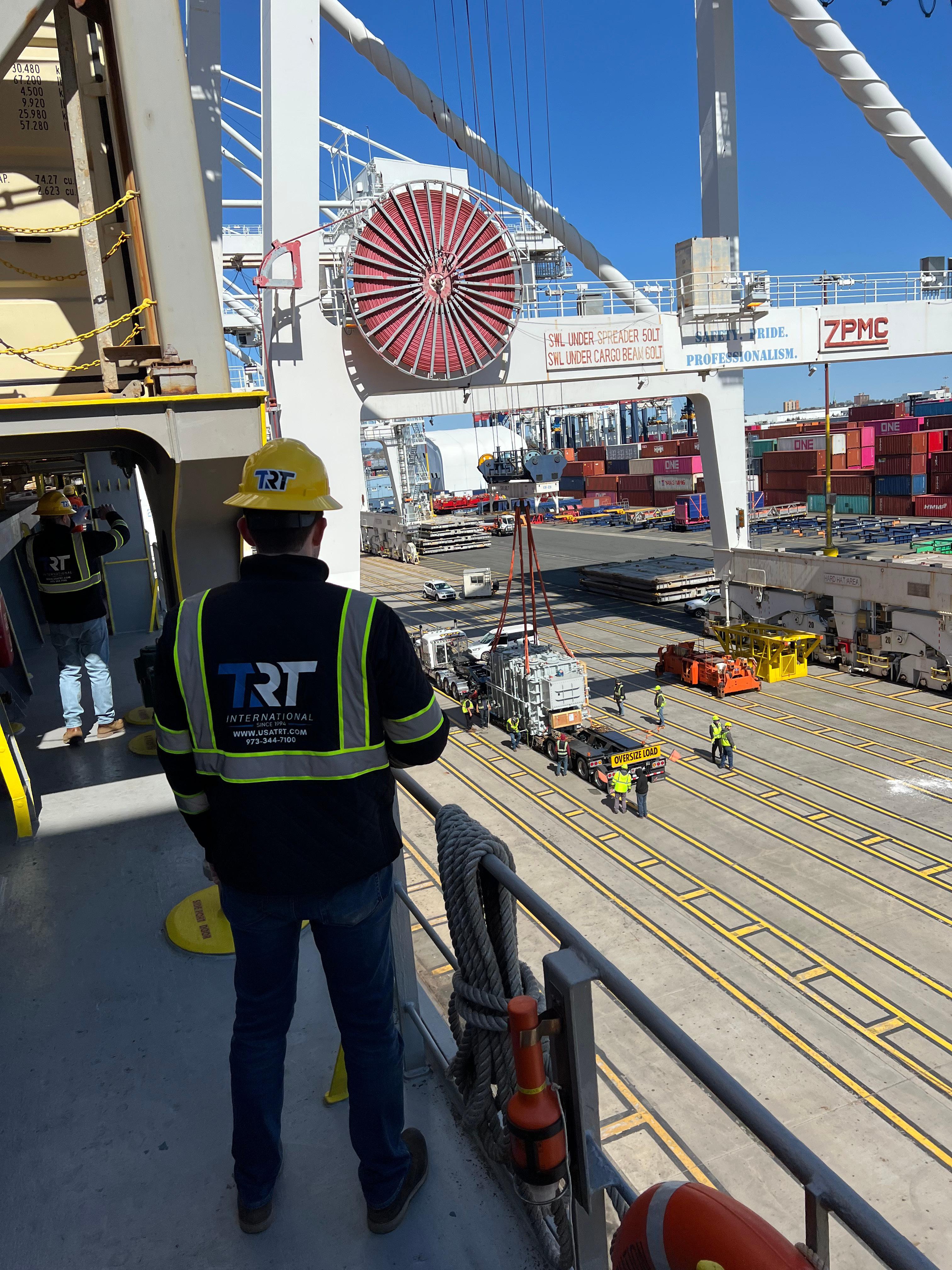
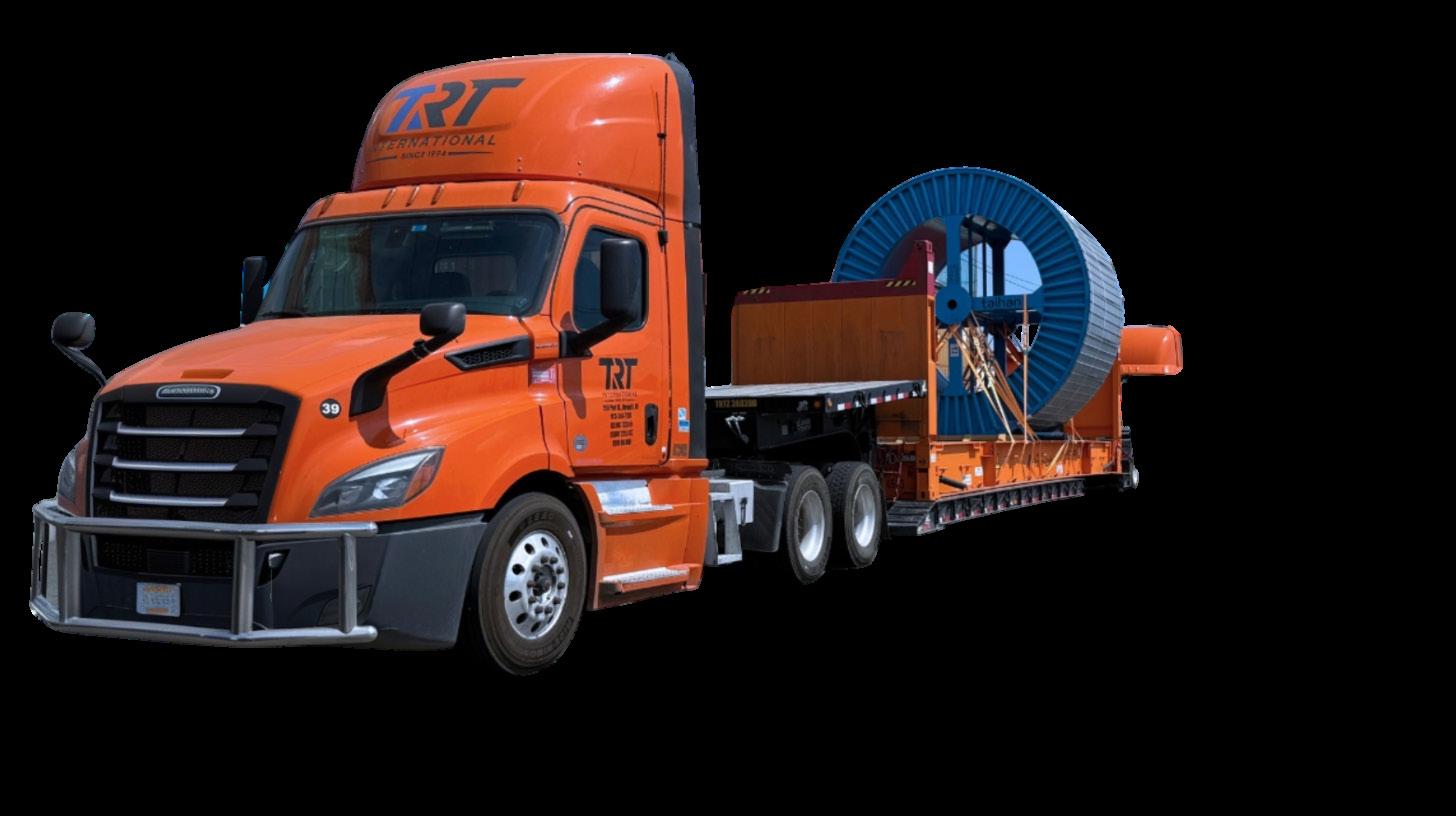

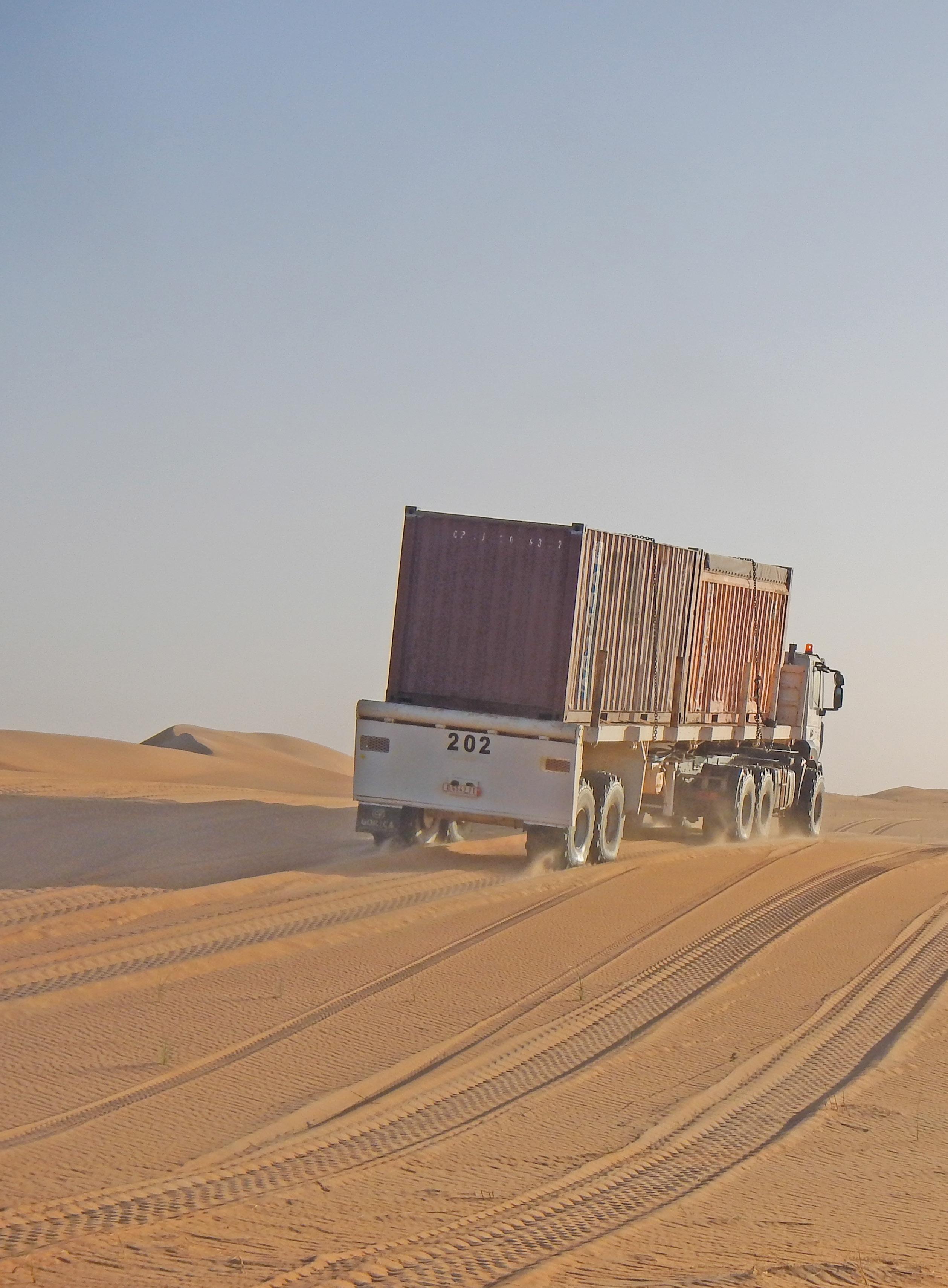
By Jean-François Bourque, regional logistics manager, Eastern Canada at Hatch
Ihave learned to spot the moment a remote project becomes “real.”
It is not when the first drawing set is issued, or when the camp is awarded, or even when the financing closes. It is when someone stands in a muddy laydown yard, staring at a piece of critical equipment that has arrived and realizes it cannot be offloaded with what is on site. Or it is when the barge window slips by 48 hours because the tide, the weather and the cargo readiness did not line up. Or it is when a winter road opens and you have eight weeks to move a year’s worth of
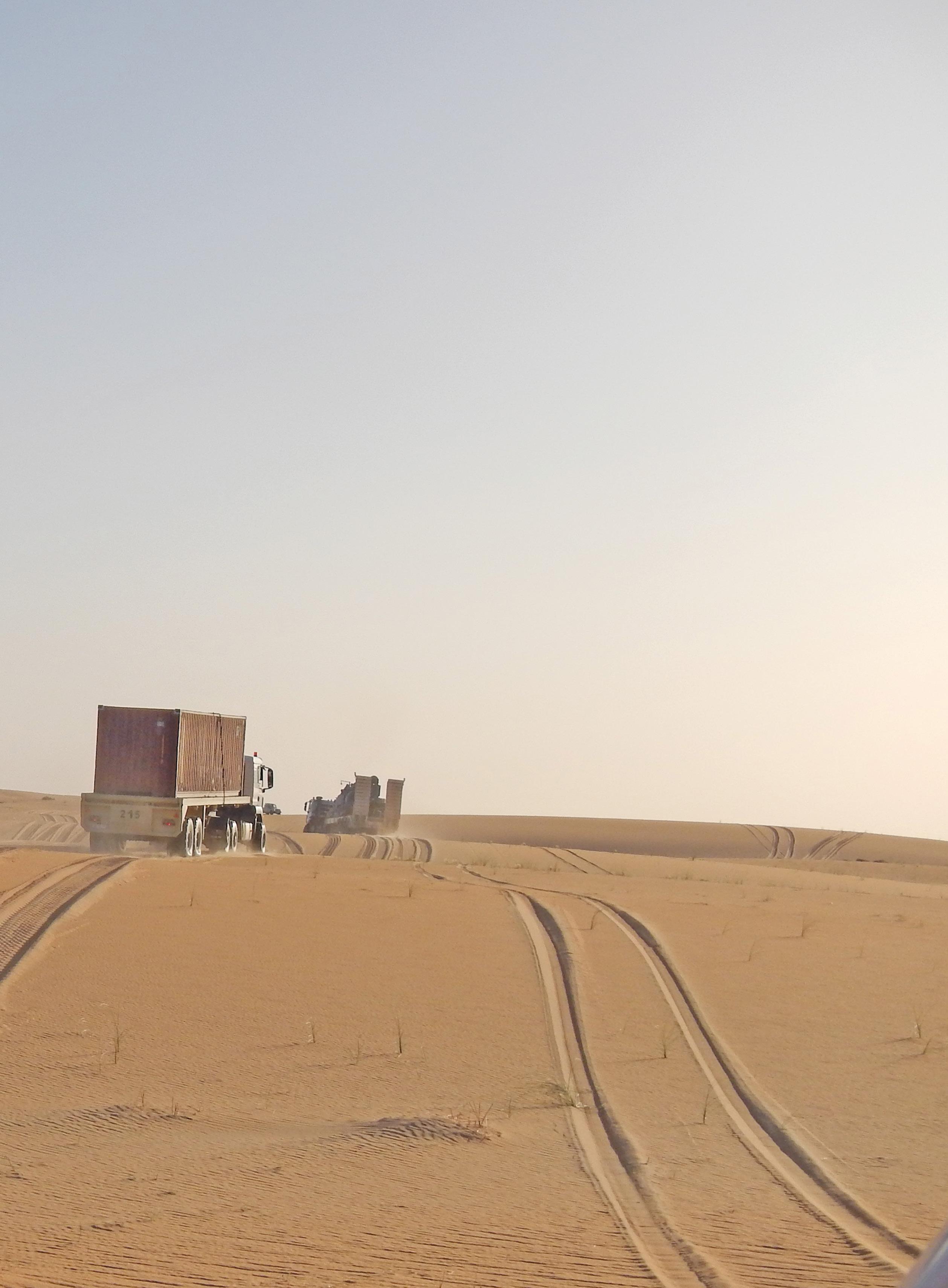
freight, and half your shipments are still sitting in vendor yards because the fabrication was delayed.
Remote logistics has a way of stripping away the comforting illusion that we can “figure it out in execution.”
At the end of the road, whether it is an ice road, a forestry road, a tide-dependent barge landing, or a gravel access that turns into soup every spring, logistics is not support; it is the backbone of the construction schedule. And if you do not treat it that way early, you will end up paying for it later, when the only options left are expensive, unsafe or both.
People often describe remote logistics as complex, and it can be. But the bigger issue is that it is unforgiving. The margin for error is thin, and the penalties are disproportionate.
A remote supply chain is usually built on three realities: 1. Hand-offs are risk multipliers.
Remote projects rely on multimodal transport: ocean, rail, highway, heavy haul, barging, winter roads and air. Every hand-off, port to truck, truck to barge, barge to beach, yard to
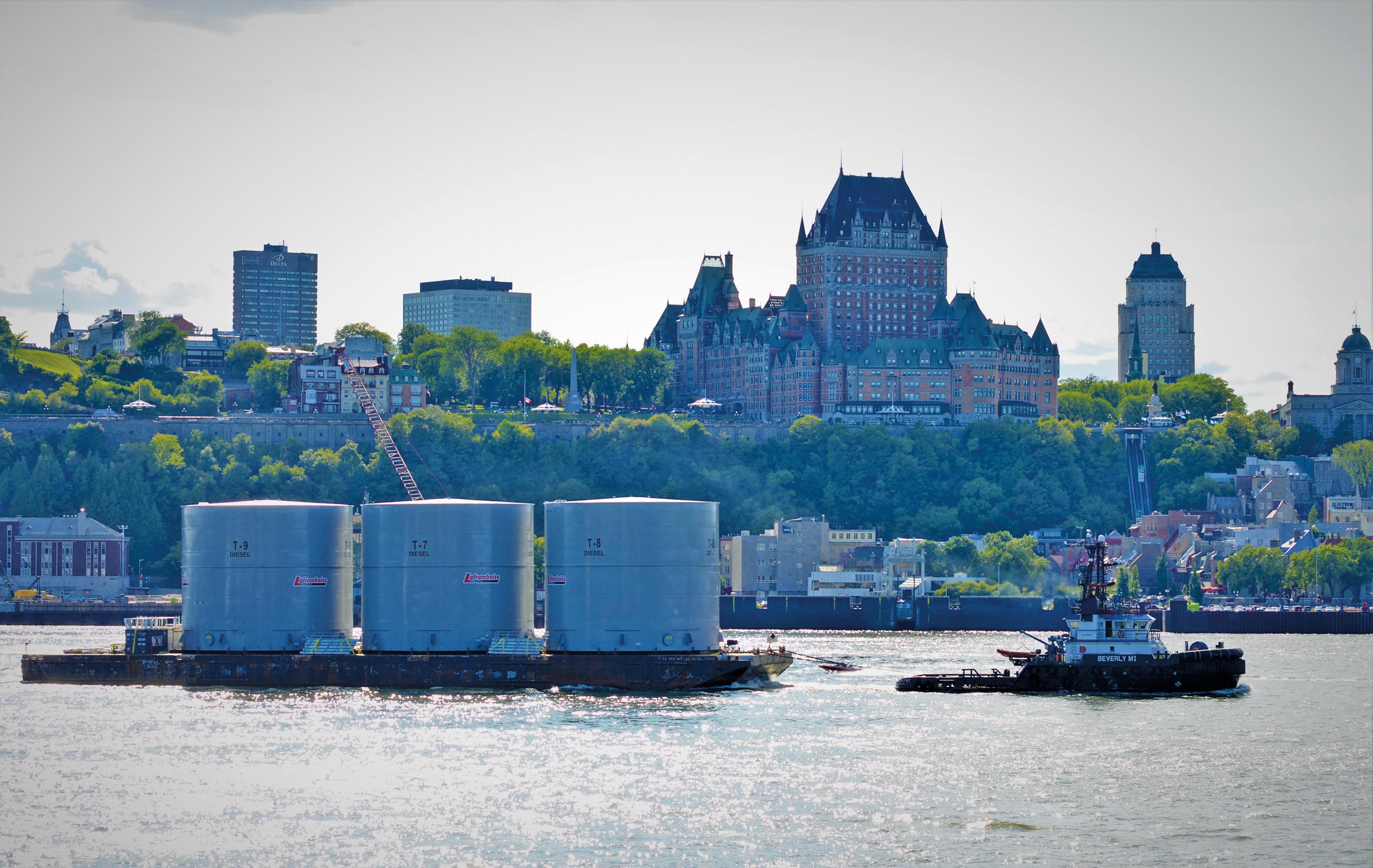
convoy, is a chance to damage cargo, lose visibility, or burn schedule.
2. Seasonality is not a constraint — the calendar is.
An ice road season is not “weather dependent” in the way a city project might be. It is a hard operating window. Same for a barge season or a marine corridor. The schedule does not get to negotiate with freeze-up, breakup, tides, or water levels.
3. Infrastructure gaps show up as execution gaps.
Limited cranes, covered storage, mechanics, laydown and power shape how you package, ship, stage and sequence. If you ignore those realities in design and procurement, you will try to solve them on site with overtime and heroics.
I saw remote projects succeed brilliantly, and some bleed quietly for months. The difference is rarely luck. It is whether logistics was treated as an execution discipline early, before the project locked itself into decisions that could not be
changed. Here are ways to ensure your next remote project goes well.
Acknowledge that the supply chain is a construction system, and design it like one
On remote jobs, I think about the supply chain the same way I think about a plant system: define the boundary conditions, the interfaces and control the failure modes.
There are five failure modes I watch for because they are repeat offenders:
• Unknown weights and dimensions that become “surprises” when the route permits are requested
• Packaging that’s treated as paperwork, not protection, and fails halfway through a long chain
• No defined control points: cargo moves, but nobody truly “owns” the hand-offs
• Seasonal windows missed because readiness was assumed instead of verified
• Split accountability: procurement
owns contracts, logistics owns movement, construction owns urgency, and nobody owns the outcome
If you want to run remote logistics with discipline, you don’t start at the port or at the fab shop. You start at the laydown yard. Here’s a practical exercise I use early by asking myself, “What does “arrive on site” mean for us?”
For a remote project, “delivered” is not a single event; it’s a sequence where items are delivered to the right location (warehouse vs. laydown vs. point of use), in the right condition (no hidden damage, preserved properly), with the right documentation (traceable, receivable, install-ready), and when the site can handle it (equipment, crews, staging capacity).
If you start the plan from the sitereceiving reality, a lot of downstream decisions get cleaner. You stop
shipping “when it is ready” and start shipping to required-on-site dates that the field can absorb. You build a 90-day look-ahead that is operational, not aspirational. And, you design your staging strategy with consolidation hubs, buffer yards and campaign shipments timed to windows.
That backward logic also forces uncomfortable but necessary conversations: Do we have enough laydown? Do we need covered storage? Do we need a forklift strategy, not just a forklift? Do we have lifting plans for abnormal loads, not just permits?
Remote projects punish vague answers to those questions.
Practitioners know this, but it is worth stating plainly: the “hardest” segment of the route sets the rules for everything upstream. If the last 200 kilometers is a narrow forestry road with tight curves and soft shoulders, then your transportable envelope is defined there, not at the fabrication shop. If the last leg is a barge landing with limited beach access and a small crane, then packaging, lift points and rigging plans become design constraints. If the last leg is an ice road, then you do not just plan for weight, you plan for campaign discipline, including pre-positioning, convoy control, maintenance and zero-tolerance for late readiness.
That’s why route surveys and envelope definition are not optional logistics tasks. They are early project design inputs. And this is also where modularization can either save you or trap you.
Modularization: Do not confuse less site work with less logistics work
I am a strong believer in modularization and pre-assembly for remote projects, but I am
cautious about how it is sold internally. Too often the logic stops at “modular means fewer hours on site.” That is true, but incomplete. Modularization shifts work from the site to the supply chain. It concentrates value into fewer, larger, more fragile shipments and raises the consequence of a single failure.
Before you go modular-heavy, ask these questions with brutal honesty:
• Can the route physically support the module size and weight, including seasonal conditions?
• Can you handle it at every transfer point, port, yard, barge, landing, laydown?
• What happens if one module is delayed by two weeks? Is the construction sequence resilient?
• Do you have a preservation strategy for modules that may sit exposed?
• Are your interface points truly frozen, or are you shipping “modules” that still need field rework?
If the answers are weak, the solution is not less modularization, it is better early logistics-led design. Define the envelope, define the interfaces and design modules that are genuinely transportable and install-ready.
Remote projects break cargo in predictable ways: vibration, shock, repeated craning, moisture ingress, freeze-thaw cycles and long outdoor storage. The insultto-injury is that the damage often is not visible until commissioning. That is why I treat packaging and preservation as risk controls. If we can engineer a lifting lug, we can engineer a crate. If we can specify concrete strength, we can specify preservation requirements. In practice, that means packaging designed for multimodal handling, not a single truck ride; clear markings,
lift points and center-of-gravity identification; preservation plans for sensitive equipment that might sit for months; photo records before and after packaging, and inspection points; and storage codes and handling instructions that survive a season outdoors.
When packaging is done well, the field feels it immediately. There are fewer claims, fewer surprises, fewer “we will open it and hope.” When it is done poorly, it is death by a thousand cuts: rework, delays, missing parts and unsafe handling improvisations.
it is a
While “track and trace” is a popular concept for remote projects, visibility is not software; it is a discipline built on basic habits. Vendor logistics data is verified early, and shipping releases are controlled, no “surprise” pickups. Milestones are defined and reported consistently (ETS, ETA, arrival at consolidation, customs cleared, delivered to laydown), as well as any exception reporting, including late shipments, abnormal loads, critical items and any deviation from plan. When that discipline exists, the project team can make decisions early, resequence work, adjust campaigns, or expedite selectively. Without it, the project operates on rumor and optimism, which is a poor strategy in a harsh environment.
I have learned the hard way that remote logistics is won or lost in the commercial fine print, long before the first truck rolls or the first barge is booked. On a remote job, there is no such thing as “we will figure it out when it ships.” Your contract terms decide who has control of the chain, who carries the risk when the weather turns, and who gets stuck holding the bag when a vendor books the cheapest option that does not fit your access windows.
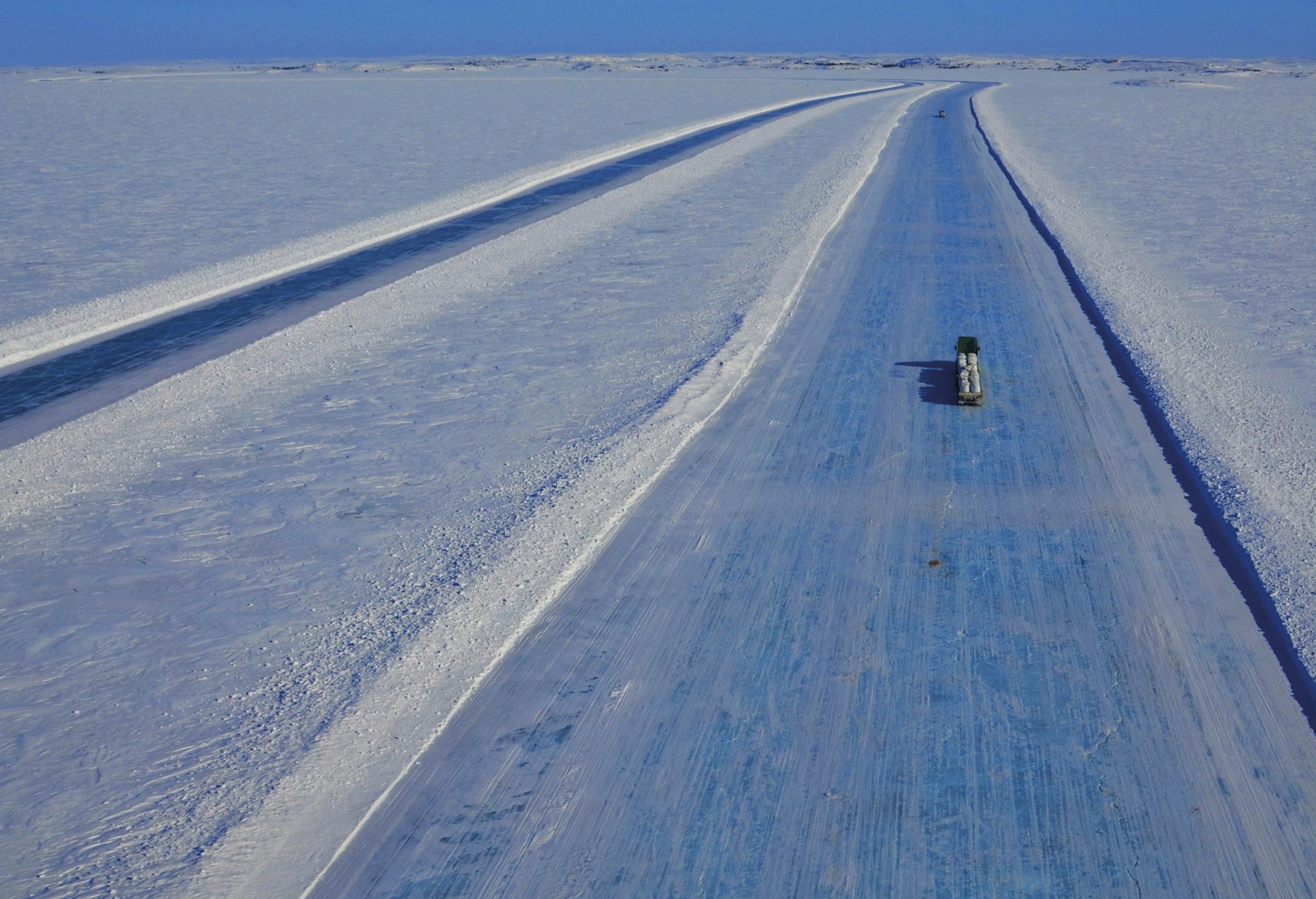
For remote-location projects, my best outcome, nearly every time, is FCA (Free Carrier) at the vendor’s facility (or another agreed handover point). Full stop. The project needs to take care of logistics. Remote supply chains are not normal deliveries with a longer drive. They are a sequence of constrained moves, heavy haul permits, seasonal road restrictions, port cut-offs, barge drafts, ice-road axle limits, limited cranes on the receiving end and laydown capacity that changes week to week. If the project does not own the transportation plan end-toend, you are left with fragmented decisions made by people who are not living your schedule, your risk register, or your site realities.
When we use FCA, the vendor’s job is clear: build it, package it and document it correctly, and hand it over on time. The project’s job is also clear: appoint the freight forwarder and carriers, plan the routing, align the pickup sequence to the construction schedule, manage consolidation, control the tracking and reporting,
and coordinate customs and intransit handling so cargo arrives when the site can receive it. That level of control is not “nice to have” in the North or on an island, it is survival.
Two practical notes I always push into the contract language when we go FCA:
• Be explicit about the FCA handover point and loading responsibility. Ambiguity at the gate becomes a real dispute when a crane is booked and a driver is waiting.
• Back FCA with strict packaging/ marking/shipping requirements and compliance checks. Remote projects do not forgive weak packaging, cargo can see multiple lifts, long exposure, and rough road vibration before it ever reaches site.
Most of what gets labeled a logistics problem during construction was baked in much earlier, when the team was still deciding what the project would look like, not just how we would build it. To avoid this situation, I
recommend an early, disciplined definition of the transportable envelope. What is the true maximum weight and geometry that can move across the weakest link? Until you lock that down, modularization and equipment selection are guesses. And on remote projects, guesses are expensive.
Second, build the access calendar into the project schedule from day one. Remote logistics is a seasonal game: freeze-up, breakup, navigable windows, permit blackout periods, convoy rules, hours-of-service realities and weather that can erase a week overnight. If you do not reverse-engineer procurement and fabrication milestones from those windows, you are gambling with time you do not get back. From that foundation, the other choices become more rational. Procurement and contracting can be structured around projectcontrolled logistics. Packaging and preservation can be specified to match the real journey and storage conditions, not the vendor’s standard
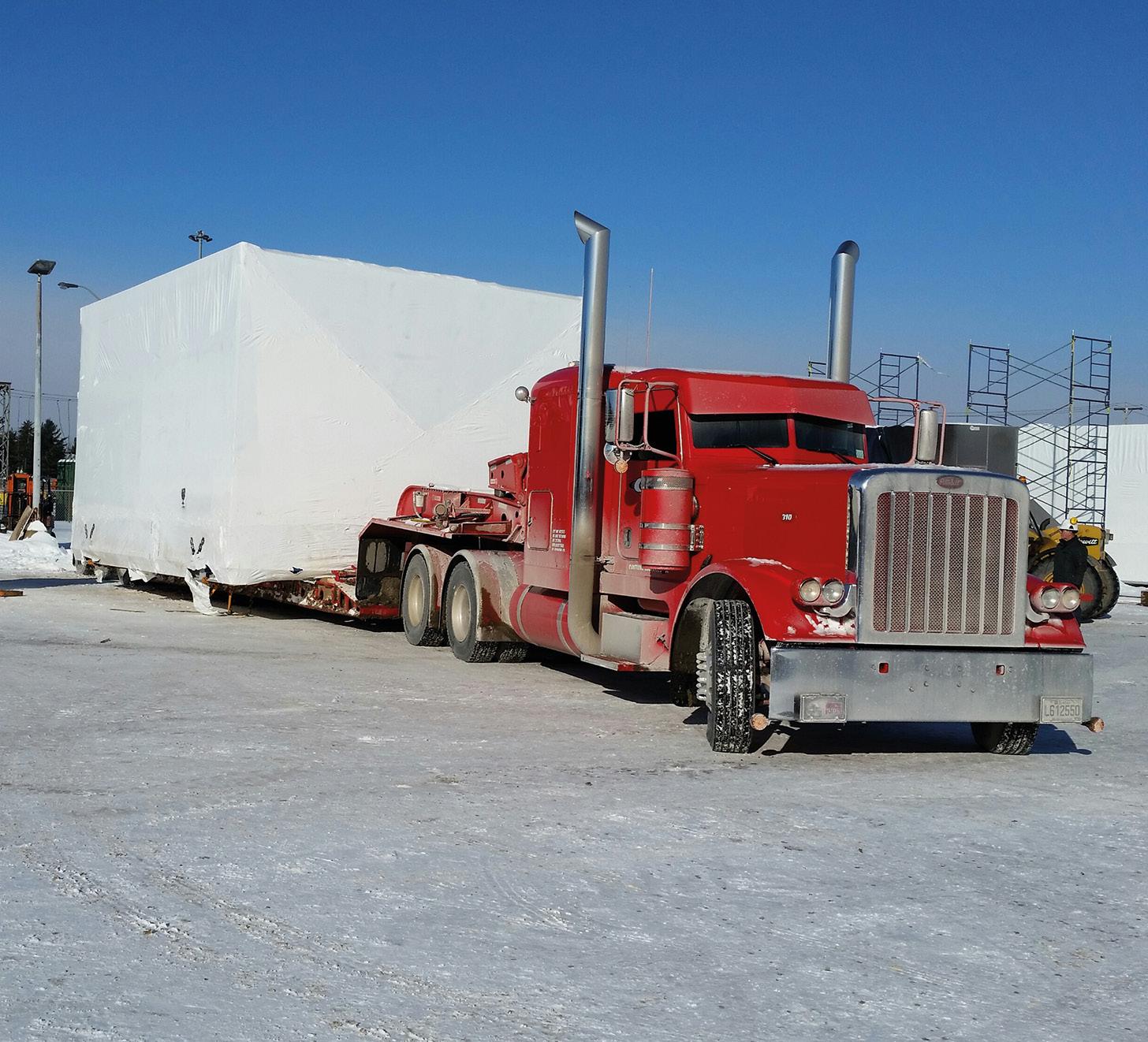
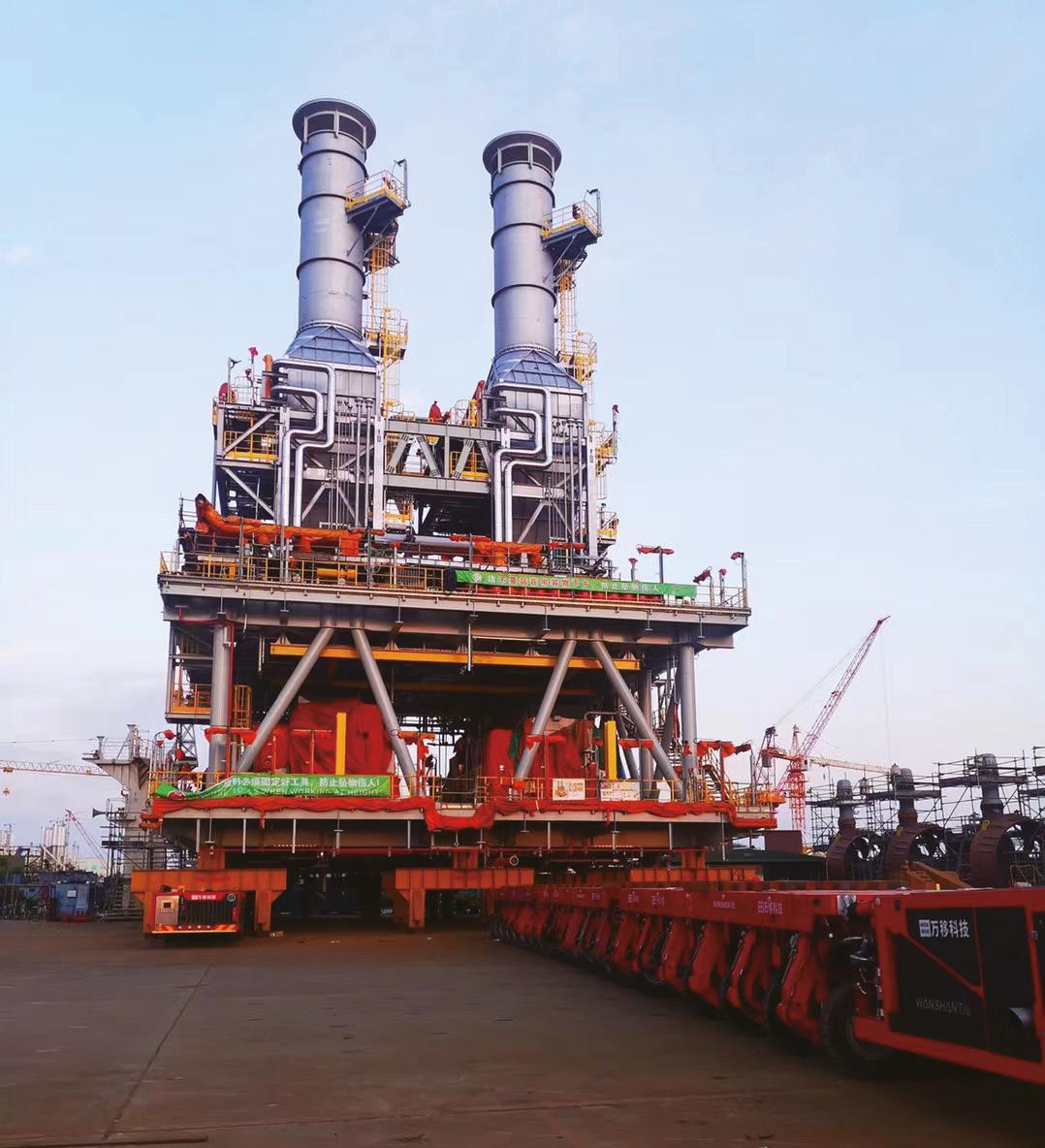
domestic assumptions. Consolidation and staging can be planned around chokepoints, ports, marshalling yards, ferry ramps and river crossings to reduce double-handling and avoid flooding the site with cargo it cannot absorb. Risk controls become engineered, not reactive, such as route surveys before design freezes, lift studies before fabrication completes and realistic buffer strategies where the access plan is inherently brittle.
On remote jobs, logistics is not an execution detail, it is part of the design. If you treat it that way early enough, the “end of the road” stops being a surprise and starts being a managed system.
Jean-François Bourque is regional logistics manager, Eastern Canada at Hatch, based in Montréal. He has worked across mining, industrial, energy and transportation infrastructure projects, including remote-site execution.
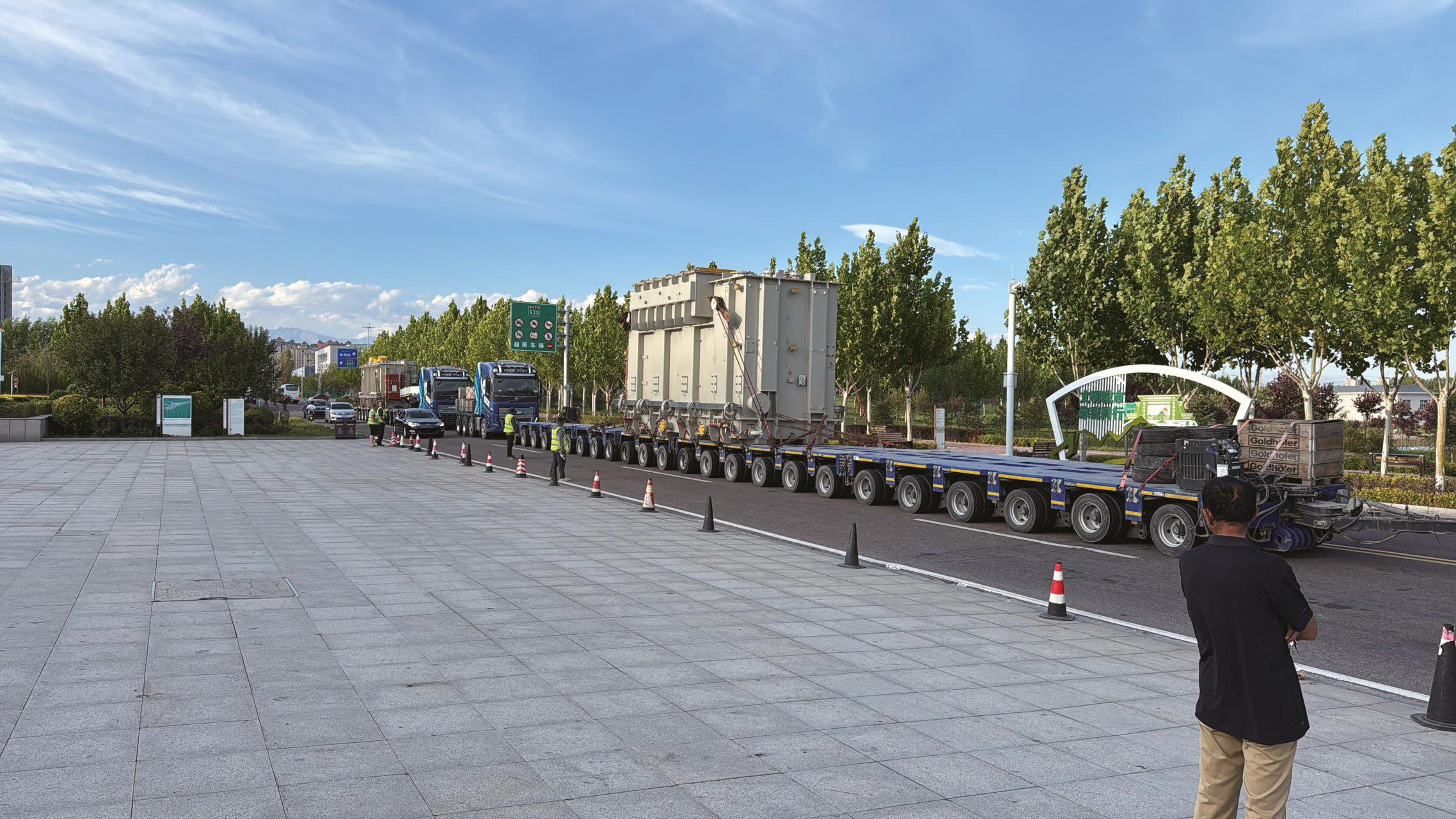


By Malcolm Ramsay
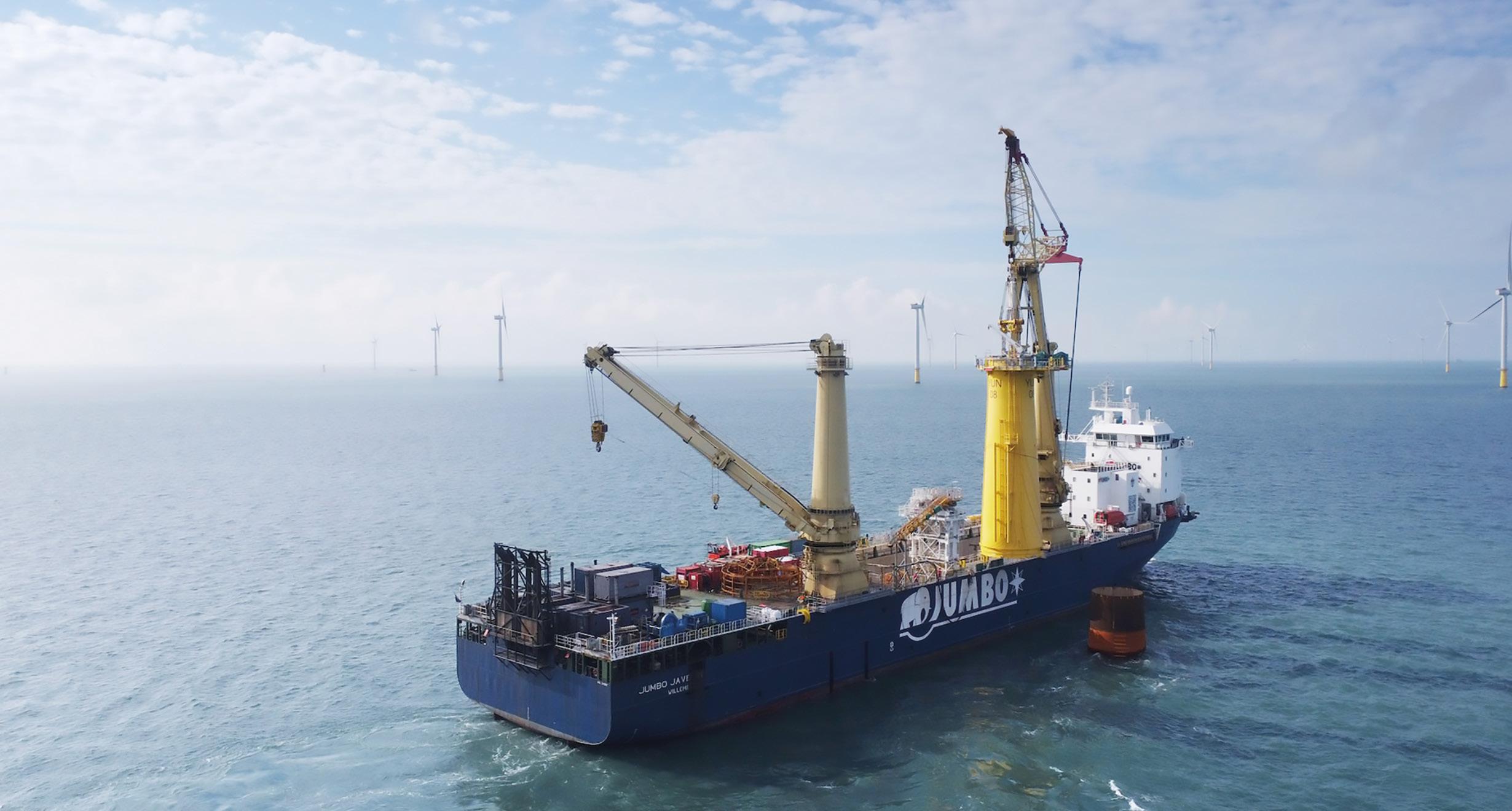
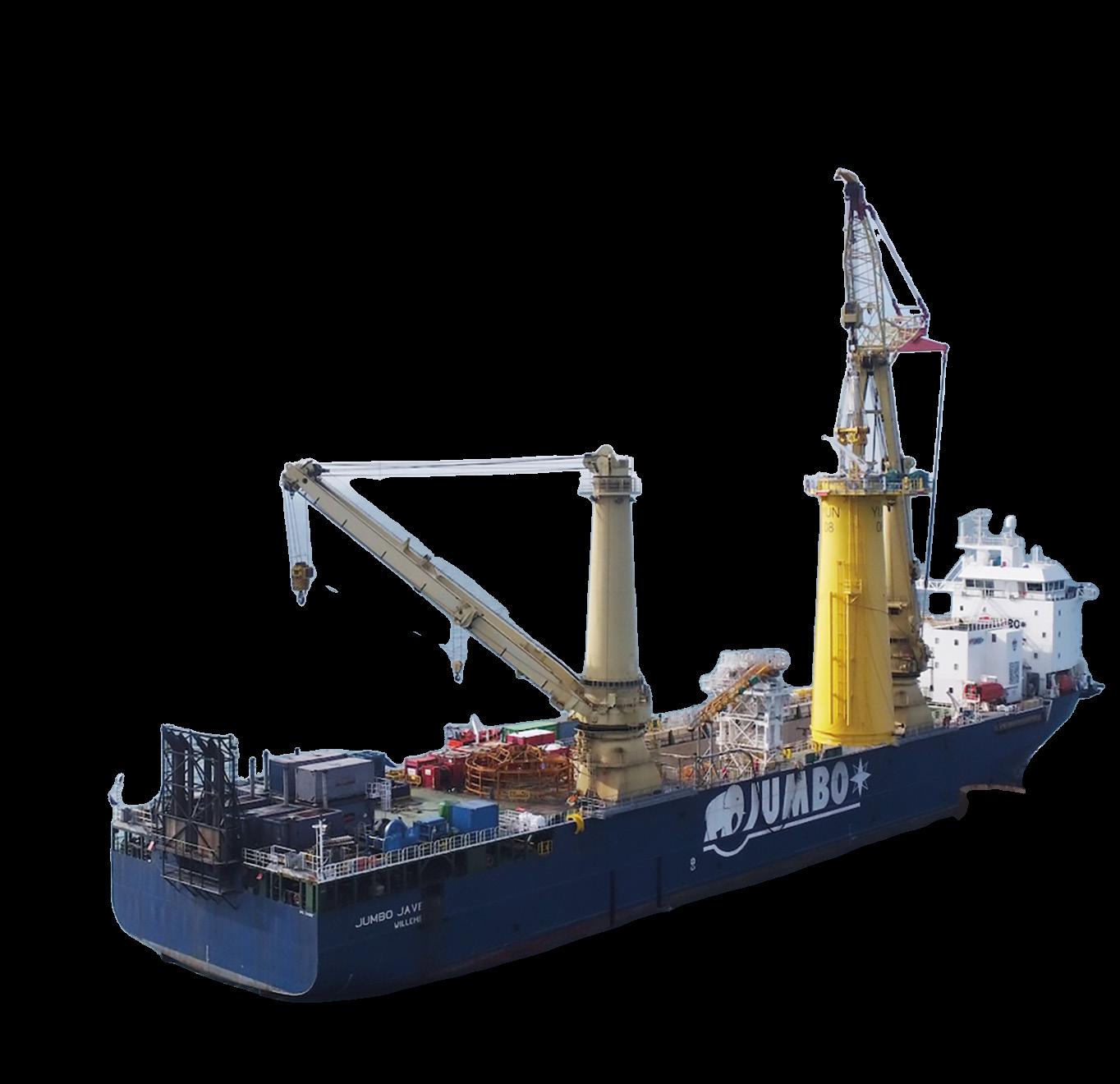
Asia is in the midst of a significant boom in offshore wind development, but for breakbulk operators the outlook over the next decade remains fraught with unique risks, as they navigate a sector that is rapidly diverging from the established European playbook. This is particularly true as operators look ahead to the forecast wave of decommissioning activity that will begin as current wind farms near end of life from the 2030s onwards.

While Europe reigned as the global leader in offshore wind for many decades, its crown was taken by the Asia-Pacific region in 2022, driven by an unprecedented installation surge in China. Today, China accounts for more than 50% of total global commissioned capacity, fundamentally moving the industry’s center of gravity and the associated demand for heavy-lift logistics away from the North Sea.
Asia, led by China and India, commissioned 131 gigawatts (GW) of new wind capacity (onshore and offshore) in 2025, or 80% of the global total, according to a report from the Global Wind Energy Council (GWEC). The region is expected to add about 600 to 700 GW of capacity between now and 2030.
Some industry leaders believe offshore wind decommissioning in Asia remains a longer-term prospect. Matt Bowden, lead commercial manager APAC at Cadeler, a specialist in the transportation, installation and maintenance of offshore wind turbine generators and foundations, said
decommissioning in the region may not materialize for some time. Others in the sector, however, believe decommissioning demand could develop sooner.
Despite the long-term viability of wind equipment, the unique challenges in the Asian market could move decommissioning timelines forward to as soon as the end of this decade, as economic, environmental and demand pressures combine. While most commercial projects in Asia are relatively new and OEM specifications permit many years of operations to come, forecasts suggest that owners may still choose early decommissioning.
Breakbulk Live Stage 2:30pm - 3:15pm
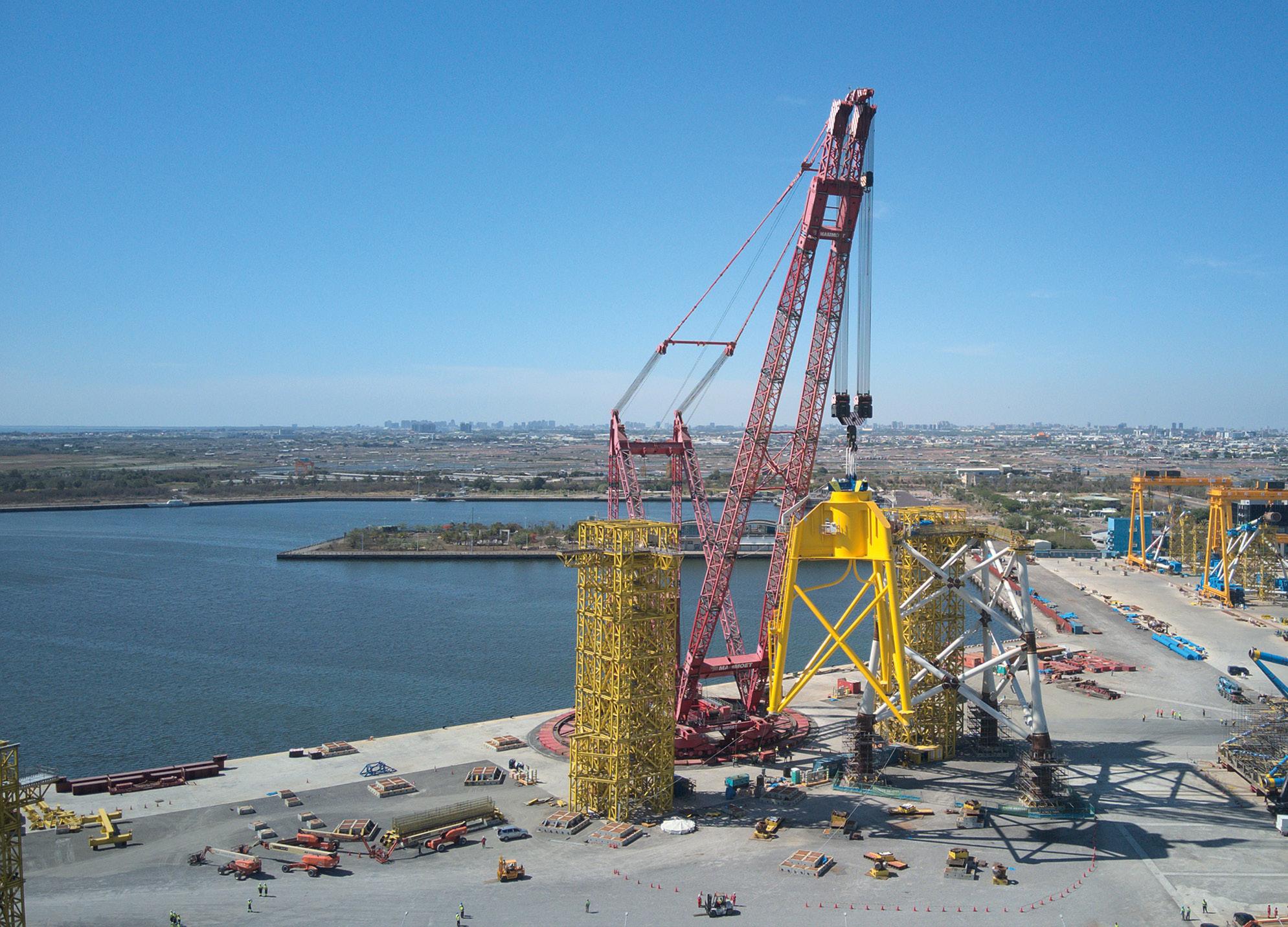
This push is driven by the reality that prime shallow-water sites, particularly in Taiwan and China, are currently occupied by aging, low-yield turbines. Clearing these locations to make room for 15-megawatt (MW)-plus giants will increasingly be seen as an economic necessity, especially as new technologies supercharge the potential output from each site. What this means in practice is that the first significant wave of activity in the early 2030s will likely manifest as “repowering” rather than full-scale decommissioning.
For breakbulk operators, this translates to a complex hybrid of partial decommissioning services and the simultaneous installation of new equipment. The players that succeed in navigating this “two-way” logistics challenge will set the foundations for a long-term competitive advantage when the full-scale decommissioning tsunami finally hits in the 2040s.
However, prior to that, the path to both installation and eventual removal is hampered by a significant cost gap. As Simon Engfred, regional lead analyst for APAC at Aegir Insights, points out regarding the Japanese market: “The
CAPEX premium for offshore wind in Japan is real (and) installation is the single most stubborn cost component: Japan’s weather downtime is significant compared to Europe’s benchmark. Typhoon season, seismic design windows and metocean conditions are not going to improve materially.”
This engineering premium for typhoon and seismic certification can help create a “competitive moat” for breakbulk operators but may also act as a barrier to the “reverse logistics” needed for decommissioning. Engfred estimates that in Japan, current challenges equate to a 21% CAPEX premium and that this acts as a further barrier to entry “as regulatory requirements differ across APAC markets” and certification is often market specific.
Faced with a fragile vessel market, strict regulation that limits which ships can work in local waters, and tough environmental conditions, operators must decide now if they will build and deploy the specialized fleets necessary to handle both the construction boom and the premature retirement of the
region’s first-generation assets.
This decision is complicated by the fact that the industry is not just fighting the elements, but also a lack of long-term commercial continuity. While the technical need for decommissioning will clearly emerge in the coming decades, the financial incentive for current owners to invest in infrastructure remains weak. This disconnect between the physical reality of aging assets and the financial structure of the projects themselves is creating a bottleneck that threatens to stall the sector’s maturity.
In Europe, mature fields have seen a transition from a construction-only mindset to a full-lifecycle strategy, requiring a fundamental shift in how operators view their assets, but evidence of a significant move in this direction in Asia remains subdued. This is largely due to the commercial reality of wind farm assets in Asia, which frequently change hands multiple times over their lifespan. As Bowden notes, the clients contracting for initial transport and installation are rarely
the same entities who will eventually face the decommissioning bill.
“This isn’t typically something we’ve seen a demand for in the APAC region to date,” Bowden said. “It could be because wind farm assets typically change ownership multiple times over the course of their lifespan, and the clients we’re contracting with for T&I and O&M may not be the same clients who eventually need to consider decom.”
This fragmentation often leaves decommissioning as a “future problem” for the next owner, creating a strategic vacuum that proactive breakbulk operators can fill by offering long-term, lifecycle-based logistics.
Despite the numerous differences between the European and Asian landscape it seems clear that a
shift towards decommissioning will ultimately manifest as the sector matures and that advantages will go to those who move beyond spotmarket charters and begin forming deep, local joint ventures. In markets where localization requirements apply, local alliances will likely be the only way to meet regulation and ensure a consistent seat at the table when the first contracts are tendered toward the end of the decade.
“Some markets — like Japan — have very stringent cabotage rules which require locally flagged vessels, while others — such as Taiwan and Australia — have a more pragmatic approach to the involvement of foreign vessels in our industry,” Bowden said. “In general, Cadeler does not welcome barriers to international participation in offshore wind markets, as we believe that an open supply chain approach fosters
competition and more successful capacity build-out. That said, when it comes to partnering, we consider it an important component of long-term success in Korea and Japan and are actively engaged in fostering relationships with key local players in this regard.”
Success also hinges on securing the physical real estate necessary for decommissioning. Unlike the linear flow of a new-build project, decommissioning requires vast port-side laydown areas with high floor-loading capacities to hold weathered, oversized components awaiting processing. Operators who lock in long-term leases at key regional hubs like Taichung or Akita today will hold the ultimate leverage. By treating decommissioning as a 2030s ”repowering” opportunity rather than a 2040s scrap problem, breakbulk players
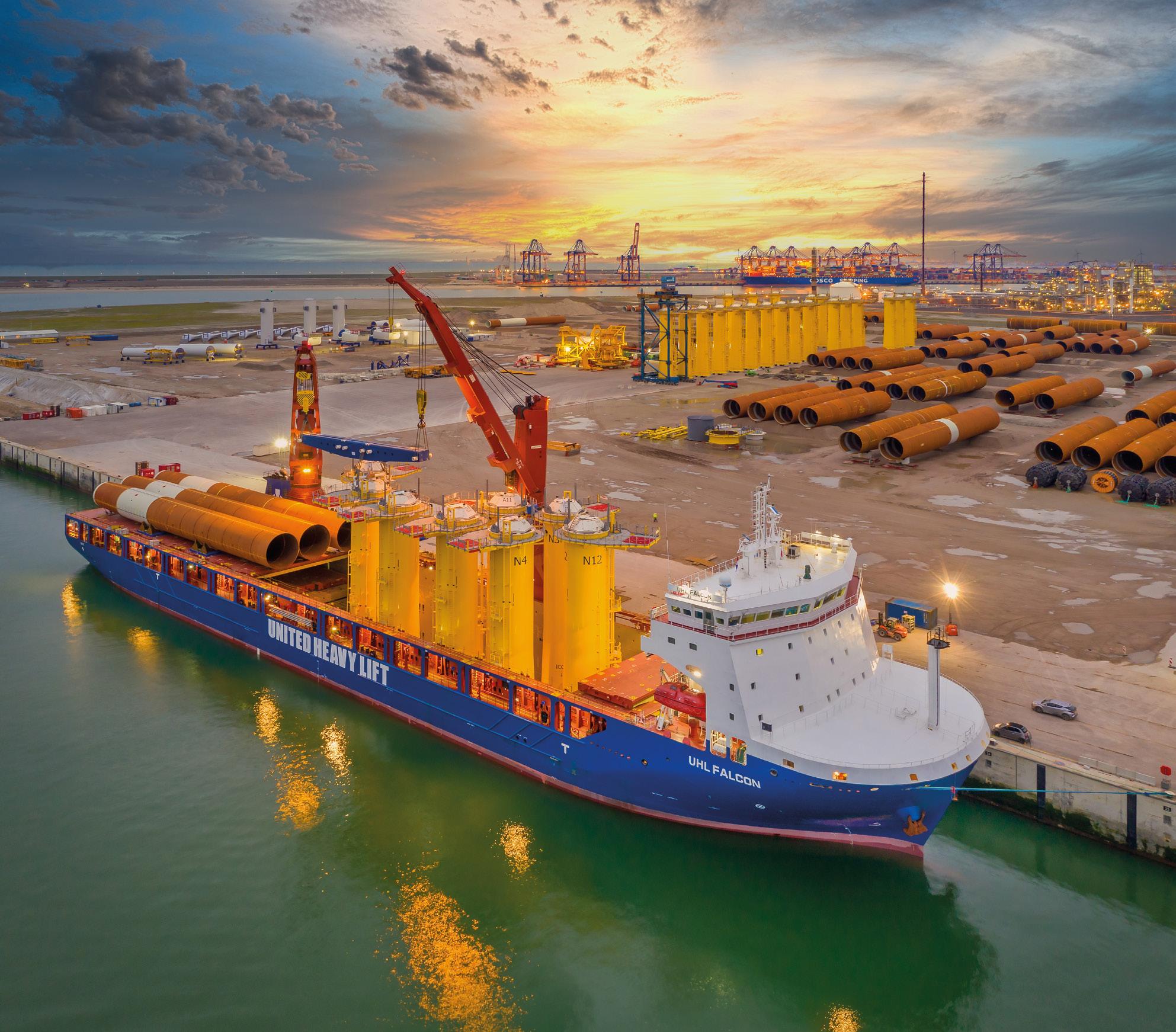
can turn these unique regional risks into a sustainable, long-term competitive moat.
While the fragmented ownership of Asian assets makes formal, long-term lifecycle partnerships difficult to sign today, European breakbulk operators must still be cognizant of this role to avoid becoming commoditized. In a market where assets change hands frequently, the operator who holds the digital twin or the historical maintenance data of a turbine becomes an indispensable part of the value chain for whoever the final owner may be.
By raising high-value, late-life offerings, such as structural integrity inspections and decommissioning FEED, in current tenders, firms can anchor themselves as the technical authority on an asset’s condition. This in turn can act as a bridge across ownership gaps,
ensuring that when a project finally hits the decommissioning or repowering stage, the logistics provider is already the incumbent with the specific data and expertise needed for execution.
“Each challenge is manageable on its own. The real test comes when they converge within a single integrated program,” said Alan Campbell an independent decommissioning specialist. “The differentiator won’t be access to work. It will be the ability to sequence scope effectively, align contracting strategy and maintain strong program control offshore.”
Technological leadership will also serve as a way to bypass the region’s commercial constraints of high-cost premiums. Rather than waiting for a lifecycle contract that may never come, European operators can deploy digital and remote tools that provide immediate
value in cutting current O&M costs while simultaneously shaping the reverselogistics playbook for the future.
Implementing tools such as visionbased monitoring and advanced automated positioning systems during current heavy-lift repairs and installations helps mitigate costs and weather-downtime risks today but more importantly provides the data to underpin tomorrow’s operations. Furthermore, by locking in heavy-lift and WTIV tonnage for multi-year campaigns today, operators can guarantee the logistical certainty needed to navigate the inevitable 2030s vessel-availability crunch.
Based in the UK, Malcolm Ramsay has a background in business analysis and technology writing, with an emphasis on transportation and ports.

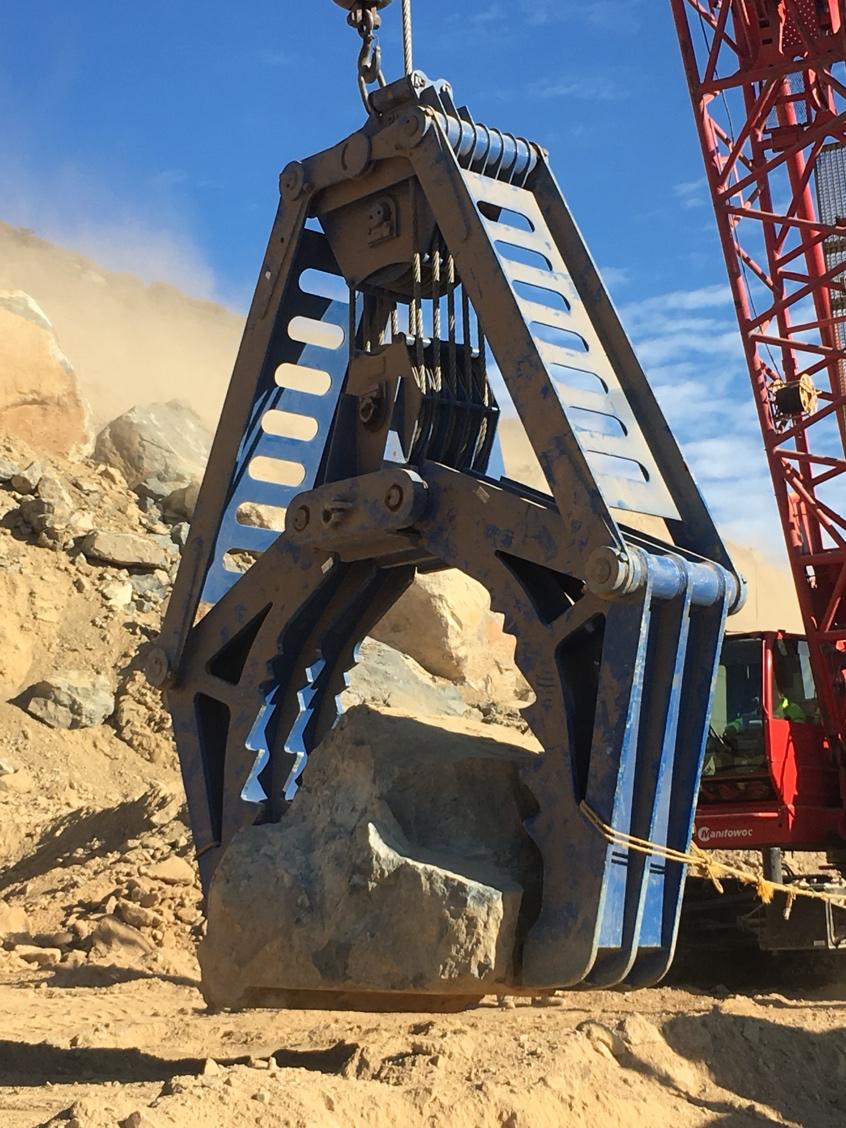
More
100 % made and designed f rom start to f inish in our factory in The Netherlands


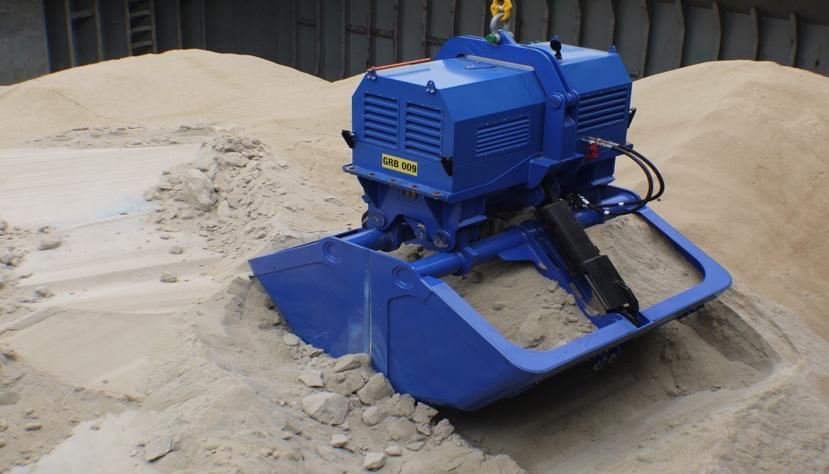
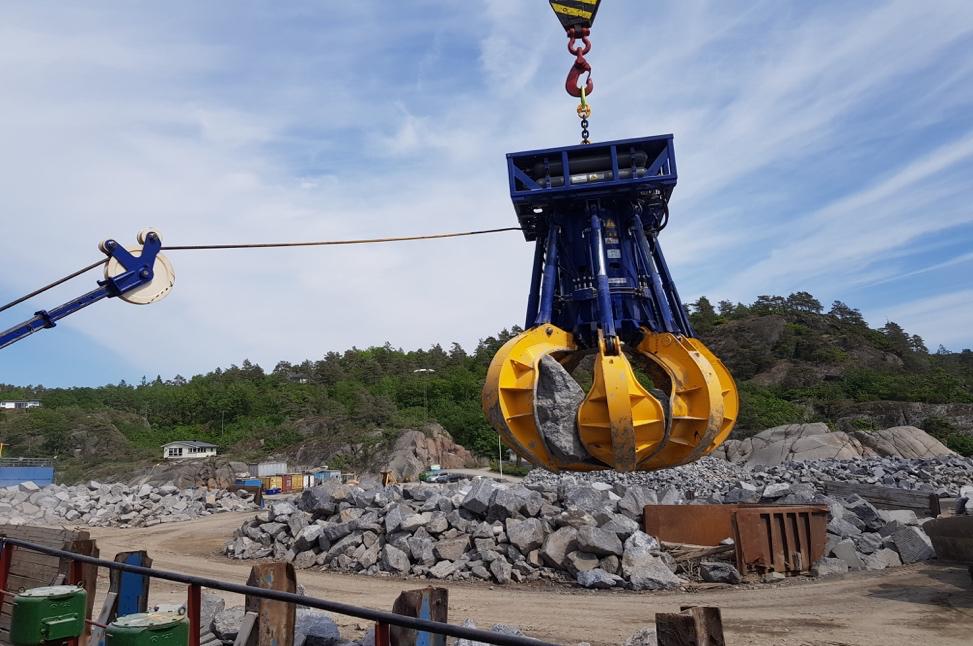
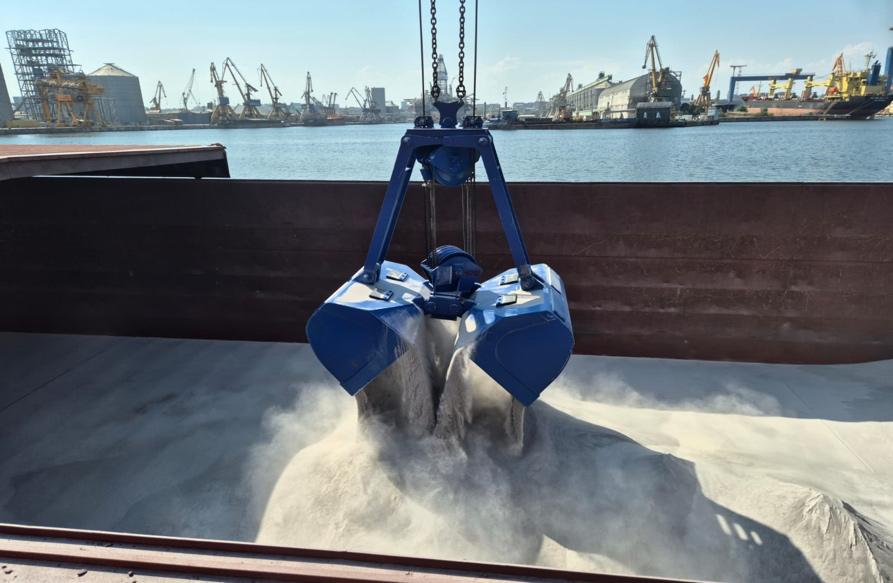
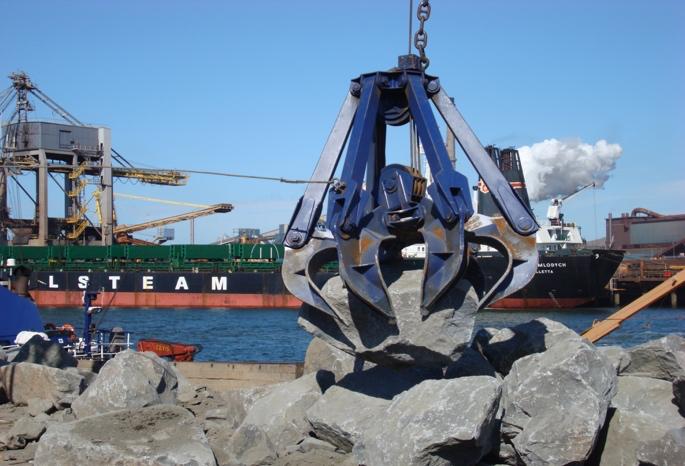

Project cargo professionals and industry experts examine the operational, commercial and strategic consequences of escalating tensions in the Middle East
Featuring: AAL Shipping, RAK Ports, Al Bader Shipping, Allianz Commercial, Energy Industries Council, LPX Partners, Petrofac, Shelf Drilling, Myrcator Marine and Cargo Solutions FZE, DHL Global Forwarding
By Simon West
John Pittalis, head of marketing and communication, AAL Shipping
In response to the evolving situation and to effectively manage operational and safety risks, AAL Shipping has taken proactive and decisive action across its fleet deployment and routing strategies. As a precautionary measure, AAL has suspended all sailings through the Persian Gulf until further notice.
As part of this approach, liner sailings under our Europe–Middle East–India–Asia service linking Europe to the region have been cancelled. These steps have been implemented to safeguard our crews, vessels and cargo while limiting exposure to heightened regional risk. As a result, no further sailings to the Persian Gulf are currently planned, and we will continue to reassess conditions through ongoing security evaluations before considering any resumption of services. Nevertheless, we are actively working closely with our clients to resolve their cargo movement requests with alternative solutions.
In terms of long-term changes, security-related risks, including sudden route closures, increased insurance and compliance requirements and the potential for renewed military or
political flare-ups, are likely to persist. As we have seen, these factors can introduce volatility into scheduling, costs and capacity planning, particularly for complex, time-sensitive project cargo movements, not to mention the most important factor, which is the safety of crew, vessel and cargo.
Economic risks also remain elevated. While oil prices and financial markets have shown signs of stabilization, energy price volatility, bunker fuel fluctuations and inflationary pressures continue to affect operating costs and project economics. Any renewed instability could quickly reverse recent gains.

Hugh Cox, chief commercial officer, RAK Ports, (the closest major port in the UAE to the Strait of Hormuz)
We’ve significantly increased security and taken a much more proactive approach through patrols, tighter control over movements in and out of the port, and close monitoring of how the situation is evolving. We’re working closely with customers to manage pressure points and address security concerns, with clear contingency plans in place, including evacuation procedures, controlled zones and designated safe areas. From a risk perspective, we’re a bulk and project cargo fabrication
“WE ARE ACTIVELY WORKING CLOSELY WITH OUR CLIENTS TO RESOLVE THEIR CARGO MOVEMENT REQUESTS WITH ALTERNATIVE SOLUTIONS.” JOHN PITTALIS, AAL SHIPPING
hub and don’t handle liquid bulk, so we don’t carry the same exposure as oil or gas terminals. A lot of what we’re developing is major infrastructure such as wind components for export markets like Europe, so I wouldn’t view us as a strategic target in the same way, even though you can never rule that out entirely. We also have a very good relationship with local and federal authorities, and we are guided by the information they share with us.
Operationally, the impact has been mixed. Our diversification across both intra-Gulf and external markets has helped. Regional trade is still moving — particularly into Kuwait, Qatar, Bahrain and Saudi Arabia — and we’ve seen record volumes on that side. Outside the Gulf, volumes obviously have slowed, which is to be expected given the constraints. But we expect that as soon as the straits open back up, the likes of our project cargo customers have got several shipments ready to go.
Wednesday, June 17
Breakbulk Live Stage 10:30am - 11:20am
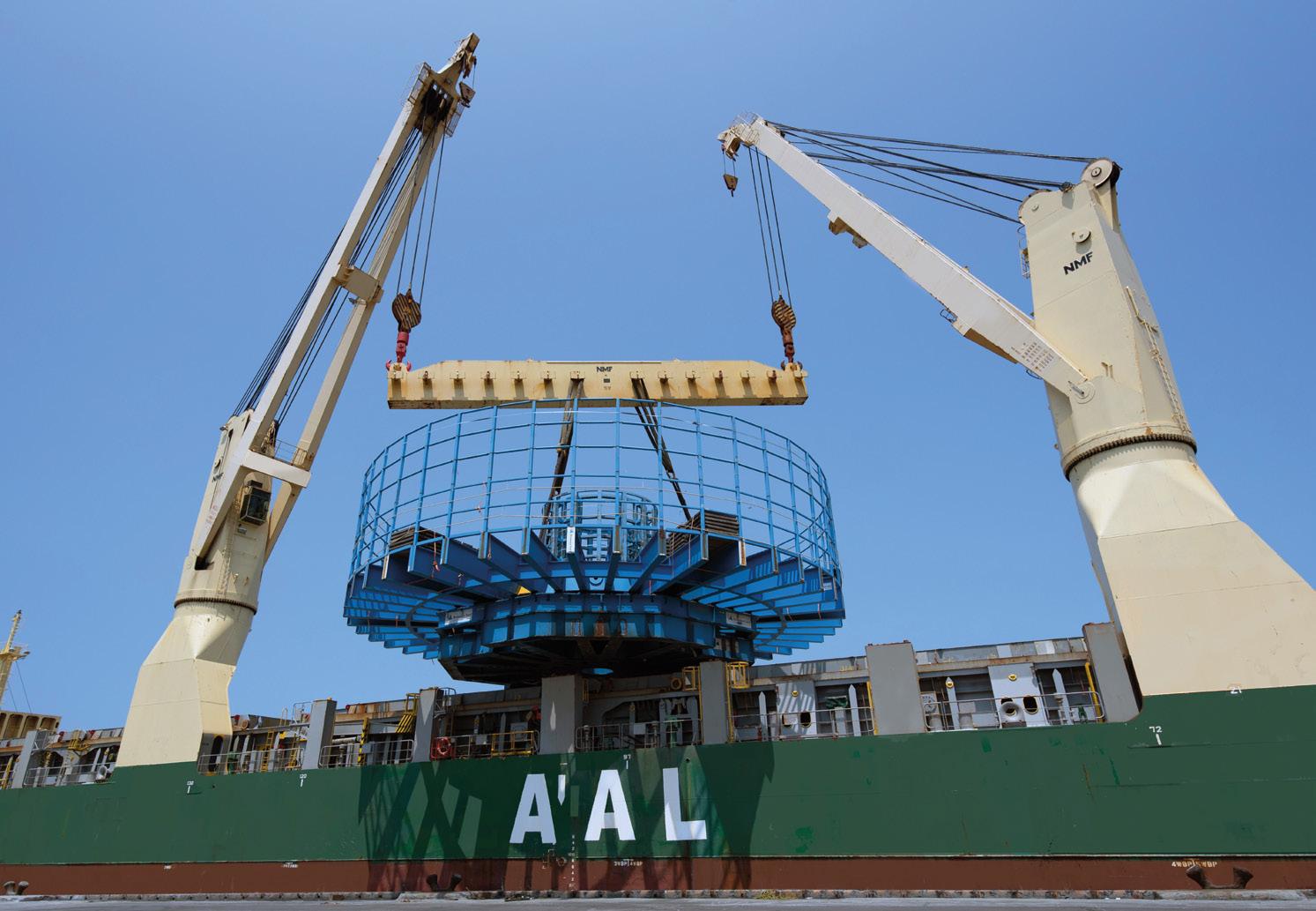
“THIS IS A TIME TO CREATE NEW RELATIONSHIPS AND
What we’ve seen is supply chains being turned on their head, but we’re finding ways to import and export, and to get those products to market inside and outside the Gulf. We’re rerouting cargo via the UAE’s east coast and Oman, breaking shipments down and reconfiguring them to keep them moving. We’re also using inland solutions — airfreight, trucking and multimodal options — to bridge gaps where needed.
So while it’s a challenging environment, the focus is on staying flexible and working closely with customers to find solutions. This is a time to create new relationships and rebuild old ones. Trade is still flowing, and this is really about adapting in real time and maintaining connectivity wherever we can.

Vipin Rajan, business and projects manager, Al Bader Shipping (based in Kuwait City) Kuwait and most Middle East countries are experiencing significant disruptions due to the ongoing regional tensions. With the Strait of Hormuz currently closed, vessels including main carriers are unable to reach Kuwait from international waters. As a result, many carriers have declared end of voyage,” with cargo being discharged at alternative ports prior to the Strait of Hormuz, such as Jeddah, Khorfakkan and ports in Oman.
For high-value, essential, perishable or urgent cargo, we are arranging transportation from these ports to Kuwait by road, despite the significantly higher costs involved. However, for cargo that is not high-value, non-essential, nonperishable and not urgent, customers are generally unwilling to proceed with inland transport via this route due to the elevated expenses. The situation may become more complex if the closure of the Strait of Hormuz continues for an extended period.
Capt. Rahul Khanna, global head of Marine Risk Consulting, Allianz Commercial
From an insurance perspective, the risk profile of vessels transiting the Strait of Hormuz has gone through a material shift since the beginning of hostilities, from being regular transit through a shipping lane to an extreme war risk to the vessel and its crew. This is an exponential increase in risk not just from insurance but all perspectives with the highest risk to the crew. There is further differentiation of the risk profile of individual vessels based on type of vessel, nationality and links to countries directly involved in the conflict.
In general, tankers are considered to be safer vessels in terms of their safety record despite carrying highly flammables cargo. However, in this case they carry larger risk than other cargo vessels when attacked. War risk insurance is still available for all types of
vessels albeit at a price. Pricing is based on the individual risk profile and the current local conditions. This applies to both marine (hull) and cargo insurance. It is difficult to predict how the situation will unfold in the medium to long term but the Middle East as a region has seen conflicts repeatedly. Insurance risk and pricing is usually reflective of the current situation. If the situation improves, as in cessation of hostilities, the risk and pricing will change accordingly. It is important to remember that this is the first time the Strait of Hormuz has been effectively closed despite multiple conflicts in region. This may have some impact on the region’s long-term assessment of risk by the insurers.
Ryan McPherson, regional director, Middle East, Africa, Russia and CIS, Energy Industries Council (EIC)
From what we hear across the supply chain, project delivery is being impacted. Energy companies are dealing with logistics disruption, slower movement of materials, more caution around procurement and greater pressure on delivery times, cost and cash flow. But the impact varies a lot by country and by project stage. Some markets are still moving and some
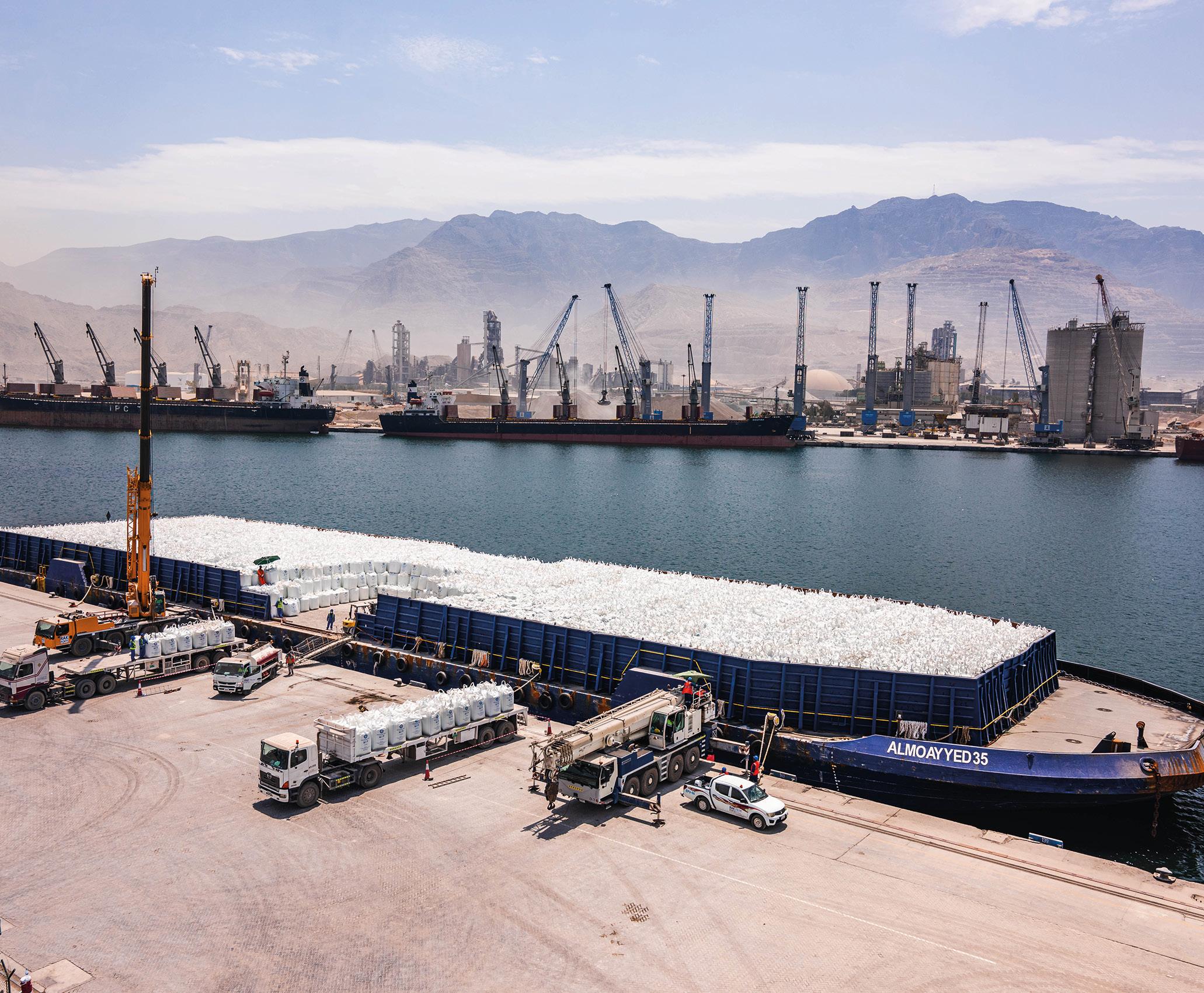
opportunities still coming through, but we’re naturally seeing delays, rephasing and tougher commercial conversations rather than immediate project cancellations.
Projects that depend on imported equipment, specialist contractors, complex shipping routes and fixed delivery schedules are the most vulnerable. That could include large oil and gas, LNG-linked and petrochemical developments, but it is not only about sector. It is also about contract structure and supply-chain resilience. If a project is already running on tight
margins, with limited room to absorb delay or cost escalation, prolonged instability can put real strain on it very quickly. We are also seeing concern around cash flow, extension-of-time claims and supply-chain failure, which tells you where companies are feeling the pressure.
At the same time, the conflict is increasing the focus on energy security, which is accelerating investment in projects seen as more resilient and strategically important, including gas, renewables and grid infrastructure in markets such as Saudi Arabia.
“THE CONFLICT IS INCREASING THE FOCUS ON ENERGY SECURITY, WHICH IS ACCELERATING INVESTMENT IN PROJECTS SEEN AS MORE RESILIENT AND STRATEGICALLY IMPORTANT.” RYAN MCPHERSON, ENERGY INDUSTRIES COUNCIL
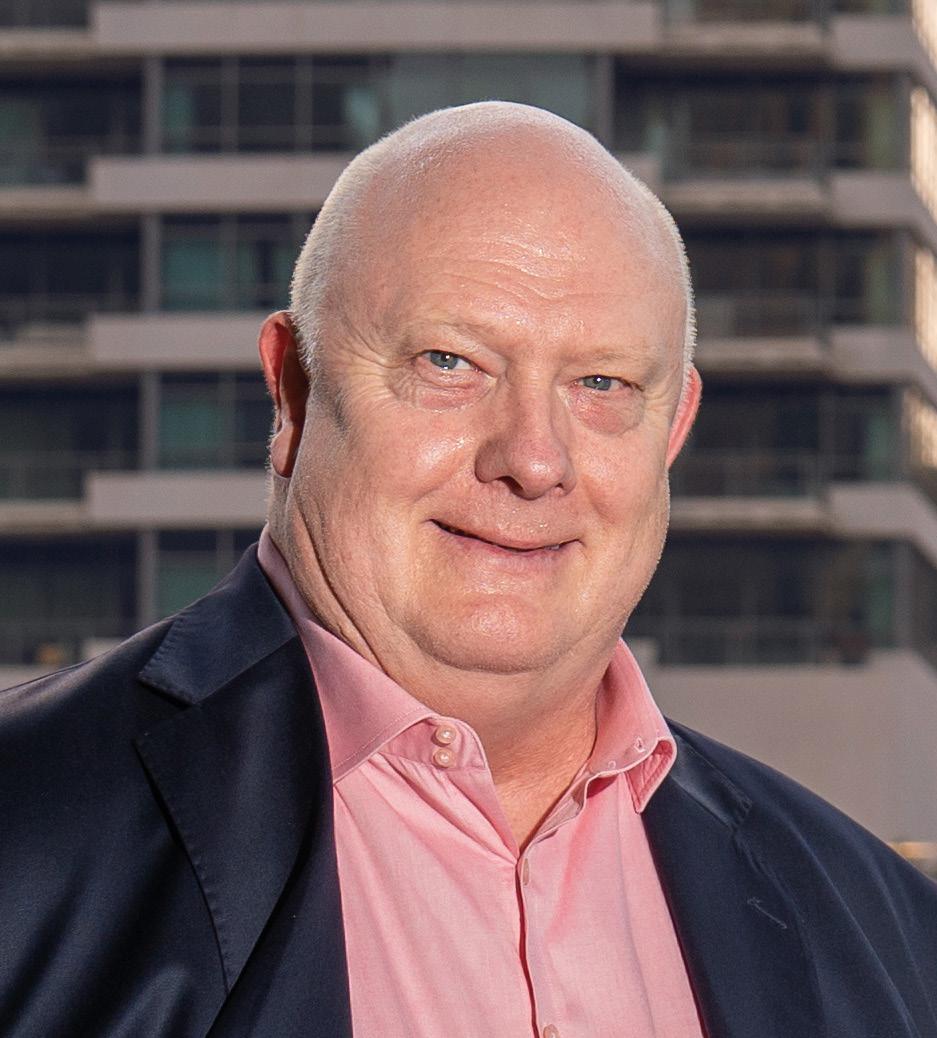
Thomas Skellingsted, managing director, LPX Partners (the investment arm of Logistics Plus ) Looking ahead, the scale of upcoming work is already becoming clear. For example, repairs at Qatar’s LNG facility in Ras Laffan Industrial City could take five to six years, representing a significant longterm undertaking. This may also encourage the development of smaller, distributed refineries in other locations to improve operational resilience, allowing capacity to shift if one facility goes offline.
At the same time, momentum behind solar power and renewable energy particularly in Saudi Arabia continues at pace. Given that much of the required equipment cannot be produced locally, a substantial volume will need to be imported, sustaining demand for project cargo. Turning to Iran, it is likely that extensive repair and reconstruction efforts will be required in due course, presenting further opportunities across the sector.
In the short term, projects are being delayed rather than cancelled, largely due to financial pressures. Crude oil and bunker fuel prices have risen sharply, from approximately US$500 to as high as US$2,000 per tonne. This can increase vessel operating costs by US$10,000 to US$20,000 per day, which many projects simply can’t absorb.
“IN IRAN, IT IS LIKELY THAT EXTENSIVE REPAIR AND RECONSTRUCTION EFFORTS WILL BE REQUIRED IN DUE COURSE, PRESENTING FURTHER OPPORTUNITIES ACROSS THE SECTOR.”
As a result, developers are pausing activity while awaiting greater price stability, early signs of which are beginning to emerge. However, normalization will take time, particularly as supply shortages persist in regions such as Singapore, the Philippines and parts of India. A more balanced market is likely to take a further two to three months to materialize.

Stephanie Schooley, project logistics manager, Petrofac Situations like this tend to provoke conversation around energy diversification and infrastructure resilience, though I do not see it as a sudden shift towards change. The Strait of Hormuz closure highlights how vulnerable critical supply chains are to
geopolitical risk. That naturally drives more interest in alternative export routes, localized infrastructure and energy security strategies.
In the Middle East, we are already seeing momentum around this through investments in pipeline networks, storage facilities and integrated logistics hubs that reduce dependency on single chokepoints. I can see that energy diversification is gaining further traction, particularly in gas, renewables and hydrogen, as countries look to balance reliability with long-term sustainability goals.
With the impact of back-to-back crisis with COVID and now this conflict, the ability to quickly adapt routing, manage risk and maintain continuity is becoming just as important as the physical infrastructure itself. I believe oil and gas will remain essential, especially in this region, but the environment is engaging in more focus on overall energy and logistics ecosystems, looking to become more resilient and less exposed.
As we saw with COVID, this war reinforces the emphasis on regional fabrication, supply diversification, connectivity and supporting investments in the same. Management are increasingly asking not only whether cargo can move, but how quickly teams can adapt when normal routes are compromised. Companies that can rapidly reroute cargo, navigate customs complexities, maintain compliance and keep projects moving under uncertain conditions will be in a much stronger position going forward.
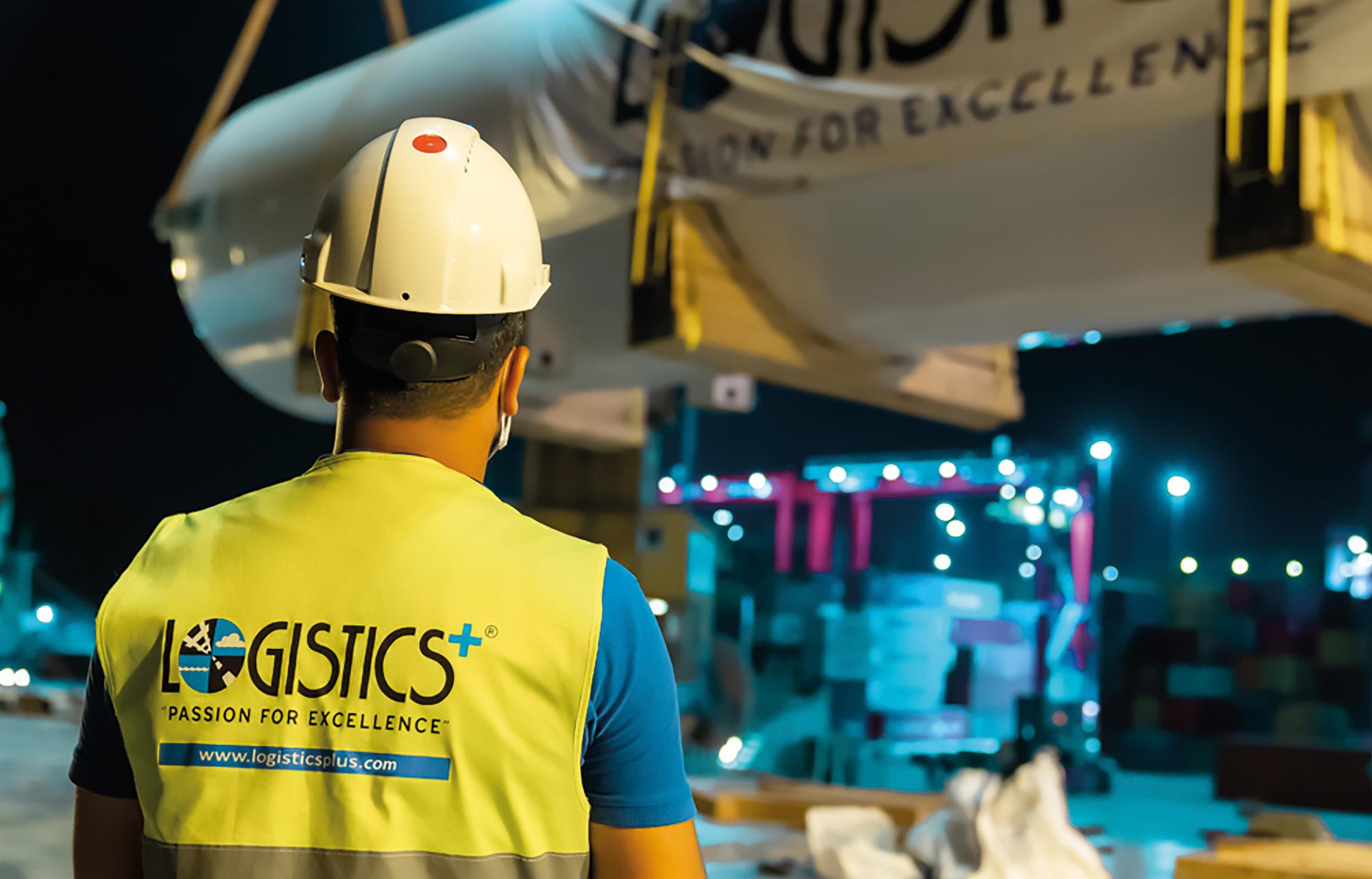
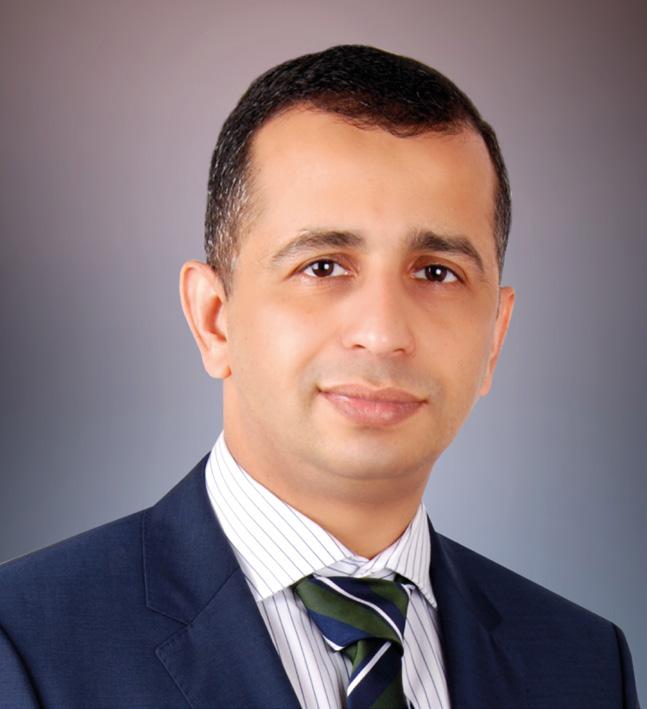
The conflict has exposed the fragility of just in time logistics and concentrated trade routes, pushing companies to diversify suppliers and transport corridors to avoid single points of failure. Greater redundancy is likely to become the norm, including buffer inventories for critical equipment, more flexible sourcing strategies and pre-agreed alternative routing options. This will increase business costs.
Geopolitical risk is now firmly embedded in project planning, which means higher baseline costs from
insurance, security measures and longer lead times are likely to persist. Longer term, we expect increased use of alternative routes and infrastructure, such as overland pipelines and non-traditional ports, and a wave of reconstruction and upgrade projects that will reshape project cargo flows and require logistics providers to adapt quickly.
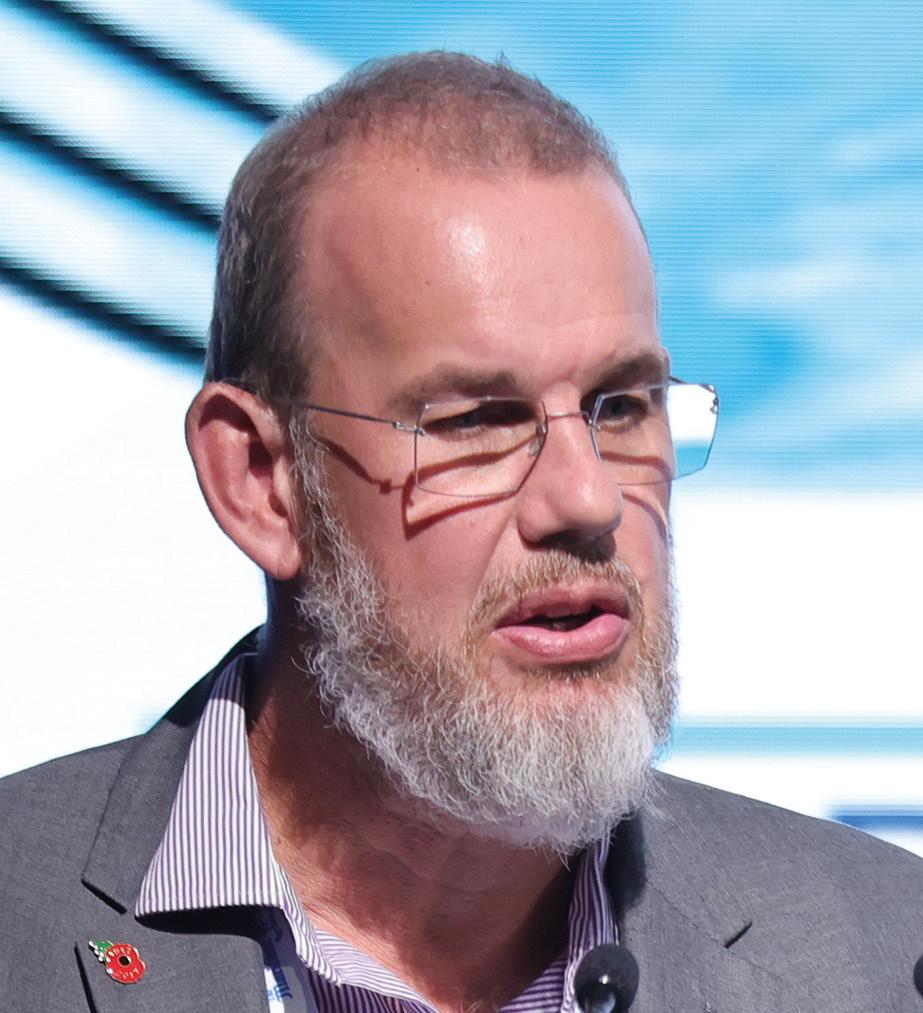
Cris Partridge, managing director, Myrcator Marine and Cargo Solutions FZE, Abu Dhabi
The infrastructure response has been faster and more capable than most
outside observers would have predicted. It is essentially what I have seen on the ground.
When Jebel Ali suspended operations briefly on March 1 after the interception debris incident, DP World activated emergency overland corridors within days. Containers were routed to Dammam and Sohar by road. Etihad Rail stepped into a role it was designed for and delivered at scale. The Al Ghail Dry Port terminal on the East Coast absorbed redirected multimodal capacity. Fujairah and Khor Fakkan, which had always been positioned as East Coast alternatives, became primary discharge ports with customs clearance arrangements allowing direct road transport to Jebel Ali free zones without the traditional procedures.
That kind of regulatory flexibility, activated in days rather than months, is a genuine strength and just goes to show how well prepared the countries like the UAE are.
Resilience at the infrastructure level is real. Resilience at the cargo level requires something different. And that distinction matters for anyone moving project cargo, breakbulk or condition-sensitive commodities through the Gulf right now.
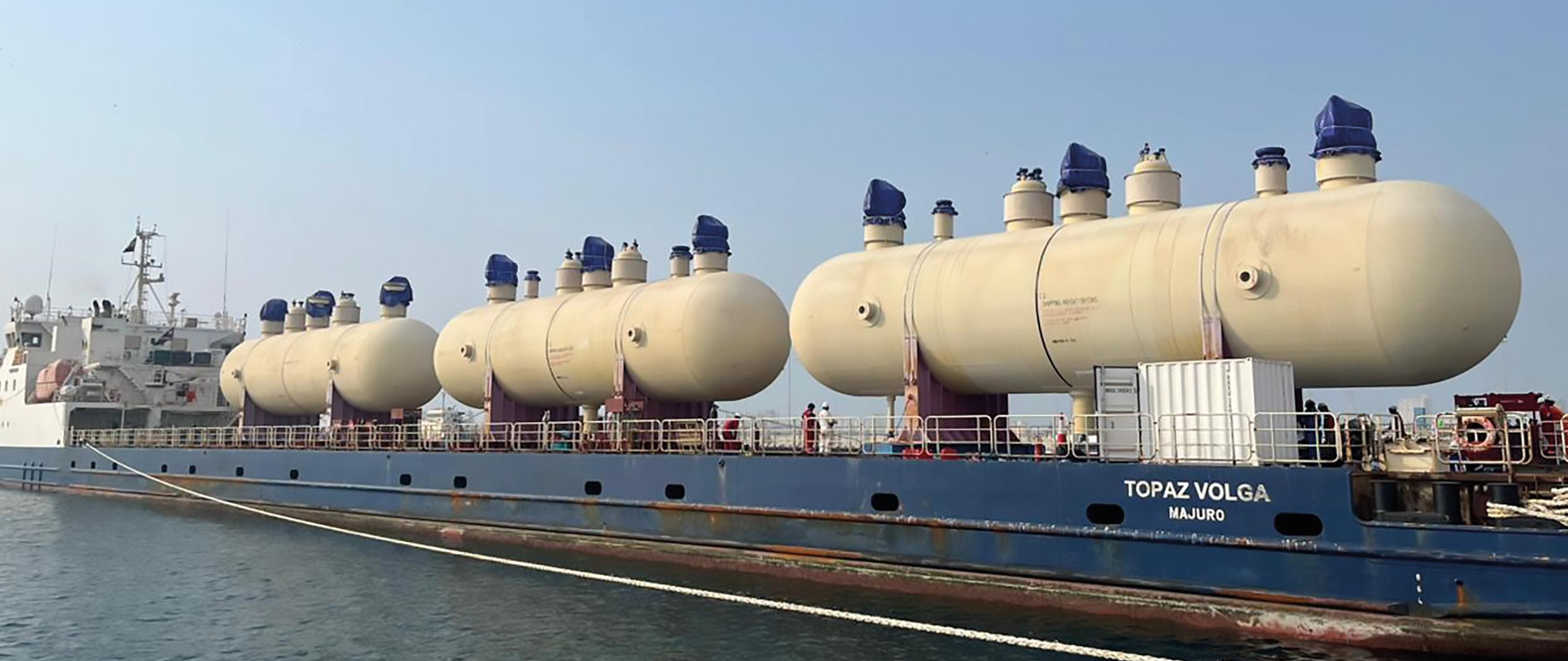
The UAE can move a container from Fujairah to Jebel Ali by rail in hours. It can divert a vessel to Sohar and truck the cargo across the border. What it cannot do is change the fact that a heavy-lift piece engineered for a single crane lift at Khalifa Port is now being handled at least twice and likely three or four times, in different conditions in different countries, with different equipment and all under time pressure. The transport plan said one thing. The actual journey did another. For an EPC contractor with a marine warranty certificate issued against the original plan, that is where the exposure sits.
I have been based in Abu Dhabi since 2009 and working across the Gulf since 2001. The UAE’s logistical capacity is real. The ports are well run. The road and rail network is, by regional standards, excellent. This is the first time these systems have been stress-tested simultaneously under conditions that include disrupted sea lanes, war-risk insurance withdrawal, summer heat and sustained demand from the region’s mega-project pipeline.
The resilience is there at the macro level. Where I would counsel caution is at the individual cargo, the individual survey, the individual evidence trail. When systems are under strain, the temptation is to keep things moving and sort out the paperwork afterwards. In my experience, that is exactly when the claims get expensive. The surveyor’s job doesn’t change because the route changed. If anything, it becomes more important: the right standard applied at the right point, the evidence captured
while it still exists, and a report that will hold up in a dispute that might not surface for 12 months.

Looking beyond the immediate disruption, it is important to stress that the longer-term effects on breakbulk and project cargo remain difficult to predict. The situation is highly dynamic and, so far, periods of instability tend to reduce flexibility in project logistics. In general, breakbulk and project cargo are structurally less adaptable than containerized flows: Oversize and heavylift cargo is more complex to reroute, also because not all ports have the required infrastructure, handling equipment and space to receive and process or store such shipments.
can handle industrial cargo. However, even when alternative ports are equipped with the right infrastructure, the key constraints are often found inland, notably the load bearing capacity of roads, including culverts and bridges, as well as street furniture, overhead gantries and dimensional restrictions at border crossings. These adjustments often lead to longer lead times and more complex planning requirements.
When it comes to project activity, particularly large-scale energy and infrastructure developments, it is important to differentiate between logistics flows and the projects themselves. In many cases, work on site continues, even if equipment deliveries need to be delayed or rerouted. What we are currently observing is not projects stopping, rather customers actively seeking alternative transport solutions such as air freight, despite the higher cost. Ultimately maintaining progress on site is commercially more important than the cost of transport alone.
From today’s perspective, it is still too early to predict how this will translate into overall demand for project logistics in the longer term: Once conditions stabilize, there might be a catch-up effect, and in some cases additional logistics support may be required. More broadly, the situation reinforces the importance of resilience, early planning and alternative routing.
Colombia-based Simon West is senior reporter for Breakbulk.
During the recent disruption, cargo that could not reach its original destination was, for instance, discharged at alternative gateways such as Duqm in Oman and Jeddah in Saudi Arabia, which *Breakbulk Exhibitor *Breakbulk Global







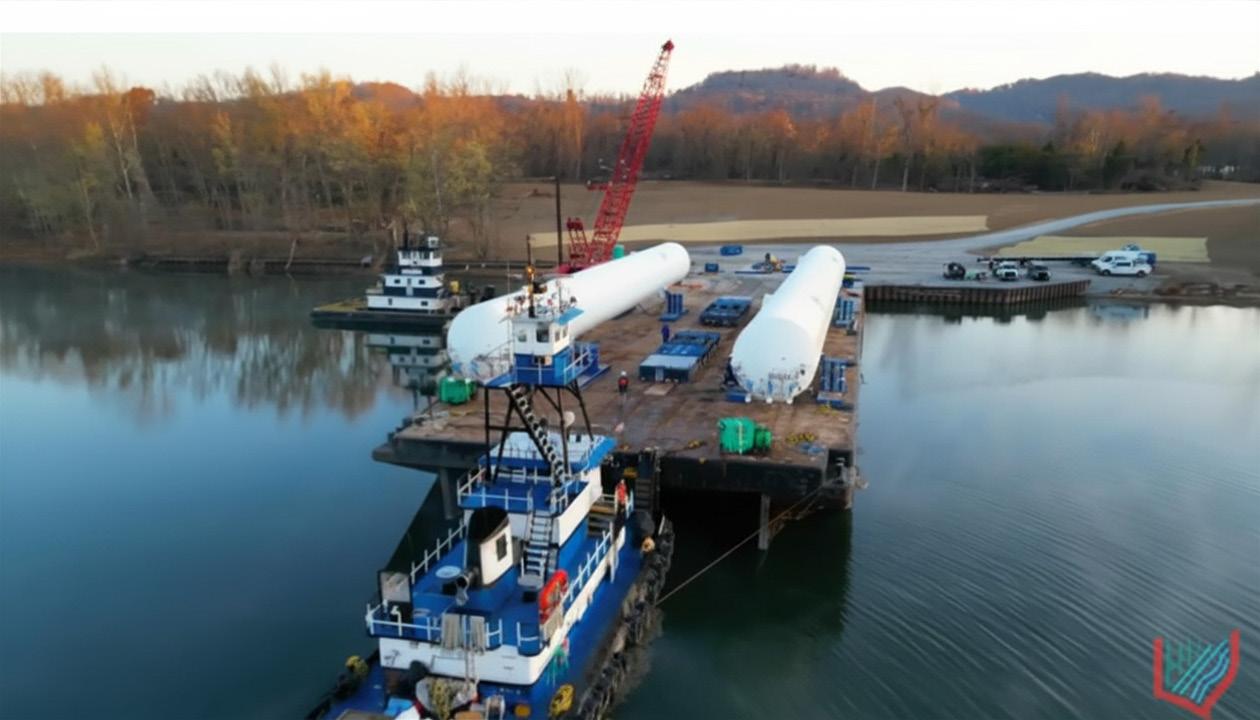
Talk to any project logistics executive and they’ll tell you nothing beats hands-on experience. Fleet Line Shipping’s Simona Peter has followed that path, building a career through hard work and a willingness to learn the ropes from scratch.
Peter joined the UAE-based project forwarder — the company founded by her father Peter Mathew in 2005 — straight from university six years ago, honing her skills in
customer service before moving into business development where she now focuses on identifying new opportunities across the region’s fast-evolving project markets.
Speaking to the 27-year-old in Dubai, it is clear she believes that success comes from immersing yourself in every corner of the business. “My father was insistent that I start from the ground up, just the way he did,” she said.
Headquartered in Dubai’s Jebel Ali Free Zone (Jafza), Fleet Line is active throughout the Middle East, with Peter noting the “significant” volume of project cargo the company handles for destinations including Saudi Arabia and Bahrain. Its core focus, however, remains the UAE’s energy and construction sectors. Current assignments include supporting the expansion of Abu Dhabi’s
flagship deepwater port at Khalifa and transporting rail tracks for the ongoing buildout of Etihad Rail
Peter speaks passionately about the UAE and its dynamic business culture, especially when set against the more established logistics landscape in Europe.
“Every day there are new inquiries coming in, new cargoes, new opportunities,” the executive said. “For us it’s a good place to be because we have 21 years of experience in the market, which allows us to navigate that environment confidently. At the same time, there’s a lot of flexibility here. There always seems to be a solution or a way to get the job done.”
To remain competitive in the UAE’s cutthroat logistics sector, Fleet Line has concentrated on delivering what Peter describes as a “complete doorto-door holistic solution.” Value-added services such as onboard lashing and welding for breakbulk and RoRo shipments are supported by packing, crating and storage capabilities at a 12,000-square-meter warehouse and open yard facility at Jafza.
“There are so many new companies that are opening up in the UAE and competition has increased tenfold. I think the way we stay competitive is by providing these ancillary services and going that extra mile for our customers,” Peter said.
Peter describes the UAE project sector as “resilient,” a trait that has become even more valuable since the outbreak of hostilities in Iran. While the conflict has tested nerves across the Middle East, her “keep calm and carry on” mindset reflects the stoicism long associated with those working in breakbulk and project cargo.
The situation has demanded vision and resourcefulness: In Fleet Line’s case, this means rerouting cargo through alternative gateways such as the ports of Khorfakkan and Fujairah
in the UAE, as well as terminals in Oman and Saudi Arabia. The company has also deployed multimodal routing strategies combining sea freight, road transport and regional gateways, a tactic that clients are increasingly open to in these uncertain times, Peter said.
Across the Gulf region, governments have acted swiftly to keep cargo moving, rolling out green corridors to accelerate cross-border clearance and introducing port-bonded movements to relieve pressure on major gateways.
“Beyond logistics, there remains strong commitment to infrastructure development and industrial expansion, reinforcing a clear message of ‘business as usual,’” she said. “Periods of volatility are part of operating in logistics, but the underlying fundamentals of the Middle East project cargo market remain strong, and that provides real confidence looking ahead.”
Fleet Line has concentrated on delivering a “complete door-to-door holistic solution.”
Credit: Fleet Line
Tuesday, June 16
Rotterdam Ahoy, Third Floor, Port 1 9:00am - 11:00am
Peter admits that the last two months have been “super-hectic,” but the executive reveals a genuine passion for her role and a clear determination to make her own mark on the region’s project logistics sector.
Asked about her objectives, she’s keen to grow the sales side of her job. She’s also spearheading an internal initiative to upgrade and streamline the company’s operational systems and platforms — a project she believes will significantly enhance the overall flow of the business.
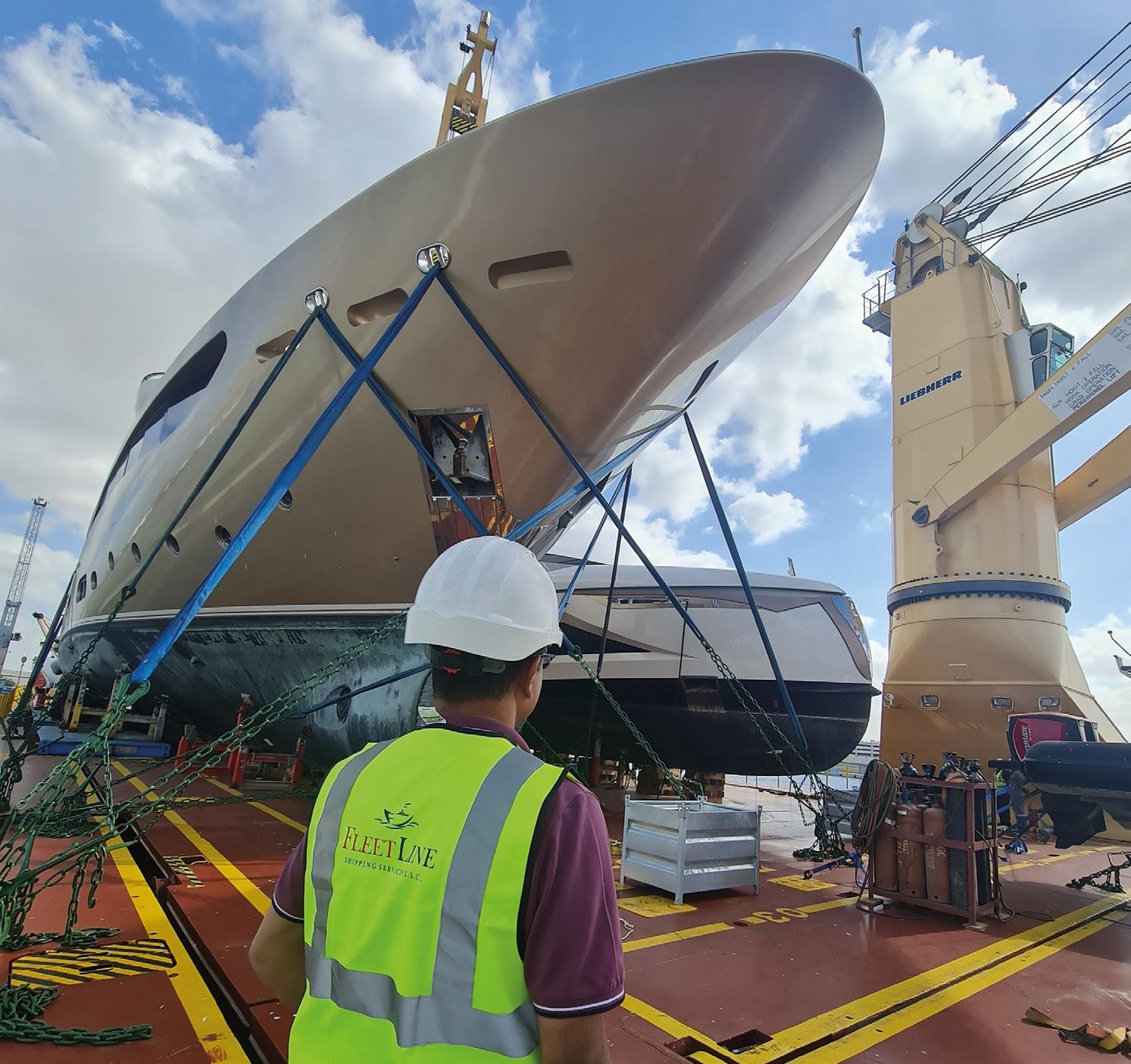

“I want to push myself further and get out there more, take ownership of a few more customers and broaden my horizons in terms of what I can do,” she said. “It’s really a personal challenge to myself.”
Peter is particularly passionate about female representation in the industry, although she is quick to highlight the number of women already leading operations and departments at Fleet Line. She has been a member of Breakbulk’s Women in Breakbulk program
since 2022, speaking on panel sessions and participating in global meetups.
“I’ve met so many fantastic women, including key decision makers,” Peter said. “In fact, there are women at every level, and it’s such a lovely community. Of course, we delve into industry specifics, just like on the main stage, but there’s also a real sense of support. It’s very much like, ‘if you need anything, do let me know, do reach out.’ It has that personal touch.”
Does she have any advice for entry-
level professionals joining the industry?
“I feel like I’m quite young to be giving advice! But honestly, what’s helped me most is simply asking questions. And, more importantly, asking for help,” she said. “When you don’t know something, it can feel intimidating to speak up. You don’t want to come across as someone who should already know the answer. But in my experience, a lot of the industry veterans who may seem intimidating actually love it when younger people come to them with questions. I think it’s really about getting over that fear and just asking.”
Breakbulk’s NextWave Programme is a dedicated initiative designed to engage, support and retain emerging talent as they build their knowledge, networks and careers within the industry.
*Breakbulk Exhibitor *Breakbulk Global Shipper