2026





2026
5 The number of Beethoven Concertos that will be featured this summer
6 Who wrote Madama Butterfly?
5. The number of Beethoven Concertos that will be featured this summer
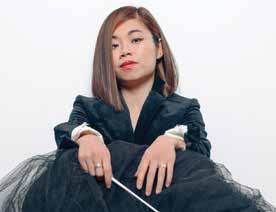
9 Female conductor at Bravo! Vail
13. Nickname for Mozart Symphony No 35
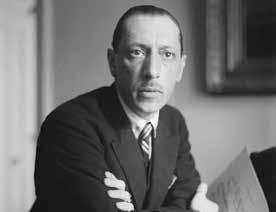
10 Who wrote the Firebird Suite?
12 Name the cellist playing the Saint-Saëns Cello Concerto
6. Who wrote Madama Butterfly?
13 Nickname for Mozart Symphony No. 35
9. Female conductor of Philadelphia Orchestra
10. Who wrote the Firebird Suite?
12. Name the cellist playing the Saint Saens Cello Concerto
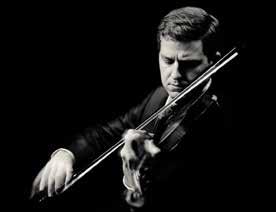
1 Composer known for music from Jaws, Star Wars, Close Encounters of the Third Kind 2 Which concerto is Joshua Bell performing?
3 Who is playing with Anne-Marie McDermott on the Mozart Concerto for Two Pianos?
1. Composer known for music from Jaws, Star Wars, Close Encounters
3. Who is playing with Anne Marie McDermott on the Mozart Concerto for Two Pianos?
4 Composer of Danzón No. 2
4. Composer of Danzon No 2

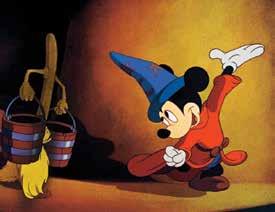
7 Famous mouse that plays the wizard in Disney’s Fantasia
2. Which concerto is Joshua Bell performing?
8 What instrument does Anne-Marie McDermott play? 11 Schumann Symphony No. 1 nickname
7. Famous mouse that plays the wizard in Disney's Fantasia
8. What instrument does Anne Marie McDermott play? 11. Schumann Symphony No 1 Nickname
ACADEMY OF ST MARTIN IN THE FIELDS
Thursday, June 25 6 PM
GERALD R. FORD AMPHITHEATER
Anne-Marie McDermott, piano
BEETHOVEN Piano Concerto No. 2
BEETHOVEN Piano Concerto No. 4
BEETHOVEN Piano Concerto No. 3
We asked Anne-Marie McDermott
When did you start playing piano and why?
I started playing when I was 5 years old because I was intrigued by the power of the piano. My two older sisters were already playing an instrument, I didn’t want to be left out, and I was also a little competitive!
What do you remember most about practicing as a young student?
I remember loving the challenge of playing the piano from the very beginning. I wanted to learn pieces that had the most notes on the page, and I wanted to learn how to play very loud. I didn’t always love
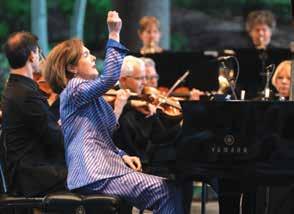
practice every day, but I did love that when I practiced, I would sound better the next day. I also always loved being able to learn a piece of music and then perform it in front of people!
How many hours or years did you have to practice to be able to perform all five Beethoven concertos in a row?
The first Beethoven Concerto I learned was number 2 when I was 14 years old. I learned the 1st, 3rd and 4th concertos in my twenties. I learned the final concerto, the Emperor, when I was in my 30’s. I have played these concertos a lot over my whole adult life. I have to practice a lot to be able to perform all five of them in a row- still! It’s a lot of work, but such a thrill to play all 5! I can’t wait!

What musical advice do you have for young students today?
My advice to young musicians is to find joy and fun in your music making and always remember that the more you practice today, the better you will sound and feel tomorrow. We are so lucky to be able to play instruments and make music!
ACADEMY OF ST MARTIN IN THE FIELDS
Saturday, June 27 6 PM
GERALD R. FORD AMPHITHEATER
Anne-Marie McDermott, piano
BEETHOVEN Piano Concerto No. 1
BEETHOVEN Piano Concerto No. 5, Emperor
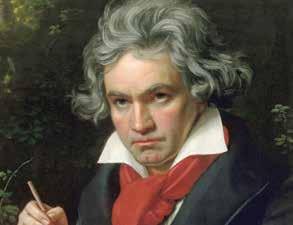
Ludwig van Beethoven was baptized on December 17, 1770 in Bonn, Germany, and died on March 26, 1827 in Vienna, Austria. As a child, he studied piano and violin with his father, Johann, who took him out of school at eleven years old to allow him to focus on his musical education.
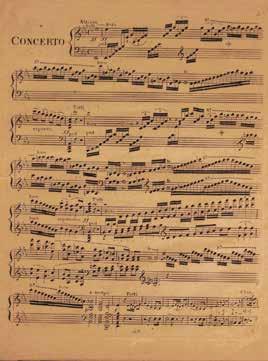
Beethoven composed his five piano concertos within his early and mid periods. Beethoven did not have a financial need to write his fifth piano concerto because he had a yearly stipend of 4000 florins guaranteed by Archduke Rudolph and the Princes Lobkowitz and Kinsky, with the condition that he stayed in Vienna and continued to compose music. Beethoven composed his Piano Concerto No. 5 in 1809, during a struggle for European power in the Napoleonic Wars (1803-1815), which caused the Austrian Imperial family, including Archduke Rudolph, to flee from Vienna. Beethoven did, however, dedicate this piece to Archduke Rudolph. Beethoven wrote his first four piano concertos for his own performance, but he had lost too much of his hearing by this point to premiere his fifth piano concerto with the orchestra.
Source: libguides.bw.edu
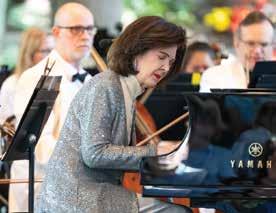
McDermott, piano
Ludwig Van Beethoven (1770-1827)
Credit: Bobbitt, J.; Mascia, M.; Reinschmidt, H. 2025, September 12. [First page of the piano score of Beethoven’s Piano Concerto No. 5] [Photograph]. Libguides.bw.edu/c.php?g=1077696
ACADEMY OF ST MARTIN IN THE FIELDS
Sunday, June 28 6 PM
GERALD R. FORD AMPHITHEATER
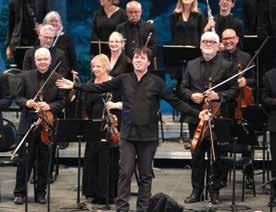
Joshua Bell, violin
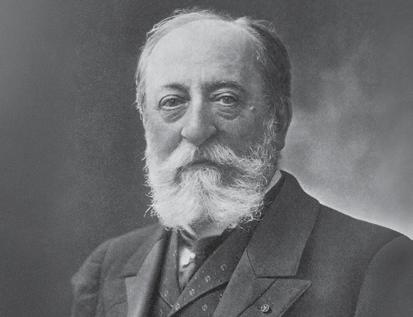
SAINT-SAËNS Violin Concerto No. 3
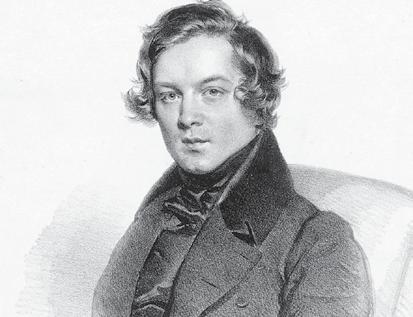
SCHUMANN Symphony No. 1, Spring
What was Joshua Bell’s childhood like?
Joshua David Bell was born on December 9, 1967. Little did his parents know at the time, but they had given birth to a future award-winning violinist and conductor. His life began in Bloomington, Indiana, United States, where he was born to Alan P. and Shirley Bell and grew up with two sisters.
He continued to grow up in the Midwestern hills of Bloomington, where he considered himself to be a normal kid; he went to public schools and played sports and was an avid computer game player. In fact, as an adolescent of ten, he was actually a state tennis champion and known for his athletic ability, not his musical genius, at the time.
Bell didn’t consider the violin his calling until he was about twelve years old, when he was accepted to the prestigious Meadowmount School of Music, a summer program in upstate New York. It was there that he met his beloved teacher and mentor, Josef Gingold, whose guidance inspired the young violinist and helped awaken his musical ambitions.
DALLAS SYMPHONY ORCHESTRA
Thursday, July 2 6 PM
GERALD R. FORD AMPHITHEATER
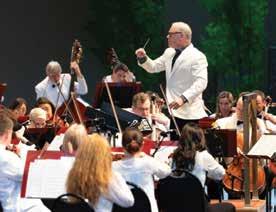
How important is the score or soundtrack of a movie?
The primary job of a movie’s score is to set the tone. Music has the unique ability to evoke emotion instantly. A tense, ominous score can make the audience feel on edge, while a light, playful melody can bring warmth and levity to the scene. The Star Wars franchise, for example, uses its epic orchestral score to evoke the grandeur of its galaxy-spanning adventures, immersing viewers in the vastness and the drama of its universe. John Williams’ unforgettable compositions for the saga not only bring gravity to the story but help define its cultural impact.
On the other hand, films like Jaws showcase how a scorecan elicit pure fear and tension. The repetitive, escalating notes of the Jaws theme, composed by John Williams, serve as an audible warning of the terror lurking beneath the water’s surface. Without that score, the film’s intensity would be significantly diminished.
A score or soundtrack also plays a crucial role in enhancing the story itself. It’s not just about setting the mood—it can underscore the themes and emotions driving the plot.
Music also serves as a powerful tool for creating an emotional connection between the film and the viewer.
Similarly, music can create unforgettable moments in movies that stay with the audience long after the credits roll.
The next time you watch a movie, pay close attention to its soundtrack or score—it’s likely playing a much bigger role in shaping your experience than you might realize.

Credit: https://silverscreennation.com/2025/01/08/how-important-is-a-movies-soundtrack/
DALLAS SYMPHONY ORCHESTRA
Monday, July 6 6 PM
GERALD R. FORD AMPHITHEATER
Dallas Symphony Orchestra
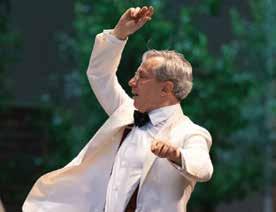
Fabio Luisi, conductor
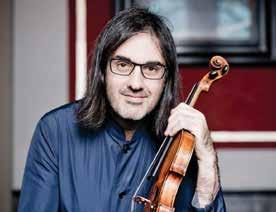
Leonidas Kavakos, violin
MOZART Symphony No. 35 in D major, Haffner
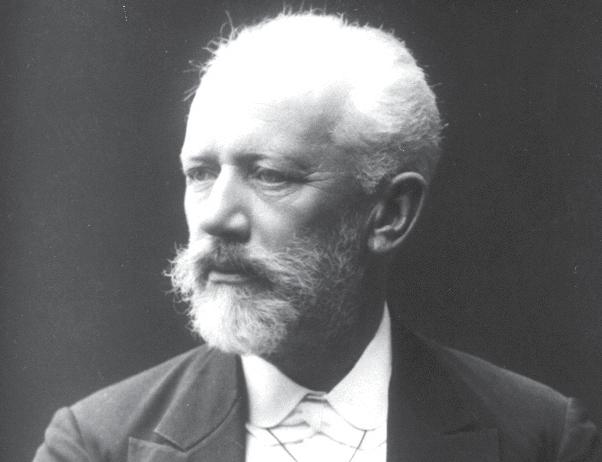
TCHAIKOVSKY Violin Concerto
In 1782, Wolfgang Amadeus Mozart was just 26 years old, yet he had already established himself on the European stage as a musical genius, and the young composer was highly sought after by the public. It was during this immensely prolific period of his career that he was commissioned by the Haffner family (hence the subtitle of Symphony No. 35, “Haffner”). Sigmund Haffner Jr. initially wrote to him, requesting a serenade for his sister’s wedding, now known as Serenade No. 7. Highly satisfied with the young composer, the family approached Mozart again to compose a symphony for a very important occasion: the ennoblement ceremony of the Haffner family house. Overwhelmed with work, Mozart struggled to complete the composition, and the commission unfortunately fell into oblivion, at least until December 1782, when Mozart revisited the unfinished score and finally premiered Symphony No. 35 in D major, “Haffner.”
Ennoblement is the conferring of nobility—the induction of an individual into the noble class. Currently only a few kingdoms still grant nobility to people; among them Spain, the United Kingdom, Belgium and the Vatican.
Credit: https://www.medici.tv/en/works/mozart-symphony-35-d-major-haffner/
DALLAS SYMPHONY ORCHESTRA
Wednesday, July 8 6PM
GERALD R. FORD AMPHITHEATER
Fabio Luisi, conductor
Jennifer Rowley, Cio-Cio-San (Butterfly)
Evan LeRoy Johnson, B.F. Pinkerton
Manuela Custer, Suzuki
Alessandro Luongo, Sharpless
Keith Jameson, Goro
Kidon Choi, Prince Yamadori/Uncle Bonze Bravo! Vail Festival Chorus Duain Wolfe, founder
Taylor Martin, director
SOPHIA JANI What do flowers do at night?
PUCCINI Madama Butterfly in concert
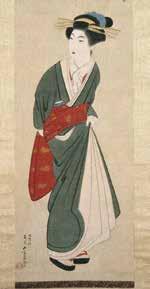
Cio-Cio-San’s World
Cio-Cio-San, also known as Butterfly, comes from a world connected to the tradition of geisha—artists trained in music, dance, and social performance. Becoming a geisha requires years of study and discipline, and it is deeply tied to Japanese culture and history. In Madama Butterfly, however, her story is told through the lens of a Western composer writing for European audiences in the early 1900s. This means what we see on stage is an interpretation or stereotype rather than a complete picture of that culture.
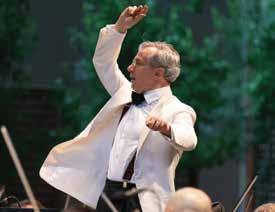
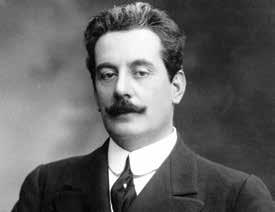
How do we know who Cio-Cio-San is?
Before seeing Madama Butterfly, we can start thinking about how a character like Cio-CioSan is presented to us. In opera, we learn about characters through music, their actions, their relationships, and how others treat them, but that doesn’t always give us the full picture.
What clues help you understand who a person is in a story?
How might the way others see and treat Cio-CioSan shape how we understand her, and what parts of her story might we not see?
Some content used with permission and originally created by Opera Colorado.
THE PHILADELPHIA ORCHESTRA
Friday, July 10 6 PM
GERALD R. FORD AMPHITHEATER
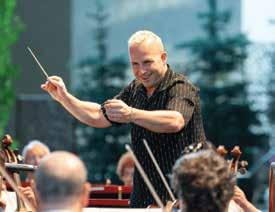
Yannick Nézet-Séguin, conductor
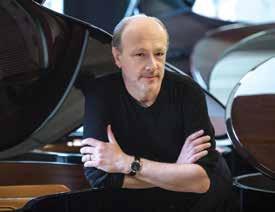
Marc-André Hamelin, piano
BRAHMS Symphony No. 3
LISZT Piano Concerto No. 2
ARTURO MÁRQUEZ Danzón No. 2
Danzón No. 2 is one of the most popular and most frequently performed Mexican contemporary classical orchestral compositions. It is celebrated as a symbol of Mexican music and culture, to the extent of being colloquially known as the second national anthem of Mexico.
The rhythmic interest in the piece is maintained through the use of varying accents and tempo. This staple of the contemporary Mexican music literature expresses and reflects on the dance style named danzón, which has its origins in Cuba but is a very important part of the folklore of the Mexican state of Veracruz.
THE PHILADELPHIA ORCHESTRA
Wednesday, July 15 6 PM
GERALD R. FORD AMPHITHEATER
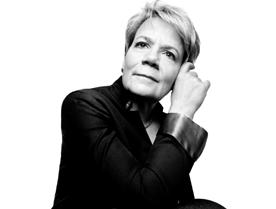
Marin Alsop, conductor Himari, violin
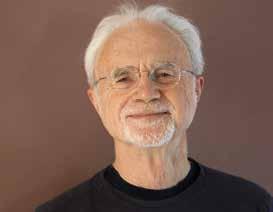
JOHN ADAMS The Rock You Stand On
SIBELIUS Violin Concerto
PROKOFIEV Selections from Romeo and Juliet
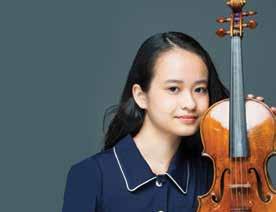
All About Himari
How old is Himari?
Himari turns 15 years old this summer, 2026.
How old was Himari when she started the violin?
Himari was three years old when she started playing the violin in Japan.
When did she first play with an orchestra?
Himari was six years old when she first played with an orchestra.
Who is her current teacher?
Himari studies with Ida Kavafian at the Curtis Institute of Music.
Where has her violin playing taken her in the world?
Himari has played in the United States, Russia, Switzerland, Austria, Italy, Belgium, Ukraine, and Japan.
What does Himari like to do when she is not playing violin?
Reading Japanese books, playing with her grandmother’s dog, and watching ballet.
What are her favorite foods? Ice cream and daifuku (mochi)
THE PHILADELPHIA ORCHESTRA
Friday, July 17 6 PM
GERALD R. FORD AMPHITHEATER
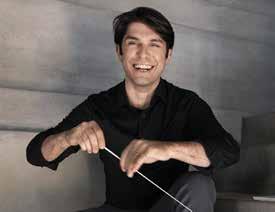
Aram Demirjian, conductor
Disney’s Fantasia in Concert
Disney’s Fantasia in Concert Live to Film features highlights from two of Disney’s most extraordinary and groundbreaking animated features, Fantasia (1940), and its sequel Fantasia 2000 (1999).
Classical selections include Beethoven’s Fifth and Sixth symphonies, Debussy’s “Claire de lune,” Ponchielli’s “Dance of the Hours,” Stravinksy’s The Firebird, Tchaikovsky’s The Nutcracker, and Dukas’ The Sorcerer’s Apprentice.
Released to great acclaim in 1940, Walt Disney’s Fantasia was his boldest experiment at the time and culminated in the creative visionary’s desire to blend animated imagery with classical music. The original recording of the film’s score was conducted by Leopold Stokowski with The Philadelphia Orchestra, captured in stereophonic sound, which was still an experimental medium at the time. What had begun as a vehicle to develop Mickey Mouse’s career with an animation short titled “The Sorcerer’s Apprentice” went on to become a genuine cinema classic.
Presentation licensed by Disney Concerts © All rights reserved.
NEW YORK PHILHARMONIC
Wednesday, July 22 6 PM
GERALD R. FORD AMPHITHEATER
Elim Chan, conductor James Ehnes, violin
BERLIOZ Le Corsaire Overture
KORNGOLD Violin Concerto
BRITTEN Four Sea Interludes from Peter Grimes
STRAVINSKY Firebird Suite
Igor Stravinsky was born in St. Petersburg, which was the capital of Russia at the time. His father was a famous opera singer, so as a kid, Igor got to hang out at the opera house, where he met all the famous musicians of the day. At one performance, he even caught sight of Tchaikovsky.
Igor began taking piano lessons at age 9. When he grew up, he started studying law. One of his fellow law students was the son of composer Nikolai Rimsky-Korsakov, who agreed to give Stravinsky composition lessons. Law fell by the wayside completely after Stravinsky had a big success with The Firebird, which he composed for Sergei Diaghilev, head of the Russian Ballet.
The Firebird
Igor Stravinsky based his ballet The Firebird on a Russian folk tale about an evil demon named Kashchei, who has thirteen princesses under his spell. A prince who wanders into Kashchei’s garden to hunt the Firebird winds up defeating Kashchei and freeing the princesses — with the help of the Firebird’s magic feather.
Source: Classics for Kids ®
NEW YORK PHILHARMONIC
Friday, July 24 6 PM
GERALD R. FORD AMPHITHEATER
Elim Chan, conductor
Yefim Bronfman, piano
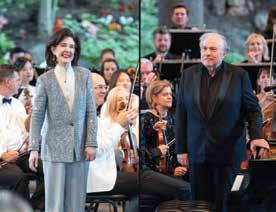
Anne-Marie McDermott, piano
CAROLINE MALLONEE Lakeside Game
MOZART Concerto for Two Pianos in E-flat major PROKOFIEV Suite from Cinderella
What do you hear in Prokofiev’s music that tells the story of Cinderella?
Circle the parts of the story that you heard in the music (include matching image if possible)
Clock striking midnight
Dancing Lesson
Step Sisters
Fairy Godmother
Cinderella Dancing at the Ball
Prince looking for Cinderella
What else do you hear in the music?
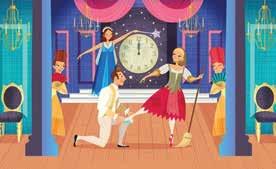
Image: MediaTimeout.com
NEW YORK PHILHARMONIC
Wednesday, July 29 6 PM
GERALD R. FORD AMPHITHEATER
Stéphane Denève, conductor
Carter Brey, cello
BIZET Selections from L’Arlésienne
SAINT-SAËNS Cello Concerto No. 1
DEBUSSY La Mer
RAVEL Boléro

Birthplace of Maurice Ravel
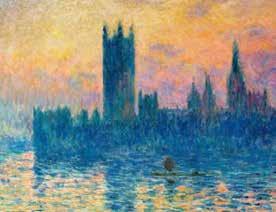
Tonight you will hear French classical music from the Romantic Era through the early twentieth century, when the Impressionist movement gained popularity. Romantic composers like SaintSaëns often told stories or painted musical scenes through their music. Impressionist composers like Ravel and Debussy were often portraying moods and atmospheres through their music.
Listen to the music and with your paints and paper, draw whatever comes to mind. If you need some ideas, answer these questions:
● What kind of weather do you hear? Is it a beautiful, sunny day or a stormy, gray day?
● Which emotions do you feel? Sad, happy, angry, excited, nervous?
● What colors match what you are hearing? Purple, Green, Blue, Pink, Yellow, Orange
● What do you think the story is behind the music?

PLAYLIST JUST FOR YOU!