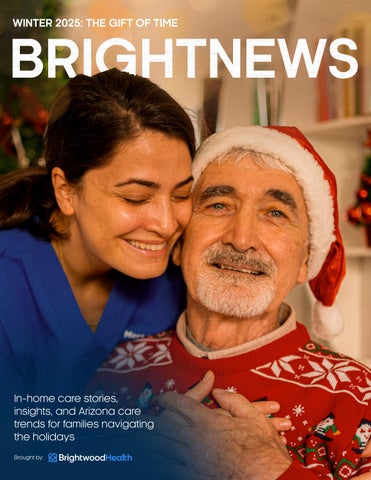
Winter 2025: The Gift of Time
In-home care stories, insights, and Arizona care trends for families navigating the holidays Brought by:
1
Table of contents
Inside This Issue
Letter from the CEO
1
Understanding the Cost of Senior Care
2
Arizona Home Care by the Numbers—2025 Snapshot
3
Balance Health Tips—From Dizzy to Steady
1
Veteran Benefits for In-Home Care—What Veterans Should Know
1
Dementia-Friendly Holidays—Calm, Safe & Connected
1
The Healing Power of Home—A Cancer Survivor’s Story
v1
2
This winter edition of BrightNews is designed to be enjoyed at your own pace—flipped through in quiet moments, revisited when questions come up, and shared with the people you care about. Inside, you’ll find practical guidance, Arizona care insights, and real stories from families and CarePros navigating the season together—each one a reminder that support, when done well, creates more room for what matters most.
Letter from the CEO
Caring for someone you love doesn’t come with a handbook. BrightNews is our way of getting you a little closer. BrightNews is a quarterly magazine from Brightwood Health—created to inform, inspire, and support Arizona families navigating care for aging loved ones. Each issue shares insights from our care team, community partners, and client families on the moments that matter most: wellness at home, navigating benefits, and creating days that feel lighter, safer, and more connected. This season’s theme—“The Gift of Time”—celebrates gratitude, connection, and the everyday heroes who make home the heart of care: daughters juggling work and aging parents, sons coordinating VA benefits, neighbors checking in, and CarePros who quietly keep it all moving.
“The gift isn’t just more time—it’s better time together.” From all of us at Brightwood—thank you for letting us be part of your circle of care. May your holidays be peaceful, connected, and full of grace.
Warmly, Josh Komenda CEO & Founder, Brightwood Health
3
4
Families who place a high value on staying in the home, preserving routines, or keeping loved ones together often choose to scale up home care because of the one-onone attention and continuity it provides. “For many families, home care offers more than assistance—it offers peace of mind and familiarity,” says Joshua Komenda, CEO of Brightwood Health. “It’s often the bridge that helps loved ones maintain independence and dignity on their own terms.”
Understanding the cost of senior care By Joshua Komenda, Brightwood Health, and Shandi Hudson, Elite Senior Services Planning for care is never just about dollars. It’s about safety, dignity, comfort— and protecting the emotional and physical bandwidth of the entire family. One of the biggest decisions many families face is whether to keep care at home or transition into an assisted living community. The right answer depends on needs, preferences, and timing. When home is still the best place to be For families who only need a lighter level of support, in-home care can actually be the more affordable option. A common setup might be three 4-hour visits per week to help with light housekeeping, meal prep, medication reminders, companionship, or simply giving a family caregiver a break. In Arizona, this typically runs around $2,000 per month. As care needs increase—daily assistance, mobility help, dementia support, or even overnight care—costs naturally rise. Most agencies in Arizona charge $35–$40 per hour.
5
Understanding The Cost Of Senior Care
When assisted living makes sense
The placement perspective
For others, once support becomes more extensive, assisted living can become the more economical and structured option. Communities vary widely, but monthly costs generally cover 24/7 staffing, meals, medication management, and social programming.
Deciding when it’s time to explore assisted living is deeply personal— and every family’s journey looks different. A senior placement advocate can help families navigate options, tour communities, compare care levels and costs, and ultimately find a setting that aligns with their loved one’s medical, social, and emotional needs.
Depending on amenities and location, average costs in Arizona range from $4,500–$7,000 per month. This option can bring peace of mind—especially for families balancing complex care needs, limited time, or safety concerns. The right community can also reduce isolation and bring new social connection, fitness opportunities, and a sense of belonging.
“It’s not about giving up independence—it’s about finding the right environment where safety, community, and joy can thrive.” — Shandi Hudson, Managing Partner, Elite Senior Services Shandi recommends connecting with a placement advisor before a crisis arises: “Early planning gives families time to explore choices calmly, understand pricing and care levels, and make thoughtful decisions rather than rushed ones.”
6
What to watch for
The bottom line
• Sudden increase in falls or hospitalizations • Escalating confusion or wandering • Caregiver burnout or health decline • Home no longer safe or adaptable for mobility • Ongoing loneliness or depression despite support
Whether you choose to scale care at home or transition to assisted living, planning ahead helps families make informed, confident decisions that preserve both quality of life and financial balance.
Even if you’re not ready for assisted living, exploring your options early can give you leverage—more time to tour, compare, and plan financially and emotionally.
Learn more: Brightwood Health: brightwood.health Elite Senior Services: elitesenioraz.com
7
Arizona home care by the numbers
A quick snapshot of what families are navigating today Demand is surging • 24% of Arizonans are 60+, one of the fastest-growing senior populations in the U.S. • Maricopa County is adding 200+ seniors per day on average. • Top reasons families seek care: dementia support, post-hospital recovery, mobility issues, and caregiver burnout. “More seniors want to age at home— and the need for support has never been higher.” The real cost of care (Reflecting 2025 Arizona market rates across Phoenix, Scottsdale, and Tucson) Hourly Home Care—Private Duty (Non-Medical): • Standard care: $32–$40/hr • Dementia & Alzheimer’s support: $35–$45/hr • Overnight care: $400–$550/night
8
Facility Comparisons: • Assisted living: $4,800–$6,500/mo • Memory care: $6,500–$9,000/mo • Skilled nursing: $10,000–$12,500/mo Home care remains the most flexible— and often the most cost-efficient—option for families who want support without leaving home. Family caregivers are carrying the weight • 850,000+ unpaid family caregivers in Arizona • Avg hours per week: 18–20 hrs • 70% report stress, burnout, or reduced work hours • 45% say they delayed hiring help “too long” Top 3 moments families finally call for support: • A fall or safety scare • Hospital discharge • Caregiver exhaustion
Hospital readmissions are a big risk
The hidden workforce behind care
• Nearly 1 in 5 seniors is readmitted within 30 days • Home care can reduce readmissions by 30–40% when support begins within the first week after discharge • Most-needed services post-hospitalization: medication support, mobility monitoring, meal prep, and ADL help
• Arizona needs 12,000+ new caregivers in the next 3 years • Most CarePros juggle multiple clients across Phoenix, Scottsdale, and Tucson
Dementia is rising—and needs are complex • 150,000+ Arizonans are living with Alzheimer’s or dementia • Expected increase by 2030: +33% • Only 40% of family caregivers feel confident managing cognitive-care routines Most helpful dementia-specific in-home support: • Routine-based structure • Cue-based reminders • Wandering prevention • Companionship + activities • Appointment supervision
Need Help? Have questions about care at home? We’re here to help. Call 480-718-7180.
Veterans have untapped benefits
Sources Genworth 2025 Cost of Care Study (AZ);
• 1 in 4 Arizona seniors is a veteran • Homemaker/Home Health Aide can help pay for care costs if you need help with two or more qualifying activities of daily living. • Many families qualify without realizing it
SeniorLiving.org AZ Pricing Index; AARP Arizona; Alzheimer’s Association AZ Chapter; Arizona Department of Health Services; VA.gov Aid & Attendance; Brightwood Health internal market analysis.
9
From dizzy to steady
Balance Health Tips for a Safer Home When balance changes, small adjustments can prevent big emergencies. Dizziness and instability often show up quietly at first—an extra hand on the wall, a pause before standing, or feeling unsure on uneven ground. It’s more common than most families realize: 1 in 4 adults over 65 experiences dizziness or balance issues each year. Common causes include medication side effects, inner-ear conditions, dehydration, or muscle weakness. The good news: early screening and targeted exercises can reduce fall risk by up to 40% and restore confidence at home. Signs It May Be Time For A Balance Check • Frequent dizziness or lightheadedness • Feeling “off” when standing or turning • Using walls or furniture for balance • Increased fear of falling
10
How Brightwood Can Help Our CarePros are trained to recognize early signs of balance change and can connect you with local physical therapy and vestibular balance specialists. Small, proactive steps—like guided stretching, hydration reminders, and posture support—can make a big difference in staying steady and independent. If you or a loved one has noticed new dizziness or changes in stability, don’t wait. Talk with your Brightwood team about balance screening and fall-prevention resources in your area. Learn more or request balancesupport resources at brightwood. health or call us today.
The Hidden Va Benefit That Can Pay For In-Home Care
By David Gibson, COO, Brightwood If you’re a veteran—or a surviving spouse—and need help with two or more activities of daily living such as bathing, dressing, meal preparation, or preventing falls, you may qualify for in-home care that may be fully or partially covered by the Department of Veterans Affairs (VA). At Brightwood Health, we’re proud to support Arizona’s veterans with the care, dignity, and independence they’ve earned. Our team helps families navigate eligibility, gather documentation, and coordinate directly with VA-approved channels so care can begin quickly and seamlessly. “For those who served, support at home should be simple.” — David Gibson, COO, Brightwood Health
Understanding va home care benefits There are two main VA programs that may help veterans receive care at home. However, one is often simpler, faster, and more practical for most families. Homemaker / Home Health Aide Benefit If you’re already enrolled in VA Medical Benefits, you may qualify for a set number of in-home care hours provided by Brightwood Health through the Homemaker / Home Health Aide or Respite Care program.
This benefit is coordinated directly through your VA medical coverage and is designed to offer flexible, non-medical support at home—help with meals, mobility, companionship, and light housekeeping—without the long application process or complex paperwork often required by other programs. “A few hours of care a day can mean the difference between burnout and balance.” Brightwood Health is an approved provider for this benefit, helping veterans and their families connect with local VA offices to begin care quickly and confidently. If you’re unsure where to start, Brightwood can walk you through the process and help you determine eligibility. VA Improved Pension (Aid & Attendance) There is also a separate, needsbased program called the VA Improved Pension (formerly Aid & Attendance), which can help veterans and surviving spouses pay for long-term care at home or in assisted living. However, this program is more complex and often takes considerably longer to process. Because of that, many families find it best to begin with the Homemaker / Home Health Aide Benefit while exploring this option in parallel with an accredited advisor. If you’re interested in learning more, Brightwood can connect you with trusted partners who specialize in this area and can help you decide if it’s the right fit.
11
Why many families miss out
How brightwood helps
Need help getting started?
Surprisingly, fewer than one in four eligible veterans receive these benefits.
Brightwood Health has helped veteran families across Phoenix, Mesa, Scottsdale, and Tucson access benefits and start care without financial strain.
Brightwood’s Care Coordination team can review your situation, connect you with trusted VA-accredited partners, and manage the care documentation process—all at no cost.
Why? Because the process can feel intimidating. Families often assume the VA only covers medical or facility-based care. In many cases, required paperwork—like a physician’s letter or DD-214—is incomplete or missing. The truth is, once eligibility and need are documented, the VA can help fund ongoing, non-medical care at home—helping seniors stay safe, independent, and connected to loved ones.
12
Here’s how we make it simple: • We connect families with accredited advisors to confirm eligibility. • We coordinate with VA-approved care channels and case managers. • We document and track care hours for compliance and reimbursement. • We provide personal guidance at no cost to families. “We didn’t know this existed until Brightwood explained it. Within a few weeks, my dad had care at home— and the VA was helping pay for it.”
If you think you may qualify—or just want to explore your options—call us today at 480-718-7180.
Carepro spotlight Caring Through the Holidays: Angela in Tempe “Presence beats perfection,” says Angela R., a Brightwood CarePro in Tempe. Last December, Angela helped Mr. Harris, a retired teacher, host a tiny cookie-decorating “open house” for two neighbors. She prepped a simple sugar-free recipe, set out large-grip utensils, and paced the afternoon with music and rest breaks. “His face lit up when they walked in,” Angela says. “He told me, ‘This feels like me again.’” That’s Brightwood care: safety + belonging—and a plan that fits real life.form,
Moments like these are what Angela looks for every day. For her, care isn’t about doing everything for someone—it’s about helping them stay connected to the life they know and love. Especially during the holidays, those small routines and familiar traditions can mean everything.
13
Dementia-friendly holidays: calm, safe, and included
Large gatherings can overwhelm a person living with dementia—noise, lights, unfamiliar faces. The goal isn’t a perfect holiday. It’s comfort, familiarity, and small moments of connection.
Keep what’s familiar
Invite safe participation
Maintaining routine is one of the strongest supports for someone with dementia. Research from the Alzheimer’s Association underscores that when routines for meals, medication, and rest stay consistent, the person uses less mental energy and feels less disoriented.
Participation is key for dignity and connection. Let the person living with dementia contribute in ways they can:
Build the celebration around the person’s best time of day (often morning, when cognition tends to be sharper) and keep the familiar— furniture arrangement, favorite songs, known faces.
Dial down over-stimulation Multiple studies show that sensory overload (bright flashing lights, loud music, crowded rooms) can trigger agitation, confusion, or withdrawal in someone with dementia. Tips: • Lower background noise and limit the number of simultaneous conversations. • Skip flashing lights, overly flashy décor, or visuals that could be misinterpreted (e.g., decorations that look like food). • Offer a quiet “retreat” room— somewhere the person can leave the activity if it becomes too much. • Place safe, soft lighting and familiar tactile items (blanket, photo book) in that space to help self-soothe.
14
• Folding napkins, passing cookies, labeling cards, or holding a photoalbum moment. • Using “reminiscence triggers” (a song, a scent, a framed photo) to spark positive memories and conversation. It’s less about perfect performance, more about feeling included and valued.
allow extra response time. • Visit in smaller groups rather than large, overwhelming gatherings. • Communicate a short note beforehand with basic guidance such as: “Grandpa may repeat questions; a calm reply and a smile help.” • Avoid heavy alcoholic drinks, which may amplify confusion or balance issues. • Provide a list of trusted resources (e.g., Alzheimer’s Association tips) so guests arrive informed.
Realistic expectations & self-care for caregivers Prepare your guests Educating guests helps reduce misunderstandings and makes the environment calmer for everyone. Encourage family and friends to: • Understand changes aren’t intentional. Use simple sentences, one person speaking at a time, and
A holiday with dementia in the family will look different—and that’s okay. Experts encourage caregivers to: • Prioritize what truly matters and let go of less-essential traditions. • Recognize their own limits. Skip the “perfect” gathering if it compromises the person living with dementia or the caregiver’s well-being.
• Take breaks or delegate tasks so they can stay present with their loved one instead of stretched thin.
Quick checks for holiday safety & comfort • Ensure pathways are clear (wires, extension cords for lights = trip hazards). • Use familiar decorations; avoid items that could be misinterpreted (fake fruit = real snack?). • Choose a time of day when the person is most comfortable (often earlier). • Have a comfort object ready (photo album, calming music) for spontaneous downtime. • Communicate clearly with guests about what to expect and how to help.
15
Gentle Reminder (callout): The holidays don’t have to be perfect to be meaningful. A calm home, a familiar song, a shared cookie—these are the moments that matter.
BrightAssist Peace of mind 24 hours a day BrightAssist™ is Brightwood’s complimentary in-home virtual monitor—quietly detecting safety alerts, missed routines, and changes in movement patterns. It never replaces people; it simply helps our CarePros and families respond faster and worry less. Learn more or watch a quick video demo: 16
The healing power of home: A cancer survivor on recovery and care By Rebecca Poger, Community Relations, Brightwood Health
“Home was where I found strength again.” When I heard “you have cancer,” my world stopped. What I didn’t expect was that the hardest part wouldn’t happen in the hospital—it would happen after I came home.
Coming Home, Finding A New Rhythm The quiet after treatment can feel disorienting. Simple things—showering, making a meal, returning texts—take energy you don’t have . According to the National Cancer Institute, fatigue is one of the most common and persistent side effects of treatment, often lasting for months. It’s the body’s signal to rest, recover, and rebuild.
Small, steady steps matter: gentle walks, short naps, balanced meals, and self-compassion. Rest, nutrition, and emotional care are just as vital as medicine.
What Families Often Miss Loved ones show up with meals and love, but isolation can creep in when the schedule slows. Caregivers try to do everything—and burn out quickly. The American Cancer Society reports that most caregivers experience high stress levels during a loved one’s recovery. Asking for help doesn’t mean losing
17
18
How The Right Support Helps Brightwood’s personalized in-home care helps survivors regain confidence and maintain stability after hospital discharge. Studies show that patients recovering at home with structured support report lower stress, fewer complications, and better emotional health than those recovering alone.
Quick Tips For Recovery At Home • Plan help early. Arrange meals, rides, and support before discharge. • Protect energy. Prioritize rest, hydration, and easy meals. • Accept help. Let others cook, tidy, or
sit and listen. • Stay connected. Join a survivor or caregiver support group. • Celebrate small wins. Every step forward counts.
alone. With the right plan and a compassionate team, home can be the best place to heal.
How families can help after treatment • Keep routines predictable—same meal and rest times each day. • Use a notebook or app to track symptoms and progress. • Offer presence, not pressure—just being there helps. • Schedule small, positive visits vs. large gatherings.
Sources National Cancer Institute – Fatigue (PDQ®): Patient Version, 2025. American Cancer Society – Caring for the Caregiver, 2024. National Comprehensive Cancer Network (NCCN) – Guidelines for Survivorship Care, 2025. Cancer.net – Managing Side Effects and
If you’re navigating recovery, remember—you don’t have to do it
Emotional Health After Treatment, 2024.
19
From our brightwood family to yours
As 2025 comes to a close, thank you to every client, family, and CarePro who makes Brightwood what it is—a circle of care rooted in Arizona compassion. Your trust lets us do the work we love every day. Our team recorded a short holiday message to share what this season means to us. “May your days be light, your home feel safe, and your time together stretch a little longer.” Warmly,versions from the 1914 translation by H. Rackham. Stay Connected brightwood.health | 480-718-7180 Serving Greater Phoenix · Scottsdale · Tucson
20
The Brightwood Health Team, Josh Komenda David Gibson Rebecca Poger Christy Orquiz Quiana Mabry Jake Gibson
21
Ready to experience care on your terms? Call to speak directly with our Care Concierge and explore how we can support you or your loved one. care@brightwood.health (480) 718 7180