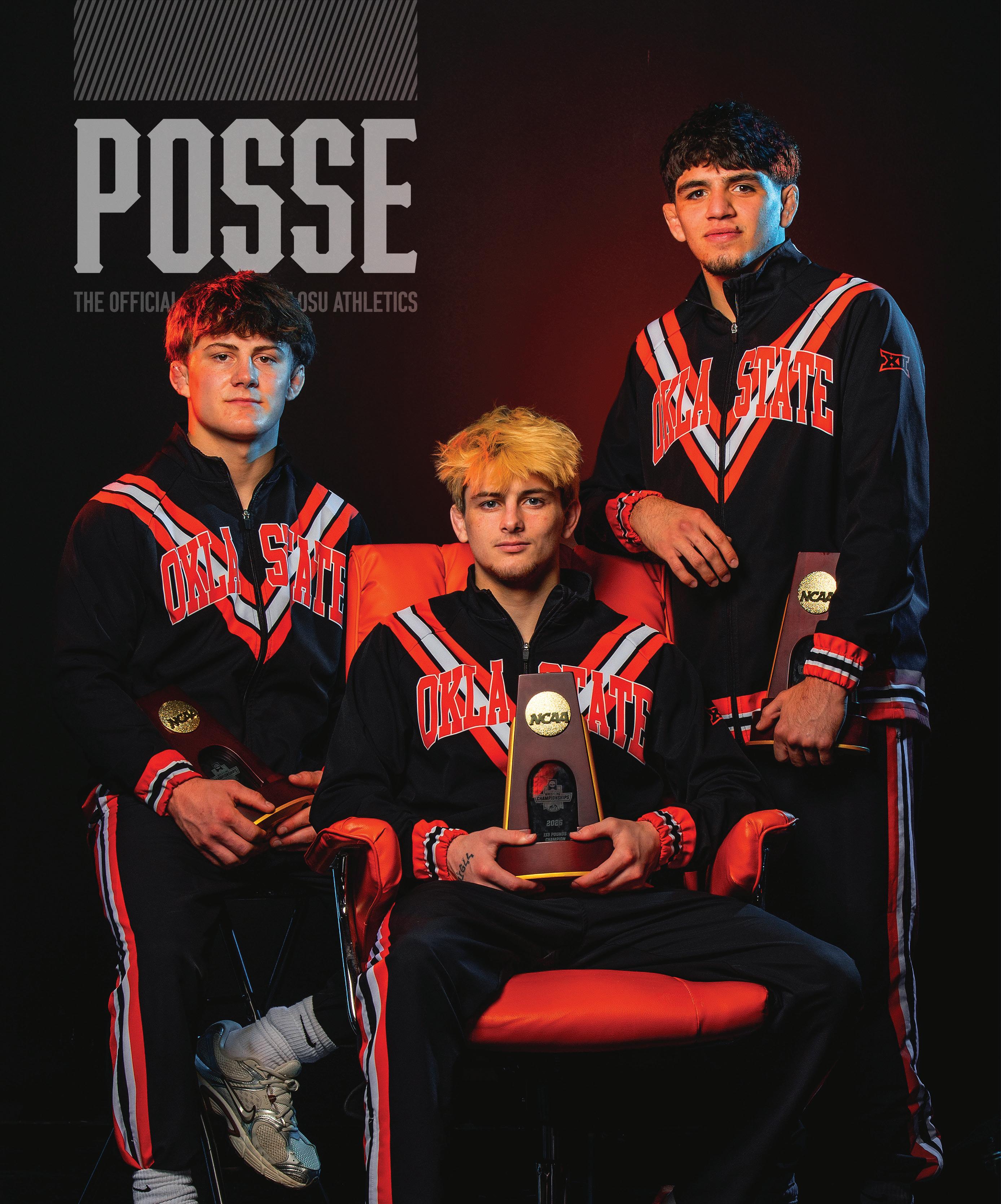
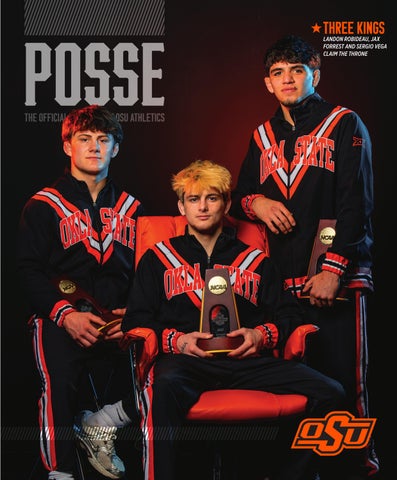
LANDON ROBIDEAU, JAX FORREST AND SERGIO VEGA CLAIM THE THRONE


SHORT SECURITY LINES • QUICK BAGGAGE CLAIM • FREE PARKING

BY K E V I N K LI
How inclusive can you be and remain exclusive? How many immortals can you crown before that recognition becomes so mainstream that it defeats its original purpose.
Those questions may not be the most important these days, but they are part of the discussions taking place regarding the Ring of Honor atop Boone Pickens Stadium.
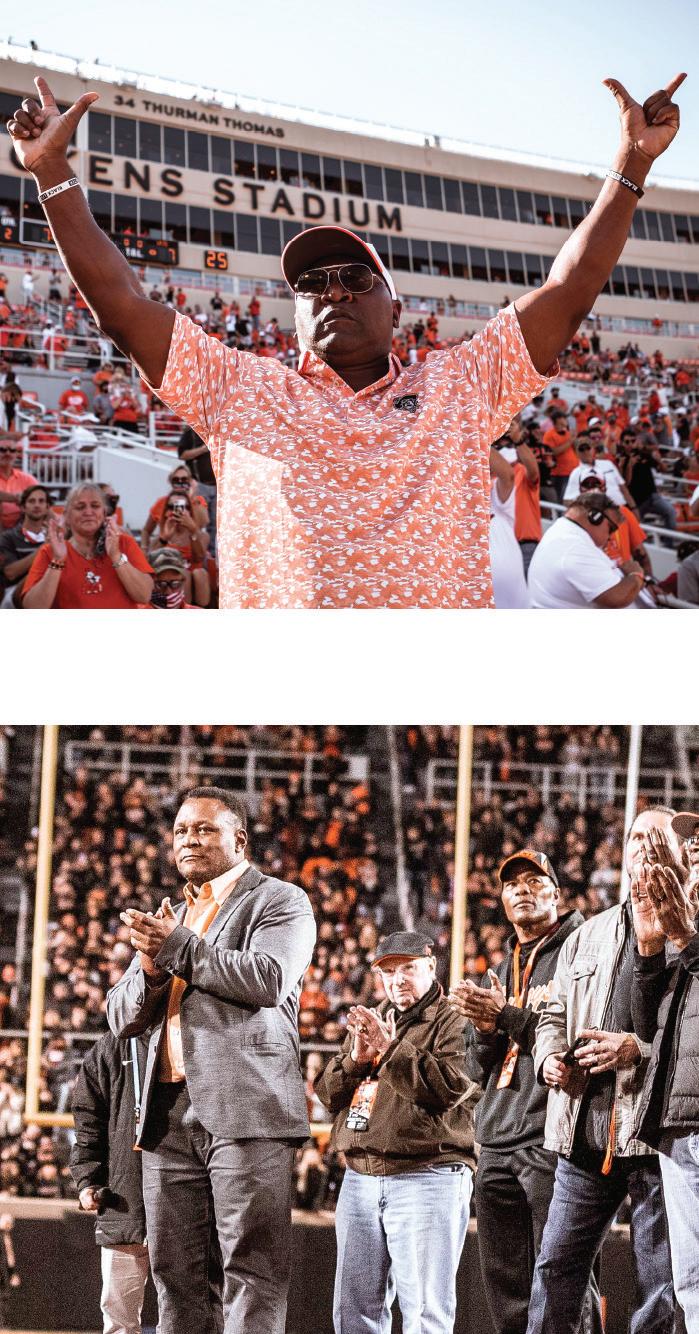
In 2020, during a football season muted by the pandemic, Oklahoma State launched a new tradition when it inducted former Cowboy running back Thurman Thomas as the first member of the Ring of Honor. A member of the college and pro football halls of fame and OSU’s all-time leading rusher, No. 34 was a natural choice to be the first to have his name adorn the top of the west end zone.
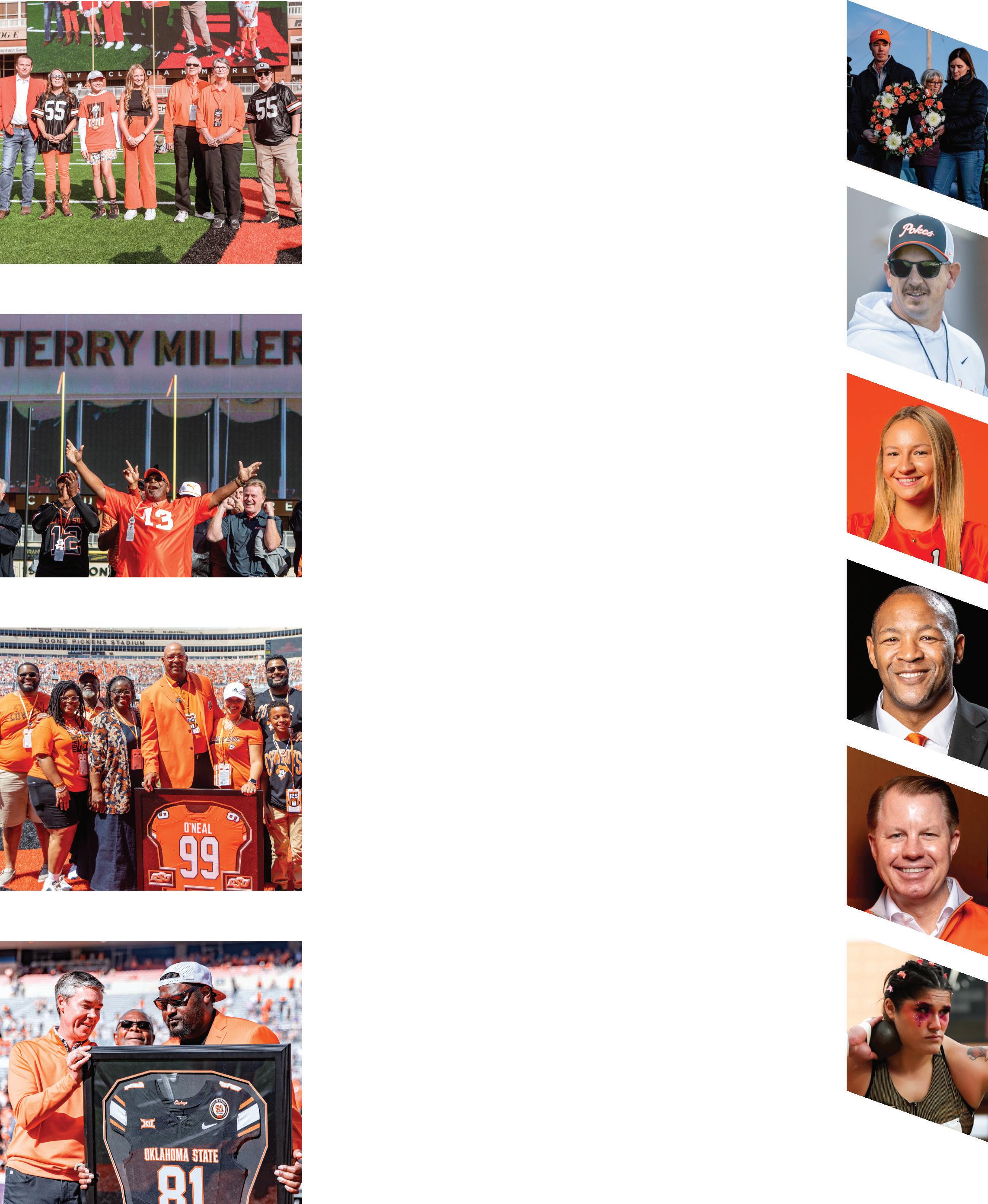
The Ring of Honor is OSU Athletics’ most exclusive form of recognition . There are only six former Cowboys who have been immortalized in the stadium — for a very specific reason. They are the six who are members of the National Football Foundation College Football Hall of Fame Quite intentionally, membership in the College Football Hall means automatic induction into the Ring of Honor.
When OSU launched the Ring of Honor, only three Cowboys, Bob Fenimore (1972), Barry Sanders (2003) and Thomas (2008), were members of the college hall of fame. Since then, however, Leslie O’Neal (2020), Terry Miller (2022) and Justin Blackmon (2024) have also been inducted into the hall of fame, followed by induction into the Ring of Honor. The timing of the inductions has resulted in Ring of Honor ceremonies becoming, seemingly, an annual fall event
Except an annual induction has never been the intent. Membership in the Ring of Honor was always meant to be very exclusive, but just how exclusive is now being debated as — for the first time since the tradition began — we are staring down a football season without an induction Every Cowboy who is a national hall of fame member is also in the Ring of Honor.
Thus, the inevitable questions: What happens now? Are standards revisited to allow more inductions and a deeper candidate pool? Or does the Ring of Honor stay static until the next Cowboy goes into the College Football Hall of Fame?
More OSU players are on the College Football Hall of Fame ballot, and several more will be eligible for consideration soon. And who says the College Football Hall of Fame always gets it right? No hall of fame at any level is batting 1.000 with its choices. Are OSU players who appear on the national ballot but never selected any less worthy than those that have been inducted?
What about Cowboys whose play on the field led them to becoming fan favorites, those who repeatedly made the biggest plays in the biggest moments? Sentimentality is a powerful thing as demonstrated each year when the athletic department receives unsolicited fan input regarding the next member of the ring or candidacy for the Hall of Honor.
Does fan sentiment come into consideration or should the highest possible standard remain a prerequisite for induction into the ring to truly separate the absolute very best of the best?
Talk among yourselves.
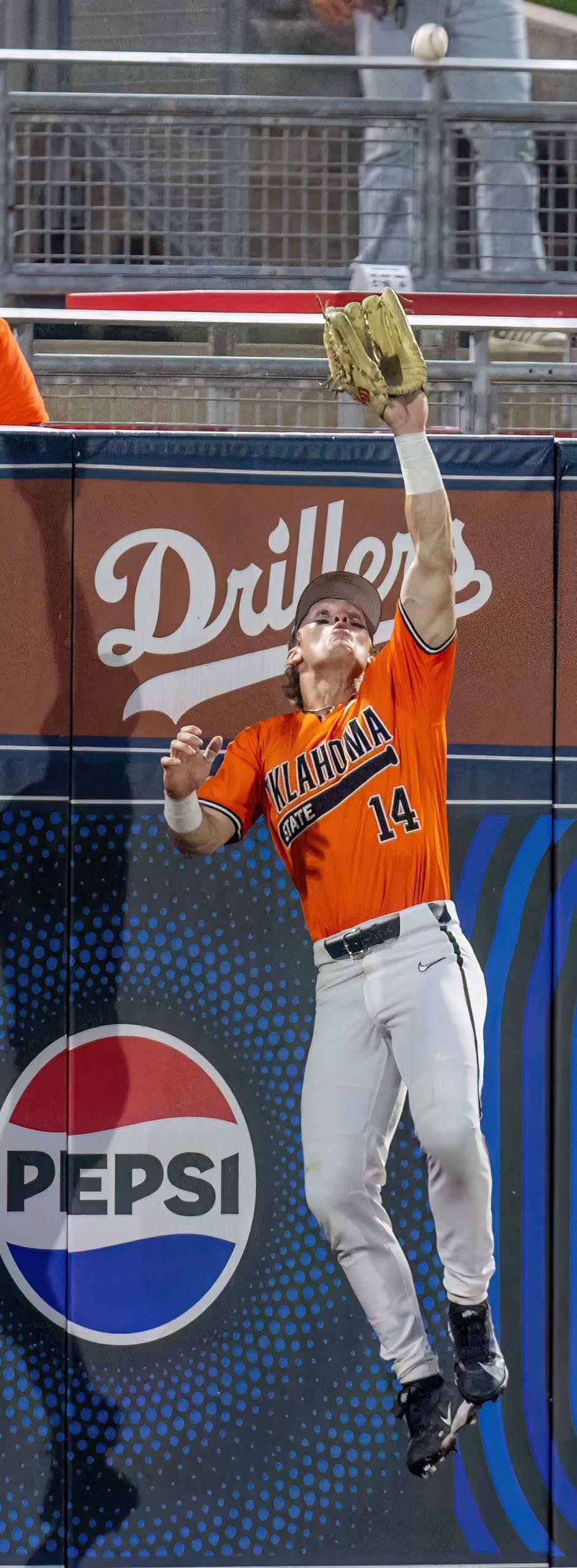
Cowboy left fielder Alex Conover makes a leaping catch at the wall in Bedlam action at Tulsa's ONEOK Field. OSU would go on to win 7-3, with severe weather shortening the game to 8 innings.
POSSE MAGAZINE
POSSE Magazine Sta
SPRING 2026
EDITOR-IN-CHIEF / SENIOR ASSOCIATE ATHLETIC DIRECTOR KEVIN KLINTWORTH
SENIOR ASSOCIATE ATHLETIC DIRECTOR JESSE MARTIN
ART DIRECTOR / DESIGNER JORDAN SMITH
PHOTOGRAPHER / PRODUCTION ASSISTANT BRUCE WATERFIELD
ASSISTANT EDITOR CLAY BILLMAN
CONTRIBUTING PHOTOGRAPHERS MITCHELL ALCALA, GEORGE BULARD, RYLEE COHEN, CHASE DAVIS, DIAMOND LEAGUE AG, KYLIE GRANDELL, MASON HARBOUR, COLIN PETERS, ADDISON SKAGGS, WORLD ATHLETICS
CONTRIBUTING WRITERS CLAY BILLMAN, HALLIE HART, KEVIN KLINTWORTH, WADE MCWHORTER
Development (POSSE) Sta
ASSOCIATE AD / ANNUAL GIVING ELLEN AYRES
PUBLICATIONS COORDINATOR CLAY BILLMAN
ASSOCIATE AD / DEVELOPMENT BRAKSTON BROCK
ASSOCIATE AD / DEVELOPMENT MATT GRANTHAM
ASSOCIATE VIP / DEPUTY AD / DEVELOPMENT ANDREW HAMOR
ASSOCIATE AD / DEVELOPMENT
DANIEL HEFLIN
SENIOR ASSOCIATE AD / EXTERNAL AFFAIRS JESSE MARTIN
SENIOR ASSOCIATE AD / DEVELOPMENT LARRY REECE
ASSOCIATE AD / DEVELOPMENT SHAWN TAYLOR
ASSISTANT DIRECTOR OF ANNUAL GIVING
ATHLETICS PROJECT MANAGER
OSU POSSE
102 ATHLETICS CENTER STILLWATER, OK 74078-5070
405.744.7301 P
405.744.9084 F OKSTATE.COM/POSSE POSSE@OKSTATE.EDU
ADVERTISING 405.744.7301
EDITORIAL 405.744.1706
ADDISON UFKES
JEANA WALLER
At Oklahoma State University, compliance with NCAA, Big 12 and institutional rules is of the utmost importance. As a supporter of OSU, please remember that maintaining the integrity of the University and the Athletic Department is your first responsibility. As a donor, and therefore booster of OSU, NCAA rules apply to you. If you have any questions, feel free to call the OSU O ce of Athletic Compliance at 405-744-7862 Additional information can also be found by clicking on the Compliance tab of the Athletic Department web-site at okstate.com
Remember to always “Ask Before You Act.”
Respectfully,
BEN DYSON
SENIOR ASSOCIATE ATHLETIC DIRECTOR FOR COMPLIANCE

Know a student ready to rise? OSU’s scholarship opportunities fuel the fire of future Cowboys. By walking the Cowboy way, our students dare to think bigger and build what’s next, forging their character, passion and grit to achieve excellence.
For maximum scholarship consideration, encourage the high school senior you know to apply by Feb. 1.
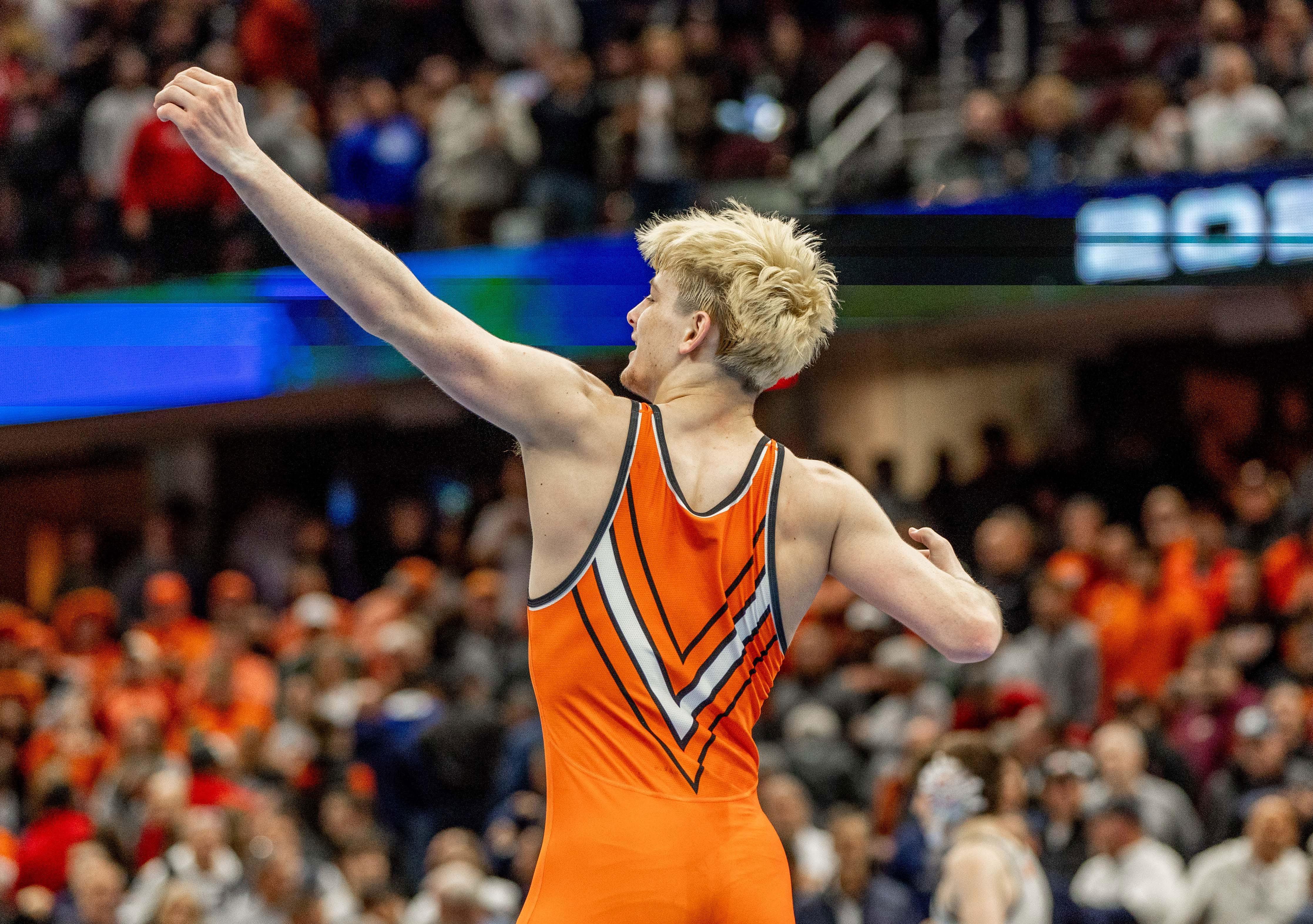
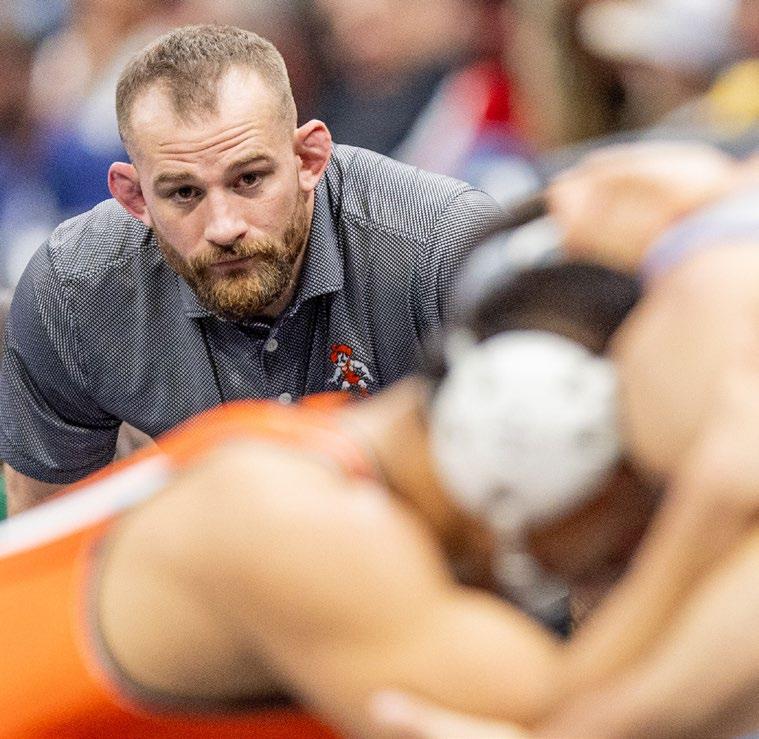
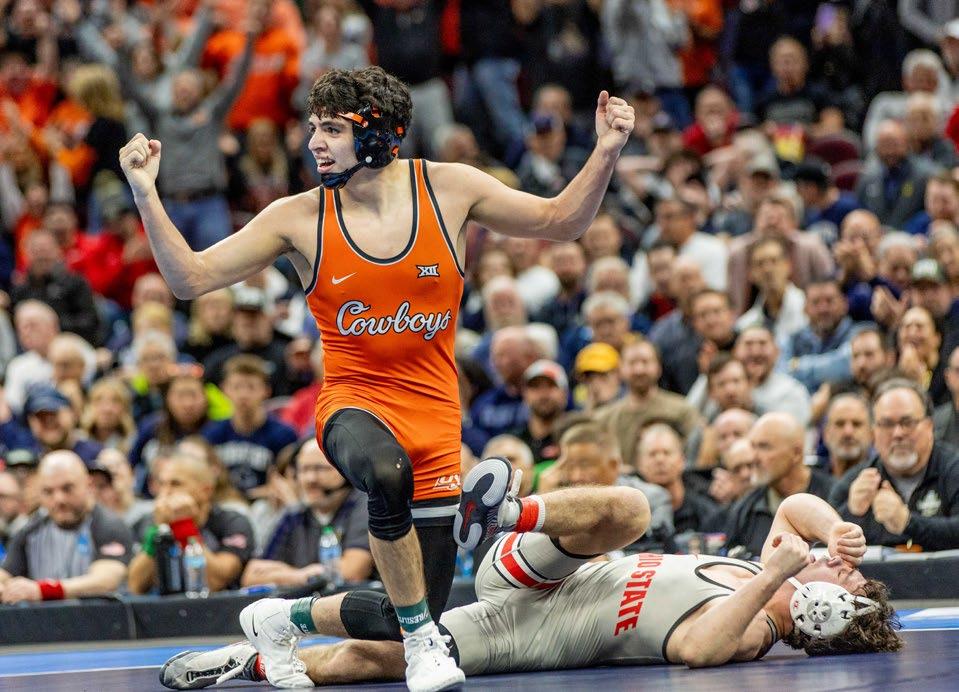
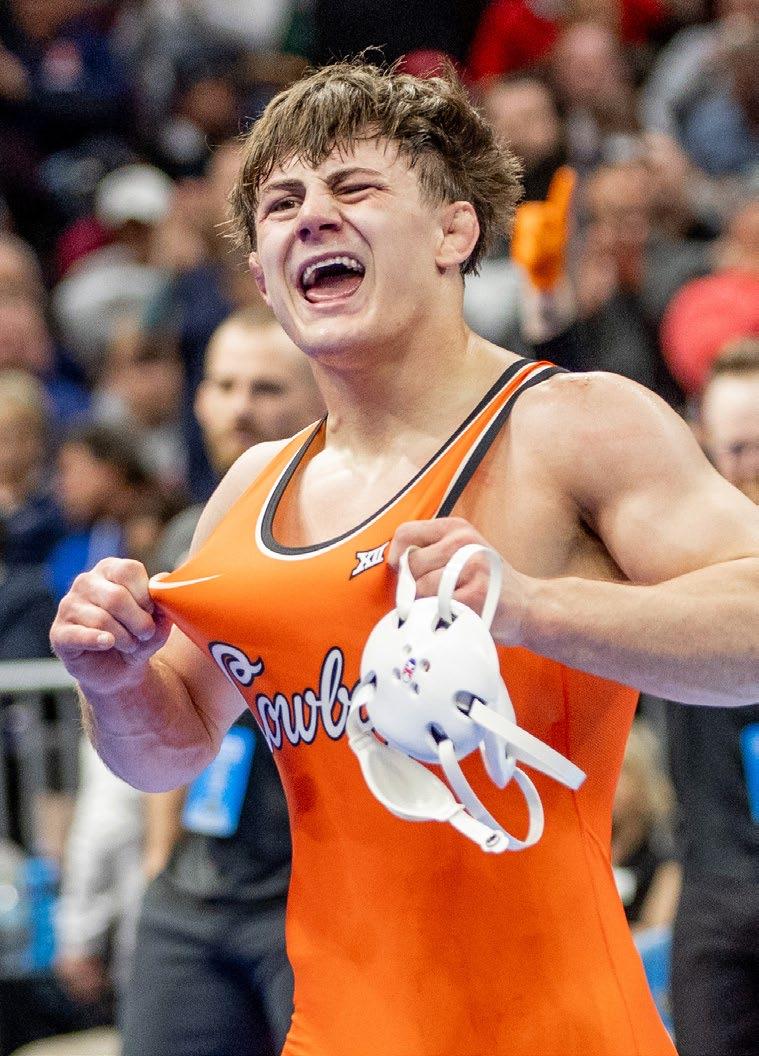
Oklahoma State true freshmen Jax Forrest (133 pounds) Sergio Vega (141), and Landon Robideau (157) claimed individual titles at the 2026 NCAA Wrestling Championships, making OSU the first team in history to record three freshman champs in the same year. Five other Cowboys earned All-America honors — including a runnerup finish by redshirt freshman Cody Merrill. Head coach David Taylor's squad scored 131 team points, which marked the second-highest runner-up score in NCAA tournament history. OSU now boasts 148 NCAA individual champions (including eight freshmen), along with 500 All-Americans.
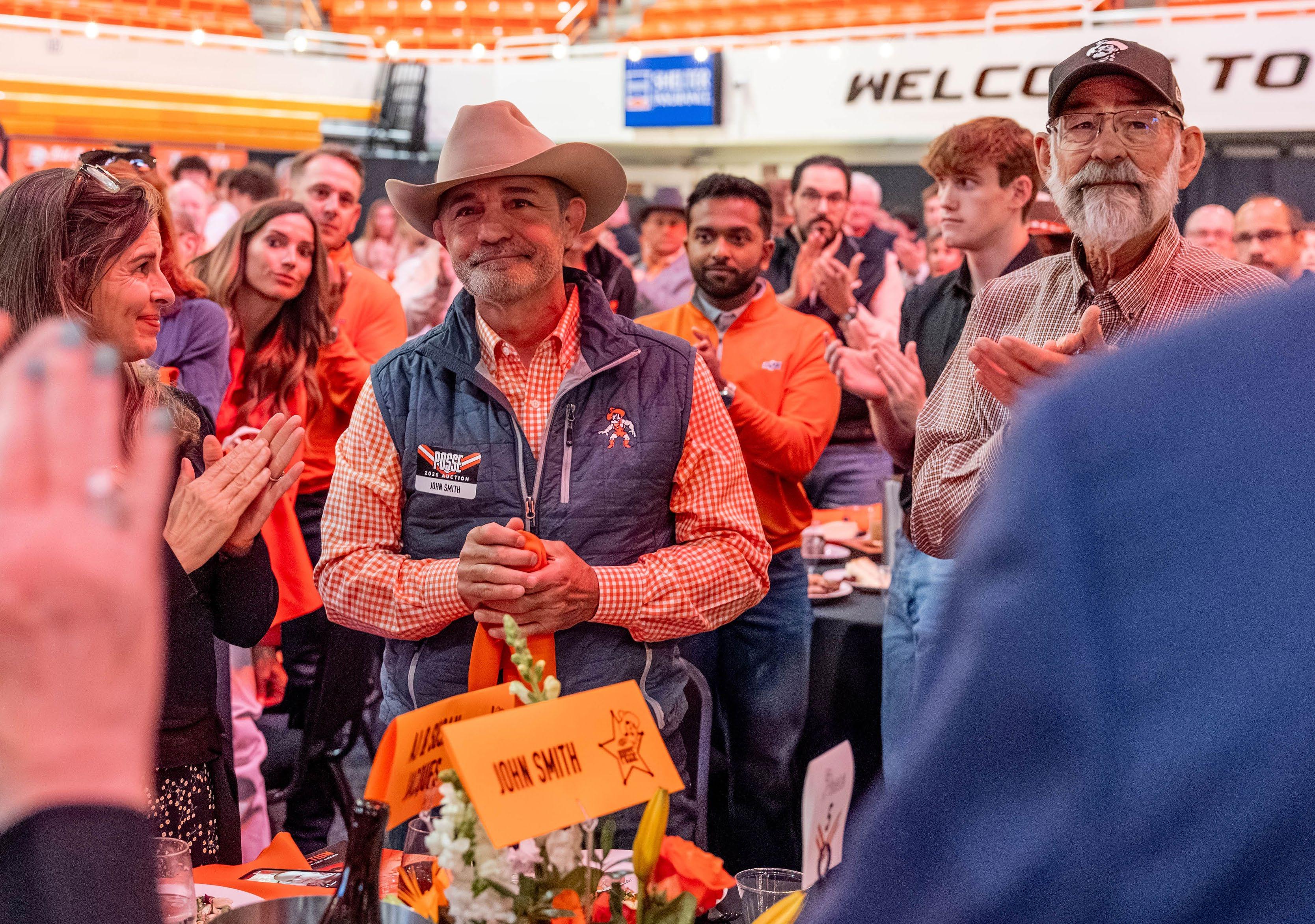
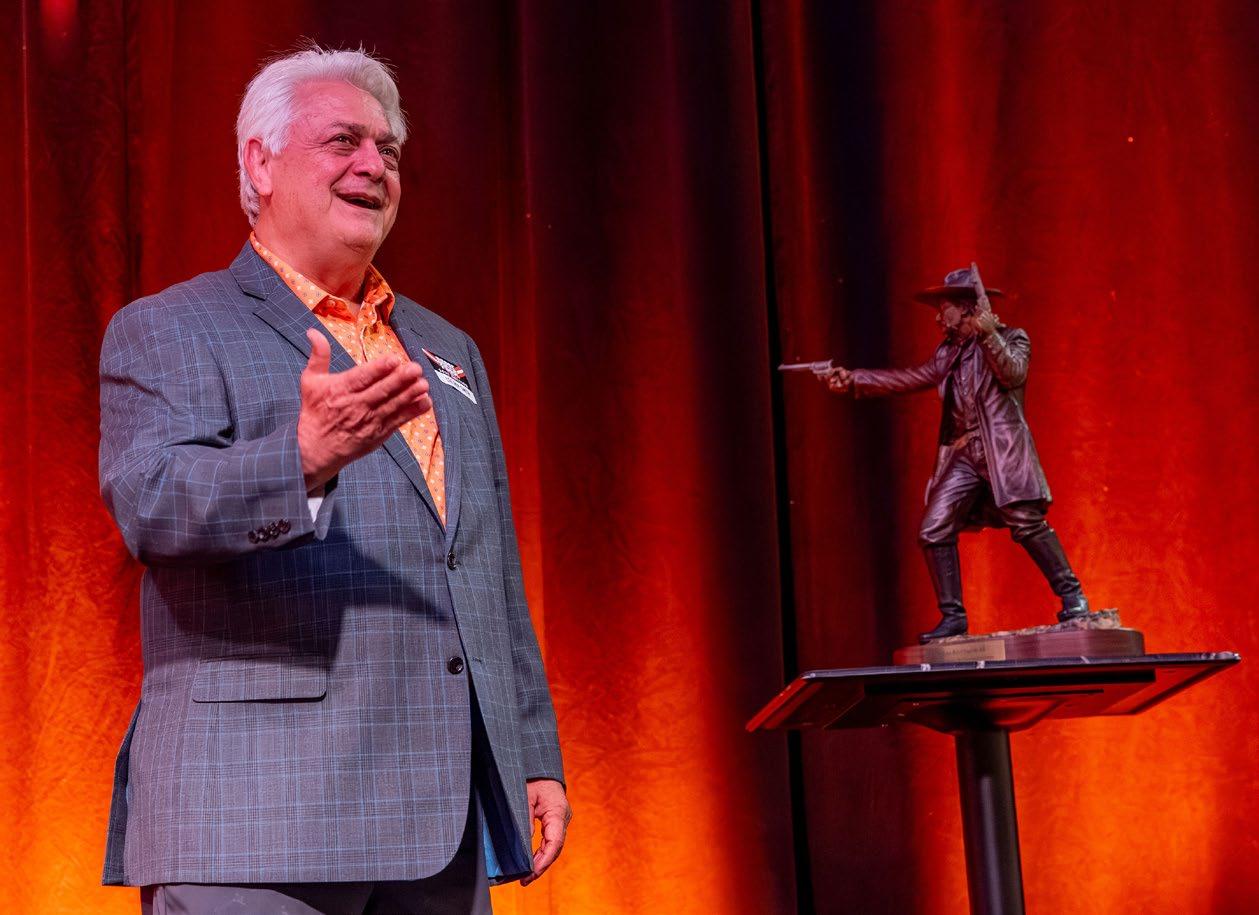
Raising more than $400,000 for the Excellence Fund, the 2026 POSSE Auction was a night to remember — in more ways than one. The grand total marks one of the highest amounts ever raised at OSU Athletics' annual fundraiser.
More than 450 attendees filled Gallagher-Iba Arena April 25, as the POSSE welcomed back special guests Lee Roy, John, Pat, and Mark Smith — the "First Family of Wrestling." AD Chad Weiberg took the opportunity to make a surprise announcement: OSU's planned wrestling training facility will bear the name of six-time world champion, two-time Olympic gold medalist, two-time NCAA individual champ, and five-time NCAA champion coach John Smith. Lee Roy, recently retired executive director of the National Wrestling Hall of Fame, was presented with a bronze statue of Frank Eaton in honor decades of service to the sport and his alma mater.
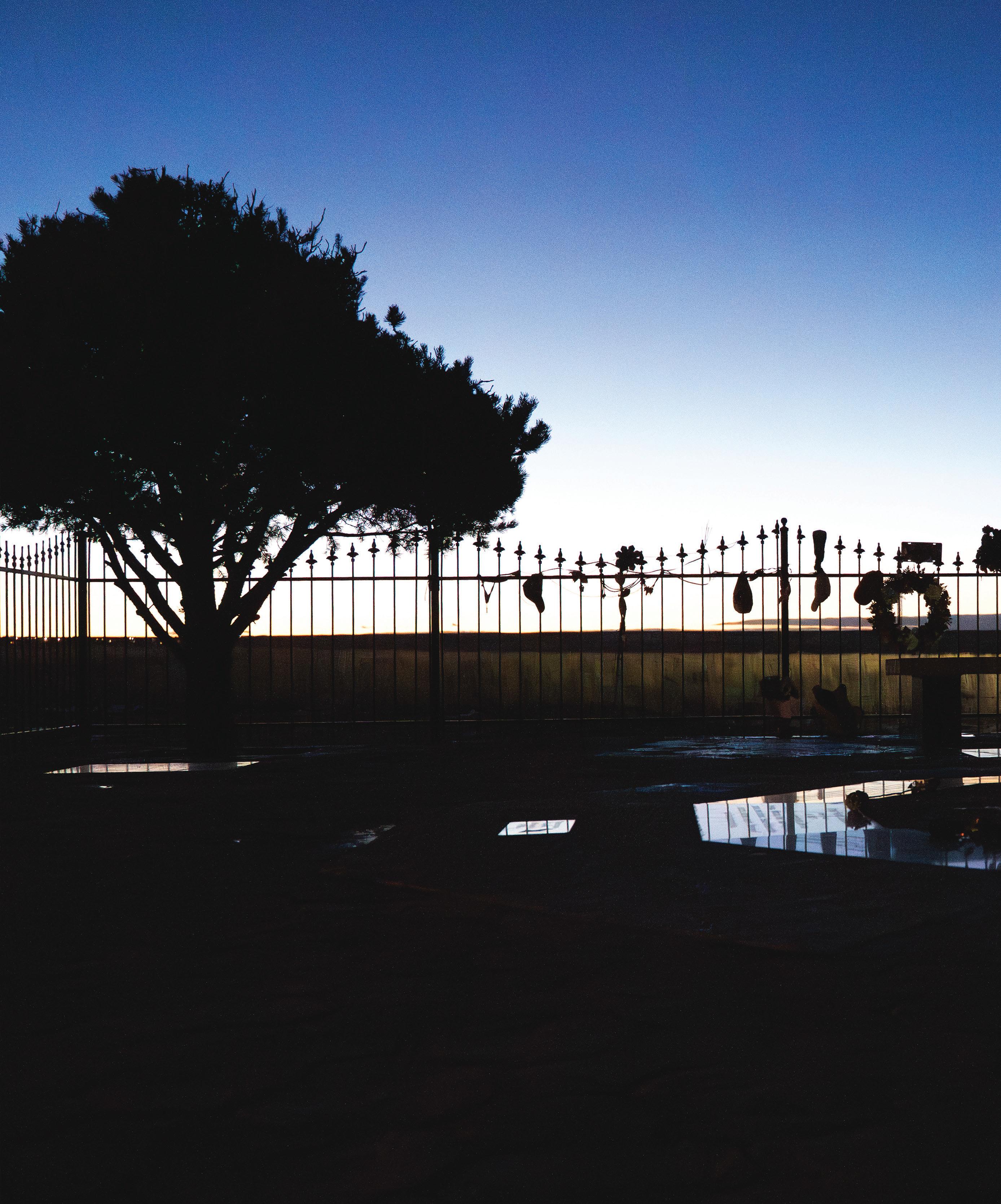

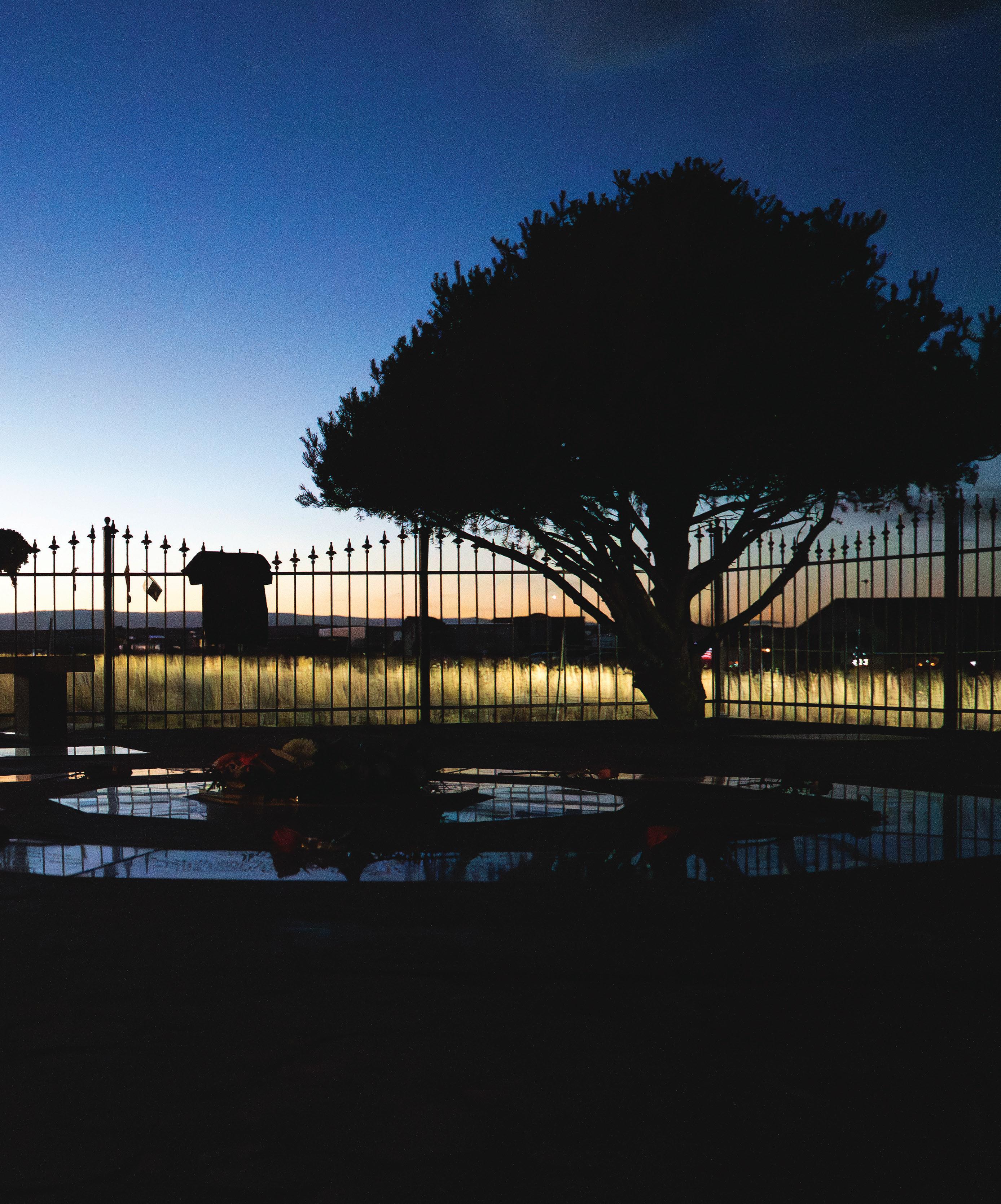
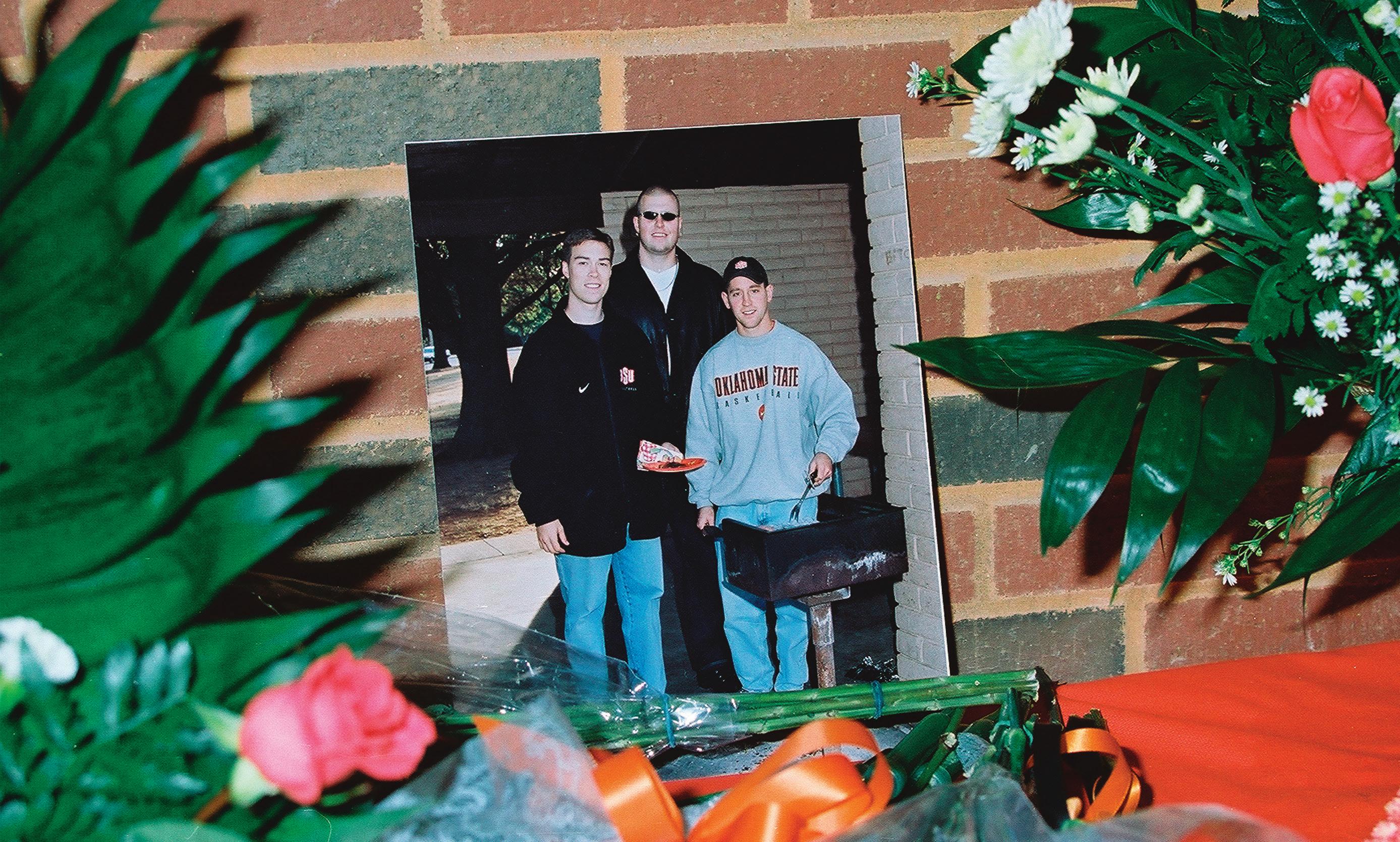
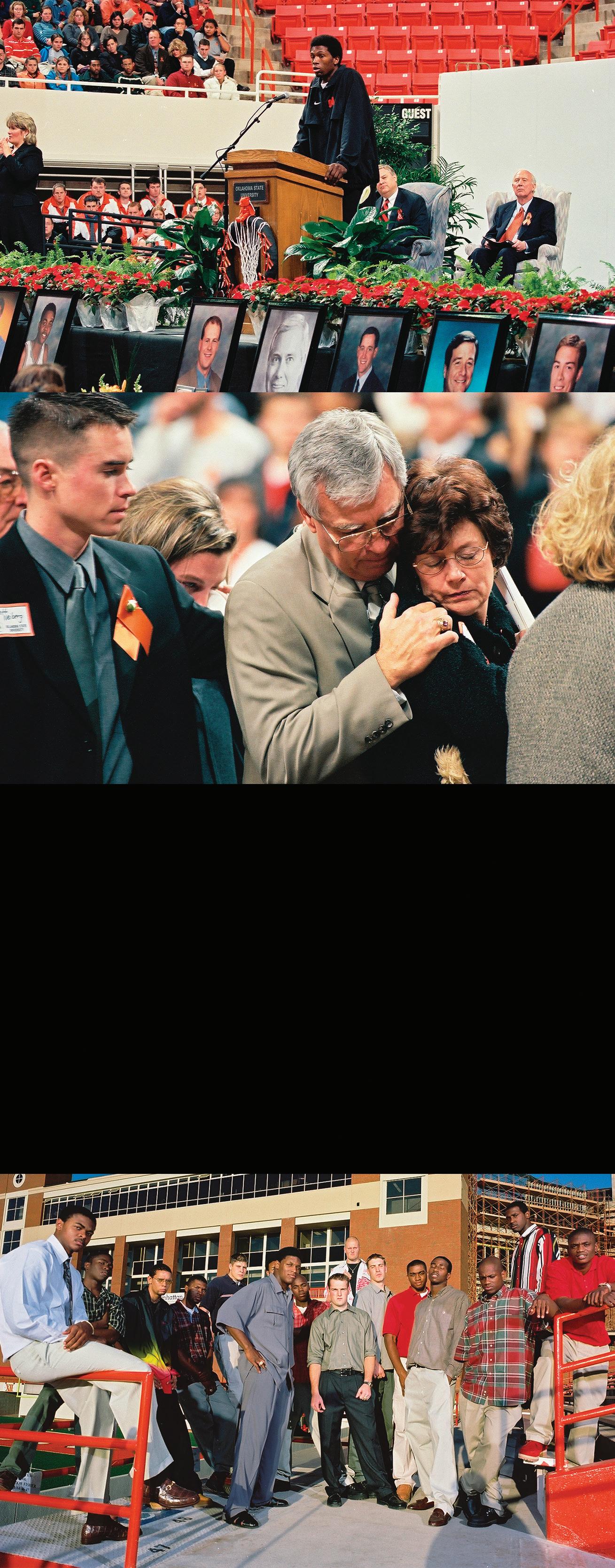
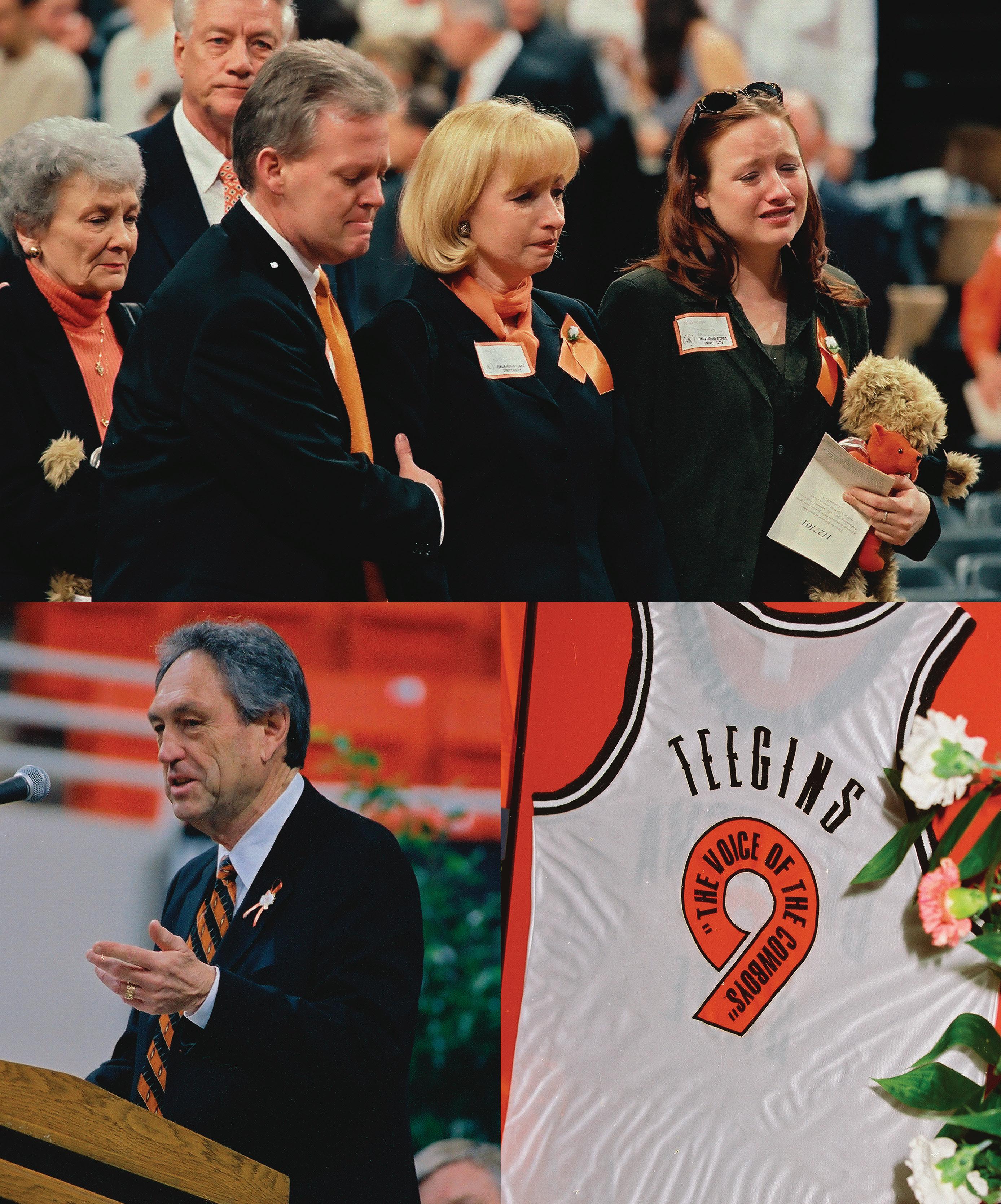
In January of 2026, OSU Athletics observed the 25th anniversary of the plane crash that claimed the lives of 10 members of the Cowboy basketball program. Twenty-five years ago, in the wake of the tragedy, the university made the claim that it would never forget those men who were lost.
A full generation later, the campus and the athletic department are di erent places. There are few employees of OSU Athletics who experienced the overpowering loss firsthand and helped navigate the mind-numbing days and weeks that followed.
Four of those who remain in Stillwater today include senior associate athletic director Larry Reece, media relations coordinator Ryan Cameron, athletics learning center coordinator Mike Noteware and Steve Buzzard, recently retired from OSU.
Due to the shellshock of the moment, as well as the passage of time, details of Jan. 27, 2001, may be fuzzy. But that Saturday evening will never leave those who experienced it then and still live with it now
Ryan Cameron
2026: OSU Media Relations Director for Women’s Basketball and Men’s Golf 2001: Graduate Assistant, OSU Sports Information “January 27, 2001, was the day I learned there were more important things in life than wins and losses and how truly precious life is. Until that day, the final score was much too influential on my mood. It was, to say the least, a harsh reality check.”
Mike Noteware
2026: Learning Center Coordinator, Athletics Academic Center
2001: Assistant Sports Information Director for Women’s Basketball and Softball
“A few of the details may have faded from my memory but it’s easy to remember the most impactful moment of your life.”
Steve Buzzard
2026: Recently retired from OSU
2001: Sports Information Director (Media Relations Director)
“When my phone rang at 8:30 p.m. on Saturday night it didn’t seem unusual. Phone calls during o hours are nothing out of the ordinary for those who work in the media relations business.”
Buzzard
“The call was from an Associated Press reporter in Denver. His words are forever etched in my mind. ‘I don’t mean to be
cryptic,’ he said. ‘But do you know if all of your basketball planes got back to Stillwater from Boulder?’ Those words were the first indication of an event that would change the face of a university, a community, a state and, most painfully, 10 families.”
Noteware
“I had wrapped up in my postgame duties after the Cowgirls had defeated Texas A&M earlier in the afternoon. Although I was the media relations contact for the women’s team, I had been a big fan of Cowboy Basketball since the Richard Dumas days. I was in a hurry to get home and watch the second half of the Colorado game. The details of that game are a blur; I remember being frustrated because it was a game we should have won. Within hours the outcome of that game was inconsequential.”
Cameron
“I could tell immediately by talking to fellow media relations student Josh (Maxson) that something was o , and he asked me where I was and if I could come to the o ce. I told him I could be there in 10 minutes and asked why he needed me. I still remember the chills running down my spine when he said, ‘I don’t know what yet, but it isn’t good. Just get here.’”
Noteware
“I spent a couple of hours after the Colorado game flipping through other games on TV. Not long after, I texted Will (Hancock) something random like, ‘Did you see that play in the Duke game?’ We did that often and usually he would respond with a resounding YES! I also recall texting Pat (Noyes) to see if he wanted to meet up later to drown our sorrows over the game. I never received a reply from either one of them.”
Noteware
“I have no idea what time it was when I got the call. Dave Plati, the long-time sports information director at Colorado, called and said the National Transportation Safety Board had called him regarding a plane crash east of Denver. Dave wanted to know if it was OK to give him my number. I said it was fine. There was no way it was one of our planes. After a brief conversation with the NTSB o cer, mostly regarding how we traveled, I started to get nervous. This was a federal agency calling and they probably had a pretty good idea of what was going on. At that point I headed to the Stillwater Regional Airport, where I ran into Larry Reece. Obviously, he had heard the same news, and it was starting to feel real. We scanned through the parking lot, identifying which vehicles were still there.
We came up with what we thought and then decided to head to the o ce. Due to the construction of the athletics center, we were o cing at Frontier Engineering o campus.”
Cameron
“Josh and I spent the evening answering phone calls non-stop from all over the map, some were people panicking trying to find out names, others were colder and simply doing their jobs trying to connect the details of the evening.”
Larry Reece
2026: OSU Senior Associate Athletic Director/Development
2001: Cowboy Sports Properties General Manager
“I was driving back into Stillwater after a short trip when I received a call from a friend saying he had heard one of the planes hadn’t made it back from Colorado. The only thing I could think of was to drive straight to the airport. Long-time athletic department sta er Marty Sargent was the first and only one there when I arrived. Then Les and Kathy Miles walked in and then an onslaught of sta ers: Marilyn Middlebrook,
Mike Noteware and on and on.”
Buzzard
“Reacting to that uneasy feeling, I immediately called the cell phone of Will Hancock, and it went straight to voicemail. I then called my friend Bill Teegins with the same result.”
Reece
“None of us, including the airport sta , knew much of anything so we scrambled for information. The hope was still that the pilots had to make an emergency landing but that they were all OK. I called Pat Noyes’ phone … straight to voicemail. Then Bill Teegins’ phone … straight to voicemail. Will Hancock’s phone … straight to voicemail. I knew this was a really bad sign.”
Buzzard
“From 8:30 p.m. until about 8:40, the Denver-based journalist called three more times, with increasingly more painful information each time. Before the final call I was already on my way to the Stillwater airport hoping for the best but fearing the worst.”
— RYAN CAMERON on STEVE BUZZARD “
He was hurting like everyone else but was a rock for all of us and I cannot imagine there is anyone anywhere that could have navigated the situation any better.”
Reece
“You have to understand the other two planes had arrived and coaches and players had dispersed. Coach Sutton had been told that there was an issue with the other plane, but details were sketchy. In the struggle to find out more for the ever-growing group of friends and co-workers at the airport, Mike Noteware and I scribbled out names of who might have been on that plane then went to the parking lot and searched for cars.”
Buzzard
“The last call seemed to verify the worst. He said a plane with a tail number matching that of one of the OSU planes, had indeed gone down. He had no other details. With knowledge gained from the airport, I knew that the other two planes, including one carrying Coach Sutton, had arrived safely.”
Reece
“KWTV Channel 9 in Oklahoma City was live with Kelly Ogle and Jennifer Reynolds (two OSU alums) trying to piece together information, all while praying that their friend and colleague, Bill Teegins, was safe. Their fears were growing and ours were growing as we watched while crammed into a small room at the airport. As a group, we were hanging on every word.
Buzzard
“While still at the airport, athletic director Terry Don Phillips called. His voice trembled as he provided further confirmation to me that our plane had crashed. He wanted me to pick him up and at his home and head straight to campus. The unthinkable was unfolding.”
Cameron
“At some point during the evening, Mike Noteware came in and I will never forget the look on his face as he told us he had just come from the airport and the cars that were still in the parking lot. We knew immediately and he didn’t have to say another word.”
Buzzard
“In full transparency, one of my initial thoughts was to escape. Get in my car and drive as far away as I could. Obviously, that wasn’t an option. There was a job to do, and as I was about to find out soon, there were 10 families in need of as much love and support as any of us could give them.”
Buzzard
“I arrived at Terry Don’s home to pick him up. Like myself, he was visibly shaken. I don’t remember many words being
exchanged immediately. What I do remember was both of us weeping on our way to campus. At the time, the basketball o ces had been relocated to Cordell Hall because of the construction on Gallagher-Iba. What I saw and heard upon entering Cordell Hall is still etched in my mind. On the short stairway leading up to the o ces, people were sitting and weeping.”
Buzzard
“Coach Sutton’s o ce was at the top of the stairs on the left. Entering his o ce, we saw the Hall of Fame coach sitting at his desk with his head in his hands. Around him were OSU President James Halligan, OSU Vice President Harry Birdwell, and others, including assistant coaches. The scene was surreal and unimaginable.”
Noteware
“Once I got to the o ce, Steve Buzzard and Ryan Cameron were already there. News was spreading fast. I told them what I ‘thought’ I knew but couldn’t confirm anything. I decided to see Molly, Pat’s sister, to see if she knew anything. By the time I got there, several of our friends were already there. We all sat, mostly in stunned silence, not really believing it was all possible. After what seemed like days, we learned the worst. Steve spoke at a news conference at the airport, listing the names, one by one, of the those on the plane.”
Buzzard
“There was going to have to be a plan to communicate with the gathering media. Because the scene in Cordell was so raw and private, we made the decision to send the media to the airport where we could conduct a news conference. The job of sharing the names of our 10 friends with the world would fall on me. At that point, I had been in the media relations business for more than 20 years, conducted hundreds of news conferences and television interviews. But nothing prepared me for the task at hand.”
Reece
“Media began to arrive at the airport. A few hours later in walks President Halligan, AD Terry Don Phillips and Steve Buzzard. You could see it in their faces. Then the news conference started with Steve naming everyone on the plane.”
Buzzard
“To this day, 25 years later, I can remember verbatim what came out of my mouth. There was no human strength inside
me to get through it. My faith and dependence on God was the only thing moving my mouth. With each name the task got harder. I remember my voice cracking when I got to the names Will Hancock and Bill Teegins. When I finished, President Halligan stepped forward and uttered the words that echo even today. ‘We will never forget.’”
Buzzard
“After concluding the news conference, we gathered at the athletic department o ces. With President Halligan and senior department sta members sitting around a large conference table, the task of charting the next few hours, days, weeks and months began.”
Reece
“What would follow would be a memorial in Gallagher-Iba Arena and 10 funerals, a lot of funerals, and adjustments to our daily lives.”
Buzzard
“Jim Halligan was a strong but quiet leader. That night, while visibly shaken, he had never been stronger. As he talked to our sta , he was firm but resolute and his message was clear. In the moment, there was nothing more important to him and nothing would be more important to us than taking care of the 10 families to the very best of our abilities. A senior sta member was assigned to each family to assist with whatever the immediate needs were and to be a conduit between them and the department.”
Buzzard
“I can’t remember how many times during the course of the night President Halligan repeated the words. ‘We must never forget.’ But it was dozens.”
Cameron
“At some point in the days following the accident, Steve called a sta meeting and circled us up to talk and check on our well-being. As you would expect, the range of emotions was all over the place. And quite honestly, I am not sure any of us knew exactly how to feel. After the group dispersed, I walked into Steve’s o ce to check on him. He was exhausted, and you could see it on his face. In that moment I remember getting a glimpse into just how di cult the situation was. Looking back, I have always marveled at how he handled the impossible. It was a master class in compassion and professionalism. He was hurting like everyone else but was a rock for all of us and I cannot imagine there is anyone anywhere that could have navigated the situation any better.”
Noteware
“I have to be honest. I wasn’t a very good employee. Looking back, I feel like I did the bare minimum — just getting by. I suppose it was my way of battling grief, but in hindsight I should’ve done more to help Steve on the professional side. When a tragedy like that occurs, you never know how an individual is going to handle it.”
Buzzard
“I don’t remember what time I got home that early morning, but I remember walking in and my wife and daughter were awake to greet me with as much comfort as they could. My wife, Cathy, told me Bill Hancock (Will’s father) had called our home a few times looking for me. Almost as soon as she uttered those words the phone rang, and it was Bill. He had one request for me and I’ll never forget it. ‘Buzz…tell me it isn’t true.’”
Buzzard
“Later that morning when I arrived back on campus that same Bill Hancock was already in my o ce, having driven in from Overland Park, Kansas, overnight. We made eye contact, and the first words out of his mouth were, ‘What can I do for you?’”
Noteware
“Over the next week or so, we had the memorials and funerals to attend. Karen Hancock (Will’s widow and the OSU soccer coach at the time) asked Amy Weeks (then head coach of Cowgirl Golf) and I to speak at the funeral about Will’s muchtoo-brief time in Stillwater. I did the best I could, which probably wasn’t great, but it is an honor that I will always remember.”
Cameron
“One day Josh and I were sitting at our workstations, and we saw Will’s Honda Accord pull into the long drive leading into our parking lot at Frontier Engineering. The mind can do funny things and for a moment both of us thought maybe it had all been a horrible nightmare. Turns out it was Will’s father, Bill, coming to the o ce to help sort through Will’s personal things. Another punch to the gut. We dreaded not knowing what to say as we anticipated him stepping o the elevator and entering the o ce. Of course, his first question was about how we were. Stunned silence. We had no idea how to respond to him showing genuine concern for us days after losing his son. I will never understand how he handled himself the way he did that day. Truly an amazing man.”
Reece
“The Cowboys’ first game after the tragedy was a home game
against Missouri. That night, without permission, after the moment of silence I said, ‘Tonight, remembering our fallen 10, we’ll prove once again that this is the rowdiest arena in the country.’ Our fans never let up and refused to let our emotionally drained Cowboys lose that game. It was a hard-fought 69-66 victory and, in my opinion, the most important win in our history.”
Cameron
“In more than 25 years of countless hours spent in that historic arena, I have never felt the energy or emotion the way it was that night. It was simply di erent.”
Reece
“In the midst of all the emotions of losing our friends came a promise from President Halligan that we would never forget these 10 men. It would become our rallying cry and eventually our promise to those families. I am proud we have kept that promise.”
Reece
“The anniversary every January and the gathering for the Remember the Ten Run each April, while still emotional, have become something we all look forward to and enjoy. We hug each other and share memories with the families of those we lost. We laugh and yes, we still tear up. Oklahoma State has always been a special place with amazing people but this tragedy galvanized us into the OSU family.”
Buzzard
“We will never forget.”
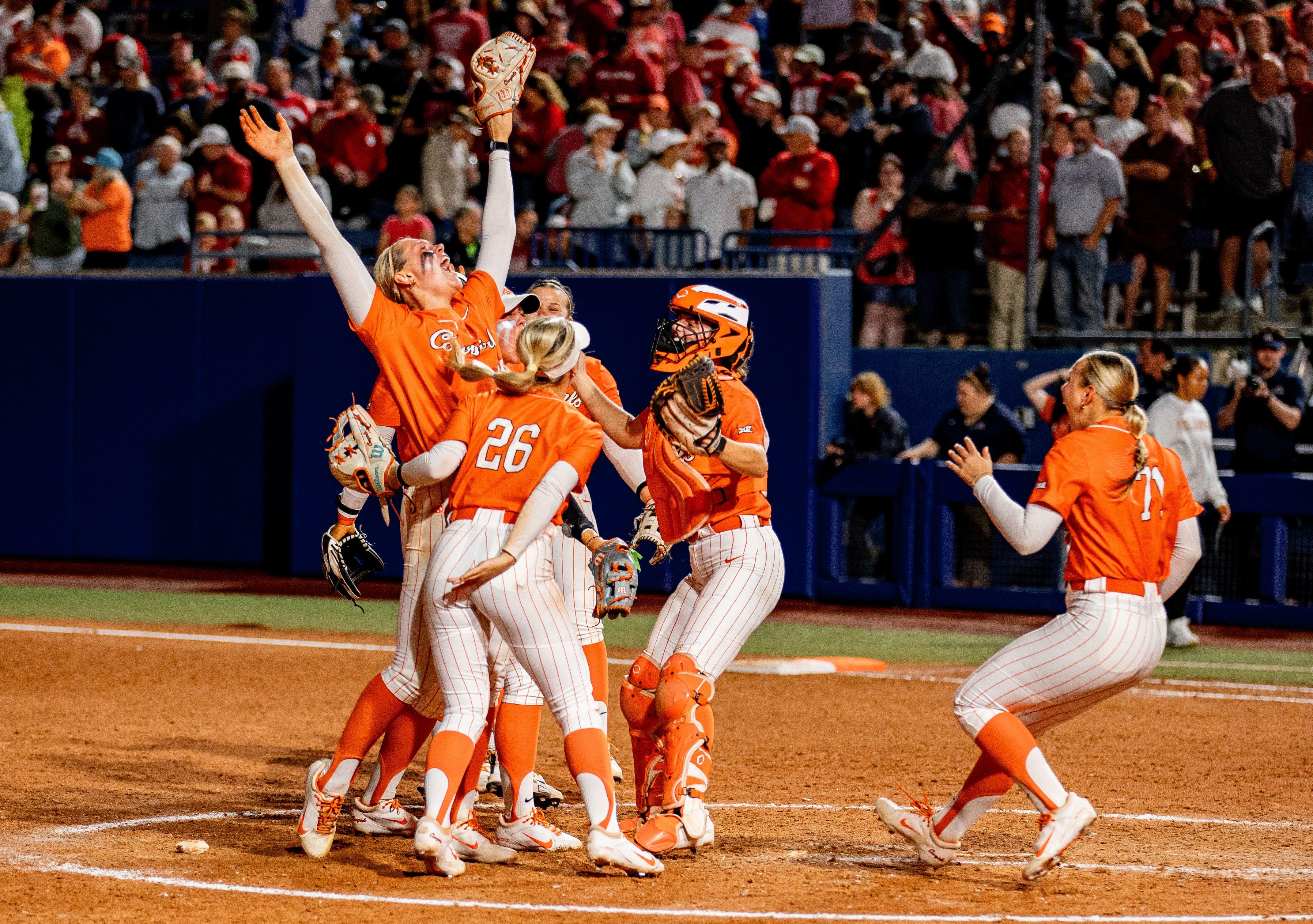
All-American pitcher Ruby Meylan is mobbed by her teammates after OSU knocked o top-ranked Oklahoma, 6-4, on April 15. Along with a national-TV audience, a crowd of 7,826 fans at Oklahoma City's Devon Park witnessed a Bedlam for the ages. Coach Kenny Gajewski's Cowgirls combined Meylan's complete game in the circle with timely hitting at the plate, as Jayelle Austin, Karli Godwin and Lexi McDonald each drove in runs in two-out situations.
It was OSU's eighth win over the No. 1 team in the nation in program history — four under Coach Gajewski — and the first since beating their in-state rivals in the 2022 Big 12 Championship game.
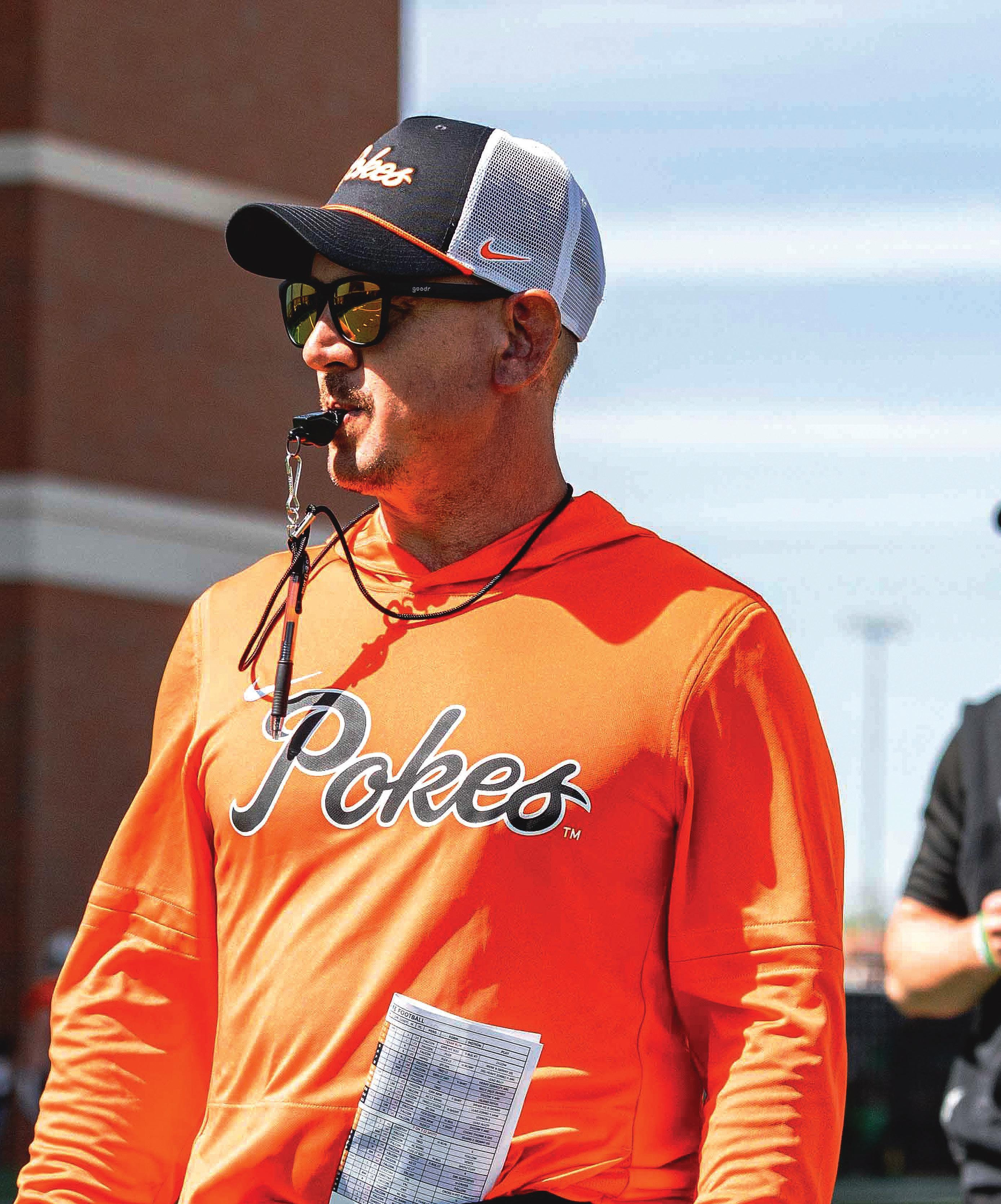
It’s been over 100 years since dietitian Lenna Cooper became the first person credited with claiming breakfast as the most important meal of the day.
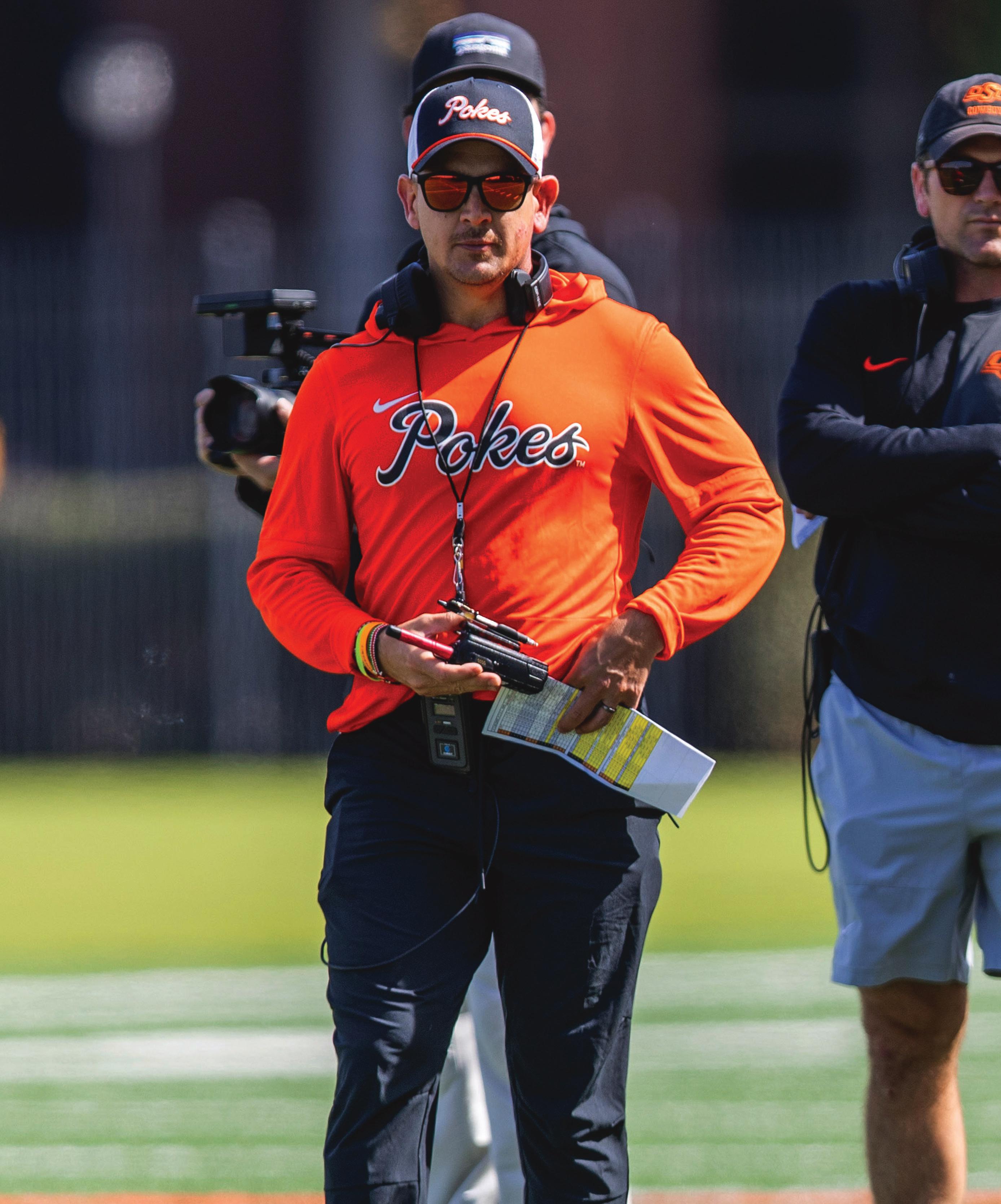
New Oklahoma State head football coach Eric Morris may not be channeling Cooper, but he has made the morning meal a cornerstone of an o season program designed to help a roster of mostly strangers turn into a cohesive football team.
In an era of transient players, coaches, and even conference membership, Morris is a connector at a time when it is most needed.
“Building trust is one of the most important things in any organization,” Morris said from his still bare-bones o ce atop Boone Pickens Stadium well into his fourth month in Stillwater. “You must be very intentional in building a culture and creating trust in building these relationships. And it’s one of my favorite things to do on a day-to-day basis.”
Thus, “The Breakfast Club” was born.
“We have our coaches eat with di erent members of our roster twice a week,” Morris said. “That way our defensive line coaches are sitting down with running backs and our o ensive line coaches eat with the defensive backs. People who really aren’t spending a lot of time together have breakfast together.
“I have always thought that tough teams win football games. This is an extremely physical, violent sport, and if you go to war on Saturdays with your brothers, you are willing to sacrifice for one another. That’s an element I think gets lost nowadays with the portal. I enjoy spending time with these kids, and we are very intentional around here about making sure we do that.”
Unlike any coach in recent or even ancient OSU football history, Eric Morris arrived in Stillwater as a tried-and-true head coach with two program flips already under his belt — at Incarnate Word in San Antonio and at North Texas Oklahoma State is not his maiden voyage, and in his mental briefcase is a list of his accomplishments as well as his missteps. His philosophies have been sharpened by real-world experiences gained by sitting in the big chair.
“My first head coaching job was at a small place in Incarnate Word,” he said. “It was a place where I could make mistakes without being under the magnifying glass all of the time, and it allowed me to grow and learn and get a feel for how to be a better leader.”
He was a fast learner. In four years at Incarnate Word, he was named conference coach of the year two times and twice led a program with few accomplishments into the Football Championship Subdivision playo s. And then, he made what might be considered a unique career move. Instead of setting sights on his next head coaching gig, he became the o ensive coordinator at Washington State under head coach Jake Dickert, who is now the head coach at Wake Forest
“It was probably one of the most valuable things I have done in my career,” Morris said. “It was my first time to work with a defensive-minded head coach. It helped me see coaching from a di erent mindset, especially during practice. They (Washington State) set up drills that were designed to make the defense successful. And I saw that build confidence in the defense.”
“Even though I call the plays, I want the defense to be successful, and I want those times to be celebrated because playing great defense allows you to win championships.”
Morris, of course, cut his teeth as a player and assistant coach on the Texas Tech tree, playing under and working for the likes of Mike Leach, Kli Kingsbury, Dana Holgorsen and Kevin Sumlin as part of some of the most prolific o enses in NCAA history.
The experience at Washington State led Morris to the head coaching position at North Texas, where the three-year stay resulted in a turnaround that followed a path similar to that of Incarnate Word. His first team in Denton was 5-7. His last team in 2025 may have been the best in that school’s history, winning 12 games, making a push for the College Football Playo , playing for the American Athletic Conference championship and finishing No. 24 in the final Associated Press poll — a first for North Texas.
The turnaround in Denton led to Morris reuniting with former Texas Tech deputy athletic director Chad Weiberg, now of course the CEO of OSU Athletics. The new coach has the assignment of righting a ship that had suddenly and quickly taken on water.
The link to Weiberg was an underpublicized but important element for Morris.
“It was important knowing who you were going to work for and what their leadership styles were,” he said. “Once I got into deeper conversations with Chad and Reid (Sigmon, deputy athletic director), I think it became more evident that we were on the same page in so many di erent aspects of getting this place built back up to what it was just a short time ago.”
There are some who would argue that no one has a busier life than a college football coach. The exception might be the college coach with two jobs.
Just before Thanksgiving, OSU announced Morris as the 25th head coach in school history. He was a rising star whose name was popping up in connection with numerous job searches in a year in which there was a ridiculous amount of churn at the highest level of the sport.
But Morris and Weiberg had taken the drama out of things early — first agreeing on a contract that would make Morris the new Cowboy in charge, while also agreeing that as long as UNT was in playo contention, Morris would remain the head coach in Denton.
“This (transition) was a little out of the ordinary because when I took the other two jobs, I was able to transition my mind right away,” Morris said. “I was able to move to Incarnate Word immediately and have my sole focus on Incarnate Word. The same thing with North Texas. I was able to fly in on the same day, get to Denton and really start hammering away.
“This time was di erent,” he added. “Usually, sta is the most important thing to me and nowadays with the transfer portal there is roster transition, so this one was a little bit di erent. And we were still playing football and competing for a conference championship with the chance to make the College Football Playo .”
“The fact that Eric wanted to finish the season with his team is indicative of why we hired him,” Weiberg said. “The timing of these transitions are never great, but he wanted to see things through with his team, with his players. It further cemented everything we thought we were getting with him.”
“Working two jobs at once isn’t easy,” Morris said. “There
were a lot of late nights as far as game planning and doing things I would normally be doing for North Texas. But the recruiting aspect switched to Oklahoma State. I spent a lot of time digging into the current roster and figuring out who I needed to retain and also trying to familiarize myself with the financial piece and getting the books for this place and seeing where we were from the financial aspect. The good news is that I pretty much brought everyone with me, so it was huge to have Raj and Steve start working through the roster, the portal and how we were going to manage high school recruiting.”
Raj Murti serves as the squad’s general manager and Steve Keasler is the special assistant to the head coach. Both men manage the all-important business side of Cowboy Football.
After North Texas fell to Tulane in the American Championship game, Morris turned his focus full time to OSU while most of the North Texas sta remained in Denton to coach UNT to an eventual victory over San Diego State in the New Mexico Bowl
“That phase was tough for me,” Morris admitted. “I was up here three or four weeks by myself while everyone else stayed in Denton for the bowl. It was an important piece for us — for North Texas to win its first bowl game since 2013.
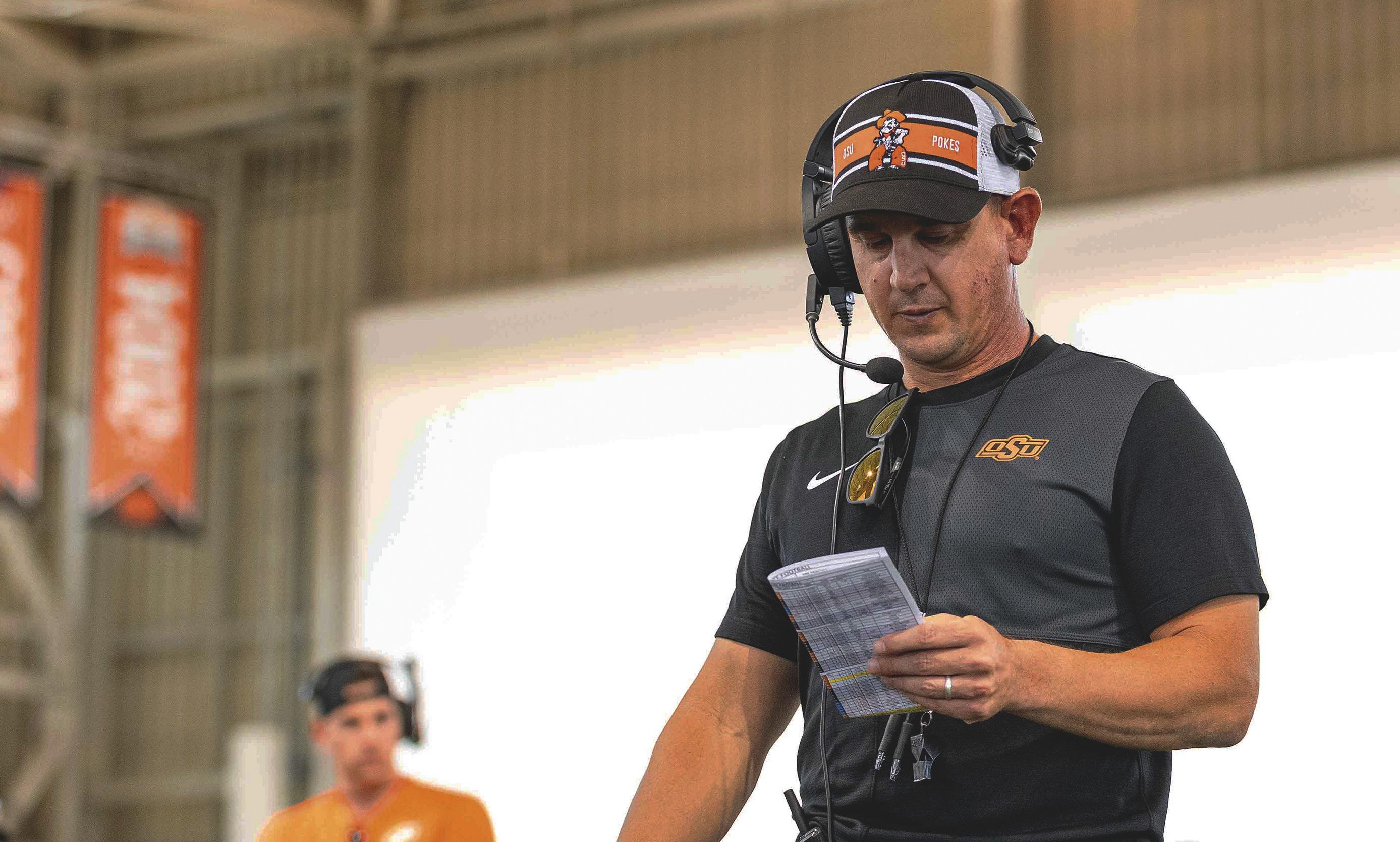
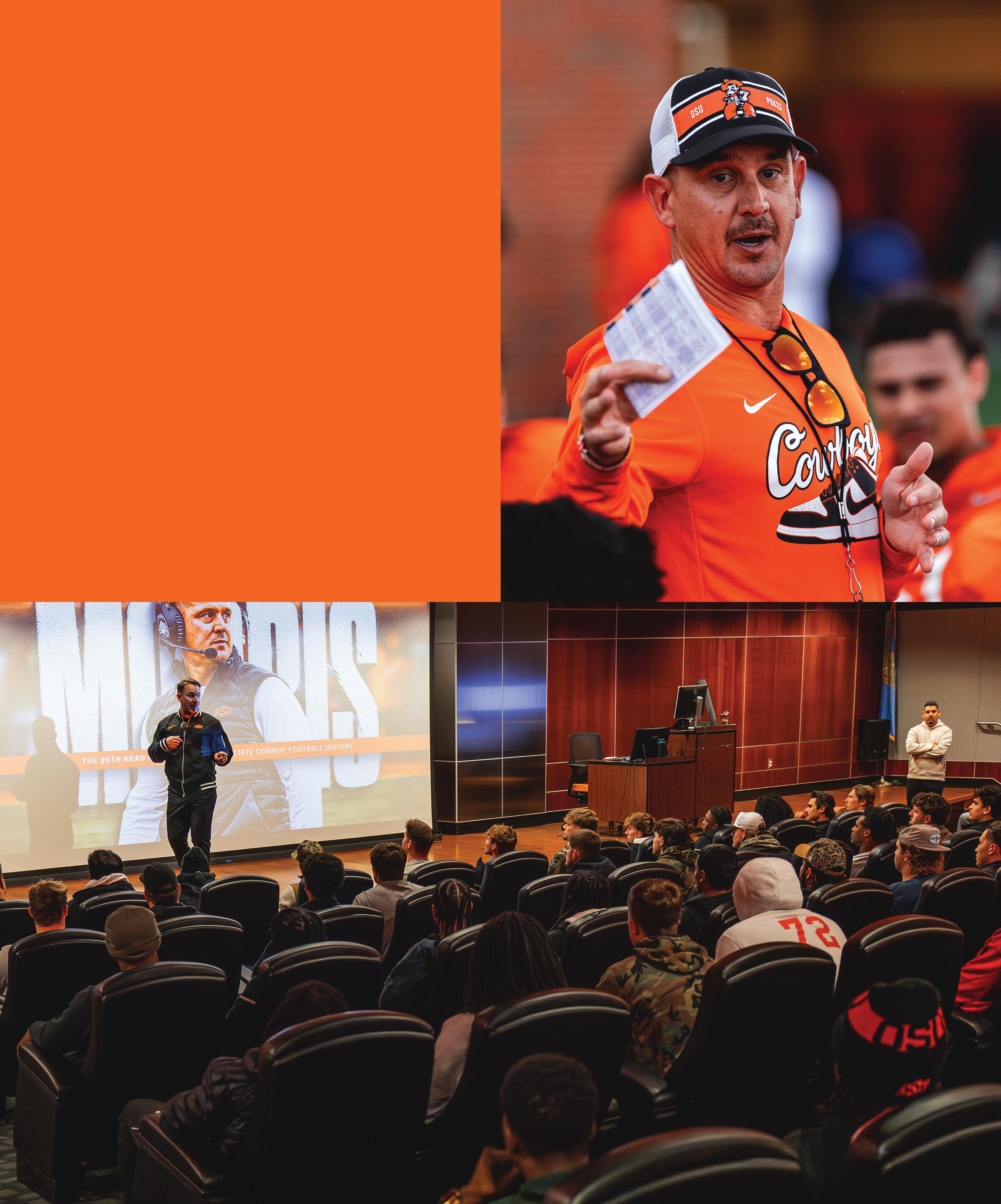
“It was lonely in this building for the first couple of weeks. It’s a great space, and I was walking up and down the empty hallways. It wasn’t always a great feeling when you are a new leader of a program of this magnitude. It was a wide array of emotions. I was extremely happy to have this opportunity and to be able to move my family to a place like Stillwater.”
Morris and his wife, Maggie, have two sons, Jack and George. They were all still in Texas.
“They say it’s lonely at the top and I definitely felt that because there were so many moving parts and everything was happening so fast.”
When the dust settled (does the dust really settle anymore?), the OSU locker room had undergone perhaps the biggest transition in the history of college football. The 2026 roster has 86 players who weren’t around in 2025, including 66 from the portal. Twenty-three of those portal players were from North Texas or had previously been at UNT during their careers. Another 20 newcomers were “traditional” enrollees from the high school or junior college ranks.
Despite the rush to rebuild the roster, Morris and Co. stayed true to their philosophy.
“We are big believers in adding value from the portal with people who have played snaps somewhere else,” he said. “We don’t really care where that is: Division II, junior college, Division I. If they have played somewhere, we think that is super valuable.”
“We really like how our roster is set up top to bottom from seniors to juniors to sophomores to freshmen,” he added.
The new Cowboy squad is of course unproven, with final exams set for September through December, but the early returns are promising.
“It seems to be a group that is eager and hungry right now,” according to the head coach. “Not a lot of knuckleheads and nonsense out there. They seem to be focused on one thing and that is finding an advantage, finding an edge that can help us win games around here. We have one goal as a team and that is to win games. I have made that very clear and evident to our guys.”
As for the overall compilation of future rosters, Morris wants to construct Cowboy Football the old-fashioned way.
“We want to build this program around high school players: recruit them, develop them and maybe most importantly retain them. For us to continue to press the envelope and raise as much money as we can to get into the competitive world of really retaining the superior athletes is something that is always going to be a challenge. It will be a
challenge regardless of where you are. I don’t think anyone is immune to that. In the past, bluebloods may have been (immune) but now you are seeing good players go to di erent schools for financial reasons so it will take some adjustment from everyone. Talent acquisition is a real thing now, and return on investment is a real thing. Making sure we have our money on the field is something that keeps me up at night. It’s something that keeps Raj and Steve up at night. We must be a little bit more creative and forward thinking than other people right now.”
There is no denying that suddenly Oklahoma State has a young football program. A young head coach, young coordinators (Sean Brophy on o ense and Skyler Cassity on defense) and a young sta with young families. And the energy that the youth movement has created is easily felt around the football facilities.
“I’ve always taken the approach that I know I am going to be spending so much time around here (football o ces) that I allow our coaches and our sta to bring their kids around and be a part of what we have going on here,” Morris said. “I have been at places in the past where that was kind of o limits to bring your kids and your families around because people thought that was a distraction.
“I also want the players on this team, the people that we are coaching, to see me as a father. It’s important for me that those guys recognize the love I have for my wife and kids and how to be a man and to provide for your family and to how to raise two little boys who really look up to those players right now. They want to emulate them, imitate them and someday to be in their position.”
Joining the football roster with the families of the sta is just one more reason to go the extra mile during the recruiting process.
“We try to look for complete players and not just evaluate them on their tape and physical ability,” Morris said, “but also on their mental capabilities, how fast do they process information, what’s their competitive nature like? Do they love football?”
“It takes a little more time, and you have to be intentional to find those answers, and you have to be willing to pick up the phone and call their high school coaches and their seven-on-seven trainers and be willing to dig into what their home life is like.
“If you are able to do all of that, it enables you to a build a team inside-out, and you have a bunch of kids that are ultimately going to be pushing for the same goal and not be selfish and be able to come in and compete at a high level.”
“We are not going to be a carbon copy of North Texas,” OSU o ensive coordinator Sean Brophy told the media in early March regarding the new-look Cowboys. “This is a new program. This is a new era here. O ensively, we’ve got to find what we’re good at here, what our personnel is good at here.”
In three years under Morris, North Texas was an o ensive juggernaut, finishing sixth, third and first nationally in total o ense with many of those same student-athletes now in Stillwater. But Brophy’s statement is an illustration of where the Cowboys are now — which is evaluating exactly where they are now; in some cases, who they are.
“I think great coaches are great teachers,” Morris said, “and I think our coaches take great pride in teaching the details. I have been harping on my sta about not assuming any of these kids know anything — even though some of the North Texas crew naturally will. We have to teach them how to practice, how to organize, and how to go di erent speeds in practice when we want them to do that. Right now, it’s baby steps. We have to start at ground zero and teach the small details and allow the players that we brought with us to be an extension of the coaches on the field.
“They know our expectations and how we like to practice, and I think that does give us a leg up.”
Just months into his new gig at OSU, Eric Morris is still becoming acquainted, from the inside, with Oklahoma State. And he likes what he sees.
“The people who went to school here and graduated here have so much pride in this place, and I think that is one thing that has really struck me whenever I meet any type of alumni or people who are associated with this place.
“The people are so friendly and nice and want to help you any way they can,” he said. “It’s been really refreshing for me and my family just to see how genuine the people are and how much they want to help. There are some people who see a small town as a negative. It was one of the biggest positives for my family. We get the small town feel while also being able to coach and compete on a national stage.”
The national stage starts in Stillwater, which is something that Morris not only understands, but is excited to embrace.
“The football team at Oklahoma State is such a powerful thing for this campus,” he said. “I have seen it at so many di erent stops. It drives activities for students, and it creates so many experiences they will remember for the rest of their lives.
“It’s been phenomenal for me to watch what coach (David) Taylor has built with wrestling in such a short amount of time and just to feel the energy in that arena. We know we are the front porch to the university in so many ways. We can help drive enrollment here and make this a place where people will want to spend those years when they are 18 to 22 years old when they are growing and learning and creating memories.”
He’s talking about building connections — lifetime connections for students to their alma mater because he is a connector.
It was his connection to Chad Weiberg that helped him land in Stillwater. Connections with his family are the centerpiece of his life. Connecting with his players is his favorite part of being a college football coach.
He sees connecting his Oklahoma State football team with OSU students and the local community as not just necessary, but as a critical piece of program building.
And it all starts with a good breakfast.
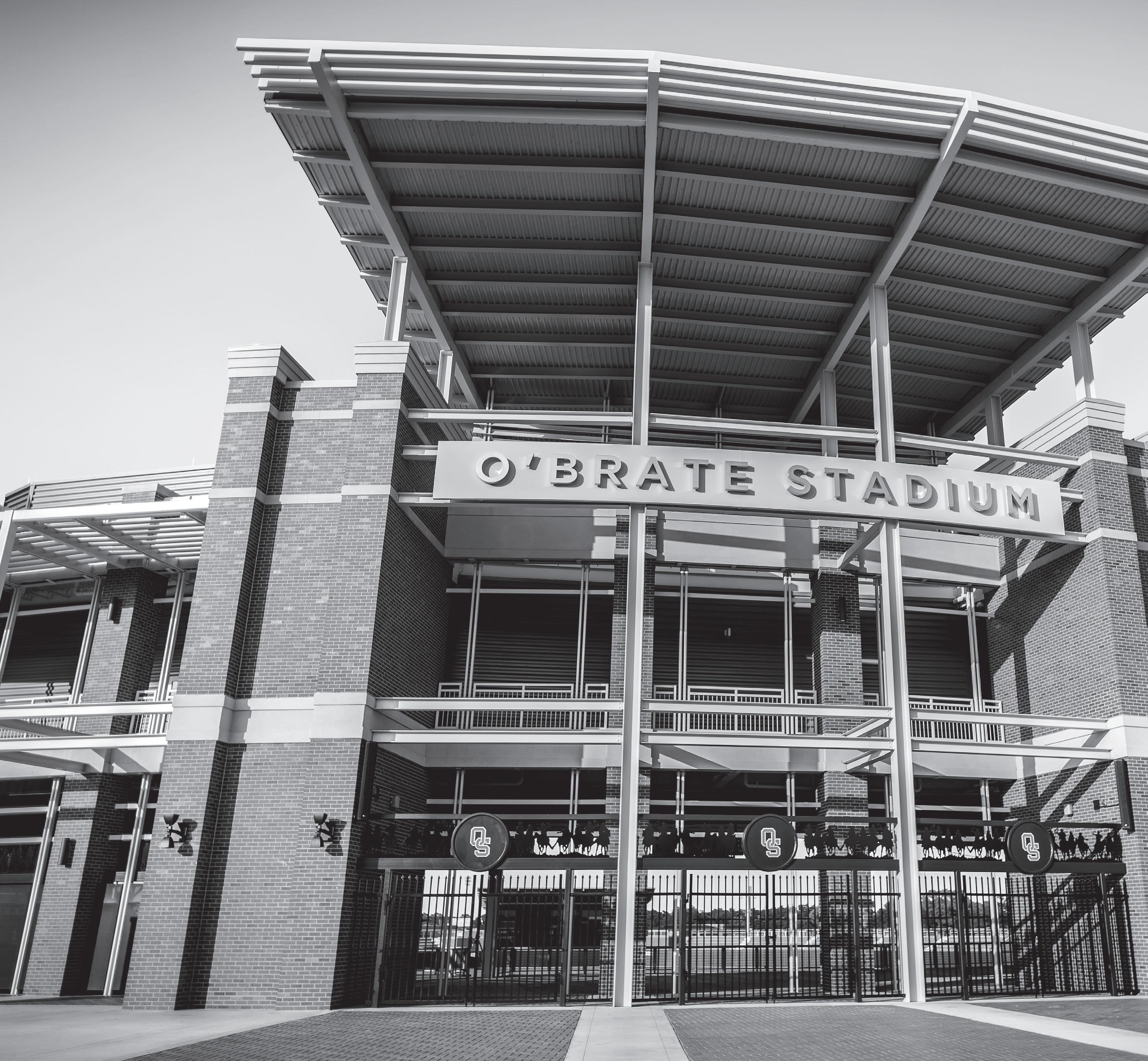
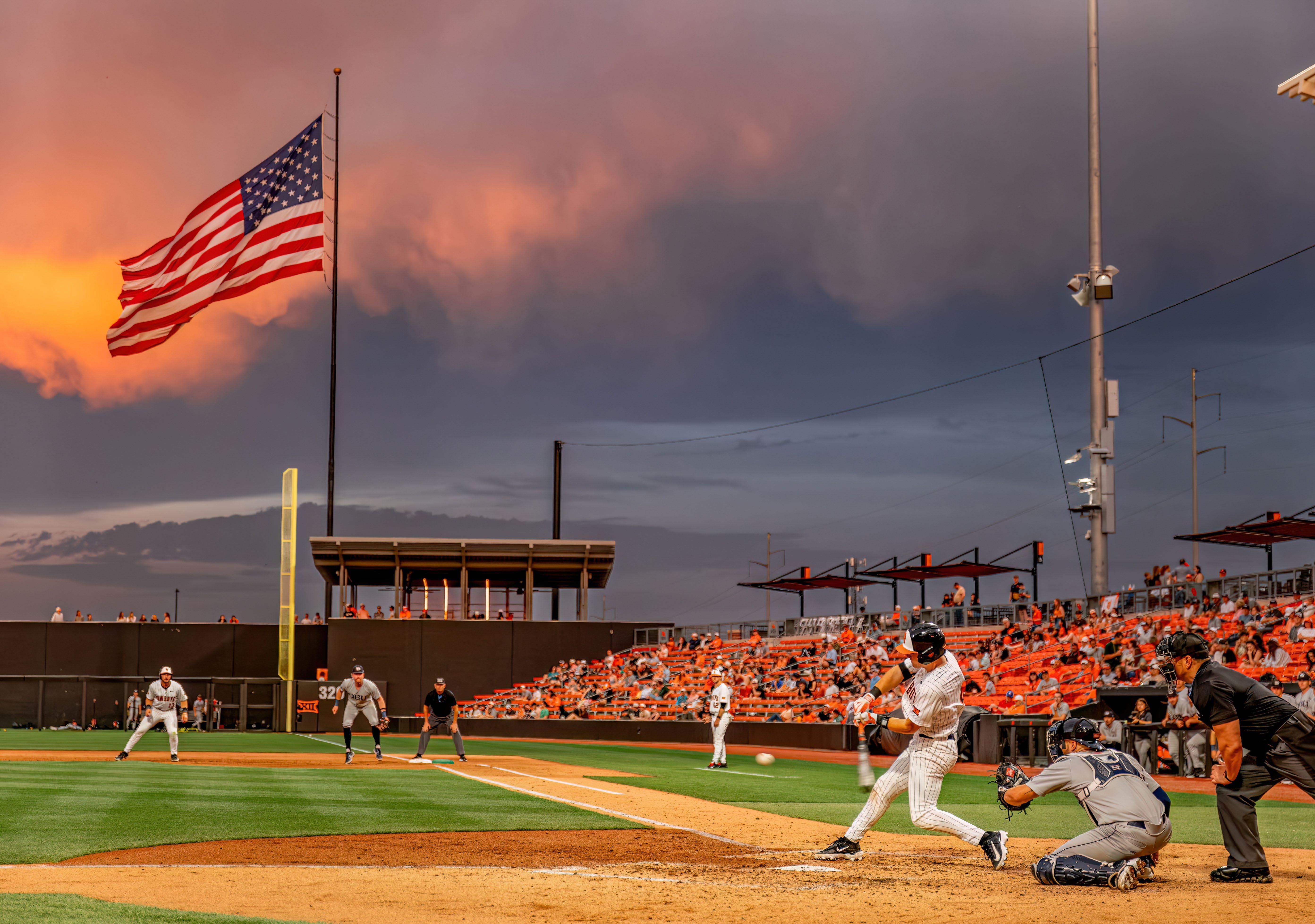
Storm clouds reflect the orange Oklahoma sunset at O'Brate Stadium on March 10, as Cowboy catcher Campbell Smithwick takes a swing against Dallas Baptist. The Pokes and Patriots battled into extra innings before Smithwick ended the game with a walko homer (his first of the year) to give OSU a 6-5 victory.
Sluggers Brock Thompson, Colin Brueggemann and TP Wentworth also homered in the contest, adding to OSU's total as one of the nation's leading home run hitting teams. Noah Wech earned the win on the mound, tossing three shutout innings.

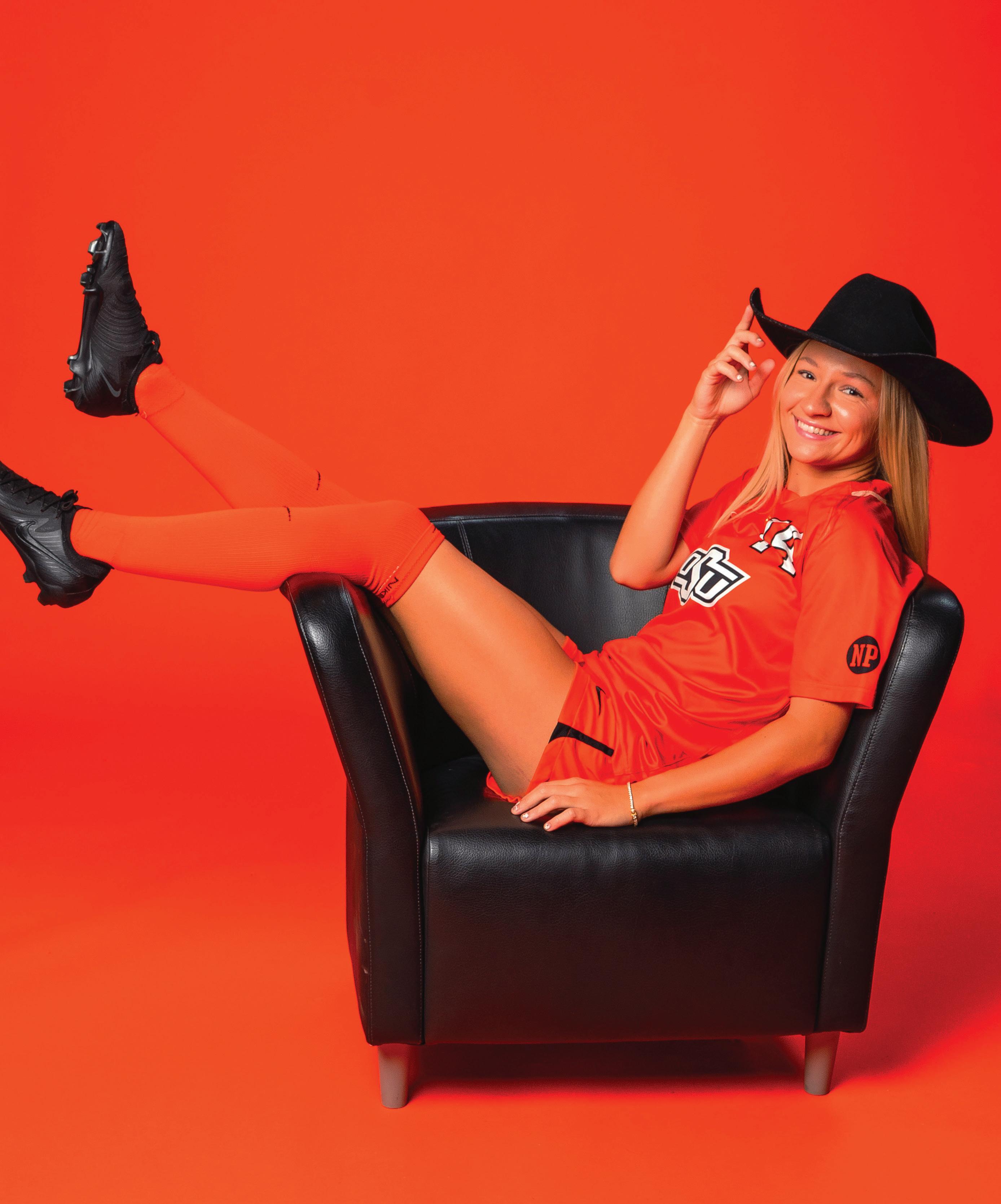
Gracie Bindbeutel didn’t want to believe it.
But she knew.
It had happened again.
For the second time in just over two years, Bindbeutel had torn the anterior cruciate ligament and meniscus in her knee.
As she lay on the Neal Patterson Stadium turf, tears welling up in her eyes, one thing came to her mind.
“My first thought was, ‘Is this it for me? Is this the end of my career?’”
For many, it would have been. Two major surgeries, one on each knee, in the span of 29 months in a sport where athletes are constantly running and cutting for 90 minutes of game action.
But if you know “Gracie B” (as everyone calls her), you know those thoughts of life without soccer were fleeting.
“You’re never sure how a kid’s going to react to that (injury), but she made it clear that ‘I’m not going out like that. I can’t end my career that way’,” said OSU head coach Colin Carmichael. “There was no wavering at all that I saw. In her moments behind closed doors, I don’t know what those conversations and thoughts were, but towards me, it was very much from the get-go, ‘No, quitting is not an option. I’m coming back.’
“I think her saying, ‘I’m not going out like that’ wasn’t just about her injury. I think it was about the team. The success of this team and this program means so much to her — that’s very much her mentality.”
Bindbeutel fell in love with soccer at an early age, “probably four or five years old when I first started playing.”
Both her parents played the sport, but it was her older brother, Tommy, who really fueled her passion.
“He’s my buddy — he played soccer, and I wanted to be like him. My sister (Katie), I’m also very close with her, but she was always gymnastics,” said Bindbeutel, who is the youngest of the siblings. “All three of us kids were very blessed with the athletic genes, but I always practiced soccer out in the yard with my brother. He started playing for a certain club team, so I played for that club team.
“It was like he set the standard, and I kind of followed it. And it was really nice having him, too. I think that’s where a lot of my skill came from, just working with him and practicing with him. And it was fun. I didn’t see it as training. It was just fun for me. And it really helped me get to where I am.”
Tommy’s training and Gracie’s skills translated to a standout career at the high school and club levels. The speedy forward was a three-time United Soccer Coaches High School All-American at St. Dominic High School in O’Fallon, Missouri. She was named the Missouri Gatorade Player of the Year twice (as a sophomore and senior), finishing her prep career with 74 goals and 40 assists.
College opportunities were aplenty, but being recruited during the COVID pandemic made things tricky.
“I actually committed to Oklahoma State before I ever even came on the campus, which I know is probably shocking to some people, but I didn’t really have the chance to go on my visits due to the travel bans and everything like that — it was just not easy to get everywhere,” Bindbeutel said. “But all I had to do was talk to the coaching sta here, and I knew that I wanted to be here.
“And when I did finally come for a visit, I absolutely fell in love with the town. It’s the perfect distance away from home — not too far, not too close. It’s safe, and everyone here is so nice. I knew that I made the right decision, and I know that I made the right decision every single day that I’ve been here.”
Bindbeutel’s impact was felt immediately in Stillwater.
In 2022, she started 17 games for Carmichael’s Cowgirls and was one of the team’s top scorers with four goals as she earned a spot on the Big 12 all-freshman team.
A bigger role as a sophomore was expected. But those plans were derailed in April 2023.
In OSU’s final spring exhibition game, Bindbeutel went down with a left knee injury.
“It was pure panic immediately — I knew I messed something up,” said Bindbeutel, who had never before been seriously injured.
“Whenever any kid gets injured like that and they’re going to be out for a long period of time, I think what they want is comfort and reassurance,” Carmichael said. “That’s the conversation we had. First of all, you’re going to be fine. This is an injury that happens, and a lot of kids go through it, and it stinks and I feel horrible for you, but you’re going to be fine.
“We got your back. You’re going to get the best medical care you can get, and we’re going to get you back on the field better than ever.”
Despite the reassurances, Bindbeutel admits she felt a measure of uncertainty.
“I didn’t know if I would still be fast or still be comfortable on the field,” Bindbeutel said. “But you know, things work themselves out when you go through rehab and you get stronger and you become more comfortable.”
“
I don't worry about her putting in the effort and the work needed to come back.
With some kids you might, but not with Gracie B.”
— COLIN CARMICHAEL
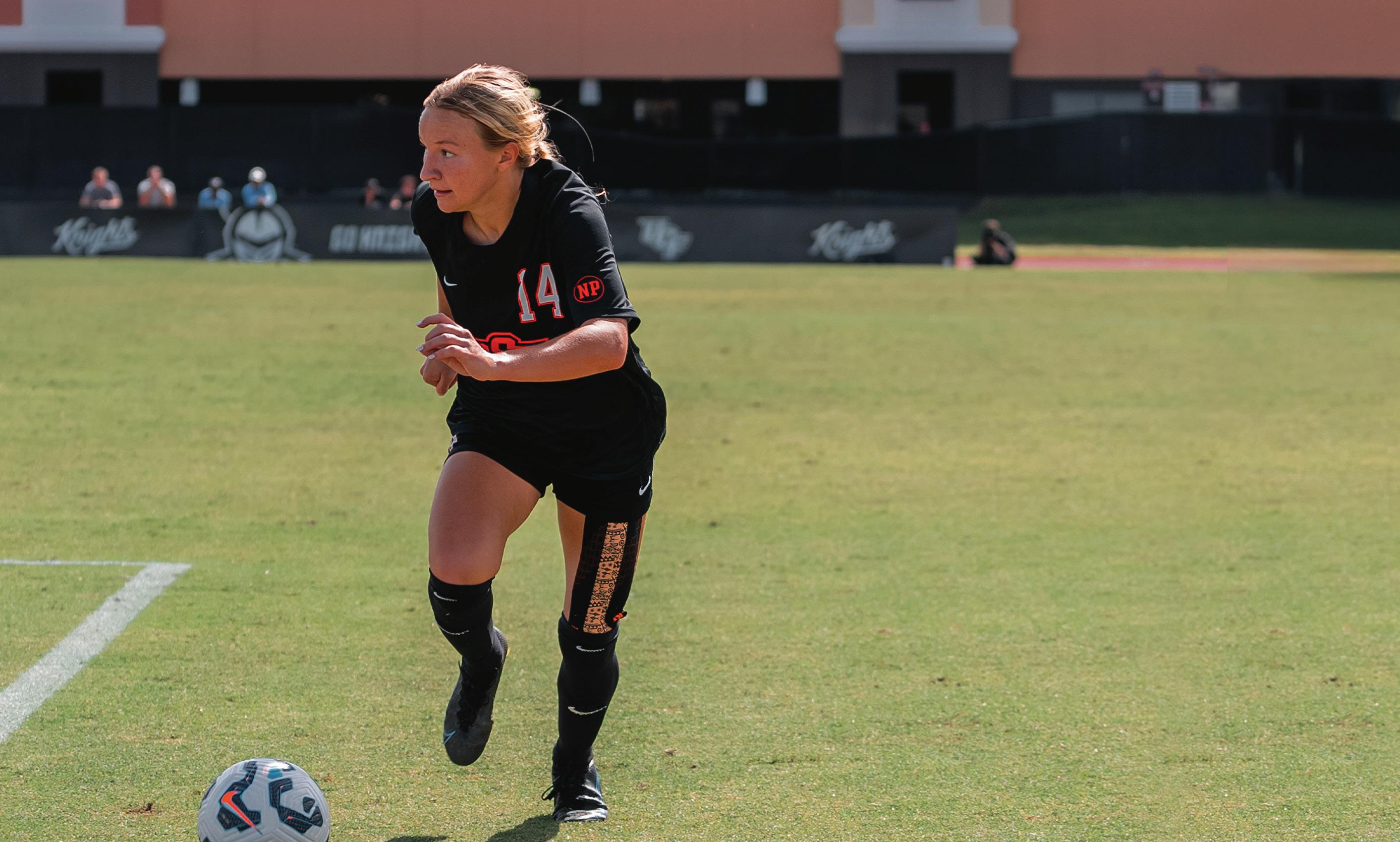
Following a successful rehab journey, Bindbeutel returned to the pitch for the 2024 season — with a catch.
The Cowgirls had changed their playing formation, and Carmichael floated the idea of using Bindbeutel at a new position — wingback. That meant that instead of focusing on scoring goals at the front of the attack, Bindbeutel would be in a mostly defensive role.
“When we first moved her to wingback, it was like, ‘Are you guys crazy? You’re putting me on defense?’ As opposed to, ‘I don’t want to do that,’ it was more like, ‘I don’t think I can do that. We said, ‘Let’s just take a look at it.’ She embraced it and went to work like she always does,” Carmichael said.
OSU opened the season at Nebraska, which was ranked No. 6 nationally, and Bindbeutel proved the position switch was not so crazy after all as she played a key role in leading the Cowgirls to a 2-0 upset victory
“She was playing against one of their best attacking wide players. It was a great matchup, and Gracie was awesome that night. I think that showed her she could do it,” Carmichael said.
However, as fate would have it, Bindbeutel would soon find herself back in her preferred role as a forward focused on putting the ball in the net.
The Cowgirls’ o ense wasn’t producing and needed a spark in conference play.
“If we were scoring a bunch of goals that season, we might not have moved Gracie back up front because she was doing really well at wingback,” Carmichael said. “But we thought it made more sense to get her up closer to the goal. She scored some goals and certainly helped us create more chances as well.”
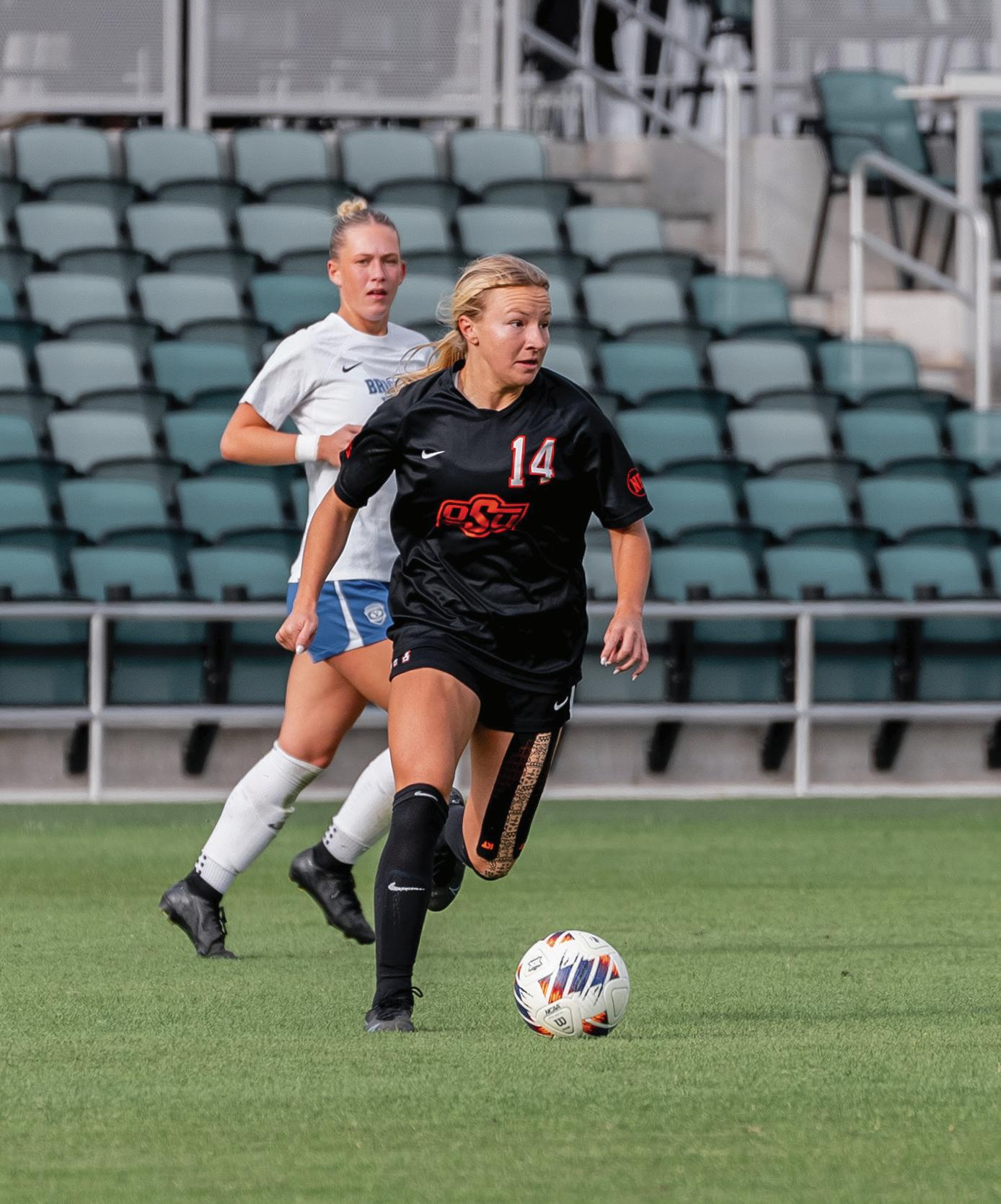
Just as she had playing wingback, Bindbeutel was impactful. She scored goals in her first two games following the switch and went on to earn second-team all-conference honors, while helping lead OSU to 14 wins and an NCAA Tournament appearance.
Back in her preferred role and poised to spearhead the Cowgirls’ attack as a junior in 2025, another nightmare unfolded.
After playing in OSU’s first five games, Bindbeutel went down with another injury. This one to her right knee during an August practice. Another torn ACL and meniscus.
“It was just devastating. We’d all be upset if any kid got hurt, but when she went down, practice ended. Kids were crying, everybody just went home,” Carmichael said. “It was just that big of a blow to everyone because they know the type of kid she is and the type of person she is, and it just hit them all really, really hard.”
After the initial shock of another injury and doubts of an uncertain future, Bindbeutel was quick to have conversations with her parents, coaches and OSU athletic trainer Todd Gerlt
“I decided there’s more that I can o er than just giving up the second time around,” Bindbeutel said. “I made that decision pretty quickly, I think I almost had to. If I would have sat around with the worry of, ‘I don’t know if I want to do this or not,’ it would have become a lot harder to come out of the other end of it.
“You kind of just have to separate feeling bad for yourself from, ‘I can do this. I’ve done it before, I can do it again.’ And I really do think it’s a choice.
“I could have said ‘I’m done.’ But I think that there’s still some gas left in the tank for me, and I honestly don’t think I’ve played my best soccer yet. I think that there is more to my potential that I haven’t reached yet, and I’m going to do everything it takes to try and do that for myself. I think I deserve it, and I think I owe it to myself, after what I’ve been through, to try and reach my full potential.”
Bindbeutel’s never-quit, do-whatever-it-takes-with-totale ort approach is something that isn’t lost on those in the Cowgirl Soccer program.
Even when she hasn’t been able to compete, her presence looms large, and she commands the utmost respect from the team she helps captain.
“Gracie B is the most determined human I have ever met,” said OSU goalkeeper Logan Marks. “Getting hurt and having to go through the whole recovery process again, I know she probably still isn’t okay on the inside, but she does well at hiding it. She’s never missed a practice, meeting, team event, whatever. She shows up every day just to sit out and support her teammates and coaches when she’s probably the one that needs the most support.
“I watch her do her physical therapy exercises, and she’s so focused and deliberate on perfecting the movements. I can see the determination in her face. Some people will kind of go through the motions when getting treatment, and I don’t believe that “going through the motions” has ever been or ever will be in Gracie B’s vocabulary.”
Adds Carmichael, “She’s inspirational, the heartbeat of the team. Gracie B’s the one that makes everything tick, motivates her teammates, she’s uplifting. She’s got that sort of contagious, positive attitude that rubs o on coaches and players alike.
“
She is a light that no one would’ve ever known they needed. She makes this world a better place.”
— LOGAN MARKS
“So yeah, Gracie B is kind of the pulse of the team, keeps everybody going, keeps everybody positive, and definitely has been greatly missed when she hasn’t been playing.”
Bindbeutel is hopeful to be medically cleared to return to the pitch by the time OSU begins preseason practice in mid-July. Carmichael added that the plan is to bring her along slowly and hopes to have her back to full strength by the start of Big 12 play.
With the way Bindbeutel is attacking rehab, Carmichael is confident Bindbeutel will be ready.
“I saw her in there the other day doing her thing. I don't worry about her putting in the e ort and the work needed to come back. With some kids you might, but not with Gracie B,” Carmichael said.
Bindbeutel said the mental hurdles are her biggest challenge.
“People see you getting stronger, people see your muscles growing back, they see you getting back out on the field, but they don’t see everything that kind of comes along with it behind closed doors,” Bindbeutel said, citing doubts about reaching her previous level of play or su ering another injury. “That’s a constant battle that I have in my brain.
“But I think it’s just important to lean on the people around you because there’s so many people here that would do anything for me.”
Gerlt, who has served as OSU’s athletic trainer for two decades, is one of those people.
“Because of him, I know I made the right decision to come (to OSU) every single day,” Bindbeutel said. “If I went somewhere else and experienced these two injuries, I don’t think I would be in the same mental and physical state that I would be had it not been for Todd. He’s been amazing.
“And I still have the coaches. I still have my teammates and my family. Just grateful for all the people in my corner.”
The people in her corner also include some that Bindbeutel has never even met, those loyal and true supporters that OSU prides itself on having.
Because of them, Bindbeutel is even more driven to return to the field in a Cowgirl uniform.
Carmichael can’t remember exactly when or what was said, but he had caught wind through some of his players that Bindbeutel’s car wasn’t exactly reliable, certainly a cause for concern when making the 900-plus mile round trip journey from Stillwater to Missouri and back.
“It was a fine car, but probably wasn’t the safest for driving all those highway miles back and forth,” Carmichael said. “One of the girls had made a little joke about Gracie’s car driving home,
and it had always kind of stuck with me like, ‘Gosh, I hope she makes it. I hope she’s okay,’ type of thing.”
“I loved my car, but it had some major issues,” Bindbeutel said. “I went home for break one year, and I broke down in the middle of the highway, didn’t even make it out of Oklahoma. And I broke down more than once in the middle of nowhere.
“All of the girls kind of knew about it, and it was kind of a running joke like, ‘Oh, let’s see if Gracie B can get home this time.’ And I think Colin heard about it and decided to talk to some people and see what they could do.
“I remember being shocked the first time he brought it up to me — I was like, ‘Me? Are you sure? Like, I’m not a basketball or football player.’”
Carmichael was sure, and the plans came together to get his all-conference forward a new set of wheels.
“We’d had an opportunity where some of the athletes at OSU were doing some NIL deals with the car dealerships, and it just resonated with me that there might be one for Gracie B. We started the ball rolling and, with the support of some of the local donors and dealerships, we were able to help her out with a new car,” Carmichael said. “She was beyond thankful — it was abundantly clear that she did not expect that and was just super grateful that we would even consider doing something like that for her. There were tears in her eyes and you could just see the emotion.
“For a kid like Gracie B that puts so much into this program, sometimes you forget that’s why we’re here. Yes, winning championships is amazing and all that, but when you’re able to help a young woman like Gracie B navigate through college and feel special just for a little while it’s pretty awesome.
“That was a cool moment. She definitely earned it. She’s a kid that was very deserving, and it fulfilled a need. That goes missing sometimes with NIL and revenue share and all these new things. We all hear about the million-dollar deals in football and these massive deals in basketball, but you know, soccer, softball, tennis, track, other sports, a relatively small amount of money to our players is life-changing. It’s game-changing for us.”
Bindbeutel still can’t believe her good fortune and the blessing bestowed upon her by the OSU family.
“After that initial conversation with Colin I didn’t really know what to expect, but it kind of just took o from there,” Bindbeutel said. “I am so incredibly grateful for the POSSE organization and the donors and everybody who had a hand in allowing me to work through NIL to get a car.
“A nice car at that, a very nice car. It’s been smooth sailing since then — no worries about breaking down!”
As Marks says, it just goes to show you that good things happen to good people.
“I was talking to someone the other day about Gracie B and said something along the lines of, ‘If someone asked me my thoughts on the ideal characteristics of a perfect human being, I would’ve said something bland like “kind and loving.” Now, knowing her, I would describe Gracie B,” Marks said. “She cares so much for the people and things around her. When someone is talking to her, she drops everything to listen and care for what they are saying. She is a light that no one would’ve ever known they needed. She makes this world a better place. She e ortlessly makes the people around her happier. I can say with full confidence that anyone else who knows Gracie Bindbeutel would 100 percent agree with me.”
Regardless of what Bindbeutel’s soccer future holds, she’ll be rewarded with an OSU degree in marketing in December.
That’s something Carmichael might be proudest of from a student-athlete who didn’t always put academics first.
“She had a little adjustment period going from high school to college, and I think she would admit maybe she didn’t handle that transition academically the best,” Carmichael said. “But after the first couple of semesters, she’s crushed it. She figured it out. She’s on a great path, doing great in school, and she’s getting her degree. That’s something that gets lost sometimes when we talk about these multi-million-dollar athletes that, here’s a young woman that came here, battled adversity and is getting an education. She’s going to leave here and go crush it in life. Those stories are amazing.”
Bindbeutel admits she’s done a complete 180 in the classroom, so much so in fact that she earned academic all-Big 12 honors last year.
“I’ve always been a decent student, but my problem my freshman year and going into sophomore year was just applying myself,” Bindbeutel said. “I was really focused on, ‘I’ve got to be the best soccer player I can possibly be or else I won’t play, and that’s what I came here for.’
“But then as you get older, you mature a little bit. I think my academics probably took a hit after the first ACL surgery because I kind of took a mental hiatus there and tried to focus on getting better physically. But as I’ve gotten older and the time I’ve spent talking with Colin and (academic counselor) Agatha (Adams), I just realized that I have the potential to be a great student and I wasn’t succeeding. I realized that I am a student-athlete, and that one part is more important than the other. I’ve got to hold my end of the agreement up.
“Academics have really become a lot better for me — honestly, they became one of my strong suits. And it just makes
me feel more well-rounded; it makes me feel more confident going out into the job world, finding something at the next level.
Bindbeutel potentially has two more seasons remaining in an OSU uniform, assuming she would be awarded a medical hardship waiver if so desired.
As far as goals go, along with staying healthy, “My number one goal every time I step out on the field is to give 110 percent work ethic. That’s something that I pride myself on, and that’s something I feel like I can do whether I’m playing well or not.
“And I just want to score some goals — I want to put the ball in the back of the net. I only played five games last fall, and I didn’t score any goals.”
Time will tell what becomes of Bindbeutel’s remaining time in Stillwater, but one thing is certain.
“If I had to do this whole college experience over a thousand times, I would choose Oklahoma State every single time,” Bindbeutel said. “I have been blessed with the best people in my corner, the best advice, the best lessons I’ve gotten, the things that I’ve gone through. And just overwhelming support from everybody here, at every level.
“I’m just so grateful for this university, and I’m so glad I chose OSU.”
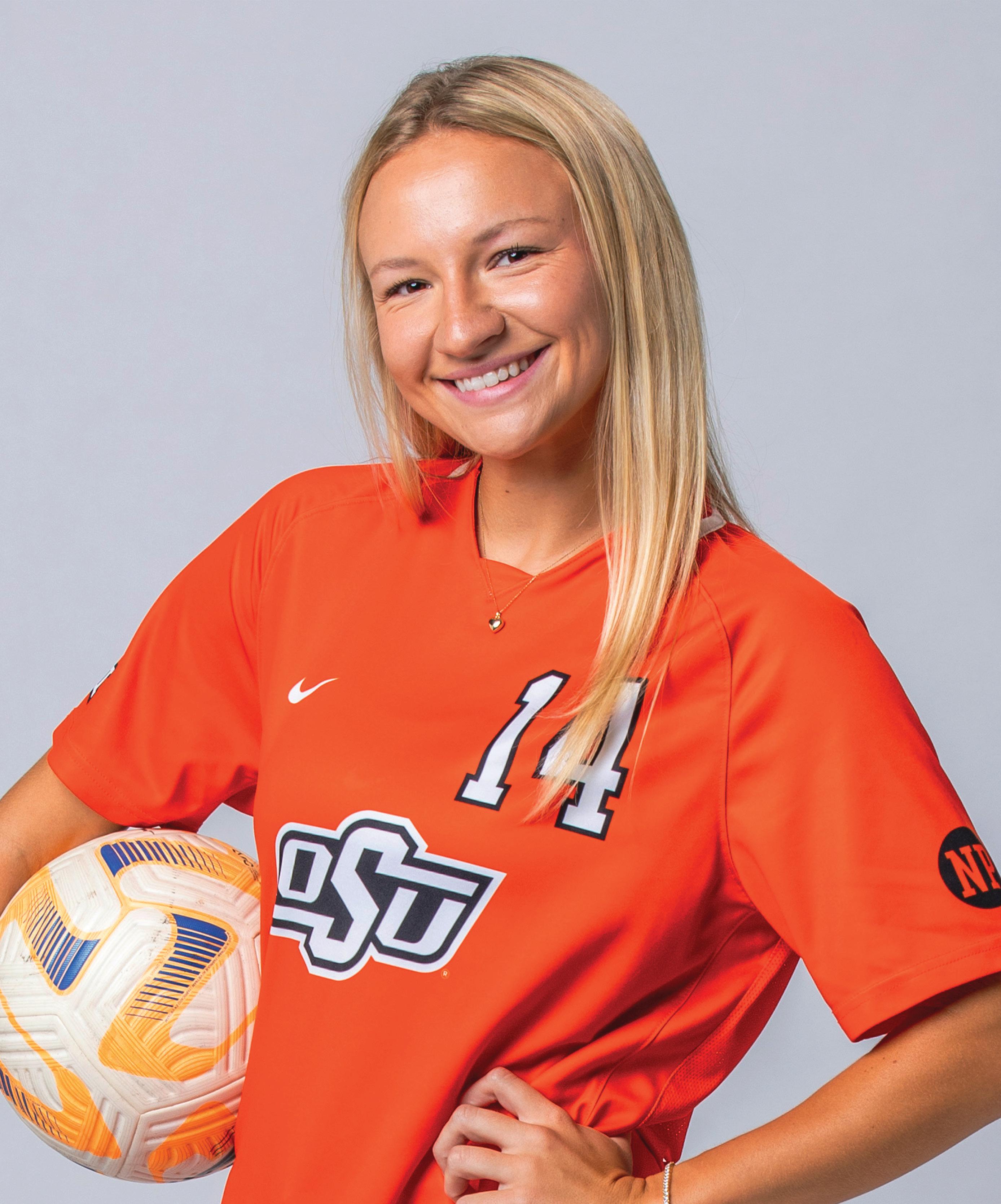
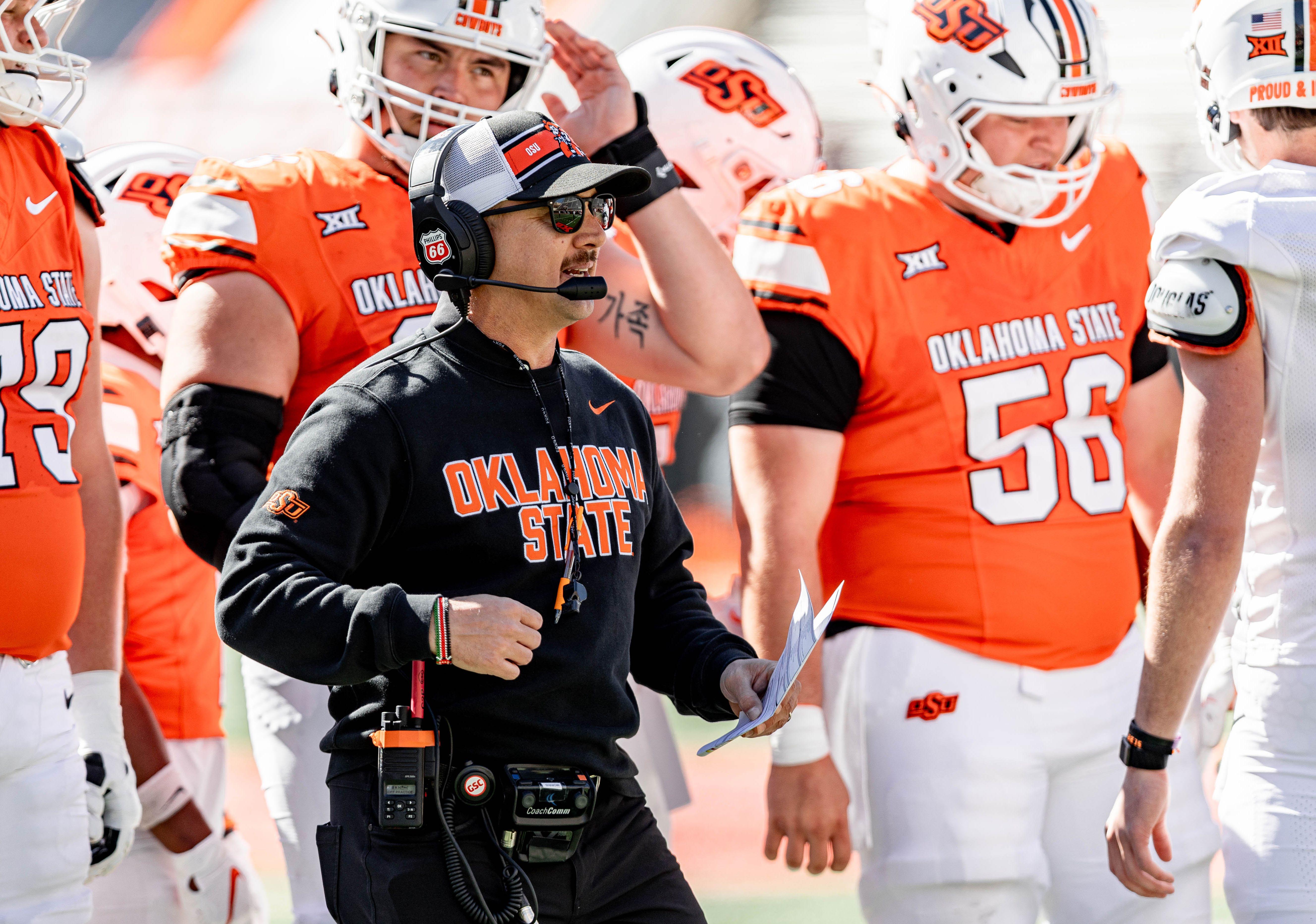
As part of Orange Power Weekend in April, the 2026 spring game provided Cowboy fans with a first look at Eric Morris's up-tempo brand of football. If past results are any indication, Bullet will be getting a workout this fall.
Morris has spent the past 13 seasons as a head coach or o ensive coordinator. During that stretch, his teams have produced nine top-five passing o enses, ranked in the top-10 in total o ense 10 times, and ranked in the top-25 in scoring o ense 10 times. Last season, his North Texas team led the country in scoring o ense and total o ense.
To be a part of all the action in Stillwater this fall, visit okstate.com/tickets

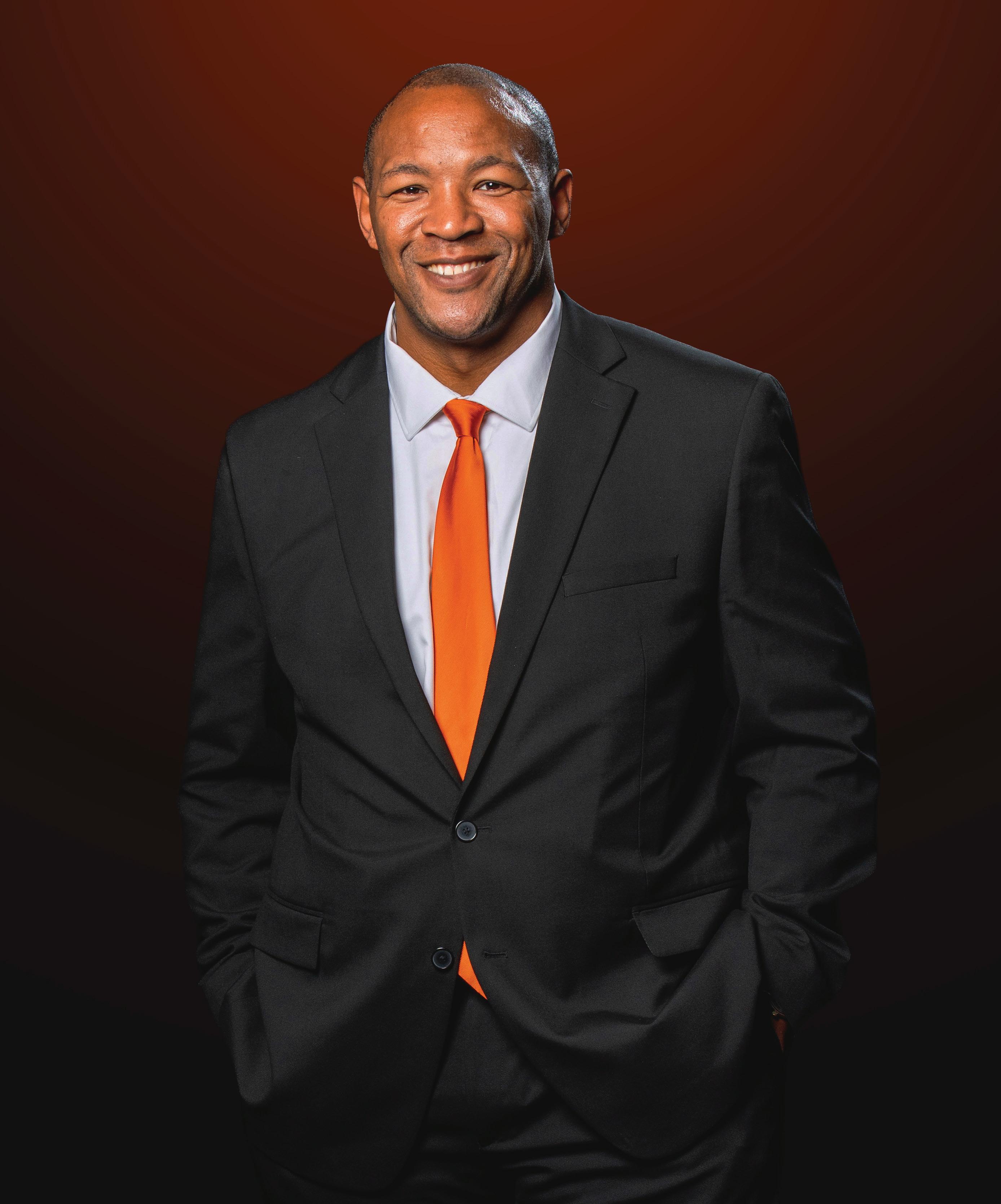
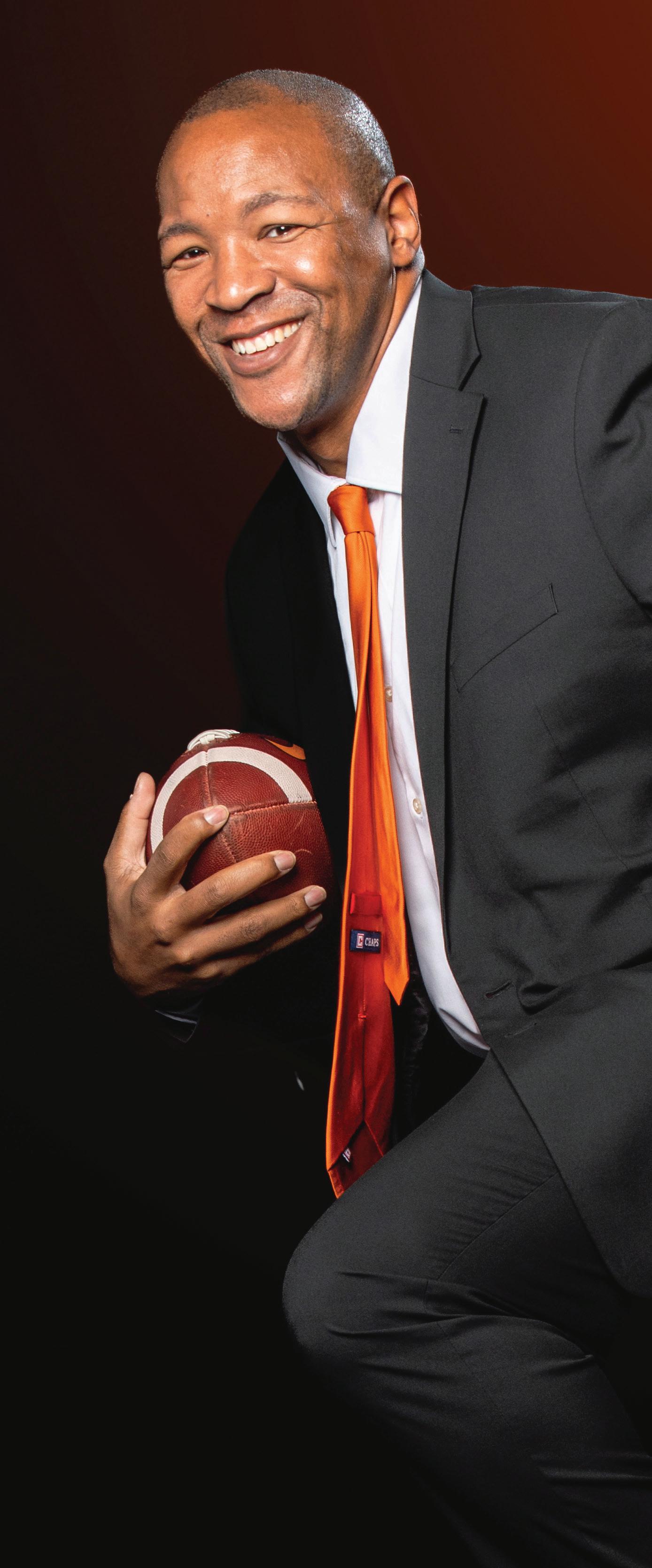
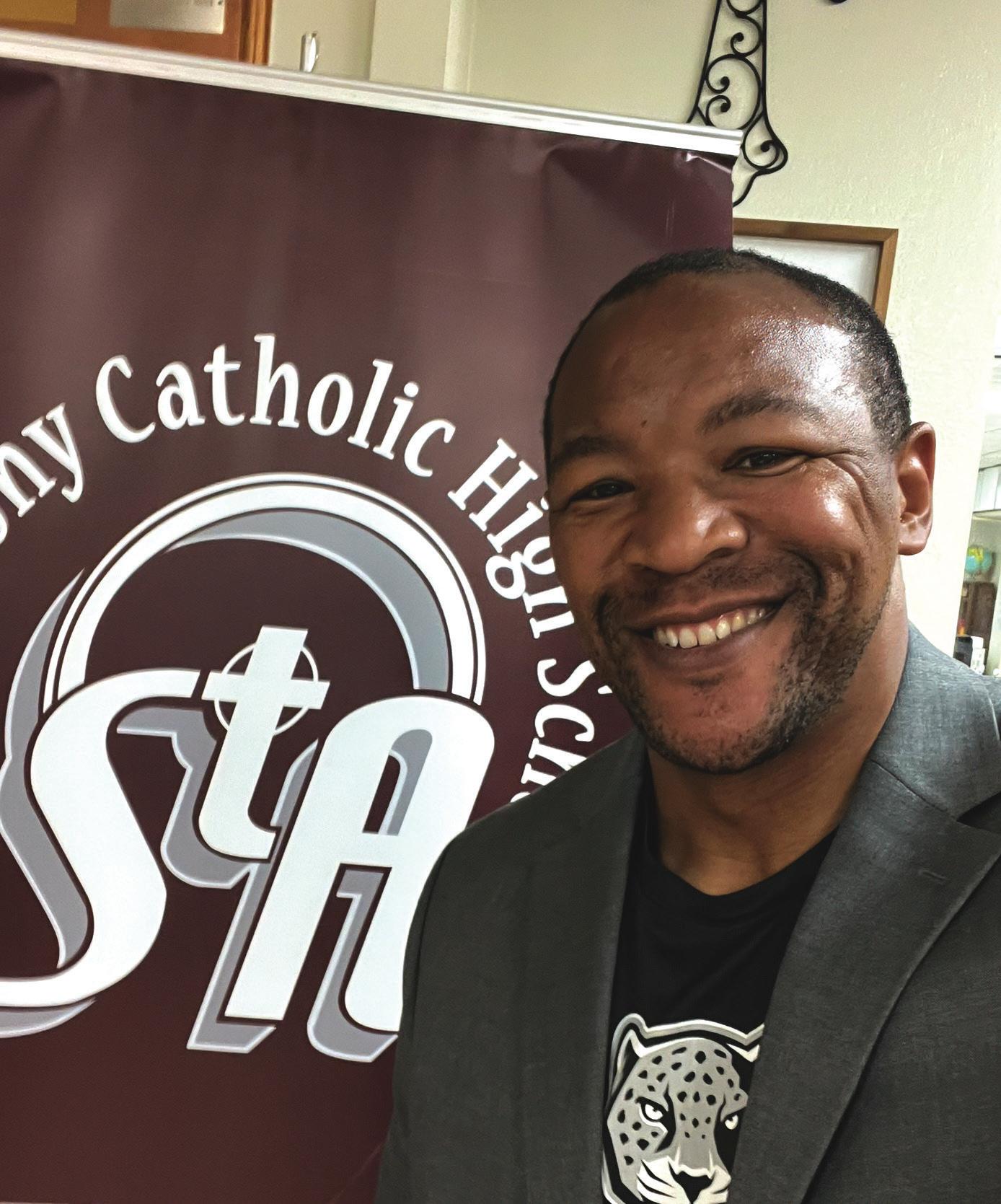
Darnell Smith has found success and happiness.
The former Oklahoma State defensive end (2002-06) is healthy, strong and surrounded by a beautiful family. He is the owner of a Ph.D. and currently serves as the inaugural athletic director at Texas A&M University-San Antonio
These things don’t just happen.
For Smith, it was a combination of nature and nurture.
With his father serving in the military, Smith grew up on an Air Force base with people from all walks of life. He was born in Lakenheath, England. Along the way, he said he learned discipline, service, how to put others above self and how to contribute to something greater than one’s own level of understanding.
Smith gravitated toward basketball and track as a child, but his parents set the standard for how his time would be prioritized.
“I’m a faith-based guy,” Smith said. “I grew up in the church. My dad was a minister. A key decision for me was to trust in the Lord. In addition to my faith, it was building genuine relationships with people.”
Beyond that, Smith said he has always had a knack for academics.
“I give credit to God, but also my mom and dad for ensuring that I didn’t go outside to play until my homework was done. It just became something I found success in and I was pretty good at it.”
His parents set a foundation that allowed him to pair his natural instincts as a competitor with his natural love for knowledge.
“As a little kid asking a bunch of questions, I’ve always been one who wants to learn and understand and grow more,” he said. “Every grade level I was in, I wanted to get a 4.0. That carried from elementary to middle school.”
There were other influences outside of his immediate family.
“I was always a basketball guy, but when we moved to San Antonio, I picked up football,” Smith said. “I remember seeing Barry Sanders for the first time and feeling like I was watching greatness in action. It was so magical, and I wanted to be like him.”
In Little League, Smith chose to wear the same No. 20 as Sanders did while carving up defenses for the Detroit Lions.
“When I scored touchdowns, I handed the ball to the ref because he did. I just felt like that’s what you were supposed to do.”
As the years passed, Smith grew into an outstanding football player in his own right. As a junior squad member at
Taft High School, he played on an underwhelming team. Prior to his senior year, his coach told him the team needed a leader who people could look up to and tabbed Smith as the captain.
Smith took his newfound leadership position and focused it on the betterment of the team.
“We had a mentality that year — sixty hearts, one heartbeat,” Smith clearly recalled. “We all played for one another.”
Taft advanced to the state championship game that season, which elevated his visibility in the eyes of college recruiters.
“Every game, I got better and felt stronger, then we kept winning. I started getting o ers to play in college and get my education paid for. It was then that I realized this was something special. The o ers started to roll in the further we advanced in the playo s.”
Included among his growing list of suitors was Oklahoma State.
“When the opportunity came up and Oklahoma State o ered me a chance to play for them, I was like, ‘You’re telling me Barry Sanders went to OSU, and I can get my education paid for and the chance to play? Done.’”
And just like that, it was settled. Smith left home to begin the next chapter of his life in Stillwater.
With the seeds planted throughout his childhood, Smith was always going to bear fruit. He just didn’t know exactly what the path forward was going to look like.
When he enrolled at Oklahoma State, he did what he already knew by finding the things that satisfied his natural curiosity.
“I experienced all of OSU,” Smith said. “That meant visiting the multicultural center, going to basketball games, soccer matches, supporting women’s sports — taking it all in and embracing what the university is all about. As a student-athlete, it can be such a narrow focus, but there is more to the university that I wanted to see and embrace That was important for me to do that.”
It was a similar story in the classroom.
“When I was a student-athlete, I knew I never wanted to be a stereotype,” Smith said. “There were some professors who were surprised I cared as much as I did about academics.”
Given his nature, it’s not a surprise that he met his future wife in one of those classes — sports marketing, to be exact.
He met someone else in Stillwater, too. Barry Sanders.
“I had been fixated on him for such a long time and the first time I actually met him in person, I was kind of starstruck and like ‘Barry, do you know who you are and the impact that you have?’ and he was just like ‘aw, I’m just a guy.’”
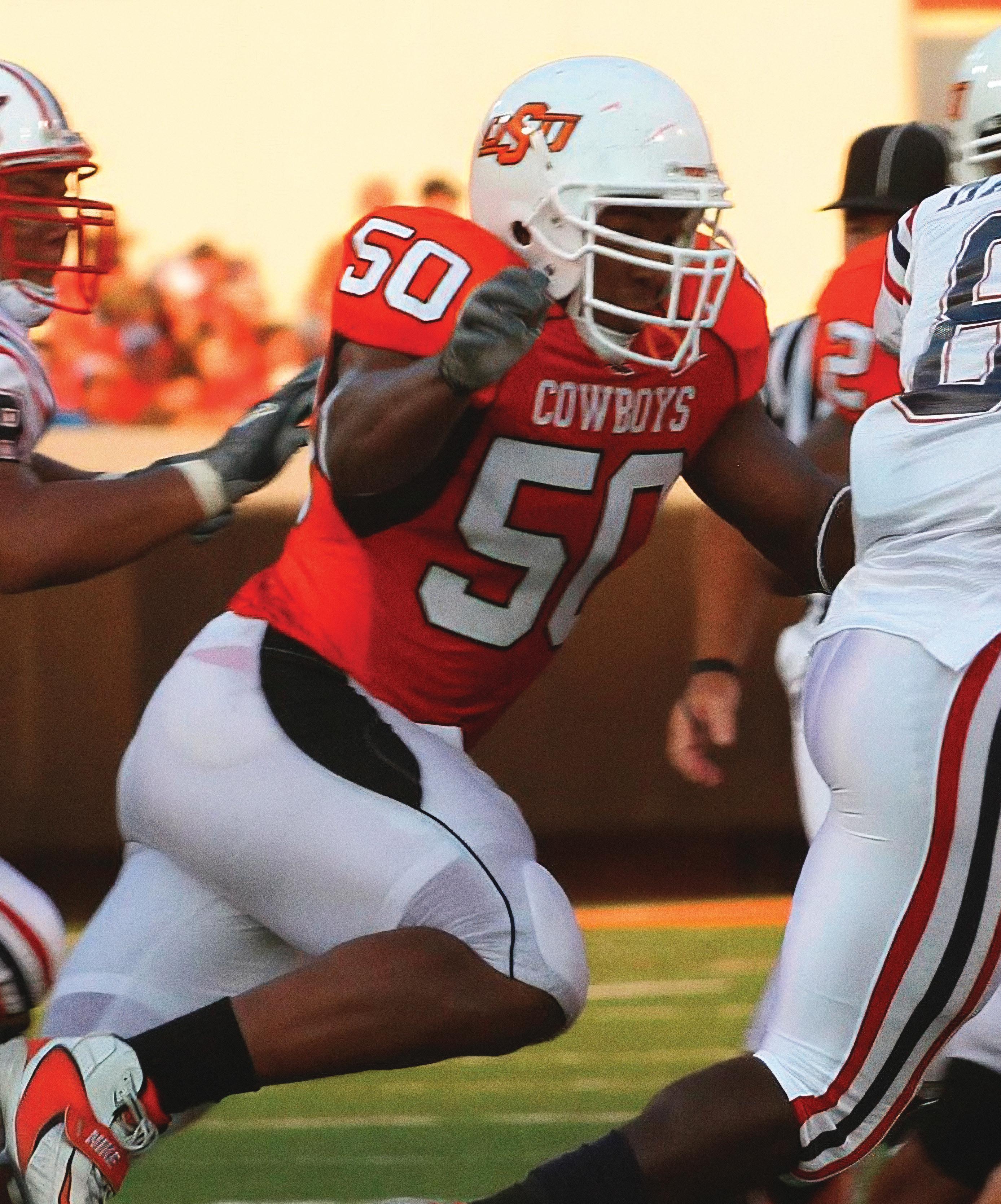
In short, life in Stillwater was good. Smith was making meaningful connections and thriving. Along the way, he earned Academic All-America honors in addition to eventual recognition as an OSU Senior of Significance and an Outstanding Senior. He was voted as OSU’s male studentathlete of the year as well.
“The people at OSU believed in me and saw something special,” Smith said. “That sparked my competitiveness to achieve and get more academic awards.”
Following a playing career that began under Les Miles and culminated with Mike Gundy’s first bowl win in 2006 over Alabama, he earned his degree and took a graduate assistantship in the OSU Athletics Compliance o ce as he completed his master’s. During his time in compliance, a career serving young people in college athletics was crystallizing into reality.
Smith credits long-time current and former OSU Athletics sta ers Marilyn Middlebrook, Agatha Adams, Alan Good, Ben Dyson, Rob Glass, Scott Williams, Lance Troester, Terry Henley, and Dave Martin as some of the people who influenced his vision for the kind of impact he could eventually make in college athletics.
“My leadership style goes back to my upbringing, but I wanted to be an athletic director because of my experience with the people at OSU,” he said. “They fueled a fire in me to be like them and positively impact others the way they impacted me.”
I GO BACK TO THE COWBOY CODE AND DREAMING AS BIG AS THE SKY — THAT’S EXACTLY HOW I LEAD NOW.”
“ — DR. DARNELL SMITH
After securing his master’s from Oklahoma State and launching a career in sports with a full-time position in compliance at the University of New Mexico and the University of Central Oklahoma as well as working full-time at the United States Olympic and Paralympic Committee, Smith’s competitive streak revealed itself yet again. Inspired by his father who held a Ph.D., Smith was ready to secure one of his own.
“I wanted to compete for a championship in academia and the highest rung you can go is a Ph.D.,” he said. “I told myself there is nothing you cannot do and establish a legacy with my children. Hopefully, it can be a cycle for them. It took me 10 years to do, but I’m thankful that I got it done.”
CURRENT DAY
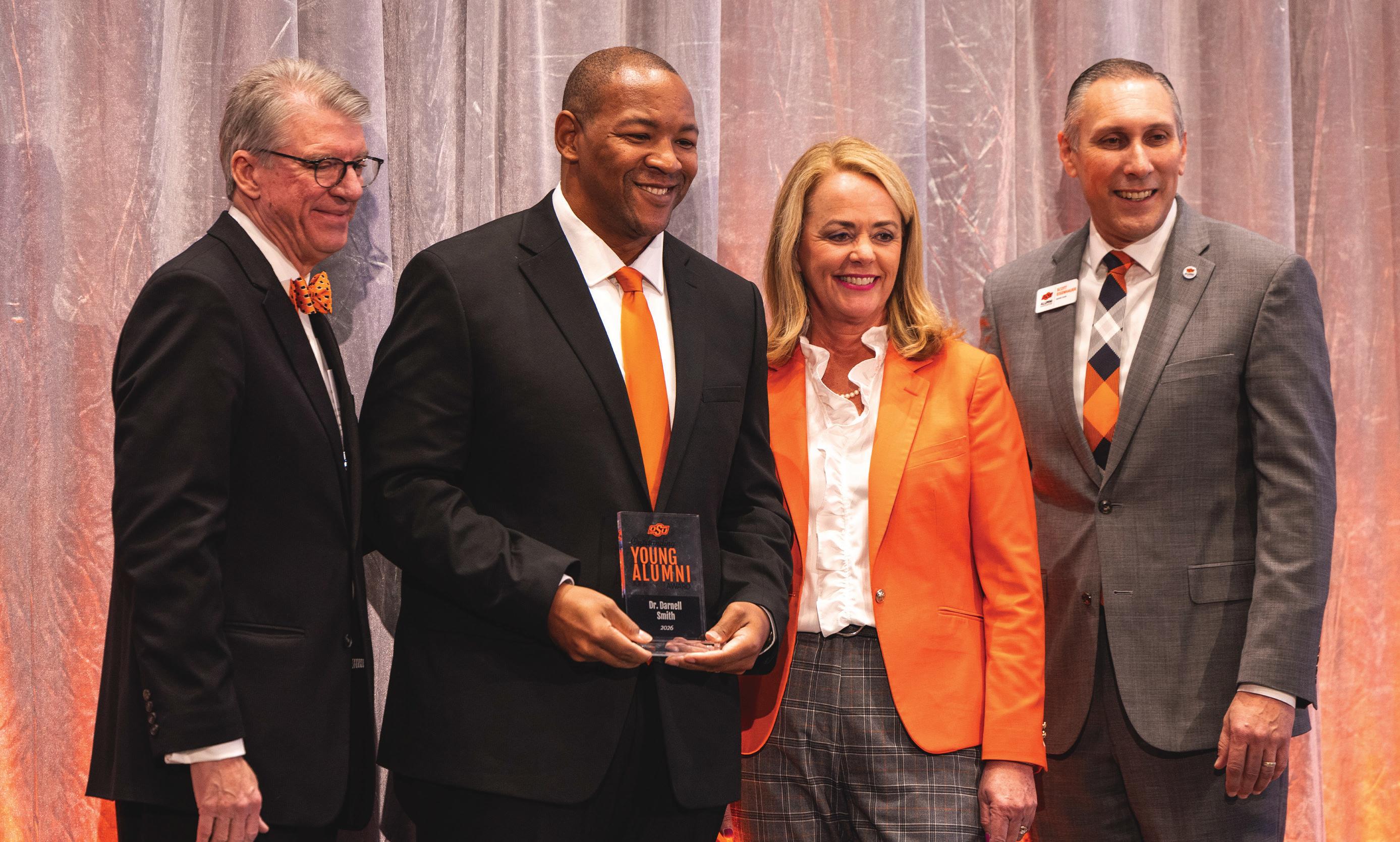
Hired as the inaugural athletic director at Texas A&M University-San Antonio in 2019, Dr. Darnell Smith is now approaching 20 years serving young people in college athletics.
He said there is much from OSU that he has taken with him.
“I go back to the Cowboy Code and dreaming as big as the sky — that’s exactly how I lead now,” Smith said. “We talk about building champions on the field, in the classroom and in the community. If we dream it, we can achieve it!”
With an Oklahoma State experience that he described as “exceptional,” Smith said he wants to create the same for the young people he now leads. He acknowledges, however, that there are some things that don’t translate easily outside of Payne County, but he is hoping to replicate.
“If I could bottle up the school spirit and the campus spirit and culture and sell it, I’d make a lot of money,” Smith said, jokingly. “That’s so hard to build. In Stillwater and OSU, the people are fantastic. The city rallies around the university and the university rallies around the city. The campus is beautiful. These things make Stillwater and OSU very special places.”
He remains in touch with several people at Oklahoma State, including his counterpart.
“Chad Weiberg inspires me,” Smith said. “His demeanor, how he carries himself, his leadership, his accomplishments. It’s all inspiring. I appreciate how he elevates OSU and I look forward to seeing how he will move the athletics department forward.”
Smith and Weiberg share some of the same leadership traits, but Smith has his own unique twists, especially in o ce decor. Smith’s o ce in San Antonio includes a handful of figurines, including Spider Man, Hulk, Black Panther and a replica DeLorean from the movie Back to the Future, all of which illustrate a broader story of what he has found in life.
Success and happiness.
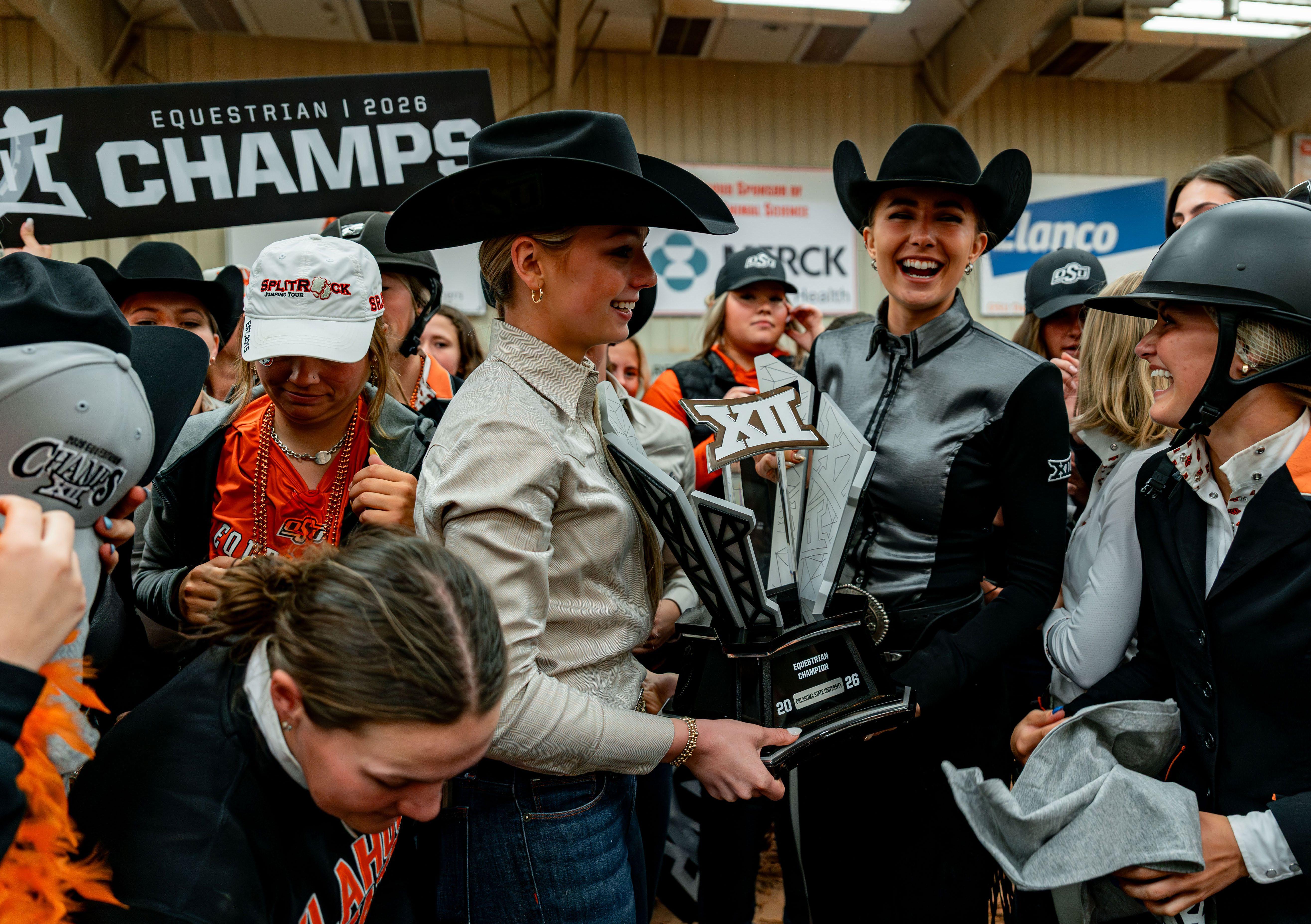
Seniors Tristan Bagby and June Roberson hold the Big 12 Championship trophy after Oklahoma State clinched its sixth straight conference title, riding away with a 14-5 win over TCU. The Cowgirls dominated from start to finish, taking all four events — reining, horsemanship, flat and fences — at OSU's Pedigo-Hull Equestrian Center. In the opening round, Larry Sanchez's top-seeded squad held o fourth-seeded Baylor, 11-9, to advance to the finals. Cowgirls Blake Rowan, Gable Gering and Jalyn McElmurray were all named Most Outstanding Performers (MOPs) of the tournament at the championship ceremony.

In the Zink household, competition wasn’t a hobby — it was the standard
That standard was forged in a family where precision, preparation, and accountability mattered. So did winning.
Born in Tulsa in 1971, Darton Zink is the youngest of the late John S. (Jack) Zink’s four sons, raised with the expectations that come with a name synonymous with performance.
“I grew up in a household where every saying you’ve heard in those racing movies was repeated once a day,” Darton recalls. “‘Second place is the first loser.’ ‘If you run second, you might as well not even show up.’ All of my dad’s little one liners.”
Jack Zink was the builder and owner of Indianapolis 500–winning cars in 1955 and 1956, competing among the giants of the sport.
“My dad knew Carroll Shelby and all those characters in Ford v Ferrari,” Darton says. “Those guys—including my dad—were just wickedly competitive. There’s a lot of truth in those movies.”
The Zink name is most visibly tied to motorsports — Jack was inducted into the Auto Racing Hall of Fame in 2004 — but its reach extends well beyond the track. Those same expectations drive the family’s approach to industry, education, and philanthropy.
“My dad wasn’t the easiest person to live with under the same roof,” Darton says. “His expectations were pretty high.”
Growing up in that environment meant Darton learned early on what excellence looked like. While the standard was clear, his path was not predetermined.
“I’d say it was a little bit daunting, kind of growing up in the shadow of Jack Zink, who has accomplished lots of things in racing and business and whatnot,” Darton admits. “I kind of thought I wanted to go and do something di erent.
“I grew up in midtown Tulsa and graduated from Edison High School in 1989,” he adds. “Other than college, my permanent residence has never been outside of a one-and-a-half-mile radius.”
Darton says he considered attending Tulane University, where a friend of his was headed, but thought Oklahoma State might be a more prudent choice
“I thought New Orleans would be a lot of fun,” he says, “but ultimately I decided that I could get in less trouble if I was in Stillwater.”
Darton enjoyed life on campus and says he wouldn’t miss a Cowboy Football game — even during the lean years.
“I sat through every home game of 0-10-1,” he says, recalling the 1991 season when NCAA probation had decimated the roster. Adjacent to Lewis Field, however, the hardwood o ered hope.
“I was also lucky to be in school at the very beginning phases of the Sutton Era in basketball,” Darton says. “So that was a silver lining to how far out in the desert we were in football. Coach (Eddie) Sutton came in after my first year, and that got to be pretty fun.”
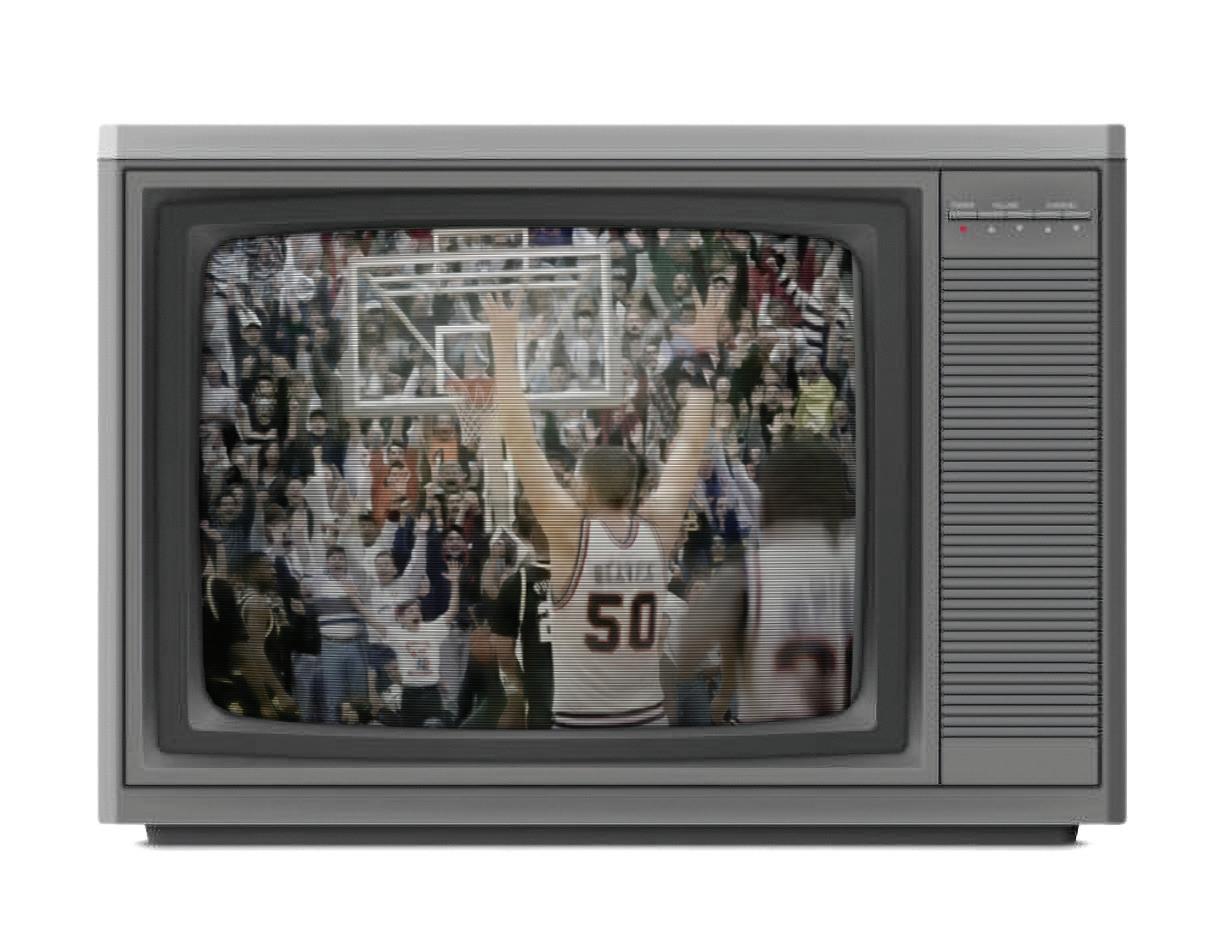
The most fun, he says, was being in the student section to witness one of the most memorable moments in Gallagher-Iba Arena history: Bryant Reeves’ buzzer-beating half-court heave versus Missouri in 1993. The game-tying three-pointer sent the game into overtime and sent the GIA crowd into a frenzy. The Cowboys would go on to beat the Tigers 77-73, and the moment achieved legendary status.
“There’s 100,000 people that claim they were there for Big Country’s shot,” Darton says. “Not only was I there — I was in the first row!
“If you watch the clip, when the ball goes in, you can see a kid in a ball cap with a blue-and-white-striped rugby shirt, just to the left under the goal.”
THE OFFER
Jack had earned a mechanical engineering degree from Oklahoma A&M in 1951. Darton chose to pursue a “well-rounded” business degree.
“I picked accounting because you can do a lot of things with it, with a view that I would go out, work in public accounting for a couple years, and then perhaps go to law school or get an advanced degree.”
Working in the family business was not in Darton’s plans.
Jack Zink launched Zeeco, Inc. in 1979 following the sale of the John Zink Co., which his father (John Steele Zink) founded in 1929. Since the beginning, the companies were synonymous with innovation in industrial burners and flaring systems.
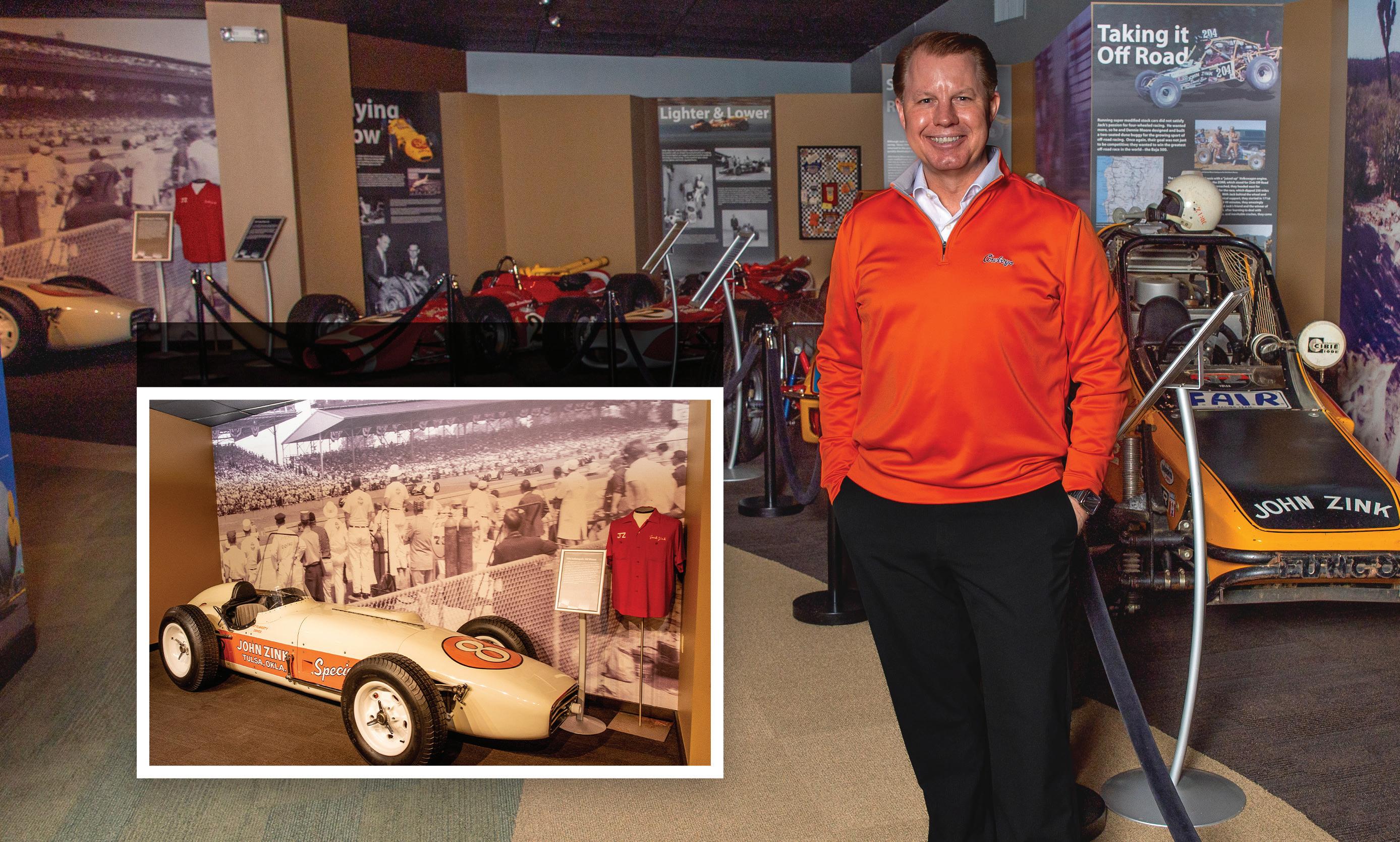
“At that point in time, Zeeco was pretty small,” Darton says. “It was not, let’s say, as attractive an option then as it was a few years later.
“My senior year, just before I was about to graduate, my dad summoned me to the Zink Ranch, where he had lived for about the last 20 years of his life. It was a Sunday evening, which meant you had to talk about something important.
“He asked me what I was gonna do.”
Darton laid out his plan, but something had already shifted.
“I’d done an international trip through the College of Business, and we spent part of a summer in London. That kind of opened my eyes to working outside the U.S.,” Darton recalls.
“Also, I’d done a little bit of work at Zeeco in the commercial department. So I was not totally surprised when he said, ‘Why don’t you come try working at Zeeco for a year or two?’”
Then came the negotiation.
“I’ll always remember the salary negotiation with my dad. He said, ‘Do you have any o ers for employment?’ I said, ‘Yes, I do.’ And he said, ‘Please share with me what the market says you are worth.’
“He matched my lowest o er,” Darton deadpans.
Jack’s job o er came with a timeline.
“My dad said, ‘Give it two years, and if you don’t like it, all those companies will be happy to hire you at that point in time. If it does work out, you’ll laugh about this salary conversation’ — and I still do today.”
Looking back, Darton says he’s grateful for how things worked out.
“I was lucky that I had the opportunity to work alongside my dad,” he says. “I didn’t have that many years working with him, because he backed away from the business at a certain point, and then he passed away in 2005.
“If I’d have done something else, I would have missed out on those years. Having the opportunity to work together was really great.”
Darton graduated from Oklahoma State in May of 1994 and moved back to Tulsa. That same fall, Jamie Franklin would arrive in Stillwater as a freshman.
“I was a dorky speech and debate kid from Yukon,” Jamie says. “In my high school years, if you made it to state, that was hosted at OSU. So you would stay in the dorms and do all of your competition stu on campus, so that was kind of my
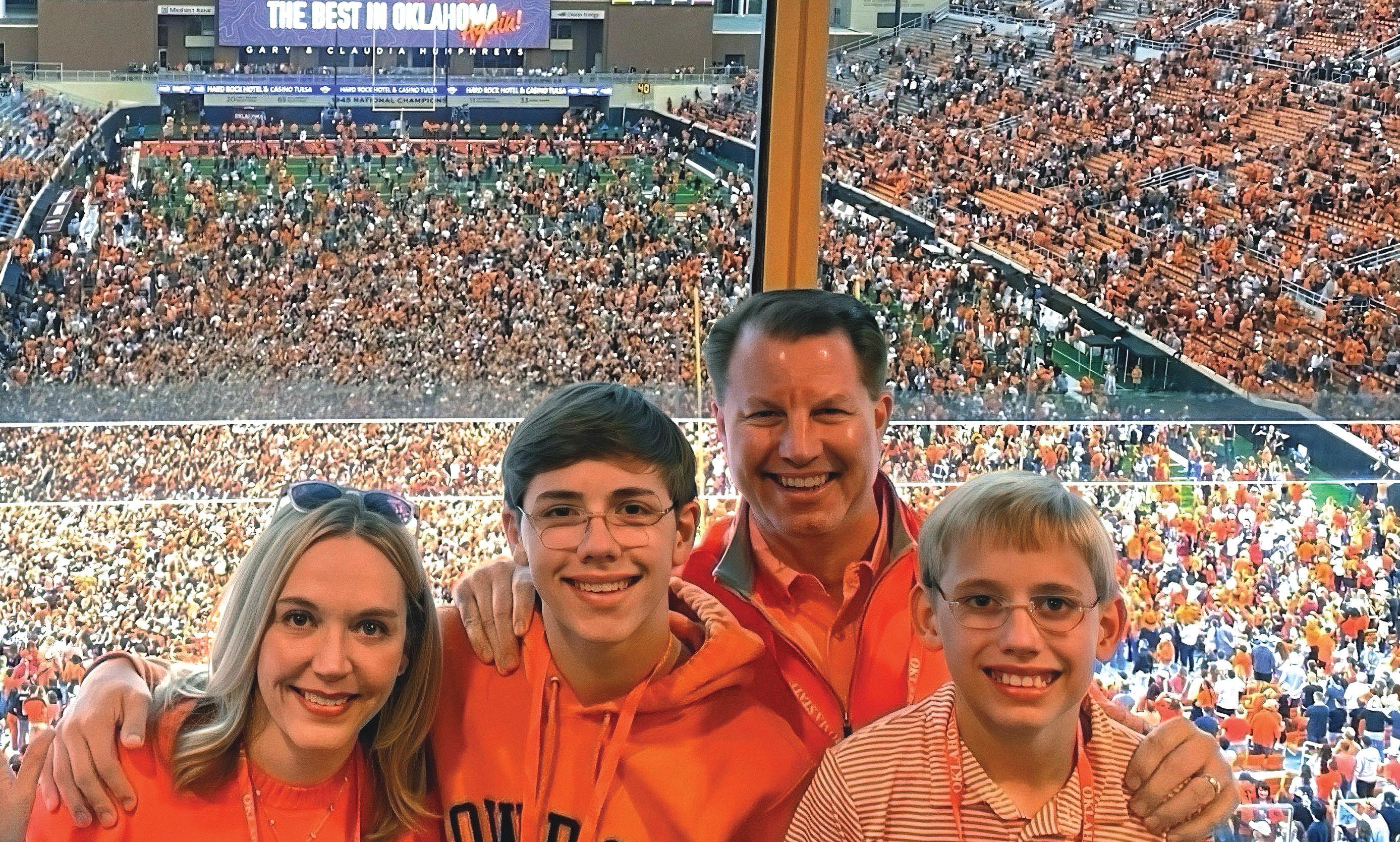
introduction to Oklahoma State. I don’t have OSU family, so that was really how I chose OSU.
“It just felt like a nicer place compared to Norman, to be quite honest.”
Jamie admits she wasn’t the biggest sports fan at the time, but she, too, caught the excitement of the Sutton Era in the spring of ’95.
“I was certainly lucky, because my freshman year we went to the Final Four, and the campus went crazy! I thought, ‘Is it always like this?’ That was pretty awesome.”
Their time in Stillwater didn’t overlap, but Darton and Jamie ran in similar Greek circles.
“I didn’t know Jamie in college, but I had several Lambda Chi fraternity brothers from Yukon,” Darton adds. “I knew a guy in school who was a couple of years younger. He was dating her roommate in the Gamma Phi house, and they introduced the two of us.”
“We met in the summer of ’96, right before my junior year,” Jamie says.
“She didn’t really like me at first,” Darton admits, “because she didn’t like her roommate’s boyfriend ... I was guilty by association.”
The ice eventually thawed, and the couple began dating.
At Zeeco, Darton was learning the business from the ground up.
“One of my requests to my dad was that I not report directly to him,” he explains. “We had a president/chief operating o cer that I worked under.”
Jamie, meanwhile, was charting a professional path of her own, majoring in management information systems.
“I was very fortunate to be graduating with an MIS degree in 1998,” she says, “with Y2K and all of that going on. Jobs were extremely plentiful. You kind of had your pick.
“I had narrowed it down to this little company in Tulsa — SolArc — and Motorola Semiconductor out of Austin.”
Motorola, the industry giant, seemed like the obvious choice. But Tulsa had an advantage.
“I really had this great feeling about SolArc,” she recalls. “In the back of my mind, I’m thinking maybe Darton and I might go somewhere.”
Following her heart turned out to be the right move.
“The week I started at SolArc, Semiconductor had started to tank, and Motorola laid o 4,000 people. That certainly made me feel like I’d made the right decision.”
Jamie went on to spend 10 years at SolArc as a consultant, delivering software solutions across the energy sector.
If it looks like a sure thing on paper, it might work. If it doesn’t calculate on paper as a good decision, it will never be a good decision. “
— DARTON ZINK
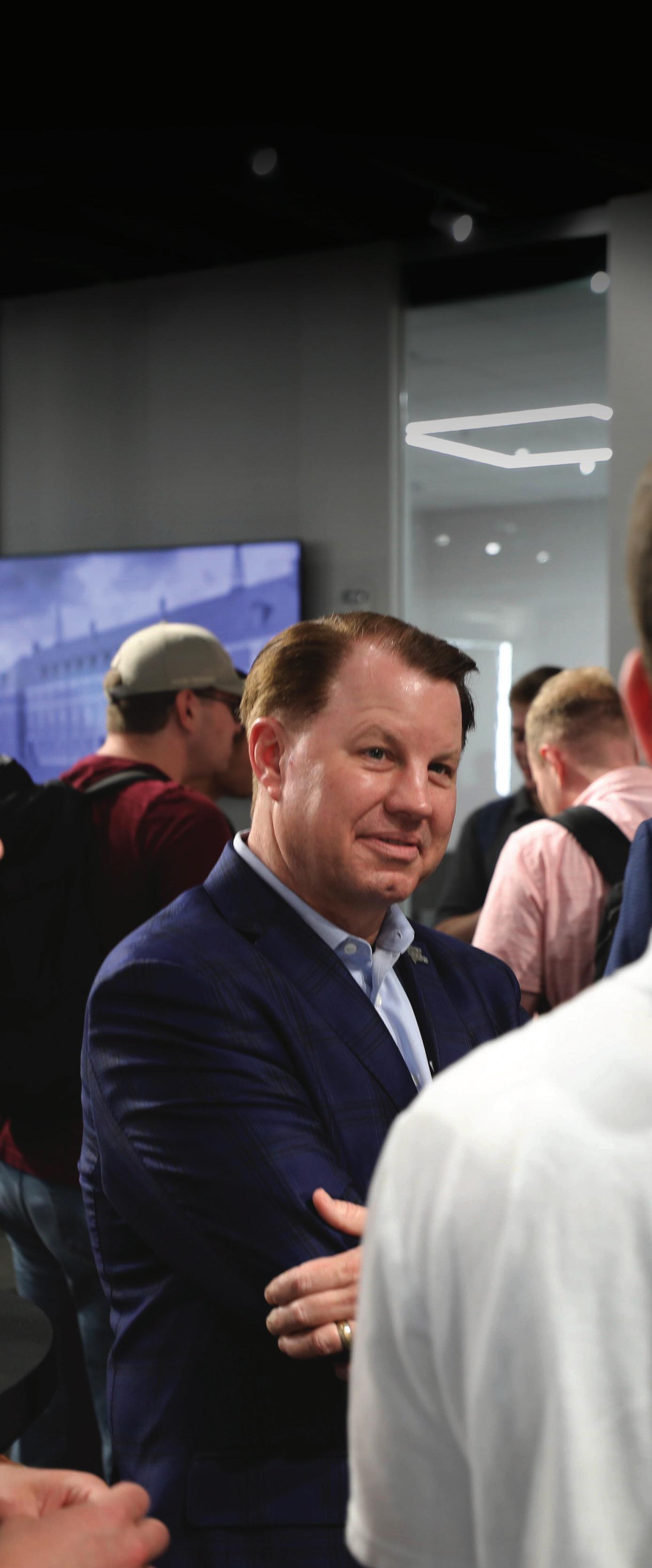
“I was one of the first people there, and I was young and didn’t know anything,” she admits. “But at the same time, you either step up or it isn’t gonna work. I was given a lot of responsibility very early on, and that was great. I got to travel internationally. I traveled a lot.”
In fact, she traveled more than Darton did at the time.
“As a software implementation engineer, Jamie would get up at zero dark thirty and be out of the house to catch the first flight out on Monday. She would come back Thursday evening, almost always wanting to go eat In the Raw sushi … She did that 48 weeks a year for almost a decade.”
In April of 2000, Darton’s own career path unexpectedly accelerated.
“Like lots of things in life, nothing goes according to plan.”
The head of the company — Darton’s boss — died of a heart attack at age 53 while on a business trip overseas.
“I had slowly been given more responsibility,” Darton recalls. “My dad ultimately said, ‘We need to figure out whether you can do this or not.’ So I became company president at age 29, about 10 years earlier than we planned.”
A few months later, Darton proposed to Jamie. They married in July of 2001.
“Jamie was right in there, in that very interesting and stressful time,” Darton says. “It was the most stressful period in my life. We made a lot of dumb mistakes that, fortunately, were not fatal to the business.”
Under Darton’s leadership, Zeeco continued its upward trajectory
“I was not as experienced and talented as my predecessor, and so one of the things I think helped put us on track for all that growth is that I wanted to build as good a team as I possibly could and fill in the gaps,” he says.
“Dart is very good at being able to identify good people, good talent.” Jamie interjects.
“We had a lot of good people and teammates along the way that worked exceptionally hard,” Darton says. “We set some very high goals … We would take an approach that we are going to be competitive in every single market that we participate in, and every single product and technology that we’re going to bring to market.
“My dad had a saying: ‘Hustle’s a funny thing. It’s heaven if you’re a hustler, but it’s hell if you’re not.’ And when we started hustling a little harder, we had a lot of talented people that either found us, or we found them, and it allowed the company to grow.”
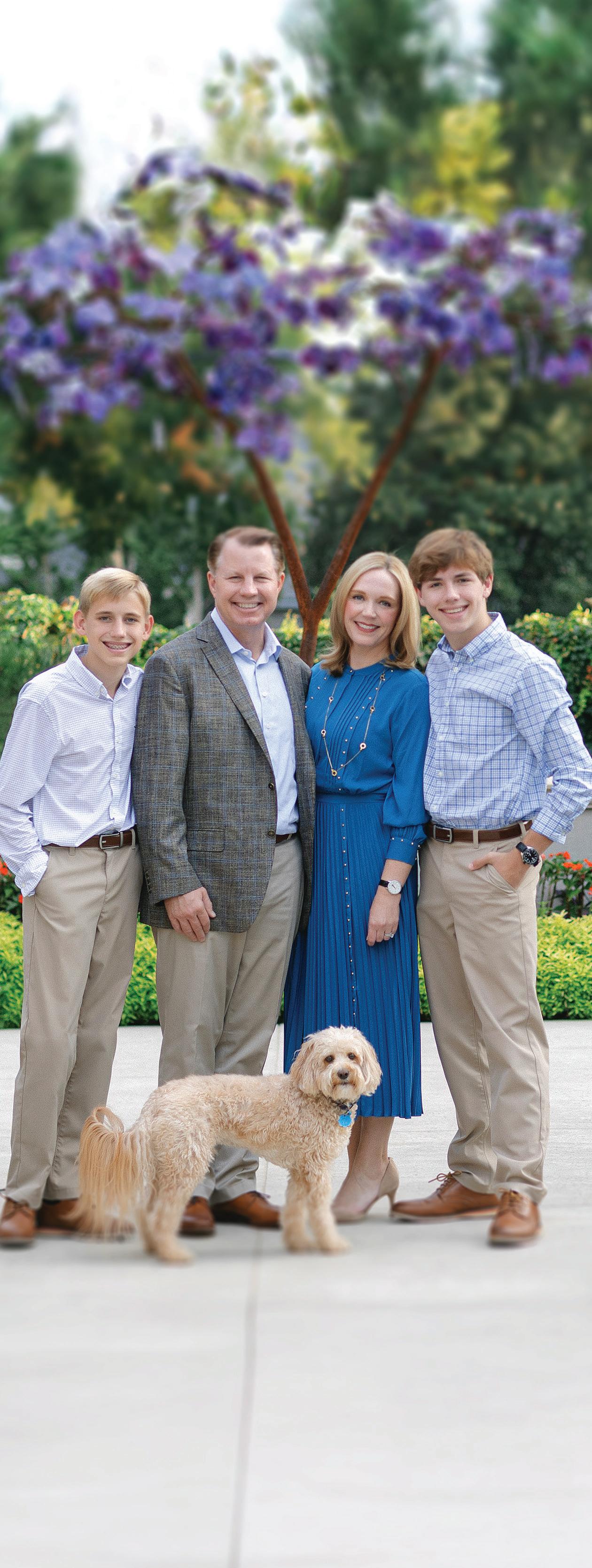
Over time, that growth compounded.
“When I started, Zeeco had 37 full-time employees in Broken Arrow, and that was our only location,” Darton says. “Today, we’re about 3,200 employees with over 30 global locations and seven manufacturing plants on three continents.”
From refineries to rocket launch sites, Zeeco designs and builds equipment that safely manages heat, pressure, and emissions in complex industrial environments.
“Oil and gas and petrochemicals are our core business, but we do all kinds of things,” Darton explains. “We make, a flare system that SpaceX uses for their rocket fueling operation. We make incinerators or vapor destruction units that go into EV battery plants … Any industrial process that involves combustion as part of that process, is oftentimes where you’ll find our products and technologies.”
“We also produce burners and burner equipment that are for power, steam, and heat. Oklahoma State University is ultimately heated by Zeeco products … so is the White House.”
“
Hustle’s a funny thing. It’s heaven if you’re a hustler, but it’s hell if you’re not.”
— JACK ZINK
Jack Zink passed away in 2005, at age 76.
“I wish he was still around to see what Zeeco looks like today,” Darton says, “but I think he was proud of the direction we were going when I had taken over.
“I’m lucky I was the youngest of his sons. He was 42 when I was born, and as he got later in life, he was very patient with me. He allowed me to make mistakes and was just a great teacher and mentor. He was also pretty good at keeping you accountable.
“You could make a mistake, or you could be aggressive, as long as you were reasoned in your approach. If you’re confident in your abilities and your ability to deliver whatever it is, it’s okay to take a calculated risk.”
According to the accountant, the math still has to work.
“I have a saying, ‘If it looks like a sure thing on paper, it might work. If it doesn’t calculate on paper as a good decision, it will never be a good decision.’”
For Darton and Jamie, it’s people that matter most, and OSU Athletics has become a conduit for lifelong connections
“Some of the best times that I’ve ever had with my friends have been in or around OSU sporting events,” Darton says. “We never went to a bowl game when I was in school, so when we had the opportunity to start doing that, it became a great reunion for people that I may only see once a year.”
As newlyweds, the Zinks witnessed the 2001 Bedlam victory in person.
“I’ll always remember, Jamie and I were sitting together in Norman when Rashaun Woods caught that glorious pass from Josh Fields at the end of the game.”
Those moments, he adds, are inseparable from the relationships.
“I try to describe this to outsiders — the experience of being a Cowboy really is unique in terms of the connections you make and the bonds you form during that time in Stillwater, even with people you may never have met before.”
Jamie shares a similar sentiment.
“My best friend to this day, I met on Bid Day,” Jamie adds. “Stefani Malloy and I pledged the same house and lived together for seven years — until I left her to go live with this ‘Dart’ guy.
“We actually introduced Stefani to Dart’s best friend from kindergarten, Blake Bartholomew, and they ended up getting married. We’re like family. That’s all because of OSU.”
That emphasis on connection shapes how the Zinks think about responsibility and giving.
Darton and Jamie have two teenage sons, Reed and Keller. When their oldest was born, Jamie stepped away from her corporate career to focus on family life. She now helps chair the Zink Family Foundation, which oversees the Zink Ranch — 35,000 picturesque acres near Skiatook with roots stretching back generations.
“We have lots of those memories to go with the connections we’ve made at Oklahoma State,” he says. “The closest friends that I have today are all people I met at OSU, many of them fraternity brothers.
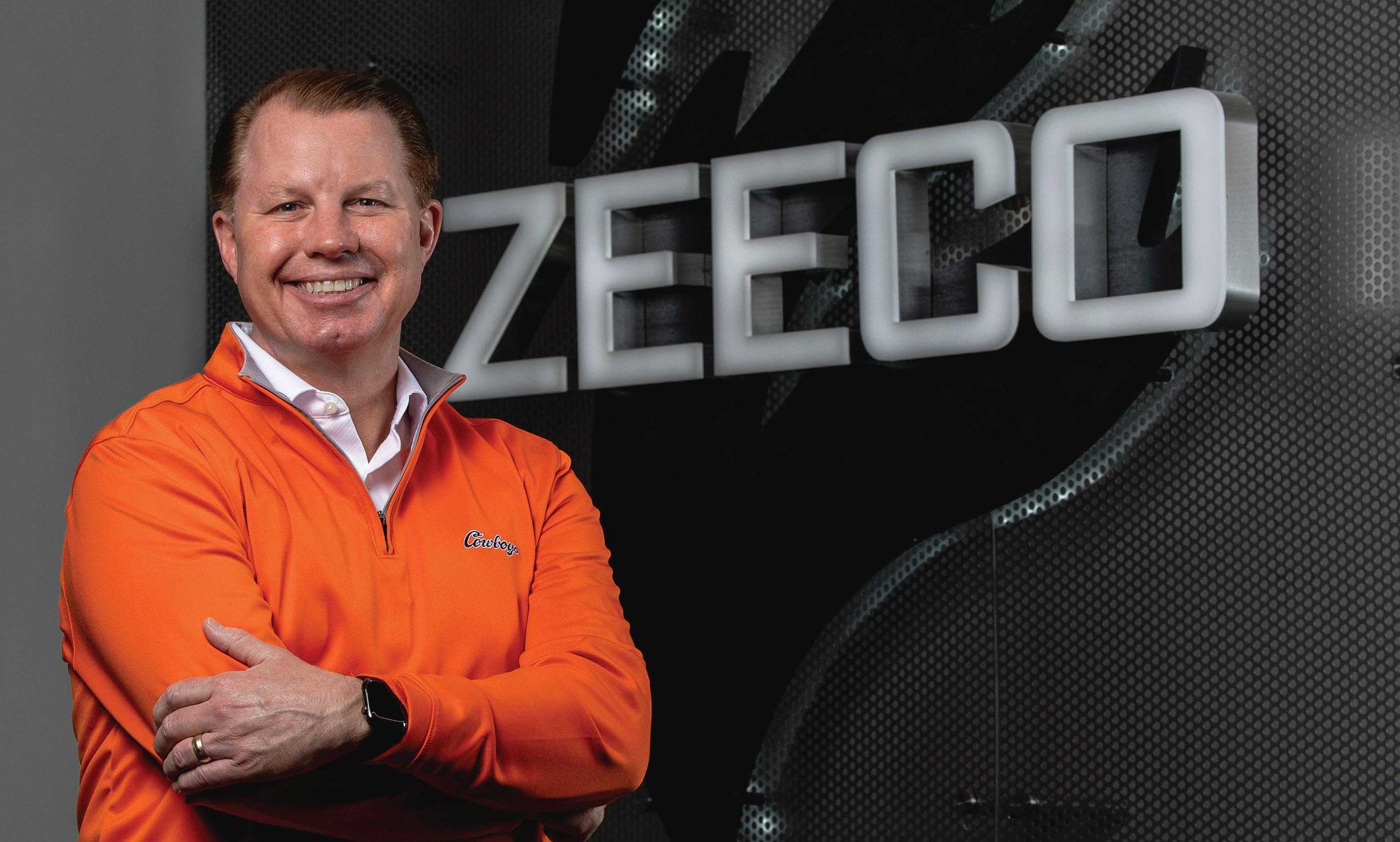
“The mission of the Zink Ranch is really to provide an outdoor space for nonprofit groups,” Jamie explains. “Scouting organizations have permanent facilities there, and a range of other groups use the property in di erent ways throughout the year. We also host high adventure camps focused on outdoor skills and exploration.
“It’s about giving young people the chance to experience things they might not otherwise have access to in Oklahoma.”
That outlook also shapes their support of higher education.
Through their foundation, the family supports OSU students through initiatives such as the Zink Scholars program and the Zink Center for Competitive Innovation within the College of Engineering, Architecture and Technology.
“The workplace is a competition,” Darton says. “You’re competing with other people for jobs, for promotions. You’re part of a team at a company that’s going to rely on you to succeed or fail. I want our OSU students to have what I call an ‘unfair advantage’ when they get out into the workplace. I want them to be better prepared, better equipped, and have the right mindset to go out and succeed and win at what they want to do in life.”
That belief carries into athletics as well. The Zinks have long been among the POSSE’s most committed supporters.
“If we’re going to ask our student-athletes to go out and compete, we need to give them every opportunity to compete and win at the very highest levels,” he says. “I think that’s important, philosophically, but it’s also extremely important for our university.
“The success of our athletic program drives the value of our brand, drives enrollment, drives lots of things that are very important to the long-term success and ability of the institution to thrive.
“If we’re gonna compete, we should compete to win I hate losing.”
Winning, after all, is in Darton’s DNA.
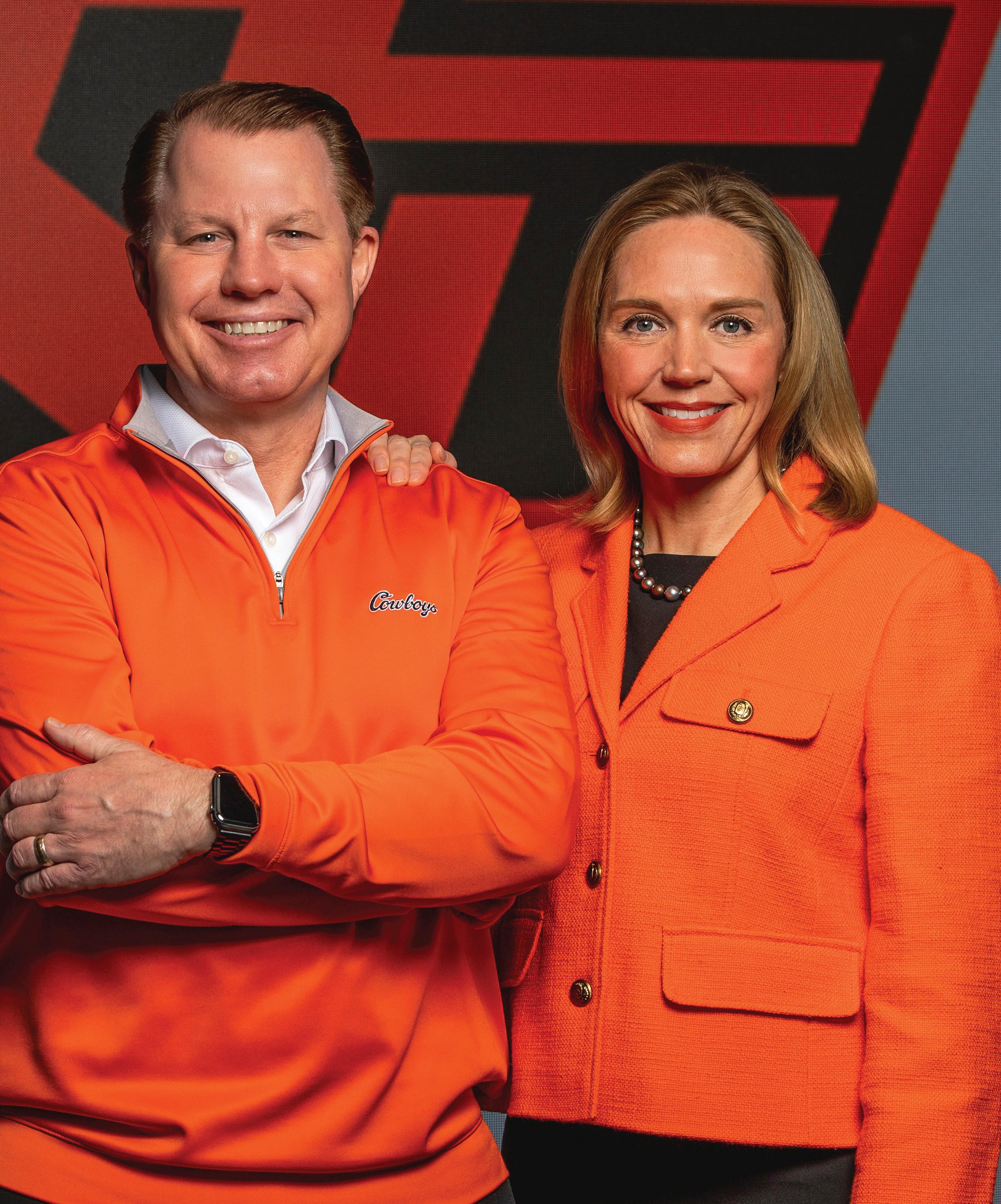
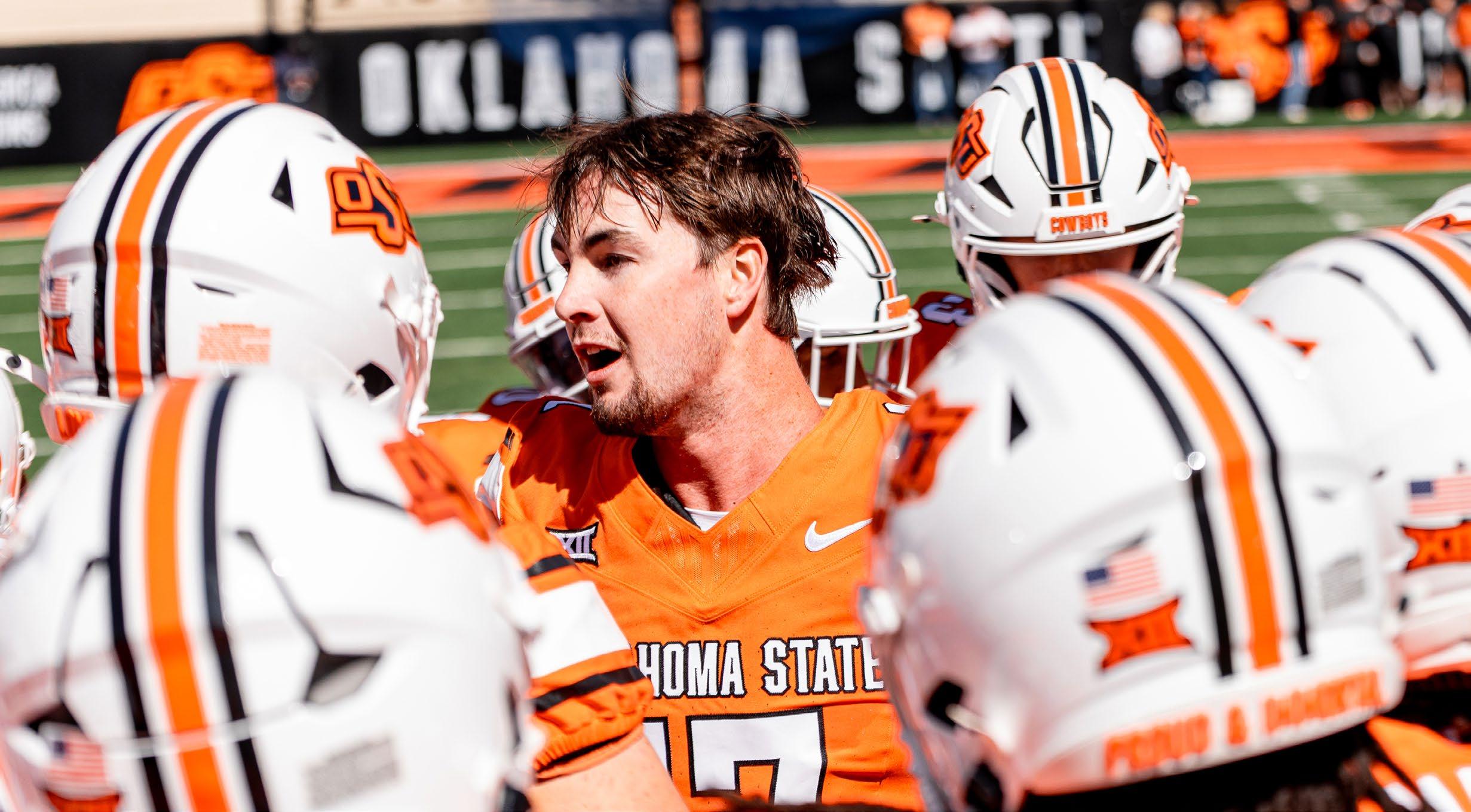
120 Southwest Filter Co.
121 K D Greiner
122 Pokes with a Purpose
123 Ed Evans
124 Austin & Betsy Kenyon
125 Anonymous #3
126 Bill & Karen Anderson
127 Bob Norris
128 Gary & Mary Ellen Bridwell
129 Bob Haiges
130 Brad & Leah Gungoll
131 Robert Sparks
132 Dave Le Norman
133 Randy & Pati Thurman
134 Midfirst Bank
135 David Bradshaw
136 Dava White
137 John & Kaye Hull
138 Joan Welborn
139 Patterson UTI
140 Penny Cupp
141 John Dunn
142 Edge Services
143 Jerry Marshall
144 Kirk & Charlotte Pittman
145 Harvey Yost
146 John Groendyke
147 Emricks Van/Storage
148 Larry Albin
149 Amy & Matthew Huhnke
150 Crossland Construction Co
Quarterback Drew Mestemaker addresses the huddle at the 2026 Cowboy Football spring game. The Austin, Texas, native led the nation in passing yards under Head Coach Eric Morris at North Texas in 2025, and that high-octane o ense will be on display at Boone Pickens Stadium this fall.
The Priority Point System provides a fair, consistent and transparent method of providing benefits to donors in exchange for their financial investments in OSU athletics.
Donors gain points three ways:
Contributions
New in 2025-26: Gifts to the Athletics Excellence Fund will receive fi ve points for every $100. All other Athletics gifts and liftetime contributions (cash or stock) are worth three points per $100 donation. Planned (deferred) gifts in the new Leave a Legacy Endowment Campaign will receive one point per $100.
Donors will earn one point each year for purchasing season tickets (one point per sport annually), as well as one point for each year of POSSE donations.
Connection with the University Donors (or their spouses) who are OSU Alumni receive a one-time 10 point bonus, as do OSU faculty/sta and letterwinners.
Points never diminish and will carry over to subsequent years. Donors retain all previously earned Priority Points in their giving history. For details, email posse@ okstate.edu or call us at 405-744-7301.
HOW DO MY POINTS RANK? as of APRIL 1, 2026
When OSU announced its scholarship endowment initiative, the athletic program was last in the Big 12. Now, more than halfway through the 10-year program, OSU leads the conference.
But we’re not finished yet.
Each dollar freed up through endowed scholarships goes back into our programs. Better equipment. Better facilities. Better support. Each dollar has a direct impact on the lives of our student-athletes.
This is the list of all the generous supporters who have helped to provide a bright Orange future.
They are our Honor Roll.
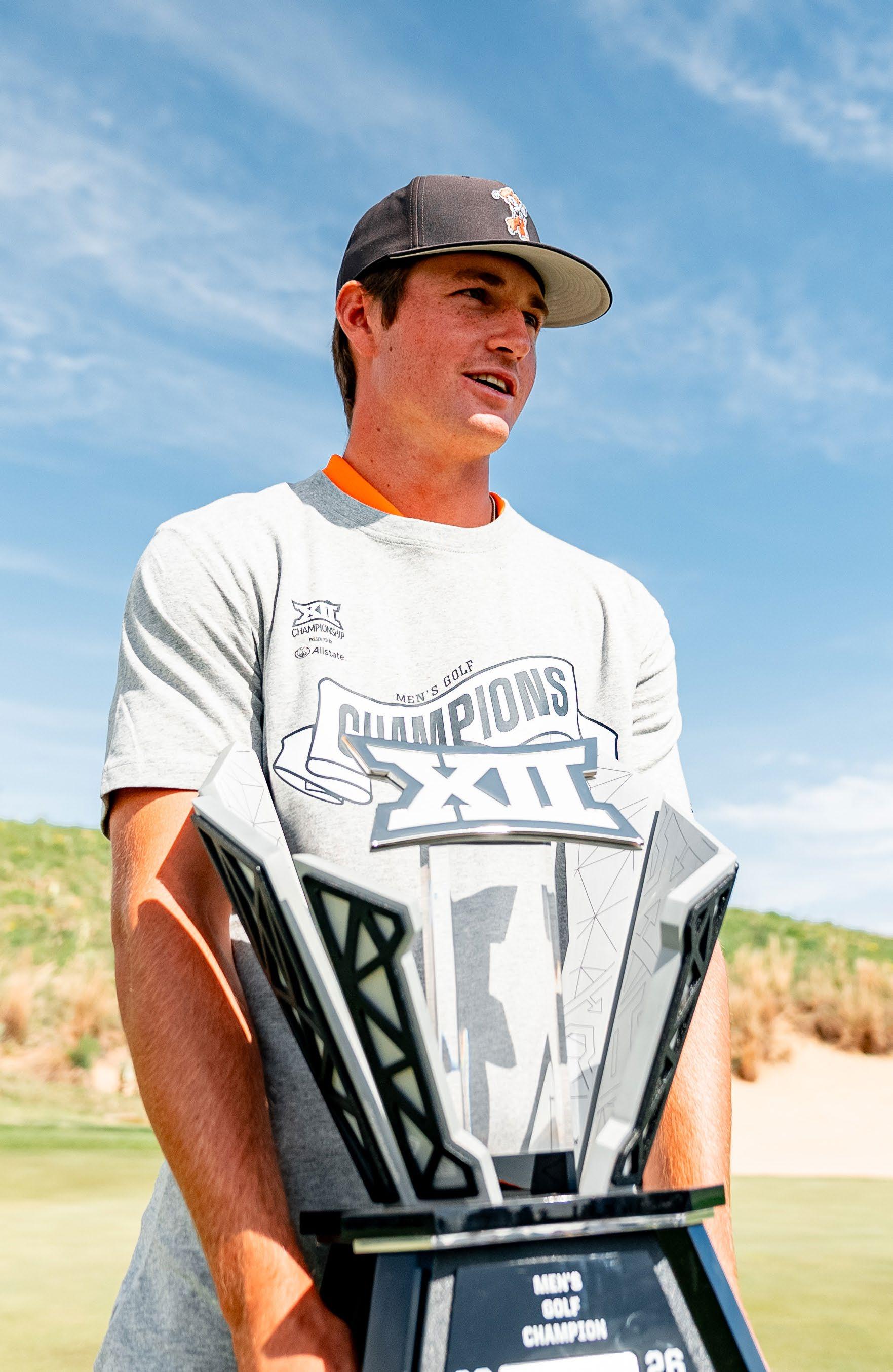
Baseball 11.5
FULL SCHOLARSHIP
Dennis and Karen Wing (3) | Hal Tompkins
Sandy Lee | Jennifer and Steven Grigsby
Mike Bode and Preston Carrier (2)
David and Julie Ronck
HALF SCHOLARSHIP
Sally Graham Skaggs
QUARTER SCHOLARSHIP
Dennis and Luanne Campbell
Bryant and Carla Co man
David and Grace Helmer | Jill Rooker
Martha Seabolt | Dr. Scott Anthony
John and Beverly Williams
Richard and Lawana Kunze
Equestrian 1.25
FULL SCHOLARSHIP
Baloo and Maribeth Subramaniam
QUARTER SCHOLARSHIP
David and Gina Dabney
Football 35.0
FULL SCHOLARSHIP
Bob and Kay Norris
Bryant and Carla Co man / The Merkel Foundation
David LeNorman | Dennis and Karen Wing (3)
Dr. Mark and Beth Brewer
Ike and Marybeth Glass
Jack and Carol Corgan
Jim Click | John and Gail Shaw
Ken and Jimi Davidson | Leslie Dunavant
Mike and Kristen Gundy
Mike and Robbie Holder
Ron Stewart | Ross and Billie McKnight
Sandy Lee | Tom and Sandra Wilson
Wray and Julie Valentine
James and Mary Barnes
HALF SCHOLARSHIP
Cindy Hughes | Donald Coplin
Doug Thompson | Ed and Helen Wallace
R. Kirk Whitman | Greg Casillas
Jim and Lynne Williams / John and Patti Brett
Mike and Judy Johnson | Sally Graham Skaggs
State Rangers | Tom Naugle | Nate Watson
QUARTER SCHOLARSHIP
Al and Martha Strecker
Arthur “Andy” Johnson, Jr.
Arthur Couch | Barry and Roxanne Pollard
Bill and Ruth Starr | Brad and Leah Gungoll
Brian K. Pauling
Bridgecreek Investment Management LLC
Bryan Close | David and Cindy Waits
David and Gina Dabney | Dr. Berno Ebbesson
OSU's Preston Stout became the first Big 12 golfer to win three individual conference titles. The junior shot an 11-under 269 to lead the Cowboys to another league record — a 13th team trophy — at the 2026 Big 12 Championship, held at Prairie Dunes Country Club. Overall, OSU has won an incredible 58 conference titles.
Dr. Ron and Marilynn McAfee
Eddy and Deniece Ditzler | Flintco
Fred and Janice Gibson | Fred and Karen Hall
Howard Thill | James and LaVerna Cobb
Jerry and Lynda Baker | John P. Melot
Jerry and Rae Winchester
John S. Clark | Ken and Leitner Greiner
Kent and Margo Dunbar | Paul and Mona Pitts
Les and Nancy Austin
Randall and Carol White | Shelli Osborn
Roger and Laura Demaree
Steve and Diane Tuttle
Tony and Finetta Banfield
General 1.75
HALF SCHOLARSHIP
Terry and Martha Barker
James C. and Frances M. Harrison
QUARTER SCHOLARSHIP
David and Judy Powell
Kenneth and Susan Crouch
Sally Graham Skaggs
Graduate Athlete 0.75
QUARTER SCHOLARSHIP
Bob and Joan Hert | Neal Seidle
Tom and Cheryl Hamilton
Men's Basketball
24.5
FULL SCHOLARSHIP
Baloo and Maribeth Subramaniam
A.J. and Susan Jacques
Bill and Marsha Barnes
Brett and Amy Jameson
Calvin and Linda Anthony
Chuck and Kim Watson
David and Julie Ronck (1.25)
Dennis and Karen Wing (3)
Douglas and Nickie Burns
Gri and Mindi Jones
James and Mary Barnes | Jim Vallion
Ken and Jimi Davidson
Kent and Margo Dunbar | KimRay Inc.
Sandy Lee | Mitch Jones Memorial
HALF SCHOLARSHIP
David and Julie Ronck
Dr. Mark and Susan Morrow
Jay and Connie Wiese | Sally Graham Skaggs
Stan Clark | Billy Wayne Travis
Holloman Family
QUARTER SCHOLARSHIP
Dr. Scott and Lynne Anthony
Gary and Sue Homsey
Michael and Heather Grismore
Rick and Suzanne Maxwell
Robert and Sharon Keating
Steve and Suzie Crowder
Terry and Donna Tippens Men's
FULL SCHOLARSHIP
David and Julie Ronck
Dennis and Karen Wing
Jack and Carol Corgan
Bob and Elizabeth Nickles
Genevieve A. Robinson
Baloo and Maribeth Subramaniam
HALF SCHOLARSHIP
Simmons Bank
QUARTER SCHOLARSHIP
Garland and Penny Cupp
Richard and Joan Welborn
QUARTER SCHOLARSHIP
Tom and Cheryl Hamilton
HALF SCHOLARSHIP
Jim McDowell Men's Men's Track 0.75
QUARTER SCHOLARSHIP
Dr. Mark and Susan Morrow
Susan Anderson | Ken and Leitner Greiner
HALF SCHOLARSHIP
Mary Jane and Brent Wooten Soccer 1.0
FULL SCHOLARSHIP
James and Mary Barnes
QUARTER SCHOLARSHIP
Tom and Cheryl Hamilton
Richard Melot
Ann Dyer
FULL SCHOLARSHIP
Brad and Margie Schultz
Ken and Jimi Davidson
Mike Bode and Preston Carrier (2)
HALF SCHOLARSHIP
Baloo and Maribeth Subramaniam
Don and Mary McCall
John and Caroline Linehan
Calvin and Linda Anthony
QUARTER SCHOLARSHIP
Bill and Roberta Armstrong
Dennis and Luanne Campbell
Bill and Sally Cunningham
Donald Coplin | Jill Rooker
Richard and Linda Rodgers
Jo Hughes and Deborah J. Ernst
Richard Melot
Women’s Golf 3.0
FULL SCHOLARSHIP
Baloo and Maribeth Subramaniam
Genevieve A. Robinson
Louise Solheim
HALF SCHOLARSHIP
David and Julie Ronck | Dena Dills Nowotny
QUARTER SCHOLARSHIP
Amy Weeks | Kent and Margo Dunbar
Women’s Tennis 0.5
QUARTER SCHOLARSHIP
Jamie Maher
Richard Melot
FULL SCHOLARSHIP
A.J. and Susan Jacques
Bruce and Nancy Smith
Chuck and Kim Watson
Lon and Jane Winton
OSU Wrestling – White Jacket Club / Gallagher Endowed Wrestling Scholarship
OSU Wrestling – White Jacket Club / Myron Roderick Endowed Wrestling Scholarship
OSU Wrestling – White Jacket Club / Ray Murphy Endowed Wrestling Scholarship
OSU Wrestling – White Jacket Club / Tommy Chesbro Endowed Wrestling Scholarship
The Cobb Family
HALF SCHOLARSHIP
Mike and Glynda Pollard
Mark and Lisa Snell
Bobby and Michelle Marandi
QUARTER SCHOLARSHIP
Danny and Dana Baze / Cory and Mindy Baze
Kyle and Debbie Hadwiger
John and Beverly Williams | R.K. Winters
To learn more about how you can contribute, please contact:
Brakston Brock (405-744-9130)
Matt Grantham (405-744-5938)
Andrew Hamor (405-744-4530)
Daniel Hefl in (405-744-7301)
Larry Reece (405-744-2824)
Shawn Taylor (405-612-0632)
Cowboy Football head coach
Eric Morris poses with Cowboy VIPs Vance Hunter and Gary Humphreys, along with pom squad members Ava Ramirez and Kaidence Tippens, at the 2026 POSSE Auction. Coach Morris drove away with the winning bid for the John Deere lawn tractor (donated by P&K Equipment) after Hunter and Humphreys each won the live auction item and immediately donated it back, essentially tripling its fundraising impact. That type of generosity helped raise more than $400,000 for the Excellence Fund!

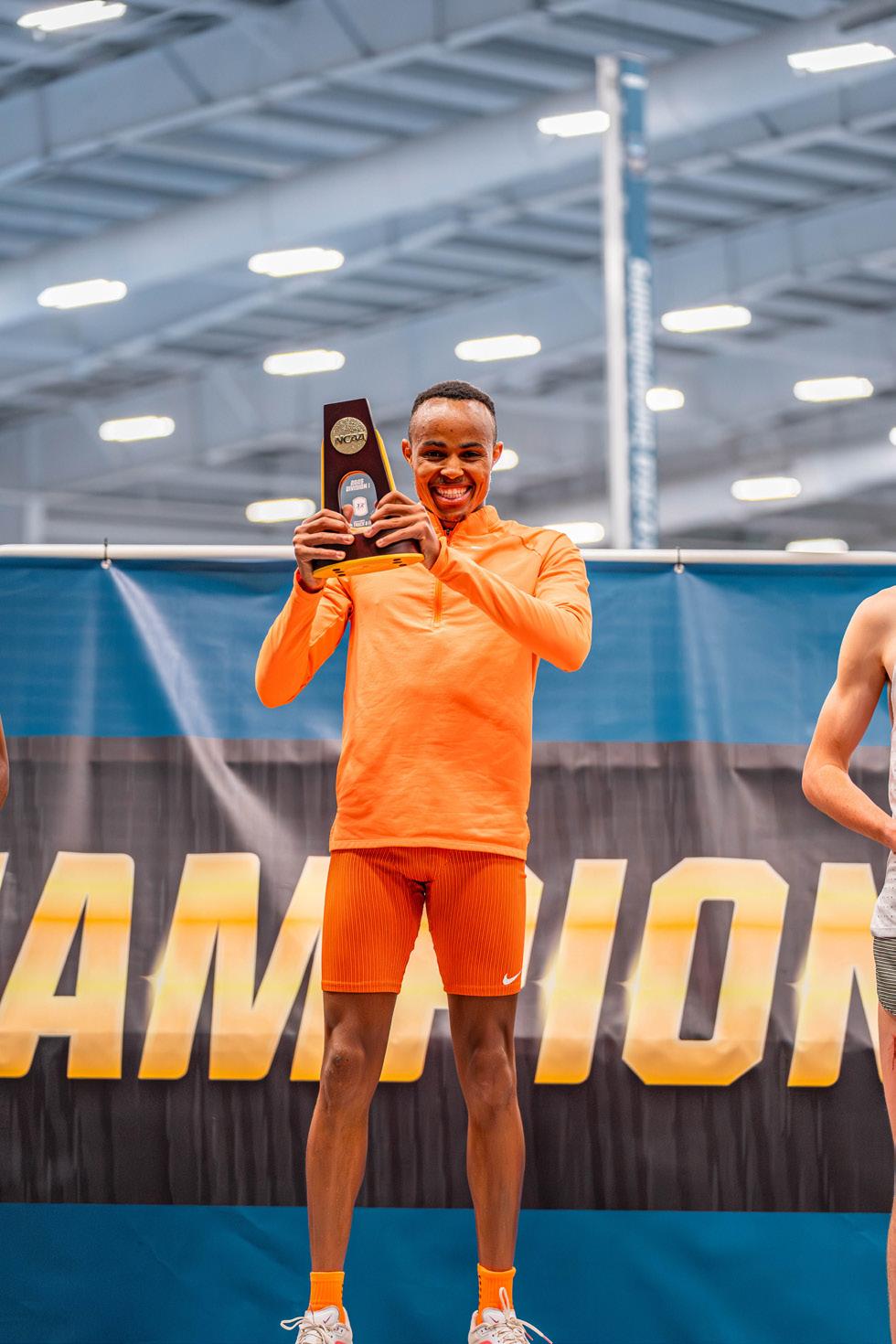
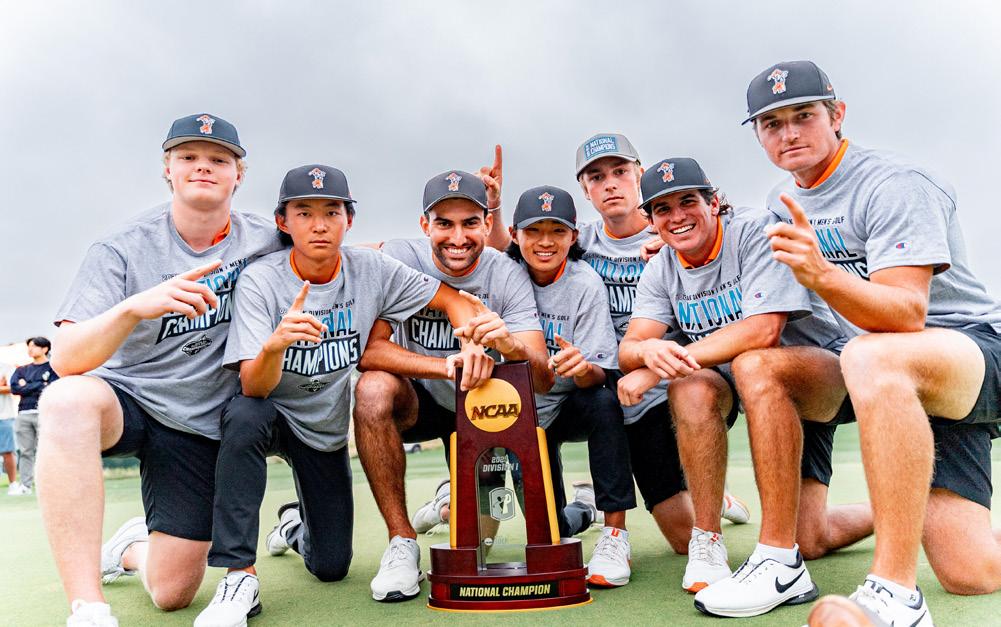
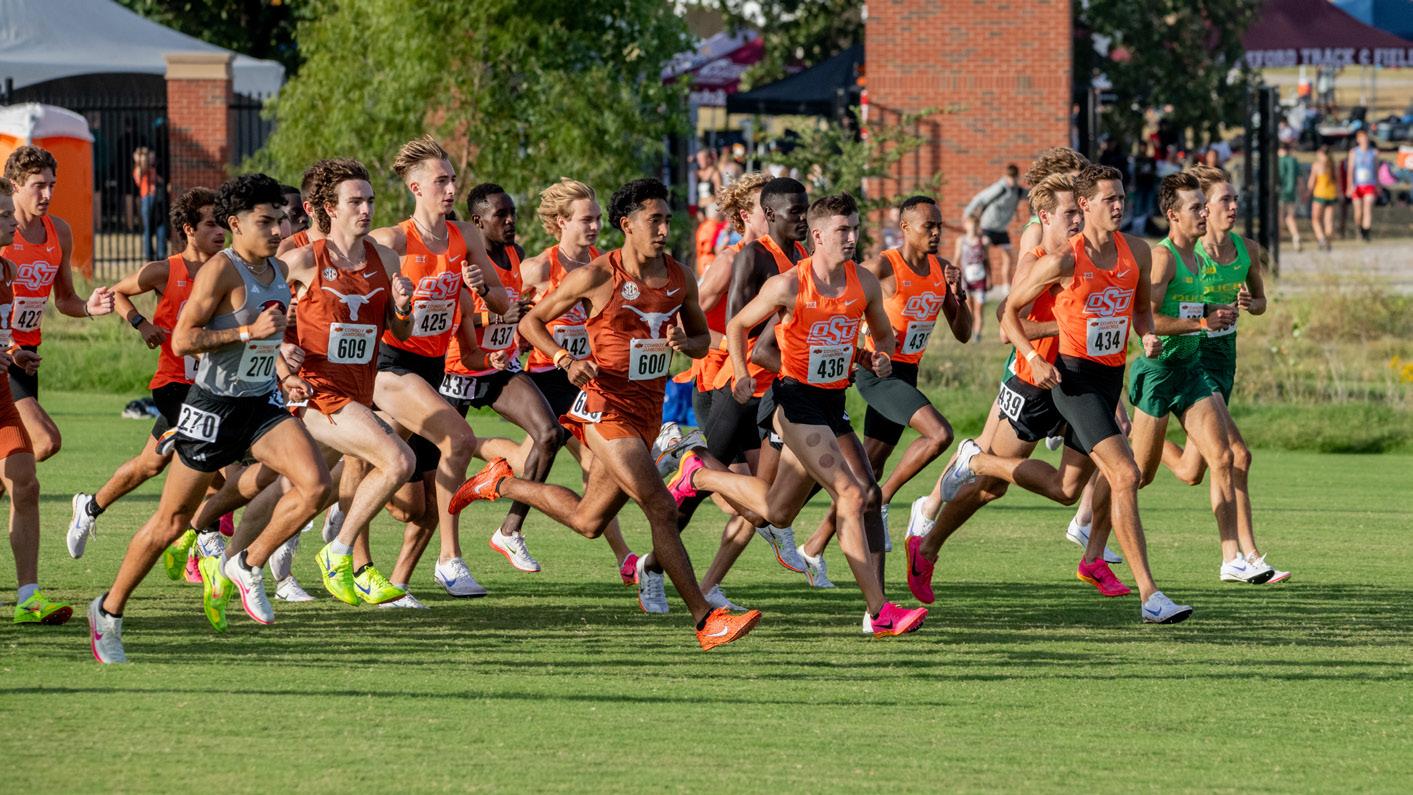
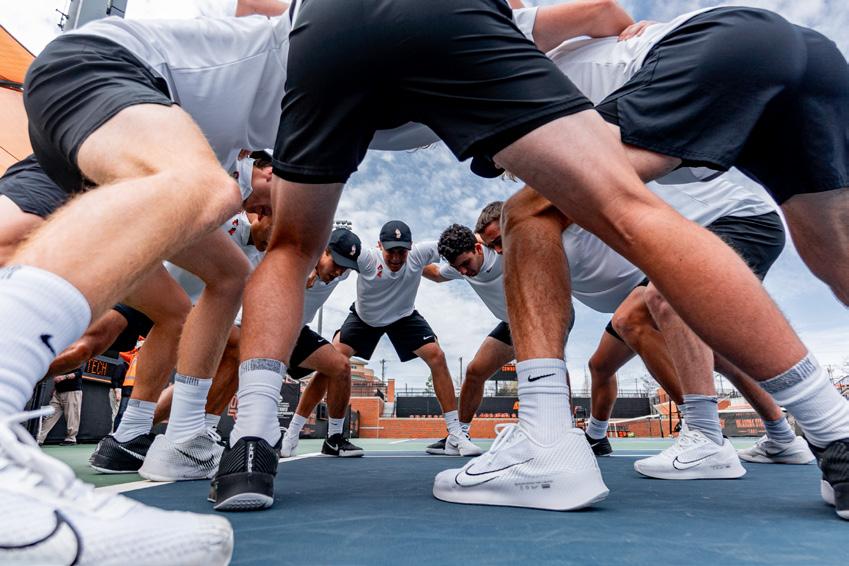
Revenue Sharing Scholarships
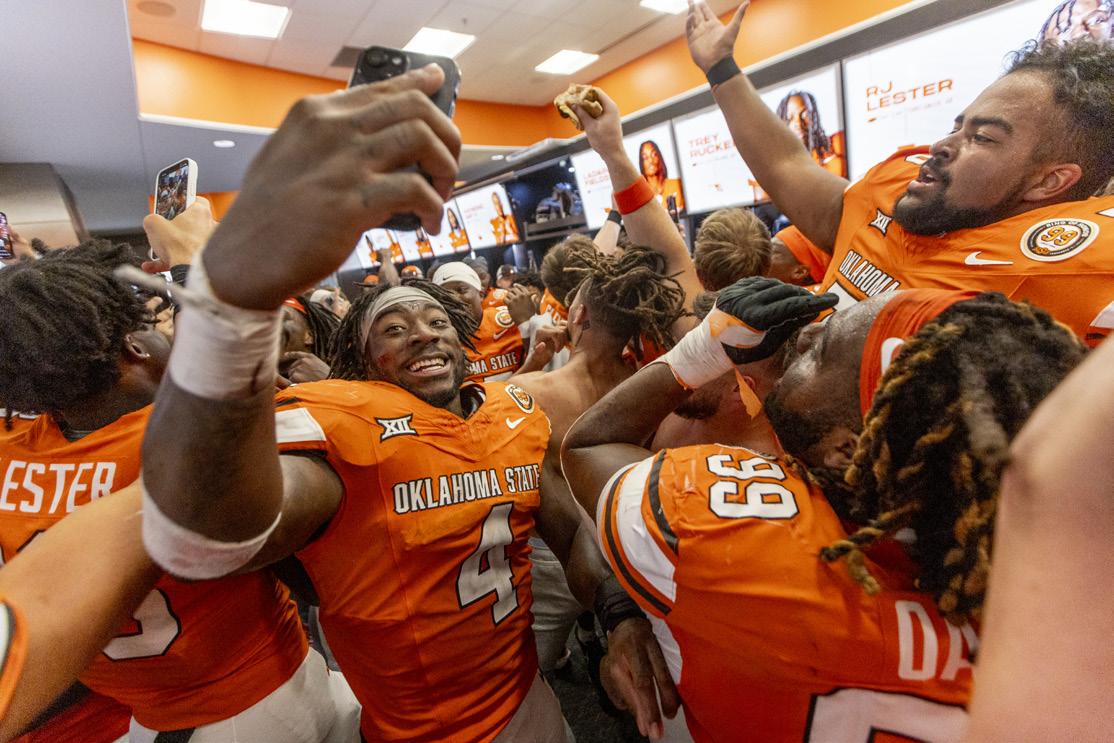
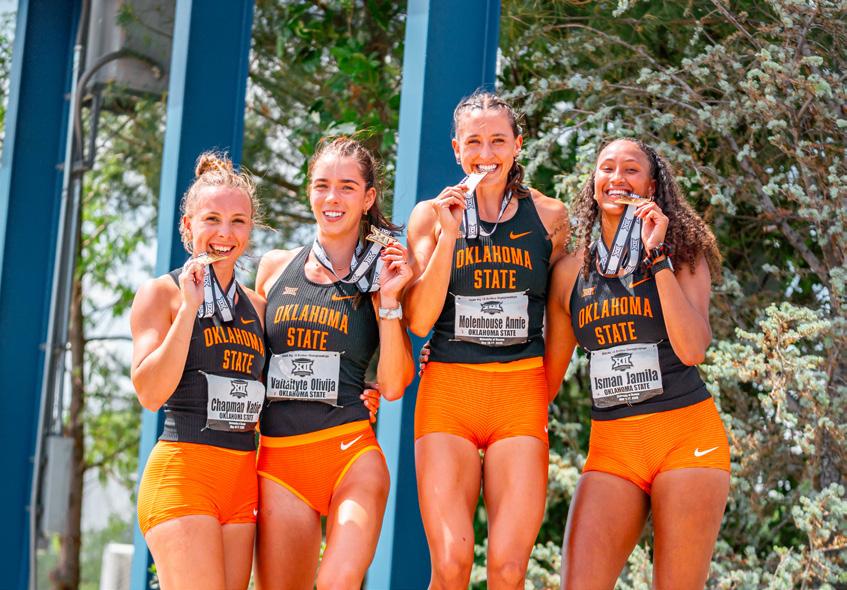
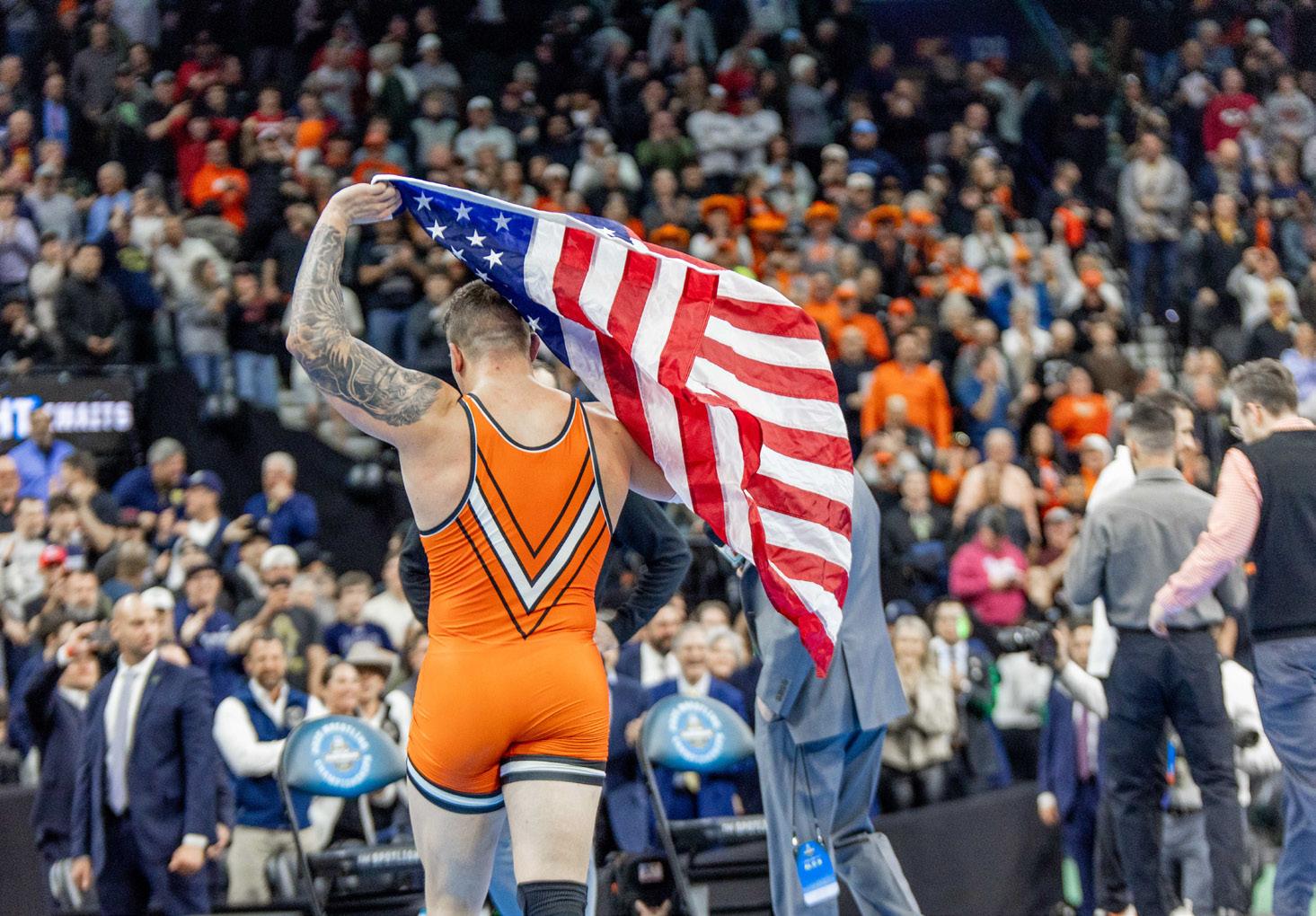
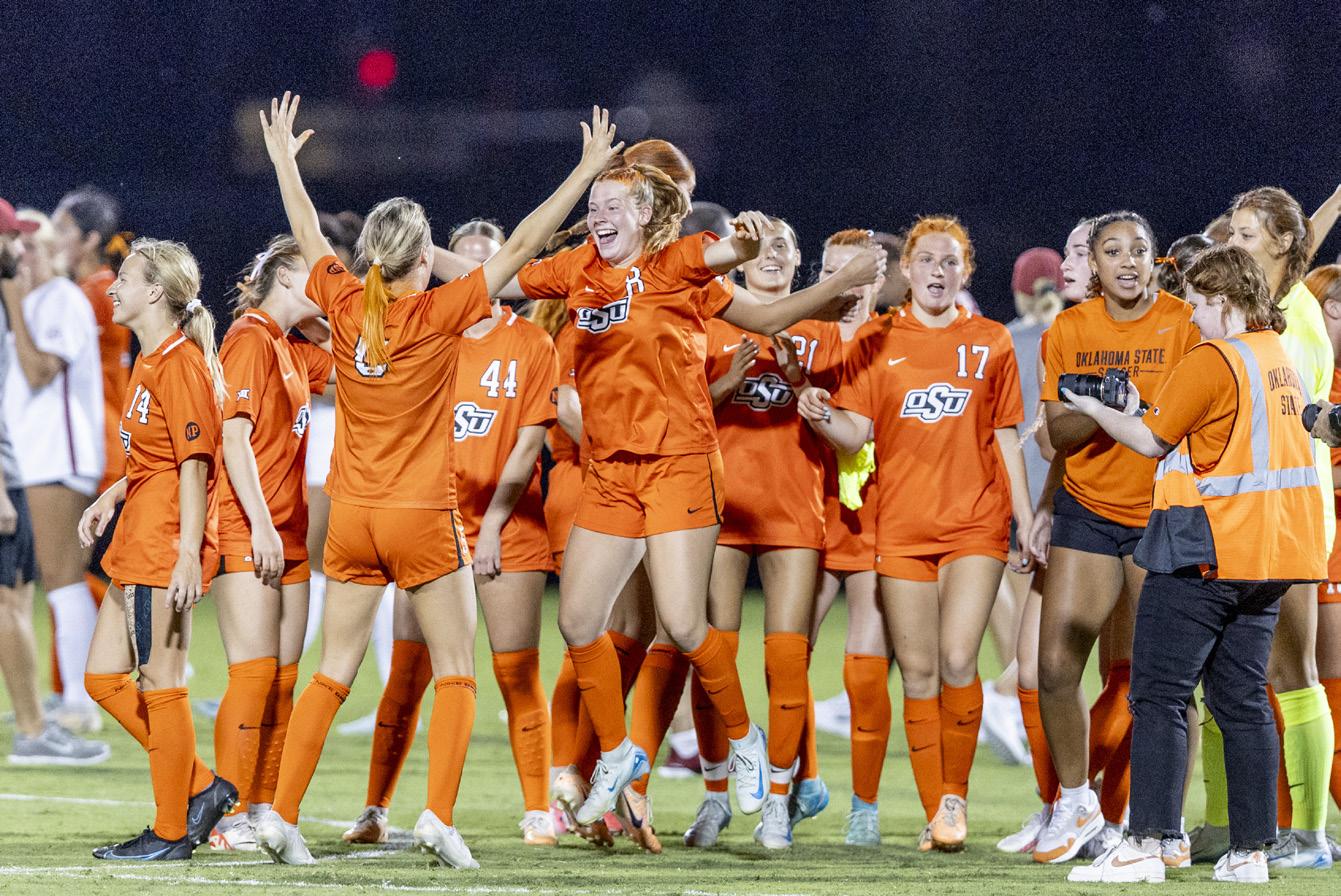
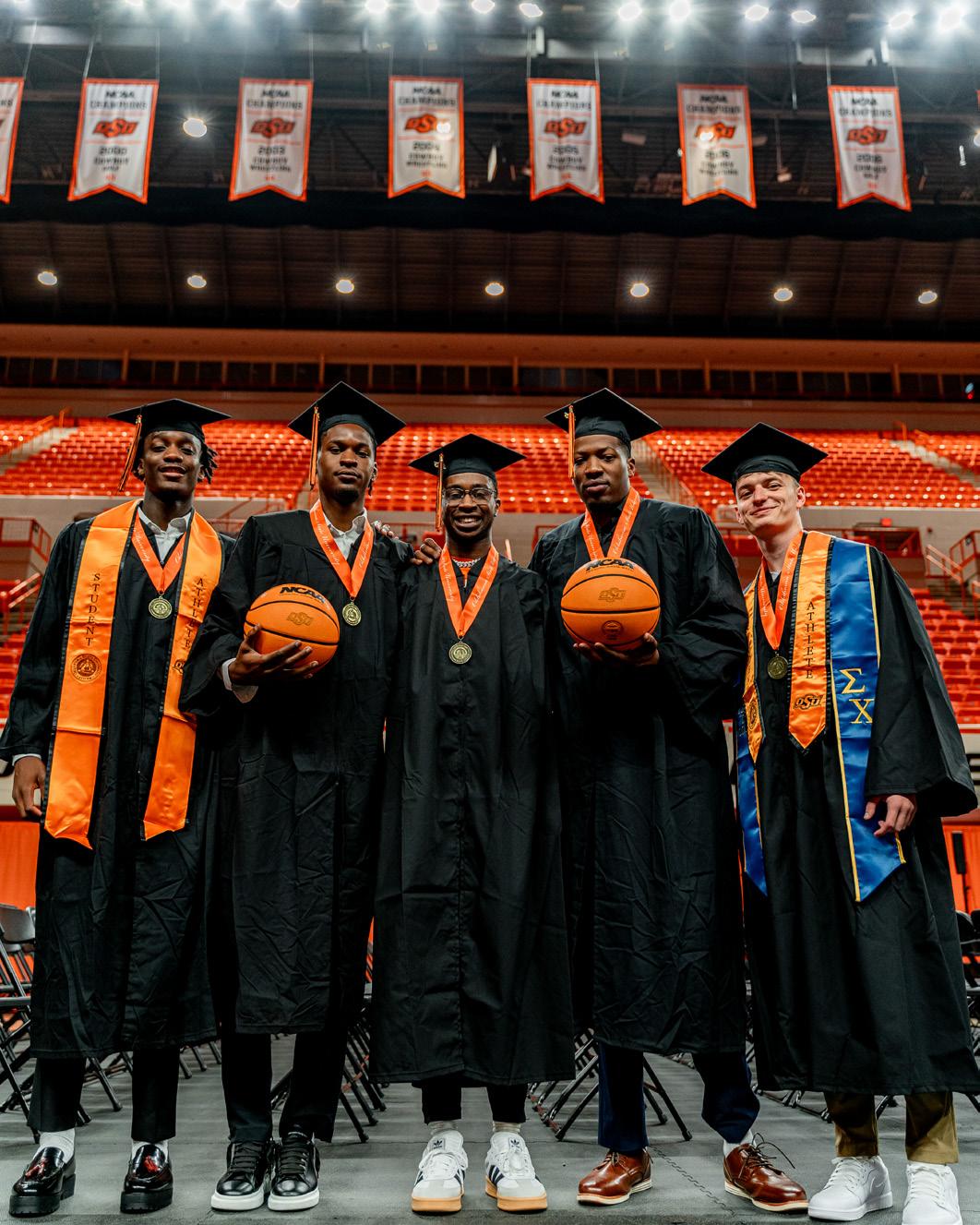
Academic Support
Nutritional Services
Strength & Conditioning Team Travel
Facility Projects And more
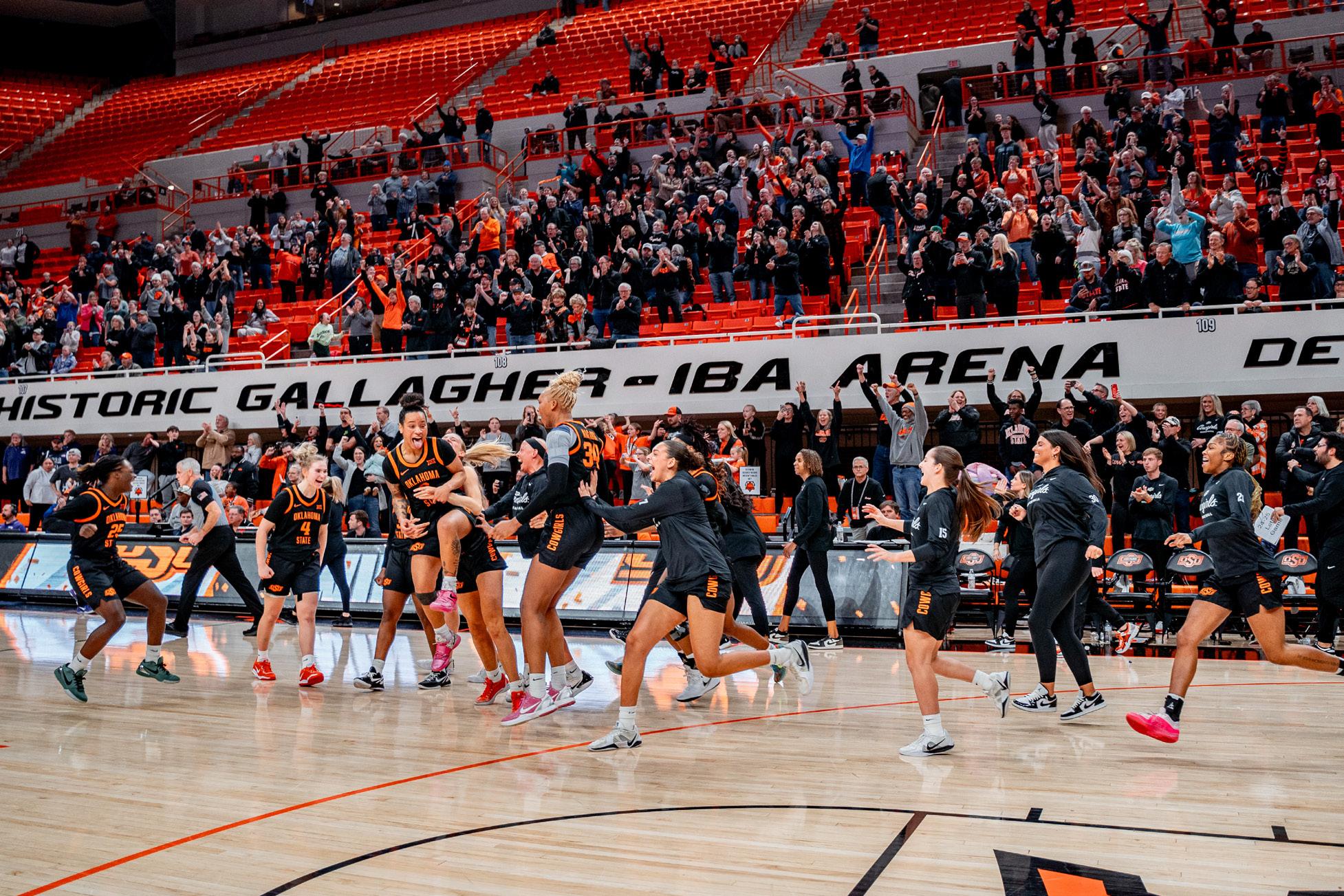
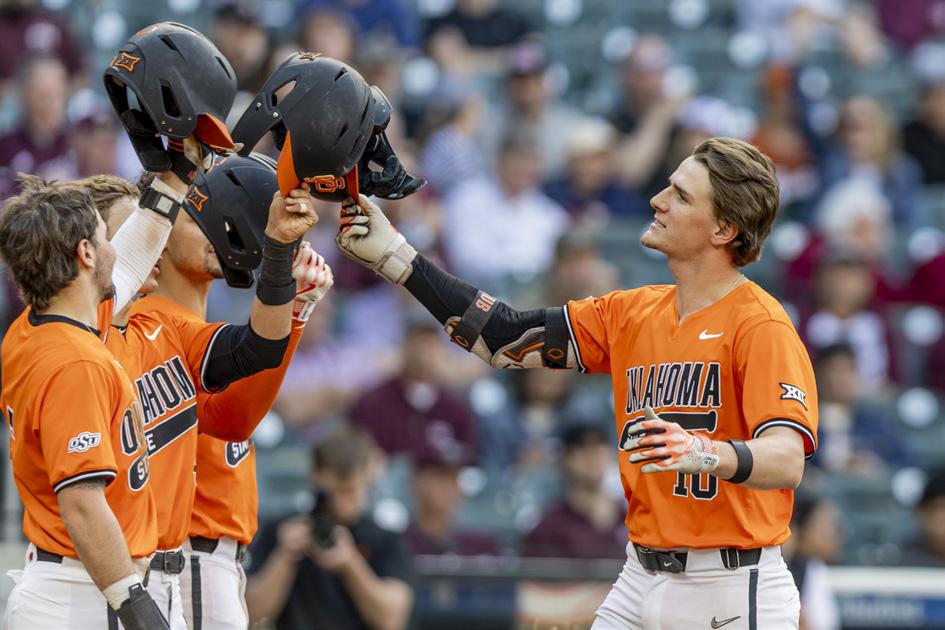
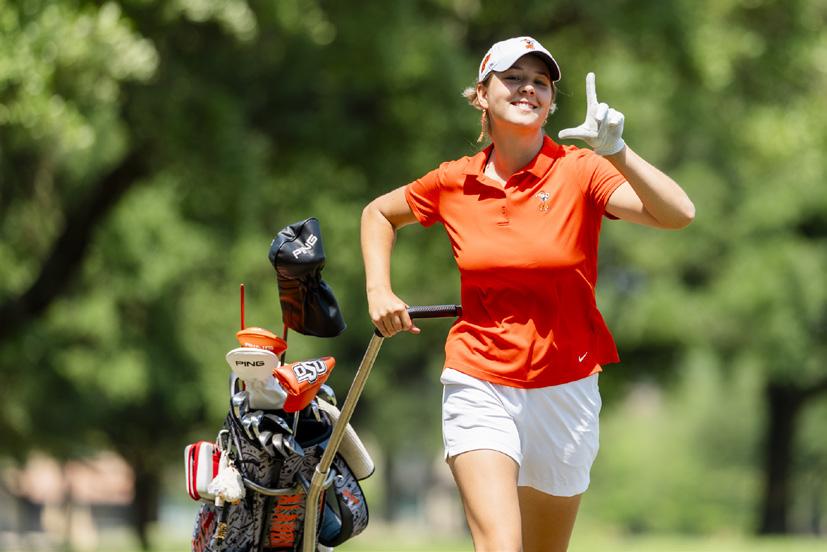
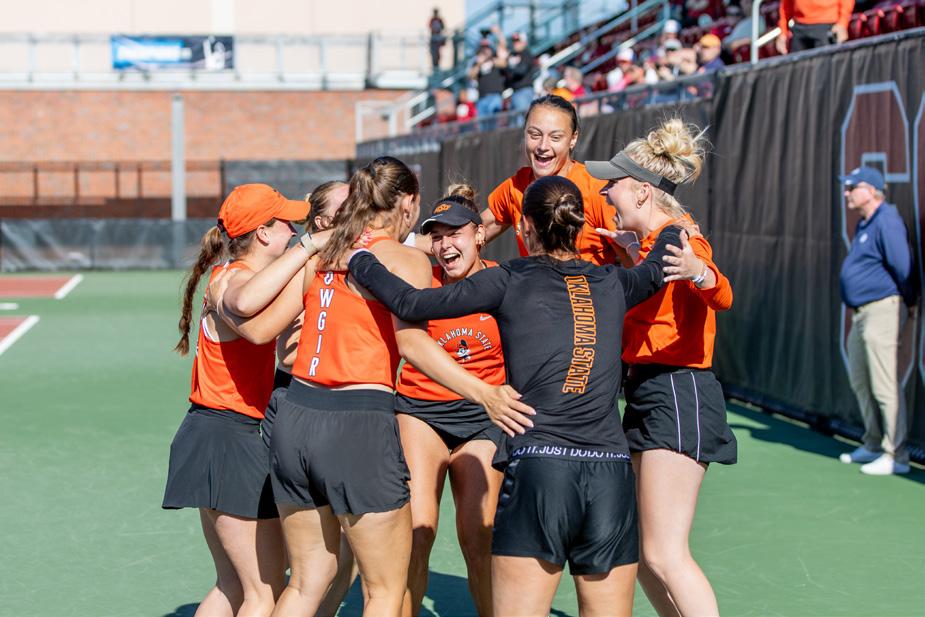
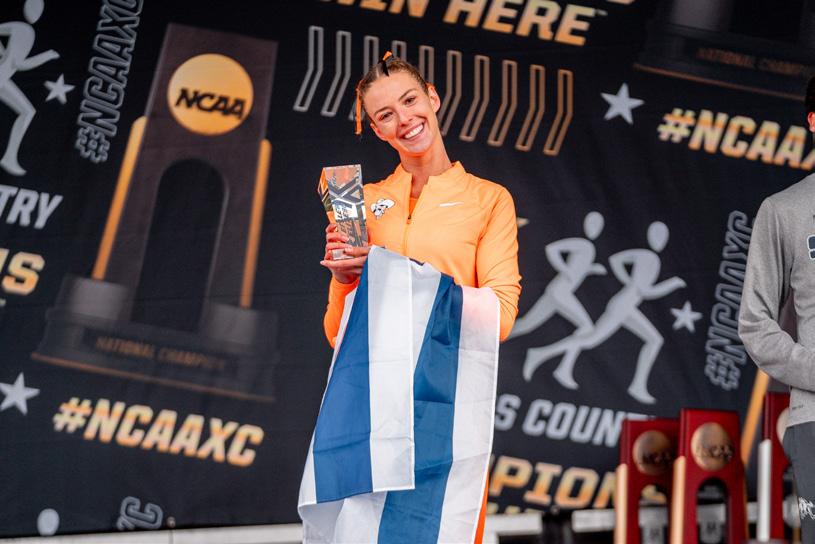
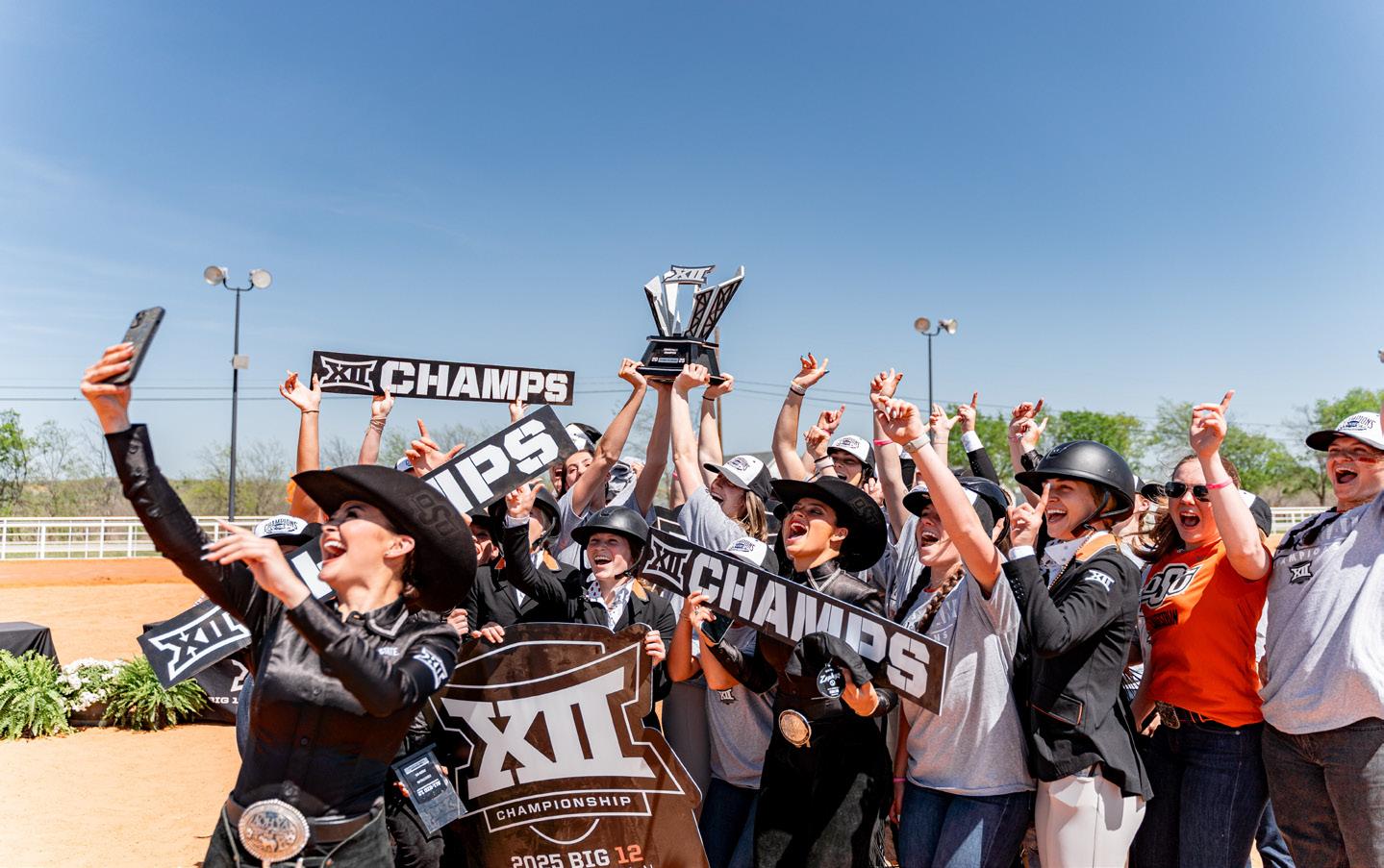
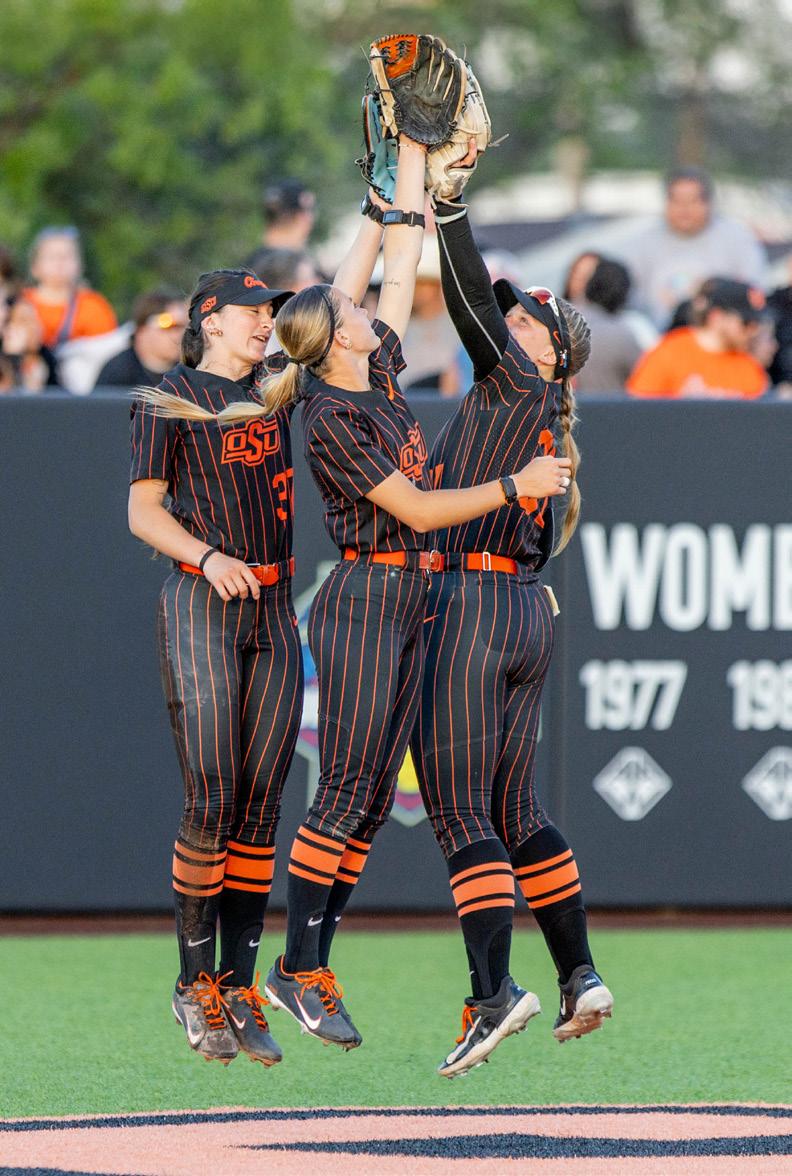






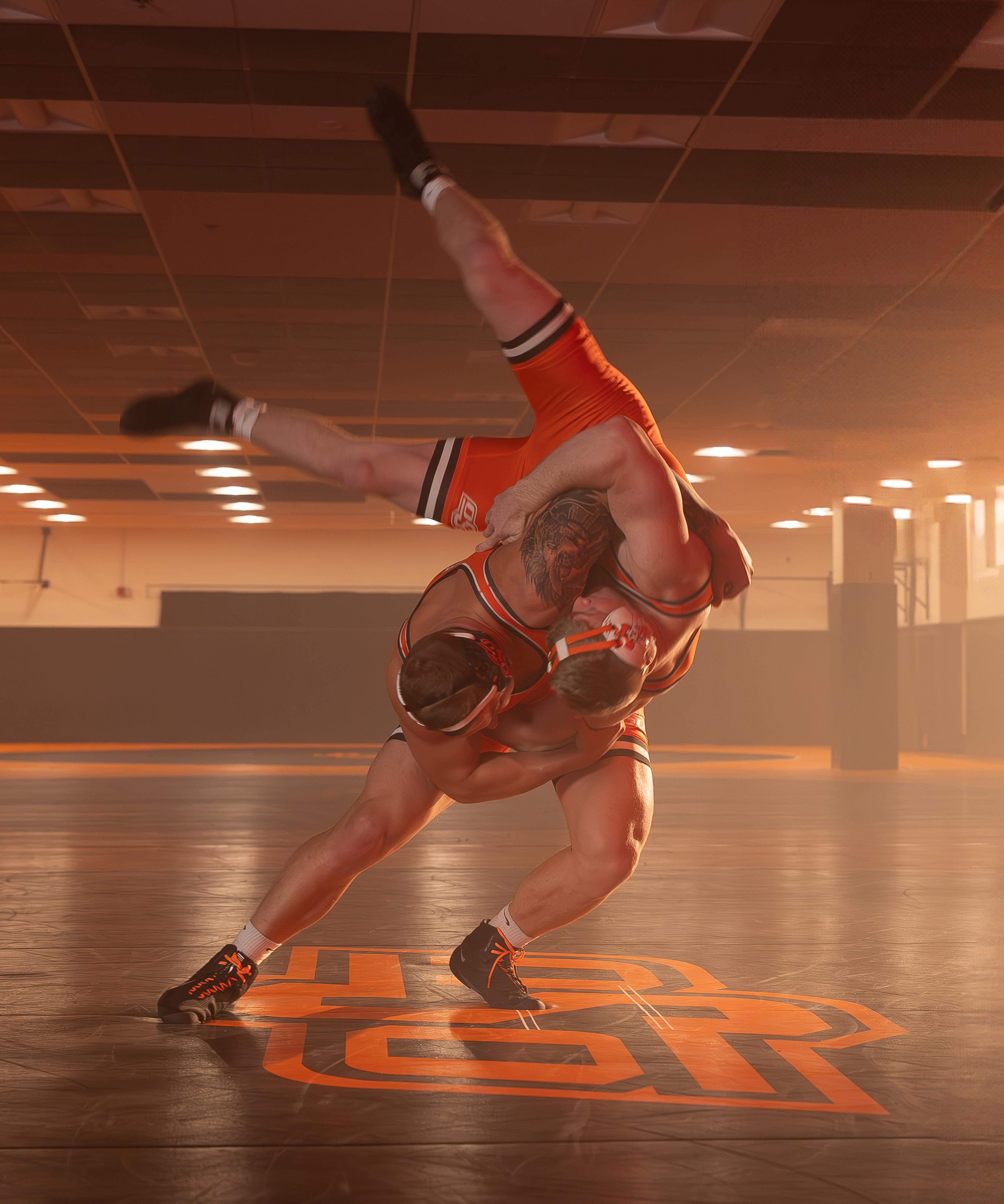
The Code Calls — OSU’s historic fundraising campaign — will unlock opportunity, fuel innovation and elevate the Cowboy legacy, all grounded in the grit and generosity of the Cowboy Code. Every gift strengthens scholarships, learning, leadership and the communities we serve. Invest in OSU’s future today!

FORMER COWGIRL STAYS TRUE TO HERSELF WHILE SHATTERING SHOT PUT RECORDS
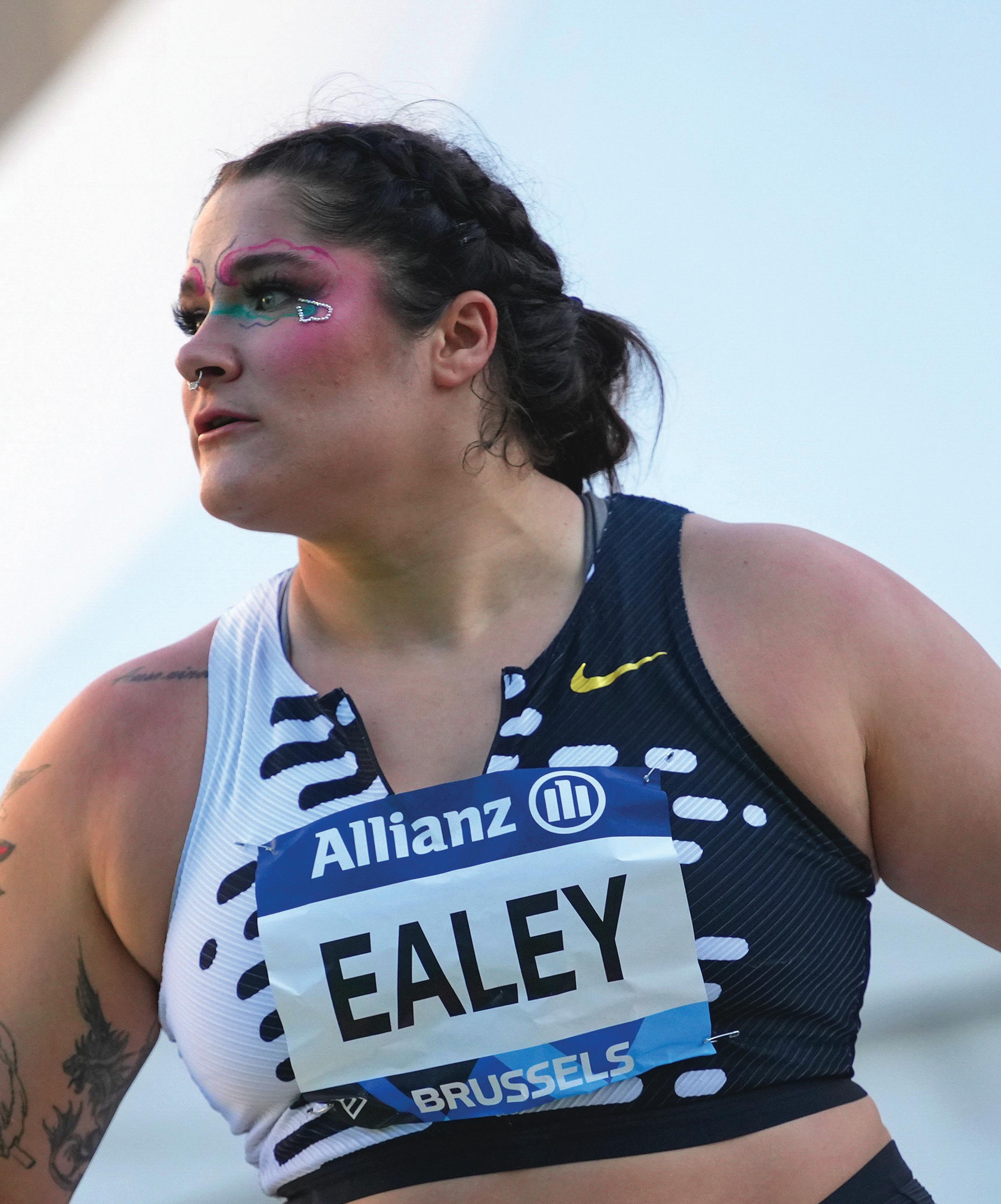
Chase Jackson arrived at the 2022 World Athletics Championships in Eugene, Oregon, with renewed confidence.
After months of illness and obstacles, the former Oklahoma State University track and field standout regained her strength as a professional athlete competing in women’s shot put. Undefeated during that outdoor season, she had momentum.
More importantly, Jackson had joy, which glowed on her face like the gems dotting her bright eyeshadow.
“The biggest thing is, I was just having fun again,” said Jackson, who competed under her maiden name (Ealey) before her marriage to Mitch Jackson in 2024. “I was loving it.”
Unafraid, she hurled the 8.8-pound metal ball as far as possible.
Jackson’s first attempt of 20.49 meters was the best of the day, making her the first American woman to win the world championship in shot put.
The next year, she won again in Budapest, Hungary.
Since etching her name in OSU’s track and field records as a three-time All-American from 2013-16, Jackson has grown into a living legend. The former Cowgirl from Los Alamos, New Mexico, is the world’s top-ranked athlete in women’s shot put, inspiring young girls while bringing more spotlight to professional throwers.
Jackson, 31, will be inducted into the OSU Athletics Hall of Honor on Oct. 9 with the extensive resume of a much older athlete. She is the first and only woman from OSU to claim individual world titles in any event. She holds the North American women’s indoor shot-put record (20.44 meters) and the national outdoor record (20.95 meters). Jackson is also an Olympian who competed for Team USA in the 2024 Paris Games
Despite these feats, Jackson’s road as a professional thrower has been anything but smooth. Roadblocks have jeopardized her career, yet she continually took necessary risks that led to major breakthroughs.
“Because I’ve had to fight so hard for it,” Jackson said, “it’s helped me keep going.”
The talented artist behind the elaborate, bold competition makeup she wears has stayed true to herself through it all.
Jackson didn’t plan to work as a delivery driver after obtaining her bachelor’s degree in psychology from OSU. But if she wanted to make ends meet while pursuing her dream of becoming a pro athlete, she had no choice.
“I wasn’t making money,” Jackson said. “It was rough. I moved to Arizona, and then I was working. I was doing
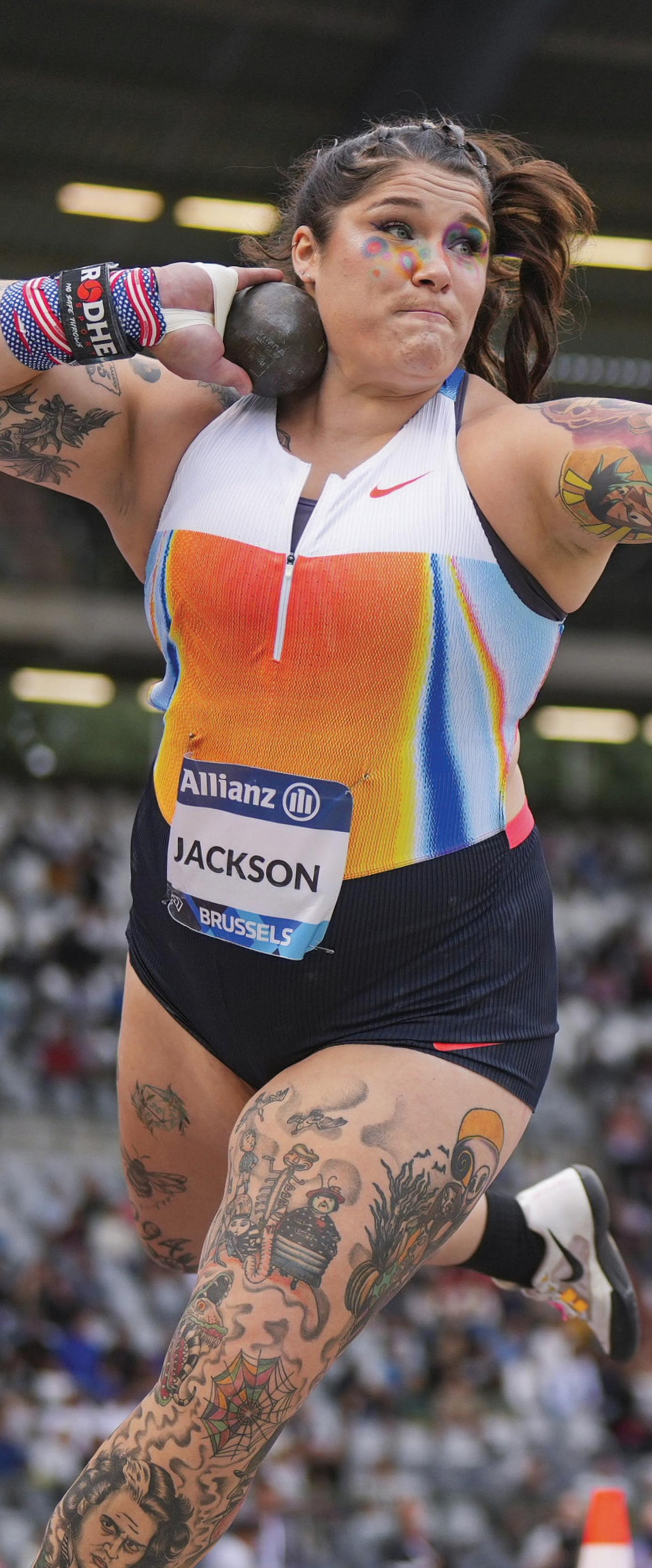
PRESSURE EITHER SMUSHES YOU OR MAKES A DIAMOND, AND UNFORTUNATELY, I GOT SMUSHED. BUT WE’RE GOING TO MAKE DIAMONDS IN L.A.”

Uber Eats. I was doing anything to make it work.”
Brand sponsorship opportunities are limited for throwers, and Jackson didn’t realize she wanted to pursue a pro career until she was almost finished with college. These factors meant she spent two years trying to go pro without a sponsor taking a chance on her. Still, Jackson refused to settle for an o ce job, which would have meant giving up on her sport.
She wasn’t about to undo the incredible progress that led her there.
Jackson’s unlikely story as a thrower started at Los Alamos High School, where she played basketball, volleyball, soccer and softball. Baseball would have made that list if girls had been allowed on the team.
Track and field? Not a priority. When Jackson quit softball, she saw track and field as simply a way to stay in shape during the o season. While she thrived as a state champion sprinter, she competed in field events to spend time with her older sister, a thrower.
The result was remarkable. Jackson claimed back-to-back state titles in shot put.
“It was kind of an accident,” Jackson said.
The happy accident morphed into a conscious choice. Over time, Jackson realized an individual sport suited her better than the team sports she played in high school, and she appreciated how throwers focused on building strength without scrutinizing women’s bodies in unhealthy ways.
John Baumann, then OSU’s throwing coach, visited Los Alamos to recruit Jackson, and the rest is history.
Jackson, a proud alumna who enjoys returning for Cowboy football games, considers her four years at OSU to be a formative experience. She played a key role in OSU’s track and field success under head coach Dave Smith, too. The Cowgirls’ program records in the indoor and outdoor shot put still belong to Jackson.
“That’s where I learned more about what I could do,” Jackson said. “From an athletic perspective, being part of a team but only relying on yourself, I think that’s what has helped me in my success now. It really helped me grow as an athlete to be self-reliant.”
Jackson leaned on that self-reliance when she tried to make it as a pro athlete before she had an agent or sponsors. All she needed was one big break to change her circumstances.
“I just kept waiting for my shot,” Jackson said. “Eventually, I got it in China when they allowed me to go to a Diamond League event there, and I won.”
In 2019, Jackson o cially turned pro. She received a Nike sponsorship and joined the circuit, which meant she regularly competed in major global events such as Diamond League competitions.
At last, Jackson achieved her ultimate dream. A few years later, however, an unpredictable circumstance tested her perseverance again.
When Jackson arrived in the United Kingdom for a training camp in January 2022, she needed a fresh start.
The past year had taken a mental and physical toll on her. With damaged smell receptors and a weakened appetite because of COVID-19, Jackson lost 68 pounds in two months — a devastating setback in a strength-focused sport.
She could have called it quits.
Instead, Jackson extended her time overseas, dedicated herself to training and emerged as a world champion in a matter of months.
Paul Wilson, Jackson’s coach in the U.K., guided her as she eased back into competing in Europe before returning to the U.S. for Worlds.
“I was doing a lot of competitions — not doing them well, by any means, but I just kept working with my coach,” Jackson said. “I was more relaxed. I stopped thinking about how the sickness had messed me up. Instead of still holding onto that, I just started having fun again.”
Jackson’s time across the pond changed her life in another unexpected way. She met her husband, Mitch, a former Strongman competitor who is now a strength trainer for Chase and other pro athletes.
With happiness in her personal life and professional career, Jackson began to reach new heights as a thrower. At the 2022 World Athletics Indoor Championships, she finished as the runner-up while tying Michelle Carter’s all-time American women’s indoor record of 20.21 meters.
Accolades stacked up. Jackson won back-to-back World Athletics Outdoor Championships, starting with her historic performance in Eugene. She qualified for the 2024 Paris Olympics. Although Paris didn’t go the way she wanted, she learned a valuable lesson about the pressure that comes with entering the Olympics as the favorite, sparking her fire to go for gold in the upcoming 2028 Los Angeles Olympic Games
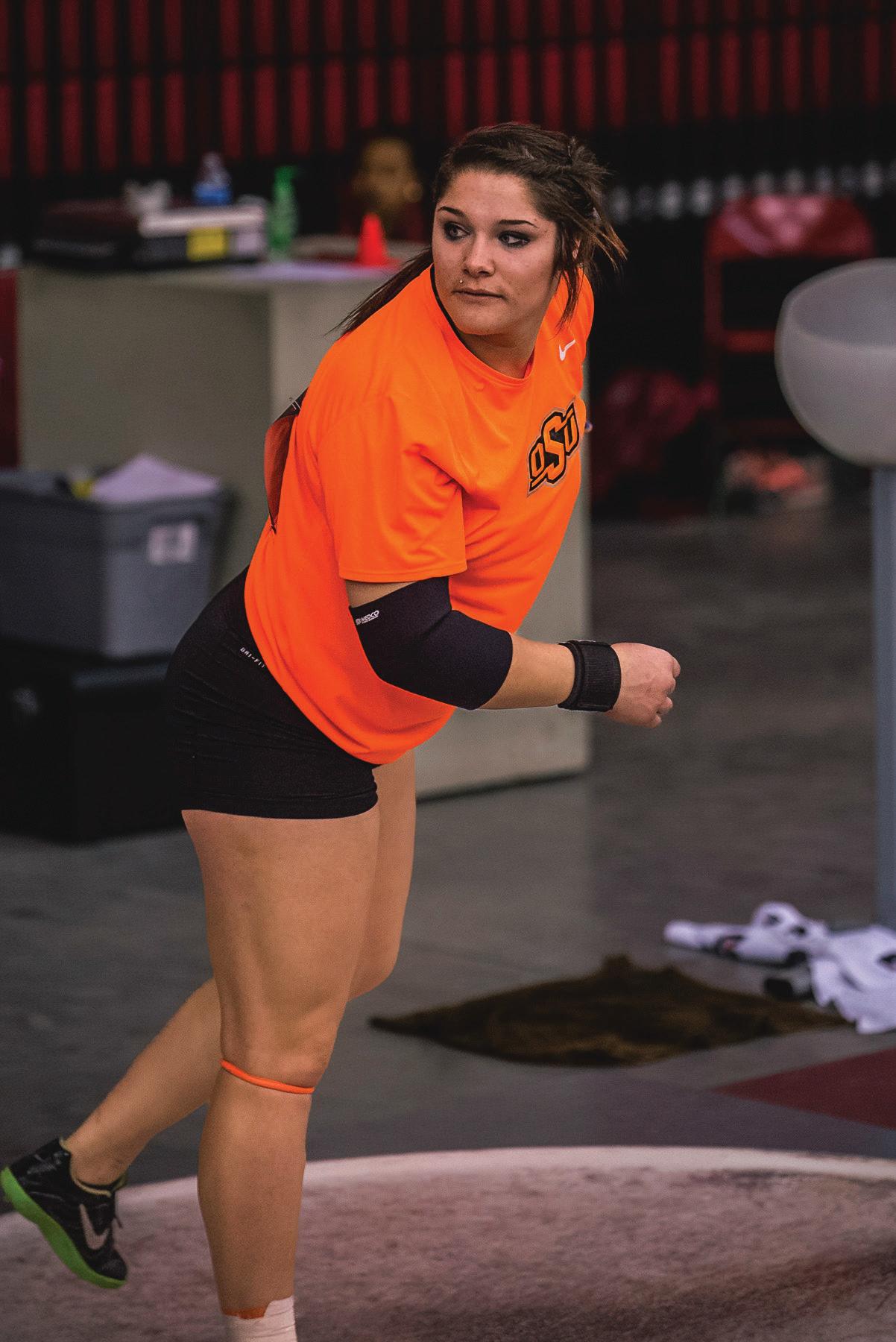
Jackson’s global impact on her sport is undeniable. The records, however, are only one part of it.
“Pressure either smushes you or makes a diamond, and unfortunately, I got smushed,” Jackson said. “But we’re going to make diamonds in L.A.”
Jackson didn’t let the Paris results keep her down. She bounced back to shatter the American indoor shot put record with an attempt of 20.24 meters at the Copernicus Cup in Poland. Jackson then outdid her own mark just this year at the USATF Indoor Championships, where she recorded a 20.44 at the Ocean Breeze Athletic Complex in Staten Island, New York.
Jackson remembers the butterfly wings.
At first, she hesitated. Jackson loved experimenting with colorful, intricate makeup designs in her spare time, but she wasn’t sure about wearing her art for the sports world to see.
“Nobody wants me to draw on my face,” she laughed.
How would she know unless she tried? With Mitch encouraging her to be herself, Jackson used makeup to create butterfly wings on her face for a meet.
The authentic self-expression boosted her confidence. And she wasn’t alone. As Jackson continued to wear creative
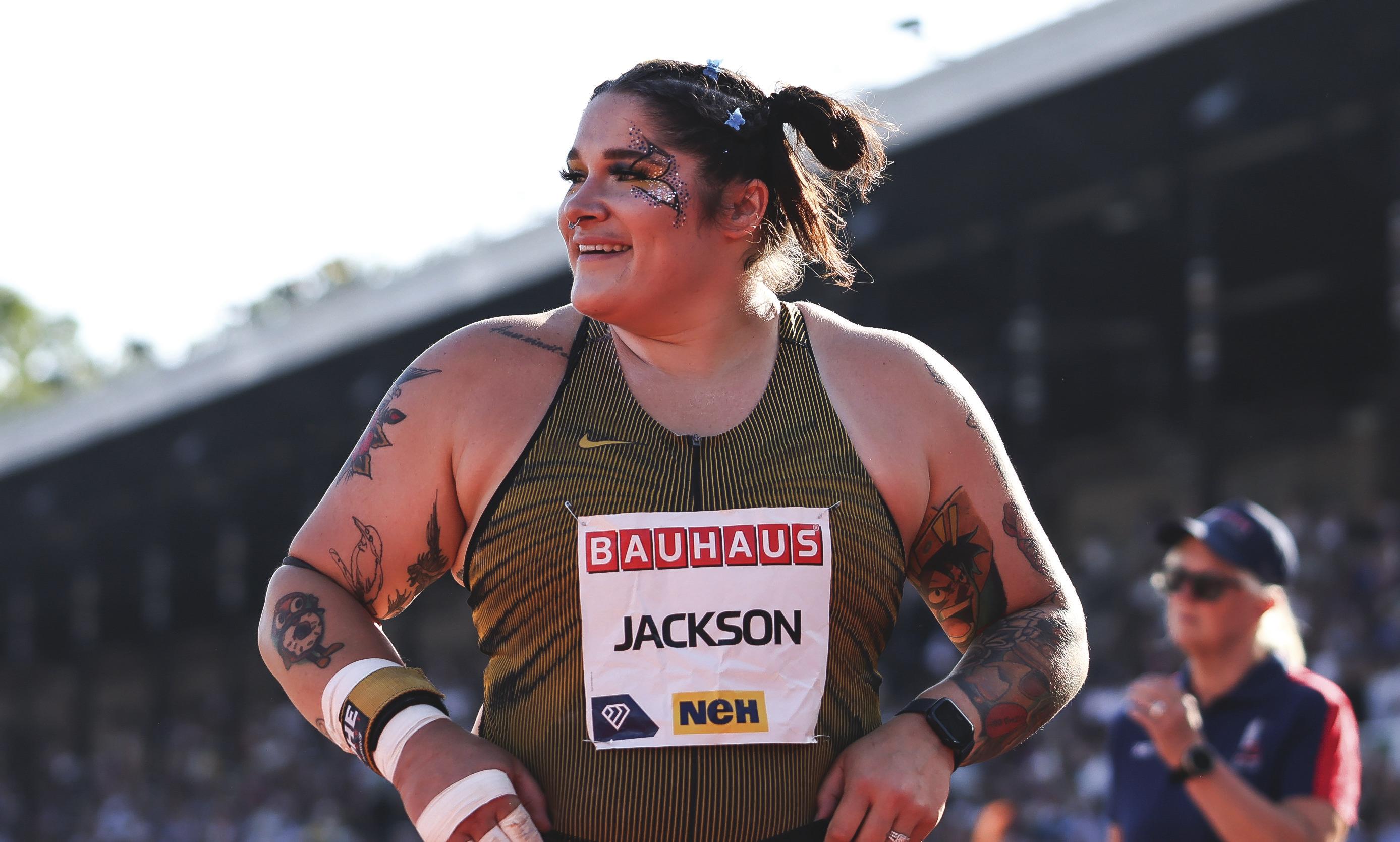
makeup at meets and tried bolder, brighter looks, she received messages from young girls who were doing the same.
“That little thing that you don’t think is going to make an impact, all of a sudden, it does,” Jackson said. “Now, it’s just become this thing where I love seeing how unafraid girls are now. I’m not saying I paved the way by any means, but in throwing, we already don’t really feel like we have a place half the time. Our body types aren’t always what you’d see as an elite athlete. Making noise and making waves, it brought up the confidence of girl athletes in all areas. It just took one butterfly.”
Throughout her career, Jackson has literally and metaphorically seen the power of one butterfly. Every decision she made — competing in field events to spend time with her sister in high school, choosing OSU, training in the United Kingdom — kicked o a series of events that molded her into the elite athlete she is today, giving her a platform to inspire others.
Years ago, she couldn’t have possibly imagined how the events would all connect.
Today, it makes perfect sense.
“The motivation that kept me trying is the same motivation that keeps me going now that I’m at the top,” Jackson said. “I just have so much motivation to stay up here.”
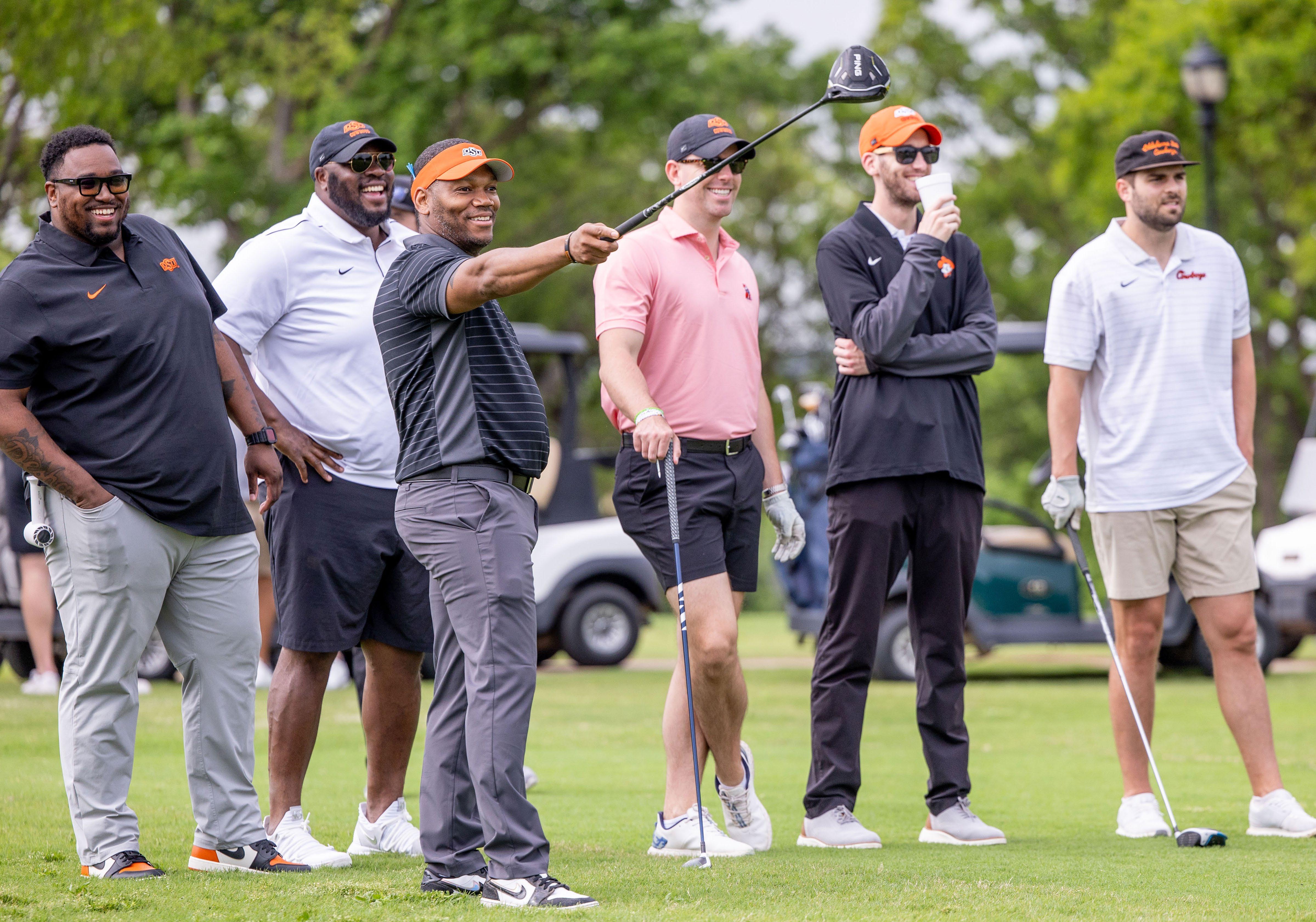
Oklahoma State defensive backs coach Jordan Malone calls his shot on the tee box at the 2026 Legends of the Gridiron reunion, joined by fellow coaches Deion Harris (asst. o ensive line), Mike O’Guin (asst. defensive line), Sean Brophy (o ensive coordinator/ quarterbacks), Dan Conwell (asst. special teams), and Luke Brockermeyer (asst. outside linebackers). Head Coach Eric Morris and his new sta welcomed more than 150 former Cowboys back April 17-18 for a lively round of golf at Stillwater Country Club, as well as social activities, prior to the spring game.
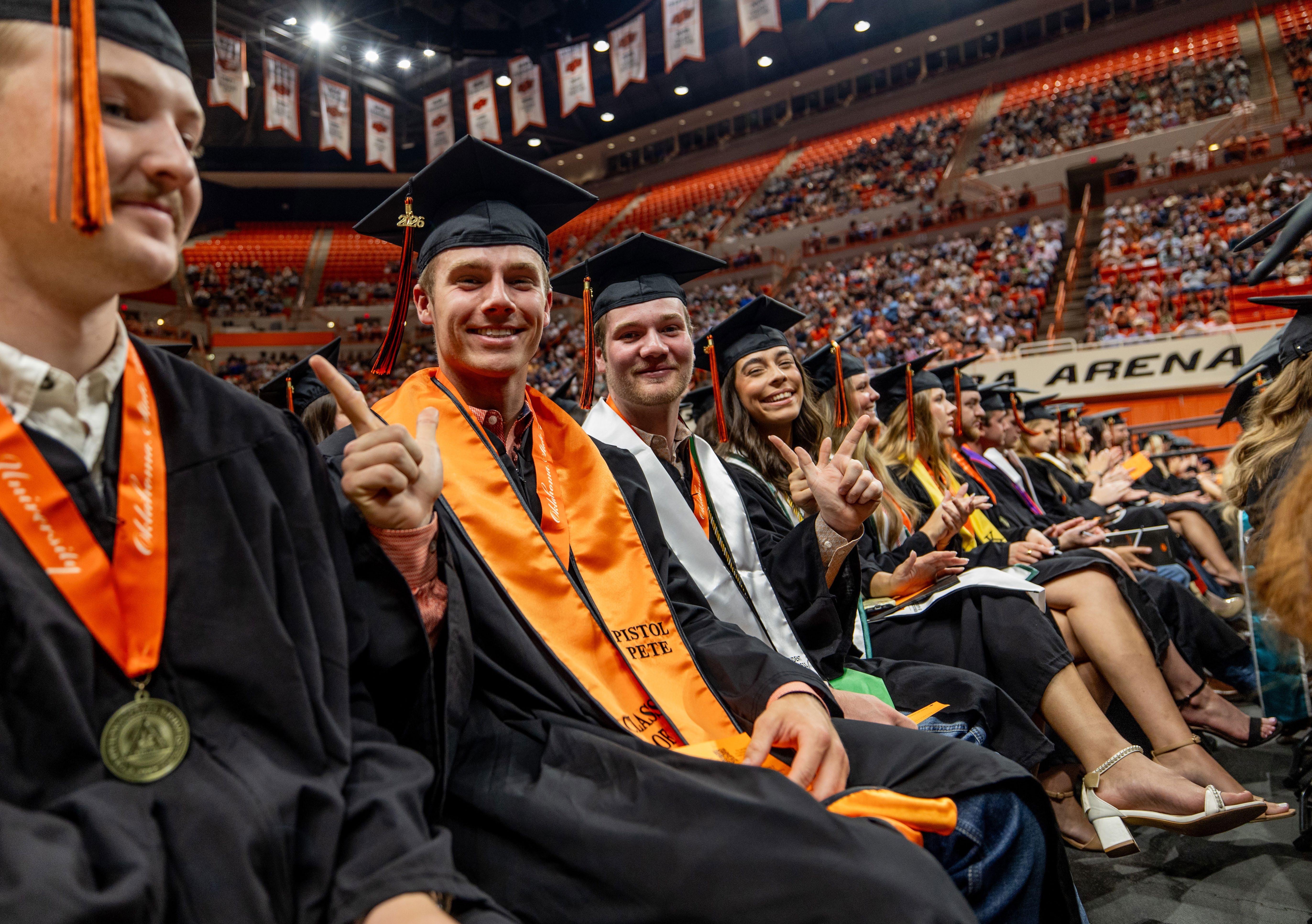
It was "pistols firing" one last time at Gallagher-Iba Arena for Cooper Hamilton — Pistol Pete No. 97 — who celebrated commencement with his fellow graduates from the Ferguson College of Agriculture on May 9. The 2026 Agribusiness grad from Latta, Oklahoma, served as OSU's beloved mascot for two years before hanging up his spurs. Next up, Hamilton heads to Edmond, where he will begin his professional career as a financial advisor with Raymond James.
Former Cowgirl Tennis standout Katarina Adamovic has made another winning return — this time to her alma mater. One of the most impactful players in the program’s history, Adamovic was recently named OSU’s seventh head coach after spending the past two seasons leading Houston. During her playing days (2014–17), she helped the Cowgirls earn a place among the nation’s elite. The native of Cacak, Serbia, immediately began her coaching career after graduation, spending four years as an assistant at Cincinnati and one at Missouri before being named Grand Canyon's head coach in 2022. Welcome home, Kat!