Kelly Stilwell, Kendra Gemma, Liz Reed, Shelly West, David X Tejada, Beth Deyo, Lisa Neff, Terri Edmund, McKenzie Roberts, Ivonne Ribeiro
Bradenton Magazine promotes Manatee County and All Our Neighbors.
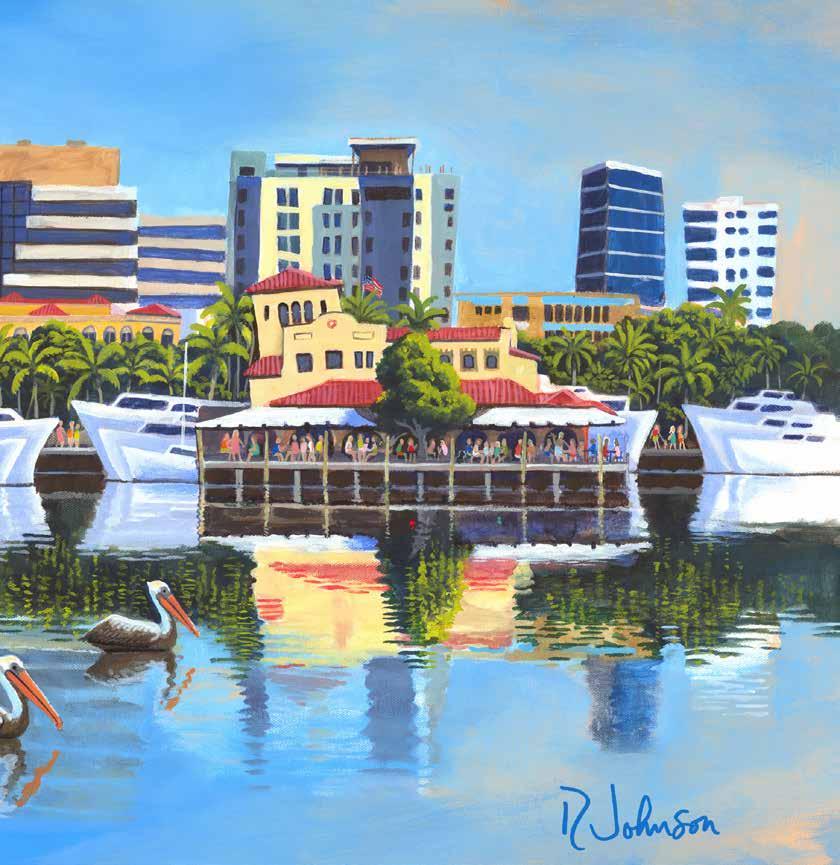
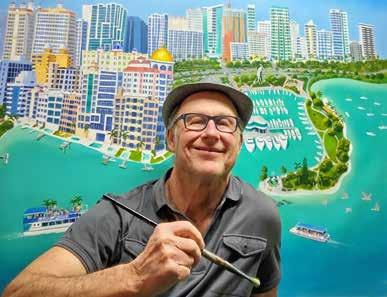
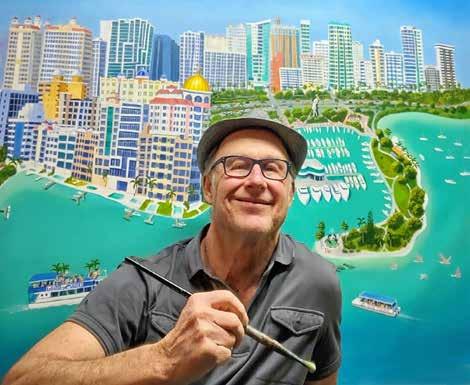
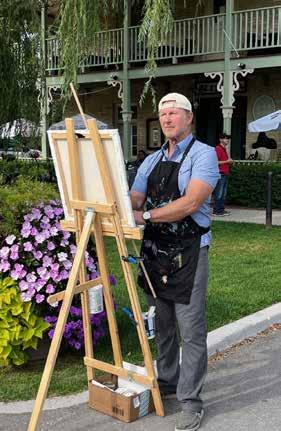
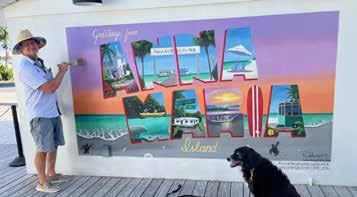
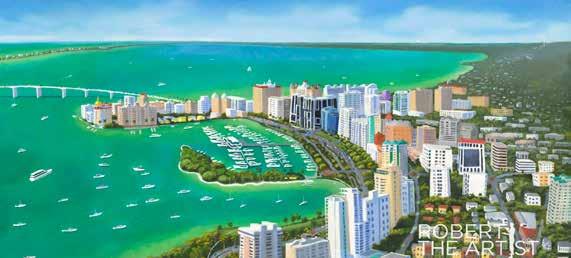
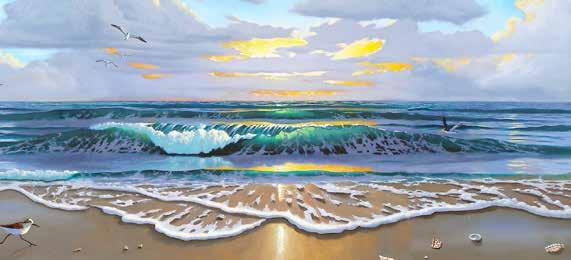
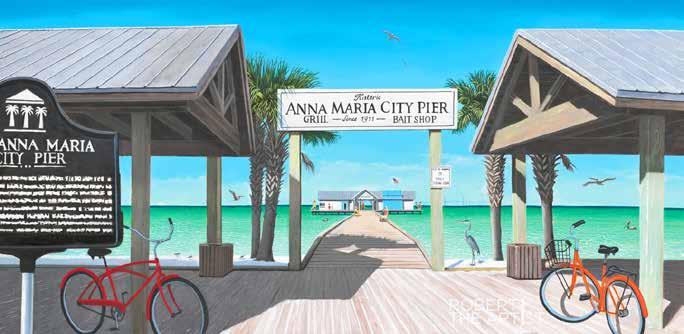
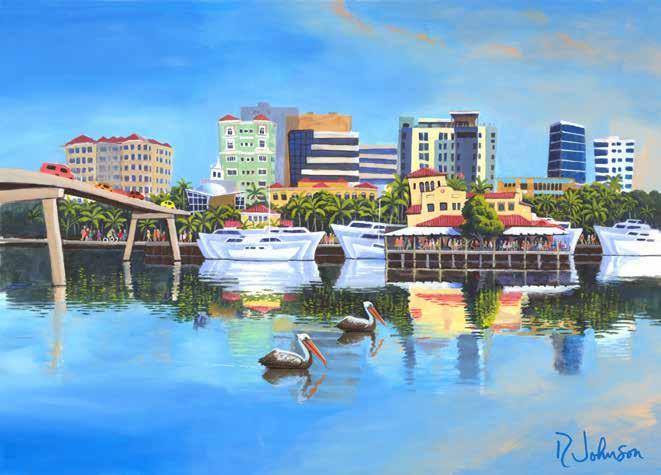
The Art of Robert Johnson
WRITTEN BY SHELLY WEST
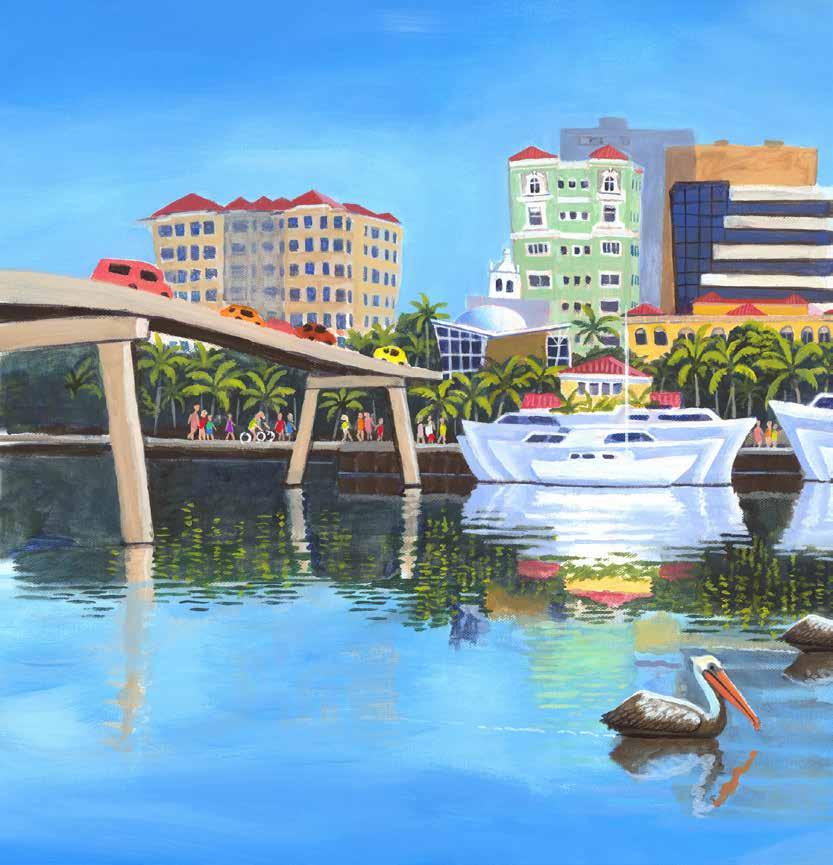
For this issue’s cover artist, painting didn’t begin with a brush; it began with a pencil.
Long before Robert Johnson touched paint to canvas, he was deeply immersed in drawing. It was a daily practice, a favorite pastime, and the foundation on which everything else would be built. Through countless hours of sketching, he developed not only technical skills but a quiet confidence in his ability to observe and recreate the world around him.
That foundation followed him to Key West, where a turning point awaited.
Surrounded by vibrant galleries and an explosion of color and creativity, Johnson felt something shift. The artwork he encountered there alive with light, energy, and bold expression sparked a realization: it was time to move beyond graphite and into color. Painting, he discovered, opened an entirely new dimension of storytelling.
From the start, Johnson was drawn to realism. He admired artists who could capture a scene exactly as it appeared, and he committed himself to mastering that precision. Years of practice refined his ability to render detail, light, and texture with accuracy. But alongside that discipline, another style quietly emerged.
There was a freer side to his work, one that embraced expression over exactness. In these pieces, Johnson allowed himself to interpret rather than replicate, focusing on mood, energy, and the emotional essence of a scene. Over time, he realized that both approaches were essential. Today, his work moves fluidly between realism and whimsy, balancing technical skill with creative freedom.
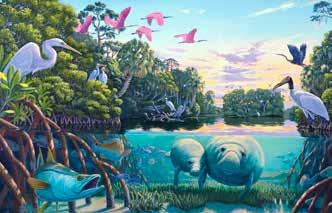
That duality is also reflected in his perspective. Johnson often paints from a bird’s-eye view, offering sweeping, almost cinematic compositions. In other works, he explores the boundary between worlds above and below the waterline, revealing the rich marine life that defines the region he calls home.
Inspiration, for Johnson, is rarely forced. It arises naturally in his daily routine, often while exploring the area by bicycle. A particular quality of light, the shimmer of sun on water, or the contrast between bright highlights and deep shadows can stop him in his tracks. At other times, it’s the atmosphere of a familiar place, a favorite restaurant or bar, a moment of stillness, a feeling that lingers long after he leaves and eventually finds its way onto canvas.
What he strives to capture is not just what a place looks like, but how it feels.
“I hope people feel a sense of joy and connection,” he said. “A sense of being there.”
His paintings invite viewers into those moments, warm afternoons, glowing sunsets, quiet coastal scenes, and often awaken something personal in return. Nostalgia, memory, and a sense of place are central to his work. A viewer might recognize a location or be reminded of a feeling they’ve experienced before.
Johnson’s process is as layered as his subject matter. He works primarily from photographs he takes himself, though he also paints on location whenever possible. Each piece begins with rough sketches, followed by light washes to establish composition and form. From there, he gradually builds the painting in stages, locking in darks and lights, working from background to foreground, and refining details with each pass.
It’s a slow, deliberate approach. Many of his paintings take significant time to complete, a process he embraces fully. The accumulation of small, thoughtful details is part of what brings his scenes to life.
Certain subjects call him back again and again.
Landmarks like City Pier and Rod & Reel Pier have appeared in his work across different times of day and changing conditions, from bright afternoons to twilight to moonlit nights. These recurring studies have become more than paintings; they are visual records that preserve moments as these beloved places evolve over time.
In many ways, Johnson’s work functions as a series of time capsules.
Another recurring subject, breaking waves at sunset, reveals his fascination with light in motion. When the last rays of the day illuminate the crest of a wave from within, the result is something almost luminous, filled with energy and drama. It’s a fleeting moment, but one he captures with striking clarity.
Living and working in this coastal environment has profoundly shaped Johnson, both as an artist and as a person. The abundance of natural beauty from manatees and seabirds to sweeping landscapes and lively local gathering spots has provided an endless source of inspiration. It has also fueled his productivity, allowing him to create a large and deeply personal body of work.
More importantly, it has given his art a sense of purpose.
Many of the places he paints are changing, and Johnson is keenly aware of that. Through his work, he aims to preserve not just their appearance, but their spirit, capturing the essence of a place at a particular moment in time.
One painting, in particular, holds special meaning for him.
Titled Manatee River, it embodies everything he values most. The composition spans both above and below the waterline, showcasing birds, fish, and the region’s intricate ecosystem. As an avid kayaker and nature enthusiast, Johnson feels deeply connected to these environments and the creatures that inhabit them.
“This painting represents everything I love,” he said.
It’s not just a depiction of nature; it’s a celebration of it, and a reminder of its importance. Through works like this, Johnson hopes to inspire appreciation and, ultimately, protection of the natural world.
Being featured as this month’s cover artist is, for him, both an honor and an opportunity.
He sees it as a chance to share not only his artwork, but the years of dedication behind it and the deep love he has for this area. His paintings, filled with local landmarks, wildlife, and everyday moments, are a tribute to the community and environment that continue to inspire him.
More than anything, he hopes viewers walk away with something personal.
A memory. A feeling. A sense of connection.
Because in Robert Johnson’s work, the goal isn’t just to show you a place, it’s to bring you back to it.
Visit: roberttheartist.com
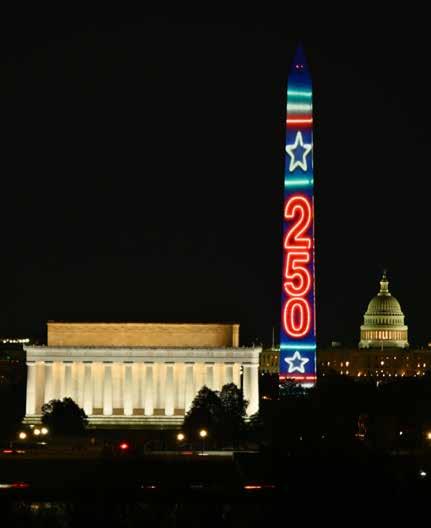
Where to Celebrate America250:
4 Chapters in America’s Story
WRITTEN BY KELLY STILWELL
From coast to coast, America’s story isn’t told in just one place. It unfolds across centuries, cultures, and landscapes. As the country approaches its 250th anniversary, there’s no better time to experience the moments that shaped it, from its earliest beginnings to its bold expansion west.
Though many recommendations for places to visit this year to celebrate the semiquincentennial will involve our Nation’s Capital, Philadelphia, Williamsburg, and other Northeast experiences that tell the story of how the United States began, I’m beginning in the South, where you’ll find the roots of America in St. Augustine, long before Independence was even a thought.
Heading west from Florida, San Antonio offers a rich blend of cultures that helped define the nation’s identity. In Washington, D.C., those ideas take shape and continue to guide the country today.
And to see how big and varied our country is, a journey through the American Southwest offers a front row seat to the vast landscapes that shaped America’s spirit of exploration. Together, these four experiences don’t just celebrate America250, they show how our nation came to be.
St. Augustine, Florida
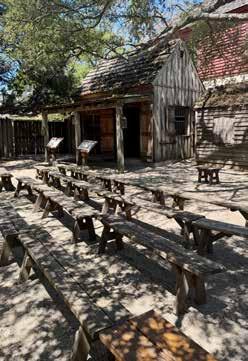
What I loved about St. Augustine is that it’s a walking history museum. The history is literally everywhere you look, from the centuries-old architecture to the cobblestone streets. And it’s very walkable. I walked from the Castillo de San Marcos National Monument to the Colonial Quarter to the Plaza de la Constitución and back to the Ximenez-Fatio House Museum in just a few hours.
5 Things to Do:
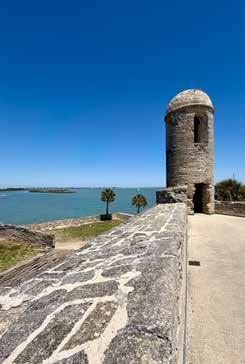
• Stroll the Castillo de San Marcos National Monument: Built by the Spanish in the late 1600s, this is the oldest Masonry Fort in the Continental United States. Long before the U.S. existed, European powers were competing for control of North America, and St. Augustine was right in the center of it.
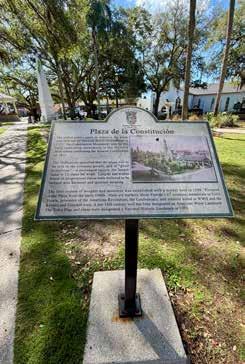
• Explore the Plaza de la Constitución: The oldest public space in America, this is the heart of the city today and was the original gathering place when it was first designed in the 1500s. It was intentionally built to be where government, religion, and community functioned in one place.
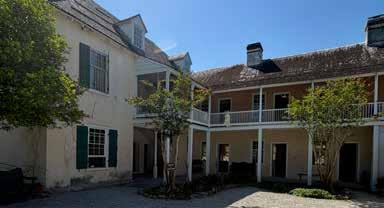
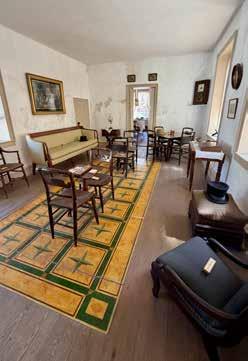
• Tour the Ximenez-Fatio House Museum: For a glimpse into daily life in early St. Augustine, visit the Ximenez-Fatio House Museum. This beautifully restored boarding house welcomed travelers during the time period when St. Augustine was changing hands between Spanish, British, and American rule. Operated by a series of truly amazing women in the 1800s, the house tells the story of both the city’s evolving identity and the vital role women played in one of America’s oldest communities.
• Visit the Pẽna-Peck House: One of the best places to learn about the rich history of St. Augustine is the Pẽna-Peck House. Built in the 1700s during Spanish rule in Florida, the home highlights centuries of change. Tour the coquina stone home and learn about the families who lived there, including connections to government leaders. This is living history at its best.
• Check out the Colonial Experience: Get a glimpse of what life was like in St. Augustine from the 16th to the 18th century through the Living History Tour at St. Augustine Colonial Experience. This is a lighthearted look at history with a fun guide. Especially if you’re traveling with kids, this is a great stop, giving them the chance to run around a bit and explore.
San Antonio, Texas
Long before the United States existed, San Antonio was already a crossroads of cultures, and that mix of Indigenous, Spanish, Mexican, and American influences is still part of what makes the city so interesting today. The best way to understand our nation’s story is to see it up close.
5 Things to Do:
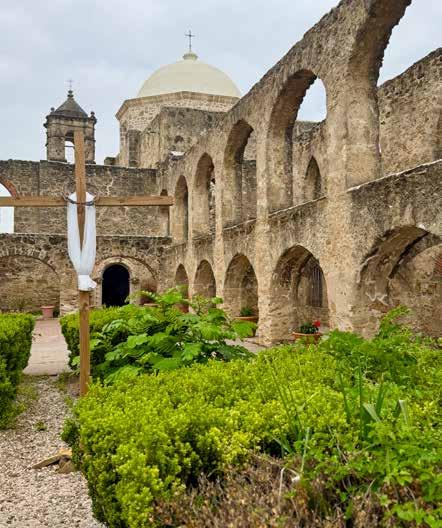
• See the missions: Start at San Antonio Missions World Heritage Center to get a feel for why this area matters. San Antonio is home to the only UNESCO World Heritage Site in Texas, and the center helps bring that story into focus. From there, head to San Antonio Missions National Historical Park, where four missions stretch along the river. Walking through them gives you an idea of what life was like here centuries ago.
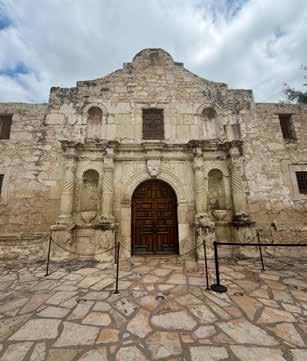
• Visit the Alamo: One of the most defining sites in Texas history and a lasting symbol of the fight for independence, seeing the Alamo is a must. Take time to watch the film “Crossroads of History” while you’re there.
• Stroll the Riverwalk: Take in the architecture and history of the city from San Antonio Riverwalk, while getting a feel for the city’s energy. Narrated short cruises are also easy to book.
• Explore Western art: Step into the story of the American West at the Briscoe Western Art Museum, where you can explore the art and artifacts that shaped this region.
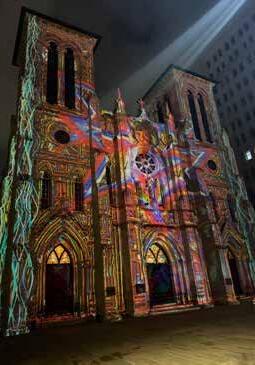
• Experience Saga: Don’t miss Saga at San Fernando Cathedral, where a light and sound show brings centuries of history to life right on the cathedral’s façade.
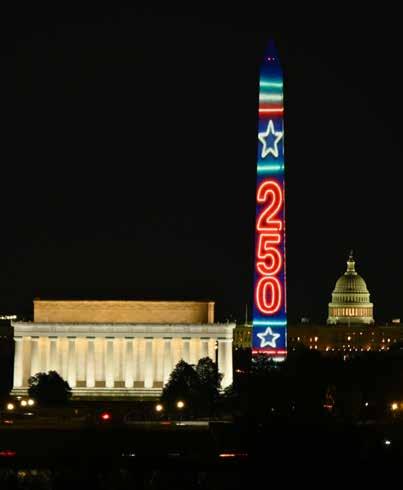
• See the Thomas Jefferson Memorial: Located on the National Mall, the Thomas Jefferson Memorial was built in 1943 in honor of the primary author of the Declaration of Independence.
• Visit the Lincoln Memorial: Also on the National Mall, the Lincoln Memorial, honoring 16th president of the United States, Abraham Lincoln, was built in 1914 in a neoclassical style. Here, you will also find the marker for where Dr. Martin Luther King, Jr. gave his historical I Have a Dream speech.
Washington, D.C.
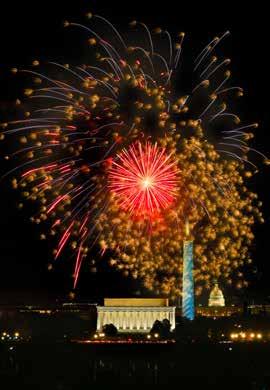
I was born in Washington D.C., so I grew up going on field trips to the Washington Monument, the White House, and the Smithsonian museums. But exploring the District of Columbia as an adult takes on a whole new meaning. It may not be where the nation was founded, but it’s where its ideals that shaped it unfolded and continue to evolve. From the Revolution to Civil Rights to modern history, it’s all layered here.
5 Things to Do:
• Visit the National Archives: View the original Declaration of Independence, the U.S. Constitution, and the Bill of Rights.
• Explore the U.S. Capitol Building: This beautiful domed structure is one of the most recognizable buildings in the world, and home of the U.S. House of Representatives and Senate. Millions of people visit the Capitol Building and the Capitol Building Visitor’s Center each year, and you’ll want to book a tour to avoid a long wait. It’s free and easy to do at VisittheCapitol.gov.
• Visit the Smithsonian National Museum of American History: See the Star Spangled Banner among 1.7 million artifacts. The Smithsonian museums are free, and I’d personally recommend you visit as many of them as you possibly can during your time there.
Washington, D.C. Photo Credit: Julianna Marten
The American Southwest
After exploring the places where America began and took shape, heading west feels completely different. This is where the landscape becomes part of the experience, with wideopen spaces, dramatic red rock formations, and views that stretch as far as you can see. It’s also where the country expanded, as settlers, railroads, and cattle drives pushed west across land that seemed almost endless.
5 Things to Do:
• Visit Larimer Square: As Denver’s oldest block, Larimer Square offers a glimpse into the city’s early days when it was a stop for miners, traders, and travelers heading west. Strolling the streets today, with the restored buildings and lively atmosphere, makes it easy to imagine a time when Denver was still finding its place in the story of the American West.
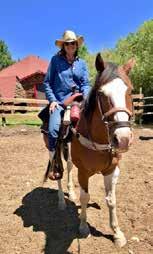
• Stay at a dude ranch: Just a couple of hours from Denver, Drowsy Water Dude Ranch offers a chance to experience a way of life that has shaped the American West for generations. Spend the day on horseback (lessons included) riding through wide-open landscapes. Take a break for a chuckwagon lunch before ziplining or white-water rafting. Evenings are laid-back, with meals served family-style. This is an immersive way to experience the kind of daily life that shaped this part of the country.
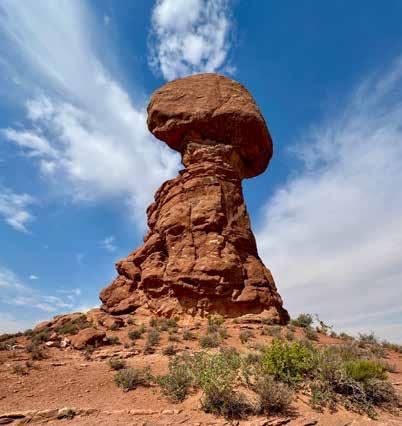
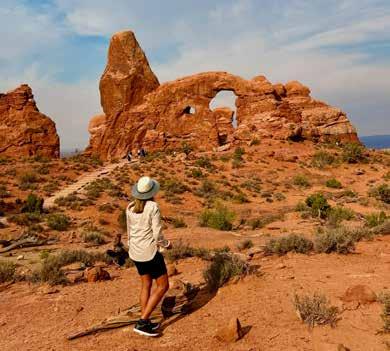
• Explore Arches and Canyonlands national parks: With its iconic red rock formations, Arches feels almost other-worldly, and the vastness of Canyonlands is mind-blowing. You can only imagine what early settlers thought when they encountered the scale and beauty of this area as they moved west.
•Stroll downtown Moab: Though Moab is known today for adventure, it grew out of the same frontier spirit that defined the west. Walking through town, you can still get a sense of what Moab might have felt like when it was a stop for travelers headed farther west.
•Explore the Southwest by train: If you want to experience the Southwest in a completely different way, Canyon Spirit train offers a journey from the Rockies to the red rocks, blending history with a level of comfort early travelers could only imagine. As you wind through canyons and along rivers, you’re viewing layers of rock shaped over millions of years. During the day, you’ll be served delicious meals at your seat while you take in the landscape. Overnight, you’ll stay in upscale hotels. With options to visit Arches National Park and spend time in Moab along the way, it’s an easy way to experience a route that once took much more time and effort.
From the oldest city in the country to the wide-open landscapes of the Southwest, these four destinations show how America’s story continues to unfold. However you choose to celebrate America250, there are plenty of ways to see it for yourself, wherever you begin.
Photo Credit: Canyon Spirit
SHOWING UP WITH PURPOSE
The Community Spirit Behind LuxeKey Real Estate
In a world where real estate can often feel transactional, there are still those who approach it with something far more meaningful: mindfulness, intention, presence, and a genuine desire to elevate the lives of others. For Robin Eekhof, Broker of LuxeKey Real Estate LLC, that philosophy is not just a mindset—it’s a way of life.
Eekhof possesses a natural gift: the ability to elevate experiences and enhance the lives of those around her, whether in business or through her deep-rooted community involvement. Her presence is thoughtful, her energy contagious, and her commitment to others is both authentic and enduring. It’s a quality that is felt immediately—by clients, colleagues, and community members alike.
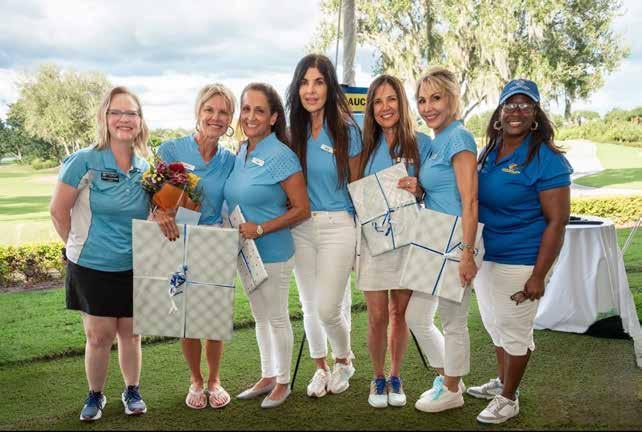
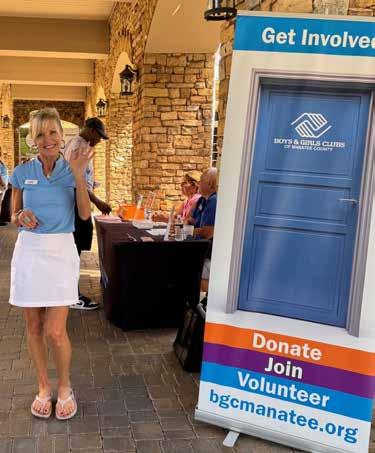
Her impact is perhaps most visible through her leadership with the Boys & Girls Clubs of Manatee County, where she serves as a board member and the devoted chair of the organization’s signature Annual Golf Tournament. Now entering her second year at the helm, Eekhof continues to bring vision, elegance, and heart to an event that has quickly become one of the community’s most anticipated gatherings.
Set against the breathtaking backdrop of the Ritz-Carlton Golf Club Lakewood Ranch, this year’s tournament will take place on Monday, September 28, 2026. The day is thoughtfully curated to deliver both exceptional hospitality and meaningful impact.
Golfers are welcomed with a bountiful, kick-off breakfast before rolling onto the greens! Lunch is an on-thego swanky snack pack, filled with delicious treats, and an elevated assortment of satisfying bites. As the day unfolds, players and guests enjoy a dynamic atmosphere featuring contests, an exciting opportunity to win a Mercedes-Benz, cocktails, cigars, and engaging on-course experiences. The evening culminates in a refined surf and turf dinner, alongside live and silent auctions, raffles, and prizes—all amid the serene beauty of the club’s pristine and elegant grounds.
Beyond the splendor and celebration lies a powerful purpose. Last year’s event raised over $100,000, directly supporting programs that uplift and empower local youth. This year, Eekhof and her team are once again inviting the community to come together to play, to give, and to be part of something that truly makes a difference.
Eekhoff’s commitment to community extends well beyond a single event. As a proud member of Impact 100 SRQ, she joins a collective of women dedicated to creating transformative change. In 2026, the organization will award eight grants of $111,000 each, funding initiatives that strengthen and enrich the region in lasting ways.
Pictured from left to right: Dawn Stanhope, Robin Eekhof, Lisa Brakefield, Anna Holt, Rita Koike, Jill Obrochta, Kelli Dixon
Her support continues across a variety of meaningful local efforts: from the Everyday Blessings Lakewood Ranch Fashion Show, benefiting their Springboard Program, which supports foster youth transitioning into independence, to her involvement with Azara Ballet, and sophisticated community gatherings at Marie Selby Botanical Gardens. Each reflects her belief in connection, inclusion, and the power of community to uplift. It is this same philosophy that defines Eekhoff’s approach to real estate.
She doesn’t simply help clients buy or sell homes—she guides them through deeply personal transitions with care, intuition, and unwavering dedication. She listens. She observes. She understands that timing, feeling, and alignment matter just as much as location or price.
Eekhof is known for her willingness to keep searching—to remain patient and present—until everything feels just right. Because for her, it’s never about closing a deal. It’s about opening the door to the life her clients truly envision.
There is a seamless connection between how Eekhof serves her clients and how she serves her community. Both are rooted in mindfulness, generosity, and a sincere desire to elevate the experience for others. The result is something rare: a real estate journey that feels supported, intentional, and even inspiring.
In a region rich with opportunity and growth, Eekhof stands out not simply for what she does—but for how she does it. She shows up with purpose. She gives with heart. And she creates experiences that leave a lasting impression.
And if you find yourself considering a new chapter: a new home, a new rhythm, a new beginning—you may discover that the right guidance feels less like a transaction…and more like a natural next step, guided by someone who truly understands where heart meets home.
Robin Eekhof
Lisa Brakefield and Robin Eekhof
Barkity Market’s Journey Through Start-Up Circle
WRITTEN BY SHELLY WEST
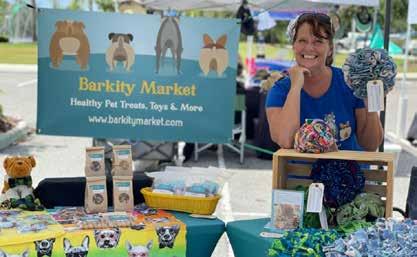
When Janet Nicolai first imagined Barkity Market, it was little more than an idea, one she carried with her for years. Like many great small businesses, it took an unexpected moment to bring it to life. That moment came during the COVID-19 quarantine.
With extra time at home, Nicolai began experimenting and refining recipes, testing materials, and developing the treats and toys that would eventually define Barkity Market LLC. What started at her kitchen table quickly grew into something more purposeful. Driven by concerns over the safety and quality of mass-produced pet products, she committed to doing things differently.
Barkity Market would offer pet items made from local, human-grade, USA-sourced materials, products designed not just for enjoyment, but for peace of mind.
“I wanted pet owners to feel confident in what they were buying,” Nicolai explained. “Our pets are family.”
That commitment to quality became the foundation of her business, but turning a passion into a sustainable venture required more than a great idea. In 2021, Nicolai joined the first cohort of the Start-Up Circle program, an initiative sponsored by Realize Bradenton that played a crucial role in helping her build and launch Barkity Market, inspiring other entrepreneurs to pursue their goals.
For Nicolai, the experience was transformative.
As a first-time business owner, she entered the program with questions, especially about the legal and financial side of entrepreneurship. “I wanted to make sure I was setting everything up properly,” she said. “The class gave me the basics I needed and empowered me to make informed decisions.”
From understanding licensing and taxes to choosing the right business structure, the program provided a roadmap that helped turn Barkity Market into a legitimate, growing enterprise.
Like many small business owners, Nicolai soon faced a challenge: demand.
As Barkity Market gained popularity, it became clear she could no longer produce everything on her own. But outsourcing came with a dilemma. Wholesale purchasing didn’t align with her mission to support local craftsmanship and maintain quality.
The solution came from lessons she learned in Start-Up Circle.
Using her knowledge of pricing and margins, Nicolai began collaborating with local makers, paying them fairly to create products that met Barkity’s standards. What started as a workaround became a defining feature of the business.
Today, Barkity Market is more than a brand; it’s a collective.
“I’ve mentored other makers, many starting their own businesses,” Nicolai shared. Her outreach has inspired others to support local entrepreneurs.
That sense of connection extends beyond her fellow entrepreneurs to her customers as well.
At the market, Nicolai has built more than a customer base. She’s fostered a loyal community of pet lovers and their dogs.
“I’m told that when I’m not there, the dogs still come and stand where the water bowl usually is,” she said with a laugh. “They look sad.”
Moments like these have reshaped her perspective on business. What began as a product-focused venture has evolved into something deeply relational, rooted in trust, familiarity, and shared love for pets.
As Barkity Market continues to grow, Nicolai still leans on what she learned in Start-Up Circle. Notes and materials from the program remain a resource she revisits often, especially as new challenges arise.
“Things that didn’t apply to me at the time are valuable now,” she reflected.
Perhaps just as important as the curriculum, though, are the connections. Nicolai remains close with members of her original cohort, and she actively supports other program graduates, encouraging them to grow their businesses and fostering a sense of community among local entrepreneurs.
“The Start-Up Circle is such a wonderful connection for business owners,” she said. “There’s always that shared understanding.”
From a long-held idea to a thriving, community-centered business, Barkity Market is a testament to what can happen when passion meets opportunity and when entrepreneurs are given the tools and support to grow. For Nicolai, success isn’t just measured in sales.
It’s in the wagging tails, the familiar faces, and the network of makers and dreamers growing alongside her.
A Community in Bloom: Discover the Distinctive Lifestyle of SeaFlower
In a market where buyers have more choices than ever, it takes something truly special to stand apart.
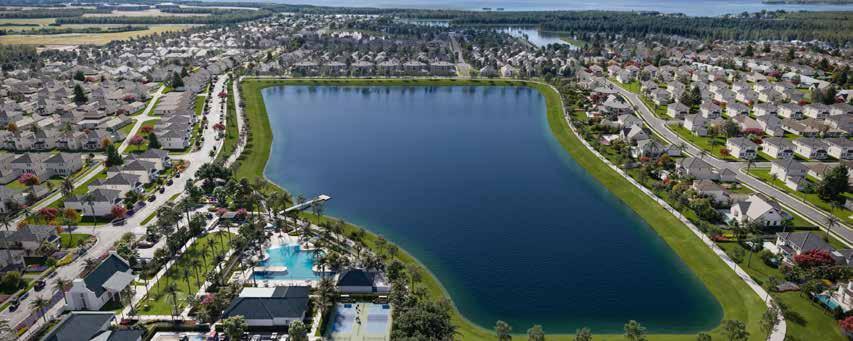
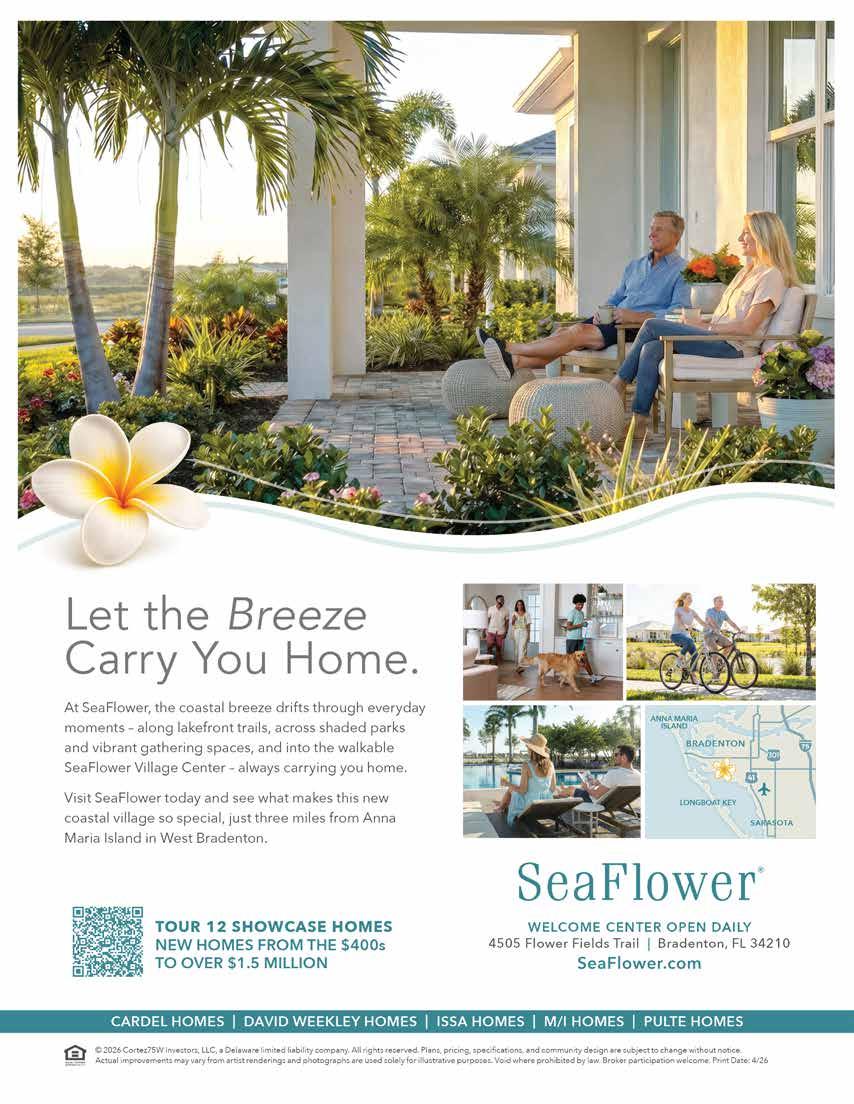
Located on Bradenton’s coastal mainland just over three miles from Anna Maria Island, SeaFlower offers a rare combination of coastal proximity and everyday convenience. Residents enjoy easy access to the Gulf’s renowned beaches while living in a thoughtfully planned setting that feels connected, accessible, and distinctly local. Just west of 75th Street and south of Cortez Road, SeaFlower is redefining what it means to live well in Bradenton.
Since launching sales last year, this charming coastal village has captured significant attention, with more than 270 homes sold and continued strong demand. Beyond the numbers, what draws people to SeaFlower is something less measurable: a sense of place that feels both timeless and refreshingly new.
A Thoughtful Approach to Home Design
At the heart of SeaFlower is a belief that a home should adapt to the way people truly live. Rather than a one-size-fits-all approach, the community offers a diverse collection of home styles—from charming bungalows and cottages to spacious estate homes—designed for a wide range of lifestyles.
Buyers can choose from villas, townhomes, and single-family residences, with flexible floorplans that include options like accessory dwelling units (ADUs) for multi-generational living, as well as dedicated work-from-home spaces. Whether accommodating extended family, creating a private guest retreat, or simply adding room to grow, these design choices make it easier to personalize each home.
Each builder has created designs specifically for SeaFlower, resulting in a cohesive yet highly curated
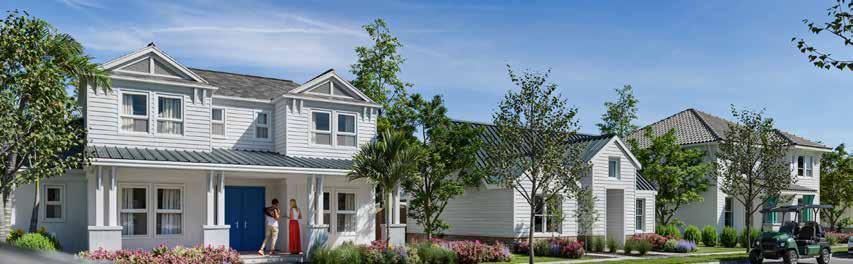
architectural experience. Streetscapes are defined by welcoming front porches, discreet rear-entry garages, and homes in soft hues of white accented with coastal color—details that reinforce the community’s relaxed character.
Architecturally, the homes draw inspiration from West Indies, Craftsman, Transitional Farmhouse, and Coastal styles, creating a streetscape that feels cohesive yet varied, elegant without being overly formal, and welcoming without feeling predictable.
Built by Trusted Names in Homebuilding
A key part of SeaFlower’s appeal is the caliber and variety of its homebuilders. The community brings together five of the region’s most respected builder partners: Cardel Homes, David Weekley Homes, Issa Homes, M/I Homes, and Pulte Homes, each contributing distinct architectural styles, floorplans, and personalization options.
This multi-builder approach allows buyers to explore a wide range of home designs and price points within a cohesive, thoughtfully planned setting. Each builder brings its own perspective while aligning with SeaFlower’s vision of quality, flexibility, and timeless coastal design.
Designed for Everyday Living
While the homes are thoughtfully crafted, the broader community experience is where SeaFlower truly comes to life.
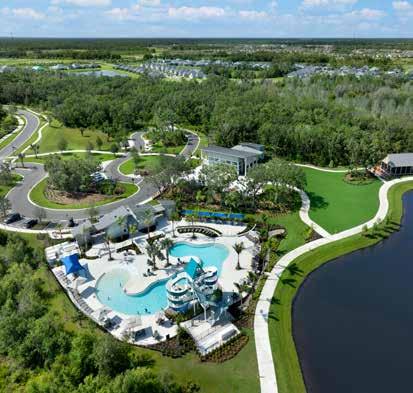
Currently under construction and opening this fall, The Garden Club will serve as the homeowner-exclusive amenity center, designed around connection, wellness, and recreation.
Located along the shores of Lake Flores, the setting provides a natural backdrop, with water views and open greenspaces enhancing everyday life.
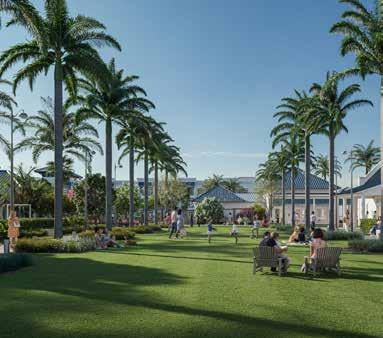
At its heart is Plumeria Hall, the central gathering space, social hub, and home base for the community’s Art of Living Director, who will curate events and programming to bring residents together. Anchored by this space, The Garden Club is designed to foster connection, whether through social gatherings, fitness classes, or time outdoors. A resort-style pool with lap lanes, pickleball courts, event lawn, and children’s play areas will create an environment where activity and relaxation coexist.
Extending beyond The Garden Club, the multi-modal Lake Flores Trail winds throughout SeaFlower, circling Lake Flores and connecting residents to amenities, the SeaFlower Village Center, and the surrounding community. Paired with Lake Flores Park and additional pocket parks, these trails and greenspaces create opportunities for walking, biking, and enjoying the outdoors—reinforcing a lifestyle centered on connection to nature and one another.
The SeaFlower Village Center is also well underway, with Publix expected to open this fall, bringing everyday convenience just moments from home. Designed as a walkable “Main Street” destination, it will feature a curated mix of dining, wellness, and lifestyle offerings, including Pecan Jacks, Club Pilates, Glitz Nail Salon and Boutique, Men’s Luxe Barbershop, and favorites like Dutch Bros Coffee and Whataburger, to name a few. Together, these additions will create an energetic, convenient hub that enhances daily living and encourages residents to spend more time close to home.
A Location That Connects It All
Location remains one of the most important factors in real estate, and SeaFlower offers both convenience and character. Beyond its coastal setting, the community places residents within easy reach of beaches and everyday essentials. This balance of close to everything, yet comfortably removed, appeals to both local buyers and those relocating from places beyond. For many, SeaFlower represents not just a move, but a lifestyle shift toward something more intentional.
Explore What’s Available Now
With continued momentum and newly released home sites, SeaFlower gives buyers the opportunity to join a community already thriving. With more than 270 homes sold and new residents moving in daily, SeaFlower is garnering strong interest from both local and out-of-state buyers.
Today, visitors can tour 12 beautifully designed Showcase Homes, offering a firsthand look at the craftsmanship, architectural styles, charming porches, and thoughtful layouts that define SeaFlower. From flexible living spaces to elevated design details, these homes bring the community’s vision to life.
Prospective buyers are encouraged to begin at the SeaFlower Welcome Center, located at 4505 Flower Fields Trail, where the on-site team can help guide your visit. Whether you’re ready to purchase or simply exploring, a visit offers a clear sense of what makes SeaFlower one of Bradenton’s most compelling new places to call home.
For more information, visit www.SeaFlower.com or call (941) 212-0801.
Top Neighborhoods in Manatee County
WRITTEN BY KENDRA GEMMA
How do you describe the Manatee County lifestyle? Beachfront. Urban. Suburban. Master-planned. Rural with acreage. Charming and historic. It’s all possible! If you’re new to the area, get to know our varied cities, towns, and neighborhoods.
Lakewood Ranch and East County
This section of Manatee County offers a mixture of new and old Florida, with Lakewood Ranch’s suburban feel and East County’s pastures.
One of the fastest growing master-planned communities in the country, Lakewood Ranch just celebrated its 30th anniversary last year but it’s still adding new neighborhoods and homes today. The family-friendly community hosts monthly, seasonal, and annual events on Lakewood Ranch Main Street. An award-winning farmers’ market is held every Sunday in Waterside, the newest and most southern part of Lakewood Ranch. Both Main Street and Waterside combine retail, recreation, and residences for walkable living.
Virtually all Lakewood Ranch developments, such as Mallory Park, have amenities like swimming pools and fitness centers. Larger neighborhoods, including Esplanade, boast restaurants, sports courts, and lifestyle directors who plan community events and classes for residents.
If you prefer a quieter pace of life, trot out to East County. The Panther Ridge neighborhood, in particular, is horse country. Lots range from 5 to 20 acres, and homes all have their own style. You’ll see everything from Southern farmhouses to modern mansions. It feels secluded, yet a short drive brings you to all the conveniences of modern-day living.
Bradenton and West County
Go west for historic urban charm, waterfront resort-style living, and suburbia.
Downtown Bradenton retains its vintage feel with brick streets, original architecture, and revitalized areas like the Old Manatee Historic District. Residents can walk to the seasonal market, outdoor events, restaurants, and shops. Real estate in the neighborhood ranges from condos to small older houses to mobile homes.
The adjacent River District fronts the Manatee River and is just a few miles from the ever-expanding Riverwalk, with its walking paths, beach volleyball court, concert venue, and other amenities. Homes in the district sit on large parcels. Buyers can choose from Mediterranean-style houses, Florida cottages, and plots of land to custom-build their dream home.
North County
Bridging the gap between Sarasota and Bradenton to the south and St. Petersburg to the north, North County encompasses the burgeoning towns of Parrish and Ellenton.
Parrish started out as a rural agricultural community, with settlement beginning in 1850. Since the late 2000s, housing developments have cropped up to meet buyer demand. One of the largest of these is North River Ranch, a master-planned community by locally owned Neal Land & Neighborhoods. Eventually, it will contain 6,000 single-family homes, villas, and townhouses, along with its miles of trails, self-contained village, and plethora of amenities and activities. Smaller new neighborhoods include Ashton Woods, Oakfield, and Salt Meadows.
Ellenton, perhaps best known today for the outlet shopping center visible from I-75, once had citrus farms and cattle ranches. Now, suburban neighborhoods like Covered Bridge Estates are growing in their place. Mobile home parks with all the bells and whistles are also here. Colony Cove, for example, is an ages 55+ mobile home park with five clubhouses, a pavilion, marina, and pet park.
If you want to be surrounded by water, choose Palma Sola or Snead Island. Palma Sola, located on a peninsula, is Manatee County’s oldest planned community. Some of its homes date to the 1920s and 1930s, while others are newly built.
Snead Island sits west of Palmetto. A boating community, it has two boat storage facilities on the island. Don’t be surprised to see golf carts on the island’s streets; they’re the preferred method of transportation here. A yacht club on the island offers amenities like tennis courts and a swimming pool.
West Bradenton’s suburban feel melds with its proximity to nature preserves and favorite beaches, making it a peaceful retreat to come home to every day. Residences are primarily single-family homes with some low-maintenance townhouses.
North River Ranch Photo Courtesy of Neal Land & Neighborhoods
Island and Coastal
Known to tourists who visit from around the world, Manatee County’s laid-back barrier islands also make idyllic places to live seasonally or all year long.
Anna Maria Island runs 7 miles long. Three main cities – Anna Maria in the north, Holmes Beach in the center, and Bradenton Beach in the south – each have their own personalities. Anna Maria’s high-end single-family homes characterize this quiet, residential portion of the island. Holmes Beach is the largest and perhaps the most commercial of the cities, and it has single-family homes, condos, and townhouses. Bradenton Beach appeals to people who want a more vibrant lifestyle, with nightlife and the Bridge Street district’s restaurants and shops. Bradenton Beach’s real estate options range from small condos to large, upscale homes.
Longboat Key is synonymous with luxury. Globally renowned resort brands have a presence here, along with country clubs, golf courses, tennis courts, and multimillion-dollar condominiums and single-family homes.
Charming Towns
Manatee County has unique enclaves outside of the larger metro areas and more well-known tourist haunts.
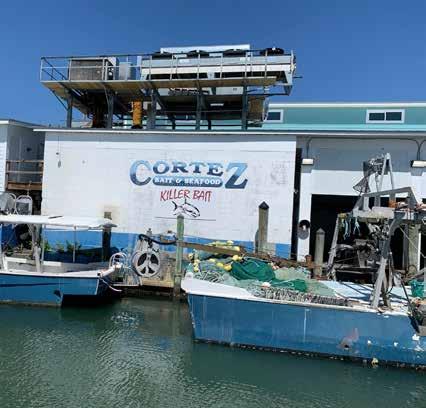
Cortez holds the distinction of being one of Florida’s last working fishing villages. It celebrates this heritage through the Florida Maritime Museum and annual festivals like the Cortez Stone Crab & Music Festival. People who live here work in the industry or enjoy the proximity to the water and the town’s oneof-a-kind culture. Real estate runs the gamut from newly built single-family homes and townhouses to vintage cottages.
Myakka City is actually an unincorporated area of southeast Manatee County, not a city. In fact, it may be the most rural part of the county. Most homesteads occupy 5 acres or more, and the houses’ architectural styles range from traditional farmhouse to modern. Myakka River State Park is within the confines of Myakka City, so hiking, kayaking, and fishing are easily accessible to local residents.
Convenient to Bradenton, Sarasota, and St. Petersburg, Palmetto has an ideal location for work and play possibilities. The town itself has its own appeal, with riverfront recreation and dining and a historic downtown area. Palmetto’s Bradenton Area Convention Center also hosts expos and other events. Homebuyers can purchase a house in a new community or a vintage home in an established neighborhood. Riviera Dunes is a gated community on the Manatee River, with three marinas, a restaurant, multiple pools, and walking paths. The maintenance-free neighborhood has single-family homes, condos, and townhouses.
When it comes to places to call home, Manatee County is not one-size-fits-all. From Gulf and river vistas to cityscapes to open land, you can choose your view and your way of life.
How personalized care and modern technology are reshaping the hearing health experience
WRITTEN BY MCKENZIE ROBERTS
When I first walked into Coastal Hearing Care, I checked in with the receptionist and explained who I was there to meet. I was told she would be right with me, so I took a seat in the waiting area. From there, I watched an interaction unfold that immediately stood out. A patient was greeted warmly and addressed by name, with a level of familiarity that felt intentional rather than routine. The receptionist even recalled that he had not been in the office for some time, gently guiding him through additional paperwork without any sense of rush or inconvenience.
Instead of the typical detachment often associated with medical offices, the atmosphere felt calm and personal, almost home-like, where patients were treated as individuals who were known, remembered, and valued.
Coastal Hearing Care is led by Dr. Kristin, who specializes in hearing care and works closely with patients to address a wide range of hearing concerns, from initial evaluations, ear cleanings, and ongoing treatment to hearing aid fittings.
She has been in practice for 28 years and has worked in both large corporate and private healthcare settings, where she observed differences in patient care that influenced how she now runs her own practice
“Our patients are our family,” Dr. Kristin
Her approach centers on taking the time to understand each patient’s individual needs, ensuring that care is both personalized and accessible. Rather than rushing appointments, the focus is on building trust and making sure patients feel comfortable throughout the entire process.
Dr. Kristin and her team evaluate every possible option to ensure patients receive the best fit for their needs, even when it may not be the most financially beneficial choice for the practice. She emphasized that patients and staff operate “as a team,” reinforcing the collaborative nature of care within the office.
The practice has also expanded in recent years, now operating two locations in the Bradenton and Lakewood Ranch areas, while continuing to grow its team with the addition of two audiologists.
When you become a patient at Coastal Hearing Care, you are not only receiving hearing aids, but also personalized and in-depth treatment plans and recommendations. Dr. Kristin described a typical initial appointment as a 90-minute evaluation that includes an otoscopy to examine the ears and ensure overall health. The clinician then reviews the patient’s medical history, listens to their hearing goals, and allows time for any questions or concerns. The appointment concludes with individualized recommendations for care, ensuring each patient leaves with a clear understanding of their hearing health and next steps.
Pictured from left to right: Dr Arianna Bartolome, Dr Danielle de la Fuente, Dr Kristin DesErmia, LeeAnn Anderson, Carla Morel, Jessica Ralidak
As the world becomes increasingly loud, hearing care is becoming even more crucial. Dr. Kristin believes individuals should begin having their hearing checked between the ages of 50 and 60, though this can vary depending on lifestyle or early signs of hearing loss. She also acknowledges that many people delay seeking care due to misconceptions and stigma surrounding hearing aids.
Dr. Kristin said she’s had many patients tell her ‘I wish I had done this years ago,’ after she fitted them with hearing aids.
“The positive effects that hearing aids have on someone’s life are immeasurable,” she said.
People also hesitate because they assume hearing aids are too expensive. However, Dr. Kristin and her team work to provide a range of options to ensure care is accessible. She emphasized that cost alone does not determine success.
“A person can get the best and most expensive hearing aid, but without proper fit, they will not work well,” she said. This highlights the importance of working with a team that prioritizes individualized care and proper fitting above all else.
Receiving hearing aids can often change someone’s dayto-day life in a tremendous way, as hearing loss can affect not only personal relationships but also professional communication and self-assuredness.
“It can improve confidence and help people continue to lead better lives with better hearing,” Dr. Kristin said.
This improvement often allows individuals to re-engage more fully in conversations, participate more comfortably in work settings, and regain a sense of independence that hearing loss may have diminished over time. In many cases, patients describe the adjustment as not just an improvement in hearing, but a restoration of connection to the world around them.
In recent years, hearing aid technology has advanced significantly, making devices far more discreet and user-friendly than in the past. Modern hearing aids are now smaller, lighter, and designed to blend more naturally with the ear, moving away from the bulky and highly visible models many people still associate with them.
Many newer devices can also connect directly to smartphones and other technology, allowing users to adjust settings, stream phone calls, or listen to audio with greater ease. These improvements not only enhance sound quality but also help reduce the stigma that sometimes comes with wearing hearing aids, making it easier for patients to feel confident using them in their daily lives.
Ultimately, hearing care at Coastal Hearing Care extends beyond the devices themselves. It is about improving communication, restoring confidence, and helping patients stay connected to the people and moments that matter most.
From the first appointment to long-term follow-up care, the focus remains on personalized treatment and patient comfort. In a field that is often overlooked until problems become severe, Dr. Kristin and her team emphasize the importance of early attention, ongoing care, and treating every patient as an individual rather than a diagnosis.
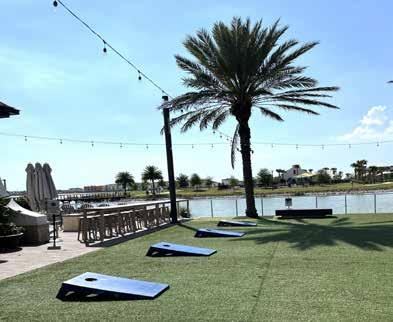
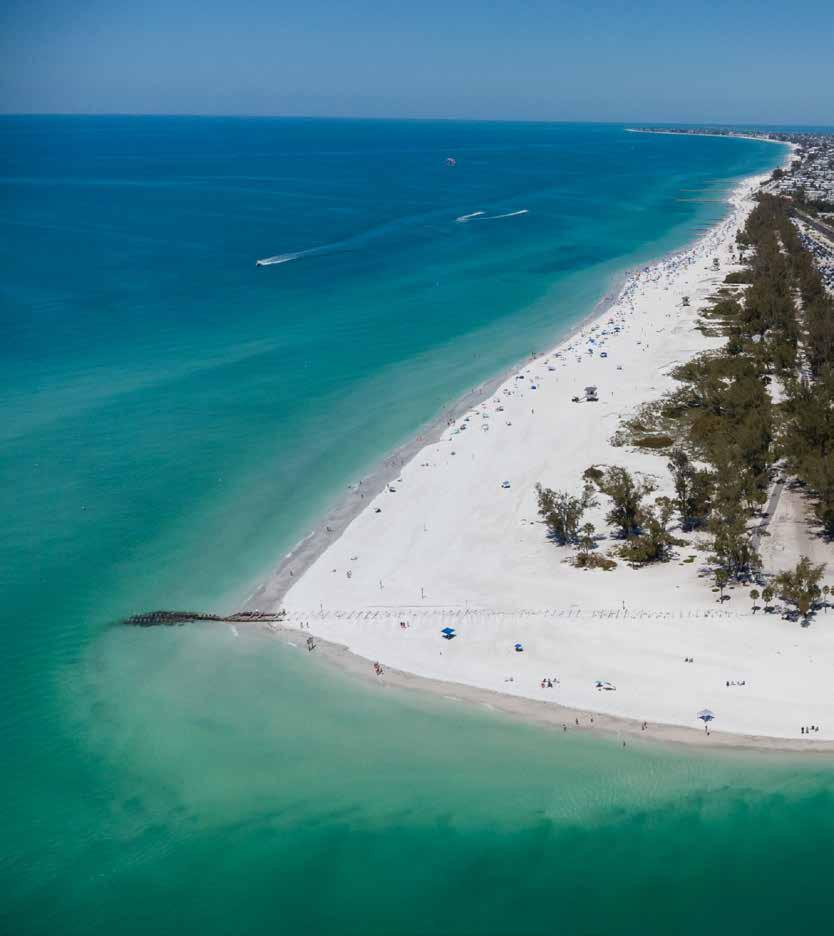
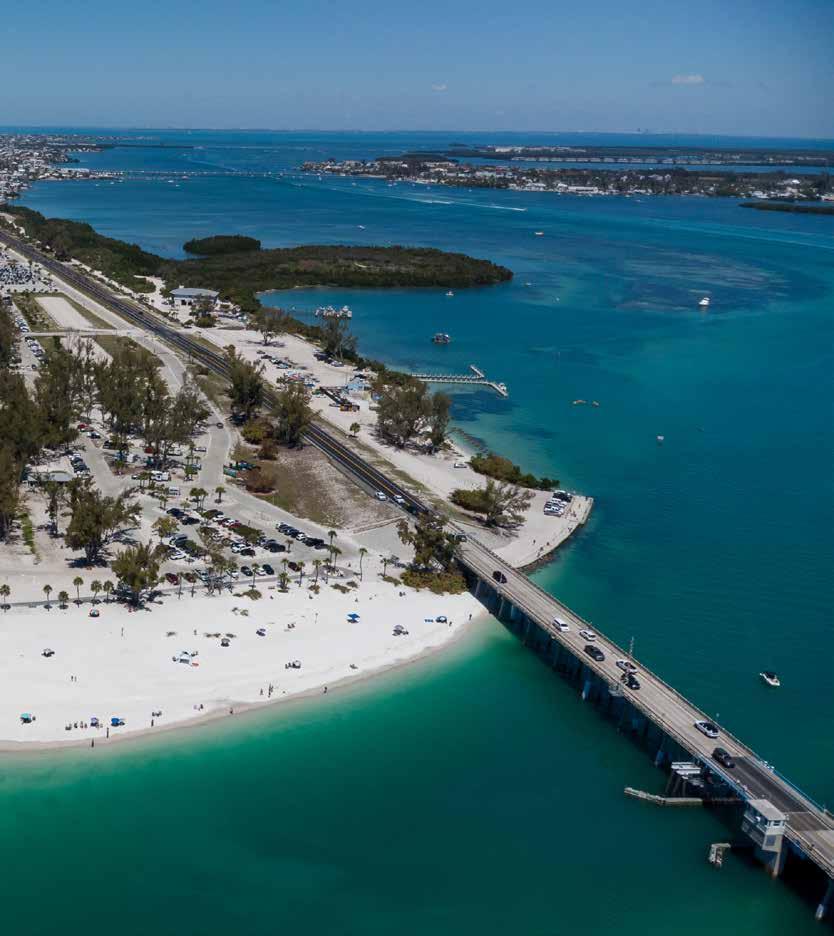
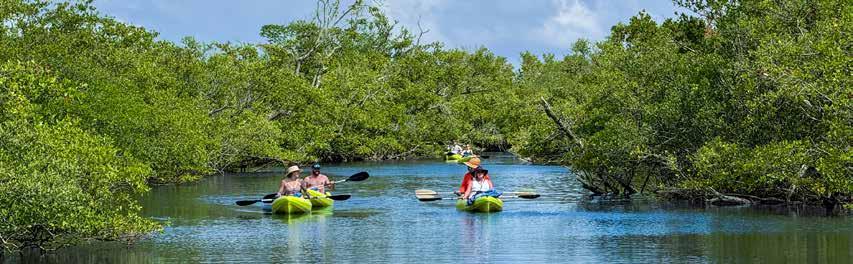
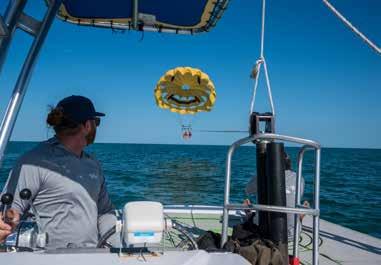
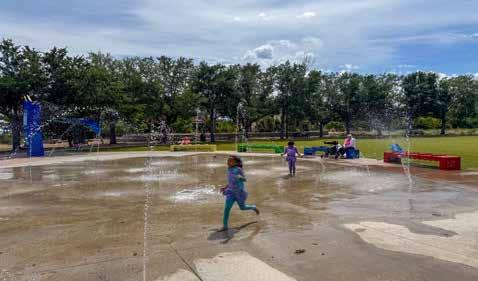
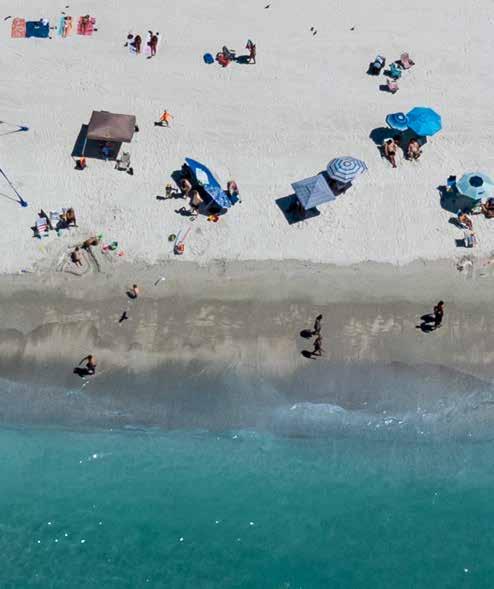
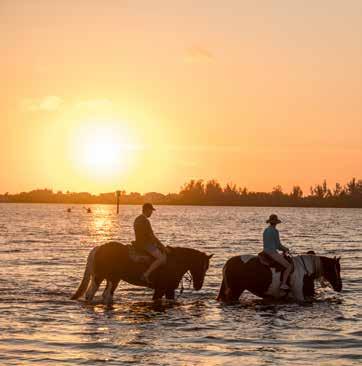
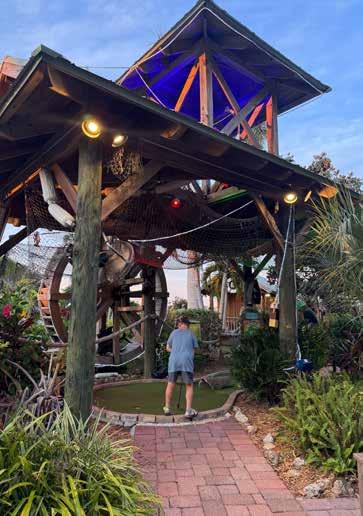
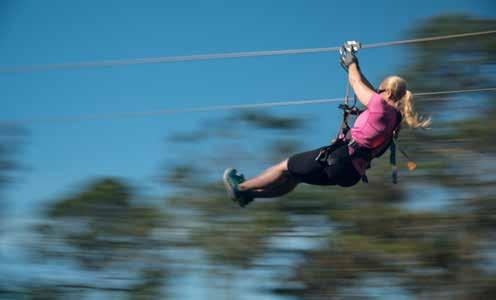
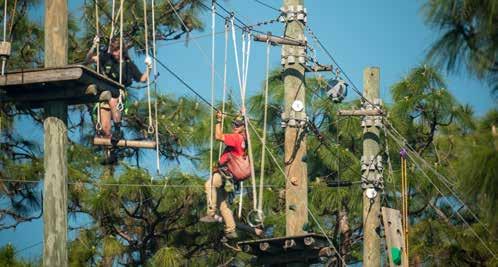
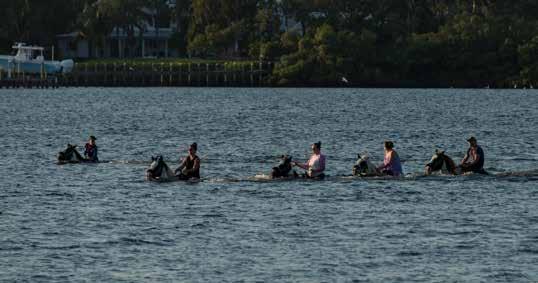
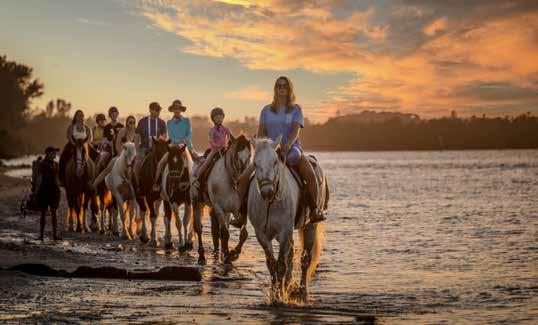
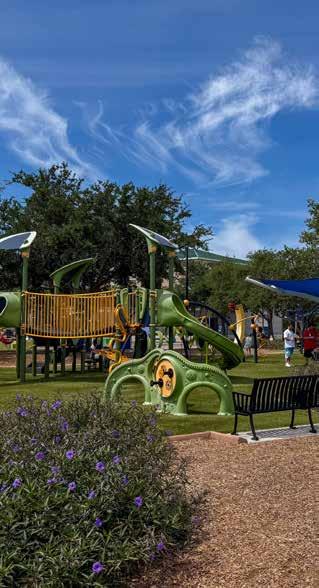
Photo Essay Features: Coquina Beach, Robinson Preserve, TreeUmph! Adventure Course, Miniature Golf at The Fish Hole at Lakewood Ranch, YoLo Parasailing, The Riverwalk Downtown Bradenton, The Causeway, and Florida Beach Horses.
Photo Essay By David X Tejada, Tejada Photography, Inc time to play
A Bridge Across: The Infrastructure of Growth
WRITTEN BY TERRI EDMUND
Some historians credit Henry Ford and mass production of the automobile with Florida’s population explosion. In the early 1900s, when the state began registering vehicles, cattle far outnumbered people in Florida, with the human census at just over half a million.
We can also thank Willis Carrier for inventing modern air conditioning. Before AC, Florida was a seasonal retreat only for adventurers and the very wealthy. Tourists discovered Florida when she flashed her neon COOL AIR signs, and many came to stay. The state’s population soared from 2.7 million in 1950 to 4.9 million in just a decade as residential AC became as common as Sears, Roebuck & Co.
The Million Dollar Link in the Tamiami Trail
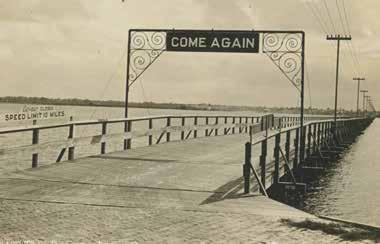
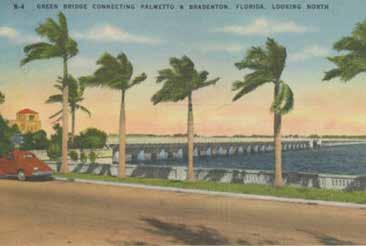
Crowds gathered on both sides of the Manatee River June 29, 1927, when J.P. Green, Sr., cut the ribbon of roses to dedicate the bridge bearing his name. Green, a former mayor and developer, was a member of the state highway department and oversaw construction of the concrete bridge. Florida footed the bill for the “Million Dollar Bridge,” a critical link along the first leg of the Tamiami Trail.
Construction on the famed road from Tampa to Miami began in 1915, but cutting the trail through the Everglades proved trickier and more costly than expected. Roadwork stalled completely in 1921, and some engineers claimed it impossible.
Locally, bridges are the key to contemporary population expansion. A hundred years ago, we were still crossing the Manatee River or driving out to the beach over wooden bridges. History has proven the problem with wooden bridges. In 1921, an unnamed hurricane mangled the first Cortez Bridge under construction to connect Anna Maria Island to the mainland. In 1932, the Longboat Key bridge was washed away and not replaced for 25 years.
In 1926, with construction of the area’s first concrete bridge well underway, a storm damaged the wooden Victory Bridge over the Manatee River so badly that heavy loads had to be ferried across on barges.
At the time, the county population was just under 20,000. Today, nearly half a million people call Manatee County home, almost as many as lived in the whole state when the automobile changed America. Today, the human population far outnumbers cattle.
Then the Tamiami Trail Blazers, a group of adventurers in Model Ts, tackled the trip from Fort Myers to Miami. At one point, they were lost and feared dead. Twenty-two days later, with the help of Seminole guides, they emerged in Miami as heroes. The publicity helped loosen the state’s purse strings for completing the 284-mile-long road that changed Florida forever.
The Green Bridge was a jewel along the new Tamiami Trail, completed in 1929. Cheering crowds and honking horns greeted the opening day motorcade before it headed south, “with the roar of the Palmetto, Bradenton and Sarasota welcome stilling ringing in their ears,” according to an enthusiastic Bradenton Herald reporter.
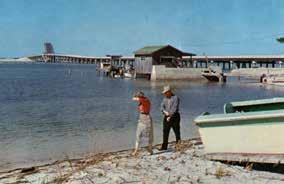
1918 postcard of the Victory Bridge, the first free public bridge across the Manatee River. *
1947 postcard looking north over the Green Bridge. * *Courtesy
The Major Bridges of Manatee County
The construction and opening of the single span of Skyway Bridge in 1954 started a local bridge-building mania. The Anna Maria Island Bridge (1953), the Cortez Bridge (1956), and the Longboat Key Bridge (1957) were all built as bascule drawbridges to accommodate water traffic. The 40-foot-tall, fixed span of DeSoto Bridge opened in 1957 over the Manatee River, relieving some of the Green Bridge traffic.
The Green Bridge was replaced in 1986 with dedicated walking paths and a 40-foot fixed span. Part of the old Green Bridge is now a favorite fishing pier. When the structure turned 90 in 2017, Bradenton’s Central Library hosted a special Bridges of Manatee County exhibit coined after the similarly named Eastwood/Streep romantic blockbuster.
At the time, the Fort Hamer Bridge was under construction, a project that public officials had been contemplating since 1909. The Fort Hamer Bridge with road improvements cost over $32 million. Hurricane Irma forced it to open early to speed up the evacuations. Named one of America’s top 10 projects by Roads and Bridges magazine when it opened, the Fort Hamer Bridge carries more people today than urban planners’ most exaggerated dreams.
The Coming Bridge Boom
Though concrete has proven tougher than wood, some of our bridges are worn and outdated. Drawbridges are antiquated. Fixed-span bridges change the landscape but speed traffic through a world accustomed to moving fast. They are also expensive, and the Florida Department of Transportation has a lot on its plate.
Skyway is like going to sea in your automobile.” *
Construction begins on the 65-foot fixed span of Cortez Bridge with a price tag of $130 million. You can see how it will change the landscape by searching Cortez Bridge Animation on YouTube. A fixed span of Anna Maria Bridge will follow the Cortez Bridge replacement.
The Longboat Key Bridge is still in the proposal stages; pedestrians and anglers are unhappy about a 78-foot-tall, fixed span proposed by the FDOT. Meanwhile, the DeSoto Bridge needs a facelift currently estimated at $168 million but delayed until 2030.
Bridges take time. They also save time and are as critical to our quality of life as our waterways once were for our transportation. Imagine the time required in the past to ferry across the Manatee River to your job every day. Or rowing your sweetheart out to the beach for a Sunday afternoon picnic. Or driving all the way around Tampa Bay before the Skyway Bridge cut the trip by hours.
Have you noticed the Green Bridge’s special dressing in celebration of our country’s 250th birthday celebration? Twenty-two American flags wave from the light poles crossing the bridge, thanks to the generosity of a local business, collaboration between Bradenton and Palmetto, and the blessing of the Florida Department of Transportation.
U.S.A. Fence President Shannon Glasgow made the purchase and the connections to get the flags flying. Bradenton Mayor Gene Brown and Palmetto Mayor Dan West received necessary permissions and purchased the center flag: America 250.
Glasgow’s idea honors his deceased father.
“(My dad) loved America,” Glasgow said in a recent Bradenton Herald interview. “It’s time to celebrate America with all its flaws and all the things it does right.”
If you’d like to keep up with local FDOT projects, visit SWFLRoads.com.
1955 postcard of the Skyway Bridge. The back reads “Touring the Sunshine
1962 postcard of the new bridge from Anna Maria Island to Longboat Key. *
WRITTEN BY BETH DEYO
Making a Difference Since 1982
It Starts with a Puppy…and Someone Like You!
Help Dogs Change Lives
The way we spend our free time can hold more meaning than we think.
A few hours here. A free weekend there.
But if you’re thinking of giving back, your time can become something more—offering hope to others and reaching farther than you might expect.
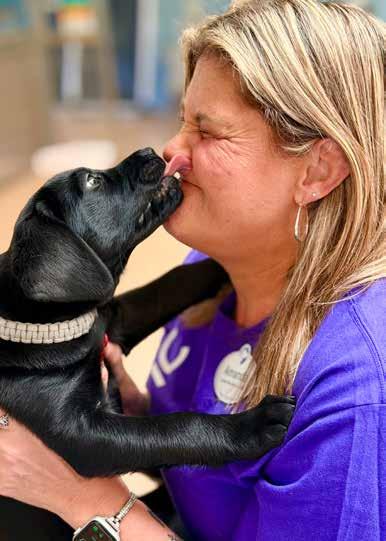
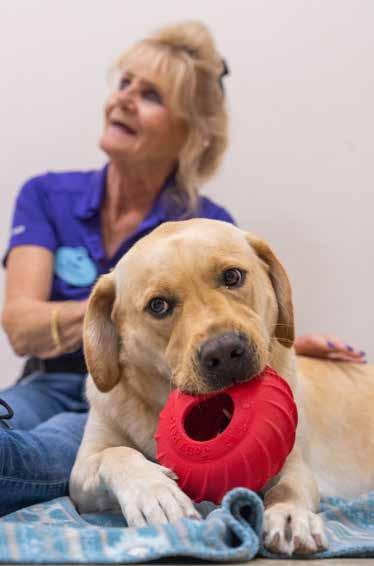
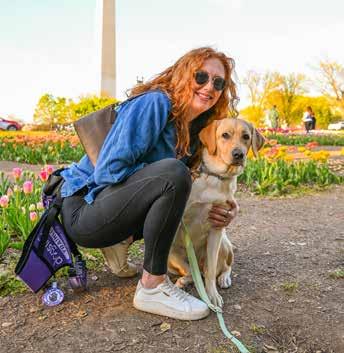
At Dogs Inc, that kind of impact is part of everyday life. The nonprofit relies on a community of big-hearted volunteers who help shape the journey of dogs that will one day guide, support, and stand beside the people who need them.
For over 40 years, Dogs Inc has been transforming people’s lives through their extraordinary dogs.
Each one is trained for a different kind of impact—but all with the same purpose: to bring greater independence, confidence, and connection to their humans.
Guide dogs help people with vision loss navigate the world with more freedom, while service dogs stand beside veterans battling both visible and invisible wounds, as well as support Gold Star family members. The organization also provides service dogs in their new Scent Detection Program to give lifesaving care for people living with type 1 diabetes.
Therapy dogs offer comfort to local first responders and patients in military facilities, and skilled companion dogs bring reassurance and companionship to children, veterans, and the military community when it’s needed most.
Dogs Inc provides all of these life-changing dogs, along with online and in-person training, for free. Plus, guide and service dog teams receive ongoing alumni support, premium dog food, and annual veterinary care—all at no cost.
None of it would be possible without the generosity of Dogs Inc’s supporters and dedicated volunteers. For those interested in becoming part of the mission, there may be more ways to get involved than you think.
Amanda, On Campus Volunteer
Lee Augello
Welcome a Dog into Your Home
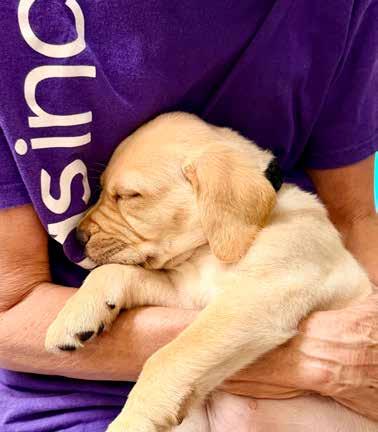
Take Home a Puppy: Become a Volunteer Puppy Raiser
Every guide, service, and therapy dog starts out the same way: as a puppy. And every puppy holds the potential to open a world of possibilities for someone in need.
That’s where volunteer puppy raisers come in.
For up to a year, they welcome a pup into their home and into their routine, bringing them along for the everyday moments that help build confidence and prepare them for what’s ahead.
“When you pick up a puppy, the goal is to live the exact same life that you lived prior to the puppy,” said Meghan W., an eight-time puppy raiser for Dogs Inc. “That’s going to give them the real-life experience of going everywhere that you go in order to set them up for success in the future.”
From running errands to relaxing at home, it all counts. Raisers get to soak up the joy of life with a puppy, while helping shape a confident, well-rounded dog with a bright future.
And they’re supported every step of the way.
The nonprofit provides dedicated advisors for guidance, in-person and virtual meetings, and a community ready to troubleshoot and cheer each other on, all while working around the raiser’s schedule.
“I am never alone at Dogs Inc,” said Jenny Senko, a Pittsburgh-based puppy raiser. “There is always someone to problem solve with me. They do an amazing job of helping me feel supported and excited about all the things we can try to help these pups succeed.”
And if raising a puppy full-time isn’t the right fit? There’s still a place for you.
Raisers can take a pup home for three or six months, co-raise with family or friends, or step in as a puppy sitter. Puppy sitters care for pups in training while their primary raisers are out of town or on vacation.
“If you can’t have a dog full-time, puppy sitting is a way to make a tiny contribution to the ultimate mission of these dogs who will transform someone’s life,” said Lisa Plasencia, a local Dogs Inc puppy sitter.
Behind every extraordinary dog is a thoughtfully built foundation: decades of research, top-notch pedigrees, and thousands of hours of training, care, and love.
Some dogs play a special role in that foundation.
Known as puppy parents, these dogs are chosen for their temperament, intelligence, and health, helping shape future generations of guide and service dogs.
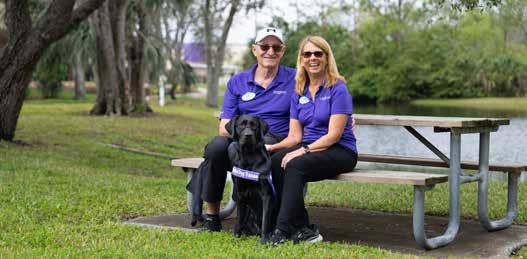
To support that work, Dogs Inc partners with volunteers who welcome these dogs into their homes. Host families provide a loving environment and care for the dog day-to-day, while also keeping up with training and traveling to the nonprofit’s Palmetto campus when needed.
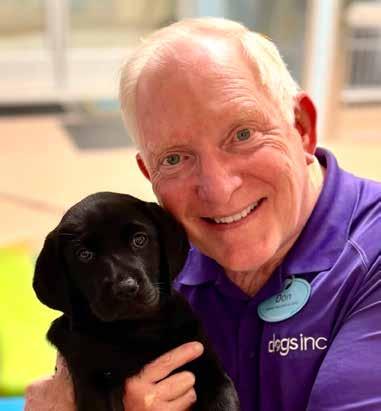
Don, On Campus Volunteer
It’s a role that fits into everyday life but also reaches far beyond it.
And when a puppy parent retires, hosts can adopt their dog at no cost, turning the experience into a bond that lasts well beyond the program.
Volunteer at the Palmetto Campus
Step onto Dogs Inc’s 66-acre campus, and it’s easy to see the mission in motion. They offer a wide range of volunteer opportunities, and each one plays a part in preparing dogs for their future partners.
“I love the dogs, the other volunteers, and the employees here,” said Leslie Belew, who has donated over 10,000 hours of her time to the organization.
“When I meet the students when they’re on campus for class, learning to work with their guide or service dog, and you see what their dog has done for them and their independence, it makes it all worthwhile. You think, ‘Gosh, I had a little hand in that.’”
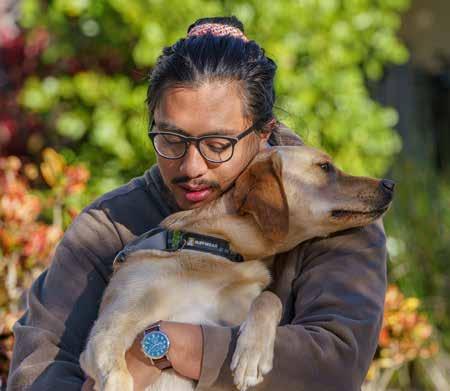
Most volunteers work directly with the dogs, assisting with Puppy Education, spending time in the Canine Fitness Center, or simply offering moments of enrichment between training sessions.
“It’s incredibly meaningful to be around the dogs and support their development,” said Wendy Ivanov, a campus volunteer. “I know that even small moments of enrichment and care can impact their journey into becoming a life-changing partner.”
Others help bring the mission to life in different ways: leading tours, supporting events, answering phones, or welcoming guests as they experience the campus up close.
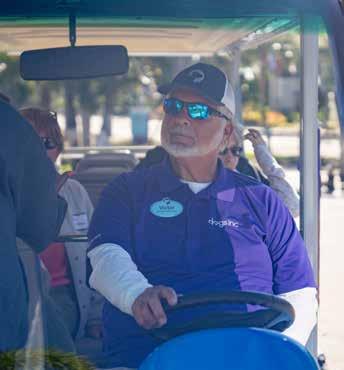
“I’m a total extrovert, and I love the interactions I have with the people who work here, the volunteers, and the public,” said Vic Augello, who often spends his time chauffeuring tour groups around campus. “As a shuttle driver, I can see the multitudes of dogs that Dogs Inc cares for. I’m so happy for that. It’s very rewarding!”
Some volunteers give a year, a weekend, or a few hours. Every single one makes a difference. Whether you’re working hands-on with dogs and pups or helping behind the scenes, every role helps move the mission forward.
There’s a place for you at Dogs Inc, and their friendly team can’t wait to meet you.
If any of these volunteer opportunities interested you, visit dogsinc.org/get-involved.
Meghan W. and puppy she’s raising Hudson
Bob and Ann Kasperski with puppy they raised - Kylo
Vic Augello
A Perfect Day in Bradenton
WRITTEN BY IVONNE RIBEIRO
There you are, sipping a piña colada topped with a dark rum floater. The summer sun still glows on your skin. The tiki bar is alive with friendly faces and easy energy.
You can’t help but overhear part of the animated conversation unfolding right beside you. Before you know it, you’re part of it.
There’s no pretense here. People show up as they are, with no need to be anything or anyone else. Conversations happen easily, without expectation or agenda. Just a shared appreciation for where you are and the simple enjoyment of being part of it.
That’s part of the Bradenton charm.
That’s why we’re known as the Friendly City.
A perfect day… for whom?
Are you a lifelong local? New to the Manatee County area? A snowbird testing out the Suncoast? Or just visiting for the very first time?
Whatever your circumstances, Bradenton has a way of meeting you right where you are. Spend a little time here, and you begin to understand why. There’s an ease to it. A warmth that doesn’t feel forced. People are simply… themselves.
It’s one of the reasons this is my forever home. One day isn’t enough. But if you have just one, this is how you spend it.
Start with a breakfast that fuels your day
There’s something about a big, scrumptious breakfast that signals you’re about to have the most extraordinary day. Sage Biscuit Café on Cortez Road consistently delivers on that promise. Serving breakfast and lunch all day, with vegan, gluten-free, and vegetarian options, it’s a place that welcomes everyone to the table.
This family-owned spot has long been a local favorite for good reason.
Whether you go for the Sage Biscuit Skillet with homemade gravy or the California Hipster (a.k.a. avocado toast, and my personal favorite), you simply can’t go wrong. The dishes feel like something your grandma would make… assuming your grandma is also an expert chef who cooks with fresh, wholesome ingredients.
Then make your way west
Cross the Manatee Bridge and you’ll find Holmes Beach, one of the most accessible and welcoming stretches of Anna Maria Island. For anyone new to the area, this is the perfect introduction to the Gulf beaches.
The Anna Maria Island Beach Café has everything you need within reach. Snacks, drinks, cocktails, clean facilities, and even a small market. And if you decide to do breakfast on the beach… you can’t beat their all-you-can-eat pancake deal.
Arrive early if you can. This is no well-kept secret, and parking can be a challenge if you’re a late starter. If parking is tight at Holmes Beach, continue south to Coquina Beach. It offers more parking, a livelier pace, and many of the same amenities.
Wherever you set your beach chair, you’ll find paradise. Anna Maria Island’s beaches are second to none. Get your toes in the sand and let the sound of the waves melt away the worries of the world.
Come back inland for something different
What makes Bradenton special is that it doesn’t rely on just one experience. Once you’ve had your fill of sun and salt air, head back inland and shift gears.
The Bishop Museum of Science and Nature offers a different kind of immersion. It’s thoughtful, well-curated, and quietly powerful in how it connects you to the history of this region.
If you can, catch a show in the planetarium. Especially on a rainy afternoon, it becomes the kind of unexpected highlight you didn’t plan for but won’t forget.
From indigenous history to manatee rehabilitation, it tells the story of this place in a way that deepens your appreciation for everything you’ve already seen.
Ease into the evening at Pier 22
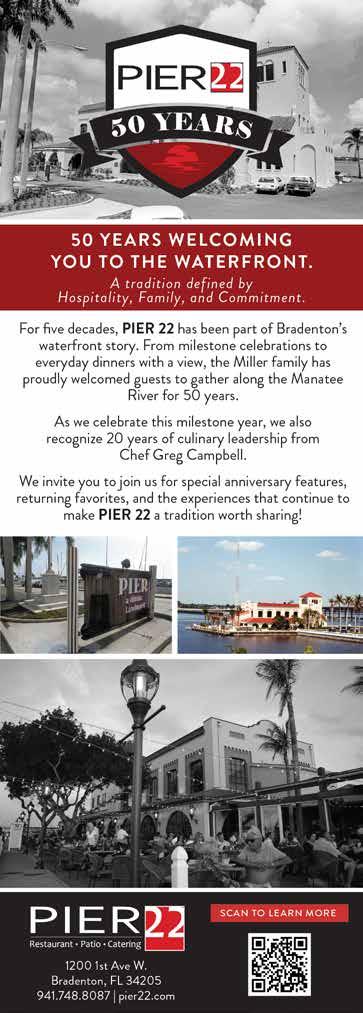
By now, you’re certainly ready for dinner. Pier 22 is just steps from the museum and, for 50 years, has been serving and celebrating with the Bradenton community.
Set right along the water, it strikes a balance that’s not easy to achieve. It feels elevated without being formal. Relaxed without feeling casual.
Personally, the soft-shell crab sandwich is always a favorite, and the braised ribs appetizer never disappoints. But beyond the food, it’s the setting that makes you linger a little longer.
Their happy hour is one of the best in the area. Arrive between 3:00 and 6:00 p.m. and it easily becomes an early dinner.
Sit outside if you can. Watch the boats drift by… and keep an eye out for dolphins.
End where the day deserves to end
No perfect day in Bradenton is complete without a sunset.
Head back out to the island and make your way to The Kokonut Hut, the Anna Maria Island’s favorite tiki bars. Order a piña colada (with a dark rum floater), kick off your shoes, and let the day wind down the way it should, with your toes in the sand and the sky swirling shades of orange sherbet right in front of you.
And don’t be so quick to leave… there’s something about the light and energy just after sunset. The sky seems to take a last breath, then exhale its splendor in a final show.
If you still have fuel in the tank, head south to Island Time Bar and Grill, where you’ll find live music, high energy, people dancing and enjoying themselves without pretense.
It’s among the best live entertainment in the Bradenton area, set in a relaxed, tropical atmosphere.
Where it all comes together
A day in Bradenton isn’t defined by where you go, but by what you take with you as you move through it.
Some places ask you to pause. Some lift your energy. Some linger with you long after you’ve left.
There’s a quiet consistency in it all. Nothing feels forced. Nothing is trying too hard. You’re simply welcomed in, just as you are.
That’s the rhythm of Bradenton.
And once you experience it, it’s no longer just a place you visited… it’s one you begin to feel connected to.
Historic Spanish Point
WRITTEN BY LIZ REED
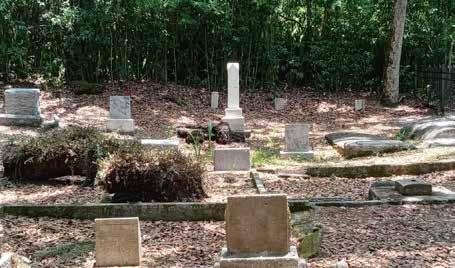
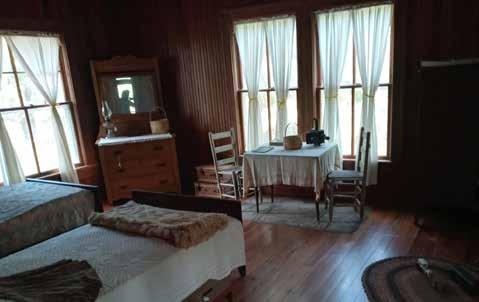
A wonderful place to visit, Historic Spanish Point encompasses 30 acres of outdoor history. You can spend a day walking through 5,000 years of human habitation, from massive shell mounds from 3000 B.C. to the Mrs. Palmer era of 1910-1950. You will see beautiful flower gardens created by Mrs. Palmer, a church, a cemetery, a citrus packing house, and two homes on the 30 acres.
After the prehistoric time, the Webb family moved there and started citrus, sugarcane, and vegetable farming. They gave the area the name Spanish Point, as a Spanish trader told them about an elevated point of land on the bay.
Then, in 1910, came Mrs. Palmer a wealthy Chicago socialite who purchased the homestead plus thousands of acres for cattle ranching, citrus growing, and real estate development. The Webb homestead was part of the area that she chose for her 360-acre estate that she named Osprey Point. She preserved the pioneer buildings that you can see today.
In 1959, they began a three-year excavation of the archeological site. At that time, they uncovered an Indian burial ground. The bodies were sent off to be studied. Out of respect, the bodies have been returned and reburied in their original burial grounds.
In 1975, it became the first site in Sarasota County to be listed in the National Register.
Of course, there are a few ghost stories that go with the area.
The property’s church is Mary’s Chapel, named in honor of 20-year-old Mary Sherrill, who came to Webb Resort in hopes the climate would help her tuberculosis. She died a short time later, and it is said that at night you will hear the church bells ringing. A woman in white is said to wander through the small cemetery.
Mrs. Palmer is said to wander her gardens at night.
Historic Spanish Point asked the Paranormal Society of Bradenton to come help with their ghost tours they did before Halloween. What they wanted us to do was to do an investigation in Mrs. Palmer’s house, where their tours could come and watch or participate in an investigation. We requested to come out at an earlier time to do some investigating beforehand to see what activity we could find.
We started at the church and cemetery, which had nothing going on. So, we moved on to the Webb house. Outside, we picked up on our SLS camera (which shows a stick figure for humans or spirits) a figure leaning against a tree. It looks like he was playing a fiddle. We started to play “The Devil Went Down to Georgia.”
At that point, the figure really started playing the fiddle to the song. This amazed us because in the Webb house is a fiddle in a case that belongs to Mr. Webb. The more music we played, the more he would play the fiddle. When he left, we went to the Palmer house. Mrs. Palmer was letting us know she was there using our equipment to communicate with us.
There is a room that an artist uses. One paranormal group had said there was some evil that started throwing things at them. However, when we went in, we communicated with the spirit. He was a polite man who really just wanted to talk. I don’t know why they said there was something evil unless he didn’t like them, so he threw things at them.
For two weekends, we did the investigation in Mrs. Palmer’s house, so when the tours came in, we were in full investigation. We had a medium with us, and she was in full conversation with Mrs. Palmer. Our equipment was going crazy and when asked a question, she would light up our rem pod (a device that lights up when touched by spirits). Mrs. Palmer was making it light all the colors, which is a strong yes to the questions. She loved people coming to Historic Spanish Point but didn’t like anyone touching anything in either home.
The next weekend, the same thing happened. The tours were amazed how Mrs. Palmer would answer.
It was a wonderful time, and the heads of Historic Spanish Point even attended the tour, which we didn’t know, and they said our part of tour was the best.
Selby Gardens has now bought Historic Spanish Point, so no more investigations, but it’s wonderful to know that the spirits are still there watching over their homes and the property. Thank you, Mrs. Palmer and Mr. Webb for the entertainment.
LIZ REED, CO-FOUNDER OF PSOBFL AUTHOR OF HAUNTED
MANATEE
COUNTY OWNER OF
DOWNTOWN
BRADENTON GHOST WALK
paranormalsocietyofbradenton.wordpress.com
More than a match: Game night with the Sarasota Paradise
WRITTEN BY LISA NEFF
The sun began to set, burning orange like a Florida Highwaymen painting, and then came the shouts—a kick, a roar as the ball hit the net.
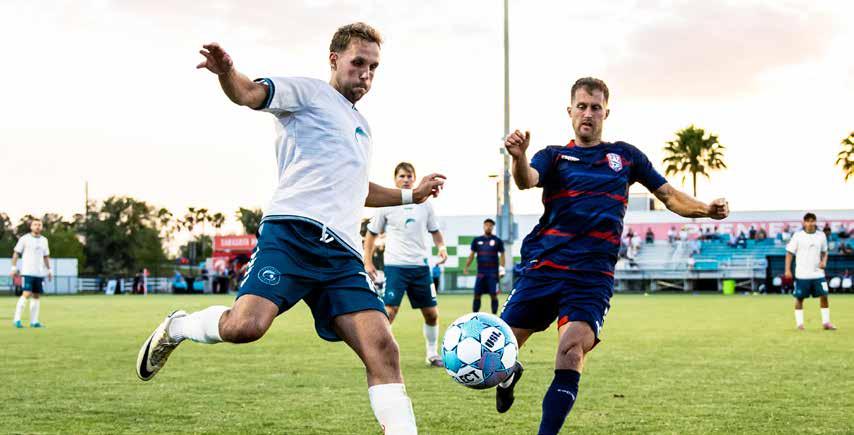
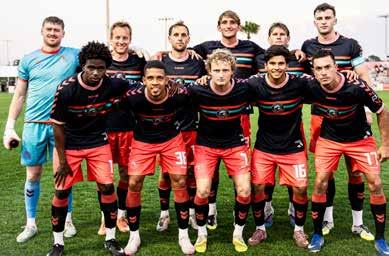
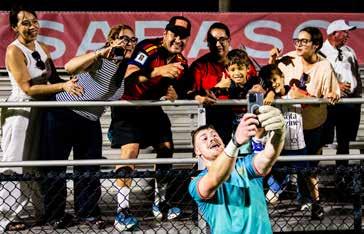
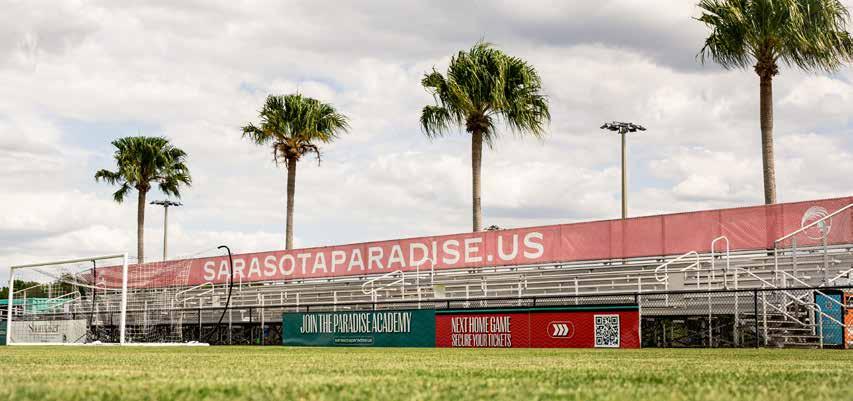
This is Paradise. Specifically, it’s game night for the Sarasota Paradise at Premier Sports Campus, 5895 Post Blvd., Lakewood Ranch.
The club took on Corpus Christi FC on April 22 and scored a goal in the 41st minute, just before halftime. Sarasota would score another before the match ended, defeating Corpus Christi 2-1 to the delight of fan Devon Fernos of Bradenton.
“This was a really good night for the guys,” said Fernos, who played soccer through high school and has long wanted a pro club in his hometown. “It’s always a great night here. Just love it. Professional in every way.”
The club, which began play in 2023, is now in its second season at Premier Sports Campus and its first as a USL League One professional club, having opened that chapter on March 7. That night drew a record crowd of 2,791 fans — the largest in club history — to Premier Sports Campus, as the team played its first professional game.
And that’s after Sarasota Paradise completed a season of firsts in 2025: its first season at Premier Sports, its first U.S. Cup play, a dominant regular season record of 9-1-2, and its first playoff win.
“It’s a giant step forward for us,” said Paradise founder and CEO Marcus Walfridson. “From the level of players we’re able to attract from all around the world to the incredible game-day experience we have created … the standards have increased across the board.”
Walfridson said the club’s priorities are clear: building community, establishing an identity on the field, expanding a youth academy, and becoming a pillar for soccer in the region—while, as he put it, “having a lot of fun doing it.”
Such was the case on April 22.
With whistles sounding, vuvuzelas buzzing, fans applauding, the players stepped out onto the pitch, hand in hand with children from a local soccer program.
Concessions were crowded, with fans lined up for popcorn, hot dogs, sodas, and giant pretzels. Beers were served and a food truck selling specialty coffees did brisk business.
“It’s a Wednesday night. And I’ve got a long drive home. So, it’s coffee for me,” said fan Shelly Callahan of Arcadia.
Behind the stands, kids in replica jerseys kicked soccer balls, imitating the pros on the pitch.
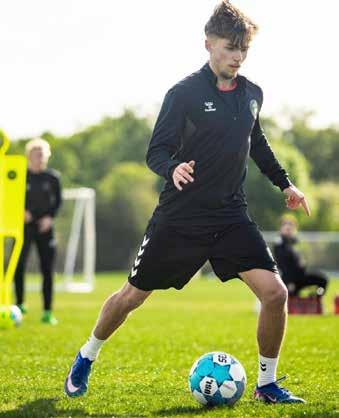
Those pros, led by head coach and technical director Mika Elovaara, come to Lakewood Ranch from around the world.
“In addition to our core of domestic players, we’ve been able to recruit from Brazil, England, Ireland, Ghana, Sweden, Norway, and Finland,” Walfridson said. “We’ve been very intentional about the type of individuals we bring in, including within our expert coaching staff. We want players and coaches who share our vision on the field, and who are able to connect with the community and represent us.”
In late March, less than a month into the new season, the club announced the signing of Swedish defender Hugo Bäckstrand, a national champion and two-time domestic cup winner in the Swedish youth ranks, according to a news release.
Bäckstrand’s arrival added to a growing Nordic contingent that includes Maximus Tainio, Jørgen Pettersen, and Sander Røed.
Bäckstrand said at the time, “This season is gonna be a great one, so why not be a part of it by coming to our games and supporting us? We’re gonna play entertaining and high-quality soccer.”
In mid-March, the club announced the signing of Ghanaian goalkeeper Rockson Amedeka, 18, to a multi-year contract. He came to Lakewood Ranch from the Right to Dream Academy system, a leading talent development program.
“I chose this club because I want to grow as a player, especially at a place that focuses so much on developing young talent like myself,” he said at the time.
Walfridson said developing young talent and engaging local youth is a huge part of what the club is building.
“We want Sarasota Paradise to be a club that kids in this community feel connected to and proud of, whether that’s through walking out with players, attending matches, or participating in our programs,” he said.
So, the club is invested in developing a youth academy, with nine teams from Under 10 to Under 18, that will launch in the fall and provide professional development for the region’s top young talent.
“We’re recruiting players now,” Walfridson said.
According to Elovaara, the academy will emphasize the club’s core values of inspiration, discipline, transparency, accountability, and growth.
“I am excited to build a pathway for the local players, helping them in the pursuit of their dreams with our club leadership and staff,” he said.
That pathway could arrive at a pivotal moment for the sport in the United States.
Walfridson believes the momentum surrounding the 2026 World Cup will further accelerate interest in soccer at every level.
“The momentum around the World Cup is a massive opportunity for us and for the sport in the United States,” he said. “Increased interest in the world’s most popular sport is the reason we’ve been able to turn pro, and we fully expect that to continue building. Our role is to give people a local club they can connect with, and where they can experience that unique excitement week in, week out. If we do that well, the World Cup is a catalyst for long-term growth, just like it was when the U.S. hosted in 1994.”
For fans in Lakewood Ranch, that global moment already feels local—a midweek match, a crowd under the lights, and a team building something beyond 90 minutes.
And in those moments—the horns, the goals, the kids chasing balls behind the stands—the club’s identity comes into focus: “We are Paradise.”
Walfridson said, “Who wouldn’t want to spend time in Paradise? It’s our way of saying we want this to feel like the most fun, welcoming, and exciting place to watch soccer in Florida. It’s the players, the fans enjoying a craft beer in the sunshine, the kids blasting the horns, everyone. If you’ve been to a game, you’re one of us.”
About Sarasota Paradise
Sarasota Paradise is a professional soccer club competing in USL League One, playing its home games at Premier Sports Campus at Lakewood Ranch, a 3,000-plus seat stadium.
Founded by Swedish entrepreneur Marcus Walfridson, the club transitioned to the professional ranks in 2026.
For more information on tickets and the inaugural professional season, visit sarasotaparadise.us
Face It, Fix It: Bradenton’s Commitment to Infrastructure
CITY OF BRADENTON
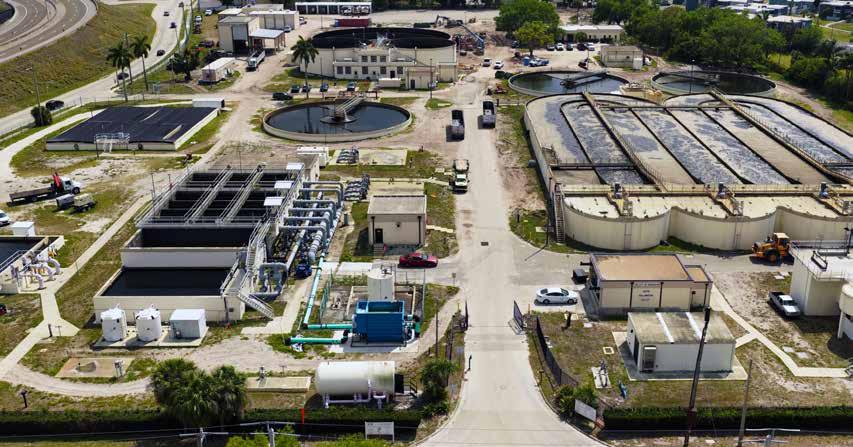
You may have heard the City of Bradenton reference “Face It, Fix It” in recent years. What began as a focus on addressing aging wastewater infrastructure has grown into a broader and long-term commitment to improving and maintaining the systems residents rely on every day.
At its core, Face It, Fix It is about identifying infrastructure needs proactively rather than waiting for failures to occur. This includes wastewater, drinking water, and stormwater systems, roads, sidewalks, and other essential infrastructure that plays a critical role in daily life throughout the city.
Wastewater improvements have remained one of the City’s most significant areas of investment under Face It, Fix It. In March, City Council adopted a five-year, $159 million Wastewater Fiscal Initiative Plan that consolidates major projects aimed at maintaining and improving how wastewater is collected, treated, and reclaimed for beneficial reuse.
The plan helps organize and prioritize work already underway across Bradenton, including improvements to lift stations, pipelines, and treatment processes. It also outlines the next phase of investments focused on improving reliability and preparing our system for heavy rainfall and the years ahead.
Much of this work is not always visible to the public. Underground pipes, treatment systems, and drainage infrastructure rarely draw attention unless something goes wrong. But in a built-out coastal community like Bradenton, maintaining and modernizing aging systems is essential to protecting public health, local waterways, and quality of life.
A major focus of this initiative has also been securing outside funding to help move critical projects forward while limiting the impact on local ratepayers. To date, the City has secured more than $160 million in state and federal grants and appropriations to fund projects throughout Bradenton.
Face It, Fix It reflects the City of Bradenton’s long-term approach to addressing infrastructure needs today while preparing for future generations. Behind every project are City employees who are invested in this community and the people who call it home. That commitment drives everything we do.
Quarterly Catch-Up
WRITTEN BY SHELLY WEST
This second quarter in Bradenton and across Manatee County brought a steady mix of changes, with familiar places evolving alongside new chapters. A long-standing landmark closed its doors, while another beloved local spot was revived and reopened, drawing renewed community attention. Downtown and the waterfront continued to see investment and public space improvements, reflecting a region that’s growing while still holding tightly to its history and character.
Here’s a look back at some of the key highlights and updates shaping growth across the Bradenton area.
Pelot’s Rexall Pharmacy Closes
A downtown landmark, Pelot’s Rexall Pharmacy, closed in March after more than 130 years in operation. Family-owned since the late 1800s and located in the Davis Building since 1934, the pharmacy was one of Bradenton’s oldest businesses.
Owner Robert Pelot is stepping away to focus on family. Prescriptions have been transferred to Walgreens, and the building is listed for sale, marking another shift in the evolving downtown corridor.
Bishop Museum Receives Manatee Rehab Grant
On April 30, 2026, the Bishop Museum of Science and Nature received a $450,000 grant from the Bishop-Parker Foundation to support its manatee rehabilitation program.
The funding will help sustain the museum’s Stage 2 care facility, which treats sick and injured manatees before release. Officials said the support is especially critical following the loss of a major funding source and the recent intake of two juvenile manatees from ZooTampa, helping offset the high costs of feeding and veterinary care.
Free Admission Weekends Announced at The Bishop
Manatee County residents will receive free admission on select weekends at the Bishop Museum of Science and Nature through early 2027, funded by a grant from the Bradenton Rotary Club.
The program includes scheduled free weekends in June, September, December, and January, offering access to the museum’s exhibits, planetarium, and manatee rehabilitation habitat. The initiative aims to expand local access to cultural and educational resources, including the Parker Manatee Rehabilitation Habitat and the museum’s science and natural history exhibits.
Dates include June 13-14, Sept. 5-6, Dec. 5-6, and Jan. 9-10.
Funding Received
Bradenton has secured $4 million in federal Community Project Funding for local infrastructure.
Of that, $3 million will support stormwater improvements tied to the LECOM Park area expansion, including new fields, parking, and a future community resource center. Another $1 million is allocated for safety upgrades along State Road 64.
The funding, supported by U.S. Representative Vern Buchanan, adds to more than $150 million in recent state and federal investment across Bradenton.
Sculpture Installation
The Singing River sculpture by Reinaldo Correa has been installed along the Bradenton Riverwalk, forming a colorful canopy inspired by the Manatee River.
Wind-activated elements produce soft tones, and a new pedestrian path beneath the piece will soon allow visitors to experience it from below. Final landscaping and site work are expected in the coming weeks.
Selected through a 2023 public art process, the project is funded by the Bradenton Community Redevelopment Agency, as part of an ongoing effort to activate the waterfront with interactive art, shaded walkways, and improved connectivity between downtown and the Manatee River. The project reflects continued investment in making the Riverwalk a central civic and cultural corridor.
Lewis Park Is Transforming
The first plantings are underway for a future butterfly garden at Lewis Park, 3120 1st Ave. W., Bradenton, transforming open space into a native habitat for butterflies, bees, and other pollinators.
Led by city officials and volunteers, with guidance from the University of Florida IFAS Extension, the project aims to enhance green space and provide educational opportunities. More updates and a formal dedication are expected as the garden grows.
Community Garden Celebrates Grand Opening
Celebrations were held on May 30 for the grand opening of the Patricia & Dr. Carroll Geraldson Community Garden located at 1401 99th St. N.W., Bradenton.
The new garden was designed to support access to fresh food, community connection, and hands-on learning. The free, family-friendly event featured a ribbon-cutting with Manatee County Commissioners Tal Siddique and Amanda Ballard, along with tours, mural viewing, kids’ activities, and seed giveaways in partnership with Palma Sola Botanical Garden and Hope Seeds.
The opening marked the launch of a new community space focused on education, sustainability, and local engagement.
Mixon Farms Market Continues Monthly Series
The former Mixon Fruit Farms site at 525 27th St. E., Bradenton, continues its revival under Manatee County ownership with a recurring monthly farmers market launched this spring.
Held on the third Sunday of each month through May, the market features local vendors, fresh produce, live music, and family-friendly agricultural programming, including themed activities such as “Ag Adventure” exhibits and hands-on farm experiences. The effort is part of a broader county initiative to preserve the historic property while reestablishing it as a community gathering space.
The market has quickly become a draw for residents, blending the site’s agricultural legacy with its new role as a public destination for local food and small business engagement.
Next season will resume in November.
Hob Nob Drive-In Reopens
After nearly two years, the beloved The Original Hob Nob Drive-In reopened on April 21, bringing back one of the most nostalgic roadside stops.
A local favorite for generations, Hob Nob is a landmark drive-in along U.S. 301 in Sarasota. The classic drive-in returns with its retro charm intact, serving up the same burgers, fries, and milkshakes that made it a community staple, now under new ownership, committed to preserving its legacy.
Palmetto Marriott Adds New Retail & Dining District
The Palmetto Marriott Resort & Spa is expanding its footprint with a new adjacent retail and dining development along US-41, adding about 8,200 square feet of commercial space. The project will introduce a mix of tenants, including Burger Monger, Foxtail Coffee, Noire Nail Bar, and White Diamond Shipping, to serve both resort guests and local traffic. The resort also continues to offer multiple on-site dining options, including The Social, as well as rooftop and poolside venues, further positioning the property as a mixed hospitality-and-lifestyle destination. Completion of the initial phase is expected in late 2026 to early 2027.