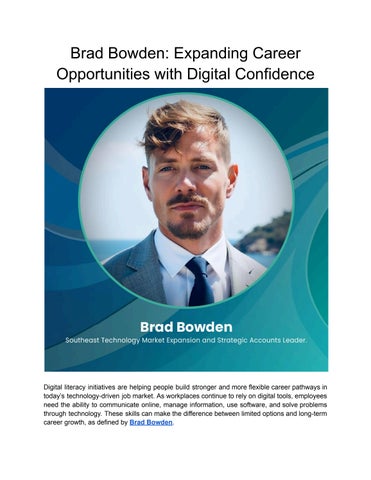
Brad Bowden: Expanding Career Opportunities with Digital Confidence

Digital literacy initiatives are helping people build stronger and more flexible career pathways in today’s technology-driven job market As workplaces continue to rely on digital tools, employees need the ability to communicate online, manage information, use software, and solve problems through technology. These skills can make the difference between limited options and long-term career growth, as defined by Brad Bowden
For many learners, digital skills training provides a starting point for professional confidence Someone may have the motivation to work but still struggle with online applications, email communication, video interviews, or basic workplace platforms Digital literacy programs address these challenges by offering practical instruction that prepares people for real career situations. As a result, participants become more comfortable using the tools that employers expect
These initiatives also help connect education to employment Schools, workforce centers, nonprofits, and community programs can design digital training programs tailored to local industries' needs. For example, healthcare, manufacturing, customer service, education, logistics, and business administration all require some level of digital ability When learners understand how technology is used in these fields, they can choose clearer career paths and prepare for specific roles.
Digital literacy also supports career advancement. Workers who can use spreadsheets, manage online files, join virtual meetings, protect data, and learn new platforms are often more productive and adaptable This can lead to better job performance, more responsibility, and improved chances for promotion. Instead of being left behind by changing technology, digitally confident employees can grow with it
Another important impact is expanded access. Strong digital skills allow people to explore remote work, online courses, certifications, freelance platforms, and professional networks These opportunities can be especially valuable for individuals in underserved communities, rural areas, or situations where traditional career access is limited.
Ultimately, digital literacy initiatives create more than technical ability. They build independence, confidence, and readiness for the modern workforce By helping people understand and use technology effectively, these programs open doors to employment, advancement, and lifelong learning. In this way, digital literacy becomes a powerful foundation for stronger and more inclusive career pathways