

Three respected awards, one clear result. Money magazine, Finder and Mozo have all called it: Hostplus is their Best Super Fund winner. That’s three big wins for your super. That’s a plus.
Workforce challenges are constantly raised with me as I travel around the State. People and skills shortages are not unique to hospitality, but it is particularly important because yours is a sector that relies heavily on people.
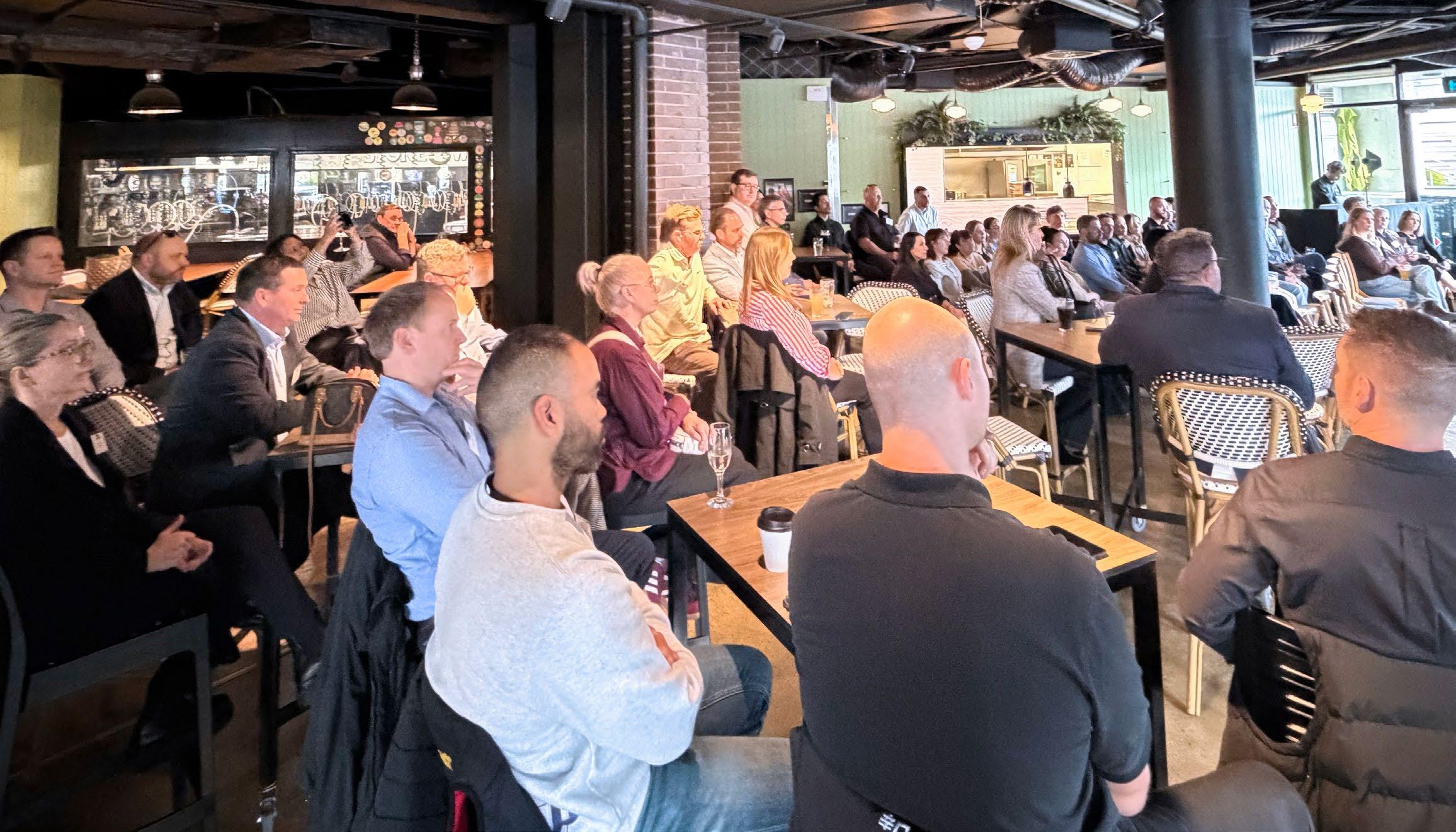
May’s Emerging Leaders event, entitled Leadership Lessons for Emerging Leaders, was held at the Maltshovel Taphouse and featured two high calibre speakers.
The AHA’s national push to fast-track cooking apprenticeships is gaining traction, with the start of a trial for a 2.5-year apprenticeship starting in September this year.
Published by Boylen
The New McCracken Formula 40
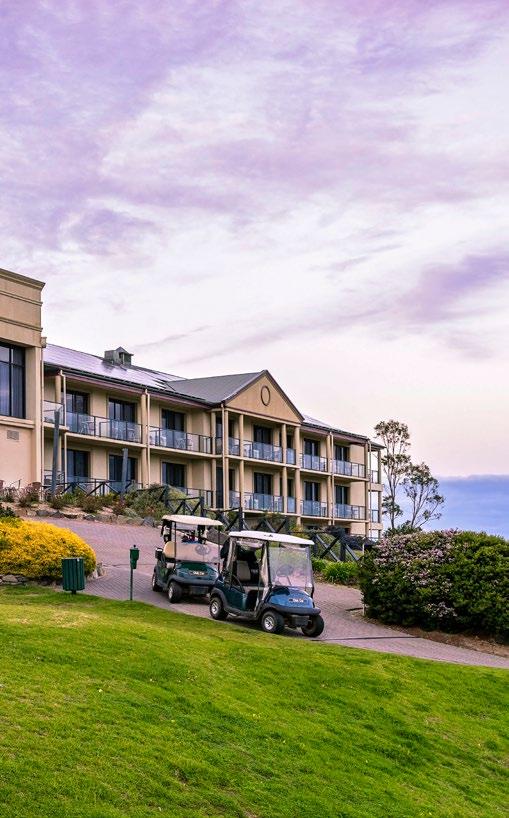
The Adelaide-based G’day Group is challenging convention wisdom – and upending quite a few myths - with its ambitious plans to transform McCracken Resort at Victor Harbor.
AA|SA Economic Workshop 46
In the previous issue of Hotel SA, we reported on the 2026 Accommodation Australia (SA) Economic Workshop. Supported by major event partner Hostplus, the threehour workshop focussed on economic analysis and market data.
In-depth, hotel focused analysis of the 2026 Annual Wage Review handed down by the Fair Work Commission in June. Wage Review 56
PRESIDENT, DAVID BASHEER
The State Government has directed the SA Productivity Commission to “immediately” review red tape to reduce “regulatory burden” on businesses dealing with State and Local Government.
This is very welcome. The AHA|SA has been pushing for red tape reform for many years.
Recently we conferred with the Chairman of the South Australian Productivity Commission, Adrian Tembel, and outlined our enthusiasm to see change.
Hotels understand the need for regulation. We operate in highly regulated environments involving liquor licensing, gaming, food safety, workplace safety, planning, accommodation, taxation and consumer protection.
The issue is not regulation itself, but where it is inconsistent, duplicative, unnecessarily costly or disconnected from genuine public benefit. It is also incredibly time consuming and it would be nice if red tape cuts allowed family business operators to claw back a few hours on a Sunday.
Our submission identifies seven priority areas for reform.
The first is planning, development and building approvals.
This is a significant barrier to investment. Members face lengthy approval timeframes, repeated requests for information, multiple agency referrals and delays arising from neighbour objections.
In many cases, businesses are required to commission specialist reports with limited practical value.
Real examples provided to the Productivity Commissioner included:
» The requirement for a hotel to seek an Arborist report for a development at a cost of $2,500 even where no trees were being removed.
» Traffic reports are often required despite no increase in patron numbers.
Red tape is costly and so, too, are delays. One proposed hotel warehouse development had not received approval more than six months later. Before a single piece of construction work commenced, more than $20,000 had already been spent on reports, engineering advice and application fees.

Members also report considerable inconsistency between councils. It’s not confined to development approvals. Signage, food inspections, outdoor dining permits and fire safety compliance are all pain points.
Greater consistency, accountability and standardisation would significantly reduce unnecessary costs.
The second priority is liquor licensing and regulatory consistency.
Hotels operate under extensive licensing, compliance and reporting obligations. But other businesses operating like licensed bars are not subject to equivalent levels of scrutiny
or enforcement. This creates an uneven playing field. And it undermines confidence in the fairness of the regulatory system.
Members have also expressed concern about liquor licensing frameworks being used to address broader social issues, rather than focusing on liquor regulation itself.
Priority three: accommodation sector regulation.
Hotels invest heavily in purpose-built accommodation. We comply with extensive planning, safety, employment and consumer protection requirements.
By contrast, short-term rental
accommodation – such as Airbnboperate under lighter and less consistent frameworks.
Hotels face planning approvals, commercial rates and substantial compliance obligations. However, shortterm rental providers – even those with dozens of beds and properties - can often enter the market immediately by converting residential properties.
This imbalance distorts competition. It discourages investment. And it reduces productivity across the tourism sector. Conversely, a nationally consistent registration and reporting framework would improve transparency and enforcement.
The fourth priority is workplace regulation and compliance.
Members are concerned about workplace health and safety compliance burdens.
During SafeWork SA compliance campaigns, small businesses received numerous Improvement Notices for minor or excessively technical matters. For example, undertaking formal noise assessments in venues that don’t host live music, but have drawn SafeWork SA’s attention simply because they are bustling venues, with a great vibe, created by people enjoying themselves.
Members have also identified opportunities to review first aid requirements, particularly where employers must fund training and wages for staff undertaking courses. Some suggested first aid training could be incorporated into Year 12 education, reducing future compliance costs.
Food safety requirements were also highlighted. Under current rules, experienced chefs who completed their qualifications more than five years ago may still be required to undertake additional food safety units to satisfy Food Safety Supervisor requirements.
Members argue this creates unnecessary duplication and cost.
Workers compensation administration processes could also be streamlined.
The fifth area is fire, safety and essential safety provisions.
The annual Form 3 Essential Safety Provision reporting process is increasingly complex and difficult to navigate.
Groups with hotels across multiple regions struggle with the fact that the way one council interprets it is different to another.
In addition, extensive documentation requirements and limited guidance create uncertainty and administrative burden.
Statewide consistency and simpler reporting would help considerably.
Six - taxation and revenue administration.
During an inflationary period and cost of living crisis, members have been hit with substantial increases in land tax assessments. In some cases, these have
“Our members seek a regulatory framework that is both proportionate and consistent. It must be timely, risk-based and focused on genuine public outcomes.”
exceeded 40 per cent. These increases reduce investment confidence and increase operating costs.
Payroll tax administration was also identified as unnecessarily complex. AHA|SA members raised concerns about grouping provisions and definitions relating to common employees and controlling interests, which can result in significant legal and accounting costs simply to determine obligations.
The seventh is broader State Government compliance requirements.
Hotels face cumulative obligations across liquor licensing, gaming regulation, workplace health and safety, environmental compliance and grants administration.
Individually, many requirements may appear manageable. Collectively, they consume significant management time and resources.
The industry’s message to the Productivity Commission is straightforward.
We are not seeking lower standards.
We don’t want to reduce safety requirements or weaken consumer protections.
Rather, our members seek a regulatory framework that is both proportionate and consistent. It must be timely, riskbased and focused on genuine public outcomes.
Reducing duplication, improving consistency between councils and government agencies, simplifying compliance processes and introducing stronger accountability for approval timeframes would lift productivity, investment and employment. It’s time to:
1. Reduce duplication
2. Improve consistency between councils and government agencies
3. Simplify compliance processes
4. Introduce stronger accountability for approval timeframes.
The Premier called for an “immediate” review of red tape.
The red tape cuts themselves must follow with the same urgency.


The tobacco black market didn't appear overnight.
It thrived outside the law as taxes climbed and regulation tightened. Then it reached a tipping point and all hell broke loose, with criminal networks unleashing an unending wave of fire bombings interstate that spread to South Australia. There are concerns liquor is heading down the same path.

Recent fire bombings of liquor outlets in Victoria have raised fresh questions about illegal alcohol supply chains.
The lesson is clear.
The excise freeze should be extended to all alcohol products, including spirits.
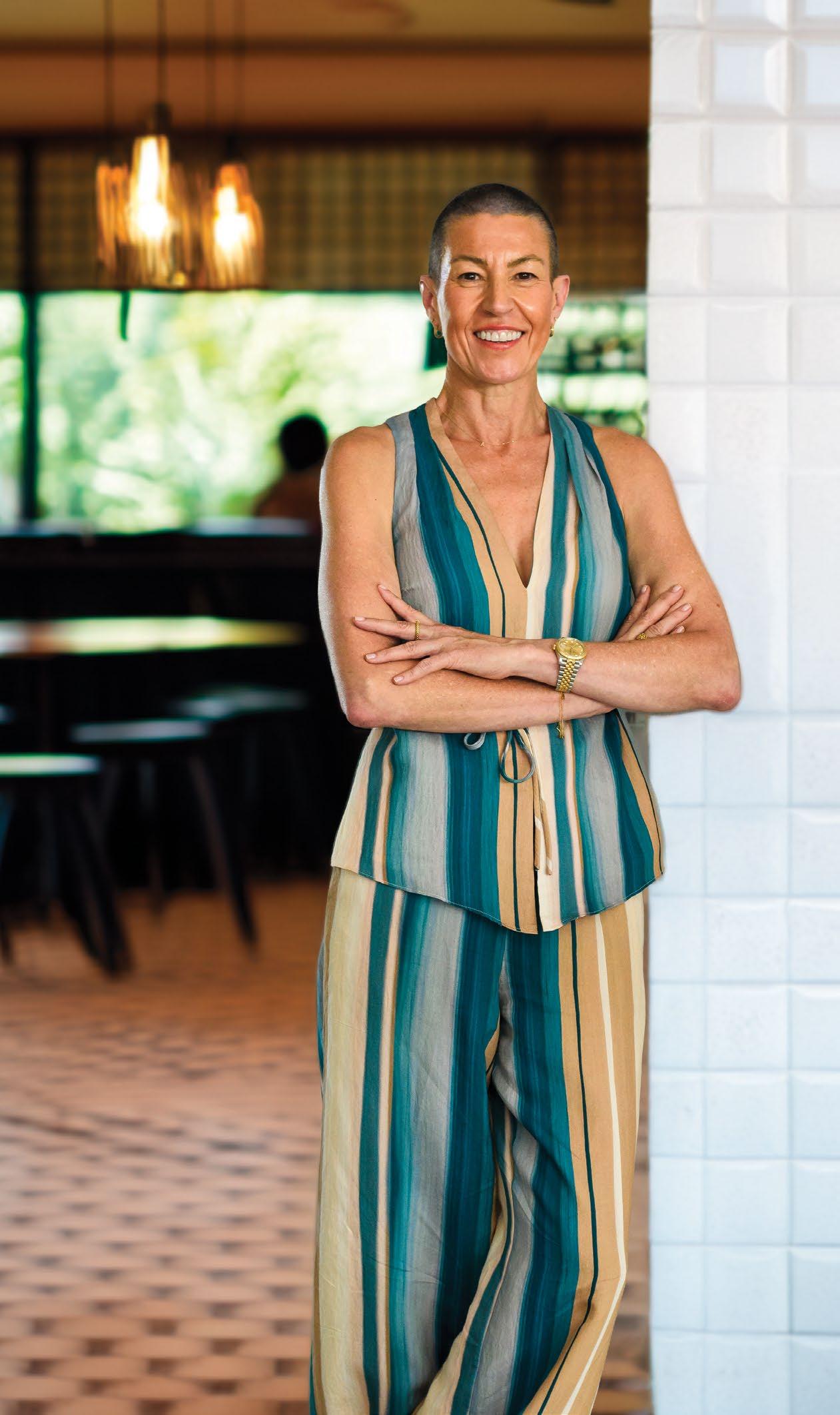
HOTELS ASSOCIATION (SA) CEO, ANNA MOELLER
It is often said “it takes a village to raise a child”. The truth is, hotels are not just a reflection of local communities, we actively improve society. Hotels give young people their first job. We teach them the valuable lessons – including interpersonal skills - they will draw upon for the rest of their lives.
Increasingly, we offer them a rewarding career, with pathways and support to bring out their best.
This edition proves the point.
» Younger workers are seeking faster, more flexible pathways into hospitality careers. In response, SA is trialling a fast-track system that we believe will bring more people into our kitchens.
» Our Emerging Leaders programs reflects an industry investing in its future. Strong communities back the next generation. So do strong industries.
» Women have been running and managing hotels for generations. What has changed is the recognition. The growth of the Women in Hotels Network reflects an industry increasingly willing to celebrate female leadership.
Different issues. One theme.
The hotel industry continues to evolve alongside the communities it serves. And as this issue clearly demonstrates, to shape it as well.
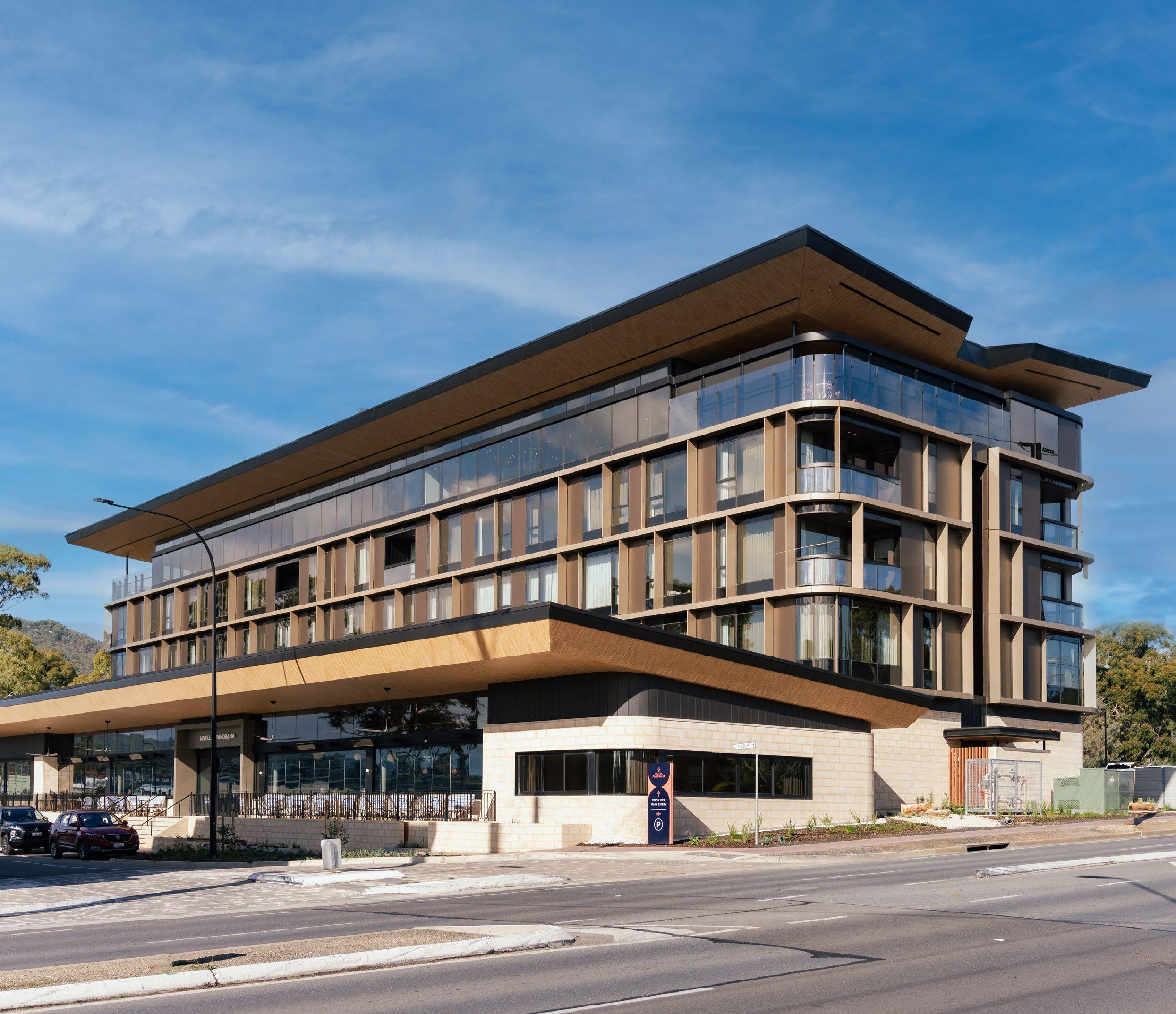
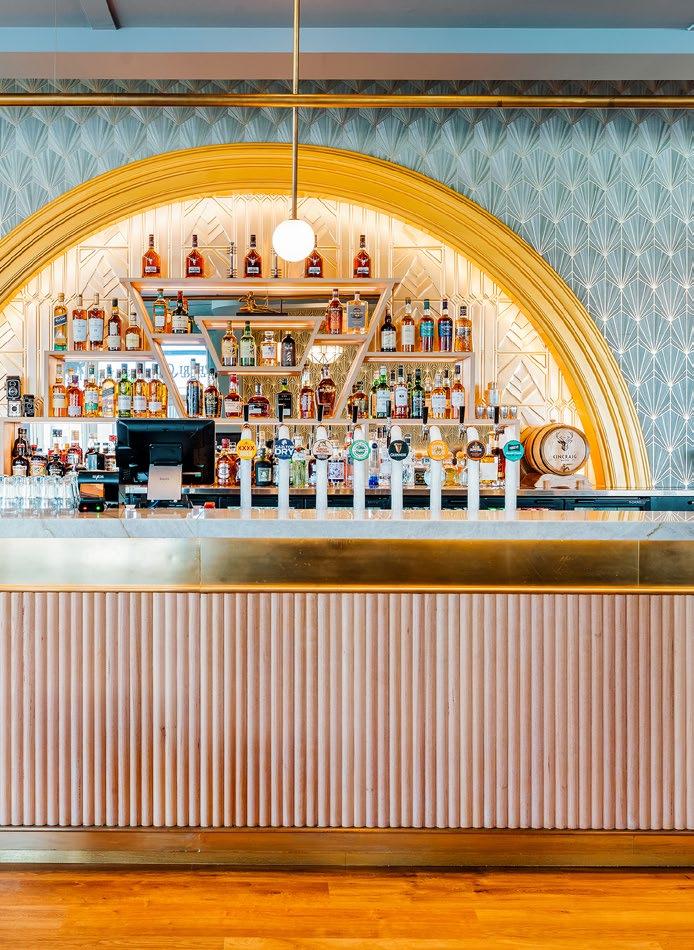
Our cover story focuses on the opening of Hotel Panorama. More than five years in the making, the $60 million development is the largest investment in the Hurley Hotel Group’s 50-year history.
It represents a significant vote of confidence in South Australia and in the long-term strength of the hotel industry.
Of course, confidence is easy to talk about. A $60 million cheque is much harder to write. What makes the project particularly important is what it says about hotel operators themselves.
Family businesses continue to put capital on the line when they see an opportunity. They continue to create jobs and build venues that become part of the communities they serve.
At a time when many businesses are hesitant to embark on major developments, Hotel Panorama stands as a reminder that ambition still has a place in hospitality.
It also reminds us that the best custodians think beyond their own generation.
Equally important is the coverage of another important part of our industry: preserving the venues that helped shape it.
Progress matters. So does safeguarding our shared heritage.
Our feature on the Kincraig highlights the challenges and rewards of restoring historic hospitality assets. Let’s hope people recognise the significant financial investment, which ensures future generations can gather and make their own memories.
The future of the industry, however, is shaped just as much by people as it is by buildings.
Every year we see a growing number of women stepping into senior roles. Our Women in Hotels feature highlights their role in shaping the future of our industry.
This has not happened by chance. Each year, the AHA|SA curates a program of events to educate, inform and inspire. Our commitment remains unwavering.
Developing future leaders is equally important. The Emerging Leaders program highlights the opportunities for young hospitality professionals to learn from successful people in all walks of life. It also expand their networks – pubs helping pubs - which is a hallmark of our membership base.
Strong leadership rarely happens by accident. Programs such as these help ensure the industry has talented people ready to take on the challenges that lie ahead.
Workforce shortages is one of the most common concerns raised by members. That is why the proposed apprenticeship reforms featured in these pages deserve close attention.
The trial of a shortened cooking apprenticeship has the potential to address a problem that has frustrated us for many years. The willingness of this government to rethink traditional training pathways is very welcome. But good ideas only matter if they deliver results. Let’s all get behind it and make a real difference.
Innovation is another theme that regularly surfaces in Hotel SA. The industry’s future won’t be built using yesterday’s thinking.
Our feature on the transformation of McCracken Resort explores how operators are rethinking traditional tourism and hospitality models. Customer expectations continue to evolve.
The plans for McCracken challenge assumptions and position the property for long-term success.
Regional tourism, in particular, benefits from operators willing to invest in destination experiences. SA is the Destination State! Let’s all encourage visitors to stay longer, spend more and return again.
This edition also examines the broader environment in which hotels operate:
» The Accommodation Australia Economic Workshop provided valuable insights into market conditions and emerging trends. As a follow up, we now report on a wide range of ideas that were raised by members on the day.
» In addition, our analysis of the Fair Work Commission’s Annual Wage Review examines one of the most significant cost pressures facing operators. The quality of this advice –both in an article and one-to-one with AHA|SA staff when you need it – is a considerable benefit of membership.
Industry advocacy is always at the forefront of our activity. Issues such as taxation, regulation and red tape affect the ability of hotels to grow and invest. And without growth, we will bequeath a legacy of atrophy and decline to future generations.
Every unnecessary regulation carries a hidden cost.
Our President, David Basheer, continues to lead the industry’s push for practical reform that cuts red tape and allows businesses to focus on what they do best. If you agree with his argument, it’s critical that you use your hotels connection with local MPs and decisionmakers to spread the message.
It’s another bumper issue! Each story reflects a commitment to building stronger businesses and stronger communities.
That commitment has always been one of the hotel industry’s defining strengths. I hope you enjoy this edition of Hotel SA
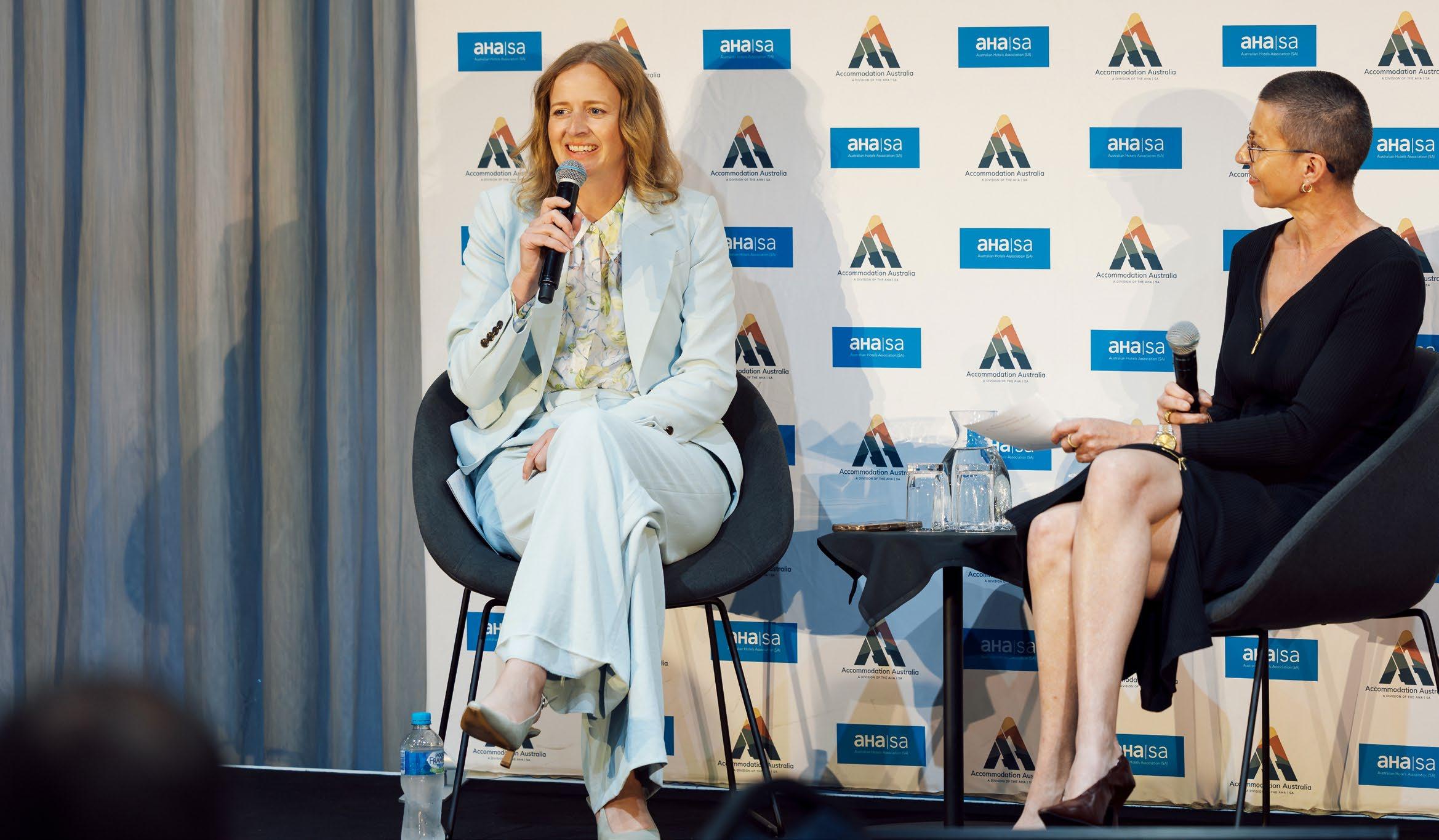
BY EMILY BOURKE, MINISTER FOR TOURISM
Hospitality is more than a first job. For many South Australians, it is a long term career that supports communities, creates business ownership opportunities and drives economic growth.
The industry employs more South Australians than ever before across hotels, pubs, restaurants and visitor experiences, which is why the State Government continues to back major events and our state’s $11 billion tourism industry. The announcement that South Australia will become the first destination in Australia to feature in the MICHELIN Guide is a major vote of confidence in our hospitality sector, with benefits flowing to the restaurants, producers, wine regions and visitor experiences that make this state unique.
As awards and recommendations are
announced, the impact extends well beyond individual venues. It strengthens South Australia’s international profile, drives greater visitor interest, encourages longer stays and creates new opportunities for hotels, pubs and other local businesses. If we are serious about building a strong, sustainable tourism and accommodation sector, hospitality must be recognised as a genuine career path, attracting new entrants and retaining experienced staff so we can deliver high quality experiences year round.
This is backed by a refreshed South
Australia Tourism Plan 2030, which aims to grow the visitor economy to $12.8 billion by 2030 and support thousands more jobs. We are building tourism as a career of choice, working with education and industry partners to create clear pathways and networks such as Young Tourism Professionals, so training and vocational pathways reflect the needs of modern tourism, hospitality and events businesses.
At the same time, we are securing major events and global opportunities that deliver benefits across the sector. The newly secured MotoGP Australian Grand
Prix on the Adelaide Street Circuit from 2027 will bring tens of thousands of visitors into our state, filling hotel rooms, pubs, bars, restaurants and cafés and showcasing South Australia to a global television audience. The expansion of our golf offering, including hosting national level tournaments such as the Australian Open, will similarly attract high value visitors who stay longer, spend more across accommodation and hospitality, and often return to explore our regions.
These opportunities form part of a deliberate strategy to drive year
round demand, create more stable employment and support investment in new and upgraded venues. Our focus on sustainable growth extends beyond the CBD. Regional South Australia offers some of the most distinctive experiences in the country, and we are determined to make it easier for visitors to get out and explore more of our state.
A key part of that is investing in the infrastructure that underpins regional travel. Through our partnership with RAA, a statewide electric vehicle (EV) charging network has been rolled out, and we are continuing to expand
the nation’s first border to border charging grid. Chargers in town centres, supermarkets, car parks, hotels and motels in regional and outback areas give visitors confidence to travel further, stay longer and support regional operators, from hotels and motels to tour companies, cellar doors and local pubs. Aligning our major events strategy, skills and careers work, international food and wine profile and regional infrastructure such as EV charging is helping to grow our $11 billion tourism industry, one in which the AHA and its members play a pivotal role.

A clear sign of this momentum is the record performance at Adelaide Airport, which has just experienced its busiest months on record in April and May. Strong passenger numbers mean more visitors checking into hotels, enjoying local pubs and restaurants and exploring our regions. For accommodation and hospitality operators, this brings increased demand, stronger forward bookings and greater confidence to invest in staff, training and upgrades, reinforcing South Australia’s position as a desirable, easily accessible destination.
Through the Minister for Adelaide, Lucy Hood, our government is building a diverse and vibrant city, with strong
investment in hotels and new builds across Adelaide. When more people are living, working and participating in daily life in the city, that supports hospitality and accommodation providers and enriches the visitor experience.
Our approach is centred on encouraging more people to live in the city and enjoy its simple pleasures every day. To achieve this, we support development and investment, and we are seeing a strong pipeline of hotel projects across South Australia, including real potential on the western side of the CBD.
I am equally focused on what is happening beyond the CBD. One of the most important questions for us

is how we get people into our regions more often and more easily, and I have been travelling throughout the state to understand what is working well and where there are opportunities to grow.
Events play a significant role in that.
Across the state, we have seen how festivals and local celebrations can draw people into South Australia’s towns and communities. The real opportunity lies in what happens next, turning those visits into longer stays, encouraging people to explore regional areas and strengthening the overall tourism offering of the state. Our focus is ensuring that major events and tourism announcements act as catalysts for broader travel, rather than single point visits.
There are challenges we need to address, including fuel availability and cost, which can impact visitor confidence and operational certainty for regional venues. That is why we moved quickly to establish a tourism fuel taskforce, and we value that the AHA is part of this group. Working directly with industry, alongside campaigns such as Simple Pleasures of Winter, helps drive demand in regional areas during quieter months.
When I came into this role, one idea that stood out was the way South Australia is positioned through “simple pleasures”. It reflects our identity and the experience we offer visitors, whether in the city,
along the coast, in the Adelaide Hills or in our regional communities. Tourism is not just an economic driver; it is the platform through which we tell the story of our state, and hotels and pubs are at the heart of that story.
We have seen that when people come here for a major event, a food and wine experience or a personal visit, they want to return. The question is not only how we attract visitors, but how we encourage them to stay longer and explore more. Tourism, environment, water and climate are all part of the same story. If we can ensure that our environment is healthy and protected, we are also ensuring that tourism has the foundation it needs to thrive into the future.
Ultimately, my approach is to listen and work closely with industry. Insights from the AHA and its members, from those working on the ground, are essential in shaping policy. They help identify where the real opportunities lie and ensure the decisions we make support hotels, pubs and hospitality businesses across South Australia, now and into the future.
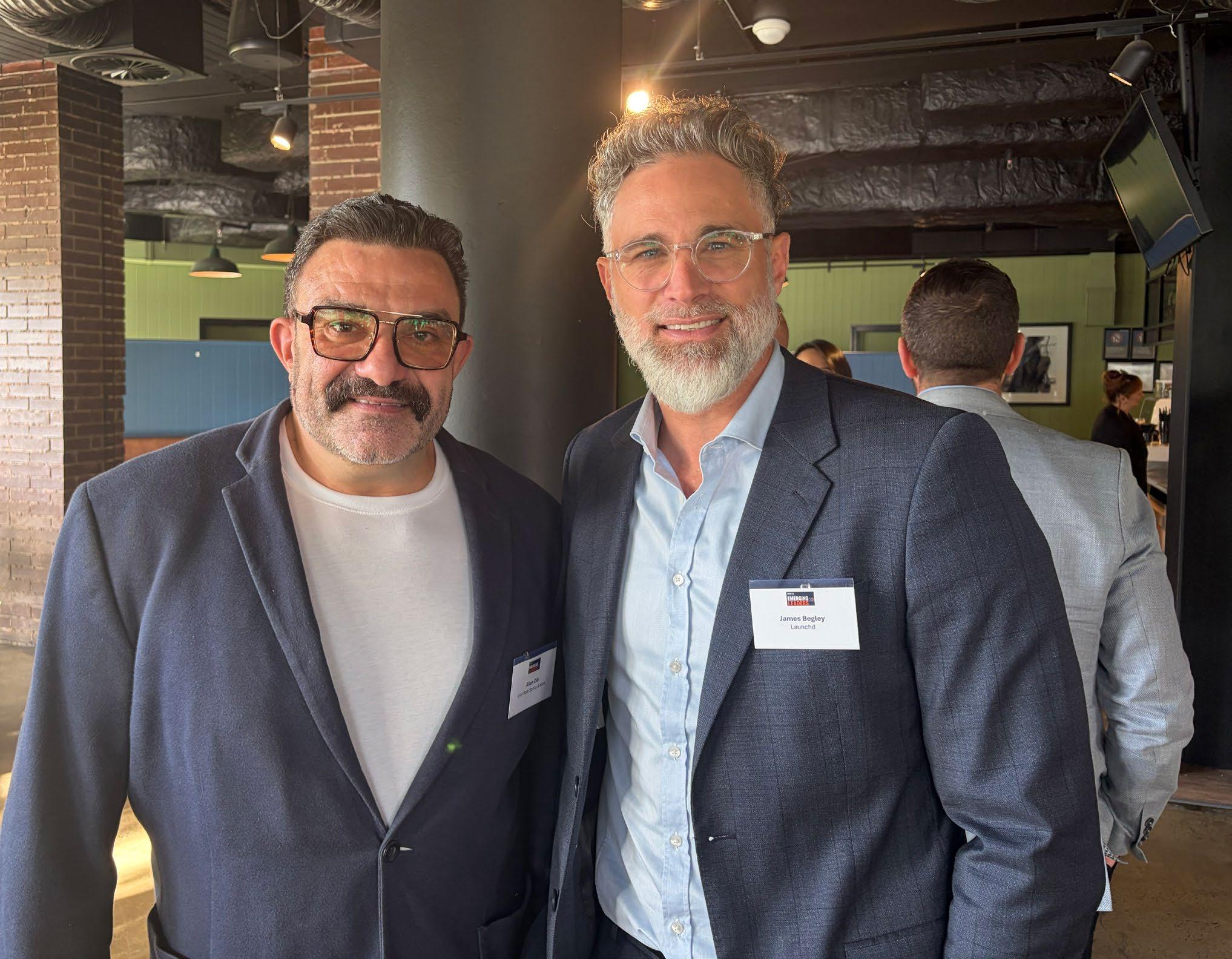
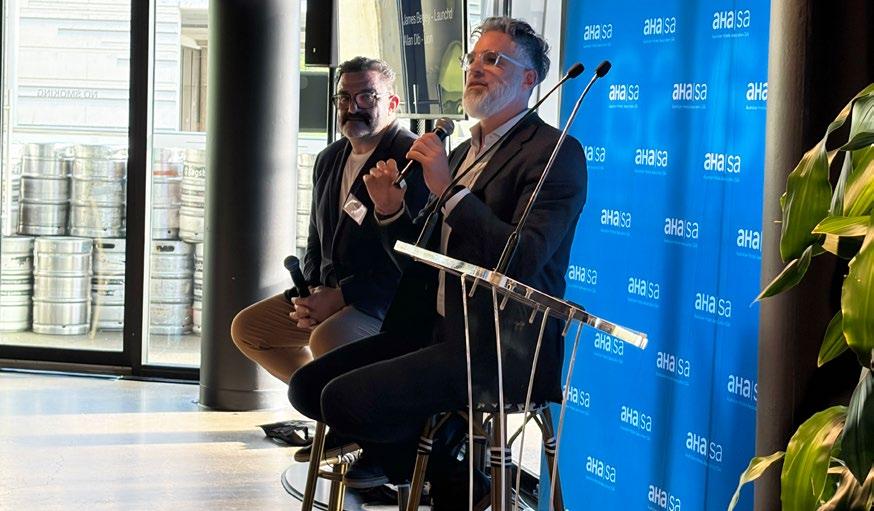
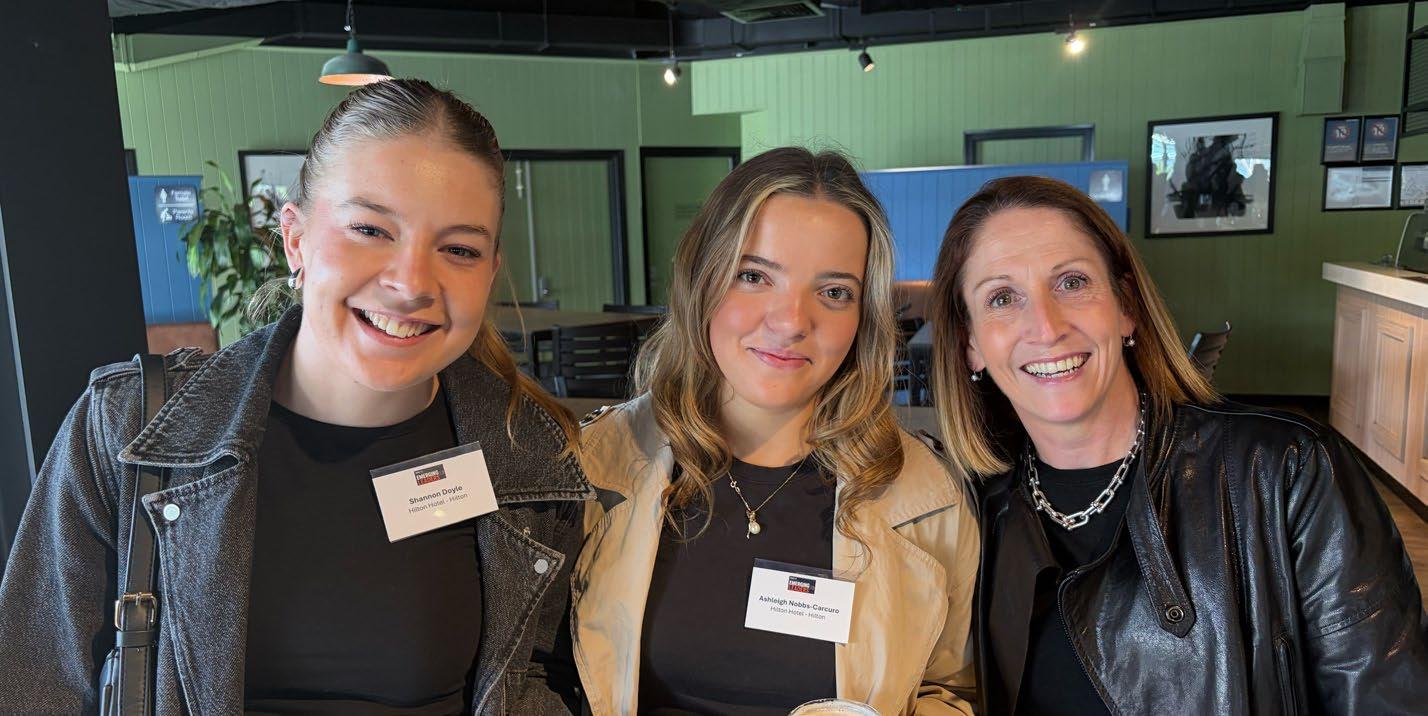
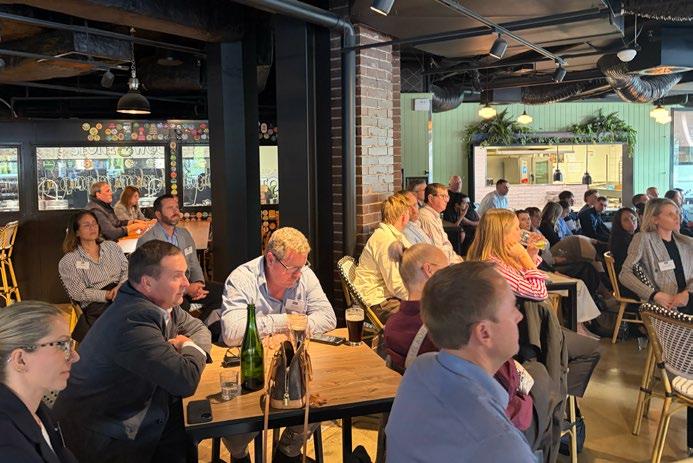
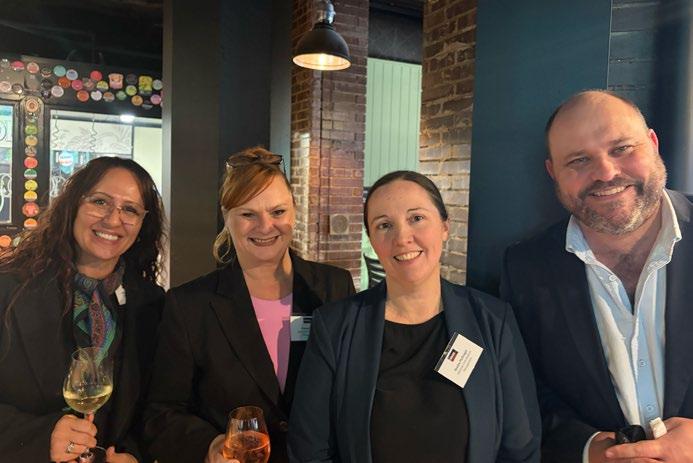
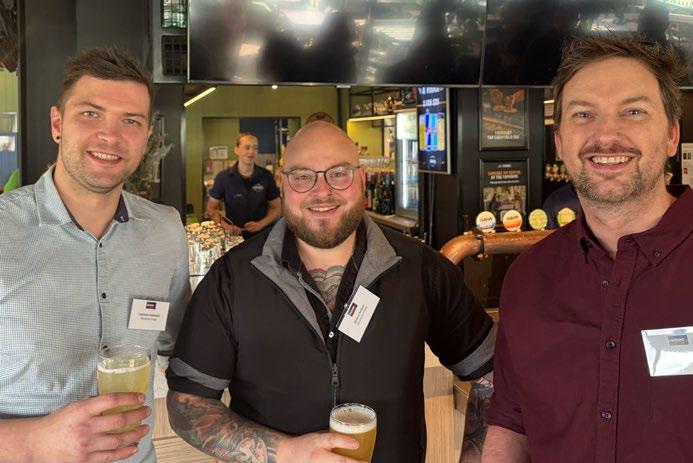
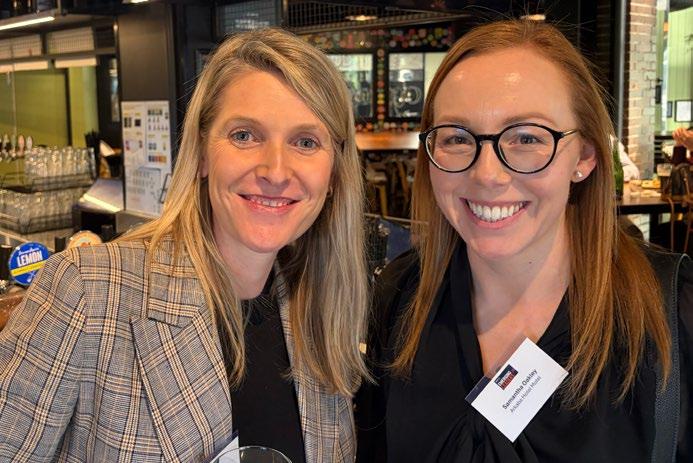
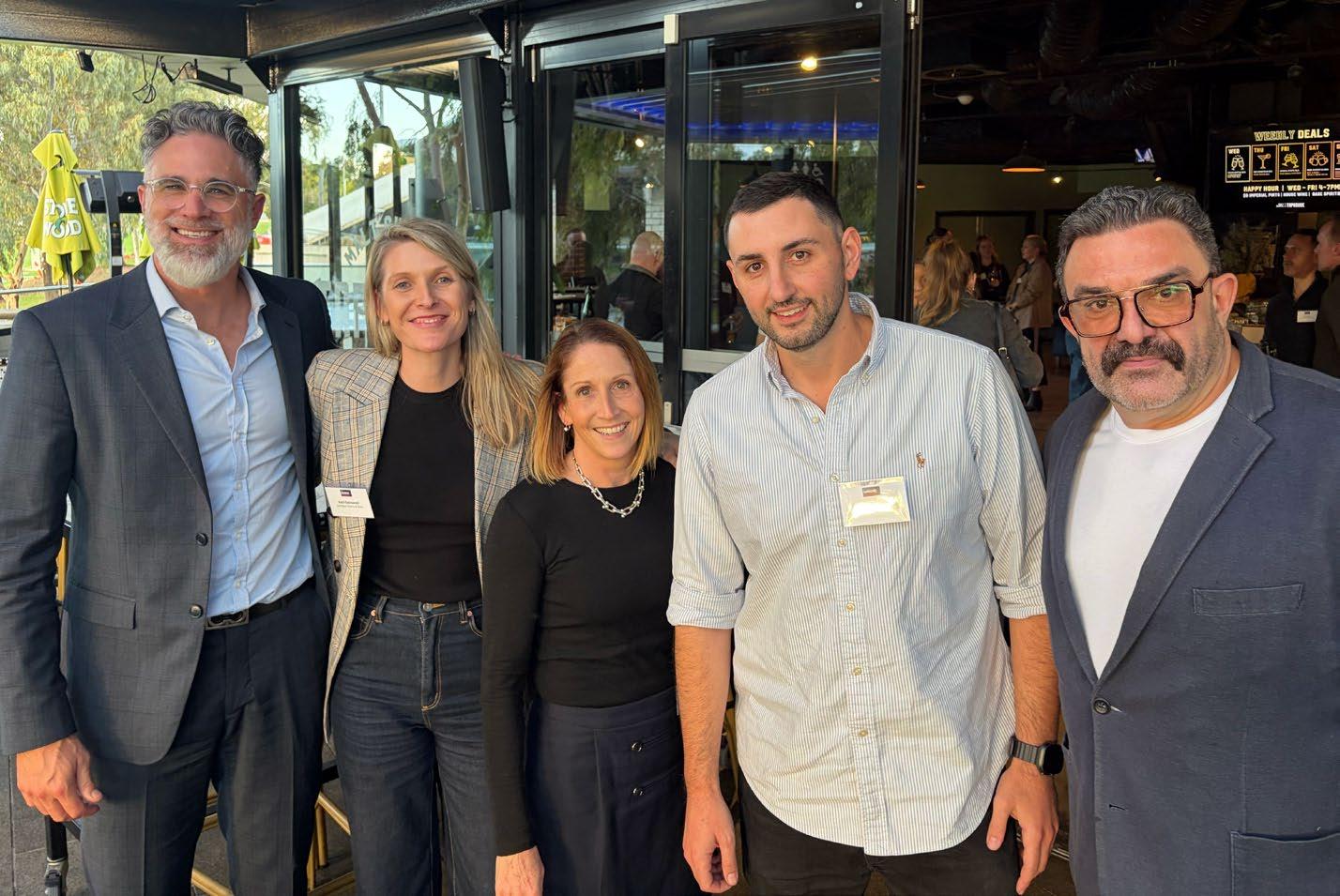
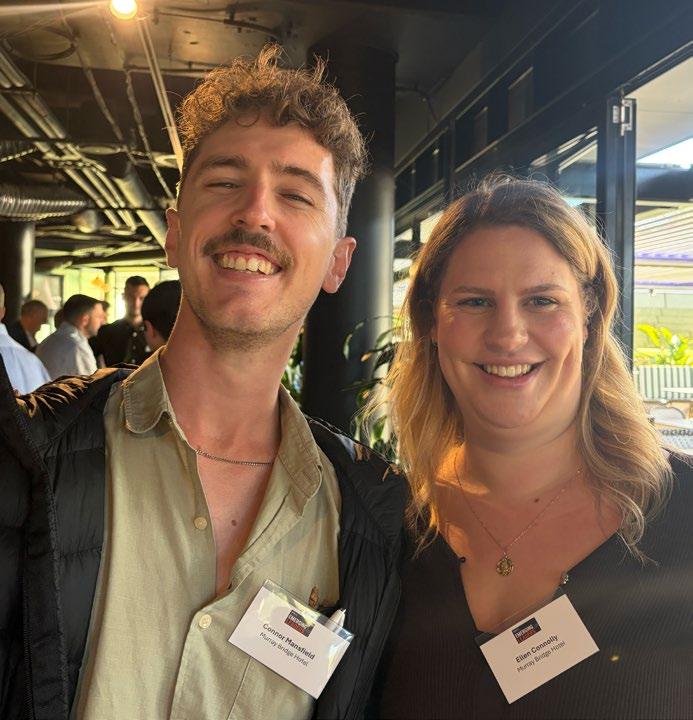
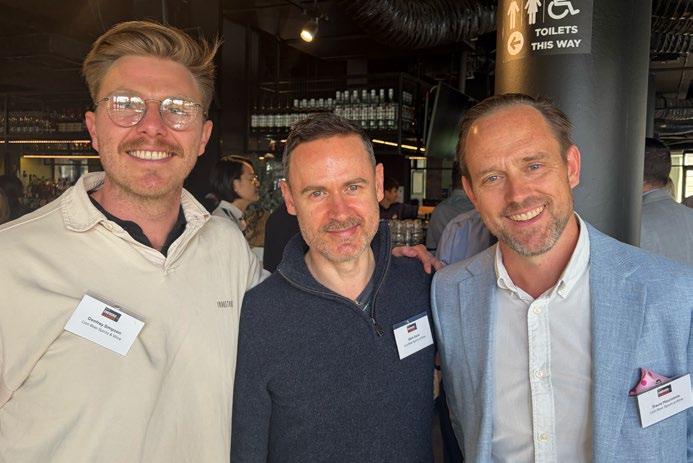
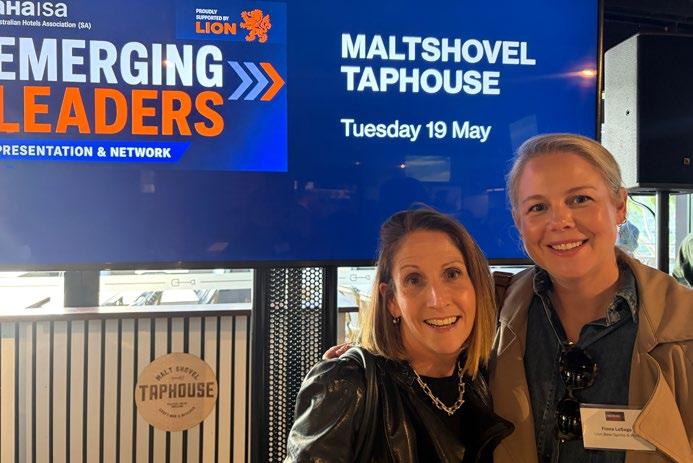
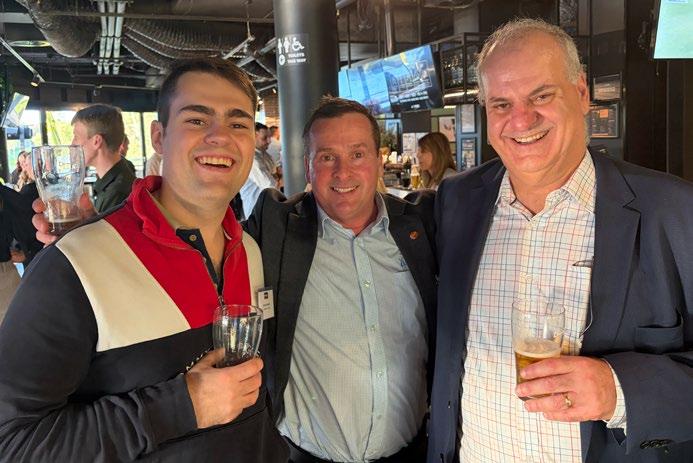
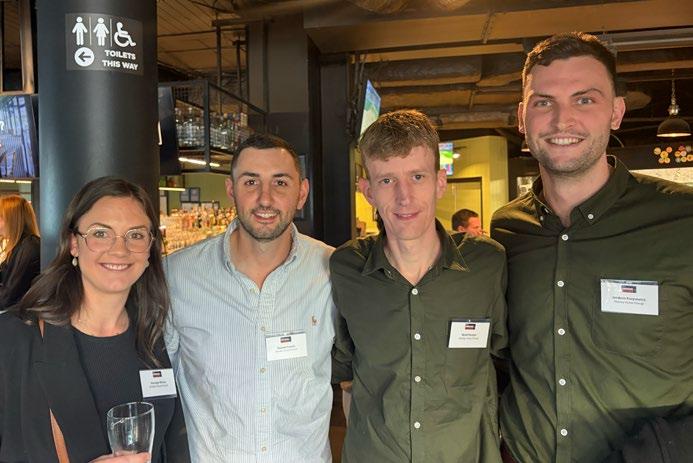
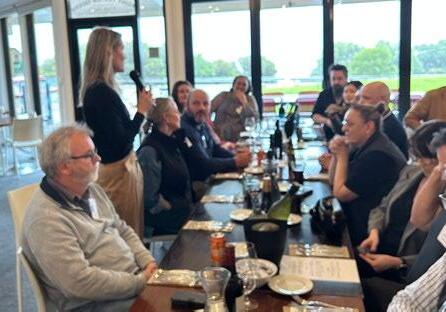
SA’s Emerging Leaders is a development initiative for the hotel industry’s future leaders. Through it, the AHA|SA offers ongoing education, networking and mentoring. May’s event, entitled Leadership Lessons for Emerging Leaders, was held at the Maltshovel Taphouse and featured two high calibre speakers, James Begley from Launchd and Allan Dib from Lion. Near 100 people attended the event.
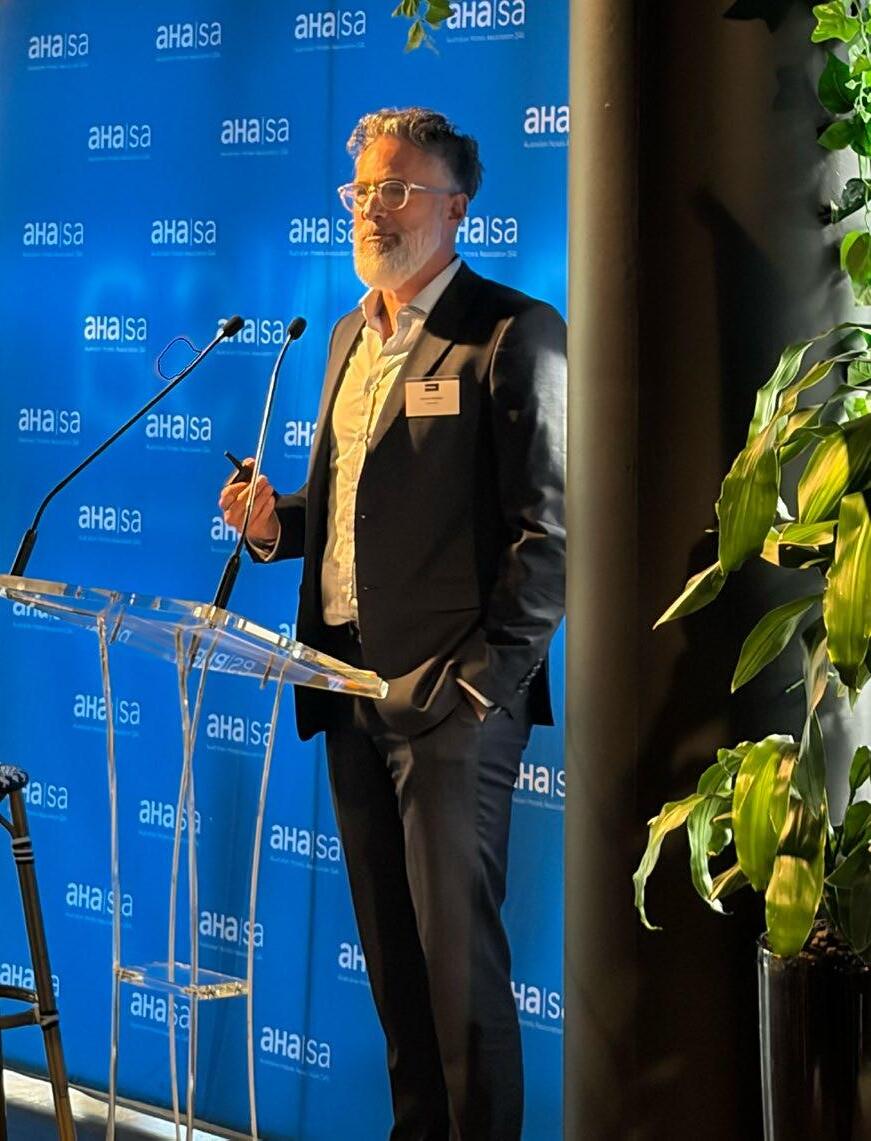
James Begley — MD of Launchd & Co-Owner
Adelaide Lightning WNBL
Former AFL footballer for St Kilda and the Crows, James Begley is a highly successful entrepreneur. He is best known as the founder and CEO of PickStar, Australia’s largest marketplace for booking sports stars for events, marketing campaigns and fan experiences.
Through acquisitions over the last three years, Pickstar has morphed into Launchd, a full-stack integrated sports, entertainment, talent and technology agency with more than 100 employees across Australia and NZ.
I’m not interested in leadership jargon or theory. Leadership only matters if it works in the real world. One of the most powerful models I’ve found is surprisingly simple: Vision, Values and Behaviours.
You need a clear picture of what you are trying to build. You should be able to see it, feel it and describe it.
Ask yourself:
» Why do I do what I do?
» What impact am I trying to have?
» What does success look like?
If you can’t answer those questions, that’s worth reflecting on.
Values are not words on a wall. They are guardrails. They are guiding principles for how you show up every day. People often see values as theoretical or fluffy. I see them as behaviours. For me, the three values that have guided my life for nearly 20 years are:
» Challenge
» Inspire
» Improve I genuinely believe my life and work need those three elements. The important thing is not my values. It is knowing your own.
Your values only matter if they become actions.
» How you show up in a meeting.
» How you treat a client.
» How you manage a team member.
» How you do business development.
» How you respond when things are difficult.
That is the DNA of your values.
If you know your values, ask yourself: “What physical actions am I taking that demonstrate them?”
Leadership
Leadership is the doing.
Culture is what you see. Leadership is what you do.
Don’t confuse leadership with position or title. Some people with senior decisionmaking responsibility are terrible leaders.
Leadership becomes real when values become visible.
People have already judged you. They already associate words with you, your team and your organisation. The question is whether those words are the ones you want them to use.
Great leaders:
1. Live the values.
2. Challenge and reward behaviours.
3. Inspire influence.
If you want people to follow a direction, you must represent it yourself. People are quick to spot hypocrisy.
If you are going to live the values, you first need to know what they are.
Once you understand the rules of engagement and how you want to behave, you can reward behaviours that reinforce those values and challenge behaviours that don’t.
The hardest part of leadership is inspiring influence because you do not get to decide whether you are influential. Other people do.
You can control your actions. You can control your behaviours. Influence is the by-product.
The key is to keep coming back to your vision, your values and your behaviours. When they align, leadership stops being theoretical and becomes something people can see, feel and follow.
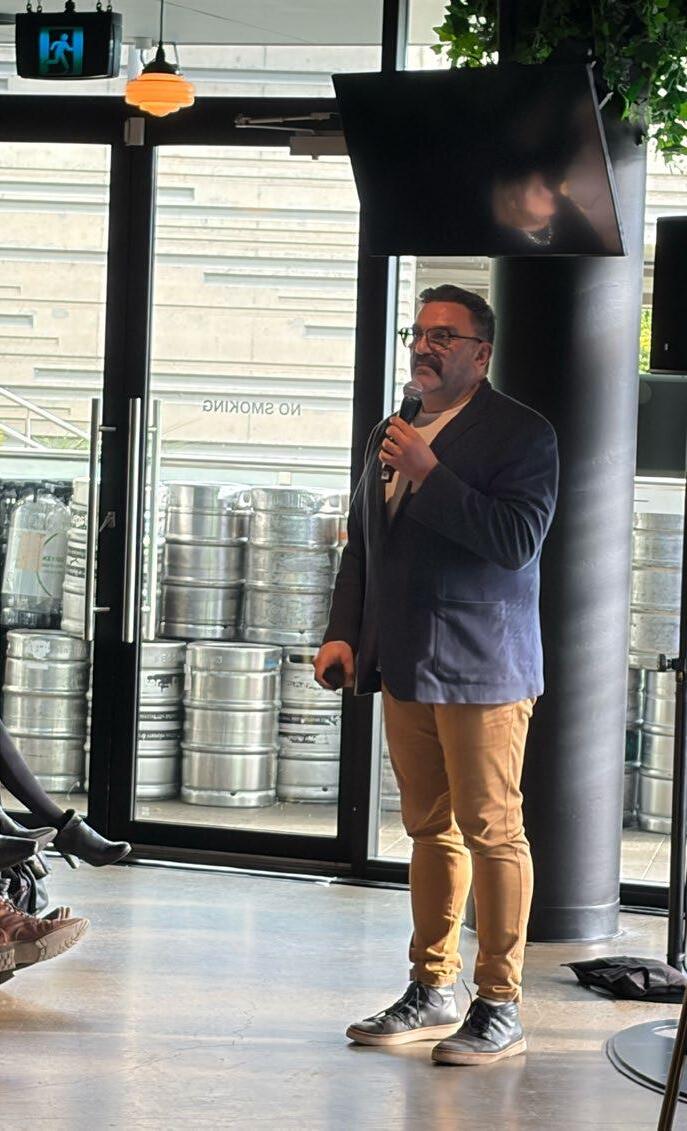
Allan Dib leads Foresight and Commercial Sustainability at Lion, drawing on more than 25 years of global consumer research. His work focuses on the intersection of commercial growth and community wellbeing.
The following is a short summary of his presentation: The Social Connection Deficit
Australians are reporting fewer and weaker friendships, a trend that began with the rise of smartphones and social media and was accelerated by the COVID-19 pandemic.
One consequence has been a steady decline in social participation. In 2001, two-thirds of Australians went out weekly. By 2023, that had fallen to just half.
Despite this, 44% of Australians say they want to socialise more. That presents a significant opportunity. People are actively seeking deeper social connection, even if they don’t always know how to create it.
Australia is facing a social connection deficit—one that is affecting both our communities and the hospitality industry.
Australia has one of the highest rates of loneliness in the world. The groups most impacted are men in their 40s and young adults under the age of 25. Around 12% of Australians report having no close friends.
Research in Australia and the UK has shown that active pubs strengthen local communities, creating greater connection and a stronger sense of belonging.
As an industry, hospitality plays an important role in the wellbeing of the communities we serve.
Masculinity is being redefined around openness, care and authenticity. When women socialise, it’s often faceto-face. When men get together, it’s more likely to be shoulder-to-shoulder through shared activities—at the pub or playing sport. While these settings bring men together, they don’t always create the deeper conversations and connections they are seeking.
Men are increasingly looking for genuine, meaningful relationships.
Ultimately, connection is shaped by who we’re with and why we’re together.
As an industry, we need to think of ourselves as both a force for growth and a force for good.
» To grow our businesses and create sustainable profitability, we need more people in our venues. That’s our force for growth.
» At the same time, we have an opportunity to build the social connections Australians are increasingly seeking. That’s our force for good.
Lion recently became a certified B Corp, reflecting our belief that commercial success and positive social impact should go hand in hand.
That philosophy underpins our approach: driving business growth by creating positive social outcomes. We are continually exploring ways to help the industry grow while addressing Australia’s growing social connection deficit.
If people aren’t connecting, they’re not coming to our venues. Creating opportunities for meaningful connection is therefore both a commercial opportunity and a social responsibility.
Meaningful connections occur when people feel comfortable, present and open to engaging with others.
Hotels have a unique opportunity to intentionally create those conditions, making it easier for moments of interaction to become genuine human connection.
Sociability won’t rebuild itself. It needs places, rituals, hosts and leaders who make connection easier. That is our opportunity as an industry.
Growth will come from making it easier for Australians to connect. That means designing experiences that lower the barriers to social interaction.
For example, trivia is one of the strongest drivers of visitation to pubs and clubs. But for someone without an existing friendship group, joining a trivia team can feel almost impossible. By designing more inclusive experiences, we can help remove those barriers and create new opportunities for connection.
My personal ambition is to leave the world in a better place. I’m fortunate to work for an organisation that shares that ambition, demonstrating that commercial growth and positive social impact can be achieved together.
“…when we build something, we build it with local hands, local trades and local families. That's a privilege, and it's one we don't take lightly.”
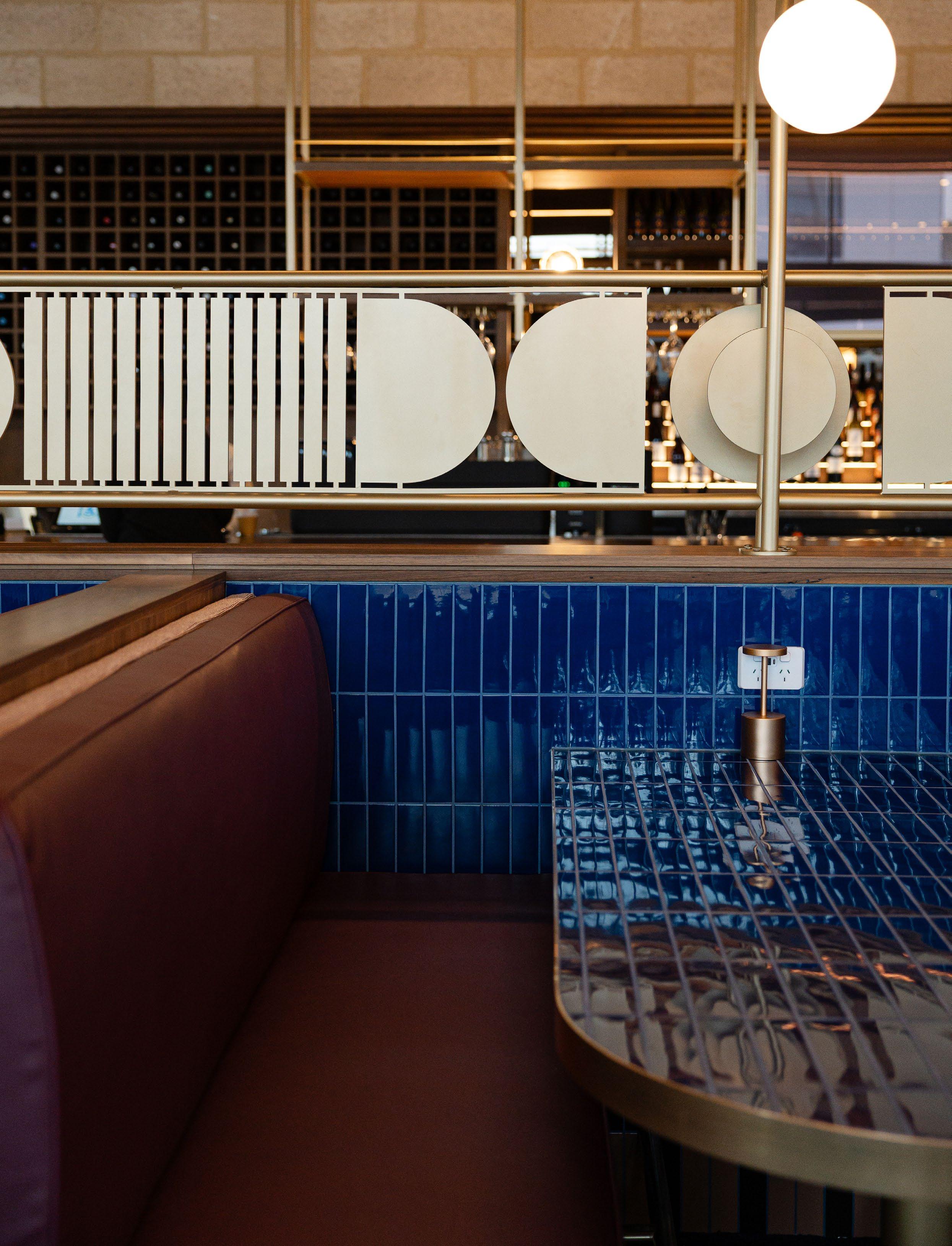
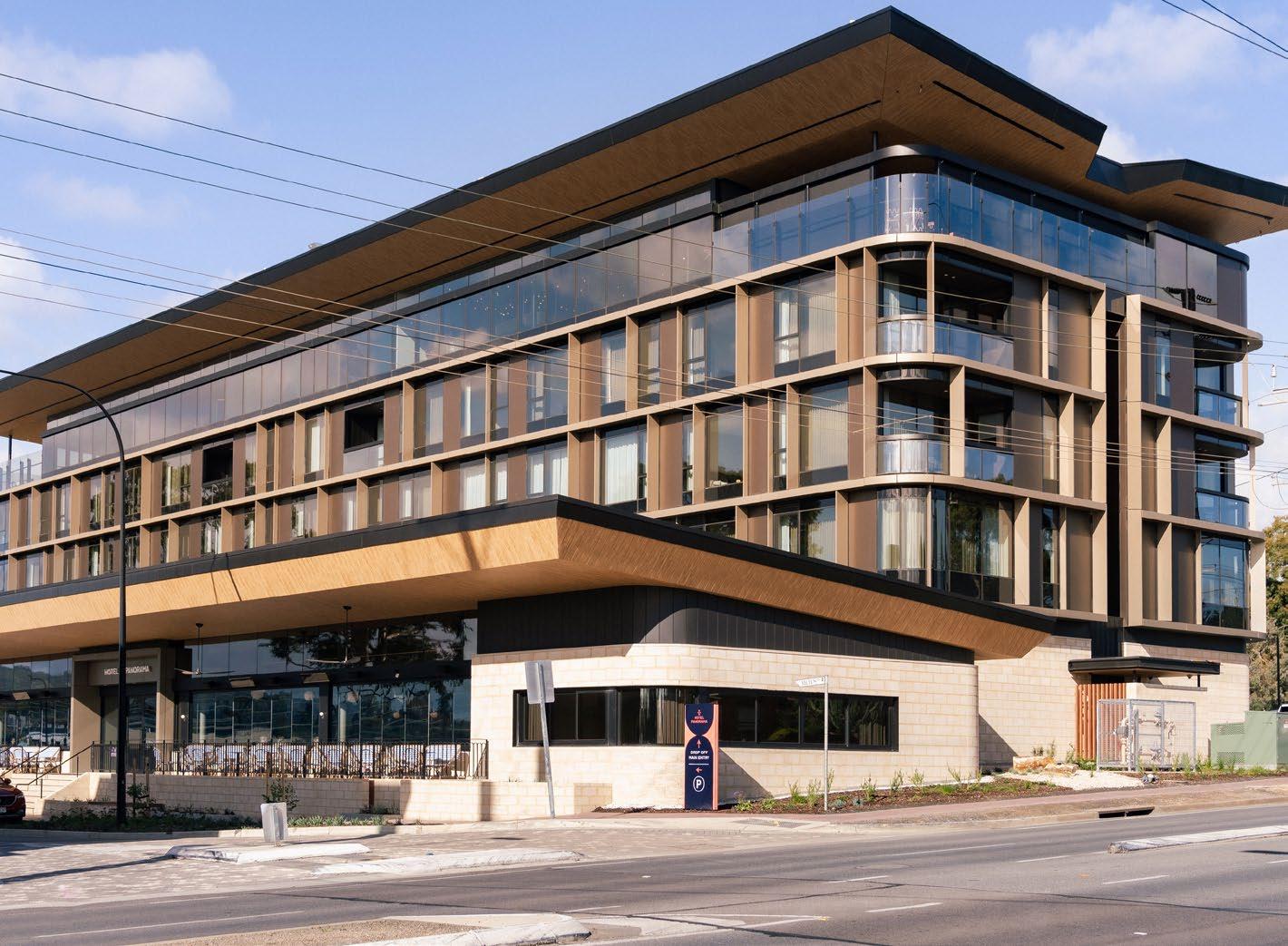
Five years in the making, the $60 million Hotel Panorama is far more than Adelaide’s newest hotel. For the Hurley family, it is both a milestone and a statement of intent.
“The Hotel Panorama is the Hurley Hotel Group’s largest investment to date, and we are incredibly proud to open the doors,” said Managing Director, Peter Hurley.
“This project is about more than just a new hotel, it’s about creating jobs, supporting the local economy and delivering a venue that brings people together.
“For 50 years, we’ve built a legacy rooted in family and community.
“With our continued investment in South Australia, we’re not just looking
to the next chapter - we’re laying the foundation for the next 50 years and beyond, guided by the generations still to come.”
Rising five storeys above Goodwood Road, the new $60 million Hotel Panorama brings together 77 accommodation rooms, multiple food and beverage offerings, premium function facilities, gaming and a rooftop bar.
For General Manager Scott Oakley, the project has been driven by a simple philosophy.
“For an area that has been dry – it’s never had a pub - we want to be the heart of the community,” he said.
“A strong focus during the planning phase was to give people different
reasons to come to the same venue.
“We wanted every area of the hotel to feel individual. Guests can come here for a quick meal with their family, a drink with friends, a business meeting, weekend stay, a function, or a night out, and have each experience feel distinct.”
The story of Hotel Panorama started with the compulsory acquisition of the Tonsley Hotel to make way for the Torrens to Darlington project.
The Hurley Hotel Group knew it wanted to remain in the same area.
“We needed to stay close enough to transfer the licence without triggering a whole new approval process, so we were really looking within a couple of kilometres of the old hotel,” said Scott.
“Peter (Hurley) rode every street within about five kilometres of the Tonsley on his bike for months looking at opportunities.”
Panorama ticked every box.
“It was a community that was crying out for a pub,” said Scott.
“There was no hotel in the immediate area. It sits on Goodwood Road, one of Adelaide’s major thoroughfares, and it’s perfectly positioned between the city and the southern suburbs.”
The location is close to Flinders University, the Tonsley Innovation Precinct, Flinders Medical Centre, the Repat Health Precinct and the South Australian Aquatic and Leisure Centre.
“It links naturally with McLaren Vale and the Fleurieu. And it's on the same side of the road as when you're leaving the city, which is great for the bottle shop and the pub.
“The more we looked at it, the more it became obvious this was the site.”
The project was not without its frustrations, as Peter Hurley explained:
“The Transport Department was being unreasonable about the timing of the Tonsley closure.
“And SA Power Networks was being equally unreasonable about how long it would take to install an additional power pole outside the proposed Hurley Cellars. A pole they insisted upon and we had to pay for.”
State Government intervention helped speed up the process – but not before construction was delayed by eight weeks.
Once construction commenced, however, the process ran relatively smoothly.
“With projects of this size there are always issues. We had some challenges early when we excavated the basement and got hit with a lot of rain, but overall the build went well,” said Scott.
“The decision to build two separate kitchens was one of the biggest operational decisions made during the design process.”
General Manager, Sam McInnes, singled out the Department of Consumer and Business Services for praise for its cooperation in transferring the Tonsley licences from their home of 58 years to the temporary “Tonsorama warehouse pop-up pub” for two and a half years, and then on to the Panorama.
Speaking at the opening by Premier Peter Malinauskas, Anna Hurley said the trials, tribulations and risks were not “particularly unique”.
“This is just what family businesses do,” she said.
“We invest in our communities. We don't make decisions based on the next quarter, we think about the next generation.
“We operate on passion, not just P&Ls.
“And when we build something, we build it with local hands, local trades and local families. That's a privilege, and it's one we don't take lightly.”
Hotel Panorama is also notable because it represents something of a generational shift within the Hurley Hotel Group.
While the foundations were laid by Peter and Jenny Hurley, much of the venue reflects the thinking of their children, Anna and Samantha, son-in-law Scott, and Peter’s brother, Tony, who planned the award-winning drive-through bottleshop.
In particular, the rooftop Wonderland bar has become a symbol of where the next generation sees growth.
The hotel’s food and beverage offering has been
designed around occasions rather than outlets. One venue. Four distinct experiences.
The Restaurant
The main restaurant is a 90-seat venue offering full table service and an elevated modern Australian menu matched with a curated wine list.
Executive Chef Jasper Green, who joined from the Arkaba, has developed a menu focused on elevated pub dining.
Schnitzels, steaks and seafood sit alongside dishes such as steak tartare, salt and pepper eggplant, burnt Basque cheesecake and vegan maultaschen, with gluten-free, vegetarian and vegan diners all catered for.
The room itself reflects broader changes occurring within hospitality.
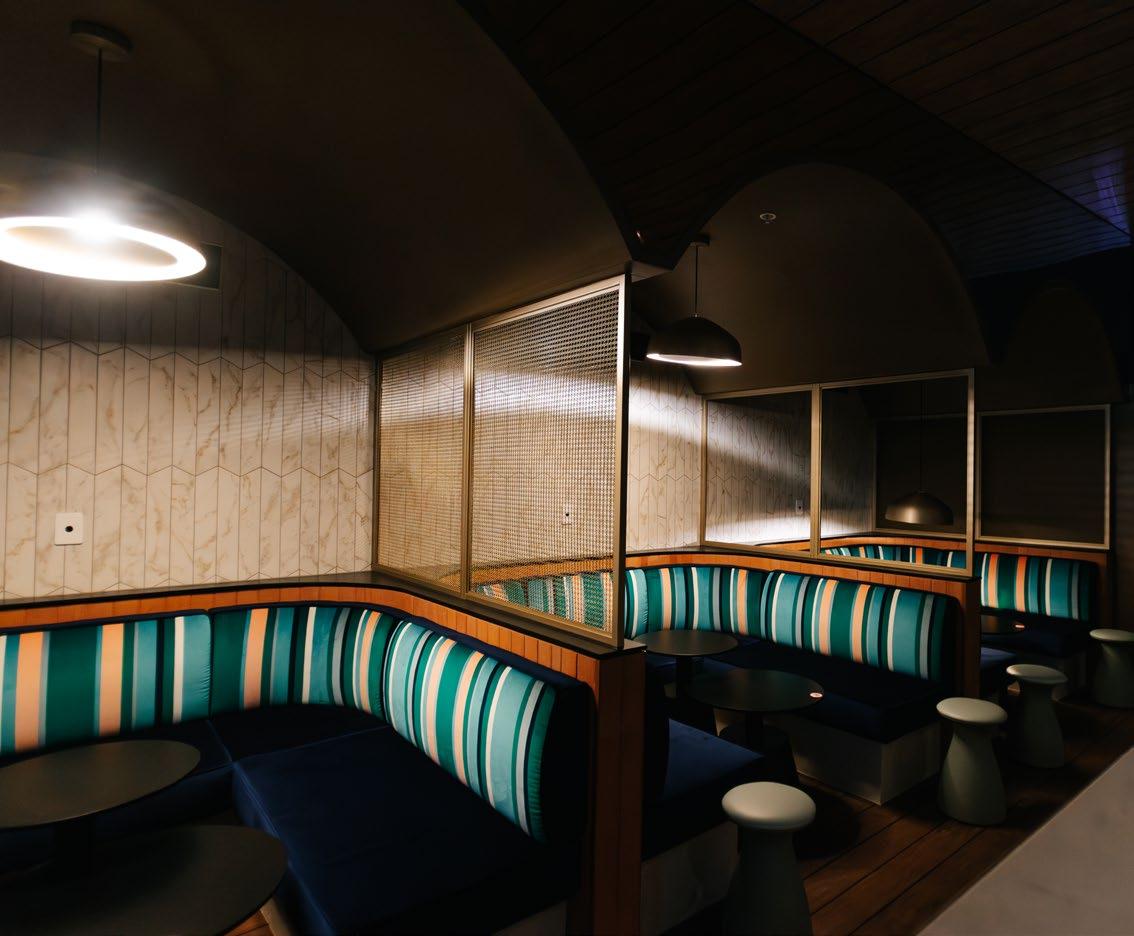
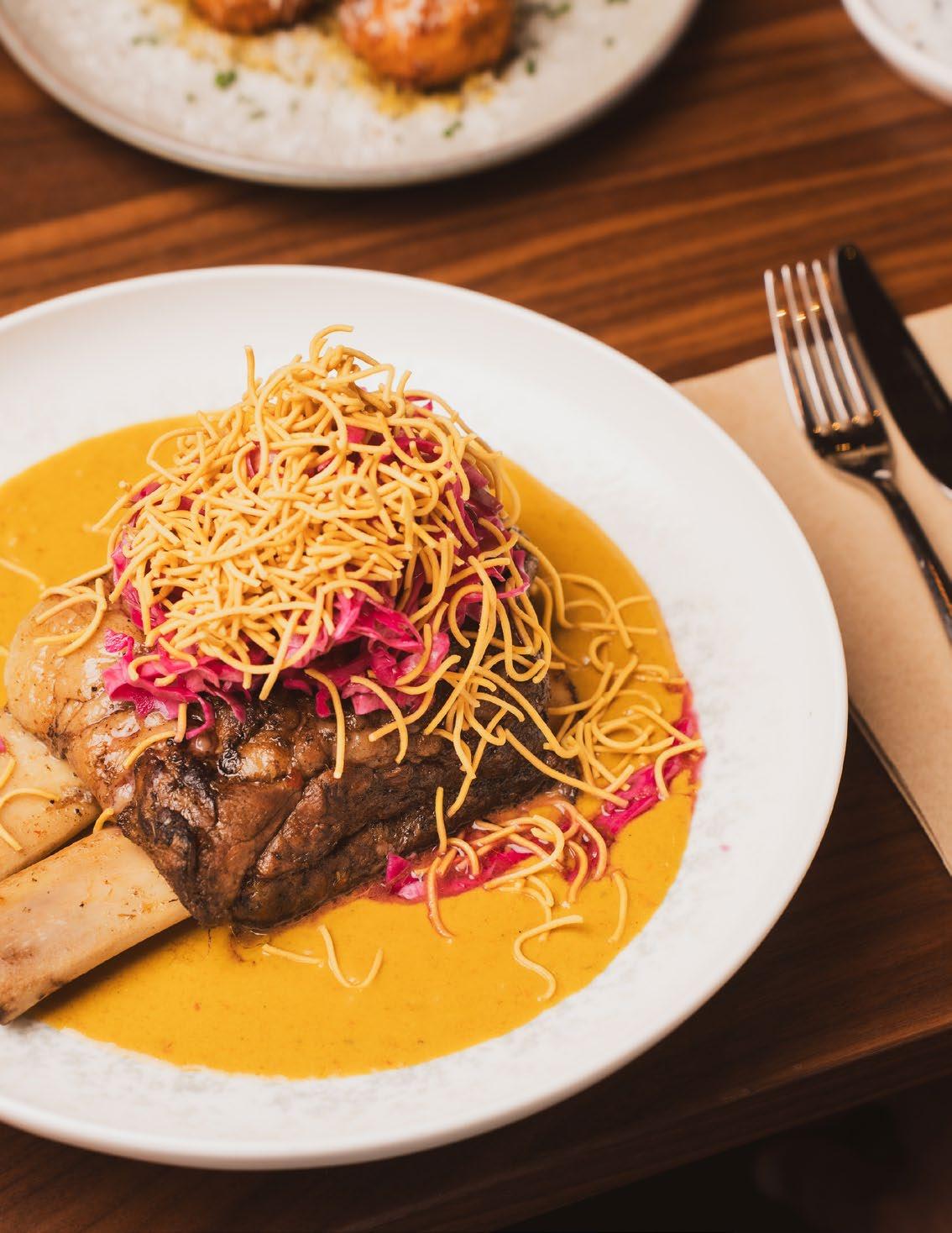
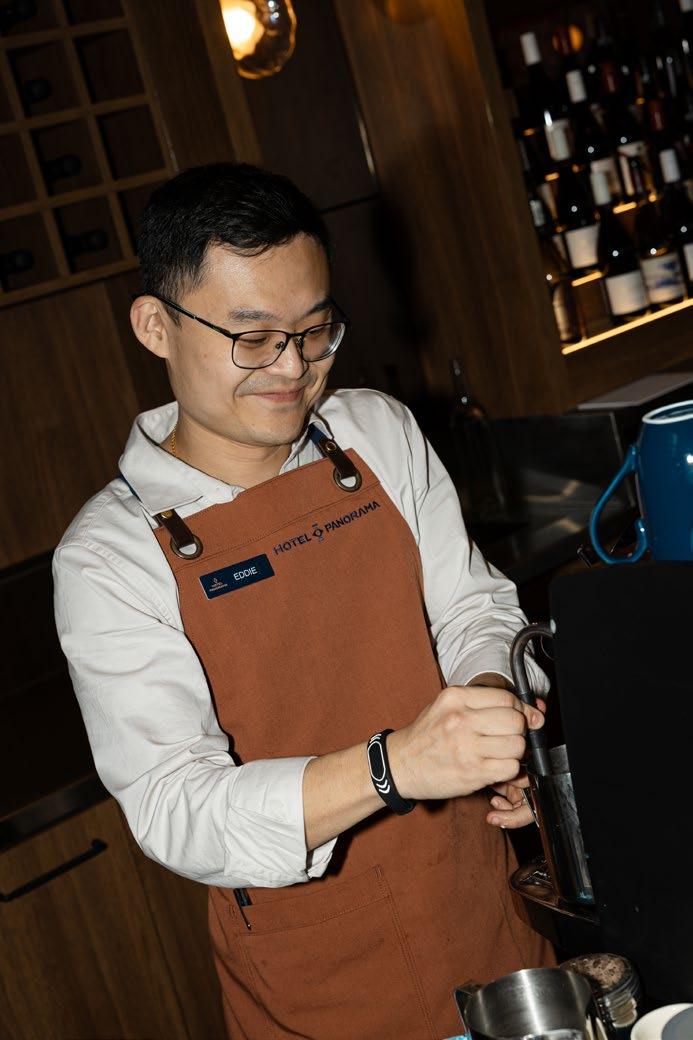
“Guests expect more than they did ten years ago,” said Scott. “They want better surroundings, better finishes and a more premium experience.”
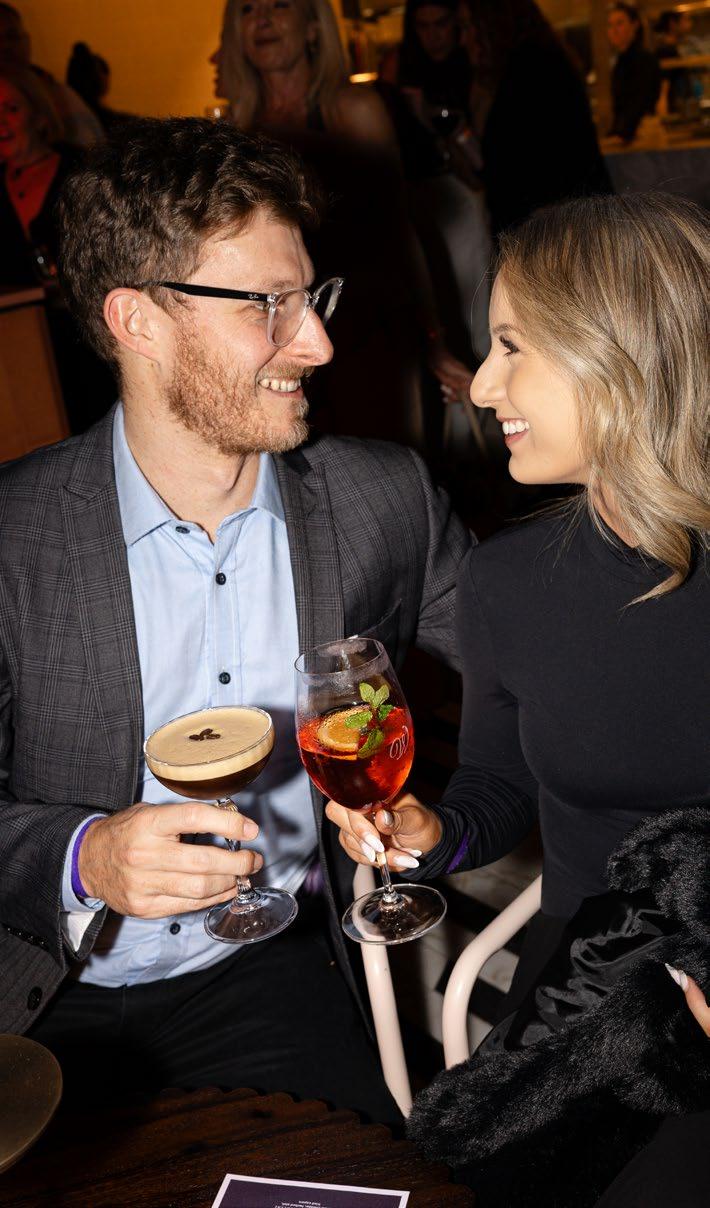
The Lobby Bar serves as the social heart of the property – a relaxed, all-day space operating from breakfast through to dinner with modern Australian bistro favourites, cocktails, wine and beer. It also has a substantial premium spirits offering.
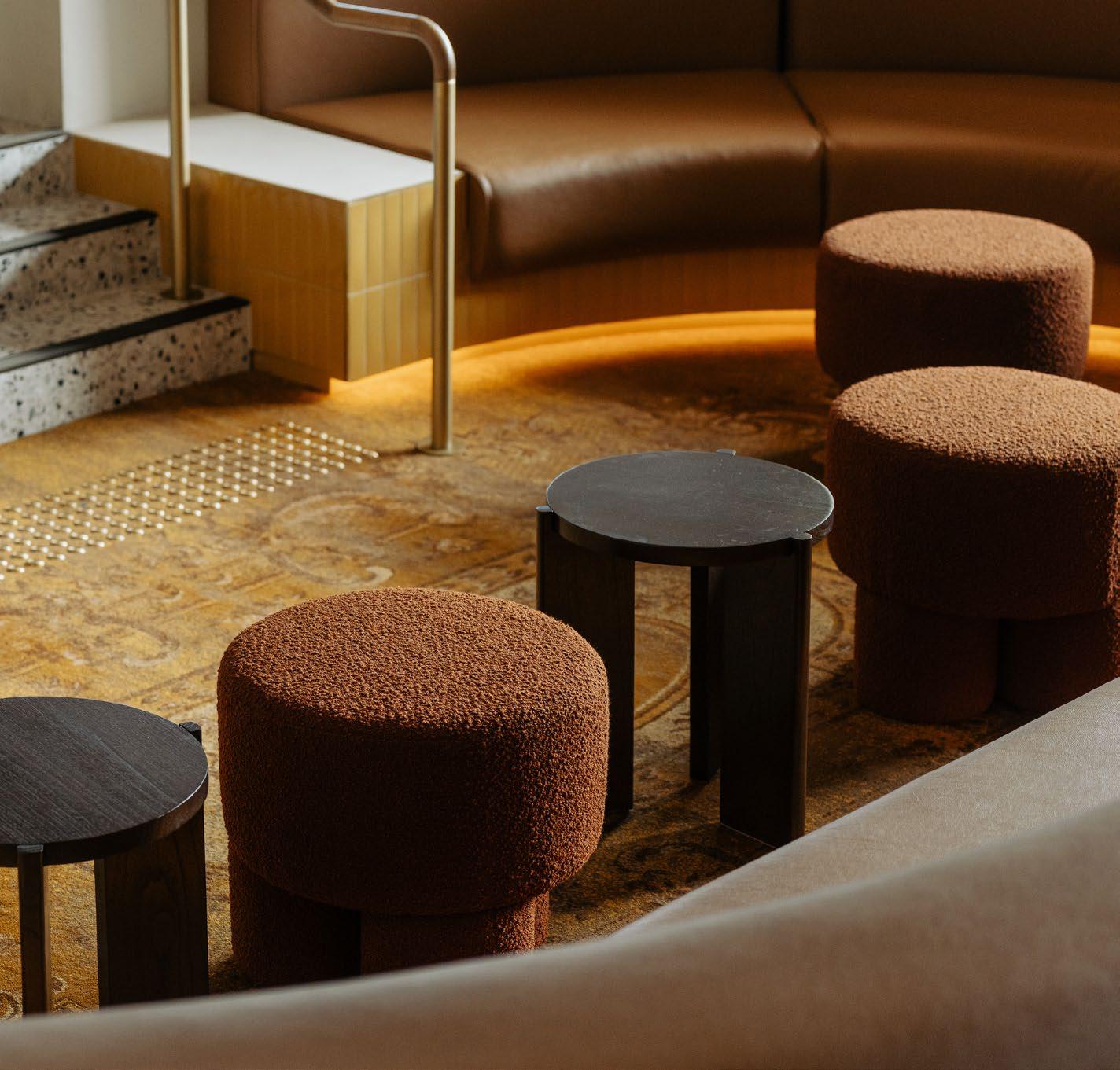
The adjoining Sunken Lounge has become one of the hotel's signature features. Built around a fireplace and positioned prominently within the arrival experience, it has proved to be very popular.
Despite its scale, one of the primary goals was ensuring the hotel still felt like “a local”.
“The bigger the pub gets, the harder it gets,” said Scott. “But we wanted somewhere people could come, see people they know, catch up with friends and feel connected to the community.”
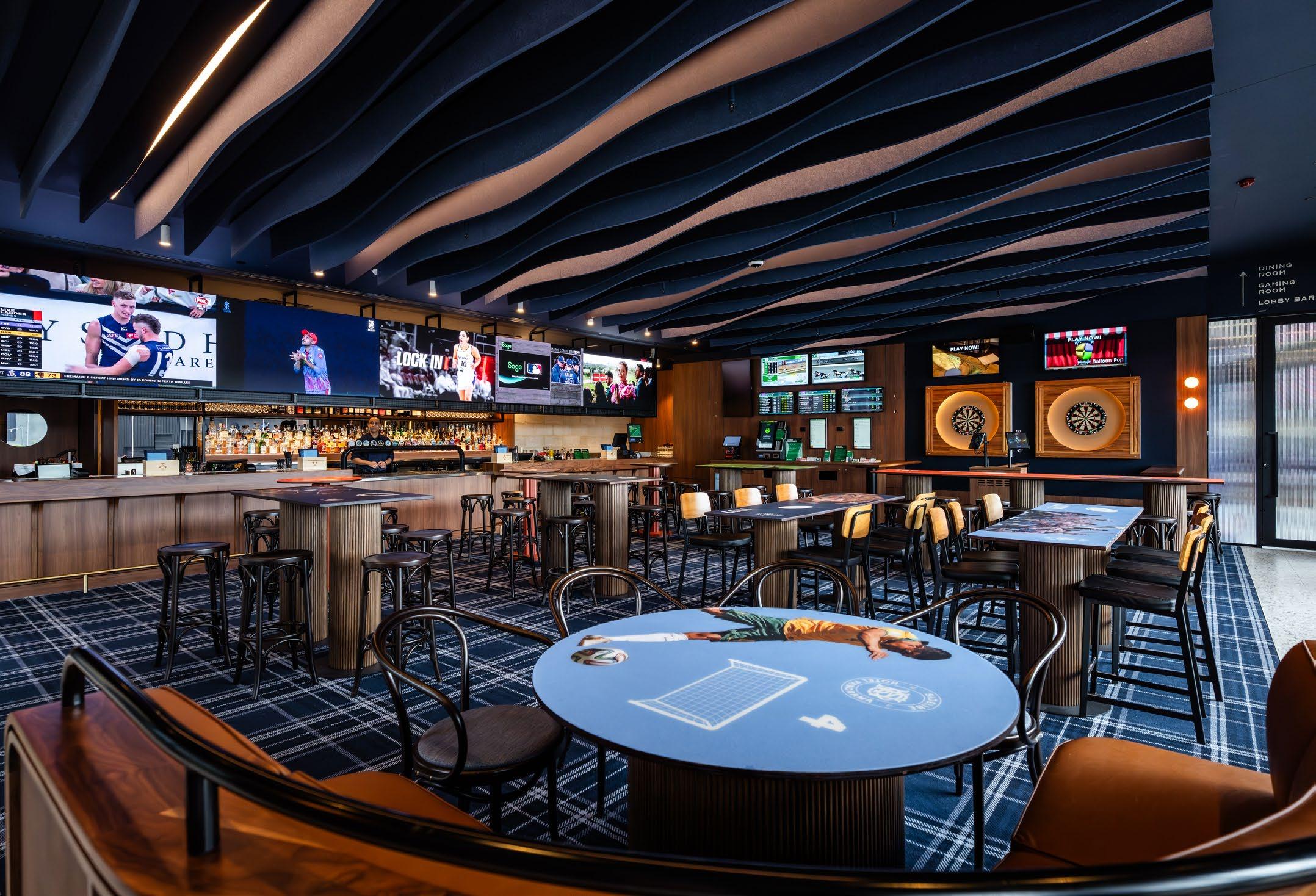
That philosophy is most visible in Sideline, the hotel’s sports bar and beer garden.
For those seeking a more traditional pub experience, Sideline delivers classic pub plates alongside all the familiar ingredients of a modern sports bar. That includes Friday night meat trays, TAB facilities, smart darts and multiple screens, including a seven-metre LED screen in the beer garden.
“Sport is a huge drawcard, but we also wanted it to feel comfortable and welcoming,” he said.
“Every night of the week people are using it. Families, school groups, locals, people meeting friends. They just seem to love the space.”
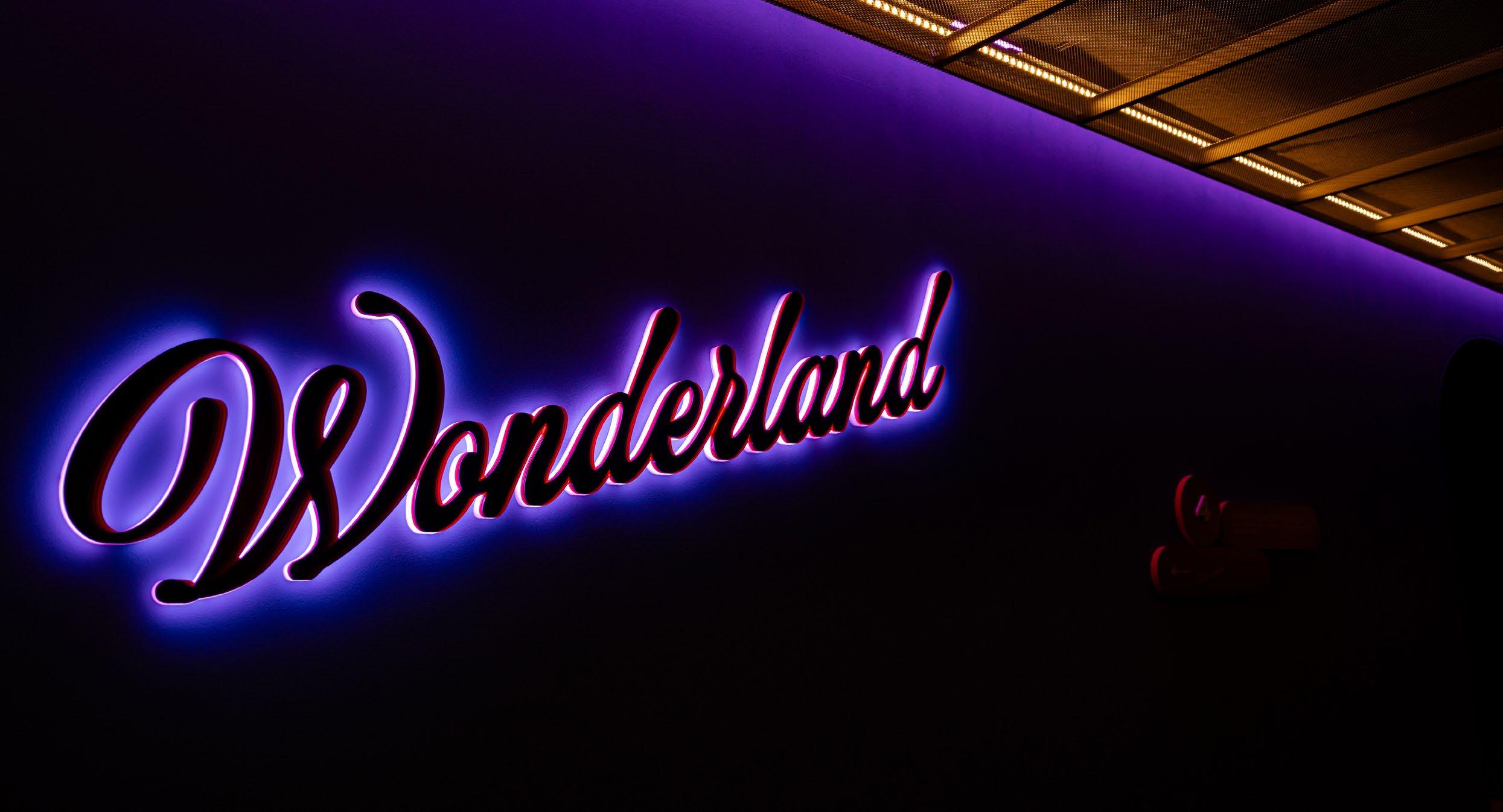
Then there is Wonderland.
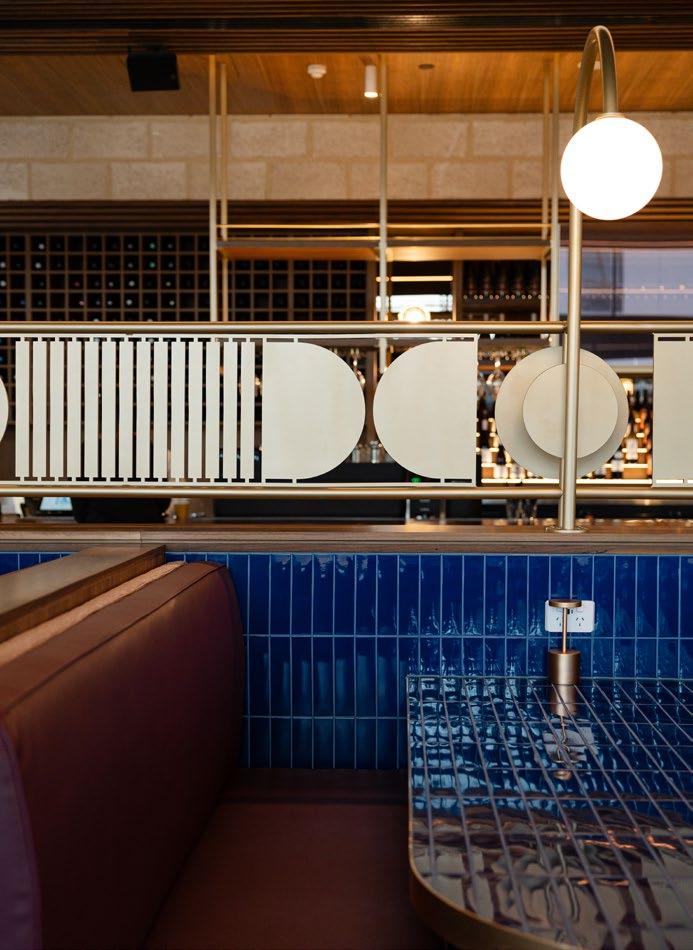
The rooftop venue is arguably the hotel’s signature space. Sitting above suburbia, Wonderland combines cocktails, sharestyle dining and panoramic views that sweep across the coastline, city skyline and Adelaide Hills.
If one space encapsulates the entrepreneurial future vision of the Hurley Hotel Group, this is it. Wonderland represents a deliberate shift from food-led hospitality towards a more beverage-focused experience “where drinks are the hero”.
The concept emerged following extensive research trips to Sydney and Melbourne. The owners and the senior management team visited nearly 20 venues during one study tour alone. A second trip focused specifically on rooftop bars.
“We learned that successful rooftop venues need identity. They need energy. They need constant attention,” said Scott.
The adults-only space features booth seating,

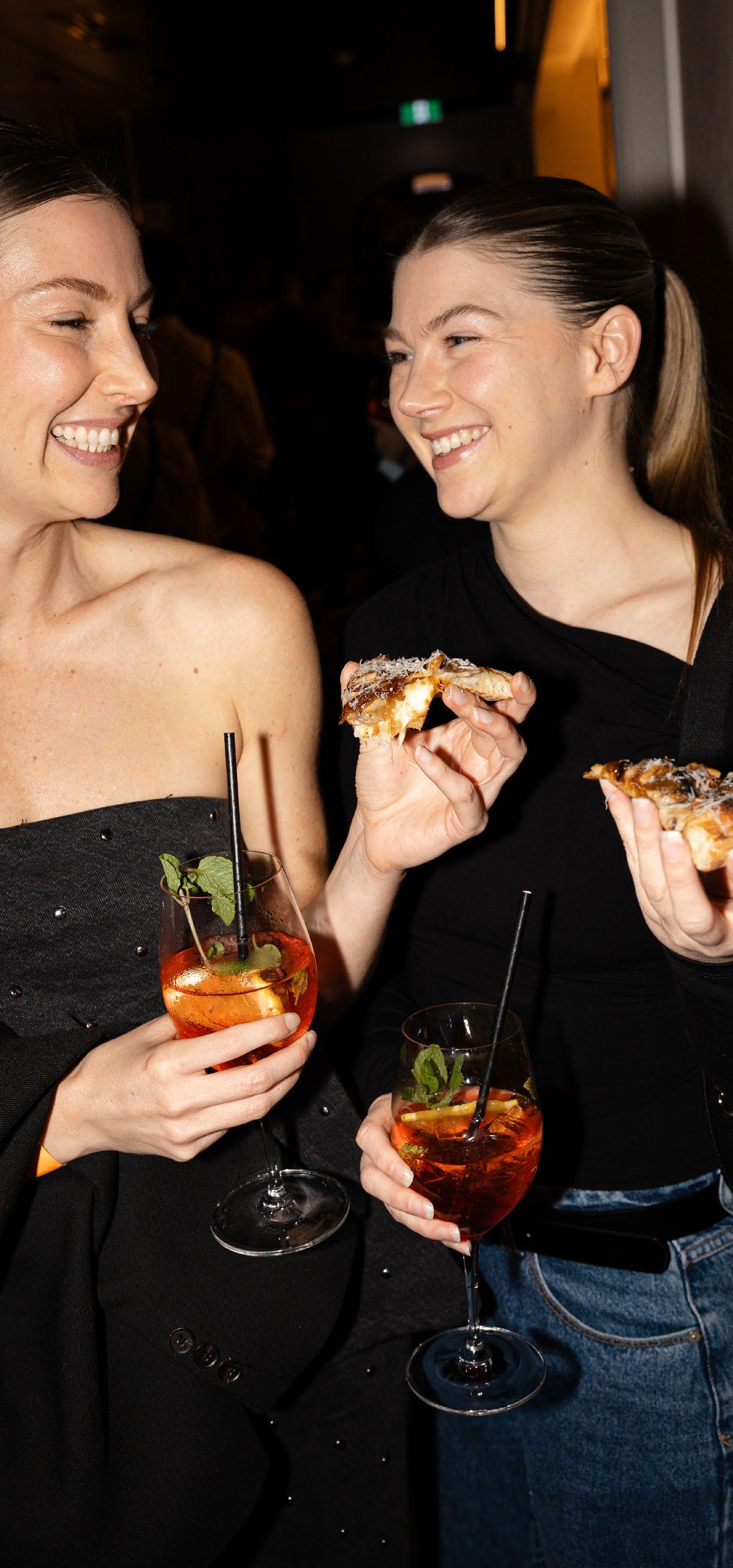
twinkling ceiling lighting and a gold disco ball pizza oven, creating a distinctly different atmosphere from the venues below. The drinks list includes cocktails, champagne and premium wines, with Pol Roger available by the glass, while the menu centres on share plates and pizzas from the signature oven.
A dress code and DJs add to the Wonderland experience.
Accommodation has become an increasingly important part of the Group's business. The success of rooms at the Marion and Arkaba hotels provided confidence for the Panorama project.
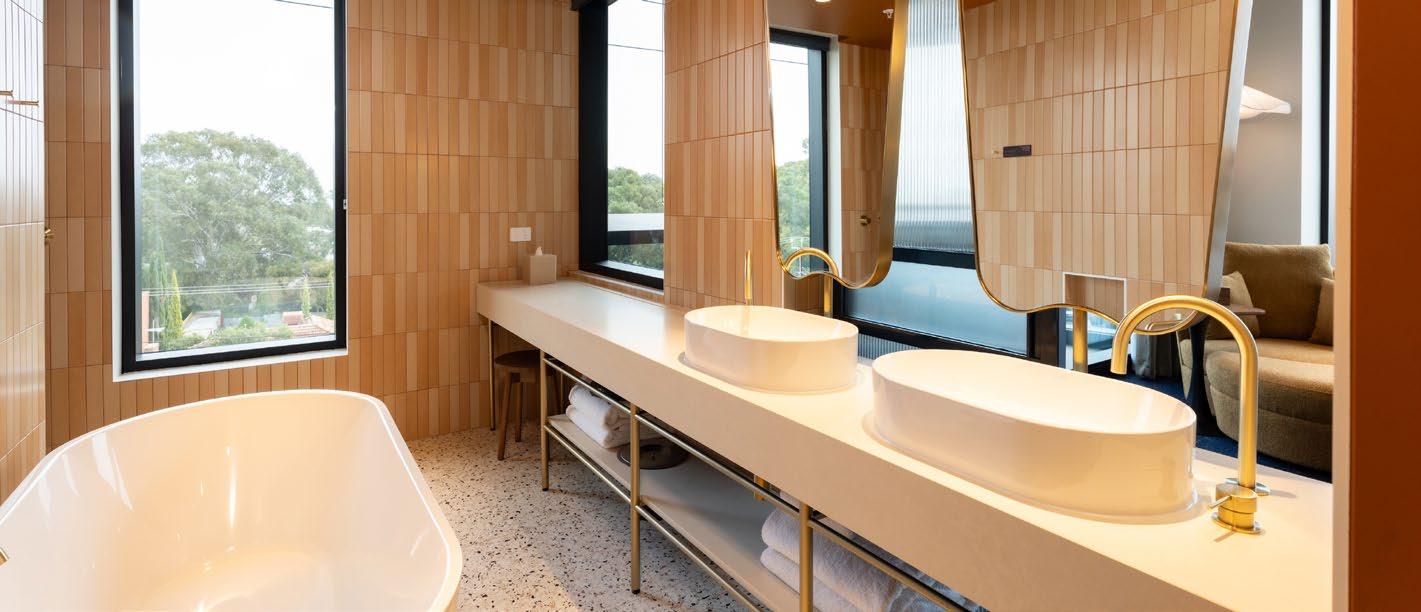
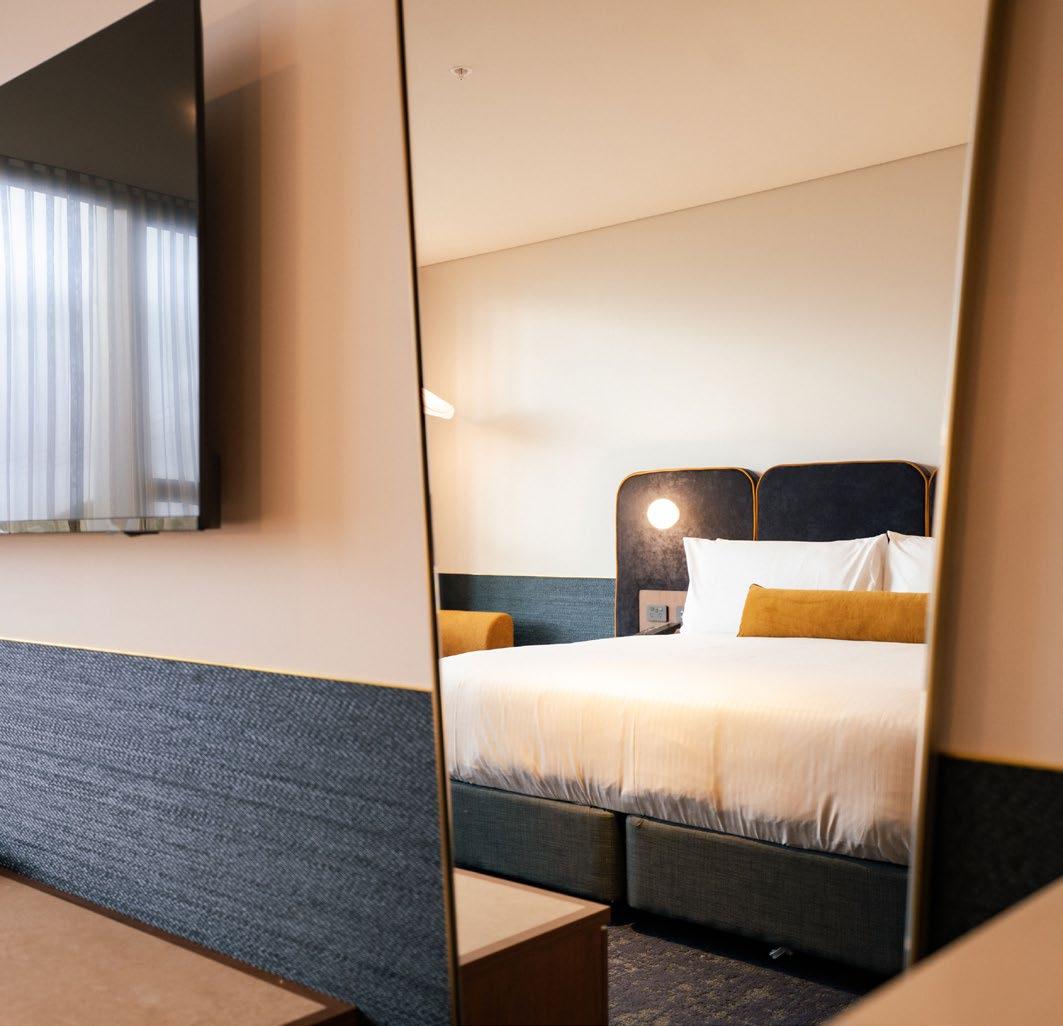
Hotel Panorama features 77 rooms across three levels, including 26 serviced apartments designed to cater for short-term and extended stays, as well as the corporate market.
The room mix includes studio, one-bedroom and two-bedroom options, with selected rooms featuring kitchenettes to support longer stays. Guests also have access to room service, a gym, laundry facilities and in-room amenities.
“Then there is Wonderland. The rooftop venue is arguably the hotel’s signature space.”
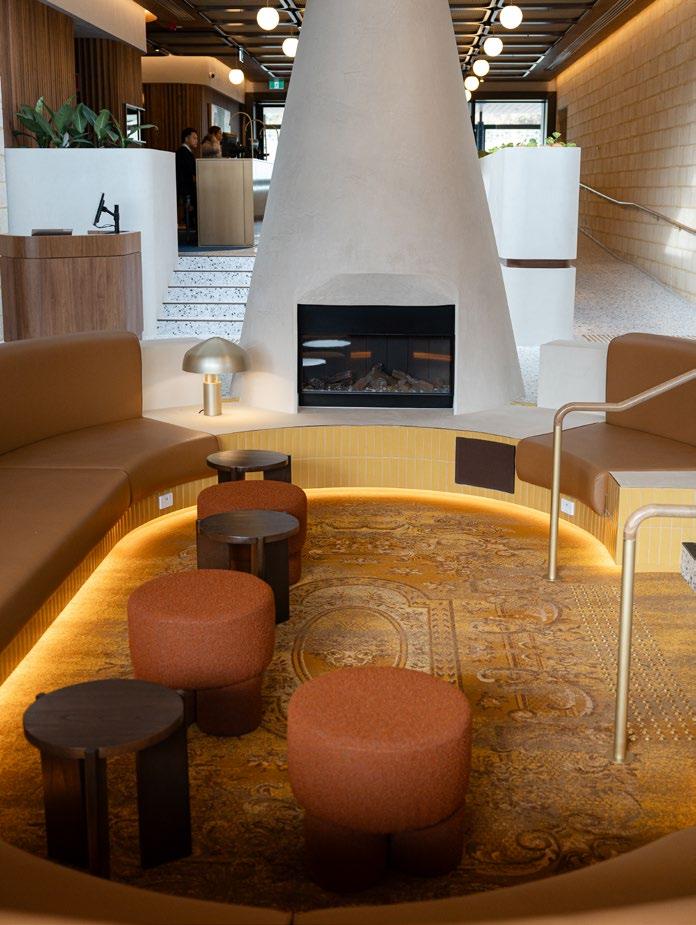
At the premium end are two Panorama Suites complete with private balconies, fireplaces, dedicated dining areas and soaking tubs.
During the opening weeks, standard rooms started at between $150 and $200 per night.
Scott said the accommodation offering reflects the group's ambition to create a seamless stay-and-meeting destination for corporate travellers.
The extended-stay facilities are also appealing to guests visiting nearby hospitals, health precincts and Flinders University. The kitchenettes include cooktops, microwaves and full-sized refrigerators.
For Scott, service remains as important as design.
“You can build a beautiful room, but people remember how they were treated.
“When people stay regularly, they want convenience and familiarity. They want the process to be easy.
“They want to walk in and be recognised. They want someone to know their name.”
The entire fourth floor is dedicated to functions.
Two glass-wrapped rooftop spaces - Springbank and Kingston - each accommodate up to 70 seated guests and can be combined to host up to 140 seated or 300 cocktailstyle. Both feature private outdoor decks and elevated views across Adelaide.
For smaller meetings and gatherings, the Three Brothers Boardroom offers a more intimate setting. The space is named in honour of owner Peter Hurley’s three great uncles who lost their lives on the Western Front during World War I.
Recruiting for a venue of this size presented another major challenge.
Hotel Panorama opened with 130 staff but that quickly grew to 175.
While management was largely drawn from existing Hurley venues, including Meegan Gibbons as Hotel Manager, many frontline employees were entirely new to hospitality. More than 60 staff were recruited during a three-day hiring campaign.
“We deliberately hired a lot of young people,” Scott said. “We like training people our way.”
It’s also worth noting that the greenfield development, led by Sarah Constructions and Place Project Management, generated around 100 jobs during construction.
The decision to build two separate kitchens was one of the biggest operational decisions made during the design process.
The main ground-floor kitchen services the restaurant, Lobby Bar and Sideline, while a second kitchen on the rooftop supports Wonderland and the hotel’s function facilities.
“It was definitely a risk to build a second kitchen, but it allows us to do both properly,” said Scott. “As long as Wonderland is busy and the function business is strong, the model works really well.”
The rooftop operation has been designed around a different style of service.
Where the main kitchen focuses on traditional pub dining, the rooftop kitchen specialises in pizzas, share plates and function catering.
The layout reflects that purpose.
“There are dedicated production areas for pizzas, salads and burgers, and then a separate pass for function service,” said Executive Chef Jasper Green.
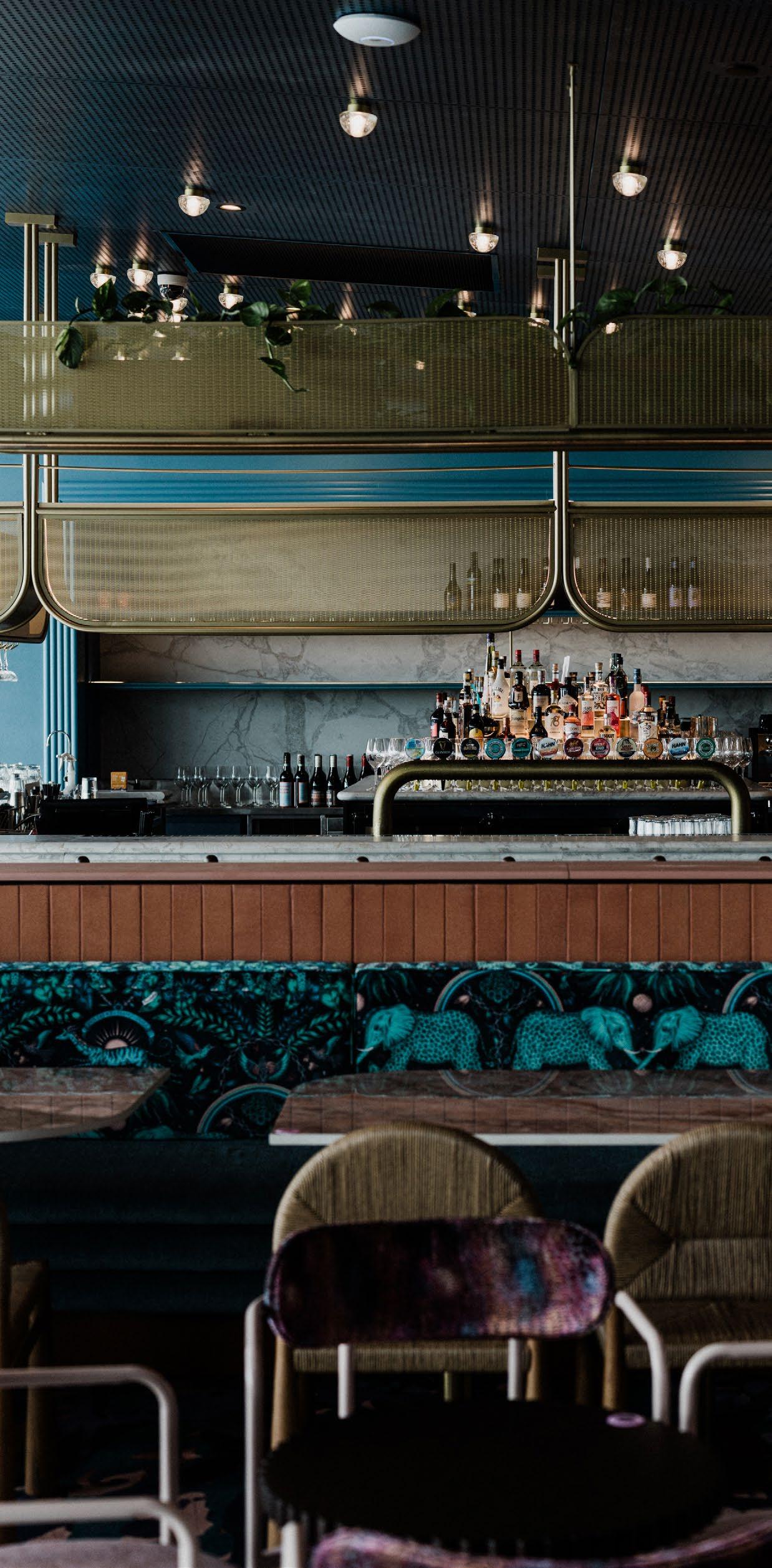
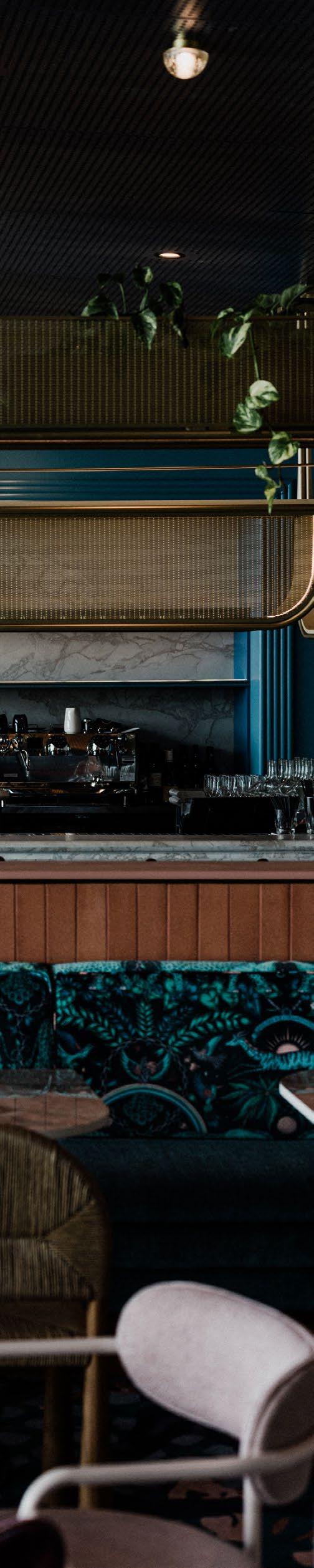
“We wanted the workflow to be efficient so chefs can move quickly between sections without crossing over each other.”
Demand has already exceeded expectations.
Within weeks of opening, the original pizza equipment was struggling to keep pace with orders and new ovens were installed.
“We maxed out the first pizza ovens almost immediately,” Green said.
“We'd be doing close to 1,000 pizzas a week.”
Another significant investment was the installation of an Ivario Pro multifunction cooking system, which Green describes as one of the most versatile pieces of equipment he has worked with.
“I honestly think every commercial kitchen should have one,” he said.
“It can boil, fry, braise, produce sauces, soups, gravies, stocks, pasta, rice – pretty much everything.
“You can set it, walk away, and it will alert you when it's finished. If you're cooking pasta, for example, it automatically lifts the baskets out when the timing is complete. You're not standing there watching pots all day.”
Another decision was food delivery. Unlike many contemporary venues, Hotel Panorama does not use collection points, buzzers or self-service food pickup. Every meal is delivered to the table.
“We didn’t want to take up valuable bar space with a collection point, and it’s a much better guest experience when every meal is delivered,” said Scott.
The Group has opted for a new, more sophisticated building management system at the Panorama.
The system continuously manages air
conditioning across accommodation and public spaces.
“It was a significant investment but it keeps the building within a consistent temperature range.
“That improves comfort and helps avoid the huge energy spikes you get when rooms overheat.”
Guests arrive to rooms that already feel comfortable rather than waiting for systems to catch up.
“It improves the guest experience and helps manage operating costs at the same time,” said Scott.
Jenny Hurley sums up the significance of the project.
“This is very much a statement about where we think we, as a family business, need to go,” she said.
“It’s about keeping our venues relevant, continuing to evolve and making sure we stay leaders in the market.”
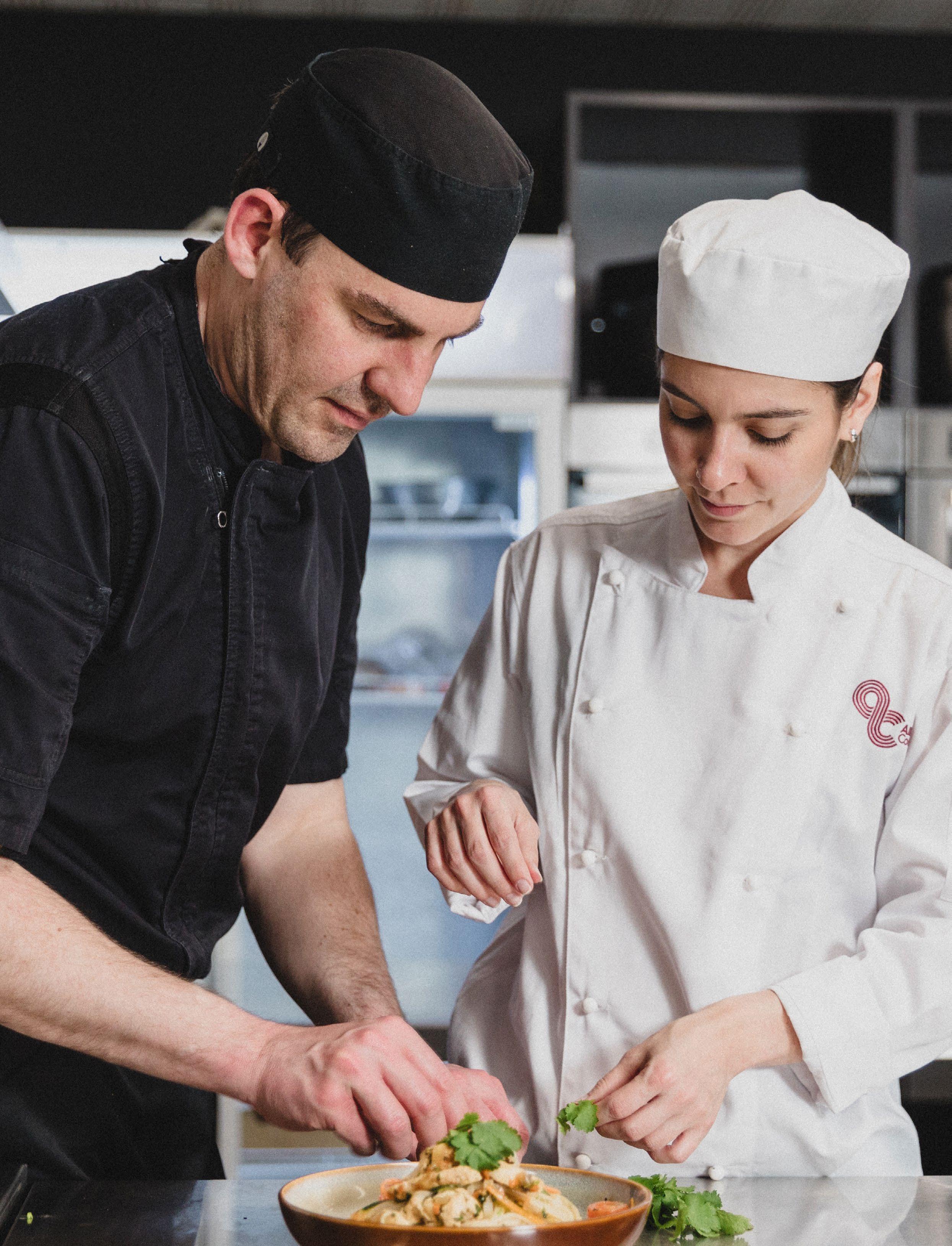
The AHA’s national push to fast-track cooking apprenticeships is gaining traction with the commencement of a trial this September slashing the length by 18 months to just two-and-a-half years.
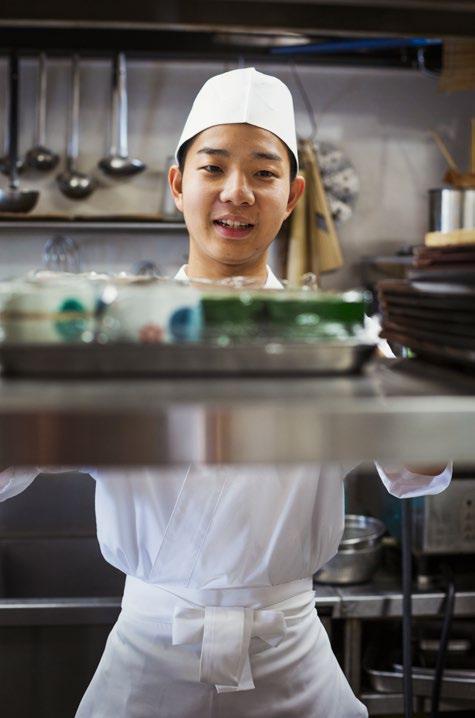
“This is a major breakthrough in reducing the four-year apprenticeship, without compromising on quality,” said Owen Webb, Deputy Chief Executive at the AHA|SA.
“It is a watershed moment.
“Apprentices have been asking for it for years, trainers see the value in it for retention reasons and the AHA has been advocating with government for as long as I can remember.
“Being a chef will become more attractive and the shorter duration will increase chef retention which is running at historic lows.”
The AHA|SA and AHA nationally have both been pushing for the traditional four-year apprenticeship to be shortened, while still allowing students to graduate with a Cert 3 in Commercial Cookery and a trade qualification.
DION HAYMAN
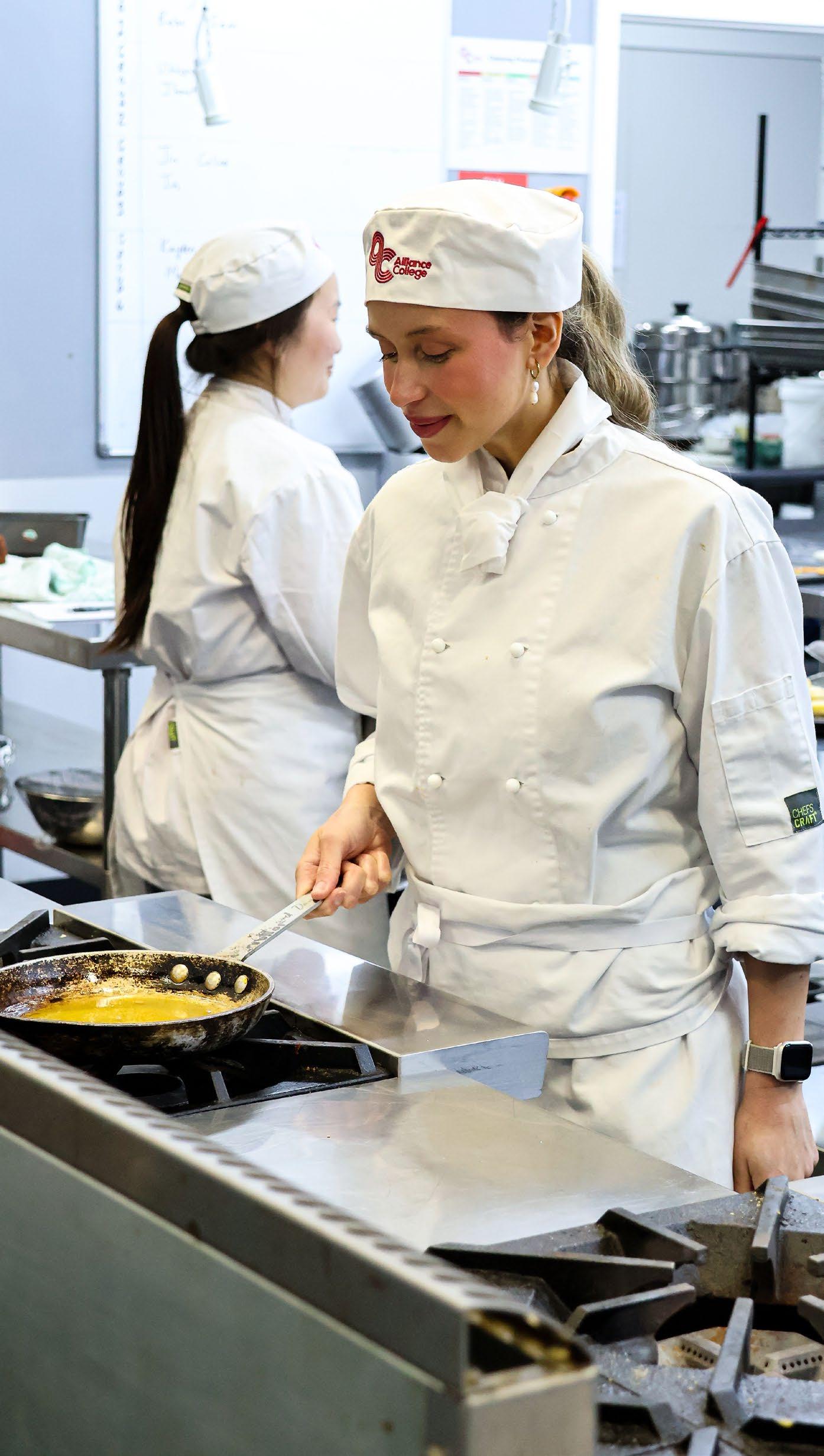
Alliance College will run the pilot program, an Industry Accelerated Apprenticeship Program (IAAP), which will enable students to complete their cooking apprenticeships much faster.
The Alliance Group Training Organisation (GTO) will be the employer.
Ben Mayne, Chief Operating Officer at Alliance said the old system had previously worked well but was in need of an overhaul.
“We’re in a different environment, it’s faster
moving, higher paced and employers will benefit from someone coming through a program in two and a half years rather than four.”
He said the condensed program would suit school leavers and people changing careers.
He also reinforced the fact that falling completion rates have been one of the key catalysts for the change.
“Young people sometimes struggle getting through their apprenticeships for different reasons over four years but will find two and a half years more achievable.
“The horizon is much more in sight, they can see the end pretty clearly and they can see their progression towards becoming a chef.”
Then there was the “elephant in the room” – perhaps the biggest reason young people abandoned their apprenticeships.
“If we’re going to be honest about it, the wages aren’t easy for someone to sustain themselves.
“So I think reducing that four-year period to two and a half is also a benefit because they can get qualified quicker and earn an adult wage faster.”
The incentives, he said, were clear.
“As an experienced qualified chef in years to come, they can earn the big bucks.
“The best chefs are earning upwards of $100,000 to $150,000 a year.”
But too many aspiring chefs had found themselves in limbo, both mentally and financially, as their apprenticeship ticked into a fourth year.
“That final year of the apprenticeship was almost a ghost year,” Ben said.
“Most people will agree that by year four, you’re actually not doing any more training.
“Year four really is just an extra year on your apprenticeship while you are working on site on a lower wage.
“The way commercial cookery is delivered institutionally is over about two years and that’s with the students focussing on the training and not work at the same time.
“So I think this is very, very sustainable for an apprenticeship like this.”
Hotels in the regions struggle to find qualified chefs and are expected to be among the biggest beneficiaries of the move.
“I think the GTO model offers great benefit so if they come with us, we can find candidates for them,” Ben said.
“Longevity, I would imagine, is so important for them.
“So if they can show someone a career path with their hotel, I think there’s the opportunity for some of the regional hotels to get young people qualified faster while still maintaining the quality of training that was there under the four-year apprentice program.”
As far as Ben can see, the new shortened apprenticeship structure makes sense for everyone.
“I’ve thought about this a lot. I don’t see any downsides to it, I only see upsides. Some people ask will apprentices struggle with the pace? I don’t think so.
“We need more chefs, that’s a fact and has been for a long time.
“This system is going to produce more. In five years you’re going to have two, whereas under the old system, you’d only have one.
“I don’t think the employers will have a problem with apprentices being there for a shorter period of time because they are getting upskilled faster as well.”
Ben said the GTO model would lower employer risk and administrative load, with Alliance handling payroll, compliance, paperwork and oversight of the apprentice.
Under the GTO model, support also extends to ongoing mentoring, welfare checks and attendance tracking.
“It gives employers faster access to skilled staff who are being managed from our GTO.
“If there are issues with the apprentice or they need to go on leave, then we can help the employer manage that.
“It’s more of a flexible workforce model. You can scale your staff up or down as needed, you’re not locked in for as long a period of time.
“It helps venues respond to immediate workforce gaps.”
Ben paid credit to Owen and AHA|SA CEO Anna Moeller for their initiative and strong collaboration across industry as well as Cameron Baker, Chair of the South Australian Skills Commission for crystalising the initiative.
“Cameron has shown clear leadership and a practical and innovative approach to workforce training by looking at the model and deciding they needed to change it.
“That took a lot of gumption and I think it will be very successful. The AHA is already saying
there’s very strong employer demand for this particular model.”
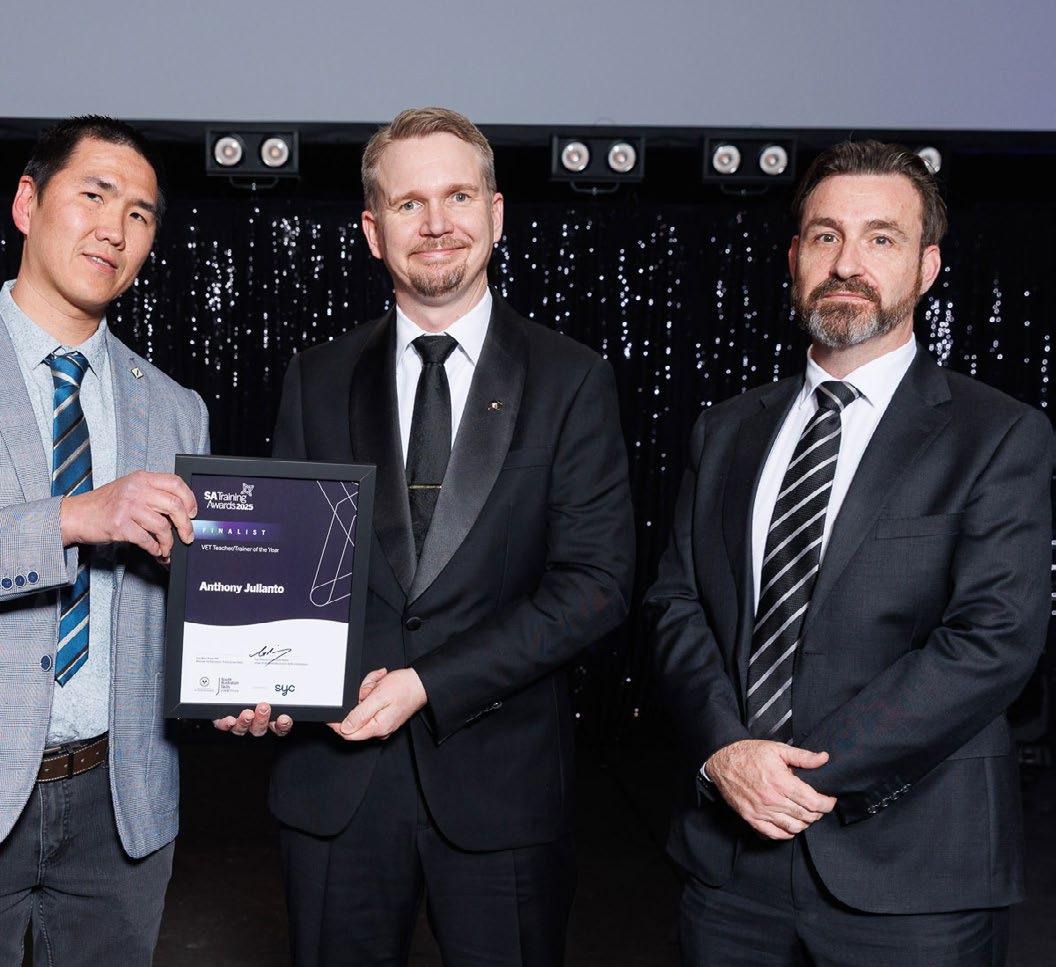
The program will be launched with open days to showcase the vocation and boasts highly credentialed trainers including Anthony Julianto who was named SA VET Teacher/Trainer of the Year at the 2025 SA Training Awards.
“Being a chef will become more attractive and the shorter duration will increase chef retention which is running at historic lows.”
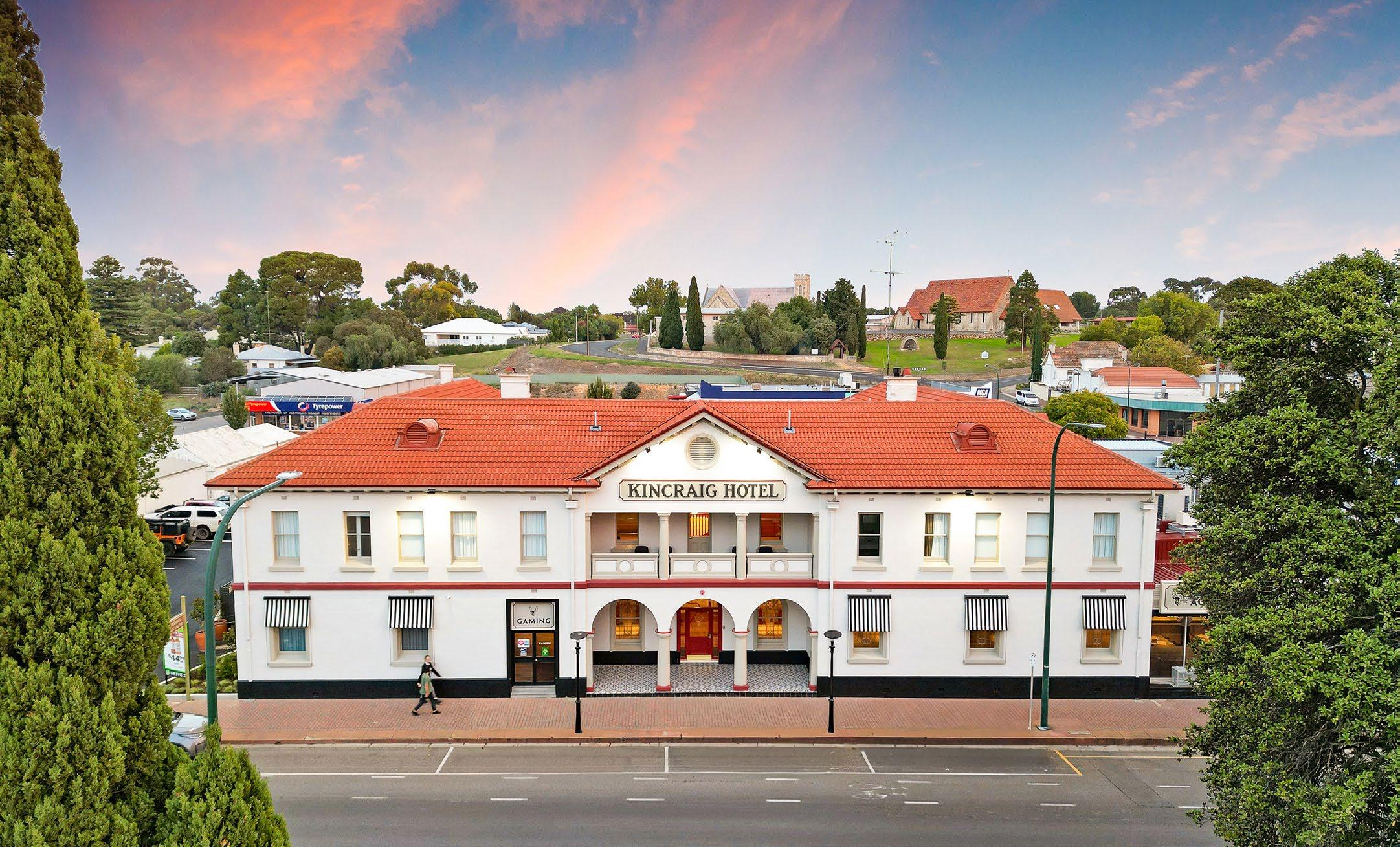
The Dean Group’s freehold purchase of the Kincraig Hotel - coupled with the opportunity to add quality accommodation to the region - convinced it to undertake its multi-million-dollar renovation and restore the pub to its former glory.
The group acquired the Naracoorte property in October, 2024. It officially reopened its doors in April this year, with the aim of attracting the significant number of tourists and corporates who travel through the region.
The moment arrived almost a century after the hotel first opened, in August, 1930, as Bradman’s 232 at The Oval sealed the return of the Ashes.
Back then, the ‘Narracoorte Herald’ (sic) described the Kincraig as “one of the best equipped hotels in the state”.
In 2026, its relaunch mirrors that sentiment, offering boutique accommodation in a town of little more than 5000 people.
Art Deco
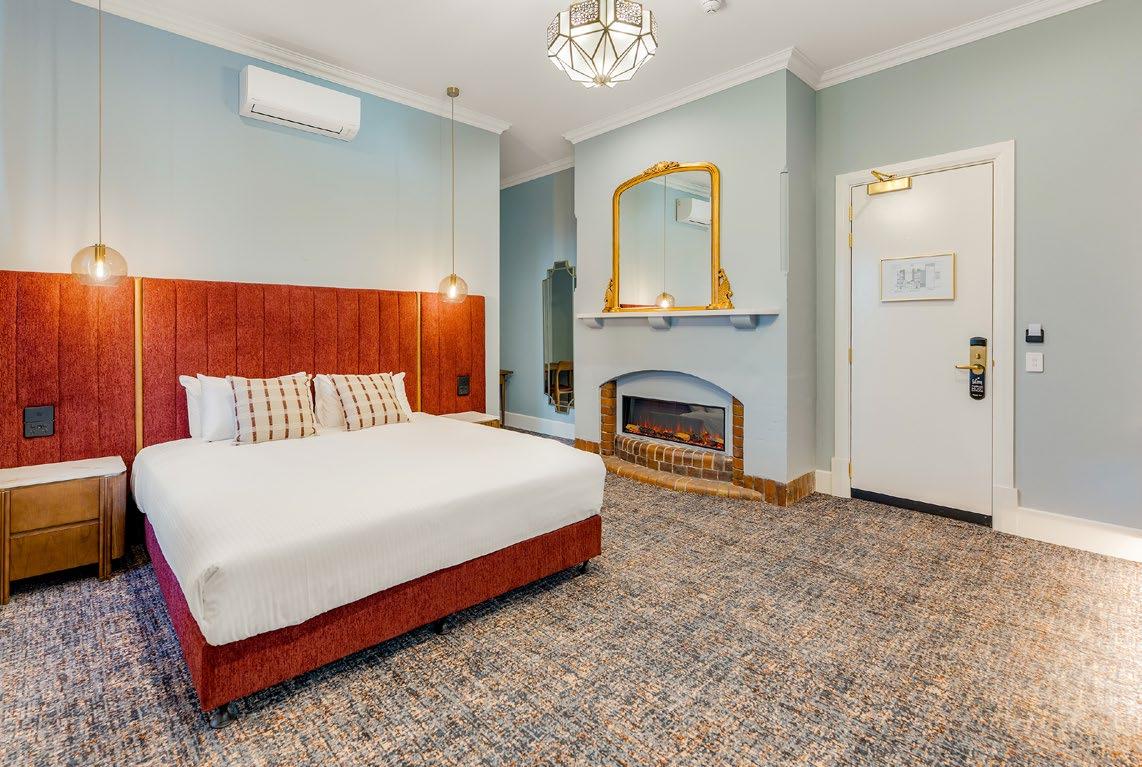
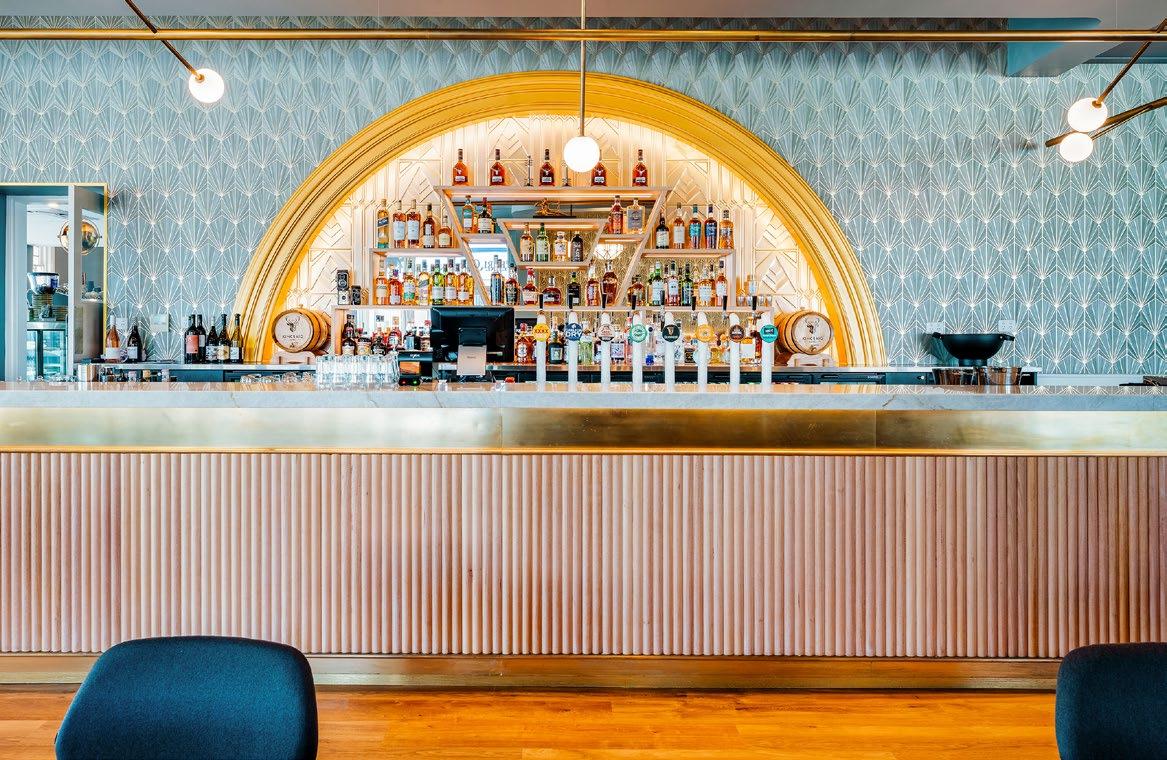
The 23 newly renovated art deco suites preserve the original style of the Mount Gambier stone building and come in varying configurations but all with ensuites and accessible via lift.
The premier first floor King Suite features an open plan layout complete with luxury MiniJumbuk bedding, spa bath, fireplace, balcony access and all the little touches you would expect. There’s also a ground floor twobedroom apartment ideal for families with a queen and single bed, ensuite, spa, living room and kitchenette.
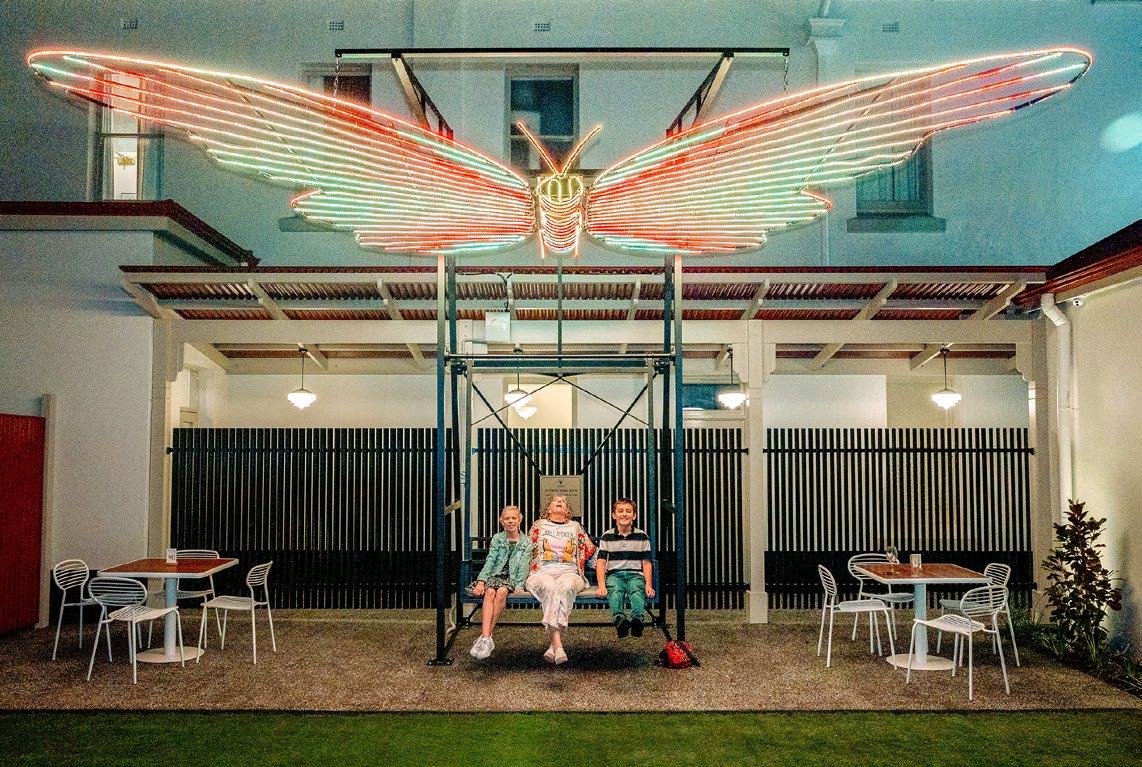
Revellers can enjoy a new open-air courtyard decked out with a butterfly swing (perfect for that Instagram moment), or settle in at one of the multiple dining areas to sample the Kincraig’s brand new fare.
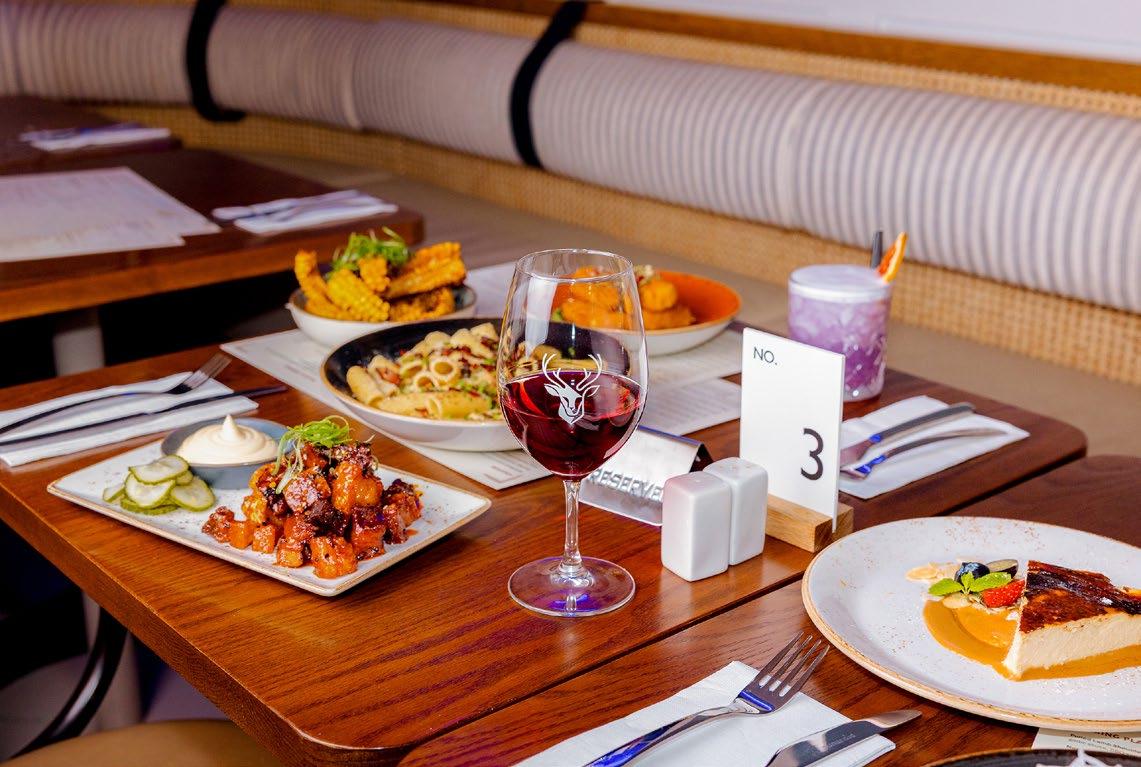
The inviting menu offers pub classics as well as quality local beef dishes like 36 Degree South Scotch Fillet and Tender Cuts Shepherd’s Pie. This is accompanied by a wine list heavily slanted towards the Coonawarra.
Adding to the mix is an upgraded dual-lane drive-through bottle shop, a new gaming lounge.
Families haven’t been forgotten, with the inclusion of an “outer space” themed indoor playground with a fivemetre slide.
It’s a triumphant return for the Kincraig which has endured a chequered history in recent years, falling into the hands of administrators before being sold and then abandoned mid-renovation, prior to its current rescue.
But with the Dean Group’s experience undertaking similar projects at the Largs Pier Hotel, the Walkers Arms Hotel, the Peninsula Hotel Motel and Macs Hotel in Mount Gambier, its resolve for the task never wavered.
“The Dean Group has always had an interest in the southeast and has become familiar with the region and
its clientele since purchasing the Macs Hotel in 2010,” said group director and general manager Peter Johnson.
“We’ve always had an eye on purchasing freehold properties with the opportunity to redevelop.
“The opportunity to purchase the Kincraig Hotel freehold was a great prospect to bring our operational and hospitality experience to Naracoorte and offer quality local produce (both food and wine) and provide much-needed accommodation for leisure and corporate travellers.”
For much of the renovation, the bottle shop was the only part of the business that remained open – a gamble far more courageous than two fingers of whisky can offer.
But Peter said that like the Highlands drams the Kincraig celebrates, the entire operation was meticulously crafted.
“The staged redevelopment was always our plan, so provisions were made to achieve this,” Peter said.
“Both the gaming room and bottle shop were completed in the initial stages, with the remainder of the hotel
(dining, bar, accommodation, kids’ playground, courtyard) completed prior to relaunch.”
The group already employs more than 40 locals but expects that number to grow in tandem with the venue’s reputation.
There is no doubt that the project is achieving its goals of “bringing a much-loved local landmark back to life and creating a space the local community can once again call their own”.
“The feedback from customers has been overwhelmingly positive,” Peter said.
“Locals have enjoyed the fact that we have restored the hotel back to its art deco roots and created a new space for the community to enjoy as a dining and meeting spot.
“Foot traffic and support for the Kincraig reopening have exceeded our expectations and we’re thankful for the community supporting our investment in Naracoorte.”
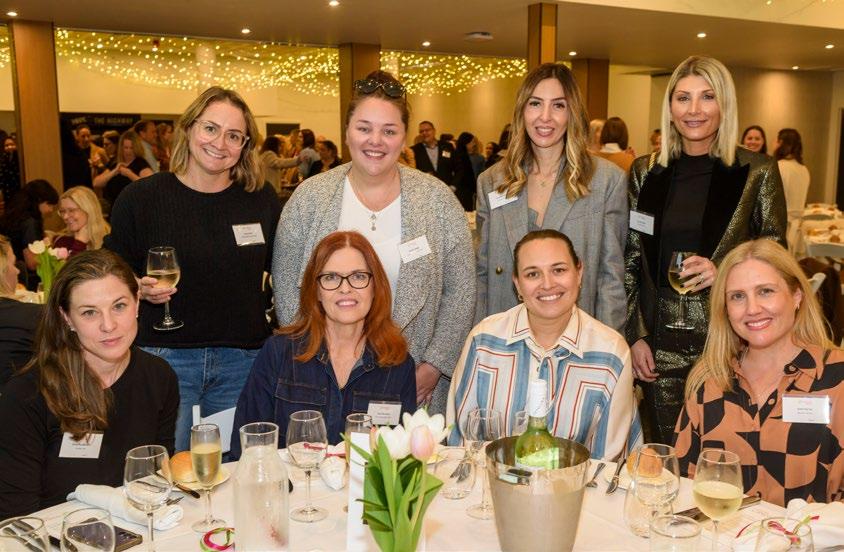
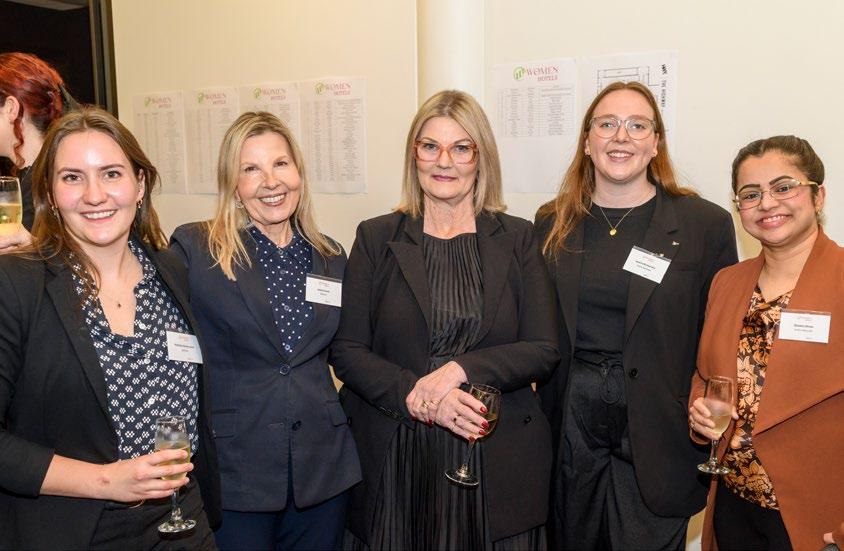
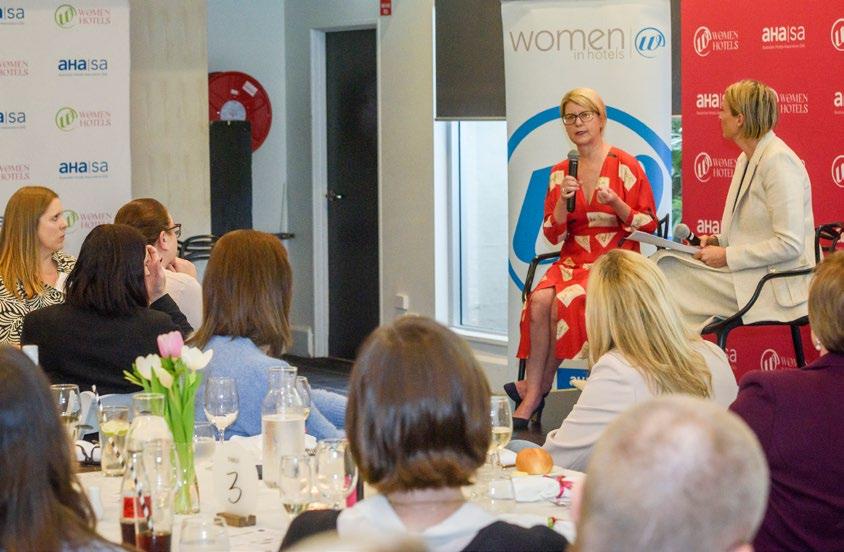
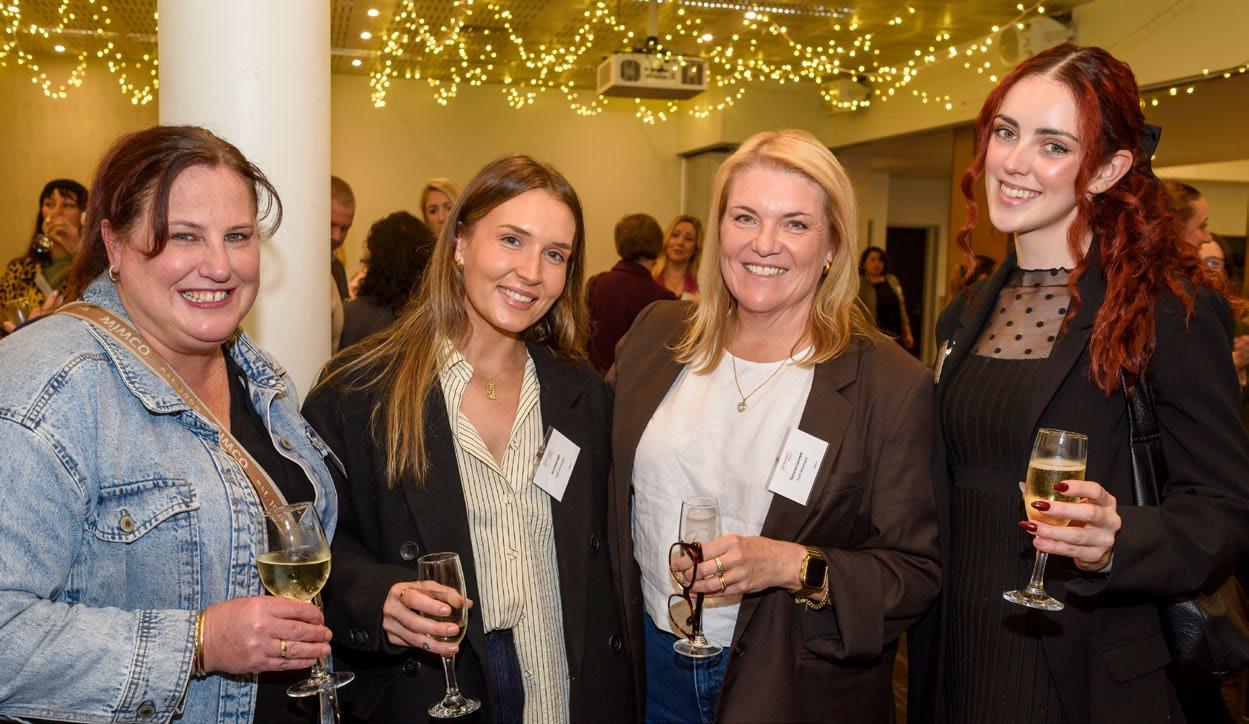
An exceptional line-up of speakers and panellists provided their unique perspective on leadership, resilience, performance and creating opportunities for others at the Women in Hotels Network Lunch in June.
More than 150 women and industry leaders gathered at The Highway for the event.
A highlight of the afternoon was a special Q&A session with Natasha Stott Despoja AC, whose distinguished career has spanned politics, diplomacy, advocacy and authorship.
Drawing on decades of experience advancing the rights of women and girls, Natasha shared insights into leadership, influence and the importance of creating pathways for future generations.
The event gave attendees a rare opportunity to hear from one of Australia's most respected advocates for gender equality.
Natasha’s career has included serving as Australia's Global Ambassador for Women and Girls and as a member of the United Nations Committee on the Elimination of Discrimination Against Women (CEDAW).
Hosted by respected broadcaster
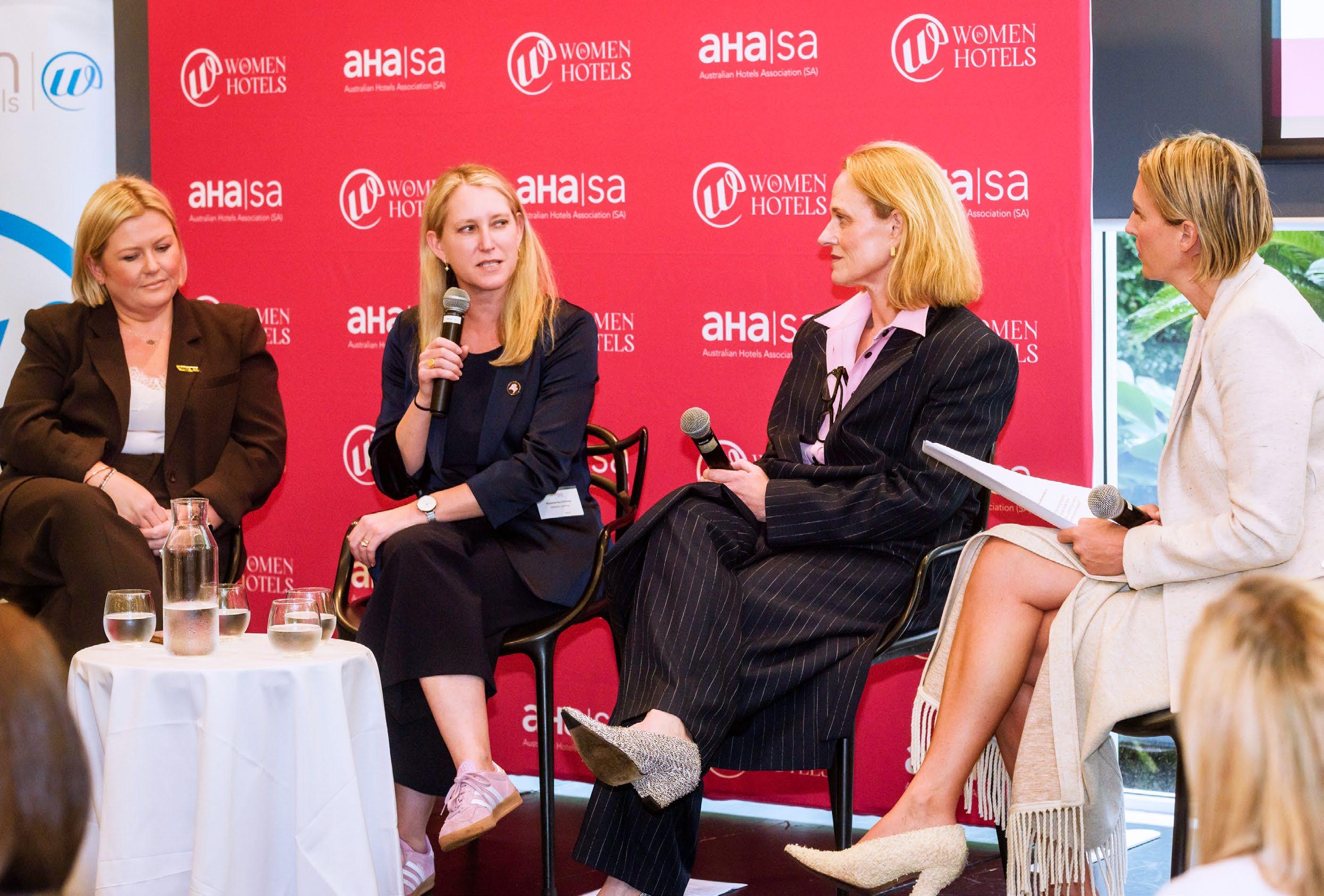
Rebecca Morse, the event also featured an engaging fireside chat titled Leading Under Pressure: What Business Can Learn from Elite Sport.
Bringing together three of South Australia's leading sports executives, the discussion explored the realities of leadership in highly competitive environments and the lessons that can be applied across industries.
Then panel comprised:
» Brigid Koenig, Chief Executive Officer of Glenelg Football Club
» Melanie MacGillivray, Chief Executive Officer of Adelaide Lightning
» Bronwyn Klei, Chief Executive Officer of Netball SA and the Adelaide Thunderbirds.
The discussion included strategies required to develop high-performing teams, drawing clear parallels between elite sport and the hospitality sector.
Adding a different perspective to the afternoon was Stephanie McConachy, founder of Nine Lemons Feng Shui. Her presentation focused on the relationship between environment, wellbeing and performance, demonstrating how thoughtfully designed spaces can support teams and enhance guest experiences. Attendees were encouraged to consider how their physical surroundings can affect both workplace culture and business success.
Beyond the formal presentations, the event provided valuable opportunities for networking and the sharing of experiences among women from hotels across South Australia.
The Women in Hotels Network continues to provide a valuable platform for professional development and industry engagement, and the strong turnout highlights the depth of talent within the industry.
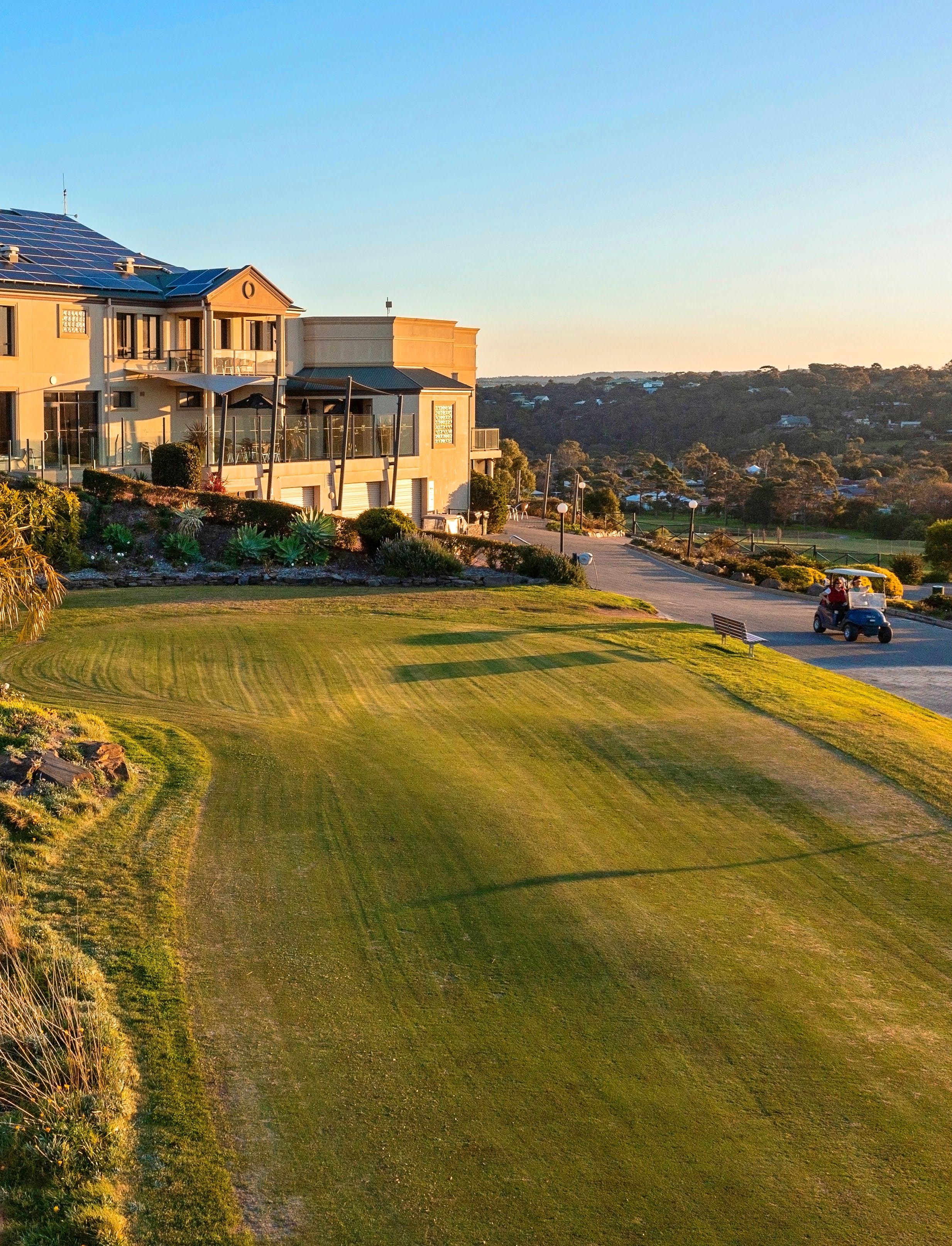
The Adelaide-based G’day Group is challenging conventional wisdom – and upending quite a few myths - with its ambitious plans to transform McCracken Resort at Victor Harbor.
The Group is Australia’s leader in regional accommodation experiences, with more than 340 properties across the country – encompassing holiday parks and resorts in iconic destinations such as Kings Canyon, Rottnest Island, and the world-famous El Questro in the heart of the Kimberley.
It has already invested heavily in South Australia, including Wilpena Pound, and properties at Clare and Lake Bonney benefitting from the G’day treatment.
In the Fleurieu region, it completed a $22 million redevelopment at Discovery Parks – Goolwa four years ago.
But it is increasingly apparent that McCracken - purchased in November 2020 – will be a shining jewel in the Group’s crown.
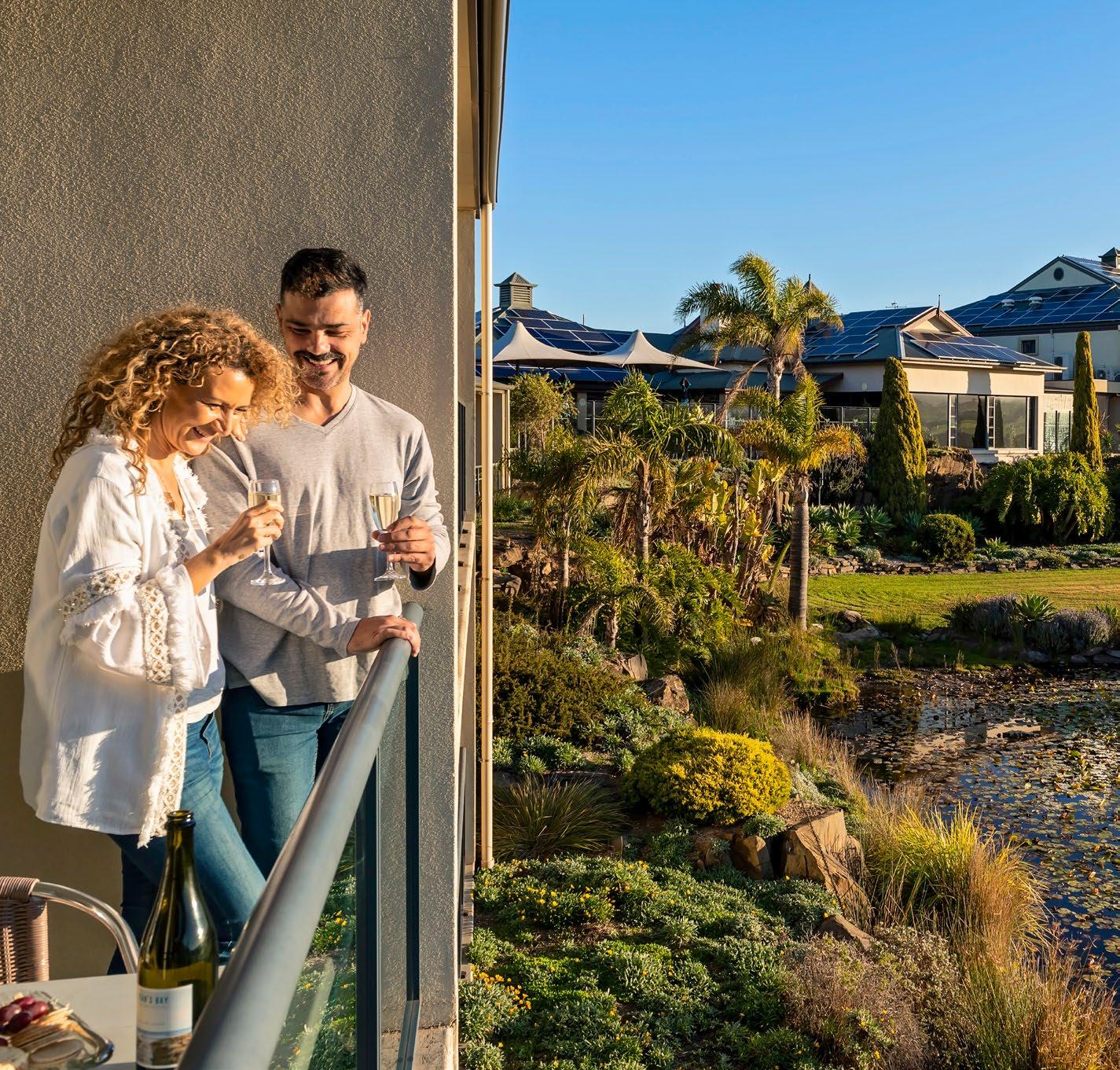
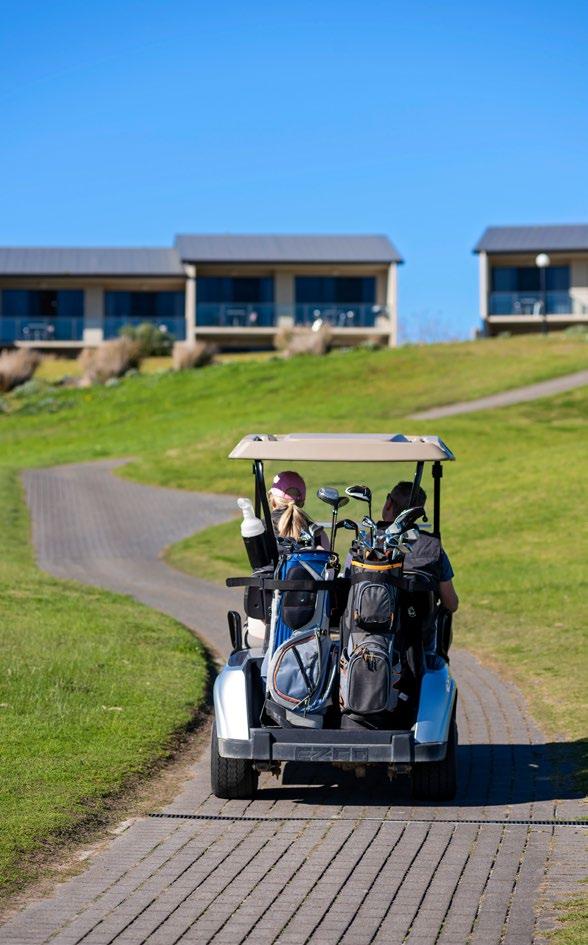
“… as Australia’s largest regional accommodation provider, we have both a responsibility and the opportunity to lead. “
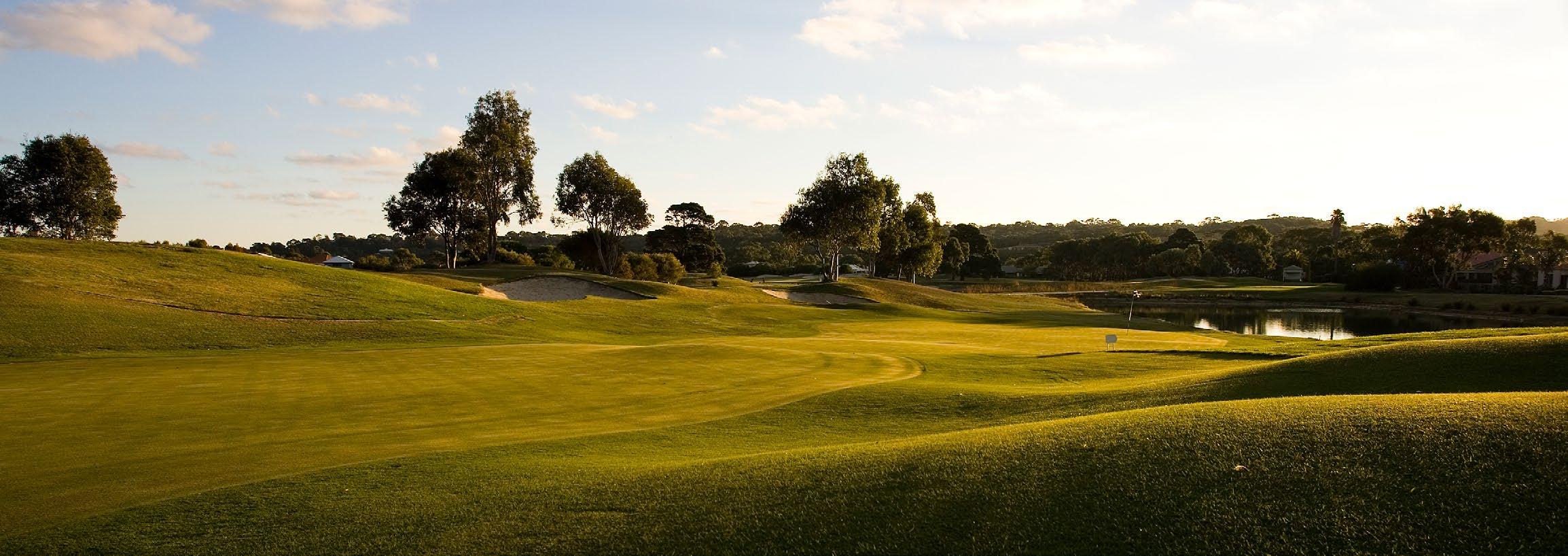
“When McCracken Resort came onto our radar, it ticked every box,” said Matt Lang, G’day Group Chief Operations Officer.
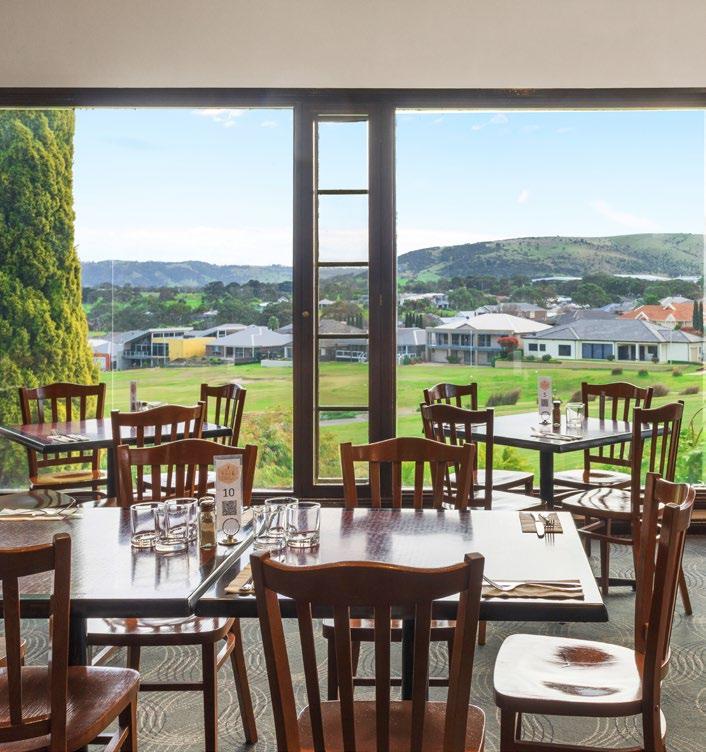
“A superb location, an established restaurant and convention centre, and a genuine role in South Australia’s growing golf tourism story.
“Visitation is growing, especially among day-trippers and since last year, we’ve seen casual bookings grow by around 20 per cent.
“Add to that McCracken’s strong history of welcoming corporate visitors and travelling golf groups, and we see a business with real, sustainable depth across every season.”
Adelaide’s renaissance as a golfing epicenter has played no small part in the G’day Group’s vision for McCracken.
“Events like LIV Golf and the recent announcement of the Australian Open coming to Adelaide in 2028 are cementing South Australia as a genuine sporting destination, enticing local, national and global travellers,” he said.
“That’s a great thing for the state and for resorts like McCracken.”
That brings us to those myths the G’day Group is keen to dispel.
Myth #1 – Victor Harbor turns into ‘Sleepy Hollow’ after Christmas.
“There’s a misunderstanding about the Fleurieu in winter as we constantly hear from customers that it’s one of their favourite seasons,” Matt said.
“This is because winter here means whale watching during calving season, incredible local produce, farmers markets, and a slower, richer kind of travel experience that more and more people are actively seeking out.
“It’s a year-round destination, and our booking data backs that up.”
Myth #2 – Victor Harbor has an older demographic.
“The data tells a different story to the perception,” he said.
"Victor Harbor is on a genuine growth trajectory.
“There’s significant housing activity and private investment happening in the region, which is a strong signal for tourism.
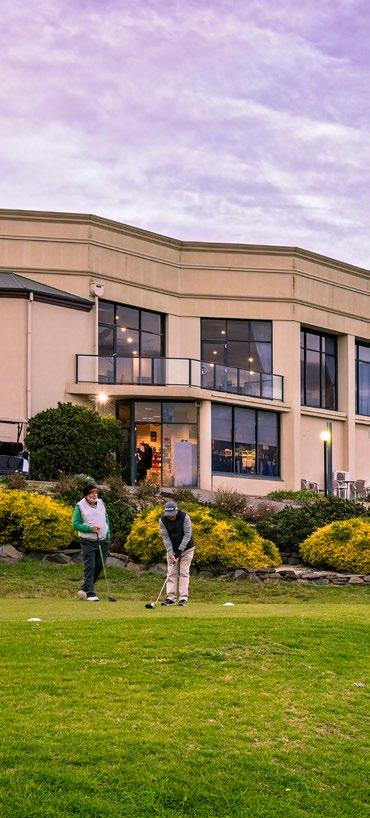
“At McCracken Resort, we introduced ‘milk on tap’, replacing singleuse packaging with glass bottles in every guest room, filled from a tap at the bar and restocked as needed.”
“And when the North-South Corridor is complete, dramatically shortening drive times from Adelaide, we expect that momentum to accelerate considerably.”
Myth #3 – Golf is not a young person’s sport.
“Perhaps most exciting is the emergence of Gen Z as a golfing cohort, a generation that wasn’t on our radar for traditional golf marketing, now showing up in growing numbers and outperforming previous years,” said Matt.
“The fairways are getting younger which is exciting to see. It’s a shift we’re playing close attention to.
“We want McCracken to be a place that works for every kind of golfer and every kind of traveller – whether you’re a seasoned player or picking up a club for the first time.”
Myth #4 – Golf is not a family activity –every golfer leaves behind a golf widow.
“Golf is undergoing a quiet cultural reinvention, and the numbers reflect it.
“Families form the heartbeat of the national Discovery business and at McCracken we’ve seen a significant
rise in family bookings year-on-year.”
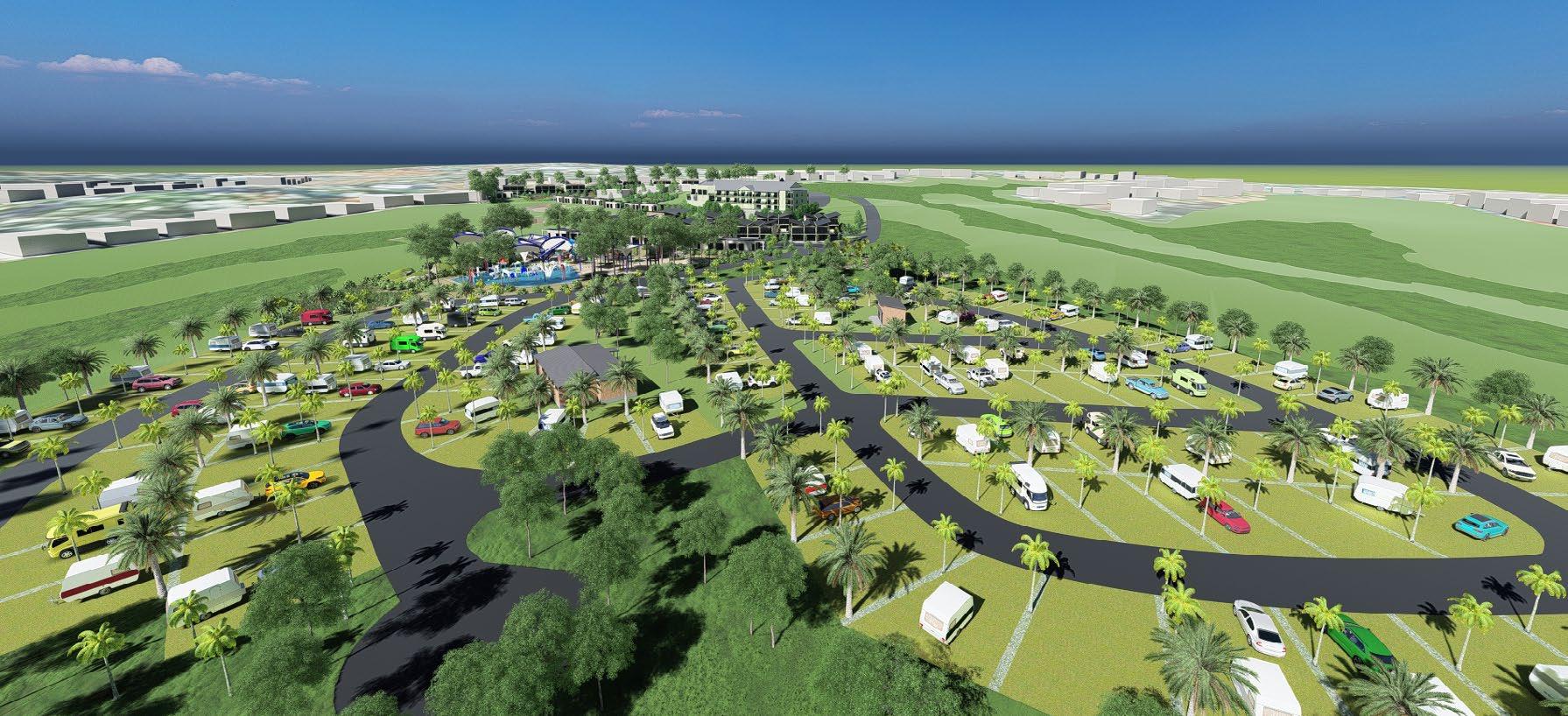
As part of that emphasis on families, McCracken will embrace the spirit of the once vibrant Greenhills Adventure Park, installing a splash park, flying fox, playground, jumping pillow and mini golf for guests.
There will be space for more than 100 powered caravan sites and 60 revamped two-bedroom units.
The resort will also offer four-bedroom villas, something of a unicorn in the accommodation industry.
Matt said their inspiration came from “listening”.
“We kept hearing the same thing from our guests and seeing trends amongst our booking data – families and friends want to travel together, share an experience, and not feel like they’re spread across separate rooms in separate corners of a property,” he said.
“We're also seeing guests stay longer, particularly around golf tournaments and events, and with that comes a natural desire for more space, more comfort, and better value.
“The property is powered by a 100kW solar system, robot vacuum cleaners manage public spaces, autonomous mowers tend to the golf courses and a biodigester diverts food waste from landfill.”
“A large, well-appointed shared space just makes sense.”
McCracken’s four-bedroom villas will sleep up to eight people and come with fully-equipped kitchens, generous living and dining areas, laundry facilities and golf course views.
The G’day Group has also recognised that some things worked better in the past.
Rooms at McCracken are offered milk in good, old-fashioned glass bottles.
It’s when you run out that things get really interesting.
“Some of our favourite initiatives are the ones guests actually experience.
“At McCracken Resort, we introduced ‘milk on tap’, replacing single-use packaging with glass bottles in every guest room, filled from a tap at the bar and restocked as needed.
“It's a small thing that says something bigger and it's been one of our most warmly-received changes.
“We also partnered with the Fleurieu Milk Company to supply it. Keeping things local felt like a collaborative way to do it properly.”
It’s all a part of the group’s ethos and determination to set new standards in sustainability.
The property is powered by a 100kW solar system, robot vacuum cleaners manage public spaces, autonomous mowers tend to the golf courses and a bio-digester diverts food waste from landfill.
“Guests notice and tell us that these things factor into where they choose to stay, which only strengthens our commitment to sustainability.
“Sustainability, for us, is a genuine conviction that how we operate matters and that as Australia’s largest regional accommodation provider, we have both a responsibility and the opportunity to lead.
“We're focused on renewable energy, rethinking the design and orientation of our cabins and sites to harness passive energy efficiency, building a sustainable procurement framework and trialling waste-to-energy technologies.
“These are the big, structural commitments and they’re underpinned by real targets.”
Faced with changing market conditions since the original purchase, The Group is using its deep experience for the redevelopment timing.
Rising costs and supply chain issues since COVID have hampered the start date, and significantly pushing up the original costing of $20 million.
Matt said planning and development works remain a priority at this stage.
“Like many other development projects in the country right now, we have experienced some challenges, but what gives us genuine confidence is the strength of our team guiding this process.
“We have a highly experienced internal development arm that has navigated complex projects before, and they're working through this carefully and strategically to make sure we get the right outcome.
“We're committed to delivering something exceptional for guests and for the region."
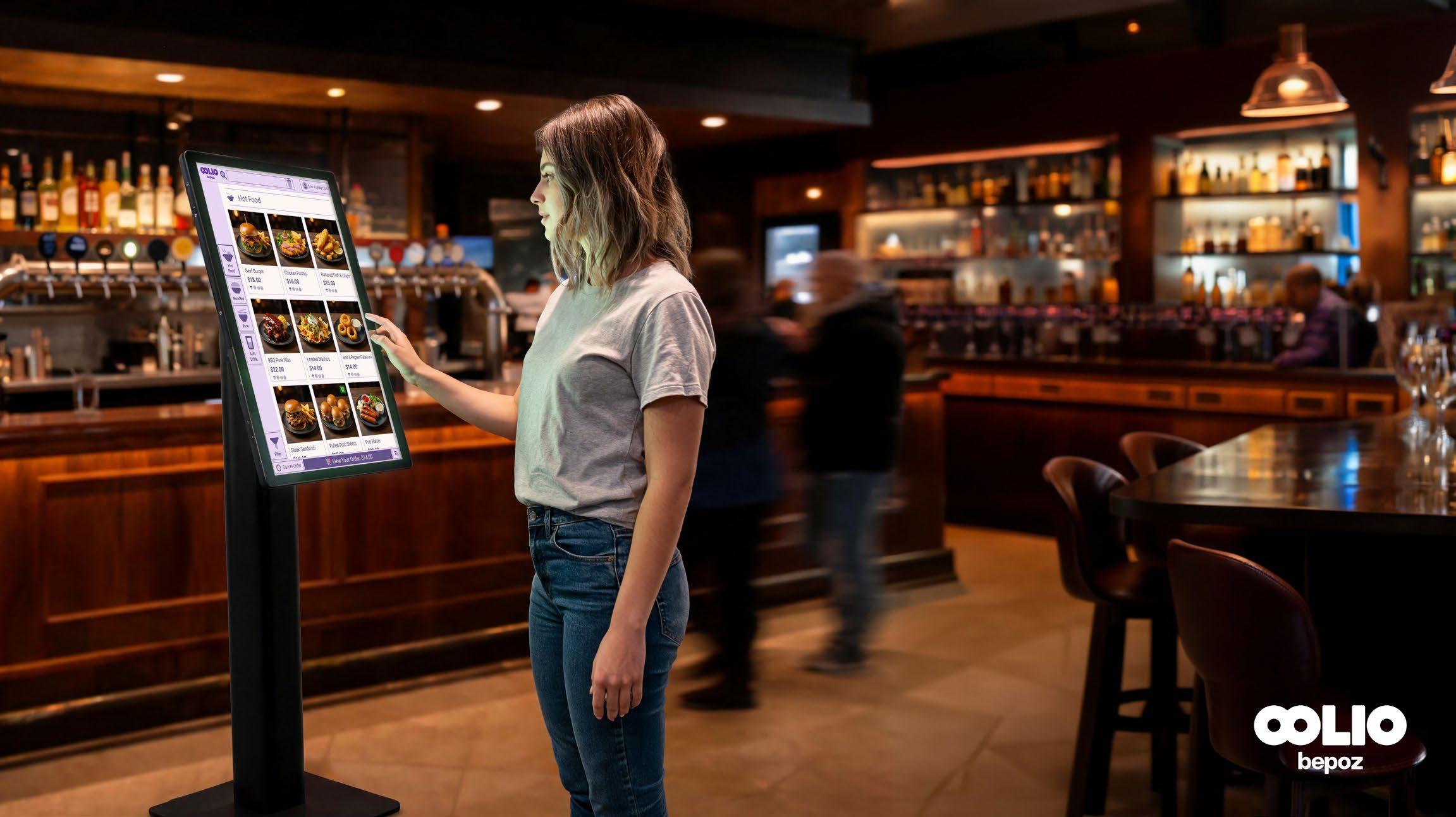
The way people drink and socialise has shifted. Guests want things fast, they want choice, and they really don't want to wait three deep at the bar. Bepoz has been listening to venues across Australia for years, and what they kept asking for was simple: a smarter way to serve more people, without adding more complexity.
That's exactly why we built Bepoz Kiosk. LET GUESTS ORDER ON THEIR TERMS.
When a guest approaches a kiosk, they browse at their own pace, make choices without feeling rushed, and check out without flagging anyone down. That relaxed experience changes behaviour. They explore the menu. They add a side. They upgrade their drink. They say yes to things they'd skip in a busy line.
Upselling works differently through a kiosk too.
A well-timed prompt, "Upgrade to a pint for $2 more?" doesn't feel pushy. It feels helpful, and guests respond.
ONE SYSTEM. LESS TO MANAGE.
Bepoz Kiosk is part of the same Bepoz ecosystem your team already uses. No new software to learn, no separate system to manage, no split reporting. Orders flow through the same POS, into your existing bar & kitchen setup, the same workflows you already have.
That means your staff spend less time troubleshooting and more time looking after guests. Aussie tech for Aussie Hospo.
Upgrade your venue experience today.
Talk to your Bepoz Account Manager or visit bepoz.com.au.
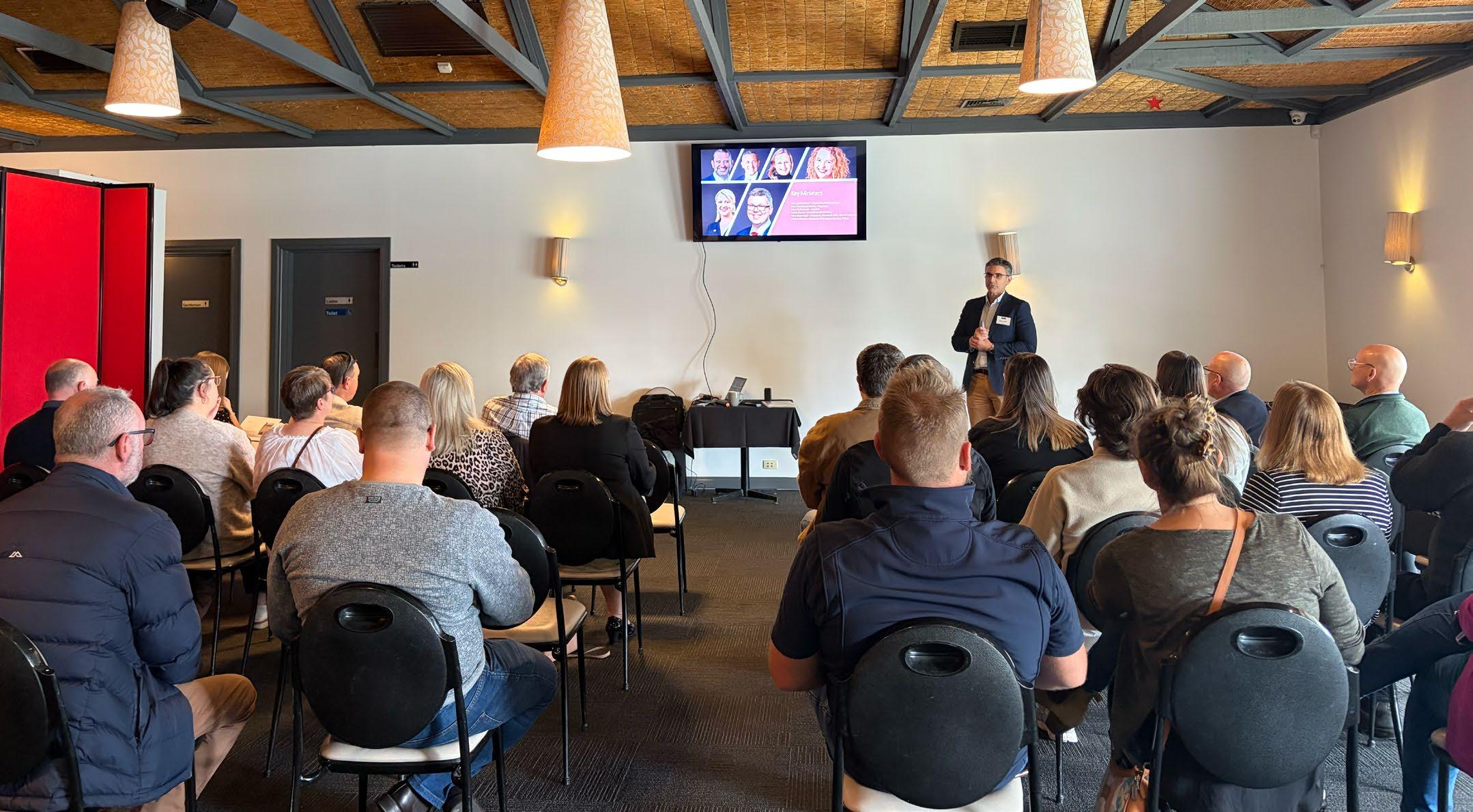
In the previous issue of Hotel SA, we reported on the 2026 Accommodation Australia (SA) Economic Workshop. Supported by major event partner Hostplus, the three-hour workshop focussed on economic analysis and market data. Attendees then broke into groups to provide operator insights on a range of topics, which we have distilled below. Our aim is to listen to a broad range of voices to identify common themes, test assumptions, and translate frontline experience into practical insights for the industry.
» Attract more high-profile international events (e.g. MotoGP, global concerts, major sporting events) that drive both domestic and international demand, particularly from underperforming inbound markets like Southeast Asia.
» Use events as a catalyst for longer stays and regional dispersal, not just CBD occupancy spikes.
» Develop winter programming rather than relying on peak seasons — including events suited to colder weather and alternative venues (e.g. second stadium, roofed venues).
» Improve access to regions through better transport solutions (e.g. high-speed rail concepts, easier non-car travel).
» Leverage unique, place-based experiences that cannot be replicated elsewhere to create a “must-visit” factor.
» Expand wellness and experience-led travel, responding to changing consumer preferences.
» Use AI, tech and data to influence guest decision-making and personalise itineraries at the planning stage.
» Invest in people and training, recognising workforce as the key constraint to growth.
» Package and position Adelaide as a complete destination offering, not just an event location.
» Events are the primary demand driver, but not all events create city-wide occupancy uplift.
» The market performs best when events are large-scale, international, and recurring, giving confidence for investment.
» Demand is increasingly experience-driven, with guests prioritising events, lifestyle and unique offerings over traditional travel patterns.
» Guests are becoming more value-focused and selective, seeking inclusions and perceived value rather than just lower prices.
» Technology is reshaping expectations, with real-time feedback, AI and seamless experiences becoming standard.
» Workforce remains the critical enabler of revenue, with staffing shortages directly limiting the ability to sell rooms.
» The industry is not keeping pace with technological change, largely due to cost and operational complexity.
» Corporate travel behaviour will be a key leading indicator of future demand shifts.
» Major events do not always create uniform market compression—benefits can be highly localised (e.g. Fringe impact varies by precinct).
» Adelaide is already punching above its weight in recent performance, given its size and scale.
» Weather is less of a barrier than assumed—winter conditions can enhance certain events (e.g. Gather Round).
» Despite cost-of-living pressures, spending remains strong for key events and experiences, even at premium price points.
» There has not yet been a sharp drop in demand from economic pressures, though it is expected to be tested in coming months.
» Technology adoption in hotels is lagging behind guest expectations.
» AI is advancing faster than the industry can adapt, creating both risk and opportunity.
» Seasonality remains a core issue, particularly in winter months.
» Workforce shortages continue to constrain growth and

Send us your existing design - a hand drawn sketch, full dwg or revit - and we will convert it to the Simply Stainless Modular Bar System.
» Event reliance creates volatility if events are lost, moved or underperform.
» Fuel costs and global uncertainty may impact travel demand and corporate movement.
» Secure more global-scale, high-impact events, particularly in off-peak periods.
» Develop a year-round events strategy, with stronger winter programming.
» Invest in regional connectivity and accessibility
» Enhance guest value through packaging and inclusions, rather than discounting.
» Accelerate technology adoption, including AI, mobile check-in and seamless guest journeys.
» Prioritise workforce development and retention strategies.
» Strengthen collaboration across industry and government for destination marketing and storytelling.
» Focus on youth and emerging traveller segments to future-proof demand.
» Split investment between technology (AI, automation) , recognising staff shortages as the key bottleneck.
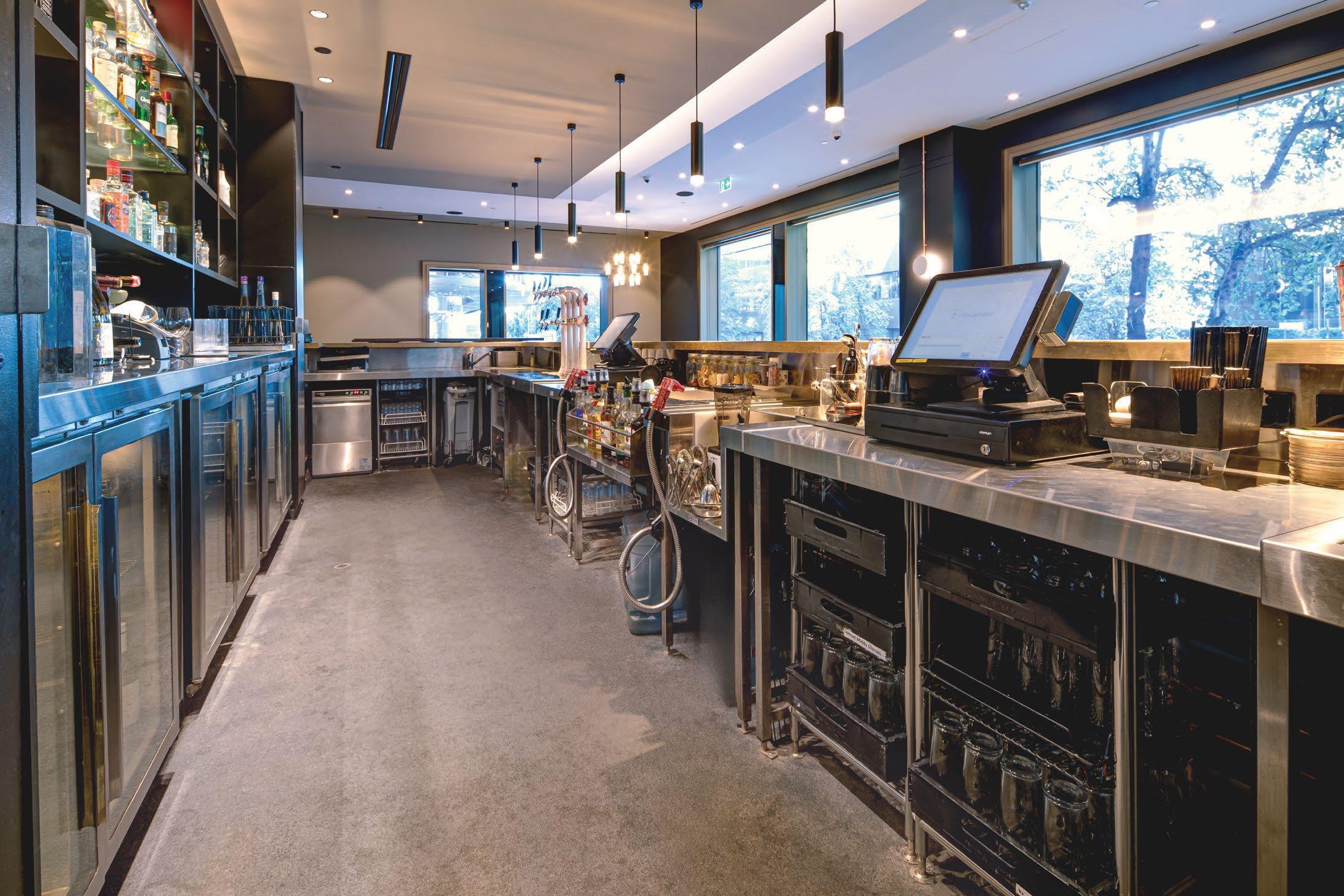

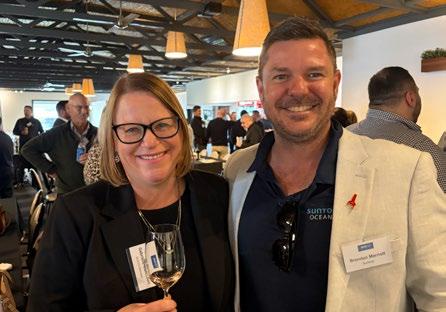
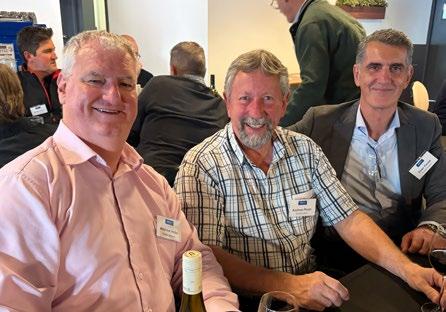
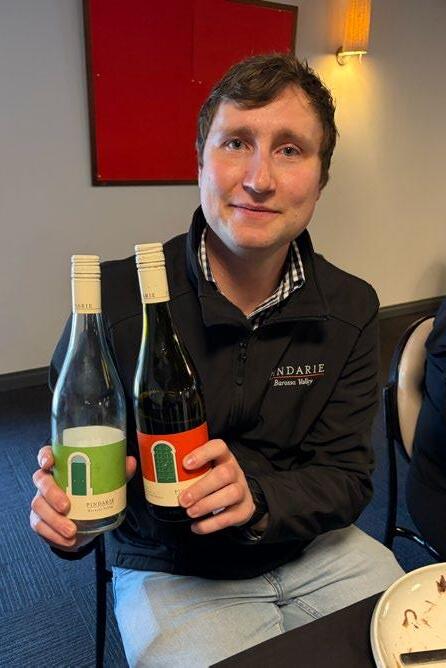
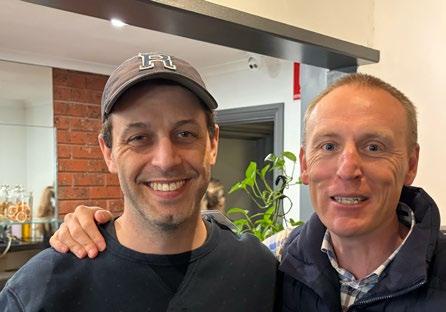
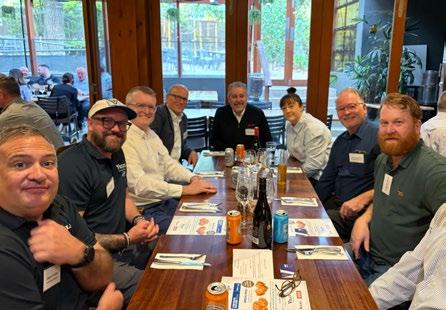
The Lyndoch Hotel hosted a strong gathering of hoteliers and corporate partners for the AHA|SA Gawler Barossa Regional Meeting and Lunch.
The event provided an opportunity for members to network, exchange ideas and discuss opportunities and challenges across the region. Attendees were also pleased to welcome special guests Barossa Mayor Bim Lange OAM and Light Regional Council Mayor Bill Close.
The AHA|SA thanks hosts Rhys and Sandy for their hospitality and acknowledges the support of the day’s food and wine partners.
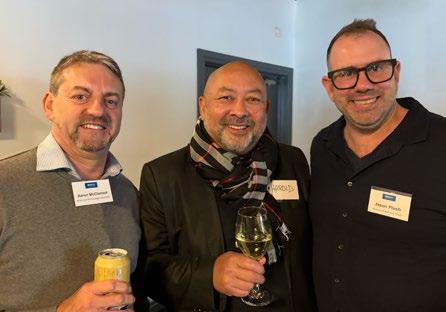
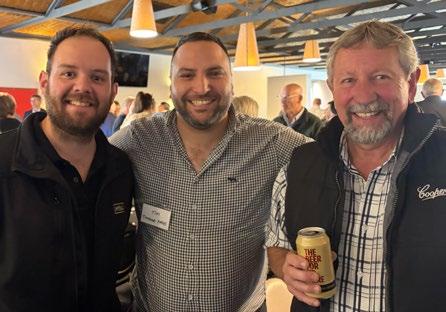
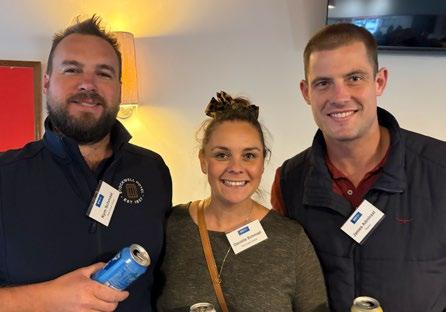
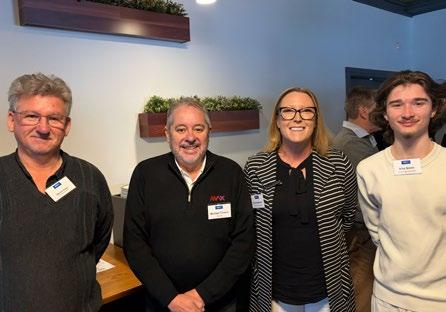
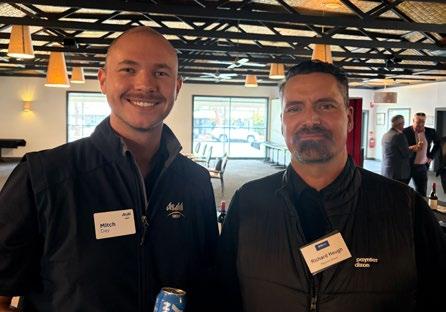
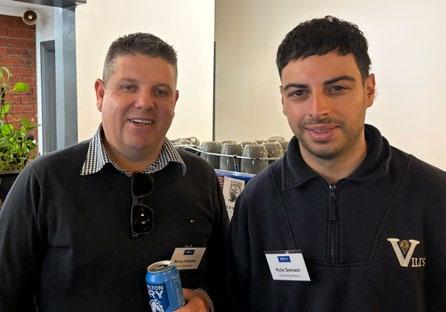
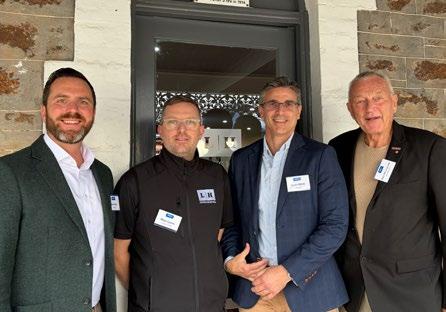
Members and industry partners came out in force in June for the Eyre Peninsula Regional Meeting and Lunch to connect, share stories and catch up.
A big thank you to the incredible food and beverage partners for their generous support, and to host Emma, Amy and Charmaine from the Cummins Hotel, along with their wonderful staff.
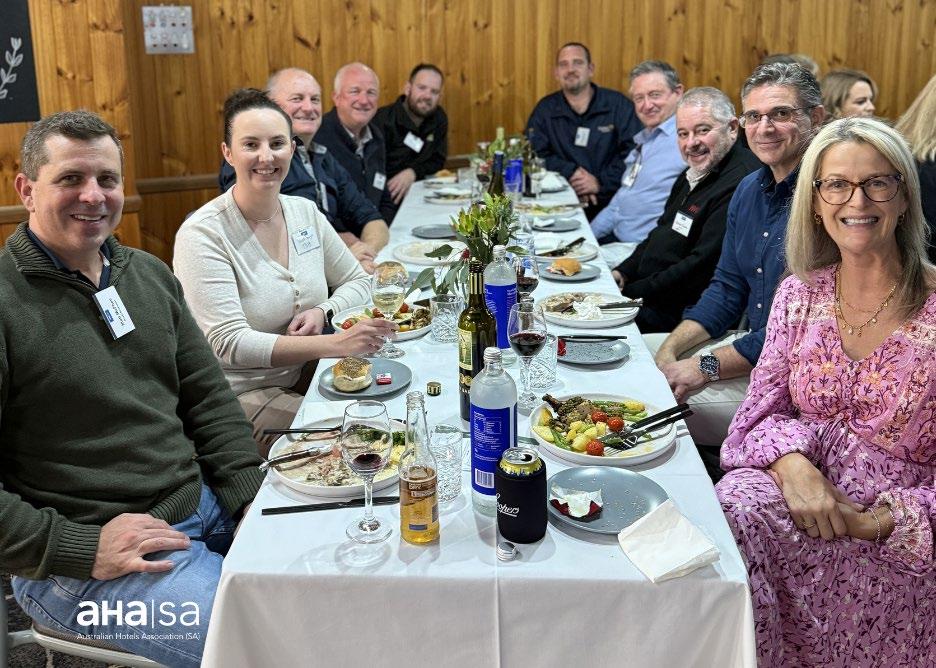
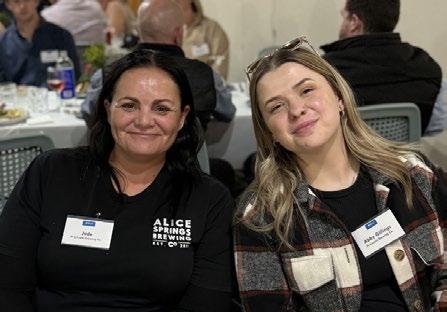
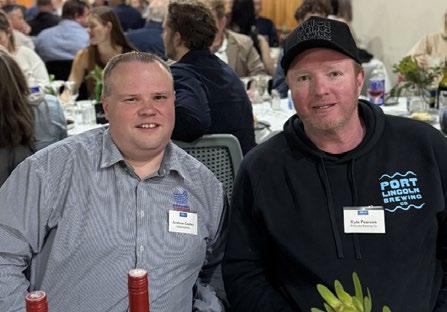
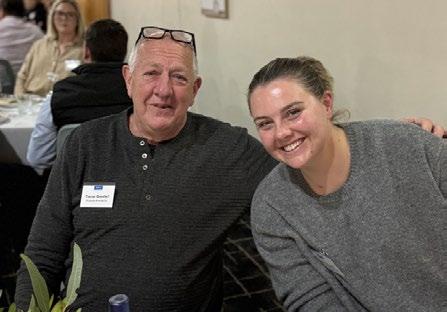
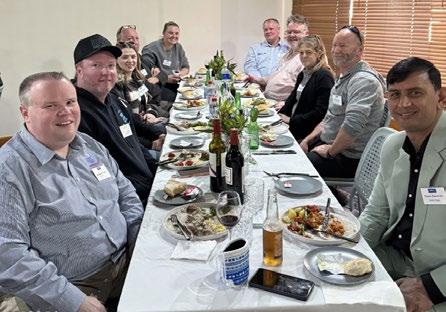
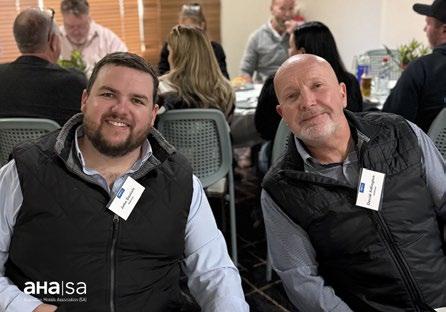
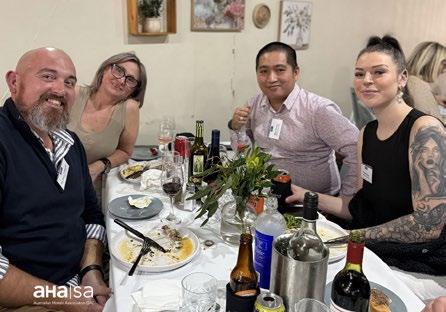
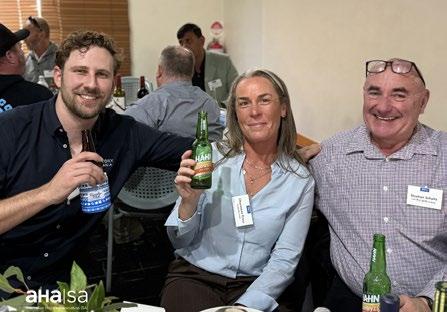
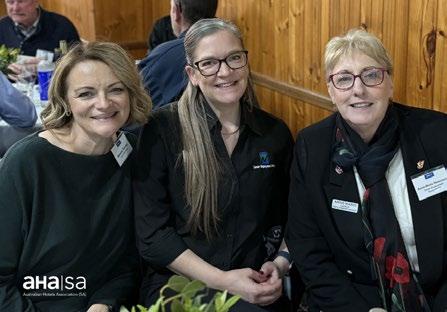
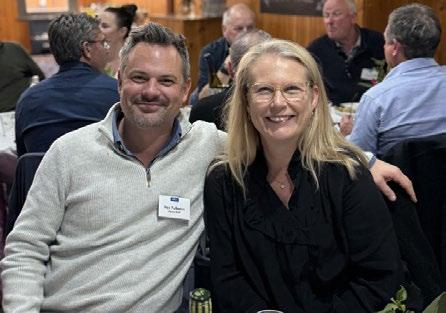
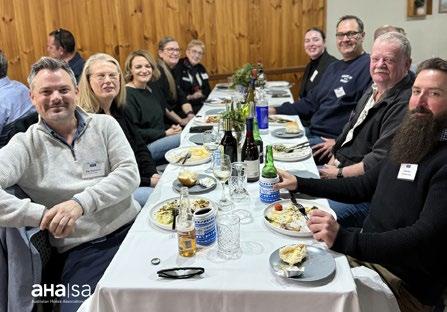
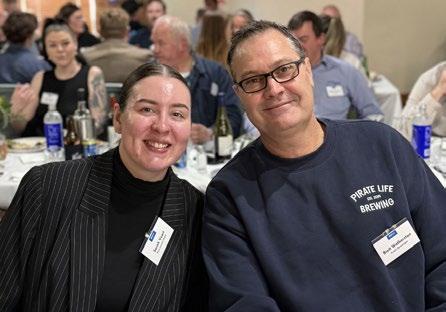
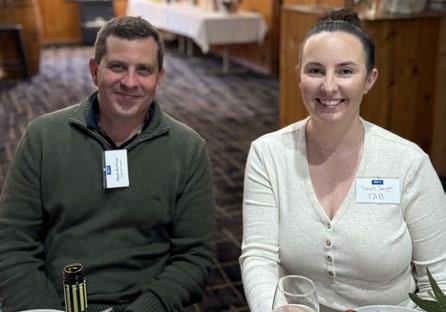

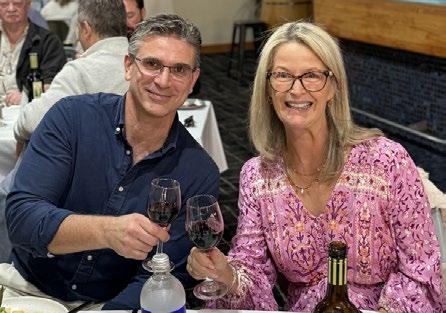
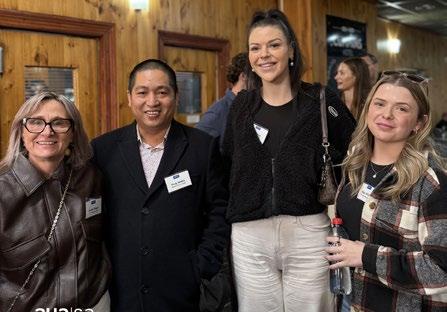
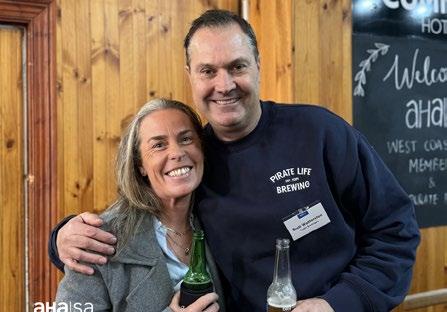
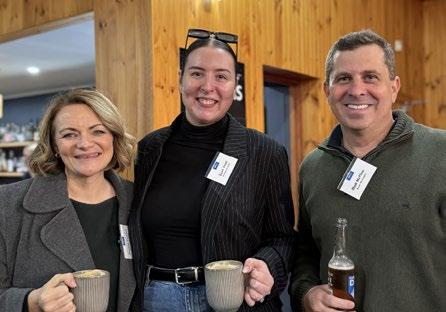
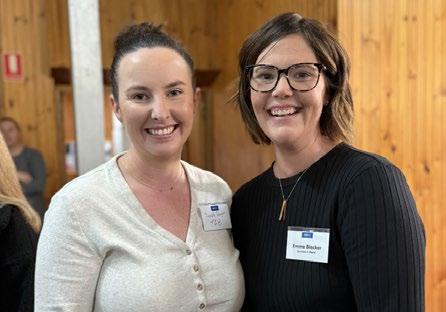

A strong turnout of hotel members and corporate partners attended the AHA|SA South Coast and Hills Regional Meeting, followed by lunch and networking at the Aldgate Pump Hotel.
The event provided an opportunity for members to share ideas, strengthen industry connections and discuss issues affecting hotels across the region.
AHA|SA extends its thanks to Tony and Josie O’Donnell and the entire Aldgate Pump Hotel team for their outstanding hospitality and a memorable lunch.
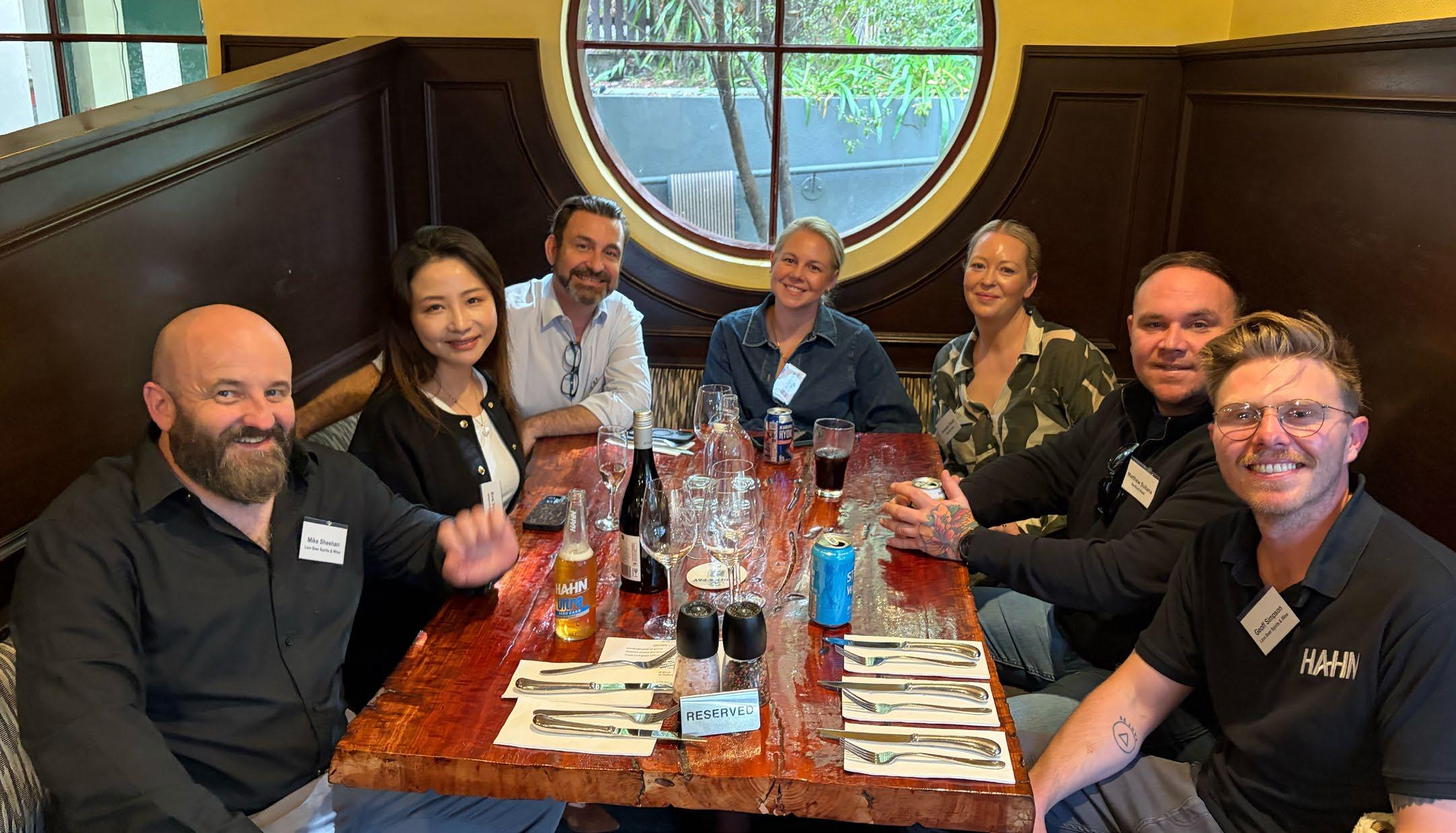
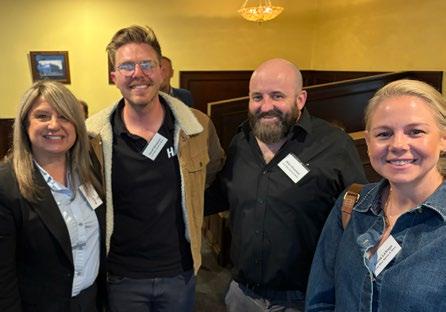
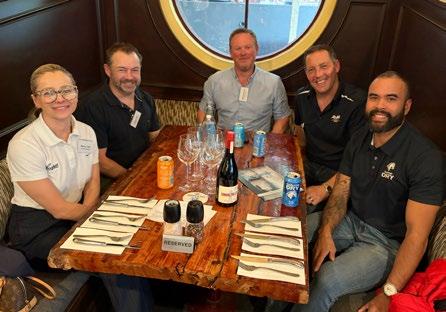
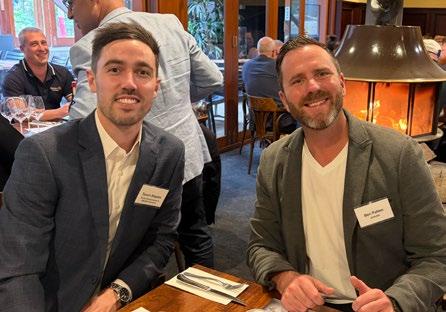
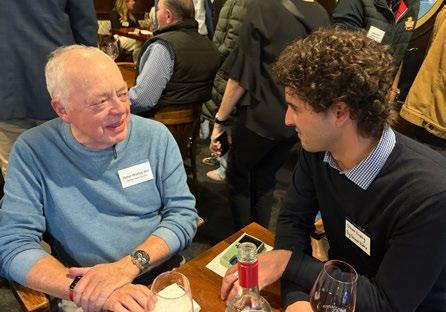
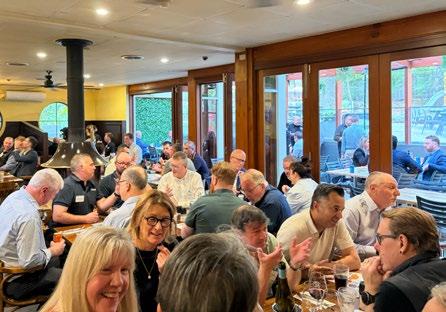
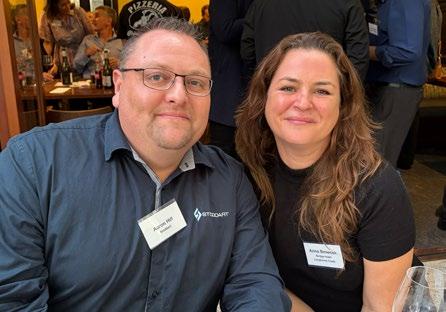
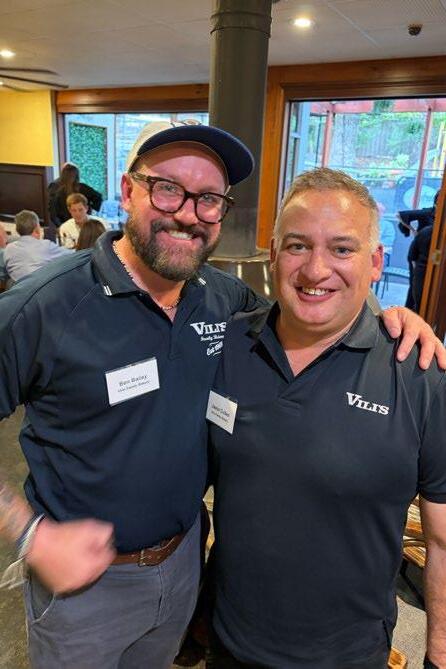
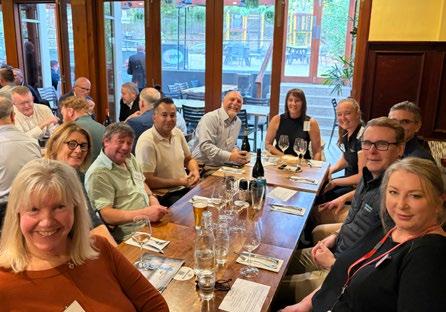
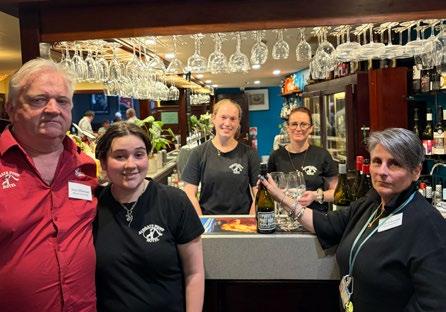
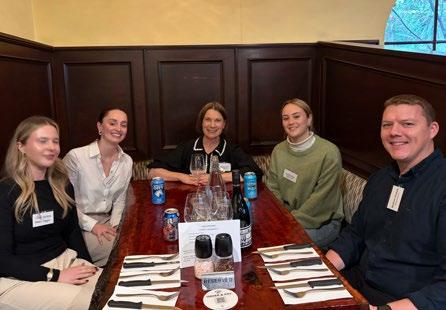
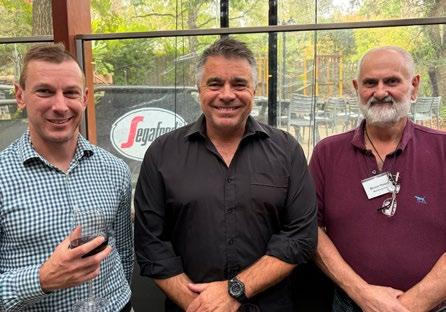
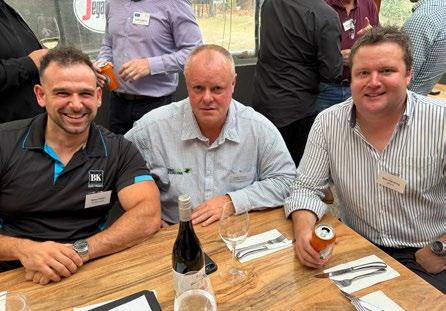
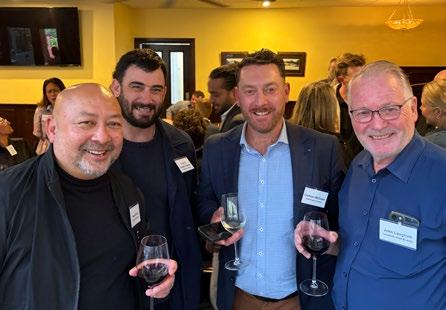


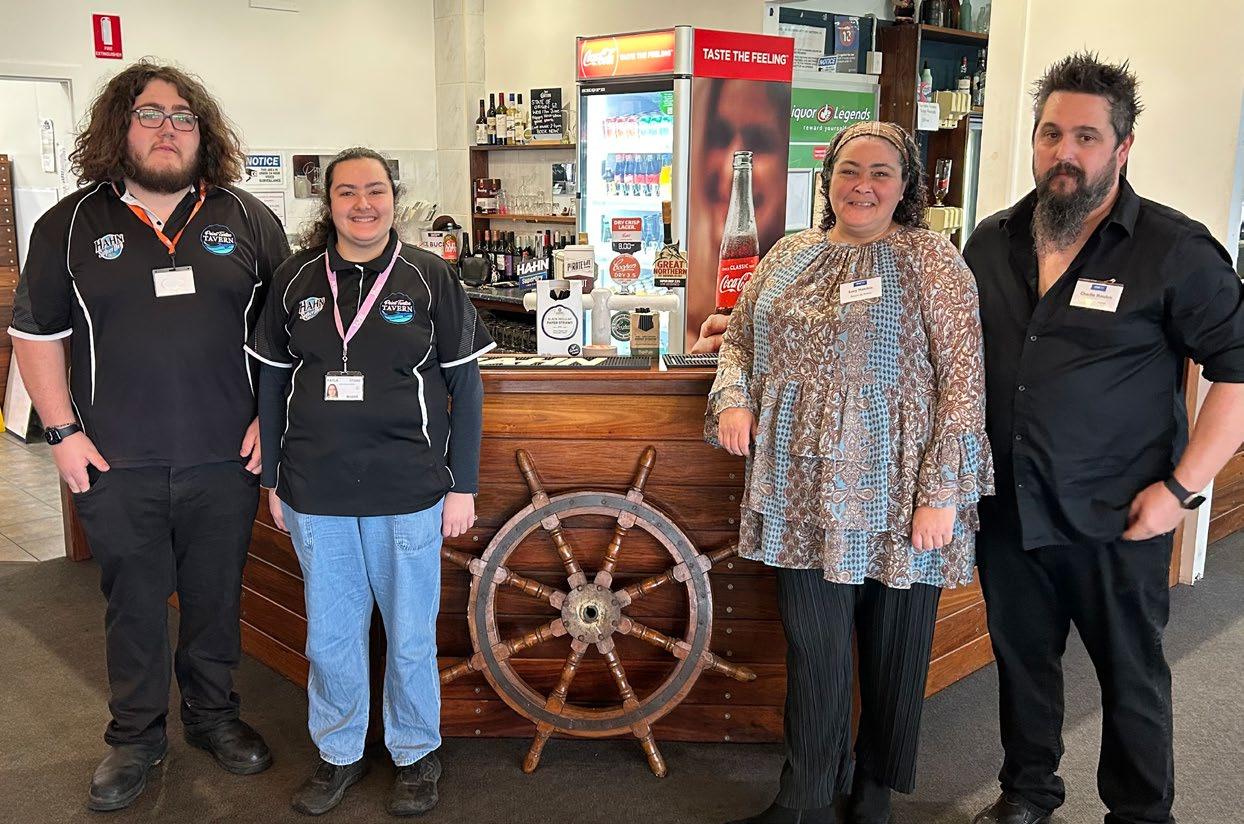
Hoteliers and corporate partners from across the region gathered at the Tavern on Turton for the AHA|SA Yorke Peninsula Regional Meeting and Lunch.
Members enjoyed the opportunity to connect, share insights and discuss issues affecting the region, while hearing from newly elected Yorke Peninsula councillor and long-time hotel operator Will Glazbrook, who spoke about the importance of destination marketing in driving visitation and growth.
The AHA|SA thanks hosts Charlie and Lucy for their warm hospitality, along with our valued food and beverage partners for their generous support of the event.
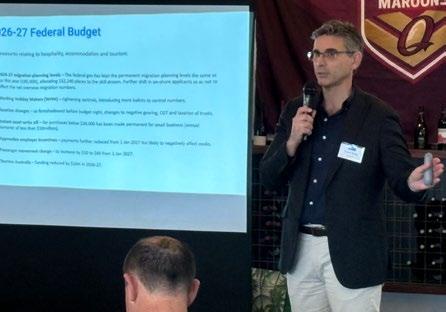
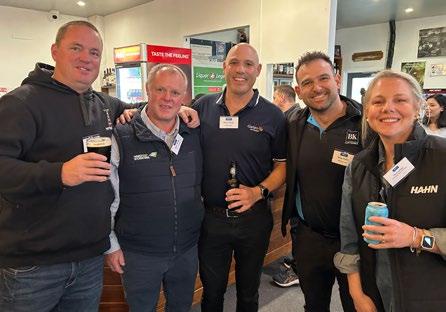
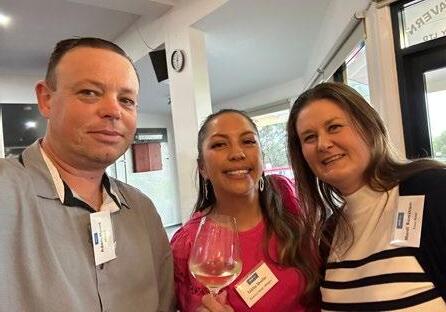
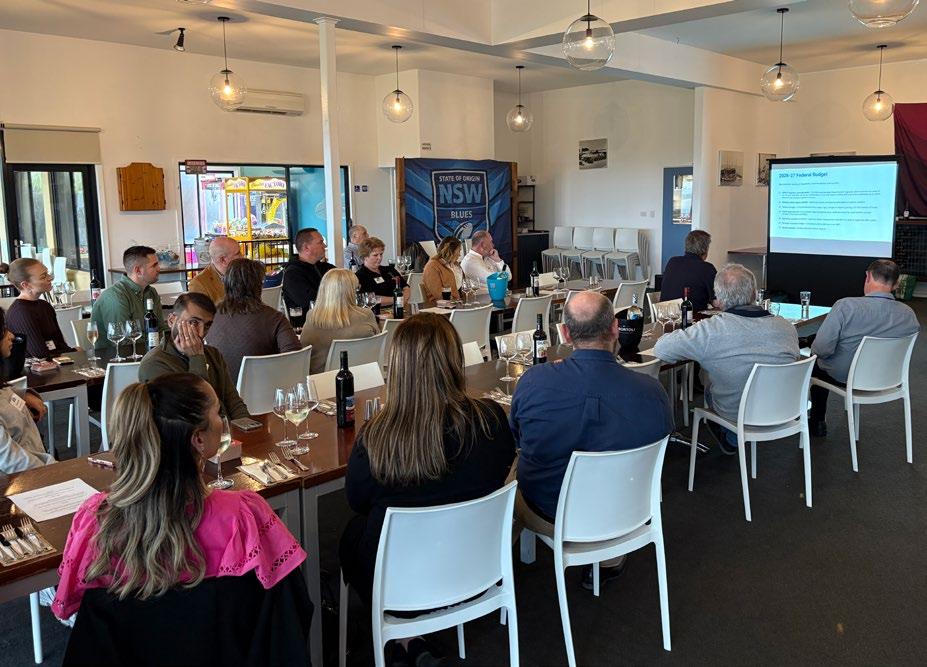











On 2 June 2026, the Fair Work Commission Annual Wage Review Panel (Panel) handed down their decision in the 2026 Annual Wage Review. In this article we look at the increase that was awarded, the impact for hotels and what preparation is required to ensure that hotels are compliant with the changes.
The Panel decided to increase the National Minimum Wage by 6% and modern award wages by 4.75% effective from the first full pay period commencing on or after 1 July 2026.
For those employees employed pursuant to the Hospitality Industry (General) Award 2020 (HIGA) and the Restaurant Industry Award 2020 (RIA) and whose positions fall within the introductory or level 1 rates of pay, a 6% increase to the base rate of pay will apply.
For all other classifications and wage levels in the HIGA and RIA and for those employees covered by the General Retail Industry Award 2020 (GRIA), the base rates of pay will increase by 4.75%.
The minimum wage will increase from $948.00 per week, or $24.95 per hour, to $1,004.90 per week or $26.44 per hour from the first full pay period on or after 1 July 2026.
The Panel as part of the Annual Wage Review process received submissions from various interested parties including state and federal governments, unions and employer associations.
The Australian Council of Trade Unions sought a 6% increase to minimum and award wages. The Australian Chamber of Commerce and Industry supported an increase in minimum and modern award wages of no more than 3.5%.
In determining the level of the increase, the Panel took into account a number of factors including the current level of inflation, the conflict in the middle east and potential ongoing economic impacts this may have, business profit growth, labour market strength and the gap between real wages and CPI.
The AHA|SA will prepare updated wage schedules reflecting the Panel’s change to award rates of pay. The schedules will be available to download from the Workplace Relations Tab on the AHA|SA website prior to 1 July 2026. Wage schedules are available for the following Awards:
» Hospitality Industry (General) Award 2020
» Restaurant Industry Award 2020
» General Retail Industry Award 2020
» Registered & Licensed Clubs Award 2020
A more detailed Wage Rate and Allowances Guide for the Hospitality Industry (General) Award 2020 and the General Retail industry Award 2020 will also be developed and made available on the AHA|SA website.
Those members who have an Enterprise Agreement in place should review the wage rates in that agreement and/or any wage review provision, to ascertain whether (and what) increase may be required.
In accordance with section 206(1) of the Fair Work Act 2009 (Cth) the base rate of pay under an enterprise agreement must not be less than the base rate of pay that would be payable to the employee under the modern award if the modern award applied.
Members will need to review any salary arrangements for Award or Enterprise Agreement covered employees and which have been calculated in accordance with an applicable Award or Enterprise Agreement to ensure the salary is sufficient in line with the relevant Award or Enterprise Agreement provisions.
clause 20 of RIA)
Members need to ensure that they review the salary of an employee who is paid pursuant to clause 24 of the HIGA – Annualised Wage Arrangements or clause 20 of the RIA. An employee who is paid under an Annualised Wage Arrangement under either of these Awards must be paid at least 25% more than the minimum wages prescribed in the relevant Award for the work being performed. Accordingly, such employees’ salaries need to be reviewed to ensure that they are at least 25% more than the new weekly wage prescribed the relevant Award for the wage level applicable to the employee’s position effective from the first full pay period on or after 1 July 2026.
Notwithstanding the above, members utilising the wage arrangements in the above clauses must also ensure that the salary is sufficient to cover what the employee would have earnt had they been paid by the hour with annual reconciliation to be carried out. As such, a salary that equates to no more than 25% above the base weekly rate may be insufficient.
of HIGA)
Members need to ensure that for any managerial employees who are paid
a salary in accordance with clause 25 of the HIGA – Salaries Absorption, the salary needs to be at least 25% above the minimum annual salary in clause 18.2 of the HIGA – Managerial staff (Hotels).
Whilst clause 24 and clause 25 of the HIGA (and clause 20 of the RIA) place obligations on employers to ensure that their employees are paid at least the minimum salary in those respective clauses, some members will be paying salaries that are well above the minimum salary obligations in these clauses.
If an employee is paid a salary well above the employer’s minimum salary obligations under clause 24 and clause 25 of the HIGA or clause 20 of the RIA, the employer may not need to increase the employee’s salary by the percentage increase awarded in the Annual Wage Review, provided the employer is still meeting the minimum salary obligations under these clauses and there is no clause in the Contract of Employment that would require an increase to be provided.
If an Individual Flexibility Arrangement (IFA) is in place between an employee and their employer in accordance with a Modern Award or an Enterprise Agreement, members will need to review the IFA to ascertain whether any
increase to the modern award wages affects the IFA. Remembering that an IFA must result in the employee being better off overall at the time the IFA is made than if the IFA had not been made.
Hotels that use an external payroll provider should communicate with their provider to ensure that the new rates effective from the first full pay period on or after 1 July 2026 are loaded into the payroll system.
Members should refer to the Contract of Employment to determine whether the wage or salary of an Award or Enterprise Agreement free employee needs to be reviewed at this time, and if that review needs to be conducted in line with the decision of the Fair Work Commission. If the contract is silent on a wage review, then it will be up to the employer and the employee to determine when (and if) the wage or salary is reviewed and if any increase is awarded.
Payday super commences from 1 July 2026. From this date, superannuation guarantee payments made to an employee must be paid at the same time as wages are paid and must reach the employee’s superannuation fund within 7 business days of payday.












Ainsworth Game Technology
Australian Liquor Marketers
Big Screen Video
1800 ON HOLD
A Plus Agency
Aceia Pty Ltd
AED Authority
Banktech
Bentleys SA
BK Electronics
Bluize Solutions
BOC Limited
Bunnings Group
Cardtronics
Boylen Cookers
DMAW Lawyers
Empire Liquor
Chargespot
Class A Energy Solutions
Concept Collections
Design Revival
Eckermann Lawyers
Energy Alliance
Enercom Energy
Exiis
Farm Frites
Gbay
Globe Importers
Foxtel
IGT Australia
Konami Australia
Light & Wonder
InDaily
Independant
Gaming Analysis
Invicium
Knight Frank
Valuations & Advisory SA
Langford’s Hotel Brokers
Macro Group
McGees Property
Hotel Brokers
MC Lewan Chartered Accountants
Liquor Marketing Group
Qantum Loyalty
One Music






Novatech Creative Event Technology
Stoddart Food Equipment
STR
Mr Wet Wall
Next Payments
Oatley Fine Wine
Merchants
Options Craft
Liquor Merchants
Perks Accountants
& Wealth Advisers
Power Maintenance
Reward Hospitality
Rockfort Global
Ryan & Co Solicitors
Salute Better Solutions
Sazerac
St John
Supagas
The Banner Crew
Trans Tasman Energy Group
Vilis



Tanda Thomas Foods
Wallmans Lawyers
Yumbah Aquaculture
Alliance College
AML Surecheck
Art Images Gallery
Bupa
Campari Group
COMS Systems
Migration Solutions
RAA
Studio Nine Architects
Winnall & Co
Our table highlighting the strict controls on bricks and mortar gaming, compared to the underbelly of illegal online gambling, sparked a strong reaction from readers. However, that was merely a short list of the differences. In this issue, we have extended the table to show many other areas of difference, which emphasises the importance of stamping out these illegal operations.

Automated Risk Monitoring (ARMS)
Facial Recognition Systems
EGM Limitations & Environment
Gambling Help & Support Services
Early Intervention Agencies
Mandated Staff Training & Support
Information & Education
Giving Back
Self-Regulated Harm Minimisation
Reporting & Accountability
Partnerships
Regulatory Oversight
Consumer Protection
Advertising Controls
Financial Controls
Identity Verification
Data Protection
Operating Hours / Restrictions
Tax Contribution
Identifies risky behaviour in real time
Detect excluded patrons using government databases
Codes of practice, max bets, ATM limits
Funded support programs available
Support for staff and players
Staff trained to identify and assist those experiencing gambling harm
Ongoing updates, best practice communication
Industry contributes to community funding programs
Structured, audited industry programs
100% venue reporting, transparent oversight
Collaboration with Gambling Harm Support SA and service providers
Subject to Australian laws and compliance audits
Dispute resolution, regulated payouts
Strict rules on promotion and messaging
Traceable, regulated financial systems
Strong “know your customer” requirements
Governed by Australian privacy laws
Controlled environments
Significant tax paid to government
No behavioural monitoring or intervention systems
No exclusion enforcement; self-excluded players can still gamble
No limits; often encourage continuous, highspeed, high-loss play
No support services; no obligation to assist those experiencing gambling harm
No intervention
No trained staff; fully automated or offshore support with no duty of care
Pay influencers to promote “winning” narratives
No local economic contribution; profits extracted offshore
Weak or non-existent harm minimisation frameworks
No reporting obligations. They operate ‘in the dark’
No referral pathways for help
Operate outside Australian jurisdiction
Limited or no recourse for disputes or withheld winnings
Aggressive marketing, often targeting vulnerable users
Use of crypto or opaque payment systems; higher fraud risk
Weak identity checks
Data handling unclear; potential misuse of personal information
24/7 unrestricted access encouraging prolonged play
No tax contribution to Australia
Venues looking to showcase Australian wine can gain additional exposure by listing events and activations on the national We Make A Wine For That events calendar. Listings will be supported by paid digital, PR and social promotion from August.
We Make A Wine For That national campaign is designed by Wine Australia to connect local consumers with Australian wine and reinforce its place in everyday and special occasions.
Participation is designed to be flexible, allowing venues to engage in ways that suit their brand and customer base. Opportunities could include themed wine events, paired menus, in-venue promotions, staff recommendations or social media content.
The campaign’s 2025 launch reached more than 4 million people and generated more than 16,000 visits to the national events calendar, helping to
place Australian wine front of mind for consumers.
The campaign aims not only to retain loyal wine drinkers but also to re-engage consumers with lower category involvement.
The message is simple: for any occasion, we make a wine for that. Whether it is a casual catch-up, a long lunch, a pre-dinner drink or a celebration, Australian wine has a place. For venues, that creates opportunities to bring the message to life through curated experiences, food pairings, events and storytelling.
To support participation, Wine Australia has developed a free campaign toolkit available at wineaustralia.com/wemakeawineforthat. The toolkit includes logos, point-of-sale materials, social media assets and customisable templates that can be adapted for individual venues and campaigns.
ACCOUNTANCY SERVICES
Bentleys SA 8372 7900
MC Lewan Chartered Accountants 1300 622 200
Perks Accountants & Wealth Advisers 8273 9300
Winnall & Co. 8379 3159
AML AUDITING
AML SureCheck 0423 025 101
Aceia Pty Ltd 8133 4901
ATMS
Banktech 0408 462 321
Cashzone 1300 305 600
Next Payments 1300 659 918
ARCHITECTS & INTERIOR DESIGNERS
Design Revival 08 8355 1024
Studio Nine Architects 8132 3999
ART, CONSULTATION & FRAMING
Art Images Gallery 8363 0806
AUDIO VISUAL
Big Screen Video 1300 244 727
Novatech Creative Event Technology 8352 0300
BACKGROUND MUSIC
Foxtel Music 1300 148 729
Moov Music 1300 139 913
Zoo Business Media 07 5587 7222
BANKING & FINANCE
BankSA/Westpac 0403 603 018
Perks Accountants & Wealth Advisers 8273 9300
BEVERAGE GASES
BOC Limited 0424 647 568
Supagas Adelaide 08 8480 4500
BEVERAGES
Asahi Beverages 13 BEER (13 2337)
Australian Liquor Marketers 8405 7744
Campari 0418 852 582
Coca-Cola Europacific Partners 13Coke 132653
Coopers Brewery 8440 1800
Diageo Australia 0401 120 872
Empire Liquor 8371 0088
Lion 8354 8888
Liquor Marketing Group 8416 7575
Oatley Fine Wine Merchants 1800 628 539
Options Craft Liquor Merchants 8346 9111
Samuel Smith & Son 8112 4200
Sazerac 0410 449 720
Suntory 0427 971 426
Treasury Wine Estates 8301 5400
Vinarchy Wines 8392 2222
BOOKKEEPING
MC Lewan Chartered Accountants 1300 622 200
Perks Accountants & Wealth Advisers 8273 9300
Winnall & Co. 8379 3159
BUILDING & DESIGN
Bunnings Group 0418 559 527
Design Revival 8355 1024
Paynter Dixon 0418 621 196
Mr Wet Wall 1800 938 925
CHARGING
Chargespot 0468 444 886
CASH HANDLING & TERMINALS
Banktech 0408 462 321
BK Electronics 0431 509 409
Cardtronics 03 9574 4878
Coms Systems 0408 462 321
GBay/Aruze Gaming 0424 700 888
Next Payments 1300 659 918
CLEANING COMPANIES
Exiis 1800 888 998
CLEANING & HYGIENE
SUPPLIES
Bunnings Group 0418 559 527
Bunzl 08 8245 6222
Salute Better Solutions 0466 745 968
DATA ANALYTICS
STR 02 8091 2009
DEFIBRILLATORS
AED Authority 1300 AED 123 (233 123)
St John 1300 78 5646
ELECTRIC VEHICLE
CHARGING
Class A Energy Solutions 8391 4853
RAA Charge 0419 405 235
ENERGY & SOLAR SOLUTIONS
Class A Energy Solutions 8391 4853
Energy Alliance 03 9872 6869
Enercom Energy 0478 822 448
Power Maintenance 1300 700 500
RAA Charge 0419 405 235
Trans Tasman Energy 1300 118 834
EQUIPMENT, SUPPLIES & HARDWARE
Bunnings Group 0418 559 527
Bunzl 088245 6222
Globe Importers 0467 425 314
Mr Wet Wall 1800 938 925
Salute Better Solutions 0466 745 968
Stoddart 1300 79 1954
FINANCIAL PLANNING
Perks Accountants & Wealth Advisers 8273 9300
Winnall & Co. 8379 3159
FACIAL RECOGNITION
TECHNOLOGY
COMS Systems 1800 324 918
FOOD SERVICES
Bidfood 0403 664 376
Cookers 1300 88 22 99
Farm Frites 0410 449 720
Galipo Foods 8168 2000
Macro Group 8341 2533
McCain Foods 0417 811 753
PFD Foodservice 8114 2300
Thomas Foods 8162 8400
Vilis 08 8415 6031
FIRST AID
St John 1300 78 5646
FURNISHINGS
Concept Collections 1300 269 800
GAMING ANALYSIS
Independant Gaming Analysis 8376 6966
Winnall & Co 8379 3159
GAMING FLOAT RECONCILIATION
GBay/Aruze Gaming 0424 700 888
GAMING MACHINE & TECHNOLOGY SERVICES
Ainsworth Game Technology 0409 171 616
Aristocrat Technologies Australia 8273 9907
Bluize Solutions 0411 174 448
Coms Systems 0409 283 066
GBay 0424 700 888
IGT 8231 8430
Independant Gaming Analysis 8376 6966
Konami Australia Pty Ltd 0409 047 899
Light & Wonder 0400 002 229
MAX 8275 9700
GAMBLING LOYALTY TECHNOLOGY
Qantum Loyalty 0417 125 566
GAMBLING SERVICES
SA Lotteries 13 18 68
HEALTH INSURANCE
Bupa 0417 608 751
HOTEL BROKERS
McGees Property Hotel Brokers 8414 7800
HOTEL MANAGEMENT
H&L Australia Pty Ltd 1800 778 340
INFORMATION SYSTEMS & SITE PREP
Max Systems 8275 9700 INSURANCE
Aon Risk Solutions 8301 1111 IT SERVICES
Rockfort Global 1300 00 RFIT (7348)
KITCHEN & BAR EQUIPMENT
Bunnings Group 0418 559 527
Cookers 1300 88 22 99
Globe Importers 0467 425 314
Reward Hospitality 1800 473 927
Salute Better Solutions 0466 745 968
Stoddart Food Service Equipment 1300 79 1954
LEGAL SERVICES
DMAW Lawyers 8210 2287
Eckermann Lawyers 8235 3933
Ryan & Co Solicitors 0421595815
Wallmans Lawyers 8235 3018
LINEN & UNIFORM SERVICES
The Banner Crew 8240 0242
MEDIA
FIVEAA 8419 1395
Foxtel 1300 138 898
Solstice Media 8224 1600
MIGRATION
A Plus Australia Agency 0435 563 920
DMAW Lawyers 8210 2287
Migration Solutions 8210 9800
MUSIC LICENSING
One Music 8331 5807
ONHOLD/MESSAGING
1800 ON HOLD 8125 9370
PAYROLL & HR RESOURCES
Perks Accountants & Wealth Advisers 8273 9300
Tanda 1300 859 117
Winnall & Co. 8379 3159
POS SYSTEMS
Bepoz 1300 023 769
H&L Australia Pty Ltd 1800 778 340
PROPERTY & VALUATIONS
Knight Frank Valuations & Advisory 8233 5222
RETAIL LIQUOR MARKETING
Liquor Marketing Group 8416 7575
RISK & ASSURANCE SERVICES
Aceia Pty Ltd 8133 4901
SIGNAGE & PROMOTIONAL ITEMS
Invicium 03 9371 0600
The Banner Crew 8240 0242
SPORTS & ENTERTAINMENT
MEDIA
Foxtel 1300 790 182
Tabcorp 0436 636 774
STAFF TRAINING & RECRUITMENT
A Plus Australia Agency 0435 563 920
Alliance College 1300 665 065
OMC Group 0402 146 059
St John 1300 78 5646
SUPERANNUATION
Hostplus 0418 327 607
WAGERING
Tabcorp 0436 636 774
WEBSITES
Boylen 8233 9433
WORKERS COMPENSATION
EML 08 8127 1368
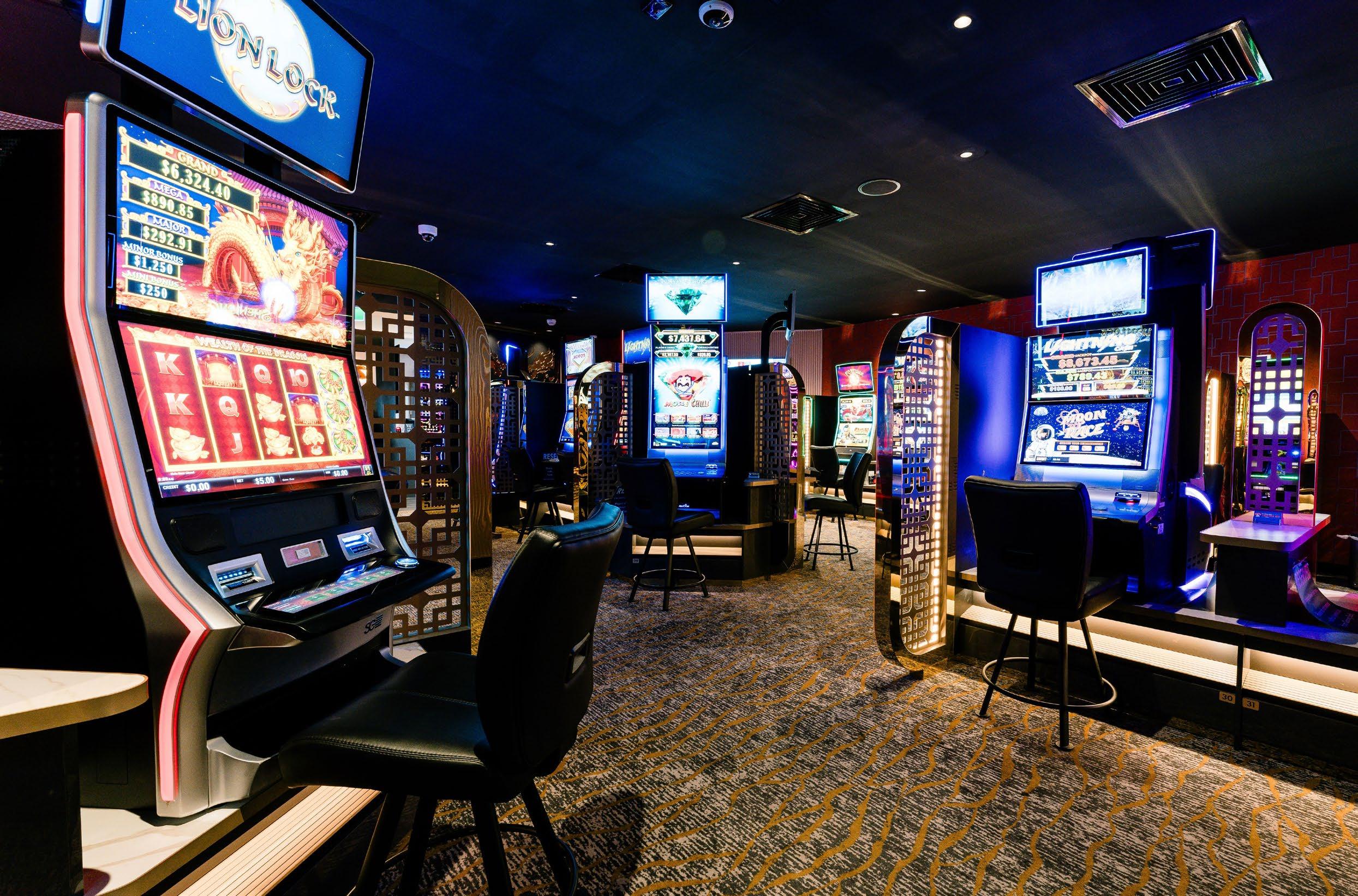
For any assistance or support please contact your local Gaming Care Officer, or our office for information on how Gaming Care can assist your venue.
GAMING CARE works with all South Australian Hotels with gaming machines to reduce the risk of gambling harm.
» Providing the hotel industry with the capacity to respond to community concerns related to the risk associated with gambling harm by contributing to early intervention and support for gamblers and their families.
» Minimising the risk of harm by fostering a compliant and proactive industry that works with regulators, gambling help services and gaming patrons to minimise harm caused by gambling.
» Assisting licensees and hotel staff with their compliance obligations, and supporting venue staff through education and training regarding the recognition of gambling harm indicators and assisting in accurately documenting patron behaviour.
» Providing licensees and hotel staff with the confidence and skills required to engage directly with patrons who are showing indicators of potential gambling harm, enabling them to intervene early and refer the patron to a gambling help service, or other support options if required.
LICENSEE TRANSFERS MARCH - MAY 2026
Lonsdale Hotel 08.03.26
Lonsdale Hotel Co Pty Ltd
Jamestown Hotel 19.03.26
Welcome Park Lismore Hotels Pty Ltd
Pier Hotel Port Lincoln
08.04.26
Perks Property Developments Pty Ltd
New Whyalla Hotel 10.04.26
Perks Property Developments Pty Ltd
Southgate Motel 16.04.26
Regional Motel Partners Pty Ltd
Riverton Hotel 20.04.26
SCN Investments Pty Ltd
Hotel Central, Riverton 12.05.26
AMG43 Pty Ltd
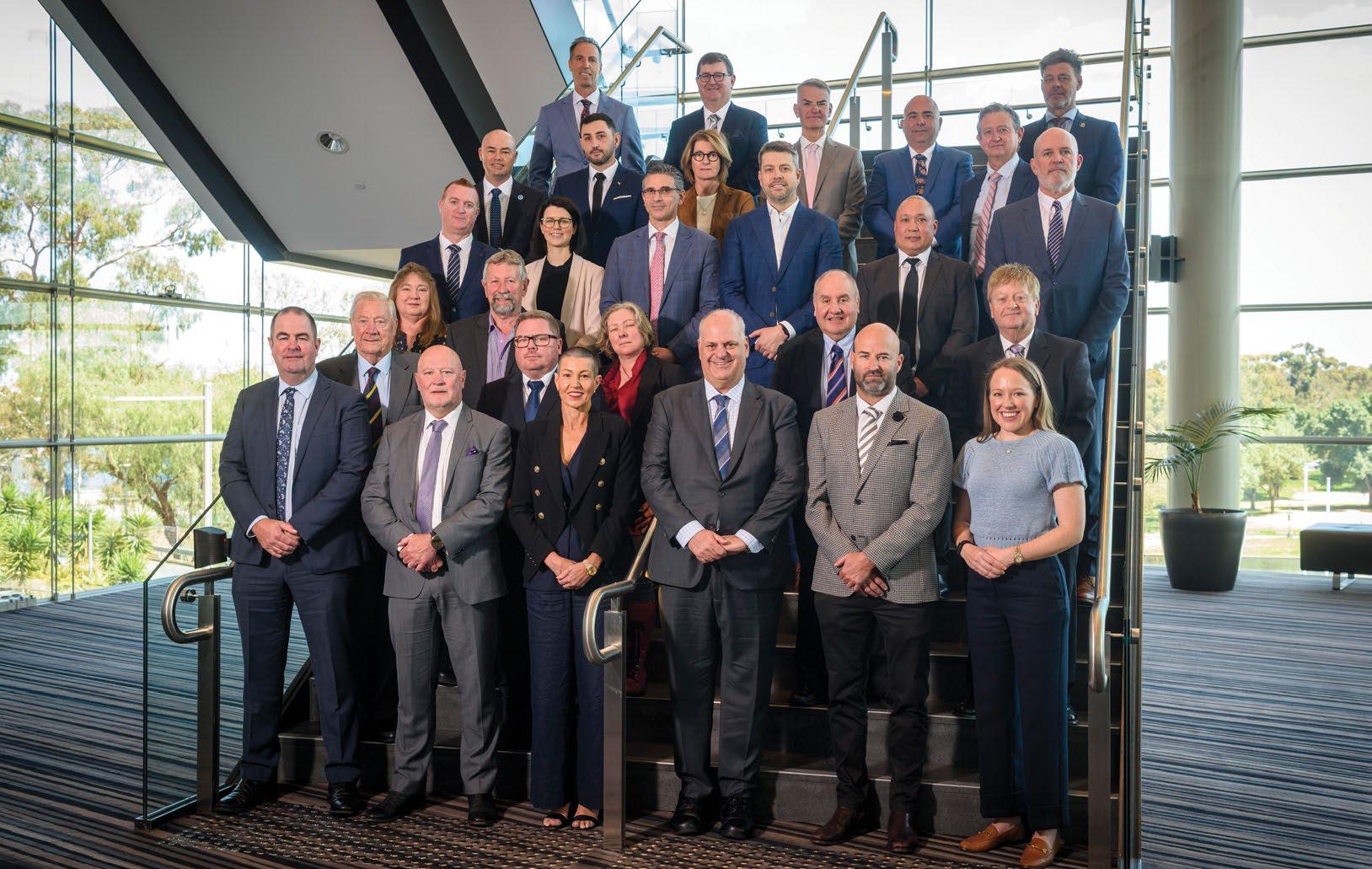
Level 4, 60 Hindmarsh Square, Adelaide SA 5000
PO Box 3092, Rundle Mall SA 5000
P (08) 8232 4525
P 1800 814 525 Toll Free
F (08) 8232 4979
E information@ahasa.asn.au
www.ahasa.asn.au
Anna Moeller Chief Executive Officer
Owen Webb Deputy Chief Executive Officer
Alisa Wenzel Manager – Finance & Administration
Natarsha Stevenson Manager – Policy & Industry Affairs
Sarah Legoe Senior Advisor – Workplace Relations, Liquor Licensing & Gaming
Gary Coppola Manager – Legal & Advocacy
Scott Vaughan Manager – Membership & Business Services
Lucy Randall Manager – Events & Partnerships
Liz Turley
Training Coordinator
Adam Moore
Training & Development Specialist
Ben Patten
Manager – Accommodation, Tourism & Strategy
EXECUTIVE COUNCIL
David Basheer President
Matthew Binns
Vice President
Luke Donaldson
Deputy Vice President
Sam McInnes
Secretary Treasurer
Matthew Brien
Executive Council
Matt Rogers
Executive Council
Anna Hurley
Executive Council
Andrew Kemp
Executive Council
COUNCIL
Andrew Bullock
Daniel Cassin
Danielle Donaldson
Jason Fahey
Trent Fahey
Elise Fassina
James Franzon
Tony Franzon
John Giannitto
Tom Hannah
Nick King
Karen Milesi
Rob Mitchell
Damian Peterson
Andrew Plush
Rob Rankine
Margy Raymond
Darren Steele
PUBLISHER
3/288 Glen Osmond Road, Fullarton SA 5063
(08) 8233 9433
www.boylen.com.au
Tim Boylen
Managing Director
Madelaine Raschella
Design Manager