• Glass moulds: Capacity, technology and competition
In Focus: Álvaro Beltrán, founder and CEO, Onyx Solar
• China Outlook: Hebei Plus news, views, analysis and much more!
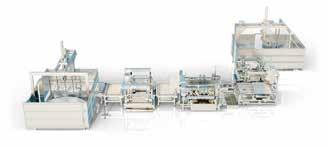
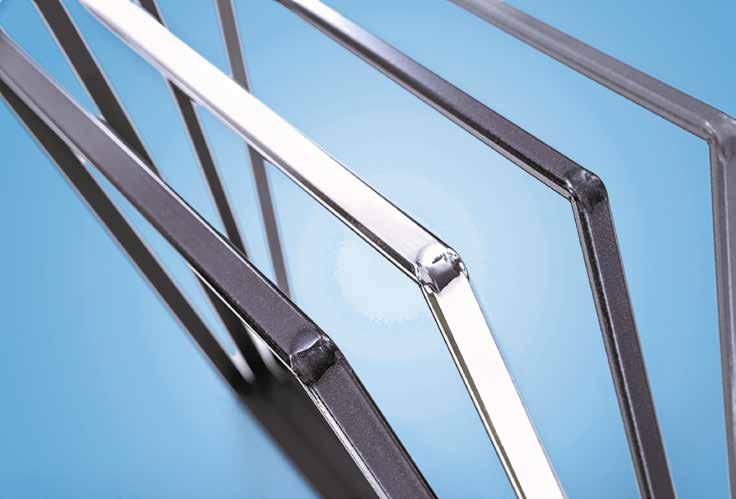
Ultra-thin 0.5 mm center glass in unique TPS® IG units
Meet us at CHINA GLASS 2026 07 - 10 April Shanghai, China Hall N1, Stand #300
Change your glass game with the latest advancements in TPS® technology.
Process ultra-thin 0.5 mm center glass for triple or quadruple TPS® IG units. And get 20% greater insulation with the same IG unit thickness and weight.
Put our patented process and special line configuration to work for you.
Discover Glaston thin glass technology:
Machinery, services and solutions designed with the future in mind for the architectural, mobility and solar industries.
Welcome to the second issue of Asian Glass for 2026. This edition highlights several areas where innovation and market demand are reshaping the glass industry across Asia.
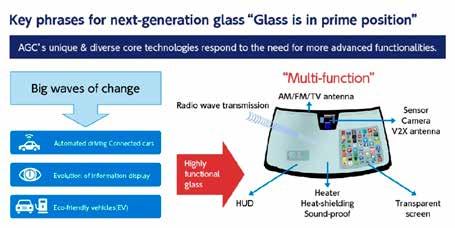
Our cover story examines the rapidly evolving role of automotive glass in next-generation vehicles. Once regarded as a standard component, glazing is now central to the performance and functionality of modern cars. As the automotive sector moves towards electrification, automation and connected mobility, glass must increasingly accommodate cameras, sensors, antennas and display systems while also delivering improvements in strength, weight reduction and energy efficiency. Across Asia, manufacturers are investing in more sophisticated glazing technologies and shifting towards higher-value products that support safer, smarter and more connected vehicles. Rohan Gunasekera explores how automotive glass producers are responding to these technological shifts and the implications for the industry’s future competitiveness.
Glass is also playing a growing role in shaping the architecture of Asia’s rapidly expanding cities. From China’s coastal megacities to the climate-responsive buildings of Southeast Asia, decorative and high-performance glazing is becoming an integral part of contemporary building design. Technologies such as solar control coatings, switchable glass and photovoltaic glazing are enabling buildings that respond more effectively to environmental conditions. Jahir Ahmed examines how these developments are influencing architectural trends and driving demand for advanced glazing across the region.
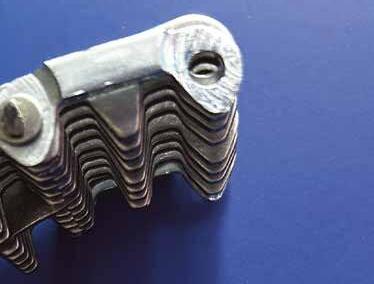
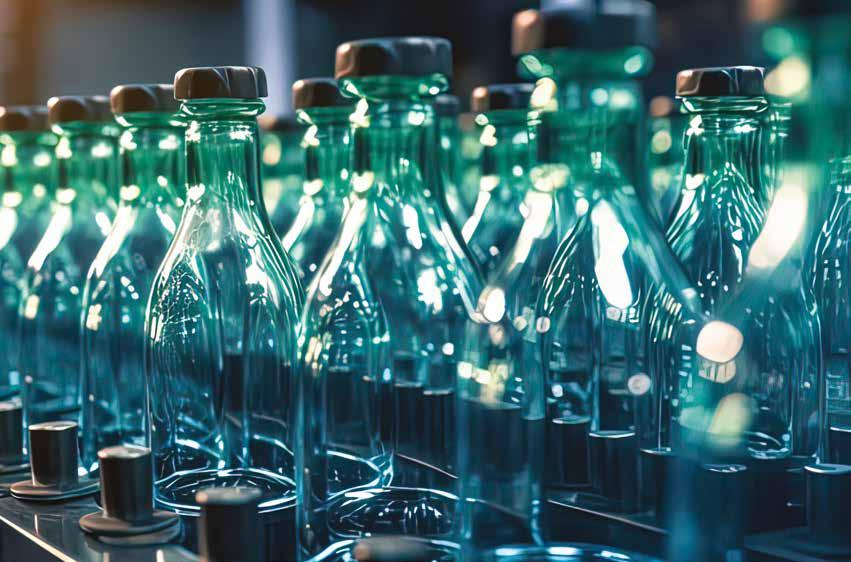
Within the container and tableware sectors, mould technology remains fundamental to production quality and efficiency. Operating under extreme temperatures and constant thermal stress, moulds play a decisive role in determining the shape, finish and consistency of glass products while supporting high-speed manufacturing lines. Across Asia, mould manufacturers are strengthening their capabilities by combining traditional casting expertise with advances in materials engineering and modern production techniques. Yogender Singh Malik provides an overview of mould manufacturing across key Asian markets and profiles the companies shaping this specialised segment.
The strategic importance of raw materials continues to influence the economics of glass production. For producers operating across Asia’s diverse regulatory and supply environments, securing reliable and cost-effective sources of these materials has become increasingly important. Yogender Singh Malik analyses how manufacturers are adapting sourcing strategies to manage supply risks and
Pharmaceutical glass is another area undergoing steady development. As medicines become more complex and sensitive, packaging materials must meet increasingly demanding standards for purity, durability and regulatory compliance. Advances in glass formulation and manufacturing processes are enabling specialised containers designed to protect modern therapies throughout storage and distribution. Rohan Gunasekera examines how pharmaceutical glass is evolving into a higher-value
In our China Outlook section, Michelle Wang and Matthew Grandage examine developments in Hebei province, one of China’s most important glass manufacturing regions. Production clusters in Xingtai, Langfang and Xinji continue to strengthen the province’s role in the high-end glass market, while Shahe City has become the country’s largest centre for glass production, processing and distribution. Technological upgrades and a growing focus on energy-efficient manufacturing are reinforcing Hebei’s position within the national industry.
We also feature an interview with Álvaro Beltrán, founder and CEO of Onyx Solar. The Spain-based company specialises in photovoltaic glass integrated into building envelopes, enabling facades that generate electricity while maintaining architectural flexibility. Beltrán discusses the development of building-integrated photovoltaics and the opportunities for energy-generating glass in Asia-Pacific. We hope you enjoy this edition of Asian Glass as we continue to explore the technologies, markets
CONTACT DETAILS
EDITOR
Editor Isaac Hamza
Email: ihamza@asianglass.com
Direct line: + 44 (0) 7494 867 169
ADVERTISING AND DESIGN
Advertising Sales
Paul Russell
Email: prussell@asianglass.com
Direct line: + 44 (0) 7494 866 793
Valerie Adamson
Email: vadamson@asianglass.com
Direct line: + 44 (0) 7494 866 883
Production and design
Tim Mitchell
www.corpsvector.co.uk
OVERSEAS OFFICES
Bangladesh Jahir Ahmed jahir@asianglass.com
India
Yogender Singh Malik yogender@asianglass.com
Sri Lanka Rohan Gunasekera rohan@asianglass.com
RESEARCH
Research Manager
Andy Skillen
Email: andy@bowheadmedia.com
HEAD OFFICE
27 Old Gloucester Street, London WC1N 3AX, UK.
Directors:
DISCLAIMER
Isaac Hamza Editor
Asian Glass is committed to ensuring that all content in the magazine is original and accurate at the time of publication. It should be noted that the views and opinions expressed in the articles are those of the author(s) and do not necessarily reflect those of the publisher or editor. The material published in the magazine, including advertisements, editorials, and all other content, is published in good faith. Asian Glass does not guarantee or accept any responsibility for any loss or damage caused by this publication, or for the accuracy of claims made by the advertisers.
Contents: AG 26-2
Regulars
2 Welcome
Asian automotive glass focuses on value-added products; advanced glazing gains ground in Asian buildings.
6 Insight Asia
A Hong Kong residential development integrates custom photovoltaic glass into its rooftop design.
8 Headline News
Openings, closures and industry moves from across Asia.
16 Global View
Our eye on the international arena.
28 People and Places
Movers and shakers as well as the ups and downs of the glass industry.
36 In Focus
In an exclusive interview with Asian Glass, Onyx Solar founder and CEO Álvaro Beltrán discusses the evolution of BIPV and opportunities for energy-generating facades worldwide.
38 Comment & Analysis
Carbon intensity is rapidly emerging as a key commercial benchmark across global supply chains.
Features
42 Automotive glass: Safer, smarter mobility
As vehicles become safer, smarter and more connected, Asian glass makers are focusing on value-added automotive glazing, reports Rohan Gunasekera.
48 Decorative glass: Smart cities, new design
From Shanghai to Dubai, decorative glazing is transforming skylines and enabling smarter, energy-efficient design solutions, as explored by Jahir Ahmed.
56 Raw materials: Demand lifts prices
Yogender Singh Malik examines how availability, pricing stability and logistics are reshaping the raw materials landscape for Asia’s glass manufacturers.
64 Pharma glass: From commodity to speciality
Growing demand for sophisticated medicines is pushing pharmaceutical glass towards higher-value speciality applications, in an analysis by Rohan Gunasekera.
70 Glass moulds: Capacity, technology and competition
Yogender Singh Malik provides an overview of Asia’s mould manufacturers as they scale up technology, precision engineering and production capacity.
78 China Outlook: Hebei
Michelle Wang and Matthew Grandage report on how Hebei is strengthening its glass industry through clusters, technological upgrades and high-end manufacturing.
Refractory
96 In Perspective
The next competitive divide will be shaped by operational intelligence rather than expansion alone, argues Isaac Hamza, editor of Asian Glass.
Used glass bottles collected for recycling and reprocessing. Image by Ron Lach via Pexels
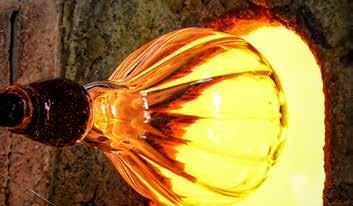
Shaping molten glass under furnace heat. Image by Magda Ehlers via Pexel
DIGITAL PRINTING
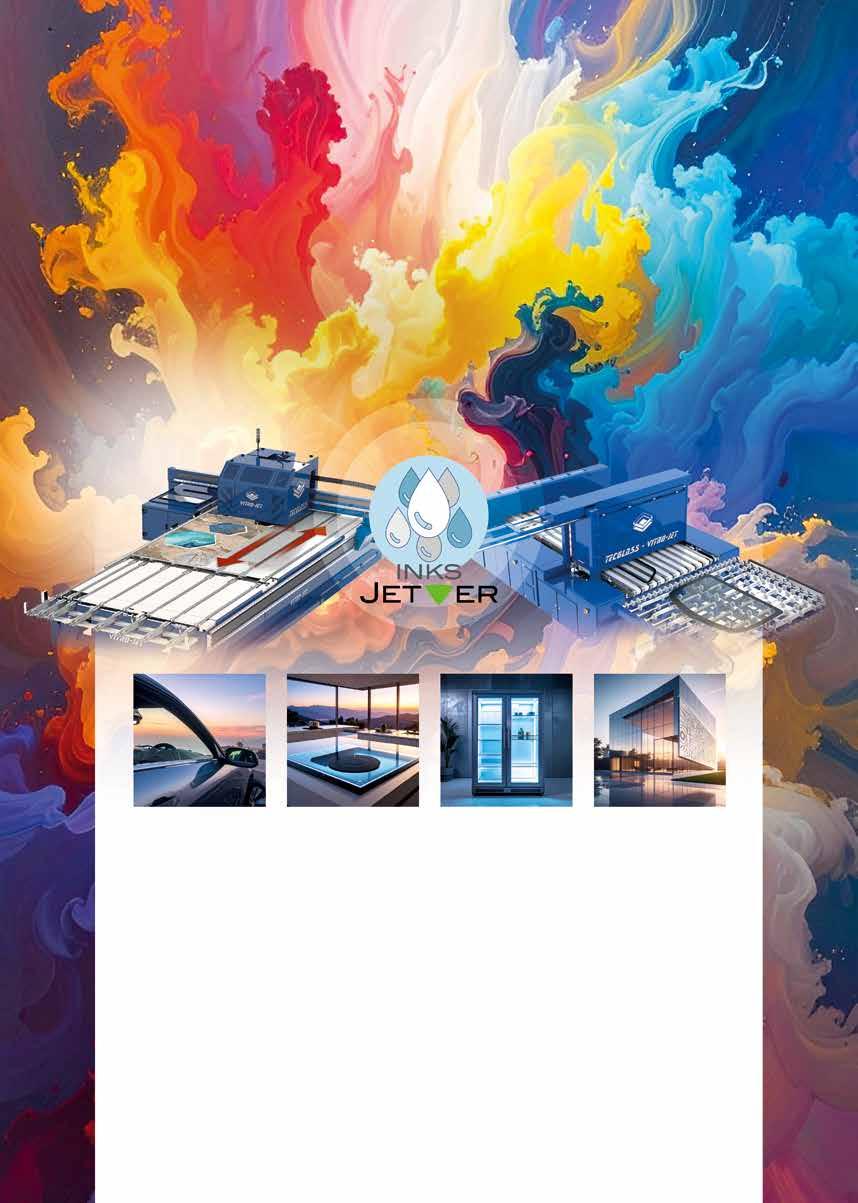
COMPLETE TURN�KEY SOLUTIONS BY TECGLASS
Tecglass designs and manufactures digital printing systems and complete auxiliary equipment for glass decoration, delivering fully integrated, turn-key industrial solutions.
From advanced digital printing lines to a comprehensive range of ceramic inks, Tecglass serves key industries including architecture & decoration, automotive, refrigeration, and home appliances. Decades of experience and deep technical know-how drive continuous innovation, ensuring reliability, high performance and excellence across every project.
comercial@tecglass.es www.tecglassdigital.com
Insight Asia
Solar glass shaped for the skyline
Custom photovoltaic glazing for Hong Kong residential project
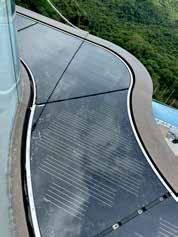
A residential development in Hong Kong by Swire Properties incorporates custom photovoltaic glass into its rooftop, demonstrating how renewable energy generation can be integrated into urban housing while preserving architectural form. The recently sold project shows how photovoltaic technology can be embedded within the building envelope without altering its visual identity.
Glass forms an integral part of the rooftop design. The curved structure required a solution tailored to its specific geometry and structural framework. Onyx Solar supplied the photovoltaic glazing, adapting the system to align with the building’s architectural features and construction requirements.
Curved rooftop integration
The photovoltaic glass was customised to match the building’s curves and rooftop configuration. This approach enabled the glazing to blend into the overall design, maintaining visual continuity across the roof surface. The energy generating function remains discreet, allowing the architectural expression of the development to remain unchanged.
By incorporating photovoltaic technology directly into the construction material, the rooftop performs both as enclosure and as a source of on-site electricity production. The installation forms part of the finished roof rather than being applied as an additional element.
Residential scale application
Although modest in scale, the project illustrates how Building Integrated Photovoltaics (BIPV) can be incorporated into residential architecture as well as larger landmark developments. The customised glazing ensures compatibility with the roof’s structural design while preserving the building’s defining aesthetic characteristics.
The scheme highlights how renewable energy systems can be embedded into construction materials without disrupting the surrounding built environment. In this instance, the photovoltaic solution supports on site generation while maintaining harmony with the project’s curved architectural language.
Onyx Solar is headquartered in Avila, Spain, and specialises in the design and manufacture of photovoltaic glass for buildings. The company reports projects in more than 60 countries. Its glazing systems are designed to generate electricity while integrating as part of the building fabric.
Swire Properties is a Hong Kong based developer with a portfolio spanning residential and commercial schemes. The integration of photovoltaic glass into this development reflects ongoing efforts to incorporate renewable technologies within urban construction.
As cities continue to pursue decarbonisation and energy efficiency objectives, integrated photovoltaic solutions such as this demonstrate how electricity generation can be accommodated within residential buildings while maintaining architectural integrity and design coherence.
HEADLINE NEWS ASIA
Xinyi Glass signs Saudi manufacturing project
CHINA/SAUDI ARABIA
Xinyi Glass has signed a project agreement with the Saudi Industrial Cities and Technology Zones Authority (MODON) to develop a large glass manufacturing facility in Saudi Arabia, marking a significant expansion of the Chinese glass producer’s presence in the Middle East.
The agreement was signed on 14th January during the 2026 Future Minerals Forum and was witnessed by Saudi Arabia’s minister of industry and mineral resources Bandar Al-Khorayef and minister of investment Khalid Al-Falih. Xinyi Glass executive director and CEO Tung Ching Sai signed the agreement on behalf of the company.
The planned project represents an investment of approximately $386 million and will be located on a site covering more than 350,000 square metres. According to the companies, the development will include production lines for float glass, automotive glass and
high performance Low-E energy saving glass.
The facility is intended to supply products for both the construction and automotive sectors and will serve markets across Saudi Arabia as well as the wider Middle East, North Africa and Europe.
Once completed, the plant is expected to become Xinyi Glass’s main production base in the Middle East. The project will also establish Saudi Arabia’s first automotive glass manufacturing facility, introducing local production capability for this segment of the glass supply chain.
The companies said the development is intended to strengthen the regional manufacturing base while supporting the objectives of Saudi Arabia’s Vision 2030 economic programme. The national strategy aims to diversify the country’s economy by expanding industrial activity, increasing exports and developing advanced
manufacturing sectors.
By establishing local production for float glass and automotive glazing, the project is expected to contribute to the development of domestic industrial supply chains and reduce reliance on imported glass products.
The agreement also reflects growing industrial cooperation between China and Saudi Arabia. Xinyi Glass said the project aligns with the company’s international growth strategy and its participation in broader economic cooperation initiatives linking Chinese industry with markets in the Middle East.
MODON, the Saudi authority responsible for developing and managing industrial cities and technology zones, is supporting the project as part of its broader efforts to attract international manufacturers and expand Saudi Arabia’s industrial infrastructure.
According to the partners, the facility will introduce advanced
glass manufacturing technologies and support the development of the local glass sector.
Xinyi Glass said the project is intended to become a benchmark for industrial cooperation between China and Saudi Arabia and contribute to the long-term development of Saudi Arabia’s glass manufacturing capabilities. The plant will produce glass for construction and automotive applications, two sectors expected to grow in the region as Saudi Arabia continues to invest in infrastructure, urban development and automotive supply chains under its Vision 2030 programme.
Kandil Glass secures financing for new plant
EGYPT
Kandil Glass, part of Kandil Group, has secured new financing to support the construction of a glass manufacturing facility in Egypt’s Suez Governorate as part of plans to expand production capacity and strengthen export activity.
Egyptian lender Banque du Caire has signed a financing agreement worth $16.7 million with the company to support the development of a new Kandil Glass Industries factory in the Ataqa Free Zone. The medium-term loan will be repaid over six years and is intended to fund construction of the new facility.
According to reports published on 16th February 2026, the planned factory carries a total investment cost of approximately $20.4 million and is designed to reach a production capacity of around 100 tonnes per day once operational.
The project forms part of Kandil’s broader strategy to expand its glass
manufacturing operations and increase output for regional and export markets. The new facility is expected to strengthen production capabilities while supporting the company’s ongoing modernisation of its industrial operations.
In addition to the loan supporting the new factory, Banque du Caire is providing further financial support for Kandil’s existing glass activities. This includes an additional $8 million in funding for Kandil Glass as well as a credit line of EGP 85.6 million, equivalent to about $1.83 million, intended to support wider capital investment across the business.
The new plant will be located in the Ataqa Free Zone in Egypt’s Suez Governorate. The industrial zone lies close to the Suez Canal and the Port of Sokhna, providing access to major international shipping routes and export markets.
The Ataqa Free Zone spans more
than 1.2 million square metres and hosts over 170 industrial projects focused on export-oriented manufacturing. Companies operating within the zone benefit from exemptions on customs duties and taxes for machinery and raw materials used in production.
For Kandil Glass, the location offers logistical advantages that support export activity and international distribution. Its proximity to the Suez Canal and major maritime routes is expected to facilitate the shipment of finished glass products to markets in the Middle East, Europe and other regions.
Kandil Group traces its origins to Kandil Industries, which was founded in 1865. Today the group operates across steel and glass manufacturing. Through Kandil Glass it produces container glass and tableware products, while Kandil Steel manufactures cold
rolled and galvanised steel. Through the new financing arrangement and planned factory development, Kandil Glass aims to expand its manufacturing footprint while strengthening its ability to supply glass products to regional and international markets.
CHINA
Chinese insulating glass manufacturer Xinruineng Glass Technology has introduced nondestructive argon gas measurement as part of its production quality control process, reflecting tightening energy efficiency requirements in the country’s building sector.
The company said the testing approach helps ensure compliance with China’s national standards for insulating glass units (IGUs), which require an initial argon concentration of at least 85% within the sealed cavity.
Argon gas is widely used in insulating glass because its thermal conductivity is lower than that of air, helping improve the insulation performance of windows used in buildings. However, the thermal benefits of argon filled units depend on maintaining the correct gas concentration inside the sealed glazing unit.
As energy performance standards have strengthened in China, manufacturers have increasingly moved away from air filled units toward argon filled
EGYPT
Guardian Glass has outlined plans to expand its coated glass production capacity in Egypt following discussions with the country’s General Authority for Investment and Free Zones (GAFI). The meeting focused on potential investment aimed at strengthening the company’s presence in the Egyptian market and increasing exports to regional markets.
The discussions were held between GAFI CEO Mohamed El Gawsky and a delegation from Guardian Glass that included Jean Ries, director of Government and Public Affairs for Europe, Africa, the Middle East and Asia Pacific, and Saeed Bin Bella, director of Government Affairs Egypt. The talks took place as part of wider efforts by Egypt’s Ministry of Investment and Foreign Trade to encourage industrial investment and improve
products in order to meet building efficiency requirements.
Xinruineng said accurate measurement of the gas content inside IGUs has therefore become an important step in quality assurance. Without direct verification, manufacturers may be unable to confirm that the gas fill level meets regulatory thresholds or delivers the expected insulation performance.
To support its inspection procedures, the company introduced a handheld argon gas measurement device supplied by Finnish testing equipment manufacturer Sparklike in 2023. The device has since been integrated into Xinruineng’s production workflow to carry out checks on double glazed units.
According to the company, the analyser allows measurements to be taken without damaging the insulating glass unit. The non-destructive testing process means the unit remains intact while the device determines the argon concentration inside the
Xinruineng adopts argon testing for insulating glass
sealed cavity.
Measurements can be completed within two seconds, with the analyser displaying the gas concentration percentage directly. This allows production staff to quickly verify whether units meet the required specification.
Xinruineng said the handheld device is designed for frequent spot checks on the production line, supporting routine monitoring of gas fill levels during manufacturing.
The instrument is powered by a lithium battery and can also be used outside the factory environment when required. The company noted that the portable format allows testing to be carried out both during production and at construction sites where insulating glass units have been installed.
By incorporating argon gas measurement into its quality control procedures, Xinruineng said it is able to verify compliance with national standards and maintain consistent product performance.
Guardian Glass discusses Egypt expansion
engagement with the private sector.
According to officials, Guardian Glass is examining opportunities to expand coating production at its Egyptian facility and introduce Low E glass technology. Low emissivity glass is widely used in modern architectural glazing because it improves thermal insulation while maintaining daylight transmission.
The company indicated that the technology can help reduce electricity consumption in buildings by up to 40%.
The expansion would support production of coated glass products for the domestic construction market while also serving export demand across Africa, the Middle East and parts of Eastern Europe. Guardian Glass plans to introduce the new technology to these markets beginning in June, subject to the completion of the necessary
preparations.
Jean Ries said Egypt continues to strengthen its position as a regional manufacturing base.
“Egypt continues to make remarkable progress in developing its infrastructure, along with continuous improvements in the overall investment environment,” he said. He added that the company intends to benefit from the country’s skilled workforce and its trade links with international markets.
According to Ries, Egypt’s strategic geographic position and participation in the African Continental Free Trade Area support its potential as an export hub for manufacturers supplying the African market.
During the meeting, El Gawsky highlighted measures introduced by the government to improve the investment climate and facilitate
The company added that the testing process also supports improved process control by identifying potential gas fill issues during production. Early detection of such problems can help manufacturers adjust their processes and avoid variations in insulating glass performance across production batches. As building energy efficiency requirements continue to tighten, manufacturers are increasingly focusing on verification of insulating glass performance alongside production technologies.
export oriented industrial activity. He noted that efforts have been made to integrate Egyptian manufacturing sectors, including the glass industry, into global value chains.
El Gawsky said recent administrative reforms have reduced customs clearance times from approximately 15.8 days to around 5.8 days, a change he said has helped lower shipping costs for Egyptian businesses. He added that continued infrastructure development, including transport networks and ports, is intended to support industrial activity and international trade.
is one click away
Sisecam expands coated glass capacity with Italy line
TÜRKIYE
Türkiye-based glass producer Sisecam has commissioned a new coated glass line at its flat glass production facility in San Giorgio di Nogaro in northern Italy, expanding its coated glass capacity as part of the company’s broader investment programme in architectural glass.
The new line represents an investment of €25 million and increases Sisecam’s coated glass production capacity in Italy from six million square metres to 12.5 million square metres annually. The company said the expansion responds to rising demand for coated glass products across the European construction sector, particularly those offering improved thermal insulation and energy efficiency.
Coated glass plays a key role in building performance by reducing heat gain and heat loss, helping buildings meet increasingly strict
energy efficiency requirements. Demand for such products has continued to grow as governments and developers place greater emphasis on sustainable construction and lower energy consumption.
Sisecam CEO Can Yücel said the new facility strengthens the company’s ability to supply valueadded architectural glass to customers across the region.
“The coated glass line we have commissioned at our San Giorgio di Nogaro plant will enhance our production capacity and enrich our product portfolio,” Yücel said. “This will allow us to better respond to the growing demand for high-quality glass in Europe and deliver our valueadded products to customers in Western Europe.”
He added that expanding coated glass capacity in different regions supports Sisecam’s
strategy of strengthening its presence in key markets.
“By increasing our coated architectural glass capacities in both Eastern and Western Europe, we will boost our service quality and the range of highvalue products we offer in the European market,” Yücel said.
The Italian investment forms part of Sisecam’s wider programme to expand coated glass production across its international manufacturing network. In January 2026, the company also commissioned a new coated glass line with an annual capacity of six million square metres at its flat glass facility in Bulgaria.
Sisecam is also preparing to commission another coated glass line later this year at its plant in Tarsus, Türkiye, which will add an additional seven million square metres of annual capacity.
With these additions, the total number of coated glass lines across Sisecam’s global network will increase to seven, bringing the company’s combined coated glass production capacity to 48.1 million square metres per year.
Founded in 1935, Sisecam operates production facilities in 12 countries across four continents and supplies glass products to customers in more than 150 countries. The company is active in flat glass, glassware, glass packaging, automotive glass, chemicals and glass fibre production.
Kuraray opens Middle East office in Dubai
UNITED ARAB EMIRATES
Kuraray has opened a new regional office in Dubai, establishing a permanent base for its Advanced Interlayer Solutions division in the Middle East. The move formalises the company’s long-term presence in a region experiencing sustained construction activity and increased demand for advanced glazing solutions.
The Dubai office will operate as Kuraray’s Middle East hub, supporting customers across the Gulf and neighbouring markets. The company said the location was selected for its role as a regional logistics and business centre, as well as for the United Arab Emirates’ continued growth in construction and real estate development. Population growth and urban expansion across the Middle East have driven demand for residential, commercial, education, healthcare and hospitality projects, many of which incorporate complex facade and glazing systems.
Kamal Niazy, general manager of Kuraray Products Middle East Trading, said Dubai’s construction market continues to set benchmarks for innovation. “Dubai has always been a benchmark for innovation and
is seeing rapid growth in the deployment of high-value-adding components in glazing systems and façade structures,” he said.
“Our new office will allow us to more closely collaborate with architects, engineers, consultants, developers and specification teams to ensure that glazing becomes a key driver, not just for its structural and aesthetics capabilities, but also for sustainability progress and world-class architectural identity in the region.”
Kuraray is a global producer of polyvinyl butyral and ionoplast interlayers used in laminated safety glass for architectural applications. According to the company, demand in the Middle East has increased for both new construction and refurbishment projects, supporting wider adoption of laminated glass with enhanced structural, acoustic and durability performance. Its SentryGlas ionoplast interlayer is used in applications where thinner and lighter glass panels are required, while maintaining strength and long-term performance.
The company’s Trosifol range of PVB interlayers is used in a
variety of architectural glazing applications, including acoustic control, UV protection and decorative design. Kuraray has also developed interlayers aimed at sustainability requirements and bird-friendly glazing, reflecting evolving regulatory and design considerations in global construction markets.
Alberto Alarcon, global marketing communications leader at Advanced Interlayer Solutions, said the Dubai office would focus on closer engagement with the regional design and construction community.
“The Dubai office will serve as a hub for innovation, customer engagement, and design excellence that will strengthen relationships with our valued clients, foster new partnerships, and enhance collaboration with architects and designers,” Alarcon said. “We look forward to building and strengthening lasting connections and contributing to the vibrant architectural and design landscape of the Middle East.”
Kuraray said the new office would support technical collaboration and specification work, alongside customer
engagement, as architectural glass continues to play a larger role in building performance and design across the region.
AGC and TRE test window glass recycling in Japan
JAPAN
AGC Inc. and TRE Holdings Corporation have completed a demonstration project in Suwa City, Nagano Prefecture, examining the feasibility of recycling end of life window glass back into new flat glass of equivalent quality.
The trial focused on so called horizontal recycling, in which waste window glass recovered from buildings is reprocessed and returned to the same application rather than being used in lower value products. The initiative forms part of wider efforts within the glass industry to increase the use of recycled material and reduce reliance on virgin raw materials.
The demonstration involved several stages across the recycling chain. Shinshu Takeei Co Ltd, a member of the TRE Group based in the region, collected window
glass waste from demolition sites in Suwa City and surrounding areas and separated the glass from aluminium sash frames. The recovered glass was then processed by TRE Glass Corporation into cullet and subjected to quality checks before being supplied to AGC.
AGC subsequently carried out process verification at its Yokohama Technical Center to assess whether the cullet could be used to manufacture new flat glass meeting the same quality standards as the original product.
In Japan, window glass waste generated from buildings is estimated to reach at least 500,000 tonnes annually. According to the companies, much of this material is currently disposed of in landfill or reused through downcycling into lower value products rather than
returning to flat glass production.
The demonstration aimed to show that waste window glass could be recycled into flat glass of equivalent quality while reducing the volume of industrial waste. Increasing the proportion of cullet in glass manufacturing can also contribute to lower greenhouse gas emissions and reduce the consumption of natural resources such as silica sand and soda ash.
Although metal frames from discarded windows have traditionally been recovered and sold as scrap, the glass component has generally lacked an established market as a secondary raw material. As part of the project, AGC and TRE analysed the costs associated with each stage of the recycling process and evaluated the economic viability of recovering and
processing window glass waste.
The companies said the results will be used to assess whether a broader recycling framework for window glass could be developed across Japan.
The initiative also aligns with AGC’s medium term management plan, AGC plus 2026, which includes resource efficiency and environmental sustainability among its strategic priorities.
TRE Holdings is pursuing a similar objective under its Second Medium Term Business Plan covering the period from fiscal 2024 to 2028. The company describes this strategy as Waste Transformation, aimed at turning difficult to recycle materials into resources and supporting the development of a circular economy.
Chongzheng Shengda installs 8×3.3 m TPA line in China
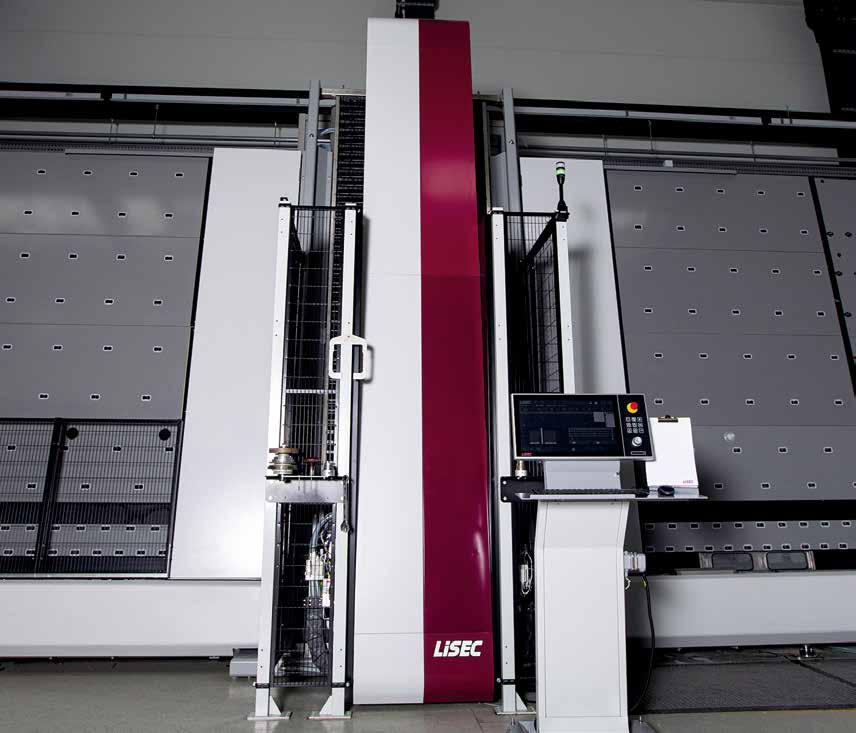
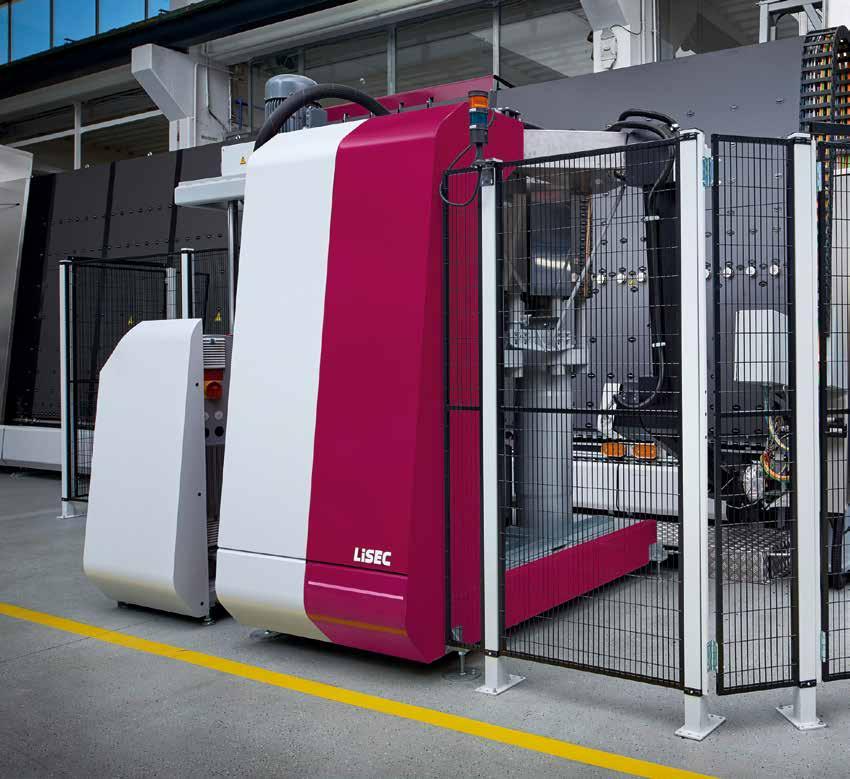
Chongzheng Shengda Glass Co., Ltd. has commissioned what is described as the first insulating glass production line capable of processing formats up to 8 × 3.3 metres using thermoplastic spacer application technology from LiSEC. The installation marks a further expansion of large format insulating glass manufacturing capacity in China.
Chongzheng Shengda Glass, part of the Shandong Chongzheng Group, operates from a high-tech industrial park in Zibo, Shandong province. The company produces energy efficient functional glass, including 4SG and low emissivity products for architectural, facade and structural engineering applications. The decision to install the new line reflects continued investment in automation and
large-scale processing capability.
The LiSEC TPA system applies thermoplastic spacer material directly onto the glass sheet in a fully automated process. Unlike conventional spacer production, which involves bending and inserting prefabricated spacer frames, the TPA method extrudes heated material from a barrel and applies it precisely along the glass perimeter. The closure area in the corner is sealed by compression, forming a continuous spacer without visible joints.
According to the companies, the system allows seamless transitions between different insulating glass sizes and shapes without mechanical changeovers. The integrated process is intended to reduce cycle times and minimise handling
steps. LiSEC also states that the technology can reduce material consumption and optimise drying cycles, contributing to lower overall energy use compared with conventional spacer production methods. The companies report energy consumption reductions of up to 30 per cent, depending on production configuration.
The partnership between Chongzheng Shengda and LiSEC dates back to 1998, when the Chinese processor installed its first insulating glass line and cutting system from the Austrian supplier. The long-standing relationship was cited as a factor in the decision to implement the 8 × 3.3 metre TPA line, which the companies describe as unique in these dimensions.
“We knew that, with LiSEC, we
are not just buying machines, but the experience of an industry pioneer. This made the clear difference for a project of this magnitude,” explained Song Xunwu, general manager of Chongzheng Shengda.
Following start-up of the new line, the company reports improved production efficiency, including process restructuring extending to packaging operations. The move strengthens its capability to supply large format insulating glass units for high rise and façade projects, where demand for oversized glazing continues to grow.
“This production line is a benchmark for the glass industry,” said Xunwu. “It shows what is possible when technology, partnership and innovation come together.”
LNG disruption drives energy diversification in South Asia
Energy supply disruptions linked to the closure of the Strait of Hormuz are drawing renewed attention to the importance of energy diversification and efficiency improvements across South Asia’s industrial sector.
New analysis from energy consultancy Wood Mackenzie suggests liquefied natural gas (LNG) demand in South Asia could be two to three million tonnes
lower through the third quarter of 2026 compared with earlier projections if supply disruptions persist for two months.
The situation follows force majeure declared by QatarEnergy, affecting shipments from a region that accounts for a significant share of global LNG supply. South Asian countries are heavily reliant on Middle Eastern LNG imports, particularly from Qatar.
According to Wood Mackenzie, India sourced around 59% of its LNG imports in 2025 from Qatar and the United Arab Emirates, while Pakistan and Bangladesh also depend strongly on Gulf suppliers.
Despite the near-term disruption, analysts say the situation is likely to accelerate efforts across South Asia to diversify energy supply and improve industrial
energy resilience.
“LNG demand across South Asian markets is now likely to remain flat at best,” said Akshay Gupta, research analyst for gas and LNG at Wood Mackenzie. “While the region is highly dependent on LNG from the Middle East, South Asian buyers will find it hard to replace disrupted Qatari volumes due to increased competition for available spot LNG cargoes.”
CHINA
INDIA
Shinagawa expands materials portfolio with US acquisition
JAPAN
Shinagawa Refra Co., Ltd. has agreed to acquire a 51% stake in Dynamix Casting Fluxes, LLC, strengthening its position in high temperature materials and expanding its manufacturing footprint in North America.
The agreement, announced on 22nd January 2026, will see Dynamix become part of the Shinagawa Group through a newly established US subsidiary. The transaction is expected to be completed by March 2026, subject to customary approvals. Financial terms have not been disclosed.
Dynamix Casting Fluxes, based in Huntingdon, Tennessee, produces mould fluxes used in continuous casting processes within the steel
industry. These materials are designed to control heat transfer and provide lubrication during casting operations.
While the acquired business is focused on steel applications, Shinagawa is widely known as a global supplier of refractories and advanced materials for high temperature industries, including glass manufacturing. Its refractory products are used in furnace linings and associated thermal processes, where reliability and material performance are critical to operational continuity.
In outlining the rationale for the transaction, Shinagawa said the acquisition would enhance its geographic coverage in
the United States, achieving broader market presence and closer proximity to customers. The company also highlighted increased manufacturing flexibility and improved supply capability as key objectives.
Shinagawa stated that integrating Dynamix would strengthen its overall materials platform and support its mediumterm global expansion strategy. The company has identified overseas growth and diversification of high temperature materials technologies as priorities in its development plans.
For glass manufacturers, the move reflects continued consolidation and strategic
investment among refractory and thermal materials suppliers.
A broader industrial base and expanded production footprint can contribute to supply stability and technical development across high temperature sectors.
The acquisition places an additional manufacturing asset in the US within Shinagawa’s global portfolio. As demand for reliable refractory and thermal solutions remains a central issue for furnace operators, developments affecting major suppliers continue to attract attention across the glass and wider process industries.
The transaction is expected to close in the coming weeks, subject to completion conditions.
China and Türkiye glass container exports face UK investigation
The United Kingdom’s Trade Remedies Authority (TRA) has launched two investigations into imports of glass containers from China and Türkiye, examining whether the products are being sold under conditions that could harm the domestic industry.
The investigations, announced on 5th March 2026, consist of an anti-dumping probe into imports from China and an anti-subsidy investigation covering glass containers originating from Türkiye. Both cases were opened following applications submitted on behalf of UK glass container manufacturers.
Glass containers are widely used across UK supply chains, particularly in the food and beverage sectors, where they are used for products such as preserves, beer, wine and spirits. They are also valued for
their recyclability and role in circular packaging systems.
The investigations cover the majority of glass containers with a capacity of less than 2.5 litres. This category includes a wide range of bottles and jars used by the packaging industry.
The TRA said the probes will assess whether imports are being sold at unfairly low prices or are benefiting from government subsidies that could distort competition in the UK market. If evidence shows that such practices are causing injury to domestic producers, the authority may recommend measures to address the impact.
TRA CEOs Jessica Blakely and Carmen Suarez said the authority will examine the effects of the imports on the UK glass container
sector.
“Glass containers play a key role across a wide variety of supply chains in the UK economy and in the day-to-day life of many households,” they said in a joint statement. “The investigations initiated today by the TRA will consider whether the UK glass industry is being harmed by unfair competition from imports and, if so, the measures to put in place to protect it.”
The authority has invited companies that believe their businesses may be affected by the investigations to register their interest through the TRA’s public file by 20th March 2026. Businesses registering after that date may face limits on their participation in the process.
The period of investigation
Dubai to host International Glass Manufacturing Show
Dubai will host the third edition of the International Glass Manufacturing Show (IGMS) from 21st-23rd April 2026, bringing together manufacturers, suppliers and buyers from across the global glass industry.
The event will take place at the Dubai World Trade Centre and is expected to attract participants from the Middle East, Asia, Europe and Africa, reflecting the region’s growing role in the global glass manufacturing supply chain.
Organisers said the exhibition will cover a wide range of sectors
across the glass production value chain, including manufacturing, processing and finishing technologies. Products and applications featured at the event are expected to include insulating glass, low-emissivity coated glass, tempered glass and other architectural glazing solutions used in construction and facade systems.
Glass products for automotive and other industrial applications will also be represented, alongside machinery and technologies used in glass processing and production.
The exhibition will showcase developments in manufacturing equipment, automation systems and digital technologies designed to improve operational efficiency in glass production. Equipment suppliers are also expected to present new systems incorporating digital monitoring tools and artificial intelligence aimed at improving process control and productivity.
Alongside the exhibition, IGMS will host a conference programme examining key developments affecting the glass sector. Discussions are expected
for the cases runs from 1st January 2025 to 31st December 2025. The injury period, which will be used to assess the potential impact on the domestic industry, covers the period from 1st January 2022 to 31st December 2025. Trade remedy investigations typically take up to 12 months to complete. During that time the TRA gathers evidence from UK manufacturers, importers and overseas producers before determining whether intervention is justified.
If the authority concludes that unfair practices are causing harm to the UK industry, it can recommend measures such as anti-dumping or countervailing duties designed to restore fair competition in the market.
to address evolving production technologies, shifts in regional supply chains and the changing roles of Asia, Europe and the Middle East in global glass manufacturing. Other sessions will focus on industry challenges including energy costs, raw material supply and regulatory developments affecting glass producers. Environmental policy and sustainability requirements are also expected to feature in discussions, including international frameworks such as carbon border adjustment mechanisms.
LiSEC expands MEI hub operations
INDIA/ TURKIYE
LiSEC has expanded its regional presence across the Middle East and India through the development of its Middle East and India (MEI) Hub, covering 23 countries including India, the United Arab Emirates, Saudi Arabia, Egypt and Turkiye.
The hub structure forms part of LiSEC’s international network, designed to coordinate sales, service and spare parts logistics closer to customers in key growth markets. The MEI Hub has been led by Johann Stoger since January 2024. He is supported by Ignatius Dias, managing director of LiSEC Middle East, who joined the regional leadership team in April 2025.
The organisation operates through two main branches: LiSEC Turkey, based in Istanbul with four
employees, and LiSEC Middle East, employing 10 staff. The two offices work in coordination, with clearly defined operational responsibilities. Turkiye manages customs clearance and spare parts distribution, while centralised spare parts processing is handled through the Middle East operation. Management at both locations coordinate to address regional requirements and maintain service efficiency.
“The HUB MEI is a key component of our global strategy. A clear focus on growth, regional adaptation and close cooperation means we are ideally positioned to fully exploit the potential of this region,” said Stoger.
The region currently represents one of the most active construction markets globally, particularly in
cities such as Dubai, Jeddah and Riyadh, where large scale facade projects incorporating coated and high-performance glass are standard. Glass processing systems supplied by LiSEC are used in the manufacture of insulating glass units and facade glazing for these developments.
The company reported increasing demand for its TPA spacer technology, noting that three TPA systems have been sold in a short period. The region’s expanding construction activity and growing adoption of advanced insulating glass solutions are contributing to this demand.
In addition to high end processing lines, LiSEC has introduced LiTROS as an entry level solution aimed at emerging markets. This approach is intended to broaden access
to automated glass processing technology in markets where full scale premium systems may not yet be viable.
The company acknowledged that operating across such a wide and diverse region presents challenges, including geopolitical tensions and varying regulatory environments. However, it stated that market growth and openness to new technologies continue to support expansion plans.
Looking ahead to 2030, the MEI Hub intends to expand its sales and service teams and increase regional market penetration. For glass processors in India and the Middle East, the strengthened hub structure signals continued investment in technical support, spare parts availability and localised service capability.
Glaston partners with Leadus on VIG technology
CHINA
Glass processing equipment supplier Glaston has entered into a cooperation agreement with Chinese vacuum insulating glass specialist Leadus aimed at advancing manufacturing technologies for vacuum insulating glass (VIG).
The partnership will focus on developing integrated production solutions for VIG, a glazing technology designed to deliver improved thermal insulation compared with conventional insulating glass units.
VIG consists of two glass panes separated by a narrow vacuum gap that reduces heat transfer while maintaining a relatively thin and lightweight structure. The technology has attracted growing interest from building designers and glass processors as energy efficiency requirements for buildings continue to tighten in many markets.
Under the cooperation, the companies will combine Glaston’s tempering technology with Leadus’s expertise in vacuum glass processing. The aim is to support glass processors seeking to scale up production of vacuum insulating glass and adapt existing manufacturing processes to emerging glazing technologies.
Glass flatness is considered a critical requirement in the production of vacuum insulating
glass because even small deviations can affect sealing performance and long-term reliability of the vacuum cavity.
Kimmo Kuusela, executive vice president for sales and service EMEA and APAC at Glaston, said the company’s tempering technology plays an important role in meeting these requirements.
“We are at the forefront of tempering technology, delivering world class flatness in tempered glass. This is a key enabler for efficient and reliable VIG production,” Kuusela said.
He added that partnerships between equipment suppliers and technology developers are increasingly important as glass processors adapt to new product concepts.
“As different advanced glass concepts continue to evolve, glass processors are exploring how existing processes can be adapted to new applications. We believe in development through partnerships and our co-operation with Leadus is one concrete example of that,” Kuusela said.
Leadus said the collaboration will help accelerate the industrialisation of vacuum insulating glass manufacturing by combining complementary technologies.
“We are proud to partner with Glaston Corporation to advance
the industrialisation of Vacuum Insulating Glass (VIG),” the company said in a statement.
“Scaling next generation glazing requires not only innovation in materials, but also strong manufacturing synergy.”
The company added that integrating its vacuum insulation technology with Glaston’s glass processing expertise will support efforts to scale production of VIG products for global markets.
Demand for high performance glazing solutions has been increasing as governments and building developers seek to reduce energy consumption in buildings.
Vacuum insulating glass is being explored as one option capable of delivering high thermal insulation performance while maintaining slim glazing profiles.
The companies said the cooperation aims to support glass processors seeking to bring next generation glazing solutions into wider commercial production.
Interest in vacuum insulating glass has been increasing among glass processors as building regulations in several markets move towards stricter energy performance standards. While the technology has been under development for many years, scaling production to commercially viable volumes has remained a challenge for manufacturers.
Processors considering VIG production must address several technical requirements, including tight tolerances in glass flatness and reliable sealing of the vacuum cavity. These factors place additional demands on tempering and processing equipment compared with conventional insulating glass manufacturing.
Equipment suppliers and technology developers have therefore been exploring closer collaboration to support industrial scale production. By integrating processing technologies with vacuum glazing expertise, manufacturers aim to streamline production workflows and improve consistency during large scale manufacturing.
For processors evaluating next generation glazing technologies, developments in VIG production methods may influence future equipment investment decisions as the industry continues to explore higher performance glazing systems.
Global View
FEVE calls for urgent EU action
BELGIUM
The European Container Glass Federation (FEVE) has urged European Union leaders to take swift measures to safeguard the region’s industrial base, warning that high energy and carbon costs are placing the container glass sector under significant structural pressure.
The federation, represented by its president Michel Giannuzzi, who is also chairman of Verallia, spoke at the European Industry Summit held in Antwerp on 11th February 2026. FEVE expressed support for the Antwerp Call to Action and called for urgent steps to reinforce Europe’s industrial competitiveness.
According to FEVE, the container glass industry operates more than 140 plants across 21 EU Member States and supplies packaging to sectors including food, beverages, perfumery, cosmetics and pharmaceuticals. Products packed in glass contribute an estimated €140 billion to EU exports annually, underlining the sector’s role in Europe’s manufacturing and trade base.
The federation said the industry is facing sustained pressure from persistently high energy prices, rising carbon costs and an increasingly challenging global trading environment.
It noted that container glass production has declined from
However, it argued that a gap remains between policy ambition and the operating conditions faced by manufacturers. Based on industry calculations, the 2026 update of EU Emissions Trading System benchmarks could, for some companies,
“The container glass sector is fully committed to delivering Europe’s climate and circular economy ambitions”
its 2022 peak and that plant and furnace closures have taken place across several European countries, resulting in losses of industrial capacity, technical skills and employment.
FEVE acknowledged recent European Commission initiatives, including the Omnibus packages and the Clean Industrial Deal.
double CO2-related costs between 2025 and 2026.
“There is no resilient, nor safe, nor strong Europe without a strong European industry,” said Giannuzzi. “The container glass sector is fully committed to delivering Europe’s climate and circular economy ambitions, and we are investing heavily in
decarbonisation technologies. But industry cannot deliver the transition alone. EU leaders must act now to bring energy and carbon costs down, accelerate grid deployment and simplify the regulatory framework. This is not for next year, not for next week, but for today.”
FEVE called for stabilising measures to avoid sudden cost increases while preserving climate objectives, as well as policies supporting fair global trade and demand for circular products made in Europe. It said that with appropriate framework conditions, the sector can continue to invest in decarbonisation and maintain its position in global packaging markets.
Glass for Europe comments on EU Industrial Accelerator Act
BELGIUM
The European flat glass industry said the European Commission’s proposed Industrial Accelerator Act represents a constructive first step towards supporting manufacturing within the European Union, while noting that further measures will be needed to strengthen the sector.
Glass for Europe, the trade association representing Europe’s flat glass manufacturers, said the proposal acknowledges the strategic role of the industry in several key European value chains.
“The Industrial Accelerator Act represents a constructive first step towards supporting European made products,” said Bertrand Cazes, secretary general of glass for Europe.
According to the association, the proposal recognises the manufacturing, shaping and processing of flat glass as a strategic sector whose production capacity should
be maintained and expanded within Europe.
Flat glass is widely used in industries highlighted in the proposed regulation, including construction, automotive manufacturing and solar energy.
These sectors rely on glazing products for applications such as building facades and windows, vehicle glazing and photovoltaic installations.
Glass for Europe said provisions in the proposal related to accelerated permitting could benefit the industry. These measures include the possibility for projects to be located in designated Acceleration Areas intended to create regulatory conditions that support industrial investment.
The association also commented on provisions concerning EU origin requirements in public procurement and financial support schemes. It said the
current scope covers only a limited number of materials, despite the strategic importance of others including flat glass.
Glass for Europe added that the criteria used to determine which materials are covered, the thresholds applied and the possible extension of the rules to certain third countries should be clarified.
The proposal also contains provisions related to the automotive sector. According to the association, the regulation applies to all vehicle components under a 70% ex works price threshold.
Glass for Europe said components such as automotive glazing could warrant clearer recognition within the framework in order to strengthen the competitiveness of the wider automotive value chain.
“While a resilient European flat glass sector is clearly strategic for the construction, automotive
and solar energy value chains, further refinement and additional measures will be needed to fully strengthen flat glass and glazing manufacturing in Europe,” Cazes said.
The Industrial Accelerator Act forms part of broader European efforts to support industrial competitiveness and supply chain resilience
Report urges faster climate adaptation in buildings
FRANCE
Buildings must be designed and upgraded more rapidly to cope with the impacts of climate change, according to a new report published by Saint Gobain in partnership with global built environment consultancy Arup.
The report, titled Adapting Buildings to Climate Change: Insights into the contribution of building construction solutions to the climate adaptation agenda, examines how construction methods, materials and design approaches need to evolve as extreme weather events become more frequent and severe. It calls for a shift towards integrated and performance-based building systems that improve resilience to environmental stress.
According to the report, hazards such as heatwaves, floods, intense rainfall, storms and wildfires are increasing across many regions. Between 2000 and 2019 more than 7,000 major climate related
disasters were recorded worldwide, resulting in economic losses estimated at nearly $3 trillion.
Urban areas are facing particular pressure. Research cited by Arup indicates that the urban heat island effect can raise city temperatures by up to 8.5°C compared with
recommends integrating climate adaptation into both new building projects and the retrofit of existing structures.
Pascal Eveillard, director for sustainable construction at Saint Gobain, said climate adaptation is becoming a central issue for the
“Climate adaptation is becoming an essential pillar of sustainable construction”
surrounding rural areas, increasing risks to public health and driving higher energy demand for cooling.
The study argues that the global property sector faces a dual challenge: adapting buildings to withstand extreme climate conditions while also reducing the environmental impact of construction and operation. It
construction sector.
“Climate adaptation is becoming an essential pillar of sustainable construction. Buildings are already on the front line of climate change, and this report shows how integrated, performancebased construction solutions can significantly strengthen their resilience,” he said.
Ignacio Fernandez, director and facade design specialist at Arup, said adaptation should be considered an essential part of building design.
“Climate change is already putting buildings under strain from extreme heat to flooding and storms, so adaptation cannot be treated as an optional add on,” he said.
The report highlights several construction approaches aimed at improving resilience, including thermal envelope systems, solar protection measures, green building envelopes, reflective surfaces and enhanced structural protection.
It concludes that climate resilience is most effective when design solutions are implemented as integrated systems rather than individual technologies, supported by risk assessment, evolving regulations and long-term investment strategies.
NGA conference highlights workforce challenges
UNITED STATES
More than 650 participants gathered in Louisville, Kentucky, for the National Glass Association’s Building Envelope Contractors (BEC) Conference, held from 1st March to 3rd March 2026, at the Omni Louisville Hotel, where industry leaders discussed labour shortages, succession planning and regulatory developments affecting the glass and glazing sector.
Opening the event, NGA president and CEO Lakisha A Woods addressed the challenges facing the industry, including supply chain pressures, project delays and increasing performance expectations for building materials. She emphasised the association’s role in supporting companies operating in the sector.
“We exist to support the glass and glazing community, and that means providing you with the technical resources, training programmes, advocacy efforts and industry connections you need not just to survive, but to thrive,” Woods told attendees.
A recurring theme during the conference was the growing impact of workforce retirements across the construction and glazing supply
chain. Speakers highlighted the need for companies to prepare for leadership transitions as experienced professionals leave the industry.
Sarah Martin, associate director of forecasting at Dodge Construction Network, said the broader construction sector is facing sustained workforce attrition. Presenting the outlook for the coming years, she noted that approximately two million workers leave the workforce each year and many roles are not being replaced.
“Every year, we're losing people to retirement, and not really adding to that supply,” she said.
Industry representatives also discussed succession planning within family-owned businesses and privately held glass companies.
Priscilla Koeckeritz, president and CEO of Brin Glass, described the challenges her organisation experienced while managing leadership changes, unexpected retirements and wider market pressures. Reflecting on the need for adaptation, she said companies must balance established practices with new approaches to leadership and operations. “You can build on
your legacy, but you can’t do it the same way you’ve always done it,” she said.
A panel featuring next generation leaders of glazing businesses reinforced the importance of early succession planning. Participants said transitions can take many years to complete and require consultation with legal, financial and operational advisers. Emily Yukish, president and CEO of Specified Systems Inc, said ownership succession should be considered well in advance. “It’s not an easy or cheap process,” she said.
Recruitment strategies were also examined, particularly as companies attempt to expand the available labour pool.
Joshua Johnson, founder of The Redemption Collective, encouraged firms to consider hiring individuals who have previously been incarcerated. He argued that employers could access a large potential workforce by forming partnerships with community organisations and workforce development groups. “You don’t need to build a talent pipeline from scratch,” he said.
Market outlook and regulatory
developments were also addressed. Martin noted that sectors such as healthcare facilities and data centres may see construction growth in the coming years, although broader construction activity remains uncertain due to project delays and economic conditions.
Conference sessions also reviewed evolving energy codes and sustainability requirements affecting glazing systems, with growing demand for environmental product declarations and greater transparency around construction materials.
The BEC Conference concluded with discussions on collaboration between architects, contractors and glazing specialists to improve project outcomes and address future industry challenges.
Asian Glass: mobiles, ipads & androids
British Glass responds to Wales DRS decision
UNITED KINGDOM
British Glass has responded to the decision allowing Wales to proceed with plans to include single use glass drinks containers in its Deposit Return Scheme (DRS), while delaying a decision on a reusable glass system.
The announcement was made on 13th February 2026. British Glass acknowledged the outcome but said that several practical aspects of how the scheme will operate remain unclear. The organisation stated that it will work with both the Welsh and UK governments to seek clarity on the operational, financial and environmental implications for the sector.
The decision includes an extension of a transitional period
to 2031. However, British Glass highlighted that the inclusion of glass in Wales, while it is excluded from DRSs in England and Scotland, will result in businesses operating under different regulatory frameworks within the UK.
According to the federation, this divergence risks creating additional complexity for producers and the wider supply chain. Companies operating across the UK may be required to manage separate systems for glass drinks containers, which could introduce extra administrative and logistical costs.
British Glass said it had presented evidence that including
glass in the Welsh scheme, but not elsewhere in the UK, could lead to market fragmentation, cross border complexity and unintended environmental consequences. It added that these concerns remain.
Commenting on the decision, Nick Kirk, director at British Glass, said: “We remain committed to engaging constructively with the Welsh and UK Governments to ensure that the detail of implementation minimises disruption. Clarity on operational design, producer obligations, cost impacts, and interaction with Extended Producer Responsibility (EPR) will be essential.”
He added: “British Glass supports measures that
genuinely improve recycling and environmental performance. However, it is vital that policy decisions are evidence-based, fair, and aligned across the UK to maintain market stability and maximise environmental benefit.”
DRSs are designed to increase the collection and recycling of drinks containers by placing a refundable deposit on packaging. The approach to including glass has varied across the UK, with policy decisions taken separately by devolved administrations.
The Welsh decision introduces a distinct regulatory framework for glass drinks containers within the UK market, and further detail is expected as implementation plans progress.
Vidrala reports resilient year in 2025 report
Glass packaging producer Vidrala said it maintained operational stability and strengthened its industrial base during 2025 despite weaker demand and increasing competitive pressure across its markets.
The company outlined the performance in its Integrated Annual Report 2025, which reviews developments during a year marked by lower demand compared with historical levels in the glass container sector. Vidrala said its response focused on operational discipline and continued investment aimed at improving efficiency, competitiveness and sustainability.
According to the report, diversification across customers, sectors and geographic markets helped support production volumes during the year. The group also continued to modernise
its industrial operations and prioritise investments designed to strengthen long term reliability and operational performance.
Environmental performance remained a central theme in the company’s strategy. Vidrala reported an emissions factor of 0.321 tonnes of carbon dioxide per tonne of glass produced, one of the lowest levels reported in the glass packaging industry.
The company attributed the result to a combination of measures including greater use of recycled raw materials, improvements in energy efficiency and a shift towards renewable electricity sources.
During the year, recycled inputs including cullet and other secondary materials accounted for 55.4% of total material use in production processes.
Electricity sourced from renewable generation increased to 70% of total consumption. Vidrala said the change was supported by investments in on site power generation and a broader diversification of electricity supply.
As a result of these measures, market-based emissions fell by 3.6% during the year. The company also reported a four percent reduction in water consumption as part of wider initiatives aimed at improving resource management.
Looking ahead, Vidrala said it plans to expand its on-site renewable energy capacity. The company intends to increase installed renewable generation capacity to around 70 megawatts peak by 2028 through the development of up to 10 selfconsumption facilities.
The report also highlights
EU Parliament backs building renovation measures
The European Parliament has adopted a report outlining recommendations to address housing shortages and accelerate the renovation of energyefficient buildings across the European Union. The report, prepared by Spanish Member of the European Parliament Borja Giménez Larraz of the European People’s Party, was adopted on 10th March by 367 votes in favour, 166 against and
84 abstentions. It forms part of the work of the Parliament’s Special Committee on the Housing Crisis, which was established to examine rising housing costs and shortages across member states.
Members of the European Parliament called for targeted financial support to encourage renovation of existing residential buildings and improve their energy performance. The report recommends earmarking specific
funds for renovation programmes aimed at improving thermal insulation, indoor air quality and overall energy efficiency across the EU’s housing stock. ”
The recommendations come as governments across the EU face pressure to expand housing supply while also meeting climate and energy targets linked to the built environment. Renovating existing buildings is widely regarded as an important measure in reducing
efforts to align the company’s commercial profile more closely with customer requirements while reinforcing its industrial footprint. Vidrala said these steps form part of preparations for the next phase of market development as demand conditions evolve.
Chief executive Raúl Gómez said the year tested the company’s resilience while confirming the strength of its operating model.
“2025 tested Vidrala’s strength and confirmed the solidity of our model in an unfavourable cycle,” he said. “We enter the next stage with greater robustness and ambition. The best is yet to come.”
Vidrala said its investment programme will continue to focus on improving reliability, competitiveness and sustainability across its glass manufacturing operations.
energy consumption and long-term operating costs for households.
In addition to renovation funding, the report highlights the need to strengthen Europe’s industrial capacity in construction and building renovation. MEPs urged the European Commission to support the scale-up of innovative and sustainable construction products and reinforce the functioning of the single market for raw materials used in building technologies.
SPAIN
GTS secures UKAEA fusion contract
UNITED KINGDOM
Glass Technology Services (GTS) has been awarded a contract under the United Kingdom Atomic Energy Authority Fusion Industry Programme as part of a national £8.1 million investment supporting the development of shielding and fuel cycle technologies for future fusion power plants.
Working in partnership with Sheffield Hallam University, GTS is leading a project titled ‘Glass and glass-ceramics for fusion reactor shielding applications’. The research will investigate the potential of glass and glass-ceramic materials to act as radiation shielding solutions within fusion energy systems and associated plant environments.
Fusion energy systems require effective shielding to protect equipment and personnel from high levels of radiation. Conventional shielding materials typically include lead, concrete and specialist metal alloys. The current project is examining whether glass and glass-ceramics can offer
technically viable alternatives while addressing economic and environmental considerations.
According to the project outline, the work is taking an economics and sustainability driven approach to identify materials that are low cost and environmentally responsible, while meeting the demanding performance requirements associated with nuclear fusion environments. The team will explore materials that are competitive with traditional shielding options in terms of radiation attenuation, durability and manufacturability.
The programme of work includes the identification and modelling of candidate glass and glass-ceramic compositions, simulation studies to assess radiation attenuation behaviour and laboratory scale melting trials to evaluate feasibility. The project will also examine potential commercial manufacturing routes, including the integration of secondary raw materials, alongside
lifecycle and environmental impact assessments.
Owen McGann, principal technologist and innovation development lead at GTS, said: “Glass and glass-ceramic technologies offer a unique combination of compositional flexibility, manufacturability and radiation shielding capability. This project gives us the opportunity to demonstrate how these materials can deliver sustainable, economical, high-performance shielding solutions which support the UK’s long-term fusion energy ambitions.”
The outcomes of the project are expected to contribute to the UK’s materials capability in support of future fusion energy systems. Beyond fusion applications, the research may have relevance for other sectors requiring radiation shielding, including nuclear medicine, nuclear fission, aerospace and industrial radiography.
The award highlights continued interest in the role advanced glass materials may play in emerging clean energy technologies and high-performance industrial environments.
Ciner Glass installs chimney at Lommel plant
BELGIUM
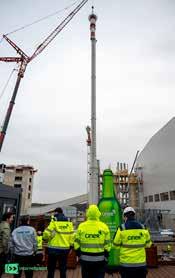
Construction of the new Ciner Glass Belgium plant in Lommel has reached another milestone with the installation of a 102-metre chimney at the site, marking visible progress on the company’s glass packaging factory.
The final segment of the steel structure has now been lifted into place, completing the chimney installation and changing the skyline of Lommel. The chimney is connected to an advanced filtration system designed to significantly reduce dust and gas emissions.
According to the company, the installation was carried out in two phases and required specialised heavy lifting expertise. The work was completed by lifting contractors Aertssen Group and Mammoet, which coordinated the hoisting operations needed to position the structure safely and accurately.
Ciner Glass opted for a modern steel chimney rather than a traditional brick construction. Instead, Ciner Glass opted
for a modern steel structure.
The company stated that the design offers several practical advantages, including a lighter overall structure, faster installation and a reduced requirement for conventional building materials during construction.
Once operational, the chimney will be linked to an advanced filtration system intended to reduce emissions and ensure compliance with environmental standards. The installation forms part of the wider infrastructure of the new glass packaging plant.
Ciner Glass acknowledged the role of contractors involved in the project, including Tecoglass and other partners working on the construction programme. The company described the chimney installation as an important step in the ongoing development of the site.
Construction activity across the Lommel plant continues as equipment installation and site development progress. The project represents a significant industrial investment in the region
and is intended to establish a new glass packaging production facility in Belgium.
When complete, the plant will produce glass packaging. The Lommel development forms part of Ciner Glass’s wider expansion strategy as it seeks to increase its presence in the European glass packaging sector.
The company stated that work on the site is advancing steadily, with construction milestones being reached as the facility moves closer to operational readiness. Workforce numbers at the site are also expected to increase as construction progresses and the plant prepares for the start of production.
Ciner Glass Belgium has indicated that production at the Lommel facility is scheduled to begin by the end of the second quarter of 2026. The company aims to position the plant as a long-term glass packaging manufacturing operation serving regional markets and supporting industrial activity in the area.
Asian Glass: mobiles, ipads & androids
SGD Pharma expands nasal glass packaging offering
FRANCE
SGD Pharma has announced a collaboration with Prince Sterilization Services to support the supply of ready-to-use pharmaceutical glass packaging in North America, with the launch of a new vial range for nasal drug delivery.
The Franco-American agreement combines SGD Pharma’s production of Type I glass vials with Prince’s sterilisation capabilities, forming a supply chain intended to serve biopharmaceutical customers in the United States.
The new range is part of SGD Pharma’s My Sterinity ready-to-use (RTU) platform and is designed for nasal therapies requiring high levels of sterility and product stability. The vials are initially available in 3.5 ml, 7.5 ml and 10 ml formats in clear
and amber glass and are packaged for ready-to-use applications.
Production will take place at SGD Pharma’s Saint-Quentin-La-Motte facility in France, while Prince will carry out washing, depyrogenation and sterilisation processes in North America. The companies said this approach provides a validated regional supply chain for pharmaceutical customers.
The launch comes as demand grows for advanced nasal drug delivery systems, which are increasingly being used for chronic and long-term treatments. Glass packaging is being considered for such applications due to its chemical inertness, barrier properties and long-term biocompatibility compared with alternative materials.
Carole Grassi, chief commercial marketing and innovation officer at SGD Pharma, said the collaboration supports the company’s strategy in the North American market.
“Our collaboration with Prince marks an important milestone in SGD Pharma’s innovation growth strategy for North America,” she said. “The My Sterinity Nasal platform represents a major step forward in high-value nasal drug delivery, and our collaboration with Prince unlocks immediate US-qualified capacity for biopharma customers.”
Daniel Prince, CEO of Prince Sterilization Services, said the partnership combines complementary capabilities in glass manufacturing
Accursia Capital acquires Doering Glass
GERMANY
Accursia Capital has completed the acquisition of Doering Glass, a German manufacturer and processor of architectural glass products, as part of efforts to expand its presence in the European glass processing sector.
The transaction follows a restructuring of Doering Glass under self-administration, carried out in cooperation with legal advisers act legal Tischendorf Rechtsanwalte. Financial terms of the deal were not disclosed.
Based in Berlin, Doering Glass specialises in insulating glass, laminated and safety glass, as well as curved specialty glass for architectural and structural applications. The company reports annual revenues of around €8 million. Its product portfolio is geared towards the construction and facade industry, with a focus on customised solutions and complex project execution.
Accursia Capital, a Munichbased private equity firm, focuses on the acquisition and development of industrial companies in special situations, including carve-outs and turnaround scenarios. The firm manages a diversified portfolio of industrial businesses across Europe, with activity spanning
automotive, engineering and industrial materials.
In announcing the acquisition, Accursia Capital stated that the integration of Doering Glass forms part of a broader strategy to establish a platform of companies within the glass industry. The firm said the connection of operational structures is expected to create synergies in production, procurement and logistics, while enabling an expanded service offering for customers in Germany and other European markets.
Doering Glass has been active in supplying facade and structural glazing solutions for commercial and residential projects. Its manufacturing capabilities include advanced processing technologies designed to meet performance and safety requirements in modern building envelopes.
The acquisition reflects ongoing consolidation in segments of the European glass processing market, where mid-sized companies have faced pressure from energy costs, raw material volatility and cyclical demand in construction. Private equity interest in specialised industrial manufacturers has remained active, particularly in situations involving restructuring or operational repositioning.
Accursia Capital described
Deoring Glass as ‘a leading manufacturer and processor of high-quality glass solutions for the construction and facade industry in Germany and Europe’. The firm added that the company ‘impresses with customised solutions, state-of-the-art manufacturing technologies, and long-standing experience in implementing complex façade projects’.
With the transaction now completed, Doering Glass will continue operations under the new ownership structure. Further details regarding management structure or investment plans were not disclosed at the time of announcement.
The deal strengthens Accursia Capital’s exposure to the glass processing industry and underlines continued investor activity within the European architectural glazing market.
The European glass processing market remains highly fragmented, with many regional manufacturers supplying insulating glass and façade glazing systems to local construction markets. In recent years, rising energy costs, tighter building performance standards and cyclical construction demand have increased pressure on midsized processors, prompting
and sterilisation.
“SGD Pharma’s Type I glass expertise combined with our quality focused and flexible RTU and sterilisation platform creates the gold standard for sterile nasal packaging,” he said.
SGD Pharma said the new platform is intended to support pharmaceutical companies developing nasal therapies by providing packaging that meets sterility and performance requirements. The vials are supplied in double-bagged trays and are compatible with standard preservative-free nasal pump systems used in sensitive and high-value drug delivery applications, while supporting validated sterility assurance and controlled particulate levels.
restructuring activity and strategic investment.
Private equity firms have increasingly targeted specialised manufacturers with established technical capabilities and project portfolios in architectural glass processing. Accursia Capital’s acquisition of Doering Glass reflects this broader investment trend, as financial investors continue to pursue opportunities in industrial manufacturing sectors linked to building envelope technologies and construction supply chains.
SORG electric forehearth completes industrial trial
GERMANY
SORG has reported the successful long term industrial operation of its fully electric Viking forehearth, marking a further step in the electrification of glass production processes.
The forehearth, which was installed on a production furnace at an operating plant, has completed extended large-scale use without the need to activate a backup gas heating system that was installed for safety purposes. According to the company, the unit has performed glass conditioning entirely through electrical heating during the trial period.
Forehearth conditioning remains one of the notable sources of CO2 emissions in conventional glass manufacturing. While electric boosting and electric melting technologies have advanced in recent years, conditioning has often continued to rely on gas firing.
Electrically heated conditioning systems have existed for some time, but their wider adoption has been constrained by technical limitations. These have included contamination risks from heating elements, slow thermal response, localised overheating and wear of components in contact with the glass melt.
The Viking forehearth is designed to address these issues through a different heating configuration. Its heating elements are integrated into a specially engineered superstructure rather than being positioned in a way that exposes them directly to the melt. This arrangement is intended to prevent material from the elements entering the glass bath and to avoid localised hot spots. By distributing heat more evenly, the system aims to provide stable and responsive temperature control across a range of
Biesse expands in Mexico
ITALY/MEXICO
Biesse has strengthened its presence in Latin America with the opening of a new branch in Guadalajara, Mexico, marking a further step in the group’s international expansion strategy.
The Italy headquartered manufacturer, based in Pesaro, produces machinery, lines and components for processing wood, glass, stone, metal, plastics and composite materials. The group has operated in Latin America for several years through its Brazilian subsidiary. The new Mexican operation extends its direct footprint in the region and is intended to serve Mexico and Central America.
The Guadalajara branch builds on the existing local structure of Bavelloni, a specialist in glass and stone processing technologies that was recently acquired by
Biesse. With the integration of Bavelloni, the Mexican site will now represent the full Biesse portfolio, including machinery and tooling for glass processing.
According to the company, the new branch will function as a regional hub, offering sales, technical support and after sales services. Service and spare parts management will operate in coordination with Biesse’s facility in the United States, which includes an automated warehouse and dedicated technical teams. The arrangement is designed to provide faster deliveries and technical assistance across Latin America.
The integration also brings together Bavelloni’s established glass technologies with Biesse’s broader machinery portfolio under a single brand. In the tooling segment,
production tonnages.
SORG states that the design is suitable for all tonnage levels, expanding the potential application of electric conditioning beyond niche or speciality production. During the reported industrial operation, the forehearth maintained conditioning performance without recourse to the emergency gas system, suggesting operational stability under standard plant conditions.
The development forms part of the company’s broader portfolio of electric and hybrid technologies. These include the VSM and VSM+ electric melting systems and the CLEAN Melter hybrid tank concept, which is designed to reduce CO2 emissions compared with conventional fossil fuel fired furnaces. With the addition of a fully electric forehearth, SORG indicates that a production route from melting through to conditioned glass can
be configured without direct fossil fuel combustion.
The successful trial reflects ongoing efforts within the glass industry to reduce process emissions and improve energy efficiency. As regulatory and market pressures increase, manufacturers are examining electrification options across all stages of production. The reported performance of the Viking forehearth provides a case study of how conditioning, traditionally reliant on gas firing, may be integrated into wider electric furnace strategies.
the Mexican branch will distribute products from both Bavelloni Tools and Diamut, combining their respective ranges for glass and stone applications.
The expansion reflects continued demand for processing technology and automation in Mexico and Central America, where investment in construction, infrastructure and manufacturing has supported growth in machinery requirements. By establishing a direct local presence, Biesse aims to provide closer customer support and improved response times.
Federico Broccoli, chief commercial officer at Biesse, said: “Mexico and Central America represent a dynamic and strategic market for Biesse, characterised by a growing demand for technology and automation.
Study examines window performance under fire exposure
Researchers have presented new findings on how window materials behave during external fire exposure, highlighting the role of glazing configuration and frame materials in building resilience during wildfire events.
The results were presented at the annual conference of the
Fenestration and Glazing Industry Alliance (FGIA) in a session titled ‘How Window Materials Perform Under Fire Exposure’. The presentation was delivered by engineers Daniel Gorham and Joseph Willi of the Fire Safety Research Institute (FSRI), part of UL Research Institutes, alongside
The experimental research examined how window assemblies respond in structure-to-structure fire spread scenarios that can occur during wildland urban interface (WUI) fires. Such events have increasingly affected residential areas where development meets
“With this investment, we aim to be even closer to our customers, supporting them with local expertise, direct service, and the Group’s complete offering. Its geographical location, ideal for strengthening collaboration with America and Brazil, will enable us to create long-term value by investing in people and local synergies, growing together and contributing to the region’s industrial development”.
The Mexican branch forms part of Biesse’s broader effort to consolidate its international network and integrate acquired technologies into a unified structure. For glass processors in the region, the move is expected to provide expanded access to machinery, tooling and technical support through a local base connected to the group’s wider American operations.
wildfire-prone landscapes.
Horn said embers are often the starting point for structural fires.
“Most of these fires start from an ember,” he said. “They break off trees or shrubs or even other structures. If those embers find a receptive fuel bed, they can directly ignite structures.”
research director Gavin Horn.
Glass Futures completes low carbon furnace trials
Glass Futures has completed a series of industrial scale trials examining alternative fuels for glass melting, marking a new stage in research aimed at reducing carbon emissions from energy intensive industries.
The trials were carried out on the organisation’s 30 tonnes per day pilot glass furnace and involved testing a range of low carbon energy pathways including biofuels, electric melting support and hydrogen firing. The work forms part of ongoing efforts by the UK based research centre to explore technologies that could support the decarbonisation of glass manufacturing.
According to Glass Futures, the trial programme began in October 2025 and focused on assessing the technical feasibility of alternative fuels under conditions that replicate industrial scale glass production. The organisation said the trials demonstrated that several low carbon fuel technologies
can be integrated into glass furnace operations.
The project included the installation and commissioning of a biofuel delivery system designed to integrate with the site’s digital control infrastructure. The system was used to fire four waste derived biofuels during sustained operating periods lasting several days.
Engineers also installed and tested a custom electric boosting system designed to supplement conventional furnace heating.
The system allowed operators to test different power settings and switching scenarios to examine how electric boosting could support glass melting while also enabling demand side response capabilities for electricity networks.
A further element of the programme involved commissioning a hydrogen fuel delivery system on the pilot furnace. The system allowed trials using both hydrogen natural gas
blends and fully hydrogen-based combustion supplied by energy company Ryze Power.
Glass Futures said the commissioning of the multi fuel hybrid pilot furnace presented technical challenges but has generated strong interest from industry partners and policy makers involved in the transition to lower carbon industrial processes.
Justin Kelly, CEO, Glass Futures, said the completion of the trial campaign represents an important step for the sector.
“The successful completion of these trial programmes marks a crucial milestone not just for Glass Futures, but for the industry’s journey to net zero. We have demonstrated, at industrial scale, the technical viability of a number of alternative low carbon fuel pathways that have never before been trialled in this way,” he said.
Barry King, engineering manager at glass manufacturer Encirc, said collaboration across the sector is essential in exploring new
energy technologies.
“Encirc is delighted to be part of Glass Futures’ groundbreaking trials in biofuels, electric, and hydrogen technologies,” he said. “By exploring new energy pathways side by side with industry partners, we’re helping to shape a more sustainable future for glass manufacturing.”
Glass Futures said technical teams are now analysing the results to assess the readiness of each fuel pathway and to inform future research programmes, including the AI GLASS project focused on digital monitoring and optimisation of furnace operations.
Turomas outlines €1.5M expansion plan in Aragon
Spanish glass machinery manufacturer Turomas has presented plans for a €1.5 million investment project aimed at expanding its production capacity and supporting further industrial growth at its facility in Rubielos de Mora, in the province of Teruel.
The company, which specialises in machinery for the storage, loading and cutting of flat glass, outlined the proposal during a visit to its premises by representatives of the Government of Aragon and regional authorities. The project has also been submitted for potential financial support through the European Union’s Just Transition Fund and Spain’s Teruel Investment Fund (FITE).
According to Turomas, the investment would include the construction of a new 2,000 square metre industrial warehouse designed to accommodate an additional production line. The plan also incorporates the modernisation of existing office space to support the operational needs of a company with a growing international presence.
The expansion is intended to increase manufacturing capacity, improve coordination between departments and support the company’s continuing development in the global glass processing equipment market. Turomas supplies machinery used by glass processors for handling and cutting flat glass products, serving sectors including architectural glazing and interior applications.
Alongside the physical expansion of its facilities, the investment programme also includes the creation of new companies within the Turomas group. These planned entities will focus on the manufacture of complementary glass and metal products, broadening the group’s industrial activities and strengthening links between different parts of its production chain.
The project has been recognised by the Government of Aragon as an initiative of regional interest. This designation reflects the authorities’ view that the investment could contribute to
economic development in the Gúdar Javalambre region, an area that has been seeking to strengthen its industrial base.
Turomas said the expansion could create around 15 new direct jobs once the new production facilities become operational. The company also expects additional indirect employment among local suppliers and service providers involved in industrial support activities, including electrical installation, machining and auxiliary manufacturing services.
Demand generated by the project could lead some local workshops and technical service companies to increase their workforce by between 25% and 30% in order to meet anticipated production requirements.
The investment plan forms part of Turomas’ broader strategy to reinforce its manufacturing capacity while maintaining operations in a rural industrial location. The company said the project also reflects its intention to participate in regional development initiatives linked to the transition of traditional
industries and the promotion of new industrial activity.
Regional funding programmes under consideration have recently been updated to allow the inclusion of industrial development projects such as the Turomas expansion. If approved, the company expects the project to proceed during the current financial year.
SPAIN
Having a CO2 emmissions
l Design and supply of electrical boosting systems for all glass types
l Electric Forehearths and systems to extract heat from the glass
l High ‘Q’ holder in which the cooling circuit is replaceable, 10,000 units sold
l Maxi ‘Q’ holder, a weld-free holder with the largest cross-sectional area of waterway than other holder designs
l Bubbler systems with water-cooled tubes of both pulse and variable types and sizes of bubbler tubes for elimination of floor wear
(UK) Limited Long Rock Industrial Estate, Penzance, Cornwall TR20
Walker Glass adds Low E option to AviProtek Turbo
CANADA
Walker Glass has introduced a low emissivity coating option for its AviProtek Turbo bird friendly glass, expanding the capabilities of a product line developed to address growing demand for bird protection measures in architectural glazing.
The company announced the addition on 26th February 2026, following the earlier launch of the uncoated AviProtek Turbo range in 2025. Walker said the product has already been installed on projects totalling more than 500,000 square feet since its introduction.
AviProtek Turbo was developed to support large scale architectural glazing projects that require significant volumes of glass within tight construction schedules.
Marc Deschamps, vice president of products and business development at
Walker Glass, said the product was developed in response to changes in project scale and delivery expectations within the facade sector.
“For Walker, it was critical to develop a higher volume offering that could keep pace with larger projects,” he said. “The market has grown, and we’re now supplying glass for buildings that require multiple truckloads in a short timeframe. Turbo’s highly efficient production process allows us to meet that need and secure those projects.”
The introduction of a low emissivity coating option adds an energy performance element to the product. Low E coatings are widely used in architectural glazing to reduce heat transfer while maintaining daylight transmission, helping buildings meet increasingly stringent energy efficiency standards.
Walker said AviProtek Turbo is now available either with or without low E coatings applied on surface two. The glass can be produced in multiple stock sheet sizes, thicknesses and substrates to accommodate different glazing requirements.
The product incorporates three dot pattern configurations designed to meet bird friendly design standards in the US and Canada. These patterns follow spacing guidelines requiring visible markers arranged in either two by four or two by two
configurations to help reduce bird collisions with glass facades. Bird friendly glass has become an increasingly important consideration in building design, particularly in North America where a number of cities and regions have introduced building guidelines or regulations addressing bird collision risks.
Walker Glass said the product is intended for architectural projects seeking bird friendly glazing solutions alongside modern facade design and building energy performance requirements.
Glass recycling campaign exceeds target in South
Africa
SOUTH AFRICA
A national glass recycling campaign in South Africa has exceeded its collection target, with public participation in three major cities helping to return nearly 300 tonnes of glass to the recycling stream.
The Glass Recycling Company (TGRC) said its #GlassRecyclingChallenge 2025 collected a total of 292 tonnes of glass bottles and jars during November, surpassing the campaign’s target of 280 tonnes. The initiative encouraged residents in Johannesburg, Pretoria and Cape Town to deposit used glass packaging at public glass recycling banks and share their participation online.
The campaign was designed to promote greater awareness of glass recycling and encourage routine recycling behaviour among households and communities. According to TGRC, the collected material was transported through its recycling network and directed back into the glass manufacturing value chain, where it can be remelted to produce new packaging rather than being sent to landfill. Johannesburg, Pretoria and
Cape Town each contributed to the final collection total through TGRC’s network of public glass recycling banks located across the three metropolitan areas. The organisation said the results reflect growing public engagement with recycling initiatives and highlight the role of community participation in improving recycling rates.
Shabeer Jhetam, CEO of TGRC, said the campaign demonstrated the impact of sustained public involvement in recycling programmes.
“Exceeding our 280-tonne target shows what’s possible when South Africans make glass recycling part of their everyday routine,” he said. “It’s a strong result and one we’re proud of. At the same time, the work doesn’t stop here. The real challenge is sustaining and growing these volumes year on year, so that recycling becomes a habit, not a once-off campaign.”
Glass packaging is widely regarded as a recyclable material because it can be repeatedly remelted and reprocessed without loss of quality. Increasing the share of recycled glass, or cullet, in
the manufacturing process can reduce the need for virgin raw materials and lower energy consumption in glass furnaces.
Despite these advantages, TGRC noted that substantial quantities of glass packaging in South Africa still end up in landfill. The annual recycling challenge forms part of broader efforts to increase awareness of the material’s recyclability and encourage consumers to separate glass from other household waste.
The organisation said the initiative also supports South Africa’s circular economy by creating opportunities within the recycling value chain. Glass collection activities provide income for waste collectors, transport operators and buy-back centres that handle recyclable materials before they are returned to manufacturing processes.
“The challenge doesn’t end in November,” Jhetam said. “If we want to see recycling volumes grow – and not fall back –participation has to continue throughout the year. Every bottle still matters.”
TGRC focuses on promoting
glass recycling through public awareness campaigns, industry collaboration and community initiatives. While it does not collect or process glass itself, the organisation works with industry partners and recycling networks to encourage the recovery of glass packaging across South Africa.
According to TGRC, maintaining consistent public participation beyond campaign periods will be important in expanding glass recycling volumes and strengthening the country’s recycling infrastructure in the years ahead.
NEW THICKNESS MONITORING SOLUTION
The smart solution for real time thickness quality control
In an all-in-one package, Grenzebach offers comprehensive thickness monitoring technology seamlessly paired with a monitoring application. By capturing the full thickness profile of every individual glass plate, the system generates valuable insights for continuous optimization. Easily integrated into new or existing production lines, the solution enables early deviation detection and supports real-time datadriven monitoring.
Key Advantages
» Full thickness profiling: Continuous thickness profiling for every glass plate
» Optimization insights: Early deviation detection and monitoring
» Flexible integration: Suitable for new lines and retrofits with single or multiple sensors
» Advanced monitoring Application: KPI dashboard, heatmap and production history for data-driven decisions
» Digital integration: Available as a standalone application or fully integrated into the Grenzebach Glass Business Suite
People and Places Appointment
Chris Arend has been appointed as chief commercial officer UK at Biesse, a role in which he will also coordinate the company’s country leadership team. The appointment forms part of the group’s ongoing efforts to consolidate its position in key international markets, including the UK.
Arend brings experience from across the industrial sector, gained both within Biesse and in previous roles in other organisations. His background includes work across different materials and market segments, providing him with a broad understanding of manufacturing environments and customer requirements. In his new position, he will oversee commercial activities in the UK and work closely with local teams to align operations with market demand.
Commenting on the appointment, Federico Broccoli, group chief commercial officer, said: “The appointment of Chris Arend is a key step in our strategy to strengthen Biesse’s presence in our most important global markets.
“The UK represents a strategic market for Biesse, and investing in strong local leadership allows us to be closer to our customers, better understand their needs, and support their growth with solutions that combine global expertise and local insight.”
Throughout his career, Arend has worked with a range of customers
Neeraj Kumar Jumrani has been appointed as Key Managerial Personnel of Vesuvius India Limited, following approval at the company’s board meeting held on 26th February 2026. His appointment will take effect from 16th March 2026.
Jumrani is a chartered accountant and holds a Bachelor of Commerce degree from St Xavier’s College, Kolkata. He brings more than 20 years of experience with the Linde Group, where he has held senior finance leadership positions across several Asian markets including Indonesia, the Philippines, Vietnam, Singapore and Malaysia. He currently serves
across industrial sectors, developing commercial strategies aimed at supporting sustainable business growth. According to the company, his focus in the UK will be on strengthening relationships with customers, increasing proximity to the market, and ensuring that solutions offered are aligned with local requirements.
The UK market remains an important territory for Biesse, particularly within advanced manufacturing and materials processing sectors. By appointing a dedicated Chief Commercial Officer with responsibility for coordinating national leadership activities, the company aims to reinforce its operational structure and improve responsiveness to customer needs.
The move represents a further step in the development of Biesse’s UK business, with an emphasis on customer centricity, service delivery and long-term growth.
as chief financial officer and finance director of Linde India Limited, a listed company based in Kolkata.
Throughout his career, Jumrani has worked extensively within manufacturing environments in India and overseas. His professional expertise spans corporate and business finance, accounting, financial planning and analysis, treasury, taxation, working capital management and capital expenditure. He has also been involved in renewable energy management, corporate governance, internal controls, compliance and audit, as well as board and external stakeholder engagement.
Lauren Mawford has been appointed director of the Glass and Glazing Federation (GGF).
Mawford has been with the federation for almost four years, during which she has worked across several areas of the organisation. The GGF said her experience has provided her with an understanding of its membership base and operational activities.
In her new position, Mawford will be responsible for overseeing key functions including membership, technical services, training, consultancy and advocacy. She will work with the CEO and the board to support delivery of the federation’s priorities and coordinate activities across the organisation.
“I’m incredibly excited to step into the role of director,” Mawford said. “A key part of this role is making sure everything we do is aligned and delivering value to our members, while maintaining the high standards the GGF is known for.”
The appointment comes at a time when the glass and glazing sector is facing a range of regulatory, environmental and commercial challenges linked to building performance, sustainability and market conditions.
Mawford said her focus would include maintaining engagement with members and supporting the federation’s technical and standards-related work.
Vesuvius stated that Jumrani has led a number of cost efficiency, growth and business transformation initiatives, including digitalisation programmes and supply chain process optimisation. He has also supported mergers and acquisitions activity within the organisations he has served.
As a supplier of refractories and molten flow control systems to high temperature industries including glass and steel, Vesuvius India operates within a capital-intensive manufacturing environment where financial discipline and operational efficiency are key to long term performance. The appointment of a senior finance professional
“For members, this means a more joined-up experience, clearer communication and a continued focus on technical excellence and standards,” she said.
The GGF represents companies involved in the manufacture, supply and installation of glass and glazing products, and provides guidance, training and technical support to its members.
Mawford is the first woman to hold the position of director at the organisation. Commenting on this, she said: “It’s something I’m really proud of. The industry has traditionally been male dominated, but we are seeing positive change.”
The federation said the appointment reflects continuity in its leadership structure, with Mawford’s internal experience expected to support ongoing operations and engagement with the wider industry.
She will work with the existing leadership team to oversee day-today activities and contribute to the organisation’s role in representing the interests of the glass and glazing sector in the UK.
with international experience is therefore a notable development for the company.
At the same board meeting, Vesuvius India also approved the appointments of Thomas Mathew, Ashis Jain, Purushottam Bedare and Vikram Maladi as senior managerial personnel, effective from 1st March 2026.
Jumrani’s appointment comes as manufacturers across industrial materials sectors continue to navigate cost pressures, energy volatility and evolving regulatory requirements. Further details regarding his responsibilities within the company have not been disclosed
Chris Arend
Neeraj Kumar Jumrani
Lauren Mawford
Christian Morawetz has taken up the role of chief operating officer of RATH AG, the Vienna based refractory manufacturer, effective 1st January 2026. The company confirmed that Morawetz, 45, has joined the executive board with responsibility for production, purchasing, research and development, quality management and IT.
The supervisory board has appointed him to the position for a three-year term running until 31st December 2028. His appointment follows the retirement of former COO Ingo Gruber, who concluded his mandate at the end of 2025 after serving on the executive board since October 2019.
RATH AG operates eight production sites worldwide and supplies refractory materials and systems used in high temperature industrial processes.
Morawetz brings experience in operational management within large industrial organisations. Before joining RATH he held senior roles at Knorr Bremse, a manufacturer of braking systems and safety critical technologies for rail and commercial vehicles. His responsibilities there included positions as head of brake control and head of automation.
Earlier in his career he worked at Siemens Transformers Austria and at Fraunhofer Austria Research, where he was involved in industrial research and engineering projects.
Andreas Pfneiszl, CEO, RATH
Konrad Eichberger
Konrad Eichberger has formally assumed the role of CEO at SILICON following the completion of the company’s leadership transition in February 2026.
Based in Wateringen in the Netherlands, SILICON is a supplier of engineered solutions for heat resistant anchors, studs, fasteners and welding systems used in high temperature industrial environments. Its products are used to secure refractory linings in furnaces and kilns across heavy industry, including glass production.
The transition marks the handover from founder Wouter Garot, who has led the business for four decades and now moves into the position of Founder and Advisor.
Eichberger took on the CEO role in September 2025 and
Group, said the appointment reflects the company’s focus on strengthening its operational capabilities.
“We are very pleased to welcome Christian Morawetz, an established expert in operational management, to our leadership team. His professional expertise, strategic perspective, and experience in international industrial companies will further strengthen the competitiveness and innovative strength of RATH AG,” Pfneiszl said.
Commenting on his appointment, Morawetz said: “The past year was extremely challenging economically for RATH AG, as it was for many of our customers and competitors. Nevertheless, we look to 2026 with confidence.”
“Through a Group-wide transformation programme, which will reshape our product portfolio as well as our production and organisational structures, we are positioning ourselves to respond to evolving market conditions,” he added.
has since focused on aligning the organisation with its long term growth plans. He brings more than 14 years of enterprise leadership experience, including four years as a CEO and more than a decade serving as chief commercial officer in previous roles.
The company stated that under Eichberger’s leadership it intends to accelerate its international expansion strategy during 2026, with continued focus on supplying engineered solutions to heavy industry sectors including petrochemical, cement, steel, maritime and waste to energy.
Commenting on his appointment, Eichberger said: “I am honoured to lead SILICON into this next chapter. Our focus is clear: we are developing refractory solutions that withstand extreme
Laura Watterson has been appointed vice president and chief human resources officer of Andersen Corporation.
Watterson will succeed Karen Richard, who is retiring after 12 years with Andersen.
The company said Watterson brings more than 20 years of human resources leadership experience across a range of global businesses and industries, with a track record in supporting organisational growth and transformation. She joins Andersen from CWT, formerly Carlson Wagonlit Travel, where she served as executive vice president and chief human resources officer.
During her tenure at CWT, Watterson played a role in the company’s acquisition by American Express Global Business Travel. Her earlier career included 10 years at General Mills in roles of increasing responsibility, as well as senior human resources and business leadership positions at Royal Philips Electronics, Aimia and Cambria.
Announcing the appointment, Chris Galvin, chairman and CEO of Andersen Corporation, highlighted the strategic importance of the role. “Laura is a highly strategic and growth-oriented leader who is passionate about people and committed to developing highperforming teams,” Galvin said.
conditions while enhancing operational safety and efficiency for our partners. Together with our global team, we will continue to innovate and meet the evolving needs of the heavy industry.”
The leadership transition allows Garot to remain involved in an advisory capacity, ensuring continuity of technical knowledge and industry expertise while operational responsibility rests with the new executive team.
SILICON’s products are designed for use in demanding thermal environments where refractory linings and secure fastening systems are critical to performance and safety. The company said the completion of the transition provides a foundation for its next phase of development as it seeks to strengthen its
“Her leadership will help us continue to build a dynamic, inclusive organisation that not only attracts and retains top talent but also develops and empowers teams to thrive as we grow our business into the future.”
As chief human resources officer, Watterson will lead Andersen’s human resources organisation, with responsibility for business HR, communications and community engagement, total rewards, talent and culture enablement, HR services and enterprise security. The company said her remit will support its long-term business objectives as it continues to evolve its operations and workforce.
Andersen Corporation is a major manufacturer of windows, doors and related building products, supplying residential and commercial markets.
market position globally under Eichberger’s direction.
Christian Morawetz
Laura Watterson
Mark
Garrett, Thomas Biegi
Mark Garrett and Thomas Biegi have been named to new roles at BASF SE, following announcements made on 25th February 2026.
The Supervisory Board of BASF SE nominated Mark Garrett (63) for election as shareholder representative to the Supervisory Board. The election is scheduled to take place at the company’s Annual Shareholders’ Meeting on 30th April 2026.
Garrett is proposed to succeed Liming Chen (66), who will resign from his Supervisory Board mandate at his own request at the end of the 2026 Annual Shareholders’ Meeting. Chen has been a member of the Supervisory Board since October 2020. If elected, Garrett’s term will run until the end of the Annual Shareholders’ Meeting in 2028, covering the remainder of the outgoing member’s mandate.
Kurt Bock, chairman of the supervisory board of BASF SE, said: “As a result of his more than
Obituary
Henry Taylor
Henry Taylor, industry leader and founder of Architectural Testing (ATI), has died at the age of 85, according to the Fenestration and Glazing Industry Alliance (FGIA).
Taylor was a longstanding figure in the fenestration and glazing sector and an active member of the association for many years. He contributed to research and testing initiatives and supported the development of industry standards through committee and task group work. He also served on the AAMA board of directors and received the AAMA Outstanding Member award.
Taylor founded Architectural Testing in 1975, building the
30-year career, Mark Garrett is intimately familiar with all key areas of the chemical industry. He has successfully led several companies as CEO and also brings extensive experience as a member and chairman of supervisory boards of both publicly listed and private companies. His rich entrepreneurial background will further strengthen the competence of BASF’s supervisory board.”
Garrett began his career at Ciba Geigy in 1986 and held professional roles in Switzerland and the United States. He served as CEO of Borealis AG from 2007 to 2018, chair of the board of directors of Axalta Coating Systems LLC from 2019 to 2021, and chairman of the supervisory board of OMV Aktiengesellschaft from 2020 to 2023. He holds Australian and Swiss citizenship. Separately, BASF confirmed that Thomas Biegi (47) will assume responsibility for corporate communications and government
relations from 1st April 2026. He will report to Markus Kamieth, Chairman of the Board of Executive Directors, and succeeds Nina Schwab-Hautzinger.
Biegi currently serves as head of communications and government affairs for GSK in Germany. He previously held the position of senior vice president and head of corporate affairs at MorphoSys and held multiple senior communications roles at Pfizer.
BASF operates across the
chemicals, materials, industrial solutions, nutrition and care, surface technologies and agricultural solutions segments. Its materials and specialty chemical products serve a wide range of industrial markets, including construction and manufacturing sectors that incorporate coatings and performance materials used in glazing and façade systems. BASF generated sales of €65.3 billion in 2024 and employs approximately 112,000 people worldwide. )
company into a recognised provider of testing services for building products. His work focused on developing testing methods aimed at improving accuracy and efficiency in evaluating performance of construction materials, including glazing systems.
He was also involved in the creation of the InstallationMasters programme, which continues to support installation quality and training across the industry.
Janice Yglesias, FGIA executive director, said Taylor played a significant role in advancing the organisation’s work. “Longtime members will remember Henry for his many years of dedicated
Awards & Honours
Phoenix Award Committee recognises former chair
At its recent spring meeting, the Phoenix Award Committee presented former chair Demetrius Rankin with a commemorative Chairpersons Award in recognition of his leadership during his tenure from 2024 to 2025. The award was presented by
current chairman Steve Egert. According to the Committee, the Chairpersons Award serves as a token of appreciation and reflects the respect and gratitude of colleagues and members.
Rankin led the organisation during the 2024–2025 period. The presentation marked a
service and leadership within AAMA,” she said. “He was a visionary, an innovator and a wonderful family man.”
Industry colleagues described Taylor as a mentor and a strong advocate for technical development. Scott Warner, who worked with Taylor for nearly 50 years, said: “He was a fearless leader and a legendary innovator in the building products testing industry. As the founder and CEO of Architectural Testing, he instilled creativity and innovation as core company values.”
Following the sale of Architectural Testing, Taylor remained active in the sector and later contributed to the
development of Molimo, a testing company established by former ATI employees.
FGIA said Taylor contributed to research, testing initiatives and the development of industry standards within the fenestration and glazing sector.
Taylor is survived by his family.
formal acknowledgement of his service and guidance during his time as Chair.
The Phoenix Award Committee shared the announcement publicly following the meeting, noting that the honour recognises Rankin’s contribution to the Committee.
From left to right Carole and Henry Taylor with friends
Throughput –Up to 100+ bottles per hour
Consistency –Each bottle measured exactly the same
LAMILUX wins German Design Award Gold
LAMILUX has been awarded the German Design Award 2026 in Gold for its Glass Roof PR60 system with integrated photovoltaics.
The award was presented in the ‘Building and Elements’ category, which recognises products that combine architectural relevance, construction quality and contribution to sustainable building concepts. The jury highlighted the system as an example of how energy generation can be visibly integrated into architecture while remaining aligned with overall design principles and structural clarity.
The PR60 with integrated photovoltaics is based on LAMILUX’s established Glass Roof PR60 system. The development incorporates solar cells directly into the roof surface using a glass
module glass construction, with the photovoltaic elements embedded between two panes of glass. According to the company, this configuration permanently protects the solar cells while maintaining transparency, durability and structural performance.
The system is available in configurable dimensions, transparency levels and performance classes, allowing adaptation to different architectural requirements. It can be designed in various geometries, including glass domes, pyramids and customised free forms. Ventilation elements and smoke and heat exhaust systems can also be integrated into the roof structure, enabling compliance with building safety regulations.
LAMILUX states that the system achieves high insulation values
Innovation in design
NEG
glass diaphragm wins HiVi technology award
A loudspeaker diaphragm made from ultra-thin glass developed by Nippon Electric Glass and processed by Taiwan-based start-up GAIT has received the Technical Special Award at the 41st HiVi Grand Prix 2025, one of the audio-visual industry’s established annual awards.
The award was presented to a HiFi speaker diaphragm that uses ultra-thin glass supplied by
Nippon Electric Glass and shaped into a three-dimensional form by GAIT using its proprietary forming technology. According to the companies, the glass diaphragm delivers faster sound attack and clearer audio reproduction compared with conventional diaphragm materials such as paper, metal and resin.
The HiVi Grand Prix is organised by HiVi, an audio-visual specialist
Verallia launches 300g Burgundy bottle
Verallia has unveiled the Burgundy Air 300g, which it describes as the lightest Burgundy-format glass bottle currently in production, marking the latest step in the group’s lightweighting programme for wine packaging.
Standing 290mm tall and designed for a 75cl fill, the new bottle weighs 300g, compared with an estimated European average of around 450g for standard Burgundy bottles. According to Verallia, the reduction has been achieved while retaining the traditional Burgundy silhouette, a key consideration for wine producers concerned with shelf presence and brand recognition.
Lightweighting Burgundyformat bottles is widely regarded as technically challenging due to their broad body and sloping
and can support energy efficiency targets up to Passivhaus standard, depending on specification. The combination of daylight provision, on-site power generation and thermal performance formed part of the jury’s assessment, reflecting growing interest in building integrated photovoltaic solutions within commercial and public architecture.
Stefan Valentin, technology expert at LAMILUX, said: “We wanted to create a system that elegantly combines sustainable power generation, summer heat protection and natural daylight. The fact that the jury has recognised precisely these aspects with a gold award is particularly gratifying for us.”
An example of the system’s application can be seen at the
Eggenhalle in Munich-Pasing, where the former industrial hall was converted into an action sports venue by Behnisch Architekten. The 229 m² gable roof integrates 136 photovoltaic modules, achieving a total output of 25.13 kWp, while preserving the existing steel structure.
The German Design Award is an international design competition that recognises products and projects demonstrating innovation and quality in design across multiple sectors.
shoulders, which are closely associated with premium wine identity and shelf presence.
The company said the Burgundy Air 300g reduces raw material use and cuts carbon dioxide emissions by approximately 33% compared with conventional formats. Verallia estimates that producing one million bottles would save around 66 tonnes of CO₂ from scopes 1 and 2, alongside reductions in energy consumption and water use. Depending on colour, the bottle can incorporate up to 86% recycled glass.
The new format follows the launch of the Bordelaise Air 300g bottle in late 2023, which is now distributed in six European countries. The Burgundy Air 300g expands Verallia’s Air range, which also includes lightweight jars and the My Air
magazine published by Stereo Sound Co., Ltd. Now in its 41st year, the awards recognise products released during the year that have made a notable impact on the audio-visual market. The 2025 winners were selected following evaluation by a panel of critics and HiVi editorial staff, chaired by Reiji Asakura.
The diaphragm uses ultra-thin glass with thicknesses ranging
bottle. The company said the range reflects long-term research and development aimed at reducing the environmental footprint of glass packaging while maintaining performance and aesthetics.
The Burgundy Air 300g will be available with both cork and screw finishes and in three colours – antique green, dead leaf and flint.
Trevor Lloyd, director of planning and procurement at Greencroft Bottling, said the new format offers both commercial and environmental advantages.
“After the successful launch of the 300g Bordeaux bottle, we’re extremely pleased Verallia has also developed a 300g Burgundy. The look is comparable to the existing 395g, which will assist with on-shelf presence and marketability,” he said.
from 25 micrometres to 200 micrometres. Ultra-thin glass is among the thinnest commercially produced glass materials and has been developed by Nippon Electric Glass for applications requiring a combination of rigidity, smoothness and precision. For use in audio components, the glass undergoes three-dimensional forming and surface strengthening through a chemical treatment process.
Lloyd added that the lighter bottle could help reduce Extended Producer Responsibility liabilities in the UK market while lowering its carbon footprint.
Verallia said the Burgundy Air 300g responds to increasing pressure on wine producers to decarbonise supply chains and comply with evolving European regulations on sustainability and circular economy principles. The company positions lightweighting as a key lever for reducing emissions across the life cycle of glass packaging, including transport and production.
The Air range aligns with Verallia’s Net Zero 2040 roadmap, which targets a 90% reduction in scope 1 and 2 CO₂ emissions by 2040 compared with 2019, with the remainder offset.
Events & Exhibitions
The 35th China International Glass Industrial Technical Exhibition will take place from 7th to 10th April 2026 at the Shanghai New International Expo Centre. Known as China Glass 2026, the event coincides with the 40th anniversary of the exhibition series, first established in 1986.
Organisers describe the exhibition as a long-standing meeting point for the global glass industry, reflecting the development of China’s glass manufacturing sector over four decades. In 2026, the event will serve as the opening stage of its 40th anniversary year, marking its evolution from a domestic technology platform to an international industry exhibition.
According to the organisers, the 2026 edition will cover more than 90,000 square metres and host
875 exhibitors from 31 countries and regions. These include 680 domestic companies and 195 international participants from markets such as Germany, Italy, the United States, the United Kingdom, France, Austria and Finland. Visitor numbers are projected to exceed 50,000 from more than 130 countries, spanning sectors including photovoltaics, construction, automotive, display technology and home appliances.
Seven halls will be in operation. N1 will accommodate international exhibitors, including German and Italian pavilions. N2 will focus on glass production. N3 will present tempering furnaces and refractory materials. N4, N5 and W5 will house deep processing technologies, including cutting, laminating and inspection systems. W4 will feature
GIMAV strengthens glasstec partnership
GIMAV has announced a strengthened collaboration with Messe Dusseldorf and its Italian representative Honegger ahead of the next edition of Glasstec, scheduled to take place in Dusseldorf from 20th to 23rd October 2026.
The agreement is intended to reinforce glasstec’s role as an international platform for glass industry technologies and to support structured dialogue between associations, exhibitors and global market participants. The exhibition is widely regarded as one of the leading trade fairs for the glass sector, attracting manufacturers, processors and
Places
Sisecam has completed the installation of a new coated glass production line at its flat glass manufacturing facility in Bulgaria, expanding the site’s capacity for value added architectural glass products serving European markets.
The new line, which has an annual production capacity of six million square metres, operates alongside the facility’s existing coated glass line. The investment totals approximately €20 million and is intended to increase the company’s output of high-performance coated glass products.
technology suppliers from across the value chain.
As part of the collaboration, GIMAV will introduce ‘Casa GIMAV’, a dedicated space within the exhibition serving as the association’s institutional headquarters during the event. The area will also function as a meeting point for member companies and as a reference location for representatives of the Italian glass industry.
Messe Dusseldorf will provide 50 complimentary visitor vouchers to each GIMAV member company exhibiting at glasstec. The initiative is designed to encourage participation and facilitate contact
daily use and decorative glass alongside hardware accessories.
The technical focus for 2026 centres on intelligent manufacturing, green development and high-end production. Exhibits are expected to range from digital furnace control and logistics systems to low energy melting technologies, electric furnaces and carbon capture applications. Advanced functional glass products on show are set to include electrochromic glazing, building integrated photovoltaic glass and antibacterial glass.
Major Chinese groups such as China National Building Material Group subsidiaries, Xinyi Glass and NorthGlass are listed among confirmed participants.
International suppliers including Glaston, LiSEC and SORG are also due to attend.
between exhibitors and industry professionals.
A joint communication strategy will also be developed to promote the exhibition and highlight its technological content and international scope. The organisers state that the objective is to strengthen the fair’s appeal among companies, stakeholders and potential new exhibitors.
Lucia Masutti, director of GIMAV, said: “I would like to express my sincere thanks to Messe Dusseldorf, Daniel Feische and Armando Honegger for the quality of the discussions and the constructive approach that made this collaboration possible.
Pre-registration is open via the official exhibition website and WeChat channel. A programme of technical seminars and product launches will run alongside the exhibition.
As one of the largest annual glass industry gatherings in Asia, China Glass continues to provide a platform for equipment manufacturers, raw material suppliers and glass producers to present new technologies and exchange market information.
According to Sisecam, the additional production line will allow the facility to manufacture a broader range of coated glass solutions, including temperable and energy efficient products used in building façades and architectural glazing. The company said the investment is designed to strengthen its position in the European architectural glass market while supporting growth in international sales.
The coated glass line has been designed to produce products with high light transmission and thermal insulation performance. Sisecam said the technology will also support
the production of specialised glass types such as bird friendly glazing and heatable athermic glass for automotive applications.
Can Yücel, CEO, Sisecam, said the investment forms part of the company’s strategy to expand its portfolio of value-added glass products.
“This investment, which will strengthen our competitive advantage through enhanced operational efficiency and an expanded product range, will increase the share of value-added products within our portfolio and enable us to deliver greater value to
Casa GIMAV is a concrete sign of mutual trust and an investment in the value of cooperation between associations and trade fair organisers.”
Daniel Feische, director of glasstec, added: “It is a great pleasure for me to give visibility to GIMAV and its member companies present at glasstec, the world's leading trade fair in the sector, offering them a prominent stage in Dusseldorf.”
The initiative underlines continued cooperation between Italian industry representatives and the German exhibition organiser in preparation for the 2026 event.
our customers,” he said.
Sisecam said the Bulgaria project forms part of a wider programme of coated glass investments across its global network. The company is also developing additional coated glass lines at its flat glass facilities in Tarsus, Türkiye, and Northern Italy.
Yücel said that once these projects are completed the group’s global coated glass production capacity will increase further, allowing Sisecam to respond to growing demand for coated glass products used in energy efficient buildings and other specialised applications.
Sisecam adds coated glass line at Bulgaria facility
China Glass 2026 marks 40 years
Environment & Sustainability
Sisecam is developing a solar roof glass solution for a circular electric vehicle prototype under the European Union funded ZEvRA project, aimed at supporting zero emission mobility and improving lifecycle sustainability.
The company is one of 28 partners in the ‘Zero Emission Electric Vehicles Enabled by Harmonized Circularity’ ((ZEvRA) initiative, which is coordinated by the Fraunhofer Institute and includes several automotive manufacturers and research organisations. The project began in early 2024 and is scheduled to run until the end of 2026.
Within the programme, partners are working on the development of a circular car prototype designed to reduce environmental impact across the
full value chain, from production through to end-of-life recycling. Sisecam’s role is to produce a specially engineered solar roof glass that can generate electricity to supplement the vehicle’s battery system.
The company said the glass has been designed to contribute to both energy efficiency and sustainability in electric vehicles. By integrating solar functionality directly into the glazing, the solution is intended to reduce reliance on external charging and improve overall vehicle performance.
According to Sisecam, the development seeks to minimise the use of natural resources and chemicals while lowering the carbon footprint over the product lifecycle. The solar roof
glass forms part of a broader effort within the ZEvRA project to establish a harmonised circularity methodology for light duty electric vehicles across Europe.
The ZEvRA project is funded under the European Union’s Horizon Europe Research and Innovation Programme. It aims to create a framework that supports a clean, competitive and sustainable automotive sector, aligned with the EU objective of achieving zero carbon emissions by 2035.
Sisecam stated that the technology demonstrates how automotive glazing can evolve from a passive component to an active contributor to vehicle efficiency and environmental protection. The prototype vehicle
Milestones & Celebrations
SEFPRO’s fused cast manufacturing facility in Palakkad, India, has been awarded the World Class Manufacturing (WCM) Gold Award, marking a significant milestone for the company’s operations in the region. The recognition places the Palakkad site among a small number of manufacturing plants globally to have achieved the highest level
within the WCM framework.
The WCM programme is widely used across industrial sectors to assess operational performance, with a focus on safety, quality, cost control, logistics, people development and continuous improvement. Achieving Gold status indicates a mature and sustained application of these principles, verified through
Fenzi marks 85 years in glass industry
Fenzi Group is marking 85 years in the glass industry, reflecting a history that began in Italy in 1941 and has since developed into a multinational operation supplying materials and technologies used in glass processing worldwide. The company initially operated as a specialised chemical manufacturer serving glass processors before expanding its product portfolio and geographic reach over the following decades. Today Fenzi supplies sealants and spacer systems for insulating glass units, paints and chemical solutions for mirror manufacturing, coatings and materials for automotive glass, and technologies used in glass decoration and digital printing.
The group’s development has also involved the integration of specialised companies that
contribute technologies and manufacturing capabilities across the glass supply chain. Businesses operating within the group include Alu Pro, Rolltech, Thermoseal, Fenzi AGT and Tecglass, each focusing on areas such as warm edge spacer systems and digital printing technology for glass.
Fenzi now operates production and commercial facilities across Europe, Asia and the Americas. Its network includes headquarters in Italy and subsidiaries in Belgium, Poland, the Netherlands, Spain and Denmark, as well as operations in the UK, Canada, the US, Argentina, China, Korea, India, Russia and Thailand. Through this structure the group serves customers in more than 80 countries.
external audits.
The Palakkad fused cast plant is the first site in India to receive a WCM Gold Award and the first within Saint-Gobain Ceramics worldwide to reach this level. It is also the sixth site across the Saint-Gobain Group’s global manufacturing network of more than 1,000 locations to be awarded Gold status.
During the past decades the glass industry has undergone significant technological change, including the introduction of float glass production, the widespread adoption of insulating glass units and the development of advanced coatings and processing technologies. Fenzi said it has focused on developing materials and technologies that support these shifts, particularly in areas related to energy efficiency and glass performance.
The company said continued investment in research and development remains central to its strategy as glass applications evolve. Modern architecture and design increasingly rely on glass for both aesthetic and functional purposes, requiring materials that support energy
incorporating the solar roof glass is expected to be completed in the second half of 2026.
The initiative reflects growing interest in multifunctional glazing solutions within the automotive industry, where manufacturers are seeking materials that combine structural performance, energy generation and recyclability. By participating in the ZEvRA consortium, Sisecam is contributing to research focused on reducing emissions throughout the vehicle lifecycle and improving circularity in electric mobility systems.
The project also underlines the increasing role of glass manufacturers in collaborative research programmes addressing climate targets and sustainable industrial development.
According to SEFPRO, the award reflects long-term efforts at the Palakkad facility to embed structured improvement practices and maintain consistent manufacturing standards. The site produces fused cast refractory products used primarily in glassmaking applications, where reliability, quality and process stability are critical.
performance and durability.
Alessandro Fenzi, CEO of the group, said the anniversary reflects both the company’s history and the ongoing evolution of the glass sector.
“Reaching 85 years of history is truly moving for us. When we look at how the glass industry has evolved over these decades, we cannot help but feel proud of having consistently evolved and transformed ourselves to continue meeting our customers’ needs,” he said.
“But even when faced with such an important milestone, it is essential to maintain the right mindset: to approach each day as if it were the first day of our history, never becoming complacent with the results achieved, but focusing instead on those we aim to accomplish.”
SEFPRO plant wins WCM gold in India
Sisecam develops solar roof glass for ZEvRA project
In focus
ÁLVARO BELTRÁN
FOUNDER AND CEO, ONYX SOLAR
Spain-based Onyx Solar has become a global specialist in photovoltaic glass for the building envelope. In an exclusive interview with Asian Glass, founder and CEO Álvaro Beltrán discusses the evolution of BIPV, advances in customisable glazing and opportunities for energy-generating facades worldwide and across Asia-Pacific.
Asian Glass: Photovoltaic glazing has evolved considerably over the past decade. How would you characterise the technological progression of BIPV glass and what key breakthroughs have most accelerated its architectural viability?
Álvaro Beltrán: At Onyx Solar, we have seen photovoltaic glass evolve significantly in terms of product development, quality and integration possibilities. Ten years ago, our solutions were limited to small, monochromatic modules. Today, we manufacture glass panels of up to 4×2 metres, available in multiple colours and finishes. We have even developed walkable photovoltaic floors with anti-slip properties, which expand applications far beyond conventional facade systems.
architectural design, combining energy efficiency and aesthetics. This flexibility is key so that our clients can incorporate BIPV without compromising the original concept of the building.
How important are customisation capabilities – such as transparency levels, colour variations, dimensions and electrical output – in meeting the expectations of architects and facade engineers?
Álvaro Beltrán: Customisation is one of the pillars of our work at Onyx Solar. Our photovoltaic glass can be manufactured in virtually any size, shape and colour, with different levels of semi-transparency and cell density, allowing both aesthetics and electrical output to be adjusted according to project objectives.
Quality has also improved considerably. Our photovoltaic glass combines electricity generation with thermal and acoustic insulation while filtering UV and infrared radiation, all with a durability exceeding 35 years. At the same time, the level of customisation has increased dramatically. We can now adjust transparency, cell density, electrical output and format, making it much easier to integrate the glass both aesthetically and functionally into architectural projects.
As BIPV is increasingly incorporated into facades, skylights, curtain walls, canopies and ventilated facades, what technical and structural considerations are most critical during integration into the building envelope?
Álvaro Beltrán: At Onyx Solar, we work from the earliest stages of each project alongside architects, facade specialists, engineers, and the teams responsible for installation, supporting them throughout the process. Our glass can be integrated through different fixing and mounting systems, allowing it to be adapted to curtain walls, ventilated facades, skylights or canopies depending on the needs of the project. As it is a completely customisable product, we aim for each module to fit perfectly within the
It is true that there are technical constraints related to efficiency, orientation or structural requirements. However, the ability to adapt geometry, modulation, and energy performance is what facilitates its application both in new construction and in renovation projects, where it is often necessary to respect existing structures or specific planning requirements.
Ultimately, the key lies in balancing design and energy production, ensuring that the building generates electricity without losing architectural coherence or construction functionality.
Durability and lifecycle performance are central to facade specification. How does photovoltaic glazing compare with conventional architectural glass in terms of longevity, maintenance and longterm yield performance?
Álvaro Beltrán: Durability is a key aspect when we talk about the building envelope. Our photovoltaic glass is manufactured as laminated safety glass or double glazing, meeting the same structural and regulatory standards as conventional architectural glass. From a construction perspective, its mechanical performance and service life are equivalent.
In electrical terms, we work with technologies with a service life of more than 35 years, aligned with the usual guarantees in the sector. In addition, since it is integrated
Álvaro Beltrán, founder and CEO, Onyx Solar
into the building envelope, maintenance is similar to that of any glazed facade: periodic cleaning together with the appropriate inspections of the electrical system.
The fundamental difference compared to conventional glass is that, in addition to fulfilling envelope functions, photovoltaic glass generates energy for decades. Therefore, it not only maintains its construction performance over time but also provides an energy and economic return that traditional glass cannot offer.
BIPV has long been positioned as transformative. From your perspective, what structural barriers – whether cost perception, awareness, technical complexity or supply chain constraints – have historically limited widespread uptake?
Álvaro Beltrán: BIPV has always been presented as a transformative solution, but its widespread adoption has been influenced by several factors. One of the main ones has been cost perception. When it is compared with conventional glass without considering that it simultaneously replaces an energy system, it is often not analysed from a long-term investment perspective.
There has also been a barrier related to technical knowledge. For years, architects, developers and even engineering firms were not familiar with how to integrate electricity generation into the building envelope, which created some initial reluctance.
Finally, the technical complexity and the coordination required between disciplines like facade, structure and electrical installation, have required a learning curve within the sector. However, as more projects are completed and the market gains experience, these barriers are gradually diminishing.
Which certification standards and regulatory benchmarks are most critical for enabling international adoption, particularly in rapidly developing markets across Asia-Pacific?
Álvaro Beltrán: Certification is a decisive factor in the global adoption of photovoltaic glass. Our products meet both photovoltaic sector standards, including IEC certifications for modules and the architectural glass regulations required in each market.
In countries such as the US, requirements go beyond electrical certification. Fire resistance, impact and load testing for hurricane-prone areas are also essential. Meeting these standards allows our products to be specified in large-scale projects with full technical and legal reliability.
This dual certification is key for photovoltaic glass to be recognised as an approved facade material for integration into demanding building typologies.
What is materially different in the current market environment that could accelerate mainstream adoption over the next five years?
Álvaro Beltrán: What has changed significantly is the regulatory and economic context. Today there is real pressure towards nearly zero-energy buildings and towards the decarbonisation of the real estate sector. Energy regulations are becoming increasingly
demanding, and developers understand that energy generation within the building itself is no longer optional. In addition, the increase in energy costs in recent years has made integrated electricity generation have a much clearer economic impact. The analysis is no longer focused only on the initial cost of the material but on energy savings over time and on the revaluation of the assets.
Market mentality has also evolved. Today, there is greater technical knowledge, more international references and a clearer understanding that the building envelope can be an energy-generating element rather than just a passive enclosure.
Which international markets are currently demonstrating the strongest demand for photovoltaic glass, and how do you assess growth potential across AsiaPacific specifically?
Ultimately, the key lies in balancing design and energy production, ensuring that the building generates electricity without losing architectural coherence or construction functionality.
Álvaro Beltrán: Europe and North America maintain stable demand thanks to strict regulations. The US continues to be a key market due to regulatory and certification requirements.
Asia-Pacific presents significant potential, although it is a more complex region. We have completed several projects there and work with local partners who allow us to adapt our solutions to each regulatory framework and explore new opportunities with greater confidence, with a particular focus on Australia, where solar irradiation and regulation favour the integration of BIPV in commercial and residential buildings.
Looking ahead, what are Onyx Solar’s key strategic priorities in R&D, partnerships and geographic expansion, and how do you envision the role of multifunctional photovoltaic glazing within the future smart building ecosystem?
Álvaro Beltrán: At Onyx Solar, our focus continues to be innovation and continuous improvement. Every day we work to increase the efficiency, durability and customisation of our solutions, ensuring that they can adapt to different projects and regulatory frameworks.
Looking ahead, our objective is to expand the presence of photovoltaic glass beyond large corporate or commercial buildings (where we will continue expanding our portfolio and where our main focus remains) and also offer it as a solution for renovation projects, helping buildings adapt to new energy and sustainability regulations.
In addition, we aim for it to progressively be integrated into residential construction, allowing each building to benefit from energy generation, light control and indoor comfort, contributing to urban efficiency and sustainability.
News Anaylsis
When carbon becomes a competitive metric
Carbon intensity is rapidly emerging as a commercial benchmark across global supply chains. For Asian glass producers, the challenge is no longer regulatory compliance alone, but whether future investment decisions reflect a world where carbon performance influences competitiveness as much as cost, writes Isaac Hamza, editor, Asian Glass.
For decades, competitiveness in the Asian glass industry has been defined by familiar variables: energy prices, raw materials, labour efficiency, scale and logistics. These fundamentals remain critical. Yet a new variable is steadily embedding itself into procurement decisions and capital planning across global markets.
Carbon intensity.
What was once viewed primarily as an environmental consideration is becoming a commercial metric. Across construction, automotive and infrastructure supply chains, buyers are increasingly assessing materials not only by price and performance, but by embedded emissions. This shift is not confined to a single regulation or geography. It reflects a broader recalibration of how materials are valued in international trade.
Glass sits at the centre of this transition. Float production is energy intensive, dependent on high-temperature furnaces operating continuously for years. Even marginal improvements in fuel mix, furnace design or cullet utilisation can significantly alter emissions profiles. As carbon accounting methodologies become more standardised, these differences are becoming more visible to customers.
For Asian producers, the immediate impact may not always appear dramatic. Domestic markets across the region continue to expand, and cost competitiveness remains strong. However, export-oriented manufacturers face a more complex landscape. Multinational
developers are harmonising sustainability criteria across projects. Global façade contractors increasingly request verified environmental data. Financial institutions are incorporating climate risk into lending frameworks.
In this environment, carbon transparency is moving from supplementary reporting to commercial expectation.
The implications extend beyond disclosure. Capital investment decisions taken today will shape emissions intensity for decades. Furnace rebuild cycles typically span 15 to 20 years. Choosing a fuel pathway, upgrading combustion systems or investing in electrification capacity locks in a performance trajectory. In a market where carbon metrics influence supplier selection, these technical choices acquire strategic weight.
Asia is not uniform in its preparedness. Energy mixes vary widely across the region – from coal-reliant grids to increasingly renewable systems. Access to affordable cullet remains inconsistent. Some producers are investing in digital energy monitoring and efficiency upgrades, while others continue operating older assets with limited emissions tracking capability. This divergence may widen competitive gaps over time.
Importantly, the pressure is not solely regulatory. Investor scrutiny, green building certification standards and corporate net-zero commitments are reinforcing the commercial relevance of emissions data. Even where direct carbon pricing does not apply to glass,
indirect effects are felt through upstream materials, electricity costs and customer expectations.
The risk for Asian glass is not simply higher operating costs. It is strategic erosion of market position if carbon performance becomes a decisive procurement factor in premium segments. Conversely, the opportunity is significant. Producers that can demonstrate lower emissions intensity, higher recycled content and credible reporting may command stronger partnerships and more resilient margins.
The deeper issue is one of mindset. Competing on price and scale has delivered substantial growth across Asia’s glass sector. But the competitive landscape is evolving towards multidimensional performance: cost, quality, reliability –and carbon. Treating emissions solely as a compliance issue underestimates their emerging commercial relevance.
The prudent course is not alarm, but alignment. Integrating carbon strategy into mainstream operational and capital planning can reduce future disruption and enhance market positioning. Waiting until external pressure forces adjustment may prove more expensive and less flexible.
Carbon is no longer a peripheral metric. It is becoming part of the competitive equation.
The question for Asian glass producers is not whether this shift will influence trade. It is whether they intend to lead in defining their carbon performance – or allow others to define it for them.
Industrial glass furnaces in operation, highlighting the sector’s energy-intensive production
Advancing pharmaceutical glass packaging
How the Linuo–Heye partnership drives skills excellence
Linuo Pharmaceutical and Heye International demonstrate how advanced technology and targeted skills training can strengthen production performance and drive excellence in pharmaceutical glass packaging.
Shandong Linuo Pharmaceutical Packaging Co Ltd (known as Linuo Pharmaceutical) is a publicly listed company founded in 1995. With decades of expertise and a strong reputation in the glass industry, Linuo has become a global leader in pharmaceutical and specialty glass packaging, trusted by healthcare brands worldwide.
Success doesn’t happen by chance – it’s driven by people That’s why Heye equipped Linuo with cutting-edge production machines and equipment and invested in their team through the HiSKILLS Campus, a programme built for practical, hands-on learning. Operating advanced equipment can be challenging –
but with the right training, hesitation turns into confidence. Heye’s approach ensures that every participant not only understands the technology but masters it: running complex systems smoothly, safely, and without downtime. This is how knowledge transforms into performance – and performance into success.
Empowered teams. Smart technology. Proven results
Five Linuo specialists spent two intensive weeks at Heye’s HiSKILLS Campus in Obernkirchen, enjoying an informative and collaborative experience with Heye expert trainers. The result: confidence, competence and measurable improvements in production performance.
As Cui Chengzhong, vice president and general manager of the moulded glass division, stated: “The training gave our team the confidence to operate and maintain the equipment efficiently. Everything was explained clearly, and we now feel fully prepared for daily production tasks. Since completing the training, we’ve seen a noticeable improvement in machine uptime and overall efficiency. The practical approach and hands-on exercises made a real difference.”
The strength of a smart partnership
Beyond these immediate gains, the cooperation between Linuo and Heye highlights the long-term value of investing in people and technology simultaneously. When skilled operators meet high-performance equipment, production lines don’t just run – they operate at peak efficiency. The training strengthened the team's ability to make informed decisions on the shop floor, handle realworld scenarios with greater ease, and leverage the equipment’s full potential. This combination of expertise and innovation creates a strong foundation for continued growth, reliability, and quality beyond pharmaceutical glass manufacturing. It’s a partnership focused on continuous improvement, shared ambitions and a commitment to excellence that moves the entire industry forward.
About Heye International
Based in Obernkirchen, Germany, Heye International GmbH is one of the container glass industry’s foremost suppliers of production and inspection technology, high-performance equipment and production expertise. Our mechanical engineering has set industry standards for more than six decades, significantly contributing to our customers’ success.
Heye’s vision is to ensure highly cost-effective, sustainable and safe operation of glassworks worldwide and thus further strengthen the position of glass as the packaging material of the future. We consider glass to be the purest and most natural packaging on our planet. Our actions are driven by experience, courage and passion.
Operating advanced equipment can be challenging – but with the right training, hesitation turns into confidence.
Thus, we make a positive impact on the environment and health, fostering a sustainable future. Today. Tomorrow. Together.
Further information:
Petra Heumann
Heye International GmbH, Obernkirchen, Germany
Tel: +49 5724 26-0
Email: marketing@heye-international.com
Website: www.heye-international.com
Asia shifts gears
Glazing for safer, smarter mobility
Asian
automotive glass makers are focusing on
value-added
products
that are in demand to support cars becoming safer, smarter and more connected,
writes Rohan Gunasekera.
Glass moves into the driving seat
Once regarded as a largely commoditised component, automotive glass is now emerging as one of the most strategically important elements in nextgeneration vehicles. As mobility shifts towards electrification, automation and connectivity, glazing is no longer simply transparent – it must support sensors, cameras, antennas and display systems while becoming lighter, stronger and more energy efficient. Across Asia, manufacturers are responding by moving decisively into higher-value, technology-intensive products that are reshaping both profitability and competitive positioning.
Automotive glass is becoming more sophisticated and playing a more important role in new-age vehicles, which are increasingly in demand. New technologies such as sensors and computers embedded in vehicles that allow drivers and the machines themselves to see better have the potential to improve safety as well as enhance passenger comfort. The sensors on which these capabilities depend must be able to see clearly through the windscreen. Thinner glass is also increasingly in demand because of the need to reduce weight, especially in electric vehicles (EVs), which are heavy because of their batteries.
Automobiles are being transformed by two connected trends: Connected, Autonomous, Shared, and Electrified (CASE) and Advanced Driver Assistance Systems (ADAS), which are driving increasing levels of autonomy in mobility. These trends are leading auto glass manufacturers to focus on value-added glazing products that are also proving to be more profitable.
Fuyao Glass Industry Group Co says that its profit rose 33% in the first nine months of 2025, partly because of sales of a higher proportion of high addedvalue products, along with intensified marketing efforts, improvements in quality and efficiency, as well as increased foreign exchange gains.
“Vehicles have transformed from simple transportation tools to ‘intelligent mobile terminals’,” the company says. “Due to the development of new four modernisations, more and more new technologies are also being integrated into automobile glass. It puts forward new requirements for automobile glass and also provides new opportunities for the development of the automobile
glass industry.” The new four modernisations refer to a synchronous development strategy of the Chinese government covering new urbanisation, industrialisation, informatisation and agricultural modernisation.
AGC Inc says the industry is amid a rapidly progressing evolution and transformation in the automotive world from the perspective of mobility. In response, the company is developing next-generation mobility-related technologies. “The automotive industry is undergoing a once-in-a-century transformation, driven by technological innovations based on four key trends known collectively as CASE. Each of these technologies is closely interrelated, and the industry is working to integrate them to solve societal issues.”
According to NSG, the spread of ADAS has driven increased value in windscreens, significantly improving profitability over the past few years. “We will accelerate manufacturing technologies to enable our global customers to shift to safer, connected, greener vehicles while shifting to a sustainably profitable business as a key strategic global supplier,” the company says. These include windscreens with ADAS and Head-Up Displays (HUD), the latter a technology that first appeared in fighter jets. “High-precision windshields processing technology is required to ensure that ADAS functions accurately, preventing accidents and projecting speed and navigation,” NSG says. Under its Medium-Term Plan to 2030, NSG plans to expand in business areas where it has strengths. This includes coating technologies such as anti-fogging coating, and technologies for high-precision shaping, and weight reduction in automotive glass.
Precision investment and regional expansion
Saint-Gobain Sekurit India says that, in line with the increasing demand for high-quality, large-format windscreens, it has made strategic investments in advanced windscreen pre-processing lines.
“The shift from manual to automated cutting and grinding processes has significantly enhanced product quality and reduced operational risk at the plant,” the company says. “In a continuously evolving environment, the emphasis on sustainability goals and enhanced driver and passenger comfort
remains central to industry developments. Regulatory bodies are actively proposing new guidelines, including notable regulations such as the mandatory introduction of air-conditioned cabins in commercial vehicles, which are likely to drive increased demand for value-added glazing solutions.”
Corning Inc, which says that China is the only market outside the US that has deployed all five of its major business technologies and segments, is extending the use of hi-tech Gorilla Glass, developed for cover glass displays in devices such as smart phones, into automobiles in both the interior and exterior. The company has invested heavily in China and is making further investments at its Hefei plant to drive innovation in the fast-evolving auto interior space. This factory will produce Corning Gorilla Glass for automotive parts for automotive interiors.
“We are excited to be delivering technical glass solutions that address and accelerate the adoption of more dynamic and visually appealing infotainment systems,” says Michael Kunigonis, vice president and general manager, Automotive Glass Solutions. “We’re bringing a unique set of expertise, perspective, and understanding to our Hefei site that can only come from decades of leadership across not only the automotive market, but the display and mobile consumer electronics markets as well.”
Glass processing machinery maker Glaston offers insight into how the industry is shaping up through trends in its order book.
“In the past two years, Glaston has closed several automotive glass processing deals in key global markets, including Japan and China,” the company said in January 2026. “Original Equipment Manufacturers (OEMs) must consistently deliver superior glass visibility for drivers and passengers, as well as accurate reflections of images and data critical to vehicle communication and safety.
“Most recently, the rapid development of electric and autonomous vehicles has further reshaped requirements. Modern vehicles now incorporate many advanced driver assistance systems, cameras and sensors that must be protected behind glass without compromising optical performance.”
From a technical perspective, environmental requirements will be met through, among other things, the use of lighter vehicle structures, on which thin glass, in particular, will have a positive impact, Glaston says. Supported by the transition to EVs, the Chinese mobility market remained active throughout the last year, with a majority of the world’s mobility glass value chain investments taking place in China. However, a significant part of the investment demand in China is driven by high expectations for EV sales outside China, and potential tariffs increases create market uncertainty and cause volatility. Market activity remained at very low levels in the rest of the world. Driven primarily by equipment renewals and secondarily by capacity expansions, cautiously growing demand was noted towards the end of the year in Europe, the Middle East and Africa and North America for heat treatment technologies with complex bending capabilities.
Glaston received orders for several automotive glass pre-processing lines in October 2024 from Fuyao Glass Industry Group for cutting and grinding automotive windscreens and sidelights. Some of the lines for sidelights production included the drilling function. In addition to grinding quality, high efficiency and precision in cutting, short changeover times between glass batches and a high degree of repetition accuracy were capabilities Fuyao was looking for. The Glaston pre-processing lines were for new production capacity for Fuayo Group’s factory sites in Anhui and Fujian provinces. Fuyao Group’s new plant in Anhui is considered to be one of the largest automotive safety glass processing plants in the world.
Mercedes-Benz Vision V smart glass
Other Asian auto glass makers have also been investing in new processing technology. AGC Inc says that it has been introducing high-efficiency equipment, such as press-bending furnaces for laminated glass, in each region where it has manufacturing plants.
Among key strategic measures NSG has taken are capability enhancements to cater to ADAS and EVs. “We will develop advanced glass bending technology and manufacturing technologies for the diversifying applications of laminated glass, among others,” NSG says. “In automotive glass business, we commenced capital investment in advanced press bending laminated (APBL) equipment in North America. We plan to introduce high precision press equipment in the USA. As demand grows for Head-Up Displays that project information onto windshields, high surface accuracy is required. This investment will address such requirement. This equipment will also handle large-sized roof-lights, which are in high demand there.”
NSG says the added value per vehicle is increasing with the penetration of ADAS and EVs into the markets with the spread of CASE. As glass bending and laminate technology requirements grow more complex and demand increases for advanced coatings to comply with ADAS and EV standards, elevating development and technological standards and boosting manufacturing capabilities become crucial for enhancing profitability and competitiveness.
In the aftermarket, the growing number of new, ADAS-equipped vehicles increases the demand for sophisticated ADAS compatible windscreens, which in turn poses challenges to NSG in terms of timely supply.
“It is becoming crucial not only to develop and manufacture these advanced products but also to ensure quality service through an ecosystem incorporating skilled fitters for repair and replacement,” NSG says. The group began installing APBL equipment in 1995 and were among the first to establish a global production system. “There is a growing need for high-precision windshields for ADAS and HUD, and APBL manufactures them for ADAS function and accurate HUD image projection,” NSG says.
China and India reshape market
While the vehicle markets in developed countries like the US and Western Europe are stagnant or having slow growth, strong growth is seen in Asian markets, particularly China and India.
“China has become the largest and most important automotive market, while Europe and the US are increasingly struggling to remain competitive,” says Roland Berger, a global management consultancy. “At the same time, new, dynamic sales regions are emerging in India, South America and the Middle East. For the industry, this means consistently regionalising its strategies and actively exploiting opportunities in the ‘Global South’. Those who understand the different requirements of these markets and develop tailored offerings can open up new growth paths while becoming less dependent on established markets.”
Roland Berger sees the global balance of power shifting. In China, domestic car brands now hold more than 50% market share. In Europe, they are making a massive push, intensifying competition for Western automakers, which can rely on established customer loyalty to their brands but are also looking to diversify.
In China, the number of Chinese automakers has expanded rapidly, with some reports of 150 car brands, although consolidation of
ONCE REGARDED AS A LARGELY COMMODITISED COMPONENT, AUTOMOTIVE GLASS IS NOW EMERGING AS ONE OF THE MOST STRATEGICALLY IMPORTANT ELEMENTS IN NEXTGENERATION VEHICLES.
the oversaturated market is already underway, Roland Berger says. By 2024, Chinese consumers were buying mostly domestic brands. At the same time, Chinese manufacturers and suppliers are expanding into Europe, primarily in the field of electromobility.
The Chinese car market posted record growth in 2024. A total of 31.4 million vehicles were sold, including almost 12.9 million New Energy Vehicles (NEVs) – cars powered by electricity. In Europe, by comparison, 12.9 million vehicles of all powertrain types were newly registered in the same period. This makes the Chinese market more than twice the size of Europe’s. In 2024, the Chinese car companies BYD, Changan and Nio recorded the highest global growth rates. BYD is now among the world’s top 10 automakers. In Europe, however, the market shares of these manufacturers remain modest. India, as the world’s third-largest vehicle market, is seen as the other big auto market with potential. According to the Association of European Vehicle Logistics (ECG), the EU-India Free Trade Agreement signed in January 2026 could give a fillip to the motor industries of both parties. Under the FTA, the current Indian import tariffs of 110% on EU-made passenger cars would be reduced to just 10% for the first 250,000 units. In a bid to boost local production in India with European-made components, the import tax will be fully abolished for car parts within a five-to-10-year timeframe.
India will ‘immediately reduce tax’ on certain European cars from 110% to 40%. India is a market where annual new light vehicle sales have surpassed five million units and are forecast to increase by another million before the end of the decade. Exports of light vehicles produced in India, destined for Europe, are expected to jump by over 300% in 2026 and will, by 2028, surpass 100,000 units. Sales of light vehicles in India are forecast to grow 7.81% in 2026 to reach 5.5 million units. Growth will continue, though at a lower pace, until the end of the decade, with sales expected to exceed six million units per annum. Production of light vehicles in India is expected to surpass six million units this year, up 7.41%. Production growth is expected to continue in India, surpassing seven million units a year by 2029.
The Society of Indian Automobile Manufacturers (SIAM) says the industry
AGC’s advanced auto glass
is rapidly evolving in alignment with global and national priorities of sustainability, decarbonisation, and safety, supported by government incentives and programmes. They include accelerated production and sales of EVs, enhanced vehicle safety through integration of advanced active and passive safety technologies, and industry support for modernising India’s vehicle fleet by offering incentives for scrapping older, polluting, and unsafe vehicles.
Towards intelligent, connected glazing
Software-defined vehicle architecture is transforming the automotive industry by shifting control from numerous distributed electronic units to centralised high-performance computing platforms. By 2029, such vehicles could represent 90% of production, up from three per cent in 2021, reflecting software’s growing role in vehicle functionality, performance, and user experience. This shift enables over-the-air updates and ongoing feature enhancements, changing how manufacturers interact with customers. It responds to consumer demand for connected, personalised vehicles, supports autonomous driving systems, and intensifies competition based on software capabilities rather than mechanical features. However, this evolution brings challenges in cybersecurity, software validation, and system integration.
Vehicle-to-Everything (V2X) communication is essential for advancing autonomous systems and smart transportation. By enabling vehicles to connect with other vehicles, infrastructure and pedestrians, V2X extends awareness beyond on-board sensors, improving safety and coordination.
China leads V2X adoption, driven by government support and integration with smart city initiatives, demonstrating how coordinated efforts can accelerate connectivity. The combination of 5G technology with V2X enhances data speed, reduces latency, and enables real-time traffic management and safety applications. However, deploying 5G V2X requires significant investment and collaboration among automakers, telecom providers, and governments.
Autonomous and ADAS are shaping the next generation of vehicle safety and convenience. In 2024, nearly 69% of vehicles sold globally featured at least Level 1 automation, with Level 1 systems such as adaptive cruise control and lane-keeping widely adopted for their safety and affordability. Level 2 systems, capable of managing both steering and speed under certain conditions, are increasingly common in mid-range and premium models. Level 3 automation, where vehicles handle all driving tasks in specific scenarios but require driver readiness, remains limited to select luxury vehicles and markets, highlighting technical and regulatory challenges. This gap between Level 2 and Level 3 reflects the complexity of automation advancement.
Looking ahead to 2030, over 90% of vehicles are expected to include automation from Level 1 to Level 4, though Level 3 will likely represent under 10% of sales due to ongoing hurdles, according to SIAM. Autonomy development is focusing on targeted applications rather than full selfdriving. Tesla’s robotaxi service in Austin, Texas, demonstrates early commercial deployment with safety monitors accompanying rides. Additional pilot programmes across several US states explore autonomous solutions for rural mobility, last-mile delivery, and medical supply transport, reflecting the evolving role of autonomous systems in practical use cases.
Asian auto glass manufacturers are responding with new products that support these shifts in technology. “We’re seeing major shifts in the global auto glass industry,” said Fuyao Glass America vice president Amy Lei, in an interview with Forbes China in July 2025. “Glass is no longer just transparent – it’s becoming safer, more comfortable, lighter and smarter. First, smart glass is in high demand. ADAS and HUD systems require glass to integrate with sensors, cameras, and displays – driving the need for higher optical precision and more advanced engineering that improves driver visibility and safety.”
In addition, Lei said: “Glass is getting larger in size and lighter in weight. Panoramic roofs and oversized windshields are especially popular in EVs and SUVs. These designs enhance the driving experience but add complexity in terms of weight, insulation, and strength. There is a growing emphasis on energy efficiency. Features like low-E coatings and lightweight glass help reduce cabin heat and improve EV range and passenger comfort.”
Asahi India Glass (ASI), India’s dominant auto glass maker in which AGC and Maruti Suzuki India Limited have stakes, commissioned a greenfield third float glass plant in Rajasthan in March 2025, primarily for internal consumption to support localisation of raw glass for automotive and architectural processing. The new float plant is expected to strengthen the company’s operational efficiency, improve localisation and reduce dependency on imports, according to Care Ratings. The third phase of expansion of ASI’s Patan plant for tempered and laminated glass is expected to be commissioned in FY27.
ASI has a market share of 75% in the Indian passenger car glass segment, with plants and sub-assemblies strategically close to India’s automotive glass manufacturing hubs. The company continues to import 30–35% of its auto glass raw material requirements, which after the commissioning of its third float glass line in Bhilwara, Rajasthan in November 2024, India’s first green hydrogen plant for float glass, is expected to reduce over time.
AIS is aligning with trends in vehicle premiumisation and intelligent mobility with a diverse portfolio including laminated acoustic windscreens, ultraviolet (UV) and infrared (IR) blocking glass, ADAS-ready glazing, smart-tinted sunroofs, HUD-compatible panels, tempered glass for sides and rear, and rain sensor-compatible windscreens. AIS also develops thinner, lighter panels that improve insulation and noise reduction, which are useful for electric and connected vehicles and contribute to increased energy efficiency.
Auto glass makers like AGC are offering glass solutions for sensors that enable safe mobility for society. To improve autonomous driving and safety, AGC offers various LiDAR (Light Detection and Ranging) integration solutions. They include LiDAR cover glass that incorporates LiDAR units into roof glass to achieve seamless body lines as well as a type that integrates LiDAR and multiple cameras inside the vehicle. In addition, AGC developed a far-infrared rays (FIR) sensor-enabled windscreen. This is a special material that transmits far-infrared rays integrated into a section of the windscreen to facilitate the integrated mounting of a visible camera and FIR camera on the inside of the glass. The purpose of these sensors is to complement the function of the visible light camera.
AGC also developed a next-generation antenna architecture for mobility, as vehicles require high-performance, highly reliable wireless communication technology to ensure constant connectivity and reliable data exchange. This is an antenna system that seamlessly integrates antennas into the roof glass, as well as a retrofit 5G antenna that can be retrofitted without modifying the vehicle. Through these solutions, AGC aims to create new markets such as remote monitoring and remote autonomous driving.
Conclusion – glazing at the centre of mobility transformation
As vehicles become more intelligent, electrified and software-defined, glazing is moving decisively from the periphery of automotive design to its technological core. It must now accommodate cameras, LiDAR units, antennas, projection systems and increasingly complex coating requirements – all while becoming lighter and more energy efficient.
For Asian manufacturers, this represents more than incremental product development. The shift towards precision bending, advanced lamination, sensor integration and high-performance coatings marks a structural change in how value is created within the automotive supply chain. In an era defined by CASE, electrification and connectivity, automotive glass is no longer simply transparent – it is strategic.
Glass in the smart city era
Redefining Asia’s skylines through intelligent, high-performance design
From Shanghai to Dubai, decorative glass is transforming Asia’s skylines. No longer confined to aesthetics, it has evolved into a high-performance, intelligent material that balances beauty, sustainability and smart functionality. Driven by rapid urbanisation, climate demands and a shift towards energyefficient design, advanced glazing technologies are reshaping both interiors and facades across the region, writes Jahir Ahmed.
Reimagining the material
From the shimmering facades of Shenzhen to the climate-responsive towers of Singapore, decorative glass is redefining Asia’s architectural identity. No longer confined to aesthetics, it has evolved into a functional and intelligent building material central to sustainable, high-tech urban environments. Driven by rapid urbanisation and rising demand for comfort, privacy, energy efficiency and refined interior design, innovations such as switchable, photovoltaic and high-performance glazing are transforming skylines across China and India, throughout Southeast Asia and increasingly across the Gulf states.
The surge in high-rise development across major urban centres –including Singapore, Bangkok, Kuala Lumpur, Jakarta, Mumbai, Dubai, Shanghai, Beijing, Shenzhen, Tianjin – is accelerating demand for advanced, energy-efficient glazing that balances form with performance. In tropical and sub-tropical climates, high-performance Low-E (low-emissivity) coatings and solar control glass can reduce heat gain by up to 50% compared with standard glass, making them critical to managing cooling loads and improving building efficiency.
Beyond its environmental performance, decorative glass in architecture refers to functional glass enhanced with aesthetic treatments, such as etching, printing or colouring, to improve visual appeal, add privacy, and manipulate light. Used in interiors and facades, it transforms spaces using techniques including sandblasting, back-painting and patterning, creating unique, artistic and often branding-specific environments, according to industry sources.
The sources say decorative glass is used to enhance architecture, homes and public spaces. It also improves the functioning.
It adds artistic value, texture, patterns and colours, creating distinctive visual effects. There are many types of such glass.
Multifunctional processed and coated exterior, interior and solar glasses provide performance efficiencies. Etched glass has designs carved into its surface, offering a frosted look. Stained glass is made with coloured pieces arranged in artistic patterns. Fused glass is created by melting layers together, creating textured and multicoloured effects. Dichroic glass shifts colours depending on lighting and viewing angles. Other varieties include textured, bevelled and leaded. All of them have different aesthetic appeals.
Light, privacy and performance
The use of such glass allows for flexibility in design, increased light, and safety features like tempered or laminated options. It enhances aesthetics while maintaining light transmission, offering a balance between beauty, privacy and light control. Coloured or fused glass is for artistic and decorative installations. Stained and fused glass is frequently used for room dividers, partitions, shower doors, feature walls and decorative facades. Glass with patterns and textures rolled into the surface to diffuse light.
Etched and sandblasted glass creates frosted, translucent designs for privacy. Colour-coated glass is often used for walls and backsplashes. Digital printing allows for custom, high-resolution imagery on glass.
All these types of glass are commonly used in windows, partitions, doors, handrails, desks, tables, skylights, wall panels, cladding and facades. They add elegance while maintaining privacy and light transmission. Decorative glass is also incorporated into staircases, floors,
Chiefway Malaysia smart glass privacy glass windows in highrise buildings. Photocredit, Chiefway
ceilings and furniture, enhancing both interiors and exteriors with style and sophistication. Beyond residential applications, it is widely used in hotels, medical facilities, commercial buildings, retail spaces and office blocks.
Among the many decorative glass forms, stained glass has been admired for centuries as both an art form and a building material. Its vibrant colours, patterns and light effects bring a sense of beauty and storytelling to any space. While long associated with traditional churches, mosques and historic landmarks, it is also widely used in modern architecture and interior design. From creating focal points in homes to enhancing brand identity in commercial projects, stained glass continues to blend artistry with functionality.
China’s Guangdong-based decorative glass manufacturer and glass processor, Mannlee Building Materials, which exports worldwide, says that decorative glass is designed to enhance visual appeal without sacrificing light. Common options include frosted, etched, patterned and textured glass. These finishes soften visibility, making them ideal for offices, bathrooms, partitions, doors and feature walls. They also help diffuse light evenly, creating brighter spaces with a sense of privacy.
When laminated or combined into insulating glass units (IGUs), stained glass improves thermal performance, reduces glare and enhances indoor comfort, according to Mannlee. It performs effectively in homes, churches, mosques, museums, hotels, restaurants and retail spaces. From windows and doors to partitions and decorative features, it adapts to a wide range of applications.
Mannlee says pattern glass is commonly used in doors, windows, partitions and decorative panels. It offers both elegance and practicality. With its textured or embossed surface, it diffuses light while reducing direct visibility. In contrast to clear glass, it softens glare and adds a distinctive design element to interiors and exteriors.
Decorative glass refers to any glass that is treated or designed primarily to enhance aesthetic appeal and visual impact, while also serving functional roles such as privacy and light control. Unlike standard structural glass, which focuses on load-bearing capacity and environmental performance, decorative
glass serves as a medium for artistic expression through varied textures, colours and patterns, according to industry sources.
Design meets intelligence
Industry sources say this transformation in Asian architecture is being driven by the convergence of decorative appeal and intelligent functionality. Technologies such as electrochromic (switchable) glass enable dynamic facades and building exteriors to alter opacity or colour on demand, functioning not only as climate-responsive envelopes but also as large-scale multimedia displays and branding platforms while managing solar heat gain.
Projects such as The Glass Fortress in Bangkok use 20,000 custom glass blocks to create a sanctuary that filters urban noise and heat while maintaining a striking, translucent appearance.
With the integration of culture, modern skyscrapers, such as the UK-based architecture and design firm Zaha Hadid Architects designed OPPO Global Headquarters in Shenzhen, or the Hong Kongbased international architectural and design firm Aedas designed Pulsa luxury residential development overlooking Repulse Bay in Hong Kong, use undulating and shimmering glass to reflect local environments and cultural motifs.
China, the world’s largest consumer of architectural glass, is incorporating advanced glazing technologies at scale as part of its rapid urbanisation, with more than 96 million square metres used in domestic construction projects in 2023.
Across East Asia, Southeast Asia and South Asia, including ASEAN and SAARC member states, the emphasis is on solar control and energy-efficient glass to address hot and humid climates.
These markets are leading the integration of green infrastructure and specialised glazing for high-performance, sustainable buildings. In India, the Smart Cities Mission has contributed to a significant rise in commercial glass consumption, with more than 5.6 million square meters of smart glass installed in recent years.
Gothic stained window glass produced at Mannlee, Photocredit, Mannlee, Guangdong, China
As smart city initiatives accelerate across ASEAN and GCC countries, as well as in China and India, demand for sustainable, smart and energy-efficient building materials continues to strengthen.
The decorative glass market in Asia is forecast to record strong growth, with the global market expected to reach $6.88 billion by 2030, largely driven by expanding applications in smart facades, energy-efficient construction and high-end interior design across the region.
According to India-based market research firm Consegic Business Intelligence, rising construction and infrastructure development, coupled with growing disposable incomes, have accelerated demand for energy-efficient and technologically advanced buildings.
In residential and commercial buildings, including office blocks, decorative glass is used in windows, doors, exteriors, partitions and balconies, while also providing insulation and energy savings. It adds a touch of elegance and sophistication to both private and public spaces. In commercial environments, it features prominently in facades, lobbies and interior areas, contributing to energy efficiency, solar and acoustic control, and the creation of a modern, appealing environment.
Rising demand for aesthetically refined interiors is driving expansion of the decorative glass market. Consegic Business Intelligence notes that consumers are increasingly focused on creating stylish, visually appealing living spaces.
Offices, hotels and retail environments are no longer designed solely for functionality; they are incorporating decorative and elegant glass as a defining architectural feature.
Stained glass is frequently used in restaurants, while dichroic glass enhances office building facades. In response to this growing demand, manufacturers are introducing new product variations to meet evolving design expectations.
However, Consegic states that there are numerous decorative alternatives to glass that are gaining popularity. These materials offer advantages that glass cannot always provide. Acrylic and polycarbonate, for example, mimic the appearance of frosted glass while being lighter and more impact resistant. They do not shatter easily, making them a safer option in high-traffic areas and spaces where durability is a priority. In addition, they are easier to cut, shape, and install.
Metal and wood are also emerging as competitive choices in contemporary interiors. Metal panels deliver a sleek, modern aesthetic, while wood introduces warmth and natural character.
Rising demand
However, the demand for decorative glass continues to rise as technological innovations reshape the market landscape. Advances in glass engineering are enhancing both functional performance and visual appeal. New developments are expanding design possibilities, including digital printing technologies and advanced coating systems.
The wider availability of advanced digital printing has simplified the creation of custom patterns on glass, enabling greater creative freedom and faster production cycles. In parallel, coatings such as Low-E enhance energy efficiency, while smart glass represents a further technological evolution within the market.
Key developments are reshaping the Asia-Pacific decorative glass market, from the adoption of sustainable manufacturing practices to the integration of smart technologies. Increasing emphasis on energy-efficient glazing solutions is being driven by stricter building codes and heightened environmental awareness across the region. Advance in digital printing and coating technologies are expanding both aesthetic possibilities and functional applications, responding to the evolving demands of modern architecture and interior design.
Consegic’s market research report on the Asia-Pacific decorative glass sector provides detailed analysis of current market conditions and projected trends. It outlines market size, growth drivers, restraints and emerging opportunities, helping stakeholders understand the structural forces shaping the industry.
CHINA CONTINUES TO DOMINATE GLOBAL ARCHITECTURAL GLASS PRODUCTION AND CONSUMPTION, WITH A STRONG EMPHASIS ON BIPV SYSTEMS THAT TRANSFORM
DECORATIVE FACADES INTO SOLARHARVESTING SURFACES.
The report also segments the market by product type, application and end-use, offering data relevant to strategic planning and investment decisions.
The outlook for the Asia-Pacific decorative glass market from 2025 to 2032 indicates sustained growth, supported by continued economic development and a strong construction sector. Urbanisation rates remain high across many countries in the region, fuelling demand for new residential and commercial infrastructure. This is expected to drive increased adoption of decorative glass in modern architectural design, valued both for its aesthetics contribution and functional benefits such as natural light maximisation and spatial division.
A growing preference among consumers and architects for highperformance, visually distinctive building materials is likely to support further market expansion.
Greater emphasis on sustainable and green construction practices will also increase demand for environmentally responsible decorative glass solutions. Ongoing technological advancements in glass manufacturing and design are expected to introduce new product innovations, reinforcing steady market development throughout the forecast period.
Glass suction machine lifting at Mannlee glass processing factory. Photocredit, Mannlee, Guangdong, China
Smart glass
Malaysia-based architectural glass manufacturer Chiefway Optronics (Malaysia) Sdn Bhd produces smart glass systems that share certain characteristics with Low-E glass but offer broader multifunctional capabilities, according to the company.
Smart glass technology incorporates a polymer-dispersed liquid crystal (PDLC) layer that regulates the transmission of heat and light entering and exiting a building, whereas Low-E glass relies on a microscopic coating to achieve thermal control. Smart glass also provides strong UV protection through its advanced PDLC layer, while Low-E glass delivers similar protection via its specialised coating.
Smart glass can switch instantly between opaque and transparent states at the touch of a button, a capability not available with Low-E glass. The PDLC layer is activated by an electric current, which offers flexible privacy, enabling dynamic privacy control, whereas Low-E glass is primarily designed to regulate thermal performance.
Switchable smart glass offers multifunctional applications across a range of environments, including smart offices, display boards and information booths. Unlike Low-E glass, which is primarily designed for thermal regulation, smart glass in windows, doors and walls manages heat flow and function as an integrated display surface.
Smart glass can be integrated with smart home automation systems to provide users with greater flexibility and convenience in managing thermal efficiency and privacy. This capability is not available with Low-E glass, which is less automated and cannot be integrated with most modern smart home control systems. Chiefway products are certified by SIRIM, the Malaysian industrial research and standardization agency under the Ministry of Investment, Trade and Industry (MITI).
Chiefway describes its decorative glass as fixtures that extend beyond purely functional use in both interior and exterior applications. The range encompasses glass solutions designed to influence a space’s appearance, texture, light penetration, branding, customisation, style and overall interior design character.
Chiefway Optronics Malaysia, incorporated in 2016, operates independently in Malaysia, while its technologies are fully supported by its principal company, Chiefway Optronics New Material Co Ltd, based in China.
Owing to its versatility in design, decorative glass is widely used in both exterior and interior applications within today’s architectural landscape. Its key benefits include aesthetic appeal, durability and versatility, along with privacy control, natural light transmission and cost-effectiveness.
It is available in numerous shapes, colours, designs and sizes. Common types include patterned glass, graphics-laminated smart glass, stained glass, acid-etched glass, curved glass and silvered glass.
Used extensively in corporate, hospitality and residential projects, smart glass switches from transparent to opaque at the touch of a button, regulating privacy and daylight without the need for curtains or blinds.
As a result of its multiple performance and design advantages, decorative energy-saving smart glass is well adopted across hospitality, medical, educational, commercial and residential building sectors, including high-rise developments.
Digital and smart glass allow building exteriors to function as massive, high-definition displays for advertising, as well as artistic, colour-changing and animated, visual installations, transforming skyscrapers and facade structures into urban landmarks.
Sustainability and structure
Technologies such as 3D printed, pattern-etched and colour-changing glass allow architects to create unique, bespoke and intricate designs that define a city’s identity. Decorative glass’s sustainability and energy efficiency include solar control and Low-E glass, building-integrated photovoltaics (BIPV) and self-cleaning technology.
In tropical climates, high-performance Low-E and solar control glasses are critical in blocking solar radiation to reduce heat gain and, in turn, minimising reliance on energy-intensive air conditioning. In BIPV applications, glazing transforms windows and facades into energy-generating surfaces, enabling buildings to produce electricity. The adoption of self-cleaning glass, particularly in countries such as Japan, further reduces maintenance costs for high-rise buildings through coatings that break down dirt.
Iconic architecture and advances in structural design have further elevated the role of decorative glass across Asia. Structural glazing innovations mean it is now used for far more than traditional windows, with applications in curtain walls, facades, floors, bridges and large-scale entryways, such as the Apple Store in Shanghai, according to industry sources.
Researchers describe decorative glass as a cornerstone of smart city initiatives focused on sustainability and technologically advanced urban living. In India, such projects have led to the installation of more than 5.6 million square meters of smart glass within two years, with prominent applications in commercial landmarks such as the SAS Infra Tower in Hyderabad. In Dubai, the Dubai Frame – an observatory, museum and monument – utilises smart glass that adjusts its tint in response to sunlight intensity to minimise energy consumption.
China continues to dominate global architectural glass production and consumption, with a strong emphasis on BIPV systems that transform decorative facades into solar-harvesting surfaces. Singapore, as a city-state known for integrating sustainability with high-density design, uses glass to merge nature and urbanism. This is exemplified by CapitaSpring, a vertical oasis where glass facades open to reveal lush greenery.
A glass curtain wall is a non-structural, lightweight cladding system attached to a building’s exterior to protect against elements, whereas a facade is a broader term referring to any exterior face or skin of a structure. While a glass curtain wall is one type of facade, not all facades are curtain walls, as they may also be constructed from materials such as stone, wood or brick.
Iconic buildings featuring textured and reflective facades, such as Ilham Tower in Kuala Lumpur and The Glass Fortress in Bangkok, use complex glass designs and reflective surfaces to regulate climate while delivering striking, angular and contemporary aesthetics.
In terms of safety and performance, advanced glass solutions such as firerated EW 120/EI 30 classifications and bullet-resistant BR2 to BR7 options are in strong demand to meet stringent safety standards in modern commercial structures, according to industry researchers.
China’s dominance and regional growth
The Asia-Pacific region remains the largest consumer of decorative glass, with China accounting for more than 40% of global volume. Growth across the market is being driven by ongoing urbanisation and rising demand for sustainable building materials. Demand is further supported by major infrastructure projects, including airports, expansions projects and luxury
Chiefway double glazed tempered smart glass for safety and security. Photocredit, Chiefway
LESS WEIGHT & ENERGY
+ Less raw material and energy per container
+ Higher cavity rate
+ Lower unit costs per container
+ Better quality, higher added value
+ Higher output, revenue, margin
high-rises, particularly in China and India, according to US-based market research firm Next Move Strategy Consulting.
As the largest national market, China continues to dominate due to extensive construction activity and a rapidly expanding, design-conscious population. Key cities such as Shanghai, Beijing and Shenzhen serve as hubs for high-end architectural development. Japan is characterised by sophisticated design standards and a strong emphasis on quality and technological integration, particularly in urban centres such as Tokyo and Osaka. South Korea has emerged as a leading innovator in smart glass and aesthetic applications, supported by a technologically advanced construction sector in cities such as Seoul.
Emerging ASEAN markets are experiencing accelerating construction growth, offering substantial potential for decorative glass adoption in rapidly developing cities such as Ho Chi Minh City, Jakarta and Bangkok. The Asia-Pacific decorative glass market is anticipated to register a CAGR of approximately 10.8% during the forecast period, reflecting sustained regional momentum.
India is experiencing significant growth, driven by rapid urbanisation, smart city initiatives and a growing residential sector. Cities such as Mumbai, Bangalore and Delhi are witnessing increased adoption of decorative glass across both commercial and residential developments.
Smart cities as growth catalyst
US-based market research firm Market Reports World states that in 2023 China’s domestic construction projects utilised more than 96 million square metres of architectural glass. India recorded a 20% rise in commercial glass consumption, largely driven by smart city initiatives. Japan and South Korea have prioritised energy-efficient retrofitting, with five million square metres of vacuum-insulated glass installed in public buildings during the same year. ASEAN nations are likewise contributing to demand growth through expanding commercial infrastructure.
Coloured and patterned glass solutions are increasingly in demand to support contemporary interior aesthetics. The commercial sector has recorded double-digit annual growth in decorative glass usage for office and retail construction in recent years. Digital printing on glass represents another significant trend, expanding at approximately 18% annually over the same period and enhancing customisation capabilities. These evolving preferences are also influencing the supply chain, with manufacturers increasing investment in float and rolled glass production facilities in regions such as Southeast Asia and Latin America.
The Middle East region is experiencing a surge in glass-intensive
construction projects, particularly in the UAE, Saudi Arabia and Qatar. In 2023, more than 24 million square metres of reflective and solar control glass were used in large-scale commercial developments. Demand for fire-rated and shatterproof glass increased by 18% in Dubai in response to stricter safety regulations. In Africa, South Africa and Egypt lead regional consumption, primarily within commercial retail and government buildings, while economic zones and industrial parks continue to stimulate broader market growth.
The global surge of smart city development presents significant opportunities for the construction glass industry. With more than 230 smart city projects currently underway worldwide, demand for intelligent and sustainable building materials continues to rise. Glass incorporating embedded sensors, solar cells and self-cleaning coatings is increasingly integrated into smart facades and window systems. In India alone, such initiatives have led to the installation of more than 5.6 million square metres of smart glass over the past two years.
Retrofitting ageing urban buildings with high-performance glazing also represents a substantial growth avenue. Public-private partnerships in green infrastructure, including those in Singapore and the UAE, are further stimulating demand for advanced glazing solutions.
Decorative glass accounted for eight million square metres of usage in luxury residential and hospitality developments in 2023. Reflective glass remains popular in tropical regions such as Southeast Asia for solar protection, contributing to more than six million square metres of annual usage. Patterned glass is frequently selected for bathrooms, corridors and places of worship due to its privacy and light diffusion properties.
Investments in the construction glass market are centred on capacity expansion, sustainable manufacturing technologies and smart glass innovation.
In 2023, global capital expenditure on glass manufacturing facilities exceeded $5.7 billion, with major projects located in China, India and Southeast Asia.
Since the latter part of the previous decade, companies such as AGC Group of Japan, South Korea’s KCC Glass Corporation (KCC Glass) and China’s Xinyi Glass Group have invested heavily in Indonesia. In recent years, Xinyi Glass has also made substantial investments in Malaysia.
Innovation in construction glass continues to reshape the industry, delivering improvements in performance, aesthetics and sustainability. In 2023, more than 30 new product variants were introduced globally, incorporating technologies such as dynamic tinting, integrated solar panels and ultra-lightweight composites.
AGC introduced Clearsight anti-reflective glass with light reflectance below 0.5%, designed for premium showrooms and museums. The product was installed in more than 500 structures globally in 2023, with major applications in Germany, the UAE and South Korea.
Clearsight is a specialised glass featuring a magnetron-sputtered coating that reduces light reflection to below one per cent, compared with eight per cent for standard glass, delivering near-invisible transparency. Designed for display cases, shop windows and stadium applications, it offers high durability for both interior and exterior use, according to the market researchers.
Conclusion
As Asia’s cities grow taller, denser and more technologically integrated, decorative glass is emerging as more than an aesthetic enhancement. It is becoming a defining element of contemporary architecture – balancing environmental performance, structural innovation and design expression.
From energy-generating facades to digitally responsive building skins, glass is increasingly shaping how urban environments function and communicate. In the evolving skylines of Asia and beyond, transparency is no longer passive; it is strategic, intelligent and transformative.
Chiefway Malaysia double glazed tempered smart glass for energy efficiency and noise control in buildings. Photocredit, Chiefway
A D V A N C E D L E V E L O F
E L E C T R I C B O O S TI N G
As an innovative technological leader in the global glass industry, we have a crucial responsibility towards the future of our planet Therefore an environmentally friendly platform for electric boosting is available: E- Fusion – HORN Power Boosting
HORN’s answer to the future way of glass melting focuses on our environment by creating a new boosting world which takes electric boosting to a whole new level HORN has bundled its forces to use sustainable energy in order to reach less CO2 emissions Our specialists and comprehensive service package ensure a highly
Raw materials and competitive advantage
Cost dynamics and supply strategy in Asia
Raw materials remain the foundation of glass manufacturing across Asia. While they account for a relatively modest share of total production cost, their availability, pricing stability and proximity to manufacturing sites significantly influence profitability and operational efficiency. In this feature, Yogender Singh Malik analyses the evolving raw material landscape and its strategic implications for the region’s glass industry.
Strategy begins at the source
In glass manufacturing, competitive advantage increasingly begins at the source - with raw materials. While energy pricing, technology upgrades and capacity expansion often dominate industry discourse, the strategic management of inputs such as silica sand, soda ash and dolomite remains fundamental to cost control and operational stability. For Asian producers operating in diverse regulatory, logistical and supply environments, raw material strategy is no longer a procurement function alone - it is a core business lever.
Raw materials in glass industry
Different glass sub-segments and individual plants use a wide range of raw materials in varying degrees. The main raw materials include silica sand, soda ash, limestone, feldspar and dolomite, coloring and decoloring agents such as chromites, iron oxide, cobalt oxide, selenium and zinc selenite. For the manufacturing of special and technical glass, lead oxide, potash, zinc oxide and other metal oxides are used. Refining agents include arsenic and antimony oxide, nitrates, and sulphates.
The top five raw materials represent more than 95% of the raw materials used by the glass manufacturing industry. Silica sand, soda ash and dolomite account
for about 72-74% of the total raw material costs for float and container glass producers. The profitability of any glass producer is dependent on availability, proximity and the fluctuations in prices of these raw materials.
The composition of these raw materials may vary to meet specific requirements. Homogenous mixing of these raw materials is the most important aspect of glass making, so particle sizing and the density are critical to the desired properties of the final glass product.
Availability of raw materials in their respective domestic market and pricing plays a huge role in the final cost of glass production. Countries that are well endowed with the critical raw materials such as silica sand and soda ash have a significant advantage in the production cost of glass products as compared to countries that are dependent on imports of some or all of these raw materials.
In addition to acquisition costs, transportation of raw materials from the source to glass production facilities incurs substantial costs for glass producers. Given the bulky nature of raw materials needed for glass production, transportation of these resources over long distances is a significant cost component in the total cost of production. Glass producers try their utmost to bring down these costs. In fact, proximity of raw material sources
Quarry operations depicting silica sand extraction for industrial raw material supply. Image by Volker Braun via Pexels
ANALYSIS: Raw Material Pricing In Asia
(particularly silica sand) to production sites is one of the most important criteria in selecting the float/container glass production site in countries with wide geographical spread such as China, India, Iran and Indonesia.
Raw material cost pressures
The last few years (since the onset of the Russia-Ukraine conflict) have been among the most challenging years for the Asian (and global) glass industry. A steep rise in fuel costs and transportation charges (both for raw materials and finished goods) have made the raw material cost one of the most important variables in controlling the overall production cost. The cost of raw materials has become a key concern in the container glass industry, where the industry is facing tough competition from alternative materials.
For example, in the packaging segment, alternative forms of packaging, due to increased penetration of modern retail and rising cost of factors of production, have caused container glass packaging to lose some share in the food and beverage (both alcoholic and non-alcoholic) sub-segments to other forms of packaging. There has been enormous pressure on container glass producers to minimise the cost of production to remain competitive in these challenging times.
Similarly, in the tableware glass industry, the threat of substitutes and other competing materials such as ceramics, melamine and metal tableware options have put enormous pressure on glass tableware producers to reduce their production cost to improve the market prospects of their offerings.
USAGE OF EVERY TONNE OF CULLET SAVES 322 KWH OF ENERGY, AND OVER A TONNE OF VIRGIN RAW MATERIALS.
Soda ash: A critical input
Soda ash is the most critical of glass raw materials in terms of cost, and its supply, source, availability, quality and pricing are of the highest importance for every glass producer.
Soda ash serves as a fluxing agent to lower the melting point of silica sand from over 1700 degrees Celsius to a more manageable 1400 degree Celsius, which helps in allowing faster, energy-efficient and cost-effective production of glasses. Nearly half of the global soda ash production goes into glass production. Flat glass is the largest consumer of soda ash, followed by container glass and solar glass in that order.
Soda ash prices, which are the largest cost component for glass producers, have remained benign during the past 12 months, providing a much-needed respite to glass producers in an increasingly uncertain economic situation.
Soda ash imports trends in Asian countries
Soda ash handling and transport remain central to cost control and supply security in glass manufacturing
ANALYSIS: Raw Material Pricing In Asia
R Mukundan, CEO of Tata Chemicals, the largest soda ash producer in India, says: “Soda ash supply remains abundant across all major regions, with elevated inventory levels continuing to exert pressure on pricing, and India prices have remained subdued due to sustained import from US and Turkey, limiting the scope for domestic price recovery.
“China inventories remain elevated, but stable at 1.5 million tonnes. While Chinese producers initiated strong spring maintenance earlier than usual, this resulted in supply curtailment in the short term, being rapidly offset by newly commissioned capacities.
“In terms of pricing, the soda ash prices remain challenging across most geographies, with prices in certain markets approaching record low levels on persistent oversupply and muted demand. In India, domestic list prices remain under pressure, driven by continued import competition and weak pricing sentiment.
“In the US, spot exports prices continue to soften, especially to the Southeast Asian markets. Export prices were particularly impacted by intense competition in the Southeast Asian market due to Chinese supplies in the global market. Chinese soda ash prices have declined by approximately 54% between Q3FY23 and Q3FY26, primarily due to the low-cost natural soda ash which has come on stream. Currently, the domestic prices are about CNY 1,200 in China.
“Overall, pricing is expected to remain at similar levels, given the elevated inventories.”
He further says, “In terms of the demand scenario across geographies, especially for soda ash, demand growth is fairly tepid and flat in the near term, constrained by weak macroeconomics in a couple of geographies, especially in Southeast Asia and some parts of Asia. This has mainly driven off certain elements related to export restrictions and constraints that those products are facing in one of the biggest markets they had in the US.
“While this is so in the short term, the medium-term soda ash demand is expected to grow modestly, supported by structural growth of solar glass and stable consumption from other applications. However, it is very likely that the demand growth is unlikely to absorb the new global capacity additions in the near term, which will result in continued pressure on pricing and margins in an import-exposed domestic market. India continues to exhibit relatively robust demand growth, while China and US are witnessing marginal demand declines in some sectors and overall, very flat demand.”
Dense soda ash is the preferred grade in the glass industry due to its high bulk density and better handling characteristics. With its bulk density typically around 1.0 to 1.2 grams per cubic cm, dense soda ash reduces dust loss and improves furnace feed consistency.
As a result of lower transportation costs per unit as well as better batch performance, dense soda ash is typically more expensive than light soda ash, which is used in detergents and chemical processing rather than glass making.
Silica sand: Managing logistics and quality
Silica sand is the second largest cost component of raw materials in the glass industry. Though the cost of acquisition of silica sand is not very significant (considering its volume), its overall cost is high, as the freight cost of transporting silica sand to the production facility is relatively high. It is not unusual for glass producers to pay more for the transportation cost than the cost of silica sand. To minimise the total cost of silica sand, glass producers are securing larger supply bases of silica sand nearer their production facilities.
Most of the Asian countries are endowed with significant volumes
of silica sand. In China, Hebei, Jiangsu, Jiangxi, Fujian, Shandong, Anhui, Sichuan and Gansu provinces are main centres of silica sand mining. Wenchang city, a town in Hainan province, has emerged as an important source of silica sand supply to the country’s glass industry. Wenchang has proven silica sand reserves of more than 600 million tonnes. Haikou and Yangpu Economic Development Zone are other important locations of silica sand deposits in the province. Hsinchu city in Northern Taiwan is another important source of glass grade silica sand mining in China.
In order to have a better control on the availability and pricing of silica sand, a number of Chinese glass producers have gone for backward integration for silica sand mining and processing. Some of the leading players have set up subsidiaries to mine and process silica sand for their glass operations. In addition to captive production of silica sand by glass producers, China has a number of independent silica sand miners and processors, who supply silica sand to domestic and regional glass producers. Major independent silica sand producers include the Sibelco Anhui operations, SinoSi Silica Mine, Resources, Hainan Wen Chang CSG Silica Sand Mine and Hainan Scar-Silica.
The continent’s second largest glass producer, India, is endowed with significant resources of silica sand. A number of states such as Rajasthan, Gujarat, Tamil Nadu, Kerala and Andhra Pradesh have ample resources of silica sand for the glass industry. However, the quality of silica sand is of medium grade in the country. Most of the large glass producers have adopted the strategy of backward integration, wherein these producers operate silica sand mines. These producers also operate silica sand beneficiation plants to improve the quality of silica sand.
India’s largest glass producer, Saint Gobain, transports silica-grade sand for its south Indian operation from the coastal state of Andhra Pradesh, Gujarat and partly imports it from Egypt. Asahi Glass India has set up a dedicated company to source and process raw materials for the company’s requirements. Integrated Glass Materials Ltd supplies silica sand to Asahi Glass’s float glass plants. Integrated Glass Materials operates a silica sand mine at Karauli district in the state of Rajasthan under the name Khirkhira Silica Sand Mining. The company has recently applied for environmental clearance for silica sand mining at an extended area near its existing silica sand mines.
Keeping a tab on costs
Like their western counterparts, Asian glass producers have adopted a number of strategies in the past few years to minimise the raw material cost. Ranging from entering long-term contracts with raw material suppliers to investing in state-of-the-art technology to optimise the raw material consumption, Asian producers are realising the importance of keeping a close tab on raw material cost to improve their profitability.
For example, a few years back, leading Indian container glass producer, PGP Glass, invested in a new IT platform to digitally transform its manufacturing operations. The company implemented the solution, Real-Time Manufacturing Insights (RTMI), on its production lines across the four plants at Kosamba and
ANALYSIS: Raw Material Pricing In Asia
Jambusar in Gujarat, India, Sri Lanka and the US.
Using this technology, the company acquires data from sensors on production lines to identify quality parameters at each stage and get insights on line efficiencies in real-time. This has resulted in improved production efficiency and cost reduction of up to 70% as compared to its previous glass industry manufacturing execution system (MES).
Lightweight glass
Lightweight glass bottles, which have gained immense popularity in recent years, have become one of the most important routes to reducing the total cost of production and raw material costs. Lightweight glass bottles significantly reduce raw material usage, lowering production energy, transportation fuel and carbon emissions. By using 10%-20% less glass while maintaining strength through advanced engineering, these bottles cut material costs and enhance sustainability.
India’s second largest producer, AGI Greenpac, has made an investment of nearly INR 1.3 billion for technology upgrades to produce lighter bottles. The Hyderabad-based company has acquired NNPB from European technology suppliers for producing lightweight bottles. The technology helps reduce bottle weight by a third without compromising on the quality of performance.
“We have production capability and will make further investment to get the special technology and harness it for manufacturing products that will mostly be exported,” says Rajesh Khosla, president and CEO of AGI Greenpac.
However, one should bear in mind that there is significant capital investment in lightweight container glass production technology. The lightweighting option is not applicable to the flat glass industry. It is also partly applicable in the tableware glass sub-segment.
Dolomite
Dolomite’s unique chemical composition makes it an ideal ingredient for glass production. It acts as a flux, lowering the melting point of the batch mixture and enhancing its viscosity. This reduction in melting point allows for a more efficient and cost-effective glass production process. Dolomite helps to improve the durability and strength of the glass. The addition of dolomite to the batch results in a glass that is less prone to breakage and has increased resistance to chemical corrosion. High-grade dolomite containing low iron (less than 0.15%) is suitable for the glass industry.
Sangeeta Jain of Bikaner (India)-based Adinath Industries, a raw material supplier for the glass industry, says, “Dolomite reduces the amount of crystallization that occurs in the glass cooling process. It doesn’t allow the glass to turn opaque or brittle and alter its light transmission qualities. Elements such as the sparkling snow-white look of the glass and 95% whiteness enhance the appearance of the products.”
Importance of recycling
Glass recycling is increasingly becoming an important segment in the Asian glass industry. The use of cullet in glass production is gaining ground in reducing the overall cost of glass production. Usage of every tonne of cullet saves 322 kWh of energy and over a tonne of virgin raw materials. Most of the large glass producers in Asia have directly become involved in the collection process or joined hands with recycling companies to get access to the recycled glass.
By incorporating recycled glass into production, glass producers not only reduce energy consumption and emissions but also play a vital role in conserving precious natural resources.
Road ahead
Raw materials are the backbone of the glass industry. These critical inputs have a great say in product quality, cost of production, durability and reliability of finished products.
In the current cut-throat competitive era, careful management of raw materials will not just remain a priority but will become one of the most
important criteria of success for glass producers.
Conclusion:
Strategic control for sustainable growth
As Asian glass markets navigate volatile energy costs, global trade dynamics and rising sustainability expectations, the strategic management of raw materials will define industry leaders.
From soda ash pricing and silica sand logistics to lightweighting innovations and recycling initiatives, producers that combine resource security with technological advancement will be best positioned to protect margins and capture growth.
In an industry where raw materials account for a relatively small share of selling price yet exert outsized influence on competitiveness, disciplined sourcing and efficiency are not optional – they are decisive.
Hunan Xupu Silica Sand Hunan Province
Hainan Wenchang Fuyao Silica Sand Hainan Province
Benxi Fuyao Silica Sand Benxi, Liaoning Province
AVIC Sanxin (Wenchang) Mining Anhui Province
Dongyuan County
Xinhuali Quartz Sand Company Guangdong
Yinan Silica Sand Company
TG Fengyang Silica Sand Company
TG Hanzhong Silica Sand Company
Jiangyou CSG Mining Company Jiangyou County, Sichuan Province
CSG Holding
Hainan Wenchang CSG
Silica Sand Mining Company Hainan Province
Leading Chinese glass producers and their silica sand subsidiaries Glass company Subsidiary Location
Fuyao Glass
AVIC Glass
Xinyi Glass Holding
Beihai Yiyang Mineral Beihai
Taiwan Glass
Used glass bottles collected for recycling and reprocessing. Image by Ron Lach via Pexels
Lattimer Engineering the future of IS variable equipment
Lattimer has become one of the most recognisable names in the glass container manufacturing industry,supplyingISvariableequipmenttoover70countrieseveryyearfromitsmanufacturing sites in the UK and the US.
The reputation of Lattimer has always been built on quality and innovation, and these attributes remain as important as they were when the company was founded in 1941. The acquisition of Hunprenco Limited in 2022 and Hartmann and Bender in 2023 has further strengthened this position.
As an increasing number of servo-controlled machines are introduced, many of the 40,000 part numbers currently available in the Lattimer portfolio are no longer required and new, faster, lightweight, versatile products are needed to satisfy the demands of our customers who are striving for improved quality, product and process consistency, and greater productivity.
Many Lattimer products have become industry standards. The challenge now being faced is to ensure we have a range of products that are not only suitable for the new generation of IS machines but are also recognised for adding value to those who purchase these products.
A number of new products introduced by Lattimer over the past year are gaining a dedicated following and enhancing the company’s reputation for delivering customer value.
Lattimer’s Neck Ring Mechanism is one of its key products, manufactured with several almost invisible but essential differences. This mechanism has a number of significant differences from those supplied by the competition.
It features a hardened and ground piston and rod that deliver a tight
tolerance, low backlash, synchronised, controlled opening and closing of the flights, and a heavy-duty spring designed to ensure that the flights return quickly to their home position once the compressed air has been released. Roller bearings on the shaft guarantee smooth, resistance-free rotation during the inversion of the Neck Ring Arms, all coupled with a simplified design for ease of maintenance.
The mechanism’s robust, simplified design ensures trouble free operation for many years. The mechanism is available in a limited number of variants to suit a variety of machine types.
Customer growth and expansion into new markets have resulted in a demand for variable equipment for new machines. Lattimer’s range of products for the NIS machine has grown significantly in the past two years. Notably, the NIS Varying Centre Distance Tong Head (VCD) has proven incredibly popular due to technical advancements. The Tong Head has been designed to deliver a prolonged service life with higher accuracy levels, ultimately improving performance.
The second-generation Parallel Tong has a new design which is simple but effective and uses many of the same parts used in the AntiWink Tong Holder.
One of the most common areas for critical container defects is around the neck during pickup. The parallel action in this new Tong Holder provides considerably smoother and more precise action, allowing pickup closer to the mould. In addition, this action can significantly decrease cycletime as the Tong Holder is suited to closed mould pickup.
The Parallel Action Tong Holder has also been designed to be a compact unit which is directly replaceable with standard tongs.
The Lattimer quick change aluminium Blowhead, is available in single, double, triple and quad gob configuration. It delivers strength and durability as well as interchangeable wear parts manufactured from steel, prolonging service life and reducing lifetime operating costs.
Each year, Lattimer manufactures a wide range of Ductile Iron Mold Holders(blow and blank) as well as industry standards and customer specials. It is increasingly evident that many of the standard holders have limitations on speed and mould closing pressures. Our design team is currently working through the current range of popular holders, incorporating significant design changes to increase strength and durability, whilst maintaining accuracy and parallelism of the arms.
The process of manufacturing Neck Ring Arms has undergone a complete review to reduce costs and guarantee product quality and accuracy. Castings of new styles have been commissioned and purchased. Revised manufacturing methods have been introduced, reducing the number of operations needed to produce the finished part. Variants have been developed that enable the wear areas of the arms to be effortlessly replaced in minutes rather than undertaking the time-consuming grinding and rewelding often practiced in plants.
One product line that has been completely redesigned for the new servo machines and that are now available on the market is the Lattimer Take Out Arms. This new range of arms has been designed specifically to deliver a unit that is compact, robust, maintenance friendly and available with both belt and silent chain drive.
"The mechanism’s robust, simplified design ensures trouble free operation for many years.
The forces generated in the repeated cycling of the take out arm can, if the shafts are not fully supported, result in the failure of the arm and so the Lattimer design ensures that the input and output shafts are fully supported and securely located.
Many readers already know that Lattimer provides the full range of IS variable equipment, both standard parts and those specific to a machine, company or container. Mould Holders, Baffle Arms, BlowheadArms,TongHeadsandCartridges,Inserts,LockRings, are all available.
The range of Lattimer Checking Fixtures is less well known. These fixtures allow the plants to check the condition and accuracy of variables, such as Tong Heads, Neck Ring Arms, Inserts and Mold holders, prior to installing them on a machine. These fixtures are produced to order and manufactured to suit the specific parts to be checked.
Lattimer has always encouraged customers to visit our production facility. In the manufacturing departments, improved equipment layouts have been implemented, including the installation of a number of new machines along with the reorganisation of the assembly department, which included the introduction of a dedicated assembly and testing area for Neck Ring Mechanisms. All these changes have been made to streamline manufacturing processes and increase productivity and efficiency.
Lattimer is constantly striving for excellence in every area of the business. We know that we operate in an increasingly competitive environment and recognise that, in order to remain successful, we must continue to demonstrate to our customers that we can be trusted to support the achievement of their own objectives.
For further information, contact sales@lattimer.com www.lattimer.com
From container to critical component
Pharma glass packaging packs bigger punch
Pharmaceutical
glass
is becoming a high-value speciality material as increasingly sophisticated and sensitive medicines demand stronger, more durable and regulation compliant packaging, writes Rohan Gunasekera.
The new importance of containment
Pharmaceuticals are considered one of the most highly regulated industries in the manufacturing sector. With good reason: the drugs going into your body must be absolutely safe. The storage and delivery containers of glass and other materials must also meet the same uncompromising standards. Experts say regulatory requirements come first when designing pharmaceutical packaging, even before quality and engineering considerations. Compliance with evertightening rules can raise costs. But strict regulations, low substitution risk and the long-standing relationships common between drugs manufacturers and packaging suppliers can serve as entry barriers for competitors and support high pricing power and profit margins.
Once regarded as a relatively low-tech commodity, pharmaceutical glass is now becoming a strategic material in modern medicine. Advances in materials science, engineering and manufacturing processes are enabling the top multinational pharmaceutical glass manufacturers to make more sophisticated packaging designed to hold sensitive, modern medicines and meet stringent regulatory standards. Demand for these high-value speciality materials is growing stronger, as new drugs are developed that require more complex storage and delivery systems. Type I borosilicate glass is favoured because its chemical inertness, thermal stability and durability protect highvalue injectables from leachables and breakage, particularly for biologics and vaccines. Biopharmaceuticals are pharmaceuticals produced using biological mechanisms, such as antibodies and vaccines, which have high therapeutic effects on diseases that were difficult to treat with conventional chemically synthesised drugs.
The new pharma packaging materials are more complicated, finely engineered and expensive to make, having to meet strict quality control requirements. But they also yield higher profit margins for the more technologically innovative glass manufacturers, which are making them a bigger part of their product portfolios compared to low-technology commodity pharma glass. The quality of the packaging is now taking on a strategic, indispensable role in drug safety and efficacy.
Pharmaceutical glass manufacturers say there is growing demand from drug developers and contract manufacturing organisations for packaging that reduces sterilisation steps and streamlines fill-and-finish operations. These capabilities are increasingly relevant as injectable biologics and advanced therapies enter clinical and commercial pipelines.
Although tariff wars set off by the US and resistance to vaccination among certain sections of people there are causing some uncertainty in the pharmaceuticals market, this shift into high-value, speciality packaging is driven by a host of industry trends. These include a growing and ageing global population, the increase in chronic diseases, better availability of active ingredients in emerging and developing countries, and the increasing demand for easy and safe self-injection solutions. There is also a strong development pipeline of around 6,600 injectables, as well as increasing regulatory requirements that the pharmaceuticals industry must meet.
High-value solutions drive margins
Schott Pharma believes its drug containment and delivery systems are central to the functionality of the products themselves. The company is well positioned to capitalise on the growth opportunities in the injectable drugs market, where biologics are among the fastest-growing segments in the global pharma market. Biologics for treating diabetes, cancer or autoimmune diseases are highly sensitive to the environment in which they are stored. They require high-end containment and delivery systems that preserve the stability of the formulation and minimise interactions with packaging material.
Andreas Reisse, CEO, Schott Pharma, says the company met its FY 2025 targets with continued revenue growth at high profitability. Schott has been successful in expanding its high-value solutions (HVS), whose revenue share has been steadily increasing.
“The earnings growth is due to the strong demand for our high-value solutions as well as structural cost improvements in our value creation processes,” Reisse says. “Our high-value solutions are sterile ready-to-use products and products with particular customer benefits, such as special coatings.”
Stevanato Group too has expanded its offering of high-value solutions, enabling it to drive significant growth from this category. Over the last five years, revenue from high-value solutions has steadily grown and represented 38.3% of Stevanato’s total revenue for 2024.
“New therapies for diabetes, cancer and auto-immune diseases are based on large, complex molecules that are extremely sensitive to their storage environment,” the company says. “Due to the technical complexity of our highvalue solutions, and the significant value these generate for our customers, we enjoy premium pricing on these products, services and processes.”
Stevanato says its ‘high value’ drug containment systems reduce drug product waste in the pharmaceutical process by increasing the mechanical resistance of the containers and maintain the integrity of drugs through a reduced presence of extractables, leachables and visible and sub-visible particles in the containers. They also minimise interaction between the container and the drug and can help reduce the total cost of ownership for customers’ treatments.
“A core pillar of our long-term strategy is built around meeting the demands of high-growth markets such as injectable biologics, which require premium containment and delivery solutions,” says Franco Stevanato, the group CEO. “These are often sensitive drugs that require specialised glass or ready-to-use (RTU) containers to maintain stability and integrity and ensure patient safety.”
Some of the fastest growing segments Stevanato operates in include prefillable syringes, ready-to-use vials and cartridges, drug delivery systems, molecular diagnostics and assembly equipment.
Gerresheimer expects sales growth in its tubular glass business unit to be mainly driven by demand for high-value solutions and ready-to-fill injection vials. Its high-value containment systems yield “highly attractive margins and cash generation profile,” the company says.
Gerresheimer notes the increasing importance of biopharmaceuticals and biosimilars. “New active agents regularly place fresh demands on primary packaging and drug delivery systems. Many of the new biopharmaceuticals and biosimilars that are administered parenterally to treat cancer, metabolic diseases, and obesity, or for cell and gene therapy, are particularly sophisticated and therefore require innovative solutions,” Gerresheimer says.
“Patients who have to or prefer to self-medicate require simple, reliable solutions that support the successful outcome of their treatment. Pharmaceutical containment solutions and drug delivery systems must be
designed to make drug delivery easier and help prevent medication errors. They enable patients to look after themselves safely at home as well as on the move.
“The trend towards personalised medication, particularly in the field of cancer, cell and gene therapy, adds to the requirements placed on custom pharmaceutical primary packaging and drug delivery systems. Newly developed drugs create more exacting requirements for primary packaging products and their quality.”
Ready-to-use reshapes production
The use of RTU containers for high-speed aseptic filling lines is transforming the layout of pharmaceutical production facilities and the logistical management of materials by combining automation, robotics and processes aimed at reducing microbiological risk. RTU containers significantly facilitate and reduce the effort to achieve Good Manufacturing Practice (GMP)-compliant facilities. They provide a path to efficiency and compliance, according to the Alliance for RTU, an expert platform to advance the industry’s transition to high-quality, sterile primary packaging, and IMA Life, a major player in aseptic processing and freeze-drying solutions. Advanced solutions from suppliers of pre-sterilised materials and from fill–finish equipment providers can help production sites achieve maximum efficiency and sterility assurance.
The growing adoption of RTU containers is reshaping aseptic pharmaceutical manufacturing. By eliminating in-house sterilisation and simplifying material flow, RTU systems have evolved from niche applications to mainstays of high-speed, large-scale production.
These pre-sterilised containers, packaged to maintain sterility up to the filling line, eliminate the need for in-house sterilisation, reduce manual handling and simplify operations. RTU suppliers providing sterilised containers are responsible for the validation of the sterilisation cycles used, offering major benefits to manufacturers.
The removal of the sterilisation step has increasingly been adopted, especially in the PFS sector and flexible lines used by contract manufacturing organisations (CMOs) and contract development and manufacturing organisations (CDMOs), to meet varying market demands. What began as a solution for small batches has evolved into a scalable option for high-speed production, enabling long-duration campaigns with multiple batches in large fill-finish plants.
Schott containment solutions safely store vaccines and next generation drugs’
Scaling up for injectables
High-productivity facilities handle a range of injectables, such as small molecules, antibiotics, PFS vaccines, insulin and biologics. These facilities often process 1,000-2,000 litres per batch across several tanks, serving fillers that produce 24,000-36,000 units per hour. Multi-batch campaigns can produce over one million doses, with annual outputs between 100 and 200 million units, representing the cutting edge of injectable production.
Emerging markets and biosimilars
Nipro Corporation, one of the world’s leading CDMO companies, believes that in addition to the vigorous development of injectable drugs – mainly biopharmaceuticals and vaccines – the increasing population and sophistication of medical standards in developing countries are expected to lead the mediumto long-term growth of the market for medical containers.
Nipro performs contract manufacturing of orally administered drugs, injectables and external preparations and supplies products to pharmaceutical companies in Japan and around the world. However, strict price competition associated with global inflation, the post-COVID destocking effect, and pressure on medical expenditures in many countries have limited profit growth.
“Although the market for biopharmaceuticals is rapidly expanding in Japan, biopharmaceuticals are expensive,” Nipro Corporation says. “Therefore, the need for lower-priced biosimilars to reduce medical expenses is increasing. Considering this, we are developing products in several styles, including joint and independent in-house development programmes.”
In addition to dental anaesthetics, demand for cartridges for insulin and GLP-1 is growing worldwide. Nipro Corporation is setting up a new injectable drug manufacturing plant, Nipro Pharma Omi Plant, whose vial manufacturing line is scheduled to commence full-scale operation in FY2028. The plant is capable of contract manufacturing for new drugs and drugs destined for Europe and the US and has already secured multiple manufacturing contracts under Nipro’s policy of partnerships with brand-name drug manufacturers.
The syringe production plant in Nipro PharmaPackaging Germany has prepared for expanded production to respond to the increased demand for syringes. In June 2023, a new syringe washing and packaging line started operating on full scale. The production of bulk syringes was gradually expanded, and high-precision syringe production for auto-injectors was also introduced. Among the syringe products, sterilised ready-to-use syringes have drawn many inquiries from drugs manufacturers.
Nipro Corporation has a policy of establishment of ‘local production for local consumption’ system for cartridges. “We continuously promote the local production for local consumption system by expanding production lines in France, and particularly countries with large populations such as China and India.”
Decarbonising glass
Pharmaceutical glass manufacturers are not only investing in new container systems but also in modern furnaces with reduced emissions to meet the growing need for low-carbon packaging.
Nippon Electric Glass (NEG) has launched what it calls the world’s first mass production of low-carbon pharmaceutical glass tubing using an all-electric melting furnace from December 2025 at its unit in Selangor, Malaysia. By using NEG’s all-electric melting furnace technology together with renewable energy, it is possible to reduce CO₂ emissions in the production of pharmaceutical glass tubing by up to 90%. Through this initiative, NEG aims to advance technological innovation in glass manufacturing and contribute to the promotion of carbon neutrality in the pharmaceutical industry. “We believe that we can make a significant contribution to the promotion of carbon neutrality in the pharmaceutical industry by supplying high-grade, environmentally friendly products,” says Masanori Wada, vice president of NEG’s Consumer Glass Products Group.
NEG says its pharmaceutical borosilicate glass tubing, an environmentally
ONCE REGARDED AS A RELATIVELY LOWTECH COMMODITY, PHARMACEUTICAL GLASS IS NOW BECOMING A STRATEGIC MATERIAL IN MODERN
MEDICINE.
friendly product that does not contain arsenic or other substances that have an environmental impact, is used for vials and ampoules, as well as in syringes and cartridges, where demand is expanding, mainly for biopharmaceuticals such as GLP-1 formulations. Syringe formulations are drugs that are pre-filled inside a syringe in a sterile condition and are widely used for vaccines and antibody drugs. Since a suction operation is unnecessary, they reduce the risk of drug mix-ups or foreign matter contamination and contribute to medical safety. Cartridge formulations are produced by filling the drug into a cartridge and attaching it to a dedicated pen-type injector. They can be easily measured, are suitable for self-injection and are said to have advantages in terms of cost. GLP1 is a hormone secreted from the small intestine. It stimulates insulin secretion when blood glucose levels are high and suppresses appetite. It is attracting attention as a therapeutic treatment for diabetes and obesity.
The GLP-1 formulation market is growing at about 33% a year, and demand for syringes and cartridges is also increasing rapidly. Growth is expected not only in Europe and the US but also in emerging markets such as India and China. By building a high-grade and environmentally friendly production system utilising an all-electric melting furnace, NEG aims to respond to the needs of the global medical field and drive further business expansion.
In May 2025, Gerresheimer completed the replacement of one of the two glass melting furnaces in Lohr, Germany, which supplies the pharmaceutical and food and beverage industries, with a new, modern oxy-hybrid furnace. The new furnace offers increased capacity, can operate with up to 50% electricity and reduces CO2 emissions by up to 40% compared to conventional furnace technology.
Schott has a pilot project to build a melting tank to produce low-carbon pharmaceutical glass with electricity, which will be used to produce its next-generation pharma glass tubing in Bavaria, Germany. The new Type I borosilicate glass is designed to meet three major trends in the industry:
Temperatures in the melting tanks to make specialty glass reach 1,700° Celsius
increasingly complex pharmaceuticals, sustainable products and the circular economy, and digitalisation. For highly complex drugs, the company sees rising demand for biotech pharmaceuticals in the future, which will need to meet stricter requirements and regulations for packaging and materials. Schott plans to produce the new glass tubing with green energy and significantly reduce the Product Carbon Footprint (PCF). It has received funding from the German government to build the climate-friendly glass melting tank to produce low-CO2 pharmaceutical glass with electricity.
Advanced coatings are another type of technical innovation that pharmaceutical glass manufacturers have developed to improve their packaging. Among the innovations of Schott Pharma in 2025, focused on solutions that address global trends in the pharma industry and healthcare, are vials with a special inner coating for antibody drug conjugates (ADCs), a rapidly growing class of biopharmaceuticals, to ensure these sensitive drugs are contained safely and stably. Schott has also developed low-friction outer coatings for its vials.
Corning Incorporated and SGD Pharma, in September 2025, announced the inauguration of a new glass tubing facility in Telangana, India that combines Corning’s glass-coating technology with SGD Pharma’s vialconverting expertise. The external coating helps to reduce friction created by glass-to-glass contact and glass-to-metal contact that can improve fill and finish efficiency, reduce the likelihood of damage that leads to cracks, breakages and cosmetic rejects, and lead to a significant reduction in glass particulates. One of the key challenges for pharmaceutical filling lines is preventing potential disruptions to the flow of vials, which can include tipovers, jams and glass breakages. Often, issues such as these are caused by high frictional resistance from glass-to-glass and glassto-metal contact. Defective vials force production lines to stop and can, more critically, result in expensive recalls and increased manufacturing costs.
The new India plant will manufacture high-quality Type I borosilicate glass tubing, a critical material used for injectable drug packaging, direct injection delivery systems, diagnostics and biologics. The collaboration will enhance vial quality, improve filling-line productivity and accelerate the delivery of injectable treatments. With tubing production and vial converting co-located, the facility will also deliver efficiencies in sustainability and product quality. The localised manufacturing capacity will help broaden the adoption of advanced glass tubing solutions for safer and more efficient delivery of critical medicines.
combines moulded and tubular glass expertise to offer a portfolio of solutions for customer packaging needs across ampoules, vials and RTU formats.
Regulation: barrier and opportunity
Regulatory pressure is increasing in both developed markets and emerging economies to ensure drug stability and patient safety and protect against risk of counterfeit or fake drugs, which is a growing concern. Regulations for drug approval include rules on the design, manufacture and testing of the packaging in which they are contained.
Gerresheimer acknowledges that regulatory requirements are become stricter. “Healthcare authorities around the world – especially the US Foods and Drugs Administration – continue to impose ever more exacting standards,” the company says. “The regulatory requirements are not limited to just the active ingredients or the drugs but also apply to the associated primary packaging and drug delivery systems.”
Schott Pharma says that, in addition to the growing need for safe solutions for sensitive drugs, it has identified other key factors that will support the growth of its HVS solutions in the long term, such as the increasing complexity of regulatory requirements for compliance and documentation. “Our customers use our containment solutions and delivery systems in the critical fill-and-finish processes and for research and development,” the company says.
“A trend towards higher quality standards can be observed in our target industries, driven mostly by stricter legal requirements for patient and product safety. New laws and regulations harbour the risk of being difficult or costly to implement. At the same time, they also open up opportunities for us as they raise the barriers to entry for potential market participants and incentivise technological innovation.”
SGD Pharma has also developed next-generation Type I borosilicate glass vials to meet rising demand for parenteral drugs, which has increased supply chain pressures for glass vials. The company says the new vial is suitable for all parenteral drugs, especially the most sensitive ones, as it combines high chemical and mechanical resistance with the same outer diameter as standard tubular glass vials, easing integration into existing filling lines. It says the vials have superior chemical durability compared to uncoated converted vials and have no glass delamination concerns. SGD Pharma continued its expansion into tubular glass packaging in 2025, adding to its existing top position in moulded glass with the acquisition of Alphial. It now
The ever-increasing requirements of international regulatory authorities such as the FDA, EMA and other national and international authorities affect not only Schott’s customers’ drugs, but also its containment and delivery systems. New requirements, for material composition, traceability or sustainability, for example, can influence or delay approval processes.
Compliance with regulations starts with the raw materials used to make glass, to ensure they are free of harmful substances such as heavy metals. Regulations that continue to tighten and become more complex can make manufacturing pharmaceutical glass containers more difficult and costly. However, compliance can ensure smoother approvals and fewer delays.
Conclusion: strategic material for new era
As medicines become more complex, more personalised and more environmentally scrutinised, pharmaceutical glass is no longer merely a passive container. It has become a critical enabling technology at the heart of drug stability, safety and delivery.
In an industry where regulatory compliance, sterility and performance are non-negotiable, advanced glass packaging is evolving into a strategic asset –and a powerful source of competitive advantage for those manufacturers able to innovate at scale.
Schott’s FIOLAX Pro OCF tubing helps reduce carbon emissions
Moulds are the unsung heroes of the container and tableware glass industries – working silently behind the scenes to produce high-quality products at high speeds. As demand evolves and production technologies advance, the Asian mould industry is responding with innovation, scale and precision engineering. Yogender Singh Malik presents an in-depth overview of mould manufacturing across key Asian markets and profiles major producers shaping the sector.
In the fast-moving world of container and tableware glass production, few components are as critical – or as overlooked – as the mould. Subjected to punishing temperatures, relentless thermal cycling and the demands of everfaster production lines, moulds determine not only the shape of the final product but also its strength, finish and consistency. Across Asia, a dynamic and increasingly sophisticated mould manufacturing industry is rising to meet these challenges, blending traditional foundry expertise with advanced materials science and digital engineering.
With an estimated consumption of 27 million units in 2024, mould consumption for the glass industry has registered muted growth during the last three years. Tepid growth in the container and tableware glass industries and advances in mould materials and production, which have enabled higher output per mould set, have kept the mould volume at a static level on the continent. On a value basis, the Asian industry has registered a growth in the range of five to seven per cent during these years.
Molten glass containers formed on a high-speed line, where precision moulds define quality and strength
Mould manufacturing for container and tableware glass in Asian countries is divided among the organised and unorganised sectors and in-house production. The industry is concentrated in the hands of the organised sector in Japan and China. Both these countries are home to some of the most recognised names in mould manufacturing. A number of these mould producers are also significant exporters of this critical component to most of the other Asian countries.
Much like the other industry segments of the glass industry, Chinese mould producers have surprised the established names of the global mould industry with their qualitative and quantitative growth during the last two decades.
A number of Chinese producers are counted among the leading global mould producers for the container and tableware glass industries. At the turn of the century, most of the current leading Chinese mould producers were operating from small, non-descript facilities and catering to small container and tableware producers in the domestic market. However, huge investments in their production facilities in the intervening years have enabled them to produce high quality products, which are at par with the leading European mould producers.
Mould manufacturing in other Asian countries such as India, Thailand, Indonesia, Malaysia and the Middle East is accounted for by a small number of domestic producers, in-house production by container and tableware glass producers, and imports. A significant proportion of these imports takes place from China and European countries.
Challenges for moulds in the glass industry
A mould in the glass industry is a specialised tooling designed for shaping molten glass into specific forms under high-temperature conditions. Moulds operate in extremely demanding environments, typically handling glass temperatures ranging from 600 to 1500 degrees Celsius. Moulds used in the glass industry are designed to withstand intense thermal cycling, highly abrasive conditions, and to maintain dimensional stability at elevated temperatures while providing the precise surface finish required for optical clarity and aesthetic appearance of container glass and tableware products.
The primary function of glass moulds is to shape and cool molten glass into different shapes. These moulds incorporate sophisticated thermal management systems to control the cooling rate of the glass, preventing thermal shock and ensuring proper annealing. The mould design must account for the unique flow characteristics of molten glass, incorporating proper venting, precise parting lines, and specific surface textures that facilitate glass release while maintaining the desired surface quality. Different forming processes such as pressing, blowing, or a combination of both require specific mould designs and features.
Glass moulds require materials with exceptional properties to withstand the harsh conditions of glass forming. The mould materials must possess outstanding heat resistance, excellent thermal shock resistance, and superior wear resistance to handle the abrasive nature of molten glass. These materials typically include special alloys that maintain their strength and dimensional stability at high temperatures while providing good thermal conductivity for controlled cooling.
The mould surfaces often receive specialised treatments or coatings to enhance their durability, improve release characteristics, and prevent glass sticking. These surface treatments must withstand repeated thermal cycling while maintaining their protective properties throughout the mould’s service life.
A rapidly evolving industry
Mould production for the glass industry has become highly competitive in recent years in Asian countries. Mould producers, both specialised producers and in-house manufacturers, have started to put great emphasis on design, selection of materials and repairs in order to meet the strict quality parameters of container and tableware glass production and finished products.
Once considered as another part of production equipment, mould
GIVEN THE EXTREME
ENVIRONMENT UNDER WHICH GLASS MOULDS
ARE USED, EXCELLENT CASTINGS ARE A NECESSITY FOR HIGHQUALITY MOULDS.
requirements for the hollow glass industry have changed considerably over the years.
Specially developed castings in grey flake and nodular iron, as well as in aluminium bronze, have become the new industry standards.
As container and tableware glass producers are adapting to faster machine speeds, mould producers have struggled hard to keep pace with the innovations in container glass production.
Working in close coordination with the producers and experimenting with high performance materials, coatings and laser hardening is making steady inroads in the mould production.
In a communication with Asian Glass, an executive from leading Chinese mould producer, Jianhua Mould, says on the condition of anonymity: “With ever increasing focus on quality of container glass producers, niche products and attractive and intricate designs, the mould industry has become very competitive in recent years. Container glass producers adopt different approaches for selection of moulds.
“For example, a leading global container glass producer, who sources moulds from our company, has a very strict suppliers’ check system – an inhouse procedure to follow, with all people involved: plant manager, processors and all others – like a team. Quality control personnel from their company come to our production facility on a regular basis to monitor our procedures and quality systems.”
Anurodh Arya, shop-floor manager at Glass Equipment India Limited, says: “The glass mould industry in India is undergoing a transformation. Container glass producers who have in-house mould production facilities are putting huge emphasis on high quality products and advanced metallurgy in order to produce high quality end-products.
“Given the unorganised nature of the mould production industry, it is difficult to give a figure on mould output in the country.”
Advanced materials and metallurgy
Moulds for the glass industry are precision-engineered tools, typically made from specialised cast iron or steel alloys, used in processes like pressing and blowing to shape molten glass into containers, tableware, and other products. Key components include blank moulds (for the initial shape) and blow moulds (for final detailing) with specialised parts like neck rings, funnels, and plungers, requiring high resistance to heat and wear, precise surface finishes, and often special coatings for durability and release.
Moulds in container and tableware glass production have to undergo the harshest conditions at a very rapid rate, making their effective functioning one of the most critical factors in today’s fast-changing container glass industry. Glass moulds encounter temperatures higher than 1100 degrees Celsius, and undergo oxidation, thermal shock, friction and wear as well as thermal and mechanical fatigue at an unceasing speed.
ANALYSIS: Glass Moulds In Asia
Given the extreme environment under which glass moulds are used, excellent castings are a necessity for high quality moulds. Due to the importance of consistent quality castings, an investment in a modern on-sight foundry is of paramount importance. This gives a huge advantage to mould manufacturers, as they can directly control the quality of castings and ensure prompt delivery.
Cooling and temperature control
The ability of moulds to remove heat from the molten glass is a primary factor determining the quality and strength of the container produced. With ever increasing speeds of operation, the challenge of controlling mould cooling becomes greater.
Advances in cooling have been made by modifying the materials and design of the individual moulds used. Initial developments involved the use of different mould materials and coatings to improve the durability and heat transfer characteristics. Originally, two-part solid moulds with no specialised mechanism for heat extraction were used. Simple air-cooling methods developed into more advanced techniques, involving the incorporation of cooling channels in the mould body. This eventually led to the creation of an advanced mould cooling system which uses software to direct the internal mould cooling to achieve a constant mould temperature. This development almost doubled production speed and enhanced the quality and strength of the final product.
Container glass producers are adopting various techniques to improve the performance of moulds. For example, accumulation of burnt-on carbon on the mould surface is a normal process in container glass production. Container glass producers are increasingly switching over to other methods such as ultrasonic cleaning.
Leading mould producers in Asia
Mould production in Asian countries is dominated by about two dozen companies mostly based in China and Japan. Two leading mould producers based in Thailand and the Philippines are joint ventures between domestic companies and leading Japanese mould producers.
In addition to these producers, most of the large sized container and tableware glass producers operate in-house mould shops to cater to their captive needs. These producers also source advanced and specialised moulds from dedicated mould producers.
FusoMachineandMoldManufacturingCompany
The Japanese company, Fuso Machine and Mold Manufacturing Company, produces glass bottle moulds, glass press moulds, hot glass-forming machinery, cold glass-working machinery, precision-machined parts and large
machined parts at four manufacturing plants located at Sagamihara, Akita, Osaka and Gifu.
Established in 1948, Fuso Machine and Mold is one of the oldest mould producing companies in Asia. The company supplies moulds for container glass production to leading container glass producers in Japan including Nihon Yamamura Glass, Ishizuka Glass, Kao, Otsuka Pharmaceutical and Hoya.
The company began exporting glass bottle moulds to the Philippines in 1963. In 1972, the company established Fuso International Limited as point of contact for conducting its international business. Currently, the company
Leading Asian and global glass mould producers
Company
Jianhua Mould
Manufacturing Company
Jinggong Mould
Location Remarks
China
China
Donghai Glass Mould Company China
Changshu Fuchang Glass Mould Factory China
Changshu Ruifeng Mould China
Busellato Glass Mould Italy
Hebei Andy Mould Company China
ORI Mould Technology Company
China
Weiheng Mould Manufacturing Company China
Uni Mould GmbH Germany
JCL Engineering Pte Ltd Taiwan
Rong Tai Mould Technology Company China
TETA Glass Mould Turkey
Toyo Glass Machinery Company Japan
Xinzhi Industry Company
Limited (Also known as Sunshine Mould) China
Changshu Brother Mould Company China
KVG Enterprises India Limited India
OMCO International Belgium
Ross International USA
Portugal
Three production facilities in China
90,000 mould sets per year
120,000 sets per annum
The company operates a total of seven mould production facilities across Europe
The company operates a total of seven mould production and foundry facilities across US, South Americas and Europe
The company operates three mould production facilities in Portugal
Intermolde
Precision shaping of molten glass. Image by Arthur Tseng on Unsplash
When Temperature Matters
ANALYSIS: Glass Moulds In Asia
exports moulds for the container glass industry to a number of glass producers based in South East Asian countries.
SanMiguelYamamuraFusoMoldsCorp
Established in 1994 in the Philippines, San Miguel Yamamura Fuso Molds is a joint venture between San Miguel and Japanese container glass producer Nihon Yamamura Glass and Fuso Machine & Molds Manufacturing Company. The company mostly supplies the requirements of San Miguel Corporation’s five container glass facilities in the Philippines and one in Vietnam.
ToyoGlassMold(Thailand)
Operating in Thailand since 2010, Toyo Glass Mold (Thailand) (TGMT), a subsidiary of leading Japanese container glass producer and equipment supplier Toyo Seiken Group Holding, is a leading producer and supplier of glass moulds for container and tableware glass producers in the country.
TGMT’s production facility is located at Hemaraj Eastern Seaboard Industrial Estate in Rayong province. It has an installed capacity to produce 7,000 sets of glass moulds and 40,000 mould parts per year. The company also repairs mould at this facility. In addition to meeting the demand of container and tableware glass producers in Thailand, the company exports about 50% of its output to other ASEAN countries in the region.
KVGEnterprises
India-based KVG Enterprises (KVG) produces and supplies moulds to the domestic container glass industry from its state-of-the-art manufacturing facility based at Noida in the National Capital Region.
KVG claims to have won the confidence of some of the leading names in the Indian container glass industry and has been able to design and provide moulds and spares.
JinggongMouldManufacturingCompany
Founded in 1978, Jinggong Mould has gained a huge reputation in the Chinese and global container glass industry due to its quality glass moulds.
Located at Changshu of Jiangsu province, the company’s state-of-theart manufacturing facility is equipped with large number of advanced CNC machines from Mazak Japan, Haas from the USA, NC 3D profile milling, NC engraving machine, a 3D laser scanner, an electric melting furnace with control unit, an optical emission spectrometer from Sweden, a metallographic analyser, and a deep-hole gun driller from Mollart UK.
Jinggong supplies moulds to various plants of leading container glass producer OI. KOA Shanghai, Huaxing glass, Zhangjing Sain-Hua glass are some of the other leading companies, which use moulds made by the company. The company also exports glass moulds to a number of countries in Asia and other regions.
JCLEngineering
Taiwan-based JCL Engineering is among the most popular mould producers in the Asian region. Founded in Hsinchu (Taiwan) in 1952 by the Jow family, the company has become the predominant name in mould manufacturing in Asia Pacific region and around the world.
Being one of the earliest pioneers of glass mould manufacturing in Asia, the company offers a wide range of moulds for various sectors of the glass industry, such as moulds for the production of glass containers and glass tableware. The company claims
that its mould equipment is used by major glass containers and tableware manufacturers throughout the world including the Asia Pacific, the Middle East, Africa and the Americas.
JCL also manufactures machines such as press machines and feeders for the glass industry. Due to increasing project requirements, JCL has entered into a joint venture with its partners in China to produce a wide range of machinery for the glass industry, including press machines, fire polishers, pusher stacker, annealing and decorating lehrs.
ORIMouldTechnology(Suzhou)Co.Limited
ORI Mould Technology (Suzhou) was established in 1972 and today claims to be one of the biggest glass mould makers in China. The company owns two plants with more than 400 employees and focuses on glass R&D and manufacture, supplying all kinds of glass container moulds all around the world: bottles (for liquor, beers, beverages, cosmetics, pharmaceuticals), jars, vases and tableware.
ORI Mould has five unique features in the Asian glass mould industry: a patented resin-sand foundry system; ROBO plasma welding machines; the German Volumemaster 3000 volume machine; advanced high-speed machine centres; and 3D to 2D mould design systems. Furthermore, the company provides accessories, such as take out tongs, plungers, coolers and bottle taking tongs for machines.
JianhuaMouldTechnologyCompanyLtd
Producing moulds for the container and tableware glass industry since 1976 at Shanjiabang, about 100 km away from Shanghai, Jianhua Mould Technology Company is among leading mould producers in China. The company operates a total of three mould production facilities and an automatic casting resin foundry.
The company produces moulds and accessories which are applicable to NNPB, B&B and P&B processes. It also produces moulds, mould holders, and accessories for tableware, kitchenware that are produced under the press, blow and press and blow processes.
Jianhua Mould gained the attention of the global glass mould industry in 2014 when it acquired OI Tianjin Mould Company. OI Tianjin Mould Company was acquired by OI in the year 2010 to secure the supply of moulds for its container glass operations in China and other Asian countries.
ChangshuBrotherGlassMouldCompany
Located 100 km away from Shanghai at Shajiabang of Jiangsu province, Changshu Brother Glass Mold is engaged in the production of moulds for the container glass industry for more than a quarter century. With an installed capacity of 40,000 mould sets per annum, the company claims to serve some of the leading names in the Chinese container glass industry.
Conclusion
As Asian glass producers continue to pursue higher efficiencies, lighter-weight containers and more intricate designs, the demands placed on mould manufacturers will only intensify. The future of the industry lies in advanced metallurgy, intelligent cooling systems, digital design integration and closer collaboration between glassmakers and tooling specialists. In this high-temperature, highprecision environment, moulds may remain unseen on the factory floor – but their influence on quality, productivity and profitability is unmistakable.
Shaping molten glass under furnace heat. Image by Magda Ehlers via Pexels’
Where construction connects Eurasia Window & Door and Glass Fairs unite global industry leaders in Istanbul
The future of the construction industry will be shaped at Eurasia Window & Door Fair and Eurasia Glass Fair, as global innovators gather in Istanbul in November to showcase the latest technologies and solutions.
Eurasia Window & Door Fair and Eurasia Glass Fair will be held simultaneously between 21st–24th November 2026 at the Tüyap Fair and Congress Center in Istanbul, Türkiye.
As the leading trade event of the Eurasian region, the fairs are organised by RX Tüyap in cooperation with PÜKAD (Association of Window and Door Sector), PÜKAB (Association of Window Producers Quality Union) and GALSİAD (Entrepreneurial Aluminum Industrialists and Business People Association). Thanks to this strong collaboration, both domestic and international manufacturers and industry representatives are expected to participate in large numbers.
Exhibiting companies will have the opportunity to engage directly with sector-focused visitors, showcasing new products, technologies and solutions. Visitors, meanwhile, will be able to compare alternatives and discover the most suitable products and solutions for their investments.
Eurasia Glass Fair: The showcase of the glass industry
Now in its 16th edition, the Eurasia Glass Fair will welcome professionals from fields including architectural glass, industrial glass, speciality glass, production technologies and glass subindustry products. Innovative solutions and the latest trends in the glass sector are expected to attract considerable interest from industry professionals.
Eurasia Window and Door Fair: Comprehensive solutions with specialised sections Eurasia Window & Door Fair will be held for the 27th time in 2026, presenting window, door, shutter and facade systems, alongside profiles, production technologies, mechanisms, raw materials, insulation solutions and window subindustry products across an extensive exhibition profile.
The Aluminum Special Section will focus on aluminium windows, profiles, facade systems, accessories and production machinery.
The Shading Special Section will bring together leading companies specialising in awnings, pergolas, glass balcony systems, and winter garden systems with professional visitors.
In addition, door systems will be presented as a dedicated special section within Eurasia Window & Door Fair, featuring interior and exterior door models, shutters, automatic doors, accessories and door technologies. This integrated structure offers visitors a comprehensive platform covering the entire window and door ecosystem under one roof, while enabling exhibitors to expand their reach into global target markets.
• Date: 21st–24th November 2026
• Venue: Istanbul Tüyap Fair and Congress Center
• Register now and get your ticket at: www.eurasiawindowdoorfair.com www.eurasiaglassfair.com
FENZI
Serving the insulating glass industry for 85 years of innovation
The FENZI Group celebrates a milestone in its history, reaffirming its position as a global leaderinsolutionsfortheglassindustry.With85yearsofinnovationandastronginternational presence, the company continues to respond to evolving demands for efficiency, automation and sustainability.
With 18 production facilities worldwide and an extensive commercial presence across major global markets, the Group serves customers in more than 80 countries. This growth has been driven by continuous investments in research, development, and automation, and above all by a vision focused on quality and innovation. In a context where energy efficiency and sustainability have become essential priorities, FENZI positions itself as a technology partner capable of anticipating the evolving needs of the market.
Within this framework, the Asian market is strategic: a dynamic, competitive environment marked by strong demand for efficient technologies and advanced manufacturing processes. The Group’s industrial and commercial presence
in the region ensures rapid responses to local requirements while strengthening long-standing partnerships and creating new opportunities.
With this perspective, FENZI is taking part in China Glass, the leading trade fair in Asia for the sector and a key reference point for industry professionals. The event offers a platform for technological and commercial exchange, allowing the Group to enhance its visibility and showcase its innovative solutions for insulating glass.
Among the solutions that best reflect this commitment are Butylver TPS 2020 and Multitech G – products designed to meet the challenges of modern insulating glass units by combining high thermal performance, reliability, and production flexibility.
TPS
Butylver TPS 2020: Automation and Precision for the Highest IGUs Performance
Butylver TPS 2020 is a thermoplastic spacer designed to simplify the production of residential and commercial insulating glass units, even in the most complex applications. It is a solvent-free polyisobutylene basis solution developed to ensure consistent quality and seamless automation.
Thanks to its Next Reactive Generation formulation, Butylver TPS 2020 creates a strong chemical bond with glass, particularly when used in combination with a silicone secondary sealant. Its polyisobutylene base, combined with integrated desiccants, ensures excellent adhesion, extremely low gas leakage and the best moisture penetration resistance, playing a key role in the durability and thermal performance of the finished unit.
Butylver TPS2020 offers to the IGU producers the highest level of automation resulting in consistent control of the production process, extraordinary precision limiting the human errors and reducing waste and inefficiency; the nature of the material makes very easy to manufacture insulating glass units with irregular or complex shapes, including quadruple units.
Butylver TPS 2020 can be used with polysulfide and silicone-based secondary sealants, offering broad compatibility with a wide range of glazing components. Its warm-edge performance helps reduce thermal bridges along the glazing edge, improving the energy efficiency of the window system and enhancing indoor comfort.
Multitech G: the warm-edge spacer that combines aesthetics and technology
Alongside the TPS system, FENZI also offers Multitech G, a completely metal-free warm-edge spacer profile. Made from reinforced polymer with a multilayer gas-barrier film, it provides an advanced solution for both thermal insulation and design needs.
The absence of metal components reduces thermal conductivity along the glass edge, improving the energy performance of insulating glass units. The polymer structure ensures lightness, dimensional stability, and long-term durability.
From an application standpoint, Multitech G offers strong versatility: it can be bent using profile bending machines with a heating option, welded with dedicated equipment, or cut and assembled with traditional corner keys. This flexibility allows manufacturers to integrate the system into existing production processes without modifying their lines.
Aesthetics also play a key role: the spacer with its distinctive transparency of the multi – layer barrier is available in several colours, allowing the glass edge to match the design of the window frame and the building, making it ideal for architectural designs calling for insulating glass units with two or more cavities. The multilayer film ensures gas impermeability and helps maintain the insulating unit’s performance over time.
Innovation as a strategic value
Butylver TPS 2020 and Multitech G offer two complementary approaches to the warm-edge concept: the first focuses on integrated,
Among the solutions that best reflect this commitment are Butylver TPS 2020 and Multitech G –products designed to meet the challenges of modern insulating glass units by combining high thermal performance, reliability, and production flexibility.
automated production, while the second emphasises modularity and aesthetic versatility. Both aim to enhance energy efficiency, extend the lifespan of insulating glass units, and provide manufacturers with reliable solutions for an increasingly demanding market.
The FENZI Group’s journey shows how industrial tradition and innovation can coexist, generating practical solutions for sustainable construction. This commitment continues with particular attention to the Asian market, now among the key drivers of global growth in the glass industry.
Butylver TPS 2020
China Outlook
Hebei Sharpening its edge in China’s glass industry
Michelle Wang and Matthew Grandage, Asian Glass special correspondents for China, report on how Hebei is strengthening its position through major production clusters, technological upgrades and a strategic shift toward highend, energy-efficient glass manufacturing.
The glass industry has long been a cornerstone of China’s manufacturing sector. Hebei Province is an important base within China’s glass industry. Statistics from May 2025 show that there were 4,888 glass manufacturing enterprises in Hebei Province. Hebei’s Langfang County is home to 1,582 enterprises, Cangzhou County has 1,124 (including Hejian City, the world’s biggest centre of heat-resistant glass production), and Xingtai county (home to Shahe City, sometimes called China’s ‘glass capital’, which produces around 10% of the world’s flat glass and employs 50,000 out of a population of 480,000) has 527.
However, in 2025, parts of China’s glass industry faced challenges of excess stock and sluggish demand. In terms of float glass production, of the 286 production lines nationwide only 221 are currently operating. Capacity utilisation is maintained at 80.5%, yet daily melting volume still reaches as high as 157,000 tonnes. A big cause of this is the domestic real estate market, which once accounted for 70% of glass consumption and continues to experience a sustained decline. In 2025, the completed area of real estate projects fell by 13% year-on-year, directly leading to an 11% reduction in demand for architectural glass.
Glass’) operates China’s first ‘One Furnace and Two Lines’ ultra-clear glass production facility – with one line producing 1.3mm ultra-thin glass, and the other producing 19mm thick glass. According to the company, ‘This process produces two different glass thicknesses with 20% lower heat consumption than comparable technologies’. Its ultra-clear glass has been used in the Beijing Daxing International Airport, Xiong’an New Area, and venues for the Beijing Winter Olympics, Furthermore, RMB120 million ($16.8 million) has recently been invested in environmental protection initiatives.
According to the ‘Announcement on the List of Provincial Flat Glass Production Lines for the Year 2024’ issued by the Hebei Provincial Department of Industry and Information Technology in March 2025, there are a total of 23 flat glass manufacturers in Hebei Province.
Hebei’s glass industry dominates the high-end glass market in China, with major production clusters located in Xingtai, Langfang, and Xinji. In particular, Shahe City in Xingtai is recognised as the country’s largest base for glass production, processing, and distribution. Currently, Shahe has invested 5.3 billion yuan to complete technological upgrades on 11 production lines.
Notably, in Hebei China Southern Glass (‘Hebei Southern
Amid the general downturn in the glass market, Dejin Glass has dismantled its old production facility and transformed it into an 800 tonne per day ‘One Furnace, Two Line’ production facility for high-quality float glass designed for electronic and automotive applications. This upgrade represents a strategic shift from conventional glass manufacturing to the production of high-end electronic and automotive glass, specialising in 0.8mm ultra-thin glass exclusively for new energy applications.
Speaking to Hebei Province’s Shanhaiguan local news media in November 2025, Zhang Feifan, director of No. 3 Manufacture Department at Dejin Glass, said: “The predecessor of our line was a traditional 800-tonne production setup with one kiln and one line, which had high energy consumption.
“It has been transformed into a production line with one kiln and two lines, which can produce products of different thicknesses and specifications at the same time. The natural gas required for each tonne of glass production has been reduced by about 30 cubic metres.”
Energy consumption has decreased, but product quality has improved. One of these two production lines focuses on thick glass, mainly used in the automotive glass industry; the other produces ultra-thin glass with a thickness of only 0.8 millimetres.
Zhang added “0.8mm is about the same thickness as a fingernail. This type of glass is widely used in high-end fields such as thin-film electricity generation and advanced displays, and its selling price has doubled or even tripled compared with previous levels. At present, the company is moving into high value-added glass products such as specialty glass.”
Dejin’s deputy general manager Miao Tengfei said: “Our production value in 2025 is expected to reach 1.2 billion yuan, and with the launch and promotion of new products, it is projected to reach 1.7 billion. We are very optimistic about the market outlook.”
Flat glass manufacturers in Hebei Province (2024)
Shijiazhuang Yujing Glass Shijiazhuang Xingtang Economic Development Zone
Qinhuangdao Aohua Glass East of Danggezhuang Village, Anshan Town, Changli County, Qinhuangdao City, Hebei Province
China Yaohua Glass Group 55 Xigang North Road, Haigang District, Qinhuangdao City, Hebei Province
Qinhuangdao Economic and Technological Development Zone Eastern District
Qinhuangdao Economic and Technological Development Zone Eastern District
Dejin’s transformation reflects the broader upgrade happening in the Shahe glass industry. In recent years, the local government has actively guided enterprises toward greener, higher-end, and smarter development, which also leads to an overall upgrade in glass products.
Qinhuangdao Beifang Glass
Qinhuangdao Shanhaiguan Lingang Economic Development Zone
Hebei Run’an Building Materials The West of Xishetanyu Village, Taipingzhuang Town, Qian'An City
Tangshan Jinxin Newenergy Technology Qianxi Economic Development Zone East Area
Tangshan Jinxin Solar Glass Qianxi Economic Development Zone East Area
Tandshan Feiyuan Technology Qianxi Economic Development Zone East Area
Hebei Shichuang Glass Co. Ltd, a subsidiary under China Southern Glass (CSG), supplies ultra-thin electronic substrate glass to companies such as New Oriental Education and Technology Group and BIEL Crystals, and it supplies high-end ultra-thin electronic glass directly or indirectly to Huawei, Xiaomi, and Lenovo and many other companies. Over the past 10 years, Shichuang Glass Co. Ltd has continuously increased its investment in research and development, steadily enhancing its capabilities. The company claims to have been the first producer in China to have achieved full-range ultra-thin electronic glass production.
Speaking in 2022, Sun Feihu, assistant to the general manager of Shichuang Glass, said in an interview: “The market changes rapidly, and only by continuously growing and transforming ourselves can we survive. We have maintained deep and ongoing collaboration with high-end clients such as Lens Technology and Biel Crystal.
“In particular, Lens Technology has continuously integrated our products into projects of internationally renowned brands. From local roots to the global stage, Hebei Shichuang glass is moving toward a more diversified future.”
Langfang Jinbiao Glass East Side of Langda Road, Shengfang Town, Bazhou City
Hebei CSG Glass No. 28 Baihe Road, Yongqing Industrial Park, Yongqing County
Nanhe Changhong Glass No. 1 Nanshi Road, Huaizhuang Village, Sansi Town, Nanhe District, Xingtai City
Hebei Xinli Glass West side of the northern end of Donghuan Cheng Road, Shahe City
Shahe Haisheng Glass West side of the northern end of Donghuan Cheng Road, Shahe City
Hebei Zhengda Glass Xidu Village, Zan Nan Road, Shahe City
Hebei Jin Hongyang Solar Technology South of Xidu Village, Shahe City North Side of Weiyi Road, Shahe Economic Development Zone, Shahe City No. 116, Provincial Highway S329, Shahe City, Xingtai City
Fibreglass production in China continues to grow, driven by demands from the automotive, aerospace, wind energy and construction markets, and technical developments in E-glass and ultra-high modulus products. However, though Hebei is home to producers such as Zhongyi, Yuniu and Zhongtian, China’s biggest and most advanced producers (such as Jushi, CPIC, Weibo and Taishan) are in other provinces. Domestic demand for fibreglass is forecast to grow at five per cent CAGR in the period to 2030.
As Hebei’s producers continue upgrading towards higher-value, lower-energy products, the province is positioning itself to remain a central force in China’s evolving glass industry.
Hebei Dejin Glass No. 26 Weisan Road, Shahe City
North of Provincial Highway S329, Shahe City, Xingtai City
Shahe Hongsheng Glass No. 27 Weisan Road, Shahe City
Shahe Changcheng Glass No. 6, Shahe Economic Development Zone, Shahe City
Shahe Safety Industries No. 1 Anquan Road, South of Xinzhai Village, Qiaodong Sub-district Office, Shahe City
Shahe Jindong Glass No. 19 Weisan Road, Shahe Economic Development Zone, Shahe City
Hebei Yaowei Glass North of Wuzhuang Village, Liuhan Township, Yongnian District, Handan City
Handan Jiayu Glass Products North of Wuzhuang Village, Liuhan Township, Yongnian District, Handan City
Batch
ITALY
A new technical report by Stazione Sperimentale del Vetro has found that Europe’s glass recycling facilities are capable of reliably sorting opaque glass packaging at lower light transmittance levels than some national regulations assume.
Stazione Sperimentale del Vetro is an international research centre and specialised analysis laboratory accredited to UNI CEI EN ISO/ IEC 17025 standards. Based in Venice, Italy, it provides technical and scientific support to the glass supply chain.
The study was commissioned by FEVE and conducted with operational support from members of FERVER. It examined the minimum visible light transmittance threshold at which opaque glass fragments can still be correctly recognised as glass by optical sorting systems used in Cullet Treatment Plants across Europe.
According to the findings,
Study confirms recycling of opaque glass Imerys meets 2025 guidance
FRANCE
Imerys has reported full year 2025 results broadly in line with guidance, while announcing a structural cost reduction programme and confirming a significant noncash impairment in its refractory related business.
The Group recorded revenue of €3,384 million for 2025, broadly stable on a like for like basis compared with the previous year. Fourth quarter revenue reached €801 million, reflecting subdued industrial activity and weaker construction demand in North America and Europe. Adjusted EBITDA for the year stood at €546 million, within guidance despite currency headwinds of €22 million. On a constant exchange rate basis and excluding perimeter effects and joint venture contributions, performance was described as resilient year on year.
Net income group share was negative €409 million, primarily due to a non-cash goodwill impairment charge of €467 million in the
modern optical sorting technologies can reliably identify opaque glass fragments with an average visible light transmittance above 2.5%. The measurement was carried out in line with an opacity protocol currently being defined within the framework of the European Committee for Standardization, taking into account input from CETIE, the International Technical Centre for Bottling and Related Packaging.
To ensure statistically robust results, SSV conducted industrial trials at nine Cullet Treatment Plants in different European countries. Nearly 2,700 kilograms of standardised cullet derived from various opaque bottles were tested under normal operating conditions. The trials measured false CSP rejection rates, referring to ceramic, stones and porcelain fractions that sorting systems are designed to remove from the glass stream.
The results indicate that current sorting infrastructure can process bottles with very low transparency, provided that more than 2.5% of visible light passes through the glass fragments. This performance level is reported to exceed higher opacity thresholds set out in certain national packaging laws.
The findings are being considered in the development of design for recycling technical specifications for glass packaging, which are being finalised by CEN with input from stakeholders across the value chain. These include glass manufacturers, recyclers, fillers, machinery suppliers and extended producer responsibility schemes.
By grounding regulatory discussions in industrial evidence, the study aims to ensure that future European Commission work on design for recycling criteria reflects the demonstrated capabilities of
existing recycling systems. FEVE and FERVER have stated that they remain committed to working with policymakers to ensure that packaging regulations accurately reflect the performance of Europe’s glass recycling infrastructure. The report provides data on the state of optical sorting performance and contributes to ongoing policy discussions on packaging recyclability and circular economy objectives in Europe.
Solutions for Refractory, Abrasives and Construction business area.
The impairment was triggered by more difficult market conditions, including continued competitive pressure from Chinese producers and the limited impact of European Union anti-dumping measures on fused alumina imports from China, which came into force in January 2026. The company stated that the impairment has no impact on cash position or financing capacity.
In 2025, the Solutions for Refractory, Abrasives and Construction segment generated revenue of €1,128 million, down 2.1% at constant scope and exchange rates. Sales to the refractory market were affected by low industrial activity in Europe and Asia, although the US market remained more resilient. The business posted positive organic growth in the second half of the year, supported by commercial actions and advanced ceramics sales.
CEO Alessandro Dazza said:
“Meeting our adjusted EBITDA guidance for 2025 in a low demand and adverse currency environment in our core markets illustrates our commercial efforts, disciplined approach to costs and great teams. We are actively implementing a cost and performance improvement program – Project Horizon – aimed at delivering €50-60 million of annual run rate savings.”
Project Horizon targets structural savings of €50 to €60 million, with more than half expected to be delivered in 2026 and full run rate impact by 2027. The programme includes organisational simplification, cost base reduction and industrial footprint adjustments, subject to required social and legal processes.
The Board will propose a cash dividend of €0.75 per share at the Shareholders’ General Meeting in May 2026.
Imerys said markets showed no significant improvement in
early 2026 and indicated that greater visibility would be required before committing to improved performance in the current year.
Alessandro Dazza, CEO, Imerys
Homerun signs LOI for silica sand supply
Homerun Resources Inc has signed a non-binding commercial Letter of Intent (LOI) with Brazilian industrial minerals producer Jundu Ltda. covering the supply, extraction and primary processing of high purity silica sand from the Santa Maria Eterna (SME) Silica Sand District in Belmonte, Bahia, Brazil.
The agreement, announced on 3rd March 2026, updates a memorandum of understanding first signed between the two companies in November 2024.
The LOI establishes the commercial framework for cooperation between Homerun and Jundu as they develop supply chains for high purity silica used in glass and advanced materials applications.
Under the terms outlined in the LOI, the companies intend to work together on the extraction and processing of silica sand from their respective lease areas in the SME district. The arrangement also introduces indicative bulk pricing ranges and supply volumes designed to support Homerun’s
development plans for downstream processing and manufacturing.
The LOI envisages total silica volumes of up to 365,000 tonnes per year. These volumes are intended to supply several end markets, including solar glass manufacturing and high purity quartz processing for advanced applications.
Jundu, described as Brazil’s most established industrial silica sand producer, already operates silica processing infrastructure in the SME district. Under the proposed partnership, the company would initially undertake washing and sizing operations for extracted sand, with the potential to install upgraded processing capacity within Homerun’s planned industrial complex in order to increase efficiency and support future scale up.
The LOI also sets out a framework for supply commitments. Jundu would provide a minimum of 50,000 tonnes of silica sand annually from its own leases in the SME district.
Additional volumes, contributing to the projected 365,000 tonnes per year, could be sourced from Homerun’s own leases depending on project development and demand.
According to Homerun, the agreement is intended to underpin the Bankable Feasibility Study for the company’s proposed solar glass manufacturing facility at Santa Maria Eterna. The company has previously outlined plans to develop a large-scale solar glass plant as part of a wider industrial complex centred on high purity silica resources in Bahia.
Brian Leeners, CEO, Homerun Resources, said the agreement represents an important step in the company’s project development strategy. “Advancing from an MOU to a structured commercial LOI with Jundu is a major de risking event for Homerun. It gives us a clear, scalable path to secure and process the high purity silica we need, with a partner that already understands this district and this product and
has an extensive business in the Brazilian silica market.”
Leeners added that the commercial terms established in the LOI are intended to feed directly into the feasibility study for the Santa Maria Eterna project. “These commercial terms are designed to feed directly into our Bankable Feasibility Study for the Santa Maria Eterna solar glass plant and, just as importantly, they facilitate a rapid move from the BFS to construction and then to meaningful cash flow.”
Jundu produces industrial minerals including high purity quartz sand used in glass, foundry, chemical and construction markets. The company is jointly owned by global materials group Sibelco and building materials manufacturer Saint Gobain.
The LOI forms part of Homerun’s wider development roadmap linked to its long-term lease agreement with Companhia Baiana de Pesquisa Mineral (CBPM), covering the Santa Maria Eterna silica district in Brazil.
Solvay adjusts soda ash capacity in Spain
Solvay has announced plans to adjust soda ash production capacity at its Torrelavega site in Spain as part of efforts to respond to changing market conditions and strengthen the competitiveness of its global operations.
The company said the adjustment will take effect from the third quarter of 2026, subject to the required consultation process. Under the plan, soda ash production capacity at the Torrelavega plant will be reduced to 420 kilotonnes per year, compared with the previous level of 600 kilotonnes.
According to Solvay, the measure reflects current market conditions characterised by global oversupply and continued pressure from high energy and carbon costs in Europe. The company stated that the adjustment is intended to secure the long-term viability of the site while maintaining supply to customers.
Soda ash remains a key industrial raw material used across a range of sectors, including glass manufacturing. The material is a core component in glass production, where it acts as a flux to lower the melting temperature of silica during the furnace melting process.
Etienne Galan, president of Solvay Soda Ash & Derivatives, said the company is taking steps to reinforce the long term sustainability of its soda ash business. “Solvay is taking decisive steps to enhance the competitiveness and sustainability of its soda ash operations. Soda ash is critical for essential applications, and Solvay remains firmly committed to the business,” he said.
Galan added that the company is continuing to invest in new technologies as part of its wider transition strategy. “We are strategically investing now to cement our competitiveness for
decades to come, including the deployment of carbon neutral soda ash processes as part of our energy transition roadmap. At the same time, we urgently need the regulatory framework to align with our industrial reality and the investments that are needed for this transformation.”
The Torrelavega plant will continue to supply regional soda ash customers while also serving premium sodium bicarbonate markets. Solvay confirmed that sodium bicarbonate operations at the site will remain unchanged under the proposed plan.
The company said customer supply will remain fully guaranteed through the Torrelavega facility and its broader global production network. Solvay operates several soda ash production sites worldwide, supplying materials used in glass manufacturing, detergents, chemicals and
environmental applications.
The operational adjustment at Torrelavega is also linked to the company’s energy transition initiatives. Solvay is developing a biomass project at the site aimed at significantly reducing the use of coal and lowering the plant’s carbon footprint.
The proposed changes are expected to lead to a net reduction of up to 77 positions at the facility. Solvay stated that it intends to manage the process through consultation with employee representatives, with the aim of finding socially responsible solutions and providing support measures for affected workers.
The company said the revised production level will allow the Torrelavega site to focus on regional customers while supporting Solvay’s broader strategy of maintaining competitive and sustainable soda ash operations.
Ioneer signs services agreement for Rhyolite Ridge project
UNITED STATES
Ioneer Ltd has signed a master service agreement with Empire Southwest to support development and future operations at the Rhyolite Ridge Lithium-Boron Project in Nevada, marking a further step forward in the planned extraction and processing of critical minerals.
The agreement covers the provision of equipment, services, technology and rental support for the mining project. Empire Southwest, the authorised Caterpillar dealer serving Arizona, Nevada and parts of eastern California, will supply machinery and technical services aimed at supporting mining activities and site operations.
Rhyolite Ridge is located in Esmeralda County in Nevada, roughly midway between Reno and Las Vegas. The deposit is described by the company as the largest undeveloped lithium-boron ore reserve outside Turkey. The project is expected to produce both
lithium and boron chemicals at an on-site processing facility once operations commence.
Lithium and boron are considered strategic minerals because of their use in a range of industrial applications. Boron compounds in particular are widely used in the glass industry, where they form an important component in the production of borosilicate glass and speciality glass compositions requiring enhanced thermal resistance and chemical durability.
The agreement between Ioneer and Empire Southwest establishes a framework for cooperation as the project moves towards construction and operational phases. According to the companies, the arrangement identifies a number of operational initiatives intended to support long term mining activity at the site.
Matt Weaver, senior vice president of engineering and operations at Ioneer, said the partnership would provide
additional technical support as the project advances. “Partnering with Empire gives Ioneer added support and expertise as we move into an important operational phase in driving U.S. mining innovation, sustainability, and the secure production of lithium and boron –two urgently needed U.S. critical minerals,” he said.
Weaver added that the companies expect the collaboration to extend over a long period. “Rhyolite Ridge is a multigenerational deposit and we anticipate this being a multigenerational partnership.”
Empire Southwest said the agreement reflected its commitment to supporting mining developments in the region. Dan Harms, vice president of mining at Empire Southwest, said: “We are pleased to partner with Ioneer on the Rhyolite Ridge LithiumBoron Project, which represents a significant step forward for mining production in the United States.”
Harms added that the project would contribute to economic development and employment in the region. “This partnership underscores Empire’s commitment to supporting innovative projects that drive progress, create jobs, and deliver long term value to our industry and communities.”
Ioneer has recently reported progress in refining the project’s ore processing approach, stating that improvements to the process design have reduced a key stage of processing time while increasing projected annual lithium and boron chemical production during the first 25 years of operations.
Construction at the Rhyolite Ridge project is scheduled to begin in 2026. Commercial production is currently expected to start in 2029. The development is projected to create several hundred jobs and generate an estimated US$30 million in annual fiscal revenue for state and local governments.
ARCIRESA and Bharat Minerals expand cooperation
INDIA/SPAIN
ARCIRESA and Bharat Minerals have announced the strengthening of their strategic cooperation, expanding the scope of their partnership to additional territories and a broader portfolio of refractory raw materials.
The updated agreement builds on an existing collaboration and now covers the full range of materials produced by Bharat Minerals. This includes dense chamottes, mullites and special plastic clays for refractory applications, as well as ceramic chamotte for sanitaryware.
The companies stated that the extended partnership reinforces distribution across Europe and expands into North Africa and Turkey for the ceramic market, while also further developing emerging markets such as Brazil.
Dense chamottes and mullites are widely used in the manufacture
of refractory products for high temperature industries, including glass furnaces. These materials form part of the lining systems in furnace superstructures, regenerators and other thermal processing units, where thermal stability and resistance to mechanical stress are critical. Special plastic clays are also used in the production of shaped and unshaped refractories, supporting performance in demanding operating environments.
By broadening the geographic scope of the agreement, ARCIRESA and Bharat Minerals aim to strengthen supply continuity and enhance access to refractory raw materials in established and developing markets. The companies indicated that the expansion reflects a shared focus on reliable supply chains and long-
term cooperation with customers in refractory and ceramic sectors.
The inclusion of the complete portfolio of Bharat Minerals products under the agreement signals a move towards closer integration of distribution and raw material sourcing. The companies noted that this approach is intended to support customers with consistent material quality and improved market reach.
The partnership’s extension into North Africa and Turkey aligns with continued industrial activity in those regions, particularly in ceramics, construction and high temperature industrial sectors. At the same time, development of markets such as Brazil reflects growing demand for refractory and ceramic raw materials in Latin America.
In their joint statement, ARCIRESA and Bharat Minerals
said the milestone “reflects the shared commitment of both companies to delivering high quality raw materials, reliable supply chains, and long-term value to customers worldwide.”
The expanded cooperation highlights the ongoing importance of strategic alliances within the refractory raw materials sector, where stable sourcing and regional distribution networks play a central role in supporting high temperature industries such as glass manufacturing.
20-21 MAY 2026 Mexico City, Mexico
Join the industry’s top innovators at Glassman Latin America, the premier event for glass manufacturing professionals. Experience new technologies, cutting-edge solutions, and the latest trends shaping the future of glass production. Connect with industry leaders, gain exclusive insights, and unlock new business opportunities with key stakeholders from around the world. Don’t miss out—be part of the future of glass!
INTERESTED IN EXHIBITING OR SPONSORING?
Maximize your brand’s exposure and reach industry decision-makers by becoming an exhibitor or sponsor. Contact our sales team now to secure your spot!
KEN CLARK
Group Sales Director
+44 (0)1737 855 117 kenclark@quartzltd.com
MANUEL MARTIN QUEREDA
International Sales Executive
+44 (0)1737 855 023 manuelm@quartzltd.com
EXHIBITION
Dedicated to the hollow and container glass manufacturing industries.
CONFERENCE
Visitors and exhibitors can attend the free conference sessions to hear from industry experts.
NETWORK
Where the hollow glass industry meets to do business
NRP reports weak soda ash market
UNITED STATES
Natural Resource Partners L.P. (NRP) has reported lower earnings from its soda ash segment amid continued weakness in global pricing, highlighting the impact of oversupply in the market.
The Houston headquartered company released its fourth quarter and full year 2025 financial results on 27th February 2026. While the company generated strong cash flow overall, performance in the soda ash business remained under pressure.
NRP reported net income of $30.9 million for the fourth quarter and $136.4 million for the full year. Operating cash flow reached $44.8 million for the quarter and $165.9 million for the year, while free cash flow totalled $45.5 million for the quarter and $168.7 million for the full year.
The company said it generated $169 million of free cash flow
during 2025 and used part of the proceeds to reduce debt by $109 million, leaving $33 million outstanding at the end of the year.
Within the company’s portfolio, the soda ash segment recorded weaker results compared with the previous year. Net income from soda ash operations fell by $2.6 million in the fourth quarter and by $15.1 million for the full year. Operating cash flow and free cash flow from the segment both declined by $10.6 million for the quarter and $30.9 million for the year.
NRP holds an equity investment in Sisecam Wyoming LLC, a major producer of natural soda ash in the United States. The operation supplies soda ash used across several industries, including glass manufacturing.
According to the company, declining earnings were primarily
linked to lower soda ash sales prices during 2025. As a result of the continued weakness in the market, NRP said it has not received a distribution from Sisecam Wyoming since the second quarter of the year.
Craig Nunez, president and chief operating officer of Natural Resource Partners, said the company’s broader operations remained financially resilient despite the difficult pricing environment. “In 2025, NRP generated $169 million of free cash flow and retired $109 million of debt,” he said.
Nunez noted that soda ash prices remain under pressure.
“Our business continues to be negatively impacted by cyclically low prices for metallurgical and thermal coal and generationally low prices for soda ash, but we continue to generate robust free cash flow and pay down debt.”
NRP said the soda ash market continues to face significant oversupply, with additional production capacity in China contributing to persistent downward pressure on prices. Current market prices remain below the cost of production for many producers.
The company expects the market conditions to continue for some time. NRP said soda ash prices are likely to remain at lower levels for the foreseeable future and does not expect distributions from Sisecam Wyoming to resume for several years until higher cost capacity exits the market.
In February 2026, NRP and the managing partner of Sisecam Wyoming agreed to make a capital investment into the operation to reduce outstanding amounts under its bank credit facility and help strengthen its position in the current market environment.
Tivan upgrades Speewah fluorite resource
AUSTRALIA
Tivan Limited has announced an updated Mineral Resource Estimate (MRE) for its Speewah Fluorite Project in Western Australia, confirming an increase in both resource size and contained fluorite following the completion of a first stage drilling programme.
The updated estimate was prepared by SRK Consulting (Australasia) Pty Ltd after approximately 23 kilometres of drilling carried out during the fourth quarter of 2025. The work forms part of studies supporting the feasibility assessment for the project, which the company expects to complete shortly.
According to the updated estimate, the Speewah deposit now hosts a JORC (2012) compliant Indicated and Inferred resource of 43.2 million tonnes grading 8.3% calcium fluoride (CaF₂) using a two per cent CaF₂ cut off grade. The deposit contains an estimated 3.6 million tonnes of CaF₂. Compared with the previous resource estimate published in April 2024, the update represents a 16% increase in total resource tonnage and a six per cent increase in contained CaF₂.
The revised estimate also identifies a higher grade
component of 9.6 million tonnes at 20.6% CaF₂ using a 10% cut off grade, containing approximately 2.0 million tonnes of CaF₂. The company stated that results from both infill and extensional drilling were incorporated into the updated model, including newly
announcement, executive chairman Grant Wilson said: “Tivan is delighted to deliver this upgraded Mineral Resource Estimate, that will strongly support the progression of Speewah Fluorite Project, as we build a new, critical export sector for Australia
‘Speewah is now confirmed as a world class Fluorite resource, rare in the western hemisphere, in terms of size, grade, depth, mineralogy and proximity to port.’
confirmed mineralisation between the G Vein Link and A Vein North zones.
Further drilling is planned as part of a second exploration phase aimed at expanding the resource base. The programme will target both additional infill drilling and exploration of new mineralisation areas that remain open along strike and at depth. Tivan indicated that another resource update is expected following completion of the next drilling campaign.
Commenting on the
and strengthen the resilience of vital supply chains in Asia.”
Wilson added: “Speewah is now confirmed as a world class Fluorite resource, rare in the western hemisphere, in terms of size, grade, depth, mineralogy and proximity to port.”
The Speewah Fluorite Project is located in the Kimberley region of north east Western Australia, approximately 100 kilometres south of the port of Wyndham and around 110 kilometres south west of Kununurra. Development of the
project is being pursued through a joint venture involving Tivan, Sumitomo Corporation and the Japan Organization for Metals and Energy Security.
Fluorite, or fluorspar, is an industrial mineral used in a range of high temperature and chemical processes. It is used primarily in steelmaking and chemical production, and also has applications in ceramics and glass manufacturing.
Tivan recently reported that ETFS Capital Limited has joined the project as a strategic partner following an initial investment completed in January 2026. The company expects further technical and economic evaluation of the resource to continue as feasibility work progresses.
5E begins ferroboron trial programme
UNITED STATES
5E Advanced Materials has launched a trial programme to evaluate the production of magnet grade ferroboron, marking a new step in the company’s efforts to develop downstream boron based materials from its planned borate operations in the United States.
The company, which is focused on refining borates and producing advanced boron derivative materials, said the trials will assess two redox based process routes for producing ferroboron in a laboratory environment. The programme aims to generate technical data and supply initial samples for potential customers in the specialty steel and permanent magnet sectors during the first half of 2026.
Ferroboron is an alloy containing iron and boron that is commonly used as a source of boron in the production of specialty steels. It can also be used in the manufacture of neodymium iron boron permanent magnets. These magnets are
widely used in electric motors, wind turbines and industrial equipment. According to the company, the United States currently does not produce ferroboron domestically, creating a reliance on imports for several industrial supply chains.
The trial programme will examine product chemistry, impurity levels and particle size distribution. It is also expected to produce preliminary material and energy balance data that could support early-stage process design and economic evaluation.
5E stated that the work forms part of its strategy to move beyond primary borate products into higher value derivative materials. The company plans to use boric acid produced from its domestic boron resource as an upstream feedstock for the ferroboron production process.
To support the programme, the company has engaged William M. Carty, professor emeritus of ceramic
engineering at Alfred University, to lead the trials and provide technical guidance. Carty has extensive experience in ceramic powder processing, high temperature materials and the behaviour of oxides, carbides, nitrides and borides in industrial processes.
The company said his involvement will support laboratory testing and the preparation of material samples for potential end users. The trial programme is intended to generate the technical information required for potential product qualification and further development of ferroboron production.
Paul Weibel, CEO of 5E Advanced Materials, said the programme represents an early stage step towards developing domestic supply capability for the alloy. “This program represents the strategic next step toward establishing a secure, domestic supply chain of ferroboron,” he said.
“We are pleased to engage Dr William M. Carty in leading this initiative, bringing his expertise to support the development and evaluation of initial material for potential customers. By generating critical technical data and advancing early customer qualifications, we are positioning 5E to accelerate scale up and capture strategic opportunities in the U.S. specialty steel and permanent magnet supply chains.”
Boron based materials are used across several industrial sectors, including glass and ceramics manufacturing where boron compounds are incorporated into formulations requiring improved thermal stability and chemical durability. The company said the ferroboron programme forms part of its wider strategy to expand the range of boron derived materials produced from its planned domestic resource in southern California.
Rio Tinto approves Zulti South project
SOUTH AFRICA
Rio Tinto has approved the development of the Zulti South project at Richards Bay Minerals in South Africa, committing an investment of $473 million and lifting a suspension that had been in place since early 2020. The decision is intended to extend the life of the mineral sands operation and maintain supply of key industrial minerals used in several manufacturing sectors.
The Zulti South development is expected to extend the operational life of the Richards Bay Minerals mine to 2050. The project will replace declining ore reserves from the Zulti North lease area, where the operation currently mines mineral sands and processes them through its existing mineral separation and smelting facilities.
Richards Bay Minerals produces zircon, rutile and ilmenite from heavy mineral sands deposits. These minerals are widely used in the production of pigments, ceramics and refractories, as well as in various high temperature industrial applications. Zircon in particular is an important raw material used in the manufacture of refractory products that line
glass furnaces and other thermal processing equipment.
Rio Tinto said the approval of the project will help maintain continuity of supply from the operation as existing ore bodies are depleted. The development is also expected to support continued production of titanium dioxide feedstocks and zircon over the long term.
Werner Duvenhage, Managing Director of Rio Tinto Iron & Titanium Africa Operations and Richards Bay Minerals, said the decision to restart the project followed improvements in local conditions. “Lifting the suspension on Zulti South means securing the future of RBM. This project is not about expansion; it represents our commitment to sustaining jobs and continuing to make a meaningful contribution to the province, the country, and the host communities,” he said.
Duvenhage added that the project reflects collaboration between the company, government authorities and local stakeholders. “The decision to proceed also reflects improved security conditions and strengthened community
partnerships. The support of government, Amakhosi and host communities has been vital in getting us where we are today and establishing this stability. We are committed to working with all stakeholders to ensure the project’s continued success.”
China Harbour Engineering Company (CHEC) has been appointed as the engineering, procurement and construction (EPC) contractor for the project. The company has previously worked with Rio Tinto on infrastructure and mining developments, including the Simandou iron ore project in Guinea.
Wu Di, vice president of CHEC, said the company would focus on delivering the project safely and efficiently. “We are honoured to be chosen as Rio Tinto’s strategic execution partner for Zulti South. Our relationship is founded on trust, performance, and shared values. We are committed to delivering a project that strengthens RBM’s future and benefits local communities.”
Construction of the Zulti South development is expected to begin in the first quarter of 2026. The
construction phase is anticipated to take around 30 months, with initial commercial production planned for the fourth quarter of 2028. The project will be developed in phases as part of Richards Bay Minerals’ long term mining strategy.
McDanel and Richland Glass complete merger
UNITED STATES
McDanel Advanced Materials and Richland Glass have announced the completion of a strategic merger that brings together advanced ceramics, optical technologies and engineered glass capabilities within a single materials platform.
The companies stated that the integration combines McDanel’s expertise in advanced ceramics with Richland’s precision glass manufacturing and Rayotek’s optical technologies, creating a broader portfolio of materials and engineered solutions for high performance industrial and scientific applications.
Both companies are portfolio businesses of Artemis. The transaction aims to strengthen technical capabilities across advanced materials used in demanding operating environments, including aerospace, defence, semiconductor, life science and diversified industrial sectors.
McDanel, headquartered in
Beaver Falls, Pennsylvania, has a history spanning more than a century in the development and manufacture of technical ceramic materials. Its product range includes high purity alumina, mullite, zirconia, sapphire and other advanced materials designed for applications requiring high temperature resistance, chemical stability and structural durability.
Richland Glass, based in Vineland, New Jersey, specialises in precision glass forming and engineered glass components used in applications where dimensional accuracy, material performance and reliability are critical. The company supplies glass solutions to industries including life sciences, aerospace and specialised industrial markets.
According to the companies, the merger is intended to create a more integrated materials supplier capable of addressing complex engineering challenges that involve multiple material systems.
By bringing together ceramic, optical and glass technologies, the combined organisation aims to expand the range of material options available to customers requiring components that operate under demanding conditions.
“This merger is about creating something meaningfully stronger than the sum of its parts,” said Rudi Coetzee, executive chairman of McDanel. “By bringing Richland into the McDanel platform, we can meet the needs of current and future customers with greater depth, speed, and confidence.”
Jack Carson, founder of Richland Glass, said the two companies shared a similar engineering and manufacturing approach. “We share a common culture built around quality, engineering excellence, and long-term customer relationships. Together, we expand the technology, talent, and capabilities that directly benefit the customers and markets we serve.”
The companies confirmed that
both businesses will continue operating with their existing teams and facilities following the merger. Current customer relationships and projects will remain unchanged while gaining access to expanded technical resources and engineering capabilities.
Advanced ceramic and glass materials are widely used in high temperature processing equipment, optical systems and precision industrial components. Materials such as alumina, mullite and zirconia are commonly employed in environments where thermal stability and resistance to mechanical and chemical stress are required.
By integrating ceramic, optical and glass technologies, the merged organisation intends to provide a broader range of engineered material solutions for industries that require specialised components capable of maintaining performance in extreme conditions.
EU advances strategic raw materials projects
BRUSSELS
The European Commission has received more than 160 applications in the second call for strategic projects under the Critical Raw Materials Act (CRMA), highlighting continued industry interest in securing supply of key industrial minerals and metals.
The second selection round, which closed in January 2026, forms part of the implementation of the CRMA, which entered into force in May 2024. The initiative is designed to strengthen the European Union’s access to materials considered essential for strategic sectors including energy, digital technologies and defence.
Obtaining ‘strategic project’ status gives promoters access to guidance on private and public
funding and increases visibility within the RESourceEU Action Plan, which mobilises financing from EU funds and the European Investment Bank. Strategic projects located within the EU also benefit from accelerated permitting procedures.
According to the Commission, 95 applications were submitted from within the EU and 66 from outside the bloc, including 40 from countries and overseas territories with which the EU has strategic partnerships on raw materials. All applications will undergo an in-depth assessment supported by independent experts before final selection in consultation with Member States.
Among the applications
received, 75 projects are linked to the battery value chain, while 21 focus on rare earth elements used in permanent magnets. Other proposals relate to defence-related supply chains. The projects cover most of the strategic raw materials identified under the Act.
For glass manufacturers, the policy is relevant where critical raw materials intersect with advanced glass, glass-ceramics and specialty applications. Materials such as lithium and certain rare earth elements are used in glassceramic systems, optical glass and high-performance components. Securing more resilient European supply chains may reduce longterm dependency on imports and mitigate volatility in availability
and pricing.
The first selection round, launched in August 2024, received 170 applications, with 60 projects ultimately awarded strategic status. In 2025, 47 strategic projects were designated within the EU and 13 in third countries and overseas territories.
The Commission stated that the CRMA aims to provide clarity for project promoters, investors, industry and Member States, and to support diversification of supply and development of domestic value chains.
Final decisions on the second round of strategic projects are expected following completion of the assessment process.
Centro Banamex, Mexico City JULY 15-17, 2026
ORGANIZED
Refractory Zone
RHI Magnesita
Austria
RHI Magnesita has reported results for the year ended 31st December 2025, describing a resilient performance despite weak global industrial demand and pricing pressure across its core markets.
The refractory supplier recorded revenue of €3.4 billion, down three per cent year on year, or one per cent on a constant currency basis. Sales volumes declined by two per cent. Adjusted EBITA reached €373 million, with an adjusted EBITA margin of 11.1% compared with 11.7% in 2024. Adjusted earnings per share decreased to €4.18 from €5.32 in the previous year.
The company said performance was in line with market guidance and was supported by management led cost control measures and a stronger second half. Cash generation remained robust, with cash conversion of 105% and free cash flow of €214 million.
In January 2025, RHI Magnesita completed the €391 million acquisition of Resco. As a result, net debt increased to €1.5 billion. By the end of
reports resilient 2025 earnings
the year, leverage stood at 2.9 times net debt to pro forma adjusted EBITDA, ahead of previous guidance of 3.0 times. The company said its focus on deleveraging and integration would continue into 2026.
North America delivered revenue growth of 22% to €863 million, supported by the Resco acquisition, which contributed €184 million in revenue and €25 million in adjusted EBITA over 11 months. The company stated that integration is progressing in line with expectations and strengthens its local for local production model in the US.
Throughout 2025, RHI Magnesita implemented cost saving measures across operations, selling, general and administrative expenses, and its plant network. The company said these structural initiatives largely offset weaker pricing and fixed cost underabsorption in the first half.
Sustainability initiatives continued during the year, with the company reporting a record recycling rate of 15.9%, up from 14.2% in 2024.
RHI Magnesita stated that this exceeds its global target of 15% and supports both margin resilience and reduced raw material dependency.
Stefan Borgas, CEO, commented: “Our relentless self-help driven turnaround measures delivered a strong and sustainable business performance increase in the second half against a very challenging market backdrop. While management was focused on the business performance turnaround, equally important strategic progress has been made. The Resco integration and synergy realisation are on track, recycling rates are up in almost all regions and our digital transformation is progressing well.”
Looking ahead, the company said market conditions are expected to remain challenging in 2026, with steel end markets still at a cyclical low. It intends to focus on fully annualising structural cost savings, maintaining cash generation and reducing leverage towards approximately 2.6 times by year end.
GTS commissions large scale research furnace in Sheffield
United Kingdom
Glass Technology Services (GTS) has completed construction and commissioning of a new large scale research furnace at its laboratory facility in Sheffield, significantly expanding its glass melting capabilities.
The investment increases melting capacity from previous laboratory limits of two kilogramme per batch to melts of up to 50 kg. The expanded scale is intended to provide a more representative platform for research trials and pre commercial development work.
GTS has been conducting research in mainstream and specialist glass sectors for more than a century. Until now, its glass melting trials were confined to small laboratory batches. The newly commissioned system is designed to bridge the gap between laboratory scale melts and industrial production.
The furnace incorporates GTS’s High Temperature Melting Observation System, a facility designed to the company’s own specification and constructed by A.F.T (UK). The system integrates bespoke components to enhance observation, measurement and process control during melting.
“This investment represents a significant evolution in our research capability,” said GTS CEO Gareth Jones. “By bridging the gap between small scale laboratory melts and industrial production, we can
offer our partners and clients deeper insight, greater confidence, and a faster route to innovation.”
The installation allows staged trials that validate results obtained from smaller melts. It also introduces an expanded analytical toolkit designed to observe and quantify melting behaviour in real time.
Capabilities include gravimetric monitoring to track mass changes during melting, in furnace camera systems to record batch reactions at temperature, off gas analysis for monitoring gases released during melting and refining, and intermediate sampling to assess seed and refining stages. The furnace also incorporates in melt stirring and indicative viscometry measurement as melting progresses.
Operating temperatures can reach up to 1600°C, enabling development of advanced and high temperature glass compositions. According to Martyn Marshall, Melting and R&D lead, “the new melting capabilities are a real game changer for us and the companies we work with.
“For the first time we can trial new glass formulations, recycled streams, raw materials and other innovations at a scale that genuinely reflects what happens in industry and with instrumentation that gives us a front row seat to every reaction taking place. This means we can give customers answers backed with more data that will give them greater
predictive results and confidence when moving towards full scale production.
“For companies pushing for sustainability, efficiency or completely new glass technologies, this furnace opens doors we simply couldn’t open before and we’re incredibly excited for future innovations to come.”
Funding for the furnace was secured through a public tender contract awarded by Glass Futures under the Foundation Industries Sustainability Consortium EconoMISER 2 project, supported by UK Research and Innovation. The programme aims to support energy intensive industries in reducing carbon emissions and advancing sustainable industrial processes.
Shinagawa Refractories to relocate Kwinana plant
Japan/Australia
Shinagawa Refractories has agreed to relocate its Australian Kwinana plant following a compulsory land acquisition by the Western Australian government for new port access infrastructure.
In a filing to the Tokyo Stock Exchange, the company confirmed that the land on which its subsidiary, Shinagawa Refractories Australasia Pty Ltd, operates in Naval Base, Kwinana, will be transferred to Main Roads Western Australia. The acquisition is being carried out under the state’s Land Administration Act to enable road access to a planned new container port.
Shinagawa stated that operations at the current facility will continue for approximately two and a half years after the land transfer through a lease arrangement. Production at the Kwinana plant is expected to cease around September 2028, when a new facility at the nearby Orion Industrial Park is scheduled to begin operations.
The relocation is intended to maintain the company’s manufacturing presence in Western Australia while accommodating the state’s infrastructure development plans. The Orion Industrial Park site is located close to the existing facility, which is expected to support continuity of supply and workforce transition during the move.
Compensation terms for the compulsory acquisition are still under negotiation with the Western Australian government. Shinagawa said the terms are expected to be finalised by mid-April 2026.
The company added that it has not yet determined the impact of the relocation and compensation arrangements on its consolidated earnings for the fiscal year ending 31st March 2026.
Shinagawa Refractories Co., Ltd., listed in Tokyo under code 5351, is a Japanese manufacturer of refractory materials used in high temperature industrial applications. Its products are supplied to
sectors including steel, cement and other heavy industries. Through its Australian subsidiary, the company supports regional demand in the AsiaPacific market.
Refractories play a central role in furnace construction and maintenance across high temperature industries. The relocation of a production facility therefore has implications for regional supply chains, logistics and long term capacity planning.
Shinagawa said the Australian unit will continue to operate the existing plant under lease arrangements until the new Orion Industrial Park facility is ready. The transition period is intended to ensure operational continuity while infrastructure works associated with the port development proceed.
The company indicated that further updates would be provided once compensation negotiations are concluded and the financial effects of the relocation are assessed.
Nippon Steel commences tender offer for Krosaki Harima
Japan
Nippon Steel Corporation has formally commenced a tender offer to acquire the remaining shares of Krosaki Harima Corporation, with the objective of making the refractory producer a wholly owned subsidiary.
Prior to the offer, Nippon Steel held 15,632,004 shares in Krosaki Harima, representing an ownership ratio of 46.42%. Including shares held indirectly through its wholly owned subsidiary Nippon Steel Texeng, total ownership stood at 46.47%, making Krosaki Harima a consolidated subsidiary. The tender offer is intended to acquire all outstanding shares not already held by Nippon Steel, excluding treasury shares.
The company confirmed that all required regulatory procedures have been completed prior to commencement. These included clearances under domestic and foreign competition laws as well as foreign investment regulations in relevant jurisdictions. Following confirmation that the conditions precedent had been satisfied, the board resolved to begin the tender offer process.
Krosaki Harima’s board of directors has resolved to express its opinion in support of the tender offer and to recommend that shareholders tender their shares. An independent special committee established by the company also reaffirmed its positive opinion regarding the transaction and its implementation, confirming that there had been no material changes requiring revision of its earlier assessment.
The tender offer includes a minimum acceptance threshold designed to ensure that Nippon Steel secures sufficient voting rights to proceed with additional steps towards full ownership. The structure is intended to enable subsequent share consolidation procedures under Japanese corporate law if necessary. Should the tender process not result in the acquisition of all outstanding shares, Nippon Steel has indicated that it intends to implement further measures to achieve complete integration.
Krosaki Harima is an established supplier of refractory materials used in high temperature
industrial processes. Its portfolio serves the steel, cement and glass manufacturing sectors across domestic and international markets. In glass production, refractory materials are fundamental to furnace construction, repair and maintenance. They are used in melting tanks, regenerators, forehearth systems and other thermal processing units, where resistance to thermal shock, chemical corrosion and mechanical stress directly influences furnace campaign life, energy efficiency and operational reliability.
For the glass sector, the proposed transaction reflects ongoing consolidation among major refractory suppliers. Changes in ownership at this level can shape long term investment decisions, research and development priorities, and supply chain strategies within high temperature industries.
Further announcements are expected as the tender offer period progresses and as the company moves towards completion of the acquisition process.
SORG completes furnace rebuild at Prachinburi
Thailand
SORG Group has completed the reconstruction of Furnace 1 for Bangkok Glass Industries at the Prachinburi plant in Thailand, marking the end of a major rebuild project more than 17 years after the furnace originally entered service.
The furnace was first built by Nikolaus SORG in 2008 for Prachinburi Glass Industry Company Limited. After more than 17 years of operation, the unit was scheduled for reconstruction in order to modernise its design and performance.
As part of the engineering scope, Nikolaus SORG revised the complete furnace design, bringing it into line with current furnace technology standards. According to the company, the focus of the upgrade was to increase melting capacity from 180 tonnes per day to 215 tonnes per day, while also improving furnace longevity, enhancing energy efficiency and reducing emissions.
The project involved the reconstruction of a regenerative endport furnace with a melting area of approximately 65 square metres for the production of flint container glass. SORG supplied the necessary equipment for the
rebuild, including a new boosting system comprising both a melting booster and a barrier booster. The furnace was also equipped with a SORG STW working end.
Batch charging has been upgraded through the installation of two CPO 400D feeding machines supplied by EME, a member of the SORG Group. The revised configuration is intended to support the higher pull rate and improved process control following the rebuild.
Installation of the equipment, assembly of the furnace steel structure and refractory materials, and supervision of heating, glass filling and commissioning were carried out by service specialists from Nikolaus SORG and SKS. The coordinated approach covered both mechanical and refractory work, ensuring alignment between structural assembly and lining performance during the heat up and start up phases.
The furnace rebuild forms part of ongoing investment in container glass production capacity in the region. By increasing melting output and incorporating updated boosting and
feeding systems, the project aims to improve operational efficiency while extending the service life of the installation.
In a statement following completion of the works, the SORG Group said it would “like to express gratitude for the renewed trust in the capabilities of the SORG Group and the excellent cooperation with the PGI team” and added: “We wish you a long and successful furnace campaign.”
The successful commissioning of the reconstructed furnace restores full production capacity at the Prachinburi plant and reflects continued activity in furnace rebuilds across the Asian container glass sector.
Calderys plant nears completion in Jubail
Construction of a new refractory production facility by Calderys in Jubail, Saudi Arabia, is approaching completion, with building works reported at 95% finished as of February 2026.
The plant represents an expansion of Calderys’ manufacturing footprint in the Middle East and is intended to support regional industries through local production of refractory materials. Once operational, the site will include one production line for monolithic refractories and two production lines for refractory precast shapes. The facility will also manufacture steel lances locally.
According to the latest update, the ground floor construction has been completed and the office floor is approximately 80% finished. The facility has been connected to the community water supply. Installation work on the production equipment is progressing in parallel with the remaining construction activities.
For the monolithic line, the mixer tower structure has been completed and machines have been
positioned. Equipment and hoppers are currently being connected, while the dosing line structure is also complete. Main mechanical works on this line are expected to be finalised later this month.
On the precast side, casting lines for both small and larger shapes have been installed. The dry out furnace is under construction, with the mechanical structure reported to be around 90 per cent complete.
The company has stated that the production facility reflects a long-term commitment to local manufacturing, proximity to customers and improved supply reliability for key regional sectors. By producing refractory solutions within Saudi Arabia, the plant is expected to reduce lead times, simplify supply chains and provide technical support aligned with local operating conditions.
Refractories are critical components in high temperature industrial processes, including glass,
cement, petrochemical and metals production. Establishing regional production capacity can support faster response times for maintenance and furnace campaigns, while reducing reliance on imported materials.
As construction advances towards completion, commissioning activities are expected to follow installation of mechanical systems. The Jubail facility is positioned to strengthen Calderys’ presence in the Middle East and enhance its ability to serve customers across the region through localised manufacturing and technical services.
Saudi Arabia
IRE UK conference focuses on refractories transition
United Kingdom
The 2025 UK Conference organised by the Institute of Refractories Engineers took place in Sheffield on 19th November, bringing together specialists from across the refractory and steel industries for a full day of technical discussion and industry exchange.
The event attracted a strong delegate turnout and centred on the role of refractories and hightemperature materials in supporting industrial decarbonisation and efficiency. Presentations covered themes including energy efficiency in furnace operations, the green steel transition, hydrogen fuel research and advances in refractory design.
Speakers included Devdutt Shukla, Richie Hart, David Bell and David Hollott, alongside contributors from the Advanced Manufacturing Research Centre and other industry and research organisations. The programme reflected growing interest in how refractory materials and furnace engineering must adapt as energy systems, fuel sources and regulatory requirements evolve.
Much of the discussion focused on the technical challenges associated with reducing emissions while maintaining performance and reliability in high-temperature processes. Several presentations examined how refractory selection, design and installation influence thermal efficiency, campaign
life and operational stability, particularly as industries explore alternative fuels such as hydrogen.
Although the primary industrial focus was steel, many of the themes addressed are equally relevant to glass manufacturing. Glass furnaces face similar pressures to improve energy efficiency, reduce emissions and extend refractory life, making developments in refractory technology and furnace design of direct interest to glass producers.
The conference also highlighted the importance of skills development and knowledge sharing within the refractory sector. The Institute of Refractories Engineers is a not-for-profit professional body that supports its members through training, technical guidance and industry networking. Its stated aims include raising professional standards, promoting the exchange of technical knowledge and supporting the long-term development of the refractory industry.
By convening engineers, researchers and
suppliers in one forum, the conference provided an opportunity to share practical experience alongside academic research. Delegates discussed both incremental improvements in materials and more fundamental changes required to support lowercarbon industrial processes.
The 2025 event took place at the Quays Hotel in Sheffield and was supported by industry partners and organisers working with the Institute. While no formal resolutions were announced, the discussions reflected a broad consensus that refractories will play a central role in enabling industrial transition across multiple sectors.
For the glass industry, the relevance of the conference lies in the shared reliance on refractory materials to deliver stable, efficient and durable furnace operations. Developments in refractory design, testing and application emerging from sectors such as steel often translate into improved practices in glass manufacturing over time.
Yotai Refractories reports third quarter results
Japan
Yotai Refractories Co., Ltd. has reported lower year on year earnings for the nine months ended 31st December 2025, reflecting softer demand in key industrial sectors including ceramics and steel.
For the first three quarters of the financial year, consolidated net sales reached ¥22,069 million, representing a slight decline compared with the same period of the previous year. Operating profit and ordinary profit both decreased year on year, while profit attributable to owners of parent fell 13.4% to ¥1,689 million.
In its financial summary, the company stated that sales in its refractories segment declined as a result of reduced orders from the ceramic and steel industries. These sectors remain important end markets for refractory products used in high temperature industrial processes. Although detailed commentary on glass demand was not provided,
refractories supplied by Yotai are also used in glass melting furnaces and associated thermal equipment.
The company maintained a strong balance sheet, with total assets of ¥33,819 million as of 31 December 2025 and an equity ratio of approximately 80 per cent. Net assets stood at ¥26,977 million. Cash and deposits totalled ¥10,809 million, supporting what the company described as a sound financial position.
Yotai did not revise its full year earnings forecast in the third quarter report. The company continues to monitor raw material costs, energy prices and demand trends across its principal markets. The operating environment during the reporting period was characterised by subdued industrial activity, particularly in Asia, and ongoing cost pressures.
The refractories segment remains central to Yotai’s business, supplying shaped and unshaped
refractory materials for furnaces and kilns across multiple industries. In glass manufacturing, refractory performance directly affects furnace campaign life, thermal efficiency and maintenance planning. Demand trends within ceramics and steel can therefore provide a broader indication of investment cycles in high temperature industries.
Despite the decline in earnings, Yotai’s financial structure remains stable, supported by high equity levels and limited debt. The company has indicated that it will continue efforts to improve operational efficiency and maintain competitiveness in a challenging market environment.
The third quarter results reflect continued pressure on industrial materials suppliers amid cautious capital spending and mixed regional demand. Further detail on full year performance is expected when Yotai releases its annual results later in the year.
Fused alumina market under watch
Fluctuations in Chinese alumina and fused alumina markets are influencing refractory raw material conditions across Asia in early 2026, with potential implications for glass furnace construction and maintenance planning.
China remains the dominant global producer of fused alumina, a key input for refractory products used in high temperature industries including glass manufacturing. White and brown fused alumina are widely used in monolithic refractories, castables and high performance brick formulations serving glass melting furnaces.
Production of fused alumina is energy intensive, relying on electric arc furnaces to fuse alumina at temperatures exceeding 2,000°C. As a result, operating costs are closely linked to upstream alumina pricing and regional electricity tariffs. Market tracking agencies reported movement in Chinese alumina spot prices during January and February 2026, reflecting adjustments in supply following environmental inspections and production management measures in key provinces including Henan and Shanxi.
Although no nationwide production curbs have been announced, periodic environmental compliance checks and localised power management policies continue to influence operating rates at some smelters. Industry participants describe the situation as controlled but variable, with producers adjusting output in response to both regulatory oversight and domestic demand.
Global trade dynamics are also a factor. European anti-dumping measures on certain refractory raw materials have altered trade flows, potentially redirecting some Chinese export volumes towards Asian markets. While this may support supply availability in parts of Southeast Asia and South Asia, it can also introduce price variability as exporters respond to shifting regional demand.
For glass manufacturers, refractory materials represent a significant component of furnace capital expenditure and cold repair budgets. Alumina-based materials play a critical role in furnace sidewalls, crowns and superstructures
where corrosion resistance and thermal stability are essential. Variations in fused alumina pricing therefore influence procurement negotiations and long term supply agreements.
Asian markets continue to expand container and flat glass capacity, particularly in India and parts of Southeast Asia. As new furnaces are commissioned and existing plants undertake campaign repairs, steady access to high quality refractory feedstocks remains a priority.
Market sources indicate that supply remains adequate at present, but pricing discussions have become more sensitive to short term cost drivers such as electricity tariffs and raw alumina input prices. Producers and buyers alike are monitoring Chinese production trends closely.
While no immediate supply disruption is evident, the combination of regulatory oversight in China, evolving global trade measures and expanding regional furnace capacity suggests that fused alumina market conditions will remain a key consideration for refractory procurement across Asia during 2026.
Zaporizhvognetryv develops 15 new refractory products in 2025
Ukraine
Zaporizhvognetryv, Ukraine’s largest refractory manufacturer and part of the Metinvest Group, expanded its product portfolio in 2025 with the introduction of 15 new refractory products designed for high temperature industrial applications. The company reported that more than 390 tonnes of these newly developed materials were shipped to customers during the year.
According to the company, the additions were developed to address specific operating requirements in metallurgical and mining and processing operations, with the aim of improving equipment reliability and maintaining continuity in production processes. Among the products introduced were suspended andalusite refractories for firing machines and burner stones supplied to the group’s Central and Northern Mining and Processing Plants.
For Kametstal, Zaporizhvognetryv established production of vibro cast tuyere blocks for
blowdown units in steel casting ladles at the converter shop. The company also produced a range of unshaped refractories, including slag forming mixtures for crystallisers in continuous casting machines used for high carbon steel grades. Additional materials included heat insulating mixtures for intermediate ladles and shotcrete products for working layer linings and coke battery repairs.
Separate refractory solutions were supplied to Metinvest Machinery for lining the working wall of an electric arc furnace, while refractories for reinforcement layers in steel casting ladles were delivered to the Dniprostal plant.
Looking ahead, the company plans to introduce approximately ten additional refractory products in 2026. These are expected to include metal receivers, ladle cups, new grades of hardeners, slag forming mixtures and refractory heat insulating concrete.
Zaporizhvognetryv produces around 1,200
grades of refractory materials and provides more than 30 types of related services. Total production in 2025 reached 95,000 tonnes, slightly below the 96,000 tonnes recorded in 2024, when output rose by 25% compared with the previous year. The company attributed earlier growth to ongoing modernisation of its production facilities.
Its product range includes fireclay, mullite silica, mullite, mullite corundum, periclase, periclase chromite products, silicon carbide electric heaters and various unshaped refractories. While Metinvest’s Ukrainian assets remain key customers, the company supplies partners in around 30 countries across Europe, Asia and Africa.
Although the new developments are primarily focused on steel and mining applications, refractory innovation in these segments can have broader relevance for other high temperature industries, including glass manufacturing, where material durability and thermal performance remain critical operational factors.
Plibrico acquires Texas refractory specialist TFL
States
The Plibrico Company has acquired Texas based refractory distributor and manufacturer TFL, expanding its operational footprint and precast manufacturing capabilities in the southern United States.
TFL, headquartered in Houston, operates as a refractory distributor, service provider and precast shape manufacturer. The acquisition strengthens Plibrico’s regional presence in Texas and the wider southern US market while adding technical resources and additional production capacity to its refractory platform.
Following completion of the transaction, TFL will operate under the name TFL, A Plibrico Company.
Plibrico is a long-established supplier of monolithic refractories, engineered precast shapes and technical services for high temperature industries. The integration of TFL is expected to enhance field service coverage and broaden the availability of precast refractory solutions in the region.
“This combination enhances the technical and operational strengths that matter most in the field,” said John Paul Surdo, president and CEO of The Plibrico Company. “TFL has earned customer trust through proven expertise, responsive support, and strong partnerships. With Plibrico’s engineering depth, technical resources, and precast shape capabilities reinforcing that foundation, customers gain broader solution options, stronger technical collaboration, and dependable support that helps improve performance in demanding heat processing environments.”
Precast refractory shapes and monolithic materials are widely used across high temperature applications, including glass melting furnaces, forehearth systems and other thermal processing units. In glass manufacturing, refractory performance directly influences furnace campaign life, maintenance frequency and operational reliability. Access to localised manufacturing and technical
Think higher!
Expect future proof furnace solutions
support can therefore play a role in improving service response times and project execution.
The acquisition reflects continued consolidation within the refractory sector, where suppliers are strengthening regional capabilities and expanding engineered product offerings. For customers operating large thermal installations, particularly in energy intensive industries, supply continuity and technical collaboration remain key considerations.
While financial terms of the transaction were not disclosed, the addition of TFL’s Houston operations provides Plibrico with increased manufacturing and service capacity in a strategically important industrial region.
The deal highlights ongoing investment in refractory distribution networks and engineered shape production, as suppliers position themselves to support maintenance, relining and capital projects across North America’s high temperature industries.
The next divide will not be built in tonnes
Three decades of glass manufacturing were defined by furnace size, line count and capacity growth. That era is ending. The next competitive divide will not be determined by who builds more, but by who runs better. Operational intelligence, not expansion alone, will separate the leaders from the rest. And because Asia concentrates the majority of global float and solar production, the region will inevitably shape how that divide unfolds, writes Isaac Hamza, editor, Asian Glass..
For much of the modern era of glass manufacturing, competitive advantage was visible.
It could be photographed at a furnace inauguration. It could be quantified in tonnes per day. It could be announced in capacity expansions and new line commissions. Growth was physical, measurable and direct. The companies and regions that built fastest and scaled most effectively gained influence. That model worked because demand rewarded it. Urbanisation, automotive growth, infrastructure development and the globalisation of supply chains created a powerful incentive to expand. Asia responded decisively. China, in particular, transformed the global production landscape. India accelerated alongside infrastructure expansion. Southeast Asia built capacity aligned with regional growth. Japanese and multinational groups deepened their presence across the region.
Scale became synonymous with strength.
But scale alone is no longer enough.
The next competitive divide in glass manufacturing will not be built in tonnes. It will be built in discipline. It will be defined by operational intelligence – by how effectively assets are run, optimised and integrated across networks.
Capacity still matters. But intelligence applied to capacity matters more.
The plateau of expansion
It is not that expansion has ended. New lines are still being commissioned. Solar glass capacity continues to grow. Emerging markets are still developing.
What has changed is the marginal return on scale alone. In an environment of rising energy costs, tighter environmental expectations and more demanding customers, the gap between a well-run furnace and a merely adequate one is widening. A line that operates at consistently high yield, with stable energy consumption and low defect rates, outperforms one that relies on periodic adjustment and reactive maintenance.
The difference is not dramatic on any single day. It is cumulative.
For decades, the industry’s competitive instinct was to add capacity. The instinct now must evolve toward extracting greater value from what already exists. This is where operational intelligence enters.
From automation to intelligence
Glass manufacturing has never been analogue. Process control systems, inspection technology and automation have long been embedded in production. The difference today is not the presence of technology, but the integration of it.
Operational intelligence means that data is not merely collected but acted upon in real time. It means predictive maintenance systems reduce unplanned downtime before it occurs. It means energy analytics refine combustion stability continuously rather than periodically. It means defect detection systems feed back into upstream process adjustments without delay.
Most importantly, it means that insights are not confined to a single line or plant. They are shared, benchmarked and standardised across networks.
That shift from automation to intelligence is structural. And it changes the nature of competition.
Why Asia is central to this shift
Asia sits at the centre of this transition not by editorial design, but by industrial reality.
China’s major groups – including Xinyi Glass, Xinyi Solar, Flat Glass Group, Kibing Group and CSG Holding – operate extensive float and solar capacity across multiple provinces. Their production networks generate enormous volumes of operational data daily.
Fuyao Glass, with its globally integrated automotive glazing operations, operates in a segment where precision and stability are decisive. Japan’s AGC and Nippon Sheet Glass maintain advanced facilities across Asia that combine technical heritage with contemporary control architecture.
In India, Asahi India Glass, Saint-Gobain India and Gold Plus Glass continue expanding in architectural and automotive segments, while Borosil Renewables operates in solar glass, where process stability directly affects downstream performance. Across Southeast Asia, Vietnam Float Glass, PT Asahimas Flat Glass and Thai Glass Industries serve markets that are modernising rapidly and demanding higher performance standards.
These enterprises differ in ownership structure and strategy. What they share is scale. And scale generates data density.
Data density is the foundation of operational intelligence.
Machine learning improves with volume. Benchmarking improves with comparison. Predictive systems become more accurate when fed with diverse operating histories. Asia’s concentration of assets means that the potential for intelligence at scale is greater there than anywhere else.
That does not guarantee leadership. But it creates the conditions for it.
Solar glass has already raised expectations
Solar glass has become the sector’s proving ground for operational discipline.
Photovoltaic applications tolerate less variability than many traditional float segments. Minor inconsistencies in transmission or coating performance translate directly into efficiency losses at scale. The economic visibility of deviation is immediate.
Producers operating in this segment have been compelled to tighten monitoring, refine inspection and stabilise coating processes. Continuous data feedback has become standard practice rather than optional enhancement.
The discipline demanded by solar production does not remain confined to solar. Once continuous monitoring becomes normal in one segment, expectations shift elsewhere. Architectural and automotive lines begin to adopt similar rigour. In this way, solar glass has acted as a catalyst. It has accelerated the shift from reactive control to predictive management.
Given the concentration of photovoltaic glass production in Asia, the region has effectively become the laboratory in which this discipline is tested at scale.
The next competitive divide in glass manufacturing will not be built in tonnes. It will be built in discipline. It will be defined by operational intelligence – by how effectively assets are run, optimised and integrated across networks.
The fragmentation risk
Yet operational intelligence is not inevitable.
Large enterprises face a real risk of digital fragmentation. One plant deploys predictive maintenance software. Another adopts advanced inspection systems. A third experiments with energy analytics. Vendors vary. Data structures diverge. Integration becomes complicated.
Without governance, intelligence remains local rather than structural.
Glass manufacturing is capital-intensive and long-lived. Furnaces operate for years. Digital architecture must be as robust and standardised as physical infrastructure. Otherwise, complexity increases without delivering proportional benefit.
The companies that win this next phase will not necessarily be those that experiment most visibly. They will be those that standardise most rigorously – aligning data architecture, process analytics and decision-making protocols across entire networks.
That is a demanding task. But it is where the competitive divide will open.
Scale built the industry. Performance will shape its future
In Perspective
Energy makes the difference measurable
Energy remains one of the largest cost drivers in glass production. Combustion efficiency, cullet ratios and heat recovery performance all influence margins directly.
Operational intelligence makes these variables transparent and controllable in ways that were previously difficult to sustain consistently. Real-time analytics can refine fuel balance. Predictive systems can anticipate drift before instability develops. Benchmarking across sites can highlight best practice and eliminate inefficiency.
A one per cent efficiency improvement applied to a single furnace is useful. Applied across a network of high-capacity lines, it reshapes profitability.
Asia’s scale magnifies both opportunity and exposure. Incremental efficiency gains multiplied across extensive capacity influence global cost structures. Conversely, incremental inefficiencies carry amplified cost. This is not theoretical. It is arithmetic.
Workforce evolution and continuity
Operational intelligence also intersects with workforce transition.
Across Asia, many experienced operators carry decades of tacit process knowledge. Preserving that knowledge while modernising systems is essential. Data capture and analytics can institutionalise response patterns, transforming individual expertise into shared capability.
At the same time, younger engineers entering the industry expect digital fluency. They assume visibility across production parameters. They expect benchmarking and predictive tools. Intelligence embedded into routine operations bridges generational expectations rather than creating friction. In large production networks, this continuity strengthens resilience and reduces reliance on individual intervention.
Not a revolution, but a separation
It is important to be clear. This is not an artificial intelligence revolution that will redefine glass chemistry overnight. Furnaces will still rely on thermal management, raw material consistency and physical fundamentals.
The shift is subtler.
Operational intelligence will not eliminate cyclical demand, nor will it shield producers from raw material volatility. What it will do is sharpen the difference between those who manage performance relentlessly and those who assume scale is enough.
That difference will not arrive with a headline. It will reveal itself slowly – in steadier margins, in fewer unplanned stoppages, in tighter yield control across networks. Over time, the gap becomes structural rather than cyclical.
Over time, the gap will become structural.
The end of capacity as the only metric
The industry’s historical instinct has been to equate leadership with scale. For three decades, that instinct was justified.
Now it is incomplete.
Capacity built the foundation of modern glass manufacturing. Intelligence will determine its refinement.
The companies and regions that embed operational intelligence at network level will define performance benchmarks. Those that rely on physical expansion alone will find that scale without optimisation is vulnerable.
Asia, by virtue of its concentration of float and solar capacity, will not be a spectator in this shift. Its decisions on integration, governance and discipline will influence global norms.
The next divide will not be built in tonnes.
It will be built in how intelligently those tonnes are produced.
The era of expansion rewarded those who built fastest.
The era of operational intelligence will reward those who run best.
Asia has already proven it can build at scale.
The next chapter will prove whether it can optimise at scale. And that chapter will shape the global glass industry far more than the next furnace inauguration ever could.
Precision matters - disciplined inspection underpins performance in modern manufacturing. Image by Ruslan Alekso via Pexels
Asian Glass Editorial & Distribution Schedule
AG26-1
■ Structural Glass – The rise of facade articulation
■ Asia’s beverage packaging: what’s next?
■ Low-E coatings: powering efficiency across Asia’s glass plants
■ Government policy: Regulatory hurdles and compliance
TECH FOCUS: Digital transformation: AI in glass manufacturing
COUNTRY FOCUS: Egypt: Opportunities in North Africa’s glass industry
GLASSMAN EUROPE 2026
AG26-2
■ Automotive glass: Safer, smarter mobility - Asia shifts gears
■ Decorative glass: Smart cities are reshaping Asia’s architecture
■ Raw materials surge: Asia’s demand pushes up prices
■ Pharma glass evolves: from commodity to speciality
■ Glass moulds in Asia: Capacity, technology and competition
AG26-3
COUNTRY FOCUS: China: Market overview and growth hotspots
SUPPLEMENT: Freight forwarding and logistics: Streamlining Asian deliveries
AG26-4
■ Inspection: Asia raises the glass quality bar
■ Glass tableware in ASEAN: Growth or decline?
■ Renewable energy: Solar boom fuels glass manufacturing growth
■ Soda ash: Squeeze on capacity, where does Asia stand?
■ Logistics in global glass: Efficiency and precision
AG26-5
COUNTRY FOCUS: USA –Trade opportunities and technological partnerships with asian glass producers
SUPPLEMENT: Supply Chain: Transparency, reliability and costefficiency across Asia’s glass sector
GLASSBUILD AMERICA 2026
AFGM 2026
TECNA 2026
GLASSTEC 2026
GULF GLASS 2026
■ IGUs surge in Asia: efficiency drives expansion
■ Middle East container glass: capacity and momentum
■ Raw materials: Local vs. global sourcing - how Asia balances cost, risk and sustainability
COUNTRY FOCUS: UAE: A key hub for glass manufacturing and trade CHINA GLASS 2026
2026
■ Flat glass demand in APAC on the rise?
■ ASEAN container glass: Drivers, innovation and export potential
■ Oxy-fuel: Emissions and efficiency in Asia's furnaces
■ Ultra-thin and speciality glass: Precision at scale in Asia
2026
TECH FOCUS: Smart glass: Innovations in architecture and automotive in Asia
COUNTRY FOCUS: Saudi Arabia: Vision 2030
SUPPLEMENT: Refractory: High performance solutions
AG26-6
GLASSTECH ASIA 2026 ZAK GLASSTECH 2026
■ Safety glass in ASEAN: Standards and market demand
■ India’s container glass: challenges and next steps
■ Advances in Float Glass Processing –“Europe to Asia”
■ Raw materials: Silica sand - securing Asia’s glass production future
■ Smarter packaging: Greener outcomes
COUNTRY FOCUS: Turkiye – rising glass industry powerhouse linking Europe and Asia
SUPPLEMENT: Sustainability: Advancement towards ESG goals and a greener glass industry in Asia
Combined Expertise for Customized Solutions
Developing the Value Chain with HEGLA Group
With machines and integrated systems from HEGLA, you can achieve maximum precision, quality and automation. Efficient software solutions optimize your production control and planning. Innovations such as laser-assisted finishings for birdfriendly glass or better cell reception further increase your added value. QR code marking makes your glass trackable in the process and in the field – for the whole product life cycle.