SPRING 2026 VOLUME 72 NUMBER 1
SPRING 2026 VOLUME 72 NUMBER 1
2025


Making the Alternation of Generations in Land Plants Accessible to All Generations of Plant Scientists
by Emma Dimick & Nora Mitchell
Botany 2026 conference registration now open!
Greetings botanists,
Here we are starting another year, and another volume of PSB. In this issue, we have a new feature: BSA’s International Affairs Committee members are starting a new series covering different botanical societies across the world. In this first article, we learn more about botanical associations in Argentina. We also have a special article following up on the wonderful Disabled in Botany symposium that took place at Botany 2025. Because good things come in threes, we have an article on how to make the teaching of alternation of generations more accessible, including open educational resources. To conclude, we have a few book reviews.
The scientific funding situation is still troubling in the U.S., with NSF BIO having awarded only 41 grants until now in 2026 (about a fifth of the number awarded at this time last year). In the past weeks we have heard troubling news about the potential dismantling of the National Forest Service, which impacts several longterm ecological research programs. Additionally, we have international conflicts impacting many countries. I want to remind us that we are a community, and we can use the power of this community to support each other and advocate for change.







In 2020, the Botanical Society of America held an entirely virtual conference in response to the COVID-19 pandemic, and again in the subsequent year. As a result, many members sought new ways to stay connected without compromising their health or safety. Affinity groups within the society were started as a way for people to socialize while still practicing responsible social distancing. With shared interest in creating a safe and welcoming space for botanists with disabilities, Haley Branch and Bryan MacNeill (BM) founded the first Disabled in Botany (DIB) affinity group during virtual Botany 2021, and in 2023, Caroline Brose (CB) joined as an organizer and has been an essential pillar of the group since. Initially DIB was focused on building community, increasing visibility of

By Bryan MacNeill Cornell University
disability, and offering a space for those with shared lived-experiences (Figure 1). This year marks the fifth conference meeting of DIB (at Botany 2026 in Tucson, AZ), and over the past five years, the group’s role has grown beyond community-building.
Our group has contributed to increasing conference accessibility by relaying recommendations obtained from conference attendees to the BSA Diversity, Equity, and Inclusion (DEI) Committee, and we will continue to do so for this year and into the future. Botany 2025 in Palm Springs, CA, featured a symposium organized by BM, CB, and Dr. Karolina Heyduk titled “Disabled in Botany: Breaking Barriers in Plant Science Research,” which featured early-career



Figure 1. What are our disabilities? A word cloud generated from the first two Disabled In Botany affinity group meetings showcasing the diversity of disabilities within the society. Larger and darker the words indicate more individuals identified as having those disabilities, while smaller and lighter words indicate fewer individuals identified as having those disabilities.
researchers with disabilities. This year, we are excited to continue to feature the amazing research by disabled botanists in the Plant Science Bulletin. In each issue, we will highlight two disabled botanists in the BSA community and focus on Q&A/interview-style articles.
Looking toward this year’s Botany conference, in addition to our regular affinity group meeting, we will also have free stickers and
3D-printed fidget toys in the poster hall at the DEI organization table. We hope to draw attention to our group, our initiatives, and the amazing botanists in our community.
We believe this year will be a big one for Disabled in Botany, and we are excited to support the disabled botanists of the BSA. We look forward to seeing you there!
In this profile, we (members of the International Affairs Committee) intend to feature botanical societies worldwide, one country or region at a time, highlighting their activities, including conferences and publications. Our goal is to inform our membership and foster further international collaboration in the botanical sciences.
botany, collaboration, conferences, international, publications, scientific societies
Scientific societies play a central role in shaping botanical research communities by supporting training, facilitating scientific exchange, and sustaining scholarly communication. For an international society, engaging with the voices of its international members clarifies how botany is practiced worldwide and contributes to building more inclusive global scientific networks.
National scientific societies are key nodes within this landscape. They contribute to the formation of botanists at different career stages, organize regular scientific meetings, sustain peer-reviewed publications, and foster regional and international collaboration.
By M. Jimena Franco1* and the International Affairs Committee (Verónica S. Di Stilio2, Shelley James3, Allyssa M. Richards4, Elton John de Lírio5, Vikas Garhwal6, Somnath Koley7, Heather Cacanindin8, Melanie Link-Perez9, Ken Cameron9)
1 Laboratory of Paleobotany, CICYTTP (CONICET-Gob. ER-UADER), Argentina
2 Department of Biology, University of Washington, Seattle, WA, USA
3 Western Australian Herbarium, Perth, Australia
4 Department of Botany and Plant Sciences, University of California, Riverside, CA, USA
5 Instituto Nacional da Mata Atlântica, Santa Teresa, Espírito Santo, Brazil
6 IREB, West Virginia State University, West Virginia, USA
7 University of Tennessee-Oak Ridge Innovation Institute, Knoxville, TN, USA
8 Botanical Society of America, St. Louis, MO, USA
9 University of Wisconsin-Madison, Madison, WI, USA
* Corresponding author (inter@botany.org)
Botanical Society (Sociedad Argentina de Botánica, SAB)
Brief history and scope—The Argentine Botanical Society (Sociedad Argentina de Botánica, SAB) is a non-profit scientific society founded in 1945 in La Plata, Buenos Aires Province, Argentina. For the last eight decades, SAB has played a central role in the development of botanical sciences in Argentina. Its scope encompasses all areas of plant biology, including basic and applied research, education, conservation, and scientific communication. Since 2017, SAB has sponsored the Network of Herbaria of Argentina (Red de Herbarios de Argentina or RedHAr).
Membership and community—SAB brings together professional botanists, early-career researchers, students, and dedicated amateurs. Its membership is distributed across Argentina, fostering a geographically broad and diverse botanical community. This structure supports local activities while maintaining strong national cohesion within the Society.
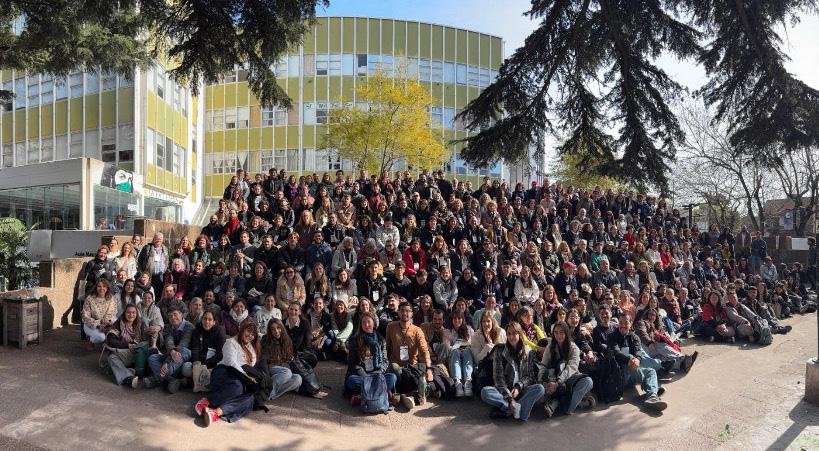
Meetings and activities—The Society regularly organizes major scientific events, most notably the Jornadas Argentinas de Botánica (Argentine Botanical Conference), the main national botanical meeting. In addition, SAB promotes scientific exchange through workshops, field excursions, and thematic activities that contribute to training and community building. The most recent meeting, the XL Jornadas Argentinas de Botánica, was held in Mar del Plata on September 23-27, 2025, bringing together researchers, students, and professionals from across the country to share advances in botanical research and strengthen national scientific collaboration (Figure 1).
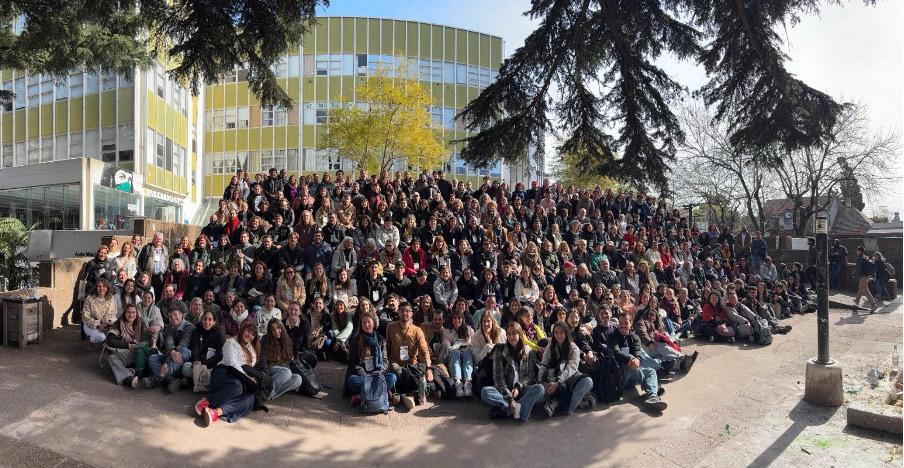
Awards, grants, and financial aid—During its biennial meeting, the SAB awards the Lorenzo Parodi Prize, which recognizes promising early-career researchers in botany. Financial aid is also available to attend the event. In addition, annual grants are awarded to PhD students and young botanists, and funding is given to publications related to the discipline.
Publications and outreach—Since its foundation, SAB has published the Boletín de la Sociedad Argentina de Botánica (BSAB). This peer-reviewed journal covers the full spectrum of plant biology, including systematics, ecology, evolution, anatomy, physiology, paleobotany, palynology, ethnobotany, and related disciplines such as mycology and phycology. The journal operates its own webbased submission platform, which includes dedicated editorial helpdesks to support the needs of contributors and the peer-review community (https://revistas.unc.edu.ar/ index.php/BSAB). The Society also publishes Folium (https://botanicaargentina.org.ar/ folium/), launched in 2018, a magazine-style outlet aimed at broader communication and outreach within the botanical community.
International connections—Through its publications, scientific meetings, and the participation of Argentine botanists in regional and global initiatives, SAB maintains active connections with the international botanical community. Its journals regularly publish contributions from researchers working on diverse floristic regions and methodological approaches, making SAB a relevant point of contact for botanists interested in South American plant diversity and research networks.
Social media and contact— SAB engages with the community via its official portal (www. botanicaargentina.org.ar) and social platforms such as Instagram (@socargbot) and Facebook (@sabotanica), complemented by a YouTube channel (@sabotanica) and specialized newsletters for its members. Communication is organized through distinct email channels: general inquiries and institutional matters (secretaria@botanicaargentina.org.ar); membership applications, dues, and related questions (socios@botanicaargentina.org. ar); courses and proposals for new training activities (cursos@botanicaargentina.org.ar); and billing requests or payment adjustments (facturacion@botanicaargentina.org.ar).
Brief history and interdisciplinary scope
The Argentine Paleontological Association (Asociación Paleontológica Argentina, APA) is a non-governmental, non-profit scientific organization founded on November 25, 1955, celebrated nationally in Argentina as the Day of Paleontology. Since its creation, APA has played a central role in fostering the development, organization, and international visibility of paleontological research in Argentina.
Paleobotany has been integrated into the Association since its inception. Dr. Carlos Menéndez was a member of the first Executive Committee, and both Dr. Carlos Menéndez and Dr. Sergio Archangelsky, prominent paleobotanists, served as Presidents for two terms each during the Association’s early decades, playing a key role in consolidating the discipline within APA.
APA has maintained a strong international projection through its publications, meetings, and collaborations. The Association brings together researchers working across all branches of paleontology and stratigraphy, promoting interdisciplinary approaches that integrate geology, biology, and earth system sciences. Within this framework, paleobotany occupies a key position as a discipline that bridges botany and paleontology, contributing essential insights into plant evolution, paleoecosystems, and past climates.
Membership—The APA currently has 710 members, including students, technicians, amateurs, and institutional members from Argentina and abroad. Its membership spans all major paleontological disciplines, with paleobotany and palynology as integral components. This interdisciplinary and international composition supports scientific exchange within Argentina and facilitates connections with the broader paleontological and botanical communities. Information on membership and application procedures is available through the APA membership form: https://airtable.com/shrMvVmKtiWvsVxHE
Among the main benefits of membership are research and training grants, access to APA publications, discounts on scientific meetings and postgraduate courses, and participation in outreach, photography, and professional development activities.
The Association has awarded annual research and training grants to undergraduate and graduate students, early-career researchers, and technicians, supporting fieldwork, museum visits, conference participation, and research-related expenses. APA also grants several scientific awards recognizing excellence in paleontological research. Further information is available at https:// www.apaleontologica.org.ar/premios/.
Scientific meetings—The Argentine Paleontological Association organizes two scientific events: the annual Reuniones de Comunicaciones de la Asociación Paleontológica Argentina (RCAPA) and the Congreso de la Asociación Paleontológica Argentina (CAPA), which occurs every four years. These meetings provide a space to present current research,
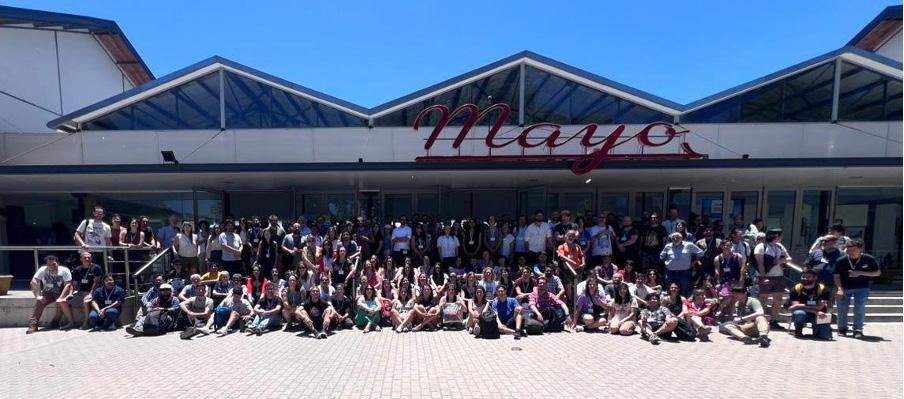
Figure 2. Congreso de la Asociación Paleontológica Argentina (CAPA), Paraná, Argentina, 2025.
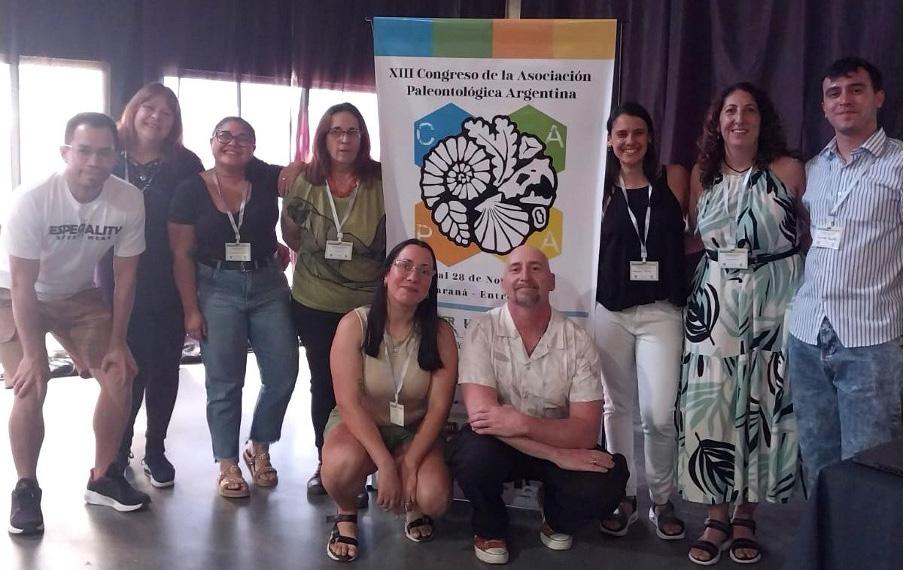
exchange ideas, and foster interaction across paleontological disciplines.
The most recent CAPA was held in November 2025 in Paraná, Entre Ríos Province, Argentina, and brought together approximately 350 participants (Figure 2). The scientific program included thematic symposia reflecting the breadth of paleontological research in the region, among them the Second Symposium on Paleoxylology and Stem Axis Anatomy, organized by D. P. Ruiz, M. J. Franco, and M. J. Brea (Figure 3). This symposium underscored the growing integration of paleobotanical approaches within the Association’s activities.
Publications—The Argentine Paleontological Association publishes two peer-reviewed scientific journals that serve as major platforms
for paleontological research in Latin America and beyond.
Ameghiniana, founded in 1957, is an internationally recognized journal covering all areas of paleontology, with a particular emphasis on Gondwana and the biotic history of the Southern Hemisphere. It is published in English, in both print and electronic formats, and indexed in major international databases.
The Publicación Electrónica de la Asociación Paleontológica Argentina (PE-APA), launched in 2015, is a fully open-access, online journal with no publication fees (Diamond Open Access). It publishes original articles in English and Spanish across a broad range of paleontological topics, including thematic volumes and conference proceedings.
Since 2021, through the initiative APA Editorial, the Association has expanded its editorial activities to include books on diverse aspects of paleontology, including education, outreach, history, and methodological approaches. The second book published through this initiative was entirely dedicated to a paleobotanical topic, underscoring the role of plant fossil research within APA’s editorial agenda (https://apaleontologica. publisher.org.ar/index.php/apa/primaveras). Together, these publications highlight APA’s commitment to scientific quality, open access, and interdisciplinary dialogue between paleontology and botany.
Social media and contact—The APA maintains an active digital presence through its institutional website (www. apaleontologica.org.ar), social media accounts (@apaleontologica), a public YouTube channel (https://www.youtube. com/@apaleontologica), and an open mailing list (https://groups.google.com/a/ apaleontologica.org.ar/g/apa-mailinggroup). Dedicated contact email addresses are available for the Secretariat, Presidency, Editorial and Advisory Committees, outreach, courses, grants, and regional delegations.
APA’s journals, Ameghiniana (www. ameghiniana.org.ar) and Publicación Electrónica de la APA (www.peapaleontologica. org.ar), also maintain independent websites, social media profiles, and editorial contact emails to facilitate communication with authors, reviewers, and readers.
Role of paleobotany within the Association and its relevance for botanists—Paleobotany has been an integral component of the Argentine Paleontological Association since
its foundation. Research on fossil plants, fossil woods, palynology, and plant-environment interactions is regularly represented in the Association’s scientific activities and publications. Paleobotanical studies within APA contribute directly to broader questions of evolutionary biology, biogeography, paleoecology, and paleoclimatology, reinforcing the strong conceptual link between extant botany and the fossil record.
From a botanical perspective, paleobotanical research promoted within APA provides a temporal dimension essential for understanding plant evolution, biogeographic patterns, and long-term vegetation dynamics. Studies on fossil floras, wood anatomy, and pollen records contribute to reconstructions of past climates and ecosystems, offering key insights that complement neobotanical data and strengthen links between extant plant diversity and the deep-time fossil record.
Local scientific societies play a crucial role as hubs connecting regional research to the global botanical community. Actively engaging with these societies strengthens the Botanical Society of America and enriches international collaboration by incorporating diverse perspectives, data, and scientific traditions.
The authors thank the Board of Directors of the Argentine Botanical Society (SAB), especially Agustina Yáñez, and the Argentine Paleontological Association (APA) for their support and collaboration in providing information for this profile.
The alternation of generations in land plants between a diploid sporophyte and haploid gametophyte stage is a difficult concept to teach, yet it is essential for an in-depth understanding of plants, and a thorough comprehension of this concept is essential for ideas in upper-level courses focusing on plant evolution, development, physiology, reproduction, and ecology. This overall lack of understanding may be both a product of and contributor to plant awareness disparity. We believe that the alternation of generations has great potential for serving as a springboard

for these additional topics in the plant sciences as examples in more complex topics such as evo-devo, population genetics, and phylogenetic comparative methods. Here, we aim to help educators to convey this concept by (1) identifying and addressing the “muddiest points” in regard to the alternation of generations, (2) providing active learning tools for both high school and undergraduate students, and (3) discussing hands-on inquiry approaches.
development, educational resources, life cycle
By Emma Dimick1 and Nora Mitchell2*
1Continuing Education, University of Wisconsin – Eau Claire, 105 Garfield Avenue, Eau Claire, Wisconsin, 54701
2Department of Biology, University of Wisconsin – Eau Claire, 105 Garfield Avenue, Eau Claire, Wisconsin, 54701
*Corresponding author: mitchenc@uwec.edu, nora.c.mitchell@gmail.com

The alternation of generations in embryophytes is a fundamental concept in the plant sciences, since it details major life history events in plants and serves as a focal point for distinguishing among major groups of land plants. Its understanding forms a basis for the major topics of evolution, development, physiology, reproduction, and ecology both at the broad scale across land plants and in more specific applications and examples. Despite the necessity of its comprehension, this topic remains one of the more unclear ones in introductory biology, potentially contributing to an overall lack of understanding and interest in plant biology compared to animal biology at the undergraduate level—a phenomenon known as “plant awareness disparity” (formerly “plant blindness”) (Schussler and Wandersee, 2001; Parsley, 2020).
There is a tendency to believe that “wellestablished” ideas such as the alternation of generations have always existed, but a knowledge of the origin and discovery of a key concept plus awareness of the unanswered questions and contemporary research can help students to view science as a process, rather than a list of facts to memorize. For example, the discovery of the alternation of generations can largely be attributed to two German scientists: Wilhelm Hofmeister in the mid-1850s and Eduard Strasburger in the late1890s to early-1900s. Hofmeister (Hofmeister, 1862) helped to first coin the term “alternation” between two phases with different types of organization, whereas Strasburger first described that fern sporophytes have twice the number of chromosomes as their gametophytes and coined the terms “haploid” and “diploid” (Strasburger, 1894).
Moreover, descriptions of the alternation of generations are often laden with a lot of terminology and jargon that students may or may not be familiar with, and very rarely have mastery over, leading to additional confusion about this concept and thus an inability to build additional ideas (Griffiths, 2002). Educators also need to solidify their understanding of the alternation of generations, since there are many misconceptions held by students enrolled in science of biology education programs (Karakaya et al., 2020), which could then be propagated to future students.
There is a wide range of high school, undergraduate, and graduate courses that teach various aspects of the alternation of generations. These courses may differ in the size of the class, delivery mode, expected prerequisite understanding, and students’ intrinsic motivation and investment in learning about plants. Educational resources can be tailored to help students in these various courses to understand the alternation of generations and can be expanded by (1) addressing the “muddiest points” (the most confusing aspects) of the alternation of generations, (2) using active learning strategies (even in large lecture environments), and (3) employing hands-on inquiry-based lab or experimental studies when feasible.
Some of the “muddiest points” (most confusing aspects or misconceptions) surrounding the concept of the alternation of generations are (1) that both the diploid and haploid stages are multicellular (unlike in humans, where the
haploid stage is unicellular); (2) that gametes are produced by mitosis (unlike in humans, where gametes are produced by meiosis) (Karakaya et al., 2020); (3) a more general misunderstanding of meiosis (Kalas et al., 2013); and (4) the use of confusing jargon or terminology. A study on pre-service biology teachers in Turkey (college students studying to be science or biology teachers) found that all individuals asked did not know what the alternation of generations is or what types of organisms have the alternation of generations (Karakaya et al., 2020). These misconceptions potentially stem from misteaching earlier in education. To correct these misconceptions, the researchers explained the first two muddiest points described above and had learners work through explanations in introductory textbooks, after which they performed much better on the assessment (Karakaya et al., 2020). Of note, the authors used the textbook Biological Science (Freeman, 2008), which includes extensive and in-depth discussions of common misconceptions compared to many introductory biology books, especially when addressing meiosis (see Freeman, 2008, Table 13.1). This seemingly small intervention was able to clear up the muddiest points. Other interventions include using analogies that students can relate to, such as comparing the plant embryo and gametophyte to a mother and embryo in placental mammals (matrotrophy = motherfeeding) (Graham, 1985; Graham and Wilcox, 2000). Issues of jargon can be difficult to address, but breaking down words into root meanings and providing references glossaries may help increase student comprehension.
Active learning is a model of learning that centers learners as they investigate, create, analyze, and discuss topics (Michael and Modell, 2003). For decades, scholars have been examining the impacts and benefits of active learning in classrooms and lectures. General characteristics of active learning include emphasizing student skill development over transmitting information, involving students in high-level thinking like synthesis and evaluation, and developing student understanding through activities instead of listening (Bonwell and Eison, 1991; Michael, 2006). Studies have shown that students demonstrate an increase in both test scores and understanding of concepts in sections where active learning techniques were used (Prince, 2004; Mello and Less, 2013; Freeman et al., 2014). Additionally, when comparing students in classrooms with and without active learning components, researchers found that students in traditional learning environments were 1.5 times more likely to fail than students in active learning classrooms (Freeman et al., 2014).
Active learning techniques are vast and diverse. Here we provide supplemental materials as examples of active learning strategies specific to the alternation of generations in plants, noting that these do not reflect the entirety of active learning strategies. Bonwell and Eison (1991) provide a repository of active learning strategies, some of which are identifiable in the included supplemental material. (Supplementary teaching materials are available at Zenodo: 10.5281/zenodo.18763941.)
Supplement 1 contains teaching materials appropriate for grades 6–8, including introductory slides (1a), worksheet for guided notes (1b), and traditional quiz (1c). When 1a and 1b are used together, students engage in several active learning strategies including diagramming, writing prompts, and defining key terms. Supplement 1c is a more traditional quiz that can be adapted to better align with active learning (e.g., providing learners with the chance to engage with the quiz in groups so they can actively and collaboratively discuss the content). Supplement 1 contains separate versions of 1a and 1c for instructors versus students. The instructor copy of 1a includes “walk through” notes to assist in explaining ideas, misconceptions, and when to refer to the guided notes document (1b). The instructor copy of 1c includes the correct answers highlighted.
Supplement 2 describes a classroom activity appropriate for grades 9–12 and introductory college courses that likens itself to the classic board game Clue, where instead of navigating a cardboard setting and learning about a murder by turning cards, students receive clues from correct answers via an elimination method, where determining the correct answer provides information on a person, weapon, or location not involved in the murder. Questions included in the example game were designed to cover multiple cognitive levels in a collaborative and cooperative way. This game could be used as a group activity for an exam study session or as in-person formative activity. The supplemental materials include diagrams and an overview for teaching the alternation of generations at this level (2a), instructions to the Clue game with ways to increase or decrease the difficulty (2b), and the Clue questions (2c) and answer sheets (2d) for both students and instructors.
Supplement 3 contains materials created for an introductory undergraduate course in a slightly more traditional way. Part 3a outlines visual-based instruction and active recall and is scalable to an individual classroom’s needs. It can be duplicated to cover the life cycle of another plant group or developed to be peerled. Using a blank version of the chart laid out in part 3b, instructors can ask learners to conduct a close reading and visual analysis. Instructors can ask learners to discuss topics such as phylogenetic innovations, provide them with various diagrams of the alternation of generations, and encourage them to consult their notes and peers as they fill in the chart and identify key similarities and differences among groups of land plants.
Many college biology courses have both “lecture” and “laboratory” components where the two parts work in sync to reinforce biological concepts and engage students in hands-on learning and use of the scientific method. The move toward “inquiry-based” activities, rather than “cookbook” labs, provides an especially effective pedagogical opportunity to solidify concepts of the alternation of generations. Here we highlight a few well-designed, published inquiry-based projects that address these ideas in the context of the alternation of generations.
Inquiry can also be implemented in middleand high-school settings; for example, the PlantingScience program is a studentteacher-scientist partnership that provides resources for plant modules and student-let investigation with mentorship from scientist volunteers (Taylor et al., 2022; Adams and Hartley, 2025). One of these PlantingScience
modules (C-Fern in the Open) uses the fern Ceratopteris richardii (C-Fern®) to understand the alternation of generations by culturing spores and observing the life cycle and developmental stages of this model species (Hickok et al., 1998; PlantingScience, 2016).
Another project using this same C-Fern® system was designed for introductory biology laboratories at Bucknell University to engage students in the alternation of generations and experimental design (Spiro and Knisely, 2008). Briefly, this fern produces either hermaphrodite or male gametophytes, whereas her1 mutants do not produce any male gametophytes. Notably, wild-type ferns produce an increased proportion of male gametophytes when grown in high densities. Students engage in a 2-week exercise, making in-class observations of both wild types and mutants, discussing ideas and generating hypotheses as a group, carrying out experiments and collecting data, and finally analyzing and writing reports on their results. Spiro and Knisely (2008) also conducted ungraded pre-tests and post-tests to assess student knowledge in experimental design as well as plant life cycles. They found a significant increase in experimental design understanding for all students, while students with limited initial background knowledge significantly increased their plant life cycle understanding after the project (Spiro and Knisely, 2008).
Another tool for inquiry-based learning in a very different way is shadie (Simulating Haploid-Diploid Evolution), a Python program for simulating evolution under different life cycles (Sorojsrisom et al., 2022). This tool enables users to ask how variation in plant life cycles and/or sexual systems affects genome diversity and can be used for both
research and hands-on inquiry laboratories. Implementation of shadie is in Python and is thus more appropriate for upper-level courses in either evolution or plant biology or courses that intersect with computer or data science, such as bioinformatics. Briefly, shadie allows users to observe outcomes of, for instance, the spread of mutations or linkage disequilibrium, under different plant life cycles while varying other biological parameters. Program documentation also includes additional resources on plant life cycles and evolutionary biology, and instructors can use this tool to further develop inquiry-based labs in more advanced courses (Sorojsrisom et al., 2022).
The above examples are powerful tools for learning the alternation of generations, and the development of additional modules or programs for different learning levels will help to engage students in this crucial concept.
The alternation of generations can be a starting point for understanding additional topics, including theoretical debates over its origins (Blackwell, 2003; Haig, 2008), evidence in the fossil record (Kenrick, 1994), “atypical” reproductive cycles (Bell, 1992; Bowman et al., 2016), the use of phylogenetic or systematic comparative methods (Graham, 1984; Bowman, 2013), developmental and genetic toolkits (Dickinson, 1994; Pires and Dolan, 2012; Horst and Reski, 2016; Bowman et al., 2019; Bourdareau et al., 2021), transcriptomics and gene expression (Szovenyi et al., 2011), physiological ecology and biogeography (Sato and Sakai, 1981; Nitta et al., 2017; Pinson et al., 2017), natural selection and population genetics (Bourdareau et al., 2021; Pelosi and Sessa, 2021; Pelosi et al., 2023) and more. The literature relating the above topics to the
alternation of generations is extensive and provides ample opportunity for discussion topics as well as questions for those looking to actively pursue research in this field.
In this essay, we have emphasized common conceptual difficulties associated with teaching the alternation of generations in plants and provided some resources for educators to overcome these difficulties. We hope that these resources will support educators in teaching this crucial concept, learners in cementing their understanding, and researchers in thinking about next steps, all with the ultimate goal of broadening interest and participation in the plant sciences.
The authors thank the University of Wisconsin – Eau Claire for their support of this work, the University of Wisconsin – Eau Claire Biology 222 Foundations of Biology II class for inspiring this work, Marshall Sundberg for feedback on this manuscript, and Carolina Siniscalchi for her editorial work.
Supplementary teaching materials are available at Zenodo: 10.5281/zenodo.18763941.
Adams, C., and J. Hartley. 2025. Celebrating 20 Years of PlantingScience! Planting Science Bulletin 71: 96–100.
Bell, P. R. 1992. Apospory and apogamy: implications for understanding the plant life cycle. International Journal of Plant Sciences 153: S123–S136.
Blackwell, W. H. 2003. Two theories of origin of the land-plant sporophyte: which is left standing? The Botanical Review 69: 125–148.
Bonwell, C. C., and J. A. Eison. 1991. Active learning: Creating excitement in the classroom. 1991 ASHE-ERIC higher education reports. ERIC, Office of Educational Research and Improvement (ED), Washington, DC.
Bourdareau, S., L. Mignerot, S. Heesch, A. F. Peters, S. M. Coelho, and J. M. Cock. 2021. Alternation of Generations in Plants and Algae. In L. Nuño de la Rosa, and G. B. Müller [eds.], Evolutionary Developmental Biology, 631–644. Springer International Publishing, Cham.
Bowman, J. L. 2013. Walkabout on the long branches of plant evolution. Current Opinion in Plant Biology 16: 70–77.
Bowman, J. L., L. N. Briginshaw, and S. N. Florent. 2019. Evolution and co-option of developmental regulatory networks in early land plants. In Current Topics in Developmental Biology, 35–53. Elsevier.
Bowman, J. L., K. Sakakibara, C. Furumizu, and T. Dierschke. 2016. Evolution in the cycles of life. Annual Review of Genetics 50: 133–154.
Dickinson, B. H. G. 1994. The regulation of the alternation of generation in flowering plants. Biological Reviews 69: 419–442.
Freeman, S. 2008. Biological science. San Francisco: Pearson Education, Inc.
Freeman, S., S. L. Eddy, M. McDonough, M. K. Smith, N. Okoroafor, H. Jordt, and M. P. Wenderoth. 2014. Active learning increases student performance in science, engineering, and mathematics. Proceedings of the National Academy of Sciences 111: 8410–8415.
Graham, L. E. 1984. Coleochaete and the Origin of Land Plants. American Journal of Botany 71: 603–608.
Graham, L. E. 1985. The Origin of the Life Cycle of Land Plants: A simple modification in the life cycle of an extinct green alga is the likely origin of the first land plants. American Scientist 73: 178–186.
Graham, L. K. E., and L. W. Wilcox. 2000. The origin of alternation of generations in land plants: a focus on matrotrophy and hexose transport. Philosophical Transactions of the Royal Society of London. Series B: Biological Sciences 355: 757–767.
Griffiths, N. 2002. Chapter 3: What Does that Word Mean? The Importance of Language in Learning Biology. Counterpoints 189: 69–90.
Haig, D. 2008. Homologous versus antithetic alternation of generations and the origin of sporophytes. The Botanical Review 74: 395–418.
Hickok, L. G., T. R. Warne, S. L. Baxter, and C. T. Melear. 1998. Education: sex and the C-Fern: not just another life cycle. Bioscience 48: 1031–1037.
Hofmeister, W. 1862. On the germination, development, and fructification of the higher Cryptogamia: and on the fructification of the coniferae. London: Corinthian Press.
Horst, N. A., and R. Reski. 2016. Alternation of generations - unravelling the underlying molecular mechanism of a 165-year-old botanical observation X. Wang Plant Biology 18: 549–551.
Kalas, P., A. O’Neill, C. Pollock, and G. Birol. 2013. Development of a Meiosis Concept Inventory. CBE—Life Sciences Education 12: 655–664.
Karakaya, F., M. Yilmaz, O. Çimen, and M. Adigüzel. 2020. Identifying and correcting preservice teachers’ misconceptions about the alternation of generations. Cumhuriyet Uluslararası Eğitim Dergisi 9: 1047-1063.
Kenrick, P. 1994. Alternation of generations in land plants: new phylogenetic and palaeobotanical evidence. Biological Reviews 69: 293–330.
Mello, D., and C. A. Less. 2013. Effectiveness of active learning in the arts and sciences. Humanities Department Faculty Publications & Research 45.
Michael, J. 2006. Where’s the evidence that active learning works? Advances in Physiology Education 30: 159–167.
Michael, J., and H. I. Modell. 2003. Active learning in secondary and college science classrooms: A working model for helping the learner to learn. New York: Routledge.
Nitta, J. H., J.-Y. Meyer, R. Taputuarai, and C. C. Davis. 2017. Life cycle matters: DNA barcoding reveals contrasting community structure between fern sporophytes and gametophytes. Ecological Monographs 87: 278–296.
Parsley, K. M. 2020. Plant awareness disparity: A case for renaming plant blindness. Plants, People, Planet 2: 598–601.
Pelosi, J. A., W. B. Barbazuk, and E. B. Sessa. 2023. Life without a sporophyte: the origin and genomic consequences of asexual reproduction in a gametophyte-only fern. International Journal of Plant Sciences 184: 454–469.
Pelosi, J. A., and E. B. Sessa. 2021. From genomes to populations: a meta-analysis and review of fern population genetics. International Journal of Plant Sciences 182: 325–343.
Pinson, J. B., S. M. Chambers, J. H. Nitta, L.-Y. Kuo, and E. B. Sessa. 2017. The separation of generations: biology and biogeography of longlived sporophyteless fern gametophytes. International Journal of Plant Sciences 178: 1–18.
Pires, N. D., and L. Dolan. 2012. Morphological evolution in land plants: new designs with old genes. Philosophical Transactions of the Royal Society B: Biological Sciences 367: 508–518.
PlantingScience. 2016. C-Fern Module - Teacher’s Guide. Website https://plantingscience.org/ resources/90.
Prince, M. 2004. Does Active Learning Work? A Review of the Research. Journal of Engineering Education 93: 223–231.
Sato, T., and A. Sakai. 1981. Cold tolerance of gametophytes and sporophytes of some cool temperate ferns native to Hokkaido. Canadian Journal of Botany 59: 604–608.
Schussler, E. E., and J. H. Wandersee. 2001. Toward a theory of plant blindness. Plant Science Bulletin 47: 2–9.
Sorojsrisom, E. S., B. C. Haller, B. A. Ambrose, and D. A. R. Eaton. 2022. Selection on the gametophyte: Modeling alternation of generations in plants. Applications in Plant Sciences 10: e11472.
Spiro, M. D., and K. I. Knisely. 2008. Alternation of Generations and Experimental Design: A Guided-Inquiry Lab Exploring the Nature of the her1 Developmental Mutant of Ceratopteris richardii (C-Fern). CBE—Life Sciences Education 7: 82–88.
Strasburger, E. 1894. The periodic reduction of the number of the chromosomes in the life-history of living organisms. Annals of Botany 8: 281–316.
Szovenyi, P., S. A. Rensing, D. Lang, G. A. Wray, and A. J. Shaw. 2011. Generation-biased gene expression in a bryophyte model system. Molecular Biology and Evolution 28: 803–812.
Taylor, J. A., C. T. Adams, A. L. Westbrook, J. Creasap Gee, J. K. Spybrook, S. M. Kowalski, A. L. Gardner, and M. Bloom. 2022. The effect of a student–teacher–scientist partnership program on high school students’ science achievement and attitudes about scientists. Journal of Research in Science Teaching 59: 423–457.
We are currently looking for proposals for theme issues in all areas of the biological sciences. If you have an idea for a topic and would be interested in guest editing an issue, visit royalsocietypublishing.org/rstb/submit-proposal
Benefits of guest editing:
• Influence and direct the thinking in your field
• Bridge traditional disciplines
• Promote an emerging area of research, and create a lasting resource
• Build your personal network
• Gain editorial experience
• Reach a wide and relevant international readership
• Join the authorship history of the world’s longest-running scientific publisher.
Recent issues include: Crops under stress: can we mitigate the impacts of climate change on agriculture and launch the ‘Resilience Revolution’? edited by Ron Mittler, Rumyana Karlova, Diane Bassham and Tracy Lawson.
Acoustic monitoring for tropical ecology and conservation, edited by Larissa Sayuri Sugai, Daniela Martínez-Medina and Monica Retamosa Izaguirre.
Shifting seas: understanding deep-time human impacts on marine ecosystems, edited by Luke Holman, Kristine Bohmann, Oliver Craig, David Orton, Mikkel Winther Pedersen, Morten Tange Olsen, Ruth Thurstan and James Scourse.
Browse more issues at royalsocietypublishing.org/journal/rst
Image: Aerial view of the Borneo rainforest. © iStock / yusnizam.
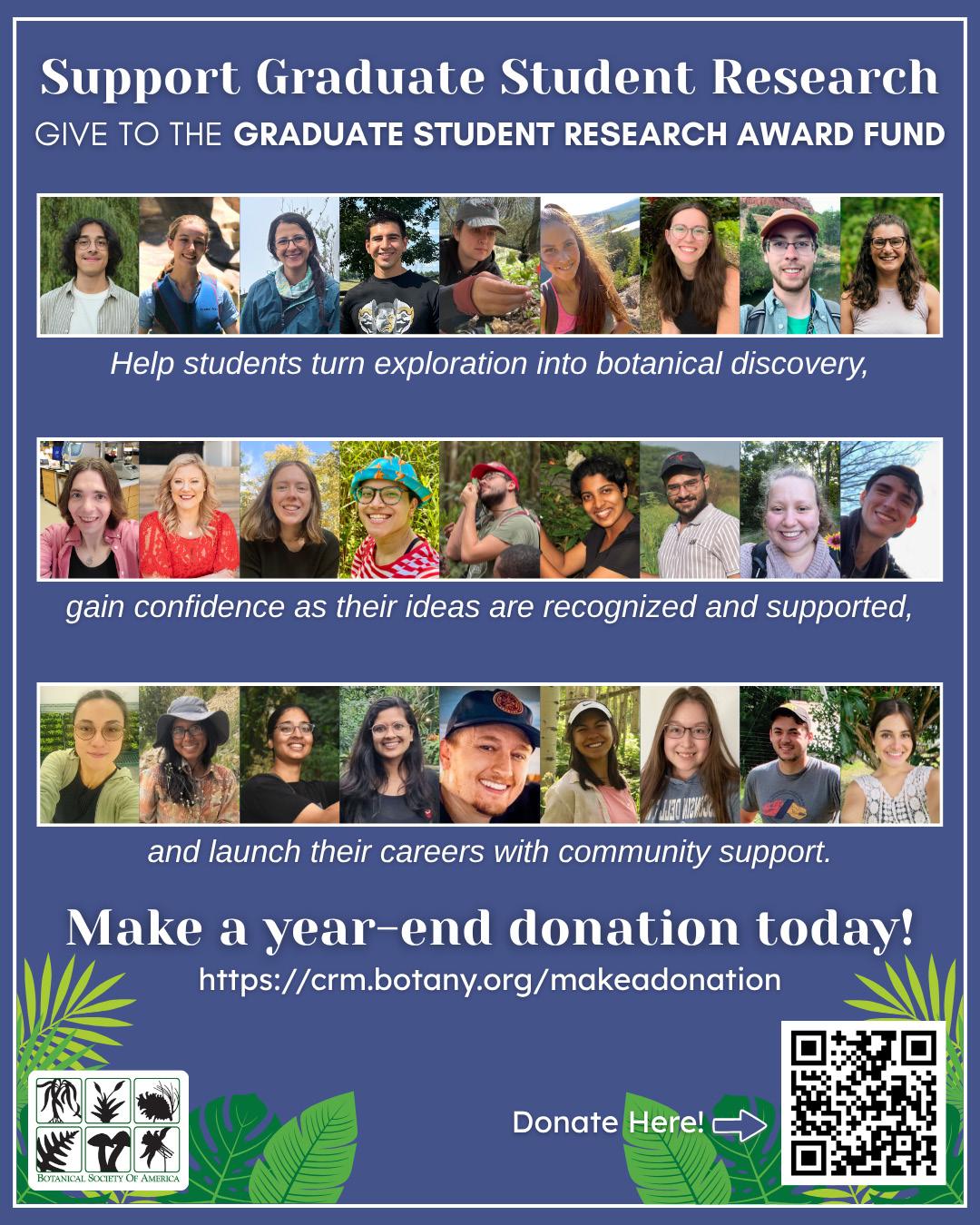
The BSA community showed up in 2025! We appreciate everyone who renewed their membership, purchased or donated gift memberships, and contributed to the Graduate Student Research Award (GSRA) Fund, the BSA Endowment, and other Society funds. We are also deeply grateful to those who generously gave their time and energy through committee service, section leadership, roles as Associate or Review Editors, the Early Career Advisory Board (ECAB), the Board of Directors, and more.
In 2025:
• 3036 members called BSA their professional home
• 200 gift memberships were purchased or donated in 2025

By Amelia Neely
BSA Membership & Communications Manager
E-mail: ANeely@ botany.org
• $13,000 was donated to the GSRA, and additionally $11,700 was donated for the GSRA via additional fees by Professional members during renewals
• $37,700 was donated to the Endowment
There were
• 12 Board Members
• 27 Committees with over 85 committee members
• Over 50 section leaders
• 12 ECAB members
• Over 100 AJB and APPS Associate or Review Editors
With a full-time staff of just nine—including our Executive Director, three publications staff, one in membership and communications, two in education, one in accounting, and one in IT—BSA relies on the strength of our community. Our staff work hard to carry out the mission and programming of the Society, and your support, both financial and volunteer, makes it possible to accomplish goals that serve our global botanical science community. Thank you!
Botany360 is a year-round series that keeps our botanical science community connected during the 360 days outside of our Botany Conferences. The Botany360 event calendar highlights upcoming events and makes it easy to see what is happening across the Society.
Did you know there are more than 25 free event recordings available on the Botany360 web page? If you missed a session, you can still catch up anytime
The following is the full list of 2025 Botany360 event recordings:
• Prepping for PLANTS: An Informational Webinar about the PLANTS Travel Awards for Underrepresented Undergrads https://www.youtube.com/ watch?v=wI-F6Kbu0XM
• Careers in Botany: Beyond Academia https://www.youtube.com/ watch?v=kwJpBjOtyBA
• Make the most out of Botany 2025: A student conference guide https://www.youtube.com/ watch?v=goEVbnKIAtI
• 2025 Graduate Research Fellowship Writing Panel https://www.youtube.com/ watch?v=11L4M8AJ4YY
• Applying to Graduate School Q&A Panel https://www.youtube.com/ watch?v=awAVzOmvs5M
This year’s Botany360 programming is already underway, with more events coming soon:
• How to Be a Successful BSA Student Rep https://www.youtube.com/ watch?v=gcZD-DHcKQM This event was designed to help potential BSA student reps understand the role, responsibilities, and impact of serving within the BSA. The session covered expectations, communication strategies, and ways to effectively advocate for student voices while building leadership and professional development experience.
Do you have an idea for a Botany360 event? Or is there something you would love to see us offer? I am always looking for suggestions. Email me at aneely@botany.org.

BSA SWAG STORE: THE SPRING LINEUP IS NOW OPEN!
Thank you to everyone who has visited and shopped in the BSA Swag Store this last winter. We truly appreciate your support. We recently sent a survey to members who have purchased items to gather feedback, and we are grateful for your thoughtful suggestions. Your ideas helped to shape our Spring Lineup, which launched in early April.
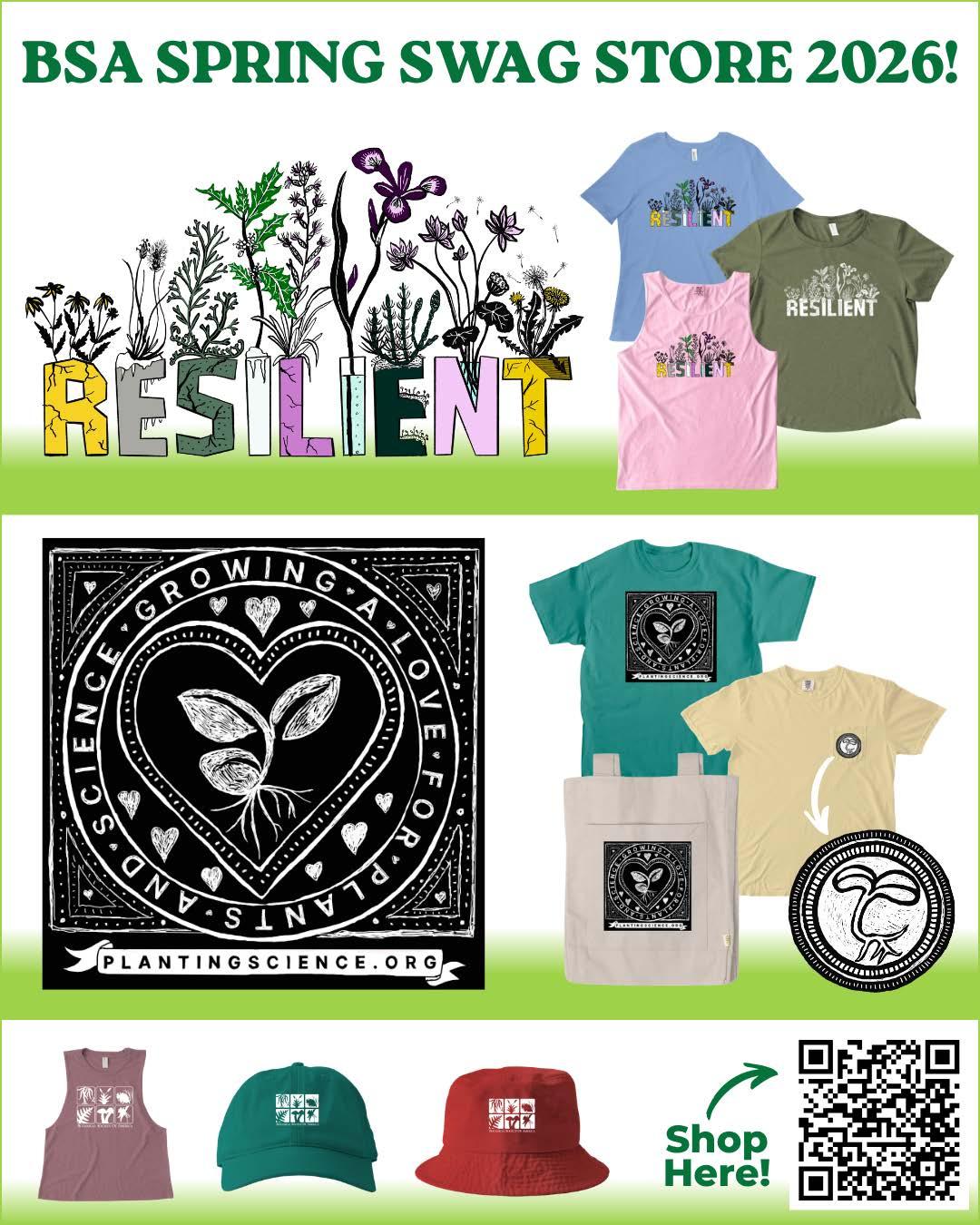
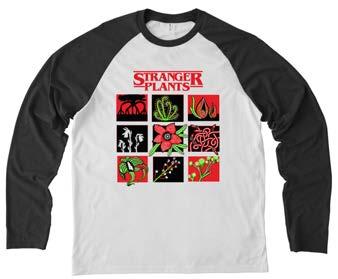
Our retro color-block Stranger Plants T-shirts, featuring original illustrations by Catrina Adams with concert-style common and scientific names on the back, continue to be available. Classic BSA logo T-shirts also remain in the shop, along with additional new apparel and other options so you can represent botanical science in style.

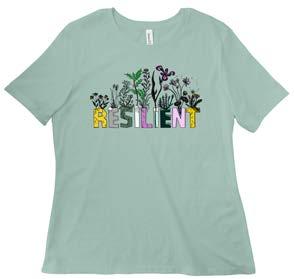
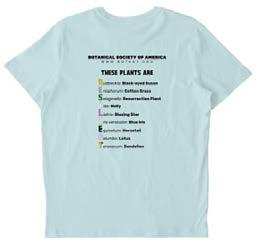
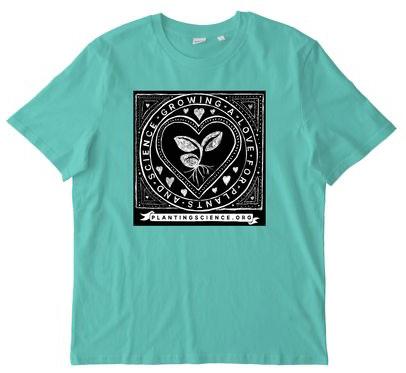
Spring has arrived and so has our latest BSA Swag Shop collection! BSA's own Catrina Adams brings her botanical artistry to two stunning pieces, our "Resilient" design and special PlantingScience fundraiser items. There is something to love for every botanical enthusiast, and every purchase makes an impact. All PlantingScience merchandise proceeds go directly to PlantingScience, while all other purchases support BSA's programming and mission.
Have an idea for future BSA swag? We would love to hear it. Email aneely@botany.org.
The BSA Spotlight Series highlights early-career and professional scientists in the BSA community and shares both scientific goals and achievements, as well as personal interests of the botanical scientists, so you can get to know your BSA community better. To learn more about the program, and to apply to be a Spotlight, visit https://botany.org/home/careers-jobs/ careers-in-botany/bsa-spotlight-series.html.
Here are the latest Spotlights:
• Emmanuel Chukwuma, Graduate Student, University of Arkansas https://botany.org/home/careers-jobs/careers-in-botany/bsa-spotlight-series/emmanuel-chukwuma.html
• Alexandre Gibau de Lima, Graduate Student, Botanical Garden of Rio de Janeiro (Brazil) and the University of Gothenburg (Sweden) https://botany.org/home/careers-jobs/careers-in-botany/bsa-spotlight-series/alexandre-gibaude-lima.html
• Charli Minsavage-Davis, Graduate Student, Georgetown University https://botany.org/home/careers-jobs/careers-in-botany/bsa-spotlight-series/charli-minsavage-davis.html
• Nicole Mitidieri-Rivera, Graduate Student, University of Wisconsin–Madison https://botany.org/home/careers-jobs/careers-in-botany/bsa-spotlight-series/nicole-mitidieririvera.html
• Will Pearce, Undergraduate Student, University of Utah https://botany.org/home/careers-jobs/careers-in-botany/bsa-spotlight-series/will-pearce.html
• Sara Sofía Pedraza Narváez, Graduate Student, University of California, Los Angeles (and current BSA Student Representative!) https://botany.org/home/careers-jobs/careers-in-botany/bsa-spotlight-series/sara-sofia-pedraza-narvaez.html
Do you know a business or organization that would benefit from being in front of over 3000 botanical scientists from over 70 countries, and over 48,500 followers on social media? The BSA Business Office has many opportunities for sponsorship including:
• Sponsored Membership Matters newsletter articles and footer ads
• BSA website banner ads
• Hosting Botany360 events
• Botany360 event logo advertisement during event, a slide before/after event, or time to discuss product at beginning or end of event
• Sponsored social media ads
• Advertisement space in the Plant Science Bulletin
Because we value our community, the above opportunities are limited with the hope of being informative without being intrusive. Sponsorships will allow BSA to fulfill our strategic plan goal of being financially responsible during this time of economic shifts.
To find out more about sponsorship opportunities, email: bsa-manager@botany.org.
The BSA Jobs Board (https://jobs.botany. org/) is a valuable and accessible resource we offer our community. At any given time, there are between 20 and 50 active postings, and during peak hiring seasons that number can climb to more than 90 opportunities. Positions span a wide range of career stages and sectors, helping connect students, earlycareer professionals, and established scientists with meaningful work in botanical science. Best of all, it is completely free to post positions and free to browse opportunities, making it an open and equitable platform for both employers and job seekers. Whether you are hiring or exploring your next step, the BSA Jobs Board is a dynamic hub for our field.
The Botanical Society of America supports scientists at all career stages and recognizes that students, as well as professionals from developing nations, may face heightened financial barriers to participating fully in professional societies and conferences. To help address these challenges, BSA offers reduced membership rates for one- and three-year Student and Developing Nations membership types, discounted student conference registration, and travel awards for both groups to increase access to the annual Botany Conference. Gift memberships may also be purchased to support access for individuals in these groups. In addition, limited financial assistance to start or renew memberships is available to students and to professionals from developing nations who are experiencing financial hardship.
To learn more about BSA membership:
• View membership types and fees at https://botany.org/home/membership.html.
• Explore membership benefits at https://botany.org/home/membership/member-benefits.html.
• Join the Society or purchase a gift membership at https://crm.botany. org/.
For information on financial assistance to start or renew a BSA membership, please contact Amelia Neely at aneely@botany.org.
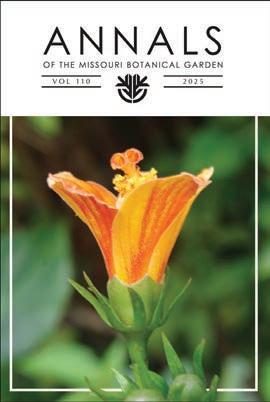
Produced by the Missouri Botanical Garden Press, Annals of the Missouri Botanical Garden and Novon, A Journal for Botanical Nomenclature are journals devoted to topics in plant systematics and botanical nomenclature.
The Annals includes original articles in systematic botany and evolutionary biology. Novon focuses on the establishment of new nomenclature, including new taxa and new names, for vascular plants and bryophytes. Both journals reflect the Garden's global mission, with contributing authors from the Americas, Africa, Europe, Asia, and Australasia.
To submit articles, please visit annals.mobot.org and novon.mobot.org
We are pleased to offer the option to publish open access.
The PlantingScience Spring 2026 session is fully underway. We have 117 student teams participating, and each team is currently moving from the introduction phase into planning and executing their student-led investigations. This session we have teams exploring photosynthesis, seed germination, alternation of generations in C-Fern, and environmental impacts on genetic expression in Brassica. Many thanks to our wonderful Master Plant Science Team members who are supporting the participating teachers, and to the 80+ scientists who have been giving their time to mentor and guide the student groups. We look forward to sharing this sessions Star Projects with you when the session closes in April!
ROOT&SHOOT Travel Awardees
The ROOT&SHOOT Research Coordination Network (RCN) is in the final year of NSF funding. One of the goals of ROOT&SHOOT is to strengthen connections between RCN member societies like BSA and members of the Society for Advancement of Chicanos/ Hispanics & Native Americans in Science (SACNAS), Minorities in Agriculture, Natural Resources and Related Sciences (MANRRS), and the American Indian Science and Engineering Society (AISES).


By Dr. Catrina Adams, Education Director Jennifer Hartley, Education Programs Supervisor
In this final year of the grant, ROOT&SHOOT will support a larger number of travel awards than in the past. The award provides pairs of mentees and mentors affiliated with SACNAS, MANNRS, and AISES with travel and registration to attend plant science conferences (including Botany 2026 in Tucson, AZ).
Congratulations to this year’s selected travel awardee mentee/mentor pairs:
• Logayn Abushal & Samuel P. Hazen
• Carolina Rodriguez Ramos & Vincent E. Cerbantez Bueno
• Catherine Mercado & Robert VanBuren
• Jazlyn Salazar-Lucero & Mason McNair
• Diana Galan & Michael Moody
• Sean Chien & Jay Goldberg
• María Cuervo Gómez & Pamela Soltis
• Julianna Harden & Joshua Felton
• Rachel Havok & Kathryn Turner
• Maddumage Dona Ginushika Premarathne & Corrinne Grove
• Angelique Acevedo & MinYa
• Makoa de Almeida & Carrie Tribble
SI-MI Mentoring Course: Preparing for Fall 2026 Cohort
The ROOT&SHOOT RCN has also been busy this past fall piloting a new online mentoring training called SI-MI mentoring (Social Identity Matters in Mentoring). Many BSA members have been involved in working groups tasked with helping to design, facilitate, and pilot this course over the last few years.
The course involves seven 1.5-hour virtual sessions held every other week, and includes topics such as engaging in impactful mentor–
mentee conversations, shifting from a deficitbased to asset-based mindset, color-evasive practices in academia, intersectionality, and developing greater cultural awareness as a mentor. During this fall’s pilot course, participants provided extensive feedback that the course development team is now using to make revisions and develop an 8-hour facilitator training program. The team is also working on a manuscript to document and share the full curriculum and the process of creating and piloting it with a wider audience. The revised course will be offered this fall (August–November), and training for new facilitators will take place in late summer (July/August).
If you are interested in being a participant in the Fall 2026 online training, or are interested in receiving training to facilitate the SI-MI course this fall, please complete this contact form and we will let you know when applications are open: https://docs.google.com/forms/ d/e/1FAIpQLSeKlQhVwTFS6u5j1t_ L2DdeErP0RMvZuEVLtm8GrsxABGYfCw/ viewform.
Conservation. Research. Publication.
The Cactus and Succulent Society of America, Inc. (CSSA) supports the scientific study and conservation of cacti and succulents worldwide.
Conservation & Research Grants
CSSA provides funding for:
Field-based Conservation Projects
Habitat Protection Initiatives
Taxonomic and Systematic Research
Ecological and Population Studies
Seed Banking and Ex Situ Conservation Efforts
Student and Early-career Research Support
We are committed to supporting rigorous, science-driven projects that contribute meaningfully to the understanding and preservation of succulent plants in habitat.
CSSA offers two respected venues for botanists and researchers:
Cactus and Succulent Journal
Haseltonia

Our long-running, peer-informed publication reaches a broad international audience of scientsts, conservationists, and highly engaged plant specialists.
Ideal for:
Research Articles
Field Reports and Taxonomic Notes
Conservation Updates
Broader-interest Scientific Features
Our peer-reviewed annual journal dedicated to original scientific research on succulent plants.
Ideal for:
Systematics and Taxonomy
Phylogenetics
Ecology
Conservation Biology
Morphology and Anatomy

On March 8, 2026, International Women’s Day was celebrated in many countries around the world. This important date recognizes the social, economic, cultural, and political achievements of women, while also calling for continued progress toward gender equality across all fields. In addition, on February 11, 2026, the world celebrated the International Day of Women and Girls in Science. This year’s theme, “Synergizing AI, Social Science, STEM, and Finance: Building Inclusive Futures for Women and Girls,” highlighted the importance of interdisciplinary collaboration in advancing equity and opportunity.
With these meaningful celebrations taking place over the past two months, the Botanical Society of America (BSA) would like to honor women in our community and celebrate their contributions as leaders, researchers, students, and faculty advancing botany around the


By Benjamin Aderemi Ajayi and Sara Pedraza BSA Student Representatives
globe. As students committed to equity and inclusion, we are proud to be part of a Society that actively supports these values and creates opportunities for all!
We are also very thankful to BSA members who support students through donations, membership gifts, and their ongoing contributions to the society. We encourage everyone to continue supporting BSA initiatives that strengthen our community. We also invite students to explore volunteer opportunities and the many awards offered by BSA, including those that support attendance at our annual conference—an excellent way to stay connected and engage with fellow members!
In a time of uncertainty for scientific research, the community is more important than ever. Let’s continue to stay connected, support one another, and grow together in our academic journeys. Feel free to reach out to us via email to Ben (baa23a@fsu.edu) and Sara (sarapedraza@g.ucla.edu) if you have any questions or comments about how our Society can best support you.
The Botany Conference is just around the corner, and we can’t wait to see you in Tucson, Arizona! Keep an eye on your email in the coming months for details on our Botany360 event in May: “Make the Most of Botany 2026: A Student Conference Guide”—or visit https:// botany.org/home/resources/botany360.html. Don’t miss it!
Here’s a summary of the conference schedule:
• Saturday 8/1: Field Trips
• Sunday 8/2: Field Trips, Workshops, Plenary Lecture, All Society Mixer
• Monday 8/3: Poster Session
• Monday 8/3 –Wednesday 8/5: Oral presentations and events
• Wednesday 8/5 evening: Conferencewide celebration!
Join us for the many student-centered conference events, including a workshop, a Careers in Botany Panel, a Student Social, and a Student Chapter Meet-up.
Make sure to come to our Botany360 event to hear about the following items:
• General Conference Tips
• Budgeting for the Conference
• Volunteer Opportunities at the Conference
• Presenting at the Conference
• Networking Tips
If you are interested in science communication, consider writing an opinion piece for your local or hometown newspaper. Science Homecoming’s goal is to encourage scientists to return to their hometowns by writing brief opinion pieces in their hometown newspaper, advocating for investment in American science. For more information see https://sciencehomecoming.
Auxin Signaling: From Synthesis to Systems Biology, 2nd Ed Drying of Aromatic Plant Material for Natural Perfumes
Evolution of the Arborescent Gymnosperms: Pattern, Process and Diversity, Volume 1 Northern Hemisphere Focus, Volume 2 Southern Hemisphere Focus
Wild and Wonderful: An Ethnography of English Naturalists
Writing Science in Plain English, Second Edition
Auxin Signaling: From Synthesis to Systems Biology, ed 2
Dolf Weijers, Karin Ljung, Mark Estelle, and Ottoline Leyser 2022. ISBN 978-1-621824-00-8
US$135 (hardcover); 468 pp. Cold Spring Harbor Laboratory Press
Auxin—etymologically rooted in the Greek word auxein, meaning “to grow”—is the prima donna of plant hormones, and this collection of reviews is a testament of its contribution to the fascinating natural history of plants. To begin at the very origin, the genes for auxin biosynthesis may have been horizontally transferred from bacteria to ancestral plants, one of many topics discussed in this book. It is hypothesized that auxin was initially an indicator of decaying organic rich material. Over the course of plant evolution, with cell death being internalized as an essential feature of development in multicellular life, sub- and neofunctionalization may have led to root-like structures that grew outward for nutrients while internally, the molecular crosstalk surrounding cellular decomposition enabled regeneration and organ formation.
This is the second edition in a series on ever-expanding auxin research, published 11 years after the release of the first in 2011.
Compared with the first volume, the second elaborates more on the diversification of this branch of plant physiology and development. More than 100 years of interrelated research have amassed since a substance that may influence plant development away from the site of synthesis was first hypothesized by Julius von Sachs and Charles Darwin. As such, the book may be viewed as a discourse in greater depth on auxin biochemical and developmental mechanisms, as well as how these may correspond with plant evolution and pathosystems.
Readers with a foundational knowledge of plant molecular biology and integral hormones will find this book both interesting and informative. It is specifically useful for researchers whose work directly or indirectly comprises plant signaling and metabolomics. Each chapter of the book includes color diagrams, illustrations, and tables, making the material easy to follow. The first half of the compilation enriches our understanding of auxin biosynthesis, conjugation, and degradation; the biochemical properties of auxin transporters and the effect of post transcriptional modifications; the ordered and disordered (the latter an emerging theme) protein conformations of nuclear auxin signaling components and potential
functional implications; and mechanisms underlying rapid non-transcriptional auxin responses such as changes to plasma membrane potential, endomembrane trafficking, inhibiting root development, and cytoskeletal remodeling.
The mid-section addresses some less-defined areas involving the function of a putative auxin receptor where there may not necessarily be one; noncanonical auxin signaling associated with non-transcriptional networks and transcriptional repressor stabilizers, in contrast to their degradation observed in canonical pathways; the multifaceted auxin interactions in the shoot apical meristem; the establishment of primary and lateral root architecture based on internal and external cues; the theoretical framework for vascular patterning as mediated by auxin signaling and transport; and the pattern formation in embryogenesis and floral organ development.
The final portion of the compendium juxtaposes the intersection between auxin and plant defense, evolution, and the advances in molecular and computational tools. As metabolomes of hosts under biotic stress reveal, the canonical defense hormones alone, namely salicylic acid and jasmonic acid, cannot explain the complexity of responses to pathogens. The book describes how auxin may have roles in exacerbating host susceptibility as well as pathogen virulence, and the potential interactions with other plant hormones, including ethylene, abscisic acid, cytokinins, gibberellic acid, and strigolactones, which facilitate defense and developmental pathways.
As outlined in the book, auxin research from early on has pioneered and perfected the techniques available in plant sciences. Libraries of small molecules are among the modern tools applied to further dissect the
auxin regulatory pathways. Bryophytes and green algae, early diverging non-vascular organisms, are being used to explore the evolution of these pathways with the added benefit of low genetic redundancy that may simplify delineating such highly robust mechanisms enforced by multiple homologs in vascular plants. Remarkably, auxin-mediated signals are implemented by computational algorithms to model organ patterning and adaptation.
This book is an instance where the whole is greater than the sum of its parts. It efficiently summarizes the research foci while connecting the dots between a diverse array of seemingly unique fields. Thus, it is helpful to have a physical copy of this bible on the current affairs of auxin biology. One caveat to consider is our tendency to overextend the limits of our knowledge base to fill in the gaps, conjuring causations where there are only correlations. But cautious optimism does argue for some exciting new developments in plant biology, intricately intertwining multiple disciplines toward a unified one. Just as the opening chapter highlights using allegorical analogies rather uniquely, our conception of auxin-related phenomena is far from immaculate. A third edition is not, as of yet, underway according to Dr. Dolf Weijers, a series editor (personal communication). With new discoveries and trends, as biologists and bioinformaticians, I believe that we stand to benefit from the continuation of this series.
Moore, T. C. 1989. Auxins, Biochemistry and physiology of plant hormones, 28–93. Springer.
Sheldrake, A. R. 2021. The production of auxin by dying cells. Journal of Experimental Botany 72: 2288–2300.
—Dinusha C. Maheepala, The University of Arizona, School of Plant Sciences, Tucson, AZ.
Viplav Hari Pise, Ramakant Harlalka, Bhaskar Narayan Thorat 2024. ISBN: 978-1-032-32502-6 Hardcover, 978-1-032-32504-0 Paperback, 978-1-003-31538-4 eBook $104.00 Hardcover; $66.99 paperback; eBook $53.59; 104 pp. CRC Press, Boca Raton, FL
During the year’s longest nights, it seems especially restorative to read about drying aromatic plant materials for natural perfumes. The appreciation of fragrant botanical sources—leaves, flowers, fruits, seeds and roots—dates back to antiquity, with graphical evidence about usage for food, medicine, and symbolic purposes, across various cultures. Archaeological evidence shows that early humans collected and cultivated plants; ancient written records from Mesopotamia, Egypt, India, and Greece detail plant uses, with the Egyptians documenting over 800 medicinal plants in the Ebers Papyrus alone. The approach taken for this volume reflects ancient practice in the title’s first word: drying.
This slim volume packs a great deal of information about plant perfumes into its pages. The combined careers of authors Pise, Harlalka and Thorat bring more than seven decades of professional experience working with essential oils and their applications, as well as extensive involvement with large-scale aromatic plantations, extraction, blending, formulation and marketing; identification of indigenous aromatic and medicinal plants, developing extraction protocols, scaling-up to obtain isolates for market acceptance; drying, crystallization, filtration and dehydration.
According to the authors, approximately 5% of plant species known are aromatic; however, only 400–500 species are commercially
processed as aromatic raw materials, and barely half of those are cultivated. The primary commercial essential oils are citrus, mint, geranium, clove, and eucalyptus. Top exporters of essential oils are the USA, India, France, China, and Brazil. Top importers are the USA, France, China, Germany, and the Netherlands.
The book opens with quick summaries about market trends: acres under cultivation, quantity of commercial production, and social impact on locals on prominent essential oil plants from each major growing and producing region. These include citrus, represented by petitgrain oil extracted from leaves and twigs of Citrus aurantium L., produced primarily in Paraguay; Turkey and Bulgaria produce 80–90% of commercial rose oil, obtained as essential oils, absolute and concrete, whereas smaller producers are Iran, Morocco, India and Afghanistan. Similar descriptions of other major commercially important aromatic plants are given in detail: jasmine from India; lavender from Bulgaria, Ukraine, France, and Spain; mint from USA and India; vetiver from Haiti; frankincense and myrrh from Somalia; patchouli from Indonesia; bergamot from Italy; vanilla from Madagascar; citronella from China and Indonesia; and geranium from China and Egypt.
The chapter titled “Cellular Structures of Aromatic Plant Materials” offers lessons in plant anatomy related to secretion and storage of secondary metabolites in plant tissues. The pages discussing glandular trichomes highlight their role as “phytochemical factories” due to their impressive capacity to synthesize and store copious quantities of specialized natural products. The essential oils of the leaves of scented Pelargonium (Lis-Balchin, 2002) are stored in distinctive trichomes that produce and store aromatic
essential oils, acting as defenses against pests and attracting pollinators. Glandular trichomes of oregano are specialized hairs on leaves that produce and store their aromatic essential oils, primarily thymol and carvacrol, vital for defense and flavor. They are typically peltate (larger, flat-topped for storage) and capitate (smaller, stalked), with density varying by species, and are “more complicated from the anatomical, ultrastructural and functional point of view. They biosynthesize and secrete substances like essential oils, resins, gums, slimes, nectar” and their patterns of variation are used in taxonomy (Bosabalidis, 2004). Similarly, glandular trichomes of sesame play an essential role in its chemical ecology (Bedigian, 2011).
The chapter titled “Need for Systematic and Controlled Dehydration of Aromatic Plants” addresses unique challenges due to the variability of plant materials. The stability of active compounds, such as curcumin in turmeric and aloin in Aloe vera, can be influenced by origin, soil type, climate, and harvest methods. Such variability can modulate potencies and purity levels among batches, influencing therapeutic efficacy. Stringent quality control is crucial to ensure product consistency and effectiveness.
Drying technologies for heat sensitive materials, and choice for dehydration of plant material, require consideration of the presence and role of water, as well as fundamental methods of extraction to protect the chemical compositions of essential oils of select aromatic constituents.
“Chemical Composition of Essential Oils” is a brief chapter of nine pages that deserves to be expanded into a book itself. It has two circular figures showing “Aroma Compounds, their Notes and Accords,” without defining
these concepts. Figure 2 shows four quadrants named Fresh, Flora, Oriental, and Woody. Turning to the Eden (Eden©2025) website for explanation, one learns that “Fragrance notes are the individual components that make up the scent of a perfume,[….] carefully selected and blended to create a harmonious and pleasing fragrance. Perfumes are typically structured in three layers: top notes, middle (heart) notes and base notes.” Table 1 of this chapter lists “Commonly seen compounds in essential oils” arranged according to the family of compounds next to examples of each. Terpenes are differentiated as monoterpenes, sesquiterpenes, and diterpenes; Alcohols are split into monoterpenols, sesquiterpinols, diterpenols; Aldehydes, Ketones, Acids, Oxides, Phenols, Esters, Ethers, Lactones follow. The next two pages define each family by chemical structure but very few headings include examples.
Each of the eight chapters is self-contained, with references. The valuable 10-page appendix lists major aromatic plants alphabetically by genus, commercial name, part used, extraction value, major constituents, and applications; not all listed include one to two key references. Perhaps due to the formatting program used, there are inconsistencies in typesetting: Latin binomials and genus names are sometimes not in italics; atypically, plant family names are italicized, along with species author names.
I consider this to be a valuable compendium. It serves as a good primer and can be useful to professionals in horticulture, perfumery, food science, and cosmetics industries.
Bedigian, D. 2011. Cultivated sesame, and wild relatives in the genus Sesamum L. In: D. Bedigian (ed). Sesame: the genus Sesamum. Medicinal and Aromatic Plants - Industrial Profiles, 33-77. CRC Press, Taylor & Francis Group, Boca Raton, FL.
Bosabalidis, A. M. 2004. Structural features of Origanum sp. In: S.E. Kintzios (ed). Oregano: the genera Origanum and Lippia. Medicinal and Aromatic Plants - Industrial Profiles, 25, pp. 11-64. Taylor & Francis, NY.
Eden©2025. 2024. Website https://edenperfumes. co.uk/blog/perfume-101-the-basics-of-fragrancenotes-accords/.
Lis-Balchin, M. 2002. Essential oils from different Pelargonium species and cultivars: their chemical composition using GC, GC/MS) and appearance of trichomes (under EM). In: M. Lis-Balchin (ed). Geranium and Pelargonium: the genera Geranium and Pelargonium Medicinal and Aromatic Plants - Industrial Profiles, 147-165. Taylor & Francis/Routledge, NY.
–Dorothea Bedigian, Research Associate, Missouri Botanical Garden, St. Louis, Missouri, USA
Evolution of the Arborescent Gymnosperms: Pattern, Process and Diversity, Volume 1 Northern Hemisphere Focus, Volume 2 Southern Hemisphere Focus Christopher N. Page 2024. ISBN: 978-1-009-26285-9 (Cloth)
US$540.00 (or $300.00 per individual volume); 730 pp + 686 pp. Cambridge University Press, Cambridge, UK
This monumental work is a tribute to the late Christopher N. Page and his more than 50 years of scholarship and trekking in pursuit of integrating the patterns, developmental and evolutionary processes and historical diversity of Arborescent Gymnosperms. By design this excludes the cycads and gnetophytes but includes 73 genera of woody gymnosperms following the authors taxonomic hierarchy. For convenience, 40 mostly Northern Hemisphere genera are treated in Volume 1 with the remaining 33, mostly Southern or circum-Pacific genera, treated in Volume 2. While Northern Hemisphere seed production typically occurs in cones (true conifers), Southern Hemisphere members typically produce a berry-like structure. Therefore, the author introduces the term “resinifera” to collectively apply to both groups. Identical introductory material: Preface and Acknowledgements; Structure of the Volumes; Aims, Approaches and Diversity; and Phylogenetic Bases and Revised Taxonomic Structure are provided for each volume. Similarly, final sections titled: From Ecosystem Services to Conservation and Sustainability; Selected Bibliography;
and Genus Index are replicated in each. Both volumes contain color plates representing key vegetative traits and reproductive structures covering each of the genera of that volume: 32 pages for the 40 genera of Volume 1 and 24 pages for the 33 genera of Volume 2.
The core of both volumes are the genera chapters, each of which follows a consistent order of content. A one-paragraph Thumbnail description of key generic features introduces the genus. This is followed by a “WholeGenus Sketch” describing observable variations in tree form and vegetative and reproductive structures that highlight key technical distinctions. A useful feature is a world map indicating range distributions. A fourth section describes the species and their respective distributions elaborating on the mapped genus range. The section “Generic Interrelationships, Phylogenetic Origins and Comparisons” includes extensive and well-documented molecular and morphological data supporting alternative phylogenetic hypotheses, both historically and contemporary. “Fossil Indications of Age, Past Range, Paleoecology and Geodynamic” is the most extensive literature-based section and complements the author’s interests in fossils and plate tectonics. In this section, Page not only describes the distribution of micro and macrofossils of the genus in question, through geologic time, but he also includes the associated taxa found (or missing) from that site. My only suggestion would have been for the author to include a plate with the geological timeline and associated plate tectonic maps, which he references throughout the descriptions.
The final four sections are set off by a gray-scale background to the entire text, highlighting both that these are living systems data that provide the “foreground of evolutionary
studies covered here” and are primarily the author’s original contributions. The first of these, “Living Plant Systems,” covers growth, development, adaptive specializations and plant biology notes and comprises the largest block of data for each genus. The range of variation for each character is presented, and any unusual specific features are discussed. The significance of specific adaptations and structural diversities are frequently tested by repeated observations and/or experimentation. The second, “Forest-Scale Perspectives,” concerns environmental inputs and interactions, life cycle turnover, functional processes and ecosystem diversity notes. In this section the author also includes economic and ethnobotanical applications for particular species. The complexities of these biological interactions provide a broader perspective to the evolutionary processes involved. The penultimate section, “Eco-phytogeographic and Geobiological Interpretations,” ties environmental interactions and influences to deep space and time. The final section, “Evolutionary Conclusions,” succinctly summarizes the salient points of the chapter.
These volumes are densely packed with data and, in the interest of completeness, there is some repetitive information between sections for each genus. Yet, the author has infused much of his enthusiasm for the topic throughout the book. Let me highlight some of my favorite examples. First are the well-known living fossils of Ginkgo, Metasequoia, and Wollemia, which are monotypic resinifera known from the fossil record before living examples were found. We all know the first two survived in the mountains of East Central China. In fact, in addition to these two there are nine other monotypic paleo-endemic genera of the region: Amenotaxus, Pseudotaxus, Fokiene, Cunninghamia, Taiwania, Glypptostrobus,
Pseudolarix, Nothotsuga, and Cathaya. Two monotypic relatives of Metasequoia (n = 11) survive under similar environmental conditions in California: Sequoiadendron (n = 11) and Sequoia (n = 33). The genetics of this trio suggest that Sequoia is an autoallopolyploid at the hexaploidy level (Stebbins, 1948) with divergence during the Jurassic (Li and Yang, 2002). Some other parallels include Taiwania, the “Sequoiadendron of the far east” and epicormic growth on old growth trunks of Sequoidendron, Metasequoia, Cunninghamia, and Taiwania.
We are familiar with the cancer drug Taxol, extracted from Taxus brevifolia, but I did not realize that all parts of the plants of that genus, and the related genus Amentotaxus, are probably toxic. New Caledonia is known as a haven for endemic species, and this is especially true for resinifera. Monotypic genera include: Austrotaxus, Neocallitropsis, and Parasitaxus, the only parasitic gymnosperm whose host are the roots of Falcatifolium taxoides, another member of the same family. The genus Acmopyle has only two species and both are endemic to New Caledonia. Of course, the champion is Araucaria with 14 of its 18 or 19 species endemic to New Caledonia. The author suggests that the lack of rodent predation on Araucaria seeds is one of the drivers of continued evolution of the genus on the island.
The haploid number of chromosomes is typically 12 for Ginkgo, the Pinales and Taxales, and 11 for the Cupressales, but beyond that there is considerable variation. The champion is Podocarpus whose 100 or so species have ploidies of n = 9, 10, 11, 17, or 19! The author considers Podocarpus to be the “most advanced and recently evolved genus within the whole Podocarpales” (p. 321). At
the same time, he considers Araucariacea to be the “most primitive family of living conifers” (p. 234).
I was especially intrigued by two morphological adcaptations, one fairly commonly shared by coastal genera in dry areas and the other unique within the gymnosperms. We are familiar with the requirement of fog to support growth of Sequoia in the coast range. The dense packing and upright orientation of terminal branches in the crown facilitates “mist combing” and “cloud raking” to obtain moisture. The same adaptations characterize several other genera, including: Neocallitropsis, Cryptomeria, Araucaria, and Dacrydium. Phyllocladus (n = 9) is remarkable for its much reduced and ephemeral leaves. Instead, flattened axillary branches (phylloclades), comprise the entire arial shoot system.
Finally, one of the true values of these volumes is the reminder that there are obvious gaps of information that still must be gathered. For instance, there are at least 6 genera for which ploidy is unknown and 7 genera where embryos have not been examined, so we don’t even know the number of cotyledons. Pollen has not been examined in 15 genera, and for 6 genera the presence or absence of wings on the seeds has not been reported. Ten genera with multiple species are primarily dioecious, although some are monoecious. Four monotypic genera are characterized as dioecious, but occasionally monoecious, and two are reported as monoecious but occasionally dioecious. In Araucaria bidwillii, growing in Queensland, it is reported that some male trees earlier in life become female much later. The author observed a cultivated A. alaricana in Britain “…switch gradually from entirely male to currently bearing both male and female cones across the course of a decade” (p. 249).
Evolution of the Arborescent Gymnosperms is a compendium of data and interpretation that will be an invaluable resource for paleobotanists, plant developmental and molecular biologists, ethnobotanists, paleoecologists, and conservation biologists interested in working with gymnosperms. I can foresee it guiding many future dissertations and monographic studies.
[Post-script: there is one mystery about which I wish I could have asked the author. Of the nearly 450 color images in the plates, only two include a human for scale; the author appears in one image for Pilgerodendron and one for Cunninghamia. Was this chance or purposeful, e.g. two of his personal favorites for some reason?]
Li, C. X., and Q. Yang. 2002. Polymorphism of ITS sequences of nuclear ribosomal DNA in Metasequoia glyptostroboides. Journal of Genetics and Molecular Biology 13: 264-271.
Stebbins, G. L. 1948. The chromosomes and relationships of Metasquoia and Sequoia. Science 108: 95-98.
—Marshall D. Sundberg. Kansas University Affiliate and Roe R. Cross Distinguished Professor of Biology – Emeritus, Emporia State University
Wild and Wonderful: An Ethnography of English Naturalists
Vanessa Manceron
2025. ISBN: 978-1914363092
US$35 (Hardcover); 259 pp.
HAU Books
“Naturalists do not sleep.”
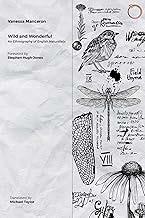
At the outset of Wild and Wonderful: An Ethnography of English Naturalists, the author Vanessa Manceron, who is French, writes that “there is no equivalent in France to the communal ethic extended to nonhumans one encounters in England” (p. 16).1 To explore this ethic and to understand the mindset of the naturalist, she undertook an ethnographic study of amateur naturalists in the Somerset Levels and Moors of southwest England, an area rich in life-forms. Manceron is a social anthropologist and research fellow affiliated with the French Centre National de la Recherche Scientifique (CNRS) and director of the Laboratoire d’Ethnologie et de Sociologie Comparative (LESC). An ethnography is a rigorous research method that involves an observer/participant immersing him or herself in the study of a group—in this case, amateur naturalists. Manceron writes that only “a dense, precise ethnography of the modes of naturalist attention to the living can bring” out the “sense and sensibility” (p. 2) of naturalists. Her tracking of this sensibility blends field work and extensive research in the history of natural history.
In the Introduction, “Knowing and Recognizing,” she acknowledges “the dire state of a great many milieus being razed, asphalted, polluted, disfigured, plasticized, depopulated, depleted, and decomposed” (p. 1).2 The next sentence begins “Naturalists do not sleep, are not conveniently deaf or blind to the erosion of living things” (p. 1). But she
does not see political activism as part of the naturalist profile, their contributions instead being as attentive observers of the living lifeforms in their environs, and their work being the archiving of their presence in lists, maps, and censuses. She writes, “They are able to recognize and name a staggering number of species that no one else in Europe...is able to distinguish” (p. 1). Some of the other qualities she ascribes to naturalists are: their mastery of the art of seeing, especially registering differences rather than resemblances; their investment in establishing relationships “removed from any form of utilitarianism” (p. 12); and their capacity to “marvel at life’s potential” (p. 11).
In Chapter 2, “Involvement,” she gives background on the local culture of inhabitants in the Somerset Levels and Moors, an area known for environmental activism. She describes the many clubs available for leisure activities and the many environmental charitable trusts, like the BugLife Trust, the Bumblebee Conservation Trust, the Badger Trust, the Fresh Water Habitats Trust, the Bat Trust, the Somerset Otter Group, Somerset Rare Plants Group, Woodland Trust, and many more (pp. 33, 38). In fact, she writes, “There isn’t a scrap of land, not a plant or animal species, not a living creature, not a landscape with which individuals or groups of humans are not connected and assemble or organize collectively in view of forging chosen, desired relations” (p. 38). This is good news for Somerset, but while I was reading this book, a headline came out in The Guardian titled “Britain One of the Least ‘Nature-Connected’ Nations in the World—with Nepal the Most.”3 Data came from a paper in the Journal of Environmental Psychology and from research by Miles Richardson, Professor of Human Factors and Nature Connectedness at the
University of Derby.4 Other dire headlines followed about the overall state of nature in England, all the more reason to pay close attention to Manceron’s research.
In Chapters 2–4 (“Bonding,” “Window on Existence,” and “Assembling”), we meet some of the naturalists she follows: Liz, a leader of the Somerset Rare Plants Group, practiced in the art of inventorying, who is never without her field notebook (pp. 90–100); Edward, a retired lawyer, of the Somerset Bat Group; Simon, a field botanist who has compiled plant inventories in Scotland and England; Doug, a retired butcher and “brilliant field naturalist who specializes in the field of dormouse conservation” (p. 81; dormice are small rodents in the Gliridae family); twin brothers Paul and Ian, dairy hands who with Geraldine Crouch published The Atlas Flora of Somerset in 1997; David, retired member of the Royal Air Force (pp. 72–75), now a bird ringer (bird banding) at the Chew Valley Ringing Station; Robin, “unparalleled authority on buzzards” (p. xiii) now retired from the BBC, who has studied the common buzzard for 35 years (pp. 146–163); Graham, a plant person who makes sure that Manceron’s apprenticeship includes a lesson in “visual skepticism” (pp. 120–121); and others. They share the desire to name (p. 45). Of naming, she writes: “In itself, the desire to attribute names to that plurality of ‘useless’ beings is remarkable” (p. 218).
Liz, who specializes in vascular plants, has a local “patch,” which is subdivided into 63 “squares,” her numbered units of observation. By the end of the year she has created “multicolored geometric maps resembling pictures” that show the results of her inventorying. A challenge for her has been the number of name changes resulting from phylogenetic taxonomy (cladistics)
overturning Linnaean taxonomy in some cases. A clade is a grouping based on a focal ancestor and all its descendants, and nowadays are frequently determined by genetic data rather than morphological data. Robin calculates that he has thus far spent 42,000 hours observing common buzzards (p. 142). While observing the pairs he has come to know very well, he usually posts himself with his telescope near his car. Robin sees birds as individuals but realizes that their biology is so different from ours that he cannot know why they act in certain ways. However, during his years of watching their flight patterns, he has discerned what Manceron calls “an avian language”: “When they go up and down like this, they call occasionally against the sky and a few clouds, and you look, you can see these birds and they are so absolutely, completely turned on by what they have just been doing. I called it ecstatic behavior. There is no doubt about it” (p. 153). In his article, “The Social Behaviour of the Common Buzzard,” for the prestigious British journal British Birds, the editors deemed the word ecstatic inappropriate and naive. It was removed, but as Manceron points out “naturalists are part of what they observe; they don’t try to erase themselves” (p. 123). With familiarity comes knowingness.
Her view of naturalists as essentially hopeful, in-the-moment observers is reinforced in Chapter 7, titled “Vanishing.” She tells the story of Simon who spends hours poring over maps in the 2002 Oxford University Press edition of the New Atlas of the British and Irish Flora. It is 910 pages long and has 2412 maps compiled from nine million records, many compiled by volunteer naturalists. While conducting an inventory in Somerset, Simon found a specimen of Cochlearia danica (Danish scurvygrass) growing in
pavement far from coastal areas, its ancestral habitat. He was able to correlate its spread to Somerset with the practice of salting roads in winter. He was so excited with this find that he checked on it for several months only to find it expunged by installation of an off-road parking bay. Nevertheless, the potential of the species to spread has been documented. She writes, “Following naturalists as they observe, one realizes how little inventorying actually involves a nostalgic or sentimental rapport to a lost or missing side of our legacy and how much it involves an active, living attention to what persists, emerges, comes back, moves about, and changes” (p. 202). The “celebration of life-forms” continues even in a time of extinction. For his own interest, Simon makes “weather trees,” a kind of naturalist’s coloring project or mandala: each day he colors several leaves on a drawing of a tree, with each color signifying rain, sun, or fog. By the end of a year, he has a history of the weather patterns experienced by the tree.
Manceron traces the roots of the naturalist tradition in England to parson naturalists, like Gilbert White, author of The Natural History of Selbourne (1789), and the Reverend William Keeble Martin, author of The Concise British Flora in Colour (1965). She writes, “Delighting in the diversity of the world for what it is without a bias for the human species: it is this revolution in perceptions which emerged in the English middle class as well as in the aristocracy and clergy in the final years of the eighteenth century that naturalists still regard as their tradition” (pp. 211–212). She does not see the relationships that naturalists make with other life-forms in their environment as taking “the form of a mystical union,” but rather something prosaic and egalitarian. Above all it is based on observation. Naturalist
attention is “a regime of empirical knowledge” (p. 217) that “pays little attention to human exceptionalism” (p. 220).
For anyone interested in all life-forms, human and nonhuman, this is an important book, beautifully written and carefully researched— and an inspiring one for those who have naturalist leanings but may discount their value in a time of advanced genetic techniques and laboratory-based science. Manceron thinks deeply and writes eloquently about her interpretations, mulling over them in different ways. In her view, the body of the naturalist is the tool of inquiry that fosters interconnectedness with nonhumans. She writes, “The body, senses, and memory of naturalists are unparalled instruments of knowing without which there would be no knowledge” (p. 141) and, for that reason, “individual knowledge gained in the field can corroborate, give nuance to, or contradict the knowledge disseminated through reference works” (p. 130).
When I was teaching a class called Writing as a Naturalist in the Writing Department at Ithaca College, I gave the students an essay titled “The Naturalist” by Barry Lopez, author of Arctic Dreams. 5 Like Manceron, he recognizes the importance of the body of the naturalist as the tool of inquiry. The most important question he says, is “What part of what the naturalist has sworn his or her life to comes from first-hand experience, from what the body knows?”(p. 121). At the time of writing Lopez is watching wildlife that visits the river
flowing past his cabin. His advice is simple: “Pay attention to the mystery. Apprentice to the best apprentices. Rediscover your own biology in nature” (p. 124). Apprenticeship is necessary because as Manceron points out, “becoming a naturalist is a long, laborious process” (p. 57). Undoubtedly many readers of the Plant Science Bulletin have known the pleasure of finding interconnectness with other species in field work. Manceron is a gifted naturalist in her field of endeavor. According to the back cover of Wild and Wonderful, she is now “conducting a study on the protection of birds and the judicialization of nature in Italy.”6 Let’s hope that, like Lopez, she has time to sit with the mystery by the river.
1The original title was Les Veilleurs du Vivant: avec les Naturalistes Amateurs (2015). The English version, as translated by Michael Taylor, reads extremely well.
2 The French word “milieu” can include the physical and social environment, whereas in English it is usually reserved for the social environment.
3 Patrick Barkham, The Guardian, 1 November 2025.
4 “Professor Miles Richardson,” https://www.derby. ac.uk/staff/miles-richardson/.
5 Vintage Lopez, pp. 115-125, Vintage Books, 2004.
6 See Ch. 6, “Wonderful Creatures,” pp. 144–174 for Manceron’s insights on birders, birding, and birdwatching.
–Elizabeth Lawson (winpenny.lawson@gmail. com, www.elizabethwinpennylawson.com)
Writing Science in Plain English, ed 2
Anne E. Greene
2025. ISBN 978-226825038
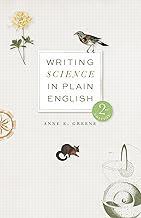
US$17 (Paperback); 136 pp. University of Chicago Press Science communication is extremely important, yet scientific writing is often very difficult to understand. This could be due to a lack of training or resources provided to writers. In “Writing Science in Plain English, Second Edition”, Anne E. Greene outlines principles for scientists to make their writing more engaging and easier to understand. Greene is a biologist by training and taught writing at the University of Montana to undergraduate students from multiple scientific disciplines. This short book serves as a crash course and reference, providing straightforward guidelines and hands-on activities to help science writers of all backgrounds write more clearly.
Greene has organized the book into 11 concise chapters. Each chapter focuses on one key theme and includes a mini table of contents on subtopics. The chapters have titles such as “Before You Write,” “Tell a Story,” “Omit Needless Words,” etc. Chapters have explanations of key concepts, examples of these concepts, and exercises to implement these concepts. I really enjoyed the contents of each chapter, since they each made me deeply think about my past writing and how to make changes in my future writing. The written examples highlight the confusing styles that dominate scientific writing and how much we have normalized them. Greene uses boldfaced font and underlining to emphasize key points in the examples, making it easy to find the main themes.
At the end of the book, Greene includes two appendices. The first appendix outlines basic
writing concepts, including parts of speech and sentence structure. Each part of speech section contains explanations and examples, mirroring the format of the longer chapters. I think the sentence structure portion will be extremely useful for explaining independent and dependent clauses to students. The second appendix contains the key to the exercises found in the chapters. Finally, an index helps readers find key information within the text of the book.
In this second edition, Greene builds on the original book (published in 2013), adding or updating information from recent research, practice exercises, tables of contents for each chapter, and an online instructor’s guide. Instructors can access the online guide by including information on their name, position, institution, and course for which the book will be used. The University of Chicago Press then emails a link to download a zip file. The instructor materials are extensive and comprehensive. These materials walk through topics for class meetings, instructor support, lectures, long assignments, short assignments, and class activities. Greene draws on her decades of experience teaching science writing to cover key writing concepts and different types of written documents that are useful to students, such as cover letters, research proposals, posters, etc. I will be using many of these tools in an upper-level biology research course!
Overall, this book is already influencing how I write, how I think, and how I teach. It is useful for instructors, students, seasoned writers, and novices. It serves as both a book to read from cover to cover as well as a handy reference for specific questions or concerns. I will definitely be referring to this book every time I start to write a new manuscript or grant!
--Nora Mitchell, Department of Biology, University of Wisconsin – Eau Claire, Eau Claire, Wisconsin, USA
ISSN 0032-0919
Published 3 times a year by Botanical Society of America, Inc. 4475 Castleman Avenue St. Louis, MO 63166-0299
Periodicals postage is paid at St. Louis, MO & additional mailing offices.
POSTMASTER: Send address changes to: Botanical Society of America Business Office P.O. Box 299 St. Louis, MO 63166-0299 bsa-manager@botany.org
Address Editorial Matters (only) to: Carolina Siniscalchi, Editor Mississippi State University Libraries 395 Hardy Rd P.O. Box 5408 Mississippi State, MS 39762 USA Phone (662) 325-9346 psb@botany.org
The Botanical Society of America is a membership society whose mission is to: promote botany, the field of basic science dealing with the study & inquiry into the form, function, development, diversity, reproduction, evolution, & uses of plants & their interactions within the biosphere.