
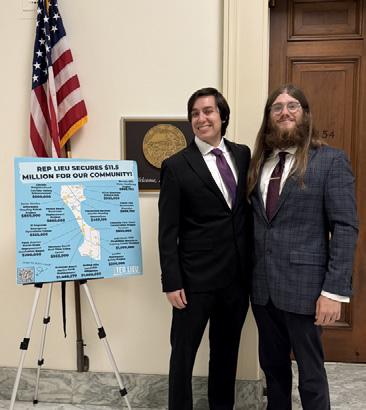

at Congressional Visits Day

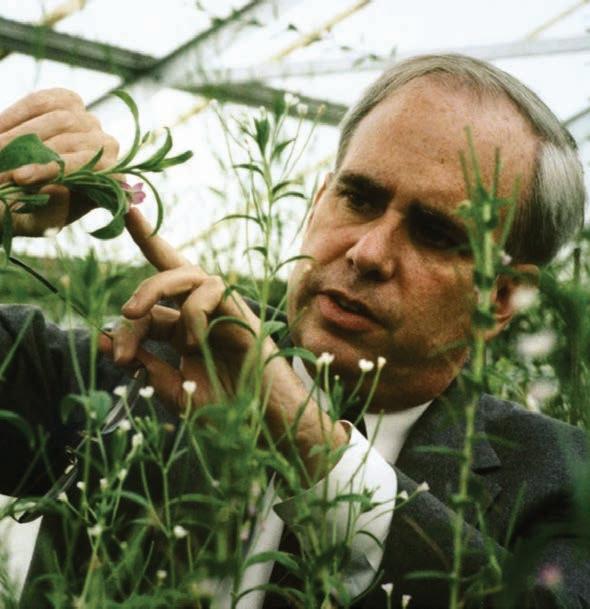
Peter Raven Remembered by BSA President Ken Cameron
By Marguerite Trost
by Anthony Dant & Preston Jarman

at Congressional Visits Day
Greetings, botanists!

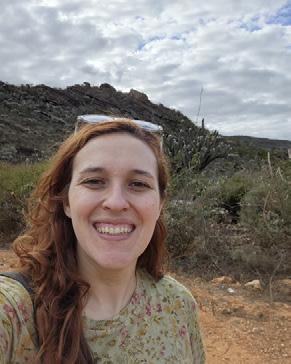



Here we are again, sweltering in the Northern hemisphere summer, and getting ready to meet again at Botany! I, for one, am looking forward to saying hi to the saguaros around Tucson once again! Remember to bring a hat, sunscreen, and a large water bottle, because it will be a scorcher.
Before we see each other again, let’s take a look at this Summer issue, shall we? We have a delightful Special Feature: an essay by BSA member Marguerite Trost on her experience carrying out an extensive oristic survey and botanical foray during her Masters studies. I hope it brings you, reader, as much joy as it brought me as I rst read it. We have a second article this month, about the plants mentioned by Shakespeare in his plays and their role in them. In membership news, we are announcing the rst part of our award winners ahead of Botany. Congratulations to all!
As always, our book reviewers have been busy. If you have never reviewed a book for us, I hope you consider doing it, because I am always adding new titles to our available list. Besides, I am happy to help you procure a book that is not on the list.
I’m looking forward to catching up again soon!







Botanical Society of America’s Award Winners (Part 1).........................................................................52 BSA and Botanical Society of China Host Upcoming Sino-American Conference.................65
Community-Powered
BSA Swag Store Spring/Summer 2026 Lineup Now Available!..........................................................87
us August 27 for the Third Annual “A Day for
https://2026.botanyconference.org
e “Distinguished Fellow of the Botanical Society of America” is the highest honor our Society bestows. Each year, the award committee solicits nominations, evaluates candidates, and selects those to receive an award. Awardees are chosen based on their outstanding contributions to the mission of our scienti c Society. e committee identi es recipients who have demonstrated excellence in basic research, education, public policy, or who have provided exceptional service to the professional botanical community, or who may have made contributions to a combination of these categories.
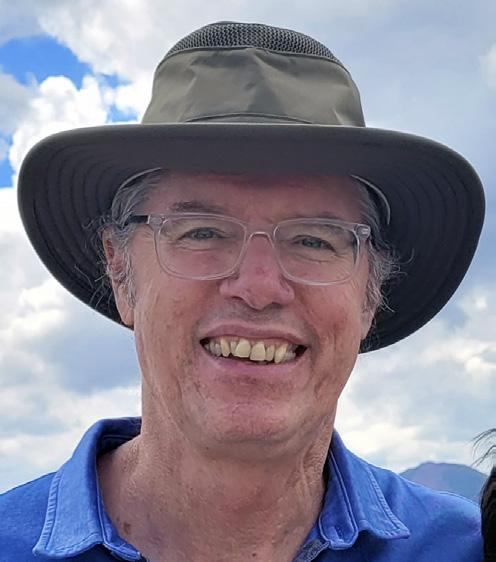
DR. JOSEPH WILLIAMS UNIVERSITY
Since his time as a graduate student, Dr. Joseph (Joe) Williams has demonstrated how integration of evolutionary, ecological, developmental, and cellular research perspectives yields breakthroughs in our understanding of fundamental biological processes including plant diversi cation. His work on male and female gametophyte development in owering plants has been both revolutionary and foundational
for the eld of plant reproductive biology. In a series of papers published in PNAS, Nature, Evolution, e International Journal of Plant Science, Plant Cell and the American Journal of Botany, Joe’s work elucidated how pollen tube growth, fertilization and development of the fertilized embryo and endosperm contributed to the explosive early diversi cation of owering plants. Many of these papers are cited in textbooks describing the evolution of owering plant fertilization and seed development programs. With his recent investigations of pollen tube growth and male-biased sex allocations in polyploids, Joe continues to pave new avenues of research on plant reproduction.
In addition to his research accomplishments and advances, Joe has been a model teacher, mentor, and academic community leader. Joe has served on the editorial boards for several journals, including the American Journal of Botany. Joe has also served the Botanical Society of America as Treasurer (2013-2016) and the Development and Structure Section Chair (2012-2015). It is with great joy and appreciation that we recognize Joe’s many contributions as a Distinguished Fellow of the Botanical Society of America.
(BSA in association with the Teaching Section and Education Committee)

Professor Nishanta “Nishi” Rajakaruna has spent 22 years inspiring students at College of the Atlantic, San José State University, and Cal Poly to see the botanical world with fresh eyes. Over that time, he has taught more than 3500 students across 19 courses, supervised dozens of undergraduate senior projects and master’s theses, and co-authored over 110 conference presentations where a student was the presenting author. Approximately 40% of his 91 peer-reviewed publications list undergraduate co-authors, many as rst author. rough multiple Fulbright awards, he has extended his reach internationally, bringing his passion for botanical teaching and research to students in South Africa, Sri Lanka, Madagascar, and India.
Nishi’s teaching weaves together eldwork, food, culture, and rigorous science in ways that make botany impossible to ignore. Whether peeling open a durian in class, leading students through serpentine habitats, or hosting potluck hikes that draw alumni back
years later, he builds community as intentionally as he builds knowledge. His courses have converted sociology majors, landscape architecture students, and non-majors alike into lifelong plant enthusiasts, and his open-door mentorship style ensures that every student feels a sense of belonging. As one nominator wrote, “He does not just teach botany; he creates botanists, scientists, and thinkers who carry their passion far beyond the classroom.”
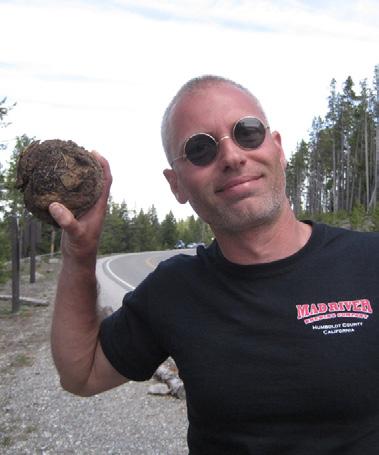
Mihai was born in Romania, where he earned a degree in Geology & Geophysics from the University of Bucharest, working on the palynology of Pliocene strata that preserved subtropical vegetation pre-dating the Pleistocene cooling. A er graduating, he was hired in a research position with the National History Museum of Romania, where he worked as a palynologist in an interdisciplinary team that studied life and times of 4000- to 5000-year-
old copper-age prehistoric communities in archeological excavations. A er several years of counting pollen grains in the microscope, he decided to redirect his studies toward bigger and older plant fossils, and moved to the U.S. to work in Gar Rothwell’s lab at Ohio University, where he earned his Ph.D. in plant biology working on early terrestrial biotas. A er receiving his Ph.D., Mihai joined the faculty at Cal Poly Humboldt (then Humboldt State University), where he is currently a professor
of botany. He greatly enjoys teaching his introductory botany, plant anatomy, plant morphology, and paleobotany courses, and involving students in research. Mihai’s research interests gravitate around plant evolution, especially the evolution of development, and the ways in which the fossil record informs our understanding of these topics.
The Botanical Society of America Impact Award recognizes a BSA member or group of members who have significantly contributed to advancing diversity, accessibility, equity, and/or inclusion in botanical scholarship, research and education.
Disabled in Botany Affinity and Action Group
Karen M. Buenaño, Pontifica Universidad Católica del Ecuador,Ecuador
Andrés Fonseca-Cortés, Universidade Estadual de Feira de Santana Honorine Ihimbazwe, Dian Fossey Gorilla Fund, Rwanda
Diana I. Martinez-Lona, Centro de Investigación y de Estudios Avanzados del IPN, Unidad Irapuato,Mexico
Paola Piñeros-U, Universidad Nacional de Colombia,Colombia Olubunmi Sharaibi, Lagos State University,Nigeria
Ellie Becklund
Georgia G. Hernández
Verónica S. Di Stilio
Vikas Garhwal
Shawn Krosnick
Elizabeth McCarthy
Erika R. Moore-Pollard
Esteban Ramírez Chueca
Rachel Tavares
Yannick Woudstra
This award, organized by the Environmental and Public Policy Committees of BSA and ASPT, aims to support local efforts that contribute to shaping public policy on issues relevant to plant sciences. To learn more about the winning projects, go to https://botany.org/home/awards/special-funds-andawards/botany-advocacy-leadership-grant.html.
Chloe Novak, California Botanic Garden. For the proposal: The Sodapalooza Project: a collaborative rare plant conservation initiative
Given annually, the award recognizes early-career botanists whose creative scholarship and exceptional promise reflect the breadth of the BSA.
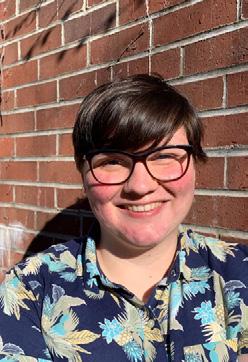
Jennifer Coughlan Yale University
New in 2026, the award recognizes creative and influential scholarship in any area of Botany, reflecting the breadth of the BSA.
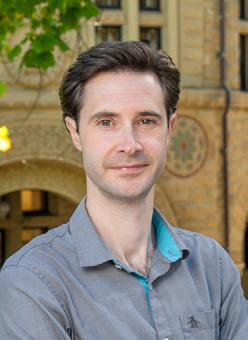
Andrew Leslie Stanford University
The Public Policy Award was established in 2012 to support the development of tomorrow's leaders and get a better understanding of this critical area.
Anthony Dant,University of Arizona
Preston T. Jarman, Old Dominion University
is award is named in honor of the late Dr. AJ Harris whose research spanned traditional specimenbased science, paleobotany, phylogenomics, biogeography, and computational biology. is award will be given in conjunction with the Graduate Student Research Awards, and will be given to a graduate student whose research is representative of one of the areas above.
Miles Buddy, University of Florida.
For the Proposal: Phylogeography and climate resilience of a cryptic trans-Eurasian gypsophile, Campanula fastigiata
This $10,000 award was created to promote research in plant comparative morphology, the Kaplan family has established an endowed fund, administered through the Botanical Society of America, to support the Ph.D. research of graduate students in this area.
Austin T. Nguyen, University of Kansas.
For the Proposal: Evolution and development of adaxial-abaxial polarity inversion in the conifer ovuliferous scale
Madison L. Plunkert, Michigan State University.
For the Proposal: How to Build a Rhizome in the Yellow Monkey ower
This $10,000 award supports the Ph.D. research of graduate students in the area of comparative plant biology, broadly speaking, from genome to whole organism. To learn more about this award, go to https://botany.org/home/awards/awards-for-students/cpd-award.html
Paolo Henrique Gaem, University of Michigan-Ann Arbor.
For the Proposal: Disentangling the roles of ecology, coexistence, and time in tropical plant speciation: Myrcia (Myrtaceae) as a case study
Honorable Mention:
Caroline Brose, University of Wyoming.
For the Proposal: Evolutionary consequences of historical disjunct distributions, hybridization, and polyploidy: Salix as a system for understanding generation and maintenance of species diversity
The $1500 BSA Graduate Student Research Awards support graduate student research and are made on the basis of research proposals and letters of recommendations. Withing the award group is the Karling Graduate Student Research Award. This award was instituted by the Society in 1997 with funds derived through a generous gift from the estate of the eminent mycologist, John Sidney Karling (1897-1994), and supports and promotes graduate student research in the botanical sciences.
Isabeau Lewis, Queen’s University,
For the Proposal: Is plastic sex allocation adaptive in a monoecious, wind-pollinated plant?
Angelique Acevedo, University of Illinois Urbana-Champaign,
For the Proposal: Fascinating Fasciation, Whorls, and Spirals: Cellular and Molecular Basis for Phyllotactic Leaf Transitions in Monkey ower
K.C. Carter, University of Illinois,
For the Proposal: Investigating the Species-Level Nutritional Variation in Lysimachia (Loosestrife) Pollen
Alejandra Carvajal Zapata, Florida International University, For the Proposal: Evolution of Epiphytism and Geographic Range Expansion in Notopleura (Rubiaceae): A Phylogenomic and Functional Approach
Emmanuel Chukwuma, University of Arkansas, Fayetteville, AR,
For the Proposal: From family-wide biogeographic history to genus-level dynamics: Orobanchaceae reconstruction and integrative phylogeny, morphology, and SDMs in Alectra
Abby Coldwell, Tulane University,
For the Proposal: Successional Rates and Functional Recovery in Plant and Microbial Communities of Dredge-Created Marshes
Sabine Dritz, University of California, Davis, For the Proposal: e adaptation of bumblebee traplines to natural variation in ower density
Shui Li Eu-Balint, e Pennsylvania State University, For the Proposal: Characterizing a “mini-lipoxygenase” from Solidago altissima (tall goldenrod)
Julianna Harden, Cornell University, For the Proposal: Fungal endophyte diversity of Criollo cacao ( eobroma cacao) and its function in managed agroforestry systems in Costa Rica
Eli Hartung, Texas State University, For the Proposal: Herbaceous Plant Use of Limestone-Stored Water: Understanding Mechanism
Yun Ye Ho, Case Western Reserve University,
For the Proposal: Unearthing the phylogenetics and pollination chemistry of Bornean earth gs, Ficus subser. Geocarpicae (Moraceae)
Keila Jellings, University of Pittsburgh,
For the Proposal: Polyploidy persistence through the lens of pairwise plant-soil microbe feedbacks and re
Maia Mei Jones, Washington University in St. Louis,
For the Proposal: Identifying patterns of intraspeci c diversity and local adaptation in Castanea ozarkensis to develop conservation strategies
Mujibur Rahman Khan, Oklahoma State University,
For the Proposal: Prior Carbon Limitation E ects on Stomatal Regulation and Drought Response in Trees
Annabel Lewis, North Carolina State University,
For the Proposal: Evolution of Resource Allocation Trade-o s Across the Range of Chamaecrista fasciculata
Ellie Loew-Mendelson, University of Connecticut,
For the Proposal: Photosynthetic diversity in the Hydrocharitaceae and its impact on the Connecticut River ecosystem
Jill Love, Tulane University,
For the Proposal: Examining the genetic basis of leaf shape phenotypic plasticity in Mimulus laciniatus
Claire Marino, University of Connecticut,
For the Proposal: Using population genomics to understand the reproductive strategy of Symplocarpus foetidus
Andrea Marroquin, Florida International University,
For the Proposal: Salinity Modi es Plant–Mutualist Interactions and Herbivore Outcomes
Valner Matheus, Escola Nacional de Botânica Tropical,
For the Proposal: Toward a comprehensive phylogenomic-based taxonomy of the neotropical legume genus Machaerium
Libby Polston, University of Chicago,
For the Proposal: Quantifying repeatability of local adaptation across multiple scales in Amaranthus genus
Joshua Rowe, Florida State University,
For the Proposal: e gynodioecy–dioecy pathway in an endangered mint: estimating selection for maleness using reduced-representation sequencing in natural populations
Oluwaseun F. Shodipo, Texas Tech University,
For the Proposal: Phylogenomic Analysis of Xanthisma (Asteraceae) and Assessment of Ploidy Variation Using Herbarium Specimens
Shubham, e University of trans-disciplinary health sciences and technology (TDU), Bangaluru, India,
For the Proposal: Rhizospheric soil fungal communities explain seedling community dynamics in a tropical humid forest
Yash Kumar Singhal, University of Toronto,
For the Proposal: Identifying drivers of leaf shape variation by studying ecophysiology in Ipomoea hederacea
Luke Sparreo, CUNY Graduate Center, For the Proposal: Cophylogenetic Approaches in Carnivorous Plant Genus Sarracenia towards Understanding Potential Patterns of Coevolution
Doralis J. Villafañe-Vega, University of Puerto Rico Mayagüez, For the Proposal: A er the re: Response of native wet forest vegetation to a novel threat, re, and restoration of a critical ecosystem in Puerto Rico to increase resilience to disturbances
Joseph Walston, University of Wisconsin-Madison,
For the Proposal: Investigating A New Taxonomic Character: Trichome Morphology in Heliamphora (Sarraceniaceae)
Jacob Watts, University of Colorado Boulder, For the Proposal: A Tale of Two Symbionts: Probing Adaptive Asymmetry in the Lichen Physconia muscigena in the Southern Rocky Mountains
Jacob Woodard, Miami University, For the Proposal: e Living Record: Impacts of Indigenous Management on the Maintenance of Dioecy in Diospyros virginiana
The BSA Undergraduate Student Research Awards support undergraduate student research and are made on the basis of research proposals and letters of recommendation.
Sereen Elkhalid, Oklahoma State University, For the Proposal: Medicinal Milkweeds: E ects of Herbivory, Environment, and Leaf Age on Cardenolide Concentration and Diversity.
Jesenia Garcia, California State Polytechnic University, Humboldt, For the Proposal: A new cladoxylopsid with derived xylem architecture from 400 millionyear-old strata in Quebec (Canada).
Mose Langway, Case Western Reserve University, For the Proposal: Stinking up the Understory: Untangling the Unique Pollination and Population Dynamics of the Endangered Orchidantha micrantha (Lowiaceae) in Borneo.
Richey Nguyen, Cornell University, For the Proposal: Population genomics of the xeric terrestrial bromeliad Hechtia texensis. CoAuthors: Joshua Felton, Dr. Chelsea Specht
Rebecca Ryvola-Marez, California State University, Los Angeles, For the Proposal: Phylogenetics and Taxonomy of Chorizanthe Subgenus Quintaria (Polygonaceae).
Annabelle S. Wang, New York University, For the Proposal: Unraveling Twined Stems: Light and Touch as Environmental Triggers for Cell Wall Adaptation in Common Bean Vines. Co-Authors: Dr. Lena Hunt, Dr. Joyce Onyenedum
The PLANTS (Preparing Leaders and Nurturing Tomorrow’s Scientists: Increasing the diversity of plant scientists) program recognizes outstanding undergraduates from diverse backgrounds and provides travel grant.
Lorilynn Acosta, Cal Poly Humboldt, Advisor: Rachael Wade
Nyla Bickham, Colorado State University, Advisor: Jennifer Acker eld
Elliot Carosella, Mesa Community College, Advisor: Sean Whitcomb
Joyce Cortez, University of Kansas, Advisor: Brian Atkinson
Jesenia Garcia, California State Polytechnic University, Humboldt, Advisor: Mihai Tomescu
Jacob Guzman, University of Texas at El Paso, Advisor: Michael L. Moody
Elliot Jones, Colorado State University, Advisor: Jennifer Acker eld
Elizabeth Kenny, University of Washington, Advisor: Carrie Tribble
Cassidy Margerison, Plymouth State University, Advisor: Diana Jolle
Richey Nguyen, Cornell University, Advisor: Joshua Felton
James Roth, Black Hills State University, Advisor: Dr. Kathleen Madsen
Daniel Turko, University of Florida, Advisor: Elizabeth White
The purpose of these awards is to offer individual recognition to outstanding graduating seniors in the plant sciences and to encourage their participation in the Botanical Society of America.
Certi
Elizabeth S. Barta, Oberlin College, Advisor: Michael Moore
Paloma Doyle, Connecticut College, Advisor: Rachel Spicer
Campbell Hauschild, Ohio University, Advisor: John Schenk
Kayleigh Long, Bucknell University, Advisor: Chris Martine
Teagan MacLachlan, e University of British Columbia, Advisor: Jeannette Whitton
Camilla J. Mancini, Colorado College, Advisor: Maryam Noroozizarmehri
Katelyn Ouzts, Weber State University, Advisor: James Cohen
Seosamh Radigan, City College New York, Advisor: Hanna Makowski
Magdalyn Celeste Rowley-Lange, Colorado College, Advisor: Rachel Jabaily
Linnea Rydell, University of California Santa Cruz, Advisor: Kathleen Kay
Sophie Shipman, Connecticut College, Advisor: Rachel Spicer
Caelon Shugrue, Connecticut College, Advisor: Rachel Spicer
Benjamin Sims, University of California, Berkeley, Advisor: Benjamin Blackman
Radha Srinivasan, University of California, Berkeley, Advisor: Jesus Martinez-Gomez
Cy Stavros, University of Vermont, Advisor: Weston Testo
Lauren Sutton, University of South Carolina, Advisor: Sierra Jaeger
Garret Waite, Weber State University, Advisor: James Cohen
Fanya Yuan, University of Washington, Advisor: Carrie Tribble
Winners were selected by lottery
Teressa M. Alexander
Jenny Burrow
Geromine Collobert
Paige Ellestad
Yun Ye Ho
Sarita Munoz Gomez
Mujibur Rahman Khan
Jaxon Reiter
Luis Y. Santiago-Rosario
Maverick N. Tamayo
SOUTHEASTERN SECTION STUDENT PRESENTATION AWARDS
The following winners were selected from the Association of Southeastern Biologists meeting that tookplace at the end of March 2026.
SOUTHEASTERN SECTION PAPER PRESENTATION AWARD
Erin Burney, University of North Carolina Wilmington
SOUTHEASTERN SECTION POSTER PRESENTATION AWARD
Taylor Long, Coastal Carolina University
Isabel E. Hildesheim, University of Tennessee, Knoxville, Advisor: Dr. Jessica M. Budke. For the Presentation: Comparative analysis of the sporophyte-gametophyte junction within Funariaceae provides insights into moss parent-o spring relationships. Co-authors: Emma Vaughn, Jessica Budke
Seyeon Kim, University of Florida, Advisor: Stuart McDaniel. For the Presentation: UVFinder: A tool to extract bryophyte sex-linked gene copies from the GoFlag408 probe setI. Co-authors: Edward Braun, Stuart McDaniel
Elaine M. Larsen, Washington State University, Advisor: Jana U’Ren.
For the Presentation: Abundance, diversity, and function of prophages in symbiotic and freeliving Nostoc. (Nostocaceae) Co-authors: Jana U’Ren, Alise Ponsero, Bonnie Hurwitz
Ainun Nadhifah, University of Tennessee, Knoxville, Advisor: Jessica M. Budke.
For the Presentation:Evolution of branching complexity in leafy liverworts of the Lepidoziaceae is driven by habitat moisture and substrate preference.Co-author: Jessica Budke
Katelyn Ouzts, Weber State University, Advisor: Heather Root.
For the Presentation: Lichen Functional Traits in a Cloud of Smoke. Co-author: Heather Root
Seth J. Raynor, University of Colorado Boulder, Advisor: Erin Manzitto-Tripp.
For the Presentation: Elevation Drives Medullary Chemistry within Dimelaena Norman and Caliciales of Western North America. Co-authors: Jacob Watts, Stacey Smith, Erin ManzittoTripp
Ariel Schwartzman Miles, Vassar College, Advisor: Sean Haughian.
For the Presentation: Tree Identity and Vertical Habitat Structure Drive Epiphytic Bryophyte Community Composition in Temperate Forests. Co-authors: Sean Haughian
Vida Svahnstrom, Royal Botanic Gardens, Kew & Imperial College London, Advisor: Eimear Nic Lughadha.
For the Presentation: Rapid Least Concern for lichen: predictive modelling and automated assessment to accelerate Red Listing. Co-authors: Jessica Allen, Frank Bungartz
Jacob Watts, University of Colorado Boulder, Advisor: Erin Manzitto-Tripp.
For the Presentation: Trait syndromes reveal emergent groups of North American lichens. Co-authors: Seth Raynor, Yi-Hsin Tsai, James Lendemer, Erin Manzitto-Tripp
Crystal Zhu, University of Connecticut, Advisor: Bernard Go net.
For the Presentation: Exclusions, additions, and discoveries of Sticta (Peltigerales) species in Chile based on an ITS phylogeny
Andrea Appleton, Harvard University; Advisor: Elena Kramer. For the Presentation: Evolution, development, and identity of the staminode complexes in Loasaceae. Co-author: Elena Kramer
Jessi Kreder, University of Missouri - Saint Louis; Advisor: Daniel Blaine Marchant;. For the Presentation: Establishing a heterantherous species as a model system by determining anther ontogeny and gene signaling pathways across anther type. Co-author: Blaine Marchant
Adeyinka Funmilola Aduragbemi, Texas A&M University; Advisor: Daniel Spalink.
For the Presentation: Global Niche Occupancy and Partitioning in Cyperaceae. Co-author: Daniel Spalink
Sriram R. Narasimhan, Institute of the Environment; Advisor: Jay Sah.
For the Presentation:Hell or High Water; Everglades Tree Islands in an Evolving Management Landscape. Co-author: Jay Sah
Vida Svahnstrom, Imperial College London / Royal Botanic Gardens Kew; Advisor: Eimear Nic Lughadha.
For the Presentation: e prevalence of non-allopatric speciation in angiosperms and its association with range size. Co-authors: Eimear Nic Lughadha, Felix Forest, Peter Graystock, Tarciso Leão, Andrés Fonseca-Cortés
Ahmad Iqbal (Pakistan), Institute of Plant Protection, MNS-University of Agriculture. For the Presentation: Harnessing Wild Crop Relatives for Enhanced Disease Resistance: Current Insights and Future Directions. Co-author: Asif Arif
Mia Manfredi, California Botanic Garden/Claremont Graduate University, Advisor: Carrie Kiel. For the Presentation: An integrative study examining the disjunct distribution of Salvia funerea M.E. Jones (Death Valley Sage, Lamiaceae).
Ziqi Xie, Portland State University, Advisor: Mitch Cruzan. For the Presentation: Positive Selection Predicts Patterns of Adaptive Introgression in an Early-Stage Hybrid Zone. Co-author: Mitch Cruzan
Deli Heal, University of Minnesota Duluth, Advisor: Amanda Grusz.
For the Presentation: Lines of Descent: Embracing illustration and phylogenomics to translate hybrid origins in Mesoamerican Woodsia (Woodsiaceae). Co-author: Amanda Grusz
Sarah K. Morris, University of Vermont, Advisor: Weston Testo.
For the Presentation: Evolution and ecological correlates of adaptive traits in the fern genus Pleopeltis (Polypodiaceae). Co-authors: Michael Sundue, Weston Testo
John Mwihaki, Graduate Center, City University of New York and New York Botanical Garden, Advisor: Emily B. Sessa.
For the Presentation: Still the Odd Man Out: Climatic and Elevational Niche Di erentiation in African Asplenium Ferns.
Lucía Vargas, Texas Christian University, Advisor: Alejandra Vasco.
For the Presentation: Why is Elaphoglossum taxonomy so challenging? A case study of character evolution in the section Lepidoglossa. Co-author: Alejandra Vasco
Roberto Baptista P. de Almeida, Universiade de São Paulo.
For the Presentation: Look for rarity in herbs: Rarity and conservation of neotropical genus Actinocephalus (Körn) Sano (Eriocaulaceae). Co-authors: Paulo Sano, Luisa Lucresia, Morgan Gostel
Jamie Lubov, Montclair State University.
For the Presentation: Sequencing Novel Bladderwort Herbarium Specimens from New Jersey (USA). Co-authors: Nic Tippery, Patricia Butter
Teagan MacLachlan, University of British Columbia.
For the Presentation: Phyllodoce × intermedia (Ericaceae) originates from convergent bidirectional hybridization in British Columbia between P. empetriformis and P. glanduli ora. Coauthors: Connor Wardrop, Philippa Stone, Sean Graham
(BSA in association with the Developmental and Structural Section) is award was named in honor of the memory and work of Dr. Vernon I. Cheadle.
Jacob Gigi Kurian, University of California Berkeley, Advisor: Yan Gong.
For the Presentation: Characterizing the nectary loss in horticulture cherry, Prunus ‘Kanzan’ Jill M. Love, Tulane University, Advisor: Kathleen Ferris.
For the Presentation: e genomic basis of local adaptation to photoperiod across an altitude in a self-fertilizing monkey ower. Co-author: Fay-Wei Li
Pei-Jun (Annie) Xie, Cornell University, Advisor: Fay-Wei Li.
For the Presentation: A Pore Excuse for a Stoma? Testing the Homology of Hornworts’ Enigmatic Pores. Co-author: Fay-Wei Li
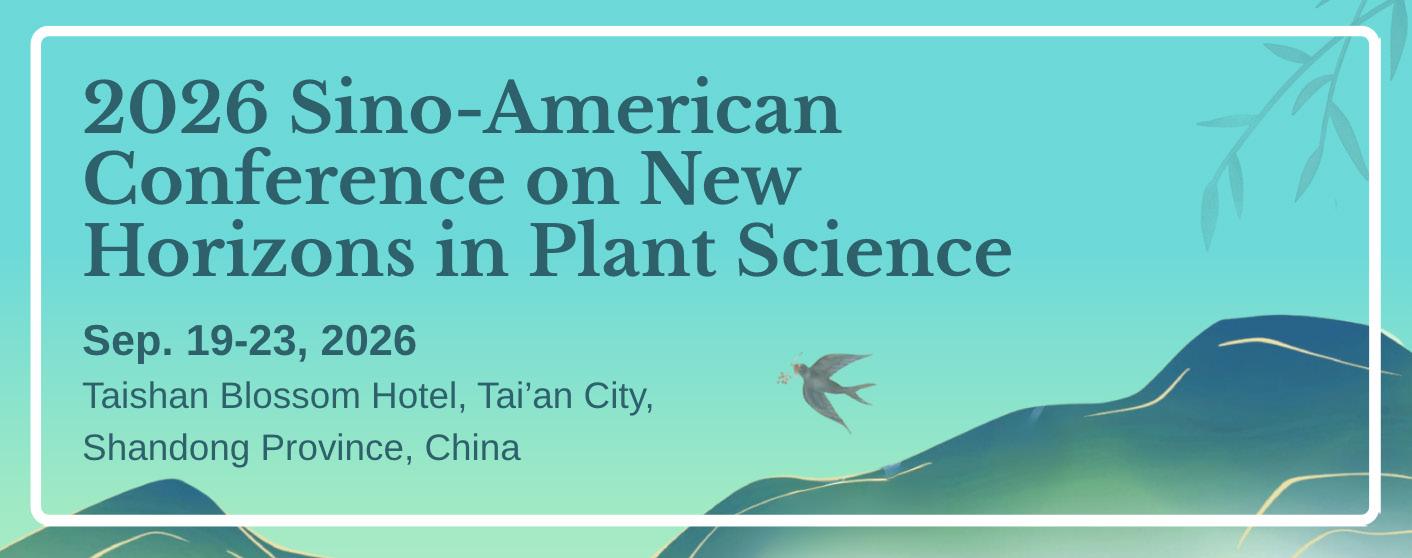
e Botanical Society of China and the Botanical Society of America will jointly host the 2026 Sino-American Conference on New Horizons in Plant Science, taking place September 19–23, 2026 in Tai’an, Shandong, China, under the theme “Future Botany in a Changing World.”
is international meeting will bring together leading scholars and emerging scientists to share breakthroughs across plant diversity, multi-omics, conservation, and more, with a special welcome to graduate students and early-career researchers. Several BSA members are featured as special invited keynote speakers (https://2026sacnhps.scimeeting.cn/en/web/index/35412_30823370).
e conference will include:
•24 Plenary Invited Lectures
•30 Keynote Lectures
•60 emed Presentations
•40 Young-Scholar Reports
Half of the themed presentations and all of the young-scholar reports will be selected from submitted abstracts.
More information is available at https://2026sacnhps.scimeeting.cn/en/web/ index/35412.
TheCactusandSucculentSocietyofAmerica,Inc.(CSSA)supportsthescientific studyandconservationofcactiandsucculents worldwide.
Conservation&ResearchGrants
CSSAprovidesfundingfor:
Field-basedConservationProjects
HabitatProtectionInitiatives
TaxonomicandSystematicResearch
EcologicalandPopulationStudies
SeedBankingandExSituConservationEfforts
StudentandEarly-careerResearchSupport
Wearecommittedtosupportingrigorous,science-drivenprojects thatcontribute meaningfullytotheunderstandingandpreservationofsucculentplantsinhabitat.
CSSAofferstworespectedvenuesforbotanistsandresearchers:
CactusandSucculentJournal
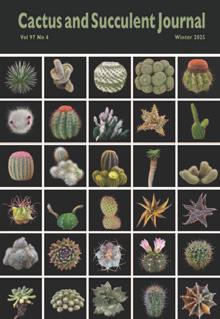
Haseltonia
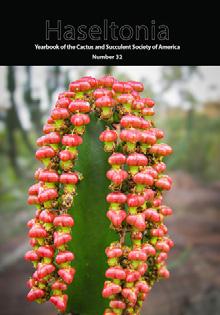
Ourlong-running,peer-informedpublicationreachesabroad internationalaudienceofscientsts,conservationists,andhighly engagedplantspecialists.
Idealfor:
ResearchArticles
FieldReportsandTaxonomicNotes
ConservationUpdates
Broader-interestScientificFeatures
Ourpeer-reviewedannualjournaldedicatedtooriginalscientific researchonsucculentplants.
Idealfor:
SystematicsandTaxonomy
Phylogenetics
Ecology
ConservationBiology
MorphologyandAnatomy
Each year, the BSA Public Policy Committee awards two early-career botanists the opportunity to attend the American Institute of Biological Sciences’ Congressional Visits Day. is event is hosted by the Biological and Ecological Sciences Coalition, and recipients obtain rsthand experience at the interface of science and public policy. e rst day includes a half-day training session on science funding and how to e ectively communicate with policymakers provided by AIBS. Participants then meet with their Congressional policymakers, during which they will advocate for federal support of scienti c research. is article details the experiences of this year’s recipients: Preston Jarman (Old Dominion University) and Anthony Dant (University of Arizona).
My career and work as an eco-evolutionary biologist intersect the realms of academia, nonpro ts, and the needs of the general public. My PhD dissertation at the University of Arizona has explored questions centered around how anthropogenic environmental pressures such as pollution, impervious surface, and the urban heat island e ect, directly a ect the ecology and evolution of the invasive annual forb Centaurea melitensis. Understanding how and why invasive plants have become successful within cities is key to understanding how to properly manage invasive plant species within the context of an increasingly urban world. Because a large portion of my dissertation has taken place on public lands, I have always had the interests of local land managers and con-
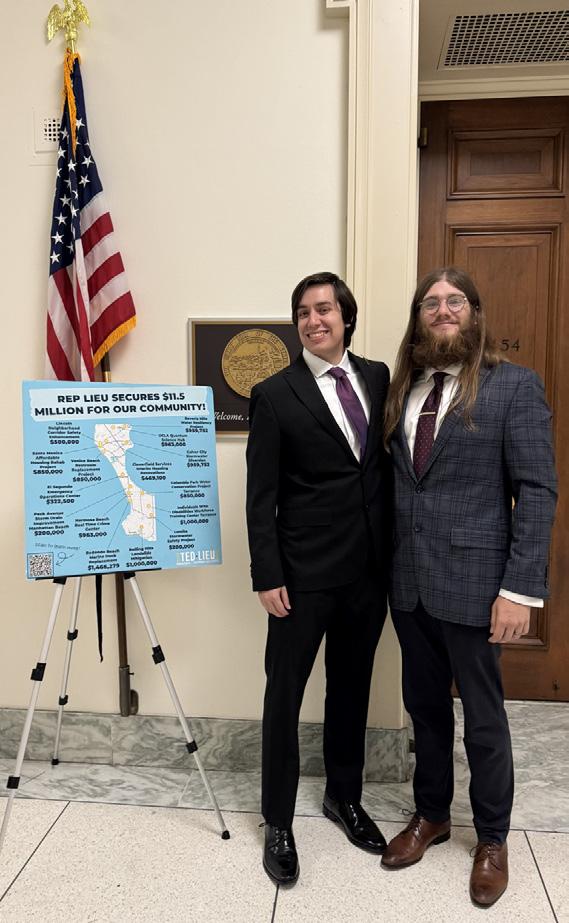
Dant (le ) and Preston Jarman. servationists in mind. I have had the privilege to present my work to organizations at the federal, state, and local government levels and have had discussions of how this work can directly impact their own e orts and the needs of local communities. e connection of my dissertation work to local and public policy is strengthened also through my associations with organizations like the California Invasive Plant Council, where I am currently the president of the student and emerging professional section (SEPS), and a visiting researcher at the Natural History Museum of Los Angeles
County. rough these organizations, I have become an active member of the science communication community to ensure that my work reaches audiences beyond that of academia. Due to the goals of my career coinciding with existing land preservation e orts at various institutions and levels of government, I have always been interested in integrating my work with public policy.
It was an immense privilege to attend the Congressional Visits Day with the American Institute of Biological Sciences (AIBS). Attending this event was incredibly important for my professional development as an early career scientist by practicing the necessary communication skills to discuss the necessity of my research to federal lawmakers. e event was composed of a two-day AIBS bootcamp followed by a full day at Capitol Hill advocating for scienti c funding at the federal level. e experience I gained from this award is incredibly unique and something that I strongly encourage other early scientists to participate in.
One of the most important skills I gained during the AIBS bootcamp was how to properly communicate with government o cials when advocating for scienti c funding. e event provided ample opportunity for myself and my fellow scienti c advocates to learn about the speci c language, tools, and mechanisms that are best suited for informing elected ofcials of the importance of consistent federal scienti c funding. Additionally, one of the most rewarding opportunities was practicing our speci c pitches to other professional scienti c advocates, communicators, and even visiting elected o cials. is event provided early career scienti c communicators like me the opportunity to practice the necessary communication skills to advocate for science and make strong connections with other communicators across the country. is was
a very powerful way to peek through the divide that o en separates scienti c research and lawmakers. From this bootcamp, I was also introduced to the career path of being a full-time scienti c advocate within Washington DC through AIBS. As a graduate student interested in pursuing a career in the public sector, this was incredibly valuable. I had the privilege to talk to full-time associates and professionals at the AIBS who o ered their insight into what a career in biological advocacy would look like. is bootcamp was a privilege and unique opportunity that I hope to be a part of in the future.
Most importantly, I was placed into a cohort of fellow scientists with a wide range of elds and career stages. Hearing how their own work and life experiences shaped their interests into political advocacy of science was an important community-building moment for my career and for myself personally. We as scientists are separated by labs and universities that o en lead us to forget how interconnected our research and goals are. While the diversity of topics within the biological sciences o en feels enormous, events like the one hosted through AIBS reminded me of the unifying approach we scientists have to learn about and protect the natural world. We were told that our own speci c life experiences and upbringings were important to discuss when talking to lawmakers; to humanize us beyond the science itself. is allowed all of us to appreciate the purpose of us being there even more and helped create long-term connections that would almost be impossible to replicate at another scienti c community event. is was an incredibly rewarding training that I highly recommend others in the future to take advantage of to learn more about scienti c advocacy at a professional and personal level.
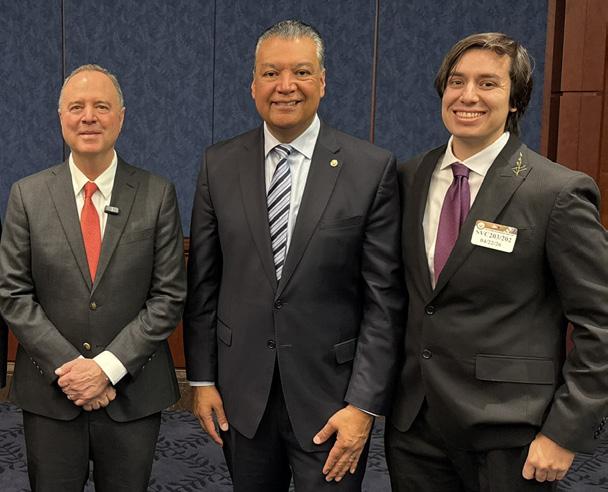
Following the AIBS, we were placed into teams based on current state of residence (mine being California). During this time, I learned much about the process that occurs when meeting lawmakers and how our advocacy works during the CVD. e majority of time we met with sta members from each of our own speci c house representatives and state senators. ese meetings were only for 15 minutes each, making it essential for us to bring up our speci c purpose for our visit with the sta while connecting with sta members with our individual experiences as constituents. e main goal of our visit to e Hill was to garner support from Congress and the Senate to support a $9.9 billion funding allocation to the NSF that matched the levels of 2023. Our discussions revolved around the importance that the funding has for the bene t of the country on a broad scale but then quickly bringing it to individual levels that would be memorable for the sta members to remember us and even contact us later.
One of the most important conversations I had with my own house representative o ce was the risk that a lack of invasive plant funding
may have not only in the safety of the natural world, but also our own. My individual congressional district falls within the area where the 2025 Palisades re occurred. As someone who lived near this area my entire life, it was immensely powerful to share my anecdotes of the necessity of science to prevent further catastrophes like this from recurring within my communities. e devastations and loss of life that occurred during this re was a direct result of the reduced resources for research and management of invasive plant species within California. As historic chaparral environments are converted to annual invasive grasslands, implementing ecological and evolutionary research into invasive species has become critical to mitigate the risk which more frequent wild res impose on urban centers such as Los Angeles. is was incredibly powerful and meaningful to me. Being a scientist advocating for real change within my community. As I re ect on all the discussions I had and time I spent in Washington DC for this event, I am le with a unique feeling of community and support that I have never felt before within my scienti c career. e opportunity to be an advocate for my science and my community was an experience that I will not soon forget. e impact of a three-day retreat to DC will have large, rippling e ects for how I will proceed as a scienti c communicator for my own communities and the responsibility I have to share my science with them. I would like to thank the Botanical Society of America for this extraordinary opportunity of a lifetime and the chance to advocate for science during a time where it is paramount.
I am a Virginia native and current PhD student in ecological sciences at Old Dominion University with profound interest and investment in conservation, stewardship, public lands, and pragmatic, long-term sustainable use of the environment and ecosystem services. I believe evidence-based governance is a necessity to achieve and maintain those goals, and I intend to actively participate in local, state, and federal government throughout my career and constituency to make that happen. is is the reason I submitted for the Public Policy Award from BSA that enabled my attendance at the American Institute of Biological Sciences (AIBS) training program and subsequent Congressional Visits Day (CVD). Attending CVD enabled me to better understand the mechanisms and common practices by which ecologists can collect, analyze, and present experimental data to inform critical decisions regarding funding, management, and conservation outcomes. With my career goal of working for an agency such as the Virginia Department of Forestry or Department of Conservation and Recreation, understanding how these policies are formed could be essential to the success of my e orts in my career a er graduate school.
e experience was distinctly separated into two main parts: the AIBS Bootcamp and the day of visits to congressional o ces on Capitol Hill. e bootcamp training seminar was split over the course of two days and was adherent to a regimented schedule to attend to all the items in the training. In the beginning portions, the training largely focused on audience de nition; who is it you are delivering your message to? e information provided on the congressional budgetary process was extreme-
ly useful to understanding exactly who and where to target your message. As an early-career biologist, this was a very impactful piece of the training and assisted me in orienting myself to which aspects of my research were critical for communication, and which may be super uous to the goal of my messaging. Once the audience was de ned, the next portion of the training focused on the literal structure of the messaging. We went through various methodologies and exercises ( rst individually, then in groups) that were meant to aid in the construction of our “elevator pitch” using a central idea and three supporting premises to structure your message in both form and delivery. Outside of the training programming, the primary takeaway from this experience for me was getting to hear from such a diverse array of biologists (in discipline and experience). Hearing the ways in which they have navigated and plan to continue path nding the seeming maze of local and national policy in e orts to make a tangible impact was reassuring and inspiring.
e Hill visit was where the training provided by AIBS and my experiences as a biologist thus far met. I spent the day assigned to a team of biologists all from my region, meeting with both Senate and House o ces throughout. e goal of these meetings was to advocate in support of federal research funding, and against the proposed cuts. My own path to graduate school and ecological sciences was shaped and made possible by access to programs funded by federal grants and the GI Bill, so this was not an abstract concept for me. e meetings were brief, approximately 15–30 minutes long, and very focused. Aiding the congressional sta ers in not only understanding what the research was, but why it was speci cally impactful to their state (workforce creation, economic relevance, public bene t, etc.) seemed
to be the most e ective method of communication and advocacy. is is where I personally felt the least equipped, but not due to the lack of preparation from AIBS, understanding on my part, or my colleagues, but just because this was my rst time attending meetings that I perceive to be so potentially impactful and important. I suppose I had butter ies, but this is certainly the aspect of my e orts I would adjust the most a er having my rst experience with congressional meetings. Congressional sta ers are inundated with numbers; there are so many staggering statistics we hear every day, and I focused on that—but I believe that using those to corroborate a more personalized message would be far more e ective and
honest way to not only e ectively communicate one’s message, but also have it resonate and reverberate a bit, instead of being just another statistic.
is experience will certainly continue to shape the way I communicate my own research for the remainder of my academic career and whatever may come in my professional endeavors. It is very important to me for my e orts to remain connected to management, conservation, and the public entitlement to ecosystems and the bene ts they provide. CVD provided me with a clearer framework on how to conduct and communicate ecological research and stewardship that clearly interfaces with public policy.
2026
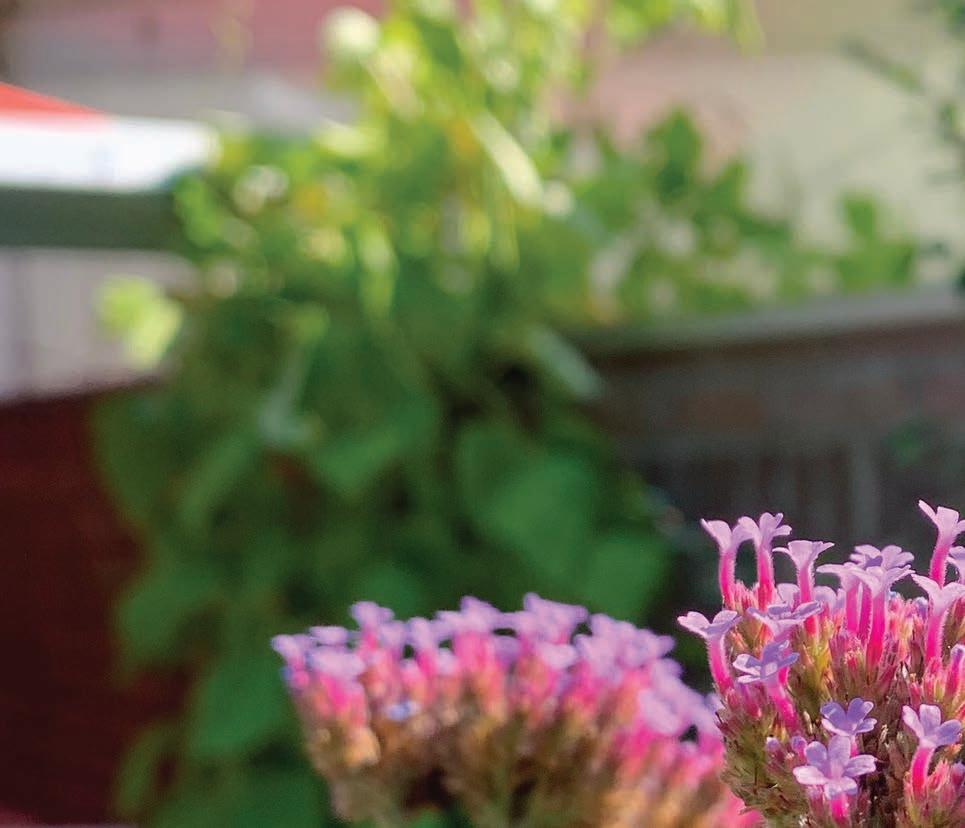
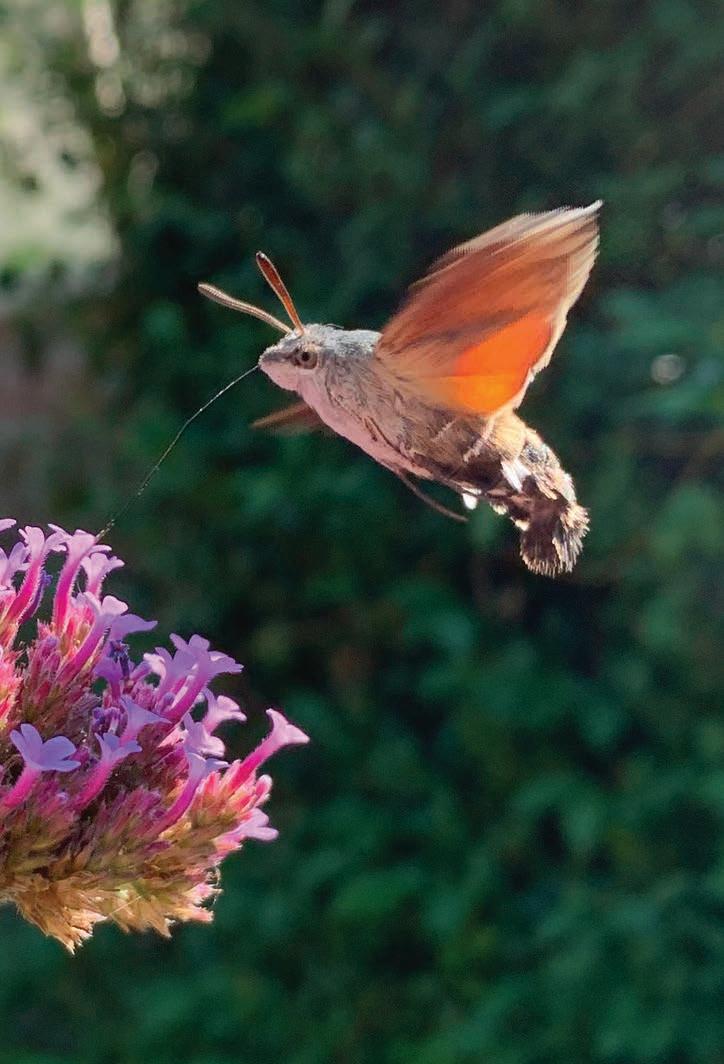
BOTANY2026SPECIALLECTURE:

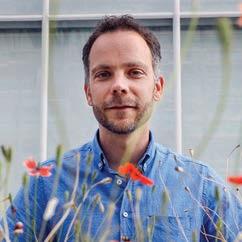







Caspe an der Kooi niversity of he etherlands
CaspervanderKooi niversityof roningen he etherlands



CaspervanderKooistudieshowflowers(andanimals) createtheircolorandshine(glossiness)usingpigmentand structureaswellashowthesecolorsevolveintheeyesof pollinators.Hislecturewilldiscusshowfloralcolorsare pigmentsthatfilterthem.Hewillshowhisresearchon howthesevisualeffectsarethentunedtopollinatorvision.
Casper van der Kooi studies how flowers (and animals) create their color and shine (glossiness) using pigment and structure as well as how these colors evolve in the eyes of pollinators. His lecture will discuss how floral colors are generated by cell structures that reflect light and the pigments that filter them. He will show his research on how these visual effects are then tuned to pollinator vision.




Learnmore:https://www.youtube.com/watch?v=FBQCf8wdWgI
Learn more: https://www.youtube.com/watch?v=FBQCf8wd gI



It takes a village to press a forest. is insight was o ered to me a er hosting my rst formal botanical foray in conjunction with my 2.2-million-acre forest, 10,000+ specimen, 1100+ taxa, two-year oristic inventory for my Master’s project. e modi ed maxim made me smile and reminded me there’s a paradox when I say “my” foray, “my” forest, and “my” project. On one hand, working hard alone and self-motivated is how oristic students like me learn, and how such a study can be conducted in a short amount of time. On the other hand, the reason I am able to be here doing it now is interdependency: my work relies on logistical, nancial, academic, and emotional support, not to mention generations of botanists who have established the practice of oristic inventories and botanical forays.
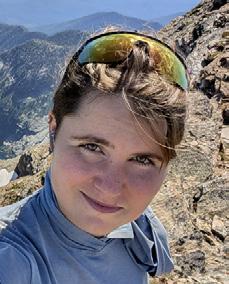
By Marguerite Trost University of Wyoming
Rocky Mountain Herbarium, 1000 E University Ave. Laramie, WY 82070
In the depths of my eld season, when I haven’t talked to anything human for days, what keeps me going is realizing I am part of collaborative, discursive, recursive botanical work over time and space. It’s an exciting time to work in an herbarium, to be contributing new specimens with direct lines to past centuries of collections, while also being plugged into modernized collection methods and management (e.g., Meineke et al., 2018). Plus, I list 53 di erent “associated collectors” on my labels. e moments I shared my plant collecting work were some of the most transcendent of the project. I got to be part of so many people’s experiences, and no matter how brief, those connections have synergies that extend beyond the spatiotemporal limits of this project contract and a Master’s thesis. So what I want to o er here is an iteration of oristic programs, botanical forays, and intergenerational herbarium communities as an argument for integrating oristic students and celebrating the village it takes.
As a young eld botanist who stumbled my way into this opportunity to do graduate school with the Rocky Mountain Herbarium (RM), I should establish that my perspective on these things is one of delight and naiveté.
e learning curve has been steep. Part of that education has involved realizing that I’m now part of a long tradition of oristic students. Since 1974, the RM has trained more than 50 students through the oristics program while documenting oristic patterns across the U.S. Rockies. If you visit RM, you can steep in their legacy: their eldbooks and annotation logs ll bookshelves, their forest maps hang on the cabinets, and their cabinets of unmounted specimens comprise a steady backlog. Student collection e orts averaged around 2 million acres and 9000 specimens per project, accompanied by the driving energy of former RM Director Ronald Hartman and the persistent dedication of Curator Ernie Nelson. While most herbaria collection rates dropped a er the 1930s, the RM peaked in the 1990s—an outlier that skewed analyses attempting to quantify the decline of plant collecting (Prather et al., 2004).
Some could argue that the high-volume, largearea projects of the RM created more problems than skewed analyses (i.e., legitimate space constraints and a massive backlog). However, the goal of the RM’s oristic program is to generate data on diversity and distribution. As a current RM student, I can tell you that I learned so much more on both those counts by collecting plants over and over again. I was trained to collect all high-quality plants in identi able phenology, then to be more selective of eld-identi able taxa within a 5-mile radius or a er 20 collections. e value of this kind of comprehensive and place-based oristic work cannot be overstated. Over space and time, such “snapshots” of a dynamic ora ground traditional and emergent research applications (Sullivan and Nazaire, 2022). Even in regions considered well-collected, studentled oristic work regularly turns up new records (Daines et al., 2022). e RM is an exemplar of how the vitality of herbaria is in
collaborative, continued work training new generations of botanists—not just in data generation.
Little did I know, when I serendipitously met the current RM Director, Dave Tank, on a street corner in Boise at Botany 2023, that the project he pitched to me was more than a cool job—it was part of this remarkable lineage. Many RM students have gone on to solid botanical careers and contributions. Some have never really le ; the rst oristic student Burrell “Ernie” Nelson, as of writing this, still sits at his desk, down the row from my desk, steadily working away—for 52 years (Nelson, 1974). Ernie will tell you that the RM oristics program is not for the faint of heart. Many students dropped out or moved to di erent disciplines. From the stories I’ve heard, what made a student successful was a combination of self-motivation and support networks, including family, eld technicians, peer oristic students, and of course Ron and Ernie themselves. I know I’m blessed to be working concurrently with another excellent and persistent oristic student, Dan Coles, and to have the support of Dave and the Curator of Digital Data, Ben Legler (himself an alum of the oristics program).
at brings me to “my” forest and the quest I was given to press it. I was dropped o in Troy, Montana in June 2024, with four days of training from Ben on exactly how to nd and document all the plant biodiversity on the 2.2-million-acre Kootenai National Forest— far more trust than training. In retrospect, this was the best preparation possible and really part of the adventure. Still, returning to the bunkhouse as my advisor drove south, I did feel like I had been hit by a truck as the extent and loneliness and expectations of the project set in. Working 10- to 16-hour days helped the self-doubts and isolation settle down. I
perhaps went a bit feral winding through the mountains and rivers and trees, a trend that comes up in the oristic student lore of Ernie’s yarns. Yet it also turns out I’m a bit of an extrovert, so almost immediately I began to nd some community in rural Montana simply by inviting people along. I would take my wildland re technician bunkmates on tough hikes, intercept traveling friends for weekends of plant collections, and even host an RM oristic alum for a whole week. In the rst summer, 24 unique participants were included on my specimen labels as “associated collectors.”
Informal volunteers seem to be a frequent pattern in oristic projects. e work is simple enough, and especially when it’s a student project, the process organically invites learners. Almost every oristic thesis I have looked at mentions assistants in the eld, with varying degrees of dependence and spontaneity. Of course, at the RM, Ernie and Ron routinely joined their students, making up nearly half the collections in some cases. While I didn’t know that history during my rst season, I knew that people were curious about my oristic lifestyle, and I enjoy company while I work. So naturally, the second summer, with a bit more planning and outreach ahead of time as well as the support of my advisors at RM, we dreamed up not one but two formal botanical forays. e botanical foray tradition we built on is part of a lineage connected back to the Burke Herbarium at the University of Washington, which has been hosting annual forays since 1996, initiated by curator and director Dick Olmstead (who was Dave Tank’s PhD advisor). ere, forays have amassed over 20,000 collections tracking oristic changes, countering the decline in collections, and informing a major regional ora revision. Dick has also noted that the success of the tradition is evident in the many students and colleagues
who have spread out to other institutions, by his count at least eight of which now host similar forays (Olmstead, 2025). I am not the rst oristics student to host a foray alongside a formal inventory project, and the idea partly came out of the annual Idaho Botanical Foray, which supported Harpo Faust’s Master’s project in the Selkirk Mountains of Idaho in 2019 (Legler and Tank, 2019). Hopefully the Botanical Foray of the Rocky Mountain Herbarium will become another annual tradition and continue to tie in with future oristic student projects.
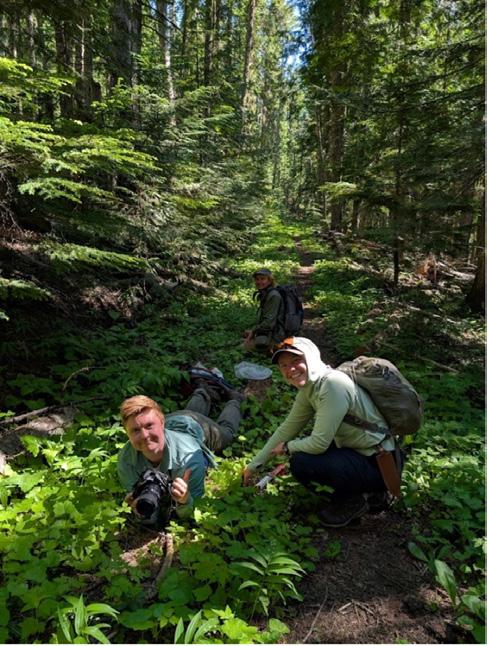
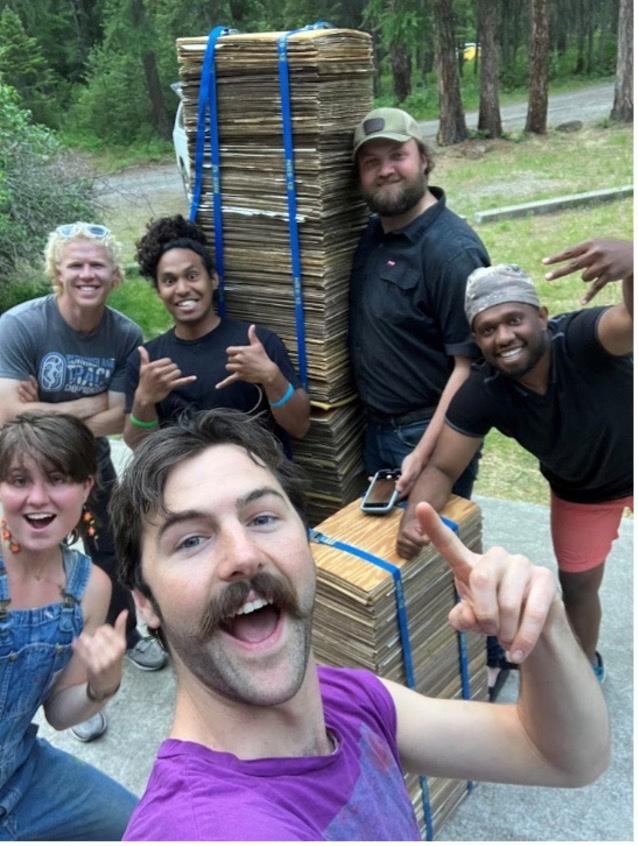
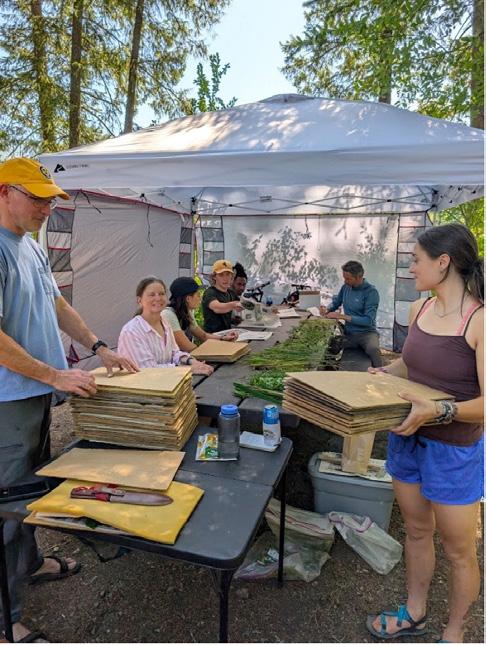
It’s hard to describe exactly the feeling when my rst participants arrived in the campground in the university van that my small grants were paying for. Watching volunteers step out into the Kootenai wonderland and show up for this project I’d been immersed in was just the start. e foray weekend unfolded: Friday included a full group hike, and Saturday and Sunday were split into groups of three to ve people, into the community-powered botany of our dreams (Figure 1). I learned more than taught, played more than worked. We ended up with 25 di erent participants that rst weekend, and another 17 the next month. ey included students from the University of Wyoming, USFS connections, and many Montana Native Plant Society members. Given the mix of experience levels, several stepped up to help me design missions and lead groups. When everyone reunited at camp in the a ernoon to form plant press assembly lines, trials and triumphs were recapped, wonder was shared, and new friendships crystallized (Figure 2). A er the whirlwind of teamwork creating presses (stacked together, they were taller than Dan Coles, who’s 6 feet), we’d all go swimming (Figure 3). en I would sit by the re and tally up collections and marvel at the notable nds. We hit daily numbers that
would take me working solo a whole week to amass, and catalogued plants I otherwise may have missed entirely. e rst three-day foray amassed 762 collections at 40 sites, and the second 512 collections at 35 sites (Figure 4). A lot of the project’s stress for me comes from the feeling that I need to be everywhere all at once, and these weekends were my chance to do almost exactly that.
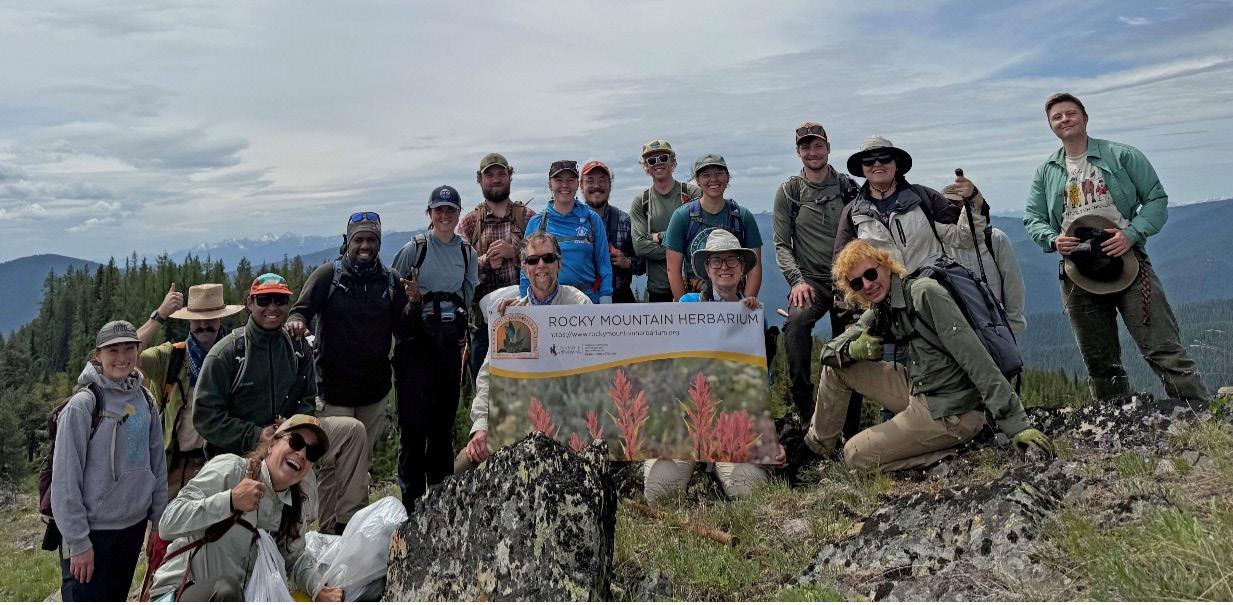
You can take success in data, but you can also take success in community. All 42 people who participated in my 2025 eld season profoundly shaped my work, as did the 24 in 2024, and the connections are still growing (Figure 5). Several participants have met up elsewhere, even helping out on other botany projects. Back at the RM, amidst my mountain of winter herbarium work, we hosted several “work party” nights that garnered 24 di erent volunteers, including some who went on the forays, again of various experience levels, all helping key out the set of foray collections
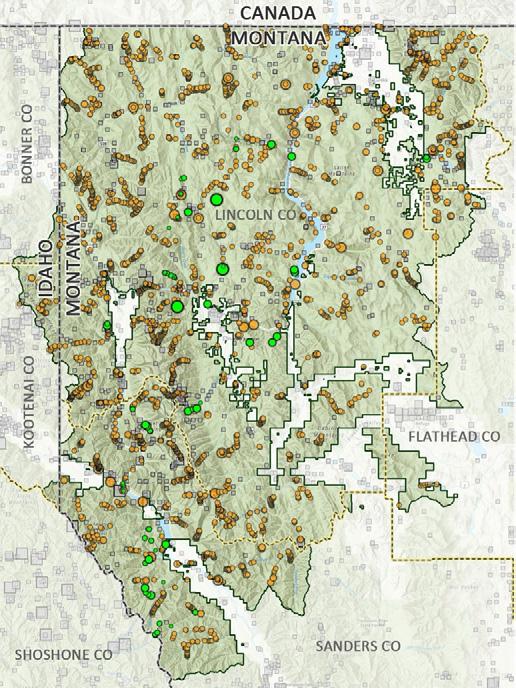
Figure 4. Map of collection points on the Kootenai National Forest, Montana. Historic collections are represented by gray squares, Trost project specimens 2024–2025 in orange circles, and 2025 botanical foray collections in green circles. Basemap U.S. Geological Survey. 2026. USGS The National Map, https://apps.nationalmap.gov/ viewer/ [accessed January 14, 2026].
and developing technical herbarium skills together. Altogether there are 69 di erent participants with their names somewhere on my specimen labels.
ere are many maps and data in a oristic inventory, and many ways to analyze success to put in a thesis. ere are numeric and taxonomic summaries, species richness, species accumulation curves, indices of oristic afnities, and more (Legler, 2010; Faust et al., 2022). ere are innumerable delights in collecting county, state, national, and continental records, as well as rare, sensitive, and species of conservation concern, and even novel species discoveries (Snow et al., 2025). But another metric of success I want to talk about when pitching my little corner of botanical research and exploration is how many human relationships it involved, in all the steps of oristic inventory work. e project was designed as a solo, Master’s-level undertaking, and there is power in that. But we also realized that there is a lot of power in inviting people to join, in the humility of asking for help. ere is something indelible about the combination of teamwork and leadership demanded by host-
ing these forays, undergraduate technicians, and all the other volunteers for my project that is already more important to me than earning a degree. I’m fortunate to have advisors and peers who think and work similarly.
As a oristic student, living up to expectations and legacies of the program, honoring all the trust and resources put into me, and doing justice to such an abundant landscape o en takes some deep breathing. I have to remind myself that I simply cannot do this inventory perfectly, but I am here. Doing my best means asking for help, welcoming questions, inviting experts, and learning from everyone and everything around me. It takes a village to press a forest.
Daines, M., A. Anzjon, M. Gay, L. Headings, J. Huckabee, M. Marine, T. Poolman, et al. Numerous distributional novelties collected by students for Idaho, Kansas, Missouri, Oklahoma, and Texas, U.S.A. Journal of the Botanical Research Institute of Texas 16: 551–557.
Faust, H., B. Legler, and D. C. Tank. 2022. A Vascular Flora of the Selkirk Mountains, Bonner and Boundary Counties, Idaho. Aliso 40: 1-56.
Legler, B. 2010. A floristic inventory of Vermejo Park Ranch, New Mexico and Colorado.
Legler, B., and D. C. Tank. 2019. The 12th annual Idaho Botanical Foray. Idaho Native Plant Society. Sage Notes 41: 1, 4-5.
Meineke, E. K., C. C. Davis, and T. J. Davies. 2018. The unrealized potential of herbaria for global change biology. Ecological Monographs 88: 505–525.
Nelson, B. E. 1974. Vascular plants of the Medicine Bow Mountains, Wyoming. Department of Botany, University of Wyoming (Laramie, WY).
Olmstead, D. 2025. The foray program at University of Washington Herbarium at the Burke Museum (WTU). Washington Native Plant Society [Blog]. Website https://www.wnps.org/blog/the-foray-program-at-university-of-washington-herbarium-at-the-burke-museum
Prather, L. A., O. Alvarez-Fuentes, M. H. Mayfield, and C. J. Ferguson. 2004. The decline of plant collecting in the United States: A threat to the infrastructure of biodiversity studies. Systematic Botany 29: 15–28.
Snow, N., M. Trost, and J. F. Pruski. 2025. A First Report of Xeranthemum Annuum (Asteraceae: Cardueae) in Montana and North America (U.S.A.). Journal of the Botanical Research Institute of Texas 19: 335–340.
Sullivan, J. R., and M. Nazaire. 2022. Specimen collection and preparation for a changing flora. Rhodora 123: 50–66.
botany, gardening, herbal
William Shakespeare mentioned 168 plants in his plays and poems.1,2,3,4 His knowledge of plants re ected the knowledge and beliefs that were common in the villages and farms of the English countryside, which he knew from his childhood in Stratford-on-Avon and from visits there throughout his adult life. “He was wont to goe to his native Country once a yeare,” according to the son of one of Shakespeare’s fellow actors.5 He had family and business reasons for visiting Stratford throughout his adult life, and possibly did so more o en than once a year.6
He also may have learned about plants from the botanical gardens in London, and from published herbals. e herbalist Gerarde,7,8 whom Shakespeare lived near between 1598 and 1604,5,9 maintained a botanical garden,7,10 as did other London herbalists.
At least ve published herbals were available in England during Shakespeare’s lifetime (1564–1616). William Turner published his Herbal in its rst complete edition in 1568.11 William Langham published e Garden of Health in 1597.12 English translations of three editions of a Spanish herbal, Nicolas Monardes’ Joy-

Edward Tabor Bethesda, MD
Email: thousandyears@comcast.net
full Newes Out of the New-Found Worlde, were published during Shakespeare’s lifetime (1577, 1580, and 1596).13 John Gerarde published e Herball or Generall Historie of Plantes in 1597.8 Richard Banckes’ Herbal14 went through 20 known editions between 1525 and 1560. It was unillustrated and printed in quarto and octavo formats, which made it cheaper than its illustrated folio competitors.15,16
Most of the 168 plants mentioned by Shakespeare were native English plants, which were part of his personal experience. Of course, there were also many more native English plants that Shakespeare did not mention.17,18,19
In addition to truly native plants, others were considered to be native because they had been present in England for centuries, and people had forgotten that they were originally imported centuries previously. ese were introduced to England either accidentally by returning travelers or deliberately for the plants’ culinary or medicinal value.18 For instance, the almond, mentioned in Troilus and Cressida (V:ii:195), was probably introduced into England from Asia and North Africa by the Romans, and was mentioned in Anglo-Saxon writings in 1100 A.D.10 e lily of the valley, common in England and usually considered a native English plant, is believed to have been brought to England from Lebanon in “very early times.”17 (Because of uncertainty about whether some plants are truly native to the British Isles, scholars today o en designate a plant as “native”18 if it was present before 1500 A.D., a date chosen because of the approximate beginning of contact with the New World.)
e Americas were “discovered” by Europeans 72 years before Shakespeare’s birth, and during those intervening years there was continuing exploration and colonization there. However, the pace of colonization by England was slower than that of other European countries (the rst English New World colony was founded in 1587) and most knowledge about New World plants before then came from other countriesand herbals from those countries. Shakespeare did not explicitly mention New World plants. He mentioned only ve plants whose common names in English were the same as the common names used in the English translation of Monardes’ book ( g, pepper, rhubarb, ginger, and balsam).1,13,20,21 When Shakespeare mentioned these ve plants, it is very possible that he was only referring to Old World plants. Some of these ve had been in England at least since Roman times,19 when they are thought to have been introduced into England by overland importation from Asia via the Middle East. Monardes even states that the New World versions of pepper23 and balsam24 were di erent from the Old World versions. e translator of Monardes may have used those English common names because of the plants’ similarities to the known native plants.
It is interesting that Shakespeare used two of these ve plants in medical metaphors (“What rhubarb, senna, or what purgative drug, would scour these English hence?” [Macbeth V:iii:55-56]; and “Is this the balsam that the usuring Senate pours into captains’ wounds?” [Timon of Athens III:v:110-111]).
Shakespeare never mentioned tobacco,1,25 a New World plant whose recreational and medical uses were very common in London at that time. He could not have failed to know
about this New World plant. In contrast, the playwright Ben Jonson, his contemporary, mentioned tobacco 91 times in his plays.25 Shakespeare also never referred to tobacco smoking, tobacco pipes, or tobacco snu .25,26 When he mentioned “smoking,” “pipe,” or “snu ,” he was using other meanings of those words, unrelated to tobacco.25 It has been suggested that he might have avoided mentioning tobacco because of the opposition of King James I to its use for smoking.25
Sometimes Shakespeare used plants in the plots of his plays. Sometimes he used them in allegories.
At least 9 of the 168 plants named in Shakespeare’s plays were considered poisonous by Elizabethan herbalists:27 poppy, mandragora (mandrake), hebenon (henbane, the poison that killed Hamlet’s father), aconitum, hemlock, darnel, mistletoe, yew, and mushroom (classi ed as a plant then). Some of these are woven into the plots as poisons to kill a monarch, and some are used in metaphors. Several unnamed poisons in the plays also may have been derived from plants, as analyzed in a prior study.27
Shakespeare also noted the peculiar characteristic of some poisonous plants, in that some could also be bene cial when given in smaller doses, a characteristic of a few poisons known in modern pharmacology.
Friar Laurence. Many for many virtues excellent, None but for some, and yet all different. Oh, mickle is the powerful grace that lies In herbs, plants, stones, and their true qualities.
For naught so vile that on the earth doth live,
But to the earth some special good doth give;
…
Within the infant rind of this small flower
Poison hath residence, and medicine power.
(Romeo and Juliet II.iii.13-18,23-24)
For Shakespeare, tending plants in a garden was sometimes an allegory for good or bad government. In Richard II, the Queen overhears her gardener telling his assistants that King Richard has been deposed and imprisoned:
Gardener. Go, bind thou up yon dangling apricocks
…
Cut off the heads of too-fast-growing sprays
That look too lofty in our commonwealth.
All must be even in our government.
…
Servant. Why should we …
When our sea-walled garden, the whole land,
Is full of weeds, her fairest flowers choked up,
Her fruit trees all unpruned, her hedges ruined,
Her knots [flowerbeds] disordered, and her wholesome herbs
Swarming with caterpillars?
…
Gardener. … Bolingbroke
Hath seized the wasteful King. Oh, what pity is it
That he had not so trimmed and dressed his land
As we this garden!
(Richard II, III:iv:29-57)
In Henry VI, Part 2, the Queen describes removing rebellious forces before they grow strong as being like removing weeds from a garden. She warns King Henry of pending danger.
Queen. …
By flattery hath he won the commons’ hearts,
And when he please to make commotion, ‘Tis to be feared they all will follow him. Now ‘tis the spring, and weeds are shallow-rooted; Suffer them now, and they’ll o’ergrow the garden
And choke the herbs for want of husbandry.
(2 Henry VI, III:i:28-33)
In another play, one of the characters says “thou prunest a rotten tree that cannot so much as a blossom yield,” as metaphor for following a lost cause (As You Like It, II:iii:63).
Shakespeare mentioned 168 plants in his works, using them for plots and for allegories. His works re ect not only the plant lore that he learned in the countryside, but also may re ect his observations of plants in botanical gardens in London and information learned from 16th-century herbals.
[All Shakespeare quotations are from Harrison, G. B. (ed). 1952. Shakespeare – The Complete Works, New York: Harcourt, Brace & World.]
1. Ellacombe, H. N. 1884. The Plant-lore & Gardencraft of Shakespeare. Second edition. London: W. Satchell and Co. (Internet Archive)
2. Shakespeare wrote 38 plays, 3 long poems, and 154
free-standing sonnets. The total number of known plays written by Shakespeare has been variously reported between 37 to 41, depending on which plays are accepted as Shakespeare’s, but 38 is the most commonly accepted number at present.
3. Shakespeare used only the “common names” of plants and sometimes he used common names that were unique to certain geographic regions of England. It is sometimes difficult to determine whether Shakespeare used two different common names for the same plant. In addition, common names in 16th-century England in some cases differed from common names we use today; for instance, Shakespeare used the word “squash” three times, which at that time meant a peapod in an early stage of development (confirmed by the context of each use) (Midsummer Night’s Dream III:i:191; Twelfth Night I:v:166; Winter’s Tale I:ii:160).
4. The total number of plants named by Shakespeare, 168, is derived from the analysis by Ellacombe,1 with modifications. Although Ellacombe says of Shakespeare’s plant knowledge (p. 330), “here are two hundred names of plants in one writer,” this appears to be a general statement rather than an exact count. The total number of 168 individual plants was obtained by counting multiple times and excluding duplicative entries. Shakespeare’s use of plant common names makes it necessary to eliminate duplication due to the existence of multiple common names for some individual plants.
5. Brown, I. 1962. Shakespeare. New York: Time, pp. 60-61.
6. He had several reasons for visiting the countryside. He may have gone to visit his wife and three children, who are thought to have remained in Stratford while he lived and worked in London. His acting company also travelled to the countryside28,29 when plagues struck London. He may also have gone to check on his real estate investments in the area around Stratford. His will reveals that he owned three houses in Stratford and agricultural land in and around Stratford (Shakespeare W. 1616. “Shakespeare’s Will.” The National Archives [United Kingdom], available at https://www.nationalarchives.gov.uk/documents/ shakespeare.pdf), presumably bought using his income from part ownership in the acting company and onetenth share ownership of the Globe Theatre.28,29
7. Rohde, E. S. 1922. The Old English Herbals. London: Longmans, Green.
8. Gerarde, J. 1597. The Herball or Generall Historie of Plantes. London: Norton, p. 95.
9. Rohde, 1922, p. 118.
10. Ellacombe, 1884, p. 11.
11. Turner, W. 1568. Herbal. Collen (Cologne): Arnold Birckman. (Portions of this book were published separately before 1568.)
12. Langham, W. 1597. The Garden of Health. London: “Deputies of C. Barker.” (In some copies, the publication date is misprinted as 1579.) (Later editions were published by Harper.)
13. Monardes, N. 1925. Joyfull Newes Out of the Newe Founde Worlde, translated by Frampton, J., introduction by Gaselee, S. Compilation of the 1577, 1580, and 1596 editions, published by Constable, London. (The Hathi Trust) English Books Online, “Early English books, 1475-1640;” available at https://hdl.handle. net/2027/uc1.b4329698.
14. Bankes, R. An Herball. 1525. London: Bankes. Reprinted by Larkey, S. V. and Pyles, T. (eds). New York: New York Botanical Garden, 1941.
15. Larkey, S. V. Introduction to Bankes in the reprinted edition edited by Larkey, S. V. and Pyles, T., 1941. (See Endnote #14.) Pages X-XI.
16. Rohde, 1922, pp. 204-206.
17. NNSS (also called GB Non-native Species Secretariat). 2020. “Press release from the BSBI: non-native plants outnumber native plants in Britain and Ireland’s flora.” Available at https://www.nonnativespecies. org/about/news/press-release-from-the-bsbi-non-native-plants-outnumber-native-plants-in-britain-andirelands-flora. By modern times there were 1692 native plants in Great Britian and Ireland, as documented in a 2020 survey (https://plantatlas2020.org/). The number of native plants present in 2020 must have been present in 1564–1616 as well, unless any had become extinct in Great Britain.
18. Walker, K. J., P. A. Stroh, T. A. Humphrey, D. B. Roy, R. J. Burkmar, O. L. Pescott [sic]. 2023. Britain’s changing flora: A summary of the results of “Plant Atlas 2020.” Durham (UK): Botanical Society of Britain and Ireland, p. 7, footnote 24. Available at https:// plantatlas2020.org/sites/default/files/bsbi_data/home/ BSBI%20Plant%20Atlas%202020%20summary%20 report%20Britain%20in%20English%20WEB.pdf
19. BSBI - Botanical Society of Britain and Ireland. 2020. Plant Atlas 2020. Available at https://plantatlas2020.org/
20. Monardes, 1925, p. xxii and others.
21. “Pumpion” is mentioned by Shakespeare, an archaic word that is sometimes translated as “pumpkin.” However, Shakespeare was not referring to the New World pumpkin, according to Ellacombe1 (pp. 232–233). In Elizabethan English, the word was also used for cucumbers, melons, and “large useless gourds.” In The Merry Wives of Windsor, Mistress Ford used it to describe the obese and dissolute Falstaff as a large gourd (Merry Wives III:iii:43), according to Ellacombe.1 Harrison22 thought Shakespeare used “pumpion” to mean “watermelon,” however.
22. Harrison, G. B. (ed) 1952. Shakespeare – The Complete Works, New York: Harcourt, Brace & World. Page 957, footnote to line 43.
23. Monardes, 1925, p. 48 (pepper) and p. 159 (long peper [sic]).
24. Monardes, 1925, p. 24.
25. Tabor, E. 2025. Why did Shakespeare never mention tobacco? Hektoen Int. Available at: https://hekint. org/2025/11/06/why-did-shakespeare-never-mentiontobacco/
26. Ellacombe, 1884, p. 4, footnote 1.
27. Tabor, E. 1970. Plant poisons in Shakespeare. Economic Botany 24: 81-94.
28. Swift D. The Dream Factory: London’s First Playhouse and the Making of William Shakespeare. New York: Farrar, Straus, and Giroux, 2025, page 259.
29. Brown, 1962, pages 170-171.
This list was derived from The Plant-lore & Garden-craft of Shakespeare, by H.N. Ellacombe, published in 1884. See the citation in Endnote 1 and explanations in Endnotes 3 and 4. In a few cases for which the Elizabethan name differs, the modern name is given in brackets after the Elizabethan name/spelling.
1. aconitum
2. almond
3. aloes
4. anemone
5. apple
6. apricot
7. ash
8. aspen
9. bachelor’s button
10. balm, balsam
11. barley
12. barnacle
13. bay tree
14. bean
15. bilberry
16. birch
17. blackberry
18. box
19. broom
20. burdock, burs
21. burnet
22. cabbage
23. camomile [chamomile]
24. carnation
25. carraway
26. carrot
27. cedar
28. cherry
29. chestnut
30. clover
31. cloves
32. cockle
33. coloquintida
34. columbine
35. cork
36. corn
37. cowslip
38. crow-flower
39. crown imperial
40. cuckoo-buds [buttercup]
41. currant
42. cypress
43. daffodil
44. daisy
45. darnel
46. date
47. dewberry
48. Dian’s bud
49. docks
50. dogberry
51. ebony
52. eglantine
53. elder
54. elm
55. eringo
56. fennel
57. fern
58. fig
59. flag
60. flax
61. flower-de-luce
62. fumiter
63. furze
64. garlic
65. ginger
66. gooseberry
67. gorse
68. gourd
69. grape
70. grasses
71. harebell
72. harlock
73. hawthorn
74. hazel
75. heath
76. hebenon [henbane]
77. hemlock
78. hemp
79. holly
80. holy thistle
81. honeysuckle
82. hyssop
83. insane root
84. ivy
85. knot-grass
86. lady-smock
87. lark’s heel
88. laurel
89. lavender
90. leek
91. lemon
92. lettuce
93. lily
94. line [lime]
95. ling
96. locust
97. long purple
98. mace
99. mallow
100. mandrake
101. marigold
102. marjoram
103. mast
104. medlar
105. mint
106. mistletoe
107. moss
108. mulberry
109. mushroom
110. mustard
111. myrtle
112. nettle
113. nutmeg
114. oak
115. oat
116. olive
117. onion
118. orange
119. oxlip
120. palm tree
121. pansy
122. parsley
123. peach
124. pear
125. pea
126. pepper
127. pig-nut
128. pine
129. pinks
130. piony [peony]
131. plane
132. plantain
133. plum
134. pomegranate
135. poppy
136. potato
137. primrose
138. pumpion21
139. quince
140. radish
141. reed
142. rhubarb
143. rice
144. rose
145. rosemary
146. rue
147. rush
148. rye
149. saffron
150. samphire
151. savory
152. sedge
153. senna
154. speargrass
155. stover
156. strawberry 157. sugar
158. sycamore
159. thistle
160. thyme
161. turnip 162. vetch
163. violet
164. walnut
165. wheat
166. willow
167. wormwood
168. yew
Missouri Botanical Garden Press plays a key role in the Garden’s mission to discover and share knowledge about plants and their environment and provides an important outlet for the dissemination of botanical research.
Visit our booth at the Botany 2026 Conference in Tucson













Annals of the Missouri Botanical Garden and Novon, A Journal for Botanical Nomenclature are devoted to topics in plant systematics, evolution, and botanical nomenclature. Visit annals.mobot.org and novon.mobot.org for submission information. We are pleased to o er the option to publish articles open access.
Our full list of titles is available at mbgpress.org

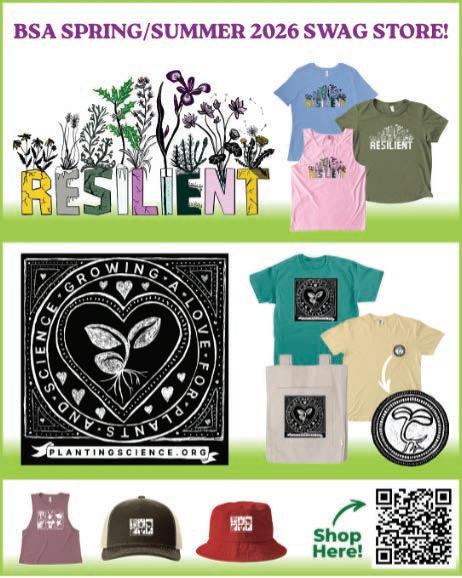
Make sure to check out our latest BSA Swag Shop collection this summer! e BSA’s own Catrina Adams brings her botanical artistry to two new stunning pieces: the “Resilient” design and a special line of PlantingScience fundraiser items. Take a look at https://www.bon re. com/store/bsa-spring-swag-store-2026 /!
New BSA logo items and the very popular Stranger Plants shirts are also available! Current BSA members with an expiration date of 2026 or later receive a 10% discount. Contact aneely@botany.org for the code.
Have an idea for future BSA swag? We would love to hear it! Email aneely@botany.org.
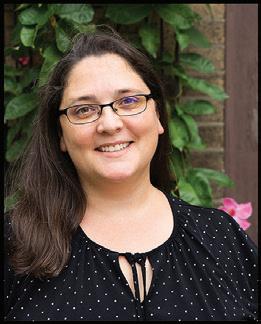
By Amelia Neely BSA Membership & Communications Manager
E-mail: ANeely@ botany.org
Botany360 is a year-round series that keeps our botanical science community connected during the 360 days outside of our Botany Conferences. e Botany360 event calendar highlights upcoming events and makes it easy to see what is happening across the Society.
Did you know there are more than 25 free event recordings available on the Botany360 web page (https://botany.org/home/resources/botany360.html)? If you missed a session, you can catch up anytime.
e following is the list of 2026 Botany360 event recordings:
How to be a Successful BSA Student Rep (January 28, 2026) https://www.botany.org/calendar/display/ date/20260128/viewtype/event/eid/59 is event was designed to help potential BSA student reps understand the role, responsibilities, and impact of serving as a student rep within the BSA. e session covered expectations, communication strategies, and ways to e ectively advocate for student voices while gaining leadership and professional development experience.
in Plant Science (May 20, 2026) https://www.botany.org/calendar/display/ date/20260520/viewtype/event/eid/60 is virtual Q&A panel featured professionals pursuing careers in industry and non-faculty academic roles. Panelists discussed their career paths, what their jobs are actually like, shared advice for students and early-career scientists interested in developing their own careers in botany and plant science, and an-
swered some of the questions that were submitted during registration. is event was hosted by the BSA’s Early Career Professional Development Committee and DEI Committee.
How to Get the Most Out of Botany 2026 (June 10, 2026) https://botany.org/calendar/display/ date/20260610/viewtype/event/eid/63 is virtual discussion group was led by BSA Student Representatives Benjamin Ajayi and Sara Pedraza and was designed to help students, early-career researchers, and rst-time attendees maximize their experience at the Botany 2026 Conference in Tucson, Arizona.
College-level Botany Textbooks and teaching: Di erent Approaches (July 13, 2026) (recording available soon!)
Featuring Dr. Ken Cameron (BSA President, author of the upcoming new edition of the Raven Biology of Plants textbook, faculty member of the Dept. of Botany, Univ. Wisconsin-Madison) and Dr. Rachel Jabaily (BSA Director at Large for Education, author of the Open Educational Resource the Biology of Plants Coloring Textbook, faculty member of the Dept. of Organismal Biology & Ecology, Colorado College). e authors will discuss their process and showcase their texts, and participants will get to discuss their experiences with college-level introductory botany courses, pedagogical approaches and changes needs, and other textbooks available. Do you have an idea for a Botany360 event? Or is there something you would love to see us o er? I am always looking for suggestions. Email me at aneely@botany.org.
e BSA Spotlight Series highlights early-career and professional scientists in the BSA community and shares both scienti c goals and achievements, as well as personal interests of the botanical scientists, so you can get to know your BSA community better. To learn more about the program, and to apply to be a Spotlight, go to https://botany.org/home/careers-jobs/careers-in-botany/bsa-spotlight-series.html.
Here are the latest Spotlights:

Caleb Onoja Akogwu, Graduate Student, Utah State University
https://botany.org/home/careers-jobs/careers-in-botany/bsa-spotlight-series/caleb-onoja-akogwu.html
Jill M. Love, Graduate Student, Tulane University
https://botany.org/home/careers-jobs/careers-in-botany/bsa-spotlight-series/jill-love.html
Oluwaseun Shodipo, Graduate Student, Texas Tech University
https://botany.org/home/careers-jobs/careers-in-botany/bsa-spotlight-series/oluwaseun-shodipo.html
Sara Wuerstl, Graduate Student, Mississippi State University
https://botany.org/home/careers-jobs/careers-in-botany/bsa-spotlight-series/sara-wuerstl.html
BSA was founded on August 27, 1893. Since 2024, we’ve marked this date each year with “A Day for BSA,” a chance for our community to share their BSA stories and give back by supporting the BSA Endowment. is year, our endowment fundraising goal is $15,000 by the end of August.
Your generosity ensures that BSA can continue to provide resources, support students, and sustain vital programs even as budgets tighten and funding becomes less certain. Science thrives when we stand together, and this community has shown what is possible.
Help us celebrate by sharing your story: send a photo along with a short quote or paragraph about what BSA has meant for your journey in the botanical sciences. Email your photo and story to aneely@botany.org by August 14, 2026.
e BSA’s Legacy Society exists to help ensure a vibrant society for tomorrow’s botanists by giving members simple, exible planned giving options. ere’s no minimum amount—just a promise to include BSA as a part of your legacy gi s. It’s our hope that this allows every BSA member to play a meaningful role in the Society’s future.
ank you to all our current Legacy Society members for your generosity and support. We look forward to celebrating with you at this year’s Legacy Society Reception, Wednesday, August 5, from 5–6 pm, at Botany 2026 in Tucson, Arizona.
Interested in joining? You’re welcome to sign up in person at the Botany 2026 Legacy Society event or join anytime by lling out the form at https://crm.botany.org/civicrm/ pro le/create?gid=46&reset=1. To learn more about the BSA Legacy Society, visit: https://botany.org/home/membership/thebsa-legacy-society.html









































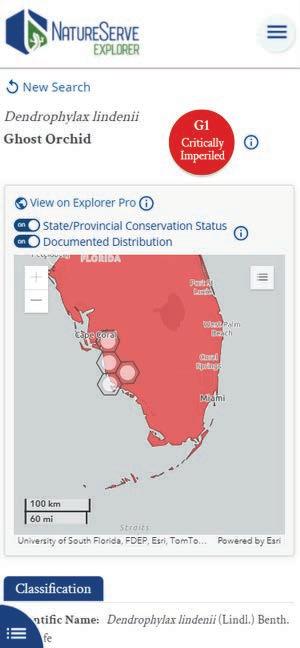











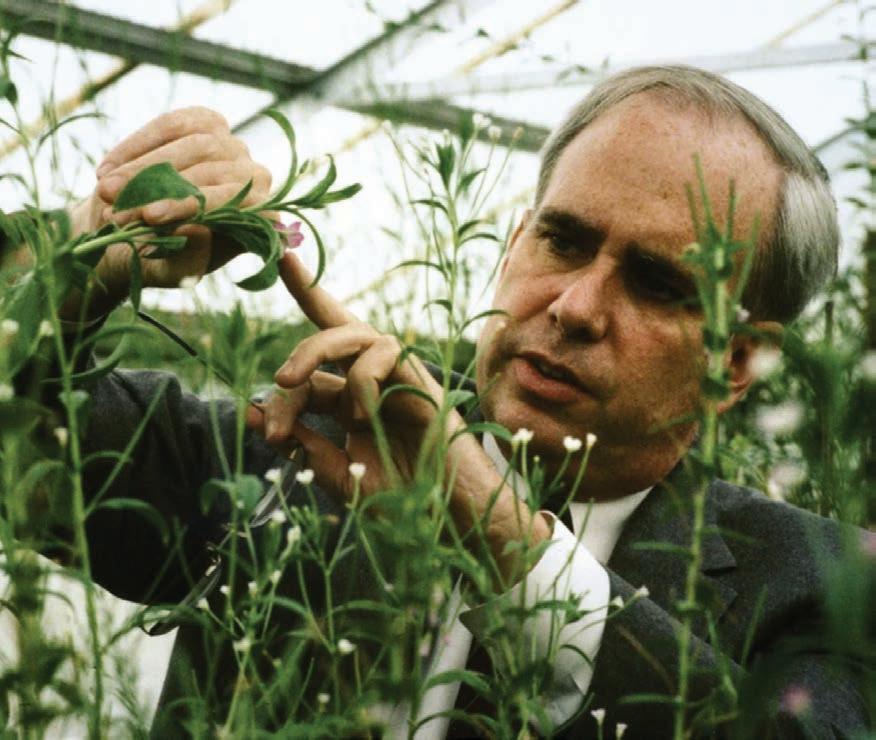
e botanical community lost several of its most distinguished scientists over the past year —Ray Evert, Ruth Kiew, Walter Judd, and Robert Ricklefs, among others. But, the death of Peter Raven hit us especially hard. Within days of the announcement that he had passed on April 25, news outlets around the world ran headlines to commemorate Peter’s legacy as an advocate for plants and nature. ese included, “Farewell to a Giant of Botany” (Nautilus); “Groundbreaking Botanist Peter Raven Dies at 89” (National Geographic); “Botanist Warned of Perils of Climate Change” ( e New York Times); and “Missouri Botanical Garden President was Named a Hero for the Planet” (St. Louis Public Radio). e obituary published in Nature (https://www.nature. com/articles/d41586-026-01652-z) is especially thoughtful.
Likewise, many of us immediately took to social media to express our condolences to Dr. Raven’s family and to re ect upon his in uence on each of us, personally and professionally. On Facebook, Stuart Pimm wrote, “Deeply saddened to hear that Peter Raven has died. He was a friend, a mentor, and an academic father. I will miss him terribly.” is sentiment was re ected by many. Michael Hu posted, “I agree wholeheartedly with your characterization of him as a wonderful human being and great scientist. He was my boss for several years when I was on the sta of the Missouri Botanical Garden. He always believed in me and supported my work. His immense and positive impact on the profession in so many ways cannot be understated.” Linda Watson echoed this, saying, “He was always so supportive of my research before we ever even met, voluntarily putting me in contact with botanists in Asia. Such an icon and advocate for biodiversity and conservation.” Similar condolences came in that emphasize Raven’s international reach, including one from Nishi Rajakaruna: “Oh, no. So sorry to hear of his passing. He will be greatly missed by the global botanical and conservation community.”
Our BSA Past-President, Jenny Xiang, sat down and penned this deeply personal re ection to which I suspect all of us can relate. “I am deeply saddened by the passing of Dr. Peter H. Raven. I am personally indebted to him for the kindness, encouragement, and support he extended throughout my career. His wisdom and commitment to nurturing young scientists created opportunities that shaped many lives, including my own. e world has sadly lost a remarkable scientist and conser-
vation leader whose visionary work advanced botanical science, biodiversity conservation, and environmental stewardship, but Peter’s legacy endures in the institutions he strengthened, the knowledge he advanced, the lives he touched, and the countless people he inspired to care for the natural world.”
Peter Raven was a good friend to the Botanical Society of America and to our botanical allies. He served as BSA President in 1975, was our invited plenary speaker at the 2011 Botany conference, and was instrumental in providing a home base for the BSA at the Missouri Botanical Garden, where our sta have been located for more than 20 years now. Peter also endowed the ASPT’s Peter Raven Award, which is given at our annual meeting to a plant systematist who has made exceptional e orts at outreach to non-scientists. I was honored to receive that award in 2014 and feel privileged that I was able to thank him personally a few years later when I had the fortune to attend a private 81st birthday dinner with him and his wife, Pat, at the 2017 IBC in Shenzhen. [Peter was born June 13, 1936 in Shanghai and has been beloved and respected by generations of botanists throughout China.] I’ll never forget the look on his face when the wait sta brought out a towering platter of lobster instead of a birthday cake!
My last correspondence with Peter was via email 6 months before his passing. I wrote to ask for his blessing as I began editing the 9th edition of what is now titled in his honor Raven Biology of Plants, the best-selling botany textbook that he rst co-authored over 55 years ago. Dr. Raven immediately wrote back saying, “Everything in your notes sounds good to me! I’m glad you have control of the situation. It always surprises me to remember that I suggested that Helena Curtis write a botany book as one of the derivatives of her very successful biology text — with my eventually becoming coauthor. . . Anyway, more power to you, and if there is any way in which I could help, please let me know.” Right up until the end, and even as his health was declining, Peter Raven was a friend, gentleman, scholar, advocate, and inspiration. He was a good person and botanical ally. On behalf of the entire Botanical Society of America, I offer this remembrance and expression of gratitude. ank you, Peter, for all that you have done on behalf of botany and botanists. You will be missed, but never forgotten.
—Ken Cameron President, BSA Professor of Botany University of
Wisconsin, Madison

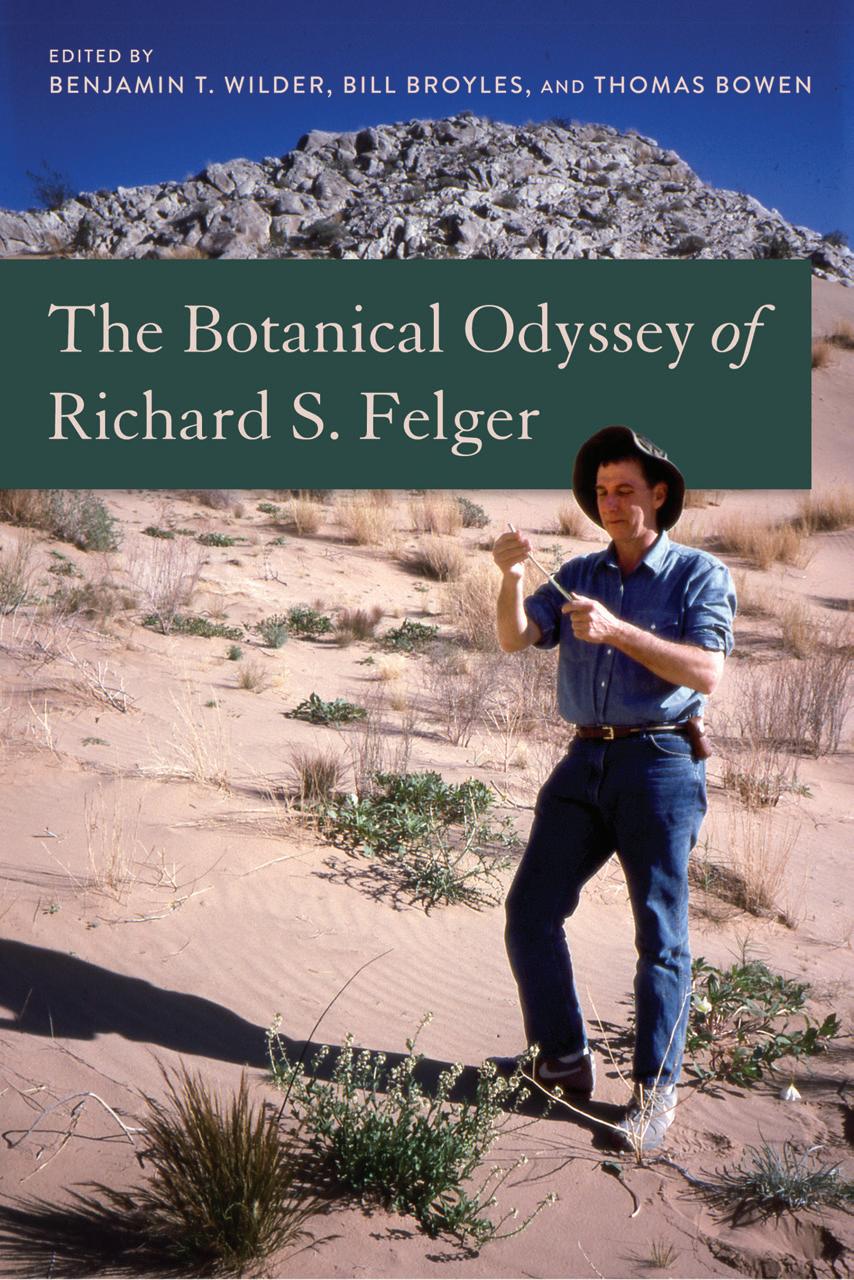



We’re pleased to share encouraging news about the upcoming 2026–2027 academic year for PlantingScience: we will be o ering both Fall and Spring sessions again this year, supporting secondary and undergraduate life science classes by connecting students with our amazing community of plant scientists! is next phase is possible in large part thanks to the support and commitment of the leadership of the Botanical Society of America, and its continued commitment to strengthening the pipeline between secondary education and plant science careers. While the NSF DRK-12 funding that has supported PlantingScience for many years is no longer available, we have received a no-cost extension on our current grant, which allows us to continue serving teachers and students while we actively pursue new sources of support to sustain and grow the program.
at work is especially important right now.

By Dr. Catrina Adams, Education Director Jennifer Hartley, Education Programs Supervisor
Today’s students are o en less likely to have regular, hands-on encounters with plants outside of school, as daily life becomes increasingly indoor and screen-based. Programs like PlantingScience help teachers integrate meaningful plant-based investigations into their classrooms and give students a rare opportunity to engage directly with professional scientists.
We are committed to continuing this work and to expanding opportunities for students to explore plant science in authentic, inquiry-driven ways. As we look ahead, sustained community support will be needed to keep PlantingScience strong and growing. If you would like to support this e ort, you can nd donation information on the PlantingScience website (plantingscience.org).
ROOT&SHOOT SI-MI MENTORING COURSE RECRUITING PARTICIPANTS FOR FALL SESSION
APPLY BY JULY 20!
e ROOT&SHOOT RCN recently piloted a new online mentoring training called SI-MI mentoring (Social Identity Matters in Mentoring). Many BSA members have been involved in helping to design, facilitate, and pi-
lot this course over the last few years. Overall, the pilot of the course was very well received. Below are some experiences shared by participants about the pilot:
“ e SI-MI course was an excellent use of my time. It helped me progress on my journey to become a mentor who is capable of being an ally to individuals with a variety of backgrounds that overlap or are di erent than my own. I appreciate the extremely thoughtful and engaging approach the facilitators used to guide participants through critical re ections and profound discussions with peers. I learned a great deal and look forward to implementing it as I move forward with my scienti c career.”
“Participating in the SI-MI course helped me slow down and think more intentionally about how I mentor. e discussions and activities made me more aware of how much the environment, expectations, and my own assumptions shape a mentee’s experience. I especially appreciated the focus on strengths and on practical
situations that mentors actually face, which made the course easy to connect to my day-today work. I feel more con dent starting honest conversations, listening better, and adapting my mentoring approach in a way that feels more supportive and respectful, both for individual mentees and for the broader academic community.”
“ e SI-MI course was a place for me to experience what it might have been like to experience a di erent model of mentorship from what I was normed to through my academic training. e course helped reinforce some of what I have put in practice since, and has helped reorient other aspects of what I will do in my own mentorship. It is built around a simple, but e ective set of tools, ideas, and practices that can be put into place immediately at the individual, department, or program level. I know I will be able to come back to the ideas from this course like touchstones as I cycle through my own progression as a mentor.”
“I found the course very useful. Despite having good intentions, like myself, one can still make many mistakes due to a lack of knowledge or pervasive biases that are hard to identify. is course provides culturally-aware knowledge, assists in identifying biases and practices that enable them to continue. It provides tools to improve your mentoring and to keep improving it a er the course ends. It also makes you feel good seeing many people engaged with creating a better environment for our mentees, and it empowers you to ght for better mentoring practices.”
“Participating in the SI-MI course helped me slow down and think more intentionally about how I mentor. e discussions and activities made me more aware of how much the environment, expectations, and my own assumptions shape a mentee’s experience. I especially appreciated the focus on strengths and on practical situations that mentors actually face, which made the course easy to connect to my day-today work. I feel more con dent starting honest conversations, listening better, and adapting my mentoring approach in a way that feels more supportive and respectful, both for individual mentees and for the broader academic community.”
“ e SI-MI course is truly essential for any faculty member who mentors students or postdocs. Each session explored important topics, including intersectionality to asset-based mentoring, through readings, thoughtful discussions, smallgroup activities, and role-playing. e program was both informative and deeply meaningful, and it has signi cantly strengthened my approach to mentoring.”
“I feel more empowered as a mentor because of this collaborative, encouraging learning en-
vironment. e resources shared and the facilitated activities allowed me to understand my own perspective at a deeper level. I was able to challenge myself and re ect with, “What would I do in this situation?” e topics covered were applicable to everyone, whether you have a formal mentoring role currently or not. I’d encourage anyone to sign up and commit to learning more about social identity in STEM and how we can all be better mentors and better peers.” e course involves seven 1.5-hour virtual sessions held every other week from August 28 to December 4, 2026, and includes topics such as engaging in impactful mentor-mentee conversations, shi ing from a de cit-based to asset-based mindset, color-evasive practices in academia, intersectionality, and developing greater cultural awareness as a mentor.
If you are interested in being a participant in the Fall 2026 online training, apply by July 20, 2026 at https://rootandshoot.org/SIMI2026.
BSA Sta Catrina Adams and Jennifer Hartley were invited speakers at a webinar on June 24, 2006 presented by the Plantae Community, “ e Bene t of Scienti c Societies for Undergraduates to PIs.” e webinar covered how scienti c societies can bene t scientists’ careers at all stages.
To view a recording of the webinar at https:// plantae.org/plantaepresents-bene t-of-scienti c-societies-for-undergraduates-to-pis/
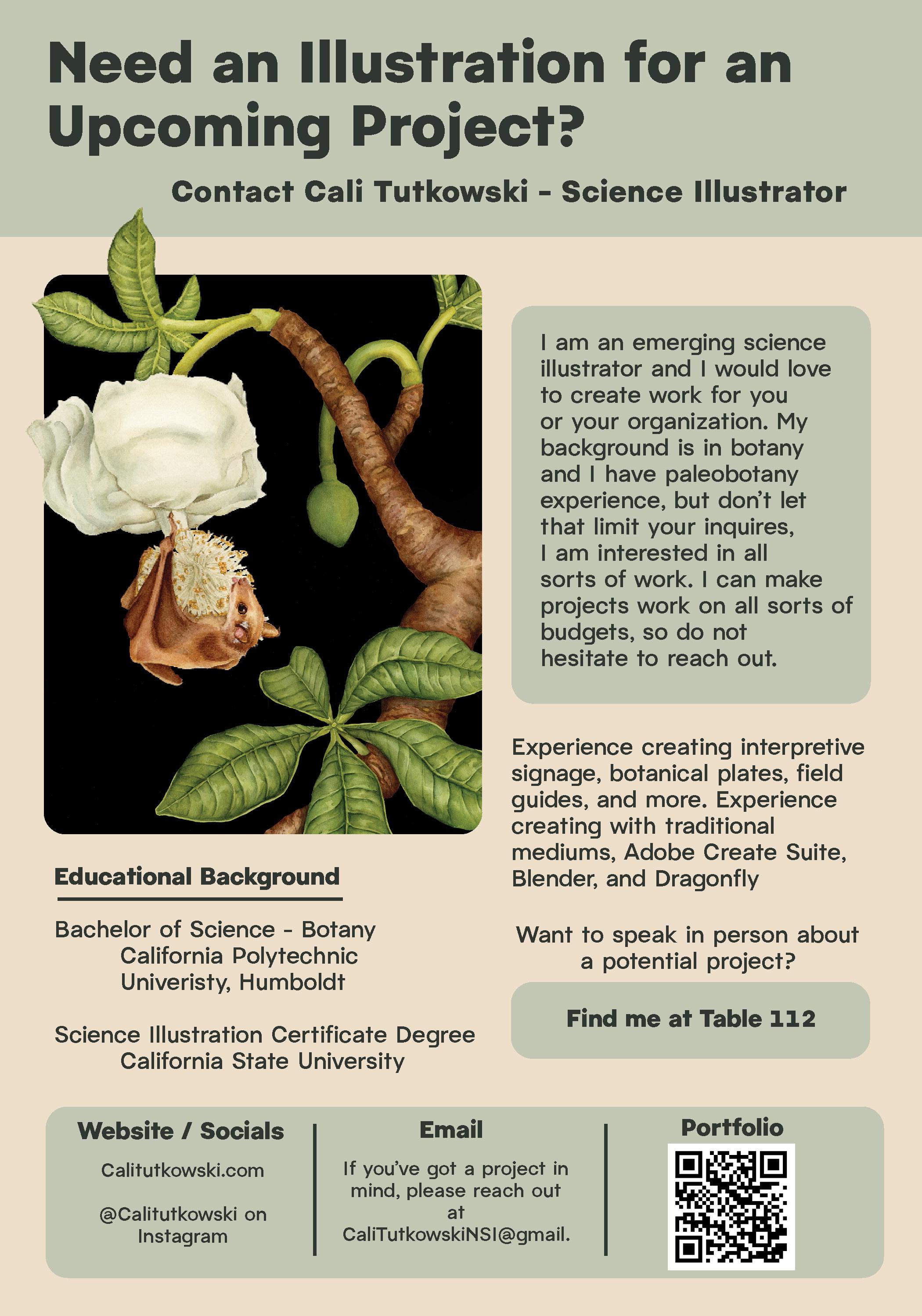
We are excited to welcome our incoming BSA Student Rep, Joseph Walston! Joseph’s term will begin in Summer 2026 and last for two years (2026–2028). Get to know him in the interview below.

JOSEPH WALSTON
Ph.D. Candidate, University of Wisconsin—Madison Department of Botany


By Benjamin Aderemi Ajayi and Sara Pedraza BSA Student Representatives
When did you join BSA and what motivated you to do so? Will you encourage other students to become members and participate in the society as well?
I joined BSA at the beginning of my graduate school studies, and my advisor is a big supporter of the Society and encouraged my joining. I have had multiple undergraduate students of mine join the Society and encourage my graduate peers to do the same. BSA has so many wonderful awards to support young botanists, and membership fees help make that possible.
What motivated you to run for the position of Student Representative to the Board of Directors and what do you plan to do as the student representative of BSA?
I love serving in leadership roles. I served as President of the Plant Sciences Graduate Student Council at my institution representing about 300 graduate students. When my term ended, I sought out more service roles and ran for the Student Representative position. I nd that service roles are extremely rewarding and help break up the monotony of research! As Rep, I want to continue to follow the great examples set by Ben and Sara and continue to increase student member involvement in the Society.
What have you gained from being a student member of BSA and why would you encourage other students to become members and participate in the Society?
e networking opportunities presented to me at various BSA events, particularly at the Botany conferences, have been fundamental to my professional development thus far. I have met fellow botanists at various events organized or associated with BSA I later reached out to for research questions or professional advice, and this culture that our community cultivates is exactly why I encourage other students to become members.
What’s your research about and how did you discover your research interest?
I study the systematics of a group of South American pitcher plants: the genus Heliamphora (Sarraceniaceae). With an emphasis on morphology and phylogenetics, I am intrigued by extremophilic adaptations that plants have, such as botanical carnivory, and am deeply interested in taxonomy and nomenclature. My research is entirely collections based by using both horticultural and herbarium museum collections. I grew up in North Carolina, one of the carnivorous plant hot spots of the world, and I feel a connection with carnivorous plants. My research interests rst started in college when I began an independent research project studying the soil nutrients of the habitats where endangered pitcher plants grew.
What sorts of hobbies do you have?
I love to grow orchids and other high-humidity plants. I also really enjoy reading fantasy books—anything with witches or vampires is my favorite. Right now, I am reading the Society of Magical Botanists series by Heather Schneider. It is a very sweet series for anyone wanting a botanical fantasy read!
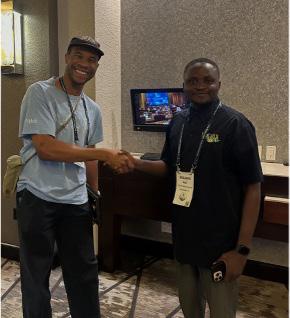
A botanical handshake between Josh (Student Rep 2023–2025) and Ben (Student Rep 2024–2026) at Botany 2025 in Palm Springs.
THE BOTANY CONFERENCE IS JUST AROUND THE CORNER, AND WE CAN’T WAIT TO SEE YOU IN TUCSON, ARIZONA!
Conference at a Glance
Here’s a summary of the conference schedule:
Saturday 8/1: Field Trips
Sunday 8/2: Workshops, Plenary Lecture, AllSociety Mixer
Monday 8/3: Poster Session
Monday 8/3 – Wednesday 8/5: Oral presentations and events
Wednesday 8/5 evening: Conference-wide celebration!
Careers in Botany Panel is free this year! We will have 10 panelists joining us for this event. From panelists working in academia, government, non-governmental organizations, herbaria, and botanical stations, this panel will include representation of the large spectrum of career stages and jobs in Botany. We hope this event will allow students to connect with a variety of botanists in di erent jobs. More than 125 students will be able to join this free event at Botany 2026. Stay tuned for more information!
At Botany 2026 the Early Career Professional Development Committee is hosting an Early Career Researchers Lunch - B.Y.O.L. (Bring Your Own Lunch) to support students and early career professionals on Tuesday, August 4, from 12:00 to 1:30 pm. During the session, we will provide a dedicated space for early career botanists to share their concerns, questions, and ideas about the state of academia and the botanical sciences.
Our goal for the session is to serve as both a listening forum and an opportunity to foster community among early-career attendees. Insights gathered will guide future programming and support e orts led by the committee.
Learn more about the committee at: https://cms.botany.org/home/governance/early-career-committee.html.
Students, please do not hesitate to reach out to us by BlueSky @ajayibenmi.bsky.social or via email bajayi@bio.fsu.edu and sarapedraza@ ucla.edu.
Foundations of Conservation Biology
A Guide to the Classic Literature
Edited by Je rey D. Brawn, Erica Fleishman, Curt Meine
Ecological Explosions
The History of Biological Invasions and Invasion Science
Daniel Simberlo
International Code of Nomenclature for algae, fungi, and plants (Madrid Code)
Editorial Committee of the Madrid Code
Contributions by Nicholas J. Turland, et al.
Tree Day
A Story of 24 Hours and 24 Arboreal Lives
Meg Lowman
Illustrated byThibaud Hérem
Since 1875, the International Journal of Plant Sciences (IJPS) has presented high-quality, original, peerreviewed research from laboratories around the world and in all areas of the plant sciences. Topics covered include genetics and genomics, developmental and cell biology, biochemistry and physiology, morphology and anatomy, systematics, evolution, paleobotany, plant-microbe interactions, and ecology. IJPS welcomes research articles that describe novel results and new perspectives on topics of interest to the international community of plant scientists. e journal also features reviews and special issues in growing areas of the eld. journals.uchicago.edu/IJPS

The Arrival of the Fittest: Biology’s Imaginary Futures, 1900-1935
The Game of Species: An Introduction to Biodiversity
The Man Who Made Plants Write: Essays by Jagadish Chandra Bose
Moss and Lichen
Nutraceuticals in Arthritis and Psoriasis: Management and Prevention of Diseases
Vascular Plants of New Mexico
MonographsinSystematicBotanyfromtheMissouriBotanicalGarden , Volume 140
Thriving as an International Scientist
The Arrival of the Fittest: Biology’s Imaginary Futures, 1900-1935
JimEndersby 2025. ISBN: 978-0-226-837567 (Paper)
US$37.50; 424 pp. University of Chicago Press, Chicago.
e title, e Arrival of the Fittest, is based on a ctional book title in a 1909 short story by Edith Wharton. Published during the 50th anniversary of Darwin’s Origin…, Wharton summarized for the pubic the ongoing scienti c debate between Darwinism and Mendelism, particularly the role of mutations. While natural selection supported “survival of the ttest,” it did not explain the actual origin of new species, “the arrival of the ttest.” For that the new mutation theory, proposed by one of Mendel’s co-rediscoverers, Hugo De Vries, was now in ascendance. In fact, De Vries’ discoveries were rst reported to Americans in a popular press article, “New Light on the Origin of Species,” several years before English translations of his articles and books were available (“New Light…”, 1901). Emerging mass market journalism found a niche in presenting scienti c arguments to the public simultaneously with, or even before, scientists’ arguments were covered in their more technical publications. Endersby’s argument is
that because traditional Darwinism promoted only slow change driven by natural processes that tended to eliminate the un t while mutations provided a mechanism for sudden large changes that could be selected for, and even directed by humans, the latter arguments were quickly, culturally, coopted in various ways. British and American societies, leading the industrial revolution and at the forefront of progress, reveled in their power over nature and were con dent in their ability to quickly improve on nature. e mutation theory provided scienti c veri cation for the possibilities.
e core of the book consists of ve chapters focusing on some key individuals: De Vries, Liberty Hyde Bailey, Luther Burbank, and omas Henry Huxley, and four chapters focused on cultural institutions: textbooks, biotopias, science ction, and particularly Aldus Huxley’s Brave New World.
For the author, DeVries mutation theory was like a supernova. It exploded onto the scene promising an exciting modern solution to the “arrival” conundrum that could replace Darwin’s old, slow, non-solution. is ts the times. Americans were optimistic at the beginning of the new “American Century,” and they were looking for progress and change. e Youth’s Companion magazine was the second largest mass publication in the country,
and their story was quickly picked up and spread by newspapers and other magazines. Furthermore, that De Vries disagreed with Darwin was fuel for Christian fundamentalists’ opposition to evolution, while at the same time supporting the ideas of America’s two most famous botanists, Liberty Hyde Bailey and Luther Burbank. Bailey was a preeminent botanist and agriculturalist at Cornell University, and Burbank was a self-taught “miracle” plant breeder in California—but both were convinced that man, through industry and insight, could improve on nature’s crops. Both botanists supported De Vries, who provided a mechanism—mutation—for generating variation that could be selected upon. Scientically this excitement over mutations was short lived, however, and was quickly abandoned by scientists when Morgan began publishing on fruit y genetics and subtly rede ned “mutation” (Morgan, 1916).
While the Americans focused on progress to improve a mostly harmonious nature, Huxley and other British biologists saw natural selection as not just indi erent, but “actively hostile to human goals” (p. 153). It became necessary for humans to take control—a perfect justication for imperialism. With the biological backgrounds of the players and their scienti c tools now set, the author moves on to describe their appropriation by the public and the resulting social implications. e rst topic is the classic mass-market tool for in uencing future generations: the textbook. e author opens his textbook chapter with the Scopes trial of 1925 and Scopes’ use of Hunter’s Civic Biology to teach his class, including about evolution. Even the next year, when the revised New Civic Biology was published (Hunter, 1926), De Vries’ mutation theory was treated as cutting edge biology. e last two pages of Holman and Robbins’ (1928) Elements of Botany are one-page comparisons of “Darwin’s
eory of Natural Selection” and “ e Mutation eory of Evolution.” De Vries was still prominent in the textbooks more than a decade a er scientists discounted his theory. We o en talk about textbooks being 10 years out of date, but usually this is with respect to “new stu ” getting in, not out-of-date material and misinformation being dropped.
Mutationism, and later Mendelism, marked the beginning of the experimental evolution movement; simultaneously, socialism and feminism arose as parallel social movements. e connections between the scienti c and social movements were based primarily on rates of change. With traditional Darwinism, change was slow and random, similar to change in social status for the poor and working classes. Mutationism was rapid and experimental evolution was directed; these were taken as examples for social revolutions whether it be biotopian communities, socialist rebellion, or sexual revolution. Notably, late in his career Alfred Russel Wallace was a strong supporter of both social movements, believing that unrestricted female choice, by itself, “would make eugenic legislation unnecessary.” Eugenics, of course, was the rst social Darwinism example I thought of while reading the text, but the author mostly ignores this infamous discipline, arguing that it already has a dominating and expansive literature.
Charlotte Perkins Gilman, and her ctional Herland (1915), are the perfect transition between biotopias, socialism, feminism and the chapter on Science Fiction. SciFi as a genre began with magazines in the 1920s and soon moved to books. Among the key gures were H.G. Wells, the evolutionary biologist J.B.S. Haldane, and Aldous Huxley (grandson of omas Huxley). ey each brought a scienti c visionary perspective to their writing
whether it be utopian or dystopian, but regardless, man was overcoming natural limitations and directing the progress of the story. Early science ction foreshadowed scienti c e orts to improve on nature—progress at any cost—and it continues to do so today. (Ask Je Bezos or Elon Musk.)
e book is well researched, extensively footnoted, and yet eminently readable. Although I was familiar with most of the characters in the book, Endersby introduced new details and historical insights and interactions that painted a much richer picture of the interactions between science and society at the turn of the 20th century. I found it fascinating. e author provides an interesting appendix of more than 150 British and U.S. textbooks of the time summarizing their treatments of: natural selection; De Vries/mutation theory; Mendel/genetics; Biotopias; and Luther Burbank. is is followed by an extensive list of references and a thorough index. e Arrival of the Fittest would serve as a great textbook for an upper-level honors or graduate course on the connections between science and society or one of several readings in a history of science course.
Gilman, C. P. 1915. Herland. Serialized in The Forerunner magazine, New York.
Holman, R. M., and W. W. Robbins. 1928. Elements of Botany. New York, John Wiley and Sons.
Hunter, G. W. 1926. New Civic Biology: Presented in Problems. New York, American Book Company.
Morgan, T. H. 1916. A Critique of the Theory of Evolution. Princeton, N.J. Princeton University Press.
“New light on the origin of species”. 1901. The Youth’s Companion 75: (August 1) 387.
Marshall D. Sundberg. Kansas University Affiliate and Roe R. Cross Distinguished Professor of Biology – Emeritus, Emporia State University.
Julián Simón López-Villalta 2025. ISBN 9781784275587
US$31 (paperback); 112 pp. Pelagic Publishing
Biodiversity is fascinating to people from all walks of life, and as biologists many of us were rst drawn to this eld of study because of our captivation with the diversity of life, yet as a science it can be complicated and intimidating to understand. In e Game of Species, Julián Simón López-Villalta uses the analogy of a boardgame to introduce key concepts in ecology and evolution in a more accessible manner. López-Villalta is an instructor in the natural sciences at IES Peñalba Moral de Calatrava (C. Real) in Spain and published the rst version of this book in Spanish with the publisher Tundra Ediciones under the title El Juego de las Especies in 2017. His goal with both versions is to reach a broad audience and convey what he feels is essential to understanding biodiversity.
e book is generally organized as one would approach a boardgame, with chapters that serve as a general introduction to the game, describe the pieces and their roles, and explain the di erent “boards” themselves. López-Villalta uses these themes to convey essential concepts that would be found in an upper-level high school or introductory college unit in ecology and evolution, including natural selection, other evolutionary mechanisms, species concepts, modes of speciation, ecological
niches, island biogeography, extinction and radiation, macroevolution, conservation, and threats to biodiversity.
In each chapter, López-Villalta starts with the “game” analogy to introduce the topic, moves on to basic introductions, accelerates into more advanced ideas, and uses examples from research to drive home these points. He writes about the work of in uential individuals in the eld and uses historical quotes, maps, drawings, and artwork to make concepts approachable. e gures and accompanying legends throughout the book are wonderful and range from historical illustrations to graphs and photographs of key examples of the biodiversity concept at hand. López-Villalta accomplishes all of this in a succinct manner with elegant prose and ends each chapter with a brief summary and conclusion. e nal chapter deviates slightly from the game theme and focuses on the future of biodiversity, ranging from conservation issues to a call to share ideas to help preserve and save biodiversity. e book also includes additional resources at the end, including a glossary of key terms, an annotated list of references and further reading for each chapter, illustration credits, and an index.
Overall, this book serves as an excellent primer for anyone who is interested in nature or biodiversity but perhaps lacks formal training in the eld. Individuals who are more seasoned in the elds of ecology and evolution may nd additional examples or analogies to help explain concepts or ideas in both traditional and non-traditional educational settings.
—Nora Mitchell, Department of Biology,
University of Wisconsin – Eau Claire, Eau Claire, Wisconsin, USA
Man Who Made Plants Write: Essays by Jagadish Chandra Bose
Translated and with an introduction by Sumana Roy 2026. ISBN: 978-0-300-27840-8 US$28.00 (Cloth); 112 pp. University of Chicago Press, Chicago
is small collection of 14 essays was rst published in Bengali, as Abyakta (the unmanifest), by Sir Jagadish Chandra Bose in 1922. His goal was to introduce the lay Indian population to science, particularly physical science and especially botany. In fact, two of the essays were originally written for children and this helps to explain his anthropocentric metaphoric approach, o en criticized and dismissed by his western scienti c colleagues.
Early in his career he chose to write in the vernacular speci cally to make his work accessible to his fellow Indians and to encourage them to pursue science and to realize that plants were living organisms comparable to animals, and in fact humans! As a result, for many years his work was unacknowledged in the west. Yet, by the time he wrote this small collection, Bose was a recognized physicist and botanist with an extensive list of scienti c publications in English.
In Chapter 2, “ e Resonance and Conceivable World of the Sky,” he essentially introduces thermodynamics with the vibrating energy of the strings of a musical instrument. e pitch heard by the ear relates to the length of the string and speed of vibration. Yet the ear can only hear a certain range; both longer and shorter wavelengths exist, with known properties, but they are inaudible. Similarly, in Chapter 6, “ e Invisible Light,” wavelengths and amplitude extend beyond human perception of light in predictable ways. Science al-
lows us to explore beyond what is humanly perceptible and we can develop instruments to help us test these predictions.
Bose begins Chapter 3 with the question, “Do plants say anything?” Before answering he asks the reader to consider how a child learns to speak. A young child learns many ways to communicate even before they can speak and continues to use many of these alternative forms throughout life. Response to touch, facial expressions, body language, and response to various stimuli are all ways humans can communicate without speech. You just have to learn to make careful observations.
It is not until Chapter 12, “ e Injured Plant,” that Bose nally answers his question. He begins by acknowledging that the most likely way to test if a plant can communicate is to injure it in some way and look for a response. In some plants, like Mimosa, response is easy to observe, but for most plants it is more complex and several questions must be answered. What kinds of injury excite a plant? What kind of signal does the plant produce in response? Can the signals be recorded in writing? Can something of the plant’s history be discovered from the style of writing? How does a plant feel when it is injured? To answer these questions Bose invented a machine, the crescograph, that could amplify physical responses at known intervals over extended periods. Using this instrument, he allowed the plant to record responses to various stimuli (electricity, light, temperature, chemicals, both liquid and gaseous, pressure, cutting, etc.) He could measure rates, amplitude, lag time, dampening, and loss of sensation based on the “plant writings” he recorded. “ e results of the investigations which I have carried out for the last quarter of a century establish the generalization that the physiological mechanism of the plant is identical with that of the animal” (Bose, 1926). His answer: Plants do not say
anything audibly, but they certainly communicate in response to injury, just like animals. is interesting little book is an appropriate introduction to the polymath Jagadis Chunder Bose. It provides glimpses of Indian culture, its colonial history, and its impact on science. For a teacher, it models ways to approach wave theory and the physics of light and sound as well as the importance of careful observation and hypothesis testing. e translation ows smoothly and you feel the warmth and humanity of the author. I was not familiar with Bose’s work previously, but I now recognize that many of his experiments foreshadow our current understanding of cell biology, such as how a positive vs. negative charge stimulus induces opposite bending response in Mimosa lea ets and how the two small lateral lea ets of Desmodium can “move on their own ...with an internal vibration …not a ected by any external force…” (p. 96)—a great example of biorhythmic movement.
My suggestion to make the book more appealing to professional botanists would be to include a brief bibliography of some of Bose’s English publications. Bose (1926), cited above, comes from a note on the inside rear foldover of the book jacket. An even more complete description of his crescograph and its various modi cations, as well as six chapters of experiments on Desmodium, can be found in Bose (1913). (Note that at the time of this publication, he was not yet knighted.)
Bose, J. C. 1913. Researches on Irritability of Plants Longmans, Green and Col, Ltd. London.
Bose, J. C. 1926. The Nervous Mechanism of Plants. Longmans, Green and Col, Ltd. London.
—Marshall D. Sundberg. Kansas University A liate and Roe R. Cross Distinguished Professor of Biology – Emeritus, Emporia State University.
Moss and Lichen
Elizabeth Lawson
2024. ISBN: 978-1-78914-939-5
US$24.95 (Hardcover); 256 pp. Reaktion Books Ltd, London, U.K.
Elizabeth Lawson’s Moss and Lichen is a delightful exploration of the extraordinary, magni cent wonders of lichen and moss. Both are powerful players in the natural world, amazing scientists and enthusiasts alike because of their biological prowess. e wind, for instance, can carry a “single moss cell isolated from a mother plant” to a new place where it can become a new plant (p. 7). Fragments of lichen, the size of pepper corn, can start a new population when carried for miles on the claw of a small bird (p. 7). Lichens and mosses have survived climate change over millennia, evolving into new and separate species that have made their homes in every imaginable and impossible surface on the Earth.
e introduction, “ e Cryptogamic Carpet,” reminds us just how ancient moss and lichen are. Cryptogams are plants that have no true seeds or owers. Mosses, in the phylum Bryophyta, are non-vascular plants. Lichens, a composite organism comprised of fungus and algae (or photosynthetic symbiont) are considered fungi, although Lawson notes that “they would never t in” (p. 67), whereas mosses neatly t into the plant kingdom. is chapter gives a comprehensive account of their origins and place in the natural world, discussing how scientists, enthusiasts, and various associations came to name, categorize, and understand them.
Lawson devotes a chapter to each one, which paints an all-encompassing picture of them. In her chapter “Bogland,” Lawson describes how sphagnum moss (Sphenopsida) makes its residence in watery habitats, such as bogs and
peatlands (Lawson explains the di erence). In its evolutionary history, sphagnum moss is the earliest lineage to split from other mosses (p. 118). It is dead at maturity, thrives in acidic environments, grow very slowly (1 mm per year), and stores water (pp. 123–124).
Whereas sphagnum moss makes it homes in wet places, lichen love to make its home on rocks and trees. Lichen adorns all types of rocks with goldish, yellowish, light greenish, and reddish splashes. ey live comfortably on them, as they slowly but surely decompose them in a process called weathering. Weathering dissolves and digests rock with powerful oxalic acid and mineral-building compounds like depsidones. Such is the case with Mount Rushmore, where the presidents’ faces were blanketed with lichens of the Rhizoplaca, Lecidea, and Caloplaca species. In Entangled Life (2020), Merlin Sheldrake notes that, in 2006, lichen had to be pressure hosed o Mount Rushmore, removing more than 60 years of lichenous growth (p. 75).
Not only do they tackle the hard stu of rock, moss and lichen also put in an appearance in the literary world. Lawson nds the proverb “a rolling stone gathers no moss” was rst attributed in 42 BCE to the playwright Publilius Syrus. In 1032, it appears in Egbert of Liège’s Latin sayings. en, in 1500, Erasmus popularized it in his published collection of proverbs, Adagia. In the 1950s, Veteran Affairs hospitals in the U.S. used the proverb as a psychoanalytic tool to determine whether patients were mentally ill. Patients were deemed mentally ill if they could not restate the proverb metaphorically (p. 143). is is the fate that befalls Randall P. McMurphy, the protagonist in Ken Kesey’s One Flew Over the Cuckoo’s Nest (1962). McMurphy’s literal rewording, “It’s hard for something to grow on something that’s moving” (Forman, 1975) is partly the reason for his lobotomy.
e text is supplemented with many colorful photographs, illustrations, and microscopic images of lichen and moss species, which together o er a pictorial history of their scienti c development and place in the cultural landscape. For instance, life-cycle illustrations make it easy to see how moss and lichen reproduce. An illustration from the Scottish wonder tale, “ e Princess of Land-under Waves,” shows the healer Jeermit giving the princess a magical drink made of blood-red sphagnum moss. Illustrations also depict how wildlife makes use of moss and lichen. e Collared Inca hummingbird adorns its cup-like nests with Coeligena toquata fulgidigula (p. 208), and the moss carder bumble bee nests in moss mats (p. 210). Lawson packs a toolkit for readers full of illustrations, references, suggestions for further reading, and list of associations and websites to carry with them as they embark on their own study of mosses and lichens. Lawson also pays homage in Moss and Lichen to those she calls citizen scientists, whose assiduous explorations, gathering of specimens, and compilation of textual data laid the foundation for much of what we know about mosses and lichens. Lawson’s chapter, aptly titled “Curious Observers: A Field Trip,” tells the lives of botanists and lichenologists, whose interests in mosses and lichens spanned their whole lives. Accounts from Elizabeth Gertrude Knight, a bryologist and author of A Catalogue of the Mosses of West Virginia, and Matilda Cullen Knowles, a lichenologist and author of e Lichens of Ireland, contribute a great deal about moss and lichen to science. Moss and Lichen is a wonderful resource for students and enthusiasts. For Lawson, history, biology, and culture earn moss and lichen “ rst place as pioneers, creators and restorers of habitats” (p. 7). Mosses and lichens contribute greatly to the Earth’s ecosystem. Mosses
stabilize the soil by preventing erosion, and lichens, which directly take water, toxins, and nutrients from their environment, are useful in monitoring air quality because of their sensitivity to pollutants.
Forman, M. (Director). (1975). One Flew Over the Cuckoo’s Nest [Film]. Fantasy Films.
—Rachel Burgess, rachel.burgess.ph.d@gmail. com, Independent Scholar, Rochester, NY 14606
Nutraceuticals in Arthritis and Psoriasis: Management and Prevention of Diseases
Meenakshi Jaiswal, Raj K. Keservani, Rajesh K. Kesharwani, Swati Gokul Talele (Eds.) 2025. ISBN-13:978-1-77491746-6 (Hardcover), 978-1-77491-747-3 (Paperback), 978-1-00354-538-5 (eBook)
US$240.00 (Hardcover), $99.00 (Paperback), $180.00 (eBook); 322 pp.
AAP Advances in Nutraceuticals, Apple Academic Press, Palm Bay FL and Burlington, Ontario Canada; CRC Press, Boca Raton FL and Abingdon, Oxon, UK.
Plants have assumed new prominence to promote healing with an explosion of interest from patients and some caregivers to avoid prescription medications because of their undesirable side e ects. Many have turned their attention to the traditional practices of their grandparents and elders. e skyrocketing focus on functional foods has revived research into the bene ts of vegetables, fruits, herbs, and spice constituents, including carotenoids, phenolics especially avonoids, phytosterols, probiotics, and omega-3 fatty acids.
Nutraceuticals in Arthritis and Psoriasis delivers impressive coverage of nutraceuticals, food-derived supplements that provide health bene ts beyond basic nutrition, including disease prevention and treatment. ey can function as antioxidants and anti-in ammatory agents, or modulate gut microbiomes. Familiar examples include probiotics for gut health, omega-3 for in ammation, and glucosamine for joint health. Nutraceuticals may be used to manage or prevent chronic diseases, e.g., heart disease, diabetes, and boost immunity. is market is rapidly expanding, with signi cant growth in the “wellness” sector and strong consumer attention to preventive health.
Several authors list protective plant foods for those su ering from arthritis, including those rich in vitamin E, among them nuts such as almonds, hazelnuts, peanuts; sun ower seeds; vegetable oils, especially olive and avocado; greens, including broccoli and spinach; fortied cereals; and butternut squash. Although not mentioned in these chapters, sesame seeds, Sesamum indicum L., may also help manage and potentially protect against arthritis symptoms, particularly osteoarthritis of knees, due to their high content of anti-inammatory compounds.
Studies indicate that consuming 5 Tbsp of sesame seed powder daily can signi cantly reduce joint pain, improve mobility, and reduce in ammation, o en outperforming traditionally prescribed medication alone (Haghighian et al., 2015).Patients with knee osteoarthritis who added sesame seeds to their daily diet experienced signi cant decreases in pain, with one study showing a drop from 9/10 to 3.5/10 in pain severity. Sesame seeds are rich in lignans sesamin and sesamolin (Bedigian, 2015), antioxidants that help reduce joint in ammation and oxidative stress that causes cartilage
degradation. Research indicates that daily sesame consumption can lead to improved physical function and mobility in patients su ering from arthritis. Topical application of sesame oil has also been shown to reduce joint pain and, in some studies, reduce the need for nonsteroidal anti-in ammatory drugs. Sesame seeds are also rich in copper, manganese, and calcium, essential for bone and joint health.
Microalgae are featured (Kumar, 2025: 8997) as major sources contributing bioactive compounds such as carotenoids, protein vitamins and minerals, polyunsaturated fatty acids, phycobiliprotein, and lutein. Arthrospira platensis and Chlorella vulgaris show promise against collagen-induced arthritis due to their ability to elevate serum albumin and decrease serum cholesterol.
Osteoarthritis is a degenerative disease that signi cantly impacts joint function and quality of life. Tung et al. (2025) contribute an excellent review in this volume that features pomegranate (Punica granatum L.), Rosa canina L., Withania somnifera (L.) Dunal, Ginger (Zingiber o cinale Roscoe) and curcumin, the primary active compound in turmeric (Curcuma longa L.), renowned for potent anti-in ammatory, antioxidant, and therapeutic bene ts, including treating arthritis.
A personal medical condition that prompted an interest in psoriasis was drug-induced psoriasis, as de ned by Jain et al. (2025: 168)—an a iction that persisted for 18 months, resisting all “conventional” treatments attempted. Although my dermatologists and podiatrists expressed skepticism since they viewed the prescribed 2% ketoconazole as harmless, to me, it produced an allergic reaction. Chiu et al. (2018) and Dogra and Kamat (2019: S40) delve into details about the -azole group of antifungals inducing exacerbation of psoriasis.
An examination at Columbia Doctors Department of Dermatology resulted in the diagnosis of severe keratoderma, although culture of epidermal cells found no fungal infection. e prescribed corticosteroid betamethazone dipropionate failed to resolve the problem and I was unwilling to begin a very expensive, fullyear course to try Soriatane (acitretin), which the dermatologist indicated was the only treatment. A er su ering with no resolution for 10 months, I was driven to try another approach. Having tried a ra of assorted prescriptions with no success, aware of the many bene ts of the oilseed sesame, I bring a unique perspective toward treating a medical condition that resonates with my ethnobotanical interests in natural products as alternatives to prescription medicines that generate huge pro ts for pharmaceutical rms.
I remembered another edible oilseed, Nigella sativa L. that has widespread edible and medicinal appreciation in the East, even gloried by its Arabic name, بذرةالبركة (seed of blessing), but is little known to Western and European healers. at led me to investigate its e ectiveness for diverse diagnoses. After studying research reports about the antiin ammatory and antioxidant properties of the active constituent of Nigella sativa seed oil thymoquinone (TQ) and the conditions it treats, I was convinced to prescribe this treatment to myself to treat what a dermatologist de ned as palmoplantar psoriasis. e condition was remediated a er 7 months’ daily use of an organic source of Nigella sativa seed oil certi ed to contain 5% TQ.
There are no safety concerns with chronic use of N. sativa seed oil as a supplement. ymoquinone (TQ), the primary bioactive compound in black seed (N. sativa), acts as a potent immunomodulator. e innate immune response is the “trigger” in psoriasis,
where dendritic cells and macrophages mistakenly identify self-DNA as a threat. TQ blocks the Nuclear Factor-kappa B (NF-κB) pathway, which is the master switch for inammation. By doing so, it prevents innate cells from churning out pro-in ammatory cytokines (e.g., TNF-α and IL-1β). TQ helps suppress the production of IL-23 by dendritic cells, which in turn prevents the activation and expansion of 17 cells. Without 17 cells, the levels of IL-17 (the cytokine responsible for skin thickening and scaling) drop signi cantly. Psoriasis is characterized by an imbalance between pro-in ammatory ( 17/ 1) and anti-in ammatory (T-reg) cells. TQ helps shi this balance back toward a regulatory state, e ectively “telling” the immune system to stop attacking the skin. While not strictly immune cells, keratinocytes respond to immune signals by over-proliferating. TQ encourages “programmed cell death” (apoptosis) in hyperactive skin cells. It upregulates the p53 protein, which acts as a brake on the rapid, abnormal cell division that causes thick psoriatic plaques.
Jadhav et al. (2025) and Rohit and Kumar (2025) provide the core of this volume’s information about nutraceuticals for treating psoriasis. Note that several authors of these chapters are also editors of this volume, indicative of their area expertise. Among the plant species listed that help treat psoriasis are Aloe vera (L.) Burm. f., neem (Azadirachta indica A. Juss.), turmeric (Curcuma longa L.), Soybean (Glycine max (L.) Merr.), Nigella sativa, milk thistle (Silybum marianum (L.) Gaertn.), evening primrose oil (Oenothera macrocarpa Nutt.), and Omega-3 fatty acids. Although speci c plant sources are not listed, purslane (Portulaca oleracea L.) is widely considered the land plant with the highest omega-3 (alpha-linolenic acid/ALA) content, o en surpassing the omega-3 levels found in many sh
and far exceeding other leafy greens. It is a nutrient-dense, edible weed o en used in salads or as a leafy vegetable, and parenthetically, one I learned about from my grandmother when I brought it home accidentally among vegetables that I grew in a community garden in the Bronx at age 9. She sent me back to harvest a quantity, and I have used it as a potherb whenever I nd it now. Other familiar plant sources not mentioned include axseed, chia seeds, and walnuts.
Unfortunately, this volume holds limited information, barely two pages, about Nigella sativa treatment for psoriasis. Readers keen to learn more could consult Ahmed Jawad et al. (2014), Aljabre et al. (2015), Fareid et al. (2026), Hussein et al. (2026), and Shankhdhar et al. (2026). My primary interest is to learn more about N. sativa, referred to as “black cumin” here and in much of the published literature. Jadhav et al. (2025: 236) states: “Because of its antibacterial, anti-in ammatory, anti-acne, antifungal, anticancer, and antipsoriatic properties, it is commonly utilized for dermatological diseases” citing Vickers et al. (2007). However, the References show only Vickers (2017).
is is a valuable compendium that can serve as a primer for sta in healing professions. I observe that the latest literature cited dates back several years, suggesting that the articles may have been prepared awhile before the book was published. Some additional editing may have been useful, since Latin binomials are occasionally not italicized, and several references cite incorrect sources.
Ahmed Jawad, H., Y. Ibraheem Azhar, Y. Khalil, and I. Al Hamdi. 2014. Evaluation of efficacy, safety and antioxidant effect of Nigella sativa in patients with psoriasis: a randomized clinical trial. Journal of Clinical and Experimental Investigations 5: 186-193.
Aljabre, H. S. M., O. M. Alakloby, and M. A. Randhawa. 2015. Dermatological effects of Nigella sativa Journal of Dermatology & Dermatologic Surgery 19: 92-98.
Bedigian, D. 2015. Systematics and evolution in Sesamum L. (Pedaliaceae), part 1: Evidence regarding the origin of sesame and its closest relatives. Webbia: Journal of Plant Taxonomy and Geography 70: 1-42.
Chiu, H. Y., W. L. Chang, T. F. Tsai, Y. W. Tsai, and M. N. Shiu. 2018. Risk of psoriasis following terbinafine or itraconazole treatment for onychomycosis: A populationbased casecontrol comparative study. Drug Safety 41: 285295.
Dogra, S., and D. Kamat. 2019. Drug-induced psoriasis. Indian Journal of Rheumatology 14: S14-S43.
Fareid, M. A., G. M. El-Sherbiny, N. M. Elafandy, N. E. Eltoum, M. S. Othman, M. Shawky, A. S. El-Hawary et al. 2026. Exploring the multifaceted phytochemical profile of Nigella sativa and the therapeutic potential of thymoquinone. Pharmaceuticals 19: 503.
Haghighian, M., B. Alipoor, A. Malek Mahdavi, B. Eftekhar Sadat, M. Asghari Jafarabadi, and A. Moghaddam. 2015. Effects of sesame seed supplementation on inflammatory factors and oxidative stress biomarkers in patients with knee osteoarthritis. Acta Medica Iranica 53: 207-213.
Hussein, B., A. H. Maad, W. Alaghawani, R. Aziz, and N. Alhabbal. 2026. Therapeutic potential of Nigella sativa oil cream for eczema treatment: Formulation, stability and clinical assessment. International Journal of Applied Pharmaceutics 18: 136-172.
Jadhav, A., M. Bele, S. Boraste, R. Ahire, E. D. Ahire, M. Jaiswal, R. K. Keservani, and S. G. Talele. 2025. Nutraceuticals and psoriasis: Recent scientific evidence in clinical trials. In: M.
Jaiswal, R. K. Keservani, R. K. Kesharwani, and S. G. Talele (Eds.), Nutraceuticals in Arthritis and Psoriasis: Management and Prevention of Diseases, 227-244. CRC Press, Boca Raton, FL.
Jain, P. G., A. S. Pathan, E. D. Ahire, K. R. Surana, R. K. Keservani, and S. G. Talele. 2025. A comprehensive review on diet and psoriasis. In: M. Jaiswal, R. K. Keservani, R. K. Kesharwani, S. G. Talele (Eds.), Nutraceuticals in Arthritis and Psoriasis: Management and Prevention of Diseases, 165-181. CRC Press, Boca Raton, FL.
Kumar, P. 2025. Microalgae and their use as nutraceutical in arthritis. In: M. Jaiswal, R. K. Keservani, R. K. Kesharwani, S. G. Talele (Eds.), Nutraceuticals in Arthritis and Psoriasis: Management and Prevention of Diseases, 89-97 CRC Press, Boca Raton, FL.
Rohit, and P. Kumar. 2025. Nutraceuticals as a nonpharmacological approach for psoriasis. In: M. Jaiswal, R. K. Keservani, R. K. Kesharwani, S. G. Talele (Eds.), Nutraceuticals in Arthritis and Psoriasis: Management and Prevention of Diseases, 263-283. CRC Press, Boca Raton, FL.
Shankhdhar, A., D. Sahai, and P. Kannojia. 2026. Nigella sativa: A comprehensive review of its pharmacological and therapeutic properties. International Journal of Pharmacognosy 13: 184-193.
Tung, B. T., T. V. Linh, N. T. Ngoc, T. P. Thao, and N. D. Thuan. 2025. Modern nutraceuticals for treatment of osteoarthritis. In: M. Jaiswal, R. K. Keservani, R. K. Kesharwani, S. G. Talel (Eds.), Nutraceuticals in Arthritis and Psoriasis: Management and Prevention of Diseases, 99-136. CRC Press, Boca Raton, FL.
—Dorothea Bedigian, Research Associate, Missouri Botanical Garden, St. Louis, Missouri, USA
of New Mexico MonographsinSystematic BotanyfromtheMissouri BotanicalGarden, Volume 140
Kenneth D. Heil & Steve L. O’Kane, Jr. 2025. ISBN 978-1-935641-30-8
$80.00 (Paperback); x + 1107 pp. Botanical Garden Press, St. Louis
ere is much to like about this Flora, and I suspect most botanists from New Mexico (NM) already have a copy.
Given their expertise as eld and herbarium botanists, previous experience producing e Four Corners Flora (Heil and O’Kane, 2013) and the large cadre of contributors to this volume, Heil and O’Kane were able to orchestrate the production of a printed Flora that is probably the envy of some U.S. states. Its list of 68 contributors reads like a partial who’s who of taxonomic expertise of western North America. (Regrettably, senior editor Heil did not live long enough to see the nal published volume.)
e book is he y and measures approximately 18 × 25.5 × 6 cm. ose dimensions are approximately 20% less than the hardbound e Four Corners Flora, which (in part) includes northwest NM. Unlike that Flora, the present volume can be used realistically in the eld. Another aspect users will appreciate is that the font size is not absurdly small.
e map on the inside front cover of NM indicates the counties and divides the state into latitudinal and longitudinal thirds (e.g., Northwest, East-central) for nine broad areas. It also includes the county names and major features such as mountain ranges and the ve major river drainages. e inside back cover shows vegetation types as more or less classied by Dick-Peddie (1993).
e lengthy introductory section covers noteworthy previous collectors in New Mexico, geology, vegetation and the factors that in uence it, the use of dichotomous keys, a primer on nomenclature, and rarity, endemism, and endangerment. e major groups presented sequentially are Ferns and Lycophytes, Gymnosperms and Angiosperms.
e middle of the volume contains 20 color plates, typically nine per page, of high-quality digital images of rare plants. Nearly all are of living material, but a few are of well-chosen close-ups of herbarium specimens or dried material. Following these are 19 color images of paintings by Rod Hubble, a well-known artist from NM. To my untrained eye they are somewhat Impressionistic and add a nice touch. One (Rio Grande – River of Dreams) also graces the volume’s front cover.
Following a list of photo credits, the book includes Appendix I, “A brief history of the White Sand Missile Range,” which is followed in Appendix II by a checklist of its ora. erea er follows a Glossary that includes a few useful gures, such as the open and closed pleurograms (depressions on some seeds in Fabaceae) and specialized terminology associated with Asteraceae. Rounding out the volume is an Index of Botanical and Common Names.
I appreciated the modern generic treatments, and the literature cited supporting them seems well chosen. e recent change to Neltuma Raf. for mesquite (Prosopis L.) was not adopted, but the treatment for that taxonomically diverse family may have been completed before publication of Hughes et al. (2022).
No Flora can satisfy everyone. Summary tables of the most prominent families and genera are missing, although the preface indicates “about 4200” unique taxa. It lacks illustrations
of taxa and illustrations in the margins of the keys that highlight critical diagnostic characters as used by Flora of the Paci c Northwest (Hitchcock and Cronquist, 2018). However, including those features or county distribution maps would have added complexity and time to completion. Moreover, the ubiquitous possession of smart phones and reliable sources of digital images allow for the visual con rmation of many taxa. A useful feature in Hitchcock and Cronquist (op. cit.) that could be added easily in a future edition is an alphabetical list of families and their starting pagination on an inside cover. I wish authors of Floras brie y acknowledged recent oristic studies, typically those by graduate students, because their projects inevitably add dozens to hundreds of county-wide distributions. At least seven oristic surveys (two unpublished) have added signi cantly to oristic knowledge in NM over the past 20 years.
ree nal thoughts. First, some now feel that Floras must become entirely digital if they are to survive (e.g., Renner, 2025). I consult the reliable ones frequently depending on the geographical area and project. However, having collected and keyed over 2500 personal collections over the past decade, I still prefer Floras in their written format. Second, wellproduced modern Floras o er an important impetus to maintain modern taxonomic classi cations in herbaria, and their publication can and should be used as justi cation for continued support of routine curation. ird, the authors noted correctly in the Preface (p. vii) that no Flora is ever entirely complete and that “…continued exploration will yield new plants and new distribution.” at point is somewhat understated given that students (mostly) at Pittsburg State University and I have documented over 800 county (mostly) or state records representing eight states (AR,
ID, KS, MO, MT, OK, SD, TX) over the past 12 eld seasons. Surely more than a few such records await discovery in New Mexico. Although the low level of taxonomic activity worldwide is alarming, especially given its ongoing urgency in the modern world (Löbl et al., 2023), seeing the production of monumental e orts such as the present volume and knowing it will have a long shelf life is encouraging. Congratulations to the editors and authors on the high quality of Vascular Flora of New Mexico.
Dick-Peddie, W. A. 1993. Vegetation of New Mexico. University of New Mexico Press, Albuquerque.
Heil, K. D., S. L. O’Kane, Jr., L. M. Reeves, and A. Clifford. 2013. Flora of the Four Corners Region: Vascular Plants of the San Juan River Drainage. Arizona, Colorado, New Mexico and Utah. Monographs in Systematic Botany from the Missouri Botanical Garden Vol. 124. Missouri Botanical Garden Press, St Louis.
Hitchcock, C. L., and A. Cronquist. 2018. Flora of the Pacific Northwest: An Illustrated Manual (ed 2). Edited by D. E. Giblin, B. S. Legler, P. F. Zika, and R. G. Olmstead. University of Washington Press, Seattle.
Hughes, C. E., J. J. Ringelberg, G. P. Lewis, and S. A. Catalano. 2022. Disintegration of the genus Prosopis L. (Leguminosae, Caesalpinoideae, Mimosoid clade). In: C. E. Hughes, L. P. Queiroz, G. P. Lewis [eds.]. Advances in Legume Systematics 14. Classification of Caesalpioideae Part 1: new generic delimitations. PhytoKeys 205: 147–189.
Löbl, I., B. Klausnitzer, M. Hartmann, and F.-T. Krell. 2023. The silent extinction of species and taxonomists—An appeal to science policymakers and legislators. Diversity 15: 1053.
Renner, S. 2025. Linking images and AI-based identification tools—The only way for Flora projects to survive. Plants, People, Planet 8: 452–460.
—Neil Snow, Pittsburg State University, T.M. Sperry Herbarium; nsnow@pittstate.edu
Sonali Majumdar
2025. ISBN-13 9780520401037
US$19.95 (paperback); 265 pp. University of California Press
Since 2000, immigrants have won 40% of Nobel Prizes awarded to Americans—some food for thought when there is negativity toward immigrants in the U.S. at this moment. In addition, international graduate students and postdoctoral researchers are central to the vitality of U.S. science. Yet their careers o en unfold under conditions that most professional-development guides barely acknowledge: intricate visa rules, uneven institutional support, and cultural expectations that can be hard to determine from the outside. In riving as an International Scientist, Sonali Majumdar addresses this reality and o ers a thoughtful, practical guide for navigating it.
Majumdar writes from two vantage points that give the book unusual credibility: the perspective of an immigrant scientist and the day-to-day experience of advising international doctoral students and postdocs in engineering and the natural sciences. She does not assume a linear path from training to tenure or to industry; instead, she begins with the constraints and choices that international scholars actually face and then shows how to build a career within those boundaries—and sometimes beyond them.
A major strength of the book is its practicality. Majumdar treats immigration status as an essential planning variable rather than an a erthought. Readers will nd concrete guidance on how timelines, documentation, and institutional processes interact with job searches in academia, industry, government, and start-
ups. Equally useful is the attention to communication and culture: how to ask for mentorship, how to interpret feedback, and how to advocate for resources without running afoul of unspoken norms. e advice is speci c, but it never feels prescriptive; Majumdar respects the diversity of scholars’ goals and circumstances.
e book also invites those of us who lead programs and institutions to do our part. Majumdar is clear that individual e ort will always matter, but systems matter too. She encourages departments and graduate schools to align milestones and hiring cycles with visa realities; to integrate immigration advising with career services; and to equip mentors with basic literacy about sponsorship, portability, and timing. ese are not costly reforms, but they require intention and follow-through.
e payo is signi cant: better experiences for students and postdocs, and a stronger research enterprise.
e author posits that international scientists are full members of our scholarly communities—not temporary visitors navigating paperwork, but colleagues who shape ideas, lead projects, and broaden the questions we ask. Majumdar highlights the resilience and perspective that global mobility cultivates. e case studies and vignettes are particularly effective here. ey remind us that behind every CV is a set of tradeo s (e.g., family considerations, nancial pressures, uncertain timelines) that call for empathy as well as rigor.
e prose is clear, measured, and practical; the organization is intuitive; and each chapter provides tools that can be used immediately such as questions to ask, steps to take, and indicators to track progress. I also appreciated the interesting set of gures on relevant topics such as immigration options for training and employment in the United States. Advi-
sors and administrators will recognize many of the issues described, but the value here is the synthesis: immigration literacy, career design, and well-being presented as parts of one conversation rather than separate checklists. riving as an International Scientist is a timely guide that will help international PhDs and postdocs plan with realism and con dence. It is equally useful for faculty mentors, graduate program directors, and research leaders who want to align their practices with the experience of the scholars they serve. I expect to recommend it widely: to students planning their next steps and to colleagues shaping the structures that enable those steps.
—John Z. Kiss, Florida Institute of Technology, Melbourne, FL 32901

Tracking seasonal changes in plants and animals through Nature’s Notebook.

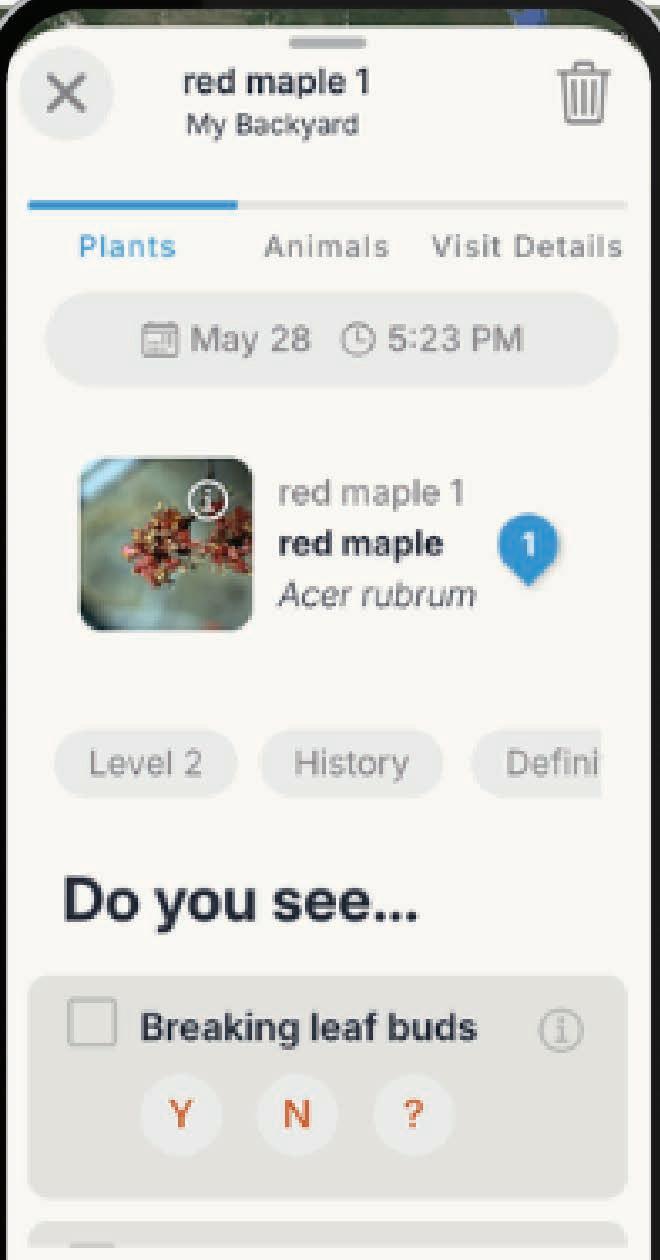




Explorelong-termphenological dataformorethan1900species acrossthecountry
Engagestudentsindata collectionandvisualization
Contributetonovel phenologicalresearch
Joinacommunityof researchers,educators, andphenologyenthusiasts

NEW Nature’sNotebook appcomingsoon!
Nature’s Notebook app coming soon!
Designedforallobservers, beginnertoadvanced
Designed for all observers, beginner to advanced
We are currently looking for proposals for theme issues in all areas of the biological sciences. If you have an idea for a topic and would be interested in guest editing an issue, visit royalsocietypublishing.org/rstb/submit-proposal
Benefits of guest editing:
• Influence and direct the thinking in your field
• Bridge traditional disciplines
• Promote an emerging area of research, and create a lasting resource
• Build your personal network
• Gain editorial experience
• Reach a wide and relevant international readership
• Join the authorship history of the world’s longest-running scientific publisher.
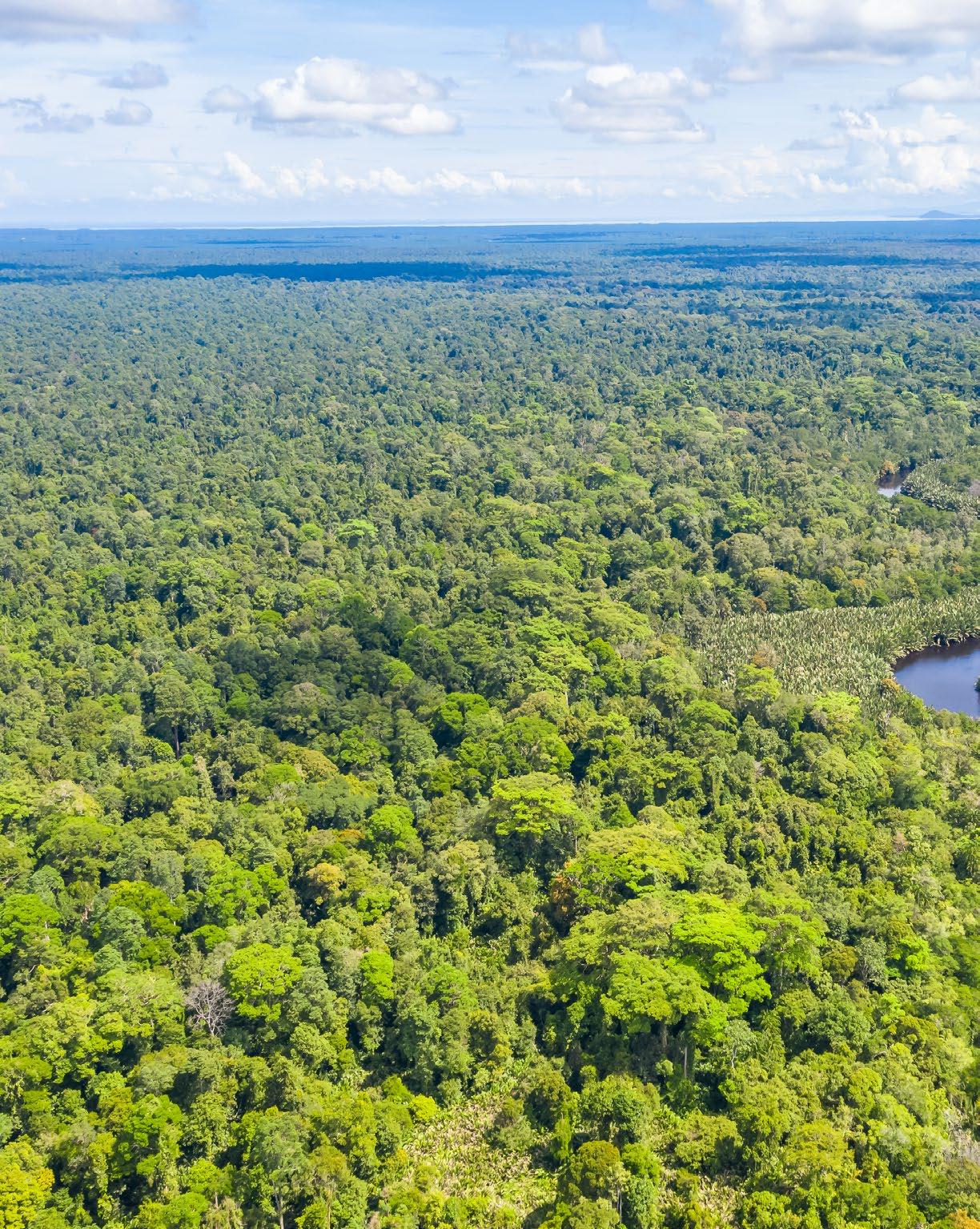
Recent issues include: Crops under stress: can we mitigate the impacts of climate change on agriculture and launch the ‘Resilience Revolution’? edited by Ron Mittler, Rumyana Karlova, Diane Bassham and Tracy Lawson.
Acoustic monitoring for tropical ecology and conservation, edited by Larissa Sayuri Sugai, Daniela Martínez-Medina and Monica Retamosa Izaguirre.
Shifting seas: understanding deep-time human impacts on marine ecosystems, edited by Luke Holman, Kristine Bohmann, Oliver Craig, David Orton, Mikkel Winther Pedersen, Morten Tange Olsen, Ruth Thurstan and James Scourse.
Browse more issues at royalsocietypublishing.org/journal/rst Image: Aerial view of the Borneo rainforest. © iStock / yusnizam.

ISSN 0032-0919
Published 3 times a year by Botanical Society of America, Inc. 4475 Castleman Avenue St. Louis, MO 63166-0299
Periodicals postage is paid at St. Louis, MO & additional mailing offices.
POSTMASTER: Send address changes to: Botanical Society of America Business Office P.O. Box 299 St. Louis, MO 63166-0299 bsa-manager@botany.org
Address Editorial Matters (only) to: Carolina Siniscalchi, Editor Mississippi State University Libraries 395 Hardy Rd P.O. Box 5408 Mississippi State, MS 39762 USA Phone (662) 325-9346 psb@botany.org
e Botanical Society of America is a membership society whose mission is to: promote botany, the eld of basic science dealing with the study & inquiry into the form, function, development, diversity, reproduction, evolution, & uses of plants & their interactions within the biosphere.