THE REGIMENT


Dear Opera Curious and Opera Lovers alike,
April 2, 2026
Boston Lyric Opera is thrilled to welcome you to the Emerson Colonial Theatre for our new production of Daughter of the Regiment, reimagined and reset during the American Revolution.
Opera has a way of tapping into big emotions in a way that’s hard to describe. There’s something incredibly powerful about experiencing the human voice live in the theater, and I believe that whether you’re new to opera or have loved it for years, there’s always something new to discover. To help make your experience even richer, we’ve put together this Guide. It’s designed to give you a little background on Daughter of the Regiment, its themes, and how these themes resonate today and throughout this production. By providing historical and contemporary context, along with tools to thoughtfully reflect on the performance before or after you attend, we hope to make your experience a memorable one.
Boston Lyric Opera inspires, entertains, and connects communities through compelling performances, programs, and gatherings. Our vision is to create operatic moments that enrich everyday life. As we develop additional Guides, we’re always eager to hear how we can improve your experience. Please tell us about how you use this Guide and how it can best serve your future learning and engagement needs by emailing education@blo.org
If you’re interested in engaging with us further and learning about additional opera education opportunities with Boston Lyric Opera, please visit blo.org/youth-and-schools to discover our programs and initiatives. We can’t wait to share this experience with you.
Warmly,

Nina Yoshida Nelsen Artistic Director Boston Lyric Opera

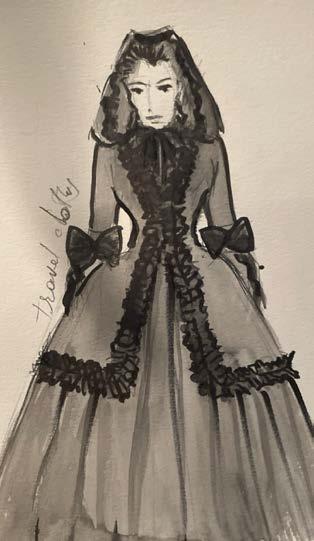
At rise, a voluminous tree stands tall – one modeled after the famed Liberty Tree that used to stand in the Boston Common. A cloaked figure, later to be revealed as the Widow Birkenfeld, holds a crying baby – a young Marie – in her arms. She lays the baby at the base of the tree and departs. The baby, now left alone, continues to cry, until a rag-tag militia enters. Sulpice, the leader of the militia, approaches the tree and sees the abandoned child. He picks up the baby, she laughs, and Sulpice cradles the baby as he walks off with the rest of the militia.
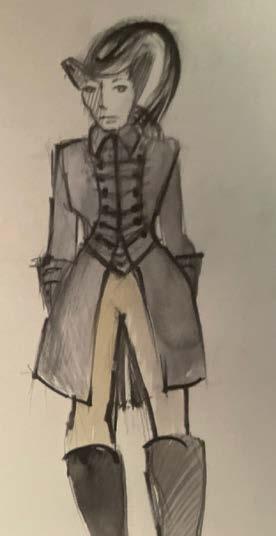
Soldiers are marching, singing about guarding their pious women and urging one another to be strong. They are preparing themselves for battle as cannons are firing around them. The Widow Birkenfeld is near the cannon fire and scared, convinced that this war will bring her death. The Widow’s attendant, Hortensia, attempts to calm her. The chorus of soldiers and peasants pray to God and push the British Redcoats out of their home. Boston is secured – for now.
The Widow Birkenfeld and Hortensia reminisce about their home before the war broke out and curse the British taxes on sugar, paper, glass, and tea. They are searching for Colonel Sulpice.
Meanwhile, Sulpice is searching for his foster daughter, Marie, the baby he found at the base of a tree. They sing a duet about how Sulpice saved her and how the entire regiment raised her as one of their own, becoming Marie’s family. Marie reads from a book of poetry by Phillis Wheatley. She tells her father that she is in love with a young French man, Tonio; but Sulpice, worried that this could mean danger for Marie and the regiment, forbids it. Marie pleads with Sulpice that Tonio is a good man who saved her life.
At this moment, the regiment captures Tonio and brings him to Sulpice for interrogation to determine if he is indeed a traitor. Marie squarely defends Tonio’s honor. The regiment listens to Marie and toasts Tonio with rum. In celebration, Marie sings the regimental song. A drum is heard, and the regiment must depart. While they prepare for battle, Marie asks Tonio if he loves her. Tonio sings that he would leave behind the land he’s known since childhood, as well as all of his friends, for Marie. Marie, at first weary of him, lets her heart surrender. Marie sings about how, on the day they met when Tonio saved her, he gave her a flower and how every day since, Marie has kept the flower close to her heart. The couple promises to marry soon, giving their hearts to each other forever.
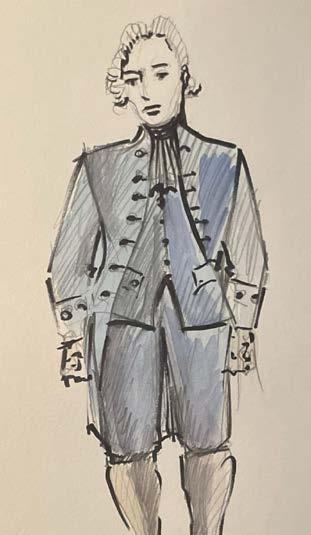

Meanwhile, Sulpice finds Hortensia and the Widow Birkenfeld out on the battlefield. The women tell Sulpice the tragedy of how the British overtook and destroyed the Birkenfeld house. The name reminds Sulpice that he once knew a captain in the militia with the name Birkenfeld. The Widow Birkenfeld reveals that her “sister” married a Captain Birkenfeld, but she has now passed, as the captain did. The Widow asks about a daughter, and whether she died, too. Marie enters, and Sulpice reunites niece and aunt. The Widow insists that the battlefield is no place for a lady, and Sulpice urges Marie to go and live with the Widow Birkenfeld and Hortensia.
The soldiers take off for battle, and Tonio insists that he is on the side of the colonies. Tonio joins the regiment as a sign of his devotion to Marie. The soldiers at first disapprove of losing their daughter to this man, but once they discover how much Marie and Tonio love each other, they agree to the marriage.
Unfortunately, the act ends with Marie leaving Sulpice, Tonio, and the regiment to go and live with the Widow Birkenfeld.
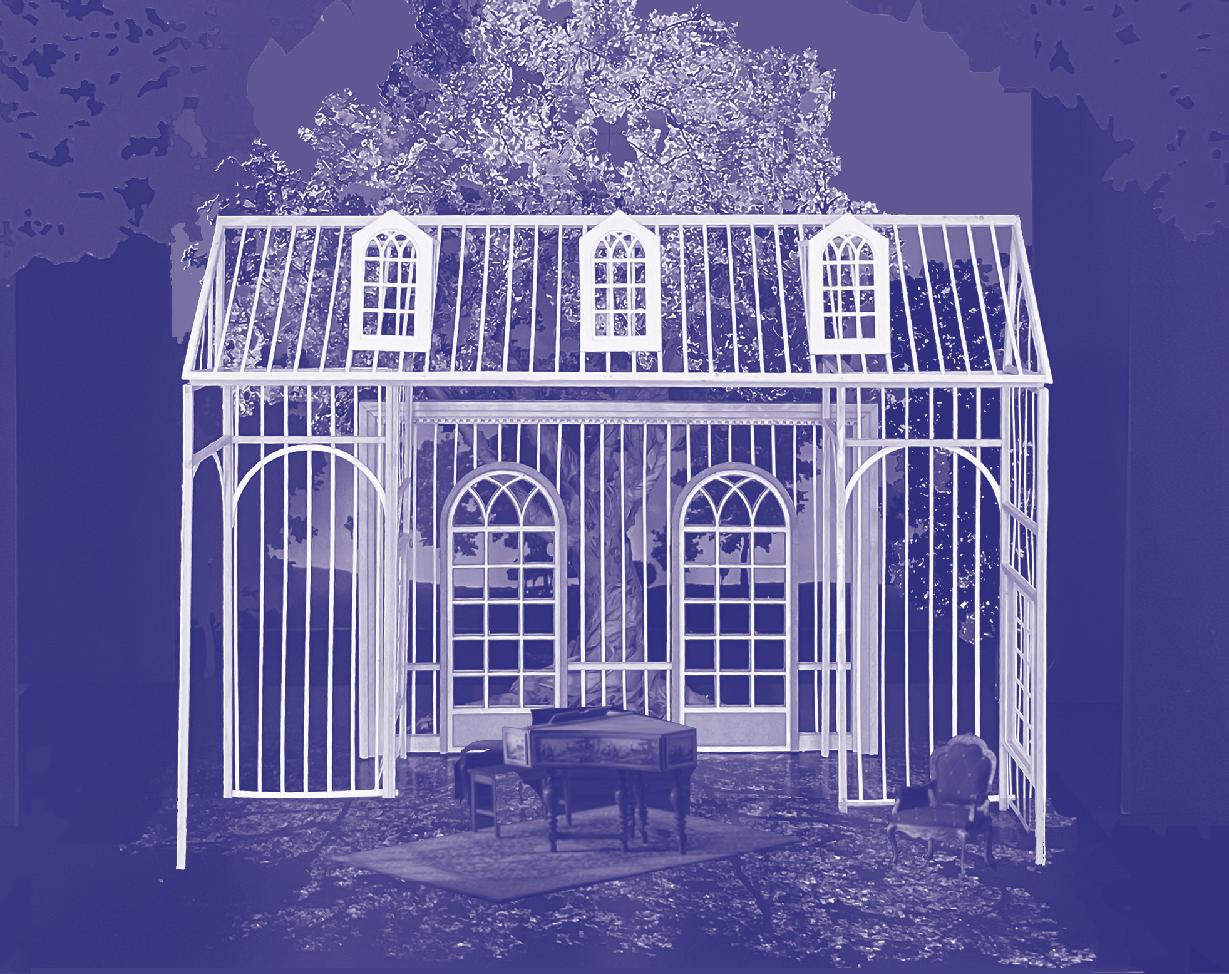
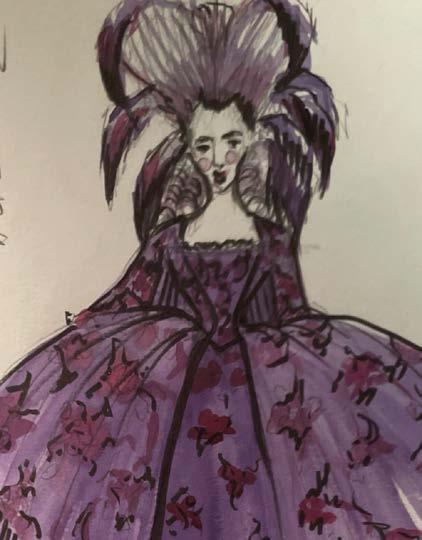
Weeks have passed. The scene rises on the Birkenfeld house in Boston. A guest has arrived – the Duchess Crakenthorpe. Crakenthorpe is looking for a bride for her nephew, and worries that Marie is too “unrefined.” The Widow Birkenfeld assures Crakenthorpe that Marie is a talent and a delight, and they argue back and forth over a dowry and marriage terms. They come to an agreement, one that saves the Birkenfeld house and name.
Marie and Sulpice, who is visiting his foster daughter, enter. The Widow breaks the good news about Marie’s new engagement. Sulpice worries that the arrangement happened too quickly. The Widow declares that they must prepare for the Duchess to return and urges Marie into a singing lesson. Marie, at the instigation of Sulpice, breaks into the regimental song once more, to the consternation of the Widow.
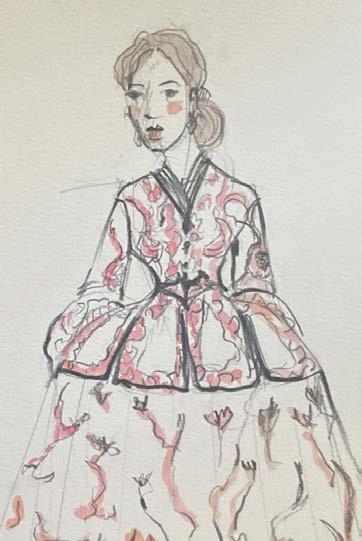
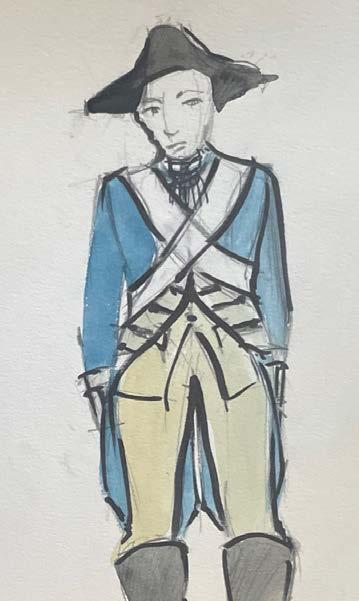
Meanwhile, Tonio and the regiment – now dressed in the blue of the Massachusetts Continental Army – arrive at the Widow’s home to win Marie back. Tonio and Marie want to be married and for the Widow to cancel Marie’s marriage to Crakenthorpe’s nephew. They beg Sulpice to help. Sulpice goes the Widow to try and change her mind. While they are talking, she confesses that Marie is not really her niece, but her daughter. It is important that Marie marry Crankenthorpe’s nephew to bring honor to the Birkenfeld name and provide her with a stable home. Sulpice and the Widow Birkenfeld reveal that they are enamored with one another, and Sulpice agrees to try and convince Marie of what is right.
The Duchess Crakenthorpe reappears and insults Marie. The Widow Birkenfeld, angered by the insult to her daughter, says that perhaps the wedding should be called off, as Crakenthorpe’s nephew is nowhere to be found. The Widow senses that something is off. The two women fight and suddenly, the Duchess’ wig comes off, revealing her to be a British spy! Crakenthorpe flees.
Marie, no longer betrothed to Crakenthorpe’s nephew, is free to marry Tonio. Birkenfeld House is to be saved by the Widow and Sulpice’s love – as well as Sulpice’s military pension. In 1783, the American Revolution comes to an end, and the United States is born.
Hortensia, the Widow Birkenfeld’s attendant, mezzo-soprano
The Widow Birkenfeld, a widow who has fallen on hard times, mezzo-soprano
Colonel Sulpice, a continental soldier and Marie’s foster father, baritone
Marie, Sulpice’s foster daughter and a member of the regiment, soprano
Tonio, French, a young apprentice, tenor
The Duchess Crakenthorpe
Soldiers of the Regiment

By Kirsten Greenidge
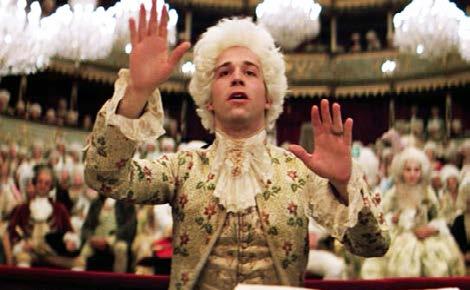
When we were very little, my mother repeatedly rented Amadeus from the video store down the hill from our house for me and my two younger sisters. VCRs were reliable babysitters in the 80s. Perhaps we were a bit too little. We found out quickly that watching this movie about the life of Wolfgang Amadeus Mozart and his contemporary Antonio Salieri was not appreciated during playdates and sleepovers with friends or their mothers. This was understandable; it gave us nightmares, too. But one of the aspects of the movie that made the largest impression on terrified, fourth-grade me was the depiction of opera as a popular art form: rambunctious—a word our parents used to describe the three of us; rowdy—also used to classify our behavior; and bawdy—I didn’t have a name for this then, but felt I knew naughtiness when I saw it. And opera looked like a whole lot of fun. It was a real disappointment when the neighbor kids made us push stop on that VCR. Sleeping with the lights on for a week after watching the film’s rendition of Don Giovanni was a reasonable trade to us.
Ultimately one of the most exciting parts of Amadeus was watching how audiences interact with live storytelling. Gone was the notion that one had to sit still in public and behave a certain way to listen, which made sense to us as children. Another thrilling part of watching two musical geniuses being depicted on film was getting what felt like a secret look into how artists use storytelling to change minds and get what they want. Nine-year-old me was fascinated by the dramatized depiction of Mozart cleverly including a ballet without music for his patron, the Holy Roman Emperor, who felt Mozart’s work contained “too many notes”. Without music, the dancing—which the Emperor didn’t approve of—felt —well, silly—and Mozart was asked to put the music back, slyly accomplishing his artistic goal of using ballet as a critique of class. That you can use art to challenge—and do it in a way that makes the people who might feel the most threatened by that challenge enjoy the experience of that challenge—felt very clever indeed.
When Nina Yoshida Nelsen invited me to reimagine Gaetano Donizetti’s 1840 Daughter of the Regiment, challenge to authority was one of the things that I got very excited about. Moving the story of Marie and her soldiers from Swiss Tyrol during the Napoleonic Wars to colonial Boston during the American Revolution offered up the opportunity to explore New England and the spirit
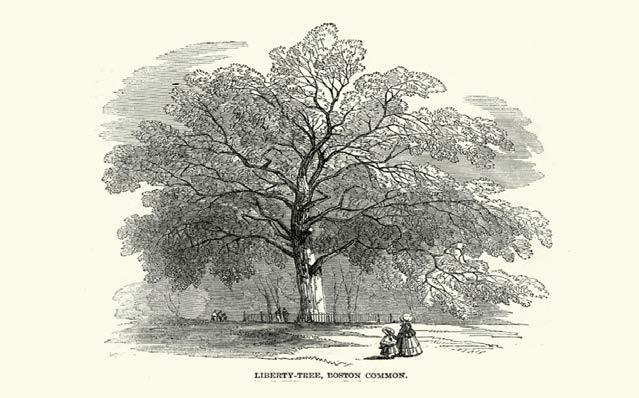
of revolution that is deeply rooted in this region’s history. When I start work on an adaptation, whether it is an opera or a play, I typically try to learn as much about the original as I can. What helped this time around was John de los Santos’ extensive work on previous stagings of Daughter and John’s vision about what a Daughter of the Regiment set in 1770s Boston could look and feel like artistically. Many artists begin to collect imagery at this stage. One of the first images John presented to us, the generative team, was the image of the Liberty Tree. The original was an elm tree that stood on the Boston Common. The first large-scale act of rebellion against the British government—opposition to the Stamp Act—occurred at this tree in 1765. The tree stood at the corner of Essex and Orange streets (now Essex and Washington) in what is now downtown Boston. It, and the space around it, became known as Liberty Hall, and during the years of mounting unrest, the tree served as a space for colonists to express their dissent against British rule and laws they felt were unfair and unjust. Neighboring towns formed their own acts of resistance and political protest around their own Liberty Trees. Townspeople would fasten notes of resistance and political articles to branches. This did not go unnoticed by the British. In 1775, Boston’s Liberty Tree was chopped down during the Siege of Boston, symbolizing Great Britain’s might and displeasure at Boston’s efforts to combat it.
John explained that he hoped our staging could incorporate the tree, and this gave me some answers about what the adaptation of Daughter needed to accomplish. In discussing the tree, it became clear that there was opportunity there to have our version of Daughter focus on the value of collective action. The community’s commitment to resistance and to working together to assert resistance could be symbolized by this tree and Marie and Tonio’s relationship to it.
Ah, Marie. How to adapt a character whose original has been performed and celebrated for over a century and a half? From the start, the generative team and I wanted to make sure that Marie was a three-dimensional character whose patriotism was grounded in her passion and intellect. The original text describes Marie as being raised by 1,500 fathers and considered the regiment’s “cantinière”—a woman who would have accompanied the regiment and provided food and other provisions. Even as Donizetti’s Marie is considered a fearless and unconventional heroine, I wanted to develop Marie into someone modern audiences could recognize and drawn inspiration from.
A possible model for our Marie was Deborah Sampson (later Deborah Sampson Gannett). Born in Plympton, Massachusetts in 1760, Sampson came of age during the end of Northern America’s colonial period and would have been a teenager as revolution broke out within the thirteen original colonies. Sampson first joined the Army in early 1782, using the name Timothy Thayer. She was found out at the time of her official enlistment, but
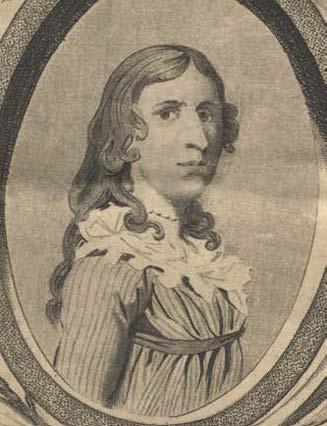
enlisted again in May 1782, under the name of Robert Shirtliff. Sampson served in the Continental Army for 17 months in Massachusetts’ 4th Regiment Light Infantry Company, an elite force whose members were sought after due to their height. Sampson was described by those who knew her and her descendants as tall and strong, and she used cloth to bind her chest. Her appearance likely contributed to her being able to live, work, and engage in combat as a man at this level of service. When Sampson was wounded (a shot to her thigh and a gash to her forehead) in combat at Tarrytown, she begged not to be taken to a doctor. While she was treated for the cut to her head, she fled the hospital before treatment of her leg, removing the musket ball herself with a penknife. She was reassigned and continued to serve into the summer of 1783. At this time, she became ill and eventually fell unconscious in Philadelphia. Barnabas Binney, the doctor who treated her, discovered she was a woman upon examining her, but instead of immediately revealing her identity, he saw to it that she was taken to his home and cared for by his wife and female family members. While Binney did eventually reveal Sampson's identity as a woman to her commander, Sampson received an honorable discharge in October 1783. After leaving service, she gave speaking tours about her experience, often wearing a uniform and performing in a masculine manner while on tour.
One of the most delicious parts of adapting is that determining what to include and what to leave out is not linear. There are detours. There are deep wormholes of research and discovery that do not end up in the final piece but inform what does get written. This was the case with Deborah Sampson. Ultimately, our version of Daughter was not meant to meld Deborah Sampson and Marie. However, Deborah’s fighting spirit felt important to infuse into our new Marie—clearly, there was something meaningful about taking up arms against the British, and it was important enough to join continental forces not once but twice, risking death and discovery to do so. Our Daughter did not end up being a biography of Deborah Sampson, but it did seek to render that level of excitement about the revolutionary cause within the framework for Marie that Donizetti had created. Themes of genderfluidity and intrigue, however, did lend themselves to our rendition of The Duchess Crakenthorpe.
It was not only important that Marie displays the heart of a revolutionary, but that she is portrayed as having the keen and agile mind of one, too – and that her attraction to Tonio is intellectual and not just coincidental. For this, I began to think about what Marie (and Tonio) might be reading and sharing as they think about overturning what they considered wrongful rule. To that end, I turned to researching what materials had captured the imaginations of leading figures of the time. Thomas Paine, Thomas Hobbes, Jean-Jacques Rousseau, and Baron de Montesquieu heavily influenced the founders of the United States, as did their deep knowledge of classical thought, as demonstrated by Aristotle, Cicero, and Epicurus. Given that revolution was also building steadily in France around the same time—using many of the same philosophies to spur it on—shifting Tonio’s identity from Tyrolean to French helped to hone a revolutionary zeitgeist that would pair well with Marie.
It became important to me to find some female revolutionaries who, if Marie were real, would have
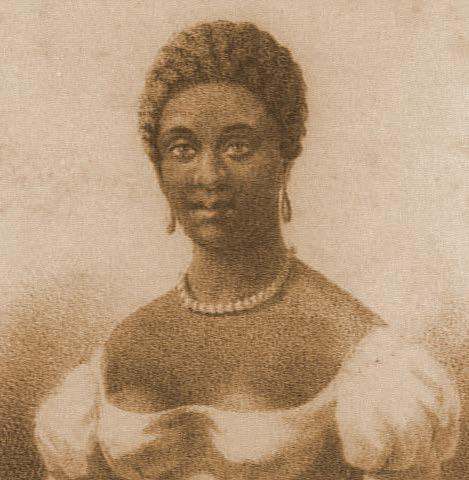
served as inspiration for her. I found that in the poet Phillis Wheatley. Born in West Africa in the early 1750s, Phillis was enslaved, brought across the Atlantic as a young child, and then purchased by the Wheatley family of Boston, who encouraged her to write poetry after she learned to read and write. Wheatley is the first published African American author of poetry, publishing her first poem at age 14. Her work heralds themes of freedom, religion, and rebellion, and resonated strongly as colonists called for revolution. She is known to have penned a poem to King George III thanking him for repealing the Stamp Act (“To the King’s Most Excellent Majesty”), as well as to George Washington (“To His Excellency General Washington”). The two met in spring 1776 while Washington was stationed in Cambridge. Washington praised Wheatley for her talent and “elegant” writing. Wheatley’s work was a provocation, calling for freedom, even as Wheatley herself was not granted freedom until she reached adulthood, upon the publication of her first book of poems. It seemed fitting that, had Marie lived at the same time as Wheatley, she may have found a kindred spirit nestled within Wheatley’s words—and it is not lost on me that Deborah Sampson, Phillis Wheatley, and Marie would have all been about the same age, give or take a few years here and there.
Having a better idea of who I wanted Marie to be and an understanding of what influences she may have been drawn to helped to guide the dialogue. I am not fluent in French, so being able to sit with Jules-Henri Vernoy de Saint-Georges and Jean-François Bayard’s original text would have been exciting, but not helpful. Daughter was quickly translated to Italian after its 1840 premiere, but much as I wish, I do not speak Italian either. To supplement this, I relied on prior versions of the piece written in English, and as many album guides and program notes as I could gather.
Another guide for me was trusting the genre. As opéra comique, Daughter contains both spoken dialogue and arias. While the text of the libretto should certainly sparkle as much as possible, what I love and relied on is that the audience is here to listen to the music. Whatever my ideas about Marie or capturing the spirit of revolution, my task was to make the libretto feel like light work and avoid impeding the music—to follow an adage from those of us who teach writing for the stage—to “get out of the way.” I can’t imagine subjecting those who are eager to witness Tonio’s many high Cs in “Ah! mes amis” to a bunch of chatter placed there just because the writer (in this case, a chagrined me) wanted to shove more speeches into the air. In moving out of the way, this beloved story can be brought to life with a bit of Boston flair. I hope audiences find as much revolutionary joy in Marie, her many fathers, and the friends she makes on her way to revolution as I did while writing.
By BLO Staff
Despite some initial stumbling blocks, Daughter of the Regiment (originally La fille du régiment) quickly became successful after its 1840 premiere at the Opéra-Comique in Paris. One of the most prominent reasons for its enduring popularity across centuries and continents is undoubtedly the showstopping tenor aria “Ah! mes amis, quel jour de fête!” (“Ah, my friends, what a festive day!”) sung by the character Tonio.
More than ever before, nineteenth-century operatic repertoire pushed the boundaries of what the human voice could do, making new demands on the ranges and stamina of singers of the day. In the case of tenors, one notable development was the expansion of the upper range that composers were requiring. At the time, a high C was generally considered the top of a tenor’s range. Even today, this is a reliable standard, though some specialized tenors and specific modern roles can go a few steps higher. But when Donizetti was composing Daughter of the Regiment, it was still uncommon to write a high C into an opera. Only nine years previously, in the Italian premiere of Rossini’s Guillaume Tell (1831), the French tenor Gilbert-Louis Duprez was the first tenor to sing a high C as a “chest” note – in other words, using his full voice rather than switching to a lighter mechanism. Rossini was horrified by the resulting sound, but the audience went wild for it.1
Think of an operatic tenor’s high C as what today’s music industry calls a “money note” – a dramatic note designed to impress, often because it is especially high, loud, or sustained. Besides giving singers a chance to wow audiences with their technical prowess, money notes usually come at moments of high drama or powerful emotion.
Tonio sings “Ah! mes amis" toward the end of the first act of Daughter of the Regiment. Having previously expressed his love for Marie, he must win the trust of her “fathers” – the soldiers who raised her. In this aria, Tonio announces that he has decided to enlist in the regiment so they can be brothersin-arms and asks their permission to marry Marie. Whether Donizetti’s motivation was primarily to give Tonio a way to express his overwhelming joy or simply to let his tenors show off – this absolute marathon of an aria, famously nicknamed “the Mount Everest of tenor arias,” contains eight high Cs, with most performers adding a ninth one at the end. And they all happen in the span of about a minute!2
1 Sandro Corti, “Duprez, Gilbert( -Louis),” in Grove Music Online, updated 15 May 2009, https://doi.org/10.1093/gmo/9781561592630. article.08364, accessed 13 April 2026.
2Maddy Shaw Roberts, “When Pavarotti sang 9 consecutive high Cs live at the Met Opera and it was glorious,” published 30 September 2020, https://www.classicfm.com/artists/luciano-pavarotti/sang-nine-high-cs-donizetti-ah-mes-amis-met-opera/, accessed 13 April 2026.
In 2007, Peruvian tenor Juan Diego Flórez was the first soloist in nearly 75 years to give an encore at La Scala – with “Ah! mes amis.” In 1921, conductor Arturo Toscanini – then the music director of the famous Milanese opera house – had banned encores, feeling that they were disruptive and pulled focus away from the opera as a whole. The last encore by a soloist at La Scala had occurred in 1933, supposedly while Toscanini was out of town.3
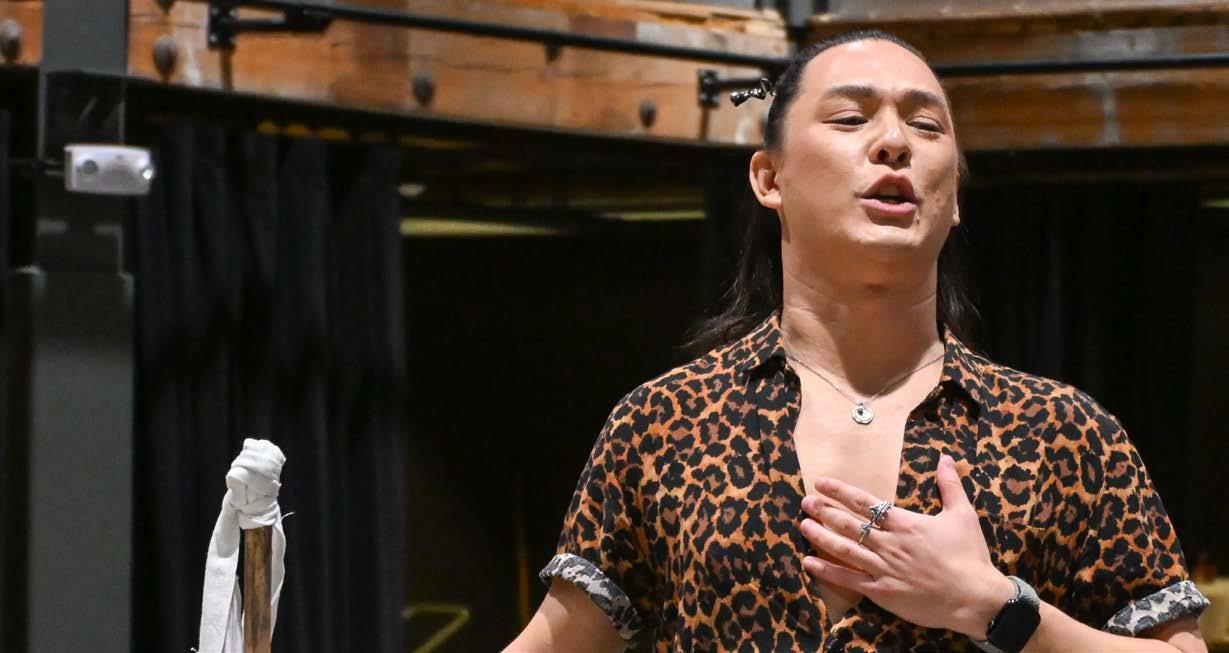
The Boston Lyric Opera production you will see today is sung mostly in English, but our Tonio (performed by Spencer Britten) will sometimes sing in French. This is a deliberate choice on the part of our creative team, meant to emphasize Tonio’s initial status as an outsider from the perspective of the Massachusetts Continental Army. He sings “Ah! mes amis” in a mixture of French and English, acknowledging both his origins and his newly sworn allegiance to the American regiment.
If you’d like to sneak a peek at “Ah! mes amis” before attending our production, we recommend these videos:
“The King of the High Cs” Sings “Pour mon âme” – Pavarotti & Juan Diego Flórez This clip is excerpted from the BBC documentary Pavarotti: A Life in Seven Arias, which features footage of both Luciano Pavarotti and Juan Diego Flórez singing “Ah! mes amis” which is also sometimes known as “Pour mon âme.”
Getting Into Opera with Davóne Tines – Donizetti’s “Ah! mes amis”
Featuring our very own Morgan Mastrangelo, a BLO Jane & Steven Akin Emerging Artist, singing “Ah! mes amis,” this was the first episode of our 2025/26 “Getting Into Opera” series. Created in partnership with New England Conservatory (NEC) and GBH Music, “Getting Into Opera” is designed for newcomers and seasoned enthusiasts alike, revealing how powerful performances are shaped through vocal coaching, stage direction, and artistic mentorship.
“Guide to Tenor Singers: Vocal Ranges & Famous Voices”
https://www.eno.org/discover-opera/articles/guide-to-tenor-singers/
“Peruvian tenor breaks La Scala encore taboo”
https://www.cbc.ca/news/entertainment/peruvian-tenor-breaks-la-scala-encore-taboo-1.637125
“Show-Stopping Aria Encored at the Met”
https://www.npr.org/2008/04/23/89884693/show-stopping-aria-encored-at-the-met
“When Pavarotti sang 9 consecutive high Cs live at the Met Opera and it was glorious”
https://www.classicfm.com/artists/luciano-pavarotti/sang-nine-high-cs-donizetti-ah-mes-amis-metopera/
3CBC Arts, “Peruvian tenor breaks La Scala encore taboo,” updated 23 February 2007, https://www.cbc.ca/news/entertainment/ peruvian-tenor-breaks-la-scala-encore-taboo-1.637125, accessed 13 April 2026.


By Katie Woods, Curator, Massachusetts Women’s History Center
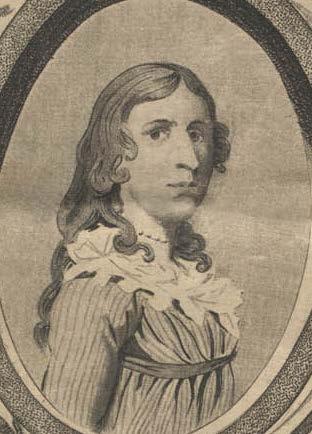
Deborah Sampson Gannett took the ultimate risk by enlisting and serving as a soldier for Massachusetts during the final years of the American Revolutionary War. She remains recognized as one of the country’s first known female soldiers.
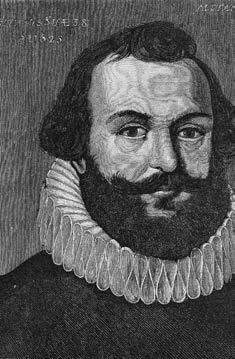
Born on December 17, 1760 in Plympton, Massachusetts, Deborah descended from notable early settlers of the Massachusetts Bay Colony, including Myles Standish and William Bradford. Despite this lineage, the Sampson family lived in poverty. Her father, Jonathan Sampson, left when Deborah was five years old, forcing the family to fend for themselves. Unable to care for her eight children, Deborah’s mother, Deborah, made the difficult decision to send her daughter to live with several families. The young Deborah eventually became an indentured servant to the family of Benjamin Thomas in Middleborough.
Although Sampson’s servitude did not allow for a carefree childhood, the Thomas home provided her with some stability. She performed her duties while also learning how to read and write with the Thomas boys’ schoolbooks. When her period of servitude ended in 1778, Sampson earned her living as a schoolteacher and weaver for the following three years.

During this time, news about the ongoing American Revolutionary War reached the small towns of the Massachusetts countryside. Sampson became drawn to the ideals of American freedom and liberty and decided she wanted to do her part, later recalling:
“ My mind became agitated with the enquiry – why a nation, separated from us by an ocean more than three thousand miles in extent, should endeavor to enforce on us plans of subjugation… I only seemed to want the license to become one of the severest avengers of the wrong.” 1
It is unclear what exactly prompted Deborah Sampson to disguise herself as a soldier. Around March 1782, she first attempted to enlist in Middleborough as “Timothy Thayer,” but she was found out when a neighbor recognized her. In May, Sampson disguised herself once more, successfully enlisting in Bellingham, Massachusetts, under the name of “Robert Shurtleff.” She received a bounty for serving in an Uxbridge company, part of the Fourth Massachusetts Regiment. Her company immediately marched from Worcester to West Point, New York, for training.
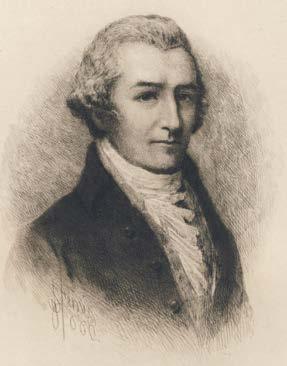
Sampson’s skills as a soldier stood out, and she received a promotion to the Light Infantry Brigade led by Captain George Webb and commanded by General John Paterson. This elite regiment scouted areas in the neutral zone of the Hudson River Valley, spying on British forces and relaying intelligence. While a part of this infantry, Sampson found herself in several violent clashes. She was wounded several times and even removed a bullet from her own thigh to avoid being discovered.
In 1783, Sampson received a promotion to serve as General Paterson’s aide-de-camp. She was revealed as a woman when she was hospitalized for a fever in Philadelphia over the summer. Despite her disguise, Sampson received no known punishment, instead acquiring an honorable discharge on October 25, 1783, signed by Major General Henry Knox, commander of West Point.
For the years immediately following her discharge, Deborah Sampson led a relatively quiet life. She married Benjamin Gannett, a farmer from Sharon, Massachusetts, on April 7, 1785. They made Sharon their home and had three children — Earl, Mary, and Prudence — and adopted a girl named Susanna Shephard.
In 1792, Sampson Gannett applied to the Massachusetts Legislature for back pay. The Legislature approved her request, resolving:
“ that the said Deborah exhibited an extraordinary instance of
female heroism by discharging the duties of a faithful, gallant soldier, and at the same time preserving the virtue and chastity of her sex unsuspected and unblemished, and was discharged from the service with a fair and honorable character. .” 2
She also began petitioning Congress for disability as a veteran, hoping to receive support for the numerous illnesses and health problems acquired from her time in service. She suffered from bouts of poor health for the rest of her life.
Gannett’s petitions and calls for recognition drew national attention. Massachusetts publisher Herman Mann became fascinated with her story and received permission from Gannett to write her memoir. In 1797, Mann published The Female Review: or, Memoirs of an American Young Lady. This work has since been discredited for significant embellishment.
Still needing to obtain funds for her family, Deborah Sampson Gannett began a lecture tour in 1802. Starting in Boston, Gannett spent close to a year giving lectures in Massachusetts, Connecticut, Rhode Island, and New York – the first American woman to go on a lecture tour. She shared her experiences of the war and often dressed in full military regalia.
Although positively received, this tour did not solve the Gannett family’s financial problems. Sampson Gannett again petitioned Congress. She also received support from notable Revolutionary leaders, such as Paul Revere and General John Paterson, who had become a US Representative (NY). Revere wrote on her behalf to US Representative (MA) William Eustis:
“I think her case much more deserving than hundreds to whom Congress have been generous.” 3
Thanks to this support, she was added to the pension roll in 1805 and eventually won a general service pension in 1821. She joined Margaret Corbin, who fought alongside her husband at the Battle of Fort Washington in 1776, as one of the first American women to receive a soldier’s pension.
Gannett died on April 29, 1827 in Sharon, Massachusetts. Four years following her death, her husband petitioned Congress for pay as a soldier’s widower. In 1837, the House Committee on Revolutionary Pensions honored Deborah Sampson, declaring that the American Revolution saw no other “similar example of female heroism, fidelity, and courage” and awarded her husband a spousal pension.4
2 Vera O. Laska, "Remember the ladies": Outstanding Women of the American Revolution (Boston: Commonwealth of Massachusetts Bicentennial Commission, 1976).
3 “Letter from Paul Revere to William Eustis, 20 February, 1804,” Miscellaneous Bound Manuscripts, Collections Online, Massachusetts Historical Society, accessed May 2025.
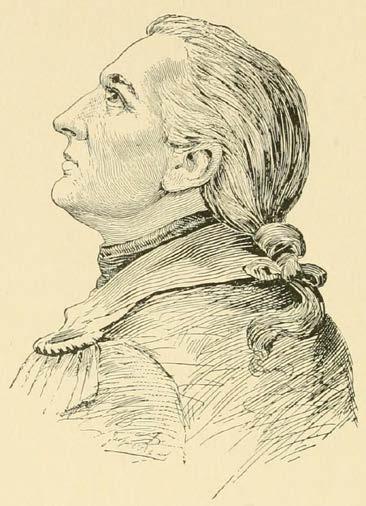
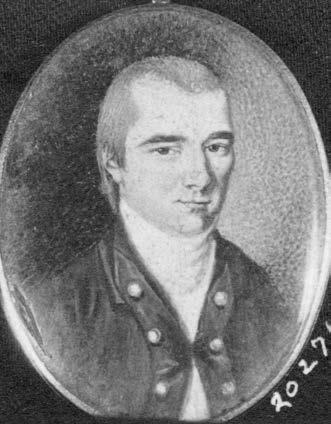
Portrait of General John Paterson from the 1894 The Life of John Paterson, Major-General in the Revolutionary Army by Thomas Egleston. Public Domain
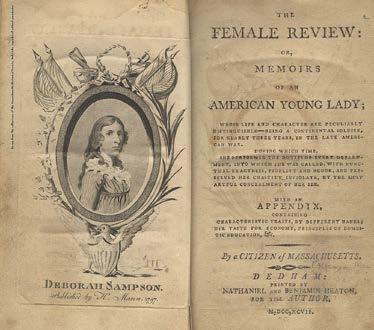
Deborah Sampson Gannett’s legacy as a patriot for the American cause remains vibrant in Massachusetts. In 1982, the Legislature proclaimed her the official state heroine and named May 23 “Deborah Sampson Day.” She also remains a local heroine for the town of Sharon, where the community dedicated a statue of Sampson outside the library in 1989.
The Massachusetts Women’s History Center (MWHC) is a virtual nonprofit, nonpartisan 501(c)3 tax-exempt organization that amplifies the history of Massachusetts women of all backgrounds from throughout the Commonwealth. The MWHC, with its flagship program the Massachusetts Women’s Hall of Fame (MWHOF), is the successor organization to Suffrage100MA.
Suffrage100MA became the MWHC on March 22, 2024. For 14 years, Suffrage100MA amplified the inclusive stories of the suffragists and the suffrage movement – both in Massachusetts and nationally. The MWHC expands upon that suffrage foundation to amplify all of Massachusetts’ women’s history. The MWHC shares inspiring historical and educational information about the important contributions and challenges endured by Massachusetts women of all racial, ethnic, socioeconomic, and gender identities over the centuries, and of major milestones in MA women’s history. The virtual MWHC provides this information with engaging exhibits, articles, biographies on its website and through presentations and events. The MWHOF will honor historic and contemporary Massachusetts women and organizations which have made a profound impact. As part of the Commonwealth’s commemoration of 250 years of America's independence – which takes place during 2025-2026 – and Massachusetts250, the historic women in the first class of inductees to the MWHOF will be those who made critical contributions to our culture, history and/or society during the Revolutionary Era.
4 Debra Michals, “Deborah Sampson (1760-1827)” National Women’s History Museum (2015), last updated
By Shira Gitlin
In Boston Lyric Opera’s production of Daughter of the Regiment, gender and gender presentation play a significant role. For Marie, her position as a ward of the regiment is one of empowerment, despite her lack of interest in a traditionally feminine path. In fact, both Marie and her lover Tonio find solace in a community where their nonconformity is accepted. At the same time, our antagonist uses gender to infiltrate high society. It is fitting that this new interpretation of Daughter of the Regiment is set in colonial America; in fact, there is historical precedence for both figures who we might now consider transgender or gender nonconforming, and also for individuals who used gender presentation as a tool to fight, attend school, or even to infiltrate enemy territory.
Gender and performance have always been intrinsically linked. Opera in particular has a long tradition of gender play through the use of castrati, countertenors, and trouser roles. According to The Metropolitan Opera, the earliest records of castrati date back to the 1550s.1 At the time, women were forbidden to participate in most forms of performance, but especially religious choir music. The higher parts were therefore sung by young, pre-pubescent boys. As opera grew in popularity, so did the desire for this same vocal quality in more mature men. A countertenor is a man who is able to reach higher notes using his natural post-puberty voice, while a castrato was a man with that desired voice type who underwent surgery before puberty to disrupt his normal growth hormones. This effectively froze his vocal range to be equivalent to that of a modern-day
1 https://www.metopera.org/discover/education/educator-guides/agrippina/castrati/
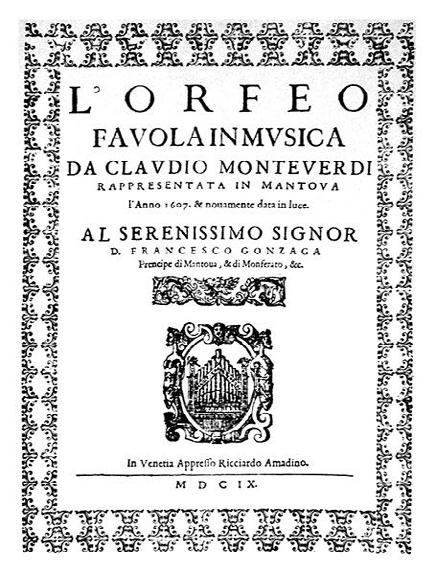
mezzo or soprano, but also resulted in unusual changes in the body, including a larger chest cavity. Castrati could produce ethereal high notes while singing with the muscles and lung capacity of a full-grown male body, thus making them more desirable than countertenors. During this era, castrati played mostly supporting male characters, although early operas such as Claudio Monteverdi’s L'Orfeo cast castrati in female roles as well. This was especially common in operas originating from papal states such as Italy, where women were not allowed to perform.2
By the late 1600s, however, castrati began to play leading male roles. While modern-day opera typically casts tenors as love interests, the “masculine hero” of the 17th and 18th centuries was much closer to today’s mezzo-sopranos. Our current understanding of masculinity shifted around the end of the 18th century, during a historical phenomenon called the “Great Male Renunciation”. 3 Prior to this, a man’s wealth and status were signified by brightly colored fabrics, ornate accessories, and even makeup or wigs. With this understanding of Baroque masculinity, it makes sense that audiences were drawn towards heroic male figures with higher voices. Castrati were venerated due to their unique ability to perform lavish and ornate arias. Some famous castrato roles include Orpheus in Christoph Willibald Gluck’s Orfeo ed Euridice and Cesare in George Frideric Handel's Giulio Cesare in Egitto.
By the 19th century, the use of castrati fell out of fashion due to the ethics of the dangerous surgery involved, as well as shifting ideals of masculinity. Consequently, a large repertoire of leading roles in opera became difficult to cast with male singers. While many of these roles could be sung by countertenors, it became common for female opera singers to dress as young men to play these parts.4 As newer operas were being written, however, vocal types were being rearranged to match the shifting understanding of societal gender roles. Tenors displaced masculine heroes with higher voices, which meant a new vocal type was needed to signify a male character who was
2 https://www.eno.org/discover-opera/articles/beginners-guide-to-italian-opera/
3 https://alinakfield.com/the-great-male-renunciation-masculine-fashion-history/
4 https://www.seattleoperablog.com/2021/06/gender-expansive-traditions-from-early.html
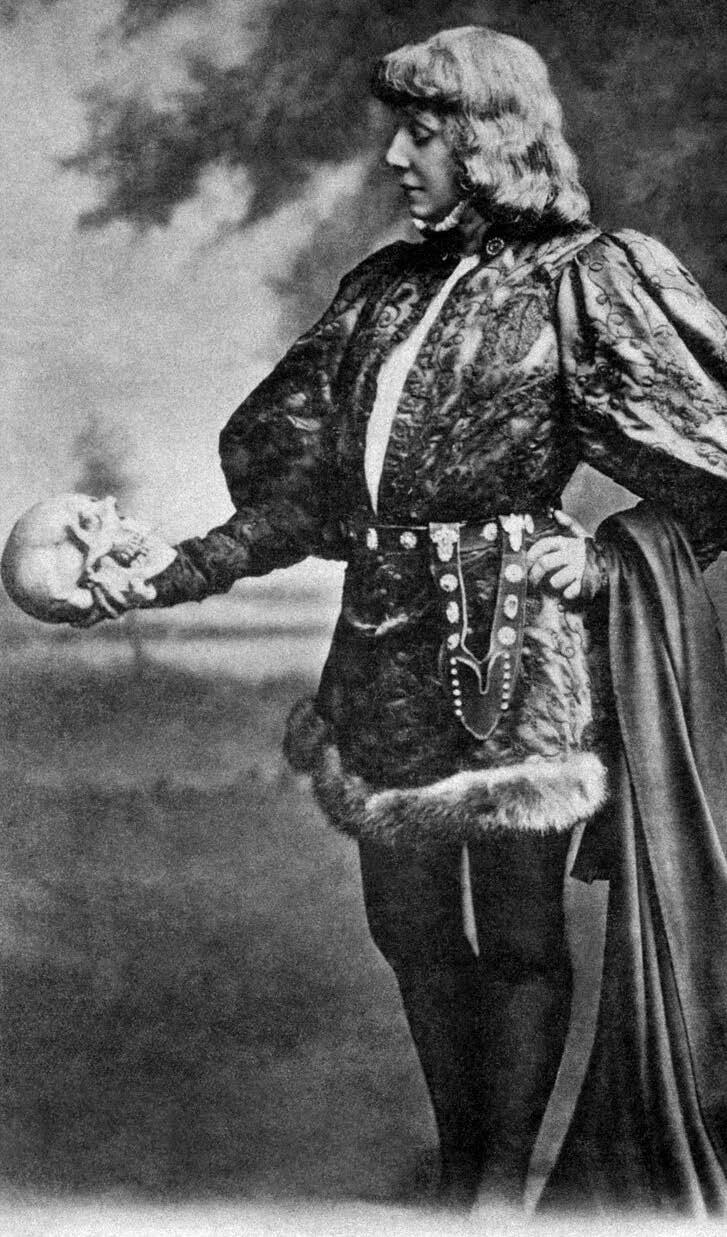
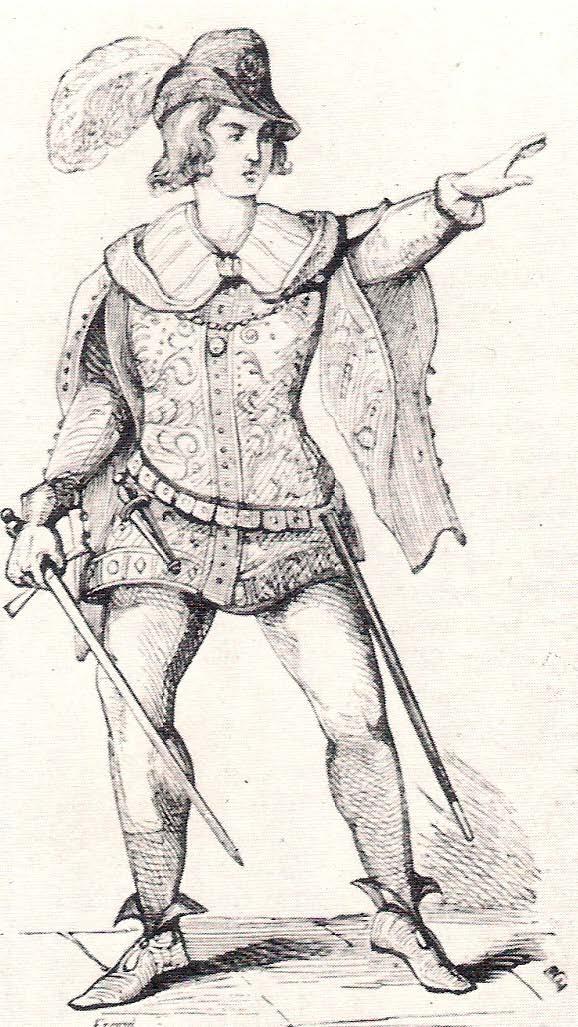
neither a masculine hero nor a villain. Teenage boys, youthful servants, pages, or sidekicks were written with the tone and range appropriate for a mezzosoprano. Since there were no longer castrati to sing these parts, female performers would be cast to represent these “virtuous and chaste” young men.5 These roles became known as trouser, breeches, or pants roles. Travesti is another term often used to refer to these roles, although it more generally covers anyone who is playing a character of a different gender than their own.
While the term “cross-dressing” is no longer used widely due to its negative connotations and assumption of a gender binary, it was often used in theatre and opera to discuss women playing men and vice versa. Interestingly, there is a difference between roles that are considered “crossdressing” roles and trouser roles. Characters such as Cherubino in Wolfgang Amadeus Mozart's The Marriage of Figaro or Hansel in Engelbert Humperdinck's Hänsel und Gretel 6 were considered trouser roles because the audience accepts the character as male, regardless of the performer’s gender. Conversely, roles like Leonore in Ludwig van Beethoven’s Fidelio were not trouser roles because the audience understood that Leanore is a woman who dresses as a man to rescue her husband from death in a political prison. Once she has achieved this, she returns to her status as
The Daughter of the Regiment, we see characters who fight against the traditional gender binary during wartime. The use of gender nonconformity or variance in this production mirrors real-life situations that have occurred throughout history.
5 https://www.wqxr.org/story/pants-roles-gender-fluidity-queerundertones-opera/
6 https://www.eno.org/discover-opera/articles/operas-greatesttrouser-roles/
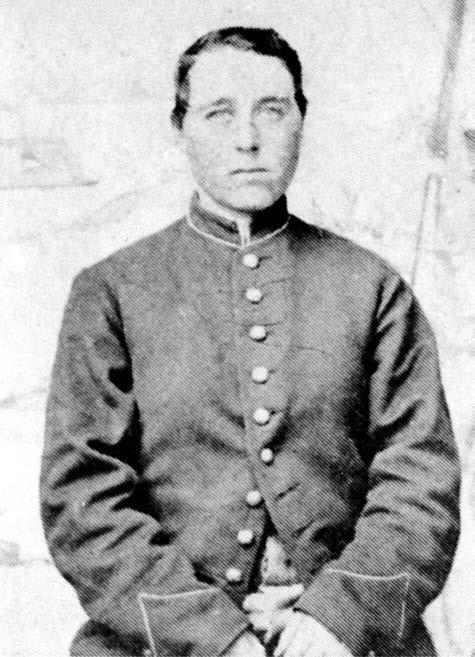
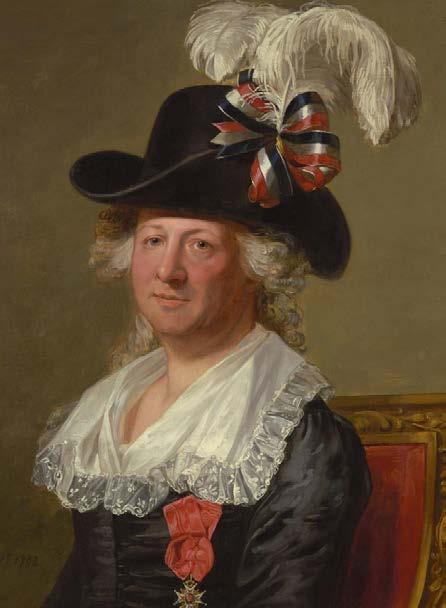
There is a long tradition of women dressing up as men to fight in battles, attend school, or work dangerous jobs. Deborah Sampson is a well-known example of a woman who became a hero of the American Revolution after disguising herself as a man to join the regiment.7 There are also many examples of historical people who we might now consider transgender or nonbinary. These individuals often used war as an opportunity to live as their authentic selves. Albert Cashier, for example, was one of the 250 soldiers who were assigned female at birth and enlisted as men to fight in the Civil War. Most women returned to their daily lives after the war. Cashier, however, lived the remainder of his life as a man.8 There are also famous examples of people who used their gender nonconformity to their advantage, such as Charlotte d'Éon de Beaumont (also known as Chevalière d'Éon), who was a French diplomat and spy. D’Éon was fairly androgynous and was able to use varied gender presentations to spy on others, including infiltrating the court of Empress Elizabeth of Russia.9
Although there is a long history of gender play in the performing arts, societal expectations of gender identity have greatly impacted what is taken seriously onstage.10 For example, prior to the 1660s,11 women were not allowed on theatrical stages, so all the famous classical female roles, such as Ophelia or Juliet, would have been played by men. As masculine ideals changed and women took to the stage, however, men dressing as women were no longer praised. This is true in opera as well, especially after the decline of the castrati. There is a clear difference between the ways that femininity and masculinity are perceived when played by a performer of a different gender. Despite the popularity of trouser roles, men practically never play women onstage in opera. If they do play a female role, it is always comedic and typically under the guise of “crossdressing”, where the audience knows that the character is actually a man. The performance of masculinity as seen in trouser roles is celebrated; even in a comedic role, the audience accepts the premise that the character is a boy or man. Conversely, it is common for roles where femininity is performed by men to be seen as a joke.
In our current world, gender onstage is a complex topic. It is clear that there is a long history, both positive and negative, of gender nonconformity onstage. Theatrical drag traditions have existed as a positive outlet for the queer and transgender community for many years. RuPaul’s Drag Race
7 https://www.womenshistory.org/education-resources/biographies/deborah-sampson
8 https://www.battlefields.org/learn/biographies/albert-cashier
9 https://www.history.com/articles/chevalier-d-eon-french-spy-man-woman
10 https://www.since1872.ca/arts-culture/gender-expression-through-opera/
11 https://www.centerstage.org/about/blog/timeline-women-in-theater/
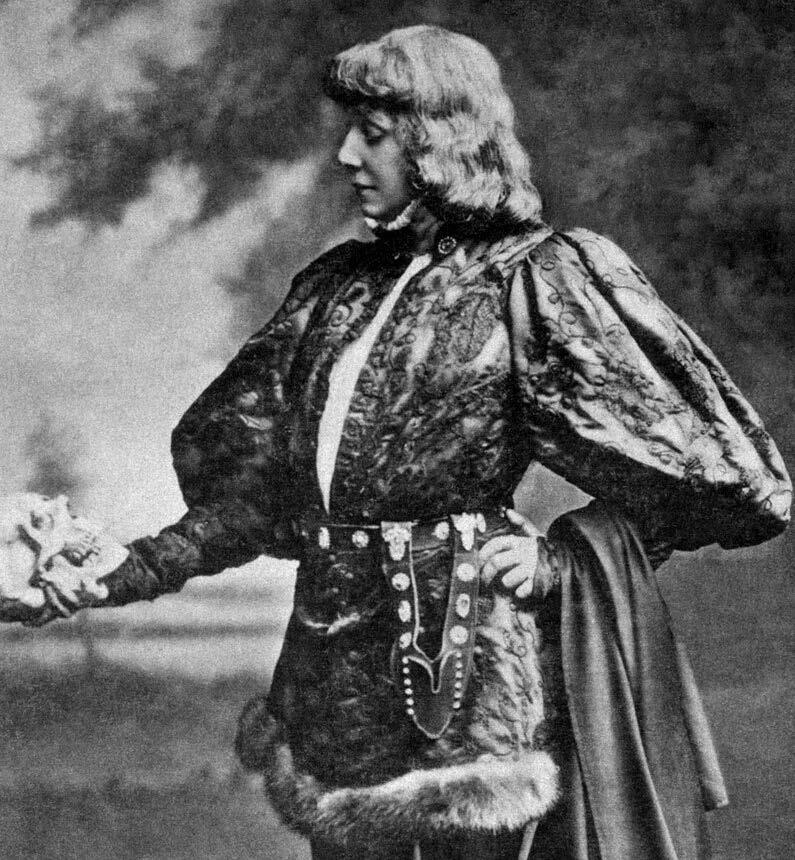
is one of the most watched and celebrated reality TV shows, having won 14 Emmy Awards. Drag performers have originated roles on Broadway and have played gender nonconforming or trans characters onstage. There are even drag performers who are opera singers, such as Monét X Change, who played the Duchess of Krakenthorp in Minnesota Opera’s production of The Daughter of the Regiment. 12 In many of these cases, the drag queens are playing women, but the joke is not that they are secretly men. Instead, the joke becomes the ridiculous nature of the character. In a recent interview about trouser roles in Richard Strauss’ Ariadne auf Naxos, musician Rhiannon Giddens said, “Transformation is at the heart of any opera performance. Not just because the singers are all playing their roles, but also because music itself has the power to inspire and change us.”
13 Aptly, these roles provide opportunities for performers to explore gender without the larger societal pressures that come with transition. In fact, many transgender performers credit roles like The Composer in Ariadne auf Naxos or Angel in RENT with helping them come out as transgender or nonbinary.
On the other hand, there are still depictions of gender nonconformity onstage that are harmful to the queer and trans community. British pantomime, for example, involves a character called the “Panto Dame.” While often compared to drag, this character is typically portrayed in a misogynistic way that accentuates and ridicules female characteristics.14 The premise of this character involves audience awareness that the dame is played by a man to a comedic effect.15 In theatre as well, there are many plays or musicals that involve “cross-dressing,” such as Tootsie, where a man dresses up as a woman to land a job, or Matilda, where the villain (an ugly, evil woman) is often cast as a man. Members of the transgender community struggle with these depictions because they reinforce negative tropes and stereotypes, such as the “man in a dress” trope.16 There is also a long history of erasure on stage and screen, stretching back to the Hays code and other “morality” laws that limited any positive depiction of queerness or gender nonconformity.17 At a time where transgender and nonbinary communities are being silenced and harmed, it is important to understand the weight of theatrical gendered depictions.
12 https://mnopera.org/season/the-daughter-of-the-regiment/
13 https://www.wnycstudios.org/podcasts/aria-code/episodes/aria-code-strauss-ariadne-auf-naxos-joyce-didonato?tab=transcript
14 https://www.bournemouthpavilion.co.uk/news/role-reversal-principal-boys-and-dames-in-pantomime
15 https://medium.com/off-book/not-your-punchline-the-need-to-transform-the-transphobic-panto-tradition-6aa3f5efeb3a
16 https://www.moonlightexperiences.com/blog/transphobic-humour-kills-quit-now
BLO’s production of Daughter of the Regiment has a deep and intriguing relationship to the complexities of gender performance. This production attempts to uplift queer identity and gender nonconformity, but also echoes historical truths. We see characters who struggle with societal gender roles and expectations. In the end, Marie and Tonio are accepted by their community not in spite of, but because of, their unique perspectives and differences.
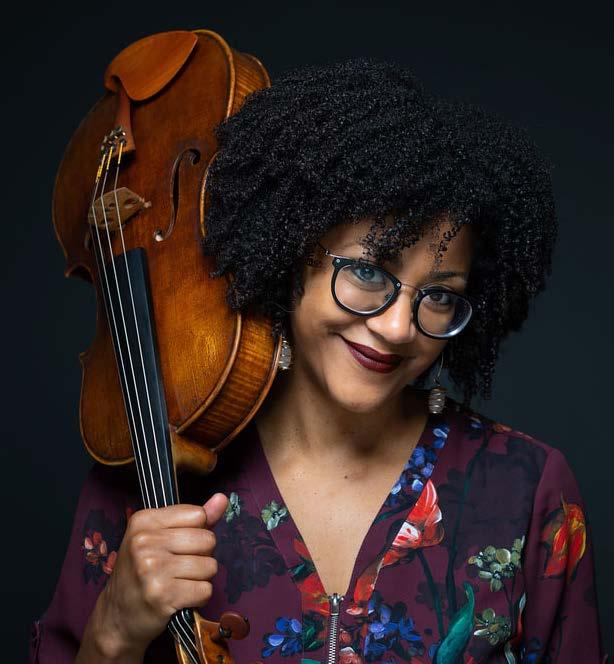
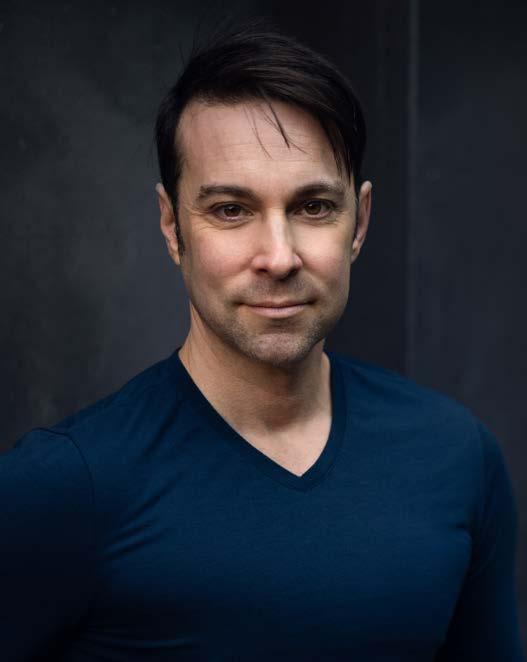
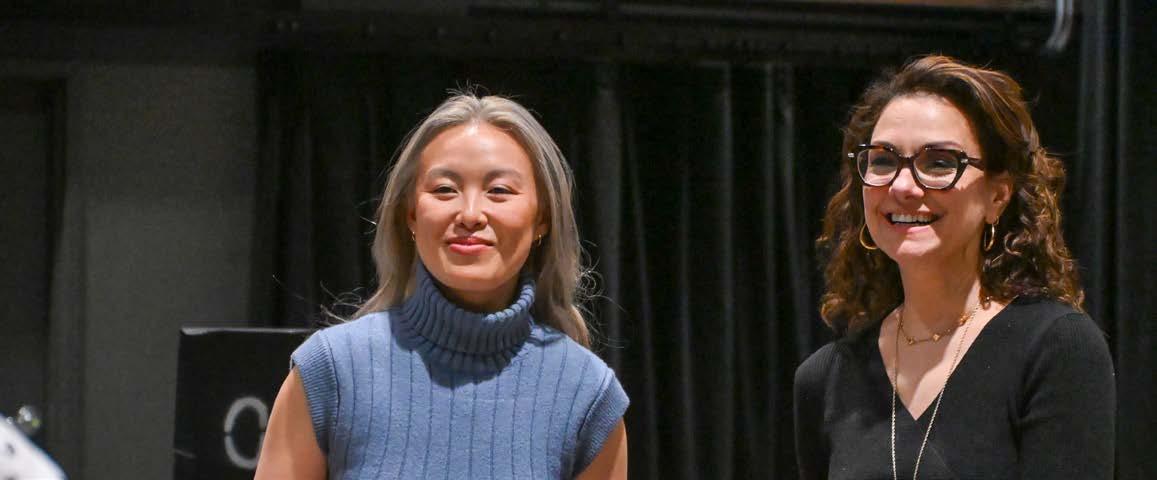
On March 16, 2026, Boston Lyric Opera’s Artistic Director, Nina Yoshida Nelsen, had a Zoom call with Daughter of the Regiment director John de los Santos, and Ashleigh Gordon, co-founder and Artistic Director of Castle of our Skins, to talk about the complexities of telling “American stories.” What is considered an American story and who gets to tell it? Watch or read through their conversation and learn more about how BLO is telling and retelling American stories this spring.
Nina Yoshida Nelsen (NYN): Thank you. John and Ashe, thank you so much for being here today and having this conversation with us about American stories. First, I wanted to start with a question for both of you. If you would take a moment to introduce yourselves and your work. Ashe, let's start with you.
Ashleigh Gordon (AG): Sure. Thanks for having me. Excited to join the conversation. My name is Ashleigh Gordon. I go by Ashe for most friends here in Boston, and I am the co-founder and artistic director of Castle of our Skins, which is a longtime partner with BLO on many different fronts, both performance-wise and also thought-partnering-wise. Castle of our Skins is a concert and education series that's dedicated to
celebrating Black artistry, which in a nutshell is all things musical, all things artistic, all things Black culture and history. And to do that with as much collaboration as possible for youth and adults, really of all ages and ethnicities.
NYN: Thank you. John?
John de los Santos (JDLS): My name is John de los Santos and I am a director, choreographer, and librettist. And I am the, I guess, co-librettist with Kirsten Greenidge on Daughter of the Regiment and the stage director and choreographer.
NYN: Thank you both so much for being here and having this conversation today. At BLO, we have a whole season this spring that celebrates the 250th anniversary of the founding of the United States, which really started here in Boston. And because of this, there is a state and nationwide initiative for arts organizations to tell American stories. So I wanted to start with asking the question: when you hear the phrase “American story,” what are some of the thoughts that come into your head from both of your perspectives? What are some of the opportunities in that phrase? And also, what are some of the challenges? I'll let either of you take that one to begin.
JDLS: I guess I can start. I think that one of the biggest challenges is we finally have opportunities in which to tell everyone's stories, and there's never enough time or resources, space to really go as deeply and cover as much ground as we would like to. And I think that we're in a position now politically where it's so important to really go as deep below the surface as possible artistically in everything we do sociologically, everything. And so it's all about broadening the table, broadening the scope of artistic integrity and voices. And that's something that we've really tried to take into account with this production on both onstage and behind the scenes and in the administrative areas. And so I think that while at the end of the day, this is going to be a comedy that's going to be sung beautifully, played expertly, and hopefully well directed, it's going to have a wide scope of experiences and influences brought into it.
NYN: And John, following up on that, do you have a thought of what makes an American story an American story?
JDLS: I mean, my favorite thing about this process so far in terms of American stories is how everyone's [story] is so different. We all, whether we were born in this country, whether we have been here for a long time or just arrived, everyone has so many wonderful experiences, challenges that they've overcome to share and grow from, and that end up being a lot more relatable than we might've thought on the surface. So for me, American stories are really about sharing a common experience of opportunity and just exploration and communication with one another and this experiment, this social experiment that we're all trying to navigate and figure out.
NYN: Awesome. Thank you. Ashe, what do you think?
AG: Yeah, I appreciate what John was saying. And for me, I think there's no such thing as a monolith or a singularity. And even when you might understand an aspect of what an American perspective, an American experience, a hyphenated immigrant, hyphenated American experience, whatever that may be, there's so many more nuances and layers to it. And that could be because of your own
personhood, that could be because of the generation you're living in, the century, the decade. It could be influenced by where you are geographically in the 50 states, in colonies, et cetera. So the vantage point of what is an American story is just always so nuanced. And I think to approach it with an understanding of learning and inquisition and curiosity as opposed to the truth, it is the American story. So what I appreciate about... She Was There, if I could chat a little bit about that around from a Black female perspective in American Revolutionary time and then also just Black revolutionary women period, that will always have a different answer depending on the person who's telling it, depending on, again, their perspective, geographic location, the century, the political climate, the social climate, et cetera.
And so it's never fully written. It's always amorphous, continually developing, continually being realized, existence, experiment, understanding. I think for me, being someone who's interested in history and also just learning that there's a depth that I have not yet reached and will continue to search for, even as it relates to Black women, for instance, or – I'm Jamaican in terms of my ancestry, so Jamaican-American experiences and what that looks like – there's such a wealth to be able to explore.
NYN: And Ashe, following up on that, as you and I are both part of the Everyone 250 celebrations here in Boston, and what are some of the opportunities that you've seen as we've been looking at what stories, the everyone stories that we're telling here in Boston, what are some of those opportunities that you're seeing as we've been exploring this together?
AG: Yeah, what excites me is that there's no story too small to be told and to learn from. And again, just the wealth of stories and perspectives to even to highlight. So it helps equalize to some way –and not in the sense of diluting, I don't mean that – but it presents this story and this story of equal magnitude, whether or not one has 250 years of airtime or one is just the neighbor down the street, but every story holds validity and is worth the amplification, is something that I'm excited about with the E250 sharing of really quite a breadth of stories.
NYN: And do you have anything that you've been considering both as an artistic director and a musician yourself as you've been thinking about your programming around America 250?
AG: Sure. We, as a concert education series around Black culture – I mean, there's so much around Black culture period, and certainly as it relates to the diaspora, and then obviously in this country, the diaspora living in this country – we have been doing calls with composers to express for their own sense of what independence as a Black person in this country means, and that ranging from various intersectional hyphenated Black, queer, male perspectives and Black female feminist perspectives and all sorts of intersectional commentary through music and through poetry and through art. We're engaging in a project later on this fall around a genre-less, multi-hyphenated Black artistic expression of uniqueness and artistry. I can't say too much more about it than that, but again, trying to showcase the multidimensional broad range that is not monolithic as it relates to what Black culture could look like, what a Black person could look like, what Black art could look like, but really trying to be as broad as possible without, again, diluting any one particular aspect that's showcased.
NYN: I love that. Thank you. John, in turning to you and Daughter of the Regiment, I was wondering
if first you would just describe a little bit about what we're doing with Daughter of the Regiment, what you and Kirsten have done and what Boston Lyric Opera is doing as it relates to the 250th anniversary of the US.
JDLS: Sure. So Daughter of the Regiment is a bel canto opera written by Donizetti that is, I think, one of his greatest comedies, just a very quick one-sentence synopsis. It's basically about a woman who is raised by an army of soldiers and is then taken back into society where they try to reeducate her and put her back into the parameters of what a lady should be. And she refuses to marry an aristocrat that is chosen for her. She marries the person that she loves who is part of the army. And then there's some revelations about her family history in the end, and it all ends up in a big happy ending. And there's a lot of military-inspired music, marches, patriotic songs in it. So BLO came to me, I think, Nina, with your wonderful idea of resetting it in the American Revolution and also drawing on the influences of women like Deborah Sampson, who was a woman who actually fought as a man in the Revolutionary War for the Americans.
And so the idea of this woman who believes in the cause of her soldier family fighting alongside them seemed like something really wonderful. And again, we've been talking about one of those stories that has always been there, but hasn't always been given oxygen and light. There hasn't been a light on stories like that. And so it seemed like a really ripe way to do it with the challenge being, how do you make that funny? How do you make it a comedy? Because again, no one dies in this opera, it's no spoiler alert, but everyone ends up happy at the end. But how do we make that funny, especially in a time right now when a lot of people don't have anything to laugh at in terms of what's going on? We've really been working hard with the casting and the rewrites with Kirsten and I to bring a sense of comedy to it, but also a sense of just to really look deeper at a woman's position in this society and how it can be elevated and expanded upon from what I've ever seen in a production of Daughter quite like this.
Another figure that we've brought into this is Phillis Wheatley, who was an enslaved woman who became the first recognized African American poetist in America. And her poetry has been a real inspiration to Kirsten and myself in terms of bringing her writing into the libretto as well as an inspiration to the character of Marie. So we're really hoping that those two women in particular –this production will encourage people to learn more about those women and their positions and how their influence and their work has transcended through that period when so many voices were lost.
NYN: And Phillis Wheatley was really a jumping-off point from how we then ended up reaching out to Ashe and Castle of Our Skins as well, and in thinking about the tie between this inspiration for Daughter of the Regiment, which is a made-up comedy fictional love story, and how we could actually tell a real story about real people who lived in and around Boston and New England in that time. And so that was really kind of the jumping-off point for our She Was There project. And Ashe, maybe you would talk a little bit about the curating of She Was There
AG: Sure. So in trying to think about – as an inspiration from you, Nina – women[’s] untold stories from a female perspective, and certainly with our lens being a Black organization around Black women, the challenge of being situated in the American Revolutionary time period, at first I scratched my head and thought, what stories are documented? And for me, it would be a hundred
years later in the Civil War where I would have more information [about the] reconstruction era and things like this. So for me, as I tend to do, [I started] picking up books and doing research and finding actually quite a number of really powerful literature, as well as powerful stories, and then finding themes. So it's not so trauma-driven in the sense of abuse and subjugation and sexual assault and all kinds of ills that have been cast upon enslaved women, but what motivators drove them to wanting to be free apart from the idea of just freedom itself – and finding in a lot of the stories the idea of community, the idea of motherhood and mothering – whether it's their own child or each other – but the idea of care, love for obviously self and pride of others for self-preservation, family and also world building, so maroon societies and wanting for, again, self-preservation – but also highly creative, thinking about and quite literally building spaces that didn't exist for them – all of these being motivators and survival techniques.
So trying to think on a positive side as there have been, again, many trauma-informed stories when it comes to slavery. And so in thinking about general themes, general motivations, wanting to then pair that music and finding a number of really beautiful, both vocal and instrumental – operatic as well -- works by Black female composers that would help tell this story of, again, mother and child, and love for community, and world building, et cetera – and then engaging with spoken word to really help thread and be inspired by some of those actual women that are, for instance, featured at the Museum of African American History and their Black American American Revolution exhibit, and they have an entire section focused on Black women specifically during this time period. So actual women, as well as, again, concepts of women who during this time had fled and motivations for them to flee.
And so bringing in a poets, actress, screenwriter as well – Lenelle Moïse – to weave through some of these stories to be able to help create a bit more of an evergreen, I would say, narrative so that yes, there's history infused, but it's also universal and the inspirations and feelings for a better life that regardless of gender or if you live in this north or the south or 250 years ago, that still would be motivators for you.
NYN: I love that what we're looking at this spring is – we often hear, as you said, Ashe, especially about people of color in the United States’ trauma, traumatic stories – and that's often what stories are told in the US about marginalized communities. It's really exciting to me that some of the stories we're telling this year are both [comedic] and hopeful and empowering stories. And I think that, to me, is an important part of adding to the celebration of America at 250 years old, is – it's not just trauma. There's so much more to any human being, and I'm thrilled that that's some of the work that we're doing this spring.
John, let's go back to you and talk a little bit about how this is different. You've done, is it three productions of Daughter of the Regiment before?
JDLS: This will be number three.
NYN: This will be number three. And so what does this look like compared to some of the other productions you've worked on before?
JDLS: So the other two were revivals of a previous production set and costumes that had been
around for a while that were tried and true, done many times to great success. And this is a completely new production, new set, new costumes. I think that what I learned from the previous two productions was really how to hone the comedy within this genre of opera, which is really difficult. This is some of the most challenging music that the human voice is capable of singing. It's very specialized. It takes a lot of training and BLO has assembled an incredible cast, but it's not the kind of singing where you can comfortably do cartwheels and hijinks and all kinds of things from start to finish. So the challenge is figuring out how to have [that physical comedy]. My background is – I started out as a ballet dancer, and so a lot of my work stems from a physical place first.
So how do you achieve that when the singers need a lot of breath, when they need a lot of connection with the conductor to make that comedy happen? Because comedy is all about timing, as we know. And that's what I think the previous productions have brought to this. But something that I think is really exciting and worth mentioning is our three designers – Reza Behjat, Oana Botez, and Liliana Duque Piñeiro – are all international designers. They live in America now, but they all come from different countries. And so their perspectives on the American Revolution and on America as it is today [are] so different and just they bring so many amazing perspectives, and we've had so many great conversations about how they view certain aspects of this because the overarching design inspiration [was] the political cartoons of the period from the 18th century, which are quite scathing and graphic and very grotesque, but still funny. I mean, they were the first American political cartoons.
And so taking that along with the current climate and also the influences we've been discussing so far, we've come up with something that is going to be very painterly. It's going to have a beautiful aesthetic that leans into the natural beauty of America, which will also, I think, highlight the zany characteristics and characterizations that we're hoping to bring into it. So it's a lot of influences, but we're very excited.
NYN: Thank you. I think that leads nicely into a question for both of you [that in] operatic traditions, much of the canon that we see on a regular basis in the United States is rooted in Eurocentric storytelling. So even if a story isn't set in Europe, the stories have [still been] sometimes told from the European perspective. So I'm interested [in] your thoughts on how we make these stories relevant for a multicultural society in 2026 in the United States for audiences that we want to come and care about what they're seeing onstage now. Let's start first with what are some thoughts on how we can do this? And then I'd love to hear some challenges as well as what it means to try and make something in the operatic canon relevant for today's audiences.
JDLS: Ashe, go ahead.
AG: I mean, I'm not a singer, only in the bathroom, but violist by training and have certainly performed in many pits and things like this. But in terms of curation, what I find is that, again, so many people have such unique stories and thoughts and ideas and the crowd-sourcing-ness of it all. I've seen a lot of successful projects where suggestions of writings that would then be turned into song or think tanks around conversations with family and different intergenerational family stories that then become inspirations. So the source material is never far from the audience in the sense that it's generated from the audience or who you would like to be able to reach and engage
with. We do this with, again, calls for composers or art artisans of various kinds, whether it's visual or movement-based or some other kind of interdisciplinary art, but wanting to be able to create a platform where all of our stories, and – more importantly – your thoughts and ideas and your presence can be center stage.
I'm seeing great examples of that and think that in terms of making something relevant, inviting people to be contributors would be a great way to keep that going.
NYN: Any thoughts on how you do it with the canon that already exists?
AG: Well, maybe I think for John to talk about what it sounds like with Daughter with the Regiment, and while the model is what it is in terms of the situation, you've quite literally changed the war. So it's the American Revolution, and therefore there's different context related to it. And changing the libretto, adding in other contexts as it relates to literally what John had just shared – and I'll turn it over to John to talk more about that. But it seems like there's quite a lot of room from what I'm hearing to be able to engage.
JDLS: Yeah, there absolutely is. And I think we live in an era now in terms of American opera where we are seeing more and more premieres being written by young librettists and composers who come from such a wide and non-Eurocentric [background], and we're seeing great successes and audiences enjoying their work. And that's how we deal with the issue that you're talking about is we need to commission new work. We need to commission new work and really put resources into educating young people who have an interest in creating music, writing music, and encouraging them, creating opportunities for them to apply their craft and their talent, and giving them opportunities and platforms in which to exhibit their work. And that all comes to funding and things like that, which is always a challenge in this country in particular. But in terms of the canon – which are the pieces that they sell a lot of tickets – they're the bread and butter. These are great masters of music in their craft and their time, but a lot of the music is not compromised if we recontextualize their work for contemporary audiences, not just in casting, but also like we've done here where we've completely rewritten all of the dialogue because since this was something that was at the upper comic, it's really structured like a musical. It's number, dialogue; number, dialogue; number, dialogue. And so we just rewrote all the dialogue and they do that with American musicals all the time now too. That's not an uncommon practice to bring a new relevance and highlight different aspects of the story. I think that if this enables us to enjoy and cherish Donizetti's work, but also highlight new issues and bring new talent to the fore, I think it's a wonderful way to deal with the problems you're talking about.
NYN: Are there rules as to who should get to or who gets to tell American stories? Either of you have thoughts on that, who has gotten to in the past and where we are now in 2026?
AG: I mean, I think of the speculative fiction writer, Octavia Butler, and for her, why she tells Afrofuturist stories is to literally just write herself into a world that didn't exist for her or hadn't been presented to her. So the idea of agency to be able to tell one's own story and speak from an “I” perspective as it relates to people of color, specifically as a Black woman, as it relates to Black women, having the agency and the command to be able to tell our own story that is not filtered through a male gaze or is not filtered through any other kind of context. But I very much – and for
the work, at least with Castle of our Skins – to be able to allow for as much first-person perspective as possible within, again, the multi-discipline, the mosaic fabric of what Black artistry and Black cultural expression actually can look like and has looked like historically in this country.
So the firsthand perspective I think is so critically important. And again, as a Black woman, that has not been... we've had our stories told for us for quite a while and certainly in other marginalized communities that is the case. So advocating more spaces to be able to tell firsthand perspective stories.
NYN: What about you, John?
JDLS: Yeah, I mean, I couldn't [have] said it better. I mean, the first-person perspective is exactly what needs to happen. And I think, I mean, I'm a huge advocate for new work and particularly commissioning and providing young and [up-and-coming artists] – or it doesn't have to be young, just artists who haven't had that platform – getting them commissioned so they can actually be compensated and create. However, I also think it's very important that we maintain a musical tradition with the masters, but it can be recontextualized and sung and experienced by audiences who have felt like this is not an art form for them or they've been kept out of this. I think that when you hear and you see artists from so many different backgrounds in whether it's opera competitions or, even better, on the stages singing this glorious music and showing that this truly is a universal art form and it can be and it is for everyone, I think that that's one of the most glorious things we do here because opera is an incredibly... well, classical music in any form really is incredibly collaborative.
It takes a village. And I think that we finally have a village that is representative of what a village is supposed to look like and what a village is rather than just one corner of the village.
NYN: I would agree. I mean, it takes being very mindful about putting together that community of diverse perspectives because it can sometimes end up that that's not the case, but that's definitely something that stays at the forefront of my mind in the work we're doing at BLO as well, is thinking about who we're hiring to tell these stories and why and how and what it means and how we are adding to the community, the community of Boston with the stories we're telling and the way we're telling them. And it's something that's definitely really important to me. And I think for the creative team and the cast for Daughter of the Regiment, it feels like we have a very beautifully diverse representation of what America in 2026 is. And in rewriting this, it's funny because John, you said we actually went back a hundred years, I think, in the period of time in which we're telling the story, but it feels closer to now in some ways.
JDLS: It feels incredibly contemporary and relevant to what's happening right now. I mean, again, I encourage people to come see it. I don't want to spoil it, but there are many, many parallels that are played for laughs. But again, we have to laugh when things get really terrible. And I think that Kirsten and I have really worked hard to layer the new dialogue and the new lyrics with a lot of references that are veiled, but very, very obvious if you really listen to them. That poke at the ridiculousness and the sort of just increduloguity that we've... it's not the right word, but you know what I mean, the disbelief that we have at the age that we're living in. So I think it's very funny, but at the same time, we laugh to cope with it. But I love the fact that we don't just have a variety
of voices literally in the cast. It's also behind the scenes as well. We have so many people who are offering insight, offering checks and balances to what's going on so that this will be a piece that reflects not only a Boston history, but also a history of the country and shows us how we have gotten to where we are now, for better or worse.
NYN: And I think that ties directly back to this Eurocentric art form. There are some things that we can't change with what we're given, especially what we were given from 150 [or] 200 years ago that was written for us by two white men. But we can make certain adjustments to that. And then we can also tell new stories as well, which is what I think that we're doing really well this year, this season, both with Daughter of the Regiment and She Was There, as well. I think we're telling a fictional story, and then we're going into She Was There and telling something – Ashe, I loved agency, the word you used – agency when you described some of your curation and how you curate. If you would talk just a little bit about how important agency as an artist is in curation and creation.
AG: Yeah. I mean, there's so much personhood that is expressed, whether it's movement – you had referenced ballet, John – or in the human voice, or for me as an instrumentalist, that is an extension of your psyche, of your emotional reservoir, of your lived experiences, of the confluence of your ancestors. I mean, there's just so much personhood. And if that is denied – and certainly in this administration, if that is being censored, what you can actually express through a creative medium –then your personhood and the complexities and all that is involved in you is also compromised in so many ways. And it's a survival mechanism, it's how we stay healthy to be able to express ourselves. It's literally how we can combat loneliness. There's just so much wrapped into as an artist and really in a basic level of a word, a creator of which we all are creators, whether or not we identify as capital A “Artist,” just as a survival need to be able to share and express.
So agency is huge as an artist to be able to be creative and express one's thoughts and feelings and emotions.
NYN: Thank you. I'm curious, any last thoughts, questions, anything you want to share with us about either Daughter of the Regiment or She Was There? Anything that I missed that everyone needs to know?
JDLS: Just come out and support us, support what we're doing. We really hope to offer healthy challenges and arouse questions in the audiences, but at the same time, you're going to leave humming all of these tunes and really, really marveling at the beautiful production that we've created and hopefully laughing throughout. I mean, that was one thing – the last time I did this production, people walked out saying, "I didn't realize opera could be so funny,” and of course it can be! That's one of the reasons why it's lasted as long as it has. And so really, it doesn't matter how you dress up [the story] as long as you do it well. If you dress it up well, then the basic story and the timelessness of the music can still reach deep inside and make you realize, wow, the arts have a value, they have a purpose, they have a place, and we have to keep them alive in this country and abroad because it's ultimately what we're going to leave behind.
So yeah, there's lots in store with this production, so we're very, very happy to bring it to you.
AG: And I will just say for She Was There, you may not laugh, but you will reflect and to be able to
do so in a really intimate, immersive space as the African Meeting House at the Museum of African American History and be immersed in sound really from in front of you and above you in sort of a multidimensional way in that space and be able to engage with as opera does best with music and storytelling in an intimate way. So also come out to that as it relates to being able to share the psyche and also the personhood of Black women.
NYN: It's so important to me that – and I'm so thankful to both of you for partnering with us on both of these projects – because I think it's really impactful in so many different ways for the community of Boston to have such important stories being told around America's 250th anniversary. And so I just want to thank both of you for playing in the sandbox with Boston Lyric Opera, and we can't wait to see you at Daughter of the Regiment and She Was There. Thank you both.
JDLS: Thank you so much.
AG: Thanks.
by BLO Staff
Known for his catchy earworms, Gaetano Donizetti is one of the best regarded bel canto composers of his time. Daughter of the Regiment was one of the most popular examples of opéra-comique and before it was even 100 years old, it had been performed over 1,000 times. Take a listen to these excerpts, all in the original French, and be transported inside the world of Donizetti.
With an overture in B-flat major, Daughter of the Regiment starts quietly with the calling of the French horn. While the overture plays, audience members will see Sulpice discover a baby Marie, a scene as gentle as the incoming woodwinds. The overture builds into a percussive battle cry led by the horn, and the opera’s themes emerge. Listen for Marie’s Chacun le sait, the “Song of the Regiment”!
Listen: https://open.spotify.com/track/0TxpIHwTAIFTArJzzwS2Wn?si=df81a372531c407a
With a chorus nearly made up entirely of tenors, baritones, and basses, Donizetti takes advantage of these lower vocal parts to play up the military themes throughout Daughter, the most notable being the percussive “rataplan,” intended to vocally mimic a snare drum. These “rataplans” are present throughout the opera, weaving their way into duets between Marie and Sulpice, and also being used by Marie to inspire the regiment.
Listen: https://open.spotify.com/track/6Ztg4BvKWtoqoL7VH7Gb45?si=e0ea6858977d49c9
In one of the most notable and popular scenes from Daughter of the Regiment, Marie is in a music lesson mandated by the Widow Birkenfeld as a way to make her into a proper lady. Sulpice, who has arrived at the Birkenfeld house to visit his foster daughter, eggs Marie on with “rataplans” into singing the “Song of the Regiment.” This scene, with its comedic back-and-forth, proves to Marie that she truly is, at heart, the daughter of the regiment.
Listen: https://open.spotify.com/track/5e2m5A6e4yKjfUBsg7CBX8?si=09d108178be149ed
• What instruments do you hear?
• How fast is the music? Are there sudden changes in speed? Is the rhythm steady or unsteady?
• Key/Mode: Is it major or minor? (Does it sound bright, happy, sad, urgent, dangerous?)
• Dynamics/Volume: Is the music loud or soft? Are there sudden changes in volume (either in the voice or orchestra)?
• What is the shape of the melodic line? Does the voice move smoothly, or does it make frequent or erratic jumps? Do the vocal lines move noticeably downward or upward?
• Does the type of voice singing (baritone, soprano, tenor, mezzo, etc.) have an effect on you as a listener?
• Do the melodies end as you would expect, or do they surprise you?
• How does the music make you feel? What effect do the factors above have on you as a listener?
• What is the orchestra doing in contrast to the voice? How do the two interact?
• What kinds of images, settings, or emotions come to mind? Does it remind you of anything you have experienced in your own life?
• Do particularly emphatic notes (low, high, held, etc.) correspond to dramatic moments?
• What type of character (romantic, comic, serious, etc.) fits this music?
People have been telling stories through music for millennia throughout the world. Opera is an art form that is over 400 years old, with roots in Western Europe. Here is a brief timeline of its lineage.
Please note that all
and notice
1573 The Florentine Camerata was founded in Italy, devoted to reviving ancient Greek musical traditions, including sung drama.
1598 Jacopo Peri (1561-1633), a member of the Camerata, composed the world’s first opera –Dafne – reviving the classic myth.
1607 Claudio Monteverdi (1567-1643) wrote L’Orfeo, the first opera to become popular, marking him as the premier opera composer of his day and bridging the gap between Renaissance and Baroque music. His works are still performed today.
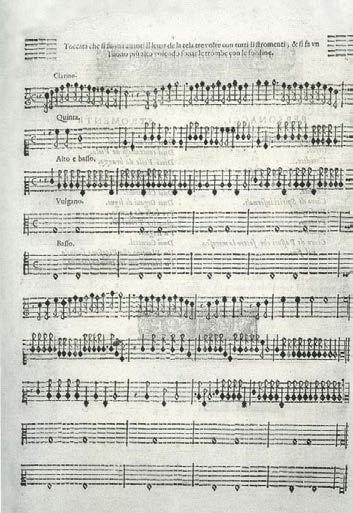
1637 The first public opera house, Teatro San Cassiano, was built in Venice, Italy.
1673 Jean-Baptiste Lully (1632-1687), an Italian-born composer, brought opera to the French court, creating a unique style, tragédie en musique, that better suited the French language. Blurring the lines between recitative and aria, he created fast-paced dramas to suit the tastes of French aristocrats.
1689 Henry Purcell’s (1659-1695) simple and elegant chamber opera, Dido and Aeneas, premiered at Josias Priest’s boarding school for girls in London.
1712 George Frederic Handel (16851759), a German-born composer, moved to London, where he found immense success writing intricate and highly ornamented Italian opera seria (serious opera). Ornamentation refers to stylized, fast-moving notes, usually improvised by the singer to make a musical line more interesting and to showcase their vocal talent.
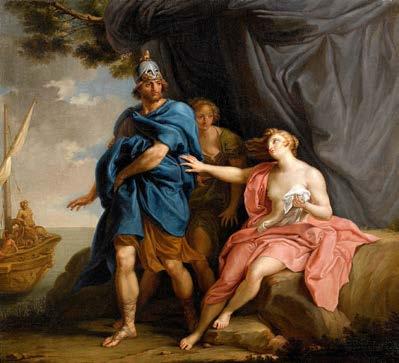
1750s A reform movement, led by Christoph Willibald Gluck (1714-1787), rejected the flashy ornamented style of the Baroque in favor of simple, refined music to enhance the drama.
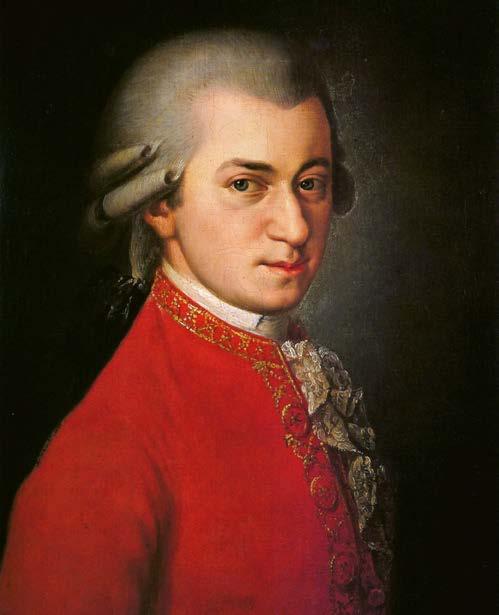
1805 Ludwig van Beethoven (1770-1827), although a prolific composer, wrote only one opera, Fidelio. The extremes of musical expression in Beethoven’s music pushed the boundaries in the late Classical period and inspired generations of Romantic composers.
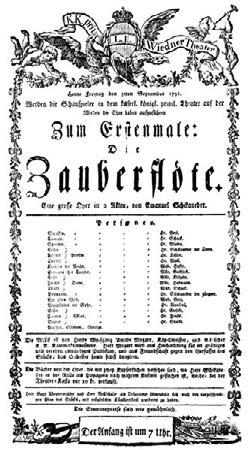
Wolfgang Amadeus Mozart (1756-1791) wrote his first opera at age 11, beginning his 25-year opera career. Mozart mastered and then innovated in several operatic forms. He wrote opera serias (serious operas), including La Clemenza di Tito; and opera buffas (comedic operas) like Le Nozze di Figaro (The Marriage of Figaro). He then combined the two genres in Don Giovanni, calling it dramma giocoso (comedic drama). Mozart also innovated the Singspiel, a German sung play featuring spoken dialogue, as in Die Zauberflöte (The Magic Flute).
Gioachino Rossini (1792-1868) composed Il barbiere di Siviglia (The Barber of Seville), becoming the most prodigious opera composer in Italy by age 24. He wrote 39 operas in 20 years. A new compositional style created by Rossini and his contemporaries, including Gaetano Donizetti and Vincenzo Bellini, would, a century later, be referred to as bel canto (beautiful singing). Bel canto compositions were inspired by the nuanced vocal capabilities of the human voice and its expressive potential. Composers employed strategic use of register, the push and pull of tempo (rubato), extremely smooth and connected phrases (legato), and vocal glides (portamento).
1853 Giuseppe Verdi (1813-1901) completed La Traviata, a story of love, loss, and the struggle of average people, in the increasingly popular realistic style of verismo. Verdi enjoyed immense acclaim during his lifetime, while expanding opera to include larger orchestras, extravagant sets and costumes, and more highly trained voices.
1842 Inspired by the risqué popular entertainment of French vaudeville, Hervé (1825-1892) created the first operetta, a short comedic musical drama with spoken dialogue. Responding to popular trends, this new form stood in contrast to the increasingly serious and dramatic works at the grand Parisian opera house. Opéra comique as a genre was often not comic, tending to be more realistic or humanistic instead. Grand opera, on the contrary, was exaggerated and melodramatic.
1865 Richard Wagner’s (1813-1883) Tristan und Isolde was the beginning of musical modernism, pushing the use of traditional harmony to its extreme. His massively ambitious, lengthy operas, often based in German folklore, sought to synthesize music, theatre, poetry, and visuals in what he called a Gesamtkunstwerk (total work of art). The most famous of these was an epic four-opera drama, Der Ring des Nibelungen, which took him 26 years to write and was completed in 1874.
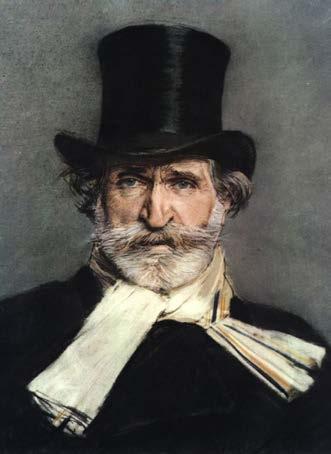
1871 Influenced by French operetta, English librettist W.S. Gilbert (1836-1911) and composer Arthur Sullivan (1842-1900) began their 25-year partnership, which produced 14 comic operettas, including The Pirates of Penzance and The Mikado. Their works inspired the genre of American musical theatre.
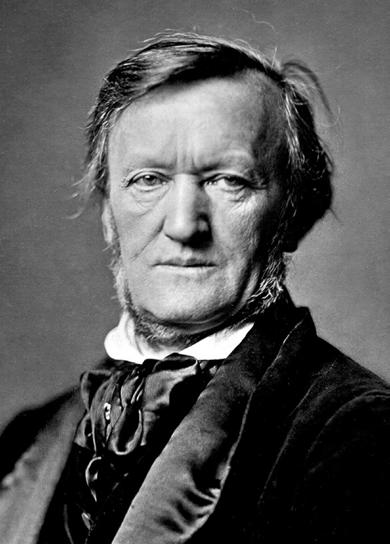
Johann Strauss II, (1825-1899) influenced largely by his father, with whom he shared a name and talent, composed Die Fledermaus, popularizing Viennese musical traditions, namely the waltz, and further shaping operetta
1896
Giacomo Puccini’s (1858-1924) La bohème captivated audiences with its intensely beautiful music, realism, and raw emotion. Puccini enjoyed huge acclaim during his lifetime for his works.
1911 Scott Joplin, (1868-1917) “The King of Ragtime,” wrote his only opera, Treemonisha, which was not performed until 1972. The work combined the European lateRomantic operatic style with African American folk songs, spirituals, and dances. The libretto, also by Joplin, was written at a time when when African Americans in the southern United States rarely had access to literacy resources and education.
1927 American musical theatre, commonly referred to as Broadway, was taken more seriously after Jerome Kern’s (1885-1945) Show Boat, with words by Oscar Hammerstein II (1895-1960), tackled issues of racial segregation and the ban on interracial marriage in Mississippi.
Alban Berg (1885-1935) composed the first completely atonal opera, Wozzeck, dealing with uncomfortable themes of militarism and social exploitation. Wozzeck is in the style of 12-tone music, or serialism. This new compositional style, developed in Vienna by composer Arnold Schoenberg (1874-1951), placed equal importance on each of the 12 pitches in a chromatic scale (all half steps), removing the sense of the music being in a particular key.
1945 British composer Benjamin Britten (1913-1976) gained international recognition with his opera Peter Grimes. Britten, along with Ralph Vaughan Williams (1872-1958), was one of the first British opera composers to gain fame in nearly 300 years.
John Adams (b. 1947) composed one of the great minimalist operas, Nixon in China, the story of Nixon’s 1972 meeting with Chinese leader Mao Zedong. Musical minimalism strips music down to its essential elements, usually featuring a great deal of repetition with slight variations.
1935 American composer George Gershwin (1898-1937), who was influenced by African American music and culture, debuted his opera, Porgy and Bess, in Boston, MA with an allAfrican American cast of classically trained singers. His contemporary, William Grant Still (1895-1978), a master of European grand opera, fused that with the African American experience and mythology. His first opera, Blue Steel, premiered in 1934, one year before Porgy and Bess.
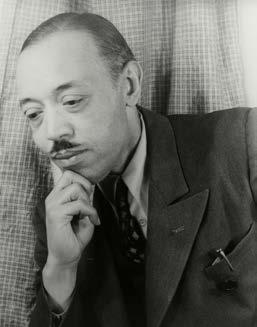
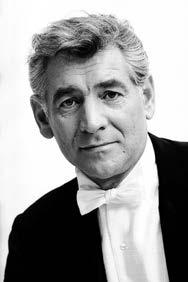
Leonard Bernstein (1918-1990), known for synthesizing musical genres, brought together the best of American musical theatre, opera, and ballet in West Side Story, a reimagining of Romeo and Juliet in a contemporary setting.
Anthony Davis (b. 1951) premiered his first of many operas, X: The Life and Time of Malcom X, which reclaims stories of Black historical figures within the theatre space. He incorporated both the orchestral and vocal techniques of jazz and classical European opera in his score for a distinctly American sound, and a fully realized vision of how jazz and opera are in conversation within a work.

Still a vibrant, evolving art form, opera attracts contemporary composers such as Philip Glass (b. 1937), Jake Heggie (b. 1961), Terence Blanchard (b. 1962), Ellen Reid (b. 1983), and many others. Composers continue to be influenced by present and historical musical forms in creating new operas that explore current issues or reimagine ancient tales.
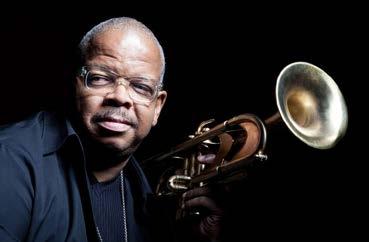
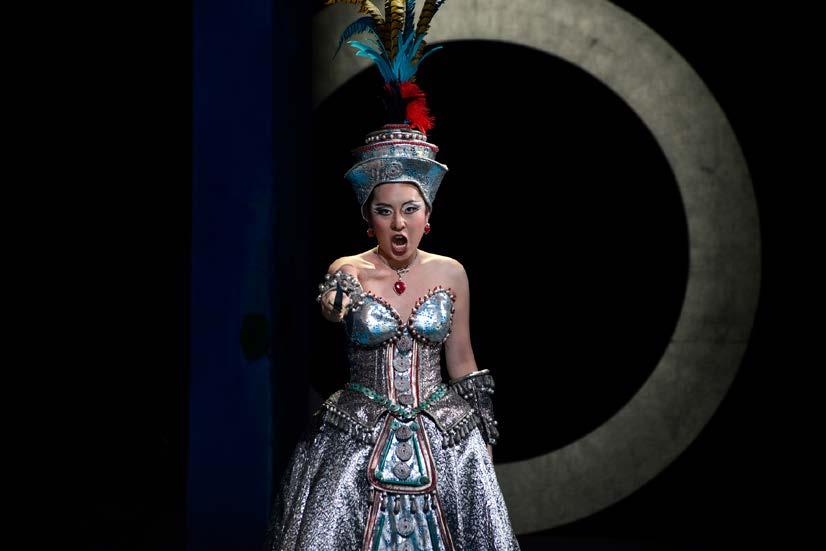
Opera is unique among forms of singing in that singers are trained to be able to sing without amplification, in large theaters, over an entire orchestra, and still be heard and understood! This is what sets the art form of opera apart from similar forms such as musical theatre. To become a professional opera singer, it takes years of intense physical training and constant practice — not unlike that of a ballet dancer — to stay in shape. Poor health, especially respiratory issues and even allergies, can be severely debilitating for a professional opera singer. Let’s peek into some of the science of this art form.
Singing requires different parts of the body to work together: the lungs, the vocal cords, the vocal tract, and the articulators (lips, teeth, and tongue). The lungs create a flow of air over the vocal cords, which vibrate. That vibration is amplified by the vocal tract and broken up into words by consonants, which are shaped by the articulators.
Any good singer will tell you that good breath support is essential to produce quality sound. Breath is like the gas that goes into your car. Without it, nothing runs. In order to sing long phrases of music with clarity and volume, opera singers access their full lung capacity by keeping their torso elongated and releasing the lower abdomen and diaphragm muscles, which allows air to enter into the lower lobes of the lungs. This is why we associate a certain posture with opera singers. In the past, many operas were staged with singers standing in one place to deliver an entire aria or scene, with minimal activity. Modern productions, however, often demand a much greater range of movement and agility onstage, requiring performers to be physically versatile, and bringing more visual interest, authenticity of expression, and nuanced acting into the storytelling.
If you run your fingers along your throat, you will feel a little lump just underneath your chin. That is your “Adam’s Apple,” and right behind it, housed in the larynx (voice-box), are your vocal cords. When air from the lungs crosses over the vocal cords it creates an area of low pressure (Google The Bernoulli Effect), which brings the cords together and makes them vibrate. This vibration produces a buzz. The vocal chords can be lengthened or shortened by muscles in the larynx, or by changing the speed of air flow. This change in the length and thickness of the vocal cords is what allows singers to create different pitches. Higher pitches require long, thin cords, while low pitches require short, thick ones. Professional singers take great pains to protect the delicate anatomy of their vocal cords with hydration and rest, as the tiniest scarring or inflammation can have noticeable effects on the quality of sound produced.
Without the resonating chambers in the head, the buzzing of the vocal cords would sound very unpleasant. The vocal tract, a term encompassing the mouth cavity, and the back of the throat, down to the larynx, shapes the buzzing of the vocal cords like a sculptor shapes clay. Shape your mouth in an ee vowel (as in eat), then sharply inhale a few times. The cool sensation you feel at the top and back of your mouth is your soft palate. The soft palate can raise or lower to change the shape of the vocal tract. Opera singers often sing with a raised soft palate, which allows for the greatest amplification of the sound produced by the vocal cords. Different vowel sounds are produced by raising or lowering the tongue, and changing the shape of the lips. Say the vowels: ee, eh, ah, oh, oo and notice how each vowel requires a slightly lower tongue placement and slightly rounder lips. This area of vocal training is particularly difficult because none of the anatomy is visible from the outside!
The lips, teeth, and tongue are all used to create consonant sounds, which separate words into syllables and make language intelligible. Consonants must be clear and audible for the singer to be understood. Because opera singers do not sing with amplification, their articulation must be particularly good. The challenge lies in producing crisp, rapid consonants without interrupting the connection of the vowels (through the controlled exhalation of breath) within the musical phrase.
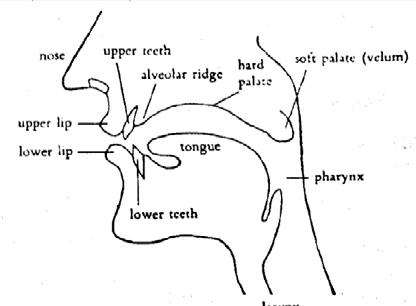
Perfecting every element of this complex singing system requires years of training and is essential for the demands of the art form. An opera singer must be capable of singing for hours at a time, over the powerful volume of an orchestra, in large opera houses, while acting and delivering an artistic interpretation of the music. It is complete and total engagement of mental, physical, and emotional control and expression. Therefore, think of opera singers as the Olympic athletes of the stage, sit back, and marvel at what the human body is capable of!
Opera singers are cast into roles based on their tessitura (the range of notes they can sing most comfortably and effectively). There are many descriptors that accompany the basic voice types, but here are some of the most common ones:
The lowest voice, basses often fall into two main categories: basso buffo, which is a comic character who often sings in lower laughing-like tones, and basso profundo, which is as low as the human voice can sing! Doctor Bartolo is an example of a bass role in The Barber of Seville by Rossini.
A middle-range lower voice, baritones can range from sweet and mild in tone, to darker dramatic and full tones. A famous baritone role is Rigoletto in Verdi’s Rigoletto. Baritones who are most comfortable in a slightly lower range are known as Bass-Baritones, a hybrid of the two lowest voice types.
The highest of the lower-range voices, tenors often sing the role of the hero. One of the most famous tenor roles is Roméo in Gounod’s Roméo et Juliette. Sometimes, singers with lower-range voices also cultivate much higher ranges, singing in a range similar to a mezzo-soprano or soprano by using their falsetto register. Called the Countertenor, this voice type is often found in Baroque music. Countertenors replaced castrati in the heroic lead roles of Baroque opera after the practice of castration was deemed unethical.
Each of the voice types (soprano, mezzo-soprano, tenor, baritone, bass) also tends to be sub-characterized by tone descriptors such as “lyric” or “dramatic.” Lyric singers tend toward smooth lines in their music, sensitively expressed interpretation, and flexible agility. Dramatic singers have qualities that are attributed to darker, fuller, richer note qualities expressed powerfully and robustly with strong emotion. While it’s easiest to understand operatic voice types through these designations and descriptions, one of the most exciting things about listening to a singer perform is that each individual’s voice is essentially unique, so each singer will interpret a role in an opera in a slightly different way.
The lowest of the higher treble voices has a low range that overlaps with the highest tenor’s range. This voice type is less common.
Somewhat equivalent to an alto role in a chorus, mezzo-sopranos (mezzo meaning “middle”) are known for their full and expressive qualities. While they don’t sing frequencies quite as high as sopranos, their ranges do overlap, and it is a “darker” tone that sets them apart. One of the most famous mezzo-soprano lead roles is Carmen in Bizet’s Carmen
The highest voice. Some subtypes of the soprano voice include coloratura, lyric, and dramatic sopranos. Coloratura sopranos specialize in being able to sing fast-moving notes that are very high in frequency, often referred to as “color notes.” One of the most famous coloratura roles is the Queen of the Night in Mozart’s The Magic Flute.
What is it about opera singers that allows them to be heard above the orchestra? It’s not that they simply singing louder. The qualities of sound have to do with the relationship between the frequency (pitch) of a sound, represented in a unit of measurement called hertz, and its amplitude, measured in decibels, which the ear perceives as loudness. Only artificially produced sounds, however, create a pure frequency and amplitude (these are the only kind that can break glass). The sound produced by a violin, a drum, a voice, or even smacking your hand on a table, produces a fundamental frequency as well as secondary, tertiary, etc. frequencies known as overtones, or as musicians call them, harmonics
The orchestra tunes to a concert “A” pitch before a performance. Concert “A” has a frequency of about 440 hertz, but that is not the only pitch you will hear. Progressively softer pitches above that fundamental pitch are produced in multiples of 440 at 880hz, 1320hz, 1760hz, etc. Each different instrument in the orchestra, because of its shape, construction, and mode in which it produces sound, produces different harmonics. This is what makes a violin, for example, have a different color (or timbre ) from a trumpet. Generally, the harmonics of the instruments in the orchestra fade around 2500hz. Overtones produced by a human voice—whether speaking, yelling, or singing— are referred to as formants
As the demands of opera stars increased, vocal teachers discovered that by manipulating the empty space within the vocal tract, they could emphasize higher frequencies within the overtone series—frequencies above 2500hz. This technique allowed singers to perform without hurting their vocal cords, as they are not actually singing at a higher fundamental decibel level than the orchestra. Swedish voice scientist Johan Sundberg observed this phenomenon when he recorded the world-famous tenor Jussi Bjoerling in 1970. His research showed multiple peaks in decibel level, with the strongest frequency (overtone) falling between 2500 and 3000 hertz. This frequency, known as the singer’s formant , is the “sweet spot” for singers so that we hear their voices soaring over the orchestra into the opera house night after night.
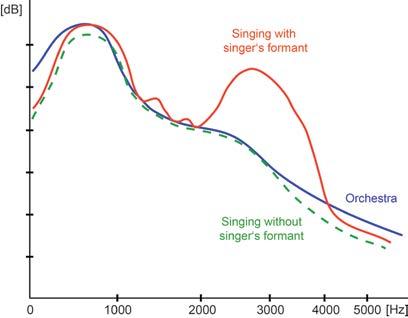
that are specific to each particular
like a
When two people sing the same note simultaneously, the high overtones allow your ear to distinguish two voices.
The final piece of the puzzle in creating the perfect operatic sound is the opera house or theater itself. Designing the perfect acoustical space can be an almost impossible task, one which requires tremendous knowledge of science, engineering, and architecture, as well as an artistic sensibility. The goal of the acoustician is to make sure that everyone in the audience can clearly understand the music being produced onstage, no matter where they are sitting. A perfectly designed opera house or concert hall (for non-amplified sound) functions almost like gigantic musical instrument.
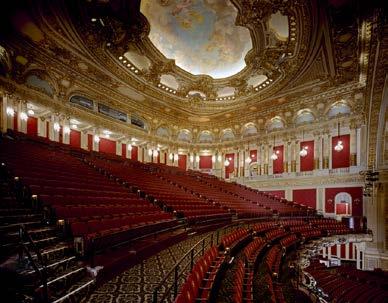
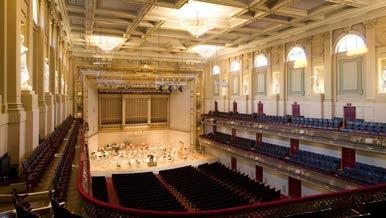
Reverberation is one key aspect in making a singer’s words intelligible or an orchestra’s melodies clear. Imagine the sound your voice would make in the shower or a cave. The echo you hear is reverberation caused by the large, hard, smooth surfaces. Too much reverberation (bouncing sound waves) can make words difficult to understand. Resonant vowel sounds overlap as they bounce off hard surfaces and cover up quieter consonant sounds. In these environments, sound carries a long way but becomes unclear or — as it is sometimes called — wet, as if the sound were underwater. Acousticians can mitigate these effects by covering smooth surfaces with textured materials like fabric, perforated metal, or diffusers, which absorb and disperse sound. These tools, however, must be used carefully, as too much absorption can make a space dry — meaning the sound onstage will not carry at all and the performers may have trouble
even hearing themselves as they perform. Imagine singing into a pillow or under a blanket.
The shape of the room itself also contributes to the way the audience perceives the music. Most large performance spaces are shaped like a bell – small where the stage is and growing larger and more spread out in every dimension as one moves farther away. This shape helps to create a clear path for the sound to every seat. In designing concert halls or opera houses, big decisions must be made about the construction of the building based on acoustical needs.
Even with the best planning, the perfect acoustic is not guaranteed, but professionals are constantly learning and adapting new scientific knowledge to enhance the audience’s experience.
You will see a full dress rehearsal – an insider’s look into the final moments of preparation before an opera premieres. The singers will be in full costume and makeup, the opera will be fully staged, and an orchestra will accompany the singers, who may choose to “mark,” or not sing in full voice, to save their voices for the performances. A final dress rehearsal is often a complete run-through, but there is a chance the director or conductor will ask to repeat a scene or section of music. This is the last opportunity the performers have to rehearse with the orchestra before opening night, and they therefore need this valuable time to work. The following will help you better enjoy your experience of a night at the opera:
• Arrive on time! Latecomers will be seated only at suitable breaks in the performance and often not until intermission.
• Dress in what you are comfortable in so you can enjoy the performance. For some, that may mean dressing up in a suit or gown; for others, jeans and a t-shirt is fine. Generally, “dressycasual” is what people wear. Live theatre is usually a little more formal than a movie theater.
• At the very beginning of the opera, the concertmaster of the orchestra will ask the oboist to play the note “A.” You will hear all the other musicians in the orchestra tune their instruments to match the oboe’s “A.”
• After all the instruments are tuned, the conductor will arrive. You can applaud to welcome them!
• Feel free to applaud or shout "Bravo!" at the end of an aria or chorus piece if you really liked it. The end of a piece can usually be identified by a pause in the music. Singers love an appreciative audience!
• It’s OK to laugh when something is funny or gasp at something shocking!
• When translating songs, and poetry in particular, much can be lost due to a change in rhythm, inflection, and rhyme of words. For this reason, opera is usually performed in its original language. In order to help audiences enjoy the music and follow every twist and turn of the plot, English supertitles are projected. Even when the opera is in English, there are still supertitles.
• Listen for subtleties in the music. The tempo, volume, and complexity of the music and singing depict the feelings or actions of the characters. Also, pay attention to repeated words or phrases; they are usually significant.
The singers, orchestra, dancers, and stage crew are all hard at work to create an amazing performance for you! Here’s how you can help them.
• Lit screens are very distracting to the singers, so please keep your phone off and out of sight until the house lights come up.
• Due to how distracting electronics can be for performers, taking photos or making audio or video recordings is strictly forbidden.
The theater is a shared space, so please be courteous to your neighbors!
• Please do not take off your shoes or put your feet on the seat in front of you.
• Respect your fellow opera lovers by not leaning forward in your seat so as to block the person’s view behind you.
• Do not chew gum, eat, or drink while the rehearsal is in session. Not only can it pull focus from the performance, but the ushers are not there to clean up after you.
• If you must visit the restroom during the performance, please exit quickly and quietly.
Otherwise, sit back, relax, and let the action onstage pull you in. As an audience member, you are essential to the art form of opera — without you, there is no show!
Have Fun and Enjoy the Opera!