2025/26 Season Reflections & Essays
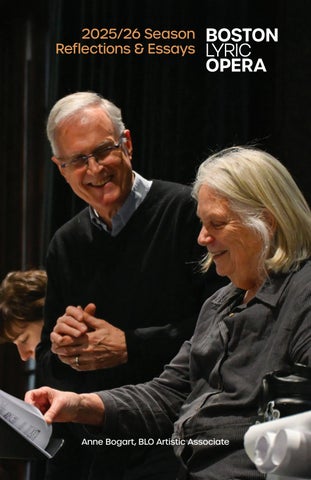
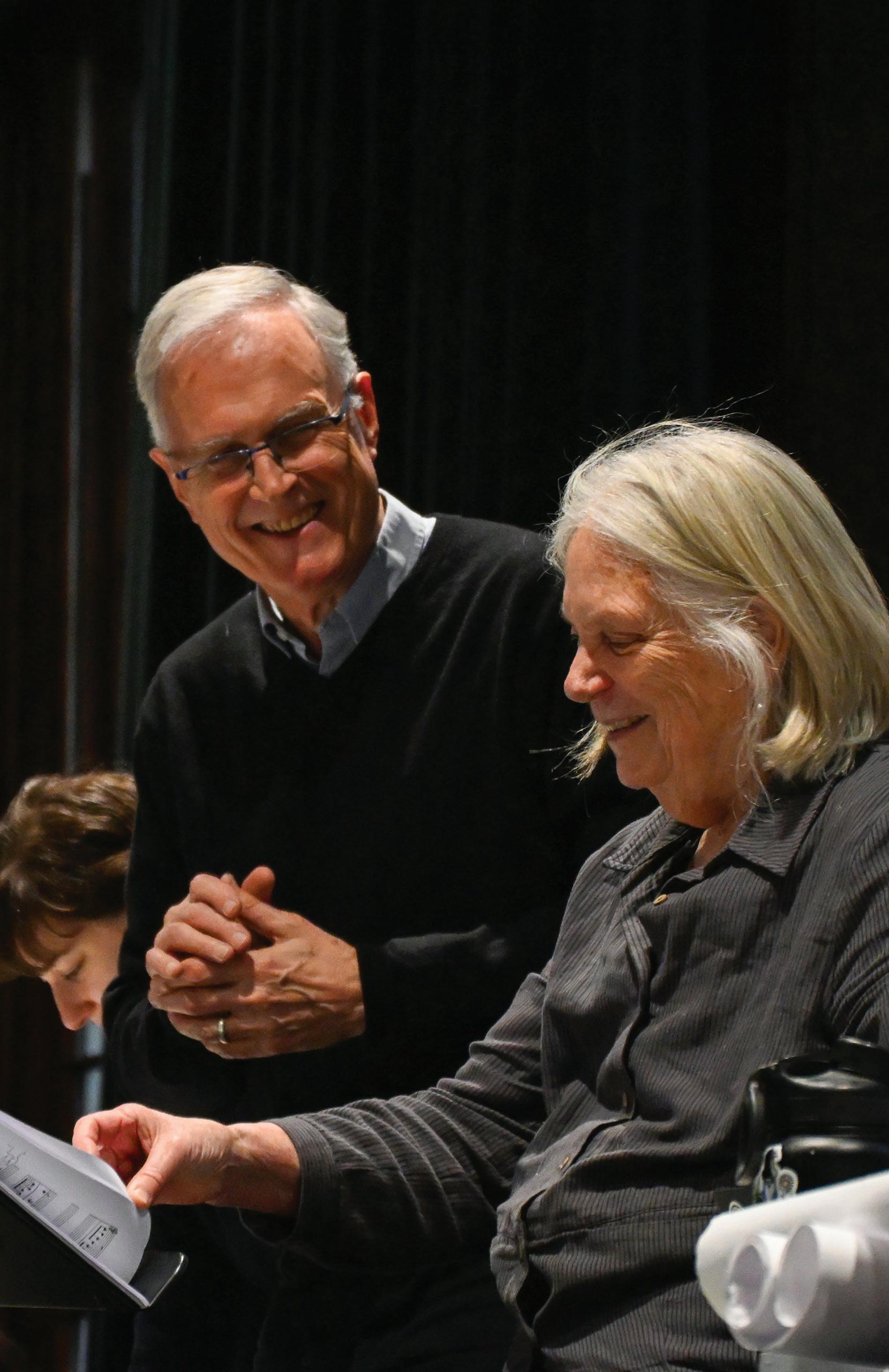
Anne Bogart, BLO Artistic Associate
From her iconic interpretation of The Handmaid’s Tale to her masterful elaboration of Mahler’s Song of the Earth into a fully staged, intense and intimate story, Anne Bogart has brought her imaginative and thought-provoking touch to Boston Lyric Opera’s productions time and time again. As both a stage director and BLO’s Artistic Associate, she has been a frequent and long-standing collaborative partner whom we value deeply.
A central theme in Anne’s work — and in this collection of her dramaturgical notes — is the idea that art and artists act as both mirrors and drivers of cultural change. Her writing allows us to offer some behind-the-scenes insight into not only what made each of this season’s productions stand out, but also the process by which an artist may engage with their work and intended audiences. Please enjoy this special collection of Anne’s astute commentary on six productions from our 2025/26 Season. We look forward to welcoming her — and you, our valued supporters — back for our 50th Anniversary Season in 2026/27!
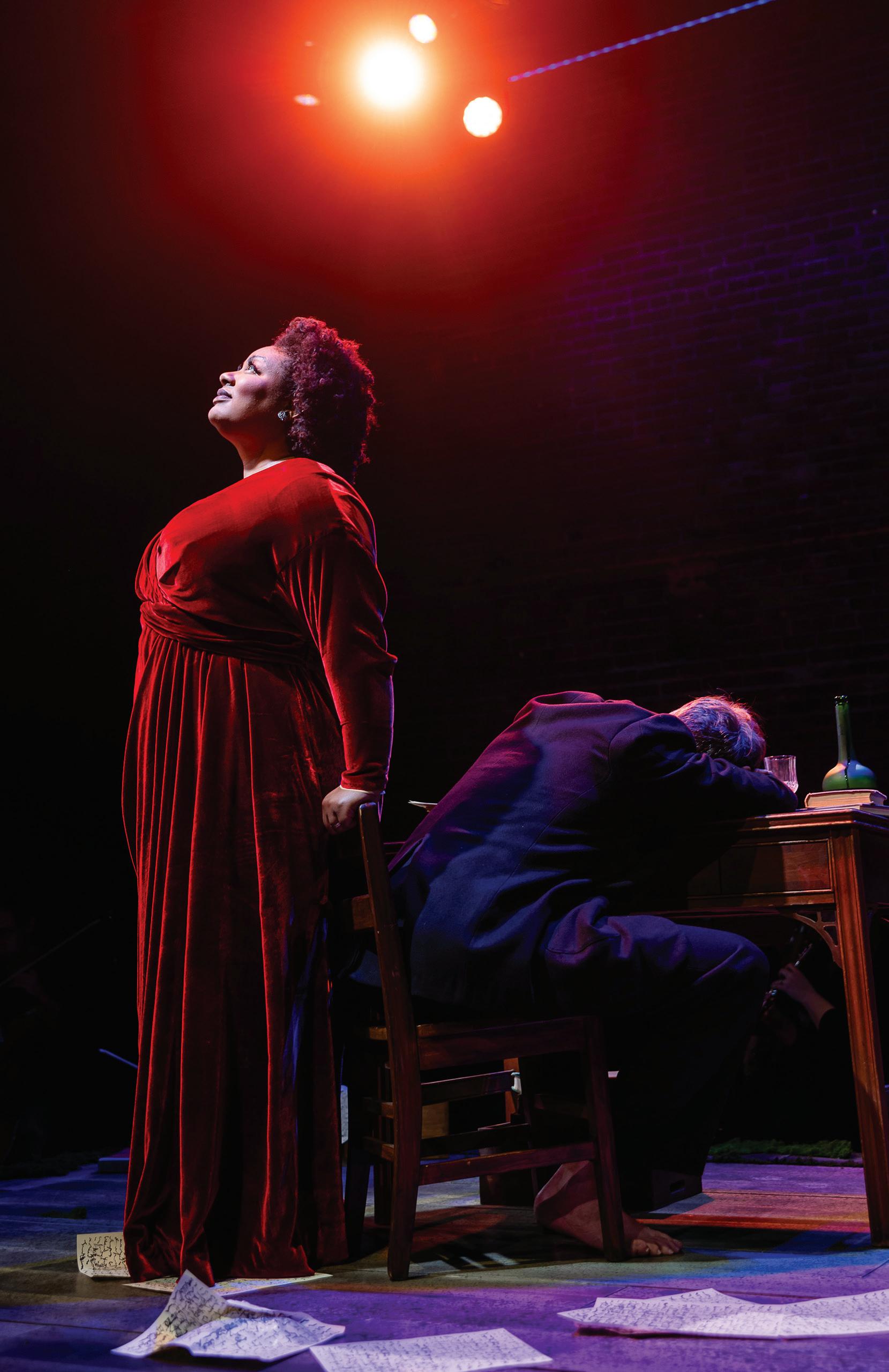
Cover: Anne Bogart with BLO Music Director David Angus. Photo by BLO Staff. Left: (L-r) Raehann Bryce-Davis and Brandon Jovanovich in Song of the Earth. Photo by Nile Hawver/Nile Scott Studios.
ABOUT ANNE BOGART
Anne Bogart is Boston Lyric Opera’s Artistic Associate and most recently worked as stage director for the company’s production of Song of the Earth. Previous notable productions with BLO include Carousel, Bluebeard’s Castle | Four Songs and The Handmaid’s Tale.
A professor at Columbia University, where she runs the graduate directing program, Bogart is the author of six books: A Director Prepares; The Viewpoints Book; And Then, You Act; Conversations with Anne; What’s the Story; and The Art of Resonance.
Recent theatre works with SITI Company include Falling and Loving; The Bacchae; the theater is a blank page; Persians; Steel Hammer; A Rite; Café Variations; Trojan Women; American Document; Antigone; Freshwater Under Construction; Who Do You Think You Are; Radio Macbeth; Hotel Cassiopeia; Death and the Ploughman; La Dispute; Score; bobrauschenbergamerica; Room; War of the Worlds; Cabin Pressure; Alice’s Adventures; Culture of Desire; Bob; Going, Going, Gone; Small Lives/Big Dreams; The Medium; Hay Fever; Private Lives; Miss Julie; and Orestes. Opera credits include Tristan and Isolde, Croatian National Theatre; Macbeth, Glimmerglass Festival; Norma, Washington National Opera; I Capuleti e i Montecchi and Carmen, Glimmerglass Festival; Seven Deadly Sins, New York City Opera; and three operas by Deborah Drattell: Nicholas and Alexandra, Los Angeles Opera; Marina: A Captive Spirit, American Opera Projects; and Lilith, New York City Opera.
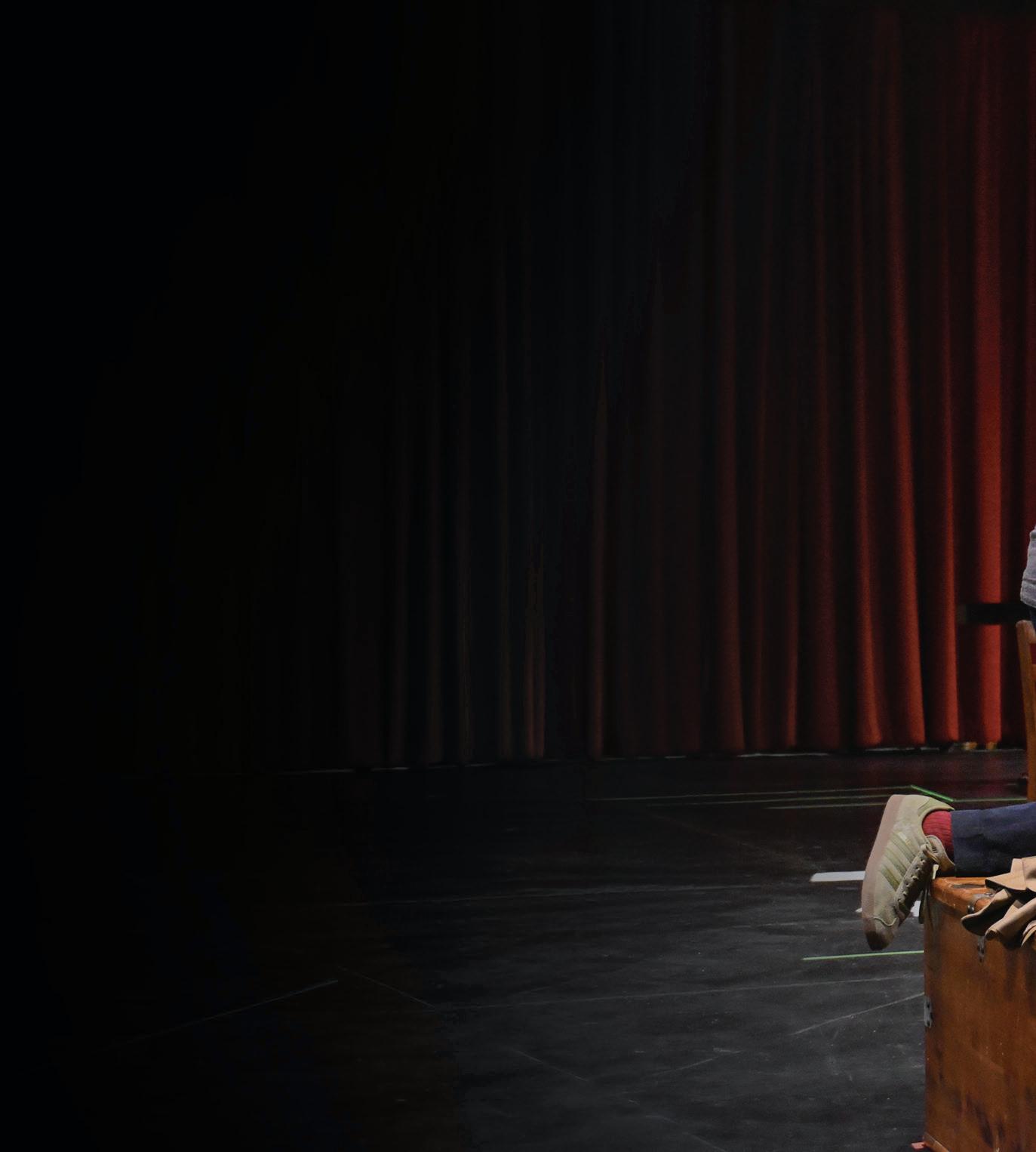
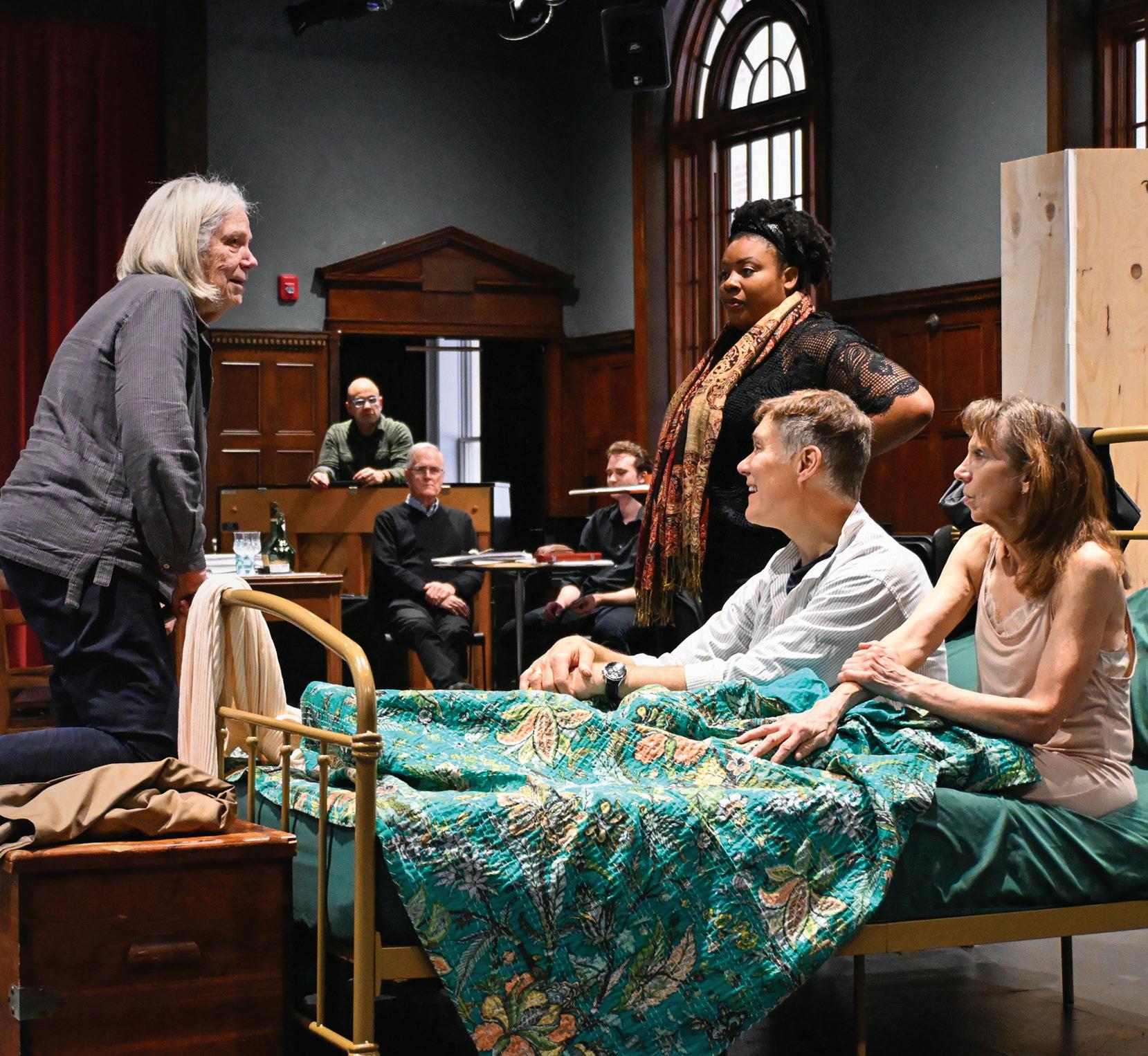
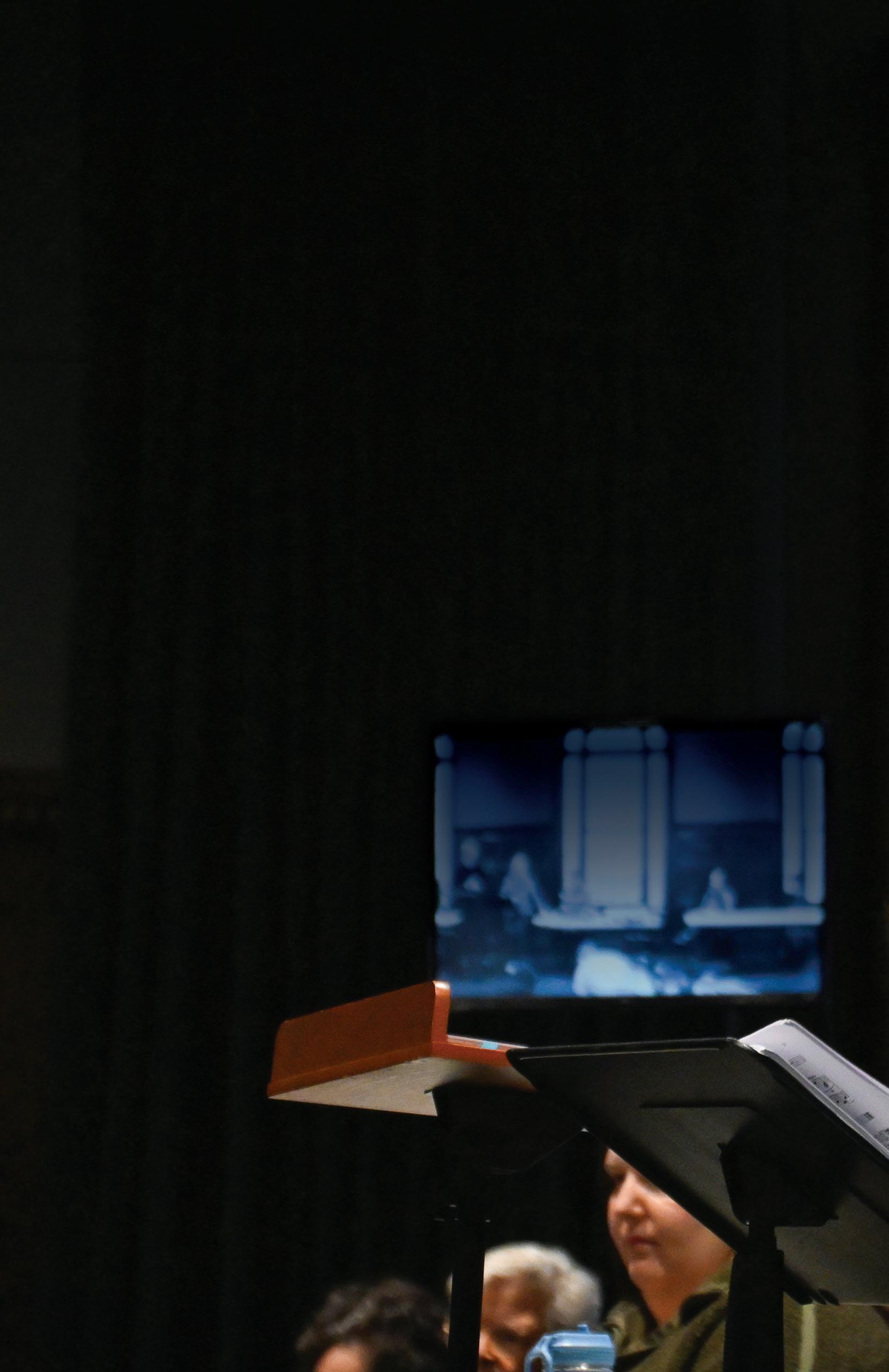
(L-r) Anne Bogart with Raehann Bryce-Davis, Brandon Jovanovich, and Ellen Lauren in rehearsal for Song of the Earth. Photo by BLO Staff.
“Part of BLO’s mission is to offer audiences unique opera experiences that are seldom found elsewhere.”


OCTOBER 10 - 12, 2025
EMERSON COLONIAL THEATRE
Performed with the Boston Lyric Opera Orchestra and Chorus
Dark Attraction
As a fifteen-year-old, I attended my first professional theater production — Shakespeare’s Macbeth at Trinity Repertory Company in Providence, Rhode Island. Before then, I had never seen or read any of Shakespeare’s work; and to be honest, I could not understand a single word spoken onstage. None of that mattered to me, though. The atmosphere was thick with magic — an intensity that pulled me in from the very beginning. Adrian Hall’s direction, together with remarkable performances from the cast, made the production truly unforgettable. Witches descended from the ceiling and moved among the audience, amplifying the sense of dark enchantment. Eugene Lee’s scenic design transformed the entire auditorium into an immersive 360-degree world, surrounding me and a thousand other high school students with the spectacle. The actors’ physical presence, the haunting sounds, and the powerful voices all fused into an overwhelming sensory experience that held me transfixed.
That performance exerted such a powerful fascination that it ultimately inspired my own path toward becoming a theatre and opera director. When I moved to New York City in my early twenties, Macbeth called out to me again. Compelled to explore the play for myself, I placed an ad in Backstage magazine recruiting actors with the following invitation: “Actors interested in an investigation into assassination and murder using Shakespeare’s Macbeth, call this number.” This, my first production in New York City, focused on the relationship between Macbeth and Banquo. It was a brave, if relatively inexperienced, young directorial attempt. Since then, I have often returned to Macbeth, both Shakespeare’s original and Verdi’s operatic adaptation, drawn by the play’s inexhaustible mysteries. I find myself continually asking: what is it about this story, these characters, and this world, that invites such a fierce and enduring magnetism and attraction?
For over four centuries, Shakespeare’s Macbeth has indeed exerted a powerful hold on audiences, rising repeatedly from the shadows to cast its “dark attractions” anew. The play’s irresistible pull seems to come from the way it immerses us in the starkest aspects of human ambition, guilt, and the supernatural, while never relinquishing its deep humanity. Macbeth is, ultimately, the story of a “dark attractor” — a character, a play, a subject matter so charged with danger and
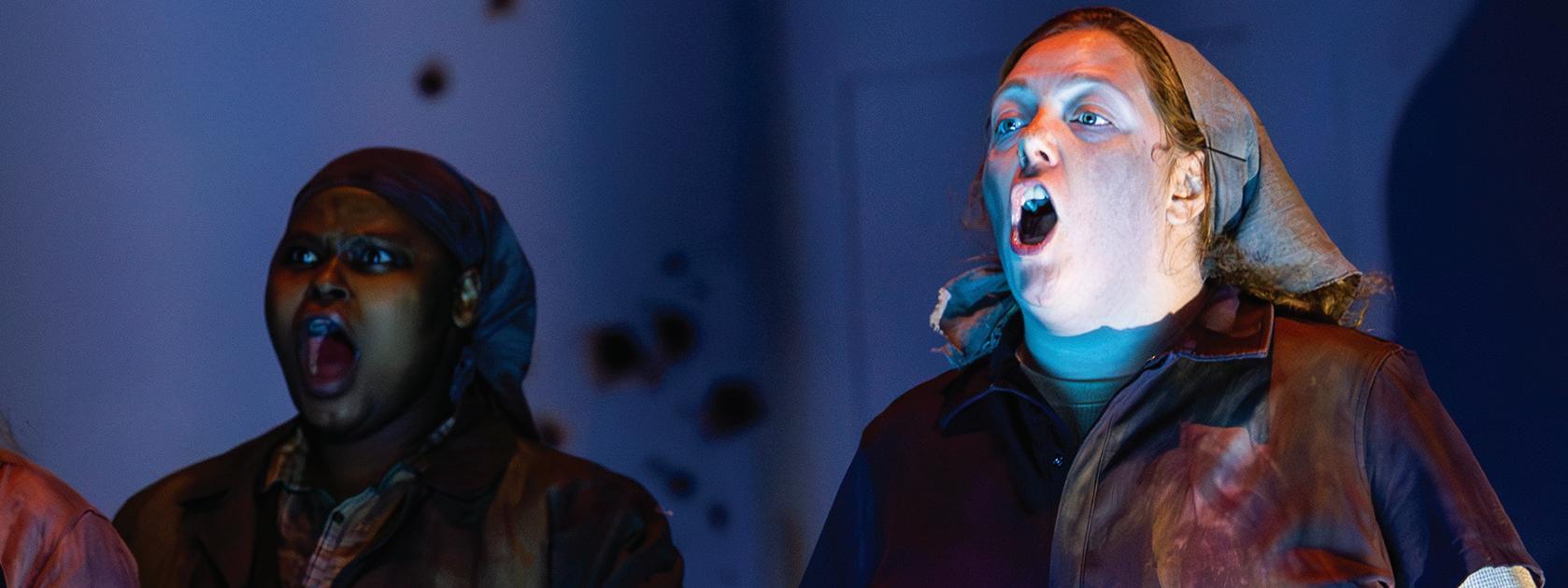
“The performing arts have long served as a space where humanity dares to approach its deepest fears — not to be consumed by them, but to confront them from a place of symbolic safety.“
possibility that it draws us closer even as it warns us to keep our distance. It is a tale that thrives on our perennial fascination with the shadows both around and within us.
From the very opening lines of Macbeth, the eerie chants of the witches stir a powerful sense of awe and unease. In Shakespeare’s time, belief in witchcraft and prophecy was pervasive and deeply feared. These characters were not merely theatrical inventions; they represented something genuinely provocative and taboo. To many in the original early-17th-century audience, the witches felt frighteningly real, and some even speculated that Shakespeare included lines drawn from actual witchcraft rituals — incantations that people might have recognized as authentic and potentially dangerous. The witches also speak in trochaic tetrameter — a choppier, more insistent rhythm than Shakespeare’s usual iambic pentameter, which is closer to the spoken word — echoing the cadence of ritual chanting and intensifying the impression that their words could wield genuine magical power. In 1606, when Macbeth premiered, most people believed that language itself could invoke dark forces, making these scenes emotionally and spiritually unsettling. The witches’ otherworldly presence and supernatural abilities signaled that the play was crossing boundaries between the natural and the supernatural, as well as between the visible and the invisible. By conjuring what was imagined or hidden into view, the witches steered Macbeth — and the audience — into morally ambiguous territory, where the distinction between good and evil is blurred, and every action’s true meaning is left uncertain.
Giuseppe Verdi’s Macbeth stands as both a tribute to and a transformation of Shakespeare’s original play. The bones are there: ambition, blood, the violent ascent to power. While it remains largely faithful to the source material, Verdi reimagines the story through the unique lens of opera, using music to heighten emotion,
underscore psychological tension, and evoke atmosphere. The sense of menace and supernatural dread that defines Macbeth is not spoken, but sung — conjured through dark orchestration, dramatic vocal lines, and haunting choral passages. The story’s structure remains recognizable. A soldier hears a prophecy. His wife urges him towards power. Blood is shed. Guilt rises to fill the silence. The witches still appear — strange and otherworldly — guiding events with riddles that spark chaos instead of clarity. The central themes of unchecked ambition, guilt, and the sway of the supernatural remain intact, but they are expressed with an even greater intensity of feeling.
As with most adaptations for the stage, especially opera, there is necessary compression. The complexity of Shakespeare’s text is distilled, side stories vanish, and what remains is a concentration: deliberate, urgent. Verdi lingers on the moments most suited to music’s language — not the whispered plans or the quiet regrets, but the eruptions, the unraveling. Lady Macbeth, in particular, is transformed. She is portrayed as even more forceful and overtly manipulative than in Shakespeare’s version. She is ruthless, unrelenting, her ambition flaring with terrifying clarity — until, of course, it devours her. Her breakdown, though inevitable, is rendered not just with drama but also with beauty; it is sorrow sung full-throated in the murky darkness.
The performing arts have long served as a space where humanity dares to approach its deepest fears — not to be consumed by them, but to confront them from a place of symbolic safety. Onstage, we encounter the dark corners of the human psyche, the taboos, the traumas, the impulses we often repress, like violence, madness, betrayal, possession, addiction, and death. These subjects are terrifying in life, yet strangely compelling in drama. The French theatre artist Antonin Artaud once described his “theatre of cruelty” as a form of performance designed not to comfort but to shake the audience awake, to force them to reckon with what they fear most — often a form of confrontation they cannot access in daily life. In this way, theaters themselves become what scholar Stephen Bottoms has called “dark spaces lit by imagination,” and the stage becomes a kind of psychic laboratory, where dangerous truths can surface, be observed, and perhaps even be understood.
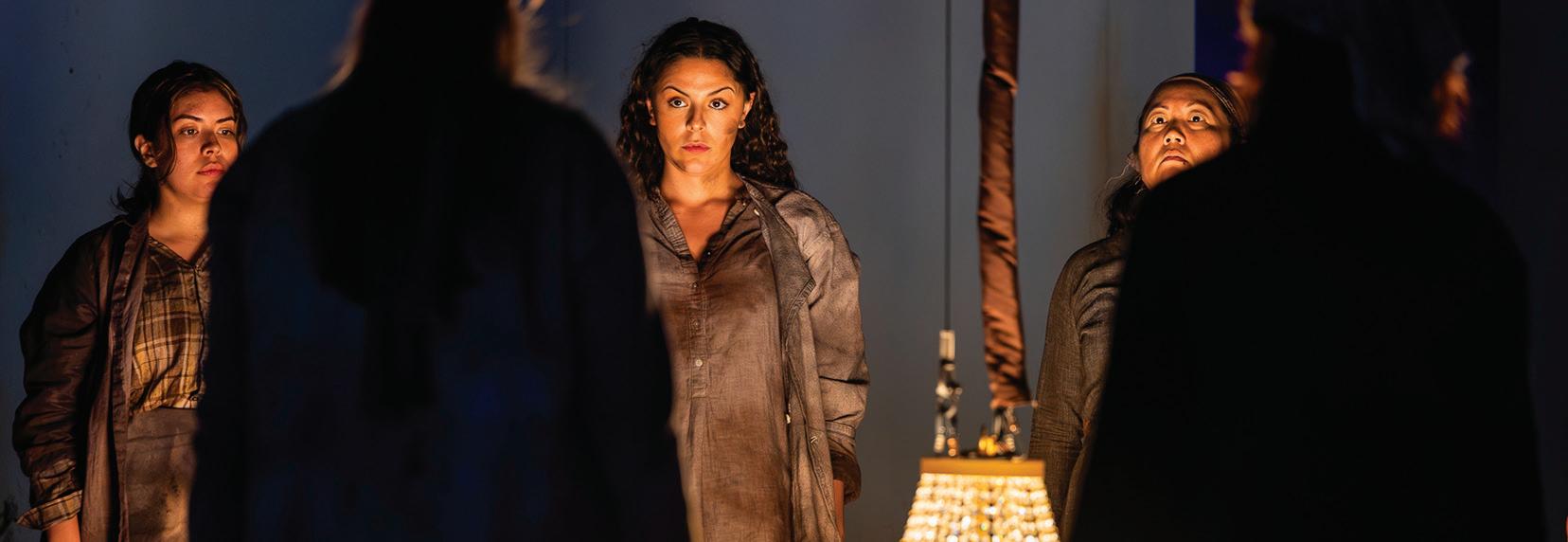
This demanding journey is further complicated by the centuries-old superstitions that cling to Macbeth. The lingering taboo against speaking the play’s name inside a theater casts a spell of its own, filling rehearsal rooms, backstage corridors, and performance spaces with a strange, electric tension. The origins of this unease trace back to the play’s earliest performances, where tales of misfortune — even death — circulated ominously. Some believe that the so-called “curse” stems from Shakespeare’s use of authentic witchcraft incantations, evoking forces best left undisturbed. Over time, stories of onstage injuries, eerie coincidences, and tragic mishaps have kept the legend alive, feeding a collective wariness that persists to this day. In response, protective rituals — stepping outside the theater, spinning, spitting, swearing — are still performed by actors and crew in hopes of banishing bad luck. These rites, half superstition and half tradition, become part of the fabric of the production. The challenge of embodying these roles — and the powerful legacy that surrounds them — adds to the captivating nature of the work, making the act of inhabiting Macbeth or Lady Macbeth both formidable and attractive to many actors and singers. The weight of the play’s history and the magnetic pull of its danger give it an undeniable allure.
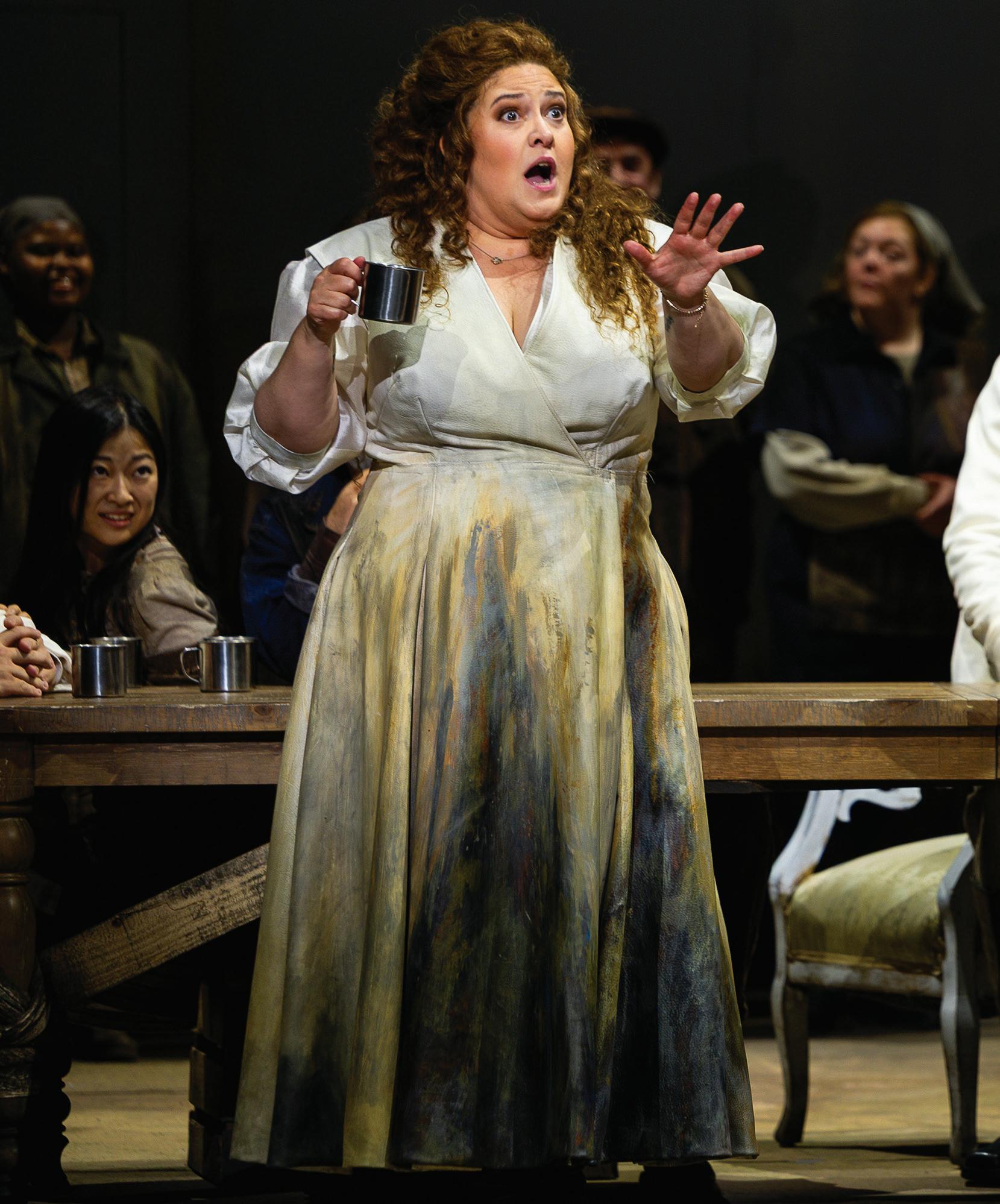
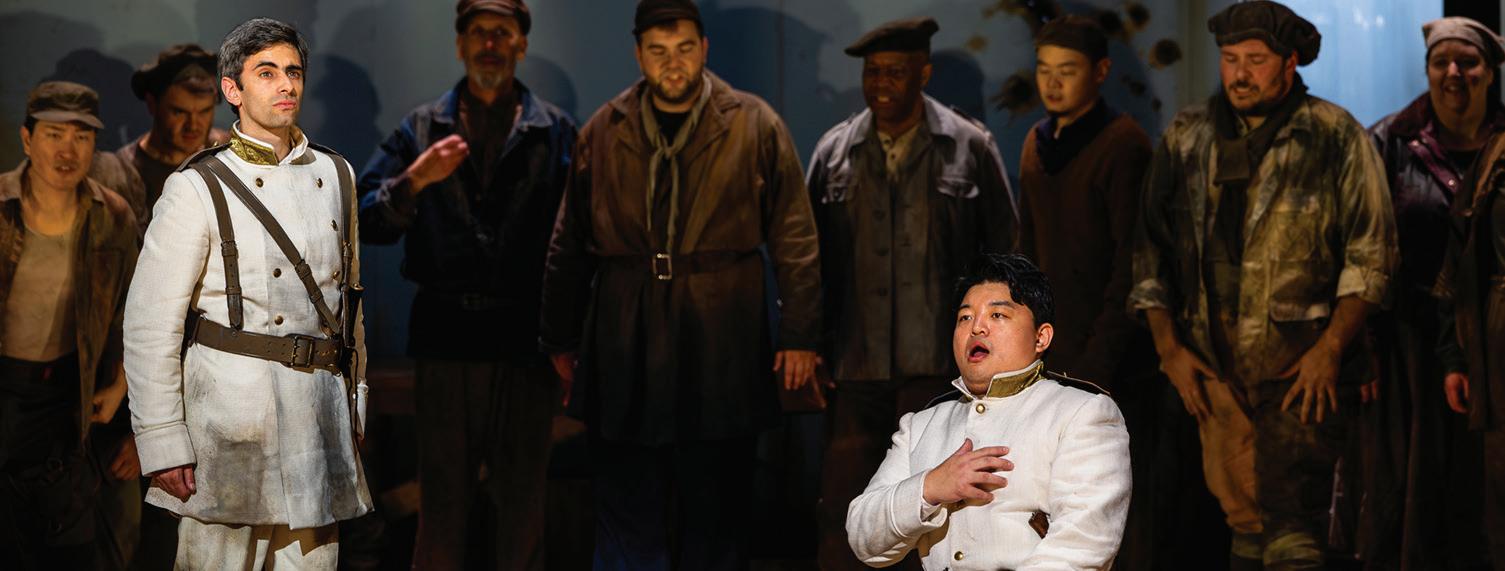
Pages 4/5: (L-r) Alexandra LoBianco (Lady Macbeth) and Norman Garrett (Macbeth) with the BLO Chorus.
Pages 6/7: Members of the BLO Chorus in Macbeth
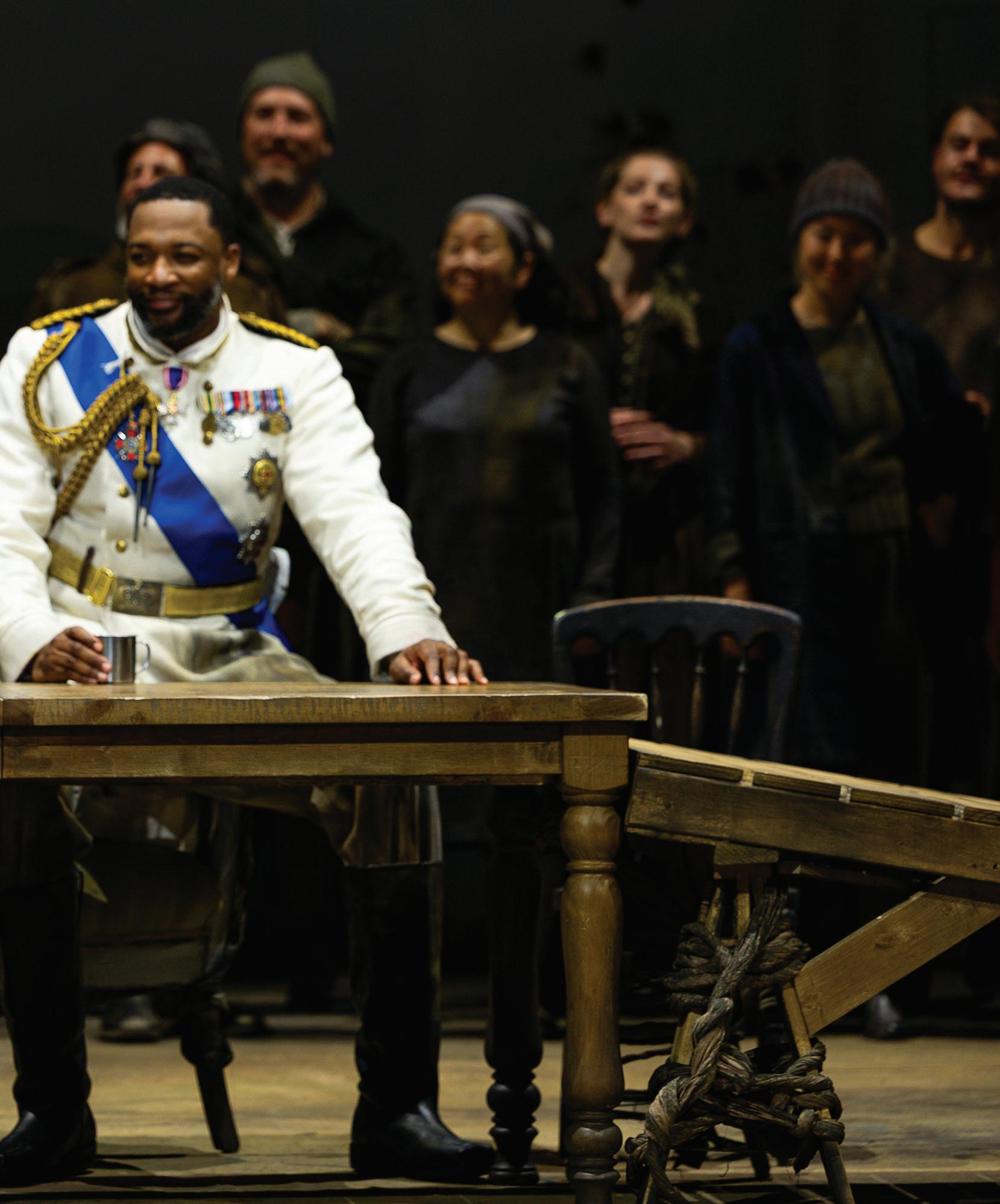
Page 8: (L-r) Omar Najmi (Malcolm) and David Junghoon Kim (Macduff) with the BLO Chorus.
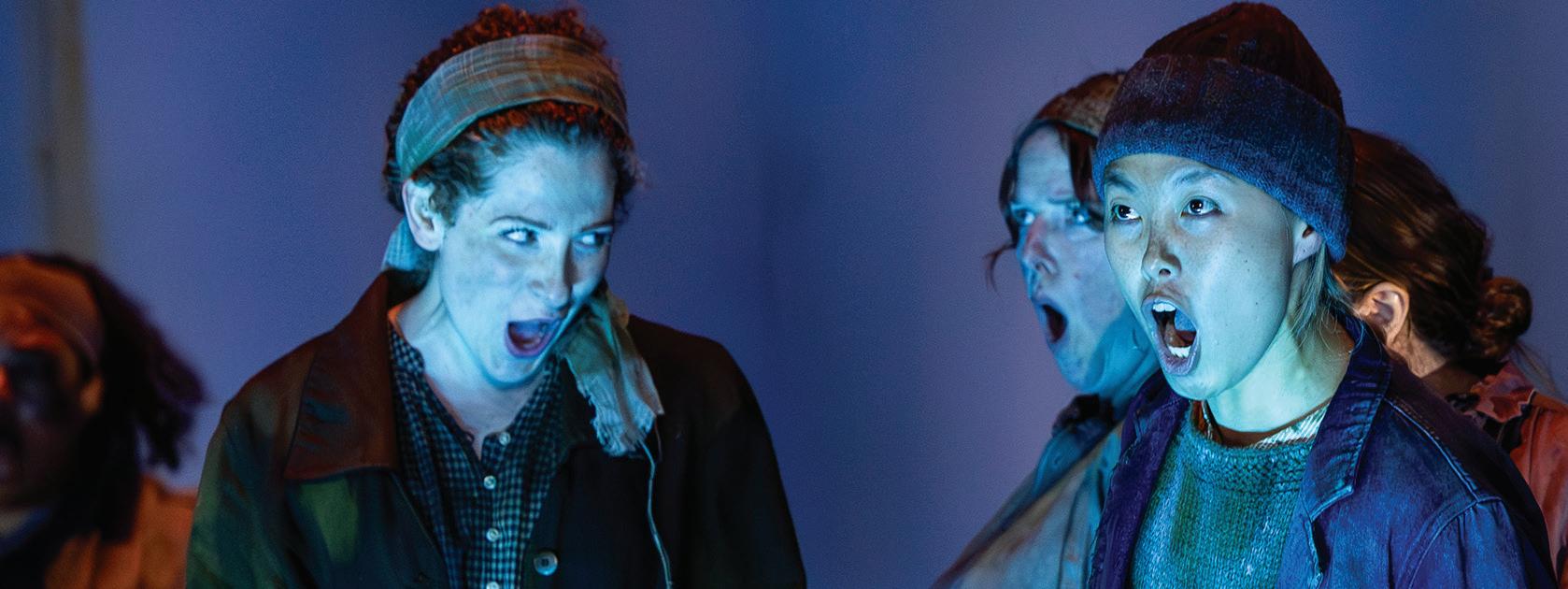
Page 9: BLO Chorus members as the Witches’ Chorus in Macbeth Macbeth photos by Nile Hawver/Nile Scott Studios.
NOVEMBER 12, 2025
SOWA POWER STATION
Performed with the Boston Lyric Opera Orchestra and BLO Jane & Steven Akin Emerging Artists & Alumni
Why We Gather
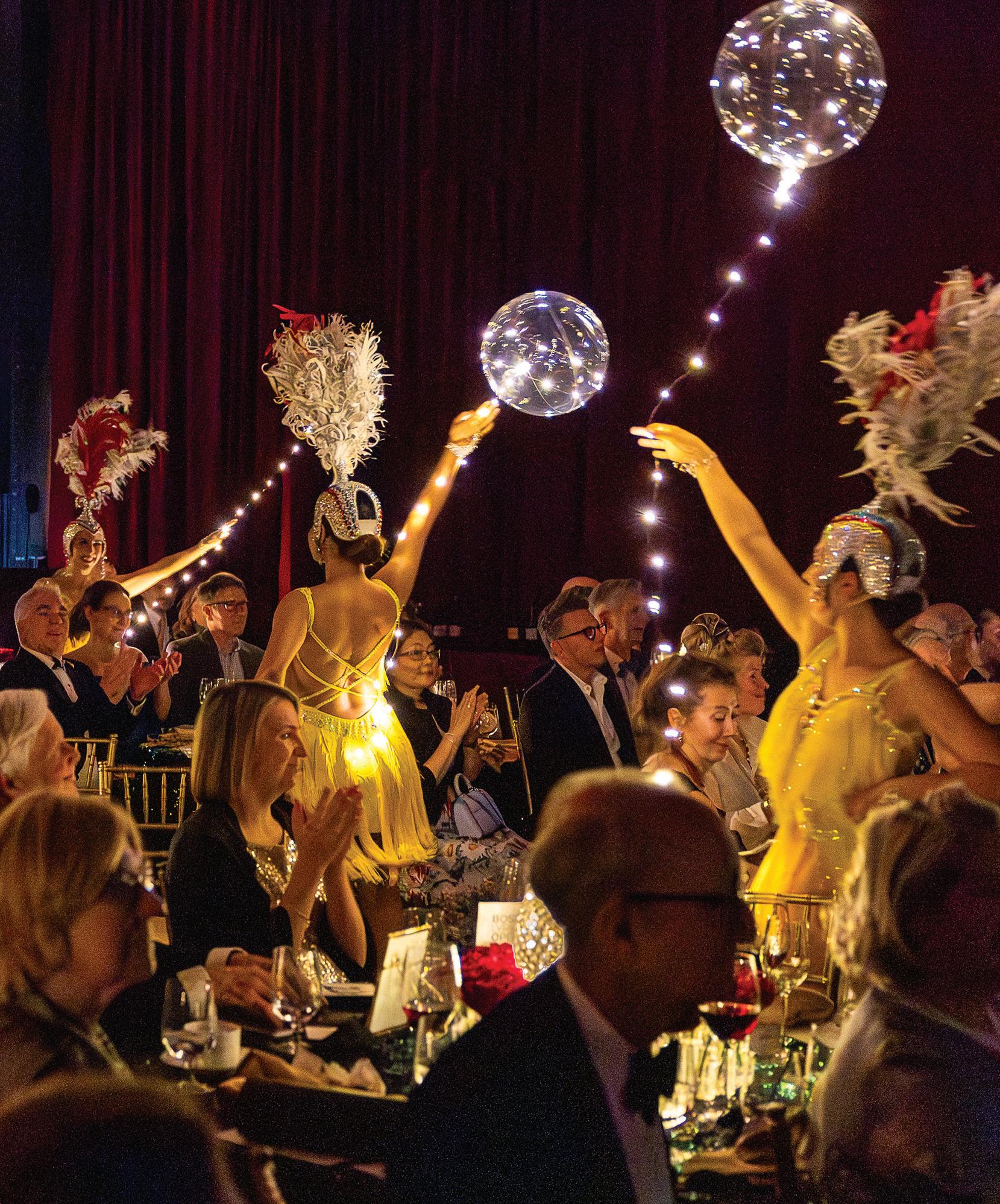

Here we are. Together. Assembled for music, for conversation, for entertainment, to reconnect with familiar faces and to meet new ones. We are here to show support for Boston Lyric Opera. We are here to sustain the art — but also to taste, collectively, a fleeting sense of joy.
It may be tempting to say that we are gathered “for BLO”: to honor an institution, to celebrate its artists, and its achievements. And indeed, art and artists are at the heart of this evening. But perhaps something deeper has drawn us here, something older than any organization: an ancient human need to gather in a festive way, to step outside the routines of daily life and taste — however briefly — the elixir of shared human experience. Tonight, distinctions blur, hierarchies soften, and we rediscover a more essential truth: that we are not simply solitary beings experiencing an event together, but participants in a greater community.
The word “gala” carries this sense of festive belonging. Derived from the French expression “en gala,” meaning “festive attire,” it traces its origins to traditions of joy, celebration, and refined gatherings. Over time, it evolved to signify a lively event distinguished by its elegance, sense of festivity, and the coming together of a community — a meaning closely linked to the word “gallant,” which connotes stylishness and celebratory spirit. Both terms trace back to concepts of goodness and joyful spirit. On the surface, a gala may be known for fine food, lively entertainment, music, speeches, and the recognition of those who shape an organization’s life. But the true power of the event lies in rising above outward appearances. A gala opens a window of time in which ordinary life pauses. In its place emerges laughter, song, conversation, and connection. Anthropologists call this extraordinary condition communitas — a heightened sense of intimacy, equality, and shared humanity that arises when people celebrate together.
This sense of communitas matters profoundly, especially because human beings — myself included — are also skilled at turning inward when life becomes complicated. In response to hardship or sorrow, I often find myself withdrawing from the world, erecting internal barricades and standing behind emotional walls in search of safety. Compartmentalizing my feelings and seeking solitude can feel protective
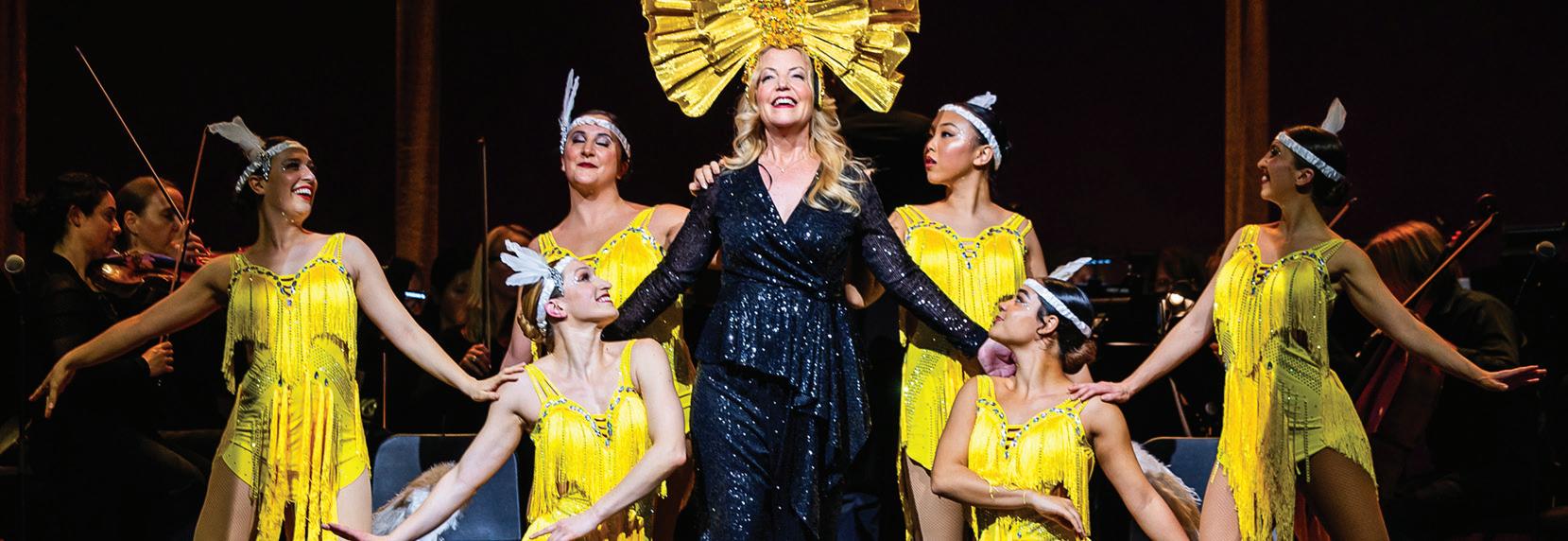
“... I understand how easily one can feel alone simply by turning away, and how connection is restored in an instant by the decision to face the light.”
at first, but with each recurrence of disappointment or pain, the temptation grows to retreat even further, shutting others out and reinforcing my own isolation. What began as a strategy to shield myself soon hardens into a kind of prison, where comfort slips away and loneliness deepens. Yet, within this pattern of retreat, I notice a flicker of longing, a quiet hope for connection that persists beneath the surface, reminding me that this protective distance comes at a cost. Beneath my instinct to stay guarded lies the uneasy truth that separation is ultimately unsustainable. I sense, alongside my pain, a wellspring of vitality and an enduring urge to return to the world and reclaim my place within it. This universal tension, between isolation and the desire for togetherness, reveals why the experience of communitas is so essential. Deep within, I know that alongside my pain there is also abundant vitality, an enduring urge to rejoin the world and reclaim connection.
What rescues us from isolation is wonder. More than a fleeting mood, it is a generative force that dissolves barriers and draws us into shared experience. This power of wonder animates communitas, transforming differences into common joy and allowing us to participate in something greater than ourselves. Festivals, art, and collective storytelling all nourish this capacity for wonder, drawing us back into the circle of life we long to join.
Storytelling, in particular, deepens this movement toward connection. Neuroscience shows that when we immerse ourselves in fiction — whether on a stage, on a page, or around a table — our brains respond as if the story were happening to us. We feel empathy, expand perspective, and grow emotionally. Stories remind us of our capacity to develop and change; they gently suggest that our habits, defenses, and limitations need not define us. They invite playfulness, laughter, and release. This embodied experience of story makes openness possible, keeping us tender, alive, and receptive to transformation.
This cultivated openness sets the stage for metanoia, a meaningful transformation born out of genuine engagement and curiosity, rather than regret or sorrow. In Greek, metanoia refers to a conscious decision to change one’s mind or heart, setting it apart from repentance, which is shaped by feelings of guilt or grief. This form of change involves turning towards new possibilities, adopting fresh perspectives, and allowing for personal growth. Unlike merely seeking to escape past mistakes, metanoia is about embracing a new way of living with intention and openness. Sustained wonder, especially when nurtured by stories and honest reflection, makes this profound transformation possible; and in this way, metanoia becomes not just desirable but truly attainable. Imagine for a moment that we are standing together, side by side, with others, forming a circle in the midst of a vast darkness. At the very center of this circle, a bright light burns steadily, illuminating the space — yet, unlike you, I am standing with my back to the light. My gaze is fixed outward, facing only the surrounding darkness. In this position, I am like Ebenezer Scrooge in Charles Dickens’ A Christmas Carol, turned away from the glow at the center, unaware of the shared faces, warmth, and connection that the light so generously illuminates. All that I perceive is my own silhouette projected in front of me, my shadow stretched endlessly into the night. The radiance behind me is invisible. I cannot see the light itself, nor can I see you or anyone else who shares this circle. I am cut off, utterly alone with my own shadow, unable to perceive our connection in the darkness.
But now, picture what happens when I muster the courage to turn around. As I shift and face the center, the darkness recedes. My shadow falls away behind me, and suddenly I am bathed in the same warm light that reaches all of us. I see you clearly along with everyone else gathered in this circle. Illuminated together, we are revealed as companions, bound not just by proximity, but by the shared warmth and brightness that enfolds us all. In this moment, I understand how easily one can feel alone simply by turning away, and how connection is restored in an instant by the decision to face the light.
Making the decision to turn around, to turn away from darkness, to face the light: this is metanoia
William James used the word metanoia to describe a process of fundamental change in the human personality; an essential and stable change in an individual’s life-orientation. Carl Jung also employed metanoia to depict a spontaneous attempt of the psyche to heal itself of unbearable conflict by melting down and then being reborn in a more adaptive form. In transactional analysis, metanoia is used to illustrate the experience of abandoning an old-scripted self, or false self, for a more open one: a process which may be marked by a mixture of intensity, despair, self-surrender, and an encounter with the inner void.
And so, a gala is far more than an elegant evening. It becomes a living metaphor for the human condition, a ritual of turning, both individually and together. In the shared experience of music, conversation, and celebration, we rediscover that life is not sustained by survival alone but by beauty, meaning, and connection. The gathering reminds us that art is not peripheral to existence, but rather woven into its essence, a compass pointing us outward to one another and inward to our deepest capacities for imagination and renewal.
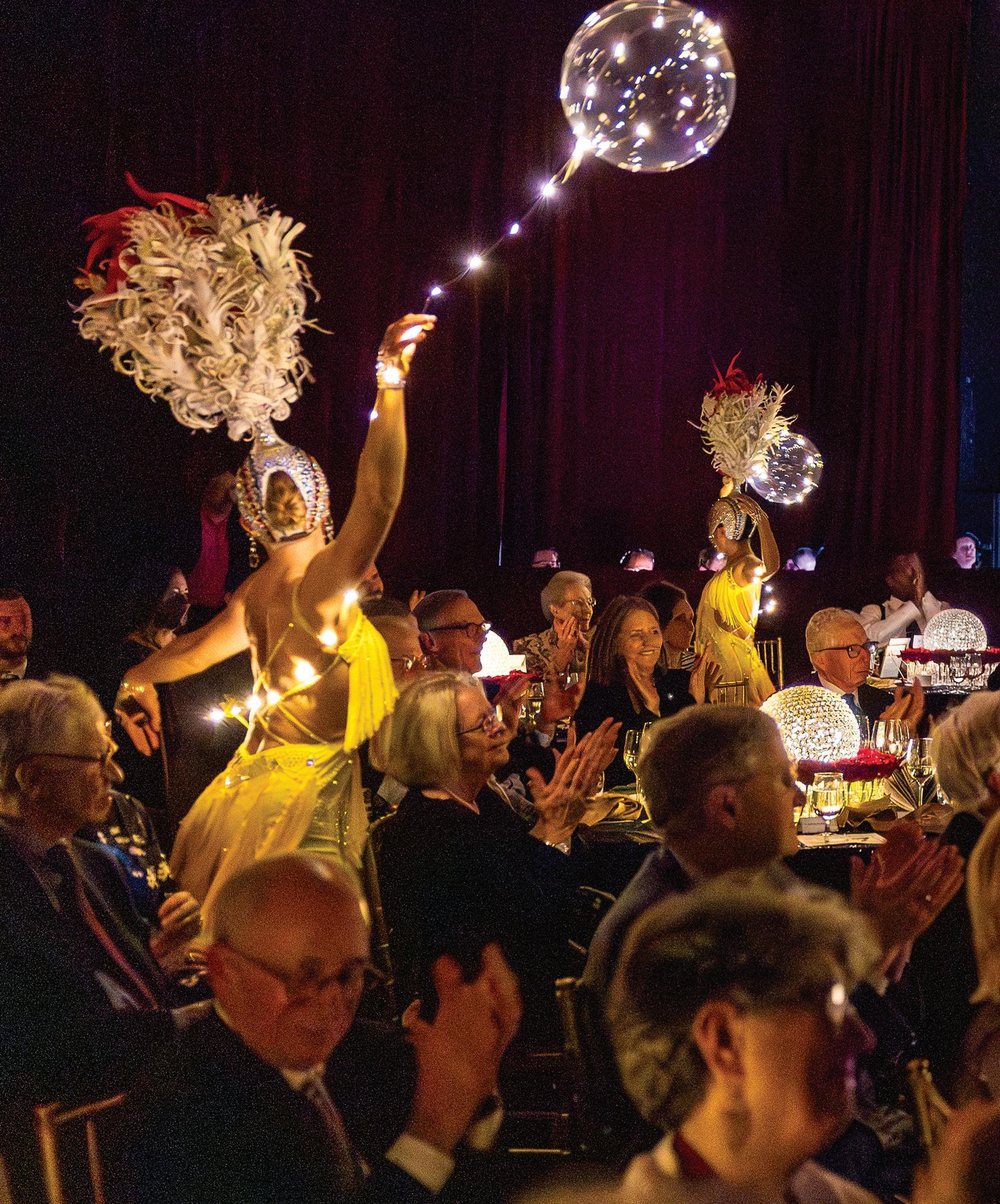
Pages 10/11: Dancers interact with attendees at BLO’s Opera Gala 2025.
Page 12: Angela Yam, a third-year BLO Jane & Steven Akin Emerging Artist at BLO’s Opera Gala 2025.
Page 13: Lise Lindström (c) leads a dramatic moment in Ride of the Valkyries!
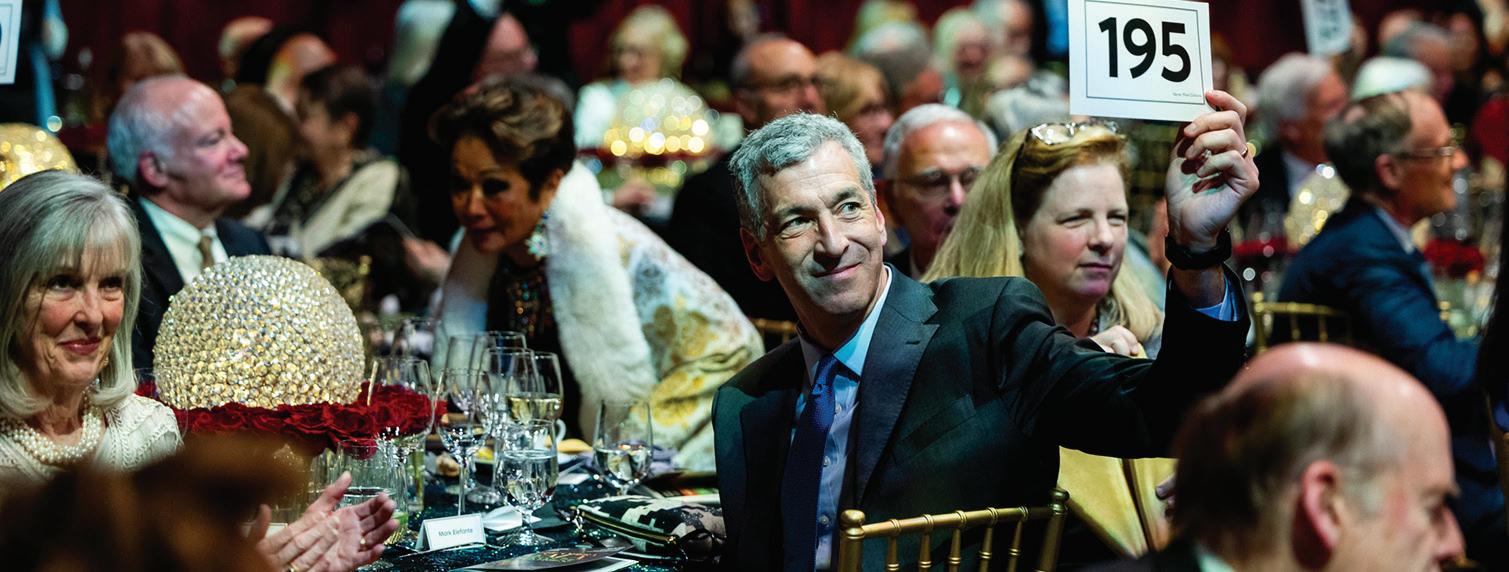
Page 14: BLO Gala attendees bid during the fundraising portion of the evening.
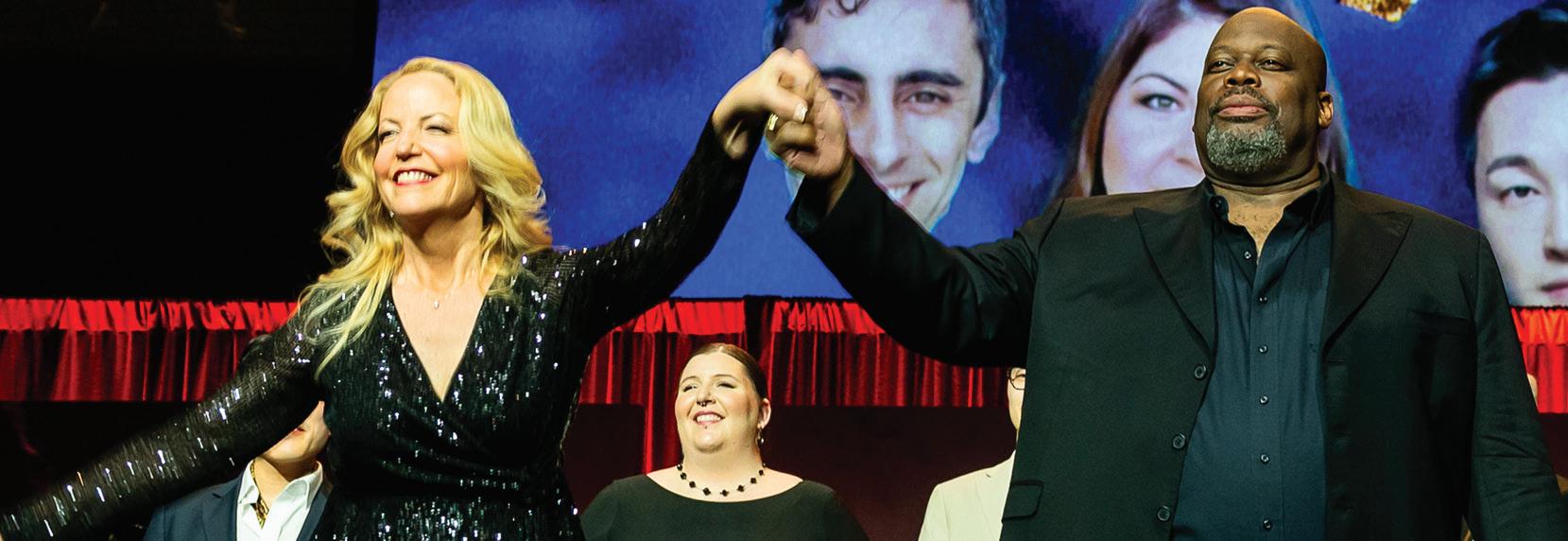
Page 15: (L-r) Lise Lindström and Morris Robinson in Ride of the Valkyries!
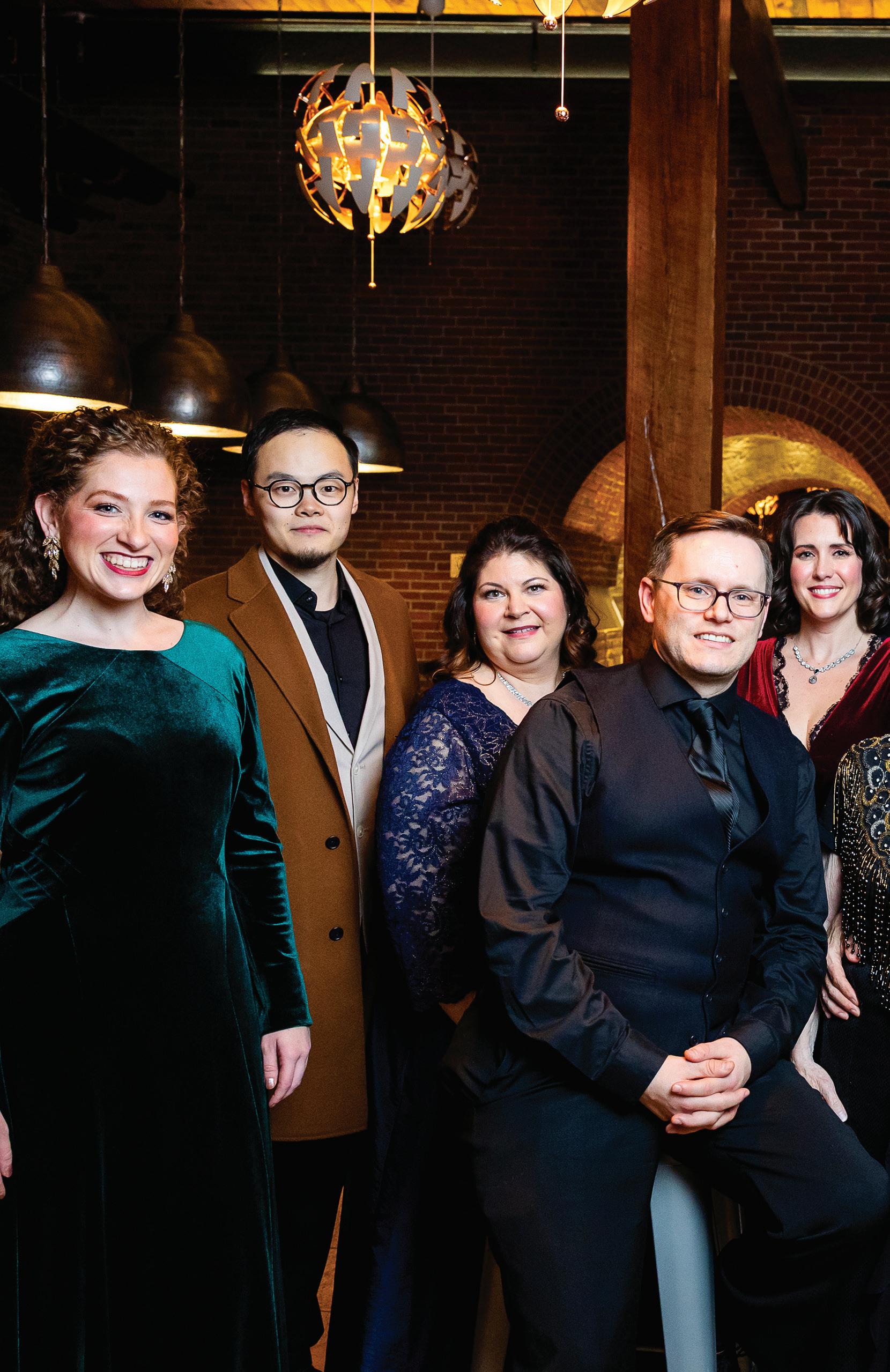
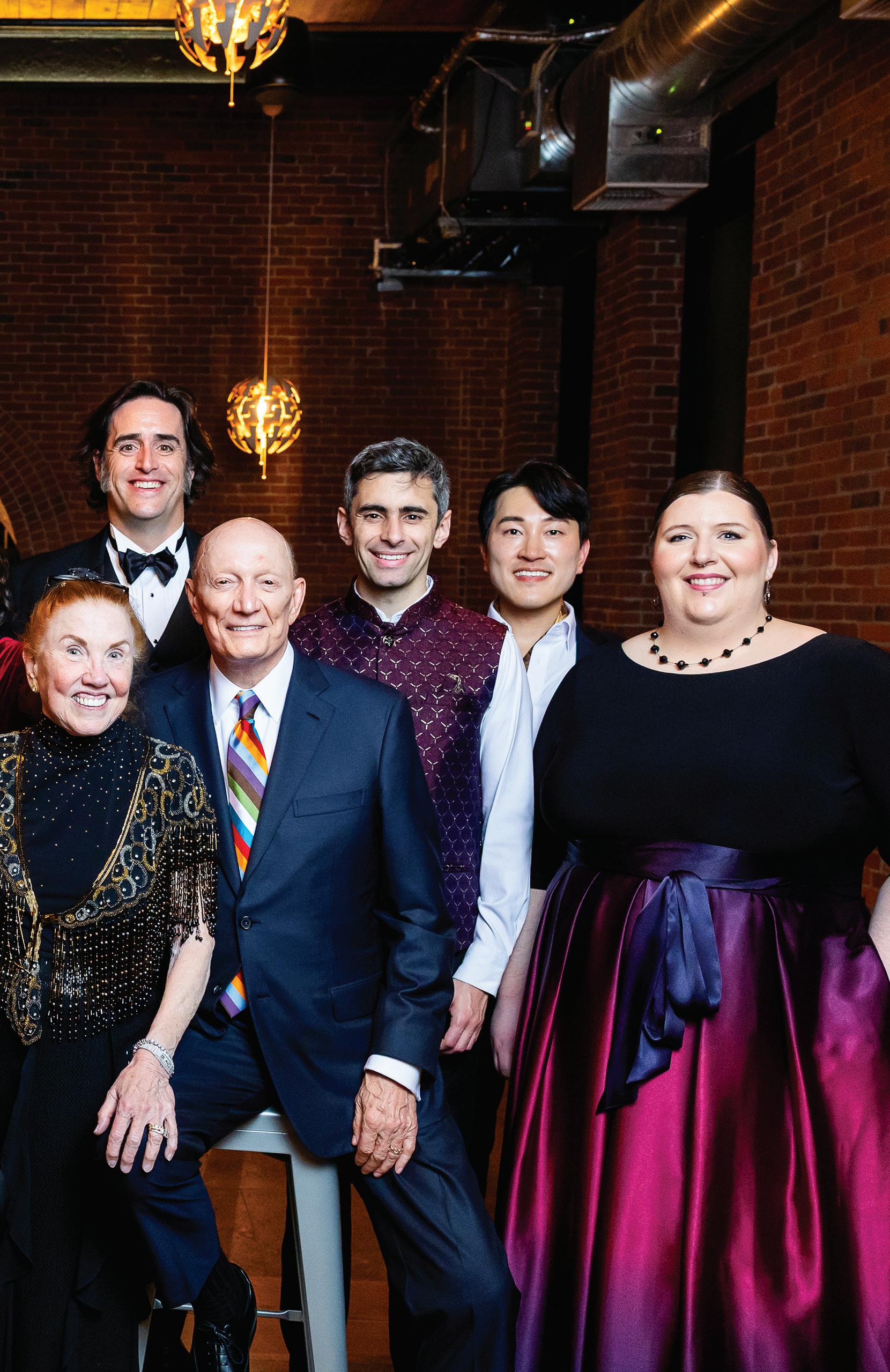
Pages 16/17: Jane and Steven Akin (c) with artists and alumni of the Jane & Steven Akin Emerging Artists Initiative. (L-r) Josie Larsen, Zizhao Wang, Michelle Trainor, Brett Hodgdon (currently BLO’s Head of Music & Chorus Director), Chelsea Basler, Neil Ferreira, Omar Najmi, Junhan Choi, and Mary Kray.
Ride of the Valkyries! photos by Nile Hawver/Nile Scott Studios.
JANUARY 8 - 10, 2026
SYMPHONY HALL
Presented by the Boston Symphony Orchestra in collaboration with Boston Lyric Opera
Performed with the Boston Lyric Opera Chorus and the Tanglewood Festival Chorus
Where Do I Leave Off and Where Do You Begin?
American culture mythologizes the solitary individual: the boxer standing alone in the ring anticipating the match, the cowboy riding along a barren ridge, the singular genius who seems to “do it all” through sheer willpower. These stories are powerful but incomplete. Humans have evolved as collaborators and co-thinkers, and our capacity for friendship, imitation, and shared problem-solving has been as decisive for our survival as any act of individual heroism. “Who I am” is always entangled with “who we are.”
The opera Vanessa sits precisely at this boundary between selves. It arose from the intimate artistic and romantic partnership of Samuel Barber and Gian Carlo Menotti, two composers whose lives and imaginations became deeply interlaced over more than four decades. Completed in 1957, Vanessa premiered at The Metropolitan Opera in January 1958, with a production directed by Menotti. It was an immediate critical and public success, earning Barber the Pulitzer Prize for Music that year.
Barber and Menotti met as teenagers at the Curtis Institute in Philadelphia, where Menotti — newly arrived from Italy and still struggling with English — found in Barber a patient guide to American life. What began as a practical friendship evolved into something far deeper: a romantic partnership that would define their personal and creative lives. In 1943, they purchased Capricorn, a house in upstate New York, which became both a domestic sanctuary and a spatial frame for their entwined lives, allowing each composer to maintain his own creative space while also sustaining a shared gathering place for friends. For decades, the world knew the two men simply as colleagues and housemates, although those in their intimate circle understood the true nature of their bond. They sharpened and enriched one another’s tastes in art, music, and literature, and their social world intertwined almost completely. In their collaboration on Vanessa, the question “where do I leave off and where do you begin?” became not only emotional, but also structural. Whose voice is this, whose desire, whose fantasy?
For years, Barber had hunted for a suitable subject for an opera, but nothing matched the emotional and dramatic scope he imagined. The turning point came when Menotti offered to write an entirely original libretto, freeing them from the constraints of a specific source. They steeped Vanessa in a deliberately gothic world inspired by the
“Humans have evolved as collaborators and co-thinkers, and our capacity for friendship, imitation, and shared problem-solving has been as decisive for our survival as any act of individual heroism.”
atmosphere of Isak Dinesen’s Seven Gothic Tales without directly borrowing from plot specifics. Menotti described the opera as an exploration of a timeless human dilemma: whether to remain forever loyal to an impossible dream of perfect love, or to risk the vulnerability of accepting a real, flawed, and attainable happiness. He set this dilemma in a remote, aristocratic country house in an unspecified northern European land, a snowbound estate of shuttered rooms, covered mirrors, and suffocating quiet, where the house itself feels like a projection of the characters’ frozen hopes and distorted self-images. Barber’s music deepens Menotti’s gothic world. By choosing expansive melodies, clear tonal harmony, and Wagnerian-style motifs at a moment when modernism was heading elsewhere, he doubled down on emotional immediacy rather than stylistic fashion. This language, often described in queer musicological writing as part of Barber’s intimate, “domestic” romanticism, let him translate Menotti’s dark fairy tale into a richly layered psychological soundscape that feels at once close to the heart and operatically large.
Barber and Menotti’s collaboration, though rooted in deep trust and affection, was somewhat tentative at the start: because both were established composers with individual styles and ambitions, each approached the partnership cautiously, striving to honor their distinct creative voices while learning how to synchronize their talents without overshadowing one another. Their temperaments were strikingly different: Barber more introverted, serious, and “northern” in affect; Menotti more extroverted, theatrical, and “southern,” a polarity that later commentators hear echoed in the contrast between Vanessa’s dreamy idealism and Erika’s more grounded, skeptical intelligence. Menotti himself, speaking after Barber’s death, linked the opera’s theme of “eternal love that never changes” to Barber’s own longing for an ideal, unshakeable love, suggesting that Vanessa is partly a coded exploration of what they desired and struggled to sustain together.
Both artists were drawn to themes of waiting, idealized love, and the haunting of the present by the past, and Vanessa allowed them to crystallize that shared sensibility in a concentrated narrative space. The opera’s emotional core of longing, secrecy, renewal, and vulnerability mirrors the depth and nuance of Barber and Menotti’s own relationship. Commentators point out that the opera’s obsession with ideal love, fear of disillusionment, and the notion of “home” as both refuge and prison closely echo dynamics in Barber and Menotti’s own evolving relationship at the time. Their romantic relationship formally ended in 1970, but the friendship endured; Menotti was at Barber’s side when he died in 1981. Even after the romantic tie was severed, their respect, loyalty, and affection towards each other continued to shape both their personal lives and musical legacies. The line between “me” and “you” in their lives, as in their art, shifted over time. Vanessa stands as a record of that complex interdependence: an opera in which music and text, fantasy and biography, self and other are so tightly braided that it becomes hard to say where either man leaves off and the other begins.
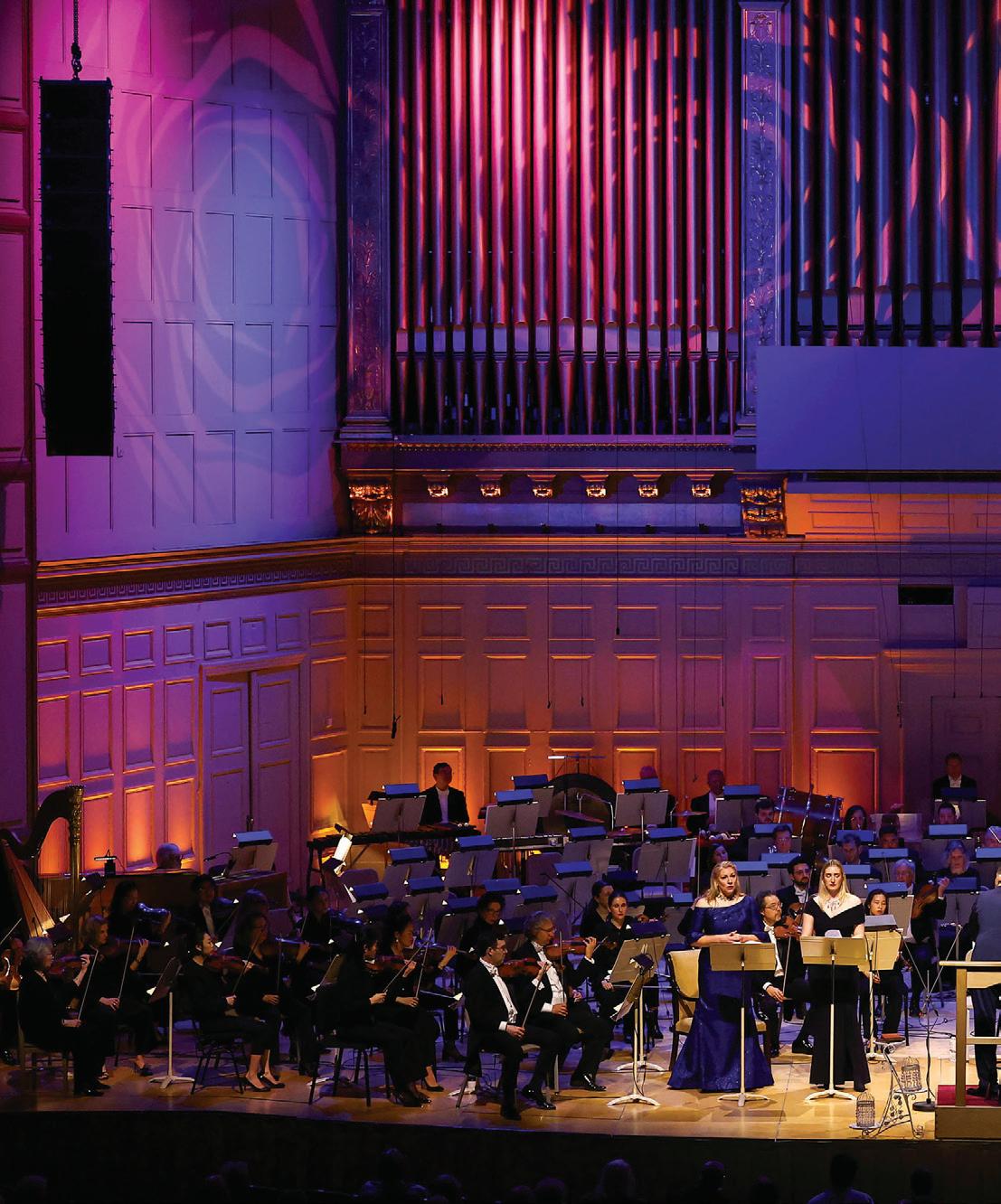
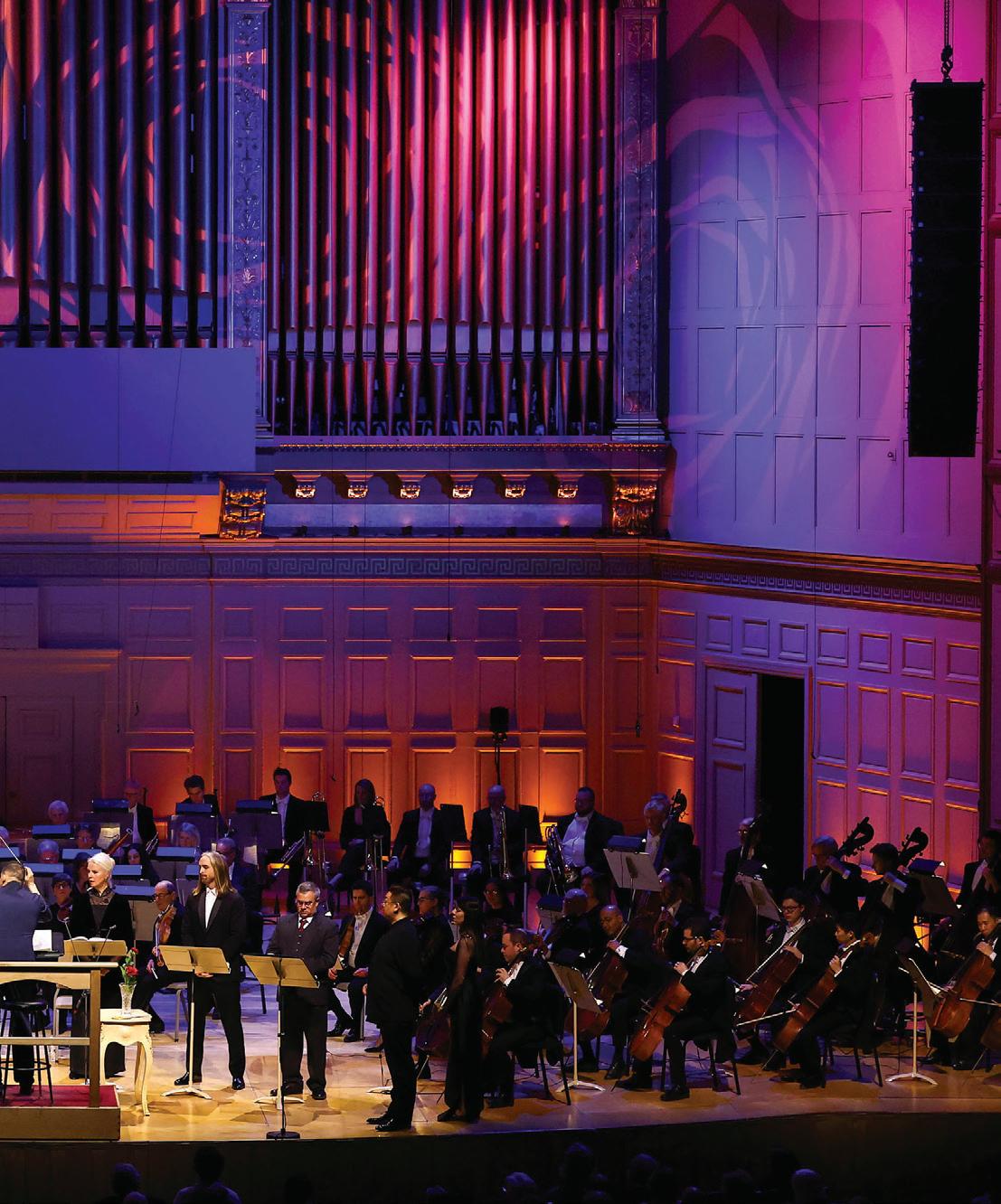
Pages 18/19: The Boston Symphony Orchestra and cast of Vanessa
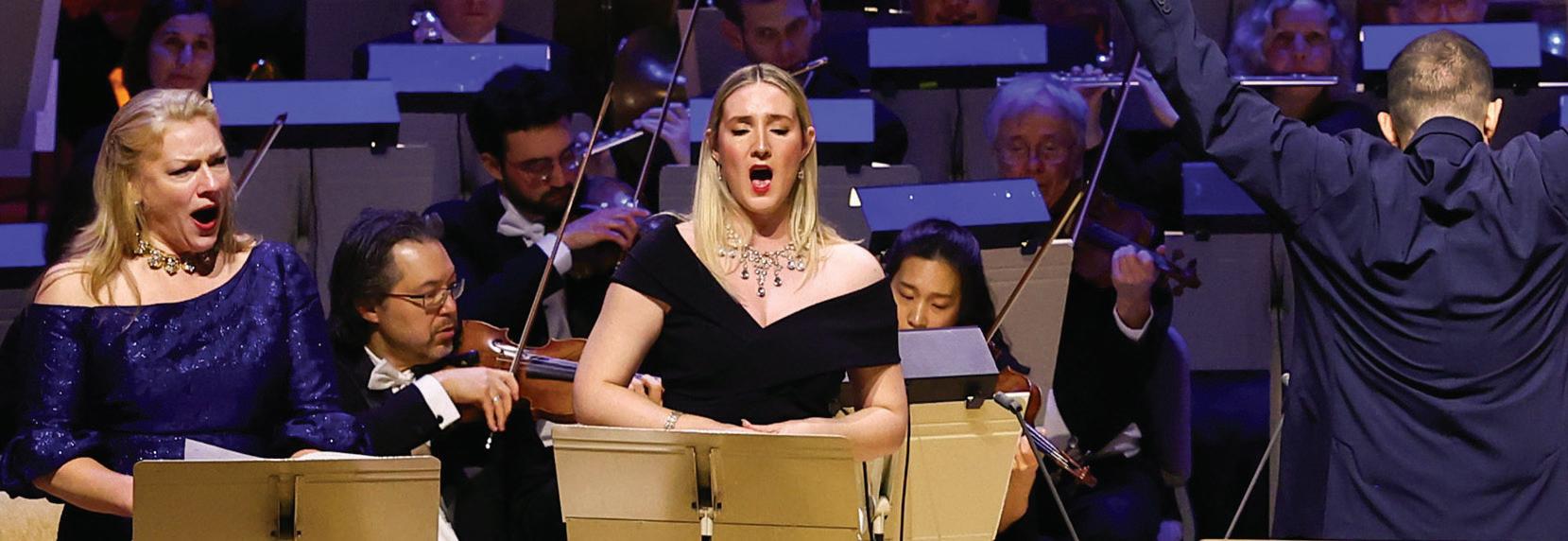
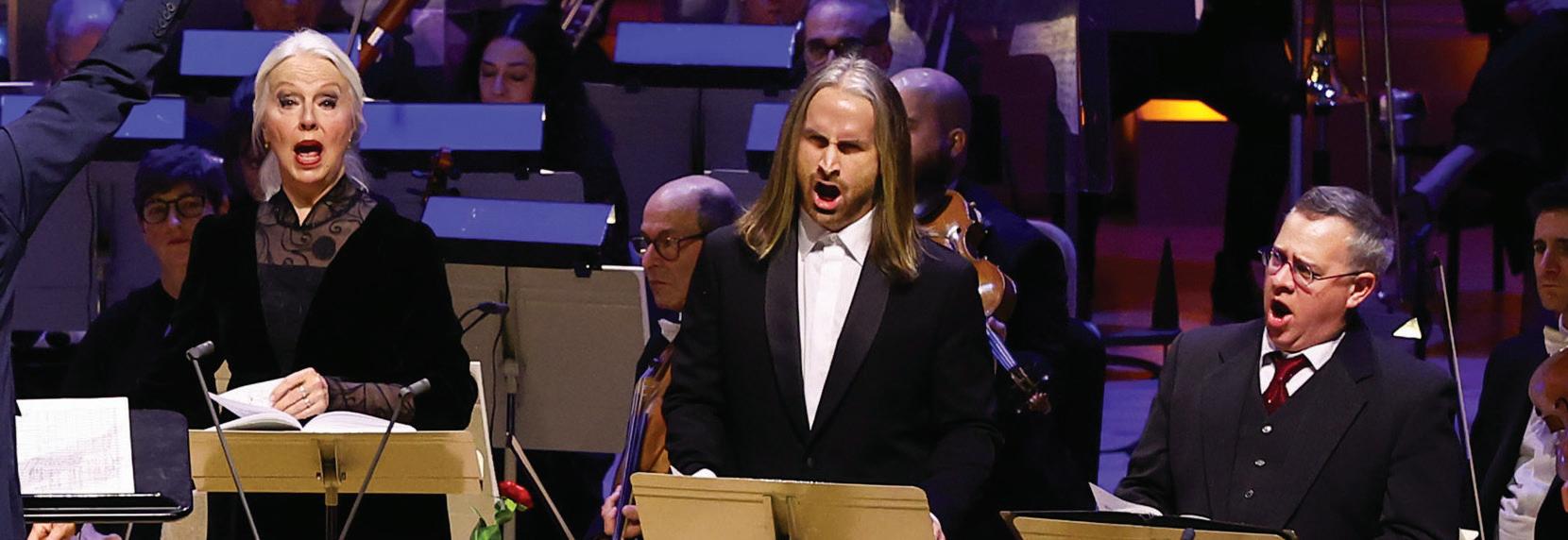
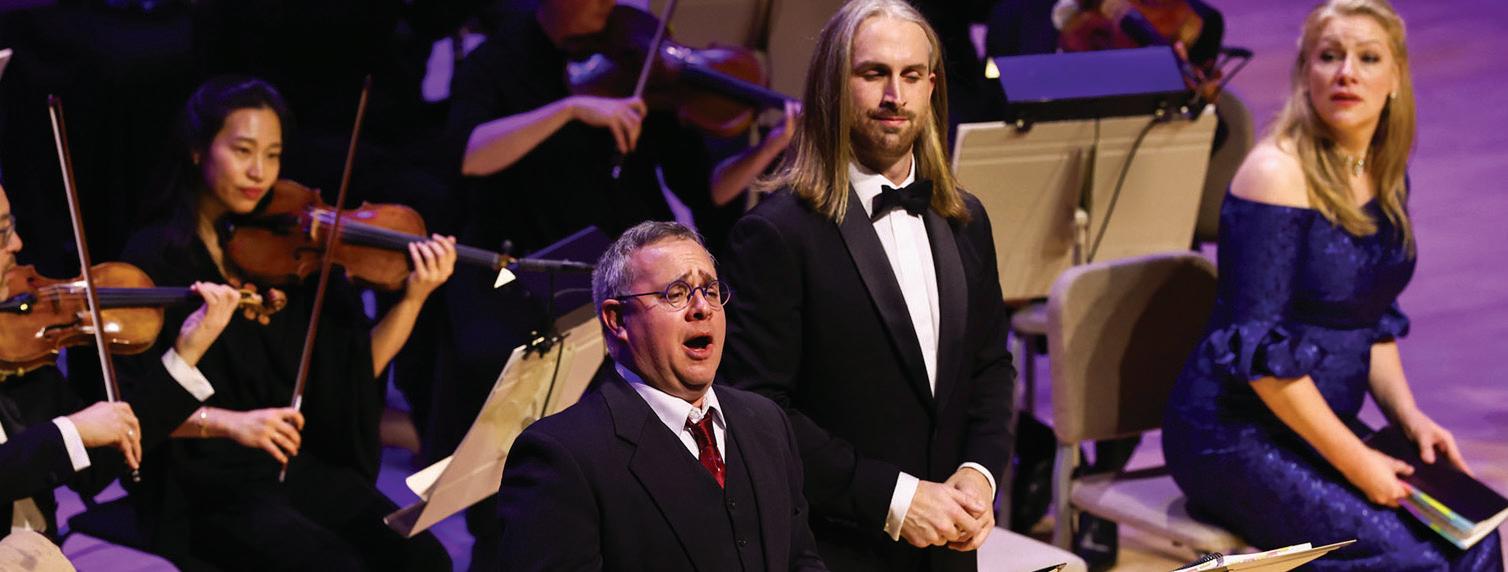
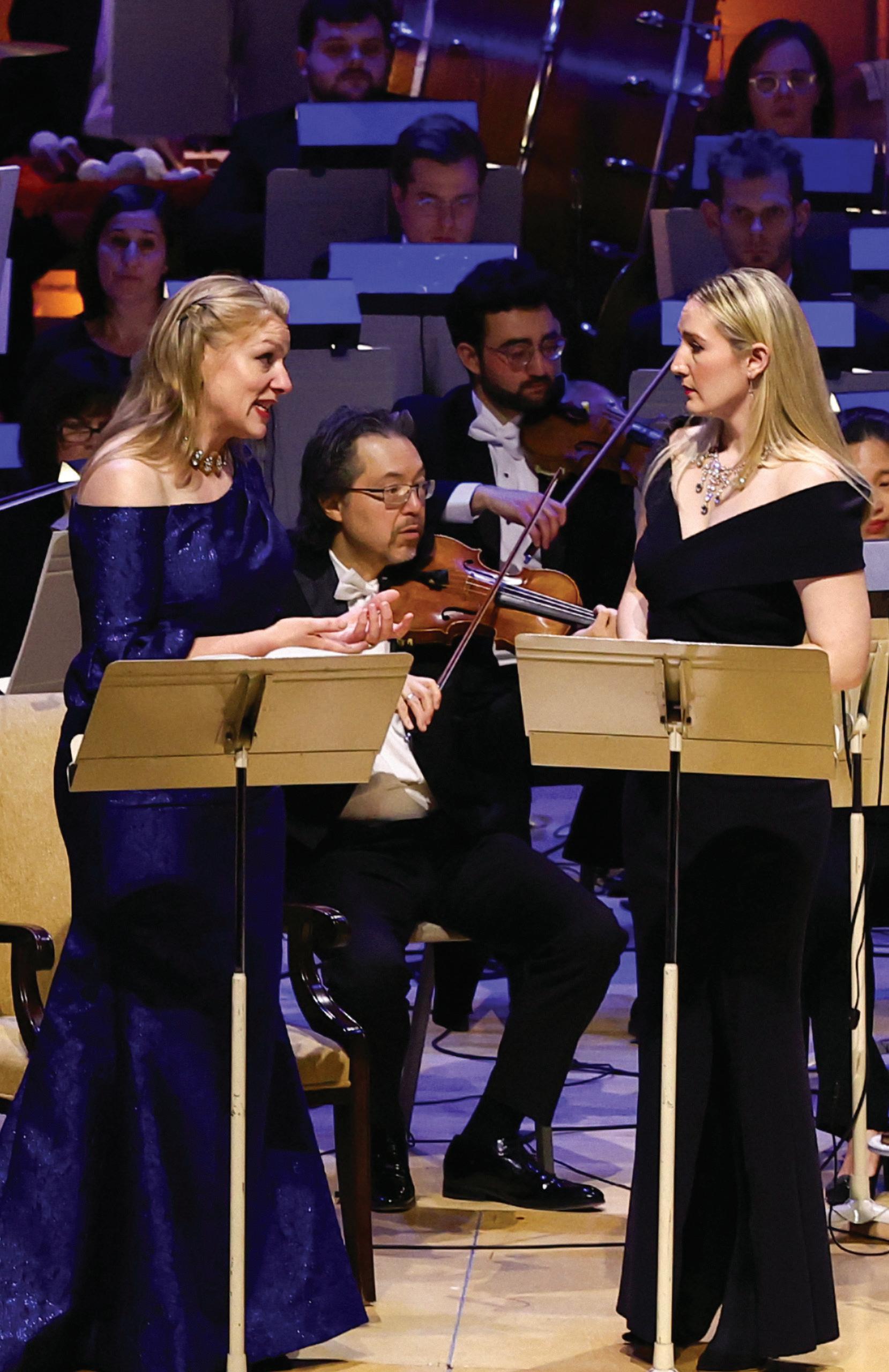
Pages 20/21: Andris Nelsons conducts, from left, Jennifer Holloway (Vanessa), Samantha Hankey (Erika), Anne Sofie von Otter (The Old Baroness), Ganson Salmon (Anatol), and Patrick Carfizzi (The Old Doctor).
Page 22: (L-r) Patrick Carfizzi, Ganson Salmon, and Jennifer Holloway.
Page 23: (L-r) Jennifer Holloway and Samantha Hankey.
Vanessa photos by Winslow Townson, courtesy of the Boston Symphony Orchestra.
FEBRUARY 10, 2026
SYMPHONY HALL
Presented by Vivo Performing Arts in collaboration with Boston Lyric Opera
Performed with the Budapest Festival Orchestra, Boston Lyric Opera Chorus, and the Boys of the St. Paul’s Choir School
Ibelieve in the great benefits of study. It is one of the reasons that I am a theatre and opera director: every project asks me to step across a threshold and discover a new world from the inside, not as a tourist but as a citizen. Study — of scores, of texts, of people’s biographies — stretches the mind sideways and forwards at once, enlarging the space in which my own thoughts can move. Reading, listening, asking questions: these are the ways I loosen the grip of my own habits and let other realities in.
When Boston Lyric Opera invited me to write about Mahler’s Third Symphony, I realized I would have to begin almost from scratch. I have long loved Mahler — the breadth of his emotion, the way he allows grief and ecstasy to coexist within a single phrase — but this enormous, elusive symphony was never one that I felt I understood; it loomed like a mountain I had admired from a distance but felt too immense to scale. I knew enough to be intimidated. Compared to Mahler’s other works that had carved themselves into me — like the desperate clarity of the Adagietto from the Fifth, or the aching intimacy of the Kindertotenlieder — the Third felt unruly, almost defiant in its length and scope, a work whose grandeur I could sense but whose voice I could not yet hear. And yet, that very resistance sparked my curiosity and became my way in: why did this particular piece hold me at arm’s length, and what might it reveal if I stayed with that question long enough?
At first, I began to research. I read that Mahler conceived the symphony as a kind of cosmic ladder, rising from inanimate nature toward divine love. Each movement seemed to embody a different voice in the world’s unfolding — stones, flowers, animals, humans, angels, God. That idea alone was staggering, and I began to hear the piece less as music and more as evolution made audible. When I finally settled in to listen, the first movement shocked me. It was not polite, not orderly. It barged forward as if the earth itself were waking too fast. The sound was a parade of chaos and swagger, of primordial energy trying to organize itself. I felt as though Mahler were teaching me how the world begins: noisily, without permission. Over time, the mess began to cohere. The animals appeared, sly and rhythmic; voices emerged, tentative and human. The shimmering song of the fourth movement, “O Mensch! Gib Acht” — “O man! Take heed!” — broke through like a lone beam of
“Its melody unfolds like breath returning after exhaustion. It builds and falls again and again, hesitant, as though testing whether love can really endure all that came before.”
light, asking not for awe, but for attention. Then came the riot of children’s voices in the fifth movement, followed by that final, patient Adagio that stretches time until I almost forgot where I was. That last movement is where I finally fell in love. Its melody unfolds like breath returning after exhaustion. It builds and falls again and again, hesitant, as though testing whether love can really endure all that came before. By the end, when everything gathers into that radiant final chord, I found myself suspended, listening not just to Mahler but to my own inner stillness.
Learning to appreciate the Third meant surrendering to its scale. It demanded not comprehension but patience, not tidy analysis but faith. Eventually, I stopped trying to master it and began simply to live inside it, to let its contradictions breathe, to welcome its noise and confusion. Now, when I think of Mahler 3, I no longer see a forbidding monument but a mirror for the world’s untidy pulse: the battle, the tenderness, the searching, and finally, the fragile grace that follows.
When I step into a work I do not yet fully inhabit, I can sense the edges of my personhood tightening in response. It is not that I cling to the familiar — I have built a life on seeking out the unknown — but there is always a subtle pull back toward what I already do and know well, where my instincts are quickest and my judgement feels assured. The discipline of full immersion insists on something else; it asks me to sit still inside my discomfort and remain curious. Over time, this practice has made me less interested in defending what I already think and more interested in discovering what I have not yet imagined. Study becomes a quiet but radical act of decentering myself, recognizing that my perspective is only one angle among many. In this sense, study is not an escape from the world, but a way of entering it more fully. Each time I commit to learning something that initially resists me — a difficult symphony, an unfamiliar philosophy, a culture or history not my own — I become a little less confined by my first impressions. I feel more porous, more in conversa-

tion with the time and place I inhabit. Through this ongoing act of inquiry, my life becomes less about circling the small island of what I already know and more about sailing — sometimes clumsily — into the wider complicated sea of everything and everyone else. The world is a library, and Mahler’s Third became, for me, one of its more demanding but deeply rewarding volumes.
Mahler 3 taught me this in an especially vivid way. The symphony’s vastness confronts me with a scale far beyond my daily concerns. Listening closely forced me to widen my frame. I could feel the piece slowly re-arranging my inner landscape, making room for perspectives I did not know how to hold before. For me, learning to appreciate this symphony meant giving myself over to its sheer size, its rough edges, and its fearless attempt to contain so much human experience at once. It came to feel as though I were walking beside a vast, unsettled mind, watching it search — painfully and beautifully — toward love. The final chord hangs in the air a moment longer than seems possible. In that suspension, and in countless other small details, I found my own path through Mahler’s great, restless world. In this way, Mahler’s music seems to be a promise rather than a polite concert experience, an outsized encounter with the whole unruly spectrum of feeling alive.
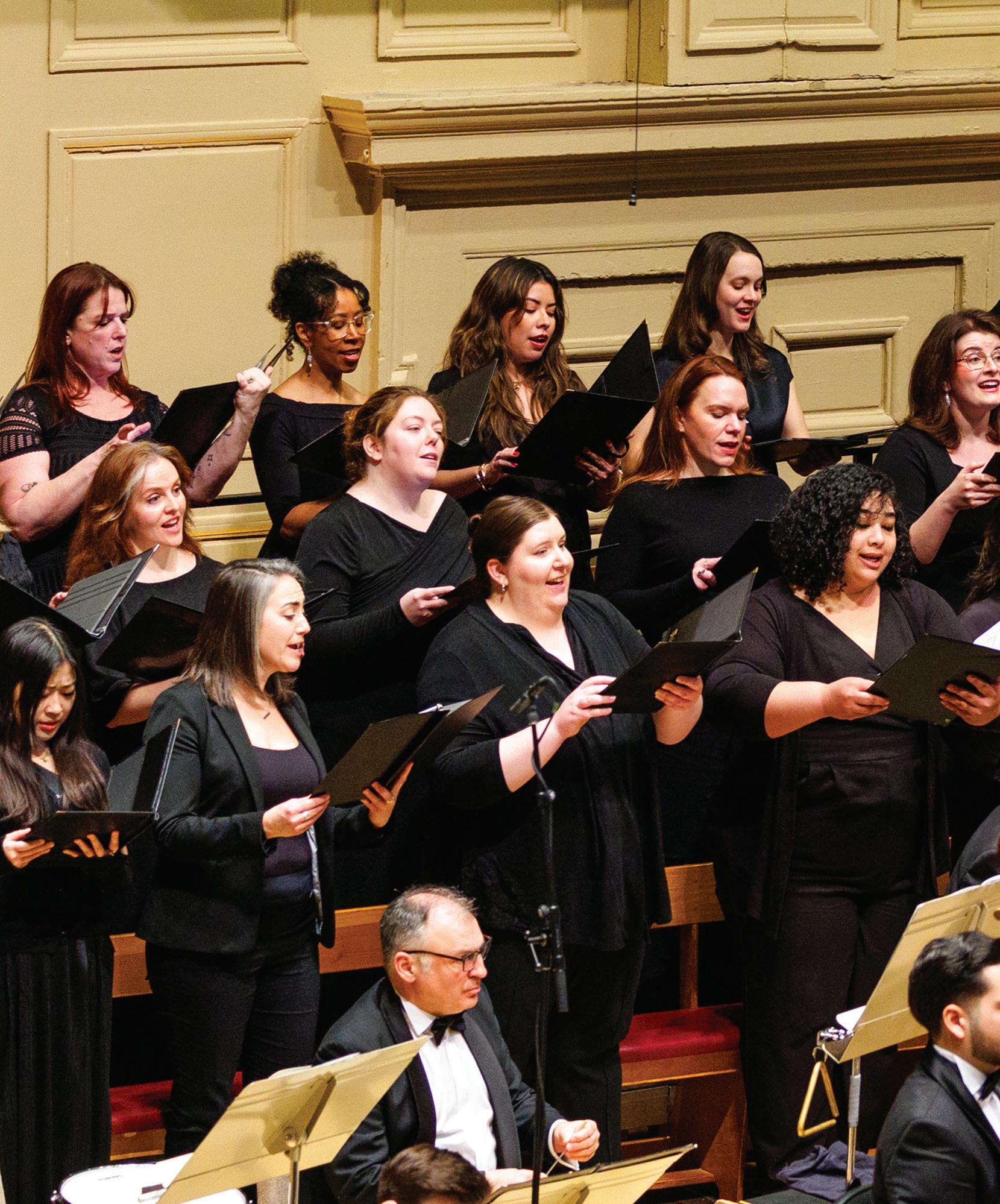
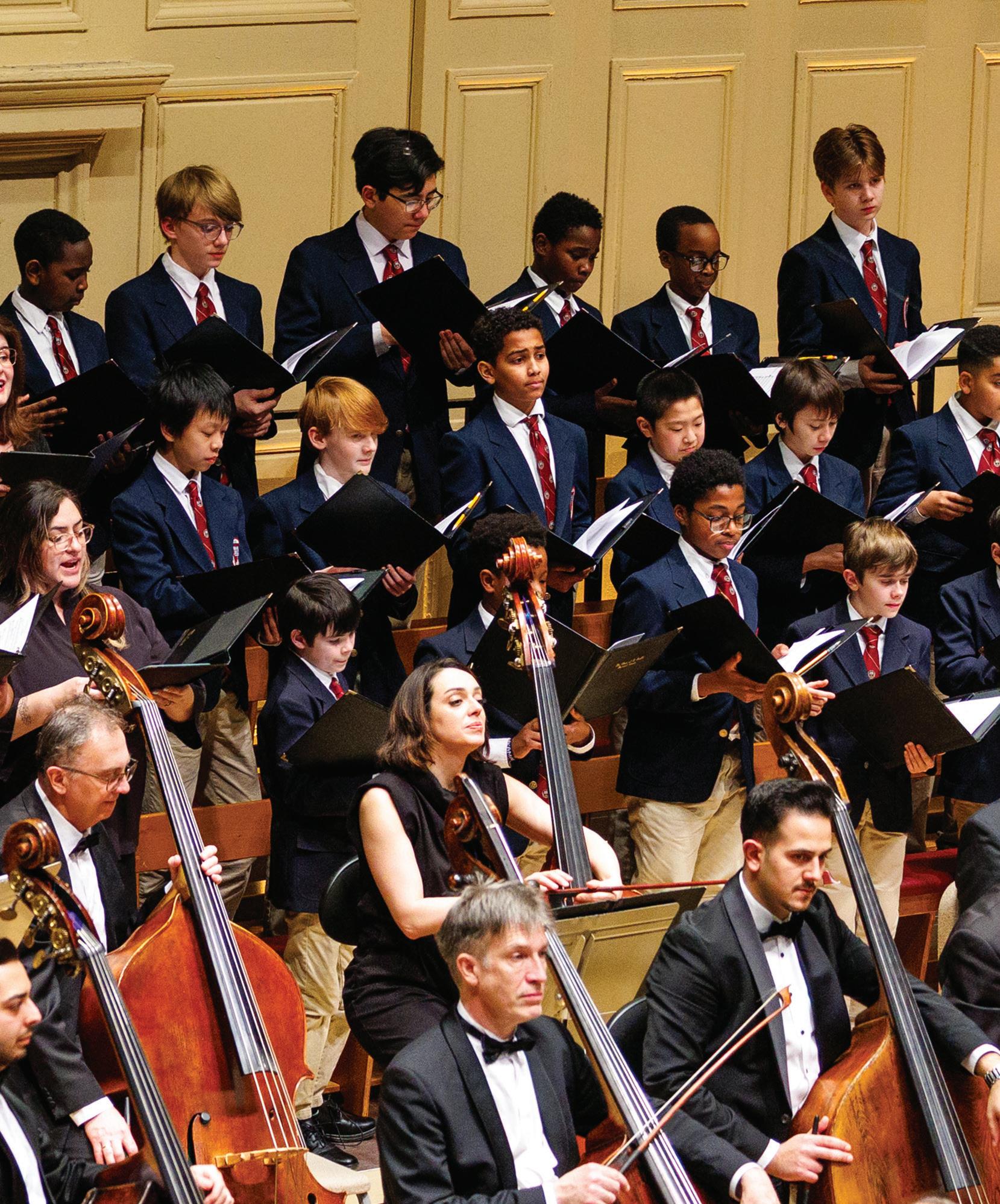
Pages 24/25: Members of the BLO Chorus join the Budapest Festival Orchestra and singers from St. Paul’s Choir School for Mahler’s Symphony No. 3
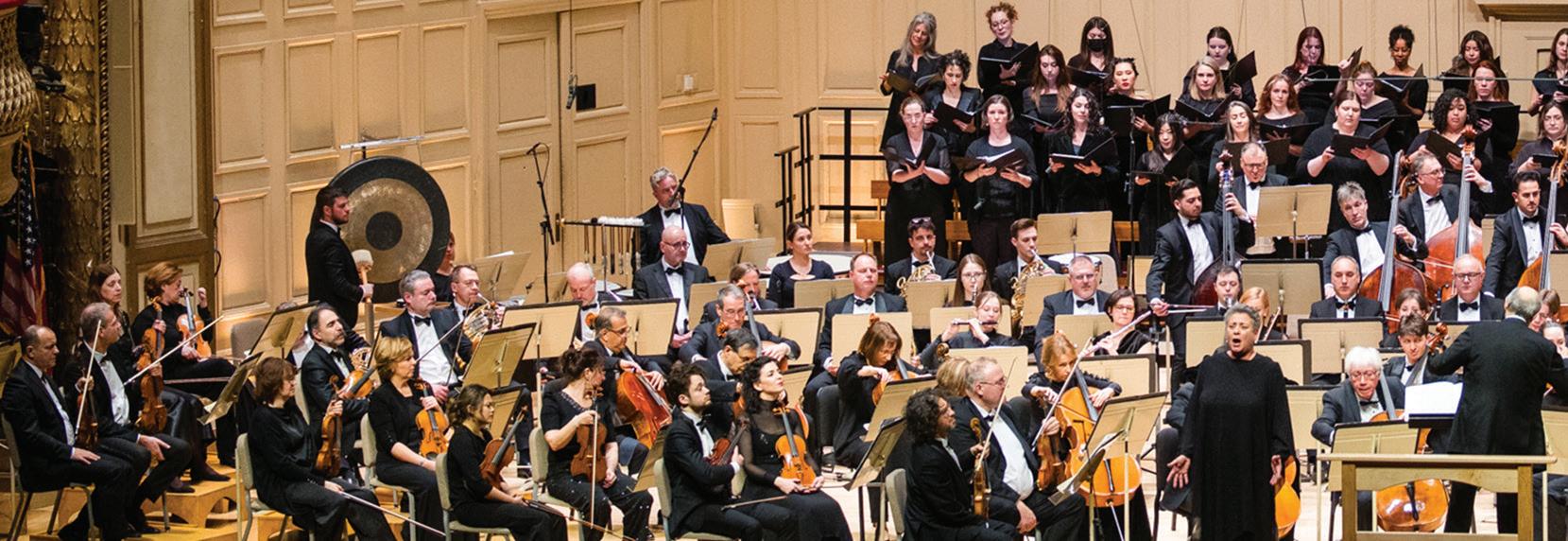
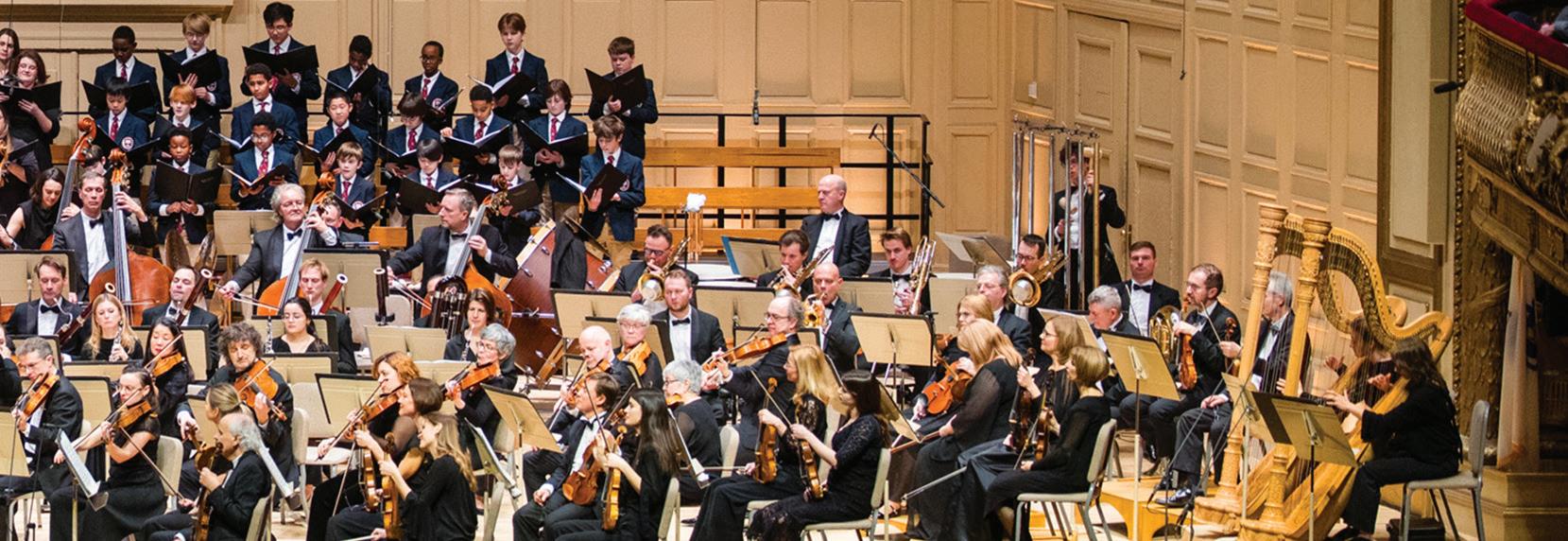
Pages 26/27: The Budapest Festival Orchestra, BLO Chorus, Boys of the St. Paul’s Choir School, and mezzo-soprano Gerhild Romberger perform Mahler’s Symphony No. 3 at Symphony Hall.
Page 28: Members of the BLO Chorus.
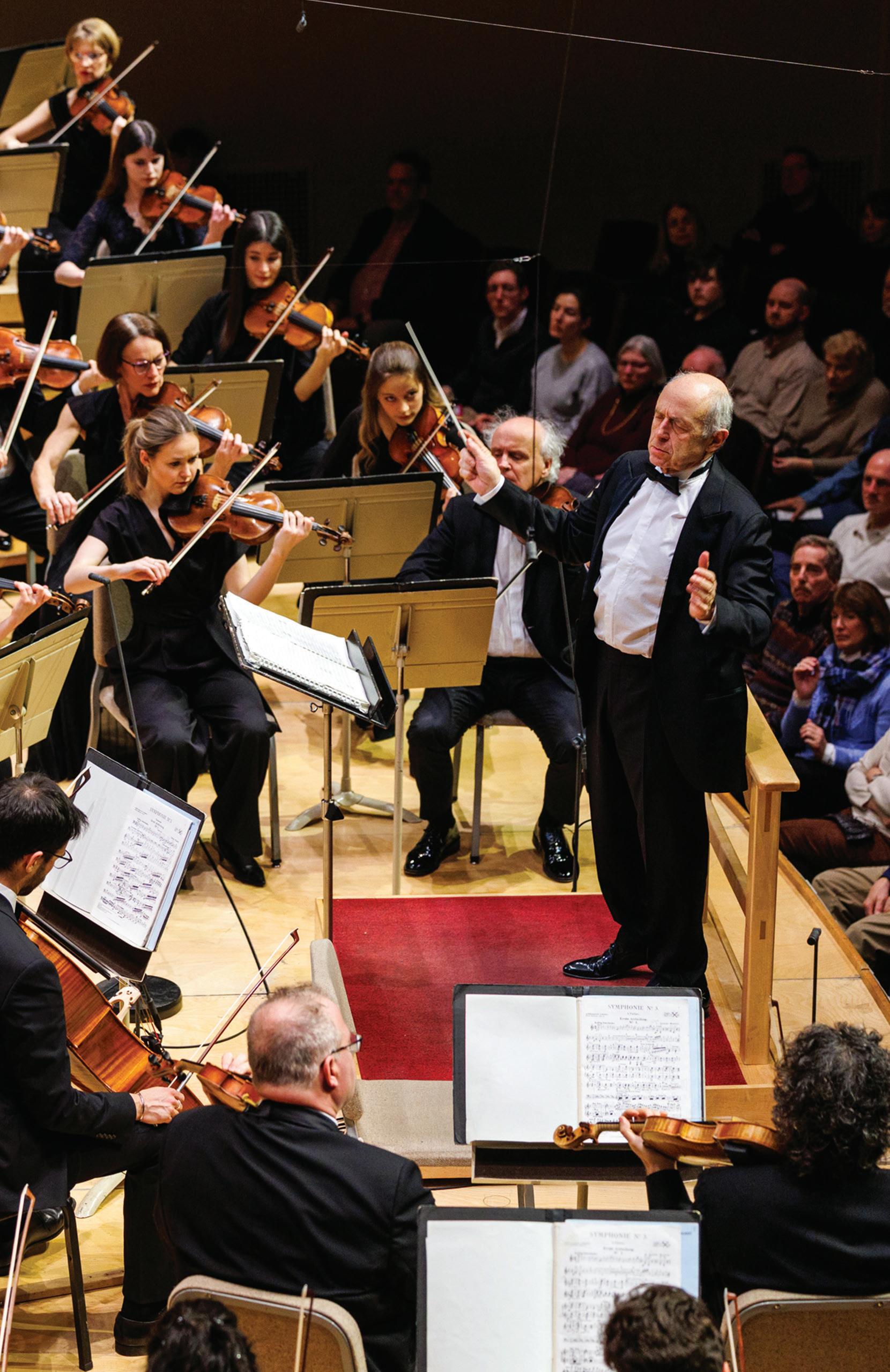
Page 29: Iván Fischer conducts the Budapest Festival Orchestra in Mahler’s Symphony No. 3
Mahler Symphony No. 3 photos by Robert Torres, courtesy of Vivo Performing Arts.
MARCH 20 - 29, 2026
OPERA + COMMUNITY STUDIOS
Performed with the Boston Lyric Opera Orchestra
SONG OF THE EARTH (DAS LIED VON DER ERDE)
A Room that Remembers
Imagine that you are standing at a window, looking out. You are in the very place where you once stood a decade ago, perhaps longer. The light falls in a similar pattern as it did then — the same window, the same room, the same view — but you have changed. Is it possible that more than one version of you stands here, layered like negatives of a photograph placed one on top of another? Perhaps your younger self has not vanished, but continues to echo — a vibration, a lingering residue of being. Time may not erase so much as accumulate, each moment settling on top of the last. The room, too, may hold the trace of those past selves, humming quietly beneath the surface of the present, waiting for your stillness to hear them. If this is true for you, might it not also be true for the people whose lives have intersected with yours? Relationships leave spatial and emotional residues. Imprints of proximity, attention, and care persist long after the relationship’s visible form has changed. The laughter, the silences, the angers and frustration, the love that filled the air — could these too remain, folded into the atmosphere that we go on breathing? When lovers or companions depart — through distance, change, or death — they are not completely erased; their absence becomes a structure that still resonates with traces of connection.
A room, then, is not merely a container for time but also a witness to it, a chamber that remembers not only what has happened there but who we were while it was happening. The walls, like the layers of a palimpsest, retain unseen inscriptions. Beneath every coat of paint or crack in plaster lies the record of those who once lived there. It has been said that every breath we take contains a molecule once exhaled by another — by Caesar, or by a shepherd in the Pyrenees, or by someone who once stood at this very window. The molecules around us may yet vibrate with what was once laughter or grief. To step into a room, then, is to step into history. We often live as if time unfolds neatly, moment following moment in clean succession. Yet it may be more truthful to sense ourselves surrounded by echoes. Buildings, like bodies, may remember; surfaces absorb, release, and retain experience the way fabric holds a scent or skin recalls a touch. If this intuition is not fantasy but perception, then perhaps we live within a continuum of breath and
“Theater, like music, is an art of presence — a form built from the disappearance of that presence. Each performance is both fleeting and lasting, an event that vanishes even as it leaves its mark on space and memory.”
presence that transcends the boundaries of life and death. Much of living involves holding the fact of death at arm’s length, so that we can keep moving through the world without becoming paralyzed. Yet in doing this, we risk forgetting something essential: our lives are woven together with the lives of those who came before us. If the room “remembers,” then we are never fully alone: the past — and the dead — share the same air we breathe. To deny death is also to deny this deep continuity of being.
Gustav Mahler’s Das Lied von der Erde (The Song of the Earth) occupies a similar threshold between beauty and transcendence, composed in 1908-09, during a period of acute personal crisis. In the span of a single year, Mahler was forced to resign from the Vienna Court Opera, lost his daughter Maria to scarlet fever and diphtheria, and learned that he was suffering from a serious heart condition. Against this backdrop of loss and mortality, Mahler encountered Hans Bethge’s Die chinesische Flöte (The Chinese Flute), a volume of ancient Chinese poetry in German translation. From these texts he drew the six songs that comprise Das Lied von der Erde a meditation on impermanence, cyclical renewal, and human longing for continuity within nature’s vast transience.
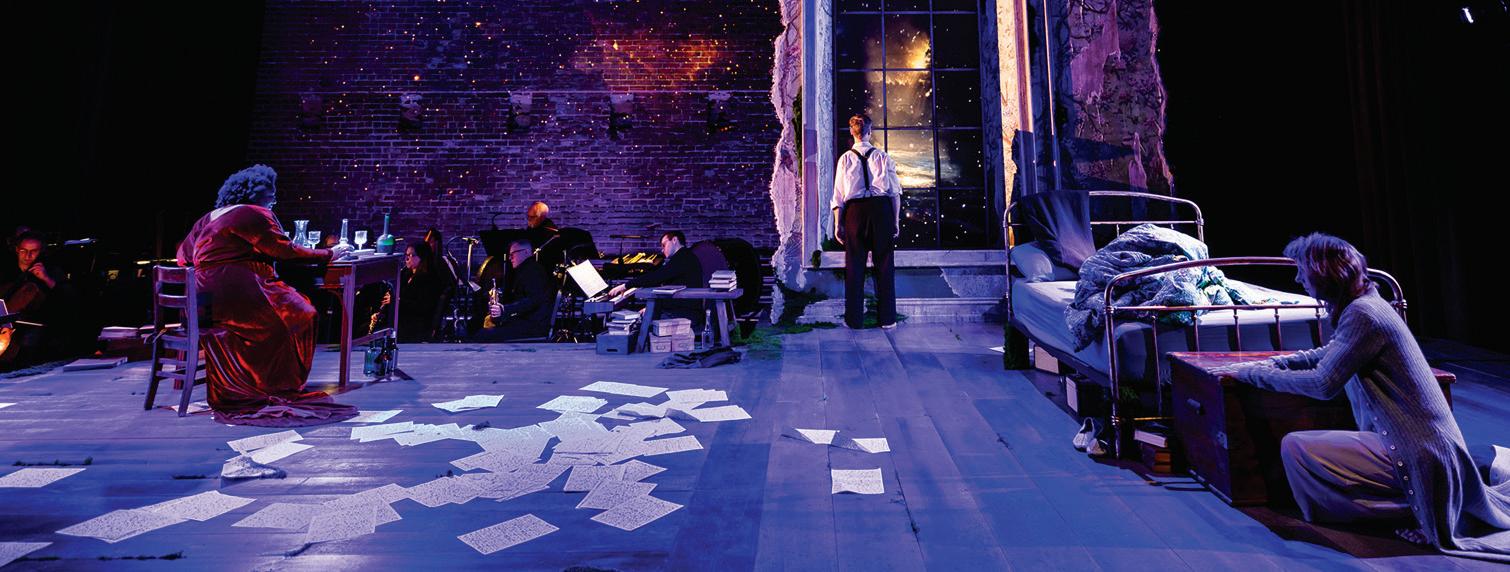
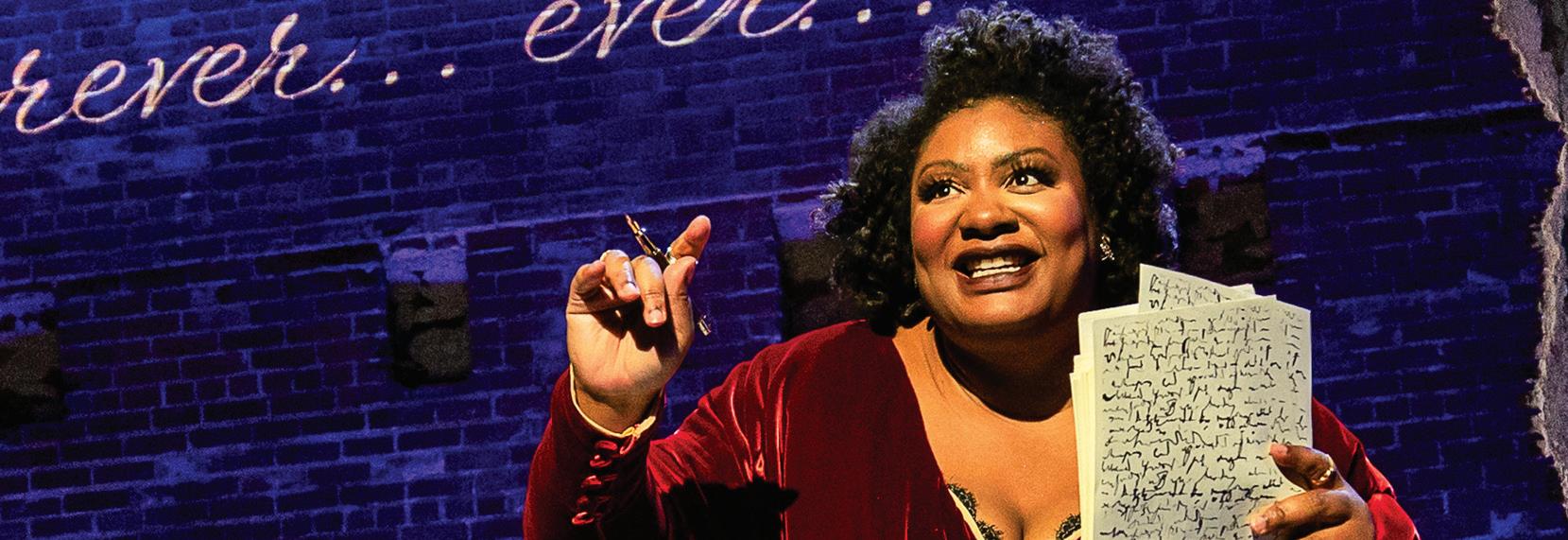
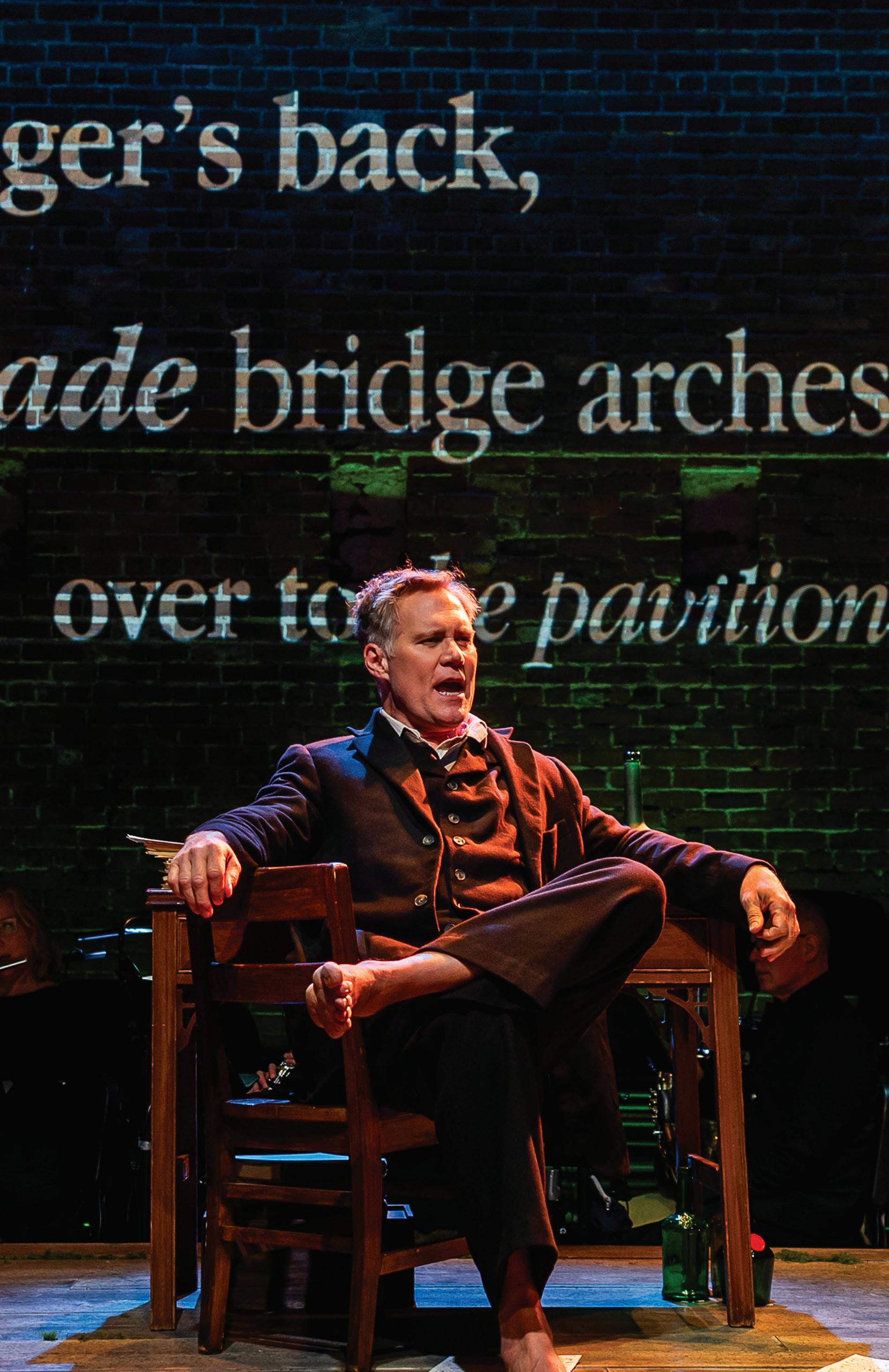
This production takes Mahler’s meditation as a point of departure. The staging unfolds within a single room — a site of overlap between times, lives, and states of being. Three figures inhabit it separately, yet in resonance with one another. The first is the Poet in 1910, writing a work he will not live to see published. The second is his Lover, standing at the window years later, suspended in memory. The third is a Mother in the present day, lying in bed, suspended between dreaming and waking, unable to face the day yet attempting to awaken to a life altered by the death of her child. These figures do not encounter one another directly, yet their presences interlace. They share the same physical space but exist in par-
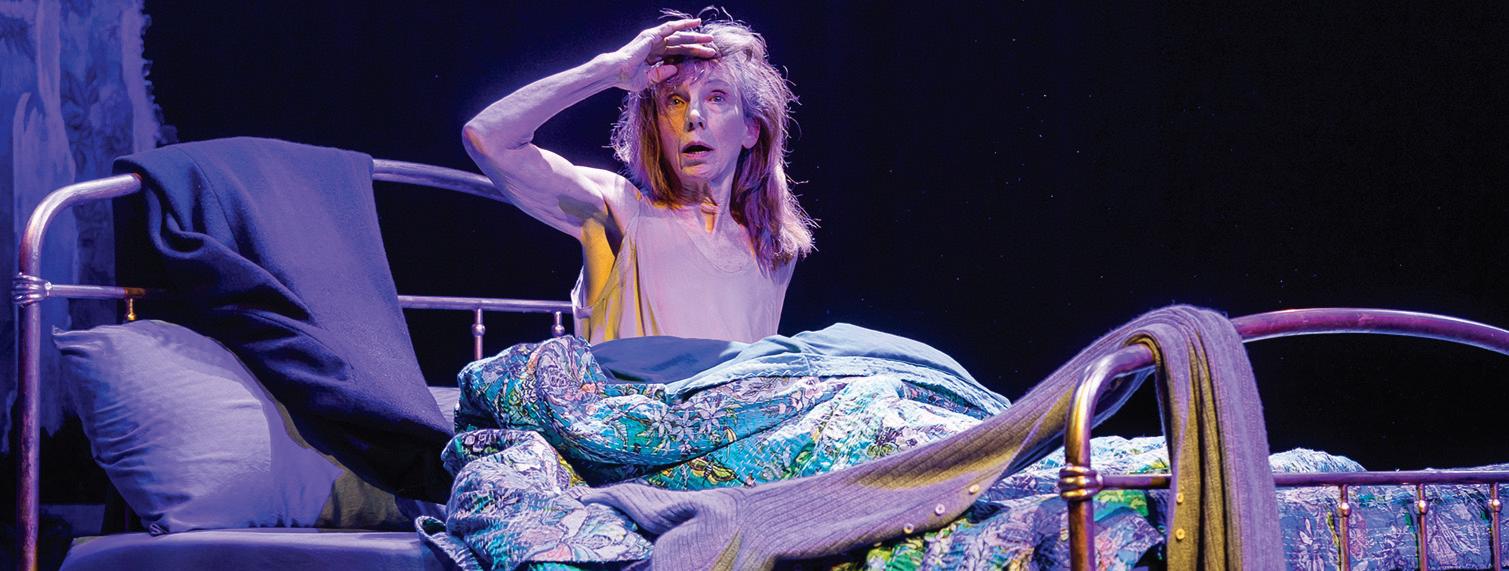
allel temporalities, their lives vibrating across decades like harmonies on a single instrument. Each senses, perhaps without knowing, the residues of the others. The room itself remembers them all.
Theater, like music, is an art of presence — a form built from the disappearance of that presence. Each performance is both fleeting and lasting, an event that vanishes even as it leaves its mark on space and memory. In this way, the stage becomes a room that remembers. Within it, time collapses: three lives share one space, just as centuries of living and dying coexist within a single breath.
Are we guests in a crowded present? Perhaps the past is not behind us, but within and around us, folded into the matter of the world. To exist is to cohabit — with the past, with those who have gone, and with what endures in the air between us. If we could listen more carefully, we might hear the whispering of innumerable lives — both human and nonhuman — in the bricks, in the floorboards, in the air itself. To open ourselves to that awareness is to rediscover intimacy with the past, with each other, and with the fragile, astonishing fact of being alive.
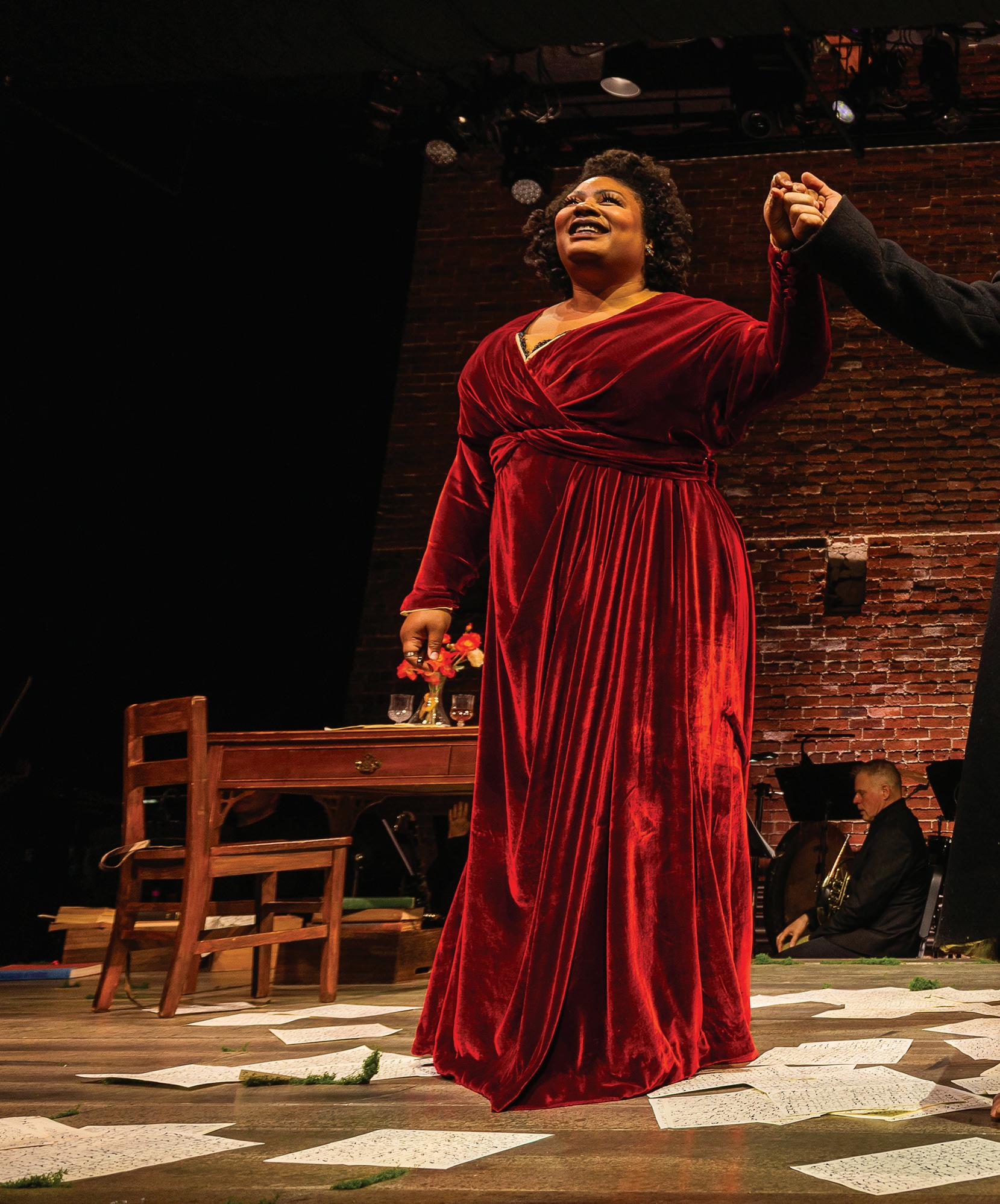
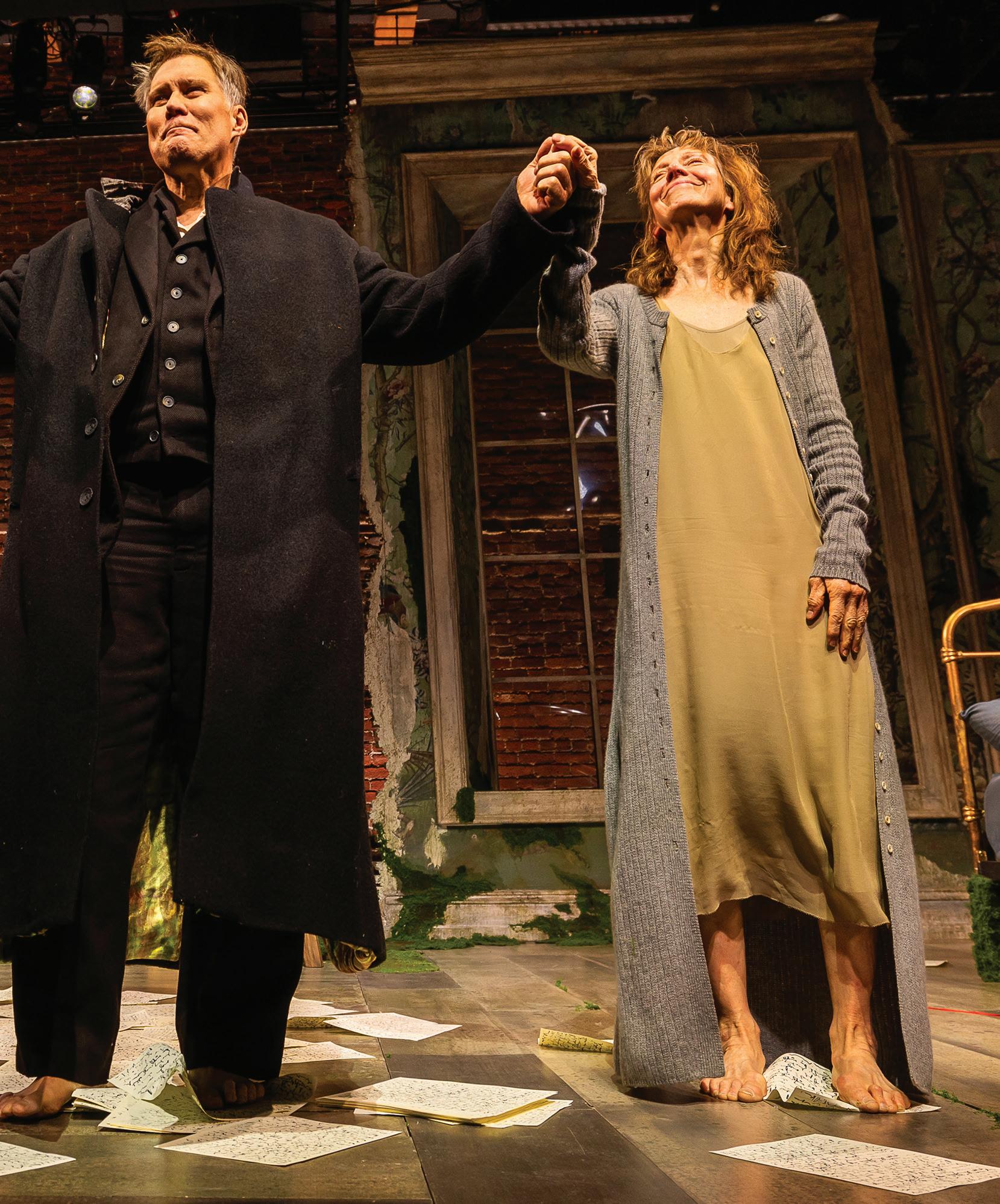
Pages 30/31: (L-r) Raehann Bryce-Davis, Brandon Jovanovich, and Ellen Lauren take final bows.
Page 32: The cast of Song of the Earth inhabits the same room during different time periods.
Page 33: Raehann Bryce-Davis (The Lover) is inspired to write her own creations.
Page 34: Ellen Lauren (The Mother) moves through grief.
Page 35: Brandon Jovanovich (The Poet) conjures vivid imagery with his words.
Pages 36/37: Lanterns and cycling projected text set the atmosphere in a pre-show space.
Song of the Earth photos by Nile Hawver/Nile Scott Studios


APRIL 24 - MAY 3, 2026
EMERSON COLONIAL THEATRE
Performed with the Boston Lyric Opera Orchestra and Chorus
The Who-ness of Marie

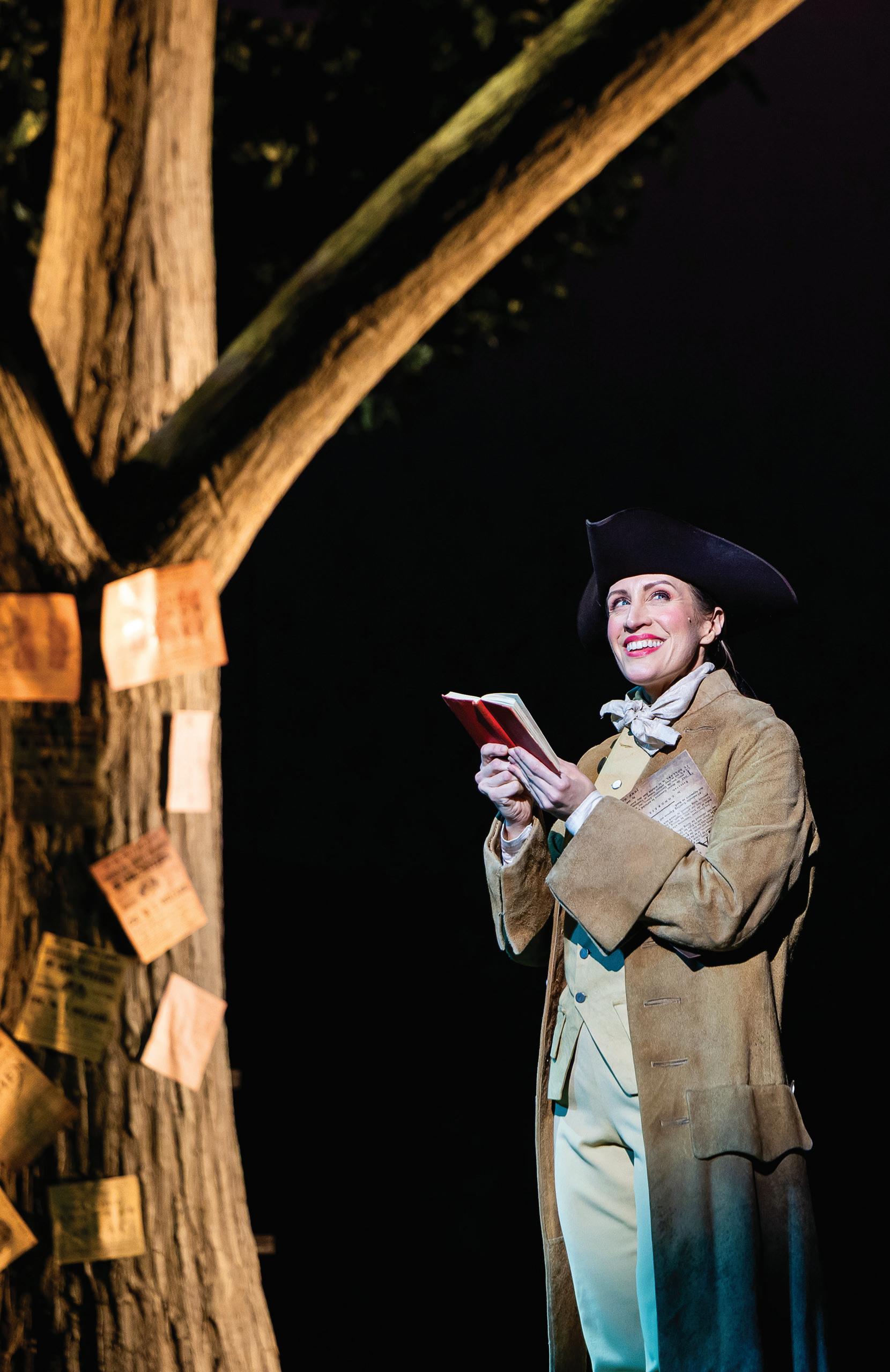
In 1782, a young Massachusetts farm woman bound her chest, took the name of Robert Shirtliff, and walked into a recruiting office to enlist in George Washington’s Continental Army. For seventeen months, Deborah Sampson lived and fought as a man; her survival and service depended upon a continuous, disciplined act of performance, of recalibrating gesture, stance, and speech in ways that convinced officers, comrades, and enemies alike. Her story is not just an anecdote of patriotic courage; it reveals how a person might reshape what is visible and possible, testing and adjusting her own “who” in order to enter a world that was closed to her as a woman.
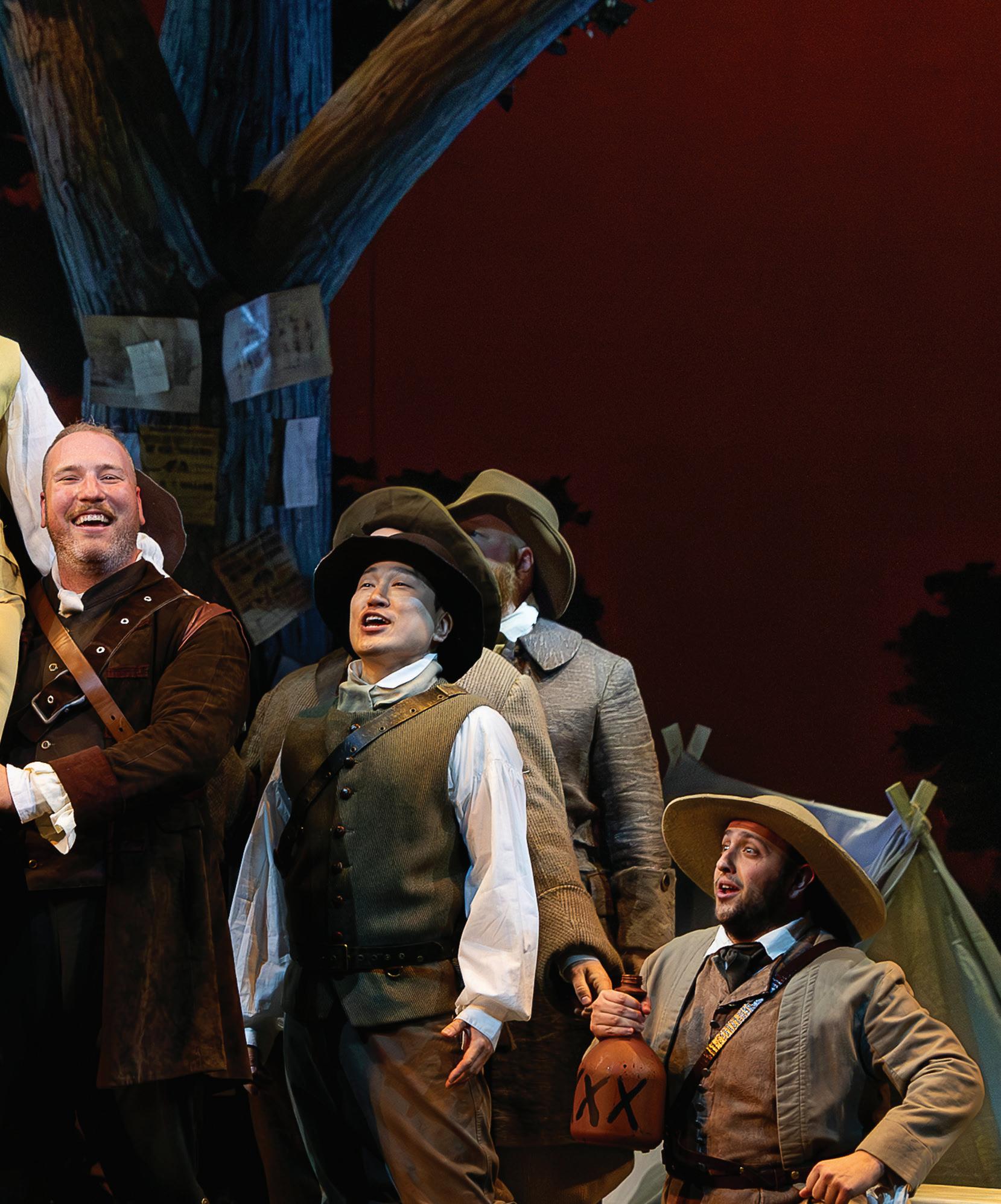
Boston Lyric Opera’s Daughter of the Regiment nods to Deborah Sampson but does not aim to tell her story literally. The connection is intentionally loose — a spark rather than a blueprint — an imaginative way of placing Donizetti’s opera in Revolutionary-era Boston and asking what happens when a young woman grows up with a regiment of men. In this adaptation, the central character — Marie — is still the irrepressible foundling claimed by a battalion of surrogate fathers, but she also stands, faintly, in the shadow of a rebel who fashioned a new name, a new uniform, and a new way of appearing in public.
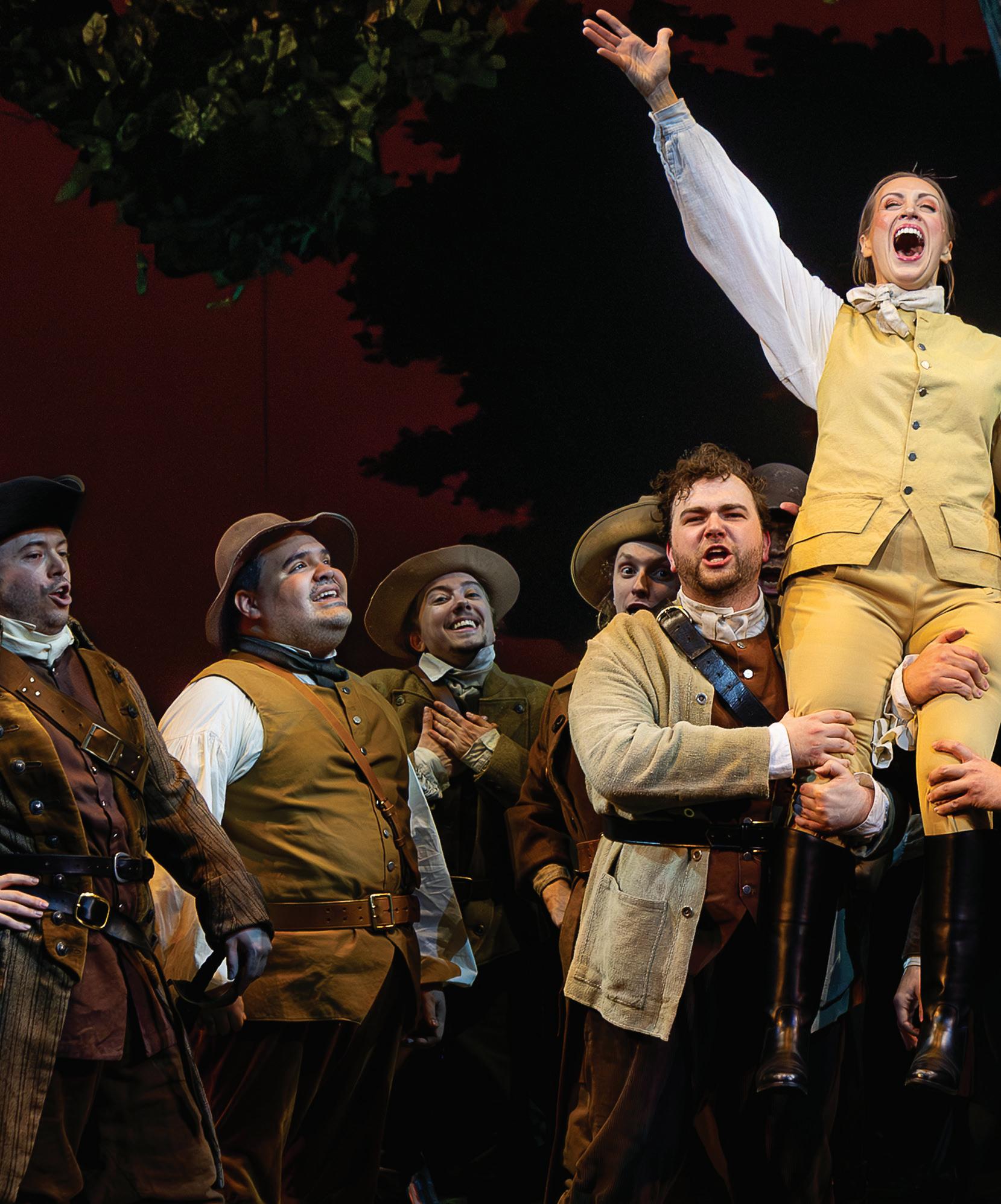
As a cornerstone of Boston Lyric Opera’s “Voices of Revolution” programming initiative that celebrates America’s 250th anniversary, Daughter of the Regiment centers comedy as a vital force. Laughter in this setting is not an escape from difficulty, but instead a way of holding it together: a rehearsal for courage, a way to stay human in the midst of upheaval. In this staging, laughter is its own kind of small revolution, a joyful form of resistance that lets Marie and the regiment push back against hierarchy, loosen the grip of class and convention, and imagine a world where a young woman can claim space in the ranks and in the story. When the soldiers cheer her on, when the music gathers into exuberant ensembles, we see a community remaking itself in real time and testing a more generous idea of who belongs. This production of Daughter of the Regiment leans strongly into comic energy. Marie’s life in the regiment is full of jokes, mishaps, and physical exuberance: she learns to march and salute, to drink and banter, to shoulder a musket and scramble over obstacles, often with more enthusiasm than precision. The men around her are likewise engaged in self-fashioning, former farmers and artisans who now wear

“Opera is an especially vivid place to see ‘who-ness’ in action. Singers do not simply ‘have’ characters; they build them through posture, costume, phrasing, breath, and timing.”
uniforms that align them with a cause larger than their individual lives. Their rough affection for Marie, their drinking songs, their protective bluster — all of these echo her own struggle to belong. Yet where they find stability in rank, ritual, and hierarchy, Marie remains fluid, her identity shaped by the instability of war, of love, and of her own quicksilver impulses.
I am currently writing a book entitled Who-ness: The Story of Building a Character It grows out of my curiosity about what we call character, and my lifelong attention to how actors build a character in rehearsal that is then legible onstage to an audience. Rather than treating a character as a stable self, identity, or persona, I use the term “who-ness” to describe a process — how a person is made and revealed in relation to the world around them: their histories, the roles they inhabit, the bodies they move in, the expectations that press upon them, and the gestures, choices, and accidents that shape how they appear to others. I am less interested in the inner, private self than in the porous, changing figure who emerges in particular historical and social circumstances, whose identity is continually adjusted by family, community, politics, and place. We may not become entirely different; yet circumstance invites different choices, and each choice subtly alters our contours. In my mind, this capacity for variation is where “who-ness” becomes visible.
Opera is an especially vivid place to see “who-ness” in action. Singers do not simply “have” characters; they build them through posture, costume, phrasing, breath, and timing. The way a singer stands in relation to another character, the precision of a salute, or the choice to speak a line rather than sing it can all clarify who that character is becoming in a story. Comedy heightens that process. When someone stumbles, goes off script, or reacts more openly than they meant to, we suddenly see their “who-ness” more sharply and watch how a single public moment can change how they are perceived.
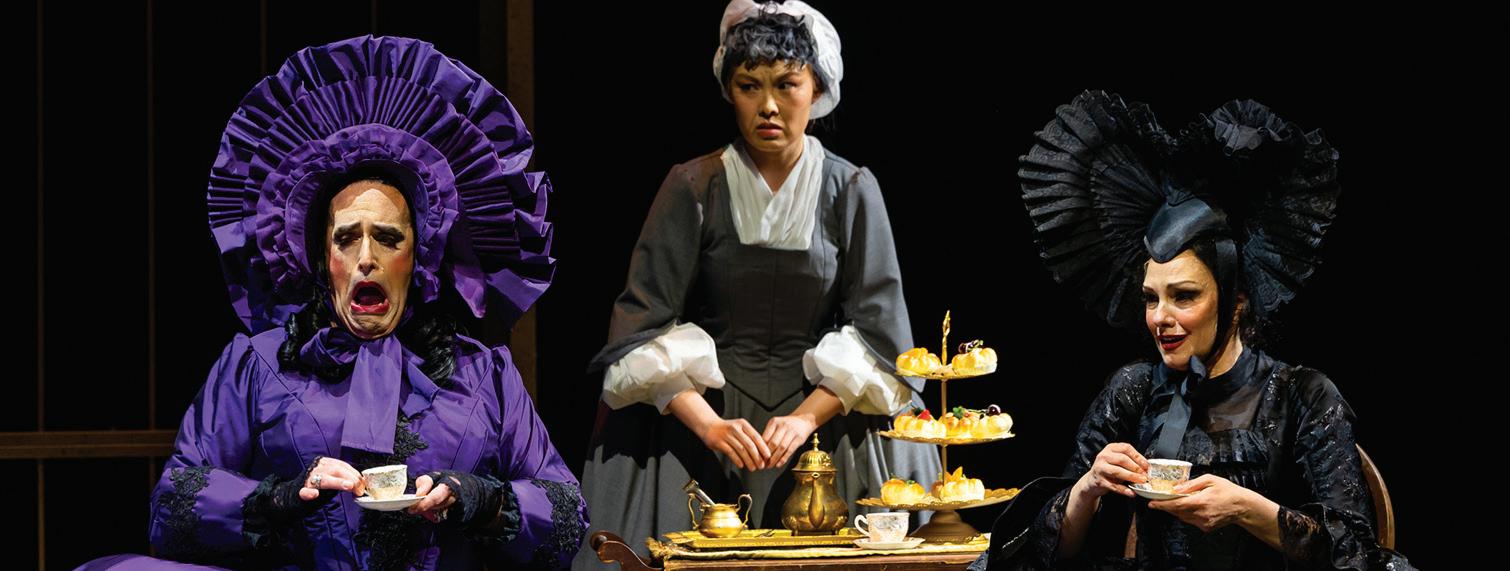
Donizetti’s score gives Marie a voice that is impossible to ignore. Even when she is disguised in uniform, her singing refuses to “pass” as anything other than gloriously herself, and the audience willingly accepts the convention. Though her voice does not sound like a man’s, we accept the fiction, collaborating in her act of self-creation. In this shared act of pretending, of agreeing to see her as a “daughter of the regiment,” we help shape the reality she embodies. Her voice reshapes the space she inhabits, staking a sonic claim to her “who-ness,” one that exceeds the disguise and compels recognition.
Daughter of the Regiment also reminds us that “who-ness” is never solitary. Marie becomes herself not in isolation but through relationships — with her surrogate fathers in the regiment, with the suitor who loves her, with the mother who claims her by blood. Each encounter pulls her towards a different version of self, and Donizetti’s layered score holds all these possibilities without forcing a simple resolution. She is at once dutiful and defiant, cherished and free, foundling and fighter, shaped by contradictions she inhabits rather than resolves.
Like Deborah Sampson marching beside her comrades, Marie discovers her fuller humanity through friction and solidarity, but here that discovery is filtered through laughter, love, and song. We watch a woman — and, by extension, a young country — experiment with freedom in real time, using comedy as a way to test new roles, new loyalties, and new forms of belonging. In this production, we see not only one woman’s transformation, but also how our fullest selves can emerge when we dare to redefine ourselves — and one another — in response to urgent circumstances, and to do so with joy.
Pages 38/39: (C) Brenda Rae (Marie) leads the BLO Chorus in the regimental song.
Page 40: (C) Spencer Britten (Tonio) and the BLO Chorus.
Page 41: Kenneth Kellogg as Sulpice, a Colonel in the Continental Army.
Page 42: (L-r) Neil Ferreira (The Duchess Crakenthorpe), Angela Yam (Hortensia), and Sandra Piques Eddy (Widow Birkenfeld).
Page 43: Brenda Rae (Marie) reads at the foot of the Liberty Tree.
Daughter of the Regiment photos by Nile Hawver/Nile Scott Studios
Thank you for supporting Boston Lyric Opera’s 2025/26 Season! Your generosity ensures that we can continue shaping the future of opera in Boston.
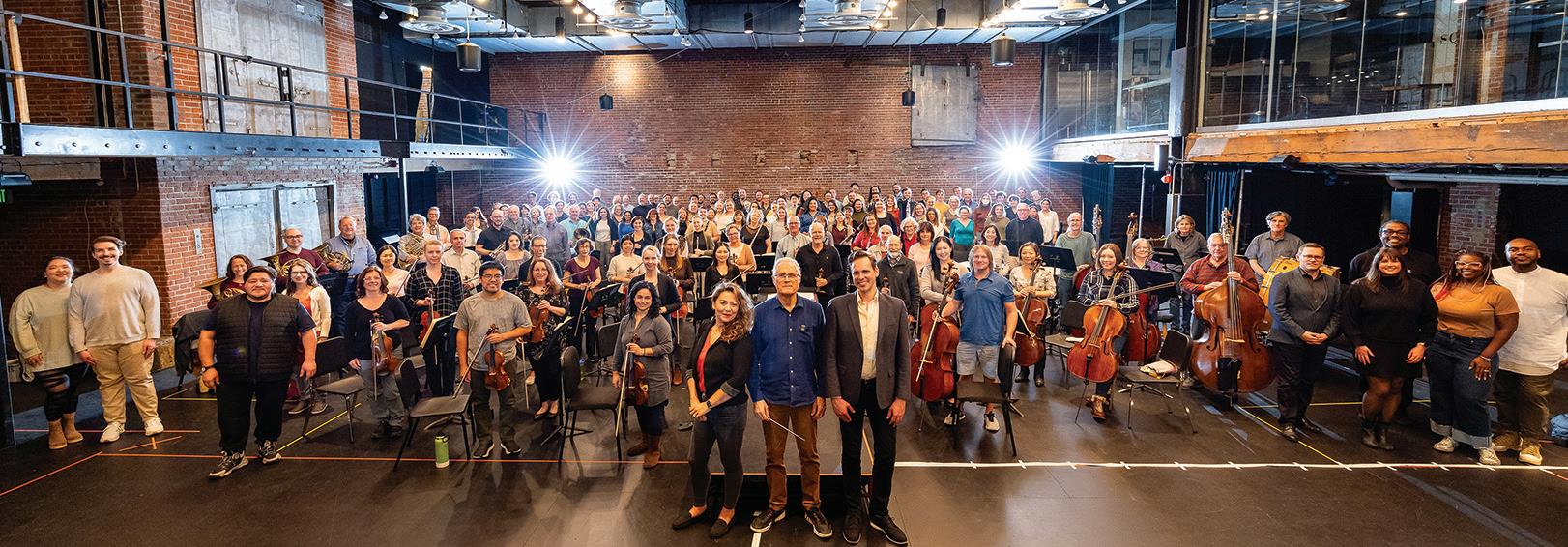
Members of the BLO Staff and BLO Orchestra at Opera + Community Studios. Photo by Nile Hawver/Nile Scott Studios.
BRADLEY VERNATTER Stanford Calderwood General Director & CEO
NINA YOSHIDA NELSEN Artistic Director
ANNE BOGART Artistic Associate
BOSTON LYRIC OPERA 15 Channel Center Street, #106 Boston, MA 02210
DAVID ANGUS Music Director
VIMBAYI KAZIBONI Artistic Advisor


