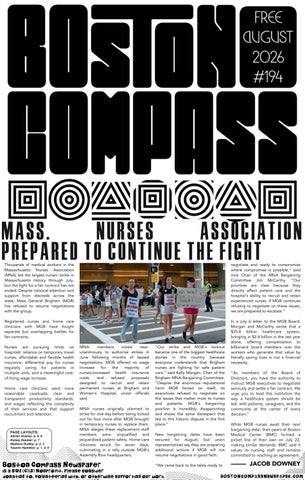
MASS. NURSES ASSOCIATION PREPARED TO CONTINUE THE FIGHT Thousands of medical workers in the Massachusetts Nurses Association (MNA) led the largest nurses' strike in Massachusetts history through July, but the fight for a fair contract has not ended. Despite national attention and support from electeds across the state, Mass General Brigham (MGB) has refused to resume negotiations with the group.
negotiate and ready to compromise where compromise is possible,” said Vice Chair of the MNA Bargaining Committee Jim McCarthy. “Our priorities are clear because they directly affect patient care and the hospital’s ability to recruit and retain experienced nurses. If MGB continues refusing to negotiate on these issues, we are prepared to escalate.”
Registered nurses and home care clinicians with MGB have fought separate but overlapping battles for fair contracts.
In a July 6 letter to the MGB Board, Morgan and McCarthy wrote that a $35.8 billion healthcare system, bringing in $2.4 billion in the last year alone, offering compensation to billionaire board members over the workers who generate that value by literally saving lives is not a financial necessity.
Nurses are pursuing limits on hospitals’ reliance on temporary travel nurses, affordable and flexible health insurance, differential pay for nurses regularly caring for patients in multiple units, and a meaningful costof-living wage increase. Home care clinicians want more reasonable caseloads, clear and transparent productivity standards, and wages reflecting the complexity of their services and that support recruitment and retention.
PAGE LAYOUTS: Adrian Alvarez: p. 6, 8 Kelsey Deemer: p. 7 Madison Dudley: p. 2, 3 Yasmin Hamilton: p. 1, 4, 5
MNA members voted nearunanimously to authorize strikes in June following months of lapsed negotiations. MGB offered no wage increase for the majority of nurses,increased health insurance costs, and refused proposals designed to recruit and retain permanent nurses at Brigham and Women’s Hospital, union officials said. MNA nurses originally planned to strike for one day before being locked out for four more after MGB brought in temporary nurses to replace them. MNA alleges these replacement staff members were unqualified and jeopardized patient safety. Home care clinicians struck for seven days, culminating in a rally outside MGB’s Assembly Row headquarters.
Boston Compass Newspaper
“Our strike and MGB’s lockout became one of the biggest healthcare stories in the country because everyone understands that Brigham nurses are fighting for safe patient care,” said Kelly Morgan, Chair of the Brigham MNA Bargaining Committee. “Despite the enormous reputational harm MGB forced on itself, its executives refused to negotiate on the issues that matter most to nurses and patients. MGB’s bargaining position is incredibly disappointing and shows the same disrespect that led to this historic dispute in the first place.”
“As members of the Board of Directors, you have the authority to instruct MGB executives to negotiate seriously and settle a fair contract. We urge you to lead this institution the way a healthcare system should be led: with patients, caregivers, and the community at the center of every decision.”
New bargaining dates have been secured for August, but union representatives say they are preparing additional actions if MGB will not resume negotiations in good faith.
While MGB nurses await their next bargaining date, their peers at Boston Medical Center (BMC) formed a picket line of their own on July 22, making similar demands. BMC said it values its nursing staff and remains committed to reaching an agreement.
“We came back to the table ready to
—––– JACOB DOWNEY
is a 501 (C)(3) Nonprofit. Please consider donating to, volunteering with, or otherwise supporting our work
BOSTONCOMPASSNEWSPAPER.COM