Your eBike Battery Guide
Do you have questions about eBike batteries?
We will familiarize you with the basics and show you how a battery works. We will also explain how to charge, store and care for it correctly. If you follow a few tips regarding your battery, you will be safer on the road and will be able to rely on it for many years to come.
1 How does a lithium-ion battery work?
Lithium-ion technology
How does a lithium-ion battery work?
The lithium-ion technology in Bosch batteries stores energy efficiently and durably. This chapter will teach you precisely how this works.
Lithium-ion batteries from Bosch...
... are storage devices for electrical energy and supply your eBike with power.
... are rechargeable and can store a lot of electricity in an extremely compact space.
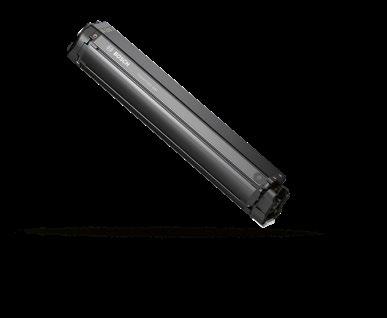
... last for many years and miles.
... are protected by an intelligent battery management system, certified to the UL 2271 safety standard, and are among the most modern on the market.
How is the power for your eBike generated?
A lithium-ion battery generates the electromotive force by displacing lithium ions. While the eBike is in motion and the battery is outputting energy, electrodes move from the negative anode, via the consumer (e.g. drive unit), to the positive cathode. The lithium ions provide balance, thereby making the current flow. The reverse process takes place when the battery is charged.
Properties of lithium-ion batteries*
Benefits:
◾ Rechargeable
◾ Lots of energy in a compact space
◾ Lighter than other rechargeable batteries
◾ Quickly ready for use – even after long storage periods
Risks:
◾ Sensitive to overheating and short circuiting
◾ Danger of gas leaks and risk of fire if damaged or incorrectly handled
* Compared to other battery types
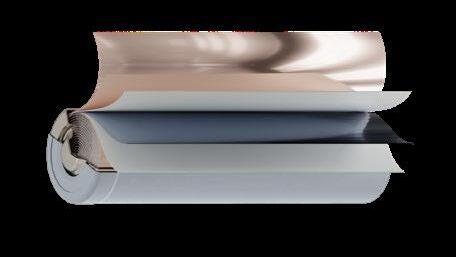
How is a lithium-ion battery built?
The cathode typically consists of nickel, manganese, aluminium and cobalt-containing mixed oxides. The anode is made from graphite. The separator film prevents the two electrodes from directly contacting one another and therefore provides protection against short circuits. Incidentally: The electrolyte is a conductive solution that transports the lithium ions between the cathode and the anode.
Positive pole
Negative pole
Cathode
Separator
Anode
Interesting facts
Capacity (charge and energy)
◾ The capacity is given in ampere-hours (Ah). It tells you how much power can be drawn from the battery and for how long.
◾ The amount of energy that can be stored, stated in watt hours (Wh), is the actual working capacity of the battery and is relevant for the achievable range.
Extremely low self-discharge
Even after long periods of storage, e.g. over winter, the battery can be used without recharging.
Easy charging
◾ Batteries with lithium-ion cells can be charged quickly, irrespective of your charge level, at any time. Interruptions of the charging process do not harm the battery.
◾ A “memory effect”, i.e. decreasing capacity due to frequent incomplete discharge, as familiar from earlier battery systems, does not occur with lithium-ion batteries.
Service life
◾ Batteries are wearing parts. Even when not in use, they age over time due to chemical reactions in the battery cells. This is referred to as calendar aging.
◾ The battery ages faster when exposed to high temperatures or when stored at low or high states of charge.
◾ The so-called cyclical aging of the battery is caused by charging and discharging processes. The more intensively a battery is used, the faster it ages cyclically.
Bosch eBike batteries
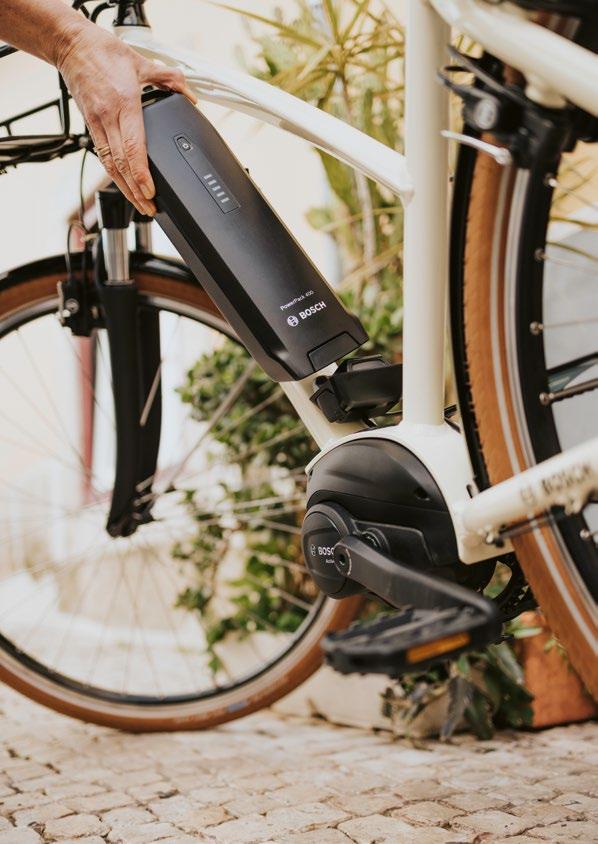
Frame battery
Because it is a frame battery, the PowerPack Frame is easy to access and remove. Thanks to its low center of gravity, it ensures balanced weight distribution.
Rack battery
As a rack battery, the PowerPack Rack can be removed and charged conveniently while standing, thanks to its higher positioning on the eBike.
Greater range
DualBattery
Combining two Bosch batteries provides considerably more energy and therefore more range. Meaning maximum power can be utilized over a longer period of time.
Range Extender
The additional bottle-sized battery PowerMore 250 provides even more range as a portable energy reserve.
Integrated battery
The PowerTube integrates perfectly in the frame, creating an elegant, clean eBike look.
You would like to find out more about the various batteries from Bosch?
Find the suitable lithium-ion battery for any requirement and for every eBike type: bosch-ebike.com/batteries/products
Battery safety 2 Our contribution to safer eBike batteries
*
Innovative battery technology
Safety is our top priority – including our rechargeable batteries. On the following pages, we show you how we are constantly making our batteries safer.
From the battery management system to cell isolation: with our rechargeable batteries, potential sources of hazard are counteracted where they could arise.
*
Automated battery production
Our highly automated battery production reduces the risk of assembly errors.
**
How we test batteries
eBike batteries must pass legally prescribed tests before they can be placed on the market. With some tests, we even go beyond the legal requirements.
* Safety measures depending on design and generation.
** In the prescribed short-circuit test, for example, we exceed the legal requirements and also test the battery cells in further short-circuit scenarios. A crush test, shaker test, drop test and watertightness test are examples of legally required tests.
Innovative battery technology
Battery Management System (BMS)
The intelligent BMS monitors the battery. It detects fault sources and protects against excessive temperatures, overload and deep discharge.
Mechanical isolation of battery cells**
The individual cells of a Bosch eBike battery are encased in flame-retardant plastic.
Electrical isolation of battery cells
**
The cell connectors provide electrical interruption, in case of increased current flow from a cell.
Thermal isolation of battery cells**
Encased cells and separators reduce the risk of overheating in the battery and a potential chain reaction between the cells.
Protection against water ingress
The sealing concept of a Bosch eBike battery protects it against water ingress and therefore against consequential damage.
Charge equalization for battery cells
This ensures that all the cells in the battery have the same state of charge and the same voltage, which in turn improves efficiency and extends the service life of the battery.
* Based on the example of a PowerTube 750
** Safety measures depending on design and generation
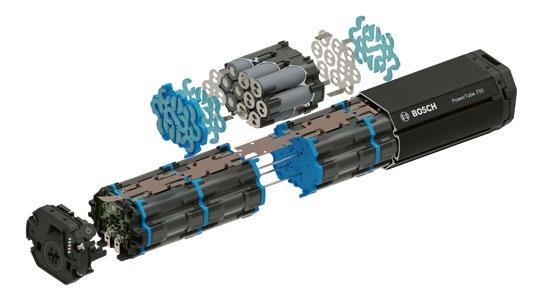
Structure of a Bosch lithium-ion battery*
Automated battery production
We develop the batteries for our eBike systems at our headquarters in Reutlingen and produce them mainly at our Bosch plant in Miskolc, Hungary. Highly automated battery production reduces the risk of assembly errors. Robots take over central work steps such as fitting the cell holders and assembling the cell blocks.

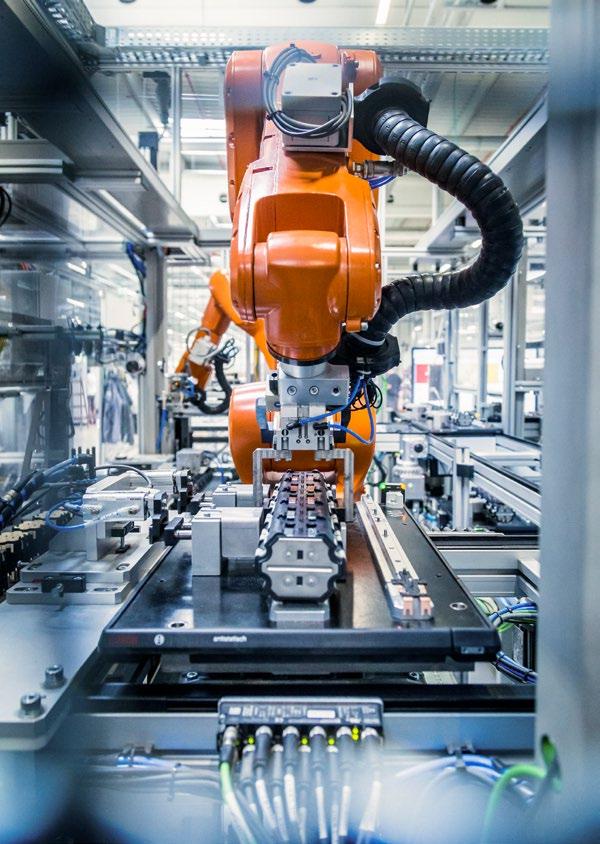
Get an insight into our eBike battery production here: bosch-ebike.com/batteries/ production
How we test batteries
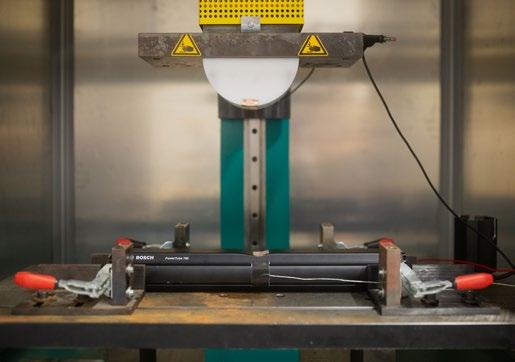
Crush test*
A battery is loaded with 1,000 times its own weight. This allows us to test its safety under strong mechanical pressure.
Drop test*
A battery is dropped from a height of one meter onto a concrete block. This allows us to test its robustness against falls or dropping.
Shaker test
The battery is subjected to vibrations of varying intensity, simulating the load of an entire life cycle. This allows us to test its durability.
Watertightness test
A battery is subjected to high water pressure of up to 100 bar from various angles. This allows us to test its resistance to water.
* This test simulates improper use of a battery and must not be replicated.
All you need to know about the technology, safety and use of our batteries can also be found in our explanatory videos: bosch-ebike.com/batteries/battery-safety
The Intertek ETL Listed Mark confirms that electrical products comply with the safety requirements of UL 2849 and UL 2271.
Basic rules for greater safety
1
Do not open the battery. This is reserved exclusively for competent persons after qualification and training.
4
When transporting the eBike on the bike rack, remove the battery (exception: Built-in eBike battery) and stow it in the car.
Protect the battery from heat, direct sunlight and fire.
5 2 3 6
Do not immerse the battery in water or clean it with a direct jet of water or high pressure cleaners.
Keep the battery away from small metal objects such as keys, nails or screws. There is a risk that contacts will be bridged, resulting in a short circuit.
Do not damage the battery, e.g. due to hard shocks, sharp objects or screws.
3 How do I handle the battery correctly?
Charging
How do I handle the battery correctly?
If you follow a few simple rules for handling, care and transport, this will have a positive effect on the safety and durability of your battery. We also show you how to recycle your battery properly and plan your eBike rides even better.
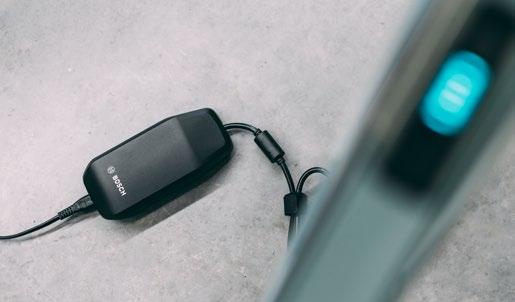
Chargers
The charger must be compatible with the battery: Please only use chargers that are compatible with Bosch eBike batteries. This helps protect the battery from damage and prevents dangers such as overheating or short circuits. Original Bosch chargers are always compatible with Bosch eBike batteries.
Charging facilities
◾ Charging on the eBike: As soon as you have plugged in the charging cable, the drive unit is automatically locked and the charging process begins. You don't need to do anything else.
◾ Charge separately: If the battery can be removed for charging, it is important that you feel and hear it click into the mount when you reinsert it.
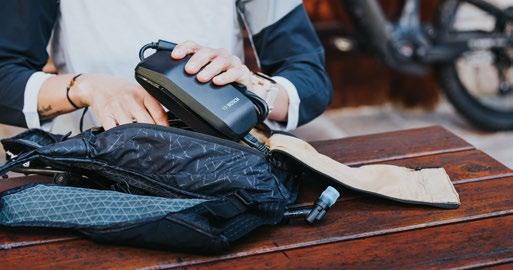
◾ Charging on the go: If there is no charging station on your route, our chargers are compact and light that you can easily take them with you.
Tips for optimal charging
◾ Before charging: Check the battery for visible damage and allow it to cool down.
◾ Only fully charge when necessary. For optimal battery lifespan, aim for a charge level of up to 80% (indicated by 4 illuminated LEDs).
◾ After charging: Disconnect the battery and charger from the power supply.
◾ Avoid complete discharge while riding.
◾ Do not charge in escape routes or on flammable surfaces.
◾ Do not charge near combustible materials.
◾ Do not leave the battery unattended when charging.
More information:
◾ Only use compatible chargers for Bosch eBike batteries. With original Bosch chargers, you are always on the safe side.
◾ Make sure the environment is dry and smoke detectors are present.
◾ Charge the battery at an ambient temperature between 32°F and 104°F (0°C and 40°C).
◾ Avoid direct sunlight.
Storing
Where should the battery be stored?
◾ Store the battery in a dry place protected from the weather. Ideally in a well-ventilated room with a smoke detector, away from heat sources or highly flammable materials.
◾ Remove the battery from the eBike if you are not going to use your eBike for a longer period of time or are storing it away.
How should the battery be stored?
◾ Ideally, you should store your battery at temperatures between 50°F and 68°F (10°C and 20°C) in a dry environment.
◾ Avoid excessive heating and direct sunlight.
What points should you remember in winter?
◾ If you store your battery in a garage: On particularly cold days, move it to a heated room and wait for it to warm up to room temperature before riding.
◾ Storage at cold temperatures between 32°F and 50°F (0°C and 10°C) is harmless. However, a cold battery will deliver less power.
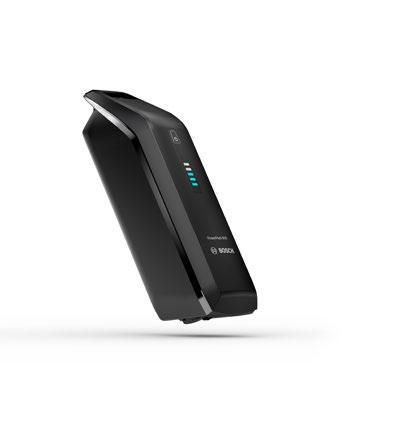
If you store your battery for longer periods, such as in winter for example, a charge level of between 30 and 60% is ideal. This corresponds to 2 to 3 illuminated LEDs on the charge level indicator.
3 How do I handle the battery correctly?
Care

Cleaning & care
◾ If possible, remove the battery before cleaning your eBike.
◾ Use a damp cloth to clean the surface of the battery.
◾ You should clean the plug poles occasionally and lightly grease them with technical Vaseline.
◾ To protect the electronics, you must not clean the battery with direct water jets or even high pressure cleaners.
Inspection
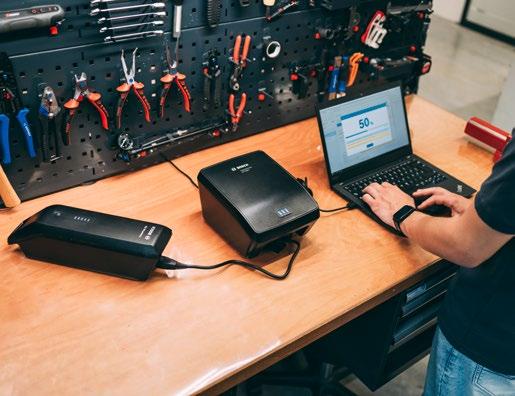
Regular inspection of your eBike by a certified dealer is important! Here, the condition of your battery is checked professionally using various tools from Bosch eBike Systems.
Transporting
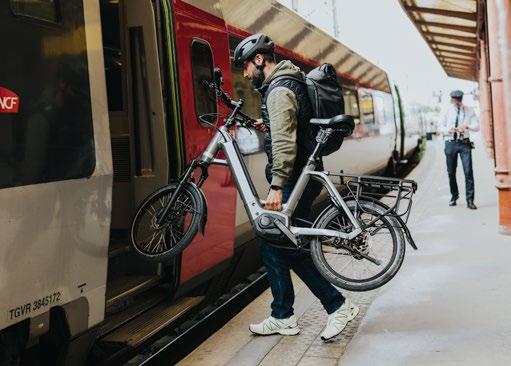
Ideally, you should transport the battery with a charge level of 30% and only charge it again once at your destination.
Lithium-ion batteries store large amounts of energy. That's why you should take some precautions during transport.
By car
If you are transporting your eBike on a rack, remove the battery if possible and stow it in the car.
On flights
The transport of batteries in passenger aircraft is prohibited. We recommend renting an eBike battery or an eBike at your destination.
Commuter transport
It is often permitted to take an eBike on local transport outside of regional off-peak times. Before your trip, find out more details from the relevant transport authority.
By train
The battery must remain permanently installed on the eBike while traveling by train and must not be charged during the journey. Ideally, you should contact the respective service provider for precise information on the transport conditions before starting your journey.
Attention: Hazardous goods
Lithium-ion batteries are flammable under certain conditions and are therefore classified as hazardous goods. The risks will be minimized if you follow the tips provided on care, charging and storage. Further precautionary measures and rules apply to shipping.
Regulations for the transport of hazardous goods
When batteries are transported by commercial users or third parties (e.g. air transport or forwarding agency), special requirements on packaging and labeling must be met. All persons that transport batteries must be trained to meet all requirements to safely ship the batteries and have a training certificate that indicates appropriate training has been provided. Training requirements are based on the mode of transport (air, ocean, highway, rail) used.
Transporting an eBike battery
Interesting fact
In many cases, the certifications required for transport expire in the event of repairs or further interventions that are not carried out by the manufacturer or an authorized company.
Transporting in a private car
Transport by shipping company
Exchange instead of repair

All batteries lose capacity over time. eBike batteries are also wearing parts. For safety reasons, you should not repair or refresh faulty, old or worn out batteries, but have them recycled appropriately.
Risks attached to repairing or refreshing Bosch eBike batteries
To protect the battery cells, batteries are sealed against the ingress of water and dirt. Opening the battery and reassembling it improperly or incorrectly can lead to a loss of tightness and increased friction on wires, weakening of insulation, displacement of the battery cells, weakening of electrical or mechanical connections and countless further potential risks.
Correct function and optimum interaction with the Battery Management System may no longer be fully guaranteed if a battery is improperly repaired. There is then, among other things, a risk that the improperly repaired eBike battery will catch fire due to a short circuit.
Improper opening and repair can also have an impact on guarantee and warranty claims as well as on compliance with legal requirements (such as transport regulations).
Recycling
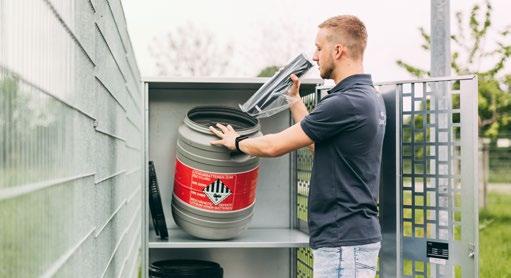
Your eBike battery does not belong in the household waste bin!
If it is disposed of with household waste, it ends up in waste collection vehicles or sorting plants. This can damage the battery and lead to fire.
So where should I bring the battery at the end of its lifetime?
Find your nearest drop-off location at:
US: hungryforbatteries.org
CA: recycleyourbatteries.ca
Recycling of an eBike battery
By recycling properly, you can help to ensure that valuable raw materials can be returned to the material cycle.
What is an example of a way to recycle an eBike battery?
Delivery to the certified dealer
Collection and transport to recycling via local return system
Separation and processing of the materials
Partial recovery of raw materials and reuse for new products
Note: The recycling systems are regulated differently depending on the country. Please contact your certified dealer for support.
Graphic: Simplified illustration based on Regulation (EU) 2023/1542 on batteries and waste batteries.
Efficiency of recycling an eBike battery
Example: GRS Germany take-back system, 2024
Incorrect use (second use)
Our batteries are specially designed and certified for use with eBikes. We cannot guarantee reliable operation in other application areas.
Graphic: Own illustration based on the “GRS Annual Review eMobility 2024”, from Gemeinsames Rücknahmesystem Batterien (GRS), Germany.
Around 79% of the raw materials of a used eBike battery were recovered in the GRS take-back system in Germany in 2024 and reused for new products. Exactly how much can be recycled depends on the battery type, the cell chemistry, the recycling process and the respective country.

Carbon, nickel, cobalt, manganese, lithium
Separators, electrolytes, residues Iron, copper, aluminium
Planning Protecting
How far can I ride with my eBike battery?
This is a common question for many riders. We cannot provide a simple answer to this question, as the range is influenced by several factors, including terrain, tire tread, and riding mode.
How can I protect my eBike battery?
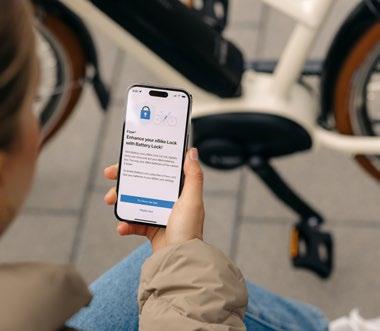
With Battery Lock, you can lock your eBike battery digitally, for even less stress when parking your eBike: this function ensures that your battery can no longer be used if it is stolen.
Your Range Calculator
Find out how far you can go with your eBike battery under different conditions – and which battery will best suit your needs.
Plan things out with Range Control. With the eBike Flow app, you can plan out your routes without having to worry about range. With Range Control, you’ll see how far you can travel for each riding mode – and will be able to specify the charge level you want to arrive at your destination with.
Battery Lock is a paid premium service from Flow+ and is available for eBikes with the smart system.
More information is available here: bosch-ebike.com/batteries/ flow-plus
4
Frequently asked questions and answers
What should I do if water gets into the battery mount?
The battery mount should be completely dry before the battery is used again. The battery should also be removed occasionally and the plug area cleaned. The contacts are supplied with a coating which protects the surface against corrosion and wear. Technical Vaseline may also be used occasionally to maintain the contacts if required.
How do I deal with a defective or damaged battery?
Heavily damaged batteries should only be touched while wearing gloves, as electrolyte may leak out, causing skin irritation. Damaged batteries may no longer be charged. They are best stored in a safe place outdoors, protected from rain and direct sunlight, and with the contacts taped, before being disposed of by a certified dealer/retailer.
Are chargers from other manufacturers safe to use?
Only if it is ensured that these are compatible with the Bosch eBike batteries. Bosch cannot make any statement about the safety of third-party devices. We generally recommend original spare parts from Bosch.
Can I use replacement batteries from other manufacturers?
Only if it is ensured that these are compatible with the Bosch eBike system. We generally recommend original spare parts from Bosch. These are always compatible with the Bosch eBike system. Bosch eBike components are precisely matched and certified as a complete system. They stand for reliability and efficiency.
You have any further questions? We have the answers!
I have found a used battery for the Bosch eBike system online. Can I use it?
When purchasing used batteries, you must always make sure that they have not been damaged by their previous owner. Damaged or unprofessionally repaired batteries are offered online from timeto-time; these may pose a high safety risk and may lead to dangerous malfunctions. Sometimes illegal or stolen goods are available online as well.
Help Center
Here you will find answers to the most frequently asked questions:
How-to videos
Our videos provide helpful tips about our products and features:
Bosch eBike battery check
If you buy a used battery, you can use the serial number to check whether a service case has already been registered for that battery. bosch-ebike.com/batteries/battery-check
bosch-ebike.com/ batteries/help-center
bosch-ebike.com/ batteries/videos