l N ot o N e, b u t f o u r! Meet the four new giraffe species.
l N ot o N e, b u t f o u r! Meet the four new giraffe species.
l S M a l l S pac e S, b i g p r o b l e M S
l S M a l l S pac e S, b i g p r o b l e M S
Should we keep large animals in zoos?
Should we keep large animals in zoos?
l g o N e b u t N ot f o r g ot t e N giants who used to roam the earth.
l g o N e b u t N ot f o r g ot t e N giants who used to roam the earth.
to Hear The Roar!! In this issue, we’re
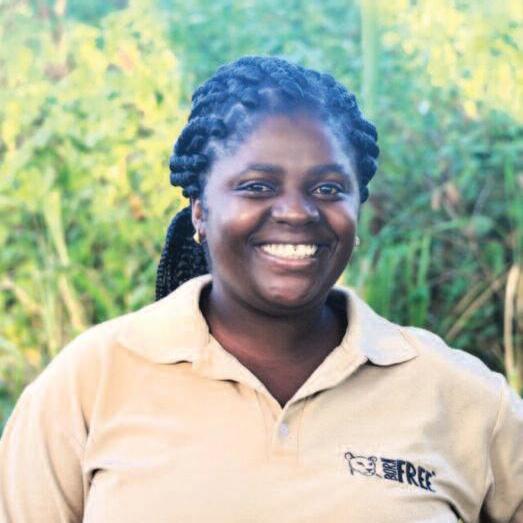
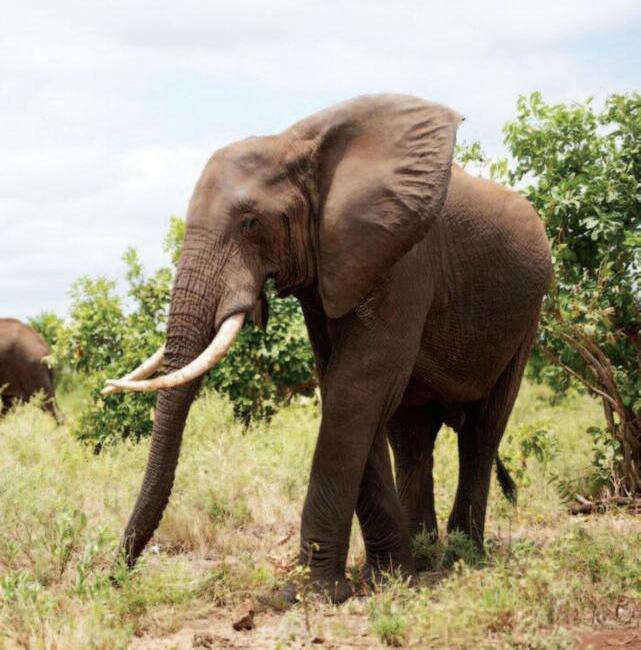
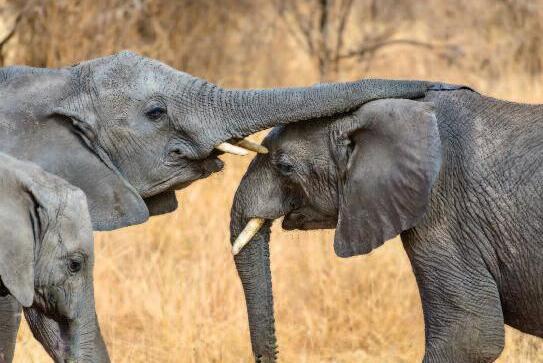
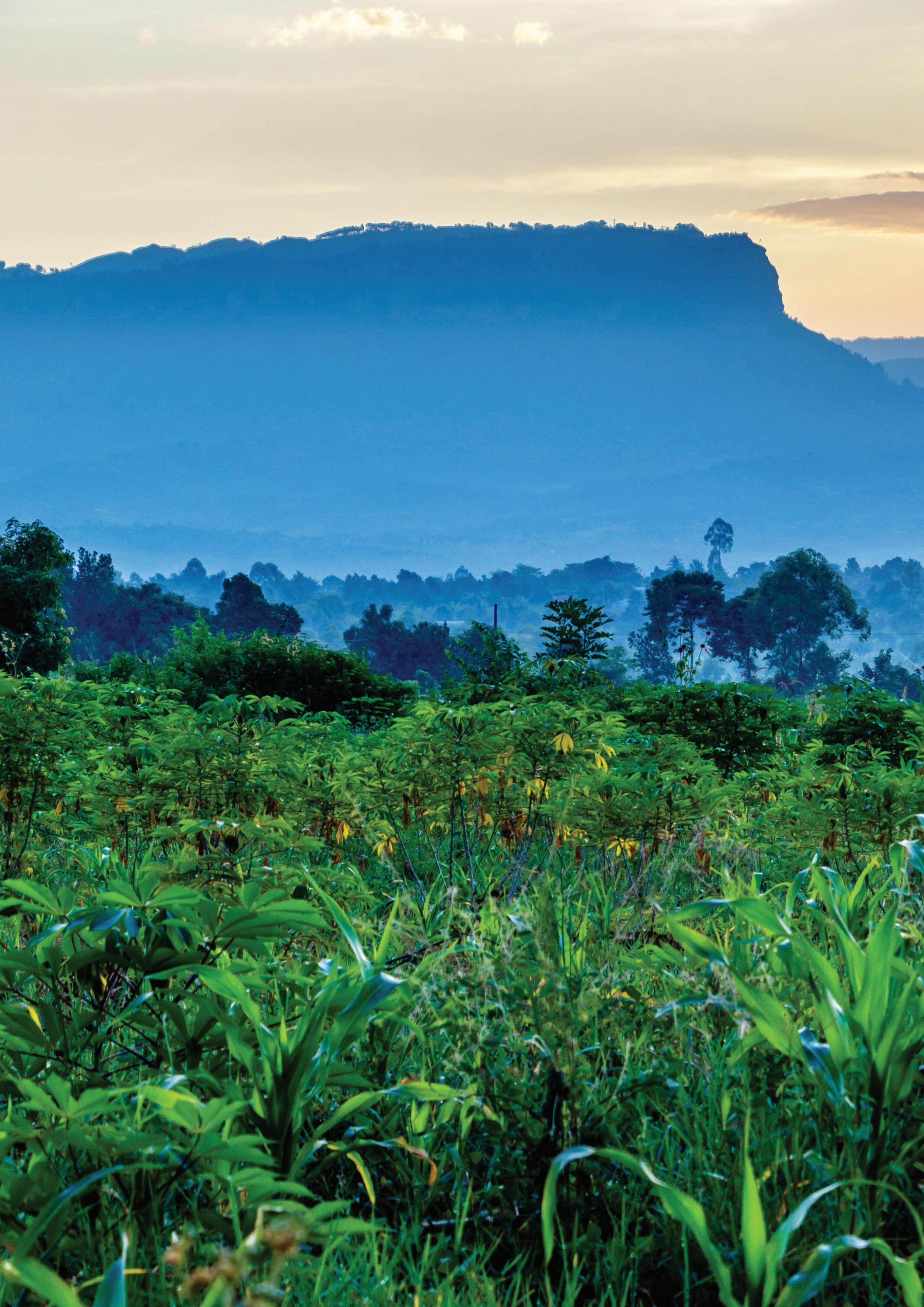
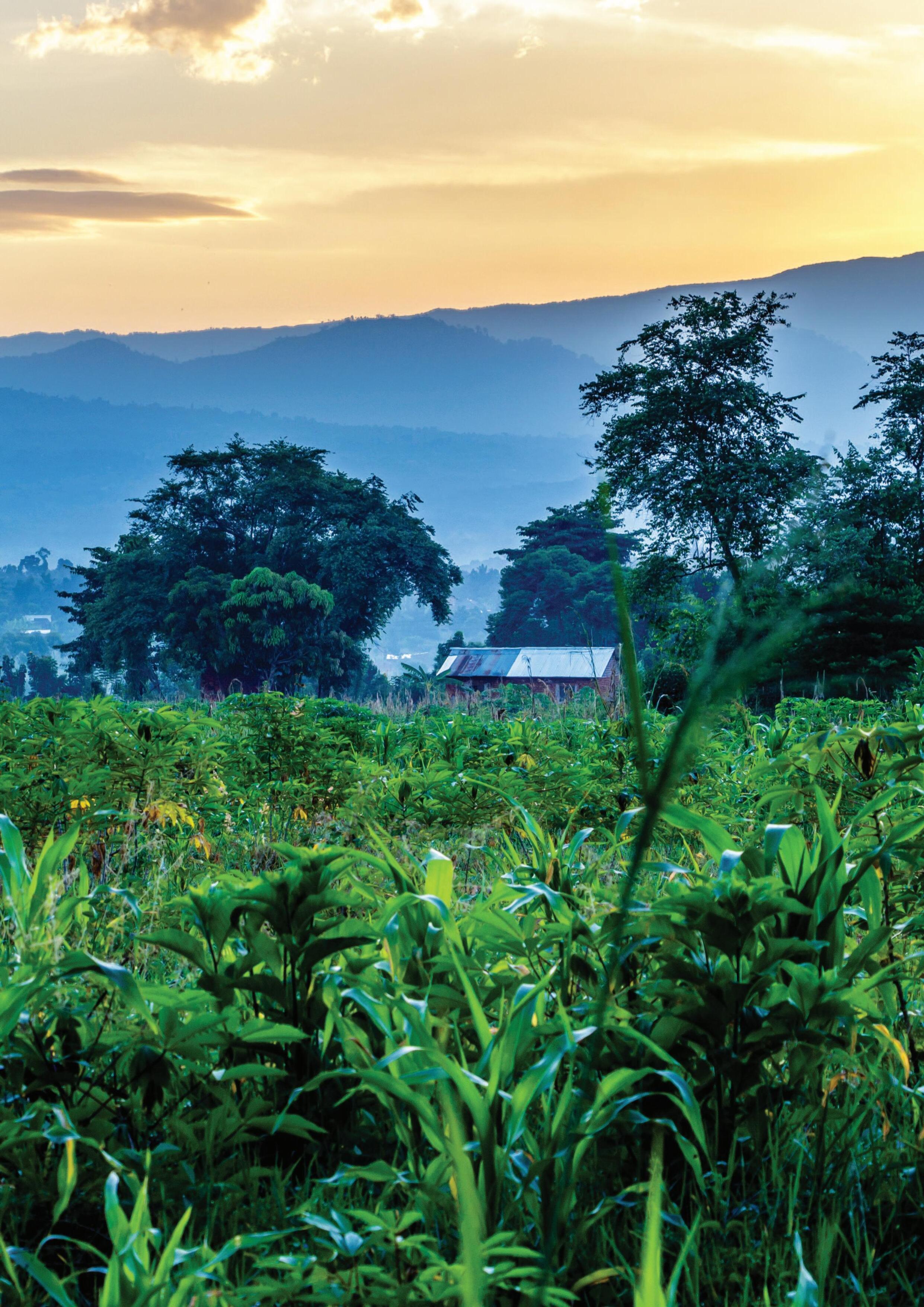
“Known as ‘megafauna’, the giant species I work with in Meru National Park, Kenya, are giraffes and elephants. More than just the tallest animals on Earth, giraffes help keep the natural environment healthy and in balance.
“They eat leaves from tall trees, allowing sunlight to reach smaller plants, while their dung spreads seeds, so new plants can grow. Giraffes are also good for tourism, which supports the livelihoods of local communities. Tourism also means more people become aware how important wildlife conservation is. So, giraffes are essential for environmental balance and human well-being!
“Each animal is remarkable in their own way. My favourite giraffe is SMG050, also known as Zuberi. He’s an adult bull, with five ossicones (bony horns on their head, pronounced: oss-ee-cones) and a heart-shaped patch on his right side. He’s known as ‘The Strong One of Meru.’”
Irene Kanga Dzuwamwenga, Monitoring Officer
Find out more about giraffes on Page 6.
Zuberi
SPOTLIGHT SPECIES
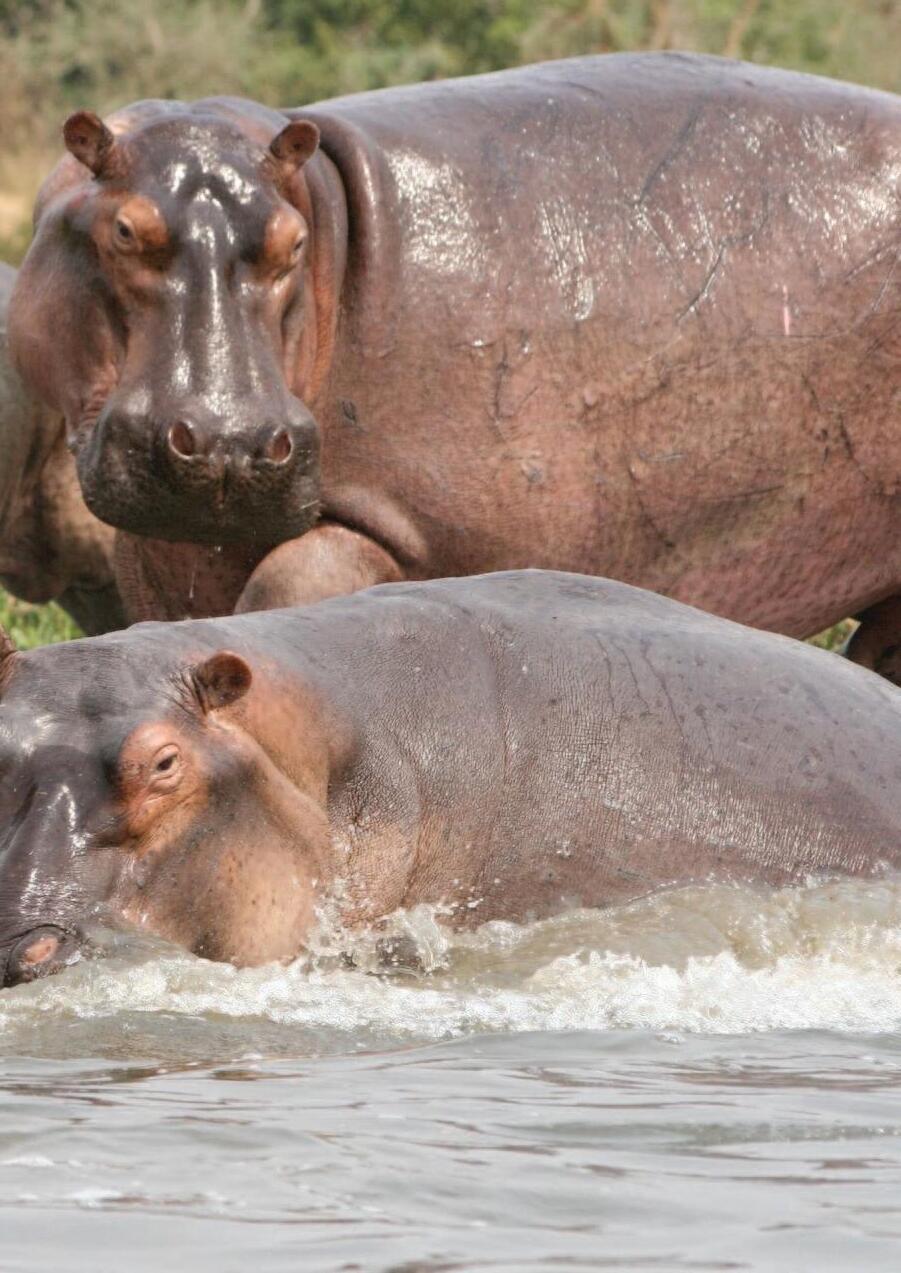
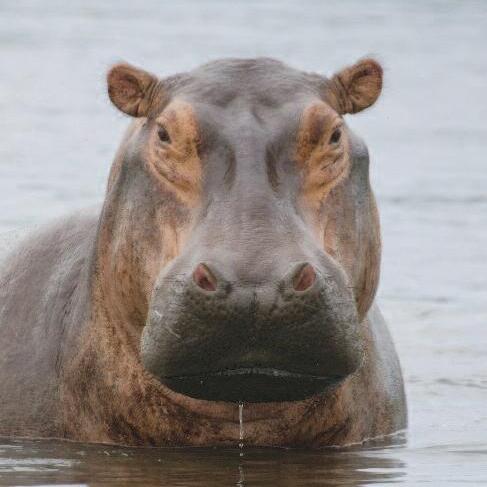
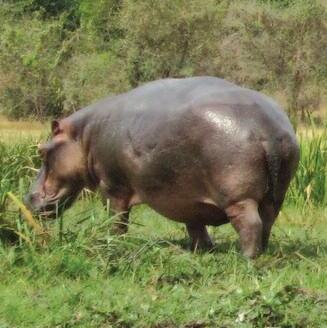
HIPPOPOTAMUS
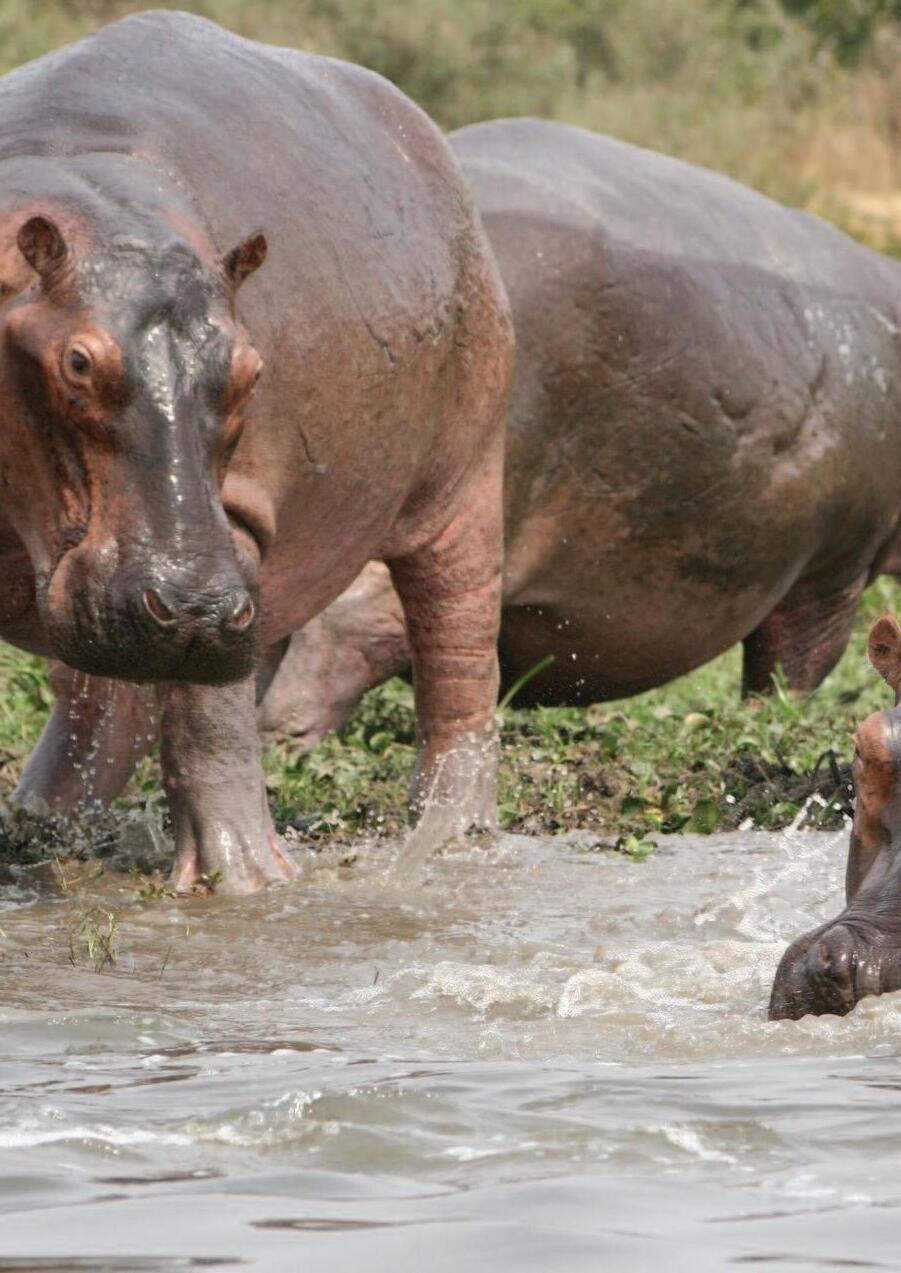
l These huge herbivores can eat 36kg of grass a day – that’s as much as 360 bags of salad!
l Rest in rivers during the day and emerge at night to graze
l Live in herds led by a dominant male, along with females and their young.
l Males are fiercely protective of their herd and territory.
l Their red, oily sweat acts as protection from the strong African sun (like suncream).
l Males can weigh the same as a minibus (3,200kg) – no wonder they’re classed as a ‘megafauna’ species!
l Are one of the most dangerous animals on the planet, attacking other animals (including humans) when they feel under threat
WHAT DOES MEGAFAUNA MEAN?
Megafauna (pronounced: meg-a-for-nah) is a word used to describe any large wild animal, weighing over 40kg. Examples include elephants, gorillas, tigers, giraffes, crocodiles and buffalo – think big!
Megafauna species keep their habitats healthy and help other species thrive. Large herbivores shape landscapes by grazing and trampling plants or trees, spreading seeds and nutrients through their dung, and creating wallows and wetlands for other animals to live in.
Trying to avoid large carnivores keeps herbivores on the move, so they don’t eat or damage all the plant-life in one area.
BORN FREE NEWS
CHEETAH CUB EMERGENCY
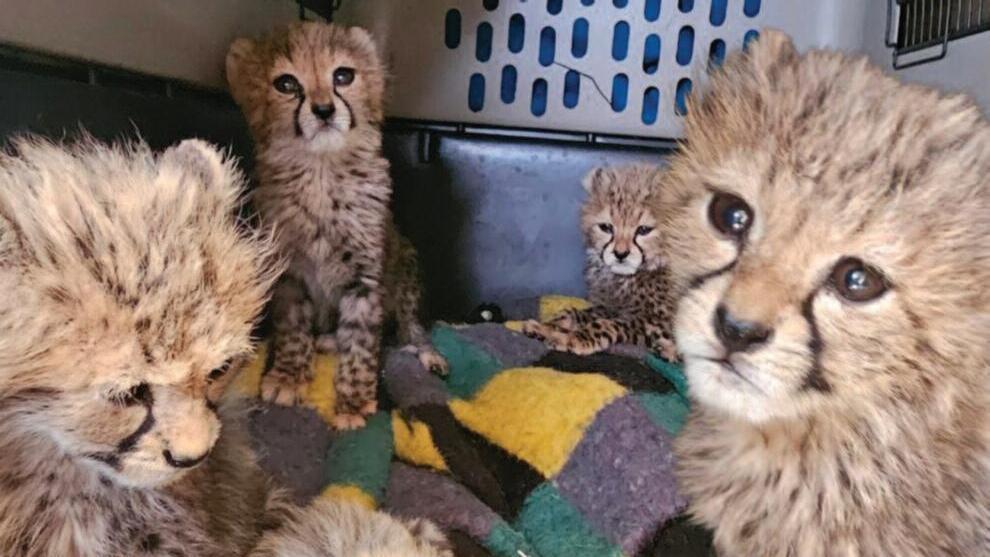
Our remarkable team in Ethiopia embarked on a three-day round trip to rescue four tiny cheetah cubs. They had been stolen from the wild to be sold illegally as pets Tragically, despite our best efforts, one cub did not survive. But we are working hard to help the other three cubs pull through, with round-the-clock care from our dedicated team.
OUR BIG NEWS
After years of hard work and endless dreams, Born Free has helped support the creation of a large-scale sanctuary for elephants It will be a haven for elephants rehomed from circuses and zoos across Europe. Find out more in future issues
STANDING UP FOR HARES
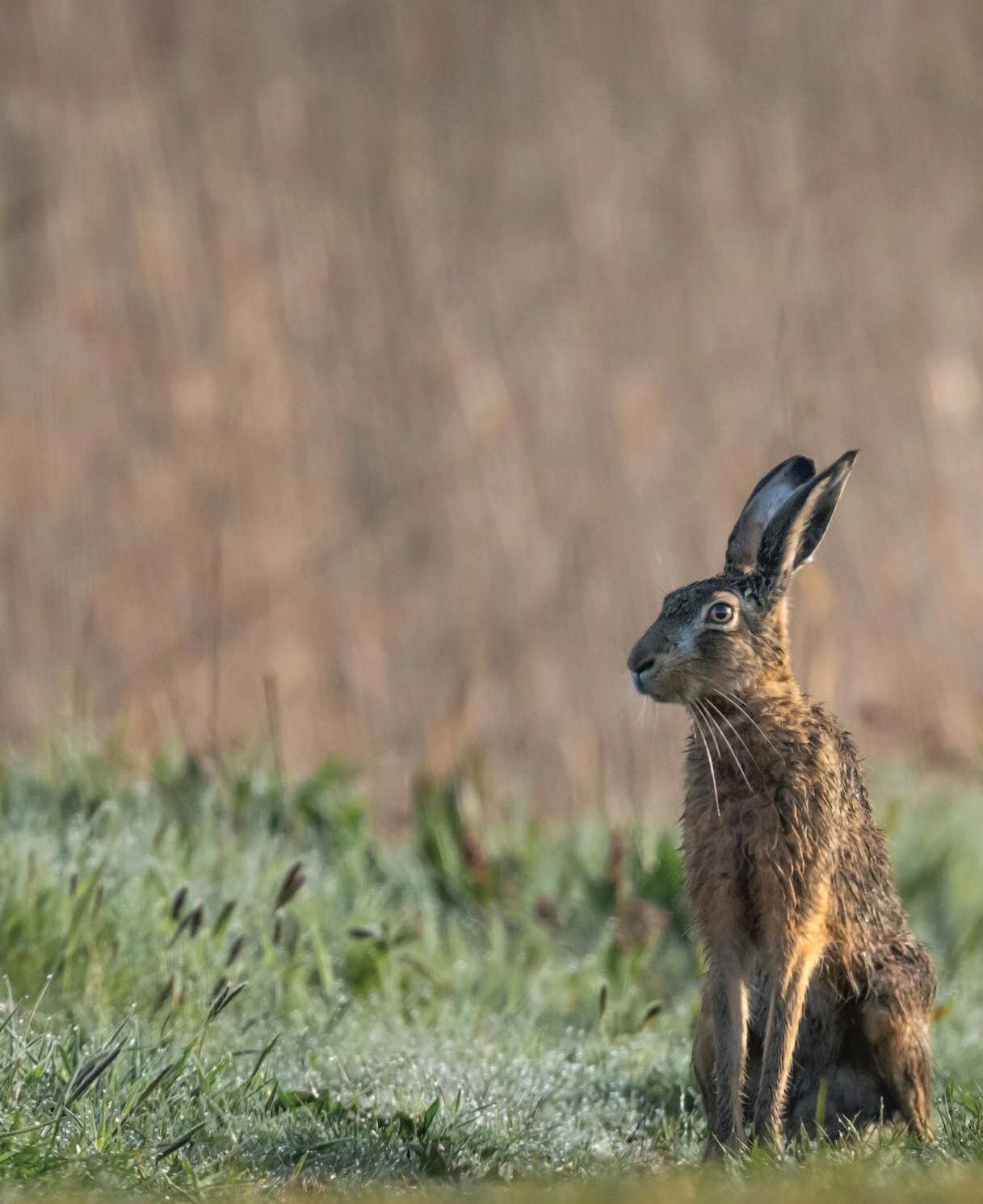
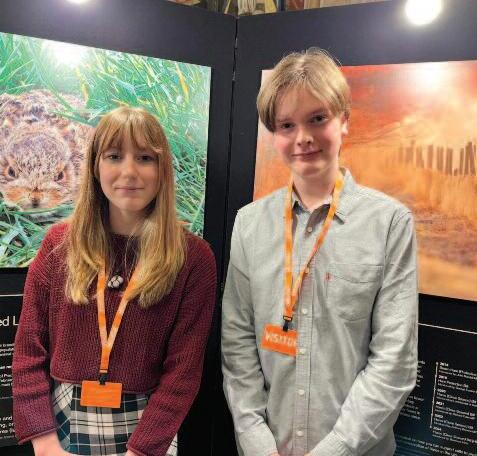
Born Free’s Youth Ambassadors, Thea and Hector, have been speaking up for brown hares. Hares can be hunted all year in England and Wales, including in their breeding season Sadly, this means mother hares can be killed whilst their leverets (baby hares) are still dependant on them, leaving these babies all alone
Born Free is against the hunting of animals for fun. We want to see a change in the law to keep hares, and their leverets, safe during their breeding season.
Thea and Hector
Born Free helps suppor t wildlife rescue centres around the UK, including those caring for some of our largest wildlife species.
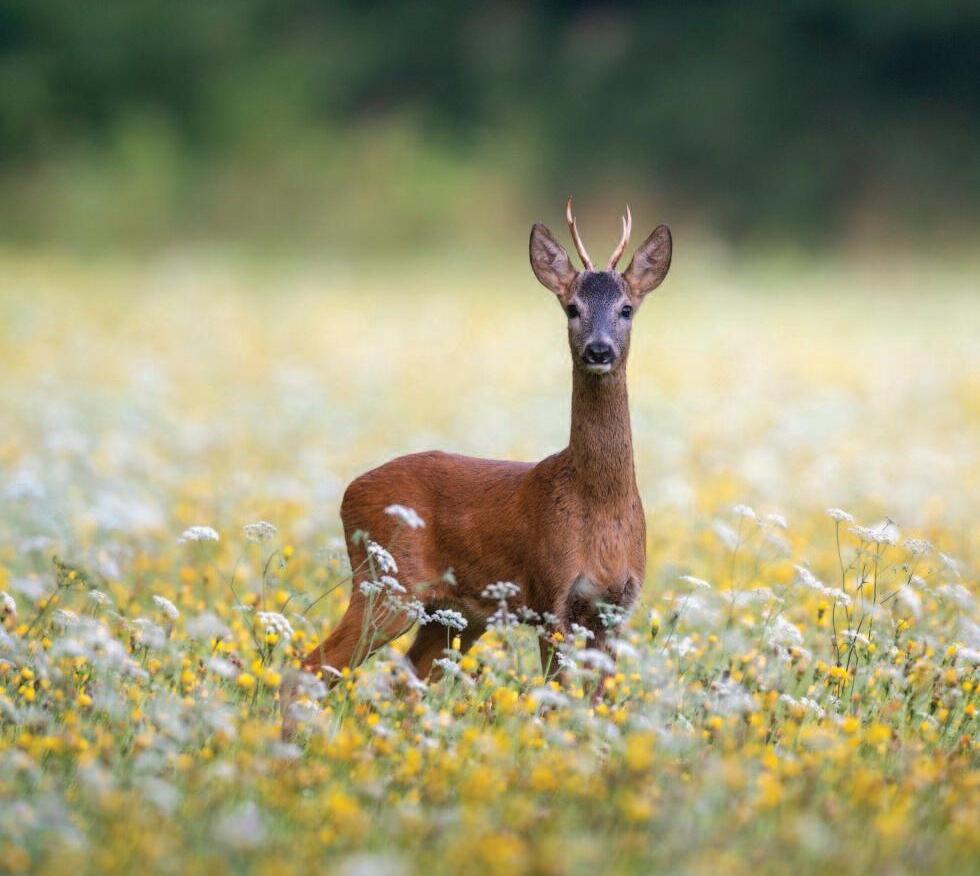
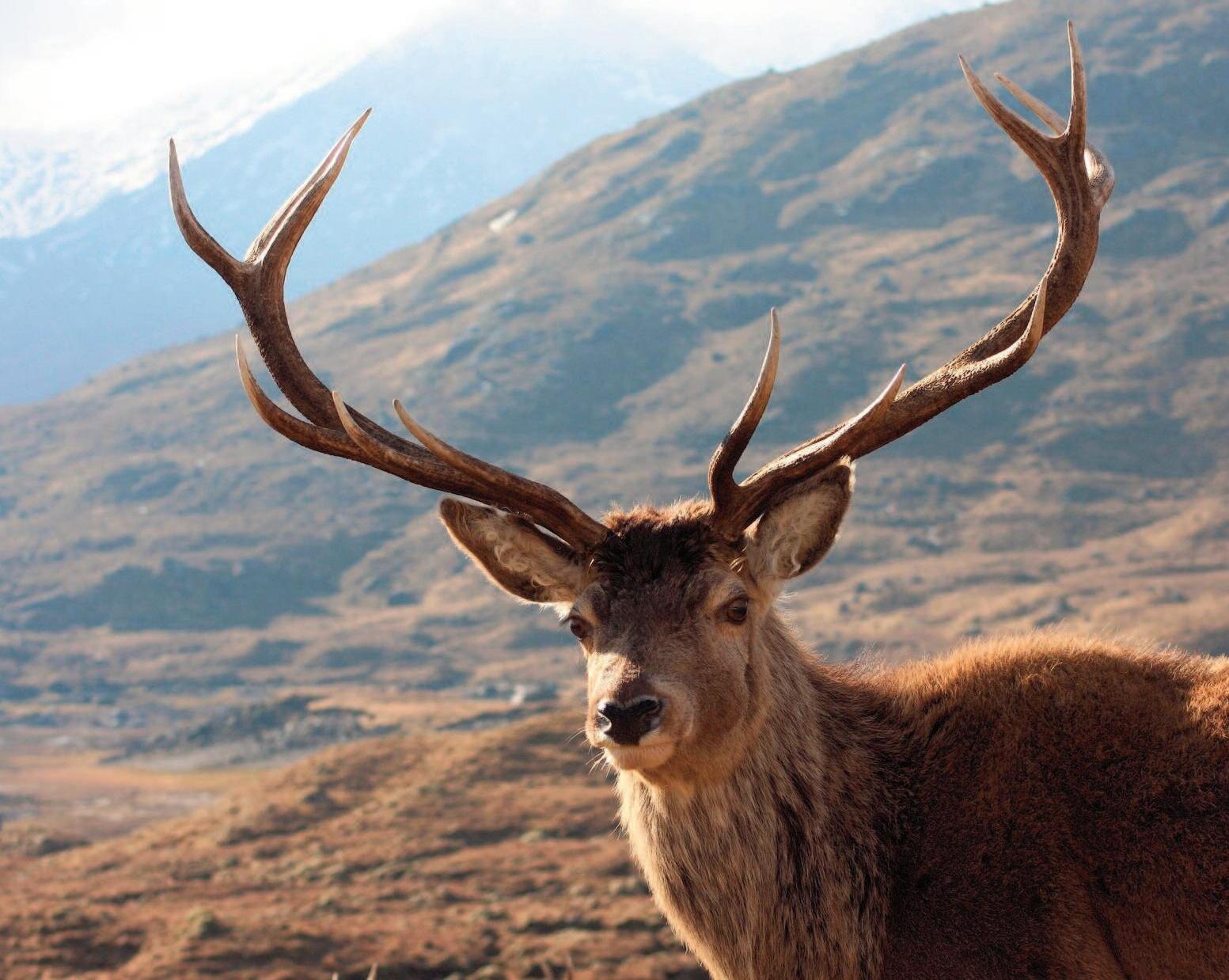
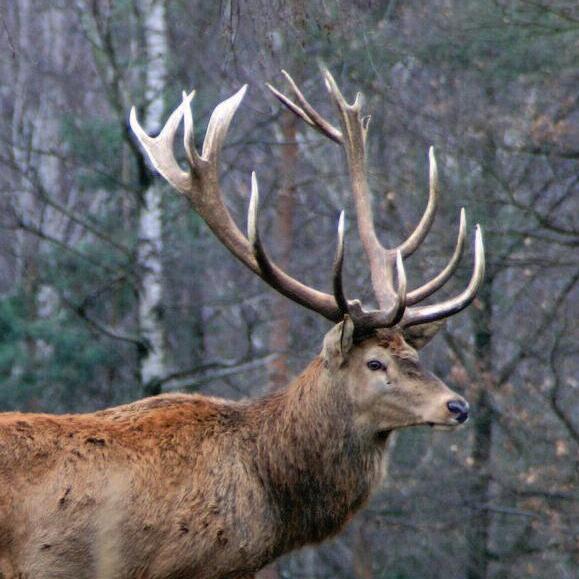
There are two native species of deer found in the UK – red deer and roe deer. Red d largest land mammal in the UK, w branched antlers Older males ha antlers, with more points Each p is known as a ‘tine’.
“Born Free recently gave some money to Oxfordshire Wildlife Rescue, so they could buy materials for a purpose-built shed. This will house large deer, who have been injured, during their recovery. Deer can get very stressed in captivity, so it’s important they have a quiet, private area for a successful recovery. When not being used by deer, the shed can be used for other vulnerable mammals undergoing rehabilitation, ahead of their release back to the wild. ”
e Coordinator
DID YOU KNOW? DID YOU KNOW?
A male red deer is called a 'stag' , a female is called a 'hind' , and a baby is called a ‘fawn ’ .
Red deer
Roe deer
GENTLEGIANTSGENTLEGIANTS
Not one, but FOUR!
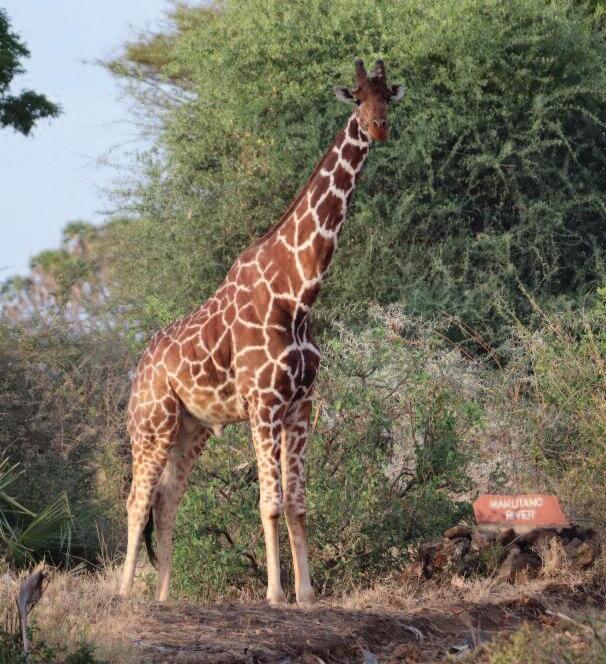
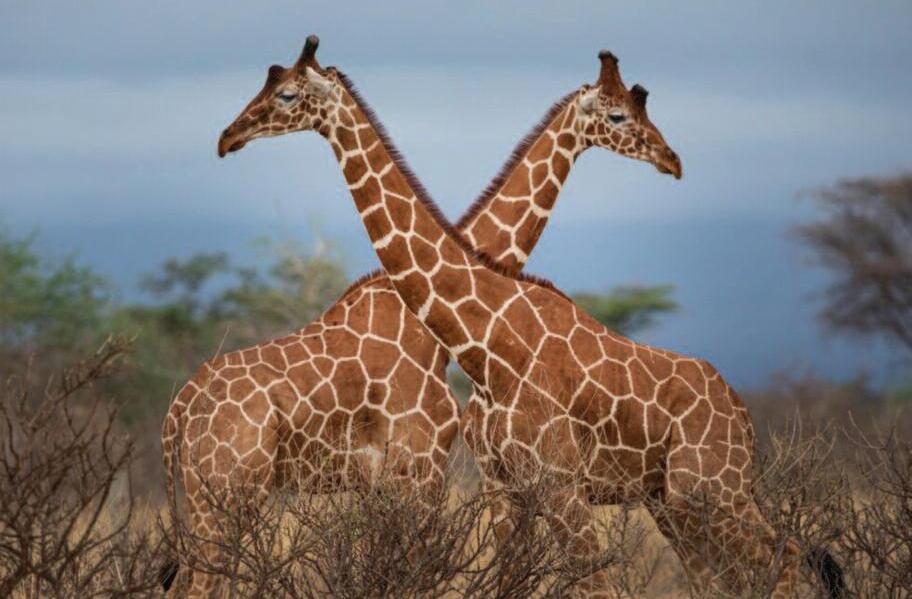
It was thought there was only one species of giraffe, but scientists have now worked out there are in fact FOUR.
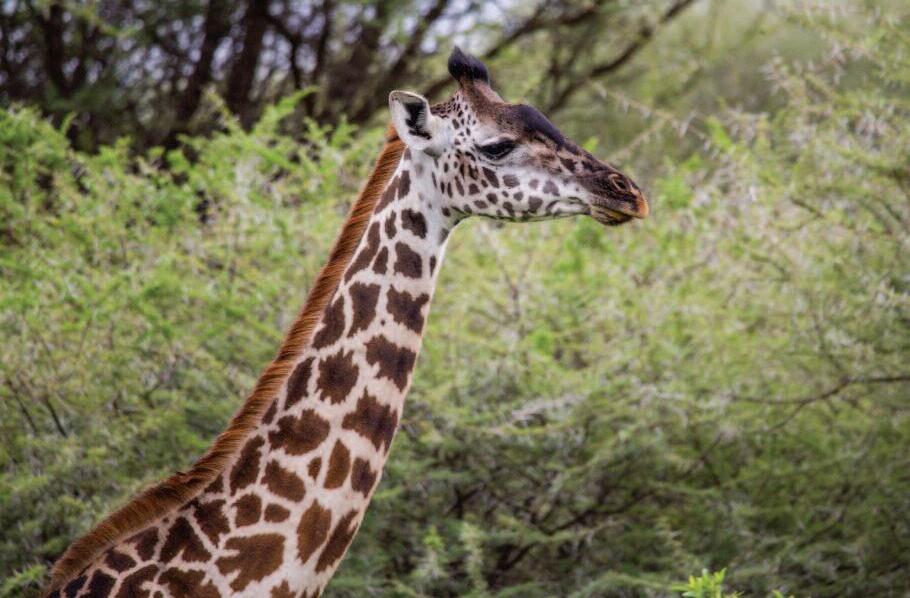
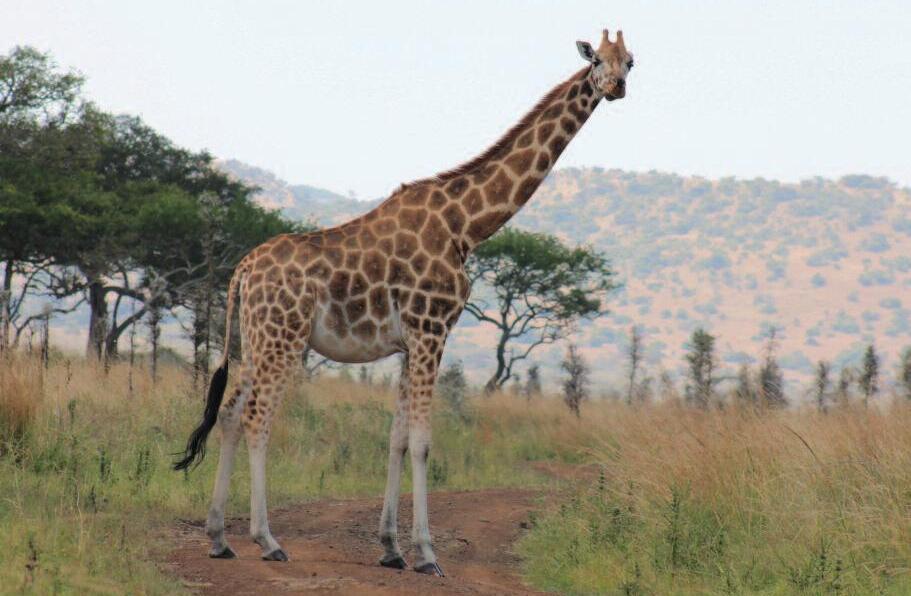
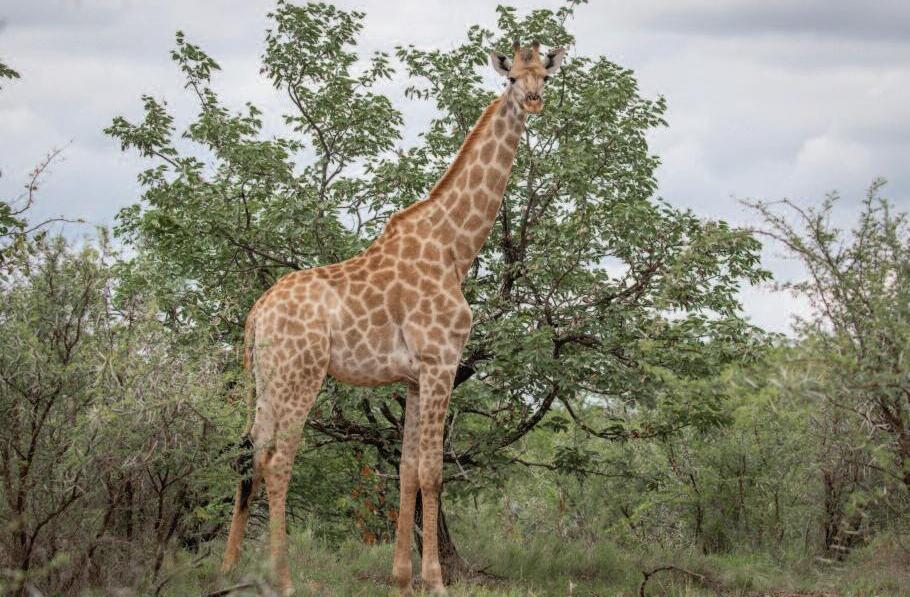
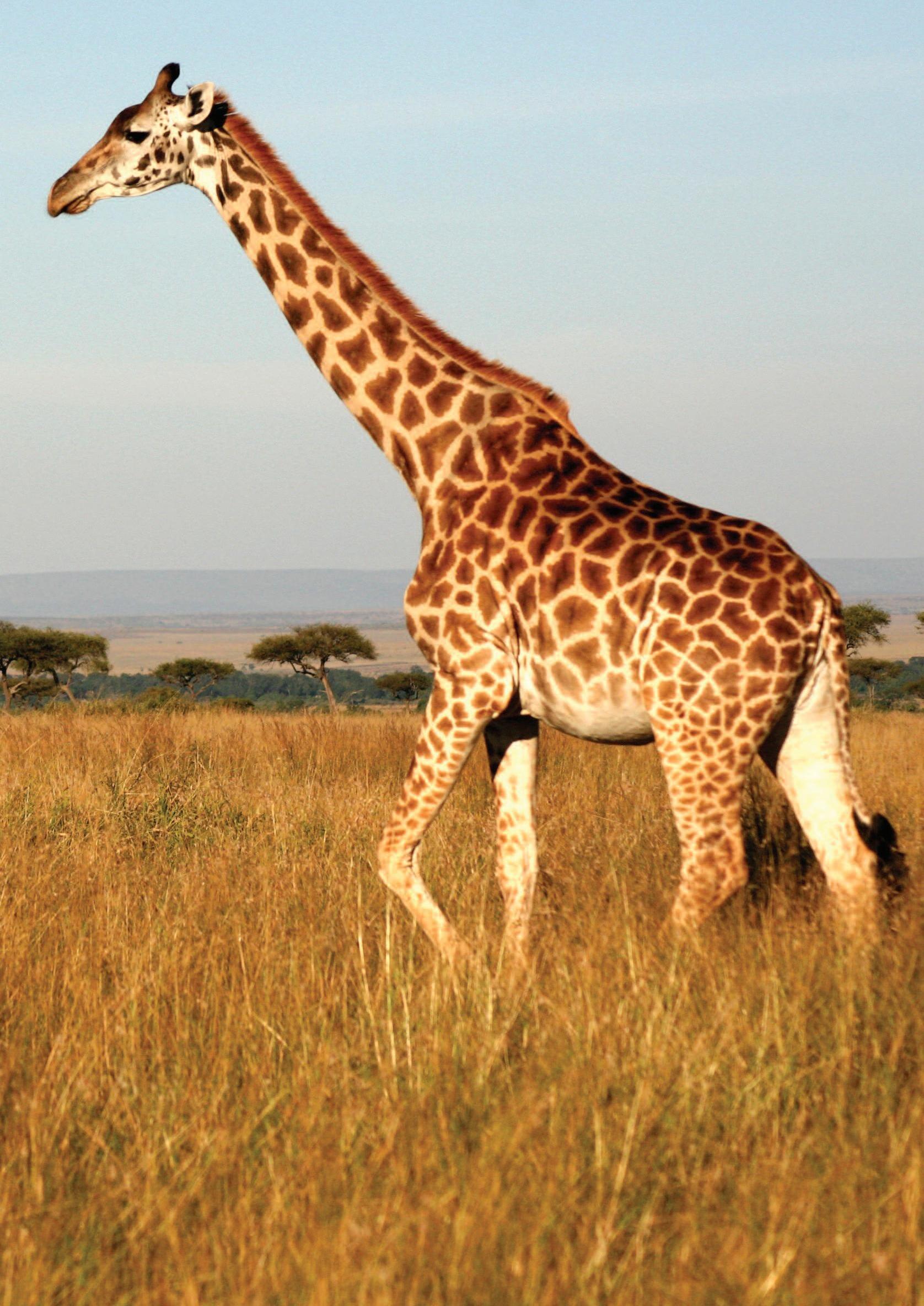
What an amazing discovery! They are called: the reticulated giraffe, the Masai giraffe, northern giraffe and southern giraffe.
It can be tricky to tell the difference between the different species – try looking at their spot colour, the colour between their spots and their pattern. Northern giraffes also have white legs (so look like they’re wearing long socks), making it easier to identify them.
reaching up to 5.5 metres, giraffes are the world’s tallest land mammal, towering over other animals of the savannah.
DID YOU KNOW?
Found in 21 countries across Africa, giraffes can live in savannahs, woodlands and even deserts! Sadly, in some areas, giraffes have become an uncommon sight, with some species classed as Critically Endangered. Born Free works to protect Endangered reticulated giraffes in Kenya. We keep them safe from snares (metal wire traps) and monitor them to better understand how they behave.
Being tall means giraffes can eat from the tops of trees, reaching leaves, seeds and flowers that others can’t.
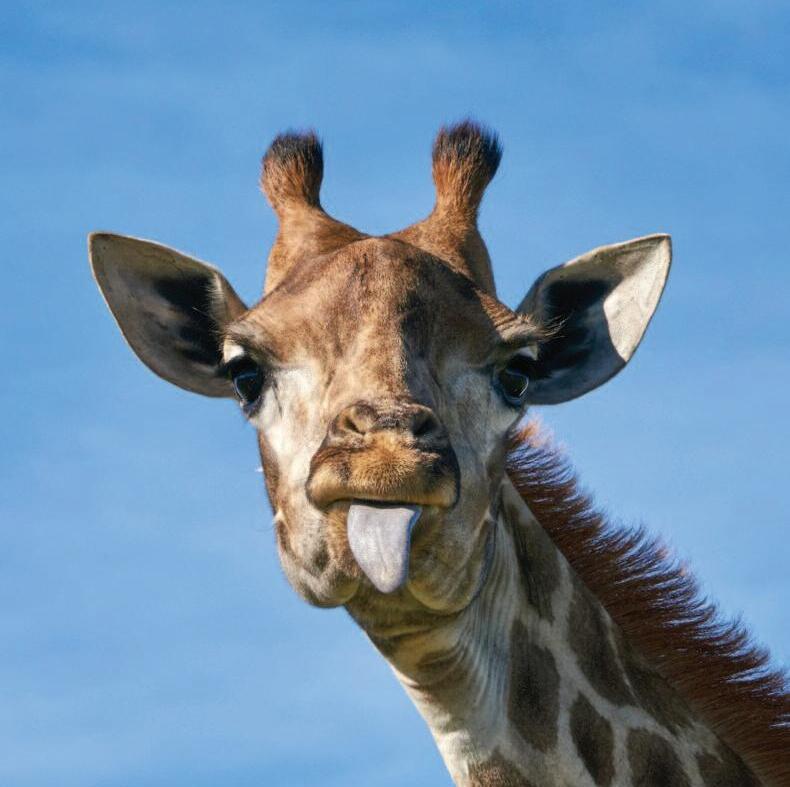
A giraffe’s favourite food is leaves from a tree with enormous thorns (up to 10cm long), called the acacia (pronounced: ack-ay-shah) tree. But their long, mobile tongue (longer than a ruler) helps them avoid the thorns and protect their mouth from cuts. Giraffe’s tongues are also a strange colour – they are black, blue or purple, not pink like ours. Even scientists aren’t sure why, but some think it stops their tongues getting sunburnt whilst feeding!
MEGAFAUNA IN Small Spaces, Big Problems
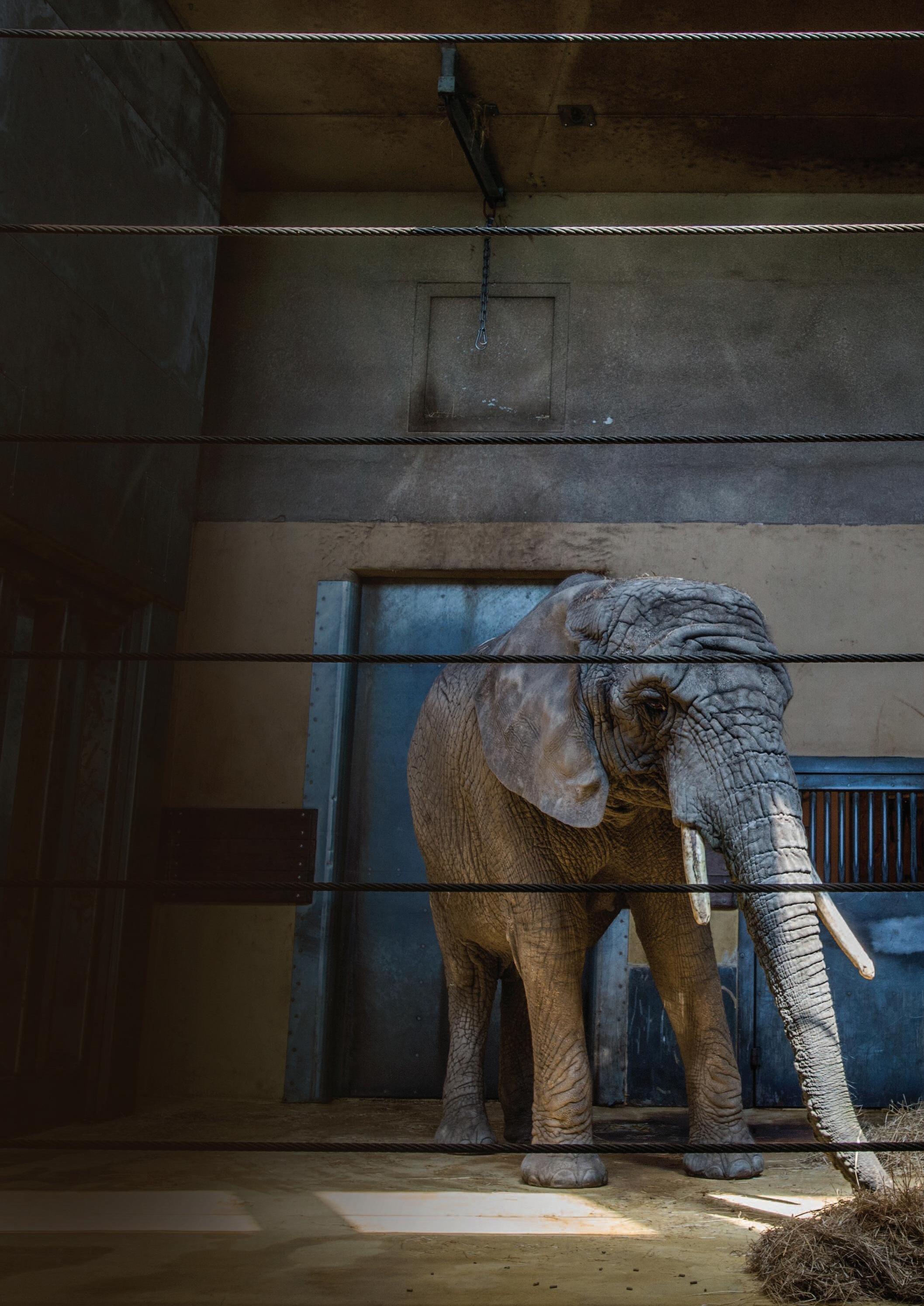
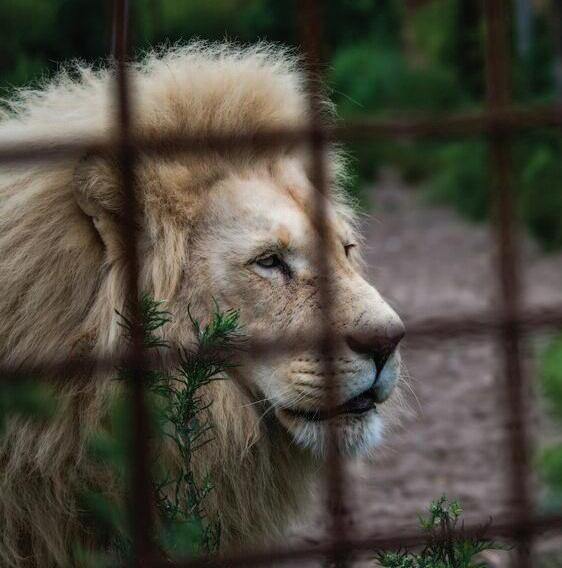
Our fascination with large, magnificent animals sadly means many are kept in zoos, safari parks and aquariums around the world.
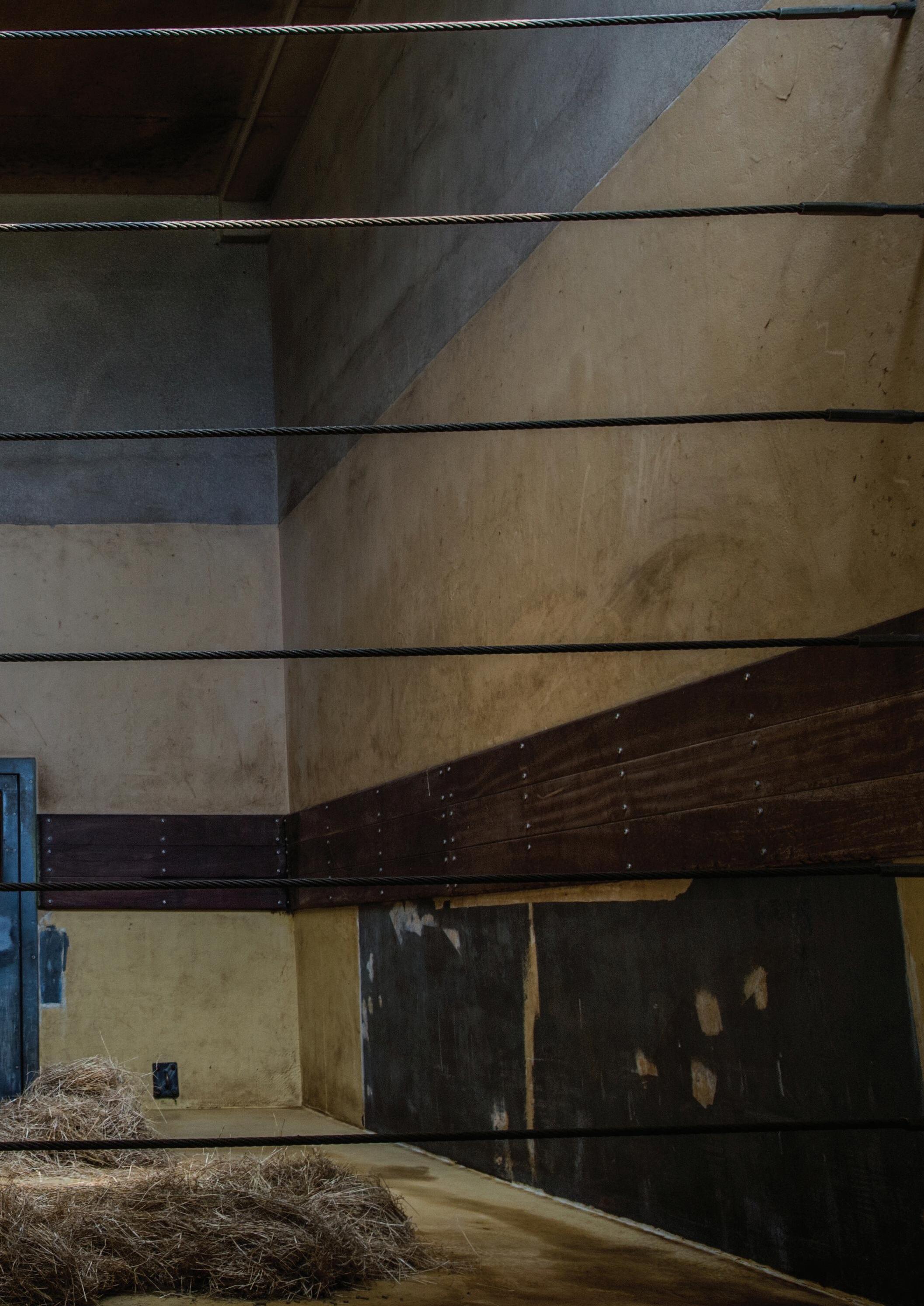
Not only are they expensive to keep, but they’re also very unlikely to ever be reintroduced into the wild. Life in confinement can also impact their physical and mental health.
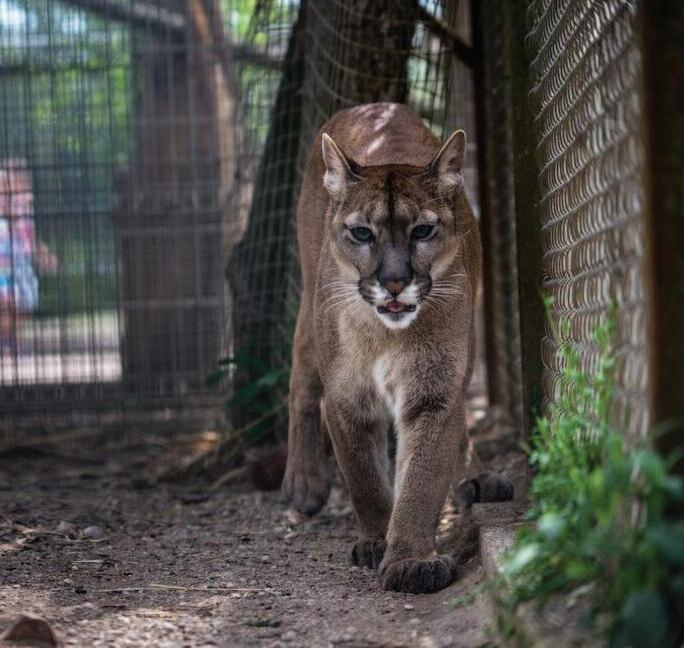
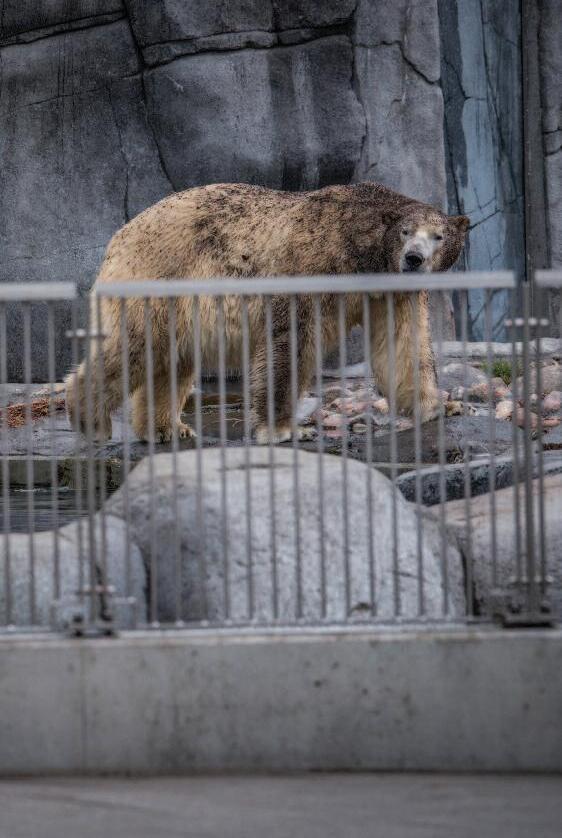
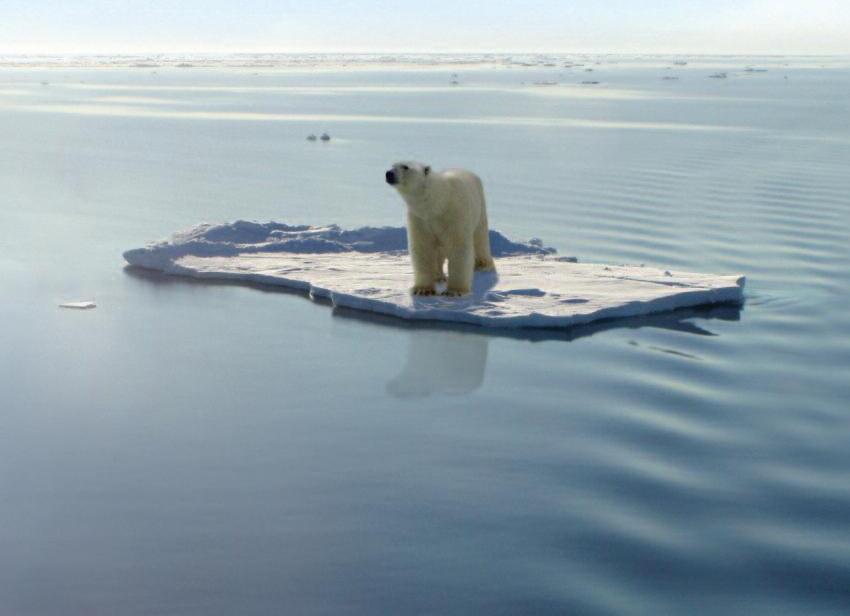
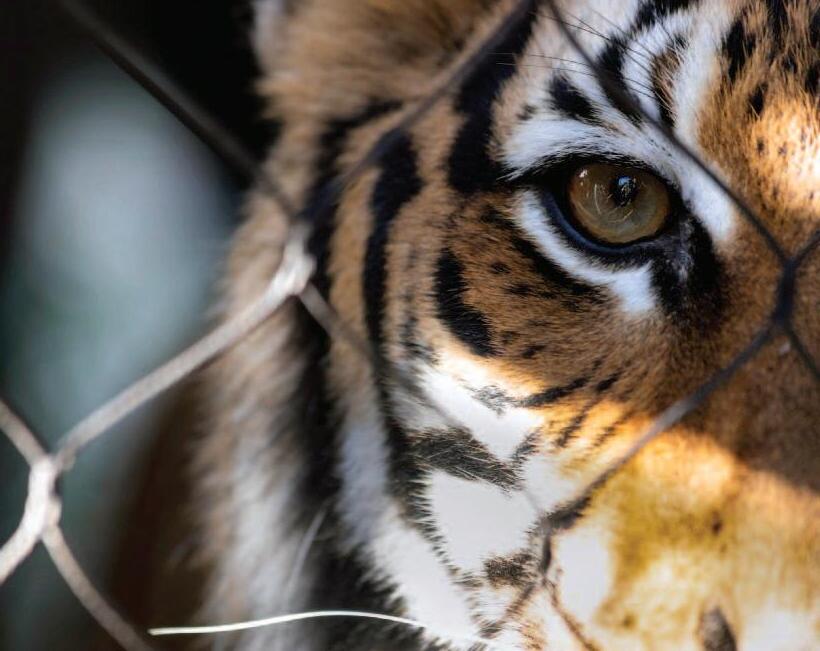
Large mammals who naturally travel across large distances – such as elephants, polar bears and big cats –can par ticularly suffer in zoos and safari parks due to the small size of their enclosures, compared to their natural home range.
Even with plenty of food, water and vet care, these complex animals need to behave as they would in the wild –exploring, hunting, foraging and choosing who to socialise with, and when. This isn’t possible in a zoo, so animals can feel frustrated. For elephants, life in captivity can be hard. They often have lives far shor ter compared to elephants in the wild, despite the many dangers they might face there.
ZOOS:
It’s time to say goodbye to the circus
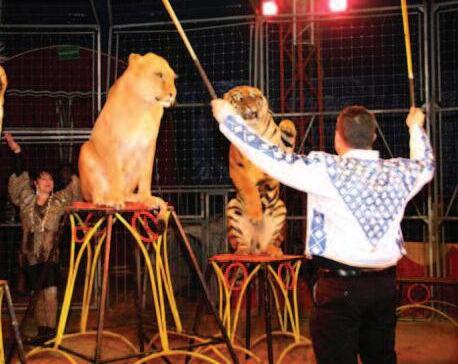
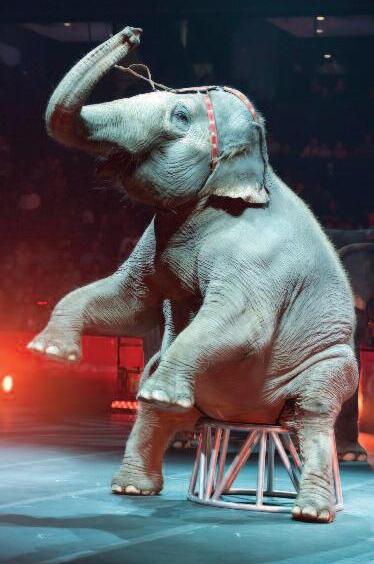
Did you know that elephants and other wild animals are still sadly being used in circuses and shows around the world? they are forced to perform unnatural tricks and often live in poor, cramped conditions.
Wild animals are no longer allowed to be used in circuses in the UK, but it’s still legal in some countries. So, when you’re on your holidays, avoid any shows or circuses that include wild animal performances. Encourage your friends and wider family to do the same – fewer visitors help show that people no longer find such shows acceptable.
TECHNOLOGY in conservation
Technology helps conservationists around the world see, hear and study animals more easily, meaning we better protect them.
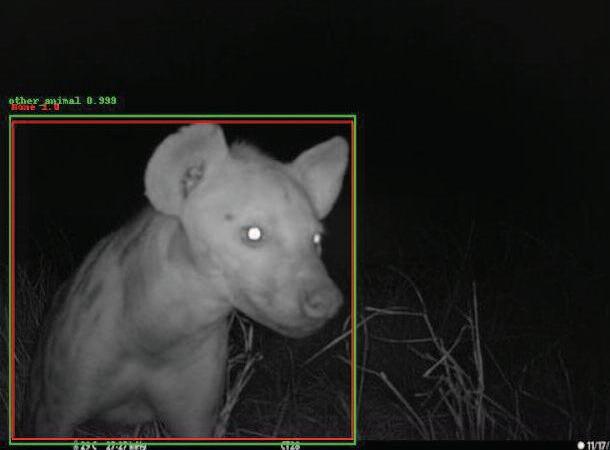
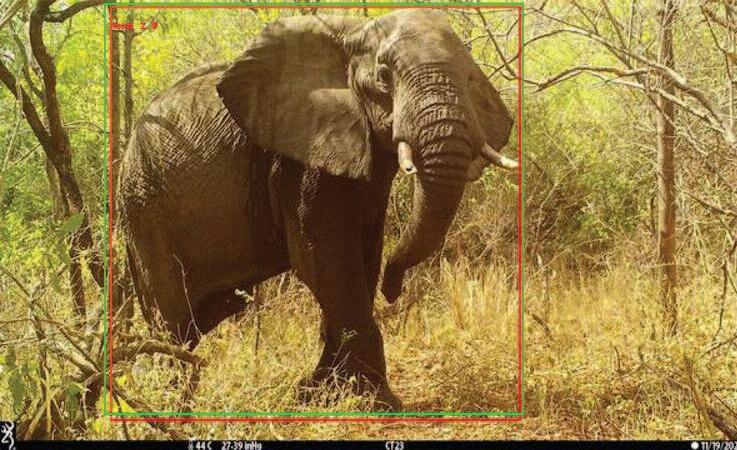
In hard to reach, remote areas, or when studying shy animals who like to stay hidden from people, ‘camera traps’ are a perfect device to help conservationists. Set up in a habitat or where animals are likely to walk by, they can be left for weeks, or even months! When something moves in front of the camera, such as an antelope or leopard, it takes a photo or video.
This means conservationists can find out which animals live in different areas and even work out how many there are. Amazingly, camera traps have helped conservationists discover populations of animals they didn’t even know were there!
At Born Free, we use camera traps to see how well the ‘beehive fences’* or ‘predator-proof bomas’** we give communities are working, especially at night. We can then use AI tools to help us sort the camera trap photos and see which animals have been spotted.
* Elephants are scared of bees, so these fences protect crops.
** Bomas are enclosures where sheep, goats and cattle are kept at night.
FLYING H
Our partners, t Orangutan Foundat drones to fly over th in Indonesia, hom endangered orangu see if trees are being The forest is so big a that forest guards ca the whole area from Drones help the t much further, an
ROAR OAR
Immy, aged 9
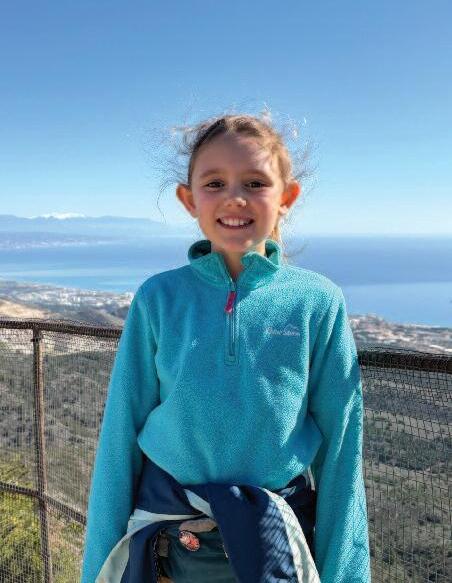
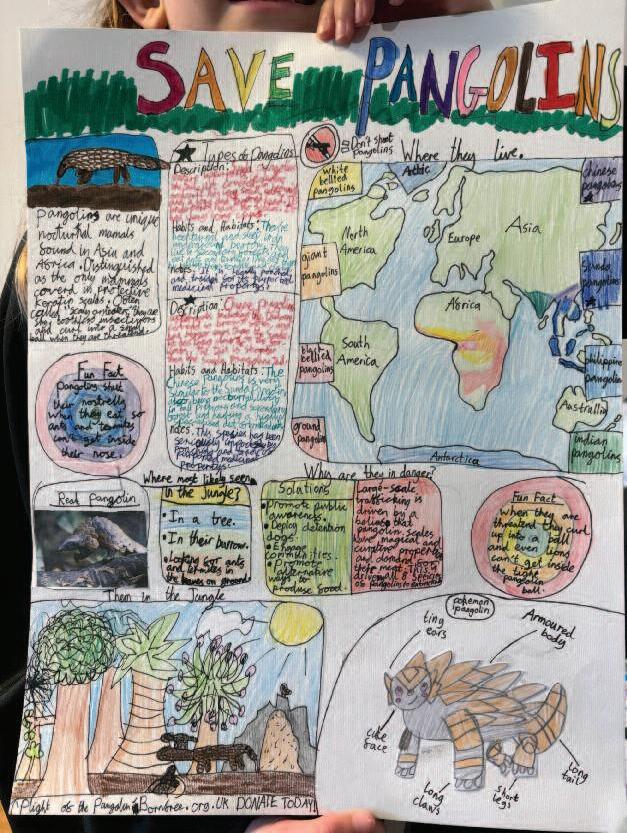
Immy loves wildlife but was shocked to discover the many threats that pangolins face. “I made this poster because I love animals and pangolins are very endangered. I learnt the reasons why they are hunted so much It made me very sad ” Wanting to help these amazing animals, Immy created this incredible poster, to raise awareness and encourage friends and family to fundraise for their protection
Have you held a fundraiser or helped raise awareness about wildlife in need? Tell us what you, or your school, have been up to for wildlife Send your stories and pictures to education@bornfree.org.uk (please ask your parent, guardian or teacher first) The first five classes to share their stories will get a free cuddly mascot! For fundraising ideas visit: www.bornfree.org.uk/fun-fundraising-ideas
THE FLIGHTLESS BIRD ZONE THE FLIGHTLESS BIRD ZONE
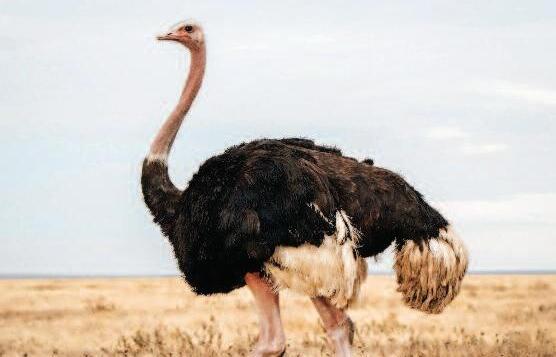
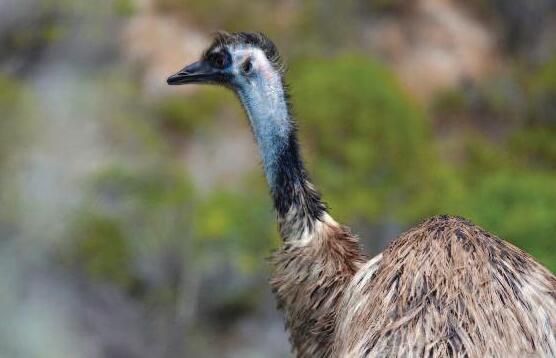
There aren’t just mega-mammals… birds can be megafauna too! Pick one of the flightless birds below and see how it measures up to the others.
O S T R I C H
top speed: 60mph
claw length: Up to 10cm
Height: Up to 2 75m
Wingspan: 2m
Number of eggs laid: Around 10
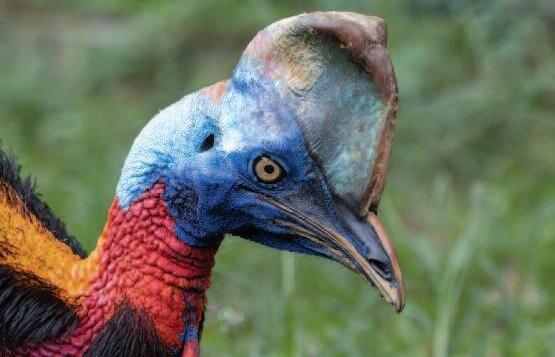
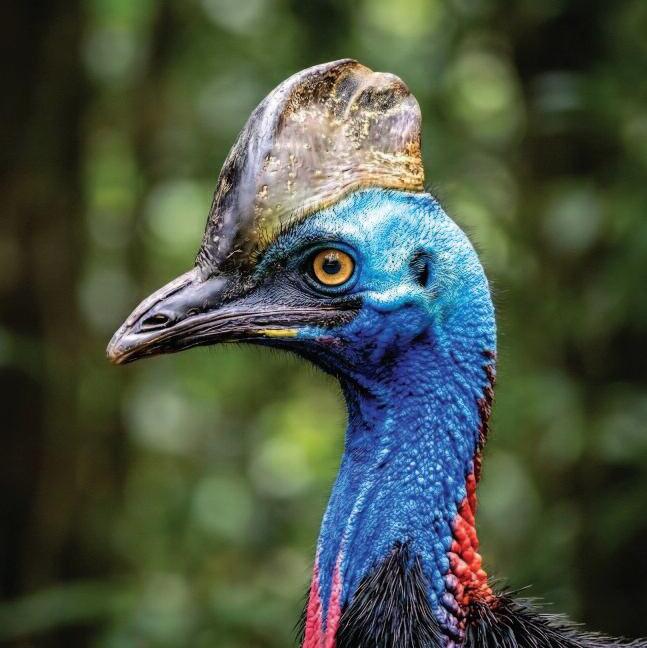
C A S S O W A R Y
top speed: 30mph
claw length: Up to 12cm
Height: Up to 1 8m
Wingspan: <1m
Number of eggs laid: Around 4
top speed: 30mph
claw length: Up to 15cm
Height: Up to 1 9m
Wingspan: <1m
Number of eggs laid: Around 15
Seed spreader
Seed spreader
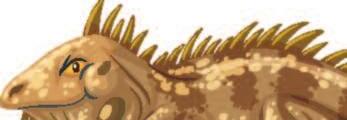
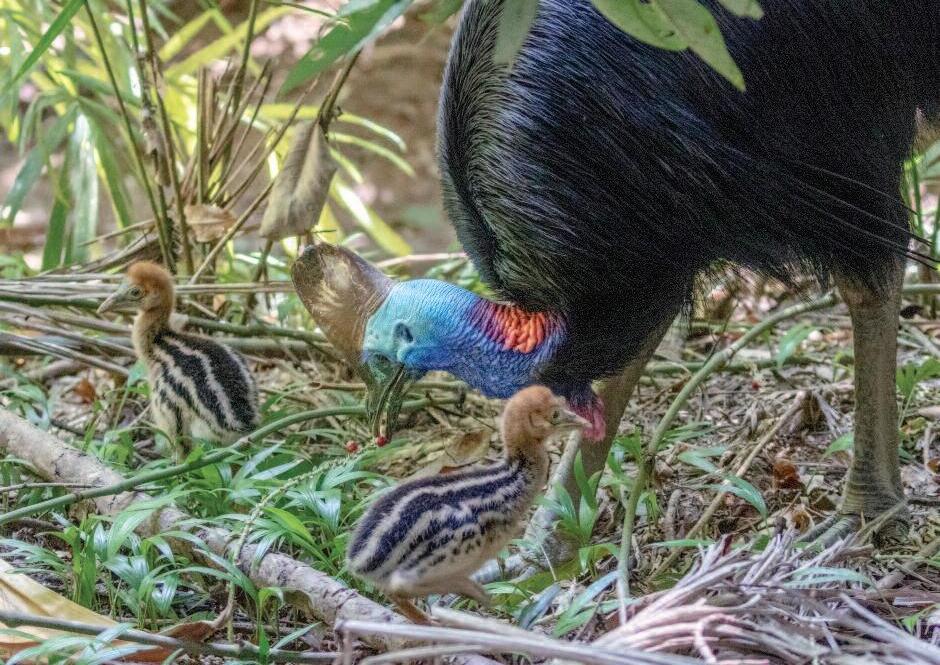
Cassowaries are incredibly important seed dispersers. They eat then poop out the seeds of 238 different rainforest plants. Around 100 of these plants depend entirely on the cassowaries’ seed-spreading to survive – wow! Find the fruit, then spread as many seeds as you can, by taking the longest possible route back to your nest!
Gone... but not forgotten
Let’s look back at long-lost megafauna who used to roam the earth.
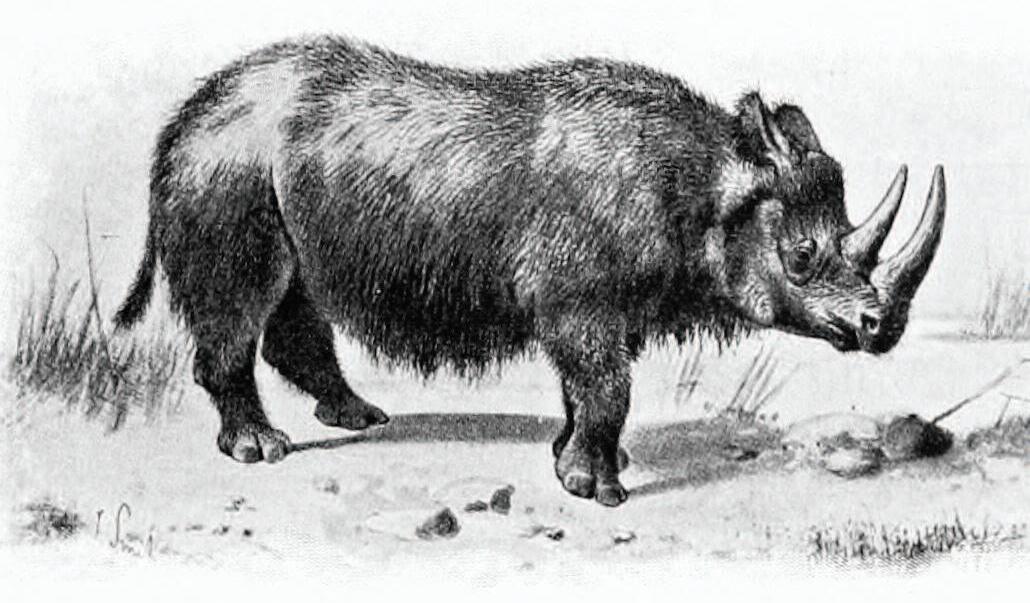
Woolly Rhino
Last seen: 10,000 years ago
Found: Europe and Asia
About: Built like a furr y tank, with shor t legs and small ears to conser ve body heat By eating grass and small shrubs they kept grasslands healthy
Extinct: Hunted by humans and affected by changing climates around the ice age.
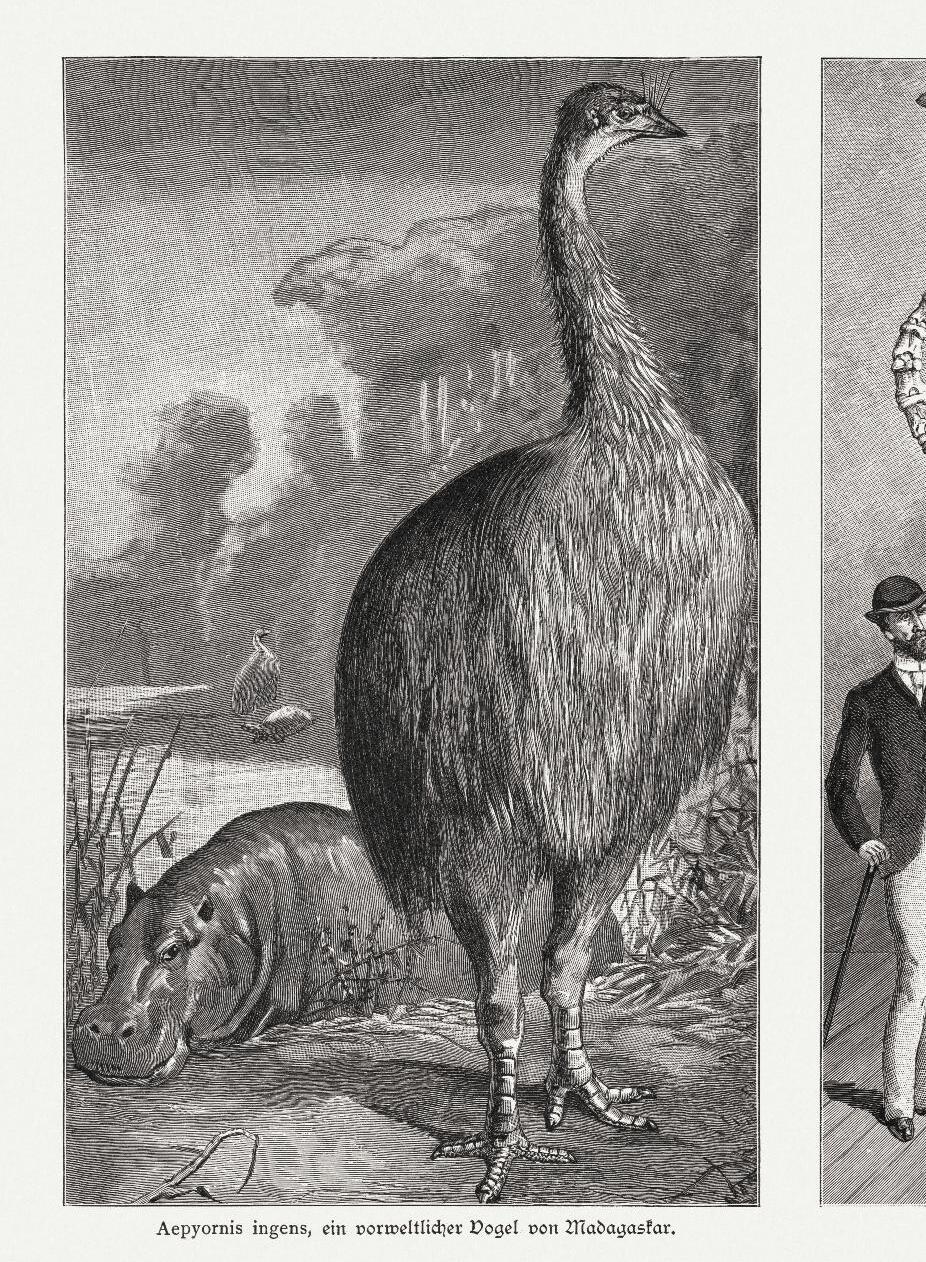
Elephant bird
Last seen: 1,000 years ago
Found: Madagascar
About: Stood around 3m tall and laid giant eggs (even bigger even than dinosaur eggs!) Impor tant for spreading fruit seeds. Extinct: It’s thought this is because humans cut down their forest habitat to create grasslands to feed their cattle.
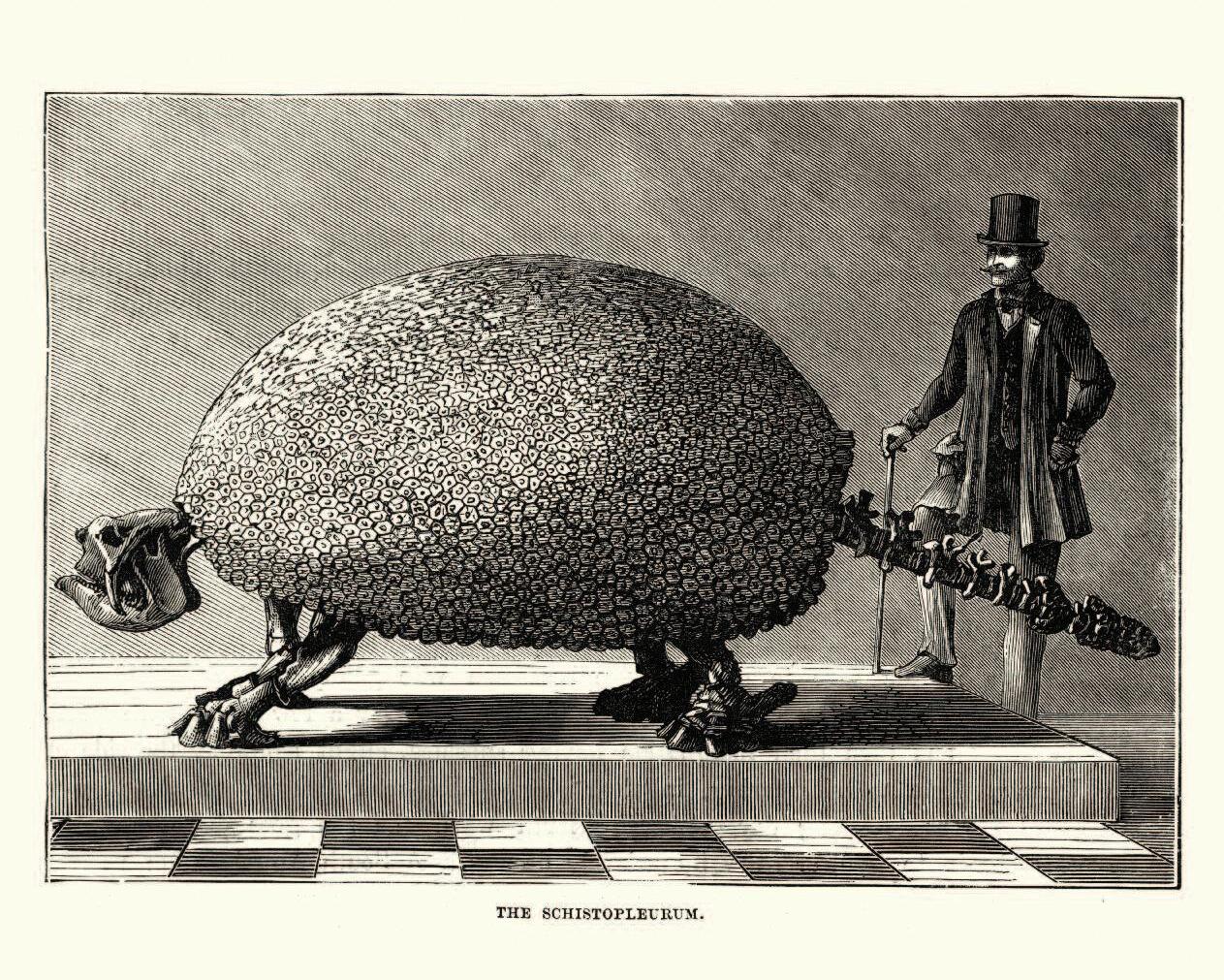
Glyptod on
(Pr onounced: g-l-ipt- oa-don)
Last seen: 12,000 years ago
Found: South America
About: Imagine an armadillo the size of a car! This slow herbivore constantly grazed and trampled grassland, keeping habitats healthy
Extinct: Hunted by humans who ate their meat and sheltered under their large bony shells.
Extinction is forever
There are different reasons animals go extinct, but sadly humans continue to drive many wild species to extinction. Born Free works to protect different megafauna species in the wild, to help ensure their survival, as well as all the species living alongside them.
BRINGING BACK BRINGING BACK
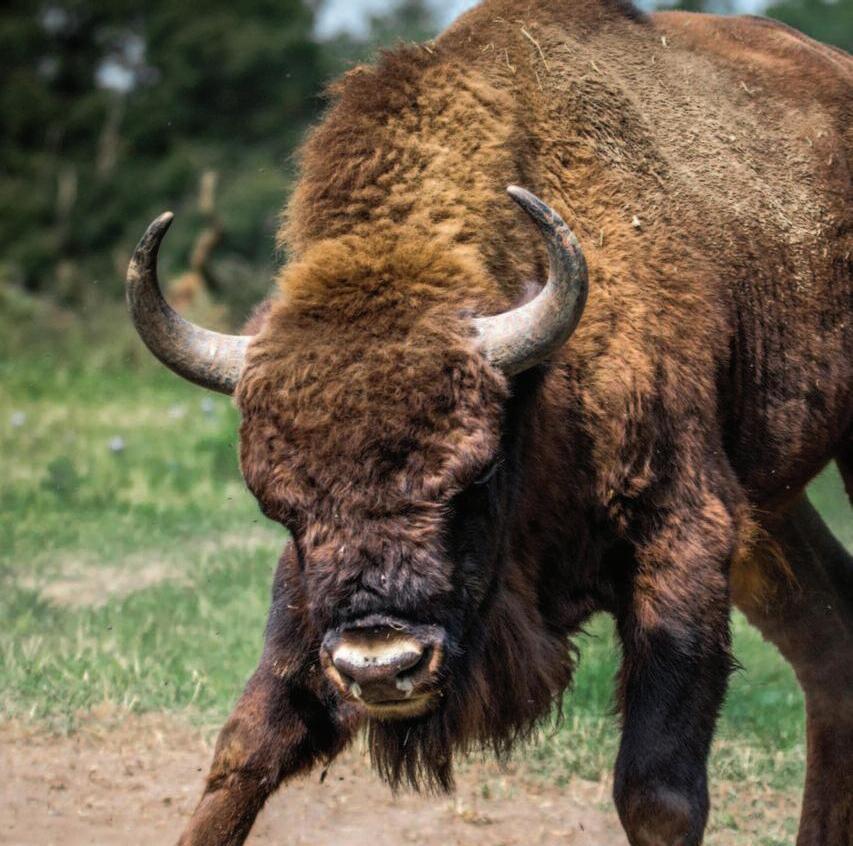
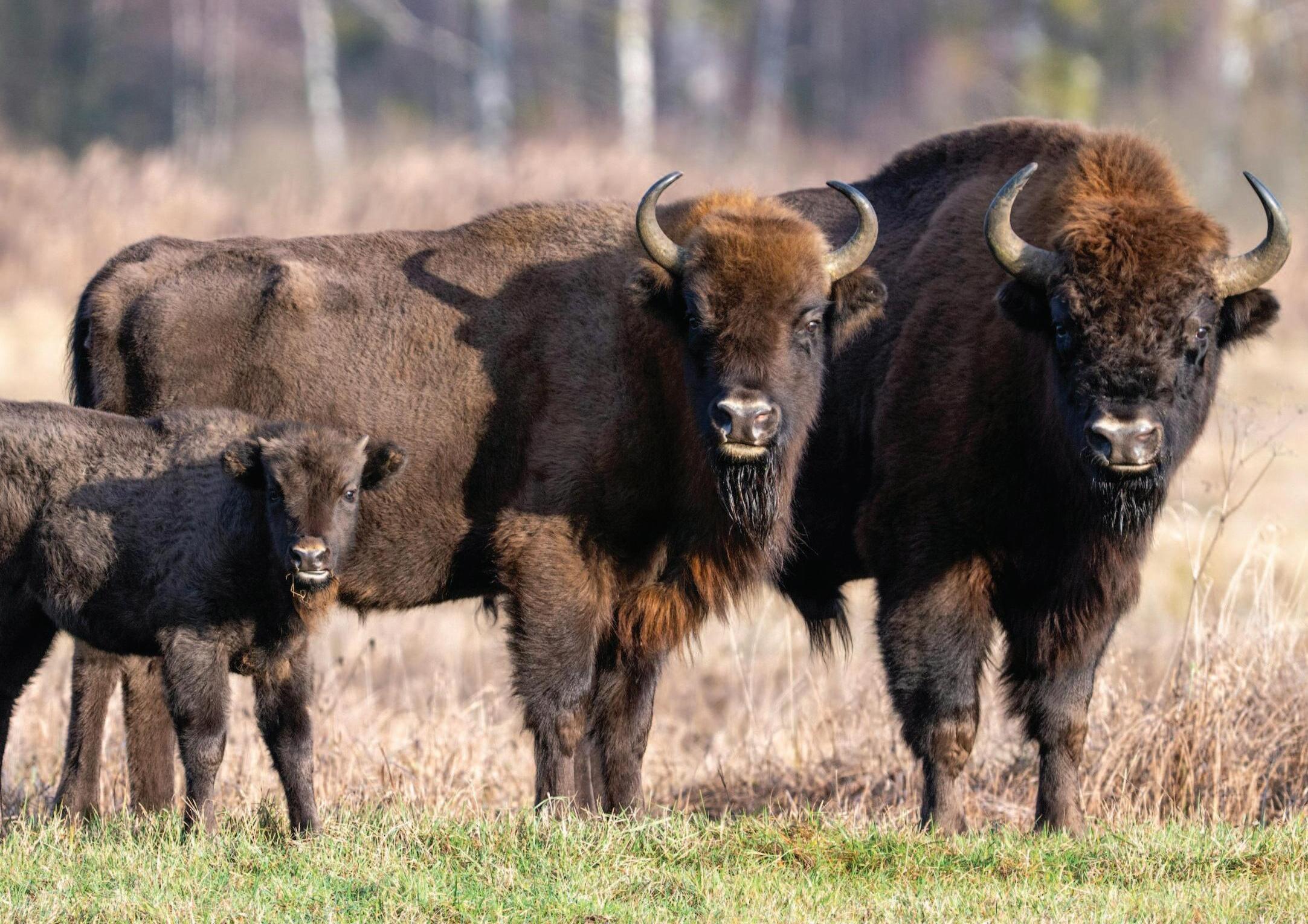
Not as big or as fluffy as a woolly rhino, but no less important, the european bison is back! a small herd has been reintroduced to a forest in Kent, here in the uK, to help rewild the landscape. their day-to-day routine of grazing, wallowing, trampling, and dust bathing helps wildflowers to grow and other wildlife to thrive, by creating open glades and muddy pools throughout their woodland habitat.
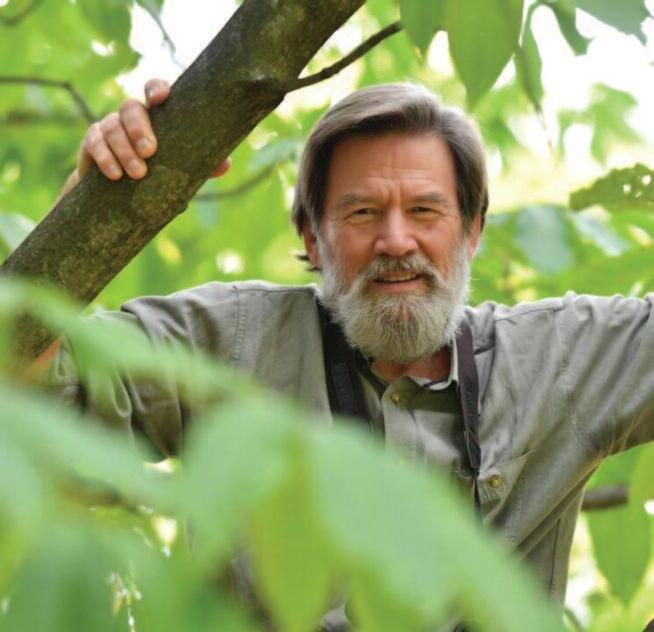
We asked Ian Redmond, wildlife biologist and conservationist, about his work, including studying some incredible elephants.
Have you always been interested in wildlife?
I’ve always been fascinated by animals and love being in nature I am a naturalist by bir th, a biologist by training and a conservationist by necessity.
Tell us about your career working with wildlife.
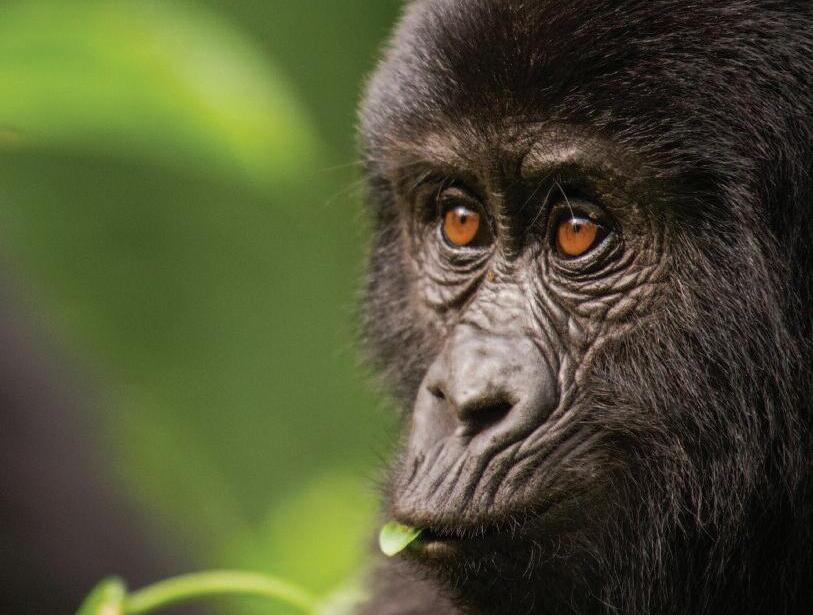
I say yes to every oppor tunity and then just try to keep up! Inspired by a talk on mountain gorillas at university, I wrote to famous primatologist (pronounced: pr-iy-mat-ol-ojist) Dian Fossey offering to help. Amazingly, (months later) she wrote back saying yes, “ if you can get here ” That was 50 years ago this year!
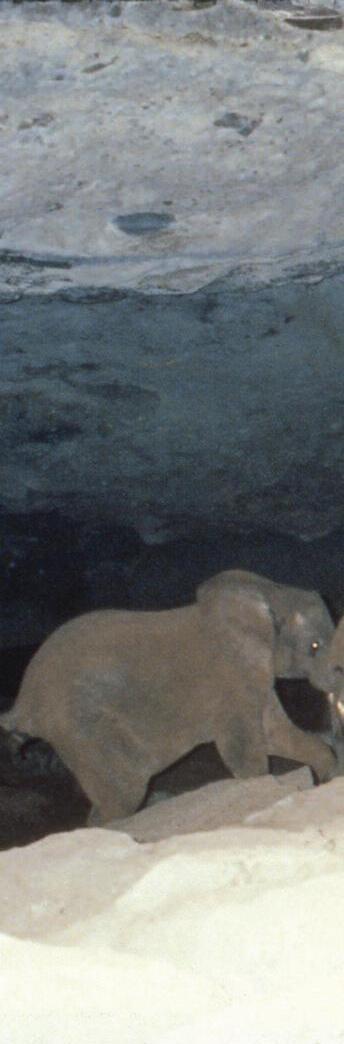
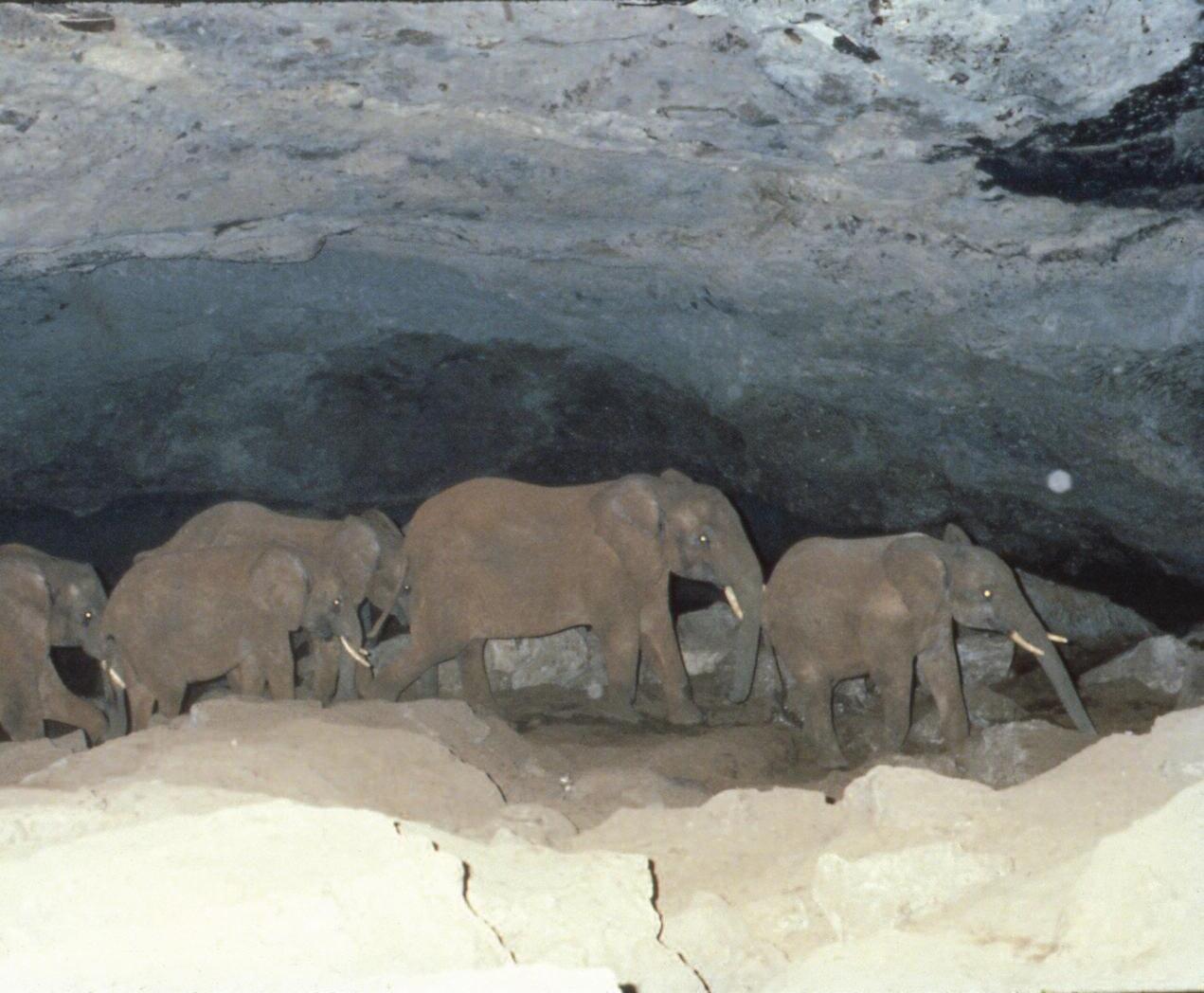
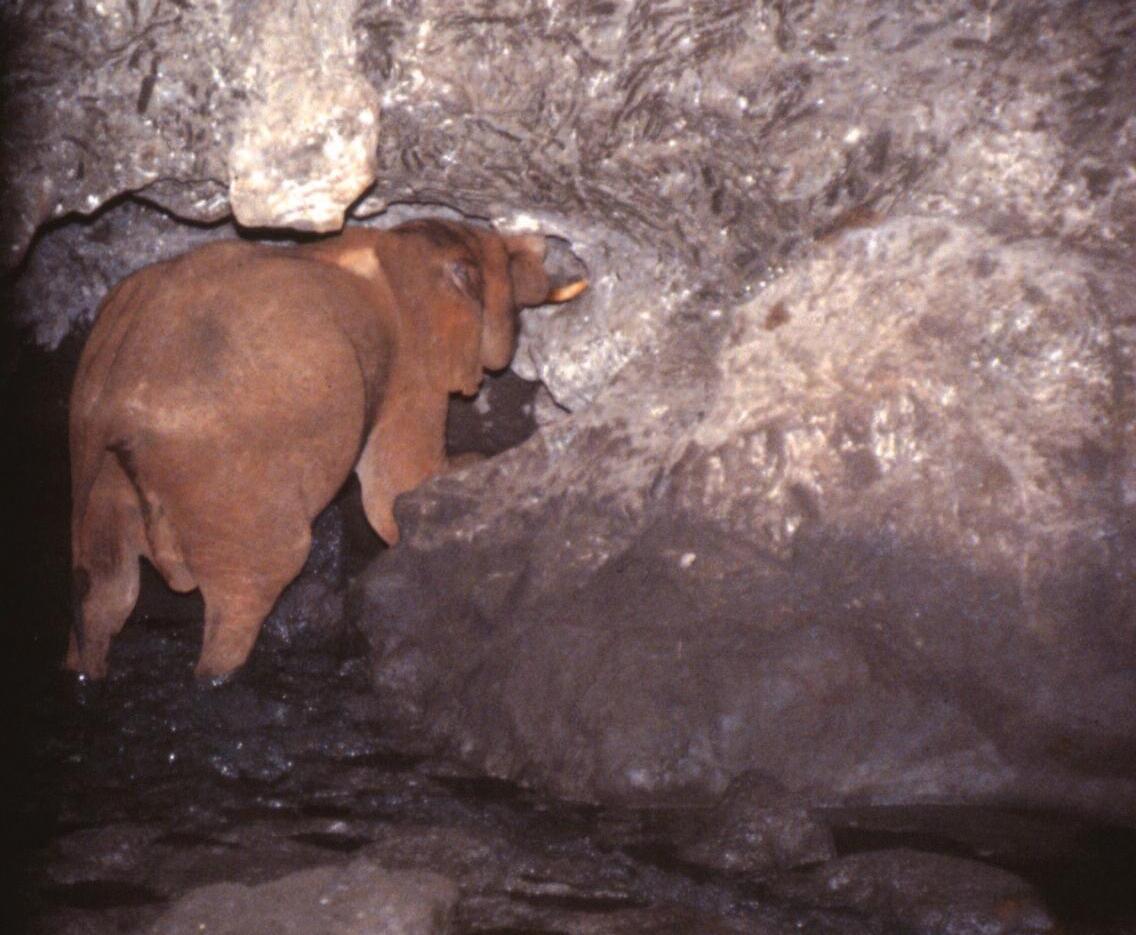
Tell us about the amazing elephant behaviour you encountered in Mount Elgon National Park, Kenya. Working with a research team at Kitum Cave, I was introduced to elephants who travelled underground Animals need salt to survive, and these special elephants had discovered salt deposits in the cave. They chiselled
lumps of mineral-rich rock with their tusks, ground it between their massive molars, then swallowed.
This unique behaviour was known by locals but hadn’t been studied before I spent around six months living underground in a side-chamber of the cave studying and photographing the elephants. Everything I saw by the light of my torch was a scientific first!
Sadly, ivory poachers killed many of the elephants I studied, so my focus switched to conservation, and, with Born Free, we launched a campaign to try and ban the ivory trade.
Do you have any advice for young people?
Follow your interests and eventually your interests may become your job! And don’t give up when someone says ‘no’ – maybe that wasn’t the right moment. Next time it might be
Elephants in the cave
DID YOU KNOW? DID YOU KNOW?
All animals need some salt in their diet,but it can be trickyto find! In the Amazon, animals gather at ‘ claylicks’ to eat clay. Clayis full of vital minerals,including salt.
AMBASSADOR COLUMN
Megafauna Under Threat: Rhinos
Born Free’s Youth Ambassador, Ayan, tells us all about his favourite animal – the rhino.
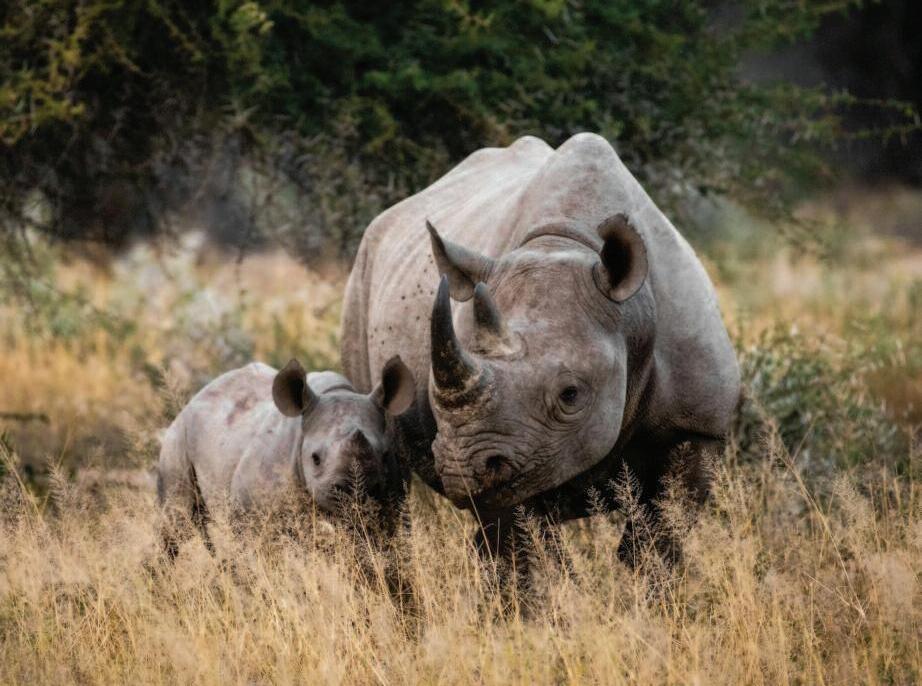
“Majestic horns, wise eyes, and tank-like bodies make rhinos awesome creatures. But beyond how they look, they are megafauna big animals that the entire food web relies on Whether it be through reducing bush cover, spreading seeds in their dung, or keeping grasslands healthy through grazing, rhinos promote biodiversity they help lots of different animals and plants flourish.
“Sadly, human actions are hur ting rhinos. Illegal hunters, called poachers, kill rhinos for their horns. Despite being made of the same stuff as our fingernails, these horns are thought to be healing and are priceless ingredients in traditional medicine In addition, rhinos’ habitats are being destroyed to build homes and farms, making it harder for rhinos to find food, water, and territory
“It’s impor tant that we protect rhinos, because if we do, we are protecting the ecosystem they are a par t of. We need to be responsible neighbours to our fellow animals and preserve the places they call home.”
QuiztimeQuiztime
WHAT ARE THE POINTS ON A DEER’S ANTLER CALLED?
A) Spikes B) Tines C) Twigs
WHICH GIRAFFE SPECIES CAN BE DESCRIBED AS ‘WEARING LONG SOCKS’?
A) Reticulated giraffe
B) Southern giraffe
C) Northern giraffe
4
HOW MANY DIFFERENT TYPES OF SEEDS DO CASSOWARIES SPREAD IN THEIR DUNG?
A) 382 B) 823 C) 238
C) Large animals who are extinct 6
WHAT ARE MEGAFAUNA ANIMALS?
A) Small animals who provide food for other animals
B) Large animals who help keep nature in balance
CAMERA TRAPS HELP CONSERVATIONISTS…
A) scare away big animals
B) see what animals live in remote areas
C) take selfies in interesting places
WHAT’S INTERESTING ABOUT HIPPO SWEAT?
A) It acts like a suncream
B) It makes them smell bad to predators
C) It allows them to move faster under water
HINT: ALL QUIZ ANSWERS CAN BE FOUND IN THIS MAGAZINE (SOME MIGHT BE FOUND ON LATER PAGES!)
factS Fantastic Fantastic
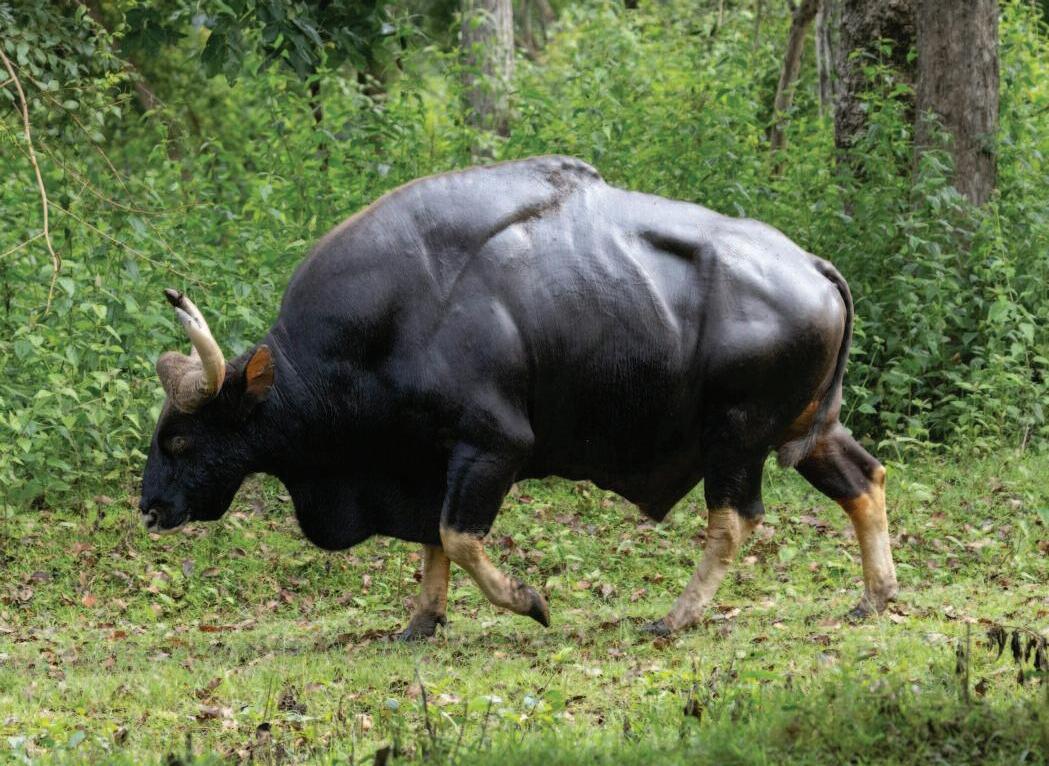
Heavyweight herbivore
The world’s largest wild cattle species, the gaur, is built to withstand attacks from tigers. Males can weigh in at an incredible 1,500kg – the weight of two or three domestic cows!
Dad duty
Male cassowaries take sole responsibility for eggs and chicks. After the female lays her eggs, she leaves him to incubate them. He then raises the chicks for up to nine months, all by himself!
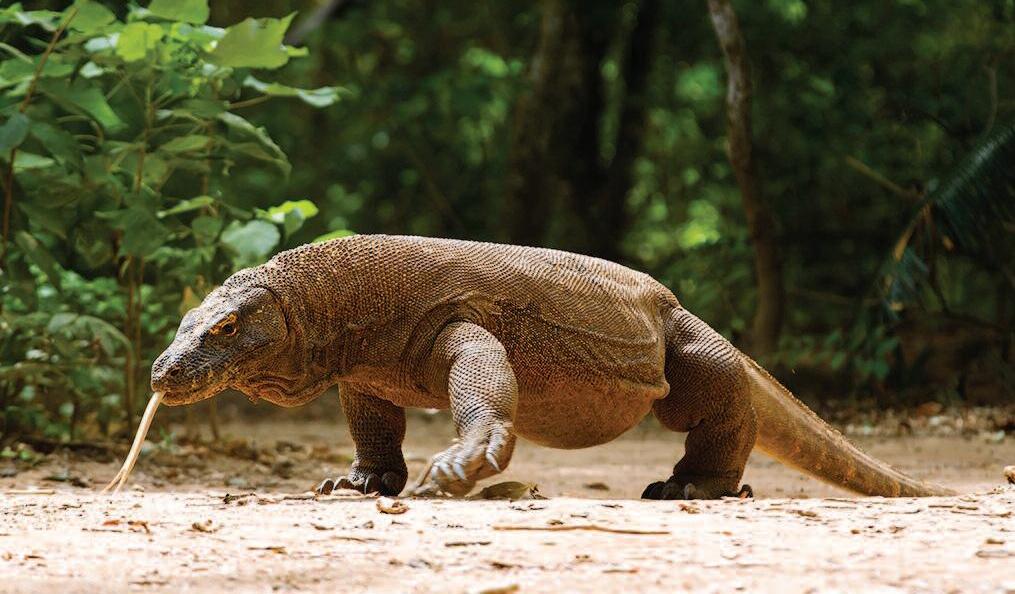
Killer bite
At up to 3m long and weighing 90kg, the Komodo dragon is the largest lizard alive today. They’re also highly venomous. This helps them catch prey much larger than themselves – just one bite and their prey slowly succumbs to the venom.
Punk-rock pony
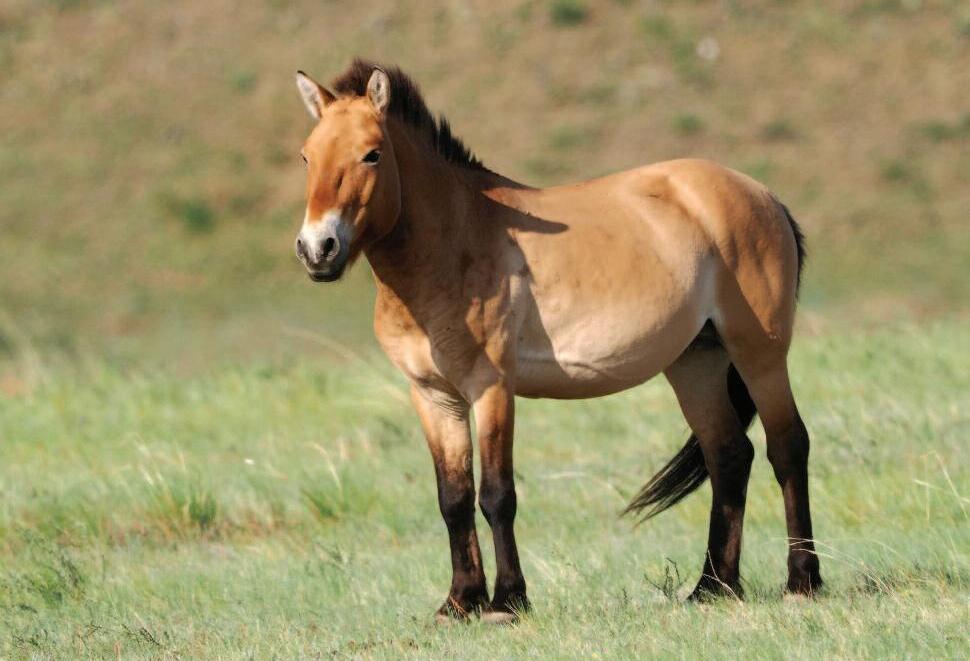
Takhi, also known as Przewalski's horses, are the world’s only truly wild horses. Once extinct in the wild, today, wild herds roam free in par ts of Central Asia and Eastern Europe. These endangered horses are easily recognisable due to their stocky, dun-coloured bodies and dark mane which sticks up in the air, a bit like a mohawk!
How do i pronounce that animal?
TAKHI – ‘tah-k-ee’ or PRZEWALSKI'S horse – ‘shuh-val-skees’
GAUR – ‘g-w-aah’
And finally... And finally...
Teachers, have you signed up to our new Educator’s Hub yet? Our brand-new Teacher’s & Educators Hub is home to all our educational resources, wildlife facts and the latest Born Free news.
Whether you’re looking to learn about different habitats, find worksheets on wild animals or lesson plans about conservation, we have something perfect for you and your class. Even better, it’s free to sign up and each resource is completely free to download!
Scan the QR code to sign up and login now*.
You can also sign up by visiting: www.bornfree.org.uk/educator-signup
*We appreciate you are very busy, so if you create an Educator Hub account with us, Born Free will not email you, unless you specifically opt-in to one of our mailing lists